
Surface plates are the bedrock of precision metrology, providing a perfectly flat reference plane for countless measurements. Without a stable foundation, even the most advanced measuring instruments cannot deliver accurate results. This stability is directly threatened by unseen forces: vibrations.
Ensuring optimal granite plate stability is paramount for any application demanding high precision, from calibrating gauges to inspecting complex parts. Unwanted movements, no matter how subtle, can easily corrupt measurement data and undermine confidence in quality control. That is why effective surface plate vibration isolation becomes a non-negotiable requirement for serious metrology.
This article explores why vibration isolation matters so much for your precision measurement setup and how to implement it effectively. We will look at the sources of vibration, their impact on accuracy, and the various solutions available to achieve superior metrology vibration dampening. Investing in the right isolation strategy protects your measurements and your reputation.
The Hidden Impact of Vibration on Surface Plate Accuracy
Many people underestimate the profound effect minor vibrations have on highly sensitive measurements. A surface plate, though massive, is still susceptible to microscopic movements that can distort readings. These almost imperceptible shifts introduce uncertainty into your precision measurement setup.
Even small oscillations can cause the measuring instrument or the workpiece to move relative to the surface plate. This relative motion directly translates into errors when trying to establish true dimensions or geometric tolerances. Achieving true granite plate stability means eliminating these unwanted displacements.
Consider a coordinate measuring machine (CMM) or a laser interferometer operating on a surface plate. Both rely on an unmoving reference plane to determine positions with micron-level accuracy. Any external disturbance compromises this fundamental requirement, leading to unreliable data.
The cumulative effect of persistent vibration can be particularly insidious, gradually eroding the integrity of your calibration routines. Measurements taken under such conditions might appear consistent but consistently wrong. This false sense of security can lead to costly manufacturing errors or product recalls.
Effective surface plate vibration isolation is not a luxury; it is a fundamental component of any robust quality control system. Without proper dampening, your investment in high-precision equipment yields diminished returns. Safeguarding granite plate stability directly impacts the quality of your output.
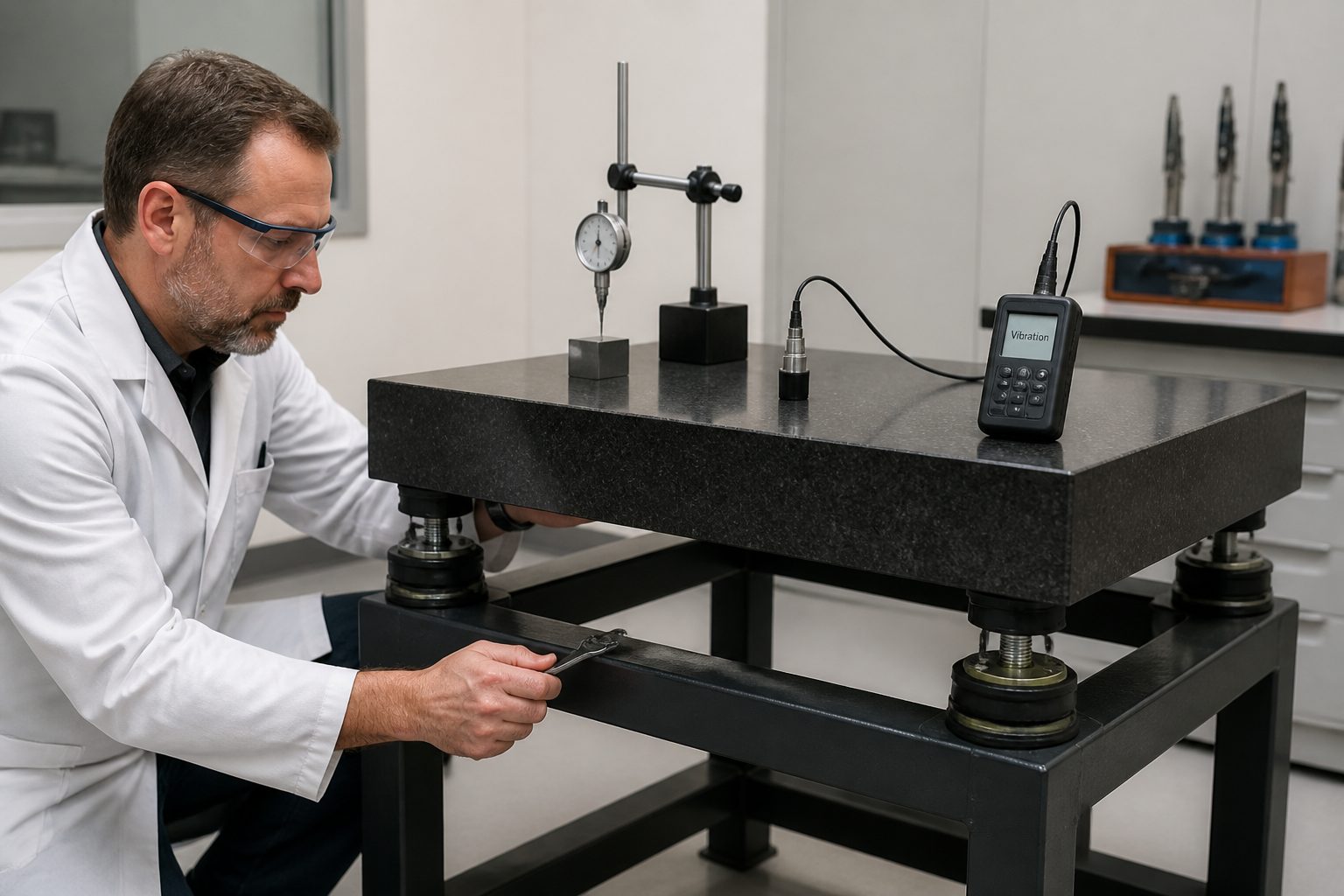
Sources of Vibration in a Workshop Environment
Vibrations are everywhere in an industrial or laboratory setting, originating from both internal and external sources. Identifying these culprits is the first step toward effective surface plate vibration isolation. You must understand where the disturbances come from to properly counteract them.
External sources often include road traffic, nearby construction, or even trains passing by a facility. These low-frequency vibrations can travel long distances through the ground and impact your precision measurement setup. They create a constant, subtle hum that interferes with sensitive equipment.
Internal sources are typically more numerous and diverse within a workshop environment. Heavy machinery like CNC mills, punch presses, and grinders generate significant vibrations during operation. Even lighter equipment, such as air compressors or ventilation systems, contributes to the overall noise floor.
Human activity also plays a role, with foot traffic, forklifts, and dropping heavy objects creating transient shocks. These sudden impacts can cause immediate disruptions to ongoing measurements. They also contribute to the general instability of the environment.
HVAC systems, especially those with large fans or pumps, can transmit continuous, low-level vibrations through the building structure. These constant oscillations might seem minor but can accumulate over time, affecting granite plate stability. Even laboratory centrifuges or shakers, if not properly isolated themselves, can be problematic.
How Vibrations Translate to Measurement Errors
Vibrations introduce dynamic instability into a static measurement environment, making it impossible to obtain a true reading. The relative motion between the measuring instrument, the workpiece, and the surface plate creates a blurred data point. This blurring leads directly to uncertainty and inaccuracy in the final result.
Imagine trying to draw a straight line on a piece of paper that is constantly jiggling; the line will inevitably be wavy or inconsistent. Similarly, vibrating components on a surface plate prevent precise contact or consistent optical alignment. This directly compromises the integrity of your precision measurement setup.
| Error Type | Description | Impact on Precision |
|---|---|---|
| Reading Fluctuation | Digital displays or analog scales constantly jump or oscillate. | Difficulty in determining a stable, true value, increasing measurement uncertainty. |
| False Contact | Probes or styli make intermittent contact due to movement. | Inconsistent triggering, leading to incorrect feature detection and dimensional errors. |
| Optical Distortion | Laser beams or light paths deviate from their intended course. | Misalignment in optical systems, resulting in inaccurate positional data or surface texture measurements. |
| Geometric Deviation | The workpiece or instrument subtly shifts during a scan or sweep. | Introduces form errors, parallelism errors, or perpendicularity errors not inherent to the part. |
| Reduced Repeatability | Repeated measurements yield widely varying results. | Inability to trust measurement consistency, compromising quality control and process capability. |
Understanding Vibration Frequencies and Their Effects
Not all vibrations are created equal, and their impact on your surface plate depends heavily on their frequency. Understanding the frequency spectrum of common workshop vibrations helps you select the most effective metrology vibration dampening solution. Different isolation systems excel at mitigating specific frequency ranges.
Low-frequency vibrations, typically below 5 Hz, often come from heavy machinery, distant traffic, or even microseismic activity. These slow, large-amplitude movements can be particularly damaging to granite plate stability. They are difficult to isolate with simple passive solutions due to the large displacement required.
Mid-frequency vibrations, ranging from 5 Hz to 50 Hz, are common from HVAC systems, pumps, and general workshop activity. These can cause noticeable blurring in optical systems or erratic readings in sensitive electronic equipment. Many standard passive isolators are designed to target this range effectively.
High-frequency vibrations, above 50 Hz, might come from high-speed spindles, pneumatic tools, or electrical motors. While their amplitudes are often smaller, they can still cause significant problems for ultra-precision applications. These higher frequencies are generally easier to dampen with viscoelastic materials or specific pad designs.
Resonance is a particularly dangerous phenomenon where the frequency of an incoming vibration matches the natural frequency of your surface plate setup. When this occurs, even a small input can lead to greatly amplified oscillations. This amplification can severely compromise any precision measurement setup, potentially damaging equipment.
Types of Vibration Isolation Systems for Surface Plates
A range of sophisticated solutions exists to achieve effective surface plate vibration isolation, each with its own strengths and applications. The choice depends on the level of precision required, the types of vibrations present, and your budget. Understanding these options helps you make an informed decision for your precision measurement setup.
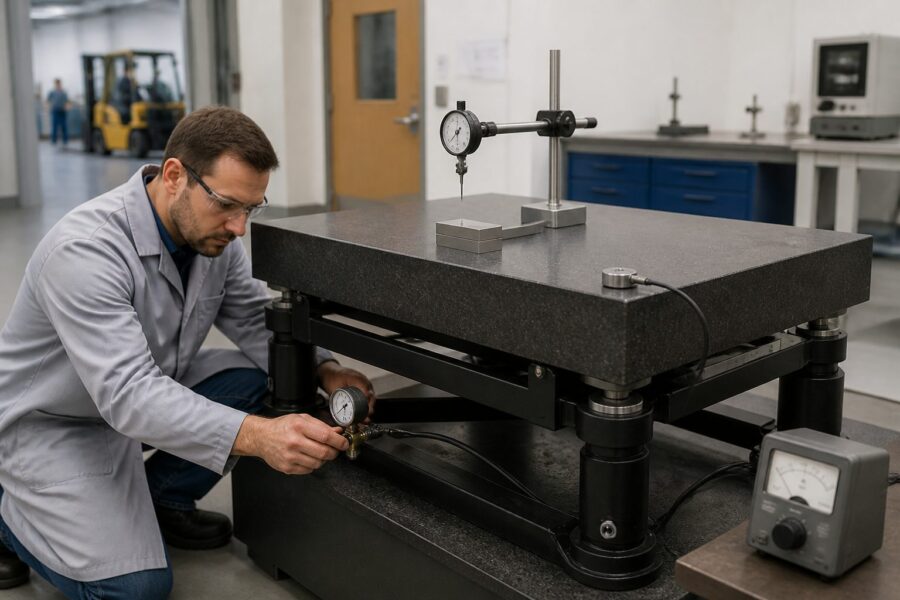
Passive isolation systems are the most common and often the most cost-effective, relying on materials and mechanical designs to absorb or deflect vibration energy. These systems generally do not require external power and offer reliable metrology vibration dampening. They are excellent for maintaining granite plate stability in many environments.
Air spring isolators use compressed air to support the surface plate, offering very low natural frequencies and excellent isolation for low-frequency vibrations. They automatically level the surface plate, which is a significant advantage for maintaining a consistent reference plane. These systems are highly effective for sensitive CMMs and optical setups.
Elastomer pads, made from rubber, neoprene, or other polymeric materials, provide a simpler, more compact solution. They work by absorbing and dissipating vibration energy through their material properties. While effective for higher frequencies and lighter loads, their performance at very low frequencies is often limited compared to air springs.
Coil springs can also provide vibration isolation, particularly when combined with dampening elements to control resonance. They offer a robust mechanical solution for heavier loads and can be tuned to specific frequencies. However, they typically do not provide the same degree of low-frequency isolation as air systems.
Choosing the Right Isolation Solution for Your Needs
Selecting the appropriate surface plate vibration isolation system requires careful consideration of several key factors specific to your application and environment. There is no one-size-fits-all answer; the optimal choice balances performance requirements with practical constraints. Your decision directly impacts the reliability of your precision measurement setup.
Start by accurately assessing the severity and frequency range of vibrations in your workshop or laboratory. Conducting a vibration survey provides objective data, guiding you toward solutions designed for your specific challenges. This initial investment in analysis saves you from costly trial-and-error later on.
- Determine the required level of isolation
- Measure existing vibration frequencies and amplitudes
- Consider the total weight of the surface plate and equipment
- Evaluate budget constraints for initial purchase and maintenance
- Assess available space for the isolation system
- Factor in environmental conditions like temperature and humidity
- Consider ease of installation and ongoing maintenance
- Look for systems with proven granite plate stability
Proper Installation of Vibration Isolation Pads and Mounts
Even the most advanced surface plate vibration isolation system will underperform if not installed correctly. Proper installation is as critical as the quality of the isolation components themselves for achieving maximum metrology vibration dampening. A meticulous approach ensures your precision measurement setup remains stable.
Begin by ensuring the floor beneath the surface plate stand is clean, level, and structurally sound. Any unevenness or weaknesses in the foundation will undermine the effectiveness of your isolation efforts. A solid, flat base is the starting point for true granite plate stability.
When using isolation pads, distribute them evenly under the surface plate stand’s feet, matching the load requirements of each pad. Overloading or underloading individual pads can compromise their performance and lead to uneven isolation. Always follow the manufacturer’s recommendations for placement and weight capacity.
For air spring systems, proper connection to a clean, dry air supply is absolutely essential. Ensure all air lines are securely fastened and free from leaks to maintain consistent pressure. Calibrate the automatic leveling system carefully to keep the surface plate perfectly horizontal under varying loads.
After installing any isolation system, verify the surface plate’s levelness using a precision level or autocollimator. Adjust the mounts or air pressure as needed to bring the plate within its specified flatness tolerance. This leveling process is crucial for accurate measurement results.
Integrating Isolation into Your Overall Surface Plate Setup
Effective surface plate vibration isolation is not a standalone solution but a component of a comprehensive metrology strategy. It works best when integrated thoughtfully into your entire precision measurement setup, considering all elements that influence accuracy. A holistic approach ensures optimal performance and granite plate stability.
Consider the surface plate stand itself; a flimsy or poorly designed stand can introduce its own vibrations or fail to adequately support the isolation system. Heavy, rigid stands made from cast iron or welded steel provide a much better foundation. They complement the isolation by reducing internal resonances.
Environmental controls, such as temperature and humidity regulation, also play a significant role in maintaining measurement stability. While isolation handles dynamic disturbances, stable environmental conditions prevent thermal expansion or contraction that can mimic vibrational effects. These factors work hand-in-hand for ultimate precision.
Ensure that all ancillary equipment, like computer monitors, control units, or tool carts, are either placed off the surface plate or independently isolated. Attaching vibrating accessories directly to the surface plate defeats the purpose of your isolation system. Every component in the vicinity requires consideration.
Routing power cables, air hoses, and data lines requires careful planning to prevent them from acting as vibration bridges. Use flexible conduits and ensure slack in all connections to avoid transmitting vibrations from the building or other equipment. These small details significantly impact overall metrology vibration dampening.
Regular Inspection and Maintenance of Isolation Systems
Just like any other precision equipment, surface plate vibration isolation systems require regular inspection and maintenance to ensure continued optimal performance. Neglecting these routines can lead to a gradual degradation of granite plate stability and compromise your measurement accuracy. Proactive care extends the life and effectiveness of your investment.
For air spring isolators, routinely check air pressure levels and inspect for any leaks in hoses or fittings. Low pressure or a slow leak will diminish the system’s dampening capacity and lead to uneven support. Ensure the air supply is clean and dry to prevent internal corrosion or blockages.
Examine elastomer pads for signs of degradation, such as cracking, hardening, or permanent compression. Over time, these materials can lose their elastic properties, reducing their ability to absorb vibrations. Replace worn pads promptly to restore full metrology vibration dampening.
Inspect mechanical components like coil springs, leveling feet, and support frames for wear, corrosion, or loose fasteners. Any compromise to the structural integrity of the isolation system can introduce new vibration paths or reduce its effectiveness. Tighten all connections and replace damaged parts as needed.
Periodically re-verify the levelness of your surface plate, especially after any major changes to the surrounding environment or equipment. Even slight shifts can impact measurement accuracy and indicate an issue with the isolation system. Regular checks confirm that your precision measurement setup remains within tolerance.
Best Practices for Minimizing Internal Vibration Sources
While external surface plate vibration isolation is essential, addressing internal sources within your workshop or lab is equally important for a truly stable environment. Proactive measures can significantly reduce the overall vibration load, making your isolation system more effective. Think of this as reducing the problem at its origin.
Strategic placement of heavy machinery is a fundamental best practice; position high-vibration equipment as far as possible from your precision measurement setup. If relocation is not feasible, consider installing individual machine isolators directly under the vibration-generating equipment. This localized metrology vibration dampening prevents widespread transmission.
Regular maintenance of all rotating machinery, including motors, pumps, and fans, helps prevent excessive vibration. Imbalanced components or worn bearings generate significantly more vibration than well-maintained ones. A proactive maintenance schedule reduces these internal disturbances, contributing to overall granite plate stability.
Implement strict protocols for personnel movement and material handling around sensitive metrology areas. Designate clear pathways that avoid passing directly by surface plates, and educate staff on the importance of careful movement. Even heavy footsteps can transmit noticeable vibrations through the floor.
Isolate smaller, auxiliary equipment like power supplies, vacuum pumps, or chillers from the surface plate stand itself. Use small isolation pads or place them on separate, stable tables. Any device that produces even minor vibrations should be considered a potential threat to your precision measurement setup.
Conclusion
Achieving uncompromising accuracy in modern metrology depends heavily on maintaining an environment free from disruptive vibrations. Surface plates are the gold standard for flatness, but their utility is severely limited without proper surface plate vibration isolation. This commitment to stability underpins all reliable measurements.
The unseen enemy of vibration can subtly corrupt data, leading to costly errors and undermining confidence in your quality processes. From road traffic to internal machinery, sources of vibration are pervasive, demanding a proactive and informed approach to metrology vibration dampening. Ignoring these forces is a recipe for inaccuracy.
By understanding the various types of vibrations, their frequencies, and the diverse isolation solutions available, you can select and implement the most effective system for your specific needs. This strategic investment protects your precision measurement setup and ensures the integrity of your results. Granite plate stability is not an accident; it is a design choice.
Proper installation, thoughtful integration into your overall workspace, and diligent ongoing maintenance are all essential steps to maximize the benefits of any isolation system. These practices ensure that your surface plate remains a true reference, delivering the consistent accuracy you expect. Every detail counts when chasing perfection.
Ultimately, a robust surface plate vibration isolation strategy is a testament to a commitment to quality and precision. It ensures that your measurements are not just numbers, but reliable data points you can trust. This level of meticulousness elevates your metrology capabilities and enhances your reputation in the industry.