
Maintaining the pristine condition of your granite surface plate stands as a non-negotiable aspect of precision metrology. This critical piece of equipment forms the bedrock for accurate measurements, making its care paramount for reliable results. Any compromise to its surface integrity can directly impact the accuracy of your work.
You can easily overlook proper cleaning, but it significantly extends the lifespan and maintains the calibration of these valuable tools. Choosing the correct surface plate cleaning products protects your investment and ensures consistent, high-quality measurements. Incorrect cleaning methods risk damaging the delicate surface, leading to costly repairs or replacements.
This guide will walk you through the specifics of selecting safe and effective solutions for granite cleaner metrology. We will explore the characteristics of ideal cleaning agents, discuss application techniques, and highlight what to avoid at all costs. Understanding these details helps you keep your surface plates in top working order.
You work with incredibly tight tolerances, so even microscopic residues or scratches can throw off your measurements. Therefore, selecting the right cleaning products is not just about aesthetics; it is about preserving the functional accuracy of your entire metrology setup. Let’s make sure your surface plate cleaning products are up to the task.
Why Specific Cleaning Products Matter for Precision Granite
Granite surface plates are not just ordinary rocks; they are precision instruments meticulously crafted to exacting flatness tolerances. Their polished surfaces are designed to be perfectly flat, providing a stable reference plane for measuring other components. This incredible precision demands a careful approach to cleaning.
The unique properties of granite, a naturally porous material, mean it reacts differently to various chemicals than metal or plastic. Certain cleaning agents can seep into these pores, leaving residues or causing long-term damage. These residues can become a persistent problem, attracting dust and compromising future measurements.
Using the wrong cleaning solution might introduce a sticky film or an abrasive element that degrades the surface over time. Even seemingly harmless substances can leave behind microscopic deposits that interfere with gauge block wringing or instrument seating. This interference directly impacts the repeatability and accuracy of your measurements.
Specialized surface plate cleaning products are formulated to lift dirt, oil, and grime without harming the granite or leaving undesirable residues. These products evaporate cleanly, ensuring the surface remains perfectly dry and free of any foreign matter. This clean evaporation is a key factor in maintaining precision.
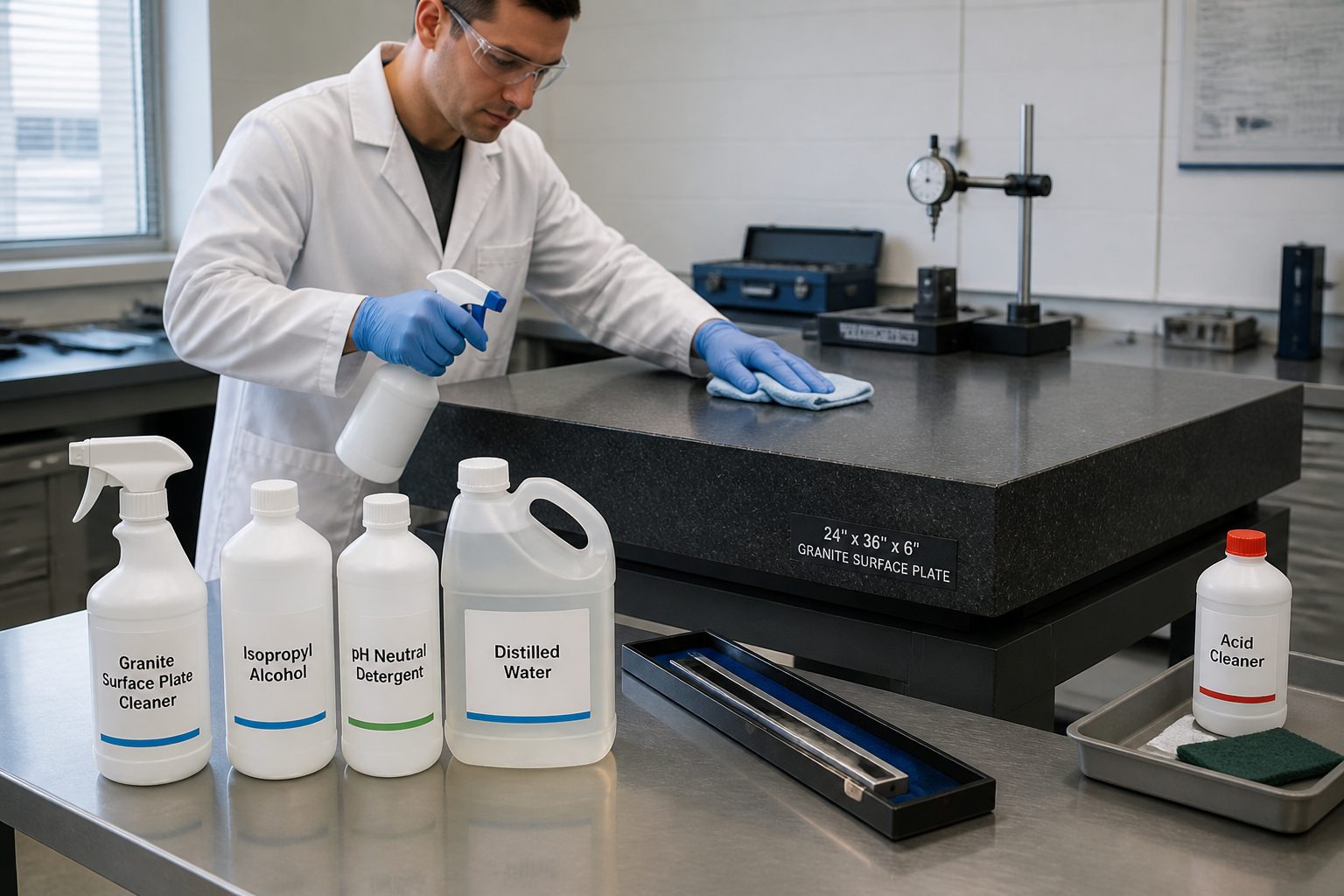
Think of cleaning your surface plate like cleaning a precision optical lens; you would not use window cleaner on it. The same philosophy applies here, where the right granite cleaner metrology solutions are specifically engineered for the task. They protect the delicate balance of flatness and finish that your work relies upon.
Regular maintenance with approved safe surface plate solvents also helps prevent the buildup of contaminants that can accelerate wear on the plate. A clean surface reduces friction for gauges and prevents abrasive particles from scratching the surface. This proactive care extends the life of your valuable equipment.
The Risks of Using Common Household or Industrial Cleaners
Many common household and industrial cleaning products contain harsh chemicals, abrasives, or waxes that are entirely unsuitable for granite surface plates. You might think a strong degreaser works well, but it could etch the granite or leave behind a residue that compromises flatness. These unintended consequences are often irreversible.
Ammonia-based cleaners, for example, can dull the polished surface and penetrate the granite’s pores, causing long-term damage. Similarly, cleaners with waxes or silicones will leave a film that attracts dust and interferes with the precise contact needed for accurate measurements. This film also makes wringing gauge blocks nearly impossible.
| Cleaner Type | Potential Risk to Surface Plate | Reason for Risk |
|---|---|---|
| Ammonia-based Cleaners | Dulling, etching, residue penetration | Alkaline nature, leaves film |
| Abrasive Powders/Scrubbers | Scratching, surface degradation | Physical removal of granite material |
| Waxes/Silicone Sprays | Sticky film, dust attraction, measurement interference | Leaves non-evaporating residue |
| Strong Solvents (Acetone, Paint Thinners) | Discoloration, sealant damage, residue | Aggressive chemical reaction, may not evaporate cleanly |
| Acidic Cleaners (Vinegar, Lemon Juice) | Etching, dulling, permanent surface damage | Reacts with minerals in granite |
| Dish Soap (Concentrated) | Soap scum, film buildup, sticky residue | Designed to leave residue for cleaning action |
Even products designed for cleaning natural stone countertops are often formulated for stain removal and protection, not metrology-grade precision. They might contain sealants or conditioners that are detrimental to a surface plate’s performance. Always remember that a kitchen counter has vastly different requirements than a calibration standard.
Using improper cleaning agents can also void your surface plate’s warranty or necessitate costly re-calibration. A damaged surface means unreliable measurements, which translates directly into manufacturing errors and increased scrap rates. You really want to avoid those kinds of problems.
The cost savings from using a cheaper, non-specialized cleaner are minimal compared to the potential financial impact of compromised measurements or a damaged surface plate. Investing in proper surface plate cleaning products is a small expense that prevents much larger headaches. It is a simple matter of risk management.
Key Characteristics of an Ideal Surface Plate Cleaner
An ideal surface plate cleaner has several critical characteristics that ensure effective cleaning without compromising the plate’s precision. First and foremost, it must be non-abrasive granite cleaning solution. Any product containing abrasive particles, even microscopic ones, will scratch the finely lapped surface.
Secondly, the cleaner must evaporate completely and cleanly, leaving absolutely no residue behind. Any film, sticky substance, or particulate matter will interfere with measurements and attract more dust. This clean evaporation is a defining feature of professional-grade surface plate cleaning products.
Thirdly, a good granite cleaner metrology solution is chemically neutral, meaning it has a pH close to 7. Acidic or alkaline cleaners can react with the minerals in the granite, causing etching, dulling, or staining over time. You want a product that is gentle on the stone but tough on contaminants.
It also needs to be effective at dissolving common contaminants found in a metrology lab, such as oils, grease, fingerprints, and general dust. The cleaner should break down these substances quickly, allowing them to be easily wiped away without excessive scrubbing. This makes cleaning efficient and less strenuous.
The best safe surface plate solvents are non-toxic, non-flammable, and have low volatile organic compound (VOC) levels for workplace safety. You are working in an enclosed environment, so fumes and hazardous materials are a serious concern. Always prioritize the health and safety of your technicians.
Many reputable manufacturers offer specialized surface plate cleaning products that meet all these criteria. These products are often water-based solutions with specific detergents or alcohol blends designed for rapid, residue-free drying. Always look for products explicitly marketed for granite surface plates or precision metrology equipment.
Understanding Different Types of Approved Cleaning Solutions
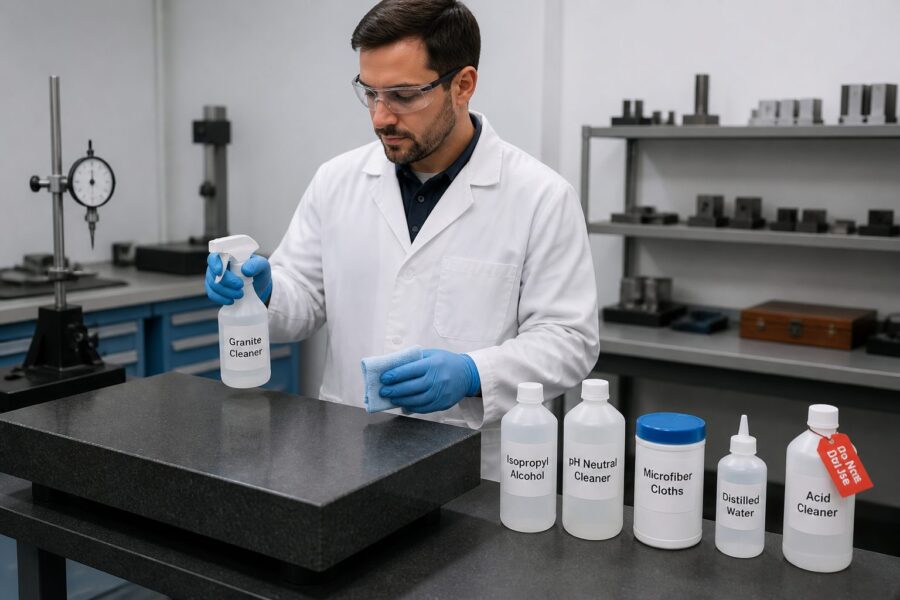
When selecting surface plate cleaning products, you generally encounter a few main types of approved solutions, each with its own advantages. Isopropyl alcohol (IPA) is a common choice for light cleaning and quick evaporation. It works well for removing fingerprints and minor oily residues.
However, pure IPA can evaporate too quickly sometimes, potentially leaving a slight film if not wiped immediately. Many specialized granite cleaner metrology solutions are water-based detergents with a small percentage of alcohol or other surfactants. These are formulated to lift dirt effectively and then evaporate cleanly.
Some manufacturers offer proprietary cleaning solutions specifically designed for their granite surface plates. These often contain a carefully balanced blend of water, mild detergents, and quick-drying agents. These proprietary blends often provide the best overall performance and safety for your equipment.
Another option is a dilute solution of denatured alcohol, which also evaporates quickly and leaves minimal residue. Always ensure that any alcohol-based cleaner you use is free of added oils, perfumes, or other additives that might compromise the surface. Purity is a key consideration here.
For routine dusting and very light cleaning, you might even use distilled water, followed by a dry wipe. While distilled water leaves no mineral deposits, it does not effectively remove oils or grease. It works best for removing loose dust particles before they become embedded.
The key is to use a safe surface plate solvent that is powerful enough to clean but gentle enough not to harm the granite. Researching product reviews and manufacturer recommendations provides valuable insight into which solutions perform best. Always prioritize products from trusted metrology suppliers.
What to Look for on Product Labels: Ingredients and Warnings
Reading product labels carefully is absolutely essential when choosing surface plate cleaning products. You need to scrutinize the ingredient list for anything that could harm your granite surface plate. Avoid anything that mentions abrasives, waxes, silicones, strong acids, or strong alkalis.
Look for terms like “residue-free,” “evaporates cleanly,” “non-abrasive granite cleaning,” or “safe for precision granite.” These phrases indicate that the product is likely formulated for your specific application. A good label will often explicitly state its suitability for metrology equipment.
- Check for “non-abrasive” claims.
- Verify “residue-free” or “evaporates cleanly.”
- Look for pH-neutral statements.
- Ensure absence of waxes, silicones, or oils.
- Confirm “safe for granite” or “metrology-grade.”
- Scan for hazardous chemicals like strong acids or bases.
- Prioritize low VOC content for safety.
- Read safety data sheets (SDS) if available.
- Note any specific application instructions.
- Beware of “multi-surface” cleaners.
Pay close attention to any warnings regarding skin contact, eye irritation, or inhalation. Even safe surface plate solvents require proper handling, including gloves and adequate ventilation. Your personal safety is just as important as the plate’s integrity.
If the label does not explicitly state suitability for precision granite or metrology, or if it lists questionable ingredients, simply avoid it. Never assume a general “stone cleaner” will work for your high-precision equipment. When in doubt, always err on the side of caution.
Always check the manufacturer’s website or contact their technical support if you have any questions about a product’s suitability. They can provide specific guidance and often have dedicated granite cleaner metrology solutions. Getting professional advice removes much of the guesswork.
An informed decision regarding your surface plate cleaning products protects your investment and maintains measurement accuracy. You really do not want to risk damaging expensive equipment with an inappropriate cleaner. Take the time to read those labels carefully every single time.
The Role of Cleaning Cloths and Wipes in Surface Plate Care
The cleaning cloth you use is almost as important as the surface plate cleaning products themselves. Abrasive cloths, even seemingly soft ones, can introduce microscopic scratches that compromise the plate’s flatness. You need materials that are incredibly gentle yet effective at picking up dirt and moisture.
Microfiber cloths are an excellent choice because their fine fibers effectively trap dirt and oil without scratching the surface. Always ensure they are clean, lint-free, and specifically designated for surface plate cleaning. Using a cloth that has been used for other tasks can introduce contaminants.
Another great option is specialized lint-free wipes, often made from cellulose or synthetic blends, designed for cleanroom environments. These wipes are highly absorbent and leave behind no fibers, which is critical for maintaining a perfectly clean surface. They are a staple in many precision labs for good reason.
Avoid using paper towels, shop rags, or any material that might shed fibers or contain hidden abrasives. Even small fibers can interfere with gauge block wringing or become embedded in the granite’s pores. You want a perfectly smooth, clean surface, free of any foreign material.
Always use separate cloths for applying the cleaner and for drying the surface plate. This two-cloth method prevents the redistribution of dirt and ensures a streak-free finish. Designate specific cloths for this task and wash them regularly, separately from other cleaning rags.
Proper care of your cleaning cloths includes washing them without fabric softeners, which can leave a residue on the cloth itself. Fabric softener then transfers to your surface plate, causing problems. Remember, every component of your cleaning process contributes to the overall precision of your granite cleaner metrology setup.
Avoiding Abrasives and Harsh Chemicals at All Costs
This point cannot be stressed enough: never, under any circumstances, use abrasive materials or harsh chemicals on your granite surface plate. The consequences can range from minor surface degradation to irreparable damage, directly impacting your measurement accuracy. Abrasives are a surface plate’s worst enemy.
This means no scouring pads, no steel wool, no abrasive cleaning powders, and no sandpaper. Even seemingly soft sponges with a slightly rough side can cause damage over time. Any mechanical action that removes granite material will compromise the flatness you rely on.
Harsh chemicals include strong acids like hydrochloric acid or vinegar, and strong bases like lye or concentrated ammonia. These substances react with the minerals in the granite, leading to etching, discoloration, and a breakdown of the surface integrity. Once etched, the surface is permanently damaged.
Think about the cost of recalibrating or replacing a surface plate versus the cost of proper surface plate cleaning products. The investment in correct cleaning supplies is minuscule compared to the potential loss from using an inappropriate cleaner. It just makes good financial sense to do things correctly.
Even if a harsh chemical appears to clean effectively in the short term, it often causes invisible damage that manifests later. This latent damage can lead to premature wear, inconsistent measurements, and a shortened lifespan for your precision equipment. You really want to avoid those hidden problems.
Stick to non-abrasive granite cleaning solutions and approved safe surface plate solvents specifically designed for metrology. Your surface plate is a precision instrument, not a kitchen counter that can withstand aggressive cleaning. Treat it with the respect and specialized care it deserves.
Testing New Cleaning Products Safely
Even with good intentions and careful label reading, sometimes a new cleaning product might surprise you. Before applying any new surface plate cleaning products to the main working area, always perform a small test in an inconspicuous spot. This precaution helps you avoid widespread damage.
A good place to test is often on the side of the surface plate, near the bottom edge, where a small discoloration or residue will not affect measurements. Apply a small amount of the cleaner with a clean wipe and let it sit for a minute or two. Observe how it reacts with the granite.
After the brief dwell time, wipe the area clean and allow it to dry completely. Look for any signs of etching, dulling, discoloration, or a sticky film. You want the test spot to look exactly like the surrounding granite, only cleaner.
You can also perform a “wring test” on the cleaned spot. Try wringing a gauge block onto the test area; if it wrings easily and holds firmly, the cleaner likely did not leave a detrimental residue. This simple test provides practical feedback on the cleaner’s performance.
If you notice any adverse effects during the test, discard that cleaning product immediately and try another option. It is far better to sacrifice a small, non-critical area than to risk damaging your entire surface plate. Patience and caution are your best allies here.
Consider keeping a log of the surface plate cleaning products you use, noting their effectiveness and any observations from your tests. This documentation helps you maintain consistency and provides a reference for future cleaning needs. A systematic approach ensures long-term success for your granite cleaner metrology setup.
Proper Application Techniques for Different Cleaners
The way you apply surface plate cleaning products plays a significant role in their effectiveness and the safety of your granite. Always start by removing any loose dust or debris from the surface using a soft brush or a clean, dry lint-free cloth. This prevents scratching when you introduce liquid.
For liquid cleaners, spray a fine mist evenly over a manageable section of the surface plate, not the entire plate at once. This approach prevents the cleaner from drying too quickly before you can wipe it away. Working in sections ensures thorough cleaning and residue-free drying.
Immediately after spraying, use a clean, lint-free microfiber cloth or cleanroom wipe to gently wipe the area. Use a consistent, overlapping motion to ensure you cover the entire section. Avoid excessive pressure or scrubbing, as this can still cause micro-scratches over time.
After wiping with the damp cloth, immediately follow with a separate, clean, dry lint-free cloth to buff the surface dry. This two-step process removes any remaining moisture or cleaner residue, ensuring a perfectly clean and dry surface. You want the cleaner to evaporate, not to be left behind.
If you are using an alcohol-based safe surface plate solvent, it will evaporate very quickly, so you need to work even faster. Apply it sparingly and wipe immediately, ensuring no pooling occurs. This rapid evaporation is a benefit, but it demands quick action.
For heavier grime, you might need to repeat the process, but never let the cleaner sit for extended periods. The goal is quick contact, effective cleaning, and immediate removal. Consistency in your application technique helps maintain the long-term integrity of your non-abrasive granite cleaning routine.
Storing Your Cleaning Supplies Safely and Effectively
Proper storage of your surface plate cleaning products and cloths contributes to their effectiveness and extends their useful life. Always store liquid cleaners in their original, clearly labeled containers, with caps tightly sealed. This prevents evaporation, contamination, and accidental misuse.
Keep all cleaning supplies in a dedicated, clean, dry area away from direct sunlight and extreme temperatures. Heat can degrade some chemical formulations, and direct sunlight can cause premature evaporation or chemical changes. A cool, dark cabinet works best.
Store clean, lint-free cloths and wipes in a sealed container or bag to prevent them from collecting dust and contaminants. You do not want to introduce new dirt onto your surface plate with a dusty cleaning cloth. This simple step maintains the integrity of your cleaning process.
Labeling your cleaning supplies clearly, especially “granite cleaner metrology” or “safe surface plate solvents,” helps prevent confusion and ensures the correct product is always used. This is particularly important in busy workshops where multiple cleaning agents might be present. Clear labeling is a safety measure.
Keep all cleaning chemicals out of reach of unauthorized personnel and children. Even mild, approved cleaners are not meant for ingestion or extended skin contact. Always follow any specific storage instructions provided on the product’s safety data sheet (SDS).
Regularly check the expiration dates on your cleaning solutions and dispose of old or expired products properly. Over time, some chemicals can lose their effectiveness or even change composition, making them unsuitable for precision cleaning. Fresh supplies are always better for a non-abrasive granite cleaning routine.
Conclusion
Caring for your granite surface plate involves more than just a quick wipe-down; it demands a thoughtful and precise approach to cleaning. Selecting the correct surface plate cleaning products is a fundamental aspect of maintaining the accuracy and longevity of this critical metrology instrument. Ignoring this detail often leads to costly errors.
By understanding the unique properties of granite and the specific requirements of precision measurement, you can make informed decisions about your cleaning regimen. Always prioritize non-abrasive granite cleaning solutions that evaporate cleanly and leave no residue. These qualities are absolutely essential for reliable performance.
Remember to scrutinize product labels, avoiding harsh chemicals, waxes, and silicones that can compromise the plate’s flatness and finish. Opt for specialized granite cleaner metrology products or pure, residue-free solvents like isopropyl alcohol. Your diligence in selection protects your investment.
Equally important are the tools you use for application, such as clean, lint-free microfiber cloths or cleanroom wipes. These materials prevent scratching and ensure a perfectly pristine surface after cleaning. A good cloth is just as important as a good cleaner.
Adopting proper application techniques, testing new products, and storing your supplies correctly all contribute to a comprehensive care routine. This systematic approach guarantees that your surface plate remains a reliable foundation for all your precision measurements. Your commitment to careful maintenance will pay dividends.
Ultimately, your precision measurements depend on a perfectly maintained surface, so choose your safe surface plate solvents with care. A well-cared-for surface plate provides consistent, accurate results for many years, making the extra effort entirely worthwhile. This attention to detail reflects your dedication to quality in all aspects of your work.