
Care

Long-Term Preservation Strategies for Inactive Granite Surface Plates: Keeping Your Investment Pristine

Long-Term Preservation Strategies for Inactive Granite Surface Plates: Keeping Your Investment Pristine

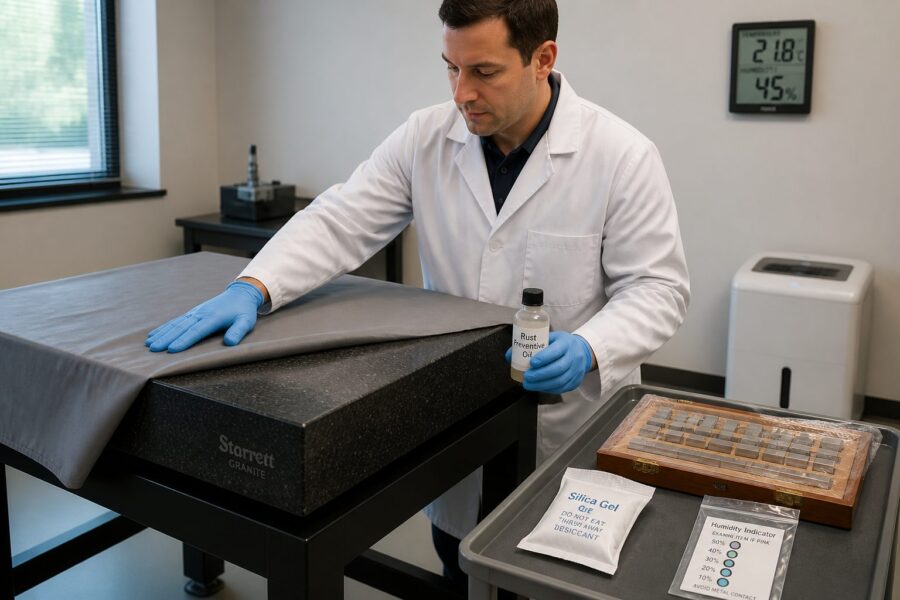
After cleaning, ensure the entire surface is completely dry; any residual moisture can become a breeding ground for problems. Some experts recommend applying a very thin, non-reactive protective film or wax specifically designed for granite, though this is less common for high-precision metrology plates due to potential residue issues. For accessories like steel stands, applying a rust inhibitor is a smart move. This prevents corrosion that could otherwise migrate or cause issues later.

Consider placing several desiccant packets on the plate surface, especially if humidity control is a concern in your chosen storage area. These moisture-absorbing agents help to maintain a dry micro-environment directly around the plate. Remember, the goal is to seal the plate off from environmental attack, starting with a perfectly clean and dry surface.

A well-prepared plate significantly reduces the risks of damage or degradation during its time out of service. This meticulous approach to inactive surface plate care pays dividends by preserving the plate’s original accuracy and surface finish. It is much easier to prevent problems than to fix them later.

Choosing the Right Storage Location and Conditions

The choice of storage location is a critical decision that directly impacts the effectiveness of your granite surface plate long-term preservation efforts. You need a space that offers stability and protection from environmental extremes. Avoid areas prone to significant temperature swings, such as uninsulated warehouses or spaces near heat sources.

A dedicated, climate-controlled room is ideal, maintaining a consistent temperature and humidity level. This steady environment is crucial for preventing degradation granite can experience from thermal expansion and contraction. Fluctuations can introduce internal stresses that compromise dimensional stability over time.

The storage location should also be free from excessive vibrations, which can be detrimental to precision instruments. Placing the plate near heavy machinery, busy roadways, or areas with frequent forklift traffic is a recipe for disaster. A stable concrete floor away from active production zones is much preferred.

Ensure the floor can adequately support the weight of the surface plate and its stand without settling or shifting. Proper floor loading capacity prevents structural stress on the plate itself. Accessibility is also a practical consideration; you want to be able to retrieve the plate safely and efficiently when needed, but without it being in a high-traffic area.

Finally, consider the overall cleanliness of the storage area. A dusty or dirty environment will inevitably lead to contaminants settling on the plate, even with a cover. Keeping the general area tidy reinforces your commitment to storing granite metrology equipment properly and reduces external threats.
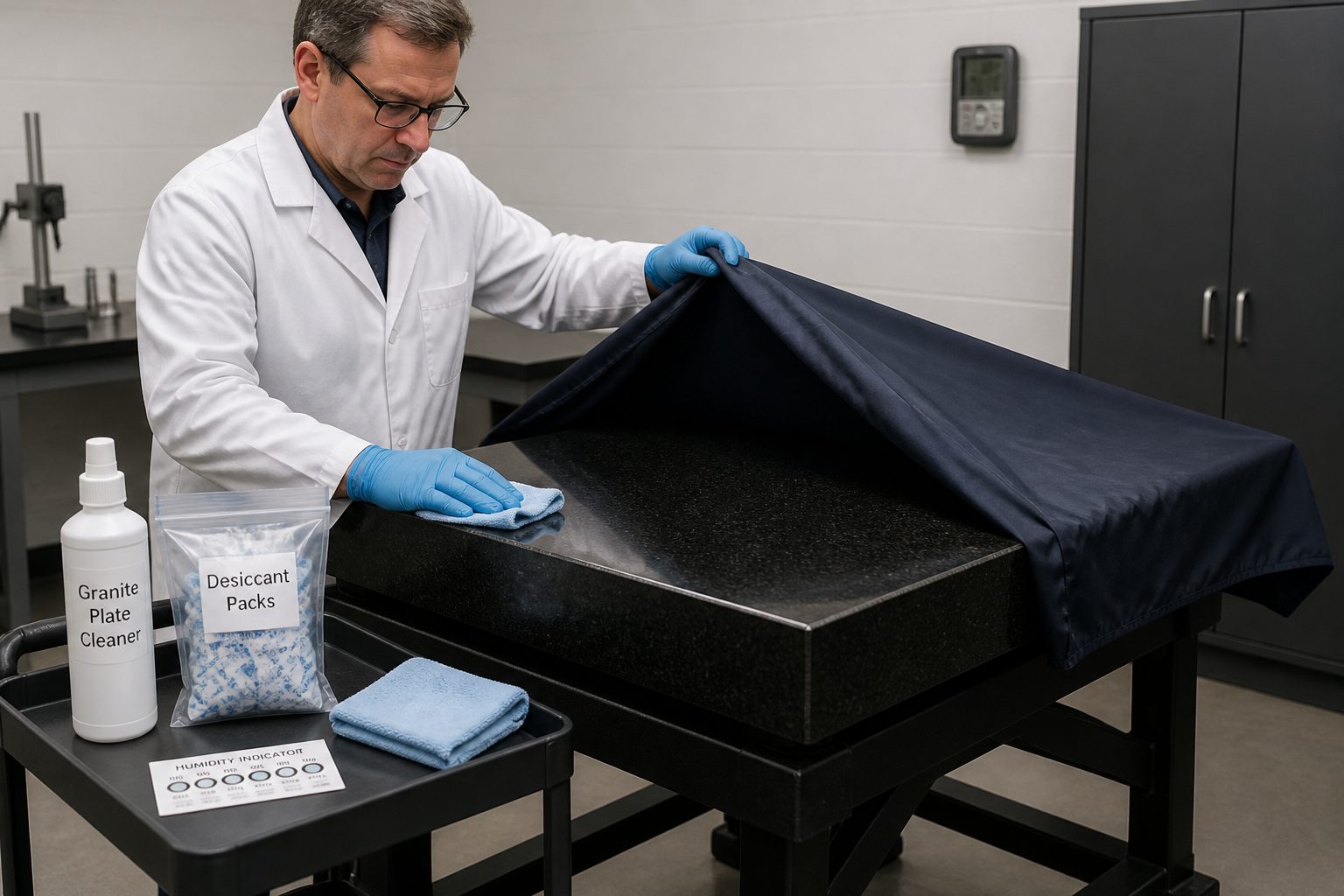
A metrology technician in a lab wipes a granite surface plate and places a protective cover on it with desiccant packs nearby.

The Importance of Proper Covering and Protection

Once your granite surface plate is clean, dry, and in its designated storage location, applying a suitable cover is the next essential step in inactive surface plate care. A good cover acts as a physical barrier against dust, debris, and accidental splashes, which are constant threats in any storage environment. It also offers a degree of protection against minor impacts.

Choosing the right type of cover makes a significant difference in preventing degradation granite surfaces might face. You need something durable, yet designed to allow some air circulation to prevent moisture buildup underneath. This balance is key to effective granite surface plate long-term preservation.

  • Heavy-duty, tear-resistant material
  • Water-resistant or waterproof properties
  • Breathable fabric to deter condensation
  • Snug, custom fit for maximum coverage
  • Securable straps or elasticized hem
  • Protection from UV light exposure
  • Reinforced corners for longevity
  • Easy to clean surface
  • Non-abrasive inner lining
  • Clearly labeled for easy identification

Monitoring Conditions During Long-Term Storage

Effective granite surface plate long-term preservation does not end once the plate is covered and stored. Continuous monitoring of the storage environment is absolutely essential. Environmental conditions can change unexpectedly, even in seemingly stable areas.

Regularly checking temperature and humidity levels helps you detect any deviations from the ideal range before they become problematic. Using data loggers provides an invaluable record of these conditions over time, offering insights into environmental stability. This proactive approach to storing granite metrology equipment helps you prevent issues before they manifest.

Inspect the plate cover periodically for any signs of damage, such as rips or tears, that could compromise its protective capabilities. Also, look for any evidence of moisture accumulation, pest activity, or unusual odors beneath the cover. Early detection of these issues allows for prompt corrective action, minimizing potential harm to the plate.

If you notice any persistent humidity or temperature issues, you might need to adjust your environmental controls, perhaps by adding more desiccant or improving ventilation. Ignoring these warning signs can lead to surface corrosion, staining, or even mold growth on the granite. Vigilance is a non-negotiable part of inactive surface plate care.

Maintaining a consistent environment and reacting quickly to changes is critical for the long-term integrity of your precision instrument. This ongoing attention ensures that your plate remains in optimal condition, ready for accurate measurements when it returns to service. You are actively working to prevent degradation granite surfaces might otherwise experience.

Periodic Checks and Maintenance for Stored Plates

Even when a granite surface plate is in long-term storage, it benefits significantly from periodic checks and light maintenance. This isn’t just about monitoring the environment; it is about directly assessing the plate’s condition. These routine inspections are a proactive measure in inactive surface plate care.

Every few months, carefully remove the cover and perform a visual inspection of the entire surface. Look for any new blemishes, stains, or signs of moisture that might have developed despite your best efforts. A quick, gentle cleaning with a soft, lint-free cloth can remove any fine dust that may have settled. This helps prevent degradation granite surfaces from prolonged contact with airborne particles.

Check the stability of the plate on its stand, ensuring no settling or shifting has occurred. While minor shifts are unlikely in a static environment, it is good practice to confirm the plate remains level. You are essentially giving the plate a brief health check, confirming that all preservation measures are holding strong.

If you initially applied any protective coatings or rust inhibitors to the stand or accessories, re-evaluate their effectiveness during these checks. Reapply them if they show signs of thinning or degradation. This small effort contributes significantly to comprehensive granite surface plate long-term preservation.

These periodic interventions might seem like extra work, but they are a crucial part of maintaining your investment. They provide opportunities to catch potential problems early, ensuring the plate’s metrological integrity is upheld throughout its inactive period. This consistent attention ensures your storing granite metrology plan is truly robust.

Protecting Against Physical Damage and Contamination

Beyond environmental factors, protecting your granite surface plate from physical damage and contamination during storage is absolutely essential. Accidental impacts are a constant threat, even in seemingly safe storage areas. Securing the plate firmly on its stand helps prevent accidental tipping or movement.

Keep the storage area clear of any other equipment, tools, or materials that could potentially fall onto or bump against the plate. This creates a dedicated “safe zone” around your precision instrument. A cluttered storage space dramatically increases the risk of damage, undermining your granite surface plate long-term preservation efforts.

Implement strict access control to the storage space, limiting entry only to authorized personnel. This minimizes the chance of untrained individuals inadvertently causing harm to the plate. Every precaution you take adds another layer of security for your valuable asset.

Beware of chemical spills or airborne contaminants that could drift into the storage area from adjacent workspaces. Volatile chemicals, corrosive fumes, or even fine metallic dust can settle on the granite surface, leading to etching or staining. Proper ventilation in the surrounding area is a good defense. This is a key aspect of preventing degradation granite surfaces might endure.

For particularly high-value or sensitive plates, consider constructing a custom wooden crate or enclosure around the covered plate. This provides superior physical protection and an added barrier against environmental ingress. Such robust measures ensure your inactive surface plate care is comprehensive and effective, giving you peace of mind.

Documenting Storage Conditions and Actions

Meticulous documentation is an often-overlooked yet incredibly important aspect of granite surface plate long-term preservation. Maintaining a detailed log provides a historical record of the plate’s journey through storage. This record becomes invaluable for future reference and accountability.

Your log should include the date the plate entered storage, its initial condition, and the environmental parameters of the storage location. Record temperature and humidity readings, especially if you are conducting periodic checks. This data helps you identify trends or persistent issues in your storing granite metrology setup.

Document every maintenance action performed, such as cleaning, reapplication of protective coatings, or adjustments to environmental controls. Note any observations made during periodic inspections, including any minor issues found and the corrective steps taken. Detailed notes are your best defense against future uncertainties.

Including photographs of the plate before it enters storage, and occasionally during its inactive period, offers visual proof of its condition. These images can be crucial for insurance purposes or for resolving any disputes about the plate’s state upon retrieval. Good visual records support your written documentation.

Comprehensive documentation simplifies the recommissioning process, providing a clear history of the plate’s inactive surface plate care. It confirms that best practices were followed, protecting your investment and ensuring its ongoing metrological accuracy. Without proper records, you are simply guessing about past conditions and actions.

Recommissioning Your Surface Plate After Long-Term Storage

Bringing a granite surface plate back into active service after long-term preservation requires a careful and systematic approach. This recommissioning phase is just as important as the initial preparation for storage. You want to ensure the plate is fully ready for precision work.

Begin by carefully removing the cover and conducting a thorough visual inspection of the entire surface, comparing it to your documentation photos. Clean the plate meticulously, removing any dust or residual protective agents that might have accumulated. This ensures a clean working surface.

Allow the plate to acclimate to its new operating environment for at least 24 to 48 hours, especially if it is moving to a different climate-controlled zone. This allows the granite to stabilize thermally and dimensionally. Rushing this step can introduce temporary inaccuracies in measurement.

The most critical step in recommissioning is a professional re-leveling and calibration. Even with the best granite surface plate long-term preservation efforts, minor shifts can occur. A certified calibration ensures the plate meets its specified flatness tolerances and is suitable for precision metrology. This step is non-negotiable for accurate results.

Only after a successful calibration should the plate be returned to active service. This final verification guarantees that your careful inactive surface plate care has paid off, and the plate retains its metrological integrity. Skipping calibration after long-term storage is a gamble with your measurement accuracy.

Conclusion

Granite surface plates are fundamental to precision manufacturing and quality control, representing a substantial investment in accuracy. Protecting this investment requires a diligent approach to granite surface plate long-term preservation, especially when these critical tools are not in active use. You simply cannot afford to neglect proper storage.

From controlling environmental factors like temperature and humidity to meticulously preparing and covering the plate, every step plays a part in preventing degradation granite can experience. Regular monitoring, periodic checks, and robust physical protection ensure the plate remains in optimal condition. This comprehensive inactive surface plate care ensures longevity.

By adhering to these best practices for storing granite metrology equipment, you safeguard your precision assets, maintaining their accuracy and extending their operational life. Your proactive efforts today will guarantee reliable measurements and a pristine surface plate for many years to come. This commitment to preservation is a commitment to quality.

Use a specialized granite cleaner and a lint-free cloth, ensuring no residues are left behind that could attract moisture or contaminants. It’s important to inspect the surface meticulously for any existing nicks, scratches, or stains, documenting them before storage begins. You want a clean slate, both literally and figuratively.

After cleaning, ensure the entire surface is completely dry; any residual moisture can become a breeding ground for problems. Some experts recommend applying a very thin, non-reactive protective film or wax specifically designed for granite, though this is less common for high-precision metrology plates due to potential residue issues. For accessories like steel stands, applying a rust inhibitor is a smart move. This prevents corrosion that could otherwise migrate or cause issues later.

Consider placing several desiccant packets on the plate surface, especially if humidity control is a concern in your chosen storage area. These moisture-absorbing agents help to maintain a dry micro-environment directly around the plate. Remember, the goal is to seal the plate off from environmental attack, starting with a perfectly clean and dry surface.

A well-prepared plate significantly reduces the risks of damage or degradation during its time out of service. This meticulous approach to inactive surface plate care pays dividends by preserving the plate’s original accuracy and surface finish. It is much easier to prevent problems than to fix them later.

Choosing the Right Storage Location and Conditions

The choice of storage location is a critical decision that directly impacts the effectiveness of your granite surface plate long-term preservation efforts. You need a space that offers stability and protection from environmental extremes. Avoid areas prone to significant temperature swings, such as uninsulated warehouses or spaces near heat sources.

A dedicated, climate-controlled room is ideal, maintaining a consistent temperature and humidity level. This steady environment is crucial for preventing degradation granite can experience from thermal expansion and contraction. Fluctuations can introduce internal stresses that compromise dimensional stability over time.

The storage location should also be free from excessive vibrations, which can be detrimental to precision instruments. Placing the plate near heavy machinery, busy roadways, or areas with frequent forklift traffic is a recipe for disaster. A stable concrete floor away from active production zones is much preferred.

Ensure the floor can adequately support the weight of the surface plate and its stand without settling or shifting. Proper floor loading capacity prevents structural stress on the plate itself. Accessibility is also a practical consideration; you want to be able to retrieve the plate safely and efficiently when needed, but without it being in a high-traffic area.

Finally, consider the overall cleanliness of the storage area. A dusty or dirty environment will inevitably lead to contaminants settling on the plate, even with a cover. Keeping the general area tidy reinforces your commitment to storing granite metrology equipment properly and reduces external threats.

The Importance of Proper Covering and Protection

Once your granite surface plate is clean, dry, and in its designated storage location, applying a suitable cover is the next essential step in inactive surface plate care. A good cover acts as a physical barrier against dust, debris, and accidental splashes, which are constant threats in any storage environment. It also offers a degree of protection against minor impacts.

Choosing the right type of cover makes a significant difference in preventing degradation granite surfaces might face. You need something durable, yet designed to allow some air circulation to prevent moisture buildup underneath. This balance is key to effective granite surface plate long-term preservation.
  • Heavy-duty, tear-resistant material
  • Water-resistant or waterproof properties
  • Breathable fabric to deter condensation
  • Snug, custom fit for maximum coverage
  • Securable straps or elasticized hem
  • Protection from UV light exposure
  • Reinforced corners for longevity
  • Easy to clean surface
  • Non-abrasive inner lining
  • Clearly labeled for easy identification

Monitoring Conditions During Long-Term Storage

Effective granite surface plate long-term preservation does not end once the plate is covered and stored. Continuous monitoring of the storage environment is absolutely essential. Environmental conditions can change unexpectedly, even in seemingly stable areas.

Regularly checking temperature and humidity levels helps you detect any deviations from the ideal range before they become problematic. Using data loggers provides an invaluable record of these conditions over time, offering insights into environmental stability. This proactive approach to storing granite metrology equipment helps you prevent issues before they manifest.

Inspect the plate cover periodically for any signs of damage, such as rips or tears, that could compromise its protective capabilities. Also, look for any evidence of moisture accumulation, pest activity, or unusual odors beneath the cover. Early detection of these issues allows for prompt corrective action, minimizing potential harm to the plate.

If you notice any persistent humidity or temperature issues, you might need to adjust your environmental controls, perhaps by adding more desiccant or improving ventilation. Ignoring these warning signs can lead to surface corrosion, staining, or even mold growth on the granite. Vigilance is a non-negotiable part of inactive surface plate care.

Maintaining a consistent environment and reacting quickly to changes is critical for the long-term integrity of your precision instrument. This ongoing attention ensures that your plate remains in optimal condition, ready for accurate measurements when it returns to service. You are actively working to prevent degradation granite surfaces might otherwise experience.

Periodic Checks and Maintenance for Stored Plates

Even when a granite surface plate is in long-term storage, it benefits significantly from periodic checks and light maintenance. This isn’t just about monitoring the environment; it is about directly assessing the plate’s condition. These routine inspections are a proactive measure in inactive surface plate care.

Every few months, carefully remove the cover and perform a visual inspection of the entire surface. Look for any new blemishes, stains, or signs of moisture that might have developed despite your best efforts. A quick, gentle cleaning with a soft, lint-free cloth can remove any fine dust that may have settled. This helps prevent degradation granite surfaces from prolonged contact with airborne particles.

Check the stability of the plate on its stand, ensuring no settling or shifting has occurred. While minor shifts are unlikely in a static environment, it is good practice to confirm the plate remains level. You are essentially giving the plate a brief health check, confirming that all preservation measures are holding strong.

If you initially applied any protective coatings or rust inhibitors to the stand or accessories, re-evaluate their effectiveness during these checks. Reapply them if they show signs of thinning or degradation. This small effort contributes significantly to comprehensive granite surface plate long-term preservation.

These periodic interventions might seem like extra work, but they are a crucial part of maintaining your investment. They provide opportunities to catch potential problems early, ensuring the plate’s metrological integrity is upheld throughout its inactive period. This consistent attention ensures your storing granite metrology plan is truly robust.

Protecting Against Physical Damage and Contamination

Beyond environmental factors, protecting your granite surface plate from physical damage and contamination during storage is absolutely essential. Accidental impacts are a constant threat, even in seemingly safe storage areas. Securing the plate firmly on its stand helps prevent accidental tipping or movement.

Keep the storage area clear of any other equipment, tools, or materials that could potentially fall onto or bump against the plate. This creates a dedicated “safe zone” around your precision instrument. A cluttered storage space dramatically increases the risk of damage, undermining your granite surface plate long-term preservation efforts.

Implement strict access control to the storage space, limiting entry only to authorized personnel. This minimizes the chance of untrained individuals inadvertently causing harm to the plate. Every precaution you take adds another layer of security for your valuable asset.

Beware of chemical spills or airborne contaminants that could drift into the storage area from adjacent workspaces. Volatile chemicals, corrosive fumes, or even fine metallic dust can settle on the granite surface, leading to etching or staining. Proper ventilation in the surrounding area is a good defense. This is a key aspect of preventing degradation granite surfaces might endure.

For particularly high-value or sensitive plates, consider constructing a custom wooden crate or enclosure around the covered plate. This provides superior physical protection and an added barrier against environmental ingress. Such robust measures ensure your inactive surface plate care is comprehensive and effective, giving you peace of mind.

Documenting Storage Conditions and Actions

Meticulous documentation is an often-overlooked yet incredibly important aspect of granite surface plate long-term preservation. Maintaining a detailed log provides a historical record of the plate’s journey through storage. This record becomes invaluable for future reference and accountability.

Your log should include the date the plate entered storage, its initial condition, and the environmental parameters of the storage location. Record temperature and humidity readings, especially if you are conducting periodic checks. This data helps you identify trends or persistent issues in your storing granite metrology setup.

Document every maintenance action performed, such as cleaning, reapplication of protective coatings, or adjustments to environmental controls. Note any observations made during periodic inspections, including any minor issues found and the corrective steps taken. Detailed notes are your best defense against future uncertainties.

Including photographs of the plate before it enters storage, and occasionally during its inactive period, offers visual proof of its condition. These images can be crucial for insurance purposes or for resolving any disputes about the plate’s state upon retrieval. Good visual records support your written documentation.

Comprehensive documentation simplifies the recommissioning process, providing a clear history of the plate’s inactive surface plate care. It confirms that best practices were followed, protecting your investment and ensuring its ongoing metrological accuracy. Without proper records, you are simply guessing about past conditions and actions.

Recommissioning Your Surface Plate After Long-Term Storage

Bringing a granite surface plate back into active service after long-term preservation requires a careful and systematic approach. This recommissioning phase is just as important as the initial preparation for storage. You want to ensure the plate is fully ready for precision work.

Begin by carefully removing the cover and conducting a thorough visual inspection of the entire surface, comparing it to your documentation photos. Clean the plate meticulously, removing any dust or residual protective agents that might have accumulated. This ensures a clean working surface.

Allow the plate to acclimate to its new operating environment for at least 24 to 48 hours, especially if it is moving to a different climate-controlled zone. This allows the granite to stabilize thermally and dimensionally. Rushing this step can introduce temporary inaccuracies in measurement.

The most critical step in recommissioning is a professional re-leveling and calibration. Even with the best granite surface plate long-term preservation efforts, minor shifts can occur. A certified calibration ensures the plate meets its specified flatness tolerances and is suitable for precision metrology. This step is non-negotiable for accurate results.

Only after a successful calibration should the plate be returned to active service. This final verification guarantees that your careful inactive surface plate care has paid off, and the plate retains its metrological integrity. Skipping calibration after long-term storage is a gamble with your measurement accuracy.

Conclusion

Granite surface plates are fundamental to precision manufacturing and quality control, representing a substantial investment in accuracy. Protecting this investment requires a diligent approach to granite surface plate long-term preservation, especially when these critical tools are not in active use. You simply cannot afford to neglect proper storage.

From controlling environmental factors like temperature and humidity to meticulously preparing and covering the plate, every step plays a part in preventing degradation granite can experience. Regular monitoring, periodic checks, and robust physical protection ensure the plate remains in optimal condition. This comprehensive inactive surface plate care ensures longevity.

By adhering to these best practices for storing granite metrology equipment, you safeguard your precision assets, maintaining their accuracy and extending their operational life. Your proactive efforts today will guarantee reliable measurements and a pristine surface plate for many years to come. This commitment to preservation is a commitment to quality.

Precision measurement relies heavily on the stability and accuracy of granite surface plates. These metrology tools represent a significant investment for any manufacturing or quality control operation. Maintaining their integrity is paramount for ensuring consistent, reliable measurements over time.

While daily use demands regular cleaning and calibration, a different set of considerations arises when a granite surface plate becomes inactive for an extended period. Proper granite surface plate long-term preservation is not merely a suggestion; it is a critical practice to protect your valuable asset. Neglecting these steps can lead to costly degradation, diminishing the plate’s accuracy and shortening its lifespan.

This article will guide you through the essential strategies for storing granite metrology equipment, ensuring your inactive surface plate care regimen keeps your investment pristine. We will cover everything from environmental controls to recommissioning, all aimed at preventing degradation granite surfaces might experience during storage.

When Long-Term Preservation Becomes Necessary

Several scenarios necessitate the long-term preservation of your granite surface plate. Facility relocations often require temporarily moving and storing precision equipment. Equipment upgrades might mean a current plate is taken out of active service for an indefinite period.

Temporary shutdowns, whether due to economic shifts or operational changes, also mandate careful storage. Seasonal usage patterns, common in some industries, mean plates might be idle for months at a time. In all these situations, a dedicated approach to inactive surface plate care is indispensable.

Ignoring proper storage protocols risks irreversible damage to the plate’s finely lapped surface. Exposure to uncontrolled environments can lead to surface corrosion, staining, or even dimensional instability. You simply cannot afford to store such a critical instrument haphazardly.

Even what seems like a short break from use can expose the plate to environmental factors that accelerate wear. A proactive plan for granite surface plate long-term preservation saves you from expensive repairs or premature replacement. Think of it as an insurance policy for your precision tools.

Understanding when to activate these preservation strategies is the first step in protecting your investment. If a plate will be out of commission for more than a few weeks, it’s time to implement a comprehensive plan. This ensures the plate remains ready for accurate service whenever it is needed again.

Key Environmental Factors to Control During Storage

Controlling the immediate environment is paramount for preventing degradation granite surface plates can suffer in storage. Temperature and humidity are the two most influential factors that directly impact the stability of the granite. Fluctuations in these conditions can cause micro-expansions and contractions, stressing the material.

High humidity, in particular, poses a significant threat, as it can lead to condensation forming on the surface, fostering conditions for surface staining or even potential microbial growth if the plate is not properly sealed. Maintaining a consistent, moderate environment is therefore non-negotiable for effective storing granite metrology equipment.

FactorIdeal RangeRisk of DeviationPrevention Strategy
Temperature68°F ± 2°F (20°C ± 1°C)Thermal expansion/contraction, stressClimate-controlled room, avoid direct sunlight
Relative Humidity40% – 60%Condensation, staining, microbial growthDehumidifiers, desiccant packs, vapor barrier
Dust/DebrisMinimalSurface abrasion, contaminationHeavy-duty protective cover, clean storage area
VibrationNoneMicro-fractures, dimensional shiftStable foundation, isolate from heavy machinery
Light ExposureLowUV degradation (for covers), potential heatingOpaque cover, indirect lighting

Preparing Your Surface Plate for Extended Inactivity

Proper preparation is the cornerstone of successful granite surface plate long-term preservation. This initial phase sets the stage for the plate’s condition throughout its inactive period. Thorough cleaning is the absolute first step, removing any accumulated grime, oils, or processing fluids.

Use a specialized granite cleaner and a lint-free cloth, ensuring no residues are left behind that could attract moisture or contaminants. It’s important to inspect the surface meticulously for any existing nicks, scratches, or stains, documenting them before storage begins. You want a clean slate, both literally and figuratively.

After cleaning, ensure the entire surface is completely dry; any residual moisture can become a breeding ground for problems. Some experts recommend applying a very thin, non-reactive protective film or wax specifically designed for granite, though this is less common for high-precision metrology plates due to potential residue issues. For accessories like steel stands, applying a rust inhibitor is a smart move. This prevents corrosion that could otherwise migrate or cause issues later.

Consider placing several desiccant packets on the plate surface, especially if humidity control is a concern in your chosen storage area. These moisture-absorbing agents help to maintain a dry micro-environment directly around the plate. Remember, the goal is to seal the plate off from environmental attack, starting with a perfectly clean and dry surface.

A well-prepared plate significantly reduces the risks of damage or degradation during its time out of service. This meticulous approach to inactive surface plate care pays dividends by preserving the plate’s original accuracy and surface finish. It is much easier to prevent problems than to fix them later.

Choosing the Right Storage Location and Conditions

The choice of storage location is a critical decision that directly impacts the effectiveness of your granite surface plate long-term preservation efforts. You need a space that offers stability and protection from environmental extremes. Avoid areas prone to significant temperature swings, such as uninsulated warehouses or spaces near heat sources.

A dedicated, climate-controlled room is ideal, maintaining a consistent temperature and humidity level. This steady environment is crucial for preventing degradation granite can experience from thermal expansion and contraction. Fluctuations can introduce internal stresses that compromise dimensional stability over time.

The storage location should also be free from excessive vibrations, which can be detrimental to precision instruments. Placing the plate near heavy machinery, busy roadways, or areas with frequent forklift traffic is a recipe for disaster. A stable concrete floor away from active production zones is much preferred.

Ensure the floor can adequately support the weight of the surface plate and its stand without settling or shifting. Proper floor loading capacity prevents structural stress on the plate itself. Accessibility is also a practical consideration; you want to be able to retrieve the plate safely and efficiently when needed, but without it being in a high-traffic area.

Finally, consider the overall cleanliness of the storage area. A dusty or dirty environment will inevitably lead to contaminants settling on the plate, even with a cover. Keeping the general area tidy reinforces your commitment to storing granite metrology equipment properly and reduces external threats.

The Importance of Proper Covering and Protection

Once your granite surface plate is clean, dry, and in its designated storage location, applying a suitable cover is the next essential step in inactive surface plate care. A good cover acts as a physical barrier against dust, debris, and accidental splashes, which are constant threats in any storage environment. It also offers a degree of protection against minor impacts.

Choosing the right type of cover makes a significant difference in preventing degradation granite surfaces might face. You need something durable, yet designed to allow some air circulation to prevent moisture buildup underneath. This balance is key to effective granite surface plate long-term preservation.
  • Heavy-duty, tear-resistant material
  • Water-resistant or waterproof properties
  • Breathable fabric to deter condensation
  • Snug, custom fit for maximum coverage
  • Securable straps or elasticized hem
  • Protection from UV light exposure
  • Reinforced corners for longevity
  • Easy to clean surface
  • Non-abrasive inner lining
  • Clearly labeled for easy identification

Monitoring Conditions During Long-Term Storage

Effective granite surface plate long-term preservation does not end once the plate is covered and stored. Continuous monitoring of the storage environment is absolutely essential. Environmental conditions can change unexpectedly, even in seemingly stable areas.

Regularly checking temperature and humidity levels helps you detect any deviations from the ideal range before they become problematic. Using data loggers provides an invaluable record of these conditions over time, offering insights into environmental stability. This proactive approach to storing granite metrology equipment helps you prevent issues before they manifest.

Inspect the plate cover periodically for any signs of damage, such as rips or tears, that could compromise its protective capabilities. Also, look for any evidence of moisture accumulation, pest activity, or unusual odors beneath the cover. Early detection of these issues allows for prompt corrective action, minimizing potential harm to the plate.

If you notice any persistent humidity or temperature issues, you might need to adjust your environmental controls, perhaps by adding more desiccant or improving ventilation. Ignoring these warning signs can lead to surface corrosion, staining, or even mold growth on the granite. Vigilance is a non-negotiable part of inactive surface plate care.

Maintaining a consistent environment and reacting quickly to changes is critical for the long-term integrity of your precision instrument. This ongoing attention ensures that your plate remains in optimal condition, ready for accurate measurements when it returns to service. You are actively working to prevent degradation granite surfaces might otherwise experience.

Periodic Checks and Maintenance for Stored Plates

Even when a granite surface plate is in long-term storage, it benefits significantly from periodic checks and light maintenance. This isn’t just about monitoring the environment; it is about directly assessing the plate’s condition. These routine inspections are a proactive measure in inactive surface plate care.

Every few months, carefully remove the cover and perform a visual inspection of the entire surface. Look for any new blemishes, stains, or signs of moisture that might have developed despite your best efforts. A quick, gentle cleaning with a soft, lint-free cloth can remove any fine dust that may have settled. This helps prevent degradation granite surfaces from prolonged contact with airborne particles.

Check the stability of the plate on its stand, ensuring no settling or shifting has occurred. While minor shifts are unlikely in a static environment, it is good practice to confirm the plate remains level. You are essentially giving the plate a brief health check, confirming that all preservation measures are holding strong.

If you initially applied any protective coatings or rust inhibitors to the stand or accessories, re-evaluate their effectiveness during these checks. Reapply them if they show signs of thinning or degradation. This small effort contributes significantly to comprehensive granite surface plate long-term preservation.

These periodic interventions might seem like extra work, but they are a crucial part of maintaining your investment. They provide opportunities to catch potential problems early, ensuring the plate’s metrological integrity is upheld throughout its inactive period. This consistent attention ensures your storing granite metrology plan is truly robust.

Protecting Against Physical Damage and Contamination

Beyond environmental factors, protecting your granite surface plate from physical damage and contamination during storage is absolutely essential. Accidental impacts are a constant threat, even in seemingly safe storage areas. Securing the plate firmly on its stand helps prevent accidental tipping or movement.

Keep the storage area clear of any other equipment, tools, or materials that could potentially fall onto or bump against the plate. This creates a dedicated “safe zone” around your precision instrument. A cluttered storage space dramatically increases the risk of damage, undermining your granite surface plate long-term preservation efforts.

Implement strict access control to the storage space, limiting entry only to authorized personnel. This minimizes the chance of untrained individuals inadvertently causing harm to the plate. Every precaution you take adds another layer of security for your valuable asset.

Beware of chemical spills or airborne contaminants that could drift into the storage area from adjacent workspaces. Volatile chemicals, corrosive fumes, or even fine metallic dust can settle on the granite surface, leading to etching or staining. Proper ventilation in the surrounding area is a good defense. This is a key aspect of preventing degradation granite surfaces might endure.

For particularly high-value or sensitive plates, consider constructing a custom wooden crate or enclosure around the covered plate. This provides superior physical protection and an added barrier against environmental ingress. Such robust measures ensure your inactive surface plate care is comprehensive and effective, giving you peace of mind.

Documenting Storage Conditions and Actions

Meticulous documentation is an often-overlooked yet incredibly important aspect of granite surface plate long-term preservation. Maintaining a detailed log provides a historical record of the plate’s journey through storage. This record becomes invaluable for future reference and accountability.

Your log should include the date the plate entered storage, its initial condition, and the environmental parameters of the storage location. Record temperature and humidity readings, especially if you are conducting periodic checks. This data helps you identify trends or persistent issues in your storing granite metrology setup.

Document every maintenance action performed, such as cleaning, reapplication of protective coatings, or adjustments to environmental controls. Note any observations made during periodic inspections, including any minor issues found and the corrective steps taken. Detailed notes are your best defense against future uncertainties.

Including photographs of the plate before it enters storage, and occasionally during its inactive period, offers visual proof of its condition. These images can be crucial for insurance purposes or for resolving any disputes about the plate’s state upon retrieval. Good visual records support your written documentation.

Comprehensive documentation simplifies the recommissioning process, providing a clear history of the plate’s inactive surface plate care. It confirms that best practices were followed, protecting your investment and ensuring its ongoing metrological accuracy. Without proper records, you are simply guessing about past conditions and actions.

Recommissioning Your Surface Plate After Long-Term Storage

Bringing a granite surface plate back into active service after long-term preservation requires a careful and systematic approach. This recommissioning phase is just as important as the initial preparation for storage. You want to ensure the plate is fully ready for precision work.

Begin by carefully removing the cover and conducting a thorough visual inspection of the entire surface, comparing it to your documentation photos. Clean the plate meticulously, removing any dust or residual protective agents that might have accumulated. This ensures a clean working surface.

Allow the plate to acclimate to its new operating environment for at least 24 to 48 hours, especially if it is moving to a different climate-controlled zone. This allows the granite to stabilize thermally and dimensionally. Rushing this step can introduce temporary inaccuracies in measurement.

The most critical step in recommissioning is a professional re-leveling and calibration. Even with the best granite surface plate long-term preservation efforts, minor shifts can occur. A certified calibration ensures the plate meets its specified flatness tolerances and is suitable for precision metrology. This step is non-negotiable for accurate results.

Only after a successful calibration should the plate be returned to active service. This final verification guarantees that your careful inactive surface plate care has paid off, and the plate retains its metrological integrity. Skipping calibration after long-term storage is a gamble with your measurement accuracy.

Conclusion

Granite surface plates are fundamental to precision manufacturing and quality control, representing a substantial investment in accuracy. Protecting this investment requires a diligent approach to granite surface plate long-term preservation, especially when these critical tools are not in active use. You simply cannot afford to neglect proper storage.

From controlling environmental factors like temperature and humidity to meticulously preparing and covering the plate, every step plays a part in preventing degradation granite can experience. Regular monitoring, periodic checks, and robust physical protection ensure the plate remains in optimal condition. This comprehensive inactive surface plate care ensures longevity.

By adhering to these best practices for storing granite metrology equipment, you safeguard your precision assets, maintaining their accuracy and extending their operational life. Your proactive efforts today will guarantee reliable measurements and a pristine surface plate for many years to come. This commitment to preservation is a commitment to quality.

Use a specialized granite cleaner and a lint-free cloth, ensuring no residues are left behind that could attract moisture or contaminants. It’s important to inspect the surface meticulously for any existing nicks, scratches, or stains, documenting them before storage begins. You want a clean slate, both literally and figuratively.

After cleaning, ensure the entire surface is completely dry; any residual moisture can become a breeding ground for problems. Some experts recommend applying a very thin, non-reactive protective film or wax specifically designed for granite, though this is less common for high-precision metrology plates due to potential residue issues. For accessories like steel stands, applying a rust inhibitor is a smart move. This prevents corrosion that could otherwise migrate or cause issues later.

Consider placing several desiccant packets on the plate surface, especially if humidity control is a concern in your chosen storage area. These moisture-absorbing agents help to maintain a dry micro-environment directly around the plate. Remember, the goal is to seal the plate off from environmental attack, starting with a perfectly clean and dry surface.

A well-prepared plate significantly reduces the risks of damage or degradation during its time out of service. This meticulous approach to inactive surface plate care pays dividends by preserving the plate’s original accuracy and surface finish. It is much easier to prevent problems than to fix them later.

Choosing the Right Storage Location and Conditions

The choice of storage location is a critical decision that directly impacts the effectiveness of your granite surface plate long-term preservation efforts. You need a space that offers stability and protection from environmental extremes. Avoid areas prone to significant temperature swings, such as uninsulated warehouses or spaces near heat sources.

A dedicated, climate-controlled room is ideal, maintaining a consistent temperature and humidity level. This steady environment is crucial for preventing degradation granite can experience from thermal expansion and contraction. Fluctuations can introduce internal stresses that compromise dimensional stability over time.

The storage location should also be free from excessive vibrations, which can be detrimental to precision instruments. Placing the plate near heavy machinery, busy roadways, or areas with frequent forklift traffic is a recipe for disaster. A stable concrete floor away from active production zones is much preferred.

Ensure the floor can adequately support the weight of the surface plate and its stand without settling or shifting. Proper floor loading capacity prevents structural stress on the plate itself. Accessibility is also a practical consideration; you want to be able to retrieve the plate safely and efficiently when needed, but without it being in a high-traffic area.

Finally, consider the overall cleanliness of the storage area. A dusty or dirty environment will inevitably lead to contaminants settling on the plate, even with a cover. Keeping the general area tidy reinforces your commitment to storing granite metrology equipment properly and reduces external threats.

The Importance of Proper Covering and Protection

Once your granite surface plate is clean, dry, and in its designated storage location, applying a suitable cover is the next essential step in inactive surface plate care. A good cover acts as a physical barrier against dust, debris, and accidental splashes, which are constant threats in any storage environment. It also offers a degree of protection against minor impacts.

Choosing the right type of cover makes a significant difference in preventing degradation granite surfaces might face. You need something durable, yet designed to allow some air circulation to prevent moisture buildup underneath. This balance is key to effective granite surface plate long-term preservation.

  • Heavy-duty, tear-resistant material
  • Water-resistant or waterproof properties
  • Breathable fabric to deter condensation
  • Snug, custom fit for maximum coverage
  • Securable straps or elasticized hem
  • Protection from UV light exposure
  • Reinforced corners for longevity
  • Easy to clean surface
  • Non-abrasive inner lining
  • Clearly labeled for easy identification

Monitoring Conditions During Long-Term Storage

Effective granite surface plate long-term preservation does not end once the plate is covered and stored. Continuous monitoring of the storage environment is absolutely essential. Environmental conditions can change unexpectedly, even in seemingly stable areas.

Regularly checking temperature and humidity levels helps you detect any deviations from the ideal range before they become problematic. Using data loggers provides an invaluable record of these conditions over time, offering insights into environmental stability. This proactive approach to storing granite metrology equipment helps you prevent issues before they manifest.

Inspect the plate cover periodically for any signs of damage, such as rips or tears, that could compromise its protective capabilities. Also, look for any evidence of moisture accumulation, pest activity, or unusual odors beneath the cover. Early detection of these issues allows for prompt corrective action, minimizing potential harm to the plate.

If you notice any persistent humidity or temperature issues, you might need to adjust your environmental controls, perhaps by adding more desiccant or improving ventilation. Ignoring these warning signs can lead to surface corrosion, staining, or even mold growth on the granite. Vigilance is a non-negotiable part of inactive surface plate care.

Maintaining a consistent environment and reacting quickly to changes is critical for the long-term integrity of your precision instrument. This ongoing attention ensures that your plate remains in optimal condition, ready for accurate measurements when it returns to service. You are actively working to prevent degradation granite surfaces might otherwise experience.

Periodic Checks and Maintenance for Stored Plates

Even when a granite surface plate is in long-term storage, it benefits significantly from periodic checks and light maintenance. This isn’t just about monitoring the environment; it is about directly assessing the plate’s condition. These routine inspections are a proactive measure in inactive surface plate care.

Every few months, carefully remove the cover and perform a visual inspection of the entire surface. Look for any new blemishes, stains, or signs of moisture that might have developed despite your best efforts. A quick, gentle cleaning with a soft, lint-free cloth can remove any fine dust that may have settled. This helps prevent degradation granite surfaces from prolonged contact with airborne particles.

Check the stability of the plate on its stand, ensuring no settling or shifting has occurred. While minor shifts are unlikely in a static environment, it is good practice to confirm the plate remains level. You are essentially giving the plate a brief health check, confirming that all preservation measures are holding strong.

If you initially applied any protective coatings or rust inhibitors to the stand or accessories, re-evaluate their effectiveness during these checks. Reapply them if they show signs of thinning or degradation. This small effort contributes significantly to comprehensive granite surface plate long-term preservation.

These periodic interventions might seem like extra work, but they are a crucial part of maintaining your investment. They provide opportunities to catch potential problems early, ensuring the plate’s metrological integrity is upheld throughout its inactive period. This consistent attention ensures your storing granite metrology plan is truly robust.

Protecting Against Physical Damage and Contamination

Beyond environmental factors, protecting your granite surface plate from physical damage and contamination during storage is absolutely essential. Accidental impacts are a constant threat, even in seemingly safe storage areas. Securing the plate firmly on its stand helps prevent accidental tipping or movement.

Keep the storage area clear of any other equipment, tools, or materials that could potentially fall onto or bump against the plate. This creates a dedicated “safe zone” around your precision instrument. A cluttered storage space dramatically increases the risk of damage, undermining your granite surface plate long-term preservation efforts.

Implement strict access control to the storage space, limiting entry only to authorized personnel. This minimizes the chance of untrained individuals inadvertently causing harm to the plate. Every precaution you take adds another layer of security for your valuable asset.

Beware of chemical spills or airborne contaminants that could drift into the storage area from adjacent workspaces. Volatile chemicals, corrosive fumes, or even fine metallic dust can settle on the granite surface, leading to etching or staining. Proper ventilation in the surrounding area is a good defense. This is a key aspect of preventing degradation granite surfaces might endure.

For particularly high-value or sensitive plates, consider constructing a custom wooden crate or enclosure around the covered plate. This provides superior physical protection and an added barrier against environmental ingress. Such robust measures ensure your inactive surface plate care is comprehensive and effective, giving you peace of mind.

Documenting Storage Conditions and Actions

Meticulous documentation is an often-overlooked yet incredibly important aspect of granite surface plate long-term preservation. Maintaining a detailed log provides a historical record of the plate’s journey through storage. This record becomes invaluable for future reference and accountability.

Your log should include the date the plate entered storage, its initial condition, and the environmental parameters of the storage location. Record temperature and humidity readings, especially if you are conducting periodic checks. This data helps you identify trends or persistent issues in your storing granite metrology setup.

Document every maintenance action performed, such as cleaning, reapplication of protective coatings, or adjustments to environmental controls. Note any observations made during periodic inspections, including any minor issues found and the corrective steps taken. Detailed notes are your best defense against future uncertainties.

Including photographs of the plate before it enters storage, and occasionally during its inactive period, offers visual proof of its condition. These images can be crucial for insurance purposes or for resolving any disputes about the plate’s state upon retrieval. Good visual records support your written documentation.

Comprehensive documentation simplifies the recommissioning process, providing a clear history of the plate’s inactive surface plate care. It confirms that best practices were followed, protecting your investment and ensuring its ongoing metrological accuracy. Without proper records, you are simply guessing about past conditions and actions.

Recommissioning Your Surface Plate After Long-Term Storage

Bringing a granite surface plate back into active service after long-term preservation requires a careful and systematic approach. This recommissioning phase is just as important as the initial preparation for storage. You want to ensure the plate is fully ready for precision work.

Begin by carefully removing the cover and conducting a thorough visual inspection of the entire surface, comparing it to your documentation photos. Clean the plate meticulously, removing any dust or residual protective agents that might have accumulated. This ensures a clean working surface.

Allow the plate to acclimate to its new operating environment for at least 24 to 48 hours, especially if it is moving to a different climate-controlled zone. This allows the granite to stabilize thermally and dimensionally. Rushing this step can introduce temporary inaccuracies in measurement.

The most critical step in recommissioning is a professional re-leveling and calibration. Even with the best granite surface plate long-term preservation efforts, minor shifts can occur. A certified calibration ensures the plate meets its specified flatness tolerances and is suitable for precision metrology. This step is non-negotiable for accurate results.

Only after a successful calibration should the plate be returned to active service. This final verification guarantees that your careful inactive surface plate care has paid off, and the plate retains its metrological integrity. Skipping calibration after long-term storage is a gamble with your measurement accuracy.

Conclusion

Granite surface plates are fundamental to precision manufacturing and quality control, representing a substantial investment in accuracy. Protecting this investment requires a diligent approach to granite surface plate long-term preservation, especially when these critical tools are not in active use. You simply cannot afford to neglect proper storage.

From controlling environmental factors like temperature and humidity to meticulously preparing and covering the plate, every step plays a part in preventing degradation granite can experience. Regular monitoring, periodic checks, and robust physical protection ensure the plate remains in optimal condition. This comprehensive inactive surface plate care ensures longevity.

By adhering to these best practices for storing granite metrology equipment, you safeguard your precision assets, maintaining their accuracy and extending their operational life. Your proactive efforts today will guarantee reliable measurements and a pristine surface plate for many years to come. This commitment to preservation is a commitment to quality.

Precision measurement relies heavily on the stability and accuracy of granite surface plates. These metrology tools represent a significant investment for any manufacturing or quality control operation. Maintaining their integrity is paramount for ensuring consistent, reliable measurements over time.

While daily use demands regular cleaning and calibration, a different set of considerations arises when a granite surface plate becomes inactive for an extended period. Proper granite surface plate long-term preservation is not merely a suggestion; it is a critical practice to protect your valuable asset. Neglecting these steps can lead to costly degradation, diminishing the plate’s accuracy and shortening its lifespan.

This article will guide you through the essential strategies for storing granite metrology equipment, ensuring your inactive surface plate care regimen keeps your investment pristine. We will cover everything from environmental controls to recommissioning, all aimed at preventing degradation granite surfaces might experience during storage.

When Long-Term Preservation Becomes Necessary

Several scenarios necessitate the long-term preservation of your granite surface plate. Facility relocations often require temporarily moving and storing precision equipment. Equipment upgrades might mean a current plate is taken out of active service for an indefinite period.

Temporary shutdowns, whether due to economic shifts or operational changes, also mandate careful storage. Seasonal usage patterns, common in some industries, mean plates might be idle for months at a time. In all these situations, a dedicated approach to inactive surface plate care is indispensable.

Ignoring proper storage protocols risks irreversible damage to the plate’s finely lapped surface. Exposure to uncontrolled environments can lead to surface corrosion, staining, or even dimensional instability. You simply cannot afford to store such a critical instrument haphazardly.

Even what seems like a short break from use can expose the plate to environmental factors that accelerate wear. A proactive plan for granite surface plate long-term preservation saves you from expensive repairs or premature replacement. Think of it as an insurance policy for your precision tools.

Understanding when to activate these preservation strategies is the first step in protecting your investment. If a plate will be out of commission for more than a few weeks, it’s time to implement a comprehensive plan. This ensures the plate remains ready for accurate service whenever it is needed again.

Key Environmental Factors to Control During Storage

Controlling the immediate environment is paramount for preventing degradation granite surface plates can suffer in storage. Temperature and humidity are the two most influential factors that directly impact the stability of the granite. Fluctuations in these conditions can cause micro-expansions and contractions, stressing the material.

High humidity, in particular, poses a significant threat, as it can lead to condensation forming on the surface, fostering conditions for surface staining or even potential microbial growth if the plate is not properly sealed. Maintaining a consistent, moderate environment is therefore non-negotiable for effective storing granite metrology equipment.

FactorIdeal RangeRisk of DeviationPrevention Strategy
Temperature68°F ± 2°F (20°C ± 1°C)Thermal expansion/contraction, stressClimate-controlled room, avoid direct sunlight
Relative Humidity40% – 60%Condensation, staining, microbial growthDehumidifiers, desiccant packs, vapor barrier
Dust/DebrisMinimalSurface abrasion, contaminationHeavy-duty protective cover, clean storage area
VibrationNoneMicro-fractures, dimensional shiftStable foundation, isolate from heavy machinery
Light ExposureLowUV degradation (for covers), potential heatingOpaque cover, indirect lighting

Preparing Your Surface Plate for Extended Inactivity

Proper preparation is the cornerstone of successful granite surface plate long-term preservation. This initial phase sets the stage for the plate’s condition throughout its inactive period. Thorough cleaning is the absolute first step, removing any accumulated grime, oils, or processing fluids.

Use a specialized granite cleaner and a lint-free cloth, ensuring no residues are left behind that could attract moisture or contaminants. It’s important to inspect the surface meticulously for any existing nicks, scratches, or stains, documenting them before storage begins. You want a clean slate, both literally and figuratively.

After cleaning, ensure the entire surface is completely dry; any residual moisture can become a breeding ground for problems. Some experts recommend applying a very thin, non-reactive protective film or wax specifically designed for granite, though this is less common for high-precision metrology plates due to potential residue issues. For accessories like steel stands, applying a rust inhibitor is a smart move. This prevents corrosion that could otherwise migrate or cause issues later.

Consider placing several desiccant packets on the plate surface, especially if humidity control is a concern in your chosen storage area. These moisture-absorbing agents help to maintain a dry micro-environment directly around the plate. Remember, the goal is to seal the plate off from environmental attack, starting with a perfectly clean and dry surface.

A well-prepared plate significantly reduces the risks of damage or degradation during its time out of service. This meticulous approach to inactive surface plate care pays dividends by preserving the plate’s original accuracy and surface finish. It is much easier to prevent problems than to fix them later.

Choosing the Right Storage Location and Conditions

The choice of storage location is a critical decision that directly impacts the effectiveness of your granite surface plate long-term preservation efforts. You need a space that offers stability and protection from environmental extremes. Avoid areas prone to significant temperature swings, such as uninsulated warehouses or spaces near heat sources.

A dedicated, climate-controlled room is ideal, maintaining a consistent temperature and humidity level. This steady environment is crucial for preventing degradation granite can experience from thermal expansion and contraction. Fluctuations can introduce internal stresses that compromise dimensional stability over time.

The storage location should also be free from excessive vibrations, which can be detrimental to precision instruments. Placing the plate near heavy machinery, busy roadways, or areas with frequent forklift traffic is a recipe for disaster. A stable concrete floor away from active production zones is much preferred.

Ensure the floor can adequately support the weight of the surface plate and its stand without settling or shifting. Proper floor loading capacity prevents structural stress on the plate itself. Accessibility is also a practical consideration; you want to be able to retrieve the plate safely and efficiently when needed, but without it being in a high-traffic area.

Finally, consider the overall cleanliness of the storage area. A dusty or dirty environment will inevitably lead to contaminants settling on the plate, even with a cover. Keeping the general area tidy reinforces your commitment to storing granite metrology equipment properly and reduces external threats.

The Importance of Proper Covering and Protection

Once your granite surface plate is clean, dry, and in its designated storage location, applying a suitable cover is the next essential step in inactive surface plate care. A good cover acts as a physical barrier against dust, debris, and accidental splashes, which are constant threats in any storage environment. It also offers a degree of protection against minor impacts.

Choosing the right type of cover makes a significant difference in preventing degradation granite surfaces might face. You need something durable, yet designed to allow some air circulation to prevent moisture buildup underneath. This balance is key to effective granite surface plate long-term preservation.

  • Heavy-duty, tear-resistant material
  • Water-resistant or waterproof properties
  • Breathable fabric to deter condensation
  • Snug, custom fit for maximum coverage
  • Securable straps or elasticized hem
  • Protection from UV light exposure
  • Reinforced corners for longevity
  • Easy to clean surface
  • Non-abrasive inner lining
  • Clearly labeled for easy identification

Monitoring Conditions During Long-Term Storage

Effective granite surface plate long-term preservation does not end once the plate is covered and stored. Continuous monitoring of the storage environment is absolutely essential. Environmental conditions can change unexpectedly, even in seemingly stable areas.

Regularly checking temperature and humidity levels helps you detect any deviations from the ideal range before they become problematic. Using data loggers provides an invaluable record of these conditions over time, offering insights into environmental stability. This proactive approach to storing granite metrology equipment helps you prevent issues before they manifest.

Inspect the plate cover periodically for any signs of damage, such as rips or tears, that could compromise its protective capabilities. Also, look for any evidence of moisture accumulation, pest activity, or unusual odors beneath the cover. Early detection of these issues allows for prompt corrective action, minimizing potential harm to the plate.

If you notice any persistent humidity or temperature issues, you might need to adjust your environmental controls, perhaps by adding more desiccant or improving ventilation. Ignoring these warning signs can lead to surface corrosion, staining, or even mold growth on the granite. Vigilance is a non-negotiable part of inactive surface plate care.

Maintaining a consistent environment and reacting quickly to changes is critical for the long-term integrity of your precision instrument. This ongoing attention ensures that your plate remains in optimal condition, ready for accurate measurements when it returns to service. You are actively working to prevent degradation granite surfaces might otherwise experience.

Periodic Checks and Maintenance for Stored Plates

Even when a granite surface plate is in long-term storage, it benefits significantly from periodic checks and light maintenance. This isn’t just about monitoring the environment; it is about directly assessing the plate’s condition. These routine inspections are a proactive measure in inactive surface plate care.

Every few months, carefully remove the cover and perform a visual inspection of the entire surface. Look for any new blemishes, stains, or signs of moisture that might have developed despite your best efforts. A quick, gentle cleaning with a soft, lint-free cloth can remove any fine dust that may have settled. This helps prevent degradation granite surfaces from prolonged contact with airborne particles.

Check the stability of the plate on its stand, ensuring no settling or shifting has occurred. While minor shifts are unlikely in a static environment, it is good practice to confirm the plate remains level. You are essentially giving the plate a brief health check, confirming that all preservation measures are holding strong.

If you initially applied any protective coatings or rust inhibitors to the stand or accessories, re-evaluate their effectiveness during these checks. Reapply them if they show signs of thinning or degradation. This small effort contributes significantly to comprehensive granite surface plate long-term preservation.

These periodic interventions might seem like extra work, but they are a crucial part of maintaining your investment. They provide opportunities to catch potential problems early, ensuring the plate’s metrological integrity is upheld throughout its inactive period. This consistent attention ensures your storing granite metrology plan is truly robust.

Protecting Against Physical Damage and Contamination

Beyond environmental factors, protecting your granite surface plate from physical damage and contamination during storage is absolutely essential. Accidental impacts are a constant threat, even in seemingly safe storage areas. Securing the plate firmly on its stand helps prevent accidental tipping or movement.

Keep the storage area clear of any other equipment, tools, or materials that could potentially fall onto or bump against the plate. This creates a dedicated “safe zone” around your precision instrument. A cluttered storage space dramatically increases the risk of damage, undermining your granite surface plate long-term preservation efforts.

Implement strict access control to the storage space, limiting entry only to authorized personnel. This minimizes the chance of untrained individuals inadvertently causing harm to the plate. Every precaution you take adds another layer of security for your valuable asset.

Beware of chemical spills or airborne contaminants that could drift into the storage area from adjacent workspaces. Volatile chemicals, corrosive fumes, or even fine metallic dust can settle on the granite surface, leading to etching or staining. Proper ventilation in the surrounding area is a good defense. This is a key aspect of preventing degradation granite surfaces might endure.

For particularly high-value or sensitive plates, consider constructing a custom wooden crate or enclosure around the covered plate. This provides superior physical protection and an added barrier against environmental ingress. Such robust measures ensure your inactive surface plate care is comprehensive and effective, giving you peace of mind.

Documenting Storage Conditions and Actions

Meticulous documentation is an often-overlooked yet incredibly important aspect of granite surface plate long-term preservation. Maintaining a detailed log provides a historical record of the plate’s journey through storage. This record becomes invaluable for future reference and accountability.

Your log should include the date the plate entered storage, its initial condition, and the environmental parameters of the storage location. Record temperature and humidity readings, especially if you are conducting periodic checks. This data helps you identify trends or persistent issues in your storing granite metrology setup.

Document every maintenance action performed, such as cleaning, reapplication of protective coatings, or adjustments to environmental controls. Note any observations made during periodic inspections, including any minor issues found and the corrective steps taken. Detailed notes are your best defense against future uncertainties.

Including photographs of the plate before it enters storage, and occasionally during its inactive period, offers visual proof of its condition. These images can be crucial for insurance purposes or for resolving any disputes about the plate’s state upon retrieval. Good visual records support your written documentation.

Comprehensive documentation simplifies the recommissioning process, providing a clear history of the plate’s inactive surface plate care. It confirms that best practices were followed, protecting your investment and ensuring its ongoing metrological accuracy. Without proper records, you are simply guessing about past conditions and actions.

Recommissioning Your Surface Plate After Long-Term Storage

Bringing a granite surface plate back into active service after long-term preservation requires a careful and systematic approach. This recommissioning phase is just as important as the initial preparation for storage. You want to ensure the plate is fully ready for precision work.

Begin by carefully removing the cover and conducting a thorough visual inspection of the entire surface, comparing it to your documentation photos. Clean the plate meticulously, removing any dust or residual protective agents that might have accumulated. This ensures a clean working surface.

Allow the plate to acclimate to its new operating environment for at least 24 to 48 hours, especially if it is moving to a different climate-controlled zone. This allows the granite to stabilize thermally and dimensionally. Rushing this step can introduce temporary inaccuracies in measurement.

The most critical step in recommissioning is a professional re-leveling and calibration. Even with the best granite surface plate long-term preservation efforts, minor shifts can occur. A certified calibration ensures the plate meets its specified flatness tolerances and is suitable for precision metrology. This step is non-negotiable for accurate results.

Only after a successful calibration should the plate be returned to active service. This final verification guarantees that your careful inactive surface plate care has paid off, and the plate retains its metrological integrity. Skipping calibration after long-term storage is a gamble with your measurement accuracy.

Conclusion

Granite surface plates are fundamental to precision manufacturing and quality control, representing a substantial investment in accuracy. Protecting this investment requires a diligent approach to granite surface plate long-term preservation, especially when these critical tools are not in active use. You simply cannot afford to neglect proper storage.

From controlling environmental factors like temperature and humidity to meticulously preparing and covering the plate, every step plays a part in preventing degradation granite can experience. Regular monitoring, periodic checks, and robust physical protection ensure the plate remains in optimal condition. This comprehensive inactive surface plate care ensures longevity.

By adhering to these best practices for storing granite metrology equipment, you safeguard your precision assets, maintaining their accuracy and extending their operational life. Your proactive efforts today will guarantee reliable measurements and a pristine surface plate for many years to come. This commitment to preservation is a commitment to quality.

Precision measurement relies heavily on the stability and accuracy of granite surface plates. These metrology tools represent a significant investment for any manufacturing or quality control operation. Maintaining their integrity is paramount for ensuring consistent, reliable measurements over time.

While daily use demands regular cleaning and calibration, a different set of considerations arises when a granite surface plate becomes inactive for an extended period. Proper granite surface plate long-term preservation is not merely a suggestion; it is a critical practice to protect your valuable asset. Neglecting these steps can lead to costly degradation, diminishing the plate’s accuracy and shortening its lifespan.

This article will guide you through the essential strategies for storing granite metrology equipment, ensuring your inactive surface plate care regimen keeps your investment pristine. We will cover everything from environmental controls to recommissioning, all aimed at preventing degradation granite surfaces might experience during storage.

When Long-Term Preservation Becomes Necessary

Several scenarios necessitate the long-term preservation of your granite surface plate. Facility relocations often require temporarily moving and storing precision equipment. Equipment upgrades might mean a current plate is taken out of active service for an indefinite period.

Temporary shutdowns, whether due to economic shifts or operational changes, also mandate careful storage. Seasonal usage patterns, common in some industries, mean plates might be idle for months at a time. In all these situations, a dedicated approach to inactive surface plate care is indispensable.

Ignoring proper storage protocols risks irreversible damage to the plate’s finely lapped surface. Exposure to uncontrolled environments can lead to surface corrosion, staining, or even dimensional instability. You simply cannot afford to store such a critical instrument haphazardly.

Even what seems like a short break from use can expose the plate to environmental factors that accelerate wear. A proactive plan for granite surface plate long-term preservation saves you from expensive repairs or premature replacement. Think of it as an insurance policy for your precision tools.

Understanding when to activate these preservation strategies is the first step in protecting your investment. If a plate will be out of commission for more than a few weeks, it’s time to implement a comprehensive plan. This ensures the plate remains ready for accurate service whenever it is needed again.

Key Environmental Factors to Control During Storage

Controlling the immediate environment is paramount for preventing degradation granite surface plates can suffer in storage. Temperature and humidity are the two most influential factors that directly impact the stability of the granite. Fluctuations in these conditions can cause micro-expansions and contractions, stressing the material.

High humidity, in particular, poses a significant threat, as it can lead to condensation forming on the surface, fostering conditions for surface staining or even potential microbial growth if the plate is not properly sealed. Maintaining a consistent, moderate environment is therefore non-negotiable for effective storing granite metrology equipment.

FactorIdeal RangeRisk of DeviationPrevention Strategy
Temperature68°F ± 2°F (20°C ± 1°C)Thermal expansion/contraction, stressClimate-controlled room, avoid direct sunlight
Relative Humidity40% – 60%Condensation, staining, microbial growthDehumidifiers, desiccant packs, vapor barrier
Dust/DebrisMinimalSurface abrasion, contaminationHeavy-duty protective cover, clean storage area
VibrationNoneMicro-fractures, dimensional shiftStable foundation, isolate from heavy machinery
Light ExposureLowUV degradation (for covers), potential heatingOpaque cover, indirect lighting

Preparing Your Surface Plate for Extended Inactivity

Proper preparation is the cornerstone of successful granite surface plate long-term preservation. This initial phase sets the stage for the plate’s condition throughout its inactive period. Thorough cleaning is the absolute first step, removing any accumulated grime, oils, or processing fluids.

Use a specialized granite cleaner and a lint-free cloth, ensuring no residues are left behind that could attract moisture or contaminants. It’s important to inspect the surface meticulously for any existing nicks, scratches, or stains, documenting them before storage begins. You want a clean slate, both literally and figuratively.

After cleaning, ensure the entire surface is completely dry; any residual moisture can become a breeding ground for problems. Some experts recommend applying a very thin, non-reactive protective film or wax specifically designed for granite, though this is less common for high-precision metrology plates due to potential residue issues. For accessories like steel stands, applying a rust inhibitor is a smart move. This prevents corrosion that could otherwise migrate or cause issues later.

Consider placing several desiccant packets on the plate surface, especially if humidity control is a concern in your chosen storage area. These moisture-absorbing agents help to maintain a dry micro-environment directly around the plate. Remember, the goal is to seal the plate off from environmental attack, starting with a perfectly clean and dry surface.

A well-prepared plate significantly reduces the risks of damage or degradation during its time out of service. This meticulous approach to inactive surface plate care pays dividends by preserving the plate’s original accuracy and surface finish. It is much easier to prevent problems than to fix them later.

Choosing the Right Storage Location and Conditions

The choice of storage location is a critical decision that directly impacts the effectiveness of your granite surface plate long-term preservation efforts. You need a space that offers stability and protection from environmental extremes. Avoid areas prone to significant temperature swings, such as uninsulated warehouses or spaces near heat sources.

A dedicated, climate-controlled room is ideal, maintaining a consistent temperature and humidity level. This steady environment is crucial for preventing degradation granite can experience from thermal expansion and contraction. Fluctuations can introduce internal stresses that compromise dimensional stability over time.

The storage location should also be free from excessive vibrations, which can be detrimental to precision instruments. Placing the plate near heavy machinery, busy roadways, or areas with frequent forklift traffic is a recipe for disaster. A stable concrete floor away from active production zones is much preferred.

Ensure the floor can adequately support the weight of the surface plate and its stand without settling or shifting. Proper floor loading capacity prevents structural stress on the plate itself. Accessibility is also a practical consideration; you want to be able to retrieve the plate safely and efficiently when needed, but without it being in a high-traffic area.

Finally, consider the overall cleanliness of the storage area. A dusty or dirty environment will inevitably lead to contaminants settling on the plate, even with a cover. Keeping the general area tidy reinforces your commitment to storing granite metrology equipment properly and reduces external threats.

The Importance of Proper Covering and Protection

Once your granite surface plate is clean, dry, and in its designated storage location, applying a suitable cover is the next essential step in inactive surface plate care. A good cover acts as a physical barrier against dust, debris, and accidental splashes, which are constant threats in any storage environment. It also offers a degree of protection against minor impacts.

Choosing the right type of cover makes a significant difference in preventing degradation granite surfaces might face. You need something durable, yet designed to allow some air circulation to prevent moisture buildup underneath. This balance is key to effective granite surface plate long-term preservation.

  • Heavy-duty, tear-resistant material
  • Water-resistant or waterproof properties
  • Breathable fabric to deter condensation
  • Snug, custom fit for maximum coverage
  • Securable straps or elasticized hem
  • Protection from UV light exposure
  • Reinforced corners for longevity
  • Easy to clean surface
  • Non-abrasive inner lining
  • Clearly labeled for easy identification

Monitoring Conditions During Long-Term Storage

Effective granite surface plate long-term preservation does not end once the plate is covered and stored. Continuous monitoring of the storage environment is absolutely essential. Environmental conditions can change unexpectedly, even in seemingly stable areas.

Regularly checking temperature and humidity levels helps you detect any deviations from the ideal range before they become problematic. Using data loggers provides an invaluable record of these conditions over time, offering insights into environmental stability. This proactive approach to storing granite metrology equipment helps you prevent issues before they manifest.

Inspect the plate cover periodically for any signs of damage, such as rips or tears, that could compromise its protective capabilities. Also, look for any evidence of moisture accumulation, pest activity, or unusual odors beneath the cover. Early detection of these issues allows for prompt corrective action, minimizing potential harm to the plate.

If you notice any persistent humidity or temperature issues, you might need to adjust your environmental controls, perhaps by adding more desiccant or improving ventilation. Ignoring these warning signs can lead to surface corrosion, staining, or even mold growth on the granite. Vigilance is a non-negotiable part of inactive surface plate care.

Maintaining a consistent environment and reacting quickly to changes is critical for the long-term integrity of your precision instrument. This ongoing attention ensures that your plate remains in optimal condition, ready for accurate measurements when it returns to service. You are actively working to prevent degradation granite surfaces might otherwise experience.

Periodic Checks and Maintenance for Stored Plates

Even when a granite surface plate is in long-term storage, it benefits significantly from periodic checks and light maintenance. This isn’t just about monitoring the environment; it is about directly assessing the plate’s condition. These routine inspections are a proactive measure in inactive surface plate care.

Every few months, carefully remove the cover and perform a visual inspection of the entire surface. Look for any new blemishes, stains, or signs of moisture that might have developed despite your best efforts. A quick, gentle cleaning with a soft, lint-free cloth can remove any fine dust that may have settled. This helps prevent degradation granite surfaces from prolonged contact with airborne particles.

Check the stability of the plate on its stand, ensuring no settling or shifting has occurred. While minor shifts are unlikely in a static environment, it is good practice to confirm the plate remains level. You are essentially giving the plate a brief health check, confirming that all preservation measures are holding strong.

If you initially applied any protective coatings or rust inhibitors to the stand or accessories, re-evaluate their effectiveness during these checks. Reapply them if they show signs of thinning or degradation. This small effort contributes significantly to comprehensive granite surface plate long-term preservation.

These periodic interventions might seem like extra work, but they are a crucial part of maintaining your investment. They provide opportunities to catch potential problems early, ensuring the plate’s metrological integrity is upheld throughout its inactive period. This consistent attention ensures your storing granite metrology plan is truly robust.

Protecting Against Physical Damage and Contamination

Beyond environmental factors, protecting your granite surface plate from physical damage and contamination during storage is absolutely essential. Accidental impacts are a constant threat, even in seemingly safe storage areas. Securing the plate firmly on its stand helps prevent accidental tipping or movement.

Keep the storage area clear of any other equipment, tools, or materials that could potentially fall onto or bump against the plate. This creates a dedicated “safe zone” around your precision instrument. A cluttered storage space dramatically increases the risk of damage, undermining your granite surface plate long-term preservation efforts.

Implement strict access control to the storage space, limiting entry only to authorized personnel. This minimizes the chance of untrained individuals inadvertently causing harm to the plate. Every precaution you take adds another layer of security for your valuable asset.

Beware of chemical spills or airborne contaminants that could drift into the storage area from adjacent workspaces. Volatile chemicals, corrosive fumes, or even fine metallic dust can settle on the granite surface, leading to etching or staining. Proper ventilation in the surrounding area is a good defense. This is a key aspect of preventing degradation granite surfaces might endure.

For particularly high-value or sensitive plates, consider constructing a custom wooden crate or enclosure around the covered plate. This provides superior physical protection and an added barrier against environmental ingress. Such robust measures ensure your inactive surface plate care is comprehensive and effective, giving you peace of mind.

Documenting Storage Conditions and Actions

Meticulous documentation is an often-overlooked yet incredibly important aspect of granite surface plate long-term preservation. Maintaining a detailed log provides a historical record of the plate’s journey through storage. This record becomes invaluable for future reference and accountability.

Your log should include the date the plate entered storage, its initial condition, and the environmental parameters of the storage location. Record temperature and humidity readings, especially if you are conducting periodic checks. This data helps you identify trends or persistent issues in your storing granite metrology setup.

Document every maintenance action performed, such as cleaning, reapplication of protective coatings, or adjustments to environmental controls. Note any observations made during periodic inspections, including any minor issues found and the corrective steps taken. Detailed notes are your best defense against future uncertainties.

Including photographs of the plate before it enters storage, and occasionally during its inactive period, offers visual proof of its condition. These images can be crucial for insurance purposes or for resolving any disputes about the plate’s state upon retrieval. Good visual records support your written documentation.

Comprehensive documentation simplifies the recommissioning process, providing a clear history of the plate’s inactive surface plate care. It confirms that best practices were followed, protecting your investment and ensuring its ongoing metrological accuracy. Without proper records, you are simply guessing about past conditions and actions.

Recommissioning Your Surface Plate After Long-Term Storage

Bringing a granite surface plate back into active service after long-term preservation requires a careful and systematic approach. This recommissioning phase is just as important as the initial preparation for storage. You want to ensure the plate is fully ready for precision work.

Begin by carefully removing the cover and conducting a thorough visual inspection of the entire surface, comparing it to your documentation photos. Clean the plate meticulously, removing any dust or residual protective agents that might have accumulated. This ensures a clean working surface.

Allow the plate to acclimate to its new operating environment for at least 24 to 48 hours, especially if it is moving to a different climate-controlled zone. This allows the granite to stabilize thermally and dimensionally. Rushing this step can introduce temporary inaccuracies in measurement.

The most critical step in recommissioning is a professional re-leveling and calibration. Even with the best granite surface plate long-term preservation efforts, minor shifts can occur. A certified calibration ensures the plate meets its specified flatness tolerances and is suitable for precision metrology. This step is non-negotiable for accurate results.

Only after a successful calibration should the plate be returned to active service. This final verification guarantees that your careful inactive surface plate care has paid off, and the plate retains its metrological integrity. Skipping calibration after long-term storage is a gamble with your measurement accuracy.

Conclusion

Granite surface plates are fundamental to precision manufacturing and quality control, representing a substantial investment in accuracy. Protecting this investment requires a diligent approach to granite surface plate long-term preservation, especially when these critical tools are not in active use. You simply cannot afford to neglect proper storage.

From controlling environmental factors like temperature and humidity to meticulously preparing and covering the plate, every step plays a part in preventing degradation granite can experience. Regular monitoring, periodic checks, and robust physical protection ensure the plate remains in optimal condition. This comprehensive inactive surface plate care ensures longevity.

By adhering to these best practices for storing granite metrology equipment, you safeguard your precision assets, maintaining their accuracy and extending their operational life. Your proactive efforts today will guarantee reliable measurements and a pristine surface plate for many years to come. This commitment to preservation is a commitment to quality.

Use a specialized granite cleaner and a lint-free cloth, ensuring no residues are left behind that could attract moisture or contaminants. It’s important to inspect the surface meticulously for any existing nicks, scratches, or stains, documenting them before storage begins. You want a clean slate, both literally and figuratively.

After cleaning, ensure the entire surface is completely dry; any residual moisture can become a breeding ground for problems. Some experts recommend applying a very thin, non-reactive protective film or wax specifically designed for granite, though this is less common for high-precision metrology plates due to potential residue issues. For accessories like steel stands, applying a rust inhibitor is a smart move. This prevents corrosion that could otherwise migrate or cause issues later.

Consider placing several desiccant packets on the plate surface, especially if humidity control is a concern in your chosen storage area. These moisture-absorbing agents help to maintain a dry micro-environment directly around the plate. Remember, the goal is to seal the plate off from environmental attack, starting with a perfectly clean and dry surface.

A well-prepared plate significantly reduces the risks of damage or degradation during its time out of service. This meticulous approach to inactive surface plate care pays dividends by preserving the plate’s original accuracy and surface finish. It is much easier to prevent problems than to fix them later.

Choosing the Right Storage Location and Conditions

The choice of storage location is a critical decision that directly impacts the effectiveness of your granite surface plate long-term preservation efforts. You need a space that offers stability and protection from environmental extremes. Avoid areas prone to significant temperature swings, such as uninsulated warehouses or spaces near heat sources.

A dedicated, climate-controlled room is ideal, maintaining a consistent temperature and humidity level. This steady environment is crucial for preventing degradation granite can experience from thermal expansion and contraction. Fluctuations can introduce internal stresses that compromise dimensional stability over time.

The storage location should also be free from excessive vibrations, which can be detrimental to precision instruments. Placing the plate near heavy machinery, busy roadways, or areas with frequent forklift traffic is a recipe for disaster. A stable concrete floor away from active production zones is much preferred.

Ensure the floor can adequately support the weight of the surface plate and its stand without settling or shifting. Proper floor loading capacity prevents structural stress on the plate itself. Accessibility is also a practical consideration; you want to be able to retrieve the plate safely and efficiently when needed, but without it being in a high-traffic area.

Finally, consider the overall cleanliness of the storage area. A dusty or dirty environment will inevitably lead to contaminants settling on the plate, even with a cover. Keeping the general area tidy reinforces your commitment to storing granite metrology equipment properly and reduces external threats.

The Importance of Proper Covering and Protection

Once your granite surface plate is clean, dry, and in its designated storage location, applying a suitable cover is the next essential step in inactive surface plate care. A good cover acts as a physical barrier against dust, debris, and accidental splashes, which are constant threats in any storage environment. It also offers a degree of protection against minor impacts.

Choosing the right type of cover makes a significant difference in preventing degradation granite surfaces might face. You need something durable, yet designed to allow some air circulation to prevent moisture buildup underneath. This balance is key to effective granite surface plate long-term preservation.

  • Heavy-duty, tear-resistant material
  • Water-resistant or waterproof properties
  • Breathable fabric to deter condensation
  • Snug, custom fit for maximum coverage
  • Securable straps or elasticized hem
  • Protection from UV light exposure
  • Reinforced corners for longevity
  • Easy to clean surface
  • Non-abrasive inner lining
  • Clearly labeled for easy identification

Monitoring Conditions During Long-Term Storage

Effective granite surface plate long-term preservation does not end once the plate is covered and stored. Continuous monitoring of the storage environment is absolutely essential. Environmental conditions can change unexpectedly, even in seemingly stable areas.

Regularly checking temperature and humidity levels helps you detect any deviations from the ideal range before they become problematic. Using data loggers provides an invaluable record of these conditions over time, offering insights into environmental stability. This proactive approach to storing granite metrology equipment helps you prevent issues before they manifest.

Inspect the plate cover periodically for any signs of damage, such as rips or tears, that could compromise its protective capabilities. Also, look for any evidence of moisture accumulation, pest activity, or unusual odors beneath the cover. Early detection of these issues allows for prompt corrective action, minimizing potential harm to the plate.

If you notice any persistent humidity or temperature issues, you might need to adjust your environmental controls, perhaps by adding more desiccant or improving ventilation. Ignoring these warning signs can lead to surface corrosion, staining, or even mold growth on the granite. Vigilance is a non-negotiable part of inactive surface plate care.

Maintaining a consistent environment and reacting quickly to changes is critical for the long-term integrity of your precision instrument. This ongoing attention ensures that your plate remains in optimal condition, ready for accurate measurements when it returns to service. You are actively working to prevent degradation granite surfaces might otherwise experience.

Periodic Checks and Maintenance for Stored Plates

Even when a granite surface plate is in long-term storage, it benefits significantly from periodic checks and light maintenance. This isn’t just about monitoring the environment; it is about directly assessing the plate’s condition. These routine inspections are a proactive measure in inactive surface plate care.

Every few months, carefully remove the cover and perform a visual inspection of the entire surface. Look for any new blemishes, stains, or signs of moisture that might have developed despite your best efforts. A quick, gentle cleaning with a soft, lint-free cloth can remove any fine dust that may have settled. This helps prevent degradation granite surfaces from prolonged contact with airborne particles.

Check the stability of the plate on its stand, ensuring no settling or shifting has occurred. While minor shifts are unlikely in a static environment, it is good practice to confirm the plate remains level. You are essentially giving the plate a brief health check, confirming that all preservation measures are holding strong.

If you initially applied any protective coatings or rust inhibitors to the stand or accessories, re-evaluate their effectiveness during these checks. Reapply them if they show signs of thinning or degradation. This small effort contributes significantly to comprehensive granite surface plate long-term preservation.

These periodic interventions might seem like extra work, but they are a crucial part of maintaining your investment. They provide opportunities to catch potential problems early, ensuring the plate’s metrological integrity is upheld throughout its inactive period. This consistent attention ensures your storing granite metrology plan is truly robust.

Protecting Against Physical Damage and Contamination

Beyond environmental factors, protecting your granite surface plate from physical damage and contamination during storage is absolutely essential. Accidental impacts are a constant threat, even in seemingly safe storage areas. Securing the plate firmly on its stand helps prevent accidental tipping or movement.

Keep the storage area clear of any other equipment, tools, or materials that could potentially fall onto or bump against the plate. This creates a dedicated “safe zone” around your precision instrument. A cluttered storage space dramatically increases the risk of damage, undermining your granite surface plate long-term preservation efforts.

Implement strict access control to the storage space, limiting entry only to authorized personnel. This minimizes the chance of untrained individuals inadvertently causing harm to the plate. Every precaution you take adds another layer of security for your valuable asset.

Beware of chemical spills or airborne contaminants that could drift into the storage area from adjacent workspaces. Volatile chemicals, corrosive fumes, or even fine metallic dust can settle on the granite surface, leading to etching or staining. Proper ventilation in the surrounding area is a good defense. This is a key aspect of preventing degradation granite surfaces might endure.

For particularly high-value or sensitive plates, consider constructing a custom wooden crate or enclosure around the covered plate. This provides superior physical protection and an added barrier against environmental ingress. Such robust measures ensure your inactive surface plate care is comprehensive and effective, giving you peace of mind.

Documenting Storage Conditions and Actions

Meticulous documentation is an often-overlooked yet incredibly important aspect of granite surface plate long-term preservation. Maintaining a detailed log provides a historical record of the plate’s journey through storage. This record becomes invaluable for future reference and accountability.

Your log should include the date the plate entered storage, its initial condition, and the environmental parameters of the storage location. Record temperature and humidity readings, especially if you are conducting periodic checks. This data helps you identify trends or persistent issues in your storing granite metrology setup.

Document every maintenance action performed, such as cleaning, reapplication of protective coatings, or adjustments to environmental controls. Note any observations made during periodic inspections, including any minor issues found and the corrective steps taken. Detailed notes are your best defense against future uncertainties.

Including photographs of the plate before it enters storage, and occasionally during its inactive period, offers visual proof of its condition. These images can be crucial for insurance purposes or for resolving any disputes about the plate’s state upon retrieval. Good visual records support your written documentation.

Comprehensive documentation simplifies the recommissioning process, providing a clear history of the plate’s inactive surface plate care. It confirms that best practices were followed, protecting your investment and ensuring its ongoing metrological accuracy. Without proper records, you are simply guessing about past conditions and actions.

Recommissioning Your Surface Plate After Long-Term Storage

Bringing a granite surface plate back into active service after long-term preservation requires a careful and systematic approach. This recommissioning phase is just as important as the initial preparation for storage. You want to ensure the plate is fully ready for precision work.

Begin by carefully removing the cover and conducting a thorough visual inspection of the entire surface, comparing it to your documentation photos. Clean the plate meticulously, removing any dust or residual protective agents that might have accumulated. This ensures a clean working surface.

Allow the plate to acclimate to its new operating environment for at least 24 to 48 hours, especially if it is moving to a different climate-controlled zone. This allows the granite to stabilize thermally and dimensionally. Rushing this step can introduce temporary inaccuracies in measurement.

The most critical step in recommissioning is a professional re-leveling and calibration. Even with the best granite surface plate long-term preservation efforts, minor shifts can occur. A certified calibration ensures the plate meets its specified flatness tolerances and is suitable for precision metrology. This step is non-negotiable for accurate results.

Only after a successful calibration should the plate be returned to active service. This final verification guarantees that your careful inactive surface plate care has paid off, and the plate retains its metrological integrity. Skipping calibration after long-term storage is a gamble with your measurement accuracy.

Conclusion

Granite surface plates are fundamental to precision manufacturing and quality control, representing a substantial investment in accuracy. Protecting this investment requires a diligent approach to granite surface plate long-term preservation, especially when these critical tools are not in active use. You simply cannot afford to neglect proper storage.

From controlling environmental factors like temperature and humidity to meticulously preparing and covering the plate, every step plays a part in preventing degradation granite can experience. Regular monitoring, periodic checks, and robust physical protection ensure the plate remains in optimal condition. This comprehensive inactive surface plate care ensures longevity.

By adhering to these best practices for storing granite metrology equipment, you safeguard your precision assets, maintaining their accuracy and extending their operational life. Your proactive efforts today will guarantee reliable measurements and a pristine surface plate for many years to come. This commitment to preservation is a commitment to quality.

Precision measurement relies heavily on the stability and accuracy of granite surface plates. These metrology tools represent a significant investment for any manufacturing or quality control operation. Maintaining their integrity is paramount for ensuring consistent, reliable measurements over time.

While daily use demands regular cleaning and calibration, a different set of considerations arises when a granite surface plate becomes inactive for an extended period. Proper granite surface plate long-term preservation is not merely a suggestion; it is a critical practice to protect your valuable asset. Neglecting these steps can lead to costly degradation, diminishing the plate’s accuracy and shortening its lifespan.

This article will guide you through the essential strategies for storing granite metrology equipment, ensuring your inactive surface plate care regimen keeps your investment pristine. We will cover everything from environmental controls to recommissioning, all aimed at preventing degradation granite surfaces might experience during storage.

When Long-Term Preservation Becomes Necessary

Several scenarios necessitate the long-term preservation of your granite surface plate. Facility relocations often require temporarily moving and storing precision equipment. Equipment upgrades might mean a current plate is taken out of active service for an indefinite period.

Temporary shutdowns, whether due to economic shifts or operational changes, also mandate careful storage. Seasonal usage patterns, common in some industries, mean plates might be idle for months at a time. In all these situations, a dedicated approach to inactive surface plate care is indispensable.

Ignoring proper storage protocols risks irreversible damage to the plate’s finely lapped surface. Exposure to uncontrolled environments can lead to surface corrosion, staining, or even dimensional instability. You simply cannot afford to store such a critical instrument haphazardly.

Even what seems like a short break from use can expose the plate to environmental factors that accelerate wear. A proactive plan for granite surface plate long-term preservation saves you from expensive repairs or premature replacement. Think of it as an insurance policy for your precision tools.

Understanding when to activate these preservation strategies is the first step in protecting your investment. If a plate will be out of commission for more than a few weeks, it’s time to implement a comprehensive plan. This ensures the plate remains ready for accurate service whenever it is needed again.

Key Environmental Factors to Control During Storage

Controlling the immediate environment is paramount for preventing degradation granite surface plates can suffer in storage. Temperature and humidity are the two most influential factors that directly impact the stability of the granite. Fluctuations in these conditions can cause micro-expansions and contractions, stressing the material.

High humidity, in particular, poses a significant threat, as it can lead to condensation forming on the surface, fostering conditions for surface staining or even potential microbial growth if the plate is not properly sealed. Maintaining a consistent, moderate environment is therefore non-negotiable for effective storing granite metrology equipment.

FactorIdeal RangeRisk of DeviationPrevention Strategy
Temperature68°F ± 2°F (20°C ± 1°C)Thermal expansion/contraction, stressClimate-controlled room, avoid direct sunlight
Relative Humidity40% – 60%Condensation, staining, microbial growthDehumidifiers, desiccant packs, vapor barrier
Dust/DebrisMinimalSurface abrasion, contaminationHeavy-duty protective cover, clean storage area
VibrationNoneMicro-fractures, dimensional shiftStable foundation, isolate from heavy machinery
Light ExposureLowUV degradation (for covers), potential heatingOpaque cover, indirect lighting

Preparing Your Surface Plate for Extended Inactivity

Proper preparation is the cornerstone of successful granite surface plate long-term preservation. This initial phase sets the stage for the plate’s condition throughout its inactive period. Thorough cleaning is the absolute first step, removing any accumulated grime, oils, or processing fluids.

Use a specialized granite cleaner and a lint-free cloth, ensuring no residues are left behind that could attract moisture or contaminants. It’s important to inspect the surface meticulously for any existing nicks, scratches, or stains, documenting them before storage begins. You want a clean slate, both literally and figuratively.

After cleaning, ensure the entire surface is completely dry; any residual moisture can become a breeding ground for problems. Some experts recommend applying a very thin, non-reactive protective film or wax specifically designed for granite, though this is less common for high-precision metrology plates due to potential residue issues. For accessories like steel stands, applying a rust inhibitor is a smart move. This prevents corrosion that could otherwise migrate or cause issues later.

Consider placing several desiccant packets on the plate surface, especially if humidity control is a concern in your chosen storage area. These moisture-absorbing agents help to maintain a dry micro-environment directly around the plate. Remember, the goal is to seal the plate off from environmental attack, starting with a perfectly clean and dry surface.

A well-prepared plate significantly reduces the risks of damage or degradation during its time out of service. This meticulous approach to inactive surface plate care pays dividends by preserving the plate’s original accuracy and surface finish. It is much easier to prevent problems than to fix them later.

Choosing the Right Storage Location and Conditions

The choice of storage location is a critical decision that directly impacts the effectiveness of your granite surface plate long-term preservation efforts. You need a space that offers stability and protection from environmental extremes. Avoid areas prone to significant temperature swings, such as uninsulated warehouses or spaces near heat sources.

A dedicated, climate-controlled room is ideal, maintaining a consistent temperature and humidity level. This steady environment is crucial for preventing degradation granite can experience from thermal expansion and contraction. Fluctuations can introduce internal stresses that compromise dimensional stability over time.

The storage location should also be free from excessive vibrations, which can be detrimental to precision instruments. Placing the plate near heavy machinery, busy roadways, or areas with frequent forklift traffic is a recipe for disaster. A stable concrete floor away from active production zones is much preferred.

Ensure the floor can adequately support the weight of the surface plate and its stand without settling or shifting. Proper floor loading capacity prevents structural stress on the plate itself. Accessibility is also a practical consideration; you want to be able to retrieve the plate safely and efficiently when needed, but without it being in a high-traffic area.

Finally, consider the overall cleanliness of the storage area. A dusty or dirty environment will inevitably lead to contaminants settling on the plate, even with a cover. Keeping the general area tidy reinforces your commitment to storing granite metrology equipment properly and reduces external threats.

The Importance of Proper Covering and Protection

Once your granite surface plate is clean, dry, and in its designated storage location, applying a suitable cover is the next essential step in inactive surface plate care. A good cover acts as a physical barrier against dust, debris, and accidental splashes, which are constant threats in any storage environment. It also offers a degree of protection against minor impacts.

Choosing the right type of cover makes a significant difference in preventing degradation granite surfaces might face. You need something durable, yet designed to allow some air circulation to prevent moisture buildup underneath. This balance is key to effective granite surface plate long-term preservation.

  • Heavy-duty, tear-resistant material
  • Water-resistant or waterproof properties
  • Breathable fabric to deter condensation
  • Snug, custom fit for maximum coverage
  • Securable straps or elasticized hem
  • Protection from UV light exposure
  • Reinforced corners for longevity
  • Easy to clean surface
  • Non-abrasive inner lining
  • Clearly labeled for easy identification

Monitoring Conditions During Long-Term Storage

Effective granite surface plate long-term preservation does not end once the plate is covered and stored. Continuous monitoring of the storage environment is absolutely essential. Environmental conditions can change unexpectedly, even in seemingly stable areas.

Regularly checking temperature and humidity levels helps you detect any deviations from the ideal range before they become problematic. Using data loggers provides an invaluable record of these conditions over time, offering insights into environmental stability. This proactive approach to storing granite metrology equipment helps you prevent issues before they manifest.

Inspect the plate cover periodically for any signs of damage, such as rips or tears, that could compromise its protective capabilities. Also, look for any evidence of moisture accumulation, pest activity, or unusual odors beneath the cover. Early detection of these issues allows for prompt corrective action, minimizing potential harm to the plate.

If you notice any persistent humidity or temperature issues, you might need to adjust your environmental controls, perhaps by adding more desiccant or improving ventilation. Ignoring these warning signs can lead to surface corrosion, staining, or even mold growth on the granite. Vigilance is a non-negotiable part of inactive surface plate care.

Maintaining a consistent environment and reacting quickly to changes is critical for the long-term integrity of your precision instrument. This ongoing attention ensures that your plate remains in optimal condition, ready for accurate measurements when it returns to service. You are actively working to prevent degradation granite surfaces might otherwise experience.

Periodic Checks and Maintenance for Stored Plates

Even when a granite surface plate is in long-term storage, it benefits significantly from periodic checks and light maintenance. This isn’t just about monitoring the environment; it is about directly assessing the plate’s condition. These routine inspections are a proactive measure in inactive surface plate care.

Every few months, carefully remove the cover and perform a visual inspection of the entire surface. Look for any new blemishes, stains, or signs of moisture that might have developed despite your best efforts. A quick, gentle cleaning with a soft, lint-free cloth can remove any fine dust that may have settled. This helps prevent degradation granite surfaces from prolonged contact with airborne particles.

Check the stability of the plate on its stand, ensuring no settling or shifting has occurred. While minor shifts are unlikely in a static environment, it is good practice to confirm the plate remains level. You are essentially giving the plate a brief health check, confirming that all preservation measures are holding strong.

If you initially applied any protective coatings or rust inhibitors to the stand or accessories, re-evaluate their effectiveness during these checks. Reapply them if they show signs of thinning or degradation. This small effort contributes significantly to comprehensive granite surface plate long-term preservation.

These periodic interventions might seem like extra work, but they are a crucial part of maintaining your investment. They provide opportunities to catch potential problems early, ensuring the plate’s metrological integrity is upheld throughout its inactive period. This consistent attention ensures your storing granite metrology plan is truly robust.

Protecting Against Physical Damage and Contamination

Beyond environmental factors, protecting your granite surface plate from physical damage and contamination during storage is absolutely essential. Accidental impacts are a constant threat, even in seemingly safe storage areas. Securing the plate firmly on its stand helps prevent accidental tipping or movement.

Keep the storage area clear of any other equipment, tools, or materials that could potentially fall onto or bump against the plate. This creates a dedicated “safe zone” around your precision instrument. A cluttered storage space dramatically increases the risk of damage, undermining your granite surface plate long-term preservation efforts.

Implement strict access control to the storage space, limiting entry only to authorized personnel. This minimizes the chance of untrained individuals inadvertently causing harm to the plate. Every precaution you take adds another layer of security for your valuable asset.

Beware of chemical spills or airborne contaminants that could drift into the storage area from adjacent workspaces. Volatile chemicals, corrosive fumes, or even fine metallic dust can settle on the granite surface, leading to etching or staining. Proper ventilation in the surrounding area is a good defense. This is a key aspect of preventing degradation granite surfaces might endure.

For particularly high-value or sensitive plates, consider constructing a custom wooden crate or enclosure around the covered plate. This provides superior physical protection and an added barrier against environmental ingress. Such robust measures ensure your inactive surface plate care is comprehensive and effective, giving you peace of mind.

Documenting Storage Conditions and Actions

Meticulous documentation is an often-overlooked yet incredibly important aspect of granite surface plate long-term preservation. Maintaining a detailed log provides a historical record of the plate’s journey through storage. This record becomes invaluable for future reference and accountability.

Your log should include the date the plate entered storage, its initial condition, and the environmental parameters of the storage location. Record temperature and humidity readings, especially if you are conducting periodic checks. This data helps you identify trends or persistent issues in your storing granite metrology setup.

Document every maintenance action performed, such as cleaning, reapplication of protective coatings, or adjustments to environmental controls. Note any observations made during periodic inspections, including any minor issues found and the corrective steps taken. Detailed notes are your best defense against future uncertainties.

Including photographs of the plate before it enters storage, and occasionally during its inactive period, offers visual proof of its condition. These images can be crucial for insurance purposes or for resolving any disputes about the plate’s state upon retrieval. Good visual records support your written documentation.

Comprehensive documentation simplifies the recommissioning process, providing a clear history of the plate’s inactive surface plate care. It confirms that best practices were followed, protecting your investment and ensuring its ongoing metrological accuracy. Without proper records, you are simply guessing about past conditions and actions.

Recommissioning Your Surface Plate After Long-Term Storage

Bringing a granite surface plate back into active service after long-term preservation requires a careful and systematic approach. This recommissioning phase is just as important as the initial preparation for storage. You want to ensure the plate is fully ready for precision work.

Begin by carefully removing the cover and conducting a thorough visual inspection of the entire surface, comparing it to your documentation photos. Clean the plate meticulously, removing any dust or residual protective agents that might have accumulated. This ensures a clean working surface.

Allow the plate to acclimate to its new operating environment for at least 24 to 48 hours, especially if it is moving to a different climate-controlled zone. This allows the granite to stabilize thermally and dimensionally. Rushing this step can introduce temporary inaccuracies in measurement.

The most critical step in recommissioning is a professional re-leveling and calibration. Even with the best granite surface plate long-term preservation efforts, minor shifts can occur. A certified calibration ensures the plate meets its specified flatness tolerances and is suitable for precision metrology. This step is non-negotiable for accurate results.

Only after a successful calibration should the plate be returned to active service. This final verification guarantees that your careful inactive surface plate care has paid off, and the plate retains its metrological integrity. Skipping calibration after long-term storage is a gamble with your measurement accuracy.

Conclusion

Granite surface plates are fundamental to precision manufacturing and quality control, representing a substantial investment in accuracy. Protecting this investment requires a diligent approach to granite surface plate long-term preservation, especially when these critical tools are not in active use. You simply cannot afford to neglect proper storage.

From controlling environmental factors like temperature and humidity to meticulously preparing and covering the plate, every step plays a part in preventing degradation granite can experience. Regular monitoring, periodic checks, and robust physical protection ensure the plate remains in optimal condition. This comprehensive inactive surface plate care ensures longevity.

By adhering to these best practices for storing granite metrology equipment, you safeguard your precision assets, maintaining their accuracy and extending their operational life. Your proactive efforts today will guarantee reliable measurements and a pristine surface plate for many years to come. This commitment to preservation is a commitment to quality.

Stephanie Kendrick author photo
About the author

Stephanie Kendrick writes about surface plate metrology, granite calibration standards, inspection room practices, and the care of precision measurement surfaces. Her work focuses on making technical metrology topics easier to understand through clear explanations, practical context, and responsible discussion of calibration-related concepts.

She covers topics such as surface plate flatness, calibration intervals, certificate interpretation, wear patterns, environmental conditions, cleaning routines, and the role of granite surface plates in quality control and inspection workflows.