
Preparing a surface plate for calibration is a meticulous process, far more involved than a simple wipe-down. This critical step ensures that the calibration technician can accurately assess your granite, providing reliable measurements for your metrology needs. Neglecting proper surface plate cleaning for calibration prep can lead to inaccurate readings and wasted service time.
Calibration is the bedrock of precision manufacturing, and your surface plate is its foundation. A truly clean surface allows the calibration instruments to make direct contact without interference from contaminants. This article will guide you through the essential steps and considerations for getting your granite surface plate truly ready for its next calibration service.
We’ll cover everything from removing common residues to setting up the environment, all designed to ensure your surface plate is in optimal condition for precision measurement. Following these guidelines will improve the accuracy of your calibration and extend the lifespan of your valuable granite standard. Let’s make sure your surface plate is perfectly prepared.
Why calibration prep cleaning is different from daily cleaning
Daily cleaning routines focus on removing visible dust, debris, and common smudges from the surface plate. This keeps the plate usable for general inspection tasks and prevents immediate damage from abrasive particles. However, the standards for pre calibration checklist cleaning are much higher.
Calibration prep cleaning demands a level of cleanliness that goes beyond surface-level aesthetics. It aims to eliminate even microscopic films, residues, and non-visible contaminants that could subtly interfere with ultra-precise measurement instruments. A tiny film, imperceptible to the eye, can introduce errors in nanometer-level measurements.
Think of daily cleaning as tidying up, while calibration prep is a deep, surgical cleanse. The goal is to achieve a pristine, truly residue-free surface where nothing stands between the calibration equipment and the granite itself. This distinction is paramount for obtaining the most accurate possible calibration results.
Regular use often leaves behind a build-up of oils from hands, coolant overspray, or fine metallic dust, even with diligent daily wiping. These residues might not affect routine checks, but they become significant when measuring flatness down to millionths of an inch. A technician cannot work effectively on a surface compromised by these hidden layers.
The stakes are much higher during calibration, as the integrity of your entire measurement system depends on the surface plate’s verified accuracy. Skipping this thorough cleaning compromises the foundation of your metrology, potentially leading to costly re-calibrations or flawed product inspections. Investing time in proper surface plate cleaning for calibration prep is a sound operational decision.
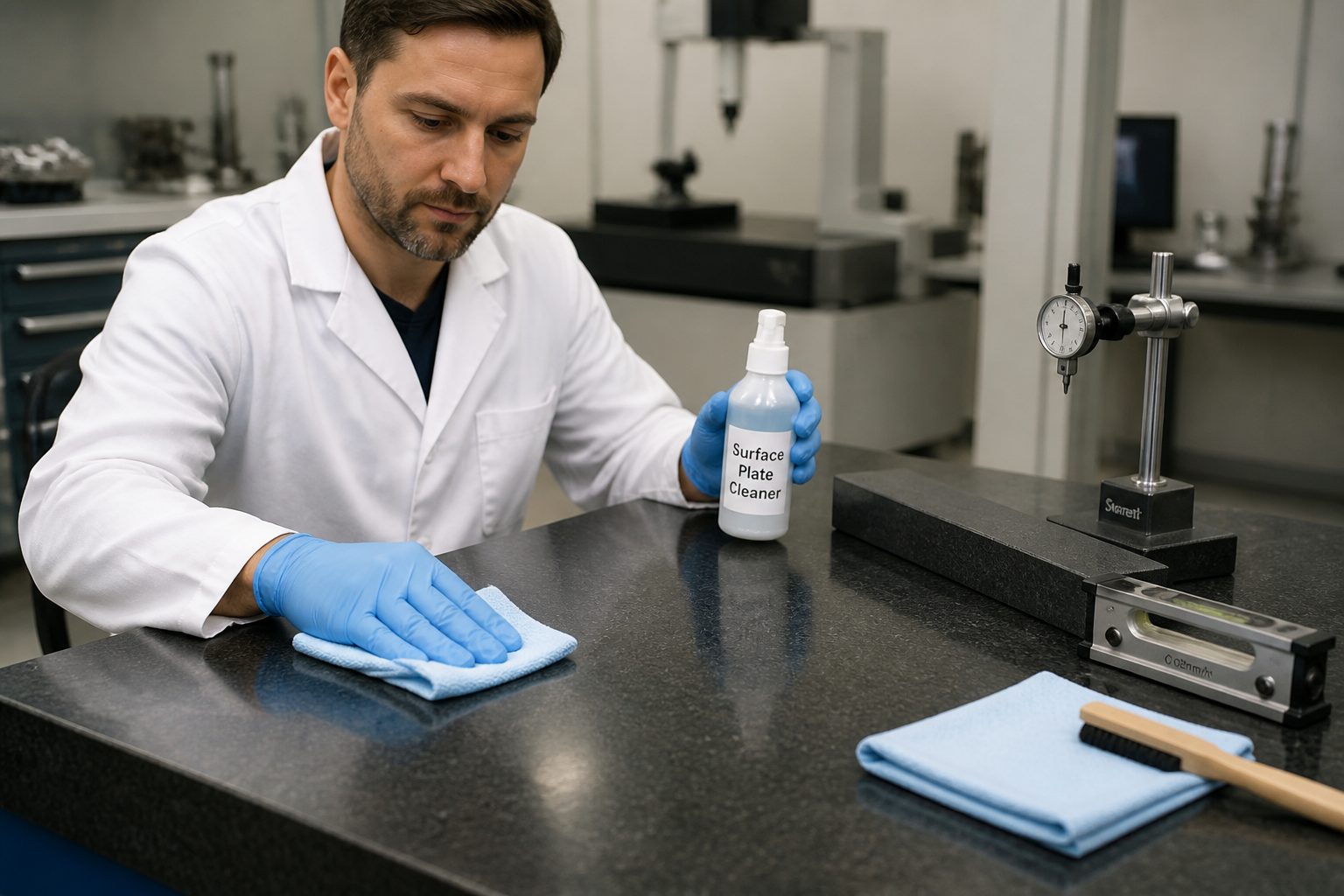
This specialized cleaning process ensures that the calibration technician starts with a perfect baseline, eliminating any variables introduced by surface contamination. It’s about creating an environment where the only factor being measured is the granite’s inherent geometry. This rigorous approach is a non-negotiable part of effective service readiness for any precision facility.
What to remove: film, grit, tape residue, and loose items
Before any calibration can begin, your surface plate must be completely free of all foreign materials. This includes both visible debris and invisible films that can compromise measurement accuracy. Achieving a true residue free cleaning is essential for reliable results.
Common culprits range from everyday dust and metallic grit to stubborn tape adhesives and dried-on coolant. Each type of contaminant presents its own challenge and can significantly impact the calibration process. Understanding what you are removing helps you choose the right cleaning method.
| Contaminant Type | Source | Impact on Calibration | Removal Strategy |
|---|---|---|---|
| Fine Grit & Dust | Airborne particles, shop environment | Scratches, false high spots, interference with air bearings | Dry wipe, vacuum, followed by wet clean |
| Oil Films | Fingerprints, machine lubricants, cutting fluids | Creates a non-uniform surface, prevents direct contact | Solvent-based granite cleaner, denatured alcohol |
| Tape Residue | Fixture mounting, temporary labels | Sticky patches, uneven surface, attracts dust | Specialized adhesive remover, gentle scraping with plastic |
| Dried Coolant/Fluid | Machining overspray, spills | Hardened spots, uneven texture, chemical deposits | Warm water, mild detergent, then solvent clean |
| Loose Items | Tools, gages, fixtures, paperwork | Obstruction, potential for plate damage, safety hazard | Manual removal, clear entire work area |
| Rust/Corrosion | From metal parts, moisture | Abrasive particles, surface pitting (rare on granite) | Specialized rust removers (use with extreme caution), professional help |
Supplies that help you clean thoroughly without scratching
Choosing the correct cleaning supplies is just as important as the cleaning technique itself. Using inappropriate materials can damage the granite, introduce new contaminants, or create scratches that invalidate the calibration. The right tools ensure a residue free cleaning without harming your precision instrument.
For wet cleaning, specialized granite cleaners are often the best choice, as they are formulated to be safe for the stone and evaporate cleanly. Alternatively, denatured alcohol or isopropyl alcohol (IPA) are excellent general-purpose solvents that leave minimal residue. Always check the manufacturer’s recommendations for your specific plate.
When it comes to wiping, lint-free cloths are absolutely essential. Microfiber cloths designed for optical cleaning or calibration-grade wipes are ideal because they don’t shed fibers and effectively pick up contaminants. Avoid using paper towels or shop rags, as these can leave behind lint and streaks.
For removing loose debris, a soft-bristle brush, like a natural hair artist’s brush, or a specialized surface plate brush works well. A small, portable vacuum with a soft brush attachment can also effectively remove dust and grit without touching the surface. Never use stiff wire brushes or abrasive pads.
Gloves are another often-overlooked but important supply. Clean, lint-free gloves prevent transferring skin oils and fingerprints back onto the freshly cleaned surface. This simple step maintains the integrity of your surface plate cleaning for calibration prep.
Proper storage of these cleaning supplies is also important to prevent contamination. Keep cloths, brushes, and cleaning solutions in sealed containers or dedicated clean areas. This ensures that the tools you use to clean your plate are themselves clean and ready for use.
Having a dedicated set of cleaning supplies specifically for your surface plate calibration prep avoids cross-contamination from other shop processes. This small investment in specialized tools pays dividends in improved accuracy and longer plate life. It’s a key part of your pre calibration checklist for optimal performance.
Step-by-step pre-service cleaning sequence
A systematic approach is crucial for effective surface plate cleaning for calibration prep. Rushing the process or skipping steps can leave hidden contaminants that impact calibration accuracy. Follow this sequence for a truly clean surface.
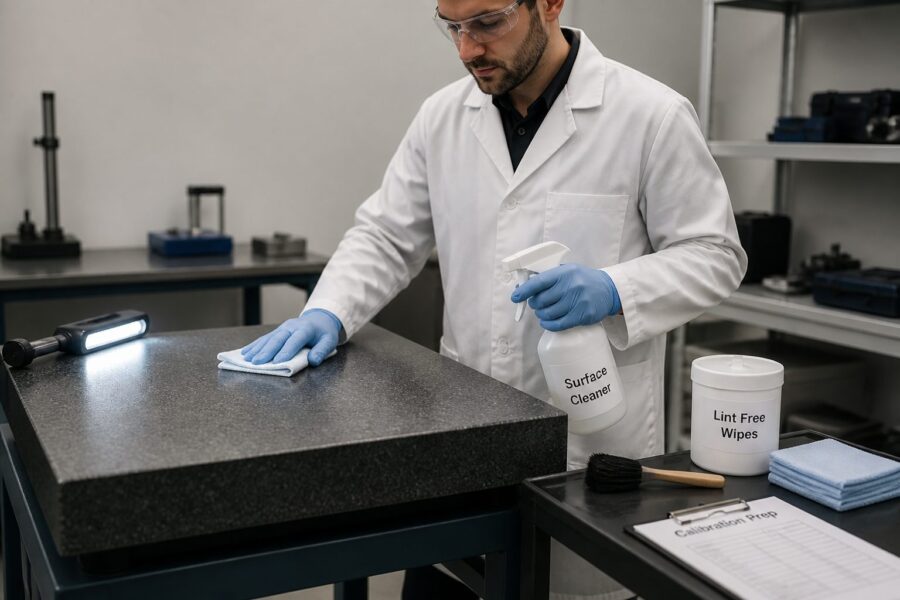
First, begin with a thorough dry cleaning to remove all loose debris. Use a soft-bristle brush or a lint-free cloth to gently sweep away dust, grit, and any visible particles from the entire surface. A small vacuum with a soft nozzle can also be very effective here.
Next, apply an approved granite cleaner or denatured alcohol to a clean, lint-free cloth. Wipe down the entire surface of the plate in overlapping sections, ensuring you cover every square inch. Use moderate pressure to lift and remove surface films and residues.
Immediately follow with a second pass using a fresh, clean lint-free cloth dampened with the same cleaning solution. This second wet wipe helps to pick up any remaining dissolved contaminants and ensures a more complete residue free cleaning. Change cloths frequently if they become visibly soiled.
After the wet cleaning, use a completely dry, clean lint-free cloth to buff the surface to a streak-free finish. Work quickly before the solution evaporates to avoid leaving behind any drying marks. The goal is a perfectly clear and dry granite surface.
Perform a final visual inspection under good lighting, looking for any remaining streaks, smudges, or particles. Run your gloved hand lightly across the surface to feel for any rough spots or sticky residues. Repeat sections of the cleaning process if necessary until the surface is spotless.
This detailed pre calibration checklist ensures that your surface plate is in optimal condition for the technician. It minimizes potential sources of error and allows for the most accurate and efficient calibration possible. Your diligence in this cleaning sequence directly supports the integrity of your metrology program.
Handling stubborn spots without aggressive abrasives
Even with careful daily cleaning, stubborn spots like dried tape residue or hardened coolant spills can sometimes cling to your surface plate. Removing these without resorting to harsh abrasives is critical to maintain the plate’s precision finish. The aim is always a residue free cleaning, not a damaged surface.
Using improper tools or chemicals can easily scratch the highly polished granite, creating new imperfections that compromise future measurements. Gentle, patient methods are always the best approach for these challenging areas. Here are some effective strategies to tackle those persistent blemishes.
- Soak with approved solvent
- Gentle plastic scraper
- Microfiber cloth with pressure
- Warm water and mild soap
- Specialized adhesive remover
- Rubbing alcohol application
- Repeat small sections
Clearing the area: access, lighting, and workflow planning
Effective surface plate cleaning for calibration prep extends beyond the plate itself; it includes the surrounding workspace. A cluttered or poorly lit area hinders the calibration technician’s work and can even introduce safety hazards. Proper planning for access and workflow is a key aspect of service readiness.
Ensure that the area around the surface plate is completely clear of all tools, jigs, measurement devices, and personal belongings. The technician needs ample space to move freely around the plate from all sides without obstruction. This prevents accidental bumps or dropped items that could damage the plate or equipment.
Good lighting is also paramount for both your cleaning efforts and the technician’s inspection. Supplemental task lighting can help reveal subtle imperfections or remaining residues that might be missed under general shop lighting. Shadows can hide critical details, so ensure even illumination across the entire granite surface.
Consider the technician’s typical workflow and plan your clear-out accordingly. They will likely need space for their calibration equipment, laptop, and tools. Providing a small, clean, and stable auxiliary table nearby can be a helpful gesture. This foresight streamlines their setup and reduces wasted time.
Remove any overhead obstructions such as hanging lights, air hoses, or crane hooks that might interfere with the technician’s instruments or movement. The technician needs a clear vertical path above the plate for certain measurements. This attention to detail demonstrates a commitment to a professional calibration environment.
Inform other personnel in the vicinity about the upcoming calibration service to minimize disruptions and maintain a clear zone. A quiet, undisturbed environment allows the technician to focus fully on the precise measurements. This proactive communication is part of a comprehensive pre calibration checklist.
Ultimately, a well-organized and accessible workspace reflects professionalism and helps ensure the calibration proceeds smoothly and efficiently. It contributes significantly to the overall accuracy of the service. This preparation shows respect for the technician’s expertise and the precision of the task at hand.
Stabilizing conditions: temperature and airflow basics
Granite surface plates are highly sensitive to environmental conditions, particularly temperature fluctuations. Achieving a stable thermal environment is as critical as cleaning for accurate calibration. Ignoring these factors can cause the plate to expand or contract, leading to misleading measurement results.
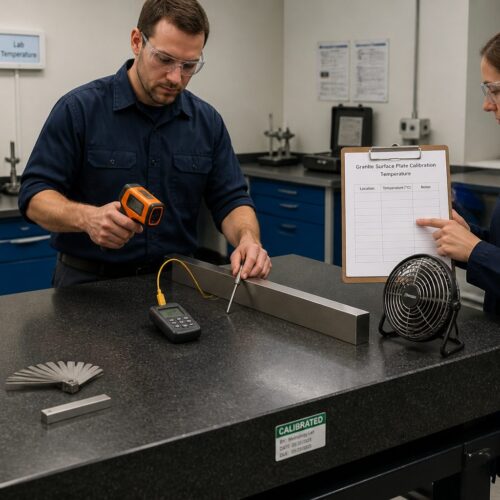
Allow your surface plate to stabilize at the ambient room temperature for at least 24 hours before the calibration technician arrives. This means avoiding direct sunlight, drafts from open doors or windows, and heat sources like machinery or HVAC vents. A consistent temperature throughout the granite is essential.
Temperature gradients within the plate itself can cause localized expansion or contraction, distorting the surface flatness. Even a few degrees difference from one end of the plate to another can introduce measurable errors. Metrology labs often maintain strict temperature controls for this exact reason.
Airflow also plays a role in maintaining thermal stability and preventing dust accumulation. While you want to avoid strong drafts, a gentle, consistent airflow from a well-regulated HVAC system is generally acceptable. Ensure that air vents are not directly blowing onto the plate surface.
If your facility experiences significant temperature swings, consider scheduling calibration during periods of minimal environmental change. This proactive planning is a crucial part of your service readiness. Providing a stable environment gives the technician the best possible chance to perform an accurate calibration.
The goal is to eliminate any thermal stress on the granite, allowing it to settle into its true form. A plate that is still acclimating will yield inconsistent readings, making the calibration process unreliable. This detailed attention to environmental control is a mark of true precision metrology.
Communicating any known temperature challenges or recent fluctuations to the technician can also be helpful. This transparency allows them to adjust their procedures or account for potential thermal effects. Proper environmental preparation is a foundational element of accurate surface plate calibration for calibration prep.
Documenting plate info and recent issues for the technician
Providing the calibration technician with relevant historical and operational information about your surface plate is incredibly valuable. This documentation helps them understand the plate’s history and current condition, aiding in a more informed and accurate calibration. Think of it as a comprehensive pre calibration checklist for the technician.
Have the plate’s serial number, manufacturer, and last calibration date readily available. This basic information helps the technician track the plate’s history and ensures they are calibrating the correct asset. It also provides a reference point for comparing current results with past performance.
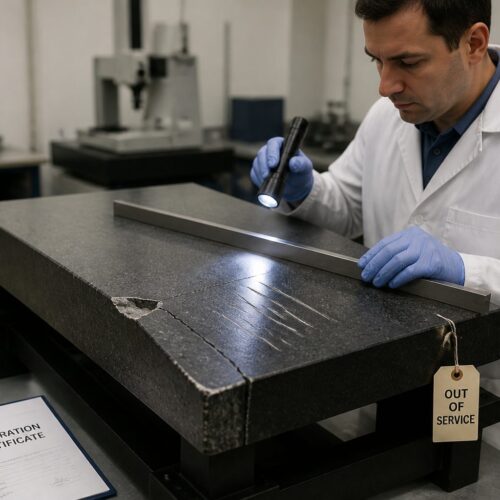
Note any recent impacts, drops, or significant scratches that the plate may have sustained. Even if they seem minor, these incidents can affect the plate’s flatness and the technician needs to be aware of them. This transparency helps them focus their inspection on potentially compromised areas.
Record any unusual usage patterns, such as periods of heavy use with large, heavy parts, or prolonged storage. This context helps the technician understand the stresses the plate has endured. They can then look for wear patterns consistent with those usage conditions.
If you have noticed any specific issues, like a particular area that seems to be wearing faster, or if certain measurements have been consistently problematic, share these observations. Your practical experience with the plate can offer valuable insights. This collaborative approach enhances the quality of the service.
Keep a log of any previous repairs or re-lapping events, including dates and who performed the work. Such interventions significantly alter the plate’s surface and are important for the technician to consider. This historical data is crucial for assessing long-term stability.
This organized information makes the calibration process more efficient and thorough, demonstrating excellent service readiness. It empowers the technician to provide a more tailored and accurate assessment of your surface plate. Proper documentation is an often-underestimated but powerful component of effective metrology management.
What not to do right before calibration
Just as there are best practices for preparing your surface plate, there are also critical actions to avoid immediately before calibration. These missteps can undermine all your careful surface plate cleaning for calibration prep and lead to inaccurate results. Knowing what not to do is just as important as knowing what to do.
Never use unapproved or abrasive cleaners, polishes, or waxes on the surface plate in the days leading up to calibration. These products can leave residues, alter the surface finish, or introduce chemicals that interfere with the calibration instruments. Stick to your approved, residue free cleaning solutions.
Avoid applying any protective coatings, oils, or lubricants to the plate. While these might seem beneficial for storage, they create a barrier between the granite and the calibration equipment. The technician needs to measure the bare granite, not a coated surface.
Do not attempt any last-minute repairs, re-lapping, or leveling adjustments yourself unless specifically instructed by a professional. Such interventions require specialized expertise and equipment. Improper adjustments can worsen the plate’s condition and make accurate calibration impossible.
Refrain from heavy use of the surface plate right before the technician arrives. Working with heavy parts or aggressive fixturing can induce thermal stress or even minute physical changes in the granite. Give the plate time to rest and stabilize after any significant activity.
Do not move the surface plate unless absolutely necessary, and only if you have the proper lifting equipment and expertise. Moving a heavy granite plate can introduce stress, cause shifting, or even damage the support structure. Stability is paramount for accurate measurement.
Ignoring these “don’ts” can waste the technician’s time, invalidate the calibration, and potentially damage your valuable metrology equipment. Your adherence to these precautions is a fundamental part of your pre calibration checklist. It ensures that the calibration service provides the most accurate and reliable data possible for your operations.
After the visit: maintaining the “fresh” condition
Once your surface plate has been calibrated, the goal is to maintain that newly certified condition for as long as possible. The meticulous surface plate cleaning for calibration prep you performed should set the standard for ongoing care. Consistent maintenance is key to preserving accuracy and extending the plate’s life.
Immediately after the calibration technician departs, ensure the plate is covered with a protective, non-abrasive cover. This shields the surface from airborne dust, accidental spills, and impacts. A breathable cover is often preferred to prevent moisture buildup.
Establish a regular, perhaps daily, cleaning schedule using the same lint-free cloths and approved cleaning solutions you used for calibration prep. This daily routine prevents the accumulation of films, grit, and residues that can degrade the surface over time. Maintaining a residue free cleaning approach is crucial.
Train all personnel who use the surface plate on proper handling and cleaning procedures. Consistency across all users helps maintain the plate’s condition and reinforces its importance as a precision tool. Education is a powerful tool in metrology management.
Store measurement tools and fixtures properly, away from the surface plate when not in use. Avoid leaving heavy items on the plate for extended periods, as this can cause localized wear or stress. A dedicated storage area for these items keeps the plate clear.
Periodically inspect the surface plate for any new scratches, chips, or signs of wear. Early detection of issues allows for timely intervention, potentially preventing more significant damage. This proactive approach helps you stay ahead of potential problems.
By consistently applying the principles of service readiness and meticulous care, you protect your investment in precision metrology. This ongoing diligence ensures that your surface plate remains a reliable foundation for your most critical measurements. A well-maintained plate delivers consistent accuracy, supporting your quality control efforts year-round.
Conclusion
The integrity of your metrology operations hinges on the accuracy of your surface plate, and that accuracy begins with a truly clean surface. Proper surface plate cleaning for calibration prep is not just a chore; it is a fundamental step in precision measurement. This meticulous preparation ensures your granite standard performs at its best.
By adhering to a detailed pre calibration checklist, focusing on residue free cleaning, and ensuring optimal environmental conditions, you empower your calibration technician to deliver the most precise results. This comprehensive approach to service readiness safeguards your investment and enhances the reliability of your quality control. Your diligence directly translates into better product quality.
Embrace these practices not just as a one-time event before calibration, but as a continuous commitment to precision. A well-maintained and properly prepared surface plate is a testament to your dedication to accuracy. It ensures that every measurement you take is built on a solid, dependable foundation.