
Setting up a new inspection room or upgrading an existing one involves more than just buying equipment. You need to make smart decisions about your core tools. The right surface plate selection for inspection room success starts with careful planning.
Many shops rush the process, picking a plate based on a quick measurement or what’s on sale. This often leads to inefficiencies and accuracy problems down the line. A thoughtful approach saves money and headaches, ensuring your metrology foundation supports precision work.
This guide helps you navigate the choices for your granite surface plate. We will cover everything from initial part assessment to long-term maintenance, ensuring your inspection room layout is optimized for accuracy and productivity.
Start With Your Parts and Processes (Not Catalog Specs)
Before you even glance at a catalog, look closely at the parts you will measure. Consider their largest dimensions, their weight, and any unusual features. This crucial step informs your surface plate selection for inspection room needs.
Think about the typical inspection routines you perform daily. Do you use height gages, bore gages, or coordinate measuring machines on the plate? Each tool has its own space and stability requirements that impact your decision.
Don’t forget about future growth or potential new projects. Choosing a plate that can handle slightly larger or heavier parts than your current average offers valuable flexibility. It prevents the need for an expensive upgrade sooner than expected.
Your current measurement processes dictate how operators interact with the plate. If you have multiple operators working simultaneously, you might need more accessible space. This insight helps shape the ideal work zone planning for your facility.
A common mistake is buying a plate that’s “good enough” for today’s work. This often creates bottlenecks and compromises accuracy when requirements change. Invest in a surface plate that genuinely supports your metrology tasks now and in the coming years.
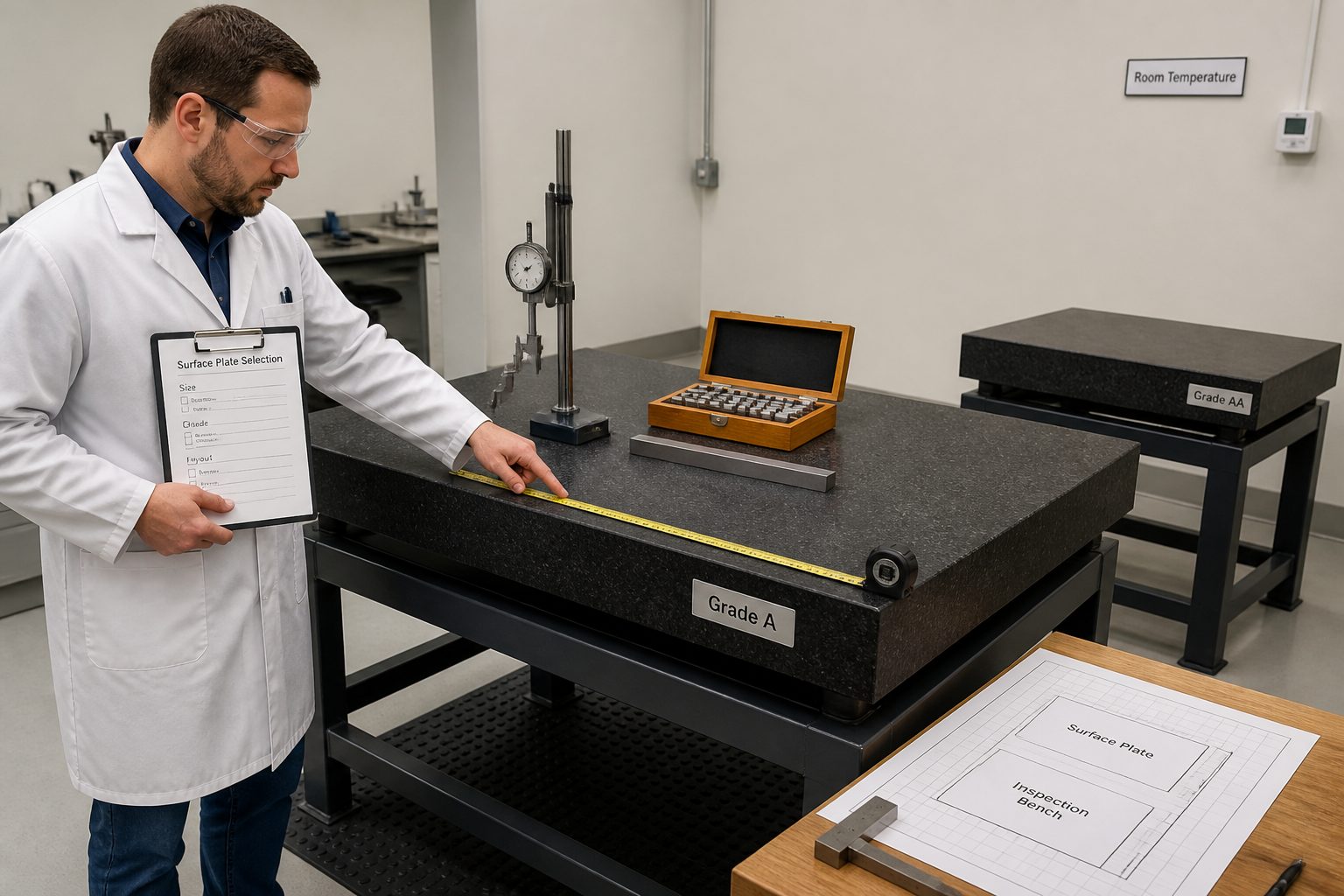
Choosing Plate Size Based on Work Envelope and Access
The physical size of your parts is the primary factor for determining plate dimensions. You need enough working area to comfortably position the part and all necessary gaging tools. A cramped plate leads to awkward movements and potential measurement errors.
Think about the full “work envelope” needed for each inspection. This includes the part itself, the measuring instruments, and the operator’s hands. Our plate size guide emphasizes practicality over minimum dimensions.
| Part Dimension (Longest Side) | Recommended Plate Length | Recommended Plate Width |
|---|---|---|
| Up to 12 inches | 24 inches | 18 inches |
| 12 to 24 inches | 36 inches | 24 inches |
| 24 to 36 inches | 48 inches | 36 inches |
| 36 to 48 inches | 60 inches | 48 inches |
| Over 48 inches | Consult with specialist | Consult with specialist |
Picking the Right Grade for Inspection Tasks
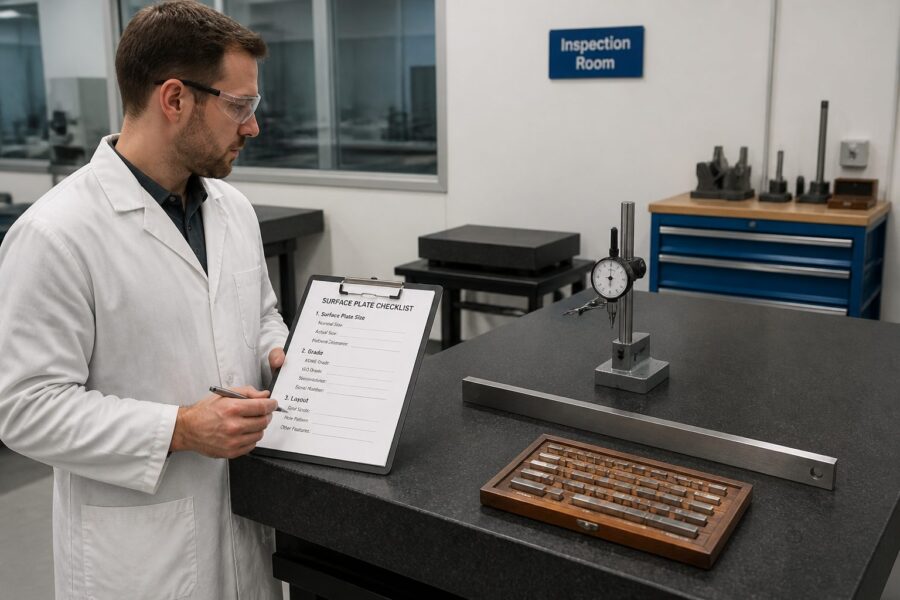
Surface plates come in different grades, each with specific flatness tolerances. The grade you choose directly impacts the accuracy of your measurements. Selecting the correct grade is a key part of surface plate selection for inspection room quality.
Laboratory Grade AA offers the highest precision, typically used in master calibration labs or for extremely critical measurements. This grade is overkill for many shops and carries a premium price tag. You must match the grade to your actual needs.
Inspection Grade A is a popular choice for general inspection rooms. It provides excellent flatness for most precision gaging and quality control tasks. This grade strikes a good balance between accuracy and cost for many applications.
Tool Room Grade B is suitable for less critical measurements or for use in machining areas. While it offers good flatness, it does not meet the stringent requirements of a dedicated inspection room. Avoid cutting corners on grade if precision is paramount.
Consider the cumulative effect of errors when choosing a grade. If your gaging tools also have tolerances, a lower-grade plate can compound those inaccuracies. Always choose a grade that is at least as accurate as your most critical measurement requirement.
Stand Height, Ergonomics, and Operator Comfort
The height of your surface plate stand affects operator comfort and measurement consistency. An improperly sized stand can lead to back strain and fatigue. Ergonomics are often overlooked in surface plate selection for inspection room setups.
Standard stand heights typically range from 30 to 36 inches, but adjustable stands offer greater flexibility. Operators of different heights can customize the working level. This promotes better posture and reduces the risk of repetitive strain injuries.
Consider the type of work being performed on the plate. If operators spend long periods performing intricate measurements, a height-adjustable stand is highly beneficial. It allows them to switch between standing and sitting positions as needed.
The stand itself must be robust and stable, free from wobble or vibration. A flimsy stand can compromise the accuracy of your measurements. Ensure the stand is designed to support the full weight of the granite plate and any parts placed on it.
Don’t forget about foot room and clearance around the stand. Operators need space to move freely without bumping into obstacles. Good work zone planning includes ample space for comfortable operation and access to tools.
Room Layout: Traffic Flow, Lighting, and Clean Zones
An efficient inspection room layout minimizes movement and maximizes productivity. Plan how parts will enter and exit the room, and how operators will move around the surface plate. Thoughtful planning enhances overall workflow and safety.
Designate clean zones around your surface plate to prevent contamination from dust and debris. This helps maintain the plate’s flatness and the accuracy of your measurements. A clear inspection room layout promotes good housekeeping practices.
- Establish clear pathways for personnel and parts.
- Place the surface plate away from high-traffic areas.
- Ensure adequate, even lighting over the entire work surface.
- Install dust control measures like air filtration systems.
- Provide easy access to cleaning supplies for the plate.
- Designate zones for incoming, in-process, and outgoing parts.
Managing Vibration and Nearby Equipment
Vibration is a silent killer of measurement accuracy. Even subtle vibrations from nearby machinery can transmit through the floor to your surface plate. You must address potential vibration sources during surface plate selection for inspection room placement.
Identify all potential sources of vibration in your facility. This includes stamping presses, CNC machines, forklifts, and even heavy foot traffic. Isolating your surface plate from these sources is critical for maintaining measurement integrity.
Consider placing your surface plate on an isolation pad or a specially designed anti-vibration stand. These solutions absorb shocks and dampen vibrations, protecting your sensitive measurements. Investing in proper isolation pays off in consistent accuracy.
Locate the inspection room as far as possible from heavy machinery. If relocation is not feasible, install physical barriers or heavier concrete slabs to mitigate vibration transmission. Every effort to reduce vibration improves your metrology results.
Even HVAC systems or exhaust fans can create low-frequency vibrations. Pay attention to all potential sources during your inspection room layout planning. A thorough assessment prevents future accuracy issues.
Temperature Strategy for the Inspection Space
Temperature stability is paramount for accurate dimensional metrology. Granite expands and contracts with temperature changes, affecting its flatness. Controlling the inspection room environment is non-negotiable for precision.
Aim for a consistent temperature, ideally 68°F (20°C), which is the international standard for metrology. Even small fluctuations can lead to measurable errors, especially with large parts or long measurement times. Stable conditions are key.
Install a robust HVAC system capable of maintaining tight temperature control within the inspection room. Avoid placing surface plates near windows, exterior walls, or direct sunlight. These areas experience greater temperature swings.
Allow parts to “soak” to the room’s ambient temperature before measurement. Bringing a hot part directly from a machining center to a cool surface plate will yield inaccurate results. Thermal equilibrium is essential for reliable data.
Humidity control is also important, as high humidity can promote rust on steel gaging tools. While less critical for the granite itself, it contributes to a stable metrology environment. A well-controlled atmosphere protects your entire investment.
Accessory Planning: Storage and Tool Control
A surface plate is only as good as the tools used on it. Plan for proper storage and organization of all your gaging equipment. This includes height gages, gage blocks, indicators, and cleaning supplies.
Keep frequently used tools within easy reach of the surface plate but not directly on it. Dedicated tool cabinets or carts prevent clutter and damage to precision instruments. Good work zone planning includes intelligent storage solutions.
Implement a system for tool control, such as shadow boards or labeled drawers. This ensures tools are returned to their proper place after use. It also makes it easy to spot missing items before starting a critical inspection.
Provide specific areas for surface plate cleaning supplies, including approved cleaners and lint-free cloths. Keeping these items handy encourages regular cleaning. A clean plate is a precise plate, and cleanliness is part of good metrology practice.
Consider specialized accessories like dust covers for your surface plate when not in use. These covers protect the precision surface from airborne contaminants and accidental damage. Proper care extends the life and accuracy of your investment.
Installation Planning: Delivery, Rigging, and Setup
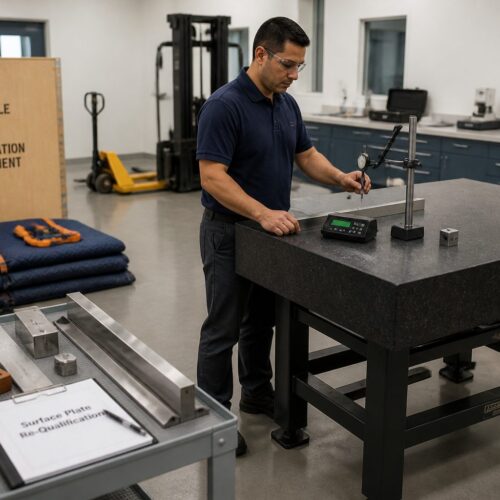
Installing a surface plate, especially a large one, requires careful logistical planning. Granite is heavy and brittle, demanding specialized handling. Don’t underestimate the complexity of this step when considering surface plate selection for inspection room integration.
Coordinate delivery with your facility’s receiving and maintenance teams. Ensure there is clear access from the loading dock to the inspection room. Any tight corners or narrow doorways can become major obstacles for large plates.
Engage professional rigging services for plates over a certain size or weight. Attempting to move heavy granite without proper equipment and expertise risks damage to the plate and injury to personnel. Safety and precision are paramount during installation.
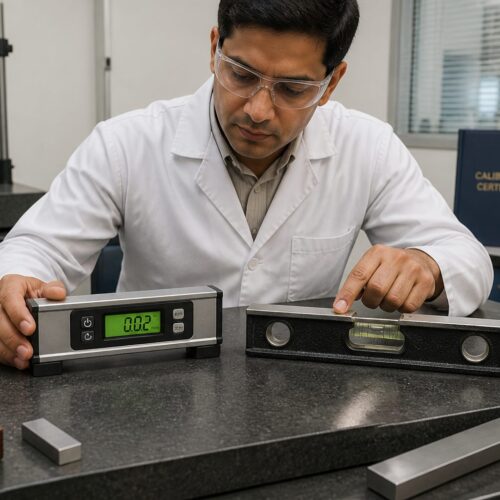
Once positioned, the surface plate must be leveled correctly. Most plates have adjustable feet or leveling screws on their stands. Proper leveling ensures the plate’s inherent flatness is maintained and not distorted by uneven support.
Allow the plate to acclimatize to the inspection room temperature for at least 24-48 hours after installation. This thermal stabilization is important before performing any initial measurements or calibration. Patience here prevents immediate errors.
Maintenance and Calibration Planning From Day One
A surface plate is a precision instrument that requires ongoing care to maintain its accuracy. Establish a regular cleaning and maintenance schedule from the moment of installation. This proactive approach extends the plate’s lifespan and reliability.
Clean your surface plate daily with an approved granite cleaner and a lint-free cloth. This removes dust, oils, and other contaminants that can build up. A dirty surface plate compromises measurement accuracy and accelerates wear.
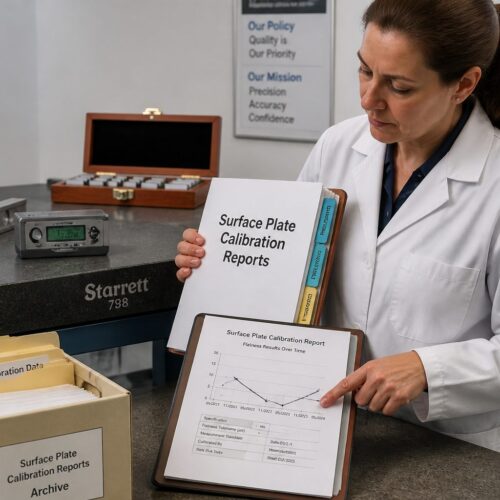
Develop a calibration schedule based on the plate’s grade, usage frequency, and environmental conditions. Most inspection grade plates require annual calibration, while master plates might need it more often. Regular calibration ensures continued compliance.
Work with a reputable calibration service that uses accredited methods and traceable standards. They will inspect the plate for wear, damage, and flatness deviations. This service provides a critical verification of your metrology foundation.
Document all cleaning, maintenance, and calibration activities in a logbook. This record provides a history of the plate’s condition and compliance. Good documentation is a cornerstone of effective quality management and supports future audits.
Conclusion
Thoughtful surface plate selection for inspection room success involves more than just picking a size. It requires a holistic view of your operations, from the parts you measure to the environment you measure them in. Every decision impacts your measurement accuracy.
By considering part dimensions, required grade, ergonomic stand height, and a well-planned inspection room layout, you build a robust metrology foundation. This careful work zone planning prevents common pitfalls and ensures consistent, reliable results.
Don’t rush the process; take the time to evaluate your needs thoroughly. A properly chosen and installed surface plate will be a cornerstone of your quality control for many years. It represents a smart investment in your precision capabilities.
From managing vibration to maintaining stable temperatures, each element contributes to the overall integrity of your inspection process. Ignoring these factors can lead to frustrating inconsistencies and costly rework. Precision demands attention to detail.
Embrace a comprehensive strategy that includes careful accessory planning, professional installation, and ongoing maintenance. This ensures your surface plate remains a reliable tool, supporting the highest standards of quality in your manufacturing operation. Your commitment to excellence starts here.