
Surface plates are the bedrock of precision measurement, offering an unyielding reference plane for inspection and calibration. Maintaining their accuracy is paramount, which often means obsessing over environmental factors like vibration and temperature. However, many overlook a silent saboteur that consistently impacts these instruments: workshop air quality.
Poor air quality introduces microscopic threats that degrade surface plate flatness and compromise measurement integrity over time. These aren’t just obvious dust bunnies; they are insidious particles that settle, embed, and abrade. Understanding and controlling these airborne elements is just as important as temperature stability for any precision workshop.
Investing in a robust strategy for managing your metrology environment air isn’t an optional luxury, but a fundamental requirement for long-term accuracy. This article will explain why focusing on your workshop air quality surface plate interaction is a non-negotiable part of maintaining your granite calibration standards. We will look beyond simple cleanliness to address the complex challenges posed by various airborne contaminants.
Beyond Dust: The Broader Impact of Air Quality on Precision
When people think about keeping a surface plate clean, they usually picture wiping away visible dust. This basic step is certainly necessary, but it only scratches the surface of the real problem. The true danger lies in the invisible particulate matter constantly floating through your facility.
These tiny particles, often too small to see with the naked eye, can accumulate on the perfectly flat surface of a granite plate. Even a thin layer of these contaminants can subtly alter the effective height of a workpiece or gauge block. This directly introduces measurement errors that can compound quickly in precision work.
Think of it this way: your surface plate is designed for micro-inch accuracy, but a single microscopic speck is comparatively huge. This speck acts like a small bump, lifting the item slightly off the true reference plane. The result is a false reading, however small, that undermines the metrology process.
Beyond simple accumulation, certain airborne substances can also chemically react with the granite itself or with the thin layer of oil often applied for protection. Corrosive fumes or acidic mists can slowly etch the highly polished surface, leading to irreversible damage. This degradation erodes the foundation of your precision measurements.
Ignoring workshop air quality surface plate interactions means accepting a gradual decline in the reliability of your measurements. True precision requires an all-encompassing approach that considers every environmental factor, especially the air your instruments breathe. A clean room environment isn’t just for semiconductor fabs; it holds lessons for every precision workshop.
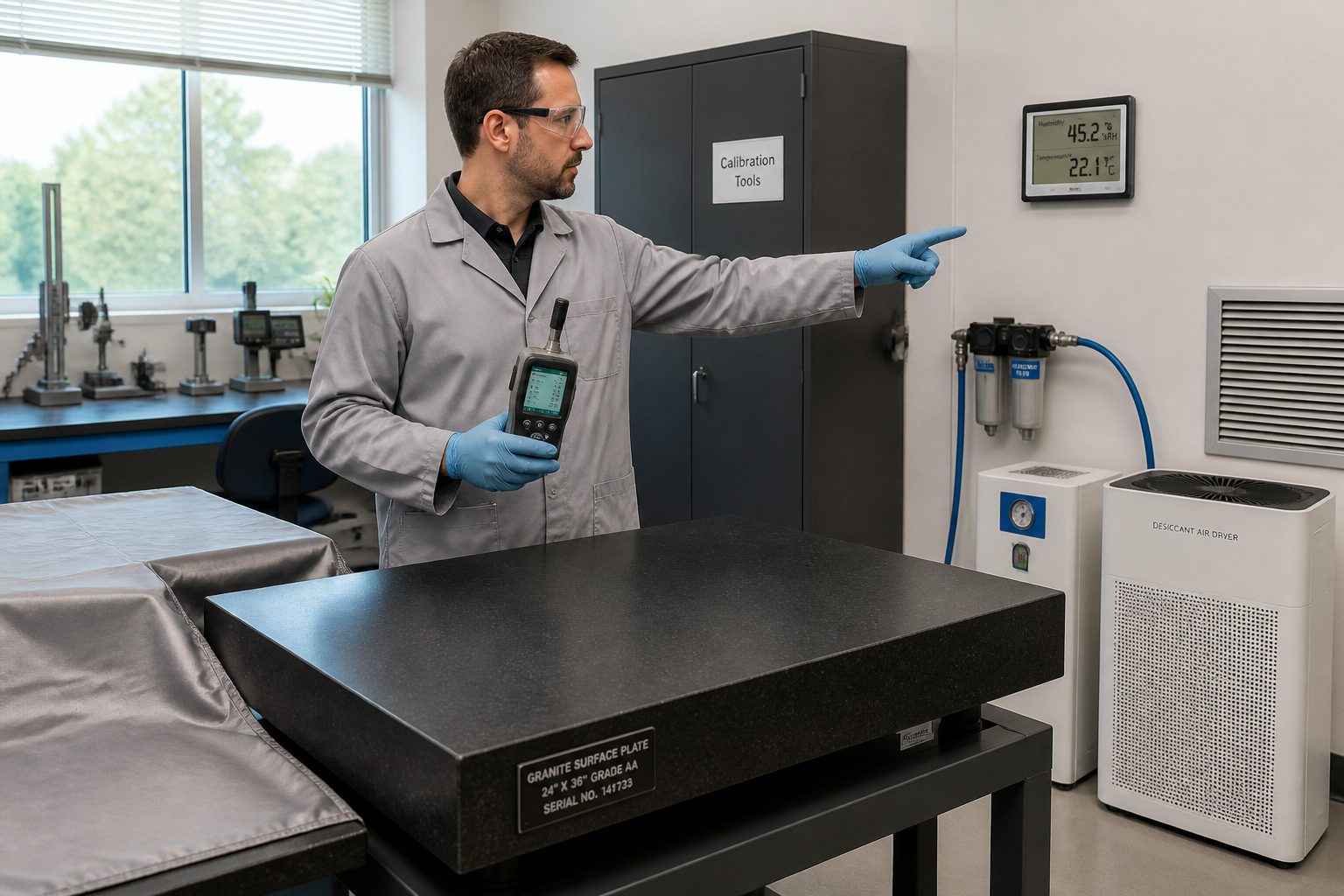
Identifying Common Airborne Contaminants in Workshops
Workshops are inherently messy places, generating an array of airborne pollutants from daily operations. Understanding what these contaminants are is the first step toward effective control. They range from solid particles to gaseous fumes, each posing unique threats to your metrology equipment.
Solid particles include everything from machining swarf and grinding dust to sawdust, paint overspray, and even fibers from clothing. These are often the most visible but also the most numerous and easily transported by air currents. They settle on surfaces, including your granite plate air contaminants.
Metalworking operations, for instance, release fine metallic dust and abrasive grit that can be incredibly hard and damaging. Woodworking creates light, pervasive sawdust that can coat an entire room surprisingly quickly. Even simple foot traffic stirs up settled dust, making it airborne.
Beyond solid particles, workshops often deal with chemical vapors and fumes. Solvents from cleaning agents, paints, and adhesives release volatile organic compounds (VOCs) into the air. Welding operations produce various metallic fumes and gases that are harmful to health and corrosive to surfaces.
Oil mists from machining coolants and hydraulic systems are another significant concern. These fine droplets can settle on surface plates, creating a sticky film that traps other particles and makes cleaning more difficult. This oily residue can also interfere with accurate contact between measuring instruments and the plate.
How Microscopic Particles Affect Surface Plate Accuracy
Microscopic particles, even those invisible to the naked eye, present a significant challenge to the integrity of surface plate measurements. These tiny contaminants act as unwanted spacers, preventing perfect contact between the workpiece and the plate’s precision surface. This interference directly translates into measurement inaccuracies.
Over time, these abrasive particles can also cause wear on the granite itself, especially if workpieces are frequently slid across the plate without proper cleaning. This gradual erosion compromises the plate’s flatness and repeatability, demanding costly re-calibration or replacement. Protecting your granite plate air contaminants from these threats is essential for preserving its certified accuracy.
| Contaminant Type | Typical Size Range | Impact on Surface Plate |
|---|---|---|
| Fine Dust (e.g., wood, textile) | 1-100 micrometers | Forms insulating layer, traps moisture, causes minor abrasion. |
| Metallic Particles (e.g., grinding swarf) | 0.5-50 micrometers | Highly abrasive, causes scratches and wear, can embed in surface. |
| Oil Mist / Coolant Residue | 0.1-10 micrometers | Creates sticky film, attracts other particles, inhibits true contact. |
| Soot / Carbon Black | 0.01-1 micrometer | Discolors surface, acts as fine abrasive, difficult to remove completely. |
| Chemical Vapors / Fumes | Gas molecules (nanometers) | Can chemically etch granite, degrade protective coatings, cause corrosion. |
The Role of Humidity and Temperature in Air Quality
Humidity and temperature are often considered separate environmental controls, but they are deeply intertwined with air quality in metrology. Fluctuations in either parameter can exacerbate problems caused by airborne contaminants. Maintaining stable conditions is therefore a multi-faceted challenge.
High humidity, for example, can cause certain types of dust and particles to clump together, making them heavier and more prone to settling. More critically, high moisture levels promote corrosion on metallic workpieces and measuring instruments. This corrosion can then transfer to the surface plate, leaving rust stains or abrasive residue.
Conversely, extremely low humidity can increase static electricity in the workshop, causing airborne particles to cling more tenaciously to surfaces, including your precision granite. This makes them harder to remove with simple wiping or air blasts. Static charges can also interfere with sensitive electronic measuring devices.
Temperature stability is equally important, not just for thermal expansion of materials, but for controlling air currents. Large temperature swings create convection currents that actively stir up settled dust and keep particles suspended longer. This constant movement makes it harder for filtration systems to capture contaminants effectively.
Additionally, uncontrolled temperature variations can lead to condensation on cool surfaces, especially if the humidity is high. This moisture provides a perfect breeding ground for mold and mildew, which can release spores into the air, adding another layer of biological contaminant. Managing your metrology environment air requires a holistic approach to these atmospheric elements.
Implementing Effective Air Filtration Systems
Effective air filtration is arguably the most direct way to combat airborne contaminants and protect your workshop air quality and surface plate. This involves more than just a standard HVAC filter; precision environments demand specialized solutions. The goal is to remove particles before they ever have a chance to settle on your valuable equipment.
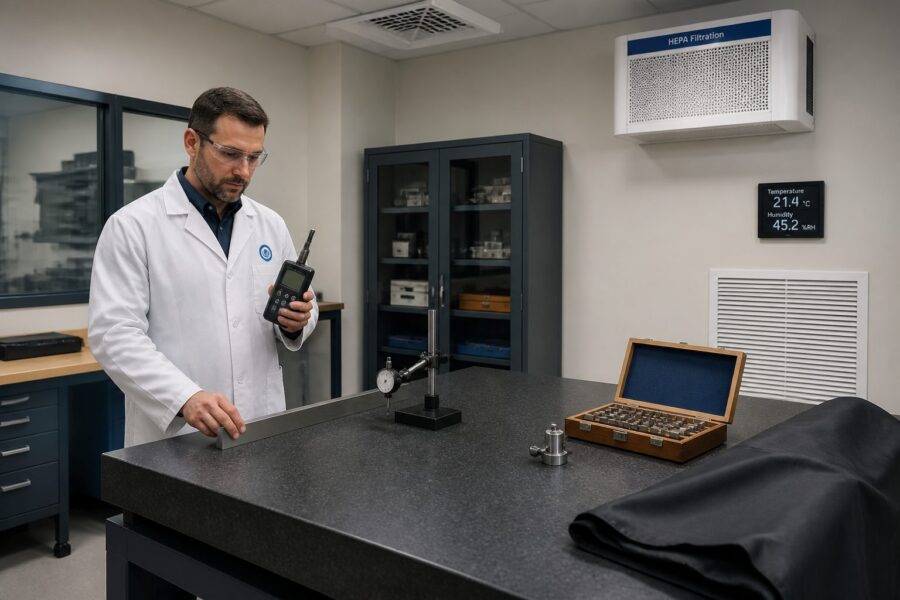
Investing in high-efficiency particulate air (HEPA) filters is a baseline requirement for any area housing metrology equipment. These filters capture 99.97% of particles 0.3 micrometers or larger, which covers most of the damaging airborne debris. Strategic placement and regular maintenance of these systems are critical for optimal performance.
- Install HEPA filtration units for critical metrology zones
- Utilize pre-filters to extend the life of HEPA filters
- Ensure adequate air changes per hour (ACH) for the space
- Create positive pressure in metrology areas to prevent ingress
- Seal off non-essential openings and gaps in walls
- Consider localized extraction systems for dust-generating processes
- Implement regular filter replacement schedules
Strategies for Controlling Fumes and Vapors
While particulate matter is a clear threat, gaseous fumes and chemical vapors present their own insidious challenges to surface plate longevity and accuracy. These airborne chemicals can corrode surfaces, degrade protective coatings, and even subtly alter sensitive instrument properties. Controlling them requires methods beyond simple particle filtration.
The most effective strategy for managing fumes and vapors involves source capture and localized exhaust ventilation. This means installing fume hoods or extraction arms directly at the point where chemicals are being used or generated. Capturing pollutants at their origin prevents their dispersal throughout the workshop.
For example, if you’re using solvents for cleaning or applying protective coatings, a dedicated chemical fume hood should be employed. This pulls the vapors away from the operator and the general workshop air, venting them safely outside or through specialized chemical filters. This protects personnel and precision equipment.
Beyond localized extraction, consider using activated carbon filters in your general air handling systems. These filters are excellent at adsorbing volatile organic compounds (VOCs) and other gaseous pollutants that HEPA filters cannot capture. They provide a secondary line of defense against diffused chemical threats.
Proper storage of chemicals is also paramount; always keep volatile liquids in sealed containers when not in use. Ensure that any hazardous materials are stored in well-ventilated cabinets, ideally with their own exhaust systems, to prevent off-gassing into the general metrology environment air. Proactive management of these invisible threats safeguards your granite calibration standards.
Regular Cleaning and Maintenance of Air Handling Systems
Even the most advanced air filtration system is only as effective as its maintenance schedule. Neglecting your air handling units can quickly turn them from solution into problem. Regular cleaning and diligent upkeep are essential for sustained workshop air quality surface plate protection.
Filters, especially pre-filters and HEPA filters, must be replaced on a strict schedule, often more frequently than manufacturers recommend for standard applications. Clogged filters reduce airflow, decrease efficiency, and can even become a breeding ground for biological contaminants. A visual inspection is simply not enough; follow manufacturer guidelines or even shorten them based on your workshop’s specific contaminant load.
Beyond filters, the ductwork and internal components of your HVAC and filtration units also accumulate dust and grime over time. These surfaces can harbor bacteria, mold, and other particles that are then re-circulated into the air. Periodic professional cleaning of the entire system is a worthwhile investment.
Ensure that ventilation fan motors are operating efficiently and that belts are properly tensioned. A poorly performing fan means reduced air changes per hour, allowing contaminants to linger longer. Regular checks of static pressure across filters can indicate when they need replacement, providing a data-driven maintenance approach.
Don’t forget the outdoor air intakes; these should be kept clear of debris, vegetation, and any potential sources of pollution. A clean intake ensures that the air being drawn into your system is as clean as possible before it even reaches the filters. Proper maintenance ensures your metrology environment air remains pristine.
Zoning Your Workspace for Cleaner Air Around Metrology
Not all areas of a workshop require the same level of air purity, making workspace zoning an intelligent, cost-effective strategy. Concentrating your highest air quality efforts around your surface plates and metrology stations makes sense. This approach creates a clean “bubble” where precision is paramount.
Begin by identifying the most significant sources of contaminants in your workshop; these are your “dirty” zones. Machining, grinding, welding, and painting areas should ideally be separated from your metrology lab. Walls, even temporary partitions, can significantly reduce the migration of airborne particles.
Within your metrology area, consider creating a dedicated “clean zone” for the surface plate itself. This might involve a soft-wall cleanroom enclosure or simply strategically placed laminar flow hoods directly over the inspection area. These create a positive pressure zone with highly filtered air, pushing contaminants away.
Implement airlocks or vestibules between high-contaminant areas and your clean metrology zones. These transitional spaces help to shed particles from personnel and equipment before they enter the critical areas. They act as a buffer, preventing direct airflow from dirty to clean spaces.
The goal is to establish a hierarchy of cleanliness, with your granite calibration standards residing in the cleanest possible environment. This strategic zoning minimizes the overall volume of air that needs ultra-high filtration, making air quality management more efficient and effective. It’s a smart way to protect your precision workshop air filtration investments.
Monitoring Air Quality Parameters Proactively
You cannot manage what you do not measure, and this principle holds especially true for workshop air quality surface plate protection. Proactive monitoring of various air quality parameters provides objective data on the effectiveness of your control measures. Relying solely on visual inspection or assumptions is a recipe for undetected problems.
Install particle counters in your critical metrology areas to continuously track the concentration of airborne particulate matter. These devices provide real-time data on particle counts at different sizes, alerting you to spikes caused by specific activities or failing filtration. This data allows for immediate corrective action.
Beyond particles, consider monitors for volatile organic compounds (VOCs) if your workshop uses many solvents or chemicals. These sensors can detect chemical vapor buildup before it becomes a noticeable odor or a corrosive threat to your instruments. Early detection prevents long-term damage.
Regularly monitor temperature and humidity levels within your metrology environment air, ideally with data logging capabilities. This helps identify trends, fluctuations, and potential issues with your HVAC system. Consistent environmental conditions are a hallmark of a well-controlled precision space.
Establish clear thresholds for each monitored parameter; if readings exceed these limits, investigate the cause immediately. This might involve checking filters, identifying new contaminant sources, or adjusting ventilation systems. Proactive monitoring transforms air quality management into a data-driven process.
Employee Practices for Minimizing Airborne Contaminants
Even with the best filtration and zoning, human activity remains a significant source of airborne contaminants in any workshop. Educating and empowering employees to adopt clean practices is therefore an indispensable part of maintaining workshop air quality and surface plate integrity. People are often the biggest variable.
Implement strict protocols for personal cleanliness when entering metrology areas, such as requiring clean lab coats or smocks. Even clean street clothes shed fibers and skin cells that contribute to airborne particulate. Dedicated footwear for clean zones can also prevent tracking in dirt and dust.
Train personnel on proper cleaning techniques for surface plates and measuring instruments. This includes using lint-free cloths, appropriate cleaning solutions, and avoiding harsh chemicals or abrasive materials that can damage the granite. Always clean the plate before and after use.
Encourage employees to perform dust-generating tasks, like grinding or sanding, as far away from metrology areas as possible, ideally in dedicated, ventilated areas. If unavoidable, ensure localized extraction is used and that the metrology area is protected or temporarily sealed. Awareness is key.
Emphasize the importance of closing doors and minimizing foot traffic in critical areas to reduce air disturbance and contaminant ingress. Simple habits like not shaking out cloths or sweeping dry floors near surface plates make a huge difference. Every person plays a role in preserving your granite calibration standards.
Conclusion
Maintaining the unwavering accuracy of your surface plates demands a comprehensive, proactive approach to workshop air quality. It extends far beyond simply wiping away visible dust; it involves understanding and controlling a complex array of microscopic threats. Ignoring these airborne hazards compromises measurements and leads to costly equipment degradation.
By implementing robust air filtration, controlling fumes, meticulously maintaining systems, and intelligently zoning your workspace, you create a sanctuary for precision. Proactive monitoring provides the data needed to ensure these efforts are effective and to address issues before they impact your work. Each step contributes to the longevity and reliability of your metrology assets.
Ultimately, a commitment to superior metrology environment air quality is an investment in the foundational accuracy of your entire operation. It safeguards your granite calibration standards, ensures consistent measurement integrity, and empowers your team to produce work with unwavering confidence. Precision truly begins with the air you breathe.