
Granite surface plates are the bedrock of precision measurement in many industries. Their exceptional flatness and stability make them indispensable for critical metrology tasks.
However, these seemingly indestructible surfaces require careful handling to maintain their accuracy over time. The materials that come into contact with your plate play a significant role in its longevity and performance.
Understanding the nuances of material interaction granite surface plate is not just about avoiding damage; it is about preserving the integrity of your measurements and extending the life of a valuable asset. This guide will explore how different workpieces and tools can affect your granite plate.
The Science Behind Material Interaction on Granite Surfaces
Granite surface plates are made from natural igneous rock, primarily composed of quartz, feldspar, and mica. These minerals give granite its hardness and dimensional stability, but they also define its wear characteristics.
When another material slides across the granite, microscopic particles can be dislodged from either surface. This process, known as abrasion, is a primary cause of wear on precision surfaces.
The hardness differential between the granite and the contacting material dictates the extent of this abrasion. Softer materials are less likely to abrade the granite, while harder materials pose a greater risk.
Beyond simple abrasion, chemical reactions or adhesion can also occur, particularly with certain metals. These interactions can lead to stubborn stains or even microscopic pitting on the surface.
Understanding these fundamental scientific principles helps us appreciate why specific precautions are necessary. Proper care ensures your granite plate continues to deliver the accuracy you depend on.
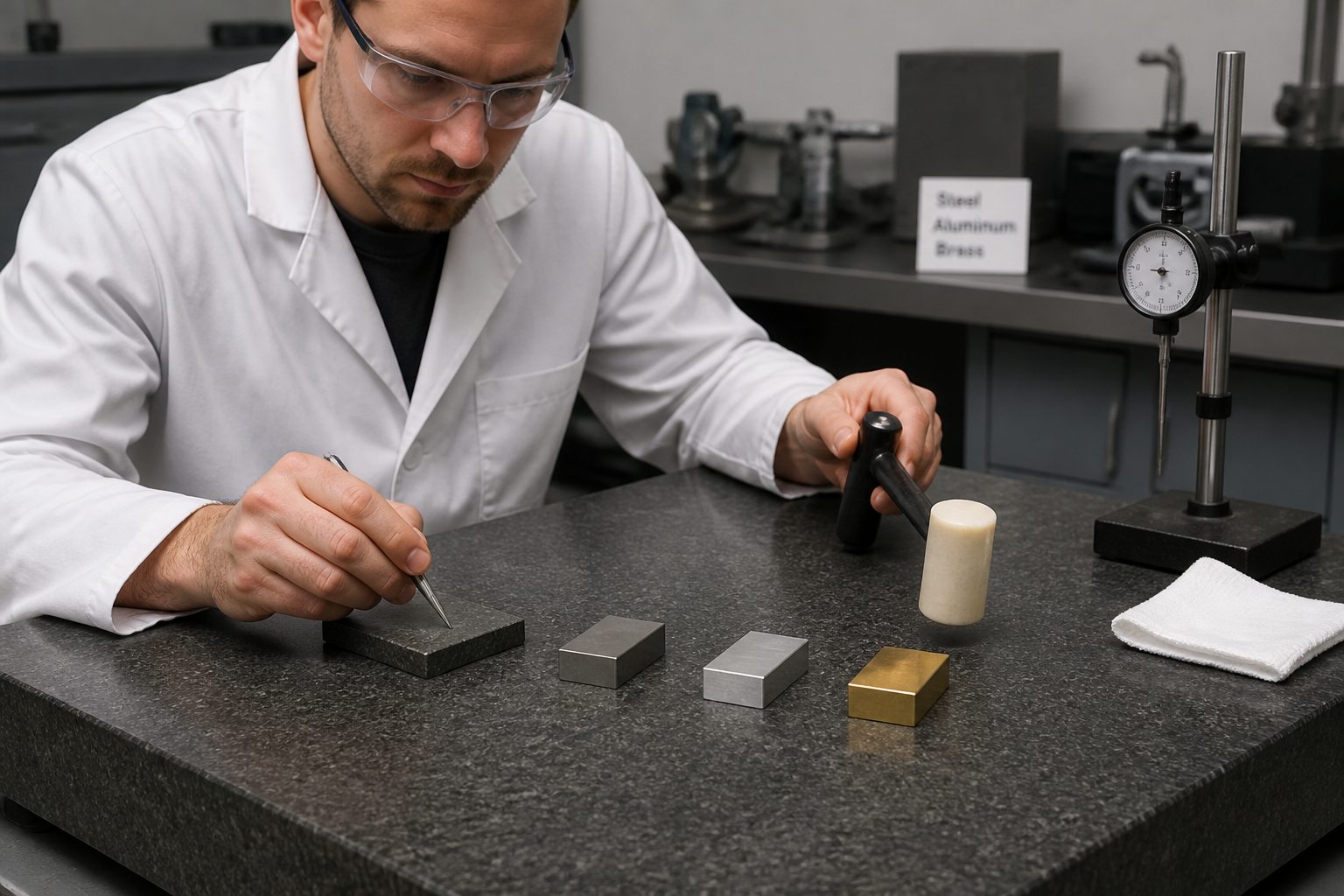
Common Workpiece Materials and Their Potential Effects
Different workpiece materials present varying levels of risk to your granite surface plate. Knowing these risks helps you implement appropriate protective measures during your work.
Materials like hardened steel, ceramics, and carbides are significantly harder than granite, making them particularly abrasive. Even soft metals like aluminum or brass can leave deposits or cause minor wear over time.
| Workpiece Material | Potential Effect on Granite | Recommended Precaution |
|---|---|---|
| Hardened Steel | Micro-scratches, abrasive wear, material transfer | Use protective sheets, lift don’t drag |
| Cast Iron | Abrasive wear, potential for rust transfer | Ensure clean, dry contact, use non-abrasive pads |
| Aluminum/Brass | Softer, but can leave metallic smears, minor abrasion | Clean thoroughly after use, use thin barriers |
| Ceramics/Carbides | High abrasion risk, significant scratching | Always use a protective barrier, minimize sliding |
| Plastics/Composites | Low abrasion risk, but can leave residue | Regular cleaning, check for chemical compatibility |
Impact of Different Tooling Materials on Granite Wear
Measurement tools and fixtures also interact directly with the granite surface plate, and their material composition matters a great deal. Gage blocks, height gages, and comparators all have bases that make contact with the plate.
Tools made from hardened steel or carbide, such as the contact points of some height gages, can cause localized wear if dragged. Even small, seemingly innocuous movements can accumulate damage over time.
Cast iron bases, common on many precision instruments, are generally softer than granite but can still abrade the surface if dirty or rough. Fine particulate matter caught between the surfaces acts as an abrasive slurry.
Many modern tools feature ceramic bases or carbide wear pads for improved stability and reduced wear. These materials, while hard, are often designed to have a smooth, stable interface with the granite.
The key to minimizing tool material impact granite is understanding that even small, hard contact points can initiate wear. Always lift tools rather than slide them, especially those with sharp or hard edges.
Regularly inspect the bases of your precision tools for burrs, nicks, or embedded debris. A damaged tool base is a direct threat to the flatness of your expensive surface plate.
Consider adding felt or non-abrasive pads to the bottom of heavy, frequently moved tools if their bases are not precision-lapped. This simple step can significantly reduce wear.
Preventing Material Transfer and Adhesion Issues
Material transfer occurs when particles from the workpiece or tool adhere to the granite surface, often forming a thin film. This film can compromise the plate’s flatness and introduce measurement errors.
Common culprits include soft metals like aluminum or brass, which can leave metallic streaks, and even some plastics that shed microscopic fibers. Preventing material transfer is a proactive effort.
One effective method for preventing material transfer is to use a thin, non-abrasive barrier between the workpiece and the plate. A clean sheet of paper or a specialized surface plate cover can work wonders.
Always ensure both the workpiece and the surface plate are meticulously clean before placing items on it. Dust, grit, or even oily residues can create a medium for material transfer or act as an abrasive.
For workpieces that are prone to shedding particles, like cast iron with residual machining dust, consider placing them on a separate, dedicated setup area first. Clean them thoroughly before moving them to the granite.
Adhesion, where materials bond or stick to the granite, is less common but more problematic. This can happen with certain chemicals or if a material is left in contact with the plate for extended periods under pressure.
Regularly inspect your plate for any signs of discoloration or residue that indicates material transfer. Early detection allows for easier removal before it becomes a permanent issue.
Best Practices for Placing and Moving Workpieces
How you place and move workpieces on your granite surface plate directly impacts its long-term accuracy and condition. Careless handling is a leading cause of premature wear.
Always lift workpieces and tools off the surface plate before moving them, even for short distances. Dragging items creates friction and abrasion.
- Lift, do not slide, all items
- Place gently, avoid dropping
- Use two hands for heavy objects
- Clear a path before moving
- Inspect workpiece bases for burrs
- Keep the plate clean of debris
- Consider air-bearing feet for large items
Choosing the Right Fixtures and Supports
The fixtures and supports you use with your granite surface plate are just as important as the workpieces themselves. Their design and material directly influence the plate’s integrity.
V-blocks, angle plates, and parallels are common fixtures, and their bases should always be precision ground or lapped. Rough or unfinished bases will rapidly damage your plate.
Opt for fixtures made from materials that are either softer than granite or have smooth, broad contact areas. Hardened steel fixtures are acceptable, but only if their contact surfaces are perfectly smooth and clean.
Never use fixtures with sharp edges or burrs that could dig into the granite. Regularly inspect and deburr your fixtures to prevent accidental scratching.
For heavy workpieces, distribute the load across multiple support points to minimize localized pressure. This prevents uneven wear and potential stress on the granite.
Consider using adjustable jacks or leveling feet that have non-marring pads. These provide stable support without directly abrading the granite surface.
If you frequently use a specific setup, consider dedicating a portion of your surface plate for it, or use a sacrificial plate on top. This protects your primary reference surface.
Strategies for Minimizing Abrasive Contact
Minimizing abrasive contact is fundamental to preserving the accuracy and longevity of your granite surface plate. This often involves a combination of careful technique and smart material choices.
The single most effective strategy is to always lift and place objects rather than sliding them across the granite. Friction from sliding is the primary mechanism of abrasive wear.
Implement strict cleanliness protocols for both the surface plate and any items that will touch it. Even microscopic dust particles can become abrasive agents when compressed between two surfaces.
For repetitive tasks involving the same workpiece, consider using a thin, non-abrasive sheet as a barrier. This sacrificial layer takes the brunt of any potential friction.
When performing measurements that require sliding contact, such as with a height gage, ensure the tool’s base is impeccably clean and smooth. A tiny burr can do serious damage.
Use appropriate lubricants or coupling fluids sparingly when required for specific measurement techniques. These can reduce friction, but ensure they are non-corrosive and easily cleaned.
Educate all personnel who use the surface plate on these best practices. Consistent adherence to these strategies is the best defense against long-term abrasive wear.
Recognizing and Addressing Surface Contamination from Materials
Surface contamination from workpiece materials can manifest in various ways, from visible stains to invisible films. Recognizing these signs early is key to effective remediation.
Metallic smears, often appearing as grey or black streaks, indicate that a softer metal workpiece has left deposits. These are common with aluminum or brass.
Rust spots, particularly if working with cast iron or other ferrous materials, can transfer and stain the granite. These require immediate attention to prevent deeper penetration.
Discoloration or a hazy film across the surface might suggest chemical residue or the accumulation of fine particulate matter. This often happens from oils, coolants, or even certain cleaning agents if not rinsed properly.
To address metallic smears, use a clean, lint-free cloth with a mild, non-abrasive cleaner specifically designed for granite. Avoid harsh chemicals or abrasive scrubbing pads.
For rust stains, a specialized granite rust remover might be necessary, but always test it on an inconspicuous area first. Follow the manufacturer’s instructions precisely.
Persistent haziness or film can often be removed with a thorough cleaning using denatured alcohol or a dedicated surface plate cleaner. Ensure the plate is completely dry afterward.
The Importance of Regular Surface Cleaning After Use
Regular cleaning is not just about aesthetics; it is a fundamental aspect of maintaining the precision and longevity of your granite surface plate. Neglecting this step invites contamination and wear.
Every time the surface plate is used, it accumulates microscopic dust, debris, and potential material transfer from workpieces and tools. These contaminants become abrasive agents if left unchecked.
After each use, a thorough wipe-down with a clean, lint-free cloth and a designated surface plate cleaner is essential. This removes any fresh contaminants before they can bond or cause damage.
Specialized granite surface plate cleaners are formulated to remove oils, grease, and particulate matter without leaving residues or damaging the granite. Avoid household cleaners, which can be abrasive or leave films.
Always wipe the plate in a consistent pattern, typically from one end to the other, to ensure complete coverage and to push debris off the edge. Never wipe debris into the center of the plate.
Allow the plate to air dry completely or wipe it dry with another clean, dry cloth. Any residual moisture can attract new dust or, in humid environments, contribute to staining.
Consistent, routine cleaning is your primary defense against the cumulative effects of workpiece contact surface plate and tool interaction. It actively prevents the buildup of harmful residues.
How to Handle Magnetic Materials Near Your Surface Plate
Magnetic materials pose a unique challenge to granite surface plates, even though granite itself is non-magnetic. Their presence can indirectly affect measurement accuracy.
Ferrous workpieces or magnetic chucks can attract and hold microscopic metallic dust, which then becomes a highly abrasive agent when brought into contact with the granite.
Always demagnetize ferrous workpieces before placing them on the surface plate. This simple step prevents them from acting as magnets for abrasive particles.
If using magnetic clamping fixtures, ensure they are placed on a protective barrier, such as a thick plastic sheet or a dedicated sub-plate. This minimizes direct contact with the granite.
Magnetic fields can interfere with certain sensitive electronic measuring instruments, even if the granite itself is unaffected. Keep strong magnets well away from the immediate measurement area.
Regularly clean the area around your surface plate, especially sweeping for ferrous dust. Magnetic materials can pull this dust onto the plate, creating problems.
The key is to manage the environment around the plate to prevent magnetic materials from introducing abrasive contaminants. This adds another layer of protection for your precision equipment.
Long-Term Effects of Material Interaction on Accuracy
The cumulative effect of improper material interaction granite surface plate is a gradual loss of accuracy. This degradation often goes unnoticed until measurements become inconsistent.
Microscopic scratches and localized wear areas compromise the plate’s critical flatness. These imperfections create high and low spots, leading to errors in subsequent measurements.
Material transfer, if not addressed, builds up as a thin film that alters the effective surface height. This directly impacts gage block calibration and other height-sensitive tasks.
Over time, persistent abrasive contact can lead to a phenomenon known as “dishing” or “cupping” in frequently used areas. This uneven wear destroys the plate’s overall flatness specification.
A surface plate that has lost its flatness can no longer serve as a reliable reference plane. Continuing to use such a plate introduces systematic errors into all measurements performed on it.
The cost of replacing or re-lapping a worn surface plate far outweighs the effort required for proper preventative maintenance. Investing in good habits protects your investment.
Regular calibration and inspection by qualified technicians can identify these long-term effects before they severely impact your operations. This allows for corrective action before it is too late.
Conclusion
Your granite surface plate is a precision instrument, not just a sturdy workbench, and its accuracy hinges on how you interact with it. Understanding the principles of material interaction granite surface plate is non-negotiable for anyone relying on precision measurements.
From the inherent hardness of various workpieces to the specific materials of your tools, every contact leaves a mark, whether subtle or significant. Proactive measures are always better than reactive repairs.
Implementing best practices for handling, cleaning, and protecting your surface plate ensures its longevity and maintains its metrological integrity. These habits are simple but profoundly effective.
Remember that preventing material transfer and minimizing tool material impact granite are continuous processes. They require consistent attention and a commitment to quality in your measurement practices.
By treating your surface plate with the respect it deserves, you safeguard your investment and, more importantly, guarantee the reliability of every measurement you make. Precision starts with a pristine foundation.