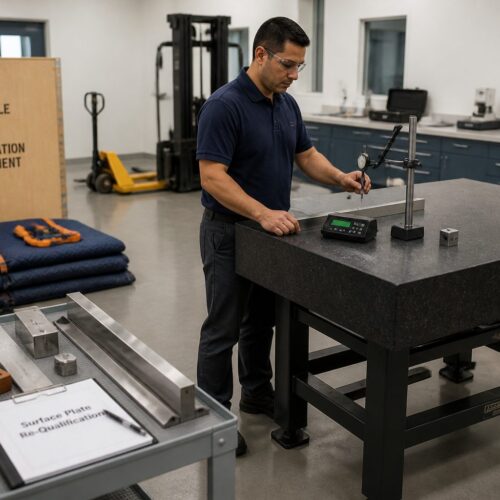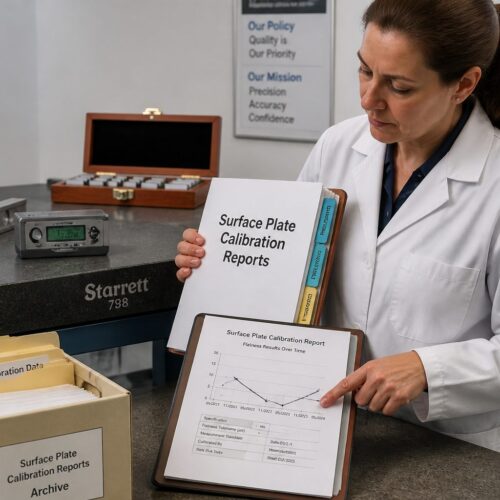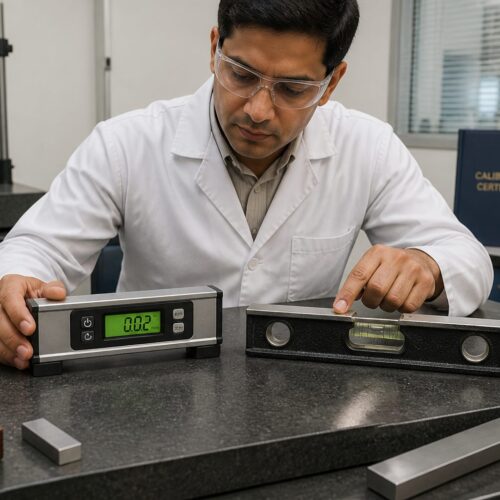

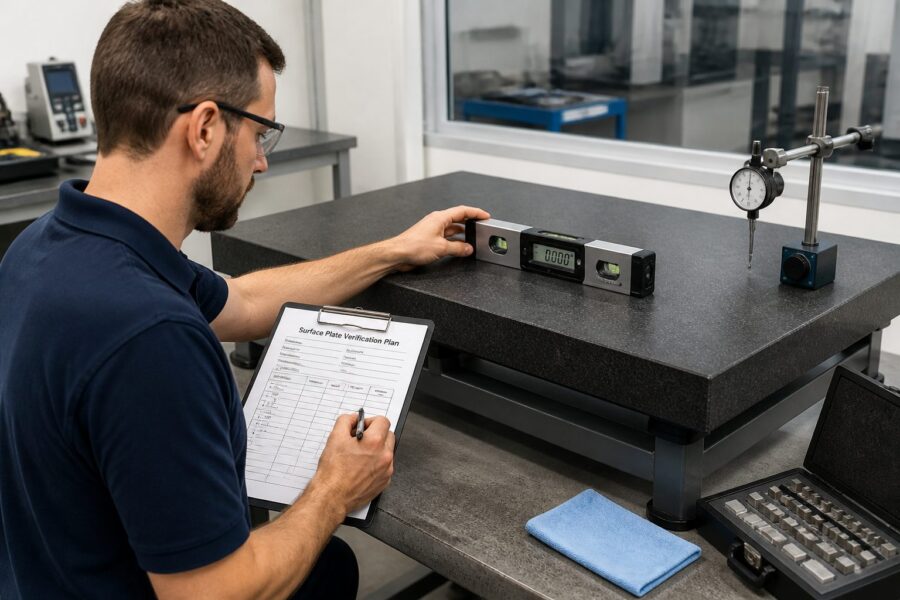
A precision surface plate is the bedrock of accurate measurement in any manufacturing or metrology lab. It provides the flat, stable reference plane essential for inspecting critical components and calibrating instruments. However, even the finest granite surface plate will degrade over time with regular use.
This wear means you cannot simply set it and forget it; ongoing attention is absolutely necessary. Developing a robust surface plate verification plan helps ensure your measurements remain trustworthy between full professional calibrations. It’s about proactive quality control.
Implementing a simple, consistent program for routine checks gives you confidence in your plate’s integrity. This article will guide you through building such a program, focusing on practical steps to maintain accuracy and extend the life of your valuable investment. We will cover everything from setting up control points to reviewing performance trends.
Maintaining a reliable surface plate isn’t just about compliance; it’s about making sure your parts meet specifications every single time. A well-executed surface plate verification plan is your best defense against costly errors and rework. This systematic approach ensures that your foundation for measurement remains solid and dependable.
Calibration vs Verification: How They Work Together
Many people use the terms calibration and verification interchangeably, but they actually represent distinct processes in metrology. Understanding the difference is crucial for a complete surface plate verification plan. Calibration involves comparing your surface plate to a higher-level standard, adjusting it if necessary, and documenting its actual deviation from perfect flatness.
Verification, on the other hand, is a series of spot checks designed to confirm that your plate is still performing within its acceptable tolerance range. It does not involve making adjustments or providing a full map of the plate’s deviations. Think of verification as a quick health check for your surface plate, while calibration is a comprehensive physical.
Both processes are indispensable for maintaining measurement integrity. A professional calibration provides the baseline data and a certificate of accuracy, telling you exactly where your plate stands. Your ongoing verification program then uses this baseline to monitor for significant changes over time.
You rely on verification to catch potential issues before they become critical problems. This prevents you from making inaccurate measurements on a compromised surface plate. Without regular spot checks, you could operate for months on a plate that no longer meets your requirements, leading to expensive quality problems.

Verification acts as an early warning system, prompting you to schedule a professional calibration when needed. It extends the useful period between calibrations while giving you confidence in daily operations. Ignoring verification means you are essentially guessing about your plate’s condition, which is a risky gamble in precision work.
Your surface plate verification plan should specify both the frequency of full calibrations and the routine spot checks. This integrated approach ensures continuous oversight and proactive management of your metrology equipment. It represents a smart and responsible way to manage your precision measuring foundation.
Defining What “Good Enough” Means for Your Processes
Before you even begin to verify your surface plate, you must clearly define what level of accuracy is acceptable for your specific applications. This “good enough” standard is often referred to as your allowable tolerance or maximum permissible error. It dictates the precision required for your measurements and, consequently, for your surface plate.
The required tolerance for your surface plate should directly relate to the tolerances of the parts you are inspecting. For example, if you are measuring parts with very tight dimensions, your surface plate must be significantly more accurate than the part tolerance itself. This ensures that any measurement uncertainty introduced by the plate is negligible compared to the part’s specifications.
| Plate Grade | Typical Application | Flatness Tolerance (per 24″ x 36″) | Impact on Verification Plan |
|---|---|---|---|
| Laboratory (AA) | Master calibration, high-precision gauge inspection | 0.000025″ (25 microinches) | Requires frequent, highly precise spot checks and professional calibration |
| Inspection (A) | Precision part inspection, tool room work | 0.000050″ (50 microinches) | Regular spot checks with sensitive instruments, annual calibration |
| Tool Room (B) | General inspection, shop floor use | 0.000100″ (100 microinches) | Less frequent spot checks, focus on heavily used control points |
| Shop Grade | Rough layout, non-critical measurements | 0.000200″ (200 microinches) | Basic visual checks, less stringent verification needed |
Consider the cost implications of overly stringent tolerances; an unnecessarily high standard means more frequent, expensive calibrations and verification checks. Conversely, a standard that is too loose risks producing out-of-spec parts and compromising product quality. Finding this balance is key to an efficient surface plate verification plan.
Your quality control documentation, such as ISO certifications or internal quality manuals, often specifies these required accuracies. Always refer to these guidelines when setting your “good enough” criteria for each surface plate in your facility. This ensures compliance and consistency across all your measurement operations.
Regularly review your process requirements and the associated surface plate tolerances. As manufacturing processes evolve or new products are introduced, your definition of “good enough” might need to change. An outdated tolerance can lead to either excessive verification efforts or, worse, undetected quality issues. This proactive review keeps your surface plate verification plan relevant and effective.
Choosing Verification Tools and Reference Artifacts
Selecting the right tools for your surface plate verification plan is paramount to getting reliable results from your spot checks. Your choice of instruments will depend on the size and grade of your surface plate, as well as the required accuracy of your verification. Electronic levels, repeat reading gauges, and auto-collimators are common choices for this task.
Electronic levels offer high precision and can quickly detect minute changes in slope across the plate’s surface. They are excellent for identifying local deviations from flatness. Repeat reading gauges, often used with a calibrated master square or straight edge, help confirm the consistency of measurements at specific control points.
Beyond the primary measuring tools, you will need certified reference artifacts to establish a reliable baseline. These might include a calibrated straight edge, a master square, or gauge blocks. The accuracy of these reference standards must be traceable to national or international standards, ensuring their own reliability.
Always ensure your verification tools are themselves calibrated regularly by an accredited laboratory. An uncalibrated electronic level or a worn straight edge will give you misleading results, rendering your entire surface plate verification plan useless. This foundational accuracy is non-negotiable for effective metrology.
Consider the practicality and ease of use for your operators when choosing tools. Complex equipment might provide higher precision but could lead to inconsistent results if operators are not fully trained or if the process is too time-consuming for routine spot checks. Sometimes, a simpler, well-understood tool is more effective for daily verification tasks.
For larger plates, portable electronic levels or laser-based systems might be more efficient than mechanical gauges that require extensive setup. The goal is to choose tools that provide sufficient accuracy for your “good enough” definition while being practical for consistent implementation. This balance ensures your surface plate verification plan is both effective and sustainable in the long run.
Setting Control Points and Test Locations on the Plate
Effective spot checks rely on a consistent and well-defined set of control points across your surface plate. These specific test locations allow you to monitor the plate’s condition over time, identifying areas of wear or deformation. Establishing these points is a critical step in building a reliable surface plate verification plan.
A common method involves dividing the plate into a grid pattern, then selecting intersection points and key areas for regular measurement. For smaller plates, a simple 5-point pattern (center, four corners) might suffice, while larger plates benefit from a more extensive grid of 9, 11, or even 25 control points. The density of your control points should reflect the plate’s size and the criticality of its use.
It is also smart to include any areas that experience heavy use or frequent contact with parts and gauges. These high-traffic zones are more prone to wear and tear, so monitoring them closely with spot checks can reveal issues before they affect overall plate accuracy. Documenting these specific locations precisely on a diagram of the plate is crucial.
When you define your control points, make sure they are easily accessible and repeatable for operators. Clearly mark these points on a laminated diagram or within your digital record-keeping system. This ensures that every operator performs the surface plate verification plan in exactly the same manner, minimizing variability in results.
Consider how your parts are typically laid out on the surface plate during inspection. Your control points should ideally cover the primary working areas, giving you confidence in the measurements taken there. A well-chosen set of control points provides maximum insight with minimal effort, making your verification process efficient and targeted.
Periodically review your chosen control points, especially if your usage patterns change significantly. If you start inspecting much larger or smaller components, you might need to adjust the test locations to better reflect the new working areas. This adaptability ensures your surface plate verification plan remains relevant to your current operations and continues to provide meaningful data.
Creating a Verification Schedule That Matches Usage
Establishing a verification schedule is not a one-size-fits-all endeavor; it must be tailored to the specific demands placed on each surface plate. The frequency of your spot checks should directly correlate with the plate’s usage intensity, environmental conditions, and the criticality of the measurements performed. A heavily used plate in a busy production environment will naturally require more frequent checks than a plate reserved for occasional, low-tolerance inspections.
Balance the cost and effort of verification against the risk of undetected inaccuracy. Over-verifying wastes resources, while under-verifying risks serious quality problems and rework. Your surface plate verification plan needs to find this sweet spot, ensuring consistent results without unnecessary overhead.
- Heavy daily use (multiple shifts)
- Inspecting parts with extremely tight tolerances
- Significant temperature or humidity fluctuations
- Frequent movement or relocation of the plate
- Presence of abrasive dust or debris
- Previous history of rapid wear or instability
- New operators or changes in operating procedures
- Regulatory or customer compliance requirements
- After any accidental impact or damage
- When measurement discrepancies are suspected
For many facilities, weekly or bi-weekly spot checks for actively used plates are a good starting point. Less frequently used plates might be checked monthly or quarterly. The key is consistency, ensuring that checks happen as scheduled without fail, becoming an ingrained part of your operational routine.
Your schedule should also account for the intervals between full professional calibrations. The verification program acts as a bridge, maintaining confidence in the plate’s accuracy during these longer periods. If your verification data consistently shows minimal deviation, you might even be able to extend your calibration interval, saving costs.
Documenting your verification schedule within your surface plate verification plan is essential for accountability and compliance. Ensure that operators know exactly when and how often each plate needs attention. A visible schedule or an automated reminder system can significantly improve adherence to the program.
Remember that the schedule is not rigid; it should evolve based on the trends observed from your recorded verification data. If a plate consistently shows accelerated wear, you might need to increase its verification frequency. This adaptive approach makes your surface plate verification plan a living document, constantly optimized for performance.
Recording Results: Forms and Data You Can Actually Use
Collecting data from your spot checks is only half the battle; the real value comes from recording it in a way that is clear, consistent, and actionable. A well-designed results form is crucial for an effective surface plate verification plan. It ensures that all necessary information is captured every time a check is performed.
Your record-keeping system, whether paper-based or digital, should capture essential details like the date and time of the check, the operator’s name, the specific surface plate identification number, and the verification tool used. Most importantly, it needs to clearly log the readings obtained at each of the defined control points. Include spaces for comments about any anomalies observed.
Simple, easy-to-understand forms are always better than complex ones that might intimidate operators or lead to incomplete entries. A form with a diagram of the surface plate, clearly indicating the control points, can help ensure accuracy and consistency in recording. This visual aid minimizes confusion and improves data quality for your surface plate verification plan.
For digital record-keeping, consider using spreadsheets or dedicated quality management software. These options make data entry faster, reduce human error, and simplify trend analysis. Digital records also offer better searchability and easier access for auditors or management reviews, streamlining your quality processes.
Ensure that the forms include fields for comparing current readings against the plate’s last calibration certificate and its defined “good enough” tolerance. This immediate comparison allows operators to quickly identify if the plate is drifting out of specification. Immediate feedback helps them understand the implications of their measurements.
Regularly review your data collection forms to see if they are still serving their purpose effectively. Operators might have suggestions for improvements that simplify their tasks or capture more relevant information. An adaptable form ensures your surface plate verification plan remains practical and useful for everyone involved.
Setting Action Limits and What to Do When You Hit Them
Defining clear action limits is perhaps the most critical component of your surface plate verification plan. These limits are the predetermined thresholds that, when exceeded by your spot check readings, trigger a specific response. Without them, your verification data is just numbers without meaningful context, offering no guidance on when intervention is required.
Action limits are typically derived from your plate’s last calibration certificate and your defined “good enough” tolerance. For example, if your plate is certified to a certain flatness, your action limit might be set at 75% or 80% of that total allowable deviation. This gives you a buffer before the plate completely falls out of specification.
Clearly communicate these limits to all operators involved in the verification process. They need to know exactly what numbers constitute a “pass” and what signals a “fail.” Posting these limits near the surface plate or integrating them into your digital forms helps ensure immediate awareness and consistent decision-making during spot checks.
When an action limit is hit, your surface plate verification plan must outline a clear, immediate protocol. This typically involves removing the plate from service, marking it as “out of tolerance,” and initiating a process for professional recalibration or repair. Do not allow critical measurements to continue on a plate that has exceeded its limits.
Documenting the corrective action taken, including the date, the issue found, and the resolution, is essential. This record becomes part of the plate’s history, helping you understand its wear patterns and predicting future maintenance needs. It provides valuable data for future trend analysis and adjustments to your surface plate verification plan.
Consider having different levels of action limits for very critical applications versus less demanding ones. A “warning” limit might trigger increased verification frequency, while a “stop work” limit requires immediate removal from service. This tiered approach allows for more nuanced responses, optimizing both safety and operational efficiency within your surface plate verification plan.
Training Operators to Run Checks the Same Way Every Time
Even the most meticulously designed surface plate verification plan is only as good as the people executing it. Consistent results depend heavily on operators performing spot checks uniformly, using identical techniques and procedures every time. This consistency requires thorough and ongoing training for everyone involved.
Initial training should cover the fundamental principles of surface plate metrology, the purpose of verification, and the specific tools and methods used. Operators must understand why these checks are important, not just how to perform them. This foundational knowledge fosters a sense of responsibility and attention to detail.
Hands-on practice under supervision is absolutely essential for mastering the verification process. Operators should repeatedly perform the spot checks, from setting up the instruments to recording the data, until they demonstrate proficiency and confidence. Focus on proper handling of tools and minimizing sources of error during these practical sessions.
Develop clear Standard Operating Procedures (SOPs) for each verification task. These written instructions should detail every step, from cleaning the plate to interpreting readings, and should be easily accessible to operators. The SOPs act as a reliable reference, ensuring that everyone follows the same process for your surface plate verification plan.
Implement a schedule for regular refresher training, especially if new equipment or procedures are introduced. Even experienced operators can benefit from periodic reviews to reinforce best practices and address any bad habits that might have developed. This continuous learning approach maintains a high level of competency across your team.
Encourage operators to ask questions and provide feedback on the verification process. Their insights from daily use can be invaluable for refining your surface plate verification plan and improving its practicality. A collaborative approach to training and procedure development strengthens the entire quality system, leading to more reliable results.
Keeping the Plate Healthy: Cleaning and Handling Rules
A precision surface plate is a delicate instrument despite its solid appearance; proper cleaning and handling are fundamental to preserving its accuracy and extending its lifespan. Neglecting these basic maintenance schedule tasks can lead to accelerated wear and costly damage, undermining all your verification efforts. Daily cleaning is not optional; it is mandatory.
Always clean the surface plate before and after each use, or at least at the beginning and end of each shift. Use only approved surface plate cleaner and a soft, lint-free cloth or chamois. Never use abrasive cleaners, solvents, or cloths that could scratch the delicate granite surface or leave behind residue. Proper cleaning removes dust, grit, and oil that can cause wear.
Avoid placing heavy or sharp objects directly onto the surface plate without protection. Distribute loads evenly to prevent localized wear or stress on the granite. Never drag parts across the surface; always lift and carefully place them. This minimizes the risk of scratches, chips, or dents that can compromise flatness and affect your control points.
Maintain a stable environment around your surface plate, controlling temperature and humidity as much as possible. Significant temperature fluctuations can cause the granite to expand and contract, temporarily affecting its flatness. High humidity, especially in combination with iron tools, can lead to rust stains on the plate, which are difficult to remove.
When the surface plate is not in use, protect it with a clean, non-abrasive cover. This cover prevents dust and debris from settling on the surface and shields it from accidental impacts. Make sure the cover is breathable to prevent moisture buildup underneath, which could lead to staining or other issues.
Regularly inspect the surface plate for any visible signs of damage, such as chips, deep scratches, or excessive localized wear. Address any issues promptly, as even minor damage can affect measurement accuracy. Incorporating these handling and cleaning rules into your routine maintenance schedule ensures your surface plate remains a reliable foundation for all your metrology needs.
Reviewing Trends to Improve Your Calibration Interval
The data you diligently collect from your surface plate verification plan is more than just a record of compliance; it is a powerful tool for optimizing your calibration and maintenance schedule. By reviewing trends in your verification results, you can make informed decisions about when to schedule professional calibrations. This analytical approach moves beyond rigid, time-based intervals.
Look for patterns in the deviation readings at your control points over time. Are certain areas consistently showing more wear? Is the overall flatness deteriorating at a predictable rate? Graphing these trends can provide clear visual insights into your plate’s performance and help you anticipate future needs. Consistent data collection is vital for this analysis.
If your verification data consistently shows that a plate remains well within its action limits for extended periods, you might have an opportunity to safely extend your professional calibration interval. This can lead to significant cost savings without compromising accuracy. Conversely, if a plate shows rapid deterioration, you might need to shorten the interval or investigate the cause of accelerated wear.
Trend analysis also helps you identify if specific operational practices or environmental factors are contributing to premature wear. For example, consistent wear in one corner might indicate improper loading or frequent use of a particular fixture in that area. Addressing these root causes can prolong the life of your plate and improve its stability.
Use your verification data as a discussion point with your professional calibration service provider. Share your trends and observations; they can offer expert advice on optimizing your calibration strategy and suggest potential improvements to your surface plate verification plan. This collaboration ensures you leverage external expertise effectively.
Ultimately, a data-driven approach to reviewing trends transforms your verification process from a reactive check into a proactive management tool. It allows you to fine-tune your maintenance schedule, extend asset life, and ensure continuous accuracy in the most cost-effective way possible. This intelligent use of data is a hallmark of a robust metrology program.
Conclusion
Implementing a comprehensive surface plate verification plan is not just about ticking boxes; it’s about safeguarding the integrity of your entire measurement process. From defining acceptable tolerances to meticulously training operators, each step contributes to consistent, reliable results. This proactive approach ensures that your surface plates remain trustworthy foundations for precision work.
Regular spot checks, coupled with a well-defined maintenance schedule and diligent record-keeping, empower you to catch deviations early and make informed decisions. This strategy minimizes the risk of costly errors and rework, ultimately enhancing your product quality and operational efficiency. A robust verification program is an investment that pays dividends in accuracy and confidence.
Take the initiative to build and refine your own surface plate verification plan today. Your commitment to consistent verification will not only extend the life of your valuable equipment but also reinforce your reputation for precision and quality. Start small, be consistent, and watch your metrology operations thrive with unwavering accuracy.
Remember that a surface plate, while seemingly simple, is a critical component in your quality control chain. Treating it with the respect and diligent care it deserves through a systematic verification process is simply good business. This dedication to precision will set your operations apart in a competitive landscape.