
Conclusion
Implementing a surface plate maintenance log is a straightforward, highly effective strategy to preserve accuracy and extend the life of your precision granite. It shifts metrology operations from reactive troubleshooting to proactive, data-informed care, becoming an indispensable asset for quality control.
Consistently recording cleaning records, incident tracking, environmental changes, leveling adjustments, and calibration history builds a comprehensive story of your plate. This historical data empowers you to spot trends, anticipate issues, and make informed maintenance decisions, ensuring reliable measurements.
Don’t let “busywork” deter you. A well-designed, one-page template kept by the plate makes logging quick and easy. Regular review of your surface plate maintenance log leads to continuous improvements, safeguarding your investment and strengthening your entire measurement process.
Reviewing the log monthly to drive small improvements
Creating a surface plate maintenance log is just the first step; its true power emerges through regular review. Monthly reviews transform the log into a strategic tool for continuous improvement, optimizing maintenance practices.
Designate a person or team for monthly log review, ensuring consistency and accountability. The reviewer should seek patterns, anomalies, and opportunities to refine maintenance schedules or procedures.
Look for recurring cleaning issues, like areas accumulating dirt faster, suggesting more frequent cleaning or different products. Pay attention to incident tracking for common mishaps.
Calibration history is especially insightful. Compare latest results with previous ones to spot gradual degradation or sudden shifts. This analysis determines if current calibration frequency is adequate or needs adjustment.
Discuss log findings with your team. Open communication fosters shared understanding of the plate’s condition and encourages collective problem-solving. Small, data-driven improvements lead to significant long-term benefits in accuracy and lifespan.
Conclusion
Implementing a surface plate maintenance log is a straightforward, highly effective strategy to preserve accuracy and extend the life of your precision granite. It shifts metrology operations from reactive troubleshooting to proactive, data-informed care, becoming an indispensable asset for quality control.
Consistently recording cleaning records, incident tracking, environmental changes, leveling adjustments, and calibration history builds a comprehensive story of your plate. This historical data empowers you to spot trends, anticipate issues, and make informed maintenance decisions, ensuring reliable measurements.
Don’t let “busywork” deter you. A well-designed, one-page template kept by the plate makes logging quick and easy. Regular review of your surface plate maintenance log leads to continuous improvements, safeguarding your investment and strengthening your entire measurement process.
Where to keep the log so it stays with the plate
A maintenance log is only useful if readily available. A meticulously kept surface plate maintenance log in a drawer across the shop floor serves no purpose. Proximity is paramount for consistent use and immediate reference.
The most effective solution is keeping the physical log directly with the surface plate. This could be a clipboard on the stand, a weather-resistant binder nearby, or a dedicated pouch. The goal: make it impossible to use the plate without seeing the log.
For a digital surface plate maintenance log, ensure equally convenient access. A tablet mounted on the stand or a QR code linking directly to the form works well. Entry barriers must be as low as possible.
Protect physical logs from the workshop environment. A laminated cover or clear plastic sleeve prevents damage from oil, dust, and spills. This ensures the log remains legible and durable.
Regularly check the log’s designated spot. Address missing logs immediately. Reinforce that the surface plate maintenance log is an integral part of the plate’s toolkit. Consistent reinforcement establishes good habits.
Reviewing the log monthly to drive small improvements
Creating a surface plate maintenance log is just the first step; its true power emerges through regular review. Monthly reviews transform the log into a strategic tool for continuous improvement, optimizing maintenance practices.
Designate a person or team for monthly log review, ensuring consistency and accountability. The reviewer should seek patterns, anomalies, and opportunities to refine maintenance schedules or procedures.
Look for recurring cleaning issues, like areas accumulating dirt faster, suggesting more frequent cleaning or different products. Pay attention to incident tracking for common mishaps.
Calibration history is especially insightful. Compare latest results with previous ones to spot gradual degradation or sudden shifts. This analysis determines if current calibration frequency is adequate or needs adjustment.
Discuss log findings with your team. Open communication fosters shared understanding of the plate’s condition and encourages collective problem-solving. Small, data-driven improvements lead to significant long-term benefits in accuracy and lifespan.
Conclusion
Implementing a surface plate maintenance log is a straightforward, highly effective strategy to preserve accuracy and extend the life of your precision granite. It shifts metrology operations from reactive troubleshooting to proactive, data-informed care, becoming an indispensable asset for quality control.
Consistently recording cleaning records, incident tracking, environmental changes, leveling adjustments, and calibration history builds a comprehensive story of your plate. This historical data empowers you to spot trends, anticipate issues, and make informed maintenance decisions, ensuring reliable measurements.
Don’t let “busywork” deter you. A well-designed, one-page template kept by the plate makes logging quick and easy. Regular review of your surface plate maintenance log leads to continuous improvements, safeguarding your investment and strengthening your entire measurement process.
Creating a one-page template your team will use
Complexity is the biggest barrier to consistent log keeping. If your surface plate maintenance log is cumbersome, your team won’t use it. Success lies in a simple, intuitive, one-page template.
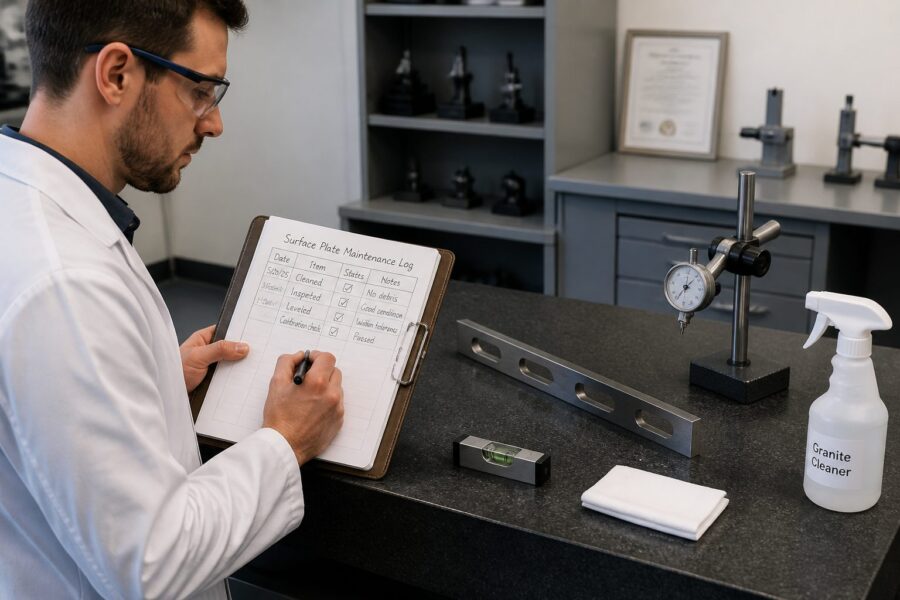
Design a template for physical printing near the plate or an easily accessible digital form. It needs clear, labeled fields for minimum information: date, plate ID, person, and action. Use checkboxes or short dropdowns to minimize writing.
For cleaning, simple checkboxes for “cleaned” and a “product used” field suffice. For incidents, provide a brief description space and a “reported to supervisor” checkbox. This streamlined approach encourages quick, accurate entries.
Include an “Observations/Notes” section for additional details not covered by standard fields. This offers flexibility without cluttering the main structure. A good template anticipates common entries, making them effortless to record.
Test the template with your team before full implementation, gathering feedback for improvements. User-input templates are more likely to be adopted and used correctly. This collaborative approach makes the surface plate maintenance log a valuable tool, not a chore.
Where to keep the log so it stays with the plate
A maintenance log is only useful if readily available. A meticulously kept surface plate maintenance log in a drawer across the shop floor serves no purpose. Proximity is paramount for consistent use and immediate reference.
The most effective solution is keeping the physical log directly with the surface plate. This could be a clipboard on the stand, a weather-resistant binder nearby, or a dedicated pouch. The goal: make it impossible to use the plate without seeing the log.
For a digital surface plate maintenance log, ensure equally convenient access. A tablet mounted on the stand or a QR code linking directly to the form works well. Entry barriers must be as low as possible.
Protect physical logs from the workshop environment. A laminated cover or clear plastic sleeve prevents damage from oil, dust, and spills. This ensures the log remains legible and durable.
Regularly check the log’s designated spot. Address missing logs immediately. Reinforce that the surface plate maintenance log is an integral part of the plate’s toolkit. Consistent reinforcement establishes good habits.
Reviewing the log monthly to drive small improvements
Creating a surface plate maintenance log is just the first step; its true power emerges through regular review. Monthly reviews transform the log into a strategic tool for continuous improvement, optimizing maintenance practices.
Designate a person or team for monthly log review, ensuring consistency and accountability. The reviewer should seek patterns, anomalies, and opportunities to refine maintenance schedules or procedures.
Look for recurring cleaning issues, like areas accumulating dirt faster, suggesting more frequent cleaning or different products. Pay attention to incident tracking for common mishaps.
Calibration history is especially insightful. Compare latest results with previous ones to spot gradual degradation or sudden shifts. This analysis determines if current calibration frequency is adequate or needs adjustment.
Discuss log findings with your team. Open communication fosters shared understanding of the plate’s condition and encourages collective problem-solving. Small, data-driven improvements lead to significant long-term benefits in accuracy and lifespan.
Conclusion
Implementing a surface plate maintenance log is a straightforward, highly effective strategy to preserve accuracy and extend the life of your precision granite. It shifts metrology operations from reactive troubleshooting to proactive, data-informed care, becoming an indispensable asset for quality control.
Consistently recording cleaning records, incident tracking, environmental changes, leveling adjustments, and calibration history builds a comprehensive story of your plate. This historical data empowers you to spot trends, anticipate issues, and make informed maintenance decisions, ensuring reliable measurements.
Don’t let “busywork” deter you. A well-designed, one-page template kept by the plate makes logging quick and easy. Regular review of your surface plate maintenance log leads to continuous improvements, safeguarding your investment and strengthening your entire measurement process.
Using calibration history to spot trends over time
Calibration is the ultimate test of surface plate accuracy. A detailed calibration history in your surface plate maintenance log offers insights a single report cannot, allowing you to visualize the plate’s performance trajectory.
Each entry should include the date, calibration technician/company, and results summary. Ideally, attach or reference the full calibration certificate for a complete record of compliance and performance.
Reviewing history helps identify slow degradation, even if the plate still passes standards. Consistent flatness shifts or gradual increases in localized errors indicate potential underlying issues needing investigation.
For instance, if the same corner consistently deviates across calibrations, it may point to a recurring environmental factor or subtle stand issue. This pattern recognition, impossible without comprehensive history, enables proactive maintenance, not just reactive fixes.
Calibration history also validates maintenance efforts. New cleaning protocols or more frequent leveling should ideally show improved stability or slower degradation in subsequent calibrations. This feedback refines your strategy, ensuring effective efforts.
Creating a one-page template your team will use
Complexity is the biggest barrier to consistent log keeping. If your surface plate maintenance log is cumbersome, your team won’t use it. Success lies in a simple, intuitive, one-page template.
Design a template for physical printing near the plate or an easily accessible digital form. It needs clear, labeled fields for minimum information: date, plate ID, person, and action. Use checkboxes or short dropdowns to minimize writing.
For cleaning, simple checkboxes for “cleaned” and a “product used” field suffice. For incidents, provide a brief description space and a “reported to supervisor” checkbox. This streamlined approach encourages quick, accurate entries.
Include an “Observations/Notes” section for additional details not covered by standard fields. This offers flexibility without cluttering the main structure. A good template anticipates common entries, making them effortless to record.
Test the template with your team before full implementation, gathering feedback for improvements. User-input templates are more likely to be adopted and used correctly. This collaborative approach makes the surface plate maintenance log a valuable tool, not a chore.
Where to keep the log so it stays with the plate
A maintenance log is only useful if readily available. A meticulously kept surface plate maintenance log in a drawer across the shop floor serves no purpose. Proximity is paramount for consistent use and immediate reference.
The most effective solution is keeping the physical log directly with the surface plate. This could be a clipboard on the stand, a weather-resistant binder nearby, or a dedicated pouch. The goal: make it impossible to use the plate without seeing the log.
For a digital surface plate maintenance log, ensure equally convenient access. A tablet mounted on the stand or a QR code linking directly to the form works well. Entry barriers must be as low as possible.
Protect physical logs from the workshop environment. A laminated cover or clear plastic sleeve prevents damage from oil, dust, and spills. This ensures the log remains legible and durable.
Regularly check the log’s designated spot. Address missing logs immediately. Reinforce that the surface plate maintenance log is an integral part of the plate’s toolkit. Consistent reinforcement establishes good habits.
Reviewing the log monthly to drive small improvements
Creating a surface plate maintenance log is just the first step; its true power emerges through regular review. Monthly reviews transform the log into a strategic tool for continuous improvement, optimizing maintenance practices.
Designate a person or team for monthly log review, ensuring consistency and accountability. The reviewer should seek patterns, anomalies, and opportunities to refine maintenance schedules or procedures.
Look for recurring cleaning issues, like areas accumulating dirt faster, suggesting more frequent cleaning or different products. Pay attention to incident tracking for common mishaps.
Calibration history is especially insightful. Compare latest results with previous ones to spot gradual degradation or sudden shifts. This analysis determines if current calibration frequency is adequate or needs adjustment.
Discuss log findings with your team. Open communication fosters shared understanding of the plate’s condition and encourages collective problem-solving. Small, data-driven improvements lead to significant long-term benefits in accuracy and lifespan.
Conclusion
Implementing a surface plate maintenance log is a straightforward, highly effective strategy to preserve accuracy and extend the life of your precision granite. It shifts metrology operations from reactive troubleshooting to proactive, data-informed care, becoming an indispensable asset for quality control.
Consistently recording cleaning records, incident tracking, environmental changes, leveling adjustments, and calibration history builds a comprehensive story of your plate. This historical data empowers you to spot trends, anticipate issues, and make informed maintenance decisions, ensuring reliable measurements.
Don’t let “busywork” deter you. A well-designed, one-page template kept by the plate makes logging quick and easy. Regular review of your surface plate maintenance log leads to continuous improvements, safeguarding your investment and strengthening your entire measurement process.
Capturing stand adjustments and leveling activity
Surface plate stability depends on its stand and proper leveling. Over time, floor settling, vibrations, or bumps can cause it to go out of level. Documenting all stand adjustments and leveling activity is crucial for accuracy.
Every adjustment to leveling screws or shims must be recorded in the surface plate maintenance log. Entries should include the date, who performed the adjustment, and the method, providing a clear history of the plate’s physical stability.
- Date of adjustment
- Name of technician
- Leveling instrument used (e.g., electronic level, spirit level)
- Which leveling screws were adjusted
- Initial flatness reading (if taken)
- Final flatness reading (if taken)
- Specific observations during adjustment
Using calibration history to spot trends over time
Calibration is the ultimate test of surface plate accuracy. A detailed calibration history in your surface plate maintenance log offers insights a single report cannot, allowing you to visualize the plate’s performance trajectory.
Each entry should include the date, calibration technician/company, and results summary. Ideally, attach or reference the full calibration certificate for a complete record of compliance and performance.
Reviewing history helps identify slow degradation, even if the plate still passes standards. Consistent flatness shifts or gradual increases in localized errors indicate potential underlying issues needing investigation.
For instance, if the same corner consistently deviates across calibrations, it may point to a recurring environmental factor or subtle stand issue. This pattern recognition, impossible without comprehensive history, enables proactive maintenance, not just reactive fixes.
Calibration history also validates maintenance efforts. New cleaning protocols or more frequent leveling should ideally show improved stability or slower degradation in subsequent calibrations. This feedback refines your strategy, ensuring effective efforts.
Creating a one-page template your team will use
Complexity is the biggest barrier to consistent log keeping. If your surface plate maintenance log is cumbersome, your team won’t use it. Success lies in a simple, intuitive, one-page template.
Design a template for physical printing near the plate or an easily accessible digital form. It needs clear, labeled fields for minimum information: date, plate ID, person, and action. Use checkboxes or short dropdowns to minimize writing.
For cleaning, simple checkboxes for “cleaned” and a “product used” field suffice. For incidents, provide a brief description space and a “reported to supervisor” checkbox. This streamlined approach encourages quick, accurate entries.
Include an “Observations/Notes” section for additional details not covered by standard fields. This offers flexibility without cluttering the main structure. A good template anticipates common entries, making them effortless to record.
Test the template with your team before full implementation, gathering feedback for improvements. User-input templates are more likely to be adopted and used correctly. This collaborative approach makes the surface plate maintenance log a valuable tool, not a chore.
Where to keep the log so it stays with the plate
A maintenance log is only useful if readily available. A meticulously kept surface plate maintenance log in a drawer across the shop floor serves no purpose. Proximity is paramount for consistent use and immediate reference.
The most effective solution is keeping the physical log directly with the surface plate. This could be a clipboard on the stand, a weather-resistant binder nearby, or a dedicated pouch. The goal: make it impossible to use the plate without seeing the log.
For a digital surface plate maintenance log, ensure equally convenient access. A tablet mounted on the stand or a QR code linking directly to the form works well. Entry barriers must be as low as possible.
Protect physical logs from the workshop environment. A laminated cover or clear plastic sleeve prevents damage from oil, dust, and spills. This ensures the log remains legible and durable.
Regularly check the log’s designated spot. Address missing logs immediately. Reinforce that the surface plate maintenance log is an integral part of the plate’s toolkit. Consistent reinforcement establishes good habits.
Reviewing the log monthly to drive small improvements
Creating a surface plate maintenance log is just the first step; its true power emerges through regular review. Monthly reviews transform the log into a strategic tool for continuous improvement, optimizing maintenance practices.
Designate a person or team for monthly log review, ensuring consistency and accountability. The reviewer should seek patterns, anomalies, and opportunities to refine maintenance schedules or procedures.
Look for recurring cleaning issues, like areas accumulating dirt faster, suggesting more frequent cleaning or different products. Pay attention to incident tracking for common mishaps.
Calibration history is especially insightful. Compare latest results with previous ones to spot gradual degradation or sudden shifts. This analysis determines if current calibration frequency is adequate or needs adjustment.
Discuss log findings with your team. Open communication fosters shared understanding of the plate’s condition and encourages collective problem-solving. Small, data-driven improvements lead to significant long-term benefits in accuracy and lifespan.
Conclusion
Implementing a surface plate maintenance log is a straightforward, highly effective strategy to preserve accuracy and extend the life of your precision granite. It shifts metrology operations from reactive troubleshooting to proactive, data-informed care, becoming an indispensable asset for quality control.
Consistently recording cleaning records, incident tracking, environmental changes, leveling adjustments, and calibration history builds a comprehensive story of your plate. This historical data empowers you to spot trends, anticipate issues, and make informed maintenance decisions, ensuring reliable measurements.
Don’t let “busywork” deter you. A well-designed, one-page template kept by the plate makes logging quick and easy. Regular review of your surface plate maintenance log leads to continuous improvements, safeguarding your investment and strengthening your entire measurement process.
Floor repairs, especially with heavy machinery or concrete work nearby, can introduce vibrations and ground shifts. These disturbances impact leveling and stability. Documenting such activities provides context for subsequent leveling adjustments or calibration checks.
Consider even minor environmental changes, like new heavy equipment nearby. These factors can introduce new vibrations affecting precision measurements. A diligent surface plate maintenance log connects these external events to the plate’s behavior.
Capturing stand adjustments and leveling activity
Surface plate stability depends on its stand and proper leveling. Over time, floor settling, vibrations, or bumps can cause it to go out of level. Documenting all stand adjustments and leveling activity is crucial for accuracy.
Every adjustment to leveling screws or shims must be recorded in the surface plate maintenance log. Entries should include the date, who performed the adjustment, and the method, providing a clear history of the plate’s physical stability.
- Date of adjustment
- Name of technician
- Leveling instrument used (e.g., electronic level, spirit level)
- Which leveling screws were adjusted
- Initial flatness reading (if taken)
- Final flatness reading (if taken)
- Specific observations during adjustment
Using calibration history to spot trends over time
Calibration is the ultimate test of surface plate accuracy. A detailed calibration history in your surface plate maintenance log offers insights a single report cannot, allowing you to visualize the plate’s performance trajectory.
Each entry should include the date, calibration technician/company, and results summary. Ideally, attach or reference the full calibration certificate for a complete record of compliance and performance.
Reviewing history helps identify slow degradation, even if the plate still passes standards. Consistent flatness shifts or gradual increases in localized errors indicate potential underlying issues needing investigation.
For instance, if the same corner consistently deviates across calibrations, it may point to a recurring environmental factor or subtle stand issue. This pattern recognition, impossible without comprehensive history, enables proactive maintenance, not just reactive fixes.
Calibration history also validates maintenance efforts. New cleaning protocols or more frequent leveling should ideally show improved stability or slower degradation in subsequent calibrations. This feedback refines your strategy, ensuring effective efforts.
Creating a one-page template your team will use
Complexity is the biggest barrier to consistent log keeping. If your surface plate maintenance log is cumbersome, your team won’t use it. Success lies in a simple, intuitive, one-page template.
Design a template for physical printing near the plate or an easily accessible digital form. It needs clear, labeled fields for minimum information: date, plate ID, person, and action. Use checkboxes or short dropdowns to minimize writing.
For cleaning, simple checkboxes for “cleaned” and a “product used” field suffice. For incidents, provide a brief description space and a “reported to supervisor” checkbox. This streamlined approach encourages quick, accurate entries.
Include an “Observations/Notes” section for additional details not covered by standard fields. This offers flexibility without cluttering the main structure. A good template anticipates common entries, making them effortless to record.
Test the template with your team before full implementation, gathering feedback for improvements. User-input templates are more likely to be adopted and used correctly. This collaborative approach makes the surface plate maintenance log a valuable tool, not a chore.
Where to keep the log so it stays with the plate
A maintenance log is only useful if readily available. A meticulously kept surface plate maintenance log in a drawer across the shop floor serves no purpose. Proximity is paramount for consistent use and immediate reference.
The most effective solution is keeping the physical log directly with the surface plate. This could be a clipboard on the stand, a weather-resistant binder nearby, or a dedicated pouch. The goal: make it impossible to use the plate without seeing the log.
For a digital surface plate maintenance log, ensure equally convenient access. A tablet mounted on the stand or a QR code linking directly to the form works well. Entry barriers must be as low as possible.
Protect physical logs from the workshop environment. A laminated cover or clear plastic sleeve prevents damage from oil, dust, and spills. This ensures the log remains legible and durable.
Regularly check the log’s designated spot. Address missing logs immediately. Reinforce that the surface plate maintenance log is an integral part of the plate’s toolkit. Consistent reinforcement establishes good habits.
Reviewing the log monthly to drive small improvements
Creating a surface plate maintenance log is just the first step; its true power emerges through regular review. Monthly reviews transform the log into a strategic tool for continuous improvement, optimizing maintenance practices.
Designate a person or team for monthly log review, ensuring consistency and accountability. The reviewer should seek patterns, anomalies, and opportunities to refine maintenance schedules or procedures.
Look for recurring cleaning issues, like areas accumulating dirt faster, suggesting more frequent cleaning or different products. Pay attention to incident tracking for common mishaps.
Calibration history is especially insightful. Compare latest results with previous ones to spot gradual degradation or sudden shifts. This analysis determines if current calibration frequency is adequate or needs adjustment.
Discuss log findings with your team. Open communication fosters shared understanding of the plate’s condition and encourages collective problem-solving. Small, data-driven improvements lead to significant long-term benefits in accuracy and lifespan.
Conclusion
Implementing a surface plate maintenance log is a straightforward, highly effective strategy to preserve accuracy and extend the life of your precision granite. It shifts metrology operations from reactive troubleshooting to proactive, data-informed care, becoming an indispensable asset for quality control.
Consistently recording cleaning records, incident tracking, environmental changes, leveling adjustments, and calibration history builds a comprehensive story of your plate. This historical data empowers you to spot trends, anticipate issues, and make informed maintenance decisions, ensuring reliable measurements.
Don’t let “busywork” deter you. A well-designed, one-page template kept by the plate makes logging quick and easy. Regular review of your surface plate maintenance log leads to continuous improvements, safeguarding your investment and strengthening your entire measurement process.
Noting environmental changes: moves, HVAC work, floor repairs
Surface plates are stable yet highly sensitive to their environment. Any significant change in surroundings can influence flatness and stability. Recording these environmental shifts in your surface plate maintenance log is crucial for understanding performance anomalies.
Moving a surface plate, even within the same facility, requires logging. The move itself, new floor conditions, and ambient temperature changes can affect calibration. Note the date and new location.
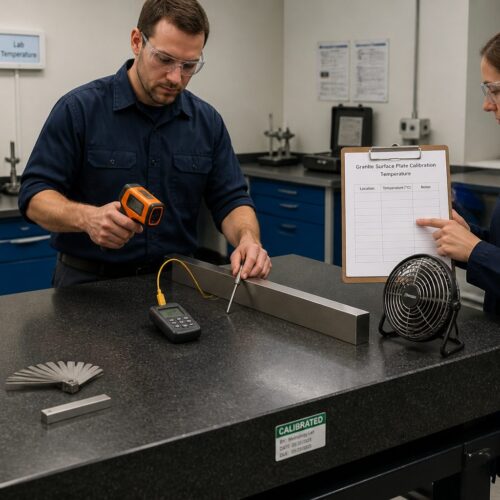
Major HVAC work can cause temperature fluctuations or air current changes around the plate. Rapid changes can induce temporary or permanent distortions. Log HVAC dates and any observed temperature variations.
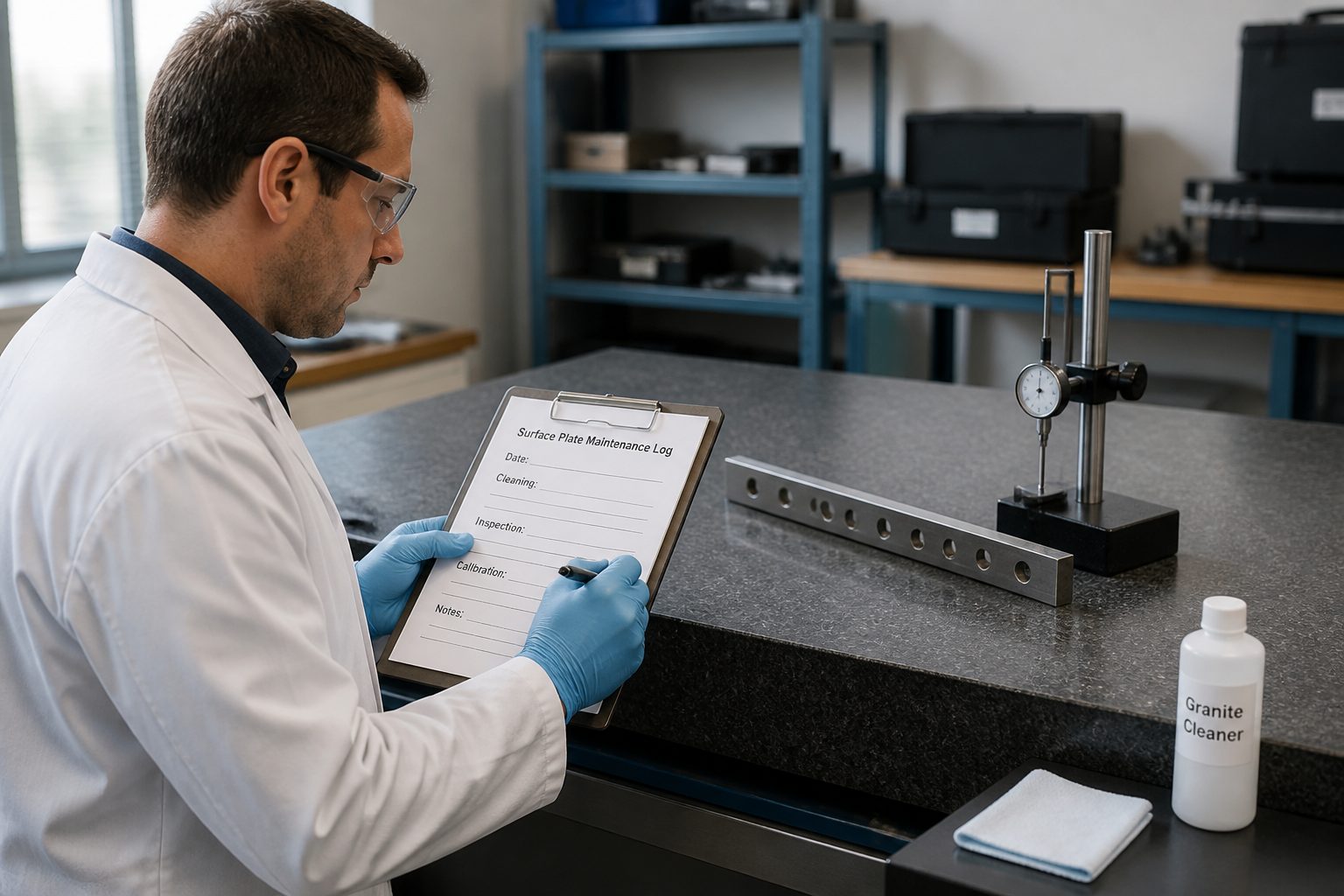
Floor repairs, especially with heavy machinery or concrete work nearby, can introduce vibrations and ground shifts. These disturbances impact leveling and stability. Documenting such activities provides context for subsequent leveling adjustments or calibration checks.
Consider even minor environmental changes, like new heavy equipment nearby. These factors can introduce new vibrations affecting precision measurements. A diligent surface plate maintenance log connects these external events to the plate’s behavior.
Capturing stand adjustments and leveling activity
Surface plate stability depends on its stand and proper leveling. Over time, floor settling, vibrations, or bumps can cause it to go out of level. Documenting all stand adjustments and leveling activity is crucial for accuracy.
Every adjustment to leveling screws or shims must be recorded in the surface plate maintenance log. Entries should include the date, who performed the adjustment, and the method, providing a clear history of the plate’s physical stability.
- Date of adjustment
- Name of technician
- Leveling instrument used (e.g., electronic level, spirit level)
- Which leveling screws were adjusted
- Initial flatness reading (if taken)
- Final flatness reading (if taken)
- Specific observations during adjustment
Using calibration history to spot trends over time
Calibration is the ultimate test of surface plate accuracy. A detailed calibration history in your surface plate maintenance log offers insights a single report cannot, allowing you to visualize the plate’s performance trajectory.
Each entry should include the date, calibration technician/company, and results summary. Ideally, attach or reference the full calibration certificate for a complete record of compliance and performance.
Reviewing history helps identify slow degradation, even if the plate still passes standards. Consistent flatness shifts or gradual increases in localized errors indicate potential underlying issues needing investigation.
For instance, if the same corner consistently deviates across calibrations, it may point to a recurring environmental factor or subtle stand issue. This pattern recognition, impossible without comprehensive history, enables proactive maintenance, not just reactive fixes.
Calibration history also validates maintenance efforts. New cleaning protocols or more frequent leveling should ideally show improved stability or slower degradation in subsequent calibrations. This feedback refines your strategy, ensuring effective efforts.
Creating a one-page template your team will use
Complexity is the biggest barrier to consistent log keeping. If your surface plate maintenance log is cumbersome, your team won’t use it. Success lies in a simple, intuitive, one-page template.
Design a template for physical printing near the plate or an easily accessible digital form. It needs clear, labeled fields for minimum information: date, plate ID, person, and action. Use checkboxes or short dropdowns to minimize writing.
For cleaning, simple checkboxes for “cleaned” and a “product used” field suffice. For incidents, provide a brief description space and a “reported to supervisor” checkbox. This streamlined approach encourages quick, accurate entries.
Include an “Observations/Notes” section for additional details not covered by standard fields. This offers flexibility without cluttering the main structure. A good template anticipates common entries, making them effortless to record.
Test the template with your team before full implementation, gathering feedback for improvements. User-input templates are more likely to be adopted and used correctly. This collaborative approach makes the surface plate maintenance log a valuable tool, not a chore.
Where to keep the log so it stays with the plate
A maintenance log is only useful if readily available. A meticulously kept surface plate maintenance log in a drawer across the shop floor serves no purpose. Proximity is paramount for consistent use and immediate reference.
The most effective solution is keeping the physical log directly with the surface plate. This could be a clipboard on the stand, a weather-resistant binder nearby, or a dedicated pouch. The goal: make it impossible to use the plate without seeing the log.
For a digital surface plate maintenance log, ensure equally convenient access. A tablet mounted on the stand or a QR code linking directly to the form works well. Entry barriers must be as low as possible.
Protect physical logs from the workshop environment. A laminated cover or clear plastic sleeve prevents damage from oil, dust, and spills. This ensures the log remains legible and durable.
Regularly check the log’s designated spot. Address missing logs immediately. Reinforce that the surface plate maintenance log is an integral part of the plate’s toolkit. Consistent reinforcement establishes good habits.
Reviewing the log monthly to drive small improvements
Creating a surface plate maintenance log is just the first step; its true power emerges through regular review. Monthly reviews transform the log into a strategic tool for continuous improvement, optimizing maintenance practices.
Designate a person or team for monthly log review, ensuring consistency and accountability. The reviewer should seek patterns, anomalies, and opportunities to refine maintenance schedules or procedures.
Look for recurring cleaning issues, like areas accumulating dirt faster, suggesting more frequent cleaning or different products. Pay attention to incident tracking for common mishaps.
Calibration history is especially insightful. Compare latest results with previous ones to spot gradual degradation or sudden shifts. This analysis determines if current calibration frequency is adequate or needs adjustment.
Discuss log findings with your team. Open communication fosters shared understanding of the plate’s condition and encourages collective problem-solving. Small, data-driven improvements lead to significant long-term benefits in accuracy and lifespan.
Conclusion
Implementing a surface plate maintenance log is a straightforward, highly effective strategy to preserve accuracy and extend the life of your precision granite. It shifts metrology operations from reactive troubleshooting to proactive, data-informed care, becoming an indispensable asset for quality control.
Consistently recording cleaning records, incident tracking, environmental changes, leveling adjustments, and calibration history builds a comprehensive story of your plate. This historical data empowers you to spot trends, anticipate issues, and make informed maintenance decisions, ensuring reliable measurements.
Don’t let “busywork” deter you. A well-designed, one-page template kept by the plate makes logging quick and easy. Regular review of your surface plate maintenance log leads to continuous improvements, safeguarding your investment and strengthening your entire measurement process.
Recording incidents: drops, chips, spills, and near-misses
Accidents happen, but surface plates are highly sensitive. Recording incidents isn’t about blame; it’s about creating a comprehensive incident tracking history for critical equipment. This proactive approach prevents minor events from becoming major problems.
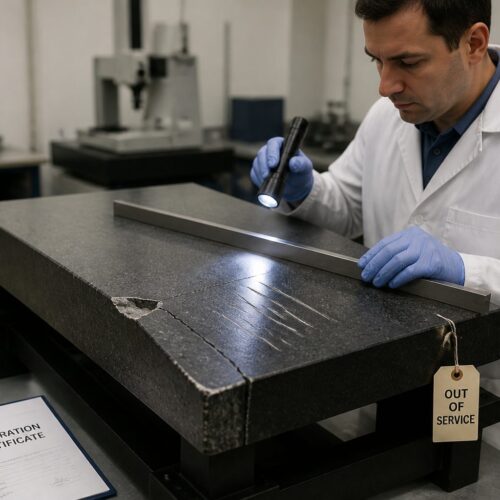
Any tool drop, even small, or a noticeable chip on the plate’s edge, warrants a log entry. These minor events can introduce localized stresses or damage the precision surface. Documenting them immediately provides vital context for future calibration results.
Spills of corrosive liquids, even if quickly cleaned, must be noted. Certain chemicals can etch granite or leave residues affecting measurement accuracy. The log should detail the substance, affected area, and cleaning/neutralization steps, critical for evaluating long-term impact.
Log near-misses as well; they are valuable learning opportunities. Documenting a heavy object almost falling or a forklift coming too close can improve safety protocols and prevent serious future accidents.
Each incident entry needs the date, time, a brief description, potential impact, and immediate actions. This thorough incident tracking clarifies the plate’s history, helping justify future repairs or replacement for recurring issues.
Noting environmental changes: moves, HVAC work, floor repairs
Surface plates are stable yet highly sensitive to their environment. Any significant change in surroundings can influence flatness and stability. Recording these environmental shifts in your surface plate maintenance log is crucial for understanding performance anomalies.
Moving a surface plate, even within the same facility, requires logging. The move itself, new floor conditions, and ambient temperature changes can affect calibration. Note the date and new location.
Major HVAC work can cause temperature fluctuations or air current changes around the plate. Rapid changes can induce temporary or permanent distortions. Log HVAC dates and any observed temperature variations.
Floor repairs, especially with heavy machinery or concrete work nearby, can introduce vibrations and ground shifts. These disturbances impact leveling and stability. Documenting such activities provides context for subsequent leveling adjustments or calibration checks.
Consider even minor environmental changes, like new heavy equipment nearby. These factors can introduce new vibrations affecting precision measurements. A diligent surface plate maintenance log connects these external events to the plate’s behavior.
Capturing stand adjustments and leveling activity
Surface plate stability depends on its stand and proper leveling. Over time, floor settling, vibrations, or bumps can cause it to go out of level. Documenting all stand adjustments and leveling activity is crucial for accuracy.
Every adjustment to leveling screws or shims must be recorded in the surface plate maintenance log. Entries should include the date, who performed the adjustment, and the method, providing a clear history of the plate’s physical stability.
- Date of adjustment
- Name of technician
- Leveling instrument used (e.g., electronic level, spirit level)
- Which leveling screws were adjusted
- Initial flatness reading (if taken)
- Final flatness reading (if taken)
- Specific observations during adjustment
Using calibration history to spot trends over time
Calibration is the ultimate test of surface plate accuracy. A detailed calibration history in your surface plate maintenance log offers insights a single report cannot, allowing you to visualize the plate’s performance trajectory.
Each entry should include the date, calibration technician/company, and results summary. Ideally, attach or reference the full calibration certificate for a complete record of compliance and performance.
Reviewing history helps identify slow degradation, even if the plate still passes standards. Consistent flatness shifts or gradual increases in localized errors indicate potential underlying issues needing investigation.
For instance, if the same corner consistently deviates across calibrations, it may point to a recurring environmental factor or subtle stand issue. This pattern recognition, impossible without comprehensive history, enables proactive maintenance, not just reactive fixes.
Calibration history also validates maintenance efforts. New cleaning protocols or more frequent leveling should ideally show improved stability or slower degradation in subsequent calibrations. This feedback refines your strategy, ensuring effective efforts.
Creating a one-page template your team will use
Complexity is the biggest barrier to consistent log keeping. If your surface plate maintenance log is cumbersome, your team won’t use it. Success lies in a simple, intuitive, one-page template.
Design a template for physical printing near the plate or an easily accessible digital form. It needs clear, labeled fields for minimum information: date, plate ID, person, and action. Use checkboxes or short dropdowns to minimize writing.
For cleaning, simple checkboxes for “cleaned” and a “product used” field suffice. For incidents, provide a brief description space and a “reported to supervisor” checkbox. This streamlined approach encourages quick, accurate entries.
Include an “Observations/Notes” section for additional details not covered by standard fields. This offers flexibility without cluttering the main structure. A good template anticipates common entries, making them effortless to record.
Test the template with your team before full implementation, gathering feedback for improvements. User-input templates are more likely to be adopted and used correctly. This collaborative approach makes the surface plate maintenance log a valuable tool, not a chore.
Where to keep the log so it stays with the plate
A maintenance log is only useful if readily available. A meticulously kept surface plate maintenance log in a drawer across the shop floor serves no purpose. Proximity is paramount for consistent use and immediate reference.
The most effective solution is keeping the physical log directly with the surface plate. This could be a clipboard on the stand, a weather-resistant binder nearby, or a dedicated pouch. The goal: make it impossible to use the plate without seeing the log.
For a digital surface plate maintenance log, ensure equally convenient access. A tablet mounted on the stand or a QR code linking directly to the form works well. Entry barriers must be as low as possible.
Protect physical logs from the workshop environment. A laminated cover or clear plastic sleeve prevents damage from oil, dust, and spills. This ensures the log remains legible and durable.
Regularly check the log’s designated spot. Address missing logs immediately. Reinforce that the surface plate maintenance log is an integral part of the plate’s toolkit. Consistent reinforcement establishes good habits.
Reviewing the log monthly to drive small improvements
Creating a surface plate maintenance log is just the first step; its true power emerges through regular review. Monthly reviews transform the log into a strategic tool for continuous improvement, optimizing maintenance practices.
Designate a person or team for monthly log review, ensuring consistency and accountability. The reviewer should seek patterns, anomalies, and opportunities to refine maintenance schedules or procedures.
Look for recurring cleaning issues, like areas accumulating dirt faster, suggesting more frequent cleaning or different products. Pay attention to incident tracking for common mishaps.
Calibration history is especially insightful. Compare latest results with previous ones to spot gradual degradation or sudden shifts. This analysis determines if current calibration frequency is adequate or needs adjustment.
Discuss log findings with your team. Open communication fosters shared understanding of the plate’s condition and encourages collective problem-solving. Small, data-driven improvements lead to significant long-term benefits in accuracy and lifespan.
Conclusion
Implementing a surface plate maintenance log is a straightforward, highly effective strategy to preserve accuracy and extend the life of your precision granite. It shifts metrology operations from reactive troubleshooting to proactive, data-informed care, becoming an indispensable asset for quality control.
Consistently recording cleaning records, incident tracking, environmental changes, leveling adjustments, and calibration history builds a comprehensive story of your plate. This historical data empowers you to spot trends, anticipate issues, and make informed maintenance decisions, ensuring reliable measurements.
Don’t let “busywork” deter you. A well-designed, one-page template kept by the plate makes logging quick and easy. Regular review of your surface plate maintenance log leads to continuous improvements, safeguarding your investment and strengthening your entire measurement process.
Remember, the log’s purpose is quick reference. Avoid lengthy narratives; use bullet points or short sentences. A concise log encourages consistent team use.
Tracking cleaning: frequency, products, and observations
Regular cleaning is fundamental for surface plate accuracy, yet details often go unrecorded. A simple surface plate maintenance log standardizes this critical task, ensuring consistent and effective cleaning.
Documenting cleaning records reveals patterns in grime buildup or cleaning agent effectiveness. This data optimizes your cleaning schedule and product choices, preventing abrasive particle accumulation and wear.
| Date | Performed By | Cleaning Product Used | Observations |
|---|---|---|---|
| 2024-07-22 | J. Doe | Denatured Alcohol | Light dust, no noticeable residue. |
| 2024-07-29 | A. Smith | Granite Cleaner | Minor oil film removed from center. |
| 2024-08-05 | J. Doe | Denatured Alcohol | Found small metal shaving, removed carefully. |
| 2024-08-12 | B. Jones | Granite Cleaner | Surface appears clean, no issues. |
| 2024-08-19 | J. Doe | Denatured Alcohol | Minimal dust, quick wipe down. |
Recording incidents: drops, chips, spills, and near-misses
Accidents happen, but surface plates are highly sensitive. Recording incidents isn’t about blame; it’s about creating a comprehensive incident tracking history for critical equipment. This proactive approach prevents minor events from becoming major problems.
Any tool drop, even small, or a noticeable chip on the plate’s edge, warrants a log entry. These minor events can introduce localized stresses or damage the precision surface. Documenting them immediately provides vital context for future calibration results.
Spills of corrosive liquids, even if quickly cleaned, must be noted. Certain chemicals can etch granite or leave residues affecting measurement accuracy. The log should detail the substance, affected area, and cleaning/neutralization steps, critical for evaluating long-term impact.
Log near-misses as well; they are valuable learning opportunities. Documenting a heavy object almost falling or a forklift coming too close can improve safety protocols and prevent serious future accidents.
Each incident entry needs the date, time, a brief description, potential impact, and immediate actions. This thorough incident tracking clarifies the plate’s history, helping justify future repairs or replacement for recurring issues.
Noting environmental changes: moves, HVAC work, floor repairs
Surface plates are stable yet highly sensitive to their environment. Any significant change in surroundings can influence flatness and stability. Recording these environmental shifts in your surface plate maintenance log is crucial for understanding performance anomalies.
Moving a surface plate, even within the same facility, requires logging. The move itself, new floor conditions, and ambient temperature changes can affect calibration. Note the date and new location.
Major HVAC work can cause temperature fluctuations or air current changes around the plate. Rapid changes can induce temporary or permanent distortions. Log HVAC dates and any observed temperature variations.
Floor repairs, especially with heavy machinery or concrete work nearby, can introduce vibrations and ground shifts. These disturbances impact leveling and stability. Documenting such activities provides context for subsequent leveling adjustments or calibration checks.
Consider even minor environmental changes, like new heavy equipment nearby. These factors can introduce new vibrations affecting precision measurements. A diligent surface plate maintenance log connects these external events to the plate’s behavior.
Capturing stand adjustments and leveling activity
Surface plate stability depends on its stand and proper leveling. Over time, floor settling, vibrations, or bumps can cause it to go out of level. Documenting all stand adjustments and leveling activity is crucial for accuracy.
Every adjustment to leveling screws or shims must be recorded in the surface plate maintenance log. Entries should include the date, who performed the adjustment, and the method, providing a clear history of the plate’s physical stability.
- Date of adjustment
- Name of technician
- Leveling instrument used (e.g., electronic level, spirit level)
- Which leveling screws were adjusted
- Initial flatness reading (if taken)
- Final flatness reading (if taken)
- Specific observations during adjustment
Using calibration history to spot trends over time
Calibration is the ultimate test of surface plate accuracy. A detailed calibration history in your surface plate maintenance log offers insights a single report cannot, allowing you to visualize the plate’s performance trajectory.
Each entry should include the date, calibration technician/company, and results summary. Ideally, attach or reference the full calibration certificate for a complete record of compliance and performance.
Reviewing history helps identify slow degradation, even if the plate still passes standards. Consistent flatness shifts or gradual increases in localized errors indicate potential underlying issues needing investigation.
For instance, if the same corner consistently deviates across calibrations, it may point to a recurring environmental factor or subtle stand issue. This pattern recognition, impossible without comprehensive history, enables proactive maintenance, not just reactive fixes.
Calibration history also validates maintenance efforts. New cleaning protocols or more frequent leveling should ideally show improved stability or slower degradation in subsequent calibrations. This feedback refines your strategy, ensuring effective efforts.
Creating a one-page template your team will use
Complexity is the biggest barrier to consistent log keeping. If your surface plate maintenance log is cumbersome, your team won’t use it. Success lies in a simple, intuitive, one-page template.
Design a template for physical printing near the plate or an easily accessible digital form. It needs clear, labeled fields for minimum information: date, plate ID, person, and action. Use checkboxes or short dropdowns to minimize writing.
For cleaning, simple checkboxes for “cleaned” and a “product used” field suffice. For incidents, provide a brief description space and a “reported to supervisor” checkbox. This streamlined approach encourages quick, accurate entries.
Include an “Observations/Notes” section for additional details not covered by standard fields. This offers flexibility without cluttering the main structure. A good template anticipates common entries, making them effortless to record.
Test the template with your team before full implementation, gathering feedback for improvements. User-input templates are more likely to be adopted and used correctly. This collaborative approach makes the surface plate maintenance log a valuable tool, not a chore.
Where to keep the log so it stays with the plate
A maintenance log is only useful if readily available. A meticulously kept surface plate maintenance log in a drawer across the shop floor serves no purpose. Proximity is paramount for consistent use and immediate reference.
The most effective solution is keeping the physical log directly with the surface plate. This could be a clipboard on the stand, a weather-resistant binder nearby, or a dedicated pouch. The goal: make it impossible to use the plate without seeing the log.
For a digital surface plate maintenance log, ensure equally convenient access. A tablet mounted on the stand or a QR code linking directly to the form works well. Entry barriers must be as low as possible.
Protect physical logs from the workshop environment. A laminated cover or clear plastic sleeve prevents damage from oil, dust, and spills. This ensures the log remains legible and durable.
Regularly check the log’s designated spot. Address missing logs immediately. Reinforce that the surface plate maintenance log is an integral part of the plate’s toolkit. Consistent reinforcement establishes good habits.
Reviewing the log monthly to drive small improvements
Creating a surface plate maintenance log is just the first step; its true power emerges through regular review. Monthly reviews transform the log into a strategic tool for continuous improvement, optimizing maintenance practices.
Designate a person or team for monthly log review, ensuring consistency and accountability. The reviewer should seek patterns, anomalies, and opportunities to refine maintenance schedules or procedures.
Look for recurring cleaning issues, like areas accumulating dirt faster, suggesting more frequent cleaning or different products. Pay attention to incident tracking for common mishaps.
Calibration history is especially insightful. Compare latest results with previous ones to spot gradual degradation or sudden shifts. This analysis determines if current calibration frequency is adequate or needs adjustment.
Discuss log findings with your team. Open communication fosters shared understanding of the plate’s condition and encourages collective problem-solving. Small, data-driven improvements lead to significant long-term benefits in accuracy and lifespan.
Conclusion
Implementing a surface plate maintenance log is a straightforward, highly effective strategy to preserve accuracy and extend the life of your precision granite. It shifts metrology operations from reactive troubleshooting to proactive, data-informed care, becoming an indispensable asset for quality control.
Consistently recording cleaning records, incident tracking, environmental changes, leveling adjustments, and calibration history builds a comprehensive story of your plate. This historical data empowers you to spot trends, anticipate issues, and make informed maintenance decisions, ensuring reliable measurements.
Don’t let “busywork” deter you. A well-designed, one-page template kept by the plate makes logging quick and easy. Regular review of your surface plate maintenance log leads to continuous improvements, safeguarding your investment and strengthening your entire measurement process.
Remember, the log’s purpose is quick reference. Avoid lengthy narratives; use bullet points or short sentences. A concise log encourages consistent team use.
Tracking cleaning: frequency, products, and observations
Regular cleaning is fundamental for surface plate accuracy, yet details often go unrecorded. A simple surface plate maintenance log standardizes this critical task, ensuring consistent and effective cleaning.
Documenting cleaning records reveals patterns in grime buildup or cleaning agent effectiveness. This data optimizes your cleaning schedule and product choices, preventing abrasive particle accumulation and wear.
| Date | Performed By | Cleaning Product Used | Observations |
|---|---|---|---|
| 2024-07-22 | J. Doe | Denatured Alcohol | Light dust, no noticeable residue. |
| 2024-07-29 | A. Smith | Granite Cleaner | Minor oil film removed from center. |
| 2024-08-05 | J. Doe | Denatured Alcohol | Found small metal shaving, removed carefully. |
| 2024-08-12 | B. Jones | Granite Cleaner | Surface appears clean, no issues. |
| 2024-08-19 | J. Doe | Denatured Alcohol | Minimal dust, quick wipe down. |
Recording incidents: drops, chips, spills, and near-misses
Accidents happen, but surface plates are highly sensitive. Recording incidents isn’t about blame; it’s about creating a comprehensive incident tracking history for critical equipment. This proactive approach prevents minor events from becoming major problems.
Any tool drop, even small, or a noticeable chip on the plate’s edge, warrants a log entry. These minor events can introduce localized stresses or damage the precision surface. Documenting them immediately provides vital context for future calibration results.
Spills of corrosive liquids, even if quickly cleaned, must be noted. Certain chemicals can etch granite or leave residues affecting measurement accuracy. The log should detail the substance, affected area, and cleaning/neutralization steps, critical for evaluating long-term impact.
Log near-misses as well; they are valuable learning opportunities. Documenting a heavy object almost falling or a forklift coming too close can improve safety protocols and prevent serious future accidents.
Each incident entry needs the date, time, a brief description, potential impact, and immediate actions. This thorough incident tracking clarifies the plate’s history, helping justify future repairs or replacement for recurring issues.
Noting environmental changes: moves, HVAC work, floor repairs
Surface plates are stable yet highly sensitive to their environment. Any significant change in surroundings can influence flatness and stability. Recording these environmental shifts in your surface plate maintenance log is crucial for understanding performance anomalies.
Moving a surface plate, even within the same facility, requires logging. The move itself, new floor conditions, and ambient temperature changes can affect calibration. Note the date and new location.
Major HVAC work can cause temperature fluctuations or air current changes around the plate. Rapid changes can induce temporary or permanent distortions. Log HVAC dates and any observed temperature variations.
Floor repairs, especially with heavy machinery or concrete work nearby, can introduce vibrations and ground shifts. These disturbances impact leveling and stability. Documenting such activities provides context for subsequent leveling adjustments or calibration checks.
Consider even minor environmental changes, like new heavy equipment nearby. These factors can introduce new vibrations affecting precision measurements. A diligent surface plate maintenance log connects these external events to the plate’s behavior.
Capturing stand adjustments and leveling activity
Surface plate stability depends on its stand and proper leveling. Over time, floor settling, vibrations, or bumps can cause it to go out of level. Documenting all stand adjustments and leveling activity is crucial for accuracy.
Every adjustment to leveling screws or shims must be recorded in the surface plate maintenance log. Entries should include the date, who performed the adjustment, and the method, providing a clear history of the plate’s physical stability.
- Date of adjustment
- Name of technician
- Leveling instrument used (e.g., electronic level, spirit level)
- Which leveling screws were adjusted
- Initial flatness reading (if taken)
- Final flatness reading (if taken)
- Specific observations during adjustment
Using calibration history to spot trends over time
Calibration is the ultimate test of surface plate accuracy. A detailed calibration history in your surface plate maintenance log offers insights a single report cannot, allowing you to visualize the plate’s performance trajectory.
Each entry should include the date, calibration technician/company, and results summary. Ideally, attach or reference the full calibration certificate for a complete record of compliance and performance.
Reviewing history helps identify slow degradation, even if the plate still passes standards. Consistent flatness shifts or gradual increases in localized errors indicate potential underlying issues needing investigation.
For instance, if the same corner consistently deviates across calibrations, it may point to a recurring environmental factor or subtle stand issue. This pattern recognition, impossible without comprehensive history, enables proactive maintenance, not just reactive fixes.
Calibration history also validates maintenance efforts. New cleaning protocols or more frequent leveling should ideally show improved stability or slower degradation in subsequent calibrations. This feedback refines your strategy, ensuring effective efforts.
Creating a one-page template your team will use
Complexity is the biggest barrier to consistent log keeping. If your surface plate maintenance log is cumbersome, your team won’t use it. Success lies in a simple, intuitive, one-page template.
Design a template for physical printing near the plate or an easily accessible digital form. It needs clear, labeled fields for minimum information: date, plate ID, person, and action. Use checkboxes or short dropdowns to minimize writing.
For cleaning, simple checkboxes for “cleaned” and a “product used” field suffice. For incidents, provide a brief description space and a “reported to supervisor” checkbox. This streamlined approach encourages quick, accurate entries.
Include an “Observations/Notes” section for additional details not covered by standard fields. This offers flexibility without cluttering the main structure. A good template anticipates common entries, making them effortless to record.
Test the template with your team before full implementation, gathering feedback for improvements. User-input templates are more likely to be adopted and used correctly. This collaborative approach makes the surface plate maintenance log a valuable tool, not a chore.
Where to keep the log so it stays with the plate
A maintenance log is only useful if readily available. A meticulously kept surface plate maintenance log in a drawer across the shop floor serves no purpose. Proximity is paramount for consistent use and immediate reference.
The most effective solution is keeping the physical log directly with the surface plate. This could be a clipboard on the stand, a weather-resistant binder nearby, or a dedicated pouch. The goal: make it impossible to use the plate without seeing the log.
For a digital surface plate maintenance log, ensure equally convenient access. A tablet mounted on the stand or a QR code linking directly to the form works well. Entry barriers must be as low as possible.
Protect physical logs from the workshop environment. A laminated cover or clear plastic sleeve prevents damage from oil, dust, and spills. This ensures the log remains legible and durable.
Regularly check the log’s designated spot. Address missing logs immediately. Reinforce that the surface plate maintenance log is an integral part of the plate’s toolkit. Consistent reinforcement establishes good habits.
Reviewing the log monthly to drive small improvements
Creating a surface plate maintenance log is just the first step; its true power emerges through regular review. Monthly reviews transform the log into a strategic tool for continuous improvement, optimizing maintenance practices.
Designate a person or team for monthly log review, ensuring consistency and accountability. The reviewer should seek patterns, anomalies, and opportunities to refine maintenance schedules or procedures.
Look for recurring cleaning issues, like areas accumulating dirt faster, suggesting more frequent cleaning or different products. Pay attention to incident tracking for common mishaps.
Calibration history is especially insightful. Compare latest results with previous ones to spot gradual degradation or sudden shifts. This analysis determines if current calibration frequency is adequate or needs adjustment.
Discuss log findings with your team. Open communication fosters shared understanding of the plate’s condition and encourages collective problem-solving. Small, data-driven improvements lead to significant long-term benefits in accuracy and lifespan.
Conclusion
Implementing a surface plate maintenance log is a straightforward, highly effective strategy to preserve accuracy and extend the life of your precision granite. It shifts metrology operations from reactive troubleshooting to proactive, data-informed care, becoming an indispensable asset for quality control.
Consistently recording cleaning records, incident tracking, environmental changes, leveling adjustments, and calibration history builds a comprehensive story of your plate. This historical data empowers you to spot trends, anticipate issues, and make informed maintenance decisions, ensuring reliable measurements.
Don’t let “busywork” deter you. A well-designed, one-page template kept by the plate makes logging quick and easy. Regular review of your surface plate maintenance log leads to continuous improvements, safeguarding your investment and strengthening your entire measurement process.
Every entry must include the date, the specific plate (if multiple), and the person’s name or initials. This core data provides context, allowing you to trace actions to a specific time and individual.
Beyond identifiers, focus on the ‘what’ and ‘why.’ Was it routine cleaning, a leveling adjustment, or a new scratch? Briefly describe the action or observation. This concise summary aids quick understanding during review.
For cleaning, note the agent used and areas of focus. For incidents, describe the event and its potential impact. Calibration history must include the date and results.
Remember, the log’s purpose is quick reference. Avoid lengthy narratives; use bullet points or short sentences. A concise log encourages consistent team use.
Tracking cleaning: frequency, products, and observations
Regular cleaning is fundamental for surface plate accuracy, yet details often go unrecorded. A simple surface plate maintenance log standardizes this critical task, ensuring consistent and effective cleaning.
Documenting cleaning records reveals patterns in grime buildup or cleaning agent effectiveness. This data optimizes your cleaning schedule and product choices, preventing abrasive particle accumulation and wear.
| Date | Performed By | Cleaning Product Used | Observations |
|---|---|---|---|
| 2024-07-22 | J. Doe | Denatured Alcohol | Light dust, no noticeable residue. |
| 2024-07-29 | A. Smith | Granite Cleaner | Minor oil film removed from center. |
| 2024-08-05 | J. Doe | Denatured Alcohol | Found small metal shaving, removed carefully. |
| 2024-08-12 | B. Jones | Granite Cleaner | Surface appears clean, no issues. |
| 2024-08-19 | J. Doe | Denatured Alcohol | Minimal dust, quick wipe down. |
Recording incidents: drops, chips, spills, and near-misses
Accidents happen, but surface plates are highly sensitive. Recording incidents isn’t about blame; it’s about creating a comprehensive incident tracking history for critical equipment. This proactive approach prevents minor events from becoming major problems.
Any tool drop, even small, or a noticeable chip on the plate’s edge, warrants a log entry. These minor events can introduce localized stresses or damage the precision surface. Documenting them immediately provides vital context for future calibration results.
Spills of corrosive liquids, even if quickly cleaned, must be noted. Certain chemicals can etch granite or leave residues affecting measurement accuracy. The log should detail the substance, affected area, and cleaning/neutralization steps, critical for evaluating long-term impact.
Log near-misses as well; they are valuable learning opportunities. Documenting a heavy object almost falling or a forklift coming too close can improve safety protocols and prevent serious future accidents.
Each incident entry needs the date, time, a brief description, potential impact, and immediate actions. This thorough incident tracking clarifies the plate’s history, helping justify future repairs or replacement for recurring issues.
Noting environmental changes: moves, HVAC work, floor repairs
Surface plates are stable yet highly sensitive to their environment. Any significant change in surroundings can influence flatness and stability. Recording these environmental shifts in your surface plate maintenance log is crucial for understanding performance anomalies.
Moving a surface plate, even within the same facility, requires logging. The move itself, new floor conditions, and ambient temperature changes can affect calibration. Note the date and new location.
Major HVAC work can cause temperature fluctuations or air current changes around the plate. Rapid changes can induce temporary or permanent distortions. Log HVAC dates and any observed temperature variations.
Floor repairs, especially with heavy machinery or concrete work nearby, can introduce vibrations and ground shifts. These disturbances impact leveling and stability. Documenting such activities provides context for subsequent leveling adjustments or calibration checks.
Consider even minor environmental changes, like new heavy equipment nearby. These factors can introduce new vibrations affecting precision measurements. A diligent surface plate maintenance log connects these external events to the plate’s behavior.
Capturing stand adjustments and leveling activity
Surface plate stability depends on its stand and proper leveling. Over time, floor settling, vibrations, or bumps can cause it to go out of level. Documenting all stand adjustments and leveling activity is crucial for accuracy.
Every adjustment to leveling screws or shims must be recorded in the surface plate maintenance log. Entries should include the date, who performed the adjustment, and the method, providing a clear history of the plate’s physical stability.
- Date of adjustment
- Name of technician
- Leveling instrument used (e.g., electronic level, spirit level)
- Which leveling screws were adjusted
- Initial flatness reading (if taken)
- Final flatness reading (if taken)
- Specific observations during adjustment
Using calibration history to spot trends over time
Calibration is the ultimate test of surface plate accuracy. A detailed calibration history in your surface plate maintenance log offers insights a single report cannot, allowing you to visualize the plate’s performance trajectory.
Each entry should include the date, calibration technician/company, and results summary. Ideally, attach or reference the full calibration certificate for a complete record of compliance and performance.
Reviewing history helps identify slow degradation, even if the plate still passes standards. Consistent flatness shifts or gradual increases in localized errors indicate potential underlying issues needing investigation.
For instance, if the same corner consistently deviates across calibrations, it may point to a recurring environmental factor or subtle stand issue. This pattern recognition, impossible without comprehensive history, enables proactive maintenance, not just reactive fixes.
Calibration history also validates maintenance efforts. New cleaning protocols or more frequent leveling should ideally show improved stability or slower degradation in subsequent calibrations. This feedback refines your strategy, ensuring effective efforts.
Creating a one-page template your team will use
Complexity is the biggest barrier to consistent log keeping. If your surface plate maintenance log is cumbersome, your team won’t use it. Success lies in a simple, intuitive, one-page template.
Design a template for physical printing near the plate or an easily accessible digital form. It needs clear, labeled fields for minimum information: date, plate ID, person, and action. Use checkboxes or short dropdowns to minimize writing.
For cleaning, simple checkboxes for “cleaned” and a “product used” field suffice. For incidents, provide a brief description space and a “reported to supervisor” checkbox. This streamlined approach encourages quick, accurate entries.
Include an “Observations/Notes” section for additional details not covered by standard fields. This offers flexibility without cluttering the main structure. A good template anticipates common entries, making them effortless to record.
Test the template with your team before full implementation, gathering feedback for improvements. User-input templates are more likely to be adopted and used correctly. This collaborative approach makes the surface plate maintenance log a valuable tool, not a chore.
Where to keep the log so it stays with the plate
A maintenance log is only useful if readily available. A meticulously kept surface plate maintenance log in a drawer across the shop floor serves no purpose. Proximity is paramount for consistent use and immediate reference.
The most effective solution is keeping the physical log directly with the surface plate. This could be a clipboard on the stand, a weather-resistant binder nearby, or a dedicated pouch. The goal: make it impossible to use the plate without seeing the log.
For a digital surface plate maintenance log, ensure equally convenient access. A tablet mounted on the stand or a QR code linking directly to the form works well. Entry barriers must be as low as possible.
Protect physical logs from the workshop environment. A laminated cover or clear plastic sleeve prevents damage from oil, dust, and spills. This ensures the log remains legible and durable.
Regularly check the log’s designated spot. Address missing logs immediately. Reinforce that the surface plate maintenance log is an integral part of the plate’s toolkit. Consistent reinforcement establishes good habits.
Reviewing the log monthly to drive small improvements
Creating a surface plate maintenance log is just the first step; its true power emerges through regular review. Monthly reviews transform the log into a strategic tool for continuous improvement, optimizing maintenance practices.
Designate a person or team for monthly log review, ensuring consistency and accountability. The reviewer should seek patterns, anomalies, and opportunities to refine maintenance schedules or procedures.
Look for recurring cleaning issues, like areas accumulating dirt faster, suggesting more frequent cleaning or different products. Pay attention to incident tracking for common mishaps.
Calibration history is especially insightful. Compare latest results with previous ones to spot gradual degradation or sudden shifts. This analysis determines if current calibration frequency is adequate or needs adjustment.
Discuss log findings with your team. Open communication fosters shared understanding of the plate’s condition and encourages collective problem-solving. Small, data-driven improvements lead to significant long-term benefits in accuracy and lifespan.
Conclusion
Implementing a surface plate maintenance log is a straightforward, highly effective strategy to preserve accuracy and extend the life of your precision granite. It shifts metrology operations from reactive troubleshooting to proactive, data-informed care, becoming an indispensable asset for quality control.
Consistently recording cleaning records, incident tracking, environmental changes, leveling adjustments, and calibration history builds a comprehensive story of your plate. This historical data empowers you to spot trends, anticipate issues, and make informed maintenance decisions, ensuring reliable measurements.
Don’t let “busywork” deter you. A well-designed, one-page template kept by the plate makes logging quick and easy. Regular review of your surface plate maintenance log leads to continuous improvements, safeguarding your investment and strengthening your entire measurement process.
Ultimately, logging pays dividends in reduced downtime, fewer errors, and a longer operational lifespan. It shifts maintenance from reactive fixes to intelligent, data-driven care, making metrology operations more reliable and efficient.
The minimum information worth recording
A comprehensive surface plate maintenance log prioritizes simplicity and utility, focusing on information that truly impacts performance and history. Start with basics, expanding only if necessary.
Every entry must include the date, the specific plate (if multiple), and the person’s name or initials. This core data provides context, allowing you to trace actions to a specific time and individual.
Beyond identifiers, focus on the ‘what’ and ‘why.’ Was it routine cleaning, a leveling adjustment, or a new scratch? Briefly describe the action or observation. This concise summary aids quick understanding during review.
For cleaning, note the agent used and areas of focus. For incidents, describe the event and its potential impact. Calibration history must include the date and results.
Remember, the log’s purpose is quick reference. Avoid lengthy narratives; use bullet points or short sentences. A concise log encourages consistent team use.
Tracking cleaning: frequency, products, and observations
Regular cleaning is fundamental for surface plate accuracy, yet details often go unrecorded. A simple surface plate maintenance log standardizes this critical task, ensuring consistent and effective cleaning.
Documenting cleaning records reveals patterns in grime buildup or cleaning agent effectiveness. This data optimizes your cleaning schedule and product choices, preventing abrasive particle accumulation and wear.
| Date | Performed By | Cleaning Product Used | Observations |
|---|---|---|---|
| 2024-07-22 | J. Doe | Denatured Alcohol | Light dust, no noticeable residue. |
| 2024-07-29 | A. Smith | Granite Cleaner | Minor oil film removed from center. |
| 2024-08-05 | J. Doe | Denatured Alcohol | Found small metal shaving, removed carefully. |
| 2024-08-12 | B. Jones | Granite Cleaner | Surface appears clean, no issues. |
| 2024-08-19 | J. Doe | Denatured Alcohol | Minimal dust, quick wipe down. |
Recording incidents: drops, chips, spills, and near-misses
Accidents happen, but surface plates are highly sensitive. Recording incidents isn’t about blame; it’s about creating a comprehensive incident tracking history for critical equipment. This proactive approach prevents minor events from becoming major problems.
Any tool drop, even small, or a noticeable chip on the plate’s edge, warrants a log entry. These minor events can introduce localized stresses or damage the precision surface. Documenting them immediately provides vital context for future calibration results.
Spills of corrosive liquids, even if quickly cleaned, must be noted. Certain chemicals can etch granite or leave residues affecting measurement accuracy. The log should detail the substance, affected area, and cleaning/neutralization steps, critical for evaluating long-term impact.
Log near-misses as well; they are valuable learning opportunities. Documenting a heavy object almost falling or a forklift coming too close can improve safety protocols and prevent serious future accidents.
Each incident entry needs the date, time, a brief description, potential impact, and immediate actions. This thorough incident tracking clarifies the plate’s history, helping justify future repairs or replacement for recurring issues.
Noting environmental changes: moves, HVAC work, floor repairs
Surface plates are stable yet highly sensitive to their environment. Any significant change in surroundings can influence flatness and stability. Recording these environmental shifts in your surface plate maintenance log is crucial for understanding performance anomalies.
Moving a surface plate, even within the same facility, requires logging. The move itself, new floor conditions, and ambient temperature changes can affect calibration. Note the date and new location.
Major HVAC work can cause temperature fluctuations or air current changes around the plate. Rapid changes can induce temporary or permanent distortions. Log HVAC dates and any observed temperature variations.
Floor repairs, especially with heavy machinery or concrete work nearby, can introduce vibrations and ground shifts. These disturbances impact leveling and stability. Documenting such activities provides context for subsequent leveling adjustments or calibration checks.
Consider even minor environmental changes, like new heavy equipment nearby. These factors can introduce new vibrations affecting precision measurements. A diligent surface plate maintenance log connects these external events to the plate’s behavior.
Capturing stand adjustments and leveling activity
Surface plate stability depends on its stand and proper leveling. Over time, floor settling, vibrations, or bumps can cause it to go out of level. Documenting all stand adjustments and leveling activity is crucial for accuracy.
Every adjustment to leveling screws or shims must be recorded in the surface plate maintenance log. Entries should include the date, who performed the adjustment, and the method, providing a clear history of the plate’s physical stability.
- Date of adjustment
- Name of technician
- Leveling instrument used (e.g., electronic level, spirit level)
- Which leveling screws were adjusted
- Initial flatness reading (if taken)
- Final flatness reading (if taken)
- Specific observations during adjustment
Using calibration history to spot trends over time
Calibration is the ultimate test of surface plate accuracy. A detailed calibration history in your surface plate maintenance log offers insights a single report cannot, allowing you to visualize the plate’s performance trajectory.
Each entry should include the date, calibration technician/company, and results summary. Ideally, attach or reference the full calibration certificate for a complete record of compliance and performance.
Reviewing history helps identify slow degradation, even if the plate still passes standards. Consistent flatness shifts or gradual increases in localized errors indicate potential underlying issues needing investigation.
For instance, if the same corner consistently deviates across calibrations, it may point to a recurring environmental factor or subtle stand issue. This pattern recognition, impossible without comprehensive history, enables proactive maintenance, not just reactive fixes.
Calibration history also validates maintenance efforts. New cleaning protocols or more frequent leveling should ideally show improved stability or slower degradation in subsequent calibrations. This feedback refines your strategy, ensuring effective efforts.
Creating a one-page template your team will use
Complexity is the biggest barrier to consistent log keeping. If your surface plate maintenance log is cumbersome, your team won’t use it. Success lies in a simple, intuitive, one-page template.
Design a template for physical printing near the plate or an easily accessible digital form. It needs clear, labeled fields for minimum information: date, plate ID, person, and action. Use checkboxes or short dropdowns to minimize writing.
For cleaning, simple checkboxes for “cleaned” and a “product used” field suffice. For incidents, provide a brief description space and a “reported to supervisor” checkbox. This streamlined approach encourages quick, accurate entries.
Include an “Observations/Notes” section for additional details not covered by standard fields. This offers flexibility without cluttering the main structure. A good template anticipates common entries, making them effortless to record.
Test the template with your team before full implementation, gathering feedback for improvements. User-input templates are more likely to be adopted and used correctly. This collaborative approach makes the surface plate maintenance log a valuable tool, not a chore.
Where to keep the log so it stays with the plate
A maintenance log is only useful if readily available. A meticulously kept surface plate maintenance log in a drawer across the shop floor serves no purpose. Proximity is paramount for consistent use and immediate reference.
The most effective solution is keeping the physical log directly with the surface plate. This could be a clipboard on the stand, a weather-resistant binder nearby, or a dedicated pouch. The goal: make it impossible to use the plate without seeing the log.
For a digital surface plate maintenance log, ensure equally convenient access. A tablet mounted on the stand or a QR code linking directly to the form works well. Entry barriers must be as low as possible.
Protect physical logs from the workshop environment. A laminated cover or clear plastic sleeve prevents damage from oil, dust, and spills. This ensures the log remains legible and durable.
Regularly check the log’s designated spot. Address missing logs immediately. Reinforce that the surface plate maintenance log is an integral part of the plate’s toolkit. Consistent reinforcement establishes good habits.
Reviewing the log monthly to drive small improvements
Creating a surface plate maintenance log is just the first step; its true power emerges through regular review. Monthly reviews transform the log into a strategic tool for continuous improvement, optimizing maintenance practices.
Designate a person or team for monthly log review, ensuring consistency and accountability. The reviewer should seek patterns, anomalies, and opportunities to refine maintenance schedules or procedures.
Look for recurring cleaning issues, like areas accumulating dirt faster, suggesting more frequent cleaning or different products. Pay attention to incident tracking for common mishaps.
Calibration history is especially insightful. Compare latest results with previous ones to spot gradual degradation or sudden shifts. This analysis determines if current calibration frequency is adequate or needs adjustment.
Discuss log findings with your team. Open communication fosters shared understanding of the plate’s condition and encourages collective problem-solving. Small, data-driven improvements lead to significant long-term benefits in accuracy and lifespan.
Conclusion
Implementing a surface plate maintenance log is a straightforward, highly effective strategy to preserve accuracy and extend the life of your precision granite. It shifts metrology operations from reactive troubleshooting to proactive, data-informed care, becoming an indispensable asset for quality control.
Consistently recording cleaning records, incident tracking, environmental changes, leveling adjustments, and calibration history builds a comprehensive story of your plate. This historical data empowers you to spot trends, anticipate issues, and make informed maintenance decisions, ensuring reliable measurements.
Don’t let “busywork” deter you. A well-designed, one-page template kept by the plate makes logging quick and easy. Regular review of your surface plate maintenance log leads to continuous improvements, safeguarding your investment and strengthening your entire measurement process.
Ultimately, logging pays dividends in reduced downtime, fewer errors, and a longer operational lifespan. It shifts maintenance from reactive fixes to intelligent, data-driven care, making metrology operations more reliable and efficient.
The minimum information worth recording
A comprehensive surface plate maintenance log prioritizes simplicity and utility, focusing on information that truly impacts performance and history. Start with basics, expanding only if necessary.
Every entry must include the date, the specific plate (if multiple), and the person’s name or initials. This core data provides context, allowing you to trace actions to a specific time and individual.
Beyond identifiers, focus on the ‘what’ and ‘why.’ Was it routine cleaning, a leveling adjustment, or a new scratch? Briefly describe the action or observation. This concise summary aids quick understanding during review.
For cleaning, note the agent used and areas of focus. For incidents, describe the event and its potential impact. Calibration history must include the date and results.
Remember, the log’s purpose is quick reference. Avoid lengthy narratives; use bullet points or short sentences. A concise log encourages consistent team use.
Tracking cleaning: frequency, products, and observations
Regular cleaning is fundamental for surface plate accuracy, yet details often go unrecorded. A simple surface plate maintenance log standardizes this critical task, ensuring consistent and effective cleaning.
Documenting cleaning records reveals patterns in grime buildup or cleaning agent effectiveness. This data optimizes your cleaning schedule and product choices, preventing abrasive particle accumulation and wear.
| Date | Performed By | Cleaning Product Used | Observations |
|---|---|---|---|
| 2024-07-22 | J. Doe | Denatured Alcohol | Light dust, no noticeable residue. |
| 2024-07-29 | A. Smith | Granite Cleaner | Minor oil film removed from center. |
| 2024-08-05 | J. Doe | Denatured Alcohol | Found small metal shaving, removed carefully. |
| 2024-08-12 | B. Jones | Granite Cleaner | Surface appears clean, no issues. |
| 2024-08-19 | J. Doe | Denatured Alcohol | Minimal dust, quick wipe down. |
Recording incidents: drops, chips, spills, and near-misses
Accidents happen, but surface plates are highly sensitive. Recording incidents isn’t about blame; it’s about creating a comprehensive incident tracking history for critical equipment. This proactive approach prevents minor events from becoming major problems.
Any tool drop, even small, or a noticeable chip on the plate’s edge, warrants a log entry. These minor events can introduce localized stresses or damage the precision surface. Documenting them immediately provides vital context for future calibration results.
Spills of corrosive liquids, even if quickly cleaned, must be noted. Certain chemicals can etch granite or leave residues affecting measurement accuracy. The log should detail the substance, affected area, and cleaning/neutralization steps, critical for evaluating long-term impact.
Log near-misses as well; they are valuable learning opportunities. Documenting a heavy object almost falling or a forklift coming too close can improve safety protocols and prevent serious future accidents.
Each incident entry needs the date, time, a brief description, potential impact, and immediate actions. This thorough incident tracking clarifies the plate’s history, helping justify future repairs or replacement for recurring issues.
Noting environmental changes: moves, HVAC work, floor repairs
Surface plates are stable yet highly sensitive to their environment. Any significant change in surroundings can influence flatness and stability. Recording these environmental shifts in your surface plate maintenance log is crucial for understanding performance anomalies.
Moving a surface plate, even within the same facility, requires logging. The move itself, new floor conditions, and ambient temperature changes can affect calibration. Note the date and new location.
Major HVAC work can cause temperature fluctuations or air current changes around the plate. Rapid changes can induce temporary or permanent distortions. Log HVAC dates and any observed temperature variations.
Floor repairs, especially with heavy machinery or concrete work nearby, can introduce vibrations and ground shifts. These disturbances impact leveling and stability. Documenting such activities provides context for subsequent leveling adjustments or calibration checks.
Consider even minor environmental changes, like new heavy equipment nearby. These factors can introduce new vibrations affecting precision measurements. A diligent surface plate maintenance log connects these external events to the plate’s behavior.
Capturing stand adjustments and leveling activity
Surface plate stability depends on its stand and proper leveling. Over time, floor settling, vibrations, or bumps can cause it to go out of level. Documenting all stand adjustments and leveling activity is crucial for accuracy.
Every adjustment to leveling screws or shims must be recorded in the surface plate maintenance log. Entries should include the date, who performed the adjustment, and the method, providing a clear history of the plate’s physical stability.
- Date of adjustment
- Name of technician
- Leveling instrument used (e.g., electronic level, spirit level)
- Which leveling screws were adjusted
- Initial flatness reading (if taken)
- Final flatness reading (if taken)
- Specific observations during adjustment
Using calibration history to spot trends over time
Calibration is the ultimate test of surface plate accuracy. A detailed calibration history in your surface plate maintenance log offers insights a single report cannot, allowing you to visualize the plate’s performance trajectory.
Each entry should include the date, calibration technician/company, and results summary. Ideally, attach or reference the full calibration certificate for a complete record of compliance and performance.
Reviewing history helps identify slow degradation, even if the plate still passes standards. Consistent flatness shifts or gradual increases in localized errors indicate potential underlying issues needing investigation.
For instance, if the same corner consistently deviates across calibrations, it may point to a recurring environmental factor or subtle stand issue. This pattern recognition, impossible without comprehensive history, enables proactive maintenance, not just reactive fixes.
Calibration history also validates maintenance efforts. New cleaning protocols or more frequent leveling should ideally show improved stability or slower degradation in subsequent calibrations. This feedback refines your strategy, ensuring effective efforts.
Creating a one-page template your team will use
Complexity is the biggest barrier to consistent log keeping. If your surface plate maintenance log is cumbersome, your team won’t use it. Success lies in a simple, intuitive, one-page template.
Design a template for physical printing near the plate or an easily accessible digital form. It needs clear, labeled fields for minimum information: date, plate ID, person, and action. Use checkboxes or short dropdowns to minimize writing.
For cleaning, simple checkboxes for “cleaned” and a “product used” field suffice. For incidents, provide a brief description space and a “reported to supervisor” checkbox. This streamlined approach encourages quick, accurate entries.
Include an “Observations/Notes” section for additional details not covered by standard fields. This offers flexibility without cluttering the main structure. A good template anticipates common entries, making them effortless to record.
Test the template with your team before full implementation, gathering feedback for improvements. User-input templates are more likely to be adopted and used correctly. This collaborative approach makes the surface plate maintenance log a valuable tool, not a chore.
Where to keep the log so it stays with the plate
A maintenance log is only useful if readily available. A meticulously kept surface plate maintenance log in a drawer across the shop floor serves no purpose. Proximity is paramount for consistent use and immediate reference.
The most effective solution is keeping the physical log directly with the surface plate. This could be a clipboard on the stand, a weather-resistant binder nearby, or a dedicated pouch. The goal: make it impossible to use the plate without seeing the log.
For a digital surface plate maintenance log, ensure equally convenient access. A tablet mounted on the stand or a QR code linking directly to the form works well. Entry barriers must be as low as possible.
Protect physical logs from the workshop environment. A laminated cover or clear plastic sleeve prevents damage from oil, dust, and spills. This ensures the log remains legible and durable.
Regularly check the log’s designated spot. Address missing logs immediately. Reinforce that the surface plate maintenance log is an integral part of the plate’s toolkit. Consistent reinforcement establishes good habits.
Reviewing the log monthly to drive small improvements
Creating a surface plate maintenance log is just the first step; its true power emerges through regular review. Monthly reviews transform the log into a strategic tool for continuous improvement, optimizing maintenance practices.
Designate a person or team for monthly log review, ensuring consistency and accountability. The reviewer should seek patterns, anomalies, and opportunities to refine maintenance schedules or procedures.
Look for recurring cleaning issues, like areas accumulating dirt faster, suggesting more frequent cleaning or different products. Pay attention to incident tracking for common mishaps.
Calibration history is especially insightful. Compare latest results with previous ones to spot gradual degradation or sudden shifts. This analysis determines if current calibration frequency is adequate or needs adjustment.
Discuss log findings with your team. Open communication fosters shared understanding of the plate’s condition and encourages collective problem-solving. Small, data-driven improvements lead to significant long-term benefits in accuracy and lifespan.
Conclusion
Implementing a surface plate maintenance log is a straightforward, highly effective strategy to preserve accuracy and extend the life of your precision granite. It shifts metrology operations from reactive troubleshooting to proactive, data-informed care, becoming an indispensable asset for quality control.
Consistently recording cleaning records, incident tracking, environmental changes, leveling adjustments, and calibration history builds a comprehensive story of your plate. This historical data empowers you to spot trends, anticipate issues, and make informed maintenance decisions, ensuring reliable measurements.
Don’t let “busywork” deter you. A well-designed, one-page template kept by the plate makes logging quick and easy. Regular review of your surface plate maintenance log leads to continuous improvements, safeguarding your investment and strengthening your entire measurement process.
Consider it a health record for your critical measurement tool. Like a doctor reviewing a patient’s history, you can quickly scan the log for relevant information during troubleshooting. This immediate data access prevents wasted time and ensures targeted maintenance.
The log creates a clear accountability trail. Everyone knows what’s been done and what’s next, preventing redundant tasks and ensuring critical steps are never missed, even with staff changes.
Without a log, you react to problems rather than preventing them. A simple surface plate maintenance log tracks trends like increased wear or recurrent leveling issues, enabling proactive scheduling and extending the plate’s life and accuracy.
Ultimately, logging pays dividends in reduced downtime, fewer errors, and a longer operational lifespan. It shifts maintenance from reactive fixes to intelligent, data-driven care, making metrology operations more reliable and efficient.
The minimum information worth recording
A comprehensive surface plate maintenance log prioritizes simplicity and utility, focusing on information that truly impacts performance and history. Start with basics, expanding only if necessary.
Every entry must include the date, the specific plate (if multiple), and the person’s name or initials. This core data provides context, allowing you to trace actions to a specific time and individual.
Beyond identifiers, focus on the ‘what’ and ‘why.’ Was it routine cleaning, a leveling adjustment, or a new scratch? Briefly describe the action or observation. This concise summary aids quick understanding during review.
For cleaning, note the agent used and areas of focus. For incidents, describe the event and its potential impact. Calibration history must include the date and results.
Remember, the log’s purpose is quick reference. Avoid lengthy narratives; use bullet points or short sentences. A concise log encourages consistent team use.
Tracking cleaning: frequency, products, and observations
Regular cleaning is fundamental for surface plate accuracy, yet details often go unrecorded. A simple surface plate maintenance log standardizes this critical task, ensuring consistent and effective cleaning.
Documenting cleaning records reveals patterns in grime buildup or cleaning agent effectiveness. This data optimizes your cleaning schedule and product choices, preventing abrasive particle accumulation and wear.
| Date | Performed By | Cleaning Product Used | Observations |
|---|---|---|---|
| 2024-07-22 | J. Doe | Denatured Alcohol | Light dust, no noticeable residue. |
| 2024-07-29 | A. Smith | Granite Cleaner | Minor oil film removed from center. |
| 2024-08-05 | J. Doe | Denatured Alcohol | Found small metal shaving, removed carefully. |
| 2024-08-12 | B. Jones | Granite Cleaner | Surface appears clean, no issues. |
| 2024-08-19 | J. Doe | Denatured Alcohol | Minimal dust, quick wipe down. |
Recording incidents: drops, chips, spills, and near-misses
Accidents happen, but surface plates are highly sensitive. Recording incidents isn’t about blame; it’s about creating a comprehensive incident tracking history for critical equipment. This proactive approach prevents minor events from becoming major problems.
Any tool drop, even small, or a noticeable chip on the plate’s edge, warrants a log entry. These minor events can introduce localized stresses or damage the precision surface. Documenting them immediately provides vital context for future calibration results.
Spills of corrosive liquids, even if quickly cleaned, must be noted. Certain chemicals can etch granite or leave residues affecting measurement accuracy. The log should detail the substance, affected area, and cleaning/neutralization steps, critical for evaluating long-term impact.
Log near-misses as well; they are valuable learning opportunities. Documenting a heavy object almost falling or a forklift coming too close can improve safety protocols and prevent serious future accidents.
Each incident entry needs the date, time, a brief description, potential impact, and immediate actions. This thorough incident tracking clarifies the plate’s history, helping justify future repairs or replacement for recurring issues.
Noting environmental changes: moves, HVAC work, floor repairs
Surface plates are stable yet highly sensitive to their environment. Any significant change in surroundings can influence flatness and stability. Recording these environmental shifts in your surface plate maintenance log is crucial for understanding performance anomalies.
Moving a surface plate, even within the same facility, requires logging. The move itself, new floor conditions, and ambient temperature changes can affect calibration. Note the date and new location.
Major HVAC work can cause temperature fluctuations or air current changes around the plate. Rapid changes can induce temporary or permanent distortions. Log HVAC dates and any observed temperature variations.
Floor repairs, especially with heavy machinery or concrete work nearby, can introduce vibrations and ground shifts. These disturbances impact leveling and stability. Documenting such activities provides context for subsequent leveling adjustments or calibration checks.
Consider even minor environmental changes, like new heavy equipment nearby. These factors can introduce new vibrations affecting precision measurements. A diligent surface plate maintenance log connects these external events to the plate’s behavior.
Capturing stand adjustments and leveling activity
Surface plate stability depends on its stand and proper leveling. Over time, floor settling, vibrations, or bumps can cause it to go out of level. Documenting all stand adjustments and leveling activity is crucial for accuracy.
Every adjustment to leveling screws or shims must be recorded in the surface plate maintenance log. Entries should include the date, who performed the adjustment, and the method, providing a clear history of the plate’s physical stability.
- Date of adjustment
- Name of technician
- Leveling instrument used (e.g., electronic level, spirit level)
- Which leveling screws were adjusted
- Initial flatness reading (if taken)
- Final flatness reading (if taken)
- Specific observations during adjustment
Using calibration history to spot trends over time
Calibration is the ultimate test of surface plate accuracy. A detailed calibration history in your surface plate maintenance log offers insights a single report cannot, allowing you to visualize the plate’s performance trajectory.
Each entry should include the date, calibration technician/company, and results summary. Ideally, attach or reference the full calibration certificate for a complete record of compliance and performance.
Reviewing history helps identify slow degradation, even if the plate still passes standards. Consistent flatness shifts or gradual increases in localized errors indicate potential underlying issues needing investigation.
For instance, if the same corner consistently deviates across calibrations, it may point to a recurring environmental factor or subtle stand issue. This pattern recognition, impossible without comprehensive history, enables proactive maintenance, not just reactive fixes.
Calibration history also validates maintenance efforts. New cleaning protocols or more frequent leveling should ideally show improved stability or slower degradation in subsequent calibrations. This feedback refines your strategy, ensuring effective efforts.
Creating a one-page template your team will use
Complexity is the biggest barrier to consistent log keeping. If your surface plate maintenance log is cumbersome, your team won’t use it. Success lies in a simple, intuitive, one-page template.
Design a template for physical printing near the plate or an easily accessible digital form. It needs clear, labeled fields for minimum information: date, plate ID, person, and action. Use checkboxes or short dropdowns to minimize writing.
For cleaning, simple checkboxes for “cleaned” and a “product used” field suffice. For incidents, provide a brief description space and a “reported to supervisor” checkbox. This streamlined approach encourages quick, accurate entries.
Include an “Observations/Notes” section for additional details not covered by standard fields. This offers flexibility without cluttering the main structure. A good template anticipates common entries, making them effortless to record.
Test the template with your team before full implementation, gathering feedback for improvements. User-input templates are more likely to be adopted and used correctly. This collaborative approach makes the surface plate maintenance log a valuable tool, not a chore.
Where to keep the log so it stays with the plate
A maintenance log is only useful if readily available. A meticulously kept surface plate maintenance log in a drawer across the shop floor serves no purpose. Proximity is paramount for consistent use and immediate reference.
The most effective solution is keeping the physical log directly with the surface plate. This could be a clipboard on the stand, a weather-resistant binder nearby, or a dedicated pouch. The goal: make it impossible to use the plate without seeing the log.
For a digital surface plate maintenance log, ensure equally convenient access. A tablet mounted on the stand or a QR code linking directly to the form works well. Entry barriers must be as low as possible.
Protect physical logs from the workshop environment. A laminated cover or clear plastic sleeve prevents damage from oil, dust, and spills. This ensures the log remains legible and durable.
Regularly check the log’s designated spot. Address missing logs immediately. Reinforce that the surface plate maintenance log is an integral part of the plate’s toolkit. Consistent reinforcement establishes good habits.
Reviewing the log monthly to drive small improvements
Creating a surface plate maintenance log is just the first step; its true power emerges through regular review. Monthly reviews transform the log into a strategic tool for continuous improvement, optimizing maintenance practices.
Designate a person or team for monthly log review, ensuring consistency and accountability. The reviewer should seek patterns, anomalies, and opportunities to refine maintenance schedules or procedures.
Look for recurring cleaning issues, like areas accumulating dirt faster, suggesting more frequent cleaning or different products. Pay attention to incident tracking for common mishaps.
Calibration history is especially insightful. Compare latest results with previous ones to spot gradual degradation or sudden shifts. This analysis determines if current calibration frequency is adequate or needs adjustment.
Discuss log findings with your team. Open communication fosters shared understanding of the plate’s condition and encourages collective problem-solving. Small, data-driven improvements lead to significant long-term benefits in accuracy and lifespan.
Conclusion
Implementing a surface plate maintenance log is a straightforward, highly effective strategy to preserve accuracy and extend the life of your precision granite. It shifts metrology operations from reactive troubleshooting to proactive, data-informed care, becoming an indispensable asset for quality control.
Consistently recording cleaning records, incident tracking, environmental changes, leveling adjustments, and calibration history builds a comprehensive story of your plate. This historical data empowers you to spot trends, anticipate issues, and make informed maintenance decisions, ensuring reliable measurements.
Don’t let “busywork” deter you. A well-designed, one-page template kept by the plate makes logging quick and easy. Regular review of your surface plate maintenance log leads to continuous improvements, safeguarding your investment and strengthening your entire measurement process.
Why a log improves care without adding busywork
Some worry a log adds administrative burden, but it actually simplifies routine care and troubleshooting. A well-designed surface plate maintenance log eliminates the need to recall past actions or guess at previous conditions.
Consider it a health record for your critical measurement tool. Like a doctor reviewing a patient’s history, you can quickly scan the log for relevant information during troubleshooting. This immediate data access prevents wasted time and ensures targeted maintenance.
The log creates a clear accountability trail. Everyone knows what’s been done and what’s next, preventing redundant tasks and ensuring critical steps are never missed, even with staff changes.
Without a log, you react to problems rather than preventing them. A simple surface plate maintenance log tracks trends like increased wear or recurrent leveling issues, enabling proactive scheduling and extending the plate’s life and accuracy.
Ultimately, logging pays dividends in reduced downtime, fewer errors, and a longer operational lifespan. It shifts maintenance from reactive fixes to intelligent, data-driven care, making metrology operations more reliable and efficient.
The minimum information worth recording
A comprehensive surface plate maintenance log prioritizes simplicity and utility, focusing on information that truly impacts performance and history. Start with basics, expanding only if necessary.
Every entry must include the date, the specific plate (if multiple), and the person’s name or initials. This core data provides context, allowing you to trace actions to a specific time and individual.
Beyond identifiers, focus on the ‘what’ and ‘why.’ Was it routine cleaning, a leveling adjustment, or a new scratch? Briefly describe the action or observation. This concise summary aids quick understanding during review.
For cleaning, note the agent used and areas of focus. For incidents, describe the event and its potential impact. Calibration history must include the date and results.
Remember, the log’s purpose is quick reference. Avoid lengthy narratives; use bullet points or short sentences. A concise log encourages consistent team use.
Tracking cleaning: frequency, products, and observations
Regular cleaning is fundamental for surface plate accuracy, yet details often go unrecorded. A simple surface plate maintenance log standardizes this critical task, ensuring consistent and effective cleaning.
Documenting cleaning records reveals patterns in grime buildup or cleaning agent effectiveness. This data optimizes your cleaning schedule and product choices, preventing abrasive particle accumulation and wear.
| Date | Performed By | Cleaning Product Used | Observations |
|---|---|---|---|
| 2024-07-22 | J. Doe | Denatured Alcohol | Light dust, no noticeable residue. |
| 2024-07-29 | A. Smith | Granite Cleaner | Minor oil film removed from center. |
| 2024-08-05 | J. Doe | Denatured Alcohol | Found small metal shaving, removed carefully. |
| 2024-08-12 | B. Jones | Granite Cleaner | Surface appears clean, no issues. |
| 2024-08-19 | J. Doe | Denatured Alcohol | Minimal dust, quick wipe down. |
Recording incidents: drops, chips, spills, and near-misses
Accidents happen, but surface plates are highly sensitive. Recording incidents isn’t about blame; it’s about creating a comprehensive incident tracking history for critical equipment. This proactive approach prevents minor events from becoming major problems.
Any tool drop, even small, or a noticeable chip on the plate’s edge, warrants a log entry. These minor events can introduce localized stresses or damage the precision surface. Documenting them immediately provides vital context for future calibration results.
Spills of corrosive liquids, even if quickly cleaned, must be noted. Certain chemicals can etch granite or leave residues affecting measurement accuracy. The log should detail the substance, affected area, and cleaning/neutralization steps, critical for evaluating long-term impact.
Log near-misses as well; they are valuable learning opportunities. Documenting a heavy object almost falling or a forklift coming too close can improve safety protocols and prevent serious future accidents.
Each incident entry needs the date, time, a brief description, potential impact, and immediate actions. This thorough incident tracking clarifies the plate’s history, helping justify future repairs or replacement for recurring issues.
Noting environmental changes: moves, HVAC work, floor repairs
Surface plates are stable yet highly sensitive to their environment. Any significant change in surroundings can influence flatness and stability. Recording these environmental shifts in your surface plate maintenance log is crucial for understanding performance anomalies.
Moving a surface plate, even within the same facility, requires logging. The move itself, new floor conditions, and ambient temperature changes can affect calibration. Note the date and new location.
Major HVAC work can cause temperature fluctuations or air current changes around the plate. Rapid changes can induce temporary or permanent distortions. Log HVAC dates and any observed temperature variations.
Floor repairs, especially with heavy machinery or concrete work nearby, can introduce vibrations and ground shifts. These disturbances impact leveling and stability. Documenting such activities provides context for subsequent leveling adjustments or calibration checks.
Consider even minor environmental changes, like new heavy equipment nearby. These factors can introduce new vibrations affecting precision measurements. A diligent surface plate maintenance log connects these external events to the plate’s behavior.
Capturing stand adjustments and leveling activity
Surface plate stability depends on its stand and proper leveling. Over time, floor settling, vibrations, or bumps can cause it to go out of level. Documenting all stand adjustments and leveling activity is crucial for accuracy.
Every adjustment to leveling screws or shims must be recorded in the surface plate maintenance log. Entries should include the date, who performed the adjustment, and the method, providing a clear history of the plate’s physical stability.
- Date of adjustment
- Name of technician
- Leveling instrument used (e.g., electronic level, spirit level)
- Which leveling screws were adjusted
- Initial flatness reading (if taken)
- Final flatness reading (if taken)
- Specific observations during adjustment
Using calibration history to spot trends over time
Calibration is the ultimate test of surface plate accuracy. A detailed calibration history in your surface plate maintenance log offers insights a single report cannot, allowing you to visualize the plate’s performance trajectory.
Each entry should include the date, calibration technician/company, and results summary. Ideally, attach or reference the full calibration certificate for a complete record of compliance and performance.
Reviewing history helps identify slow degradation, even if the plate still passes standards. Consistent flatness shifts or gradual increases in localized errors indicate potential underlying issues needing investigation.
For instance, if the same corner consistently deviates across calibrations, it may point to a recurring environmental factor or subtle stand issue. This pattern recognition, impossible without comprehensive history, enables proactive maintenance, not just reactive fixes.
Calibration history also validates maintenance efforts. New cleaning protocols or more frequent leveling should ideally show improved stability or slower degradation in subsequent calibrations. This feedback refines your strategy, ensuring effective efforts.
Creating a one-page template your team will use
Complexity is the biggest barrier to consistent log keeping. If your surface plate maintenance log is cumbersome, your team won’t use it. Success lies in a simple, intuitive, one-page template.
Design a template for physical printing near the plate or an easily accessible digital form. It needs clear, labeled fields for minimum information: date, plate ID, person, and action. Use checkboxes or short dropdowns to minimize writing.
For cleaning, simple checkboxes for “cleaned” and a “product used” field suffice. For incidents, provide a brief description space and a “reported to supervisor” checkbox. This streamlined approach encourages quick, accurate entries.
Include an “Observations/Notes” section for additional details not covered by standard fields. This offers flexibility without cluttering the main structure. A good template anticipates common entries, making them effortless to record.
Test the template with your team before full implementation, gathering feedback for improvements. User-input templates are more likely to be adopted and used correctly. This collaborative approach makes the surface plate maintenance log a valuable tool, not a chore.
Where to keep the log so it stays with the plate
A maintenance log is only useful if readily available. A meticulously kept surface plate maintenance log in a drawer across the shop floor serves no purpose. Proximity is paramount for consistent use and immediate reference.
The most effective solution is keeping the physical log directly with the surface plate. This could be a clipboard on the stand, a weather-resistant binder nearby, or a dedicated pouch. The goal: make it impossible to use the plate without seeing the log.
For a digital surface plate maintenance log, ensure equally convenient access. A tablet mounted on the stand or a QR code linking directly to the form works well. Entry barriers must be as low as possible.
Protect physical logs from the workshop environment. A laminated cover or clear plastic sleeve prevents damage from oil, dust, and spills. This ensures the log remains legible and durable.
Regularly check the log’s designated spot. Address missing logs immediately. Reinforce that the surface plate maintenance log is an integral part of the plate’s toolkit. Consistent reinforcement establishes good habits.
Reviewing the log monthly to drive small improvements
Creating a surface plate maintenance log is just the first step; its true power emerges through regular review. Monthly reviews transform the log into a strategic tool for continuous improvement, optimizing maintenance practices.
Designate a person or team for monthly log review, ensuring consistency and accountability. The reviewer should seek patterns, anomalies, and opportunities to refine maintenance schedules or procedures.
Look for recurring cleaning issues, like areas accumulating dirt faster, suggesting more frequent cleaning or different products. Pay attention to incident tracking for common mishaps.
Calibration history is especially insightful. Compare latest results with previous ones to spot gradual degradation or sudden shifts. This analysis determines if current calibration frequency is adequate or needs adjustment.
Discuss log findings with your team. Open communication fosters shared understanding of the plate’s condition and encourages collective problem-solving. Small, data-driven improvements lead to significant long-term benefits in accuracy and lifespan.
Conclusion
Implementing a surface plate maintenance log is a straightforward, highly effective strategy to preserve accuracy and extend the life of your precision granite. It shifts metrology operations from reactive troubleshooting to proactive, data-informed care, becoming an indispensable asset for quality control.
Consistently recording cleaning records, incident tracking, environmental changes, leveling adjustments, and calibration history builds a comprehensive story of your plate. This historical data empowers you to spot trends, anticipate issues, and make informed maintenance decisions, ensuring reliable measurements.
Don’t let “busywork” deter you. A well-designed, one-page template kept by the plate makes logging quick and easy. Regular review of your surface plate maintenance log leads to continuous improvements, safeguarding your investment and strengthening your entire measurement process.
Maintaining precision surface plates is essential for quality control. These granite workhorses are the bedrock of accurate measurement, yet they are vulnerable to wear, environmental shifts, and accidental damage. A well-kept surface plate maintenance log is your primary defense against unexpected issues, ensuring consistent performance.
Many shops overlook the simple yet profound benefits of a dedicated log, often seeing it as mere paperwork. However, a meticulously maintained log provides a clear historical record, making it easier to identify patterns and address problems proactively. It transforms guesswork into informed decision-making for your metrology lab.
Implementing a straightforward system for your surface plate maintenance log saves significant time and money. This approach fosters accountability and precision, ensuring every measurement taken on your surface plate is trustworthy. Let’s explore what to record and how to keep it simple.
Why a log improves care without adding busywork
Some worry a log adds administrative burden, but it actually simplifies routine care and troubleshooting. A well-designed surface plate maintenance log eliminates the need to recall past actions or guess at previous conditions.
Consider it a health record for your critical measurement tool. Like a doctor reviewing a patient’s history, you can quickly scan the log for relevant information during troubleshooting. This immediate data access prevents wasted time and ensures targeted maintenance.
The log creates a clear accountability trail. Everyone knows what’s been done and what’s next, preventing redundant tasks and ensuring critical steps are never missed, even with staff changes.
Without a log, you react to problems rather than preventing them. A simple surface plate maintenance log tracks trends like increased wear or recurrent leveling issues, enabling proactive scheduling and extending the plate’s life and accuracy.
Ultimately, logging pays dividends in reduced downtime, fewer errors, and a longer operational lifespan. It shifts maintenance from reactive fixes to intelligent, data-driven care, making metrology operations more reliable and efficient.
The minimum information worth recording
A comprehensive surface plate maintenance log prioritizes simplicity and utility, focusing on information that truly impacts performance and history. Start with basics, expanding only if necessary.
Every entry must include the date, the specific plate (if multiple), and the person’s name or initials. This core data provides context, allowing you to trace actions to a specific time and individual.
Beyond identifiers, focus on the ‘what’ and ‘why.’ Was it routine cleaning, a leveling adjustment, or a new scratch? Briefly describe the action or observation. This concise summary aids quick understanding during review.
For cleaning, note the agent used and areas of focus. For incidents, describe the event and its potential impact. Calibration history must include the date and results.
Remember, the log’s purpose is quick reference. Avoid lengthy narratives; use bullet points or short sentences. A concise log encourages consistent team use.
Tracking cleaning: frequency, products, and observations
Regular cleaning is fundamental for surface plate accuracy, yet details often go unrecorded. A simple surface plate maintenance log standardizes this critical task, ensuring consistent and effective cleaning.
Documenting cleaning records reveals patterns in grime buildup or cleaning agent effectiveness. This data optimizes your cleaning schedule and product choices, preventing abrasive particle accumulation and wear.
| Date | Performed By | Cleaning Product Used | Observations |
|---|---|---|---|
| 2024-07-22 | J. Doe | Denatured Alcohol | Light dust, no noticeable residue. |
| 2024-07-29 | A. Smith | Granite Cleaner | Minor oil film removed from center. |
| 2024-08-05 | J. Doe | Denatured Alcohol | Found small metal shaving, removed carefully. |
| 2024-08-12 | B. Jones | Granite Cleaner | Surface appears clean, no issues. |
| 2024-08-19 | J. Doe | Denatured Alcohol | Minimal dust, quick wipe down. |
Recording incidents: drops, chips, spills, and near-misses
Accidents happen, but surface plates are highly sensitive. Recording incidents isn’t about blame; it’s about creating a comprehensive incident tracking history for critical equipment. This proactive approach prevents minor events from becoming major problems.
Any tool drop, even small, or a noticeable chip on the plate’s edge, warrants a log entry. These minor events can introduce localized stresses or damage the precision surface. Documenting them immediately provides vital context for future calibration results.
Spills of corrosive liquids, even if quickly cleaned, must be noted. Certain chemicals can etch granite or leave residues affecting measurement accuracy. The log should detail the substance, affected area, and cleaning/neutralization steps, critical for evaluating long-term impact.
Log near-misses as well; they are valuable learning opportunities. Documenting a heavy object almost falling or a forklift coming too close can improve safety protocols and prevent serious future accidents.
Each incident entry needs the date, time, a brief description, potential impact, and immediate actions. This thorough incident tracking clarifies the plate’s history, helping justify future repairs or replacement for recurring issues.
Noting environmental changes: moves, HVAC work, floor repairs
Surface plates are stable yet highly sensitive to their environment. Any significant change in surroundings can influence flatness and stability. Recording these environmental shifts in your surface plate maintenance log is crucial for understanding performance anomalies.
Moving a surface plate, even within the same facility, requires logging. The move itself, new floor conditions, and ambient temperature changes can affect calibration. Note the date and new location.
Major HVAC work can cause temperature fluctuations or air current changes around the plate. Rapid changes can induce temporary or permanent distortions. Log HVAC dates and any observed temperature variations.
Floor repairs, especially with heavy machinery or concrete work nearby, can introduce vibrations and ground shifts. These disturbances impact leveling and stability. Documenting such activities provides context for subsequent leveling adjustments or calibration checks.
Consider even minor environmental changes, like new heavy equipment nearby. These factors can introduce new vibrations affecting precision measurements. A diligent surface plate maintenance log connects these external events to the plate’s behavior.
Capturing stand adjustments and leveling activity
Surface plate stability depends on its stand and proper leveling. Over time, floor settling, vibrations, or bumps can cause it to go out of level. Documenting all stand adjustments and leveling activity is crucial for accuracy.
Every adjustment to leveling screws or shims must be recorded in the surface plate maintenance log. Entries should include the date, who performed the adjustment, and the method, providing a clear history of the plate’s physical stability.
- Date of adjustment
- Name of technician
- Leveling instrument used (e.g., electronic level, spirit level)
- Which leveling screws were adjusted
- Initial flatness reading (if taken)
- Final flatness reading (if taken)
- Specific observations during adjustment
Using calibration history to spot trends over time
Calibration is the ultimate test of surface plate accuracy. A detailed calibration history in your surface plate maintenance log offers insights a single report cannot, allowing you to visualize the plate’s performance trajectory.
Each entry should include the date, calibration technician/company, and results summary. Ideally, attach or reference the full calibration certificate for a complete record of compliance and performance.
Reviewing history helps identify slow degradation, even if the plate still passes standards. Consistent flatness shifts or gradual increases in localized errors indicate potential underlying issues needing investigation.
For instance, if the same corner consistently deviates across calibrations, it may point to a recurring environmental factor or subtle stand issue. This pattern recognition, impossible without comprehensive history, enables proactive maintenance, not just reactive fixes.
Calibration history also validates maintenance efforts. New cleaning protocols or more frequent leveling should ideally show improved stability or slower degradation in subsequent calibrations. This feedback refines your strategy, ensuring effective efforts.
Creating a one-page template your team will use
Complexity is the biggest barrier to consistent log keeping. If your surface plate maintenance log is cumbersome, your team won’t use it. Success lies in a simple, intuitive, one-page template.
Design a template for physical printing near the plate or an easily accessible digital form. It needs clear, labeled fields for minimum information: date, plate ID, person, and action. Use checkboxes or short dropdowns to minimize writing.
For cleaning, simple checkboxes for “cleaned” and a “product used” field suffice. For incidents, provide a brief description space and a “reported to supervisor” checkbox. This streamlined approach encourages quick, accurate entries.
Include an “Observations/Notes” section for additional details not covered by standard fields. This offers flexibility without cluttering the main structure. A good template anticipates common entries, making them effortless to record.
Test the template with your team before full implementation, gathering feedback for improvements. User-input templates are more likely to be adopted and used correctly. This collaborative approach makes the surface plate maintenance log a valuable tool, not a chore.
Where to keep the log so it stays with the plate
A maintenance log is only useful if readily available. A meticulously kept surface plate maintenance log in a drawer across the shop floor serves no purpose. Proximity is paramount for consistent use and immediate reference.
The most effective solution is keeping the physical log directly with the surface plate. This could be a clipboard on the stand, a weather-resistant binder nearby, or a dedicated pouch. The goal: make it impossible to use the plate without seeing the log.
For a digital surface plate maintenance log, ensure equally convenient access. A tablet mounted on the stand or a QR code linking directly to the form works well. Entry barriers must be as low as possible.
Protect physical logs from the workshop environment. A laminated cover or clear plastic sleeve prevents damage from oil, dust, and spills. This ensures the log remains legible and durable.
Regularly check the log’s designated spot. Address missing logs immediately. Reinforce that the surface plate maintenance log is an integral part of the plate’s toolkit. Consistent reinforcement establishes good habits.
Reviewing the log monthly to drive small improvements
Creating a surface plate maintenance log is just the first step; its true power emerges through regular review. Monthly reviews transform the log into a strategic tool for continuous improvement, optimizing maintenance practices.
Designate a person or team for monthly log review, ensuring consistency and accountability. The reviewer should seek patterns, anomalies, and opportunities to refine maintenance schedules or procedures.
Look for recurring cleaning issues, like areas accumulating dirt faster, suggesting more frequent cleaning or different products. Pay attention to incident tracking for common mishaps.
Calibration history is especially insightful. Compare latest results with previous ones to spot gradual degradation or sudden shifts. This analysis determines if current calibration frequency is adequate or needs adjustment.
Discuss log findings with your team. Open communication fosters shared understanding of the plate’s condition and encourages collective problem-solving. Small, data-driven improvements lead to significant long-term benefits in accuracy and lifespan.
Conclusion
Implementing a surface plate maintenance log is a straightforward, highly effective strategy to preserve accuracy and extend the life of your precision granite. It shifts metrology operations from reactive troubleshooting to proactive, data-informed care, becoming an indispensable asset for quality control.
Consistently recording cleaning records, incident tracking, environmental changes, leveling adjustments, and calibration history builds a comprehensive story of your plate. This historical data empowers you to spot trends, anticipate issues, and make informed maintenance decisions, ensuring reliable measurements.
Don’t let “busywork” deter you. A well-designed, one-page template kept by the plate makes logging quick and easy. Regular review of your surface plate maintenance log leads to continuous improvements, safeguarding your investment and strengthening your entire measurement process.
Reviewing the log monthly to drive small improvements
Creating a surface plate maintenance log is just the first step; its true power emerges through regular review. Monthly reviews transform the log into a strategic tool for continuous improvement, optimizing maintenance practices.
Designate a person or team for monthly log review, ensuring consistency and accountability. The reviewer should seek patterns, anomalies, and opportunities to refine maintenance schedules or procedures.
Look for recurring cleaning issues, like areas accumulating dirt faster, suggesting more frequent cleaning or different products. Pay attention to incident tracking for common mishaps.
Calibration history is especially insightful. Compare latest results with previous ones to spot gradual degradation or sudden shifts. This analysis determines if current calibration frequency is adequate or needs adjustment.
Discuss log findings with your team. Open communication fosters shared understanding of the plate’s condition and encourages collective problem-solving. Small, data-driven improvements lead to significant long-term benefits in accuracy and lifespan.
Conclusion
Implementing a surface plate maintenance log is a straightforward, highly effective strategy to preserve accuracy and extend the life of your precision granite. It shifts metrology operations from reactive troubleshooting to proactive, data-informed care, becoming an indispensable asset for quality control.
Consistently recording cleaning records, incident tracking, environmental changes, leveling adjustments, and calibration history builds a comprehensive story of your plate. This historical data empowers you to spot trends, anticipate issues, and make informed maintenance decisions, ensuring reliable measurements.
Don’t let “busywork” deter you. A well-designed, one-page template kept by the plate makes logging quick and easy. Regular review of your surface plate maintenance log leads to continuous improvements, safeguarding your investment and strengthening your entire measurement process.
Maintaining precision surface plates is essential for quality control. These granite workhorses are the bedrock of accurate measurement, yet they are vulnerable to wear, environmental shifts, and accidental damage. A well-kept surface plate maintenance log is your primary defense against unexpected issues, ensuring consistent performance.
Many shops overlook the simple yet profound benefits of a dedicated log, often seeing it as mere paperwork. However, a meticulously maintained log provides a clear historical record, making it easier to identify patterns and address problems proactively. It transforms guesswork into informed decision-making for your metrology lab.
Implementing a straightforward system for your surface plate maintenance log saves significant time and money. This approach fosters accountability and precision, ensuring every measurement taken on your surface plate is trustworthy. Let’s explore what to record and how to keep it simple.
Why a log improves care without adding busywork
Some worry a log adds administrative burden, but it actually simplifies routine care and troubleshooting. A well-designed surface plate maintenance log eliminates the need to recall past actions or guess at previous conditions.
Consider it a health record for your critical measurement tool. Like a doctor reviewing a patient’s history, you can quickly scan the log for relevant information during troubleshooting. This immediate data access prevents wasted time and ensures targeted maintenance.
The log creates a clear accountability trail. Everyone knows what’s been done and what’s next, preventing redundant tasks and ensuring critical steps are never missed, even with staff changes.
Without a log, you react to problems rather than preventing them. A simple surface plate maintenance log tracks trends like increased wear or recurrent leveling issues, enabling proactive scheduling and extending the plate’s life and accuracy.
Ultimately, logging pays dividends in reduced downtime, fewer errors, and a longer operational lifespan. It shifts maintenance from reactive fixes to intelligent, data-driven care, making metrology operations more reliable and efficient.
The minimum information worth recording
A comprehensive surface plate maintenance log prioritizes simplicity and utility, focusing on information that truly impacts performance and history. Start with basics, expanding only if necessary.
Every entry must include the date, the specific plate (if multiple), and the person’s name or initials. This core data provides context, allowing you to trace actions to a specific time and individual.
Beyond identifiers, focus on the ‘what’ and ‘why.’ Was it routine cleaning, a leveling adjustment, or a new scratch? Briefly describe the action or observation. This concise summary aids quick understanding during review.
For cleaning, note the agent used and areas of focus. For incidents, describe the event and its potential impact. Calibration history must include the date and results.
Remember, the log’s purpose is quick reference. Avoid lengthy narratives; use bullet points or short sentences. A concise log encourages consistent team use.
Tracking cleaning: frequency, products, and observations
Regular cleaning is fundamental for surface plate accuracy, yet details often go unrecorded. A simple surface plate maintenance log standardizes this critical task, ensuring consistent and effective cleaning.
Documenting cleaning records reveals patterns in grime buildup or cleaning agent effectiveness. This data optimizes your cleaning schedule and product choices, preventing abrasive particle accumulation and wear.
| Date | Performed By | Cleaning Product Used | Observations |
|---|---|---|---|
| 2024-07-22 | J. Doe | Denatured Alcohol | Light dust, no noticeable residue. |
| 2024-07-29 | A. Smith | Granite Cleaner | Minor oil film removed from center. |
| 2024-08-05 | J. Doe | Denatured Alcohol | Found small metal shaving, removed carefully. |
| 2024-08-12 | B. Jones | Granite Cleaner | Surface appears clean, no issues. |
| 2024-08-19 | J. Doe | Denatured Alcohol | Minimal dust, quick wipe down. |
Recording incidents: drops, chips, spills, and near-misses
Accidents happen, but surface plates are highly sensitive. Recording incidents isn’t about blame; it’s about creating a comprehensive incident tracking history for critical equipment. This proactive approach prevents minor events from becoming major problems.
Any tool drop, even small, or a noticeable chip on the plate’s edge, warrants a log entry. These minor events can introduce localized stresses or damage the precision surface. Documenting them immediately provides vital context for future calibration results.
Spills of corrosive liquids, even if quickly cleaned, must be noted. Certain chemicals can etch granite or leave residues affecting measurement accuracy. The log should detail the substance, affected area, and cleaning/neutralization steps, critical for evaluating long-term impact.
Log near-misses as well; they are valuable learning opportunities. Documenting a heavy object almost falling or a forklift coming too close can improve safety protocols and prevent serious future accidents.
Each incident entry needs the date, time, a brief description, potential impact, and immediate actions. This thorough incident tracking clarifies the plate’s history, helping justify future repairs or replacement for recurring issues.
Noting environmental changes: moves, HVAC work, floor repairs
Surface plates are stable yet highly sensitive to their environment. Any significant change in surroundings can influence flatness and stability. Recording these environmental shifts in your surface plate maintenance log is crucial for understanding performance anomalies.
Moving a surface plate, even within the same facility, requires logging. The move itself, new floor conditions, and ambient temperature changes can affect calibration. Note the date and new location.
Major HVAC work can cause temperature fluctuations or air current changes around the plate. Rapid changes can induce temporary or permanent distortions. Log HVAC dates and any observed temperature variations.
Floor repairs, especially with heavy machinery or concrete work nearby, can introduce vibrations and ground shifts. These disturbances impact leveling and stability. Documenting such activities provides context for subsequent leveling adjustments or calibration checks.
Consider even minor environmental changes, like new heavy equipment nearby. These factors can introduce new vibrations affecting precision measurements. A diligent surface plate maintenance log connects these external events to the plate’s behavior.
Capturing stand adjustments and leveling activity
Surface plate stability depends on its stand and proper leveling. Over time, floor settling, vibrations, or bumps can cause it to go out of level. Documenting all stand adjustments and leveling activity is crucial for accuracy.
Every adjustment to leveling screws or shims must be recorded in the surface plate maintenance log. Entries should include the date, who performed the adjustment, and the method, providing a clear history of the plate’s physical stability.
- Date of adjustment
- Name of technician
- Leveling instrument used (e.g., electronic level, spirit level)
- Which leveling screws were adjusted
- Initial flatness reading (if taken)
- Final flatness reading (if taken)
- Specific observations during adjustment
Using calibration history to spot trends over time
Calibration is the ultimate test of surface plate accuracy. A detailed calibration history in your surface plate maintenance log offers insights a single report cannot, allowing you to visualize the plate’s performance trajectory.
Each entry should include the date, calibration technician/company, and results summary. Ideally, attach or reference the full calibration certificate for a complete record of compliance and performance.
Reviewing history helps identify slow degradation, even if the plate still passes standards. Consistent flatness shifts or gradual increases in localized errors indicate potential underlying issues needing investigation.
For instance, if the same corner consistently deviates across calibrations, it may point to a recurring environmental factor or subtle stand issue. This pattern recognition, impossible without comprehensive history, enables proactive maintenance, not just reactive fixes.
Calibration history also validates maintenance efforts. New cleaning protocols or more frequent leveling should ideally show improved stability or slower degradation in subsequent calibrations. This feedback refines your strategy, ensuring effective efforts.
Creating a one-page template your team will use
Complexity is the biggest barrier to consistent log keeping. If your surface plate maintenance log is cumbersome, your team won’t use it. Success lies in a simple, intuitive, one-page template.
Design a template for physical printing near the plate or an easily accessible digital form. It needs clear, labeled fields for minimum information: date, plate ID, person, and action. Use checkboxes or short dropdowns to minimize writing.
For cleaning, simple checkboxes for “cleaned” and a “product used” field suffice. For incidents, provide a brief description space and a “reported to supervisor” checkbox. This streamlined approach encourages quick, accurate entries.
Include an “Observations/Notes” section for additional details not covered by standard fields. This offers flexibility without cluttering the main structure. A good template anticipates common entries, making them effortless to record.
Test the template with your team before full implementation, gathering feedback for improvements. User-input templates are more likely to be adopted and used correctly. This collaborative approach makes the surface plate maintenance log a valuable tool, not a chore.
Where to keep the log so it stays with the plate
A maintenance log is only useful if readily available. A meticulously kept surface plate maintenance log in a drawer across the shop floor serves no purpose. Proximity is paramount for consistent use and immediate reference.
The most effective solution is keeping the physical log directly with the surface plate. This could be a clipboard on the stand, a weather-resistant binder nearby, or a dedicated pouch. The goal: make it impossible to use the plate without seeing the log.
For a digital surface plate maintenance log, ensure equally convenient access. A tablet mounted on the stand or a QR code linking directly to the form works well. Entry barriers must be as low as possible.
Protect physical logs from the workshop environment. A laminated cover or clear plastic sleeve prevents damage from oil, dust, and spills. This ensures the log remains legible and durable.
Regularly check the log’s designated spot. Address missing logs immediately. Reinforce that the surface plate maintenance log is an integral part of the plate’s toolkit. Consistent reinforcement establishes good habits.
Reviewing the log monthly to drive small improvements
Creating a surface plate maintenance log is just the first step; its true power emerges through regular review. Monthly reviews transform the log into a strategic tool for continuous improvement, optimizing maintenance practices.
Designate a person or team for monthly log review, ensuring consistency and accountability. The reviewer should seek patterns, anomalies, and opportunities to refine maintenance schedules or procedures.
Look for recurring cleaning issues, like areas accumulating dirt faster, suggesting more frequent cleaning or different products. Pay attention to incident tracking for common mishaps.
Calibration history is especially insightful. Compare latest results with previous ones to spot gradual degradation or sudden shifts. This analysis determines if current calibration frequency is adequate or needs adjustment.
Discuss log findings with your team. Open communication fosters shared understanding of the plate’s condition and encourages collective problem-solving. Small, data-driven improvements lead to significant long-term benefits in accuracy and lifespan.
Conclusion
Implementing a surface plate maintenance log is a straightforward, highly effective strategy to preserve accuracy and extend the life of your precision granite. It shifts metrology operations from reactive troubleshooting to proactive, data-informed care, becoming an indispensable asset for quality control.
Consistently recording cleaning records, incident tracking, environmental changes, leveling adjustments, and calibration history builds a comprehensive story of your plate. This historical data empowers you to spot trends, anticipate issues, and make informed maintenance decisions, ensuring reliable measurements.
Don’t let “busywork” deter you. A well-designed, one-page template kept by the plate makes logging quick and easy. Regular review of your surface plate maintenance log leads to continuous improvements, safeguarding your investment and strengthening your entire measurement process.
Where to keep the log so it stays with the plate
A maintenance log is only useful if readily available. A meticulously kept surface plate maintenance log in a drawer across the shop floor serves no purpose. Proximity is paramount for consistent use and immediate reference.
The most effective solution is keeping the physical log directly with the surface plate. This could be a clipboard on the stand, a weather-resistant binder nearby, or a dedicated pouch. The goal: make it impossible to use the plate without seeing the log.
For a digital surface plate maintenance log, ensure equally convenient access. A tablet mounted on the stand or a QR code linking directly to the form works well. Entry barriers must be as low as possible.
Protect physical logs from the workshop environment. A laminated cover or clear plastic sleeve prevents damage from oil, dust, and spills. This ensures the log remains legible and durable.
Regularly check the log’s designated spot. Address missing logs immediately. Reinforce that the surface plate maintenance log is an integral part of the plate’s toolkit. Consistent reinforcement establishes good habits.
Reviewing the log monthly to drive small improvements
Creating a surface plate maintenance log is just the first step; its true power emerges through regular review. Monthly reviews transform the log into a strategic tool for continuous improvement, optimizing maintenance practices.
Designate a person or team for monthly log review, ensuring consistency and accountability. The reviewer should seek patterns, anomalies, and opportunities to refine maintenance schedules or procedures.
Look for recurring cleaning issues, like areas accumulating dirt faster, suggesting more frequent cleaning or different products. Pay attention to incident tracking for common mishaps.
Calibration history is especially insightful. Compare latest results with previous ones to spot gradual degradation or sudden shifts. This analysis determines if current calibration frequency is adequate or needs adjustment.
Discuss log findings with your team. Open communication fosters shared understanding of the plate’s condition and encourages collective problem-solving. Small, data-driven improvements lead to significant long-term benefits in accuracy and lifespan.
Conclusion
Implementing a surface plate maintenance log is a straightforward, highly effective strategy to preserve accuracy and extend the life of your precision granite. It shifts metrology operations from reactive troubleshooting to proactive, data-informed care, becoming an indispensable asset for quality control.
Consistently recording cleaning records, incident tracking, environmental changes, leveling adjustments, and calibration history builds a comprehensive story of your plate. This historical data empowers you to spot trends, anticipate issues, and make informed maintenance decisions, ensuring reliable measurements.
Don’t let “busywork” deter you. A well-designed, one-page template kept by the plate makes logging quick and easy. Regular review of your surface plate maintenance log leads to continuous improvements, safeguarding your investment and strengthening your entire measurement process.
Maintaining precision surface plates is essential for quality control. These granite workhorses are the bedrock of accurate measurement, yet they are vulnerable to wear, environmental shifts, and accidental damage. A well-kept surface plate maintenance log is your primary defense against unexpected issues, ensuring consistent performance.
Many shops overlook the simple yet profound benefits of a dedicated log, often seeing it as mere paperwork. However, a meticulously maintained log provides a clear historical record, making it easier to identify patterns and address problems proactively. It transforms guesswork into informed decision-making for your metrology lab.
Implementing a straightforward system for your surface plate maintenance log saves significant time and money. This approach fosters accountability and precision, ensuring every measurement taken on your surface plate is trustworthy. Let’s explore what to record and how to keep it simple.
Why a log improves care without adding busywork
Some worry a log adds administrative burden, but it actually simplifies routine care and troubleshooting. A well-designed surface plate maintenance log eliminates the need to recall past actions or guess at previous conditions.
Consider it a health record for your critical measurement tool. Like a doctor reviewing a patient’s history, you can quickly scan the log for relevant information during troubleshooting. This immediate data access prevents wasted time and ensures targeted maintenance.
The log creates a clear accountability trail. Everyone knows what’s been done and what’s next, preventing redundant tasks and ensuring critical steps are never missed, even with staff changes.
Without a log, you react to problems rather than preventing them. A simple surface plate maintenance log tracks trends like increased wear or recurrent leveling issues, enabling proactive scheduling and extending the plate’s life and accuracy.
Ultimately, logging pays dividends in reduced downtime, fewer errors, and a longer operational lifespan. It shifts maintenance from reactive fixes to intelligent, data-driven care, making metrology operations more reliable and efficient.
The minimum information worth recording
A comprehensive surface plate maintenance log prioritizes simplicity and utility, focusing on information that truly impacts performance and history. Start with basics, expanding only if necessary.
Every entry must include the date, the specific plate (if multiple), and the person’s name or initials. This core data provides context, allowing you to trace actions to a specific time and individual.
Beyond identifiers, focus on the ‘what’ and ‘why.’ Was it routine cleaning, a leveling adjustment, or a new scratch? Briefly describe the action or observation. This concise summary aids quick understanding during review.
For cleaning, note the agent used and areas of focus. For incidents, describe the event and its potential impact. Calibration history must include the date and results.
Remember, the log’s purpose is quick reference. Avoid lengthy narratives; use bullet points or short sentences. A concise log encourages consistent team use.
Tracking cleaning: frequency, products, and observations
Regular cleaning is fundamental for surface plate accuracy, yet details often go unrecorded. A simple surface plate maintenance log standardizes this critical task, ensuring consistent and effective cleaning.
Documenting cleaning records reveals patterns in grime buildup or cleaning agent effectiveness. This data optimizes your cleaning schedule and product choices, preventing abrasive particle accumulation and wear.
| Date | Performed By | Cleaning Product Used | Observations |
|---|---|---|---|
| 2024-07-22 | J. Doe | Denatured Alcohol | Light dust, no noticeable residue. |
| 2024-07-29 | A. Smith | Granite Cleaner | Minor oil film removed from center. |
| 2024-08-05 | J. Doe | Denatured Alcohol | Found small metal shaving, removed carefully. |
| 2024-08-12 | B. Jones | Granite Cleaner | Surface appears clean, no issues. |
| 2024-08-19 | J. Doe | Denatured Alcohol | Minimal dust, quick wipe down. |
Recording incidents: drops, chips, spills, and near-misses
Accidents happen, but surface plates are highly sensitive. Recording incidents isn’t about blame; it’s about creating a comprehensive incident tracking history for critical equipment. This proactive approach prevents minor events from becoming major problems.
Any tool drop, even small, or a noticeable chip on the plate’s edge, warrants a log entry. These minor events can introduce localized stresses or damage the precision surface. Documenting them immediately provides vital context for future calibration results.
Spills of corrosive liquids, even if quickly cleaned, must be noted. Certain chemicals can etch granite or leave residues affecting measurement accuracy. The log should detail the substance, affected area, and cleaning/neutralization steps, critical for evaluating long-term impact.
Log near-misses as well; they are valuable learning opportunities. Documenting a heavy object almost falling or a forklift coming too close can improve safety protocols and prevent serious future accidents.
Each incident entry needs the date, time, a brief description, potential impact, and immediate actions. This thorough incident tracking clarifies the plate’s history, helping justify future repairs or replacement for recurring issues.
Noting environmental changes: moves, HVAC work, floor repairs
Surface plates are stable yet highly sensitive to their environment. Any significant change in surroundings can influence flatness and stability. Recording these environmental shifts in your surface plate maintenance log is crucial for understanding performance anomalies.
Moving a surface plate, even within the same facility, requires logging. The move itself, new floor conditions, and ambient temperature changes can affect calibration. Note the date and new location.
Major HVAC work can cause temperature fluctuations or air current changes around the plate. Rapid changes can induce temporary or permanent distortions. Log HVAC dates and any observed temperature variations.
Floor repairs, especially with heavy machinery or concrete work nearby, can introduce vibrations and ground shifts. These disturbances impact leveling and stability. Documenting such activities provides context for subsequent leveling adjustments or calibration checks.
Consider even minor environmental changes, like new heavy equipment nearby. These factors can introduce new vibrations affecting precision measurements. A diligent surface plate maintenance log connects these external events to the plate’s behavior.
Capturing stand adjustments and leveling activity
Surface plate stability depends on its stand and proper leveling. Over time, floor settling, vibrations, or bumps can cause it to go out of level. Documenting all stand adjustments and leveling activity is crucial for accuracy.
Every adjustment to leveling screws or shims must be recorded in the surface plate maintenance log. Entries should include the date, who performed the adjustment, and the method, providing a clear history of the plate’s physical stability.
- Date of adjustment
- Name of technician
- Leveling instrument used (e.g., electronic level, spirit level)
- Which leveling screws were adjusted
- Initial flatness reading (if taken)
- Final flatness reading (if taken)
- Specific observations during adjustment
Using calibration history to spot trends over time
Calibration is the ultimate test of surface plate accuracy. A detailed calibration history in your surface plate maintenance log offers insights a single report cannot, allowing you to visualize the plate’s performance trajectory.
Each entry should include the date, calibration technician/company, and results summary. Ideally, attach or reference the full calibration certificate for a complete record of compliance and performance.
Reviewing history helps identify slow degradation, even if the plate still passes standards. Consistent flatness shifts or gradual increases in localized errors indicate potential underlying issues needing investigation.
For instance, if the same corner consistently deviates across calibrations, it may point to a recurring environmental factor or subtle stand issue. This pattern recognition, impossible without comprehensive history, enables proactive maintenance, not just reactive fixes.
Calibration history also validates maintenance efforts. New cleaning protocols or more frequent leveling should ideally show improved stability or slower degradation in subsequent calibrations. This feedback refines your strategy, ensuring effective efforts.
Creating a one-page template your team will use
Complexity is the biggest barrier to consistent log keeping. If your surface plate maintenance log is cumbersome, your team won’t use it. Success lies in a simple, intuitive, one-page template.
Design a template for physical printing near the plate or an easily accessible digital form. It needs clear, labeled fields for minimum information: date, plate ID, person, and action. Use checkboxes or short dropdowns to minimize writing.
For cleaning, simple checkboxes for “cleaned” and a “product used” field suffice. For incidents, provide a brief description space and a “reported to supervisor” checkbox. This streamlined approach encourages quick, accurate entries.
Include an “Observations/Notes” section for additional details not covered by standard fields. This offers flexibility without cluttering the main structure. A good template anticipates common entries, making them effortless to record.
Test the template with your team before full implementation, gathering feedback for improvements. User-input templates are more likely to be adopted and used correctly. This collaborative approach makes the surface plate maintenance log a valuable tool, not a chore.
Where to keep the log so it stays with the plate
A maintenance log is only useful if readily available. A meticulously kept surface plate maintenance log in a drawer across the shop floor serves no purpose. Proximity is paramount for consistent use and immediate reference.
The most effective solution is keeping the physical log directly with the surface plate. This could be a clipboard on the stand, a weather-resistant binder nearby, or a dedicated pouch. The goal: make it impossible to use the plate without seeing the log.
For a digital surface plate maintenance log, ensure equally convenient access. A tablet mounted on the stand or a QR code linking directly to the form works well. Entry barriers must be as low as possible.
Protect physical logs from the workshop environment. A laminated cover or clear plastic sleeve prevents damage from oil, dust, and spills. This ensures the log remains legible and durable.
Regularly check the log’s designated spot. Address missing logs immediately. Reinforce that the surface plate maintenance log is an integral part of the plate’s toolkit. Consistent reinforcement establishes good habits.
Reviewing the log monthly to drive small improvements
Creating a surface plate maintenance log is just the first step; its true power emerges through regular review. Monthly reviews transform the log into a strategic tool for continuous improvement, optimizing maintenance practices.
Designate a person or team for monthly log review, ensuring consistency and accountability. The reviewer should seek patterns, anomalies, and opportunities to refine maintenance schedules or procedures.
Look for recurring cleaning issues, like areas accumulating dirt faster, suggesting more frequent cleaning or different products. Pay attention to incident tracking for common mishaps.
Calibration history is especially insightful. Compare latest results with previous ones to spot gradual degradation or sudden shifts. This analysis determines if current calibration frequency is adequate or needs adjustment.
Discuss log findings with your team. Open communication fosters shared understanding of the plate’s condition and encourages collective problem-solving. Small, data-driven improvements lead to significant long-term benefits in accuracy and lifespan.
Conclusion
Implementing a surface plate maintenance log is a straightforward, highly effective strategy to preserve accuracy and extend the life of your precision granite. It shifts metrology operations from reactive troubleshooting to proactive, data-informed care, becoming an indispensable asset for quality control.
Consistently recording cleaning records, incident tracking, environmental changes, leveling adjustments, and calibration history builds a comprehensive story of your plate. This historical data empowers you to spot trends, anticipate issues, and make informed maintenance decisions, ensuring reliable measurements.
Don’t let “busywork” deter you. A well-designed, one-page template kept by the plate makes logging quick and easy. Regular review of your surface plate maintenance log leads to continuous improvements, safeguarding your investment and strengthening your entire measurement process.
Creating a one-page template your team will use
Complexity is the biggest barrier to consistent log keeping. If your surface plate maintenance log is cumbersome, your team won’t use it. Success lies in a simple, intuitive, one-page template.
Design a template for physical printing near the plate or an easily accessible digital form. It needs clear, labeled fields for minimum information: date, plate ID, person, and action. Use checkboxes or short dropdowns to minimize writing.
For cleaning, simple checkboxes for “cleaned” and a “product used” field suffice. For incidents, provide a brief description space and a “reported to supervisor” checkbox. This streamlined approach encourages quick, accurate entries.
Include an “Observations/Notes” section for additional details not covered by standard fields. This offers flexibility without cluttering the main structure. A good template anticipates common entries, making them effortless to record.
Test the template with your team before full implementation, gathering feedback for improvements. User-input templates are more likely to be adopted and used correctly. This collaborative approach makes the surface plate maintenance log a valuable tool, not a chore.
Where to keep the log so it stays with the plate
A maintenance log is only useful if readily available. A meticulously kept surface plate maintenance log in a drawer across the shop floor serves no purpose. Proximity is paramount for consistent use and immediate reference.
The most effective solution is keeping the physical log directly with the surface plate. This could be a clipboard on the stand, a weather-resistant binder nearby, or a dedicated pouch. The goal: make it impossible to use the plate without seeing the log.
For a digital surface plate maintenance log, ensure equally convenient access. A tablet mounted on the stand or a QR code linking directly to the form works well. Entry barriers must be as low as possible.
Protect physical logs from the workshop environment. A laminated cover or clear plastic sleeve prevents damage from oil, dust, and spills. This ensures the log remains legible and durable.
Regularly check the log’s designated spot. Address missing logs immediately. Reinforce that the surface plate maintenance log is an integral part of the plate’s toolkit. Consistent reinforcement establishes good habits.
Reviewing the log monthly to drive small improvements
Creating a surface plate maintenance log is just the first step; its true power emerges through regular review. Monthly reviews transform the log into a strategic tool for continuous improvement, optimizing maintenance practices.
Designate a person or team for monthly log review, ensuring consistency and accountability. The reviewer should seek patterns, anomalies, and opportunities to refine maintenance schedules or procedures.
Look for recurring cleaning issues, like areas accumulating dirt faster, suggesting more frequent cleaning or different products. Pay attention to incident tracking for common mishaps.
Calibration history is especially insightful. Compare latest results with previous ones to spot gradual degradation or sudden shifts. This analysis determines if current calibration frequency is adequate or needs adjustment.
Discuss log findings with your team. Open communication fosters shared understanding of the plate’s condition and encourages collective problem-solving. Small, data-driven improvements lead to significant long-term benefits in accuracy and lifespan.
Conclusion
Implementing a surface plate maintenance log is a straightforward, highly effective strategy to preserve accuracy and extend the life of your precision granite. It shifts metrology operations from reactive troubleshooting to proactive, data-informed care, becoming an indispensable asset for quality control.
Consistently recording cleaning records, incident tracking, environmental changes, leveling adjustments, and calibration history builds a comprehensive story of your plate. This historical data empowers you to spot trends, anticipate issues, and make informed maintenance decisions, ensuring reliable measurements.
Don’t let “busywork” deter you. A well-designed, one-page template kept by the plate makes logging quick and easy. Regular review of your surface plate maintenance log leads to continuous improvements, safeguarding your investment and strengthening your entire measurement process.
Maintaining precision surface plates is essential for quality control. These granite workhorses are the bedrock of accurate measurement, yet they are vulnerable to wear, environmental shifts, and accidental damage. A well-kept surface plate maintenance log is your primary defense against unexpected issues, ensuring consistent performance.
Many shops overlook the simple yet profound benefits of a dedicated log, often seeing it as mere paperwork. However, a meticulously maintained log provides a clear historical record, making it easier to identify patterns and address problems proactively. It transforms guesswork into informed decision-making for your metrology lab.
Implementing a straightforward system for your surface plate maintenance log saves significant time and money. This approach fosters accountability and precision, ensuring every measurement taken on your surface plate is trustworthy. Let’s explore what to record and how to keep it simple.
Why a log improves care without adding busywork
Some worry a log adds administrative burden, but it actually simplifies routine care and troubleshooting. A well-designed surface plate maintenance log eliminates the need to recall past actions or guess at previous conditions.
Consider it a health record for your critical measurement tool. Like a doctor reviewing a patient’s history, you can quickly scan the log for relevant information during troubleshooting. This immediate data access prevents wasted time and ensures targeted maintenance.
The log creates a clear accountability trail. Everyone knows what’s been done and what’s next, preventing redundant tasks and ensuring critical steps are never missed, even with staff changes.
Without a log, you react to problems rather than preventing them. A simple surface plate maintenance log tracks trends like increased wear or recurrent leveling issues, enabling proactive scheduling and extending the plate’s life and accuracy.
Ultimately, logging pays dividends in reduced downtime, fewer errors, and a longer operational lifespan. It shifts maintenance from reactive fixes to intelligent, data-driven care, making metrology operations more reliable and efficient.
The minimum information worth recording
A comprehensive surface plate maintenance log prioritizes simplicity and utility, focusing on information that truly impacts performance and history. Start with basics, expanding only if necessary.
Every entry must include the date, the specific plate (if multiple), and the person’s name or initials. This core data provides context, allowing you to trace actions to a specific time and individual.
Beyond identifiers, focus on the ‘what’ and ‘why.’ Was it routine cleaning, a leveling adjustment, or a new scratch? Briefly describe the action or observation. This concise summary aids quick understanding during review.
For cleaning, note the agent used and areas of focus. For incidents, describe the event and its potential impact. Calibration history must include the date and results.
Remember, the log’s purpose is quick reference. Avoid lengthy narratives; use bullet points or short sentences. A concise log encourages consistent team use.
Tracking cleaning: frequency, products, and observations
Regular cleaning is fundamental for surface plate accuracy, yet details often go unrecorded. A simple surface plate maintenance log standardizes this critical task, ensuring consistent and effective cleaning.
Documenting cleaning records reveals patterns in grime buildup or cleaning agent effectiveness. This data optimizes your cleaning schedule and product choices, preventing abrasive particle accumulation and wear.
| Date | Performed By | Cleaning Product Used | Observations |
|---|---|---|---|
| 2024-07-22 | J. Doe | Denatured Alcohol | Light dust, no noticeable residue. |
| 2024-07-29 | A. Smith | Granite Cleaner | Minor oil film removed from center. |
| 2024-08-05 | J. Doe | Denatured Alcohol | Found small metal shaving, removed carefully. |
| 2024-08-12 | B. Jones | Granite Cleaner | Surface appears clean, no issues. |
| 2024-08-19 | J. Doe | Denatured Alcohol | Minimal dust, quick wipe down. |
Recording incidents: drops, chips, spills, and near-misses
Accidents happen, but surface plates are highly sensitive. Recording incidents isn’t about blame; it’s about creating a comprehensive incident tracking history for critical equipment. This proactive approach prevents minor events from becoming major problems.
Any tool drop, even small, or a noticeable chip on the plate’s edge, warrants a log entry. These minor events can introduce localized stresses or damage the precision surface. Documenting them immediately provides vital context for future calibration results.
Spills of corrosive liquids, even if quickly cleaned, must be noted. Certain chemicals can etch granite or leave residues affecting measurement accuracy. The log should detail the substance, affected area, and cleaning/neutralization steps, critical for evaluating long-term impact.
Log near-misses as well; they are valuable learning opportunities. Documenting a heavy object almost falling or a forklift coming too close can improve safety protocols and prevent serious future accidents.
Each incident entry needs the date, time, a brief description, potential impact, and immediate actions. This thorough incident tracking clarifies the plate’s history, helping justify future repairs or replacement for recurring issues.
Noting environmental changes: moves, HVAC work, floor repairs
Surface plates are stable yet highly sensitive to their environment. Any significant change in surroundings can influence flatness and stability. Recording these environmental shifts in your surface plate maintenance log is crucial for understanding performance anomalies.
Moving a surface plate, even within the same facility, requires logging. The move itself, new floor conditions, and ambient temperature changes can affect calibration. Note the date and new location.
Major HVAC work can cause temperature fluctuations or air current changes around the plate. Rapid changes can induce temporary or permanent distortions. Log HVAC dates and any observed temperature variations.
Floor repairs, especially with heavy machinery or concrete work nearby, can introduce vibrations and ground shifts. These disturbances impact leveling and stability. Documenting such activities provides context for subsequent leveling adjustments or calibration checks.
Consider even minor environmental changes, like new heavy equipment nearby. These factors can introduce new vibrations affecting precision measurements. A diligent surface plate maintenance log connects these external events to the plate’s behavior.
Capturing stand adjustments and leveling activity
Surface plate stability depends on its stand and proper leveling. Over time, floor settling, vibrations, or bumps can cause it to go out of level. Documenting all stand adjustments and leveling activity is crucial for accuracy.
Every adjustment to leveling screws or shims must be recorded in the surface plate maintenance log. Entries should include the date, who performed the adjustment, and the method, providing a clear history of the plate’s physical stability.
- Date of adjustment
- Name of technician
- Leveling instrument used (e.g., electronic level, spirit level)
- Which leveling screws were adjusted
- Initial flatness reading (if taken)
- Final flatness reading (if taken)
- Specific observations during adjustment
Using calibration history to spot trends over time
Calibration is the ultimate test of surface plate accuracy. A detailed calibration history in your surface plate maintenance log offers insights a single report cannot, allowing you to visualize the plate’s performance trajectory.
Each entry should include the date, calibration technician/company, and results summary. Ideally, attach or reference the full calibration certificate for a complete record of compliance and performance.
Reviewing history helps identify slow degradation, even if the plate still passes standards. Consistent flatness shifts or gradual increases in localized errors indicate potential underlying issues needing investigation.
For instance, if the same corner consistently deviates across calibrations, it may point to a recurring environmental factor or subtle stand issue. This pattern recognition, impossible without comprehensive history, enables proactive maintenance, not just reactive fixes.
Calibration history also validates maintenance efforts. New cleaning protocols or more frequent leveling should ideally show improved stability or slower degradation in subsequent calibrations. This feedback refines your strategy, ensuring effective efforts.
Creating a one-page template your team will use
Complexity is the biggest barrier to consistent log keeping. If your surface plate maintenance log is cumbersome, your team won’t use it. Success lies in a simple, intuitive, one-page template.
Design a template for physical printing near the plate or an easily accessible digital form. It needs clear, labeled fields for minimum information: date, plate ID, person, and action. Use checkboxes or short dropdowns to minimize writing.
For cleaning, simple checkboxes for “cleaned” and a “product used” field suffice. For incidents, provide a brief description space and a “reported to supervisor” checkbox. This streamlined approach encourages quick, accurate entries.
Include an “Observations/Notes” section for additional details not covered by standard fields. This offers flexibility without cluttering the main structure. A good template anticipates common entries, making them effortless to record.
Test the template with your team before full implementation, gathering feedback for improvements. User-input templates are more likely to be adopted and used correctly. This collaborative approach makes the surface plate maintenance log a valuable tool, not a chore.
Where to keep the log so it stays with the plate
A maintenance log is only useful if readily available. A meticulously kept surface plate maintenance log in a drawer across the shop floor serves no purpose. Proximity is paramount for consistent use and immediate reference.
The most effective solution is keeping the physical log directly with the surface plate. This could be a clipboard on the stand, a weather-resistant binder nearby, or a dedicated pouch. The goal: make it impossible to use the plate without seeing the log.
For a digital surface plate maintenance log, ensure equally convenient access. A tablet mounted on the stand or a QR code linking directly to the form works well. Entry barriers must be as low as possible.
Protect physical logs from the workshop environment. A laminated cover or clear plastic sleeve prevents damage from oil, dust, and spills. This ensures the log remains legible and durable.
Regularly check the log’s designated spot. Address missing logs immediately. Reinforce that the surface plate maintenance log is an integral part of the plate’s toolkit. Consistent reinforcement establishes good habits.
Reviewing the log monthly to drive small improvements
Creating a surface plate maintenance log is just the first step; its true power emerges through regular review. Monthly reviews transform the log into a strategic tool for continuous improvement, optimizing maintenance practices.
Designate a person or team for monthly log review, ensuring consistency and accountability. The reviewer should seek patterns, anomalies, and opportunities to refine maintenance schedules or procedures.
Look for recurring cleaning issues, like areas accumulating dirt faster, suggesting more frequent cleaning or different products. Pay attention to incident tracking for common mishaps.
Calibration history is especially insightful. Compare latest results with previous ones to spot gradual degradation or sudden shifts. This analysis determines if current calibration frequency is adequate or needs adjustment.
Discuss log findings with your team. Open communication fosters shared understanding of the plate’s condition and encourages collective problem-solving. Small, data-driven improvements lead to significant long-term benefits in accuracy and lifespan.
Conclusion
Implementing a surface plate maintenance log is a straightforward, highly effective strategy to preserve accuracy and extend the life of your precision granite. It shifts metrology operations from reactive troubleshooting to proactive, data-informed care, becoming an indispensable asset for quality control.
Consistently recording cleaning records, incident tracking, environmental changes, leveling adjustments, and calibration history builds a comprehensive story of your plate. This historical data empowers you to spot trends, anticipate issues, and make informed maintenance decisions, ensuring reliable measurements.
Don’t let “busywork” deter you. A well-designed, one-page template kept by the plate makes logging quick and easy. Regular review of your surface plate maintenance log leads to continuous improvements, safeguarding your investment and strengthening your entire measurement process.
Using calibration history to spot trends over time
Calibration is the ultimate test of surface plate accuracy. A detailed calibration history in your surface plate maintenance log offers insights a single report cannot, allowing you to visualize the plate’s performance trajectory.
Each entry should include the date, calibration technician/company, and results summary. Ideally, attach or reference the full calibration certificate for a complete record of compliance and performance.
Reviewing history helps identify slow degradation, even if the plate still passes standards. Consistent flatness shifts or gradual increases in localized errors indicate potential underlying issues needing investigation.
For instance, if the same corner consistently deviates across calibrations, it may point to a recurring environmental factor or subtle stand issue. This pattern recognition, impossible without comprehensive history, enables proactive maintenance, not just reactive fixes.
Calibration history also validates maintenance efforts. New cleaning protocols or more frequent leveling should ideally show improved stability or slower degradation in subsequent calibrations. This feedback refines your strategy, ensuring effective efforts.
Creating a one-page template your team will use
Complexity is the biggest barrier to consistent log keeping. If your surface plate maintenance log is cumbersome, your team won’t use it. Success lies in a simple, intuitive, one-page template.
Design a template for physical printing near the plate or an easily accessible digital form. It needs clear, labeled fields for minimum information: date, plate ID, person, and action. Use checkboxes or short dropdowns to minimize writing.
For cleaning, simple checkboxes for “cleaned” and a “product used” field suffice. For incidents, provide a brief description space and a “reported to supervisor” checkbox. This streamlined approach encourages quick, accurate entries.
Include an “Observations/Notes” section for additional details not covered by standard fields. This offers flexibility without cluttering the main structure. A good template anticipates common entries, making them effortless to record.
Test the template with your team before full implementation, gathering feedback for improvements. User-input templates are more likely to be adopted and used correctly. This collaborative approach makes the surface plate maintenance log a valuable tool, not a chore.
Where to keep the log so it stays with the plate
A maintenance log is only useful if readily available. A meticulously kept surface plate maintenance log in a drawer across the shop floor serves no purpose. Proximity is paramount for consistent use and immediate reference.
The most effective solution is keeping the physical log directly with the surface plate. This could be a clipboard on the stand, a weather-resistant binder nearby, or a dedicated pouch. The goal: make it impossible to use the plate without seeing the log.
For a digital surface plate maintenance log, ensure equally convenient access. A tablet mounted on the stand or a QR code linking directly to the form works well. Entry barriers must be as low as possible.
Protect physical logs from the workshop environment. A laminated cover or clear plastic sleeve prevents damage from oil, dust, and spills. This ensures the log remains legible and durable.
Regularly check the log’s designated spot. Address missing logs immediately. Reinforce that the surface plate maintenance log is an integral part of the plate’s toolkit. Consistent reinforcement establishes good habits.
Reviewing the log monthly to drive small improvements
Creating a surface plate maintenance log is just the first step; its true power emerges through regular review. Monthly reviews transform the log into a strategic tool for continuous improvement, optimizing maintenance practices.
Designate a person or team for monthly log review, ensuring consistency and accountability. The reviewer should seek patterns, anomalies, and opportunities to refine maintenance schedules or procedures.
Look for recurring cleaning issues, like areas accumulating dirt faster, suggesting more frequent cleaning or different products. Pay attention to incident tracking for common mishaps.
Calibration history is especially insightful. Compare latest results with previous ones to spot gradual degradation or sudden shifts. This analysis determines if current calibration frequency is adequate or needs adjustment.
Discuss log findings with your team. Open communication fosters shared understanding of the plate’s condition and encourages collective problem-solving. Small, data-driven improvements lead to significant long-term benefits in accuracy and lifespan.
Conclusion
Implementing a surface plate maintenance log is a straightforward, highly effective strategy to preserve accuracy and extend the life of your precision granite. It shifts metrology operations from reactive troubleshooting to proactive, data-informed care, becoming an indispensable asset for quality control.
Consistently recording cleaning records, incident tracking, environmental changes, leveling adjustments, and calibration history builds a comprehensive story of your plate. This historical data empowers you to spot trends, anticipate issues, and make informed maintenance decisions, ensuring reliable measurements.
Don’t let “busywork” deter you. A well-designed, one-page template kept by the plate makes logging quick and easy. Regular review of your surface plate maintenance log leads to continuous improvements, safeguarding your investment and strengthening your entire measurement process.
Maintaining precision surface plates is essential for quality control. These granite workhorses are the bedrock of accurate measurement, yet they are vulnerable to wear, environmental shifts, and accidental damage. A well-kept surface plate maintenance log is your primary defense against unexpected issues, ensuring consistent performance.
Many shops overlook the simple yet profound benefits of a dedicated log, often seeing it as mere paperwork. However, a meticulously maintained log provides a clear historical record, making it easier to identify patterns and address problems proactively. It transforms guesswork into informed decision-making for your metrology lab.
Implementing a straightforward system for your surface plate maintenance log saves significant time and money. This approach fosters accountability and precision, ensuring every measurement taken on your surface plate is trustworthy. Let’s explore what to record and how to keep it simple.
Why a log improves care without adding busywork
Some worry a log adds administrative burden, but it actually simplifies routine care and troubleshooting. A well-designed surface plate maintenance log eliminates the need to recall past actions or guess at previous conditions.
Consider it a health record for your critical measurement tool. Like a doctor reviewing a patient’s history, you can quickly scan the log for relevant information during troubleshooting. This immediate data access prevents wasted time and ensures targeted maintenance.
The log creates a clear accountability trail. Everyone knows what’s been done and what’s next, preventing redundant tasks and ensuring critical steps are never missed, even with staff changes.
Without a log, you react to problems rather than preventing them. A simple surface plate maintenance log tracks trends like increased wear or recurrent leveling issues, enabling proactive scheduling and extending the plate’s life and accuracy.
Ultimately, logging pays dividends in reduced downtime, fewer errors, and a longer operational lifespan. It shifts maintenance from reactive fixes to intelligent, data-driven care, making metrology operations more reliable and efficient.
The minimum information worth recording
A comprehensive surface plate maintenance log prioritizes simplicity and utility, focusing on information that truly impacts performance and history. Start with basics, expanding only if necessary.
Every entry must include the date, the specific plate (if multiple), and the person’s name or initials. This core data provides context, allowing you to trace actions to a specific time and individual.
Beyond identifiers, focus on the ‘what’ and ‘why.’ Was it routine cleaning, a leveling adjustment, or a new scratch? Briefly describe the action or observation. This concise summary aids quick understanding during review.
For cleaning, note the agent used and areas of focus. For incidents, describe the event and its potential impact. Calibration history must include the date and results.
Remember, the log’s purpose is quick reference. Avoid lengthy narratives; use bullet points or short sentences. A concise log encourages consistent team use.
Tracking cleaning: frequency, products, and observations
Regular cleaning is fundamental for surface plate accuracy, yet details often go unrecorded. A simple surface plate maintenance log standardizes this critical task, ensuring consistent and effective cleaning.
Documenting cleaning records reveals patterns in grime buildup or cleaning agent effectiveness. This data optimizes your cleaning schedule and product choices, preventing abrasive particle accumulation and wear.
| Date | Performed By | Cleaning Product Used | Observations |
|---|---|---|---|
| 2024-07-22 | J. Doe | Denatured Alcohol | Light dust, no noticeable residue. |
| 2024-07-29 | A. Smith | Granite Cleaner | Minor oil film removed from center. |
| 2024-08-05 | J. Doe | Denatured Alcohol | Found small metal shaving, removed carefully. |
| 2024-08-12 | B. Jones | Granite Cleaner | Surface appears clean, no issues. |
| 2024-08-19 | J. Doe | Denatured Alcohol | Minimal dust, quick wipe down. |
Recording incidents: drops, chips, spills, and near-misses
Accidents happen, but surface plates are highly sensitive. Recording incidents isn’t about blame; it’s about creating a comprehensive incident tracking history for critical equipment. This proactive approach prevents minor events from becoming major problems.
Any tool drop, even small, or a noticeable chip on the plate’s edge, warrants a log entry. These minor events can introduce localized stresses or damage the precision surface. Documenting them immediately provides vital context for future calibration results.
Spills of corrosive liquids, even if quickly cleaned, must be noted. Certain chemicals can etch granite or leave residues affecting measurement accuracy. The log should detail the substance, affected area, and cleaning/neutralization steps, critical for evaluating long-term impact.
Log near-misses as well; they are valuable learning opportunities. Documenting a heavy object almost falling or a forklift coming too close can improve safety protocols and prevent serious future accidents.
Each incident entry needs the date, time, a brief description, potential impact, and immediate actions. This thorough incident tracking clarifies the plate’s history, helping justify future repairs or replacement for recurring issues.
Noting environmental changes: moves, HVAC work, floor repairs
Surface plates are stable yet highly sensitive to their environment. Any significant change in surroundings can influence flatness and stability. Recording these environmental shifts in your surface plate maintenance log is crucial for understanding performance anomalies.
Moving a surface plate, even within the same facility, requires logging. The move itself, new floor conditions, and ambient temperature changes can affect calibration. Note the date and new location.
Major HVAC work can cause temperature fluctuations or air current changes around the plate. Rapid changes can induce temporary or permanent distortions. Log HVAC dates and any observed temperature variations.
Floor repairs, especially with heavy machinery or concrete work nearby, can introduce vibrations and ground shifts. These disturbances impact leveling and stability. Documenting such activities provides context for subsequent leveling adjustments or calibration checks.
Consider even minor environmental changes, like new heavy equipment nearby. These factors can introduce new vibrations affecting precision measurements. A diligent surface plate maintenance log connects these external events to the plate’s behavior.
Capturing stand adjustments and leveling activity
Surface plate stability depends on its stand and proper leveling. Over time, floor settling, vibrations, or bumps can cause it to go out of level. Documenting all stand adjustments and leveling activity is crucial for accuracy.
Every adjustment to leveling screws or shims must be recorded in the surface plate maintenance log. Entries should include the date, who performed the adjustment, and the method, providing a clear history of the plate’s physical stability.
- Date of adjustment
- Name of technician
- Leveling instrument used (e.g., electronic level, spirit level)
- Which leveling screws were adjusted
- Initial flatness reading (if taken)
- Final flatness reading (if taken)
- Specific observations during adjustment
Using calibration history to spot trends over time
Calibration is the ultimate test of surface plate accuracy. A detailed calibration history in your surface plate maintenance log offers insights a single report cannot, allowing you to visualize the plate’s performance trajectory.
Each entry should include the date, calibration technician/company, and results summary. Ideally, attach or reference the full calibration certificate for a complete record of compliance and performance.
Reviewing history helps identify slow degradation, even if the plate still passes standards. Consistent flatness shifts or gradual increases in localized errors indicate potential underlying issues needing investigation.
For instance, if the same corner consistently deviates across calibrations, it may point to a recurring environmental factor or subtle stand issue. This pattern recognition, impossible without comprehensive history, enables proactive maintenance, not just reactive fixes.
Calibration history also validates maintenance efforts. New cleaning protocols or more frequent leveling should ideally show improved stability or slower degradation in subsequent calibrations. This feedback refines your strategy, ensuring effective efforts.
Creating a one-page template your team will use
Complexity is the biggest barrier to consistent log keeping. If your surface plate maintenance log is cumbersome, your team won’t use it. Success lies in a simple, intuitive, one-page template.
Design a template for physical printing near the plate or an easily accessible digital form. It needs clear, labeled fields for minimum information: date, plate ID, person, and action. Use checkboxes or short dropdowns to minimize writing.
For cleaning, simple checkboxes for “cleaned” and a “product used” field suffice. For incidents, provide a brief description space and a “reported to supervisor” checkbox. This streamlined approach encourages quick, accurate entries.
Include an “Observations/Notes” section for additional details not covered by standard fields. This offers flexibility without cluttering the main structure. A good template anticipates common entries, making them effortless to record.
Test the template with your team before full implementation, gathering feedback for improvements. User-input templates are more likely to be adopted and used correctly. This collaborative approach makes the surface plate maintenance log a valuable tool, not a chore.
Where to keep the log so it stays with the plate
A maintenance log is only useful if readily available. A meticulously kept surface plate maintenance log in a drawer across the shop floor serves no purpose. Proximity is paramount for consistent use and immediate reference.
The most effective solution is keeping the physical log directly with the surface plate. This could be a clipboard on the stand, a weather-resistant binder nearby, or a dedicated pouch. The goal: make it impossible to use the plate without seeing the log.
For a digital surface plate maintenance log, ensure equally convenient access. A tablet mounted on the stand or a QR code linking directly to the form works well. Entry barriers must be as low as possible.
Protect physical logs from the workshop environment. A laminated cover or clear plastic sleeve prevents damage from oil, dust, and spills. This ensures the log remains legible and durable.
Regularly check the log’s designated spot. Address missing logs immediately. Reinforce that the surface plate maintenance log is an integral part of the plate’s toolkit. Consistent reinforcement establishes good habits.
Reviewing the log monthly to drive small improvements
Creating a surface plate maintenance log is just the first step; its true power emerges through regular review. Monthly reviews transform the log into a strategic tool for continuous improvement, optimizing maintenance practices.
Designate a person or team for monthly log review, ensuring consistency and accountability. The reviewer should seek patterns, anomalies, and opportunities to refine maintenance schedules or procedures.
Look for recurring cleaning issues, like areas accumulating dirt faster, suggesting more frequent cleaning or different products. Pay attention to incident tracking for common mishaps.
Calibration history is especially insightful. Compare latest results with previous ones to spot gradual degradation or sudden shifts. This analysis determines if current calibration frequency is adequate or needs adjustment.
Discuss log findings with your team. Open communication fosters shared understanding of the plate’s condition and encourages collective problem-solving. Small, data-driven improvements lead to significant long-term benefits in accuracy and lifespan.
Conclusion
Implementing a surface plate maintenance log is a straightforward, highly effective strategy to preserve accuracy and extend the life of your precision granite. It shifts metrology operations from reactive troubleshooting to proactive, data-informed care, becoming an indispensable asset for quality control.
Consistently recording cleaning records, incident tracking, environmental changes, leveling adjustments, and calibration history builds a comprehensive story of your plate. This historical data empowers you to spot trends, anticipate issues, and make informed maintenance decisions, ensuring reliable measurements.
Don’t let “busywork” deter you. A well-designed, one-page template kept by the plate makes logging quick and easy. Regular review of your surface plate maintenance log leads to continuous improvements, safeguarding your investment and strengthening your entire measurement process.
Capturing stand adjustments and leveling activity
Surface plate stability depends on its stand and proper leveling. Over time, floor settling, vibrations, or bumps can cause it to go out of level. Documenting all stand adjustments and leveling activity is crucial for accuracy.
Every adjustment to leveling screws or shims must be recorded in the surface plate maintenance log. Entries should include the date, who performed the adjustment, and the method, providing a clear history of the plate’s physical stability.
- Date of adjustment
- Name of technician
- Leveling instrument used (e.g., electronic level, spirit level)
- Which leveling screws were adjusted
- Initial flatness reading (if taken)
- Final flatness reading (if taken)
- Specific observations during adjustment
Using calibration history to spot trends over time
Calibration is the ultimate test of surface plate accuracy. A detailed calibration history in your surface plate maintenance log offers insights a single report cannot, allowing you to visualize the plate’s performance trajectory.
Each entry should include the date, calibration technician/company, and results summary. Ideally, attach or reference the full calibration certificate for a complete record of compliance and performance.
Reviewing history helps identify slow degradation, even if the plate still passes standards. Consistent flatness shifts or gradual increases in localized errors indicate potential underlying issues needing investigation.
For instance, if the same corner consistently deviates across calibrations, it may point to a recurring environmental factor or subtle stand issue. This pattern recognition, impossible without comprehensive history, enables proactive maintenance, not just reactive fixes.
Calibration history also validates maintenance efforts. New cleaning protocols or more frequent leveling should ideally show improved stability or slower degradation in subsequent calibrations. This feedback refines your strategy, ensuring effective efforts.
Creating a one-page template your team will use
Complexity is the biggest barrier to consistent log keeping. If your surface plate maintenance log is cumbersome, your team won’t use it. Success lies in a simple, intuitive, one-page template.
Design a template for physical printing near the plate or an easily accessible digital form. It needs clear, labeled fields for minimum information: date, plate ID, person, and action. Use checkboxes or short dropdowns to minimize writing.
For cleaning, simple checkboxes for “cleaned” and a “product used” field suffice. For incidents, provide a brief description space and a “reported to supervisor” checkbox. This streamlined approach encourages quick, accurate entries.
Include an “Observations/Notes” section for additional details not covered by standard fields. This offers flexibility without cluttering the main structure. A good template anticipates common entries, making them effortless to record.
Test the template with your team before full implementation, gathering feedback for improvements. User-input templates are more likely to be adopted and used correctly. This collaborative approach makes the surface plate maintenance log a valuable tool, not a chore.
Where to keep the log so it stays with the plate
A maintenance log is only useful if readily available. A meticulously kept surface plate maintenance log in a drawer across the shop floor serves no purpose. Proximity is paramount for consistent use and immediate reference.
The most effective solution is keeping the physical log directly with the surface plate. This could be a clipboard on the stand, a weather-resistant binder nearby, or a dedicated pouch. The goal: make it impossible to use the plate without seeing the log.
For a digital surface plate maintenance log, ensure equally convenient access. A tablet mounted on the stand or a QR code linking directly to the form works well. Entry barriers must be as low as possible.
Protect physical logs from the workshop environment. A laminated cover or clear plastic sleeve prevents damage from oil, dust, and spills. This ensures the log remains legible and durable.
Regularly check the log’s designated spot. Address missing logs immediately. Reinforce that the surface plate maintenance log is an integral part of the plate’s toolkit. Consistent reinforcement establishes good habits.
Reviewing the log monthly to drive small improvements
Creating a surface plate maintenance log is just the first step; its true power emerges through regular review. Monthly reviews transform the log into a strategic tool for continuous improvement, optimizing maintenance practices.
Designate a person or team for monthly log review, ensuring consistency and accountability. The reviewer should seek patterns, anomalies, and opportunities to refine maintenance schedules or procedures.
Look for recurring cleaning issues, like areas accumulating dirt faster, suggesting more frequent cleaning or different products. Pay attention to incident tracking for common mishaps.
Calibration history is especially insightful. Compare latest results with previous ones to spot gradual degradation or sudden shifts. This analysis determines if current calibration frequency is adequate or needs adjustment.
Discuss log findings with your team. Open communication fosters shared understanding of the plate’s condition and encourages collective problem-solving. Small, data-driven improvements lead to significant long-term benefits in accuracy and lifespan.
Conclusion
Implementing a surface plate maintenance log is a straightforward, highly effective strategy to preserve accuracy and extend the life of your precision granite. It shifts metrology operations from reactive troubleshooting to proactive, data-informed care, becoming an indispensable asset for quality control.
Consistently recording cleaning records, incident tracking, environmental changes, leveling adjustments, and calibration history builds a comprehensive story of your plate. This historical data empowers you to spot trends, anticipate issues, and make informed maintenance decisions, ensuring reliable measurements.
Don’t let “busywork” deter you. A well-designed, one-page template kept by the plate makes logging quick and easy. Regular review of your surface plate maintenance log leads to continuous improvements, safeguarding your investment and strengthening your entire measurement process.
Maintaining precision surface plates is essential for quality control. These granite workhorses are the bedrock of accurate measurement, yet they are vulnerable to wear, environmental shifts, and accidental damage. A well-kept surface plate maintenance log is your primary defense against unexpected issues, ensuring consistent performance.
Many shops overlook the simple yet profound benefits of a dedicated log, often seeing it as mere paperwork. However, a meticulously maintained log provides a clear historical record, making it easier to identify patterns and address problems proactively. It transforms guesswork into informed decision-making for your metrology lab.
Implementing a straightforward system for your surface plate maintenance log saves significant time and money. This approach fosters accountability and precision, ensuring every measurement taken on your surface plate is trustworthy. Let’s explore what to record and how to keep it simple.
Why a log improves care without adding busywork
Some worry a log adds administrative burden, but it actually simplifies routine care and troubleshooting. A well-designed surface plate maintenance log eliminates the need to recall past actions or guess at previous conditions.
Consider it a health record for your critical measurement tool. Like a doctor reviewing a patient’s history, you can quickly scan the log for relevant information during troubleshooting. This immediate data access prevents wasted time and ensures targeted maintenance.
The log creates a clear accountability trail. Everyone knows what’s been done and what’s next, preventing redundant tasks and ensuring critical steps are never missed, even with staff changes.
Without a log, you react to problems rather than preventing them. A simple surface plate maintenance log tracks trends like increased wear or recurrent leveling issues, enabling proactive scheduling and extending the plate’s life and accuracy.
Ultimately, logging pays dividends in reduced downtime, fewer errors, and a longer operational lifespan. It shifts maintenance from reactive fixes to intelligent, data-driven care, making metrology operations more reliable and efficient.
The minimum information worth recording
A comprehensive surface plate maintenance log prioritizes simplicity and utility, focusing on information that truly impacts performance and history. Start with basics, expanding only if necessary.
Every entry must include the date, the specific plate (if multiple), and the person’s name or initials. This core data provides context, allowing you to trace actions to a specific time and individual.
Beyond identifiers, focus on the ‘what’ and ‘why.’ Was it routine cleaning, a leveling adjustment, or a new scratch? Briefly describe the action or observation. This concise summary aids quick understanding during review.
For cleaning, note the agent used and areas of focus. For incidents, describe the event and its potential impact. Calibration history must include the date and results.
Remember, the log’s purpose is quick reference. Avoid lengthy narratives; use bullet points or short sentences. A concise log encourages consistent team use.
Tracking cleaning: frequency, products, and observations
Regular cleaning is fundamental for surface plate accuracy, yet details often go unrecorded. A simple surface plate maintenance log standardizes this critical task, ensuring consistent and effective cleaning.
Documenting cleaning records reveals patterns in grime buildup or cleaning agent effectiveness. This data optimizes your cleaning schedule and product choices, preventing abrasive particle accumulation and wear.
| Date | Performed By | Cleaning Product Used | Observations |
|---|---|---|---|
| 2024-07-22 | J. Doe | Denatured Alcohol | Light dust, no noticeable residue. |
| 2024-07-29 | A. Smith | Granite Cleaner | Minor oil film removed from center. |
| 2024-08-05 | J. Doe | Denatured Alcohol | Found small metal shaving, removed carefully. |
| 2024-08-12 | B. Jones | Granite Cleaner | Surface appears clean, no issues. |
| 2024-08-19 | J. Doe | Denatured Alcohol | Minimal dust, quick wipe down. |
Recording incidents: drops, chips, spills, and near-misses
Accidents happen, but surface plates are highly sensitive. Recording incidents isn’t about blame; it’s about creating a comprehensive incident tracking history for critical equipment. This proactive approach prevents minor events from becoming major problems.
Any tool drop, even small, or a noticeable chip on the plate’s edge, warrants a log entry. These minor events can introduce localized stresses or damage the precision surface. Documenting them immediately provides vital context for future calibration results.
Spills of corrosive liquids, even if quickly cleaned, must be noted. Certain chemicals can etch granite or leave residues affecting measurement accuracy. The log should detail the substance, affected area, and cleaning/neutralization steps, critical for evaluating long-term impact.
Log near-misses as well; they are valuable learning opportunities. Documenting a heavy object almost falling or a forklift coming too close can improve safety protocols and prevent serious future accidents.
Each incident entry needs the date, time, a brief description, potential impact, and immediate actions. This thorough incident tracking clarifies the plate’s history, helping justify future repairs or replacement for recurring issues.
Noting environmental changes: moves, HVAC work, floor repairs
Surface plates are stable yet highly sensitive to their environment. Any significant change in surroundings can influence flatness and stability. Recording these environmental shifts in your surface plate maintenance log is crucial for understanding performance anomalies.
Moving a surface plate, even within the same facility, requires logging. The move itself, new floor conditions, and ambient temperature changes can affect calibration. Note the date and new location.
Major HVAC work can cause temperature fluctuations or air current changes around the plate. Rapid changes can induce temporary or permanent distortions. Log HVAC dates and any observed temperature variations.
Floor repairs, especially with heavy machinery or concrete work nearby, can introduce vibrations and ground shifts. These disturbances impact leveling and stability. Documenting such activities provides context for subsequent leveling adjustments or calibration checks.
Consider even minor environmental changes, like new heavy equipment nearby. These factors can introduce new vibrations affecting precision measurements. A diligent surface plate maintenance log connects these external events to the plate’s behavior.
Capturing stand adjustments and leveling activity
Surface plate stability depends on its stand and proper leveling. Over time, floor settling, vibrations, or bumps can cause it to go out of level. Documenting all stand adjustments and leveling activity is crucial for accuracy.
Every adjustment to leveling screws or shims must be recorded in the surface plate maintenance log. Entries should include the date, who performed the adjustment, and the method, providing a clear history of the plate’s physical stability.
- Date of adjustment
- Name of technician
- Leveling instrument used (e.g., electronic level, spirit level)
- Which leveling screws were adjusted
- Initial flatness reading (if taken)
- Final flatness reading (if taken)
- Specific observations during adjustment
Using calibration history to spot trends over time
Calibration is the ultimate test of surface plate accuracy. A detailed calibration history in your surface plate maintenance log offers insights a single report cannot, allowing you to visualize the plate’s performance trajectory.
Each entry should include the date, calibration technician/company, and results summary. Ideally, attach or reference the full calibration certificate for a complete record of compliance and performance.
Reviewing history helps identify slow degradation, even if the plate still passes standards. Consistent flatness shifts or gradual increases in localized errors indicate potential underlying issues needing investigation.
For instance, if the same corner consistently deviates across calibrations, it may point to a recurring environmental factor or subtle stand issue. This pattern recognition, impossible without comprehensive history, enables proactive maintenance, not just reactive fixes.
Calibration history also validates maintenance efforts. New cleaning protocols or more frequent leveling should ideally show improved stability or slower degradation in subsequent calibrations. This feedback refines your strategy, ensuring effective efforts.
Creating a one-page template your team will use
Complexity is the biggest barrier to consistent log keeping. If your surface plate maintenance log is cumbersome, your team won’t use it. Success lies in a simple, intuitive, one-page template.
Design a template for physical printing near the plate or an easily accessible digital form. It needs clear, labeled fields for minimum information: date, plate ID, person, and action. Use checkboxes or short dropdowns to minimize writing.
For cleaning, simple checkboxes for “cleaned” and a “product used” field suffice. For incidents, provide a brief description space and a “reported to supervisor” checkbox. This streamlined approach encourages quick, accurate entries.
Include an “Observations/Notes” section for additional details not covered by standard fields. This offers flexibility without cluttering the main structure. A good template anticipates common entries, making them effortless to record.
Test the template with your team before full implementation, gathering feedback for improvements. User-input templates are more likely to be adopted and used correctly. This collaborative approach makes the surface plate maintenance log a valuable tool, not a chore.
Where to keep the log so it stays with the plate
A maintenance log is only useful if readily available. A meticulously kept surface plate maintenance log in a drawer across the shop floor serves no purpose. Proximity is paramount for consistent use and immediate reference.
The most effective solution is keeping the physical log directly with the surface plate. This could be a clipboard on the stand, a weather-resistant binder nearby, or a dedicated pouch. The goal: make it impossible to use the plate without seeing the log.
For a digital surface plate maintenance log, ensure equally convenient access. A tablet mounted on the stand or a QR code linking directly to the form works well. Entry barriers must be as low as possible.
Protect physical logs from the workshop environment. A laminated cover or clear plastic sleeve prevents damage from oil, dust, and spills. This ensures the log remains legible and durable.
Regularly check the log’s designated spot. Address missing logs immediately. Reinforce that the surface plate maintenance log is an integral part of the plate’s toolkit. Consistent reinforcement establishes good habits.
Reviewing the log monthly to drive small improvements
Creating a surface plate maintenance log is just the first step; its true power emerges through regular review. Monthly reviews transform the log into a strategic tool for continuous improvement, optimizing maintenance practices.
Designate a person or team for monthly log review, ensuring consistency and accountability. The reviewer should seek patterns, anomalies, and opportunities to refine maintenance schedules or procedures.
Look for recurring cleaning issues, like areas accumulating dirt faster, suggesting more frequent cleaning or different products. Pay attention to incident tracking for common mishaps.
Calibration history is especially insightful. Compare latest results with previous ones to spot gradual degradation or sudden shifts. This analysis determines if current calibration frequency is adequate or needs adjustment.
Discuss log findings with your team. Open communication fosters shared understanding of the plate’s condition and encourages collective problem-solving. Small, data-driven improvements lead to significant long-term benefits in accuracy and lifespan.
Conclusion
Implementing a surface plate maintenance log is a straightforward, highly effective strategy to preserve accuracy and extend the life of your precision granite. It shifts metrology operations from reactive troubleshooting to proactive, data-informed care, becoming an indispensable asset for quality control.
Consistently recording cleaning records, incident tracking, environmental changes, leveling adjustments, and calibration history builds a comprehensive story of your plate. This historical data empowers you to spot trends, anticipate issues, and make informed maintenance decisions, ensuring reliable measurements.
Don’t let “busywork” deter you. A well-designed, one-page template kept by the plate makes logging quick and easy. Regular review of your surface plate maintenance log leads to continuous improvements, safeguarding your investment and strengthening your entire measurement process.
Floor repairs, especially with heavy machinery or concrete work nearby, can introduce vibrations and ground shifts. These disturbances impact leveling and stability. Documenting such activities provides context for subsequent leveling adjustments or calibration checks.
Consider even minor environmental changes, like new heavy equipment nearby. These factors can introduce new vibrations affecting precision measurements. A diligent surface plate maintenance log connects these external events to the plate’s behavior.
Capturing stand adjustments and leveling activity
Surface plate stability depends on its stand and proper leveling. Over time, floor settling, vibrations, or bumps can cause it to go out of level. Documenting all stand adjustments and leveling activity is crucial for accuracy.
Every adjustment to leveling screws or shims must be recorded in the surface plate maintenance log. Entries should include the date, who performed the adjustment, and the method, providing a clear history of the plate’s physical stability.
- Date of adjustment
- Name of technician
- Leveling instrument used (e.g., electronic level, spirit level)
- Which leveling screws were adjusted
- Initial flatness reading (if taken)
- Final flatness reading (if taken)
- Specific observations during adjustment
Using calibration history to spot trends over time
Calibration is the ultimate test of surface plate accuracy. A detailed calibration history in your surface plate maintenance log offers insights a single report cannot, allowing you to visualize the plate’s performance trajectory.
Each entry should include the date, calibration technician/company, and results summary. Ideally, attach or reference the full calibration certificate for a complete record of compliance and performance.
Reviewing history helps identify slow degradation, even if the plate still passes standards. Consistent flatness shifts or gradual increases in localized errors indicate potential underlying issues needing investigation.
For instance, if the same corner consistently deviates across calibrations, it may point to a recurring environmental factor or subtle stand issue. This pattern recognition, impossible without comprehensive history, enables proactive maintenance, not just reactive fixes.
Calibration history also validates maintenance efforts. New cleaning protocols or more frequent leveling should ideally show improved stability or slower degradation in subsequent calibrations. This feedback refines your strategy, ensuring effective efforts.
Creating a one-page template your team will use
Complexity is the biggest barrier to consistent log keeping. If your surface plate maintenance log is cumbersome, your team won’t use it. Success lies in a simple, intuitive, one-page template.
Design a template for physical printing near the plate or an easily accessible digital form. It needs clear, labeled fields for minimum information: date, plate ID, person, and action. Use checkboxes or short dropdowns to minimize writing.
For cleaning, simple checkboxes for “cleaned” and a “product used” field suffice. For incidents, provide a brief description space and a “reported to supervisor” checkbox. This streamlined approach encourages quick, accurate entries.
Include an “Observations/Notes” section for additional details not covered by standard fields. This offers flexibility without cluttering the main structure. A good template anticipates common entries, making them effortless to record.
Test the template with your team before full implementation, gathering feedback for improvements. User-input templates are more likely to be adopted and used correctly. This collaborative approach makes the surface plate maintenance log a valuable tool, not a chore.
Where to keep the log so it stays with the plate
A maintenance log is only useful if readily available. A meticulously kept surface plate maintenance log in a drawer across the shop floor serves no purpose. Proximity is paramount for consistent use and immediate reference.
The most effective solution is keeping the physical log directly with the surface plate. This could be a clipboard on the stand, a weather-resistant binder nearby, or a dedicated pouch. The goal: make it impossible to use the plate without seeing the log.
For a digital surface plate maintenance log, ensure equally convenient access. A tablet mounted on the stand or a QR code linking directly to the form works well. Entry barriers must be as low as possible.
Protect physical logs from the workshop environment. A laminated cover or clear plastic sleeve prevents damage from oil, dust, and spills. This ensures the log remains legible and durable.
Regularly check the log’s designated spot. Address missing logs immediately. Reinforce that the surface plate maintenance log is an integral part of the plate’s toolkit. Consistent reinforcement establishes good habits.
Reviewing the log monthly to drive small improvements
Creating a surface plate maintenance log is just the first step; its true power emerges through regular review. Monthly reviews transform the log into a strategic tool for continuous improvement, optimizing maintenance practices.
Designate a person or team for monthly log review, ensuring consistency and accountability. The reviewer should seek patterns, anomalies, and opportunities to refine maintenance schedules or procedures.
Look for recurring cleaning issues, like areas accumulating dirt faster, suggesting more frequent cleaning or different products. Pay attention to incident tracking for common mishaps.
Calibration history is especially insightful. Compare latest results with previous ones to spot gradual degradation or sudden shifts. This analysis determines if current calibration frequency is adequate or needs adjustment.
Discuss log findings with your team. Open communication fosters shared understanding of the plate’s condition and encourages collective problem-solving. Small, data-driven improvements lead to significant long-term benefits in accuracy and lifespan.
Conclusion
Implementing a surface plate maintenance log is a straightforward, highly effective strategy to preserve accuracy and extend the life of your precision granite. It shifts metrology operations from reactive troubleshooting to proactive, data-informed care, becoming an indispensable asset for quality control.
Consistently recording cleaning records, incident tracking, environmental changes, leveling adjustments, and calibration history builds a comprehensive story of your plate. This historical data empowers you to spot trends, anticipate issues, and make informed maintenance decisions, ensuring reliable measurements.
Don’t let “busywork” deter you. A well-designed, one-page template kept by the plate makes logging quick and easy. Regular review of your surface plate maintenance log leads to continuous improvements, safeguarding your investment and strengthening your entire measurement process.
Maintaining precision surface plates is essential for quality control. These granite workhorses are the bedrock of accurate measurement, yet they are vulnerable to wear, environmental shifts, and accidental damage. A well-kept surface plate maintenance log is your primary defense against unexpected issues, ensuring consistent performance.
Many shops overlook the simple yet profound benefits of a dedicated log, often seeing it as mere paperwork. However, a meticulously maintained log provides a clear historical record, making it easier to identify patterns and address problems proactively. It transforms guesswork into informed decision-making for your metrology lab.
Implementing a straightforward system for your surface plate maintenance log saves significant time and money. This approach fosters accountability and precision, ensuring every measurement taken on your surface plate is trustworthy. Let’s explore what to record and how to keep it simple.
Why a log improves care without adding busywork
Some worry a log adds administrative burden, but it actually simplifies routine care and troubleshooting. A well-designed surface plate maintenance log eliminates the need to recall past actions or guess at previous conditions.
Consider it a health record for your critical measurement tool. Like a doctor reviewing a patient’s history, you can quickly scan the log for relevant information during troubleshooting. This immediate data access prevents wasted time and ensures targeted maintenance.
The log creates a clear accountability trail. Everyone knows what’s been done and what’s next, preventing redundant tasks and ensuring critical steps are never missed, even with staff changes.
Without a log, you react to problems rather than preventing them. A simple surface plate maintenance log tracks trends like increased wear or recurrent leveling issues, enabling proactive scheduling and extending the plate’s life and accuracy.
Ultimately, logging pays dividends in reduced downtime, fewer errors, and a longer operational lifespan. It shifts maintenance from reactive fixes to intelligent, data-driven care, making metrology operations more reliable and efficient.
The minimum information worth recording
A comprehensive surface plate maintenance log prioritizes simplicity and utility, focusing on information that truly impacts performance and history. Start with basics, expanding only if necessary.
Every entry must include the date, the specific plate (if multiple), and the person’s name or initials. This core data provides context, allowing you to trace actions to a specific time and individual.
Beyond identifiers, focus on the ‘what’ and ‘why.’ Was it routine cleaning, a leveling adjustment, or a new scratch? Briefly describe the action or observation. This concise summary aids quick understanding during review.
For cleaning, note the agent used and areas of focus. For incidents, describe the event and its potential impact. Calibration history must include the date and results.
Remember, the log’s purpose is quick reference. Avoid lengthy narratives; use bullet points or short sentences. A concise log encourages consistent team use.
Tracking cleaning: frequency, products, and observations
Regular cleaning is fundamental for surface plate accuracy, yet details often go unrecorded. A simple surface plate maintenance log standardizes this critical task, ensuring consistent and effective cleaning.
Documenting cleaning records reveals patterns in grime buildup or cleaning agent effectiveness. This data optimizes your cleaning schedule and product choices, preventing abrasive particle accumulation and wear.
| Date | Performed By | Cleaning Product Used | Observations |
|---|---|---|---|
| 2024-07-22 | J. Doe | Denatured Alcohol | Light dust, no noticeable residue. |
| 2024-07-29 | A. Smith | Granite Cleaner | Minor oil film removed from center. |
| 2024-08-05 | J. Doe | Denatured Alcohol | Found small metal shaving, removed carefully. |
| 2024-08-12 | B. Jones | Granite Cleaner | Surface appears clean, no issues. |
| 2024-08-19 | J. Doe | Denatured Alcohol | Minimal dust, quick wipe down. |
Recording incidents: drops, chips, spills, and near-misses
Accidents happen, but surface plates are highly sensitive. Recording incidents isn’t about blame; it’s about creating a comprehensive incident tracking history for critical equipment. This proactive approach prevents minor events from becoming major problems.
Any tool drop, even small, or a noticeable chip on the plate’s edge, warrants a log entry. These minor events can introduce localized stresses or damage the precision surface. Documenting them immediately provides vital context for future calibration results.
Spills of corrosive liquids, even if quickly cleaned, must be noted. Certain chemicals can etch granite or leave residues affecting measurement accuracy. The log should detail the substance, affected area, and cleaning/neutralization steps, critical for evaluating long-term impact.
Log near-misses as well; they are valuable learning opportunities. Documenting a heavy object almost falling or a forklift coming too close can improve safety protocols and prevent serious future accidents.
Each incident entry needs the date, time, a brief description, potential impact, and immediate actions. This thorough incident tracking clarifies the plate’s history, helping justify future repairs or replacement for recurring issues.
Noting environmental changes: moves, HVAC work, floor repairs
Surface plates are stable yet highly sensitive to their environment. Any significant change in surroundings can influence flatness and stability. Recording these environmental shifts in your surface plate maintenance log is crucial for understanding performance anomalies.
Moving a surface plate, even within the same facility, requires logging. The move itself, new floor conditions, and ambient temperature changes can affect calibration. Note the date and new location.
Major HVAC work can cause temperature fluctuations or air current changes around the plate. Rapid changes can induce temporary or permanent distortions. Log HVAC dates and any observed temperature variations.
Floor repairs, especially with heavy machinery or concrete work nearby, can introduce vibrations and ground shifts. These disturbances impact leveling and stability. Documenting such activities provides context for subsequent leveling adjustments or calibration checks.
Consider even minor environmental changes, like new heavy equipment nearby. These factors can introduce new vibrations affecting precision measurements. A diligent surface plate maintenance log connects these external events to the plate’s behavior.
Capturing stand adjustments and leveling activity
Surface plate stability depends on its stand and proper leveling. Over time, floor settling, vibrations, or bumps can cause it to go out of level. Documenting all stand adjustments and leveling activity is crucial for accuracy.
Every adjustment to leveling screws or shims must be recorded in the surface plate maintenance log. Entries should include the date, who performed the adjustment, and the method, providing a clear history of the plate’s physical stability.
- Date of adjustment
- Name of technician
- Leveling instrument used (e.g., electronic level, spirit level)
- Which leveling screws were adjusted
- Initial flatness reading (if taken)
- Final flatness reading (if taken)
- Specific observations during adjustment
Using calibration history to spot trends over time
Calibration is the ultimate test of surface plate accuracy. A detailed calibration history in your surface plate maintenance log offers insights a single report cannot, allowing you to visualize the plate’s performance trajectory.
Each entry should include the date, calibration technician/company, and results summary. Ideally, attach or reference the full calibration certificate for a complete record of compliance and performance.
Reviewing history helps identify slow degradation, even if the plate still passes standards. Consistent flatness shifts or gradual increases in localized errors indicate potential underlying issues needing investigation.
For instance, if the same corner consistently deviates across calibrations, it may point to a recurring environmental factor or subtle stand issue. This pattern recognition, impossible without comprehensive history, enables proactive maintenance, not just reactive fixes.
Calibration history also validates maintenance efforts. New cleaning protocols or more frequent leveling should ideally show improved stability or slower degradation in subsequent calibrations. This feedback refines your strategy, ensuring effective efforts.
Creating a one-page template your team will use
Complexity is the biggest barrier to consistent log keeping. If your surface plate maintenance log is cumbersome, your team won’t use it. Success lies in a simple, intuitive, one-page template.
Design a template for physical printing near the plate or an easily accessible digital form. It needs clear, labeled fields for minimum information: date, plate ID, person, and action. Use checkboxes or short dropdowns to minimize writing.
For cleaning, simple checkboxes for “cleaned” and a “product used” field suffice. For incidents, provide a brief description space and a “reported to supervisor” checkbox. This streamlined approach encourages quick, accurate entries.
Include an “Observations/Notes” section for additional details not covered by standard fields. This offers flexibility without cluttering the main structure. A good template anticipates common entries, making them effortless to record.
Test the template with your team before full implementation, gathering feedback for improvements. User-input templates are more likely to be adopted and used correctly. This collaborative approach makes the surface plate maintenance log a valuable tool, not a chore.
Where to keep the log so it stays with the plate
A maintenance log is only useful if readily available. A meticulously kept surface plate maintenance log in a drawer across the shop floor serves no purpose. Proximity is paramount for consistent use and immediate reference.
The most effective solution is keeping the physical log directly with the surface plate. This could be a clipboard on the stand, a weather-resistant binder nearby, or a dedicated pouch. The goal: make it impossible to use the plate without seeing the log.
For a digital surface plate maintenance log, ensure equally convenient access. A tablet mounted on the stand or a QR code linking directly to the form works well. Entry barriers must be as low as possible.
Protect physical logs from the workshop environment. A laminated cover or clear plastic sleeve prevents damage from oil, dust, and spills. This ensures the log remains legible and durable.
Regularly check the log’s designated spot. Address missing logs immediately. Reinforce that the surface plate maintenance log is an integral part of the plate’s toolkit. Consistent reinforcement establishes good habits.
Reviewing the log monthly to drive small improvements
Creating a surface plate maintenance log is just the first step; its true power emerges through regular review. Monthly reviews transform the log into a strategic tool for continuous improvement, optimizing maintenance practices.
Designate a person or team for monthly log review, ensuring consistency and accountability. The reviewer should seek patterns, anomalies, and opportunities to refine maintenance schedules or procedures.
Look for recurring cleaning issues, like areas accumulating dirt faster, suggesting more frequent cleaning or different products. Pay attention to incident tracking for common mishaps.
Calibration history is especially insightful. Compare latest results with previous ones to spot gradual degradation or sudden shifts. This analysis determines if current calibration frequency is adequate or needs adjustment.
Discuss log findings with your team. Open communication fosters shared understanding of the plate’s condition and encourages collective problem-solving. Small, data-driven improvements lead to significant long-term benefits in accuracy and lifespan.
Conclusion
Implementing a surface plate maintenance log is a straightforward, highly effective strategy to preserve accuracy and extend the life of your precision granite. It shifts metrology operations from reactive troubleshooting to proactive, data-informed care, becoming an indispensable asset for quality control.
Consistently recording cleaning records, incident tracking, environmental changes, leveling adjustments, and calibration history builds a comprehensive story of your plate. This historical data empowers you to spot trends, anticipate issues, and make informed maintenance decisions, ensuring reliable measurements.
Don’t let “busywork” deter you. A well-designed, one-page template kept by the plate makes logging quick and easy. Regular review of your surface plate maintenance log leads to continuous improvements, safeguarding your investment and strengthening your entire measurement process.
Noting environmental changes: moves, HVAC work, floor repairs
Surface plates are stable yet highly sensitive to their environment. Any significant change in surroundings can influence flatness and stability. Recording these environmental shifts in your surface plate maintenance log is crucial for understanding performance anomalies.
Moving a surface plate, even within the same facility, requires logging. The move itself, new floor conditions, and ambient temperature changes can affect calibration. Note the date and new location.
Major HVAC work can cause temperature fluctuations or air current changes around the plate. Rapid changes can induce temporary or permanent distortions. Log HVAC dates and any observed temperature variations.
Floor repairs, especially with heavy machinery or concrete work nearby, can introduce vibrations and ground shifts. These disturbances impact leveling and stability. Documenting such activities provides context for subsequent leveling adjustments or calibration checks.
Consider even minor environmental changes, like new heavy equipment nearby. These factors can introduce new vibrations affecting precision measurements. A diligent surface plate maintenance log connects these external events to the plate’s behavior.
Capturing stand adjustments and leveling activity
Surface plate stability depends on its stand and proper leveling. Over time, floor settling, vibrations, or bumps can cause it to go out of level. Documenting all stand adjustments and leveling activity is crucial for accuracy.
Every adjustment to leveling screws or shims must be recorded in the surface plate maintenance log. Entries should include the date, who performed the adjustment, and the method, providing a clear history of the plate’s physical stability.
- Date of adjustment
- Name of technician
- Leveling instrument used (e.g., electronic level, spirit level)
- Which leveling screws were adjusted
- Initial flatness reading (if taken)
- Final flatness reading (if taken)
- Specific observations during adjustment
Using calibration history to spot trends over time
Calibration is the ultimate test of surface plate accuracy. A detailed calibration history in your surface plate maintenance log offers insights a single report cannot, allowing you to visualize the plate’s performance trajectory.
Each entry should include the date, calibration technician/company, and results summary. Ideally, attach or reference the full calibration certificate for a complete record of compliance and performance.
Reviewing history helps identify slow degradation, even if the plate still passes standards. Consistent flatness shifts or gradual increases in localized errors indicate potential underlying issues needing investigation.
For instance, if the same corner consistently deviates across calibrations, it may point to a recurring environmental factor or subtle stand issue. This pattern recognition, impossible without comprehensive history, enables proactive maintenance, not just reactive fixes.
Calibration history also validates maintenance efforts. New cleaning protocols or more frequent leveling should ideally show improved stability or slower degradation in subsequent calibrations. This feedback refines your strategy, ensuring effective efforts.
Creating a one-page template your team will use
Complexity is the biggest barrier to consistent log keeping. If your surface plate maintenance log is cumbersome, your team won’t use it. Success lies in a simple, intuitive, one-page template.
Design a template for physical printing near the plate or an easily accessible digital form. It needs clear, labeled fields for minimum information: date, plate ID, person, and action. Use checkboxes or short dropdowns to minimize writing.
For cleaning, simple checkboxes for “cleaned” and a “product used” field suffice. For incidents, provide a brief description space and a “reported to supervisor” checkbox. This streamlined approach encourages quick, accurate entries.
Include an “Observations/Notes” section for additional details not covered by standard fields. This offers flexibility without cluttering the main structure. A good template anticipates common entries, making them effortless to record.
Test the template with your team before full implementation, gathering feedback for improvements. User-input templates are more likely to be adopted and used correctly. This collaborative approach makes the surface plate maintenance log a valuable tool, not a chore.
Where to keep the log so it stays with the plate
A maintenance log is only useful if readily available. A meticulously kept surface plate maintenance log in a drawer across the shop floor serves no purpose. Proximity is paramount for consistent use and immediate reference.
The most effective solution is keeping the physical log directly with the surface plate. This could be a clipboard on the stand, a weather-resistant binder nearby, or a dedicated pouch. The goal: make it impossible to use the plate without seeing the log.
For a digital surface plate maintenance log, ensure equally convenient access. A tablet mounted on the stand or a QR code linking directly to the form works well. Entry barriers must be as low as possible.
Protect physical logs from the workshop environment. A laminated cover or clear plastic sleeve prevents damage from oil, dust, and spills. This ensures the log remains legible and durable.
Regularly check the log’s designated spot. Address missing logs immediately. Reinforce that the surface plate maintenance log is an integral part of the plate’s toolkit. Consistent reinforcement establishes good habits.
Reviewing the log monthly to drive small improvements
Creating a surface plate maintenance log is just the first step; its true power emerges through regular review. Monthly reviews transform the log into a strategic tool for continuous improvement, optimizing maintenance practices.
Designate a person or team for monthly log review, ensuring consistency and accountability. The reviewer should seek patterns, anomalies, and opportunities to refine maintenance schedules or procedures.
Look for recurring cleaning issues, like areas accumulating dirt faster, suggesting more frequent cleaning or different products. Pay attention to incident tracking for common mishaps.
Calibration history is especially insightful. Compare latest results with previous ones to spot gradual degradation or sudden shifts. This analysis determines if current calibration frequency is adequate or needs adjustment.
Discuss log findings with your team. Open communication fosters shared understanding of the plate’s condition and encourages collective problem-solving. Small, data-driven improvements lead to significant long-term benefits in accuracy and lifespan.
Conclusion
Implementing a surface plate maintenance log is a straightforward, highly effective strategy to preserve accuracy and extend the life of your precision granite. It shifts metrology operations from reactive troubleshooting to proactive, data-informed care, becoming an indispensable asset for quality control.
Consistently recording cleaning records, incident tracking, environmental changes, leveling adjustments, and calibration history builds a comprehensive story of your plate. This historical data empowers you to spot trends, anticipate issues, and make informed maintenance decisions, ensuring reliable measurements.
Don’t let “busywork” deter you. A well-designed, one-page template kept by the plate makes logging quick and easy. Regular review of your surface plate maintenance log leads to continuous improvements, safeguarding your investment and strengthening your entire measurement process.
Maintaining precision surface plates is essential for quality control. These granite workhorses are the bedrock of accurate measurement, yet they are vulnerable to wear, environmental shifts, and accidental damage. A well-kept surface plate maintenance log is your primary defense against unexpected issues, ensuring consistent performance.
Many shops overlook the simple yet profound benefits of a dedicated log, often seeing it as mere paperwork. However, a meticulously maintained log provides a clear historical record, making it easier to identify patterns and address problems proactively. It transforms guesswork into informed decision-making for your metrology lab.
Implementing a straightforward system for your surface plate maintenance log saves significant time and money. This approach fosters accountability and precision, ensuring every measurement taken on your surface plate is trustworthy. Let’s explore what to record and how to keep it simple.
Why a log improves care without adding busywork
Some worry a log adds administrative burden, but it actually simplifies routine care and troubleshooting. A well-designed surface plate maintenance log eliminates the need to recall past actions or guess at previous conditions.
Consider it a health record for your critical measurement tool. Like a doctor reviewing a patient’s history, you can quickly scan the log for relevant information during troubleshooting. This immediate data access prevents wasted time and ensures targeted maintenance.
The log creates a clear accountability trail. Everyone knows what’s been done and what’s next, preventing redundant tasks and ensuring critical steps are never missed, even with staff changes.
Without a log, you react to problems rather than preventing them. A simple surface plate maintenance log tracks trends like increased wear or recurrent leveling issues, enabling proactive scheduling and extending the plate’s life and accuracy.
Ultimately, logging pays dividends in reduced downtime, fewer errors, and a longer operational lifespan. It shifts maintenance from reactive fixes to intelligent, data-driven care, making metrology operations more reliable and efficient.
The minimum information worth recording
A comprehensive surface plate maintenance log prioritizes simplicity and utility, focusing on information that truly impacts performance and history. Start with basics, expanding only if necessary.
Every entry must include the date, the specific plate (if multiple), and the person’s name or initials. This core data provides context, allowing you to trace actions to a specific time and individual.
Beyond identifiers, focus on the ‘what’ and ‘why.’ Was it routine cleaning, a leveling adjustment, or a new scratch? Briefly describe the action or observation. This concise summary aids quick understanding during review.
For cleaning, note the agent used and areas of focus. For incidents, describe the event and its potential impact. Calibration history must include the date and results.
Remember, the log’s purpose is quick reference. Avoid lengthy narratives; use bullet points or short sentences. A concise log encourages consistent team use.
Tracking cleaning: frequency, products, and observations
Regular cleaning is fundamental for surface plate accuracy, yet details often go unrecorded. A simple surface plate maintenance log standardizes this critical task, ensuring consistent and effective cleaning.
Documenting cleaning records reveals patterns in grime buildup or cleaning agent effectiveness. This data optimizes your cleaning schedule and product choices, preventing abrasive particle accumulation and wear.
| Date | Performed By | Cleaning Product Used | Observations |
|---|---|---|---|
| 2024-07-22 | J. Doe | Denatured Alcohol | Light dust, no noticeable residue. |
| 2024-07-29 | A. Smith | Granite Cleaner | Minor oil film removed from center. |
| 2024-08-05 | J. Doe | Denatured Alcohol | Found small metal shaving, removed carefully. |
| 2024-08-12 | B. Jones | Granite Cleaner | Surface appears clean, no issues. |
| 2024-08-19 | J. Doe | Denatured Alcohol | Minimal dust, quick wipe down. |
Recording incidents: drops, chips, spills, and near-misses
Accidents happen, but surface plates are highly sensitive. Recording incidents isn’t about blame; it’s about creating a comprehensive incident tracking history for critical equipment. This proactive approach prevents minor events from becoming major problems.
Any tool drop, even small, or a noticeable chip on the plate’s edge, warrants a log entry. These minor events can introduce localized stresses or damage the precision surface. Documenting them immediately provides vital context for future calibration results.
Spills of corrosive liquids, even if quickly cleaned, must be noted. Certain chemicals can etch granite or leave residues affecting measurement accuracy. The log should detail the substance, affected area, and cleaning/neutralization steps, critical for evaluating long-term impact.
Log near-misses as well; they are valuable learning opportunities. Documenting a heavy object almost falling or a forklift coming too close can improve safety protocols and prevent serious future accidents.
Each incident entry needs the date, time, a brief description, potential impact, and immediate actions. This thorough incident tracking clarifies the plate’s history, helping justify future repairs or replacement for recurring issues.
Noting environmental changes: moves, HVAC work, floor repairs
Surface plates are stable yet highly sensitive to their environment. Any significant change in surroundings can influence flatness and stability. Recording these environmental shifts in your surface plate maintenance log is crucial for understanding performance anomalies.
Moving a surface plate, even within the same facility, requires logging. The move itself, new floor conditions, and ambient temperature changes can affect calibration. Note the date and new location.
Major HVAC work can cause temperature fluctuations or air current changes around the plate. Rapid changes can induce temporary or permanent distortions. Log HVAC dates and any observed temperature variations.
Floor repairs, especially with heavy machinery or concrete work nearby, can introduce vibrations and ground shifts. These disturbances impact leveling and stability. Documenting such activities provides context for subsequent leveling adjustments or calibration checks.
Consider even minor environmental changes, like new heavy equipment nearby. These factors can introduce new vibrations affecting precision measurements. A diligent surface plate maintenance log connects these external events to the plate’s behavior.
Capturing stand adjustments and leveling activity
Surface plate stability depends on its stand and proper leveling. Over time, floor settling, vibrations, or bumps can cause it to go out of level. Documenting all stand adjustments and leveling activity is crucial for accuracy.
Every adjustment to leveling screws or shims must be recorded in the surface plate maintenance log. Entries should include the date, who performed the adjustment, and the method, providing a clear history of the plate’s physical stability.
- Date of adjustment
- Name of technician
- Leveling instrument used (e.g., electronic level, spirit level)
- Which leveling screws were adjusted
- Initial flatness reading (if taken)
- Final flatness reading (if taken)
- Specific observations during adjustment
Using calibration history to spot trends over time
Calibration is the ultimate test of surface plate accuracy. A detailed calibration history in your surface plate maintenance log offers insights a single report cannot, allowing you to visualize the plate’s performance trajectory.
Each entry should include the date, calibration technician/company, and results summary. Ideally, attach or reference the full calibration certificate for a complete record of compliance and performance.
Reviewing history helps identify slow degradation, even if the plate still passes standards. Consistent flatness shifts or gradual increases in localized errors indicate potential underlying issues needing investigation.
For instance, if the same corner consistently deviates across calibrations, it may point to a recurring environmental factor or subtle stand issue. This pattern recognition, impossible without comprehensive history, enables proactive maintenance, not just reactive fixes.
Calibration history also validates maintenance efforts. New cleaning protocols or more frequent leveling should ideally show improved stability or slower degradation in subsequent calibrations. This feedback refines your strategy, ensuring effective efforts.
Creating a one-page template your team will use
Complexity is the biggest barrier to consistent log keeping. If your surface plate maintenance log is cumbersome, your team won’t use it. Success lies in a simple, intuitive, one-page template.
Design a template for physical printing near the plate or an easily accessible digital form. It needs clear, labeled fields for minimum information: date, plate ID, person, and action. Use checkboxes or short dropdowns to minimize writing.
For cleaning, simple checkboxes for “cleaned” and a “product used” field suffice. For incidents, provide a brief description space and a “reported to supervisor” checkbox. This streamlined approach encourages quick, accurate entries.
Include an “Observations/Notes” section for additional details not covered by standard fields. This offers flexibility without cluttering the main structure. A good template anticipates common entries, making them effortless to record.
Test the template with your team before full implementation, gathering feedback for improvements. User-input templates are more likely to be adopted and used correctly. This collaborative approach makes the surface plate maintenance log a valuable tool, not a chore.
Where to keep the log so it stays with the plate
A maintenance log is only useful if readily available. A meticulously kept surface plate maintenance log in a drawer across the shop floor serves no purpose. Proximity is paramount for consistent use and immediate reference.
The most effective solution is keeping the physical log directly with the surface plate. This could be a clipboard on the stand, a weather-resistant binder nearby, or a dedicated pouch. The goal: make it impossible to use the plate without seeing the log.
For a digital surface plate maintenance log, ensure equally convenient access. A tablet mounted on the stand or a QR code linking directly to the form works well. Entry barriers must be as low as possible.
Protect physical logs from the workshop environment. A laminated cover or clear plastic sleeve prevents damage from oil, dust, and spills. This ensures the log remains legible and durable.
Regularly check the log’s designated spot. Address missing logs immediately. Reinforce that the surface plate maintenance log is an integral part of the plate’s toolkit. Consistent reinforcement establishes good habits.
Reviewing the log monthly to drive small improvements
Creating a surface plate maintenance log is just the first step; its true power emerges through regular review. Monthly reviews transform the log into a strategic tool for continuous improvement, optimizing maintenance practices.
Designate a person or team for monthly log review, ensuring consistency and accountability. The reviewer should seek patterns, anomalies, and opportunities to refine maintenance schedules or procedures.
Look for recurring cleaning issues, like areas accumulating dirt faster, suggesting more frequent cleaning or different products. Pay attention to incident tracking for common mishaps.
Calibration history is especially insightful. Compare latest results with previous ones to spot gradual degradation or sudden shifts. This analysis determines if current calibration frequency is adequate or needs adjustment.
Discuss log findings with your team. Open communication fosters shared understanding of the plate’s condition and encourages collective problem-solving. Small, data-driven improvements lead to significant long-term benefits in accuracy and lifespan.
Conclusion
Implementing a surface plate maintenance log is a straightforward, highly effective strategy to preserve accuracy and extend the life of your precision granite. It shifts metrology operations from reactive troubleshooting to proactive, data-informed care, becoming an indispensable asset for quality control.
Consistently recording cleaning records, incident tracking, environmental changes, leveling adjustments, and calibration history builds a comprehensive story of your plate. This historical data empowers you to spot trends, anticipate issues, and make informed maintenance decisions, ensuring reliable measurements.
Don’t let “busywork” deter you. A well-designed, one-page template kept by the plate makes logging quick and easy. Regular review of your surface plate maintenance log leads to continuous improvements, safeguarding your investment and strengthening your entire measurement process.
Recording incidents: drops, chips, spills, and near-misses
Accidents happen, but surface plates are highly sensitive. Recording incidents isn’t about blame; it’s about creating a comprehensive incident tracking history for critical equipment. This proactive approach prevents minor events from becoming major problems.
Any tool drop, even small, or a noticeable chip on the plate’s edge, warrants a log entry. These minor events can introduce localized stresses or damage the precision surface. Documenting them immediately provides vital context for future calibration results.
Spills of corrosive liquids, even if quickly cleaned, must be noted. Certain chemicals can etch granite or leave residues affecting measurement accuracy. The log should detail the substance, affected area, and cleaning/neutralization steps, critical for evaluating long-term impact.
Log near-misses as well; they are valuable learning opportunities. Documenting a heavy object almost falling or a forklift coming too close can improve safety protocols and prevent serious future accidents.
Each incident entry needs the date, time, a brief description, potential impact, and immediate actions. This thorough incident tracking clarifies the plate’s history, helping justify future repairs or replacement for recurring issues.
Noting environmental changes: moves, HVAC work, floor repairs
Surface plates are stable yet highly sensitive to their environment. Any significant change in surroundings can influence flatness and stability. Recording these environmental shifts in your surface plate maintenance log is crucial for understanding performance anomalies.
Moving a surface plate, even within the same facility, requires logging. The move itself, new floor conditions, and ambient temperature changes can affect calibration. Note the date and new location.
Major HVAC work can cause temperature fluctuations or air current changes around the plate. Rapid changes can induce temporary or permanent distortions. Log HVAC dates and any observed temperature variations.
Floor repairs, especially with heavy machinery or concrete work nearby, can introduce vibrations and ground shifts. These disturbances impact leveling and stability. Documenting such activities provides context for subsequent leveling adjustments or calibration checks.
Consider even minor environmental changes, like new heavy equipment nearby. These factors can introduce new vibrations affecting precision measurements. A diligent surface plate maintenance log connects these external events to the plate’s behavior.
Capturing stand adjustments and leveling activity
Surface plate stability depends on its stand and proper leveling. Over time, floor settling, vibrations, or bumps can cause it to go out of level. Documenting all stand adjustments and leveling activity is crucial for accuracy.
Every adjustment to leveling screws or shims must be recorded in the surface plate maintenance log. Entries should include the date, who performed the adjustment, and the method, providing a clear history of the plate’s physical stability.
- Date of adjustment
- Name of technician
- Leveling instrument used (e.g., electronic level, spirit level)
- Which leveling screws were adjusted
- Initial flatness reading (if taken)
- Final flatness reading (if taken)
- Specific observations during adjustment
Using calibration history to spot trends over time
Calibration is the ultimate test of surface plate accuracy. A detailed calibration history in your surface plate maintenance log offers insights a single report cannot, allowing you to visualize the plate’s performance trajectory.
Each entry should include the date, calibration technician/company, and results summary. Ideally, attach or reference the full calibration certificate for a complete record of compliance and performance.
Reviewing history helps identify slow degradation, even if the plate still passes standards. Consistent flatness shifts or gradual increases in localized errors indicate potential underlying issues needing investigation.
For instance, if the same corner consistently deviates across calibrations, it may point to a recurring environmental factor or subtle stand issue. This pattern recognition, impossible without comprehensive history, enables proactive maintenance, not just reactive fixes.
Calibration history also validates maintenance efforts. New cleaning protocols or more frequent leveling should ideally show improved stability or slower degradation in subsequent calibrations. This feedback refines your strategy, ensuring effective efforts.
Creating a one-page template your team will use
Complexity is the biggest barrier to consistent log keeping. If your surface plate maintenance log is cumbersome, your team won’t use it. Success lies in a simple, intuitive, one-page template.
Design a template for physical printing near the plate or an easily accessible digital form. It needs clear, labeled fields for minimum information: date, plate ID, person, and action. Use checkboxes or short dropdowns to minimize writing.
For cleaning, simple checkboxes for “cleaned” and a “product used” field suffice. For incidents, provide a brief description space and a “reported to supervisor” checkbox. This streamlined approach encourages quick, accurate entries.
Include an “Observations/Notes” section for additional details not covered by standard fields. This offers flexibility without cluttering the main structure. A good template anticipates common entries, making them effortless to record.
Test the template with your team before full implementation, gathering feedback for improvements. User-input templates are more likely to be adopted and used correctly. This collaborative approach makes the surface plate maintenance log a valuable tool, not a chore.
Where to keep the log so it stays with the plate
A maintenance log is only useful if readily available. A meticulously kept surface plate maintenance log in a drawer across the shop floor serves no purpose. Proximity is paramount for consistent use and immediate reference.
The most effective solution is keeping the physical log directly with the surface plate. This could be a clipboard on the stand, a weather-resistant binder nearby, or a dedicated pouch. The goal: make it impossible to use the plate without seeing the log.
For a digital surface plate maintenance log, ensure equally convenient access. A tablet mounted on the stand or a QR code linking directly to the form works well. Entry barriers must be as low as possible.
Protect physical logs from the workshop environment. A laminated cover or clear plastic sleeve prevents damage from oil, dust, and spills. This ensures the log remains legible and durable.
Regularly check the log’s designated spot. Address missing logs immediately. Reinforce that the surface plate maintenance log is an integral part of the plate’s toolkit. Consistent reinforcement establishes good habits.
Reviewing the log monthly to drive small improvements
Creating a surface plate maintenance log is just the first step; its true power emerges through regular review. Monthly reviews transform the log into a strategic tool for continuous improvement, optimizing maintenance practices.
Designate a person or team for monthly log review, ensuring consistency and accountability. The reviewer should seek patterns, anomalies, and opportunities to refine maintenance schedules or procedures.
Look for recurring cleaning issues, like areas accumulating dirt faster, suggesting more frequent cleaning or different products. Pay attention to incident tracking for common mishaps.
Calibration history is especially insightful. Compare latest results with previous ones to spot gradual degradation or sudden shifts. This analysis determines if current calibration frequency is adequate or needs adjustment.
Discuss log findings with your team. Open communication fosters shared understanding of the plate’s condition and encourages collective problem-solving. Small, data-driven improvements lead to significant long-term benefits in accuracy and lifespan.
Conclusion
Implementing a surface plate maintenance log is a straightforward, highly effective strategy to preserve accuracy and extend the life of your precision granite. It shifts metrology operations from reactive troubleshooting to proactive, data-informed care, becoming an indispensable asset for quality control.
Consistently recording cleaning records, incident tracking, environmental changes, leveling adjustments, and calibration history builds a comprehensive story of your plate. This historical data empowers you to spot trends, anticipate issues, and make informed maintenance decisions, ensuring reliable measurements.
Don’t let “busywork” deter you. A well-designed, one-page template kept by the plate makes logging quick and easy. Regular review of your surface plate maintenance log leads to continuous improvements, safeguarding your investment and strengthening your entire measurement process.
Maintaining precision surface plates is essential for quality control. These granite workhorses are the bedrock of accurate measurement, yet they are vulnerable to wear, environmental shifts, and accidental damage. A well-kept surface plate maintenance log is your primary defense against unexpected issues, ensuring consistent performance.
Many shops overlook the simple yet profound benefits of a dedicated log, often seeing it as mere paperwork. However, a meticulously maintained log provides a clear historical record, making it easier to identify patterns and address problems proactively. It transforms guesswork into informed decision-making for your metrology lab.
Implementing a straightforward system for your surface plate maintenance log saves significant time and money. This approach fosters accountability and precision, ensuring every measurement taken on your surface plate is trustworthy. Let’s explore what to record and how to keep it simple.
Why a log improves care without adding busywork
Some worry a log adds administrative burden, but it actually simplifies routine care and troubleshooting. A well-designed surface plate maintenance log eliminates the need to recall past actions or guess at previous conditions.
Consider it a health record for your critical measurement tool. Like a doctor reviewing a patient’s history, you can quickly scan the log for relevant information during troubleshooting. This immediate data access prevents wasted time and ensures targeted maintenance.
The log creates a clear accountability trail. Everyone knows what’s been done and what’s next, preventing redundant tasks and ensuring critical steps are never missed, even with staff changes.
Without a log, you react to problems rather than preventing them. A simple surface plate maintenance log tracks trends like increased wear or recurrent leveling issues, enabling proactive scheduling and extending the plate’s life and accuracy.
Ultimately, logging pays dividends in reduced downtime, fewer errors, and a longer operational lifespan. It shifts maintenance from reactive fixes to intelligent, data-driven care, making metrology operations more reliable and efficient.
The minimum information worth recording
A comprehensive surface plate maintenance log prioritizes simplicity and utility, focusing on information that truly impacts performance and history. Start with basics, expanding only if necessary.
Every entry must include the date, the specific plate (if multiple), and the person’s name or initials. This core data provides context, allowing you to trace actions to a specific time and individual.
Beyond identifiers, focus on the ‘what’ and ‘why.’ Was it routine cleaning, a leveling adjustment, or a new scratch? Briefly describe the action or observation. This concise summary aids quick understanding during review.
For cleaning, note the agent used and areas of focus. For incidents, describe the event and its potential impact. Calibration history must include the date and results.
Remember, the log’s purpose is quick reference. Avoid lengthy narratives; use bullet points or short sentences. A concise log encourages consistent team use.
Tracking cleaning: frequency, products, and observations
Regular cleaning is fundamental for surface plate accuracy, yet details often go unrecorded. A simple surface plate maintenance log standardizes this critical task, ensuring consistent and effective cleaning.
Documenting cleaning records reveals patterns in grime buildup or cleaning agent effectiveness. This data optimizes your cleaning schedule and product choices, preventing abrasive particle accumulation and wear.
| Date | Performed By | Cleaning Product Used | Observations |
|---|---|---|---|
| 2024-07-22 | J. Doe | Denatured Alcohol | Light dust, no noticeable residue. |
| 2024-07-29 | A. Smith | Granite Cleaner | Minor oil film removed from center. |
| 2024-08-05 | J. Doe | Denatured Alcohol | Found small metal shaving, removed carefully. |
| 2024-08-12 | B. Jones | Granite Cleaner | Surface appears clean, no issues. |
| 2024-08-19 | J. Doe | Denatured Alcohol | Minimal dust, quick wipe down. |
Recording incidents: drops, chips, spills, and near-misses
Accidents happen, but surface plates are highly sensitive. Recording incidents isn’t about blame; it’s about creating a comprehensive incident tracking history for critical equipment. This proactive approach prevents minor events from becoming major problems.
Any tool drop, even small, or a noticeable chip on the plate’s edge, warrants a log entry. These minor events can introduce localized stresses or damage the precision surface. Documenting them immediately provides vital context for future calibration results.
Spills of corrosive liquids, even if quickly cleaned, must be noted. Certain chemicals can etch granite or leave residues affecting measurement accuracy. The log should detail the substance, affected area, and cleaning/neutralization steps, critical for evaluating long-term impact.
Log near-misses as well; they are valuable learning opportunities. Documenting a heavy object almost falling or a forklift coming too close can improve safety protocols and prevent serious future accidents.
Each incident entry needs the date, time, a brief description, potential impact, and immediate actions. This thorough incident tracking clarifies the plate’s history, helping justify future repairs or replacement for recurring issues.
Noting environmental changes: moves, HVAC work, floor repairs
Surface plates are stable yet highly sensitive to their environment. Any significant change in surroundings can influence flatness and stability. Recording these environmental shifts in your surface plate maintenance log is crucial for understanding performance anomalies.
Moving a surface plate, even within the same facility, requires logging. The move itself, new floor conditions, and ambient temperature changes can affect calibration. Note the date and new location.
Major HVAC work can cause temperature fluctuations or air current changes around the plate. Rapid changes can induce temporary or permanent distortions. Log HVAC dates and any observed temperature variations.
Floor repairs, especially with heavy machinery or concrete work nearby, can introduce vibrations and ground shifts. These disturbances impact leveling and stability. Documenting such activities provides context for subsequent leveling adjustments or calibration checks.
Consider even minor environmental changes, like new heavy equipment nearby. These factors can introduce new vibrations affecting precision measurements. A diligent surface plate maintenance log connects these external events to the plate’s behavior.
Capturing stand adjustments and leveling activity
Surface plate stability depends on its stand and proper leveling. Over time, floor settling, vibrations, or bumps can cause it to go out of level. Documenting all stand adjustments and leveling activity is crucial for accuracy.
Every adjustment to leveling screws or shims must be recorded in the surface plate maintenance log. Entries should include the date, who performed the adjustment, and the method, providing a clear history of the plate’s physical stability.
- Date of adjustment
- Name of technician
- Leveling instrument used (e.g., electronic level, spirit level)
- Which leveling screws were adjusted
- Initial flatness reading (if taken)
- Final flatness reading (if taken)
- Specific observations during adjustment
Using calibration history to spot trends over time
Calibration is the ultimate test of surface plate accuracy. A detailed calibration history in your surface plate maintenance log offers insights a single report cannot, allowing you to visualize the plate’s performance trajectory.
Each entry should include the date, calibration technician/company, and results summary. Ideally, attach or reference the full calibration certificate for a complete record of compliance and performance.
Reviewing history helps identify slow degradation, even if the plate still passes standards. Consistent flatness shifts or gradual increases in localized errors indicate potential underlying issues needing investigation.
For instance, if the same corner consistently deviates across calibrations, it may point to a recurring environmental factor or subtle stand issue. This pattern recognition, impossible without comprehensive history, enables proactive maintenance, not just reactive fixes.
Calibration history also validates maintenance efforts. New cleaning protocols or more frequent leveling should ideally show improved stability or slower degradation in subsequent calibrations. This feedback refines your strategy, ensuring effective efforts.
Creating a one-page template your team will use
Complexity is the biggest barrier to consistent log keeping. If your surface plate maintenance log is cumbersome, your team won’t use it. Success lies in a simple, intuitive, one-page template.
Design a template for physical printing near the plate or an easily accessible digital form. It needs clear, labeled fields for minimum information: date, plate ID, person, and action. Use checkboxes or short dropdowns to minimize writing.
For cleaning, simple checkboxes for “cleaned” and a “product used” field suffice. For incidents, provide a brief description space and a “reported to supervisor” checkbox. This streamlined approach encourages quick, accurate entries.
Include an “Observations/Notes” section for additional details not covered by standard fields. This offers flexibility without cluttering the main structure. A good template anticipates common entries, making them effortless to record.
Test the template with your team before full implementation, gathering feedback for improvements. User-input templates are more likely to be adopted and used correctly. This collaborative approach makes the surface plate maintenance log a valuable tool, not a chore.
Where to keep the log so it stays with the plate
A maintenance log is only useful if readily available. A meticulously kept surface plate maintenance log in a drawer across the shop floor serves no purpose. Proximity is paramount for consistent use and immediate reference.
The most effective solution is keeping the physical log directly with the surface plate. This could be a clipboard on the stand, a weather-resistant binder nearby, or a dedicated pouch. The goal: make it impossible to use the plate without seeing the log.
For a digital surface plate maintenance log, ensure equally convenient access. A tablet mounted on the stand or a QR code linking directly to the form works well. Entry barriers must be as low as possible.
Protect physical logs from the workshop environment. A laminated cover or clear plastic sleeve prevents damage from oil, dust, and spills. This ensures the log remains legible and durable.
Regularly check the log’s designated spot. Address missing logs immediately. Reinforce that the surface plate maintenance log is an integral part of the plate’s toolkit. Consistent reinforcement establishes good habits.
Reviewing the log monthly to drive small improvements
Creating a surface plate maintenance log is just the first step; its true power emerges through regular review. Monthly reviews transform the log into a strategic tool for continuous improvement, optimizing maintenance practices.
Designate a person or team for monthly log review, ensuring consistency and accountability. The reviewer should seek patterns, anomalies, and opportunities to refine maintenance schedules or procedures.
Look for recurring cleaning issues, like areas accumulating dirt faster, suggesting more frequent cleaning or different products. Pay attention to incident tracking for common mishaps.
Calibration history is especially insightful. Compare latest results with previous ones to spot gradual degradation or sudden shifts. This analysis determines if current calibration frequency is adequate or needs adjustment.
Discuss log findings with your team. Open communication fosters shared understanding of the plate’s condition and encourages collective problem-solving. Small, data-driven improvements lead to significant long-term benefits in accuracy and lifespan.
Conclusion
Implementing a surface plate maintenance log is a straightforward, highly effective strategy to preserve accuracy and extend the life of your precision granite. It shifts metrology operations from reactive troubleshooting to proactive, data-informed care, becoming an indispensable asset for quality control.
Consistently recording cleaning records, incident tracking, environmental changes, leveling adjustments, and calibration history builds a comprehensive story of your plate. This historical data empowers you to spot trends, anticipate issues, and make informed maintenance decisions, ensuring reliable measurements.
Don’t let “busywork” deter you. A well-designed, one-page template kept by the plate makes logging quick and easy. Regular review of your surface plate maintenance log leads to continuous improvements, safeguarding your investment and strengthening your entire measurement process.
Remember, the log’s purpose is quick reference. Avoid lengthy narratives; use bullet points or short sentences. A concise log encourages consistent team use.
Tracking cleaning: frequency, products, and observations
Regular cleaning is fundamental for surface plate accuracy, yet details often go unrecorded. A simple surface plate maintenance log standardizes this critical task, ensuring consistent and effective cleaning.
Documenting cleaning records reveals patterns in grime buildup or cleaning agent effectiveness. This data optimizes your cleaning schedule and product choices, preventing abrasive particle accumulation and wear.
| Date | Performed By | Cleaning Product Used | Observations |
|---|---|---|---|
| 2024-07-22 | J. Doe | Denatured Alcohol | Light dust, no noticeable residue. |
| 2024-07-29 | A. Smith | Granite Cleaner | Minor oil film removed from center. |
| 2024-08-05 | J. Doe | Denatured Alcohol | Found small metal shaving, removed carefully. |
| 2024-08-12 | B. Jones | Granite Cleaner | Surface appears clean, no issues. |
| 2024-08-19 | J. Doe | Denatured Alcohol | Minimal dust, quick wipe down. |
Recording incidents: drops, chips, spills, and near-misses
Accidents happen, but surface plates are highly sensitive. Recording incidents isn’t about blame; it’s about creating a comprehensive incident tracking history for critical equipment. This proactive approach prevents minor events from becoming major problems.
Any tool drop, even small, or a noticeable chip on the plate’s edge, warrants a log entry. These minor events can introduce localized stresses or damage the precision surface. Documenting them immediately provides vital context for future calibration results.
Spills of corrosive liquids, even if quickly cleaned, must be noted. Certain chemicals can etch granite or leave residues affecting measurement accuracy. The log should detail the substance, affected area, and cleaning/neutralization steps, critical for evaluating long-term impact.
Log near-misses as well; they are valuable learning opportunities. Documenting a heavy object almost falling or a forklift coming too close can improve safety protocols and prevent serious future accidents.
Each incident entry needs the date, time, a brief description, potential impact, and immediate actions. This thorough incident tracking clarifies the plate’s history, helping justify future repairs or replacement for recurring issues.
Noting environmental changes: moves, HVAC work, floor repairs
Surface plates are stable yet highly sensitive to their environment. Any significant change in surroundings can influence flatness and stability. Recording these environmental shifts in your surface plate maintenance log is crucial for understanding performance anomalies.
Moving a surface plate, even within the same facility, requires logging. The move itself, new floor conditions, and ambient temperature changes can affect calibration. Note the date and new location.
Major HVAC work can cause temperature fluctuations or air current changes around the plate. Rapid changes can induce temporary or permanent distortions. Log HVAC dates and any observed temperature variations.
Floor repairs, especially with heavy machinery or concrete work nearby, can introduce vibrations and ground shifts. These disturbances impact leveling and stability. Documenting such activities provides context for subsequent leveling adjustments or calibration checks.
Consider even minor environmental changes, like new heavy equipment nearby. These factors can introduce new vibrations affecting precision measurements. A diligent surface plate maintenance log connects these external events to the plate’s behavior.
Capturing stand adjustments and leveling activity
Surface plate stability depends on its stand and proper leveling. Over time, floor settling, vibrations, or bumps can cause it to go out of level. Documenting all stand adjustments and leveling activity is crucial for accuracy.
Every adjustment to leveling screws or shims must be recorded in the surface plate maintenance log. Entries should include the date, who performed the adjustment, and the method, providing a clear history of the plate’s physical stability.
- Date of adjustment
- Name of technician
- Leveling instrument used (e.g., electronic level, spirit level)
- Which leveling screws were adjusted
- Initial flatness reading (if taken)
- Final flatness reading (if taken)
- Specific observations during adjustment
Using calibration history to spot trends over time
Calibration is the ultimate test of surface plate accuracy. A detailed calibration history in your surface plate maintenance log offers insights a single report cannot, allowing you to visualize the plate’s performance trajectory.
Each entry should include the date, calibration technician/company, and results summary. Ideally, attach or reference the full calibration certificate for a complete record of compliance and performance.
Reviewing history helps identify slow degradation, even if the plate still passes standards. Consistent flatness shifts or gradual increases in localized errors indicate potential underlying issues needing investigation.
For instance, if the same corner consistently deviates across calibrations, it may point to a recurring environmental factor or subtle stand issue. This pattern recognition, impossible without comprehensive history, enables proactive maintenance, not just reactive fixes.
Calibration history also validates maintenance efforts. New cleaning protocols or more frequent leveling should ideally show improved stability or slower degradation in subsequent calibrations. This feedback refines your strategy, ensuring effective efforts.
Creating a one-page template your team will use
Complexity is the biggest barrier to consistent log keeping. If your surface plate maintenance log is cumbersome, your team won’t use it. Success lies in a simple, intuitive, one-page template.
Design a template for physical printing near the plate or an easily accessible digital form. It needs clear, labeled fields for minimum information: date, plate ID, person, and action. Use checkboxes or short dropdowns to minimize writing.
For cleaning, simple checkboxes for “cleaned” and a “product used” field suffice. For incidents, provide a brief description space and a “reported to supervisor” checkbox. This streamlined approach encourages quick, accurate entries.
Include an “Observations/Notes” section for additional details not covered by standard fields. This offers flexibility without cluttering the main structure. A good template anticipates common entries, making them effortless to record.
Test the template with your team before full implementation, gathering feedback for improvements. User-input templates are more likely to be adopted and used correctly. This collaborative approach makes the surface plate maintenance log a valuable tool, not a chore.
Where to keep the log so it stays with the plate
A maintenance log is only useful if readily available. A meticulously kept surface plate maintenance log in a drawer across the shop floor serves no purpose. Proximity is paramount for consistent use and immediate reference.
The most effective solution is keeping the physical log directly with the surface plate. This could be a clipboard on the stand, a weather-resistant binder nearby, or a dedicated pouch. The goal: make it impossible to use the plate without seeing the log.
For a digital surface plate maintenance log, ensure equally convenient access. A tablet mounted on the stand or a QR code linking directly to the form works well. Entry barriers must be as low as possible.
Protect physical logs from the workshop environment. A laminated cover or clear plastic sleeve prevents damage from oil, dust, and spills. This ensures the log remains legible and durable.
Regularly check the log’s designated spot. Address missing logs immediately. Reinforce that the surface plate maintenance log is an integral part of the plate’s toolkit. Consistent reinforcement establishes good habits.
Reviewing the log monthly to drive small improvements
Creating a surface plate maintenance log is just the first step; its true power emerges through regular review. Monthly reviews transform the log into a strategic tool for continuous improvement, optimizing maintenance practices.
Designate a person or team for monthly log review, ensuring consistency and accountability. The reviewer should seek patterns, anomalies, and opportunities to refine maintenance schedules or procedures.
Look for recurring cleaning issues, like areas accumulating dirt faster, suggesting more frequent cleaning or different products. Pay attention to incident tracking for common mishaps.
Calibration history is especially insightful. Compare latest results with previous ones to spot gradual degradation or sudden shifts. This analysis determines if current calibration frequency is adequate or needs adjustment.
Discuss log findings with your team. Open communication fosters shared understanding of the plate’s condition and encourages collective problem-solving. Small, data-driven improvements lead to significant long-term benefits in accuracy and lifespan.
Conclusion
Implementing a surface plate maintenance log is a straightforward, highly effective strategy to preserve accuracy and extend the life of your precision granite. It shifts metrology operations from reactive troubleshooting to proactive, data-informed care, becoming an indispensable asset for quality control.
Consistently recording cleaning records, incident tracking, environmental changes, leveling adjustments, and calibration history builds a comprehensive story of your plate. This historical data empowers you to spot trends, anticipate issues, and make informed maintenance decisions, ensuring reliable measurements.
Don’t let “busywork” deter you. A well-designed, one-page template kept by the plate makes logging quick and easy. Regular review of your surface plate maintenance log leads to continuous improvements, safeguarding your investment and strengthening your entire measurement process.
Maintaining precision surface plates is essential for quality control. These granite workhorses are the bedrock of accurate measurement, yet they are vulnerable to wear, environmental shifts, and accidental damage. A well-kept surface plate maintenance log is your primary defense against unexpected issues, ensuring consistent performance.
Many shops overlook the simple yet profound benefits of a dedicated log, often seeing it as mere paperwork. However, a meticulously maintained log provides a clear historical record, making it easier to identify patterns and address problems proactively. It transforms guesswork into informed decision-making for your metrology lab.
Implementing a straightforward system for your surface plate maintenance log saves significant time and money. This approach fosters accountability and precision, ensuring every measurement taken on your surface plate is trustworthy. Let’s explore what to record and how to keep it simple.
Why a log improves care without adding busywork
Some worry a log adds administrative burden, but it actually simplifies routine care and troubleshooting. A well-designed surface plate maintenance log eliminates the need to recall past actions or guess at previous conditions.
Consider it a health record for your critical measurement tool. Like a doctor reviewing a patient’s history, you can quickly scan the log for relevant information during troubleshooting. This immediate data access prevents wasted time and ensures targeted maintenance.
The log creates a clear accountability trail. Everyone knows what’s been done and what’s next, preventing redundant tasks and ensuring critical steps are never missed, even with staff changes.
Without a log, you react to problems rather than preventing them. A simple surface plate maintenance log tracks trends like increased wear or recurrent leveling issues, enabling proactive scheduling and extending the plate’s life and accuracy.
Ultimately, logging pays dividends in reduced downtime, fewer errors, and a longer operational lifespan. It shifts maintenance from reactive fixes to intelligent, data-driven care, making metrology operations more reliable and efficient.
The minimum information worth recording
A comprehensive surface plate maintenance log prioritizes simplicity and utility, focusing on information that truly impacts performance and history. Start with basics, expanding only if necessary.
Every entry must include the date, the specific plate (if multiple), and the person’s name or initials. This core data provides context, allowing you to trace actions to a specific time and individual.
Beyond identifiers, focus on the ‘what’ and ‘why.’ Was it routine cleaning, a leveling adjustment, or a new scratch? Briefly describe the action or observation. This concise summary aids quick understanding during review.
For cleaning, note the agent used and areas of focus. For incidents, describe the event and its potential impact. Calibration history must include the date and results.
Remember, the log’s purpose is quick reference. Avoid lengthy narratives; use bullet points or short sentences. A concise log encourages consistent team use.
Tracking cleaning: frequency, products, and observations
Regular cleaning is fundamental for surface plate accuracy, yet details often go unrecorded. A simple surface plate maintenance log standardizes this critical task, ensuring consistent and effective cleaning.
Documenting cleaning records reveals patterns in grime buildup or cleaning agent effectiveness. This data optimizes your cleaning schedule and product choices, preventing abrasive particle accumulation and wear.
| Date | Performed By | Cleaning Product Used | Observations |
|---|---|---|---|
| 2024-07-22 | J. Doe | Denatured Alcohol | Light dust, no noticeable residue. |
| 2024-07-29 | A. Smith | Granite Cleaner | Minor oil film removed from center. |
| 2024-08-05 | J. Doe | Denatured Alcohol | Found small metal shaving, removed carefully. |
| 2024-08-12 | B. Jones | Granite Cleaner | Surface appears clean, no issues. |
| 2024-08-19 | J. Doe | Denatured Alcohol | Minimal dust, quick wipe down. |
Recording incidents: drops, chips, spills, and near-misses
Accidents happen, but surface plates are highly sensitive. Recording incidents isn’t about blame; it’s about creating a comprehensive incident tracking history for critical equipment. This proactive approach prevents minor events from becoming major problems.
Any tool drop, even small, or a noticeable chip on the plate’s edge, warrants a log entry. These minor events can introduce localized stresses or damage the precision surface. Documenting them immediately provides vital context for future calibration results.
Spills of corrosive liquids, even if quickly cleaned, must be noted. Certain chemicals can etch granite or leave residues affecting measurement accuracy. The log should detail the substance, affected area, and cleaning/neutralization steps, critical for evaluating long-term impact.
Log near-misses as well; they are valuable learning opportunities. Documenting a heavy object almost falling or a forklift coming too close can improve safety protocols and prevent serious future accidents.
Each incident entry needs the date, time, a brief description, potential impact, and immediate actions. This thorough incident tracking clarifies the plate’s history, helping justify future repairs or replacement for recurring issues.
Noting environmental changes: moves, HVAC work, floor repairs
Surface plates are stable yet highly sensitive to their environment. Any significant change in surroundings can influence flatness and stability. Recording these environmental shifts in your surface plate maintenance log is crucial for understanding performance anomalies.
Moving a surface plate, even within the same facility, requires logging. The move itself, new floor conditions, and ambient temperature changes can affect calibration. Note the date and new location.
Major HVAC work can cause temperature fluctuations or air current changes around the plate. Rapid changes can induce temporary or permanent distortions. Log HVAC dates and any observed temperature variations.
Floor repairs, especially with heavy machinery or concrete work nearby, can introduce vibrations and ground shifts. These disturbances impact leveling and stability. Documenting such activities provides context for subsequent leveling adjustments or calibration checks.
Consider even minor environmental changes, like new heavy equipment nearby. These factors can introduce new vibrations affecting precision measurements. A diligent surface plate maintenance log connects these external events to the plate’s behavior.
Capturing stand adjustments and leveling activity
Surface plate stability depends on its stand and proper leveling. Over time, floor settling, vibrations, or bumps can cause it to go out of level. Documenting all stand adjustments and leveling activity is crucial for accuracy.
Every adjustment to leveling screws or shims must be recorded in the surface plate maintenance log. Entries should include the date, who performed the adjustment, and the method, providing a clear history of the plate’s physical stability.
- Date of adjustment
- Name of technician
- Leveling instrument used (e.g., electronic level, spirit level)
- Which leveling screws were adjusted
- Initial flatness reading (if taken)
- Final flatness reading (if taken)
- Specific observations during adjustment
Using calibration history to spot trends over time
Calibration is the ultimate test of surface plate accuracy. A detailed calibration history in your surface plate maintenance log offers insights a single report cannot, allowing you to visualize the plate’s performance trajectory.
Each entry should include the date, calibration technician/company, and results summary. Ideally, attach or reference the full calibration certificate for a complete record of compliance and performance.
Reviewing history helps identify slow degradation, even if the plate still passes standards. Consistent flatness shifts or gradual increases in localized errors indicate potential underlying issues needing investigation.
For instance, if the same corner consistently deviates across calibrations, it may point to a recurring environmental factor or subtle stand issue. This pattern recognition, impossible without comprehensive history, enables proactive maintenance, not just reactive fixes.
Calibration history also validates maintenance efforts. New cleaning protocols or more frequent leveling should ideally show improved stability or slower degradation in subsequent calibrations. This feedback refines your strategy, ensuring effective efforts.
Creating a one-page template your team will use
Complexity is the biggest barrier to consistent log keeping. If your surface plate maintenance log is cumbersome, your team won’t use it. Success lies in a simple, intuitive, one-page template.
Design a template for physical printing near the plate or an easily accessible digital form. It needs clear, labeled fields for minimum information: date, plate ID, person, and action. Use checkboxes or short dropdowns to minimize writing.
For cleaning, simple checkboxes for “cleaned” and a “product used” field suffice. For incidents, provide a brief description space and a “reported to supervisor” checkbox. This streamlined approach encourages quick, accurate entries.
Include an “Observations/Notes” section for additional details not covered by standard fields. This offers flexibility without cluttering the main structure. A good template anticipates common entries, making them effortless to record.
Test the template with your team before full implementation, gathering feedback for improvements. User-input templates are more likely to be adopted and used correctly. This collaborative approach makes the surface plate maintenance log a valuable tool, not a chore.
Where to keep the log so it stays with the plate
A maintenance log is only useful if readily available. A meticulously kept surface plate maintenance log in a drawer across the shop floor serves no purpose. Proximity is paramount for consistent use and immediate reference.
The most effective solution is keeping the physical log directly with the surface plate. This could be a clipboard on the stand, a weather-resistant binder nearby, or a dedicated pouch. The goal: make it impossible to use the plate without seeing the log.
For a digital surface plate maintenance log, ensure equally convenient access. A tablet mounted on the stand or a QR code linking directly to the form works well. Entry barriers must be as low as possible.
Protect physical logs from the workshop environment. A laminated cover or clear plastic sleeve prevents damage from oil, dust, and spills. This ensures the log remains legible and durable.
Regularly check the log’s designated spot. Address missing logs immediately. Reinforce that the surface plate maintenance log is an integral part of the plate’s toolkit. Consistent reinforcement establishes good habits.
Reviewing the log monthly to drive small improvements
Creating a surface plate maintenance log is just the first step; its true power emerges through regular review. Monthly reviews transform the log into a strategic tool for continuous improvement, optimizing maintenance practices.
Designate a person or team for monthly log review, ensuring consistency and accountability. The reviewer should seek patterns, anomalies, and opportunities to refine maintenance schedules or procedures.
Look for recurring cleaning issues, like areas accumulating dirt faster, suggesting more frequent cleaning or different products. Pay attention to incident tracking for common mishaps.
Calibration history is especially insightful. Compare latest results with previous ones to spot gradual degradation or sudden shifts. This analysis determines if current calibration frequency is adequate or needs adjustment.
Discuss log findings with your team. Open communication fosters shared understanding of the plate’s condition and encourages collective problem-solving. Small, data-driven improvements lead to significant long-term benefits in accuracy and lifespan.
Conclusion
Implementing a surface plate maintenance log is a straightforward, highly effective strategy to preserve accuracy and extend the life of your precision granite. It shifts metrology operations from reactive troubleshooting to proactive, data-informed care, becoming an indispensable asset for quality control.
Consistently recording cleaning records, incident tracking, environmental changes, leveling adjustments, and calibration history builds a comprehensive story of your plate. This historical data empowers you to spot trends, anticipate issues, and make informed maintenance decisions, ensuring reliable measurements.
Don’t let “busywork” deter you. A well-designed, one-page template kept by the plate makes logging quick and easy. Regular review of your surface plate maintenance log leads to continuous improvements, safeguarding your investment and strengthening your entire measurement process.
Remember, the log’s purpose is quick reference. Avoid lengthy narratives; use bullet points or short sentences. A concise log encourages consistent team use.
Tracking cleaning: frequency, products, and observations
Regular cleaning is fundamental for surface plate accuracy, yet details often go unrecorded. A simple surface plate maintenance log standardizes this critical task, ensuring consistent and effective cleaning.
Documenting cleaning records reveals patterns in grime buildup or cleaning agent effectiveness. This data optimizes your cleaning schedule and product choices, preventing abrasive particle accumulation and wear.
| Date | Performed By | Cleaning Product Used | Observations |
|---|---|---|---|
| 2024-07-22 | J. Doe | Denatured Alcohol | Light dust, no noticeable residue. |
| 2024-07-29 | A. Smith | Granite Cleaner | Minor oil film removed from center. |
| 2024-08-05 | J. Doe | Denatured Alcohol | Found small metal shaving, removed carefully. |
| 2024-08-12 | B. Jones | Granite Cleaner | Surface appears clean, no issues. |
| 2024-08-19 | J. Doe | Denatured Alcohol | Minimal dust, quick wipe down. |
Recording incidents: drops, chips, spills, and near-misses
Accidents happen, but surface plates are highly sensitive. Recording incidents isn’t about blame; it’s about creating a comprehensive incident tracking history for critical equipment. This proactive approach prevents minor events from becoming major problems.
Any tool drop, even small, or a noticeable chip on the plate’s edge, warrants a log entry. These minor events can introduce localized stresses or damage the precision surface. Documenting them immediately provides vital context for future calibration results.
Spills of corrosive liquids, even if quickly cleaned, must be noted. Certain chemicals can etch granite or leave residues affecting measurement accuracy. The log should detail the substance, affected area, and cleaning/neutralization steps, critical for evaluating long-term impact.
Log near-misses as well; they are valuable learning opportunities. Documenting a heavy object almost falling or a forklift coming too close can improve safety protocols and prevent serious future accidents.
Each incident entry needs the date, time, a brief description, potential impact, and immediate actions. This thorough incident tracking clarifies the plate’s history, helping justify future repairs or replacement for recurring issues.
Noting environmental changes: moves, HVAC work, floor repairs
Surface plates are stable yet highly sensitive to their environment. Any significant change in surroundings can influence flatness and stability. Recording these environmental shifts in your surface plate maintenance log is crucial for understanding performance anomalies.
Moving a surface plate, even within the same facility, requires logging. The move itself, new floor conditions, and ambient temperature changes can affect calibration. Note the date and new location.
Major HVAC work can cause temperature fluctuations or air current changes around the plate. Rapid changes can induce temporary or permanent distortions. Log HVAC dates and any observed temperature variations.
Floor repairs, especially with heavy machinery or concrete work nearby, can introduce vibrations and ground shifts. These disturbances impact leveling and stability. Documenting such activities provides context for subsequent leveling adjustments or calibration checks.
Consider even minor environmental changes, like new heavy equipment nearby. These factors can introduce new vibrations affecting precision measurements. A diligent surface plate maintenance log connects these external events to the plate’s behavior.
Capturing stand adjustments and leveling activity
Surface plate stability depends on its stand and proper leveling. Over time, floor settling, vibrations, or bumps can cause it to go out of level. Documenting all stand adjustments and leveling activity is crucial for accuracy.
Every adjustment to leveling screws or shims must be recorded in the surface plate maintenance log. Entries should include the date, who performed the adjustment, and the method, providing a clear history of the plate’s physical stability.
- Date of adjustment
- Name of technician
- Leveling instrument used (e.g., electronic level, spirit level)
- Which leveling screws were adjusted
- Initial flatness reading (if taken)
- Final flatness reading (if taken)
- Specific observations during adjustment
Using calibration history to spot trends over time
Calibration is the ultimate test of surface plate accuracy. A detailed calibration history in your surface plate maintenance log offers insights a single report cannot, allowing you to visualize the plate’s performance trajectory.
Each entry should include the date, calibration technician/company, and results summary. Ideally, attach or reference the full calibration certificate for a complete record of compliance and performance.
Reviewing history helps identify slow degradation, even if the plate still passes standards. Consistent flatness shifts or gradual increases in localized errors indicate potential underlying issues needing investigation.
For instance, if the same corner consistently deviates across calibrations, it may point to a recurring environmental factor or subtle stand issue. This pattern recognition, impossible without comprehensive history, enables proactive maintenance, not just reactive fixes.
Calibration history also validates maintenance efforts. New cleaning protocols or more frequent leveling should ideally show improved stability or slower degradation in subsequent calibrations. This feedback refines your strategy, ensuring effective efforts.
Creating a one-page template your team will use
Complexity is the biggest barrier to consistent log keeping. If your surface plate maintenance log is cumbersome, your team won’t use it. Success lies in a simple, intuitive, one-page template.
Design a template for physical printing near the plate or an easily accessible digital form. It needs clear, labeled fields for minimum information: date, plate ID, person, and action. Use checkboxes or short dropdowns to minimize writing.
For cleaning, simple checkboxes for “cleaned” and a “product used” field suffice. For incidents, provide a brief description space and a “reported to supervisor” checkbox. This streamlined approach encourages quick, accurate entries.
Include an “Observations/Notes” section for additional details not covered by standard fields. This offers flexibility without cluttering the main structure. A good template anticipates common entries, making them effortless to record.
Test the template with your team before full implementation, gathering feedback for improvements. User-input templates are more likely to be adopted and used correctly. This collaborative approach makes the surface plate maintenance log a valuable tool, not a chore.
Where to keep the log so it stays with the plate
A maintenance log is only useful if readily available. A meticulously kept surface plate maintenance log in a drawer across the shop floor serves no purpose. Proximity is paramount for consistent use and immediate reference.
The most effective solution is keeping the physical log directly with the surface plate. This could be a clipboard on the stand, a weather-resistant binder nearby, or a dedicated pouch. The goal: make it impossible to use the plate without seeing the log.
For a digital surface plate maintenance log, ensure equally convenient access. A tablet mounted on the stand or a QR code linking directly to the form works well. Entry barriers must be as low as possible.
Protect physical logs from the workshop environment. A laminated cover or clear plastic sleeve prevents damage from oil, dust, and spills. This ensures the log remains legible and durable.
Regularly check the log’s designated spot. Address missing logs immediately. Reinforce that the surface plate maintenance log is an integral part of the plate’s toolkit. Consistent reinforcement establishes good habits.
Reviewing the log monthly to drive small improvements
Creating a surface plate maintenance log is just the first step; its true power emerges through regular review. Monthly reviews transform the log into a strategic tool for continuous improvement, optimizing maintenance practices.
Designate a person or team for monthly log review, ensuring consistency and accountability. The reviewer should seek patterns, anomalies, and opportunities to refine maintenance schedules or procedures.
Look for recurring cleaning issues, like areas accumulating dirt faster, suggesting more frequent cleaning or different products. Pay attention to incident tracking for common mishaps.
Calibration history is especially insightful. Compare latest results with previous ones to spot gradual degradation or sudden shifts. This analysis determines if current calibration frequency is adequate or needs adjustment.
Discuss log findings with your team. Open communication fosters shared understanding of the plate’s condition and encourages collective problem-solving. Small, data-driven improvements lead to significant long-term benefits in accuracy and lifespan.
Conclusion
Implementing a surface plate maintenance log is a straightforward, highly effective strategy to preserve accuracy and extend the life of your precision granite. It shifts metrology operations from reactive troubleshooting to proactive, data-informed care, becoming an indispensable asset for quality control.
Consistently recording cleaning records, incident tracking, environmental changes, leveling adjustments, and calibration history builds a comprehensive story of your plate. This historical data empowers you to spot trends, anticipate issues, and make informed maintenance decisions, ensuring reliable measurements.
Don’t let “busywork” deter you. A well-designed, one-page template kept by the plate makes logging quick and easy. Regular review of your surface plate maintenance log leads to continuous improvements, safeguarding your investment and strengthening your entire measurement process.
Maintaining precision surface plates is essential for quality control. These granite workhorses are the bedrock of accurate measurement, yet they are vulnerable to wear, environmental shifts, and accidental damage. A well-kept surface plate maintenance log is your primary defense against unexpected issues, ensuring consistent performance.
Many shops overlook the simple yet profound benefits of a dedicated log, often seeing it as mere paperwork. However, a meticulously maintained log provides a clear historical record, making it easier to identify patterns and address problems proactively. It transforms guesswork into informed decision-making for your metrology lab.
Implementing a straightforward system for your surface plate maintenance log saves significant time and money. This approach fosters accountability and precision, ensuring every measurement taken on your surface plate is trustworthy. Let’s explore what to record and how to keep it simple.
Why a log improves care without adding busywork
Some worry a log adds administrative burden, but it actually simplifies routine care and troubleshooting. A well-designed surface plate maintenance log eliminates the need to recall past actions or guess at previous conditions.
Consider it a health record for your critical measurement tool. Like a doctor reviewing a patient’s history, you can quickly scan the log for relevant information during troubleshooting. This immediate data access prevents wasted time and ensures targeted maintenance.
The log creates a clear accountability trail. Everyone knows what’s been done and what’s next, preventing redundant tasks and ensuring critical steps are never missed, even with staff changes.
Without a log, you react to problems rather than preventing them. A simple surface plate maintenance log tracks trends like increased wear or recurrent leveling issues, enabling proactive scheduling and extending the plate’s life and accuracy.
Ultimately, logging pays dividends in reduced downtime, fewer errors, and a longer operational lifespan. It shifts maintenance from reactive fixes to intelligent, data-driven care, making metrology operations more reliable and efficient.
The minimum information worth recording
A comprehensive surface plate maintenance log prioritizes simplicity and utility, focusing on information that truly impacts performance and history. Start with basics, expanding only if necessary.
Every entry must include the date, the specific plate (if multiple), and the person’s name or initials. This core data provides context, allowing you to trace actions to a specific time and individual.
Beyond identifiers, focus on the ‘what’ and ‘why.’ Was it routine cleaning, a leveling adjustment, or a new scratch? Briefly describe the action or observation. This concise summary aids quick understanding during review.
For cleaning, note the agent used and areas of focus. For incidents, describe the event and its potential impact. Calibration history must include the date and results.
Remember, the log’s purpose is quick reference. Avoid lengthy narratives; use bullet points or short sentences. A concise log encourages consistent team use.
Tracking cleaning: frequency, products, and observations
Regular cleaning is fundamental for surface plate accuracy, yet details often go unrecorded. A simple surface plate maintenance log standardizes this critical task, ensuring consistent and effective cleaning.
Documenting cleaning records reveals patterns in grime buildup or cleaning agent effectiveness. This data optimizes your cleaning schedule and product choices, preventing abrasive particle accumulation and wear.
| Date | Performed By | Cleaning Product Used | Observations |
|---|---|---|---|
| 2024-07-22 | J. Doe | Denatured Alcohol | Light dust, no noticeable residue. |
| 2024-07-29 | A. Smith | Granite Cleaner | Minor oil film removed from center. |
| 2024-08-05 | J. Doe | Denatured Alcohol | Found small metal shaving, removed carefully. |
| 2024-08-12 | B. Jones | Granite Cleaner | Surface appears clean, no issues. |
| 2024-08-19 | J. Doe | Denatured Alcohol | Minimal dust, quick wipe down. |
Recording incidents: drops, chips, spills, and near-misses
Accidents happen, but surface plates are highly sensitive. Recording incidents isn’t about blame; it’s about creating a comprehensive incident tracking history for critical equipment. This proactive approach prevents minor events from becoming major problems.
Any tool drop, even small, or a noticeable chip on the plate’s edge, warrants a log entry. These minor events can introduce localized stresses or damage the precision surface. Documenting them immediately provides vital context for future calibration results.
Spills of corrosive liquids, even if quickly cleaned, must be noted. Certain chemicals can etch granite or leave residues affecting measurement accuracy. The log should detail the substance, affected area, and cleaning/neutralization steps, critical for evaluating long-term impact.
Log near-misses as well; they are valuable learning opportunities. Documenting a heavy object almost falling or a forklift coming too close can improve safety protocols and prevent serious future accidents.
Each incident entry needs the date, time, a brief description, potential impact, and immediate actions. This thorough incident tracking clarifies the plate’s history, helping justify future repairs or replacement for recurring issues.
Noting environmental changes: moves, HVAC work, floor repairs
Surface plates are stable yet highly sensitive to their environment. Any significant change in surroundings can influence flatness and stability. Recording these environmental shifts in your surface plate maintenance log is crucial for understanding performance anomalies.
Moving a surface plate, even within the same facility, requires logging. The move itself, new floor conditions, and ambient temperature changes can affect calibration. Note the date and new location.
Major HVAC work can cause temperature fluctuations or air current changes around the plate. Rapid changes can induce temporary or permanent distortions. Log HVAC dates and any observed temperature variations.
Floor repairs, especially with heavy machinery or concrete work nearby, can introduce vibrations and ground shifts. These disturbances impact leveling and stability. Documenting such activities provides context for subsequent leveling adjustments or calibration checks.
Consider even minor environmental changes, like new heavy equipment nearby. These factors can introduce new vibrations affecting precision measurements. A diligent surface plate maintenance log connects these external events to the plate’s behavior.
Capturing stand adjustments and leveling activity
Surface plate stability depends on its stand and proper leveling. Over time, floor settling, vibrations, or bumps can cause it to go out of level. Documenting all stand adjustments and leveling activity is crucial for accuracy.
Every adjustment to leveling screws or shims must be recorded in the surface plate maintenance log. Entries should include the date, who performed the adjustment, and the method, providing a clear history of the plate’s physical stability.
- Date of adjustment
- Name of technician
- Leveling instrument used (e.g., electronic level, spirit level)
- Which leveling screws were adjusted
- Initial flatness reading (if taken)
- Final flatness reading (if taken)
- Specific observations during adjustment
Using calibration history to spot trends over time
Calibration is the ultimate test of surface plate accuracy. A detailed calibration history in your surface plate maintenance log offers insights a single report cannot, allowing you to visualize the plate’s performance trajectory.
Each entry should include the date, calibration technician/company, and results summary. Ideally, attach or reference the full calibration certificate for a complete record of compliance and performance.
Reviewing history helps identify slow degradation, even if the plate still passes standards. Consistent flatness shifts or gradual increases in localized errors indicate potential underlying issues needing investigation.
For instance, if the same corner consistently deviates across calibrations, it may point to a recurring environmental factor or subtle stand issue. This pattern recognition, impossible without comprehensive history, enables proactive maintenance, not just reactive fixes.
Calibration history also validates maintenance efforts. New cleaning protocols or more frequent leveling should ideally show improved stability or slower degradation in subsequent calibrations. This feedback refines your strategy, ensuring effective efforts.
Creating a one-page template your team will use
Complexity is the biggest barrier to consistent log keeping. If your surface plate maintenance log is cumbersome, your team won’t use it. Success lies in a simple, intuitive, one-page template.
Design a template for physical printing near the plate or an easily accessible digital form. It needs clear, labeled fields for minimum information: date, plate ID, person, and action. Use checkboxes or short dropdowns to minimize writing.
For cleaning, simple checkboxes for “cleaned” and a “product used” field suffice. For incidents, provide a brief description space and a “reported to supervisor” checkbox. This streamlined approach encourages quick, accurate entries.
Include an “Observations/Notes” section for additional details not covered by standard fields. This offers flexibility without cluttering the main structure. A good template anticipates common entries, making them effortless to record.
Test the template with your team before full implementation, gathering feedback for improvements. User-input templates are more likely to be adopted and used correctly. This collaborative approach makes the surface plate maintenance log a valuable tool, not a chore.
Where to keep the log so it stays with the plate
A maintenance log is only useful if readily available. A meticulously kept surface plate maintenance log in a drawer across the shop floor serves no purpose. Proximity is paramount for consistent use and immediate reference.
The most effective solution is keeping the physical log directly with the surface plate. This could be a clipboard on the stand, a weather-resistant binder nearby, or a dedicated pouch. The goal: make it impossible to use the plate without seeing the log.
For a digital surface plate maintenance log, ensure equally convenient access. A tablet mounted on the stand or a QR code linking directly to the form works well. Entry barriers must be as low as possible.
Protect physical logs from the workshop environment. A laminated cover or clear plastic sleeve prevents damage from oil, dust, and spills. This ensures the log remains legible and durable.
Regularly check the log’s designated spot. Address missing logs immediately. Reinforce that the surface plate maintenance log is an integral part of the plate’s toolkit. Consistent reinforcement establishes good habits.
Reviewing the log monthly to drive small improvements
Creating a surface plate maintenance log is just the first step; its true power emerges through regular review. Monthly reviews transform the log into a strategic tool for continuous improvement, optimizing maintenance practices.
Designate a person or team for monthly log review, ensuring consistency and accountability. The reviewer should seek patterns, anomalies, and opportunities to refine maintenance schedules or procedures.
Look for recurring cleaning issues, like areas accumulating dirt faster, suggesting more frequent cleaning or different products. Pay attention to incident tracking for common mishaps.
Calibration history is especially insightful. Compare latest results with previous ones to spot gradual degradation or sudden shifts. This analysis determines if current calibration frequency is adequate or needs adjustment.
Discuss log findings with your team. Open communication fosters shared understanding of the plate’s condition and encourages collective problem-solving. Small, data-driven improvements lead to significant long-term benefits in accuracy and lifespan.
Conclusion
Implementing a surface plate maintenance log is a straightforward, highly effective strategy to preserve accuracy and extend the life of your precision granite. It shifts metrology operations from reactive troubleshooting to proactive, data-informed care, becoming an indispensable asset for quality control.
Consistently recording cleaning records, incident tracking, environmental changes, leveling adjustments, and calibration history builds a comprehensive story of your plate. This historical data empowers you to spot trends, anticipate issues, and make informed maintenance decisions, ensuring reliable measurements.
Don’t let “busywork” deter you. A well-designed, one-page template kept by the plate makes logging quick and easy. Regular review of your surface plate maintenance log leads to continuous improvements, safeguarding your investment and strengthening your entire measurement process.
Every entry must include the date, the specific plate (if multiple), and the person’s name or initials. This core data provides context, allowing you to trace actions to a specific time and individual.
Beyond identifiers, focus on the ‘what’ and ‘why.’ Was it routine cleaning, a leveling adjustment, or a new scratch? Briefly describe the action or observation. This concise summary aids quick understanding during review.
For cleaning, note the agent used and areas of focus. For incidents, describe the event and its potential impact. Calibration history must include the date and results.
Remember, the log’s purpose is quick reference. Avoid lengthy narratives; use bullet points or short sentences. A concise log encourages consistent team use.
Tracking cleaning: frequency, products, and observations
Regular cleaning is fundamental for surface plate accuracy, yet details often go unrecorded. A simple surface plate maintenance log standardizes this critical task, ensuring consistent and effective cleaning.
Documenting cleaning records reveals patterns in grime buildup or cleaning agent effectiveness. This data optimizes your cleaning schedule and product choices, preventing abrasive particle accumulation and wear.
| Date | Performed By | Cleaning Product Used | Observations |
|---|---|---|---|
| 2024-07-22 | J. Doe | Denatured Alcohol | Light dust, no noticeable residue. |
| 2024-07-29 | A. Smith | Granite Cleaner | Minor oil film removed from center. |
| 2024-08-05 | J. Doe | Denatured Alcohol | Found small metal shaving, removed carefully. |
| 2024-08-12 | B. Jones | Granite Cleaner | Surface appears clean, no issues. |
| 2024-08-19 | J. Doe | Denatured Alcohol | Minimal dust, quick wipe down. |
Recording incidents: drops, chips, spills, and near-misses
Accidents happen, but surface plates are highly sensitive. Recording incidents isn’t about blame; it’s about creating a comprehensive incident tracking history for critical equipment. This proactive approach prevents minor events from becoming major problems.
Any tool drop, even small, or a noticeable chip on the plate’s edge, warrants a log entry. These minor events can introduce localized stresses or damage the precision surface. Documenting them immediately provides vital context for future calibration results.
Spills of corrosive liquids, even if quickly cleaned, must be noted. Certain chemicals can etch granite or leave residues affecting measurement accuracy. The log should detail the substance, affected area, and cleaning/neutralization steps, critical for evaluating long-term impact.
Log near-misses as well; they are valuable learning opportunities. Documenting a heavy object almost falling or a forklift coming too close can improve safety protocols and prevent serious future accidents.
Each incident entry needs the date, time, a brief description, potential impact, and immediate actions. This thorough incident tracking clarifies the plate’s history, helping justify future repairs or replacement for recurring issues.
Noting environmental changes: moves, HVAC work, floor repairs
Surface plates are stable yet highly sensitive to their environment. Any significant change in surroundings can influence flatness and stability. Recording these environmental shifts in your surface plate maintenance log is crucial for understanding performance anomalies.
Moving a surface plate, even within the same facility, requires logging. The move itself, new floor conditions, and ambient temperature changes can affect calibration. Note the date and new location.
Major HVAC work can cause temperature fluctuations or air current changes around the plate. Rapid changes can induce temporary or permanent distortions. Log HVAC dates and any observed temperature variations.
Floor repairs, especially with heavy machinery or concrete work nearby, can introduce vibrations and ground shifts. These disturbances impact leveling and stability. Documenting such activities provides context for subsequent leveling adjustments or calibration checks.
Consider even minor environmental changes, like new heavy equipment nearby. These factors can introduce new vibrations affecting precision measurements. A diligent surface plate maintenance log connects these external events to the plate’s behavior.
Capturing stand adjustments and leveling activity
Surface plate stability depends on its stand and proper leveling. Over time, floor settling, vibrations, or bumps can cause it to go out of level. Documenting all stand adjustments and leveling activity is crucial for accuracy.
Every adjustment to leveling screws or shims must be recorded in the surface plate maintenance log. Entries should include the date, who performed the adjustment, and the method, providing a clear history of the plate’s physical stability.
- Date of adjustment
- Name of technician
- Leveling instrument used (e.g., electronic level, spirit level)
- Which leveling screws were adjusted
- Initial flatness reading (if taken)
- Final flatness reading (if taken)
- Specific observations during adjustment
Using calibration history to spot trends over time
Calibration is the ultimate test of surface plate accuracy. A detailed calibration history in your surface plate maintenance log offers insights a single report cannot, allowing you to visualize the plate’s performance trajectory.
Each entry should include the date, calibration technician/company, and results summary. Ideally, attach or reference the full calibration certificate for a complete record of compliance and performance.
Reviewing history helps identify slow degradation, even if the plate still passes standards. Consistent flatness shifts or gradual increases in localized errors indicate potential underlying issues needing investigation.
For instance, if the same corner consistently deviates across calibrations, it may point to a recurring environmental factor or subtle stand issue. This pattern recognition, impossible without comprehensive history, enables proactive maintenance, not just reactive fixes.
Calibration history also validates maintenance efforts. New cleaning protocols or more frequent leveling should ideally show improved stability or slower degradation in subsequent calibrations. This feedback refines your strategy, ensuring effective efforts.
Creating a one-page template your team will use
Complexity is the biggest barrier to consistent log keeping. If your surface plate maintenance log is cumbersome, your team won’t use it. Success lies in a simple, intuitive, one-page template.
Design a template for physical printing near the plate or an easily accessible digital form. It needs clear, labeled fields for minimum information: date, plate ID, person, and action. Use checkboxes or short dropdowns to minimize writing.
For cleaning, simple checkboxes for “cleaned” and a “product used” field suffice. For incidents, provide a brief description space and a “reported to supervisor” checkbox. This streamlined approach encourages quick, accurate entries.
Include an “Observations/Notes” section for additional details not covered by standard fields. This offers flexibility without cluttering the main structure. A good template anticipates common entries, making them effortless to record.
Test the template with your team before full implementation, gathering feedback for improvements. User-input templates are more likely to be adopted and used correctly. This collaborative approach makes the surface plate maintenance log a valuable tool, not a chore.
Where to keep the log so it stays with the plate
A maintenance log is only useful if readily available. A meticulously kept surface plate maintenance log in a drawer across the shop floor serves no purpose. Proximity is paramount for consistent use and immediate reference.
The most effective solution is keeping the physical log directly with the surface plate. This could be a clipboard on the stand, a weather-resistant binder nearby, or a dedicated pouch. The goal: make it impossible to use the plate without seeing the log.
For a digital surface plate maintenance log, ensure equally convenient access. A tablet mounted on the stand or a QR code linking directly to the form works well. Entry barriers must be as low as possible.
Protect physical logs from the workshop environment. A laminated cover or clear plastic sleeve prevents damage from oil, dust, and spills. This ensures the log remains legible and durable.
Regularly check the log’s designated spot. Address missing logs immediately. Reinforce that the surface plate maintenance log is an integral part of the plate’s toolkit. Consistent reinforcement establishes good habits.
Reviewing the log monthly to drive small improvements
Creating a surface plate maintenance log is just the first step; its true power emerges through regular review. Monthly reviews transform the log into a strategic tool for continuous improvement, optimizing maintenance practices.
Designate a person or team for monthly log review, ensuring consistency and accountability. The reviewer should seek patterns, anomalies, and opportunities to refine maintenance schedules or procedures.
Look for recurring cleaning issues, like areas accumulating dirt faster, suggesting more frequent cleaning or different products. Pay attention to incident tracking for common mishaps.
Calibration history is especially insightful. Compare latest results with previous ones to spot gradual degradation or sudden shifts. This analysis determines if current calibration frequency is adequate or needs adjustment.
Discuss log findings with your team. Open communication fosters shared understanding of the plate’s condition and encourages collective problem-solving. Small, data-driven improvements lead to significant long-term benefits in accuracy and lifespan.
Conclusion
Implementing a surface plate maintenance log is a straightforward, highly effective strategy to preserve accuracy and extend the life of your precision granite. It shifts metrology operations from reactive troubleshooting to proactive, data-informed care, becoming an indispensable asset for quality control.
Consistently recording cleaning records, incident tracking, environmental changes, leveling adjustments, and calibration history builds a comprehensive story of your plate. This historical data empowers you to spot trends, anticipate issues, and make informed maintenance decisions, ensuring reliable measurements.
Don’t let “busywork” deter you. A well-designed, one-page template kept by the plate makes logging quick and easy. Regular review of your surface plate maintenance log leads to continuous improvements, safeguarding your investment and strengthening your entire measurement process.
Maintaining precision surface plates is essential for quality control. These granite workhorses are the bedrock of accurate measurement, yet they are vulnerable to wear, environmental shifts, and accidental damage. A well-kept surface plate maintenance log is your primary defense against unexpected issues, ensuring consistent performance.
Many shops overlook the simple yet profound benefits of a dedicated log, often seeing it as mere paperwork. However, a meticulously maintained log provides a clear historical record, making it easier to identify patterns and address problems proactively. It transforms guesswork into informed decision-making for your metrology lab.
Implementing a straightforward system for your surface plate maintenance log saves significant time and money. This approach fosters accountability and precision, ensuring every measurement taken on your surface plate is trustworthy. Let’s explore what to record and how to keep it simple.
Why a log improves care without adding busywork
Some worry a log adds administrative burden, but it actually simplifies routine care and troubleshooting. A well-designed surface plate maintenance log eliminates the need to recall past actions or guess at previous conditions.
Consider it a health record for your critical measurement tool. Like a doctor reviewing a patient’s history, you can quickly scan the log for relevant information during troubleshooting. This immediate data access prevents wasted time and ensures targeted maintenance.
The log creates a clear accountability trail. Everyone knows what’s been done and what’s next, preventing redundant tasks and ensuring critical steps are never missed, even with staff changes.
Without a log, you react to problems rather than preventing them. A simple surface plate maintenance log tracks trends like increased wear or recurrent leveling issues, enabling proactive scheduling and extending the plate’s life and accuracy.
Ultimately, logging pays dividends in reduced downtime, fewer errors, and a longer operational lifespan. It shifts maintenance from reactive fixes to intelligent, data-driven care, making metrology operations more reliable and efficient.
The minimum information worth recording
A comprehensive surface plate maintenance log prioritizes simplicity and utility, focusing on information that truly impacts performance and history. Start with basics, expanding only if necessary.
Every entry must include the date, the specific plate (if multiple), and the person’s name or initials. This core data provides context, allowing you to trace actions to a specific time and individual.
Beyond identifiers, focus on the ‘what’ and ‘why.’ Was it routine cleaning, a leveling adjustment, or a new scratch? Briefly describe the action or observation. This concise summary aids quick understanding during review.
For cleaning, note the agent used and areas of focus. For incidents, describe the event and its potential impact. Calibration history must include the date and results.
Remember, the log’s purpose is quick reference. Avoid lengthy narratives; use bullet points or short sentences. A concise log encourages consistent team use.
Tracking cleaning: frequency, products, and observations
Regular cleaning is fundamental for surface plate accuracy, yet details often go unrecorded. A simple surface plate maintenance log standardizes this critical task, ensuring consistent and effective cleaning.
Documenting cleaning records reveals patterns in grime buildup or cleaning agent effectiveness. This data optimizes your cleaning schedule and product choices, preventing abrasive particle accumulation and wear.
| Date | Performed By | Cleaning Product Used | Observations |
|---|---|---|---|
| 2024-07-22 | J. Doe | Denatured Alcohol | Light dust, no noticeable residue. |
| 2024-07-29 | A. Smith | Granite Cleaner | Minor oil film removed from center. |
| 2024-08-05 | J. Doe | Denatured Alcohol | Found small metal shaving, removed carefully. |
| 2024-08-12 | B. Jones | Granite Cleaner | Surface appears clean, no issues. |
| 2024-08-19 | J. Doe | Denatured Alcohol | Minimal dust, quick wipe down. |
Recording incidents: drops, chips, spills, and near-misses
Accidents happen, but surface plates are highly sensitive. Recording incidents isn’t about blame; it’s about creating a comprehensive incident tracking history for critical equipment. This proactive approach prevents minor events from becoming major problems.
Any tool drop, even small, or a noticeable chip on the plate’s edge, warrants a log entry. These minor events can introduce localized stresses or damage the precision surface. Documenting them immediately provides vital context for future calibration results.
Spills of corrosive liquids, even if quickly cleaned, must be noted. Certain chemicals can etch granite or leave residues affecting measurement accuracy. The log should detail the substance, affected area, and cleaning/neutralization steps, critical for evaluating long-term impact.
Log near-misses as well; they are valuable learning opportunities. Documenting a heavy object almost falling or a forklift coming too close can improve safety protocols and prevent serious future accidents.
Each incident entry needs the date, time, a brief description, potential impact, and immediate actions. This thorough incident tracking clarifies the plate’s history, helping justify future repairs or replacement for recurring issues.
Noting environmental changes: moves, HVAC work, floor repairs
Surface plates are stable yet highly sensitive to their environment. Any significant change in surroundings can influence flatness and stability. Recording these environmental shifts in your surface plate maintenance log is crucial for understanding performance anomalies.
Moving a surface plate, even within the same facility, requires logging. The move itself, new floor conditions, and ambient temperature changes can affect calibration. Note the date and new location.
Major HVAC work can cause temperature fluctuations or air current changes around the plate. Rapid changes can induce temporary or permanent distortions. Log HVAC dates and any observed temperature variations.
Floor repairs, especially with heavy machinery or concrete work nearby, can introduce vibrations and ground shifts. These disturbances impact leveling and stability. Documenting such activities provides context for subsequent leveling adjustments or calibration checks.
Consider even minor environmental changes, like new heavy equipment nearby. These factors can introduce new vibrations affecting precision measurements. A diligent surface plate maintenance log connects these external events to the plate’s behavior.
Capturing stand adjustments and leveling activity
Surface plate stability depends on its stand and proper leveling. Over time, floor settling, vibrations, or bumps can cause it to go out of level. Documenting all stand adjustments and leveling activity is crucial for accuracy.
Every adjustment to leveling screws or shims must be recorded in the surface plate maintenance log. Entries should include the date, who performed the adjustment, and the method, providing a clear history of the plate’s physical stability.
- Date of adjustment
- Name of technician
- Leveling instrument used (e.g., electronic level, spirit level)
- Which leveling screws were adjusted
- Initial flatness reading (if taken)
- Final flatness reading (if taken)
- Specific observations during adjustment
Using calibration history to spot trends over time
Calibration is the ultimate test of surface plate accuracy. A detailed calibration history in your surface plate maintenance log offers insights a single report cannot, allowing you to visualize the plate’s performance trajectory.
Each entry should include the date, calibration technician/company, and results summary. Ideally, attach or reference the full calibration certificate for a complete record of compliance and performance.
Reviewing history helps identify slow degradation, even if the plate still passes standards. Consistent flatness shifts or gradual increases in localized errors indicate potential underlying issues needing investigation.
For instance, if the same corner consistently deviates across calibrations, it may point to a recurring environmental factor or subtle stand issue. This pattern recognition, impossible without comprehensive history, enables proactive maintenance, not just reactive fixes.
Calibration history also validates maintenance efforts. New cleaning protocols or more frequent leveling should ideally show improved stability or slower degradation in subsequent calibrations. This feedback refines your strategy, ensuring effective efforts.
Creating a one-page template your team will use
Complexity is the biggest barrier to consistent log keeping. If your surface plate maintenance log is cumbersome, your team won’t use it. Success lies in a simple, intuitive, one-page template.
Design a template for physical printing near the plate or an easily accessible digital form. It needs clear, labeled fields for minimum information: date, plate ID, person, and action. Use checkboxes or short dropdowns to minimize writing.
For cleaning, simple checkboxes for “cleaned” and a “product used” field suffice. For incidents, provide a brief description space and a “reported to supervisor” checkbox. This streamlined approach encourages quick, accurate entries.
Include an “Observations/Notes” section for additional details not covered by standard fields. This offers flexibility without cluttering the main structure. A good template anticipates common entries, making them effortless to record.
Test the template with your team before full implementation, gathering feedback for improvements. User-input templates are more likely to be adopted and used correctly. This collaborative approach makes the surface plate maintenance log a valuable tool, not a chore.
Where to keep the log so it stays with the plate
A maintenance log is only useful if readily available. A meticulously kept surface plate maintenance log in a drawer across the shop floor serves no purpose. Proximity is paramount for consistent use and immediate reference.
The most effective solution is keeping the physical log directly with the surface plate. This could be a clipboard on the stand, a weather-resistant binder nearby, or a dedicated pouch. The goal: make it impossible to use the plate without seeing the log.
For a digital surface plate maintenance log, ensure equally convenient access. A tablet mounted on the stand or a QR code linking directly to the form works well. Entry barriers must be as low as possible.
Protect physical logs from the workshop environment. A laminated cover or clear plastic sleeve prevents damage from oil, dust, and spills. This ensures the log remains legible and durable.
Regularly check the log’s designated spot. Address missing logs immediately. Reinforce that the surface plate maintenance log is an integral part of the plate’s toolkit. Consistent reinforcement establishes good habits.
Reviewing the log monthly to drive small improvements
Creating a surface plate maintenance log is just the first step; its true power emerges through regular review. Monthly reviews transform the log into a strategic tool for continuous improvement, optimizing maintenance practices.
Designate a person or team for monthly log review, ensuring consistency and accountability. The reviewer should seek patterns, anomalies, and opportunities to refine maintenance schedules or procedures.
Look for recurring cleaning issues, like areas accumulating dirt faster, suggesting more frequent cleaning or different products. Pay attention to incident tracking for common mishaps.
Calibration history is especially insightful. Compare latest results with previous ones to spot gradual degradation or sudden shifts. This analysis determines if current calibration frequency is adequate or needs adjustment.
Discuss log findings with your team. Open communication fosters shared understanding of the plate’s condition and encourages collective problem-solving. Small, data-driven improvements lead to significant long-term benefits in accuracy and lifespan.
Conclusion
Implementing a surface plate maintenance log is a straightforward, highly effective strategy to preserve accuracy and extend the life of your precision granite. It shifts metrology operations from reactive troubleshooting to proactive, data-informed care, becoming an indispensable asset for quality control.
Consistently recording cleaning records, incident tracking, environmental changes, leveling adjustments, and calibration history builds a comprehensive story of your plate. This historical data empowers you to spot trends, anticipate issues, and make informed maintenance decisions, ensuring reliable measurements.
Don’t let “busywork” deter you. A well-designed, one-page template kept by the plate makes logging quick and easy. Regular review of your surface plate maintenance log leads to continuous improvements, safeguarding your investment and strengthening your entire measurement process.
Ultimately, logging pays dividends in reduced downtime, fewer errors, and a longer operational lifespan. It shifts maintenance from reactive fixes to intelligent, data-driven care, making metrology operations more reliable and efficient.
The minimum information worth recording
A comprehensive surface plate maintenance log prioritizes simplicity and utility, focusing on information that truly impacts performance and history. Start with basics, expanding only if necessary.
Every entry must include the date, the specific plate (if multiple), and the person’s name or initials. This core data provides context, allowing you to trace actions to a specific time and individual.
Beyond identifiers, focus on the ‘what’ and ‘why.’ Was it routine cleaning, a leveling adjustment, or a new scratch? Briefly describe the action or observation. This concise summary aids quick understanding during review.
For cleaning, note the agent used and areas of focus. For incidents, describe the event and its potential impact. Calibration history must include the date and results.
Remember, the log’s purpose is quick reference. Avoid lengthy narratives; use bullet points or short sentences. A concise log encourages consistent team use.
Tracking cleaning: frequency, products, and observations
Regular cleaning is fundamental for surface plate accuracy, yet details often go unrecorded. A simple surface plate maintenance log standardizes this critical task, ensuring consistent and effective cleaning.
Documenting cleaning records reveals patterns in grime buildup or cleaning agent effectiveness. This data optimizes your cleaning schedule and product choices, preventing abrasive particle accumulation and wear.
| Date | Performed By | Cleaning Product Used | Observations |
|---|---|---|---|
| 2024-07-22 | J. Doe | Denatured Alcohol | Light dust, no noticeable residue. |
| 2024-07-29 | A. Smith | Granite Cleaner | Minor oil film removed from center. |
| 2024-08-05 | J. Doe | Denatured Alcohol | Found small metal shaving, removed carefully. |
| 2024-08-12 | B. Jones | Granite Cleaner | Surface appears clean, no issues. |
| 2024-08-19 | J. Doe | Denatured Alcohol | Minimal dust, quick wipe down. |
Recording incidents: drops, chips, spills, and near-misses
Accidents happen, but surface plates are highly sensitive. Recording incidents isn’t about blame; it’s about creating a comprehensive incident tracking history for critical equipment. This proactive approach prevents minor events from becoming major problems.
Any tool drop, even small, or a noticeable chip on the plate’s edge, warrants a log entry. These minor events can introduce localized stresses or damage the precision surface. Documenting them immediately provides vital context for future calibration results.
Spills of corrosive liquids, even if quickly cleaned, must be noted. Certain chemicals can etch granite or leave residues affecting measurement accuracy. The log should detail the substance, affected area, and cleaning/neutralization steps, critical for evaluating long-term impact.
Log near-misses as well; they are valuable learning opportunities. Documenting a heavy object almost falling or a forklift coming too close can improve safety protocols and prevent serious future accidents.
Each incident entry needs the date, time, a brief description, potential impact, and immediate actions. This thorough incident tracking clarifies the plate’s history, helping justify future repairs or replacement for recurring issues.
Noting environmental changes: moves, HVAC work, floor repairs
Surface plates are stable yet highly sensitive to their environment. Any significant change in surroundings can influence flatness and stability. Recording these environmental shifts in your surface plate maintenance log is crucial for understanding performance anomalies.
Moving a surface plate, even within the same facility, requires logging. The move itself, new floor conditions, and ambient temperature changes can affect calibration. Note the date and new location.
Major HVAC work can cause temperature fluctuations or air current changes around the plate. Rapid changes can induce temporary or permanent distortions. Log HVAC dates and any observed temperature variations.
Floor repairs, especially with heavy machinery or concrete work nearby, can introduce vibrations and ground shifts. These disturbances impact leveling and stability. Documenting such activities provides context for subsequent leveling adjustments or calibration checks.
Consider even minor environmental changes, like new heavy equipment nearby. These factors can introduce new vibrations affecting precision measurements. A diligent surface plate maintenance log connects these external events to the plate’s behavior.
Capturing stand adjustments and leveling activity
Surface plate stability depends on its stand and proper leveling. Over time, floor settling, vibrations, or bumps can cause it to go out of level. Documenting all stand adjustments and leveling activity is crucial for accuracy.
Every adjustment to leveling screws or shims must be recorded in the surface plate maintenance log. Entries should include the date, who performed the adjustment, and the method, providing a clear history of the plate’s physical stability.
- Date of adjustment
- Name of technician
- Leveling instrument used (e.g., electronic level, spirit level)
- Which leveling screws were adjusted
- Initial flatness reading (if taken)
- Final flatness reading (if taken)
- Specific observations during adjustment
Using calibration history to spot trends over time
Calibration is the ultimate test of surface plate accuracy. A detailed calibration history in your surface plate maintenance log offers insights a single report cannot, allowing you to visualize the plate’s performance trajectory.
Each entry should include the date, calibration technician/company, and results summary. Ideally, attach or reference the full calibration certificate for a complete record of compliance and performance.
Reviewing history helps identify slow degradation, even if the plate still passes standards. Consistent flatness shifts or gradual increases in localized errors indicate potential underlying issues needing investigation.
For instance, if the same corner consistently deviates across calibrations, it may point to a recurring environmental factor or subtle stand issue. This pattern recognition, impossible without comprehensive history, enables proactive maintenance, not just reactive fixes.
Calibration history also validates maintenance efforts. New cleaning protocols or more frequent leveling should ideally show improved stability or slower degradation in subsequent calibrations. This feedback refines your strategy, ensuring effective efforts.
Creating a one-page template your team will use
Complexity is the biggest barrier to consistent log keeping. If your surface plate maintenance log is cumbersome, your team won’t use it. Success lies in a simple, intuitive, one-page template.
Design a template for physical printing near the plate or an easily accessible digital form. It needs clear, labeled fields for minimum information: date, plate ID, person, and action. Use checkboxes or short dropdowns to minimize writing.
For cleaning, simple checkboxes for “cleaned” and a “product used” field suffice. For incidents, provide a brief description space and a “reported to supervisor” checkbox. This streamlined approach encourages quick, accurate entries.
Include an “Observations/Notes” section for additional details not covered by standard fields. This offers flexibility without cluttering the main structure. A good template anticipates common entries, making them effortless to record.
Test the template with your team before full implementation, gathering feedback for improvements. User-input templates are more likely to be adopted and used correctly. This collaborative approach makes the surface plate maintenance log a valuable tool, not a chore.
Where to keep the log so it stays with the plate
A maintenance log is only useful if readily available. A meticulously kept surface plate maintenance log in a drawer across the shop floor serves no purpose. Proximity is paramount for consistent use and immediate reference.
The most effective solution is keeping the physical log directly with the surface plate. This could be a clipboard on the stand, a weather-resistant binder nearby, or a dedicated pouch. The goal: make it impossible to use the plate without seeing the log.
For a digital surface plate maintenance log, ensure equally convenient access. A tablet mounted on the stand or a QR code linking directly to the form works well. Entry barriers must be as low as possible.
Protect physical logs from the workshop environment. A laminated cover or clear plastic sleeve prevents damage from oil, dust, and spills. This ensures the log remains legible and durable.
Regularly check the log’s designated spot. Address missing logs immediately. Reinforce that the surface plate maintenance log is an integral part of the plate’s toolkit. Consistent reinforcement establishes good habits.
Reviewing the log monthly to drive small improvements
Creating a surface plate maintenance log is just the first step; its true power emerges through regular review. Monthly reviews transform the log into a strategic tool for continuous improvement, optimizing maintenance practices.
Designate a person or team for monthly log review, ensuring consistency and accountability. The reviewer should seek patterns, anomalies, and opportunities to refine maintenance schedules or procedures.
Look for recurring cleaning issues, like areas accumulating dirt faster, suggesting more frequent cleaning or different products. Pay attention to incident tracking for common mishaps.
Calibration history is especially insightful. Compare latest results with previous ones to spot gradual degradation or sudden shifts. This analysis determines if current calibration frequency is adequate or needs adjustment.
Discuss log findings with your team. Open communication fosters shared understanding of the plate’s condition and encourages collective problem-solving. Small, data-driven improvements lead to significant long-term benefits in accuracy and lifespan.
Conclusion
Implementing a surface plate maintenance log is a straightforward, highly effective strategy to preserve accuracy and extend the life of your precision granite. It shifts metrology operations from reactive troubleshooting to proactive, data-informed care, becoming an indispensable asset for quality control.
Consistently recording cleaning records, incident tracking, environmental changes, leveling adjustments, and calibration history builds a comprehensive story of your plate. This historical data empowers you to spot trends, anticipate issues, and make informed maintenance decisions, ensuring reliable measurements.
Don’t let “busywork” deter you. A well-designed, one-page template kept by the plate makes logging quick and easy. Regular review of your surface plate maintenance log leads to continuous improvements, safeguarding your investment and strengthening your entire measurement process.
Maintaining precision surface plates is essential for quality control. These granite workhorses are the bedrock of accurate measurement, yet they are vulnerable to wear, environmental shifts, and accidental damage. A well-kept surface plate maintenance log is your primary defense against unexpected issues, ensuring consistent performance.
Many shops overlook the simple yet profound benefits of a dedicated log, often seeing it as mere paperwork. However, a meticulously maintained log provides a clear historical record, making it easier to identify patterns and address problems proactively. It transforms guesswork into informed decision-making for your metrology lab.
Implementing a straightforward system for your surface plate maintenance log saves significant time and money. This approach fosters accountability and precision, ensuring every measurement taken on your surface plate is trustworthy. Let’s explore what to record and how to keep it simple.
Why a log improves care without adding busywork
Some worry a log adds administrative burden, but it actually simplifies routine care and troubleshooting. A well-designed surface plate maintenance log eliminates the need to recall past actions or guess at previous conditions.
Consider it a health record for your critical measurement tool. Like a doctor reviewing a patient’s history, you can quickly scan the log for relevant information during troubleshooting. This immediate data access prevents wasted time and ensures targeted maintenance.
The log creates a clear accountability trail. Everyone knows what’s been done and what’s next, preventing redundant tasks and ensuring critical steps are never missed, even with staff changes.
Without a log, you react to problems rather than preventing them. A simple surface plate maintenance log tracks trends like increased wear or recurrent leveling issues, enabling proactive scheduling and extending the plate’s life and accuracy.
Ultimately, logging pays dividends in reduced downtime, fewer errors, and a longer operational lifespan. It shifts maintenance from reactive fixes to intelligent, data-driven care, making metrology operations more reliable and efficient.
The minimum information worth recording
A comprehensive surface plate maintenance log prioritizes simplicity and utility, focusing on information that truly impacts performance and history. Start with basics, expanding only if necessary.
Every entry must include the date, the specific plate (if multiple), and the person’s name or initials. This core data provides context, allowing you to trace actions to a specific time and individual.
Beyond identifiers, focus on the ‘what’ and ‘why.’ Was it routine cleaning, a leveling adjustment, or a new scratch? Briefly describe the action or observation. This concise summary aids quick understanding during review.
For cleaning, note the agent used and areas of focus. For incidents, describe the event and its potential impact. Calibration history must include the date and results.
Remember, the log’s purpose is quick reference. Avoid lengthy narratives; use bullet points or short sentences. A concise log encourages consistent team use.
Tracking cleaning: frequency, products, and observations
Regular cleaning is fundamental for surface plate accuracy, yet details often go unrecorded. A simple surface plate maintenance log standardizes this critical task, ensuring consistent and effective cleaning.
Documenting cleaning records reveals patterns in grime buildup or cleaning agent effectiveness. This data optimizes your cleaning schedule and product choices, preventing abrasive particle accumulation and wear.
| Date | Performed By | Cleaning Product Used | Observations |
|---|---|---|---|
| 2024-07-22 | J. Doe | Denatured Alcohol | Light dust, no noticeable residue. |
| 2024-07-29 | A. Smith | Granite Cleaner | Minor oil film removed from center. |
| 2024-08-05 | J. Doe | Denatured Alcohol | Found small metal shaving, removed carefully. |
| 2024-08-12 | B. Jones | Granite Cleaner | Surface appears clean, no issues. |
| 2024-08-19 | J. Doe | Denatured Alcohol | Minimal dust, quick wipe down. |
Recording incidents: drops, chips, spills, and near-misses
Accidents happen, but surface plates are highly sensitive. Recording incidents isn’t about blame; it’s about creating a comprehensive incident tracking history for critical equipment. This proactive approach prevents minor events from becoming major problems.
Any tool drop, even small, or a noticeable chip on the plate’s edge, warrants a log entry. These minor events can introduce localized stresses or damage the precision surface. Documenting them immediately provides vital context for future calibration results.
Spills of corrosive liquids, even if quickly cleaned, must be noted. Certain chemicals can etch granite or leave residues affecting measurement accuracy. The log should detail the substance, affected area, and cleaning/neutralization steps, critical for evaluating long-term impact.
Log near-misses as well; they are valuable learning opportunities. Documenting a heavy object almost falling or a forklift coming too close can improve safety protocols and prevent serious future accidents.
Each incident entry needs the date, time, a brief description, potential impact, and immediate actions. This thorough incident tracking clarifies the plate’s history, helping justify future repairs or replacement for recurring issues.
Noting environmental changes: moves, HVAC work, floor repairs
Surface plates are stable yet highly sensitive to their environment. Any significant change in surroundings can influence flatness and stability. Recording these environmental shifts in your surface plate maintenance log is crucial for understanding performance anomalies.
Moving a surface plate, even within the same facility, requires logging. The move itself, new floor conditions, and ambient temperature changes can affect calibration. Note the date and new location.
Major HVAC work can cause temperature fluctuations or air current changes around the plate. Rapid changes can induce temporary or permanent distortions. Log HVAC dates and any observed temperature variations.
Floor repairs, especially with heavy machinery or concrete work nearby, can introduce vibrations and ground shifts. These disturbances impact leveling and stability. Documenting such activities provides context for subsequent leveling adjustments or calibration checks.
Consider even minor environmental changes, like new heavy equipment nearby. These factors can introduce new vibrations affecting precision measurements. A diligent surface plate maintenance log connects these external events to the plate’s behavior.
Capturing stand adjustments and leveling activity
Surface plate stability depends on its stand and proper leveling. Over time, floor settling, vibrations, or bumps can cause it to go out of level. Documenting all stand adjustments and leveling activity is crucial for accuracy.
Every adjustment to leveling screws or shims must be recorded in the surface plate maintenance log. Entries should include the date, who performed the adjustment, and the method, providing a clear history of the plate’s physical stability.
- Date of adjustment
- Name of technician
- Leveling instrument used (e.g., electronic level, spirit level)
- Which leveling screws were adjusted
- Initial flatness reading (if taken)
- Final flatness reading (if taken)
- Specific observations during adjustment
Using calibration history to spot trends over time
Calibration is the ultimate test of surface plate accuracy. A detailed calibration history in your surface plate maintenance log offers insights a single report cannot, allowing you to visualize the plate’s performance trajectory.
Each entry should include the date, calibration technician/company, and results summary. Ideally, attach or reference the full calibration certificate for a complete record of compliance and performance.
Reviewing history helps identify slow degradation, even if the plate still passes standards. Consistent flatness shifts or gradual increases in localized errors indicate potential underlying issues needing investigation.
For instance, if the same corner consistently deviates across calibrations, it may point to a recurring environmental factor or subtle stand issue. This pattern recognition, impossible without comprehensive history, enables proactive maintenance, not just reactive fixes.
Calibration history also validates maintenance efforts. New cleaning protocols or more frequent leveling should ideally show improved stability or slower degradation in subsequent calibrations. This feedback refines your strategy, ensuring effective efforts.
Creating a one-page template your team will use
Complexity is the biggest barrier to consistent log keeping. If your surface plate maintenance log is cumbersome, your team won’t use it. Success lies in a simple, intuitive, one-page template.
Design a template for physical printing near the plate or an easily accessible digital form. It needs clear, labeled fields for minimum information: date, plate ID, person, and action. Use checkboxes or short dropdowns to minimize writing.
For cleaning, simple checkboxes for “cleaned” and a “product used” field suffice. For incidents, provide a brief description space and a “reported to supervisor” checkbox. This streamlined approach encourages quick, accurate entries.
Include an “Observations/Notes” section for additional details not covered by standard fields. This offers flexibility without cluttering the main structure. A good template anticipates common entries, making them effortless to record.
Test the template with your team before full implementation, gathering feedback for improvements. User-input templates are more likely to be adopted and used correctly. This collaborative approach makes the surface plate maintenance log a valuable tool, not a chore.
Where to keep the log so it stays with the plate
A maintenance log is only useful if readily available. A meticulously kept surface plate maintenance log in a drawer across the shop floor serves no purpose. Proximity is paramount for consistent use and immediate reference.
The most effective solution is keeping the physical log directly with the surface plate. This could be a clipboard on the stand, a weather-resistant binder nearby, or a dedicated pouch. The goal: make it impossible to use the plate without seeing the log.
For a digital surface plate maintenance log, ensure equally convenient access. A tablet mounted on the stand or a QR code linking directly to the form works well. Entry barriers must be as low as possible.
Protect physical logs from the workshop environment. A laminated cover or clear plastic sleeve prevents damage from oil, dust, and spills. This ensures the log remains legible and durable.
Regularly check the log’s designated spot. Address missing logs immediately. Reinforce that the surface plate maintenance log is an integral part of the plate’s toolkit. Consistent reinforcement establishes good habits.
Reviewing the log monthly to drive small improvements
Creating a surface plate maintenance log is just the first step; its true power emerges through regular review. Monthly reviews transform the log into a strategic tool for continuous improvement, optimizing maintenance practices.
Designate a person or team for monthly log review, ensuring consistency and accountability. The reviewer should seek patterns, anomalies, and opportunities to refine maintenance schedules or procedures.
Look for recurring cleaning issues, like areas accumulating dirt faster, suggesting more frequent cleaning or different products. Pay attention to incident tracking for common mishaps.
Calibration history is especially insightful. Compare latest results with previous ones to spot gradual degradation or sudden shifts. This analysis determines if current calibration frequency is adequate or needs adjustment.
Discuss log findings with your team. Open communication fosters shared understanding of the plate’s condition and encourages collective problem-solving. Small, data-driven improvements lead to significant long-term benefits in accuracy and lifespan.
Conclusion
Implementing a surface plate maintenance log is a straightforward, highly effective strategy to preserve accuracy and extend the life of your precision granite. It shifts metrology operations from reactive troubleshooting to proactive, data-informed care, becoming an indispensable asset for quality control.
Consistently recording cleaning records, incident tracking, environmental changes, leveling adjustments, and calibration history builds a comprehensive story of your plate. This historical data empowers you to spot trends, anticipate issues, and make informed maintenance decisions, ensuring reliable measurements.
Don’t let “busywork” deter you. A well-designed, one-page template kept by the plate makes logging quick and easy. Regular review of your surface plate maintenance log leads to continuous improvements, safeguarding your investment and strengthening your entire measurement process.
Ultimately, logging pays dividends in reduced downtime, fewer errors, and a longer operational lifespan. It shifts maintenance from reactive fixes to intelligent, data-driven care, making metrology operations more reliable and efficient.
The minimum information worth recording
A comprehensive surface plate maintenance log prioritizes simplicity and utility, focusing on information that truly impacts performance and history. Start with basics, expanding only if necessary.
Every entry must include the date, the specific plate (if multiple), and the person’s name or initials. This core data provides context, allowing you to trace actions to a specific time and individual.
Beyond identifiers, focus on the ‘what’ and ‘why.’ Was it routine cleaning, a leveling adjustment, or a new scratch? Briefly describe the action or observation. This concise summary aids quick understanding during review.
For cleaning, note the agent used and areas of focus. For incidents, describe the event and its potential impact. Calibration history must include the date and results.
Remember, the log’s purpose is quick reference. Avoid lengthy narratives; use bullet points or short sentences. A concise log encourages consistent team use.
Tracking cleaning: frequency, products, and observations
Regular cleaning is fundamental for surface plate accuracy, yet details often go unrecorded. A simple surface plate maintenance log standardizes this critical task, ensuring consistent and effective cleaning.
Documenting cleaning records reveals patterns in grime buildup or cleaning agent effectiveness. This data optimizes your cleaning schedule and product choices, preventing abrasive particle accumulation and wear.
| Date | Performed By | Cleaning Product Used | Observations |
|---|---|---|---|
| 2024-07-22 | J. Doe | Denatured Alcohol | Light dust, no noticeable residue. |
| 2024-07-29 | A. Smith | Granite Cleaner | Minor oil film removed from center. |
| 2024-08-05 | J. Doe | Denatured Alcohol | Found small metal shaving, removed carefully. |
| 2024-08-12 | B. Jones | Granite Cleaner | Surface appears clean, no issues. |
| 2024-08-19 | J. Doe | Denatured Alcohol | Minimal dust, quick wipe down. |
Recording incidents: drops, chips, spills, and near-misses
Accidents happen, but surface plates are highly sensitive. Recording incidents isn’t about blame; it’s about creating a comprehensive incident tracking history for critical equipment. This proactive approach prevents minor events from becoming major problems.
Any tool drop, even small, or a noticeable chip on the plate’s edge, warrants a log entry. These minor events can introduce localized stresses or damage the precision surface. Documenting them immediately provides vital context for future calibration results.
Spills of corrosive liquids, even if quickly cleaned, must be noted. Certain chemicals can etch granite or leave residues affecting measurement accuracy. The log should detail the substance, affected area, and cleaning/neutralization steps, critical for evaluating long-term impact.
Log near-misses as well; they are valuable learning opportunities. Documenting a heavy object almost falling or a forklift coming too close can improve safety protocols and prevent serious future accidents.
Each incident entry needs the date, time, a brief description, potential impact, and immediate actions. This thorough incident tracking clarifies the plate’s history, helping justify future repairs or replacement for recurring issues.
Noting environmental changes: moves, HVAC work, floor repairs
Surface plates are stable yet highly sensitive to their environment. Any significant change in surroundings can influence flatness and stability. Recording these environmental shifts in your surface plate maintenance log is crucial for understanding performance anomalies.
Moving a surface plate, even within the same facility, requires logging. The move itself, new floor conditions, and ambient temperature changes can affect calibration. Note the date and new location.
Major HVAC work can cause temperature fluctuations or air current changes around the plate. Rapid changes can induce temporary or permanent distortions. Log HVAC dates and any observed temperature variations.
Floor repairs, especially with heavy machinery or concrete work nearby, can introduce vibrations and ground shifts. These disturbances impact leveling and stability. Documenting such activities provides context for subsequent leveling adjustments or calibration checks.
Consider even minor environmental changes, like new heavy equipment nearby. These factors can introduce new vibrations affecting precision measurements. A diligent surface plate maintenance log connects these external events to the plate’s behavior.
Capturing stand adjustments and leveling activity
Surface plate stability depends on its stand and proper leveling. Over time, floor settling, vibrations, or bumps can cause it to go out of level. Documenting all stand adjustments and leveling activity is crucial for accuracy.
Every adjustment to leveling screws or shims must be recorded in the surface plate maintenance log. Entries should include the date, who performed the adjustment, and the method, providing a clear history of the plate’s physical stability.
- Date of adjustment
- Name of technician
- Leveling instrument used (e.g., electronic level, spirit level)
- Which leveling screws were adjusted
- Initial flatness reading (if taken)
- Final flatness reading (if taken)
- Specific observations during adjustment
Using calibration history to spot trends over time
Calibration is the ultimate test of surface plate accuracy. A detailed calibration history in your surface plate maintenance log offers insights a single report cannot, allowing you to visualize the plate’s performance trajectory.
Each entry should include the date, calibration technician/company, and results summary. Ideally, attach or reference the full calibration certificate for a complete record of compliance and performance.
Reviewing history helps identify slow degradation, even if the plate still passes standards. Consistent flatness shifts or gradual increases in localized errors indicate potential underlying issues needing investigation.
For instance, if the same corner consistently deviates across calibrations, it may point to a recurring environmental factor or subtle stand issue. This pattern recognition, impossible without comprehensive history, enables proactive maintenance, not just reactive fixes.
Calibration history also validates maintenance efforts. New cleaning protocols or more frequent leveling should ideally show improved stability or slower degradation in subsequent calibrations. This feedback refines your strategy, ensuring effective efforts.
Creating a one-page template your team will use
Complexity is the biggest barrier to consistent log keeping. If your surface plate maintenance log is cumbersome, your team won’t use it. Success lies in a simple, intuitive, one-page template.
Design a template for physical printing near the plate or an easily accessible digital form. It needs clear, labeled fields for minimum information: date, plate ID, person, and action. Use checkboxes or short dropdowns to minimize writing.
For cleaning, simple checkboxes for “cleaned” and a “product used” field suffice. For incidents, provide a brief description space and a “reported to supervisor” checkbox. This streamlined approach encourages quick, accurate entries.
Include an “Observations/Notes” section for additional details not covered by standard fields. This offers flexibility without cluttering the main structure. A good template anticipates common entries, making them effortless to record.
Test the template with your team before full implementation, gathering feedback for improvements. User-input templates are more likely to be adopted and used correctly. This collaborative approach makes the surface plate maintenance log a valuable tool, not a chore.
Where to keep the log so it stays with the plate
A maintenance log is only useful if readily available. A meticulously kept surface plate maintenance log in a drawer across the shop floor serves no purpose. Proximity is paramount for consistent use and immediate reference.
The most effective solution is keeping the physical log directly with the surface plate. This could be a clipboard on the stand, a weather-resistant binder nearby, or a dedicated pouch. The goal: make it impossible to use the plate without seeing the log.
For a digital surface plate maintenance log, ensure equally convenient access. A tablet mounted on the stand or a QR code linking directly to the form works well. Entry barriers must be as low as possible.
Protect physical logs from the workshop environment. A laminated cover or clear plastic sleeve prevents damage from oil, dust, and spills. This ensures the log remains legible and durable.
Regularly check the log’s designated spot. Address missing logs immediately. Reinforce that the surface plate maintenance log is an integral part of the plate’s toolkit. Consistent reinforcement establishes good habits.
Reviewing the log monthly to drive small improvements
Creating a surface plate maintenance log is just the first step; its true power emerges through regular review. Monthly reviews transform the log into a strategic tool for continuous improvement, optimizing maintenance practices.
Designate a person or team for monthly log review, ensuring consistency and accountability. The reviewer should seek patterns, anomalies, and opportunities to refine maintenance schedules or procedures.
Look for recurring cleaning issues, like areas accumulating dirt faster, suggesting more frequent cleaning or different products. Pay attention to incident tracking for common mishaps.
Calibration history is especially insightful. Compare latest results with previous ones to spot gradual degradation or sudden shifts. This analysis determines if current calibration frequency is adequate or needs adjustment.
Discuss log findings with your team. Open communication fosters shared understanding of the plate’s condition and encourages collective problem-solving. Small, data-driven improvements lead to significant long-term benefits in accuracy and lifespan.
Conclusion
Implementing a surface plate maintenance log is a straightforward, highly effective strategy to preserve accuracy and extend the life of your precision granite. It shifts metrology operations from reactive troubleshooting to proactive, data-informed care, becoming an indispensable asset for quality control.
Consistently recording cleaning records, incident tracking, environmental changes, leveling adjustments, and calibration history builds a comprehensive story of your plate. This historical data empowers you to spot trends, anticipate issues, and make informed maintenance decisions, ensuring reliable measurements.
Don’t let “busywork” deter you. A well-designed, one-page template kept by the plate makes logging quick and easy. Regular review of your surface plate maintenance log leads to continuous improvements, safeguarding your investment and strengthening your entire measurement process.
Maintaining precision surface plates is essential for quality control. These granite workhorses are the bedrock of accurate measurement, yet they are vulnerable to wear, environmental shifts, and accidental damage. A well-kept surface plate maintenance log is your primary defense against unexpected issues, ensuring consistent performance.
Many shops overlook the simple yet profound benefits of a dedicated log, often seeing it as mere paperwork. However, a meticulously maintained log provides a clear historical record, making it easier to identify patterns and address problems proactively. It transforms guesswork into informed decision-making for your metrology lab.
Implementing a straightforward system for your surface plate maintenance log saves significant time and money. This approach fosters accountability and precision, ensuring every measurement taken on your surface plate is trustworthy. Let’s explore what to record and how to keep it simple.
Why a log improves care without adding busywork
Some worry a log adds administrative burden, but it actually simplifies routine care and troubleshooting. A well-designed surface plate maintenance log eliminates the need to recall past actions or guess at previous conditions.
Consider it a health record for your critical measurement tool. Like a doctor reviewing a patient’s history, you can quickly scan the log for relevant information during troubleshooting. This immediate data access prevents wasted time and ensures targeted maintenance.
The log creates a clear accountability trail. Everyone knows what’s been done and what’s next, preventing redundant tasks and ensuring critical steps are never missed, even with staff changes.
Without a log, you react to problems rather than preventing them. A simple surface plate maintenance log tracks trends like increased wear or recurrent leveling issues, enabling proactive scheduling and extending the plate’s life and accuracy.
Ultimately, logging pays dividends in reduced downtime, fewer errors, and a longer operational lifespan. It shifts maintenance from reactive fixes to intelligent, data-driven care, making metrology operations more reliable and efficient.
The minimum information worth recording
A comprehensive surface plate maintenance log prioritizes simplicity and utility, focusing on information that truly impacts performance and history. Start with basics, expanding only if necessary.
Every entry must include the date, the specific plate (if multiple), and the person’s name or initials. This core data provides context, allowing you to trace actions to a specific time and individual.
Beyond identifiers, focus on the ‘what’ and ‘why.’ Was it routine cleaning, a leveling adjustment, or a new scratch? Briefly describe the action or observation. This concise summary aids quick understanding during review.
For cleaning, note the agent used and areas of focus. For incidents, describe the event and its potential impact. Calibration history must include the date and results.
Remember, the log’s purpose is quick reference. Avoid lengthy narratives; use bullet points or short sentences. A concise log encourages consistent team use.
Tracking cleaning: frequency, products, and observations
Regular cleaning is fundamental for surface plate accuracy, yet details often go unrecorded. A simple surface plate maintenance log standardizes this critical task, ensuring consistent and effective cleaning.
Documenting cleaning records reveals patterns in grime buildup or cleaning agent effectiveness. This data optimizes your cleaning schedule and product choices, preventing abrasive particle accumulation and wear.
| Date | Performed By | Cleaning Product Used | Observations |
|---|---|---|---|
| 2024-07-22 | J. Doe | Denatured Alcohol | Light dust, no noticeable residue. |
| 2024-07-29 | A. Smith | Granite Cleaner | Minor oil film removed from center. |
| 2024-08-05 | J. Doe | Denatured Alcohol | Found small metal shaving, removed carefully. |
| 2024-08-12 | B. Jones | Granite Cleaner | Surface appears clean, no issues. |
| 2024-08-19 | J. Doe | Denatured Alcohol | Minimal dust, quick wipe down. |
Recording incidents: drops, chips, spills, and near-misses
Accidents happen, but surface plates are highly sensitive. Recording incidents isn’t about blame; it’s about creating a comprehensive incident tracking history for critical equipment. This proactive approach prevents minor events from becoming major problems.
Any tool drop, even small, or a noticeable chip on the plate’s edge, warrants a log entry. These minor events can introduce localized stresses or damage the precision surface. Documenting them immediately provides vital context for future calibration results.
Spills of corrosive liquids, even if quickly cleaned, must be noted. Certain chemicals can etch granite or leave residues affecting measurement accuracy. The log should detail the substance, affected area, and cleaning/neutralization steps, critical for evaluating long-term impact.
Log near-misses as well; they are valuable learning opportunities. Documenting a heavy object almost falling or a forklift coming too close can improve safety protocols and prevent serious future accidents.
Each incident entry needs the date, time, a brief description, potential impact, and immediate actions. This thorough incident tracking clarifies the plate’s history, helping justify future repairs or replacement for recurring issues.
Noting environmental changes: moves, HVAC work, floor repairs
Surface plates are stable yet highly sensitive to their environment. Any significant change in surroundings can influence flatness and stability. Recording these environmental shifts in your surface plate maintenance log is crucial for understanding performance anomalies.
Moving a surface plate, even within the same facility, requires logging. The move itself, new floor conditions, and ambient temperature changes can affect calibration. Note the date and new location.
Major HVAC work can cause temperature fluctuations or air current changes around the plate. Rapid changes can induce temporary or permanent distortions. Log HVAC dates and any observed temperature variations.
Floor repairs, especially with heavy machinery or concrete work nearby, can introduce vibrations and ground shifts. These disturbances impact leveling and stability. Documenting such activities provides context for subsequent leveling adjustments or calibration checks.
Consider even minor environmental changes, like new heavy equipment nearby. These factors can introduce new vibrations affecting precision measurements. A diligent surface plate maintenance log connects these external events to the plate’s behavior.
Capturing stand adjustments and leveling activity
Surface plate stability depends on its stand and proper leveling. Over time, floor settling, vibrations, or bumps can cause it to go out of level. Documenting all stand adjustments and leveling activity is crucial for accuracy.
Every adjustment to leveling screws or shims must be recorded in the surface plate maintenance log. Entries should include the date, who performed the adjustment, and the method, providing a clear history of the plate’s physical stability.
- Date of adjustment
- Name of technician
- Leveling instrument used (e.g., electronic level, spirit level)
- Which leveling screws were adjusted
- Initial flatness reading (if taken)
- Final flatness reading (if taken)
- Specific observations during adjustment
Using calibration history to spot trends over time
Calibration is the ultimate test of surface plate accuracy. A detailed calibration history in your surface plate maintenance log offers insights a single report cannot, allowing you to visualize the plate’s performance trajectory.
Each entry should include the date, calibration technician/company, and results summary. Ideally, attach or reference the full calibration certificate for a complete record of compliance and performance.
Reviewing history helps identify slow degradation, even if the plate still passes standards. Consistent flatness shifts or gradual increases in localized errors indicate potential underlying issues needing investigation.
For instance, if the same corner consistently deviates across calibrations, it may point to a recurring environmental factor or subtle stand issue. This pattern recognition, impossible without comprehensive history, enables proactive maintenance, not just reactive fixes.
Calibration history also validates maintenance efforts. New cleaning protocols or more frequent leveling should ideally show improved stability or slower degradation in subsequent calibrations. This feedback refines your strategy, ensuring effective efforts.
Creating a one-page template your team will use
Complexity is the biggest barrier to consistent log keeping. If your surface plate maintenance log is cumbersome, your team won’t use it. Success lies in a simple, intuitive, one-page template.
Design a template for physical printing near the plate or an easily accessible digital form. It needs clear, labeled fields for minimum information: date, plate ID, person, and action. Use checkboxes or short dropdowns to minimize writing.
For cleaning, simple checkboxes for “cleaned” and a “product used” field suffice. For incidents, provide a brief description space and a “reported to supervisor” checkbox. This streamlined approach encourages quick, accurate entries.
Include an “Observations/Notes” section for additional details not covered by standard fields. This offers flexibility without cluttering the main structure. A good template anticipates common entries, making them effortless to record.
Test the template with your team before full implementation, gathering feedback for improvements. User-input templates are more likely to be adopted and used correctly. This collaborative approach makes the surface plate maintenance log a valuable tool, not a chore.
Where to keep the log so it stays with the plate
A maintenance log is only useful if readily available. A meticulously kept surface plate maintenance log in a drawer across the shop floor serves no purpose. Proximity is paramount for consistent use and immediate reference.
The most effective solution is keeping the physical log directly with the surface plate. This could be a clipboard on the stand, a weather-resistant binder nearby, or a dedicated pouch. The goal: make it impossible to use the plate without seeing the log.
For a digital surface plate maintenance log, ensure equally convenient access. A tablet mounted on the stand or a QR code linking directly to the form works well. Entry barriers must be as low as possible.
Protect physical logs from the workshop environment. A laminated cover or clear plastic sleeve prevents damage from oil, dust, and spills. This ensures the log remains legible and durable.
Regularly check the log’s designated spot. Address missing logs immediately. Reinforce that the surface plate maintenance log is an integral part of the plate’s toolkit. Consistent reinforcement establishes good habits.
Reviewing the log monthly to drive small improvements
Creating a surface plate maintenance log is just the first step; its true power emerges through regular review. Monthly reviews transform the log into a strategic tool for continuous improvement, optimizing maintenance practices.
Designate a person or team for monthly log review, ensuring consistency and accountability. The reviewer should seek patterns, anomalies, and opportunities to refine maintenance schedules or procedures.
Look for recurring cleaning issues, like areas accumulating dirt faster, suggesting more frequent cleaning or different products. Pay attention to incident tracking for common mishaps.
Calibration history is especially insightful. Compare latest results with previous ones to spot gradual degradation or sudden shifts. This analysis determines if current calibration frequency is adequate or needs adjustment.
Discuss log findings with your team. Open communication fosters shared understanding of the plate’s condition and encourages collective problem-solving. Small, data-driven improvements lead to significant long-term benefits in accuracy and lifespan.
Conclusion
Implementing a surface plate maintenance log is a straightforward, highly effective strategy to preserve accuracy and extend the life of your precision granite. It shifts metrology operations from reactive troubleshooting to proactive, data-informed care, becoming an indispensable asset for quality control.
Consistently recording cleaning records, incident tracking, environmental changes, leveling adjustments, and calibration history builds a comprehensive story of your plate. This historical data empowers you to spot trends, anticipate issues, and make informed maintenance decisions, ensuring reliable measurements.
Don’t let “busywork” deter you. A well-designed, one-page template kept by the plate makes logging quick and easy. Regular review of your surface plate maintenance log leads to continuous improvements, safeguarding your investment and strengthening your entire measurement process.
Consider it a health record for your critical measurement tool. Like a doctor reviewing a patient’s history, you can quickly scan the log for relevant information during troubleshooting. This immediate data access prevents wasted time and ensures targeted maintenance.
The log creates a clear accountability trail. Everyone knows what’s been done and what’s next, preventing redundant tasks and ensuring critical steps are never missed, even with staff changes.
Without a log, you react to problems rather than preventing them. A simple surface plate maintenance log tracks trends like increased wear or recurrent leveling issues, enabling proactive scheduling and extending the plate’s life and accuracy.
Ultimately, logging pays dividends in reduced downtime, fewer errors, and a longer operational lifespan. It shifts maintenance from reactive fixes to intelligent, data-driven care, making metrology operations more reliable and efficient.
The minimum information worth recording
A comprehensive surface plate maintenance log prioritizes simplicity and utility, focusing on information that truly impacts performance and history. Start with basics, expanding only if necessary.
Every entry must include the date, the specific plate (if multiple), and the person’s name or initials. This core data provides context, allowing you to trace actions to a specific time and individual.
Beyond identifiers, focus on the ‘what’ and ‘why.’ Was it routine cleaning, a leveling adjustment, or a new scratch? Briefly describe the action or observation. This concise summary aids quick understanding during review.
For cleaning, note the agent used and areas of focus. For incidents, describe the event and its potential impact. Calibration history must include the date and results.
Remember, the log’s purpose is quick reference. Avoid lengthy narratives; use bullet points or short sentences. A concise log encourages consistent team use.
Tracking cleaning: frequency, products, and observations
Regular cleaning is fundamental for surface plate accuracy, yet details often go unrecorded. A simple surface plate maintenance log standardizes this critical task, ensuring consistent and effective cleaning.
Documenting cleaning records reveals patterns in grime buildup or cleaning agent effectiveness. This data optimizes your cleaning schedule and product choices, preventing abrasive particle accumulation and wear.
| Date | Performed By | Cleaning Product Used | Observations |
|---|---|---|---|
| 2024-07-22 | J. Doe | Denatured Alcohol | Light dust, no noticeable residue. |
| 2024-07-29 | A. Smith | Granite Cleaner | Minor oil film removed from center. |
| 2024-08-05 | J. Doe | Denatured Alcohol | Found small metal shaving, removed carefully. |
| 2024-08-12 | B. Jones | Granite Cleaner | Surface appears clean, no issues. |
| 2024-08-19 | J. Doe | Denatured Alcohol | Minimal dust, quick wipe down. |
Recording incidents: drops, chips, spills, and near-misses
Accidents happen, but surface plates are highly sensitive. Recording incidents isn’t about blame; it’s about creating a comprehensive incident tracking history for critical equipment. This proactive approach prevents minor events from becoming major problems.
Any tool drop, even small, or a noticeable chip on the plate’s edge, warrants a log entry. These minor events can introduce localized stresses or damage the precision surface. Documenting them immediately provides vital context for future calibration results.
Spills of corrosive liquids, even if quickly cleaned, must be noted. Certain chemicals can etch granite or leave residues affecting measurement accuracy. The log should detail the substance, affected area, and cleaning/neutralization steps, critical for evaluating long-term impact.
Log near-misses as well; they are valuable learning opportunities. Documenting a heavy object almost falling or a forklift coming too close can improve safety protocols and prevent serious future accidents.
Each incident entry needs the date, time, a brief description, potential impact, and immediate actions. This thorough incident tracking clarifies the plate’s history, helping justify future repairs or replacement for recurring issues.
Noting environmental changes: moves, HVAC work, floor repairs
Surface plates are stable yet highly sensitive to their environment. Any significant change in surroundings can influence flatness and stability. Recording these environmental shifts in your surface plate maintenance log is crucial for understanding performance anomalies.
Moving a surface plate, even within the same facility, requires logging. The move itself, new floor conditions, and ambient temperature changes can affect calibration. Note the date and new location.
Major HVAC work can cause temperature fluctuations or air current changes around the plate. Rapid changes can induce temporary or permanent distortions. Log HVAC dates and any observed temperature variations.
Floor repairs, especially with heavy machinery or concrete work nearby, can introduce vibrations and ground shifts. These disturbances impact leveling and stability. Documenting such activities provides context for subsequent leveling adjustments or calibration checks.
Consider even minor environmental changes, like new heavy equipment nearby. These factors can introduce new vibrations affecting precision measurements. A diligent surface plate maintenance log connects these external events to the plate’s behavior.
Capturing stand adjustments and leveling activity
Surface plate stability depends on its stand and proper leveling. Over time, floor settling, vibrations, or bumps can cause it to go out of level. Documenting all stand adjustments and leveling activity is crucial for accuracy.
Every adjustment to leveling screws or shims must be recorded in the surface plate maintenance log. Entries should include the date, who performed the adjustment, and the method, providing a clear history of the plate’s physical stability.
- Date of adjustment
- Name of technician
- Leveling instrument used (e.g., electronic level, spirit level)
- Which leveling screws were adjusted
- Initial flatness reading (if taken)
- Final flatness reading (if taken)
- Specific observations during adjustment
Using calibration history to spot trends over time
Calibration is the ultimate test of surface plate accuracy. A detailed calibration history in your surface plate maintenance log offers insights a single report cannot, allowing you to visualize the plate’s performance trajectory.
Each entry should include the date, calibration technician/company, and results summary. Ideally, attach or reference the full calibration certificate for a complete record of compliance and performance.
Reviewing history helps identify slow degradation, even if the plate still passes standards. Consistent flatness shifts or gradual increases in localized errors indicate potential underlying issues needing investigation.
For instance, if the same corner consistently deviates across calibrations, it may point to a recurring environmental factor or subtle stand issue. This pattern recognition, impossible without comprehensive history, enables proactive maintenance, not just reactive fixes.
Calibration history also validates maintenance efforts. New cleaning protocols or more frequent leveling should ideally show improved stability or slower degradation in subsequent calibrations. This feedback refines your strategy, ensuring effective efforts.
Creating a one-page template your team will use
Complexity is the biggest barrier to consistent log keeping. If your surface plate maintenance log is cumbersome, your team won’t use it. Success lies in a simple, intuitive, one-page template.
Design a template for physical printing near the plate or an easily accessible digital form. It needs clear, labeled fields for minimum information: date, plate ID, person, and action. Use checkboxes or short dropdowns to minimize writing.
For cleaning, simple checkboxes for “cleaned” and a “product used” field suffice. For incidents, provide a brief description space and a “reported to supervisor” checkbox. This streamlined approach encourages quick, accurate entries.
Include an “Observations/Notes” section for additional details not covered by standard fields. This offers flexibility without cluttering the main structure. A good template anticipates common entries, making them effortless to record.
Test the template with your team before full implementation, gathering feedback for improvements. User-input templates are more likely to be adopted and used correctly. This collaborative approach makes the surface plate maintenance log a valuable tool, not a chore.
Where to keep the log so it stays with the plate
A maintenance log is only useful if readily available. A meticulously kept surface plate maintenance log in a drawer across the shop floor serves no purpose. Proximity is paramount for consistent use and immediate reference.
The most effective solution is keeping the physical log directly with the surface plate. This could be a clipboard on the stand, a weather-resistant binder nearby, or a dedicated pouch. The goal: make it impossible to use the plate without seeing the log.
For a digital surface plate maintenance log, ensure equally convenient access. A tablet mounted on the stand or a QR code linking directly to the form works well. Entry barriers must be as low as possible.
Protect physical logs from the workshop environment. A laminated cover or clear plastic sleeve prevents damage from oil, dust, and spills. This ensures the log remains legible and durable.
Regularly check the log’s designated spot. Address missing logs immediately. Reinforce that the surface plate maintenance log is an integral part of the plate’s toolkit. Consistent reinforcement establishes good habits.
Reviewing the log monthly to drive small improvements
Creating a surface plate maintenance log is just the first step; its true power emerges through regular review. Monthly reviews transform the log into a strategic tool for continuous improvement, optimizing maintenance practices.
Designate a person or team for monthly log review, ensuring consistency and accountability. The reviewer should seek patterns, anomalies, and opportunities to refine maintenance schedules or procedures.
Look for recurring cleaning issues, like areas accumulating dirt faster, suggesting more frequent cleaning or different products. Pay attention to incident tracking for common mishaps.
Calibration history is especially insightful. Compare latest results with previous ones to spot gradual degradation or sudden shifts. This analysis determines if current calibration frequency is adequate or needs adjustment.
Discuss log findings with your team. Open communication fosters shared understanding of the plate’s condition and encourages collective problem-solving. Small, data-driven improvements lead to significant long-term benefits in accuracy and lifespan.
Conclusion
Implementing a surface plate maintenance log is a straightforward, highly effective strategy to preserve accuracy and extend the life of your precision granite. It shifts metrology operations from reactive troubleshooting to proactive, data-informed care, becoming an indispensable asset for quality control.
Consistently recording cleaning records, incident tracking, environmental changes, leveling adjustments, and calibration history builds a comprehensive story of your plate. This historical data empowers you to spot trends, anticipate issues, and make informed maintenance decisions, ensuring reliable measurements.
Don’t let “busywork” deter you. A well-designed, one-page template kept by the plate makes logging quick and easy. Regular review of your surface plate maintenance log leads to continuous improvements, safeguarding your investment and strengthening your entire measurement process.
Maintaining precision surface plates is essential for quality control. These granite workhorses are the bedrock of accurate measurement, yet they are vulnerable to wear, environmental shifts, and accidental damage. A well-kept surface plate maintenance log is your primary defense against unexpected issues, ensuring consistent performance.
Many shops overlook the simple yet profound benefits of a dedicated log, often seeing it as mere paperwork. However, a meticulously maintained log provides a clear historical record, making it easier to identify patterns and address problems proactively. It transforms guesswork into informed decision-making for your metrology lab.
Implementing a straightforward system for your surface plate maintenance log saves significant time and money. This approach fosters accountability and precision, ensuring every measurement taken on your surface plate is trustworthy. Let’s explore what to record and how to keep it simple.
Why a log improves care without adding busywork
Some worry a log adds administrative burden, but it actually simplifies routine care and troubleshooting. A well-designed surface plate maintenance log eliminates the need to recall past actions or guess at previous conditions.
Consider it a health record for your critical measurement tool. Like a doctor reviewing a patient’s history, you can quickly scan the log for relevant information during troubleshooting. This immediate data access prevents wasted time and ensures targeted maintenance.
The log creates a clear accountability trail. Everyone knows what’s been done and what’s next, preventing redundant tasks and ensuring critical steps are never missed, even with staff changes.
Without a log, you react to problems rather than preventing them. A simple surface plate maintenance log tracks trends like increased wear or recurrent leveling issues, enabling proactive scheduling and extending the plate’s life and accuracy.
Ultimately, logging pays dividends in reduced downtime, fewer errors, and a longer operational lifespan. It shifts maintenance from reactive fixes to intelligent, data-driven care, making metrology operations more reliable and efficient.
The minimum information worth recording
A comprehensive surface plate maintenance log prioritizes simplicity and utility, focusing on information that truly impacts performance and history. Start with basics, expanding only if necessary.
Every entry must include the date, the specific plate (if multiple), and the person’s name or initials. This core data provides context, allowing you to trace actions to a specific time and individual.
Beyond identifiers, focus on the ‘what’ and ‘why.’ Was it routine cleaning, a leveling adjustment, or a new scratch? Briefly describe the action or observation. This concise summary aids quick understanding during review.
For cleaning, note the agent used and areas of focus. For incidents, describe the event and its potential impact. Calibration history must include the date and results.
Remember, the log’s purpose is quick reference. Avoid lengthy narratives; use bullet points or short sentences. A concise log encourages consistent team use.
Tracking cleaning: frequency, products, and observations
Regular cleaning is fundamental for surface plate accuracy, yet details often go unrecorded. A simple surface plate maintenance log standardizes this critical task, ensuring consistent and effective cleaning.
Documenting cleaning records reveals patterns in grime buildup or cleaning agent effectiveness. This data optimizes your cleaning schedule and product choices, preventing abrasive particle accumulation and wear.
| Date | Performed By | Cleaning Product Used | Observations |
|---|---|---|---|
| 2024-07-22 | J. Doe | Denatured Alcohol | Light dust, no noticeable residue. |
| 2024-07-29 | A. Smith | Granite Cleaner | Minor oil film removed from center. |
| 2024-08-05 | J. Doe | Denatured Alcohol | Found small metal shaving, removed carefully. |
| 2024-08-12 | B. Jones | Granite Cleaner | Surface appears clean, no issues. |
| 2024-08-19 | J. Doe | Denatured Alcohol | Minimal dust, quick wipe down. |
Recording incidents: drops, chips, spills, and near-misses
Accidents happen, but surface plates are highly sensitive. Recording incidents isn’t about blame; it’s about creating a comprehensive incident tracking history for critical equipment. This proactive approach prevents minor events from becoming major problems.
Any tool drop, even small, or a noticeable chip on the plate’s edge, warrants a log entry. These minor events can introduce localized stresses or damage the precision surface. Documenting them immediately provides vital context for future calibration results.
Spills of corrosive liquids, even if quickly cleaned, must be noted. Certain chemicals can etch granite or leave residues affecting measurement accuracy. The log should detail the substance, affected area, and cleaning/neutralization steps, critical for evaluating long-term impact.
Log near-misses as well; they are valuable learning opportunities. Documenting a heavy object almost falling or a forklift coming too close can improve safety protocols and prevent serious future accidents.
Each incident entry needs the date, time, a brief description, potential impact, and immediate actions. This thorough incident tracking clarifies the plate’s history, helping justify future repairs or replacement for recurring issues.
Noting environmental changes: moves, HVAC work, floor repairs
Surface plates are stable yet highly sensitive to their environment. Any significant change in surroundings can influence flatness and stability. Recording these environmental shifts in your surface plate maintenance log is crucial for understanding performance anomalies.
Moving a surface plate, even within the same facility, requires logging. The move itself, new floor conditions, and ambient temperature changes can affect calibration. Note the date and new location.
Major HVAC work can cause temperature fluctuations or air current changes around the plate. Rapid changes can induce temporary or permanent distortions. Log HVAC dates and any observed temperature variations.
Floor repairs, especially with heavy machinery or concrete work nearby, can introduce vibrations and ground shifts. These disturbances impact leveling and stability. Documenting such activities provides context for subsequent leveling adjustments or calibration checks.
Consider even minor environmental changes, like new heavy equipment nearby. These factors can introduce new vibrations affecting precision measurements. A diligent surface plate maintenance log connects these external events to the plate’s behavior.
Capturing stand adjustments and leveling activity
Surface plate stability depends on its stand and proper leveling. Over time, floor settling, vibrations, or bumps can cause it to go out of level. Documenting all stand adjustments and leveling activity is crucial for accuracy.
Every adjustment to leveling screws or shims must be recorded in the surface plate maintenance log. Entries should include the date, who performed the adjustment, and the method, providing a clear history of the plate’s physical stability.
- Date of adjustment
- Name of technician
- Leveling instrument used (e.g., electronic level, spirit level)
- Which leveling screws were adjusted
- Initial flatness reading (if taken)
- Final flatness reading (if taken)
- Specific observations during adjustment
Using calibration history to spot trends over time
Calibration is the ultimate test of surface plate accuracy. A detailed calibration history in your surface plate maintenance log offers insights a single report cannot, allowing you to visualize the plate’s performance trajectory.
Each entry should include the date, calibration technician/company, and results summary. Ideally, attach or reference the full calibration certificate for a complete record of compliance and performance.
Reviewing history helps identify slow degradation, even if the plate still passes standards. Consistent flatness shifts or gradual increases in localized errors indicate potential underlying issues needing investigation.
For instance, if the same corner consistently deviates across calibrations, it may point to a recurring environmental factor or subtle stand issue. This pattern recognition, impossible without comprehensive history, enables proactive maintenance, not just reactive fixes.
Calibration history also validates maintenance efforts. New cleaning protocols or more frequent leveling should ideally show improved stability or slower degradation in subsequent calibrations. This feedback refines your strategy, ensuring effective efforts.
Creating a one-page template your team will use
Complexity is the biggest barrier to consistent log keeping. If your surface plate maintenance log is cumbersome, your team won’t use it. Success lies in a simple, intuitive, one-page template.
Design a template for physical printing near the plate or an easily accessible digital form. It needs clear, labeled fields for minimum information: date, plate ID, person, and action. Use checkboxes or short dropdowns to minimize writing.
For cleaning, simple checkboxes for “cleaned” and a “product used” field suffice. For incidents, provide a brief description space and a “reported to supervisor” checkbox. This streamlined approach encourages quick, accurate entries.
Include an “Observations/Notes” section for additional details not covered by standard fields. This offers flexibility without cluttering the main structure. A good template anticipates common entries, making them effortless to record.
Test the template with your team before full implementation, gathering feedback for improvements. User-input templates are more likely to be adopted and used correctly. This collaborative approach makes the surface plate maintenance log a valuable tool, not a chore.
Where to keep the log so it stays with the plate
A maintenance log is only useful if readily available. A meticulously kept surface plate maintenance log in a drawer across the shop floor serves no purpose. Proximity is paramount for consistent use and immediate reference.
The most effective solution is keeping the physical log directly with the surface plate. This could be a clipboard on the stand, a weather-resistant binder nearby, or a dedicated pouch. The goal: make it impossible to use the plate without seeing the log.
For a digital surface plate maintenance log, ensure equally convenient access. A tablet mounted on the stand or a QR code linking directly to the form works well. Entry barriers must be as low as possible.
Protect physical logs from the workshop environment. A laminated cover or clear plastic sleeve prevents damage from oil, dust, and spills. This ensures the log remains legible and durable.
Regularly check the log’s designated spot. Address missing logs immediately. Reinforce that the surface plate maintenance log is an integral part of the plate’s toolkit. Consistent reinforcement establishes good habits.
Reviewing the log monthly to drive small improvements
Creating a surface plate maintenance log is just the first step; its true power emerges through regular review. Monthly reviews transform the log into a strategic tool for continuous improvement, optimizing maintenance practices.
Designate a person or team for monthly log review, ensuring consistency and accountability. The reviewer should seek patterns, anomalies, and opportunities to refine maintenance schedules or procedures.
Look for recurring cleaning issues, like areas accumulating dirt faster, suggesting more frequent cleaning or different products. Pay attention to incident tracking for common mishaps.
Calibration history is especially insightful. Compare latest results with previous ones to spot gradual degradation or sudden shifts. This analysis determines if current calibration frequency is adequate or needs adjustment.
Discuss log findings with your team. Open communication fosters shared understanding of the plate’s condition and encourages collective problem-solving. Small, data-driven improvements lead to significant long-term benefits in accuracy and lifespan.
Conclusion
Implementing a surface plate maintenance log is a straightforward, highly effective strategy to preserve accuracy and extend the life of your precision granite. It shifts metrology operations from reactive troubleshooting to proactive, data-informed care, becoming an indispensable asset for quality control.
Consistently recording cleaning records, incident tracking, environmental changes, leveling adjustments, and calibration history builds a comprehensive story of your plate. This historical data empowers you to spot trends, anticipate issues, and make informed maintenance decisions, ensuring reliable measurements.
Don’t let “busywork” deter you. A well-designed, one-page template kept by the plate makes logging quick and easy. Regular review of your surface plate maintenance log leads to continuous improvements, safeguarding your investment and strengthening your entire measurement process.
Why a log improves care without adding busywork
Some worry a log adds administrative burden, but it actually simplifies routine care and troubleshooting. A well-designed surface plate maintenance log eliminates the need to recall past actions or guess at previous conditions.
Consider it a health record for your critical measurement tool. Like a doctor reviewing a patient’s history, you can quickly scan the log for relevant information during troubleshooting. This immediate data access prevents wasted time and ensures targeted maintenance.
The log creates a clear accountability trail. Everyone knows what’s been done and what’s next, preventing redundant tasks and ensuring critical steps are never missed, even with staff changes.
Without a log, you react to problems rather than preventing them. A simple surface plate maintenance log tracks trends like increased wear or recurrent leveling issues, enabling proactive scheduling and extending the plate’s life and accuracy.
Ultimately, logging pays dividends in reduced downtime, fewer errors, and a longer operational lifespan. It shifts maintenance from reactive fixes to intelligent, data-driven care, making metrology operations more reliable and efficient.
The minimum information worth recording
A comprehensive surface plate maintenance log prioritizes simplicity and utility, focusing on information that truly impacts performance and history. Start with basics, expanding only if necessary.
Every entry must include the date, the specific plate (if multiple), and the person’s name or initials. This core data provides context, allowing you to trace actions to a specific time and individual.
Beyond identifiers, focus on the ‘what’ and ‘why.’ Was it routine cleaning, a leveling adjustment, or a new scratch? Briefly describe the action or observation. This concise summary aids quick understanding during review.
For cleaning, note the agent used and areas of focus. For incidents, describe the event and its potential impact. Calibration history must include the date and results.
Remember, the log’s purpose is quick reference. Avoid lengthy narratives; use bullet points or short sentences. A concise log encourages consistent team use.
Tracking cleaning: frequency, products, and observations
Regular cleaning is fundamental for surface plate accuracy, yet details often go unrecorded. A simple surface plate maintenance log standardizes this critical task, ensuring consistent and effective cleaning.
Documenting cleaning records reveals patterns in grime buildup or cleaning agent effectiveness. This data optimizes your cleaning schedule and product choices, preventing abrasive particle accumulation and wear.
| Date | Performed By | Cleaning Product Used | Observations |
|---|---|---|---|
| 2024-07-22 | J. Doe | Denatured Alcohol | Light dust, no noticeable residue. |
| 2024-07-29 | A. Smith | Granite Cleaner | Minor oil film removed from center. |
| 2024-08-05 | J. Doe | Denatured Alcohol | Found small metal shaving, removed carefully. |
| 2024-08-12 | B. Jones | Granite Cleaner | Surface appears clean, no issues. |
| 2024-08-19 | J. Doe | Denatured Alcohol | Minimal dust, quick wipe down. |
Recording incidents: drops, chips, spills, and near-misses
Accidents happen, but surface plates are highly sensitive. Recording incidents isn’t about blame; it’s about creating a comprehensive incident tracking history for critical equipment. This proactive approach prevents minor events from becoming major problems.
Any tool drop, even small, or a noticeable chip on the plate’s edge, warrants a log entry. These minor events can introduce localized stresses or damage the precision surface. Documenting them immediately provides vital context for future calibration results.
Spills of corrosive liquids, even if quickly cleaned, must be noted. Certain chemicals can etch granite or leave residues affecting measurement accuracy. The log should detail the substance, affected area, and cleaning/neutralization steps, critical for evaluating long-term impact.
Log near-misses as well; they are valuable learning opportunities. Documenting a heavy object almost falling or a forklift coming too close can improve safety protocols and prevent serious future accidents.
Each incident entry needs the date, time, a brief description, potential impact, and immediate actions. This thorough incident tracking clarifies the plate’s history, helping justify future repairs or replacement for recurring issues.
Noting environmental changes: moves, HVAC work, floor repairs
Surface plates are stable yet highly sensitive to their environment. Any significant change in surroundings can influence flatness and stability. Recording these environmental shifts in your surface plate maintenance log is crucial for understanding performance anomalies.
Moving a surface plate, even within the same facility, requires logging. The move itself, new floor conditions, and ambient temperature changes can affect calibration. Note the date and new location.
Major HVAC work can cause temperature fluctuations or air current changes around the plate. Rapid changes can induce temporary or permanent distortions. Log HVAC dates and any observed temperature variations.
Floor repairs, especially with heavy machinery or concrete work nearby, can introduce vibrations and ground shifts. These disturbances impact leveling and stability. Documenting such activities provides context for subsequent leveling adjustments or calibration checks.
Consider even minor environmental changes, like new heavy equipment nearby. These factors can introduce new vibrations affecting precision measurements. A diligent surface plate maintenance log connects these external events to the plate’s behavior.
Capturing stand adjustments and leveling activity
Surface plate stability depends on its stand and proper leveling. Over time, floor settling, vibrations, or bumps can cause it to go out of level. Documenting all stand adjustments and leveling activity is crucial for accuracy.
Every adjustment to leveling screws or shims must be recorded in the surface plate maintenance log. Entries should include the date, who performed the adjustment, and the method, providing a clear history of the plate’s physical stability.
- Date of adjustment
- Name of technician
- Leveling instrument used (e.g., electronic level, spirit level)
- Which leveling screws were adjusted
- Initial flatness reading (if taken)
- Final flatness reading (if taken)
- Specific observations during adjustment
Using calibration history to spot trends over time
Calibration is the ultimate test of surface plate accuracy. A detailed calibration history in your surface plate maintenance log offers insights a single report cannot, allowing you to visualize the plate’s performance trajectory.
Each entry should include the date, calibration technician/company, and results summary. Ideally, attach or reference the full calibration certificate for a complete record of compliance and performance.
Reviewing history helps identify slow degradation, even if the plate still passes standards. Consistent flatness shifts or gradual increases in localized errors indicate potential underlying issues needing investigation.
For instance, if the same corner consistently deviates across calibrations, it may point to a recurring environmental factor or subtle stand issue. This pattern recognition, impossible without comprehensive history, enables proactive maintenance, not just reactive fixes.
Calibration history also validates maintenance efforts. New cleaning protocols or more frequent leveling should ideally show improved stability or slower degradation in subsequent calibrations. This feedback refines your strategy, ensuring effective efforts.
Creating a one-page template your team will use
Complexity is the biggest barrier to consistent log keeping. If your surface plate maintenance log is cumbersome, your team won’t use it. Success lies in a simple, intuitive, one-page template.
Design a template for physical printing near the plate or an easily accessible digital form. It needs clear, labeled fields for minimum information: date, plate ID, person, and action. Use checkboxes or short dropdowns to minimize writing.
For cleaning, simple checkboxes for “cleaned” and a “product used” field suffice. For incidents, provide a brief description space and a “reported to supervisor” checkbox. This streamlined approach encourages quick, accurate entries.
Include an “Observations/Notes” section for additional details not covered by standard fields. This offers flexibility without cluttering the main structure. A good template anticipates common entries, making them effortless to record.
Test the template with your team before full implementation, gathering feedback for improvements. User-input templates are more likely to be adopted and used correctly. This collaborative approach makes the surface plate maintenance log a valuable tool, not a chore.
Where to keep the log so it stays with the plate
A maintenance log is only useful if readily available. A meticulously kept surface plate maintenance log in a drawer across the shop floor serves no purpose. Proximity is paramount for consistent use and immediate reference.
The most effective solution is keeping the physical log directly with the surface plate. This could be a clipboard on the stand, a weather-resistant binder nearby, or a dedicated pouch. The goal: make it impossible to use the plate without seeing the log.
For a digital surface plate maintenance log, ensure equally convenient access. A tablet mounted on the stand or a QR code linking directly to the form works well. Entry barriers must be as low as possible.
Protect physical logs from the workshop environment. A laminated cover or clear plastic sleeve prevents damage from oil, dust, and spills. This ensures the log remains legible and durable.
Regularly check the log’s designated spot. Address missing logs immediately. Reinforce that the surface plate maintenance log is an integral part of the plate’s toolkit. Consistent reinforcement establishes good habits.
Reviewing the log monthly to drive small improvements
Creating a surface plate maintenance log is just the first step; its true power emerges through regular review. Monthly reviews transform the log into a strategic tool for continuous improvement, optimizing maintenance practices.
Designate a person or team for monthly log review, ensuring consistency and accountability. The reviewer should seek patterns, anomalies, and opportunities to refine maintenance schedules or procedures.
Look for recurring cleaning issues, like areas accumulating dirt faster, suggesting more frequent cleaning or different products. Pay attention to incident tracking for common mishaps.
Calibration history is especially insightful. Compare latest results with previous ones to spot gradual degradation or sudden shifts. This analysis determines if current calibration frequency is adequate or needs adjustment.
Discuss log findings with your team. Open communication fosters shared understanding of the plate’s condition and encourages collective problem-solving. Small, data-driven improvements lead to significant long-term benefits in accuracy and lifespan.
Conclusion
Implementing a surface plate maintenance log is a straightforward, highly effective strategy to preserve accuracy and extend the life of your precision granite. It shifts metrology operations from reactive troubleshooting to proactive, data-informed care, becoming an indispensable asset for quality control.
Consistently recording cleaning records, incident tracking, environmental changes, leveling adjustments, and calibration history builds a comprehensive story of your plate. This historical data empowers you to spot trends, anticipate issues, and make informed maintenance decisions, ensuring reliable measurements.
Don’t let “busywork” deter you. A well-designed, one-page template kept by the plate makes logging quick and easy. Regular review of your surface plate maintenance log leads to continuous improvements, safeguarding your investment and strengthening your entire measurement process.
Maintaining precision surface plates is essential for quality control. These granite workhorses are the bedrock of accurate measurement, yet they are vulnerable to wear, environmental shifts, and accidental damage. A well-kept surface plate maintenance log is your primary defense against unexpected issues, ensuring consistent performance.
Many shops overlook the simple yet profound benefits of a dedicated log, often seeing it as mere paperwork. However, a meticulously maintained log provides a clear historical record, making it easier to identify patterns and address problems proactively. It transforms guesswork into informed decision-making for your metrology lab.
Implementing a straightforward system for your surface plate maintenance log saves significant time and money. This approach fosters accountability and precision, ensuring every measurement taken on your surface plate is trustworthy. Let’s explore what to record and how to keep it simple.
Why a log improves care without adding busywork
Some worry a log adds administrative burden, but it actually simplifies routine care and troubleshooting. A well-designed surface plate maintenance log eliminates the need to recall past actions or guess at previous conditions.
Consider it a health record for your critical measurement tool. Like a doctor reviewing a patient’s history, you can quickly scan the log for relevant information during troubleshooting. This immediate data access prevents wasted time and ensures targeted maintenance.
The log creates a clear accountability trail. Everyone knows what’s been done and what’s next, preventing redundant tasks and ensuring critical steps are never missed, even with staff changes.
Without a log, you react to problems rather than preventing them. A simple surface plate maintenance log tracks trends like increased wear or recurrent leveling issues, enabling proactive scheduling and extending the plate’s life and accuracy.
Ultimately, logging pays dividends in reduced downtime, fewer errors, and a longer operational lifespan. It shifts maintenance from reactive fixes to intelligent, data-driven care, making metrology operations more reliable and efficient.
The minimum information worth recording
A comprehensive surface plate maintenance log prioritizes simplicity and utility, focusing on information that truly impacts performance and history. Start with basics, expanding only if necessary.
Every entry must include the date, the specific plate (if multiple), and the person’s name or initials. This core data provides context, allowing you to trace actions to a specific time and individual.
Beyond identifiers, focus on the ‘what’ and ‘why.’ Was it routine cleaning, a leveling adjustment, or a new scratch? Briefly describe the action or observation. This concise summary aids quick understanding during review.
For cleaning, note the agent used and areas of focus. For incidents, describe the event and its potential impact. Calibration history must include the date and results.
Remember, the log’s purpose is quick reference. Avoid lengthy narratives; use bullet points or short sentences. A concise log encourages consistent team use.
Tracking cleaning: frequency, products, and observations
Regular cleaning is fundamental for surface plate accuracy, yet details often go unrecorded. A simple surface plate maintenance log standardizes this critical task, ensuring consistent and effective cleaning.
Documenting cleaning records reveals patterns in grime buildup or cleaning agent effectiveness. This data optimizes your cleaning schedule and product choices, preventing abrasive particle accumulation and wear.
| Date | Performed By | Cleaning Product Used | Observations |
|---|---|---|---|
| 2024-07-22 | J. Doe | Denatured Alcohol | Light dust, no noticeable residue. |
| 2024-07-29 | A. Smith | Granite Cleaner | Minor oil film removed from center. |
| 2024-08-05 | J. Doe | Denatured Alcohol | Found small metal shaving, removed carefully. |
| 2024-08-12 | B. Jones | Granite Cleaner | Surface appears clean, no issues. |
| 2024-08-19 | J. Doe | Denatured Alcohol | Minimal dust, quick wipe down. |
Recording incidents: drops, chips, spills, and near-misses
Accidents happen, but surface plates are highly sensitive. Recording incidents isn’t about blame; it’s about creating a comprehensive incident tracking history for critical equipment. This proactive approach prevents minor events from becoming major problems.
Any tool drop, even small, or a noticeable chip on the plate’s edge, warrants a log entry. These minor events can introduce localized stresses or damage the precision surface. Documenting them immediately provides vital context for future calibration results.
Spills of corrosive liquids, even if quickly cleaned, must be noted. Certain chemicals can etch granite or leave residues affecting measurement accuracy. The log should detail the substance, affected area, and cleaning/neutralization steps, critical for evaluating long-term impact.
Log near-misses as well; they are valuable learning opportunities. Documenting a heavy object almost falling or a forklift coming too close can improve safety protocols and prevent serious future accidents.
Each incident entry needs the date, time, a brief description, potential impact, and immediate actions. This thorough incident tracking clarifies the plate’s history, helping justify future repairs or replacement for recurring issues.
Noting environmental changes: moves, HVAC work, floor repairs
Surface plates are stable yet highly sensitive to their environment. Any significant change in surroundings can influence flatness and stability. Recording these environmental shifts in your surface plate maintenance log is crucial for understanding performance anomalies.
Moving a surface plate, even within the same facility, requires logging. The move itself, new floor conditions, and ambient temperature changes can affect calibration. Note the date and new location.
Major HVAC work can cause temperature fluctuations or air current changes around the plate. Rapid changes can induce temporary or permanent distortions. Log HVAC dates and any observed temperature variations.
Floor repairs, especially with heavy machinery or concrete work nearby, can introduce vibrations and ground shifts. These disturbances impact leveling and stability. Documenting such activities provides context for subsequent leveling adjustments or calibration checks.
Consider even minor environmental changes, like new heavy equipment nearby. These factors can introduce new vibrations affecting precision measurements. A diligent surface plate maintenance log connects these external events to the plate’s behavior.
Capturing stand adjustments and leveling activity
Surface plate stability depends on its stand and proper leveling. Over time, floor settling, vibrations, or bumps can cause it to go out of level. Documenting all stand adjustments and leveling activity is crucial for accuracy.
Every adjustment to leveling screws or shims must be recorded in the surface plate maintenance log. Entries should include the date, who performed the adjustment, and the method, providing a clear history of the plate’s physical stability.
- Date of adjustment
- Name of technician
- Leveling instrument used (e.g., electronic level, spirit level)
- Which leveling screws were adjusted
- Initial flatness reading (if taken)
- Final flatness reading (if taken)
- Specific observations during adjustment
Using calibration history to spot trends over time
Calibration is the ultimate test of surface plate accuracy. A detailed calibration history in your surface plate maintenance log offers insights a single report cannot, allowing you to visualize the plate’s performance trajectory.
Each entry should include the date, calibration technician/company, and results summary. Ideally, attach or reference the full calibration certificate for a complete record of compliance and performance.
Reviewing history helps identify slow degradation, even if the plate still passes standards. Consistent flatness shifts or gradual increases in localized errors indicate potential underlying issues needing investigation.
For instance, if the same corner consistently deviates across calibrations, it may point to a recurring environmental factor or subtle stand issue. This pattern recognition, impossible without comprehensive history, enables proactive maintenance, not just reactive fixes.
Calibration history also validates maintenance efforts. New cleaning protocols or more frequent leveling should ideally show improved stability or slower degradation in subsequent calibrations. This feedback refines your strategy, ensuring effective efforts.
Creating a one-page template your team will use
Complexity is the biggest barrier to consistent log keeping. If your surface plate maintenance log is cumbersome, your team won’t use it. Success lies in a simple, intuitive, one-page template.
Design a template for physical printing near the plate or an easily accessible digital form. It needs clear, labeled fields for minimum information: date, plate ID, person, and action. Use checkboxes or short dropdowns to minimize writing.
For cleaning, simple checkboxes for “cleaned” and a “product used” field suffice. For incidents, provide a brief description space and a “reported to supervisor” checkbox. This streamlined approach encourages quick, accurate entries.
Include an “Observations/Notes” section for additional details not covered by standard fields. This offers flexibility without cluttering the main structure. A good template anticipates common entries, making them effortless to record.
Test the template with your team before full implementation, gathering feedback for improvements. User-input templates are more likely to be adopted and used correctly. This collaborative approach makes the surface plate maintenance log a valuable tool, not a chore.
Where to keep the log so it stays with the plate
A maintenance log is only useful if readily available. A meticulously kept surface plate maintenance log in a drawer across the shop floor serves no purpose. Proximity is paramount for consistent use and immediate reference.
The most effective solution is keeping the physical log directly with the surface plate. This could be a clipboard on the stand, a weather-resistant binder nearby, or a dedicated pouch. The goal: make it impossible to use the plate without seeing the log.
For a digital surface plate maintenance log, ensure equally convenient access. A tablet mounted on the stand or a QR code linking directly to the form works well. Entry barriers must be as low as possible.
Protect physical logs from the workshop environment. A laminated cover or clear plastic sleeve prevents damage from oil, dust, and spills. This ensures the log remains legible and durable.
Regularly check the log’s designated spot. Address missing logs immediately. Reinforce that the surface plate maintenance log is an integral part of the plate’s toolkit. Consistent reinforcement establishes good habits.
Reviewing the log monthly to drive small improvements
Creating a surface plate maintenance log is just the first step; its true power emerges through regular review. Monthly reviews transform the log into a strategic tool for continuous improvement, optimizing maintenance practices.
Designate a person or team for monthly log review, ensuring consistency and accountability. The reviewer should seek patterns, anomalies, and opportunities to refine maintenance schedules or procedures.
Look for recurring cleaning issues, like areas accumulating dirt faster, suggesting more frequent cleaning or different products. Pay attention to incident tracking for common mishaps.
Calibration history is especially insightful. Compare latest results with previous ones to spot gradual degradation or sudden shifts. This analysis determines if current calibration frequency is adequate or needs adjustment.
Discuss log findings with your team. Open communication fosters shared understanding of the plate’s condition and encourages collective problem-solving. Small, data-driven improvements lead to significant long-term benefits in accuracy and lifespan.
Conclusion
Implementing a surface plate maintenance log is a straightforward, highly effective strategy to preserve accuracy and extend the life of your precision granite. It shifts metrology operations from reactive troubleshooting to proactive, data-informed care, becoming an indispensable asset for quality control.
Consistently recording cleaning records, incident tracking, environmental changes, leveling adjustments, and calibration history builds a comprehensive story of your plate. This historical data empowers you to spot trends, anticipate issues, and make informed maintenance decisions, ensuring reliable measurements.
Don’t let “busywork” deter you. A well-designed, one-page template kept by the plate makes logging quick and easy. Regular review of your surface plate maintenance log leads to continuous improvements, safeguarding your investment and strengthening your entire measurement process.
Reviewing the log monthly to drive small improvements
Creating a surface plate maintenance log is just the first step; its true power emerges through regular review. Monthly reviews transform the log into a strategic tool for continuous improvement, optimizing maintenance practices.
Designate a person or team for monthly log review, ensuring consistency and accountability. The reviewer should seek patterns, anomalies, and opportunities to refine maintenance schedules or procedures.
Look for recurring cleaning issues, like areas accumulating dirt faster, suggesting more frequent cleaning or different products. Pay attention to incident tracking for common mishaps.
Calibration history is especially insightful. Compare latest results with previous ones to spot gradual degradation or sudden shifts. This analysis determines if current calibration frequency is adequate or needs adjustment.
Discuss log findings with your team. Open communication fosters shared understanding of the plate’s condition and encourages collective problem-solving. Small, data-driven improvements lead to significant long-term benefits in accuracy and lifespan.
Conclusion
Implementing a surface plate maintenance log is a straightforward, highly effective strategy to preserve accuracy and extend the life of your precision granite. It shifts metrology operations from reactive troubleshooting to proactive, data-informed care, becoming an indispensable asset for quality control.
Consistently recording cleaning records, incident tracking, environmental changes, leveling adjustments, and calibration history builds a comprehensive story of your plate. This historical data empowers you to spot trends, anticipate issues, and make informed maintenance decisions, ensuring reliable measurements.
Don’t let “busywork” deter you. A well-designed, one-page template kept by the plate makes logging quick and easy. Regular review of your surface plate maintenance log leads to continuous improvements, safeguarding your investment and strengthening your entire measurement process.
Why a log improves care without adding busywork
Some worry a log adds administrative burden, but it actually simplifies routine care and troubleshooting. A well-designed surface plate maintenance log eliminates the need to recall past actions or guess at previous conditions.
Consider it a health record for your critical measurement tool. Like a doctor reviewing a patient’s history, you can quickly scan the log for relevant information during troubleshooting. This immediate data access prevents wasted time and ensures targeted maintenance.
The log creates a clear accountability trail. Everyone knows what’s been done and what’s next, preventing redundant tasks and ensuring critical steps are never missed, even with staff changes.
Without a log, you react to problems rather than preventing them. A simple surface plate maintenance log tracks trends like increased wear or recurrent leveling issues, enabling proactive scheduling and extending the plate’s life and accuracy.
Ultimately, logging pays dividends in reduced downtime, fewer errors, and a longer operational lifespan. It shifts maintenance from reactive fixes to intelligent, data-driven care, making metrology operations more reliable and efficient.
The minimum information worth recording
A comprehensive surface plate maintenance log prioritizes simplicity and utility, focusing on information that truly impacts performance and history. Start with basics, expanding only if necessary.
Every entry must include the date, the specific plate (if multiple), and the person’s name or initials. This core data provides context, allowing you to trace actions to a specific time and individual.
Beyond identifiers, focus on the ‘what’ and ‘why.’ Was it routine cleaning, a leveling adjustment, or a new scratch? Briefly describe the action or observation. This concise summary aids quick understanding during review.
For cleaning, note the agent used and areas of focus. For incidents, describe the event and its potential impact. Calibration history must include the date and results.
Remember, the log’s purpose is quick reference. Avoid lengthy narratives; use bullet points or short sentences. A concise log encourages consistent team use.
Tracking cleaning: frequency, products, and observations
Regular cleaning is fundamental for surface plate accuracy, yet details often go unrecorded. A simple surface plate maintenance log standardizes this critical task, ensuring consistent and effective cleaning.
Documenting cleaning records reveals patterns in grime buildup or cleaning agent effectiveness. This data optimizes your cleaning schedule and product choices, preventing abrasive particle accumulation and wear.
| Date | Performed By | Cleaning Product Used | Observations |
|---|---|---|---|
| 2024-07-22 | J. Doe | Denatured Alcohol | Light dust, no noticeable residue. |
| 2024-07-29 | A. Smith | Granite Cleaner | Minor oil film removed from center. |
| 2024-08-05 | J. Doe | Denatured Alcohol | Found small metal shaving, removed carefully. |
| 2024-08-12 | B. Jones | Granite Cleaner | Surface appears clean, no issues. |
| 2024-08-19 | J. Doe | Denatured Alcohol | Minimal dust, quick wipe down. |
Recording incidents: drops, chips, spills, and near-misses
Accidents happen, but surface plates are highly sensitive. Recording incidents isn’t about blame; it’s about creating a comprehensive incident tracking history for critical equipment. This proactive approach prevents minor events from becoming major problems.
Any tool drop, even small, or a noticeable chip on the plate’s edge, warrants a log entry. These minor events can introduce localized stresses or damage the precision surface. Documenting them immediately provides vital context for future calibration results.
Spills of corrosive liquids, even if quickly cleaned, must be noted. Certain chemicals can etch granite or leave residues affecting measurement accuracy. The log should detail the substance, affected area, and cleaning/neutralization steps, critical for evaluating long-term impact.
Log near-misses as well; they are valuable learning opportunities. Documenting a heavy object almost falling or a forklift coming too close can improve safety protocols and prevent serious future accidents.
Each incident entry needs the date, time, a brief description, potential impact, and immediate actions. This thorough incident tracking clarifies the plate’s history, helping justify future repairs or replacement for recurring issues.
Noting environmental changes: moves, HVAC work, floor repairs
Surface plates are stable yet highly sensitive to their environment. Any significant change in surroundings can influence flatness and stability. Recording these environmental shifts in your surface plate maintenance log is crucial for understanding performance anomalies.
Moving a surface plate, even within the same facility, requires logging. The move itself, new floor conditions, and ambient temperature changes can affect calibration. Note the date and new location.
Major HVAC work can cause temperature fluctuations or air current changes around the plate. Rapid changes can induce temporary or permanent distortions. Log HVAC dates and any observed temperature variations.
Floor repairs, especially with heavy machinery or concrete work nearby, can introduce vibrations and ground shifts. These disturbances impact leveling and stability. Documenting such activities provides context for subsequent leveling adjustments or calibration checks.
Consider even minor environmental changes, like new heavy equipment nearby. These factors can introduce new vibrations affecting precision measurements. A diligent surface plate maintenance log connects these external events to the plate’s behavior.
Capturing stand adjustments and leveling activity
Surface plate stability depends on its stand and proper leveling. Over time, floor settling, vibrations, or bumps can cause it to go out of level. Documenting all stand adjustments and leveling activity is crucial for accuracy.
Every adjustment to leveling screws or shims must be recorded in the surface plate maintenance log. Entries should include the date, who performed the adjustment, and the method, providing a clear history of the plate’s physical stability.
- Date of adjustment
- Name of technician
- Leveling instrument used (e.g., electronic level, spirit level)
- Which leveling screws were adjusted
- Initial flatness reading (if taken)
- Final flatness reading (if taken)
- Specific observations during adjustment
Using calibration history to spot trends over time
Calibration is the ultimate test of surface plate accuracy. A detailed calibration history in your surface plate maintenance log offers insights a single report cannot, allowing you to visualize the plate’s performance trajectory.
Each entry should include the date, calibration technician/company, and results summary. Ideally, attach or reference the full calibration certificate for a complete record of compliance and performance.
Reviewing history helps identify slow degradation, even if the plate still passes standards. Consistent flatness shifts or gradual increases in localized errors indicate potential underlying issues needing investigation.
For instance, if the same corner consistently deviates across calibrations, it may point to a recurring environmental factor or subtle stand issue. This pattern recognition, impossible without comprehensive history, enables proactive maintenance, not just reactive fixes.
Calibration history also validates maintenance efforts. New cleaning protocols or more frequent leveling should ideally show improved stability or slower degradation in subsequent calibrations. This feedback refines your strategy, ensuring effective efforts.
Creating a one-page template your team will use
Complexity is the biggest barrier to consistent log keeping. If your surface plate maintenance log is cumbersome, your team won’t use it. Success lies in a simple, intuitive, one-page template.
Design a template for physical printing near the plate or an easily accessible digital form. It needs clear, labeled fields for minimum information: date, plate ID, person, and action. Use checkboxes or short dropdowns to minimize writing.
For cleaning, simple checkboxes for “cleaned” and a “product used” field suffice. For incidents, provide a brief description space and a “reported to supervisor” checkbox. This streamlined approach encourages quick, accurate entries.
Include an “Observations/Notes” section for additional details not covered by standard fields. This offers flexibility without cluttering the main structure. A good template anticipates common entries, making them effortless to record.
Test the template with your team before full implementation, gathering feedback for improvements. User-input templates are more likely to be adopted and used correctly. This collaborative approach makes the surface plate maintenance log a valuable tool, not a chore.
Where to keep the log so it stays with the plate
A maintenance log is only useful if readily available. A meticulously kept surface plate maintenance log in a drawer across the shop floor serves no purpose. Proximity is paramount for consistent use and immediate reference.
The most effective solution is keeping the physical log directly with the surface plate. This could be a clipboard on the stand, a weather-resistant binder nearby, or a dedicated pouch. The goal: make it impossible to use the plate without seeing the log.
For a digital surface plate maintenance log, ensure equally convenient access. A tablet mounted on the stand or a QR code linking directly to the form works well. Entry barriers must be as low as possible.
Protect physical logs from the workshop environment. A laminated cover or clear plastic sleeve prevents damage from oil, dust, and spills. This ensures the log remains legible and durable.
Regularly check the log’s designated spot. Address missing logs immediately. Reinforce that the surface plate maintenance log is an integral part of the plate’s toolkit. Consistent reinforcement establishes good habits.
Reviewing the log monthly to drive small improvements
Creating a surface plate maintenance log is just the first step; its true power emerges through regular review. Monthly reviews transform the log into a strategic tool for continuous improvement, optimizing maintenance practices.
Designate a person or team for monthly log review, ensuring consistency and accountability. The reviewer should seek patterns, anomalies, and opportunities to refine maintenance schedules or procedures.
Look for recurring cleaning issues, like areas accumulating dirt faster, suggesting more frequent cleaning or different products. Pay attention to incident tracking for common mishaps.
Calibration history is especially insightful. Compare latest results with previous ones to spot gradual degradation or sudden shifts. This analysis determines if current calibration frequency is adequate or needs adjustment.
Discuss log findings with your team. Open communication fosters shared understanding of the plate’s condition and encourages collective problem-solving. Small, data-driven improvements lead to significant long-term benefits in accuracy and lifespan.
Conclusion
Implementing a surface plate maintenance log is a straightforward, highly effective strategy to preserve accuracy and extend the life of your precision granite. It shifts metrology operations from reactive troubleshooting to proactive, data-informed care, becoming an indispensable asset for quality control.
Consistently recording cleaning records, incident tracking, environmental changes, leveling adjustments, and calibration history builds a comprehensive story of your plate. This historical data empowers you to spot trends, anticipate issues, and make informed maintenance decisions, ensuring reliable measurements.
Don’t let “busywork” deter you. A well-designed, one-page template kept by the plate makes logging quick and easy. Regular review of your surface plate maintenance log leads to continuous improvements, safeguarding your investment and strengthening your entire measurement process.
Maintaining precision surface plates is essential for quality control. These granite workhorses are the bedrock of accurate measurement, yet they are vulnerable to wear, environmental shifts, and accidental damage. A well-kept surface plate maintenance log is your primary defense against unexpected issues, ensuring consistent performance.
Many shops overlook the simple yet profound benefits of a dedicated log, often seeing it as mere paperwork. However, a meticulously maintained log provides a clear historical record, making it easier to identify patterns and address problems proactively. It transforms guesswork into informed decision-making for your metrology lab.
Implementing a straightforward system for your surface plate maintenance log saves significant time and money. This approach fosters accountability and precision, ensuring every measurement taken on your surface plate is trustworthy. Let’s explore what to record and how to keep it simple.
Why a log improves care without adding busywork
Some worry a log adds administrative burden, but it actually simplifies routine care and troubleshooting. A well-designed surface plate maintenance log eliminates the need to recall past actions or guess at previous conditions.
Consider it a health record for your critical measurement tool. Like a doctor reviewing a patient’s history, you can quickly scan the log for relevant information during troubleshooting. This immediate data access prevents wasted time and ensures targeted maintenance.
The log creates a clear accountability trail. Everyone knows what’s been done and what’s next, preventing redundant tasks and ensuring critical steps are never missed, even with staff changes.
Without a log, you react to problems rather than preventing them. A simple surface plate maintenance log tracks trends like increased wear or recurrent leveling issues, enabling proactive scheduling and extending the plate’s life and accuracy.
Ultimately, logging pays dividends in reduced downtime, fewer errors, and a longer operational lifespan. It shifts maintenance from reactive fixes to intelligent, data-driven care, making metrology operations more reliable and efficient.
The minimum information worth recording
A comprehensive surface plate maintenance log prioritizes simplicity and utility, focusing on information that truly impacts performance and history. Start with basics, expanding only if necessary.
Every entry must include the date, the specific plate (if multiple), and the person’s name or initials. This core data provides context, allowing you to trace actions to a specific time and individual.
Beyond identifiers, focus on the ‘what’ and ‘why.’ Was it routine cleaning, a leveling adjustment, or a new scratch? Briefly describe the action or observation. This concise summary aids quick understanding during review.
For cleaning, note the agent used and areas of focus. For incidents, describe the event and its potential impact. Calibration history must include the date and results.
Remember, the log’s purpose is quick reference. Avoid lengthy narratives; use bullet points or short sentences. A concise log encourages consistent team use.
Tracking cleaning: frequency, products, and observations
Regular cleaning is fundamental for surface plate accuracy, yet details often go unrecorded. A simple surface plate maintenance log standardizes this critical task, ensuring consistent and effective cleaning.
Documenting cleaning records reveals patterns in grime buildup or cleaning agent effectiveness. This data optimizes your cleaning schedule and product choices, preventing abrasive particle accumulation and wear.
| Date | Performed By | Cleaning Product Used | Observations |
|---|---|---|---|
| 2024-07-22 | J. Doe | Denatured Alcohol | Light dust, no noticeable residue. |
| 2024-07-29 | A. Smith | Granite Cleaner | Minor oil film removed from center. |
| 2024-08-05 | J. Doe | Denatured Alcohol | Found small metal shaving, removed carefully. |
| 2024-08-12 | B. Jones | Granite Cleaner | Surface appears clean, no issues. |
| 2024-08-19 | J. Doe | Denatured Alcohol | Minimal dust, quick wipe down. |
Recording incidents: drops, chips, spills, and near-misses
Accidents happen, but surface plates are highly sensitive. Recording incidents isn’t about blame; it’s about creating a comprehensive incident tracking history for critical equipment. This proactive approach prevents minor events from becoming major problems.
Any tool drop, even small, or a noticeable chip on the plate’s edge, warrants a log entry. These minor events can introduce localized stresses or damage the precision surface. Documenting them immediately provides vital context for future calibration results.
Spills of corrosive liquids, even if quickly cleaned, must be noted. Certain chemicals can etch granite or leave residues affecting measurement accuracy. The log should detail the substance, affected area, and cleaning/neutralization steps, critical for evaluating long-term impact.
Log near-misses as well; they are valuable learning opportunities. Documenting a heavy object almost falling or a forklift coming too close can improve safety protocols and prevent serious future accidents.
Each incident entry needs the date, time, a brief description, potential impact, and immediate actions. This thorough incident tracking clarifies the plate’s history, helping justify future repairs or replacement for recurring issues.
Noting environmental changes: moves, HVAC work, floor repairs
Surface plates are stable yet highly sensitive to their environment. Any significant change in surroundings can influence flatness and stability. Recording these environmental shifts in your surface plate maintenance log is crucial for understanding performance anomalies.
Moving a surface plate, even within the same facility, requires logging. The move itself, new floor conditions, and ambient temperature changes can affect calibration. Note the date and new location.
Major HVAC work can cause temperature fluctuations or air current changes around the plate. Rapid changes can induce temporary or permanent distortions. Log HVAC dates and any observed temperature variations.
Floor repairs, especially with heavy machinery or concrete work nearby, can introduce vibrations and ground shifts. These disturbances impact leveling and stability. Documenting such activities provides context for subsequent leveling adjustments or calibration checks.
Consider even minor environmental changes, like new heavy equipment nearby. These factors can introduce new vibrations affecting precision measurements. A diligent surface plate maintenance log connects these external events to the plate’s behavior.
Capturing stand adjustments and leveling activity
Surface plate stability depends on its stand and proper leveling. Over time, floor settling, vibrations, or bumps can cause it to go out of level. Documenting all stand adjustments and leveling activity is crucial for accuracy.
Every adjustment to leveling screws or shims must be recorded in the surface plate maintenance log. Entries should include the date, who performed the adjustment, and the method, providing a clear history of the plate’s physical stability.
- Date of adjustment
- Name of technician
- Leveling instrument used (e.g., electronic level, spirit level)
- Which leveling screws were adjusted
- Initial flatness reading (if taken)
- Final flatness reading (if taken)
- Specific observations during adjustment
Using calibration history to spot trends over time
Calibration is the ultimate test of surface plate accuracy. A detailed calibration history in your surface plate maintenance log offers insights a single report cannot, allowing you to visualize the plate’s performance trajectory.
Each entry should include the date, calibration technician/company, and results summary. Ideally, attach or reference the full calibration certificate for a complete record of compliance and performance.
Reviewing history helps identify slow degradation, even if the plate still passes standards. Consistent flatness shifts or gradual increases in localized errors indicate potential underlying issues needing investigation.
For instance, if the same corner consistently deviates across calibrations, it may point to a recurring environmental factor or subtle stand issue. This pattern recognition, impossible without comprehensive history, enables proactive maintenance, not just reactive fixes.
Calibration history also validates maintenance efforts. New cleaning protocols or more frequent leveling should ideally show improved stability or slower degradation in subsequent calibrations. This feedback refines your strategy, ensuring effective efforts.
Creating a one-page template your team will use
Complexity is the biggest barrier to consistent log keeping. If your surface plate maintenance log is cumbersome, your team won’t use it. Success lies in a simple, intuitive, one-page template.
Design a template for physical printing near the plate or an easily accessible digital form. It needs clear, labeled fields for minimum information: date, plate ID, person, and action. Use checkboxes or short dropdowns to minimize writing.
For cleaning, simple checkboxes for “cleaned” and a “product used” field suffice. For incidents, provide a brief description space and a “reported to supervisor” checkbox. This streamlined approach encourages quick, accurate entries.
Include an “Observations/Notes” section for additional details not covered by standard fields. This offers flexibility without cluttering the main structure. A good template anticipates common entries, making them effortless to record.
Test the template with your team before full implementation, gathering feedback for improvements. User-input templates are more likely to be adopted and used correctly. This collaborative approach makes the surface plate maintenance log a valuable tool, not a chore.
Where to keep the log so it stays with the plate
A maintenance log is only useful if readily available. A meticulously kept surface plate maintenance log in a drawer across the shop floor serves no purpose. Proximity is paramount for consistent use and immediate reference.
The most effective solution is keeping the physical log directly with the surface plate. This could be a clipboard on the stand, a weather-resistant binder nearby, or a dedicated pouch. The goal: make it impossible to use the plate without seeing the log.
For a digital surface plate maintenance log, ensure equally convenient access. A tablet mounted on the stand or a QR code linking directly to the form works well. Entry barriers must be as low as possible.
Protect physical logs from the workshop environment. A laminated cover or clear plastic sleeve prevents damage from oil, dust, and spills. This ensures the log remains legible and durable.
Regularly check the log’s designated spot. Address missing logs immediately. Reinforce that the surface plate maintenance log is an integral part of the plate’s toolkit. Consistent reinforcement establishes good habits.
Reviewing the log monthly to drive small improvements
Creating a surface plate maintenance log is just the first step; its true power emerges through regular review. Monthly reviews transform the log into a strategic tool for continuous improvement, optimizing maintenance practices.
Designate a person or team for monthly log review, ensuring consistency and accountability. The reviewer should seek patterns, anomalies, and opportunities to refine maintenance schedules or procedures.
Look for recurring cleaning issues, like areas accumulating dirt faster, suggesting more frequent cleaning or different products. Pay attention to incident tracking for common mishaps.
Calibration history is especially insightful. Compare latest results with previous ones to spot gradual degradation or sudden shifts. This analysis determines if current calibration frequency is adequate or needs adjustment.
Discuss log findings with your team. Open communication fosters shared understanding of the plate’s condition and encourages collective problem-solving. Small, data-driven improvements lead to significant long-term benefits in accuracy and lifespan.
Conclusion
Implementing a surface plate maintenance log is a straightforward, highly effective strategy to preserve accuracy and extend the life of your precision granite. It shifts metrology operations from reactive troubleshooting to proactive, data-informed care, becoming an indispensable asset for quality control.
Consistently recording cleaning records, incident tracking, environmental changes, leveling adjustments, and calibration history builds a comprehensive story of your plate. This historical data empowers you to spot trends, anticipate issues, and make informed maintenance decisions, ensuring reliable measurements.
Don’t let “busywork” deter you. A well-designed, one-page template kept by the plate makes logging quick and easy. Regular review of your surface plate maintenance log leads to continuous improvements, safeguarding your investment and strengthening your entire measurement process.
Where to keep the log so it stays with the plate
A maintenance log is only useful if readily available. A meticulously kept surface plate maintenance log in a drawer across the shop floor serves no purpose. Proximity is paramount for consistent use and immediate reference.
The most effective solution is keeping the physical log directly with the surface plate. This could be a clipboard on the stand, a weather-resistant binder nearby, or a dedicated pouch. The goal: make it impossible to use the plate without seeing the log.
For a digital surface plate maintenance log, ensure equally convenient access. A tablet mounted on the stand or a QR code linking directly to the form works well. Entry barriers must be as low as possible.
Protect physical logs from the workshop environment. A laminated cover or clear plastic sleeve prevents damage from oil, dust, and spills. This ensures the log remains legible and durable.
Regularly check the log’s designated spot. Address missing logs immediately. Reinforce that the surface plate maintenance log is an integral part of the plate’s toolkit. Consistent reinforcement establishes good habits.
Reviewing the log monthly to drive small improvements
Creating a surface plate maintenance log is just the first step; its true power emerges through regular review. Monthly reviews transform the log into a strategic tool for continuous improvement, optimizing maintenance practices.
Designate a person or team for monthly log review, ensuring consistency and accountability. The reviewer should seek patterns, anomalies, and opportunities to refine maintenance schedules or procedures.
Look for recurring cleaning issues, like areas accumulating dirt faster, suggesting more frequent cleaning or different products. Pay attention to incident tracking for common mishaps.
Calibration history is especially insightful. Compare latest results with previous ones to spot gradual degradation or sudden shifts. This analysis determines if current calibration frequency is adequate or needs adjustment.
Discuss log findings with your team. Open communication fosters shared understanding of the plate’s condition and encourages collective problem-solving. Small, data-driven improvements lead to significant long-term benefits in accuracy and lifespan.
Conclusion
Implementing a surface plate maintenance log is a straightforward, highly effective strategy to preserve accuracy and extend the life of your precision granite. It shifts metrology operations from reactive troubleshooting to proactive, data-informed care, becoming an indispensable asset for quality control.
Consistently recording cleaning records, incident tracking, environmental changes, leveling adjustments, and calibration history builds a comprehensive story of your plate. This historical data empowers you to spot trends, anticipate issues, and make informed maintenance decisions, ensuring reliable measurements.
Don’t let “busywork” deter you. A well-designed, one-page template kept by the plate makes logging quick and easy. Regular review of your surface plate maintenance log leads to continuous improvements, safeguarding your investment and strengthening your entire measurement process.
Why a log improves care without adding busywork
Some worry a log adds administrative burden, but it actually simplifies routine care and troubleshooting. A well-designed surface plate maintenance log eliminates the need to recall past actions or guess at previous conditions.
Consider it a health record for your critical measurement tool. Like a doctor reviewing a patient’s history, you can quickly scan the log for relevant information during troubleshooting. This immediate data access prevents wasted time and ensures targeted maintenance.
The log creates a clear accountability trail. Everyone knows what’s been done and what’s next, preventing redundant tasks and ensuring critical steps are never missed, even with staff changes.
Without a log, you react to problems rather than preventing them. A simple surface plate maintenance log tracks trends like increased wear or recurrent leveling issues, enabling proactive scheduling and extending the plate’s life and accuracy.
Ultimately, logging pays dividends in reduced downtime, fewer errors, and a longer operational lifespan. It shifts maintenance from reactive fixes to intelligent, data-driven care, making metrology operations more reliable and efficient.
The minimum information worth recording
A comprehensive surface plate maintenance log prioritizes simplicity and utility, focusing on information that truly impacts performance and history. Start with basics, expanding only if necessary.
Every entry must include the date, the specific plate (if multiple), and the person’s name or initials. This core data provides context, allowing you to trace actions to a specific time and individual.
Beyond identifiers, focus on the ‘what’ and ‘why.’ Was it routine cleaning, a leveling adjustment, or a new scratch? Briefly describe the action or observation. This concise summary aids quick understanding during review.
For cleaning, note the agent used and areas of focus. For incidents, describe the event and its potential impact. Calibration history must include the date and results.
Remember, the log’s purpose is quick reference. Avoid lengthy narratives; use bullet points or short sentences. A concise log encourages consistent team use.
Tracking cleaning: frequency, products, and observations
Regular cleaning is fundamental for surface plate accuracy, yet details often go unrecorded. A simple surface plate maintenance log standardizes this critical task, ensuring consistent and effective cleaning.
Documenting cleaning records reveals patterns in grime buildup or cleaning agent effectiveness. This data optimizes your cleaning schedule and product choices, preventing abrasive particle accumulation and wear.
| Date | Performed By | Cleaning Product Used | Observations |
|---|---|---|---|
| 2024-07-22 | J. Doe | Denatured Alcohol | Light dust, no noticeable residue. |
| 2024-07-29 | A. Smith | Granite Cleaner | Minor oil film removed from center. |
| 2024-08-05 | J. Doe | Denatured Alcohol | Found small metal shaving, removed carefully. |
| 2024-08-12 | B. Jones | Granite Cleaner | Surface appears clean, no issues. |
| 2024-08-19 | J. Doe | Denatured Alcohol | Minimal dust, quick wipe down. |
Recording incidents: drops, chips, spills, and near-misses
Accidents happen, but surface plates are highly sensitive. Recording incidents isn’t about blame; it’s about creating a comprehensive incident tracking history for critical equipment. This proactive approach prevents minor events from becoming major problems.
Any tool drop, even small, or a noticeable chip on the plate’s edge, warrants a log entry. These minor events can introduce localized stresses or damage the precision surface. Documenting them immediately provides vital context for future calibration results.
Spills of corrosive liquids, even if quickly cleaned, must be noted. Certain chemicals can etch granite or leave residues affecting measurement accuracy. The log should detail the substance, affected area, and cleaning/neutralization steps, critical for evaluating long-term impact.
Log near-misses as well; they are valuable learning opportunities. Documenting a heavy object almost falling or a forklift coming too close can improve safety protocols and prevent serious future accidents.
Each incident entry needs the date, time, a brief description, potential impact, and immediate actions. This thorough incident tracking clarifies the plate’s history, helping justify future repairs or replacement for recurring issues.
Noting environmental changes: moves, HVAC work, floor repairs
Surface plates are stable yet highly sensitive to their environment. Any significant change in surroundings can influence flatness and stability. Recording these environmental shifts in your surface plate maintenance log is crucial for understanding performance anomalies.
Moving a surface plate, even within the same facility, requires logging. The move itself, new floor conditions, and ambient temperature changes can affect calibration. Note the date and new location.
Major HVAC work can cause temperature fluctuations or air current changes around the plate. Rapid changes can induce temporary or permanent distortions. Log HVAC dates and any observed temperature variations.
Floor repairs, especially with heavy machinery or concrete work nearby, can introduce vibrations and ground shifts. These disturbances impact leveling and stability. Documenting such activities provides context for subsequent leveling adjustments or calibration checks.
Consider even minor environmental changes, like new heavy equipment nearby. These factors can introduce new vibrations affecting precision measurements. A diligent surface plate maintenance log connects these external events to the plate’s behavior.
Capturing stand adjustments and leveling activity
Surface plate stability depends on its stand and proper leveling. Over time, floor settling, vibrations, or bumps can cause it to go out of level. Documenting all stand adjustments and leveling activity is crucial for accuracy.
Every adjustment to leveling screws or shims must be recorded in the surface plate maintenance log. Entries should include the date, who performed the adjustment, and the method, providing a clear history of the plate’s physical stability.
- Date of adjustment
- Name of technician
- Leveling instrument used (e.g., electronic level, spirit level)
- Which leveling screws were adjusted
- Initial flatness reading (if taken)
- Final flatness reading (if taken)
- Specific observations during adjustment
Using calibration history to spot trends over time
Calibration is the ultimate test of surface plate accuracy. A detailed calibration history in your surface plate maintenance log offers insights a single report cannot, allowing you to visualize the plate’s performance trajectory.
Each entry should include the date, calibration technician/company, and results summary. Ideally, attach or reference the full calibration certificate for a complete record of compliance and performance.
Reviewing history helps identify slow degradation, even if the plate still passes standards. Consistent flatness shifts or gradual increases in localized errors indicate potential underlying issues needing investigation.
For instance, if the same corner consistently deviates across calibrations, it may point to a recurring environmental factor or subtle stand issue. This pattern recognition, impossible without comprehensive history, enables proactive maintenance, not just reactive fixes.
Calibration history also validates maintenance efforts. New cleaning protocols or more frequent leveling should ideally show improved stability or slower degradation in subsequent calibrations. This feedback refines your strategy, ensuring effective efforts.
Creating a one-page template your team will use
Complexity is the biggest barrier to consistent log keeping. If your surface plate maintenance log is cumbersome, your team won’t use it. Success lies in a simple, intuitive, one-page template.
Design a template for physical printing near the plate or an easily accessible digital form. It needs clear, labeled fields for minimum information: date, plate ID, person, and action. Use checkboxes or short dropdowns to minimize writing.
For cleaning, simple checkboxes for “cleaned” and a “product used” field suffice. For incidents, provide a brief description space and a “reported to supervisor” checkbox. This streamlined approach encourages quick, accurate entries.
Include an “Observations/Notes” section for additional details not covered by standard fields. This offers flexibility without cluttering the main structure. A good template anticipates common entries, making them effortless to record.
Test the template with your team before full implementation, gathering feedback for improvements. User-input templates are more likely to be adopted and used correctly. This collaborative approach makes the surface plate maintenance log a valuable tool, not a chore.
Where to keep the log so it stays with the plate
A maintenance log is only useful if readily available. A meticulously kept surface plate maintenance log in a drawer across the shop floor serves no purpose. Proximity is paramount for consistent use and immediate reference.
The most effective solution is keeping the physical log directly with the surface plate. This could be a clipboard on the stand, a weather-resistant binder nearby, or a dedicated pouch. The goal: make it impossible to use the plate without seeing the log.
For a digital surface plate maintenance log, ensure equally convenient access. A tablet mounted on the stand or a QR code linking directly to the form works well. Entry barriers must be as low as possible.
Protect physical logs from the workshop environment. A laminated cover or clear plastic sleeve prevents damage from oil, dust, and spills. This ensures the log remains legible and durable.
Regularly check the log’s designated spot. Address missing logs immediately. Reinforce that the surface plate maintenance log is an integral part of the plate’s toolkit. Consistent reinforcement establishes good habits.
Reviewing the log monthly to drive small improvements
Creating a surface plate maintenance log is just the first step; its true power emerges through regular review. Monthly reviews transform the log into a strategic tool for continuous improvement, optimizing maintenance practices.
Designate a person or team for monthly log review, ensuring consistency and accountability. The reviewer should seek patterns, anomalies, and opportunities to refine maintenance schedules or procedures.
Look for recurring cleaning issues, like areas accumulating dirt faster, suggesting more frequent cleaning or different products. Pay attention to incident tracking for common mishaps.
Calibration history is especially insightful. Compare latest results with previous ones to spot gradual degradation or sudden shifts. This analysis determines if current calibration frequency is adequate or needs adjustment.
Discuss log findings with your team. Open communication fosters shared understanding of the plate’s condition and encourages collective problem-solving. Small, data-driven improvements lead to significant long-term benefits in accuracy and lifespan.
Conclusion
Implementing a surface plate maintenance log is a straightforward, highly effective strategy to preserve accuracy and extend the life of your precision granite. It shifts metrology operations from reactive troubleshooting to proactive, data-informed care, becoming an indispensable asset for quality control.
Consistently recording cleaning records, incident tracking, environmental changes, leveling adjustments, and calibration history builds a comprehensive story of your plate. This historical data empowers you to spot trends, anticipate issues, and make informed maintenance decisions, ensuring reliable measurements.
Don’t let “busywork” deter you. A well-designed, one-page template kept by the plate makes logging quick and easy. Regular review of your surface plate maintenance log leads to continuous improvements, safeguarding your investment and strengthening your entire measurement process.
Maintaining precision surface plates is essential for quality control. These granite workhorses are the bedrock of accurate measurement, yet they are vulnerable to wear, environmental shifts, and accidental damage. A well-kept surface plate maintenance log is your primary defense against unexpected issues, ensuring consistent performance.
Many shops overlook the simple yet profound benefits of a dedicated log, often seeing it as mere paperwork. However, a meticulously maintained log provides a clear historical record, making it easier to identify patterns and address problems proactively. It transforms guesswork into informed decision-making for your metrology lab.
Implementing a straightforward system for your surface plate maintenance log saves significant time and money. This approach fosters accountability and precision, ensuring every measurement taken on your surface plate is trustworthy. Let’s explore what to record and how to keep it simple.
Why a log improves care without adding busywork
Some worry a log adds administrative burden, but it actually simplifies routine care and troubleshooting. A well-designed surface plate maintenance log eliminates the need to recall past actions or guess at previous conditions.
Consider it a health record for your critical measurement tool. Like a doctor reviewing a patient’s history, you can quickly scan the log for relevant information during troubleshooting. This immediate data access prevents wasted time and ensures targeted maintenance.
The log creates a clear accountability trail. Everyone knows what’s been done and what’s next, preventing redundant tasks and ensuring critical steps are never missed, even with staff changes.
Without a log, you react to problems rather than preventing them. A simple surface plate maintenance log tracks trends like increased wear or recurrent leveling issues, enabling proactive scheduling and extending the plate’s life and accuracy.
Ultimately, logging pays dividends in reduced downtime, fewer errors, and a longer operational lifespan. It shifts maintenance from reactive fixes to intelligent, data-driven care, making metrology operations more reliable and efficient.
The minimum information worth recording
A comprehensive surface plate maintenance log prioritizes simplicity and utility, focusing on information that truly impacts performance and history. Start with basics, expanding only if necessary.
Every entry must include the date, the specific plate (if multiple), and the person’s name or initials. This core data provides context, allowing you to trace actions to a specific time and individual.
Beyond identifiers, focus on the ‘what’ and ‘why.’ Was it routine cleaning, a leveling adjustment, or a new scratch? Briefly describe the action or observation. This concise summary aids quick understanding during review.
For cleaning, note the agent used and areas of focus. For incidents, describe the event and its potential impact. Calibration history must include the date and results.
Remember, the log’s purpose is quick reference. Avoid lengthy narratives; use bullet points or short sentences. A concise log encourages consistent team use.
Tracking cleaning: frequency, products, and observations
Regular cleaning is fundamental for surface plate accuracy, yet details often go unrecorded. A simple surface plate maintenance log standardizes this critical task, ensuring consistent and effective cleaning.
Documenting cleaning records reveals patterns in grime buildup or cleaning agent effectiveness. This data optimizes your cleaning schedule and product choices, preventing abrasive particle accumulation and wear.
| Date | Performed By | Cleaning Product Used | Observations |
|---|---|---|---|
| 2024-07-22 | J. Doe | Denatured Alcohol | Light dust, no noticeable residue. |
| 2024-07-29 | A. Smith | Granite Cleaner | Minor oil film removed from center. |
| 2024-08-05 | J. Doe | Denatured Alcohol | Found small metal shaving, removed carefully. |
| 2024-08-12 | B. Jones | Granite Cleaner | Surface appears clean, no issues. |
| 2024-08-19 | J. Doe | Denatured Alcohol | Minimal dust, quick wipe down. |
Recording incidents: drops, chips, spills, and near-misses
Accidents happen, but surface plates are highly sensitive. Recording incidents isn’t about blame; it’s about creating a comprehensive incident tracking history for critical equipment. This proactive approach prevents minor events from becoming major problems.
Any tool drop, even small, or a noticeable chip on the plate’s edge, warrants a log entry. These minor events can introduce localized stresses or damage the precision surface. Documenting them immediately provides vital context for future calibration results.
Spills of corrosive liquids, even if quickly cleaned, must be noted. Certain chemicals can etch granite or leave residues affecting measurement accuracy. The log should detail the substance, affected area, and cleaning/neutralization steps, critical for evaluating long-term impact.
Log near-misses as well; they are valuable learning opportunities. Documenting a heavy object almost falling or a forklift coming too close can improve safety protocols and prevent serious future accidents.
Each incident entry needs the date, time, a brief description, potential impact, and immediate actions. This thorough incident tracking clarifies the plate’s history, helping justify future repairs or replacement for recurring issues.
Noting environmental changes: moves, HVAC work, floor repairs
Surface plates are stable yet highly sensitive to their environment. Any significant change in surroundings can influence flatness and stability. Recording these environmental shifts in your surface plate maintenance log is crucial for understanding performance anomalies.
Moving a surface plate, even within the same facility, requires logging. The move itself, new floor conditions, and ambient temperature changes can affect calibration. Note the date and new location.
Major HVAC work can cause temperature fluctuations or air current changes around the plate. Rapid changes can induce temporary or permanent distortions. Log HVAC dates and any observed temperature variations.
Floor repairs, especially with heavy machinery or concrete work nearby, can introduce vibrations and ground shifts. These disturbances impact leveling and stability. Documenting such activities provides context for subsequent leveling adjustments or calibration checks.
Consider even minor environmental changes, like new heavy equipment nearby. These factors can introduce new vibrations affecting precision measurements. A diligent surface plate maintenance log connects these external events to the plate’s behavior.
Capturing stand adjustments and leveling activity
Surface plate stability depends on its stand and proper leveling. Over time, floor settling, vibrations, or bumps can cause it to go out of level. Documenting all stand adjustments and leveling activity is crucial for accuracy.
Every adjustment to leveling screws or shims must be recorded in the surface plate maintenance log. Entries should include the date, who performed the adjustment, and the method, providing a clear history of the plate’s physical stability.
- Date of adjustment
- Name of technician
- Leveling instrument used (e.g., electronic level, spirit level)
- Which leveling screws were adjusted
- Initial flatness reading (if taken)
- Final flatness reading (if taken)
- Specific observations during adjustment
Using calibration history to spot trends over time
Calibration is the ultimate test of surface plate accuracy. A detailed calibration history in your surface plate maintenance log offers insights a single report cannot, allowing you to visualize the plate’s performance trajectory.
Each entry should include the date, calibration technician/company, and results summary. Ideally, attach or reference the full calibration certificate for a complete record of compliance and performance.
Reviewing history helps identify slow degradation, even if the plate still passes standards. Consistent flatness shifts or gradual increases in localized errors indicate potential underlying issues needing investigation.
For instance, if the same corner consistently deviates across calibrations, it may point to a recurring environmental factor or subtle stand issue. This pattern recognition, impossible without comprehensive history, enables proactive maintenance, not just reactive fixes.
Calibration history also validates maintenance efforts. New cleaning protocols or more frequent leveling should ideally show improved stability or slower degradation in subsequent calibrations. This feedback refines your strategy, ensuring effective efforts.
Creating a one-page template your team will use
Complexity is the biggest barrier to consistent log keeping. If your surface plate maintenance log is cumbersome, your team won’t use it. Success lies in a simple, intuitive, one-page template.
Design a template for physical printing near the plate or an easily accessible digital form. It needs clear, labeled fields for minimum information: date, plate ID, person, and action. Use checkboxes or short dropdowns to minimize writing.
For cleaning, simple checkboxes for “cleaned” and a “product used” field suffice. For incidents, provide a brief description space and a “reported to supervisor” checkbox. This streamlined approach encourages quick, accurate entries.
Include an “Observations/Notes” section for additional details not covered by standard fields. This offers flexibility without cluttering the main structure. A good template anticipates common entries, making them effortless to record.
Test the template with your team before full implementation, gathering feedback for improvements. User-input templates are more likely to be adopted and used correctly. This collaborative approach makes the surface plate maintenance log a valuable tool, not a chore.
Where to keep the log so it stays with the plate
A maintenance log is only useful if readily available. A meticulously kept surface plate maintenance log in a drawer across the shop floor serves no purpose. Proximity is paramount for consistent use and immediate reference.
The most effective solution is keeping the physical log directly with the surface plate. This could be a clipboard on the stand, a weather-resistant binder nearby, or a dedicated pouch. The goal: make it impossible to use the plate without seeing the log.
For a digital surface plate maintenance log, ensure equally convenient access. A tablet mounted on the stand or a QR code linking directly to the form works well. Entry barriers must be as low as possible.
Protect physical logs from the workshop environment. A laminated cover or clear plastic sleeve prevents damage from oil, dust, and spills. This ensures the log remains legible and durable.
Regularly check the log’s designated spot. Address missing logs immediately. Reinforce that the surface plate maintenance log is an integral part of the plate’s toolkit. Consistent reinforcement establishes good habits.
Reviewing the log monthly to drive small improvements
Creating a surface plate maintenance log is just the first step; its true power emerges through regular review. Monthly reviews transform the log into a strategic tool for continuous improvement, optimizing maintenance practices.
Designate a person or team for monthly log review, ensuring consistency and accountability. The reviewer should seek patterns, anomalies, and opportunities to refine maintenance schedules or procedures.
Look for recurring cleaning issues, like areas accumulating dirt faster, suggesting more frequent cleaning or different products. Pay attention to incident tracking for common mishaps.
Calibration history is especially insightful. Compare latest results with previous ones to spot gradual degradation or sudden shifts. This analysis determines if current calibration frequency is adequate or needs adjustment.
Discuss log findings with your team. Open communication fosters shared understanding of the plate’s condition and encourages collective problem-solving. Small, data-driven improvements lead to significant long-term benefits in accuracy and lifespan.
Conclusion
Implementing a surface plate maintenance log is a straightforward, highly effective strategy to preserve accuracy and extend the life of your precision granite. It shifts metrology operations from reactive troubleshooting to proactive, data-informed care, becoming an indispensable asset for quality control.
Consistently recording cleaning records, incident tracking, environmental changes, leveling adjustments, and calibration history builds a comprehensive story of your plate. This historical data empowers you to spot trends, anticipate issues, and make informed maintenance decisions, ensuring reliable measurements.
Don’t let “busywork” deter you. A well-designed, one-page template kept by the plate makes logging quick and easy. Regular review of your surface plate maintenance log leads to continuous improvements, safeguarding your investment and strengthening your entire measurement process.
Creating a one-page template your team will use
Complexity is the biggest barrier to consistent log keeping. If your surface plate maintenance log is cumbersome, your team won’t use it. Success lies in a simple, intuitive, one-page template.
Design a template for physical printing near the plate or an easily accessible digital form. It needs clear, labeled fields for minimum information: date, plate ID, person, and action. Use checkboxes or short dropdowns to minimize writing.
For cleaning, simple checkboxes for “cleaned” and a “product used” field suffice. For incidents, provide a brief description space and a “reported to supervisor” checkbox. This streamlined approach encourages quick, accurate entries.
Include an “Observations/Notes” section for additional details not covered by standard fields. This offers flexibility without cluttering the main structure. A good template anticipates common entries, making them effortless to record.
Test the template with your team before full implementation, gathering feedback for improvements. User-input templates are more likely to be adopted and used correctly. This collaborative approach makes the surface plate maintenance log a valuable tool, not a chore.
Where to keep the log so it stays with the plate
A maintenance log is only useful if readily available. A meticulously kept surface plate maintenance log in a drawer across the shop floor serves no purpose. Proximity is paramount for consistent use and immediate reference.
The most effective solution is keeping the physical log directly with the surface plate. This could be a clipboard on the stand, a weather-resistant binder nearby, or a dedicated pouch. The goal: make it impossible to use the plate without seeing the log.
For a digital surface plate maintenance log, ensure equally convenient access. A tablet mounted on the stand or a QR code linking directly to the form works well. Entry barriers must be as low as possible.
Protect physical logs from the workshop environment. A laminated cover or clear plastic sleeve prevents damage from oil, dust, and spills. This ensures the log remains legible and durable.
Regularly check the log’s designated spot. Address missing logs immediately. Reinforce that the surface plate maintenance log is an integral part of the plate’s toolkit. Consistent reinforcement establishes good habits.
Reviewing the log monthly to drive small improvements
Creating a surface plate maintenance log is just the first step; its true power emerges through regular review. Monthly reviews transform the log into a strategic tool for continuous improvement, optimizing maintenance practices.
Designate a person or team for monthly log review, ensuring consistency and accountability. The reviewer should seek patterns, anomalies, and opportunities to refine maintenance schedules or procedures.
Look for recurring cleaning issues, like areas accumulating dirt faster, suggesting more frequent cleaning or different products. Pay attention to incident tracking for common mishaps.
Calibration history is especially insightful. Compare latest results with previous ones to spot gradual degradation or sudden shifts. This analysis determines if current calibration frequency is adequate or needs adjustment.
Discuss log findings with your team. Open communication fosters shared understanding of the plate’s condition and encourages collective problem-solving. Small, data-driven improvements lead to significant long-term benefits in accuracy and lifespan.
Conclusion
Implementing a surface plate maintenance log is a straightforward, highly effective strategy to preserve accuracy and extend the life of your precision granite. It shifts metrology operations from reactive troubleshooting to proactive, data-informed care, becoming an indispensable asset for quality control.
Consistently recording cleaning records, incident tracking, environmental changes, leveling adjustments, and calibration history builds a comprehensive story of your plate. This historical data empowers you to spot trends, anticipate issues, and make informed maintenance decisions, ensuring reliable measurements.
Don’t let “busywork” deter you. A well-designed, one-page template kept by the plate makes logging quick and easy. Regular review of your surface plate maintenance log leads to continuous improvements, safeguarding your investment and strengthening your entire measurement process.
Why a log improves care without adding busywork
Some worry a log adds administrative burden, but it actually simplifies routine care and troubleshooting. A well-designed surface plate maintenance log eliminates the need to recall past actions or guess at previous conditions.
Consider it a health record for your critical measurement tool. Like a doctor reviewing a patient’s history, you can quickly scan the log for relevant information during troubleshooting. This immediate data access prevents wasted time and ensures targeted maintenance.
The log creates a clear accountability trail. Everyone knows what’s been done and what’s next, preventing redundant tasks and ensuring critical steps are never missed, even with staff changes.
Without a log, you react to problems rather than preventing them. A simple surface plate maintenance log tracks trends like increased wear or recurrent leveling issues, enabling proactive scheduling and extending the plate’s life and accuracy.
Ultimately, logging pays dividends in reduced downtime, fewer errors, and a longer operational lifespan. It shifts maintenance from reactive fixes to intelligent, data-driven care, making metrology operations more reliable and efficient.
The minimum information worth recording
A comprehensive surface plate maintenance log prioritizes simplicity and utility, focusing on information that truly impacts performance and history. Start with basics, expanding only if necessary.
Every entry must include the date, the specific plate (if multiple), and the person’s name or initials. This core data provides context, allowing you to trace actions to a specific time and individual.
Beyond identifiers, focus on the ‘what’ and ‘why.’ Was it routine cleaning, a leveling adjustment, or a new scratch? Briefly describe the action or observation. This concise summary aids quick understanding during review.
For cleaning, note the agent used and areas of focus. For incidents, describe the event and its potential impact. Calibration history must include the date and results.
Remember, the log’s purpose is quick reference. Avoid lengthy narratives; use bullet points or short sentences. A concise log encourages consistent team use.
Tracking cleaning: frequency, products, and observations
Regular cleaning is fundamental for surface plate accuracy, yet details often go unrecorded. A simple surface plate maintenance log standardizes this critical task, ensuring consistent and effective cleaning.
Documenting cleaning records reveals patterns in grime buildup or cleaning agent effectiveness. This data optimizes your cleaning schedule and product choices, preventing abrasive particle accumulation and wear.
| Date | Performed By | Cleaning Product Used | Observations |
|---|---|---|---|
| 2024-07-22 | J. Doe | Denatured Alcohol | Light dust, no noticeable residue. |
| 2024-07-29 | A. Smith | Granite Cleaner | Minor oil film removed from center. |
| 2024-08-05 | J. Doe | Denatured Alcohol | Found small metal shaving, removed carefully. |
| 2024-08-12 | B. Jones | Granite Cleaner | Surface appears clean, no issues. |
| 2024-08-19 | J. Doe | Denatured Alcohol | Minimal dust, quick wipe down. |
Recording incidents: drops, chips, spills, and near-misses
Accidents happen, but surface plates are highly sensitive. Recording incidents isn’t about blame; it’s about creating a comprehensive incident tracking history for critical equipment. This proactive approach prevents minor events from becoming major problems.
Any tool drop, even small, or a noticeable chip on the plate’s edge, warrants a log entry. These minor events can introduce localized stresses or damage the precision surface. Documenting them immediately provides vital context for future calibration results.
Spills of corrosive liquids, even if quickly cleaned, must be noted. Certain chemicals can etch granite or leave residues affecting measurement accuracy. The log should detail the substance, affected area, and cleaning/neutralization steps, critical for evaluating long-term impact.
Log near-misses as well; they are valuable learning opportunities. Documenting a heavy object almost falling or a forklift coming too close can improve safety protocols and prevent serious future accidents.
Each incident entry needs the date, time, a brief description, potential impact, and immediate actions. This thorough incident tracking clarifies the plate’s history, helping justify future repairs or replacement for recurring issues.
Noting environmental changes: moves, HVAC work, floor repairs
Surface plates are stable yet highly sensitive to their environment. Any significant change in surroundings can influence flatness and stability. Recording these environmental shifts in your surface plate maintenance log is crucial for understanding performance anomalies.
Moving a surface plate, even within the same facility, requires logging. The move itself, new floor conditions, and ambient temperature changes can affect calibration. Note the date and new location.
Major HVAC work can cause temperature fluctuations or air current changes around the plate. Rapid changes can induce temporary or permanent distortions. Log HVAC dates and any observed temperature variations.
Floor repairs, especially with heavy machinery or concrete work nearby, can introduce vibrations and ground shifts. These disturbances impact leveling and stability. Documenting such activities provides context for subsequent leveling adjustments or calibration checks.
Consider even minor environmental changes, like new heavy equipment nearby. These factors can introduce new vibrations affecting precision measurements. A diligent surface plate maintenance log connects these external events to the plate’s behavior.
Capturing stand adjustments and leveling activity
Surface plate stability depends on its stand and proper leveling. Over time, floor settling, vibrations, or bumps can cause it to go out of level. Documenting all stand adjustments and leveling activity is crucial for accuracy.
Every adjustment to leveling screws or shims must be recorded in the surface plate maintenance log. Entries should include the date, who performed the adjustment, and the method, providing a clear history of the plate’s physical stability.
- Date of adjustment
- Name of technician
- Leveling instrument used (e.g., electronic level, spirit level)
- Which leveling screws were adjusted
- Initial flatness reading (if taken)
- Final flatness reading (if taken)
- Specific observations during adjustment
Using calibration history to spot trends over time
Calibration is the ultimate test of surface plate accuracy. A detailed calibration history in your surface plate maintenance log offers insights a single report cannot, allowing you to visualize the plate’s performance trajectory.
Each entry should include the date, calibration technician/company, and results summary. Ideally, attach or reference the full calibration certificate for a complete record of compliance and performance.
Reviewing history helps identify slow degradation, even if the plate still passes standards. Consistent flatness shifts or gradual increases in localized errors indicate potential underlying issues needing investigation.
For instance, if the same corner consistently deviates across calibrations, it may point to a recurring environmental factor or subtle stand issue. This pattern recognition, impossible without comprehensive history, enables proactive maintenance, not just reactive fixes.
Calibration history also validates maintenance efforts. New cleaning protocols or more frequent leveling should ideally show improved stability or slower degradation in subsequent calibrations. This feedback refines your strategy, ensuring effective efforts.
Creating a one-page template your team will use
Complexity is the biggest barrier to consistent log keeping. If your surface plate maintenance log is cumbersome, your team won’t use it. Success lies in a simple, intuitive, one-page template.
Design a template for physical printing near the plate or an easily accessible digital form. It needs clear, labeled fields for minimum information: date, plate ID, person, and action. Use checkboxes or short dropdowns to minimize writing.
For cleaning, simple checkboxes for “cleaned” and a “product used” field suffice. For incidents, provide a brief description space and a “reported to supervisor” checkbox. This streamlined approach encourages quick, accurate entries.
Include an “Observations/Notes” section for additional details not covered by standard fields. This offers flexibility without cluttering the main structure. A good template anticipates common entries, making them effortless to record.
Test the template with your team before full implementation, gathering feedback for improvements. User-input templates are more likely to be adopted and used correctly. This collaborative approach makes the surface plate maintenance log a valuable tool, not a chore.
Where to keep the log so it stays with the plate
A maintenance log is only useful if readily available. A meticulously kept surface plate maintenance log in a drawer across the shop floor serves no purpose. Proximity is paramount for consistent use and immediate reference.
The most effective solution is keeping the physical log directly with the surface plate. This could be a clipboard on the stand, a weather-resistant binder nearby, or a dedicated pouch. The goal: make it impossible to use the plate without seeing the log.
For a digital surface plate maintenance log, ensure equally convenient access. A tablet mounted on the stand or a QR code linking directly to the form works well. Entry barriers must be as low as possible.
Protect physical logs from the workshop environment. A laminated cover or clear plastic sleeve prevents damage from oil, dust, and spills. This ensures the log remains legible and durable.
Regularly check the log’s designated spot. Address missing logs immediately. Reinforce that the surface plate maintenance log is an integral part of the plate’s toolkit. Consistent reinforcement establishes good habits.
Reviewing the log monthly to drive small improvements
Creating a surface plate maintenance log is just the first step; its true power emerges through regular review. Monthly reviews transform the log into a strategic tool for continuous improvement, optimizing maintenance practices.
Designate a person or team for monthly log review, ensuring consistency and accountability. The reviewer should seek patterns, anomalies, and opportunities to refine maintenance schedules or procedures.
Look for recurring cleaning issues, like areas accumulating dirt faster, suggesting more frequent cleaning or different products. Pay attention to incident tracking for common mishaps.
Calibration history is especially insightful. Compare latest results with previous ones to spot gradual degradation or sudden shifts. This analysis determines if current calibration frequency is adequate or needs adjustment.
Discuss log findings with your team. Open communication fosters shared understanding of the plate’s condition and encourages collective problem-solving. Small, data-driven improvements lead to significant long-term benefits in accuracy and lifespan.
Conclusion
Implementing a surface plate maintenance log is a straightforward, highly effective strategy to preserve accuracy and extend the life of your precision granite. It shifts metrology operations from reactive troubleshooting to proactive, data-informed care, becoming an indispensable asset for quality control.
Consistently recording cleaning records, incident tracking, environmental changes, leveling adjustments, and calibration history builds a comprehensive story of your plate. This historical data empowers you to spot trends, anticipate issues, and make informed maintenance decisions, ensuring reliable measurements.
Don’t let “busywork” deter you. A well-designed, one-page template kept by the plate makes logging quick and easy. Regular review of your surface plate maintenance log leads to continuous improvements, safeguarding your investment and strengthening your entire measurement process.
Maintaining precision surface plates is essential for quality control. These granite workhorses are the bedrock of accurate measurement, yet they are vulnerable to wear, environmental shifts, and accidental damage. A well-kept surface plate maintenance log is your primary defense against unexpected issues, ensuring consistent performance.
Many shops overlook the simple yet profound benefits of a dedicated log, often seeing it as mere paperwork. However, a meticulously maintained log provides a clear historical record, making it easier to identify patterns and address problems proactively. It transforms guesswork into informed decision-making for your metrology lab.
Implementing a straightforward system for your surface plate maintenance log saves significant time and money. This approach fosters accountability and precision, ensuring every measurement taken on your surface plate is trustworthy. Let’s explore what to record and how to keep it simple.
Why a log improves care without adding busywork
Some worry a log adds administrative burden, but it actually simplifies routine care and troubleshooting. A well-designed surface plate maintenance log eliminates the need to recall past actions or guess at previous conditions.
Consider it a health record for your critical measurement tool. Like a doctor reviewing a patient’s history, you can quickly scan the log for relevant information during troubleshooting. This immediate data access prevents wasted time and ensures targeted maintenance.
The log creates a clear accountability trail. Everyone knows what’s been done and what’s next, preventing redundant tasks and ensuring critical steps are never missed, even with staff changes.
Without a log, you react to problems rather than preventing them. A simple surface plate maintenance log tracks trends like increased wear or recurrent leveling issues, enabling proactive scheduling and extending the plate’s life and accuracy.
Ultimately, logging pays dividends in reduced downtime, fewer errors, and a longer operational lifespan. It shifts maintenance from reactive fixes to intelligent, data-driven care, making metrology operations more reliable and efficient.
The minimum information worth recording
A comprehensive surface plate maintenance log prioritizes simplicity and utility, focusing on information that truly impacts performance and history. Start with basics, expanding only if necessary.
Every entry must include the date, the specific plate (if multiple), and the person’s name or initials. This core data provides context, allowing you to trace actions to a specific time and individual.
Beyond identifiers, focus on the ‘what’ and ‘why.’ Was it routine cleaning, a leveling adjustment, or a new scratch? Briefly describe the action or observation. This concise summary aids quick understanding during review.
For cleaning, note the agent used and areas of focus. For incidents, describe the event and its potential impact. Calibration history must include the date and results.
Remember, the log’s purpose is quick reference. Avoid lengthy narratives; use bullet points or short sentences. A concise log encourages consistent team use.
Tracking cleaning: frequency, products, and observations
Regular cleaning is fundamental for surface plate accuracy, yet details often go unrecorded. A simple surface plate maintenance log standardizes this critical task, ensuring consistent and effective cleaning.
Documenting cleaning records reveals patterns in grime buildup or cleaning agent effectiveness. This data optimizes your cleaning schedule and product choices, preventing abrasive particle accumulation and wear.
| Date | Performed By | Cleaning Product Used | Observations |
|---|---|---|---|
| 2024-07-22 | J. Doe | Denatured Alcohol | Light dust, no noticeable residue. |
| 2024-07-29 | A. Smith | Granite Cleaner | Minor oil film removed from center. |
| 2024-08-05 | J. Doe | Denatured Alcohol | Found small metal shaving, removed carefully. |
| 2024-08-12 | B. Jones | Granite Cleaner | Surface appears clean, no issues. |
| 2024-08-19 | J. Doe | Denatured Alcohol | Minimal dust, quick wipe down. |
Recording incidents: drops, chips, spills, and near-misses
Accidents happen, but surface plates are highly sensitive. Recording incidents isn’t about blame; it’s about creating a comprehensive incident tracking history for critical equipment. This proactive approach prevents minor events from becoming major problems.
Any tool drop, even small, or a noticeable chip on the plate’s edge, warrants a log entry. These minor events can introduce localized stresses or damage the precision surface. Documenting them immediately provides vital context for future calibration results.
Spills of corrosive liquids, even if quickly cleaned, must be noted. Certain chemicals can etch granite or leave residues affecting measurement accuracy. The log should detail the substance, affected area, and cleaning/neutralization steps, critical for evaluating long-term impact.
Log near-misses as well; they are valuable learning opportunities. Documenting a heavy object almost falling or a forklift coming too close can improve safety protocols and prevent serious future accidents.
Each incident entry needs the date, time, a brief description, potential impact, and immediate actions. This thorough incident tracking clarifies the plate’s history, helping justify future repairs or replacement for recurring issues.
Noting environmental changes: moves, HVAC work, floor repairs
Surface plates are stable yet highly sensitive to their environment. Any significant change in surroundings can influence flatness and stability. Recording these environmental shifts in your surface plate maintenance log is crucial for understanding performance anomalies.
Moving a surface plate, even within the same facility, requires logging. The move itself, new floor conditions, and ambient temperature changes can affect calibration. Note the date and new location.
Major HVAC work can cause temperature fluctuations or air current changes around the plate. Rapid changes can induce temporary or permanent distortions. Log HVAC dates and any observed temperature variations.
Floor repairs, especially with heavy machinery or concrete work nearby, can introduce vibrations and ground shifts. These disturbances impact leveling and stability. Documenting such activities provides context for subsequent leveling adjustments or calibration checks.
Consider even minor environmental changes, like new heavy equipment nearby. These factors can introduce new vibrations affecting precision measurements. A diligent surface plate maintenance log connects these external events to the plate’s behavior.
Capturing stand adjustments and leveling activity
Surface plate stability depends on its stand and proper leveling. Over time, floor settling, vibrations, or bumps can cause it to go out of level. Documenting all stand adjustments and leveling activity is crucial for accuracy.
Every adjustment to leveling screws or shims must be recorded in the surface plate maintenance log. Entries should include the date, who performed the adjustment, and the method, providing a clear history of the plate’s physical stability.
- Date of adjustment
- Name of technician
- Leveling instrument used (e.g., electronic level, spirit level)
- Which leveling screws were adjusted
- Initial flatness reading (if taken)
- Final flatness reading (if taken)
- Specific observations during adjustment
Using calibration history to spot trends over time
Calibration is the ultimate test of surface plate accuracy. A detailed calibration history in your surface plate maintenance log offers insights a single report cannot, allowing you to visualize the plate’s performance trajectory.
Each entry should include the date, calibration technician/company, and results summary. Ideally, attach or reference the full calibration certificate for a complete record of compliance and performance.
Reviewing history helps identify slow degradation, even if the plate still passes standards. Consistent flatness shifts or gradual increases in localized errors indicate potential underlying issues needing investigation.
For instance, if the same corner consistently deviates across calibrations, it may point to a recurring environmental factor or subtle stand issue. This pattern recognition, impossible without comprehensive history, enables proactive maintenance, not just reactive fixes.
Calibration history also validates maintenance efforts. New cleaning protocols or more frequent leveling should ideally show improved stability or slower degradation in subsequent calibrations. This feedback refines your strategy, ensuring effective efforts.
Creating a one-page template your team will use
Complexity is the biggest barrier to consistent log keeping. If your surface plate maintenance log is cumbersome, your team won’t use it. Success lies in a simple, intuitive, one-page template.
Design a template for physical printing near the plate or an easily accessible digital form. It needs clear, labeled fields for minimum information: date, plate ID, person, and action. Use checkboxes or short dropdowns to minimize writing.
For cleaning, simple checkboxes for “cleaned” and a “product used” field suffice. For incidents, provide a brief description space and a “reported to supervisor” checkbox. This streamlined approach encourages quick, accurate entries.
Include an “Observations/Notes” section for additional details not covered by standard fields. This offers flexibility without cluttering the main structure. A good template anticipates common entries, making them effortless to record.
Test the template with your team before full implementation, gathering feedback for improvements. User-input templates are more likely to be adopted and used correctly. This collaborative approach makes the surface plate maintenance log a valuable tool, not a chore.
Where to keep the log so it stays with the plate
A maintenance log is only useful if readily available. A meticulously kept surface plate maintenance log in a drawer across the shop floor serves no purpose. Proximity is paramount for consistent use and immediate reference.
The most effective solution is keeping the physical log directly with the surface plate. This could be a clipboard on the stand, a weather-resistant binder nearby, or a dedicated pouch. The goal: make it impossible to use the plate without seeing the log.
For a digital surface plate maintenance log, ensure equally convenient access. A tablet mounted on the stand or a QR code linking directly to the form works well. Entry barriers must be as low as possible.
Protect physical logs from the workshop environment. A laminated cover or clear plastic sleeve prevents damage from oil, dust, and spills. This ensures the log remains legible and durable.
Regularly check the log’s designated spot. Address missing logs immediately. Reinforce that the surface plate maintenance log is an integral part of the plate’s toolkit. Consistent reinforcement establishes good habits.
Reviewing the log monthly to drive small improvements
Creating a surface plate maintenance log is just the first step; its true power emerges through regular review. Monthly reviews transform the log into a strategic tool for continuous improvement, optimizing maintenance practices.
Designate a person or team for monthly log review, ensuring consistency and accountability. The reviewer should seek patterns, anomalies, and opportunities to refine maintenance schedules or procedures.
Look for recurring cleaning issues, like areas accumulating dirt faster, suggesting more frequent cleaning or different products. Pay attention to incident tracking for common mishaps.
Calibration history is especially insightful. Compare latest results with previous ones to spot gradual degradation or sudden shifts. This analysis determines if current calibration frequency is adequate or needs adjustment.
Discuss log findings with your team. Open communication fosters shared understanding of the plate’s condition and encourages collective problem-solving. Small, data-driven improvements lead to significant long-term benefits in accuracy and lifespan.
Conclusion
Implementing a surface plate maintenance log is a straightforward, highly effective strategy to preserve accuracy and extend the life of your precision granite. It shifts metrology operations from reactive troubleshooting to proactive, data-informed care, becoming an indispensable asset for quality control.
Consistently recording cleaning records, incident tracking, environmental changes, leveling adjustments, and calibration history builds a comprehensive story of your plate. This historical data empowers you to spot trends, anticipate issues, and make informed maintenance decisions, ensuring reliable measurements.
Don’t let “busywork” deter you. A well-designed, one-page template kept by the plate makes logging quick and easy. Regular review of your surface plate maintenance log leads to continuous improvements, safeguarding your investment and strengthening your entire measurement process.
Using calibration history to spot trends over time
Calibration is the ultimate test of surface plate accuracy. A detailed calibration history in your surface plate maintenance log offers insights a single report cannot, allowing you to visualize the plate’s performance trajectory.
Each entry should include the date, calibration technician/company, and results summary. Ideally, attach or reference the full calibration certificate for a complete record of compliance and performance.
Reviewing history helps identify slow degradation, even if the plate still passes standards. Consistent flatness shifts or gradual increases in localized errors indicate potential underlying issues needing investigation.
For instance, if the same corner consistently deviates across calibrations, it may point to a recurring environmental factor or subtle stand issue. This pattern recognition, impossible without comprehensive history, enables proactive maintenance, not just reactive fixes.
Calibration history also validates maintenance efforts. New cleaning protocols or more frequent leveling should ideally show improved stability or slower degradation in subsequent calibrations. This feedback refines your strategy, ensuring effective efforts.
Creating a one-page template your team will use
Complexity is the biggest barrier to consistent log keeping. If your surface plate maintenance log is cumbersome, your team won’t use it. Success lies in a simple, intuitive, one-page template.
Design a template for physical printing near the plate or an easily accessible digital form. It needs clear, labeled fields for minimum information: date, plate ID, person, and action. Use checkboxes or short dropdowns to minimize writing.
For cleaning, simple checkboxes for “cleaned” and a “product used” field suffice. For incidents, provide a brief description space and a “reported to supervisor” checkbox. This streamlined approach encourages quick, accurate entries.
Include an “Observations/Notes” section for additional details not covered by standard fields. This offers flexibility without cluttering the main structure. A good template anticipates common entries, making them effortless to record.
Test the template with your team before full implementation, gathering feedback for improvements. User-input templates are more likely to be adopted and used correctly. This collaborative approach makes the surface plate maintenance log a valuable tool, not a chore.
Where to keep the log so it stays with the plate
A maintenance log is only useful if readily available. A meticulously kept surface plate maintenance log in a drawer across the shop floor serves no purpose. Proximity is paramount for consistent use and immediate reference.
The most effective solution is keeping the physical log directly with the surface plate. This could be a clipboard on the stand, a weather-resistant binder nearby, or a dedicated pouch. The goal: make it impossible to use the plate without seeing the log.
For a digital surface plate maintenance log, ensure equally convenient access. A tablet mounted on the stand or a QR code linking directly to the form works well. Entry barriers must be as low as possible.
Protect physical logs from the workshop environment. A laminated cover or clear plastic sleeve prevents damage from oil, dust, and spills. This ensures the log remains legible and durable.
Regularly check the log’s designated spot. Address missing logs immediately. Reinforce that the surface plate maintenance log is an integral part of the plate’s toolkit. Consistent reinforcement establishes good habits.
Reviewing the log monthly to drive small improvements
Creating a surface plate maintenance log is just the first step; its true power emerges through regular review. Monthly reviews transform the log into a strategic tool for continuous improvement, optimizing maintenance practices.
Designate a person or team for monthly log review, ensuring consistency and accountability. The reviewer should seek patterns, anomalies, and opportunities to refine maintenance schedules or procedures.
Look for recurring cleaning issues, like areas accumulating dirt faster, suggesting more frequent cleaning or different products. Pay attention to incident tracking for common mishaps.
Calibration history is especially insightful. Compare latest results with previous ones to spot gradual degradation or sudden shifts. This analysis determines if current calibration frequency is adequate or needs adjustment.
Discuss log findings with your team. Open communication fosters shared understanding of the plate’s condition and encourages collective problem-solving. Small, data-driven improvements lead to significant long-term benefits in accuracy and lifespan.
Conclusion
Implementing a surface plate maintenance log is a straightforward, highly effective strategy to preserve accuracy and extend the life of your precision granite. It shifts metrology operations from reactive troubleshooting to proactive, data-informed care, becoming an indispensable asset for quality control.
Consistently recording cleaning records, incident tracking, environmental changes, leveling adjustments, and calibration history builds a comprehensive story of your plate. This historical data empowers you to spot trends, anticipate issues, and make informed maintenance decisions, ensuring reliable measurements.
Don’t let “busywork” deter you. A well-designed, one-page template kept by the plate makes logging quick and easy. Regular review of your surface plate maintenance log leads to continuous improvements, safeguarding your investment and strengthening your entire measurement process.
Why a log improves care without adding busywork
Some worry a log adds administrative burden, but it actually simplifies routine care and troubleshooting. A well-designed surface plate maintenance log eliminates the need to recall past actions or guess at previous conditions.
Consider it a health record for your critical measurement tool. Like a doctor reviewing a patient’s history, you can quickly scan the log for relevant information during troubleshooting. This immediate data access prevents wasted time and ensures targeted maintenance.
The log creates a clear accountability trail. Everyone knows what’s been done and what’s next, preventing redundant tasks and ensuring critical steps are never missed, even with staff changes.
Without a log, you react to problems rather than preventing them. A simple surface plate maintenance log tracks trends like increased wear or recurrent leveling issues, enabling proactive scheduling and extending the plate’s life and accuracy.
Ultimately, logging pays dividends in reduced downtime, fewer errors, and a longer operational lifespan. It shifts maintenance from reactive fixes to intelligent, data-driven care, making metrology operations more reliable and efficient.
The minimum information worth recording
A comprehensive surface plate maintenance log prioritizes simplicity and utility, focusing on information that truly impacts performance and history. Start with basics, expanding only if necessary.
Every entry must include the date, the specific plate (if multiple), and the person’s name or initials. This core data provides context, allowing you to trace actions to a specific time and individual.
Beyond identifiers, focus on the ‘what’ and ‘why.’ Was it routine cleaning, a leveling adjustment, or a new scratch? Briefly describe the action or observation. This concise summary aids quick understanding during review.
For cleaning, note the agent used and areas of focus. For incidents, describe the event and its potential impact. Calibration history must include the date and results.
Remember, the log’s purpose is quick reference. Avoid lengthy narratives; use bullet points or short sentences. A concise log encourages consistent team use.
Tracking cleaning: frequency, products, and observations
Regular cleaning is fundamental for surface plate accuracy, yet details often go unrecorded. A simple surface plate maintenance log standardizes this critical task, ensuring consistent and effective cleaning.
Documenting cleaning records reveals patterns in grime buildup or cleaning agent effectiveness. This data optimizes your cleaning schedule and product choices, preventing abrasive particle accumulation and wear.
| Date | Performed By | Cleaning Product Used | Observations |
|---|---|---|---|
| 2024-07-22 | J. Doe | Denatured Alcohol | Light dust, no noticeable residue. |
| 2024-07-29 | A. Smith | Granite Cleaner | Minor oil film removed from center. |
| 2024-08-05 | J. Doe | Denatured Alcohol | Found small metal shaving, removed carefully. |
| 2024-08-12 | B. Jones | Granite Cleaner | Surface appears clean, no issues. |
| 2024-08-19 | J. Doe | Denatured Alcohol | Minimal dust, quick wipe down. |
Recording incidents: drops, chips, spills, and near-misses
Accidents happen, but surface plates are highly sensitive. Recording incidents isn’t about blame; it’s about creating a comprehensive incident tracking history for critical equipment. This proactive approach prevents minor events from becoming major problems.
Any tool drop, even small, or a noticeable chip on the plate’s edge, warrants a log entry. These minor events can introduce localized stresses or damage the precision surface. Documenting them immediately provides vital context for future calibration results.
Spills of corrosive liquids, even if quickly cleaned, must be noted. Certain chemicals can etch granite or leave residues affecting measurement accuracy. The log should detail the substance, affected area, and cleaning/neutralization steps, critical for evaluating long-term impact.
Log near-misses as well; they are valuable learning opportunities. Documenting a heavy object almost falling or a forklift coming too close can improve safety protocols and prevent serious future accidents.
Each incident entry needs the date, time, a brief description, potential impact, and immediate actions. This thorough incident tracking clarifies the plate’s history, helping justify future repairs or replacement for recurring issues.
Noting environmental changes: moves, HVAC work, floor repairs
Surface plates are stable yet highly sensitive to their environment. Any significant change in surroundings can influence flatness and stability. Recording these environmental shifts in your surface plate maintenance log is crucial for understanding performance anomalies.
Moving a surface plate, even within the same facility, requires logging. The move itself, new floor conditions, and ambient temperature changes can affect calibration. Note the date and new location.
Major HVAC work can cause temperature fluctuations or air current changes around the plate. Rapid changes can induce temporary or permanent distortions. Log HVAC dates and any observed temperature variations.
Floor repairs, especially with heavy machinery or concrete work nearby, can introduce vibrations and ground shifts. These disturbances impact leveling and stability. Documenting such activities provides context for subsequent leveling adjustments or calibration checks.
Consider even minor environmental changes, like new heavy equipment nearby. These factors can introduce new vibrations affecting precision measurements. A diligent surface plate maintenance log connects these external events to the plate’s behavior.
Capturing stand adjustments and leveling activity
Surface plate stability depends on its stand and proper leveling. Over time, floor settling, vibrations, or bumps can cause it to go out of level. Documenting all stand adjustments and leveling activity is crucial for accuracy.
Every adjustment to leveling screws or shims must be recorded in the surface plate maintenance log. Entries should include the date, who performed the adjustment, and the method, providing a clear history of the plate’s physical stability.
- Date of adjustment
- Name of technician
- Leveling instrument used (e.g., electronic level, spirit level)
- Which leveling screws were adjusted
- Initial flatness reading (if taken)
- Final flatness reading (if taken)
- Specific observations during adjustment
Using calibration history to spot trends over time
Calibration is the ultimate test of surface plate accuracy. A detailed calibration history in your surface plate maintenance log offers insights a single report cannot, allowing you to visualize the plate’s performance trajectory.
Each entry should include the date, calibration technician/company, and results summary. Ideally, attach or reference the full calibration certificate for a complete record of compliance and performance.
Reviewing history helps identify slow degradation, even if the plate still passes standards. Consistent flatness shifts or gradual increases in localized errors indicate potential underlying issues needing investigation.
For instance, if the same corner consistently deviates across calibrations, it may point to a recurring environmental factor or subtle stand issue. This pattern recognition, impossible without comprehensive history, enables proactive maintenance, not just reactive fixes.
Calibration history also validates maintenance efforts. New cleaning protocols or more frequent leveling should ideally show improved stability or slower degradation in subsequent calibrations. This feedback refines your strategy, ensuring effective efforts.
Creating a one-page template your team will use
Complexity is the biggest barrier to consistent log keeping. If your surface plate maintenance log is cumbersome, your team won’t use it. Success lies in a simple, intuitive, one-page template.
Design a template for physical printing near the plate or an easily accessible digital form. It needs clear, labeled fields for minimum information: date, plate ID, person, and action. Use checkboxes or short dropdowns to minimize writing.
For cleaning, simple checkboxes for “cleaned” and a “product used” field suffice. For incidents, provide a brief description space and a “reported to supervisor” checkbox. This streamlined approach encourages quick, accurate entries.
Include an “Observations/Notes” section for additional details not covered by standard fields. This offers flexibility without cluttering the main structure. A good template anticipates common entries, making them effortless to record.
Test the template with your team before full implementation, gathering feedback for improvements. User-input templates are more likely to be adopted and used correctly. This collaborative approach makes the surface plate maintenance log a valuable tool, not a chore.
Where to keep the log so it stays with the plate
A maintenance log is only useful if readily available. A meticulously kept surface plate maintenance log in a drawer across the shop floor serves no purpose. Proximity is paramount for consistent use and immediate reference.
The most effective solution is keeping the physical log directly with the surface plate. This could be a clipboard on the stand, a weather-resistant binder nearby, or a dedicated pouch. The goal: make it impossible to use the plate without seeing the log.
For a digital surface plate maintenance log, ensure equally convenient access. A tablet mounted on the stand or a QR code linking directly to the form works well. Entry barriers must be as low as possible.
Protect physical logs from the workshop environment. A laminated cover or clear plastic sleeve prevents damage from oil, dust, and spills. This ensures the log remains legible and durable.
Regularly check the log’s designated spot. Address missing logs immediately. Reinforce that the surface plate maintenance log is an integral part of the plate’s toolkit. Consistent reinforcement establishes good habits.
Reviewing the log monthly to drive small improvements
Creating a surface plate maintenance log is just the first step; its true power emerges through regular review. Monthly reviews transform the log into a strategic tool for continuous improvement, optimizing maintenance practices.
Designate a person or team for monthly log review, ensuring consistency and accountability. The reviewer should seek patterns, anomalies, and opportunities to refine maintenance schedules or procedures.
Look for recurring cleaning issues, like areas accumulating dirt faster, suggesting more frequent cleaning or different products. Pay attention to incident tracking for common mishaps.
Calibration history is especially insightful. Compare latest results with previous ones to spot gradual degradation or sudden shifts. This analysis determines if current calibration frequency is adequate or needs adjustment.
Discuss log findings with your team. Open communication fosters shared understanding of the plate’s condition and encourages collective problem-solving. Small, data-driven improvements lead to significant long-term benefits in accuracy and lifespan.
Conclusion
Implementing a surface plate maintenance log is a straightforward, highly effective strategy to preserve accuracy and extend the life of your precision granite. It shifts metrology operations from reactive troubleshooting to proactive, data-informed care, becoming an indispensable asset for quality control.
Consistently recording cleaning records, incident tracking, environmental changes, leveling adjustments, and calibration history builds a comprehensive story of your plate. This historical data empowers you to spot trends, anticipate issues, and make informed maintenance decisions, ensuring reliable measurements.
Don’t let “busywork” deter you. A well-designed, one-page template kept by the plate makes logging quick and easy. Regular review of your surface plate maintenance log leads to continuous improvements, safeguarding your investment and strengthening your entire measurement process.
Maintaining precision surface plates is essential for quality control. These granite workhorses are the bedrock of accurate measurement, yet they are vulnerable to wear, environmental shifts, and accidental damage. A well-kept surface plate maintenance log is your primary defense against unexpected issues, ensuring consistent performance.
Many shops overlook the simple yet profound benefits of a dedicated log, often seeing it as mere paperwork. However, a meticulously maintained log provides a clear historical record, making it easier to identify patterns and address problems proactively. It transforms guesswork into informed decision-making for your metrology lab.
Implementing a straightforward system for your surface plate maintenance log saves significant time and money. This approach fosters accountability and precision, ensuring every measurement taken on your surface plate is trustworthy. Let’s explore what to record and how to keep it simple.
Why a log improves care without adding busywork
Some worry a log adds administrative burden, but it actually simplifies routine care and troubleshooting. A well-designed surface plate maintenance log eliminates the need to recall past actions or guess at previous conditions.
Consider it a health record for your critical measurement tool. Like a doctor reviewing a patient’s history, you can quickly scan the log for relevant information during troubleshooting. This immediate data access prevents wasted time and ensures targeted maintenance.
The log creates a clear accountability trail. Everyone knows what’s been done and what’s next, preventing redundant tasks and ensuring critical steps are never missed, even with staff changes.
Without a log, you react to problems rather than preventing them. A simple surface plate maintenance log tracks trends like increased wear or recurrent leveling issues, enabling proactive scheduling and extending the plate’s life and accuracy.
Ultimately, logging pays dividends in reduced downtime, fewer errors, and a longer operational lifespan. It shifts maintenance from reactive fixes to intelligent, data-driven care, making metrology operations more reliable and efficient.
The minimum information worth recording
A comprehensive surface plate maintenance log prioritizes simplicity and utility, focusing on information that truly impacts performance and history. Start with basics, expanding only if necessary.
Every entry must include the date, the specific plate (if multiple), and the person’s name or initials. This core data provides context, allowing you to trace actions to a specific time and individual.
Beyond identifiers, focus on the ‘what’ and ‘why.’ Was it routine cleaning, a leveling adjustment, or a new scratch? Briefly describe the action or observation. This concise summary aids quick understanding during review.
For cleaning, note the agent used and areas of focus. For incidents, describe the event and its potential impact. Calibration history must include the date and results.
Remember, the log’s purpose is quick reference. Avoid lengthy narratives; use bullet points or short sentences. A concise log encourages consistent team use.
Tracking cleaning: frequency, products, and observations
Regular cleaning is fundamental for surface plate accuracy, yet details often go unrecorded. A simple surface plate maintenance log standardizes this critical task, ensuring consistent and effective cleaning.
Documenting cleaning records reveals patterns in grime buildup or cleaning agent effectiveness. This data optimizes your cleaning schedule and product choices, preventing abrasive particle accumulation and wear.
| Date | Performed By | Cleaning Product Used | Observations |
|---|---|---|---|
| 2024-07-22 | J. Doe | Denatured Alcohol | Light dust, no noticeable residue. |
| 2024-07-29 | A. Smith | Granite Cleaner | Minor oil film removed from center. |
| 2024-08-05 | J. Doe | Denatured Alcohol | Found small metal shaving, removed carefully. |
| 2024-08-12 | B. Jones | Granite Cleaner | Surface appears clean, no issues. |
| 2024-08-19 | J. Doe | Denatured Alcohol | Minimal dust, quick wipe down. |
Recording incidents: drops, chips, spills, and near-misses
Accidents happen, but surface plates are highly sensitive. Recording incidents isn’t about blame; it’s about creating a comprehensive incident tracking history for critical equipment. This proactive approach prevents minor events from becoming major problems.
Any tool drop, even small, or a noticeable chip on the plate’s edge, warrants a log entry. These minor events can introduce localized stresses or damage the precision surface. Documenting them immediately provides vital context for future calibration results.
Spills of corrosive liquids, even if quickly cleaned, must be noted. Certain chemicals can etch granite or leave residues affecting measurement accuracy. The log should detail the substance, affected area, and cleaning/neutralization steps, critical for evaluating long-term impact.
Log near-misses as well; they are valuable learning opportunities. Documenting a heavy object almost falling or a forklift coming too close can improve safety protocols and prevent serious future accidents.
Each incident entry needs the date, time, a brief description, potential impact, and immediate actions. This thorough incident tracking clarifies the plate’s history, helping justify future repairs or replacement for recurring issues.
Noting environmental changes: moves, HVAC work, floor repairs
Surface plates are stable yet highly sensitive to their environment. Any significant change in surroundings can influence flatness and stability. Recording these environmental shifts in your surface plate maintenance log is crucial for understanding performance anomalies.
Moving a surface plate, even within the same facility, requires logging. The move itself, new floor conditions, and ambient temperature changes can affect calibration. Note the date and new location.
Major HVAC work can cause temperature fluctuations or air current changes around the plate. Rapid changes can induce temporary or permanent distortions. Log HVAC dates and any observed temperature variations.
Floor repairs, especially with heavy machinery or concrete work nearby, can introduce vibrations and ground shifts. These disturbances impact leveling and stability. Documenting such activities provides context for subsequent leveling adjustments or calibration checks.
Consider even minor environmental changes, like new heavy equipment nearby. These factors can introduce new vibrations affecting precision measurements. A diligent surface plate maintenance log connects these external events to the plate’s behavior.
Capturing stand adjustments and leveling activity
Surface plate stability depends on its stand and proper leveling. Over time, floor settling, vibrations, or bumps can cause it to go out of level. Documenting all stand adjustments and leveling activity is crucial for accuracy.
Every adjustment to leveling screws or shims must be recorded in the surface plate maintenance log. Entries should include the date, who performed the adjustment, and the method, providing a clear history of the plate’s physical stability.
- Date of adjustment
- Name of technician
- Leveling instrument used (e.g., electronic level, spirit level)
- Which leveling screws were adjusted
- Initial flatness reading (if taken)
- Final flatness reading (if taken)
- Specific observations during adjustment
Using calibration history to spot trends over time
Calibration is the ultimate test of surface plate accuracy. A detailed calibration history in your surface plate maintenance log offers insights a single report cannot, allowing you to visualize the plate’s performance trajectory.
Each entry should include the date, calibration technician/company, and results summary. Ideally, attach or reference the full calibration certificate for a complete record of compliance and performance.
Reviewing history helps identify slow degradation, even if the plate still passes standards. Consistent flatness shifts or gradual increases in localized errors indicate potential underlying issues needing investigation.
For instance, if the same corner consistently deviates across calibrations, it may point to a recurring environmental factor or subtle stand issue. This pattern recognition, impossible without comprehensive history, enables proactive maintenance, not just reactive fixes.
Calibration history also validates maintenance efforts. New cleaning protocols or more frequent leveling should ideally show improved stability or slower degradation in subsequent calibrations. This feedback refines your strategy, ensuring effective efforts.
Creating a one-page template your team will use
Complexity is the biggest barrier to consistent log keeping. If your surface plate maintenance log is cumbersome, your team won’t use it. Success lies in a simple, intuitive, one-page template.
Design a template for physical printing near the plate or an easily accessible digital form. It needs clear, labeled fields for minimum information: date, plate ID, person, and action. Use checkboxes or short dropdowns to minimize writing.
For cleaning, simple checkboxes for “cleaned” and a “product used” field suffice. For incidents, provide a brief description space and a “reported to supervisor” checkbox. This streamlined approach encourages quick, accurate entries.
Include an “Observations/Notes” section for additional details not covered by standard fields. This offers flexibility without cluttering the main structure. A good template anticipates common entries, making them effortless to record.
Test the template with your team before full implementation, gathering feedback for improvements. User-input templates are more likely to be adopted and used correctly. This collaborative approach makes the surface plate maintenance log a valuable tool, not a chore.
Where to keep the log so it stays with the plate
A maintenance log is only useful if readily available. A meticulously kept surface plate maintenance log in a drawer across the shop floor serves no purpose. Proximity is paramount for consistent use and immediate reference.
The most effective solution is keeping the physical log directly with the surface plate. This could be a clipboard on the stand, a weather-resistant binder nearby, or a dedicated pouch. The goal: make it impossible to use the plate without seeing the log.
For a digital surface plate maintenance log, ensure equally convenient access. A tablet mounted on the stand or a QR code linking directly to the form works well. Entry barriers must be as low as possible.
Protect physical logs from the workshop environment. A laminated cover or clear plastic sleeve prevents damage from oil, dust, and spills. This ensures the log remains legible and durable.
Regularly check the log’s designated spot. Address missing logs immediately. Reinforce that the surface plate maintenance log is an integral part of the plate’s toolkit. Consistent reinforcement establishes good habits.
Reviewing the log monthly to drive small improvements
Creating a surface plate maintenance log is just the first step; its true power emerges through regular review. Monthly reviews transform the log into a strategic tool for continuous improvement, optimizing maintenance practices.
Designate a person or team for monthly log review, ensuring consistency and accountability. The reviewer should seek patterns, anomalies, and opportunities to refine maintenance schedules or procedures.
Look for recurring cleaning issues, like areas accumulating dirt faster, suggesting more frequent cleaning or different products. Pay attention to incident tracking for common mishaps.
Calibration history is especially insightful. Compare latest results with previous ones to spot gradual degradation or sudden shifts. This analysis determines if current calibration frequency is adequate or needs adjustment.
Discuss log findings with your team. Open communication fosters shared understanding of the plate’s condition and encourages collective problem-solving. Small, data-driven improvements lead to significant long-term benefits in accuracy and lifespan.
Conclusion
Implementing a surface plate maintenance log is a straightforward, highly effective strategy to preserve accuracy and extend the life of your precision granite. It shifts metrology operations from reactive troubleshooting to proactive, data-informed care, becoming an indispensable asset for quality control.
Consistently recording cleaning records, incident tracking, environmental changes, leveling adjustments, and calibration history builds a comprehensive story of your plate. This historical data empowers you to spot trends, anticipate issues, and make informed maintenance decisions, ensuring reliable measurements.
Don’t let “busywork” deter you. A well-designed, one-page template kept by the plate makes logging quick and easy. Regular review of your surface plate maintenance log leads to continuous improvements, safeguarding your investment and strengthening your entire measurement process.
Capturing stand adjustments and leveling activity
Surface plate stability depends on its stand and proper leveling. Over time, floor settling, vibrations, or bumps can cause it to go out of level. Documenting all stand adjustments and leveling activity is crucial for accuracy.
Every adjustment to leveling screws or shims must be recorded in the surface plate maintenance log. Entries should include the date, who performed the adjustment, and the method, providing a clear history of the plate’s physical stability.
- Date of adjustment
- Name of technician
- Leveling instrument used (e.g., electronic level, spirit level)
- Which leveling screws were adjusted
- Initial flatness reading (if taken)
- Final flatness reading (if taken)
- Specific observations during adjustment
Using calibration history to spot trends over time
Calibration is the ultimate test of surface plate accuracy. A detailed calibration history in your surface plate maintenance log offers insights a single report cannot, allowing you to visualize the plate’s performance trajectory.
Each entry should include the date, calibration technician/company, and results summary. Ideally, attach or reference the full calibration certificate for a complete record of compliance and performance.
Reviewing history helps identify slow degradation, even if the plate still passes standards. Consistent flatness shifts or gradual increases in localized errors indicate potential underlying issues needing investigation.
For instance, if the same corner consistently deviates across calibrations, it may point to a recurring environmental factor or subtle stand issue. This pattern recognition, impossible without comprehensive history, enables proactive maintenance, not just reactive fixes.
Calibration history also validates maintenance efforts. New cleaning protocols or more frequent leveling should ideally show improved stability or slower degradation in subsequent calibrations. This feedback refines your strategy, ensuring effective efforts.
Creating a one-page template your team will use
Complexity is the biggest barrier to consistent log keeping. If your surface plate maintenance log is cumbersome, your team won’t use it. Success lies in a simple, intuitive, one-page template.
Design a template for physical printing near the plate or an easily accessible digital form. It needs clear, labeled fields for minimum information: date, plate ID, person, and action. Use checkboxes or short dropdowns to minimize writing.
For cleaning, simple checkboxes for “cleaned” and a “product used” field suffice. For incidents, provide a brief description space and a “reported to supervisor” checkbox. This streamlined approach encourages quick, accurate entries.
Include an “Observations/Notes” section for additional details not covered by standard fields. This offers flexibility without cluttering the main structure. A good template anticipates common entries, making them effortless to record.
Test the template with your team before full implementation, gathering feedback for improvements. User-input templates are more likely to be adopted and used correctly. This collaborative approach makes the surface plate maintenance log a valuable tool, not a chore.
Where to keep the log so it stays with the plate
A maintenance log is only useful if readily available. A meticulously kept surface plate maintenance log in a drawer across the shop floor serves no purpose. Proximity is paramount for consistent use and immediate reference.
The most effective solution is keeping the physical log directly with the surface plate. This could be a clipboard on the stand, a weather-resistant binder nearby, or a dedicated pouch. The goal: make it impossible to use the plate without seeing the log.
For a digital surface plate maintenance log, ensure equally convenient access. A tablet mounted on the stand or a QR code linking directly to the form works well. Entry barriers must be as low as possible.
Protect physical logs from the workshop environment. A laminated cover or clear plastic sleeve prevents damage from oil, dust, and spills. This ensures the log remains legible and durable.
Regularly check the log’s designated spot. Address missing logs immediately. Reinforce that the surface plate maintenance log is an integral part of the plate’s toolkit. Consistent reinforcement establishes good habits.
Reviewing the log monthly to drive small improvements
Creating a surface plate maintenance log is just the first step; its true power emerges through regular review. Monthly reviews transform the log into a strategic tool for continuous improvement, optimizing maintenance practices.
Designate a person or team for monthly log review, ensuring consistency and accountability. The reviewer should seek patterns, anomalies, and opportunities to refine maintenance schedules or procedures.
Look for recurring cleaning issues, like areas accumulating dirt faster, suggesting more frequent cleaning or different products. Pay attention to incident tracking for common mishaps.
Calibration history is especially insightful. Compare latest results with previous ones to spot gradual degradation or sudden shifts. This analysis determines if current calibration frequency is adequate or needs adjustment.
Discuss log findings with your team. Open communication fosters shared understanding of the plate’s condition and encourages collective problem-solving. Small, data-driven improvements lead to significant long-term benefits in accuracy and lifespan.
Conclusion
Implementing a surface plate maintenance log is a straightforward, highly effective strategy to preserve accuracy and extend the life of your precision granite. It shifts metrology operations from reactive troubleshooting to proactive, data-informed care, becoming an indispensable asset for quality control.
Consistently recording cleaning records, incident tracking, environmental changes, leveling adjustments, and calibration history builds a comprehensive story of your plate. This historical data empowers you to spot trends, anticipate issues, and make informed maintenance decisions, ensuring reliable measurements.
Don’t let “busywork” deter you. A well-designed, one-page template kept by the plate makes logging quick and easy. Regular review of your surface plate maintenance log leads to continuous improvements, safeguarding your investment and strengthening your entire measurement process.
Why a log improves care without adding busywork
Some worry a log adds administrative burden, but it actually simplifies routine care and troubleshooting. A well-designed surface plate maintenance log eliminates the need to recall past actions or guess at previous conditions.
Consider it a health record for your critical measurement tool. Like a doctor reviewing a patient’s history, you can quickly scan the log for relevant information during troubleshooting. This immediate data access prevents wasted time and ensures targeted maintenance.
The log creates a clear accountability trail. Everyone knows what’s been done and what’s next, preventing redundant tasks and ensuring critical steps are never missed, even with staff changes.
Without a log, you react to problems rather than preventing them. A simple surface plate maintenance log tracks trends like increased wear or recurrent leveling issues, enabling proactive scheduling and extending the plate’s life and accuracy.
Ultimately, logging pays dividends in reduced downtime, fewer errors, and a longer operational lifespan. It shifts maintenance from reactive fixes to intelligent, data-driven care, making metrology operations more reliable and efficient.
The minimum information worth recording
A comprehensive surface plate maintenance log prioritizes simplicity and utility, focusing on information that truly impacts performance and history. Start with basics, expanding only if necessary.
Every entry must include the date, the specific plate (if multiple), and the person’s name or initials. This core data provides context, allowing you to trace actions to a specific time and individual.
Beyond identifiers, focus on the ‘what’ and ‘why.’ Was it routine cleaning, a leveling adjustment, or a new scratch? Briefly describe the action or observation. This concise summary aids quick understanding during review.
For cleaning, note the agent used and areas of focus. For incidents, describe the event and its potential impact. Calibration history must include the date and results.
Remember, the log’s purpose is quick reference. Avoid lengthy narratives; use bullet points or short sentences. A concise log encourages consistent team use.
Tracking cleaning: frequency, products, and observations
Regular cleaning is fundamental for surface plate accuracy, yet details often go unrecorded. A simple surface plate maintenance log standardizes this critical task, ensuring consistent and effective cleaning.
Documenting cleaning records reveals patterns in grime buildup or cleaning agent effectiveness. This data optimizes your cleaning schedule and product choices, preventing abrasive particle accumulation and wear.
| Date | Performed By | Cleaning Product Used | Observations |
|---|---|---|---|
| 2024-07-22 | J. Doe | Denatured Alcohol | Light dust, no noticeable residue. |
| 2024-07-29 | A. Smith | Granite Cleaner | Minor oil film removed from center. |
| 2024-08-05 | J. Doe | Denatured Alcohol | Found small metal shaving, removed carefully. |
| 2024-08-12 | B. Jones | Granite Cleaner | Surface appears clean, no issues. |
| 2024-08-19 | J. Doe | Denatured Alcohol | Minimal dust, quick wipe down. |
Recording incidents: drops, chips, spills, and near-misses
Accidents happen, but surface plates are highly sensitive. Recording incidents isn’t about blame; it’s about creating a comprehensive incident tracking history for critical equipment. This proactive approach prevents minor events from becoming major problems.
Any tool drop, even small, or a noticeable chip on the plate’s edge, warrants a log entry. These minor events can introduce localized stresses or damage the precision surface. Documenting them immediately provides vital context for future calibration results.
Spills of corrosive liquids, even if quickly cleaned, must be noted. Certain chemicals can etch granite or leave residues affecting measurement accuracy. The log should detail the substance, affected area, and cleaning/neutralization steps, critical for evaluating long-term impact.
Log near-misses as well; they are valuable learning opportunities. Documenting a heavy object almost falling or a forklift coming too close can improve safety protocols and prevent serious future accidents.
Each incident entry needs the date, time, a brief description, potential impact, and immediate actions. This thorough incident tracking clarifies the plate’s history, helping justify future repairs or replacement for recurring issues.
Noting environmental changes: moves, HVAC work, floor repairs
Surface plates are stable yet highly sensitive to their environment. Any significant change in surroundings can influence flatness and stability. Recording these environmental shifts in your surface plate maintenance log is crucial for understanding performance anomalies.
Moving a surface plate, even within the same facility, requires logging. The move itself, new floor conditions, and ambient temperature changes can affect calibration. Note the date and new location.
Major HVAC work can cause temperature fluctuations or air current changes around the plate. Rapid changes can induce temporary or permanent distortions. Log HVAC dates and any observed temperature variations.
Floor repairs, especially with heavy machinery or concrete work nearby, can introduce vibrations and ground shifts. These disturbances impact leveling and stability. Documenting such activities provides context for subsequent leveling adjustments or calibration checks.
Consider even minor environmental changes, like new heavy equipment nearby. These factors can introduce new vibrations affecting precision measurements. A diligent surface plate maintenance log connects these external events to the plate’s behavior.
Capturing stand adjustments and leveling activity
Surface plate stability depends on its stand and proper leveling. Over time, floor settling, vibrations, or bumps can cause it to go out of level. Documenting all stand adjustments and leveling activity is crucial for accuracy.
Every adjustment to leveling screws or shims must be recorded in the surface plate maintenance log. Entries should include the date, who performed the adjustment, and the method, providing a clear history of the plate’s physical stability.
- Date of adjustment
- Name of technician
- Leveling instrument used (e.g., electronic level, spirit level)
- Which leveling screws were adjusted
- Initial flatness reading (if taken)
- Final flatness reading (if taken)
- Specific observations during adjustment
Using calibration history to spot trends over time
Calibration is the ultimate test of surface plate accuracy. A detailed calibration history in your surface plate maintenance log offers insights a single report cannot, allowing you to visualize the plate’s performance trajectory.
Each entry should include the date, calibration technician/company, and results summary. Ideally, attach or reference the full calibration certificate for a complete record of compliance and performance.
Reviewing history helps identify slow degradation, even if the plate still passes standards. Consistent flatness shifts or gradual increases in localized errors indicate potential underlying issues needing investigation.
For instance, if the same corner consistently deviates across calibrations, it may point to a recurring environmental factor or subtle stand issue. This pattern recognition, impossible without comprehensive history, enables proactive maintenance, not just reactive fixes.
Calibration history also validates maintenance efforts. New cleaning protocols or more frequent leveling should ideally show improved stability or slower degradation in subsequent calibrations. This feedback refines your strategy, ensuring effective efforts.
Creating a one-page template your team will use
Complexity is the biggest barrier to consistent log keeping. If your surface plate maintenance log is cumbersome, your team won’t use it. Success lies in a simple, intuitive, one-page template.
Design a template for physical printing near the plate or an easily accessible digital form. It needs clear, labeled fields for minimum information: date, plate ID, person, and action. Use checkboxes or short dropdowns to minimize writing.
For cleaning, simple checkboxes for “cleaned” and a “product used” field suffice. For incidents, provide a brief description space and a “reported to supervisor” checkbox. This streamlined approach encourages quick, accurate entries.
Include an “Observations/Notes” section for additional details not covered by standard fields. This offers flexibility without cluttering the main structure. A good template anticipates common entries, making them effortless to record.
Test the template with your team before full implementation, gathering feedback for improvements. User-input templates are more likely to be adopted and used correctly. This collaborative approach makes the surface plate maintenance log a valuable tool, not a chore.
Where to keep the log so it stays with the plate
A maintenance log is only useful if readily available. A meticulously kept surface plate maintenance log in a drawer across the shop floor serves no purpose. Proximity is paramount for consistent use and immediate reference.
The most effective solution is keeping the physical log directly with the surface plate. This could be a clipboard on the stand, a weather-resistant binder nearby, or a dedicated pouch. The goal: make it impossible to use the plate without seeing the log.
For a digital surface plate maintenance log, ensure equally convenient access. A tablet mounted on the stand or a QR code linking directly to the form works well. Entry barriers must be as low as possible.
Protect physical logs from the workshop environment. A laminated cover or clear plastic sleeve prevents damage from oil, dust, and spills. This ensures the log remains legible and durable.
Regularly check the log’s designated spot. Address missing logs immediately. Reinforce that the surface plate maintenance log is an integral part of the plate’s toolkit. Consistent reinforcement establishes good habits.
Reviewing the log monthly to drive small improvements
Creating a surface plate maintenance log is just the first step; its true power emerges through regular review. Monthly reviews transform the log into a strategic tool for continuous improvement, optimizing maintenance practices.
Designate a person or team for monthly log review, ensuring consistency and accountability. The reviewer should seek patterns, anomalies, and opportunities to refine maintenance schedules or procedures.
Look for recurring cleaning issues, like areas accumulating dirt faster, suggesting more frequent cleaning or different products. Pay attention to incident tracking for common mishaps.
Calibration history is especially insightful. Compare latest results with previous ones to spot gradual degradation or sudden shifts. This analysis determines if current calibration frequency is adequate or needs adjustment.
Discuss log findings with your team. Open communication fosters shared understanding of the plate’s condition and encourages collective problem-solving. Small, data-driven improvements lead to significant long-term benefits in accuracy and lifespan.
Conclusion
Implementing a surface plate maintenance log is a straightforward, highly effective strategy to preserve accuracy and extend the life of your precision granite. It shifts metrology operations from reactive troubleshooting to proactive, data-informed care, becoming an indispensable asset for quality control.
Consistently recording cleaning records, incident tracking, environmental changes, leveling adjustments, and calibration history builds a comprehensive story of your plate. This historical data empowers you to spot trends, anticipate issues, and make informed maintenance decisions, ensuring reliable measurements.
Don’t let “busywork” deter you. A well-designed, one-page template kept by the plate makes logging quick and easy. Regular review of your surface plate maintenance log leads to continuous improvements, safeguarding your investment and strengthening your entire measurement process.
Maintaining precision surface plates is essential for quality control. These granite workhorses are the bedrock of accurate measurement, yet they are vulnerable to wear, environmental shifts, and accidental damage. A well-kept surface plate maintenance log is your primary defense against unexpected issues, ensuring consistent performance.
Many shops overlook the simple yet profound benefits of a dedicated log, often seeing it as mere paperwork. However, a meticulously maintained log provides a clear historical record, making it easier to identify patterns and address problems proactively. It transforms guesswork into informed decision-making for your metrology lab.
Implementing a straightforward system for your surface plate maintenance log saves significant time and money. This approach fosters accountability and precision, ensuring every measurement taken on your surface plate is trustworthy. Let’s explore what to record and how to keep it simple.
Why a log improves care without adding busywork
Some worry a log adds administrative burden, but it actually simplifies routine care and troubleshooting. A well-designed surface plate maintenance log eliminates the need to recall past actions or guess at previous conditions.
Consider it a health record for your critical measurement tool. Like a doctor reviewing a patient’s history, you can quickly scan the log for relevant information during troubleshooting. This immediate data access prevents wasted time and ensures targeted maintenance.
The log creates a clear accountability trail. Everyone knows what’s been done and what’s next, preventing redundant tasks and ensuring critical steps are never missed, even with staff changes.
Without a log, you react to problems rather than preventing them. A simple surface plate maintenance log tracks trends like increased wear or recurrent leveling issues, enabling proactive scheduling and extending the plate’s life and accuracy.
Ultimately, logging pays dividends in reduced downtime, fewer errors, and a longer operational lifespan. It shifts maintenance from reactive fixes to intelligent, data-driven care, making metrology operations more reliable and efficient.
The minimum information worth recording
A comprehensive surface plate maintenance log prioritizes simplicity and utility, focusing on information that truly impacts performance and history. Start with basics, expanding only if necessary.
Every entry must include the date, the specific plate (if multiple), and the person’s name or initials. This core data provides context, allowing you to trace actions to a specific time and individual.
Beyond identifiers, focus on the ‘what’ and ‘why.’ Was it routine cleaning, a leveling adjustment, or a new scratch? Briefly describe the action or observation. This concise summary aids quick understanding during review.
For cleaning, note the agent used and areas of focus. For incidents, describe the event and its potential impact. Calibration history must include the date and results.
Remember, the log’s purpose is quick reference. Avoid lengthy narratives; use bullet points or short sentences. A concise log encourages consistent team use.
Tracking cleaning: frequency, products, and observations
Regular cleaning is fundamental for surface plate accuracy, yet details often go unrecorded. A simple surface plate maintenance log standardizes this critical task, ensuring consistent and effective cleaning.
Documenting cleaning records reveals patterns in grime buildup or cleaning agent effectiveness. This data optimizes your cleaning schedule and product choices, preventing abrasive particle accumulation and wear.
| Date | Performed By | Cleaning Product Used | Observations |
|---|---|---|---|
| 2024-07-22 | J. Doe | Denatured Alcohol | Light dust, no noticeable residue. |
| 2024-07-29 | A. Smith | Granite Cleaner | Minor oil film removed from center. |
| 2024-08-05 | J. Doe | Denatured Alcohol | Found small metal shaving, removed carefully. |
| 2024-08-12 | B. Jones | Granite Cleaner | Surface appears clean, no issues. |
| 2024-08-19 | J. Doe | Denatured Alcohol | Minimal dust, quick wipe down. |
Recording incidents: drops, chips, spills, and near-misses
Accidents happen, but surface plates are highly sensitive. Recording incidents isn’t about blame; it’s about creating a comprehensive incident tracking history for critical equipment. This proactive approach prevents minor events from becoming major problems.
Any tool drop, even small, or a noticeable chip on the plate’s edge, warrants a log entry. These minor events can introduce localized stresses or damage the precision surface. Documenting them immediately provides vital context for future calibration results.
Spills of corrosive liquids, even if quickly cleaned, must be noted. Certain chemicals can etch granite or leave residues affecting measurement accuracy. The log should detail the substance, affected area, and cleaning/neutralization steps, critical for evaluating long-term impact.
Log near-misses as well; they are valuable learning opportunities. Documenting a heavy object almost falling or a forklift coming too close can improve safety protocols and prevent serious future accidents.
Each incident entry needs the date, time, a brief description, potential impact, and immediate actions. This thorough incident tracking clarifies the plate’s history, helping justify future repairs or replacement for recurring issues.
Noting environmental changes: moves, HVAC work, floor repairs
Surface plates are stable yet highly sensitive to their environment. Any significant change in surroundings can influence flatness and stability. Recording these environmental shifts in your surface plate maintenance log is crucial for understanding performance anomalies.
Moving a surface plate, even within the same facility, requires logging. The move itself, new floor conditions, and ambient temperature changes can affect calibration. Note the date and new location.
Major HVAC work can cause temperature fluctuations or air current changes around the plate. Rapid changes can induce temporary or permanent distortions. Log HVAC dates and any observed temperature variations.
Floor repairs, especially with heavy machinery or concrete work nearby, can introduce vibrations and ground shifts. These disturbances impact leveling and stability. Documenting such activities provides context for subsequent leveling adjustments or calibration checks.
Consider even minor environmental changes, like new heavy equipment nearby. These factors can introduce new vibrations affecting precision measurements. A diligent surface plate maintenance log connects these external events to the plate’s behavior.
Capturing stand adjustments and leveling activity
Surface plate stability depends on its stand and proper leveling. Over time, floor settling, vibrations, or bumps can cause it to go out of level. Documenting all stand adjustments and leveling activity is crucial for accuracy.
Every adjustment to leveling screws or shims must be recorded in the surface plate maintenance log. Entries should include the date, who performed the adjustment, and the method, providing a clear history of the plate’s physical stability.
- Date of adjustment
- Name of technician
- Leveling instrument used (e.g., electronic level, spirit level)
- Which leveling screws were adjusted
- Initial flatness reading (if taken)
- Final flatness reading (if taken)
- Specific observations during adjustment
Using calibration history to spot trends over time
Calibration is the ultimate test of surface plate accuracy. A detailed calibration history in your surface plate maintenance log offers insights a single report cannot, allowing you to visualize the plate’s performance trajectory.
Each entry should include the date, calibration technician/company, and results summary. Ideally, attach or reference the full calibration certificate for a complete record of compliance and performance.
Reviewing history helps identify slow degradation, even if the plate still passes standards. Consistent flatness shifts or gradual increases in localized errors indicate potential underlying issues needing investigation.
For instance, if the same corner consistently deviates across calibrations, it may point to a recurring environmental factor or subtle stand issue. This pattern recognition, impossible without comprehensive history, enables proactive maintenance, not just reactive fixes.
Calibration history also validates maintenance efforts. New cleaning protocols or more frequent leveling should ideally show improved stability or slower degradation in subsequent calibrations. This feedback refines your strategy, ensuring effective efforts.
Creating a one-page template your team will use
Complexity is the biggest barrier to consistent log keeping. If your surface plate maintenance log is cumbersome, your team won’t use it. Success lies in a simple, intuitive, one-page template.
Design a template for physical printing near the plate or an easily accessible digital form. It needs clear, labeled fields for minimum information: date, plate ID, person, and action. Use checkboxes or short dropdowns to minimize writing.
For cleaning, simple checkboxes for “cleaned” and a “product used” field suffice. For incidents, provide a brief description space and a “reported to supervisor” checkbox. This streamlined approach encourages quick, accurate entries.
Include an “Observations/Notes” section for additional details not covered by standard fields. This offers flexibility without cluttering the main structure. A good template anticipates common entries, making them effortless to record.
Test the template with your team before full implementation, gathering feedback for improvements. User-input templates are more likely to be adopted and used correctly. This collaborative approach makes the surface plate maintenance log a valuable tool, not a chore.
Where to keep the log so it stays with the plate
A maintenance log is only useful if readily available. A meticulously kept surface plate maintenance log in a drawer across the shop floor serves no purpose. Proximity is paramount for consistent use and immediate reference.
The most effective solution is keeping the physical log directly with the surface plate. This could be a clipboard on the stand, a weather-resistant binder nearby, or a dedicated pouch. The goal: make it impossible to use the plate without seeing the log.
For a digital surface plate maintenance log, ensure equally convenient access. A tablet mounted on the stand or a QR code linking directly to the form works well. Entry barriers must be as low as possible.
Protect physical logs from the workshop environment. A laminated cover or clear plastic sleeve prevents damage from oil, dust, and spills. This ensures the log remains legible and durable.
Regularly check the log’s designated spot. Address missing logs immediately. Reinforce that the surface plate maintenance log is an integral part of the plate’s toolkit. Consistent reinforcement establishes good habits.
Reviewing the log monthly to drive small improvements
Creating a surface plate maintenance log is just the first step; its true power emerges through regular review. Monthly reviews transform the log into a strategic tool for continuous improvement, optimizing maintenance practices.
Designate a person or team for monthly log review, ensuring consistency and accountability. The reviewer should seek patterns, anomalies, and opportunities to refine maintenance schedules or procedures.
Look for recurring cleaning issues, like areas accumulating dirt faster, suggesting more frequent cleaning or different products. Pay attention to incident tracking for common mishaps.
Calibration history is especially insightful. Compare latest results with previous ones to spot gradual degradation or sudden shifts. This analysis determines if current calibration frequency is adequate or needs adjustment.
Discuss log findings with your team. Open communication fosters shared understanding of the plate’s condition and encourages collective problem-solving. Small, data-driven improvements lead to significant long-term benefits in accuracy and lifespan.
Conclusion
Implementing a surface plate maintenance log is a straightforward, highly effective strategy to preserve accuracy and extend the life of your precision granite. It shifts metrology operations from reactive troubleshooting to proactive, data-informed care, becoming an indispensable asset for quality control.
Consistently recording cleaning records, incident tracking, environmental changes, leveling adjustments, and calibration history builds a comprehensive story of your plate. This historical data empowers you to spot trends, anticipate issues, and make informed maintenance decisions, ensuring reliable measurements.
Don’t let “busywork” deter you. A well-designed, one-page template kept by the plate makes logging quick and easy. Regular review of your surface plate maintenance log leads to continuous improvements, safeguarding your investment and strengthening your entire measurement process.
Floor repairs, especially with heavy machinery or concrete work nearby, can introduce vibrations and ground shifts. These disturbances impact leveling and stability. Documenting such activities provides context for subsequent leveling adjustments or calibration checks.
Consider even minor environmental changes, like new heavy equipment nearby. These factors can introduce new vibrations affecting precision measurements. A diligent surface plate maintenance log connects these external events to the plate’s behavior.
Capturing stand adjustments and leveling activity
Surface plate stability depends on its stand and proper leveling. Over time, floor settling, vibrations, or bumps can cause it to go out of level. Documenting all stand adjustments and leveling activity is crucial for accuracy.
Every adjustment to leveling screws or shims must be recorded in the surface plate maintenance log. Entries should include the date, who performed the adjustment, and the method, providing a clear history of the plate’s physical stability.
- Date of adjustment
- Name of technician
- Leveling instrument used (e.g., electronic level, spirit level)
- Which leveling screws were adjusted
- Initial flatness reading (if taken)
- Final flatness reading (if taken)
- Specific observations during adjustment
Using calibration history to spot trends over time
Calibration is the ultimate test of surface plate accuracy. A detailed calibration history in your surface plate maintenance log offers insights a single report cannot, allowing you to visualize the plate’s performance trajectory.
Each entry should include the date, calibration technician/company, and results summary. Ideally, attach or reference the full calibration certificate for a complete record of compliance and performance.
Reviewing history helps identify slow degradation, even if the plate still passes standards. Consistent flatness shifts or gradual increases in localized errors indicate potential underlying issues needing investigation.
For instance, if the same corner consistently deviates across calibrations, it may point to a recurring environmental factor or subtle stand issue. This pattern recognition, impossible without comprehensive history, enables proactive maintenance, not just reactive fixes.
Calibration history also validates maintenance efforts. New cleaning protocols or more frequent leveling should ideally show improved stability or slower degradation in subsequent calibrations. This feedback refines your strategy, ensuring effective efforts.
Creating a one-page template your team will use
Complexity is the biggest barrier to consistent log keeping. If your surface plate maintenance log is cumbersome, your team won’t use it. Success lies in a simple, intuitive, one-page template.
Design a template for physical printing near the plate or an easily accessible digital form. It needs clear, labeled fields for minimum information: date, plate ID, person, and action. Use checkboxes or short dropdowns to minimize writing.
For cleaning, simple checkboxes for “cleaned” and a “product used” field suffice. For incidents, provide a brief description space and a “reported to supervisor” checkbox. This streamlined approach encourages quick, accurate entries.
Include an “Observations/Notes” section for additional details not covered by standard fields. This offers flexibility without cluttering the main structure. A good template anticipates common entries, making them effortless to record.
Test the template with your team before full implementation, gathering feedback for improvements. User-input templates are more likely to be adopted and used correctly. This collaborative approach makes the surface plate maintenance log a valuable tool, not a chore.
Where to keep the log so it stays with the plate
A maintenance log is only useful if readily available. A meticulously kept surface plate maintenance log in a drawer across the shop floor serves no purpose. Proximity is paramount for consistent use and immediate reference.
The most effective solution is keeping the physical log directly with the surface plate. This could be a clipboard on the stand, a weather-resistant binder nearby, or a dedicated pouch. The goal: make it impossible to use the plate without seeing the log.
For a digital surface plate maintenance log, ensure equally convenient access. A tablet mounted on the stand or a QR code linking directly to the form works well. Entry barriers must be as low as possible.
Protect physical logs from the workshop environment. A laminated cover or clear plastic sleeve prevents damage from oil, dust, and spills. This ensures the log remains legible and durable.
Regularly check the log’s designated spot. Address missing logs immediately. Reinforce that the surface plate maintenance log is an integral part of the plate’s toolkit. Consistent reinforcement establishes good habits.
Reviewing the log monthly to drive small improvements
Creating a surface plate maintenance log is just the first step; its true power emerges through regular review. Monthly reviews transform the log into a strategic tool for continuous improvement, optimizing maintenance practices.
Designate a person or team for monthly log review, ensuring consistency and accountability. The reviewer should seek patterns, anomalies, and opportunities to refine maintenance schedules or procedures.
Look for recurring cleaning issues, like areas accumulating dirt faster, suggesting more frequent cleaning or different products. Pay attention to incident tracking for common mishaps.
Calibration history is especially insightful. Compare latest results with previous ones to spot gradual degradation or sudden shifts. This analysis determines if current calibration frequency is adequate or needs adjustment.
Discuss log findings with your team. Open communication fosters shared understanding of the plate’s condition and encourages collective problem-solving. Small, data-driven improvements lead to significant long-term benefits in accuracy and lifespan.
Conclusion
Implementing a surface plate maintenance log is a straightforward, highly effective strategy to preserve accuracy and extend the life of your precision granite. It shifts metrology operations from reactive troubleshooting to proactive, data-informed care, becoming an indispensable asset for quality control.
Consistently recording cleaning records, incident tracking, environmental changes, leveling adjustments, and calibration history builds a comprehensive story of your plate. This historical data empowers you to spot trends, anticipate issues, and make informed maintenance decisions, ensuring reliable measurements.
Don’t let “busywork” deter you. A well-designed, one-page template kept by the plate makes logging quick and easy. Regular review of your surface plate maintenance log leads to continuous improvements, safeguarding your investment and strengthening your entire measurement process.
Why a log improves care without adding busywork
Some worry a log adds administrative burden, but it actually simplifies routine care and troubleshooting. A well-designed surface plate maintenance log eliminates the need to recall past actions or guess at previous conditions.
Consider it a health record for your critical measurement tool. Like a doctor reviewing a patient’s history, you can quickly scan the log for relevant information during troubleshooting. This immediate data access prevents wasted time and ensures targeted maintenance.
The log creates a clear accountability trail. Everyone knows what’s been done and what’s next, preventing redundant tasks and ensuring critical steps are never missed, even with staff changes.
Without a log, you react to problems rather than preventing them. A simple surface plate maintenance log tracks trends like increased wear or recurrent leveling issues, enabling proactive scheduling and extending the plate’s life and accuracy.
Ultimately, logging pays dividends in reduced downtime, fewer errors, and a longer operational lifespan. It shifts maintenance from reactive fixes to intelligent, data-driven care, making metrology operations more reliable and efficient.
The minimum information worth recording
A comprehensive surface plate maintenance log prioritizes simplicity and utility, focusing on information that truly impacts performance and history. Start with basics, expanding only if necessary.
Every entry must include the date, the specific plate (if multiple), and the person’s name or initials. This core data provides context, allowing you to trace actions to a specific time and individual.
Beyond identifiers, focus on the ‘what’ and ‘why.’ Was it routine cleaning, a leveling adjustment, or a new scratch? Briefly describe the action or observation. This concise summary aids quick understanding during review.
For cleaning, note the agent used and areas of focus. For incidents, describe the event and its potential impact. Calibration history must include the date and results.
Remember, the log’s purpose is quick reference. Avoid lengthy narratives; use bullet points or short sentences. A concise log encourages consistent team use.
Tracking cleaning: frequency, products, and observations
Regular cleaning is fundamental for surface plate accuracy, yet details often go unrecorded. A simple surface plate maintenance log standardizes this critical task, ensuring consistent and effective cleaning.
Documenting cleaning records reveals patterns in grime buildup or cleaning agent effectiveness. This data optimizes your cleaning schedule and product choices, preventing abrasive particle accumulation and wear.
| Date | Performed By | Cleaning Product Used | Observations |
|---|---|---|---|
| 2024-07-22 | J. Doe | Denatured Alcohol | Light dust, no noticeable residue. |
| 2024-07-29 | A. Smith | Granite Cleaner | Minor oil film removed from center. |
| 2024-08-05 | J. Doe | Denatured Alcohol | Found small metal shaving, removed carefully. |
| 2024-08-12 | B. Jones | Granite Cleaner | Surface appears clean, no issues. |
| 2024-08-19 | J. Doe | Denatured Alcohol | Minimal dust, quick wipe down. |
Recording incidents: drops, chips, spills, and near-misses
Accidents happen, but surface plates are highly sensitive. Recording incidents isn’t about blame; it’s about creating a comprehensive incident tracking history for critical equipment. This proactive approach prevents minor events from becoming major problems.
Any tool drop, even small, or a noticeable chip on the plate’s edge, warrants a log entry. These minor events can introduce localized stresses or damage the precision surface. Documenting them immediately provides vital context for future calibration results.
Spills of corrosive liquids, even if quickly cleaned, must be noted. Certain chemicals can etch granite or leave residues affecting measurement accuracy. The log should detail the substance, affected area, and cleaning/neutralization steps, critical for evaluating long-term impact.
Log near-misses as well; they are valuable learning opportunities. Documenting a heavy object almost falling or a forklift coming too close can improve safety protocols and prevent serious future accidents.
Each incident entry needs the date, time, a brief description, potential impact, and immediate actions. This thorough incident tracking clarifies the plate’s history, helping justify future repairs or replacement for recurring issues.
Noting environmental changes: moves, HVAC work, floor repairs
Surface plates are stable yet highly sensitive to their environment. Any significant change in surroundings can influence flatness and stability. Recording these environmental shifts in your surface plate maintenance log is crucial for understanding performance anomalies.
Moving a surface plate, even within the same facility, requires logging. The move itself, new floor conditions, and ambient temperature changes can affect calibration. Note the date and new location.
Major HVAC work can cause temperature fluctuations or air current changes around the plate. Rapid changes can induce temporary or permanent distortions. Log HVAC dates and any observed temperature variations.
Floor repairs, especially with heavy machinery or concrete work nearby, can introduce vibrations and ground shifts. These disturbances impact leveling and stability. Documenting such activities provides context for subsequent leveling adjustments or calibration checks.
Consider even minor environmental changes, like new heavy equipment nearby. These factors can introduce new vibrations affecting precision measurements. A diligent surface plate maintenance log connects these external events to the plate’s behavior.
Capturing stand adjustments and leveling activity
Surface plate stability depends on its stand and proper leveling. Over time, floor settling, vibrations, or bumps can cause it to go out of level. Documenting all stand adjustments and leveling activity is crucial for accuracy.
Every adjustment to leveling screws or shims must be recorded in the surface plate maintenance log. Entries should include the date, who performed the adjustment, and the method, providing a clear history of the plate’s physical stability.
- Date of adjustment
- Name of technician
- Leveling instrument used (e.g., electronic level, spirit level)
- Which leveling screws were adjusted
- Initial flatness reading (if taken)
- Final flatness reading (if taken)
- Specific observations during adjustment
Using calibration history to spot trends over time
Calibration is the ultimate test of surface plate accuracy. A detailed calibration history in your surface plate maintenance log offers insights a single report cannot, allowing you to visualize the plate’s performance trajectory.
Each entry should include the date, calibration technician/company, and results summary. Ideally, attach or reference the full calibration certificate for a complete record of compliance and performance.
Reviewing history helps identify slow degradation, even if the plate still passes standards. Consistent flatness shifts or gradual increases in localized errors indicate potential underlying issues needing investigation.
For instance, if the same corner consistently deviates across calibrations, it may point to a recurring environmental factor or subtle stand issue. This pattern recognition, impossible without comprehensive history, enables proactive maintenance, not just reactive fixes.
Calibration history also validates maintenance efforts. New cleaning protocols or more frequent leveling should ideally show improved stability or slower degradation in subsequent calibrations. This feedback refines your strategy, ensuring effective efforts.
Creating a one-page template your team will use
Complexity is the biggest barrier to consistent log keeping. If your surface plate maintenance log is cumbersome, your team won’t use it. Success lies in a simple, intuitive, one-page template.
Design a template for physical printing near the plate or an easily accessible digital form. It needs clear, labeled fields for minimum information: date, plate ID, person, and action. Use checkboxes or short dropdowns to minimize writing.
For cleaning, simple checkboxes for “cleaned” and a “product used” field suffice. For incidents, provide a brief description space and a “reported to supervisor” checkbox. This streamlined approach encourages quick, accurate entries.
Include an “Observations/Notes” section for additional details not covered by standard fields. This offers flexibility without cluttering the main structure. A good template anticipates common entries, making them effortless to record.
Test the template with your team before full implementation, gathering feedback for improvements. User-input templates are more likely to be adopted and used correctly. This collaborative approach makes the surface plate maintenance log a valuable tool, not a chore.
Where to keep the log so it stays with the plate
A maintenance log is only useful if readily available. A meticulously kept surface plate maintenance log in a drawer across the shop floor serves no purpose. Proximity is paramount for consistent use and immediate reference.
The most effective solution is keeping the physical log directly with the surface plate. This could be a clipboard on the stand, a weather-resistant binder nearby, or a dedicated pouch. The goal: make it impossible to use the plate without seeing the log.
For a digital surface plate maintenance log, ensure equally convenient access. A tablet mounted on the stand or a QR code linking directly to the form works well. Entry barriers must be as low as possible.
Protect physical logs from the workshop environment. A laminated cover or clear plastic sleeve prevents damage from oil, dust, and spills. This ensures the log remains legible and durable.
Regularly check the log’s designated spot. Address missing logs immediately. Reinforce that the surface plate maintenance log is an integral part of the plate’s toolkit. Consistent reinforcement establishes good habits.
Reviewing the log monthly to drive small improvements
Creating a surface plate maintenance log is just the first step; its true power emerges through regular review. Monthly reviews transform the log into a strategic tool for continuous improvement, optimizing maintenance practices.
Designate a person or team for monthly log review, ensuring consistency and accountability. The reviewer should seek patterns, anomalies, and opportunities to refine maintenance schedules or procedures.
Look for recurring cleaning issues, like areas accumulating dirt faster, suggesting more frequent cleaning or different products. Pay attention to incident tracking for common mishaps.
Calibration history is especially insightful. Compare latest results with previous ones to spot gradual degradation or sudden shifts. This analysis determines if current calibration frequency is adequate or needs adjustment.
Discuss log findings with your team. Open communication fosters shared understanding of the plate’s condition and encourages collective problem-solving. Small, data-driven improvements lead to significant long-term benefits in accuracy and lifespan.
Conclusion
Implementing a surface plate maintenance log is a straightforward, highly effective strategy to preserve accuracy and extend the life of your precision granite. It shifts metrology operations from reactive troubleshooting to proactive, data-informed care, becoming an indispensable asset for quality control.
Consistently recording cleaning records, incident tracking, environmental changes, leveling adjustments, and calibration history builds a comprehensive story of your plate. This historical data empowers you to spot trends, anticipate issues, and make informed maintenance decisions, ensuring reliable measurements.
Don’t let “busywork” deter you. A well-designed, one-page template kept by the plate makes logging quick and easy. Regular review of your surface plate maintenance log leads to continuous improvements, safeguarding your investment and strengthening your entire measurement process.
Maintaining precision surface plates is essential for quality control. These granite workhorses are the bedrock of accurate measurement, yet they are vulnerable to wear, environmental shifts, and accidental damage. A well-kept surface plate maintenance log is your primary defense against unexpected issues, ensuring consistent performance.
Many shops overlook the simple yet profound benefits of a dedicated log, often seeing it as mere paperwork. However, a meticulously maintained log provides a clear historical record, making it easier to identify patterns and address problems proactively. It transforms guesswork into informed decision-making for your metrology lab.
Implementing a straightforward system for your surface plate maintenance log saves significant time and money. This approach fosters accountability and precision, ensuring every measurement taken on your surface plate is trustworthy. Let’s explore what to record and how to keep it simple.
Why a log improves care without adding busywork
Some worry a log adds administrative burden, but it actually simplifies routine care and troubleshooting. A well-designed surface plate maintenance log eliminates the need to recall past actions or guess at previous conditions.
Consider it a health record for your critical measurement tool. Like a doctor reviewing a patient’s history, you can quickly scan the log for relevant information during troubleshooting. This immediate data access prevents wasted time and ensures targeted maintenance.
The log creates a clear accountability trail. Everyone knows what’s been done and what’s next, preventing redundant tasks and ensuring critical steps are never missed, even with staff changes.
Without a log, you react to problems rather than preventing them. A simple surface plate maintenance log tracks trends like increased wear or recurrent leveling issues, enabling proactive scheduling and extending the plate’s life and accuracy.
Ultimately, logging pays dividends in reduced downtime, fewer errors, and a longer operational lifespan. It shifts maintenance from reactive fixes to intelligent, data-driven care, making metrology operations more reliable and efficient.
The minimum information worth recording
A comprehensive surface plate maintenance log prioritizes simplicity and utility, focusing on information that truly impacts performance and history. Start with basics, expanding only if necessary.
Every entry must include the date, the specific plate (if multiple), and the person’s name or initials. This core data provides context, allowing you to trace actions to a specific time and individual.
Beyond identifiers, focus on the ‘what’ and ‘why.’ Was it routine cleaning, a leveling adjustment, or a new scratch? Briefly describe the action or observation. This concise summary aids quick understanding during review.
For cleaning, note the agent used and areas of focus. For incidents, describe the event and its potential impact. Calibration history must include the date and results.
Remember, the log’s purpose is quick reference. Avoid lengthy narratives; use bullet points or short sentences. A concise log encourages consistent team use.
Tracking cleaning: frequency, products, and observations
Regular cleaning is fundamental for surface plate accuracy, yet details often go unrecorded. A simple surface plate maintenance log standardizes this critical task, ensuring consistent and effective cleaning.
Documenting cleaning records reveals patterns in grime buildup or cleaning agent effectiveness. This data optimizes your cleaning schedule and product choices, preventing abrasive particle accumulation and wear.
| Date | Performed By | Cleaning Product Used | Observations |
|---|---|---|---|
| 2024-07-22 | J. Doe | Denatured Alcohol | Light dust, no noticeable residue. |
| 2024-07-29 | A. Smith | Granite Cleaner | Minor oil film removed from center. |
| 2024-08-05 | J. Doe | Denatured Alcohol | Found small metal shaving, removed carefully. |
| 2024-08-12 | B. Jones | Granite Cleaner | Surface appears clean, no issues. |
| 2024-08-19 | J. Doe | Denatured Alcohol | Minimal dust, quick wipe down. |
Recording incidents: drops, chips, spills, and near-misses
Accidents happen, but surface plates are highly sensitive. Recording incidents isn’t about blame; it’s about creating a comprehensive incident tracking history for critical equipment. This proactive approach prevents minor events from becoming major problems.
Any tool drop, even small, or a noticeable chip on the plate’s edge, warrants a log entry. These minor events can introduce localized stresses or damage the precision surface. Documenting them immediately provides vital context for future calibration results.
Spills of corrosive liquids, even if quickly cleaned, must be noted. Certain chemicals can etch granite or leave residues affecting measurement accuracy. The log should detail the substance, affected area, and cleaning/neutralization steps, critical for evaluating long-term impact.
Log near-misses as well; they are valuable learning opportunities. Documenting a heavy object almost falling or a forklift coming too close can improve safety protocols and prevent serious future accidents.
Each incident entry needs the date, time, a brief description, potential impact, and immediate actions. This thorough incident tracking clarifies the plate’s history, helping justify future repairs or replacement for recurring issues.
Noting environmental changes: moves, HVAC work, floor repairs
Surface plates are stable yet highly sensitive to their environment. Any significant change in surroundings can influence flatness and stability. Recording these environmental shifts in your surface plate maintenance log is crucial for understanding performance anomalies.
Moving a surface plate, even within the same facility, requires logging. The move itself, new floor conditions, and ambient temperature changes can affect calibration. Note the date and new location.
Major HVAC work can cause temperature fluctuations or air current changes around the plate. Rapid changes can induce temporary or permanent distortions. Log HVAC dates and any observed temperature variations.
Floor repairs, especially with heavy machinery or concrete work nearby, can introduce vibrations and ground shifts. These disturbances impact leveling and stability. Documenting such activities provides context for subsequent leveling adjustments or calibration checks.
Consider even minor environmental changes, like new heavy equipment nearby. These factors can introduce new vibrations affecting precision measurements. A diligent surface plate maintenance log connects these external events to the plate’s behavior.
Capturing stand adjustments and leveling activity
Surface plate stability depends on its stand and proper leveling. Over time, floor settling, vibrations, or bumps can cause it to go out of level. Documenting all stand adjustments and leveling activity is crucial for accuracy.
Every adjustment to leveling screws or shims must be recorded in the surface plate maintenance log. Entries should include the date, who performed the adjustment, and the method, providing a clear history of the plate’s physical stability.
- Date of adjustment
- Name of technician
- Leveling instrument used (e.g., electronic level, spirit level)
- Which leveling screws were adjusted
- Initial flatness reading (if taken)
- Final flatness reading (if taken)
- Specific observations during adjustment
Using calibration history to spot trends over time
Calibration is the ultimate test of surface plate accuracy. A detailed calibration history in your surface plate maintenance log offers insights a single report cannot, allowing you to visualize the plate’s performance trajectory.
Each entry should include the date, calibration technician/company, and results summary. Ideally, attach or reference the full calibration certificate for a complete record of compliance and performance.
Reviewing history helps identify slow degradation, even if the plate still passes standards. Consistent flatness shifts or gradual increases in localized errors indicate potential underlying issues needing investigation.
For instance, if the same corner consistently deviates across calibrations, it may point to a recurring environmental factor or subtle stand issue. This pattern recognition, impossible without comprehensive history, enables proactive maintenance, not just reactive fixes.
Calibration history also validates maintenance efforts. New cleaning protocols or more frequent leveling should ideally show improved stability or slower degradation in subsequent calibrations. This feedback refines your strategy, ensuring effective efforts.
Creating a one-page template your team will use
Complexity is the biggest barrier to consistent log keeping. If your surface plate maintenance log is cumbersome, your team won’t use it. Success lies in a simple, intuitive, one-page template.
Design a template for physical printing near the plate or an easily accessible digital form. It needs clear, labeled fields for minimum information: date, plate ID, person, and action. Use checkboxes or short dropdowns to minimize writing.
For cleaning, simple checkboxes for “cleaned” and a “product used” field suffice. For incidents, provide a brief description space and a “reported to supervisor” checkbox. This streamlined approach encourages quick, accurate entries.
Include an “Observations/Notes” section for additional details not covered by standard fields. This offers flexibility without cluttering the main structure. A good template anticipates common entries, making them effortless to record.
Test the template with your team before full implementation, gathering feedback for improvements. User-input templates are more likely to be adopted and used correctly. This collaborative approach makes the surface plate maintenance log a valuable tool, not a chore.
Where to keep the log so it stays with the plate
A maintenance log is only useful if readily available. A meticulously kept surface plate maintenance log in a drawer across the shop floor serves no purpose. Proximity is paramount for consistent use and immediate reference.
The most effective solution is keeping the physical log directly with the surface plate. This could be a clipboard on the stand, a weather-resistant binder nearby, or a dedicated pouch. The goal: make it impossible to use the plate without seeing the log.
For a digital surface plate maintenance log, ensure equally convenient access. A tablet mounted on the stand or a QR code linking directly to the form works well. Entry barriers must be as low as possible.
Protect physical logs from the workshop environment. A laminated cover or clear plastic sleeve prevents damage from oil, dust, and spills. This ensures the log remains legible and durable.
Regularly check the log’s designated spot. Address missing logs immediately. Reinforce that the surface plate maintenance log is an integral part of the plate’s toolkit. Consistent reinforcement establishes good habits.
Reviewing the log monthly to drive small improvements
Creating a surface plate maintenance log is just the first step; its true power emerges through regular review. Monthly reviews transform the log into a strategic tool for continuous improvement, optimizing maintenance practices.
Designate a person or team for monthly log review, ensuring consistency and accountability. The reviewer should seek patterns, anomalies, and opportunities to refine maintenance schedules or procedures.
Look for recurring cleaning issues, like areas accumulating dirt faster, suggesting more frequent cleaning or different products. Pay attention to incident tracking for common mishaps.
Calibration history is especially insightful. Compare latest results with previous ones to spot gradual degradation or sudden shifts. This analysis determines if current calibration frequency is adequate or needs adjustment.
Discuss log findings with your team. Open communication fosters shared understanding of the plate’s condition and encourages collective problem-solving. Small, data-driven improvements lead to significant long-term benefits in accuracy and lifespan.
Conclusion
Implementing a surface plate maintenance log is a straightforward, highly effective strategy to preserve accuracy and extend the life of your precision granite. It shifts metrology operations from reactive troubleshooting to proactive, data-informed care, becoming an indispensable asset for quality control.
Consistently recording cleaning records, incident tracking, environmental changes, leveling adjustments, and calibration history builds a comprehensive story of your plate. This historical data empowers you to spot trends, anticipate issues, and make informed maintenance decisions, ensuring reliable measurements.
Don’t let “busywork” deter you. A well-designed, one-page template kept by the plate makes logging quick and easy. Regular review of your surface plate maintenance log leads to continuous improvements, safeguarding your investment and strengthening your entire measurement process.
Noting environmental changes: moves, HVAC work, floor repairs
Surface plates are stable yet highly sensitive to their environment. Any significant change in surroundings can influence flatness and stability. Recording these environmental shifts in your surface plate maintenance log is crucial for understanding performance anomalies.
Moving a surface plate, even within the same facility, requires logging. The move itself, new floor conditions, and ambient temperature changes can affect calibration. Note the date and new location.
Major HVAC work can cause temperature fluctuations or air current changes around the plate. Rapid changes can induce temporary or permanent distortions. Log HVAC dates and any observed temperature variations.
Floor repairs, especially with heavy machinery or concrete work nearby, can introduce vibrations and ground shifts. These disturbances impact leveling and stability. Documenting such activities provides context for subsequent leveling adjustments or calibration checks.
Consider even minor environmental changes, like new heavy equipment nearby. These factors can introduce new vibrations affecting precision measurements. A diligent surface plate maintenance log connects these external events to the plate’s behavior.
Capturing stand adjustments and leveling activity
Surface plate stability depends on its stand and proper leveling. Over time, floor settling, vibrations, or bumps can cause it to go out of level. Documenting all stand adjustments and leveling activity is crucial for accuracy.
Every adjustment to leveling screws or shims must be recorded in the surface plate maintenance log. Entries should include the date, who performed the adjustment, and the method, providing a clear history of the plate’s physical stability.
- Date of adjustment
- Name of technician
- Leveling instrument used (e.g., electronic level, spirit level)
- Which leveling screws were adjusted
- Initial flatness reading (if taken)
- Final flatness reading (if taken)
- Specific observations during adjustment
Using calibration history to spot trends over time
Calibration is the ultimate test of surface plate accuracy. A detailed calibration history in your surface plate maintenance log offers insights a single report cannot, allowing you to visualize the plate’s performance trajectory.
Each entry should include the date, calibration technician/company, and results summary. Ideally, attach or reference the full calibration certificate for a complete record of compliance and performance.
Reviewing history helps identify slow degradation, even if the plate still passes standards. Consistent flatness shifts or gradual increases in localized errors indicate potential underlying issues needing investigation.
For instance, if the same corner consistently deviates across calibrations, it may point to a recurring environmental factor or subtle stand issue. This pattern recognition, impossible without comprehensive history, enables proactive maintenance, not just reactive fixes.
Calibration history also validates maintenance efforts. New cleaning protocols or more frequent leveling should ideally show improved stability or slower degradation in subsequent calibrations. This feedback refines your strategy, ensuring effective efforts.
Creating a one-page template your team will use
Complexity is the biggest barrier to consistent log keeping. If your surface plate maintenance log is cumbersome, your team won’t use it. Success lies in a simple, intuitive, one-page template.
Design a template for physical printing near the plate or an easily accessible digital form. It needs clear, labeled fields for minimum information: date, plate ID, person, and action. Use checkboxes or short dropdowns to minimize writing.
For cleaning, simple checkboxes for “cleaned” and a “product used” field suffice. For incidents, provide a brief description space and a “reported to supervisor” checkbox. This streamlined approach encourages quick, accurate entries.
Include an “Observations/Notes” section for additional details not covered by standard fields. This offers flexibility without cluttering the main structure. A good template anticipates common entries, making them effortless to record.
Test the template with your team before full implementation, gathering feedback for improvements. User-input templates are more likely to be adopted and used correctly. This collaborative approach makes the surface plate maintenance log a valuable tool, not a chore.
Where to keep the log so it stays with the plate
A maintenance log is only useful if readily available. A meticulously kept surface plate maintenance log in a drawer across the shop floor serves no purpose. Proximity is paramount for consistent use and immediate reference.
The most effective solution is keeping the physical log directly with the surface plate. This could be a clipboard on the stand, a weather-resistant binder nearby, or a dedicated pouch. The goal: make it impossible to use the plate without seeing the log.
For a digital surface plate maintenance log, ensure equally convenient access. A tablet mounted on the stand or a QR code linking directly to the form works well. Entry barriers must be as low as possible.
Protect physical logs from the workshop environment. A laminated cover or clear plastic sleeve prevents damage from oil, dust, and spills. This ensures the log remains legible and durable.
Regularly check the log’s designated spot. Address missing logs immediately. Reinforce that the surface plate maintenance log is an integral part of the plate’s toolkit. Consistent reinforcement establishes good habits.
Reviewing the log monthly to drive small improvements
Creating a surface plate maintenance log is just the first step; its true power emerges through regular review. Monthly reviews transform the log into a strategic tool for continuous improvement, optimizing maintenance practices.
Designate a person or team for monthly log review, ensuring consistency and accountability. The reviewer should seek patterns, anomalies, and opportunities to refine maintenance schedules or procedures.
Look for recurring cleaning issues, like areas accumulating dirt faster, suggesting more frequent cleaning or different products. Pay attention to incident tracking for common mishaps.
Calibration history is especially insightful. Compare latest results with previous ones to spot gradual degradation or sudden shifts. This analysis determines if current calibration frequency is adequate or needs adjustment.
Discuss log findings with your team. Open communication fosters shared understanding of the plate’s condition and encourages collective problem-solving. Small, data-driven improvements lead to significant long-term benefits in accuracy and lifespan.
Conclusion
Implementing a surface plate maintenance log is a straightforward, highly effective strategy to preserve accuracy and extend the life of your precision granite. It shifts metrology operations from reactive troubleshooting to proactive, data-informed care, becoming an indispensable asset for quality control.
Consistently recording cleaning records, incident tracking, environmental changes, leveling adjustments, and calibration history builds a comprehensive story of your plate. This historical data empowers you to spot trends, anticipate issues, and make informed maintenance decisions, ensuring reliable measurements.
Don’t let “busywork” deter you. A well-designed, one-page template kept by the plate makes logging quick and easy. Regular review of your surface plate maintenance log leads to continuous improvements, safeguarding your investment and strengthening your entire measurement process.
Why a log improves care without adding busywork
Some worry a log adds administrative burden, but it actually simplifies routine care and troubleshooting. A well-designed surface plate maintenance log eliminates the need to recall past actions or guess at previous conditions.
Consider it a health record for your critical measurement tool. Like a doctor reviewing a patient’s history, you can quickly scan the log for relevant information during troubleshooting. This immediate data access prevents wasted time and ensures targeted maintenance.
The log creates a clear accountability trail. Everyone knows what’s been done and what’s next, preventing redundant tasks and ensuring critical steps are never missed, even with staff changes.
Without a log, you react to problems rather than preventing them. A simple surface plate maintenance log tracks trends like increased wear or recurrent leveling issues, enabling proactive scheduling and extending the plate’s life and accuracy.
Ultimately, logging pays dividends in reduced downtime, fewer errors, and a longer operational lifespan. It shifts maintenance from reactive fixes to intelligent, data-driven care, making metrology operations more reliable and efficient.
The minimum information worth recording
A comprehensive surface plate maintenance log prioritizes simplicity and utility, focusing on information that truly impacts performance and history. Start with basics, expanding only if necessary.
Every entry must include the date, the specific plate (if multiple), and the person’s name or initials. This core data provides context, allowing you to trace actions to a specific time and individual.
Beyond identifiers, focus on the ‘what’ and ‘why.’ Was it routine cleaning, a leveling adjustment, or a new scratch? Briefly describe the action or observation. This concise summary aids quick understanding during review.
For cleaning, note the agent used and areas of focus. For incidents, describe the event and its potential impact. Calibration history must include the date and results.
Remember, the log’s purpose is quick reference. Avoid lengthy narratives; use bullet points or short sentences. A concise log encourages consistent team use.
Tracking cleaning: frequency, products, and observations
Regular cleaning is fundamental for surface plate accuracy, yet details often go unrecorded. A simple surface plate maintenance log standardizes this critical task, ensuring consistent and effective cleaning.
Documenting cleaning records reveals patterns in grime buildup or cleaning agent effectiveness. This data optimizes your cleaning schedule and product choices, preventing abrasive particle accumulation and wear.
| Date | Performed By | Cleaning Product Used | Observations |
|---|---|---|---|
| 2024-07-22 | J. Doe | Denatured Alcohol | Light dust, no noticeable residue. |
| 2024-07-29 | A. Smith | Granite Cleaner | Minor oil film removed from center. |
| 2024-08-05 | J. Doe | Denatured Alcohol | Found small metal shaving, removed carefully. |
| 2024-08-12 | B. Jones | Granite Cleaner | Surface appears clean, no issues. |
| 2024-08-19 | J. Doe | Denatured Alcohol | Minimal dust, quick wipe down. |
Recording incidents: drops, chips, spills, and near-misses
Accidents happen, but surface plates are highly sensitive. Recording incidents isn’t about blame; it’s about creating a comprehensive incident tracking history for critical equipment. This proactive approach prevents minor events from becoming major problems.
Any tool drop, even small, or a noticeable chip on the plate’s edge, warrants a log entry. These minor events can introduce localized stresses or damage the precision surface. Documenting them immediately provides vital context for future calibration results.
Spills of corrosive liquids, even if quickly cleaned, must be noted. Certain chemicals can etch granite or leave residues affecting measurement accuracy. The log should detail the substance, affected area, and cleaning/neutralization steps, critical for evaluating long-term impact.
Log near-misses as well; they are valuable learning opportunities. Documenting a heavy object almost falling or a forklift coming too close can improve safety protocols and prevent serious future accidents.
Each incident entry needs the date, time, a brief description, potential impact, and immediate actions. This thorough incident tracking clarifies the plate’s history, helping justify future repairs or replacement for recurring issues.
Noting environmental changes: moves, HVAC work, floor repairs
Surface plates are stable yet highly sensitive to their environment. Any significant change in surroundings can influence flatness and stability. Recording these environmental shifts in your surface plate maintenance log is crucial for understanding performance anomalies.
Moving a surface plate, even within the same facility, requires logging. The move itself, new floor conditions, and ambient temperature changes can affect calibration. Note the date and new location.
Major HVAC work can cause temperature fluctuations or air current changes around the plate. Rapid changes can induce temporary or permanent distortions. Log HVAC dates and any observed temperature variations.
Floor repairs, especially with heavy machinery or concrete work nearby, can introduce vibrations and ground shifts. These disturbances impact leveling and stability. Documenting such activities provides context for subsequent leveling adjustments or calibration checks.
Consider even minor environmental changes, like new heavy equipment nearby. These factors can introduce new vibrations affecting precision measurements. A diligent surface plate maintenance log connects these external events to the plate’s behavior.
Capturing stand adjustments and leveling activity
Surface plate stability depends on its stand and proper leveling. Over time, floor settling, vibrations, or bumps can cause it to go out of level. Documenting all stand adjustments and leveling activity is crucial for accuracy.
Every adjustment to leveling screws or shims must be recorded in the surface plate maintenance log. Entries should include the date, who performed the adjustment, and the method, providing a clear history of the plate’s physical stability.
- Date of adjustment
- Name of technician
- Leveling instrument used (e.g., electronic level, spirit level)
- Which leveling screws were adjusted
- Initial flatness reading (if taken)
- Final flatness reading (if taken)
- Specific observations during adjustment
Using calibration history to spot trends over time
Calibration is the ultimate test of surface plate accuracy. A detailed calibration history in your surface plate maintenance log offers insights a single report cannot, allowing you to visualize the plate’s performance trajectory.
Each entry should include the date, calibration technician/company, and results summary. Ideally, attach or reference the full calibration certificate for a complete record of compliance and performance.
Reviewing history helps identify slow degradation, even if the plate still passes standards. Consistent flatness shifts or gradual increases in localized errors indicate potential underlying issues needing investigation.
For instance, if the same corner consistently deviates across calibrations, it may point to a recurring environmental factor or subtle stand issue. This pattern recognition, impossible without comprehensive history, enables proactive maintenance, not just reactive fixes.
Calibration history also validates maintenance efforts. New cleaning protocols or more frequent leveling should ideally show improved stability or slower degradation in subsequent calibrations. This feedback refines your strategy, ensuring effective efforts.
Creating a one-page template your team will use
Complexity is the biggest barrier to consistent log keeping. If your surface plate maintenance log is cumbersome, your team won’t use it. Success lies in a simple, intuitive, one-page template.
Design a template for physical printing near the plate or an easily accessible digital form. It needs clear, labeled fields for minimum information: date, plate ID, person, and action. Use checkboxes or short dropdowns to minimize writing.
For cleaning, simple checkboxes for “cleaned” and a “product used” field suffice. For incidents, provide a brief description space and a “reported to supervisor” checkbox. This streamlined approach encourages quick, accurate entries.
Include an “Observations/Notes” section for additional details not covered by standard fields. This offers flexibility without cluttering the main structure. A good template anticipates common entries, making them effortless to record.
Test the template with your team before full implementation, gathering feedback for improvements. User-input templates are more likely to be adopted and used correctly. This collaborative approach makes the surface plate maintenance log a valuable tool, not a chore.
Where to keep the log so it stays with the plate
A maintenance log is only useful if readily available. A meticulously kept surface plate maintenance log in a drawer across the shop floor serves no purpose. Proximity is paramount for consistent use and immediate reference.
The most effective solution is keeping the physical log directly with the surface plate. This could be a clipboard on the stand, a weather-resistant binder nearby, or a dedicated pouch. The goal: make it impossible to use the plate without seeing the log.
For a digital surface plate maintenance log, ensure equally convenient access. A tablet mounted on the stand or a QR code linking directly to the form works well. Entry barriers must be as low as possible.
Protect physical logs from the workshop environment. A laminated cover or clear plastic sleeve prevents damage from oil, dust, and spills. This ensures the log remains legible and durable.
Regularly check the log’s designated spot. Address missing logs immediately. Reinforce that the surface plate maintenance log is an integral part of the plate’s toolkit. Consistent reinforcement establishes good habits.
Reviewing the log monthly to drive small improvements
Creating a surface plate maintenance log is just the first step; its true power emerges through regular review. Monthly reviews transform the log into a strategic tool for continuous improvement, optimizing maintenance practices.
Designate a person or team for monthly log review, ensuring consistency and accountability. The reviewer should seek patterns, anomalies, and opportunities to refine maintenance schedules or procedures.
Look for recurring cleaning issues, like areas accumulating dirt faster, suggesting more frequent cleaning or different products. Pay attention to incident tracking for common mishaps.
Calibration history is especially insightful. Compare latest results with previous ones to spot gradual degradation or sudden shifts. This analysis determines if current calibration frequency is adequate or needs adjustment.
Discuss log findings with your team. Open communication fosters shared understanding of the plate’s condition and encourages collective problem-solving. Small, data-driven improvements lead to significant long-term benefits in accuracy and lifespan.
Conclusion
Implementing a surface plate maintenance log is a straightforward, highly effective strategy to preserve accuracy and extend the life of your precision granite. It shifts metrology operations from reactive troubleshooting to proactive, data-informed care, becoming an indispensable asset for quality control.
Consistently recording cleaning records, incident tracking, environmental changes, leveling adjustments, and calibration history builds a comprehensive story of your plate. This historical data empowers you to spot trends, anticipate issues, and make informed maintenance decisions, ensuring reliable measurements.
Don’t let “busywork” deter you. A well-designed, one-page template kept by the plate makes logging quick and easy. Regular review of your surface plate maintenance log leads to continuous improvements, safeguarding your investment and strengthening your entire measurement process.
Maintaining precision surface plates is essential for quality control. These granite workhorses are the bedrock of accurate measurement, yet they are vulnerable to wear, environmental shifts, and accidental damage. A well-kept surface plate maintenance log is your primary defense against unexpected issues, ensuring consistent performance.
Many shops overlook the simple yet profound benefits of a dedicated log, often seeing it as mere paperwork. However, a meticulously maintained log provides a clear historical record, making it easier to identify patterns and address problems proactively. It transforms guesswork into informed decision-making for your metrology lab.
Implementing a straightforward system for your surface plate maintenance log saves significant time and money. This approach fosters accountability and precision, ensuring every measurement taken on your surface plate is trustworthy. Let’s explore what to record and how to keep it simple.
Why a log improves care without adding busywork
Some worry a log adds administrative burden, but it actually simplifies routine care and troubleshooting. A well-designed surface plate maintenance log eliminates the need to recall past actions or guess at previous conditions.
Consider it a health record for your critical measurement tool. Like a doctor reviewing a patient’s history, you can quickly scan the log for relevant information during troubleshooting. This immediate data access prevents wasted time and ensures targeted maintenance.
The log creates a clear accountability trail. Everyone knows what’s been done and what’s next, preventing redundant tasks and ensuring critical steps are never missed, even with staff changes.
Without a log, you react to problems rather than preventing them. A simple surface plate maintenance log tracks trends like increased wear or recurrent leveling issues, enabling proactive scheduling and extending the plate’s life and accuracy.
Ultimately, logging pays dividends in reduced downtime, fewer errors, and a longer operational lifespan. It shifts maintenance from reactive fixes to intelligent, data-driven care, making metrology operations more reliable and efficient.
The minimum information worth recording
A comprehensive surface plate maintenance log prioritizes simplicity and utility, focusing on information that truly impacts performance and history. Start with basics, expanding only if necessary.
Every entry must include the date, the specific plate (if multiple), and the person’s name or initials. This core data provides context, allowing you to trace actions to a specific time and individual.
Beyond identifiers, focus on the ‘what’ and ‘why.’ Was it routine cleaning, a leveling adjustment, or a new scratch? Briefly describe the action or observation. This concise summary aids quick understanding during review.
For cleaning, note the agent used and areas of focus. For incidents, describe the event and its potential impact. Calibration history must include the date and results.
Remember, the log’s purpose is quick reference. Avoid lengthy narratives; use bullet points or short sentences. A concise log encourages consistent team use.
Tracking cleaning: frequency, products, and observations
Regular cleaning is fundamental for surface plate accuracy, yet details often go unrecorded. A simple surface plate maintenance log standardizes this critical task, ensuring consistent and effective cleaning.
Documenting cleaning records reveals patterns in grime buildup or cleaning agent effectiveness. This data optimizes your cleaning schedule and product choices, preventing abrasive particle accumulation and wear.
| Date | Performed By | Cleaning Product Used | Observations |
|---|---|---|---|
| 2024-07-22 | J. Doe | Denatured Alcohol | Light dust, no noticeable residue. |
| 2024-07-29 | A. Smith | Granite Cleaner | Minor oil film removed from center. |
| 2024-08-05 | J. Doe | Denatured Alcohol | Found small metal shaving, removed carefully. |
| 2024-08-12 | B. Jones | Granite Cleaner | Surface appears clean, no issues. |
| 2024-08-19 | J. Doe | Denatured Alcohol | Minimal dust, quick wipe down. |
Recording incidents: drops, chips, spills, and near-misses
Accidents happen, but surface plates are highly sensitive. Recording incidents isn’t about blame; it’s about creating a comprehensive incident tracking history for critical equipment. This proactive approach prevents minor events from becoming major problems.
Any tool drop, even small, or a noticeable chip on the plate’s edge, warrants a log entry. These minor events can introduce localized stresses or damage the precision surface. Documenting them immediately provides vital context for future calibration results.
Spills of corrosive liquids, even if quickly cleaned, must be noted. Certain chemicals can etch granite or leave residues affecting measurement accuracy. The log should detail the substance, affected area, and cleaning/neutralization steps, critical for evaluating long-term impact.
Log near-misses as well; they are valuable learning opportunities. Documenting a heavy object almost falling or a forklift coming too close can improve safety protocols and prevent serious future accidents.
Each incident entry needs the date, time, a brief description, potential impact, and immediate actions. This thorough incident tracking clarifies the plate’s history, helping justify future repairs or replacement for recurring issues.
Noting environmental changes: moves, HVAC work, floor repairs
Surface plates are stable yet highly sensitive to their environment. Any significant change in surroundings can influence flatness and stability. Recording these environmental shifts in your surface plate maintenance log is crucial for understanding performance anomalies.
Moving a surface plate, even within the same facility, requires logging. The move itself, new floor conditions, and ambient temperature changes can affect calibration. Note the date and new location.
Major HVAC work can cause temperature fluctuations or air current changes around the plate. Rapid changes can induce temporary or permanent distortions. Log HVAC dates and any observed temperature variations.
Floor repairs, especially with heavy machinery or concrete work nearby, can introduce vibrations and ground shifts. These disturbances impact leveling and stability. Documenting such activities provides context for subsequent leveling adjustments or calibration checks.
Consider even minor environmental changes, like new heavy equipment nearby. These factors can introduce new vibrations affecting precision measurements. A diligent surface plate maintenance log connects these external events to the plate’s behavior.
Capturing stand adjustments and leveling activity
Surface plate stability depends on its stand and proper leveling. Over time, floor settling, vibrations, or bumps can cause it to go out of level. Documenting all stand adjustments and leveling activity is crucial for accuracy.
Every adjustment to leveling screws or shims must be recorded in the surface plate maintenance log. Entries should include the date, who performed the adjustment, and the method, providing a clear history of the plate’s physical stability.
- Date of adjustment
- Name of technician
- Leveling instrument used (e.g., electronic level, spirit level)
- Which leveling screws were adjusted
- Initial flatness reading (if taken)
- Final flatness reading (if taken)
- Specific observations during adjustment
Using calibration history to spot trends over time
Calibration is the ultimate test of surface plate accuracy. A detailed calibration history in your surface plate maintenance log offers insights a single report cannot, allowing you to visualize the plate’s performance trajectory.
Each entry should include the date, calibration technician/company, and results summary. Ideally, attach or reference the full calibration certificate for a complete record of compliance and performance.
Reviewing history helps identify slow degradation, even if the plate still passes standards. Consistent flatness shifts or gradual increases in localized errors indicate potential underlying issues needing investigation.
For instance, if the same corner consistently deviates across calibrations, it may point to a recurring environmental factor or subtle stand issue. This pattern recognition, impossible without comprehensive history, enables proactive maintenance, not just reactive fixes.
Calibration history also validates maintenance efforts. New cleaning protocols or more frequent leveling should ideally show improved stability or slower degradation in subsequent calibrations. This feedback refines your strategy, ensuring effective efforts.
Creating a one-page template your team will use
Complexity is the biggest barrier to consistent log keeping. If your surface plate maintenance log is cumbersome, your team won’t use it. Success lies in a simple, intuitive, one-page template.
Design a template for physical printing near the plate or an easily accessible digital form. It needs clear, labeled fields for minimum information: date, plate ID, person, and action. Use checkboxes or short dropdowns to minimize writing.
For cleaning, simple checkboxes for “cleaned” and a “product used” field suffice. For incidents, provide a brief description space and a “reported to supervisor” checkbox. This streamlined approach encourages quick, accurate entries.
Include an “Observations/Notes” section for additional details not covered by standard fields. This offers flexibility without cluttering the main structure. A good template anticipates common entries, making them effortless to record.
Test the template with your team before full implementation, gathering feedback for improvements. User-input templates are more likely to be adopted and used correctly. This collaborative approach makes the surface plate maintenance log a valuable tool, not a chore.
Where to keep the log so it stays with the plate
A maintenance log is only useful if readily available. A meticulously kept surface plate maintenance log in a drawer across the shop floor serves no purpose. Proximity is paramount for consistent use and immediate reference.
The most effective solution is keeping the physical log directly with the surface plate. This could be a clipboard on the stand, a weather-resistant binder nearby, or a dedicated pouch. The goal: make it impossible to use the plate without seeing the log.
For a digital surface plate maintenance log, ensure equally convenient access. A tablet mounted on the stand or a QR code linking directly to the form works well. Entry barriers must be as low as possible.
Protect physical logs from the workshop environment. A laminated cover or clear plastic sleeve prevents damage from oil, dust, and spills. This ensures the log remains legible and durable.
Regularly check the log’s designated spot. Address missing logs immediately. Reinforce that the surface plate maintenance log is an integral part of the plate’s toolkit. Consistent reinforcement establishes good habits.
Reviewing the log monthly to drive small improvements
Creating a surface plate maintenance log is just the first step; its true power emerges through regular review. Monthly reviews transform the log into a strategic tool for continuous improvement, optimizing maintenance practices.
Designate a person or team for monthly log review, ensuring consistency and accountability. The reviewer should seek patterns, anomalies, and opportunities to refine maintenance schedules or procedures.
Look for recurring cleaning issues, like areas accumulating dirt faster, suggesting more frequent cleaning or different products. Pay attention to incident tracking for common mishaps.
Calibration history is especially insightful. Compare latest results with previous ones to spot gradual degradation or sudden shifts. This analysis determines if current calibration frequency is adequate or needs adjustment.
Discuss log findings with your team. Open communication fosters shared understanding of the plate’s condition and encourages collective problem-solving. Small, data-driven improvements lead to significant long-term benefits in accuracy and lifespan.
Conclusion
Implementing a surface plate maintenance log is a straightforward, highly effective strategy to preserve accuracy and extend the life of your precision granite. It shifts metrology operations from reactive troubleshooting to proactive, data-informed care, becoming an indispensable asset for quality control.
Consistently recording cleaning records, incident tracking, environmental changes, leveling adjustments, and calibration history builds a comprehensive story of your plate. This historical data empowers you to spot trends, anticipate issues, and make informed maintenance decisions, ensuring reliable measurements.
Don’t let “busywork” deter you. A well-designed, one-page template kept by the plate makes logging quick and easy. Regular review of your surface plate maintenance log leads to continuous improvements, safeguarding your investment and strengthening your entire measurement process.
Recording incidents: drops, chips, spills, and near-misses
Accidents happen, but surface plates are highly sensitive. Recording incidents isn’t about blame; it’s about creating a comprehensive incident tracking history for critical equipment. This proactive approach prevents minor events from becoming major problems.
Any tool drop, even small, or a noticeable chip on the plate’s edge, warrants a log entry. These minor events can introduce localized stresses or damage the precision surface. Documenting them immediately provides vital context for future calibration results.
Spills of corrosive liquids, even if quickly cleaned, must be noted. Certain chemicals can etch granite or leave residues affecting measurement accuracy. The log should detail the substance, affected area, and cleaning/neutralization steps, critical for evaluating long-term impact.
Log near-misses as well; they are valuable learning opportunities. Documenting a heavy object almost falling or a forklift coming too close can improve safety protocols and prevent serious future accidents.
Each incident entry needs the date, time, a brief description, potential impact, and immediate actions. This thorough incident tracking clarifies the plate’s history, helping justify future repairs or replacement for recurring issues.
Noting environmental changes: moves, HVAC work, floor repairs
Surface plates are stable yet highly sensitive to their environment. Any significant change in surroundings can influence flatness and stability. Recording these environmental shifts in your surface plate maintenance log is crucial for understanding performance anomalies.
Moving a surface plate, even within the same facility, requires logging. The move itself, new floor conditions, and ambient temperature changes can affect calibration. Note the date and new location.
Major HVAC work can cause temperature fluctuations or air current changes around the plate. Rapid changes can induce temporary or permanent distortions. Log HVAC dates and any observed temperature variations.
Floor repairs, especially with heavy machinery or concrete work nearby, can introduce vibrations and ground shifts. These disturbances impact leveling and stability. Documenting such activities provides context for subsequent leveling adjustments or calibration checks.
Consider even minor environmental changes, like new heavy equipment nearby. These factors can introduce new vibrations affecting precision measurements. A diligent surface plate maintenance log connects these external events to the plate’s behavior.
Capturing stand adjustments and leveling activity
Surface plate stability depends on its stand and proper leveling. Over time, floor settling, vibrations, or bumps can cause it to go out of level. Documenting all stand adjustments and leveling activity is crucial for accuracy.
Every adjustment to leveling screws or shims must be recorded in the surface plate maintenance log. Entries should include the date, who performed the adjustment, and the method, providing a clear history of the plate’s physical stability.
- Date of adjustment
- Name of technician
- Leveling instrument used (e.g., electronic level, spirit level)
- Which leveling screws were adjusted
- Initial flatness reading (if taken)
- Final flatness reading (if taken)
- Specific observations during adjustment
Using calibration history to spot trends over time
Calibration is the ultimate test of surface plate accuracy. A detailed calibration history in your surface plate maintenance log offers insights a single report cannot, allowing you to visualize the plate’s performance trajectory.
Each entry should include the date, calibration technician/company, and results summary. Ideally, attach or reference the full calibration certificate for a complete record of compliance and performance.
Reviewing history helps identify slow degradation, even if the plate still passes standards. Consistent flatness shifts or gradual increases in localized errors indicate potential underlying issues needing investigation.
For instance, if the same corner consistently deviates across calibrations, it may point to a recurring environmental factor or subtle stand issue. This pattern recognition, impossible without comprehensive history, enables proactive maintenance, not just reactive fixes.
Calibration history also validates maintenance efforts. New cleaning protocols or more frequent leveling should ideally show improved stability or slower degradation in subsequent calibrations. This feedback refines your strategy, ensuring effective efforts.
Creating a one-page template your team will use
Complexity is the biggest barrier to consistent log keeping. If your surface plate maintenance log is cumbersome, your team won’t use it. Success lies in a simple, intuitive, one-page template.
Design a template for physical printing near the plate or an easily accessible digital form. It needs clear, labeled fields for minimum information: date, plate ID, person, and action. Use checkboxes or short dropdowns to minimize writing.
For cleaning, simple checkboxes for “cleaned” and a “product used” field suffice. For incidents, provide a brief description space and a “reported to supervisor” checkbox. This streamlined approach encourages quick, accurate entries.
Include an “Observations/Notes” section for additional details not covered by standard fields. This offers flexibility without cluttering the main structure. A good template anticipates common entries, making them effortless to record.
Test the template with your team before full implementation, gathering feedback for improvements. User-input templates are more likely to be adopted and used correctly. This collaborative approach makes the surface plate maintenance log a valuable tool, not a chore.
Where to keep the log so it stays with the plate
A maintenance log is only useful if readily available. A meticulously kept surface plate maintenance log in a drawer across the shop floor serves no purpose. Proximity is paramount for consistent use and immediate reference.
The most effective solution is keeping the physical log directly with the surface plate. This could be a clipboard on the stand, a weather-resistant binder nearby, or a dedicated pouch. The goal: make it impossible to use the plate without seeing the log.
For a digital surface plate maintenance log, ensure equally convenient access. A tablet mounted on the stand or a QR code linking directly to the form works well. Entry barriers must be as low as possible.
Protect physical logs from the workshop environment. A laminated cover or clear plastic sleeve prevents damage from oil, dust, and spills. This ensures the log remains legible and durable.
Regularly check the log’s designated spot. Address missing logs immediately. Reinforce that the surface plate maintenance log is an integral part of the plate’s toolkit. Consistent reinforcement establishes good habits.
Reviewing the log monthly to drive small improvements
Creating a surface plate maintenance log is just the first step; its true power emerges through regular review. Monthly reviews transform the log into a strategic tool for continuous improvement, optimizing maintenance practices.
Designate a person or team for monthly log review, ensuring consistency and accountability. The reviewer should seek patterns, anomalies, and opportunities to refine maintenance schedules or procedures.
Look for recurring cleaning issues, like areas accumulating dirt faster, suggesting more frequent cleaning or different products. Pay attention to incident tracking for common mishaps.
Calibration history is especially insightful. Compare latest results with previous ones to spot gradual degradation or sudden shifts. This analysis determines if current calibration frequency is adequate or needs adjustment.
Discuss log findings with your team. Open communication fosters shared understanding of the plate’s condition and encourages collective problem-solving. Small, data-driven improvements lead to significant long-term benefits in accuracy and lifespan.
Conclusion
Implementing a surface plate maintenance log is a straightforward, highly effective strategy to preserve accuracy and extend the life of your precision granite. It shifts metrology operations from reactive troubleshooting to proactive, data-informed care, becoming an indispensable asset for quality control.
Consistently recording cleaning records, incident tracking, environmental changes, leveling adjustments, and calibration history builds a comprehensive story of your plate. This historical data empowers you to spot trends, anticipate issues, and make informed maintenance decisions, ensuring reliable measurements.
Don’t let “busywork” deter you. A well-designed, one-page template kept by the plate makes logging quick and easy. Regular review of your surface plate maintenance log leads to continuous improvements, safeguarding your investment and strengthening your entire measurement process.
Why a log improves care without adding busywork
Some worry a log adds administrative burden, but it actually simplifies routine care and troubleshooting. A well-designed surface plate maintenance log eliminates the need to recall past actions or guess at previous conditions.
Consider it a health record for your critical measurement tool. Like a doctor reviewing a patient’s history, you can quickly scan the log for relevant information during troubleshooting. This immediate data access prevents wasted time and ensures targeted maintenance.
The log creates a clear accountability trail. Everyone knows what’s been done and what’s next, preventing redundant tasks and ensuring critical steps are never missed, even with staff changes.
Without a log, you react to problems rather than preventing them. A simple surface plate maintenance log tracks trends like increased wear or recurrent leveling issues, enabling proactive scheduling and extending the plate’s life and accuracy.
Ultimately, logging pays dividends in reduced downtime, fewer errors, and a longer operational lifespan. It shifts maintenance from reactive fixes to intelligent, data-driven care, making metrology operations more reliable and efficient.
The minimum information worth recording
A comprehensive surface plate maintenance log prioritizes simplicity and utility, focusing on information that truly impacts performance and history. Start with basics, expanding only if necessary.
Every entry must include the date, the specific plate (if multiple), and the person’s name or initials. This core data provides context, allowing you to trace actions to a specific time and individual.
Beyond identifiers, focus on the ‘what’ and ‘why.’ Was it routine cleaning, a leveling adjustment, or a new scratch? Briefly describe the action or observation. This concise summary aids quick understanding during review.
For cleaning, note the agent used and areas of focus. For incidents, describe the event and its potential impact. Calibration history must include the date and results.
Remember, the log’s purpose is quick reference. Avoid lengthy narratives; use bullet points or short sentences. A concise log encourages consistent team use.
Tracking cleaning: frequency, products, and observations
Regular cleaning is fundamental for surface plate accuracy, yet details often go unrecorded. A simple surface plate maintenance log standardizes this critical task, ensuring consistent and effective cleaning.
Documenting cleaning records reveals patterns in grime buildup or cleaning agent effectiveness. This data optimizes your cleaning schedule and product choices, preventing abrasive particle accumulation and wear.
| Date | Performed By | Cleaning Product Used | Observations |
|---|---|---|---|
| 2024-07-22 | J. Doe | Denatured Alcohol | Light dust, no noticeable residue. |
| 2024-07-29 | A. Smith | Granite Cleaner | Minor oil film removed from center. |
| 2024-08-05 | J. Doe | Denatured Alcohol | Found small metal shaving, removed carefully. |
| 2024-08-12 | B. Jones | Granite Cleaner | Surface appears clean, no issues. |
| 2024-08-19 | J. Doe | Denatured Alcohol | Minimal dust, quick wipe down. |
Recording incidents: drops, chips, spills, and near-misses
Accidents happen, but surface plates are highly sensitive. Recording incidents isn’t about blame; it’s about creating a comprehensive incident tracking history for critical equipment. This proactive approach prevents minor events from becoming major problems.
Any tool drop, even small, or a noticeable chip on the plate’s edge, warrants a log entry. These minor events can introduce localized stresses or damage the precision surface. Documenting them immediately provides vital context for future calibration results.
Spills of corrosive liquids, even if quickly cleaned, must be noted. Certain chemicals can etch granite or leave residues affecting measurement accuracy. The log should detail the substance, affected area, and cleaning/neutralization steps, critical for evaluating long-term impact.
Log near-misses as well; they are valuable learning opportunities. Documenting a heavy object almost falling or a forklift coming too close can improve safety protocols and prevent serious future accidents.
Each incident entry needs the date, time, a brief description, potential impact, and immediate actions. This thorough incident tracking clarifies the plate’s history, helping justify future repairs or replacement for recurring issues.
Noting environmental changes: moves, HVAC work, floor repairs
Surface plates are stable yet highly sensitive to their environment. Any significant change in surroundings can influence flatness and stability. Recording these environmental shifts in your surface plate maintenance log is crucial for understanding performance anomalies.
Moving a surface plate, even within the same facility, requires logging. The move itself, new floor conditions, and ambient temperature changes can affect calibration. Note the date and new location.
Major HVAC work can cause temperature fluctuations or air current changes around the plate. Rapid changes can induce temporary or permanent distortions. Log HVAC dates and any observed temperature variations.
Floor repairs, especially with heavy machinery or concrete work nearby, can introduce vibrations and ground shifts. These disturbances impact leveling and stability. Documenting such activities provides context for subsequent leveling adjustments or calibration checks.
Consider even minor environmental changes, like new heavy equipment nearby. These factors can introduce new vibrations affecting precision measurements. A diligent surface plate maintenance log connects these external events to the plate’s behavior.
Capturing stand adjustments and leveling activity
Surface plate stability depends on its stand and proper leveling. Over time, floor settling, vibrations, or bumps can cause it to go out of level. Documenting all stand adjustments and leveling activity is crucial for accuracy.
Every adjustment to leveling screws or shims must be recorded in the surface plate maintenance log. Entries should include the date, who performed the adjustment, and the method, providing a clear history of the plate’s physical stability.
- Date of adjustment
- Name of technician
- Leveling instrument used (e.g., electronic level, spirit level)
- Which leveling screws were adjusted
- Initial flatness reading (if taken)
- Final flatness reading (if taken)
- Specific observations during adjustment
Using calibration history to spot trends over time
Calibration is the ultimate test of surface plate accuracy. A detailed calibration history in your surface plate maintenance log offers insights a single report cannot, allowing you to visualize the plate’s performance trajectory.
Each entry should include the date, calibration technician/company, and results summary. Ideally, attach or reference the full calibration certificate for a complete record of compliance and performance.
Reviewing history helps identify slow degradation, even if the plate still passes standards. Consistent flatness shifts or gradual increases in localized errors indicate potential underlying issues needing investigation.
For instance, if the same corner consistently deviates across calibrations, it may point to a recurring environmental factor or subtle stand issue. This pattern recognition, impossible without comprehensive history, enables proactive maintenance, not just reactive fixes.
Calibration history also validates maintenance efforts. New cleaning protocols or more frequent leveling should ideally show improved stability or slower degradation in subsequent calibrations. This feedback refines your strategy, ensuring effective efforts.
Creating a one-page template your team will use
Complexity is the biggest barrier to consistent log keeping. If your surface plate maintenance log is cumbersome, your team won’t use it. Success lies in a simple, intuitive, one-page template.
Design a template for physical printing near the plate or an easily accessible digital form. It needs clear, labeled fields for minimum information: date, plate ID, person, and action. Use checkboxes or short dropdowns to minimize writing.
For cleaning, simple checkboxes for “cleaned” and a “product used” field suffice. For incidents, provide a brief description space and a “reported to supervisor” checkbox. This streamlined approach encourages quick, accurate entries.
Include an “Observations/Notes” section for additional details not covered by standard fields. This offers flexibility without cluttering the main structure. A good template anticipates common entries, making them effortless to record.
Test the template with your team before full implementation, gathering feedback for improvements. User-input templates are more likely to be adopted and used correctly. This collaborative approach makes the surface plate maintenance log a valuable tool, not a chore.
Where to keep the log so it stays with the plate
A maintenance log is only useful if readily available. A meticulously kept surface plate maintenance log in a drawer across the shop floor serves no purpose. Proximity is paramount for consistent use and immediate reference.
The most effective solution is keeping the physical log directly with the surface plate. This could be a clipboard on the stand, a weather-resistant binder nearby, or a dedicated pouch. The goal: make it impossible to use the plate without seeing the log.
For a digital surface plate maintenance log, ensure equally convenient access. A tablet mounted on the stand or a QR code linking directly to the form works well. Entry barriers must be as low as possible.
Protect physical logs from the workshop environment. A laminated cover or clear plastic sleeve prevents damage from oil, dust, and spills. This ensures the log remains legible and durable.
Regularly check the log’s designated spot. Address missing logs immediately. Reinforce that the surface plate maintenance log is an integral part of the plate’s toolkit. Consistent reinforcement establishes good habits.
Reviewing the log monthly to drive small improvements
Creating a surface plate maintenance log is just the first step; its true power emerges through regular review. Monthly reviews transform the log into a strategic tool for continuous improvement, optimizing maintenance practices.
Designate a person or team for monthly log review, ensuring consistency and accountability. The reviewer should seek patterns, anomalies, and opportunities to refine maintenance schedules or procedures.
Look for recurring cleaning issues, like areas accumulating dirt faster, suggesting more frequent cleaning or different products. Pay attention to incident tracking for common mishaps.
Calibration history is especially insightful. Compare latest results with previous ones to spot gradual degradation or sudden shifts. This analysis determines if current calibration frequency is adequate or needs adjustment.
Discuss log findings with your team. Open communication fosters shared understanding of the plate’s condition and encourages collective problem-solving. Small, data-driven improvements lead to significant long-term benefits in accuracy and lifespan.
Conclusion
Implementing a surface plate maintenance log is a straightforward, highly effective strategy to preserve accuracy and extend the life of your precision granite. It shifts metrology operations from reactive troubleshooting to proactive, data-informed care, becoming an indispensable asset for quality control.
Consistently recording cleaning records, incident tracking, environmental changes, leveling adjustments, and calibration history builds a comprehensive story of your plate. This historical data empowers you to spot trends, anticipate issues, and make informed maintenance decisions, ensuring reliable measurements.
Don’t let “busywork” deter you. A well-designed, one-page template kept by the plate makes logging quick and easy. Regular review of your surface plate maintenance log leads to continuous improvements, safeguarding your investment and strengthening your entire measurement process.
Maintaining precision surface plates is essential for quality control. These granite workhorses are the bedrock of accurate measurement, yet they are vulnerable to wear, environmental shifts, and accidental damage. A well-kept surface plate maintenance log is your primary defense against unexpected issues, ensuring consistent performance.
Many shops overlook the simple yet profound benefits of a dedicated log, often seeing it as mere paperwork. However, a meticulously maintained log provides a clear historical record, making it easier to identify patterns and address problems proactively. It transforms guesswork into informed decision-making for your metrology lab.
Implementing a straightforward system for your surface plate maintenance log saves significant time and money. This approach fosters accountability and precision, ensuring every measurement taken on your surface plate is trustworthy. Let’s explore what to record and how to keep it simple.
Why a log improves care without adding busywork
Some worry a log adds administrative burden, but it actually simplifies routine care and troubleshooting. A well-designed surface plate maintenance log eliminates the need to recall past actions or guess at previous conditions.
Consider it a health record for your critical measurement tool. Like a doctor reviewing a patient’s history, you can quickly scan the log for relevant information during troubleshooting. This immediate data access prevents wasted time and ensures targeted maintenance.
The log creates a clear accountability trail. Everyone knows what’s been done and what’s next, preventing redundant tasks and ensuring critical steps are never missed, even with staff changes.
Without a log, you react to problems rather than preventing them. A simple surface plate maintenance log tracks trends like increased wear or recurrent leveling issues, enabling proactive scheduling and extending the plate’s life and accuracy.
Ultimately, logging pays dividends in reduced downtime, fewer errors, and a longer operational lifespan. It shifts maintenance from reactive fixes to intelligent, data-driven care, making metrology operations more reliable and efficient.
The minimum information worth recording
A comprehensive surface plate maintenance log prioritizes simplicity and utility, focusing on information that truly impacts performance and history. Start with basics, expanding only if necessary.
Every entry must include the date, the specific plate (if multiple), and the person’s name or initials. This core data provides context, allowing you to trace actions to a specific time and individual.
Beyond identifiers, focus on the ‘what’ and ‘why.’ Was it routine cleaning, a leveling adjustment, or a new scratch? Briefly describe the action or observation. This concise summary aids quick understanding during review.
For cleaning, note the agent used and areas of focus. For incidents, describe the event and its potential impact. Calibration history must include the date and results.
Remember, the log’s purpose is quick reference. Avoid lengthy narratives; use bullet points or short sentences. A concise log encourages consistent team use.
Tracking cleaning: frequency, products, and observations
Regular cleaning is fundamental for surface plate accuracy, yet details often go unrecorded. A simple surface plate maintenance log standardizes this critical task, ensuring consistent and effective cleaning.
Documenting cleaning records reveals patterns in grime buildup or cleaning agent effectiveness. This data optimizes your cleaning schedule and product choices, preventing abrasive particle accumulation and wear.
| Date | Performed By | Cleaning Product Used | Observations |
|---|---|---|---|
| 2024-07-22 | J. Doe | Denatured Alcohol | Light dust, no noticeable residue. |
| 2024-07-29 | A. Smith | Granite Cleaner | Minor oil film removed from center. |
| 2024-08-05 | J. Doe | Denatured Alcohol | Found small metal shaving, removed carefully. |
| 2024-08-12 | B. Jones | Granite Cleaner | Surface appears clean, no issues. |
| 2024-08-19 | J. Doe | Denatured Alcohol | Minimal dust, quick wipe down. |
Recording incidents: drops, chips, spills, and near-misses
Accidents happen, but surface plates are highly sensitive. Recording incidents isn’t about blame; it’s about creating a comprehensive incident tracking history for critical equipment. This proactive approach prevents minor events from becoming major problems.
Any tool drop, even small, or a noticeable chip on the plate’s edge, warrants a log entry. These minor events can introduce localized stresses or damage the precision surface. Documenting them immediately provides vital context for future calibration results.
Spills of corrosive liquids, even if quickly cleaned, must be noted. Certain chemicals can etch granite or leave residues affecting measurement accuracy. The log should detail the substance, affected area, and cleaning/neutralization steps, critical for evaluating long-term impact.
Log near-misses as well; they are valuable learning opportunities. Documenting a heavy object almost falling or a forklift coming too close can improve safety protocols and prevent serious future accidents.
Each incident entry needs the date, time, a brief description, potential impact, and immediate actions. This thorough incident tracking clarifies the plate’s history, helping justify future repairs or replacement for recurring issues.
Noting environmental changes: moves, HVAC work, floor repairs
Surface plates are stable yet highly sensitive to their environment. Any significant change in surroundings can influence flatness and stability. Recording these environmental shifts in your surface plate maintenance log is crucial for understanding performance anomalies.
Moving a surface plate, even within the same facility, requires logging. The move itself, new floor conditions, and ambient temperature changes can affect calibration. Note the date and new location.
Major HVAC work can cause temperature fluctuations or air current changes around the plate. Rapid changes can induce temporary or permanent distortions. Log HVAC dates and any observed temperature variations.
Floor repairs, especially with heavy machinery or concrete work nearby, can introduce vibrations and ground shifts. These disturbances impact leveling and stability. Documenting such activities provides context for subsequent leveling adjustments or calibration checks.
Consider even minor environmental changes, like new heavy equipment nearby. These factors can introduce new vibrations affecting precision measurements. A diligent surface plate maintenance log connects these external events to the plate’s behavior.
Capturing stand adjustments and leveling activity
Surface plate stability depends on its stand and proper leveling. Over time, floor settling, vibrations, or bumps can cause it to go out of level. Documenting all stand adjustments and leveling activity is crucial for accuracy.
Every adjustment to leveling screws or shims must be recorded in the surface plate maintenance log. Entries should include the date, who performed the adjustment, and the method, providing a clear history of the plate’s physical stability.
- Date of adjustment
- Name of technician
- Leveling instrument used (e.g., electronic level, spirit level)
- Which leveling screws were adjusted
- Initial flatness reading (if taken)
- Final flatness reading (if taken)
- Specific observations during adjustment
Using calibration history to spot trends over time
Calibration is the ultimate test of surface plate accuracy. A detailed calibration history in your surface plate maintenance log offers insights a single report cannot, allowing you to visualize the plate’s performance trajectory.
Each entry should include the date, calibration technician/company, and results summary. Ideally, attach or reference the full calibration certificate for a complete record of compliance and performance.
Reviewing history helps identify slow degradation, even if the plate still passes standards. Consistent flatness shifts or gradual increases in localized errors indicate potential underlying issues needing investigation.
For instance, if the same corner consistently deviates across calibrations, it may point to a recurring environmental factor or subtle stand issue. This pattern recognition, impossible without comprehensive history, enables proactive maintenance, not just reactive fixes.
Calibration history also validates maintenance efforts. New cleaning protocols or more frequent leveling should ideally show improved stability or slower degradation in subsequent calibrations. This feedback refines your strategy, ensuring effective efforts.
Creating a one-page template your team will use
Complexity is the biggest barrier to consistent log keeping. If your surface plate maintenance log is cumbersome, your team won’t use it. Success lies in a simple, intuitive, one-page template.
Design a template for physical printing near the plate or an easily accessible digital form. It needs clear, labeled fields for minimum information: date, plate ID, person, and action. Use checkboxes or short dropdowns to minimize writing.
For cleaning, simple checkboxes for “cleaned” and a “product used” field suffice. For incidents, provide a brief description space and a “reported to supervisor” checkbox. This streamlined approach encourages quick, accurate entries.
Include an “Observations/Notes” section for additional details not covered by standard fields. This offers flexibility without cluttering the main structure. A good template anticipates common entries, making them effortless to record.
Test the template with your team before full implementation, gathering feedback for improvements. User-input templates are more likely to be adopted and used correctly. This collaborative approach makes the surface plate maintenance log a valuable tool, not a chore.
Where to keep the log so it stays with the plate
A maintenance log is only useful if readily available. A meticulously kept surface plate maintenance log in a drawer across the shop floor serves no purpose. Proximity is paramount for consistent use and immediate reference.
The most effective solution is keeping the physical log directly with the surface plate. This could be a clipboard on the stand, a weather-resistant binder nearby, or a dedicated pouch. The goal: make it impossible to use the plate without seeing the log.
For a digital surface plate maintenance log, ensure equally convenient access. A tablet mounted on the stand or a QR code linking directly to the form works well. Entry barriers must be as low as possible.
Protect physical logs from the workshop environment. A laminated cover or clear plastic sleeve prevents damage from oil, dust, and spills. This ensures the log remains legible and durable.
Regularly check the log’s designated spot. Address missing logs immediately. Reinforce that the surface plate maintenance log is an integral part of the plate’s toolkit. Consistent reinforcement establishes good habits.
Reviewing the log monthly to drive small improvements
Creating a surface plate maintenance log is just the first step; its true power emerges through regular review. Monthly reviews transform the log into a strategic tool for continuous improvement, optimizing maintenance practices.
Designate a person or team for monthly log review, ensuring consistency and accountability. The reviewer should seek patterns, anomalies, and opportunities to refine maintenance schedules or procedures.
Look for recurring cleaning issues, like areas accumulating dirt faster, suggesting more frequent cleaning or different products. Pay attention to incident tracking for common mishaps.
Calibration history is especially insightful. Compare latest results with previous ones to spot gradual degradation or sudden shifts. This analysis determines if current calibration frequency is adequate or needs adjustment.
Discuss log findings with your team. Open communication fosters shared understanding of the plate’s condition and encourages collective problem-solving. Small, data-driven improvements lead to significant long-term benefits in accuracy and lifespan.
Conclusion
Implementing a surface plate maintenance log is a straightforward, highly effective strategy to preserve accuracy and extend the life of your precision granite. It shifts metrology operations from reactive troubleshooting to proactive, data-informed care, becoming an indispensable asset for quality control.
Consistently recording cleaning records, incident tracking, environmental changes, leveling adjustments, and calibration history builds a comprehensive story of your plate. This historical data empowers you to spot trends, anticipate issues, and make informed maintenance decisions, ensuring reliable measurements.
Don’t let “busywork” deter you. A well-designed, one-page template kept by the plate makes logging quick and easy. Regular review of your surface plate maintenance log leads to continuous improvements, safeguarding your investment and strengthening your entire measurement process.
Remember, the log’s purpose is quick reference. Avoid lengthy narratives; use bullet points or short sentences. A concise log encourages consistent team use.
Tracking cleaning: frequency, products, and observations
Regular cleaning is fundamental for surface plate accuracy, yet details often go unrecorded. A simple surface plate maintenance log standardizes this critical task, ensuring consistent and effective cleaning.
Documenting cleaning records reveals patterns in grime buildup or cleaning agent effectiveness. This data optimizes your cleaning schedule and product choices, preventing abrasive particle accumulation and wear.
| Date | Performed By | Cleaning Product Used | Observations |
|---|---|---|---|
| 2024-07-22 | J. Doe | Denatured Alcohol | Light dust, no noticeable residue. |
| 2024-07-29 | A. Smith | Granite Cleaner | Minor oil film removed from center. |
| 2024-08-05 | J. Doe | Denatured Alcohol | Found small metal shaving, removed carefully. |
| 2024-08-12 | B. Jones | Granite Cleaner | Surface appears clean, no issues. |
| 2024-08-19 | J. Doe | Denatured Alcohol | Minimal dust, quick wipe down. |
Recording incidents: drops, chips, spills, and near-misses
Accidents happen, but surface plates are highly sensitive. Recording incidents isn’t about blame; it’s about creating a comprehensive incident tracking history for critical equipment. This proactive approach prevents minor events from becoming major problems.
Any tool drop, even small, or a noticeable chip on the plate’s edge, warrants a log entry. These minor events can introduce localized stresses or damage the precision surface. Documenting them immediately provides vital context for future calibration results.
Spills of corrosive liquids, even if quickly cleaned, must be noted. Certain chemicals can etch granite or leave residues affecting measurement accuracy. The log should detail the substance, affected area, and cleaning/neutralization steps, critical for evaluating long-term impact.
Log near-misses as well; they are valuable learning opportunities. Documenting a heavy object almost falling or a forklift coming too close can improve safety protocols and prevent serious future accidents.
Each incident entry needs the date, time, a brief description, potential impact, and immediate actions. This thorough incident tracking clarifies the plate’s history, helping justify future repairs or replacement for recurring issues.
Noting environmental changes: moves, HVAC work, floor repairs
Surface plates are stable yet highly sensitive to their environment. Any significant change in surroundings can influence flatness and stability. Recording these environmental shifts in your surface plate maintenance log is crucial for understanding performance anomalies.
Moving a surface plate, even within the same facility, requires logging. The move itself, new floor conditions, and ambient temperature changes can affect calibration. Note the date and new location.
Major HVAC work can cause temperature fluctuations or air current changes around the plate. Rapid changes can induce temporary or permanent distortions. Log HVAC dates and any observed temperature variations.
Floor repairs, especially with heavy machinery or concrete work nearby, can introduce vibrations and ground shifts. These disturbances impact leveling and stability. Documenting such activities provides context for subsequent leveling adjustments or calibration checks.
Consider even minor environmental changes, like new heavy equipment nearby. These factors can introduce new vibrations affecting precision measurements. A diligent surface plate maintenance log connects these external events to the plate’s behavior.
Capturing stand adjustments and leveling activity
Surface plate stability depends on its stand and proper leveling. Over time, floor settling, vibrations, or bumps can cause it to go out of level. Documenting all stand adjustments and leveling activity is crucial for accuracy.
Every adjustment to leveling screws or shims must be recorded in the surface plate maintenance log. Entries should include the date, who performed the adjustment, and the method, providing a clear history of the plate’s physical stability.
- Date of adjustment
- Name of technician
- Leveling instrument used (e.g., electronic level, spirit level)
- Which leveling screws were adjusted
- Initial flatness reading (if taken)
- Final flatness reading (if taken)
- Specific observations during adjustment
Using calibration history to spot trends over time
Calibration is the ultimate test of surface plate accuracy. A detailed calibration history in your surface plate maintenance log offers insights a single report cannot, allowing you to visualize the plate’s performance trajectory.
Each entry should include the date, calibration technician/company, and results summary. Ideally, attach or reference the full calibration certificate for a complete record of compliance and performance.
Reviewing history helps identify slow degradation, even if the plate still passes standards. Consistent flatness shifts or gradual increases in localized errors indicate potential underlying issues needing investigation.
For instance, if the same corner consistently deviates across calibrations, it may point to a recurring environmental factor or subtle stand issue. This pattern recognition, impossible without comprehensive history, enables proactive maintenance, not just reactive fixes.
Calibration history also validates maintenance efforts. New cleaning protocols or more frequent leveling should ideally show improved stability or slower degradation in subsequent calibrations. This feedback refines your strategy, ensuring effective efforts.
Creating a one-page template your team will use
Complexity is the biggest barrier to consistent log keeping. If your surface plate maintenance log is cumbersome, your team won’t use it. Success lies in a simple, intuitive, one-page template.
Design a template for physical printing near the plate or an easily accessible digital form. It needs clear, labeled fields for minimum information: date, plate ID, person, and action. Use checkboxes or short dropdowns to minimize writing.
For cleaning, simple checkboxes for “cleaned” and a “product used” field suffice. For incidents, provide a brief description space and a “reported to supervisor” checkbox. This streamlined approach encourages quick, accurate entries.
Include an “Observations/Notes” section for additional details not covered by standard fields. This offers flexibility without cluttering the main structure. A good template anticipates common entries, making them effortless to record.
Test the template with your team before full implementation, gathering feedback for improvements. User-input templates are more likely to be adopted and used correctly. This collaborative approach makes the surface plate maintenance log a valuable tool, not a chore.
Where to keep the log so it stays with the plate
A maintenance log is only useful if readily available. A meticulously kept surface plate maintenance log in a drawer across the shop floor serves no purpose. Proximity is paramount for consistent use and immediate reference.
The most effective solution is keeping the physical log directly with the surface plate. This could be a clipboard on the stand, a weather-resistant binder nearby, or a dedicated pouch. The goal: make it impossible to use the plate without seeing the log.
For a digital surface plate maintenance log, ensure equally convenient access. A tablet mounted on the stand or a QR code linking directly to the form works well. Entry barriers must be as low as possible.
Protect physical logs from the workshop environment. A laminated cover or clear plastic sleeve prevents damage from oil, dust, and spills. This ensures the log remains legible and durable.
Regularly check the log’s designated spot. Address missing logs immediately. Reinforce that the surface plate maintenance log is an integral part of the plate’s toolkit. Consistent reinforcement establishes good habits.
Reviewing the log monthly to drive small improvements
Creating a surface plate maintenance log is just the first step; its true power emerges through regular review. Monthly reviews transform the log into a strategic tool for continuous improvement, optimizing maintenance practices.
Designate a person or team for monthly log review, ensuring consistency and accountability. The reviewer should seek patterns, anomalies, and opportunities to refine maintenance schedules or procedures.
Look for recurring cleaning issues, like areas accumulating dirt faster, suggesting more frequent cleaning or different products. Pay attention to incident tracking for common mishaps.
Calibration history is especially insightful. Compare latest results with previous ones to spot gradual degradation or sudden shifts. This analysis determines if current calibration frequency is adequate or needs adjustment.
Discuss log findings with your team. Open communication fosters shared understanding of the plate’s condition and encourages collective problem-solving. Small, data-driven improvements lead to significant long-term benefits in accuracy and lifespan.
Conclusion
Implementing a surface plate maintenance log is a straightforward, highly effective strategy to preserve accuracy and extend the life of your precision granite. It shifts metrology operations from reactive troubleshooting to proactive, data-informed care, becoming an indispensable asset for quality control.
Consistently recording cleaning records, incident tracking, environmental changes, leveling adjustments, and calibration history builds a comprehensive story of your plate. This historical data empowers you to spot trends, anticipate issues, and make informed maintenance decisions, ensuring reliable measurements.
Don’t let “busywork” deter you. A well-designed, one-page template kept by the plate makes logging quick and easy. Regular review of your surface plate maintenance log leads to continuous improvements, safeguarding your investment and strengthening your entire measurement process.
Why a log improves care without adding busywork
Some worry a log adds administrative burden, but it actually simplifies routine care and troubleshooting. A well-designed surface plate maintenance log eliminates the need to recall past actions or guess at previous conditions.
Consider it a health record for your critical measurement tool. Like a doctor reviewing a patient’s history, you can quickly scan the log for relevant information during troubleshooting. This immediate data access prevents wasted time and ensures targeted maintenance.
The log creates a clear accountability trail. Everyone knows what’s been done and what’s next, preventing redundant tasks and ensuring critical steps are never missed, even with staff changes.
Without a log, you react to problems rather than preventing them. A simple surface plate maintenance log tracks trends like increased wear or recurrent leveling issues, enabling proactive scheduling and extending the plate’s life and accuracy.
Ultimately, logging pays dividends in reduced downtime, fewer errors, and a longer operational lifespan. It shifts maintenance from reactive fixes to intelligent, data-driven care, making metrology operations more reliable and efficient.
The minimum information worth recording
A comprehensive surface plate maintenance log prioritizes simplicity and utility, focusing on information that truly impacts performance and history. Start with basics, expanding only if necessary.
Every entry must include the date, the specific plate (if multiple), and the person’s name or initials. This core data provides context, allowing you to trace actions to a specific time and individual.
Beyond identifiers, focus on the ‘what’ and ‘why.’ Was it routine cleaning, a leveling adjustment, or a new scratch? Briefly describe the action or observation. This concise summary aids quick understanding during review.
For cleaning, note the agent used and areas of focus. For incidents, describe the event and its potential impact. Calibration history must include the date and results.
Remember, the log’s purpose is quick reference. Avoid lengthy narratives; use bullet points or short sentences. A concise log encourages consistent team use.
Tracking cleaning: frequency, products, and observations
Regular cleaning is fundamental for surface plate accuracy, yet details often go unrecorded. A simple surface plate maintenance log standardizes this critical task, ensuring consistent and effective cleaning.
Documenting cleaning records reveals patterns in grime buildup or cleaning agent effectiveness. This data optimizes your cleaning schedule and product choices, preventing abrasive particle accumulation and wear.
| Date | Performed By | Cleaning Product Used | Observations |
|---|---|---|---|
| 2024-07-22 | J. Doe | Denatured Alcohol | Light dust, no noticeable residue. |
| 2024-07-29 | A. Smith | Granite Cleaner | Minor oil film removed from center. |
| 2024-08-05 | J. Doe | Denatured Alcohol | Found small metal shaving, removed carefully. |
| 2024-08-12 | B. Jones | Granite Cleaner | Surface appears clean, no issues. |
| 2024-08-19 | J. Doe | Denatured Alcohol | Minimal dust, quick wipe down. |
Recording incidents: drops, chips, spills, and near-misses
Accidents happen, but surface plates are highly sensitive. Recording incidents isn’t about blame; it’s about creating a comprehensive incident tracking history for critical equipment. This proactive approach prevents minor events from becoming major problems.
Any tool drop, even small, or a noticeable chip on the plate’s edge, warrants a log entry. These minor events can introduce localized stresses or damage the precision surface. Documenting them immediately provides vital context for future calibration results.
Spills of corrosive liquids, even if quickly cleaned, must be noted. Certain chemicals can etch granite or leave residues affecting measurement accuracy. The log should detail the substance, affected area, and cleaning/neutralization steps, critical for evaluating long-term impact.
Log near-misses as well; they are valuable learning opportunities. Documenting a heavy object almost falling or a forklift coming too close can improve safety protocols and prevent serious future accidents.
Each incident entry needs the date, time, a brief description, potential impact, and immediate actions. This thorough incident tracking clarifies the plate’s history, helping justify future repairs or replacement for recurring issues.
Noting environmental changes: moves, HVAC work, floor repairs
Surface plates are stable yet highly sensitive to their environment. Any significant change in surroundings can influence flatness and stability. Recording these environmental shifts in your surface plate maintenance log is crucial for understanding performance anomalies.
Moving a surface plate, even within the same facility, requires logging. The move itself, new floor conditions, and ambient temperature changes can affect calibration. Note the date and new location.
Major HVAC work can cause temperature fluctuations or air current changes around the plate. Rapid changes can induce temporary or permanent distortions. Log HVAC dates and any observed temperature variations.
Floor repairs, especially with heavy machinery or concrete work nearby, can introduce vibrations and ground shifts. These disturbances impact leveling and stability. Documenting such activities provides context for subsequent leveling adjustments or calibration checks.
Consider even minor environmental changes, like new heavy equipment nearby. These factors can introduce new vibrations affecting precision measurements. A diligent surface plate maintenance log connects these external events to the plate’s behavior.
Capturing stand adjustments and leveling activity
Surface plate stability depends on its stand and proper leveling. Over time, floor settling, vibrations, or bumps can cause it to go out of level. Documenting all stand adjustments and leveling activity is crucial for accuracy.
Every adjustment to leveling screws or shims must be recorded in the surface plate maintenance log. Entries should include the date, who performed the adjustment, and the method, providing a clear history of the plate’s physical stability.
- Date of adjustment
- Name of technician
- Leveling instrument used (e.g., electronic level, spirit level)
- Which leveling screws were adjusted
- Initial flatness reading (if taken)
- Final flatness reading (if taken)
- Specific observations during adjustment
Using calibration history to spot trends over time
Calibration is the ultimate test of surface plate accuracy. A detailed calibration history in your surface plate maintenance log offers insights a single report cannot, allowing you to visualize the plate’s performance trajectory.
Each entry should include the date, calibration technician/company, and results summary. Ideally, attach or reference the full calibration certificate for a complete record of compliance and performance.
Reviewing history helps identify slow degradation, even if the plate still passes standards. Consistent flatness shifts or gradual increases in localized errors indicate potential underlying issues needing investigation.
For instance, if the same corner consistently deviates across calibrations, it may point to a recurring environmental factor or subtle stand issue. This pattern recognition, impossible without comprehensive history, enables proactive maintenance, not just reactive fixes.
Calibration history also validates maintenance efforts. New cleaning protocols or more frequent leveling should ideally show improved stability or slower degradation in subsequent calibrations. This feedback refines your strategy, ensuring effective efforts.
Creating a one-page template your team will use
Complexity is the biggest barrier to consistent log keeping. If your surface plate maintenance log is cumbersome, your team won’t use it. Success lies in a simple, intuitive, one-page template.
Design a template for physical printing near the plate or an easily accessible digital form. It needs clear, labeled fields for minimum information: date, plate ID, person, and action. Use checkboxes or short dropdowns to minimize writing.
For cleaning, simple checkboxes for “cleaned” and a “product used” field suffice. For incidents, provide a brief description space and a “reported to supervisor” checkbox. This streamlined approach encourages quick, accurate entries.
Include an “Observations/Notes” section for additional details not covered by standard fields. This offers flexibility without cluttering the main structure. A good template anticipates common entries, making them effortless to record.
Test the template with your team before full implementation, gathering feedback for improvements. User-input templates are more likely to be adopted and used correctly. This collaborative approach makes the surface plate maintenance log a valuable tool, not a chore.
Where to keep the log so it stays with the plate
A maintenance log is only useful if readily available. A meticulously kept surface plate maintenance log in a drawer across the shop floor serves no purpose. Proximity is paramount for consistent use and immediate reference.
The most effective solution is keeping the physical log directly with the surface plate. This could be a clipboard on the stand, a weather-resistant binder nearby, or a dedicated pouch. The goal: make it impossible to use the plate without seeing the log.
For a digital surface plate maintenance log, ensure equally convenient access. A tablet mounted on the stand or a QR code linking directly to the form works well. Entry barriers must be as low as possible.
Protect physical logs from the workshop environment. A laminated cover or clear plastic sleeve prevents damage from oil, dust, and spills. This ensures the log remains legible and durable.
Regularly check the log’s designated spot. Address missing logs immediately. Reinforce that the surface plate maintenance log is an integral part of the plate’s toolkit. Consistent reinforcement establishes good habits.
Reviewing the log monthly to drive small improvements
Creating a surface plate maintenance log is just the first step; its true power emerges through regular review. Monthly reviews transform the log into a strategic tool for continuous improvement, optimizing maintenance practices.
Designate a person or team for monthly log review, ensuring consistency and accountability. The reviewer should seek patterns, anomalies, and opportunities to refine maintenance schedules or procedures.
Look for recurring cleaning issues, like areas accumulating dirt faster, suggesting more frequent cleaning or different products. Pay attention to incident tracking for common mishaps.
Calibration history is especially insightful. Compare latest results with previous ones to spot gradual degradation or sudden shifts. This analysis determines if current calibration frequency is adequate or needs adjustment.
Discuss log findings with your team. Open communication fosters shared understanding of the plate’s condition and encourages collective problem-solving. Small, data-driven improvements lead to significant long-term benefits in accuracy and lifespan.
Conclusion
Implementing a surface plate maintenance log is a straightforward, highly effective strategy to preserve accuracy and extend the life of your precision granite. It shifts metrology operations from reactive troubleshooting to proactive, data-informed care, becoming an indispensable asset for quality control.
Consistently recording cleaning records, incident tracking, environmental changes, leveling adjustments, and calibration history builds a comprehensive story of your plate. This historical data empowers you to spot trends, anticipate issues, and make informed maintenance decisions, ensuring reliable measurements.
Don’t let “busywork” deter you. A well-designed, one-page template kept by the plate makes logging quick and easy. Regular review of your surface plate maintenance log leads to continuous improvements, safeguarding your investment and strengthening your entire measurement process.
Maintaining precision surface plates is essential for quality control. These granite workhorses are the bedrock of accurate measurement, yet they are vulnerable to wear, environmental shifts, and accidental damage. A well-kept surface plate maintenance log is your primary defense against unexpected issues, ensuring consistent performance.
Many shops overlook the simple yet profound benefits of a dedicated log, often seeing it as mere paperwork. However, a meticulously maintained log provides a clear historical record, making it easier to identify patterns and address problems proactively. It transforms guesswork into informed decision-making for your metrology lab.
Implementing a straightforward system for your surface plate maintenance log saves significant time and money. This approach fosters accountability and precision, ensuring every measurement taken on your surface plate is trustworthy. Let’s explore what to record and how to keep it simple.
Why a log improves care without adding busywork
Some worry a log adds administrative burden, but it actually simplifies routine care and troubleshooting. A well-designed surface plate maintenance log eliminates the need to recall past actions or guess at previous conditions.
Consider it a health record for your critical measurement tool. Like a doctor reviewing a patient’s history, you can quickly scan the log for relevant information during troubleshooting. This immediate data access prevents wasted time and ensures targeted maintenance.
The log creates a clear accountability trail. Everyone knows what’s been done and what’s next, preventing redundant tasks and ensuring critical steps are never missed, even with staff changes.
Without a log, you react to problems rather than preventing them. A simple surface plate maintenance log tracks trends like increased wear or recurrent leveling issues, enabling proactive scheduling and extending the plate’s life and accuracy.
Ultimately, logging pays dividends in reduced downtime, fewer errors, and a longer operational lifespan. It shifts maintenance from reactive fixes to intelligent, data-driven care, making metrology operations more reliable and efficient.
The minimum information worth recording
A comprehensive surface plate maintenance log prioritizes simplicity and utility, focusing on information that truly impacts performance and history. Start with basics, expanding only if necessary.
Every entry must include the date, the specific plate (if multiple), and the person’s name or initials. This core data provides context, allowing you to trace actions to a specific time and individual.
Beyond identifiers, focus on the ‘what’ and ‘why.’ Was it routine cleaning, a leveling adjustment, or a new scratch? Briefly describe the action or observation. This concise summary aids quick understanding during review.
For cleaning, note the agent used and areas of focus. For incidents, describe the event and its potential impact. Calibration history must include the date and results.
Remember, the log’s purpose is quick reference. Avoid lengthy narratives; use bullet points or short sentences. A concise log encourages consistent team use.
Tracking cleaning: frequency, products, and observations
Regular cleaning is fundamental for surface plate accuracy, yet details often go unrecorded. A simple surface plate maintenance log standardizes this critical task, ensuring consistent and effective cleaning.
Documenting cleaning records reveals patterns in grime buildup or cleaning agent effectiveness. This data optimizes your cleaning schedule and product choices, preventing abrasive particle accumulation and wear.
| Date | Performed By | Cleaning Product Used | Observations |
|---|---|---|---|
| 2024-07-22 | J. Doe | Denatured Alcohol | Light dust, no noticeable residue. |
| 2024-07-29 | A. Smith | Granite Cleaner | Minor oil film removed from center. |
| 2024-08-05 | J. Doe | Denatured Alcohol | Found small metal shaving, removed carefully. |
| 2024-08-12 | B. Jones | Granite Cleaner | Surface appears clean, no issues. |
| 2024-08-19 | J. Doe | Denatured Alcohol | Minimal dust, quick wipe down. |
Recording incidents: drops, chips, spills, and near-misses
Accidents happen, but surface plates are highly sensitive. Recording incidents isn’t about blame; it’s about creating a comprehensive incident tracking history for critical equipment. This proactive approach prevents minor events from becoming major problems.
Any tool drop, even small, or a noticeable chip on the plate’s edge, warrants a log entry. These minor events can introduce localized stresses or damage the precision surface. Documenting them immediately provides vital context for future calibration results.
Spills of corrosive liquids, even if quickly cleaned, must be noted. Certain chemicals can etch granite or leave residues affecting measurement accuracy. The log should detail the substance, affected area, and cleaning/neutralization steps, critical for evaluating long-term impact.
Log near-misses as well; they are valuable learning opportunities. Documenting a heavy object almost falling or a forklift coming too close can improve safety protocols and prevent serious future accidents.
Each incident entry needs the date, time, a brief description, potential impact, and immediate actions. This thorough incident tracking clarifies the plate’s history, helping justify future repairs or replacement for recurring issues.
Noting environmental changes: moves, HVAC work, floor repairs
Surface plates are stable yet highly sensitive to their environment. Any significant change in surroundings can influence flatness and stability. Recording these environmental shifts in your surface plate maintenance log is crucial for understanding performance anomalies.
Moving a surface plate, even within the same facility, requires logging. The move itself, new floor conditions, and ambient temperature changes can affect calibration. Note the date and new location.
Major HVAC work can cause temperature fluctuations or air current changes around the plate. Rapid changes can induce temporary or permanent distortions. Log HVAC dates and any observed temperature variations.
Floor repairs, especially with heavy machinery or concrete work nearby, can introduce vibrations and ground shifts. These disturbances impact leveling and stability. Documenting such activities provides context for subsequent leveling adjustments or calibration checks.
Consider even minor environmental changes, like new heavy equipment nearby. These factors can introduce new vibrations affecting precision measurements. A diligent surface plate maintenance log connects these external events to the plate’s behavior.
Capturing stand adjustments and leveling activity
Surface plate stability depends on its stand and proper leveling. Over time, floor settling, vibrations, or bumps can cause it to go out of level. Documenting all stand adjustments and leveling activity is crucial for accuracy.
Every adjustment to leveling screws or shims must be recorded in the surface plate maintenance log. Entries should include the date, who performed the adjustment, and the method, providing a clear history of the plate’s physical stability.
- Date of adjustment
- Name of technician
- Leveling instrument used (e.g., electronic level, spirit level)
- Which leveling screws were adjusted
- Initial flatness reading (if taken)
- Final flatness reading (if taken)
- Specific observations during adjustment
Using calibration history to spot trends over time
Calibration is the ultimate test of surface plate accuracy. A detailed calibration history in your surface plate maintenance log offers insights a single report cannot, allowing you to visualize the plate’s performance trajectory.
Each entry should include the date, calibration technician/company, and results summary. Ideally, attach or reference the full calibration certificate for a complete record of compliance and performance.
Reviewing history helps identify slow degradation, even if the plate still passes standards. Consistent flatness shifts or gradual increases in localized errors indicate potential underlying issues needing investigation.
For instance, if the same corner consistently deviates across calibrations, it may point to a recurring environmental factor or subtle stand issue. This pattern recognition, impossible without comprehensive history, enables proactive maintenance, not just reactive fixes.
Calibration history also validates maintenance efforts. New cleaning protocols or more frequent leveling should ideally show improved stability or slower degradation in subsequent calibrations. This feedback refines your strategy, ensuring effective efforts.
Creating a one-page template your team will use
Complexity is the biggest barrier to consistent log keeping. If your surface plate maintenance log is cumbersome, your team won’t use it. Success lies in a simple, intuitive, one-page template.
Design a template for physical printing near the plate or an easily accessible digital form. It needs clear, labeled fields for minimum information: date, plate ID, person, and action. Use checkboxes or short dropdowns to minimize writing.
For cleaning, simple checkboxes for “cleaned” and a “product used” field suffice. For incidents, provide a brief description space and a “reported to supervisor” checkbox. This streamlined approach encourages quick, accurate entries.
Include an “Observations/Notes” section for additional details not covered by standard fields. This offers flexibility without cluttering the main structure. A good template anticipates common entries, making them effortless to record.
Test the template with your team before full implementation, gathering feedback for improvements. User-input templates are more likely to be adopted and used correctly. This collaborative approach makes the surface plate maintenance log a valuable tool, not a chore.
Where to keep the log so it stays with the plate
A maintenance log is only useful if readily available. A meticulously kept surface plate maintenance log in a drawer across the shop floor serves no purpose. Proximity is paramount for consistent use and immediate reference.
The most effective solution is keeping the physical log directly with the surface plate. This could be a clipboard on the stand, a weather-resistant binder nearby, or a dedicated pouch. The goal: make it impossible to use the plate without seeing the log.
For a digital surface plate maintenance log, ensure equally convenient access. A tablet mounted on the stand or a QR code linking directly to the form works well. Entry barriers must be as low as possible.
Protect physical logs from the workshop environment. A laminated cover or clear plastic sleeve prevents damage from oil, dust, and spills. This ensures the log remains legible and durable.
Regularly check the log’s designated spot. Address missing logs immediately. Reinforce that the surface plate maintenance log is an integral part of the plate’s toolkit. Consistent reinforcement establishes good habits.
Reviewing the log monthly to drive small improvements
Creating a surface plate maintenance log is just the first step; its true power emerges through regular review. Monthly reviews transform the log into a strategic tool for continuous improvement, optimizing maintenance practices.
Designate a person or team for monthly log review, ensuring consistency and accountability. The reviewer should seek patterns, anomalies, and opportunities to refine maintenance schedules or procedures.
Look for recurring cleaning issues, like areas accumulating dirt faster, suggesting more frequent cleaning or different products. Pay attention to incident tracking for common mishaps.
Calibration history is especially insightful. Compare latest results with previous ones to spot gradual degradation or sudden shifts. This analysis determines if current calibration frequency is adequate or needs adjustment.
Discuss log findings with your team. Open communication fosters shared understanding of the plate’s condition and encourages collective problem-solving. Small, data-driven improvements lead to significant long-term benefits in accuracy and lifespan.
Conclusion
Implementing a surface plate maintenance log is a straightforward, highly effective strategy to preserve accuracy and extend the life of your precision granite. It shifts metrology operations from reactive troubleshooting to proactive, data-informed care, becoming an indispensable asset for quality control.
Consistently recording cleaning records, incident tracking, environmental changes, leveling adjustments, and calibration history builds a comprehensive story of your plate. This historical data empowers you to spot trends, anticipate issues, and make informed maintenance decisions, ensuring reliable measurements.
Don’t let “busywork” deter you. A well-designed, one-page template kept by the plate makes logging quick and easy. Regular review of your surface plate maintenance log leads to continuous improvements, safeguarding your investment and strengthening your entire measurement process.
Remember, the log’s purpose is quick reference. Avoid lengthy narratives; use bullet points or short sentences. A concise log encourages consistent team use.
Tracking cleaning: frequency, products, and observations
Regular cleaning is fundamental for surface plate accuracy, yet details often go unrecorded. A simple surface plate maintenance log standardizes this critical task, ensuring consistent and effective cleaning.
Documenting cleaning records reveals patterns in grime buildup or cleaning agent effectiveness. This data optimizes your cleaning schedule and product choices, preventing abrasive particle accumulation and wear.
| Date | Performed By | Cleaning Product Used | Observations |
|---|---|---|---|
| 2024-07-22 | J. Doe | Denatured Alcohol | Light dust, no noticeable residue. |
| 2024-07-29 | A. Smith | Granite Cleaner | Minor oil film removed from center. |
| 2024-08-05 | J. Doe | Denatured Alcohol | Found small metal shaving, removed carefully. |
| 2024-08-12 | B. Jones | Granite Cleaner | Surface appears clean, no issues. |
| 2024-08-19 | J. Doe | Denatured Alcohol | Minimal dust, quick wipe down. |
Recording incidents: drops, chips, spills, and near-misses
Accidents happen, but surface plates are highly sensitive. Recording incidents isn’t about blame; it’s about creating a comprehensive incident tracking history for critical equipment. This proactive approach prevents minor events from becoming major problems.
Any tool drop, even small, or a noticeable chip on the plate’s edge, warrants a log entry. These minor events can introduce localized stresses or damage the precision surface. Documenting them immediately provides vital context for future calibration results.
Spills of corrosive liquids, even if quickly cleaned, must be noted. Certain chemicals can etch granite or leave residues affecting measurement accuracy. The log should detail the substance, affected area, and cleaning/neutralization steps, critical for evaluating long-term impact.
Log near-misses as well; they are valuable learning opportunities. Documenting a heavy object almost falling or a forklift coming too close can improve safety protocols and prevent serious future accidents.
Each incident entry needs the date, time, a brief description, potential impact, and immediate actions. This thorough incident tracking clarifies the plate’s history, helping justify future repairs or replacement for recurring issues.
Noting environmental changes: moves, HVAC work, floor repairs
Surface plates are stable yet highly sensitive to their environment. Any significant change in surroundings can influence flatness and stability. Recording these environmental shifts in your surface plate maintenance log is crucial for understanding performance anomalies.
Moving a surface plate, even within the same facility, requires logging. The move itself, new floor conditions, and ambient temperature changes can affect calibration. Note the date and new location.
Major HVAC work can cause temperature fluctuations or air current changes around the plate. Rapid changes can induce temporary or permanent distortions. Log HVAC dates and any observed temperature variations.
Floor repairs, especially with heavy machinery or concrete work nearby, can introduce vibrations and ground shifts. These disturbances impact leveling and stability. Documenting such activities provides context for subsequent leveling adjustments or calibration checks.
Consider even minor environmental changes, like new heavy equipment nearby. These factors can introduce new vibrations affecting precision measurements. A diligent surface plate maintenance log connects these external events to the plate’s behavior.
Capturing stand adjustments and leveling activity
Surface plate stability depends on its stand and proper leveling. Over time, floor settling, vibrations, or bumps can cause it to go out of level. Documenting all stand adjustments and leveling activity is crucial for accuracy.
Every adjustment to leveling screws or shims must be recorded in the surface plate maintenance log. Entries should include the date, who performed the adjustment, and the method, providing a clear history of the plate’s physical stability.
- Date of adjustment
- Name of technician
- Leveling instrument used (e.g., electronic level, spirit level)
- Which leveling screws were adjusted
- Initial flatness reading (if taken)
- Final flatness reading (if taken)
- Specific observations during adjustment
Using calibration history to spot trends over time
Calibration is the ultimate test of surface plate accuracy. A detailed calibration history in your surface plate maintenance log offers insights a single report cannot, allowing you to visualize the plate’s performance trajectory.
Each entry should include the date, calibration technician/company, and results summary. Ideally, attach or reference the full calibration certificate for a complete record of compliance and performance.
Reviewing history helps identify slow degradation, even if the plate still passes standards. Consistent flatness shifts or gradual increases in localized errors indicate potential underlying issues needing investigation.
For instance, if the same corner consistently deviates across calibrations, it may point to a recurring environmental factor or subtle stand issue. This pattern recognition, impossible without comprehensive history, enables proactive maintenance, not just reactive fixes.
Calibration history also validates maintenance efforts. New cleaning protocols or more frequent leveling should ideally show improved stability or slower degradation in subsequent calibrations. This feedback refines your strategy, ensuring effective efforts.
Creating a one-page template your team will use
Complexity is the biggest barrier to consistent log keeping. If your surface plate maintenance log is cumbersome, your team won’t use it. Success lies in a simple, intuitive, one-page template.
Design a template for physical printing near the plate or an easily accessible digital form. It needs clear, labeled fields for minimum information: date, plate ID, person, and action. Use checkboxes or short dropdowns to minimize writing.
For cleaning, simple checkboxes for “cleaned” and a “product used” field suffice. For incidents, provide a brief description space and a “reported to supervisor” checkbox. This streamlined approach encourages quick, accurate entries.
Include an “Observations/Notes” section for additional details not covered by standard fields. This offers flexibility without cluttering the main structure. A good template anticipates common entries, making them effortless to record.
Test the template with your team before full implementation, gathering feedback for improvements. User-input templates are more likely to be adopted and used correctly. This collaborative approach makes the surface plate maintenance log a valuable tool, not a chore.
Where to keep the log so it stays with the plate
A maintenance log is only useful if readily available. A meticulously kept surface plate maintenance log in a drawer across the shop floor serves no purpose. Proximity is paramount for consistent use and immediate reference.
The most effective solution is keeping the physical log directly with the surface plate. This could be a clipboard on the stand, a weather-resistant binder nearby, or a dedicated pouch. The goal: make it impossible to use the plate without seeing the log.
For a digital surface plate maintenance log, ensure equally convenient access. A tablet mounted on the stand or a QR code linking directly to the form works well. Entry barriers must be as low as possible.
Protect physical logs from the workshop environment. A laminated cover or clear plastic sleeve prevents damage from oil, dust, and spills. This ensures the log remains legible and durable.
Regularly check the log’s designated spot. Address missing logs immediately. Reinforce that the surface plate maintenance log is an integral part of the plate’s toolkit. Consistent reinforcement establishes good habits.
Reviewing the log monthly to drive small improvements
Creating a surface plate maintenance log is just the first step; its true power emerges through regular review. Monthly reviews transform the log into a strategic tool for continuous improvement, optimizing maintenance practices.
Designate a person or team for monthly log review, ensuring consistency and accountability. The reviewer should seek patterns, anomalies, and opportunities to refine maintenance schedules or procedures.
Look for recurring cleaning issues, like areas accumulating dirt faster, suggesting more frequent cleaning or different products. Pay attention to incident tracking for common mishaps.
Calibration history is especially insightful. Compare latest results with previous ones to spot gradual degradation or sudden shifts. This analysis determines if current calibration frequency is adequate or needs adjustment.
Discuss log findings with your team. Open communication fosters shared understanding of the plate’s condition and encourages collective problem-solving. Small, data-driven improvements lead to significant long-term benefits in accuracy and lifespan.
Conclusion
Implementing a surface plate maintenance log is a straightforward, highly effective strategy to preserve accuracy and extend the life of your precision granite. It shifts metrology operations from reactive troubleshooting to proactive, data-informed care, becoming an indispensable asset for quality control.
Consistently recording cleaning records, incident tracking, environmental changes, leveling adjustments, and calibration history builds a comprehensive story of your plate. This historical data empowers you to spot trends, anticipate issues, and make informed maintenance decisions, ensuring reliable measurements.
Don’t let “busywork” deter you. A well-designed, one-page template kept by the plate makes logging quick and easy. Regular review of your surface plate maintenance log leads to continuous improvements, safeguarding your investment and strengthening your entire measurement process.
Why a log improves care without adding busywork
Some worry a log adds administrative burden, but it actually simplifies routine care and troubleshooting. A well-designed surface plate maintenance log eliminates the need to recall past actions or guess at previous conditions.
Consider it a health record for your critical measurement tool. Like a doctor reviewing a patient’s history, you can quickly scan the log for relevant information during troubleshooting. This immediate data access prevents wasted time and ensures targeted maintenance.
The log creates a clear accountability trail. Everyone knows what’s been done and what’s next, preventing redundant tasks and ensuring critical steps are never missed, even with staff changes.
Without a log, you react to problems rather than preventing them. A simple surface plate maintenance log tracks trends like increased wear or recurrent leveling issues, enabling proactive scheduling and extending the plate’s life and accuracy.
Ultimately, logging pays dividends in reduced downtime, fewer errors, and a longer operational lifespan. It shifts maintenance from reactive fixes to intelligent, data-driven care, making metrology operations more reliable and efficient.
The minimum information worth recording
A comprehensive surface plate maintenance log prioritizes simplicity and utility, focusing on information that truly impacts performance and history. Start with basics, expanding only if necessary.
Every entry must include the date, the specific plate (if multiple), and the person’s name or initials. This core data provides context, allowing you to trace actions to a specific time and individual.
Beyond identifiers, focus on the ‘what’ and ‘why.’ Was it routine cleaning, a leveling adjustment, or a new scratch? Briefly describe the action or observation. This concise summary aids quick understanding during review.
For cleaning, note the agent used and areas of focus. For incidents, describe the event and its potential impact. Calibration history must include the date and results.
Remember, the log’s purpose is quick reference. Avoid lengthy narratives; use bullet points or short sentences. A concise log encourages consistent team use.
Tracking cleaning: frequency, products, and observations
Regular cleaning is fundamental for surface plate accuracy, yet details often go unrecorded. A simple surface plate maintenance log standardizes this critical task, ensuring consistent and effective cleaning.
Documenting cleaning records reveals patterns in grime buildup or cleaning agent effectiveness. This data optimizes your cleaning schedule and product choices, preventing abrasive particle accumulation and wear.
| Date | Performed By | Cleaning Product Used | Observations |
|---|---|---|---|
| 2024-07-22 | J. Doe | Denatured Alcohol | Light dust, no noticeable residue. |
| 2024-07-29 | A. Smith | Granite Cleaner | Minor oil film removed from center. |
| 2024-08-05 | J. Doe | Denatured Alcohol | Found small metal shaving, removed carefully. |
| 2024-08-12 | B. Jones | Granite Cleaner | Surface appears clean, no issues. |
| 2024-08-19 | J. Doe | Denatured Alcohol | Minimal dust, quick wipe down. |
Recording incidents: drops, chips, spills, and near-misses
Accidents happen, but surface plates are highly sensitive. Recording incidents isn’t about blame; it’s about creating a comprehensive incident tracking history for critical equipment. This proactive approach prevents minor events from becoming major problems.
Any tool drop, even small, or a noticeable chip on the plate’s edge, warrants a log entry. These minor events can introduce localized stresses or damage the precision surface. Documenting them immediately provides vital context for future calibration results.
Spills of corrosive liquids, even if quickly cleaned, must be noted. Certain chemicals can etch granite or leave residues affecting measurement accuracy. The log should detail the substance, affected area, and cleaning/neutralization steps, critical for evaluating long-term impact.
Log near-misses as well; they are valuable learning opportunities. Documenting a heavy object almost falling or a forklift coming too close can improve safety protocols and prevent serious future accidents.
Each incident entry needs the date, time, a brief description, potential impact, and immediate actions. This thorough incident tracking clarifies the plate’s history, helping justify future repairs or replacement for recurring issues.
Noting environmental changes: moves, HVAC work, floor repairs
Surface plates are stable yet highly sensitive to their environment. Any significant change in surroundings can influence flatness and stability. Recording these environmental shifts in your surface plate maintenance log is crucial for understanding performance anomalies.
Moving a surface plate, even within the same facility, requires logging. The move itself, new floor conditions, and ambient temperature changes can affect calibration. Note the date and new location.
Major HVAC work can cause temperature fluctuations or air current changes around the plate. Rapid changes can induce temporary or permanent distortions. Log HVAC dates and any observed temperature variations.
Floor repairs, especially with heavy machinery or concrete work nearby, can introduce vibrations and ground shifts. These disturbances impact leveling and stability. Documenting such activities provides context for subsequent leveling adjustments or calibration checks.
Consider even minor environmental changes, like new heavy equipment nearby. These factors can introduce new vibrations affecting precision measurements. A diligent surface plate maintenance log connects these external events to the plate’s behavior.
Capturing stand adjustments and leveling activity
Surface plate stability depends on its stand and proper leveling. Over time, floor settling, vibrations, or bumps can cause it to go out of level. Documenting all stand adjustments and leveling activity is crucial for accuracy.
Every adjustment to leveling screws or shims must be recorded in the surface plate maintenance log. Entries should include the date, who performed the adjustment, and the method, providing a clear history of the plate’s physical stability.
- Date of adjustment
- Name of technician
- Leveling instrument used (e.g., electronic level, spirit level)
- Which leveling screws were adjusted
- Initial flatness reading (if taken)
- Final flatness reading (if taken)
- Specific observations during adjustment
Using calibration history to spot trends over time
Calibration is the ultimate test of surface plate accuracy. A detailed calibration history in your surface plate maintenance log offers insights a single report cannot, allowing you to visualize the plate’s performance trajectory.
Each entry should include the date, calibration technician/company, and results summary. Ideally, attach or reference the full calibration certificate for a complete record of compliance and performance.
Reviewing history helps identify slow degradation, even if the plate still passes standards. Consistent flatness shifts or gradual increases in localized errors indicate potential underlying issues needing investigation.
For instance, if the same corner consistently deviates across calibrations, it may point to a recurring environmental factor or subtle stand issue. This pattern recognition, impossible without comprehensive history, enables proactive maintenance, not just reactive fixes.
Calibration history also validates maintenance efforts. New cleaning protocols or more frequent leveling should ideally show improved stability or slower degradation in subsequent calibrations. This feedback refines your strategy, ensuring effective efforts.
Creating a one-page template your team will use
Complexity is the biggest barrier to consistent log keeping. If your surface plate maintenance log is cumbersome, your team won’t use it. Success lies in a simple, intuitive, one-page template.
Design a template for physical printing near the plate or an easily accessible digital form. It needs clear, labeled fields for minimum information: date, plate ID, person, and action. Use checkboxes or short dropdowns to minimize writing.
For cleaning, simple checkboxes for “cleaned” and a “product used” field suffice. For incidents, provide a brief description space and a “reported to supervisor” checkbox. This streamlined approach encourages quick, accurate entries.
Include an “Observations/Notes” section for additional details not covered by standard fields. This offers flexibility without cluttering the main structure. A good template anticipates common entries, making them effortless to record.
Test the template with your team before full implementation, gathering feedback for improvements. User-input templates are more likely to be adopted and used correctly. This collaborative approach makes the surface plate maintenance log a valuable tool, not a chore.
Where to keep the log so it stays with the plate
A maintenance log is only useful if readily available. A meticulously kept surface plate maintenance log in a drawer across the shop floor serves no purpose. Proximity is paramount for consistent use and immediate reference.
The most effective solution is keeping the physical log directly with the surface plate. This could be a clipboard on the stand, a weather-resistant binder nearby, or a dedicated pouch. The goal: make it impossible to use the plate without seeing the log.
For a digital surface plate maintenance log, ensure equally convenient access. A tablet mounted on the stand or a QR code linking directly to the form works well. Entry barriers must be as low as possible.
Protect physical logs from the workshop environment. A laminated cover or clear plastic sleeve prevents damage from oil, dust, and spills. This ensures the log remains legible and durable.
Regularly check the log’s designated spot. Address missing logs immediately. Reinforce that the surface plate maintenance log is an integral part of the plate’s toolkit. Consistent reinforcement establishes good habits.
Reviewing the log monthly to drive small improvements
Creating a surface plate maintenance log is just the first step; its true power emerges through regular review. Monthly reviews transform the log into a strategic tool for continuous improvement, optimizing maintenance practices.
Designate a person or team for monthly log review, ensuring consistency and accountability. The reviewer should seek patterns, anomalies, and opportunities to refine maintenance schedules or procedures.
Look for recurring cleaning issues, like areas accumulating dirt faster, suggesting more frequent cleaning or different products. Pay attention to incident tracking for common mishaps.
Calibration history is especially insightful. Compare latest results with previous ones to spot gradual degradation or sudden shifts. This analysis determines if current calibration frequency is adequate or needs adjustment.
Discuss log findings with your team. Open communication fosters shared understanding of the plate’s condition and encourages collective problem-solving. Small, data-driven improvements lead to significant long-term benefits in accuracy and lifespan.
Conclusion
Implementing a surface plate maintenance log is a straightforward, highly effective strategy to preserve accuracy and extend the life of your precision granite. It shifts metrology operations from reactive troubleshooting to proactive, data-informed care, becoming an indispensable asset for quality control.
Consistently recording cleaning records, incident tracking, environmental changes, leveling adjustments, and calibration history builds a comprehensive story of your plate. This historical data empowers you to spot trends, anticipate issues, and make informed maintenance decisions, ensuring reliable measurements.
Don’t let “busywork” deter you. A well-designed, one-page template kept by the plate makes logging quick and easy. Regular review of your surface plate maintenance log leads to continuous improvements, safeguarding your investment and strengthening your entire measurement process.
Maintaining precision surface plates is essential for quality control. These granite workhorses are the bedrock of accurate measurement, yet they are vulnerable to wear, environmental shifts, and accidental damage. A well-kept surface plate maintenance log is your primary defense against unexpected issues, ensuring consistent performance.
Many shops overlook the simple yet profound benefits of a dedicated log, often seeing it as mere paperwork. However, a meticulously maintained log provides a clear historical record, making it easier to identify patterns and address problems proactively. It transforms guesswork into informed decision-making for your metrology lab.
Implementing a straightforward system for your surface plate maintenance log saves significant time and money. This approach fosters accountability and precision, ensuring every measurement taken on your surface plate is trustworthy. Let’s explore what to record and how to keep it simple.
Why a log improves care without adding busywork
Some worry a log adds administrative burden, but it actually simplifies routine care and troubleshooting. A well-designed surface plate maintenance log eliminates the need to recall past actions or guess at previous conditions.
Consider it a health record for your critical measurement tool. Like a doctor reviewing a patient’s history, you can quickly scan the log for relevant information during troubleshooting. This immediate data access prevents wasted time and ensures targeted maintenance.
The log creates a clear accountability trail. Everyone knows what’s been done and what’s next, preventing redundant tasks and ensuring critical steps are never missed, even with staff changes.
Without a log, you react to problems rather than preventing them. A simple surface plate maintenance log tracks trends like increased wear or recurrent leveling issues, enabling proactive scheduling and extending the plate’s life and accuracy.
Ultimately, logging pays dividends in reduced downtime, fewer errors, and a longer operational lifespan. It shifts maintenance from reactive fixes to intelligent, data-driven care, making metrology operations more reliable and efficient.
The minimum information worth recording
A comprehensive surface plate maintenance log prioritizes simplicity and utility, focusing on information that truly impacts performance and history. Start with basics, expanding only if necessary.
Every entry must include the date, the specific plate (if multiple), and the person’s name or initials. This core data provides context, allowing you to trace actions to a specific time and individual.
Beyond identifiers, focus on the ‘what’ and ‘why.’ Was it routine cleaning, a leveling adjustment, or a new scratch? Briefly describe the action or observation. This concise summary aids quick understanding during review.
For cleaning, note the agent used and areas of focus. For incidents, describe the event and its potential impact. Calibration history must include the date and results.
Remember, the log’s purpose is quick reference. Avoid lengthy narratives; use bullet points or short sentences. A concise log encourages consistent team use.
Tracking cleaning: frequency, products, and observations
Regular cleaning is fundamental for surface plate accuracy, yet details often go unrecorded. A simple surface plate maintenance log standardizes this critical task, ensuring consistent and effective cleaning.
Documenting cleaning records reveals patterns in grime buildup or cleaning agent effectiveness. This data optimizes your cleaning schedule and product choices, preventing abrasive particle accumulation and wear.
| Date | Performed By | Cleaning Product Used | Observations |
|---|---|---|---|
| 2024-07-22 | J. Doe | Denatured Alcohol | Light dust, no noticeable residue. |
| 2024-07-29 | A. Smith | Granite Cleaner | Minor oil film removed from center. |
| 2024-08-05 | J. Doe | Denatured Alcohol | Found small metal shaving, removed carefully. |
| 2024-08-12 | B. Jones | Granite Cleaner | Surface appears clean, no issues. |
| 2024-08-19 | J. Doe | Denatured Alcohol | Minimal dust, quick wipe down. |
Recording incidents: drops, chips, spills, and near-misses
Accidents happen, but surface plates are highly sensitive. Recording incidents isn’t about blame; it’s about creating a comprehensive incident tracking history for critical equipment. This proactive approach prevents minor events from becoming major problems.
Any tool drop, even small, or a noticeable chip on the plate’s edge, warrants a log entry. These minor events can introduce localized stresses or damage the precision surface. Documenting them immediately provides vital context for future calibration results.
Spills of corrosive liquids, even if quickly cleaned, must be noted. Certain chemicals can etch granite or leave residues affecting measurement accuracy. The log should detail the substance, affected area, and cleaning/neutralization steps, critical for evaluating long-term impact.
Log near-misses as well; they are valuable learning opportunities. Documenting a heavy object almost falling or a forklift coming too close can improve safety protocols and prevent serious future accidents.
Each incident entry needs the date, time, a brief description, potential impact, and immediate actions. This thorough incident tracking clarifies the plate’s history, helping justify future repairs or replacement for recurring issues.
Noting environmental changes: moves, HVAC work, floor repairs
Surface plates are stable yet highly sensitive to their environment. Any significant change in surroundings can influence flatness and stability. Recording these environmental shifts in your surface plate maintenance log is crucial for understanding performance anomalies.
Moving a surface plate, even within the same facility, requires logging. The move itself, new floor conditions, and ambient temperature changes can affect calibration. Note the date and new location.
Major HVAC work can cause temperature fluctuations or air current changes around the plate. Rapid changes can induce temporary or permanent distortions. Log HVAC dates and any observed temperature variations.
Floor repairs, especially with heavy machinery or concrete work nearby, can introduce vibrations and ground shifts. These disturbances impact leveling and stability. Documenting such activities provides context for subsequent leveling adjustments or calibration checks.
Consider even minor environmental changes, like new heavy equipment nearby. These factors can introduce new vibrations affecting precision measurements. A diligent surface plate maintenance log connects these external events to the plate’s behavior.
Capturing stand adjustments and leveling activity
Surface plate stability depends on its stand and proper leveling. Over time, floor settling, vibrations, or bumps can cause it to go out of level. Documenting all stand adjustments and leveling activity is crucial for accuracy.
Every adjustment to leveling screws or shims must be recorded in the surface plate maintenance log. Entries should include the date, who performed the adjustment, and the method, providing a clear history of the plate’s physical stability.
- Date of adjustment
- Name of technician
- Leveling instrument used (e.g., electronic level, spirit level)
- Which leveling screws were adjusted
- Initial flatness reading (if taken)
- Final flatness reading (if taken)
- Specific observations during adjustment
Using calibration history to spot trends over time
Calibration is the ultimate test of surface plate accuracy. A detailed calibration history in your surface plate maintenance log offers insights a single report cannot, allowing you to visualize the plate’s performance trajectory.
Each entry should include the date, calibration technician/company, and results summary. Ideally, attach or reference the full calibration certificate for a complete record of compliance and performance.
Reviewing history helps identify slow degradation, even if the plate still passes standards. Consistent flatness shifts or gradual increases in localized errors indicate potential underlying issues needing investigation.
For instance, if the same corner consistently deviates across calibrations, it may point to a recurring environmental factor or subtle stand issue. This pattern recognition, impossible without comprehensive history, enables proactive maintenance, not just reactive fixes.
Calibration history also validates maintenance efforts. New cleaning protocols or more frequent leveling should ideally show improved stability or slower degradation in subsequent calibrations. This feedback refines your strategy, ensuring effective efforts.
Creating a one-page template your team will use
Complexity is the biggest barrier to consistent log keeping. If your surface plate maintenance log is cumbersome, your team won’t use it. Success lies in a simple, intuitive, one-page template.
Design a template for physical printing near the plate or an easily accessible digital form. It needs clear, labeled fields for minimum information: date, plate ID, person, and action. Use checkboxes or short dropdowns to minimize writing.
For cleaning, simple checkboxes for “cleaned” and a “product used” field suffice. For incidents, provide a brief description space and a “reported to supervisor” checkbox. This streamlined approach encourages quick, accurate entries.
Include an “Observations/Notes” section for additional details not covered by standard fields. This offers flexibility without cluttering the main structure. A good template anticipates common entries, making them effortless to record.
Test the template with your team before full implementation, gathering feedback for improvements. User-input templates are more likely to be adopted and used correctly. This collaborative approach makes the surface plate maintenance log a valuable tool, not a chore.
Where to keep the log so it stays with the plate
A maintenance log is only useful if readily available. A meticulously kept surface plate maintenance log in a drawer across the shop floor serves no purpose. Proximity is paramount for consistent use and immediate reference.
The most effective solution is keeping the physical log directly with the surface plate. This could be a clipboard on the stand, a weather-resistant binder nearby, or a dedicated pouch. The goal: make it impossible to use the plate without seeing the log.
For a digital surface plate maintenance log, ensure equally convenient access. A tablet mounted on the stand or a QR code linking directly to the form works well. Entry barriers must be as low as possible.
Protect physical logs from the workshop environment. A laminated cover or clear plastic sleeve prevents damage from oil, dust, and spills. This ensures the log remains legible and durable.
Regularly check the log’s designated spot. Address missing logs immediately. Reinforce that the surface plate maintenance log is an integral part of the plate’s toolkit. Consistent reinforcement establishes good habits.
Reviewing the log monthly to drive small improvements
Creating a surface plate maintenance log is just the first step; its true power emerges through regular review. Monthly reviews transform the log into a strategic tool for continuous improvement, optimizing maintenance practices.
Designate a person or team for monthly log review, ensuring consistency and accountability. The reviewer should seek patterns, anomalies, and opportunities to refine maintenance schedules or procedures.
Look for recurring cleaning issues, like areas accumulating dirt faster, suggesting more frequent cleaning or different products. Pay attention to incident tracking for common mishaps.
Calibration history is especially insightful. Compare latest results with previous ones to spot gradual degradation or sudden shifts. This analysis determines if current calibration frequency is adequate or needs adjustment.
Discuss log findings with your team. Open communication fosters shared understanding of the plate’s condition and encourages collective problem-solving. Small, data-driven improvements lead to significant long-term benefits in accuracy and lifespan.
Conclusion
Implementing a surface plate maintenance log is a straightforward, highly effective strategy to preserve accuracy and extend the life of your precision granite. It shifts metrology operations from reactive troubleshooting to proactive, data-informed care, becoming an indispensable asset for quality control.
Consistently recording cleaning records, incident tracking, environmental changes, leveling adjustments, and calibration history builds a comprehensive story of your plate. This historical data empowers you to spot trends, anticipate issues, and make informed maintenance decisions, ensuring reliable measurements.
Don’t let “busywork” deter you. A well-designed, one-page template kept by the plate makes logging quick and easy. Regular review of your surface plate maintenance log leads to continuous improvements, safeguarding your investment and strengthening your entire measurement process.
Every entry must include the date, the specific plate (if multiple), and the person’s name or initials. This core data provides context, allowing you to trace actions to a specific time and individual.
Beyond identifiers, focus on the ‘what’ and ‘why.’ Was it routine cleaning, a leveling adjustment, or a new scratch? Briefly describe the action or observation. This concise summary aids quick understanding during review.
For cleaning, note the agent used and areas of focus. For incidents, describe the event and its potential impact. Calibration history must include the date and results.
Remember, the log’s purpose is quick reference. Avoid lengthy narratives; use bullet points or short sentences. A concise log encourages consistent team use.
Tracking cleaning: frequency, products, and observations
Regular cleaning is fundamental for surface plate accuracy, yet details often go unrecorded. A simple surface plate maintenance log standardizes this critical task, ensuring consistent and effective cleaning.
Documenting cleaning records reveals patterns in grime buildup or cleaning agent effectiveness. This data optimizes your cleaning schedule and product choices, preventing abrasive particle accumulation and wear.
| Date | Performed By | Cleaning Product Used | Observations |
|---|---|---|---|
| 2024-07-22 | J. Doe | Denatured Alcohol | Light dust, no noticeable residue. |
| 2024-07-29 | A. Smith | Granite Cleaner | Minor oil film removed from center. |
| 2024-08-05 | J. Doe | Denatured Alcohol | Found small metal shaving, removed carefully. |
| 2024-08-12 | B. Jones | Granite Cleaner | Surface appears clean, no issues. |
| 2024-08-19 | J. Doe | Denatured Alcohol | Minimal dust, quick wipe down. |
Recording incidents: drops, chips, spills, and near-misses
Accidents happen, but surface plates are highly sensitive. Recording incidents isn’t about blame; it’s about creating a comprehensive incident tracking history for critical equipment. This proactive approach prevents minor events from becoming major problems.
Any tool drop, even small, or a noticeable chip on the plate’s edge, warrants a log entry. These minor events can introduce localized stresses or damage the precision surface. Documenting them immediately provides vital context for future calibration results.
Spills of corrosive liquids, even if quickly cleaned, must be noted. Certain chemicals can etch granite or leave residues affecting measurement accuracy. The log should detail the substance, affected area, and cleaning/neutralization steps, critical for evaluating long-term impact.
Log near-misses as well; they are valuable learning opportunities. Documenting a heavy object almost falling or a forklift coming too close can improve safety protocols and prevent serious future accidents.
Each incident entry needs the date, time, a brief description, potential impact, and immediate actions. This thorough incident tracking clarifies the plate’s history, helping justify future repairs or replacement for recurring issues.
Noting environmental changes: moves, HVAC work, floor repairs
Surface plates are stable yet highly sensitive to their environment. Any significant change in surroundings can influence flatness and stability. Recording these environmental shifts in your surface plate maintenance log is crucial for understanding performance anomalies.
Moving a surface plate, even within the same facility, requires logging. The move itself, new floor conditions, and ambient temperature changes can affect calibration. Note the date and new location.
Major HVAC work can cause temperature fluctuations or air current changes around the plate. Rapid changes can induce temporary or permanent distortions. Log HVAC dates and any observed temperature variations.
Floor repairs, especially with heavy machinery or concrete work nearby, can introduce vibrations and ground shifts. These disturbances impact leveling and stability. Documenting such activities provides context for subsequent leveling adjustments or calibration checks.
Consider even minor environmental changes, like new heavy equipment nearby. These factors can introduce new vibrations affecting precision measurements. A diligent surface plate maintenance log connects these external events to the plate’s behavior.
Capturing stand adjustments and leveling activity
Surface plate stability depends on its stand and proper leveling. Over time, floor settling, vibrations, or bumps can cause it to go out of level. Documenting all stand adjustments and leveling activity is crucial for accuracy.
Every adjustment to leveling screws or shims must be recorded in the surface plate maintenance log. Entries should include the date, who performed the adjustment, and the method, providing a clear history of the plate’s physical stability.
- Date of adjustment
- Name of technician
- Leveling instrument used (e.g., electronic level, spirit level)
- Which leveling screws were adjusted
- Initial flatness reading (if taken)
- Final flatness reading (if taken)
- Specific observations during adjustment
Using calibration history to spot trends over time
Calibration is the ultimate test of surface plate accuracy. A detailed calibration history in your surface plate maintenance log offers insights a single report cannot, allowing you to visualize the plate’s performance trajectory.
Each entry should include the date, calibration technician/company, and results summary. Ideally, attach or reference the full calibration certificate for a complete record of compliance and performance.
Reviewing history helps identify slow degradation, even if the plate still passes standards. Consistent flatness shifts or gradual increases in localized errors indicate potential underlying issues needing investigation.
For instance, if the same corner consistently deviates across calibrations, it may point to a recurring environmental factor or subtle stand issue. This pattern recognition, impossible without comprehensive history, enables proactive maintenance, not just reactive fixes.
Calibration history also validates maintenance efforts. New cleaning protocols or more frequent leveling should ideally show improved stability or slower degradation in subsequent calibrations. This feedback refines your strategy, ensuring effective efforts.
Creating a one-page template your team will use
Complexity is the biggest barrier to consistent log keeping. If your surface plate maintenance log is cumbersome, your team won’t use it. Success lies in a simple, intuitive, one-page template.
Design a template for physical printing near the plate or an easily accessible digital form. It needs clear, labeled fields for minimum information: date, plate ID, person, and action. Use checkboxes or short dropdowns to minimize writing.
For cleaning, simple checkboxes for “cleaned” and a “product used” field suffice. For incidents, provide a brief description space and a “reported to supervisor” checkbox. This streamlined approach encourages quick, accurate entries.
Include an “Observations/Notes” section for additional details not covered by standard fields. This offers flexibility without cluttering the main structure. A good template anticipates common entries, making them effortless to record.
Test the template with your team before full implementation, gathering feedback for improvements. User-input templates are more likely to be adopted and used correctly. This collaborative approach makes the surface plate maintenance log a valuable tool, not a chore.
Where to keep the log so it stays with the plate
A maintenance log is only useful if readily available. A meticulously kept surface plate maintenance log in a drawer across the shop floor serves no purpose. Proximity is paramount for consistent use and immediate reference.
The most effective solution is keeping the physical log directly with the surface plate. This could be a clipboard on the stand, a weather-resistant binder nearby, or a dedicated pouch. The goal: make it impossible to use the plate without seeing the log.
For a digital surface plate maintenance log, ensure equally convenient access. A tablet mounted on the stand or a QR code linking directly to the form works well. Entry barriers must be as low as possible.
Protect physical logs from the workshop environment. A laminated cover or clear plastic sleeve prevents damage from oil, dust, and spills. This ensures the log remains legible and durable.
Regularly check the log’s designated spot. Address missing logs immediately. Reinforce that the surface plate maintenance log is an integral part of the plate’s toolkit. Consistent reinforcement establishes good habits.
Reviewing the log monthly to drive small improvements
Creating a surface plate maintenance log is just the first step; its true power emerges through regular review. Monthly reviews transform the log into a strategic tool for continuous improvement, optimizing maintenance practices.
Designate a person or team for monthly log review, ensuring consistency and accountability. The reviewer should seek patterns, anomalies, and opportunities to refine maintenance schedules or procedures.
Look for recurring cleaning issues, like areas accumulating dirt faster, suggesting more frequent cleaning or different products. Pay attention to incident tracking for common mishaps.
Calibration history is especially insightful. Compare latest results with previous ones to spot gradual degradation or sudden shifts. This analysis determines if current calibration frequency is adequate or needs adjustment.
Discuss log findings with your team. Open communication fosters shared understanding of the plate’s condition and encourages collective problem-solving. Small, data-driven improvements lead to significant long-term benefits in accuracy and lifespan.
Conclusion
Implementing a surface plate maintenance log is a straightforward, highly effective strategy to preserve accuracy and extend the life of your precision granite. It shifts metrology operations from reactive troubleshooting to proactive, data-informed care, becoming an indispensable asset for quality control.
Consistently recording cleaning records, incident tracking, environmental changes, leveling adjustments, and calibration history builds a comprehensive story of your plate. This historical data empowers you to spot trends, anticipate issues, and make informed maintenance decisions, ensuring reliable measurements.
Don’t let “busywork” deter you. A well-designed, one-page template kept by the plate makes logging quick and easy. Regular review of your surface plate maintenance log leads to continuous improvements, safeguarding your investment and strengthening your entire measurement process.
Why a log improves care without adding busywork
Some worry a log adds administrative burden, but it actually simplifies routine care and troubleshooting. A well-designed surface plate maintenance log eliminates the need to recall past actions or guess at previous conditions.
Consider it a health record for your critical measurement tool. Like a doctor reviewing a patient’s history, you can quickly scan the log for relevant information during troubleshooting. This immediate data access prevents wasted time and ensures targeted maintenance.
The log creates a clear accountability trail. Everyone knows what’s been done and what’s next, preventing redundant tasks and ensuring critical steps are never missed, even with staff changes.
Without a log, you react to problems rather than preventing them. A simple surface plate maintenance log tracks trends like increased wear or recurrent leveling issues, enabling proactive scheduling and extending the plate’s life and accuracy.
Ultimately, logging pays dividends in reduced downtime, fewer errors, and a longer operational lifespan. It shifts maintenance from reactive fixes to intelligent, data-driven care, making metrology operations more reliable and efficient.
The minimum information worth recording
A comprehensive surface plate maintenance log prioritizes simplicity and utility, focusing on information that truly impacts performance and history. Start with basics, expanding only if necessary.
Every entry must include the date, the specific plate (if multiple), and the person’s name or initials. This core data provides context, allowing you to trace actions to a specific time and individual.
Beyond identifiers, focus on the ‘what’ and ‘why.’ Was it routine cleaning, a leveling adjustment, or a new scratch? Briefly describe the action or observation. This concise summary aids quick understanding during review.
For cleaning, note the agent used and areas of focus. For incidents, describe the event and its potential impact. Calibration history must include the date and results.
Remember, the log’s purpose is quick reference. Avoid lengthy narratives; use bullet points or short sentences. A concise log encourages consistent team use.
Tracking cleaning: frequency, products, and observations
Regular cleaning is fundamental for surface plate accuracy, yet details often go unrecorded. A simple surface plate maintenance log standardizes this critical task, ensuring consistent and effective cleaning.
Documenting cleaning records reveals patterns in grime buildup or cleaning agent effectiveness. This data optimizes your cleaning schedule and product choices, preventing abrasive particle accumulation and wear.
| Date | Performed By | Cleaning Product Used | Observations |
|---|---|---|---|
| 2024-07-22 | J. Doe | Denatured Alcohol | Light dust, no noticeable residue. |
| 2024-07-29 | A. Smith | Granite Cleaner | Minor oil film removed from center. |
| 2024-08-05 | J. Doe | Denatured Alcohol | Found small metal shaving, removed carefully. |
| 2024-08-12 | B. Jones | Granite Cleaner | Surface appears clean, no issues. |
| 2024-08-19 | J. Doe | Denatured Alcohol | Minimal dust, quick wipe down. |
Recording incidents: drops, chips, spills, and near-misses
Accidents happen, but surface plates are highly sensitive. Recording incidents isn’t about blame; it’s about creating a comprehensive incident tracking history for critical equipment. This proactive approach prevents minor events from becoming major problems.
Any tool drop, even small, or a noticeable chip on the plate’s edge, warrants a log entry. These minor events can introduce localized stresses or damage the precision surface. Documenting them immediately provides vital context for future calibration results.
Spills of corrosive liquids, even if quickly cleaned, must be noted. Certain chemicals can etch granite or leave residues affecting measurement accuracy. The log should detail the substance, affected area, and cleaning/neutralization steps, critical for evaluating long-term impact.
Log near-misses as well; they are valuable learning opportunities. Documenting a heavy object almost falling or a forklift coming too close can improve safety protocols and prevent serious future accidents.
Each incident entry needs the date, time, a brief description, potential impact, and immediate actions. This thorough incident tracking clarifies the plate’s history, helping justify future repairs or replacement for recurring issues.
Noting environmental changes: moves, HVAC work, floor repairs
Surface plates are stable yet highly sensitive to their environment. Any significant change in surroundings can influence flatness and stability. Recording these environmental shifts in your surface plate maintenance log is crucial for understanding performance anomalies.
Moving a surface plate, even within the same facility, requires logging. The move itself, new floor conditions, and ambient temperature changes can affect calibration. Note the date and new location.
Major HVAC work can cause temperature fluctuations or air current changes around the plate. Rapid changes can induce temporary or permanent distortions. Log HVAC dates and any observed temperature variations.
Floor repairs, especially with heavy machinery or concrete work nearby, can introduce vibrations and ground shifts. These disturbances impact leveling and stability. Documenting such activities provides context for subsequent leveling adjustments or calibration checks.
Consider even minor environmental changes, like new heavy equipment nearby. These factors can introduce new vibrations affecting precision measurements. A diligent surface plate maintenance log connects these external events to the plate’s behavior.
Capturing stand adjustments and leveling activity
Surface plate stability depends on its stand and proper leveling. Over time, floor settling, vibrations, or bumps can cause it to go out of level. Documenting all stand adjustments and leveling activity is crucial for accuracy.
Every adjustment to leveling screws or shims must be recorded in the surface plate maintenance log. Entries should include the date, who performed the adjustment, and the method, providing a clear history of the plate’s physical stability.
- Date of adjustment
- Name of technician
- Leveling instrument used (e.g., electronic level, spirit level)
- Which leveling screws were adjusted
- Initial flatness reading (if taken)
- Final flatness reading (if taken)
- Specific observations during adjustment
Using calibration history to spot trends over time
Calibration is the ultimate test of surface plate accuracy. A detailed calibration history in your surface plate maintenance log offers insights a single report cannot, allowing you to visualize the plate’s performance trajectory.
Each entry should include the date, calibration technician/company, and results summary. Ideally, attach or reference the full calibration certificate for a complete record of compliance and performance.
Reviewing history helps identify slow degradation, even if the plate still passes standards. Consistent flatness shifts or gradual increases in localized errors indicate potential underlying issues needing investigation.
For instance, if the same corner consistently deviates across calibrations, it may point to a recurring environmental factor or subtle stand issue. This pattern recognition, impossible without comprehensive history, enables proactive maintenance, not just reactive fixes.
Calibration history also validates maintenance efforts. New cleaning protocols or more frequent leveling should ideally show improved stability or slower degradation in subsequent calibrations. This feedback refines your strategy, ensuring effective efforts.
Creating a one-page template your team will use
Complexity is the biggest barrier to consistent log keeping. If your surface plate maintenance log is cumbersome, your team won’t use it. Success lies in a simple, intuitive, one-page template.
Design a template for physical printing near the plate or an easily accessible digital form. It needs clear, labeled fields for minimum information: date, plate ID, person, and action. Use checkboxes or short dropdowns to minimize writing.
For cleaning, simple checkboxes for “cleaned” and a “product used” field suffice. For incidents, provide a brief description space and a “reported to supervisor” checkbox. This streamlined approach encourages quick, accurate entries.
Include an “Observations/Notes” section for additional details not covered by standard fields. This offers flexibility without cluttering the main structure. A good template anticipates common entries, making them effortless to record.
Test the template with your team before full implementation, gathering feedback for improvements. User-input templates are more likely to be adopted and used correctly. This collaborative approach makes the surface plate maintenance log a valuable tool, not a chore.
Where to keep the log so it stays with the plate
A maintenance log is only useful if readily available. A meticulously kept surface plate maintenance log in a drawer across the shop floor serves no purpose. Proximity is paramount for consistent use and immediate reference.
The most effective solution is keeping the physical log directly with the surface plate. This could be a clipboard on the stand, a weather-resistant binder nearby, or a dedicated pouch. The goal: make it impossible to use the plate without seeing the log.
For a digital surface plate maintenance log, ensure equally convenient access. A tablet mounted on the stand or a QR code linking directly to the form works well. Entry barriers must be as low as possible.
Protect physical logs from the workshop environment. A laminated cover or clear plastic sleeve prevents damage from oil, dust, and spills. This ensures the log remains legible and durable.
Regularly check the log’s designated spot. Address missing logs immediately. Reinforce that the surface plate maintenance log is an integral part of the plate’s toolkit. Consistent reinforcement establishes good habits.
Reviewing the log monthly to drive small improvements
Creating a surface plate maintenance log is just the first step; its true power emerges through regular review. Monthly reviews transform the log into a strategic tool for continuous improvement, optimizing maintenance practices.
Designate a person or team for monthly log review, ensuring consistency and accountability. The reviewer should seek patterns, anomalies, and opportunities to refine maintenance schedules or procedures.
Look for recurring cleaning issues, like areas accumulating dirt faster, suggesting more frequent cleaning or different products. Pay attention to incident tracking for common mishaps.
Calibration history is especially insightful. Compare latest results with previous ones to spot gradual degradation or sudden shifts. This analysis determines if current calibration frequency is adequate or needs adjustment.
Discuss log findings with your team. Open communication fosters shared understanding of the plate’s condition and encourages collective problem-solving. Small, data-driven improvements lead to significant long-term benefits in accuracy and lifespan.
Conclusion
Implementing a surface plate maintenance log is a straightforward, highly effective strategy to preserve accuracy and extend the life of your precision granite. It shifts metrology operations from reactive troubleshooting to proactive, data-informed care, becoming an indispensable asset for quality control.
Consistently recording cleaning records, incident tracking, environmental changes, leveling adjustments, and calibration history builds a comprehensive story of your plate. This historical data empowers you to spot trends, anticipate issues, and make informed maintenance decisions, ensuring reliable measurements.
Don’t let “busywork” deter you. A well-designed, one-page template kept by the plate makes logging quick and easy. Regular review of your surface plate maintenance log leads to continuous improvements, safeguarding your investment and strengthening your entire measurement process.
Maintaining precision surface plates is essential for quality control. These granite workhorses are the bedrock of accurate measurement, yet they are vulnerable to wear, environmental shifts, and accidental damage. A well-kept surface plate maintenance log is your primary defense against unexpected issues, ensuring consistent performance.
Many shops overlook the simple yet profound benefits of a dedicated log, often seeing it as mere paperwork. However, a meticulously maintained log provides a clear historical record, making it easier to identify patterns and address problems proactively. It transforms guesswork into informed decision-making for your metrology lab.
Implementing a straightforward system for your surface plate maintenance log saves significant time and money. This approach fosters accountability and precision, ensuring every measurement taken on your surface plate is trustworthy. Let’s explore what to record and how to keep it simple.
Why a log improves care without adding busywork
Some worry a log adds administrative burden, but it actually simplifies routine care and troubleshooting. A well-designed surface plate maintenance log eliminates the need to recall past actions or guess at previous conditions.
Consider it a health record for your critical measurement tool. Like a doctor reviewing a patient’s history, you can quickly scan the log for relevant information during troubleshooting. This immediate data access prevents wasted time and ensures targeted maintenance.
The log creates a clear accountability trail. Everyone knows what’s been done and what’s next, preventing redundant tasks and ensuring critical steps are never missed, even with staff changes.
Without a log, you react to problems rather than preventing them. A simple surface plate maintenance log tracks trends like increased wear or recurrent leveling issues, enabling proactive scheduling and extending the plate’s life and accuracy.
Ultimately, logging pays dividends in reduced downtime, fewer errors, and a longer operational lifespan. It shifts maintenance from reactive fixes to intelligent, data-driven care, making metrology operations more reliable and efficient.
The minimum information worth recording
A comprehensive surface plate maintenance log prioritizes simplicity and utility, focusing on information that truly impacts performance and history. Start with basics, expanding only if necessary.
Every entry must include the date, the specific plate (if multiple), and the person’s name or initials. This core data provides context, allowing you to trace actions to a specific time and individual.
Beyond identifiers, focus on the ‘what’ and ‘why.’ Was it routine cleaning, a leveling adjustment, or a new scratch? Briefly describe the action or observation. This concise summary aids quick understanding during review.
For cleaning, note the agent used and areas of focus. For incidents, describe the event and its potential impact. Calibration history must include the date and results.
Remember, the log’s purpose is quick reference. Avoid lengthy narratives; use bullet points or short sentences. A concise log encourages consistent team use.
Tracking cleaning: frequency, products, and observations
Regular cleaning is fundamental for surface plate accuracy, yet details often go unrecorded. A simple surface plate maintenance log standardizes this critical task, ensuring consistent and effective cleaning.
Documenting cleaning records reveals patterns in grime buildup or cleaning agent effectiveness. This data optimizes your cleaning schedule and product choices, preventing abrasive particle accumulation and wear.
| Date | Performed By | Cleaning Product Used | Observations |
|---|---|---|---|
| 2024-07-22 | J. Doe | Denatured Alcohol | Light dust, no noticeable residue. |
| 2024-07-29 | A. Smith | Granite Cleaner | Minor oil film removed from center. |
| 2024-08-05 | J. Doe | Denatured Alcohol | Found small metal shaving, removed carefully. |
| 2024-08-12 | B. Jones | Granite Cleaner | Surface appears clean, no issues. |
| 2024-08-19 | J. Doe | Denatured Alcohol | Minimal dust, quick wipe down. |
Recording incidents: drops, chips, spills, and near-misses
Accidents happen, but surface plates are highly sensitive. Recording incidents isn’t about blame; it’s about creating a comprehensive incident tracking history for critical equipment. This proactive approach prevents minor events from becoming major problems.
Any tool drop, even small, or a noticeable chip on the plate’s edge, warrants a log entry. These minor events can introduce localized stresses or damage the precision surface. Documenting them immediately provides vital context for future calibration results.
Spills of corrosive liquids, even if quickly cleaned, must be noted. Certain chemicals can etch granite or leave residues affecting measurement accuracy. The log should detail the substance, affected area, and cleaning/neutralization steps, critical for evaluating long-term impact.
Log near-misses as well; they are valuable learning opportunities. Documenting a heavy object almost falling or a forklift coming too close can improve safety protocols and prevent serious future accidents.
Each incident entry needs the date, time, a brief description, potential impact, and immediate actions. This thorough incident tracking clarifies the plate’s history, helping justify future repairs or replacement for recurring issues.
Noting environmental changes: moves, HVAC work, floor repairs
Surface plates are stable yet highly sensitive to their environment. Any significant change in surroundings can influence flatness and stability. Recording these environmental shifts in your surface plate maintenance log is crucial for understanding performance anomalies.
Moving a surface plate, even within the same facility, requires logging. The move itself, new floor conditions, and ambient temperature changes can affect calibration. Note the date and new location.
Major HVAC work can cause temperature fluctuations or air current changes around the plate. Rapid changes can induce temporary or permanent distortions. Log HVAC dates and any observed temperature variations.
Floor repairs, especially with heavy machinery or concrete work nearby, can introduce vibrations and ground shifts. These disturbances impact leveling and stability. Documenting such activities provides context for subsequent leveling adjustments or calibration checks.
Consider even minor environmental changes, like new heavy equipment nearby. These factors can introduce new vibrations affecting precision measurements. A diligent surface plate maintenance log connects these external events to the plate’s behavior.
Capturing stand adjustments and leveling activity
Surface plate stability depends on its stand and proper leveling. Over time, floor settling, vibrations, or bumps can cause it to go out of level. Documenting all stand adjustments and leveling activity is crucial for accuracy.
Every adjustment to leveling screws or shims must be recorded in the surface plate maintenance log. Entries should include the date, who performed the adjustment, and the method, providing a clear history of the plate’s physical stability.
- Date of adjustment
- Name of technician
- Leveling instrument used (e.g., electronic level, spirit level)
- Which leveling screws were adjusted
- Initial flatness reading (if taken)
- Final flatness reading (if taken)
- Specific observations during adjustment
Using calibration history to spot trends over time
Calibration is the ultimate test of surface plate accuracy. A detailed calibration history in your surface plate maintenance log offers insights a single report cannot, allowing you to visualize the plate’s performance trajectory.
Each entry should include the date, calibration technician/company, and results summary. Ideally, attach or reference the full calibration certificate for a complete record of compliance and performance.
Reviewing history helps identify slow degradation, even if the plate still passes standards. Consistent flatness shifts or gradual increases in localized errors indicate potential underlying issues needing investigation.
For instance, if the same corner consistently deviates across calibrations, it may point to a recurring environmental factor or subtle stand issue. This pattern recognition, impossible without comprehensive history, enables proactive maintenance, not just reactive fixes.
Calibration history also validates maintenance efforts. New cleaning protocols or more frequent leveling should ideally show improved stability or slower degradation in subsequent calibrations. This feedback refines your strategy, ensuring effective efforts.
Creating a one-page template your team will use
Complexity is the biggest barrier to consistent log keeping. If your surface plate maintenance log is cumbersome, your team won’t use it. Success lies in a simple, intuitive, one-page template.
Design a template for physical printing near the plate or an easily accessible digital form. It needs clear, labeled fields for minimum information: date, plate ID, person, and action. Use checkboxes or short dropdowns to minimize writing.
For cleaning, simple checkboxes for “cleaned” and a “product used” field suffice. For incidents, provide a brief description space and a “reported to supervisor” checkbox. This streamlined approach encourages quick, accurate entries.
Include an “Observations/Notes” section for additional details not covered by standard fields. This offers flexibility without cluttering the main structure. A good template anticipates common entries, making them effortless to record.
Test the template with your team before full implementation, gathering feedback for improvements. User-input templates are more likely to be adopted and used correctly. This collaborative approach makes the surface plate maintenance log a valuable tool, not a chore.
Where to keep the log so it stays with the plate
A maintenance log is only useful if readily available. A meticulously kept surface plate maintenance log in a drawer across the shop floor serves no purpose. Proximity is paramount for consistent use and immediate reference.
The most effective solution is keeping the physical log directly with the surface plate. This could be a clipboard on the stand, a weather-resistant binder nearby, or a dedicated pouch. The goal: make it impossible to use the plate without seeing the log.
For a digital surface plate maintenance log, ensure equally convenient access. A tablet mounted on the stand or a QR code linking directly to the form works well. Entry barriers must be as low as possible.
Protect physical logs from the workshop environment. A laminated cover or clear plastic sleeve prevents damage from oil, dust, and spills. This ensures the log remains legible and durable.
Regularly check the log’s designated spot. Address missing logs immediately. Reinforce that the surface plate maintenance log is an integral part of the plate’s toolkit. Consistent reinforcement establishes good habits.
Reviewing the log monthly to drive small improvements
Creating a surface plate maintenance log is just the first step; its true power emerges through regular review. Monthly reviews transform the log into a strategic tool for continuous improvement, optimizing maintenance practices.
Designate a person or team for monthly log review, ensuring consistency and accountability. The reviewer should seek patterns, anomalies, and opportunities to refine maintenance schedules or procedures.
Look for recurring cleaning issues, like areas accumulating dirt faster, suggesting more frequent cleaning or different products. Pay attention to incident tracking for common mishaps.
Calibration history is especially insightful. Compare latest results with previous ones to spot gradual degradation or sudden shifts. This analysis determines if current calibration frequency is adequate or needs adjustment.
Discuss log findings with your team. Open communication fosters shared understanding of the plate’s condition and encourages collective problem-solving. Small, data-driven improvements lead to significant long-term benefits in accuracy and lifespan.
Conclusion
Implementing a surface plate maintenance log is a straightforward, highly effective strategy to preserve accuracy and extend the life of your precision granite. It shifts metrology operations from reactive troubleshooting to proactive, data-informed care, becoming an indispensable asset for quality control.
Consistently recording cleaning records, incident tracking, environmental changes, leveling adjustments, and calibration history builds a comprehensive story of your plate. This historical data empowers you to spot trends, anticipate issues, and make informed maintenance decisions, ensuring reliable measurements.
Don’t let “busywork” deter you. A well-designed, one-page template kept by the plate makes logging quick and easy. Regular review of your surface plate maintenance log leads to continuous improvements, safeguarding your investment and strengthening your entire measurement process.
Ultimately, logging pays dividends in reduced downtime, fewer errors, and a longer operational lifespan. It shifts maintenance from reactive fixes to intelligent, data-driven care, making metrology operations more reliable and efficient.
The minimum information worth recording
A comprehensive surface plate maintenance log prioritizes simplicity and utility, focusing on information that truly impacts performance and history. Start with basics, expanding only if necessary.
Every entry must include the date, the specific plate (if multiple), and the person’s name or initials. This core data provides context, allowing you to trace actions to a specific time and individual.
Beyond identifiers, focus on the ‘what’ and ‘why.’ Was it routine cleaning, a leveling adjustment, or a new scratch? Briefly describe the action or observation. This concise summary aids quick understanding during review.
For cleaning, note the agent used and areas of focus. For incidents, describe the event and its potential impact. Calibration history must include the date and results.
Remember, the log’s purpose is quick reference. Avoid lengthy narratives; use bullet points or short sentences. A concise log encourages consistent team use.
Tracking cleaning: frequency, products, and observations
Regular cleaning is fundamental for surface plate accuracy, yet details often go unrecorded. A simple surface plate maintenance log standardizes this critical task, ensuring consistent and effective cleaning.
Documenting cleaning records reveals patterns in grime buildup or cleaning agent effectiveness. This data optimizes your cleaning schedule and product choices, preventing abrasive particle accumulation and wear.
| Date | Performed By | Cleaning Product Used | Observations |
|---|---|---|---|
| 2024-07-22 | J. Doe | Denatured Alcohol | Light dust, no noticeable residue. |
| 2024-07-29 | A. Smith | Granite Cleaner | Minor oil film removed from center. |
| 2024-08-05 | J. Doe | Denatured Alcohol | Found small metal shaving, removed carefully. |
| 2024-08-12 | B. Jones | Granite Cleaner | Surface appears clean, no issues. |
| 2024-08-19 | J. Doe | Denatured Alcohol | Minimal dust, quick wipe down. |
Recording incidents: drops, chips, spills, and near-misses
Accidents happen, but surface plates are highly sensitive. Recording incidents isn’t about blame; it’s about creating a comprehensive incident tracking history for critical equipment. This proactive approach prevents minor events from becoming major problems.
Any tool drop, even small, or a noticeable chip on the plate’s edge, warrants a log entry. These minor events can introduce localized stresses or damage the precision surface. Documenting them immediately provides vital context for future calibration results.
Spills of corrosive liquids, even if quickly cleaned, must be noted. Certain chemicals can etch granite or leave residues affecting measurement accuracy. The log should detail the substance, affected area, and cleaning/neutralization steps, critical for evaluating long-term impact.
Log near-misses as well; they are valuable learning opportunities. Documenting a heavy object almost falling or a forklift coming too close can improve safety protocols and prevent serious future accidents.
Each incident entry needs the date, time, a brief description, potential impact, and immediate actions. This thorough incident tracking clarifies the plate’s history, helping justify future repairs or replacement for recurring issues.
Noting environmental changes: moves, HVAC work, floor repairs
Surface plates are stable yet highly sensitive to their environment. Any significant change in surroundings can influence flatness and stability. Recording these environmental shifts in your surface plate maintenance log is crucial for understanding performance anomalies.
Moving a surface plate, even within the same facility, requires logging. The move itself, new floor conditions, and ambient temperature changes can affect calibration. Note the date and new location.
Major HVAC work can cause temperature fluctuations or air current changes around the plate. Rapid changes can induce temporary or permanent distortions. Log HVAC dates and any observed temperature variations.
Floor repairs, especially with heavy machinery or concrete work nearby, can introduce vibrations and ground shifts. These disturbances impact leveling and stability. Documenting such activities provides context for subsequent leveling adjustments or calibration checks.
Consider even minor environmental changes, like new heavy equipment nearby. These factors can introduce new vibrations affecting precision measurements. A diligent surface plate maintenance log connects these external events to the plate’s behavior.
Capturing stand adjustments and leveling activity
Surface plate stability depends on its stand and proper leveling. Over time, floor settling, vibrations, or bumps can cause it to go out of level. Documenting all stand adjustments and leveling activity is crucial for accuracy.
Every adjustment to leveling screws or shims must be recorded in the surface plate maintenance log. Entries should include the date, who performed the adjustment, and the method, providing a clear history of the plate’s physical stability.
- Date of adjustment
- Name of technician
- Leveling instrument used (e.g., electronic level, spirit level)
- Which leveling screws were adjusted
- Initial flatness reading (if taken)
- Final flatness reading (if taken)
- Specific observations during adjustment
Using calibration history to spot trends over time
Calibration is the ultimate test of surface plate accuracy. A detailed calibration history in your surface plate maintenance log offers insights a single report cannot, allowing you to visualize the plate’s performance trajectory.
Each entry should include the date, calibration technician/company, and results summary. Ideally, attach or reference the full calibration certificate for a complete record of compliance and performance.
Reviewing history helps identify slow degradation, even if the plate still passes standards. Consistent flatness shifts or gradual increases in localized errors indicate potential underlying issues needing investigation.
For instance, if the same corner consistently deviates across calibrations, it may point to a recurring environmental factor or subtle stand issue. This pattern recognition, impossible without comprehensive history, enables proactive maintenance, not just reactive fixes.
Calibration history also validates maintenance efforts. New cleaning protocols or more frequent leveling should ideally show improved stability or slower degradation in subsequent calibrations. This feedback refines your strategy, ensuring effective efforts.
Creating a one-page template your team will use
Complexity is the biggest barrier to consistent log keeping. If your surface plate maintenance log is cumbersome, your team won’t use it. Success lies in a simple, intuitive, one-page template.
Design a template for physical printing near the plate or an easily accessible digital form. It needs clear, labeled fields for minimum information: date, plate ID, person, and action. Use checkboxes or short dropdowns to minimize writing.
For cleaning, simple checkboxes for “cleaned” and a “product used” field suffice. For incidents, provide a brief description space and a “reported to supervisor” checkbox. This streamlined approach encourages quick, accurate entries.
Include an “Observations/Notes” section for additional details not covered by standard fields. This offers flexibility without cluttering the main structure. A good template anticipates common entries, making them effortless to record.
Test the template with your team before full implementation, gathering feedback for improvements. User-input templates are more likely to be adopted and used correctly. This collaborative approach makes the surface plate maintenance log a valuable tool, not a chore.
Where to keep the log so it stays with the plate
A maintenance log is only useful if readily available. A meticulously kept surface plate maintenance log in a drawer across the shop floor serves no purpose. Proximity is paramount for consistent use and immediate reference.
The most effective solution is keeping the physical log directly with the surface plate. This could be a clipboard on the stand, a weather-resistant binder nearby, or a dedicated pouch. The goal: make it impossible to use the plate without seeing the log.
For a digital surface plate maintenance log, ensure equally convenient access. A tablet mounted on the stand or a QR code linking directly to the form works well. Entry barriers must be as low as possible.
Protect physical logs from the workshop environment. A laminated cover or clear plastic sleeve prevents damage from oil, dust, and spills. This ensures the log remains legible and durable.
Regularly check the log’s designated spot. Address missing logs immediately. Reinforce that the surface plate maintenance log is an integral part of the plate’s toolkit. Consistent reinforcement establishes good habits.
Reviewing the log monthly to drive small improvements
Creating a surface plate maintenance log is just the first step; its true power emerges through regular review. Monthly reviews transform the log into a strategic tool for continuous improvement, optimizing maintenance practices.
Designate a person or team for monthly log review, ensuring consistency and accountability. The reviewer should seek patterns, anomalies, and opportunities to refine maintenance schedules or procedures.
Look for recurring cleaning issues, like areas accumulating dirt faster, suggesting more frequent cleaning or different products. Pay attention to incident tracking for common mishaps.
Calibration history is especially insightful. Compare latest results with previous ones to spot gradual degradation or sudden shifts. This analysis determines if current calibration frequency is adequate or needs adjustment.
Discuss log findings with your team. Open communication fosters shared understanding of the plate’s condition and encourages collective problem-solving. Small, data-driven improvements lead to significant long-term benefits in accuracy and lifespan.
Conclusion
Implementing a surface plate maintenance log is a straightforward, highly effective strategy to preserve accuracy and extend the life of your precision granite. It shifts metrology operations from reactive troubleshooting to proactive, data-informed care, becoming an indispensable asset for quality control.
Consistently recording cleaning records, incident tracking, environmental changes, leveling adjustments, and calibration history builds a comprehensive story of your plate. This historical data empowers you to spot trends, anticipate issues, and make informed maintenance decisions, ensuring reliable measurements.
Don’t let “busywork” deter you. A well-designed, one-page template kept by the plate makes logging quick and easy. Regular review of your surface plate maintenance log leads to continuous improvements, safeguarding your investment and strengthening your entire measurement process.
Why a log improves care without adding busywork
Some worry a log adds administrative burden, but it actually simplifies routine care and troubleshooting. A well-designed surface plate maintenance log eliminates the need to recall past actions or guess at previous conditions.
Consider it a health record for your critical measurement tool. Like a doctor reviewing a patient’s history, you can quickly scan the log for relevant information during troubleshooting. This immediate data access prevents wasted time and ensures targeted maintenance.
The log creates a clear accountability trail. Everyone knows what’s been done and what’s next, preventing redundant tasks and ensuring critical steps are never missed, even with staff changes.
Without a log, you react to problems rather than preventing them. A simple surface plate maintenance log tracks trends like increased wear or recurrent leveling issues, enabling proactive scheduling and extending the plate’s life and accuracy.
Ultimately, logging pays dividends in reduced downtime, fewer errors, and a longer operational lifespan. It shifts maintenance from reactive fixes to intelligent, data-driven care, making metrology operations more reliable and efficient.
The minimum information worth recording
A comprehensive surface plate maintenance log prioritizes simplicity and utility, focusing on information that truly impacts performance and history. Start with basics, expanding only if necessary.
Every entry must include the date, the specific plate (if multiple), and the person’s name or initials. This core data provides context, allowing you to trace actions to a specific time and individual.
Beyond identifiers, focus on the ‘what’ and ‘why.’ Was it routine cleaning, a leveling adjustment, or a new scratch? Briefly describe the action or observation. This concise summary aids quick understanding during review.
For cleaning, note the agent used and areas of focus. For incidents, describe the event and its potential impact. Calibration history must include the date and results.
Remember, the log’s purpose is quick reference. Avoid lengthy narratives; use bullet points or short sentences. A concise log encourages consistent team use.
Tracking cleaning: frequency, products, and observations
Regular cleaning is fundamental for surface plate accuracy, yet details often go unrecorded. A simple surface plate maintenance log standardizes this critical task, ensuring consistent and effective cleaning.
Documenting cleaning records reveals patterns in grime buildup or cleaning agent effectiveness. This data optimizes your cleaning schedule and product choices, preventing abrasive particle accumulation and wear.
| Date | Performed By | Cleaning Product Used | Observations |
|---|---|---|---|
| 2024-07-22 | J. Doe | Denatured Alcohol | Light dust, no noticeable residue. |
| 2024-07-29 | A. Smith | Granite Cleaner | Minor oil film removed from center. |
| 2024-08-05 | J. Doe | Denatured Alcohol | Found small metal shaving, removed carefully. |
| 2024-08-12 | B. Jones | Granite Cleaner | Surface appears clean, no issues. |
| 2024-08-19 | J. Doe | Denatured Alcohol | Minimal dust, quick wipe down. |
Recording incidents: drops, chips, spills, and near-misses
Accidents happen, but surface plates are highly sensitive. Recording incidents isn’t about blame; it’s about creating a comprehensive incident tracking history for critical equipment. This proactive approach prevents minor events from becoming major problems.
Any tool drop, even small, or a noticeable chip on the plate’s edge, warrants a log entry. These minor events can introduce localized stresses or damage the precision surface. Documenting them immediately provides vital context for future calibration results.
Spills of corrosive liquids, even if quickly cleaned, must be noted. Certain chemicals can etch granite or leave residues affecting measurement accuracy. The log should detail the substance, affected area, and cleaning/neutralization steps, critical for evaluating long-term impact.
Log near-misses as well; they are valuable learning opportunities. Documenting a heavy object almost falling or a forklift coming too close can improve safety protocols and prevent serious future accidents.
Each incident entry needs the date, time, a brief description, potential impact, and immediate actions. This thorough incident tracking clarifies the plate’s history, helping justify future repairs or replacement for recurring issues.
Noting environmental changes: moves, HVAC work, floor repairs
Surface plates are stable yet highly sensitive to their environment. Any significant change in surroundings can influence flatness and stability. Recording these environmental shifts in your surface plate maintenance log is crucial for understanding performance anomalies.
Moving a surface plate, even within the same facility, requires logging. The move itself, new floor conditions, and ambient temperature changes can affect calibration. Note the date and new location.
Major HVAC work can cause temperature fluctuations or air current changes around the plate. Rapid changes can induce temporary or permanent distortions. Log HVAC dates and any observed temperature variations.
Floor repairs, especially with heavy machinery or concrete work nearby, can introduce vibrations and ground shifts. These disturbances impact leveling and stability. Documenting such activities provides context for subsequent leveling adjustments or calibration checks.
Consider even minor environmental changes, like new heavy equipment nearby. These factors can introduce new vibrations affecting precision measurements. A diligent surface plate maintenance log connects these external events to the plate’s behavior.
Capturing stand adjustments and leveling activity
Surface plate stability depends on its stand and proper leveling. Over time, floor settling, vibrations, or bumps can cause it to go out of level. Documenting all stand adjustments and leveling activity is crucial for accuracy.
Every adjustment to leveling screws or shims must be recorded in the surface plate maintenance log. Entries should include the date, who performed the adjustment, and the method, providing a clear history of the plate’s physical stability.
- Date of adjustment
- Name of technician
- Leveling instrument used (e.g., electronic level, spirit level)
- Which leveling screws were adjusted
- Initial flatness reading (if taken)
- Final flatness reading (if taken)
- Specific observations during adjustment
Using calibration history to spot trends over time
Calibration is the ultimate test of surface plate accuracy. A detailed calibration history in your surface plate maintenance log offers insights a single report cannot, allowing you to visualize the plate’s performance trajectory.
Each entry should include the date, calibration technician/company, and results summary. Ideally, attach or reference the full calibration certificate for a complete record of compliance and performance.
Reviewing history helps identify slow degradation, even if the plate still passes standards. Consistent flatness shifts or gradual increases in localized errors indicate potential underlying issues needing investigation.
For instance, if the same corner consistently deviates across calibrations, it may point to a recurring environmental factor or subtle stand issue. This pattern recognition, impossible without comprehensive history, enables proactive maintenance, not just reactive fixes.
Calibration history also validates maintenance efforts. New cleaning protocols or more frequent leveling should ideally show improved stability or slower degradation in subsequent calibrations. This feedback refines your strategy, ensuring effective efforts.
Creating a one-page template your team will use
Complexity is the biggest barrier to consistent log keeping. If your surface plate maintenance log is cumbersome, your team won’t use it. Success lies in a simple, intuitive, one-page template.
Design a template for physical printing near the plate or an easily accessible digital form. It needs clear, labeled fields for minimum information: date, plate ID, person, and action. Use checkboxes or short dropdowns to minimize writing.
For cleaning, simple checkboxes for “cleaned” and a “product used” field suffice. For incidents, provide a brief description space and a “reported to supervisor” checkbox. This streamlined approach encourages quick, accurate entries.
Include an “Observations/Notes” section for additional details not covered by standard fields. This offers flexibility without cluttering the main structure. A good template anticipates common entries, making them effortless to record.
Test the template with your team before full implementation, gathering feedback for improvements. User-input templates are more likely to be adopted and used correctly. This collaborative approach makes the surface plate maintenance log a valuable tool, not a chore.
Where to keep the log so it stays with the plate
A maintenance log is only useful if readily available. A meticulously kept surface plate maintenance log in a drawer across the shop floor serves no purpose. Proximity is paramount for consistent use and immediate reference.
The most effective solution is keeping the physical log directly with the surface plate. This could be a clipboard on the stand, a weather-resistant binder nearby, or a dedicated pouch. The goal: make it impossible to use the plate without seeing the log.
For a digital surface plate maintenance log, ensure equally convenient access. A tablet mounted on the stand or a QR code linking directly to the form works well. Entry barriers must be as low as possible.
Protect physical logs from the workshop environment. A laminated cover or clear plastic sleeve prevents damage from oil, dust, and spills. This ensures the log remains legible and durable.
Regularly check the log’s designated spot. Address missing logs immediately. Reinforce that the surface plate maintenance log is an integral part of the plate’s toolkit. Consistent reinforcement establishes good habits.
Reviewing the log monthly to drive small improvements
Creating a surface plate maintenance log is just the first step; its true power emerges through regular review. Monthly reviews transform the log into a strategic tool for continuous improvement, optimizing maintenance practices.
Designate a person or team for monthly log review, ensuring consistency and accountability. The reviewer should seek patterns, anomalies, and opportunities to refine maintenance schedules or procedures.
Look for recurring cleaning issues, like areas accumulating dirt faster, suggesting more frequent cleaning or different products. Pay attention to incident tracking for common mishaps.
Calibration history is especially insightful. Compare latest results with previous ones to spot gradual degradation or sudden shifts. This analysis determines if current calibration frequency is adequate or needs adjustment.
Discuss log findings with your team. Open communication fosters shared understanding of the plate’s condition and encourages collective problem-solving. Small, data-driven improvements lead to significant long-term benefits in accuracy and lifespan.
Conclusion
Implementing a surface plate maintenance log is a straightforward, highly effective strategy to preserve accuracy and extend the life of your precision granite. It shifts metrology operations from reactive troubleshooting to proactive, data-informed care, becoming an indispensable asset for quality control.
Consistently recording cleaning records, incident tracking, environmental changes, leveling adjustments, and calibration history builds a comprehensive story of your plate. This historical data empowers you to spot trends, anticipate issues, and make informed maintenance decisions, ensuring reliable measurements.
Don’t let “busywork” deter you. A well-designed, one-page template kept by the plate makes logging quick and easy. Regular review of your surface plate maintenance log leads to continuous improvements, safeguarding your investment and strengthening your entire measurement process.
Maintaining precision surface plates is essential for quality control. These granite workhorses are the bedrock of accurate measurement, yet they are vulnerable to wear, environmental shifts, and accidental damage. A well-kept surface plate maintenance log is your primary defense against unexpected issues, ensuring consistent performance.
Many shops overlook the simple yet profound benefits of a dedicated log, often seeing it as mere paperwork. However, a meticulously maintained log provides a clear historical record, making it easier to identify patterns and address problems proactively. It transforms guesswork into informed decision-making for your metrology lab.
Implementing a straightforward system for your surface plate maintenance log saves significant time and money. This approach fosters accountability and precision, ensuring every measurement taken on your surface plate is trustworthy. Let’s explore what to record and how to keep it simple.
Why a log improves care without adding busywork
Some worry a log adds administrative burden, but it actually simplifies routine care and troubleshooting. A well-designed surface plate maintenance log eliminates the need to recall past actions or guess at previous conditions.
Consider it a health record for your critical measurement tool. Like a doctor reviewing a patient’s history, you can quickly scan the log for relevant information during troubleshooting. This immediate data access prevents wasted time and ensures targeted maintenance.
The log creates a clear accountability trail. Everyone knows what’s been done and what’s next, preventing redundant tasks and ensuring critical steps are never missed, even with staff changes.
Without a log, you react to problems rather than preventing them. A simple surface plate maintenance log tracks trends like increased wear or recurrent leveling issues, enabling proactive scheduling and extending the plate’s life and accuracy.
Ultimately, logging pays dividends in reduced downtime, fewer errors, and a longer operational lifespan. It shifts maintenance from reactive fixes to intelligent, data-driven care, making metrology operations more reliable and efficient.
The minimum information worth recording
A comprehensive surface plate maintenance log prioritizes simplicity and utility, focusing on information that truly impacts performance and history. Start with basics, expanding only if necessary.
Every entry must include the date, the specific plate (if multiple), and the person’s name or initials. This core data provides context, allowing you to trace actions to a specific time and individual.
Beyond identifiers, focus on the ‘what’ and ‘why.’ Was it routine cleaning, a leveling adjustment, or a new scratch? Briefly describe the action or observation. This concise summary aids quick understanding during review.
For cleaning, note the agent used and areas of focus. For incidents, describe the event and its potential impact. Calibration history must include the date and results.
Remember, the log’s purpose is quick reference. Avoid lengthy narratives; use bullet points or short sentences. A concise log encourages consistent team use.
Tracking cleaning: frequency, products, and observations
Regular cleaning is fundamental for surface plate accuracy, yet details often go unrecorded. A simple surface plate maintenance log standardizes this critical task, ensuring consistent and effective cleaning.
Documenting cleaning records reveals patterns in grime buildup or cleaning agent effectiveness. This data optimizes your cleaning schedule and product choices, preventing abrasive particle accumulation and wear.
| Date | Performed By | Cleaning Product Used | Observations |
|---|---|---|---|
| 2024-07-22 | J. Doe | Denatured Alcohol | Light dust, no noticeable residue. |
| 2024-07-29 | A. Smith | Granite Cleaner | Minor oil film removed from center. |
| 2024-08-05 | J. Doe | Denatured Alcohol | Found small metal shaving, removed carefully. |
| 2024-08-12 | B. Jones | Granite Cleaner | Surface appears clean, no issues. |
| 2024-08-19 | J. Doe | Denatured Alcohol | Minimal dust, quick wipe down. |
Recording incidents: drops, chips, spills, and near-misses
Accidents happen, but surface plates are highly sensitive. Recording incidents isn’t about blame; it’s about creating a comprehensive incident tracking history for critical equipment. This proactive approach prevents minor events from becoming major problems.
Any tool drop, even small, or a noticeable chip on the plate’s edge, warrants a log entry. These minor events can introduce localized stresses or damage the precision surface. Documenting them immediately provides vital context for future calibration results.
Spills of corrosive liquids, even if quickly cleaned, must be noted. Certain chemicals can etch granite or leave residues affecting measurement accuracy. The log should detail the substance, affected area, and cleaning/neutralization steps, critical for evaluating long-term impact.
Log near-misses as well; they are valuable learning opportunities. Documenting a heavy object almost falling or a forklift coming too close can improve safety protocols and prevent serious future accidents.
Each incident entry needs the date, time, a brief description, potential impact, and immediate actions. This thorough incident tracking clarifies the plate’s history, helping justify future repairs or replacement for recurring issues.
Noting environmental changes: moves, HVAC work, floor repairs
Surface plates are stable yet highly sensitive to their environment. Any significant change in surroundings can influence flatness and stability. Recording these environmental shifts in your surface plate maintenance log is crucial for understanding performance anomalies.
Moving a surface plate, even within the same facility, requires logging. The move itself, new floor conditions, and ambient temperature changes can affect calibration. Note the date and new location.
Major HVAC work can cause temperature fluctuations or air current changes around the plate. Rapid changes can induce temporary or permanent distortions. Log HVAC dates and any observed temperature variations.
Floor repairs, especially with heavy machinery or concrete work nearby, can introduce vibrations and ground shifts. These disturbances impact leveling and stability. Documenting such activities provides context for subsequent leveling adjustments or calibration checks.
Consider even minor environmental changes, like new heavy equipment nearby. These factors can introduce new vibrations affecting precision measurements. A diligent surface plate maintenance log connects these external events to the plate’s behavior.
Capturing stand adjustments and leveling activity
Surface plate stability depends on its stand and proper leveling. Over time, floor settling, vibrations, or bumps can cause it to go out of level. Documenting all stand adjustments and leveling activity is crucial for accuracy.
Every adjustment to leveling screws or shims must be recorded in the surface plate maintenance log. Entries should include the date, who performed the adjustment, and the method, providing a clear history of the plate’s physical stability.
- Date of adjustment
- Name of technician
- Leveling instrument used (e.g., electronic level, spirit level)
- Which leveling screws were adjusted
- Initial flatness reading (if taken)
- Final flatness reading (if taken)
- Specific observations during adjustment
Using calibration history to spot trends over time
Calibration is the ultimate test of surface plate accuracy. A detailed calibration history in your surface plate maintenance log offers insights a single report cannot, allowing you to visualize the plate’s performance trajectory.
Each entry should include the date, calibration technician/company, and results summary. Ideally, attach or reference the full calibration certificate for a complete record of compliance and performance.
Reviewing history helps identify slow degradation, even if the plate still passes standards. Consistent flatness shifts or gradual increases in localized errors indicate potential underlying issues needing investigation.
For instance, if the same corner consistently deviates across calibrations, it may point to a recurring environmental factor or subtle stand issue. This pattern recognition, impossible without comprehensive history, enables proactive maintenance, not just reactive fixes.
Calibration history also validates maintenance efforts. New cleaning protocols or more frequent leveling should ideally show improved stability or slower degradation in subsequent calibrations. This feedback refines your strategy, ensuring effective efforts.
Creating a one-page template your team will use
Complexity is the biggest barrier to consistent log keeping. If your surface plate maintenance log is cumbersome, your team won’t use it. Success lies in a simple, intuitive, one-page template.
Design a template for physical printing near the plate or an easily accessible digital form. It needs clear, labeled fields for minimum information: date, plate ID, person, and action. Use checkboxes or short dropdowns to minimize writing.
For cleaning, simple checkboxes for “cleaned” and a “product used” field suffice. For incidents, provide a brief description space and a “reported to supervisor” checkbox. This streamlined approach encourages quick, accurate entries.
Include an “Observations/Notes” section for additional details not covered by standard fields. This offers flexibility without cluttering the main structure. A good template anticipates common entries, making them effortless to record.
Test the template with your team before full implementation, gathering feedback for improvements. User-input templates are more likely to be adopted and used correctly. This collaborative approach makes the surface plate maintenance log a valuable tool, not a chore.
Where to keep the log so it stays with the plate
A maintenance log is only useful if readily available. A meticulously kept surface plate maintenance log in a drawer across the shop floor serves no purpose. Proximity is paramount for consistent use and immediate reference.
The most effective solution is keeping the physical log directly with the surface plate. This could be a clipboard on the stand, a weather-resistant binder nearby, or a dedicated pouch. The goal: make it impossible to use the plate without seeing the log.
For a digital surface plate maintenance log, ensure equally convenient access. A tablet mounted on the stand or a QR code linking directly to the form works well. Entry barriers must be as low as possible.
Protect physical logs from the workshop environment. A laminated cover or clear plastic sleeve prevents damage from oil, dust, and spills. This ensures the log remains legible and durable.
Regularly check the log’s designated spot. Address missing logs immediately. Reinforce that the surface plate maintenance log is an integral part of the plate’s toolkit. Consistent reinforcement establishes good habits.
Reviewing the log monthly to drive small improvements
Creating a surface plate maintenance log is just the first step; its true power emerges through regular review. Monthly reviews transform the log into a strategic tool for continuous improvement, optimizing maintenance practices.
Designate a person or team for monthly log review, ensuring consistency and accountability. The reviewer should seek patterns, anomalies, and opportunities to refine maintenance schedules or procedures.
Look for recurring cleaning issues, like areas accumulating dirt faster, suggesting more frequent cleaning or different products. Pay attention to incident tracking for common mishaps.
Calibration history is especially insightful. Compare latest results with previous ones to spot gradual degradation or sudden shifts. This analysis determines if current calibration frequency is adequate or needs adjustment.
Discuss log findings with your team. Open communication fosters shared understanding of the plate’s condition and encourages collective problem-solving. Small, data-driven improvements lead to significant long-term benefits in accuracy and lifespan.
Conclusion
Implementing a surface plate maintenance log is a straightforward, highly effective strategy to preserve accuracy and extend the life of your precision granite. It shifts metrology operations from reactive troubleshooting to proactive, data-informed care, becoming an indispensable asset for quality control.
Consistently recording cleaning records, incident tracking, environmental changes, leveling adjustments, and calibration history builds a comprehensive story of your plate. This historical data empowers you to spot trends, anticipate issues, and make informed maintenance decisions, ensuring reliable measurements.
Don’t let “busywork” deter you. A well-designed, one-page template kept by the plate makes logging quick and easy. Regular review of your surface plate maintenance log leads to continuous improvements, safeguarding your investment and strengthening your entire measurement process.
Ultimately, logging pays dividends in reduced downtime, fewer errors, and a longer operational lifespan. It shifts maintenance from reactive fixes to intelligent, data-driven care, making metrology operations more reliable and efficient.
The minimum information worth recording
A comprehensive surface plate maintenance log prioritizes simplicity and utility, focusing on information that truly impacts performance and history. Start with basics, expanding only if necessary.
Every entry must include the date, the specific plate (if multiple), and the person’s name or initials. This core data provides context, allowing you to trace actions to a specific time and individual.
Beyond identifiers, focus on the ‘what’ and ‘why.’ Was it routine cleaning, a leveling adjustment, or a new scratch? Briefly describe the action or observation. This concise summary aids quick understanding during review.
For cleaning, note the agent used and areas of focus. For incidents, describe the event and its potential impact. Calibration history must include the date and results.
Remember, the log’s purpose is quick reference. Avoid lengthy narratives; use bullet points or short sentences. A concise log encourages consistent team use.
Tracking cleaning: frequency, products, and observations
Regular cleaning is fundamental for surface plate accuracy, yet details often go unrecorded. A simple surface plate maintenance log standardizes this critical task, ensuring consistent and effective cleaning.
Documenting cleaning records reveals patterns in grime buildup or cleaning agent effectiveness. This data optimizes your cleaning schedule and product choices, preventing abrasive particle accumulation and wear.
| Date | Performed By | Cleaning Product Used | Observations |
|---|---|---|---|
| 2024-07-22 | J. Doe | Denatured Alcohol | Light dust, no noticeable residue. |
| 2024-07-29 | A. Smith | Granite Cleaner | Minor oil film removed from center. |
| 2024-08-05 | J. Doe | Denatured Alcohol | Found small metal shaving, removed carefully. |
| 2024-08-12 | B. Jones | Granite Cleaner | Surface appears clean, no issues. |
| 2024-08-19 | J. Doe | Denatured Alcohol | Minimal dust, quick wipe down. |
Recording incidents: drops, chips, spills, and near-misses
Accidents happen, but surface plates are highly sensitive. Recording incidents isn’t about blame; it’s about creating a comprehensive incident tracking history for critical equipment. This proactive approach prevents minor events from becoming major problems.
Any tool drop, even small, or a noticeable chip on the plate’s edge, warrants a log entry. These minor events can introduce localized stresses or damage the precision surface. Documenting them immediately provides vital context for future calibration results.
Spills of corrosive liquids, even if quickly cleaned, must be noted. Certain chemicals can etch granite or leave residues affecting measurement accuracy. The log should detail the substance, affected area, and cleaning/neutralization steps, critical for evaluating long-term impact.
Log near-misses as well; they are valuable learning opportunities. Documenting a heavy object almost falling or a forklift coming too close can improve safety protocols and prevent serious future accidents.
Each incident entry needs the date, time, a brief description, potential impact, and immediate actions. This thorough incident tracking clarifies the plate’s history, helping justify future repairs or replacement for recurring issues.
Noting environmental changes: moves, HVAC work, floor repairs
Surface plates are stable yet highly sensitive to their environment. Any significant change in surroundings can influence flatness and stability. Recording these environmental shifts in your surface plate maintenance log is crucial for understanding performance anomalies.
Moving a surface plate, even within the same facility, requires logging. The move itself, new floor conditions, and ambient temperature changes can affect calibration. Note the date and new location.
Major HVAC work can cause temperature fluctuations or air current changes around the plate. Rapid changes can induce temporary or permanent distortions. Log HVAC dates and any observed temperature variations.
Floor repairs, especially with heavy machinery or concrete work nearby, can introduce vibrations and ground shifts. These disturbances impact leveling and stability. Documenting such activities provides context for subsequent leveling adjustments or calibration checks.
Consider even minor environmental changes, like new heavy equipment nearby. These factors can introduce new vibrations affecting precision measurements. A diligent surface plate maintenance log connects these external events to the plate’s behavior.
Capturing stand adjustments and leveling activity
Surface plate stability depends on its stand and proper leveling. Over time, floor settling, vibrations, or bumps can cause it to go out of level. Documenting all stand adjustments and leveling activity is crucial for accuracy.
Every adjustment to leveling screws or shims must be recorded in the surface plate maintenance log. Entries should include the date, who performed the adjustment, and the method, providing a clear history of the plate’s physical stability.
- Date of adjustment
- Name of technician
- Leveling instrument used (e.g., electronic level, spirit level)
- Which leveling screws were adjusted
- Initial flatness reading (if taken)
- Final flatness reading (if taken)
- Specific observations during adjustment
Using calibration history to spot trends over time
Calibration is the ultimate test of surface plate accuracy. A detailed calibration history in your surface plate maintenance log offers insights a single report cannot, allowing you to visualize the plate’s performance trajectory.
Each entry should include the date, calibration technician/company, and results summary. Ideally, attach or reference the full calibration certificate for a complete record of compliance and performance.
Reviewing history helps identify slow degradation, even if the plate still passes standards. Consistent flatness shifts or gradual increases in localized errors indicate potential underlying issues needing investigation.
For instance, if the same corner consistently deviates across calibrations, it may point to a recurring environmental factor or subtle stand issue. This pattern recognition, impossible without comprehensive history, enables proactive maintenance, not just reactive fixes.
Calibration history also validates maintenance efforts. New cleaning protocols or more frequent leveling should ideally show improved stability or slower degradation in subsequent calibrations. This feedback refines your strategy, ensuring effective efforts.
Creating a one-page template your team will use
Complexity is the biggest barrier to consistent log keeping. If your surface plate maintenance log is cumbersome, your team won’t use it. Success lies in a simple, intuitive, one-page template.
Design a template for physical printing near the plate or an easily accessible digital form. It needs clear, labeled fields for minimum information: date, plate ID, person, and action. Use checkboxes or short dropdowns to minimize writing.
For cleaning, simple checkboxes for “cleaned” and a “product used” field suffice. For incidents, provide a brief description space and a “reported to supervisor” checkbox. This streamlined approach encourages quick, accurate entries.
Include an “Observations/Notes” section for additional details not covered by standard fields. This offers flexibility without cluttering the main structure. A good template anticipates common entries, making them effortless to record.
Test the template with your team before full implementation, gathering feedback for improvements. User-input templates are more likely to be adopted and used correctly. This collaborative approach makes the surface plate maintenance log a valuable tool, not a chore.
Where to keep the log so it stays with the plate
A maintenance log is only useful if readily available. A meticulously kept surface plate maintenance log in a drawer across the shop floor serves no purpose. Proximity is paramount for consistent use and immediate reference.
The most effective solution is keeping the physical log directly with the surface plate. This could be a clipboard on the stand, a weather-resistant binder nearby, or a dedicated pouch. The goal: make it impossible to use the plate without seeing the log.
For a digital surface plate maintenance log, ensure equally convenient access. A tablet mounted on the stand or a QR code linking directly to the form works well. Entry barriers must be as low as possible.
Protect physical logs from the workshop environment. A laminated cover or clear plastic sleeve prevents damage from oil, dust, and spills. This ensures the log remains legible and durable.
Regularly check the log’s designated spot. Address missing logs immediately. Reinforce that the surface plate maintenance log is an integral part of the plate’s toolkit. Consistent reinforcement establishes good habits.
Reviewing the log monthly to drive small improvements
Creating a surface plate maintenance log is just the first step; its true power emerges through regular review. Monthly reviews transform the log into a strategic tool for continuous improvement, optimizing maintenance practices.
Designate a person or team for monthly log review, ensuring consistency and accountability. The reviewer should seek patterns, anomalies, and opportunities to refine maintenance schedules or procedures.
Look for recurring cleaning issues, like areas accumulating dirt faster, suggesting more frequent cleaning or different products. Pay attention to incident tracking for common mishaps.
Calibration history is especially insightful. Compare latest results with previous ones to spot gradual degradation or sudden shifts. This analysis determines if current calibration frequency is adequate or needs adjustment.
Discuss log findings with your team. Open communication fosters shared understanding of the plate’s condition and encourages collective problem-solving. Small, data-driven improvements lead to significant long-term benefits in accuracy and lifespan.
Conclusion
Implementing a surface plate maintenance log is a straightforward, highly effective strategy to preserve accuracy and extend the life of your precision granite. It shifts metrology operations from reactive troubleshooting to proactive, data-informed care, becoming an indispensable asset for quality control.
Consistently recording cleaning records, incident tracking, environmental changes, leveling adjustments, and calibration history builds a comprehensive story of your plate. This historical data empowers you to spot trends, anticipate issues, and make informed maintenance decisions, ensuring reliable measurements.
Don’t let “busywork” deter you. A well-designed, one-page template kept by the plate makes logging quick and easy. Regular review of your surface plate maintenance log leads to continuous improvements, safeguarding your investment and strengthening your entire measurement process.
Why a log improves care without adding busywork
Some worry a log adds administrative burden, but it actually simplifies routine care and troubleshooting. A well-designed surface plate maintenance log eliminates the need to recall past actions or guess at previous conditions.
Consider it a health record for your critical measurement tool. Like a doctor reviewing a patient’s history, you can quickly scan the log for relevant information during troubleshooting. This immediate data access prevents wasted time and ensures targeted maintenance.
The log creates a clear accountability trail. Everyone knows what’s been done and what’s next, preventing redundant tasks and ensuring critical steps are never missed, even with staff changes.
Without a log, you react to problems rather than preventing them. A simple surface plate maintenance log tracks trends like increased wear or recurrent leveling issues, enabling proactive scheduling and extending the plate’s life and accuracy.
Ultimately, logging pays dividends in reduced downtime, fewer errors, and a longer operational lifespan. It shifts maintenance from reactive fixes to intelligent, data-driven care, making metrology operations more reliable and efficient.
The minimum information worth recording
A comprehensive surface plate maintenance log prioritizes simplicity and utility, focusing on information that truly impacts performance and history. Start with basics, expanding only if necessary.
Every entry must include the date, the specific plate (if multiple), and the person’s name or initials. This core data provides context, allowing you to trace actions to a specific time and individual.
Beyond identifiers, focus on the ‘what’ and ‘why.’ Was it routine cleaning, a leveling adjustment, or a new scratch? Briefly describe the action or observation. This concise summary aids quick understanding during review.
For cleaning, note the agent used and areas of focus. For incidents, describe the event and its potential impact. Calibration history must include the date and results.
Remember, the log’s purpose is quick reference. Avoid lengthy narratives; use bullet points or short sentences. A concise log encourages consistent team use.
Tracking cleaning: frequency, products, and observations
Regular cleaning is fundamental for surface plate accuracy, yet details often go unrecorded. A simple surface plate maintenance log standardizes this critical task, ensuring consistent and effective cleaning.
Documenting cleaning records reveals patterns in grime buildup or cleaning agent effectiveness. This data optimizes your cleaning schedule and product choices, preventing abrasive particle accumulation and wear.
| Date | Performed By | Cleaning Product Used | Observations |
|---|---|---|---|
| 2024-07-22 | J. Doe | Denatured Alcohol | Light dust, no noticeable residue. |
| 2024-07-29 | A. Smith | Granite Cleaner | Minor oil film removed from center. |
| 2024-08-05 | J. Doe | Denatured Alcohol | Found small metal shaving, removed carefully. |
| 2024-08-12 | B. Jones | Granite Cleaner | Surface appears clean, no issues. |
| 2024-08-19 | J. Doe | Denatured Alcohol | Minimal dust, quick wipe down. |
Recording incidents: drops, chips, spills, and near-misses
Accidents happen, but surface plates are highly sensitive. Recording incidents isn’t about blame; it’s about creating a comprehensive incident tracking history for critical equipment. This proactive approach prevents minor events from becoming major problems.
Any tool drop, even small, or a noticeable chip on the plate’s edge, warrants a log entry. These minor events can introduce localized stresses or damage the precision surface. Documenting them immediately provides vital context for future calibration results.
Spills of corrosive liquids, even if quickly cleaned, must be noted. Certain chemicals can etch granite or leave residues affecting measurement accuracy. The log should detail the substance, affected area, and cleaning/neutralization steps, critical for evaluating long-term impact.
Log near-misses as well; they are valuable learning opportunities. Documenting a heavy object almost falling or a forklift coming too close can improve safety protocols and prevent serious future accidents.
Each incident entry needs the date, time, a brief description, potential impact, and immediate actions. This thorough incident tracking clarifies the plate’s history, helping justify future repairs or replacement for recurring issues.
Noting environmental changes: moves, HVAC work, floor repairs
Surface plates are stable yet highly sensitive to their environment. Any significant change in surroundings can influence flatness and stability. Recording these environmental shifts in your surface plate maintenance log is crucial for understanding performance anomalies.
Moving a surface plate, even within the same facility, requires logging. The move itself, new floor conditions, and ambient temperature changes can affect calibration. Note the date and new location.
Major HVAC work can cause temperature fluctuations or air current changes around the plate. Rapid changes can induce temporary or permanent distortions. Log HVAC dates and any observed temperature variations.
Floor repairs, especially with heavy machinery or concrete work nearby, can introduce vibrations and ground shifts. These disturbances impact leveling and stability. Documenting such activities provides context for subsequent leveling adjustments or calibration checks.
Consider even minor environmental changes, like new heavy equipment nearby. These factors can introduce new vibrations affecting precision measurements. A diligent surface plate maintenance log connects these external events to the plate’s behavior.
Capturing stand adjustments and leveling activity
Surface plate stability depends on its stand and proper leveling. Over time, floor settling, vibrations, or bumps can cause it to go out of level. Documenting all stand adjustments and leveling activity is crucial for accuracy.
Every adjustment to leveling screws or shims must be recorded in the surface plate maintenance log. Entries should include the date, who performed the adjustment, and the method, providing a clear history of the plate’s physical stability.
- Date of adjustment
- Name of technician
- Leveling instrument used (e.g., electronic level, spirit level)
- Which leveling screws were adjusted
- Initial flatness reading (if taken)
- Final flatness reading (if taken)
- Specific observations during adjustment
Using calibration history to spot trends over time
Calibration is the ultimate test of surface plate accuracy. A detailed calibration history in your surface plate maintenance log offers insights a single report cannot, allowing you to visualize the plate’s performance trajectory.
Each entry should include the date, calibration technician/company, and results summary. Ideally, attach or reference the full calibration certificate for a complete record of compliance and performance.
Reviewing history helps identify slow degradation, even if the plate still passes standards. Consistent flatness shifts or gradual increases in localized errors indicate potential underlying issues needing investigation.
For instance, if the same corner consistently deviates across calibrations, it may point to a recurring environmental factor or subtle stand issue. This pattern recognition, impossible without comprehensive history, enables proactive maintenance, not just reactive fixes.
Calibration history also validates maintenance efforts. New cleaning protocols or more frequent leveling should ideally show improved stability or slower degradation in subsequent calibrations. This feedback refines your strategy, ensuring effective efforts.
Creating a one-page template your team will use
Complexity is the biggest barrier to consistent log keeping. If your surface plate maintenance log is cumbersome, your team won’t use it. Success lies in a simple, intuitive, one-page template.
Design a template for physical printing near the plate or an easily accessible digital form. It needs clear, labeled fields for minimum information: date, plate ID, person, and action. Use checkboxes or short dropdowns to minimize writing.
For cleaning, simple checkboxes for “cleaned” and a “product used” field suffice. For incidents, provide a brief description space and a “reported to supervisor” checkbox. This streamlined approach encourages quick, accurate entries.
Include an “Observations/Notes” section for additional details not covered by standard fields. This offers flexibility without cluttering the main structure. A good template anticipates common entries, making them effortless to record.
Test the template with your team before full implementation, gathering feedback for improvements. User-input templates are more likely to be adopted and used correctly. This collaborative approach makes the surface plate maintenance log a valuable tool, not a chore.
Where to keep the log so it stays with the plate
A maintenance log is only useful if readily available. A meticulously kept surface plate maintenance log in a drawer across the shop floor serves no purpose. Proximity is paramount for consistent use and immediate reference.
The most effective solution is keeping the physical log directly with the surface plate. This could be a clipboard on the stand, a weather-resistant binder nearby, or a dedicated pouch. The goal: make it impossible to use the plate without seeing the log.
For a digital surface plate maintenance log, ensure equally convenient access. A tablet mounted on the stand or a QR code linking directly to the form works well. Entry barriers must be as low as possible.
Protect physical logs from the workshop environment. A laminated cover or clear plastic sleeve prevents damage from oil, dust, and spills. This ensures the log remains legible and durable.
Regularly check the log’s designated spot. Address missing logs immediately. Reinforce that the surface plate maintenance log is an integral part of the plate’s toolkit. Consistent reinforcement establishes good habits.
Reviewing the log monthly to drive small improvements
Creating a surface plate maintenance log is just the first step; its true power emerges through regular review. Monthly reviews transform the log into a strategic tool for continuous improvement, optimizing maintenance practices.
Designate a person or team for monthly log review, ensuring consistency and accountability. The reviewer should seek patterns, anomalies, and opportunities to refine maintenance schedules or procedures.
Look for recurring cleaning issues, like areas accumulating dirt faster, suggesting more frequent cleaning or different products. Pay attention to incident tracking for common mishaps.
Calibration history is especially insightful. Compare latest results with previous ones to spot gradual degradation or sudden shifts. This analysis determines if current calibration frequency is adequate or needs adjustment.
Discuss log findings with your team. Open communication fosters shared understanding of the plate’s condition and encourages collective problem-solving. Small, data-driven improvements lead to significant long-term benefits in accuracy and lifespan.
Conclusion
Implementing a surface plate maintenance log is a straightforward, highly effective strategy to preserve accuracy and extend the life of your precision granite. It shifts metrology operations from reactive troubleshooting to proactive, data-informed care, becoming an indispensable asset for quality control.
Consistently recording cleaning records, incident tracking, environmental changes, leveling adjustments, and calibration history builds a comprehensive story of your plate. This historical data empowers you to spot trends, anticipate issues, and make informed maintenance decisions, ensuring reliable measurements.
Don’t let “busywork” deter you. A well-designed, one-page template kept by the plate makes logging quick and easy. Regular review of your surface plate maintenance log leads to continuous improvements, safeguarding your investment and strengthening your entire measurement process.
Maintaining precision surface plates is essential for quality control. These granite workhorses are the bedrock of accurate measurement, yet they are vulnerable to wear, environmental shifts, and accidental damage. A well-kept surface plate maintenance log is your primary defense against unexpected issues, ensuring consistent performance.
Many shops overlook the simple yet profound benefits of a dedicated log, often seeing it as mere paperwork. However, a meticulously maintained log provides a clear historical record, making it easier to identify patterns and address problems proactively. It transforms guesswork into informed decision-making for your metrology lab.
Implementing a straightforward system for your surface plate maintenance log saves significant time and money. This approach fosters accountability and precision, ensuring every measurement taken on your surface plate is trustworthy. Let’s explore what to record and how to keep it simple.
Why a log improves care without adding busywork
Some worry a log adds administrative burden, but it actually simplifies routine care and troubleshooting. A well-designed surface plate maintenance log eliminates the need to recall past actions or guess at previous conditions.
Consider it a health record for your critical measurement tool. Like a doctor reviewing a patient’s history, you can quickly scan the log for relevant information during troubleshooting. This immediate data access prevents wasted time and ensures targeted maintenance.
The log creates a clear accountability trail. Everyone knows what’s been done and what’s next, preventing redundant tasks and ensuring critical steps are never missed, even with staff changes.
Without a log, you react to problems rather than preventing them. A simple surface plate maintenance log tracks trends like increased wear or recurrent leveling issues, enabling proactive scheduling and extending the plate’s life and accuracy.
Ultimately, logging pays dividends in reduced downtime, fewer errors, and a longer operational lifespan. It shifts maintenance from reactive fixes to intelligent, data-driven care, making metrology operations more reliable and efficient.
The minimum information worth recording
A comprehensive surface plate maintenance log prioritizes simplicity and utility, focusing on information that truly impacts performance and history. Start with basics, expanding only if necessary.
Every entry must include the date, the specific plate (if multiple), and the person’s name or initials. This core data provides context, allowing you to trace actions to a specific time and individual.
Beyond identifiers, focus on the ‘what’ and ‘why.’ Was it routine cleaning, a leveling adjustment, or a new scratch? Briefly describe the action or observation. This concise summary aids quick understanding during review.
For cleaning, note the agent used and areas of focus. For incidents, describe the event and its potential impact. Calibration history must include the date and results.
Remember, the log’s purpose is quick reference. Avoid lengthy narratives; use bullet points or short sentences. A concise log encourages consistent team use.
Tracking cleaning: frequency, products, and observations
Regular cleaning is fundamental for surface plate accuracy, yet details often go unrecorded. A simple surface plate maintenance log standardizes this critical task, ensuring consistent and effective cleaning.
Documenting cleaning records reveals patterns in grime buildup or cleaning agent effectiveness. This data optimizes your cleaning schedule and product choices, preventing abrasive particle accumulation and wear.
| Date | Performed By | Cleaning Product Used | Observations |
|---|---|---|---|
| 2024-07-22 | J. Doe | Denatured Alcohol | Light dust, no noticeable residue. |
| 2024-07-29 | A. Smith | Granite Cleaner | Minor oil film removed from center. |
| 2024-08-05 | J. Doe | Denatured Alcohol | Found small metal shaving, removed carefully. |
| 2024-08-12 | B. Jones | Granite Cleaner | Surface appears clean, no issues. |
| 2024-08-19 | J. Doe | Denatured Alcohol | Minimal dust, quick wipe down. |
Recording incidents: drops, chips, spills, and near-misses
Accidents happen, but surface plates are highly sensitive. Recording incidents isn’t about blame; it’s about creating a comprehensive incident tracking history for critical equipment. This proactive approach prevents minor events from becoming major problems.
Any tool drop, even small, or a noticeable chip on the plate’s edge, warrants a log entry. These minor events can introduce localized stresses or damage the precision surface. Documenting them immediately provides vital context for future calibration results.
Spills of corrosive liquids, even if quickly cleaned, must be noted. Certain chemicals can etch granite or leave residues affecting measurement accuracy. The log should detail the substance, affected area, and cleaning/neutralization steps, critical for evaluating long-term impact.
Log near-misses as well; they are valuable learning opportunities. Documenting a heavy object almost falling or a forklift coming too close can improve safety protocols and prevent serious future accidents.
Each incident entry needs the date, time, a brief description, potential impact, and immediate actions. This thorough incident tracking clarifies the plate’s history, helping justify future repairs or replacement for recurring issues.
Noting environmental changes: moves, HVAC work, floor repairs
Surface plates are stable yet highly sensitive to their environment. Any significant change in surroundings can influence flatness and stability. Recording these environmental shifts in your surface plate maintenance log is crucial for understanding performance anomalies.
Moving a surface plate, even within the same facility, requires logging. The move itself, new floor conditions, and ambient temperature changes can affect calibration. Note the date and new location.
Major HVAC work can cause temperature fluctuations or air current changes around the plate. Rapid changes can induce temporary or permanent distortions. Log HVAC dates and any observed temperature variations.
Floor repairs, especially with heavy machinery or concrete work nearby, can introduce vibrations and ground shifts. These disturbances impact leveling and stability. Documenting such activities provides context for subsequent leveling adjustments or calibration checks.
Consider even minor environmental changes, like new heavy equipment nearby. These factors can introduce new vibrations affecting precision measurements. A diligent surface plate maintenance log connects these external events to the plate’s behavior.
Capturing stand adjustments and leveling activity
Surface plate stability depends on its stand and proper leveling. Over time, floor settling, vibrations, or bumps can cause it to go out of level. Documenting all stand adjustments and leveling activity is crucial for accuracy.
Every adjustment to leveling screws or shims must be recorded in the surface plate maintenance log. Entries should include the date, who performed the adjustment, and the method, providing a clear history of the plate’s physical stability.
- Date of adjustment
- Name of technician
- Leveling instrument used (e.g., electronic level, spirit level)
- Which leveling screws were adjusted
- Initial flatness reading (if taken)
- Final flatness reading (if taken)
- Specific observations during adjustment
Using calibration history to spot trends over time
Calibration is the ultimate test of surface plate accuracy. A detailed calibration history in your surface plate maintenance log offers insights a single report cannot, allowing you to visualize the plate’s performance trajectory.
Each entry should include the date, calibration technician/company, and results summary. Ideally, attach or reference the full calibration certificate for a complete record of compliance and performance.
Reviewing history helps identify slow degradation, even if the plate still passes standards. Consistent flatness shifts or gradual increases in localized errors indicate potential underlying issues needing investigation.
For instance, if the same corner consistently deviates across calibrations, it may point to a recurring environmental factor or subtle stand issue. This pattern recognition, impossible without comprehensive history, enables proactive maintenance, not just reactive fixes.
Calibration history also validates maintenance efforts. New cleaning protocols or more frequent leveling should ideally show improved stability or slower degradation in subsequent calibrations. This feedback refines your strategy, ensuring effective efforts.
Creating a one-page template your team will use
Complexity is the biggest barrier to consistent log keeping. If your surface plate maintenance log is cumbersome, your team won’t use it. Success lies in a simple, intuitive, one-page template.
Design a template for physical printing near the plate or an easily accessible digital form. It needs clear, labeled fields for minimum information: date, plate ID, person, and action. Use checkboxes or short dropdowns to minimize writing.
For cleaning, simple checkboxes for “cleaned” and a “product used” field suffice. For incidents, provide a brief description space and a “reported to supervisor” checkbox. This streamlined approach encourages quick, accurate entries.
Include an “Observations/Notes” section for additional details not covered by standard fields. This offers flexibility without cluttering the main structure. A good template anticipates common entries, making them effortless to record.
Test the template with your team before full implementation, gathering feedback for improvements. User-input templates are more likely to be adopted and used correctly. This collaborative approach makes the surface plate maintenance log a valuable tool, not a chore.
Where to keep the log so it stays with the plate
A maintenance log is only useful if readily available. A meticulously kept surface plate maintenance log in a drawer across the shop floor serves no purpose. Proximity is paramount for consistent use and immediate reference.
The most effective solution is keeping the physical log directly with the surface plate. This could be a clipboard on the stand, a weather-resistant binder nearby, or a dedicated pouch. The goal: make it impossible to use the plate without seeing the log.
For a digital surface plate maintenance log, ensure equally convenient access. A tablet mounted on the stand or a QR code linking directly to the form works well. Entry barriers must be as low as possible.
Protect physical logs from the workshop environment. A laminated cover or clear plastic sleeve prevents damage from oil, dust, and spills. This ensures the log remains legible and durable.
Regularly check the log’s designated spot. Address missing logs immediately. Reinforce that the surface plate maintenance log is an integral part of the plate’s toolkit. Consistent reinforcement establishes good habits.
Reviewing the log monthly to drive small improvements
Creating a surface plate maintenance log is just the first step; its true power emerges through regular review. Monthly reviews transform the log into a strategic tool for continuous improvement, optimizing maintenance practices.
Designate a person or team for monthly log review, ensuring consistency and accountability. The reviewer should seek patterns, anomalies, and opportunities to refine maintenance schedules or procedures.
Look for recurring cleaning issues, like areas accumulating dirt faster, suggesting more frequent cleaning or different products. Pay attention to incident tracking for common mishaps.
Calibration history is especially insightful. Compare latest results with previous ones to spot gradual degradation or sudden shifts. This analysis determines if current calibration frequency is adequate or needs adjustment.
Discuss log findings with your team. Open communication fosters shared understanding of the plate’s condition and encourages collective problem-solving. Small, data-driven improvements lead to significant long-term benefits in accuracy and lifespan.
Conclusion
Implementing a surface plate maintenance log is a straightforward, highly effective strategy to preserve accuracy and extend the life of your precision granite. It shifts metrology operations from reactive troubleshooting to proactive, data-informed care, becoming an indispensable asset for quality control.
Consistently recording cleaning records, incident tracking, environmental changes, leveling adjustments, and calibration history builds a comprehensive story of your plate. This historical data empowers you to spot trends, anticipate issues, and make informed maintenance decisions, ensuring reliable measurements.
Don’t let “busywork” deter you. A well-designed, one-page template kept by the plate makes logging quick and easy. Regular review of your surface plate maintenance log leads to continuous improvements, safeguarding your investment and strengthening your entire measurement process.
Consider it a health record for your critical measurement tool. Like a doctor reviewing a patient’s history, you can quickly scan the log for relevant information during troubleshooting. This immediate data access prevents wasted time and ensures targeted maintenance.
The log creates a clear accountability trail. Everyone knows what’s been done and what’s next, preventing redundant tasks and ensuring critical steps are never missed, even with staff changes.
Without a log, you react to problems rather than preventing them. A simple surface plate maintenance log tracks trends like increased wear or recurrent leveling issues, enabling proactive scheduling and extending the plate’s life and accuracy.
Ultimately, logging pays dividends in reduced downtime, fewer errors, and a longer operational lifespan. It shifts maintenance from reactive fixes to intelligent, data-driven care, making metrology operations more reliable and efficient.
The minimum information worth recording
A comprehensive surface plate maintenance log prioritizes simplicity and utility, focusing on information that truly impacts performance and history. Start with basics, expanding only if necessary.
Every entry must include the date, the specific plate (if multiple), and the person’s name or initials. This core data provides context, allowing you to trace actions to a specific time and individual.
Beyond identifiers, focus on the ‘what’ and ‘why.’ Was it routine cleaning, a leveling adjustment, or a new scratch? Briefly describe the action or observation. This concise summary aids quick understanding during review.
For cleaning, note the agent used and areas of focus. For incidents, describe the event and its potential impact. Calibration history must include the date and results.
Remember, the log’s purpose is quick reference. Avoid lengthy narratives; use bullet points or short sentences. A concise log encourages consistent team use.
Tracking cleaning: frequency, products, and observations
Regular cleaning is fundamental for surface plate accuracy, yet details often go unrecorded. A simple surface plate maintenance log standardizes this critical task, ensuring consistent and effective cleaning.
Documenting cleaning records reveals patterns in grime buildup or cleaning agent effectiveness. This data optimizes your cleaning schedule and product choices, preventing abrasive particle accumulation and wear.
| Date | Performed By | Cleaning Product Used | Observations |
|---|---|---|---|
| 2024-07-22 | J. Doe | Denatured Alcohol | Light dust, no noticeable residue. |
| 2024-07-29 | A. Smith | Granite Cleaner | Minor oil film removed from center. |
| 2024-08-05 | J. Doe | Denatured Alcohol | Found small metal shaving, removed carefully. |
| 2024-08-12 | B. Jones | Granite Cleaner | Surface appears clean, no issues. |
| 2024-08-19 | J. Doe | Denatured Alcohol | Minimal dust, quick wipe down. |
Recording incidents: drops, chips, spills, and near-misses
Accidents happen, but surface plates are highly sensitive. Recording incidents isn’t about blame; it’s about creating a comprehensive incident tracking history for critical equipment. This proactive approach prevents minor events from becoming major problems.
Any tool drop, even small, or a noticeable chip on the plate’s edge, warrants a log entry. These minor events can introduce localized stresses or damage the precision surface. Documenting them immediately provides vital context for future calibration results.
Spills of corrosive liquids, even if quickly cleaned, must be noted. Certain chemicals can etch granite or leave residues affecting measurement accuracy. The log should detail the substance, affected area, and cleaning/neutralization steps, critical for evaluating long-term impact.
Log near-misses as well; they are valuable learning opportunities. Documenting a heavy object almost falling or a forklift coming too close can improve safety protocols and prevent serious future accidents.
Each incident entry needs the date, time, a brief description, potential impact, and immediate actions. This thorough incident tracking clarifies the plate’s history, helping justify future repairs or replacement for recurring issues.
Noting environmental changes: moves, HVAC work, floor repairs
Surface plates are stable yet highly sensitive to their environment. Any significant change in surroundings can influence flatness and stability. Recording these environmental shifts in your surface plate maintenance log is crucial for understanding performance anomalies.
Moving a surface plate, even within the same facility, requires logging. The move itself, new floor conditions, and ambient temperature changes can affect calibration. Note the date and new location.
Major HVAC work can cause temperature fluctuations or air current changes around the plate. Rapid changes can induce temporary or permanent distortions. Log HVAC dates and any observed temperature variations.
Floor repairs, especially with heavy machinery or concrete work nearby, can introduce vibrations and ground shifts. These disturbances impact leveling and stability. Documenting such activities provides context for subsequent leveling adjustments or calibration checks.
Consider even minor environmental changes, like new heavy equipment nearby. These factors can introduce new vibrations affecting precision measurements. A diligent surface plate maintenance log connects these external events to the plate’s behavior.
Capturing stand adjustments and leveling activity
Surface plate stability depends on its stand and proper leveling. Over time, floor settling, vibrations, or bumps can cause it to go out of level. Documenting all stand adjustments and leveling activity is crucial for accuracy.
Every adjustment to leveling screws or shims must be recorded in the surface plate maintenance log. Entries should include the date, who performed the adjustment, and the method, providing a clear history of the plate’s physical stability.
- Date of adjustment
- Name of technician
- Leveling instrument used (e.g., electronic level, spirit level)
- Which leveling screws were adjusted
- Initial flatness reading (if taken)
- Final flatness reading (if taken)
- Specific observations during adjustment
Using calibration history to spot trends over time
Calibration is the ultimate test of surface plate accuracy. A detailed calibration history in your surface plate maintenance log offers insights a single report cannot, allowing you to visualize the plate’s performance trajectory.
Each entry should include the date, calibration technician/company, and results summary. Ideally, attach or reference the full calibration certificate for a complete record of compliance and performance.
Reviewing history helps identify slow degradation, even if the plate still passes standards. Consistent flatness shifts or gradual increases in localized errors indicate potential underlying issues needing investigation.
For instance, if the same corner consistently deviates across calibrations, it may point to a recurring environmental factor or subtle stand issue. This pattern recognition, impossible without comprehensive history, enables proactive maintenance, not just reactive fixes.
Calibration history also validates maintenance efforts. New cleaning protocols or more frequent leveling should ideally show improved stability or slower degradation in subsequent calibrations. This feedback refines your strategy, ensuring effective efforts.
Creating a one-page template your team will use
Complexity is the biggest barrier to consistent log keeping. If your surface plate maintenance log is cumbersome, your team won’t use it. Success lies in a simple, intuitive, one-page template.
Design a template for physical printing near the plate or an easily accessible digital form. It needs clear, labeled fields for minimum information: date, plate ID, person, and action. Use checkboxes or short dropdowns to minimize writing.
For cleaning, simple checkboxes for “cleaned” and a “product used” field suffice. For incidents, provide a brief description space and a “reported to supervisor” checkbox. This streamlined approach encourages quick, accurate entries.
Include an “Observations/Notes” section for additional details not covered by standard fields. This offers flexibility without cluttering the main structure. A good template anticipates common entries, making them effortless to record.
Test the template with your team before full implementation, gathering feedback for improvements. User-input templates are more likely to be adopted and used correctly. This collaborative approach makes the surface plate maintenance log a valuable tool, not a chore.
Where to keep the log so it stays with the plate
A maintenance log is only useful if readily available. A meticulously kept surface plate maintenance log in a drawer across the shop floor serves no purpose. Proximity is paramount for consistent use and immediate reference.
The most effective solution is keeping the physical log directly with the surface plate. This could be a clipboard on the stand, a weather-resistant binder nearby, or a dedicated pouch. The goal: make it impossible to use the plate without seeing the log.
For a digital surface plate maintenance log, ensure equally convenient access. A tablet mounted on the stand or a QR code linking directly to the form works well. Entry barriers must be as low as possible.
Protect physical logs from the workshop environment. A laminated cover or clear plastic sleeve prevents damage from oil, dust, and spills. This ensures the log remains legible and durable.
Regularly check the log’s designated spot. Address missing logs immediately. Reinforce that the surface plate maintenance log is an integral part of the plate’s toolkit. Consistent reinforcement establishes good habits.
Reviewing the log monthly to drive small improvements
Creating a surface plate maintenance log is just the first step; its true power emerges through regular review. Monthly reviews transform the log into a strategic tool for continuous improvement, optimizing maintenance practices.
Designate a person or team for monthly log review, ensuring consistency and accountability. The reviewer should seek patterns, anomalies, and opportunities to refine maintenance schedules or procedures.
Look for recurring cleaning issues, like areas accumulating dirt faster, suggesting more frequent cleaning or different products. Pay attention to incident tracking for common mishaps.
Calibration history is especially insightful. Compare latest results with previous ones to spot gradual degradation or sudden shifts. This analysis determines if current calibration frequency is adequate or needs adjustment.
Discuss log findings with your team. Open communication fosters shared understanding of the plate’s condition and encourages collective problem-solving. Small, data-driven improvements lead to significant long-term benefits in accuracy and lifespan.
Conclusion
Implementing a surface plate maintenance log is a straightforward, highly effective strategy to preserve accuracy and extend the life of your precision granite. It shifts metrology operations from reactive troubleshooting to proactive, data-informed care, becoming an indispensable asset for quality control.
Consistently recording cleaning records, incident tracking, environmental changes, leveling adjustments, and calibration history builds a comprehensive story of your plate. This historical data empowers you to spot trends, anticipate issues, and make informed maintenance decisions, ensuring reliable measurements.
Don’t let “busywork” deter you. A well-designed, one-page template kept by the plate makes logging quick and easy. Regular review of your surface plate maintenance log leads to continuous improvements, safeguarding your investment and strengthening your entire measurement process.
Why a log improves care without adding busywork
Some worry a log adds administrative burden, but it actually simplifies routine care and troubleshooting. A well-designed surface plate maintenance log eliminates the need to recall past actions or guess at previous conditions.
Consider it a health record for your critical measurement tool. Like a doctor reviewing a patient’s history, you can quickly scan the log for relevant information during troubleshooting. This immediate data access prevents wasted time and ensures targeted maintenance.
The log creates a clear accountability trail. Everyone knows what’s been done and what’s next, preventing redundant tasks and ensuring critical steps are never missed, even with staff changes.
Without a log, you react to problems rather than preventing them. A simple surface plate maintenance log tracks trends like increased wear or recurrent leveling issues, enabling proactive scheduling and extending the plate’s life and accuracy.
Ultimately, logging pays dividends in reduced downtime, fewer errors, and a longer operational lifespan. It shifts maintenance from reactive fixes to intelligent, data-driven care, making metrology operations more reliable and efficient.
The minimum information worth recording
A comprehensive surface plate maintenance log prioritizes simplicity and utility, focusing on information that truly impacts performance and history. Start with basics, expanding only if necessary.
Every entry must include the date, the specific plate (if multiple), and the person’s name or initials. This core data provides context, allowing you to trace actions to a specific time and individual.
Beyond identifiers, focus on the ‘what’ and ‘why.’ Was it routine cleaning, a leveling adjustment, or a new scratch? Briefly describe the action or observation. This concise summary aids quick understanding during review.
For cleaning, note the agent used and areas of focus. For incidents, describe the event and its potential impact. Calibration history must include the date and results.
Remember, the log’s purpose is quick reference. Avoid lengthy narratives; use bullet points or short sentences. A concise log encourages consistent team use.
Tracking cleaning: frequency, products, and observations
Regular cleaning is fundamental for surface plate accuracy, yet details often go unrecorded. A simple surface plate maintenance log standardizes this critical task, ensuring consistent and effective cleaning.
Documenting cleaning records reveals patterns in grime buildup or cleaning agent effectiveness. This data optimizes your cleaning schedule and product choices, preventing abrasive particle accumulation and wear.
| Date | Performed By | Cleaning Product Used | Observations |
|---|---|---|---|
| 2024-07-22 | J. Doe | Denatured Alcohol | Light dust, no noticeable residue. |
| 2024-07-29 | A. Smith | Granite Cleaner | Minor oil film removed from center. |
| 2024-08-05 | J. Doe | Denatured Alcohol | Found small metal shaving, removed carefully. |
| 2024-08-12 | B. Jones | Granite Cleaner | Surface appears clean, no issues. |
| 2024-08-19 | J. Doe | Denatured Alcohol | Minimal dust, quick wipe down. |
Recording incidents: drops, chips, spills, and near-misses
Accidents happen, but surface plates are highly sensitive. Recording incidents isn’t about blame; it’s about creating a comprehensive incident tracking history for critical equipment. This proactive approach prevents minor events from becoming major problems.
Any tool drop, even small, or a noticeable chip on the plate’s edge, warrants a log entry. These minor events can introduce localized stresses or damage the precision surface. Documenting them immediately provides vital context for future calibration results.
Spills of corrosive liquids, even if quickly cleaned, must be noted. Certain chemicals can etch granite or leave residues affecting measurement accuracy. The log should detail the substance, affected area, and cleaning/neutralization steps, critical for evaluating long-term impact.
Log near-misses as well; they are valuable learning opportunities. Documenting a heavy object almost falling or a forklift coming too close can improve safety protocols and prevent serious future accidents.
Each incident entry needs the date, time, a brief description, potential impact, and immediate actions. This thorough incident tracking clarifies the plate’s history, helping justify future repairs or replacement for recurring issues.
Noting environmental changes: moves, HVAC work, floor repairs
Surface plates are stable yet highly sensitive to their environment. Any significant change in surroundings can influence flatness and stability. Recording these environmental shifts in your surface plate maintenance log is crucial for understanding performance anomalies.
Moving a surface plate, even within the same facility, requires logging. The move itself, new floor conditions, and ambient temperature changes can affect calibration. Note the date and new location.
Major HVAC work can cause temperature fluctuations or air current changes around the plate. Rapid changes can induce temporary or permanent distortions. Log HVAC dates and any observed temperature variations.
Floor repairs, especially with heavy machinery or concrete work nearby, can introduce vibrations and ground shifts. These disturbances impact leveling and stability. Documenting such activities provides context for subsequent leveling adjustments or calibration checks.
Consider even minor environmental changes, like new heavy equipment nearby. These factors can introduce new vibrations affecting precision measurements. A diligent surface plate maintenance log connects these external events to the plate’s behavior.
Capturing stand adjustments and leveling activity
Surface plate stability depends on its stand and proper leveling. Over time, floor settling, vibrations, or bumps can cause it to go out of level. Documenting all stand adjustments and leveling activity is crucial for accuracy.
Every adjustment to leveling screws or shims must be recorded in the surface plate maintenance log. Entries should include the date, who performed the adjustment, and the method, providing a clear history of the plate’s physical stability.
- Date of adjustment
- Name of technician
- Leveling instrument used (e.g., electronic level, spirit level)
- Which leveling screws were adjusted
- Initial flatness reading (if taken)
- Final flatness reading (if taken)
- Specific observations during adjustment
Using calibration history to spot trends over time
Calibration is the ultimate test of surface plate accuracy. A detailed calibration history in your surface plate maintenance log offers insights a single report cannot, allowing you to visualize the plate’s performance trajectory.
Each entry should include the date, calibration technician/company, and results summary. Ideally, attach or reference the full calibration certificate for a complete record of compliance and performance.
Reviewing history helps identify slow degradation, even if the plate still passes standards. Consistent flatness shifts or gradual increases in localized errors indicate potential underlying issues needing investigation.
For instance, if the same corner consistently deviates across calibrations, it may point to a recurring environmental factor or subtle stand issue. This pattern recognition, impossible without comprehensive history, enables proactive maintenance, not just reactive fixes.
Calibration history also validates maintenance efforts. New cleaning protocols or more frequent leveling should ideally show improved stability or slower degradation in subsequent calibrations. This feedback refines your strategy, ensuring effective efforts.
Creating a one-page template your team will use
Complexity is the biggest barrier to consistent log keeping. If your surface plate maintenance log is cumbersome, your team won’t use it. Success lies in a simple, intuitive, one-page template.
Design a template for physical printing near the plate or an easily accessible digital form. It needs clear, labeled fields for minimum information: date, plate ID, person, and action. Use checkboxes or short dropdowns to minimize writing.
For cleaning, simple checkboxes for “cleaned” and a “product used” field suffice. For incidents, provide a brief description space and a “reported to supervisor” checkbox. This streamlined approach encourages quick, accurate entries.
Include an “Observations/Notes” section for additional details not covered by standard fields. This offers flexibility without cluttering the main structure. A good template anticipates common entries, making them effortless to record.
Test the template with your team before full implementation, gathering feedback for improvements. User-input templates are more likely to be adopted and used correctly. This collaborative approach makes the surface plate maintenance log a valuable tool, not a chore.
Where to keep the log so it stays with the plate
A maintenance log is only useful if readily available. A meticulously kept surface plate maintenance log in a drawer across the shop floor serves no purpose. Proximity is paramount for consistent use and immediate reference.
The most effective solution is keeping the physical log directly with the surface plate. This could be a clipboard on the stand, a weather-resistant binder nearby, or a dedicated pouch. The goal: make it impossible to use the plate without seeing the log.
For a digital surface plate maintenance log, ensure equally convenient access. A tablet mounted on the stand or a QR code linking directly to the form works well. Entry barriers must be as low as possible.
Protect physical logs from the workshop environment. A laminated cover or clear plastic sleeve prevents damage from oil, dust, and spills. This ensures the log remains legible and durable.
Regularly check the log’s designated spot. Address missing logs immediately. Reinforce that the surface plate maintenance log is an integral part of the plate’s toolkit. Consistent reinforcement establishes good habits.
Reviewing the log monthly to drive small improvements
Creating a surface plate maintenance log is just the first step; its true power emerges through regular review. Monthly reviews transform the log into a strategic tool for continuous improvement, optimizing maintenance practices.
Designate a person or team for monthly log review, ensuring consistency and accountability. The reviewer should seek patterns, anomalies, and opportunities to refine maintenance schedules or procedures.
Look for recurring cleaning issues, like areas accumulating dirt faster, suggesting more frequent cleaning or different products. Pay attention to incident tracking for common mishaps.
Calibration history is especially insightful. Compare latest results with previous ones to spot gradual degradation or sudden shifts. This analysis determines if current calibration frequency is adequate or needs adjustment.
Discuss log findings with your team. Open communication fosters shared understanding of the plate’s condition and encourages collective problem-solving. Small, data-driven improvements lead to significant long-term benefits in accuracy and lifespan.
Conclusion
Implementing a surface plate maintenance log is a straightforward, highly effective strategy to preserve accuracy and extend the life of your precision granite. It shifts metrology operations from reactive troubleshooting to proactive, data-informed care, becoming an indispensable asset for quality control.
Consistently recording cleaning records, incident tracking, environmental changes, leveling adjustments, and calibration history builds a comprehensive story of your plate. This historical data empowers you to spot trends, anticipate issues, and make informed maintenance decisions, ensuring reliable measurements.
Don’t let “busywork” deter you. A well-designed, one-page template kept by the plate makes logging quick and easy. Regular review of your surface plate maintenance log leads to continuous improvements, safeguarding your investment and strengthening your entire measurement process.
Maintaining precision surface plates is essential for quality control. These granite workhorses are the bedrock of accurate measurement, yet they are vulnerable to wear, environmental shifts, and accidental damage. A well-kept surface plate maintenance log is your primary defense against unexpected issues, ensuring consistent performance.
Many shops overlook the simple yet profound benefits of a dedicated log, often seeing it as mere paperwork. However, a meticulously maintained log provides a clear historical record, making it easier to identify patterns and address problems proactively. It transforms guesswork into informed decision-making for your metrology lab.
Implementing a straightforward system for your surface plate maintenance log saves significant time and money. This approach fosters accountability and precision, ensuring every measurement taken on your surface plate is trustworthy. Let’s explore what to record and how to keep it simple.
Why a log improves care without adding busywork
Some worry a log adds administrative burden, but it actually simplifies routine care and troubleshooting. A well-designed surface plate maintenance log eliminates the need to recall past actions or guess at previous conditions.
Consider it a health record for your critical measurement tool. Like a doctor reviewing a patient’s history, you can quickly scan the log for relevant information during troubleshooting. This immediate data access prevents wasted time and ensures targeted maintenance.
The log creates a clear accountability trail. Everyone knows what’s been done and what’s next, preventing redundant tasks and ensuring critical steps are never missed, even with staff changes.
Without a log, you react to problems rather than preventing them. A simple surface plate maintenance log tracks trends like increased wear or recurrent leveling issues, enabling proactive scheduling and extending the plate’s life and accuracy.
Ultimately, logging pays dividends in reduced downtime, fewer errors, and a longer operational lifespan. It shifts maintenance from reactive fixes to intelligent, data-driven care, making metrology operations more reliable and efficient.
The minimum information worth recording
A comprehensive surface plate maintenance log prioritizes simplicity and utility, focusing on information that truly impacts performance and history. Start with basics, expanding only if necessary.
Every entry must include the date, the specific plate (if multiple), and the person’s name or initials. This core data provides context, allowing you to trace actions to a specific time and individual.
Beyond identifiers, focus on the ‘what’ and ‘why.’ Was it routine cleaning, a leveling adjustment, or a new scratch? Briefly describe the action or observation. This concise summary aids quick understanding during review.
For cleaning, note the agent used and areas of focus. For incidents, describe the event and its potential impact. Calibration history must include the date and results.
Remember, the log’s purpose is quick reference. Avoid lengthy narratives; use bullet points or short sentences. A concise log encourages consistent team use.
Tracking cleaning: frequency, products, and observations
Regular cleaning is fundamental for surface plate accuracy, yet details often go unrecorded. A simple surface plate maintenance log standardizes this critical task, ensuring consistent and effective cleaning.
Documenting cleaning records reveals patterns in grime buildup or cleaning agent effectiveness. This data optimizes your cleaning schedule and product choices, preventing abrasive particle accumulation and wear.
| Date | Performed By | Cleaning Product Used | Observations |
|---|---|---|---|
| 2024-07-22 | J. Doe | Denatured Alcohol | Light dust, no noticeable residue. |
| 2024-07-29 | A. Smith | Granite Cleaner | Minor oil film removed from center. |
| 2024-08-05 | J. Doe | Denatured Alcohol | Found small metal shaving, removed carefully. |
| 2024-08-12 | B. Jones | Granite Cleaner | Surface appears clean, no issues. |
| 2024-08-19 | J. Doe | Denatured Alcohol | Minimal dust, quick wipe down. |
Recording incidents: drops, chips, spills, and near-misses
Accidents happen, but surface plates are highly sensitive. Recording incidents isn’t about blame; it’s about creating a comprehensive incident tracking history for critical equipment. This proactive approach prevents minor events from becoming major problems.
Any tool drop, even small, or a noticeable chip on the plate’s edge, warrants a log entry. These minor events can introduce localized stresses or damage the precision surface. Documenting them immediately provides vital context for future calibration results.
Spills of corrosive liquids, even if quickly cleaned, must be noted. Certain chemicals can etch granite or leave residues affecting measurement accuracy. The log should detail the substance, affected area, and cleaning/neutralization steps, critical for evaluating long-term impact.
Log near-misses as well; they are valuable learning opportunities. Documenting a heavy object almost falling or a forklift coming too close can improve safety protocols and prevent serious future accidents.
Each incident entry needs the date, time, a brief description, potential impact, and immediate actions. This thorough incident tracking clarifies the plate’s history, helping justify future repairs or replacement for recurring issues.
Noting environmental changes: moves, HVAC work, floor repairs
Surface plates are stable yet highly sensitive to their environment. Any significant change in surroundings can influence flatness and stability. Recording these environmental shifts in your surface plate maintenance log is crucial for understanding performance anomalies.
Moving a surface plate, even within the same facility, requires logging. The move itself, new floor conditions, and ambient temperature changes can affect calibration. Note the date and new location.
Major HVAC work can cause temperature fluctuations or air current changes around the plate. Rapid changes can induce temporary or permanent distortions. Log HVAC dates and any observed temperature variations.
Floor repairs, especially with heavy machinery or concrete work nearby, can introduce vibrations and ground shifts. These disturbances impact leveling and stability. Documenting such activities provides context for subsequent leveling adjustments or calibration checks.
Consider even minor environmental changes, like new heavy equipment nearby. These factors can introduce new vibrations affecting precision measurements. A diligent surface plate maintenance log connects these external events to the plate’s behavior.
Capturing stand adjustments and leveling activity
Surface plate stability depends on its stand and proper leveling. Over time, floor settling, vibrations, or bumps can cause it to go out of level. Documenting all stand adjustments and leveling activity is crucial for accuracy.
Every adjustment to leveling screws or shims must be recorded in the surface plate maintenance log. Entries should include the date, who performed the adjustment, and the method, providing a clear history of the plate’s physical stability.
- Date of adjustment
- Name of technician
- Leveling instrument used (e.g., electronic level, spirit level)
- Which leveling screws were adjusted
- Initial flatness reading (if taken)
- Final flatness reading (if taken)
- Specific observations during adjustment
Using calibration history to spot trends over time
Calibration is the ultimate test of surface plate accuracy. A detailed calibration history in your surface plate maintenance log offers insights a single report cannot, allowing you to visualize the plate’s performance trajectory.
Each entry should include the date, calibration technician/company, and results summary. Ideally, attach or reference the full calibration certificate for a complete record of compliance and performance.
Reviewing history helps identify slow degradation, even if the plate still passes standards. Consistent flatness shifts or gradual increases in localized errors indicate potential underlying issues needing investigation.
For instance, if the same corner consistently deviates across calibrations, it may point to a recurring environmental factor or subtle stand issue. This pattern recognition, impossible without comprehensive history, enables proactive maintenance, not just reactive fixes.
Calibration history also validates maintenance efforts. New cleaning protocols or more frequent leveling should ideally show improved stability or slower degradation in subsequent calibrations. This feedback refines your strategy, ensuring effective efforts.
Creating a one-page template your team will use
Complexity is the biggest barrier to consistent log keeping. If your surface plate maintenance log is cumbersome, your team won’t use it. Success lies in a simple, intuitive, one-page template.
Design a template for physical printing near the plate or an easily accessible digital form. It needs clear, labeled fields for minimum information: date, plate ID, person, and action. Use checkboxes or short dropdowns to minimize writing.
For cleaning, simple checkboxes for “cleaned” and a “product used” field suffice. For incidents, provide a brief description space and a “reported to supervisor” checkbox. This streamlined approach encourages quick, accurate entries.
Include an “Observations/Notes” section for additional details not covered by standard fields. This offers flexibility without cluttering the main structure. A good template anticipates common entries, making them effortless to record.
Test the template with your team before full implementation, gathering feedback for improvements. User-input templates are more likely to be adopted and used correctly. This collaborative approach makes the surface plate maintenance log a valuable tool, not a chore.
Where to keep the log so it stays with the plate
A maintenance log is only useful if readily available. A meticulously kept surface plate maintenance log in a drawer across the shop floor serves no purpose. Proximity is paramount for consistent use and immediate reference.
The most effective solution is keeping the physical log directly with the surface plate. This could be a clipboard on the stand, a weather-resistant binder nearby, or a dedicated pouch. The goal: make it impossible to use the plate without seeing the log.
For a digital surface plate maintenance log, ensure equally convenient access. A tablet mounted on the stand or a QR code linking directly to the form works well. Entry barriers must be as low as possible.
Protect physical logs from the workshop environment. A laminated cover or clear plastic sleeve prevents damage from oil, dust, and spills. This ensures the log remains legible and durable.
Regularly check the log’s designated spot. Address missing logs immediately. Reinforce that the surface plate maintenance log is an integral part of the plate’s toolkit. Consistent reinforcement establishes good habits.
Reviewing the log monthly to drive small improvements
Creating a surface plate maintenance log is just the first step; its true power emerges through regular review. Monthly reviews transform the log into a strategic tool for continuous improvement, optimizing maintenance practices.
Designate a person or team for monthly log review, ensuring consistency and accountability. The reviewer should seek patterns, anomalies, and opportunities to refine maintenance schedules or procedures.
Look for recurring cleaning issues, like areas accumulating dirt faster, suggesting more frequent cleaning or different products. Pay attention to incident tracking for common mishaps.
Calibration history is especially insightful. Compare latest results with previous ones to spot gradual degradation or sudden shifts. This analysis determines if current calibration frequency is adequate or needs adjustment.
Discuss log findings with your team. Open communication fosters shared understanding of the plate’s condition and encourages collective problem-solving. Small, data-driven improvements lead to significant long-term benefits in accuracy and lifespan.
Conclusion
Implementing a surface plate maintenance log is a straightforward, highly effective strategy to preserve accuracy and extend the life of your precision granite. It shifts metrology operations from reactive troubleshooting to proactive, data-informed care, becoming an indispensable asset for quality control.
Consistently recording cleaning records, incident tracking, environmental changes, leveling adjustments, and calibration history builds a comprehensive story of your plate. This historical data empowers you to spot trends, anticipate issues, and make informed maintenance decisions, ensuring reliable measurements.
Don’t let “busywork” deter you. A well-designed, one-page template kept by the plate makes logging quick and easy. Regular review of your surface plate maintenance log leads to continuous improvements, safeguarding your investment and strengthening your entire measurement process.
Reviewing the log monthly to drive small improvements
Creating a surface plate maintenance log is just the first step; its true power emerges through regular review. Monthly reviews transform the log into a strategic tool for continuous improvement, optimizing maintenance practices.
Designate a person or team for monthly log review, ensuring consistency and accountability. The reviewer should seek patterns, anomalies, and opportunities to refine maintenance schedules or procedures.
Look for recurring cleaning issues, like areas accumulating dirt faster, suggesting more frequent cleaning or different products. Pay attention to incident tracking for common mishaps.
Calibration history is especially insightful. Compare latest results with previous ones to spot gradual degradation or sudden shifts. This analysis determines if current calibration frequency is adequate or needs adjustment.
Discuss log findings with your team. Open communication fosters shared understanding of the plate’s condition and encourages collective problem-solving. Small, data-driven improvements lead to significant long-term benefits in accuracy and lifespan.
Conclusion
Implementing a surface plate maintenance log is a straightforward, highly effective strategy to preserve accuracy and extend the life of your precision granite. It shifts metrology operations from reactive troubleshooting to proactive, data-informed care, becoming an indispensable asset for quality control.
Consistently recording cleaning records, incident tracking, environmental changes, leveling adjustments, and calibration history builds a comprehensive story of your plate. This historical data empowers you to spot trends, anticipate issues, and make informed maintenance decisions, ensuring reliable measurements.
Don’t let “busywork” deter you. A well-designed, one-page template kept by the plate makes logging quick and easy. Regular review of your surface plate maintenance log leads to continuous improvements, safeguarding your investment and strengthening your entire measurement process.
Consider it a health record for your critical measurement tool. Like a doctor reviewing a patient’s history, you can quickly scan the log for relevant information during troubleshooting. This immediate data access prevents wasted time and ensures targeted maintenance.
The log creates a clear accountability trail. Everyone knows what’s been done and what’s next, preventing redundant tasks and ensuring critical steps are never missed, even with staff changes.
Without a log, you react to problems rather than preventing them. A simple surface plate maintenance log tracks trends like increased wear or recurrent leveling issues, enabling proactive scheduling and extending the plate’s life and accuracy.
Ultimately, logging pays dividends in reduced downtime, fewer errors, and a longer operational lifespan. It shifts maintenance from reactive fixes to intelligent, data-driven care, making metrology operations more reliable and efficient.
The minimum information worth recording
A comprehensive surface plate maintenance log prioritizes simplicity and utility, focusing on information that truly impacts performance and history. Start with basics, expanding only if necessary.
Every entry must include the date, the specific plate (if multiple), and the person’s name or initials. This core data provides context, allowing you to trace actions to a specific time and individual.
Beyond identifiers, focus on the ‘what’ and ‘why.’ Was it routine cleaning, a leveling adjustment, or a new scratch? Briefly describe the action or observation. This concise summary aids quick understanding during review.
For cleaning, note the agent used and areas of focus. For incidents, describe the event and its potential impact. Calibration history must include the date and results.
Remember, the log’s purpose is quick reference. Avoid lengthy narratives; use bullet points or short sentences. A concise log encourages consistent team use.
Tracking cleaning: frequency, products, and observations
Regular cleaning is fundamental for surface plate accuracy, yet details often go unrecorded. A simple surface plate maintenance log standardizes this critical task, ensuring consistent and effective cleaning.
Documenting cleaning records reveals patterns in grime buildup or cleaning agent effectiveness. This data optimizes your cleaning schedule and product choices, preventing abrasive particle accumulation and wear.
| Date | Performed By | Cleaning Product Used | Observations |
|---|---|---|---|
| 2024-07-22 | J. Doe | Denatured Alcohol | Light dust, no noticeable residue. |
| 2024-07-29 | A. Smith | Granite Cleaner | Minor oil film removed from center. |
| 2024-08-05 | J. Doe | Denatured Alcohol | Found small metal shaving, removed carefully. |
| 2024-08-12 | B. Jones | Granite Cleaner | Surface appears clean, no issues. |
| 2024-08-19 | J. Doe | Denatured Alcohol | Minimal dust, quick wipe down. |
Recording incidents: drops, chips, spills, and near-misses
Accidents happen, but surface plates are highly sensitive. Recording incidents isn’t about blame; it’s about creating a comprehensive incident tracking history for critical equipment. This proactive approach prevents minor events from becoming major problems.
Any tool drop, even small, or a noticeable chip on the plate’s edge, warrants a log entry. These minor events can introduce localized stresses or damage the precision surface. Documenting them immediately provides vital context for future calibration results.
Spills of corrosive liquids, even if quickly cleaned, must be noted. Certain chemicals can etch granite or leave residues affecting measurement accuracy. The log should detail the substance, affected area, and cleaning/neutralization steps, critical for evaluating long-term impact.
Log near-misses as well; they are valuable learning opportunities. Documenting a heavy object almost falling or a forklift coming too close can improve safety protocols and prevent serious future accidents.
Each incident entry needs the date, time, a brief description, potential impact, and immediate actions. This thorough incident tracking clarifies the plate’s history, helping justify future repairs or replacement for recurring issues.
Noting environmental changes: moves, HVAC work, floor repairs
Surface plates are stable yet highly sensitive to their environment. Any significant change in surroundings can influence flatness and stability. Recording these environmental shifts in your surface plate maintenance log is crucial for understanding performance anomalies.
Moving a surface plate, even within the same facility, requires logging. The move itself, new floor conditions, and ambient temperature changes can affect calibration. Note the date and new location.
Major HVAC work can cause temperature fluctuations or air current changes around the plate. Rapid changes can induce temporary or permanent distortions. Log HVAC dates and any observed temperature variations.
Floor repairs, especially with heavy machinery or concrete work nearby, can introduce vibrations and ground shifts. These disturbances impact leveling and stability. Documenting such activities provides context for subsequent leveling adjustments or calibration checks.
Consider even minor environmental changes, like new heavy equipment nearby. These factors can introduce new vibrations affecting precision measurements. A diligent surface plate maintenance log connects these external events to the plate’s behavior.
Capturing stand adjustments and leveling activity
Surface plate stability depends on its stand and proper leveling. Over time, floor settling, vibrations, or bumps can cause it to go out of level. Documenting all stand adjustments and leveling activity is crucial for accuracy.
Every adjustment to leveling screws or shims must be recorded in the surface plate maintenance log. Entries should include the date, who performed the adjustment, and the method, providing a clear history of the plate’s physical stability.
- Date of adjustment
- Name of technician
- Leveling instrument used (e.g., electronic level, spirit level)
- Which leveling screws were adjusted
- Initial flatness reading (if taken)
- Final flatness reading (if taken)
- Specific observations during adjustment
Using calibration history to spot trends over time
Calibration is the ultimate test of surface plate accuracy. A detailed calibration history in your surface plate maintenance log offers insights a single report cannot, allowing you to visualize the plate’s performance trajectory.
Each entry should include the date, calibration technician/company, and results summary. Ideally, attach or reference the full calibration certificate for a complete record of compliance and performance.
Reviewing history helps identify slow degradation, even if the plate still passes standards. Consistent flatness shifts or gradual increases in localized errors indicate potential underlying issues needing investigation.
For instance, if the same corner consistently deviates across calibrations, it may point to a recurring environmental factor or subtle stand issue. This pattern recognition, impossible without comprehensive history, enables proactive maintenance, not just reactive fixes.
Calibration history also validates maintenance efforts. New cleaning protocols or more frequent leveling should ideally show improved stability or slower degradation in subsequent calibrations. This feedback refines your strategy, ensuring effective efforts.
Creating a one-page template your team will use
Complexity is the biggest barrier to consistent log keeping. If your surface plate maintenance log is cumbersome, your team won’t use it. Success lies in a simple, intuitive, one-page template.
Design a template for physical printing near the plate or an easily accessible digital form. It needs clear, labeled fields for minimum information: date, plate ID, person, and action. Use checkboxes or short dropdowns to minimize writing.
For cleaning, simple checkboxes for “cleaned” and a “product used” field suffice. For incidents, provide a brief description space and a “reported to supervisor” checkbox. This streamlined approach encourages quick, accurate entries.
Include an “Observations/Notes” section for additional details not covered by standard fields. This offers flexibility without cluttering the main structure. A good template anticipates common entries, making them effortless to record.
Test the template with your team before full implementation, gathering feedback for improvements. User-input templates are more likely to be adopted and used correctly. This collaborative approach makes the surface plate maintenance log a valuable tool, not a chore.
Where to keep the log so it stays with the plate
A maintenance log is only useful if readily available. A meticulously kept surface plate maintenance log in a drawer across the shop floor serves no purpose. Proximity is paramount for consistent use and immediate reference.
The most effective solution is keeping the physical log directly with the surface plate. This could be a clipboard on the stand, a weather-resistant binder nearby, or a dedicated pouch. The goal: make it impossible to use the plate without seeing the log.
For a digital surface plate maintenance log, ensure equally convenient access. A tablet mounted on the stand or a QR code linking directly to the form works well. Entry barriers must be as low as possible.
Protect physical logs from the workshop environment. A laminated cover or clear plastic sleeve prevents damage from oil, dust, and spills. This ensures the log remains legible and durable.
Regularly check the log’s designated spot. Address missing logs immediately. Reinforce that the surface plate maintenance log is an integral part of the plate’s toolkit. Consistent reinforcement establishes good habits.
Reviewing the log monthly to drive small improvements
Creating a surface plate maintenance log is just the first step; its true power emerges through regular review. Monthly reviews transform the log into a strategic tool for continuous improvement, optimizing maintenance practices.
Designate a person or team for monthly log review, ensuring consistency and accountability. The reviewer should seek patterns, anomalies, and opportunities to refine maintenance schedules or procedures.
Look for recurring cleaning issues, like areas accumulating dirt faster, suggesting more frequent cleaning or different products. Pay attention to incident tracking for common mishaps.
Calibration history is especially insightful. Compare latest results with previous ones to spot gradual degradation or sudden shifts. This analysis determines if current calibration frequency is adequate or needs adjustment.
Discuss log findings with your team. Open communication fosters shared understanding of the plate’s condition and encourages collective problem-solving. Small, data-driven improvements lead to significant long-term benefits in accuracy and lifespan.
Conclusion
Implementing a surface plate maintenance log is a straightforward, highly effective strategy to preserve accuracy and extend the life of your precision granite. It shifts metrology operations from reactive troubleshooting to proactive, data-informed care, becoming an indispensable asset for quality control.
Consistently recording cleaning records, incident tracking, environmental changes, leveling adjustments, and calibration history builds a comprehensive story of your plate. This historical data empowers you to spot trends, anticipate issues, and make informed maintenance decisions, ensuring reliable measurements.
Don’t let “busywork” deter you. A well-designed, one-page template kept by the plate makes logging quick and easy. Regular review of your surface plate maintenance log leads to continuous improvements, safeguarding your investment and strengthening your entire measurement process.
Why a log improves care without adding busywork
Some worry a log adds administrative burden, but it actually simplifies routine care and troubleshooting. A well-designed surface plate maintenance log eliminates the need to recall past actions or guess at previous conditions.
Consider it a health record for your critical measurement tool. Like a doctor reviewing a patient’s history, you can quickly scan the log for relevant information during troubleshooting. This immediate data access prevents wasted time and ensures targeted maintenance.
The log creates a clear accountability trail. Everyone knows what’s been done and what’s next, preventing redundant tasks and ensuring critical steps are never missed, even with staff changes.
Without a log, you react to problems rather than preventing them. A simple surface plate maintenance log tracks trends like increased wear or recurrent leveling issues, enabling proactive scheduling and extending the plate’s life and accuracy.
Ultimately, logging pays dividends in reduced downtime, fewer errors, and a longer operational lifespan. It shifts maintenance from reactive fixes to intelligent, data-driven care, making metrology operations more reliable and efficient.
The minimum information worth recording
A comprehensive surface plate maintenance log prioritizes simplicity and utility, focusing on information that truly impacts performance and history. Start with basics, expanding only if necessary.
Every entry must include the date, the specific plate (if multiple), and the person’s name or initials. This core data provides context, allowing you to trace actions to a specific time and individual.
Beyond identifiers, focus on the ‘what’ and ‘why.’ Was it routine cleaning, a leveling adjustment, or a new scratch? Briefly describe the action or observation. This concise summary aids quick understanding during review.
For cleaning, note the agent used and areas of focus. For incidents, describe the event and its potential impact. Calibration history must include the date and results.
Remember, the log’s purpose is quick reference. Avoid lengthy narratives; use bullet points or short sentences. A concise log encourages consistent team use.
Tracking cleaning: frequency, products, and observations
Regular cleaning is fundamental for surface plate accuracy, yet details often go unrecorded. A simple surface plate maintenance log standardizes this critical task, ensuring consistent and effective cleaning.
Documenting cleaning records reveals patterns in grime buildup or cleaning agent effectiveness. This data optimizes your cleaning schedule and product choices, preventing abrasive particle accumulation and wear.
| Date | Performed By | Cleaning Product Used | Observations |
|---|---|---|---|
| 2024-07-22 | J. Doe | Denatured Alcohol | Light dust, no noticeable residue. |
| 2024-07-29 | A. Smith | Granite Cleaner | Minor oil film removed from center. |
| 2024-08-05 | J. Doe | Denatured Alcohol | Found small metal shaving, removed carefully. |
| 2024-08-12 | B. Jones | Granite Cleaner | Surface appears clean, no issues. |
| 2024-08-19 | J. Doe | Denatured Alcohol | Minimal dust, quick wipe down. |
Recording incidents: drops, chips, spills, and near-misses
Accidents happen, but surface plates are highly sensitive. Recording incidents isn’t about blame; it’s about creating a comprehensive incident tracking history for critical equipment. This proactive approach prevents minor events from becoming major problems.
Any tool drop, even small, or a noticeable chip on the plate’s edge, warrants a log entry. These minor events can introduce localized stresses or damage the precision surface. Documenting them immediately provides vital context for future calibration results.
Spills of corrosive liquids, even if quickly cleaned, must be noted. Certain chemicals can etch granite or leave residues affecting measurement accuracy. The log should detail the substance, affected area, and cleaning/neutralization steps, critical for evaluating long-term impact.
Log near-misses as well; they are valuable learning opportunities. Documenting a heavy object almost falling or a forklift coming too close can improve safety protocols and prevent serious future accidents.
Each incident entry needs the date, time, a brief description, potential impact, and immediate actions. This thorough incident tracking clarifies the plate’s history, helping justify future repairs or replacement for recurring issues.
Noting environmental changes: moves, HVAC work, floor repairs
Surface plates are stable yet highly sensitive to their environment. Any significant change in surroundings can influence flatness and stability. Recording these environmental shifts in your surface plate maintenance log is crucial for understanding performance anomalies.
Moving a surface plate, even within the same facility, requires logging. The move itself, new floor conditions, and ambient temperature changes can affect calibration. Note the date and new location.
Major HVAC work can cause temperature fluctuations or air current changes around the plate. Rapid changes can induce temporary or permanent distortions. Log HVAC dates and any observed temperature variations.
Floor repairs, especially with heavy machinery or concrete work nearby, can introduce vibrations and ground shifts. These disturbances impact leveling and stability. Documenting such activities provides context for subsequent leveling adjustments or calibration checks.
Consider even minor environmental changes, like new heavy equipment nearby. These factors can introduce new vibrations affecting precision measurements. A diligent surface plate maintenance log connects these external events to the plate’s behavior.
Capturing stand adjustments and leveling activity
Surface plate stability depends on its stand and proper leveling. Over time, floor settling, vibrations, or bumps can cause it to go out of level. Documenting all stand adjustments and leveling activity is crucial for accuracy.
Every adjustment to leveling screws or shims must be recorded in the surface plate maintenance log. Entries should include the date, who performed the adjustment, and the method, providing a clear history of the plate’s physical stability.
- Date of adjustment
- Name of technician
- Leveling instrument used (e.g., electronic level, spirit level)
- Which leveling screws were adjusted
- Initial flatness reading (if taken)
- Final flatness reading (if taken)
- Specific observations during adjustment
Using calibration history to spot trends over time
Calibration is the ultimate test of surface plate accuracy. A detailed calibration history in your surface plate maintenance log offers insights a single report cannot, allowing you to visualize the plate’s performance trajectory.
Each entry should include the date, calibration technician/company, and results summary. Ideally, attach or reference the full calibration certificate for a complete record of compliance and performance.
Reviewing history helps identify slow degradation, even if the plate still passes standards. Consistent flatness shifts or gradual increases in localized errors indicate potential underlying issues needing investigation.
For instance, if the same corner consistently deviates across calibrations, it may point to a recurring environmental factor or subtle stand issue. This pattern recognition, impossible without comprehensive history, enables proactive maintenance, not just reactive fixes.
Calibration history also validates maintenance efforts. New cleaning protocols or more frequent leveling should ideally show improved stability or slower degradation in subsequent calibrations. This feedback refines your strategy, ensuring effective efforts.
Creating a one-page template your team will use
Complexity is the biggest barrier to consistent log keeping. If your surface plate maintenance log is cumbersome, your team won’t use it. Success lies in a simple, intuitive, one-page template.
Design a template for physical printing near the plate or an easily accessible digital form. It needs clear, labeled fields for minimum information: date, plate ID, person, and action. Use checkboxes or short dropdowns to minimize writing.
For cleaning, simple checkboxes for “cleaned” and a “product used” field suffice. For incidents, provide a brief description space and a “reported to supervisor” checkbox. This streamlined approach encourages quick, accurate entries.
Include an “Observations/Notes” section for additional details not covered by standard fields. This offers flexibility without cluttering the main structure. A good template anticipates common entries, making them effortless to record.
Test the template with your team before full implementation, gathering feedback for improvements. User-input templates are more likely to be adopted and used correctly. This collaborative approach makes the surface plate maintenance log a valuable tool, not a chore.
Where to keep the log so it stays with the plate
A maintenance log is only useful if readily available. A meticulously kept surface plate maintenance log in a drawer across the shop floor serves no purpose. Proximity is paramount for consistent use and immediate reference.
The most effective solution is keeping the physical log directly with the surface plate. This could be a clipboard on the stand, a weather-resistant binder nearby, or a dedicated pouch. The goal: make it impossible to use the plate without seeing the log.
For a digital surface plate maintenance log, ensure equally convenient access. A tablet mounted on the stand or a QR code linking directly to the form works well. Entry barriers must be as low as possible.
Protect physical logs from the workshop environment. A laminated cover or clear plastic sleeve prevents damage from oil, dust, and spills. This ensures the log remains legible and durable.
Regularly check the log’s designated spot. Address missing logs immediately. Reinforce that the surface plate maintenance log is an integral part of the plate’s toolkit. Consistent reinforcement establishes good habits.
Reviewing the log monthly to drive small improvements
Creating a surface plate maintenance log is just the first step; its true power emerges through regular review. Monthly reviews transform the log into a strategic tool for continuous improvement, optimizing maintenance practices.
Designate a person or team for monthly log review, ensuring consistency and accountability. The reviewer should seek patterns, anomalies, and opportunities to refine maintenance schedules or procedures.
Look for recurring cleaning issues, like areas accumulating dirt faster, suggesting more frequent cleaning or different products. Pay attention to incident tracking for common mishaps.
Calibration history is especially insightful. Compare latest results with previous ones to spot gradual degradation or sudden shifts. This analysis determines if current calibration frequency is adequate or needs adjustment.
Discuss log findings with your team. Open communication fosters shared understanding of the plate’s condition and encourages collective problem-solving. Small, data-driven improvements lead to significant long-term benefits in accuracy and lifespan.
Conclusion
Implementing a surface plate maintenance log is a straightforward, highly effective strategy to preserve accuracy and extend the life of your precision granite. It shifts metrology operations from reactive troubleshooting to proactive, data-informed care, becoming an indispensable asset for quality control.
Consistently recording cleaning records, incident tracking, environmental changes, leveling adjustments, and calibration history builds a comprehensive story of your plate. This historical data empowers you to spot trends, anticipate issues, and make informed maintenance decisions, ensuring reliable measurements.
Don’t let “busywork” deter you. A well-designed, one-page template kept by the plate makes logging quick and easy. Regular review of your surface plate maintenance log leads to continuous improvements, safeguarding your investment and strengthening your entire measurement process.
Maintaining precision surface plates is essential for quality control. These granite workhorses are the bedrock of accurate measurement, yet they are vulnerable to wear, environmental shifts, and accidental damage. A well-kept surface plate maintenance log is your primary defense against unexpected issues, ensuring consistent performance.
Many shops overlook the simple yet profound benefits of a dedicated log, often seeing it as mere paperwork. However, a meticulously maintained log provides a clear historical record, making it easier to identify patterns and address problems proactively. It transforms guesswork into informed decision-making for your metrology lab.
Implementing a straightforward system for your surface plate maintenance log saves significant time and money. This approach fosters accountability and precision, ensuring every measurement taken on your surface plate is trustworthy. Let’s explore what to record and how to keep it simple.
Why a log improves care without adding busywork
Some worry a log adds administrative burden, but it actually simplifies routine care and troubleshooting. A well-designed surface plate maintenance log eliminates the need to recall past actions or guess at previous conditions.
Consider it a health record for your critical measurement tool. Like a doctor reviewing a patient’s history, you can quickly scan the log for relevant information during troubleshooting. This immediate data access prevents wasted time and ensures targeted maintenance.
The log creates a clear accountability trail. Everyone knows what’s been done and what’s next, preventing redundant tasks and ensuring critical steps are never missed, even with staff changes.
Without a log, you react to problems rather than preventing them. A simple surface plate maintenance log tracks trends like increased wear or recurrent leveling issues, enabling proactive scheduling and extending the plate’s life and accuracy.
Ultimately, logging pays dividends in reduced downtime, fewer errors, and a longer operational lifespan. It shifts maintenance from reactive fixes to intelligent, data-driven care, making metrology operations more reliable and efficient.
The minimum information worth recording
A comprehensive surface plate maintenance log prioritizes simplicity and utility, focusing on information that truly impacts performance and history. Start with basics, expanding only if necessary.
Every entry must include the date, the specific plate (if multiple), and the person’s name or initials. This core data provides context, allowing you to trace actions to a specific time and individual.
Beyond identifiers, focus on the ‘what’ and ‘why.’ Was it routine cleaning, a leveling adjustment, or a new scratch? Briefly describe the action or observation. This concise summary aids quick understanding during review.
For cleaning, note the agent used and areas of focus. For incidents, describe the event and its potential impact. Calibration history must include the date and results.
Remember, the log’s purpose is quick reference. Avoid lengthy narratives; use bullet points or short sentences. A concise log encourages consistent team use.
Tracking cleaning: frequency, products, and observations
Regular cleaning is fundamental for surface plate accuracy, yet details often go unrecorded. A simple surface plate maintenance log standardizes this critical task, ensuring consistent and effective cleaning.
Documenting cleaning records reveals patterns in grime buildup or cleaning agent effectiveness. This data optimizes your cleaning schedule and product choices, preventing abrasive particle accumulation and wear.
| Date | Performed By | Cleaning Product Used | Observations |
|---|---|---|---|
| 2024-07-22 | J. Doe | Denatured Alcohol | Light dust, no noticeable residue. |
| 2024-07-29 | A. Smith | Granite Cleaner | Minor oil film removed from center. |
| 2024-08-05 | J. Doe | Denatured Alcohol | Found small metal shaving, removed carefully. |
| 2024-08-12 | B. Jones | Granite Cleaner | Surface appears clean, no issues. |
| 2024-08-19 | J. Doe | Denatured Alcohol | Minimal dust, quick wipe down. |
Recording incidents: drops, chips, spills, and near-misses
Accidents happen, but surface plates are highly sensitive. Recording incidents isn’t about blame; it’s about creating a comprehensive incident tracking history for critical equipment. This proactive approach prevents minor events from becoming major problems.
Any tool drop, even small, or a noticeable chip on the plate’s edge, warrants a log entry. These minor events can introduce localized stresses or damage the precision surface. Documenting them immediately provides vital context for future calibration results.
Spills of corrosive liquids, even if quickly cleaned, must be noted. Certain chemicals can etch granite or leave residues affecting measurement accuracy. The log should detail the substance, affected area, and cleaning/neutralization steps, critical for evaluating long-term impact.
Log near-misses as well; they are valuable learning opportunities. Documenting a heavy object almost falling or a forklift coming too close can improve safety protocols and prevent serious future accidents.
Each incident entry needs the date, time, a brief description, potential impact, and immediate actions. This thorough incident tracking clarifies the plate’s history, helping justify future repairs or replacement for recurring issues.
Noting environmental changes: moves, HVAC work, floor repairs
Surface plates are stable yet highly sensitive to their environment. Any significant change in surroundings can influence flatness and stability. Recording these environmental shifts in your surface plate maintenance log is crucial for understanding performance anomalies.
Moving a surface plate, even within the same facility, requires logging. The move itself, new floor conditions, and ambient temperature changes can affect calibration. Note the date and new location.
Major HVAC work can cause temperature fluctuations or air current changes around the plate. Rapid changes can induce temporary or permanent distortions. Log HVAC dates and any observed temperature variations.
Floor repairs, especially with heavy machinery or concrete work nearby, can introduce vibrations and ground shifts. These disturbances impact leveling and stability. Documenting such activities provides context for subsequent leveling adjustments or calibration checks.
Consider even minor environmental changes, like new heavy equipment nearby. These factors can introduce new vibrations affecting precision measurements. A diligent surface plate maintenance log connects these external events to the plate’s behavior.
Capturing stand adjustments and leveling activity
Surface plate stability depends on its stand and proper leveling. Over time, floor settling, vibrations, or bumps can cause it to go out of level. Documenting all stand adjustments and leveling activity is crucial for accuracy.
Every adjustment to leveling screws or shims must be recorded in the surface plate maintenance log. Entries should include the date, who performed the adjustment, and the method, providing a clear history of the plate’s physical stability.
- Date of adjustment
- Name of technician
- Leveling instrument used (e.g., electronic level, spirit level)
- Which leveling screws were adjusted
- Initial flatness reading (if taken)
- Final flatness reading (if taken)
- Specific observations during adjustment
Using calibration history to spot trends over time
Calibration is the ultimate test of surface plate accuracy. A detailed calibration history in your surface plate maintenance log offers insights a single report cannot, allowing you to visualize the plate’s performance trajectory.
Each entry should include the date, calibration technician/company, and results summary. Ideally, attach or reference the full calibration certificate for a complete record of compliance and performance.
Reviewing history helps identify slow degradation, even if the plate still passes standards. Consistent flatness shifts or gradual increases in localized errors indicate potential underlying issues needing investigation.
For instance, if the same corner consistently deviates across calibrations, it may point to a recurring environmental factor or subtle stand issue. This pattern recognition, impossible without comprehensive history, enables proactive maintenance, not just reactive fixes.
Calibration history also validates maintenance efforts. New cleaning protocols or more frequent leveling should ideally show improved stability or slower degradation in subsequent calibrations. This feedback refines your strategy, ensuring effective efforts.
Creating a one-page template your team will use
Complexity is the biggest barrier to consistent log keeping. If your surface plate maintenance log is cumbersome, your team won’t use it. Success lies in a simple, intuitive, one-page template.
Design a template for physical printing near the plate or an easily accessible digital form. It needs clear, labeled fields for minimum information: date, plate ID, person, and action. Use checkboxes or short dropdowns to minimize writing.
For cleaning, simple checkboxes for “cleaned” and a “product used” field suffice. For incidents, provide a brief description space and a “reported to supervisor” checkbox. This streamlined approach encourages quick, accurate entries.
Include an “Observations/Notes” section for additional details not covered by standard fields. This offers flexibility without cluttering the main structure. A good template anticipates common entries, making them effortless to record.
Test the template with your team before full implementation, gathering feedback for improvements. User-input templates are more likely to be adopted and used correctly. This collaborative approach makes the surface plate maintenance log a valuable tool, not a chore.
Where to keep the log so it stays with the plate
A maintenance log is only useful if readily available. A meticulously kept surface plate maintenance log in a drawer across the shop floor serves no purpose. Proximity is paramount for consistent use and immediate reference.
The most effective solution is keeping the physical log directly with the surface plate. This could be a clipboard on the stand, a weather-resistant binder nearby, or a dedicated pouch. The goal: make it impossible to use the plate without seeing the log.
For a digital surface plate maintenance log, ensure equally convenient access. A tablet mounted on the stand or a QR code linking directly to the form works well. Entry barriers must be as low as possible.
Protect physical logs from the workshop environment. A laminated cover or clear plastic sleeve prevents damage from oil, dust, and spills. This ensures the log remains legible and durable.
Regularly check the log’s designated spot. Address missing logs immediately. Reinforce that the surface plate maintenance log is an integral part of the plate’s toolkit. Consistent reinforcement establishes good habits.
Reviewing the log monthly to drive small improvements
Creating a surface plate maintenance log is just the first step; its true power emerges through regular review. Monthly reviews transform the log into a strategic tool for continuous improvement, optimizing maintenance practices.
Designate a person or team for monthly log review, ensuring consistency and accountability. The reviewer should seek patterns, anomalies, and opportunities to refine maintenance schedules or procedures.
Look for recurring cleaning issues, like areas accumulating dirt faster, suggesting more frequent cleaning or different products. Pay attention to incident tracking for common mishaps.
Calibration history is especially insightful. Compare latest results with previous ones to spot gradual degradation or sudden shifts. This analysis determines if current calibration frequency is adequate or needs adjustment.
Discuss log findings with your team. Open communication fosters shared understanding of the plate’s condition and encourages collective problem-solving. Small, data-driven improvements lead to significant long-term benefits in accuracy and lifespan.
Conclusion
Implementing a surface plate maintenance log is a straightforward, highly effective strategy to preserve accuracy and extend the life of your precision granite. It shifts metrology operations from reactive troubleshooting to proactive, data-informed care, becoming an indispensable asset for quality control.
Consistently recording cleaning records, incident tracking, environmental changes, leveling adjustments, and calibration history builds a comprehensive story of your plate. This historical data empowers you to spot trends, anticipate issues, and make informed maintenance decisions, ensuring reliable measurements.
Don’t let “busywork” deter you. A well-designed, one-page template kept by the plate makes logging quick and easy. Regular review of your surface plate maintenance log leads to continuous improvements, safeguarding your investment and strengthening your entire measurement process.
Where to keep the log so it stays with the plate
A maintenance log is only useful if readily available. A meticulously kept surface plate maintenance log in a drawer across the shop floor serves no purpose. Proximity is paramount for consistent use and immediate reference.
The most effective solution is keeping the physical log directly with the surface plate. This could be a clipboard on the stand, a weather-resistant binder nearby, or a dedicated pouch. The goal: make it impossible to use the plate without seeing the log.
For a digital surface plate maintenance log, ensure equally convenient access. A tablet mounted on the stand or a QR code linking directly to the form works well. Entry barriers must be as low as possible.
Protect physical logs from the workshop environment. A laminated cover or clear plastic sleeve prevents damage from oil, dust, and spills. This ensures the log remains legible and durable.
Regularly check the log’s designated spot. Address missing logs immediately. Reinforce that the surface plate maintenance log is an integral part of the plate’s toolkit. Consistent reinforcement establishes good habits.
Reviewing the log monthly to drive small improvements
Creating a surface plate maintenance log is just the first step; its true power emerges through regular review. Monthly reviews transform the log into a strategic tool for continuous improvement, optimizing maintenance practices.
Designate a person or team for monthly log review, ensuring consistency and accountability. The reviewer should seek patterns, anomalies, and opportunities to refine maintenance schedules or procedures.
Look for recurring cleaning issues, like areas accumulating dirt faster, suggesting more frequent cleaning or different products. Pay attention to incident tracking for common mishaps.
Calibration history is especially insightful. Compare latest results with previous ones to spot gradual degradation or sudden shifts. This analysis determines if current calibration frequency is adequate or needs adjustment.
Discuss log findings with your team. Open communication fosters shared understanding of the plate’s condition and encourages collective problem-solving. Small, data-driven improvements lead to significant long-term benefits in accuracy and lifespan.
Conclusion
Implementing a surface plate maintenance log is a straightforward, highly effective strategy to preserve accuracy and extend the life of your precision granite. It shifts metrology operations from reactive troubleshooting to proactive, data-informed care, becoming an indispensable asset for quality control.
Consistently recording cleaning records, incident tracking, environmental changes, leveling adjustments, and calibration history builds a comprehensive story of your plate. This historical data empowers you to spot trends, anticipate issues, and make informed maintenance decisions, ensuring reliable measurements.
Don’t let “busywork” deter you. A well-designed, one-page template kept by the plate makes logging quick and easy. Regular review of your surface plate maintenance log leads to continuous improvements, safeguarding your investment and strengthening your entire measurement process.
Consider it a health record for your critical measurement tool. Like a doctor reviewing a patient’s history, you can quickly scan the log for relevant information during troubleshooting. This immediate data access prevents wasted time and ensures targeted maintenance.
The log creates a clear accountability trail. Everyone knows what’s been done and what’s next, preventing redundant tasks and ensuring critical steps are never missed, even with staff changes.
Without a log, you react to problems rather than preventing them. A simple surface plate maintenance log tracks trends like increased wear or recurrent leveling issues, enabling proactive scheduling and extending the plate’s life and accuracy.
Ultimately, logging pays dividends in reduced downtime, fewer errors, and a longer operational lifespan. It shifts maintenance from reactive fixes to intelligent, data-driven care, making metrology operations more reliable and efficient.
The minimum information worth recording
A comprehensive surface plate maintenance log prioritizes simplicity and utility, focusing on information that truly impacts performance and history. Start with basics, expanding only if necessary.
Every entry must include the date, the specific plate (if multiple), and the person’s name or initials. This core data provides context, allowing you to trace actions to a specific time and individual.
Beyond identifiers, focus on the ‘what’ and ‘why.’ Was it routine cleaning, a leveling adjustment, or a new scratch? Briefly describe the action or observation. This concise summary aids quick understanding during review.
For cleaning, note the agent used and areas of focus. For incidents, describe the event and its potential impact. Calibration history must include the date and results.
Remember, the log’s purpose is quick reference. Avoid lengthy narratives; use bullet points or short sentences. A concise log encourages consistent team use.
Tracking cleaning: frequency, products, and observations
Regular cleaning is fundamental for surface plate accuracy, yet details often go unrecorded. A simple surface plate maintenance log standardizes this critical task, ensuring consistent and effective cleaning.
Documenting cleaning records reveals patterns in grime buildup or cleaning agent effectiveness. This data optimizes your cleaning schedule and product choices, preventing abrasive particle accumulation and wear.
| Date | Performed By | Cleaning Product Used | Observations |
|---|---|---|---|
| 2024-07-22 | J. Doe | Denatured Alcohol | Light dust, no noticeable residue. |
| 2024-07-29 | A. Smith | Granite Cleaner | Minor oil film removed from center. |
| 2024-08-05 | J. Doe | Denatured Alcohol | Found small metal shaving, removed carefully. |
| 2024-08-12 | B. Jones | Granite Cleaner | Surface appears clean, no issues. |
| 2024-08-19 | J. Doe | Denatured Alcohol | Minimal dust, quick wipe down. |
Recording incidents: drops, chips, spills, and near-misses
Accidents happen, but surface plates are highly sensitive. Recording incidents isn’t about blame; it’s about creating a comprehensive incident tracking history for critical equipment. This proactive approach prevents minor events from becoming major problems.
Any tool drop, even small, or a noticeable chip on the plate’s edge, warrants a log entry. These minor events can introduce localized stresses or damage the precision surface. Documenting them immediately provides vital context for future calibration results.
Spills of corrosive liquids, even if quickly cleaned, must be noted. Certain chemicals can etch granite or leave residues affecting measurement accuracy. The log should detail the substance, affected area, and cleaning/neutralization steps, critical for evaluating long-term impact.
Log near-misses as well; they are valuable learning opportunities. Documenting a heavy object almost falling or a forklift coming too close can improve safety protocols and prevent serious future accidents.
Each incident entry needs the date, time, a brief description, potential impact, and immediate actions. This thorough incident tracking clarifies the plate’s history, helping justify future repairs or replacement for recurring issues.
Noting environmental changes: moves, HVAC work, floor repairs
Surface plates are stable yet highly sensitive to their environment. Any significant change in surroundings can influence flatness and stability. Recording these environmental shifts in your surface plate maintenance log is crucial for understanding performance anomalies.
Moving a surface plate, even within the same facility, requires logging. The move itself, new floor conditions, and ambient temperature changes can affect calibration. Note the date and new location.
Major HVAC work can cause temperature fluctuations or air current changes around the plate. Rapid changes can induce temporary or permanent distortions. Log HVAC dates and any observed temperature variations.
Floor repairs, especially with heavy machinery or concrete work nearby, can introduce vibrations and ground shifts. These disturbances impact leveling and stability. Documenting such activities provides context for subsequent leveling adjustments or calibration checks.
Consider even minor environmental changes, like new heavy equipment nearby. These factors can introduce new vibrations affecting precision measurements. A diligent surface plate maintenance log connects these external events to the plate’s behavior.
Capturing stand adjustments and leveling activity
Surface plate stability depends on its stand and proper leveling. Over time, floor settling, vibrations, or bumps can cause it to go out of level. Documenting all stand adjustments and leveling activity is crucial for accuracy.
Every adjustment to leveling screws or shims must be recorded in the surface plate maintenance log. Entries should include the date, who performed the adjustment, and the method, providing a clear history of the plate’s physical stability.
- Date of adjustment
- Name of technician
- Leveling instrument used (e.g., electronic level, spirit level)
- Which leveling screws were adjusted
- Initial flatness reading (if taken)
- Final flatness reading (if taken)
- Specific observations during adjustment
Using calibration history to spot trends over time
Calibration is the ultimate test of surface plate accuracy. A detailed calibration history in your surface plate maintenance log offers insights a single report cannot, allowing you to visualize the plate’s performance trajectory.
Each entry should include the date, calibration technician/company, and results summary. Ideally, attach or reference the full calibration certificate for a complete record of compliance and performance.
Reviewing history helps identify slow degradation, even if the plate still passes standards. Consistent flatness shifts or gradual increases in localized errors indicate potential underlying issues needing investigation.
For instance, if the same corner consistently deviates across calibrations, it may point to a recurring environmental factor or subtle stand issue. This pattern recognition, impossible without comprehensive history, enables proactive maintenance, not just reactive fixes.
Calibration history also validates maintenance efforts. New cleaning protocols or more frequent leveling should ideally show improved stability or slower degradation in subsequent calibrations. This feedback refines your strategy, ensuring effective efforts.
Creating a one-page template your team will use
Complexity is the biggest barrier to consistent log keeping. If your surface plate maintenance log is cumbersome, your team won’t use it. Success lies in a simple, intuitive, one-page template.
Design a template for physical printing near the plate or an easily accessible digital form. It needs clear, labeled fields for minimum information: date, plate ID, person, and action. Use checkboxes or short dropdowns to minimize writing.
For cleaning, simple checkboxes for “cleaned” and a “product used” field suffice. For incidents, provide a brief description space and a “reported to supervisor” checkbox. This streamlined approach encourages quick, accurate entries.
Include an “Observations/Notes” section for additional details not covered by standard fields. This offers flexibility without cluttering the main structure. A good template anticipates common entries, making them effortless to record.
Test the template with your team before full implementation, gathering feedback for improvements. User-input templates are more likely to be adopted and used correctly. This collaborative approach makes the surface plate maintenance log a valuable tool, not a chore.
Where to keep the log so it stays with the plate
A maintenance log is only useful if readily available. A meticulously kept surface plate maintenance log in a drawer across the shop floor serves no purpose. Proximity is paramount for consistent use and immediate reference.
The most effective solution is keeping the physical log directly with the surface plate. This could be a clipboard on the stand, a weather-resistant binder nearby, or a dedicated pouch. The goal: make it impossible to use the plate without seeing the log.
For a digital surface plate maintenance log, ensure equally convenient access. A tablet mounted on the stand or a QR code linking directly to the form works well. Entry barriers must be as low as possible.
Protect physical logs from the workshop environment. A laminated cover or clear plastic sleeve prevents damage from oil, dust, and spills. This ensures the log remains legible and durable.
Regularly check the log’s designated spot. Address missing logs immediately. Reinforce that the surface plate maintenance log is an integral part of the plate’s toolkit. Consistent reinforcement establishes good habits.
Reviewing the log monthly to drive small improvements
Creating a surface plate maintenance log is just the first step; its true power emerges through regular review. Monthly reviews transform the log into a strategic tool for continuous improvement, optimizing maintenance practices.
Designate a person or team for monthly log review, ensuring consistency and accountability. The reviewer should seek patterns, anomalies, and opportunities to refine maintenance schedules or procedures.
Look for recurring cleaning issues, like areas accumulating dirt faster, suggesting more frequent cleaning or different products. Pay attention to incident tracking for common mishaps.
Calibration history is especially insightful. Compare latest results with previous ones to spot gradual degradation or sudden shifts. This analysis determines if current calibration frequency is adequate or needs adjustment.
Discuss log findings with your team. Open communication fosters shared understanding of the plate’s condition and encourages collective problem-solving. Small, data-driven improvements lead to significant long-term benefits in accuracy and lifespan.
Conclusion
Implementing a surface plate maintenance log is a straightforward, highly effective strategy to preserve accuracy and extend the life of your precision granite. It shifts metrology operations from reactive troubleshooting to proactive, data-informed care, becoming an indispensable asset for quality control.
Consistently recording cleaning records, incident tracking, environmental changes, leveling adjustments, and calibration history builds a comprehensive story of your plate. This historical data empowers you to spot trends, anticipate issues, and make informed maintenance decisions, ensuring reliable measurements.
Don’t let “busywork” deter you. A well-designed, one-page template kept by the plate makes logging quick and easy. Regular review of your surface plate maintenance log leads to continuous improvements, safeguarding your investment and strengthening your entire measurement process.
Why a log improves care without adding busywork
Some worry a log adds administrative burden, but it actually simplifies routine care and troubleshooting. A well-designed surface plate maintenance log eliminates the need to recall past actions or guess at previous conditions.
Consider it a health record for your critical measurement tool. Like a doctor reviewing a patient’s history, you can quickly scan the log for relevant information during troubleshooting. This immediate data access prevents wasted time and ensures targeted maintenance.
The log creates a clear accountability trail. Everyone knows what’s been done and what’s next, preventing redundant tasks and ensuring critical steps are never missed, even with staff changes.
Without a log, you react to problems rather than preventing them. A simple surface plate maintenance log tracks trends like increased wear or recurrent leveling issues, enabling proactive scheduling and extending the plate’s life and accuracy.
Ultimately, logging pays dividends in reduced downtime, fewer errors, and a longer operational lifespan. It shifts maintenance from reactive fixes to intelligent, data-driven care, making metrology operations more reliable and efficient.
The minimum information worth recording
A comprehensive surface plate maintenance log prioritizes simplicity and utility, focusing on information that truly impacts performance and history. Start with basics, expanding only if necessary.
Every entry must include the date, the specific plate (if multiple), and the person’s name or initials. This core data provides context, allowing you to trace actions to a specific time and individual.
Beyond identifiers, focus on the ‘what’ and ‘why.’ Was it routine cleaning, a leveling adjustment, or a new scratch? Briefly describe the action or observation. This concise summary aids quick understanding during review.
For cleaning, note the agent used and areas of focus. For incidents, describe the event and its potential impact. Calibration history must include the date and results.
Remember, the log’s purpose is quick reference. Avoid lengthy narratives; use bullet points or short sentences. A concise log encourages consistent team use.
Tracking cleaning: frequency, products, and observations
Regular cleaning is fundamental for surface plate accuracy, yet details often go unrecorded. A simple surface plate maintenance log standardizes this critical task, ensuring consistent and effective cleaning.
Documenting cleaning records reveals patterns in grime buildup or cleaning agent effectiveness. This data optimizes your cleaning schedule and product choices, preventing abrasive particle accumulation and wear.
| Date | Performed By | Cleaning Product Used | Observations |
|---|---|---|---|
| 2024-07-22 | J. Doe | Denatured Alcohol | Light dust, no noticeable residue. |
| 2024-07-29 | A. Smith | Granite Cleaner | Minor oil film removed from center. |
| 2024-08-05 | J. Doe | Denatured Alcohol | Found small metal shaving, removed carefully. |
| 2024-08-12 | B. Jones | Granite Cleaner | Surface appears clean, no issues. |
| 2024-08-19 | J. Doe | Denatured Alcohol | Minimal dust, quick wipe down. |
Recording incidents: drops, chips, spills, and near-misses
Accidents happen, but surface plates are highly sensitive. Recording incidents isn’t about blame; it’s about creating a comprehensive incident tracking history for critical equipment. This proactive approach prevents minor events from becoming major problems.
Any tool drop, even small, or a noticeable chip on the plate’s edge, warrants a log entry. These minor events can introduce localized stresses or damage the precision surface. Documenting them immediately provides vital context for future calibration results.
Spills of corrosive liquids, even if quickly cleaned, must be noted. Certain chemicals can etch granite or leave residues affecting measurement accuracy. The log should detail the substance, affected area, and cleaning/neutralization steps, critical for evaluating long-term impact.
Log near-misses as well; they are valuable learning opportunities. Documenting a heavy object almost falling or a forklift coming too close can improve safety protocols and prevent serious future accidents.
Each incident entry needs the date, time, a brief description, potential impact, and immediate actions. This thorough incident tracking clarifies the plate’s history, helping justify future repairs or replacement for recurring issues.
Noting environmental changes: moves, HVAC work, floor repairs
Surface plates are stable yet highly sensitive to their environment. Any significant change in surroundings can influence flatness and stability. Recording these environmental shifts in your surface plate maintenance log is crucial for understanding performance anomalies.
Moving a surface plate, even within the same facility, requires logging. The move itself, new floor conditions, and ambient temperature changes can affect calibration. Note the date and new location.
Major HVAC work can cause temperature fluctuations or air current changes around the plate. Rapid changes can induce temporary or permanent distortions. Log HVAC dates and any observed temperature variations.
Floor repairs, especially with heavy machinery or concrete work nearby, can introduce vibrations and ground shifts. These disturbances impact leveling and stability. Documenting such activities provides context for subsequent leveling adjustments or calibration checks.
Consider even minor environmental changes, like new heavy equipment nearby. These factors can introduce new vibrations affecting precision measurements. A diligent surface plate maintenance log connects these external events to the plate’s behavior.
Capturing stand adjustments and leveling activity
Surface plate stability depends on its stand and proper leveling. Over time, floor settling, vibrations, or bumps can cause it to go out of level. Documenting all stand adjustments and leveling activity is crucial for accuracy.
Every adjustment to leveling screws or shims must be recorded in the surface plate maintenance log. Entries should include the date, who performed the adjustment, and the method, providing a clear history of the plate’s physical stability.
- Date of adjustment
- Name of technician
- Leveling instrument used (e.g., electronic level, spirit level)
- Which leveling screws were adjusted
- Initial flatness reading (if taken)
- Final flatness reading (if taken)
- Specific observations during adjustment
Using calibration history to spot trends over time
Calibration is the ultimate test of surface plate accuracy. A detailed calibration history in your surface plate maintenance log offers insights a single report cannot, allowing you to visualize the plate’s performance trajectory.
Each entry should include the date, calibration technician/company, and results summary. Ideally, attach or reference the full calibration certificate for a complete record of compliance and performance.
Reviewing history helps identify slow degradation, even if the plate still passes standards. Consistent flatness shifts or gradual increases in localized errors indicate potential underlying issues needing investigation.
For instance, if the same corner consistently deviates across calibrations, it may point to a recurring environmental factor or subtle stand issue. This pattern recognition, impossible without comprehensive history, enables proactive maintenance, not just reactive fixes.
Calibration history also validates maintenance efforts. New cleaning protocols or more frequent leveling should ideally show improved stability or slower degradation in subsequent calibrations. This feedback refines your strategy, ensuring effective efforts.
Creating a one-page template your team will use
Complexity is the biggest barrier to consistent log keeping. If your surface plate maintenance log is cumbersome, your team won’t use it. Success lies in a simple, intuitive, one-page template.
Design a template for physical printing near the plate or an easily accessible digital form. It needs clear, labeled fields for minimum information: date, plate ID, person, and action. Use checkboxes or short dropdowns to minimize writing.
For cleaning, simple checkboxes for “cleaned” and a “product used” field suffice. For incidents, provide a brief description space and a “reported to supervisor” checkbox. This streamlined approach encourages quick, accurate entries.
Include an “Observations/Notes” section for additional details not covered by standard fields. This offers flexibility without cluttering the main structure. A good template anticipates common entries, making them effortless to record.
Test the template with your team before full implementation, gathering feedback for improvements. User-input templates are more likely to be adopted and used correctly. This collaborative approach makes the surface plate maintenance log a valuable tool, not a chore.
Where to keep the log so it stays with the plate
A maintenance log is only useful if readily available. A meticulously kept surface plate maintenance log in a drawer across the shop floor serves no purpose. Proximity is paramount for consistent use and immediate reference.
The most effective solution is keeping the physical log directly with the surface plate. This could be a clipboard on the stand, a weather-resistant binder nearby, or a dedicated pouch. The goal: make it impossible to use the plate without seeing the log.
For a digital surface plate maintenance log, ensure equally convenient access. A tablet mounted on the stand or a QR code linking directly to the form works well. Entry barriers must be as low as possible.
Protect physical logs from the workshop environment. A laminated cover or clear plastic sleeve prevents damage from oil, dust, and spills. This ensures the log remains legible and durable.
Regularly check the log’s designated spot. Address missing logs immediately. Reinforce that the surface plate maintenance log is an integral part of the plate’s toolkit. Consistent reinforcement establishes good habits.
Reviewing the log monthly to drive small improvements
Creating a surface plate maintenance log is just the first step; its true power emerges through regular review. Monthly reviews transform the log into a strategic tool for continuous improvement, optimizing maintenance practices.
Designate a person or team for monthly log review, ensuring consistency and accountability. The reviewer should seek patterns, anomalies, and opportunities to refine maintenance schedules or procedures.
Look for recurring cleaning issues, like areas accumulating dirt faster, suggesting more frequent cleaning or different products. Pay attention to incident tracking for common mishaps.
Calibration history is especially insightful. Compare latest results with previous ones to spot gradual degradation or sudden shifts. This analysis determines if current calibration frequency is adequate or needs adjustment.
Discuss log findings with your team. Open communication fosters shared understanding of the plate’s condition and encourages collective problem-solving. Small, data-driven improvements lead to significant long-term benefits in accuracy and lifespan.
Conclusion
Implementing a surface plate maintenance log is a straightforward, highly effective strategy to preserve accuracy and extend the life of your precision granite. It shifts metrology operations from reactive troubleshooting to proactive, data-informed care, becoming an indispensable asset for quality control.
Consistently recording cleaning records, incident tracking, environmental changes, leveling adjustments, and calibration history builds a comprehensive story of your plate. This historical data empowers you to spot trends, anticipate issues, and make informed maintenance decisions, ensuring reliable measurements.
Don’t let “busywork” deter you. A well-designed, one-page template kept by the plate makes logging quick and easy. Regular review of your surface plate maintenance log leads to continuous improvements, safeguarding your investment and strengthening your entire measurement process.
Maintaining precision surface plates is essential for quality control. These granite workhorses are the bedrock of accurate measurement, yet they are vulnerable to wear, environmental shifts, and accidental damage. A well-kept surface plate maintenance log is your primary defense against unexpected issues, ensuring consistent performance.
Many shops overlook the simple yet profound benefits of a dedicated log, often seeing it as mere paperwork. However, a meticulously maintained log provides a clear historical record, making it easier to identify patterns and address problems proactively. It transforms guesswork into informed decision-making for your metrology lab.
Implementing a straightforward system for your surface plate maintenance log saves significant time and money. This approach fosters accountability and precision, ensuring every measurement taken on your surface plate is trustworthy. Let’s explore what to record and how to keep it simple.
Why a log improves care without adding busywork
Some worry a log adds administrative burden, but it actually simplifies routine care and troubleshooting. A well-designed surface plate maintenance log eliminates the need to recall past actions or guess at previous conditions.
Consider it a health record for your critical measurement tool. Like a doctor reviewing a patient’s history, you can quickly scan the log for relevant information during troubleshooting. This immediate data access prevents wasted time and ensures targeted maintenance.
The log creates a clear accountability trail. Everyone knows what’s been done and what’s next, preventing redundant tasks and ensuring critical steps are never missed, even with staff changes.
Without a log, you react to problems rather than preventing them. A simple surface plate maintenance log tracks trends like increased wear or recurrent leveling issues, enabling proactive scheduling and extending the plate’s life and accuracy.
Ultimately, logging pays dividends in reduced downtime, fewer errors, and a longer operational lifespan. It shifts maintenance from reactive fixes to intelligent, data-driven care, making metrology operations more reliable and efficient.
The minimum information worth recording
A comprehensive surface plate maintenance log prioritizes simplicity and utility, focusing on information that truly impacts performance and history. Start with basics, expanding only if necessary.
Every entry must include the date, the specific plate (if multiple), and the person’s name or initials. This core data provides context, allowing you to trace actions to a specific time and individual.
Beyond identifiers, focus on the ‘what’ and ‘why.’ Was it routine cleaning, a leveling adjustment, or a new scratch? Briefly describe the action or observation. This concise summary aids quick understanding during review.
For cleaning, note the agent used and areas of focus. For incidents, describe the event and its potential impact. Calibration history must include the date and results.
Remember, the log’s purpose is quick reference. Avoid lengthy narratives; use bullet points or short sentences. A concise log encourages consistent team use.
Tracking cleaning: frequency, products, and observations
Regular cleaning is fundamental for surface plate accuracy, yet details often go unrecorded. A simple surface plate maintenance log standardizes this critical task, ensuring consistent and effective cleaning.
Documenting cleaning records reveals patterns in grime buildup or cleaning agent effectiveness. This data optimizes your cleaning schedule and product choices, preventing abrasive particle accumulation and wear.
| Date | Performed By | Cleaning Product Used | Observations |
|---|---|---|---|
| 2024-07-22 | J. Doe | Denatured Alcohol | Light dust, no noticeable residue. |
| 2024-07-29 | A. Smith | Granite Cleaner | Minor oil film removed from center. |
| 2024-08-05 | J. Doe | Denatured Alcohol | Found small metal shaving, removed carefully. |
| 2024-08-12 | B. Jones | Granite Cleaner | Surface appears clean, no issues. |
| 2024-08-19 | J. Doe | Denatured Alcohol | Minimal dust, quick wipe down. |
Recording incidents: drops, chips, spills, and near-misses
Accidents happen, but surface plates are highly sensitive. Recording incidents isn’t about blame; it’s about creating a comprehensive incident tracking history for critical equipment. This proactive approach prevents minor events from becoming major problems.
Any tool drop, even small, or a noticeable chip on the plate’s edge, warrants a log entry. These minor events can introduce localized stresses or damage the precision surface. Documenting them immediately provides vital context for future calibration results.
Spills of corrosive liquids, even if quickly cleaned, must be noted. Certain chemicals can etch granite or leave residues affecting measurement accuracy. The log should detail the substance, affected area, and cleaning/neutralization steps, critical for evaluating long-term impact.
Log near-misses as well; they are valuable learning opportunities. Documenting a heavy object almost falling or a forklift coming too close can improve safety protocols and prevent serious future accidents.
Each incident entry needs the date, time, a brief description, potential impact, and immediate actions. This thorough incident tracking clarifies the plate’s history, helping justify future repairs or replacement for recurring issues.
Noting environmental changes: moves, HVAC work, floor repairs
Surface plates are stable yet highly sensitive to their environment. Any significant change in surroundings can influence flatness and stability. Recording these environmental shifts in your surface plate maintenance log is crucial for understanding performance anomalies.
Moving a surface plate, even within the same facility, requires logging. The move itself, new floor conditions, and ambient temperature changes can affect calibration. Note the date and new location.
Major HVAC work can cause temperature fluctuations or air current changes around the plate. Rapid changes can induce temporary or permanent distortions. Log HVAC dates and any observed temperature variations.
Floor repairs, especially with heavy machinery or concrete work nearby, can introduce vibrations and ground shifts. These disturbances impact leveling and stability. Documenting such activities provides context for subsequent leveling adjustments or calibration checks.
Consider even minor environmental changes, like new heavy equipment nearby. These factors can introduce new vibrations affecting precision measurements. A diligent surface plate maintenance log connects these external events to the plate’s behavior.
Capturing stand adjustments and leveling activity
Surface plate stability depends on its stand and proper leveling. Over time, floor settling, vibrations, or bumps can cause it to go out of level. Documenting all stand adjustments and leveling activity is crucial for accuracy.
Every adjustment to leveling screws or shims must be recorded in the surface plate maintenance log. Entries should include the date, who performed the adjustment, and the method, providing a clear history of the plate’s physical stability.
- Date of adjustment
- Name of technician
- Leveling instrument used (e.g., electronic level, spirit level)
- Which leveling screws were adjusted
- Initial flatness reading (if taken)
- Final flatness reading (if taken)
- Specific observations during adjustment
Using calibration history to spot trends over time
Calibration is the ultimate test of surface plate accuracy. A detailed calibration history in your surface plate maintenance log offers insights a single report cannot, allowing you to visualize the plate’s performance trajectory.
Each entry should include the date, calibration technician/company, and results summary. Ideally, attach or reference the full calibration certificate for a complete record of compliance and performance.
Reviewing history helps identify slow degradation, even if the plate still passes standards. Consistent flatness shifts or gradual increases in localized errors indicate potential underlying issues needing investigation.
For instance, if the same corner consistently deviates across calibrations, it may point to a recurring environmental factor or subtle stand issue. This pattern recognition, impossible without comprehensive history, enables proactive maintenance, not just reactive fixes.
Calibration history also validates maintenance efforts. New cleaning protocols or more frequent leveling should ideally show improved stability or slower degradation in subsequent calibrations. This feedback refines your strategy, ensuring effective efforts.
Creating a one-page template your team will use
Complexity is the biggest barrier to consistent log keeping. If your surface plate maintenance log is cumbersome, your team won’t use it. Success lies in a simple, intuitive, one-page template.
Design a template for physical printing near the plate or an easily accessible digital form. It needs clear, labeled fields for minimum information: date, plate ID, person, and action. Use checkboxes or short dropdowns to minimize writing.
For cleaning, simple checkboxes for “cleaned” and a “product used” field suffice. For incidents, provide a brief description space and a “reported to supervisor” checkbox. This streamlined approach encourages quick, accurate entries.
Include an “Observations/Notes” section for additional details not covered by standard fields. This offers flexibility without cluttering the main structure. A good template anticipates common entries, making them effortless to record.
Test the template with your team before full implementation, gathering feedback for improvements. User-input templates are more likely to be adopted and used correctly. This collaborative approach makes the surface plate maintenance log a valuable tool, not a chore.
Where to keep the log so it stays with the plate
A maintenance log is only useful if readily available. A meticulously kept surface plate maintenance log in a drawer across the shop floor serves no purpose. Proximity is paramount for consistent use and immediate reference.
The most effective solution is keeping the physical log directly with the surface plate. This could be a clipboard on the stand, a weather-resistant binder nearby, or a dedicated pouch. The goal: make it impossible to use the plate without seeing the log.
For a digital surface plate maintenance log, ensure equally convenient access. A tablet mounted on the stand or a QR code linking directly to the form works well. Entry barriers must be as low as possible.
Protect physical logs from the workshop environment. A laminated cover or clear plastic sleeve prevents damage from oil, dust, and spills. This ensures the log remains legible and durable.
Regularly check the log’s designated spot. Address missing logs immediately. Reinforce that the surface plate maintenance log is an integral part of the plate’s toolkit. Consistent reinforcement establishes good habits.
Reviewing the log monthly to drive small improvements
Creating a surface plate maintenance log is just the first step; its true power emerges through regular review. Monthly reviews transform the log into a strategic tool for continuous improvement, optimizing maintenance practices.
Designate a person or team for monthly log review, ensuring consistency and accountability. The reviewer should seek patterns, anomalies, and opportunities to refine maintenance schedules or procedures.
Look for recurring cleaning issues, like areas accumulating dirt faster, suggesting more frequent cleaning or different products. Pay attention to incident tracking for common mishaps.
Calibration history is especially insightful. Compare latest results with previous ones to spot gradual degradation or sudden shifts. This analysis determines if current calibration frequency is adequate or needs adjustment.
Discuss log findings with your team. Open communication fosters shared understanding of the plate’s condition and encourages collective problem-solving. Small, data-driven improvements lead to significant long-term benefits in accuracy and lifespan.
Conclusion
Implementing a surface plate maintenance log is a straightforward, highly effective strategy to preserve accuracy and extend the life of your precision granite. It shifts metrology operations from reactive troubleshooting to proactive, data-informed care, becoming an indispensable asset for quality control.
Consistently recording cleaning records, incident tracking, environmental changes, leveling adjustments, and calibration history builds a comprehensive story of your plate. This historical data empowers you to spot trends, anticipate issues, and make informed maintenance decisions, ensuring reliable measurements.
Don’t let “busywork” deter you. A well-designed, one-page template kept by the plate makes logging quick and easy. Regular review of your surface plate maintenance log leads to continuous improvements, safeguarding your investment and strengthening your entire measurement process.
Creating a one-page template your team will use
Complexity is the biggest barrier to consistent log keeping. If your surface plate maintenance log is cumbersome, your team won’t use it. Success lies in a simple, intuitive, one-page template.
Design a template for physical printing near the plate or an easily accessible digital form. It needs clear, labeled fields for minimum information: date, plate ID, person, and action. Use checkboxes or short dropdowns to minimize writing.
For cleaning, simple checkboxes for “cleaned” and a “product used” field suffice. For incidents, provide a brief description space and a “reported to supervisor” checkbox. This streamlined approach encourages quick, accurate entries.
Include an “Observations/Notes” section for additional details not covered by standard fields. This offers flexibility without cluttering the main structure. A good template anticipates common entries, making them effortless to record.
Test the template with your team before full implementation, gathering feedback for improvements. User-input templates are more likely to be adopted and used correctly. This collaborative approach makes the surface plate maintenance log a valuable tool, not a chore.
Where to keep the log so it stays with the plate
A maintenance log is only useful if readily available. A meticulously kept surface plate maintenance log in a drawer across the shop floor serves no purpose. Proximity is paramount for consistent use and immediate reference.
The most effective solution is keeping the physical log directly with the surface plate. This could be a clipboard on the stand, a weather-resistant binder nearby, or a dedicated pouch. The goal: make it impossible to use the plate without seeing the log.
For a digital surface plate maintenance log, ensure equally convenient access. A tablet mounted on the stand or a QR code linking directly to the form works well. Entry barriers must be as low as possible.
Protect physical logs from the workshop environment. A laminated cover or clear plastic sleeve prevents damage from oil, dust, and spills. This ensures the log remains legible and durable.
Regularly check the log’s designated spot. Address missing logs immediately. Reinforce that the surface plate maintenance log is an integral part of the plate’s toolkit. Consistent reinforcement establishes good habits.
Reviewing the log monthly to drive small improvements
Creating a surface plate maintenance log is just the first step; its true power emerges through regular review. Monthly reviews transform the log into a strategic tool for continuous improvement, optimizing maintenance practices.
Designate a person or team for monthly log review, ensuring consistency and accountability. The reviewer should seek patterns, anomalies, and opportunities to refine maintenance schedules or procedures.
Look for recurring cleaning issues, like areas accumulating dirt faster, suggesting more frequent cleaning or different products. Pay attention to incident tracking for common mishaps.
Calibration history is especially insightful. Compare latest results with previous ones to spot gradual degradation or sudden shifts. This analysis determines if current calibration frequency is adequate or needs adjustment.
Discuss log findings with your team. Open communication fosters shared understanding of the plate’s condition and encourages collective problem-solving. Small, data-driven improvements lead to significant long-term benefits in accuracy and lifespan.
Conclusion
Implementing a surface plate maintenance log is a straightforward, highly effective strategy to preserve accuracy and extend the life of your precision granite. It shifts metrology operations from reactive troubleshooting to proactive, data-informed care, becoming an indispensable asset for quality control.
Consistently recording cleaning records, incident tracking, environmental changes, leveling adjustments, and calibration history builds a comprehensive story of your plate. This historical data empowers you to spot trends, anticipate issues, and make informed maintenance decisions, ensuring reliable measurements.
Don’t let “busywork” deter you. A well-designed, one-page template kept by the plate makes logging quick and easy. Regular review of your surface plate maintenance log leads to continuous improvements, safeguarding your investment and strengthening your entire measurement process.
Consider it a health record for your critical measurement tool. Like a doctor reviewing a patient’s history, you can quickly scan the log for relevant information during troubleshooting. This immediate data access prevents wasted time and ensures targeted maintenance.
The log creates a clear accountability trail. Everyone knows what’s been done and what’s next, preventing redundant tasks and ensuring critical steps are never missed, even with staff changes.
Without a log, you react to problems rather than preventing them. A simple surface plate maintenance log tracks trends like increased wear or recurrent leveling issues, enabling proactive scheduling and extending the plate’s life and accuracy.
Ultimately, logging pays dividends in reduced downtime, fewer errors, and a longer operational lifespan. It shifts maintenance from reactive fixes to intelligent, data-driven care, making metrology operations more reliable and efficient.
The minimum information worth recording
A comprehensive surface plate maintenance log prioritizes simplicity and utility, focusing on information that truly impacts performance and history. Start with basics, expanding only if necessary.
Every entry must include the date, the specific plate (if multiple), and the person’s name or initials. This core data provides context, allowing you to trace actions to a specific time and individual.
Beyond identifiers, focus on the ‘what’ and ‘why.’ Was it routine cleaning, a leveling adjustment, or a new scratch? Briefly describe the action or observation. This concise summary aids quick understanding during review.
For cleaning, note the agent used and areas of focus. For incidents, describe the event and its potential impact. Calibration history must include the date and results.
Remember, the log’s purpose is quick reference. Avoid lengthy narratives; use bullet points or short sentences. A concise log encourages consistent team use.
Tracking cleaning: frequency, products, and observations
Regular cleaning is fundamental for surface plate accuracy, yet details often go unrecorded. A simple surface plate maintenance log standardizes this critical task, ensuring consistent and effective cleaning.
Documenting cleaning records reveals patterns in grime buildup or cleaning agent effectiveness. This data optimizes your cleaning schedule and product choices, preventing abrasive particle accumulation and wear.
| Date | Performed By | Cleaning Product Used | Observations |
|---|---|---|---|
| 2024-07-22 | J. Doe | Denatured Alcohol | Light dust, no noticeable residue. |
| 2024-07-29 | A. Smith | Granite Cleaner | Minor oil film removed from center. |
| 2024-08-05 | J. Doe | Denatured Alcohol | Found small metal shaving, removed carefully. |
| 2024-08-12 | B. Jones | Granite Cleaner | Surface appears clean, no issues. |
| 2024-08-19 | J. Doe | Denatured Alcohol | Minimal dust, quick wipe down. |
Recording incidents: drops, chips, spills, and near-misses
Accidents happen, but surface plates are highly sensitive. Recording incidents isn’t about blame; it’s about creating a comprehensive incident tracking history for critical equipment. This proactive approach prevents minor events from becoming major problems.
Any tool drop, even small, or a noticeable chip on the plate’s edge, warrants a log entry. These minor events can introduce localized stresses or damage the precision surface. Documenting them immediately provides vital context for future calibration results.
Spills of corrosive liquids, even if quickly cleaned, must be noted. Certain chemicals can etch granite or leave residues affecting measurement accuracy. The log should detail the substance, affected area, and cleaning/neutralization steps, critical for evaluating long-term impact.
Log near-misses as well; they are valuable learning opportunities. Documenting a heavy object almost falling or a forklift coming too close can improve safety protocols and prevent serious future accidents.
Each incident entry needs the date, time, a brief description, potential impact, and immediate actions. This thorough incident tracking clarifies the plate’s history, helping justify future repairs or replacement for recurring issues.
Noting environmental changes: moves, HVAC work, floor repairs
Surface plates are stable yet highly sensitive to their environment. Any significant change in surroundings can influence flatness and stability. Recording these environmental shifts in your surface plate maintenance log is crucial for understanding performance anomalies.
Moving a surface plate, even within the same facility, requires logging. The move itself, new floor conditions, and ambient temperature changes can affect calibration. Note the date and new location.
Major HVAC work can cause temperature fluctuations or air current changes around the plate. Rapid changes can induce temporary or permanent distortions. Log HVAC dates and any observed temperature variations.
Floor repairs, especially with heavy machinery or concrete work nearby, can introduce vibrations and ground shifts. These disturbances impact leveling and stability. Documenting such activities provides context for subsequent leveling adjustments or calibration checks.
Consider even minor environmental changes, like new heavy equipment nearby. These factors can introduce new vibrations affecting precision measurements. A diligent surface plate maintenance log connects these external events to the plate’s behavior.
Capturing stand adjustments and leveling activity
Surface plate stability depends on its stand and proper leveling. Over time, floor settling, vibrations, or bumps can cause it to go out of level. Documenting all stand adjustments and leveling activity is crucial for accuracy.
Every adjustment to leveling screws or shims must be recorded in the surface plate maintenance log. Entries should include the date, who performed the adjustment, and the method, providing a clear history of the plate’s physical stability.
- Date of adjustment
- Name of technician
- Leveling instrument used (e.g., electronic level, spirit level)
- Which leveling screws were adjusted
- Initial flatness reading (if taken)
- Final flatness reading (if taken)
- Specific observations during adjustment
Using calibration history to spot trends over time
Calibration is the ultimate test of surface plate accuracy. A detailed calibration history in your surface plate maintenance log offers insights a single report cannot, allowing you to visualize the plate’s performance trajectory.
Each entry should include the date, calibration technician/company, and results summary. Ideally, attach or reference the full calibration certificate for a complete record of compliance and performance.
Reviewing history helps identify slow degradation, even if the plate still passes standards. Consistent flatness shifts or gradual increases in localized errors indicate potential underlying issues needing investigation.
For instance, if the same corner consistently deviates across calibrations, it may point to a recurring environmental factor or subtle stand issue. This pattern recognition, impossible without comprehensive history, enables proactive maintenance, not just reactive fixes.
Calibration history also validates maintenance efforts. New cleaning protocols or more frequent leveling should ideally show improved stability or slower degradation in subsequent calibrations. This feedback refines your strategy, ensuring effective efforts.
Creating a one-page template your team will use
Complexity is the biggest barrier to consistent log keeping. If your surface plate maintenance log is cumbersome, your team won’t use it. Success lies in a simple, intuitive, one-page template.
Design a template for physical printing near the plate or an easily accessible digital form. It needs clear, labeled fields for minimum information: date, plate ID, person, and action. Use checkboxes or short dropdowns to minimize writing.
For cleaning, simple checkboxes for “cleaned” and a “product used” field suffice. For incidents, provide a brief description space and a “reported to supervisor” checkbox. This streamlined approach encourages quick, accurate entries.
Include an “Observations/Notes” section for additional details not covered by standard fields. This offers flexibility without cluttering the main structure. A good template anticipates common entries, making them effortless to record.
Test the template with your team before full implementation, gathering feedback for improvements. User-input templates are more likely to be adopted and used correctly. This collaborative approach makes the surface plate maintenance log a valuable tool, not a chore.
Where to keep the log so it stays with the plate
A maintenance log is only useful if readily available. A meticulously kept surface plate maintenance log in a drawer across the shop floor serves no purpose. Proximity is paramount for consistent use and immediate reference.
The most effective solution is keeping the physical log directly with the surface plate. This could be a clipboard on the stand, a weather-resistant binder nearby, or a dedicated pouch. The goal: make it impossible to use the plate without seeing the log.
For a digital surface plate maintenance log, ensure equally convenient access. A tablet mounted on the stand or a QR code linking directly to the form works well. Entry barriers must be as low as possible.
Protect physical logs from the workshop environment. A laminated cover or clear plastic sleeve prevents damage from oil, dust, and spills. This ensures the log remains legible and durable.
Regularly check the log’s designated spot. Address missing logs immediately. Reinforce that the surface plate maintenance log is an integral part of the plate’s toolkit. Consistent reinforcement establishes good habits.
Reviewing the log monthly to drive small improvements
Creating a surface plate maintenance log is just the first step; its true power emerges through regular review. Monthly reviews transform the log into a strategic tool for continuous improvement, optimizing maintenance practices.
Designate a person or team for monthly log review, ensuring consistency and accountability. The reviewer should seek patterns, anomalies, and opportunities to refine maintenance schedules or procedures.
Look for recurring cleaning issues, like areas accumulating dirt faster, suggesting more frequent cleaning or different products. Pay attention to incident tracking for common mishaps.
Calibration history is especially insightful. Compare latest results with previous ones to spot gradual degradation or sudden shifts. This analysis determines if current calibration frequency is adequate or needs adjustment.
Discuss log findings with your team. Open communication fosters shared understanding of the plate’s condition and encourages collective problem-solving. Small, data-driven improvements lead to significant long-term benefits in accuracy and lifespan.
Conclusion
Implementing a surface plate maintenance log is a straightforward, highly effective strategy to preserve accuracy and extend the life of your precision granite. It shifts metrology operations from reactive troubleshooting to proactive, data-informed care, becoming an indispensable asset for quality control.
Consistently recording cleaning records, incident tracking, environmental changes, leveling adjustments, and calibration history builds a comprehensive story of your plate. This historical data empowers you to spot trends, anticipate issues, and make informed maintenance decisions, ensuring reliable measurements.
Don’t let “busywork” deter you. A well-designed, one-page template kept by the plate makes logging quick and easy. Regular review of your surface plate maintenance log leads to continuous improvements, safeguarding your investment and strengthening your entire measurement process.
Why a log improves care without adding busywork
Some worry a log adds administrative burden, but it actually simplifies routine care and troubleshooting. A well-designed surface plate maintenance log eliminates the need to recall past actions or guess at previous conditions.
Consider it a health record for your critical measurement tool. Like a doctor reviewing a patient’s history, you can quickly scan the log for relevant information during troubleshooting. This immediate data access prevents wasted time and ensures targeted maintenance.
The log creates a clear accountability trail. Everyone knows what’s been done and what’s next, preventing redundant tasks and ensuring critical steps are never missed, even with staff changes.
Without a log, you react to problems rather than preventing them. A simple surface plate maintenance log tracks trends like increased wear or recurrent leveling issues, enabling proactive scheduling and extending the plate’s life and accuracy.
Ultimately, logging pays dividends in reduced downtime, fewer errors, and a longer operational lifespan. It shifts maintenance from reactive fixes to intelligent, data-driven care, making metrology operations more reliable and efficient.
The minimum information worth recording
A comprehensive surface plate maintenance log prioritizes simplicity and utility, focusing on information that truly impacts performance and history. Start with basics, expanding only if necessary.
Every entry must include the date, the specific plate (if multiple), and the person’s name or initials. This core data provides context, allowing you to trace actions to a specific time and individual.
Beyond identifiers, focus on the ‘what’ and ‘why.’ Was it routine cleaning, a leveling adjustment, or a new scratch? Briefly describe the action or observation. This concise summary aids quick understanding during review.
For cleaning, note the agent used and areas of focus. For incidents, describe the event and its potential impact. Calibration history must include the date and results.
Remember, the log’s purpose is quick reference. Avoid lengthy narratives; use bullet points or short sentences. A concise log encourages consistent team use.
Tracking cleaning: frequency, products, and observations
Regular cleaning is fundamental for surface plate accuracy, yet details often go unrecorded. A simple surface plate maintenance log standardizes this critical task, ensuring consistent and effective cleaning.
Documenting cleaning records reveals patterns in grime buildup or cleaning agent effectiveness. This data optimizes your cleaning schedule and product choices, preventing abrasive particle accumulation and wear.
| Date | Performed By | Cleaning Product Used | Observations |
|---|---|---|---|
| 2024-07-22 | J. Doe | Denatured Alcohol | Light dust, no noticeable residue. |
| 2024-07-29 | A. Smith | Granite Cleaner | Minor oil film removed from center. |
| 2024-08-05 | J. Doe | Denatured Alcohol | Found small metal shaving, removed carefully. |
| 2024-08-12 | B. Jones | Granite Cleaner | Surface appears clean, no issues. |
| 2024-08-19 | J. Doe | Denatured Alcohol | Minimal dust, quick wipe down. |
Recording incidents: drops, chips, spills, and near-misses
Accidents happen, but surface plates are highly sensitive. Recording incidents isn’t about blame; it’s about creating a comprehensive incident tracking history for critical equipment. This proactive approach prevents minor events from becoming major problems.
Any tool drop, even small, or a noticeable chip on the plate’s edge, warrants a log entry. These minor events can introduce localized stresses or damage the precision surface. Documenting them immediately provides vital context for future calibration results.
Spills of corrosive liquids, even if quickly cleaned, must be noted. Certain chemicals can etch granite or leave residues affecting measurement accuracy. The log should detail the substance, affected area, and cleaning/neutralization steps, critical for evaluating long-term impact.
Log near-misses as well; they are valuable learning opportunities. Documenting a heavy object almost falling or a forklift coming too close can improve safety protocols and prevent serious future accidents.
Each incident entry needs the date, time, a brief description, potential impact, and immediate actions. This thorough incident tracking clarifies the plate’s history, helping justify future repairs or replacement for recurring issues.
Noting environmental changes: moves, HVAC work, floor repairs
Surface plates are stable yet highly sensitive to their environment. Any significant change in surroundings can influence flatness and stability. Recording these environmental shifts in your surface plate maintenance log is crucial for understanding performance anomalies.
Moving a surface plate, even within the same facility, requires logging. The move itself, new floor conditions, and ambient temperature changes can affect calibration. Note the date and new location.
Major HVAC work can cause temperature fluctuations or air current changes around the plate. Rapid changes can induce temporary or permanent distortions. Log HVAC dates and any observed temperature variations.
Floor repairs, especially with heavy machinery or concrete work nearby, can introduce vibrations and ground shifts. These disturbances impact leveling and stability. Documenting such activities provides context for subsequent leveling adjustments or calibration checks.
Consider even minor environmental changes, like new heavy equipment nearby. These factors can introduce new vibrations affecting precision measurements. A diligent surface plate maintenance log connects these external events to the plate’s behavior.
Capturing stand adjustments and leveling activity
Surface plate stability depends on its stand and proper leveling. Over time, floor settling, vibrations, or bumps can cause it to go out of level. Documenting all stand adjustments and leveling activity is crucial for accuracy.
Every adjustment to leveling screws or shims must be recorded in the surface plate maintenance log. Entries should include the date, who performed the adjustment, and the method, providing a clear history of the plate’s physical stability.
- Date of adjustment
- Name of technician
- Leveling instrument used (e.g., electronic level, spirit level)
- Which leveling screws were adjusted
- Initial flatness reading (if taken)
- Final flatness reading (if taken)
- Specific observations during adjustment
Using calibration history to spot trends over time
Calibration is the ultimate test of surface plate accuracy. A detailed calibration history in your surface plate maintenance log offers insights a single report cannot, allowing you to visualize the plate’s performance trajectory.
Each entry should include the date, calibration technician/company, and results summary. Ideally, attach or reference the full calibration certificate for a complete record of compliance and performance.
Reviewing history helps identify slow degradation, even if the plate still passes standards. Consistent flatness shifts or gradual increases in localized errors indicate potential underlying issues needing investigation.
For instance, if the same corner consistently deviates across calibrations, it may point to a recurring environmental factor or subtle stand issue. This pattern recognition, impossible without comprehensive history, enables proactive maintenance, not just reactive fixes.
Calibration history also validates maintenance efforts. New cleaning protocols or more frequent leveling should ideally show improved stability or slower degradation in subsequent calibrations. This feedback refines your strategy, ensuring effective efforts.
Creating a one-page template your team will use
Complexity is the biggest barrier to consistent log keeping. If your surface plate maintenance log is cumbersome, your team won’t use it. Success lies in a simple, intuitive, one-page template.
Design a template for physical printing near the plate or an easily accessible digital form. It needs clear, labeled fields for minimum information: date, plate ID, person, and action. Use checkboxes or short dropdowns to minimize writing.
For cleaning, simple checkboxes for “cleaned” and a “product used” field suffice. For incidents, provide a brief description space and a “reported to supervisor” checkbox. This streamlined approach encourages quick, accurate entries.
Include an “Observations/Notes” section for additional details not covered by standard fields. This offers flexibility without cluttering the main structure. A good template anticipates common entries, making them effortless to record.
Test the template with your team before full implementation, gathering feedback for improvements. User-input templates are more likely to be adopted and used correctly. This collaborative approach makes the surface plate maintenance log a valuable tool, not a chore.
Where to keep the log so it stays with the plate
A maintenance log is only useful if readily available. A meticulously kept surface plate maintenance log in a drawer across the shop floor serves no purpose. Proximity is paramount for consistent use and immediate reference.
The most effective solution is keeping the physical log directly with the surface plate. This could be a clipboard on the stand, a weather-resistant binder nearby, or a dedicated pouch. The goal: make it impossible to use the plate without seeing the log.
For a digital surface plate maintenance log, ensure equally convenient access. A tablet mounted on the stand or a QR code linking directly to the form works well. Entry barriers must be as low as possible.
Protect physical logs from the workshop environment. A laminated cover or clear plastic sleeve prevents damage from oil, dust, and spills. This ensures the log remains legible and durable.
Regularly check the log’s designated spot. Address missing logs immediately. Reinforce that the surface plate maintenance log is an integral part of the plate’s toolkit. Consistent reinforcement establishes good habits.
Reviewing the log monthly to drive small improvements
Creating a surface plate maintenance log is just the first step; its true power emerges through regular review. Monthly reviews transform the log into a strategic tool for continuous improvement, optimizing maintenance practices.
Designate a person or team for monthly log review, ensuring consistency and accountability. The reviewer should seek patterns, anomalies, and opportunities to refine maintenance schedules or procedures.
Look for recurring cleaning issues, like areas accumulating dirt faster, suggesting more frequent cleaning or different products. Pay attention to incident tracking for common mishaps.
Calibration history is especially insightful. Compare latest results with previous ones to spot gradual degradation or sudden shifts. This analysis determines if current calibration frequency is adequate or needs adjustment.
Discuss log findings with your team. Open communication fosters shared understanding of the plate’s condition and encourages collective problem-solving. Small, data-driven improvements lead to significant long-term benefits in accuracy and lifespan.
Conclusion
Implementing a surface plate maintenance log is a straightforward, highly effective strategy to preserve accuracy and extend the life of your precision granite. It shifts metrology operations from reactive troubleshooting to proactive, data-informed care, becoming an indispensable asset for quality control.
Consistently recording cleaning records, incident tracking, environmental changes, leveling adjustments, and calibration history builds a comprehensive story of your plate. This historical data empowers you to spot trends, anticipate issues, and make informed maintenance decisions, ensuring reliable measurements.
Don’t let “busywork” deter you. A well-designed, one-page template kept by the plate makes logging quick and easy. Regular review of your surface plate maintenance log leads to continuous improvements, safeguarding your investment and strengthening your entire measurement process.
Maintaining precision surface plates is essential for quality control. These granite workhorses are the bedrock of accurate measurement, yet they are vulnerable to wear, environmental shifts, and accidental damage. A well-kept surface plate maintenance log is your primary defense against unexpected issues, ensuring consistent performance.
Many shops overlook the simple yet profound benefits of a dedicated log, often seeing it as mere paperwork. However, a meticulously maintained log provides a clear historical record, making it easier to identify patterns and address problems proactively. It transforms guesswork into informed decision-making for your metrology lab.
Implementing a straightforward system for your surface plate maintenance log saves significant time and money. This approach fosters accountability and precision, ensuring every measurement taken on your surface plate is trustworthy. Let’s explore what to record and how to keep it simple.
Why a log improves care without adding busywork
Some worry a log adds administrative burden, but it actually simplifies routine care and troubleshooting. A well-designed surface plate maintenance log eliminates the need to recall past actions or guess at previous conditions.
Consider it a health record for your critical measurement tool. Like a doctor reviewing a patient’s history, you can quickly scan the log for relevant information during troubleshooting. This immediate data access prevents wasted time and ensures targeted maintenance.
The log creates a clear accountability trail. Everyone knows what’s been done and what’s next, preventing redundant tasks and ensuring critical steps are never missed, even with staff changes.
Without a log, you react to problems rather than preventing them. A simple surface plate maintenance log tracks trends like increased wear or recurrent leveling issues, enabling proactive scheduling and extending the plate’s life and accuracy.
Ultimately, logging pays dividends in reduced downtime, fewer errors, and a longer operational lifespan. It shifts maintenance from reactive fixes to intelligent, data-driven care, making metrology operations more reliable and efficient.
The minimum information worth recording
A comprehensive surface plate maintenance log prioritizes simplicity and utility, focusing on information that truly impacts performance and history. Start with basics, expanding only if necessary.
Every entry must include the date, the specific plate (if multiple), and the person’s name or initials. This core data provides context, allowing you to trace actions to a specific time and individual.
Beyond identifiers, focus on the ‘what’ and ‘why.’ Was it routine cleaning, a leveling adjustment, or a new scratch? Briefly describe the action or observation. This concise summary aids quick understanding during review.
For cleaning, note the agent used and areas of focus. For incidents, describe the event and its potential impact. Calibration history must include the date and results.
Remember, the log’s purpose is quick reference. Avoid lengthy narratives; use bullet points or short sentences. A concise log encourages consistent team use.
Tracking cleaning: frequency, products, and observations
Regular cleaning is fundamental for surface plate accuracy, yet details often go unrecorded. A simple surface plate maintenance log standardizes this critical task, ensuring consistent and effective cleaning.
Documenting cleaning records reveals patterns in grime buildup or cleaning agent effectiveness. This data optimizes your cleaning schedule and product choices, preventing abrasive particle accumulation and wear.
| Date | Performed By | Cleaning Product Used | Observations |
|---|---|---|---|
| 2024-07-22 | J. Doe | Denatured Alcohol | Light dust, no noticeable residue. |
| 2024-07-29 | A. Smith | Granite Cleaner | Minor oil film removed from center. |
| 2024-08-05 | J. Doe | Denatured Alcohol | Found small metal shaving, removed carefully. |
| 2024-08-12 | B. Jones | Granite Cleaner | Surface appears clean, no issues. |
| 2024-08-19 | J. Doe | Denatured Alcohol | Minimal dust, quick wipe down. |
Recording incidents: drops, chips, spills, and near-misses
Accidents happen, but surface plates are highly sensitive. Recording incidents isn’t about blame; it’s about creating a comprehensive incident tracking history for critical equipment. This proactive approach prevents minor events from becoming major problems.
Any tool drop, even small, or a noticeable chip on the plate’s edge, warrants a log entry. These minor events can introduce localized stresses or damage the precision surface. Documenting them immediately provides vital context for future calibration results.
Spills of corrosive liquids, even if quickly cleaned, must be noted. Certain chemicals can etch granite or leave residues affecting measurement accuracy. The log should detail the substance, affected area, and cleaning/neutralization steps, critical for evaluating long-term impact.
Log near-misses as well; they are valuable learning opportunities. Documenting a heavy object almost falling or a forklift coming too close can improve safety protocols and prevent serious future accidents.
Each incident entry needs the date, time, a brief description, potential impact, and immediate actions. This thorough incident tracking clarifies the plate’s history, helping justify future repairs or replacement for recurring issues.
Noting environmental changes: moves, HVAC work, floor repairs
Surface plates are stable yet highly sensitive to their environment. Any significant change in surroundings can influence flatness and stability. Recording these environmental shifts in your surface plate maintenance log is crucial for understanding performance anomalies.
Moving a surface plate, even within the same facility, requires logging. The move itself, new floor conditions, and ambient temperature changes can affect calibration. Note the date and new location.
Major HVAC work can cause temperature fluctuations or air current changes around the plate. Rapid changes can induce temporary or permanent distortions. Log HVAC dates and any observed temperature variations.
Floor repairs, especially with heavy machinery or concrete work nearby, can introduce vibrations and ground shifts. These disturbances impact leveling and stability. Documenting such activities provides context for subsequent leveling adjustments or calibration checks.
Consider even minor environmental changes, like new heavy equipment nearby. These factors can introduce new vibrations affecting precision measurements. A diligent surface plate maintenance log connects these external events to the plate’s behavior.
Capturing stand adjustments and leveling activity
Surface plate stability depends on its stand and proper leveling. Over time, floor settling, vibrations, or bumps can cause it to go out of level. Documenting all stand adjustments and leveling activity is crucial for accuracy.
Every adjustment to leveling screws or shims must be recorded in the surface plate maintenance log. Entries should include the date, who performed the adjustment, and the method, providing a clear history of the plate’s physical stability.
- Date of adjustment
- Name of technician
- Leveling instrument used (e.g., electronic level, spirit level)
- Which leveling screws were adjusted
- Initial flatness reading (if taken)
- Final flatness reading (if taken)
- Specific observations during adjustment
Using calibration history to spot trends over time
Calibration is the ultimate test of surface plate accuracy. A detailed calibration history in your surface plate maintenance log offers insights a single report cannot, allowing you to visualize the plate’s performance trajectory.
Each entry should include the date, calibration technician/company, and results summary. Ideally, attach or reference the full calibration certificate for a complete record of compliance and performance.
Reviewing history helps identify slow degradation, even if the plate still passes standards. Consistent flatness shifts or gradual increases in localized errors indicate potential underlying issues needing investigation.
For instance, if the same corner consistently deviates across calibrations, it may point to a recurring environmental factor or subtle stand issue. This pattern recognition, impossible without comprehensive history, enables proactive maintenance, not just reactive fixes.
Calibration history also validates maintenance efforts. New cleaning protocols or more frequent leveling should ideally show improved stability or slower degradation in subsequent calibrations. This feedback refines your strategy, ensuring effective efforts.
Creating a one-page template your team will use
Complexity is the biggest barrier to consistent log keeping. If your surface plate maintenance log is cumbersome, your team won’t use it. Success lies in a simple, intuitive, one-page template.
Design a template for physical printing near the plate or an easily accessible digital form. It needs clear, labeled fields for minimum information: date, plate ID, person, and action. Use checkboxes or short dropdowns to minimize writing.
For cleaning, simple checkboxes for “cleaned” and a “product used” field suffice. For incidents, provide a brief description space and a “reported to supervisor” checkbox. This streamlined approach encourages quick, accurate entries.
Include an “Observations/Notes” section for additional details not covered by standard fields. This offers flexibility without cluttering the main structure. A good template anticipates common entries, making them effortless to record.
Test the template with your team before full implementation, gathering feedback for improvements. User-input templates are more likely to be adopted and used correctly. This collaborative approach makes the surface plate maintenance log a valuable tool, not a chore.
Where to keep the log so it stays with the plate
A maintenance log is only useful if readily available. A meticulously kept surface plate maintenance log in a drawer across the shop floor serves no purpose. Proximity is paramount for consistent use and immediate reference.
The most effective solution is keeping the physical log directly with the surface plate. This could be a clipboard on the stand, a weather-resistant binder nearby, or a dedicated pouch. The goal: make it impossible to use the plate without seeing the log.
For a digital surface plate maintenance log, ensure equally convenient access. A tablet mounted on the stand or a QR code linking directly to the form works well. Entry barriers must be as low as possible.
Protect physical logs from the workshop environment. A laminated cover or clear plastic sleeve prevents damage from oil, dust, and spills. This ensures the log remains legible and durable.
Regularly check the log’s designated spot. Address missing logs immediately. Reinforce that the surface plate maintenance log is an integral part of the plate’s toolkit. Consistent reinforcement establishes good habits.
Reviewing the log monthly to drive small improvements
Creating a surface plate maintenance log is just the first step; its true power emerges through regular review. Monthly reviews transform the log into a strategic tool for continuous improvement, optimizing maintenance practices.
Designate a person or team for monthly log review, ensuring consistency and accountability. The reviewer should seek patterns, anomalies, and opportunities to refine maintenance schedules or procedures.
Look for recurring cleaning issues, like areas accumulating dirt faster, suggesting more frequent cleaning or different products. Pay attention to incident tracking for common mishaps.
Calibration history is especially insightful. Compare latest results with previous ones to spot gradual degradation or sudden shifts. This analysis determines if current calibration frequency is adequate or needs adjustment.
Discuss log findings with your team. Open communication fosters shared understanding of the plate’s condition and encourages collective problem-solving. Small, data-driven improvements lead to significant long-term benefits in accuracy and lifespan.
Conclusion
Implementing a surface plate maintenance log is a straightforward, highly effective strategy to preserve accuracy and extend the life of your precision granite. It shifts metrology operations from reactive troubleshooting to proactive, data-informed care, becoming an indispensable asset for quality control.
Consistently recording cleaning records, incident tracking, environmental changes, leveling adjustments, and calibration history builds a comprehensive story of your plate. This historical data empowers you to spot trends, anticipate issues, and make informed maintenance decisions, ensuring reliable measurements.
Don’t let “busywork” deter you. A well-designed, one-page template kept by the plate makes logging quick and easy. Regular review of your surface plate maintenance log leads to continuous improvements, safeguarding your investment and strengthening your entire measurement process.
Using calibration history to spot trends over time
Calibration is the ultimate test of surface plate accuracy. A detailed calibration history in your surface plate maintenance log offers insights a single report cannot, allowing you to visualize the plate’s performance trajectory.
Each entry should include the date, calibration technician/company, and results summary. Ideally, attach or reference the full calibration certificate for a complete record of compliance and performance.
Reviewing history helps identify slow degradation, even if the plate still passes standards. Consistent flatness shifts or gradual increases in localized errors indicate potential underlying issues needing investigation.
For instance, if the same corner consistently deviates across calibrations, it may point to a recurring environmental factor or subtle stand issue. This pattern recognition, impossible without comprehensive history, enables proactive maintenance, not just reactive fixes.
Calibration history also validates maintenance efforts. New cleaning protocols or more frequent leveling should ideally show improved stability or slower degradation in subsequent calibrations. This feedback refines your strategy, ensuring effective efforts.
Creating a one-page template your team will use
Complexity is the biggest barrier to consistent log keeping. If your surface plate maintenance log is cumbersome, your team won’t use it. Success lies in a simple, intuitive, one-page template.
Design a template for physical printing near the plate or an easily accessible digital form. It needs clear, labeled fields for minimum information: date, plate ID, person, and action. Use checkboxes or short dropdowns to minimize writing.
For cleaning, simple checkboxes for “cleaned” and a “product used” field suffice. For incidents, provide a brief description space and a “reported to supervisor” checkbox. This streamlined approach encourages quick, accurate entries.
Include an “Observations/Notes” section for additional details not covered by standard fields. This offers flexibility without cluttering the main structure. A good template anticipates common entries, making them effortless to record.
Test the template with your team before full implementation, gathering feedback for improvements. User-input templates are more likely to be adopted and used correctly. This collaborative approach makes the surface plate maintenance log a valuable tool, not a chore.
Where to keep the log so it stays with the plate
A maintenance log is only useful if readily available. A meticulously kept surface plate maintenance log in a drawer across the shop floor serves no purpose. Proximity is paramount for consistent use and immediate reference.
The most effective solution is keeping the physical log directly with the surface plate. This could be a clipboard on the stand, a weather-resistant binder nearby, or a dedicated pouch. The goal: make it impossible to use the plate without seeing the log.
For a digital surface plate maintenance log, ensure equally convenient access. A tablet mounted on the stand or a QR code linking directly to the form works well. Entry barriers must be as low as possible.
Protect physical logs from the workshop environment. A laminated cover or clear plastic sleeve prevents damage from oil, dust, and spills. This ensures the log remains legible and durable.
Regularly check the log’s designated spot. Address missing logs immediately. Reinforce that the surface plate maintenance log is an integral part of the plate’s toolkit. Consistent reinforcement establishes good habits.
Reviewing the log monthly to drive small improvements
Creating a surface plate maintenance log is just the first step; its true power emerges through regular review. Monthly reviews transform the log into a strategic tool for continuous improvement, optimizing maintenance practices.
Designate a person or team for monthly log review, ensuring consistency and accountability. The reviewer should seek patterns, anomalies, and opportunities to refine maintenance schedules or procedures.
Look for recurring cleaning issues, like areas accumulating dirt faster, suggesting more frequent cleaning or different products. Pay attention to incident tracking for common mishaps.
Calibration history is especially insightful. Compare latest results with previous ones to spot gradual degradation or sudden shifts. This analysis determines if current calibration frequency is adequate or needs adjustment.
Discuss log findings with your team. Open communication fosters shared understanding of the plate’s condition and encourages collective problem-solving. Small, data-driven improvements lead to significant long-term benefits in accuracy and lifespan.
Conclusion
Implementing a surface plate maintenance log is a straightforward, highly effective strategy to preserve accuracy and extend the life of your precision granite. It shifts metrology operations from reactive troubleshooting to proactive, data-informed care, becoming an indispensable asset for quality control.
Consistently recording cleaning records, incident tracking, environmental changes, leveling adjustments, and calibration history builds a comprehensive story of your plate. This historical data empowers you to spot trends, anticipate issues, and make informed maintenance decisions, ensuring reliable measurements.
Don’t let “busywork” deter you. A well-designed, one-page template kept by the plate makes logging quick and easy. Regular review of your surface plate maintenance log leads to continuous improvements, safeguarding your investment and strengthening your entire measurement process.
Consider it a health record for your critical measurement tool. Like a doctor reviewing a patient’s history, you can quickly scan the log for relevant information during troubleshooting. This immediate data access prevents wasted time and ensures targeted maintenance.
The log creates a clear accountability trail. Everyone knows what’s been done and what’s next, preventing redundant tasks and ensuring critical steps are never missed, even with staff changes.
Without a log, you react to problems rather than preventing them. A simple surface plate maintenance log tracks trends like increased wear or recurrent leveling issues, enabling proactive scheduling and extending the plate’s life and accuracy.
Ultimately, logging pays dividends in reduced downtime, fewer errors, and a longer operational lifespan. It shifts maintenance from reactive fixes to intelligent, data-driven care, making metrology operations more reliable and efficient.
The minimum information worth recording
A comprehensive surface plate maintenance log prioritizes simplicity and utility, focusing on information that truly impacts performance and history. Start with basics, expanding only if necessary.
Every entry must include the date, the specific plate (if multiple), and the person’s name or initials. This core data provides context, allowing you to trace actions to a specific time and individual.
Beyond identifiers, focus on the ‘what’ and ‘why.’ Was it routine cleaning, a leveling adjustment, or a new scratch? Briefly describe the action or observation. This concise summary aids quick understanding during review.
For cleaning, note the agent used and areas of focus. For incidents, describe the event and its potential impact. Calibration history must include the date and results.
Remember, the log’s purpose is quick reference. Avoid lengthy narratives; use bullet points or short sentences. A concise log encourages consistent team use.
Tracking cleaning: frequency, products, and observations
Regular cleaning is fundamental for surface plate accuracy, yet details often go unrecorded. A simple surface plate maintenance log standardizes this critical task, ensuring consistent and effective cleaning.
Documenting cleaning records reveals patterns in grime buildup or cleaning agent effectiveness. This data optimizes your cleaning schedule and product choices, preventing abrasive particle accumulation and wear.
| Date | Performed By | Cleaning Product Used | Observations |
|---|---|---|---|
| 2024-07-22 | J. Doe | Denatured Alcohol | Light dust, no noticeable residue. |
| 2024-07-29 | A. Smith | Granite Cleaner | Minor oil film removed from center. |
| 2024-08-05 | J. Doe | Denatured Alcohol | Found small metal shaving, removed carefully. |
| 2024-08-12 | B. Jones | Granite Cleaner | Surface appears clean, no issues. |
| 2024-08-19 | J. Doe | Denatured Alcohol | Minimal dust, quick wipe down. |
Recording incidents: drops, chips, spills, and near-misses
Accidents happen, but surface plates are highly sensitive. Recording incidents isn’t about blame; it’s about creating a comprehensive incident tracking history for critical equipment. This proactive approach prevents minor events from becoming major problems.
Any tool drop, even small, or a noticeable chip on the plate’s edge, warrants a log entry. These minor events can introduce localized stresses or damage the precision surface. Documenting them immediately provides vital context for future calibration results.
Spills of corrosive liquids, even if quickly cleaned, must be noted. Certain chemicals can etch granite or leave residues affecting measurement accuracy. The log should detail the substance, affected area, and cleaning/neutralization steps, critical for evaluating long-term impact.
Log near-misses as well; they are valuable learning opportunities. Documenting a heavy object almost falling or a forklift coming too close can improve safety protocols and prevent serious future accidents.
Each incident entry needs the date, time, a brief description, potential impact, and immediate actions. This thorough incident tracking clarifies the plate’s history, helping justify future repairs or replacement for recurring issues.
Noting environmental changes: moves, HVAC work, floor repairs
Surface plates are stable yet highly sensitive to their environment. Any significant change in surroundings can influence flatness and stability. Recording these environmental shifts in your surface plate maintenance log is crucial for understanding performance anomalies.
Moving a surface plate, even within the same facility, requires logging. The move itself, new floor conditions, and ambient temperature changes can affect calibration. Note the date and new location.
Major HVAC work can cause temperature fluctuations or air current changes around the plate. Rapid changes can induce temporary or permanent distortions. Log HVAC dates and any observed temperature variations.
Floor repairs, especially with heavy machinery or concrete work nearby, can introduce vibrations and ground shifts. These disturbances impact leveling and stability. Documenting such activities provides context for subsequent leveling adjustments or calibration checks.
Consider even minor environmental changes, like new heavy equipment nearby. These factors can introduce new vibrations affecting precision measurements. A diligent surface plate maintenance log connects these external events to the plate’s behavior.
Capturing stand adjustments and leveling activity
Surface plate stability depends on its stand and proper leveling. Over time, floor settling, vibrations, or bumps can cause it to go out of level. Documenting all stand adjustments and leveling activity is crucial for accuracy.
Every adjustment to leveling screws or shims must be recorded in the surface plate maintenance log. Entries should include the date, who performed the adjustment, and the method, providing a clear history of the plate’s physical stability.
- Date of adjustment
- Name of technician
- Leveling instrument used (e.g., electronic level, spirit level)
- Which leveling screws were adjusted
- Initial flatness reading (if taken)
- Final flatness reading (if taken)
- Specific observations during adjustment
Using calibration history to spot trends over time
Calibration is the ultimate test of surface plate accuracy. A detailed calibration history in your surface plate maintenance log offers insights a single report cannot, allowing you to visualize the plate’s performance trajectory.
Each entry should include the date, calibration technician/company, and results summary. Ideally, attach or reference the full calibration certificate for a complete record of compliance and performance.
Reviewing history helps identify slow degradation, even if the plate still passes standards. Consistent flatness shifts or gradual increases in localized errors indicate potential underlying issues needing investigation.
For instance, if the same corner consistently deviates across calibrations, it may point to a recurring environmental factor or subtle stand issue. This pattern recognition, impossible without comprehensive history, enables proactive maintenance, not just reactive fixes.
Calibration history also validates maintenance efforts. New cleaning protocols or more frequent leveling should ideally show improved stability or slower degradation in subsequent calibrations. This feedback refines your strategy, ensuring effective efforts.
Creating a one-page template your team will use
Complexity is the biggest barrier to consistent log keeping. If your surface plate maintenance log is cumbersome, your team won’t use it. Success lies in a simple, intuitive, one-page template.
Design a template for physical printing near the plate or an easily accessible digital form. It needs clear, labeled fields for minimum information: date, plate ID, person, and action. Use checkboxes or short dropdowns to minimize writing.
For cleaning, simple checkboxes for “cleaned” and a “product used” field suffice. For incidents, provide a brief description space and a “reported to supervisor” checkbox. This streamlined approach encourages quick, accurate entries.
Include an “Observations/Notes” section for additional details not covered by standard fields. This offers flexibility without cluttering the main structure. A good template anticipates common entries, making them effortless to record.
Test the template with your team before full implementation, gathering feedback for improvements. User-input templates are more likely to be adopted and used correctly. This collaborative approach makes the surface plate maintenance log a valuable tool, not a chore.
Where to keep the log so it stays with the plate
A maintenance log is only useful if readily available. A meticulously kept surface plate maintenance log in a drawer across the shop floor serves no purpose. Proximity is paramount for consistent use and immediate reference.
The most effective solution is keeping the physical log directly with the surface plate. This could be a clipboard on the stand, a weather-resistant binder nearby, or a dedicated pouch. The goal: make it impossible to use the plate without seeing the log.
For a digital surface plate maintenance log, ensure equally convenient access. A tablet mounted on the stand or a QR code linking directly to the form works well. Entry barriers must be as low as possible.
Protect physical logs from the workshop environment. A laminated cover or clear plastic sleeve prevents damage from oil, dust, and spills. This ensures the log remains legible and durable.
Regularly check the log’s designated spot. Address missing logs immediately. Reinforce that the surface plate maintenance log is an integral part of the plate’s toolkit. Consistent reinforcement establishes good habits.
Reviewing the log monthly to drive small improvements
Creating a surface plate maintenance log is just the first step; its true power emerges through regular review. Monthly reviews transform the log into a strategic tool for continuous improvement, optimizing maintenance practices.
Designate a person or team for monthly log review, ensuring consistency and accountability. The reviewer should seek patterns, anomalies, and opportunities to refine maintenance schedules or procedures.
Look for recurring cleaning issues, like areas accumulating dirt faster, suggesting more frequent cleaning or different products. Pay attention to incident tracking for common mishaps.
Calibration history is especially insightful. Compare latest results with previous ones to spot gradual degradation or sudden shifts. This analysis determines if current calibration frequency is adequate or needs adjustment.
Discuss log findings with your team. Open communication fosters shared understanding of the plate’s condition and encourages collective problem-solving. Small, data-driven improvements lead to significant long-term benefits in accuracy and lifespan.
Conclusion
Implementing a surface plate maintenance log is a straightforward, highly effective strategy to preserve accuracy and extend the life of your precision granite. It shifts metrology operations from reactive troubleshooting to proactive, data-informed care, becoming an indispensable asset for quality control.
Consistently recording cleaning records, incident tracking, environmental changes, leveling adjustments, and calibration history builds a comprehensive story of your plate. This historical data empowers you to spot trends, anticipate issues, and make informed maintenance decisions, ensuring reliable measurements.
Don’t let “busywork” deter you. A well-designed, one-page template kept by the plate makes logging quick and easy. Regular review of your surface plate maintenance log leads to continuous improvements, safeguarding your investment and strengthening your entire measurement process.
Why a log improves care without adding busywork
Some worry a log adds administrative burden, but it actually simplifies routine care and troubleshooting. A well-designed surface plate maintenance log eliminates the need to recall past actions or guess at previous conditions.
Consider it a health record for your critical measurement tool. Like a doctor reviewing a patient’s history, you can quickly scan the log for relevant information during troubleshooting. This immediate data access prevents wasted time and ensures targeted maintenance.
The log creates a clear accountability trail. Everyone knows what’s been done and what’s next, preventing redundant tasks and ensuring critical steps are never missed, even with staff changes.
Without a log, you react to problems rather than preventing them. A simple surface plate maintenance log tracks trends like increased wear or recurrent leveling issues, enabling proactive scheduling and extending the plate’s life and accuracy.
Ultimately, logging pays dividends in reduced downtime, fewer errors, and a longer operational lifespan. It shifts maintenance from reactive fixes to intelligent, data-driven care, making metrology operations more reliable and efficient.
The minimum information worth recording
A comprehensive surface plate maintenance log prioritizes simplicity and utility, focusing on information that truly impacts performance and history. Start with basics, expanding only if necessary.
Every entry must include the date, the specific plate (if multiple), and the person’s name or initials. This core data provides context, allowing you to trace actions to a specific time and individual.
Beyond identifiers, focus on the ‘what’ and ‘why.’ Was it routine cleaning, a leveling adjustment, or a new scratch? Briefly describe the action or observation. This concise summary aids quick understanding during review.
For cleaning, note the agent used and areas of focus. For incidents, describe the event and its potential impact. Calibration history must include the date and results.
Remember, the log’s purpose is quick reference. Avoid lengthy narratives; use bullet points or short sentences. A concise log encourages consistent team use.
Tracking cleaning: frequency, products, and observations
Regular cleaning is fundamental for surface plate accuracy, yet details often go unrecorded. A simple surface plate maintenance log standardizes this critical task, ensuring consistent and effective cleaning.
Documenting cleaning records reveals patterns in grime buildup or cleaning agent effectiveness. This data optimizes your cleaning schedule and product choices, preventing abrasive particle accumulation and wear.
| Date | Performed By | Cleaning Product Used | Observations |
|---|---|---|---|
| 2024-07-22 | J. Doe | Denatured Alcohol | Light dust, no noticeable residue. |
| 2024-07-29 | A. Smith | Granite Cleaner | Minor oil film removed from center. |
| 2024-08-05 | J. Doe | Denatured Alcohol | Found small metal shaving, removed carefully. |
| 2024-08-12 | B. Jones | Granite Cleaner | Surface appears clean, no issues. |
| 2024-08-19 | J. Doe | Denatured Alcohol | Minimal dust, quick wipe down. |
Recording incidents: drops, chips, spills, and near-misses
Accidents happen, but surface plates are highly sensitive. Recording incidents isn’t about blame; it’s about creating a comprehensive incident tracking history for critical equipment. This proactive approach prevents minor events from becoming major problems.
Any tool drop, even small, or a noticeable chip on the plate’s edge, warrants a log entry. These minor events can introduce localized stresses or damage the precision surface. Documenting them immediately provides vital context for future calibration results.
Spills of corrosive liquids, even if quickly cleaned, must be noted. Certain chemicals can etch granite or leave residues affecting measurement accuracy. The log should detail the substance, affected area, and cleaning/neutralization steps, critical for evaluating long-term impact.
Log near-misses as well; they are valuable learning opportunities. Documenting a heavy object almost falling or a forklift coming too close can improve safety protocols and prevent serious future accidents.
Each incident entry needs the date, time, a brief description, potential impact, and immediate actions. This thorough incident tracking clarifies the plate’s history, helping justify future repairs or replacement for recurring issues.
Noting environmental changes: moves, HVAC work, floor repairs
Surface plates are stable yet highly sensitive to their environment. Any significant change in surroundings can influence flatness and stability. Recording these environmental shifts in your surface plate maintenance log is crucial for understanding performance anomalies.
Moving a surface plate, even within the same facility, requires logging. The move itself, new floor conditions, and ambient temperature changes can affect calibration. Note the date and new location.
Major HVAC work can cause temperature fluctuations or air current changes around the plate. Rapid changes can induce temporary or permanent distortions. Log HVAC dates and any observed temperature variations.
Floor repairs, especially with heavy machinery or concrete work nearby, can introduce vibrations and ground shifts. These disturbances impact leveling and stability. Documenting such activities provides context for subsequent leveling adjustments or calibration checks.
Consider even minor environmental changes, like new heavy equipment nearby. These factors can introduce new vibrations affecting precision measurements. A diligent surface plate maintenance log connects these external events to the plate’s behavior.
Capturing stand adjustments and leveling activity
Surface plate stability depends on its stand and proper leveling. Over time, floor settling, vibrations, or bumps can cause it to go out of level. Documenting all stand adjustments and leveling activity is crucial for accuracy.
Every adjustment to leveling screws or shims must be recorded in the surface plate maintenance log. Entries should include the date, who performed the adjustment, and the method, providing a clear history of the plate’s physical stability.
- Date of adjustment
- Name of technician
- Leveling instrument used (e.g., electronic level, spirit level)
- Which leveling screws were adjusted
- Initial flatness reading (if taken)
- Final flatness reading (if taken)
- Specific observations during adjustment
Using calibration history to spot trends over time
Calibration is the ultimate test of surface plate accuracy. A detailed calibration history in your surface plate maintenance log offers insights a single report cannot, allowing you to visualize the plate’s performance trajectory.
Each entry should include the date, calibration technician/company, and results summary. Ideally, attach or reference the full calibration certificate for a complete record of compliance and performance.
Reviewing history helps identify slow degradation, even if the plate still passes standards. Consistent flatness shifts or gradual increases in localized errors indicate potential underlying issues needing investigation.
For instance, if the same corner consistently deviates across calibrations, it may point to a recurring environmental factor or subtle stand issue. This pattern recognition, impossible without comprehensive history, enables proactive maintenance, not just reactive fixes.
Calibration history also validates maintenance efforts. New cleaning protocols or more frequent leveling should ideally show improved stability or slower degradation in subsequent calibrations. This feedback refines your strategy, ensuring effective efforts.
Creating a one-page template your team will use
Complexity is the biggest barrier to consistent log keeping. If your surface plate maintenance log is cumbersome, your team won’t use it. Success lies in a simple, intuitive, one-page template.
Design a template for physical printing near the plate or an easily accessible digital form. It needs clear, labeled fields for minimum information: date, plate ID, person, and action. Use checkboxes or short dropdowns to minimize writing.
For cleaning, simple checkboxes for “cleaned” and a “product used” field suffice. For incidents, provide a brief description space and a “reported to supervisor” checkbox. This streamlined approach encourages quick, accurate entries.
Include an “Observations/Notes” section for additional details not covered by standard fields. This offers flexibility without cluttering the main structure. A good template anticipates common entries, making them effortless to record.
Test the template with your team before full implementation, gathering feedback for improvements. User-input templates are more likely to be adopted and used correctly. This collaborative approach makes the surface plate maintenance log a valuable tool, not a chore.
Where to keep the log so it stays with the plate
A maintenance log is only useful if readily available. A meticulously kept surface plate maintenance log in a drawer across the shop floor serves no purpose. Proximity is paramount for consistent use and immediate reference.
The most effective solution is keeping the physical log directly with the surface plate. This could be a clipboard on the stand, a weather-resistant binder nearby, or a dedicated pouch. The goal: make it impossible to use the plate without seeing the log.
For a digital surface plate maintenance log, ensure equally convenient access. A tablet mounted on the stand or a QR code linking directly to the form works well. Entry barriers must be as low as possible.
Protect physical logs from the workshop environment. A laminated cover or clear plastic sleeve prevents damage from oil, dust, and spills. This ensures the log remains legible and durable.
Regularly check the log’s designated spot. Address missing logs immediately. Reinforce that the surface plate maintenance log is an integral part of the plate’s toolkit. Consistent reinforcement establishes good habits.
Reviewing the log monthly to drive small improvements
Creating a surface plate maintenance log is just the first step; its true power emerges through regular review. Monthly reviews transform the log into a strategic tool for continuous improvement, optimizing maintenance practices.
Designate a person or team for monthly log review, ensuring consistency and accountability. The reviewer should seek patterns, anomalies, and opportunities to refine maintenance schedules or procedures.
Look for recurring cleaning issues, like areas accumulating dirt faster, suggesting more frequent cleaning or different products. Pay attention to incident tracking for common mishaps.
Calibration history is especially insightful. Compare latest results with previous ones to spot gradual degradation or sudden shifts. This analysis determines if current calibration frequency is adequate or needs adjustment.
Discuss log findings with your team. Open communication fosters shared understanding of the plate’s condition and encourages collective problem-solving. Small, data-driven improvements lead to significant long-term benefits in accuracy and lifespan.
Conclusion
Implementing a surface plate maintenance log is a straightforward, highly effective strategy to preserve accuracy and extend the life of your precision granite. It shifts metrology operations from reactive troubleshooting to proactive, data-informed care, becoming an indispensable asset for quality control.
Consistently recording cleaning records, incident tracking, environmental changes, leveling adjustments, and calibration history builds a comprehensive story of your plate. This historical data empowers you to spot trends, anticipate issues, and make informed maintenance decisions, ensuring reliable measurements.
Don’t let “busywork” deter you. A well-designed, one-page template kept by the plate makes logging quick and easy. Regular review of your surface plate maintenance log leads to continuous improvements, safeguarding your investment and strengthening your entire measurement process.
Maintaining precision surface plates is essential for quality control. These granite workhorses are the bedrock of accurate measurement, yet they are vulnerable to wear, environmental shifts, and accidental damage. A well-kept surface plate maintenance log is your primary defense against unexpected issues, ensuring consistent performance.
Many shops overlook the simple yet profound benefits of a dedicated log, often seeing it as mere paperwork. However, a meticulously maintained log provides a clear historical record, making it easier to identify patterns and address problems proactively. It transforms guesswork into informed decision-making for your metrology lab.
Implementing a straightforward system for your surface plate maintenance log saves significant time and money. This approach fosters accountability and precision, ensuring every measurement taken on your surface plate is trustworthy. Let’s explore what to record and how to keep it simple.
Why a log improves care without adding busywork
Some worry a log adds administrative burden, but it actually simplifies routine care and troubleshooting. A well-designed surface plate maintenance log eliminates the need to recall past actions or guess at previous conditions.
Consider it a health record for your critical measurement tool. Like a doctor reviewing a patient’s history, you can quickly scan the log for relevant information during troubleshooting. This immediate data access prevents wasted time and ensures targeted maintenance.
The log creates a clear accountability trail. Everyone knows what’s been done and what’s next, preventing redundant tasks and ensuring critical steps are never missed, even with staff changes.
Without a log, you react to problems rather than preventing them. A simple surface plate maintenance log tracks trends like increased wear or recurrent leveling issues, enabling proactive scheduling and extending the plate’s life and accuracy.
Ultimately, logging pays dividends in reduced downtime, fewer errors, and a longer operational lifespan. It shifts maintenance from reactive fixes to intelligent, data-driven care, making metrology operations more reliable and efficient.
The minimum information worth recording
A comprehensive surface plate maintenance log prioritizes simplicity and utility, focusing on information that truly impacts performance and history. Start with basics, expanding only if necessary.
Every entry must include the date, the specific plate (if multiple), and the person’s name or initials. This core data provides context, allowing you to trace actions to a specific time and individual.
Beyond identifiers, focus on the ‘what’ and ‘why.’ Was it routine cleaning, a leveling adjustment, or a new scratch? Briefly describe the action or observation. This concise summary aids quick understanding during review.
For cleaning, note the agent used and areas of focus. For incidents, describe the event and its potential impact. Calibration history must include the date and results.
Remember, the log’s purpose is quick reference. Avoid lengthy narratives; use bullet points or short sentences. A concise log encourages consistent team use.
Tracking cleaning: frequency, products, and observations
Regular cleaning is fundamental for surface plate accuracy, yet details often go unrecorded. A simple surface plate maintenance log standardizes this critical task, ensuring consistent and effective cleaning.
Documenting cleaning records reveals patterns in grime buildup or cleaning agent effectiveness. This data optimizes your cleaning schedule and product choices, preventing abrasive particle accumulation and wear.
| Date | Performed By | Cleaning Product Used | Observations |
|---|---|---|---|
| 2024-07-22 | J. Doe | Denatured Alcohol | Light dust, no noticeable residue. |
| 2024-07-29 | A. Smith | Granite Cleaner | Minor oil film removed from center. |
| 2024-08-05 | J. Doe | Denatured Alcohol | Found small metal shaving, removed carefully. |
| 2024-08-12 | B. Jones | Granite Cleaner | Surface appears clean, no issues. |
| 2024-08-19 | J. Doe | Denatured Alcohol | Minimal dust, quick wipe down. |
Recording incidents: drops, chips, spills, and near-misses
Accidents happen, but surface plates are highly sensitive. Recording incidents isn’t about blame; it’s about creating a comprehensive incident tracking history for critical equipment. This proactive approach prevents minor events from becoming major problems.
Any tool drop, even small, or a noticeable chip on the plate’s edge, warrants a log entry. These minor events can introduce localized stresses or damage the precision surface. Documenting them immediately provides vital context for future calibration results.
Spills of corrosive liquids, even if quickly cleaned, must be noted. Certain chemicals can etch granite or leave residues affecting measurement accuracy. The log should detail the substance, affected area, and cleaning/neutralization steps, critical for evaluating long-term impact.
Log near-misses as well; they are valuable learning opportunities. Documenting a heavy object almost falling or a forklift coming too close can improve safety protocols and prevent serious future accidents.
Each incident entry needs the date, time, a brief description, potential impact, and immediate actions. This thorough incident tracking clarifies the plate’s history, helping justify future repairs or replacement for recurring issues.
Noting environmental changes: moves, HVAC work, floor repairs
Surface plates are stable yet highly sensitive to their environment. Any significant change in surroundings can influence flatness and stability. Recording these environmental shifts in your surface plate maintenance log is crucial for understanding performance anomalies.
Moving a surface plate, even within the same facility, requires logging. The move itself, new floor conditions, and ambient temperature changes can affect calibration. Note the date and new location.
Major HVAC work can cause temperature fluctuations or air current changes around the plate. Rapid changes can induce temporary or permanent distortions. Log HVAC dates and any observed temperature variations.
Floor repairs, especially with heavy machinery or concrete work nearby, can introduce vibrations and ground shifts. These disturbances impact leveling and stability. Documenting such activities provides context for subsequent leveling adjustments or calibration checks.
Consider even minor environmental changes, like new heavy equipment nearby. These factors can introduce new vibrations affecting precision measurements. A diligent surface plate maintenance log connects these external events to the plate’s behavior.
Capturing stand adjustments and leveling activity
Surface plate stability depends on its stand and proper leveling. Over time, floor settling, vibrations, or bumps can cause it to go out of level. Documenting all stand adjustments and leveling activity is crucial for accuracy.
Every adjustment to leveling screws or shims must be recorded in the surface plate maintenance log. Entries should include the date, who performed the adjustment, and the method, providing a clear history of the plate’s physical stability.
- Date of adjustment
- Name of technician
- Leveling instrument used (e.g., electronic level, spirit level)
- Which leveling screws were adjusted
- Initial flatness reading (if taken)
- Final flatness reading (if taken)
- Specific observations during adjustment
Using calibration history to spot trends over time
Calibration is the ultimate test of surface plate accuracy. A detailed calibration history in your surface plate maintenance log offers insights a single report cannot, allowing you to visualize the plate’s performance trajectory.
Each entry should include the date, calibration technician/company, and results summary. Ideally, attach or reference the full calibration certificate for a complete record of compliance and performance.
Reviewing history helps identify slow degradation, even if the plate still passes standards. Consistent flatness shifts or gradual increases in localized errors indicate potential underlying issues needing investigation.
For instance, if the same corner consistently deviates across calibrations, it may point to a recurring environmental factor or subtle stand issue. This pattern recognition, impossible without comprehensive history, enables proactive maintenance, not just reactive fixes.
Calibration history also validates maintenance efforts. New cleaning protocols or more frequent leveling should ideally show improved stability or slower degradation in subsequent calibrations. This feedback refines your strategy, ensuring effective efforts.
Creating a one-page template your team will use
Complexity is the biggest barrier to consistent log keeping. If your surface plate maintenance log is cumbersome, your team won’t use it. Success lies in a simple, intuitive, one-page template.
Design a template for physical printing near the plate or an easily accessible digital form. It needs clear, labeled fields for minimum information: date, plate ID, person, and action. Use checkboxes or short dropdowns to minimize writing.
For cleaning, simple checkboxes for “cleaned” and a “product used” field suffice. For incidents, provide a brief description space and a “reported to supervisor” checkbox. This streamlined approach encourages quick, accurate entries.
Include an “Observations/Notes” section for additional details not covered by standard fields. This offers flexibility without cluttering the main structure. A good template anticipates common entries, making them effortless to record.
Test the template with your team before full implementation, gathering feedback for improvements. User-input templates are more likely to be adopted and used correctly. This collaborative approach makes the surface plate maintenance log a valuable tool, not a chore.
Where to keep the log so it stays with the plate
A maintenance log is only useful if readily available. A meticulously kept surface plate maintenance log in a drawer across the shop floor serves no purpose. Proximity is paramount for consistent use and immediate reference.
The most effective solution is keeping the physical log directly with the surface plate. This could be a clipboard on the stand, a weather-resistant binder nearby, or a dedicated pouch. The goal: make it impossible to use the plate without seeing the log.
For a digital surface plate maintenance log, ensure equally convenient access. A tablet mounted on the stand or a QR code linking directly to the form works well. Entry barriers must be as low as possible.
Protect physical logs from the workshop environment. A laminated cover or clear plastic sleeve prevents damage from oil, dust, and spills. This ensures the log remains legible and durable.
Regularly check the log’s designated spot. Address missing logs immediately. Reinforce that the surface plate maintenance log is an integral part of the plate’s toolkit. Consistent reinforcement establishes good habits.
Reviewing the log monthly to drive small improvements
Creating a surface plate maintenance log is just the first step; its true power emerges through regular review. Monthly reviews transform the log into a strategic tool for continuous improvement, optimizing maintenance practices.
Designate a person or team for monthly log review, ensuring consistency and accountability. The reviewer should seek patterns, anomalies, and opportunities to refine maintenance schedules or procedures.
Look for recurring cleaning issues, like areas accumulating dirt faster, suggesting more frequent cleaning or different products. Pay attention to incident tracking for common mishaps.
Calibration history is especially insightful. Compare latest results with previous ones to spot gradual degradation or sudden shifts. This analysis determines if current calibration frequency is adequate or needs adjustment.
Discuss log findings with your team. Open communication fosters shared understanding of the plate’s condition and encourages collective problem-solving. Small, data-driven improvements lead to significant long-term benefits in accuracy and lifespan.
Conclusion
Implementing a surface plate maintenance log is a straightforward, highly effective strategy to preserve accuracy and extend the life of your precision granite. It shifts metrology operations from reactive troubleshooting to proactive, data-informed care, becoming an indispensable asset for quality control.
Consistently recording cleaning records, incident tracking, environmental changes, leveling adjustments, and calibration history builds a comprehensive story of your plate. This historical data empowers you to spot trends, anticipate issues, and make informed maintenance decisions, ensuring reliable measurements.
Don’t let “busywork” deter you. A well-designed, one-page template kept by the plate makes logging quick and easy. Regular review of your surface plate maintenance log leads to continuous improvements, safeguarding your investment and strengthening your entire measurement process.
Capturing stand adjustments and leveling activity
Surface plate stability depends on its stand and proper leveling. Over time, floor settling, vibrations, or bumps can cause it to go out of level. Documenting all stand adjustments and leveling activity is crucial for accuracy.
Every adjustment to leveling screws or shims must be recorded in the surface plate maintenance log. Entries should include the date, who performed the adjustment, and the method, providing a clear history of the plate’s physical stability.
- Date of adjustment
- Name of technician
- Leveling instrument used (e.g., electronic level, spirit level)
- Which leveling screws were adjusted
- Initial flatness reading (if taken)
- Final flatness reading (if taken)
- Specific observations during adjustment
Using calibration history to spot trends over time
Calibration is the ultimate test of surface plate accuracy. A detailed calibration history in your surface plate maintenance log offers insights a single report cannot, allowing you to visualize the plate’s performance trajectory.
Each entry should include the date, calibration technician/company, and results summary. Ideally, attach or reference the full calibration certificate for a complete record of compliance and performance.
Reviewing history helps identify slow degradation, even if the plate still passes standards. Consistent flatness shifts or gradual increases in localized errors indicate potential underlying issues needing investigation.
For instance, if the same corner consistently deviates across calibrations, it may point to a recurring environmental factor or subtle stand issue. This pattern recognition, impossible without comprehensive history, enables proactive maintenance, not just reactive fixes.
Calibration history also validates maintenance efforts. New cleaning protocols or more frequent leveling should ideally show improved stability or slower degradation in subsequent calibrations. This feedback refines your strategy, ensuring effective efforts.
Creating a one-page template your team will use
Complexity is the biggest barrier to consistent log keeping. If your surface plate maintenance log is cumbersome, your team won’t use it. Success lies in a simple, intuitive, one-page template.
Design a template for physical printing near the plate or an easily accessible digital form. It needs clear, labeled fields for minimum information: date, plate ID, person, and action. Use checkboxes or short dropdowns to minimize writing.
For cleaning, simple checkboxes for “cleaned” and a “product used” field suffice. For incidents, provide a brief description space and a “reported to supervisor” checkbox. This streamlined approach encourages quick, accurate entries.
Include an “Observations/Notes” section for additional details not covered by standard fields. This offers flexibility without cluttering the main structure. A good template anticipates common entries, making them effortless to record.
Test the template with your team before full implementation, gathering feedback for improvements. User-input templates are more likely to be adopted and used correctly. This collaborative approach makes the surface plate maintenance log a valuable tool, not a chore.
Where to keep the log so it stays with the plate
A maintenance log is only useful if readily available. A meticulously kept surface plate maintenance log in a drawer across the shop floor serves no purpose. Proximity is paramount for consistent use and immediate reference.
The most effective solution is keeping the physical log directly with the surface plate. This could be a clipboard on the stand, a weather-resistant binder nearby, or a dedicated pouch. The goal: make it impossible to use the plate without seeing the log.
For a digital surface plate maintenance log, ensure equally convenient access. A tablet mounted on the stand or a QR code linking directly to the form works well. Entry barriers must be as low as possible.
Protect physical logs from the workshop environment. A laminated cover or clear plastic sleeve prevents damage from oil, dust, and spills. This ensures the log remains legible and durable.
Regularly check the log’s designated spot. Address missing logs immediately. Reinforce that the surface plate maintenance log is an integral part of the plate’s toolkit. Consistent reinforcement establishes good habits.
Reviewing the log monthly to drive small improvements
Creating a surface plate maintenance log is just the first step; its true power emerges through regular review. Monthly reviews transform the log into a strategic tool for continuous improvement, optimizing maintenance practices.
Designate a person or team for monthly log review, ensuring consistency and accountability. The reviewer should seek patterns, anomalies, and opportunities to refine maintenance schedules or procedures.
Look for recurring cleaning issues, like areas accumulating dirt faster, suggesting more frequent cleaning or different products. Pay attention to incident tracking for common mishaps.
Calibration history is especially insightful. Compare latest results with previous ones to spot gradual degradation or sudden shifts. This analysis determines if current calibration frequency is adequate or needs adjustment.
Discuss log findings with your team. Open communication fosters shared understanding of the plate’s condition and encourages collective problem-solving. Small, data-driven improvements lead to significant long-term benefits in accuracy and lifespan.
Conclusion
Implementing a surface plate maintenance log is a straightforward, highly effective strategy to preserve accuracy and extend the life of your precision granite. It shifts metrology operations from reactive troubleshooting to proactive, data-informed care, becoming an indispensable asset for quality control.
Consistently recording cleaning records, incident tracking, environmental changes, leveling adjustments, and calibration history builds a comprehensive story of your plate. This historical data empowers you to spot trends, anticipate issues, and make informed maintenance decisions, ensuring reliable measurements.
Don’t let “busywork” deter you. A well-designed, one-page template kept by the plate makes logging quick and easy. Regular review of your surface plate maintenance log leads to continuous improvements, safeguarding your investment and strengthening your entire measurement process.
Consider it a health record for your critical measurement tool. Like a doctor reviewing a patient’s history, you can quickly scan the log for relevant information during troubleshooting. This immediate data access prevents wasted time and ensures targeted maintenance.
The log creates a clear accountability trail. Everyone knows what’s been done and what’s next, preventing redundant tasks and ensuring critical steps are never missed, even with staff changes.
Without a log, you react to problems rather than preventing them. A simple surface plate maintenance log tracks trends like increased wear or recurrent leveling issues, enabling proactive scheduling and extending the plate’s life and accuracy.
Ultimately, logging pays dividends in reduced downtime, fewer errors, and a longer operational lifespan. It shifts maintenance from reactive fixes to intelligent, data-driven care, making metrology operations more reliable and efficient.
The minimum information worth recording
A comprehensive surface plate maintenance log prioritizes simplicity and utility, focusing on information that truly impacts performance and history. Start with basics, expanding only if necessary.
Every entry must include the date, the specific plate (if multiple), and the person’s name or initials. This core data provides context, allowing you to trace actions to a specific time and individual.
Beyond identifiers, focus on the ‘what’ and ‘why.’ Was it routine cleaning, a leveling adjustment, or a new scratch? Briefly describe the action or observation. This concise summary aids quick understanding during review.
For cleaning, note the agent used and areas of focus. For incidents, describe the event and its potential impact. Calibration history must include the date and results.
Remember, the log’s purpose is quick reference. Avoid lengthy narratives; use bullet points or short sentences. A concise log encourages consistent team use.
Tracking cleaning: frequency, products, and observations
Regular cleaning is fundamental for surface plate accuracy, yet details often go unrecorded. A simple surface plate maintenance log standardizes this critical task, ensuring consistent and effective cleaning.
Documenting cleaning records reveals patterns in grime buildup or cleaning agent effectiveness. This data optimizes your cleaning schedule and product choices, preventing abrasive particle accumulation and wear.
| Date | Performed By | Cleaning Product Used | Observations |
|---|---|---|---|
| 2024-07-22 | J. Doe | Denatured Alcohol | Light dust, no noticeable residue. |
| 2024-07-29 | A. Smith | Granite Cleaner | Minor oil film removed from center. |
| 2024-08-05 | J. Doe | Denatured Alcohol | Found small metal shaving, removed carefully. |
| 2024-08-12 | B. Jones | Granite Cleaner | Surface appears clean, no issues. |
| 2024-08-19 | J. Doe | Denatured Alcohol | Minimal dust, quick wipe down. |
Recording incidents: drops, chips, spills, and near-misses
Accidents happen, but surface plates are highly sensitive. Recording incidents isn’t about blame; it’s about creating a comprehensive incident tracking history for critical equipment. This proactive approach prevents minor events from becoming major problems.
Any tool drop, even small, or a noticeable chip on the plate’s edge, warrants a log entry. These minor events can introduce localized stresses or damage the precision surface. Documenting them immediately provides vital context for future calibration results.
Spills of corrosive liquids, even if quickly cleaned, must be noted. Certain chemicals can etch granite or leave residues affecting measurement accuracy. The log should detail the substance, affected area, and cleaning/neutralization steps, critical for evaluating long-term impact.
Log near-misses as well; they are valuable learning opportunities. Documenting a heavy object almost falling or a forklift coming too close can improve safety protocols and prevent serious future accidents.
Each incident entry needs the date, time, a brief description, potential impact, and immediate actions. This thorough incident tracking clarifies the plate’s history, helping justify future repairs or replacement for recurring issues.
Noting environmental changes: moves, HVAC work, floor repairs
Surface plates are stable yet highly sensitive to their environment. Any significant change in surroundings can influence flatness and stability. Recording these environmental shifts in your surface plate maintenance log is crucial for understanding performance anomalies.
Moving a surface plate, even within the same facility, requires logging. The move itself, new floor conditions, and ambient temperature changes can affect calibration. Note the date and new location.
Major HVAC work can cause temperature fluctuations or air current changes around the plate. Rapid changes can induce temporary or permanent distortions. Log HVAC dates and any observed temperature variations.
Floor repairs, especially with heavy machinery or concrete work nearby, can introduce vibrations and ground shifts. These disturbances impact leveling and stability. Documenting such activities provides context for subsequent leveling adjustments or calibration checks.
Consider even minor environmental changes, like new heavy equipment nearby. These factors can introduce new vibrations affecting precision measurements. A diligent surface plate maintenance log connects these external events to the plate’s behavior.
Capturing stand adjustments and leveling activity
Surface plate stability depends on its stand and proper leveling. Over time, floor settling, vibrations, or bumps can cause it to go out of level. Documenting all stand adjustments and leveling activity is crucial for accuracy.
Every adjustment to leveling screws or shims must be recorded in the surface plate maintenance log. Entries should include the date, who performed the adjustment, and the method, providing a clear history of the plate’s physical stability.
- Date of adjustment
- Name of technician
- Leveling instrument used (e.g., electronic level, spirit level)
- Which leveling screws were adjusted
- Initial flatness reading (if taken)
- Final flatness reading (if taken)
- Specific observations during adjustment
Using calibration history to spot trends over time
Calibration is the ultimate test of surface plate accuracy. A detailed calibration history in your surface plate maintenance log offers insights a single report cannot, allowing you to visualize the plate’s performance trajectory.
Each entry should include the date, calibration technician/company, and results summary. Ideally, attach or reference the full calibration certificate for a complete record of compliance and performance.
Reviewing history helps identify slow degradation, even if the plate still passes standards. Consistent flatness shifts or gradual increases in localized errors indicate potential underlying issues needing investigation.
For instance, if the same corner consistently deviates across calibrations, it may point to a recurring environmental factor or subtle stand issue. This pattern recognition, impossible without comprehensive history, enables proactive maintenance, not just reactive fixes.
Calibration history also validates maintenance efforts. New cleaning protocols or more frequent leveling should ideally show improved stability or slower degradation in subsequent calibrations. This feedback refines your strategy, ensuring effective efforts.
Creating a one-page template your team will use
Complexity is the biggest barrier to consistent log keeping. If your surface plate maintenance log is cumbersome, your team won’t use it. Success lies in a simple, intuitive, one-page template.
Design a template for physical printing near the plate or an easily accessible digital form. It needs clear, labeled fields for minimum information: date, plate ID, person, and action. Use checkboxes or short dropdowns to minimize writing.
For cleaning, simple checkboxes for “cleaned” and a “product used” field suffice. For incidents, provide a brief description space and a “reported to supervisor” checkbox. This streamlined approach encourages quick, accurate entries.
Include an “Observations/Notes” section for additional details not covered by standard fields. This offers flexibility without cluttering the main structure. A good template anticipates common entries, making them effortless to record.
Test the template with your team before full implementation, gathering feedback for improvements. User-input templates are more likely to be adopted and used correctly. This collaborative approach makes the surface plate maintenance log a valuable tool, not a chore.
Where to keep the log so it stays with the plate
A maintenance log is only useful if readily available. A meticulously kept surface plate maintenance log in a drawer across the shop floor serves no purpose. Proximity is paramount for consistent use and immediate reference.
The most effective solution is keeping the physical log directly with the surface plate. This could be a clipboard on the stand, a weather-resistant binder nearby, or a dedicated pouch. The goal: make it impossible to use the plate without seeing the log.
For a digital surface plate maintenance log, ensure equally convenient access. A tablet mounted on the stand or a QR code linking directly to the form works well. Entry barriers must be as low as possible.
Protect physical logs from the workshop environment. A laminated cover or clear plastic sleeve prevents damage from oil, dust, and spills. This ensures the log remains legible and durable.
Regularly check the log’s designated spot. Address missing logs immediately. Reinforce that the surface plate maintenance log is an integral part of the plate’s toolkit. Consistent reinforcement establishes good habits.
Reviewing the log monthly to drive small improvements
Creating a surface plate maintenance log is just the first step; its true power emerges through regular review. Monthly reviews transform the log into a strategic tool for continuous improvement, optimizing maintenance practices.
Designate a person or team for monthly log review, ensuring consistency and accountability. The reviewer should seek patterns, anomalies, and opportunities to refine maintenance schedules or procedures.
Look for recurring cleaning issues, like areas accumulating dirt faster, suggesting more frequent cleaning or different products. Pay attention to incident tracking for common mishaps.
Calibration history is especially insightful. Compare latest results with previous ones to spot gradual degradation or sudden shifts. This analysis determines if current calibration frequency is adequate or needs adjustment.
Discuss log findings with your team. Open communication fosters shared understanding of the plate’s condition and encourages collective problem-solving. Small, data-driven improvements lead to significant long-term benefits in accuracy and lifespan.
Conclusion
Implementing a surface plate maintenance log is a straightforward, highly effective strategy to preserve accuracy and extend the life of your precision granite. It shifts metrology operations from reactive troubleshooting to proactive, data-informed care, becoming an indispensable asset for quality control.
Consistently recording cleaning records, incident tracking, environmental changes, leveling adjustments, and calibration history builds a comprehensive story of your plate. This historical data empowers you to spot trends, anticipate issues, and make informed maintenance decisions, ensuring reliable measurements.
Don’t let “busywork” deter you. A well-designed, one-page template kept by the plate makes logging quick and easy. Regular review of your surface plate maintenance log leads to continuous improvements, safeguarding your investment and strengthening your entire measurement process.
Why a log improves care without adding busywork
Some worry a log adds administrative burden, but it actually simplifies routine care and troubleshooting. A well-designed surface plate maintenance log eliminates the need to recall past actions or guess at previous conditions.
Consider it a health record for your critical measurement tool. Like a doctor reviewing a patient’s history, you can quickly scan the log for relevant information during troubleshooting. This immediate data access prevents wasted time and ensures targeted maintenance.
The log creates a clear accountability trail. Everyone knows what’s been done and what’s next, preventing redundant tasks and ensuring critical steps are never missed, even with staff changes.
Without a log, you react to problems rather than preventing them. A simple surface plate maintenance log tracks trends like increased wear or recurrent leveling issues, enabling proactive scheduling and extending the plate’s life and accuracy.
Ultimately, logging pays dividends in reduced downtime, fewer errors, and a longer operational lifespan. It shifts maintenance from reactive fixes to intelligent, data-driven care, making metrology operations more reliable and efficient.
The minimum information worth recording
A comprehensive surface plate maintenance log prioritizes simplicity and utility, focusing on information that truly impacts performance and history. Start with basics, expanding only if necessary.
Every entry must include the date, the specific plate (if multiple), and the person’s name or initials. This core data provides context, allowing you to trace actions to a specific time and individual.
Beyond identifiers, focus on the ‘what’ and ‘why.’ Was it routine cleaning, a leveling adjustment, or a new scratch? Briefly describe the action or observation. This concise summary aids quick understanding during review.
For cleaning, note the agent used and areas of focus. For incidents, describe the event and its potential impact. Calibration history must include the date and results.
Remember, the log’s purpose is quick reference. Avoid lengthy narratives; use bullet points or short sentences. A concise log encourages consistent team use.
Tracking cleaning: frequency, products, and observations
Regular cleaning is fundamental for surface plate accuracy, yet details often go unrecorded. A simple surface plate maintenance log standardizes this critical task, ensuring consistent and effective cleaning.
Documenting cleaning records reveals patterns in grime buildup or cleaning agent effectiveness. This data optimizes your cleaning schedule and product choices, preventing abrasive particle accumulation and wear.
| Date | Performed By | Cleaning Product Used | Observations |
|---|---|---|---|
| 2024-07-22 | J. Doe | Denatured Alcohol | Light dust, no noticeable residue. |
| 2024-07-29 | A. Smith | Granite Cleaner | Minor oil film removed from center. |
| 2024-08-05 | J. Doe | Denatured Alcohol | Found small metal shaving, removed carefully. |
| 2024-08-12 | B. Jones | Granite Cleaner | Surface appears clean, no issues. |
| 2024-08-19 | J. Doe | Denatured Alcohol | Minimal dust, quick wipe down. |
Recording incidents: drops, chips, spills, and near-misses
Accidents happen, but surface plates are highly sensitive. Recording incidents isn’t about blame; it’s about creating a comprehensive incident tracking history for critical equipment. This proactive approach prevents minor events from becoming major problems.
Any tool drop, even small, or a noticeable chip on the plate’s edge, warrants a log entry. These minor events can introduce localized stresses or damage the precision surface. Documenting them immediately provides vital context for future calibration results.
Spills of corrosive liquids, even if quickly cleaned, must be noted. Certain chemicals can etch granite or leave residues affecting measurement accuracy. The log should detail the substance, affected area, and cleaning/neutralization steps, critical for evaluating long-term impact.
Log near-misses as well; they are valuable learning opportunities. Documenting a heavy object almost falling or a forklift coming too close can improve safety protocols and prevent serious future accidents.
Each incident entry needs the date, time, a brief description, potential impact, and immediate actions. This thorough incident tracking clarifies the plate’s history, helping justify future repairs or replacement for recurring issues.
Noting environmental changes: moves, HVAC work, floor repairs
Surface plates are stable yet highly sensitive to their environment. Any significant change in surroundings can influence flatness and stability. Recording these environmental shifts in your surface plate maintenance log is crucial for understanding performance anomalies.
Moving a surface plate, even within the same facility, requires logging. The move itself, new floor conditions, and ambient temperature changes can affect calibration. Note the date and new location.
Major HVAC work can cause temperature fluctuations or air current changes around the plate. Rapid changes can induce temporary or permanent distortions. Log HVAC dates and any observed temperature variations.
Floor repairs, especially with heavy machinery or concrete work nearby, can introduce vibrations and ground shifts. These disturbances impact leveling and stability. Documenting such activities provides context for subsequent leveling adjustments or calibration checks.
Consider even minor environmental changes, like new heavy equipment nearby. These factors can introduce new vibrations affecting precision measurements. A diligent surface plate maintenance log connects these external events to the plate’s behavior.
Capturing stand adjustments and leveling activity
Surface plate stability depends on its stand and proper leveling. Over time, floor settling, vibrations, or bumps can cause it to go out of level. Documenting all stand adjustments and leveling activity is crucial for accuracy.
Every adjustment to leveling screws or shims must be recorded in the surface plate maintenance log. Entries should include the date, who performed the adjustment, and the method, providing a clear history of the plate’s physical stability.
- Date of adjustment
- Name of technician
- Leveling instrument used (e.g., electronic level, spirit level)
- Which leveling screws were adjusted
- Initial flatness reading (if taken)
- Final flatness reading (if taken)
- Specific observations during adjustment
Using calibration history to spot trends over time
Calibration is the ultimate test of surface plate accuracy. A detailed calibration history in your surface plate maintenance log offers insights a single report cannot, allowing you to visualize the plate’s performance trajectory.
Each entry should include the date, calibration technician/company, and results summary. Ideally, attach or reference the full calibration certificate for a complete record of compliance and performance.
Reviewing history helps identify slow degradation, even if the plate still passes standards. Consistent flatness shifts or gradual increases in localized errors indicate potential underlying issues needing investigation.
For instance, if the same corner consistently deviates across calibrations, it may point to a recurring environmental factor or subtle stand issue. This pattern recognition, impossible without comprehensive history, enables proactive maintenance, not just reactive fixes.
Calibration history also validates maintenance efforts. New cleaning protocols or more frequent leveling should ideally show improved stability or slower degradation in subsequent calibrations. This feedback refines your strategy, ensuring effective efforts.
Creating a one-page template your team will use
Complexity is the biggest barrier to consistent log keeping. If your surface plate maintenance log is cumbersome, your team won’t use it. Success lies in a simple, intuitive, one-page template.
Design a template for physical printing near the plate or an easily accessible digital form. It needs clear, labeled fields for minimum information: date, plate ID, person, and action. Use checkboxes or short dropdowns to minimize writing.
For cleaning, simple checkboxes for “cleaned” and a “product used” field suffice. For incidents, provide a brief description space and a “reported to supervisor” checkbox. This streamlined approach encourages quick, accurate entries.
Include an “Observations/Notes” section for additional details not covered by standard fields. This offers flexibility without cluttering the main structure. A good template anticipates common entries, making them effortless to record.
Test the template with your team before full implementation, gathering feedback for improvements. User-input templates are more likely to be adopted and used correctly. This collaborative approach makes the surface plate maintenance log a valuable tool, not a chore.
Where to keep the log so it stays with the plate
A maintenance log is only useful if readily available. A meticulously kept surface plate maintenance log in a drawer across the shop floor serves no purpose. Proximity is paramount for consistent use and immediate reference.
The most effective solution is keeping the physical log directly with the surface plate. This could be a clipboard on the stand, a weather-resistant binder nearby, or a dedicated pouch. The goal: make it impossible to use the plate without seeing the log.
For a digital surface plate maintenance log, ensure equally convenient access. A tablet mounted on the stand or a QR code linking directly to the form works well. Entry barriers must be as low as possible.
Protect physical logs from the workshop environment. A laminated cover or clear plastic sleeve prevents damage from oil, dust, and spills. This ensures the log remains legible and durable.
Regularly check the log’s designated spot. Address missing logs immediately. Reinforce that the surface plate maintenance log is an integral part of the plate’s toolkit. Consistent reinforcement establishes good habits.
Reviewing the log monthly to drive small improvements
Creating a surface plate maintenance log is just the first step; its true power emerges through regular review. Monthly reviews transform the log into a strategic tool for continuous improvement, optimizing maintenance practices.
Designate a person or team for monthly log review, ensuring consistency and accountability. The reviewer should seek patterns, anomalies, and opportunities to refine maintenance schedules or procedures.
Look for recurring cleaning issues, like areas accumulating dirt faster, suggesting more frequent cleaning or different products. Pay attention to incident tracking for common mishaps.
Calibration history is especially insightful. Compare latest results with previous ones to spot gradual degradation or sudden shifts. This analysis determines if current calibration frequency is adequate or needs adjustment.
Discuss log findings with your team. Open communication fosters shared understanding of the plate’s condition and encourages collective problem-solving. Small, data-driven improvements lead to significant long-term benefits in accuracy and lifespan.
Conclusion
Implementing a surface plate maintenance log is a straightforward, highly effective strategy to preserve accuracy and extend the life of your precision granite. It shifts metrology operations from reactive troubleshooting to proactive, data-informed care, becoming an indispensable asset for quality control.
Consistently recording cleaning records, incident tracking, environmental changes, leveling adjustments, and calibration history builds a comprehensive story of your plate. This historical data empowers you to spot trends, anticipate issues, and make informed maintenance decisions, ensuring reliable measurements.
Don’t let “busywork” deter you. A well-designed, one-page template kept by the plate makes logging quick and easy. Regular review of your surface plate maintenance log leads to continuous improvements, safeguarding your investment and strengthening your entire measurement process.
Maintaining precision surface plates is essential for quality control. These granite workhorses are the bedrock of accurate measurement, yet they are vulnerable to wear, environmental shifts, and accidental damage. A well-kept surface plate maintenance log is your primary defense against unexpected issues, ensuring consistent performance.
Many shops overlook the simple yet profound benefits of a dedicated log, often seeing it as mere paperwork. However, a meticulously maintained log provides a clear historical record, making it easier to identify patterns and address problems proactively. It transforms guesswork into informed decision-making for your metrology lab.
Implementing a straightforward system for your surface plate maintenance log saves significant time and money. This approach fosters accountability and precision, ensuring every measurement taken on your surface plate is trustworthy. Let’s explore what to record and how to keep it simple.
Why a log improves care without adding busywork
Some worry a log adds administrative burden, but it actually simplifies routine care and troubleshooting. A well-designed surface plate maintenance log eliminates the need to recall past actions or guess at previous conditions.
Consider it a health record for your critical measurement tool. Like a doctor reviewing a patient’s history, you can quickly scan the log for relevant information during troubleshooting. This immediate data access prevents wasted time and ensures targeted maintenance.
The log creates a clear accountability trail. Everyone knows what’s been done and what’s next, preventing redundant tasks and ensuring critical steps are never missed, even with staff changes.
Without a log, you react to problems rather than preventing them. A simple surface plate maintenance log tracks trends like increased wear or recurrent leveling issues, enabling proactive scheduling and extending the plate’s life and accuracy.
Ultimately, logging pays dividends in reduced downtime, fewer errors, and a longer operational lifespan. It shifts maintenance from reactive fixes to intelligent, data-driven care, making metrology operations more reliable and efficient.
The minimum information worth recording
A comprehensive surface plate maintenance log prioritizes simplicity and utility, focusing on information that truly impacts performance and history. Start with basics, expanding only if necessary.
Every entry must include the date, the specific plate (if multiple), and the person’s name or initials. This core data provides context, allowing you to trace actions to a specific time and individual.
Beyond identifiers, focus on the ‘what’ and ‘why.’ Was it routine cleaning, a leveling adjustment, or a new scratch? Briefly describe the action or observation. This concise summary aids quick understanding during review.
For cleaning, note the agent used and areas of focus. For incidents, describe the event and its potential impact. Calibration history must include the date and results.
Remember, the log’s purpose is quick reference. Avoid lengthy narratives; use bullet points or short sentences. A concise log encourages consistent team use.
Tracking cleaning: frequency, products, and observations
Regular cleaning is fundamental for surface plate accuracy, yet details often go unrecorded. A simple surface plate maintenance log standardizes this critical task, ensuring consistent and effective cleaning.
Documenting cleaning records reveals patterns in grime buildup or cleaning agent effectiveness. This data optimizes your cleaning schedule and product choices, preventing abrasive particle accumulation and wear.
| Date | Performed By | Cleaning Product Used | Observations |
|---|---|---|---|
| 2024-07-22 | J. Doe | Denatured Alcohol | Light dust, no noticeable residue. |
| 2024-07-29 | A. Smith | Granite Cleaner | Minor oil film removed from center. |
| 2024-08-05 | J. Doe | Denatured Alcohol | Found small metal shaving, removed carefully. |
| 2024-08-12 | B. Jones | Granite Cleaner | Surface appears clean, no issues. |
| 2024-08-19 | J. Doe | Denatured Alcohol | Minimal dust, quick wipe down. |
Recording incidents: drops, chips, spills, and near-misses
Accidents happen, but surface plates are highly sensitive. Recording incidents isn’t about blame; it’s about creating a comprehensive incident tracking history for critical equipment. This proactive approach prevents minor events from becoming major problems.
Any tool drop, even small, or a noticeable chip on the plate’s edge, warrants a log entry. These minor events can introduce localized stresses or damage the precision surface. Documenting them immediately provides vital context for future calibration results.
Spills of corrosive liquids, even if quickly cleaned, must be noted. Certain chemicals can etch granite or leave residues affecting measurement accuracy. The log should detail the substance, affected area, and cleaning/neutralization steps, critical for evaluating long-term impact.
Log near-misses as well; they are valuable learning opportunities. Documenting a heavy object almost falling or a forklift coming too close can improve safety protocols and prevent serious future accidents.
Each incident entry needs the date, time, a brief description, potential impact, and immediate actions. This thorough incident tracking clarifies the plate’s history, helping justify future repairs or replacement for recurring issues.
Noting environmental changes: moves, HVAC work, floor repairs
Surface plates are stable yet highly sensitive to their environment. Any significant change in surroundings can influence flatness and stability. Recording these environmental shifts in your surface plate maintenance log is crucial for understanding performance anomalies.
Moving a surface plate, even within the same facility, requires logging. The move itself, new floor conditions, and ambient temperature changes can affect calibration. Note the date and new location.
Major HVAC work can cause temperature fluctuations or air current changes around the plate. Rapid changes can induce temporary or permanent distortions. Log HVAC dates and any observed temperature variations.
Floor repairs, especially with heavy machinery or concrete work nearby, can introduce vibrations and ground shifts. These disturbances impact leveling and stability. Documenting such activities provides context for subsequent leveling adjustments or calibration checks.
Consider even minor environmental changes, like new heavy equipment nearby. These factors can introduce new vibrations affecting precision measurements. A diligent surface plate maintenance log connects these external events to the plate’s behavior.
Capturing stand adjustments and leveling activity
Surface plate stability depends on its stand and proper leveling. Over time, floor settling, vibrations, or bumps can cause it to go out of level. Documenting all stand adjustments and leveling activity is crucial for accuracy.
Every adjustment to leveling screws or shims must be recorded in the surface plate maintenance log. Entries should include the date, who performed the adjustment, and the method, providing a clear history of the plate’s physical stability.
- Date of adjustment
- Name of technician
- Leveling instrument used (e.g., electronic level, spirit level)
- Which leveling screws were adjusted
- Initial flatness reading (if taken)
- Final flatness reading (if taken)
- Specific observations during adjustment
Using calibration history to spot trends over time
Calibration is the ultimate test of surface plate accuracy. A detailed calibration history in your surface plate maintenance log offers insights a single report cannot, allowing you to visualize the plate’s performance trajectory.
Each entry should include the date, calibration technician/company, and results summary. Ideally, attach or reference the full calibration certificate for a complete record of compliance and performance.
Reviewing history helps identify slow degradation, even if the plate still passes standards. Consistent flatness shifts or gradual increases in localized errors indicate potential underlying issues needing investigation.
For instance, if the same corner consistently deviates across calibrations, it may point to a recurring environmental factor or subtle stand issue. This pattern recognition, impossible without comprehensive history, enables proactive maintenance, not just reactive fixes.
Calibration history also validates maintenance efforts. New cleaning protocols or more frequent leveling should ideally show improved stability or slower degradation in subsequent calibrations. This feedback refines your strategy, ensuring effective efforts.
Creating a one-page template your team will use
Complexity is the biggest barrier to consistent log keeping. If your surface plate maintenance log is cumbersome, your team won’t use it. Success lies in a simple, intuitive, one-page template.
Design a template for physical printing near the plate or an easily accessible digital form. It needs clear, labeled fields for minimum information: date, plate ID, person, and action. Use checkboxes or short dropdowns to minimize writing.
For cleaning, simple checkboxes for “cleaned” and a “product used” field suffice. For incidents, provide a brief description space and a “reported to supervisor” checkbox. This streamlined approach encourages quick, accurate entries.
Include an “Observations/Notes” section for additional details not covered by standard fields. This offers flexibility without cluttering the main structure. A good template anticipates common entries, making them effortless to record.
Test the template with your team before full implementation, gathering feedback for improvements. User-input templates are more likely to be adopted and used correctly. This collaborative approach makes the surface plate maintenance log a valuable tool, not a chore.
Where to keep the log so it stays with the plate
A maintenance log is only useful if readily available. A meticulously kept surface plate maintenance log in a drawer across the shop floor serves no purpose. Proximity is paramount for consistent use and immediate reference.
The most effective solution is keeping the physical log directly with the surface plate. This could be a clipboard on the stand, a weather-resistant binder nearby, or a dedicated pouch. The goal: make it impossible to use the plate without seeing the log.
For a digital surface plate maintenance log, ensure equally convenient access. A tablet mounted on the stand or a QR code linking directly to the form works well. Entry barriers must be as low as possible.
Protect physical logs from the workshop environment. A laminated cover or clear plastic sleeve prevents damage from oil, dust, and spills. This ensures the log remains legible and durable.
Regularly check the log’s designated spot. Address missing logs immediately. Reinforce that the surface plate maintenance log is an integral part of the plate’s toolkit. Consistent reinforcement establishes good habits.
Reviewing the log monthly to drive small improvements
Creating a surface plate maintenance log is just the first step; its true power emerges through regular review. Monthly reviews transform the log into a strategic tool for continuous improvement, optimizing maintenance practices.
Designate a person or team for monthly log review, ensuring consistency and accountability. The reviewer should seek patterns, anomalies, and opportunities to refine maintenance schedules or procedures.
Look for recurring cleaning issues, like areas accumulating dirt faster, suggesting more frequent cleaning or different products. Pay attention to incident tracking for common mishaps.
Calibration history is especially insightful. Compare latest results with previous ones to spot gradual degradation or sudden shifts. This analysis determines if current calibration frequency is adequate or needs adjustment.
Discuss log findings with your team. Open communication fosters shared understanding of the plate’s condition and encourages collective problem-solving. Small, data-driven improvements lead to significant long-term benefits in accuracy and lifespan.
Conclusion
Implementing a surface plate maintenance log is a straightforward, highly effective strategy to preserve accuracy and extend the life of your precision granite. It shifts metrology operations from reactive troubleshooting to proactive, data-informed care, becoming an indispensable asset for quality control.
Consistently recording cleaning records, incident tracking, environmental changes, leveling adjustments, and calibration history builds a comprehensive story of your plate. This historical data empowers you to spot trends, anticipate issues, and make informed maintenance decisions, ensuring reliable measurements.
Don’t let “busywork” deter you. A well-designed, one-page template kept by the plate makes logging quick and easy. Regular review of your surface plate maintenance log leads to continuous improvements, safeguarding your investment and strengthening your entire measurement process.
Floor repairs, especially with heavy machinery or concrete work nearby, can introduce vibrations and ground shifts. These disturbances impact leveling and stability. Documenting such activities provides context for subsequent leveling adjustments or calibration checks.
Consider even minor environmental changes, like new heavy equipment nearby. These factors can introduce new vibrations affecting precision measurements. A diligent surface plate maintenance log connects these external events to the plate’s behavior.
Capturing stand adjustments and leveling activity
Surface plate stability depends on its stand and proper leveling. Over time, floor settling, vibrations, or bumps can cause it to go out of level. Documenting all stand adjustments and leveling activity is crucial for accuracy.
Every adjustment to leveling screws or shims must be recorded in the surface plate maintenance log. Entries should include the date, who performed the adjustment, and the method, providing a clear history of the plate’s physical stability.
- Date of adjustment
- Name of technician
- Leveling instrument used (e.g., electronic level, spirit level)
- Which leveling screws were adjusted
- Initial flatness reading (if taken)
- Final flatness reading (if taken)
- Specific observations during adjustment
Using calibration history to spot trends over time
Calibration is the ultimate test of surface plate accuracy. A detailed calibration history in your surface plate maintenance log offers insights a single report cannot, allowing you to visualize the plate’s performance trajectory.
Each entry should include the date, calibration technician/company, and results summary. Ideally, attach or reference the full calibration certificate for a complete record of compliance and performance.
Reviewing history helps identify slow degradation, even if the plate still passes standards. Consistent flatness shifts or gradual increases in localized errors indicate potential underlying issues needing investigation.
For instance, if the same corner consistently deviates across calibrations, it may point to a recurring environmental factor or subtle stand issue. This pattern recognition, impossible without comprehensive history, enables proactive maintenance, not just reactive fixes.
Calibration history also validates maintenance efforts. New cleaning protocols or more frequent leveling should ideally show improved stability or slower degradation in subsequent calibrations. This feedback refines your strategy, ensuring effective efforts.
Creating a one-page template your team will use
Complexity is the biggest barrier to consistent log keeping. If your surface plate maintenance log is cumbersome, your team won’t use it. Success lies in a simple, intuitive, one-page template.
Design a template for physical printing near the plate or an easily accessible digital form. It needs clear, labeled fields for minimum information: date, plate ID, person, and action. Use checkboxes or short dropdowns to minimize writing.
For cleaning, simple checkboxes for “cleaned” and a “product used” field suffice. For incidents, provide a brief description space and a “reported to supervisor” checkbox. This streamlined approach encourages quick, accurate entries.
Include an “Observations/Notes” section for additional details not covered by standard fields. This offers flexibility without cluttering the main structure. A good template anticipates common entries, making them effortless to record.
Test the template with your team before full implementation, gathering feedback for improvements. User-input templates are more likely to be adopted and used correctly. This collaborative approach makes the surface plate maintenance log a valuable tool, not a chore.
Where to keep the log so it stays with the plate
A maintenance log is only useful if readily available. A meticulously kept surface plate maintenance log in a drawer across the shop floor serves no purpose. Proximity is paramount for consistent use and immediate reference.
The most effective solution is keeping the physical log directly with the surface plate. This could be a clipboard on the stand, a weather-resistant binder nearby, or a dedicated pouch. The goal: make it impossible to use the plate without seeing the log.
For a digital surface plate maintenance log, ensure equally convenient access. A tablet mounted on the stand or a QR code linking directly to the form works well. Entry barriers must be as low as possible.
Protect physical logs from the workshop environment. A laminated cover or clear plastic sleeve prevents damage from oil, dust, and spills. This ensures the log remains legible and durable.
Regularly check the log’s designated spot. Address missing logs immediately. Reinforce that the surface plate maintenance log is an integral part of the plate’s toolkit. Consistent reinforcement establishes good habits.
Reviewing the log monthly to drive small improvements
Creating a surface plate maintenance log is just the first step; its true power emerges through regular review. Monthly reviews transform the log into a strategic tool for continuous improvement, optimizing maintenance practices.
Designate a person or team for monthly log review, ensuring consistency and accountability. The reviewer should seek patterns, anomalies, and opportunities to refine maintenance schedules or procedures.
Look for recurring cleaning issues, like areas accumulating dirt faster, suggesting more frequent cleaning or different products. Pay attention to incident tracking for common mishaps.
Calibration history is especially insightful. Compare latest results with previous ones to spot gradual degradation or sudden shifts. This analysis determines if current calibration frequency is adequate or needs adjustment.
Discuss log findings with your team. Open communication fosters shared understanding of the plate’s condition and encourages collective problem-solving. Small, data-driven improvements lead to significant long-term benefits in accuracy and lifespan.
Conclusion
Implementing a surface plate maintenance log is a straightforward, highly effective strategy to preserve accuracy and extend the life of your precision granite. It shifts metrology operations from reactive troubleshooting to proactive, data-informed care, becoming an indispensable asset for quality control.
Consistently recording cleaning records, incident tracking, environmental changes, leveling adjustments, and calibration history builds a comprehensive story of your plate. This historical data empowers you to spot trends, anticipate issues, and make informed maintenance decisions, ensuring reliable measurements.
Don’t let “busywork” deter you. A well-designed, one-page template kept by the plate makes logging quick and easy. Regular review of your surface plate maintenance log leads to continuous improvements, safeguarding your investment and strengthening your entire measurement process.
Consider it a health record for your critical measurement tool. Like a doctor reviewing a patient’s history, you can quickly scan the log for relevant information during troubleshooting. This immediate data access prevents wasted time and ensures targeted maintenance.
The log creates a clear accountability trail. Everyone knows what’s been done and what’s next, preventing redundant tasks and ensuring critical steps are never missed, even with staff changes.
Without a log, you react to problems rather than preventing them. A simple surface plate maintenance log tracks trends like increased wear or recurrent leveling issues, enabling proactive scheduling and extending the plate’s life and accuracy.
Ultimately, logging pays dividends in reduced downtime, fewer errors, and a longer operational lifespan. It shifts maintenance from reactive fixes to intelligent, data-driven care, making metrology operations more reliable and efficient.
The minimum information worth recording
A comprehensive surface plate maintenance log prioritizes simplicity and utility, focusing on information that truly impacts performance and history. Start with basics, expanding only if necessary.
Every entry must include the date, the specific plate (if multiple), and the person’s name or initials. This core data provides context, allowing you to trace actions to a specific time and individual.
Beyond identifiers, focus on the ‘what’ and ‘why.’ Was it routine cleaning, a leveling adjustment, or a new scratch? Briefly describe the action or observation. This concise summary aids quick understanding during review.
For cleaning, note the agent used and areas of focus. For incidents, describe the event and its potential impact. Calibration history must include the date and results.
Remember, the log’s purpose is quick reference. Avoid lengthy narratives; use bullet points or short sentences. A concise log encourages consistent team use.
Tracking cleaning: frequency, products, and observations
Regular cleaning is fundamental for surface plate accuracy, yet details often go unrecorded. A simple surface plate maintenance log standardizes this critical task, ensuring consistent and effective cleaning.
Documenting cleaning records reveals patterns in grime buildup or cleaning agent effectiveness. This data optimizes your cleaning schedule and product choices, preventing abrasive particle accumulation and wear.
| Date | Performed By | Cleaning Product Used | Observations |
|---|---|---|---|
| 2024-07-22 | J. Doe | Denatured Alcohol | Light dust, no noticeable residue. |
| 2024-07-29 | A. Smith | Granite Cleaner | Minor oil film removed from center. |
| 2024-08-05 | J. Doe | Denatured Alcohol | Found small metal shaving, removed carefully. |
| 2024-08-12 | B. Jones | Granite Cleaner | Surface appears clean, no issues. |
| 2024-08-19 | J. Doe | Denatured Alcohol | Minimal dust, quick wipe down. |
Recording incidents: drops, chips, spills, and near-misses
Accidents happen, but surface plates are highly sensitive. Recording incidents isn’t about blame; it’s about creating a comprehensive incident tracking history for critical equipment. This proactive approach prevents minor events from becoming major problems.
Any tool drop, even small, or a noticeable chip on the plate’s edge, warrants a log entry. These minor events can introduce localized stresses or damage the precision surface. Documenting them immediately provides vital context for future calibration results.
Spills of corrosive liquids, even if quickly cleaned, must be noted. Certain chemicals can etch granite or leave residues affecting measurement accuracy. The log should detail the substance, affected area, and cleaning/neutralization steps, critical for evaluating long-term impact.
Log near-misses as well; they are valuable learning opportunities. Documenting a heavy object almost falling or a forklift coming too close can improve safety protocols and prevent serious future accidents.
Each incident entry needs the date, time, a brief description, potential impact, and immediate actions. This thorough incident tracking clarifies the plate’s history, helping justify future repairs or replacement for recurring issues.
Noting environmental changes: moves, HVAC work, floor repairs
Surface plates are stable yet highly sensitive to their environment. Any significant change in surroundings can influence flatness and stability. Recording these environmental shifts in your surface plate maintenance log is crucial for understanding performance anomalies.
Moving a surface plate, even within the same facility, requires logging. The move itself, new floor conditions, and ambient temperature changes can affect calibration. Note the date and new location.
Major HVAC work can cause temperature fluctuations or air current changes around the plate. Rapid changes can induce temporary or permanent distortions. Log HVAC dates and any observed temperature variations.
Floor repairs, especially with heavy machinery or concrete work nearby, can introduce vibrations and ground shifts. These disturbances impact leveling and stability. Documenting such activities provides context for subsequent leveling adjustments or calibration checks.
Consider even minor environmental changes, like new heavy equipment nearby. These factors can introduce new vibrations affecting precision measurements. A diligent surface plate maintenance log connects these external events to the plate’s behavior.
Capturing stand adjustments and leveling activity
Surface plate stability depends on its stand and proper leveling. Over time, floor settling, vibrations, or bumps can cause it to go out of level. Documenting all stand adjustments and leveling activity is crucial for accuracy.
Every adjustment to leveling screws or shims must be recorded in the surface plate maintenance log. Entries should include the date, who performed the adjustment, and the method, providing a clear history of the plate’s physical stability.
- Date of adjustment
- Name of technician
- Leveling instrument used (e.g., electronic level, spirit level)
- Which leveling screws were adjusted
- Initial flatness reading (if taken)
- Final flatness reading (if taken)
- Specific observations during adjustment
Using calibration history to spot trends over time
Calibration is the ultimate test of surface plate accuracy. A detailed calibration history in your surface plate maintenance log offers insights a single report cannot, allowing you to visualize the plate’s performance trajectory.
Each entry should include the date, calibration technician/company, and results summary. Ideally, attach or reference the full calibration certificate for a complete record of compliance and performance.
Reviewing history helps identify slow degradation, even if the plate still passes standards. Consistent flatness shifts or gradual increases in localized errors indicate potential underlying issues needing investigation.
For instance, if the same corner consistently deviates across calibrations, it may point to a recurring environmental factor or subtle stand issue. This pattern recognition, impossible without comprehensive history, enables proactive maintenance, not just reactive fixes.
Calibration history also validates maintenance efforts. New cleaning protocols or more frequent leveling should ideally show improved stability or slower degradation in subsequent calibrations. This feedback refines your strategy, ensuring effective efforts.
Creating a one-page template your team will use
Complexity is the biggest barrier to consistent log keeping. If your surface plate maintenance log is cumbersome, your team won’t use it. Success lies in a simple, intuitive, one-page template.
Design a template for physical printing near the plate or an easily accessible digital form. It needs clear, labeled fields for minimum information: date, plate ID, person, and action. Use checkboxes or short dropdowns to minimize writing.
For cleaning, simple checkboxes for “cleaned” and a “product used” field suffice. For incidents, provide a brief description space and a “reported to supervisor” checkbox. This streamlined approach encourages quick, accurate entries.
Include an “Observations/Notes” section for additional details not covered by standard fields. This offers flexibility without cluttering the main structure. A good template anticipates common entries, making them effortless to record.
Test the template with your team before full implementation, gathering feedback for improvements. User-input templates are more likely to be adopted and used correctly. This collaborative approach makes the surface plate maintenance log a valuable tool, not a chore.
Where to keep the log so it stays with the plate
A maintenance log is only useful if readily available. A meticulously kept surface plate maintenance log in a drawer across the shop floor serves no purpose. Proximity is paramount for consistent use and immediate reference.
The most effective solution is keeping the physical log directly with the surface plate. This could be a clipboard on the stand, a weather-resistant binder nearby, or a dedicated pouch. The goal: make it impossible to use the plate without seeing the log.
For a digital surface plate maintenance log, ensure equally convenient access. A tablet mounted on the stand or a QR code linking directly to the form works well. Entry barriers must be as low as possible.
Protect physical logs from the workshop environment. A laminated cover or clear plastic sleeve prevents damage from oil, dust, and spills. This ensures the log remains legible and durable.
Regularly check the log’s designated spot. Address missing logs immediately. Reinforce that the surface plate maintenance log is an integral part of the plate’s toolkit. Consistent reinforcement establishes good habits.
Reviewing the log monthly to drive small improvements
Creating a surface plate maintenance log is just the first step; its true power emerges through regular review. Monthly reviews transform the log into a strategic tool for continuous improvement, optimizing maintenance practices.
Designate a person or team for monthly log review, ensuring consistency and accountability. The reviewer should seek patterns, anomalies, and opportunities to refine maintenance schedules or procedures.
Look for recurring cleaning issues, like areas accumulating dirt faster, suggesting more frequent cleaning or different products. Pay attention to incident tracking for common mishaps.
Calibration history is especially insightful. Compare latest results with previous ones to spot gradual degradation or sudden shifts. This analysis determines if current calibration frequency is adequate or needs adjustment.
Discuss log findings with your team. Open communication fosters shared understanding of the plate’s condition and encourages collective problem-solving. Small, data-driven improvements lead to significant long-term benefits in accuracy and lifespan.
Conclusion
Implementing a surface plate maintenance log is a straightforward, highly effective strategy to preserve accuracy and extend the life of your precision granite. It shifts metrology operations from reactive troubleshooting to proactive, data-informed care, becoming an indispensable asset for quality control.
Consistently recording cleaning records, incident tracking, environmental changes, leveling adjustments, and calibration history builds a comprehensive story of your plate. This historical data empowers you to spot trends, anticipate issues, and make informed maintenance decisions, ensuring reliable measurements.
Don’t let “busywork” deter you. A well-designed, one-page template kept by the plate makes logging quick and easy. Regular review of your surface plate maintenance log leads to continuous improvements, safeguarding your investment and strengthening your entire measurement process.
Why a log improves care without adding busywork
Some worry a log adds administrative burden, but it actually simplifies routine care and troubleshooting. A well-designed surface plate maintenance log eliminates the need to recall past actions or guess at previous conditions.
Consider it a health record for your critical measurement tool. Like a doctor reviewing a patient’s history, you can quickly scan the log for relevant information during troubleshooting. This immediate data access prevents wasted time and ensures targeted maintenance.
The log creates a clear accountability trail. Everyone knows what’s been done and what’s next, preventing redundant tasks and ensuring critical steps are never missed, even with staff changes.
Without a log, you react to problems rather than preventing them. A simple surface plate maintenance log tracks trends like increased wear or recurrent leveling issues, enabling proactive scheduling and extending the plate’s life and accuracy.
Ultimately, logging pays dividends in reduced downtime, fewer errors, and a longer operational lifespan. It shifts maintenance from reactive fixes to intelligent, data-driven care, making metrology operations more reliable and efficient.
The minimum information worth recording
A comprehensive surface plate maintenance log prioritizes simplicity and utility, focusing on information that truly impacts performance and history. Start with basics, expanding only if necessary.
Every entry must include the date, the specific plate (if multiple), and the person’s name or initials. This core data provides context, allowing you to trace actions to a specific time and individual.
Beyond identifiers, focus on the ‘what’ and ‘why.’ Was it routine cleaning, a leveling adjustment, or a new scratch? Briefly describe the action or observation. This concise summary aids quick understanding during review.
For cleaning, note the agent used and areas of focus. For incidents, describe the event and its potential impact. Calibration history must include the date and results.
Remember, the log’s purpose is quick reference. Avoid lengthy narratives; use bullet points or short sentences. A concise log encourages consistent team use.
Tracking cleaning: frequency, products, and observations
Regular cleaning is fundamental for surface plate accuracy, yet details often go unrecorded. A simple surface plate maintenance log standardizes this critical task, ensuring consistent and effective cleaning.
Documenting cleaning records reveals patterns in grime buildup or cleaning agent effectiveness. This data optimizes your cleaning schedule and product choices, preventing abrasive particle accumulation and wear.
| Date | Performed By | Cleaning Product Used | Observations |
|---|---|---|---|
| 2024-07-22 | J. Doe | Denatured Alcohol | Light dust, no noticeable residue. |
| 2024-07-29 | A. Smith | Granite Cleaner | Minor oil film removed from center. |
| 2024-08-05 | J. Doe | Denatured Alcohol | Found small metal shaving, removed carefully. |
| 2024-08-12 | B. Jones | Granite Cleaner | Surface appears clean, no issues. |
| 2024-08-19 | J. Doe | Denatured Alcohol | Minimal dust, quick wipe down. |
Recording incidents: drops, chips, spills, and near-misses
Accidents happen, but surface plates are highly sensitive. Recording incidents isn’t about blame; it’s about creating a comprehensive incident tracking history for critical equipment. This proactive approach prevents minor events from becoming major problems.
Any tool drop, even small, or a noticeable chip on the plate’s edge, warrants a log entry. These minor events can introduce localized stresses or damage the precision surface. Documenting them immediately provides vital context for future calibration results.
Spills of corrosive liquids, even if quickly cleaned, must be noted. Certain chemicals can etch granite or leave residues affecting measurement accuracy. The log should detail the substance, affected area, and cleaning/neutralization steps, critical for evaluating long-term impact.
Log near-misses as well; they are valuable learning opportunities. Documenting a heavy object almost falling or a forklift coming too close can improve safety protocols and prevent serious future accidents.
Each incident entry needs the date, time, a brief description, potential impact, and immediate actions. This thorough incident tracking clarifies the plate’s history, helping justify future repairs or replacement for recurring issues.
Noting environmental changes: moves, HVAC work, floor repairs
Surface plates are stable yet highly sensitive to their environment. Any significant change in surroundings can influence flatness and stability. Recording these environmental shifts in your surface plate maintenance log is crucial for understanding performance anomalies.
Moving a surface plate, even within the same facility, requires logging. The move itself, new floor conditions, and ambient temperature changes can affect calibration. Note the date and new location.
Major HVAC work can cause temperature fluctuations or air current changes around the plate. Rapid changes can induce temporary or permanent distortions. Log HVAC dates and any observed temperature variations.
Floor repairs, especially with heavy machinery or concrete work nearby, can introduce vibrations and ground shifts. These disturbances impact leveling and stability. Documenting such activities provides context for subsequent leveling adjustments or calibration checks.
Consider even minor environmental changes, like new heavy equipment nearby. These factors can introduce new vibrations affecting precision measurements. A diligent surface plate maintenance log connects these external events to the plate’s behavior.
Capturing stand adjustments and leveling activity
Surface plate stability depends on its stand and proper leveling. Over time, floor settling, vibrations, or bumps can cause it to go out of level. Documenting all stand adjustments and leveling activity is crucial for accuracy.
Every adjustment to leveling screws or shims must be recorded in the surface plate maintenance log. Entries should include the date, who performed the adjustment, and the method, providing a clear history of the plate’s physical stability.
- Date of adjustment
- Name of technician
- Leveling instrument used (e.g., electronic level, spirit level)
- Which leveling screws were adjusted
- Initial flatness reading (if taken)
- Final flatness reading (if taken)
- Specific observations during adjustment
Using calibration history to spot trends over time
Calibration is the ultimate test of surface plate accuracy. A detailed calibration history in your surface plate maintenance log offers insights a single report cannot, allowing you to visualize the plate’s performance trajectory.
Each entry should include the date, calibration technician/company, and results summary. Ideally, attach or reference the full calibration certificate for a complete record of compliance and performance.
Reviewing history helps identify slow degradation, even if the plate still passes standards. Consistent flatness shifts or gradual increases in localized errors indicate potential underlying issues needing investigation.
For instance, if the same corner consistently deviates across calibrations, it may point to a recurring environmental factor or subtle stand issue. This pattern recognition, impossible without comprehensive history, enables proactive maintenance, not just reactive fixes.
Calibration history also validates maintenance efforts. New cleaning protocols or more frequent leveling should ideally show improved stability or slower degradation in subsequent calibrations. This feedback refines your strategy, ensuring effective efforts.
Creating a one-page template your team will use
Complexity is the biggest barrier to consistent log keeping. If your surface plate maintenance log is cumbersome, your team won’t use it. Success lies in a simple, intuitive, one-page template.
Design a template for physical printing near the plate or an easily accessible digital form. It needs clear, labeled fields for minimum information: date, plate ID, person, and action. Use checkboxes or short dropdowns to minimize writing.
For cleaning, simple checkboxes for “cleaned” and a “product used” field suffice. For incidents, provide a brief description space and a “reported to supervisor” checkbox. This streamlined approach encourages quick, accurate entries.
Include an “Observations/Notes” section for additional details not covered by standard fields. This offers flexibility without cluttering the main structure. A good template anticipates common entries, making them effortless to record.
Test the template with your team before full implementation, gathering feedback for improvements. User-input templates are more likely to be adopted and used correctly. This collaborative approach makes the surface plate maintenance log a valuable tool, not a chore.
Where to keep the log so it stays with the plate
A maintenance log is only useful if readily available. A meticulously kept surface plate maintenance log in a drawer across the shop floor serves no purpose. Proximity is paramount for consistent use and immediate reference.
The most effective solution is keeping the physical log directly with the surface plate. This could be a clipboard on the stand, a weather-resistant binder nearby, or a dedicated pouch. The goal: make it impossible to use the plate without seeing the log.
For a digital surface plate maintenance log, ensure equally convenient access. A tablet mounted on the stand or a QR code linking directly to the form works well. Entry barriers must be as low as possible.
Protect physical logs from the workshop environment. A laminated cover or clear plastic sleeve prevents damage from oil, dust, and spills. This ensures the log remains legible and durable.
Regularly check the log’s designated spot. Address missing logs immediately. Reinforce that the surface plate maintenance log is an integral part of the plate’s toolkit. Consistent reinforcement establishes good habits.
Reviewing the log monthly to drive small improvements
Creating a surface plate maintenance log is just the first step; its true power emerges through regular review. Monthly reviews transform the log into a strategic tool for continuous improvement, optimizing maintenance practices.
Designate a person or team for monthly log review, ensuring consistency and accountability. The reviewer should seek patterns, anomalies, and opportunities to refine maintenance schedules or procedures.
Look for recurring cleaning issues, like areas accumulating dirt faster, suggesting more frequent cleaning or different products. Pay attention to incident tracking for common mishaps.
Calibration history is especially insightful. Compare latest results with previous ones to spot gradual degradation or sudden shifts. This analysis determines if current calibration frequency is adequate or needs adjustment.
Discuss log findings with your team. Open communication fosters shared understanding of the plate’s condition and encourages collective problem-solving. Small, data-driven improvements lead to significant long-term benefits in accuracy and lifespan.
Conclusion
Implementing a surface plate maintenance log is a straightforward, highly effective strategy to preserve accuracy and extend the life of your precision granite. It shifts metrology operations from reactive troubleshooting to proactive, data-informed care, becoming an indispensable asset for quality control.
Consistently recording cleaning records, incident tracking, environmental changes, leveling adjustments, and calibration history builds a comprehensive story of your plate. This historical data empowers you to spot trends, anticipate issues, and make informed maintenance decisions, ensuring reliable measurements.
Don’t let “busywork” deter you. A well-designed, one-page template kept by the plate makes logging quick and easy. Regular review of your surface plate maintenance log leads to continuous improvements, safeguarding your investment and strengthening your entire measurement process.
Maintaining precision surface plates is essential for quality control. These granite workhorses are the bedrock of accurate measurement, yet they are vulnerable to wear, environmental shifts, and accidental damage. A well-kept surface plate maintenance log is your primary defense against unexpected issues, ensuring consistent performance.
Many shops overlook the simple yet profound benefits of a dedicated log, often seeing it as mere paperwork. However, a meticulously maintained log provides a clear historical record, making it easier to identify patterns and address problems proactively. It transforms guesswork into informed decision-making for your metrology lab.
Implementing a straightforward system for your surface plate maintenance log saves significant time and money. This approach fosters accountability and precision, ensuring every measurement taken on your surface plate is trustworthy. Let’s explore what to record and how to keep it simple.
Why a log improves care without adding busywork
Some worry a log adds administrative burden, but it actually simplifies routine care and troubleshooting. A well-designed surface plate maintenance log eliminates the need to recall past actions or guess at previous conditions.
Consider it a health record for your critical measurement tool. Like a doctor reviewing a patient’s history, you can quickly scan the log for relevant information during troubleshooting. This immediate data access prevents wasted time and ensures targeted maintenance.
The log creates a clear accountability trail. Everyone knows what’s been done and what’s next, preventing redundant tasks and ensuring critical steps are never missed, even with staff changes.
Without a log, you react to problems rather than preventing them. A simple surface plate maintenance log tracks trends like increased wear or recurrent leveling issues, enabling proactive scheduling and extending the plate’s life and accuracy.
Ultimately, logging pays dividends in reduced downtime, fewer errors, and a longer operational lifespan. It shifts maintenance from reactive fixes to intelligent, data-driven care, making metrology operations more reliable and efficient.
The minimum information worth recording
A comprehensive surface plate maintenance log prioritizes simplicity and utility, focusing on information that truly impacts performance and history. Start with basics, expanding only if necessary.
Every entry must include the date, the specific plate (if multiple), and the person’s name or initials. This core data provides context, allowing you to trace actions to a specific time and individual.
Beyond identifiers, focus on the ‘what’ and ‘why.’ Was it routine cleaning, a leveling adjustment, or a new scratch? Briefly describe the action or observation. This concise summary aids quick understanding during review.
For cleaning, note the agent used and areas of focus. For incidents, describe the event and its potential impact. Calibration history must include the date and results.
Remember, the log’s purpose is quick reference. Avoid lengthy narratives; use bullet points or short sentences. A concise log encourages consistent team use.
Tracking cleaning: frequency, products, and observations
Regular cleaning is fundamental for surface plate accuracy, yet details often go unrecorded. A simple surface plate maintenance log standardizes this critical task, ensuring consistent and effective cleaning.
Documenting cleaning records reveals patterns in grime buildup or cleaning agent effectiveness. This data optimizes your cleaning schedule and product choices, preventing abrasive particle accumulation and wear.
| Date | Performed By | Cleaning Product Used | Observations |
|---|---|---|---|
| 2024-07-22 | J. Doe | Denatured Alcohol | Light dust, no noticeable residue. |
| 2024-07-29 | A. Smith | Granite Cleaner | Minor oil film removed from center. |
| 2024-08-05 | J. Doe | Denatured Alcohol | Found small metal shaving, removed carefully. |
| 2024-08-12 | B. Jones | Granite Cleaner | Surface appears clean, no issues. |
| 2024-08-19 | J. Doe | Denatured Alcohol | Minimal dust, quick wipe down. |
Recording incidents: drops, chips, spills, and near-misses
Accidents happen, but surface plates are highly sensitive. Recording incidents isn’t about blame; it’s about creating a comprehensive incident tracking history for critical equipment. This proactive approach prevents minor events from becoming major problems.
Any tool drop, even small, or a noticeable chip on the plate’s edge, warrants a log entry. These minor events can introduce localized stresses or damage the precision surface. Documenting them immediately provides vital context for future calibration results.
Spills of corrosive liquids, even if quickly cleaned, must be noted. Certain chemicals can etch granite or leave residues affecting measurement accuracy. The log should detail the substance, affected area, and cleaning/neutralization steps, critical for evaluating long-term impact.
Log near-misses as well; they are valuable learning opportunities. Documenting a heavy object almost falling or a forklift coming too close can improve safety protocols and prevent serious future accidents.
Each incident entry needs the date, time, a brief description, potential impact, and immediate actions. This thorough incident tracking clarifies the plate’s history, helping justify future repairs or replacement for recurring issues.
Noting environmental changes: moves, HVAC work, floor repairs
Surface plates are stable yet highly sensitive to their environment. Any significant change in surroundings can influence flatness and stability. Recording these environmental shifts in your surface plate maintenance log is crucial for understanding performance anomalies.
Moving a surface plate, even within the same facility, requires logging. The move itself, new floor conditions, and ambient temperature changes can affect calibration. Note the date and new location.
Major HVAC work can cause temperature fluctuations or air current changes around the plate. Rapid changes can induce temporary or permanent distortions. Log HVAC dates and any observed temperature variations.
Floor repairs, especially with heavy machinery or concrete work nearby, can introduce vibrations and ground shifts. These disturbances impact leveling and stability. Documenting such activities provides context for subsequent leveling adjustments or calibration checks.
Consider even minor environmental changes, like new heavy equipment nearby. These factors can introduce new vibrations affecting precision measurements. A diligent surface plate maintenance log connects these external events to the plate’s behavior.
Capturing stand adjustments and leveling activity
Surface plate stability depends on its stand and proper leveling. Over time, floor settling, vibrations, or bumps can cause it to go out of level. Documenting all stand adjustments and leveling activity is crucial for accuracy.
Every adjustment to leveling screws or shims must be recorded in the surface plate maintenance log. Entries should include the date, who performed the adjustment, and the method, providing a clear history of the plate’s physical stability.
- Date of adjustment
- Name of technician
- Leveling instrument used (e.g., electronic level, spirit level)
- Which leveling screws were adjusted
- Initial flatness reading (if taken)
- Final flatness reading (if taken)
- Specific observations during adjustment
Using calibration history to spot trends over time
Calibration is the ultimate test of surface plate accuracy. A detailed calibration history in your surface plate maintenance log offers insights a single report cannot, allowing you to visualize the plate’s performance trajectory.
Each entry should include the date, calibration technician/company, and results summary. Ideally, attach or reference the full calibration certificate for a complete record of compliance and performance.
Reviewing history helps identify slow degradation, even if the plate still passes standards. Consistent flatness shifts or gradual increases in localized errors indicate potential underlying issues needing investigation.
For instance, if the same corner consistently deviates across calibrations, it may point to a recurring environmental factor or subtle stand issue. This pattern recognition, impossible without comprehensive history, enables proactive maintenance, not just reactive fixes.
Calibration history also validates maintenance efforts. New cleaning protocols or more frequent leveling should ideally show improved stability or slower degradation in subsequent calibrations. This feedback refines your strategy, ensuring effective efforts.
Creating a one-page template your team will use
Complexity is the biggest barrier to consistent log keeping. If your surface plate maintenance log is cumbersome, your team won’t use it. Success lies in a simple, intuitive, one-page template.
Design a template for physical printing near the plate or an easily accessible digital form. It needs clear, labeled fields for minimum information: date, plate ID, person, and action. Use checkboxes or short dropdowns to minimize writing.
For cleaning, simple checkboxes for “cleaned” and a “product used” field suffice. For incidents, provide a brief description space and a “reported to supervisor” checkbox. This streamlined approach encourages quick, accurate entries.
Include an “Observations/Notes” section for additional details not covered by standard fields. This offers flexibility without cluttering the main structure. A good template anticipates common entries, making them effortless to record.
Test the template with your team before full implementation, gathering feedback for improvements. User-input templates are more likely to be adopted and used correctly. This collaborative approach makes the surface plate maintenance log a valuable tool, not a chore.
Where to keep the log so it stays with the plate
A maintenance log is only useful if readily available. A meticulously kept surface plate maintenance log in a drawer across the shop floor serves no purpose. Proximity is paramount for consistent use and immediate reference.
The most effective solution is keeping the physical log directly with the surface plate. This could be a clipboard on the stand, a weather-resistant binder nearby, or a dedicated pouch. The goal: make it impossible to use the plate without seeing the log.
For a digital surface plate maintenance log, ensure equally convenient access. A tablet mounted on the stand or a QR code linking directly to the form works well. Entry barriers must be as low as possible.
Protect physical logs from the workshop environment. A laminated cover or clear plastic sleeve prevents damage from oil, dust, and spills. This ensures the log remains legible and durable.
Regularly check the log’s designated spot. Address missing logs immediately. Reinforce that the surface plate maintenance log is an integral part of the plate’s toolkit. Consistent reinforcement establishes good habits.
Reviewing the log monthly to drive small improvements
Creating a surface plate maintenance log is just the first step; its true power emerges through regular review. Monthly reviews transform the log into a strategic tool for continuous improvement, optimizing maintenance practices.
Designate a person or team for monthly log review, ensuring consistency and accountability. The reviewer should seek patterns, anomalies, and opportunities to refine maintenance schedules or procedures.
Look for recurring cleaning issues, like areas accumulating dirt faster, suggesting more frequent cleaning or different products. Pay attention to incident tracking for common mishaps.
Calibration history is especially insightful. Compare latest results with previous ones to spot gradual degradation or sudden shifts. This analysis determines if current calibration frequency is adequate or needs adjustment.
Discuss log findings with your team. Open communication fosters shared understanding of the plate’s condition and encourages collective problem-solving. Small, data-driven improvements lead to significant long-term benefits in accuracy and lifespan.
Conclusion
Implementing a surface plate maintenance log is a straightforward, highly effective strategy to preserve accuracy and extend the life of your precision granite. It shifts metrology operations from reactive troubleshooting to proactive, data-informed care, becoming an indispensable asset for quality control.
Consistently recording cleaning records, incident tracking, environmental changes, leveling adjustments, and calibration history builds a comprehensive story of your plate. This historical data empowers you to spot trends, anticipate issues, and make informed maintenance decisions, ensuring reliable measurements.
Don’t let “busywork” deter you. A well-designed, one-page template kept by the plate makes logging quick and easy. Regular review of your surface plate maintenance log leads to continuous improvements, safeguarding your investment and strengthening your entire measurement process.
Noting environmental changes: moves, HVAC work, floor repairs
Surface plates are stable yet highly sensitive to their environment. Any significant change in surroundings can influence flatness and stability. Recording these environmental shifts in your surface plate maintenance log is crucial for understanding performance anomalies.
Moving a surface plate, even within the same facility, requires logging. The move itself, new floor conditions, and ambient temperature changes can affect calibration. Note the date and new location.
Major HVAC work can cause temperature fluctuations or air current changes around the plate. Rapid changes can induce temporary or permanent distortions. Log HVAC dates and any observed temperature variations.
Floor repairs, especially with heavy machinery or concrete work nearby, can introduce vibrations and ground shifts. These disturbances impact leveling and stability. Documenting such activities provides context for subsequent leveling adjustments or calibration checks.
Consider even minor environmental changes, like new heavy equipment nearby. These factors can introduce new vibrations affecting precision measurements. A diligent surface plate maintenance log connects these external events to the plate’s behavior.
Capturing stand adjustments and leveling activity
Surface plate stability depends on its stand and proper leveling. Over time, floor settling, vibrations, or bumps can cause it to go out of level. Documenting all stand adjustments and leveling activity is crucial for accuracy.
Every adjustment to leveling screws or shims must be recorded in the surface plate maintenance log. Entries should include the date, who performed the adjustment, and the method, providing a clear history of the plate’s physical stability.
- Date of adjustment
- Name of technician
- Leveling instrument used (e.g., electronic level, spirit level)
- Which leveling screws were adjusted
- Initial flatness reading (if taken)
- Final flatness reading (if taken)
- Specific observations during adjustment
Using calibration history to spot trends over time
Calibration is the ultimate test of surface plate accuracy. A detailed calibration history in your surface plate maintenance log offers insights a single report cannot, allowing you to visualize the plate’s performance trajectory.
Each entry should include the date, calibration technician/company, and results summary. Ideally, attach or reference the full calibration certificate for a complete record of compliance and performance.
Reviewing history helps identify slow degradation, even if the plate still passes standards. Consistent flatness shifts or gradual increases in localized errors indicate potential underlying issues needing investigation.
For instance, if the same corner consistently deviates across calibrations, it may point to a recurring environmental factor or subtle stand issue. This pattern recognition, impossible without comprehensive history, enables proactive maintenance, not just reactive fixes.
Calibration history also validates maintenance efforts. New cleaning protocols or more frequent leveling should ideally show improved stability or slower degradation in subsequent calibrations. This feedback refines your strategy, ensuring effective efforts.
Creating a one-page template your team will use
Complexity is the biggest barrier to consistent log keeping. If your surface plate maintenance log is cumbersome, your team won’t use it. Success lies in a simple, intuitive, one-page template.
Design a template for physical printing near the plate or an easily accessible digital form. It needs clear, labeled fields for minimum information: date, plate ID, person, and action. Use checkboxes or short dropdowns to minimize writing.
For cleaning, simple checkboxes for “cleaned” and a “product used” field suffice. For incidents, provide a brief description space and a “reported to supervisor” checkbox. This streamlined approach encourages quick, accurate entries.
Include an “Observations/Notes” section for additional details not covered by standard fields. This offers flexibility without cluttering the main structure. A good template anticipates common entries, making them effortless to record.
Test the template with your team before full implementation, gathering feedback for improvements. User-input templates are more likely to be adopted and used correctly. This collaborative approach makes the surface plate maintenance log a valuable tool, not a chore.
Where to keep the log so it stays with the plate
A maintenance log is only useful if readily available. A meticulously kept surface plate maintenance log in a drawer across the shop floor serves no purpose. Proximity is paramount for consistent use and immediate reference.
The most effective solution is keeping the physical log directly with the surface plate. This could be a clipboard on the stand, a weather-resistant binder nearby, or a dedicated pouch. The goal: make it impossible to use the plate without seeing the log.
For a digital surface plate maintenance log, ensure equally convenient access. A tablet mounted on the stand or a QR code linking directly to the form works well. Entry barriers must be as low as possible.
Protect physical logs from the workshop environment. A laminated cover or clear plastic sleeve prevents damage from oil, dust, and spills. This ensures the log remains legible and durable.
Regularly check the log’s designated spot. Address missing logs immediately. Reinforce that the surface plate maintenance log is an integral part of the plate’s toolkit. Consistent reinforcement establishes good habits.
Reviewing the log monthly to drive small improvements
Creating a surface plate maintenance log is just the first step; its true power emerges through regular review. Monthly reviews transform the log into a strategic tool for continuous improvement, optimizing maintenance practices.
Designate a person or team for monthly log review, ensuring consistency and accountability. The reviewer should seek patterns, anomalies, and opportunities to refine maintenance schedules or procedures.
Look for recurring cleaning issues, like areas accumulating dirt faster, suggesting more frequent cleaning or different products. Pay attention to incident tracking for common mishaps.
Calibration history is especially insightful. Compare latest results with previous ones to spot gradual degradation or sudden shifts. This analysis determines if current calibration frequency is adequate or needs adjustment.
Discuss log findings with your team. Open communication fosters shared understanding of the plate’s condition and encourages collective problem-solving. Small, data-driven improvements lead to significant long-term benefits in accuracy and lifespan.
Conclusion
Implementing a surface plate maintenance log is a straightforward, highly effective strategy to preserve accuracy and extend the life of your precision granite. It shifts metrology operations from reactive troubleshooting to proactive, data-informed care, becoming an indispensable asset for quality control.
Consistently recording cleaning records, incident tracking, environmental changes, leveling adjustments, and calibration history builds a comprehensive story of your plate. This historical data empowers you to spot trends, anticipate issues, and make informed maintenance decisions, ensuring reliable measurements.
Don’t let “busywork” deter you. A well-designed, one-page template kept by the plate makes logging quick and easy. Regular review of your surface plate maintenance log leads to continuous improvements, safeguarding your investment and strengthening your entire measurement process.
Consider it a health record for your critical measurement tool. Like a doctor reviewing a patient’s history, you can quickly scan the log for relevant information during troubleshooting. This immediate data access prevents wasted time and ensures targeted maintenance.
The log creates a clear accountability trail. Everyone knows what’s been done and what’s next, preventing redundant tasks and ensuring critical steps are never missed, even with staff changes.
Without a log, you react to problems rather than preventing them. A simple surface plate maintenance log tracks trends like increased wear or recurrent leveling issues, enabling proactive scheduling and extending the plate’s life and accuracy.
Ultimately, logging pays dividends in reduced downtime, fewer errors, and a longer operational lifespan. It shifts maintenance from reactive fixes to intelligent, data-driven care, making metrology operations more reliable and efficient.
The minimum information worth recording
A comprehensive surface plate maintenance log prioritizes simplicity and utility, focusing on information that truly impacts performance and history. Start with basics, expanding only if necessary.
Every entry must include the date, the specific plate (if multiple), and the person’s name or initials. This core data provides context, allowing you to trace actions to a specific time and individual.
Beyond identifiers, focus on the ‘what’ and ‘why.’ Was it routine cleaning, a leveling adjustment, or a new scratch? Briefly describe the action or observation. This concise summary aids quick understanding during review.
For cleaning, note the agent used and areas of focus. For incidents, describe the event and its potential impact. Calibration history must include the date and results.
Remember, the log’s purpose is quick reference. Avoid lengthy narratives; use bullet points or short sentences. A concise log encourages consistent team use.
Tracking cleaning: frequency, products, and observations
Regular cleaning is fundamental for surface plate accuracy, yet details often go unrecorded. A simple surface plate maintenance log standardizes this critical task, ensuring consistent and effective cleaning.
Documenting cleaning records reveals patterns in grime buildup or cleaning agent effectiveness. This data optimizes your cleaning schedule and product choices, preventing abrasive particle accumulation and wear.
| Date | Performed By | Cleaning Product Used | Observations |
|---|---|---|---|
| 2024-07-22 | J. Doe | Denatured Alcohol | Light dust, no noticeable residue. |
| 2024-07-29 | A. Smith | Granite Cleaner | Minor oil film removed from center. |
| 2024-08-05 | J. Doe | Denatured Alcohol | Found small metal shaving, removed carefully. |
| 2024-08-12 | B. Jones | Granite Cleaner | Surface appears clean, no issues. |
| 2024-08-19 | J. Doe | Denatured Alcohol | Minimal dust, quick wipe down. |
Recording incidents: drops, chips, spills, and near-misses
Accidents happen, but surface plates are highly sensitive. Recording incidents isn’t about blame; it’s about creating a comprehensive incident tracking history for critical equipment. This proactive approach prevents minor events from becoming major problems.
Any tool drop, even small, or a noticeable chip on the plate’s edge, warrants a log entry. These minor events can introduce localized stresses or damage the precision surface. Documenting them immediately provides vital context for future calibration results.
Spills of corrosive liquids, even if quickly cleaned, must be noted. Certain chemicals can etch granite or leave residues affecting measurement accuracy. The log should detail the substance, affected area, and cleaning/neutralization steps, critical for evaluating long-term impact.
Log near-misses as well; they are valuable learning opportunities. Documenting a heavy object almost falling or a forklift coming too close can improve safety protocols and prevent serious future accidents.
Each incident entry needs the date, time, a brief description, potential impact, and immediate actions. This thorough incident tracking clarifies the plate’s history, helping justify future repairs or replacement for recurring issues.
Noting environmental changes: moves, HVAC work, floor repairs
Surface plates are stable yet highly sensitive to their environment. Any significant change in surroundings can influence flatness and stability. Recording these environmental shifts in your surface plate maintenance log is crucial for understanding performance anomalies.
Moving a surface plate, even within the same facility, requires logging. The move itself, new floor conditions, and ambient temperature changes can affect calibration. Note the date and new location.
Major HVAC work can cause temperature fluctuations or air current changes around the plate. Rapid changes can induce temporary or permanent distortions. Log HVAC dates and any observed temperature variations.
Floor repairs, especially with heavy machinery or concrete work nearby, can introduce vibrations and ground shifts. These disturbances impact leveling and stability. Documenting such activities provides context for subsequent leveling adjustments or calibration checks.
Consider even minor environmental changes, like new heavy equipment nearby. These factors can introduce new vibrations affecting precision measurements. A diligent surface plate maintenance log connects these external events to the plate’s behavior.
Capturing stand adjustments and leveling activity
Surface plate stability depends on its stand and proper leveling. Over time, floor settling, vibrations, or bumps can cause it to go out of level. Documenting all stand adjustments and leveling activity is crucial for accuracy.
Every adjustment to leveling screws or shims must be recorded in the surface plate maintenance log. Entries should include the date, who performed the adjustment, and the method, providing a clear history of the plate’s physical stability.
- Date of adjustment
- Name of technician
- Leveling instrument used (e.g., electronic level, spirit level)
- Which leveling screws were adjusted
- Initial flatness reading (if taken)
- Final flatness reading (if taken)
- Specific observations during adjustment
Using calibration history to spot trends over time
Calibration is the ultimate test of surface plate accuracy. A detailed calibration history in your surface plate maintenance log offers insights a single report cannot, allowing you to visualize the plate’s performance trajectory.
Each entry should include the date, calibration technician/company, and results summary. Ideally, attach or reference the full calibration certificate for a complete record of compliance and performance.
Reviewing history helps identify slow degradation, even if the plate still passes standards. Consistent flatness shifts or gradual increases in localized errors indicate potential underlying issues needing investigation.
For instance, if the same corner consistently deviates across calibrations, it may point to a recurring environmental factor or subtle stand issue. This pattern recognition, impossible without comprehensive history, enables proactive maintenance, not just reactive fixes.
Calibration history also validates maintenance efforts. New cleaning protocols or more frequent leveling should ideally show improved stability or slower degradation in subsequent calibrations. This feedback refines your strategy, ensuring effective efforts.
Creating a one-page template your team will use
Complexity is the biggest barrier to consistent log keeping. If your surface plate maintenance log is cumbersome, your team won’t use it. Success lies in a simple, intuitive, one-page template.
Design a template for physical printing near the plate or an easily accessible digital form. It needs clear, labeled fields for minimum information: date, plate ID, person, and action. Use checkboxes or short dropdowns to minimize writing.
For cleaning, simple checkboxes for “cleaned” and a “product used” field suffice. For incidents, provide a brief description space and a “reported to supervisor” checkbox. This streamlined approach encourages quick, accurate entries.
Include an “Observations/Notes” section for additional details not covered by standard fields. This offers flexibility without cluttering the main structure. A good template anticipates common entries, making them effortless to record.
Test the template with your team before full implementation, gathering feedback for improvements. User-input templates are more likely to be adopted and used correctly. This collaborative approach makes the surface plate maintenance log a valuable tool, not a chore.
Where to keep the log so it stays with the plate
A maintenance log is only useful if readily available. A meticulously kept surface plate maintenance log in a drawer across the shop floor serves no purpose. Proximity is paramount for consistent use and immediate reference.
The most effective solution is keeping the physical log directly with the surface plate. This could be a clipboard on the stand, a weather-resistant binder nearby, or a dedicated pouch. The goal: make it impossible to use the plate without seeing the log.
For a digital surface plate maintenance log, ensure equally convenient access. A tablet mounted on the stand or a QR code linking directly to the form works well. Entry barriers must be as low as possible.
Protect physical logs from the workshop environment. A laminated cover or clear plastic sleeve prevents damage from oil, dust, and spills. This ensures the log remains legible and durable.
Regularly check the log’s designated spot. Address missing logs immediately. Reinforce that the surface plate maintenance log is an integral part of the plate’s toolkit. Consistent reinforcement establishes good habits.
Reviewing the log monthly to drive small improvements
Creating a surface plate maintenance log is just the first step; its true power emerges through regular review. Monthly reviews transform the log into a strategic tool for continuous improvement, optimizing maintenance practices.
Designate a person or team for monthly log review, ensuring consistency and accountability. The reviewer should seek patterns, anomalies, and opportunities to refine maintenance schedules or procedures.
Look for recurring cleaning issues, like areas accumulating dirt faster, suggesting more frequent cleaning or different products. Pay attention to incident tracking for common mishaps.
Calibration history is especially insightful. Compare latest results with previous ones to spot gradual degradation or sudden shifts. This analysis determines if current calibration frequency is adequate or needs adjustment.
Discuss log findings with your team. Open communication fosters shared understanding of the plate’s condition and encourages collective problem-solving. Small, data-driven improvements lead to significant long-term benefits in accuracy and lifespan.
Conclusion
Implementing a surface plate maintenance log is a straightforward, highly effective strategy to preserve accuracy and extend the life of your precision granite. It shifts metrology operations from reactive troubleshooting to proactive, data-informed care, becoming an indispensable asset for quality control.
Consistently recording cleaning records, incident tracking, environmental changes, leveling adjustments, and calibration history builds a comprehensive story of your plate. This historical data empowers you to spot trends, anticipate issues, and make informed maintenance decisions, ensuring reliable measurements.
Don’t let “busywork” deter you. A well-designed, one-page template kept by the plate makes logging quick and easy. Regular review of your surface plate maintenance log leads to continuous improvements, safeguarding your investment and strengthening your entire measurement process.
Why a log improves care without adding busywork
Some worry a log adds administrative burden, but it actually simplifies routine care and troubleshooting. A well-designed surface plate maintenance log eliminates the need to recall past actions or guess at previous conditions.
Consider it a health record for your critical measurement tool. Like a doctor reviewing a patient’s history, you can quickly scan the log for relevant information during troubleshooting. This immediate data access prevents wasted time and ensures targeted maintenance.
The log creates a clear accountability trail. Everyone knows what’s been done and what’s next, preventing redundant tasks and ensuring critical steps are never missed, even with staff changes.
Without a log, you react to problems rather than preventing them. A simple surface plate maintenance log tracks trends like increased wear or recurrent leveling issues, enabling proactive scheduling and extending the plate’s life and accuracy.
Ultimately, logging pays dividends in reduced downtime, fewer errors, and a longer operational lifespan. It shifts maintenance from reactive fixes to intelligent, data-driven care, making metrology operations more reliable and efficient.
The minimum information worth recording
A comprehensive surface plate maintenance log prioritizes simplicity and utility, focusing on information that truly impacts performance and history. Start with basics, expanding only if necessary.
Every entry must include the date, the specific plate (if multiple), and the person’s name or initials. This core data provides context, allowing you to trace actions to a specific time and individual.
Beyond identifiers, focus on the ‘what’ and ‘why.’ Was it routine cleaning, a leveling adjustment, or a new scratch? Briefly describe the action or observation. This concise summary aids quick understanding during review.
For cleaning, note the agent used and areas of focus. For incidents, describe the event and its potential impact. Calibration history must include the date and results.
Remember, the log’s purpose is quick reference. Avoid lengthy narratives; use bullet points or short sentences. A concise log encourages consistent team use.
Tracking cleaning: frequency, products, and observations
Regular cleaning is fundamental for surface plate accuracy, yet details often go unrecorded. A simple surface plate maintenance log standardizes this critical task, ensuring consistent and effective cleaning.
Documenting cleaning records reveals patterns in grime buildup or cleaning agent effectiveness. This data optimizes your cleaning schedule and product choices, preventing abrasive particle accumulation and wear.
| Date | Performed By | Cleaning Product Used | Observations |
|---|---|---|---|
| 2024-07-22 | J. Doe | Denatured Alcohol | Light dust, no noticeable residue. |
| 2024-07-29 | A. Smith | Granite Cleaner | Minor oil film removed from center. |
| 2024-08-05 | J. Doe | Denatured Alcohol | Found small metal shaving, removed carefully. |
| 2024-08-12 | B. Jones | Granite Cleaner | Surface appears clean, no issues. |
| 2024-08-19 | J. Doe | Denatured Alcohol | Minimal dust, quick wipe down. |
Recording incidents: drops, chips, spills, and near-misses
Accidents happen, but surface plates are highly sensitive. Recording incidents isn’t about blame; it’s about creating a comprehensive incident tracking history for critical equipment. This proactive approach prevents minor events from becoming major problems.
Any tool drop, even small, or a noticeable chip on the plate’s edge, warrants a log entry. These minor events can introduce localized stresses or damage the precision surface. Documenting them immediately provides vital context for future calibration results.
Spills of corrosive liquids, even if quickly cleaned, must be noted. Certain chemicals can etch granite or leave residues affecting measurement accuracy. The log should detail the substance, affected area, and cleaning/neutralization steps, critical for evaluating long-term impact.
Log near-misses as well; they are valuable learning opportunities. Documenting a heavy object almost falling or a forklift coming too close can improve safety protocols and prevent serious future accidents.
Each incident entry needs the date, time, a brief description, potential impact, and immediate actions. This thorough incident tracking clarifies the plate’s history, helping justify future repairs or replacement for recurring issues.
Noting environmental changes: moves, HVAC work, floor repairs
Surface plates are stable yet highly sensitive to their environment. Any significant change in surroundings can influence flatness and stability. Recording these environmental shifts in your surface plate maintenance log is crucial for understanding performance anomalies.
Moving a surface plate, even within the same facility, requires logging. The move itself, new floor conditions, and ambient temperature changes can affect calibration. Note the date and new location.
Major HVAC work can cause temperature fluctuations or air current changes around the plate. Rapid changes can induce temporary or permanent distortions. Log HVAC dates and any observed temperature variations.
Floor repairs, especially with heavy machinery or concrete work nearby, can introduce vibrations and ground shifts. These disturbances impact leveling and stability. Documenting such activities provides context for subsequent leveling adjustments or calibration checks.
Consider even minor environmental changes, like new heavy equipment nearby. These factors can introduce new vibrations affecting precision measurements. A diligent surface plate maintenance log connects these external events to the plate’s behavior.
Capturing stand adjustments and leveling activity
Surface plate stability depends on its stand and proper leveling. Over time, floor settling, vibrations, or bumps can cause it to go out of level. Documenting all stand adjustments and leveling activity is crucial for accuracy.
Every adjustment to leveling screws or shims must be recorded in the surface plate maintenance log. Entries should include the date, who performed the adjustment, and the method, providing a clear history of the plate’s physical stability.
- Date of adjustment
- Name of technician
- Leveling instrument used (e.g., electronic level, spirit level)
- Which leveling screws were adjusted
- Initial flatness reading (if taken)
- Final flatness reading (if taken)
- Specific observations during adjustment
Using calibration history to spot trends over time
Calibration is the ultimate test of surface plate accuracy. A detailed calibration history in your surface plate maintenance log offers insights a single report cannot, allowing you to visualize the plate’s performance trajectory.
Each entry should include the date, calibration technician/company, and results summary. Ideally, attach or reference the full calibration certificate for a complete record of compliance and performance.
Reviewing history helps identify slow degradation, even if the plate still passes standards. Consistent flatness shifts or gradual increases in localized errors indicate potential underlying issues needing investigation.
For instance, if the same corner consistently deviates across calibrations, it may point to a recurring environmental factor or subtle stand issue. This pattern recognition, impossible without comprehensive history, enables proactive maintenance, not just reactive fixes.
Calibration history also validates maintenance efforts. New cleaning protocols or more frequent leveling should ideally show improved stability or slower degradation in subsequent calibrations. This feedback refines your strategy, ensuring effective efforts.
Creating a one-page template your team will use
Complexity is the biggest barrier to consistent log keeping. If your surface plate maintenance log is cumbersome, your team won’t use it. Success lies in a simple, intuitive, one-page template.
Design a template for physical printing near the plate or an easily accessible digital form. It needs clear, labeled fields for minimum information: date, plate ID, person, and action. Use checkboxes or short dropdowns to minimize writing.
For cleaning, simple checkboxes for “cleaned” and a “product used” field suffice. For incidents, provide a brief description space and a “reported to supervisor” checkbox. This streamlined approach encourages quick, accurate entries.
Include an “Observations/Notes” section for additional details not covered by standard fields. This offers flexibility without cluttering the main structure. A good template anticipates common entries, making them effortless to record.
Test the template with your team before full implementation, gathering feedback for improvements. User-input templates are more likely to be adopted and used correctly. This collaborative approach makes the surface plate maintenance log a valuable tool, not a chore.
Where to keep the log so it stays with the plate
A maintenance log is only useful if readily available. A meticulously kept surface plate maintenance log in a drawer across the shop floor serves no purpose. Proximity is paramount for consistent use and immediate reference.
The most effective solution is keeping the physical log directly with the surface plate. This could be a clipboard on the stand, a weather-resistant binder nearby, or a dedicated pouch. The goal: make it impossible to use the plate without seeing the log.
For a digital surface plate maintenance log, ensure equally convenient access. A tablet mounted on the stand or a QR code linking directly to the form works well. Entry barriers must be as low as possible.
Protect physical logs from the workshop environment. A laminated cover or clear plastic sleeve prevents damage from oil, dust, and spills. This ensures the log remains legible and durable.
Regularly check the log’s designated spot. Address missing logs immediately. Reinforce that the surface plate maintenance log is an integral part of the plate’s toolkit. Consistent reinforcement establishes good habits.
Reviewing the log monthly to drive small improvements
Creating a surface plate maintenance log is just the first step; its true power emerges through regular review. Monthly reviews transform the log into a strategic tool for continuous improvement, optimizing maintenance practices.
Designate a person or team for monthly log review, ensuring consistency and accountability. The reviewer should seek patterns, anomalies, and opportunities to refine maintenance schedules or procedures.
Look for recurring cleaning issues, like areas accumulating dirt faster, suggesting more frequent cleaning or different products. Pay attention to incident tracking for common mishaps.
Calibration history is especially insightful. Compare latest results with previous ones to spot gradual degradation or sudden shifts. This analysis determines if current calibration frequency is adequate or needs adjustment.
Discuss log findings with your team. Open communication fosters shared understanding of the plate’s condition and encourages collective problem-solving. Small, data-driven improvements lead to significant long-term benefits in accuracy and lifespan.
Conclusion
Implementing a surface plate maintenance log is a straightforward, highly effective strategy to preserve accuracy and extend the life of your precision granite. It shifts metrology operations from reactive troubleshooting to proactive, data-informed care, becoming an indispensable asset for quality control.
Consistently recording cleaning records, incident tracking, environmental changes, leveling adjustments, and calibration history builds a comprehensive story of your plate. This historical data empowers you to spot trends, anticipate issues, and make informed maintenance decisions, ensuring reliable measurements.
Don’t let “busywork” deter you. A well-designed, one-page template kept by the plate makes logging quick and easy. Regular review of your surface plate maintenance log leads to continuous improvements, safeguarding your investment and strengthening your entire measurement process.
Maintaining precision surface plates is essential for quality control. These granite workhorses are the bedrock of accurate measurement, yet they are vulnerable to wear, environmental shifts, and accidental damage. A well-kept surface plate maintenance log is your primary defense against unexpected issues, ensuring consistent performance.
Many shops overlook the simple yet profound benefits of a dedicated log, often seeing it as mere paperwork. However, a meticulously maintained log provides a clear historical record, making it easier to identify patterns and address problems proactively. It transforms guesswork into informed decision-making for your metrology lab.
Implementing a straightforward system for your surface plate maintenance log saves significant time and money. This approach fosters accountability and precision, ensuring every measurement taken on your surface plate is trustworthy. Let’s explore what to record and how to keep it simple.
Why a log improves care without adding busywork
Some worry a log adds administrative burden, but it actually simplifies routine care and troubleshooting. A well-designed surface plate maintenance log eliminates the need to recall past actions or guess at previous conditions.
Consider it a health record for your critical measurement tool. Like a doctor reviewing a patient’s history, you can quickly scan the log for relevant information during troubleshooting. This immediate data access prevents wasted time and ensures targeted maintenance.
The log creates a clear accountability trail. Everyone knows what’s been done and what’s next, preventing redundant tasks and ensuring critical steps are never missed, even with staff changes.
Without a log, you react to problems rather than preventing them. A simple surface plate maintenance log tracks trends like increased wear or recurrent leveling issues, enabling proactive scheduling and extending the plate’s life and accuracy.
Ultimately, logging pays dividends in reduced downtime, fewer errors, and a longer operational lifespan. It shifts maintenance from reactive fixes to intelligent, data-driven care, making metrology operations more reliable and efficient.
The minimum information worth recording
A comprehensive surface plate maintenance log prioritizes simplicity and utility, focusing on information that truly impacts performance and history. Start with basics, expanding only if necessary.
Every entry must include the date, the specific plate (if multiple), and the person’s name or initials. This core data provides context, allowing you to trace actions to a specific time and individual.
Beyond identifiers, focus on the ‘what’ and ‘why.’ Was it routine cleaning, a leveling adjustment, or a new scratch? Briefly describe the action or observation. This concise summary aids quick understanding during review.
For cleaning, note the agent used and areas of focus. For incidents, describe the event and its potential impact. Calibration history must include the date and results.
Remember, the log’s purpose is quick reference. Avoid lengthy narratives; use bullet points or short sentences. A concise log encourages consistent team use.
Tracking cleaning: frequency, products, and observations
Regular cleaning is fundamental for surface plate accuracy, yet details often go unrecorded. A simple surface plate maintenance log standardizes this critical task, ensuring consistent and effective cleaning.
Documenting cleaning records reveals patterns in grime buildup or cleaning agent effectiveness. This data optimizes your cleaning schedule and product choices, preventing abrasive particle accumulation and wear.
| Date | Performed By | Cleaning Product Used | Observations |
|---|---|---|---|
| 2024-07-22 | J. Doe | Denatured Alcohol | Light dust, no noticeable residue. |
| 2024-07-29 | A. Smith | Granite Cleaner | Minor oil film removed from center. |
| 2024-08-05 | J. Doe | Denatured Alcohol | Found small metal shaving, removed carefully. |
| 2024-08-12 | B. Jones | Granite Cleaner | Surface appears clean, no issues. |
| 2024-08-19 | J. Doe | Denatured Alcohol | Minimal dust, quick wipe down. |
Recording incidents: drops, chips, spills, and near-misses
Accidents happen, but surface plates are highly sensitive. Recording incidents isn’t about blame; it’s about creating a comprehensive incident tracking history for critical equipment. This proactive approach prevents minor events from becoming major problems.
Any tool drop, even small, or a noticeable chip on the plate’s edge, warrants a log entry. These minor events can introduce localized stresses or damage the precision surface. Documenting them immediately provides vital context for future calibration results.
Spills of corrosive liquids, even if quickly cleaned, must be noted. Certain chemicals can etch granite or leave residues affecting measurement accuracy. The log should detail the substance, affected area, and cleaning/neutralization steps, critical for evaluating long-term impact.
Log near-misses as well; they are valuable learning opportunities. Documenting a heavy object almost falling or a forklift coming too close can improve safety protocols and prevent serious future accidents.
Each incident entry needs the date, time, a brief description, potential impact, and immediate actions. This thorough incident tracking clarifies the plate’s history, helping justify future repairs or replacement for recurring issues.
Noting environmental changes: moves, HVAC work, floor repairs
Surface plates are stable yet highly sensitive to their environment. Any significant change in surroundings can influence flatness and stability. Recording these environmental shifts in your surface plate maintenance log is crucial for understanding performance anomalies.
Moving a surface plate, even within the same facility, requires logging. The move itself, new floor conditions, and ambient temperature changes can affect calibration. Note the date and new location.
Major HVAC work can cause temperature fluctuations or air current changes around the plate. Rapid changes can induce temporary or permanent distortions. Log HVAC dates and any observed temperature variations.
Floor repairs, especially with heavy machinery or concrete work nearby, can introduce vibrations and ground shifts. These disturbances impact leveling and stability. Documenting such activities provides context for subsequent leveling adjustments or calibration checks.
Consider even minor environmental changes, like new heavy equipment nearby. These factors can introduce new vibrations affecting precision measurements. A diligent surface plate maintenance log connects these external events to the plate’s behavior.
Capturing stand adjustments and leveling activity
Surface plate stability depends on its stand and proper leveling. Over time, floor settling, vibrations, or bumps can cause it to go out of level. Documenting all stand adjustments and leveling activity is crucial for accuracy.
Every adjustment to leveling screws or shims must be recorded in the surface plate maintenance log. Entries should include the date, who performed the adjustment, and the method, providing a clear history of the plate’s physical stability.
- Date of adjustment
- Name of technician
- Leveling instrument used (e.g., electronic level, spirit level)
- Which leveling screws were adjusted
- Initial flatness reading (if taken)
- Final flatness reading (if taken)
- Specific observations during adjustment
Using calibration history to spot trends over time
Calibration is the ultimate test of surface plate accuracy. A detailed calibration history in your surface plate maintenance log offers insights a single report cannot, allowing you to visualize the plate’s performance trajectory.
Each entry should include the date, calibration technician/company, and results summary. Ideally, attach or reference the full calibration certificate for a complete record of compliance and performance.
Reviewing history helps identify slow degradation, even if the plate still passes standards. Consistent flatness shifts or gradual increases in localized errors indicate potential underlying issues needing investigation.
For instance, if the same corner consistently deviates across calibrations, it may point to a recurring environmental factor or subtle stand issue. This pattern recognition, impossible without comprehensive history, enables proactive maintenance, not just reactive fixes.
Calibration history also validates maintenance efforts. New cleaning protocols or more frequent leveling should ideally show improved stability or slower degradation in subsequent calibrations. This feedback refines your strategy, ensuring effective efforts.
Creating a one-page template your team will use
Complexity is the biggest barrier to consistent log keeping. If your surface plate maintenance log is cumbersome, your team won’t use it. Success lies in a simple, intuitive, one-page template.
Design a template for physical printing near the plate or an easily accessible digital form. It needs clear, labeled fields for minimum information: date, plate ID, person, and action. Use checkboxes or short dropdowns to minimize writing.
For cleaning, simple checkboxes for “cleaned” and a “product used” field suffice. For incidents, provide a brief description space and a “reported to supervisor” checkbox. This streamlined approach encourages quick, accurate entries.
Include an “Observations/Notes” section for additional details not covered by standard fields. This offers flexibility without cluttering the main structure. A good template anticipates common entries, making them effortless to record.
Test the template with your team before full implementation, gathering feedback for improvements. User-input templates are more likely to be adopted and used correctly. This collaborative approach makes the surface plate maintenance log a valuable tool, not a chore.
Where to keep the log so it stays with the plate
A maintenance log is only useful if readily available. A meticulously kept surface plate maintenance log in a drawer across the shop floor serves no purpose. Proximity is paramount for consistent use and immediate reference.
The most effective solution is keeping the physical log directly with the surface plate. This could be a clipboard on the stand, a weather-resistant binder nearby, or a dedicated pouch. The goal: make it impossible to use the plate without seeing the log.
For a digital surface plate maintenance log, ensure equally convenient access. A tablet mounted on the stand or a QR code linking directly to the form works well. Entry barriers must be as low as possible.
Protect physical logs from the workshop environment. A laminated cover or clear plastic sleeve prevents damage from oil, dust, and spills. This ensures the log remains legible and durable.
Regularly check the log’s designated spot. Address missing logs immediately. Reinforce that the surface plate maintenance log is an integral part of the plate’s toolkit. Consistent reinforcement establishes good habits.
Reviewing the log monthly to drive small improvements
Creating a surface plate maintenance log is just the first step; its true power emerges through regular review. Monthly reviews transform the log into a strategic tool for continuous improvement, optimizing maintenance practices.
Designate a person or team for monthly log review, ensuring consistency and accountability. The reviewer should seek patterns, anomalies, and opportunities to refine maintenance schedules or procedures.
Look for recurring cleaning issues, like areas accumulating dirt faster, suggesting more frequent cleaning or different products. Pay attention to incident tracking for common mishaps.
Calibration history is especially insightful. Compare latest results with previous ones to spot gradual degradation or sudden shifts. This analysis determines if current calibration frequency is adequate or needs adjustment.
Discuss log findings with your team. Open communication fosters shared understanding of the plate’s condition and encourages collective problem-solving. Small, data-driven improvements lead to significant long-term benefits in accuracy and lifespan.
Conclusion
Implementing a surface plate maintenance log is a straightforward, highly effective strategy to preserve accuracy and extend the life of your precision granite. It shifts metrology operations from reactive troubleshooting to proactive, data-informed care, becoming an indispensable asset for quality control.
Consistently recording cleaning records, incident tracking, environmental changes, leveling adjustments, and calibration history builds a comprehensive story of your plate. This historical data empowers you to spot trends, anticipate issues, and make informed maintenance decisions, ensuring reliable measurements.
Don’t let “busywork” deter you. A well-designed, one-page template kept by the plate makes logging quick and easy. Regular review of your surface plate maintenance log leads to continuous improvements, safeguarding your investment and strengthening your entire measurement process.
Recording incidents: drops, chips, spills, and near-misses
Accidents happen, but surface plates are highly sensitive. Recording incidents isn’t about blame; it’s about creating a comprehensive incident tracking history for critical equipment. This proactive approach prevents minor events from becoming major problems.
Any tool drop, even small, or a noticeable chip on the plate’s edge, warrants a log entry. These minor events can introduce localized stresses or damage the precision surface. Documenting them immediately provides vital context for future calibration results.
Spills of corrosive liquids, even if quickly cleaned, must be noted. Certain chemicals can etch granite or leave residues affecting measurement accuracy. The log should detail the substance, affected area, and cleaning/neutralization steps, critical for evaluating long-term impact.
Log near-misses as well; they are valuable learning opportunities. Documenting a heavy object almost falling or a forklift coming too close can improve safety protocols and prevent serious future accidents.
Each incident entry needs the date, time, a brief description, potential impact, and immediate actions. This thorough incident tracking clarifies the plate’s history, helping justify future repairs or replacement for recurring issues.
Noting environmental changes: moves, HVAC work, floor repairs
Surface plates are stable yet highly sensitive to their environment. Any significant change in surroundings can influence flatness and stability. Recording these environmental shifts in your surface plate maintenance log is crucial for understanding performance anomalies.
Moving a surface plate, even within the same facility, requires logging. The move itself, new floor conditions, and ambient temperature changes can affect calibration. Note the date and new location.
Major HVAC work can cause temperature fluctuations or air current changes around the plate. Rapid changes can induce temporary or permanent distortions. Log HVAC dates and any observed temperature variations.
Floor repairs, especially with heavy machinery or concrete work nearby, can introduce vibrations and ground shifts. These disturbances impact leveling and stability. Documenting such activities provides context for subsequent leveling adjustments or calibration checks.
Consider even minor environmental changes, like new heavy equipment nearby. These factors can introduce new vibrations affecting precision measurements. A diligent surface plate maintenance log connects these external events to the plate’s behavior.
Capturing stand adjustments and leveling activity
Surface plate stability depends on its stand and proper leveling. Over time, floor settling, vibrations, or bumps can cause it to go out of level. Documenting all stand adjustments and leveling activity is crucial for accuracy.
Every adjustment to leveling screws or shims must be recorded in the surface plate maintenance log. Entries should include the date, who performed the adjustment, and the method, providing a clear history of the plate’s physical stability.
- Date of adjustment
- Name of technician
- Leveling instrument used (e.g., electronic level, spirit level)
- Which leveling screws were adjusted
- Initial flatness reading (if taken)
- Final flatness reading (if taken)
- Specific observations during adjustment
Using calibration history to spot trends over time
Calibration is the ultimate test of surface plate accuracy. A detailed calibration history in your surface plate maintenance log offers insights a single report cannot, allowing you to visualize the plate’s performance trajectory.
Each entry should include the date, calibration technician/company, and results summary. Ideally, attach or reference the full calibration certificate for a complete record of compliance and performance.
Reviewing history helps identify slow degradation, even if the plate still passes standards. Consistent flatness shifts or gradual increases in localized errors indicate potential underlying issues needing investigation.
For instance, if the same corner consistently deviates across calibrations, it may point to a recurring environmental factor or subtle stand issue. This pattern recognition, impossible without comprehensive history, enables proactive maintenance, not just reactive fixes.
Calibration history also validates maintenance efforts. New cleaning protocols or more frequent leveling should ideally show improved stability or slower degradation in subsequent calibrations. This feedback refines your strategy, ensuring effective efforts.
Creating a one-page template your team will use
Complexity is the biggest barrier to consistent log keeping. If your surface plate maintenance log is cumbersome, your team won’t use it. Success lies in a simple, intuitive, one-page template.
Design a template for physical printing near the plate or an easily accessible digital form. It needs clear, labeled fields for minimum information: date, plate ID, person, and action. Use checkboxes or short dropdowns to minimize writing.
For cleaning, simple checkboxes for “cleaned” and a “product used” field suffice. For incidents, provide a brief description space and a “reported to supervisor” checkbox. This streamlined approach encourages quick, accurate entries.
Include an “Observations/Notes” section for additional details not covered by standard fields. This offers flexibility without cluttering the main structure. A good template anticipates common entries, making them effortless to record.
Test the template with your team before full implementation, gathering feedback for improvements. User-input templates are more likely to be adopted and used correctly. This collaborative approach makes the surface plate maintenance log a valuable tool, not a chore.
Where to keep the log so it stays with the plate
A maintenance log is only useful if readily available. A meticulously kept surface plate maintenance log in a drawer across the shop floor serves no purpose. Proximity is paramount for consistent use and immediate reference.
The most effective solution is keeping the physical log directly with the surface plate. This could be a clipboard on the stand, a weather-resistant binder nearby, or a dedicated pouch. The goal: make it impossible to use the plate without seeing the log.
For a digital surface plate maintenance log, ensure equally convenient access. A tablet mounted on the stand or a QR code linking directly to the form works well. Entry barriers must be as low as possible.
Protect physical logs from the workshop environment. A laminated cover or clear plastic sleeve prevents damage from oil, dust, and spills. This ensures the log remains legible and durable.
Regularly check the log’s designated spot. Address missing logs immediately. Reinforce that the surface plate maintenance log is an integral part of the plate’s toolkit. Consistent reinforcement establishes good habits.
Reviewing the log monthly to drive small improvements
Creating a surface plate maintenance log is just the first step; its true power emerges through regular review. Monthly reviews transform the log into a strategic tool for continuous improvement, optimizing maintenance practices.
Designate a person or team for monthly log review, ensuring consistency and accountability. The reviewer should seek patterns, anomalies, and opportunities to refine maintenance schedules or procedures.
Look for recurring cleaning issues, like areas accumulating dirt faster, suggesting more frequent cleaning or different products. Pay attention to incident tracking for common mishaps.
Calibration history is especially insightful. Compare latest results with previous ones to spot gradual degradation or sudden shifts. This analysis determines if current calibration frequency is adequate or needs adjustment.
Discuss log findings with your team. Open communication fosters shared understanding of the plate’s condition and encourages collective problem-solving. Small, data-driven improvements lead to significant long-term benefits in accuracy and lifespan.
Conclusion
Implementing a surface plate maintenance log is a straightforward, highly effective strategy to preserve accuracy and extend the life of your precision granite. It shifts metrology operations from reactive troubleshooting to proactive, data-informed care, becoming an indispensable asset for quality control.
Consistently recording cleaning records, incident tracking, environmental changes, leveling adjustments, and calibration history builds a comprehensive story of your plate. This historical data empowers you to spot trends, anticipate issues, and make informed maintenance decisions, ensuring reliable measurements.
Don’t let “busywork” deter you. A well-designed, one-page template kept by the plate makes logging quick and easy. Regular review of your surface plate maintenance log leads to continuous improvements, safeguarding your investment and strengthening your entire measurement process.
Consider it a health record for your critical measurement tool. Like a doctor reviewing a patient’s history, you can quickly scan the log for relevant information during troubleshooting. This immediate data access prevents wasted time and ensures targeted maintenance.
The log creates a clear accountability trail. Everyone knows what’s been done and what’s next, preventing redundant tasks and ensuring critical steps are never missed, even with staff changes.
Without a log, you react to problems rather than preventing them. A simple surface plate maintenance log tracks trends like increased wear or recurrent leveling issues, enabling proactive scheduling and extending the plate’s life and accuracy.
Ultimately, logging pays dividends in reduced downtime, fewer errors, and a longer operational lifespan. It shifts maintenance from reactive fixes to intelligent, data-driven care, making metrology operations more reliable and efficient.
The minimum information worth recording
A comprehensive surface plate maintenance log prioritizes simplicity and utility, focusing on information that truly impacts performance and history. Start with basics, expanding only if necessary.
Every entry must include the date, the specific plate (if multiple), and the person’s name or initials. This core data provides context, allowing you to trace actions to a specific time and individual.
Beyond identifiers, focus on the ‘what’ and ‘why.’ Was it routine cleaning, a leveling adjustment, or a new scratch? Briefly describe the action or observation. This concise summary aids quick understanding during review.
For cleaning, note the agent used and areas of focus. For incidents, describe the event and its potential impact. Calibration history must include the date and results.
Remember, the log’s purpose is quick reference. Avoid lengthy narratives; use bullet points or short sentences. A concise log encourages consistent team use.
Tracking cleaning: frequency, products, and observations
Regular cleaning is fundamental for surface plate accuracy, yet details often go unrecorded. A simple surface plate maintenance log standardizes this critical task, ensuring consistent and effective cleaning.
Documenting cleaning records reveals patterns in grime buildup or cleaning agent effectiveness. This data optimizes your cleaning schedule and product choices, preventing abrasive particle accumulation and wear.
| Date | Performed By | Cleaning Product Used | Observations |
|---|---|---|---|
| 2024-07-22 | J. Doe | Denatured Alcohol | Light dust, no noticeable residue. |
| 2024-07-29 | A. Smith | Granite Cleaner | Minor oil film removed from center. |
| 2024-08-05 | J. Doe | Denatured Alcohol | Found small metal shaving, removed carefully. |
| 2024-08-12 | B. Jones | Granite Cleaner | Surface appears clean, no issues. |
| 2024-08-19 | J. Doe | Denatured Alcohol | Minimal dust, quick wipe down. |
Recording incidents: drops, chips, spills, and near-misses
Accidents happen, but surface plates are highly sensitive. Recording incidents isn’t about blame; it’s about creating a comprehensive incident tracking history for critical equipment. This proactive approach prevents minor events from becoming major problems.
Any tool drop, even small, or a noticeable chip on the plate’s edge, warrants a log entry. These minor events can introduce localized stresses or damage the precision surface. Documenting them immediately provides vital context for future calibration results.
Spills of corrosive liquids, even if quickly cleaned, must be noted. Certain chemicals can etch granite or leave residues affecting measurement accuracy. The log should detail the substance, affected area, and cleaning/neutralization steps, critical for evaluating long-term impact.
Log near-misses as well; they are valuable learning opportunities. Documenting a heavy object almost falling or a forklift coming too close can improve safety protocols and prevent serious future accidents.
Each incident entry needs the date, time, a brief description, potential impact, and immediate actions. This thorough incident tracking clarifies the plate’s history, helping justify future repairs or replacement for recurring issues.
Noting environmental changes: moves, HVAC work, floor repairs
Surface plates are stable yet highly sensitive to their environment. Any significant change in surroundings can influence flatness and stability. Recording these environmental shifts in your surface plate maintenance log is crucial for understanding performance anomalies.
Moving a surface plate, even within the same facility, requires logging. The move itself, new floor conditions, and ambient temperature changes can affect calibration. Note the date and new location.
Major HVAC work can cause temperature fluctuations or air current changes around the plate. Rapid changes can induce temporary or permanent distortions. Log HVAC dates and any observed temperature variations.
Floor repairs, especially with heavy machinery or concrete work nearby, can introduce vibrations and ground shifts. These disturbances impact leveling and stability. Documenting such activities provides context for subsequent leveling adjustments or calibration checks.
Consider even minor environmental changes, like new heavy equipment nearby. These factors can introduce new vibrations affecting precision measurements. A diligent surface plate maintenance log connects these external events to the plate’s behavior.
Capturing stand adjustments and leveling activity
Surface plate stability depends on its stand and proper leveling. Over time, floor settling, vibrations, or bumps can cause it to go out of level. Documenting all stand adjustments and leveling activity is crucial for accuracy.
Every adjustment to leveling screws or shims must be recorded in the surface plate maintenance log. Entries should include the date, who performed the adjustment, and the method, providing a clear history of the plate’s physical stability.
- Date of adjustment
- Name of technician
- Leveling instrument used (e.g., electronic level, spirit level)
- Which leveling screws were adjusted
- Initial flatness reading (if taken)
- Final flatness reading (if taken)
- Specific observations during adjustment
Using calibration history to spot trends over time
Calibration is the ultimate test of surface plate accuracy. A detailed calibration history in your surface plate maintenance log offers insights a single report cannot, allowing you to visualize the plate’s performance trajectory.
Each entry should include the date, calibration technician/company, and results summary. Ideally, attach or reference the full calibration certificate for a complete record of compliance and performance.
Reviewing history helps identify slow degradation, even if the plate still passes standards. Consistent flatness shifts or gradual increases in localized errors indicate potential underlying issues needing investigation.
For instance, if the same corner consistently deviates across calibrations, it may point to a recurring environmental factor or subtle stand issue. This pattern recognition, impossible without comprehensive history, enables proactive maintenance, not just reactive fixes.
Calibration history also validates maintenance efforts. New cleaning protocols or more frequent leveling should ideally show improved stability or slower degradation in subsequent calibrations. This feedback refines your strategy, ensuring effective efforts.
Creating a one-page template your team will use
Complexity is the biggest barrier to consistent log keeping. If your surface plate maintenance log is cumbersome, your team won’t use it. Success lies in a simple, intuitive, one-page template.
Design a template for physical printing near the plate or an easily accessible digital form. It needs clear, labeled fields for minimum information: date, plate ID, person, and action. Use checkboxes or short dropdowns to minimize writing.
For cleaning, simple checkboxes for “cleaned” and a “product used” field suffice. For incidents, provide a brief description space and a “reported to supervisor” checkbox. This streamlined approach encourages quick, accurate entries.
Include an “Observations/Notes” section for additional details not covered by standard fields. This offers flexibility without cluttering the main structure. A good template anticipates common entries, making them effortless to record.
Test the template with your team before full implementation, gathering feedback for improvements. User-input templates are more likely to be adopted and used correctly. This collaborative approach makes the surface plate maintenance log a valuable tool, not a chore.
Where to keep the log so it stays with the plate
A maintenance log is only useful if readily available. A meticulously kept surface plate maintenance log in a drawer across the shop floor serves no purpose. Proximity is paramount for consistent use and immediate reference.
The most effective solution is keeping the physical log directly with the surface plate. This could be a clipboard on the stand, a weather-resistant binder nearby, or a dedicated pouch. The goal: make it impossible to use the plate without seeing the log.
For a digital surface plate maintenance log, ensure equally convenient access. A tablet mounted on the stand or a QR code linking directly to the form works well. Entry barriers must be as low as possible.
Protect physical logs from the workshop environment. A laminated cover or clear plastic sleeve prevents damage from oil, dust, and spills. This ensures the log remains legible and durable.
Regularly check the log’s designated spot. Address missing logs immediately. Reinforce that the surface plate maintenance log is an integral part of the plate’s toolkit. Consistent reinforcement establishes good habits.
Reviewing the log monthly to drive small improvements
Creating a surface plate maintenance log is just the first step; its true power emerges through regular review. Monthly reviews transform the log into a strategic tool for continuous improvement, optimizing maintenance practices.
Designate a person or team for monthly log review, ensuring consistency and accountability. The reviewer should seek patterns, anomalies, and opportunities to refine maintenance schedules or procedures.
Look for recurring cleaning issues, like areas accumulating dirt faster, suggesting more frequent cleaning or different products. Pay attention to incident tracking for common mishaps.
Calibration history is especially insightful. Compare latest results with previous ones to spot gradual degradation or sudden shifts. This analysis determines if current calibration frequency is adequate or needs adjustment.
Discuss log findings with your team. Open communication fosters shared understanding of the plate’s condition and encourages collective problem-solving. Small, data-driven improvements lead to significant long-term benefits in accuracy and lifespan.
Conclusion
Implementing a surface plate maintenance log is a straightforward, highly effective strategy to preserve accuracy and extend the life of your precision granite. It shifts metrology operations from reactive troubleshooting to proactive, data-informed care, becoming an indispensable asset for quality control.
Consistently recording cleaning records, incident tracking, environmental changes, leveling adjustments, and calibration history builds a comprehensive story of your plate. This historical data empowers you to spot trends, anticipate issues, and make informed maintenance decisions, ensuring reliable measurements.
Don’t let “busywork” deter you. A well-designed, one-page template kept by the plate makes logging quick and easy. Regular review of your surface plate maintenance log leads to continuous improvements, safeguarding your investment and strengthening your entire measurement process.
Why a log improves care without adding busywork
Some worry a log adds administrative burden, but it actually simplifies routine care and troubleshooting. A well-designed surface plate maintenance log eliminates the need to recall past actions or guess at previous conditions.
Consider it a health record for your critical measurement tool. Like a doctor reviewing a patient’s history, you can quickly scan the log for relevant information during troubleshooting. This immediate data access prevents wasted time and ensures targeted maintenance.
The log creates a clear accountability trail. Everyone knows what’s been done and what’s next, preventing redundant tasks and ensuring critical steps are never missed, even with staff changes.
Without a log, you react to problems rather than preventing them. A simple surface plate maintenance log tracks trends like increased wear or recurrent leveling issues, enabling proactive scheduling and extending the plate’s life and accuracy.
Ultimately, logging pays dividends in reduced downtime, fewer errors, and a longer operational lifespan. It shifts maintenance from reactive fixes to intelligent, data-driven care, making metrology operations more reliable and efficient.
The minimum information worth recording
A comprehensive surface plate maintenance log prioritizes simplicity and utility, focusing on information that truly impacts performance and history. Start with basics, expanding only if necessary.
Every entry must include the date, the specific plate (if multiple), and the person’s name or initials. This core data provides context, allowing you to trace actions to a specific time and individual.
Beyond identifiers, focus on the ‘what’ and ‘why.’ Was it routine cleaning, a leveling adjustment, or a new scratch? Briefly describe the action or observation. This concise summary aids quick understanding during review.
For cleaning, note the agent used and areas of focus. For incidents, describe the event and its potential impact. Calibration history must include the date and results.
Remember, the log’s purpose is quick reference. Avoid lengthy narratives; use bullet points or short sentences. A concise log encourages consistent team use.
Tracking cleaning: frequency, products, and observations
Regular cleaning is fundamental for surface plate accuracy, yet details often go unrecorded. A simple surface plate maintenance log standardizes this critical task, ensuring consistent and effective cleaning.
Documenting cleaning records reveals patterns in grime buildup or cleaning agent effectiveness. This data optimizes your cleaning schedule and product choices, preventing abrasive particle accumulation and wear.
| Date | Performed By | Cleaning Product Used | Observations |
|---|---|---|---|
| 2024-07-22 | J. Doe | Denatured Alcohol | Light dust, no noticeable residue. |
| 2024-07-29 | A. Smith | Granite Cleaner | Minor oil film removed from center. |
| 2024-08-05 | J. Doe | Denatured Alcohol | Found small metal shaving, removed carefully. |
| 2024-08-12 | B. Jones | Granite Cleaner | Surface appears clean, no issues. |
| 2024-08-19 | J. Doe | Denatured Alcohol | Minimal dust, quick wipe down. |
Recording incidents: drops, chips, spills, and near-misses
Accidents happen, but surface plates are highly sensitive. Recording incidents isn’t about blame; it’s about creating a comprehensive incident tracking history for critical equipment. This proactive approach prevents minor events from becoming major problems.
Any tool drop, even small, or a noticeable chip on the plate’s edge, warrants a log entry. These minor events can introduce localized stresses or damage the precision surface. Documenting them immediately provides vital context for future calibration results.
Spills of corrosive liquids, even if quickly cleaned, must be noted. Certain chemicals can etch granite or leave residues affecting measurement accuracy. The log should detail the substance, affected area, and cleaning/neutralization steps, critical for evaluating long-term impact.
Log near-misses as well; they are valuable learning opportunities. Documenting a heavy object almost falling or a forklift coming too close can improve safety protocols and prevent serious future accidents.
Each incident entry needs the date, time, a brief description, potential impact, and immediate actions. This thorough incident tracking clarifies the plate’s history, helping justify future repairs or replacement for recurring issues.
Noting environmental changes: moves, HVAC work, floor repairs
Surface plates are stable yet highly sensitive to their environment. Any significant change in surroundings can influence flatness and stability. Recording these environmental shifts in your surface plate maintenance log is crucial for understanding performance anomalies.
Moving a surface plate, even within the same facility, requires logging. The move itself, new floor conditions, and ambient temperature changes can affect calibration. Note the date and new location.
Major HVAC work can cause temperature fluctuations or air current changes around the plate. Rapid changes can induce temporary or permanent distortions. Log HVAC dates and any observed temperature variations.
Floor repairs, especially with heavy machinery or concrete work nearby, can introduce vibrations and ground shifts. These disturbances impact leveling and stability. Documenting such activities provides context for subsequent leveling adjustments or calibration checks.
Consider even minor environmental changes, like new heavy equipment nearby. These factors can introduce new vibrations affecting precision measurements. A diligent surface plate maintenance log connects these external events to the plate’s behavior.
Capturing stand adjustments and leveling activity
Surface plate stability depends on its stand and proper leveling. Over time, floor settling, vibrations, or bumps can cause it to go out of level. Documenting all stand adjustments and leveling activity is crucial for accuracy.
Every adjustment to leveling screws or shims must be recorded in the surface plate maintenance log. Entries should include the date, who performed the adjustment, and the method, providing a clear history of the plate’s physical stability.
- Date of adjustment
- Name of technician
- Leveling instrument used (e.g., electronic level, spirit level)
- Which leveling screws were adjusted
- Initial flatness reading (if taken)
- Final flatness reading (if taken)
- Specific observations during adjustment
Using calibration history to spot trends over time
Calibration is the ultimate test of surface plate accuracy. A detailed calibration history in your surface plate maintenance log offers insights a single report cannot, allowing you to visualize the plate’s performance trajectory.
Each entry should include the date, calibration technician/company, and results summary. Ideally, attach or reference the full calibration certificate for a complete record of compliance and performance.
Reviewing history helps identify slow degradation, even if the plate still passes standards. Consistent flatness shifts or gradual increases in localized errors indicate potential underlying issues needing investigation.
For instance, if the same corner consistently deviates across calibrations, it may point to a recurring environmental factor or subtle stand issue. This pattern recognition, impossible without comprehensive history, enables proactive maintenance, not just reactive fixes.
Calibration history also validates maintenance efforts. New cleaning protocols or more frequent leveling should ideally show improved stability or slower degradation in subsequent calibrations. This feedback refines your strategy, ensuring effective efforts.
Creating a one-page template your team will use
Complexity is the biggest barrier to consistent log keeping. If your surface plate maintenance log is cumbersome, your team won’t use it. Success lies in a simple, intuitive, one-page template.
Design a template for physical printing near the plate or an easily accessible digital form. It needs clear, labeled fields for minimum information: date, plate ID, person, and action. Use checkboxes or short dropdowns to minimize writing.
For cleaning, simple checkboxes for “cleaned” and a “product used” field suffice. For incidents, provide a brief description space and a “reported to supervisor” checkbox. This streamlined approach encourages quick, accurate entries.
Include an “Observations/Notes” section for additional details not covered by standard fields. This offers flexibility without cluttering the main structure. A good template anticipates common entries, making them effortless to record.
Test the template with your team before full implementation, gathering feedback for improvements. User-input templates are more likely to be adopted and used correctly. This collaborative approach makes the surface plate maintenance log a valuable tool, not a chore.
Where to keep the log so it stays with the plate
A maintenance log is only useful if readily available. A meticulously kept surface plate maintenance log in a drawer across the shop floor serves no purpose. Proximity is paramount for consistent use and immediate reference.
The most effective solution is keeping the physical log directly with the surface plate. This could be a clipboard on the stand, a weather-resistant binder nearby, or a dedicated pouch. The goal: make it impossible to use the plate without seeing the log.
For a digital surface plate maintenance log, ensure equally convenient access. A tablet mounted on the stand or a QR code linking directly to the form works well. Entry barriers must be as low as possible.
Protect physical logs from the workshop environment. A laminated cover or clear plastic sleeve prevents damage from oil, dust, and spills. This ensures the log remains legible and durable.
Regularly check the log’s designated spot. Address missing logs immediately. Reinforce that the surface plate maintenance log is an integral part of the plate’s toolkit. Consistent reinforcement establishes good habits.
Reviewing the log monthly to drive small improvements
Creating a surface plate maintenance log is just the first step; its true power emerges through regular review. Monthly reviews transform the log into a strategic tool for continuous improvement, optimizing maintenance practices.
Designate a person or team for monthly log review, ensuring consistency and accountability. The reviewer should seek patterns, anomalies, and opportunities to refine maintenance schedules or procedures.
Look for recurring cleaning issues, like areas accumulating dirt faster, suggesting more frequent cleaning or different products. Pay attention to incident tracking for common mishaps.
Calibration history is especially insightful. Compare latest results with previous ones to spot gradual degradation or sudden shifts. This analysis determines if current calibration frequency is adequate or needs adjustment.
Discuss log findings with your team. Open communication fosters shared understanding of the plate’s condition and encourages collective problem-solving. Small, data-driven improvements lead to significant long-term benefits in accuracy and lifespan.
Conclusion
Implementing a surface plate maintenance log is a straightforward, highly effective strategy to preserve accuracy and extend the life of your precision granite. It shifts metrology operations from reactive troubleshooting to proactive, data-informed care, becoming an indispensable asset for quality control.
Consistently recording cleaning records, incident tracking, environmental changes, leveling adjustments, and calibration history builds a comprehensive story of your plate. This historical data empowers you to spot trends, anticipate issues, and make informed maintenance decisions, ensuring reliable measurements.
Don’t let “busywork” deter you. A well-designed, one-page template kept by the plate makes logging quick and easy. Regular review of your surface plate maintenance log leads to continuous improvements, safeguarding your investment and strengthening your entire measurement process.
Maintaining precision surface plates is essential for quality control. These granite workhorses are the bedrock of accurate measurement, yet they are vulnerable to wear, environmental shifts, and accidental damage. A well-kept surface plate maintenance log is your primary defense against unexpected issues, ensuring consistent performance.
Many shops overlook the simple yet profound benefits of a dedicated log, often seeing it as mere paperwork. However, a meticulously maintained log provides a clear historical record, making it easier to identify patterns and address problems proactively. It transforms guesswork into informed decision-making for your metrology lab.
Implementing a straightforward system for your surface plate maintenance log saves significant time and money. This approach fosters accountability and precision, ensuring every measurement taken on your surface plate is trustworthy. Let’s explore what to record and how to keep it simple.
Why a log improves care without adding busywork
Some worry a log adds administrative burden, but it actually simplifies routine care and troubleshooting. A well-designed surface plate maintenance log eliminates the need to recall past actions or guess at previous conditions.
Consider it a health record for your critical measurement tool. Like a doctor reviewing a patient’s history, you can quickly scan the log for relevant information during troubleshooting. This immediate data access prevents wasted time and ensures targeted maintenance.
The log creates a clear accountability trail. Everyone knows what’s been done and what’s next, preventing redundant tasks and ensuring critical steps are never missed, even with staff changes.
Without a log, you react to problems rather than preventing them. A simple surface plate maintenance log tracks trends like increased wear or recurrent leveling issues, enabling proactive scheduling and extending the plate’s life and accuracy.
Ultimately, logging pays dividends in reduced downtime, fewer errors, and a longer operational lifespan. It shifts maintenance from reactive fixes to intelligent, data-driven care, making metrology operations more reliable and efficient.
The minimum information worth recording
A comprehensive surface plate maintenance log prioritizes simplicity and utility, focusing on information that truly impacts performance and history. Start with basics, expanding only if necessary.
Every entry must include the date, the specific plate (if multiple), and the person’s name or initials. This core data provides context, allowing you to trace actions to a specific time and individual.
Beyond identifiers, focus on the ‘what’ and ‘why.’ Was it routine cleaning, a leveling adjustment, or a new scratch? Briefly describe the action or observation. This concise summary aids quick understanding during review.
For cleaning, note the agent used and areas of focus. For incidents, describe the event and its potential impact. Calibration history must include the date and results.
Remember, the log’s purpose is quick reference. Avoid lengthy narratives; use bullet points or short sentences. A concise log encourages consistent team use.
Tracking cleaning: frequency, products, and observations
Regular cleaning is fundamental for surface plate accuracy, yet details often go unrecorded. A simple surface plate maintenance log standardizes this critical task, ensuring consistent and effective cleaning.
Documenting cleaning records reveals patterns in grime buildup or cleaning agent effectiveness. This data optimizes your cleaning schedule and product choices, preventing abrasive particle accumulation and wear.
| Date | Performed By | Cleaning Product Used | Observations |
|---|---|---|---|
| 2024-07-22 | J. Doe | Denatured Alcohol | Light dust, no noticeable residue. |
| 2024-07-29 | A. Smith | Granite Cleaner | Minor oil film removed from center. |
| 2024-08-05 | J. Doe | Denatured Alcohol | Found small metal shaving, removed carefully. |
| 2024-08-12 | B. Jones | Granite Cleaner | Surface appears clean, no issues. |
| 2024-08-19 | J. Doe | Denatured Alcohol | Minimal dust, quick wipe down. |
Recording incidents: drops, chips, spills, and near-misses
Accidents happen, but surface plates are highly sensitive. Recording incidents isn’t about blame; it’s about creating a comprehensive incident tracking history for critical equipment. This proactive approach prevents minor events from becoming major problems.
Any tool drop, even small, or a noticeable chip on the plate’s edge, warrants a log entry. These minor events can introduce localized stresses or damage the precision surface. Documenting them immediately provides vital context for future calibration results.
Spills of corrosive liquids, even if quickly cleaned, must be noted. Certain chemicals can etch granite or leave residues affecting measurement accuracy. The log should detail the substance, affected area, and cleaning/neutralization steps, critical for evaluating long-term impact.
Log near-misses as well; they are valuable learning opportunities. Documenting a heavy object almost falling or a forklift coming too close can improve safety protocols and prevent serious future accidents.
Each incident entry needs the date, time, a brief description, potential impact, and immediate actions. This thorough incident tracking clarifies the plate’s history, helping justify future repairs or replacement for recurring issues.
Noting environmental changes: moves, HVAC work, floor repairs
Surface plates are stable yet highly sensitive to their environment. Any significant change in surroundings can influence flatness and stability. Recording these environmental shifts in your surface plate maintenance log is crucial for understanding performance anomalies.
Moving a surface plate, even within the same facility, requires logging. The move itself, new floor conditions, and ambient temperature changes can affect calibration. Note the date and new location.
Major HVAC work can cause temperature fluctuations or air current changes around the plate. Rapid changes can induce temporary or permanent distortions. Log HVAC dates and any observed temperature variations.
Floor repairs, especially with heavy machinery or concrete work nearby, can introduce vibrations and ground shifts. These disturbances impact leveling and stability. Documenting such activities provides context for subsequent leveling adjustments or calibration checks.
Consider even minor environmental changes, like new heavy equipment nearby. These factors can introduce new vibrations affecting precision measurements. A diligent surface plate maintenance log connects these external events to the plate’s behavior.
Capturing stand adjustments and leveling activity
Surface plate stability depends on its stand and proper leveling. Over time, floor settling, vibrations, or bumps can cause it to go out of level. Documenting all stand adjustments and leveling activity is crucial for accuracy.
Every adjustment to leveling screws or shims must be recorded in the surface plate maintenance log. Entries should include the date, who performed the adjustment, and the method, providing a clear history of the plate’s physical stability.
- Date of adjustment
- Name of technician
- Leveling instrument used (e.g., electronic level, spirit level)
- Which leveling screws were adjusted
- Initial flatness reading (if taken)
- Final flatness reading (if taken)
- Specific observations during adjustment
Using calibration history to spot trends over time
Calibration is the ultimate test of surface plate accuracy. A detailed calibration history in your surface plate maintenance log offers insights a single report cannot, allowing you to visualize the plate’s performance trajectory.
Each entry should include the date, calibration technician/company, and results summary. Ideally, attach or reference the full calibration certificate for a complete record of compliance and performance.
Reviewing history helps identify slow degradation, even if the plate still passes standards. Consistent flatness shifts or gradual increases in localized errors indicate potential underlying issues needing investigation.
For instance, if the same corner consistently deviates across calibrations, it may point to a recurring environmental factor or subtle stand issue. This pattern recognition, impossible without comprehensive history, enables proactive maintenance, not just reactive fixes.
Calibration history also validates maintenance efforts. New cleaning protocols or more frequent leveling should ideally show improved stability or slower degradation in subsequent calibrations. This feedback refines your strategy, ensuring effective efforts.
Creating a one-page template your team will use
Complexity is the biggest barrier to consistent log keeping. If your surface plate maintenance log is cumbersome, your team won’t use it. Success lies in a simple, intuitive, one-page template.
Design a template for physical printing near the plate or an easily accessible digital form. It needs clear, labeled fields for minimum information: date, plate ID, person, and action. Use checkboxes or short dropdowns to minimize writing.
For cleaning, simple checkboxes for “cleaned” and a “product used” field suffice. For incidents, provide a brief description space and a “reported to supervisor” checkbox. This streamlined approach encourages quick, accurate entries.
Include an “Observations/Notes” section for additional details not covered by standard fields. This offers flexibility without cluttering the main structure. A good template anticipates common entries, making them effortless to record.
Test the template with your team before full implementation, gathering feedback for improvements. User-input templates are more likely to be adopted and used correctly. This collaborative approach makes the surface plate maintenance log a valuable tool, not a chore.
Where to keep the log so it stays with the plate
A maintenance log is only useful if readily available. A meticulously kept surface plate maintenance log in a drawer across the shop floor serves no purpose. Proximity is paramount for consistent use and immediate reference.
The most effective solution is keeping the physical log directly with the surface plate. This could be a clipboard on the stand, a weather-resistant binder nearby, or a dedicated pouch. The goal: make it impossible to use the plate without seeing the log.
For a digital surface plate maintenance log, ensure equally convenient access. A tablet mounted on the stand or a QR code linking directly to the form works well. Entry barriers must be as low as possible.
Protect physical logs from the workshop environment. A laminated cover or clear plastic sleeve prevents damage from oil, dust, and spills. This ensures the log remains legible and durable.
Regularly check the log’s designated spot. Address missing logs immediately. Reinforce that the surface plate maintenance log is an integral part of the plate’s toolkit. Consistent reinforcement establishes good habits.
Reviewing the log monthly to drive small improvements
Creating a surface plate maintenance log is just the first step; its true power emerges through regular review. Monthly reviews transform the log into a strategic tool for continuous improvement, optimizing maintenance practices.
Designate a person or team for monthly log review, ensuring consistency and accountability. The reviewer should seek patterns, anomalies, and opportunities to refine maintenance schedules or procedures.
Look for recurring cleaning issues, like areas accumulating dirt faster, suggesting more frequent cleaning or different products. Pay attention to incident tracking for common mishaps.
Calibration history is especially insightful. Compare latest results with previous ones to spot gradual degradation or sudden shifts. This analysis determines if current calibration frequency is adequate or needs adjustment.
Discuss log findings with your team. Open communication fosters shared understanding of the plate’s condition and encourages collective problem-solving. Small, data-driven improvements lead to significant long-term benefits in accuracy and lifespan.
Conclusion
Implementing a surface plate maintenance log is a straightforward, highly effective strategy to preserve accuracy and extend the life of your precision granite. It shifts metrology operations from reactive troubleshooting to proactive, data-informed care, becoming an indispensable asset for quality control.
Consistently recording cleaning records, incident tracking, environmental changes, leveling adjustments, and calibration history builds a comprehensive story of your plate. This historical data empowers you to spot trends, anticipate issues, and make informed maintenance decisions, ensuring reliable measurements.
Don’t let “busywork” deter you. A well-designed, one-page template kept by the plate makes logging quick and easy. Regular review of your surface plate maintenance log leads to continuous improvements, safeguarding your investment and strengthening your entire measurement process.
Remember, the log’s purpose is quick reference. Avoid lengthy narratives; use bullet points or short sentences. A concise log encourages consistent team use.
Tracking cleaning: frequency, products, and observations
Regular cleaning is fundamental for surface plate accuracy, yet details often go unrecorded. A simple surface plate maintenance log standardizes this critical task, ensuring consistent and effective cleaning.
Documenting cleaning records reveals patterns in grime buildup or cleaning agent effectiveness. This data optimizes your cleaning schedule and product choices, preventing abrasive particle accumulation and wear.
| Date | Performed By | Cleaning Product Used | Observations |
|---|---|---|---|
| 2024-07-22 | J. Doe | Denatured Alcohol | Light dust, no noticeable residue. |
| 2024-07-29 | A. Smith | Granite Cleaner | Minor oil film removed from center. |
| 2024-08-05 | J. Doe | Denatured Alcohol | Found small metal shaving, removed carefully. |
| 2024-08-12 | B. Jones | Granite Cleaner | Surface appears clean, no issues. |
| 2024-08-19 | J. Doe | Denatured Alcohol | Minimal dust, quick wipe down. |
Recording incidents: drops, chips, spills, and near-misses
Accidents happen, but surface plates are highly sensitive. Recording incidents isn’t about blame; it’s about creating a comprehensive incident tracking history for critical equipment. This proactive approach prevents minor events from becoming major problems.
Any tool drop, even small, or a noticeable chip on the plate’s edge, warrants a log entry. These minor events can introduce localized stresses or damage the precision surface. Documenting them immediately provides vital context for future calibration results.
Spills of corrosive liquids, even if quickly cleaned, must be noted. Certain chemicals can etch granite or leave residues affecting measurement accuracy. The log should detail the substance, affected area, and cleaning/neutralization steps, critical for evaluating long-term impact.
Log near-misses as well; they are valuable learning opportunities. Documenting a heavy object almost falling or a forklift coming too close can improve safety protocols and prevent serious future accidents.
Each incident entry needs the date, time, a brief description, potential impact, and immediate actions. This thorough incident tracking clarifies the plate’s history, helping justify future repairs or replacement for recurring issues.
Noting environmental changes: moves, HVAC work, floor repairs
Surface plates are stable yet highly sensitive to their environment. Any significant change in surroundings can influence flatness and stability. Recording these environmental shifts in your surface plate maintenance log is crucial for understanding performance anomalies.
Moving a surface plate, even within the same facility, requires logging. The move itself, new floor conditions, and ambient temperature changes can affect calibration. Note the date and new location.
Major HVAC work can cause temperature fluctuations or air current changes around the plate. Rapid changes can induce temporary or permanent distortions. Log HVAC dates and any observed temperature variations.
Floor repairs, especially with heavy machinery or concrete work nearby, can introduce vibrations and ground shifts. These disturbances impact leveling and stability. Documenting such activities provides context for subsequent leveling adjustments or calibration checks.
Consider even minor environmental changes, like new heavy equipment nearby. These factors can introduce new vibrations affecting precision measurements. A diligent surface plate maintenance log connects these external events to the plate’s behavior.
Capturing stand adjustments and leveling activity
Surface plate stability depends on its stand and proper leveling. Over time, floor settling, vibrations, or bumps can cause it to go out of level. Documenting all stand adjustments and leveling activity is crucial for accuracy.
Every adjustment to leveling screws or shims must be recorded in the surface plate maintenance log. Entries should include the date, who performed the adjustment, and the method, providing a clear history of the plate’s physical stability.
- Date of adjustment
- Name of technician
- Leveling instrument used (e.g., electronic level, spirit level)
- Which leveling screws were adjusted
- Initial flatness reading (if taken)
- Final flatness reading (if taken)
- Specific observations during adjustment
Using calibration history to spot trends over time
Calibration is the ultimate test of surface plate accuracy. A detailed calibration history in your surface plate maintenance log offers insights a single report cannot, allowing you to visualize the plate’s performance trajectory.
Each entry should include the date, calibration technician/company, and results summary. Ideally, attach or reference the full calibration certificate for a complete record of compliance and performance.
Reviewing history helps identify slow degradation, even if the plate still passes standards. Consistent flatness shifts or gradual increases in localized errors indicate potential underlying issues needing investigation.
For instance, if the same corner consistently deviates across calibrations, it may point to a recurring environmental factor or subtle stand issue. This pattern recognition, impossible without comprehensive history, enables proactive maintenance, not just reactive fixes.
Calibration history also validates maintenance efforts. New cleaning protocols or more frequent leveling should ideally show improved stability or slower degradation in subsequent calibrations. This feedback refines your strategy, ensuring effective efforts.
Creating a one-page template your team will use
Complexity is the biggest barrier to consistent log keeping. If your surface plate maintenance log is cumbersome, your team won’t use it. Success lies in a simple, intuitive, one-page template.
Design a template for physical printing near the plate or an easily accessible digital form. It needs clear, labeled fields for minimum information: date, plate ID, person, and action. Use checkboxes or short dropdowns to minimize writing.
For cleaning, simple checkboxes for “cleaned” and a “product used” field suffice. For incidents, provide a brief description space and a “reported to supervisor” checkbox. This streamlined approach encourages quick, accurate entries.
Include an “Observations/Notes” section for additional details not covered by standard fields. This offers flexibility without cluttering the main structure. A good template anticipates common entries, making them effortless to record.
Test the template with your team before full implementation, gathering feedback for improvements. User-input templates are more likely to be adopted and used correctly. This collaborative approach makes the surface plate maintenance log a valuable tool, not a chore.
Where to keep the log so it stays with the plate
A maintenance log is only useful if readily available. A meticulously kept surface plate maintenance log in a drawer across the shop floor serves no purpose. Proximity is paramount for consistent use and immediate reference.
The most effective solution is keeping the physical log directly with the surface plate. This could be a clipboard on the stand, a weather-resistant binder nearby, or a dedicated pouch. The goal: make it impossible to use the plate without seeing the log.
For a digital surface plate maintenance log, ensure equally convenient access. A tablet mounted on the stand or a QR code linking directly to the form works well. Entry barriers must be as low as possible.
Protect physical logs from the workshop environment. A laminated cover or clear plastic sleeve prevents damage from oil, dust, and spills. This ensures the log remains legible and durable.
Regularly check the log’s designated spot. Address missing logs immediately. Reinforce that the surface plate maintenance log is an integral part of the plate’s toolkit. Consistent reinforcement establishes good habits.
Reviewing the log monthly to drive small improvements
Creating a surface plate maintenance log is just the first step; its true power emerges through regular review. Monthly reviews transform the log into a strategic tool for continuous improvement, optimizing maintenance practices.
Designate a person or team for monthly log review, ensuring consistency and accountability. The reviewer should seek patterns, anomalies, and opportunities to refine maintenance schedules or procedures.
Look for recurring cleaning issues, like areas accumulating dirt faster, suggesting more frequent cleaning or different products. Pay attention to incident tracking for common mishaps.
Calibration history is especially insightful. Compare latest results with previous ones to spot gradual degradation or sudden shifts. This analysis determines if current calibration frequency is adequate or needs adjustment.
Discuss log findings with your team. Open communication fosters shared understanding of the plate’s condition and encourages collective problem-solving. Small, data-driven improvements lead to significant long-term benefits in accuracy and lifespan.
Conclusion
Implementing a surface plate maintenance log is a straightforward, highly effective strategy to preserve accuracy and extend the life of your precision granite. It shifts metrology operations from reactive troubleshooting to proactive, data-informed care, becoming an indispensable asset for quality control.
Consistently recording cleaning records, incident tracking, environmental changes, leveling adjustments, and calibration history builds a comprehensive story of your plate. This historical data empowers you to spot trends, anticipate issues, and make informed maintenance decisions, ensuring reliable measurements.
Don’t let “busywork” deter you. A well-designed, one-page template kept by the plate makes logging quick and easy. Regular review of your surface plate maintenance log leads to continuous improvements, safeguarding your investment and strengthening your entire measurement process.
Consider it a health record for your critical measurement tool. Like a doctor reviewing a patient’s history, you can quickly scan the log for relevant information during troubleshooting. This immediate data access prevents wasted time and ensures targeted maintenance.
The log creates a clear accountability trail. Everyone knows what’s been done and what’s next, preventing redundant tasks and ensuring critical steps are never missed, even with staff changes.
Without a log, you react to problems rather than preventing them. A simple surface plate maintenance log tracks trends like increased wear or recurrent leveling issues, enabling proactive scheduling and extending the plate’s life and accuracy.
Ultimately, logging pays dividends in reduced downtime, fewer errors, and a longer operational lifespan. It shifts maintenance from reactive fixes to intelligent, data-driven care, making metrology operations more reliable and efficient.
The minimum information worth recording
A comprehensive surface plate maintenance log prioritizes simplicity and utility, focusing on information that truly impacts performance and history. Start with basics, expanding only if necessary.
Every entry must include the date, the specific plate (if multiple), and the person’s name or initials. This core data provides context, allowing you to trace actions to a specific time and individual.
Beyond identifiers, focus on the ‘what’ and ‘why.’ Was it routine cleaning, a leveling adjustment, or a new scratch? Briefly describe the action or observation. This concise summary aids quick understanding during review.
For cleaning, note the agent used and areas of focus. For incidents, describe the event and its potential impact. Calibration history must include the date and results.
Remember, the log’s purpose is quick reference. Avoid lengthy narratives; use bullet points or short sentences. A concise log encourages consistent team use.
Tracking cleaning: frequency, products, and observations
Regular cleaning is fundamental for surface plate accuracy, yet details often go unrecorded. A simple surface plate maintenance log standardizes this critical task, ensuring consistent and effective cleaning.
Documenting cleaning records reveals patterns in grime buildup or cleaning agent effectiveness. This data optimizes your cleaning schedule and product choices, preventing abrasive particle accumulation and wear.
| Date | Performed By | Cleaning Product Used | Observations |
|---|---|---|---|
| 2024-07-22 | J. Doe | Denatured Alcohol | Light dust, no noticeable residue. |
| 2024-07-29 | A. Smith | Granite Cleaner | Minor oil film removed from center. |
| 2024-08-05 | J. Doe | Denatured Alcohol | Found small metal shaving, removed carefully. |
| 2024-08-12 | B. Jones | Granite Cleaner | Surface appears clean, no issues. |
| 2024-08-19 | J. Doe | Denatured Alcohol | Minimal dust, quick wipe down. |
Recording incidents: drops, chips, spills, and near-misses
Accidents happen, but surface plates are highly sensitive. Recording incidents isn’t about blame; it’s about creating a comprehensive incident tracking history for critical equipment. This proactive approach prevents minor events from becoming major problems.
Any tool drop, even small, or a noticeable chip on the plate’s edge, warrants a log entry. These minor events can introduce localized stresses or damage the precision surface. Documenting them immediately provides vital context for future calibration results.
Spills of corrosive liquids, even if quickly cleaned, must be noted. Certain chemicals can etch granite or leave residues affecting measurement accuracy. The log should detail the substance, affected area, and cleaning/neutralization steps, critical for evaluating long-term impact.
Log near-misses as well; they are valuable learning opportunities. Documenting a heavy object almost falling or a forklift coming too close can improve safety protocols and prevent serious future accidents.
Each incident entry needs the date, time, a brief description, potential impact, and immediate actions. This thorough incident tracking clarifies the plate’s history, helping justify future repairs or replacement for recurring issues.
Noting environmental changes: moves, HVAC work, floor repairs
Surface plates are stable yet highly sensitive to their environment. Any significant change in surroundings can influence flatness and stability. Recording these environmental shifts in your surface plate maintenance log is crucial for understanding performance anomalies.
Moving a surface plate, even within the same facility, requires logging. The move itself, new floor conditions, and ambient temperature changes can affect calibration. Note the date and new location.
Major HVAC work can cause temperature fluctuations or air current changes around the plate. Rapid changes can induce temporary or permanent distortions. Log HVAC dates and any observed temperature variations.
Floor repairs, especially with heavy machinery or concrete work nearby, can introduce vibrations and ground shifts. These disturbances impact leveling and stability. Documenting such activities provides context for subsequent leveling adjustments or calibration checks.
Consider even minor environmental changes, like new heavy equipment nearby. These factors can introduce new vibrations affecting precision measurements. A diligent surface plate maintenance log connects these external events to the plate’s behavior.
Capturing stand adjustments and leveling activity
Surface plate stability depends on its stand and proper leveling. Over time, floor settling, vibrations, or bumps can cause it to go out of level. Documenting all stand adjustments and leveling activity is crucial for accuracy.
Every adjustment to leveling screws or shims must be recorded in the surface plate maintenance log. Entries should include the date, who performed the adjustment, and the method, providing a clear history of the plate’s physical stability.
- Date of adjustment
- Name of technician
- Leveling instrument used (e.g., electronic level, spirit level)
- Which leveling screws were adjusted
- Initial flatness reading (if taken)
- Final flatness reading (if taken)
- Specific observations during adjustment
Using calibration history to spot trends over time
Calibration is the ultimate test of surface plate accuracy. A detailed calibration history in your surface plate maintenance log offers insights a single report cannot, allowing you to visualize the plate’s performance trajectory.
Each entry should include the date, calibration technician/company, and results summary. Ideally, attach or reference the full calibration certificate for a complete record of compliance and performance.
Reviewing history helps identify slow degradation, even if the plate still passes standards. Consistent flatness shifts or gradual increases in localized errors indicate potential underlying issues needing investigation.
For instance, if the same corner consistently deviates across calibrations, it may point to a recurring environmental factor or subtle stand issue. This pattern recognition, impossible without comprehensive history, enables proactive maintenance, not just reactive fixes.
Calibration history also validates maintenance efforts. New cleaning protocols or more frequent leveling should ideally show improved stability or slower degradation in subsequent calibrations. This feedback refines your strategy, ensuring effective efforts.
Creating a one-page template your team will use
Complexity is the biggest barrier to consistent log keeping. If your surface plate maintenance log is cumbersome, your team won’t use it. Success lies in a simple, intuitive, one-page template.
Design a template for physical printing near the plate or an easily accessible digital form. It needs clear, labeled fields for minimum information: date, plate ID, person, and action. Use checkboxes or short dropdowns to minimize writing.
For cleaning, simple checkboxes for “cleaned” and a “product used” field suffice. For incidents, provide a brief description space and a “reported to supervisor” checkbox. This streamlined approach encourages quick, accurate entries.
Include an “Observations/Notes” section for additional details not covered by standard fields. This offers flexibility without cluttering the main structure. A good template anticipates common entries, making them effortless to record.
Test the template with your team before full implementation, gathering feedback for improvements. User-input templates are more likely to be adopted and used correctly. This collaborative approach makes the surface plate maintenance log a valuable tool, not a chore.
Where to keep the log so it stays with the plate
A maintenance log is only useful if readily available. A meticulously kept surface plate maintenance log in a drawer across the shop floor serves no purpose. Proximity is paramount for consistent use and immediate reference.
The most effective solution is keeping the physical log directly with the surface plate. This could be a clipboard on the stand, a weather-resistant binder nearby, or a dedicated pouch. The goal: make it impossible to use the plate without seeing the log.
For a digital surface plate maintenance log, ensure equally convenient access. A tablet mounted on the stand or a QR code linking directly to the form works well. Entry barriers must be as low as possible.
Protect physical logs from the workshop environment. A laminated cover or clear plastic sleeve prevents damage from oil, dust, and spills. This ensures the log remains legible and durable.
Regularly check the log’s designated spot. Address missing logs immediately. Reinforce that the surface plate maintenance log is an integral part of the plate’s toolkit. Consistent reinforcement establishes good habits.
Reviewing the log monthly to drive small improvements
Creating a surface plate maintenance log is just the first step; its true power emerges through regular review. Monthly reviews transform the log into a strategic tool for continuous improvement, optimizing maintenance practices.
Designate a person or team for monthly log review, ensuring consistency and accountability. The reviewer should seek patterns, anomalies, and opportunities to refine maintenance schedules or procedures.
Look for recurring cleaning issues, like areas accumulating dirt faster, suggesting more frequent cleaning or different products. Pay attention to incident tracking for common mishaps.
Calibration history is especially insightful. Compare latest results with previous ones to spot gradual degradation or sudden shifts. This analysis determines if current calibration frequency is adequate or needs adjustment.
Discuss log findings with your team. Open communication fosters shared understanding of the plate’s condition and encourages collective problem-solving. Small, data-driven improvements lead to significant long-term benefits in accuracy and lifespan.
Conclusion
Implementing a surface plate maintenance log is a straightforward, highly effective strategy to preserve accuracy and extend the life of your precision granite. It shifts metrology operations from reactive troubleshooting to proactive, data-informed care, becoming an indispensable asset for quality control.
Consistently recording cleaning records, incident tracking, environmental changes, leveling adjustments, and calibration history builds a comprehensive story of your plate. This historical data empowers you to spot trends, anticipate issues, and make informed maintenance decisions, ensuring reliable measurements.
Don’t let “busywork” deter you. A well-designed, one-page template kept by the plate makes logging quick and easy. Regular review of your surface plate maintenance log leads to continuous improvements, safeguarding your investment and strengthening your entire measurement process.
Why a log improves care without adding busywork
Some worry a log adds administrative burden, but it actually simplifies routine care and troubleshooting. A well-designed surface plate maintenance log eliminates the need to recall past actions or guess at previous conditions.
Consider it a health record for your critical measurement tool. Like a doctor reviewing a patient’s history, you can quickly scan the log for relevant information during troubleshooting. This immediate data access prevents wasted time and ensures targeted maintenance.
The log creates a clear accountability trail. Everyone knows what’s been done and what’s next, preventing redundant tasks and ensuring critical steps are never missed, even with staff changes.
Without a log, you react to problems rather than preventing them. A simple surface plate maintenance log tracks trends like increased wear or recurrent leveling issues, enabling proactive scheduling and extending the plate’s life and accuracy.
Ultimately, logging pays dividends in reduced downtime, fewer errors, and a longer operational lifespan. It shifts maintenance from reactive fixes to intelligent, data-driven care, making metrology operations more reliable and efficient.
The minimum information worth recording
A comprehensive surface plate maintenance log prioritizes simplicity and utility, focusing on information that truly impacts performance and history. Start with basics, expanding only if necessary.
Every entry must include the date, the specific plate (if multiple), and the person’s name or initials. This core data provides context, allowing you to trace actions to a specific time and individual.
Beyond identifiers, focus on the ‘what’ and ‘why.’ Was it routine cleaning, a leveling adjustment, or a new scratch? Briefly describe the action or observation. This concise summary aids quick understanding during review.
For cleaning, note the agent used and areas of focus. For incidents, describe the event and its potential impact. Calibration history must include the date and results.
Remember, the log’s purpose is quick reference. Avoid lengthy narratives; use bullet points or short sentences. A concise log encourages consistent team use.
Tracking cleaning: frequency, products, and observations
Regular cleaning is fundamental for surface plate accuracy, yet details often go unrecorded. A simple surface plate maintenance log standardizes this critical task, ensuring consistent and effective cleaning.
Documenting cleaning records reveals patterns in grime buildup or cleaning agent effectiveness. This data optimizes your cleaning schedule and product choices, preventing abrasive particle accumulation and wear.
| Date | Performed By | Cleaning Product Used | Observations |
|---|---|---|---|
| 2024-07-22 | J. Doe | Denatured Alcohol | Light dust, no noticeable residue. |
| 2024-07-29 | A. Smith | Granite Cleaner | Minor oil film removed from center. |
| 2024-08-05 | J. Doe | Denatured Alcohol | Found small metal shaving, removed carefully. |
| 2024-08-12 | B. Jones | Granite Cleaner | Surface appears clean, no issues. |
| 2024-08-19 | J. Doe | Denatured Alcohol | Minimal dust, quick wipe down. |
Recording incidents: drops, chips, spills, and near-misses
Accidents happen, but surface plates are highly sensitive. Recording incidents isn’t about blame; it’s about creating a comprehensive incident tracking history for critical equipment. This proactive approach prevents minor events from becoming major problems.
Any tool drop, even small, or a noticeable chip on the plate’s edge, warrants a log entry. These minor events can introduce localized stresses or damage the precision surface. Documenting them immediately provides vital context for future calibration results.
Spills of corrosive liquids, even if quickly cleaned, must be noted. Certain chemicals can etch granite or leave residues affecting measurement accuracy. The log should detail the substance, affected area, and cleaning/neutralization steps, critical for evaluating long-term impact.
Log near-misses as well; they are valuable learning opportunities. Documenting a heavy object almost falling or a forklift coming too close can improve safety protocols and prevent serious future accidents.
Each incident entry needs the date, time, a brief description, potential impact, and immediate actions. This thorough incident tracking clarifies the plate’s history, helping justify future repairs or replacement for recurring issues.
Noting environmental changes: moves, HVAC work, floor repairs
Surface plates are stable yet highly sensitive to their environment. Any significant change in surroundings can influence flatness and stability. Recording these environmental shifts in your surface plate maintenance log is crucial for understanding performance anomalies.
Moving a surface plate, even within the same facility, requires logging. The move itself, new floor conditions, and ambient temperature changes can affect calibration. Note the date and new location.
Major HVAC work can cause temperature fluctuations or air current changes around the plate. Rapid changes can induce temporary or permanent distortions. Log HVAC dates and any observed temperature variations.
Floor repairs, especially with heavy machinery or concrete work nearby, can introduce vibrations and ground shifts. These disturbances impact leveling and stability. Documenting such activities provides context for subsequent leveling adjustments or calibration checks.
Consider even minor environmental changes, like new heavy equipment nearby. These factors can introduce new vibrations affecting precision measurements. A diligent surface plate maintenance log connects these external events to the plate’s behavior.
Capturing stand adjustments and leveling activity
Surface plate stability depends on its stand and proper leveling. Over time, floor settling, vibrations, or bumps can cause it to go out of level. Documenting all stand adjustments and leveling activity is crucial for accuracy.
Every adjustment to leveling screws or shims must be recorded in the surface plate maintenance log. Entries should include the date, who performed the adjustment, and the method, providing a clear history of the plate’s physical stability.
- Date of adjustment
- Name of technician
- Leveling instrument used (e.g., electronic level, spirit level)
- Which leveling screws were adjusted
- Initial flatness reading (if taken)
- Final flatness reading (if taken)
- Specific observations during adjustment
Using calibration history to spot trends over time
Calibration is the ultimate test of surface plate accuracy. A detailed calibration history in your surface plate maintenance log offers insights a single report cannot, allowing you to visualize the plate’s performance trajectory.
Each entry should include the date, calibration technician/company, and results summary. Ideally, attach or reference the full calibration certificate for a complete record of compliance and performance.
Reviewing history helps identify slow degradation, even if the plate still passes standards. Consistent flatness shifts or gradual increases in localized errors indicate potential underlying issues needing investigation.
For instance, if the same corner consistently deviates across calibrations, it may point to a recurring environmental factor or subtle stand issue. This pattern recognition, impossible without comprehensive history, enables proactive maintenance, not just reactive fixes.
Calibration history also validates maintenance efforts. New cleaning protocols or more frequent leveling should ideally show improved stability or slower degradation in subsequent calibrations. This feedback refines your strategy, ensuring effective efforts.
Creating a one-page template your team will use
Complexity is the biggest barrier to consistent log keeping. If your surface plate maintenance log is cumbersome, your team won’t use it. Success lies in a simple, intuitive, one-page template.
Design a template for physical printing near the plate or an easily accessible digital form. It needs clear, labeled fields for minimum information: date, plate ID, person, and action. Use checkboxes or short dropdowns to minimize writing.
For cleaning, simple checkboxes for “cleaned” and a “product used” field suffice. For incidents, provide a brief description space and a “reported to supervisor” checkbox. This streamlined approach encourages quick, accurate entries.
Include an “Observations/Notes” section for additional details not covered by standard fields. This offers flexibility without cluttering the main structure. A good template anticipates common entries, making them effortless to record.
Test the template with your team before full implementation, gathering feedback for improvements. User-input templates are more likely to be adopted and used correctly. This collaborative approach makes the surface plate maintenance log a valuable tool, not a chore.
Where to keep the log so it stays with the plate
A maintenance log is only useful if readily available. A meticulously kept surface plate maintenance log in a drawer across the shop floor serves no purpose. Proximity is paramount for consistent use and immediate reference.
The most effective solution is keeping the physical log directly with the surface plate. This could be a clipboard on the stand, a weather-resistant binder nearby, or a dedicated pouch. The goal: make it impossible to use the plate without seeing the log.
For a digital surface plate maintenance log, ensure equally convenient access. A tablet mounted on the stand or a QR code linking directly to the form works well. Entry barriers must be as low as possible.
Protect physical logs from the workshop environment. A laminated cover or clear plastic sleeve prevents damage from oil, dust, and spills. This ensures the log remains legible and durable.
Regularly check the log’s designated spot. Address missing logs immediately. Reinforce that the surface plate maintenance log is an integral part of the plate’s toolkit. Consistent reinforcement establishes good habits.
Reviewing the log monthly to drive small improvements
Creating a surface plate maintenance log is just the first step; its true power emerges through regular review. Monthly reviews transform the log into a strategic tool for continuous improvement, optimizing maintenance practices.
Designate a person or team for monthly log review, ensuring consistency and accountability. The reviewer should seek patterns, anomalies, and opportunities to refine maintenance schedules or procedures.
Look for recurring cleaning issues, like areas accumulating dirt faster, suggesting more frequent cleaning or different products. Pay attention to incident tracking for common mishaps.
Calibration history is especially insightful. Compare latest results with previous ones to spot gradual degradation or sudden shifts. This analysis determines if current calibration frequency is adequate or needs adjustment.
Discuss log findings with your team. Open communication fosters shared understanding of the plate’s condition and encourages collective problem-solving. Small, data-driven improvements lead to significant long-term benefits in accuracy and lifespan.
Conclusion
Implementing a surface plate maintenance log is a straightforward, highly effective strategy to preserve accuracy and extend the life of your precision granite. It shifts metrology operations from reactive troubleshooting to proactive, data-informed care, becoming an indispensable asset for quality control.
Consistently recording cleaning records, incident tracking, environmental changes, leveling adjustments, and calibration history builds a comprehensive story of your plate. This historical data empowers you to spot trends, anticipate issues, and make informed maintenance decisions, ensuring reliable measurements.
Don’t let “busywork” deter you. A well-designed, one-page template kept by the plate makes logging quick and easy. Regular review of your surface plate maintenance log leads to continuous improvements, safeguarding your investment and strengthening your entire measurement process.
Maintaining precision surface plates is essential for quality control. These granite workhorses are the bedrock of accurate measurement, yet they are vulnerable to wear, environmental shifts, and accidental damage. A well-kept surface plate maintenance log is your primary defense against unexpected issues, ensuring consistent performance.
Many shops overlook the simple yet profound benefits of a dedicated log, often seeing it as mere paperwork. However, a meticulously maintained log provides a clear historical record, making it easier to identify patterns and address problems proactively. It transforms guesswork into informed decision-making for your metrology lab.
Implementing a straightforward system for your surface plate maintenance log saves significant time and money. This approach fosters accountability and precision, ensuring every measurement taken on your surface plate is trustworthy. Let’s explore what to record and how to keep it simple.
Why a log improves care without adding busywork
Some worry a log adds administrative burden, but it actually simplifies routine care and troubleshooting. A well-designed surface plate maintenance log eliminates the need to recall past actions or guess at previous conditions.
Consider it a health record for your critical measurement tool. Like a doctor reviewing a patient’s history, you can quickly scan the log for relevant information during troubleshooting. This immediate data access prevents wasted time and ensures targeted maintenance.
The log creates a clear accountability trail. Everyone knows what’s been done and what’s next, preventing redundant tasks and ensuring critical steps are never missed, even with staff changes.
Without a log, you react to problems rather than preventing them. A simple surface plate maintenance log tracks trends like increased wear or recurrent leveling issues, enabling proactive scheduling and extending the plate’s life and accuracy.
Ultimately, logging pays dividends in reduced downtime, fewer errors, and a longer operational lifespan. It shifts maintenance from reactive fixes to intelligent, data-driven care, making metrology operations more reliable and efficient.
The minimum information worth recording
A comprehensive surface plate maintenance log prioritizes simplicity and utility, focusing on information that truly impacts performance and history. Start with basics, expanding only if necessary.
Every entry must include the date, the specific plate (if multiple), and the person’s name or initials. This core data provides context, allowing you to trace actions to a specific time and individual.
Beyond identifiers, focus on the ‘what’ and ‘why.’ Was it routine cleaning, a leveling adjustment, or a new scratch? Briefly describe the action or observation. This concise summary aids quick understanding during review.
For cleaning, note the agent used and areas of focus. For incidents, describe the event and its potential impact. Calibration history must include the date and results.
Remember, the log’s purpose is quick reference. Avoid lengthy narratives; use bullet points or short sentences. A concise log encourages consistent team use.
Tracking cleaning: frequency, products, and observations
Regular cleaning is fundamental for surface plate accuracy, yet details often go unrecorded. A simple surface plate maintenance log standardizes this critical task, ensuring consistent and effective cleaning.
Documenting cleaning records reveals patterns in grime buildup or cleaning agent effectiveness. This data optimizes your cleaning schedule and product choices, preventing abrasive particle accumulation and wear.
| Date | Performed By | Cleaning Product Used | Observations |
|---|---|---|---|
| 2024-07-22 | J. Doe | Denatured Alcohol | Light dust, no noticeable residue. |
| 2024-07-29 | A. Smith | Granite Cleaner | Minor oil film removed from center. |
| 2024-08-05 | J. Doe | Denatured Alcohol | Found small metal shaving, removed carefully. |
| 2024-08-12 | B. Jones | Granite Cleaner | Surface appears clean, no issues. |
| 2024-08-19 | J. Doe | Denatured Alcohol | Minimal dust, quick wipe down. |
Recording incidents: drops, chips, spills, and near-misses
Accidents happen, but surface plates are highly sensitive. Recording incidents isn’t about blame; it’s about creating a comprehensive incident tracking history for critical equipment. This proactive approach prevents minor events from becoming major problems.
Any tool drop, even small, or a noticeable chip on the plate’s edge, warrants a log entry. These minor events can introduce localized stresses or damage the precision surface. Documenting them immediately provides vital context for future calibration results.
Spills of corrosive liquids, even if quickly cleaned, must be noted. Certain chemicals can etch granite or leave residues affecting measurement accuracy. The log should detail the substance, affected area, and cleaning/neutralization steps, critical for evaluating long-term impact.
Log near-misses as well; they are valuable learning opportunities. Documenting a heavy object almost falling or a forklift coming too close can improve safety protocols and prevent serious future accidents.
Each incident entry needs the date, time, a brief description, potential impact, and immediate actions. This thorough incident tracking clarifies the plate’s history, helping justify future repairs or replacement for recurring issues.
Noting environmental changes: moves, HVAC work, floor repairs
Surface plates are stable yet highly sensitive to their environment. Any significant change in surroundings can influence flatness and stability. Recording these environmental shifts in your surface plate maintenance log is crucial for understanding performance anomalies.
Moving a surface plate, even within the same facility, requires logging. The move itself, new floor conditions, and ambient temperature changes can affect calibration. Note the date and new location.
Major HVAC work can cause temperature fluctuations or air current changes around the plate. Rapid changes can induce temporary or permanent distortions. Log HVAC dates and any observed temperature variations.
Floor repairs, especially with heavy machinery or concrete work nearby, can introduce vibrations and ground shifts. These disturbances impact leveling and stability. Documenting such activities provides context for subsequent leveling adjustments or calibration checks.
Consider even minor environmental changes, like new heavy equipment nearby. These factors can introduce new vibrations affecting precision measurements. A diligent surface plate maintenance log connects these external events to the plate’s behavior.
Capturing stand adjustments and leveling activity
Surface plate stability depends on its stand and proper leveling. Over time, floor settling, vibrations, or bumps can cause it to go out of level. Documenting all stand adjustments and leveling activity is crucial for accuracy.
Every adjustment to leveling screws or shims must be recorded in the surface plate maintenance log. Entries should include the date, who performed the adjustment, and the method, providing a clear history of the plate’s physical stability.
- Date of adjustment
- Name of technician
- Leveling instrument used (e.g., electronic level, spirit level)
- Which leveling screws were adjusted
- Initial flatness reading (if taken)
- Final flatness reading (if taken)
- Specific observations during adjustment
Using calibration history to spot trends over time
Calibration is the ultimate test of surface plate accuracy. A detailed calibration history in your surface plate maintenance log offers insights a single report cannot, allowing you to visualize the plate’s performance trajectory.
Each entry should include the date, calibration technician/company, and results summary. Ideally, attach or reference the full calibration certificate for a complete record of compliance and performance.
Reviewing history helps identify slow degradation, even if the plate still passes standards. Consistent flatness shifts or gradual increases in localized errors indicate potential underlying issues needing investigation.
For instance, if the same corner consistently deviates across calibrations, it may point to a recurring environmental factor or subtle stand issue. This pattern recognition, impossible without comprehensive history, enables proactive maintenance, not just reactive fixes.
Calibration history also validates maintenance efforts. New cleaning protocols or more frequent leveling should ideally show improved stability or slower degradation in subsequent calibrations. This feedback refines your strategy, ensuring effective efforts.
Creating a one-page template your team will use
Complexity is the biggest barrier to consistent log keeping. If your surface plate maintenance log is cumbersome, your team won’t use it. Success lies in a simple, intuitive, one-page template.
Design a template for physical printing near the plate or an easily accessible digital form. It needs clear, labeled fields for minimum information: date, plate ID, person, and action. Use checkboxes or short dropdowns to minimize writing.
For cleaning, simple checkboxes for “cleaned” and a “product used” field suffice. For incidents, provide a brief description space and a “reported to supervisor” checkbox. This streamlined approach encourages quick, accurate entries.
Include an “Observations/Notes” section for additional details not covered by standard fields. This offers flexibility without cluttering the main structure. A good template anticipates common entries, making them effortless to record.
Test the template with your team before full implementation, gathering feedback for improvements. User-input templates are more likely to be adopted and used correctly. This collaborative approach makes the surface plate maintenance log a valuable tool, not a chore.
Where to keep the log so it stays with the plate
A maintenance log is only useful if readily available. A meticulously kept surface plate maintenance log in a drawer across the shop floor serves no purpose. Proximity is paramount for consistent use and immediate reference.
The most effective solution is keeping the physical log directly with the surface plate. This could be a clipboard on the stand, a weather-resistant binder nearby, or a dedicated pouch. The goal: make it impossible to use the plate without seeing the log.
For a digital surface plate maintenance log, ensure equally convenient access. A tablet mounted on the stand or a QR code linking directly to the form works well. Entry barriers must be as low as possible.
Protect physical logs from the workshop environment. A laminated cover or clear plastic sleeve prevents damage from oil, dust, and spills. This ensures the log remains legible and durable.
Regularly check the log’s designated spot. Address missing logs immediately. Reinforce that the surface plate maintenance log is an integral part of the plate’s toolkit. Consistent reinforcement establishes good habits.
Reviewing the log monthly to drive small improvements
Creating a surface plate maintenance log is just the first step; its true power emerges through regular review. Monthly reviews transform the log into a strategic tool for continuous improvement, optimizing maintenance practices.
Designate a person or team for monthly log review, ensuring consistency and accountability. The reviewer should seek patterns, anomalies, and opportunities to refine maintenance schedules or procedures.
Look for recurring cleaning issues, like areas accumulating dirt faster, suggesting more frequent cleaning or different products. Pay attention to incident tracking for common mishaps.
Calibration history is especially insightful. Compare latest results with previous ones to spot gradual degradation or sudden shifts. This analysis determines if current calibration frequency is adequate or needs adjustment.
Discuss log findings with your team. Open communication fosters shared understanding of the plate’s condition and encourages collective problem-solving. Small, data-driven improvements lead to significant long-term benefits in accuracy and lifespan.
Conclusion
Implementing a surface plate maintenance log is a straightforward, highly effective strategy to preserve accuracy and extend the life of your precision granite. It shifts metrology operations from reactive troubleshooting to proactive, data-informed care, becoming an indispensable asset for quality control.
Consistently recording cleaning records, incident tracking, environmental changes, leveling adjustments, and calibration history builds a comprehensive story of your plate. This historical data empowers you to spot trends, anticipate issues, and make informed maintenance decisions, ensuring reliable measurements.
Don’t let “busywork” deter you. A well-designed, one-page template kept by the plate makes logging quick and easy. Regular review of your surface plate maintenance log leads to continuous improvements, safeguarding your investment and strengthening your entire measurement process.
Remember, the log’s purpose is quick reference. Avoid lengthy narratives; use bullet points or short sentences. A concise log encourages consistent team use.
Tracking cleaning: frequency, products, and observations
Regular cleaning is fundamental for surface plate accuracy, yet details often go unrecorded. A simple surface plate maintenance log standardizes this critical task, ensuring consistent and effective cleaning.
Documenting cleaning records reveals patterns in grime buildup or cleaning agent effectiveness. This data optimizes your cleaning schedule and product choices, preventing abrasive particle accumulation and wear.
| Date | Performed By | Cleaning Product Used | Observations |
|---|---|---|---|
| 2024-07-22 | J. Doe | Denatured Alcohol | Light dust, no noticeable residue. |
| 2024-07-29 | A. Smith | Granite Cleaner | Minor oil film removed from center. |
| 2024-08-05 | J. Doe | Denatured Alcohol | Found small metal shaving, removed carefully. |
| 2024-08-12 | B. Jones | Granite Cleaner | Surface appears clean, no issues. |
| 2024-08-19 | J. Doe | Denatured Alcohol | Minimal dust, quick wipe down. |
Recording incidents: drops, chips, spills, and near-misses
Accidents happen, but surface plates are highly sensitive. Recording incidents isn’t about blame; it’s about creating a comprehensive incident tracking history for critical equipment. This proactive approach prevents minor events from becoming major problems.
Any tool drop, even small, or a noticeable chip on the plate’s edge, warrants a log entry. These minor events can introduce localized stresses or damage the precision surface. Documenting them immediately provides vital context for future calibration results.
Spills of corrosive liquids, even if quickly cleaned, must be noted. Certain chemicals can etch granite or leave residues affecting measurement accuracy. The log should detail the substance, affected area, and cleaning/neutralization steps, critical for evaluating long-term impact.
Log near-misses as well; they are valuable learning opportunities. Documenting a heavy object almost falling or a forklift coming too close can improve safety protocols and prevent serious future accidents.
Each incident entry needs the date, time, a brief description, potential impact, and immediate actions. This thorough incident tracking clarifies the plate’s history, helping justify future repairs or replacement for recurring issues.
Noting environmental changes: moves, HVAC work, floor repairs
Surface plates are stable yet highly sensitive to their environment. Any significant change in surroundings can influence flatness and stability. Recording these environmental shifts in your surface plate maintenance log is crucial for understanding performance anomalies.
Moving a surface plate, even within the same facility, requires logging. The move itself, new floor conditions, and ambient temperature changes can affect calibration. Note the date and new location.
Major HVAC work can cause temperature fluctuations or air current changes around the plate. Rapid changes can induce temporary or permanent distortions. Log HVAC dates and any observed temperature variations.
Floor repairs, especially with heavy machinery or concrete work nearby, can introduce vibrations and ground shifts. These disturbances impact leveling and stability. Documenting such activities provides context for subsequent leveling adjustments or calibration checks.
Consider even minor environmental changes, like new heavy equipment nearby. These factors can introduce new vibrations affecting precision measurements. A diligent surface plate maintenance log connects these external events to the plate’s behavior.
Capturing stand adjustments and leveling activity
Surface plate stability depends on its stand and proper leveling. Over time, floor settling, vibrations, or bumps can cause it to go out of level. Documenting all stand adjustments and leveling activity is crucial for accuracy.
Every adjustment to leveling screws or shims must be recorded in the surface plate maintenance log. Entries should include the date, who performed the adjustment, and the method, providing a clear history of the plate’s physical stability.
- Date of adjustment
- Name of technician
- Leveling instrument used (e.g., electronic level, spirit level)
- Which leveling screws were adjusted
- Initial flatness reading (if taken)
- Final flatness reading (if taken)
- Specific observations during adjustment
Using calibration history to spot trends over time
Calibration is the ultimate test of surface plate accuracy. A detailed calibration history in your surface plate maintenance log offers insights a single report cannot, allowing you to visualize the plate’s performance trajectory.
Each entry should include the date, calibration technician/company, and results summary. Ideally, attach or reference the full calibration certificate for a complete record of compliance and performance.
Reviewing history helps identify slow degradation, even if the plate still passes standards. Consistent flatness shifts or gradual increases in localized errors indicate potential underlying issues needing investigation.
For instance, if the same corner consistently deviates across calibrations, it may point to a recurring environmental factor or subtle stand issue. This pattern recognition, impossible without comprehensive history, enables proactive maintenance, not just reactive fixes.
Calibration history also validates maintenance efforts. New cleaning protocols or more frequent leveling should ideally show improved stability or slower degradation in subsequent calibrations. This feedback refines your strategy, ensuring effective efforts.
Creating a one-page template your team will use
Complexity is the biggest barrier to consistent log keeping. If your surface plate maintenance log is cumbersome, your team won’t use it. Success lies in a simple, intuitive, one-page template.
Design a template for physical printing near the plate or an easily accessible digital form. It needs clear, labeled fields for minimum information: date, plate ID, person, and action. Use checkboxes or short dropdowns to minimize writing.
For cleaning, simple checkboxes for “cleaned” and a “product used” field suffice. For incidents, provide a brief description space and a “reported to supervisor” checkbox. This streamlined approach encourages quick, accurate entries.
Include an “Observations/Notes” section for additional details not covered by standard fields. This offers flexibility without cluttering the main structure. A good template anticipates common entries, making them effortless to record.
Test the template with your team before full implementation, gathering feedback for improvements. User-input templates are more likely to be adopted and used correctly. This collaborative approach makes the surface plate maintenance log a valuable tool, not a chore.
Where to keep the log so it stays with the plate
A maintenance log is only useful if readily available. A meticulously kept surface plate maintenance log in a drawer across the shop floor serves no purpose. Proximity is paramount for consistent use and immediate reference.
The most effective solution is keeping the physical log directly with the surface plate. This could be a clipboard on the stand, a weather-resistant binder nearby, or a dedicated pouch. The goal: make it impossible to use the plate without seeing the log.
For a digital surface plate maintenance log, ensure equally convenient access. A tablet mounted on the stand or a QR code linking directly to the form works well. Entry barriers must be as low as possible.
Protect physical logs from the workshop environment. A laminated cover or clear plastic sleeve prevents damage from oil, dust, and spills. This ensures the log remains legible and durable.
Regularly check the log’s designated spot. Address missing logs immediately. Reinforce that the surface plate maintenance log is an integral part of the plate’s toolkit. Consistent reinforcement establishes good habits.
Reviewing the log monthly to drive small improvements
Creating a surface plate maintenance log is just the first step; its true power emerges through regular review. Monthly reviews transform the log into a strategic tool for continuous improvement, optimizing maintenance practices.
Designate a person or team for monthly log review, ensuring consistency and accountability. The reviewer should seek patterns, anomalies, and opportunities to refine maintenance schedules or procedures.
Look for recurring cleaning issues, like areas accumulating dirt faster, suggesting more frequent cleaning or different products. Pay attention to incident tracking for common mishaps.
Calibration history is especially insightful. Compare latest results with previous ones to spot gradual degradation or sudden shifts. This analysis determines if current calibration frequency is adequate or needs adjustment.
Discuss log findings with your team. Open communication fosters shared understanding of the plate’s condition and encourages collective problem-solving. Small, data-driven improvements lead to significant long-term benefits in accuracy and lifespan.
Conclusion
Implementing a surface plate maintenance log is a straightforward, highly effective strategy to preserve accuracy and extend the life of your precision granite. It shifts metrology operations from reactive troubleshooting to proactive, data-informed care, becoming an indispensable asset for quality control.
Consistently recording cleaning records, incident tracking, environmental changes, leveling adjustments, and calibration history builds a comprehensive story of your plate. This historical data empowers you to spot trends, anticipate issues, and make informed maintenance decisions, ensuring reliable measurements.
Don’t let “busywork” deter you. A well-designed, one-page template kept by the plate makes logging quick and easy. Regular review of your surface plate maintenance log leads to continuous improvements, safeguarding your investment and strengthening your entire measurement process.
Consider it a health record for your critical measurement tool. Like a doctor reviewing a patient’s history, you can quickly scan the log for relevant information during troubleshooting. This immediate data access prevents wasted time and ensures targeted maintenance.
The log creates a clear accountability trail. Everyone knows what’s been done and what’s next, preventing redundant tasks and ensuring critical steps are never missed, even with staff changes.
Without a log, you react to problems rather than preventing them. A simple surface plate maintenance log tracks trends like increased wear or recurrent leveling issues, enabling proactive scheduling and extending the plate’s life and accuracy.
Ultimately, logging pays dividends in reduced downtime, fewer errors, and a longer operational lifespan. It shifts maintenance from reactive fixes to intelligent, data-driven care, making metrology operations more reliable and efficient.
The minimum information worth recording
A comprehensive surface plate maintenance log prioritizes simplicity and utility, focusing on information that truly impacts performance and history. Start with basics, expanding only if necessary.
Every entry must include the date, the specific plate (if multiple), and the person’s name or initials. This core data provides context, allowing you to trace actions to a specific time and individual.
Beyond identifiers, focus on the ‘what’ and ‘why.’ Was it routine cleaning, a leveling adjustment, or a new scratch? Briefly describe the action or observation. This concise summary aids quick understanding during review.
For cleaning, note the agent used and areas of focus. For incidents, describe the event and its potential impact. Calibration history must include the date and results.
Remember, the log’s purpose is quick reference. Avoid lengthy narratives; use bullet points or short sentences. A concise log encourages consistent team use.
Tracking cleaning: frequency, products, and observations
Regular cleaning is fundamental for surface plate accuracy, yet details often go unrecorded. A simple surface plate maintenance log standardizes this critical task, ensuring consistent and effective cleaning.
Documenting cleaning records reveals patterns in grime buildup or cleaning agent effectiveness. This data optimizes your cleaning schedule and product choices, preventing abrasive particle accumulation and wear.
| Date | Performed By | Cleaning Product Used | Observations |
|---|---|---|---|
| 2024-07-22 | J. Doe | Denatured Alcohol | Light dust, no noticeable residue. |
| 2024-07-29 | A. Smith | Granite Cleaner | Minor oil film removed from center. |
| 2024-08-05 | J. Doe | Denatured Alcohol | Found small metal shaving, removed carefully. |
| 2024-08-12 | B. Jones | Granite Cleaner | Surface appears clean, no issues. |
| 2024-08-19 | J. Doe | Denatured Alcohol | Minimal dust, quick wipe down. |
Recording incidents: drops, chips, spills, and near-misses
Accidents happen, but surface plates are highly sensitive. Recording incidents isn’t about blame; it’s about creating a comprehensive incident tracking history for critical equipment. This proactive approach prevents minor events from becoming major problems.
Any tool drop, even small, or a noticeable chip on the plate’s edge, warrants a log entry. These minor events can introduce localized stresses or damage the precision surface. Documenting them immediately provides vital context for future calibration results.
Spills of corrosive liquids, even if quickly cleaned, must be noted. Certain chemicals can etch granite or leave residues affecting measurement accuracy. The log should detail the substance, affected area, and cleaning/neutralization steps, critical for evaluating long-term impact.
Log near-misses as well; they are valuable learning opportunities. Documenting a heavy object almost falling or a forklift coming too close can improve safety protocols and prevent serious future accidents.
Each incident entry needs the date, time, a brief description, potential impact, and immediate actions. This thorough incident tracking clarifies the plate’s history, helping justify future repairs or replacement for recurring issues.
Noting environmental changes: moves, HVAC work, floor repairs
Surface plates are stable yet highly sensitive to their environment. Any significant change in surroundings can influence flatness and stability. Recording these environmental shifts in your surface plate maintenance log is crucial for understanding performance anomalies.
Moving a surface plate, even within the same facility, requires logging. The move itself, new floor conditions, and ambient temperature changes can affect calibration. Note the date and new location.
Major HVAC work can cause temperature fluctuations or air current changes around the plate. Rapid changes can induce temporary or permanent distortions. Log HVAC dates and any observed temperature variations.
Floor repairs, especially with heavy machinery or concrete work nearby, can introduce vibrations and ground shifts. These disturbances impact leveling and stability. Documenting such activities provides context for subsequent leveling adjustments or calibration checks.
Consider even minor environmental changes, like new heavy equipment nearby. These factors can introduce new vibrations affecting precision measurements. A diligent surface plate maintenance log connects these external events to the plate’s behavior.
Capturing stand adjustments and leveling activity
Surface plate stability depends on its stand and proper leveling. Over time, floor settling, vibrations, or bumps can cause it to go out of level. Documenting all stand adjustments and leveling activity is crucial for accuracy.
Every adjustment to leveling screws or shims must be recorded in the surface plate maintenance log. Entries should include the date, who performed the adjustment, and the method, providing a clear history of the plate’s physical stability.
- Date of adjustment
- Name of technician
- Leveling instrument used (e.g., electronic level, spirit level)
- Which leveling screws were adjusted
- Initial flatness reading (if taken)
- Final flatness reading (if taken)
- Specific observations during adjustment
Using calibration history to spot trends over time
Calibration is the ultimate test of surface plate accuracy. A detailed calibration history in your surface plate maintenance log offers insights a single report cannot, allowing you to visualize the plate’s performance trajectory.
Each entry should include the date, calibration technician/company, and results summary. Ideally, attach or reference the full calibration certificate for a complete record of compliance and performance.
Reviewing history helps identify slow degradation, even if the plate still passes standards. Consistent flatness shifts or gradual increases in localized errors indicate potential underlying issues needing investigation.
For instance, if the same corner consistently deviates across calibrations, it may point to a recurring environmental factor or subtle stand issue. This pattern recognition, impossible without comprehensive history, enables proactive maintenance, not just reactive fixes.
Calibration history also validates maintenance efforts. New cleaning protocols or more frequent leveling should ideally show improved stability or slower degradation in subsequent calibrations. This feedback refines your strategy, ensuring effective efforts.
Creating a one-page template your team will use
Complexity is the biggest barrier to consistent log keeping. If your surface plate maintenance log is cumbersome, your team won’t use it. Success lies in a simple, intuitive, one-page template.
Design a template for physical printing near the plate or an easily accessible digital form. It needs clear, labeled fields for minimum information: date, plate ID, person, and action. Use checkboxes or short dropdowns to minimize writing.
For cleaning, simple checkboxes for “cleaned” and a “product used” field suffice. For incidents, provide a brief description space and a “reported to supervisor” checkbox. This streamlined approach encourages quick, accurate entries.
Include an “Observations/Notes” section for additional details not covered by standard fields. This offers flexibility without cluttering the main structure. A good template anticipates common entries, making them effortless to record.
Test the template with your team before full implementation, gathering feedback for improvements. User-input templates are more likely to be adopted and used correctly. This collaborative approach makes the surface plate maintenance log a valuable tool, not a chore.
Where to keep the log so it stays with the plate
A maintenance log is only useful if readily available. A meticulously kept surface plate maintenance log in a drawer across the shop floor serves no purpose. Proximity is paramount for consistent use and immediate reference.
The most effective solution is keeping the physical log directly with the surface plate. This could be a clipboard on the stand, a weather-resistant binder nearby, or a dedicated pouch. The goal: make it impossible to use the plate without seeing the log.
For a digital surface plate maintenance log, ensure equally convenient access. A tablet mounted on the stand or a QR code linking directly to the form works well. Entry barriers must be as low as possible.
Protect physical logs from the workshop environment. A laminated cover or clear plastic sleeve prevents damage from oil, dust, and spills. This ensures the log remains legible and durable.
Regularly check the log’s designated spot. Address missing logs immediately. Reinforce that the surface plate maintenance log is an integral part of the plate’s toolkit. Consistent reinforcement establishes good habits.
Reviewing the log monthly to drive small improvements
Creating a surface plate maintenance log is just the first step; its true power emerges through regular review. Monthly reviews transform the log into a strategic tool for continuous improvement, optimizing maintenance practices.
Designate a person or team for monthly log review, ensuring consistency and accountability. The reviewer should seek patterns, anomalies, and opportunities to refine maintenance schedules or procedures.
Look for recurring cleaning issues, like areas accumulating dirt faster, suggesting more frequent cleaning or different products. Pay attention to incident tracking for common mishaps.
Calibration history is especially insightful. Compare latest results with previous ones to spot gradual degradation or sudden shifts. This analysis determines if current calibration frequency is adequate or needs adjustment.
Discuss log findings with your team. Open communication fosters shared understanding of the plate’s condition and encourages collective problem-solving. Small, data-driven improvements lead to significant long-term benefits in accuracy and lifespan.
Conclusion
Implementing a surface plate maintenance log is a straightforward, highly effective strategy to preserve accuracy and extend the life of your precision granite. It shifts metrology operations from reactive troubleshooting to proactive, data-informed care, becoming an indispensable asset for quality control.
Consistently recording cleaning records, incident tracking, environmental changes, leveling adjustments, and calibration history builds a comprehensive story of your plate. This historical data empowers you to spot trends, anticipate issues, and make informed maintenance decisions, ensuring reliable measurements.
Don’t let “busywork” deter you. A well-designed, one-page template kept by the plate makes logging quick and easy. Regular review of your surface plate maintenance log leads to continuous improvements, safeguarding your investment and strengthening your entire measurement process.
Why a log improves care without adding busywork
Some worry a log adds administrative burden, but it actually simplifies routine care and troubleshooting. A well-designed surface plate maintenance log eliminates the need to recall past actions or guess at previous conditions.
Consider it a health record for your critical measurement tool. Like a doctor reviewing a patient’s history, you can quickly scan the log for relevant information during troubleshooting. This immediate data access prevents wasted time and ensures targeted maintenance.
The log creates a clear accountability trail. Everyone knows what’s been done and what’s next, preventing redundant tasks and ensuring critical steps are never missed, even with staff changes.
Without a log, you react to problems rather than preventing them. A simple surface plate maintenance log tracks trends like increased wear or recurrent leveling issues, enabling proactive scheduling and extending the plate’s life and accuracy.
Ultimately, logging pays dividends in reduced downtime, fewer errors, and a longer operational lifespan. It shifts maintenance from reactive fixes to intelligent, data-driven care, making metrology operations more reliable and efficient.
The minimum information worth recording
A comprehensive surface plate maintenance log prioritizes simplicity and utility, focusing on information that truly impacts performance and history. Start with basics, expanding only if necessary.
Every entry must include the date, the specific plate (if multiple), and the person’s name or initials. This core data provides context, allowing you to trace actions to a specific time and individual.
Beyond identifiers, focus on the ‘what’ and ‘why.’ Was it routine cleaning, a leveling adjustment, or a new scratch? Briefly describe the action or observation. This concise summary aids quick understanding during review.
For cleaning, note the agent used and areas of focus. For incidents, describe the event and its potential impact. Calibration history must include the date and results.
Remember, the log’s purpose is quick reference. Avoid lengthy narratives; use bullet points or short sentences. A concise log encourages consistent team use.
Tracking cleaning: frequency, products, and observations
Regular cleaning is fundamental for surface plate accuracy, yet details often go unrecorded. A simple surface plate maintenance log standardizes this critical task, ensuring consistent and effective cleaning.
Documenting cleaning records reveals patterns in grime buildup or cleaning agent effectiveness. This data optimizes your cleaning schedule and product choices, preventing abrasive particle accumulation and wear.
| Date | Performed By | Cleaning Product Used | Observations |
|---|---|---|---|
| 2024-07-22 | J. Doe | Denatured Alcohol | Light dust, no noticeable residue. |
| 2024-07-29 | A. Smith | Granite Cleaner | Minor oil film removed from center. |
| 2024-08-05 | J. Doe | Denatured Alcohol | Found small metal shaving, removed carefully. |
| 2024-08-12 | B. Jones | Granite Cleaner | Surface appears clean, no issues. |
| 2024-08-19 | J. Doe | Denatured Alcohol | Minimal dust, quick wipe down. |
Recording incidents: drops, chips, spills, and near-misses
Accidents happen, but surface plates are highly sensitive. Recording incidents isn’t about blame; it’s about creating a comprehensive incident tracking history for critical equipment. This proactive approach prevents minor events from becoming major problems.
Any tool drop, even small, or a noticeable chip on the plate’s edge, warrants a log entry. These minor events can introduce localized stresses or damage the precision surface. Documenting them immediately provides vital context for future calibration results.
Spills of corrosive liquids, even if quickly cleaned, must be noted. Certain chemicals can etch granite or leave residues affecting measurement accuracy. The log should detail the substance, affected area, and cleaning/neutralization steps, critical for evaluating long-term impact.
Log near-misses as well; they are valuable learning opportunities. Documenting a heavy object almost falling or a forklift coming too close can improve safety protocols and prevent serious future accidents.
Each incident entry needs the date, time, a brief description, potential impact, and immediate actions. This thorough incident tracking clarifies the plate’s history, helping justify future repairs or replacement for recurring issues.
Noting environmental changes: moves, HVAC work, floor repairs
Surface plates are stable yet highly sensitive to their environment. Any significant change in surroundings can influence flatness and stability. Recording these environmental shifts in your surface plate maintenance log is crucial for understanding performance anomalies.
Moving a surface plate, even within the same facility, requires logging. The move itself, new floor conditions, and ambient temperature changes can affect calibration. Note the date and new location.
Major HVAC work can cause temperature fluctuations or air current changes around the plate. Rapid changes can induce temporary or permanent distortions. Log HVAC dates and any observed temperature variations.
Floor repairs, especially with heavy machinery or concrete work nearby, can introduce vibrations and ground shifts. These disturbances impact leveling and stability. Documenting such activities provides context for subsequent leveling adjustments or calibration checks.
Consider even minor environmental changes, like new heavy equipment nearby. These factors can introduce new vibrations affecting precision measurements. A diligent surface plate maintenance log connects these external events to the plate’s behavior.
Capturing stand adjustments and leveling activity
Surface plate stability depends on its stand and proper leveling. Over time, floor settling, vibrations, or bumps can cause it to go out of level. Documenting all stand adjustments and leveling activity is crucial for accuracy.
Every adjustment to leveling screws or shims must be recorded in the surface plate maintenance log. Entries should include the date, who performed the adjustment, and the method, providing a clear history of the plate’s physical stability.
- Date of adjustment
- Name of technician
- Leveling instrument used (e.g., electronic level, spirit level)
- Which leveling screws were adjusted
- Initial flatness reading (if taken)
- Final flatness reading (if taken)
- Specific observations during adjustment
Using calibration history to spot trends over time
Calibration is the ultimate test of surface plate accuracy. A detailed calibration history in your surface plate maintenance log offers insights a single report cannot, allowing you to visualize the plate’s performance trajectory.
Each entry should include the date, calibration technician/company, and results summary. Ideally, attach or reference the full calibration certificate for a complete record of compliance and performance.
Reviewing history helps identify slow degradation, even if the plate still passes standards. Consistent flatness shifts or gradual increases in localized errors indicate potential underlying issues needing investigation.
For instance, if the same corner consistently deviates across calibrations, it may point to a recurring environmental factor or subtle stand issue. This pattern recognition, impossible without comprehensive history, enables proactive maintenance, not just reactive fixes.
Calibration history also validates maintenance efforts. New cleaning protocols or more frequent leveling should ideally show improved stability or slower degradation in subsequent calibrations. This feedback refines your strategy, ensuring effective efforts.
Creating a one-page template your team will use
Complexity is the biggest barrier to consistent log keeping. If your surface plate maintenance log is cumbersome, your team won’t use it. Success lies in a simple, intuitive, one-page template.
Design a template for physical printing near the plate or an easily accessible digital form. It needs clear, labeled fields for minimum information: date, plate ID, person, and action. Use checkboxes or short dropdowns to minimize writing.
For cleaning, simple checkboxes for “cleaned” and a “product used” field suffice. For incidents, provide a brief description space and a “reported to supervisor” checkbox. This streamlined approach encourages quick, accurate entries.
Include an “Observations/Notes” section for additional details not covered by standard fields. This offers flexibility without cluttering the main structure. A good template anticipates common entries, making them effortless to record.
Test the template with your team before full implementation, gathering feedback for improvements. User-input templates are more likely to be adopted and used correctly. This collaborative approach makes the surface plate maintenance log a valuable tool, not a chore.
Where to keep the log so it stays with the plate
A maintenance log is only useful if readily available. A meticulously kept surface plate maintenance log in a drawer across the shop floor serves no purpose. Proximity is paramount for consistent use and immediate reference.
The most effective solution is keeping the physical log directly with the surface plate. This could be a clipboard on the stand, a weather-resistant binder nearby, or a dedicated pouch. The goal: make it impossible to use the plate without seeing the log.
For a digital surface plate maintenance log, ensure equally convenient access. A tablet mounted on the stand or a QR code linking directly to the form works well. Entry barriers must be as low as possible.
Protect physical logs from the workshop environment. A laminated cover or clear plastic sleeve prevents damage from oil, dust, and spills. This ensures the log remains legible and durable.
Regularly check the log’s designated spot. Address missing logs immediately. Reinforce that the surface plate maintenance log is an integral part of the plate’s toolkit. Consistent reinforcement establishes good habits.
Reviewing the log monthly to drive small improvements
Creating a surface plate maintenance log is just the first step; its true power emerges through regular review. Monthly reviews transform the log into a strategic tool for continuous improvement, optimizing maintenance practices.
Designate a person or team for monthly log review, ensuring consistency and accountability. The reviewer should seek patterns, anomalies, and opportunities to refine maintenance schedules or procedures.
Look for recurring cleaning issues, like areas accumulating dirt faster, suggesting more frequent cleaning or different products. Pay attention to incident tracking for common mishaps.
Calibration history is especially insightful. Compare latest results with previous ones to spot gradual degradation or sudden shifts. This analysis determines if current calibration frequency is adequate or needs adjustment.
Discuss log findings with your team. Open communication fosters shared understanding of the plate’s condition and encourages collective problem-solving. Small, data-driven improvements lead to significant long-term benefits in accuracy and lifespan.
Conclusion
Implementing a surface plate maintenance log is a straightforward, highly effective strategy to preserve accuracy and extend the life of your precision granite. It shifts metrology operations from reactive troubleshooting to proactive, data-informed care, becoming an indispensable asset for quality control.
Consistently recording cleaning records, incident tracking, environmental changes, leveling adjustments, and calibration history builds a comprehensive story of your plate. This historical data empowers you to spot trends, anticipate issues, and make informed maintenance decisions, ensuring reliable measurements.
Don’t let “busywork” deter you. A well-designed, one-page template kept by the plate makes logging quick and easy. Regular review of your surface plate maintenance log leads to continuous improvements, safeguarding your investment and strengthening your entire measurement process.
Maintaining precision surface plates is essential for quality control. These granite workhorses are the bedrock of accurate measurement, yet they are vulnerable to wear, environmental shifts, and accidental damage. A well-kept surface plate maintenance log is your primary defense against unexpected issues, ensuring consistent performance.
Many shops overlook the simple yet profound benefits of a dedicated log, often seeing it as mere paperwork. However, a meticulously maintained log provides a clear historical record, making it easier to identify patterns and address problems proactively. It transforms guesswork into informed decision-making for your metrology lab.
Implementing a straightforward system for your surface plate maintenance log saves significant time and money. This approach fosters accountability and precision, ensuring every measurement taken on your surface plate is trustworthy. Let’s explore what to record and how to keep it simple.
Why a log improves care without adding busywork
Some worry a log adds administrative burden, but it actually simplifies routine care and troubleshooting. A well-designed surface plate maintenance log eliminates the need to recall past actions or guess at previous conditions.
Consider it a health record for your critical measurement tool. Like a doctor reviewing a patient’s history, you can quickly scan the log for relevant information during troubleshooting. This immediate data access prevents wasted time and ensures targeted maintenance.
The log creates a clear accountability trail. Everyone knows what’s been done and what’s next, preventing redundant tasks and ensuring critical steps are never missed, even with staff changes.
Without a log, you react to problems rather than preventing them. A simple surface plate maintenance log tracks trends like increased wear or recurrent leveling issues, enabling proactive scheduling and extending the plate’s life and accuracy.
Ultimately, logging pays dividends in reduced downtime, fewer errors, and a longer operational lifespan. It shifts maintenance from reactive fixes to intelligent, data-driven care, making metrology operations more reliable and efficient.
The minimum information worth recording
A comprehensive surface plate maintenance log prioritizes simplicity and utility, focusing on information that truly impacts performance and history. Start with basics, expanding only if necessary.
Every entry must include the date, the specific plate (if multiple), and the person’s name or initials. This core data provides context, allowing you to trace actions to a specific time and individual.
Beyond identifiers, focus on the ‘what’ and ‘why.’ Was it routine cleaning, a leveling adjustment, or a new scratch? Briefly describe the action or observation. This concise summary aids quick understanding during review.
For cleaning, note the agent used and areas of focus. For incidents, describe the event and its potential impact. Calibration history must include the date and results.
Remember, the log’s purpose is quick reference. Avoid lengthy narratives; use bullet points or short sentences. A concise log encourages consistent team use.
Tracking cleaning: frequency, products, and observations
Regular cleaning is fundamental for surface plate accuracy, yet details often go unrecorded. A simple surface plate maintenance log standardizes this critical task, ensuring consistent and effective cleaning.
Documenting cleaning records reveals patterns in grime buildup or cleaning agent effectiveness. This data optimizes your cleaning schedule and product choices, preventing abrasive particle accumulation and wear.
| Date | Performed By | Cleaning Product Used | Observations |
|---|---|---|---|
| 2024-07-22 | J. Doe | Denatured Alcohol | Light dust, no noticeable residue. |
| 2024-07-29 | A. Smith | Granite Cleaner | Minor oil film removed from center. |
| 2024-08-05 | J. Doe | Denatured Alcohol | Found small metal shaving, removed carefully. |
| 2024-08-12 | B. Jones | Granite Cleaner | Surface appears clean, no issues. |
| 2024-08-19 | J. Doe | Denatured Alcohol | Minimal dust, quick wipe down. |
Recording incidents: drops, chips, spills, and near-misses
Accidents happen, but surface plates are highly sensitive. Recording incidents isn’t about blame; it’s about creating a comprehensive incident tracking history for critical equipment. This proactive approach prevents minor events from becoming major problems.
Any tool drop, even small, or a noticeable chip on the plate’s edge, warrants a log entry. These minor events can introduce localized stresses or damage the precision surface. Documenting them immediately provides vital context for future calibration results.
Spills of corrosive liquids, even if quickly cleaned, must be noted. Certain chemicals can etch granite or leave residues affecting measurement accuracy. The log should detail the substance, affected area, and cleaning/neutralization steps, critical for evaluating long-term impact.
Log near-misses as well; they are valuable learning opportunities. Documenting a heavy object almost falling or a forklift coming too close can improve safety protocols and prevent serious future accidents.
Each incident entry needs the date, time, a brief description, potential impact, and immediate actions. This thorough incident tracking clarifies the plate’s history, helping justify future repairs or replacement for recurring issues.
Noting environmental changes: moves, HVAC work, floor repairs
Surface plates are stable yet highly sensitive to their environment. Any significant change in surroundings can influence flatness and stability. Recording these environmental shifts in your surface plate maintenance log is crucial for understanding performance anomalies.
Moving a surface plate, even within the same facility, requires logging. The move itself, new floor conditions, and ambient temperature changes can affect calibration. Note the date and new location.
Major HVAC work can cause temperature fluctuations or air current changes around the plate. Rapid changes can induce temporary or permanent distortions. Log HVAC dates and any observed temperature variations.
Floor repairs, especially with heavy machinery or concrete work nearby, can introduce vibrations and ground shifts. These disturbances impact leveling and stability. Documenting such activities provides context for subsequent leveling adjustments or calibration checks.
Consider even minor environmental changes, like new heavy equipment nearby. These factors can introduce new vibrations affecting precision measurements. A diligent surface plate maintenance log connects these external events to the plate’s behavior.
Capturing stand adjustments and leveling activity
Surface plate stability depends on its stand and proper leveling. Over time, floor settling, vibrations, or bumps can cause it to go out of level. Documenting all stand adjustments and leveling activity is crucial for accuracy.
Every adjustment to leveling screws or shims must be recorded in the surface plate maintenance log. Entries should include the date, who performed the adjustment, and the method, providing a clear history of the plate’s physical stability.
- Date of adjustment
- Name of technician
- Leveling instrument used (e.g., electronic level, spirit level)
- Which leveling screws were adjusted
- Initial flatness reading (if taken)
- Final flatness reading (if taken)
- Specific observations during adjustment
Using calibration history to spot trends over time
Calibration is the ultimate test of surface plate accuracy. A detailed calibration history in your surface plate maintenance log offers insights a single report cannot, allowing you to visualize the plate’s performance trajectory.
Each entry should include the date, calibration technician/company, and results summary. Ideally, attach or reference the full calibration certificate for a complete record of compliance and performance.
Reviewing history helps identify slow degradation, even if the plate still passes standards. Consistent flatness shifts or gradual increases in localized errors indicate potential underlying issues needing investigation.
For instance, if the same corner consistently deviates across calibrations, it may point to a recurring environmental factor or subtle stand issue. This pattern recognition, impossible without comprehensive history, enables proactive maintenance, not just reactive fixes.
Calibration history also validates maintenance efforts. New cleaning protocols or more frequent leveling should ideally show improved stability or slower degradation in subsequent calibrations. This feedback refines your strategy, ensuring effective efforts.
Creating a one-page template your team will use
Complexity is the biggest barrier to consistent log keeping. If your surface plate maintenance log is cumbersome, your team won’t use it. Success lies in a simple, intuitive, one-page template.
Design a template for physical printing near the plate or an easily accessible digital form. It needs clear, labeled fields for minimum information: date, plate ID, person, and action. Use checkboxes or short dropdowns to minimize writing.
For cleaning, simple checkboxes for “cleaned” and a “product used” field suffice. For incidents, provide a brief description space and a “reported to supervisor” checkbox. This streamlined approach encourages quick, accurate entries.
Include an “Observations/Notes” section for additional details not covered by standard fields. This offers flexibility without cluttering the main structure. A good template anticipates common entries, making them effortless to record.
Test the template with your team before full implementation, gathering feedback for improvements. User-input templates are more likely to be adopted and used correctly. This collaborative approach makes the surface plate maintenance log a valuable tool, not a chore.
Where to keep the log so it stays with the plate
A maintenance log is only useful if readily available. A meticulously kept surface plate maintenance log in a drawer across the shop floor serves no purpose. Proximity is paramount for consistent use and immediate reference.
The most effective solution is keeping the physical log directly with the surface plate. This could be a clipboard on the stand, a weather-resistant binder nearby, or a dedicated pouch. The goal: make it impossible to use the plate without seeing the log.
For a digital surface plate maintenance log, ensure equally convenient access. A tablet mounted on the stand or a QR code linking directly to the form works well. Entry barriers must be as low as possible.
Protect physical logs from the workshop environment. A laminated cover or clear plastic sleeve prevents damage from oil, dust, and spills. This ensures the log remains legible and durable.
Regularly check the log’s designated spot. Address missing logs immediately. Reinforce that the surface plate maintenance log is an integral part of the plate’s toolkit. Consistent reinforcement establishes good habits.
Reviewing the log monthly to drive small improvements
Creating a surface plate maintenance log is just the first step; its true power emerges through regular review. Monthly reviews transform the log into a strategic tool for continuous improvement, optimizing maintenance practices.
Designate a person or team for monthly log review, ensuring consistency and accountability. The reviewer should seek patterns, anomalies, and opportunities to refine maintenance schedules or procedures.
Look for recurring cleaning issues, like areas accumulating dirt faster, suggesting more frequent cleaning or different products. Pay attention to incident tracking for common mishaps.
Calibration history is especially insightful. Compare latest results with previous ones to spot gradual degradation or sudden shifts. This analysis determines if current calibration frequency is adequate or needs adjustment.
Discuss log findings with your team. Open communication fosters shared understanding of the plate’s condition and encourages collective problem-solving. Small, data-driven improvements lead to significant long-term benefits in accuracy and lifespan.
Conclusion
Implementing a surface plate maintenance log is a straightforward, highly effective strategy to preserve accuracy and extend the life of your precision granite. It shifts metrology operations from reactive troubleshooting to proactive, data-informed care, becoming an indispensable asset for quality control.
Consistently recording cleaning records, incident tracking, environmental changes, leveling adjustments, and calibration history builds a comprehensive story of your plate. This historical data empowers you to spot trends, anticipate issues, and make informed maintenance decisions, ensuring reliable measurements.
Don’t let “busywork” deter you. A well-designed, one-page template kept by the plate makes logging quick and easy. Regular review of your surface plate maintenance log leads to continuous improvements, safeguarding your investment and strengthening your entire measurement process.
Every entry must include the date, the specific plate (if multiple), and the person’s name or initials. This core data provides context, allowing you to trace actions to a specific time and individual.
Beyond identifiers, focus on the ‘what’ and ‘why.’ Was it routine cleaning, a leveling adjustment, or a new scratch? Briefly describe the action or observation. This concise summary aids quick understanding during review.
For cleaning, note the agent used and areas of focus. For incidents, describe the event and its potential impact. Calibration history must include the date and results.
Remember, the log’s purpose is quick reference. Avoid lengthy narratives; use bullet points or short sentences. A concise log encourages consistent team use.
Tracking cleaning: frequency, products, and observations
Regular cleaning is fundamental for surface plate accuracy, yet details often go unrecorded. A simple surface plate maintenance log standardizes this critical task, ensuring consistent and effective cleaning.
Documenting cleaning records reveals patterns in grime buildup or cleaning agent effectiveness. This data optimizes your cleaning schedule and product choices, preventing abrasive particle accumulation and wear.
| Date | Performed By | Cleaning Product Used | Observations |
|---|---|---|---|
| 2024-07-22 | J. Doe | Denatured Alcohol | Light dust, no noticeable residue. |
| 2024-07-29 | A. Smith | Granite Cleaner | Minor oil film removed from center. |
| 2024-08-05 | J. Doe | Denatured Alcohol | Found small metal shaving, removed carefully. |
| 2024-08-12 | B. Jones | Granite Cleaner | Surface appears clean, no issues. |
| 2024-08-19 | J. Doe | Denatured Alcohol | Minimal dust, quick wipe down. |
Recording incidents: drops, chips, spills, and near-misses
Accidents happen, but surface plates are highly sensitive. Recording incidents isn’t about blame; it’s about creating a comprehensive incident tracking history for critical equipment. This proactive approach prevents minor events from becoming major problems.
Any tool drop, even small, or a noticeable chip on the plate’s edge, warrants a log entry. These minor events can introduce localized stresses or damage the precision surface. Documenting them immediately provides vital context for future calibration results.
Spills of corrosive liquids, even if quickly cleaned, must be noted. Certain chemicals can etch granite or leave residues affecting measurement accuracy. The log should detail the substance, affected area, and cleaning/neutralization steps, critical for evaluating long-term impact.
Log near-misses as well; they are valuable learning opportunities. Documenting a heavy object almost falling or a forklift coming too close can improve safety protocols and prevent serious future accidents.
Each incident entry needs the date, time, a brief description, potential impact, and immediate actions. This thorough incident tracking clarifies the plate’s history, helping justify future repairs or replacement for recurring issues.
Noting environmental changes: moves, HVAC work, floor repairs
Surface plates are stable yet highly sensitive to their environment. Any significant change in surroundings can influence flatness and stability. Recording these environmental shifts in your surface plate maintenance log is crucial for understanding performance anomalies.
Moving a surface plate, even within the same facility, requires logging. The move itself, new floor conditions, and ambient temperature changes can affect calibration. Note the date and new location.
Major HVAC work can cause temperature fluctuations or air current changes around the plate. Rapid changes can induce temporary or permanent distortions. Log HVAC dates and any observed temperature variations.
Floor repairs, especially with heavy machinery or concrete work nearby, can introduce vibrations and ground shifts. These disturbances impact leveling and stability. Documenting such activities provides context for subsequent leveling adjustments or calibration checks.
Consider even minor environmental changes, like new heavy equipment nearby. These factors can introduce new vibrations affecting precision measurements. A diligent surface plate maintenance log connects these external events to the plate’s behavior.
Capturing stand adjustments and leveling activity
Surface plate stability depends on its stand and proper leveling. Over time, floor settling, vibrations, or bumps can cause it to go out of level. Documenting all stand adjustments and leveling activity is crucial for accuracy.
Every adjustment to leveling screws or shims must be recorded in the surface plate maintenance log. Entries should include the date, who performed the adjustment, and the method, providing a clear history of the plate’s physical stability.
- Date of adjustment
- Name of technician
- Leveling instrument used (e.g., electronic level, spirit level)
- Which leveling screws were adjusted
- Initial flatness reading (if taken)
- Final flatness reading (if taken)
- Specific observations during adjustment
Using calibration history to spot trends over time
Calibration is the ultimate test of surface plate accuracy. A detailed calibration history in your surface plate maintenance log offers insights a single report cannot, allowing you to visualize the plate’s performance trajectory.
Each entry should include the date, calibration technician/company, and results summary. Ideally, attach or reference the full calibration certificate for a complete record of compliance and performance.
Reviewing history helps identify slow degradation, even if the plate still passes standards. Consistent flatness shifts or gradual increases in localized errors indicate potential underlying issues needing investigation.
For instance, if the same corner consistently deviates across calibrations, it may point to a recurring environmental factor or subtle stand issue. This pattern recognition, impossible without comprehensive history, enables proactive maintenance, not just reactive fixes.
Calibration history also validates maintenance efforts. New cleaning protocols or more frequent leveling should ideally show improved stability or slower degradation in subsequent calibrations. This feedback refines your strategy, ensuring effective efforts.
Creating a one-page template your team will use
Complexity is the biggest barrier to consistent log keeping. If your surface plate maintenance log is cumbersome, your team won’t use it. Success lies in a simple, intuitive, one-page template.
Design a template for physical printing near the plate or an easily accessible digital form. It needs clear, labeled fields for minimum information: date, plate ID, person, and action. Use checkboxes or short dropdowns to minimize writing.
For cleaning, simple checkboxes for “cleaned” and a “product used” field suffice. For incidents, provide a brief description space and a “reported to supervisor” checkbox. This streamlined approach encourages quick, accurate entries.
Include an “Observations/Notes” section for additional details not covered by standard fields. This offers flexibility without cluttering the main structure. A good template anticipates common entries, making them effortless to record.
Test the template with your team before full implementation, gathering feedback for improvements. User-input templates are more likely to be adopted and used correctly. This collaborative approach makes the surface plate maintenance log a valuable tool, not a chore.
Where to keep the log so it stays with the plate
A maintenance log is only useful if readily available. A meticulously kept surface plate maintenance log in a drawer across the shop floor serves no purpose. Proximity is paramount for consistent use and immediate reference.
The most effective solution is keeping the physical log directly with the surface plate. This could be a clipboard on the stand, a weather-resistant binder nearby, or a dedicated pouch. The goal: make it impossible to use the plate without seeing the log.
For a digital surface plate maintenance log, ensure equally convenient access. A tablet mounted on the stand or a QR code linking directly to the form works well. Entry barriers must be as low as possible.
Protect physical logs from the workshop environment. A laminated cover or clear plastic sleeve prevents damage from oil, dust, and spills. This ensures the log remains legible and durable.
Regularly check the log’s designated spot. Address missing logs immediately. Reinforce that the surface plate maintenance log is an integral part of the plate’s toolkit. Consistent reinforcement establishes good habits.
Reviewing the log monthly to drive small improvements
Creating a surface plate maintenance log is just the first step; its true power emerges through regular review. Monthly reviews transform the log into a strategic tool for continuous improvement, optimizing maintenance practices.
Designate a person or team for monthly log review, ensuring consistency and accountability. The reviewer should seek patterns, anomalies, and opportunities to refine maintenance schedules or procedures.
Look for recurring cleaning issues, like areas accumulating dirt faster, suggesting more frequent cleaning or different products. Pay attention to incident tracking for common mishaps.
Calibration history is especially insightful. Compare latest results with previous ones to spot gradual degradation or sudden shifts. This analysis determines if current calibration frequency is adequate or needs adjustment.
Discuss log findings with your team. Open communication fosters shared understanding of the plate’s condition and encourages collective problem-solving. Small, data-driven improvements lead to significant long-term benefits in accuracy and lifespan.
Conclusion
Implementing a surface plate maintenance log is a straightforward, highly effective strategy to preserve accuracy and extend the life of your precision granite. It shifts metrology operations from reactive troubleshooting to proactive, data-informed care, becoming an indispensable asset for quality control.
Consistently recording cleaning records, incident tracking, environmental changes, leveling adjustments, and calibration history builds a comprehensive story of your plate. This historical data empowers you to spot trends, anticipate issues, and make informed maintenance decisions, ensuring reliable measurements.
Don’t let “busywork” deter you. A well-designed, one-page template kept by the plate makes logging quick and easy. Regular review of your surface plate maintenance log leads to continuous improvements, safeguarding your investment and strengthening your entire measurement process.
Consider it a health record for your critical measurement tool. Like a doctor reviewing a patient’s history, you can quickly scan the log for relevant information during troubleshooting. This immediate data access prevents wasted time and ensures targeted maintenance.
The log creates a clear accountability trail. Everyone knows what’s been done and what’s next, preventing redundant tasks and ensuring critical steps are never missed, even with staff changes.
Without a log, you react to problems rather than preventing them. A simple surface plate maintenance log tracks trends like increased wear or recurrent leveling issues, enabling proactive scheduling and extending the plate’s life and accuracy.
Ultimately, logging pays dividends in reduced downtime, fewer errors, and a longer operational lifespan. It shifts maintenance from reactive fixes to intelligent, data-driven care, making metrology operations more reliable and efficient.
The minimum information worth recording
A comprehensive surface plate maintenance log prioritizes simplicity and utility, focusing on information that truly impacts performance and history. Start with basics, expanding only if necessary.
Every entry must include the date, the specific plate (if multiple), and the person’s name or initials. This core data provides context, allowing you to trace actions to a specific time and individual.
Beyond identifiers, focus on the ‘what’ and ‘why.’ Was it routine cleaning, a leveling adjustment, or a new scratch? Briefly describe the action or observation. This concise summary aids quick understanding during review.
For cleaning, note the agent used and areas of focus. For incidents, describe the event and its potential impact. Calibration history must include the date and results.
Remember, the log’s purpose is quick reference. Avoid lengthy narratives; use bullet points or short sentences. A concise log encourages consistent team use.
Tracking cleaning: frequency, products, and observations
Regular cleaning is fundamental for surface plate accuracy, yet details often go unrecorded. A simple surface plate maintenance log standardizes this critical task, ensuring consistent and effective cleaning.
Documenting cleaning records reveals patterns in grime buildup or cleaning agent effectiveness. This data optimizes your cleaning schedule and product choices, preventing abrasive particle accumulation and wear.
| Date | Performed By | Cleaning Product Used | Observations |
|---|---|---|---|
| 2024-07-22 | J. Doe | Denatured Alcohol | Light dust, no noticeable residue. |
| 2024-07-29 | A. Smith | Granite Cleaner | Minor oil film removed from center. |
| 2024-08-05 | J. Doe | Denatured Alcohol | Found small metal shaving, removed carefully. |
| 2024-08-12 | B. Jones | Granite Cleaner | Surface appears clean, no issues. |
| 2024-08-19 | J. Doe | Denatured Alcohol | Minimal dust, quick wipe down. |
Recording incidents: drops, chips, spills, and near-misses
Accidents happen, but surface plates are highly sensitive. Recording incidents isn’t about blame; it’s about creating a comprehensive incident tracking history for critical equipment. This proactive approach prevents minor events from becoming major problems.
Any tool drop, even small, or a noticeable chip on the plate’s edge, warrants a log entry. These minor events can introduce localized stresses or damage the precision surface. Documenting them immediately provides vital context for future calibration results.
Spills of corrosive liquids, even if quickly cleaned, must be noted. Certain chemicals can etch granite or leave residues affecting measurement accuracy. The log should detail the substance, affected area, and cleaning/neutralization steps, critical for evaluating long-term impact.
Log near-misses as well; they are valuable learning opportunities. Documenting a heavy object almost falling or a forklift coming too close can improve safety protocols and prevent serious future accidents.
Each incident entry needs the date, time, a brief description, potential impact, and immediate actions. This thorough incident tracking clarifies the plate’s history, helping justify future repairs or replacement for recurring issues.
Noting environmental changes: moves, HVAC work, floor repairs
Surface plates are stable yet highly sensitive to their environment. Any significant change in surroundings can influence flatness and stability. Recording these environmental shifts in your surface plate maintenance log is crucial for understanding performance anomalies.
Moving a surface plate, even within the same facility, requires logging. The move itself, new floor conditions, and ambient temperature changes can affect calibration. Note the date and new location.
Major HVAC work can cause temperature fluctuations or air current changes around the plate. Rapid changes can induce temporary or permanent distortions. Log HVAC dates and any observed temperature variations.
Floor repairs, especially with heavy machinery or concrete work nearby, can introduce vibrations and ground shifts. These disturbances impact leveling and stability. Documenting such activities provides context for subsequent leveling adjustments or calibration checks.
Consider even minor environmental changes, like new heavy equipment nearby. These factors can introduce new vibrations affecting precision measurements. A diligent surface plate maintenance log connects these external events to the plate’s behavior.
Capturing stand adjustments and leveling activity
Surface plate stability depends on its stand and proper leveling. Over time, floor settling, vibrations, or bumps can cause it to go out of level. Documenting all stand adjustments and leveling activity is crucial for accuracy.
Every adjustment to leveling screws or shims must be recorded in the surface plate maintenance log. Entries should include the date, who performed the adjustment, and the method, providing a clear history of the plate’s physical stability.
- Date of adjustment
- Name of technician
- Leveling instrument used (e.g., electronic level, spirit level)
- Which leveling screws were adjusted
- Initial flatness reading (if taken)
- Final flatness reading (if taken)
- Specific observations during adjustment
Using calibration history to spot trends over time
Calibration is the ultimate test of surface plate accuracy. A detailed calibration history in your surface plate maintenance log offers insights a single report cannot, allowing you to visualize the plate’s performance trajectory.
Each entry should include the date, calibration technician/company, and results summary. Ideally, attach or reference the full calibration certificate for a complete record of compliance and performance.
Reviewing history helps identify slow degradation, even if the plate still passes standards. Consistent flatness shifts or gradual increases in localized errors indicate potential underlying issues needing investigation.
For instance, if the same corner consistently deviates across calibrations, it may point to a recurring environmental factor or subtle stand issue. This pattern recognition, impossible without comprehensive history, enables proactive maintenance, not just reactive fixes.
Calibration history also validates maintenance efforts. New cleaning protocols or more frequent leveling should ideally show improved stability or slower degradation in subsequent calibrations. This feedback refines your strategy, ensuring effective efforts.
Creating a one-page template your team will use
Complexity is the biggest barrier to consistent log keeping. If your surface plate maintenance log is cumbersome, your team won’t use it. Success lies in a simple, intuitive, one-page template.
Design a template for physical printing near the plate or an easily accessible digital form. It needs clear, labeled fields for minimum information: date, plate ID, person, and action. Use checkboxes or short dropdowns to minimize writing.
For cleaning, simple checkboxes for “cleaned” and a “product used” field suffice. For incidents, provide a brief description space and a “reported to supervisor” checkbox. This streamlined approach encourages quick, accurate entries.
Include an “Observations/Notes” section for additional details not covered by standard fields. This offers flexibility without cluttering the main structure. A good template anticipates common entries, making them effortless to record.
Test the template with your team before full implementation, gathering feedback for improvements. User-input templates are more likely to be adopted and used correctly. This collaborative approach makes the surface plate maintenance log a valuable tool, not a chore.
Where to keep the log so it stays with the plate
A maintenance log is only useful if readily available. A meticulously kept surface plate maintenance log in a drawer across the shop floor serves no purpose. Proximity is paramount for consistent use and immediate reference.
The most effective solution is keeping the physical log directly with the surface plate. This could be a clipboard on the stand, a weather-resistant binder nearby, or a dedicated pouch. The goal: make it impossible to use the plate without seeing the log.
For a digital surface plate maintenance log, ensure equally convenient access. A tablet mounted on the stand or a QR code linking directly to the form works well. Entry barriers must be as low as possible.
Protect physical logs from the workshop environment. A laminated cover or clear plastic sleeve prevents damage from oil, dust, and spills. This ensures the log remains legible and durable.
Regularly check the log’s designated spot. Address missing logs immediately. Reinforce that the surface plate maintenance log is an integral part of the plate’s toolkit. Consistent reinforcement establishes good habits.
Reviewing the log monthly to drive small improvements
Creating a surface plate maintenance log is just the first step; its true power emerges through regular review. Monthly reviews transform the log into a strategic tool for continuous improvement, optimizing maintenance practices.
Designate a person or team for monthly log review, ensuring consistency and accountability. The reviewer should seek patterns, anomalies, and opportunities to refine maintenance schedules or procedures.
Look for recurring cleaning issues, like areas accumulating dirt faster, suggesting more frequent cleaning or different products. Pay attention to incident tracking for common mishaps.
Calibration history is especially insightful. Compare latest results with previous ones to spot gradual degradation or sudden shifts. This analysis determines if current calibration frequency is adequate or needs adjustment.
Discuss log findings with your team. Open communication fosters shared understanding of the plate’s condition and encourages collective problem-solving. Small, data-driven improvements lead to significant long-term benefits in accuracy and lifespan.
Conclusion
Implementing a surface plate maintenance log is a straightforward, highly effective strategy to preserve accuracy and extend the life of your precision granite. It shifts metrology operations from reactive troubleshooting to proactive, data-informed care, becoming an indispensable asset for quality control.
Consistently recording cleaning records, incident tracking, environmental changes, leveling adjustments, and calibration history builds a comprehensive story of your plate. This historical data empowers you to spot trends, anticipate issues, and make informed maintenance decisions, ensuring reliable measurements.
Don’t let “busywork” deter you. A well-designed, one-page template kept by the plate makes logging quick and easy. Regular review of your surface plate maintenance log leads to continuous improvements, safeguarding your investment and strengthening your entire measurement process.
Why a log improves care without adding busywork
Some worry a log adds administrative burden, but it actually simplifies routine care and troubleshooting. A well-designed surface plate maintenance log eliminates the need to recall past actions or guess at previous conditions.
Consider it a health record for your critical measurement tool. Like a doctor reviewing a patient’s history, you can quickly scan the log for relevant information during troubleshooting. This immediate data access prevents wasted time and ensures targeted maintenance.
The log creates a clear accountability trail. Everyone knows what’s been done and what’s next, preventing redundant tasks and ensuring critical steps are never missed, even with staff changes.
Without a log, you react to problems rather than preventing them. A simple surface plate maintenance log tracks trends like increased wear or recurrent leveling issues, enabling proactive scheduling and extending the plate’s life and accuracy.
Ultimately, logging pays dividends in reduced downtime, fewer errors, and a longer operational lifespan. It shifts maintenance from reactive fixes to intelligent, data-driven care, making metrology operations more reliable and efficient.
The minimum information worth recording
A comprehensive surface plate maintenance log prioritizes simplicity and utility, focusing on information that truly impacts performance and history. Start with basics, expanding only if necessary.
Every entry must include the date, the specific plate (if multiple), and the person’s name or initials. This core data provides context, allowing you to trace actions to a specific time and individual.
Beyond identifiers, focus on the ‘what’ and ‘why.’ Was it routine cleaning, a leveling adjustment, or a new scratch? Briefly describe the action or observation. This concise summary aids quick understanding during review.
For cleaning, note the agent used and areas of focus. For incidents, describe the event and its potential impact. Calibration history must include the date and results.
Remember, the log’s purpose is quick reference. Avoid lengthy narratives; use bullet points or short sentences. A concise log encourages consistent team use.
Tracking cleaning: frequency, products, and observations
Regular cleaning is fundamental for surface plate accuracy, yet details often go unrecorded. A simple surface plate maintenance log standardizes this critical task, ensuring consistent and effective cleaning.
Documenting cleaning records reveals patterns in grime buildup or cleaning agent effectiveness. This data optimizes your cleaning schedule and product choices, preventing abrasive particle accumulation and wear.
| Date | Performed By | Cleaning Product Used | Observations |
|---|---|---|---|
| 2024-07-22 | J. Doe | Denatured Alcohol | Light dust, no noticeable residue. |
| 2024-07-29 | A. Smith | Granite Cleaner | Minor oil film removed from center. |
| 2024-08-05 | J. Doe | Denatured Alcohol | Found small metal shaving, removed carefully. |
| 2024-08-12 | B. Jones | Granite Cleaner | Surface appears clean, no issues. |
| 2024-08-19 | J. Doe | Denatured Alcohol | Minimal dust, quick wipe down. |
Recording incidents: drops, chips, spills, and near-misses
Accidents happen, but surface plates are highly sensitive. Recording incidents isn’t about blame; it’s about creating a comprehensive incident tracking history for critical equipment. This proactive approach prevents minor events from becoming major problems.
Any tool drop, even small, or a noticeable chip on the plate’s edge, warrants a log entry. These minor events can introduce localized stresses or damage the precision surface. Documenting them immediately provides vital context for future calibration results.
Spills of corrosive liquids, even if quickly cleaned, must be noted. Certain chemicals can etch granite or leave residues affecting measurement accuracy. The log should detail the substance, affected area, and cleaning/neutralization steps, critical for evaluating long-term impact.
Log near-misses as well; they are valuable learning opportunities. Documenting a heavy object almost falling or a forklift coming too close can improve safety protocols and prevent serious future accidents.
Each incident entry needs the date, time, a brief description, potential impact, and immediate actions. This thorough incident tracking clarifies the plate’s history, helping justify future repairs or replacement for recurring issues.
Noting environmental changes: moves, HVAC work, floor repairs
Surface plates are stable yet highly sensitive to their environment. Any significant change in surroundings can influence flatness and stability. Recording these environmental shifts in your surface plate maintenance log is crucial for understanding performance anomalies.
Moving a surface plate, even within the same facility, requires logging. The move itself, new floor conditions, and ambient temperature changes can affect calibration. Note the date and new location.
Major HVAC work can cause temperature fluctuations or air current changes around the plate. Rapid changes can induce temporary or permanent distortions. Log HVAC dates and any observed temperature variations.
Floor repairs, especially with heavy machinery or concrete work nearby, can introduce vibrations and ground shifts. These disturbances impact leveling and stability. Documenting such activities provides context for subsequent leveling adjustments or calibration checks.
Consider even minor environmental changes, like new heavy equipment nearby. These factors can introduce new vibrations affecting precision measurements. A diligent surface plate maintenance log connects these external events to the plate’s behavior.
Capturing stand adjustments and leveling activity
Surface plate stability depends on its stand and proper leveling. Over time, floor settling, vibrations, or bumps can cause it to go out of level. Documenting all stand adjustments and leveling activity is crucial for accuracy.
Every adjustment to leveling screws or shims must be recorded in the surface plate maintenance log. Entries should include the date, who performed the adjustment, and the method, providing a clear history of the plate’s physical stability.
- Date of adjustment
- Name of technician
- Leveling instrument used (e.g., electronic level, spirit level)
- Which leveling screws were adjusted
- Initial flatness reading (if taken)
- Final flatness reading (if taken)
- Specific observations during adjustment
Using calibration history to spot trends over time
Calibration is the ultimate test of surface plate accuracy. A detailed calibration history in your surface plate maintenance log offers insights a single report cannot, allowing you to visualize the plate’s performance trajectory.
Each entry should include the date, calibration technician/company, and results summary. Ideally, attach or reference the full calibration certificate for a complete record of compliance and performance.
Reviewing history helps identify slow degradation, even if the plate still passes standards. Consistent flatness shifts or gradual increases in localized errors indicate potential underlying issues needing investigation.
For instance, if the same corner consistently deviates across calibrations, it may point to a recurring environmental factor or subtle stand issue. This pattern recognition, impossible without comprehensive history, enables proactive maintenance, not just reactive fixes.
Calibration history also validates maintenance efforts. New cleaning protocols or more frequent leveling should ideally show improved stability or slower degradation in subsequent calibrations. This feedback refines your strategy, ensuring effective efforts.
Creating a one-page template your team will use
Complexity is the biggest barrier to consistent log keeping. If your surface plate maintenance log is cumbersome, your team won’t use it. Success lies in a simple, intuitive, one-page template.
Design a template for physical printing near the plate or an easily accessible digital form. It needs clear, labeled fields for minimum information: date, plate ID, person, and action. Use checkboxes or short dropdowns to minimize writing.
For cleaning, simple checkboxes for “cleaned” and a “product used” field suffice. For incidents, provide a brief description space and a “reported to supervisor” checkbox. This streamlined approach encourages quick, accurate entries.
Include an “Observations/Notes” section for additional details not covered by standard fields. This offers flexibility without cluttering the main structure. A good template anticipates common entries, making them effortless to record.
Test the template with your team before full implementation, gathering feedback for improvements. User-input templates are more likely to be adopted and used correctly. This collaborative approach makes the surface plate maintenance log a valuable tool, not a chore.
Where to keep the log so it stays with the plate
A maintenance log is only useful if readily available. A meticulously kept surface plate maintenance log in a drawer across the shop floor serves no purpose. Proximity is paramount for consistent use and immediate reference.
The most effective solution is keeping the physical log directly with the surface plate. This could be a clipboard on the stand, a weather-resistant binder nearby, or a dedicated pouch. The goal: make it impossible to use the plate without seeing the log.
For a digital surface plate maintenance log, ensure equally convenient access. A tablet mounted on the stand or a QR code linking directly to the form works well. Entry barriers must be as low as possible.
Protect physical logs from the workshop environment. A laminated cover or clear plastic sleeve prevents damage from oil, dust, and spills. This ensures the log remains legible and durable.
Regularly check the log’s designated spot. Address missing logs immediately. Reinforce that the surface plate maintenance log is an integral part of the plate’s toolkit. Consistent reinforcement establishes good habits.
Reviewing the log monthly to drive small improvements
Creating a surface plate maintenance log is just the first step; its true power emerges through regular review. Monthly reviews transform the log into a strategic tool for continuous improvement, optimizing maintenance practices.
Designate a person or team for monthly log review, ensuring consistency and accountability. The reviewer should seek patterns, anomalies, and opportunities to refine maintenance schedules or procedures.
Look for recurring cleaning issues, like areas accumulating dirt faster, suggesting more frequent cleaning or different products. Pay attention to incident tracking for common mishaps.
Calibration history is especially insightful. Compare latest results with previous ones to spot gradual degradation or sudden shifts. This analysis determines if current calibration frequency is adequate or needs adjustment.
Discuss log findings with your team. Open communication fosters shared understanding of the plate’s condition and encourages collective problem-solving. Small, data-driven improvements lead to significant long-term benefits in accuracy and lifespan.
Conclusion
Implementing a surface plate maintenance log is a straightforward, highly effective strategy to preserve accuracy and extend the life of your precision granite. It shifts metrology operations from reactive troubleshooting to proactive, data-informed care, becoming an indispensable asset for quality control.
Consistently recording cleaning records, incident tracking, environmental changes, leveling adjustments, and calibration history builds a comprehensive story of your plate. This historical data empowers you to spot trends, anticipate issues, and make informed maintenance decisions, ensuring reliable measurements.
Don’t let “busywork” deter you. A well-designed, one-page template kept by the plate makes logging quick and easy. Regular review of your surface plate maintenance log leads to continuous improvements, safeguarding your investment and strengthening your entire measurement process.
Maintaining precision surface plates is essential for quality control. These granite workhorses are the bedrock of accurate measurement, yet they are vulnerable to wear, environmental shifts, and accidental damage. A well-kept surface plate maintenance log is your primary defense against unexpected issues, ensuring consistent performance.
Many shops overlook the simple yet profound benefits of a dedicated log, often seeing it as mere paperwork. However, a meticulously maintained log provides a clear historical record, making it easier to identify patterns and address problems proactively. It transforms guesswork into informed decision-making for your metrology lab.
Implementing a straightforward system for your surface plate maintenance log saves significant time and money. This approach fosters accountability and precision, ensuring every measurement taken on your surface plate is trustworthy. Let’s explore what to record and how to keep it simple.
Why a log improves care without adding busywork
Some worry a log adds administrative burden, but it actually simplifies routine care and troubleshooting. A well-designed surface plate maintenance log eliminates the need to recall past actions or guess at previous conditions.
Consider it a health record for your critical measurement tool. Like a doctor reviewing a patient’s history, you can quickly scan the log for relevant information during troubleshooting. This immediate data access prevents wasted time and ensures targeted maintenance.
The log creates a clear accountability trail. Everyone knows what’s been done and what’s next, preventing redundant tasks and ensuring critical steps are never missed, even with staff changes.
Without a log, you react to problems rather than preventing them. A simple surface plate maintenance log tracks trends like increased wear or recurrent leveling issues, enabling proactive scheduling and extending the plate’s life and accuracy.
Ultimately, logging pays dividends in reduced downtime, fewer errors, and a longer operational lifespan. It shifts maintenance from reactive fixes to intelligent, data-driven care, making metrology operations more reliable and efficient.
The minimum information worth recording
A comprehensive surface plate maintenance log prioritizes simplicity and utility, focusing on information that truly impacts performance and history. Start with basics, expanding only if necessary.
Every entry must include the date, the specific plate (if multiple), and the person’s name or initials. This core data provides context, allowing you to trace actions to a specific time and individual.
Beyond identifiers, focus on the ‘what’ and ‘why.’ Was it routine cleaning, a leveling adjustment, or a new scratch? Briefly describe the action or observation. This concise summary aids quick understanding during review.
For cleaning, note the agent used and areas of focus. For incidents, describe the event and its potential impact. Calibration history must include the date and results.
Remember, the log’s purpose is quick reference. Avoid lengthy narratives; use bullet points or short sentences. A concise log encourages consistent team use.
Tracking cleaning: frequency, products, and observations
Regular cleaning is fundamental for surface plate accuracy, yet details often go unrecorded. A simple surface plate maintenance log standardizes this critical task, ensuring consistent and effective cleaning.
Documenting cleaning records reveals patterns in grime buildup or cleaning agent effectiveness. This data optimizes your cleaning schedule and product choices, preventing abrasive particle accumulation and wear.
| Date | Performed By | Cleaning Product Used | Observations |
|---|---|---|---|
| 2024-07-22 | J. Doe | Denatured Alcohol | Light dust, no noticeable residue. |
| 2024-07-29 | A. Smith | Granite Cleaner | Minor oil film removed from center. |
| 2024-08-05 | J. Doe | Denatured Alcohol | Found small metal shaving, removed carefully. |
| 2024-08-12 | B. Jones | Granite Cleaner | Surface appears clean, no issues. |
| 2024-08-19 | J. Doe | Denatured Alcohol | Minimal dust, quick wipe down. |
Recording incidents: drops, chips, spills, and near-misses
Accidents happen, but surface plates are highly sensitive. Recording incidents isn’t about blame; it’s about creating a comprehensive incident tracking history for critical equipment. This proactive approach prevents minor events from becoming major problems.
Any tool drop, even small, or a noticeable chip on the plate’s edge, warrants a log entry. These minor events can introduce localized stresses or damage the precision surface. Documenting them immediately provides vital context for future calibration results.
Spills of corrosive liquids, even if quickly cleaned, must be noted. Certain chemicals can etch granite or leave residues affecting measurement accuracy. The log should detail the substance, affected area, and cleaning/neutralization steps, critical for evaluating long-term impact.
Log near-misses as well; they are valuable learning opportunities. Documenting a heavy object almost falling or a forklift coming too close can improve safety protocols and prevent serious future accidents.
Each incident entry needs the date, time, a brief description, potential impact, and immediate actions. This thorough incident tracking clarifies the plate’s history, helping justify future repairs or replacement for recurring issues.
Noting environmental changes: moves, HVAC work, floor repairs
Surface plates are stable yet highly sensitive to their environment. Any significant change in surroundings can influence flatness and stability. Recording these environmental shifts in your surface plate maintenance log is crucial for understanding performance anomalies.
Moving a surface plate, even within the same facility, requires logging. The move itself, new floor conditions, and ambient temperature changes can affect calibration. Note the date and new location.
Major HVAC work can cause temperature fluctuations or air current changes around the plate. Rapid changes can induce temporary or permanent distortions. Log HVAC dates and any observed temperature variations.
Floor repairs, especially with heavy machinery or concrete work nearby, can introduce vibrations and ground shifts. These disturbances impact leveling and stability. Documenting such activities provides context for subsequent leveling adjustments or calibration checks.
Consider even minor environmental changes, like new heavy equipment nearby. These factors can introduce new vibrations affecting precision measurements. A diligent surface plate maintenance log connects these external events to the plate’s behavior.
Capturing stand adjustments and leveling activity
Surface plate stability depends on its stand and proper leveling. Over time, floor settling, vibrations, or bumps can cause it to go out of level. Documenting all stand adjustments and leveling activity is crucial for accuracy.
Every adjustment to leveling screws or shims must be recorded in the surface plate maintenance log. Entries should include the date, who performed the adjustment, and the method, providing a clear history of the plate’s physical stability.
- Date of adjustment
- Name of technician
- Leveling instrument used (e.g., electronic level, spirit level)
- Which leveling screws were adjusted
- Initial flatness reading (if taken)
- Final flatness reading (if taken)
- Specific observations during adjustment
Using calibration history to spot trends over time
Calibration is the ultimate test of surface plate accuracy. A detailed calibration history in your surface plate maintenance log offers insights a single report cannot, allowing you to visualize the plate’s performance trajectory.
Each entry should include the date, calibration technician/company, and results summary. Ideally, attach or reference the full calibration certificate for a complete record of compliance and performance.
Reviewing history helps identify slow degradation, even if the plate still passes standards. Consistent flatness shifts or gradual increases in localized errors indicate potential underlying issues needing investigation.
For instance, if the same corner consistently deviates across calibrations, it may point to a recurring environmental factor or subtle stand issue. This pattern recognition, impossible without comprehensive history, enables proactive maintenance, not just reactive fixes.
Calibration history also validates maintenance efforts. New cleaning protocols or more frequent leveling should ideally show improved stability or slower degradation in subsequent calibrations. This feedback refines your strategy, ensuring effective efforts.
Creating a one-page template your team will use
Complexity is the biggest barrier to consistent log keeping. If your surface plate maintenance log is cumbersome, your team won’t use it. Success lies in a simple, intuitive, one-page template.
Design a template for physical printing near the plate or an easily accessible digital form. It needs clear, labeled fields for minimum information: date, plate ID, person, and action. Use checkboxes or short dropdowns to minimize writing.
For cleaning, simple checkboxes for “cleaned” and a “product used” field suffice. For incidents, provide a brief description space and a “reported to supervisor” checkbox. This streamlined approach encourages quick, accurate entries.
Include an “Observations/Notes” section for additional details not covered by standard fields. This offers flexibility without cluttering the main structure. A good template anticipates common entries, making them effortless to record.
Test the template with your team before full implementation, gathering feedback for improvements. User-input templates are more likely to be adopted and used correctly. This collaborative approach makes the surface plate maintenance log a valuable tool, not a chore.
Where to keep the log so it stays with the plate
A maintenance log is only useful if readily available. A meticulously kept surface plate maintenance log in a drawer across the shop floor serves no purpose. Proximity is paramount for consistent use and immediate reference.
The most effective solution is keeping the physical log directly with the surface plate. This could be a clipboard on the stand, a weather-resistant binder nearby, or a dedicated pouch. The goal: make it impossible to use the plate without seeing the log.
For a digital surface plate maintenance log, ensure equally convenient access. A tablet mounted on the stand or a QR code linking directly to the form works well. Entry barriers must be as low as possible.
Protect physical logs from the workshop environment. A laminated cover or clear plastic sleeve prevents damage from oil, dust, and spills. This ensures the log remains legible and durable.
Regularly check the log’s designated spot. Address missing logs immediately. Reinforce that the surface plate maintenance log is an integral part of the plate’s toolkit. Consistent reinforcement establishes good habits.
Reviewing the log monthly to drive small improvements
Creating a surface plate maintenance log is just the first step; its true power emerges through regular review. Monthly reviews transform the log into a strategic tool for continuous improvement, optimizing maintenance practices.
Designate a person or team for monthly log review, ensuring consistency and accountability. The reviewer should seek patterns, anomalies, and opportunities to refine maintenance schedules or procedures.
Look for recurring cleaning issues, like areas accumulating dirt faster, suggesting more frequent cleaning or different products. Pay attention to incident tracking for common mishaps.
Calibration history is especially insightful. Compare latest results with previous ones to spot gradual degradation or sudden shifts. This analysis determines if current calibration frequency is adequate or needs adjustment.
Discuss log findings with your team. Open communication fosters shared understanding of the plate’s condition and encourages collective problem-solving. Small, data-driven improvements lead to significant long-term benefits in accuracy and lifespan.
Conclusion
Implementing a surface plate maintenance log is a straightforward, highly effective strategy to preserve accuracy and extend the life of your precision granite. It shifts metrology operations from reactive troubleshooting to proactive, data-informed care, becoming an indispensable asset for quality control.
Consistently recording cleaning records, incident tracking, environmental changes, leveling adjustments, and calibration history builds a comprehensive story of your plate. This historical data empowers you to spot trends, anticipate issues, and make informed maintenance decisions, ensuring reliable measurements.
Don’t let “busywork” deter you. A well-designed, one-page template kept by the plate makes logging quick and easy. Regular review of your surface plate maintenance log leads to continuous improvements, safeguarding your investment and strengthening your entire measurement process.
Ultimately, logging pays dividends in reduced downtime, fewer errors, and a longer operational lifespan. It shifts maintenance from reactive fixes to intelligent, data-driven care, making metrology operations more reliable and efficient.
The minimum information worth recording
A comprehensive surface plate maintenance log prioritizes simplicity and utility, focusing on information that truly impacts performance and history. Start with basics, expanding only if necessary.
Every entry must include the date, the specific plate (if multiple), and the person’s name or initials. This core data provides context, allowing you to trace actions to a specific time and individual.
Beyond identifiers, focus on the ‘what’ and ‘why.’ Was it routine cleaning, a leveling adjustment, or a new scratch? Briefly describe the action or observation. This concise summary aids quick understanding during review.
For cleaning, note the agent used and areas of focus. For incidents, describe the event and its potential impact. Calibration history must include the date and results.
Remember, the log’s purpose is quick reference. Avoid lengthy narratives; use bullet points or short sentences. A concise log encourages consistent team use.
Tracking cleaning: frequency, products, and observations
Regular cleaning is fundamental for surface plate accuracy, yet details often go unrecorded. A simple surface plate maintenance log standardizes this critical task, ensuring consistent and effective cleaning.
Documenting cleaning records reveals patterns in grime buildup or cleaning agent effectiveness. This data optimizes your cleaning schedule and product choices, preventing abrasive particle accumulation and wear.
| Date | Performed By | Cleaning Product Used | Observations |
|---|---|---|---|
| 2024-07-22 | J. Doe | Denatured Alcohol | Light dust, no noticeable residue. |
| 2024-07-29 | A. Smith | Granite Cleaner | Minor oil film removed from center. |
| 2024-08-05 | J. Doe | Denatured Alcohol | Found small metal shaving, removed carefully. |
| 2024-08-12 | B. Jones | Granite Cleaner | Surface appears clean, no issues. |
| 2024-08-19 | J. Doe | Denatured Alcohol | Minimal dust, quick wipe down. |
Recording incidents: drops, chips, spills, and near-misses
Accidents happen, but surface plates are highly sensitive. Recording incidents isn’t about blame; it’s about creating a comprehensive incident tracking history for critical equipment. This proactive approach prevents minor events from becoming major problems.
Any tool drop, even small, or a noticeable chip on the plate’s edge, warrants a log entry. These minor events can introduce localized stresses or damage the precision surface. Documenting them immediately provides vital context for future calibration results.
Spills of corrosive liquids, even if quickly cleaned, must be noted. Certain chemicals can etch granite or leave residues affecting measurement accuracy. The log should detail the substance, affected area, and cleaning/neutralization steps, critical for evaluating long-term impact.
Log near-misses as well; they are valuable learning opportunities. Documenting a heavy object almost falling or a forklift coming too close can improve safety protocols and prevent serious future accidents.
Each incident entry needs the date, time, a brief description, potential impact, and immediate actions. This thorough incident tracking clarifies the plate’s history, helping justify future repairs or replacement for recurring issues.
Noting environmental changes: moves, HVAC work, floor repairs
Surface plates are stable yet highly sensitive to their environment. Any significant change in surroundings can influence flatness and stability. Recording these environmental shifts in your surface plate maintenance log is crucial for understanding performance anomalies.
Moving a surface plate, even within the same facility, requires logging. The move itself, new floor conditions, and ambient temperature changes can affect calibration. Note the date and new location.
Major HVAC work can cause temperature fluctuations or air current changes around the plate. Rapid changes can induce temporary or permanent distortions. Log HVAC dates and any observed temperature variations.
Floor repairs, especially with heavy machinery or concrete work nearby, can introduce vibrations and ground shifts. These disturbances impact leveling and stability. Documenting such activities provides context for subsequent leveling adjustments or calibration checks.
Consider even minor environmental changes, like new heavy equipment nearby. These factors can introduce new vibrations affecting precision measurements. A diligent surface plate maintenance log connects these external events to the plate’s behavior.
Capturing stand adjustments and leveling activity
Surface plate stability depends on its stand and proper leveling. Over time, floor settling, vibrations, or bumps can cause it to go out of level. Documenting all stand adjustments and leveling activity is crucial for accuracy.
Every adjustment to leveling screws or shims must be recorded in the surface plate maintenance log. Entries should include the date, who performed the adjustment, and the method, providing a clear history of the plate’s physical stability.
- Date of adjustment
- Name of technician
- Leveling instrument used (e.g., electronic level, spirit level)
- Which leveling screws were adjusted
- Initial flatness reading (if taken)
- Final flatness reading (if taken)
- Specific observations during adjustment
Using calibration history to spot trends over time
Calibration is the ultimate test of surface plate accuracy. A detailed calibration history in your surface plate maintenance log offers insights a single report cannot, allowing you to visualize the plate’s performance trajectory.
Each entry should include the date, calibration technician/company, and results summary. Ideally, attach or reference the full calibration certificate for a complete record of compliance and performance.
Reviewing history helps identify slow degradation, even if the plate still passes standards. Consistent flatness shifts or gradual increases in localized errors indicate potential underlying issues needing investigation.
For instance, if the same corner consistently deviates across calibrations, it may point to a recurring environmental factor or subtle stand issue. This pattern recognition, impossible without comprehensive history, enables proactive maintenance, not just reactive fixes.
Calibration history also validates maintenance efforts. New cleaning protocols or more frequent leveling should ideally show improved stability or slower degradation in subsequent calibrations. This feedback refines your strategy, ensuring effective efforts.
Creating a one-page template your team will use
Complexity is the biggest barrier to consistent log keeping. If your surface plate maintenance log is cumbersome, your team won’t use it. Success lies in a simple, intuitive, one-page template.
Design a template for physical printing near the plate or an easily accessible digital form. It needs clear, labeled fields for minimum information: date, plate ID, person, and action. Use checkboxes or short dropdowns to minimize writing.
For cleaning, simple checkboxes for “cleaned” and a “product used” field suffice. For incidents, provide a brief description space and a “reported to supervisor” checkbox. This streamlined approach encourages quick, accurate entries.
Include an “Observations/Notes” section for additional details not covered by standard fields. This offers flexibility without cluttering the main structure. A good template anticipates common entries, making them effortless to record.
Test the template with your team before full implementation, gathering feedback for improvements. User-input templates are more likely to be adopted and used correctly. This collaborative approach makes the surface plate maintenance log a valuable tool, not a chore.
Where to keep the log so it stays with the plate
A maintenance log is only useful if readily available. A meticulously kept surface plate maintenance log in a drawer across the shop floor serves no purpose. Proximity is paramount for consistent use and immediate reference.
The most effective solution is keeping the physical log directly with the surface plate. This could be a clipboard on the stand, a weather-resistant binder nearby, or a dedicated pouch. The goal: make it impossible to use the plate without seeing the log.
For a digital surface plate maintenance log, ensure equally convenient access. A tablet mounted on the stand or a QR code linking directly to the form works well. Entry barriers must be as low as possible.
Protect physical logs from the workshop environment. A laminated cover or clear plastic sleeve prevents damage from oil, dust, and spills. This ensures the log remains legible and durable.
Regularly check the log’s designated spot. Address missing logs immediately. Reinforce that the surface plate maintenance log is an integral part of the plate’s toolkit. Consistent reinforcement establishes good habits.
Reviewing the log monthly to drive small improvements
Creating a surface plate maintenance log is just the first step; its true power emerges through regular review. Monthly reviews transform the log into a strategic tool for continuous improvement, optimizing maintenance practices.
Designate a person or team for monthly log review, ensuring consistency and accountability. The reviewer should seek patterns, anomalies, and opportunities to refine maintenance schedules or procedures.
Look for recurring cleaning issues, like areas accumulating dirt faster, suggesting more frequent cleaning or different products. Pay attention to incident tracking for common mishaps.
Calibration history is especially insightful. Compare latest results with previous ones to spot gradual degradation or sudden shifts. This analysis determines if current calibration frequency is adequate or needs adjustment.
Discuss log findings with your team. Open communication fosters shared understanding of the plate’s condition and encourages collective problem-solving. Small, data-driven improvements lead to significant long-term benefits in accuracy and lifespan.
Conclusion
Implementing a surface plate maintenance log is a straightforward, highly effective strategy to preserve accuracy and extend the life of your precision granite. It shifts metrology operations from reactive troubleshooting to proactive, data-informed care, becoming an indispensable asset for quality control.
Consistently recording cleaning records, incident tracking, environmental changes, leveling adjustments, and calibration history builds a comprehensive story of your plate. This historical data empowers you to spot trends, anticipate issues, and make informed maintenance decisions, ensuring reliable measurements.
Don’t let “busywork” deter you. A well-designed, one-page template kept by the plate makes logging quick and easy. Regular review of your surface plate maintenance log leads to continuous improvements, safeguarding your investment and strengthening your entire measurement process.
Consider it a health record for your critical measurement tool. Like a doctor reviewing a patient’s history, you can quickly scan the log for relevant information during troubleshooting. This immediate data access prevents wasted time and ensures targeted maintenance.
The log creates a clear accountability trail. Everyone knows what’s been done and what’s next, preventing redundant tasks and ensuring critical steps are never missed, even with staff changes.
Without a log, you react to problems rather than preventing them. A simple surface plate maintenance log tracks trends like increased wear or recurrent leveling issues, enabling proactive scheduling and extending the plate’s life and accuracy.
Ultimately, logging pays dividends in reduced downtime, fewer errors, and a longer operational lifespan. It shifts maintenance from reactive fixes to intelligent, data-driven care, making metrology operations more reliable and efficient.
The minimum information worth recording
A comprehensive surface plate maintenance log prioritizes simplicity and utility, focusing on information that truly impacts performance and history. Start with basics, expanding only if necessary.
Every entry must include the date, the specific plate (if multiple), and the person’s name or initials. This core data provides context, allowing you to trace actions to a specific time and individual.
Beyond identifiers, focus on the ‘what’ and ‘why.’ Was it routine cleaning, a leveling adjustment, or a new scratch? Briefly describe the action or observation. This concise summary aids quick understanding during review.
For cleaning, note the agent used and areas of focus. For incidents, describe the event and its potential impact. Calibration history must include the date and results.
Remember, the log’s purpose is quick reference. Avoid lengthy narratives; use bullet points or short sentences. A concise log encourages consistent team use.
Tracking cleaning: frequency, products, and observations
Regular cleaning is fundamental for surface plate accuracy, yet details often go unrecorded. A simple surface plate maintenance log standardizes this critical task, ensuring consistent and effective cleaning.
Documenting cleaning records reveals patterns in grime buildup or cleaning agent effectiveness. This data optimizes your cleaning schedule and product choices, preventing abrasive particle accumulation and wear.
| Date | Performed By | Cleaning Product Used | Observations |
|---|---|---|---|
| 2024-07-22 | J. Doe | Denatured Alcohol | Light dust, no noticeable residue. |
| 2024-07-29 | A. Smith | Granite Cleaner | Minor oil film removed from center. |
| 2024-08-05 | J. Doe | Denatured Alcohol | Found small metal shaving, removed carefully. |
| 2024-08-12 | B. Jones | Granite Cleaner | Surface appears clean, no issues. |
| 2024-08-19 | J. Doe | Denatured Alcohol | Minimal dust, quick wipe down. |
Recording incidents: drops, chips, spills, and near-misses
Accidents happen, but surface plates are highly sensitive. Recording incidents isn’t about blame; it’s about creating a comprehensive incident tracking history for critical equipment. This proactive approach prevents minor events from becoming major problems.
Any tool drop, even small, or a noticeable chip on the plate’s edge, warrants a log entry. These minor events can introduce localized stresses or damage the precision surface. Documenting them immediately provides vital context for future calibration results.
Spills of corrosive liquids, even if quickly cleaned, must be noted. Certain chemicals can etch granite or leave residues affecting measurement accuracy. The log should detail the substance, affected area, and cleaning/neutralization steps, critical for evaluating long-term impact.
Log near-misses as well; they are valuable learning opportunities. Documenting a heavy object almost falling or a forklift coming too close can improve safety protocols and prevent serious future accidents.
Each incident entry needs the date, time, a brief description, potential impact, and immediate actions. This thorough incident tracking clarifies the plate’s history, helping justify future repairs or replacement for recurring issues.
Noting environmental changes: moves, HVAC work, floor repairs
Surface plates are stable yet highly sensitive to their environment. Any significant change in surroundings can influence flatness and stability. Recording these environmental shifts in your surface plate maintenance log is crucial for understanding performance anomalies.
Moving a surface plate, even within the same facility, requires logging. The move itself, new floor conditions, and ambient temperature changes can affect calibration. Note the date and new location.
Major HVAC work can cause temperature fluctuations or air current changes around the plate. Rapid changes can induce temporary or permanent distortions. Log HVAC dates and any observed temperature variations.
Floor repairs, especially with heavy machinery or concrete work nearby, can introduce vibrations and ground shifts. These disturbances impact leveling and stability. Documenting such activities provides context for subsequent leveling adjustments or calibration checks.
Consider even minor environmental changes, like new heavy equipment nearby. These factors can introduce new vibrations affecting precision measurements. A diligent surface plate maintenance log connects these external events to the plate’s behavior.
Capturing stand adjustments and leveling activity
Surface plate stability depends on its stand and proper leveling. Over time, floor settling, vibrations, or bumps can cause it to go out of level. Documenting all stand adjustments and leveling activity is crucial for accuracy.
Every adjustment to leveling screws or shims must be recorded in the surface plate maintenance log. Entries should include the date, who performed the adjustment, and the method, providing a clear history of the plate’s physical stability.
- Date of adjustment
- Name of technician
- Leveling instrument used (e.g., electronic level, spirit level)
- Which leveling screws were adjusted
- Initial flatness reading (if taken)
- Final flatness reading (if taken)
- Specific observations during adjustment
Using calibration history to spot trends over time
Calibration is the ultimate test of surface plate accuracy. A detailed calibration history in your surface plate maintenance log offers insights a single report cannot, allowing you to visualize the plate’s performance trajectory.
Each entry should include the date, calibration technician/company, and results summary. Ideally, attach or reference the full calibration certificate for a complete record of compliance and performance.
Reviewing history helps identify slow degradation, even if the plate still passes standards. Consistent flatness shifts or gradual increases in localized errors indicate potential underlying issues needing investigation.
For instance, if the same corner consistently deviates across calibrations, it may point to a recurring environmental factor or subtle stand issue. This pattern recognition, impossible without comprehensive history, enables proactive maintenance, not just reactive fixes.
Calibration history also validates maintenance efforts. New cleaning protocols or more frequent leveling should ideally show improved stability or slower degradation in subsequent calibrations. This feedback refines your strategy, ensuring effective efforts.
Creating a one-page template your team will use
Complexity is the biggest barrier to consistent log keeping. If your surface plate maintenance log is cumbersome, your team won’t use it. Success lies in a simple, intuitive, one-page template.
Design a template for physical printing near the plate or an easily accessible digital form. It needs clear, labeled fields for minimum information: date, plate ID, person, and action. Use checkboxes or short dropdowns to minimize writing.
For cleaning, simple checkboxes for “cleaned” and a “product used” field suffice. For incidents, provide a brief description space and a “reported to supervisor” checkbox. This streamlined approach encourages quick, accurate entries.
Include an “Observations/Notes” section for additional details not covered by standard fields. This offers flexibility without cluttering the main structure. A good template anticipates common entries, making them effortless to record.
Test the template with your team before full implementation, gathering feedback for improvements. User-input templates are more likely to be adopted and used correctly. This collaborative approach makes the surface plate maintenance log a valuable tool, not a chore.
Where to keep the log so it stays with the plate
A maintenance log is only useful if readily available. A meticulously kept surface plate maintenance log in a drawer across the shop floor serves no purpose. Proximity is paramount for consistent use and immediate reference.
The most effective solution is keeping the physical log directly with the surface plate. This could be a clipboard on the stand, a weather-resistant binder nearby, or a dedicated pouch. The goal: make it impossible to use the plate without seeing the log.
For a digital surface plate maintenance log, ensure equally convenient access. A tablet mounted on the stand or a QR code linking directly to the form works well. Entry barriers must be as low as possible.
Protect physical logs from the workshop environment. A laminated cover or clear plastic sleeve prevents damage from oil, dust, and spills. This ensures the log remains legible and durable.
Regularly check the log’s designated spot. Address missing logs immediately. Reinforce that the surface plate maintenance log is an integral part of the plate’s toolkit. Consistent reinforcement establishes good habits.
Reviewing the log monthly to drive small improvements
Creating a surface plate maintenance log is just the first step; its true power emerges through regular review. Monthly reviews transform the log into a strategic tool for continuous improvement, optimizing maintenance practices.
Designate a person or team for monthly log review, ensuring consistency and accountability. The reviewer should seek patterns, anomalies, and opportunities to refine maintenance schedules or procedures.
Look for recurring cleaning issues, like areas accumulating dirt faster, suggesting more frequent cleaning or different products. Pay attention to incident tracking for common mishaps.
Calibration history is especially insightful. Compare latest results with previous ones to spot gradual degradation or sudden shifts. This analysis determines if current calibration frequency is adequate or needs adjustment.
Discuss log findings with your team. Open communication fosters shared understanding of the plate’s condition and encourages collective problem-solving. Small, data-driven improvements lead to significant long-term benefits in accuracy and lifespan.
Conclusion
Implementing a surface plate maintenance log is a straightforward, highly effective strategy to preserve accuracy and extend the life of your precision granite. It shifts metrology operations from reactive troubleshooting to proactive, data-informed care, becoming an indispensable asset for quality control.
Consistently recording cleaning records, incident tracking, environmental changes, leveling adjustments, and calibration history builds a comprehensive story of your plate. This historical data empowers you to spot trends, anticipate issues, and make informed maintenance decisions, ensuring reliable measurements.
Don’t let “busywork” deter you. A well-designed, one-page template kept by the plate makes logging quick and easy. Regular review of your surface plate maintenance log leads to continuous improvements, safeguarding your investment and strengthening your entire measurement process.
Why a log improves care without adding busywork
Some worry a log adds administrative burden, but it actually simplifies routine care and troubleshooting. A well-designed surface plate maintenance log eliminates the need to recall past actions or guess at previous conditions.
Consider it a health record for your critical measurement tool. Like a doctor reviewing a patient’s history, you can quickly scan the log for relevant information during troubleshooting. This immediate data access prevents wasted time and ensures targeted maintenance.
The log creates a clear accountability trail. Everyone knows what’s been done and what’s next, preventing redundant tasks and ensuring critical steps are never missed, even with staff changes.
Without a log, you react to problems rather than preventing them. A simple surface plate maintenance log tracks trends like increased wear or recurrent leveling issues, enabling proactive scheduling and extending the plate’s life and accuracy.
Ultimately, logging pays dividends in reduced downtime, fewer errors, and a longer operational lifespan. It shifts maintenance from reactive fixes to intelligent, data-driven care, making metrology operations more reliable and efficient.
The minimum information worth recording
A comprehensive surface plate maintenance log prioritizes simplicity and utility, focusing on information that truly impacts performance and history. Start with basics, expanding only if necessary.
Every entry must include the date, the specific plate (if multiple), and the person’s name or initials. This core data provides context, allowing you to trace actions to a specific time and individual.
Beyond identifiers, focus on the ‘what’ and ‘why.’ Was it routine cleaning, a leveling adjustment, or a new scratch? Briefly describe the action or observation. This concise summary aids quick understanding during review.
For cleaning, note the agent used and areas of focus. For incidents, describe the event and its potential impact. Calibration history must include the date and results.
Remember, the log’s purpose is quick reference. Avoid lengthy narratives; use bullet points or short sentences. A concise log encourages consistent team use.
Tracking cleaning: frequency, products, and observations
Regular cleaning is fundamental for surface plate accuracy, yet details often go unrecorded. A simple surface plate maintenance log standardizes this critical task, ensuring consistent and effective cleaning.
Documenting cleaning records reveals patterns in grime buildup or cleaning agent effectiveness. This data optimizes your cleaning schedule and product choices, preventing abrasive particle accumulation and wear.
| Date | Performed By | Cleaning Product Used | Observations |
|---|---|---|---|
| 2024-07-22 | J. Doe | Denatured Alcohol | Light dust, no noticeable residue. |
| 2024-07-29 | A. Smith | Granite Cleaner | Minor oil film removed from center. |
| 2024-08-05 | J. Doe | Denatured Alcohol | Found small metal shaving, removed carefully. |
| 2024-08-12 | B. Jones | Granite Cleaner | Surface appears clean, no issues. |
| 2024-08-19 | J. Doe | Denatured Alcohol | Minimal dust, quick wipe down. |
Recording incidents: drops, chips, spills, and near-misses
Accidents happen, but surface plates are highly sensitive. Recording incidents isn’t about blame; it’s about creating a comprehensive incident tracking history for critical equipment. This proactive approach prevents minor events from becoming major problems.
Any tool drop, even small, or a noticeable chip on the plate’s edge, warrants a log entry. These minor events can introduce localized stresses or damage the precision surface. Documenting them immediately provides vital context for future calibration results.
Spills of corrosive liquids, even if quickly cleaned, must be noted. Certain chemicals can etch granite or leave residues affecting measurement accuracy. The log should detail the substance, affected area, and cleaning/neutralization steps, critical for evaluating long-term impact.
Log near-misses as well; they are valuable learning opportunities. Documenting a heavy object almost falling or a forklift coming too close can improve safety protocols and prevent serious future accidents.
Each incident entry needs the date, time, a brief description, potential impact, and immediate actions. This thorough incident tracking clarifies the plate’s history, helping justify future repairs or replacement for recurring issues.
Noting environmental changes: moves, HVAC work, floor repairs
Surface plates are stable yet highly sensitive to their environment. Any significant change in surroundings can influence flatness and stability. Recording these environmental shifts in your surface plate maintenance log is crucial for understanding performance anomalies.
Moving a surface plate, even within the same facility, requires logging. The move itself, new floor conditions, and ambient temperature changes can affect calibration. Note the date and new location.
Major HVAC work can cause temperature fluctuations or air current changes around the plate. Rapid changes can induce temporary or permanent distortions. Log HVAC dates and any observed temperature variations.
Floor repairs, especially with heavy machinery or concrete work nearby, can introduce vibrations and ground shifts. These disturbances impact leveling and stability. Documenting such activities provides context for subsequent leveling adjustments or calibration checks.
Consider even minor environmental changes, like new heavy equipment nearby. These factors can introduce new vibrations affecting precision measurements. A diligent surface plate maintenance log connects these external events to the plate’s behavior.
Capturing stand adjustments and leveling activity
Surface plate stability depends on its stand and proper leveling. Over time, floor settling, vibrations, or bumps can cause it to go out of level. Documenting all stand adjustments and leveling activity is crucial for accuracy.
Every adjustment to leveling screws or shims must be recorded in the surface plate maintenance log. Entries should include the date, who performed the adjustment, and the method, providing a clear history of the plate’s physical stability.
- Date of adjustment
- Name of technician
- Leveling instrument used (e.g., electronic level, spirit level)
- Which leveling screws were adjusted
- Initial flatness reading (if taken)
- Final flatness reading (if taken)
- Specific observations during adjustment
Using calibration history to spot trends over time
Calibration is the ultimate test of surface plate accuracy. A detailed calibration history in your surface plate maintenance log offers insights a single report cannot, allowing you to visualize the plate’s performance trajectory.
Each entry should include the date, calibration technician/company, and results summary. Ideally, attach or reference the full calibration certificate for a complete record of compliance and performance.
Reviewing history helps identify slow degradation, even if the plate still passes standards. Consistent flatness shifts or gradual increases in localized errors indicate potential underlying issues needing investigation.
For instance, if the same corner consistently deviates across calibrations, it may point to a recurring environmental factor or subtle stand issue. This pattern recognition, impossible without comprehensive history, enables proactive maintenance, not just reactive fixes.
Calibration history also validates maintenance efforts. New cleaning protocols or more frequent leveling should ideally show improved stability or slower degradation in subsequent calibrations. This feedback refines your strategy, ensuring effective efforts.
Creating a one-page template your team will use
Complexity is the biggest barrier to consistent log keeping. If your surface plate maintenance log is cumbersome, your team won’t use it. Success lies in a simple, intuitive, one-page template.
Design a template for physical printing near the plate or an easily accessible digital form. It needs clear, labeled fields for minimum information: date, plate ID, person, and action. Use checkboxes or short dropdowns to minimize writing.
For cleaning, simple checkboxes for “cleaned” and a “product used” field suffice. For incidents, provide a brief description space and a “reported to supervisor” checkbox. This streamlined approach encourages quick, accurate entries.
Include an “Observations/Notes” section for additional details not covered by standard fields. This offers flexibility without cluttering the main structure. A good template anticipates common entries, making them effortless to record.
Test the template with your team before full implementation, gathering feedback for improvements. User-input templates are more likely to be adopted and used correctly. This collaborative approach makes the surface plate maintenance log a valuable tool, not a chore.
Where to keep the log so it stays with the plate
A maintenance log is only useful if readily available. A meticulously kept surface plate maintenance log in a drawer across the shop floor serves no purpose. Proximity is paramount for consistent use and immediate reference.
The most effective solution is keeping the physical log directly with the surface plate. This could be a clipboard on the stand, a weather-resistant binder nearby, or a dedicated pouch. The goal: make it impossible to use the plate without seeing the log.
For a digital surface plate maintenance log, ensure equally convenient access. A tablet mounted on the stand or a QR code linking directly to the form works well. Entry barriers must be as low as possible.
Protect physical logs from the workshop environment. A laminated cover or clear plastic sleeve prevents damage from oil, dust, and spills. This ensures the log remains legible and durable.
Regularly check the log’s designated spot. Address missing logs immediately. Reinforce that the surface plate maintenance log is an integral part of the plate’s toolkit. Consistent reinforcement establishes good habits.
Reviewing the log monthly to drive small improvements
Creating a surface plate maintenance log is just the first step; its true power emerges through regular review. Monthly reviews transform the log into a strategic tool for continuous improvement, optimizing maintenance practices.
Designate a person or team for monthly log review, ensuring consistency and accountability. The reviewer should seek patterns, anomalies, and opportunities to refine maintenance schedules or procedures.
Look for recurring cleaning issues, like areas accumulating dirt faster, suggesting more frequent cleaning or different products. Pay attention to incident tracking for common mishaps.
Calibration history is especially insightful. Compare latest results with previous ones to spot gradual degradation or sudden shifts. This analysis determines if current calibration frequency is adequate or needs adjustment.
Discuss log findings with your team. Open communication fosters shared understanding of the plate’s condition and encourages collective problem-solving. Small, data-driven improvements lead to significant long-term benefits in accuracy and lifespan.
Conclusion
Implementing a surface plate maintenance log is a straightforward, highly effective strategy to preserve accuracy and extend the life of your precision granite. It shifts metrology operations from reactive troubleshooting to proactive, data-informed care, becoming an indispensable asset for quality control.
Consistently recording cleaning records, incident tracking, environmental changes, leveling adjustments, and calibration history builds a comprehensive story of your plate. This historical data empowers you to spot trends, anticipate issues, and make informed maintenance decisions, ensuring reliable measurements.
Don’t let “busywork” deter you. A well-designed, one-page template kept by the plate makes logging quick and easy. Regular review of your surface plate maintenance log leads to continuous improvements, safeguarding your investment and strengthening your entire measurement process.
Maintaining precision surface plates is essential for quality control. These granite workhorses are the bedrock of accurate measurement, yet they are vulnerable to wear, environmental shifts, and accidental damage. A well-kept surface plate maintenance log is your primary defense against unexpected issues, ensuring consistent performance.
Many shops overlook the simple yet profound benefits of a dedicated log, often seeing it as mere paperwork. However, a meticulously maintained log provides a clear historical record, making it easier to identify patterns and address problems proactively. It transforms guesswork into informed decision-making for your metrology lab.
Implementing a straightforward system for your surface plate maintenance log saves significant time and money. This approach fosters accountability and precision, ensuring every measurement taken on your surface plate is trustworthy. Let’s explore what to record and how to keep it simple.
Why a log improves care without adding busywork
Some worry a log adds administrative burden, but it actually simplifies routine care and troubleshooting. A well-designed surface plate maintenance log eliminates the need to recall past actions or guess at previous conditions.
Consider it a health record for your critical measurement tool. Like a doctor reviewing a patient’s history, you can quickly scan the log for relevant information during troubleshooting. This immediate data access prevents wasted time and ensures targeted maintenance.
The log creates a clear accountability trail. Everyone knows what’s been done and what’s next, preventing redundant tasks and ensuring critical steps are never missed, even with staff changes.
Without a log, you react to problems rather than preventing them. A simple surface plate maintenance log tracks trends like increased wear or recurrent leveling issues, enabling proactive scheduling and extending the plate’s life and accuracy.
Ultimately, logging pays dividends in reduced downtime, fewer errors, and a longer operational lifespan. It shifts maintenance from reactive fixes to intelligent, data-driven care, making metrology operations more reliable and efficient.
The minimum information worth recording
A comprehensive surface plate maintenance log prioritizes simplicity and utility, focusing on information that truly impacts performance and history. Start with basics, expanding only if necessary.
Every entry must include the date, the specific plate (if multiple), and the person’s name or initials. This core data provides context, allowing you to trace actions to a specific time and individual.
Beyond identifiers, focus on the ‘what’ and ‘why.’ Was it routine cleaning, a leveling adjustment, or a new scratch? Briefly describe the action or observation. This concise summary aids quick understanding during review.
For cleaning, note the agent used and areas of focus. For incidents, describe the event and its potential impact. Calibration history must include the date and results.
Remember, the log’s purpose is quick reference. Avoid lengthy narratives; use bullet points or short sentences. A concise log encourages consistent team use.
Tracking cleaning: frequency, products, and observations
Regular cleaning is fundamental for surface plate accuracy, yet details often go unrecorded. A simple surface plate maintenance log standardizes this critical task, ensuring consistent and effective cleaning.
Documenting cleaning records reveals patterns in grime buildup or cleaning agent effectiveness. This data optimizes your cleaning schedule and product choices, preventing abrasive particle accumulation and wear.
| Date | Performed By | Cleaning Product Used | Observations |
|---|---|---|---|
| 2024-07-22 | J. Doe | Denatured Alcohol | Light dust, no noticeable residue. |
| 2024-07-29 | A. Smith | Granite Cleaner | Minor oil film removed from center. |
| 2024-08-05 | J. Doe | Denatured Alcohol | Found small metal shaving, removed carefully. |
| 2024-08-12 | B. Jones | Granite Cleaner | Surface appears clean, no issues. |
| 2024-08-19 | J. Doe | Denatured Alcohol | Minimal dust, quick wipe down. |
Recording incidents: drops, chips, spills, and near-misses
Accidents happen, but surface plates are highly sensitive. Recording incidents isn’t about blame; it’s about creating a comprehensive incident tracking history for critical equipment. This proactive approach prevents minor events from becoming major problems.
Any tool drop, even small, or a noticeable chip on the plate’s edge, warrants a log entry. These minor events can introduce localized stresses or damage the precision surface. Documenting them immediately provides vital context for future calibration results.
Spills of corrosive liquids, even if quickly cleaned, must be noted. Certain chemicals can etch granite or leave residues affecting measurement accuracy. The log should detail the substance, affected area, and cleaning/neutralization steps, critical for evaluating long-term impact.
Log near-misses as well; they are valuable learning opportunities. Documenting a heavy object almost falling or a forklift coming too close can improve safety protocols and prevent serious future accidents.
Each incident entry needs the date, time, a brief description, potential impact, and immediate actions. This thorough incident tracking clarifies the plate’s history, helping justify future repairs or replacement for recurring issues.
Noting environmental changes: moves, HVAC work, floor repairs
Surface plates are stable yet highly sensitive to their environment. Any significant change in surroundings can influence flatness and stability. Recording these environmental shifts in your surface plate maintenance log is crucial for understanding performance anomalies.
Moving a surface plate, even within the same facility, requires logging. The move itself, new floor conditions, and ambient temperature changes can affect calibration. Note the date and new location.
Major HVAC work can cause temperature fluctuations or air current changes around the plate. Rapid changes can induce temporary or permanent distortions. Log HVAC dates and any observed temperature variations.
Floor repairs, especially with heavy machinery or concrete work nearby, can introduce vibrations and ground shifts. These disturbances impact leveling and stability. Documenting such activities provides context for subsequent leveling adjustments or calibration checks.
Consider even minor environmental changes, like new heavy equipment nearby. These factors can introduce new vibrations affecting precision measurements. A diligent surface plate maintenance log connects these external events to the plate’s behavior.
Capturing stand adjustments and leveling activity
Surface plate stability depends on its stand and proper leveling. Over time, floor settling, vibrations, or bumps can cause it to go out of level. Documenting all stand adjustments and leveling activity is crucial for accuracy.
Every adjustment to leveling screws or shims must be recorded in the surface plate maintenance log. Entries should include the date, who performed the adjustment, and the method, providing a clear history of the plate’s physical stability.
- Date of adjustment
- Name of technician
- Leveling instrument used (e.g., electronic level, spirit level)
- Which leveling screws were adjusted
- Initial flatness reading (if taken)
- Final flatness reading (if taken)
- Specific observations during adjustment
Using calibration history to spot trends over time
Calibration is the ultimate test of surface plate accuracy. A detailed calibration history in your surface plate maintenance log offers insights a single report cannot, allowing you to visualize the plate’s performance trajectory.
Each entry should include the date, calibration technician/company, and results summary. Ideally, attach or reference the full calibration certificate for a complete record of compliance and performance.
Reviewing history helps identify slow degradation, even if the plate still passes standards. Consistent flatness shifts or gradual increases in localized errors indicate potential underlying issues needing investigation.
For instance, if the same corner consistently deviates across calibrations, it may point to a recurring environmental factor or subtle stand issue. This pattern recognition, impossible without comprehensive history, enables proactive maintenance, not just reactive fixes.
Calibration history also validates maintenance efforts. New cleaning protocols or more frequent leveling should ideally show improved stability or slower degradation in subsequent calibrations. This feedback refines your strategy, ensuring effective efforts.
Creating a one-page template your team will use
Complexity is the biggest barrier to consistent log keeping. If your surface plate maintenance log is cumbersome, your team won’t use it. Success lies in a simple, intuitive, one-page template.
Design a template for physical printing near the plate or an easily accessible digital form. It needs clear, labeled fields for minimum information: date, plate ID, person, and action. Use checkboxes or short dropdowns to minimize writing.
For cleaning, simple checkboxes for “cleaned” and a “product used” field suffice. For incidents, provide a brief description space and a “reported to supervisor” checkbox. This streamlined approach encourages quick, accurate entries.
Include an “Observations/Notes” section for additional details not covered by standard fields. This offers flexibility without cluttering the main structure. A good template anticipates common entries, making them effortless to record.
Test the template with your team before full implementation, gathering feedback for improvements. User-input templates are more likely to be adopted and used correctly. This collaborative approach makes the surface plate maintenance log a valuable tool, not a chore.
Where to keep the log so it stays with the plate
A maintenance log is only useful if readily available. A meticulously kept surface plate maintenance log in a drawer across the shop floor serves no purpose. Proximity is paramount for consistent use and immediate reference.
The most effective solution is keeping the physical log directly with the surface plate. This could be a clipboard on the stand, a weather-resistant binder nearby, or a dedicated pouch. The goal: make it impossible to use the plate without seeing the log.
For a digital surface plate maintenance log, ensure equally convenient access. A tablet mounted on the stand or a QR code linking directly to the form works well. Entry barriers must be as low as possible.
Protect physical logs from the workshop environment. A laminated cover or clear plastic sleeve prevents damage from oil, dust, and spills. This ensures the log remains legible and durable.
Regularly check the log’s designated spot. Address missing logs immediately. Reinforce that the surface plate maintenance log is an integral part of the plate’s toolkit. Consistent reinforcement establishes good habits.
Reviewing the log monthly to drive small improvements
Creating a surface plate maintenance log is just the first step; its true power emerges through regular review. Monthly reviews transform the log into a strategic tool for continuous improvement, optimizing maintenance practices.
Designate a person or team for monthly log review, ensuring consistency and accountability. The reviewer should seek patterns, anomalies, and opportunities to refine maintenance schedules or procedures.
Look for recurring cleaning issues, like areas accumulating dirt faster, suggesting more frequent cleaning or different products. Pay attention to incident tracking for common mishaps.
Calibration history is especially insightful. Compare latest results with previous ones to spot gradual degradation or sudden shifts. This analysis determines if current calibration frequency is adequate or needs adjustment.
Discuss log findings with your team. Open communication fosters shared understanding of the plate’s condition and encourages collective problem-solving. Small, data-driven improvements lead to significant long-term benefits in accuracy and lifespan.
Conclusion
Implementing a surface plate maintenance log is a straightforward, highly effective strategy to preserve accuracy and extend the life of your precision granite. It shifts metrology operations from reactive troubleshooting to proactive, data-informed care, becoming an indispensable asset for quality control.
Consistently recording cleaning records, incident tracking, environmental changes, leveling adjustments, and calibration history builds a comprehensive story of your plate. This historical data empowers you to spot trends, anticipate issues, and make informed maintenance decisions, ensuring reliable measurements.
Don’t let “busywork” deter you. A well-designed, one-page template kept by the plate makes logging quick and easy. Regular review of your surface plate maintenance log leads to continuous improvements, safeguarding your investment and strengthening your entire measurement process.
Ultimately, logging pays dividends in reduced downtime, fewer errors, and a longer operational lifespan. It shifts maintenance from reactive fixes to intelligent, data-driven care, making metrology operations more reliable and efficient.
The minimum information worth recording
A comprehensive surface plate maintenance log prioritizes simplicity and utility, focusing on information that truly impacts performance and history. Start with basics, expanding only if necessary.
Every entry must include the date, the specific plate (if multiple), and the person’s name or initials. This core data provides context, allowing you to trace actions to a specific time and individual.
Beyond identifiers, focus on the ‘what’ and ‘why.’ Was it routine cleaning, a leveling adjustment, or a new scratch? Briefly describe the action or observation. This concise summary aids quick understanding during review.
For cleaning, note the agent used and areas of focus. For incidents, describe the event and its potential impact. Calibration history must include the date and results.
Remember, the log’s purpose is quick reference. Avoid lengthy narratives; use bullet points or short sentences. A concise log encourages consistent team use.
Tracking cleaning: frequency, products, and observations
Regular cleaning is fundamental for surface plate accuracy, yet details often go unrecorded. A simple surface plate maintenance log standardizes this critical task, ensuring consistent and effective cleaning.
Documenting cleaning records reveals patterns in grime buildup or cleaning agent effectiveness. This data optimizes your cleaning schedule and product choices, preventing abrasive particle accumulation and wear.
| Date | Performed By | Cleaning Product Used | Observations |
|---|---|---|---|
| 2024-07-22 | J. Doe | Denatured Alcohol | Light dust, no noticeable residue. |
| 2024-07-29 | A. Smith | Granite Cleaner | Minor oil film removed from center. |
| 2024-08-05 | J. Doe | Denatured Alcohol | Found small metal shaving, removed carefully. |
| 2024-08-12 | B. Jones | Granite Cleaner | Surface appears clean, no issues. |
| 2024-08-19 | J. Doe | Denatured Alcohol | Minimal dust, quick wipe down. |
Recording incidents: drops, chips, spills, and near-misses
Accidents happen, but surface plates are highly sensitive. Recording incidents isn’t about blame; it’s about creating a comprehensive incident tracking history for critical equipment. This proactive approach prevents minor events from becoming major problems.
Any tool drop, even small, or a noticeable chip on the plate’s edge, warrants a log entry. These minor events can introduce localized stresses or damage the precision surface. Documenting them immediately provides vital context for future calibration results.
Spills of corrosive liquids, even if quickly cleaned, must be noted. Certain chemicals can etch granite or leave residues affecting measurement accuracy. The log should detail the substance, affected area, and cleaning/neutralization steps, critical for evaluating long-term impact.
Log near-misses as well; they are valuable learning opportunities. Documenting a heavy object almost falling or a forklift coming too close can improve safety protocols and prevent serious future accidents.
Each incident entry needs the date, time, a brief description, potential impact, and immediate actions. This thorough incident tracking clarifies the plate’s history, helping justify future repairs or replacement for recurring issues.
Noting environmental changes: moves, HVAC work, floor repairs
Surface plates are stable yet highly sensitive to their environment. Any significant change in surroundings can influence flatness and stability. Recording these environmental shifts in your surface plate maintenance log is crucial for understanding performance anomalies.
Moving a surface plate, even within the same facility, requires logging. The move itself, new floor conditions, and ambient temperature changes can affect calibration. Note the date and new location.
Major HVAC work can cause temperature fluctuations or air current changes around the plate. Rapid changes can induce temporary or permanent distortions. Log HVAC dates and any observed temperature variations.
Floor repairs, especially with heavy machinery or concrete work nearby, can introduce vibrations and ground shifts. These disturbances impact leveling and stability. Documenting such activities provides context for subsequent leveling adjustments or calibration checks.
Consider even minor environmental changes, like new heavy equipment nearby. These factors can introduce new vibrations affecting precision measurements. A diligent surface plate maintenance log connects these external events to the plate’s behavior.
Capturing stand adjustments and leveling activity
Surface plate stability depends on its stand and proper leveling. Over time, floor settling, vibrations, or bumps can cause it to go out of level. Documenting all stand adjustments and leveling activity is crucial for accuracy.
Every adjustment to leveling screws or shims must be recorded in the surface plate maintenance log. Entries should include the date, who performed the adjustment, and the method, providing a clear history of the plate’s physical stability.
- Date of adjustment
- Name of technician
- Leveling instrument used (e.g., electronic level, spirit level)
- Which leveling screws were adjusted
- Initial flatness reading (if taken)
- Final flatness reading (if taken)
- Specific observations during adjustment
Using calibration history to spot trends over time
Calibration is the ultimate test of surface plate accuracy. A detailed calibration history in your surface plate maintenance log offers insights a single report cannot, allowing you to visualize the plate’s performance trajectory.
Each entry should include the date, calibration technician/company, and results summary. Ideally, attach or reference the full calibration certificate for a complete record of compliance and performance.
Reviewing history helps identify slow degradation, even if the plate still passes standards. Consistent flatness shifts or gradual increases in localized errors indicate potential underlying issues needing investigation.
For instance, if the same corner consistently deviates across calibrations, it may point to a recurring environmental factor or subtle stand issue. This pattern recognition, impossible without comprehensive history, enables proactive maintenance, not just reactive fixes.
Calibration history also validates maintenance efforts. New cleaning protocols or more frequent leveling should ideally show improved stability or slower degradation in subsequent calibrations. This feedback refines your strategy, ensuring effective efforts.
Creating a one-page template your team will use
Complexity is the biggest barrier to consistent log keeping. If your surface plate maintenance log is cumbersome, your team won’t use it. Success lies in a simple, intuitive, one-page template.
Design a template for physical printing near the plate or an easily accessible digital form. It needs clear, labeled fields for minimum information: date, plate ID, person, and action. Use checkboxes or short dropdowns to minimize writing.
For cleaning, simple checkboxes for “cleaned” and a “product used” field suffice. For incidents, provide a brief description space and a “reported to supervisor” checkbox. This streamlined approach encourages quick, accurate entries.
Include an “Observations/Notes” section for additional details not covered by standard fields. This offers flexibility without cluttering the main structure. A good template anticipates common entries, making them effortless to record.
Test the template with your team before full implementation, gathering feedback for improvements. User-input templates are more likely to be adopted and used correctly. This collaborative approach makes the surface plate maintenance log a valuable tool, not a chore.
Where to keep the log so it stays with the plate
A maintenance log is only useful if readily available. A meticulously kept surface plate maintenance log in a drawer across the shop floor serves no purpose. Proximity is paramount for consistent use and immediate reference.
The most effective solution is keeping the physical log directly with the surface plate. This could be a clipboard on the stand, a weather-resistant binder nearby, or a dedicated pouch. The goal: make it impossible to use the plate without seeing the log.
For a digital surface plate maintenance log, ensure equally convenient access. A tablet mounted on the stand or a QR code linking directly to the form works well. Entry barriers must be as low as possible.
Protect physical logs from the workshop environment. A laminated cover or clear plastic sleeve prevents damage from oil, dust, and spills. This ensures the log remains legible and durable.
Regularly check the log’s designated spot. Address missing logs immediately. Reinforce that the surface plate maintenance log is an integral part of the plate’s toolkit. Consistent reinforcement establishes good habits.
Reviewing the log monthly to drive small improvements
Creating a surface plate maintenance log is just the first step; its true power emerges through regular review. Monthly reviews transform the log into a strategic tool for continuous improvement, optimizing maintenance practices.
Designate a person or team for monthly log review, ensuring consistency and accountability. The reviewer should seek patterns, anomalies, and opportunities to refine maintenance schedules or procedures.
Look for recurring cleaning issues, like areas accumulating dirt faster, suggesting more frequent cleaning or different products. Pay attention to incident tracking for common mishaps.
Calibration history is especially insightful. Compare latest results with previous ones to spot gradual degradation or sudden shifts. This analysis determines if current calibration frequency is adequate or needs adjustment.
Discuss log findings with your team. Open communication fosters shared understanding of the plate’s condition and encourages collective problem-solving. Small, data-driven improvements lead to significant long-term benefits in accuracy and lifespan.
Conclusion
Implementing a surface plate maintenance log is a straightforward, highly effective strategy to preserve accuracy and extend the life of your precision granite. It shifts metrology operations from reactive troubleshooting to proactive, data-informed care, becoming an indispensable asset for quality control.
Consistently recording cleaning records, incident tracking, environmental changes, leveling adjustments, and calibration history builds a comprehensive story of your plate. This historical data empowers you to spot trends, anticipate issues, and make informed maintenance decisions, ensuring reliable measurements.
Don’t let “busywork” deter you. A well-designed, one-page template kept by the plate makes logging quick and easy. Regular review of your surface plate maintenance log leads to continuous improvements, safeguarding your investment and strengthening your entire measurement process.
Consider it a health record for your critical measurement tool. Like a doctor reviewing a patient’s history, you can quickly scan the log for relevant information during troubleshooting. This immediate data access prevents wasted time and ensures targeted maintenance.
The log creates a clear accountability trail. Everyone knows what’s been done and what’s next, preventing redundant tasks and ensuring critical steps are never missed, even with staff changes.
Without a log, you react to problems rather than preventing them. A simple surface plate maintenance log tracks trends like increased wear or recurrent leveling issues, enabling proactive scheduling and extending the plate’s life and accuracy.
Ultimately, logging pays dividends in reduced downtime, fewer errors, and a longer operational lifespan. It shifts maintenance from reactive fixes to intelligent, data-driven care, making metrology operations more reliable and efficient.
The minimum information worth recording
A comprehensive surface plate maintenance log prioritizes simplicity and utility, focusing on information that truly impacts performance and history. Start with basics, expanding only if necessary.
Every entry must include the date, the specific plate (if multiple), and the person’s name or initials. This core data provides context, allowing you to trace actions to a specific time and individual.
Beyond identifiers, focus on the ‘what’ and ‘why.’ Was it routine cleaning, a leveling adjustment, or a new scratch? Briefly describe the action or observation. This concise summary aids quick understanding during review.
For cleaning, note the agent used and areas of focus. For incidents, describe the event and its potential impact. Calibration history must include the date and results.
Remember, the log’s purpose is quick reference. Avoid lengthy narratives; use bullet points or short sentences. A concise log encourages consistent team use.
Tracking cleaning: frequency, products, and observations
Regular cleaning is fundamental for surface plate accuracy, yet details often go unrecorded. A simple surface plate maintenance log standardizes this critical task, ensuring consistent and effective cleaning.
Documenting cleaning records reveals patterns in grime buildup or cleaning agent effectiveness. This data optimizes your cleaning schedule and product choices, preventing abrasive particle accumulation and wear.
| Date | Performed By | Cleaning Product Used | Observations |
|---|---|---|---|
| 2024-07-22 | J. Doe | Denatured Alcohol | Light dust, no noticeable residue. |
| 2024-07-29 | A. Smith | Granite Cleaner | Minor oil film removed from center. |
| 2024-08-05 | J. Doe | Denatured Alcohol | Found small metal shaving, removed carefully. |
| 2024-08-12 | B. Jones | Granite Cleaner | Surface appears clean, no issues. |
| 2024-08-19 | J. Doe | Denatured Alcohol | Minimal dust, quick wipe down. |
Recording incidents: drops, chips, spills, and near-misses
Accidents happen, but surface plates are highly sensitive. Recording incidents isn’t about blame; it’s about creating a comprehensive incident tracking history for critical equipment. This proactive approach prevents minor events from becoming major problems.
Any tool drop, even small, or a noticeable chip on the plate’s edge, warrants a log entry. These minor events can introduce localized stresses or damage the precision surface. Documenting them immediately provides vital context for future calibration results.
Spills of corrosive liquids, even if quickly cleaned, must be noted. Certain chemicals can etch granite or leave residues affecting measurement accuracy. The log should detail the substance, affected area, and cleaning/neutralization steps, critical for evaluating long-term impact.
Log near-misses as well; they are valuable learning opportunities. Documenting a heavy object almost falling or a forklift coming too close can improve safety protocols and prevent serious future accidents.
Each incident entry needs the date, time, a brief description, potential impact, and immediate actions. This thorough incident tracking clarifies the plate’s history, helping justify future repairs or replacement for recurring issues.
Noting environmental changes: moves, HVAC work, floor repairs
Surface plates are stable yet highly sensitive to their environment. Any significant change in surroundings can influence flatness and stability. Recording these environmental shifts in your surface plate maintenance log is crucial for understanding performance anomalies.
Moving a surface plate, even within the same facility, requires logging. The move itself, new floor conditions, and ambient temperature changes can affect calibration. Note the date and new location.
Major HVAC work can cause temperature fluctuations or air current changes around the plate. Rapid changes can induce temporary or permanent distortions. Log HVAC dates and any observed temperature variations.
Floor repairs, especially with heavy machinery or concrete work nearby, can introduce vibrations and ground shifts. These disturbances impact leveling and stability. Documenting such activities provides context for subsequent leveling adjustments or calibration checks.
Consider even minor environmental changes, like new heavy equipment nearby. These factors can introduce new vibrations affecting precision measurements. A diligent surface plate maintenance log connects these external events to the plate’s behavior.
Capturing stand adjustments and leveling activity
Surface plate stability depends on its stand and proper leveling. Over time, floor settling, vibrations, or bumps can cause it to go out of level. Documenting all stand adjustments and leveling activity is crucial for accuracy.
Every adjustment to leveling screws or shims must be recorded in the surface plate maintenance log. Entries should include the date, who performed the adjustment, and the method, providing a clear history of the plate’s physical stability.
- Date of adjustment
- Name of technician
- Leveling instrument used (e.g., electronic level, spirit level)
- Which leveling screws were adjusted
- Initial flatness reading (if taken)
- Final flatness reading (if taken)
- Specific observations during adjustment
Using calibration history to spot trends over time
Calibration is the ultimate test of surface plate accuracy. A detailed calibration history in your surface plate maintenance log offers insights a single report cannot, allowing you to visualize the plate’s performance trajectory.
Each entry should include the date, calibration technician/company, and results summary. Ideally, attach or reference the full calibration certificate for a complete record of compliance and performance.
Reviewing history helps identify slow degradation, even if the plate still passes standards. Consistent flatness shifts or gradual increases in localized errors indicate potential underlying issues needing investigation.
For instance, if the same corner consistently deviates across calibrations, it may point to a recurring environmental factor or subtle stand issue. This pattern recognition, impossible without comprehensive history, enables proactive maintenance, not just reactive fixes.
Calibration history also validates maintenance efforts. New cleaning protocols or more frequent leveling should ideally show improved stability or slower degradation in subsequent calibrations. This feedback refines your strategy, ensuring effective efforts.
Creating a one-page template your team will use
Complexity is the biggest barrier to consistent log keeping. If your surface plate maintenance log is cumbersome, your team won’t use it. Success lies in a simple, intuitive, one-page template.
Design a template for physical printing near the plate or an easily accessible digital form. It needs clear, labeled fields for minimum information: date, plate ID, person, and action. Use checkboxes or short dropdowns to minimize writing.
For cleaning, simple checkboxes for “cleaned” and a “product used” field suffice. For incidents, provide a brief description space and a “reported to supervisor” checkbox. This streamlined approach encourages quick, accurate entries.
Include an “Observations/Notes” section for additional details not covered by standard fields. This offers flexibility without cluttering the main structure. A good template anticipates common entries, making them effortless to record.
Test the template with your team before full implementation, gathering feedback for improvements. User-input templates are more likely to be adopted and used correctly. This collaborative approach makes the surface plate maintenance log a valuable tool, not a chore.
Where to keep the log so it stays with the plate
A maintenance log is only useful if readily available. A meticulously kept surface plate maintenance log in a drawer across the shop floor serves no purpose. Proximity is paramount for consistent use and immediate reference.
The most effective solution is keeping the physical log directly with the surface plate. This could be a clipboard on the stand, a weather-resistant binder nearby, or a dedicated pouch. The goal: make it impossible to use the plate without seeing the log.
For a digital surface plate maintenance log, ensure equally convenient access. A tablet mounted on the stand or a QR code linking directly to the form works well. Entry barriers must be as low as possible.
Protect physical logs from the workshop environment. A laminated cover or clear plastic sleeve prevents damage from oil, dust, and spills. This ensures the log remains legible and durable.
Regularly check the log’s designated spot. Address missing logs immediately. Reinforce that the surface plate maintenance log is an integral part of the plate’s toolkit. Consistent reinforcement establishes good habits.
Reviewing the log monthly to drive small improvements
Creating a surface plate maintenance log is just the first step; its true power emerges through regular review. Monthly reviews transform the log into a strategic tool for continuous improvement, optimizing maintenance practices.
Designate a person or team for monthly log review, ensuring consistency and accountability. The reviewer should seek patterns, anomalies, and opportunities to refine maintenance schedules or procedures.
Look for recurring cleaning issues, like areas accumulating dirt faster, suggesting more frequent cleaning or different products. Pay attention to incident tracking for common mishaps.
Calibration history is especially insightful. Compare latest results with previous ones to spot gradual degradation or sudden shifts. This analysis determines if current calibration frequency is adequate or needs adjustment.
Discuss log findings with your team. Open communication fosters shared understanding of the plate’s condition and encourages collective problem-solving. Small, data-driven improvements lead to significant long-term benefits in accuracy and lifespan.
Conclusion
Implementing a surface plate maintenance log is a straightforward, highly effective strategy to preserve accuracy and extend the life of your precision granite. It shifts metrology operations from reactive troubleshooting to proactive, data-informed care, becoming an indispensable asset for quality control.
Consistently recording cleaning records, incident tracking, environmental changes, leveling adjustments, and calibration history builds a comprehensive story of your plate. This historical data empowers you to spot trends, anticipate issues, and make informed maintenance decisions, ensuring reliable measurements.
Don’t let “busywork” deter you. A well-designed, one-page template kept by the plate makes logging quick and easy. Regular review of your surface plate maintenance log leads to continuous improvements, safeguarding your investment and strengthening your entire measurement process.
Why a log improves care without adding busywork
Some worry a log adds administrative burden, but it actually simplifies routine care and troubleshooting. A well-designed surface plate maintenance log eliminates the need to recall past actions or guess at previous conditions.
Consider it a health record for your critical measurement tool. Like a doctor reviewing a patient’s history, you can quickly scan the log for relevant information during troubleshooting. This immediate data access prevents wasted time and ensures targeted maintenance.
The log creates a clear accountability trail. Everyone knows what’s been done and what’s next, preventing redundant tasks and ensuring critical steps are never missed, even with staff changes.
Without a log, you react to problems rather than preventing them. A simple surface plate maintenance log tracks trends like increased wear or recurrent leveling issues, enabling proactive scheduling and extending the plate’s life and accuracy.
Ultimately, logging pays dividends in reduced downtime, fewer errors, and a longer operational lifespan. It shifts maintenance from reactive fixes to intelligent, data-driven care, making metrology operations more reliable and efficient.
The minimum information worth recording
A comprehensive surface plate maintenance log prioritizes simplicity and utility, focusing on information that truly impacts performance and history. Start with basics, expanding only if necessary.
Every entry must include the date, the specific plate (if multiple), and the person’s name or initials. This core data provides context, allowing you to trace actions to a specific time and individual.
Beyond identifiers, focus on the ‘what’ and ‘why.’ Was it routine cleaning, a leveling adjustment, or a new scratch? Briefly describe the action or observation. This concise summary aids quick understanding during review.
For cleaning, note the agent used and areas of focus. For incidents, describe the event and its potential impact. Calibration history must include the date and results.
Remember, the log’s purpose is quick reference. Avoid lengthy narratives; use bullet points or short sentences. A concise log encourages consistent team use.
Tracking cleaning: frequency, products, and observations
Regular cleaning is fundamental for surface plate accuracy, yet details often go unrecorded. A simple surface plate maintenance log standardizes this critical task, ensuring consistent and effective cleaning.
Documenting cleaning records reveals patterns in grime buildup or cleaning agent effectiveness. This data optimizes your cleaning schedule and product choices, preventing abrasive particle accumulation and wear.
| Date | Performed By | Cleaning Product Used | Observations |
|---|---|---|---|
| 2024-07-22 | J. Doe | Denatured Alcohol | Light dust, no noticeable residue. |
| 2024-07-29 | A. Smith | Granite Cleaner | Minor oil film removed from center. |
| 2024-08-05 | J. Doe | Denatured Alcohol | Found small metal shaving, removed carefully. |
| 2024-08-12 | B. Jones | Granite Cleaner | Surface appears clean, no issues. |
| 2024-08-19 | J. Doe | Denatured Alcohol | Minimal dust, quick wipe down. |
Recording incidents: drops, chips, spills, and near-misses
Accidents happen, but surface plates are highly sensitive. Recording incidents isn’t about blame; it’s about creating a comprehensive incident tracking history for critical equipment. This proactive approach prevents minor events from becoming major problems.
Any tool drop, even small, or a noticeable chip on the plate’s edge, warrants a log entry. These minor events can introduce localized stresses or damage the precision surface. Documenting them immediately provides vital context for future calibration results.
Spills of corrosive liquids, even if quickly cleaned, must be noted. Certain chemicals can etch granite or leave residues affecting measurement accuracy. The log should detail the substance, affected area, and cleaning/neutralization steps, critical for evaluating long-term impact.
Log near-misses as well; they are valuable learning opportunities. Documenting a heavy object almost falling or a forklift coming too close can improve safety protocols and prevent serious future accidents.
Each incident entry needs the date, time, a brief description, potential impact, and immediate actions. This thorough incident tracking clarifies the plate’s history, helping justify future repairs or replacement for recurring issues.
Noting environmental changes: moves, HVAC work, floor repairs
Surface plates are stable yet highly sensitive to their environment. Any significant change in surroundings can influence flatness and stability. Recording these environmental shifts in your surface plate maintenance log is crucial for understanding performance anomalies.
Moving a surface plate, even within the same facility, requires logging. The move itself, new floor conditions, and ambient temperature changes can affect calibration. Note the date and new location.
Major HVAC work can cause temperature fluctuations or air current changes around the plate. Rapid changes can induce temporary or permanent distortions. Log HVAC dates and any observed temperature variations.
Floor repairs, especially with heavy machinery or concrete work nearby, can introduce vibrations and ground shifts. These disturbances impact leveling and stability. Documenting such activities provides context for subsequent leveling adjustments or calibration checks.
Consider even minor environmental changes, like new heavy equipment nearby. These factors can introduce new vibrations affecting precision measurements. A diligent surface plate maintenance log connects these external events to the plate’s behavior.
Capturing stand adjustments and leveling activity
Surface plate stability depends on its stand and proper leveling. Over time, floor settling, vibrations, or bumps can cause it to go out of level. Documenting all stand adjustments and leveling activity is crucial for accuracy.
Every adjustment to leveling screws or shims must be recorded in the surface plate maintenance log. Entries should include the date, who performed the adjustment, and the method, providing a clear history of the plate’s physical stability.
- Date of adjustment
- Name of technician
- Leveling instrument used (e.g., electronic level, spirit level)
- Which leveling screws were adjusted
- Initial flatness reading (if taken)
- Final flatness reading (if taken)
- Specific observations during adjustment
Using calibration history to spot trends over time
Calibration is the ultimate test of surface plate accuracy. A detailed calibration history in your surface plate maintenance log offers insights a single report cannot, allowing you to visualize the plate’s performance trajectory.
Each entry should include the date, calibration technician/company, and results summary. Ideally, attach or reference the full calibration certificate for a complete record of compliance and performance.
Reviewing history helps identify slow degradation, even if the plate still passes standards. Consistent flatness shifts or gradual increases in localized errors indicate potential underlying issues needing investigation.
For instance, if the same corner consistently deviates across calibrations, it may point to a recurring environmental factor or subtle stand issue. This pattern recognition, impossible without comprehensive history, enables proactive maintenance, not just reactive fixes.
Calibration history also validates maintenance efforts. New cleaning protocols or more frequent leveling should ideally show improved stability or slower degradation in subsequent calibrations. This feedback refines your strategy, ensuring effective efforts.
Creating a one-page template your team will use
Complexity is the biggest barrier to consistent log keeping. If your surface plate maintenance log is cumbersome, your team won’t use it. Success lies in a simple, intuitive, one-page template.
Design a template for physical printing near the plate or an easily accessible digital form. It needs clear, labeled fields for minimum information: date, plate ID, person, and action. Use checkboxes or short dropdowns to minimize writing.
For cleaning, simple checkboxes for “cleaned” and a “product used” field suffice. For incidents, provide a brief description space and a “reported to supervisor” checkbox. This streamlined approach encourages quick, accurate entries.
Include an “Observations/Notes” section for additional details not covered by standard fields. This offers flexibility without cluttering the main structure. A good template anticipates common entries, making them effortless to record.
Test the template with your team before full implementation, gathering feedback for improvements. User-input templates are more likely to be adopted and used correctly. This collaborative approach makes the surface plate maintenance log a valuable tool, not a chore.
Where to keep the log so it stays with the plate
A maintenance log is only useful if readily available. A meticulously kept surface plate maintenance log in a drawer across the shop floor serves no purpose. Proximity is paramount for consistent use and immediate reference.
The most effective solution is keeping the physical log directly with the surface plate. This could be a clipboard on the stand, a weather-resistant binder nearby, or a dedicated pouch. The goal: make it impossible to use the plate without seeing the log.
For a digital surface plate maintenance log, ensure equally convenient access. A tablet mounted on the stand or a QR code linking directly to the form works well. Entry barriers must be as low as possible.
Protect physical logs from the workshop environment. A laminated cover or clear plastic sleeve prevents damage from oil, dust, and spills. This ensures the log remains legible and durable.
Regularly check the log’s designated spot. Address missing logs immediately. Reinforce that the surface plate maintenance log is an integral part of the plate’s toolkit. Consistent reinforcement establishes good habits.
Reviewing the log monthly to drive small improvements
Creating a surface plate maintenance log is just the first step; its true power emerges through regular review. Monthly reviews transform the log into a strategic tool for continuous improvement, optimizing maintenance practices.
Designate a person or team for monthly log review, ensuring consistency and accountability. The reviewer should seek patterns, anomalies, and opportunities to refine maintenance schedules or procedures.
Look for recurring cleaning issues, like areas accumulating dirt faster, suggesting more frequent cleaning or different products. Pay attention to incident tracking for common mishaps.
Calibration history is especially insightful. Compare latest results with previous ones to spot gradual degradation or sudden shifts. This analysis determines if current calibration frequency is adequate or needs adjustment.
Discuss log findings with your team. Open communication fosters shared understanding of the plate’s condition and encourages collective problem-solving. Small, data-driven improvements lead to significant long-term benefits in accuracy and lifespan.
Conclusion
Implementing a surface plate maintenance log is a straightforward, highly effective strategy to preserve accuracy and extend the life of your precision granite. It shifts metrology operations from reactive troubleshooting to proactive, data-informed care, becoming an indispensable asset for quality control.
Consistently recording cleaning records, incident tracking, environmental changes, leveling adjustments, and calibration history builds a comprehensive story of your plate. This historical data empowers you to spot trends, anticipate issues, and make informed maintenance decisions, ensuring reliable measurements.
Don’t let “busywork” deter you. A well-designed, one-page template kept by the plate makes logging quick and easy. Regular review of your surface plate maintenance log leads to continuous improvements, safeguarding your investment and strengthening your entire measurement process.
Maintaining precision surface plates is essential for quality control. These granite workhorses are the bedrock of accurate measurement, yet they are vulnerable to wear, environmental shifts, and accidental damage. A well-kept surface plate maintenance log is your primary defense against unexpected issues, ensuring consistent performance.
Many shops overlook the simple yet profound benefits of a dedicated log, often seeing it as mere paperwork. However, a meticulously maintained log provides a clear historical record, making it easier to identify patterns and address problems proactively. It transforms guesswork into informed decision-making for your metrology lab.
Implementing a straightforward system for your surface plate maintenance log saves significant time and money. This approach fosters accountability and precision, ensuring every measurement taken on your surface plate is trustworthy. Let’s explore what to record and how to keep it simple.
Why a log improves care without adding busywork
Some worry a log adds administrative burden, but it actually simplifies routine care and troubleshooting. A well-designed surface plate maintenance log eliminates the need to recall past actions or guess at previous conditions.
Consider it a health record for your critical measurement tool. Like a doctor reviewing a patient’s history, you can quickly scan the log for relevant information during troubleshooting. This immediate data access prevents wasted time and ensures targeted maintenance.
The log creates a clear accountability trail. Everyone knows what’s been done and what’s next, preventing redundant tasks and ensuring critical steps are never missed, even with staff changes.
Without a log, you react to problems rather than preventing them. A simple surface plate maintenance log tracks trends like increased wear or recurrent leveling issues, enabling proactive scheduling and extending the plate’s life and accuracy.
Ultimately, logging pays dividends in reduced downtime, fewer errors, and a longer operational lifespan. It shifts maintenance from reactive fixes to intelligent, data-driven care, making metrology operations more reliable and efficient.
The minimum information worth recording
A comprehensive surface plate maintenance log prioritizes simplicity and utility, focusing on information that truly impacts performance and history. Start with basics, expanding only if necessary.
Every entry must include the date, the specific plate (if multiple), and the person’s name or initials. This core data provides context, allowing you to trace actions to a specific time and individual.
Beyond identifiers, focus on the ‘what’ and ‘why.’ Was it routine cleaning, a leveling adjustment, or a new scratch? Briefly describe the action or observation. This concise summary aids quick understanding during review.
For cleaning, note the agent used and areas of focus. For incidents, describe the event and its potential impact. Calibration history must include the date and results.
Remember, the log’s purpose is quick reference. Avoid lengthy narratives; use bullet points or short sentences. A concise log encourages consistent team use.
Tracking cleaning: frequency, products, and observations
Regular cleaning is fundamental for surface plate accuracy, yet details often go unrecorded. A simple surface plate maintenance log standardizes this critical task, ensuring consistent and effective cleaning.
Documenting cleaning records reveals patterns in grime buildup or cleaning agent effectiveness. This data optimizes your cleaning schedule and product choices, preventing abrasive particle accumulation and wear.
| Date | Performed By | Cleaning Product Used | Observations |
|---|---|---|---|
| 2024-07-22 | J. Doe | Denatured Alcohol | Light dust, no noticeable residue. |
| 2024-07-29 | A. Smith | Granite Cleaner | Minor oil film removed from center. |
| 2024-08-05 | J. Doe | Denatured Alcohol | Found small metal shaving, removed carefully. |
| 2024-08-12 | B. Jones | Granite Cleaner | Surface appears clean, no issues. |
| 2024-08-19 | J. Doe | Denatured Alcohol | Minimal dust, quick wipe down. |
Recording incidents: drops, chips, spills, and near-misses
Accidents happen, but surface plates are highly sensitive. Recording incidents isn’t about blame; it’s about creating a comprehensive incident tracking history for critical equipment. This proactive approach prevents minor events from becoming major problems.
Any tool drop, even small, or a noticeable chip on the plate’s edge, warrants a log entry. These minor events can introduce localized stresses or damage the precision surface. Documenting them immediately provides vital context for future calibration results.
Spills of corrosive liquids, even if quickly cleaned, must be noted. Certain chemicals can etch granite or leave residues affecting measurement accuracy. The log should detail the substance, affected area, and cleaning/neutralization steps, critical for evaluating long-term impact.
Log near-misses as well; they are valuable learning opportunities. Documenting a heavy object almost falling or a forklift coming too close can improve safety protocols and prevent serious future accidents.
Each incident entry needs the date, time, a brief description, potential impact, and immediate actions. This thorough incident tracking clarifies the plate’s history, helping justify future repairs or replacement for recurring issues.
Noting environmental changes: moves, HVAC work, floor repairs
Surface plates are stable yet highly sensitive to their environment. Any significant change in surroundings can influence flatness and stability. Recording these environmental shifts in your surface plate maintenance log is crucial for understanding performance anomalies.
Moving a surface plate, even within the same facility, requires logging. The move itself, new floor conditions, and ambient temperature changes can affect calibration. Note the date and new location.
Major HVAC work can cause temperature fluctuations or air current changes around the plate. Rapid changes can induce temporary or permanent distortions. Log HVAC dates and any observed temperature variations.
Floor repairs, especially with heavy machinery or concrete work nearby, can introduce vibrations and ground shifts. These disturbances impact leveling and stability. Documenting such activities provides context for subsequent leveling adjustments or calibration checks.
Consider even minor environmental changes, like new heavy equipment nearby. These factors can introduce new vibrations affecting precision measurements. A diligent surface plate maintenance log connects these external events to the plate’s behavior.
Capturing stand adjustments and leveling activity
Surface plate stability depends on its stand and proper leveling. Over time, floor settling, vibrations, or bumps can cause it to go out of level. Documenting all stand adjustments and leveling activity is crucial for accuracy.
Every adjustment to leveling screws or shims must be recorded in the surface plate maintenance log. Entries should include the date, who performed the adjustment, and the method, providing a clear history of the plate’s physical stability.
- Date of adjustment
- Name of technician
- Leveling instrument used (e.g., electronic level, spirit level)
- Which leveling screws were adjusted
- Initial flatness reading (if taken)
- Final flatness reading (if taken)
- Specific observations during adjustment
Using calibration history to spot trends over time
Calibration is the ultimate test of surface plate accuracy. A detailed calibration history in your surface plate maintenance log offers insights a single report cannot, allowing you to visualize the plate’s performance trajectory.
Each entry should include the date, calibration technician/company, and results summary. Ideally, attach or reference the full calibration certificate for a complete record of compliance and performance.
Reviewing history helps identify slow degradation, even if the plate still passes standards. Consistent flatness shifts or gradual increases in localized errors indicate potential underlying issues needing investigation.
For instance, if the same corner consistently deviates across calibrations, it may point to a recurring environmental factor or subtle stand issue. This pattern recognition, impossible without comprehensive history, enables proactive maintenance, not just reactive fixes.
Calibration history also validates maintenance efforts. New cleaning protocols or more frequent leveling should ideally show improved stability or slower degradation in subsequent calibrations. This feedback refines your strategy, ensuring effective efforts.
Creating a one-page template your team will use
Complexity is the biggest barrier to consistent log keeping. If your surface plate maintenance log is cumbersome, your team won’t use it. Success lies in a simple, intuitive, one-page template.
Design a template for physical printing near the plate or an easily accessible digital form. It needs clear, labeled fields for minimum information: date, plate ID, person, and action. Use checkboxes or short dropdowns to minimize writing.
For cleaning, simple checkboxes for “cleaned” and a “product used” field suffice. For incidents, provide a brief description space and a “reported to supervisor” checkbox. This streamlined approach encourages quick, accurate entries.
Include an “Observations/Notes” section for additional details not covered by standard fields. This offers flexibility without cluttering the main structure. A good template anticipates common entries, making them effortless to record.
Test the template with your team before full implementation, gathering feedback for improvements. User-input templates are more likely to be adopted and used correctly. This collaborative approach makes the surface plate maintenance log a valuable tool, not a chore.
Where to keep the log so it stays with the plate
A maintenance log is only useful if readily available. A meticulously kept surface plate maintenance log in a drawer across the shop floor serves no purpose. Proximity is paramount for consistent use and immediate reference.
The most effective solution is keeping the physical log directly with the surface plate. This could be a clipboard on the stand, a weather-resistant binder nearby, or a dedicated pouch. The goal: make it impossible to use the plate without seeing the log.
For a digital surface plate maintenance log, ensure equally convenient access. A tablet mounted on the stand or a QR code linking directly to the form works well. Entry barriers must be as low as possible.
Protect physical logs from the workshop environment. A laminated cover or clear plastic sleeve prevents damage from oil, dust, and spills. This ensures the log remains legible and durable.
Regularly check the log’s designated spot. Address missing logs immediately. Reinforce that the surface plate maintenance log is an integral part of the plate’s toolkit. Consistent reinforcement establishes good habits.
Reviewing the log monthly to drive small improvements
Creating a surface plate maintenance log is just the first step; its true power emerges through regular review. Monthly reviews transform the log into a strategic tool for continuous improvement, optimizing maintenance practices.
Designate a person or team for monthly log review, ensuring consistency and accountability. The reviewer should seek patterns, anomalies, and opportunities to refine maintenance schedules or procedures.
Look for recurring cleaning issues, like areas accumulating dirt faster, suggesting more frequent cleaning or different products. Pay attention to incident tracking for common mishaps.
Calibration history is especially insightful. Compare latest results with previous ones to spot gradual degradation or sudden shifts. This analysis determines if current calibration frequency is adequate or needs adjustment.
Discuss log findings with your team. Open communication fosters shared understanding of the plate’s condition and encourages collective problem-solving. Small, data-driven improvements lead to significant long-term benefits in accuracy and lifespan.
Conclusion
Implementing a surface plate maintenance log is a straightforward, highly effective strategy to preserve accuracy and extend the life of your precision granite. It shifts metrology operations from reactive troubleshooting to proactive, data-informed care, becoming an indispensable asset for quality control.
Consistently recording cleaning records, incident tracking, environmental changes, leveling adjustments, and calibration history builds a comprehensive story of your plate. This historical data empowers you to spot trends, anticipate issues, and make informed maintenance decisions, ensuring reliable measurements.
Don’t let “busywork” deter you. A well-designed, one-page template kept by the plate makes logging quick and easy. Regular review of your surface plate maintenance log leads to continuous improvements, safeguarding your investment and strengthening your entire measurement process.
Reviewing the log monthly to drive small improvements
Creating a surface plate maintenance log is just the first step; its true power emerges through regular review. Monthly reviews transform the log into a strategic tool for continuous improvement, optimizing maintenance practices.
Designate a person or team for monthly log review, ensuring consistency and accountability. The reviewer should seek patterns, anomalies, and opportunities to refine maintenance schedules or procedures.
Look for recurring cleaning issues, like areas accumulating dirt faster, suggesting more frequent cleaning or different products. Pay attention to incident tracking for common mishaps.
Calibration history is especially insightful. Compare latest results with previous ones to spot gradual degradation or sudden shifts. This analysis determines if current calibration frequency is adequate or needs adjustment.
Discuss log findings with your team. Open communication fosters shared understanding of the plate’s condition and encourages collective problem-solving. Small, data-driven improvements lead to significant long-term benefits in accuracy and lifespan.
Conclusion
Implementing a surface plate maintenance log is a straightforward, highly effective strategy to preserve accuracy and extend the life of your precision granite. It shifts metrology operations from reactive troubleshooting to proactive, data-informed care, becoming an indispensable asset for quality control.
Consistently recording cleaning records, incident tracking, environmental changes, leveling adjustments, and calibration history builds a comprehensive story of your plate. This historical data empowers you to spot trends, anticipate issues, and make informed maintenance decisions, ensuring reliable measurements.
Don’t let “busywork” deter you. A well-designed, one-page template kept by the plate makes logging quick and easy. Regular review of your surface plate maintenance log leads to continuous improvements, safeguarding your investment and strengthening your entire measurement process.
Ultimately, logging pays dividends in reduced downtime, fewer errors, and a longer operational lifespan. It shifts maintenance from reactive fixes to intelligent, data-driven care, making metrology operations more reliable and efficient.
The minimum information worth recording
A comprehensive surface plate maintenance log prioritizes simplicity and utility, focusing on information that truly impacts performance and history. Start with basics, expanding only if necessary.
Every entry must include the date, the specific plate (if multiple), and the person’s name or initials. This core data provides context, allowing you to trace actions to a specific time and individual.
Beyond identifiers, focus on the ‘what’ and ‘why.’ Was it routine cleaning, a leveling adjustment, or a new scratch? Briefly describe the action or observation. This concise summary aids quick understanding during review.
For cleaning, note the agent used and areas of focus. For incidents, describe the event and its potential impact. Calibration history must include the date and results.
Remember, the log’s purpose is quick reference. Avoid lengthy narratives; use bullet points or short sentences. A concise log encourages consistent team use.
Tracking cleaning: frequency, products, and observations
Regular cleaning is fundamental for surface plate accuracy, yet details often go unrecorded. A simple surface plate maintenance log standardizes this critical task, ensuring consistent and effective cleaning.
Documenting cleaning records reveals patterns in grime buildup or cleaning agent effectiveness. This data optimizes your cleaning schedule and product choices, preventing abrasive particle accumulation and wear.
| Date | Performed By | Cleaning Product Used | Observations |
|---|---|---|---|
| 2024-07-22 | J. Doe | Denatured Alcohol | Light dust, no noticeable residue. |
| 2024-07-29 | A. Smith | Granite Cleaner | Minor oil film removed from center. |
| 2024-08-05 | J. Doe | Denatured Alcohol | Found small metal shaving, removed carefully. |
| 2024-08-12 | B. Jones | Granite Cleaner | Surface appears clean, no issues. |
| 2024-08-19 | J. Doe | Denatured Alcohol | Minimal dust, quick wipe down. |
Recording incidents: drops, chips, spills, and near-misses
Accidents happen, but surface plates are highly sensitive. Recording incidents isn’t about blame; it’s about creating a comprehensive incident tracking history for critical equipment. This proactive approach prevents minor events from becoming major problems.
Any tool drop, even small, or a noticeable chip on the plate’s edge, warrants a log entry. These minor events can introduce localized stresses or damage the precision surface. Documenting them immediately provides vital context for future calibration results.
Spills of corrosive liquids, even if quickly cleaned, must be noted. Certain chemicals can etch granite or leave residues affecting measurement accuracy. The log should detail the substance, affected area, and cleaning/neutralization steps, critical for evaluating long-term impact.
Log near-misses as well; they are valuable learning opportunities. Documenting a heavy object almost falling or a forklift coming too close can improve safety protocols and prevent serious future accidents.
Each incident entry needs the date, time, a brief description, potential impact, and immediate actions. This thorough incident tracking clarifies the plate’s history, helping justify future repairs or replacement for recurring issues.
Noting environmental changes: moves, HVAC work, floor repairs
Surface plates are stable yet highly sensitive to their environment. Any significant change in surroundings can influence flatness and stability. Recording these environmental shifts in your surface plate maintenance log is crucial for understanding performance anomalies.
Moving a surface plate, even within the same facility, requires logging. The move itself, new floor conditions, and ambient temperature changes can affect calibration. Note the date and new location.
Major HVAC work can cause temperature fluctuations or air current changes around the plate. Rapid changes can induce temporary or permanent distortions. Log HVAC dates and any observed temperature variations.
Floor repairs, especially with heavy machinery or concrete work nearby, can introduce vibrations and ground shifts. These disturbances impact leveling and stability. Documenting such activities provides context for subsequent leveling adjustments or calibration checks.
Consider even minor environmental changes, like new heavy equipment nearby. These factors can introduce new vibrations affecting precision measurements. A diligent surface plate maintenance log connects these external events to the plate’s behavior.
Capturing stand adjustments and leveling activity
Surface plate stability depends on its stand and proper leveling. Over time, floor settling, vibrations, or bumps can cause it to go out of level. Documenting all stand adjustments and leveling activity is crucial for accuracy.
Every adjustment to leveling screws or shims must be recorded in the surface plate maintenance log. Entries should include the date, who performed the adjustment, and the method, providing a clear history of the plate’s physical stability.
- Date of adjustment
- Name of technician
- Leveling instrument used (e.g., electronic level, spirit level)
- Which leveling screws were adjusted
- Initial flatness reading (if taken)
- Final flatness reading (if taken)
- Specific observations during adjustment
Using calibration history to spot trends over time
Calibration is the ultimate test of surface plate accuracy. A detailed calibration history in your surface plate maintenance log offers insights a single report cannot, allowing you to visualize the plate’s performance trajectory.
Each entry should include the date, calibration technician/company, and results summary. Ideally, attach or reference the full calibration certificate for a complete record of compliance and performance.
Reviewing history helps identify slow degradation, even if the plate still passes standards. Consistent flatness shifts or gradual increases in localized errors indicate potential underlying issues needing investigation.
For instance, if the same corner consistently deviates across calibrations, it may point to a recurring environmental factor or subtle stand issue. This pattern recognition, impossible without comprehensive history, enables proactive maintenance, not just reactive fixes.
Calibration history also validates maintenance efforts. New cleaning protocols or more frequent leveling should ideally show improved stability or slower degradation in subsequent calibrations. This feedback refines your strategy, ensuring effective efforts.
Creating a one-page template your team will use
Complexity is the biggest barrier to consistent log keeping. If your surface plate maintenance log is cumbersome, your team won’t use it. Success lies in a simple, intuitive, one-page template.
Design a template for physical printing near the plate or an easily accessible digital form. It needs clear, labeled fields for minimum information: date, plate ID, person, and action. Use checkboxes or short dropdowns to minimize writing.
For cleaning, simple checkboxes for “cleaned” and a “product used” field suffice. For incidents, provide a brief description space and a “reported to supervisor” checkbox. This streamlined approach encourages quick, accurate entries.
Include an “Observations/Notes” section for additional details not covered by standard fields. This offers flexibility without cluttering the main structure. A good template anticipates common entries, making them effortless to record.
Test the template with your team before full implementation, gathering feedback for improvements. User-input templates are more likely to be adopted and used correctly. This collaborative approach makes the surface plate maintenance log a valuable tool, not a chore.
Where to keep the log so it stays with the plate
A maintenance log is only useful if readily available. A meticulously kept surface plate maintenance log in a drawer across the shop floor serves no purpose. Proximity is paramount for consistent use and immediate reference.
The most effective solution is keeping the physical log directly with the surface plate. This could be a clipboard on the stand, a weather-resistant binder nearby, or a dedicated pouch. The goal: make it impossible to use the plate without seeing the log.
For a digital surface plate maintenance log, ensure equally convenient access. A tablet mounted on the stand or a QR code linking directly to the form works well. Entry barriers must be as low as possible.
Protect physical logs from the workshop environment. A laminated cover or clear plastic sleeve prevents damage from oil, dust, and spills. This ensures the log remains legible and durable.
Regularly check the log’s designated spot. Address missing logs immediately. Reinforce that the surface plate maintenance log is an integral part of the plate’s toolkit. Consistent reinforcement establishes good habits.
Reviewing the log monthly to drive small improvements
Creating a surface plate maintenance log is just the first step; its true power emerges through regular review. Monthly reviews transform the log into a strategic tool for continuous improvement, optimizing maintenance practices.
Designate a person or team for monthly log review, ensuring consistency and accountability. The reviewer should seek patterns, anomalies, and opportunities to refine maintenance schedules or procedures.
Look for recurring cleaning issues, like areas accumulating dirt faster, suggesting more frequent cleaning or different products. Pay attention to incident tracking for common mishaps.
Calibration history is especially insightful. Compare latest results with previous ones to spot gradual degradation or sudden shifts. This analysis determines if current calibration frequency is adequate or needs adjustment.
Discuss log findings with your team. Open communication fosters shared understanding of the plate’s condition and encourages collective problem-solving. Small, data-driven improvements lead to significant long-term benefits in accuracy and lifespan.
Conclusion
Implementing a surface plate maintenance log is a straightforward, highly effective strategy to preserve accuracy and extend the life of your precision granite. It shifts metrology operations from reactive troubleshooting to proactive, data-informed care, becoming an indispensable asset for quality control.
Consistently recording cleaning records, incident tracking, environmental changes, leveling adjustments, and calibration history builds a comprehensive story of your plate. This historical data empowers you to spot trends, anticipate issues, and make informed maintenance decisions, ensuring reliable measurements.
Don’t let “busywork” deter you. A well-designed, one-page template kept by the plate makes logging quick and easy. Regular review of your surface plate maintenance log leads to continuous improvements, safeguarding your investment and strengthening your entire measurement process.
Consider it a health record for your critical measurement tool. Like a doctor reviewing a patient’s history, you can quickly scan the log for relevant information during troubleshooting. This immediate data access prevents wasted time and ensures targeted maintenance.
The log creates a clear accountability trail. Everyone knows what’s been done and what’s next, preventing redundant tasks and ensuring critical steps are never missed, even with staff changes.
Without a log, you react to problems rather than preventing them. A simple surface plate maintenance log tracks trends like increased wear or recurrent leveling issues, enabling proactive scheduling and extending the plate’s life and accuracy.
Ultimately, logging pays dividends in reduced downtime, fewer errors, and a longer operational lifespan. It shifts maintenance from reactive fixes to intelligent, data-driven care, making metrology operations more reliable and efficient.
The minimum information worth recording
A comprehensive surface plate maintenance log prioritizes simplicity and utility, focusing on information that truly impacts performance and history. Start with basics, expanding only if necessary.
Every entry must include the date, the specific plate (if multiple), and the person’s name or initials. This core data provides context, allowing you to trace actions to a specific time and individual.
Beyond identifiers, focus on the ‘what’ and ‘why.’ Was it routine cleaning, a leveling adjustment, or a new scratch? Briefly describe the action or observation. This concise summary aids quick understanding during review.
For cleaning, note the agent used and areas of focus. For incidents, describe the event and its potential impact. Calibration history must include the date and results.
Remember, the log’s purpose is quick reference. Avoid lengthy narratives; use bullet points or short sentences. A concise log encourages consistent team use.
Tracking cleaning: frequency, products, and observations
Regular cleaning is fundamental for surface plate accuracy, yet details often go unrecorded. A simple surface plate maintenance log standardizes this critical task, ensuring consistent and effective cleaning.
Documenting cleaning records reveals patterns in grime buildup or cleaning agent effectiveness. This data optimizes your cleaning schedule and product choices, preventing abrasive particle accumulation and wear.
| Date | Performed By | Cleaning Product Used | Observations |
|---|---|---|---|
| 2024-07-22 | J. Doe | Denatured Alcohol | Light dust, no noticeable residue. |
| 2024-07-29 | A. Smith | Granite Cleaner | Minor oil film removed from center. |
| 2024-08-05 | J. Doe | Denatured Alcohol | Found small metal shaving, removed carefully. |
| 2024-08-12 | B. Jones | Granite Cleaner | Surface appears clean, no issues. |
| 2024-08-19 | J. Doe | Denatured Alcohol | Minimal dust, quick wipe down. |
Recording incidents: drops, chips, spills, and near-misses
Accidents happen, but surface plates are highly sensitive. Recording incidents isn’t about blame; it’s about creating a comprehensive incident tracking history for critical equipment. This proactive approach prevents minor events from becoming major problems.
Any tool drop, even small, or a noticeable chip on the plate’s edge, warrants a log entry. These minor events can introduce localized stresses or damage the precision surface. Documenting them immediately provides vital context for future calibration results.
Spills of corrosive liquids, even if quickly cleaned, must be noted. Certain chemicals can etch granite or leave residues affecting measurement accuracy. The log should detail the substance, affected area, and cleaning/neutralization steps, critical for evaluating long-term impact.
Log near-misses as well; they are valuable learning opportunities. Documenting a heavy object almost falling or a forklift coming too close can improve safety protocols and prevent serious future accidents.
Each incident entry needs the date, time, a brief description, potential impact, and immediate actions. This thorough incident tracking clarifies the plate’s history, helping justify future repairs or replacement for recurring issues.
Noting environmental changes: moves, HVAC work, floor repairs
Surface plates are stable yet highly sensitive to their environment. Any significant change in surroundings can influence flatness and stability. Recording these environmental shifts in your surface plate maintenance log is crucial for understanding performance anomalies.
Moving a surface plate, even within the same facility, requires logging. The move itself, new floor conditions, and ambient temperature changes can affect calibration. Note the date and new location.
Major HVAC work can cause temperature fluctuations or air current changes around the plate. Rapid changes can induce temporary or permanent distortions. Log HVAC dates and any observed temperature variations.
Floor repairs, especially with heavy machinery or concrete work nearby, can introduce vibrations and ground shifts. These disturbances impact leveling and stability. Documenting such activities provides context for subsequent leveling adjustments or calibration checks.
Consider even minor environmental changes, like new heavy equipment nearby. These factors can introduce new vibrations affecting precision measurements. A diligent surface plate maintenance log connects these external events to the plate’s behavior.
Capturing stand adjustments and leveling activity
Surface plate stability depends on its stand and proper leveling. Over time, floor settling, vibrations, or bumps can cause it to go out of level. Documenting all stand adjustments and leveling activity is crucial for accuracy.
Every adjustment to leveling screws or shims must be recorded in the surface plate maintenance log. Entries should include the date, who performed the adjustment, and the method, providing a clear history of the plate’s physical stability.
- Date of adjustment
- Name of technician
- Leveling instrument used (e.g., electronic level, spirit level)
- Which leveling screws were adjusted
- Initial flatness reading (if taken)
- Final flatness reading (if taken)
- Specific observations during adjustment
Using calibration history to spot trends over time
Calibration is the ultimate test of surface plate accuracy. A detailed calibration history in your surface plate maintenance log offers insights a single report cannot, allowing you to visualize the plate’s performance trajectory.
Each entry should include the date, calibration technician/company, and results summary. Ideally, attach or reference the full calibration certificate for a complete record of compliance and performance.
Reviewing history helps identify slow degradation, even if the plate still passes standards. Consistent flatness shifts or gradual increases in localized errors indicate potential underlying issues needing investigation.
For instance, if the same corner consistently deviates across calibrations, it may point to a recurring environmental factor or subtle stand issue. This pattern recognition, impossible without comprehensive history, enables proactive maintenance, not just reactive fixes.
Calibration history also validates maintenance efforts. New cleaning protocols or more frequent leveling should ideally show improved stability or slower degradation in subsequent calibrations. This feedback refines your strategy, ensuring effective efforts.
Creating a one-page template your team will use
Complexity is the biggest barrier to consistent log keeping. If your surface plate maintenance log is cumbersome, your team won’t use it. Success lies in a simple, intuitive, one-page template.
Design a template for physical printing near the plate or an easily accessible digital form. It needs clear, labeled fields for minimum information: date, plate ID, person, and action. Use checkboxes or short dropdowns to minimize writing.
For cleaning, simple checkboxes for “cleaned” and a “product used” field suffice. For incidents, provide a brief description space and a “reported to supervisor” checkbox. This streamlined approach encourages quick, accurate entries.
Include an “Observations/Notes” section for additional details not covered by standard fields. This offers flexibility without cluttering the main structure. A good template anticipates common entries, making them effortless to record.
Test the template with your team before full implementation, gathering feedback for improvements. User-input templates are more likely to be adopted and used correctly. This collaborative approach makes the surface plate maintenance log a valuable tool, not a chore.
Where to keep the log so it stays with the plate
A maintenance log is only useful if readily available. A meticulously kept surface plate maintenance log in a drawer across the shop floor serves no purpose. Proximity is paramount for consistent use and immediate reference.
The most effective solution is keeping the physical log directly with the surface plate. This could be a clipboard on the stand, a weather-resistant binder nearby, or a dedicated pouch. The goal: make it impossible to use the plate without seeing the log.
For a digital surface plate maintenance log, ensure equally convenient access. A tablet mounted on the stand or a QR code linking directly to the form works well. Entry barriers must be as low as possible.
Protect physical logs from the workshop environment. A laminated cover or clear plastic sleeve prevents damage from oil, dust, and spills. This ensures the log remains legible and durable.
Regularly check the log’s designated spot. Address missing logs immediately. Reinforce that the surface plate maintenance log is an integral part of the plate’s toolkit. Consistent reinforcement establishes good habits.
Reviewing the log monthly to drive small improvements
Creating a surface plate maintenance log is just the first step; its true power emerges through regular review. Monthly reviews transform the log into a strategic tool for continuous improvement, optimizing maintenance practices.
Designate a person or team for monthly log review, ensuring consistency and accountability. The reviewer should seek patterns, anomalies, and opportunities to refine maintenance schedules or procedures.
Look for recurring cleaning issues, like areas accumulating dirt faster, suggesting more frequent cleaning or different products. Pay attention to incident tracking for common mishaps.
Calibration history is especially insightful. Compare latest results with previous ones to spot gradual degradation or sudden shifts. This analysis determines if current calibration frequency is adequate or needs adjustment.
Discuss log findings with your team. Open communication fosters shared understanding of the plate’s condition and encourages collective problem-solving. Small, data-driven improvements lead to significant long-term benefits in accuracy and lifespan.
Conclusion
Implementing a surface plate maintenance log is a straightforward, highly effective strategy to preserve accuracy and extend the life of your precision granite. It shifts metrology operations from reactive troubleshooting to proactive, data-informed care, becoming an indispensable asset for quality control.
Consistently recording cleaning records, incident tracking, environmental changes, leveling adjustments, and calibration history builds a comprehensive story of your plate. This historical data empowers you to spot trends, anticipate issues, and make informed maintenance decisions, ensuring reliable measurements.
Don’t let “busywork” deter you. A well-designed, one-page template kept by the plate makes logging quick and easy. Regular review of your surface plate maintenance log leads to continuous improvements, safeguarding your investment and strengthening your entire measurement process.
Why a log improves care without adding busywork
Some worry a log adds administrative burden, but it actually simplifies routine care and troubleshooting. A well-designed surface plate maintenance log eliminates the need to recall past actions or guess at previous conditions.
Consider it a health record for your critical measurement tool. Like a doctor reviewing a patient’s history, you can quickly scan the log for relevant information during troubleshooting. This immediate data access prevents wasted time and ensures targeted maintenance.
The log creates a clear accountability trail. Everyone knows what’s been done and what’s next, preventing redundant tasks and ensuring critical steps are never missed, even with staff changes.
Without a log, you react to problems rather than preventing them. A simple surface plate maintenance log tracks trends like increased wear or recurrent leveling issues, enabling proactive scheduling and extending the plate’s life and accuracy.
Ultimately, logging pays dividends in reduced downtime, fewer errors, and a longer operational lifespan. It shifts maintenance from reactive fixes to intelligent, data-driven care, making metrology operations more reliable and efficient.
The minimum information worth recording
A comprehensive surface plate maintenance log prioritizes simplicity and utility, focusing on information that truly impacts performance and history. Start with basics, expanding only if necessary.
Every entry must include the date, the specific plate (if multiple), and the person’s name or initials. This core data provides context, allowing you to trace actions to a specific time and individual.
Beyond identifiers, focus on the ‘what’ and ‘why.’ Was it routine cleaning, a leveling adjustment, or a new scratch? Briefly describe the action or observation. This concise summary aids quick understanding during review.
For cleaning, note the agent used and areas of focus. For incidents, describe the event and its potential impact. Calibration history must include the date and results.
Remember, the log’s purpose is quick reference. Avoid lengthy narratives; use bullet points or short sentences. A concise log encourages consistent team use.
Tracking cleaning: frequency, products, and observations
Regular cleaning is fundamental for surface plate accuracy, yet details often go unrecorded. A simple surface plate maintenance log standardizes this critical task, ensuring consistent and effective cleaning.
Documenting cleaning records reveals patterns in grime buildup or cleaning agent effectiveness. This data optimizes your cleaning schedule and product choices, preventing abrasive particle accumulation and wear.
| Date | Performed By | Cleaning Product Used | Observations |
|---|---|---|---|
| 2024-07-22 | J. Doe | Denatured Alcohol | Light dust, no noticeable residue. |
| 2024-07-29 | A. Smith | Granite Cleaner | Minor oil film removed from center. |
| 2024-08-05 | J. Doe | Denatured Alcohol | Found small metal shaving, removed carefully. |
| 2024-08-12 | B. Jones | Granite Cleaner | Surface appears clean, no issues. |
| 2024-08-19 | J. Doe | Denatured Alcohol | Minimal dust, quick wipe down. |
Recording incidents: drops, chips, spills, and near-misses
Accidents happen, but surface plates are highly sensitive. Recording incidents isn’t about blame; it’s about creating a comprehensive incident tracking history for critical equipment. This proactive approach prevents minor events from becoming major problems.
Any tool drop, even small, or a noticeable chip on the plate’s edge, warrants a log entry. These minor events can introduce localized stresses or damage the precision surface. Documenting them immediately provides vital context for future calibration results.
Spills of corrosive liquids, even if quickly cleaned, must be noted. Certain chemicals can etch granite or leave residues affecting measurement accuracy. The log should detail the substance, affected area, and cleaning/neutralization steps, critical for evaluating long-term impact.
Log near-misses as well; they are valuable learning opportunities. Documenting a heavy object almost falling or a forklift coming too close can improve safety protocols and prevent serious future accidents.
Each incident entry needs the date, time, a brief description, potential impact, and immediate actions. This thorough incident tracking clarifies the plate’s history, helping justify future repairs or replacement for recurring issues.
Noting environmental changes: moves, HVAC work, floor repairs
Surface plates are stable yet highly sensitive to their environment. Any significant change in surroundings can influence flatness and stability. Recording these environmental shifts in your surface plate maintenance log is crucial for understanding performance anomalies.
Moving a surface plate, even within the same facility, requires logging. The move itself, new floor conditions, and ambient temperature changes can affect calibration. Note the date and new location.
Major HVAC work can cause temperature fluctuations or air current changes around the plate. Rapid changes can induce temporary or permanent distortions. Log HVAC dates and any observed temperature variations.
Floor repairs, especially with heavy machinery or concrete work nearby, can introduce vibrations and ground shifts. These disturbances impact leveling and stability. Documenting such activities provides context for subsequent leveling adjustments or calibration checks.
Consider even minor environmental changes, like new heavy equipment nearby. These factors can introduce new vibrations affecting precision measurements. A diligent surface plate maintenance log connects these external events to the plate’s behavior.
Capturing stand adjustments and leveling activity
Surface plate stability depends on its stand and proper leveling. Over time, floor settling, vibrations, or bumps can cause it to go out of level. Documenting all stand adjustments and leveling activity is crucial for accuracy.
Every adjustment to leveling screws or shims must be recorded in the surface plate maintenance log. Entries should include the date, who performed the adjustment, and the method, providing a clear history of the plate’s physical stability.
- Date of adjustment
- Name of technician
- Leveling instrument used (e.g., electronic level, spirit level)
- Which leveling screws were adjusted
- Initial flatness reading (if taken)
- Final flatness reading (if taken)
- Specific observations during adjustment
Using calibration history to spot trends over time
Calibration is the ultimate test of surface plate accuracy. A detailed calibration history in your surface plate maintenance log offers insights a single report cannot, allowing you to visualize the plate’s performance trajectory.
Each entry should include the date, calibration technician/company, and results summary. Ideally, attach or reference the full calibration certificate for a complete record of compliance and performance.
Reviewing history helps identify slow degradation, even if the plate still passes standards. Consistent flatness shifts or gradual increases in localized errors indicate potential underlying issues needing investigation.
For instance, if the same corner consistently deviates across calibrations, it may point to a recurring environmental factor or subtle stand issue. This pattern recognition, impossible without comprehensive history, enables proactive maintenance, not just reactive fixes.
Calibration history also validates maintenance efforts. New cleaning protocols or more frequent leveling should ideally show improved stability or slower degradation in subsequent calibrations. This feedback refines your strategy, ensuring effective efforts.
Creating a one-page template your team will use
Complexity is the biggest barrier to consistent log keeping. If your surface plate maintenance log is cumbersome, your team won’t use it. Success lies in a simple, intuitive, one-page template.
Design a template for physical printing near the plate or an easily accessible digital form. It needs clear, labeled fields for minimum information: date, plate ID, person, and action. Use checkboxes or short dropdowns to minimize writing.
For cleaning, simple checkboxes for “cleaned” and a “product used” field suffice. For incidents, provide a brief description space and a “reported to supervisor” checkbox. This streamlined approach encourages quick, accurate entries.
Include an “Observations/Notes” section for additional details not covered by standard fields. This offers flexibility without cluttering the main structure. A good template anticipates common entries, making them effortless to record.
Test the template with your team before full implementation, gathering feedback for improvements. User-input templates are more likely to be adopted and used correctly. This collaborative approach makes the surface plate maintenance log a valuable tool, not a chore.
Where to keep the log so it stays with the plate
A maintenance log is only useful if readily available. A meticulously kept surface plate maintenance log in a drawer across the shop floor serves no purpose. Proximity is paramount for consistent use and immediate reference.
The most effective solution is keeping the physical log directly with the surface plate. This could be a clipboard on the stand, a weather-resistant binder nearby, or a dedicated pouch. The goal: make it impossible to use the plate without seeing the log.
For a digital surface plate maintenance log, ensure equally convenient access. A tablet mounted on the stand or a QR code linking directly to the form works well. Entry barriers must be as low as possible.
Protect physical logs from the workshop environment. A laminated cover or clear plastic sleeve prevents damage from oil, dust, and spills. This ensures the log remains legible and durable.
Regularly check the log’s designated spot. Address missing logs immediately. Reinforce that the surface plate maintenance log is an integral part of the plate’s toolkit. Consistent reinforcement establishes good habits.
Reviewing the log monthly to drive small improvements
Creating a surface plate maintenance log is just the first step; its true power emerges through regular review. Monthly reviews transform the log into a strategic tool for continuous improvement, optimizing maintenance practices.
Designate a person or team for monthly log review, ensuring consistency and accountability. The reviewer should seek patterns, anomalies, and opportunities to refine maintenance schedules or procedures.
Look for recurring cleaning issues, like areas accumulating dirt faster, suggesting more frequent cleaning or different products. Pay attention to incident tracking for common mishaps.
Calibration history is especially insightful. Compare latest results with previous ones to spot gradual degradation or sudden shifts. This analysis determines if current calibration frequency is adequate or needs adjustment.
Discuss log findings with your team. Open communication fosters shared understanding of the plate’s condition and encourages collective problem-solving. Small, data-driven improvements lead to significant long-term benefits in accuracy and lifespan.
Conclusion
Implementing a surface plate maintenance log is a straightforward, highly effective strategy to preserve accuracy and extend the life of your precision granite. It shifts metrology operations from reactive troubleshooting to proactive, data-informed care, becoming an indispensable asset for quality control.
Consistently recording cleaning records, incident tracking, environmental changes, leveling adjustments, and calibration history builds a comprehensive story of your plate. This historical data empowers you to spot trends, anticipate issues, and make informed maintenance decisions, ensuring reliable measurements.
Don’t let “busywork” deter you. A well-designed, one-page template kept by the plate makes logging quick and easy. Regular review of your surface plate maintenance log leads to continuous improvements, safeguarding your investment and strengthening your entire measurement process.
Maintaining precision surface plates is essential for quality control. These granite workhorses are the bedrock of accurate measurement, yet they are vulnerable to wear, environmental shifts, and accidental damage. A well-kept surface plate maintenance log is your primary defense against unexpected issues, ensuring consistent performance.
Many shops overlook the simple yet profound benefits of a dedicated log, often seeing it as mere paperwork. However, a meticulously maintained log provides a clear historical record, making it easier to identify patterns and address problems proactively. It transforms guesswork into informed decision-making for your metrology lab.
Implementing a straightforward system for your surface plate maintenance log saves significant time and money. This approach fosters accountability and precision, ensuring every measurement taken on your surface plate is trustworthy. Let’s explore what to record and how to keep it simple.
Why a log improves care without adding busywork
Some worry a log adds administrative burden, but it actually simplifies routine care and troubleshooting. A well-designed surface plate maintenance log eliminates the need to recall past actions or guess at previous conditions.
Consider it a health record for your critical measurement tool. Like a doctor reviewing a patient’s history, you can quickly scan the log for relevant information during troubleshooting. This immediate data access prevents wasted time and ensures targeted maintenance.
The log creates a clear accountability trail. Everyone knows what’s been done and what’s next, preventing redundant tasks and ensuring critical steps are never missed, even with staff changes.
Without a log, you react to problems rather than preventing them. A simple surface plate maintenance log tracks trends like increased wear or recurrent leveling issues, enabling proactive scheduling and extending the plate’s life and accuracy.
Ultimately, logging pays dividends in reduced downtime, fewer errors, and a longer operational lifespan. It shifts maintenance from reactive fixes to intelligent, data-driven care, making metrology operations more reliable and efficient.
The minimum information worth recording
A comprehensive surface plate maintenance log prioritizes simplicity and utility, focusing on information that truly impacts performance and history. Start with basics, expanding only if necessary.
Every entry must include the date, the specific plate (if multiple), and the person’s name or initials. This core data provides context, allowing you to trace actions to a specific time and individual.
Beyond identifiers, focus on the ‘what’ and ‘why.’ Was it routine cleaning, a leveling adjustment, or a new scratch? Briefly describe the action or observation. This concise summary aids quick understanding during review.
For cleaning, note the agent used and areas of focus. For incidents, describe the event and its potential impact. Calibration history must include the date and results.
Remember, the log’s purpose is quick reference. Avoid lengthy narratives; use bullet points or short sentences. A concise log encourages consistent team use.
Tracking cleaning: frequency, products, and observations
Regular cleaning is fundamental for surface plate accuracy, yet details often go unrecorded. A simple surface plate maintenance log standardizes this critical task, ensuring consistent and effective cleaning.
Documenting cleaning records reveals patterns in grime buildup or cleaning agent effectiveness. This data optimizes your cleaning schedule and product choices, preventing abrasive particle accumulation and wear.
| Date | Performed By | Cleaning Product Used | Observations |
|---|---|---|---|
| 2024-07-22 | J. Doe | Denatured Alcohol | Light dust, no noticeable residue. |
| 2024-07-29 | A. Smith | Granite Cleaner | Minor oil film removed from center. |
| 2024-08-05 | J. Doe | Denatured Alcohol | Found small metal shaving, removed carefully. |
| 2024-08-12 | B. Jones | Granite Cleaner | Surface appears clean, no issues. |
| 2024-08-19 | J. Doe | Denatured Alcohol | Minimal dust, quick wipe down. |
Recording incidents: drops, chips, spills, and near-misses
Accidents happen, but surface plates are highly sensitive. Recording incidents isn’t about blame; it’s about creating a comprehensive incident tracking history for critical equipment. This proactive approach prevents minor events from becoming major problems.
Any tool drop, even small, or a noticeable chip on the plate’s edge, warrants a log entry. These minor events can introduce localized stresses or damage the precision surface. Documenting them immediately provides vital context for future calibration results.
Spills of corrosive liquids, even if quickly cleaned, must be noted. Certain chemicals can etch granite or leave residues affecting measurement accuracy. The log should detail the substance, affected area, and cleaning/neutralization steps, critical for evaluating long-term impact.
Log near-misses as well; they are valuable learning opportunities. Documenting a heavy object almost falling or a forklift coming too close can improve safety protocols and prevent serious future accidents.
Each incident entry needs the date, time, a brief description, potential impact, and immediate actions. This thorough incident tracking clarifies the plate’s history, helping justify future repairs or replacement for recurring issues.
Noting environmental changes: moves, HVAC work, floor repairs
Surface plates are stable yet highly sensitive to their environment. Any significant change in surroundings can influence flatness and stability. Recording these environmental shifts in your surface plate maintenance log is crucial for understanding performance anomalies.
Moving a surface plate, even within the same facility, requires logging. The move itself, new floor conditions, and ambient temperature changes can affect calibration. Note the date and new location.
Major HVAC work can cause temperature fluctuations or air current changes around the plate. Rapid changes can induce temporary or permanent distortions. Log HVAC dates and any observed temperature variations.
Floor repairs, especially with heavy machinery or concrete work nearby, can introduce vibrations and ground shifts. These disturbances impact leveling and stability. Documenting such activities provides context for subsequent leveling adjustments or calibration checks.
Consider even minor environmental changes, like new heavy equipment nearby. These factors can introduce new vibrations affecting precision measurements. A diligent surface plate maintenance log connects these external events to the plate’s behavior.
Capturing stand adjustments and leveling activity
Surface plate stability depends on its stand and proper leveling. Over time, floor settling, vibrations, or bumps can cause it to go out of level. Documenting all stand adjustments and leveling activity is crucial for accuracy.
Every adjustment to leveling screws or shims must be recorded in the surface plate maintenance log. Entries should include the date, who performed the adjustment, and the method, providing a clear history of the plate’s physical stability.
- Date of adjustment
- Name of technician
- Leveling instrument used (e.g., electronic level, spirit level)
- Which leveling screws were adjusted
- Initial flatness reading (if taken)
- Final flatness reading (if taken)
- Specific observations during adjustment
Using calibration history to spot trends over time
Calibration is the ultimate test of surface plate accuracy. A detailed calibration history in your surface plate maintenance log offers insights a single report cannot, allowing you to visualize the plate’s performance trajectory.
Each entry should include the date, calibration technician/company, and results summary. Ideally, attach or reference the full calibration certificate for a complete record of compliance and performance.
Reviewing history helps identify slow degradation, even if the plate still passes standards. Consistent flatness shifts or gradual increases in localized errors indicate potential underlying issues needing investigation.
For instance, if the same corner consistently deviates across calibrations, it may point to a recurring environmental factor or subtle stand issue. This pattern recognition, impossible without comprehensive history, enables proactive maintenance, not just reactive fixes.
Calibration history also validates maintenance efforts. New cleaning protocols or more frequent leveling should ideally show improved stability or slower degradation in subsequent calibrations. This feedback refines your strategy, ensuring effective efforts.
Creating a one-page template your team will use
Complexity is the biggest barrier to consistent log keeping. If your surface plate maintenance log is cumbersome, your team won’t use it. Success lies in a simple, intuitive, one-page template.
Design a template for physical printing near the plate or an easily accessible digital form. It needs clear, labeled fields for minimum information: date, plate ID, person, and action. Use checkboxes or short dropdowns to minimize writing.
For cleaning, simple checkboxes for “cleaned” and a “product used” field suffice. For incidents, provide a brief description space and a “reported to supervisor” checkbox. This streamlined approach encourages quick, accurate entries.
Include an “Observations/Notes” section for additional details not covered by standard fields. This offers flexibility without cluttering the main structure. A good template anticipates common entries, making them effortless to record.
Test the template with your team before full implementation, gathering feedback for improvements. User-input templates are more likely to be adopted and used correctly. This collaborative approach makes the surface plate maintenance log a valuable tool, not a chore.
Where to keep the log so it stays with the plate
A maintenance log is only useful if readily available. A meticulously kept surface plate maintenance log in a drawer across the shop floor serves no purpose. Proximity is paramount for consistent use and immediate reference.
The most effective solution is keeping the physical log directly with the surface plate. This could be a clipboard on the stand, a weather-resistant binder nearby, or a dedicated pouch. The goal: make it impossible to use the plate without seeing the log.
For a digital surface plate maintenance log, ensure equally convenient access. A tablet mounted on the stand or a QR code linking directly to the form works well. Entry barriers must be as low as possible.
Protect physical logs from the workshop environment. A laminated cover or clear plastic sleeve prevents damage from oil, dust, and spills. This ensures the log remains legible and durable.
Regularly check the log’s designated spot. Address missing logs immediately. Reinforce that the surface plate maintenance log is an integral part of the plate’s toolkit. Consistent reinforcement establishes good habits.
Reviewing the log monthly to drive small improvements
Creating a surface plate maintenance log is just the first step; its true power emerges through regular review. Monthly reviews transform the log into a strategic tool for continuous improvement, optimizing maintenance practices.
Designate a person or team for monthly log review, ensuring consistency and accountability. The reviewer should seek patterns, anomalies, and opportunities to refine maintenance schedules or procedures.
Look for recurring cleaning issues, like areas accumulating dirt faster, suggesting more frequent cleaning or different products. Pay attention to incident tracking for common mishaps.
Calibration history is especially insightful. Compare latest results with previous ones to spot gradual degradation or sudden shifts. This analysis determines if current calibration frequency is adequate or needs adjustment.
Discuss log findings with your team. Open communication fosters shared understanding of the plate’s condition and encourages collective problem-solving. Small, data-driven improvements lead to significant long-term benefits in accuracy and lifespan.
Conclusion
Implementing a surface plate maintenance log is a straightforward, highly effective strategy to preserve accuracy and extend the life of your precision granite. It shifts metrology operations from reactive troubleshooting to proactive, data-informed care, becoming an indispensable asset for quality control.
Consistently recording cleaning records, incident tracking, environmental changes, leveling adjustments, and calibration history builds a comprehensive story of your plate. This historical data empowers you to spot trends, anticipate issues, and make informed maintenance decisions, ensuring reliable measurements.
Don’t let “busywork” deter you. A well-designed, one-page template kept by the plate makes logging quick and easy. Regular review of your surface plate maintenance log leads to continuous improvements, safeguarding your investment and strengthening your entire measurement process.
Where to keep the log so it stays with the plate
A maintenance log is only useful if readily available. A meticulously kept surface plate maintenance log in a drawer across the shop floor serves no purpose. Proximity is paramount for consistent use and immediate reference.
The most effective solution is keeping the physical log directly with the surface plate. This could be a clipboard on the stand, a weather-resistant binder nearby, or a dedicated pouch. The goal: make it impossible to use the plate without seeing the log.
For a digital surface plate maintenance log, ensure equally convenient access. A tablet mounted on the stand or a QR code linking directly to the form works well. Entry barriers must be as low as possible.
Protect physical logs from the workshop environment. A laminated cover or clear plastic sleeve prevents damage from oil, dust, and spills. This ensures the log remains legible and durable.
Regularly check the log’s designated spot. Address missing logs immediately. Reinforce that the surface plate maintenance log is an integral part of the plate’s toolkit. Consistent reinforcement establishes good habits.
Reviewing the log monthly to drive small improvements
Creating a surface plate maintenance log is just the first step; its true power emerges through regular review. Monthly reviews transform the log into a strategic tool for continuous improvement, optimizing maintenance practices.
Designate a person or team for monthly log review, ensuring consistency and accountability. The reviewer should seek patterns, anomalies, and opportunities to refine maintenance schedules or procedures.
Look for recurring cleaning issues, like areas accumulating dirt faster, suggesting more frequent cleaning or different products. Pay attention to incident tracking for common mishaps.
Calibration history is especially insightful. Compare latest results with previous ones to spot gradual degradation or sudden shifts. This analysis determines if current calibration frequency is adequate or needs adjustment.
Discuss log findings with your team. Open communication fosters shared understanding of the plate’s condition and encourages collective problem-solving. Small, data-driven improvements lead to significant long-term benefits in accuracy and lifespan.
Conclusion
Implementing a surface plate maintenance log is a straightforward, highly effective strategy to preserve accuracy and extend the life of your precision granite. It shifts metrology operations from reactive troubleshooting to proactive, data-informed care, becoming an indispensable asset for quality control.
Consistently recording cleaning records, incident tracking, environmental changes, leveling adjustments, and calibration history builds a comprehensive story of your plate. This historical data empowers you to spot trends, anticipate issues, and make informed maintenance decisions, ensuring reliable measurements.
Don’t let “busywork” deter you. A well-designed, one-page template kept by the plate makes logging quick and easy. Regular review of your surface plate maintenance log leads to continuous improvements, safeguarding your investment and strengthening your entire measurement process.
Ultimately, logging pays dividends in reduced downtime, fewer errors, and a longer operational lifespan. It shifts maintenance from reactive fixes to intelligent, data-driven care, making metrology operations more reliable and efficient.
The minimum information worth recording
A comprehensive surface plate maintenance log prioritizes simplicity and utility, focusing on information that truly impacts performance and history. Start with basics, expanding only if necessary.
Every entry must include the date, the specific plate (if multiple), and the person’s name or initials. This core data provides context, allowing you to trace actions to a specific time and individual.
Beyond identifiers, focus on the ‘what’ and ‘why.’ Was it routine cleaning, a leveling adjustment, or a new scratch? Briefly describe the action or observation. This concise summary aids quick understanding during review.
For cleaning, note the agent used and areas of focus. For incidents, describe the event and its potential impact. Calibration history must include the date and results.
Remember, the log’s purpose is quick reference. Avoid lengthy narratives; use bullet points or short sentences. A concise log encourages consistent team use.
Tracking cleaning: frequency, products, and observations
Regular cleaning is fundamental for surface plate accuracy, yet details often go unrecorded. A simple surface plate maintenance log standardizes this critical task, ensuring consistent and effective cleaning.
Documenting cleaning records reveals patterns in grime buildup or cleaning agent effectiveness. This data optimizes your cleaning schedule and product choices, preventing abrasive particle accumulation and wear.
| Date | Performed By | Cleaning Product Used | Observations |
|---|---|---|---|
| 2024-07-22 | J. Doe | Denatured Alcohol | Light dust, no noticeable residue. |
| 2024-07-29 | A. Smith | Granite Cleaner | Minor oil film removed from center. |
| 2024-08-05 | J. Doe | Denatured Alcohol | Found small metal shaving, removed carefully. |
| 2024-08-12 | B. Jones | Granite Cleaner | Surface appears clean, no issues. |
| 2024-08-19 | J. Doe | Denatured Alcohol | Minimal dust, quick wipe down. |
Recording incidents: drops, chips, spills, and near-misses
Accidents happen, but surface plates are highly sensitive. Recording incidents isn’t about blame; it’s about creating a comprehensive incident tracking history for critical equipment. This proactive approach prevents minor events from becoming major problems.
Any tool drop, even small, or a noticeable chip on the plate’s edge, warrants a log entry. These minor events can introduce localized stresses or damage the precision surface. Documenting them immediately provides vital context for future calibration results.
Spills of corrosive liquids, even if quickly cleaned, must be noted. Certain chemicals can etch granite or leave residues affecting measurement accuracy. The log should detail the substance, affected area, and cleaning/neutralization steps, critical for evaluating long-term impact.
Log near-misses as well; they are valuable learning opportunities. Documenting a heavy object almost falling or a forklift coming too close can improve safety protocols and prevent serious future accidents.
Each incident entry needs the date, time, a brief description, potential impact, and immediate actions. This thorough incident tracking clarifies the plate’s history, helping justify future repairs or replacement for recurring issues.
Noting environmental changes: moves, HVAC work, floor repairs
Surface plates are stable yet highly sensitive to their environment. Any significant change in surroundings can influence flatness and stability. Recording these environmental shifts in your surface plate maintenance log is crucial for understanding performance anomalies.
Moving a surface plate, even within the same facility, requires logging. The move itself, new floor conditions, and ambient temperature changes can affect calibration. Note the date and new location.
Major HVAC work can cause temperature fluctuations or air current changes around the plate. Rapid changes can induce temporary or permanent distortions. Log HVAC dates and any observed temperature variations.
Floor repairs, especially with heavy machinery or concrete work nearby, can introduce vibrations and ground shifts. These disturbances impact leveling and stability. Documenting such activities provides context for subsequent leveling adjustments or calibration checks.
Consider even minor environmental changes, like new heavy equipment nearby. These factors can introduce new vibrations affecting precision measurements. A diligent surface plate maintenance log connects these external events to the plate’s behavior.
Capturing stand adjustments and leveling activity
Surface plate stability depends on its stand and proper leveling. Over time, floor settling, vibrations, or bumps can cause it to go out of level. Documenting all stand adjustments and leveling activity is crucial for accuracy.
Every adjustment to leveling screws or shims must be recorded in the surface plate maintenance log. Entries should include the date, who performed the adjustment, and the method, providing a clear history of the plate’s physical stability.
- Date of adjustment
- Name of technician
- Leveling instrument used (e.g., electronic level, spirit level)
- Which leveling screws were adjusted
- Initial flatness reading (if taken)
- Final flatness reading (if taken)
- Specific observations during adjustment
Using calibration history to spot trends over time
Calibration is the ultimate test of surface plate accuracy. A detailed calibration history in your surface plate maintenance log offers insights a single report cannot, allowing you to visualize the plate’s performance trajectory.
Each entry should include the date, calibration technician/company, and results summary. Ideally, attach or reference the full calibration certificate for a complete record of compliance and performance.
Reviewing history helps identify slow degradation, even if the plate still passes standards. Consistent flatness shifts or gradual increases in localized errors indicate potential underlying issues needing investigation.
For instance, if the same corner consistently deviates across calibrations, it may point to a recurring environmental factor or subtle stand issue. This pattern recognition, impossible without comprehensive history, enables proactive maintenance, not just reactive fixes.
Calibration history also validates maintenance efforts. New cleaning protocols or more frequent leveling should ideally show improved stability or slower degradation in subsequent calibrations. This feedback refines your strategy, ensuring effective efforts.
Creating a one-page template your team will use
Complexity is the biggest barrier to consistent log keeping. If your surface plate maintenance log is cumbersome, your team won’t use it. Success lies in a simple, intuitive, one-page template.
Design a template for physical printing near the plate or an easily accessible digital form. It needs clear, labeled fields for minimum information: date, plate ID, person, and action. Use checkboxes or short dropdowns to minimize writing.
For cleaning, simple checkboxes for “cleaned” and a “product used” field suffice. For incidents, provide a brief description space and a “reported to supervisor” checkbox. This streamlined approach encourages quick, accurate entries.
Include an “Observations/Notes” section for additional details not covered by standard fields. This offers flexibility without cluttering the main structure. A good template anticipates common entries, making them effortless to record.
Test the template with your team before full implementation, gathering feedback for improvements. User-input templates are more likely to be adopted and used correctly. This collaborative approach makes the surface plate maintenance log a valuable tool, not a chore.
Where to keep the log so it stays with the plate
A maintenance log is only useful if readily available. A meticulously kept surface plate maintenance log in a drawer across the shop floor serves no purpose. Proximity is paramount for consistent use and immediate reference.
The most effective solution is keeping the physical log directly with the surface plate. This could be a clipboard on the stand, a weather-resistant binder nearby, or a dedicated pouch. The goal: make it impossible to use the plate without seeing the log.
For a digital surface plate maintenance log, ensure equally convenient access. A tablet mounted on the stand or a QR code linking directly to the form works well. Entry barriers must be as low as possible.
Protect physical logs from the workshop environment. A laminated cover or clear plastic sleeve prevents damage from oil, dust, and spills. This ensures the log remains legible and durable.
Regularly check the log’s designated spot. Address missing logs immediately. Reinforce that the surface plate maintenance log is an integral part of the plate’s toolkit. Consistent reinforcement establishes good habits.
Reviewing the log monthly to drive small improvements
Creating a surface plate maintenance log is just the first step; its true power emerges through regular review. Monthly reviews transform the log into a strategic tool for continuous improvement, optimizing maintenance practices.
Designate a person or team for monthly log review, ensuring consistency and accountability. The reviewer should seek patterns, anomalies, and opportunities to refine maintenance schedules or procedures.
Look for recurring cleaning issues, like areas accumulating dirt faster, suggesting more frequent cleaning or different products. Pay attention to incident tracking for common mishaps.
Calibration history is especially insightful. Compare latest results with previous ones to spot gradual degradation or sudden shifts. This analysis determines if current calibration frequency is adequate or needs adjustment.
Discuss log findings with your team. Open communication fosters shared understanding of the plate’s condition and encourages collective problem-solving. Small, data-driven improvements lead to significant long-term benefits in accuracy and lifespan.
Conclusion
Implementing a surface plate maintenance log is a straightforward, highly effective strategy to preserve accuracy and extend the life of your precision granite. It shifts metrology operations from reactive troubleshooting to proactive, data-informed care, becoming an indispensable asset for quality control.
Consistently recording cleaning records, incident tracking, environmental changes, leveling adjustments, and calibration history builds a comprehensive story of your plate. This historical data empowers you to spot trends, anticipate issues, and make informed maintenance decisions, ensuring reliable measurements.
Don’t let “busywork” deter you. A well-designed, one-page template kept by the plate makes logging quick and easy. Regular review of your surface plate maintenance log leads to continuous improvements, safeguarding your investment and strengthening your entire measurement process.
Consider it a health record for your critical measurement tool. Like a doctor reviewing a patient’s history, you can quickly scan the log for relevant information during troubleshooting. This immediate data access prevents wasted time and ensures targeted maintenance.
The log creates a clear accountability trail. Everyone knows what’s been done and what’s next, preventing redundant tasks and ensuring critical steps are never missed, even with staff changes.
Without a log, you react to problems rather than preventing them. A simple surface plate maintenance log tracks trends like increased wear or recurrent leveling issues, enabling proactive scheduling and extending the plate’s life and accuracy.
Ultimately, logging pays dividends in reduced downtime, fewer errors, and a longer operational lifespan. It shifts maintenance from reactive fixes to intelligent, data-driven care, making metrology operations more reliable and efficient.
The minimum information worth recording
A comprehensive surface plate maintenance log prioritizes simplicity and utility, focusing on information that truly impacts performance and history. Start with basics, expanding only if necessary.
Every entry must include the date, the specific plate (if multiple), and the person’s name or initials. This core data provides context, allowing you to trace actions to a specific time and individual.
Beyond identifiers, focus on the ‘what’ and ‘why.’ Was it routine cleaning, a leveling adjustment, or a new scratch? Briefly describe the action or observation. This concise summary aids quick understanding during review.
For cleaning, note the agent used and areas of focus. For incidents, describe the event and its potential impact. Calibration history must include the date and results.
Remember, the log’s purpose is quick reference. Avoid lengthy narratives; use bullet points or short sentences. A concise log encourages consistent team use.
Tracking cleaning: frequency, products, and observations
Regular cleaning is fundamental for surface plate accuracy, yet details often go unrecorded. A simple surface plate maintenance log standardizes this critical task, ensuring consistent and effective cleaning.
Documenting cleaning records reveals patterns in grime buildup or cleaning agent effectiveness. This data optimizes your cleaning schedule and product choices, preventing abrasive particle accumulation and wear.
| Date | Performed By | Cleaning Product Used | Observations |
|---|---|---|---|
| 2024-07-22 | J. Doe | Denatured Alcohol | Light dust, no noticeable residue. |
| 2024-07-29 | A. Smith | Granite Cleaner | Minor oil film removed from center. |
| 2024-08-05 | J. Doe | Denatured Alcohol | Found small metal shaving, removed carefully. |
| 2024-08-12 | B. Jones | Granite Cleaner | Surface appears clean, no issues. |
| 2024-08-19 | J. Doe | Denatured Alcohol | Minimal dust, quick wipe down. |
Recording incidents: drops, chips, spills, and near-misses
Accidents happen, but surface plates are highly sensitive. Recording incidents isn’t about blame; it’s about creating a comprehensive incident tracking history for critical equipment. This proactive approach prevents minor events from becoming major problems.
Any tool drop, even small, or a noticeable chip on the plate’s edge, warrants a log entry. These minor events can introduce localized stresses or damage the precision surface. Documenting them immediately provides vital context for future calibration results.
Spills of corrosive liquids, even if quickly cleaned, must be noted. Certain chemicals can etch granite or leave residues affecting measurement accuracy. The log should detail the substance, affected area, and cleaning/neutralization steps, critical for evaluating long-term impact.
Log near-misses as well; they are valuable learning opportunities. Documenting a heavy object almost falling or a forklift coming too close can improve safety protocols and prevent serious future accidents.
Each incident entry needs the date, time, a brief description, potential impact, and immediate actions. This thorough incident tracking clarifies the plate’s history, helping justify future repairs or replacement for recurring issues.
Noting environmental changes: moves, HVAC work, floor repairs
Surface plates are stable yet highly sensitive to their environment. Any significant change in surroundings can influence flatness and stability. Recording these environmental shifts in your surface plate maintenance log is crucial for understanding performance anomalies.
Moving a surface plate, even within the same facility, requires logging. The move itself, new floor conditions, and ambient temperature changes can affect calibration. Note the date and new location.
Major HVAC work can cause temperature fluctuations or air current changes around the plate. Rapid changes can induce temporary or permanent distortions. Log HVAC dates and any observed temperature variations.
Floor repairs, especially with heavy machinery or concrete work nearby, can introduce vibrations and ground shifts. These disturbances impact leveling and stability. Documenting such activities provides context for subsequent leveling adjustments or calibration checks.
Consider even minor environmental changes, like new heavy equipment nearby. These factors can introduce new vibrations affecting precision measurements. A diligent surface plate maintenance log connects these external events to the plate’s behavior.
Capturing stand adjustments and leveling activity
Surface plate stability depends on its stand and proper leveling. Over time, floor settling, vibrations, or bumps can cause it to go out of level. Documenting all stand adjustments and leveling activity is crucial for accuracy.
Every adjustment to leveling screws or shims must be recorded in the surface plate maintenance log. Entries should include the date, who performed the adjustment, and the method, providing a clear history of the plate’s physical stability.
- Date of adjustment
- Name of technician
- Leveling instrument used (e.g., electronic level, spirit level)
- Which leveling screws were adjusted
- Initial flatness reading (if taken)
- Final flatness reading (if taken)
- Specific observations during adjustment
Using calibration history to spot trends over time
Calibration is the ultimate test of surface plate accuracy. A detailed calibration history in your surface plate maintenance log offers insights a single report cannot, allowing you to visualize the plate’s performance trajectory.
Each entry should include the date, calibration technician/company, and results summary. Ideally, attach or reference the full calibration certificate for a complete record of compliance and performance.
Reviewing history helps identify slow degradation, even if the plate still passes standards. Consistent flatness shifts or gradual increases in localized errors indicate potential underlying issues needing investigation.
For instance, if the same corner consistently deviates across calibrations, it may point to a recurring environmental factor or subtle stand issue. This pattern recognition, impossible without comprehensive history, enables proactive maintenance, not just reactive fixes.
Calibration history also validates maintenance efforts. New cleaning protocols or more frequent leveling should ideally show improved stability or slower degradation in subsequent calibrations. This feedback refines your strategy, ensuring effective efforts.
Creating a one-page template your team will use
Complexity is the biggest barrier to consistent log keeping. If your surface plate maintenance log is cumbersome, your team won’t use it. Success lies in a simple, intuitive, one-page template.
Design a template for physical printing near the plate or an easily accessible digital form. It needs clear, labeled fields for minimum information: date, plate ID, person, and action. Use checkboxes or short dropdowns to minimize writing.
For cleaning, simple checkboxes for “cleaned” and a “product used” field suffice. For incidents, provide a brief description space and a “reported to supervisor” checkbox. This streamlined approach encourages quick, accurate entries.
Include an “Observations/Notes” section for additional details not covered by standard fields. This offers flexibility without cluttering the main structure. A good template anticipates common entries, making them effortless to record.
Test the template with your team before full implementation, gathering feedback for improvements. User-input templates are more likely to be adopted and used correctly. This collaborative approach makes the surface plate maintenance log a valuable tool, not a chore.
Where to keep the log so it stays with the plate
A maintenance log is only useful if readily available. A meticulously kept surface plate maintenance log in a drawer across the shop floor serves no purpose. Proximity is paramount for consistent use and immediate reference.
The most effective solution is keeping the physical log directly with the surface plate. This could be a clipboard on the stand, a weather-resistant binder nearby, or a dedicated pouch. The goal: make it impossible to use the plate without seeing the log.
For a digital surface plate maintenance log, ensure equally convenient access. A tablet mounted on the stand or a QR code linking directly to the form works well. Entry barriers must be as low as possible.
Protect physical logs from the workshop environment. A laminated cover or clear plastic sleeve prevents damage from oil, dust, and spills. This ensures the log remains legible and durable.
Regularly check the log’s designated spot. Address missing logs immediately. Reinforce that the surface plate maintenance log is an integral part of the plate’s toolkit. Consistent reinforcement establishes good habits.
Reviewing the log monthly to drive small improvements
Creating a surface plate maintenance log is just the first step; its true power emerges through regular review. Monthly reviews transform the log into a strategic tool for continuous improvement, optimizing maintenance practices.
Designate a person or team for monthly log review, ensuring consistency and accountability. The reviewer should seek patterns, anomalies, and opportunities to refine maintenance schedules or procedures.
Look for recurring cleaning issues, like areas accumulating dirt faster, suggesting more frequent cleaning or different products. Pay attention to incident tracking for common mishaps.
Calibration history is especially insightful. Compare latest results with previous ones to spot gradual degradation or sudden shifts. This analysis determines if current calibration frequency is adequate or needs adjustment.
Discuss log findings with your team. Open communication fosters shared understanding of the plate’s condition and encourages collective problem-solving. Small, data-driven improvements lead to significant long-term benefits in accuracy and lifespan.
Conclusion
Implementing a surface plate maintenance log is a straightforward, highly effective strategy to preserve accuracy and extend the life of your precision granite. It shifts metrology operations from reactive troubleshooting to proactive, data-informed care, becoming an indispensable asset for quality control.
Consistently recording cleaning records, incident tracking, environmental changes, leveling adjustments, and calibration history builds a comprehensive story of your plate. This historical data empowers you to spot trends, anticipate issues, and make informed maintenance decisions, ensuring reliable measurements.
Don’t let “busywork” deter you. A well-designed, one-page template kept by the plate makes logging quick and easy. Regular review of your surface plate maintenance log leads to continuous improvements, safeguarding your investment and strengthening your entire measurement process.
Why a log improves care without adding busywork
Some worry a log adds administrative burden, but it actually simplifies routine care and troubleshooting. A well-designed surface plate maintenance log eliminates the need to recall past actions or guess at previous conditions.
Consider it a health record for your critical measurement tool. Like a doctor reviewing a patient’s history, you can quickly scan the log for relevant information during troubleshooting. This immediate data access prevents wasted time and ensures targeted maintenance.
The log creates a clear accountability trail. Everyone knows what’s been done and what’s next, preventing redundant tasks and ensuring critical steps are never missed, even with staff changes.
Without a log, you react to problems rather than preventing them. A simple surface plate maintenance log tracks trends like increased wear or recurrent leveling issues, enabling proactive scheduling and extending the plate’s life and accuracy.
Ultimately, logging pays dividends in reduced downtime, fewer errors, and a longer operational lifespan. It shifts maintenance from reactive fixes to intelligent, data-driven care, making metrology operations more reliable and efficient.
The minimum information worth recording
A comprehensive surface plate maintenance log prioritizes simplicity and utility, focusing on information that truly impacts performance and history. Start with basics, expanding only if necessary.
Every entry must include the date, the specific plate (if multiple), and the person’s name or initials. This core data provides context, allowing you to trace actions to a specific time and individual.
Beyond identifiers, focus on the ‘what’ and ‘why.’ Was it routine cleaning, a leveling adjustment, or a new scratch? Briefly describe the action or observation. This concise summary aids quick understanding during review.
For cleaning, note the agent used and areas of focus. For incidents, describe the event and its potential impact. Calibration history must include the date and results.
Remember, the log’s purpose is quick reference. Avoid lengthy narratives; use bullet points or short sentences. A concise log encourages consistent team use.
Tracking cleaning: frequency, products, and observations
Regular cleaning is fundamental for surface plate accuracy, yet details often go unrecorded. A simple surface plate maintenance log standardizes this critical task, ensuring consistent and effective cleaning.
Documenting cleaning records reveals patterns in grime buildup or cleaning agent effectiveness. This data optimizes your cleaning schedule and product choices, preventing abrasive particle accumulation and wear.
| Date | Performed By | Cleaning Product Used | Observations |
|---|---|---|---|
| 2024-07-22 | J. Doe | Denatured Alcohol | Light dust, no noticeable residue. |
| 2024-07-29 | A. Smith | Granite Cleaner | Minor oil film removed from center. |
| 2024-08-05 | J. Doe | Denatured Alcohol | Found small metal shaving, removed carefully. |
| 2024-08-12 | B. Jones | Granite Cleaner | Surface appears clean, no issues. |
| 2024-08-19 | J. Doe | Denatured Alcohol | Minimal dust, quick wipe down. |
Recording incidents: drops, chips, spills, and near-misses
Accidents happen, but surface plates are highly sensitive. Recording incidents isn’t about blame; it’s about creating a comprehensive incident tracking history for critical equipment. This proactive approach prevents minor events from becoming major problems.
Any tool drop, even small, or a noticeable chip on the plate’s edge, warrants a log entry. These minor events can introduce localized stresses or damage the precision surface. Documenting them immediately provides vital context for future calibration results.
Spills of corrosive liquids, even if quickly cleaned, must be noted. Certain chemicals can etch granite or leave residues affecting measurement accuracy. The log should detail the substance, affected area, and cleaning/neutralization steps, critical for evaluating long-term impact.
Log near-misses as well; they are valuable learning opportunities. Documenting a heavy object almost falling or a forklift coming too close can improve safety protocols and prevent serious future accidents.
Each incident entry needs the date, time, a brief description, potential impact, and immediate actions. This thorough incident tracking clarifies the plate’s history, helping justify future repairs or replacement for recurring issues.
Noting environmental changes: moves, HVAC work, floor repairs
Surface plates are stable yet highly sensitive to their environment. Any significant change in surroundings can influence flatness and stability. Recording these environmental shifts in your surface plate maintenance log is crucial for understanding performance anomalies.
Moving a surface plate, even within the same facility, requires logging. The move itself, new floor conditions, and ambient temperature changes can affect calibration. Note the date and new location.
Major HVAC work can cause temperature fluctuations or air current changes around the plate. Rapid changes can induce temporary or permanent distortions. Log HVAC dates and any observed temperature variations.
Floor repairs, especially with heavy machinery or concrete work nearby, can introduce vibrations and ground shifts. These disturbances impact leveling and stability. Documenting such activities provides context for subsequent leveling adjustments or calibration checks.
Consider even minor environmental changes, like new heavy equipment nearby. These factors can introduce new vibrations affecting precision measurements. A diligent surface plate maintenance log connects these external events to the plate’s behavior.
Capturing stand adjustments and leveling activity
Surface plate stability depends on its stand and proper leveling. Over time, floor settling, vibrations, or bumps can cause it to go out of level. Documenting all stand adjustments and leveling activity is crucial for accuracy.
Every adjustment to leveling screws or shims must be recorded in the surface plate maintenance log. Entries should include the date, who performed the adjustment, and the method, providing a clear history of the plate’s physical stability.
- Date of adjustment
- Name of technician
- Leveling instrument used (e.g., electronic level, spirit level)
- Which leveling screws were adjusted
- Initial flatness reading (if taken)
- Final flatness reading (if taken)
- Specific observations during adjustment
Using calibration history to spot trends over time
Calibration is the ultimate test of surface plate accuracy. A detailed calibration history in your surface plate maintenance log offers insights a single report cannot, allowing you to visualize the plate’s performance trajectory.
Each entry should include the date, calibration technician/company, and results summary. Ideally, attach or reference the full calibration certificate for a complete record of compliance and performance.
Reviewing history helps identify slow degradation, even if the plate still passes standards. Consistent flatness shifts or gradual increases in localized errors indicate potential underlying issues needing investigation.
For instance, if the same corner consistently deviates across calibrations, it may point to a recurring environmental factor or subtle stand issue. This pattern recognition, impossible without comprehensive history, enables proactive maintenance, not just reactive fixes.
Calibration history also validates maintenance efforts. New cleaning protocols or more frequent leveling should ideally show improved stability or slower degradation in subsequent calibrations. This feedback refines your strategy, ensuring effective efforts.
Creating a one-page template your team will use
Complexity is the biggest barrier to consistent log keeping. If your surface plate maintenance log is cumbersome, your team won’t use it. Success lies in a simple, intuitive, one-page template.
Design a template for physical printing near the plate or an easily accessible digital form. It needs clear, labeled fields for minimum information: date, plate ID, person, and action. Use checkboxes or short dropdowns to minimize writing.
For cleaning, simple checkboxes for “cleaned” and a “product used” field suffice. For incidents, provide a brief description space and a “reported to supervisor” checkbox. This streamlined approach encourages quick, accurate entries.
Include an “Observations/Notes” section for additional details not covered by standard fields. This offers flexibility without cluttering the main structure. A good template anticipates common entries, making them effortless to record.
Test the template with your team before full implementation, gathering feedback for improvements. User-input templates are more likely to be adopted and used correctly. This collaborative approach makes the surface plate maintenance log a valuable tool, not a chore.
Where to keep the log so it stays with the plate
A maintenance log is only useful if readily available. A meticulously kept surface plate maintenance log in a drawer across the shop floor serves no purpose. Proximity is paramount for consistent use and immediate reference.
The most effective solution is keeping the physical log directly with the surface plate. This could be a clipboard on the stand, a weather-resistant binder nearby, or a dedicated pouch. The goal: make it impossible to use the plate without seeing the log.
For a digital surface plate maintenance log, ensure equally convenient access. A tablet mounted on the stand or a QR code linking directly to the form works well. Entry barriers must be as low as possible.
Protect physical logs from the workshop environment. A laminated cover or clear plastic sleeve prevents damage from oil, dust, and spills. This ensures the log remains legible and durable.
Regularly check the log’s designated spot. Address missing logs immediately. Reinforce that the surface plate maintenance log is an integral part of the plate’s toolkit. Consistent reinforcement establishes good habits.
Reviewing the log monthly to drive small improvements
Creating a surface plate maintenance log is just the first step; its true power emerges through regular review. Monthly reviews transform the log into a strategic tool for continuous improvement, optimizing maintenance practices.
Designate a person or team for monthly log review, ensuring consistency and accountability. The reviewer should seek patterns, anomalies, and opportunities to refine maintenance schedules or procedures.
Look for recurring cleaning issues, like areas accumulating dirt faster, suggesting more frequent cleaning or different products. Pay attention to incident tracking for common mishaps.
Calibration history is especially insightful. Compare latest results with previous ones to spot gradual degradation or sudden shifts. This analysis determines if current calibration frequency is adequate or needs adjustment.
Discuss log findings with your team. Open communication fosters shared understanding of the plate’s condition and encourages collective problem-solving. Small, data-driven improvements lead to significant long-term benefits in accuracy and lifespan.
Conclusion
Implementing a surface plate maintenance log is a straightforward, highly effective strategy to preserve accuracy and extend the life of your precision granite. It shifts metrology operations from reactive troubleshooting to proactive, data-informed care, becoming an indispensable asset for quality control.
Consistently recording cleaning records, incident tracking, environmental changes, leveling adjustments, and calibration history builds a comprehensive story of your plate. This historical data empowers you to spot trends, anticipate issues, and make informed maintenance decisions, ensuring reliable measurements.
Don’t let “busywork” deter you. A well-designed, one-page template kept by the plate makes logging quick and easy. Regular review of your surface plate maintenance log leads to continuous improvements, safeguarding your investment and strengthening your entire measurement process.
Maintaining precision surface plates is essential for quality control. These granite workhorses are the bedrock of accurate measurement, yet they are vulnerable to wear, environmental shifts, and accidental damage. A well-kept surface plate maintenance log is your primary defense against unexpected issues, ensuring consistent performance.
Many shops overlook the simple yet profound benefits of a dedicated log, often seeing it as mere paperwork. However, a meticulously maintained log provides a clear historical record, making it easier to identify patterns and address problems proactively. It transforms guesswork into informed decision-making for your metrology lab.
Implementing a straightforward system for your surface plate maintenance log saves significant time and money. This approach fosters accountability and precision, ensuring every measurement taken on your surface plate is trustworthy. Let’s explore what to record and how to keep it simple.
Why a log improves care without adding busywork
Some worry a log adds administrative burden, but it actually simplifies routine care and troubleshooting. A well-designed surface plate maintenance log eliminates the need to recall past actions or guess at previous conditions.
Consider it a health record for your critical measurement tool. Like a doctor reviewing a patient’s history, you can quickly scan the log for relevant information during troubleshooting. This immediate data access prevents wasted time and ensures targeted maintenance.
The log creates a clear accountability trail. Everyone knows what’s been done and what’s next, preventing redundant tasks and ensuring critical steps are never missed, even with staff changes.
Without a log, you react to problems rather than preventing them. A simple surface plate maintenance log tracks trends like increased wear or recurrent leveling issues, enabling proactive scheduling and extending the plate’s life and accuracy.
Ultimately, logging pays dividends in reduced downtime, fewer errors, and a longer operational lifespan. It shifts maintenance from reactive fixes to intelligent, data-driven care, making metrology operations more reliable and efficient.
The minimum information worth recording
A comprehensive surface plate maintenance log prioritizes simplicity and utility, focusing on information that truly impacts performance and history. Start with basics, expanding only if necessary.
Every entry must include the date, the specific plate (if multiple), and the person’s name or initials. This core data provides context, allowing you to trace actions to a specific time and individual.
Beyond identifiers, focus on the ‘what’ and ‘why.’ Was it routine cleaning, a leveling adjustment, or a new scratch? Briefly describe the action or observation. This concise summary aids quick understanding during review.
For cleaning, note the agent used and areas of focus. For incidents, describe the event and its potential impact. Calibration history must include the date and results.
Remember, the log’s purpose is quick reference. Avoid lengthy narratives; use bullet points or short sentences. A concise log encourages consistent team use.
Tracking cleaning: frequency, products, and observations
Regular cleaning is fundamental for surface plate accuracy, yet details often go unrecorded. A simple surface plate maintenance log standardizes this critical task, ensuring consistent and effective cleaning.
Documenting cleaning records reveals patterns in grime buildup or cleaning agent effectiveness. This data optimizes your cleaning schedule and product choices, preventing abrasive particle accumulation and wear.
| Date | Performed By | Cleaning Product Used | Observations |
|---|---|---|---|
| 2024-07-22 | J. Doe | Denatured Alcohol | Light dust, no noticeable residue. |
| 2024-07-29 | A. Smith | Granite Cleaner | Minor oil film removed from center. |
| 2024-08-05 | J. Doe | Denatured Alcohol | Found small metal shaving, removed carefully. |
| 2024-08-12 | B. Jones | Granite Cleaner | Surface appears clean, no issues. |
| 2024-08-19 | J. Doe | Denatured Alcohol | Minimal dust, quick wipe down. |
Recording incidents: drops, chips, spills, and near-misses
Accidents happen, but surface plates are highly sensitive. Recording incidents isn’t about blame; it’s about creating a comprehensive incident tracking history for critical equipment. This proactive approach prevents minor events from becoming major problems.
Any tool drop, even small, or a noticeable chip on the plate’s edge, warrants a log entry. These minor events can introduce localized stresses or damage the precision surface. Documenting them immediately provides vital context for future calibration results.
Spills of corrosive liquids, even if quickly cleaned, must be noted. Certain chemicals can etch granite or leave residues affecting measurement accuracy. The log should detail the substance, affected area, and cleaning/neutralization steps, critical for evaluating long-term impact.
Log near-misses as well; they are valuable learning opportunities. Documenting a heavy object almost falling or a forklift coming too close can improve safety protocols and prevent serious future accidents.
Each incident entry needs the date, time, a brief description, potential impact, and immediate actions. This thorough incident tracking clarifies the plate’s history, helping justify future repairs or replacement for recurring issues.
Noting environmental changes: moves, HVAC work, floor repairs
Surface plates are stable yet highly sensitive to their environment. Any significant change in surroundings can influence flatness and stability. Recording these environmental shifts in your surface plate maintenance log is crucial for understanding performance anomalies.
Moving a surface plate, even within the same facility, requires logging. The move itself, new floor conditions, and ambient temperature changes can affect calibration. Note the date and new location.
Major HVAC work can cause temperature fluctuations or air current changes around the plate. Rapid changes can induce temporary or permanent distortions. Log HVAC dates and any observed temperature variations.
Floor repairs, especially with heavy machinery or concrete work nearby, can introduce vibrations and ground shifts. These disturbances impact leveling and stability. Documenting such activities provides context for subsequent leveling adjustments or calibration checks.
Consider even minor environmental changes, like new heavy equipment nearby. These factors can introduce new vibrations affecting precision measurements. A diligent surface plate maintenance log connects these external events to the plate’s behavior.
Capturing stand adjustments and leveling activity
Surface plate stability depends on its stand and proper leveling. Over time, floor settling, vibrations, or bumps can cause it to go out of level. Documenting all stand adjustments and leveling activity is crucial for accuracy.
Every adjustment to leveling screws or shims must be recorded in the surface plate maintenance log. Entries should include the date, who performed the adjustment, and the method, providing a clear history of the plate’s physical stability.
- Date of adjustment
- Name of technician
- Leveling instrument used (e.g., electronic level, spirit level)
- Which leveling screws were adjusted
- Initial flatness reading (if taken)
- Final flatness reading (if taken)
- Specific observations during adjustment
Using calibration history to spot trends over time
Calibration is the ultimate test of surface plate accuracy. A detailed calibration history in your surface plate maintenance log offers insights a single report cannot, allowing you to visualize the plate’s performance trajectory.
Each entry should include the date, calibration technician/company, and results summary. Ideally, attach or reference the full calibration certificate for a complete record of compliance and performance.
Reviewing history helps identify slow degradation, even if the plate still passes standards. Consistent flatness shifts or gradual increases in localized errors indicate potential underlying issues needing investigation.
For instance, if the same corner consistently deviates across calibrations, it may point to a recurring environmental factor or subtle stand issue. This pattern recognition, impossible without comprehensive history, enables proactive maintenance, not just reactive fixes.
Calibration history also validates maintenance efforts. New cleaning protocols or more frequent leveling should ideally show improved stability or slower degradation in subsequent calibrations. This feedback refines your strategy, ensuring effective efforts.
Creating a one-page template your team will use
Complexity is the biggest barrier to consistent log keeping. If your surface plate maintenance log is cumbersome, your team won’t use it. Success lies in a simple, intuitive, one-page template.
Design a template for physical printing near the plate or an easily accessible digital form. It needs clear, labeled fields for minimum information: date, plate ID, person, and action. Use checkboxes or short dropdowns to minimize writing.
For cleaning, simple checkboxes for “cleaned” and a “product used” field suffice. For incidents, provide a brief description space and a “reported to supervisor” checkbox. This streamlined approach encourages quick, accurate entries.
Include an “Observations/Notes” section for additional details not covered by standard fields. This offers flexibility without cluttering the main structure. A good template anticipates common entries, making them effortless to record.
Test the template with your team before full implementation, gathering feedback for improvements. User-input templates are more likely to be adopted and used correctly. This collaborative approach makes the surface plate maintenance log a valuable tool, not a chore.
Where to keep the log so it stays with the plate
A maintenance log is only useful if readily available. A meticulously kept surface plate maintenance log in a drawer across the shop floor serves no purpose. Proximity is paramount for consistent use and immediate reference.
The most effective solution is keeping the physical log directly with the surface plate. This could be a clipboard on the stand, a weather-resistant binder nearby, or a dedicated pouch. The goal: make it impossible to use the plate without seeing the log.
For a digital surface plate maintenance log, ensure equally convenient access. A tablet mounted on the stand or a QR code linking directly to the form works well. Entry barriers must be as low as possible.
Protect physical logs from the workshop environment. A laminated cover or clear plastic sleeve prevents damage from oil, dust, and spills. This ensures the log remains legible and durable.
Regularly check the log’s designated spot. Address missing logs immediately. Reinforce that the surface plate maintenance log is an integral part of the plate’s toolkit. Consistent reinforcement establishes good habits.
Reviewing the log monthly to drive small improvements
Creating a surface plate maintenance log is just the first step; its true power emerges through regular review. Monthly reviews transform the log into a strategic tool for continuous improvement, optimizing maintenance practices.
Designate a person or team for monthly log review, ensuring consistency and accountability. The reviewer should seek patterns, anomalies, and opportunities to refine maintenance schedules or procedures.
Look for recurring cleaning issues, like areas accumulating dirt faster, suggesting more frequent cleaning or different products. Pay attention to incident tracking for common mishaps.
Calibration history is especially insightful. Compare latest results with previous ones to spot gradual degradation or sudden shifts. This analysis determines if current calibration frequency is adequate or needs adjustment.
Discuss log findings with your team. Open communication fosters shared understanding of the plate’s condition and encourages collective problem-solving. Small, data-driven improvements lead to significant long-term benefits in accuracy and lifespan.
Conclusion
Implementing a surface plate maintenance log is a straightforward, highly effective strategy to preserve accuracy and extend the life of your precision granite. It shifts metrology operations from reactive troubleshooting to proactive, data-informed care, becoming an indispensable asset for quality control.
Consistently recording cleaning records, incident tracking, environmental changes, leveling adjustments, and calibration history builds a comprehensive story of your plate. This historical data empowers you to spot trends, anticipate issues, and make informed maintenance decisions, ensuring reliable measurements.
Don’t let “busywork” deter you. A well-designed, one-page template kept by the plate makes logging quick and easy. Regular review of your surface plate maintenance log leads to continuous improvements, safeguarding your investment and strengthening your entire measurement process.
Creating a one-page template your team will use
Complexity is the biggest barrier to consistent log keeping. If your surface plate maintenance log is cumbersome, your team won’t use it. Success lies in a simple, intuitive, one-page template.
Design a template for physical printing near the plate or an easily accessible digital form. It needs clear, labeled fields for minimum information: date, plate ID, person, and action. Use checkboxes or short dropdowns to minimize writing.
For cleaning, simple checkboxes for “cleaned” and a “product used” field suffice. For incidents, provide a brief description space and a “reported to supervisor” checkbox. This streamlined approach encourages quick, accurate entries.
Include an “Observations/Notes” section for additional details not covered by standard fields. This offers flexibility without cluttering the main structure. A good template anticipates common entries, making them effortless to record.
Test the template with your team before full implementation, gathering feedback for improvements. User-input templates are more likely to be adopted and used correctly. This collaborative approach makes the surface plate maintenance log a valuable tool, not a chore.
Where to keep the log so it stays with the plate
A maintenance log is only useful if readily available. A meticulously kept surface plate maintenance log in a drawer across the shop floor serves no purpose. Proximity is paramount for consistent use and immediate reference.
The most effective solution is keeping the physical log directly with the surface plate. This could be a clipboard on the stand, a weather-resistant binder nearby, or a dedicated pouch. The goal: make it impossible to use the plate without seeing the log.
For a digital surface plate maintenance log, ensure equally convenient access. A tablet mounted on the stand or a QR code linking directly to the form works well. Entry barriers must be as low as possible.
Protect physical logs from the workshop environment. A laminated cover or clear plastic sleeve prevents damage from oil, dust, and spills. This ensures the log remains legible and durable.
Regularly check the log’s designated spot. Address missing logs immediately. Reinforce that the surface plate maintenance log is an integral part of the plate’s toolkit. Consistent reinforcement establishes good habits.
Reviewing the log monthly to drive small improvements
Creating a surface plate maintenance log is just the first step; its true power emerges through regular review. Monthly reviews transform the log into a strategic tool for continuous improvement, optimizing maintenance practices.
Designate a person or team for monthly log review, ensuring consistency and accountability. The reviewer should seek patterns, anomalies, and opportunities to refine maintenance schedules or procedures.
Look for recurring cleaning issues, like areas accumulating dirt faster, suggesting more frequent cleaning or different products. Pay attention to incident tracking for common mishaps.
Calibration history is especially insightful. Compare latest results with previous ones to spot gradual degradation or sudden shifts. This analysis determines if current calibration frequency is adequate or needs adjustment.
Discuss log findings with your team. Open communication fosters shared understanding of the plate’s condition and encourages collective problem-solving. Small, data-driven improvements lead to significant long-term benefits in accuracy and lifespan.
Conclusion
Implementing a surface plate maintenance log is a straightforward, highly effective strategy to preserve accuracy and extend the life of your precision granite. It shifts metrology operations from reactive troubleshooting to proactive, data-informed care, becoming an indispensable asset for quality control.
Consistently recording cleaning records, incident tracking, environmental changes, leveling adjustments, and calibration history builds a comprehensive story of your plate. This historical data empowers you to spot trends, anticipate issues, and make informed maintenance decisions, ensuring reliable measurements.
Don’t let “busywork” deter you. A well-designed, one-page template kept by the plate makes logging quick and easy. Regular review of your surface plate maintenance log leads to continuous improvements, safeguarding your investment and strengthening your entire measurement process.
Ultimately, logging pays dividends in reduced downtime, fewer errors, and a longer operational lifespan. It shifts maintenance from reactive fixes to intelligent, data-driven care, making metrology operations more reliable and efficient.
The minimum information worth recording
A comprehensive surface plate maintenance log prioritizes simplicity and utility, focusing on information that truly impacts performance and history. Start with basics, expanding only if necessary.
Every entry must include the date, the specific plate (if multiple), and the person’s name or initials. This core data provides context, allowing you to trace actions to a specific time and individual.
Beyond identifiers, focus on the ‘what’ and ‘why.’ Was it routine cleaning, a leveling adjustment, or a new scratch? Briefly describe the action or observation. This concise summary aids quick understanding during review.
For cleaning, note the agent used and areas of focus. For incidents, describe the event and its potential impact. Calibration history must include the date and results.
Remember, the log’s purpose is quick reference. Avoid lengthy narratives; use bullet points or short sentences. A concise log encourages consistent team use.
Tracking cleaning: frequency, products, and observations
Regular cleaning is fundamental for surface plate accuracy, yet details often go unrecorded. A simple surface plate maintenance log standardizes this critical task, ensuring consistent and effective cleaning.
Documenting cleaning records reveals patterns in grime buildup or cleaning agent effectiveness. This data optimizes your cleaning schedule and product choices, preventing abrasive particle accumulation and wear.
| Date | Performed By | Cleaning Product Used | Observations |
|---|---|---|---|
| 2024-07-22 | J. Doe | Denatured Alcohol | Light dust, no noticeable residue. |
| 2024-07-29 | A. Smith | Granite Cleaner | Minor oil film removed from center. |
| 2024-08-05 | J. Doe | Denatured Alcohol | Found small metal shaving, removed carefully. |
| 2024-08-12 | B. Jones | Granite Cleaner | Surface appears clean, no issues. |
| 2024-08-19 | J. Doe | Denatured Alcohol | Minimal dust, quick wipe down. |
Recording incidents: drops, chips, spills, and near-misses
Accidents happen, but surface plates are highly sensitive. Recording incidents isn’t about blame; it’s about creating a comprehensive incident tracking history for critical equipment. This proactive approach prevents minor events from becoming major problems.
Any tool drop, even small, or a noticeable chip on the plate’s edge, warrants a log entry. These minor events can introduce localized stresses or damage the precision surface. Documenting them immediately provides vital context for future calibration results.
Spills of corrosive liquids, even if quickly cleaned, must be noted. Certain chemicals can etch granite or leave residues affecting measurement accuracy. The log should detail the substance, affected area, and cleaning/neutralization steps, critical for evaluating long-term impact.
Log near-misses as well; they are valuable learning opportunities. Documenting a heavy object almost falling or a forklift coming too close can improve safety protocols and prevent serious future accidents.
Each incident entry needs the date, time, a brief description, potential impact, and immediate actions. This thorough incident tracking clarifies the plate’s history, helping justify future repairs or replacement for recurring issues.
Noting environmental changes: moves, HVAC work, floor repairs
Surface plates are stable yet highly sensitive to their environment. Any significant change in surroundings can influence flatness and stability. Recording these environmental shifts in your surface plate maintenance log is crucial for understanding performance anomalies.
Moving a surface plate, even within the same facility, requires logging. The move itself, new floor conditions, and ambient temperature changes can affect calibration. Note the date and new location.
Major HVAC work can cause temperature fluctuations or air current changes around the plate. Rapid changes can induce temporary or permanent distortions. Log HVAC dates and any observed temperature variations.
Floor repairs, especially with heavy machinery or concrete work nearby, can introduce vibrations and ground shifts. These disturbances impact leveling and stability. Documenting such activities provides context for subsequent leveling adjustments or calibration checks.
Consider even minor environmental changes, like new heavy equipment nearby. These factors can introduce new vibrations affecting precision measurements. A diligent surface plate maintenance log connects these external events to the plate’s behavior.
Capturing stand adjustments and leveling activity
Surface plate stability depends on its stand and proper leveling. Over time, floor settling, vibrations, or bumps can cause it to go out of level. Documenting all stand adjustments and leveling activity is crucial for accuracy.
Every adjustment to leveling screws or shims must be recorded in the surface plate maintenance log. Entries should include the date, who performed the adjustment, and the method, providing a clear history of the plate’s physical stability.
- Date of adjustment
- Name of technician
- Leveling instrument used (e.g., electronic level, spirit level)
- Which leveling screws were adjusted
- Initial flatness reading (if taken)
- Final flatness reading (if taken)
- Specific observations during adjustment
Using calibration history to spot trends over time
Calibration is the ultimate test of surface plate accuracy. A detailed calibration history in your surface plate maintenance log offers insights a single report cannot, allowing you to visualize the plate’s performance trajectory.
Each entry should include the date, calibration technician/company, and results summary. Ideally, attach or reference the full calibration certificate for a complete record of compliance and performance.
Reviewing history helps identify slow degradation, even if the plate still passes standards. Consistent flatness shifts or gradual increases in localized errors indicate potential underlying issues needing investigation.
For instance, if the same corner consistently deviates across calibrations, it may point to a recurring environmental factor or subtle stand issue. This pattern recognition, impossible without comprehensive history, enables proactive maintenance, not just reactive fixes.
Calibration history also validates maintenance efforts. New cleaning protocols or more frequent leveling should ideally show improved stability or slower degradation in subsequent calibrations. This feedback refines your strategy, ensuring effective efforts.
Creating a one-page template your team will use
Complexity is the biggest barrier to consistent log keeping. If your surface plate maintenance log is cumbersome, your team won’t use it. Success lies in a simple, intuitive, one-page template.
Design a template for physical printing near the plate or an easily accessible digital form. It needs clear, labeled fields for minimum information: date, plate ID, person, and action. Use checkboxes or short dropdowns to minimize writing.
For cleaning, simple checkboxes for “cleaned” and a “product used” field suffice. For incidents, provide a brief description space and a “reported to supervisor” checkbox. This streamlined approach encourages quick, accurate entries.
Include an “Observations/Notes” section for additional details not covered by standard fields. This offers flexibility without cluttering the main structure. A good template anticipates common entries, making them effortless to record.
Test the template with your team before full implementation, gathering feedback for improvements. User-input templates are more likely to be adopted and used correctly. This collaborative approach makes the surface plate maintenance log a valuable tool, not a chore.
Where to keep the log so it stays with the plate
A maintenance log is only useful if readily available. A meticulously kept surface plate maintenance log in a drawer across the shop floor serves no purpose. Proximity is paramount for consistent use and immediate reference.
The most effective solution is keeping the physical log directly with the surface plate. This could be a clipboard on the stand, a weather-resistant binder nearby, or a dedicated pouch. The goal: make it impossible to use the plate without seeing the log.
For a digital surface plate maintenance log, ensure equally convenient access. A tablet mounted on the stand or a QR code linking directly to the form works well. Entry barriers must be as low as possible.
Protect physical logs from the workshop environment. A laminated cover or clear plastic sleeve prevents damage from oil, dust, and spills. This ensures the log remains legible and durable.
Regularly check the log’s designated spot. Address missing logs immediately. Reinforce that the surface plate maintenance log is an integral part of the plate’s toolkit. Consistent reinforcement establishes good habits.
Reviewing the log monthly to drive small improvements
Creating a surface plate maintenance log is just the first step; its true power emerges through regular review. Monthly reviews transform the log into a strategic tool for continuous improvement, optimizing maintenance practices.
Designate a person or team for monthly log review, ensuring consistency and accountability. The reviewer should seek patterns, anomalies, and opportunities to refine maintenance schedules or procedures.
Look for recurring cleaning issues, like areas accumulating dirt faster, suggesting more frequent cleaning or different products. Pay attention to incident tracking for common mishaps.
Calibration history is especially insightful. Compare latest results with previous ones to spot gradual degradation or sudden shifts. This analysis determines if current calibration frequency is adequate or needs adjustment.
Discuss log findings with your team. Open communication fosters shared understanding of the plate’s condition and encourages collective problem-solving. Small, data-driven improvements lead to significant long-term benefits in accuracy and lifespan.
Conclusion
Implementing a surface plate maintenance log is a straightforward, highly effective strategy to preserve accuracy and extend the life of your precision granite. It shifts metrology operations from reactive troubleshooting to proactive, data-informed care, becoming an indispensable asset for quality control.
Consistently recording cleaning records, incident tracking, environmental changes, leveling adjustments, and calibration history builds a comprehensive story of your plate. This historical data empowers you to spot trends, anticipate issues, and make informed maintenance decisions, ensuring reliable measurements.
Don’t let “busywork” deter you. A well-designed, one-page template kept by the plate makes logging quick and easy. Regular review of your surface plate maintenance log leads to continuous improvements, safeguarding your investment and strengthening your entire measurement process.
Consider it a health record for your critical measurement tool. Like a doctor reviewing a patient’s history, you can quickly scan the log for relevant information during troubleshooting. This immediate data access prevents wasted time and ensures targeted maintenance.
The log creates a clear accountability trail. Everyone knows what’s been done and what’s next, preventing redundant tasks and ensuring critical steps are never missed, even with staff changes.
Without a log, you react to problems rather than preventing them. A simple surface plate maintenance log tracks trends like increased wear or recurrent leveling issues, enabling proactive scheduling and extending the plate’s life and accuracy.
Ultimately, logging pays dividends in reduced downtime, fewer errors, and a longer operational lifespan. It shifts maintenance from reactive fixes to intelligent, data-driven care, making metrology operations more reliable and efficient.
The minimum information worth recording
A comprehensive surface plate maintenance log prioritizes simplicity and utility, focusing on information that truly impacts performance and history. Start with basics, expanding only if necessary.
Every entry must include the date, the specific plate (if multiple), and the person’s name or initials. This core data provides context, allowing you to trace actions to a specific time and individual.
Beyond identifiers, focus on the ‘what’ and ‘why.’ Was it routine cleaning, a leveling adjustment, or a new scratch? Briefly describe the action or observation. This concise summary aids quick understanding during review.
For cleaning, note the agent used and areas of focus. For incidents, describe the event and its potential impact. Calibration history must include the date and results.
Remember, the log’s purpose is quick reference. Avoid lengthy narratives; use bullet points or short sentences. A concise log encourages consistent team use.
Tracking cleaning: frequency, products, and observations
Regular cleaning is fundamental for surface plate accuracy, yet details often go unrecorded. A simple surface plate maintenance log standardizes this critical task, ensuring consistent and effective cleaning.
Documenting cleaning records reveals patterns in grime buildup or cleaning agent effectiveness. This data optimizes your cleaning schedule and product choices, preventing abrasive particle accumulation and wear.
| Date | Performed By | Cleaning Product Used | Observations |
|---|---|---|---|
| 2024-07-22 | J. Doe | Denatured Alcohol | Light dust, no noticeable residue. |
| 2024-07-29 | A. Smith | Granite Cleaner | Minor oil film removed from center. |
| 2024-08-05 | J. Doe | Denatured Alcohol | Found small metal shaving, removed carefully. |
| 2024-08-12 | B. Jones | Granite Cleaner | Surface appears clean, no issues. |
| 2024-08-19 | J. Doe | Denatured Alcohol | Minimal dust, quick wipe down. |
Recording incidents: drops, chips, spills, and near-misses
Accidents happen, but surface plates are highly sensitive. Recording incidents isn’t about blame; it’s about creating a comprehensive incident tracking history for critical equipment. This proactive approach prevents minor events from becoming major problems.
Any tool drop, even small, or a noticeable chip on the plate’s edge, warrants a log entry. These minor events can introduce localized stresses or damage the precision surface. Documenting them immediately provides vital context for future calibration results.
Spills of corrosive liquids, even if quickly cleaned, must be noted. Certain chemicals can etch granite or leave residues affecting measurement accuracy. The log should detail the substance, affected area, and cleaning/neutralization steps, critical for evaluating long-term impact.
Log near-misses as well; they are valuable learning opportunities. Documenting a heavy object almost falling or a forklift coming too close can improve safety protocols and prevent serious future accidents.
Each incident entry needs the date, time, a brief description, potential impact, and immediate actions. This thorough incident tracking clarifies the plate’s history, helping justify future repairs or replacement for recurring issues.
Noting environmental changes: moves, HVAC work, floor repairs
Surface plates are stable yet highly sensitive to their environment. Any significant change in surroundings can influence flatness and stability. Recording these environmental shifts in your surface plate maintenance log is crucial for understanding performance anomalies.
Moving a surface plate, even within the same facility, requires logging. The move itself, new floor conditions, and ambient temperature changes can affect calibration. Note the date and new location.
Major HVAC work can cause temperature fluctuations or air current changes around the plate. Rapid changes can induce temporary or permanent distortions. Log HVAC dates and any observed temperature variations.
Floor repairs, especially with heavy machinery or concrete work nearby, can introduce vibrations and ground shifts. These disturbances impact leveling and stability. Documenting such activities provides context for subsequent leveling adjustments or calibration checks.
Consider even minor environmental changes, like new heavy equipment nearby. These factors can introduce new vibrations affecting precision measurements. A diligent surface plate maintenance log connects these external events to the plate’s behavior.
Capturing stand adjustments and leveling activity
Surface plate stability depends on its stand and proper leveling. Over time, floor settling, vibrations, or bumps can cause it to go out of level. Documenting all stand adjustments and leveling activity is crucial for accuracy.
Every adjustment to leveling screws or shims must be recorded in the surface plate maintenance log. Entries should include the date, who performed the adjustment, and the method, providing a clear history of the plate’s physical stability.
- Date of adjustment
- Name of technician
- Leveling instrument used (e.g., electronic level, spirit level)
- Which leveling screws were adjusted
- Initial flatness reading (if taken)
- Final flatness reading (if taken)
- Specific observations during adjustment
Using calibration history to spot trends over time
Calibration is the ultimate test of surface plate accuracy. A detailed calibration history in your surface plate maintenance log offers insights a single report cannot, allowing you to visualize the plate’s performance trajectory.
Each entry should include the date, calibration technician/company, and results summary. Ideally, attach or reference the full calibration certificate for a complete record of compliance and performance.
Reviewing history helps identify slow degradation, even if the plate still passes standards. Consistent flatness shifts or gradual increases in localized errors indicate potential underlying issues needing investigation.
For instance, if the same corner consistently deviates across calibrations, it may point to a recurring environmental factor or subtle stand issue. This pattern recognition, impossible without comprehensive history, enables proactive maintenance, not just reactive fixes.
Calibration history also validates maintenance efforts. New cleaning protocols or more frequent leveling should ideally show improved stability or slower degradation in subsequent calibrations. This feedback refines your strategy, ensuring effective efforts.
Creating a one-page template your team will use
Complexity is the biggest barrier to consistent log keeping. If your surface plate maintenance log is cumbersome, your team won’t use it. Success lies in a simple, intuitive, one-page template.
Design a template for physical printing near the plate or an easily accessible digital form. It needs clear, labeled fields for minimum information: date, plate ID, person, and action. Use checkboxes or short dropdowns to minimize writing.
For cleaning, simple checkboxes for “cleaned” and a “product used” field suffice. For incidents, provide a brief description space and a “reported to supervisor” checkbox. This streamlined approach encourages quick, accurate entries.
Include an “Observations/Notes” section for additional details not covered by standard fields. This offers flexibility without cluttering the main structure. A good template anticipates common entries, making them effortless to record.
Test the template with your team before full implementation, gathering feedback for improvements. User-input templates are more likely to be adopted and used correctly. This collaborative approach makes the surface plate maintenance log a valuable tool, not a chore.
Where to keep the log so it stays with the plate
A maintenance log is only useful if readily available. A meticulously kept surface plate maintenance log in a drawer across the shop floor serves no purpose. Proximity is paramount for consistent use and immediate reference.
The most effective solution is keeping the physical log directly with the surface plate. This could be a clipboard on the stand, a weather-resistant binder nearby, or a dedicated pouch. The goal: make it impossible to use the plate without seeing the log.
For a digital surface plate maintenance log, ensure equally convenient access. A tablet mounted on the stand or a QR code linking directly to the form works well. Entry barriers must be as low as possible.
Protect physical logs from the workshop environment. A laminated cover or clear plastic sleeve prevents damage from oil, dust, and spills. This ensures the log remains legible and durable.
Regularly check the log’s designated spot. Address missing logs immediately. Reinforce that the surface plate maintenance log is an integral part of the plate’s toolkit. Consistent reinforcement establishes good habits.
Reviewing the log monthly to drive small improvements
Creating a surface plate maintenance log is just the first step; its true power emerges through regular review. Monthly reviews transform the log into a strategic tool for continuous improvement, optimizing maintenance practices.
Designate a person or team for monthly log review, ensuring consistency and accountability. The reviewer should seek patterns, anomalies, and opportunities to refine maintenance schedules or procedures.
Look for recurring cleaning issues, like areas accumulating dirt faster, suggesting more frequent cleaning or different products. Pay attention to incident tracking for common mishaps.
Calibration history is especially insightful. Compare latest results with previous ones to spot gradual degradation or sudden shifts. This analysis determines if current calibration frequency is adequate or needs adjustment.
Discuss log findings with your team. Open communication fosters shared understanding of the plate’s condition and encourages collective problem-solving. Small, data-driven improvements lead to significant long-term benefits in accuracy and lifespan.
Conclusion
Implementing a surface plate maintenance log is a straightforward, highly effective strategy to preserve accuracy and extend the life of your precision granite. It shifts metrology operations from reactive troubleshooting to proactive, data-informed care, becoming an indispensable asset for quality control.
Consistently recording cleaning records, incident tracking, environmental changes, leveling adjustments, and calibration history builds a comprehensive story of your plate. This historical data empowers you to spot trends, anticipate issues, and make informed maintenance decisions, ensuring reliable measurements.
Don’t let “busywork” deter you. A well-designed, one-page template kept by the plate makes logging quick and easy. Regular review of your surface plate maintenance log leads to continuous improvements, safeguarding your investment and strengthening your entire measurement process.
Why a log improves care without adding busywork
Some worry a log adds administrative burden, but it actually simplifies routine care and troubleshooting. A well-designed surface plate maintenance log eliminates the need to recall past actions or guess at previous conditions.
Consider it a health record for your critical measurement tool. Like a doctor reviewing a patient’s history, you can quickly scan the log for relevant information during troubleshooting. This immediate data access prevents wasted time and ensures targeted maintenance.
The log creates a clear accountability trail. Everyone knows what’s been done and what’s next, preventing redundant tasks and ensuring critical steps are never missed, even with staff changes.
Without a log, you react to problems rather than preventing them. A simple surface plate maintenance log tracks trends like increased wear or recurrent leveling issues, enabling proactive scheduling and extending the plate’s life and accuracy.
Ultimately, logging pays dividends in reduced downtime, fewer errors, and a longer operational lifespan. It shifts maintenance from reactive fixes to intelligent, data-driven care, making metrology operations more reliable and efficient.
The minimum information worth recording
A comprehensive surface plate maintenance log prioritizes simplicity and utility, focusing on information that truly impacts performance and history. Start with basics, expanding only if necessary.
Every entry must include the date, the specific plate (if multiple), and the person’s name or initials. This core data provides context, allowing you to trace actions to a specific time and individual.
Beyond identifiers, focus on the ‘what’ and ‘why.’ Was it routine cleaning, a leveling adjustment, or a new scratch? Briefly describe the action or observation. This concise summary aids quick understanding during review.
For cleaning, note the agent used and areas of focus. For incidents, describe the event and its potential impact. Calibration history must include the date and results.
Remember, the log’s purpose is quick reference. Avoid lengthy narratives; use bullet points or short sentences. A concise log encourages consistent team use.
Tracking cleaning: frequency, products, and observations
Regular cleaning is fundamental for surface plate accuracy, yet details often go unrecorded. A simple surface plate maintenance log standardizes this critical task, ensuring consistent and effective cleaning.
Documenting cleaning records reveals patterns in grime buildup or cleaning agent effectiveness. This data optimizes your cleaning schedule and product choices, preventing abrasive particle accumulation and wear.
| Date | Performed By | Cleaning Product Used | Observations |
|---|---|---|---|
| 2024-07-22 | J. Doe | Denatured Alcohol | Light dust, no noticeable residue. |
| 2024-07-29 | A. Smith | Granite Cleaner | Minor oil film removed from center. |
| 2024-08-05 | J. Doe | Denatured Alcohol | Found small metal shaving, removed carefully. |
| 2024-08-12 | B. Jones | Granite Cleaner | Surface appears clean, no issues. |
| 2024-08-19 | J. Doe | Denatured Alcohol | Minimal dust, quick wipe down. |
Recording incidents: drops, chips, spills, and near-misses
Accidents happen, but surface plates are highly sensitive. Recording incidents isn’t about blame; it’s about creating a comprehensive incident tracking history for critical equipment. This proactive approach prevents minor events from becoming major problems.
Any tool drop, even small, or a noticeable chip on the plate’s edge, warrants a log entry. These minor events can introduce localized stresses or damage the precision surface. Documenting them immediately provides vital context for future calibration results.
Spills of corrosive liquids, even if quickly cleaned, must be noted. Certain chemicals can etch granite or leave residues affecting measurement accuracy. The log should detail the substance, affected area, and cleaning/neutralization steps, critical for evaluating long-term impact.
Log near-misses as well; they are valuable learning opportunities. Documenting a heavy object almost falling or a forklift coming too close can improve safety protocols and prevent serious future accidents.
Each incident entry needs the date, time, a brief description, potential impact, and immediate actions. This thorough incident tracking clarifies the plate’s history, helping justify future repairs or replacement for recurring issues.
Noting environmental changes: moves, HVAC work, floor repairs
Surface plates are stable yet highly sensitive to their environment. Any significant change in surroundings can influence flatness and stability. Recording these environmental shifts in your surface plate maintenance log is crucial for understanding performance anomalies.
Moving a surface plate, even within the same facility, requires logging. The move itself, new floor conditions, and ambient temperature changes can affect calibration. Note the date and new location.
Major HVAC work can cause temperature fluctuations or air current changes around the plate. Rapid changes can induce temporary or permanent distortions. Log HVAC dates and any observed temperature variations.
Floor repairs, especially with heavy machinery or concrete work nearby, can introduce vibrations and ground shifts. These disturbances impact leveling and stability. Documenting such activities provides context for subsequent leveling adjustments or calibration checks.
Consider even minor environmental changes, like new heavy equipment nearby. These factors can introduce new vibrations affecting precision measurements. A diligent surface plate maintenance log connects these external events to the plate’s behavior.
Capturing stand adjustments and leveling activity
Surface plate stability depends on its stand and proper leveling. Over time, floor settling, vibrations, or bumps can cause it to go out of level. Documenting all stand adjustments and leveling activity is crucial for accuracy.
Every adjustment to leveling screws or shims must be recorded in the surface plate maintenance log. Entries should include the date, who performed the adjustment, and the method, providing a clear history of the plate’s physical stability.
- Date of adjustment
- Name of technician
- Leveling instrument used (e.g., electronic level, spirit level)
- Which leveling screws were adjusted
- Initial flatness reading (if taken)
- Final flatness reading (if taken)
- Specific observations during adjustment
Using calibration history to spot trends over time
Calibration is the ultimate test of surface plate accuracy. A detailed calibration history in your surface plate maintenance log offers insights a single report cannot, allowing you to visualize the plate’s performance trajectory.
Each entry should include the date, calibration technician/company, and results summary. Ideally, attach or reference the full calibration certificate for a complete record of compliance and performance.
Reviewing history helps identify slow degradation, even if the plate still passes standards. Consistent flatness shifts or gradual increases in localized errors indicate potential underlying issues needing investigation.
For instance, if the same corner consistently deviates across calibrations, it may point to a recurring environmental factor or subtle stand issue. This pattern recognition, impossible without comprehensive history, enables proactive maintenance, not just reactive fixes.
Calibration history also validates maintenance efforts. New cleaning protocols or more frequent leveling should ideally show improved stability or slower degradation in subsequent calibrations. This feedback refines your strategy, ensuring effective efforts.
Creating a one-page template your team will use
Complexity is the biggest barrier to consistent log keeping. If your surface plate maintenance log is cumbersome, your team won’t use it. Success lies in a simple, intuitive, one-page template.
Design a template for physical printing near the plate or an easily accessible digital form. It needs clear, labeled fields for minimum information: date, plate ID, person, and action. Use checkboxes or short dropdowns to minimize writing.
For cleaning, simple checkboxes for “cleaned” and a “product used” field suffice. For incidents, provide a brief description space and a “reported to supervisor” checkbox. This streamlined approach encourages quick, accurate entries.
Include an “Observations/Notes” section for additional details not covered by standard fields. This offers flexibility without cluttering the main structure. A good template anticipates common entries, making them effortless to record.
Test the template with your team before full implementation, gathering feedback for improvements. User-input templates are more likely to be adopted and used correctly. This collaborative approach makes the surface plate maintenance log a valuable tool, not a chore.
Where to keep the log so it stays with the plate
A maintenance log is only useful if readily available. A meticulously kept surface plate maintenance log in a drawer across the shop floor serves no purpose. Proximity is paramount for consistent use and immediate reference.
The most effective solution is keeping the physical log directly with the surface plate. This could be a clipboard on the stand, a weather-resistant binder nearby, or a dedicated pouch. The goal: make it impossible to use the plate without seeing the log.
For a digital surface plate maintenance log, ensure equally convenient access. A tablet mounted on the stand or a QR code linking directly to the form works well. Entry barriers must be as low as possible.
Protect physical logs from the workshop environment. A laminated cover or clear plastic sleeve prevents damage from oil, dust, and spills. This ensures the log remains legible and durable.
Regularly check the log’s designated spot. Address missing logs immediately. Reinforce that the surface plate maintenance log is an integral part of the plate’s toolkit. Consistent reinforcement establishes good habits.
Reviewing the log monthly to drive small improvements
Creating a surface plate maintenance log is just the first step; its true power emerges through regular review. Monthly reviews transform the log into a strategic tool for continuous improvement, optimizing maintenance practices.
Designate a person or team for monthly log review, ensuring consistency and accountability. The reviewer should seek patterns, anomalies, and opportunities to refine maintenance schedules or procedures.
Look for recurring cleaning issues, like areas accumulating dirt faster, suggesting more frequent cleaning or different products. Pay attention to incident tracking for common mishaps.
Calibration history is especially insightful. Compare latest results with previous ones to spot gradual degradation or sudden shifts. This analysis determines if current calibration frequency is adequate or needs adjustment.
Discuss log findings with your team. Open communication fosters shared understanding of the plate’s condition and encourages collective problem-solving. Small, data-driven improvements lead to significant long-term benefits in accuracy and lifespan.
Conclusion
Implementing a surface plate maintenance log is a straightforward, highly effective strategy to preserve accuracy and extend the life of your precision granite. It shifts metrology operations from reactive troubleshooting to proactive, data-informed care, becoming an indispensable asset for quality control.
Consistently recording cleaning records, incident tracking, environmental changes, leveling adjustments, and calibration history builds a comprehensive story of your plate. This historical data empowers you to spot trends, anticipate issues, and make informed maintenance decisions, ensuring reliable measurements.
Don’t let “busywork” deter you. A well-designed, one-page template kept by the plate makes logging quick and easy. Regular review of your surface plate maintenance log leads to continuous improvements, safeguarding your investment and strengthening your entire measurement process.
Maintaining precision surface plates is essential for quality control. These granite workhorses are the bedrock of accurate measurement, yet they are vulnerable to wear, environmental shifts, and accidental damage. A well-kept surface plate maintenance log is your primary defense against unexpected issues, ensuring consistent performance.
Many shops overlook the simple yet profound benefits of a dedicated log, often seeing it as mere paperwork. However, a meticulously maintained log provides a clear historical record, making it easier to identify patterns and address problems proactively. It transforms guesswork into informed decision-making for your metrology lab.
Implementing a straightforward system for your surface plate maintenance log saves significant time and money. This approach fosters accountability and precision, ensuring every measurement taken on your surface plate is trustworthy. Let’s explore what to record and how to keep it simple.
Why a log improves care without adding busywork
Some worry a log adds administrative burden, but it actually simplifies routine care and troubleshooting. A well-designed surface plate maintenance log eliminates the need to recall past actions or guess at previous conditions.
Consider it a health record for your critical measurement tool. Like a doctor reviewing a patient’s history, you can quickly scan the log for relevant information during troubleshooting. This immediate data access prevents wasted time and ensures targeted maintenance.
The log creates a clear accountability trail. Everyone knows what’s been done and what’s next, preventing redundant tasks and ensuring critical steps are never missed, even with staff changes.
Without a log, you react to problems rather than preventing them. A simple surface plate maintenance log tracks trends like increased wear or recurrent leveling issues, enabling proactive scheduling and extending the plate’s life and accuracy.
Ultimately, logging pays dividends in reduced downtime, fewer errors, and a longer operational lifespan. It shifts maintenance from reactive fixes to intelligent, data-driven care, making metrology operations more reliable and efficient.
The minimum information worth recording
A comprehensive surface plate maintenance log prioritizes simplicity and utility, focusing on information that truly impacts performance and history. Start with basics, expanding only if necessary.
Every entry must include the date, the specific plate (if multiple), and the person’s name or initials. This core data provides context, allowing you to trace actions to a specific time and individual.
Beyond identifiers, focus on the ‘what’ and ‘why.’ Was it routine cleaning, a leveling adjustment, or a new scratch? Briefly describe the action or observation. This concise summary aids quick understanding during review.
For cleaning, note the agent used and areas of focus. For incidents, describe the event and its potential impact. Calibration history must include the date and results.
Remember, the log’s purpose is quick reference. Avoid lengthy narratives; use bullet points or short sentences. A concise log encourages consistent team use.
Tracking cleaning: frequency, products, and observations
Regular cleaning is fundamental for surface plate accuracy, yet details often go unrecorded. A simple surface plate maintenance log standardizes this critical task, ensuring consistent and effective cleaning.
Documenting cleaning records reveals patterns in grime buildup or cleaning agent effectiveness. This data optimizes your cleaning schedule and product choices, preventing abrasive particle accumulation and wear.
| Date | Performed By | Cleaning Product Used | Observations |
|---|---|---|---|
| 2024-07-22 | J. Doe | Denatured Alcohol | Light dust, no noticeable residue. |
| 2024-07-29 | A. Smith | Granite Cleaner | Minor oil film removed from center. |
| 2024-08-05 | J. Doe | Denatured Alcohol | Found small metal shaving, removed carefully. |
| 2024-08-12 | B. Jones | Granite Cleaner | Surface appears clean, no issues. |
| 2024-08-19 | J. Doe | Denatured Alcohol | Minimal dust, quick wipe down. |
Recording incidents: drops, chips, spills, and near-misses
Accidents happen, but surface plates are highly sensitive. Recording incidents isn’t about blame; it’s about creating a comprehensive incident tracking history for critical equipment. This proactive approach prevents minor events from becoming major problems.
Any tool drop, even small, or a noticeable chip on the plate’s edge, warrants a log entry. These minor events can introduce localized stresses or damage the precision surface. Documenting them immediately provides vital context for future calibration results.
Spills of corrosive liquids, even if quickly cleaned, must be noted. Certain chemicals can etch granite or leave residues affecting measurement accuracy. The log should detail the substance, affected area, and cleaning/neutralization steps, critical for evaluating long-term impact.
Log near-misses as well; they are valuable learning opportunities. Documenting a heavy object almost falling or a forklift coming too close can improve safety protocols and prevent serious future accidents.
Each incident entry needs the date, time, a brief description, potential impact, and immediate actions. This thorough incident tracking clarifies the plate’s history, helping justify future repairs or replacement for recurring issues.
Noting environmental changes: moves, HVAC work, floor repairs
Surface plates are stable yet highly sensitive to their environment. Any significant change in surroundings can influence flatness and stability. Recording these environmental shifts in your surface plate maintenance log is crucial for understanding performance anomalies.
Moving a surface plate, even within the same facility, requires logging. The move itself, new floor conditions, and ambient temperature changes can affect calibration. Note the date and new location.
Major HVAC work can cause temperature fluctuations or air current changes around the plate. Rapid changes can induce temporary or permanent distortions. Log HVAC dates and any observed temperature variations.
Floor repairs, especially with heavy machinery or concrete work nearby, can introduce vibrations and ground shifts. These disturbances impact leveling and stability. Documenting such activities provides context for subsequent leveling adjustments or calibration checks.
Consider even minor environmental changes, like new heavy equipment nearby. These factors can introduce new vibrations affecting precision measurements. A diligent surface plate maintenance log connects these external events to the plate’s behavior.
Capturing stand adjustments and leveling activity
Surface plate stability depends on its stand and proper leveling. Over time, floor settling, vibrations, or bumps can cause it to go out of level. Documenting all stand adjustments and leveling activity is crucial for accuracy.
Every adjustment to leveling screws or shims must be recorded in the surface plate maintenance log. Entries should include the date, who performed the adjustment, and the method, providing a clear history of the plate’s physical stability.
- Date of adjustment
- Name of technician
- Leveling instrument used (e.g., electronic level, spirit level)
- Which leveling screws were adjusted
- Initial flatness reading (if taken)
- Final flatness reading (if taken)
- Specific observations during adjustment
Using calibration history to spot trends over time
Calibration is the ultimate test of surface plate accuracy. A detailed calibration history in your surface plate maintenance log offers insights a single report cannot, allowing you to visualize the plate’s performance trajectory.
Each entry should include the date, calibration technician/company, and results summary. Ideally, attach or reference the full calibration certificate for a complete record of compliance and performance.
Reviewing history helps identify slow degradation, even if the plate still passes standards. Consistent flatness shifts or gradual increases in localized errors indicate potential underlying issues needing investigation.
For instance, if the same corner consistently deviates across calibrations, it may point to a recurring environmental factor or subtle stand issue. This pattern recognition, impossible without comprehensive history, enables proactive maintenance, not just reactive fixes.
Calibration history also validates maintenance efforts. New cleaning protocols or more frequent leveling should ideally show improved stability or slower degradation in subsequent calibrations. This feedback refines your strategy, ensuring effective efforts.
Creating a one-page template your team will use
Complexity is the biggest barrier to consistent log keeping. If your surface plate maintenance log is cumbersome, your team won’t use it. Success lies in a simple, intuitive, one-page template.
Design a template for physical printing near the plate or an easily accessible digital form. It needs clear, labeled fields for minimum information: date, plate ID, person, and action. Use checkboxes or short dropdowns to minimize writing.
For cleaning, simple checkboxes for “cleaned” and a “product used” field suffice. For incidents, provide a brief description space and a “reported to supervisor” checkbox. This streamlined approach encourages quick, accurate entries.
Include an “Observations/Notes” section for additional details not covered by standard fields. This offers flexibility without cluttering the main structure. A good template anticipates common entries, making them effortless to record.
Test the template with your team before full implementation, gathering feedback for improvements. User-input templates are more likely to be adopted and used correctly. This collaborative approach makes the surface plate maintenance log a valuable tool, not a chore.
Where to keep the log so it stays with the plate
A maintenance log is only useful if readily available. A meticulously kept surface plate maintenance log in a drawer across the shop floor serves no purpose. Proximity is paramount for consistent use and immediate reference.
The most effective solution is keeping the physical log directly with the surface plate. This could be a clipboard on the stand, a weather-resistant binder nearby, or a dedicated pouch. The goal: make it impossible to use the plate without seeing the log.
For a digital surface plate maintenance log, ensure equally convenient access. A tablet mounted on the stand or a QR code linking directly to the form works well. Entry barriers must be as low as possible.
Protect physical logs from the workshop environment. A laminated cover or clear plastic sleeve prevents damage from oil, dust, and spills. This ensures the log remains legible and durable.
Regularly check the log’s designated spot. Address missing logs immediately. Reinforce that the surface plate maintenance log is an integral part of the plate’s toolkit. Consistent reinforcement establishes good habits.
Reviewing the log monthly to drive small improvements
Creating a surface plate maintenance log is just the first step; its true power emerges through regular review. Monthly reviews transform the log into a strategic tool for continuous improvement, optimizing maintenance practices.
Designate a person or team for monthly log review, ensuring consistency and accountability. The reviewer should seek patterns, anomalies, and opportunities to refine maintenance schedules or procedures.
Look for recurring cleaning issues, like areas accumulating dirt faster, suggesting more frequent cleaning or different products. Pay attention to incident tracking for common mishaps.
Calibration history is especially insightful. Compare latest results with previous ones to spot gradual degradation or sudden shifts. This analysis determines if current calibration frequency is adequate or needs adjustment.
Discuss log findings with your team. Open communication fosters shared understanding of the plate’s condition and encourages collective problem-solving. Small, data-driven improvements lead to significant long-term benefits in accuracy and lifespan.
Conclusion
Implementing a surface plate maintenance log is a straightforward, highly effective strategy to preserve accuracy and extend the life of your precision granite. It shifts metrology operations from reactive troubleshooting to proactive, data-informed care, becoming an indispensable asset for quality control.
Consistently recording cleaning records, incident tracking, environmental changes, leveling adjustments, and calibration history builds a comprehensive story of your plate. This historical data empowers you to spot trends, anticipate issues, and make informed maintenance decisions, ensuring reliable measurements.
Don’t let “busywork” deter you. A well-designed, one-page template kept by the plate makes logging quick and easy. Regular review of your surface plate maintenance log leads to continuous improvements, safeguarding your investment and strengthening your entire measurement process.
Using calibration history to spot trends over time
Calibration is the ultimate test of surface plate accuracy. A detailed calibration history in your surface plate maintenance log offers insights a single report cannot, allowing you to visualize the plate’s performance trajectory.
Each entry should include the date, calibration technician/company, and results summary. Ideally, attach or reference the full calibration certificate for a complete record of compliance and performance.
Reviewing history helps identify slow degradation, even if the plate still passes standards. Consistent flatness shifts or gradual increases in localized errors indicate potential underlying issues needing investigation.
For instance, if the same corner consistently deviates across calibrations, it may point to a recurring environmental factor or subtle stand issue. This pattern recognition, impossible without comprehensive history, enables proactive maintenance, not just reactive fixes.
Calibration history also validates maintenance efforts. New cleaning protocols or more frequent leveling should ideally show improved stability or slower degradation in subsequent calibrations. This feedback refines your strategy, ensuring effective efforts.
Creating a one-page template your team will use
Complexity is the biggest barrier to consistent log keeping. If your surface plate maintenance log is cumbersome, your team won’t use it. Success lies in a simple, intuitive, one-page template.
Design a template for physical printing near the plate or an easily accessible digital form. It needs clear, labeled fields for minimum information: date, plate ID, person, and action. Use checkboxes or short dropdowns to minimize writing.
For cleaning, simple checkboxes for “cleaned” and a “product used” field suffice. For incidents, provide a brief description space and a “reported to supervisor” checkbox. This streamlined approach encourages quick, accurate entries.
Include an “Observations/Notes” section for additional details not covered by standard fields. This offers flexibility without cluttering the main structure. A good template anticipates common entries, making them effortless to record.
Test the template with your team before full implementation, gathering feedback for improvements. User-input templates are more likely to be adopted and used correctly. This collaborative approach makes the surface plate maintenance log a valuable tool, not a chore.
Where to keep the log so it stays with the plate
A maintenance log is only useful if readily available. A meticulously kept surface plate maintenance log in a drawer across the shop floor serves no purpose. Proximity is paramount for consistent use and immediate reference.
The most effective solution is keeping the physical log directly with the surface plate. This could be a clipboard on the stand, a weather-resistant binder nearby, or a dedicated pouch. The goal: make it impossible to use the plate without seeing the log.
For a digital surface plate maintenance log, ensure equally convenient access. A tablet mounted on the stand or a QR code linking directly to the form works well. Entry barriers must be as low as possible.
Protect physical logs from the workshop environment. A laminated cover or clear plastic sleeve prevents damage from oil, dust, and spills. This ensures the log remains legible and durable.
Regularly check the log’s designated spot. Address missing logs immediately. Reinforce that the surface plate maintenance log is an integral part of the plate’s toolkit. Consistent reinforcement establishes good habits.
Reviewing the log monthly to drive small improvements
Creating a surface plate maintenance log is just the first step; its true power emerges through regular review. Monthly reviews transform the log into a strategic tool for continuous improvement, optimizing maintenance practices.
Designate a person or team for monthly log review, ensuring consistency and accountability. The reviewer should seek patterns, anomalies, and opportunities to refine maintenance schedules or procedures.
Look for recurring cleaning issues, like areas accumulating dirt faster, suggesting more frequent cleaning or different products. Pay attention to incident tracking for common mishaps.
Calibration history is especially insightful. Compare latest results with previous ones to spot gradual degradation or sudden shifts. This analysis determines if current calibration frequency is adequate or needs adjustment.
Discuss log findings with your team. Open communication fosters shared understanding of the plate’s condition and encourages collective problem-solving. Small, data-driven improvements lead to significant long-term benefits in accuracy and lifespan.
Conclusion
Implementing a surface plate maintenance log is a straightforward, highly effective strategy to preserve accuracy and extend the life of your precision granite. It shifts metrology operations from reactive troubleshooting to proactive, data-informed care, becoming an indispensable asset for quality control.
Consistently recording cleaning records, incident tracking, environmental changes, leveling adjustments, and calibration history builds a comprehensive story of your plate. This historical data empowers you to spot trends, anticipate issues, and make informed maintenance decisions, ensuring reliable measurements.
Don’t let “busywork” deter you. A well-designed, one-page template kept by the plate makes logging quick and easy. Regular review of your surface plate maintenance log leads to continuous improvements, safeguarding your investment and strengthening your entire measurement process.
Ultimately, logging pays dividends in reduced downtime, fewer errors, and a longer operational lifespan. It shifts maintenance from reactive fixes to intelligent, data-driven care, making metrology operations more reliable and efficient.
The minimum information worth recording
A comprehensive surface plate maintenance log prioritizes simplicity and utility, focusing on information that truly impacts performance and history. Start with basics, expanding only if necessary.
Every entry must include the date, the specific plate (if multiple), and the person’s name or initials. This core data provides context, allowing you to trace actions to a specific time and individual.
Beyond identifiers, focus on the ‘what’ and ‘why.’ Was it routine cleaning, a leveling adjustment, or a new scratch? Briefly describe the action or observation. This concise summary aids quick understanding during review.
For cleaning, note the agent used and areas of focus. For incidents, describe the event and its potential impact. Calibration history must include the date and results.
Remember, the log’s purpose is quick reference. Avoid lengthy narratives; use bullet points or short sentences. A concise log encourages consistent team use.
Tracking cleaning: frequency, products, and observations
Regular cleaning is fundamental for surface plate accuracy, yet details often go unrecorded. A simple surface plate maintenance log standardizes this critical task, ensuring consistent and effective cleaning.
Documenting cleaning records reveals patterns in grime buildup or cleaning agent effectiveness. This data optimizes your cleaning schedule and product choices, preventing abrasive particle accumulation and wear.
| Date | Performed By | Cleaning Product Used | Observations |
|---|---|---|---|
| 2024-07-22 | J. Doe | Denatured Alcohol | Light dust, no noticeable residue. |
| 2024-07-29 | A. Smith | Granite Cleaner | Minor oil film removed from center. |
| 2024-08-05 | J. Doe | Denatured Alcohol | Found small metal shaving, removed carefully. |
| 2024-08-12 | B. Jones | Granite Cleaner | Surface appears clean, no issues. |
| 2024-08-19 | J. Doe | Denatured Alcohol | Minimal dust, quick wipe down. |
Recording incidents: drops, chips, spills, and near-misses
Accidents happen, but surface plates are highly sensitive. Recording incidents isn’t about blame; it’s about creating a comprehensive incident tracking history for critical equipment. This proactive approach prevents minor events from becoming major problems.
Any tool drop, even small, or a noticeable chip on the plate’s edge, warrants a log entry. These minor events can introduce localized stresses or damage the precision surface. Documenting them immediately provides vital context for future calibration results.
Spills of corrosive liquids, even if quickly cleaned, must be noted. Certain chemicals can etch granite or leave residues affecting measurement accuracy. The log should detail the substance, affected area, and cleaning/neutralization steps, critical for evaluating long-term impact.
Log near-misses as well; they are valuable learning opportunities. Documenting a heavy object almost falling or a forklift coming too close can improve safety protocols and prevent serious future accidents.
Each incident entry needs the date, time, a brief description, potential impact, and immediate actions. This thorough incident tracking clarifies the plate’s history, helping justify future repairs or replacement for recurring issues.
Noting environmental changes: moves, HVAC work, floor repairs
Surface plates are stable yet highly sensitive to their environment. Any significant change in surroundings can influence flatness and stability. Recording these environmental shifts in your surface plate maintenance log is crucial for understanding performance anomalies.
Moving a surface plate, even within the same facility, requires logging. The move itself, new floor conditions, and ambient temperature changes can affect calibration. Note the date and new location.
Major HVAC work can cause temperature fluctuations or air current changes around the plate. Rapid changes can induce temporary or permanent distortions. Log HVAC dates and any observed temperature variations.
Floor repairs, especially with heavy machinery or concrete work nearby, can introduce vibrations and ground shifts. These disturbances impact leveling and stability. Documenting such activities provides context for subsequent leveling adjustments or calibration checks.
Consider even minor environmental changes, like new heavy equipment nearby. These factors can introduce new vibrations affecting precision measurements. A diligent surface plate maintenance log connects these external events to the plate’s behavior.
Capturing stand adjustments and leveling activity
Surface plate stability depends on its stand and proper leveling. Over time, floor settling, vibrations, or bumps can cause it to go out of level. Documenting all stand adjustments and leveling activity is crucial for accuracy.
Every adjustment to leveling screws or shims must be recorded in the surface plate maintenance log. Entries should include the date, who performed the adjustment, and the method, providing a clear history of the plate’s physical stability.
- Date of adjustment
- Name of technician
- Leveling instrument used (e.g., electronic level, spirit level)
- Which leveling screws were adjusted
- Initial flatness reading (if taken)
- Final flatness reading (if taken)
- Specific observations during adjustment
Using calibration history to spot trends over time
Calibration is the ultimate test of surface plate accuracy. A detailed calibration history in your surface plate maintenance log offers insights a single report cannot, allowing you to visualize the plate’s performance trajectory.
Each entry should include the date, calibration technician/company, and results summary. Ideally, attach or reference the full calibration certificate for a complete record of compliance and performance.
Reviewing history helps identify slow degradation, even if the plate still passes standards. Consistent flatness shifts or gradual increases in localized errors indicate potential underlying issues needing investigation.
For instance, if the same corner consistently deviates across calibrations, it may point to a recurring environmental factor or subtle stand issue. This pattern recognition, impossible without comprehensive history, enables proactive maintenance, not just reactive fixes.
Calibration history also validates maintenance efforts. New cleaning protocols or more frequent leveling should ideally show improved stability or slower degradation in subsequent calibrations. This feedback refines your strategy, ensuring effective efforts.
Creating a one-page template your team will use
Complexity is the biggest barrier to consistent log keeping. If your surface plate maintenance log is cumbersome, your team won’t use it. Success lies in a simple, intuitive, one-page template.
Design a template for physical printing near the plate or an easily accessible digital form. It needs clear, labeled fields for minimum information: date, plate ID, person, and action. Use checkboxes or short dropdowns to minimize writing.
For cleaning, simple checkboxes for “cleaned” and a “product used” field suffice. For incidents, provide a brief description space and a “reported to supervisor” checkbox. This streamlined approach encourages quick, accurate entries.
Include an “Observations/Notes” section for additional details not covered by standard fields. This offers flexibility without cluttering the main structure. A good template anticipates common entries, making them effortless to record.
Test the template with your team before full implementation, gathering feedback for improvements. User-input templates are more likely to be adopted and used correctly. This collaborative approach makes the surface plate maintenance log a valuable tool, not a chore.
Where to keep the log so it stays with the plate
A maintenance log is only useful if readily available. A meticulously kept surface plate maintenance log in a drawer across the shop floor serves no purpose. Proximity is paramount for consistent use and immediate reference.
The most effective solution is keeping the physical log directly with the surface plate. This could be a clipboard on the stand, a weather-resistant binder nearby, or a dedicated pouch. The goal: make it impossible to use the plate without seeing the log.
For a digital surface plate maintenance log, ensure equally convenient access. A tablet mounted on the stand or a QR code linking directly to the form works well. Entry barriers must be as low as possible.
Protect physical logs from the workshop environment. A laminated cover or clear plastic sleeve prevents damage from oil, dust, and spills. This ensures the log remains legible and durable.
Regularly check the log’s designated spot. Address missing logs immediately. Reinforce that the surface plate maintenance log is an integral part of the plate’s toolkit. Consistent reinforcement establishes good habits.
Reviewing the log monthly to drive small improvements
Creating a surface plate maintenance log is just the first step; its true power emerges through regular review. Monthly reviews transform the log into a strategic tool for continuous improvement, optimizing maintenance practices.
Designate a person or team for monthly log review, ensuring consistency and accountability. The reviewer should seek patterns, anomalies, and opportunities to refine maintenance schedules or procedures.
Look for recurring cleaning issues, like areas accumulating dirt faster, suggesting more frequent cleaning or different products. Pay attention to incident tracking for common mishaps.
Calibration history is especially insightful. Compare latest results with previous ones to spot gradual degradation or sudden shifts. This analysis determines if current calibration frequency is adequate or needs adjustment.
Discuss log findings with your team. Open communication fosters shared understanding of the plate’s condition and encourages collective problem-solving. Small, data-driven improvements lead to significant long-term benefits in accuracy and lifespan.
Conclusion
Implementing a surface plate maintenance log is a straightforward, highly effective strategy to preserve accuracy and extend the life of your precision granite. It shifts metrology operations from reactive troubleshooting to proactive, data-informed care, becoming an indispensable asset for quality control.
Consistently recording cleaning records, incident tracking, environmental changes, leveling adjustments, and calibration history builds a comprehensive story of your plate. This historical data empowers you to spot trends, anticipate issues, and make informed maintenance decisions, ensuring reliable measurements.
Don’t let “busywork” deter you. A well-designed, one-page template kept by the plate makes logging quick and easy. Regular review of your surface plate maintenance log leads to continuous improvements, safeguarding your investment and strengthening your entire measurement process.
Consider it a health record for your critical measurement tool. Like a doctor reviewing a patient’s history, you can quickly scan the log for relevant information during troubleshooting. This immediate data access prevents wasted time and ensures targeted maintenance.
The log creates a clear accountability trail. Everyone knows what’s been done and what’s next, preventing redundant tasks and ensuring critical steps are never missed, even with staff changes.
Without a log, you react to problems rather than preventing them. A simple surface plate maintenance log tracks trends like increased wear or recurrent leveling issues, enabling proactive scheduling and extending the plate’s life and accuracy.
Ultimately, logging pays dividends in reduced downtime, fewer errors, and a longer operational lifespan. It shifts maintenance from reactive fixes to intelligent, data-driven care, making metrology operations more reliable and efficient.
The minimum information worth recording
A comprehensive surface plate maintenance log prioritizes simplicity and utility, focusing on information that truly impacts performance and history. Start with basics, expanding only if necessary.
Every entry must include the date, the specific plate (if multiple), and the person’s name or initials. This core data provides context, allowing you to trace actions to a specific time and individual.
Beyond identifiers, focus on the ‘what’ and ‘why.’ Was it routine cleaning, a leveling adjustment, or a new scratch? Briefly describe the action or observation. This concise summary aids quick understanding during review.
For cleaning, note the agent used and areas of focus. For incidents, describe the event and its potential impact. Calibration history must include the date and results.
Remember, the log’s purpose is quick reference. Avoid lengthy narratives; use bullet points or short sentences. A concise log encourages consistent team use.
Tracking cleaning: frequency, products, and observations
Regular cleaning is fundamental for surface plate accuracy, yet details often go unrecorded. A simple surface plate maintenance log standardizes this critical task, ensuring consistent and effective cleaning.
Documenting cleaning records reveals patterns in grime buildup or cleaning agent effectiveness. This data optimizes your cleaning schedule and product choices, preventing abrasive particle accumulation and wear.
| Date | Performed By | Cleaning Product Used | Observations |
|---|---|---|---|
| 2024-07-22 | J. Doe | Denatured Alcohol | Light dust, no noticeable residue. |
| 2024-07-29 | A. Smith | Granite Cleaner | Minor oil film removed from center. |
| 2024-08-05 | J. Doe | Denatured Alcohol | Found small metal shaving, removed carefully. |
| 2024-08-12 | B. Jones | Granite Cleaner | Surface appears clean, no issues. |
| 2024-08-19 | J. Doe | Denatured Alcohol | Minimal dust, quick wipe down. |
Recording incidents: drops, chips, spills, and near-misses
Accidents happen, but surface plates are highly sensitive. Recording incidents isn’t about blame; it’s about creating a comprehensive incident tracking history for critical equipment. This proactive approach prevents minor events from becoming major problems.
Any tool drop, even small, or a noticeable chip on the plate’s edge, warrants a log entry. These minor events can introduce localized stresses or damage the precision surface. Documenting them immediately provides vital context for future calibration results.
Spills of corrosive liquids, even if quickly cleaned, must be noted. Certain chemicals can etch granite or leave residues affecting measurement accuracy. The log should detail the substance, affected area, and cleaning/neutralization steps, critical for evaluating long-term impact.
Log near-misses as well; they are valuable learning opportunities. Documenting a heavy object almost falling or a forklift coming too close can improve safety protocols and prevent serious future accidents.
Each incident entry needs the date, time, a brief description, potential impact, and immediate actions. This thorough incident tracking clarifies the plate’s history, helping justify future repairs or replacement for recurring issues.
Noting environmental changes: moves, HVAC work, floor repairs
Surface plates are stable yet highly sensitive to their environment. Any significant change in surroundings can influence flatness and stability. Recording these environmental shifts in your surface plate maintenance log is crucial for understanding performance anomalies.
Moving a surface plate, even within the same facility, requires logging. The move itself, new floor conditions, and ambient temperature changes can affect calibration. Note the date and new location.
Major HVAC work can cause temperature fluctuations or air current changes around the plate. Rapid changes can induce temporary or permanent distortions. Log HVAC dates and any observed temperature variations.
Floor repairs, especially with heavy machinery or concrete work nearby, can introduce vibrations and ground shifts. These disturbances impact leveling and stability. Documenting such activities provides context for subsequent leveling adjustments or calibration checks.
Consider even minor environmental changes, like new heavy equipment nearby. These factors can introduce new vibrations affecting precision measurements. A diligent surface plate maintenance log connects these external events to the plate’s behavior.
Capturing stand adjustments and leveling activity
Surface plate stability depends on its stand and proper leveling. Over time, floor settling, vibrations, or bumps can cause it to go out of level. Documenting all stand adjustments and leveling activity is crucial for accuracy.
Every adjustment to leveling screws or shims must be recorded in the surface plate maintenance log. Entries should include the date, who performed the adjustment, and the method, providing a clear history of the plate’s physical stability.
- Date of adjustment
- Name of technician
- Leveling instrument used (e.g., electronic level, spirit level)
- Which leveling screws were adjusted
- Initial flatness reading (if taken)
- Final flatness reading (if taken)
- Specific observations during adjustment
Using calibration history to spot trends over time
Calibration is the ultimate test of surface plate accuracy. A detailed calibration history in your surface plate maintenance log offers insights a single report cannot, allowing you to visualize the plate’s performance trajectory.
Each entry should include the date, calibration technician/company, and results summary. Ideally, attach or reference the full calibration certificate for a complete record of compliance and performance.
Reviewing history helps identify slow degradation, even if the plate still passes standards. Consistent flatness shifts or gradual increases in localized errors indicate potential underlying issues needing investigation.
For instance, if the same corner consistently deviates across calibrations, it may point to a recurring environmental factor or subtle stand issue. This pattern recognition, impossible without comprehensive history, enables proactive maintenance, not just reactive fixes.
Calibration history also validates maintenance efforts. New cleaning protocols or more frequent leveling should ideally show improved stability or slower degradation in subsequent calibrations. This feedback refines your strategy, ensuring effective efforts.
Creating a one-page template your team will use
Complexity is the biggest barrier to consistent log keeping. If your surface plate maintenance log is cumbersome, your team won’t use it. Success lies in a simple, intuitive, one-page template.
Design a template for physical printing near the plate or an easily accessible digital form. It needs clear, labeled fields for minimum information: date, plate ID, person, and action. Use checkboxes or short dropdowns to minimize writing.
For cleaning, simple checkboxes for “cleaned” and a “product used” field suffice. For incidents, provide a brief description space and a “reported to supervisor” checkbox. This streamlined approach encourages quick, accurate entries.
Include an “Observations/Notes” section for additional details not covered by standard fields. This offers flexibility without cluttering the main structure. A good template anticipates common entries, making them effortless to record.
Test the template with your team before full implementation, gathering feedback for improvements. User-input templates are more likely to be adopted and used correctly. This collaborative approach makes the surface plate maintenance log a valuable tool, not a chore.
Where to keep the log so it stays with the plate
A maintenance log is only useful if readily available. A meticulously kept surface plate maintenance log in a drawer across the shop floor serves no purpose. Proximity is paramount for consistent use and immediate reference.
The most effective solution is keeping the physical log directly with the surface plate. This could be a clipboard on the stand, a weather-resistant binder nearby, or a dedicated pouch. The goal: make it impossible to use the plate without seeing the log.
For a digital surface plate maintenance log, ensure equally convenient access. A tablet mounted on the stand or a QR code linking directly to the form works well. Entry barriers must be as low as possible.
Protect physical logs from the workshop environment. A laminated cover or clear plastic sleeve prevents damage from oil, dust, and spills. This ensures the log remains legible and durable.
Regularly check the log’s designated spot. Address missing logs immediately. Reinforce that the surface plate maintenance log is an integral part of the plate’s toolkit. Consistent reinforcement establishes good habits.
Reviewing the log monthly to drive small improvements
Creating a surface plate maintenance log is just the first step; its true power emerges through regular review. Monthly reviews transform the log into a strategic tool for continuous improvement, optimizing maintenance practices.
Designate a person or team for monthly log review, ensuring consistency and accountability. The reviewer should seek patterns, anomalies, and opportunities to refine maintenance schedules or procedures.
Look for recurring cleaning issues, like areas accumulating dirt faster, suggesting more frequent cleaning or different products. Pay attention to incident tracking for common mishaps.
Calibration history is especially insightful. Compare latest results with previous ones to spot gradual degradation or sudden shifts. This analysis determines if current calibration frequency is adequate or needs adjustment.
Discuss log findings with your team. Open communication fosters shared understanding of the plate’s condition and encourages collective problem-solving. Small, data-driven improvements lead to significant long-term benefits in accuracy and lifespan.
Conclusion
Implementing a surface plate maintenance log is a straightforward, highly effective strategy to preserve accuracy and extend the life of your precision granite. It shifts metrology operations from reactive troubleshooting to proactive, data-informed care, becoming an indispensable asset for quality control.
Consistently recording cleaning records, incident tracking, environmental changes, leveling adjustments, and calibration history builds a comprehensive story of your plate. This historical data empowers you to spot trends, anticipate issues, and make informed maintenance decisions, ensuring reliable measurements.
Don’t let “busywork” deter you. A well-designed, one-page template kept by the plate makes logging quick and easy. Regular review of your surface plate maintenance log leads to continuous improvements, safeguarding your investment and strengthening your entire measurement process.
Why a log improves care without adding busywork
Some worry a log adds administrative burden, but it actually simplifies routine care and troubleshooting. A well-designed surface plate maintenance log eliminates the need to recall past actions or guess at previous conditions.
Consider it a health record for your critical measurement tool. Like a doctor reviewing a patient’s history, you can quickly scan the log for relevant information during troubleshooting. This immediate data access prevents wasted time and ensures targeted maintenance.
The log creates a clear accountability trail. Everyone knows what’s been done and what’s next, preventing redundant tasks and ensuring critical steps are never missed, even with staff changes.
Without a log, you react to problems rather than preventing them. A simple surface plate maintenance log tracks trends like increased wear or recurrent leveling issues, enabling proactive scheduling and extending the plate’s life and accuracy.
Ultimately, logging pays dividends in reduced downtime, fewer errors, and a longer operational lifespan. It shifts maintenance from reactive fixes to intelligent, data-driven care, making metrology operations more reliable and efficient.
The minimum information worth recording
A comprehensive surface plate maintenance log prioritizes simplicity and utility, focusing on information that truly impacts performance and history. Start with basics, expanding only if necessary.
Every entry must include the date, the specific plate (if multiple), and the person’s name or initials. This core data provides context, allowing you to trace actions to a specific time and individual.
Beyond identifiers, focus on the ‘what’ and ‘why.’ Was it routine cleaning, a leveling adjustment, or a new scratch? Briefly describe the action or observation. This concise summary aids quick understanding during review.
For cleaning, note the agent used and areas of focus. For incidents, describe the event and its potential impact. Calibration history must include the date and results.
Remember, the log’s purpose is quick reference. Avoid lengthy narratives; use bullet points or short sentences. A concise log encourages consistent team use.
Tracking cleaning: frequency, products, and observations
Regular cleaning is fundamental for surface plate accuracy, yet details often go unrecorded. A simple surface plate maintenance log standardizes this critical task, ensuring consistent and effective cleaning.
Documenting cleaning records reveals patterns in grime buildup or cleaning agent effectiveness. This data optimizes your cleaning schedule and product choices, preventing abrasive particle accumulation and wear.
| Date | Performed By | Cleaning Product Used | Observations |
|---|---|---|---|
| 2024-07-22 | J. Doe | Denatured Alcohol | Light dust, no noticeable residue. |
| 2024-07-29 | A. Smith | Granite Cleaner | Minor oil film removed from center. |
| 2024-08-05 | J. Doe | Denatured Alcohol | Found small metal shaving, removed carefully. |
| 2024-08-12 | B. Jones | Granite Cleaner | Surface appears clean, no issues. |
| 2024-08-19 | J. Doe | Denatured Alcohol | Minimal dust, quick wipe down. |
Recording incidents: drops, chips, spills, and near-misses
Accidents happen, but surface plates are highly sensitive. Recording incidents isn’t about blame; it’s about creating a comprehensive incident tracking history for critical equipment. This proactive approach prevents minor events from becoming major problems.
Any tool drop, even small, or a noticeable chip on the plate’s edge, warrants a log entry. These minor events can introduce localized stresses or damage the precision surface. Documenting them immediately provides vital context for future calibration results.
Spills of corrosive liquids, even if quickly cleaned, must be noted. Certain chemicals can etch granite or leave residues affecting measurement accuracy. The log should detail the substance, affected area, and cleaning/neutralization steps, critical for evaluating long-term impact.
Log near-misses as well; they are valuable learning opportunities. Documenting a heavy object almost falling or a forklift coming too close can improve safety protocols and prevent serious future accidents.
Each incident entry needs the date, time, a brief description, potential impact, and immediate actions. This thorough incident tracking clarifies the plate’s history, helping justify future repairs or replacement for recurring issues.
Noting environmental changes: moves, HVAC work, floor repairs
Surface plates are stable yet highly sensitive to their environment. Any significant change in surroundings can influence flatness and stability. Recording these environmental shifts in your surface plate maintenance log is crucial for understanding performance anomalies.
Moving a surface plate, even within the same facility, requires logging. The move itself, new floor conditions, and ambient temperature changes can affect calibration. Note the date and new location.
Major HVAC work can cause temperature fluctuations or air current changes around the plate. Rapid changes can induce temporary or permanent distortions. Log HVAC dates and any observed temperature variations.
Floor repairs, especially with heavy machinery or concrete work nearby, can introduce vibrations and ground shifts. These disturbances impact leveling and stability. Documenting such activities provides context for subsequent leveling adjustments or calibration checks.
Consider even minor environmental changes, like new heavy equipment nearby. These factors can introduce new vibrations affecting precision measurements. A diligent surface plate maintenance log connects these external events to the plate’s behavior.
Capturing stand adjustments and leveling activity
Surface plate stability depends on its stand and proper leveling. Over time, floor settling, vibrations, or bumps can cause it to go out of level. Documenting all stand adjustments and leveling activity is crucial for accuracy.
Every adjustment to leveling screws or shims must be recorded in the surface plate maintenance log. Entries should include the date, who performed the adjustment, and the method, providing a clear history of the plate’s physical stability.
- Date of adjustment
- Name of technician
- Leveling instrument used (e.g., electronic level, spirit level)
- Which leveling screws were adjusted
- Initial flatness reading (if taken)
- Final flatness reading (if taken)
- Specific observations during adjustment
Using calibration history to spot trends over time
Calibration is the ultimate test of surface plate accuracy. A detailed calibration history in your surface plate maintenance log offers insights a single report cannot, allowing you to visualize the plate’s performance trajectory.
Each entry should include the date, calibration technician/company, and results summary. Ideally, attach or reference the full calibration certificate for a complete record of compliance and performance.
Reviewing history helps identify slow degradation, even if the plate still passes standards. Consistent flatness shifts or gradual increases in localized errors indicate potential underlying issues needing investigation.
For instance, if the same corner consistently deviates across calibrations, it may point to a recurring environmental factor or subtle stand issue. This pattern recognition, impossible without comprehensive history, enables proactive maintenance, not just reactive fixes.
Calibration history also validates maintenance efforts. New cleaning protocols or more frequent leveling should ideally show improved stability or slower degradation in subsequent calibrations. This feedback refines your strategy, ensuring effective efforts.
Creating a one-page template your team will use
Complexity is the biggest barrier to consistent log keeping. If your surface plate maintenance log is cumbersome, your team won’t use it. Success lies in a simple, intuitive, one-page template.
Design a template for physical printing near the plate or an easily accessible digital form. It needs clear, labeled fields for minimum information: date, plate ID, person, and action. Use checkboxes or short dropdowns to minimize writing.
For cleaning, simple checkboxes for “cleaned” and a “product used” field suffice. For incidents, provide a brief description space and a “reported to supervisor” checkbox. This streamlined approach encourages quick, accurate entries.
Include an “Observations/Notes” section for additional details not covered by standard fields. This offers flexibility without cluttering the main structure. A good template anticipates common entries, making them effortless to record.
Test the template with your team before full implementation, gathering feedback for improvements. User-input templates are more likely to be adopted and used correctly. This collaborative approach makes the surface plate maintenance log a valuable tool, not a chore.
Where to keep the log so it stays with the plate
A maintenance log is only useful if readily available. A meticulously kept surface plate maintenance log in a drawer across the shop floor serves no purpose. Proximity is paramount for consistent use and immediate reference.
The most effective solution is keeping the physical log directly with the surface plate. This could be a clipboard on the stand, a weather-resistant binder nearby, or a dedicated pouch. The goal: make it impossible to use the plate without seeing the log.
For a digital surface plate maintenance log, ensure equally convenient access. A tablet mounted on the stand or a QR code linking directly to the form works well. Entry barriers must be as low as possible.
Protect physical logs from the workshop environment. A laminated cover or clear plastic sleeve prevents damage from oil, dust, and spills. This ensures the log remains legible and durable.
Regularly check the log’s designated spot. Address missing logs immediately. Reinforce that the surface plate maintenance log is an integral part of the plate’s toolkit. Consistent reinforcement establishes good habits.
Reviewing the log monthly to drive small improvements
Creating a surface plate maintenance log is just the first step; its true power emerges through regular review. Monthly reviews transform the log into a strategic tool for continuous improvement, optimizing maintenance practices.
Designate a person or team for monthly log review, ensuring consistency and accountability. The reviewer should seek patterns, anomalies, and opportunities to refine maintenance schedules or procedures.
Look for recurring cleaning issues, like areas accumulating dirt faster, suggesting more frequent cleaning or different products. Pay attention to incident tracking for common mishaps.
Calibration history is especially insightful. Compare latest results with previous ones to spot gradual degradation or sudden shifts. This analysis determines if current calibration frequency is adequate or needs adjustment.
Discuss log findings with your team. Open communication fosters shared understanding of the plate’s condition and encourages collective problem-solving. Small, data-driven improvements lead to significant long-term benefits in accuracy and lifespan.
Conclusion
Implementing a surface plate maintenance log is a straightforward, highly effective strategy to preserve accuracy and extend the life of your precision granite. It shifts metrology operations from reactive troubleshooting to proactive, data-informed care, becoming an indispensable asset for quality control.
Consistently recording cleaning records, incident tracking, environmental changes, leveling adjustments, and calibration history builds a comprehensive story of your plate. This historical data empowers you to spot trends, anticipate issues, and make informed maintenance decisions, ensuring reliable measurements.
Don’t let “busywork” deter you. A well-designed, one-page template kept by the plate makes logging quick and easy. Regular review of your surface plate maintenance log leads to continuous improvements, safeguarding your investment and strengthening your entire measurement process.
Maintaining precision surface plates is essential for quality control. These granite workhorses are the bedrock of accurate measurement, yet they are vulnerable to wear, environmental shifts, and accidental damage. A well-kept surface plate maintenance log is your primary defense against unexpected issues, ensuring consistent performance.
Many shops overlook the simple yet profound benefits of a dedicated log, often seeing it as mere paperwork. However, a meticulously maintained log provides a clear historical record, making it easier to identify patterns and address problems proactively. It transforms guesswork into informed decision-making for your metrology lab.
Implementing a straightforward system for your surface plate maintenance log saves significant time and money. This approach fosters accountability and precision, ensuring every measurement taken on your surface plate is trustworthy. Let’s explore what to record and how to keep it simple.
Why a log improves care without adding busywork
Some worry a log adds administrative burden, but it actually simplifies routine care and troubleshooting. A well-designed surface plate maintenance log eliminates the need to recall past actions or guess at previous conditions.
Consider it a health record for your critical measurement tool. Like a doctor reviewing a patient’s history, you can quickly scan the log for relevant information during troubleshooting. This immediate data access prevents wasted time and ensures targeted maintenance.
The log creates a clear accountability trail. Everyone knows what’s been done and what’s next, preventing redundant tasks and ensuring critical steps are never missed, even with staff changes.
Without a log, you react to problems rather than preventing them. A simple surface plate maintenance log tracks trends like increased wear or recurrent leveling issues, enabling proactive scheduling and extending the plate’s life and accuracy.
Ultimately, logging pays dividends in reduced downtime, fewer errors, and a longer operational lifespan. It shifts maintenance from reactive fixes to intelligent, data-driven care, making metrology operations more reliable and efficient.
The minimum information worth recording
A comprehensive surface plate maintenance log prioritizes simplicity and utility, focusing on information that truly impacts performance and history. Start with basics, expanding only if necessary.
Every entry must include the date, the specific plate (if multiple), and the person’s name or initials. This core data provides context, allowing you to trace actions to a specific time and individual.
Beyond identifiers, focus on the ‘what’ and ‘why.’ Was it routine cleaning, a leveling adjustment, or a new scratch? Briefly describe the action or observation. This concise summary aids quick understanding during review.
For cleaning, note the agent used and areas of focus. For incidents, describe the event and its potential impact. Calibration history must include the date and results.
Remember, the log’s purpose is quick reference. Avoid lengthy narratives; use bullet points or short sentences. A concise log encourages consistent team use.
Tracking cleaning: frequency, products, and observations
Regular cleaning is fundamental for surface plate accuracy, yet details often go unrecorded. A simple surface plate maintenance log standardizes this critical task, ensuring consistent and effective cleaning.
Documenting cleaning records reveals patterns in grime buildup or cleaning agent effectiveness. This data optimizes your cleaning schedule and product choices, preventing abrasive particle accumulation and wear.
| Date | Performed By | Cleaning Product Used | Observations |
|---|---|---|---|
| 2024-07-22 | J. Doe | Denatured Alcohol | Light dust, no noticeable residue. |
| 2024-07-29 | A. Smith | Granite Cleaner | Minor oil film removed from center. |
| 2024-08-05 | J. Doe | Denatured Alcohol | Found small metal shaving, removed carefully. |
| 2024-08-12 | B. Jones | Granite Cleaner | Surface appears clean, no issues. |
| 2024-08-19 | J. Doe | Denatured Alcohol | Minimal dust, quick wipe down. |
Recording incidents: drops, chips, spills, and near-misses
Accidents happen, but surface plates are highly sensitive. Recording incidents isn’t about blame; it’s about creating a comprehensive incident tracking history for critical equipment. This proactive approach prevents minor events from becoming major problems.
Any tool drop, even small, or a noticeable chip on the plate’s edge, warrants a log entry. These minor events can introduce localized stresses or damage the precision surface. Documenting them immediately provides vital context for future calibration results.
Spills of corrosive liquids, even if quickly cleaned, must be noted. Certain chemicals can etch granite or leave residues affecting measurement accuracy. The log should detail the substance, affected area, and cleaning/neutralization steps, critical for evaluating long-term impact.
Log near-misses as well; they are valuable learning opportunities. Documenting a heavy object almost falling or a forklift coming too close can improve safety protocols and prevent serious future accidents.
Each incident entry needs the date, time, a brief description, potential impact, and immediate actions. This thorough incident tracking clarifies the plate’s history, helping justify future repairs or replacement for recurring issues.
Noting environmental changes: moves, HVAC work, floor repairs
Surface plates are stable yet highly sensitive to their environment. Any significant change in surroundings can influence flatness and stability. Recording these environmental shifts in your surface plate maintenance log is crucial for understanding performance anomalies.
Moving a surface plate, even within the same facility, requires logging. The move itself, new floor conditions, and ambient temperature changes can affect calibration. Note the date and new location.
Major HVAC work can cause temperature fluctuations or air current changes around the plate. Rapid changes can induce temporary or permanent distortions. Log HVAC dates and any observed temperature variations.
Floor repairs, especially with heavy machinery or concrete work nearby, can introduce vibrations and ground shifts. These disturbances impact leveling and stability. Documenting such activities provides context for subsequent leveling adjustments or calibration checks.
Consider even minor environmental changes, like new heavy equipment nearby. These factors can introduce new vibrations affecting precision measurements. A diligent surface plate maintenance log connects these external events to the plate’s behavior.
Capturing stand adjustments and leveling activity
Surface plate stability depends on its stand and proper leveling. Over time, floor settling, vibrations, or bumps can cause it to go out of level. Documenting all stand adjustments and leveling activity is crucial for accuracy.
Every adjustment to leveling screws or shims must be recorded in the surface plate maintenance log. Entries should include the date, who performed the adjustment, and the method, providing a clear history of the plate’s physical stability.
- Date of adjustment
- Name of technician
- Leveling instrument used (e.g., electronic level, spirit level)
- Which leveling screws were adjusted
- Initial flatness reading (if taken)
- Final flatness reading (if taken)
- Specific observations during adjustment
Using calibration history to spot trends over time
Calibration is the ultimate test of surface plate accuracy. A detailed calibration history in your surface plate maintenance log offers insights a single report cannot, allowing you to visualize the plate’s performance trajectory.
Each entry should include the date, calibration technician/company, and results summary. Ideally, attach or reference the full calibration certificate for a complete record of compliance and performance.
Reviewing history helps identify slow degradation, even if the plate still passes standards. Consistent flatness shifts or gradual increases in localized errors indicate potential underlying issues needing investigation.
For instance, if the same corner consistently deviates across calibrations, it may point to a recurring environmental factor or subtle stand issue. This pattern recognition, impossible without comprehensive history, enables proactive maintenance, not just reactive fixes.
Calibration history also validates maintenance efforts. New cleaning protocols or more frequent leveling should ideally show improved stability or slower degradation in subsequent calibrations. This feedback refines your strategy, ensuring effective efforts.
Creating a one-page template your team will use
Complexity is the biggest barrier to consistent log keeping. If your surface plate maintenance log is cumbersome, your team won’t use it. Success lies in a simple, intuitive, one-page template.
Design a template for physical printing near the plate or an easily accessible digital form. It needs clear, labeled fields for minimum information: date, plate ID, person, and action. Use checkboxes or short dropdowns to minimize writing.
For cleaning, simple checkboxes for “cleaned” and a “product used” field suffice. For incidents, provide a brief description space and a “reported to supervisor” checkbox. This streamlined approach encourages quick, accurate entries.
Include an “Observations/Notes” section for additional details not covered by standard fields. This offers flexibility without cluttering the main structure. A good template anticipates common entries, making them effortless to record.
Test the template with your team before full implementation, gathering feedback for improvements. User-input templates are more likely to be adopted and used correctly. This collaborative approach makes the surface plate maintenance log a valuable tool, not a chore.
Where to keep the log so it stays with the plate
A maintenance log is only useful if readily available. A meticulously kept surface plate maintenance log in a drawer across the shop floor serves no purpose. Proximity is paramount for consistent use and immediate reference.
The most effective solution is keeping the physical log directly with the surface plate. This could be a clipboard on the stand, a weather-resistant binder nearby, or a dedicated pouch. The goal: make it impossible to use the plate without seeing the log.
For a digital surface plate maintenance log, ensure equally convenient access. A tablet mounted on the stand or a QR code linking directly to the form works well. Entry barriers must be as low as possible.
Protect physical logs from the workshop environment. A laminated cover or clear plastic sleeve prevents damage from oil, dust, and spills. This ensures the log remains legible and durable.
Regularly check the log’s designated spot. Address missing logs immediately. Reinforce that the surface plate maintenance log is an integral part of the plate’s toolkit. Consistent reinforcement establishes good habits.
Reviewing the log monthly to drive small improvements
Creating a surface plate maintenance log is just the first step; its true power emerges through regular review. Monthly reviews transform the log into a strategic tool for continuous improvement, optimizing maintenance practices.
Designate a person or team for monthly log review, ensuring consistency and accountability. The reviewer should seek patterns, anomalies, and opportunities to refine maintenance schedules or procedures.
Look for recurring cleaning issues, like areas accumulating dirt faster, suggesting more frequent cleaning or different products. Pay attention to incident tracking for common mishaps.
Calibration history is especially insightful. Compare latest results with previous ones to spot gradual degradation or sudden shifts. This analysis determines if current calibration frequency is adequate or needs adjustment.
Discuss log findings with your team. Open communication fosters shared understanding of the plate’s condition and encourages collective problem-solving. Small, data-driven improvements lead to significant long-term benefits in accuracy and lifespan.
Conclusion
Implementing a surface plate maintenance log is a straightforward, highly effective strategy to preserve accuracy and extend the life of your precision granite. It shifts metrology operations from reactive troubleshooting to proactive, data-informed care, becoming an indispensable asset for quality control.
Consistently recording cleaning records, incident tracking, environmental changes, leveling adjustments, and calibration history builds a comprehensive story of your plate. This historical data empowers you to spot trends, anticipate issues, and make informed maintenance decisions, ensuring reliable measurements.
Don’t let “busywork” deter you. A well-designed, one-page template kept by the plate makes logging quick and easy. Regular review of your surface plate maintenance log leads to continuous improvements, safeguarding your investment and strengthening your entire measurement process.
Capturing stand adjustments and leveling activity
Surface plate stability depends on its stand and proper leveling. Over time, floor settling, vibrations, or bumps can cause it to go out of level. Documenting all stand adjustments and leveling activity is crucial for accuracy.
Every adjustment to leveling screws or shims must be recorded in the surface plate maintenance log. Entries should include the date, who performed the adjustment, and the method, providing a clear history of the plate’s physical stability.
- Date of adjustment
- Name of technician
- Leveling instrument used (e.g., electronic level, spirit level)
- Which leveling screws were adjusted
- Initial flatness reading (if taken)
- Final flatness reading (if taken)
- Specific observations during adjustment
Using calibration history to spot trends over time
Calibration is the ultimate test of surface plate accuracy. A detailed calibration history in your surface plate maintenance log offers insights a single report cannot, allowing you to visualize the plate’s performance trajectory.
Each entry should include the date, calibration technician/company, and results summary. Ideally, attach or reference the full calibration certificate for a complete record of compliance and performance.
Reviewing history helps identify slow degradation, even if the plate still passes standards. Consistent flatness shifts or gradual increases in localized errors indicate potential underlying issues needing investigation.
For instance, if the same corner consistently deviates across calibrations, it may point to a recurring environmental factor or subtle stand issue. This pattern recognition, impossible without comprehensive history, enables proactive maintenance, not just reactive fixes.
Calibration history also validates maintenance efforts. New cleaning protocols or more frequent leveling should ideally show improved stability or slower degradation in subsequent calibrations. This feedback refines your strategy, ensuring effective efforts.
Creating a one-page template your team will use
Complexity is the biggest barrier to consistent log keeping. If your surface plate maintenance log is cumbersome, your team won’t use it. Success lies in a simple, intuitive, one-page template.
Design a template for physical printing near the plate or an easily accessible digital form. It needs clear, labeled fields for minimum information: date, plate ID, person, and action. Use checkboxes or short dropdowns to minimize writing.
For cleaning, simple checkboxes for “cleaned” and a “product used” field suffice. For incidents, provide a brief description space and a “reported to supervisor” checkbox. This streamlined approach encourages quick, accurate entries.
Include an “Observations/Notes” section for additional details not covered by standard fields. This offers flexibility without cluttering the main structure. A good template anticipates common entries, making them effortless to record.
Test the template with your team before full implementation, gathering feedback for improvements. User-input templates are more likely to be adopted and used correctly. This collaborative approach makes the surface plate maintenance log a valuable tool, not a chore.
Where to keep the log so it stays with the plate
A maintenance log is only useful if readily available. A meticulously kept surface plate maintenance log in a drawer across the shop floor serves no purpose. Proximity is paramount for consistent use and immediate reference.
The most effective solution is keeping the physical log directly with the surface plate. This could be a clipboard on the stand, a weather-resistant binder nearby, or a dedicated pouch. The goal: make it impossible to use the plate without seeing the log.
For a digital surface plate maintenance log, ensure equally convenient access. A tablet mounted on the stand or a QR code linking directly to the form works well. Entry barriers must be as low as possible.
Protect physical logs from the workshop environment. A laminated cover or clear plastic sleeve prevents damage from oil, dust, and spills. This ensures the log remains legible and durable.
Regularly check the log’s designated spot. Address missing logs immediately. Reinforce that the surface plate maintenance log is an integral part of the plate’s toolkit. Consistent reinforcement establishes good habits.
Reviewing the log monthly to drive small improvements
Creating a surface plate maintenance log is just the first step; its true power emerges through regular review. Monthly reviews transform the log into a strategic tool for continuous improvement, optimizing maintenance practices.
Designate a person or team for monthly log review, ensuring consistency and accountability. The reviewer should seek patterns, anomalies, and opportunities to refine maintenance schedules or procedures.
Look for recurring cleaning issues, like areas accumulating dirt faster, suggesting more frequent cleaning or different products. Pay attention to incident tracking for common mishaps.
Calibration history is especially insightful. Compare latest results with previous ones to spot gradual degradation or sudden shifts. This analysis determines if current calibration frequency is adequate or needs adjustment.
Discuss log findings with your team. Open communication fosters shared understanding of the plate’s condition and encourages collective problem-solving. Small, data-driven improvements lead to significant long-term benefits in accuracy and lifespan.
Conclusion
Implementing a surface plate maintenance log is a straightforward, highly effective strategy to preserve accuracy and extend the life of your precision granite. It shifts metrology operations from reactive troubleshooting to proactive, data-informed care, becoming an indispensable asset for quality control.
Consistently recording cleaning records, incident tracking, environmental changes, leveling adjustments, and calibration history builds a comprehensive story of your plate. This historical data empowers you to spot trends, anticipate issues, and make informed maintenance decisions, ensuring reliable measurements.
Don’t let “busywork” deter you. A well-designed, one-page template kept by the plate makes logging quick and easy. Regular review of your surface plate maintenance log leads to continuous improvements, safeguarding your investment and strengthening your entire measurement process.
Ultimately, logging pays dividends in reduced downtime, fewer errors, and a longer operational lifespan. It shifts maintenance from reactive fixes to intelligent, data-driven care, making metrology operations more reliable and efficient.
The minimum information worth recording
A comprehensive surface plate maintenance log prioritizes simplicity and utility, focusing on information that truly impacts performance and history. Start with basics, expanding only if necessary.
Every entry must include the date, the specific plate (if multiple), and the person’s name or initials. This core data provides context, allowing you to trace actions to a specific time and individual.
Beyond identifiers, focus on the ‘what’ and ‘why.’ Was it routine cleaning, a leveling adjustment, or a new scratch? Briefly describe the action or observation. This concise summary aids quick understanding during review.
For cleaning, note the agent used and areas of focus. For incidents, describe the event and its potential impact. Calibration history must include the date and results.
Remember, the log’s purpose is quick reference. Avoid lengthy narratives; use bullet points or short sentences. A concise log encourages consistent team use.
Tracking cleaning: frequency, products, and observations
Regular cleaning is fundamental for surface plate accuracy, yet details often go unrecorded. A simple surface plate maintenance log standardizes this critical task, ensuring consistent and effective cleaning.
Documenting cleaning records reveals patterns in grime buildup or cleaning agent effectiveness. This data optimizes your cleaning schedule and product choices, preventing abrasive particle accumulation and wear.
| Date | Performed By | Cleaning Product Used | Observations |
|---|---|---|---|
| 2024-07-22 | J. Doe | Denatured Alcohol | Light dust, no noticeable residue. |
| 2024-07-29 | A. Smith | Granite Cleaner | Minor oil film removed from center. |
| 2024-08-05 | J. Doe | Denatured Alcohol | Found small metal shaving, removed carefully. |
| 2024-08-12 | B. Jones | Granite Cleaner | Surface appears clean, no issues. |
| 2024-08-19 | J. Doe | Denatured Alcohol | Minimal dust, quick wipe down. |
Recording incidents: drops, chips, spills, and near-misses
Accidents happen, but surface plates are highly sensitive. Recording incidents isn’t about blame; it’s about creating a comprehensive incident tracking history for critical equipment. This proactive approach prevents minor events from becoming major problems.
Any tool drop, even small, or a noticeable chip on the plate’s edge, warrants a log entry. These minor events can introduce localized stresses or damage the precision surface. Documenting them immediately provides vital context for future calibration results.
Spills of corrosive liquids, even if quickly cleaned, must be noted. Certain chemicals can etch granite or leave residues affecting measurement accuracy. The log should detail the substance, affected area, and cleaning/neutralization steps, critical for evaluating long-term impact.
Log near-misses as well; they are valuable learning opportunities. Documenting a heavy object almost falling or a forklift coming too close can improve safety protocols and prevent serious future accidents.
Each incident entry needs the date, time, a brief description, potential impact, and immediate actions. This thorough incident tracking clarifies the plate’s history, helping justify future repairs or replacement for recurring issues.
Noting environmental changes: moves, HVAC work, floor repairs
Surface plates are stable yet highly sensitive to their environment. Any significant change in surroundings can influence flatness and stability. Recording these environmental shifts in your surface plate maintenance log is crucial for understanding performance anomalies.
Moving a surface plate, even within the same facility, requires logging. The move itself, new floor conditions, and ambient temperature changes can affect calibration. Note the date and new location.
Major HVAC work can cause temperature fluctuations or air current changes around the plate. Rapid changes can induce temporary or permanent distortions. Log HVAC dates and any observed temperature variations.
Floor repairs, especially with heavy machinery or concrete work nearby, can introduce vibrations and ground shifts. These disturbances impact leveling and stability. Documenting such activities provides context for subsequent leveling adjustments or calibration checks.
Consider even minor environmental changes, like new heavy equipment nearby. These factors can introduce new vibrations affecting precision measurements. A diligent surface plate maintenance log connects these external events to the plate’s behavior.
Capturing stand adjustments and leveling activity
Surface plate stability depends on its stand and proper leveling. Over time, floor settling, vibrations, or bumps can cause it to go out of level. Documenting all stand adjustments and leveling activity is crucial for accuracy.
Every adjustment to leveling screws or shims must be recorded in the surface plate maintenance log. Entries should include the date, who performed the adjustment, and the method, providing a clear history of the plate’s physical stability.
- Date of adjustment
- Name of technician
- Leveling instrument used (e.g., electronic level, spirit level)
- Which leveling screws were adjusted
- Initial flatness reading (if taken)
- Final flatness reading (if taken)
- Specific observations during adjustment
Using calibration history to spot trends over time
Calibration is the ultimate test of surface plate accuracy. A detailed calibration history in your surface plate maintenance log offers insights a single report cannot, allowing you to visualize the plate’s performance trajectory.
Each entry should include the date, calibration technician/company, and results summary. Ideally, attach or reference the full calibration certificate for a complete record of compliance and performance.
Reviewing history helps identify slow degradation, even if the plate still passes standards. Consistent flatness shifts or gradual increases in localized errors indicate potential underlying issues needing investigation.
For instance, if the same corner consistently deviates across calibrations, it may point to a recurring environmental factor or subtle stand issue. This pattern recognition, impossible without comprehensive history, enables proactive maintenance, not just reactive fixes.
Calibration history also validates maintenance efforts. New cleaning protocols or more frequent leveling should ideally show improved stability or slower degradation in subsequent calibrations. This feedback refines your strategy, ensuring effective efforts.
Creating a one-page template your team will use
Complexity is the biggest barrier to consistent log keeping. If your surface plate maintenance log is cumbersome, your team won’t use it. Success lies in a simple, intuitive, one-page template.
Design a template for physical printing near the plate or an easily accessible digital form. It needs clear, labeled fields for minimum information: date, plate ID, person, and action. Use checkboxes or short dropdowns to minimize writing.
For cleaning, simple checkboxes for “cleaned” and a “product used” field suffice. For incidents, provide a brief description space and a “reported to supervisor” checkbox. This streamlined approach encourages quick, accurate entries.
Include an “Observations/Notes” section for additional details not covered by standard fields. This offers flexibility without cluttering the main structure. A good template anticipates common entries, making them effortless to record.
Test the template with your team before full implementation, gathering feedback for improvements. User-input templates are more likely to be adopted and used correctly. This collaborative approach makes the surface plate maintenance log a valuable tool, not a chore.
Where to keep the log so it stays with the plate
A maintenance log is only useful if readily available. A meticulously kept surface plate maintenance log in a drawer across the shop floor serves no purpose. Proximity is paramount for consistent use and immediate reference.
The most effective solution is keeping the physical log directly with the surface plate. This could be a clipboard on the stand, a weather-resistant binder nearby, or a dedicated pouch. The goal: make it impossible to use the plate without seeing the log.
For a digital surface plate maintenance log, ensure equally convenient access. A tablet mounted on the stand or a QR code linking directly to the form works well. Entry barriers must be as low as possible.
Protect physical logs from the workshop environment. A laminated cover or clear plastic sleeve prevents damage from oil, dust, and spills. This ensures the log remains legible and durable.
Regularly check the log’s designated spot. Address missing logs immediately. Reinforce that the surface plate maintenance log is an integral part of the plate’s toolkit. Consistent reinforcement establishes good habits.
Reviewing the log monthly to drive small improvements
Creating a surface plate maintenance log is just the first step; its true power emerges through regular review. Monthly reviews transform the log into a strategic tool for continuous improvement, optimizing maintenance practices.
Designate a person or team for monthly log review, ensuring consistency and accountability. The reviewer should seek patterns, anomalies, and opportunities to refine maintenance schedules or procedures.
Look for recurring cleaning issues, like areas accumulating dirt faster, suggesting more frequent cleaning or different products. Pay attention to incident tracking for common mishaps.
Calibration history is especially insightful. Compare latest results with previous ones to spot gradual degradation or sudden shifts. This analysis determines if current calibration frequency is adequate or needs adjustment.
Discuss log findings with your team. Open communication fosters shared understanding of the plate’s condition and encourages collective problem-solving. Small, data-driven improvements lead to significant long-term benefits in accuracy and lifespan.
Conclusion
Implementing a surface plate maintenance log is a straightforward, highly effective strategy to preserve accuracy and extend the life of your precision granite. It shifts metrology operations from reactive troubleshooting to proactive, data-informed care, becoming an indispensable asset for quality control.
Consistently recording cleaning records, incident tracking, environmental changes, leveling adjustments, and calibration history builds a comprehensive story of your plate. This historical data empowers you to spot trends, anticipate issues, and make informed maintenance decisions, ensuring reliable measurements.
Don’t let “busywork” deter you. A well-designed, one-page template kept by the plate makes logging quick and easy. Regular review of your surface plate maintenance log leads to continuous improvements, safeguarding your investment and strengthening your entire measurement process.
Consider it a health record for your critical measurement tool. Like a doctor reviewing a patient’s history, you can quickly scan the log for relevant information during troubleshooting. This immediate data access prevents wasted time and ensures targeted maintenance.
The log creates a clear accountability trail. Everyone knows what’s been done and what’s next, preventing redundant tasks and ensuring critical steps are never missed, even with staff changes.
Without a log, you react to problems rather than preventing them. A simple surface plate maintenance log tracks trends like increased wear or recurrent leveling issues, enabling proactive scheduling and extending the plate’s life and accuracy.
Ultimately, logging pays dividends in reduced downtime, fewer errors, and a longer operational lifespan. It shifts maintenance from reactive fixes to intelligent, data-driven care, making metrology operations more reliable and efficient.
The minimum information worth recording
A comprehensive surface plate maintenance log prioritizes simplicity and utility, focusing on information that truly impacts performance and history. Start with basics, expanding only if necessary.
Every entry must include the date, the specific plate (if multiple), and the person’s name or initials. This core data provides context, allowing you to trace actions to a specific time and individual.
Beyond identifiers, focus on the ‘what’ and ‘why.’ Was it routine cleaning, a leveling adjustment, or a new scratch? Briefly describe the action or observation. This concise summary aids quick understanding during review.
For cleaning, note the agent used and areas of focus. For incidents, describe the event and its potential impact. Calibration history must include the date and results.
Remember, the log’s purpose is quick reference. Avoid lengthy narratives; use bullet points or short sentences. A concise log encourages consistent team use.
Tracking cleaning: frequency, products, and observations
Regular cleaning is fundamental for surface plate accuracy, yet details often go unrecorded. A simple surface plate maintenance log standardizes this critical task, ensuring consistent and effective cleaning.
Documenting cleaning records reveals patterns in grime buildup or cleaning agent effectiveness. This data optimizes your cleaning schedule and product choices, preventing abrasive particle accumulation and wear.
| Date | Performed By | Cleaning Product Used | Observations |
|---|---|---|---|
| 2024-07-22 | J. Doe | Denatured Alcohol | Light dust, no noticeable residue. |
| 2024-07-29 | A. Smith | Granite Cleaner | Minor oil film removed from center. |
| 2024-08-05 | J. Doe | Denatured Alcohol | Found small metal shaving, removed carefully. |
| 2024-08-12 | B. Jones | Granite Cleaner | Surface appears clean, no issues. |
| 2024-08-19 | J. Doe | Denatured Alcohol | Minimal dust, quick wipe down. |
Recording incidents: drops, chips, spills, and near-misses
Accidents happen, but surface plates are highly sensitive. Recording incidents isn’t about blame; it’s about creating a comprehensive incident tracking history for critical equipment. This proactive approach prevents minor events from becoming major problems.
Any tool drop, even small, or a noticeable chip on the plate’s edge, warrants a log entry. These minor events can introduce localized stresses or damage the precision surface. Documenting them immediately provides vital context for future calibration results.
Spills of corrosive liquids, even if quickly cleaned, must be noted. Certain chemicals can etch granite or leave residues affecting measurement accuracy. The log should detail the substance, affected area, and cleaning/neutralization steps, critical for evaluating long-term impact.
Log near-misses as well; they are valuable learning opportunities. Documenting a heavy object almost falling or a forklift coming too close can improve safety protocols and prevent serious future accidents.
Each incident entry needs the date, time, a brief description, potential impact, and immediate actions. This thorough incident tracking clarifies the plate’s history, helping justify future repairs or replacement for recurring issues.
Noting environmental changes: moves, HVAC work, floor repairs
Surface plates are stable yet highly sensitive to their environment. Any significant change in surroundings can influence flatness and stability. Recording these environmental shifts in your surface plate maintenance log is crucial for understanding performance anomalies.
Moving a surface plate, even within the same facility, requires logging. The move itself, new floor conditions, and ambient temperature changes can affect calibration. Note the date and new location.
Major HVAC work can cause temperature fluctuations or air current changes around the plate. Rapid changes can induce temporary or permanent distortions. Log HVAC dates and any observed temperature variations.
Floor repairs, especially with heavy machinery or concrete work nearby, can introduce vibrations and ground shifts. These disturbances impact leveling and stability. Documenting such activities provides context for subsequent leveling adjustments or calibration checks.
Consider even minor environmental changes, like new heavy equipment nearby. These factors can introduce new vibrations affecting precision measurements. A diligent surface plate maintenance log connects these external events to the plate’s behavior.
Capturing stand adjustments and leveling activity
Surface plate stability depends on its stand and proper leveling. Over time, floor settling, vibrations, or bumps can cause it to go out of level. Documenting all stand adjustments and leveling activity is crucial for accuracy.
Every adjustment to leveling screws or shims must be recorded in the surface plate maintenance log. Entries should include the date, who performed the adjustment, and the method, providing a clear history of the plate’s physical stability.
- Date of adjustment
- Name of technician
- Leveling instrument used (e.g., electronic level, spirit level)
- Which leveling screws were adjusted
- Initial flatness reading (if taken)
- Final flatness reading (if taken)
- Specific observations during adjustment
Using calibration history to spot trends over time
Calibration is the ultimate test of surface plate accuracy. A detailed calibration history in your surface plate maintenance log offers insights a single report cannot, allowing you to visualize the plate’s performance trajectory.
Each entry should include the date, calibration technician/company, and results summary. Ideally, attach or reference the full calibration certificate for a complete record of compliance and performance.
Reviewing history helps identify slow degradation, even if the plate still passes standards. Consistent flatness shifts or gradual increases in localized errors indicate potential underlying issues needing investigation.
For instance, if the same corner consistently deviates across calibrations, it may point to a recurring environmental factor or subtle stand issue. This pattern recognition, impossible without comprehensive history, enables proactive maintenance, not just reactive fixes.
Calibration history also validates maintenance efforts. New cleaning protocols or more frequent leveling should ideally show improved stability or slower degradation in subsequent calibrations. This feedback refines your strategy, ensuring effective efforts.
Creating a one-page template your team will use
Complexity is the biggest barrier to consistent log keeping. If your surface plate maintenance log is cumbersome, your team won’t use it. Success lies in a simple, intuitive, one-page template.
Design a template for physical printing near the plate or an easily accessible digital form. It needs clear, labeled fields for minimum information: date, plate ID, person, and action. Use checkboxes or short dropdowns to minimize writing.
For cleaning, simple checkboxes for “cleaned” and a “product used” field suffice. For incidents, provide a brief description space and a “reported to supervisor” checkbox. This streamlined approach encourages quick, accurate entries.
Include an “Observations/Notes” section for additional details not covered by standard fields. This offers flexibility without cluttering the main structure. A good template anticipates common entries, making them effortless to record.
Test the template with your team before full implementation, gathering feedback for improvements. User-input templates are more likely to be adopted and used correctly. This collaborative approach makes the surface plate maintenance log a valuable tool, not a chore.
Where to keep the log so it stays with the plate
A maintenance log is only useful if readily available. A meticulously kept surface plate maintenance log in a drawer across the shop floor serves no purpose. Proximity is paramount for consistent use and immediate reference.
The most effective solution is keeping the physical log directly with the surface plate. This could be a clipboard on the stand, a weather-resistant binder nearby, or a dedicated pouch. The goal: make it impossible to use the plate without seeing the log.
For a digital surface plate maintenance log, ensure equally convenient access. A tablet mounted on the stand or a QR code linking directly to the form works well. Entry barriers must be as low as possible.
Protect physical logs from the workshop environment. A laminated cover or clear plastic sleeve prevents damage from oil, dust, and spills. This ensures the log remains legible and durable.
Regularly check the log’s designated spot. Address missing logs immediately. Reinforce that the surface plate maintenance log is an integral part of the plate’s toolkit. Consistent reinforcement establishes good habits.
Reviewing the log monthly to drive small improvements
Creating a surface plate maintenance log is just the first step; its true power emerges through regular review. Monthly reviews transform the log into a strategic tool for continuous improvement, optimizing maintenance practices.
Designate a person or team for monthly log review, ensuring consistency and accountability. The reviewer should seek patterns, anomalies, and opportunities to refine maintenance schedules or procedures.
Look for recurring cleaning issues, like areas accumulating dirt faster, suggesting more frequent cleaning or different products. Pay attention to incident tracking for common mishaps.
Calibration history is especially insightful. Compare latest results with previous ones to spot gradual degradation or sudden shifts. This analysis determines if current calibration frequency is adequate or needs adjustment.
Discuss log findings with your team. Open communication fosters shared understanding of the plate’s condition and encourages collective problem-solving. Small, data-driven improvements lead to significant long-term benefits in accuracy and lifespan.
Conclusion
Implementing a surface plate maintenance log is a straightforward, highly effective strategy to preserve accuracy and extend the life of your precision granite. It shifts metrology operations from reactive troubleshooting to proactive, data-informed care, becoming an indispensable asset for quality control.
Consistently recording cleaning records, incident tracking, environmental changes, leveling adjustments, and calibration history builds a comprehensive story of your plate. This historical data empowers you to spot trends, anticipate issues, and make informed maintenance decisions, ensuring reliable measurements.
Don’t let “busywork” deter you. A well-designed, one-page template kept by the plate makes logging quick and easy. Regular review of your surface plate maintenance log leads to continuous improvements, safeguarding your investment and strengthening your entire measurement process.
Why a log improves care without adding busywork
Some worry a log adds administrative burden, but it actually simplifies routine care and troubleshooting. A well-designed surface plate maintenance log eliminates the need to recall past actions or guess at previous conditions.
Consider it a health record for your critical measurement tool. Like a doctor reviewing a patient’s history, you can quickly scan the log for relevant information during troubleshooting. This immediate data access prevents wasted time and ensures targeted maintenance.
The log creates a clear accountability trail. Everyone knows what’s been done and what’s next, preventing redundant tasks and ensuring critical steps are never missed, even with staff changes.
Without a log, you react to problems rather than preventing them. A simple surface plate maintenance log tracks trends like increased wear or recurrent leveling issues, enabling proactive scheduling and extending the plate’s life and accuracy.
Ultimately, logging pays dividends in reduced downtime, fewer errors, and a longer operational lifespan. It shifts maintenance from reactive fixes to intelligent, data-driven care, making metrology operations more reliable and efficient.
The minimum information worth recording
A comprehensive surface plate maintenance log prioritizes simplicity and utility, focusing on information that truly impacts performance and history. Start with basics, expanding only if necessary.
Every entry must include the date, the specific plate (if multiple), and the person’s name or initials. This core data provides context, allowing you to trace actions to a specific time and individual.
Beyond identifiers, focus on the ‘what’ and ‘why.’ Was it routine cleaning, a leveling adjustment, or a new scratch? Briefly describe the action or observation. This concise summary aids quick understanding during review.
For cleaning, note the agent used and areas of focus. For incidents, describe the event and its potential impact. Calibration history must include the date and results.
Remember, the log’s purpose is quick reference. Avoid lengthy narratives; use bullet points or short sentences. A concise log encourages consistent team use.
Tracking cleaning: frequency, products, and observations
Regular cleaning is fundamental for surface plate accuracy, yet details often go unrecorded. A simple surface plate maintenance log standardizes this critical task, ensuring consistent and effective cleaning.
Documenting cleaning records reveals patterns in grime buildup or cleaning agent effectiveness. This data optimizes your cleaning schedule and product choices, preventing abrasive particle accumulation and wear.
| Date | Performed By | Cleaning Product Used | Observations |
|---|---|---|---|
| 2024-07-22 | J. Doe | Denatured Alcohol | Light dust, no noticeable residue. |
| 2024-07-29 | A. Smith | Granite Cleaner | Minor oil film removed from center. |
| 2024-08-05 | J. Doe | Denatured Alcohol | Found small metal shaving, removed carefully. |
| 2024-08-12 | B. Jones | Granite Cleaner | Surface appears clean, no issues. |
| 2024-08-19 | J. Doe | Denatured Alcohol | Minimal dust, quick wipe down. |
Recording incidents: drops, chips, spills, and near-misses
Accidents happen, but surface plates are highly sensitive. Recording incidents isn’t about blame; it’s about creating a comprehensive incident tracking history for critical equipment. This proactive approach prevents minor events from becoming major problems.
Any tool drop, even small, or a noticeable chip on the plate’s edge, warrants a log entry. These minor events can introduce localized stresses or damage the precision surface. Documenting them immediately provides vital context for future calibration results.
Spills of corrosive liquids, even if quickly cleaned, must be noted. Certain chemicals can etch granite or leave residues affecting measurement accuracy. The log should detail the substance, affected area, and cleaning/neutralization steps, critical for evaluating long-term impact.
Log near-misses as well; they are valuable learning opportunities. Documenting a heavy object almost falling or a forklift coming too close can improve safety protocols and prevent serious future accidents.
Each incident entry needs the date, time, a brief description, potential impact, and immediate actions. This thorough incident tracking clarifies the plate’s history, helping justify future repairs or replacement for recurring issues.
Noting environmental changes: moves, HVAC work, floor repairs
Surface plates are stable yet highly sensitive to their environment. Any significant change in surroundings can influence flatness and stability. Recording these environmental shifts in your surface plate maintenance log is crucial for understanding performance anomalies.
Moving a surface plate, even within the same facility, requires logging. The move itself, new floor conditions, and ambient temperature changes can affect calibration. Note the date and new location.
Major HVAC work can cause temperature fluctuations or air current changes around the plate. Rapid changes can induce temporary or permanent distortions. Log HVAC dates and any observed temperature variations.
Floor repairs, especially with heavy machinery or concrete work nearby, can introduce vibrations and ground shifts. These disturbances impact leveling and stability. Documenting such activities provides context for subsequent leveling adjustments or calibration checks.
Consider even minor environmental changes, like new heavy equipment nearby. These factors can introduce new vibrations affecting precision measurements. A diligent surface plate maintenance log connects these external events to the plate’s behavior.
Capturing stand adjustments and leveling activity
Surface plate stability depends on its stand and proper leveling. Over time, floor settling, vibrations, or bumps can cause it to go out of level. Documenting all stand adjustments and leveling activity is crucial for accuracy.
Every adjustment to leveling screws or shims must be recorded in the surface plate maintenance log. Entries should include the date, who performed the adjustment, and the method, providing a clear history of the plate’s physical stability.
- Date of adjustment
- Name of technician
- Leveling instrument used (e.g., electronic level, spirit level)
- Which leveling screws were adjusted
- Initial flatness reading (if taken)
- Final flatness reading (if taken)
- Specific observations during adjustment
Using calibration history to spot trends over time
Calibration is the ultimate test of surface plate accuracy. A detailed calibration history in your surface plate maintenance log offers insights a single report cannot, allowing you to visualize the plate’s performance trajectory.
Each entry should include the date, calibration technician/company, and results summary. Ideally, attach or reference the full calibration certificate for a complete record of compliance and performance.
Reviewing history helps identify slow degradation, even if the plate still passes standards. Consistent flatness shifts or gradual increases in localized errors indicate potential underlying issues needing investigation.
For instance, if the same corner consistently deviates across calibrations, it may point to a recurring environmental factor or subtle stand issue. This pattern recognition, impossible without comprehensive history, enables proactive maintenance, not just reactive fixes.
Calibration history also validates maintenance efforts. New cleaning protocols or more frequent leveling should ideally show improved stability or slower degradation in subsequent calibrations. This feedback refines your strategy, ensuring effective efforts.
Creating a one-page template your team will use
Complexity is the biggest barrier to consistent log keeping. If your surface plate maintenance log is cumbersome, your team won’t use it. Success lies in a simple, intuitive, one-page template.
Design a template for physical printing near the plate or an easily accessible digital form. It needs clear, labeled fields for minimum information: date, plate ID, person, and action. Use checkboxes or short dropdowns to minimize writing.
For cleaning, simple checkboxes for “cleaned” and a “product used” field suffice. For incidents, provide a brief description space and a “reported to supervisor” checkbox. This streamlined approach encourages quick, accurate entries.
Include an “Observations/Notes” section for additional details not covered by standard fields. This offers flexibility without cluttering the main structure. A good template anticipates common entries, making them effortless to record.
Test the template with your team before full implementation, gathering feedback for improvements. User-input templates are more likely to be adopted and used correctly. This collaborative approach makes the surface plate maintenance log a valuable tool, not a chore.
Where to keep the log so it stays with the plate
A maintenance log is only useful if readily available. A meticulously kept surface plate maintenance log in a drawer across the shop floor serves no purpose. Proximity is paramount for consistent use and immediate reference.
The most effective solution is keeping the physical log directly with the surface plate. This could be a clipboard on the stand, a weather-resistant binder nearby, or a dedicated pouch. The goal: make it impossible to use the plate without seeing the log.
For a digital surface plate maintenance log, ensure equally convenient access. A tablet mounted on the stand or a QR code linking directly to the form works well. Entry barriers must be as low as possible.
Protect physical logs from the workshop environment. A laminated cover or clear plastic sleeve prevents damage from oil, dust, and spills. This ensures the log remains legible and durable.
Regularly check the log’s designated spot. Address missing logs immediately. Reinforce that the surface plate maintenance log is an integral part of the plate’s toolkit. Consistent reinforcement establishes good habits.
Reviewing the log monthly to drive small improvements
Creating a surface plate maintenance log is just the first step; its true power emerges through regular review. Monthly reviews transform the log into a strategic tool for continuous improvement, optimizing maintenance practices.
Designate a person or team for monthly log review, ensuring consistency and accountability. The reviewer should seek patterns, anomalies, and opportunities to refine maintenance schedules or procedures.
Look for recurring cleaning issues, like areas accumulating dirt faster, suggesting more frequent cleaning or different products. Pay attention to incident tracking for common mishaps.
Calibration history is especially insightful. Compare latest results with previous ones to spot gradual degradation or sudden shifts. This analysis determines if current calibration frequency is adequate or needs adjustment.
Discuss log findings with your team. Open communication fosters shared understanding of the plate’s condition and encourages collective problem-solving. Small, data-driven improvements lead to significant long-term benefits in accuracy and lifespan.
Conclusion
Implementing a surface plate maintenance log is a straightforward, highly effective strategy to preserve accuracy and extend the life of your precision granite. It shifts metrology operations from reactive troubleshooting to proactive, data-informed care, becoming an indispensable asset for quality control.
Consistently recording cleaning records, incident tracking, environmental changes, leveling adjustments, and calibration history builds a comprehensive story of your plate. This historical data empowers you to spot trends, anticipate issues, and make informed maintenance decisions, ensuring reliable measurements.
Don’t let “busywork” deter you. A well-designed, one-page template kept by the plate makes logging quick and easy. Regular review of your surface plate maintenance log leads to continuous improvements, safeguarding your investment and strengthening your entire measurement process.
Maintaining precision surface plates is essential for quality control. These granite workhorses are the bedrock of accurate measurement, yet they are vulnerable to wear, environmental shifts, and accidental damage. A well-kept surface plate maintenance log is your primary defense against unexpected issues, ensuring consistent performance.
Many shops overlook the simple yet profound benefits of a dedicated log, often seeing it as mere paperwork. However, a meticulously maintained log provides a clear historical record, making it easier to identify patterns and address problems proactively. It transforms guesswork into informed decision-making for your metrology lab.
Implementing a straightforward system for your surface plate maintenance log saves significant time and money. This approach fosters accountability and precision, ensuring every measurement taken on your surface plate is trustworthy. Let’s explore what to record and how to keep it simple.
Why a log improves care without adding busywork
Some worry a log adds administrative burden, but it actually simplifies routine care and troubleshooting. A well-designed surface plate maintenance log eliminates the need to recall past actions or guess at previous conditions.
Consider it a health record for your critical measurement tool. Like a doctor reviewing a patient’s history, you can quickly scan the log for relevant information during troubleshooting. This immediate data access prevents wasted time and ensures targeted maintenance.
The log creates a clear accountability trail. Everyone knows what’s been done and what’s next, preventing redundant tasks and ensuring critical steps are never missed, even with staff changes.
Without a log, you react to problems rather than preventing them. A simple surface plate maintenance log tracks trends like increased wear or recurrent leveling issues, enabling proactive scheduling and extending the plate’s life and accuracy.
Ultimately, logging pays dividends in reduced downtime, fewer errors, and a longer operational lifespan. It shifts maintenance from reactive fixes to intelligent, data-driven care, making metrology operations more reliable and efficient.
The minimum information worth recording
A comprehensive surface plate maintenance log prioritizes simplicity and utility, focusing on information that truly impacts performance and history. Start with basics, expanding only if necessary.
Every entry must include the date, the specific plate (if multiple), and the person’s name or initials. This core data provides context, allowing you to trace actions to a specific time and individual.
Beyond identifiers, focus on the ‘what’ and ‘why.’ Was it routine cleaning, a leveling adjustment, or a new scratch? Briefly describe the action or observation. This concise summary aids quick understanding during review.
For cleaning, note the agent used and areas of focus. For incidents, describe the event and its potential impact. Calibration history must include the date and results.
Remember, the log’s purpose is quick reference. Avoid lengthy narratives; use bullet points or short sentences. A concise log encourages consistent team use.
Tracking cleaning: frequency, products, and observations
Regular cleaning is fundamental for surface plate accuracy, yet details often go unrecorded. A simple surface plate maintenance log standardizes this critical task, ensuring consistent and effective cleaning.
Documenting cleaning records reveals patterns in grime buildup or cleaning agent effectiveness. This data optimizes your cleaning schedule and product choices, preventing abrasive particle accumulation and wear.
| Date | Performed By | Cleaning Product Used | Observations |
|---|---|---|---|
| 2024-07-22 | J. Doe | Denatured Alcohol | Light dust, no noticeable residue. |
| 2024-07-29 | A. Smith | Granite Cleaner | Minor oil film removed from center. |
| 2024-08-05 | J. Doe | Denatured Alcohol | Found small metal shaving, removed carefully. |
| 2024-08-12 | B. Jones | Granite Cleaner | Surface appears clean, no issues. |
| 2024-08-19 | J. Doe | Denatured Alcohol | Minimal dust, quick wipe down. |
Recording incidents: drops, chips, spills, and near-misses
Accidents happen, but surface plates are highly sensitive. Recording incidents isn’t about blame; it’s about creating a comprehensive incident tracking history for critical equipment. This proactive approach prevents minor events from becoming major problems.
Any tool drop, even small, or a noticeable chip on the plate’s edge, warrants a log entry. These minor events can introduce localized stresses or damage the precision surface. Documenting them immediately provides vital context for future calibration results.
Spills of corrosive liquids, even if quickly cleaned, must be noted. Certain chemicals can etch granite or leave residues affecting measurement accuracy. The log should detail the substance, affected area, and cleaning/neutralization steps, critical for evaluating long-term impact.
Log near-misses as well; they are valuable learning opportunities. Documenting a heavy object almost falling or a forklift coming too close can improve safety protocols and prevent serious future accidents.
Each incident entry needs the date, time, a brief description, potential impact, and immediate actions. This thorough incident tracking clarifies the plate’s history, helping justify future repairs or replacement for recurring issues.
Noting environmental changes: moves, HVAC work, floor repairs
Surface plates are stable yet highly sensitive to their environment. Any significant change in surroundings can influence flatness and stability. Recording these environmental shifts in your surface plate maintenance log is crucial for understanding performance anomalies.
Moving a surface plate, even within the same facility, requires logging. The move itself, new floor conditions, and ambient temperature changes can affect calibration. Note the date and new location.
Major HVAC work can cause temperature fluctuations or air current changes around the plate. Rapid changes can induce temporary or permanent distortions. Log HVAC dates and any observed temperature variations.
Floor repairs, especially with heavy machinery or concrete work nearby, can introduce vibrations and ground shifts. These disturbances impact leveling and stability. Documenting such activities provides context for subsequent leveling adjustments or calibration checks.
Consider even minor environmental changes, like new heavy equipment nearby. These factors can introduce new vibrations affecting precision measurements. A diligent surface plate maintenance log connects these external events to the plate’s behavior.
Capturing stand adjustments and leveling activity
Surface plate stability depends on its stand and proper leveling. Over time, floor settling, vibrations, or bumps can cause it to go out of level. Documenting all stand adjustments and leveling activity is crucial for accuracy.
Every adjustment to leveling screws or shims must be recorded in the surface plate maintenance log. Entries should include the date, who performed the adjustment, and the method, providing a clear history of the plate’s physical stability.
- Date of adjustment
- Name of technician
- Leveling instrument used (e.g., electronic level, spirit level)
- Which leveling screws were adjusted
- Initial flatness reading (if taken)
- Final flatness reading (if taken)
- Specific observations during adjustment
Using calibration history to spot trends over time
Calibration is the ultimate test of surface plate accuracy. A detailed calibration history in your surface plate maintenance log offers insights a single report cannot, allowing you to visualize the plate’s performance trajectory.
Each entry should include the date, calibration technician/company, and results summary. Ideally, attach or reference the full calibration certificate for a complete record of compliance and performance.
Reviewing history helps identify slow degradation, even if the plate still passes standards. Consistent flatness shifts or gradual increases in localized errors indicate potential underlying issues needing investigation.
For instance, if the same corner consistently deviates across calibrations, it may point to a recurring environmental factor or subtle stand issue. This pattern recognition, impossible without comprehensive history, enables proactive maintenance, not just reactive fixes.
Calibration history also validates maintenance efforts. New cleaning protocols or more frequent leveling should ideally show improved stability or slower degradation in subsequent calibrations. This feedback refines your strategy, ensuring effective efforts.
Creating a one-page template your team will use
Complexity is the biggest barrier to consistent log keeping. If your surface plate maintenance log is cumbersome, your team won’t use it. Success lies in a simple, intuitive, one-page template.
Design a template for physical printing near the plate or an easily accessible digital form. It needs clear, labeled fields for minimum information: date, plate ID, person, and action. Use checkboxes or short dropdowns to minimize writing.
For cleaning, simple checkboxes for “cleaned” and a “product used” field suffice. For incidents, provide a brief description space and a “reported to supervisor” checkbox. This streamlined approach encourages quick, accurate entries.
Include an “Observations/Notes” section for additional details not covered by standard fields. This offers flexibility without cluttering the main structure. A good template anticipates common entries, making them effortless to record.
Test the template with your team before full implementation, gathering feedback for improvements. User-input templates are more likely to be adopted and used correctly. This collaborative approach makes the surface plate maintenance log a valuable tool, not a chore.
Where to keep the log so it stays with the plate
A maintenance log is only useful if readily available. A meticulously kept surface plate maintenance log in a drawer across the shop floor serves no purpose. Proximity is paramount for consistent use and immediate reference.
The most effective solution is keeping the physical log directly with the surface plate. This could be a clipboard on the stand, a weather-resistant binder nearby, or a dedicated pouch. The goal: make it impossible to use the plate without seeing the log.
For a digital surface plate maintenance log, ensure equally convenient access. A tablet mounted on the stand or a QR code linking directly to the form works well. Entry barriers must be as low as possible.
Protect physical logs from the workshop environment. A laminated cover or clear plastic sleeve prevents damage from oil, dust, and spills. This ensures the log remains legible and durable.
Regularly check the log’s designated spot. Address missing logs immediately. Reinforce that the surface plate maintenance log is an integral part of the plate’s toolkit. Consistent reinforcement establishes good habits.
Reviewing the log monthly to drive small improvements
Creating a surface plate maintenance log is just the first step; its true power emerges through regular review. Monthly reviews transform the log into a strategic tool for continuous improvement, optimizing maintenance practices.
Designate a person or team for monthly log review, ensuring consistency and accountability. The reviewer should seek patterns, anomalies, and opportunities to refine maintenance schedules or procedures.
Look for recurring cleaning issues, like areas accumulating dirt faster, suggesting more frequent cleaning or different products. Pay attention to incident tracking for common mishaps.
Calibration history is especially insightful. Compare latest results with previous ones to spot gradual degradation or sudden shifts. This analysis determines if current calibration frequency is adequate or needs adjustment.
Discuss log findings with your team. Open communication fosters shared understanding of the plate’s condition and encourages collective problem-solving. Small, data-driven improvements lead to significant long-term benefits in accuracy and lifespan.
Conclusion
Implementing a surface plate maintenance log is a straightforward, highly effective strategy to preserve accuracy and extend the life of your precision granite. It shifts metrology operations from reactive troubleshooting to proactive, data-informed care, becoming an indispensable asset for quality control.
Consistently recording cleaning records, incident tracking, environmental changes, leveling adjustments, and calibration history builds a comprehensive story of your plate. This historical data empowers you to spot trends, anticipate issues, and make informed maintenance decisions, ensuring reliable measurements.
Don’t let “busywork” deter you. A well-designed, one-page template kept by the plate makes logging quick and easy. Regular review of your surface plate maintenance log leads to continuous improvements, safeguarding your investment and strengthening your entire measurement process.
Floor repairs, especially with heavy machinery or concrete work nearby, can introduce vibrations and ground shifts. These disturbances impact leveling and stability. Documenting such activities provides context for subsequent leveling adjustments or calibration checks.
Consider even minor environmental changes, like new heavy equipment nearby. These factors can introduce new vibrations affecting precision measurements. A diligent surface plate maintenance log connects these external events to the plate’s behavior.
Capturing stand adjustments and leveling activity
Surface plate stability depends on its stand and proper leveling. Over time, floor settling, vibrations, or bumps can cause it to go out of level. Documenting all stand adjustments and leveling activity is crucial for accuracy.
Every adjustment to leveling screws or shims must be recorded in the surface plate maintenance log. Entries should include the date, who performed the adjustment, and the method, providing a clear history of the plate’s physical stability.
- Date of adjustment
- Name of technician
- Leveling instrument used (e.g., electronic level, spirit level)
- Which leveling screws were adjusted
- Initial flatness reading (if taken)
- Final flatness reading (if taken)
- Specific observations during adjustment
Using calibration history to spot trends over time
Calibration is the ultimate test of surface plate accuracy. A detailed calibration history in your surface plate maintenance log offers insights a single report cannot, allowing you to visualize the plate’s performance trajectory.
Each entry should include the date, calibration technician/company, and results summary. Ideally, attach or reference the full calibration certificate for a complete record of compliance and performance.
Reviewing history helps identify slow degradation, even if the plate still passes standards. Consistent flatness shifts or gradual increases in localized errors indicate potential underlying issues needing investigation.
For instance, if the same corner consistently deviates across calibrations, it may point to a recurring environmental factor or subtle stand issue. This pattern recognition, impossible without comprehensive history, enables proactive maintenance, not just reactive fixes.
Calibration history also validates maintenance efforts. New cleaning protocols or more frequent leveling should ideally show improved stability or slower degradation in subsequent calibrations. This feedback refines your strategy, ensuring effective efforts.
Creating a one-page template your team will use
Complexity is the biggest barrier to consistent log keeping. If your surface plate maintenance log is cumbersome, your team won’t use it. Success lies in a simple, intuitive, one-page template.
Design a template for physical printing near the plate or an easily accessible digital form. It needs clear, labeled fields for minimum information: date, plate ID, person, and action. Use checkboxes or short dropdowns to minimize writing.
For cleaning, simple checkboxes for “cleaned” and a “product used” field suffice. For incidents, provide a brief description space and a “reported to supervisor” checkbox. This streamlined approach encourages quick, accurate entries.
Include an “Observations/Notes” section for additional details not covered by standard fields. This offers flexibility without cluttering the main structure. A good template anticipates common entries, making them effortless to record.
Test the template with your team before full implementation, gathering feedback for improvements. User-input templates are more likely to be adopted and used correctly. This collaborative approach makes the surface plate maintenance log a valuable tool, not a chore.
Where to keep the log so it stays with the plate
A maintenance log is only useful if readily available. A meticulously kept surface plate maintenance log in a drawer across the shop floor serves no purpose. Proximity is paramount for consistent use and immediate reference.
The most effective solution is keeping the physical log directly with the surface plate. This could be a clipboard on the stand, a weather-resistant binder nearby, or a dedicated pouch. The goal: make it impossible to use the plate without seeing the log.
For a digital surface plate maintenance log, ensure equally convenient access. A tablet mounted on the stand or a QR code linking directly to the form works well. Entry barriers must be as low as possible.
Protect physical logs from the workshop environment. A laminated cover or clear plastic sleeve prevents damage from oil, dust, and spills. This ensures the log remains legible and durable.
Regularly check the log’s designated spot. Address missing logs immediately. Reinforce that the surface plate maintenance log is an integral part of the plate’s toolkit. Consistent reinforcement establishes good habits.
Reviewing the log monthly to drive small improvements
Creating a surface plate maintenance log is just the first step; its true power emerges through regular review. Monthly reviews transform the log into a strategic tool for continuous improvement, optimizing maintenance practices.
Designate a person or team for monthly log review, ensuring consistency and accountability. The reviewer should seek patterns, anomalies, and opportunities to refine maintenance schedules or procedures.
Look for recurring cleaning issues, like areas accumulating dirt faster, suggesting more frequent cleaning or different products. Pay attention to incident tracking for common mishaps.
Calibration history is especially insightful. Compare latest results with previous ones to spot gradual degradation or sudden shifts. This analysis determines if current calibration frequency is adequate or needs adjustment.
Discuss log findings with your team. Open communication fosters shared understanding of the plate’s condition and encourages collective problem-solving. Small, data-driven improvements lead to significant long-term benefits in accuracy and lifespan.
Conclusion
Implementing a surface plate maintenance log is a straightforward, highly effective strategy to preserve accuracy and extend the life of your precision granite. It shifts metrology operations from reactive troubleshooting to proactive, data-informed care, becoming an indispensable asset for quality control.
Consistently recording cleaning records, incident tracking, environmental changes, leveling adjustments, and calibration history builds a comprehensive story of your plate. This historical data empowers you to spot trends, anticipate issues, and make informed maintenance decisions, ensuring reliable measurements.
Don’t let “busywork” deter you. A well-designed, one-page template kept by the plate makes logging quick and easy. Regular review of your surface plate maintenance log leads to continuous improvements, safeguarding your investment and strengthening your entire measurement process.
Ultimately, logging pays dividends in reduced downtime, fewer errors, and a longer operational lifespan. It shifts maintenance from reactive fixes to intelligent, data-driven care, making metrology operations more reliable and efficient.
The minimum information worth recording
A comprehensive surface plate maintenance log prioritizes simplicity and utility, focusing on information that truly impacts performance and history. Start with basics, expanding only if necessary.
Every entry must include the date, the specific plate (if multiple), and the person’s name or initials. This core data provides context, allowing you to trace actions to a specific time and individual.
Beyond identifiers, focus on the ‘what’ and ‘why.’ Was it routine cleaning, a leveling adjustment, or a new scratch? Briefly describe the action or observation. This concise summary aids quick understanding during review.
For cleaning, note the agent used and areas of focus. For incidents, describe the event and its potential impact. Calibration history must include the date and results.
Remember, the log’s purpose is quick reference. Avoid lengthy narratives; use bullet points or short sentences. A concise log encourages consistent team use.
Tracking cleaning: frequency, products, and observations
Regular cleaning is fundamental for surface plate accuracy, yet details often go unrecorded. A simple surface plate maintenance log standardizes this critical task, ensuring consistent and effective cleaning.
Documenting cleaning records reveals patterns in grime buildup or cleaning agent effectiveness. This data optimizes your cleaning schedule and product choices, preventing abrasive particle accumulation and wear.
| Date | Performed By | Cleaning Product Used | Observations |
|---|---|---|---|
| 2024-07-22 | J. Doe | Denatured Alcohol | Light dust, no noticeable residue. |
| 2024-07-29 | A. Smith | Granite Cleaner | Minor oil film removed from center. |
| 2024-08-05 | J. Doe | Denatured Alcohol | Found small metal shaving, removed carefully. |
| 2024-08-12 | B. Jones | Granite Cleaner | Surface appears clean, no issues. |
| 2024-08-19 | J. Doe | Denatured Alcohol | Minimal dust, quick wipe down. |
Recording incidents: drops, chips, spills, and near-misses
Accidents happen, but surface plates are highly sensitive. Recording incidents isn’t about blame; it’s about creating a comprehensive incident tracking history for critical equipment. This proactive approach prevents minor events from becoming major problems.
Any tool drop, even small, or a noticeable chip on the plate’s edge, warrants a log entry. These minor events can introduce localized stresses or damage the precision surface. Documenting them immediately provides vital context for future calibration results.
Spills of corrosive liquids, even if quickly cleaned, must be noted. Certain chemicals can etch granite or leave residues affecting measurement accuracy. The log should detail the substance, affected area, and cleaning/neutralization steps, critical for evaluating long-term impact.
Log near-misses as well; they are valuable learning opportunities. Documenting a heavy object almost falling or a forklift coming too close can improve safety protocols and prevent serious future accidents.
Each incident entry needs the date, time, a brief description, potential impact, and immediate actions. This thorough incident tracking clarifies the plate’s history, helping justify future repairs or replacement for recurring issues.
Noting environmental changes: moves, HVAC work, floor repairs
Surface plates are stable yet highly sensitive to their environment. Any significant change in surroundings can influence flatness and stability. Recording these environmental shifts in your surface plate maintenance log is crucial for understanding performance anomalies.
Moving a surface plate, even within the same facility, requires logging. The move itself, new floor conditions, and ambient temperature changes can affect calibration. Note the date and new location.
Major HVAC work can cause temperature fluctuations or air current changes around the plate. Rapid changes can induce temporary or permanent distortions. Log HVAC dates and any observed temperature variations.
Floor repairs, especially with heavy machinery or concrete work nearby, can introduce vibrations and ground shifts. These disturbances impact leveling and stability. Documenting such activities provides context for subsequent leveling adjustments or calibration checks.
Consider even minor environmental changes, like new heavy equipment nearby. These factors can introduce new vibrations affecting precision measurements. A diligent surface plate maintenance log connects these external events to the plate’s behavior.
Capturing stand adjustments and leveling activity
Surface plate stability depends on its stand and proper leveling. Over time, floor settling, vibrations, or bumps can cause it to go out of level. Documenting all stand adjustments and leveling activity is crucial for accuracy.
Every adjustment to leveling screws or shims must be recorded in the surface plate maintenance log. Entries should include the date, who performed the adjustment, and the method, providing a clear history of the plate’s physical stability.
- Date of adjustment
- Name of technician
- Leveling instrument used (e.g., electronic level, spirit level)
- Which leveling screws were adjusted
- Initial flatness reading (if taken)
- Final flatness reading (if taken)
- Specific observations during adjustment
Using calibration history to spot trends over time
Calibration is the ultimate test of surface plate accuracy. A detailed calibration history in your surface plate maintenance log offers insights a single report cannot, allowing you to visualize the plate’s performance trajectory.
Each entry should include the date, calibration technician/company, and results summary. Ideally, attach or reference the full calibration certificate for a complete record of compliance and performance.
Reviewing history helps identify slow degradation, even if the plate still passes standards. Consistent flatness shifts or gradual increases in localized errors indicate potential underlying issues needing investigation.
For instance, if the same corner consistently deviates across calibrations, it may point to a recurring environmental factor or subtle stand issue. This pattern recognition, impossible without comprehensive history, enables proactive maintenance, not just reactive fixes.
Calibration history also validates maintenance efforts. New cleaning protocols or more frequent leveling should ideally show improved stability or slower degradation in subsequent calibrations. This feedback refines your strategy, ensuring effective efforts.
Creating a one-page template your team will use
Complexity is the biggest barrier to consistent log keeping. If your surface plate maintenance log is cumbersome, your team won’t use it. Success lies in a simple, intuitive, one-page template.
Design a template for physical printing near the plate or an easily accessible digital form. It needs clear, labeled fields for minimum information: date, plate ID, person, and action. Use checkboxes or short dropdowns to minimize writing.
For cleaning, simple checkboxes for “cleaned” and a “product used” field suffice. For incidents, provide a brief description space and a “reported to supervisor” checkbox. This streamlined approach encourages quick, accurate entries.
Include an “Observations/Notes” section for additional details not covered by standard fields. This offers flexibility without cluttering the main structure. A good template anticipates common entries, making them effortless to record.
Test the template with your team before full implementation, gathering feedback for improvements. User-input templates are more likely to be adopted and used correctly. This collaborative approach makes the surface plate maintenance log a valuable tool, not a chore.
Where to keep the log so it stays with the plate
A maintenance log is only useful if readily available. A meticulously kept surface plate maintenance log in a drawer across the shop floor serves no purpose. Proximity is paramount for consistent use and immediate reference.
The most effective solution is keeping the physical log directly with the surface plate. This could be a clipboard on the stand, a weather-resistant binder nearby, or a dedicated pouch. The goal: make it impossible to use the plate without seeing the log.
For a digital surface plate maintenance log, ensure equally convenient access. A tablet mounted on the stand or a QR code linking directly to the form works well. Entry barriers must be as low as possible.
Protect physical logs from the workshop environment. A laminated cover or clear plastic sleeve prevents damage from oil, dust, and spills. This ensures the log remains legible and durable.
Regularly check the log’s designated spot. Address missing logs immediately. Reinforce that the surface plate maintenance log is an integral part of the plate’s toolkit. Consistent reinforcement establishes good habits.
Reviewing the log monthly to drive small improvements
Creating a surface plate maintenance log is just the first step; its true power emerges through regular review. Monthly reviews transform the log into a strategic tool for continuous improvement, optimizing maintenance practices.
Designate a person or team for monthly log review, ensuring consistency and accountability. The reviewer should seek patterns, anomalies, and opportunities to refine maintenance schedules or procedures.
Look for recurring cleaning issues, like areas accumulating dirt faster, suggesting more frequent cleaning or different products. Pay attention to incident tracking for common mishaps.
Calibration history is especially insightful. Compare latest results with previous ones to spot gradual degradation or sudden shifts. This analysis determines if current calibration frequency is adequate or needs adjustment.
Discuss log findings with your team. Open communication fosters shared understanding of the plate’s condition and encourages collective problem-solving. Small, data-driven improvements lead to significant long-term benefits in accuracy and lifespan.
Conclusion
Implementing a surface plate maintenance log is a straightforward, highly effective strategy to preserve accuracy and extend the life of your precision granite. It shifts metrology operations from reactive troubleshooting to proactive, data-informed care, becoming an indispensable asset for quality control.
Consistently recording cleaning records, incident tracking, environmental changes, leveling adjustments, and calibration history builds a comprehensive story of your plate. This historical data empowers you to spot trends, anticipate issues, and make informed maintenance decisions, ensuring reliable measurements.
Don’t let “busywork” deter you. A well-designed, one-page template kept by the plate makes logging quick and easy. Regular review of your surface plate maintenance log leads to continuous improvements, safeguarding your investment and strengthening your entire measurement process.
Consider it a health record for your critical measurement tool. Like a doctor reviewing a patient’s history, you can quickly scan the log for relevant information during troubleshooting. This immediate data access prevents wasted time and ensures targeted maintenance.
The log creates a clear accountability trail. Everyone knows what’s been done and what’s next, preventing redundant tasks and ensuring critical steps are never missed, even with staff changes.
Without a log, you react to problems rather than preventing them. A simple surface plate maintenance log tracks trends like increased wear or recurrent leveling issues, enabling proactive scheduling and extending the plate’s life and accuracy.
Ultimately, logging pays dividends in reduced downtime, fewer errors, and a longer operational lifespan. It shifts maintenance from reactive fixes to intelligent, data-driven care, making metrology operations more reliable and efficient.
The minimum information worth recording
A comprehensive surface plate maintenance log prioritizes simplicity and utility, focusing on information that truly impacts performance and history. Start with basics, expanding only if necessary.
Every entry must include the date, the specific plate (if multiple), and the person’s name or initials. This core data provides context, allowing you to trace actions to a specific time and individual.
Beyond identifiers, focus on the ‘what’ and ‘why.’ Was it routine cleaning, a leveling adjustment, or a new scratch? Briefly describe the action or observation. This concise summary aids quick understanding during review.
For cleaning, note the agent used and areas of focus. For incidents, describe the event and its potential impact. Calibration history must include the date and results.
Remember, the log’s purpose is quick reference. Avoid lengthy narratives; use bullet points or short sentences. A concise log encourages consistent team use.
Tracking cleaning: frequency, products, and observations
Regular cleaning is fundamental for surface plate accuracy, yet details often go unrecorded. A simple surface plate maintenance log standardizes this critical task, ensuring consistent and effective cleaning.
Documenting cleaning records reveals patterns in grime buildup or cleaning agent effectiveness. This data optimizes your cleaning schedule and product choices, preventing abrasive particle accumulation and wear.
| Date | Performed By | Cleaning Product Used | Observations |
|---|---|---|---|
| 2024-07-22 | J. Doe | Denatured Alcohol | Light dust, no noticeable residue. |
| 2024-07-29 | A. Smith | Granite Cleaner | Minor oil film removed from center. |
| 2024-08-05 | J. Doe | Denatured Alcohol | Found small metal shaving, removed carefully. |
| 2024-08-12 | B. Jones | Granite Cleaner | Surface appears clean, no issues. |
| 2024-08-19 | J. Doe | Denatured Alcohol | Minimal dust, quick wipe down. |
Recording incidents: drops, chips, spills, and near-misses
Accidents happen, but surface plates are highly sensitive. Recording incidents isn’t about blame; it’s about creating a comprehensive incident tracking history for critical equipment. This proactive approach prevents minor events from becoming major problems.
Any tool drop, even small, or a noticeable chip on the plate’s edge, warrants a log entry. These minor events can introduce localized stresses or damage the precision surface. Documenting them immediately provides vital context for future calibration results.
Spills of corrosive liquids, even if quickly cleaned, must be noted. Certain chemicals can etch granite or leave residues affecting measurement accuracy. The log should detail the substance, affected area, and cleaning/neutralization steps, critical for evaluating long-term impact.
Log near-misses as well; they are valuable learning opportunities. Documenting a heavy object almost falling or a forklift coming too close can improve safety protocols and prevent serious future accidents.
Each incident entry needs the date, time, a brief description, potential impact, and immediate actions. This thorough incident tracking clarifies the plate’s history, helping justify future repairs or replacement for recurring issues.
Noting environmental changes: moves, HVAC work, floor repairs
Surface plates are stable yet highly sensitive to their environment. Any significant change in surroundings can influence flatness and stability. Recording these environmental shifts in your surface plate maintenance log is crucial for understanding performance anomalies.
Moving a surface plate, even within the same facility, requires logging. The move itself, new floor conditions, and ambient temperature changes can affect calibration. Note the date and new location.
Major HVAC work can cause temperature fluctuations or air current changes around the plate. Rapid changes can induce temporary or permanent distortions. Log HVAC dates and any observed temperature variations.
Floor repairs, especially with heavy machinery or concrete work nearby, can introduce vibrations and ground shifts. These disturbances impact leveling and stability. Documenting such activities provides context for subsequent leveling adjustments or calibration checks.
Consider even minor environmental changes, like new heavy equipment nearby. These factors can introduce new vibrations affecting precision measurements. A diligent surface plate maintenance log connects these external events to the plate’s behavior.
Capturing stand adjustments and leveling activity
Surface plate stability depends on its stand and proper leveling. Over time, floor settling, vibrations, or bumps can cause it to go out of level. Documenting all stand adjustments and leveling activity is crucial for accuracy.
Every adjustment to leveling screws or shims must be recorded in the surface plate maintenance log. Entries should include the date, who performed the adjustment, and the method, providing a clear history of the plate’s physical stability.
- Date of adjustment
- Name of technician
- Leveling instrument used (e.g., electronic level, spirit level)
- Which leveling screws were adjusted
- Initial flatness reading (if taken)
- Final flatness reading (if taken)
- Specific observations during adjustment
Using calibration history to spot trends over time
Calibration is the ultimate test of surface plate accuracy. A detailed calibration history in your surface plate maintenance log offers insights a single report cannot, allowing you to visualize the plate’s performance trajectory.
Each entry should include the date, calibration technician/company, and results summary. Ideally, attach or reference the full calibration certificate for a complete record of compliance and performance.
Reviewing history helps identify slow degradation, even if the plate still passes standards. Consistent flatness shifts or gradual increases in localized errors indicate potential underlying issues needing investigation.
For instance, if the same corner consistently deviates across calibrations, it may point to a recurring environmental factor or subtle stand issue. This pattern recognition, impossible without comprehensive history, enables proactive maintenance, not just reactive fixes.
Calibration history also validates maintenance efforts. New cleaning protocols or more frequent leveling should ideally show improved stability or slower degradation in subsequent calibrations. This feedback refines your strategy, ensuring effective efforts.
Creating a one-page template your team will use
Complexity is the biggest barrier to consistent log keeping. If your surface plate maintenance log is cumbersome, your team won’t use it. Success lies in a simple, intuitive, one-page template.
Design a template for physical printing near the plate or an easily accessible digital form. It needs clear, labeled fields for minimum information: date, plate ID, person, and action. Use checkboxes or short dropdowns to minimize writing.
For cleaning, simple checkboxes for “cleaned” and a “product used” field suffice. For incidents, provide a brief description space and a “reported to supervisor” checkbox. This streamlined approach encourages quick, accurate entries.
Include an “Observations/Notes” section for additional details not covered by standard fields. This offers flexibility without cluttering the main structure. A good template anticipates common entries, making them effortless to record.
Test the template with your team before full implementation, gathering feedback for improvements. User-input templates are more likely to be adopted and used correctly. This collaborative approach makes the surface plate maintenance log a valuable tool, not a chore.
Where to keep the log so it stays with the plate
A maintenance log is only useful if readily available. A meticulously kept surface plate maintenance log in a drawer across the shop floor serves no purpose. Proximity is paramount for consistent use and immediate reference.
The most effective solution is keeping the physical log directly with the surface plate. This could be a clipboard on the stand, a weather-resistant binder nearby, or a dedicated pouch. The goal: make it impossible to use the plate without seeing the log.
For a digital surface plate maintenance log, ensure equally convenient access. A tablet mounted on the stand or a QR code linking directly to the form works well. Entry barriers must be as low as possible.
Protect physical logs from the workshop environment. A laminated cover or clear plastic sleeve prevents damage from oil, dust, and spills. This ensures the log remains legible and durable.
Regularly check the log’s designated spot. Address missing logs immediately. Reinforce that the surface plate maintenance log is an integral part of the plate’s toolkit. Consistent reinforcement establishes good habits.
Reviewing the log monthly to drive small improvements
Creating a surface plate maintenance log is just the first step; its true power emerges through regular review. Monthly reviews transform the log into a strategic tool for continuous improvement, optimizing maintenance practices.
Designate a person or team for monthly log review, ensuring consistency and accountability. The reviewer should seek patterns, anomalies, and opportunities to refine maintenance schedules or procedures.
Look for recurring cleaning issues, like areas accumulating dirt faster, suggesting more frequent cleaning or different products. Pay attention to incident tracking for common mishaps.
Calibration history is especially insightful. Compare latest results with previous ones to spot gradual degradation or sudden shifts. This analysis determines if current calibration frequency is adequate or needs adjustment.
Discuss log findings with your team. Open communication fosters shared understanding of the plate’s condition and encourages collective problem-solving. Small, data-driven improvements lead to significant long-term benefits in accuracy and lifespan.
Conclusion
Implementing a surface plate maintenance log is a straightforward, highly effective strategy to preserve accuracy and extend the life of your precision granite. It shifts metrology operations from reactive troubleshooting to proactive, data-informed care, becoming an indispensable asset for quality control.
Consistently recording cleaning records, incident tracking, environmental changes, leveling adjustments, and calibration history builds a comprehensive story of your plate. This historical data empowers you to spot trends, anticipate issues, and make informed maintenance decisions, ensuring reliable measurements.
Don’t let “busywork” deter you. A well-designed, one-page template kept by the plate makes logging quick and easy. Regular review of your surface plate maintenance log leads to continuous improvements, safeguarding your investment and strengthening your entire measurement process.
Why a log improves care without adding busywork
Some worry a log adds administrative burden, but it actually simplifies routine care and troubleshooting. A well-designed surface plate maintenance log eliminates the need to recall past actions or guess at previous conditions.
Consider it a health record for your critical measurement tool. Like a doctor reviewing a patient’s history, you can quickly scan the log for relevant information during troubleshooting. This immediate data access prevents wasted time and ensures targeted maintenance.
The log creates a clear accountability trail. Everyone knows what’s been done and what’s next, preventing redundant tasks and ensuring critical steps are never missed, even with staff changes.
Without a log, you react to problems rather than preventing them. A simple surface plate maintenance log tracks trends like increased wear or recurrent leveling issues, enabling proactive scheduling and extending the plate’s life and accuracy.
Ultimately, logging pays dividends in reduced downtime, fewer errors, and a longer operational lifespan. It shifts maintenance from reactive fixes to intelligent, data-driven care, making metrology operations more reliable and efficient.
The minimum information worth recording
A comprehensive surface plate maintenance log prioritizes simplicity and utility, focusing on information that truly impacts performance and history. Start with basics, expanding only if necessary.
Every entry must include the date, the specific plate (if multiple), and the person’s name or initials. This core data provides context, allowing you to trace actions to a specific time and individual.
Beyond identifiers, focus on the ‘what’ and ‘why.’ Was it routine cleaning, a leveling adjustment, or a new scratch? Briefly describe the action or observation. This concise summary aids quick understanding during review.
For cleaning, note the agent used and areas of focus. For incidents, describe the event and its potential impact. Calibration history must include the date and results.
Remember, the log’s purpose is quick reference. Avoid lengthy narratives; use bullet points or short sentences. A concise log encourages consistent team use.
Tracking cleaning: frequency, products, and observations
Regular cleaning is fundamental for surface plate accuracy, yet details often go unrecorded. A simple surface plate maintenance log standardizes this critical task, ensuring consistent and effective cleaning.
Documenting cleaning records reveals patterns in grime buildup or cleaning agent effectiveness. This data optimizes your cleaning schedule and product choices, preventing abrasive particle accumulation and wear.
| Date | Performed By | Cleaning Product Used | Observations |
|---|---|---|---|
| 2024-07-22 | J. Doe | Denatured Alcohol | Light dust, no noticeable residue. |
| 2024-07-29 | A. Smith | Granite Cleaner | Minor oil film removed from center. |
| 2024-08-05 | J. Doe | Denatured Alcohol | Found small metal shaving, removed carefully. |
| 2024-08-12 | B. Jones | Granite Cleaner | Surface appears clean, no issues. |
| 2024-08-19 | J. Doe | Denatured Alcohol | Minimal dust, quick wipe down. |
Recording incidents: drops, chips, spills, and near-misses
Accidents happen, but surface plates are highly sensitive. Recording incidents isn’t about blame; it’s about creating a comprehensive incident tracking history for critical equipment. This proactive approach prevents minor events from becoming major problems.
Any tool drop, even small, or a noticeable chip on the plate’s edge, warrants a log entry. These minor events can introduce localized stresses or damage the precision surface. Documenting them immediately provides vital context for future calibration results.
Spills of corrosive liquids, even if quickly cleaned, must be noted. Certain chemicals can etch granite or leave residues affecting measurement accuracy. The log should detail the substance, affected area, and cleaning/neutralization steps, critical for evaluating long-term impact.
Log near-misses as well; they are valuable learning opportunities. Documenting a heavy object almost falling or a forklift coming too close can improve safety protocols and prevent serious future accidents.
Each incident entry needs the date, time, a brief description, potential impact, and immediate actions. This thorough incident tracking clarifies the plate’s history, helping justify future repairs or replacement for recurring issues.
Noting environmental changes: moves, HVAC work, floor repairs
Surface plates are stable yet highly sensitive to their environment. Any significant change in surroundings can influence flatness and stability. Recording these environmental shifts in your surface plate maintenance log is crucial for understanding performance anomalies.
Moving a surface plate, even within the same facility, requires logging. The move itself, new floor conditions, and ambient temperature changes can affect calibration. Note the date and new location.
Major HVAC work can cause temperature fluctuations or air current changes around the plate. Rapid changes can induce temporary or permanent distortions. Log HVAC dates and any observed temperature variations.
Floor repairs, especially with heavy machinery or concrete work nearby, can introduce vibrations and ground shifts. These disturbances impact leveling and stability. Documenting such activities provides context for subsequent leveling adjustments or calibration checks.
Consider even minor environmental changes, like new heavy equipment nearby. These factors can introduce new vibrations affecting precision measurements. A diligent surface plate maintenance log connects these external events to the plate’s behavior.
Capturing stand adjustments and leveling activity
Surface plate stability depends on its stand and proper leveling. Over time, floor settling, vibrations, or bumps can cause it to go out of level. Documenting all stand adjustments and leveling activity is crucial for accuracy.
Every adjustment to leveling screws or shims must be recorded in the surface plate maintenance log. Entries should include the date, who performed the adjustment, and the method, providing a clear history of the plate’s physical stability.
- Date of adjustment
- Name of technician
- Leveling instrument used (e.g., electronic level, spirit level)
- Which leveling screws were adjusted
- Initial flatness reading (if taken)
- Final flatness reading (if taken)
- Specific observations during adjustment
Using calibration history to spot trends over time
Calibration is the ultimate test of surface plate accuracy. A detailed calibration history in your surface plate maintenance log offers insights a single report cannot, allowing you to visualize the plate’s performance trajectory.
Each entry should include the date, calibration technician/company, and results summary. Ideally, attach or reference the full calibration certificate for a complete record of compliance and performance.
Reviewing history helps identify slow degradation, even if the plate still passes standards. Consistent flatness shifts or gradual increases in localized errors indicate potential underlying issues needing investigation.
For instance, if the same corner consistently deviates across calibrations, it may point to a recurring environmental factor or subtle stand issue. This pattern recognition, impossible without comprehensive history, enables proactive maintenance, not just reactive fixes.
Calibration history also validates maintenance efforts. New cleaning protocols or more frequent leveling should ideally show improved stability or slower degradation in subsequent calibrations. This feedback refines your strategy, ensuring effective efforts.
Creating a one-page template your team will use
Complexity is the biggest barrier to consistent log keeping. If your surface plate maintenance log is cumbersome, your team won’t use it. Success lies in a simple, intuitive, one-page template.
Design a template for physical printing near the plate or an easily accessible digital form. It needs clear, labeled fields for minimum information: date, plate ID, person, and action. Use checkboxes or short dropdowns to minimize writing.
For cleaning, simple checkboxes for “cleaned” and a “product used” field suffice. For incidents, provide a brief description space and a “reported to supervisor” checkbox. This streamlined approach encourages quick, accurate entries.
Include an “Observations/Notes” section for additional details not covered by standard fields. This offers flexibility without cluttering the main structure. A good template anticipates common entries, making them effortless to record.
Test the template with your team before full implementation, gathering feedback for improvements. User-input templates are more likely to be adopted and used correctly. This collaborative approach makes the surface plate maintenance log a valuable tool, not a chore.
Where to keep the log so it stays with the plate
A maintenance log is only useful if readily available. A meticulously kept surface plate maintenance log in a drawer across the shop floor serves no purpose. Proximity is paramount for consistent use and immediate reference.
The most effective solution is keeping the physical log directly with the surface plate. This could be a clipboard on the stand, a weather-resistant binder nearby, or a dedicated pouch. The goal: make it impossible to use the plate without seeing the log.
For a digital surface plate maintenance log, ensure equally convenient access. A tablet mounted on the stand or a QR code linking directly to the form works well. Entry barriers must be as low as possible.
Protect physical logs from the workshop environment. A laminated cover or clear plastic sleeve prevents damage from oil, dust, and spills. This ensures the log remains legible and durable.
Regularly check the log’s designated spot. Address missing logs immediately. Reinforce that the surface plate maintenance log is an integral part of the plate’s toolkit. Consistent reinforcement establishes good habits.
Reviewing the log monthly to drive small improvements
Creating a surface plate maintenance log is just the first step; its true power emerges through regular review. Monthly reviews transform the log into a strategic tool for continuous improvement, optimizing maintenance practices.
Designate a person or team for monthly log review, ensuring consistency and accountability. The reviewer should seek patterns, anomalies, and opportunities to refine maintenance schedules or procedures.
Look for recurring cleaning issues, like areas accumulating dirt faster, suggesting more frequent cleaning or different products. Pay attention to incident tracking for common mishaps.
Calibration history is especially insightful. Compare latest results with previous ones to spot gradual degradation or sudden shifts. This analysis determines if current calibration frequency is adequate or needs adjustment.
Discuss log findings with your team. Open communication fosters shared understanding of the plate’s condition and encourages collective problem-solving. Small, data-driven improvements lead to significant long-term benefits in accuracy and lifespan.
Conclusion
Implementing a surface plate maintenance log is a straightforward, highly effective strategy to preserve accuracy and extend the life of your precision granite. It shifts metrology operations from reactive troubleshooting to proactive, data-informed care, becoming an indispensable asset for quality control.
Consistently recording cleaning records, incident tracking, environmental changes, leveling adjustments, and calibration history builds a comprehensive story of your plate. This historical data empowers you to spot trends, anticipate issues, and make informed maintenance decisions, ensuring reliable measurements.
Don’t let “busywork” deter you. A well-designed, one-page template kept by the plate makes logging quick and easy. Regular review of your surface plate maintenance log leads to continuous improvements, safeguarding your investment and strengthening your entire measurement process.
Maintaining precision surface plates is essential for quality control. These granite workhorses are the bedrock of accurate measurement, yet they are vulnerable to wear, environmental shifts, and accidental damage. A well-kept surface plate maintenance log is your primary defense against unexpected issues, ensuring consistent performance.
Many shops overlook the simple yet profound benefits of a dedicated log, often seeing it as mere paperwork. However, a meticulously maintained log provides a clear historical record, making it easier to identify patterns and address problems proactively. It transforms guesswork into informed decision-making for your metrology lab.
Implementing a straightforward system for your surface plate maintenance log saves significant time and money. This approach fosters accountability and precision, ensuring every measurement taken on your surface plate is trustworthy. Let’s explore what to record and how to keep it simple.
Why a log improves care without adding busywork
Some worry a log adds administrative burden, but it actually simplifies routine care and troubleshooting. A well-designed surface plate maintenance log eliminates the need to recall past actions or guess at previous conditions.
Consider it a health record for your critical measurement tool. Like a doctor reviewing a patient’s history, you can quickly scan the log for relevant information during troubleshooting. This immediate data access prevents wasted time and ensures targeted maintenance.
The log creates a clear accountability trail. Everyone knows what’s been done and what’s next, preventing redundant tasks and ensuring critical steps are never missed, even with staff changes.
Without a log, you react to problems rather than preventing them. A simple surface plate maintenance log tracks trends like increased wear or recurrent leveling issues, enabling proactive scheduling and extending the plate’s life and accuracy.
Ultimately, logging pays dividends in reduced downtime, fewer errors, and a longer operational lifespan. It shifts maintenance from reactive fixes to intelligent, data-driven care, making metrology operations more reliable and efficient.
The minimum information worth recording
A comprehensive surface plate maintenance log prioritizes simplicity and utility, focusing on information that truly impacts performance and history. Start with basics, expanding only if necessary.
Every entry must include the date, the specific plate (if multiple), and the person’s name or initials. This core data provides context, allowing you to trace actions to a specific time and individual.
Beyond identifiers, focus on the ‘what’ and ‘why.’ Was it routine cleaning, a leveling adjustment, or a new scratch? Briefly describe the action or observation. This concise summary aids quick understanding during review.
For cleaning, note the agent used and areas of focus. For incidents, describe the event and its potential impact. Calibration history must include the date and results.
Remember, the log’s purpose is quick reference. Avoid lengthy narratives; use bullet points or short sentences. A concise log encourages consistent team use.
Tracking cleaning: frequency, products, and observations
Regular cleaning is fundamental for surface plate accuracy, yet details often go unrecorded. A simple surface plate maintenance log standardizes this critical task, ensuring consistent and effective cleaning.
Documenting cleaning records reveals patterns in grime buildup or cleaning agent effectiveness. This data optimizes your cleaning schedule and product choices, preventing abrasive particle accumulation and wear.
| Date | Performed By | Cleaning Product Used | Observations |
|---|---|---|---|
| 2024-07-22 | J. Doe | Denatured Alcohol | Light dust, no noticeable residue. |
| 2024-07-29 | A. Smith | Granite Cleaner | Minor oil film removed from center. |
| 2024-08-05 | J. Doe | Denatured Alcohol | Found small metal shaving, removed carefully. |
| 2024-08-12 | B. Jones | Granite Cleaner | Surface appears clean, no issues. |
| 2024-08-19 | J. Doe | Denatured Alcohol | Minimal dust, quick wipe down. |
Recording incidents: drops, chips, spills, and near-misses
Accidents happen, but surface plates are highly sensitive. Recording incidents isn’t about blame; it’s about creating a comprehensive incident tracking history for critical equipment. This proactive approach prevents minor events from becoming major problems.
Any tool drop, even small, or a noticeable chip on the plate’s edge, warrants a log entry. These minor events can introduce localized stresses or damage the precision surface. Documenting them immediately provides vital context for future calibration results.
Spills of corrosive liquids, even if quickly cleaned, must be noted. Certain chemicals can etch granite or leave residues affecting measurement accuracy. The log should detail the substance, affected area, and cleaning/neutralization steps, critical for evaluating long-term impact.
Log near-misses as well; they are valuable learning opportunities. Documenting a heavy object almost falling or a forklift coming too close can improve safety protocols and prevent serious future accidents.
Each incident entry needs the date, time, a brief description, potential impact, and immediate actions. This thorough incident tracking clarifies the plate’s history, helping justify future repairs or replacement for recurring issues.
Noting environmental changes: moves, HVAC work, floor repairs
Surface plates are stable yet highly sensitive to their environment. Any significant change in surroundings can influence flatness and stability. Recording these environmental shifts in your surface plate maintenance log is crucial for understanding performance anomalies.
Moving a surface plate, even within the same facility, requires logging. The move itself, new floor conditions, and ambient temperature changes can affect calibration. Note the date and new location.
Major HVAC work can cause temperature fluctuations or air current changes around the plate. Rapid changes can induce temporary or permanent distortions. Log HVAC dates and any observed temperature variations.
Floor repairs, especially with heavy machinery or concrete work nearby, can introduce vibrations and ground shifts. These disturbances impact leveling and stability. Documenting such activities provides context for subsequent leveling adjustments or calibration checks.
Consider even minor environmental changes, like new heavy equipment nearby. These factors can introduce new vibrations affecting precision measurements. A diligent surface plate maintenance log connects these external events to the plate’s behavior.
Capturing stand adjustments and leveling activity
Surface plate stability depends on its stand and proper leveling. Over time, floor settling, vibrations, or bumps can cause it to go out of level. Documenting all stand adjustments and leveling activity is crucial for accuracy.
Every adjustment to leveling screws or shims must be recorded in the surface plate maintenance log. Entries should include the date, who performed the adjustment, and the method, providing a clear history of the plate’s physical stability.
- Date of adjustment
- Name of technician
- Leveling instrument used (e.g., electronic level, spirit level)
- Which leveling screws were adjusted
- Initial flatness reading (if taken)
- Final flatness reading (if taken)
- Specific observations during adjustment
Using calibration history to spot trends over time
Calibration is the ultimate test of surface plate accuracy. A detailed calibration history in your surface plate maintenance log offers insights a single report cannot, allowing you to visualize the plate’s performance trajectory.
Each entry should include the date, calibration technician/company, and results summary. Ideally, attach or reference the full calibration certificate for a complete record of compliance and performance.
Reviewing history helps identify slow degradation, even if the plate still passes standards. Consistent flatness shifts or gradual increases in localized errors indicate potential underlying issues needing investigation.
For instance, if the same corner consistently deviates across calibrations, it may point to a recurring environmental factor or subtle stand issue. This pattern recognition, impossible without comprehensive history, enables proactive maintenance, not just reactive fixes.
Calibration history also validates maintenance efforts. New cleaning protocols or more frequent leveling should ideally show improved stability or slower degradation in subsequent calibrations. This feedback refines your strategy, ensuring effective efforts.
Creating a one-page template your team will use
Complexity is the biggest barrier to consistent log keeping. If your surface plate maintenance log is cumbersome, your team won’t use it. Success lies in a simple, intuitive, one-page template.
Design a template for physical printing near the plate or an easily accessible digital form. It needs clear, labeled fields for minimum information: date, plate ID, person, and action. Use checkboxes or short dropdowns to minimize writing.
For cleaning, simple checkboxes for “cleaned” and a “product used” field suffice. For incidents, provide a brief description space and a “reported to supervisor” checkbox. This streamlined approach encourages quick, accurate entries.
Include an “Observations/Notes” section for additional details not covered by standard fields. This offers flexibility without cluttering the main structure. A good template anticipates common entries, making them effortless to record.
Test the template with your team before full implementation, gathering feedback for improvements. User-input templates are more likely to be adopted and used correctly. This collaborative approach makes the surface plate maintenance log a valuable tool, not a chore.
Where to keep the log so it stays with the plate
A maintenance log is only useful if readily available. A meticulously kept surface plate maintenance log in a drawer across the shop floor serves no purpose. Proximity is paramount for consistent use and immediate reference.
The most effective solution is keeping the physical log directly with the surface plate. This could be a clipboard on the stand, a weather-resistant binder nearby, or a dedicated pouch. The goal: make it impossible to use the plate without seeing the log.
For a digital surface plate maintenance log, ensure equally convenient access. A tablet mounted on the stand or a QR code linking directly to the form works well. Entry barriers must be as low as possible.
Protect physical logs from the workshop environment. A laminated cover or clear plastic sleeve prevents damage from oil, dust, and spills. This ensures the log remains legible and durable.
Regularly check the log’s designated spot. Address missing logs immediately. Reinforce that the surface plate maintenance log is an integral part of the plate’s toolkit. Consistent reinforcement establishes good habits.
Reviewing the log monthly to drive small improvements
Creating a surface plate maintenance log is just the first step; its true power emerges through regular review. Monthly reviews transform the log into a strategic tool for continuous improvement, optimizing maintenance practices.
Designate a person or team for monthly log review, ensuring consistency and accountability. The reviewer should seek patterns, anomalies, and opportunities to refine maintenance schedules or procedures.
Look for recurring cleaning issues, like areas accumulating dirt faster, suggesting more frequent cleaning or different products. Pay attention to incident tracking for common mishaps.
Calibration history is especially insightful. Compare latest results with previous ones to spot gradual degradation or sudden shifts. This analysis determines if current calibration frequency is adequate or needs adjustment.
Discuss log findings with your team. Open communication fosters shared understanding of the plate’s condition and encourages collective problem-solving. Small, data-driven improvements lead to significant long-term benefits in accuracy and lifespan.
Conclusion
Implementing a surface plate maintenance log is a straightforward, highly effective strategy to preserve accuracy and extend the life of your precision granite. It shifts metrology operations from reactive troubleshooting to proactive, data-informed care, becoming an indispensable asset for quality control.
Consistently recording cleaning records, incident tracking, environmental changes, leveling adjustments, and calibration history builds a comprehensive story of your plate. This historical data empowers you to spot trends, anticipate issues, and make informed maintenance decisions, ensuring reliable measurements.
Don’t let “busywork” deter you. A well-designed, one-page template kept by the plate makes logging quick and easy. Regular review of your surface plate maintenance log leads to continuous improvements, safeguarding your investment and strengthening your entire measurement process.
Noting environmental changes: moves, HVAC work, floor repairs
Surface plates are stable yet highly sensitive to their environment. Any significant change in surroundings can influence flatness and stability. Recording these environmental shifts in your surface plate maintenance log is crucial for understanding performance anomalies.
Moving a surface plate, even within the same facility, requires logging. The move itself, new floor conditions, and ambient temperature changes can affect calibration. Note the date and new location.
Major HVAC work can cause temperature fluctuations or air current changes around the plate. Rapid changes can induce temporary or permanent distortions. Log HVAC dates and any observed temperature variations.
Floor repairs, especially with heavy machinery or concrete work nearby, can introduce vibrations and ground shifts. These disturbances impact leveling and stability. Documenting such activities provides context for subsequent leveling adjustments or calibration checks.
Consider even minor environmental changes, like new heavy equipment nearby. These factors can introduce new vibrations affecting precision measurements. A diligent surface plate maintenance log connects these external events to the plate’s behavior.
Capturing stand adjustments and leveling activity
Surface plate stability depends on its stand and proper leveling. Over time, floor settling, vibrations, or bumps can cause it to go out of level. Documenting all stand adjustments and leveling activity is crucial for accuracy.
Every adjustment to leveling screws or shims must be recorded in the surface plate maintenance log. Entries should include the date, who performed the adjustment, and the method, providing a clear history of the plate’s physical stability.
- Date of adjustment
- Name of technician
- Leveling instrument used (e.g., electronic level, spirit level)
- Which leveling screws were adjusted
- Initial flatness reading (if taken)
- Final flatness reading (if taken)
- Specific observations during adjustment
Using calibration history to spot trends over time
Calibration is the ultimate test of surface plate accuracy. A detailed calibration history in your surface plate maintenance log offers insights a single report cannot, allowing you to visualize the plate’s performance trajectory.
Each entry should include the date, calibration technician/company, and results summary. Ideally, attach or reference the full calibration certificate for a complete record of compliance and performance.
Reviewing history helps identify slow degradation, even if the plate still passes standards. Consistent flatness shifts or gradual increases in localized errors indicate potential underlying issues needing investigation.
For instance, if the same corner consistently deviates across calibrations, it may point to a recurring environmental factor or subtle stand issue. This pattern recognition, impossible without comprehensive history, enables proactive maintenance, not just reactive fixes.
Calibration history also validates maintenance efforts. New cleaning protocols or more frequent leveling should ideally show improved stability or slower degradation in subsequent calibrations. This feedback refines your strategy, ensuring effective efforts.
Creating a one-page template your team will use
Complexity is the biggest barrier to consistent log keeping. If your surface plate maintenance log is cumbersome, your team won’t use it. Success lies in a simple, intuitive, one-page template.
Design a template for physical printing near the plate or an easily accessible digital form. It needs clear, labeled fields for minimum information: date, plate ID, person, and action. Use checkboxes or short dropdowns to minimize writing.
For cleaning, simple checkboxes for “cleaned” and a “product used” field suffice. For incidents, provide a brief description space and a “reported to supervisor” checkbox. This streamlined approach encourages quick, accurate entries.
Include an “Observations/Notes” section for additional details not covered by standard fields. This offers flexibility without cluttering the main structure. A good template anticipates common entries, making them effortless to record.
Test the template with your team before full implementation, gathering feedback for improvements. User-input templates are more likely to be adopted and used correctly. This collaborative approach makes the surface plate maintenance log a valuable tool, not a chore.
Where to keep the log so it stays with the plate
A maintenance log is only useful if readily available. A meticulously kept surface plate maintenance log in a drawer across the shop floor serves no purpose. Proximity is paramount for consistent use and immediate reference.
The most effective solution is keeping the physical log directly with the surface plate. This could be a clipboard on the stand, a weather-resistant binder nearby, or a dedicated pouch. The goal: make it impossible to use the plate without seeing the log.
For a digital surface plate maintenance log, ensure equally convenient access. A tablet mounted on the stand or a QR code linking directly to the form works well. Entry barriers must be as low as possible.
Protect physical logs from the workshop environment. A laminated cover or clear plastic sleeve prevents damage from oil, dust, and spills. This ensures the log remains legible and durable.
Regularly check the log’s designated spot. Address missing logs immediately. Reinforce that the surface plate maintenance log is an integral part of the plate’s toolkit. Consistent reinforcement establishes good habits.
Reviewing the log monthly to drive small improvements
Creating a surface plate maintenance log is just the first step; its true power emerges through regular review. Monthly reviews transform the log into a strategic tool for continuous improvement, optimizing maintenance practices.
Designate a person or team for monthly log review, ensuring consistency and accountability. The reviewer should seek patterns, anomalies, and opportunities to refine maintenance schedules or procedures.
Look for recurring cleaning issues, like areas accumulating dirt faster, suggesting more frequent cleaning or different products. Pay attention to incident tracking for common mishaps.
Calibration history is especially insightful. Compare latest results with previous ones to spot gradual degradation or sudden shifts. This analysis determines if current calibration frequency is adequate or needs adjustment.
Discuss log findings with your team. Open communication fosters shared understanding of the plate’s condition and encourages collective problem-solving. Small, data-driven improvements lead to significant long-term benefits in accuracy and lifespan.
Conclusion
Implementing a surface plate maintenance log is a straightforward, highly effective strategy to preserve accuracy and extend the life of your precision granite. It shifts metrology operations from reactive troubleshooting to proactive, data-informed care, becoming an indispensable asset for quality control.
Consistently recording cleaning records, incident tracking, environmental changes, leveling adjustments, and calibration history builds a comprehensive story of your plate. This historical data empowers you to spot trends, anticipate issues, and make informed maintenance decisions, ensuring reliable measurements.
Don’t let “busywork” deter you. A well-designed, one-page template kept by the plate makes logging quick and easy. Regular review of your surface plate maintenance log leads to continuous improvements, safeguarding your investment and strengthening your entire measurement process.
Ultimately, logging pays dividends in reduced downtime, fewer errors, and a longer operational lifespan. It shifts maintenance from reactive fixes to intelligent, data-driven care, making metrology operations more reliable and efficient.
The minimum information worth recording
A comprehensive surface plate maintenance log prioritizes simplicity and utility, focusing on information that truly impacts performance and history. Start with basics, expanding only if necessary.
Every entry must include the date, the specific plate (if multiple), and the person’s name or initials. This core data provides context, allowing you to trace actions to a specific time and individual.
Beyond identifiers, focus on the ‘what’ and ‘why.’ Was it routine cleaning, a leveling adjustment, or a new scratch? Briefly describe the action or observation. This concise summary aids quick understanding during review.
For cleaning, note the agent used and areas of focus. For incidents, describe the event and its potential impact. Calibration history must include the date and results.
Remember, the log’s purpose is quick reference. Avoid lengthy narratives; use bullet points or short sentences. A concise log encourages consistent team use.
Tracking cleaning: frequency, products, and observations
Regular cleaning is fundamental for surface plate accuracy, yet details often go unrecorded. A simple surface plate maintenance log standardizes this critical task, ensuring consistent and effective cleaning.
Documenting cleaning records reveals patterns in grime buildup or cleaning agent effectiveness. This data optimizes your cleaning schedule and product choices, preventing abrasive particle accumulation and wear.
| Date | Performed By | Cleaning Product Used | Observations |
|---|---|---|---|
| 2024-07-22 | J. Doe | Denatured Alcohol | Light dust, no noticeable residue. |
| 2024-07-29 | A. Smith | Granite Cleaner | Minor oil film removed from center. |
| 2024-08-05 | J. Doe | Denatured Alcohol | Found small metal shaving, removed carefully. |
| 2024-08-12 | B. Jones | Granite Cleaner | Surface appears clean, no issues. |
| 2024-08-19 | J. Doe | Denatured Alcohol | Minimal dust, quick wipe down. |
Recording incidents: drops, chips, spills, and near-misses
Accidents happen, but surface plates are highly sensitive. Recording incidents isn’t about blame; it’s about creating a comprehensive incident tracking history for critical equipment. This proactive approach prevents minor events from becoming major problems.
Any tool drop, even small, or a noticeable chip on the plate’s edge, warrants a log entry. These minor events can introduce localized stresses or damage the precision surface. Documenting them immediately provides vital context for future calibration results.
Spills of corrosive liquids, even if quickly cleaned, must be noted. Certain chemicals can etch granite or leave residues affecting measurement accuracy. The log should detail the substance, affected area, and cleaning/neutralization steps, critical for evaluating long-term impact.
Log near-misses as well; they are valuable learning opportunities. Documenting a heavy object almost falling or a forklift coming too close can improve safety protocols and prevent serious future accidents.
Each incident entry needs the date, time, a brief description, potential impact, and immediate actions. This thorough incident tracking clarifies the plate’s history, helping justify future repairs or replacement for recurring issues.
Noting environmental changes: moves, HVAC work, floor repairs
Surface plates are stable yet highly sensitive to their environment. Any significant change in surroundings can influence flatness and stability. Recording these environmental shifts in your surface plate maintenance log is crucial for understanding performance anomalies.
Moving a surface plate, even within the same facility, requires logging. The move itself, new floor conditions, and ambient temperature changes can affect calibration. Note the date and new location.
Major HVAC work can cause temperature fluctuations or air current changes around the plate. Rapid changes can induce temporary or permanent distortions. Log HVAC dates and any observed temperature variations.
Floor repairs, especially with heavy machinery or concrete work nearby, can introduce vibrations and ground shifts. These disturbances impact leveling and stability. Documenting such activities provides context for subsequent leveling adjustments or calibration checks.
Consider even minor environmental changes, like new heavy equipment nearby. These factors can introduce new vibrations affecting precision measurements. A diligent surface plate maintenance log connects these external events to the plate’s behavior.
Capturing stand adjustments and leveling activity
Surface plate stability depends on its stand and proper leveling. Over time, floor settling, vibrations, or bumps can cause it to go out of level. Documenting all stand adjustments and leveling activity is crucial for accuracy.
Every adjustment to leveling screws or shims must be recorded in the surface plate maintenance log. Entries should include the date, who performed the adjustment, and the method, providing a clear history of the plate’s physical stability.
- Date of adjustment
- Name of technician
- Leveling instrument used (e.g., electronic level, spirit level)
- Which leveling screws were adjusted
- Initial flatness reading (if taken)
- Final flatness reading (if taken)
- Specific observations during adjustment
Using calibration history to spot trends over time
Calibration is the ultimate test of surface plate accuracy. A detailed calibration history in your surface plate maintenance log offers insights a single report cannot, allowing you to visualize the plate’s performance trajectory.
Each entry should include the date, calibration technician/company, and results summary. Ideally, attach or reference the full calibration certificate for a complete record of compliance and performance.
Reviewing history helps identify slow degradation, even if the plate still passes standards. Consistent flatness shifts or gradual increases in localized errors indicate potential underlying issues needing investigation.
For instance, if the same corner consistently deviates across calibrations, it may point to a recurring environmental factor or subtle stand issue. This pattern recognition, impossible without comprehensive history, enables proactive maintenance, not just reactive fixes.
Calibration history also validates maintenance efforts. New cleaning protocols or more frequent leveling should ideally show improved stability or slower degradation in subsequent calibrations. This feedback refines your strategy, ensuring effective efforts.
Creating a one-page template your team will use
Complexity is the biggest barrier to consistent log keeping. If your surface plate maintenance log is cumbersome, your team won’t use it. Success lies in a simple, intuitive, one-page template.
Design a template for physical printing near the plate or an easily accessible digital form. It needs clear, labeled fields for minimum information: date, plate ID, person, and action. Use checkboxes or short dropdowns to minimize writing.
For cleaning, simple checkboxes for “cleaned” and a “product used” field suffice. For incidents, provide a brief description space and a “reported to supervisor” checkbox. This streamlined approach encourages quick, accurate entries.
Include an “Observations/Notes” section for additional details not covered by standard fields. This offers flexibility without cluttering the main structure. A good template anticipates common entries, making them effortless to record.
Test the template with your team before full implementation, gathering feedback for improvements. User-input templates are more likely to be adopted and used correctly. This collaborative approach makes the surface plate maintenance log a valuable tool, not a chore.
Where to keep the log so it stays with the plate
A maintenance log is only useful if readily available. A meticulously kept surface plate maintenance log in a drawer across the shop floor serves no purpose. Proximity is paramount for consistent use and immediate reference.
The most effective solution is keeping the physical log directly with the surface plate. This could be a clipboard on the stand, a weather-resistant binder nearby, or a dedicated pouch. The goal: make it impossible to use the plate without seeing the log.
For a digital surface plate maintenance log, ensure equally convenient access. A tablet mounted on the stand or a QR code linking directly to the form works well. Entry barriers must be as low as possible.
Protect physical logs from the workshop environment. A laminated cover or clear plastic sleeve prevents damage from oil, dust, and spills. This ensures the log remains legible and durable.
Regularly check the log’s designated spot. Address missing logs immediately. Reinforce that the surface plate maintenance log is an integral part of the plate’s toolkit. Consistent reinforcement establishes good habits.
Reviewing the log monthly to drive small improvements
Creating a surface plate maintenance log is just the first step; its true power emerges through regular review. Monthly reviews transform the log into a strategic tool for continuous improvement, optimizing maintenance practices.
Designate a person or team for monthly log review, ensuring consistency and accountability. The reviewer should seek patterns, anomalies, and opportunities to refine maintenance schedules or procedures.
Look for recurring cleaning issues, like areas accumulating dirt faster, suggesting more frequent cleaning or different products. Pay attention to incident tracking for common mishaps.
Calibration history is especially insightful. Compare latest results with previous ones to spot gradual degradation or sudden shifts. This analysis determines if current calibration frequency is adequate or needs adjustment.
Discuss log findings with your team. Open communication fosters shared understanding of the plate’s condition and encourages collective problem-solving. Small, data-driven improvements lead to significant long-term benefits in accuracy and lifespan.
Conclusion
Implementing a surface plate maintenance log is a straightforward, highly effective strategy to preserve accuracy and extend the life of your precision granite. It shifts metrology operations from reactive troubleshooting to proactive, data-informed care, becoming an indispensable asset for quality control.
Consistently recording cleaning records, incident tracking, environmental changes, leveling adjustments, and calibration history builds a comprehensive story of your plate. This historical data empowers you to spot trends, anticipate issues, and make informed maintenance decisions, ensuring reliable measurements.
Don’t let “busywork” deter you. A well-designed, one-page template kept by the plate makes logging quick and easy. Regular review of your surface plate maintenance log leads to continuous improvements, safeguarding your investment and strengthening your entire measurement process.
Consider it a health record for your critical measurement tool. Like a doctor reviewing a patient’s history, you can quickly scan the log for relevant information during troubleshooting. This immediate data access prevents wasted time and ensures targeted maintenance.
The log creates a clear accountability trail. Everyone knows what’s been done and what’s next, preventing redundant tasks and ensuring critical steps are never missed, even with staff changes.
Without a log, you react to problems rather than preventing them. A simple surface plate maintenance log tracks trends like increased wear or recurrent leveling issues, enabling proactive scheduling and extending the plate’s life and accuracy.
Ultimately, logging pays dividends in reduced downtime, fewer errors, and a longer operational lifespan. It shifts maintenance from reactive fixes to intelligent, data-driven care, making metrology operations more reliable and efficient.
The minimum information worth recording
A comprehensive surface plate maintenance log prioritizes simplicity and utility, focusing on information that truly impacts performance and history. Start with basics, expanding only if necessary.
Every entry must include the date, the specific plate (if multiple), and the person’s name or initials. This core data provides context, allowing you to trace actions to a specific time and individual.
Beyond identifiers, focus on the ‘what’ and ‘why.’ Was it routine cleaning, a leveling adjustment, or a new scratch? Briefly describe the action or observation. This concise summary aids quick understanding during review.
For cleaning, note the agent used and areas of focus. For incidents, describe the event and its potential impact. Calibration history must include the date and results.
Remember, the log’s purpose is quick reference. Avoid lengthy narratives; use bullet points or short sentences. A concise log encourages consistent team use.
Tracking cleaning: frequency, products, and observations
Regular cleaning is fundamental for surface plate accuracy, yet details often go unrecorded. A simple surface plate maintenance log standardizes this critical task, ensuring consistent and effective cleaning.
Documenting cleaning records reveals patterns in grime buildup or cleaning agent effectiveness. This data optimizes your cleaning schedule and product choices, preventing abrasive particle accumulation and wear.
| Date | Performed By | Cleaning Product Used | Observations |
|---|---|---|---|
| 2024-07-22 | J. Doe | Denatured Alcohol | Light dust, no noticeable residue. |
| 2024-07-29 | A. Smith | Granite Cleaner | Minor oil film removed from center. |
| 2024-08-05 | J. Doe | Denatured Alcohol | Found small metal shaving, removed carefully. |
| 2024-08-12 | B. Jones | Granite Cleaner | Surface appears clean, no issues. |
| 2024-08-19 | J. Doe | Denatured Alcohol | Minimal dust, quick wipe down. |
Recording incidents: drops, chips, spills, and near-misses
Accidents happen, but surface plates are highly sensitive. Recording incidents isn’t about blame; it’s about creating a comprehensive incident tracking history for critical equipment. This proactive approach prevents minor events from becoming major problems.
Any tool drop, even small, or a noticeable chip on the plate’s edge, warrants a log entry. These minor events can introduce localized stresses or damage the precision surface. Documenting them immediately provides vital context for future calibration results.
Spills of corrosive liquids, even if quickly cleaned, must be noted. Certain chemicals can etch granite or leave residues affecting measurement accuracy. The log should detail the substance, affected area, and cleaning/neutralization steps, critical for evaluating long-term impact.
Log near-misses as well; they are valuable learning opportunities. Documenting a heavy object almost falling or a forklift coming too close can improve safety protocols and prevent serious future accidents.
Each incident entry needs the date, time, a brief description, potential impact, and immediate actions. This thorough incident tracking clarifies the plate’s history, helping justify future repairs or replacement for recurring issues.
Noting environmental changes: moves, HVAC work, floor repairs
Surface plates are stable yet highly sensitive to their environment. Any significant change in surroundings can influence flatness and stability. Recording these environmental shifts in your surface plate maintenance log is crucial for understanding performance anomalies.
Moving a surface plate, even within the same facility, requires logging. The move itself, new floor conditions, and ambient temperature changes can affect calibration. Note the date and new location.
Major HVAC work can cause temperature fluctuations or air current changes around the plate. Rapid changes can induce temporary or permanent distortions. Log HVAC dates and any observed temperature variations.
Floor repairs, especially with heavy machinery or concrete work nearby, can introduce vibrations and ground shifts. These disturbances impact leveling and stability. Documenting such activities provides context for subsequent leveling adjustments or calibration checks.
Consider even minor environmental changes, like new heavy equipment nearby. These factors can introduce new vibrations affecting precision measurements. A diligent surface plate maintenance log connects these external events to the plate’s behavior.
Capturing stand adjustments and leveling activity
Surface plate stability depends on its stand and proper leveling. Over time, floor settling, vibrations, or bumps can cause it to go out of level. Documenting all stand adjustments and leveling activity is crucial for accuracy.
Every adjustment to leveling screws or shims must be recorded in the surface plate maintenance log. Entries should include the date, who performed the adjustment, and the method, providing a clear history of the plate’s physical stability.
- Date of adjustment
- Name of technician
- Leveling instrument used (e.g., electronic level, spirit level)
- Which leveling screws were adjusted
- Initial flatness reading (if taken)
- Final flatness reading (if taken)
- Specific observations during adjustment
Using calibration history to spot trends over time
Calibration is the ultimate test of surface plate accuracy. A detailed calibration history in your surface plate maintenance log offers insights a single report cannot, allowing you to visualize the plate’s performance trajectory.
Each entry should include the date, calibration technician/company, and results summary. Ideally, attach or reference the full calibration certificate for a complete record of compliance and performance.
Reviewing history helps identify slow degradation, even if the plate still passes standards. Consistent flatness shifts or gradual increases in localized errors indicate potential underlying issues needing investigation.
For instance, if the same corner consistently deviates across calibrations, it may point to a recurring environmental factor or subtle stand issue. This pattern recognition, impossible without comprehensive history, enables proactive maintenance, not just reactive fixes.
Calibration history also validates maintenance efforts. New cleaning protocols or more frequent leveling should ideally show improved stability or slower degradation in subsequent calibrations. This feedback refines your strategy, ensuring effective efforts.
Creating a one-page template your team will use
Complexity is the biggest barrier to consistent log keeping. If your surface plate maintenance log is cumbersome, your team won’t use it. Success lies in a simple, intuitive, one-page template.
Design a template for physical printing near the plate or an easily accessible digital form. It needs clear, labeled fields for minimum information: date, plate ID, person, and action. Use checkboxes or short dropdowns to minimize writing.
For cleaning, simple checkboxes for “cleaned” and a “product used” field suffice. For incidents, provide a brief description space and a “reported to supervisor” checkbox. This streamlined approach encourages quick, accurate entries.
Include an “Observations/Notes” section for additional details not covered by standard fields. This offers flexibility without cluttering the main structure. A good template anticipates common entries, making them effortless to record.
Test the template with your team before full implementation, gathering feedback for improvements. User-input templates are more likely to be adopted and used correctly. This collaborative approach makes the surface plate maintenance log a valuable tool, not a chore.
Where to keep the log so it stays with the plate
A maintenance log is only useful if readily available. A meticulously kept surface plate maintenance log in a drawer across the shop floor serves no purpose. Proximity is paramount for consistent use and immediate reference.
The most effective solution is keeping the physical log directly with the surface plate. This could be a clipboard on the stand, a weather-resistant binder nearby, or a dedicated pouch. The goal: make it impossible to use the plate without seeing the log.
For a digital surface plate maintenance log, ensure equally convenient access. A tablet mounted on the stand or a QR code linking directly to the form works well. Entry barriers must be as low as possible.
Protect physical logs from the workshop environment. A laminated cover or clear plastic sleeve prevents damage from oil, dust, and spills. This ensures the log remains legible and durable.
Regularly check the log’s designated spot. Address missing logs immediately. Reinforce that the surface plate maintenance log is an integral part of the plate’s toolkit. Consistent reinforcement establishes good habits.
Reviewing the log monthly to drive small improvements
Creating a surface plate maintenance log is just the first step; its true power emerges through regular review. Monthly reviews transform the log into a strategic tool for continuous improvement, optimizing maintenance practices.
Designate a person or team for monthly log review, ensuring consistency and accountability. The reviewer should seek patterns, anomalies, and opportunities to refine maintenance schedules or procedures.
Look for recurring cleaning issues, like areas accumulating dirt faster, suggesting more frequent cleaning or different products. Pay attention to incident tracking for common mishaps.
Calibration history is especially insightful. Compare latest results with previous ones to spot gradual degradation or sudden shifts. This analysis determines if current calibration frequency is adequate or needs adjustment.
Discuss log findings with your team. Open communication fosters shared understanding of the plate’s condition and encourages collective problem-solving. Small, data-driven improvements lead to significant long-term benefits in accuracy and lifespan.
Conclusion
Implementing a surface plate maintenance log is a straightforward, highly effective strategy to preserve accuracy and extend the life of your precision granite. It shifts metrology operations from reactive troubleshooting to proactive, data-informed care, becoming an indispensable asset for quality control.
Consistently recording cleaning records, incident tracking, environmental changes, leveling adjustments, and calibration history builds a comprehensive story of your plate. This historical data empowers you to spot trends, anticipate issues, and make informed maintenance decisions, ensuring reliable measurements.
Don’t let “busywork” deter you. A well-designed, one-page template kept by the plate makes logging quick and easy. Regular review of your surface plate maintenance log leads to continuous improvements, safeguarding your investment and strengthening your entire measurement process.
Why a log improves care without adding busywork
Some worry a log adds administrative burden, but it actually simplifies routine care and troubleshooting. A well-designed surface plate maintenance log eliminates the need to recall past actions or guess at previous conditions.
Consider it a health record for your critical measurement tool. Like a doctor reviewing a patient’s history, you can quickly scan the log for relevant information during troubleshooting. This immediate data access prevents wasted time and ensures targeted maintenance.
The log creates a clear accountability trail. Everyone knows what’s been done and what’s next, preventing redundant tasks and ensuring critical steps are never missed, even with staff changes.
Without a log, you react to problems rather than preventing them. A simple surface plate maintenance log tracks trends like increased wear or recurrent leveling issues, enabling proactive scheduling and extending the plate’s life and accuracy.
Ultimately, logging pays dividends in reduced downtime, fewer errors, and a longer operational lifespan. It shifts maintenance from reactive fixes to intelligent, data-driven care, making metrology operations more reliable and efficient.
The minimum information worth recording
A comprehensive surface plate maintenance log prioritizes simplicity and utility, focusing on information that truly impacts performance and history. Start with basics, expanding only if necessary.
Every entry must include the date, the specific plate (if multiple), and the person’s name or initials. This core data provides context, allowing you to trace actions to a specific time and individual.
Beyond identifiers, focus on the ‘what’ and ‘why.’ Was it routine cleaning, a leveling adjustment, or a new scratch? Briefly describe the action or observation. This concise summary aids quick understanding during review.
For cleaning, note the agent used and areas of focus. For incidents, describe the event and its potential impact. Calibration history must include the date and results.
Remember, the log’s purpose is quick reference. Avoid lengthy narratives; use bullet points or short sentences. A concise log encourages consistent team use.
Tracking cleaning: frequency, products, and observations
Regular cleaning is fundamental for surface plate accuracy, yet details often go unrecorded. A simple surface plate maintenance log standardizes this critical task, ensuring consistent and effective cleaning.
Documenting cleaning records reveals patterns in grime buildup or cleaning agent effectiveness. This data optimizes your cleaning schedule and product choices, preventing abrasive particle accumulation and wear.
| Date | Performed By | Cleaning Product Used | Observations |
|---|---|---|---|
| 2024-07-22 | J. Doe | Denatured Alcohol | Light dust, no noticeable residue. |
| 2024-07-29 | A. Smith | Granite Cleaner | Minor oil film removed from center. |
| 2024-08-05 | J. Doe | Denatured Alcohol | Found small metal shaving, removed carefully. |
| 2024-08-12 | B. Jones | Granite Cleaner | Surface appears clean, no issues. |
| 2024-08-19 | J. Doe | Denatured Alcohol | Minimal dust, quick wipe down. |
Recording incidents: drops, chips, spills, and near-misses
Accidents happen, but surface plates are highly sensitive. Recording incidents isn’t about blame; it’s about creating a comprehensive incident tracking history for critical equipment. This proactive approach prevents minor events from becoming major problems.
Any tool drop, even small, or a noticeable chip on the plate’s edge, warrants a log entry. These minor events can introduce localized stresses or damage the precision surface. Documenting them immediately provides vital context for future calibration results.
Spills of corrosive liquids, even if quickly cleaned, must be noted. Certain chemicals can etch granite or leave residues affecting measurement accuracy. The log should detail the substance, affected area, and cleaning/neutralization steps, critical for evaluating long-term impact.
Log near-misses as well; they are valuable learning opportunities. Documenting a heavy object almost falling or a forklift coming too close can improve safety protocols and prevent serious future accidents.
Each incident entry needs the date, time, a brief description, potential impact, and immediate actions. This thorough incident tracking clarifies the plate’s history, helping justify future repairs or replacement for recurring issues.
Noting environmental changes: moves, HVAC work, floor repairs
Surface plates are stable yet highly sensitive to their environment. Any significant change in surroundings can influence flatness and stability. Recording these environmental shifts in your surface plate maintenance log is crucial for understanding performance anomalies.
Moving a surface plate, even within the same facility, requires logging. The move itself, new floor conditions, and ambient temperature changes can affect calibration. Note the date and new location.
Major HVAC work can cause temperature fluctuations or air current changes around the plate. Rapid changes can induce temporary or permanent distortions. Log HVAC dates and any observed temperature variations.
Floor repairs, especially with heavy machinery or concrete work nearby, can introduce vibrations and ground shifts. These disturbances impact leveling and stability. Documenting such activities provides context for subsequent leveling adjustments or calibration checks.
Consider even minor environmental changes, like new heavy equipment nearby. These factors can introduce new vibrations affecting precision measurements. A diligent surface plate maintenance log connects these external events to the plate’s behavior.
Capturing stand adjustments and leveling activity
Surface plate stability depends on its stand and proper leveling. Over time, floor settling, vibrations, or bumps can cause it to go out of level. Documenting all stand adjustments and leveling activity is crucial for accuracy.
Every adjustment to leveling screws or shims must be recorded in the surface plate maintenance log. Entries should include the date, who performed the adjustment, and the method, providing a clear history of the plate’s physical stability.
- Date of adjustment
- Name of technician
- Leveling instrument used (e.g., electronic level, spirit level)
- Which leveling screws were adjusted
- Initial flatness reading (if taken)
- Final flatness reading (if taken)
- Specific observations during adjustment
Using calibration history to spot trends over time
Calibration is the ultimate test of surface plate accuracy. A detailed calibration history in your surface plate maintenance log offers insights a single report cannot, allowing you to visualize the plate’s performance trajectory.
Each entry should include the date, calibration technician/company, and results summary. Ideally, attach or reference the full calibration certificate for a complete record of compliance and performance.
Reviewing history helps identify slow degradation, even if the plate still passes standards. Consistent flatness shifts or gradual increases in localized errors indicate potential underlying issues needing investigation.
For instance, if the same corner consistently deviates across calibrations, it may point to a recurring environmental factor or subtle stand issue. This pattern recognition, impossible without comprehensive history, enables proactive maintenance, not just reactive fixes.
Calibration history also validates maintenance efforts. New cleaning protocols or more frequent leveling should ideally show improved stability or slower degradation in subsequent calibrations. This feedback refines your strategy, ensuring effective efforts.
Creating a one-page template your team will use
Complexity is the biggest barrier to consistent log keeping. If your surface plate maintenance log is cumbersome, your team won’t use it. Success lies in a simple, intuitive, one-page template.
Design a template for physical printing near the plate or an easily accessible digital form. It needs clear, labeled fields for minimum information: date, plate ID, person, and action. Use checkboxes or short dropdowns to minimize writing.
For cleaning, simple checkboxes for “cleaned” and a “product used” field suffice. For incidents, provide a brief description space and a “reported to supervisor” checkbox. This streamlined approach encourages quick, accurate entries.
Include an “Observations/Notes” section for additional details not covered by standard fields. This offers flexibility without cluttering the main structure. A good template anticipates common entries, making them effortless to record.
Test the template with your team before full implementation, gathering feedback for improvements. User-input templates are more likely to be adopted and used correctly. This collaborative approach makes the surface plate maintenance log a valuable tool, not a chore.
Where to keep the log so it stays with the plate
A maintenance log is only useful if readily available. A meticulously kept surface plate maintenance log in a drawer across the shop floor serves no purpose. Proximity is paramount for consistent use and immediate reference.
The most effective solution is keeping the physical log directly with the surface plate. This could be a clipboard on the stand, a weather-resistant binder nearby, or a dedicated pouch. The goal: make it impossible to use the plate without seeing the log.
For a digital surface plate maintenance log, ensure equally convenient access. A tablet mounted on the stand or a QR code linking directly to the form works well. Entry barriers must be as low as possible.
Protect physical logs from the workshop environment. A laminated cover or clear plastic sleeve prevents damage from oil, dust, and spills. This ensures the log remains legible and durable.
Regularly check the log’s designated spot. Address missing logs immediately. Reinforce that the surface plate maintenance log is an integral part of the plate’s toolkit. Consistent reinforcement establishes good habits.
Reviewing the log monthly to drive small improvements
Creating a surface plate maintenance log is just the first step; its true power emerges through regular review. Monthly reviews transform the log into a strategic tool for continuous improvement, optimizing maintenance practices.
Designate a person or team for monthly log review, ensuring consistency and accountability. The reviewer should seek patterns, anomalies, and opportunities to refine maintenance schedules or procedures.
Look for recurring cleaning issues, like areas accumulating dirt faster, suggesting more frequent cleaning or different products. Pay attention to incident tracking for common mishaps.
Calibration history is especially insightful. Compare latest results with previous ones to spot gradual degradation or sudden shifts. This analysis determines if current calibration frequency is adequate or needs adjustment.
Discuss log findings with your team. Open communication fosters shared understanding of the plate’s condition and encourages collective problem-solving. Small, data-driven improvements lead to significant long-term benefits in accuracy and lifespan.
Conclusion
Implementing a surface plate maintenance log is a straightforward, highly effective strategy to preserve accuracy and extend the life of your precision granite. It shifts metrology operations from reactive troubleshooting to proactive, data-informed care, becoming an indispensable asset for quality control.
Consistently recording cleaning records, incident tracking, environmental changes, leveling adjustments, and calibration history builds a comprehensive story of your plate. This historical data empowers you to spot trends, anticipate issues, and make informed maintenance decisions, ensuring reliable measurements.
Don’t let “busywork” deter you. A well-designed, one-page template kept by the plate makes logging quick and easy. Regular review of your surface plate maintenance log leads to continuous improvements, safeguarding your investment and strengthening your entire measurement process.
Maintaining precision surface plates is essential for quality control. These granite workhorses are the bedrock of accurate measurement, yet they are vulnerable to wear, environmental shifts, and accidental damage. A well-kept surface plate maintenance log is your primary defense against unexpected issues, ensuring consistent performance.
Many shops overlook the simple yet profound benefits of a dedicated log, often seeing it as mere paperwork. However, a meticulously maintained log provides a clear historical record, making it easier to identify patterns and address problems proactively. It transforms guesswork into informed decision-making for your metrology lab.
Implementing a straightforward system for your surface plate maintenance log saves significant time and money. This approach fosters accountability and precision, ensuring every measurement taken on your surface plate is trustworthy. Let’s explore what to record and how to keep it simple.
Why a log improves care without adding busywork
Some worry a log adds administrative burden, but it actually simplifies routine care and troubleshooting. A well-designed surface plate maintenance log eliminates the need to recall past actions or guess at previous conditions.
Consider it a health record for your critical measurement tool. Like a doctor reviewing a patient’s history, you can quickly scan the log for relevant information during troubleshooting. This immediate data access prevents wasted time and ensures targeted maintenance.
The log creates a clear accountability trail. Everyone knows what’s been done and what’s next, preventing redundant tasks and ensuring critical steps are never missed, even with staff changes.
Without a log, you react to problems rather than preventing them. A simple surface plate maintenance log tracks trends like increased wear or recurrent leveling issues, enabling proactive scheduling and extending the plate’s life and accuracy.
Ultimately, logging pays dividends in reduced downtime, fewer errors, and a longer operational lifespan. It shifts maintenance from reactive fixes to intelligent, data-driven care, making metrology operations more reliable and efficient.
The minimum information worth recording
A comprehensive surface plate maintenance log prioritizes simplicity and utility, focusing on information that truly impacts performance and history. Start with basics, expanding only if necessary.
Every entry must include the date, the specific plate (if multiple), and the person’s name or initials. This core data provides context, allowing you to trace actions to a specific time and individual.
Beyond identifiers, focus on the ‘what’ and ‘why.’ Was it routine cleaning, a leveling adjustment, or a new scratch? Briefly describe the action or observation. This concise summary aids quick understanding during review.
For cleaning, note the agent used and areas of focus. For incidents, describe the event and its potential impact. Calibration history must include the date and results.
Remember, the log’s purpose is quick reference. Avoid lengthy narratives; use bullet points or short sentences. A concise log encourages consistent team use.
Tracking cleaning: frequency, products, and observations
Regular cleaning is fundamental for surface plate accuracy, yet details often go unrecorded. A simple surface plate maintenance log standardizes this critical task, ensuring consistent and effective cleaning.
Documenting cleaning records reveals patterns in grime buildup or cleaning agent effectiveness. This data optimizes your cleaning schedule and product choices, preventing abrasive particle accumulation and wear.
| Date | Performed By | Cleaning Product Used | Observations |
|---|---|---|---|
| 2024-07-22 | J. Doe | Denatured Alcohol | Light dust, no noticeable residue. |
| 2024-07-29 | A. Smith | Granite Cleaner | Minor oil film removed from center. |
| 2024-08-05 | J. Doe | Denatured Alcohol | Found small metal shaving, removed carefully. |
| 2024-08-12 | B. Jones | Granite Cleaner | Surface appears clean, no issues. |
| 2024-08-19 | J. Doe | Denatured Alcohol | Minimal dust, quick wipe down. |
Recording incidents: drops, chips, spills, and near-misses
Accidents happen, but surface plates are highly sensitive. Recording incidents isn’t about blame; it’s about creating a comprehensive incident tracking history for critical equipment. This proactive approach prevents minor events from becoming major problems.
Any tool drop, even small, or a noticeable chip on the plate’s edge, warrants a log entry. These minor events can introduce localized stresses or damage the precision surface. Documenting them immediately provides vital context for future calibration results.
Spills of corrosive liquids, even if quickly cleaned, must be noted. Certain chemicals can etch granite or leave residues affecting measurement accuracy. The log should detail the substance, affected area, and cleaning/neutralization steps, critical for evaluating long-term impact.
Log near-misses as well; they are valuable learning opportunities. Documenting a heavy object almost falling or a forklift coming too close can improve safety protocols and prevent serious future accidents.
Each incident entry needs the date, time, a brief description, potential impact, and immediate actions. This thorough incident tracking clarifies the plate’s history, helping justify future repairs or replacement for recurring issues.
Noting environmental changes: moves, HVAC work, floor repairs
Surface plates are stable yet highly sensitive to their environment. Any significant change in surroundings can influence flatness and stability. Recording these environmental shifts in your surface plate maintenance log is crucial for understanding performance anomalies.
Moving a surface plate, even within the same facility, requires logging. The move itself, new floor conditions, and ambient temperature changes can affect calibration. Note the date and new location.
Major HVAC work can cause temperature fluctuations or air current changes around the plate. Rapid changes can induce temporary or permanent distortions. Log HVAC dates and any observed temperature variations.
Floor repairs, especially with heavy machinery or concrete work nearby, can introduce vibrations and ground shifts. These disturbances impact leveling and stability. Documenting such activities provides context for subsequent leveling adjustments or calibration checks.
Consider even minor environmental changes, like new heavy equipment nearby. These factors can introduce new vibrations affecting precision measurements. A diligent surface plate maintenance log connects these external events to the plate’s behavior.
Capturing stand adjustments and leveling activity
Surface plate stability depends on its stand and proper leveling. Over time, floor settling, vibrations, or bumps can cause it to go out of level. Documenting all stand adjustments and leveling activity is crucial for accuracy.
Every adjustment to leveling screws or shims must be recorded in the surface plate maintenance log. Entries should include the date, who performed the adjustment, and the method, providing a clear history of the plate’s physical stability.
- Date of adjustment
- Name of technician
- Leveling instrument used (e.g., electronic level, spirit level)
- Which leveling screws were adjusted
- Initial flatness reading (if taken)
- Final flatness reading (if taken)
- Specific observations during adjustment
Using calibration history to spot trends over time
Calibration is the ultimate test of surface plate accuracy. A detailed calibration history in your surface plate maintenance log offers insights a single report cannot, allowing you to visualize the plate’s performance trajectory.
Each entry should include the date, calibration technician/company, and results summary. Ideally, attach or reference the full calibration certificate for a complete record of compliance and performance.
Reviewing history helps identify slow degradation, even if the plate still passes standards. Consistent flatness shifts or gradual increases in localized errors indicate potential underlying issues needing investigation.
For instance, if the same corner consistently deviates across calibrations, it may point to a recurring environmental factor or subtle stand issue. This pattern recognition, impossible without comprehensive history, enables proactive maintenance, not just reactive fixes.
Calibration history also validates maintenance efforts. New cleaning protocols or more frequent leveling should ideally show improved stability or slower degradation in subsequent calibrations. This feedback refines your strategy, ensuring effective efforts.
Creating a one-page template your team will use
Complexity is the biggest barrier to consistent log keeping. If your surface plate maintenance log is cumbersome, your team won’t use it. Success lies in a simple, intuitive, one-page template.
Design a template for physical printing near the plate or an easily accessible digital form. It needs clear, labeled fields for minimum information: date, plate ID, person, and action. Use checkboxes or short dropdowns to minimize writing.
For cleaning, simple checkboxes for “cleaned” and a “product used” field suffice. For incidents, provide a brief description space and a “reported to supervisor” checkbox. This streamlined approach encourages quick, accurate entries.
Include an “Observations/Notes” section for additional details not covered by standard fields. This offers flexibility without cluttering the main structure. A good template anticipates common entries, making them effortless to record.
Test the template with your team before full implementation, gathering feedback for improvements. User-input templates are more likely to be adopted and used correctly. This collaborative approach makes the surface plate maintenance log a valuable tool, not a chore.
Where to keep the log so it stays with the plate
A maintenance log is only useful if readily available. A meticulously kept surface plate maintenance log in a drawer across the shop floor serves no purpose. Proximity is paramount for consistent use and immediate reference.
The most effective solution is keeping the physical log directly with the surface plate. This could be a clipboard on the stand, a weather-resistant binder nearby, or a dedicated pouch. The goal: make it impossible to use the plate without seeing the log.
For a digital surface plate maintenance log, ensure equally convenient access. A tablet mounted on the stand or a QR code linking directly to the form works well. Entry barriers must be as low as possible.
Protect physical logs from the workshop environment. A laminated cover or clear plastic sleeve prevents damage from oil, dust, and spills. This ensures the log remains legible and durable.
Regularly check the log’s designated spot. Address missing logs immediately. Reinforce that the surface plate maintenance log is an integral part of the plate’s toolkit. Consistent reinforcement establishes good habits.
Reviewing the log monthly to drive small improvements
Creating a surface plate maintenance log is just the first step; its true power emerges through regular review. Monthly reviews transform the log into a strategic tool for continuous improvement, optimizing maintenance practices.
Designate a person or team for monthly log review, ensuring consistency and accountability. The reviewer should seek patterns, anomalies, and opportunities to refine maintenance schedules or procedures.
Look for recurring cleaning issues, like areas accumulating dirt faster, suggesting more frequent cleaning or different products. Pay attention to incident tracking for common mishaps.
Calibration history is especially insightful. Compare latest results with previous ones to spot gradual degradation or sudden shifts. This analysis determines if current calibration frequency is adequate or needs adjustment.
Discuss log findings with your team. Open communication fosters shared understanding of the plate’s condition and encourages collective problem-solving. Small, data-driven improvements lead to significant long-term benefits in accuracy and lifespan.
Conclusion
Implementing a surface plate maintenance log is a straightforward, highly effective strategy to preserve accuracy and extend the life of your precision granite. It shifts metrology operations from reactive troubleshooting to proactive, data-informed care, becoming an indispensable asset for quality control.
Consistently recording cleaning records, incident tracking, environmental changes, leveling adjustments, and calibration history builds a comprehensive story of your plate. This historical data empowers you to spot trends, anticipate issues, and make informed maintenance decisions, ensuring reliable measurements.
Don’t let “busywork” deter you. A well-designed, one-page template kept by the plate makes logging quick and easy. Regular review of your surface plate maintenance log leads to continuous improvements, safeguarding your investment and strengthening your entire measurement process.
Recording incidents: drops, chips, spills, and near-misses
Accidents happen, but surface plates are highly sensitive. Recording incidents isn’t about blame; it’s about creating a comprehensive incident tracking history for critical equipment. This proactive approach prevents minor events from becoming major problems.
Any tool drop, even small, or a noticeable chip on the plate’s edge, warrants a log entry. These minor events can introduce localized stresses or damage the precision surface. Documenting them immediately provides vital context for future calibration results.
Spills of corrosive liquids, even if quickly cleaned, must be noted. Certain chemicals can etch granite or leave residues affecting measurement accuracy. The log should detail the substance, affected area, and cleaning/neutralization steps, critical for evaluating long-term impact.
Log near-misses as well; they are valuable learning opportunities. Documenting a heavy object almost falling or a forklift coming too close can improve safety protocols and prevent serious future accidents.
Each incident entry needs the date, time, a brief description, potential impact, and immediate actions. This thorough incident tracking clarifies the plate’s history, helping justify future repairs or replacement for recurring issues.
Noting environmental changes: moves, HVAC work, floor repairs
Surface plates are stable yet highly sensitive to their environment. Any significant change in surroundings can influence flatness and stability. Recording these environmental shifts in your surface plate maintenance log is crucial for understanding performance anomalies.
Moving a surface plate, even within the same facility, requires logging. The move itself, new floor conditions, and ambient temperature changes can affect calibration. Note the date and new location.
Major HVAC work can cause temperature fluctuations or air current changes around the plate. Rapid changes can induce temporary or permanent distortions. Log HVAC dates and any observed temperature variations.
Floor repairs, especially with heavy machinery or concrete work nearby, can introduce vibrations and ground shifts. These disturbances impact leveling and stability. Documenting such activities provides context for subsequent leveling adjustments or calibration checks.
Consider even minor environmental changes, like new heavy equipment nearby. These factors can introduce new vibrations affecting precision measurements. A diligent surface plate maintenance log connects these external events to the plate’s behavior.
Capturing stand adjustments and leveling activity
Surface plate stability depends on its stand and proper leveling. Over time, floor settling, vibrations, or bumps can cause it to go out of level. Documenting all stand adjustments and leveling activity is crucial for accuracy.
Every adjustment to leveling screws or shims must be recorded in the surface plate maintenance log. Entries should include the date, who performed the adjustment, and the method, providing a clear history of the plate’s physical stability.
- Date of adjustment
- Name of technician
- Leveling instrument used (e.g., electronic level, spirit level)
- Which leveling screws were adjusted
- Initial flatness reading (if taken)
- Final flatness reading (if taken)
- Specific observations during adjustment
Using calibration history to spot trends over time
Calibration is the ultimate test of surface plate accuracy. A detailed calibration history in your surface plate maintenance log offers insights a single report cannot, allowing you to visualize the plate’s performance trajectory.
Each entry should include the date, calibration technician/company, and results summary. Ideally, attach or reference the full calibration certificate for a complete record of compliance and performance.
Reviewing history helps identify slow degradation, even if the plate still passes standards. Consistent flatness shifts or gradual increases in localized errors indicate potential underlying issues needing investigation.
For instance, if the same corner consistently deviates across calibrations, it may point to a recurring environmental factor or subtle stand issue. This pattern recognition, impossible without comprehensive history, enables proactive maintenance, not just reactive fixes.
Calibration history also validates maintenance efforts. New cleaning protocols or more frequent leveling should ideally show improved stability or slower degradation in subsequent calibrations. This feedback refines your strategy, ensuring effective efforts.
Creating a one-page template your team will use
Complexity is the biggest barrier to consistent log keeping. If your surface plate maintenance log is cumbersome, your team won’t use it. Success lies in a simple, intuitive, one-page template.
Design a template for physical printing near the plate or an easily accessible digital form. It needs clear, labeled fields for minimum information: date, plate ID, person, and action. Use checkboxes or short dropdowns to minimize writing.
For cleaning, simple checkboxes for “cleaned” and a “product used” field suffice. For incidents, provide a brief description space and a “reported to supervisor” checkbox. This streamlined approach encourages quick, accurate entries.
Include an “Observations/Notes” section for additional details not covered by standard fields. This offers flexibility without cluttering the main structure. A good template anticipates common entries, making them effortless to record.
Test the template with your team before full implementation, gathering feedback for improvements. User-input templates are more likely to be adopted and used correctly. This collaborative approach makes the surface plate maintenance log a valuable tool, not a chore.
Where to keep the log so it stays with the plate
A maintenance log is only useful if readily available. A meticulously kept surface plate maintenance log in a drawer across the shop floor serves no purpose. Proximity is paramount for consistent use and immediate reference.
The most effective solution is keeping the physical log directly with the surface plate. This could be a clipboard on the stand, a weather-resistant binder nearby, or a dedicated pouch. The goal: make it impossible to use the plate without seeing the log.
For a digital surface plate maintenance log, ensure equally convenient access. A tablet mounted on the stand or a QR code linking directly to the form works well. Entry barriers must be as low as possible.
Protect physical logs from the workshop environment. A laminated cover or clear plastic sleeve prevents damage from oil, dust, and spills. This ensures the log remains legible and durable.
Regularly check the log’s designated spot. Address missing logs immediately. Reinforce that the surface plate maintenance log is an integral part of the plate’s toolkit. Consistent reinforcement establishes good habits.
Reviewing the log monthly to drive small improvements
Creating a surface plate maintenance log is just the first step; its true power emerges through regular review. Monthly reviews transform the log into a strategic tool for continuous improvement, optimizing maintenance practices.
Designate a person or team for monthly log review, ensuring consistency and accountability. The reviewer should seek patterns, anomalies, and opportunities to refine maintenance schedules or procedures.
Look for recurring cleaning issues, like areas accumulating dirt faster, suggesting more frequent cleaning or different products. Pay attention to incident tracking for common mishaps.
Calibration history is especially insightful. Compare latest results with previous ones to spot gradual degradation or sudden shifts. This analysis determines if current calibration frequency is adequate or needs adjustment.
Discuss log findings with your team. Open communication fosters shared understanding of the plate’s condition and encourages collective problem-solving. Small, data-driven improvements lead to significant long-term benefits in accuracy and lifespan.
Conclusion
Implementing a surface plate maintenance log is a straightforward, highly effective strategy to preserve accuracy and extend the life of your precision granite. It shifts metrology operations from reactive troubleshooting to proactive, data-informed care, becoming an indispensable asset for quality control.
Consistently recording cleaning records, incident tracking, environmental changes, leveling adjustments, and calibration history builds a comprehensive story of your plate. This historical data empowers you to spot trends, anticipate issues, and make informed maintenance decisions, ensuring reliable measurements.
Don’t let “busywork” deter you. A well-designed, one-page template kept by the plate makes logging quick and easy. Regular review of your surface plate maintenance log leads to continuous improvements, safeguarding your investment and strengthening your entire measurement process.
Ultimately, logging pays dividends in reduced downtime, fewer errors, and a longer operational lifespan. It shifts maintenance from reactive fixes to intelligent, data-driven care, making metrology operations more reliable and efficient.
The minimum information worth recording
A comprehensive surface plate maintenance log prioritizes simplicity and utility, focusing on information that truly impacts performance and history. Start with basics, expanding only if necessary.
Every entry must include the date, the specific plate (if multiple), and the person’s name or initials. This core data provides context, allowing you to trace actions to a specific time and individual.
Beyond identifiers, focus on the ‘what’ and ‘why.’ Was it routine cleaning, a leveling adjustment, or a new scratch? Briefly describe the action or observation. This concise summary aids quick understanding during review.
For cleaning, note the agent used and areas of focus. For incidents, describe the event and its potential impact. Calibration history must include the date and results.
Remember, the log’s purpose is quick reference. Avoid lengthy narratives; use bullet points or short sentences. A concise log encourages consistent team use.
Tracking cleaning: frequency, products, and observations
Regular cleaning is fundamental for surface plate accuracy, yet details often go unrecorded. A simple surface plate maintenance log standardizes this critical task, ensuring consistent and effective cleaning.
Documenting cleaning records reveals patterns in grime buildup or cleaning agent effectiveness. This data optimizes your cleaning schedule and product choices, preventing abrasive particle accumulation and wear.
| Date | Performed By | Cleaning Product Used | Observations |
|---|---|---|---|
| 2024-07-22 | J. Doe | Denatured Alcohol | Light dust, no noticeable residue. |
| 2024-07-29 | A. Smith | Granite Cleaner | Minor oil film removed from center. |
| 2024-08-05 | J. Doe | Denatured Alcohol | Found small metal shaving, removed carefully. |
| 2024-08-12 | B. Jones | Granite Cleaner | Surface appears clean, no issues. |
| 2024-08-19 | J. Doe | Denatured Alcohol | Minimal dust, quick wipe down. |
Recording incidents: drops, chips, spills, and near-misses
Accidents happen, but surface plates are highly sensitive. Recording incidents isn’t about blame; it’s about creating a comprehensive incident tracking history for critical equipment. This proactive approach prevents minor events from becoming major problems.
Any tool drop, even small, or a noticeable chip on the plate’s edge, warrants a log entry. These minor events can introduce localized stresses or damage the precision surface. Documenting them immediately provides vital context for future calibration results.
Spills of corrosive liquids, even if quickly cleaned, must be noted. Certain chemicals can etch granite or leave residues affecting measurement accuracy. The log should detail the substance, affected area, and cleaning/neutralization steps, critical for evaluating long-term impact.
Log near-misses as well; they are valuable learning opportunities. Documenting a heavy object almost falling or a forklift coming too close can improve safety protocols and prevent serious future accidents.
Each incident entry needs the date, time, a brief description, potential impact, and immediate actions. This thorough incident tracking clarifies the plate’s history, helping justify future repairs or replacement for recurring issues.
Noting environmental changes: moves, HVAC work, floor repairs
Surface plates are stable yet highly sensitive to their environment. Any significant change in surroundings can influence flatness and stability. Recording these environmental shifts in your surface plate maintenance log is crucial for understanding performance anomalies.
Moving a surface plate, even within the same facility, requires logging. The move itself, new floor conditions, and ambient temperature changes can affect calibration. Note the date and new location.
Major HVAC work can cause temperature fluctuations or air current changes around the plate. Rapid changes can induce temporary or permanent distortions. Log HVAC dates and any observed temperature variations.
Floor repairs, especially with heavy machinery or concrete work nearby, can introduce vibrations and ground shifts. These disturbances impact leveling and stability. Documenting such activities provides context for subsequent leveling adjustments or calibration checks.
Consider even minor environmental changes, like new heavy equipment nearby. These factors can introduce new vibrations affecting precision measurements. A diligent surface plate maintenance log connects these external events to the plate’s behavior.
Capturing stand adjustments and leveling activity
Surface plate stability depends on its stand and proper leveling. Over time, floor settling, vibrations, or bumps can cause it to go out of level. Documenting all stand adjustments and leveling activity is crucial for accuracy.
Every adjustment to leveling screws or shims must be recorded in the surface plate maintenance log. Entries should include the date, who performed the adjustment, and the method, providing a clear history of the plate’s physical stability.
- Date of adjustment
- Name of technician
- Leveling instrument used (e.g., electronic level, spirit level)
- Which leveling screws were adjusted
- Initial flatness reading (if taken)
- Final flatness reading (if taken)
- Specific observations during adjustment
Using calibration history to spot trends over time
Calibration is the ultimate test of surface plate accuracy. A detailed calibration history in your surface plate maintenance log offers insights a single report cannot, allowing you to visualize the plate’s performance trajectory.
Each entry should include the date, calibration technician/company, and results summary. Ideally, attach or reference the full calibration certificate for a complete record of compliance and performance.
Reviewing history helps identify slow degradation, even if the plate still passes standards. Consistent flatness shifts or gradual increases in localized errors indicate potential underlying issues needing investigation.
For instance, if the same corner consistently deviates across calibrations, it may point to a recurring environmental factor or subtle stand issue. This pattern recognition, impossible without comprehensive history, enables proactive maintenance, not just reactive fixes.
Calibration history also validates maintenance efforts. New cleaning protocols or more frequent leveling should ideally show improved stability or slower degradation in subsequent calibrations. This feedback refines your strategy, ensuring effective efforts.
Creating a one-page template your team will use
Complexity is the biggest barrier to consistent log keeping. If your surface plate maintenance log is cumbersome, your team won’t use it. Success lies in a simple, intuitive, one-page template.
Design a template for physical printing near the plate or an easily accessible digital form. It needs clear, labeled fields for minimum information: date, plate ID, person, and action. Use checkboxes or short dropdowns to minimize writing.
For cleaning, simple checkboxes for “cleaned” and a “product used” field suffice. For incidents, provide a brief description space and a “reported to supervisor” checkbox. This streamlined approach encourages quick, accurate entries.
Include an “Observations/Notes” section for additional details not covered by standard fields. This offers flexibility without cluttering the main structure. A good template anticipates common entries, making them effortless to record.
Test the template with your team before full implementation, gathering feedback for improvements. User-input templates are more likely to be adopted and used correctly. This collaborative approach makes the surface plate maintenance log a valuable tool, not a chore.
Where to keep the log so it stays with the plate
A maintenance log is only useful if readily available. A meticulously kept surface plate maintenance log in a drawer across the shop floor serves no purpose. Proximity is paramount for consistent use and immediate reference.
The most effective solution is keeping the physical log directly with the surface plate. This could be a clipboard on the stand, a weather-resistant binder nearby, or a dedicated pouch. The goal: make it impossible to use the plate without seeing the log.
For a digital surface plate maintenance log, ensure equally convenient access. A tablet mounted on the stand or a QR code linking directly to the form works well. Entry barriers must be as low as possible.
Protect physical logs from the workshop environment. A laminated cover or clear plastic sleeve prevents damage from oil, dust, and spills. This ensures the log remains legible and durable.
Regularly check the log’s designated spot. Address missing logs immediately. Reinforce that the surface plate maintenance log is an integral part of the plate’s toolkit. Consistent reinforcement establishes good habits.
Reviewing the log monthly to drive small improvements
Creating a surface plate maintenance log is just the first step; its true power emerges through regular review. Monthly reviews transform the log into a strategic tool for continuous improvement, optimizing maintenance practices.
Designate a person or team for monthly log review, ensuring consistency and accountability. The reviewer should seek patterns, anomalies, and opportunities to refine maintenance schedules or procedures.
Look for recurring cleaning issues, like areas accumulating dirt faster, suggesting more frequent cleaning or different products. Pay attention to incident tracking for common mishaps.
Calibration history is especially insightful. Compare latest results with previous ones to spot gradual degradation or sudden shifts. This analysis determines if current calibration frequency is adequate or needs adjustment.
Discuss log findings with your team. Open communication fosters shared understanding of the plate’s condition and encourages collective problem-solving. Small, data-driven improvements lead to significant long-term benefits in accuracy and lifespan.
Conclusion
Implementing a surface plate maintenance log is a straightforward, highly effective strategy to preserve accuracy and extend the life of your precision granite. It shifts metrology operations from reactive troubleshooting to proactive, data-informed care, becoming an indispensable asset for quality control.
Consistently recording cleaning records, incident tracking, environmental changes, leveling adjustments, and calibration history builds a comprehensive story of your plate. This historical data empowers you to spot trends, anticipate issues, and make informed maintenance decisions, ensuring reliable measurements.
Don’t let “busywork” deter you. A well-designed, one-page template kept by the plate makes logging quick and easy. Regular review of your surface plate maintenance log leads to continuous improvements, safeguarding your investment and strengthening your entire measurement process.
Consider it a health record for your critical measurement tool. Like a doctor reviewing a patient’s history, you can quickly scan the log for relevant information during troubleshooting. This immediate data access prevents wasted time and ensures targeted maintenance.
The log creates a clear accountability trail. Everyone knows what’s been done and what’s next, preventing redundant tasks and ensuring critical steps are never missed, even with staff changes.
Without a log, you react to problems rather than preventing them. A simple surface plate maintenance log tracks trends like increased wear or recurrent leveling issues, enabling proactive scheduling and extending the plate’s life and accuracy.
Ultimately, logging pays dividends in reduced downtime, fewer errors, and a longer operational lifespan. It shifts maintenance from reactive fixes to intelligent, data-driven care, making metrology operations more reliable and efficient.
The minimum information worth recording
A comprehensive surface plate maintenance log prioritizes simplicity and utility, focusing on information that truly impacts performance and history. Start with basics, expanding only if necessary.
Every entry must include the date, the specific plate (if multiple), and the person’s name or initials. This core data provides context, allowing you to trace actions to a specific time and individual.
Beyond identifiers, focus on the ‘what’ and ‘why.’ Was it routine cleaning, a leveling adjustment, or a new scratch? Briefly describe the action or observation. This concise summary aids quick understanding during review.
For cleaning, note the agent used and areas of focus. For incidents, describe the event and its potential impact. Calibration history must include the date and results.
Remember, the log’s purpose is quick reference. Avoid lengthy narratives; use bullet points or short sentences. A concise log encourages consistent team use.
Tracking cleaning: frequency, products, and observations
Regular cleaning is fundamental for surface plate accuracy, yet details often go unrecorded. A simple surface plate maintenance log standardizes this critical task, ensuring consistent and effective cleaning.
Documenting cleaning records reveals patterns in grime buildup or cleaning agent effectiveness. This data optimizes your cleaning schedule and product choices, preventing abrasive particle accumulation and wear.
| Date | Performed By | Cleaning Product Used | Observations |
|---|---|---|---|
| 2024-07-22 | J. Doe | Denatured Alcohol | Light dust, no noticeable residue. |
| 2024-07-29 | A. Smith | Granite Cleaner | Minor oil film removed from center. |
| 2024-08-05 | J. Doe | Denatured Alcohol | Found small metal shaving, removed carefully. |
| 2024-08-12 | B. Jones | Granite Cleaner | Surface appears clean, no issues. |
| 2024-08-19 | J. Doe | Denatured Alcohol | Minimal dust, quick wipe down. |
Recording incidents: drops, chips, spills, and near-misses
Accidents happen, but surface plates are highly sensitive. Recording incidents isn’t about blame; it’s about creating a comprehensive incident tracking history for critical equipment. This proactive approach prevents minor events from becoming major problems.
Any tool drop, even small, or a noticeable chip on the plate’s edge, warrants a log entry. These minor events can introduce localized stresses or damage the precision surface. Documenting them immediately provides vital context for future calibration results.
Spills of corrosive liquids, even if quickly cleaned, must be noted. Certain chemicals can etch granite or leave residues affecting measurement accuracy. The log should detail the substance, affected area, and cleaning/neutralization steps, critical for evaluating long-term impact.
Log near-misses as well; they are valuable learning opportunities. Documenting a heavy object almost falling or a forklift coming too close can improve safety protocols and prevent serious future accidents.
Each incident entry needs the date, time, a brief description, potential impact, and immediate actions. This thorough incident tracking clarifies the plate’s history, helping justify future repairs or replacement for recurring issues.
Noting environmental changes: moves, HVAC work, floor repairs
Surface plates are stable yet highly sensitive to their environment. Any significant change in surroundings can influence flatness and stability. Recording these environmental shifts in your surface plate maintenance log is crucial for understanding performance anomalies.
Moving a surface plate, even within the same facility, requires logging. The move itself, new floor conditions, and ambient temperature changes can affect calibration. Note the date and new location.
Major HVAC work can cause temperature fluctuations or air current changes around the plate. Rapid changes can induce temporary or permanent distortions. Log HVAC dates and any observed temperature variations.
Floor repairs, especially with heavy machinery or concrete work nearby, can introduce vibrations and ground shifts. These disturbances impact leveling and stability. Documenting such activities provides context for subsequent leveling adjustments or calibration checks.
Consider even minor environmental changes, like new heavy equipment nearby. These factors can introduce new vibrations affecting precision measurements. A diligent surface plate maintenance log connects these external events to the plate’s behavior.
Capturing stand adjustments and leveling activity
Surface plate stability depends on its stand and proper leveling. Over time, floor settling, vibrations, or bumps can cause it to go out of level. Documenting all stand adjustments and leveling activity is crucial for accuracy.
Every adjustment to leveling screws or shims must be recorded in the surface plate maintenance log. Entries should include the date, who performed the adjustment, and the method, providing a clear history of the plate’s physical stability.
- Date of adjustment
- Name of technician
- Leveling instrument used (e.g., electronic level, spirit level)
- Which leveling screws were adjusted
- Initial flatness reading (if taken)
- Final flatness reading (if taken)
- Specific observations during adjustment
Using calibration history to spot trends over time
Calibration is the ultimate test of surface plate accuracy. A detailed calibration history in your surface plate maintenance log offers insights a single report cannot, allowing you to visualize the plate’s performance trajectory.
Each entry should include the date, calibration technician/company, and results summary. Ideally, attach or reference the full calibration certificate for a complete record of compliance and performance.
Reviewing history helps identify slow degradation, even if the plate still passes standards. Consistent flatness shifts or gradual increases in localized errors indicate potential underlying issues needing investigation.
For instance, if the same corner consistently deviates across calibrations, it may point to a recurring environmental factor or subtle stand issue. This pattern recognition, impossible without comprehensive history, enables proactive maintenance, not just reactive fixes.
Calibration history also validates maintenance efforts. New cleaning protocols or more frequent leveling should ideally show improved stability or slower degradation in subsequent calibrations. This feedback refines your strategy, ensuring effective efforts.
Creating a one-page template your team will use
Complexity is the biggest barrier to consistent log keeping. If your surface plate maintenance log is cumbersome, your team won’t use it. Success lies in a simple, intuitive, one-page template.
Design a template for physical printing near the plate or an easily accessible digital form. It needs clear, labeled fields for minimum information: date, plate ID, person, and action. Use checkboxes or short dropdowns to minimize writing.
For cleaning, simple checkboxes for “cleaned” and a “product used” field suffice. For incidents, provide a brief description space and a “reported to supervisor” checkbox. This streamlined approach encourages quick, accurate entries.
Include an “Observations/Notes” section for additional details not covered by standard fields. This offers flexibility without cluttering the main structure. A good template anticipates common entries, making them effortless to record.
Test the template with your team before full implementation, gathering feedback for improvements. User-input templates are more likely to be adopted and used correctly. This collaborative approach makes the surface plate maintenance log a valuable tool, not a chore.
Where to keep the log so it stays with the plate
A maintenance log is only useful if readily available. A meticulously kept surface plate maintenance log in a drawer across the shop floor serves no purpose. Proximity is paramount for consistent use and immediate reference.
The most effective solution is keeping the physical log directly with the surface plate. This could be a clipboard on the stand, a weather-resistant binder nearby, or a dedicated pouch. The goal: make it impossible to use the plate without seeing the log.
For a digital surface plate maintenance log, ensure equally convenient access. A tablet mounted on the stand or a QR code linking directly to the form works well. Entry barriers must be as low as possible.
Protect physical logs from the workshop environment. A laminated cover or clear plastic sleeve prevents damage from oil, dust, and spills. This ensures the log remains legible and durable.
Regularly check the log’s designated spot. Address missing logs immediately. Reinforce that the surface plate maintenance log is an integral part of the plate’s toolkit. Consistent reinforcement establishes good habits.
Reviewing the log monthly to drive small improvements
Creating a surface plate maintenance log is just the first step; its true power emerges through regular review. Monthly reviews transform the log into a strategic tool for continuous improvement, optimizing maintenance practices.
Designate a person or team for monthly log review, ensuring consistency and accountability. The reviewer should seek patterns, anomalies, and opportunities to refine maintenance schedules or procedures.
Look for recurring cleaning issues, like areas accumulating dirt faster, suggesting more frequent cleaning or different products. Pay attention to incident tracking for common mishaps.
Calibration history is especially insightful. Compare latest results with previous ones to spot gradual degradation or sudden shifts. This analysis determines if current calibration frequency is adequate or needs adjustment.
Discuss log findings with your team. Open communication fosters shared understanding of the plate’s condition and encourages collective problem-solving. Small, data-driven improvements lead to significant long-term benefits in accuracy and lifespan.
Conclusion
Implementing a surface plate maintenance log is a straightforward, highly effective strategy to preserve accuracy and extend the life of your precision granite. It shifts metrology operations from reactive troubleshooting to proactive, data-informed care, becoming an indispensable asset for quality control.
Consistently recording cleaning records, incident tracking, environmental changes, leveling adjustments, and calibration history builds a comprehensive story of your plate. This historical data empowers you to spot trends, anticipate issues, and make informed maintenance decisions, ensuring reliable measurements.
Don’t let “busywork” deter you. A well-designed, one-page template kept by the plate makes logging quick and easy. Regular review of your surface plate maintenance log leads to continuous improvements, safeguarding your investment and strengthening your entire measurement process.
Why a log improves care without adding busywork
Some worry a log adds administrative burden, but it actually simplifies routine care and troubleshooting. A well-designed surface plate maintenance log eliminates the need to recall past actions or guess at previous conditions.
Consider it a health record for your critical measurement tool. Like a doctor reviewing a patient’s history, you can quickly scan the log for relevant information during troubleshooting. This immediate data access prevents wasted time and ensures targeted maintenance.
The log creates a clear accountability trail. Everyone knows what’s been done and what’s next, preventing redundant tasks and ensuring critical steps are never missed, even with staff changes.
Without a log, you react to problems rather than preventing them. A simple surface plate maintenance log tracks trends like increased wear or recurrent leveling issues, enabling proactive scheduling and extending the plate’s life and accuracy.
Ultimately, logging pays dividends in reduced downtime, fewer errors, and a longer operational lifespan. It shifts maintenance from reactive fixes to intelligent, data-driven care, making metrology operations more reliable and efficient.
The minimum information worth recording
A comprehensive surface plate maintenance log prioritizes simplicity and utility, focusing on information that truly impacts performance and history. Start with basics, expanding only if necessary.
Every entry must include the date, the specific plate (if multiple), and the person’s name or initials. This core data provides context, allowing you to trace actions to a specific time and individual.
Beyond identifiers, focus on the ‘what’ and ‘why.’ Was it routine cleaning, a leveling adjustment, or a new scratch? Briefly describe the action or observation. This concise summary aids quick understanding during review.
For cleaning, note the agent used and areas of focus. For incidents, describe the event and its potential impact. Calibration history must include the date and results.
Remember, the log’s purpose is quick reference. Avoid lengthy narratives; use bullet points or short sentences. A concise log encourages consistent team use.
Tracking cleaning: frequency, products, and observations
Regular cleaning is fundamental for surface plate accuracy, yet details often go unrecorded. A simple surface plate maintenance log standardizes this critical task, ensuring consistent and effective cleaning.
Documenting cleaning records reveals patterns in grime buildup or cleaning agent effectiveness. This data optimizes your cleaning schedule and product choices, preventing abrasive particle accumulation and wear.
| Date | Performed By | Cleaning Product Used | Observations |
|---|---|---|---|
| 2024-07-22 | J. Doe | Denatured Alcohol | Light dust, no noticeable residue. |
| 2024-07-29 | A. Smith | Granite Cleaner | Minor oil film removed from center. |
| 2024-08-05 | J. Doe | Denatured Alcohol | Found small metal shaving, removed carefully. |
| 2024-08-12 | B. Jones | Granite Cleaner | Surface appears clean, no issues. |
| 2024-08-19 | J. Doe | Denatured Alcohol | Minimal dust, quick wipe down. |
Recording incidents: drops, chips, spills, and near-misses
Accidents happen, but surface plates are highly sensitive. Recording incidents isn’t about blame; it’s about creating a comprehensive incident tracking history for critical equipment. This proactive approach prevents minor events from becoming major problems.
Any tool drop, even small, or a noticeable chip on the plate’s edge, warrants a log entry. These minor events can introduce localized stresses or damage the precision surface. Documenting them immediately provides vital context for future calibration results.
Spills of corrosive liquids, even if quickly cleaned, must be noted. Certain chemicals can etch granite or leave residues affecting measurement accuracy. The log should detail the substance, affected area, and cleaning/neutralization steps, critical for evaluating long-term impact.
Log near-misses as well; they are valuable learning opportunities. Documenting a heavy object almost falling or a forklift coming too close can improve safety protocols and prevent serious future accidents.
Each incident entry needs the date, time, a brief description, potential impact, and immediate actions. This thorough incident tracking clarifies the plate’s history, helping justify future repairs or replacement for recurring issues.
Noting environmental changes: moves, HVAC work, floor repairs
Surface plates are stable yet highly sensitive to their environment. Any significant change in surroundings can influence flatness and stability. Recording these environmental shifts in your surface plate maintenance log is crucial for understanding performance anomalies.
Moving a surface plate, even within the same facility, requires logging. The move itself, new floor conditions, and ambient temperature changes can affect calibration. Note the date and new location.
Major HVAC work can cause temperature fluctuations or air current changes around the plate. Rapid changes can induce temporary or permanent distortions. Log HVAC dates and any observed temperature variations.
Floor repairs, especially with heavy machinery or concrete work nearby, can introduce vibrations and ground shifts. These disturbances impact leveling and stability. Documenting such activities provides context for subsequent leveling adjustments or calibration checks.
Consider even minor environmental changes, like new heavy equipment nearby. These factors can introduce new vibrations affecting precision measurements. A diligent surface plate maintenance log connects these external events to the plate’s behavior.
Capturing stand adjustments and leveling activity
Surface plate stability depends on its stand and proper leveling. Over time, floor settling, vibrations, or bumps can cause it to go out of level. Documenting all stand adjustments and leveling activity is crucial for accuracy.
Every adjustment to leveling screws or shims must be recorded in the surface plate maintenance log. Entries should include the date, who performed the adjustment, and the method, providing a clear history of the plate’s physical stability.
- Date of adjustment
- Name of technician
- Leveling instrument used (e.g., electronic level, spirit level)
- Which leveling screws were adjusted
- Initial flatness reading (if taken)
- Final flatness reading (if taken)
- Specific observations during adjustment
Using calibration history to spot trends over time
Calibration is the ultimate test of surface plate accuracy. A detailed calibration history in your surface plate maintenance log offers insights a single report cannot, allowing you to visualize the plate’s performance trajectory.
Each entry should include the date, calibration technician/company, and results summary. Ideally, attach or reference the full calibration certificate for a complete record of compliance and performance.
Reviewing history helps identify slow degradation, even if the plate still passes standards. Consistent flatness shifts or gradual increases in localized errors indicate potential underlying issues needing investigation.
For instance, if the same corner consistently deviates across calibrations, it may point to a recurring environmental factor or subtle stand issue. This pattern recognition, impossible without comprehensive history, enables proactive maintenance, not just reactive fixes.
Calibration history also validates maintenance efforts. New cleaning protocols or more frequent leveling should ideally show improved stability or slower degradation in subsequent calibrations. This feedback refines your strategy, ensuring effective efforts.
Creating a one-page template your team will use
Complexity is the biggest barrier to consistent log keeping. If your surface plate maintenance log is cumbersome, your team won’t use it. Success lies in a simple, intuitive, one-page template.
Design a template for physical printing near the plate or an easily accessible digital form. It needs clear, labeled fields for minimum information: date, plate ID, person, and action. Use checkboxes or short dropdowns to minimize writing.
For cleaning, simple checkboxes for “cleaned” and a “product used” field suffice. For incidents, provide a brief description space and a “reported to supervisor” checkbox. This streamlined approach encourages quick, accurate entries.
Include an “Observations/Notes” section for additional details not covered by standard fields. This offers flexibility without cluttering the main structure. A good template anticipates common entries, making them effortless to record.
Test the template with your team before full implementation, gathering feedback for improvements. User-input templates are more likely to be adopted and used correctly. This collaborative approach makes the surface plate maintenance log a valuable tool, not a chore.
Where to keep the log so it stays with the plate
A maintenance log is only useful if readily available. A meticulously kept surface plate maintenance log in a drawer across the shop floor serves no purpose. Proximity is paramount for consistent use and immediate reference.
The most effective solution is keeping the physical log directly with the surface plate. This could be a clipboard on the stand, a weather-resistant binder nearby, or a dedicated pouch. The goal: make it impossible to use the plate without seeing the log.
For a digital surface plate maintenance log, ensure equally convenient access. A tablet mounted on the stand or a QR code linking directly to the form works well. Entry barriers must be as low as possible.
Protect physical logs from the workshop environment. A laminated cover or clear plastic sleeve prevents damage from oil, dust, and spills. This ensures the log remains legible and durable.
Regularly check the log’s designated spot. Address missing logs immediately. Reinforce that the surface plate maintenance log is an integral part of the plate’s toolkit. Consistent reinforcement establishes good habits.
Reviewing the log monthly to drive small improvements
Creating a surface plate maintenance log is just the first step; its true power emerges through regular review. Monthly reviews transform the log into a strategic tool for continuous improvement, optimizing maintenance practices.
Designate a person or team for monthly log review, ensuring consistency and accountability. The reviewer should seek patterns, anomalies, and opportunities to refine maintenance schedules or procedures.
Look for recurring cleaning issues, like areas accumulating dirt faster, suggesting more frequent cleaning or different products. Pay attention to incident tracking for common mishaps.
Calibration history is especially insightful. Compare latest results with previous ones to spot gradual degradation or sudden shifts. This analysis determines if current calibration frequency is adequate or needs adjustment.
Discuss log findings with your team. Open communication fosters shared understanding of the plate’s condition and encourages collective problem-solving. Small, data-driven improvements lead to significant long-term benefits in accuracy and lifespan.
Conclusion
Implementing a surface plate maintenance log is a straightforward, highly effective strategy to preserve accuracy and extend the life of your precision granite. It shifts metrology operations from reactive troubleshooting to proactive, data-informed care, becoming an indispensable asset for quality control.
Consistently recording cleaning records, incident tracking, environmental changes, leveling adjustments, and calibration history builds a comprehensive story of your plate. This historical data empowers you to spot trends, anticipate issues, and make informed maintenance decisions, ensuring reliable measurements.
Don’t let “busywork” deter you. A well-designed, one-page template kept by the plate makes logging quick and easy. Regular review of your surface plate maintenance log leads to continuous improvements, safeguarding your investment and strengthening your entire measurement process.
Maintaining precision surface plates is essential for quality control. These granite workhorses are the bedrock of accurate measurement, yet they are vulnerable to wear, environmental shifts, and accidental damage. A well-kept surface plate maintenance log is your primary defense against unexpected issues, ensuring consistent performance.
Many shops overlook the simple yet profound benefits of a dedicated log, often seeing it as mere paperwork. However, a meticulously maintained log provides a clear historical record, making it easier to identify patterns and address problems proactively. It transforms guesswork into informed decision-making for your metrology lab.
Implementing a straightforward system for your surface plate maintenance log saves significant time and money. This approach fosters accountability and precision, ensuring every measurement taken on your surface plate is trustworthy. Let’s explore what to record and how to keep it simple.
Why a log improves care without adding busywork
Some worry a log adds administrative burden, but it actually simplifies routine care and troubleshooting. A well-designed surface plate maintenance log eliminates the need to recall past actions or guess at previous conditions.
Consider it a health record for your critical measurement tool. Like a doctor reviewing a patient’s history, you can quickly scan the log for relevant information during troubleshooting. This immediate data access prevents wasted time and ensures targeted maintenance.
The log creates a clear accountability trail. Everyone knows what’s been done and what’s next, preventing redundant tasks and ensuring critical steps are never missed, even with staff changes.
Without a log, you react to problems rather than preventing them. A simple surface plate maintenance log tracks trends like increased wear or recurrent leveling issues, enabling proactive scheduling and extending the plate’s life and accuracy.
Ultimately, logging pays dividends in reduced downtime, fewer errors, and a longer operational lifespan. It shifts maintenance from reactive fixes to intelligent, data-driven care, making metrology operations more reliable and efficient.
The minimum information worth recording
A comprehensive surface plate maintenance log prioritizes simplicity and utility, focusing on information that truly impacts performance and history. Start with basics, expanding only if necessary.
Every entry must include the date, the specific plate (if multiple), and the person’s name or initials. This core data provides context, allowing you to trace actions to a specific time and individual.
Beyond identifiers, focus on the ‘what’ and ‘why.’ Was it routine cleaning, a leveling adjustment, or a new scratch? Briefly describe the action or observation. This concise summary aids quick understanding during review.
For cleaning, note the agent used and areas of focus. For incidents, describe the event and its potential impact. Calibration history must include the date and results.
Remember, the log’s purpose is quick reference. Avoid lengthy narratives; use bullet points or short sentences. A concise log encourages consistent team use.
Tracking cleaning: frequency, products, and observations
Regular cleaning is fundamental for surface plate accuracy, yet details often go unrecorded. A simple surface plate maintenance log standardizes this critical task, ensuring consistent and effective cleaning.
Documenting cleaning records reveals patterns in grime buildup or cleaning agent effectiveness. This data optimizes your cleaning schedule and product choices, preventing abrasive particle accumulation and wear.
| Date | Performed By | Cleaning Product Used | Observations |
|---|---|---|---|
| 2024-07-22 | J. Doe | Denatured Alcohol | Light dust, no noticeable residue. |
| 2024-07-29 | A. Smith | Granite Cleaner | Minor oil film removed from center. |
| 2024-08-05 | J. Doe | Denatured Alcohol | Found small metal shaving, removed carefully. |
| 2024-08-12 | B. Jones | Granite Cleaner | Surface appears clean, no issues. |
| 2024-08-19 | J. Doe | Denatured Alcohol | Minimal dust, quick wipe down. |
Recording incidents: drops, chips, spills, and near-misses
Accidents happen, but surface plates are highly sensitive. Recording incidents isn’t about blame; it’s about creating a comprehensive incident tracking history for critical equipment. This proactive approach prevents minor events from becoming major problems.
Any tool drop, even small, or a noticeable chip on the plate’s edge, warrants a log entry. These minor events can introduce localized stresses or damage the precision surface. Documenting them immediately provides vital context for future calibration results.
Spills of corrosive liquids, even if quickly cleaned, must be noted. Certain chemicals can etch granite or leave residues affecting measurement accuracy. The log should detail the substance, affected area, and cleaning/neutralization steps, critical for evaluating long-term impact.
Log near-misses as well; they are valuable learning opportunities. Documenting a heavy object almost falling or a forklift coming too close can improve safety protocols and prevent serious future accidents.
Each incident entry needs the date, time, a brief description, potential impact, and immediate actions. This thorough incident tracking clarifies the plate’s history, helping justify future repairs or replacement for recurring issues.
Noting environmental changes: moves, HVAC work, floor repairs
Surface plates are stable yet highly sensitive to their environment. Any significant change in surroundings can influence flatness and stability. Recording these environmental shifts in your surface plate maintenance log is crucial for understanding performance anomalies.
Moving a surface plate, even within the same facility, requires logging. The move itself, new floor conditions, and ambient temperature changes can affect calibration. Note the date and new location.
Major HVAC work can cause temperature fluctuations or air current changes around the plate. Rapid changes can induce temporary or permanent distortions. Log HVAC dates and any observed temperature variations.
Floor repairs, especially with heavy machinery or concrete work nearby, can introduce vibrations and ground shifts. These disturbances impact leveling and stability. Documenting such activities provides context for subsequent leveling adjustments or calibration checks.
Consider even minor environmental changes, like new heavy equipment nearby. These factors can introduce new vibrations affecting precision measurements. A diligent surface plate maintenance log connects these external events to the plate’s behavior.
Capturing stand adjustments and leveling activity
Surface plate stability depends on its stand and proper leveling. Over time, floor settling, vibrations, or bumps can cause it to go out of level. Documenting all stand adjustments and leveling activity is crucial for accuracy.
Every adjustment to leveling screws or shims must be recorded in the surface plate maintenance log. Entries should include the date, who performed the adjustment, and the method, providing a clear history of the plate’s physical stability.
- Date of adjustment
- Name of technician
- Leveling instrument used (e.g., electronic level, spirit level)
- Which leveling screws were adjusted
- Initial flatness reading (if taken)
- Final flatness reading (if taken)
- Specific observations during adjustment
Using calibration history to spot trends over time
Calibration is the ultimate test of surface plate accuracy. A detailed calibration history in your surface plate maintenance log offers insights a single report cannot, allowing you to visualize the plate’s performance trajectory.
Each entry should include the date, calibration technician/company, and results summary. Ideally, attach or reference the full calibration certificate for a complete record of compliance and performance.
Reviewing history helps identify slow degradation, even if the plate still passes standards. Consistent flatness shifts or gradual increases in localized errors indicate potential underlying issues needing investigation.
For instance, if the same corner consistently deviates across calibrations, it may point to a recurring environmental factor or subtle stand issue. This pattern recognition, impossible without comprehensive history, enables proactive maintenance, not just reactive fixes.
Calibration history also validates maintenance efforts. New cleaning protocols or more frequent leveling should ideally show improved stability or slower degradation in subsequent calibrations. This feedback refines your strategy, ensuring effective efforts.
Creating a one-page template your team will use
Complexity is the biggest barrier to consistent log keeping. If your surface plate maintenance log is cumbersome, your team won’t use it. Success lies in a simple, intuitive, one-page template.
Design a template for physical printing near the plate or an easily accessible digital form. It needs clear, labeled fields for minimum information: date, plate ID, person, and action. Use checkboxes or short dropdowns to minimize writing.
For cleaning, simple checkboxes for “cleaned” and a “product used” field suffice. For incidents, provide a brief description space and a “reported to supervisor” checkbox. This streamlined approach encourages quick, accurate entries.
Include an “Observations/Notes” section for additional details not covered by standard fields. This offers flexibility without cluttering the main structure. A good template anticipates common entries, making them effortless to record.
Test the template with your team before full implementation, gathering feedback for improvements. User-input templates are more likely to be adopted and used correctly. This collaborative approach makes the surface plate maintenance log a valuable tool, not a chore.
Where to keep the log so it stays with the plate
A maintenance log is only useful if readily available. A meticulously kept surface plate maintenance log in a drawer across the shop floor serves no purpose. Proximity is paramount for consistent use and immediate reference.
The most effective solution is keeping the physical log directly with the surface plate. This could be a clipboard on the stand, a weather-resistant binder nearby, or a dedicated pouch. The goal: make it impossible to use the plate without seeing the log.
For a digital surface plate maintenance log, ensure equally convenient access. A tablet mounted on the stand or a QR code linking directly to the form works well. Entry barriers must be as low as possible.
Protect physical logs from the workshop environment. A laminated cover or clear plastic sleeve prevents damage from oil, dust, and spills. This ensures the log remains legible and durable.
Regularly check the log’s designated spot. Address missing logs immediately. Reinforce that the surface plate maintenance log is an integral part of the plate’s toolkit. Consistent reinforcement establishes good habits.
Reviewing the log monthly to drive small improvements
Creating a surface plate maintenance log is just the first step; its true power emerges through regular review. Monthly reviews transform the log into a strategic tool for continuous improvement, optimizing maintenance practices.
Designate a person or team for monthly log review, ensuring consistency and accountability. The reviewer should seek patterns, anomalies, and opportunities to refine maintenance schedules or procedures.
Look for recurring cleaning issues, like areas accumulating dirt faster, suggesting more frequent cleaning or different products. Pay attention to incident tracking for common mishaps.
Calibration history is especially insightful. Compare latest results with previous ones to spot gradual degradation or sudden shifts. This analysis determines if current calibration frequency is adequate or needs adjustment.
Discuss log findings with your team. Open communication fosters shared understanding of the plate’s condition and encourages collective problem-solving. Small, data-driven improvements lead to significant long-term benefits in accuracy and lifespan.
Conclusion
Implementing a surface plate maintenance log is a straightforward, highly effective strategy to preserve accuracy and extend the life of your precision granite. It shifts metrology operations from reactive troubleshooting to proactive, data-informed care, becoming an indispensable asset for quality control.
Consistently recording cleaning records, incident tracking, environmental changes, leveling adjustments, and calibration history builds a comprehensive story of your plate. This historical data empowers you to spot trends, anticipate issues, and make informed maintenance decisions, ensuring reliable measurements.
Don’t let “busywork” deter you. A well-designed, one-page template kept by the plate makes logging quick and easy. Regular review of your surface plate maintenance log leads to continuous improvements, safeguarding your investment and strengthening your entire measurement process.
Remember, the log’s purpose is quick reference. Avoid lengthy narratives; use bullet points or short sentences. A concise log encourages consistent team use.
Tracking cleaning: frequency, products, and observations
Regular cleaning is fundamental for surface plate accuracy, yet details often go unrecorded. A simple surface plate maintenance log standardizes this critical task, ensuring consistent and effective cleaning.
Documenting cleaning records reveals patterns in grime buildup or cleaning agent effectiveness. This data optimizes your cleaning schedule and product choices, preventing abrasive particle accumulation and wear.
| Date | Performed By | Cleaning Product Used | Observations |
|---|---|---|---|
| 2024-07-22 | J. Doe | Denatured Alcohol | Light dust, no noticeable residue. |
| 2024-07-29 | A. Smith | Granite Cleaner | Minor oil film removed from center. |
| 2024-08-05 | J. Doe | Denatured Alcohol | Found small metal shaving, removed carefully. |
| 2024-08-12 | B. Jones | Granite Cleaner | Surface appears clean, no issues. |
| 2024-08-19 | J. Doe | Denatured Alcohol | Minimal dust, quick wipe down. |
Recording incidents: drops, chips, spills, and near-misses
Accidents happen, but surface plates are highly sensitive. Recording incidents isn’t about blame; it’s about creating a comprehensive incident tracking history for critical equipment. This proactive approach prevents minor events from becoming major problems.
Any tool drop, even small, or a noticeable chip on the plate’s edge, warrants a log entry. These minor events can introduce localized stresses or damage the precision surface. Documenting them immediately provides vital context for future calibration results.
Spills of corrosive liquids, even if quickly cleaned, must be noted. Certain chemicals can etch granite or leave residues affecting measurement accuracy. The log should detail the substance, affected area, and cleaning/neutralization steps, critical for evaluating long-term impact.
Log near-misses as well; they are valuable learning opportunities. Documenting a heavy object almost falling or a forklift coming too close can improve safety protocols and prevent serious future accidents.
Each incident entry needs the date, time, a brief description, potential impact, and immediate actions. This thorough incident tracking clarifies the plate’s history, helping justify future repairs or replacement for recurring issues.
Noting environmental changes: moves, HVAC work, floor repairs
Surface plates are stable yet highly sensitive to their environment. Any significant change in surroundings can influence flatness and stability. Recording these environmental shifts in your surface plate maintenance log is crucial for understanding performance anomalies.
Moving a surface plate, even within the same facility, requires logging. The move itself, new floor conditions, and ambient temperature changes can affect calibration. Note the date and new location.
Major HVAC work can cause temperature fluctuations or air current changes around the plate. Rapid changes can induce temporary or permanent distortions. Log HVAC dates and any observed temperature variations.
Floor repairs, especially with heavy machinery or concrete work nearby, can introduce vibrations and ground shifts. These disturbances impact leveling and stability. Documenting such activities provides context for subsequent leveling adjustments or calibration checks.
Consider even minor environmental changes, like new heavy equipment nearby. These factors can introduce new vibrations affecting precision measurements. A diligent surface plate maintenance log connects these external events to the plate’s behavior.
Capturing stand adjustments and leveling activity
Surface plate stability depends on its stand and proper leveling. Over time, floor settling, vibrations, or bumps can cause it to go out of level. Documenting all stand adjustments and leveling activity is crucial for accuracy.
Every adjustment to leveling screws or shims must be recorded in the surface plate maintenance log. Entries should include the date, who performed the adjustment, and the method, providing a clear history of the plate’s physical stability.
- Date of adjustment
- Name of technician
- Leveling instrument used (e.g., electronic level, spirit level)
- Which leveling screws were adjusted
- Initial flatness reading (if taken)
- Final flatness reading (if taken)
- Specific observations during adjustment
Using calibration history to spot trends over time
Calibration is the ultimate test of surface plate accuracy. A detailed calibration history in your surface plate maintenance log offers insights a single report cannot, allowing you to visualize the plate’s performance trajectory.
Each entry should include the date, calibration technician/company, and results summary. Ideally, attach or reference the full calibration certificate for a complete record of compliance and performance.
Reviewing history helps identify slow degradation, even if the plate still passes standards. Consistent flatness shifts or gradual increases in localized errors indicate potential underlying issues needing investigation.
For instance, if the same corner consistently deviates across calibrations, it may point to a recurring environmental factor or subtle stand issue. This pattern recognition, impossible without comprehensive history, enables proactive maintenance, not just reactive fixes.
Calibration history also validates maintenance efforts. New cleaning protocols or more frequent leveling should ideally show improved stability or slower degradation in subsequent calibrations. This feedback refines your strategy, ensuring effective efforts.
Creating a one-page template your team will use
Complexity is the biggest barrier to consistent log keeping. If your surface plate maintenance log is cumbersome, your team won’t use it. Success lies in a simple, intuitive, one-page template.
Design a template for physical printing near the plate or an easily accessible digital form. It needs clear, labeled fields for minimum information: date, plate ID, person, and action. Use checkboxes or short dropdowns to minimize writing.
For cleaning, simple checkboxes for “cleaned” and a “product used” field suffice. For incidents, provide a brief description space and a “reported to supervisor” checkbox. This streamlined approach encourages quick, accurate entries.
Include an “Observations/Notes” section for additional details not covered by standard fields. This offers flexibility without cluttering the main structure. A good template anticipates common entries, making them effortless to record.
Test the template with your team before full implementation, gathering feedback for improvements. User-input templates are more likely to be adopted and used correctly. This collaborative approach makes the surface plate maintenance log a valuable tool, not a chore.
Where to keep the log so it stays with the plate
A maintenance log is only useful if readily available. A meticulously kept surface plate maintenance log in a drawer across the shop floor serves no purpose. Proximity is paramount for consistent use and immediate reference.
The most effective solution is keeping the physical log directly with the surface plate. This could be a clipboard on the stand, a weather-resistant binder nearby, or a dedicated pouch. The goal: make it impossible to use the plate without seeing the log.
For a digital surface plate maintenance log, ensure equally convenient access. A tablet mounted on the stand or a QR code linking directly to the form works well. Entry barriers must be as low as possible.
Protect physical logs from the workshop environment. A laminated cover or clear plastic sleeve prevents damage from oil, dust, and spills. This ensures the log remains legible and durable.
Regularly check the log’s designated spot. Address missing logs immediately. Reinforce that the surface plate maintenance log is an integral part of the plate’s toolkit. Consistent reinforcement establishes good habits.
Reviewing the log monthly to drive small improvements
Creating a surface plate maintenance log is just the first step; its true power emerges through regular review. Monthly reviews transform the log into a strategic tool for continuous improvement, optimizing maintenance practices.
Designate a person or team for monthly log review, ensuring consistency and accountability. The reviewer should seek patterns, anomalies, and opportunities to refine maintenance schedules or procedures.
Look for recurring cleaning issues, like areas accumulating dirt faster, suggesting more frequent cleaning or different products. Pay attention to incident tracking for common mishaps.
Calibration history is especially insightful. Compare latest results with previous ones to spot gradual degradation or sudden shifts. This analysis determines if current calibration frequency is adequate or needs adjustment.
Discuss log findings with your team. Open communication fosters shared understanding of the plate’s condition and encourages collective problem-solving. Small, data-driven improvements lead to significant long-term benefits in accuracy and lifespan.
Conclusion
Implementing a surface plate maintenance log is a straightforward, highly effective strategy to preserve accuracy and extend the life of your precision granite. It shifts metrology operations from reactive troubleshooting to proactive, data-informed care, becoming an indispensable asset for quality control.
Consistently recording cleaning records, incident tracking, environmental changes, leveling adjustments, and calibration history builds a comprehensive story of your plate. This historical data empowers you to spot trends, anticipate issues, and make informed maintenance decisions, ensuring reliable measurements.
Don’t let “busywork” deter you. A well-designed, one-page template kept by the plate makes logging quick and easy. Regular review of your surface plate maintenance log leads to continuous improvements, safeguarding your investment and strengthening your entire measurement process.
Ultimately, logging pays dividends in reduced downtime, fewer errors, and a longer operational lifespan. It shifts maintenance from reactive fixes to intelligent, data-driven care, making metrology operations more reliable and efficient.
The minimum information worth recording
A comprehensive surface plate maintenance log prioritizes simplicity and utility, focusing on information that truly impacts performance and history. Start with basics, expanding only if necessary.
Every entry must include the date, the specific plate (if multiple), and the person’s name or initials. This core data provides context, allowing you to trace actions to a specific time and individual.
Beyond identifiers, focus on the ‘what’ and ‘why.’ Was it routine cleaning, a leveling adjustment, or a new scratch? Briefly describe the action or observation. This concise summary aids quick understanding during review.
For cleaning, note the agent used and areas of focus. For incidents, describe the event and its potential impact. Calibration history must include the date and results.
Remember, the log’s purpose is quick reference. Avoid lengthy narratives; use bullet points or short sentences. A concise log encourages consistent team use.
Tracking cleaning: frequency, products, and observations
Regular cleaning is fundamental for surface plate accuracy, yet details often go unrecorded. A simple surface plate maintenance log standardizes this critical task, ensuring consistent and effective cleaning.
Documenting cleaning records reveals patterns in grime buildup or cleaning agent effectiveness. This data optimizes your cleaning schedule and product choices, preventing abrasive particle accumulation and wear.
| Date | Performed By | Cleaning Product Used | Observations |
|---|---|---|---|
| 2024-07-22 | J. Doe | Denatured Alcohol | Light dust, no noticeable residue. |
| 2024-07-29 | A. Smith | Granite Cleaner | Minor oil film removed from center. |
| 2024-08-05 | J. Doe | Denatured Alcohol | Found small metal shaving, removed carefully. |
| 2024-08-12 | B. Jones | Granite Cleaner | Surface appears clean, no issues. |
| 2024-08-19 | J. Doe | Denatured Alcohol | Minimal dust, quick wipe down. |
Recording incidents: drops, chips, spills, and near-misses
Accidents happen, but surface plates are highly sensitive. Recording incidents isn’t about blame; it’s about creating a comprehensive incident tracking history for critical equipment. This proactive approach prevents minor events from becoming major problems.
Any tool drop, even small, or a noticeable chip on the plate’s edge, warrants a log entry. These minor events can introduce localized stresses or damage the precision surface. Documenting them immediately provides vital context for future calibration results.
Spills of corrosive liquids, even if quickly cleaned, must be noted. Certain chemicals can etch granite or leave residues affecting measurement accuracy. The log should detail the substance, affected area, and cleaning/neutralization steps, critical for evaluating long-term impact.
Log near-misses as well; they are valuable learning opportunities. Documenting a heavy object almost falling or a forklift coming too close can improve safety protocols and prevent serious future accidents.
Each incident entry needs the date, time, a brief description, potential impact, and immediate actions. This thorough incident tracking clarifies the plate’s history, helping justify future repairs or replacement for recurring issues.
Noting environmental changes: moves, HVAC work, floor repairs
Surface plates are stable yet highly sensitive to their environment. Any significant change in surroundings can influence flatness and stability. Recording these environmental shifts in your surface plate maintenance log is crucial for understanding performance anomalies.
Moving a surface plate, even within the same facility, requires logging. The move itself, new floor conditions, and ambient temperature changes can affect calibration. Note the date and new location.
Major HVAC work can cause temperature fluctuations or air current changes around the plate. Rapid changes can induce temporary or permanent distortions. Log HVAC dates and any observed temperature variations.
Floor repairs, especially with heavy machinery or concrete work nearby, can introduce vibrations and ground shifts. These disturbances impact leveling and stability. Documenting such activities provides context for subsequent leveling adjustments or calibration checks.
Consider even minor environmental changes, like new heavy equipment nearby. These factors can introduce new vibrations affecting precision measurements. A diligent surface plate maintenance log connects these external events to the plate’s behavior.
Capturing stand adjustments and leveling activity
Surface plate stability depends on its stand and proper leveling. Over time, floor settling, vibrations, or bumps can cause it to go out of level. Documenting all stand adjustments and leveling activity is crucial for accuracy.
Every adjustment to leveling screws or shims must be recorded in the surface plate maintenance log. Entries should include the date, who performed the adjustment, and the method, providing a clear history of the plate’s physical stability.
- Date of adjustment
- Name of technician
- Leveling instrument used (e.g., electronic level, spirit level)
- Which leveling screws were adjusted
- Initial flatness reading (if taken)
- Final flatness reading (if taken)
- Specific observations during adjustment
Using calibration history to spot trends over time
Calibration is the ultimate test of surface plate accuracy. A detailed calibration history in your surface plate maintenance log offers insights a single report cannot, allowing you to visualize the plate’s performance trajectory.
Each entry should include the date, calibration technician/company, and results summary. Ideally, attach or reference the full calibration certificate for a complete record of compliance and performance.
Reviewing history helps identify slow degradation, even if the plate still passes standards. Consistent flatness shifts or gradual increases in localized errors indicate potential underlying issues needing investigation.
For instance, if the same corner consistently deviates across calibrations, it may point to a recurring environmental factor or subtle stand issue. This pattern recognition, impossible without comprehensive history, enables proactive maintenance, not just reactive fixes.
Calibration history also validates maintenance efforts. New cleaning protocols or more frequent leveling should ideally show improved stability or slower degradation in subsequent calibrations. This feedback refines your strategy, ensuring effective efforts.
Creating a one-page template your team will use
Complexity is the biggest barrier to consistent log keeping. If your surface plate maintenance log is cumbersome, your team won’t use it. Success lies in a simple, intuitive, one-page template.
Design a template for physical printing near the plate or an easily accessible digital form. It needs clear, labeled fields for minimum information: date, plate ID, person, and action. Use checkboxes or short dropdowns to minimize writing.
For cleaning, simple checkboxes for “cleaned” and a “product used” field suffice. For incidents, provide a brief description space and a “reported to supervisor” checkbox. This streamlined approach encourages quick, accurate entries.
Include an “Observations/Notes” section for additional details not covered by standard fields. This offers flexibility without cluttering the main structure. A good template anticipates common entries, making them effortless to record.
Test the template with your team before full implementation, gathering feedback for improvements. User-input templates are more likely to be adopted and used correctly. This collaborative approach makes the surface plate maintenance log a valuable tool, not a chore.
Where to keep the log so it stays with the plate
A maintenance log is only useful if readily available. A meticulously kept surface plate maintenance log in a drawer across the shop floor serves no purpose. Proximity is paramount for consistent use and immediate reference.
The most effective solution is keeping the physical log directly with the surface plate. This could be a clipboard on the stand, a weather-resistant binder nearby, or a dedicated pouch. The goal: make it impossible to use the plate without seeing the log.
For a digital surface plate maintenance log, ensure equally convenient access. A tablet mounted on the stand or a QR code linking directly to the form works well. Entry barriers must be as low as possible.
Protect physical logs from the workshop environment. A laminated cover or clear plastic sleeve prevents damage from oil, dust, and spills. This ensures the log remains legible and durable.
Regularly check the log’s designated spot. Address missing logs immediately. Reinforce that the surface plate maintenance log is an integral part of the plate’s toolkit. Consistent reinforcement establishes good habits.
Reviewing the log monthly to drive small improvements
Creating a surface plate maintenance log is just the first step; its true power emerges through regular review. Monthly reviews transform the log into a strategic tool for continuous improvement, optimizing maintenance practices.
Designate a person or team for monthly log review, ensuring consistency and accountability. The reviewer should seek patterns, anomalies, and opportunities to refine maintenance schedules or procedures.
Look for recurring cleaning issues, like areas accumulating dirt faster, suggesting more frequent cleaning or different products. Pay attention to incident tracking for common mishaps.
Calibration history is especially insightful. Compare latest results with previous ones to spot gradual degradation or sudden shifts. This analysis determines if current calibration frequency is adequate or needs adjustment.
Discuss log findings with your team. Open communication fosters shared understanding of the plate’s condition and encourages collective problem-solving. Small, data-driven improvements lead to significant long-term benefits in accuracy and lifespan.
Conclusion
Implementing a surface plate maintenance log is a straightforward, highly effective strategy to preserve accuracy and extend the life of your precision granite. It shifts metrology operations from reactive troubleshooting to proactive, data-informed care, becoming an indispensable asset for quality control.
Consistently recording cleaning records, incident tracking, environmental changes, leveling adjustments, and calibration history builds a comprehensive story of your plate. This historical data empowers you to spot trends, anticipate issues, and make informed maintenance decisions, ensuring reliable measurements.
Don’t let “busywork” deter you. A well-designed, one-page template kept by the plate makes logging quick and easy. Regular review of your surface plate maintenance log leads to continuous improvements, safeguarding your investment and strengthening your entire measurement process.
Consider it a health record for your critical measurement tool. Like a doctor reviewing a patient’s history, you can quickly scan the log for relevant information during troubleshooting. This immediate data access prevents wasted time and ensures targeted maintenance.
The log creates a clear accountability trail. Everyone knows what’s been done and what’s next, preventing redundant tasks and ensuring critical steps are never missed, even with staff changes.
Without a log, you react to problems rather than preventing them. A simple surface plate maintenance log tracks trends like increased wear or recurrent leveling issues, enabling proactive scheduling and extending the plate’s life and accuracy.
Ultimately, logging pays dividends in reduced downtime, fewer errors, and a longer operational lifespan. It shifts maintenance from reactive fixes to intelligent, data-driven care, making metrology operations more reliable and efficient.
The minimum information worth recording
A comprehensive surface plate maintenance log prioritizes simplicity and utility, focusing on information that truly impacts performance and history. Start with basics, expanding only if necessary.
Every entry must include the date, the specific plate (if multiple), and the person’s name or initials. This core data provides context, allowing you to trace actions to a specific time and individual.
Beyond identifiers, focus on the ‘what’ and ‘why.’ Was it routine cleaning, a leveling adjustment, or a new scratch? Briefly describe the action or observation. This concise summary aids quick understanding during review.
For cleaning, note the agent used and areas of focus. For incidents, describe the event and its potential impact. Calibration history must include the date and results.
Remember, the log’s purpose is quick reference. Avoid lengthy narratives; use bullet points or short sentences. A concise log encourages consistent team use.
Tracking cleaning: frequency, products, and observations
Regular cleaning is fundamental for surface plate accuracy, yet details often go unrecorded. A simple surface plate maintenance log standardizes this critical task, ensuring consistent and effective cleaning.
Documenting cleaning records reveals patterns in grime buildup or cleaning agent effectiveness. This data optimizes your cleaning schedule and product choices, preventing abrasive particle accumulation and wear.
| Date | Performed By | Cleaning Product Used | Observations |
|---|---|---|---|
| 2024-07-22 | J. Doe | Denatured Alcohol | Light dust, no noticeable residue. |
| 2024-07-29 | A. Smith | Granite Cleaner | Minor oil film removed from center. |
| 2024-08-05 | J. Doe | Denatured Alcohol | Found small metal shaving, removed carefully. |
| 2024-08-12 | B. Jones | Granite Cleaner | Surface appears clean, no issues. |
| 2024-08-19 | J. Doe | Denatured Alcohol | Minimal dust, quick wipe down. |
Recording incidents: drops, chips, spills, and near-misses
Accidents happen, but surface plates are highly sensitive. Recording incidents isn’t about blame; it’s about creating a comprehensive incident tracking history for critical equipment. This proactive approach prevents minor events from becoming major problems.
Any tool drop, even small, or a noticeable chip on the plate’s edge, warrants a log entry. These minor events can introduce localized stresses or damage the precision surface. Documenting them immediately provides vital context for future calibration results.
Spills of corrosive liquids, even if quickly cleaned, must be noted. Certain chemicals can etch granite or leave residues affecting measurement accuracy. The log should detail the substance, affected area, and cleaning/neutralization steps, critical for evaluating long-term impact.
Log near-misses as well; they are valuable learning opportunities. Documenting a heavy object almost falling or a forklift coming too close can improve safety protocols and prevent serious future accidents.
Each incident entry needs the date, time, a brief description, potential impact, and immediate actions. This thorough incident tracking clarifies the plate’s history, helping justify future repairs or replacement for recurring issues.
Noting environmental changes: moves, HVAC work, floor repairs
Surface plates are stable yet highly sensitive to their environment. Any significant change in surroundings can influence flatness and stability. Recording these environmental shifts in your surface plate maintenance log is crucial for understanding performance anomalies.
Moving a surface plate, even within the same facility, requires logging. The move itself, new floor conditions, and ambient temperature changes can affect calibration. Note the date and new location.
Major HVAC work can cause temperature fluctuations or air current changes around the plate. Rapid changes can induce temporary or permanent distortions. Log HVAC dates and any observed temperature variations.
Floor repairs, especially with heavy machinery or concrete work nearby, can introduce vibrations and ground shifts. These disturbances impact leveling and stability. Documenting such activities provides context for subsequent leveling adjustments or calibration checks.
Consider even minor environmental changes, like new heavy equipment nearby. These factors can introduce new vibrations affecting precision measurements. A diligent surface plate maintenance log connects these external events to the plate’s behavior.
Capturing stand adjustments and leveling activity
Surface plate stability depends on its stand and proper leveling. Over time, floor settling, vibrations, or bumps can cause it to go out of level. Documenting all stand adjustments and leveling activity is crucial for accuracy.
Every adjustment to leveling screws or shims must be recorded in the surface plate maintenance log. Entries should include the date, who performed the adjustment, and the method, providing a clear history of the plate’s physical stability.
- Date of adjustment
- Name of technician
- Leveling instrument used (e.g., electronic level, spirit level)
- Which leveling screws were adjusted
- Initial flatness reading (if taken)
- Final flatness reading (if taken)
- Specific observations during adjustment
Using calibration history to spot trends over time
Calibration is the ultimate test of surface plate accuracy. A detailed calibration history in your surface plate maintenance log offers insights a single report cannot, allowing you to visualize the plate’s performance trajectory.
Each entry should include the date, calibration technician/company, and results summary. Ideally, attach or reference the full calibration certificate for a complete record of compliance and performance.
Reviewing history helps identify slow degradation, even if the plate still passes standards. Consistent flatness shifts or gradual increases in localized errors indicate potential underlying issues needing investigation.
For instance, if the same corner consistently deviates across calibrations, it may point to a recurring environmental factor or subtle stand issue. This pattern recognition, impossible without comprehensive history, enables proactive maintenance, not just reactive fixes.
Calibration history also validates maintenance efforts. New cleaning protocols or more frequent leveling should ideally show improved stability or slower degradation in subsequent calibrations. This feedback refines your strategy, ensuring effective efforts.
Creating a one-page template your team will use
Complexity is the biggest barrier to consistent log keeping. If your surface plate maintenance log is cumbersome, your team won’t use it. Success lies in a simple, intuitive, one-page template.
Design a template for physical printing near the plate or an easily accessible digital form. It needs clear, labeled fields for minimum information: date, plate ID, person, and action. Use checkboxes or short dropdowns to minimize writing.
For cleaning, simple checkboxes for “cleaned” and a “product used” field suffice. For incidents, provide a brief description space and a “reported to supervisor” checkbox. This streamlined approach encourages quick, accurate entries.
Include an “Observations/Notes” section for additional details not covered by standard fields. This offers flexibility without cluttering the main structure. A good template anticipates common entries, making them effortless to record.
Test the template with your team before full implementation, gathering feedback for improvements. User-input templates are more likely to be adopted and used correctly. This collaborative approach makes the surface plate maintenance log a valuable tool, not a chore.
Where to keep the log so it stays with the plate
A maintenance log is only useful if readily available. A meticulously kept surface plate maintenance log in a drawer across the shop floor serves no purpose. Proximity is paramount for consistent use and immediate reference.
The most effective solution is keeping the physical log directly with the surface plate. This could be a clipboard on the stand, a weather-resistant binder nearby, or a dedicated pouch. The goal: make it impossible to use the plate without seeing the log.
For a digital surface plate maintenance log, ensure equally convenient access. A tablet mounted on the stand or a QR code linking directly to the form works well. Entry barriers must be as low as possible.
Protect physical logs from the workshop environment. A laminated cover or clear plastic sleeve prevents damage from oil, dust, and spills. This ensures the log remains legible and durable.
Regularly check the log’s designated spot. Address missing logs immediately. Reinforce that the surface plate maintenance log is an integral part of the plate’s toolkit. Consistent reinforcement establishes good habits.
Reviewing the log monthly to drive small improvements
Creating a surface plate maintenance log is just the first step; its true power emerges through regular review. Monthly reviews transform the log into a strategic tool for continuous improvement, optimizing maintenance practices.
Designate a person or team for monthly log review, ensuring consistency and accountability. The reviewer should seek patterns, anomalies, and opportunities to refine maintenance schedules or procedures.
Look for recurring cleaning issues, like areas accumulating dirt faster, suggesting more frequent cleaning or different products. Pay attention to incident tracking for common mishaps.
Calibration history is especially insightful. Compare latest results with previous ones to spot gradual degradation or sudden shifts. This analysis determines if current calibration frequency is adequate or needs adjustment.
Discuss log findings with your team. Open communication fosters shared understanding of the plate’s condition and encourages collective problem-solving. Small, data-driven improvements lead to significant long-term benefits in accuracy and lifespan.
Conclusion
Implementing a surface plate maintenance log is a straightforward, highly effective strategy to preserve accuracy and extend the life of your precision granite. It shifts metrology operations from reactive troubleshooting to proactive, data-informed care, becoming an indispensable asset for quality control.
Consistently recording cleaning records, incident tracking, environmental changes, leveling adjustments, and calibration history builds a comprehensive story of your plate. This historical data empowers you to spot trends, anticipate issues, and make informed maintenance decisions, ensuring reliable measurements.
Don’t let “busywork” deter you. A well-designed, one-page template kept by the plate makes logging quick and easy. Regular review of your surface plate maintenance log leads to continuous improvements, safeguarding your investment and strengthening your entire measurement process.
Why a log improves care without adding busywork
Some worry a log adds administrative burden, but it actually simplifies routine care and troubleshooting. A well-designed surface plate maintenance log eliminates the need to recall past actions or guess at previous conditions.
Consider it a health record for your critical measurement tool. Like a doctor reviewing a patient’s history, you can quickly scan the log for relevant information during troubleshooting. This immediate data access prevents wasted time and ensures targeted maintenance.
The log creates a clear accountability trail. Everyone knows what’s been done and what’s next, preventing redundant tasks and ensuring critical steps are never missed, even with staff changes.
Without a log, you react to problems rather than preventing them. A simple surface plate maintenance log tracks trends like increased wear or recurrent leveling issues, enabling proactive scheduling and extending the plate’s life and accuracy.
Ultimately, logging pays dividends in reduced downtime, fewer errors, and a longer operational lifespan. It shifts maintenance from reactive fixes to intelligent, data-driven care, making metrology operations more reliable and efficient.
The minimum information worth recording
A comprehensive surface plate maintenance log prioritizes simplicity and utility, focusing on information that truly impacts performance and history. Start with basics, expanding only if necessary.
Every entry must include the date, the specific plate (if multiple), and the person’s name or initials. This core data provides context, allowing you to trace actions to a specific time and individual.
Beyond identifiers, focus on the ‘what’ and ‘why.’ Was it routine cleaning, a leveling adjustment, or a new scratch? Briefly describe the action or observation. This concise summary aids quick understanding during review.
For cleaning, note the agent used and areas of focus. For incidents, describe the event and its potential impact. Calibration history must include the date and results.
Remember, the log’s purpose is quick reference. Avoid lengthy narratives; use bullet points or short sentences. A concise log encourages consistent team use.
Tracking cleaning: frequency, products, and observations
Regular cleaning is fundamental for surface plate accuracy, yet details often go unrecorded. A simple surface plate maintenance log standardizes this critical task, ensuring consistent and effective cleaning.
Documenting cleaning records reveals patterns in grime buildup or cleaning agent effectiveness. This data optimizes your cleaning schedule and product choices, preventing abrasive particle accumulation and wear.
| Date | Performed By | Cleaning Product Used | Observations |
|---|---|---|---|
| 2024-07-22 | J. Doe | Denatured Alcohol | Light dust, no noticeable residue. |
| 2024-07-29 | A. Smith | Granite Cleaner | Minor oil film removed from center. |
| 2024-08-05 | J. Doe | Denatured Alcohol | Found small metal shaving, removed carefully. |
| 2024-08-12 | B. Jones | Granite Cleaner | Surface appears clean, no issues. |
| 2024-08-19 | J. Doe | Denatured Alcohol | Minimal dust, quick wipe down. |
Recording incidents: drops, chips, spills, and near-misses
Accidents happen, but surface plates are highly sensitive. Recording incidents isn’t about blame; it’s about creating a comprehensive incident tracking history for critical equipment. This proactive approach prevents minor events from becoming major problems.
Any tool drop, even small, or a noticeable chip on the plate’s edge, warrants a log entry. These minor events can introduce localized stresses or damage the precision surface. Documenting them immediately provides vital context for future calibration results.
Spills of corrosive liquids, even if quickly cleaned, must be noted. Certain chemicals can etch granite or leave residues affecting measurement accuracy. The log should detail the substance, affected area, and cleaning/neutralization steps, critical for evaluating long-term impact.
Log near-misses as well; they are valuable learning opportunities. Documenting a heavy object almost falling or a forklift coming too close can improve safety protocols and prevent serious future accidents.
Each incident entry needs the date, time, a brief description, potential impact, and immediate actions. This thorough incident tracking clarifies the plate’s history, helping justify future repairs or replacement for recurring issues.
Noting environmental changes: moves, HVAC work, floor repairs
Surface plates are stable yet highly sensitive to their environment. Any significant change in surroundings can influence flatness and stability. Recording these environmental shifts in your surface plate maintenance log is crucial for understanding performance anomalies.
Moving a surface plate, even within the same facility, requires logging. The move itself, new floor conditions, and ambient temperature changes can affect calibration. Note the date and new location.
Major HVAC work can cause temperature fluctuations or air current changes around the plate. Rapid changes can induce temporary or permanent distortions. Log HVAC dates and any observed temperature variations.
Floor repairs, especially with heavy machinery or concrete work nearby, can introduce vibrations and ground shifts. These disturbances impact leveling and stability. Documenting such activities provides context for subsequent leveling adjustments or calibration checks.
Consider even minor environmental changes, like new heavy equipment nearby. These factors can introduce new vibrations affecting precision measurements. A diligent surface plate maintenance log connects these external events to the plate’s behavior.
Capturing stand adjustments and leveling activity
Surface plate stability depends on its stand and proper leveling. Over time, floor settling, vibrations, or bumps can cause it to go out of level. Documenting all stand adjustments and leveling activity is crucial for accuracy.
Every adjustment to leveling screws or shims must be recorded in the surface plate maintenance log. Entries should include the date, who performed the adjustment, and the method, providing a clear history of the plate’s physical stability.
- Date of adjustment
- Name of technician
- Leveling instrument used (e.g., electronic level, spirit level)
- Which leveling screws were adjusted
- Initial flatness reading (if taken)
- Final flatness reading (if taken)
- Specific observations during adjustment
Using calibration history to spot trends over time
Calibration is the ultimate test of surface plate accuracy. A detailed calibration history in your surface plate maintenance log offers insights a single report cannot, allowing you to visualize the plate’s performance trajectory.
Each entry should include the date, calibration technician/company, and results summary. Ideally, attach or reference the full calibration certificate for a complete record of compliance and performance.
Reviewing history helps identify slow degradation, even if the plate still passes standards. Consistent flatness shifts or gradual increases in localized errors indicate potential underlying issues needing investigation.
For instance, if the same corner consistently deviates across calibrations, it may point to a recurring environmental factor or subtle stand issue. This pattern recognition, impossible without comprehensive history, enables proactive maintenance, not just reactive fixes.
Calibration history also validates maintenance efforts. New cleaning protocols or more frequent leveling should ideally show improved stability or slower degradation in subsequent calibrations. This feedback refines your strategy, ensuring effective efforts.
Creating a one-page template your team will use
Complexity is the biggest barrier to consistent log keeping. If your surface plate maintenance log is cumbersome, your team won’t use it. Success lies in a simple, intuitive, one-page template.
Design a template for physical printing near the plate or an easily accessible digital form. It needs clear, labeled fields for minimum information: date, plate ID, person, and action. Use checkboxes or short dropdowns to minimize writing.
For cleaning, simple checkboxes for “cleaned” and a “product used” field suffice. For incidents, provide a brief description space and a “reported to supervisor” checkbox. This streamlined approach encourages quick, accurate entries.
Include an “Observations/Notes” section for additional details not covered by standard fields. This offers flexibility without cluttering the main structure. A good template anticipates common entries, making them effortless to record.
Test the template with your team before full implementation, gathering feedback for improvements. User-input templates are more likely to be adopted and used correctly. This collaborative approach makes the surface plate maintenance log a valuable tool, not a chore.
Where to keep the log so it stays with the plate
A maintenance log is only useful if readily available. A meticulously kept surface plate maintenance log in a drawer across the shop floor serves no purpose. Proximity is paramount for consistent use and immediate reference.
The most effective solution is keeping the physical log directly with the surface plate. This could be a clipboard on the stand, a weather-resistant binder nearby, or a dedicated pouch. The goal: make it impossible to use the plate without seeing the log.
For a digital surface plate maintenance log, ensure equally convenient access. A tablet mounted on the stand or a QR code linking directly to the form works well. Entry barriers must be as low as possible.
Protect physical logs from the workshop environment. A laminated cover or clear plastic sleeve prevents damage from oil, dust, and spills. This ensures the log remains legible and durable.
Regularly check the log’s designated spot. Address missing logs immediately. Reinforce that the surface plate maintenance log is an integral part of the plate’s toolkit. Consistent reinforcement establishes good habits.
Reviewing the log monthly to drive small improvements
Creating a surface plate maintenance log is just the first step; its true power emerges through regular review. Monthly reviews transform the log into a strategic tool for continuous improvement, optimizing maintenance practices.
Designate a person or team for monthly log review, ensuring consistency and accountability. The reviewer should seek patterns, anomalies, and opportunities to refine maintenance schedules or procedures.
Look for recurring cleaning issues, like areas accumulating dirt faster, suggesting more frequent cleaning or different products. Pay attention to incident tracking for common mishaps.
Calibration history is especially insightful. Compare latest results with previous ones to spot gradual degradation or sudden shifts. This analysis determines if current calibration frequency is adequate or needs adjustment.
Discuss log findings with your team. Open communication fosters shared understanding of the plate’s condition and encourages collective problem-solving. Small, data-driven improvements lead to significant long-term benefits in accuracy and lifespan.
Conclusion
Implementing a surface plate maintenance log is a straightforward, highly effective strategy to preserve accuracy and extend the life of your precision granite. It shifts metrology operations from reactive troubleshooting to proactive, data-informed care, becoming an indispensable asset for quality control.
Consistently recording cleaning records, incident tracking, environmental changes, leveling adjustments, and calibration history builds a comprehensive story of your plate. This historical data empowers you to spot trends, anticipate issues, and make informed maintenance decisions, ensuring reliable measurements.
Don’t let “busywork” deter you. A well-designed, one-page template kept by the plate makes logging quick and easy. Regular review of your surface plate maintenance log leads to continuous improvements, safeguarding your investment and strengthening your entire measurement process.
Maintaining precision surface plates is essential for quality control. These granite workhorses are the bedrock of accurate measurement, yet they are vulnerable to wear, environmental shifts, and accidental damage. A well-kept surface plate maintenance log is your primary defense against unexpected issues, ensuring consistent performance.
Many shops overlook the simple yet profound benefits of a dedicated log, often seeing it as mere paperwork. However, a meticulously maintained log provides a clear historical record, making it easier to identify patterns and address problems proactively. It transforms guesswork into informed decision-making for your metrology lab.
Implementing a straightforward system for your surface plate maintenance log saves significant time and money. This approach fosters accountability and precision, ensuring every measurement taken on your surface plate is trustworthy. Let’s explore what to record and how to keep it simple.
Why a log improves care without adding busywork
Some worry a log adds administrative burden, but it actually simplifies routine care and troubleshooting. A well-designed surface plate maintenance log eliminates the need to recall past actions or guess at previous conditions.
Consider it a health record for your critical measurement tool. Like a doctor reviewing a patient’s history, you can quickly scan the log for relevant information during troubleshooting. This immediate data access prevents wasted time and ensures targeted maintenance.
The log creates a clear accountability trail. Everyone knows what’s been done and what’s next, preventing redundant tasks and ensuring critical steps are never missed, even with staff changes.
Without a log, you react to problems rather than preventing them. A simple surface plate maintenance log tracks trends like increased wear or recurrent leveling issues, enabling proactive scheduling and extending the plate’s life and accuracy.
Ultimately, logging pays dividends in reduced downtime, fewer errors, and a longer operational lifespan. It shifts maintenance from reactive fixes to intelligent, data-driven care, making metrology operations more reliable and efficient.
The minimum information worth recording
A comprehensive surface plate maintenance log prioritizes simplicity and utility, focusing on information that truly impacts performance and history. Start with basics, expanding only if necessary.
Every entry must include the date, the specific plate (if multiple), and the person’s name or initials. This core data provides context, allowing you to trace actions to a specific time and individual.
Beyond identifiers, focus on the ‘what’ and ‘why.’ Was it routine cleaning, a leveling adjustment, or a new scratch? Briefly describe the action or observation. This concise summary aids quick understanding during review.
For cleaning, note the agent used and areas of focus. For incidents, describe the event and its potential impact. Calibration history must include the date and results.
Remember, the log’s purpose is quick reference. Avoid lengthy narratives; use bullet points or short sentences. A concise log encourages consistent team use.
Tracking cleaning: frequency, products, and observations
Regular cleaning is fundamental for surface plate accuracy, yet details often go unrecorded. A simple surface plate maintenance log standardizes this critical task, ensuring consistent and effective cleaning.
Documenting cleaning records reveals patterns in grime buildup or cleaning agent effectiveness. This data optimizes your cleaning schedule and product choices, preventing abrasive particle accumulation and wear.
| Date | Performed By | Cleaning Product Used | Observations |
|---|---|---|---|
| 2024-07-22 | J. Doe | Denatured Alcohol | Light dust, no noticeable residue. |
| 2024-07-29 | A. Smith | Granite Cleaner | Minor oil film removed from center. |
| 2024-08-05 | J. Doe | Denatured Alcohol | Found small metal shaving, removed carefully. |
| 2024-08-12 | B. Jones | Granite Cleaner | Surface appears clean, no issues. |
| 2024-08-19 | J. Doe | Denatured Alcohol | Minimal dust, quick wipe down. |
Recording incidents: drops, chips, spills, and near-misses
Accidents happen, but surface plates are highly sensitive. Recording incidents isn’t about blame; it’s about creating a comprehensive incident tracking history for critical equipment. This proactive approach prevents minor events from becoming major problems.
Any tool drop, even small, or a noticeable chip on the plate’s edge, warrants a log entry. These minor events can introduce localized stresses or damage the precision surface. Documenting them immediately provides vital context for future calibration results.
Spills of corrosive liquids, even if quickly cleaned, must be noted. Certain chemicals can etch granite or leave residues affecting measurement accuracy. The log should detail the substance, affected area, and cleaning/neutralization steps, critical for evaluating long-term impact.
Log near-misses as well; they are valuable learning opportunities. Documenting a heavy object almost falling or a forklift coming too close can improve safety protocols and prevent serious future accidents.
Each incident entry needs the date, time, a brief description, potential impact, and immediate actions. This thorough incident tracking clarifies the plate’s history, helping justify future repairs or replacement for recurring issues.
Noting environmental changes: moves, HVAC work, floor repairs
Surface plates are stable yet highly sensitive to their environment. Any significant change in surroundings can influence flatness and stability. Recording these environmental shifts in your surface plate maintenance log is crucial for understanding performance anomalies.
Moving a surface plate, even within the same facility, requires logging. The move itself, new floor conditions, and ambient temperature changes can affect calibration. Note the date and new location.
Major HVAC work can cause temperature fluctuations or air current changes around the plate. Rapid changes can induce temporary or permanent distortions. Log HVAC dates and any observed temperature variations.
Floor repairs, especially with heavy machinery or concrete work nearby, can introduce vibrations and ground shifts. These disturbances impact leveling and stability. Documenting such activities provides context for subsequent leveling adjustments or calibration checks.
Consider even minor environmental changes, like new heavy equipment nearby. These factors can introduce new vibrations affecting precision measurements. A diligent surface plate maintenance log connects these external events to the plate’s behavior.
Capturing stand adjustments and leveling activity
Surface plate stability depends on its stand and proper leveling. Over time, floor settling, vibrations, or bumps can cause it to go out of level. Documenting all stand adjustments and leveling activity is crucial for accuracy.
Every adjustment to leveling screws or shims must be recorded in the surface plate maintenance log. Entries should include the date, who performed the adjustment, and the method, providing a clear history of the plate’s physical stability.
- Date of adjustment
- Name of technician
- Leveling instrument used (e.g., electronic level, spirit level)
- Which leveling screws were adjusted
- Initial flatness reading (if taken)
- Final flatness reading (if taken)
- Specific observations during adjustment
Using calibration history to spot trends over time
Calibration is the ultimate test of surface plate accuracy. A detailed calibration history in your surface plate maintenance log offers insights a single report cannot, allowing you to visualize the plate’s performance trajectory.
Each entry should include the date, calibration technician/company, and results summary. Ideally, attach or reference the full calibration certificate for a complete record of compliance and performance.
Reviewing history helps identify slow degradation, even if the plate still passes standards. Consistent flatness shifts or gradual increases in localized errors indicate potential underlying issues needing investigation.
For instance, if the same corner consistently deviates across calibrations, it may point to a recurring environmental factor or subtle stand issue. This pattern recognition, impossible without comprehensive history, enables proactive maintenance, not just reactive fixes.
Calibration history also validates maintenance efforts. New cleaning protocols or more frequent leveling should ideally show improved stability or slower degradation in subsequent calibrations. This feedback refines your strategy, ensuring effective efforts.
Creating a one-page template your team will use
Complexity is the biggest barrier to consistent log keeping. If your surface plate maintenance log is cumbersome, your team won’t use it. Success lies in a simple, intuitive, one-page template.
Design a template for physical printing near the plate or an easily accessible digital form. It needs clear, labeled fields for minimum information: date, plate ID, person, and action. Use checkboxes or short dropdowns to minimize writing.
For cleaning, simple checkboxes for “cleaned” and a “product used” field suffice. For incidents, provide a brief description space and a “reported to supervisor” checkbox. This streamlined approach encourages quick, accurate entries.
Include an “Observations/Notes” section for additional details not covered by standard fields. This offers flexibility without cluttering the main structure. A good template anticipates common entries, making them effortless to record.
Test the template with your team before full implementation, gathering feedback for improvements. User-input templates are more likely to be adopted and used correctly. This collaborative approach makes the surface plate maintenance log a valuable tool, not a chore.
Where to keep the log so it stays with the plate
A maintenance log is only useful if readily available. A meticulously kept surface plate maintenance log in a drawer across the shop floor serves no purpose. Proximity is paramount for consistent use and immediate reference.
The most effective solution is keeping the physical log directly with the surface plate. This could be a clipboard on the stand, a weather-resistant binder nearby, or a dedicated pouch. The goal: make it impossible to use the plate without seeing the log.
For a digital surface plate maintenance log, ensure equally convenient access. A tablet mounted on the stand or a QR code linking directly to the form works well. Entry barriers must be as low as possible.
Protect physical logs from the workshop environment. A laminated cover or clear plastic sleeve prevents damage from oil, dust, and spills. This ensures the log remains legible and durable.
Regularly check the log’s designated spot. Address missing logs immediately. Reinforce that the surface plate maintenance log is an integral part of the plate’s toolkit. Consistent reinforcement establishes good habits.
Reviewing the log monthly to drive small improvements
Creating a surface plate maintenance log is just the first step; its true power emerges through regular review. Monthly reviews transform the log into a strategic tool for continuous improvement, optimizing maintenance practices.
Designate a person or team for monthly log review, ensuring consistency and accountability. The reviewer should seek patterns, anomalies, and opportunities to refine maintenance schedules or procedures.
Look for recurring cleaning issues, like areas accumulating dirt faster, suggesting more frequent cleaning or different products. Pay attention to incident tracking for common mishaps.
Calibration history is especially insightful. Compare latest results with previous ones to spot gradual degradation or sudden shifts. This analysis determines if current calibration frequency is adequate or needs adjustment.
Discuss log findings with your team. Open communication fosters shared understanding of the plate’s condition and encourages collective problem-solving. Small, data-driven improvements lead to significant long-term benefits in accuracy and lifespan.
Conclusion
Implementing a surface plate maintenance log is a straightforward, highly effective strategy to preserve accuracy and extend the life of your precision granite. It shifts metrology operations from reactive troubleshooting to proactive, data-informed care, becoming an indispensable asset for quality control.
Consistently recording cleaning records, incident tracking, environmental changes, leveling adjustments, and calibration history builds a comprehensive story of your plate. This historical data empowers you to spot trends, anticipate issues, and make informed maintenance decisions, ensuring reliable measurements.
Don’t let “busywork” deter you. A well-designed, one-page template kept by the plate makes logging quick and easy. Regular review of your surface plate maintenance log leads to continuous improvements, safeguarding your investment and strengthening your entire measurement process.
Remember, the log’s purpose is quick reference. Avoid lengthy narratives; use bullet points or short sentences. A concise log encourages consistent team use.
Tracking cleaning: frequency, products, and observations
Regular cleaning is fundamental for surface plate accuracy, yet details often go unrecorded. A simple surface plate maintenance log standardizes this critical task, ensuring consistent and effective cleaning.
Documenting cleaning records reveals patterns in grime buildup or cleaning agent effectiveness. This data optimizes your cleaning schedule and product choices, preventing abrasive particle accumulation and wear.
| Date | Performed By | Cleaning Product Used | Observations |
|---|---|---|---|
| 2024-07-22 | J. Doe | Denatured Alcohol | Light dust, no noticeable residue. |
| 2024-07-29 | A. Smith | Granite Cleaner | Minor oil film removed from center. |
| 2024-08-05 | J. Doe | Denatured Alcohol | Found small metal shaving, removed carefully. |
| 2024-08-12 | B. Jones | Granite Cleaner | Surface appears clean, no issues. |
| 2024-08-19 | J. Doe | Denatured Alcohol | Minimal dust, quick wipe down. |
Recording incidents: drops, chips, spills, and near-misses
Accidents happen, but surface plates are highly sensitive. Recording incidents isn’t about blame; it’s about creating a comprehensive incident tracking history for critical equipment. This proactive approach prevents minor events from becoming major problems.
Any tool drop, even small, or a noticeable chip on the plate’s edge, warrants a log entry. These minor events can introduce localized stresses or damage the precision surface. Documenting them immediately provides vital context for future calibration results.
Spills of corrosive liquids, even if quickly cleaned, must be noted. Certain chemicals can etch granite or leave residues affecting measurement accuracy. The log should detail the substance, affected area, and cleaning/neutralization steps, critical for evaluating long-term impact.
Log near-misses as well; they are valuable learning opportunities. Documenting a heavy object almost falling or a forklift coming too close can improve safety protocols and prevent serious future accidents.
Each incident entry needs the date, time, a brief description, potential impact, and immediate actions. This thorough incident tracking clarifies the plate’s history, helping justify future repairs or replacement for recurring issues.
Noting environmental changes: moves, HVAC work, floor repairs
Surface plates are stable yet highly sensitive to their environment. Any significant change in surroundings can influence flatness and stability. Recording these environmental shifts in your surface plate maintenance log is crucial for understanding performance anomalies.
Moving a surface plate, even within the same facility, requires logging. The move itself, new floor conditions, and ambient temperature changes can affect calibration. Note the date and new location.
Major HVAC work can cause temperature fluctuations or air current changes around the plate. Rapid changes can induce temporary or permanent distortions. Log HVAC dates and any observed temperature variations.
Floor repairs, especially with heavy machinery or concrete work nearby, can introduce vibrations and ground shifts. These disturbances impact leveling and stability. Documenting such activities provides context for subsequent leveling adjustments or calibration checks.
Consider even minor environmental changes, like new heavy equipment nearby. These factors can introduce new vibrations affecting precision measurements. A diligent surface plate maintenance log connects these external events to the plate’s behavior.
Capturing stand adjustments and leveling activity
Surface plate stability depends on its stand and proper leveling. Over time, floor settling, vibrations, or bumps can cause it to go out of level. Documenting all stand adjustments and leveling activity is crucial for accuracy.
Every adjustment to leveling screws or shims must be recorded in the surface plate maintenance log. Entries should include the date, who performed the adjustment, and the method, providing a clear history of the plate’s physical stability.
- Date of adjustment
- Name of technician
- Leveling instrument used (e.g., electronic level, spirit level)
- Which leveling screws were adjusted
- Initial flatness reading (if taken)
- Final flatness reading (if taken)
- Specific observations during adjustment
Using calibration history to spot trends over time
Calibration is the ultimate test of surface plate accuracy. A detailed calibration history in your surface plate maintenance log offers insights a single report cannot, allowing you to visualize the plate’s performance trajectory.
Each entry should include the date, calibration technician/company, and results summary. Ideally, attach or reference the full calibration certificate for a complete record of compliance and performance.
Reviewing history helps identify slow degradation, even if the plate still passes standards. Consistent flatness shifts or gradual increases in localized errors indicate potential underlying issues needing investigation.
For instance, if the same corner consistently deviates across calibrations, it may point to a recurring environmental factor or subtle stand issue. This pattern recognition, impossible without comprehensive history, enables proactive maintenance, not just reactive fixes.
Calibration history also validates maintenance efforts. New cleaning protocols or more frequent leveling should ideally show improved stability or slower degradation in subsequent calibrations. This feedback refines your strategy, ensuring effective efforts.
Creating a one-page template your team will use
Complexity is the biggest barrier to consistent log keeping. If your surface plate maintenance log is cumbersome, your team won’t use it. Success lies in a simple, intuitive, one-page template.
Design a template for physical printing near the plate or an easily accessible digital form. It needs clear, labeled fields for minimum information: date, plate ID, person, and action. Use checkboxes or short dropdowns to minimize writing.
For cleaning, simple checkboxes for “cleaned” and a “product used” field suffice. For incidents, provide a brief description space and a “reported to supervisor” checkbox. This streamlined approach encourages quick, accurate entries.
Include an “Observations/Notes” section for additional details not covered by standard fields. This offers flexibility without cluttering the main structure. A good template anticipates common entries, making them effortless to record.
Test the template with your team before full implementation, gathering feedback for improvements. User-input templates are more likely to be adopted and used correctly. This collaborative approach makes the surface plate maintenance log a valuable tool, not a chore.
Where to keep the log so it stays with the plate
A maintenance log is only useful if readily available. A meticulously kept surface plate maintenance log in a drawer across the shop floor serves no purpose. Proximity is paramount for consistent use and immediate reference.
The most effective solution is keeping the physical log directly with the surface plate. This could be a clipboard on the stand, a weather-resistant binder nearby, or a dedicated pouch. The goal: make it impossible to use the plate without seeing the log.
For a digital surface plate maintenance log, ensure equally convenient access. A tablet mounted on the stand or a QR code linking directly to the form works well. Entry barriers must be as low as possible.
Protect physical logs from the workshop environment. A laminated cover or clear plastic sleeve prevents damage from oil, dust, and spills. This ensures the log remains legible and durable.
Regularly check the log’s designated spot. Address missing logs immediately. Reinforce that the surface plate maintenance log is an integral part of the plate’s toolkit. Consistent reinforcement establishes good habits.
Reviewing the log monthly to drive small improvements
Creating a surface plate maintenance log is just the first step; its true power emerges through regular review. Monthly reviews transform the log into a strategic tool for continuous improvement, optimizing maintenance practices.
Designate a person or team for monthly log review, ensuring consistency and accountability. The reviewer should seek patterns, anomalies, and opportunities to refine maintenance schedules or procedures.
Look for recurring cleaning issues, like areas accumulating dirt faster, suggesting more frequent cleaning or different products. Pay attention to incident tracking for common mishaps.
Calibration history is especially insightful. Compare latest results with previous ones to spot gradual degradation or sudden shifts. This analysis determines if current calibration frequency is adequate or needs adjustment.
Discuss log findings with your team. Open communication fosters shared understanding of the plate’s condition and encourages collective problem-solving. Small, data-driven improvements lead to significant long-term benefits in accuracy and lifespan.
Conclusion
Implementing a surface plate maintenance log is a straightforward, highly effective strategy to preserve accuracy and extend the life of your precision granite. It shifts metrology operations from reactive troubleshooting to proactive, data-informed care, becoming an indispensable asset for quality control.
Consistently recording cleaning records, incident tracking, environmental changes, leveling adjustments, and calibration history builds a comprehensive story of your plate. This historical data empowers you to spot trends, anticipate issues, and make informed maintenance decisions, ensuring reliable measurements.
Don’t let “busywork” deter you. A well-designed, one-page template kept by the plate makes logging quick and easy. Regular review of your surface plate maintenance log leads to continuous improvements, safeguarding your investment and strengthening your entire measurement process.
Ultimately, logging pays dividends in reduced downtime, fewer errors, and a longer operational lifespan. It shifts maintenance from reactive fixes to intelligent, data-driven care, making metrology operations more reliable and efficient.
The minimum information worth recording
A comprehensive surface plate maintenance log prioritizes simplicity and utility, focusing on information that truly impacts performance and history. Start with basics, expanding only if necessary.
Every entry must include the date, the specific plate (if multiple), and the person’s name or initials. This core data provides context, allowing you to trace actions to a specific time and individual.
Beyond identifiers, focus on the ‘what’ and ‘why.’ Was it routine cleaning, a leveling adjustment, or a new scratch? Briefly describe the action or observation. This concise summary aids quick understanding during review.
For cleaning, note the agent used and areas of focus. For incidents, describe the event and its potential impact. Calibration history must include the date and results.
Remember, the log’s purpose is quick reference. Avoid lengthy narratives; use bullet points or short sentences. A concise log encourages consistent team use.
Tracking cleaning: frequency, products, and observations
Regular cleaning is fundamental for surface plate accuracy, yet details often go unrecorded. A simple surface plate maintenance log standardizes this critical task, ensuring consistent and effective cleaning.
Documenting cleaning records reveals patterns in grime buildup or cleaning agent effectiveness. This data optimizes your cleaning schedule and product choices, preventing abrasive particle accumulation and wear.
| Date | Performed By | Cleaning Product Used | Observations |
|---|---|---|---|
| 2024-07-22 | J. Doe | Denatured Alcohol | Light dust, no noticeable residue. |
| 2024-07-29 | A. Smith | Granite Cleaner | Minor oil film removed from center. |
| 2024-08-05 | J. Doe | Denatured Alcohol | Found small metal shaving, removed carefully. |
| 2024-08-12 | B. Jones | Granite Cleaner | Surface appears clean, no issues. |
| 2024-08-19 | J. Doe | Denatured Alcohol | Minimal dust, quick wipe down. |
Recording incidents: drops, chips, spills, and near-misses
Accidents happen, but surface plates are highly sensitive. Recording incidents isn’t about blame; it’s about creating a comprehensive incident tracking history for critical equipment. This proactive approach prevents minor events from becoming major problems.
Any tool drop, even small, or a noticeable chip on the plate’s edge, warrants a log entry. These minor events can introduce localized stresses or damage the precision surface. Documenting them immediately provides vital context for future calibration results.
Spills of corrosive liquids, even if quickly cleaned, must be noted. Certain chemicals can etch granite or leave residues affecting measurement accuracy. The log should detail the substance, affected area, and cleaning/neutralization steps, critical for evaluating long-term impact.
Log near-misses as well; they are valuable learning opportunities. Documenting a heavy object almost falling or a forklift coming too close can improve safety protocols and prevent serious future accidents.
Each incident entry needs the date, time, a brief description, potential impact, and immediate actions. This thorough incident tracking clarifies the plate’s history, helping justify future repairs or replacement for recurring issues.
Noting environmental changes: moves, HVAC work, floor repairs
Surface plates are stable yet highly sensitive to their environment. Any significant change in surroundings can influence flatness and stability. Recording these environmental shifts in your surface plate maintenance log is crucial for understanding performance anomalies.
Moving a surface plate, even within the same facility, requires logging. The move itself, new floor conditions, and ambient temperature changes can affect calibration. Note the date and new location.
Major HVAC work can cause temperature fluctuations or air current changes around the plate. Rapid changes can induce temporary or permanent distortions. Log HVAC dates and any observed temperature variations.
Floor repairs, especially with heavy machinery or concrete work nearby, can introduce vibrations and ground shifts. These disturbances impact leveling and stability. Documenting such activities provides context for subsequent leveling adjustments or calibration checks.
Consider even minor environmental changes, like new heavy equipment nearby. These factors can introduce new vibrations affecting precision measurements. A diligent surface plate maintenance log connects these external events to the plate’s behavior.
Capturing stand adjustments and leveling activity
Surface plate stability depends on its stand and proper leveling. Over time, floor settling, vibrations, or bumps can cause it to go out of level. Documenting all stand adjustments and leveling activity is crucial for accuracy.
Every adjustment to leveling screws or shims must be recorded in the surface plate maintenance log. Entries should include the date, who performed the adjustment, and the method, providing a clear history of the plate’s physical stability.
- Date of adjustment
- Name of technician
- Leveling instrument used (e.g., electronic level, spirit level)
- Which leveling screws were adjusted
- Initial flatness reading (if taken)
- Final flatness reading (if taken)
- Specific observations during adjustment
Using calibration history to spot trends over time
Calibration is the ultimate test of surface plate accuracy. A detailed calibration history in your surface plate maintenance log offers insights a single report cannot, allowing you to visualize the plate’s performance trajectory.
Each entry should include the date, calibration technician/company, and results summary. Ideally, attach or reference the full calibration certificate for a complete record of compliance and performance.
Reviewing history helps identify slow degradation, even if the plate still passes standards. Consistent flatness shifts or gradual increases in localized errors indicate potential underlying issues needing investigation.
For instance, if the same corner consistently deviates across calibrations, it may point to a recurring environmental factor or subtle stand issue. This pattern recognition, impossible without comprehensive history, enables proactive maintenance, not just reactive fixes.
Calibration history also validates maintenance efforts. New cleaning protocols or more frequent leveling should ideally show improved stability or slower degradation in subsequent calibrations. This feedback refines your strategy, ensuring effective efforts.
Creating a one-page template your team will use
Complexity is the biggest barrier to consistent log keeping. If your surface plate maintenance log is cumbersome, your team won’t use it. Success lies in a simple, intuitive, one-page template.
Design a template for physical printing near the plate or an easily accessible digital form. It needs clear, labeled fields for minimum information: date, plate ID, person, and action. Use checkboxes or short dropdowns to minimize writing.
For cleaning, simple checkboxes for “cleaned” and a “product used” field suffice. For incidents, provide a brief description space and a “reported to supervisor” checkbox. This streamlined approach encourages quick, accurate entries.
Include an “Observations/Notes” section for additional details not covered by standard fields. This offers flexibility without cluttering the main structure. A good template anticipates common entries, making them effortless to record.
Test the template with your team before full implementation, gathering feedback for improvements. User-input templates are more likely to be adopted and used correctly. This collaborative approach makes the surface plate maintenance log a valuable tool, not a chore.
Where to keep the log so it stays with the plate
A maintenance log is only useful if readily available. A meticulously kept surface plate maintenance log in a drawer across the shop floor serves no purpose. Proximity is paramount for consistent use and immediate reference.
The most effective solution is keeping the physical log directly with the surface plate. This could be a clipboard on the stand, a weather-resistant binder nearby, or a dedicated pouch. The goal: make it impossible to use the plate without seeing the log.
For a digital surface plate maintenance log, ensure equally convenient access. A tablet mounted on the stand or a QR code linking directly to the form works well. Entry barriers must be as low as possible.
Protect physical logs from the workshop environment. A laminated cover or clear plastic sleeve prevents damage from oil, dust, and spills. This ensures the log remains legible and durable.
Regularly check the log’s designated spot. Address missing logs immediately. Reinforce that the surface plate maintenance log is an integral part of the plate’s toolkit. Consistent reinforcement establishes good habits.
Reviewing the log monthly to drive small improvements
Creating a surface plate maintenance log is just the first step; its true power emerges through regular review. Monthly reviews transform the log into a strategic tool for continuous improvement, optimizing maintenance practices.
Designate a person or team for monthly log review, ensuring consistency and accountability. The reviewer should seek patterns, anomalies, and opportunities to refine maintenance schedules or procedures.
Look for recurring cleaning issues, like areas accumulating dirt faster, suggesting more frequent cleaning or different products. Pay attention to incident tracking for common mishaps.
Calibration history is especially insightful. Compare latest results with previous ones to spot gradual degradation or sudden shifts. This analysis determines if current calibration frequency is adequate or needs adjustment.
Discuss log findings with your team. Open communication fosters shared understanding of the plate’s condition and encourages collective problem-solving. Small, data-driven improvements lead to significant long-term benefits in accuracy and lifespan.
Conclusion
Implementing a surface plate maintenance log is a straightforward, highly effective strategy to preserve accuracy and extend the life of your precision granite. It shifts metrology operations from reactive troubleshooting to proactive, data-informed care, becoming an indispensable asset for quality control.
Consistently recording cleaning records, incident tracking, environmental changes, leveling adjustments, and calibration history builds a comprehensive story of your plate. This historical data empowers you to spot trends, anticipate issues, and make informed maintenance decisions, ensuring reliable measurements.
Don’t let “busywork” deter you. A well-designed, one-page template kept by the plate makes logging quick and easy. Regular review of your surface plate maintenance log leads to continuous improvements, safeguarding your investment and strengthening your entire measurement process.
Consider it a health record for your critical measurement tool. Like a doctor reviewing a patient’s history, you can quickly scan the log for relevant information during troubleshooting. This immediate data access prevents wasted time and ensures targeted maintenance.
The log creates a clear accountability trail. Everyone knows what’s been done and what’s next, preventing redundant tasks and ensuring critical steps are never missed, even with staff changes.
Without a log, you react to problems rather than preventing them. A simple surface plate maintenance log tracks trends like increased wear or recurrent leveling issues, enabling proactive scheduling and extending the plate’s life and accuracy.
Ultimately, logging pays dividends in reduced downtime, fewer errors, and a longer operational lifespan. It shifts maintenance from reactive fixes to intelligent, data-driven care, making metrology operations more reliable and efficient.
The minimum information worth recording
A comprehensive surface plate maintenance log prioritizes simplicity and utility, focusing on information that truly impacts performance and history. Start with basics, expanding only if necessary.
Every entry must include the date, the specific plate (if multiple), and the person’s name or initials. This core data provides context, allowing you to trace actions to a specific time and individual.
Beyond identifiers, focus on the ‘what’ and ‘why.’ Was it routine cleaning, a leveling adjustment, or a new scratch? Briefly describe the action or observation. This concise summary aids quick understanding during review.
For cleaning, note the agent used and areas of focus. For incidents, describe the event and its potential impact. Calibration history must include the date and results.
Remember, the log’s purpose is quick reference. Avoid lengthy narratives; use bullet points or short sentences. A concise log encourages consistent team use.
Tracking cleaning: frequency, products, and observations
Regular cleaning is fundamental for surface plate accuracy, yet details often go unrecorded. A simple surface plate maintenance log standardizes this critical task, ensuring consistent and effective cleaning.
Documenting cleaning records reveals patterns in grime buildup or cleaning agent effectiveness. This data optimizes your cleaning schedule and product choices, preventing abrasive particle accumulation and wear.
| Date | Performed By | Cleaning Product Used | Observations |
|---|---|---|---|
| 2024-07-22 | J. Doe | Denatured Alcohol | Light dust, no noticeable residue. |
| 2024-07-29 | A. Smith | Granite Cleaner | Minor oil film removed from center. |
| 2024-08-05 | J. Doe | Denatured Alcohol | Found small metal shaving, removed carefully. |
| 2024-08-12 | B. Jones | Granite Cleaner | Surface appears clean, no issues. |
| 2024-08-19 | J. Doe | Denatured Alcohol | Minimal dust, quick wipe down. |
Recording incidents: drops, chips, spills, and near-misses
Accidents happen, but surface plates are highly sensitive. Recording incidents isn’t about blame; it’s about creating a comprehensive incident tracking history for critical equipment. This proactive approach prevents minor events from becoming major problems.
Any tool drop, even small, or a noticeable chip on the plate’s edge, warrants a log entry. These minor events can introduce localized stresses or damage the precision surface. Documenting them immediately provides vital context for future calibration results.
Spills of corrosive liquids, even if quickly cleaned, must be noted. Certain chemicals can etch granite or leave residues affecting measurement accuracy. The log should detail the substance, affected area, and cleaning/neutralization steps, critical for evaluating long-term impact.
Log near-misses as well; they are valuable learning opportunities. Documenting a heavy object almost falling or a forklift coming too close can improve safety protocols and prevent serious future accidents.
Each incident entry needs the date, time, a brief description, potential impact, and immediate actions. This thorough incident tracking clarifies the plate’s history, helping justify future repairs or replacement for recurring issues.
Noting environmental changes: moves, HVAC work, floor repairs
Surface plates are stable yet highly sensitive to their environment. Any significant change in surroundings can influence flatness and stability. Recording these environmental shifts in your surface plate maintenance log is crucial for understanding performance anomalies.
Moving a surface plate, even within the same facility, requires logging. The move itself, new floor conditions, and ambient temperature changes can affect calibration. Note the date and new location.
Major HVAC work can cause temperature fluctuations or air current changes around the plate. Rapid changes can induce temporary or permanent distortions. Log HVAC dates and any observed temperature variations.
Floor repairs, especially with heavy machinery or concrete work nearby, can introduce vibrations and ground shifts. These disturbances impact leveling and stability. Documenting such activities provides context for subsequent leveling adjustments or calibration checks.
Consider even minor environmental changes, like new heavy equipment nearby. These factors can introduce new vibrations affecting precision measurements. A diligent surface plate maintenance log connects these external events to the plate’s behavior.
Capturing stand adjustments and leveling activity
Surface plate stability depends on its stand and proper leveling. Over time, floor settling, vibrations, or bumps can cause it to go out of level. Documenting all stand adjustments and leveling activity is crucial for accuracy.
Every adjustment to leveling screws or shims must be recorded in the surface plate maintenance log. Entries should include the date, who performed the adjustment, and the method, providing a clear history of the plate’s physical stability.
- Date of adjustment
- Name of technician
- Leveling instrument used (e.g., electronic level, spirit level)
- Which leveling screws were adjusted
- Initial flatness reading (if taken)
- Final flatness reading (if taken)
- Specific observations during adjustment
Using calibration history to spot trends over time
Calibration is the ultimate test of surface plate accuracy. A detailed calibration history in your surface plate maintenance log offers insights a single report cannot, allowing you to visualize the plate’s performance trajectory.
Each entry should include the date, calibration technician/company, and results summary. Ideally, attach or reference the full calibration certificate for a complete record of compliance and performance.
Reviewing history helps identify slow degradation, even if the plate still passes standards. Consistent flatness shifts or gradual increases in localized errors indicate potential underlying issues needing investigation.
For instance, if the same corner consistently deviates across calibrations, it may point to a recurring environmental factor or subtle stand issue. This pattern recognition, impossible without comprehensive history, enables proactive maintenance, not just reactive fixes.
Calibration history also validates maintenance efforts. New cleaning protocols or more frequent leveling should ideally show improved stability or slower degradation in subsequent calibrations. This feedback refines your strategy, ensuring effective efforts.
Creating a one-page template your team will use
Complexity is the biggest barrier to consistent log keeping. If your surface plate maintenance log is cumbersome, your team won’t use it. Success lies in a simple, intuitive, one-page template.
Design a template for physical printing near the plate or an easily accessible digital form. It needs clear, labeled fields for minimum information: date, plate ID, person, and action. Use checkboxes or short dropdowns to minimize writing.
For cleaning, simple checkboxes for “cleaned” and a “product used” field suffice. For incidents, provide a brief description space and a “reported to supervisor” checkbox. This streamlined approach encourages quick, accurate entries.
Include an “Observations/Notes” section for additional details not covered by standard fields. This offers flexibility without cluttering the main structure. A good template anticipates common entries, making them effortless to record.
Test the template with your team before full implementation, gathering feedback for improvements. User-input templates are more likely to be adopted and used correctly. This collaborative approach makes the surface plate maintenance log a valuable tool, not a chore.
Where to keep the log so it stays with the plate
A maintenance log is only useful if readily available. A meticulously kept surface plate maintenance log in a drawer across the shop floor serves no purpose. Proximity is paramount for consistent use and immediate reference.
The most effective solution is keeping the physical log directly with the surface plate. This could be a clipboard on the stand, a weather-resistant binder nearby, or a dedicated pouch. The goal: make it impossible to use the plate without seeing the log.
For a digital surface plate maintenance log, ensure equally convenient access. A tablet mounted on the stand or a QR code linking directly to the form works well. Entry barriers must be as low as possible.
Protect physical logs from the workshop environment. A laminated cover or clear plastic sleeve prevents damage from oil, dust, and spills. This ensures the log remains legible and durable.
Regularly check the log’s designated spot. Address missing logs immediately. Reinforce that the surface plate maintenance log is an integral part of the plate’s toolkit. Consistent reinforcement establishes good habits.
Reviewing the log monthly to drive small improvements
Creating a surface plate maintenance log is just the first step; its true power emerges through regular review. Monthly reviews transform the log into a strategic tool for continuous improvement, optimizing maintenance practices.
Designate a person or team for monthly log review, ensuring consistency and accountability. The reviewer should seek patterns, anomalies, and opportunities to refine maintenance schedules or procedures.
Look for recurring cleaning issues, like areas accumulating dirt faster, suggesting more frequent cleaning or different products. Pay attention to incident tracking for common mishaps.
Calibration history is especially insightful. Compare latest results with previous ones to spot gradual degradation or sudden shifts. This analysis determines if current calibration frequency is adequate or needs adjustment.
Discuss log findings with your team. Open communication fosters shared understanding of the plate’s condition and encourages collective problem-solving. Small, data-driven improvements lead to significant long-term benefits in accuracy and lifespan.
Conclusion
Implementing a surface plate maintenance log is a straightforward, highly effective strategy to preserve accuracy and extend the life of your precision granite. It shifts metrology operations from reactive troubleshooting to proactive, data-informed care, becoming an indispensable asset for quality control.
Consistently recording cleaning records, incident tracking, environmental changes, leveling adjustments, and calibration history builds a comprehensive story of your plate. This historical data empowers you to spot trends, anticipate issues, and make informed maintenance decisions, ensuring reliable measurements.
Don’t let “busywork” deter you. A well-designed, one-page template kept by the plate makes logging quick and easy. Regular review of your surface plate maintenance log leads to continuous improvements, safeguarding your investment and strengthening your entire measurement process.
Why a log improves care without adding busywork
Some worry a log adds administrative burden, but it actually simplifies routine care and troubleshooting. A well-designed surface plate maintenance log eliminates the need to recall past actions or guess at previous conditions.
Consider it a health record for your critical measurement tool. Like a doctor reviewing a patient’s history, you can quickly scan the log for relevant information during troubleshooting. This immediate data access prevents wasted time and ensures targeted maintenance.
The log creates a clear accountability trail. Everyone knows what’s been done and what’s next, preventing redundant tasks and ensuring critical steps are never missed, even with staff changes.
Without a log, you react to problems rather than preventing them. A simple surface plate maintenance log tracks trends like increased wear or recurrent leveling issues, enabling proactive scheduling and extending the plate’s life and accuracy.
Ultimately, logging pays dividends in reduced downtime, fewer errors, and a longer operational lifespan. It shifts maintenance from reactive fixes to intelligent, data-driven care, making metrology operations more reliable and efficient.
The minimum information worth recording
A comprehensive surface plate maintenance log prioritizes simplicity and utility, focusing on information that truly impacts performance and history. Start with basics, expanding only if necessary.
Every entry must include the date, the specific plate (if multiple), and the person’s name or initials. This core data provides context, allowing you to trace actions to a specific time and individual.
Beyond identifiers, focus on the ‘what’ and ‘why.’ Was it routine cleaning, a leveling adjustment, or a new scratch? Briefly describe the action or observation. This concise summary aids quick understanding during review.
For cleaning, note the agent used and areas of focus. For incidents, describe the event and its potential impact. Calibration history must include the date and results.
Remember, the log’s purpose is quick reference. Avoid lengthy narratives; use bullet points or short sentences. A concise log encourages consistent team use.
Tracking cleaning: frequency, products, and observations
Regular cleaning is fundamental for surface plate accuracy, yet details often go unrecorded. A simple surface plate maintenance log standardizes this critical task, ensuring consistent and effective cleaning.
Documenting cleaning records reveals patterns in grime buildup or cleaning agent effectiveness. This data optimizes your cleaning schedule and product choices, preventing abrasive particle accumulation and wear.
| Date | Performed By | Cleaning Product Used | Observations |
|---|---|---|---|
| 2024-07-22 | J. Doe | Denatured Alcohol | Light dust, no noticeable residue. |
| 2024-07-29 | A. Smith | Granite Cleaner | Minor oil film removed from center. |
| 2024-08-05 | J. Doe | Denatured Alcohol | Found small metal shaving, removed carefully. |
| 2024-08-12 | B. Jones | Granite Cleaner | Surface appears clean, no issues. |
| 2024-08-19 | J. Doe | Denatured Alcohol | Minimal dust, quick wipe down. |
Recording incidents: drops, chips, spills, and near-misses
Accidents happen, but surface plates are highly sensitive. Recording incidents isn’t about blame; it’s about creating a comprehensive incident tracking history for critical equipment. This proactive approach prevents minor events from becoming major problems.
Any tool drop, even small, or a noticeable chip on the plate’s edge, warrants a log entry. These minor events can introduce localized stresses or damage the precision surface. Documenting them immediately provides vital context for future calibration results.
Spills of corrosive liquids, even if quickly cleaned, must be noted. Certain chemicals can etch granite or leave residues affecting measurement accuracy. The log should detail the substance, affected area, and cleaning/neutralization steps, critical for evaluating long-term impact.
Log near-misses as well; they are valuable learning opportunities. Documenting a heavy object almost falling or a forklift coming too close can improve safety protocols and prevent serious future accidents.
Each incident entry needs the date, time, a brief description, potential impact, and immediate actions. This thorough incident tracking clarifies the plate’s history, helping justify future repairs or replacement for recurring issues.
Noting environmental changes: moves, HVAC work, floor repairs
Surface plates are stable yet highly sensitive to their environment. Any significant change in surroundings can influence flatness and stability. Recording these environmental shifts in your surface plate maintenance log is crucial for understanding performance anomalies.
Moving a surface plate, even within the same facility, requires logging. The move itself, new floor conditions, and ambient temperature changes can affect calibration. Note the date and new location.
Major HVAC work can cause temperature fluctuations or air current changes around the plate. Rapid changes can induce temporary or permanent distortions. Log HVAC dates and any observed temperature variations.
Floor repairs, especially with heavy machinery or concrete work nearby, can introduce vibrations and ground shifts. These disturbances impact leveling and stability. Documenting such activities provides context for subsequent leveling adjustments or calibration checks.
Consider even minor environmental changes, like new heavy equipment nearby. These factors can introduce new vibrations affecting precision measurements. A diligent surface plate maintenance log connects these external events to the plate’s behavior.
Capturing stand adjustments and leveling activity
Surface plate stability depends on its stand and proper leveling. Over time, floor settling, vibrations, or bumps can cause it to go out of level. Documenting all stand adjustments and leveling activity is crucial for accuracy.
Every adjustment to leveling screws or shims must be recorded in the surface plate maintenance log. Entries should include the date, who performed the adjustment, and the method, providing a clear history of the plate’s physical stability.
- Date of adjustment
- Name of technician
- Leveling instrument used (e.g., electronic level, spirit level)
- Which leveling screws were adjusted
- Initial flatness reading (if taken)
- Final flatness reading (if taken)
- Specific observations during adjustment
Using calibration history to spot trends over time
Calibration is the ultimate test of surface plate accuracy. A detailed calibration history in your surface plate maintenance log offers insights a single report cannot, allowing you to visualize the plate’s performance trajectory.
Each entry should include the date, calibration technician/company, and results summary. Ideally, attach or reference the full calibration certificate for a complete record of compliance and performance.
Reviewing history helps identify slow degradation, even if the plate still passes standards. Consistent flatness shifts or gradual increases in localized errors indicate potential underlying issues needing investigation.
For instance, if the same corner consistently deviates across calibrations, it may point to a recurring environmental factor or subtle stand issue. This pattern recognition, impossible without comprehensive history, enables proactive maintenance, not just reactive fixes.
Calibration history also validates maintenance efforts. New cleaning protocols or more frequent leveling should ideally show improved stability or slower degradation in subsequent calibrations. This feedback refines your strategy, ensuring effective efforts.
Creating a one-page template your team will use
Complexity is the biggest barrier to consistent log keeping. If your surface plate maintenance log is cumbersome, your team won’t use it. Success lies in a simple, intuitive, one-page template.
Design a template for physical printing near the plate or an easily accessible digital form. It needs clear, labeled fields for minimum information: date, plate ID, person, and action. Use checkboxes or short dropdowns to minimize writing.
For cleaning, simple checkboxes for “cleaned” and a “product used” field suffice. For incidents, provide a brief description space and a “reported to supervisor” checkbox. This streamlined approach encourages quick, accurate entries.
Include an “Observations/Notes” section for additional details not covered by standard fields. This offers flexibility without cluttering the main structure. A good template anticipates common entries, making them effortless to record.
Test the template with your team before full implementation, gathering feedback for improvements. User-input templates are more likely to be adopted and used correctly. This collaborative approach makes the surface plate maintenance log a valuable tool, not a chore.
Where to keep the log so it stays with the plate
A maintenance log is only useful if readily available. A meticulously kept surface plate maintenance log in a drawer across the shop floor serves no purpose. Proximity is paramount for consistent use and immediate reference.
The most effective solution is keeping the physical log directly with the surface plate. This could be a clipboard on the stand, a weather-resistant binder nearby, or a dedicated pouch. The goal: make it impossible to use the plate without seeing the log.
For a digital surface plate maintenance log, ensure equally convenient access. A tablet mounted on the stand or a QR code linking directly to the form works well. Entry barriers must be as low as possible.
Protect physical logs from the workshop environment. A laminated cover or clear plastic sleeve prevents damage from oil, dust, and spills. This ensures the log remains legible and durable.
Regularly check the log’s designated spot. Address missing logs immediately. Reinforce that the surface plate maintenance log is an integral part of the plate’s toolkit. Consistent reinforcement establishes good habits.
Reviewing the log monthly to drive small improvements
Creating a surface plate maintenance log is just the first step; its true power emerges through regular review. Monthly reviews transform the log into a strategic tool for continuous improvement, optimizing maintenance practices.
Designate a person or team for monthly log review, ensuring consistency and accountability. The reviewer should seek patterns, anomalies, and opportunities to refine maintenance schedules or procedures.
Look for recurring cleaning issues, like areas accumulating dirt faster, suggesting more frequent cleaning or different products. Pay attention to incident tracking for common mishaps.
Calibration history is especially insightful. Compare latest results with previous ones to spot gradual degradation or sudden shifts. This analysis determines if current calibration frequency is adequate or needs adjustment.
Discuss log findings with your team. Open communication fosters shared understanding of the plate’s condition and encourages collective problem-solving. Small, data-driven improvements lead to significant long-term benefits in accuracy and lifespan.
Conclusion
Implementing a surface plate maintenance log is a straightforward, highly effective strategy to preserve accuracy and extend the life of your precision granite. It shifts metrology operations from reactive troubleshooting to proactive, data-informed care, becoming an indispensable asset for quality control.
Consistently recording cleaning records, incident tracking, environmental changes, leveling adjustments, and calibration history builds a comprehensive story of your plate. This historical data empowers you to spot trends, anticipate issues, and make informed maintenance decisions, ensuring reliable measurements.
Don’t let “busywork” deter you. A well-designed, one-page template kept by the plate makes logging quick and easy. Regular review of your surface plate maintenance log leads to continuous improvements, safeguarding your investment and strengthening your entire measurement process.
Maintaining precision surface plates is essential for quality control. These granite workhorses are the bedrock of accurate measurement, yet they are vulnerable to wear, environmental shifts, and accidental damage. A well-kept surface plate maintenance log is your primary defense against unexpected issues, ensuring consistent performance.
Many shops overlook the simple yet profound benefits of a dedicated log, often seeing it as mere paperwork. However, a meticulously maintained log provides a clear historical record, making it easier to identify patterns and address problems proactively. It transforms guesswork into informed decision-making for your metrology lab.
Implementing a straightforward system for your surface plate maintenance log saves significant time and money. This approach fosters accountability and precision, ensuring every measurement taken on your surface plate is trustworthy. Let’s explore what to record and how to keep it simple.
Why a log improves care without adding busywork
Some worry a log adds administrative burden, but it actually simplifies routine care and troubleshooting. A well-designed surface plate maintenance log eliminates the need to recall past actions or guess at previous conditions.
Consider it a health record for your critical measurement tool. Like a doctor reviewing a patient’s history, you can quickly scan the log for relevant information during troubleshooting. This immediate data access prevents wasted time and ensures targeted maintenance.
The log creates a clear accountability trail. Everyone knows what’s been done and what’s next, preventing redundant tasks and ensuring critical steps are never missed, even with staff changes.
Without a log, you react to problems rather than preventing them. A simple surface plate maintenance log tracks trends like increased wear or recurrent leveling issues, enabling proactive scheduling and extending the plate’s life and accuracy.
Ultimately, logging pays dividends in reduced downtime, fewer errors, and a longer operational lifespan. It shifts maintenance from reactive fixes to intelligent, data-driven care, making metrology operations more reliable and efficient.
The minimum information worth recording
A comprehensive surface plate maintenance log prioritizes simplicity and utility, focusing on information that truly impacts performance and history. Start with basics, expanding only if necessary.
Every entry must include the date, the specific plate (if multiple), and the person’s name or initials. This core data provides context, allowing you to trace actions to a specific time and individual.
Beyond identifiers, focus on the ‘what’ and ‘why.’ Was it routine cleaning, a leveling adjustment, or a new scratch? Briefly describe the action or observation. This concise summary aids quick understanding during review.
For cleaning, note the agent used and areas of focus. For incidents, describe the event and its potential impact. Calibration history must include the date and results.
Remember, the log’s purpose is quick reference. Avoid lengthy narratives; use bullet points or short sentences. A concise log encourages consistent team use.
Tracking cleaning: frequency, products, and observations
Regular cleaning is fundamental for surface plate accuracy, yet details often go unrecorded. A simple surface plate maintenance log standardizes this critical task, ensuring consistent and effective cleaning.
Documenting cleaning records reveals patterns in grime buildup or cleaning agent effectiveness. This data optimizes your cleaning schedule and product choices, preventing abrasive particle accumulation and wear.
| Date | Performed By | Cleaning Product Used | Observations |
|---|---|---|---|
| 2024-07-22 | J. Doe | Denatured Alcohol | Light dust, no noticeable residue. |
| 2024-07-29 | A. Smith | Granite Cleaner | Minor oil film removed from center. |
| 2024-08-05 | J. Doe | Denatured Alcohol | Found small metal shaving, removed carefully. |
| 2024-08-12 | B. Jones | Granite Cleaner | Surface appears clean, no issues. |
| 2024-08-19 | J. Doe | Denatured Alcohol | Minimal dust, quick wipe down. |
Recording incidents: drops, chips, spills, and near-misses
Accidents happen, but surface plates are highly sensitive. Recording incidents isn’t about blame; it’s about creating a comprehensive incident tracking history for critical equipment. This proactive approach prevents minor events from becoming major problems.
Any tool drop, even small, or a noticeable chip on the plate’s edge, warrants a log entry. These minor events can introduce localized stresses or damage the precision surface. Documenting them immediately provides vital context for future calibration results.
Spills of corrosive liquids, even if quickly cleaned, must be noted. Certain chemicals can etch granite or leave residues affecting measurement accuracy. The log should detail the substance, affected area, and cleaning/neutralization steps, critical for evaluating long-term impact.
Log near-misses as well; they are valuable learning opportunities. Documenting a heavy object almost falling or a forklift coming too close can improve safety protocols and prevent serious future accidents.
Each incident entry needs the date, time, a brief description, potential impact, and immediate actions. This thorough incident tracking clarifies the plate’s history, helping justify future repairs or replacement for recurring issues.
Noting environmental changes: moves, HVAC work, floor repairs
Surface plates are stable yet highly sensitive to their environment. Any significant change in surroundings can influence flatness and stability. Recording these environmental shifts in your surface plate maintenance log is crucial for understanding performance anomalies.
Moving a surface plate, even within the same facility, requires logging. The move itself, new floor conditions, and ambient temperature changes can affect calibration. Note the date and new location.
Major HVAC work can cause temperature fluctuations or air current changes around the plate. Rapid changes can induce temporary or permanent distortions. Log HVAC dates and any observed temperature variations.
Floor repairs, especially with heavy machinery or concrete work nearby, can introduce vibrations and ground shifts. These disturbances impact leveling and stability. Documenting such activities provides context for subsequent leveling adjustments or calibration checks.
Consider even minor environmental changes, like new heavy equipment nearby. These factors can introduce new vibrations affecting precision measurements. A diligent surface plate maintenance log connects these external events to the plate’s behavior.
Capturing stand adjustments and leveling activity
Surface plate stability depends on its stand and proper leveling. Over time, floor settling, vibrations, or bumps can cause it to go out of level. Documenting all stand adjustments and leveling activity is crucial for accuracy.
Every adjustment to leveling screws or shims must be recorded in the surface plate maintenance log. Entries should include the date, who performed the adjustment, and the method, providing a clear history of the plate’s physical stability.
- Date of adjustment
- Name of technician
- Leveling instrument used (e.g., electronic level, spirit level)
- Which leveling screws were adjusted
- Initial flatness reading (if taken)
- Final flatness reading (if taken)
- Specific observations during adjustment
Using calibration history to spot trends over time
Calibration is the ultimate test of surface plate accuracy. A detailed calibration history in your surface plate maintenance log offers insights a single report cannot, allowing you to visualize the plate’s performance trajectory.
Each entry should include the date, calibration technician/company, and results summary. Ideally, attach or reference the full calibration certificate for a complete record of compliance and performance.
Reviewing history helps identify slow degradation, even if the plate still passes standards. Consistent flatness shifts or gradual increases in localized errors indicate potential underlying issues needing investigation.
For instance, if the same corner consistently deviates across calibrations, it may point to a recurring environmental factor or subtle stand issue. This pattern recognition, impossible without comprehensive history, enables proactive maintenance, not just reactive fixes.
Calibration history also validates maintenance efforts. New cleaning protocols or more frequent leveling should ideally show improved stability or slower degradation in subsequent calibrations. This feedback refines your strategy, ensuring effective efforts.
Creating a one-page template your team will use
Complexity is the biggest barrier to consistent log keeping. If your surface plate maintenance log is cumbersome, your team won’t use it. Success lies in a simple, intuitive, one-page template.
Design a template for physical printing near the plate or an easily accessible digital form. It needs clear, labeled fields for minimum information: date, plate ID, person, and action. Use checkboxes or short dropdowns to minimize writing.
For cleaning, simple checkboxes for “cleaned” and a “product used” field suffice. For incidents, provide a brief description space and a “reported to supervisor” checkbox. This streamlined approach encourages quick, accurate entries.
Include an “Observations/Notes” section for additional details not covered by standard fields. This offers flexibility without cluttering the main structure. A good template anticipates common entries, making them effortless to record.
Test the template with your team before full implementation, gathering feedback for improvements. User-input templates are more likely to be adopted and used correctly. This collaborative approach makes the surface plate maintenance log a valuable tool, not a chore.
Where to keep the log so it stays with the plate
A maintenance log is only useful if readily available. A meticulously kept surface plate maintenance log in a drawer across the shop floor serves no purpose. Proximity is paramount for consistent use and immediate reference.
The most effective solution is keeping the physical log directly with the surface plate. This could be a clipboard on the stand, a weather-resistant binder nearby, or a dedicated pouch. The goal: make it impossible to use the plate without seeing the log.
For a digital surface plate maintenance log, ensure equally convenient access. A tablet mounted on the stand or a QR code linking directly to the form works well. Entry barriers must be as low as possible.
Protect physical logs from the workshop environment. A laminated cover or clear plastic sleeve prevents damage from oil, dust, and spills. This ensures the log remains legible and durable.
Regularly check the log’s designated spot. Address missing logs immediately. Reinforce that the surface plate maintenance log is an integral part of the plate’s toolkit. Consistent reinforcement establishes good habits.
Reviewing the log monthly to drive small improvements
Creating a surface plate maintenance log is just the first step; its true power emerges through regular review. Monthly reviews transform the log into a strategic tool for continuous improvement, optimizing maintenance practices.
Designate a person or team for monthly log review, ensuring consistency and accountability. The reviewer should seek patterns, anomalies, and opportunities to refine maintenance schedules or procedures.
Look for recurring cleaning issues, like areas accumulating dirt faster, suggesting more frequent cleaning or different products. Pay attention to incident tracking for common mishaps.
Calibration history is especially insightful. Compare latest results with previous ones to spot gradual degradation or sudden shifts. This analysis determines if current calibration frequency is adequate or needs adjustment.
Discuss log findings with your team. Open communication fosters shared understanding of the plate’s condition and encourages collective problem-solving. Small, data-driven improvements lead to significant long-term benefits in accuracy and lifespan.
Conclusion
Implementing a surface plate maintenance log is a straightforward, highly effective strategy to preserve accuracy and extend the life of your precision granite. It shifts metrology operations from reactive troubleshooting to proactive, data-informed care, becoming an indispensable asset for quality control.
Consistently recording cleaning records, incident tracking, environmental changes, leveling adjustments, and calibration history builds a comprehensive story of your plate. This historical data empowers you to spot trends, anticipate issues, and make informed maintenance decisions, ensuring reliable measurements.
Don’t let “busywork” deter you. A well-designed, one-page template kept by the plate makes logging quick and easy. Regular review of your surface plate maintenance log leads to continuous improvements, safeguarding your investment and strengthening your entire measurement process.
Every entry must include the date, the specific plate (if multiple), and the person’s name or initials. This core data provides context, allowing you to trace actions to a specific time and individual.
Beyond identifiers, focus on the ‘what’ and ‘why.’ Was it routine cleaning, a leveling adjustment, or a new scratch? Briefly describe the action or observation. This concise summary aids quick understanding during review.
For cleaning, note the agent used and areas of focus. For incidents, describe the event and its potential impact. Calibration history must include the date and results.
Remember, the log’s purpose is quick reference. Avoid lengthy narratives; use bullet points or short sentences. A concise log encourages consistent team use.
Tracking cleaning: frequency, products, and observations
Regular cleaning is fundamental for surface plate accuracy, yet details often go unrecorded. A simple surface plate maintenance log standardizes this critical task, ensuring consistent and effective cleaning.
Documenting cleaning records reveals patterns in grime buildup or cleaning agent effectiveness. This data optimizes your cleaning schedule and product choices, preventing abrasive particle accumulation and wear.
| Date | Performed By | Cleaning Product Used | Observations |
|---|---|---|---|
| 2024-07-22 | J. Doe | Denatured Alcohol | Light dust, no noticeable residue. |
| 2024-07-29 | A. Smith | Granite Cleaner | Minor oil film removed from center. |
| 2024-08-05 | J. Doe | Denatured Alcohol | Found small metal shaving, removed carefully. |
| 2024-08-12 | B. Jones | Granite Cleaner | Surface appears clean, no issues. |
| 2024-08-19 | J. Doe | Denatured Alcohol | Minimal dust, quick wipe down. |
Recording incidents: drops, chips, spills, and near-misses
Accidents happen, but surface plates are highly sensitive. Recording incidents isn’t about blame; it’s about creating a comprehensive incident tracking history for critical equipment. This proactive approach prevents minor events from becoming major problems.
Any tool drop, even small, or a noticeable chip on the plate’s edge, warrants a log entry. These minor events can introduce localized stresses or damage the precision surface. Documenting them immediately provides vital context for future calibration results.
Spills of corrosive liquids, even if quickly cleaned, must be noted. Certain chemicals can etch granite or leave residues affecting measurement accuracy. The log should detail the substance, affected area, and cleaning/neutralization steps, critical for evaluating long-term impact.
Log near-misses as well; they are valuable learning opportunities. Documenting a heavy object almost falling or a forklift coming too close can improve safety protocols and prevent serious future accidents.
Each incident entry needs the date, time, a brief description, potential impact, and immediate actions. This thorough incident tracking clarifies the plate’s history, helping justify future repairs or replacement for recurring issues.
Noting environmental changes: moves, HVAC work, floor repairs
Surface plates are stable yet highly sensitive to their environment. Any significant change in surroundings can influence flatness and stability. Recording these environmental shifts in your surface plate maintenance log is crucial for understanding performance anomalies.
Moving a surface plate, even within the same facility, requires logging. The move itself, new floor conditions, and ambient temperature changes can affect calibration. Note the date and new location.
Major HVAC work can cause temperature fluctuations or air current changes around the plate. Rapid changes can induce temporary or permanent distortions. Log HVAC dates and any observed temperature variations.
Floor repairs, especially with heavy machinery or concrete work nearby, can introduce vibrations and ground shifts. These disturbances impact leveling and stability. Documenting such activities provides context for subsequent leveling adjustments or calibration checks.
Consider even minor environmental changes, like new heavy equipment nearby. These factors can introduce new vibrations affecting precision measurements. A diligent surface plate maintenance log connects these external events to the plate’s behavior.
Capturing stand adjustments and leveling activity
Surface plate stability depends on its stand and proper leveling. Over time, floor settling, vibrations, or bumps can cause it to go out of level. Documenting all stand adjustments and leveling activity is crucial for accuracy.
Every adjustment to leveling screws or shims must be recorded in the surface plate maintenance log. Entries should include the date, who performed the adjustment, and the method, providing a clear history of the plate’s physical stability.
- Date of adjustment
- Name of technician
- Leveling instrument used (e.g., electronic level, spirit level)
- Which leveling screws were adjusted
- Initial flatness reading (if taken)
- Final flatness reading (if taken)
- Specific observations during adjustment
Using calibration history to spot trends over time
Calibration is the ultimate test of surface plate accuracy. A detailed calibration history in your surface plate maintenance log offers insights a single report cannot, allowing you to visualize the plate’s performance trajectory.
Each entry should include the date, calibration technician/company, and results summary. Ideally, attach or reference the full calibration certificate for a complete record of compliance and performance.
Reviewing history helps identify slow degradation, even if the plate still passes standards. Consistent flatness shifts or gradual increases in localized errors indicate potential underlying issues needing investigation.
For instance, if the same corner consistently deviates across calibrations, it may point to a recurring environmental factor or subtle stand issue. This pattern recognition, impossible without comprehensive history, enables proactive maintenance, not just reactive fixes.
Calibration history also validates maintenance efforts. New cleaning protocols or more frequent leveling should ideally show improved stability or slower degradation in subsequent calibrations. This feedback refines your strategy, ensuring effective efforts.
Creating a one-page template your team will use
Complexity is the biggest barrier to consistent log keeping. If your surface plate maintenance log is cumbersome, your team won’t use it. Success lies in a simple, intuitive, one-page template.
Design a template for physical printing near the plate or an easily accessible digital form. It needs clear, labeled fields for minimum information: date, plate ID, person, and action. Use checkboxes or short dropdowns to minimize writing.
For cleaning, simple checkboxes for “cleaned” and a “product used” field suffice. For incidents, provide a brief description space and a “reported to supervisor” checkbox. This streamlined approach encourages quick, accurate entries.
Include an “Observations/Notes” section for additional details not covered by standard fields. This offers flexibility without cluttering the main structure. A good template anticipates common entries, making them effortless to record.
Test the template with your team before full implementation, gathering feedback for improvements. User-input templates are more likely to be adopted and used correctly. This collaborative approach makes the surface plate maintenance log a valuable tool, not a chore.
Where to keep the log so it stays with the plate
A maintenance log is only useful if readily available. A meticulously kept surface plate maintenance log in a drawer across the shop floor serves no purpose. Proximity is paramount for consistent use and immediate reference.
The most effective solution is keeping the physical log directly with the surface plate. This could be a clipboard on the stand, a weather-resistant binder nearby, or a dedicated pouch. The goal: make it impossible to use the plate without seeing the log.
For a digital surface plate maintenance log, ensure equally convenient access. A tablet mounted on the stand or a QR code linking directly to the form works well. Entry barriers must be as low as possible.
Protect physical logs from the workshop environment. A laminated cover or clear plastic sleeve prevents damage from oil, dust, and spills. This ensures the log remains legible and durable.
Regularly check the log’s designated spot. Address missing logs immediately. Reinforce that the surface plate maintenance log is an integral part of the plate’s toolkit. Consistent reinforcement establishes good habits.
Reviewing the log monthly to drive small improvements
Creating a surface plate maintenance log is just the first step; its true power emerges through regular review. Monthly reviews transform the log into a strategic tool for continuous improvement, optimizing maintenance practices.
Designate a person or team for monthly log review, ensuring consistency and accountability. The reviewer should seek patterns, anomalies, and opportunities to refine maintenance schedules or procedures.
Look for recurring cleaning issues, like areas accumulating dirt faster, suggesting more frequent cleaning or different products. Pay attention to incident tracking for common mishaps.
Calibration history is especially insightful. Compare latest results with previous ones to spot gradual degradation or sudden shifts. This analysis determines if current calibration frequency is adequate or needs adjustment.
Discuss log findings with your team. Open communication fosters shared understanding of the plate’s condition and encourages collective problem-solving. Small, data-driven improvements lead to significant long-term benefits in accuracy and lifespan.
Conclusion
Implementing a surface plate maintenance log is a straightforward, highly effective strategy to preserve accuracy and extend the life of your precision granite. It shifts metrology operations from reactive troubleshooting to proactive, data-informed care, becoming an indispensable asset for quality control.
Consistently recording cleaning records, incident tracking, environmental changes, leveling adjustments, and calibration history builds a comprehensive story of your plate. This historical data empowers you to spot trends, anticipate issues, and make informed maintenance decisions, ensuring reliable measurements.
Don’t let “busywork” deter you. A well-designed, one-page template kept by the plate makes logging quick and easy. Regular review of your surface plate maintenance log leads to continuous improvements, safeguarding your investment and strengthening your entire measurement process.
Ultimately, logging pays dividends in reduced downtime, fewer errors, and a longer operational lifespan. It shifts maintenance from reactive fixes to intelligent, data-driven care, making metrology operations more reliable and efficient.
The minimum information worth recording
A comprehensive surface plate maintenance log prioritizes simplicity and utility, focusing on information that truly impacts performance and history. Start with basics, expanding only if necessary.
Every entry must include the date, the specific plate (if multiple), and the person’s name or initials. This core data provides context, allowing you to trace actions to a specific time and individual.
Beyond identifiers, focus on the ‘what’ and ‘why.’ Was it routine cleaning, a leveling adjustment, or a new scratch? Briefly describe the action or observation. This concise summary aids quick understanding during review.
For cleaning, note the agent used and areas of focus. For incidents, describe the event and its potential impact. Calibration history must include the date and results.
Remember, the log’s purpose is quick reference. Avoid lengthy narratives; use bullet points or short sentences. A concise log encourages consistent team use.
Tracking cleaning: frequency, products, and observations
Regular cleaning is fundamental for surface plate accuracy, yet details often go unrecorded. A simple surface plate maintenance log standardizes this critical task, ensuring consistent and effective cleaning.
Documenting cleaning records reveals patterns in grime buildup or cleaning agent effectiveness. This data optimizes your cleaning schedule and product choices, preventing abrasive particle accumulation and wear.
| Date | Performed By | Cleaning Product Used | Observations |
|---|---|---|---|
| 2024-07-22 | J. Doe | Denatured Alcohol | Light dust, no noticeable residue. |
| 2024-07-29 | A. Smith | Granite Cleaner | Minor oil film removed from center. |
| 2024-08-05 | J. Doe | Denatured Alcohol | Found small metal shaving, removed carefully. |
| 2024-08-12 | B. Jones | Granite Cleaner | Surface appears clean, no issues. |
| 2024-08-19 | J. Doe | Denatured Alcohol | Minimal dust, quick wipe down. |
Recording incidents: drops, chips, spills, and near-misses
Accidents happen, but surface plates are highly sensitive. Recording incidents isn’t about blame; it’s about creating a comprehensive incident tracking history for critical equipment. This proactive approach prevents minor events from becoming major problems.
Any tool drop, even small, or a noticeable chip on the plate’s edge, warrants a log entry. These minor events can introduce localized stresses or damage the precision surface. Documenting them immediately provides vital context for future calibration results.
Spills of corrosive liquids, even if quickly cleaned, must be noted. Certain chemicals can etch granite or leave residues affecting measurement accuracy. The log should detail the substance, affected area, and cleaning/neutralization steps, critical for evaluating long-term impact.
Log near-misses as well; they are valuable learning opportunities. Documenting a heavy object almost falling or a forklift coming too close can improve safety protocols and prevent serious future accidents.
Each incident entry needs the date, time, a brief description, potential impact, and immediate actions. This thorough incident tracking clarifies the plate’s history, helping justify future repairs or replacement for recurring issues.
Noting environmental changes: moves, HVAC work, floor repairs
Surface plates are stable yet highly sensitive to their environment. Any significant change in surroundings can influence flatness and stability. Recording these environmental shifts in your surface plate maintenance log is crucial for understanding performance anomalies.
Moving a surface plate, even within the same facility, requires logging. The move itself, new floor conditions, and ambient temperature changes can affect calibration. Note the date and new location.
Major HVAC work can cause temperature fluctuations or air current changes around the plate. Rapid changes can induce temporary or permanent distortions. Log HVAC dates and any observed temperature variations.
Floor repairs, especially with heavy machinery or concrete work nearby, can introduce vibrations and ground shifts. These disturbances impact leveling and stability. Documenting such activities provides context for subsequent leveling adjustments or calibration checks.
Consider even minor environmental changes, like new heavy equipment nearby. These factors can introduce new vibrations affecting precision measurements. A diligent surface plate maintenance log connects these external events to the plate’s behavior.
Capturing stand adjustments and leveling activity
Surface plate stability depends on its stand and proper leveling. Over time, floor settling, vibrations, or bumps can cause it to go out of level. Documenting all stand adjustments and leveling activity is crucial for accuracy.
Every adjustment to leveling screws or shims must be recorded in the surface plate maintenance log. Entries should include the date, who performed the adjustment, and the method, providing a clear history of the plate’s physical stability.
- Date of adjustment
- Name of technician
- Leveling instrument used (e.g., electronic level, spirit level)
- Which leveling screws were adjusted
- Initial flatness reading (if taken)
- Final flatness reading (if taken)
- Specific observations during adjustment
Using calibration history to spot trends over time
Calibration is the ultimate test of surface plate accuracy. A detailed calibration history in your surface plate maintenance log offers insights a single report cannot, allowing you to visualize the plate’s performance trajectory.
Each entry should include the date, calibration technician/company, and results summary. Ideally, attach or reference the full calibration certificate for a complete record of compliance and performance.
Reviewing history helps identify slow degradation, even if the plate still passes standards. Consistent flatness shifts or gradual increases in localized errors indicate potential underlying issues needing investigation.
For instance, if the same corner consistently deviates across calibrations, it may point to a recurring environmental factor or subtle stand issue. This pattern recognition, impossible without comprehensive history, enables proactive maintenance, not just reactive fixes.
Calibration history also validates maintenance efforts. New cleaning protocols or more frequent leveling should ideally show improved stability or slower degradation in subsequent calibrations. This feedback refines your strategy, ensuring effective efforts.
Creating a one-page template your team will use
Complexity is the biggest barrier to consistent log keeping. If your surface plate maintenance log is cumbersome, your team won’t use it. Success lies in a simple, intuitive, one-page template.
Design a template for physical printing near the plate or an easily accessible digital form. It needs clear, labeled fields for minimum information: date, plate ID, person, and action. Use checkboxes or short dropdowns to minimize writing.
For cleaning, simple checkboxes for “cleaned” and a “product used” field suffice. For incidents, provide a brief description space and a “reported to supervisor” checkbox. This streamlined approach encourages quick, accurate entries.
Include an “Observations/Notes” section for additional details not covered by standard fields. This offers flexibility without cluttering the main structure. A good template anticipates common entries, making them effortless to record.
Test the template with your team before full implementation, gathering feedback for improvements. User-input templates are more likely to be adopted and used correctly. This collaborative approach makes the surface plate maintenance log a valuable tool, not a chore.
Where to keep the log so it stays with the plate
A maintenance log is only useful if readily available. A meticulously kept surface plate maintenance log in a drawer across the shop floor serves no purpose. Proximity is paramount for consistent use and immediate reference.
The most effective solution is keeping the physical log directly with the surface plate. This could be a clipboard on the stand, a weather-resistant binder nearby, or a dedicated pouch. The goal: make it impossible to use the plate without seeing the log.
For a digital surface plate maintenance log, ensure equally convenient access. A tablet mounted on the stand or a QR code linking directly to the form works well. Entry barriers must be as low as possible.
Protect physical logs from the workshop environment. A laminated cover or clear plastic sleeve prevents damage from oil, dust, and spills. This ensures the log remains legible and durable.
Regularly check the log’s designated spot. Address missing logs immediately. Reinforce that the surface plate maintenance log is an integral part of the plate’s toolkit. Consistent reinforcement establishes good habits.
Reviewing the log monthly to drive small improvements
Creating a surface plate maintenance log is just the first step; its true power emerges through regular review. Monthly reviews transform the log into a strategic tool for continuous improvement, optimizing maintenance practices.
Designate a person or team for monthly log review, ensuring consistency and accountability. The reviewer should seek patterns, anomalies, and opportunities to refine maintenance schedules or procedures.
Look for recurring cleaning issues, like areas accumulating dirt faster, suggesting more frequent cleaning or different products. Pay attention to incident tracking for common mishaps.
Calibration history is especially insightful. Compare latest results with previous ones to spot gradual degradation or sudden shifts. This analysis determines if current calibration frequency is adequate or needs adjustment.
Discuss log findings with your team. Open communication fosters shared understanding of the plate’s condition and encourages collective problem-solving. Small, data-driven improvements lead to significant long-term benefits in accuracy and lifespan.
Conclusion
Implementing a surface plate maintenance log is a straightforward, highly effective strategy to preserve accuracy and extend the life of your precision granite. It shifts metrology operations from reactive troubleshooting to proactive, data-informed care, becoming an indispensable asset for quality control.
Consistently recording cleaning records, incident tracking, environmental changes, leveling adjustments, and calibration history builds a comprehensive story of your plate. This historical data empowers you to spot trends, anticipate issues, and make informed maintenance decisions, ensuring reliable measurements.
Don’t let “busywork” deter you. A well-designed, one-page template kept by the plate makes logging quick and easy. Regular review of your surface plate maintenance log leads to continuous improvements, safeguarding your investment and strengthening your entire measurement process.
Consider it a health record for your critical measurement tool. Like a doctor reviewing a patient’s history, you can quickly scan the log for relevant information during troubleshooting. This immediate data access prevents wasted time and ensures targeted maintenance.
The log creates a clear accountability trail. Everyone knows what’s been done and what’s next, preventing redundant tasks and ensuring critical steps are never missed, even with staff changes.
Without a log, you react to problems rather than preventing them. A simple surface plate maintenance log tracks trends like increased wear or recurrent leveling issues, enabling proactive scheduling and extending the plate’s life and accuracy.
Ultimately, logging pays dividends in reduced downtime, fewer errors, and a longer operational lifespan. It shifts maintenance from reactive fixes to intelligent, data-driven care, making metrology operations more reliable and efficient.
The minimum information worth recording
A comprehensive surface plate maintenance log prioritizes simplicity and utility, focusing on information that truly impacts performance and history. Start with basics, expanding only if necessary.
Every entry must include the date, the specific plate (if multiple), and the person’s name or initials. This core data provides context, allowing you to trace actions to a specific time and individual.
Beyond identifiers, focus on the ‘what’ and ‘why.’ Was it routine cleaning, a leveling adjustment, or a new scratch? Briefly describe the action or observation. This concise summary aids quick understanding during review.
For cleaning, note the agent used and areas of focus. For incidents, describe the event and its potential impact. Calibration history must include the date and results.
Remember, the log’s purpose is quick reference. Avoid lengthy narratives; use bullet points or short sentences. A concise log encourages consistent team use.
Tracking cleaning: frequency, products, and observations
Regular cleaning is fundamental for surface plate accuracy, yet details often go unrecorded. A simple surface plate maintenance log standardizes this critical task, ensuring consistent and effective cleaning.
Documenting cleaning records reveals patterns in grime buildup or cleaning agent effectiveness. This data optimizes your cleaning schedule and product choices, preventing abrasive particle accumulation and wear.
| Date | Performed By | Cleaning Product Used | Observations |
|---|---|---|---|
| 2024-07-22 | J. Doe | Denatured Alcohol | Light dust, no noticeable residue. |
| 2024-07-29 | A. Smith | Granite Cleaner | Minor oil film removed from center. |
| 2024-08-05 | J. Doe | Denatured Alcohol | Found small metal shaving, removed carefully. |
| 2024-08-12 | B. Jones | Granite Cleaner | Surface appears clean, no issues. |
| 2024-08-19 | J. Doe | Denatured Alcohol | Minimal dust, quick wipe down. |
Recording incidents: drops, chips, spills, and near-misses
Accidents happen, but surface plates are highly sensitive. Recording incidents isn’t about blame; it’s about creating a comprehensive incident tracking history for critical equipment. This proactive approach prevents minor events from becoming major problems.
Any tool drop, even small, or a noticeable chip on the plate’s edge, warrants a log entry. These minor events can introduce localized stresses or damage the precision surface. Documenting them immediately provides vital context for future calibration results.
Spills of corrosive liquids, even if quickly cleaned, must be noted. Certain chemicals can etch granite or leave residues affecting measurement accuracy. The log should detail the substance, affected area, and cleaning/neutralization steps, critical for evaluating long-term impact.
Log near-misses as well; they are valuable learning opportunities. Documenting a heavy object almost falling or a forklift coming too close can improve safety protocols and prevent serious future accidents.
Each incident entry needs the date, time, a brief description, potential impact, and immediate actions. This thorough incident tracking clarifies the plate’s history, helping justify future repairs or replacement for recurring issues.
Noting environmental changes: moves, HVAC work, floor repairs
Surface plates are stable yet highly sensitive to their environment. Any significant change in surroundings can influence flatness and stability. Recording these environmental shifts in your surface plate maintenance log is crucial for understanding performance anomalies.
Moving a surface plate, even within the same facility, requires logging. The move itself, new floor conditions, and ambient temperature changes can affect calibration. Note the date and new location.
Major HVAC work can cause temperature fluctuations or air current changes around the plate. Rapid changes can induce temporary or permanent distortions. Log HVAC dates and any observed temperature variations.
Floor repairs, especially with heavy machinery or concrete work nearby, can introduce vibrations and ground shifts. These disturbances impact leveling and stability. Documenting such activities provides context for subsequent leveling adjustments or calibration checks.
Consider even minor environmental changes, like new heavy equipment nearby. These factors can introduce new vibrations affecting precision measurements. A diligent surface plate maintenance log connects these external events to the plate’s behavior.
Capturing stand adjustments and leveling activity
Surface plate stability depends on its stand and proper leveling. Over time, floor settling, vibrations, or bumps can cause it to go out of level. Documenting all stand adjustments and leveling activity is crucial for accuracy.
Every adjustment to leveling screws or shims must be recorded in the surface plate maintenance log. Entries should include the date, who performed the adjustment, and the method, providing a clear history of the plate’s physical stability.
- Date of adjustment
- Name of technician
- Leveling instrument used (e.g., electronic level, spirit level)
- Which leveling screws were adjusted
- Initial flatness reading (if taken)
- Final flatness reading (if taken)
- Specific observations during adjustment
Using calibration history to spot trends over time
Calibration is the ultimate test of surface plate accuracy. A detailed calibration history in your surface plate maintenance log offers insights a single report cannot, allowing you to visualize the plate’s performance trajectory.
Each entry should include the date, calibration technician/company, and results summary. Ideally, attach or reference the full calibration certificate for a complete record of compliance and performance.
Reviewing history helps identify slow degradation, even if the plate still passes standards. Consistent flatness shifts or gradual increases in localized errors indicate potential underlying issues needing investigation.
For instance, if the same corner consistently deviates across calibrations, it may point to a recurring environmental factor or subtle stand issue. This pattern recognition, impossible without comprehensive history, enables proactive maintenance, not just reactive fixes.
Calibration history also validates maintenance efforts. New cleaning protocols or more frequent leveling should ideally show improved stability or slower degradation in subsequent calibrations. This feedback refines your strategy, ensuring effective efforts.
Creating a one-page template your team will use
Complexity is the biggest barrier to consistent log keeping. If your surface plate maintenance log is cumbersome, your team won’t use it. Success lies in a simple, intuitive, one-page template.
Design a template for physical printing near the plate or an easily accessible digital form. It needs clear, labeled fields for minimum information: date, plate ID, person, and action. Use checkboxes or short dropdowns to minimize writing.
For cleaning, simple checkboxes for “cleaned” and a “product used” field suffice. For incidents, provide a brief description space and a “reported to supervisor” checkbox. This streamlined approach encourages quick, accurate entries.
Include an “Observations/Notes” section for additional details not covered by standard fields. This offers flexibility without cluttering the main structure. A good template anticipates common entries, making them effortless to record.
Test the template with your team before full implementation, gathering feedback for improvements. User-input templates are more likely to be adopted and used correctly. This collaborative approach makes the surface plate maintenance log a valuable tool, not a chore.
Where to keep the log so it stays with the plate
A maintenance log is only useful if readily available. A meticulously kept surface plate maintenance log in a drawer across the shop floor serves no purpose. Proximity is paramount for consistent use and immediate reference.
The most effective solution is keeping the physical log directly with the surface plate. This could be a clipboard on the stand, a weather-resistant binder nearby, or a dedicated pouch. The goal: make it impossible to use the plate without seeing the log.
For a digital surface plate maintenance log, ensure equally convenient access. A tablet mounted on the stand or a QR code linking directly to the form works well. Entry barriers must be as low as possible.
Protect physical logs from the workshop environment. A laminated cover or clear plastic sleeve prevents damage from oil, dust, and spills. This ensures the log remains legible and durable.
Regularly check the log’s designated spot. Address missing logs immediately. Reinforce that the surface plate maintenance log is an integral part of the plate’s toolkit. Consistent reinforcement establishes good habits.
Reviewing the log monthly to drive small improvements
Creating a surface plate maintenance log is just the first step; its true power emerges through regular review. Monthly reviews transform the log into a strategic tool for continuous improvement, optimizing maintenance practices.
Designate a person or team for monthly log review, ensuring consistency and accountability. The reviewer should seek patterns, anomalies, and opportunities to refine maintenance schedules or procedures.
Look for recurring cleaning issues, like areas accumulating dirt faster, suggesting more frequent cleaning or different products. Pay attention to incident tracking for common mishaps.
Calibration history is especially insightful. Compare latest results with previous ones to spot gradual degradation or sudden shifts. This analysis determines if current calibration frequency is adequate or needs adjustment.
Discuss log findings with your team. Open communication fosters shared understanding of the plate’s condition and encourages collective problem-solving. Small, data-driven improvements lead to significant long-term benefits in accuracy and lifespan.
Conclusion
Implementing a surface plate maintenance log is a straightforward, highly effective strategy to preserve accuracy and extend the life of your precision granite. It shifts metrology operations from reactive troubleshooting to proactive, data-informed care, becoming an indispensable asset for quality control.
Consistently recording cleaning records, incident tracking, environmental changes, leveling adjustments, and calibration history builds a comprehensive story of your plate. This historical data empowers you to spot trends, anticipate issues, and make informed maintenance decisions, ensuring reliable measurements.
Don’t let “busywork” deter you. A well-designed, one-page template kept by the plate makes logging quick and easy. Regular review of your surface plate maintenance log leads to continuous improvements, safeguarding your investment and strengthening your entire measurement process.
Why a log improves care without adding busywork
Some worry a log adds administrative burden, but it actually simplifies routine care and troubleshooting. A well-designed surface plate maintenance log eliminates the need to recall past actions or guess at previous conditions.
Consider it a health record for your critical measurement tool. Like a doctor reviewing a patient’s history, you can quickly scan the log for relevant information during troubleshooting. This immediate data access prevents wasted time and ensures targeted maintenance.
The log creates a clear accountability trail. Everyone knows what’s been done and what’s next, preventing redundant tasks and ensuring critical steps are never missed, even with staff changes.
Without a log, you react to problems rather than preventing them. A simple surface plate maintenance log tracks trends like increased wear or recurrent leveling issues, enabling proactive scheduling and extending the plate’s life and accuracy.
Ultimately, logging pays dividends in reduced downtime, fewer errors, and a longer operational lifespan. It shifts maintenance from reactive fixes to intelligent, data-driven care, making metrology operations more reliable and efficient.
The minimum information worth recording
A comprehensive surface plate maintenance log prioritizes simplicity and utility, focusing on information that truly impacts performance and history. Start with basics, expanding only if necessary.
Every entry must include the date, the specific plate (if multiple), and the person’s name or initials. This core data provides context, allowing you to trace actions to a specific time and individual.
Beyond identifiers, focus on the ‘what’ and ‘why.’ Was it routine cleaning, a leveling adjustment, or a new scratch? Briefly describe the action or observation. This concise summary aids quick understanding during review.
For cleaning, note the agent used and areas of focus. For incidents, describe the event and its potential impact. Calibration history must include the date and results.
Remember, the log’s purpose is quick reference. Avoid lengthy narratives; use bullet points or short sentences. A concise log encourages consistent team use.
Tracking cleaning: frequency, products, and observations
Regular cleaning is fundamental for surface plate accuracy, yet details often go unrecorded. A simple surface plate maintenance log standardizes this critical task, ensuring consistent and effective cleaning.
Documenting cleaning records reveals patterns in grime buildup or cleaning agent effectiveness. This data optimizes your cleaning schedule and product choices, preventing abrasive particle accumulation and wear.
| Date | Performed By | Cleaning Product Used | Observations |
|---|---|---|---|
| 2024-07-22 | J. Doe | Denatured Alcohol | Light dust, no noticeable residue. |
| 2024-07-29 | A. Smith | Granite Cleaner | Minor oil film removed from center. |
| 2024-08-05 | J. Doe | Denatured Alcohol | Found small metal shaving, removed carefully. |
| 2024-08-12 | B. Jones | Granite Cleaner | Surface appears clean, no issues. |
| 2024-08-19 | J. Doe | Denatured Alcohol | Minimal dust, quick wipe down. |
Recording incidents: drops, chips, spills, and near-misses
Accidents happen, but surface plates are highly sensitive. Recording incidents isn’t about blame; it’s about creating a comprehensive incident tracking history for critical equipment. This proactive approach prevents minor events from becoming major problems.
Any tool drop, even small, or a noticeable chip on the plate’s edge, warrants a log entry. These minor events can introduce localized stresses or damage the precision surface. Documenting them immediately provides vital context for future calibration results.
Spills of corrosive liquids, even if quickly cleaned, must be noted. Certain chemicals can etch granite or leave residues affecting measurement accuracy. The log should detail the substance, affected area, and cleaning/neutralization steps, critical for evaluating long-term impact.
Log near-misses as well; they are valuable learning opportunities. Documenting a heavy object almost falling or a forklift coming too close can improve safety protocols and prevent serious future accidents.
Each incident entry needs the date, time, a brief description, potential impact, and immediate actions. This thorough incident tracking clarifies the plate’s history, helping justify future repairs or replacement for recurring issues.
Noting environmental changes: moves, HVAC work, floor repairs
Surface plates are stable yet highly sensitive to their environment. Any significant change in surroundings can influence flatness and stability. Recording these environmental shifts in your surface plate maintenance log is crucial for understanding performance anomalies.
Moving a surface plate, even within the same facility, requires logging. The move itself, new floor conditions, and ambient temperature changes can affect calibration. Note the date and new location.
Major HVAC work can cause temperature fluctuations or air current changes around the plate. Rapid changes can induce temporary or permanent distortions. Log HVAC dates and any observed temperature variations.
Floor repairs, especially with heavy machinery or concrete work nearby, can introduce vibrations and ground shifts. These disturbances impact leveling and stability. Documenting such activities provides context for subsequent leveling adjustments or calibration checks.
Consider even minor environmental changes, like new heavy equipment nearby. These factors can introduce new vibrations affecting precision measurements. A diligent surface plate maintenance log connects these external events to the plate’s behavior.
Capturing stand adjustments and leveling activity
Surface plate stability depends on its stand and proper leveling. Over time, floor settling, vibrations, or bumps can cause it to go out of level. Documenting all stand adjustments and leveling activity is crucial for accuracy.
Every adjustment to leveling screws or shims must be recorded in the surface plate maintenance log. Entries should include the date, who performed the adjustment, and the method, providing a clear history of the plate’s physical stability.
- Date of adjustment
- Name of technician
- Leveling instrument used (e.g., electronic level, spirit level)
- Which leveling screws were adjusted
- Initial flatness reading (if taken)
- Final flatness reading (if taken)
- Specific observations during adjustment
Using calibration history to spot trends over time
Calibration is the ultimate test of surface plate accuracy. A detailed calibration history in your surface plate maintenance log offers insights a single report cannot, allowing you to visualize the plate’s performance trajectory.
Each entry should include the date, calibration technician/company, and results summary. Ideally, attach or reference the full calibration certificate for a complete record of compliance and performance.
Reviewing history helps identify slow degradation, even if the plate still passes standards. Consistent flatness shifts or gradual increases in localized errors indicate potential underlying issues needing investigation.
For instance, if the same corner consistently deviates across calibrations, it may point to a recurring environmental factor or subtle stand issue. This pattern recognition, impossible without comprehensive history, enables proactive maintenance, not just reactive fixes.
Calibration history also validates maintenance efforts. New cleaning protocols or more frequent leveling should ideally show improved stability or slower degradation in subsequent calibrations. This feedback refines your strategy, ensuring effective efforts.
Creating a one-page template your team will use
Complexity is the biggest barrier to consistent log keeping. If your surface plate maintenance log is cumbersome, your team won’t use it. Success lies in a simple, intuitive, one-page template.
Design a template for physical printing near the plate or an easily accessible digital form. It needs clear, labeled fields for minimum information: date, plate ID, person, and action. Use checkboxes or short dropdowns to minimize writing.
For cleaning, simple checkboxes for “cleaned” and a “product used” field suffice. For incidents, provide a brief description space and a “reported to supervisor” checkbox. This streamlined approach encourages quick, accurate entries.
Include an “Observations/Notes” section for additional details not covered by standard fields. This offers flexibility without cluttering the main structure. A good template anticipates common entries, making them effortless to record.
Test the template with your team before full implementation, gathering feedback for improvements. User-input templates are more likely to be adopted and used correctly. This collaborative approach makes the surface plate maintenance log a valuable tool, not a chore.
Where to keep the log so it stays with the plate
A maintenance log is only useful if readily available. A meticulously kept surface plate maintenance log in a drawer across the shop floor serves no purpose. Proximity is paramount for consistent use and immediate reference.
The most effective solution is keeping the physical log directly with the surface plate. This could be a clipboard on the stand, a weather-resistant binder nearby, or a dedicated pouch. The goal: make it impossible to use the plate without seeing the log.
For a digital surface plate maintenance log, ensure equally convenient access. A tablet mounted on the stand or a QR code linking directly to the form works well. Entry barriers must be as low as possible.
Protect physical logs from the workshop environment. A laminated cover or clear plastic sleeve prevents damage from oil, dust, and spills. This ensures the log remains legible and durable.
Regularly check the log’s designated spot. Address missing logs immediately. Reinforce that the surface plate maintenance log is an integral part of the plate’s toolkit. Consistent reinforcement establishes good habits.
Reviewing the log monthly to drive small improvements
Creating a surface plate maintenance log is just the first step; its true power emerges through regular review. Monthly reviews transform the log into a strategic tool for continuous improvement, optimizing maintenance practices.
Designate a person or team for monthly log review, ensuring consistency and accountability. The reviewer should seek patterns, anomalies, and opportunities to refine maintenance schedules or procedures.
Look for recurring cleaning issues, like areas accumulating dirt faster, suggesting more frequent cleaning or different products. Pay attention to incident tracking for common mishaps.
Calibration history is especially insightful. Compare latest results with previous ones to spot gradual degradation or sudden shifts. This analysis determines if current calibration frequency is adequate or needs adjustment.
Discuss log findings with your team. Open communication fosters shared understanding of the plate’s condition and encourages collective problem-solving. Small, data-driven improvements lead to significant long-term benefits in accuracy and lifespan.
Conclusion
Implementing a surface plate maintenance log is a straightforward, highly effective strategy to preserve accuracy and extend the life of your precision granite. It shifts metrology operations from reactive troubleshooting to proactive, data-informed care, becoming an indispensable asset for quality control.
Consistently recording cleaning records, incident tracking, environmental changes, leveling adjustments, and calibration history builds a comprehensive story of your plate. This historical data empowers you to spot trends, anticipate issues, and make informed maintenance decisions, ensuring reliable measurements.
Don’t let “busywork” deter you. A well-designed, one-page template kept by the plate makes logging quick and easy. Regular review of your surface plate maintenance log leads to continuous improvements, safeguarding your investment and strengthening your entire measurement process.
Maintaining precision surface plates is essential for quality control. These granite workhorses are the bedrock of accurate measurement, yet they are vulnerable to wear, environmental shifts, and accidental damage. A well-kept surface plate maintenance log is your primary defense against unexpected issues, ensuring consistent performance.
Many shops overlook the simple yet profound benefits of a dedicated log, often seeing it as mere paperwork. However, a meticulously maintained log provides a clear historical record, making it easier to identify patterns and address problems proactively. It transforms guesswork into informed decision-making for your metrology lab.
Implementing a straightforward system for your surface plate maintenance log saves significant time and money. This approach fosters accountability and precision, ensuring every measurement taken on your surface plate is trustworthy. Let’s explore what to record and how to keep it simple.
Why a log improves care without adding busywork
Some worry a log adds administrative burden, but it actually simplifies routine care and troubleshooting. A well-designed surface plate maintenance log eliminates the need to recall past actions or guess at previous conditions.
Consider it a health record for your critical measurement tool. Like a doctor reviewing a patient’s history, you can quickly scan the log for relevant information during troubleshooting. This immediate data access prevents wasted time and ensures targeted maintenance.
The log creates a clear accountability trail. Everyone knows what’s been done and what’s next, preventing redundant tasks and ensuring critical steps are never missed, even with staff changes.
Without a log, you react to problems rather than preventing them. A simple surface plate maintenance log tracks trends like increased wear or recurrent leveling issues, enabling proactive scheduling and extending the plate’s life and accuracy.
Ultimately, logging pays dividends in reduced downtime, fewer errors, and a longer operational lifespan. It shifts maintenance from reactive fixes to intelligent, data-driven care, making metrology operations more reliable and efficient.
The minimum information worth recording
A comprehensive surface plate maintenance log prioritizes simplicity and utility, focusing on information that truly impacts performance and history. Start with basics, expanding only if necessary.
Every entry must include the date, the specific plate (if multiple), and the person’s name or initials. This core data provides context, allowing you to trace actions to a specific time and individual.
Beyond identifiers, focus on the ‘what’ and ‘why.’ Was it routine cleaning, a leveling adjustment, or a new scratch? Briefly describe the action or observation. This concise summary aids quick understanding during review.
For cleaning, note the agent used and areas of focus. For incidents, describe the event and its potential impact. Calibration history must include the date and results.
Remember, the log’s purpose is quick reference. Avoid lengthy narratives; use bullet points or short sentences. A concise log encourages consistent team use.
Tracking cleaning: frequency, products, and observations
Regular cleaning is fundamental for surface plate accuracy, yet details often go unrecorded. A simple surface plate maintenance log standardizes this critical task, ensuring consistent and effective cleaning.
Documenting cleaning records reveals patterns in grime buildup or cleaning agent effectiveness. This data optimizes your cleaning schedule and product choices, preventing abrasive particle accumulation and wear.
| Date | Performed By | Cleaning Product Used | Observations |
|---|---|---|---|
| 2024-07-22 | J. Doe | Denatured Alcohol | Light dust, no noticeable residue. |
| 2024-07-29 | A. Smith | Granite Cleaner | Minor oil film removed from center. |
| 2024-08-05 | J. Doe | Denatured Alcohol | Found small metal shaving, removed carefully. |
| 2024-08-12 | B. Jones | Granite Cleaner | Surface appears clean, no issues. |
| 2024-08-19 | J. Doe | Denatured Alcohol | Minimal dust, quick wipe down. |
Recording incidents: drops, chips, spills, and near-misses
Accidents happen, but surface plates are highly sensitive. Recording incidents isn’t about blame; it’s about creating a comprehensive incident tracking history for critical equipment. This proactive approach prevents minor events from becoming major problems.
Any tool drop, even small, or a noticeable chip on the plate’s edge, warrants a log entry. These minor events can introduce localized stresses or damage the precision surface. Documenting them immediately provides vital context for future calibration results.
Spills of corrosive liquids, even if quickly cleaned, must be noted. Certain chemicals can etch granite or leave residues affecting measurement accuracy. The log should detail the substance, affected area, and cleaning/neutralization steps, critical for evaluating long-term impact.
Log near-misses as well; they are valuable learning opportunities. Documenting a heavy object almost falling or a forklift coming too close can improve safety protocols and prevent serious future accidents.
Each incident entry needs the date, time, a brief description, potential impact, and immediate actions. This thorough incident tracking clarifies the plate’s history, helping justify future repairs or replacement for recurring issues.
Noting environmental changes: moves, HVAC work, floor repairs
Surface plates are stable yet highly sensitive to their environment. Any significant change in surroundings can influence flatness and stability. Recording these environmental shifts in your surface plate maintenance log is crucial for understanding performance anomalies.
Moving a surface plate, even within the same facility, requires logging. The move itself, new floor conditions, and ambient temperature changes can affect calibration. Note the date and new location.
Major HVAC work can cause temperature fluctuations or air current changes around the plate. Rapid changes can induce temporary or permanent distortions. Log HVAC dates and any observed temperature variations.
Floor repairs, especially with heavy machinery or concrete work nearby, can introduce vibrations and ground shifts. These disturbances impact leveling and stability. Documenting such activities provides context for subsequent leveling adjustments or calibration checks.
Consider even minor environmental changes, like new heavy equipment nearby. These factors can introduce new vibrations affecting precision measurements. A diligent surface plate maintenance log connects these external events to the plate’s behavior.
Capturing stand adjustments and leveling activity
Surface plate stability depends on its stand and proper leveling. Over time, floor settling, vibrations, or bumps can cause it to go out of level. Documenting all stand adjustments and leveling activity is crucial for accuracy.
Every adjustment to leveling screws or shims must be recorded in the surface plate maintenance log. Entries should include the date, who performed the adjustment, and the method, providing a clear history of the plate’s physical stability.
- Date of adjustment
- Name of technician
- Leveling instrument used (e.g., electronic level, spirit level)
- Which leveling screws were adjusted
- Initial flatness reading (if taken)
- Final flatness reading (if taken)
- Specific observations during adjustment
Using calibration history to spot trends over time
Calibration is the ultimate test of surface plate accuracy. A detailed calibration history in your surface plate maintenance log offers insights a single report cannot, allowing you to visualize the plate’s performance trajectory.
Each entry should include the date, calibration technician/company, and results summary. Ideally, attach or reference the full calibration certificate for a complete record of compliance and performance.
Reviewing history helps identify slow degradation, even if the plate still passes standards. Consistent flatness shifts or gradual increases in localized errors indicate potential underlying issues needing investigation.
For instance, if the same corner consistently deviates across calibrations, it may point to a recurring environmental factor or subtle stand issue. This pattern recognition, impossible without comprehensive history, enables proactive maintenance, not just reactive fixes.
Calibration history also validates maintenance efforts. New cleaning protocols or more frequent leveling should ideally show improved stability or slower degradation in subsequent calibrations. This feedback refines your strategy, ensuring effective efforts.
Creating a one-page template your team will use
Complexity is the biggest barrier to consistent log keeping. If your surface plate maintenance log is cumbersome, your team won’t use it. Success lies in a simple, intuitive, one-page template.
Design a template for physical printing near the plate or an easily accessible digital form. It needs clear, labeled fields for minimum information: date, plate ID, person, and action. Use checkboxes or short dropdowns to minimize writing.
For cleaning, simple checkboxes for “cleaned” and a “product used” field suffice. For incidents, provide a brief description space and a “reported to supervisor” checkbox. This streamlined approach encourages quick, accurate entries.
Include an “Observations/Notes” section for additional details not covered by standard fields. This offers flexibility without cluttering the main structure. A good template anticipates common entries, making them effortless to record.
Test the template with your team before full implementation, gathering feedback for improvements. User-input templates are more likely to be adopted and used correctly. This collaborative approach makes the surface plate maintenance log a valuable tool, not a chore.
Where to keep the log so it stays with the plate
A maintenance log is only useful if readily available. A meticulously kept surface plate maintenance log in a drawer across the shop floor serves no purpose. Proximity is paramount for consistent use and immediate reference.
The most effective solution is keeping the physical log directly with the surface plate. This could be a clipboard on the stand, a weather-resistant binder nearby, or a dedicated pouch. The goal: make it impossible to use the plate without seeing the log.
For a digital surface plate maintenance log, ensure equally convenient access. A tablet mounted on the stand or a QR code linking directly to the form works well. Entry barriers must be as low as possible.
Protect physical logs from the workshop environment. A laminated cover or clear plastic sleeve prevents damage from oil, dust, and spills. This ensures the log remains legible and durable.
Regularly check the log’s designated spot. Address missing logs immediately. Reinforce that the surface plate maintenance log is an integral part of the plate’s toolkit. Consistent reinforcement establishes good habits.
Reviewing the log monthly to drive small improvements
Creating a surface plate maintenance log is just the first step; its true power emerges through regular review. Monthly reviews transform the log into a strategic tool for continuous improvement, optimizing maintenance practices.
Designate a person or team for monthly log review, ensuring consistency and accountability. The reviewer should seek patterns, anomalies, and opportunities to refine maintenance schedules or procedures.
Look for recurring cleaning issues, like areas accumulating dirt faster, suggesting more frequent cleaning or different products. Pay attention to incident tracking for common mishaps.
Calibration history is especially insightful. Compare latest results with previous ones to spot gradual degradation or sudden shifts. This analysis determines if current calibration frequency is adequate or needs adjustment.
Discuss log findings with your team. Open communication fosters shared understanding of the plate’s condition and encourages collective problem-solving. Small, data-driven improvements lead to significant long-term benefits in accuracy and lifespan.
Conclusion
Implementing a surface plate maintenance log is a straightforward, highly effective strategy to preserve accuracy and extend the life of your precision granite. It shifts metrology operations from reactive troubleshooting to proactive, data-informed care, becoming an indispensable asset for quality control.
Consistently recording cleaning records, incident tracking, environmental changes, leveling adjustments, and calibration history builds a comprehensive story of your plate. This historical data empowers you to spot trends, anticipate issues, and make informed maintenance decisions, ensuring reliable measurements.
Don’t let “busywork” deter you. A well-designed, one-page template kept by the plate makes logging quick and easy. Regular review of your surface plate maintenance log leads to continuous improvements, safeguarding your investment and strengthening your entire measurement process.
Ultimately, logging pays dividends in reduced downtime, fewer errors, and a longer operational lifespan. It shifts maintenance from reactive fixes to intelligent, data-driven care, making metrology operations more reliable and efficient.
The minimum information worth recording
A comprehensive surface plate maintenance log prioritizes simplicity and utility, focusing on information that truly impacts performance and history. Start with basics, expanding only if necessary.
Every entry must include the date, the specific plate (if multiple), and the person’s name or initials. This core data provides context, allowing you to trace actions to a specific time and individual.
Beyond identifiers, focus on the ‘what’ and ‘why.’ Was it routine cleaning, a leveling adjustment, or a new scratch? Briefly describe the action or observation. This concise summary aids quick understanding during review.
For cleaning, note the agent used and areas of focus. For incidents, describe the event and its potential impact. Calibration history must include the date and results.
Remember, the log’s purpose is quick reference. Avoid lengthy narratives; use bullet points or short sentences. A concise log encourages consistent team use.
Tracking cleaning: frequency, products, and observations
Regular cleaning is fundamental for surface plate accuracy, yet details often go unrecorded. A simple surface plate maintenance log standardizes this critical task, ensuring consistent and effective cleaning.
Documenting cleaning records reveals patterns in grime buildup or cleaning agent effectiveness. This data optimizes your cleaning schedule and product choices, preventing abrasive particle accumulation and wear.
| Date | Performed By | Cleaning Product Used | Observations |
|---|---|---|---|
| 2024-07-22 | J. Doe | Denatured Alcohol | Light dust, no noticeable residue. |
| 2024-07-29 | A. Smith | Granite Cleaner | Minor oil film removed from center. |
| 2024-08-05 | J. Doe | Denatured Alcohol | Found small metal shaving, removed carefully. |
| 2024-08-12 | B. Jones | Granite Cleaner | Surface appears clean, no issues. |
| 2024-08-19 | J. Doe | Denatured Alcohol | Minimal dust, quick wipe down. |
Recording incidents: drops, chips, spills, and near-misses
Accidents happen, but surface plates are highly sensitive. Recording incidents isn’t about blame; it’s about creating a comprehensive incident tracking history for critical equipment. This proactive approach prevents minor events from becoming major problems.
Any tool drop, even small, or a noticeable chip on the plate’s edge, warrants a log entry. These minor events can introduce localized stresses or damage the precision surface. Documenting them immediately provides vital context for future calibration results.
Spills of corrosive liquids, even if quickly cleaned, must be noted. Certain chemicals can etch granite or leave residues affecting measurement accuracy. The log should detail the substance, affected area, and cleaning/neutralization steps, critical for evaluating long-term impact.
Log near-misses as well; they are valuable learning opportunities. Documenting a heavy object almost falling or a forklift coming too close can improve safety protocols and prevent serious future accidents.
Each incident entry needs the date, time, a brief description, potential impact, and immediate actions. This thorough incident tracking clarifies the plate’s history, helping justify future repairs or replacement for recurring issues.
Noting environmental changes: moves, HVAC work, floor repairs
Surface plates are stable yet highly sensitive to their environment. Any significant change in surroundings can influence flatness and stability. Recording these environmental shifts in your surface plate maintenance log is crucial for understanding performance anomalies.
Moving a surface plate, even within the same facility, requires logging. The move itself, new floor conditions, and ambient temperature changes can affect calibration. Note the date and new location.
Major HVAC work can cause temperature fluctuations or air current changes around the plate. Rapid changes can induce temporary or permanent distortions. Log HVAC dates and any observed temperature variations.
Floor repairs, especially with heavy machinery or concrete work nearby, can introduce vibrations and ground shifts. These disturbances impact leveling and stability. Documenting such activities provides context for subsequent leveling adjustments or calibration checks.
Consider even minor environmental changes, like new heavy equipment nearby. These factors can introduce new vibrations affecting precision measurements. A diligent surface plate maintenance log connects these external events to the plate’s behavior.
Capturing stand adjustments and leveling activity
Surface plate stability depends on its stand and proper leveling. Over time, floor settling, vibrations, or bumps can cause it to go out of level. Documenting all stand adjustments and leveling activity is crucial for accuracy.
Every adjustment to leveling screws or shims must be recorded in the surface plate maintenance log. Entries should include the date, who performed the adjustment, and the method, providing a clear history of the plate’s physical stability.
- Date of adjustment
- Name of technician
- Leveling instrument used (e.g., electronic level, spirit level)
- Which leveling screws were adjusted
- Initial flatness reading (if taken)
- Final flatness reading (if taken)
- Specific observations during adjustment
Using calibration history to spot trends over time
Calibration is the ultimate test of surface plate accuracy. A detailed calibration history in your surface plate maintenance log offers insights a single report cannot, allowing you to visualize the plate’s performance trajectory.
Each entry should include the date, calibration technician/company, and results summary. Ideally, attach or reference the full calibration certificate for a complete record of compliance and performance.
Reviewing history helps identify slow degradation, even if the plate still passes standards. Consistent flatness shifts or gradual increases in localized errors indicate potential underlying issues needing investigation.
For instance, if the same corner consistently deviates across calibrations, it may point to a recurring environmental factor or subtle stand issue. This pattern recognition, impossible without comprehensive history, enables proactive maintenance, not just reactive fixes.
Calibration history also validates maintenance efforts. New cleaning protocols or more frequent leveling should ideally show improved stability or slower degradation in subsequent calibrations. This feedback refines your strategy, ensuring effective efforts.
Creating a one-page template your team will use
Complexity is the biggest barrier to consistent log keeping. If your surface plate maintenance log is cumbersome, your team won’t use it. Success lies in a simple, intuitive, one-page template.
Design a template for physical printing near the plate or an easily accessible digital form. It needs clear, labeled fields for minimum information: date, plate ID, person, and action. Use checkboxes or short dropdowns to minimize writing.
For cleaning, simple checkboxes for “cleaned” and a “product used” field suffice. For incidents, provide a brief description space and a “reported to supervisor” checkbox. This streamlined approach encourages quick, accurate entries.
Include an “Observations/Notes” section for additional details not covered by standard fields. This offers flexibility without cluttering the main structure. A good template anticipates common entries, making them effortless to record.
Test the template with your team before full implementation, gathering feedback for improvements. User-input templates are more likely to be adopted and used correctly. This collaborative approach makes the surface plate maintenance log a valuable tool, not a chore.
Where to keep the log so it stays with the plate
A maintenance log is only useful if readily available. A meticulously kept surface plate maintenance log in a drawer across the shop floor serves no purpose. Proximity is paramount for consistent use and immediate reference.
The most effective solution is keeping the physical log directly with the surface plate. This could be a clipboard on the stand, a weather-resistant binder nearby, or a dedicated pouch. The goal: make it impossible to use the plate without seeing the log.
For a digital surface plate maintenance log, ensure equally convenient access. A tablet mounted on the stand or a QR code linking directly to the form works well. Entry barriers must be as low as possible.
Protect physical logs from the workshop environment. A laminated cover or clear plastic sleeve prevents damage from oil, dust, and spills. This ensures the log remains legible and durable.
Regularly check the log’s designated spot. Address missing logs immediately. Reinforce that the surface plate maintenance log is an integral part of the plate’s toolkit. Consistent reinforcement establishes good habits.
Reviewing the log monthly to drive small improvements
Creating a surface plate maintenance log is just the first step; its true power emerges through regular review. Monthly reviews transform the log into a strategic tool for continuous improvement, optimizing maintenance practices.
Designate a person or team for monthly log review, ensuring consistency and accountability. The reviewer should seek patterns, anomalies, and opportunities to refine maintenance schedules or procedures.
Look for recurring cleaning issues, like areas accumulating dirt faster, suggesting more frequent cleaning or different products. Pay attention to incident tracking for common mishaps.
Calibration history is especially insightful. Compare latest results with previous ones to spot gradual degradation or sudden shifts. This analysis determines if current calibration frequency is adequate or needs adjustment.
Discuss log findings with your team. Open communication fosters shared understanding of the plate’s condition and encourages collective problem-solving. Small, data-driven improvements lead to significant long-term benefits in accuracy and lifespan.
Conclusion
Implementing a surface plate maintenance log is a straightforward, highly effective strategy to preserve accuracy and extend the life of your precision granite. It shifts metrology operations from reactive troubleshooting to proactive, data-informed care, becoming an indispensable asset for quality control.
Consistently recording cleaning records, incident tracking, environmental changes, leveling adjustments, and calibration history builds a comprehensive story of your plate. This historical data empowers you to spot trends, anticipate issues, and make informed maintenance decisions, ensuring reliable measurements.
Don’t let “busywork” deter you. A well-designed, one-page template kept by the plate makes logging quick and easy. Regular review of your surface plate maintenance log leads to continuous improvements, safeguarding your investment and strengthening your entire measurement process.
Ultimately, logging pays dividends in reduced downtime, fewer errors, and a longer operational lifespan. It shifts maintenance from reactive fixes to intelligent, data-driven care, making metrology operations more reliable and efficient.
The minimum information worth recording
A comprehensive surface plate maintenance log prioritizes simplicity and utility, focusing on information that truly impacts performance and history. Start with basics, expanding only if necessary.
Every entry must include the date, the specific plate (if multiple), and the person’s name or initials. This core data provides context, allowing you to trace actions to a specific time and individual.
Beyond identifiers, focus on the ‘what’ and ‘why.’ Was it routine cleaning, a leveling adjustment, or a new scratch? Briefly describe the action or observation. This concise summary aids quick understanding during review.
For cleaning, note the agent used and areas of focus. For incidents, describe the event and its potential impact. Calibration history must include the date and results.
Remember, the log’s purpose is quick reference. Avoid lengthy narratives; use bullet points or short sentences. A concise log encourages consistent team use.
Tracking cleaning: frequency, products, and observations
Regular cleaning is fundamental for surface plate accuracy, yet details often go unrecorded. A simple surface plate maintenance log standardizes this critical task, ensuring consistent and effective cleaning.
Documenting cleaning records reveals patterns in grime buildup or cleaning agent effectiveness. This data optimizes your cleaning schedule and product choices, preventing abrasive particle accumulation and wear.
| Date | Performed By | Cleaning Product Used | Observations |
|---|---|---|---|
| 2024-07-22 | J. Doe | Denatured Alcohol | Light dust, no noticeable residue. |
| 2024-07-29 | A. Smith | Granite Cleaner | Minor oil film removed from center. |
| 2024-08-05 | J. Doe | Denatured Alcohol | Found small metal shaving, removed carefully. |
| 2024-08-12 | B. Jones | Granite Cleaner | Surface appears clean, no issues. |
| 2024-08-19 | J. Doe | Denatured Alcohol | Minimal dust, quick wipe down. |
Recording incidents: drops, chips, spills, and near-misses
Accidents happen, but surface plates are highly sensitive. Recording incidents isn’t about blame; it’s about creating a comprehensive incident tracking history for critical equipment. This proactive approach prevents minor events from becoming major problems.
Any tool drop, even small, or a noticeable chip on the plate’s edge, warrants a log entry. These minor events can introduce localized stresses or damage the precision surface. Documenting them immediately provides vital context for future calibration results.
Spills of corrosive liquids, even if quickly cleaned, must be noted. Certain chemicals can etch granite or leave residues affecting measurement accuracy. The log should detail the substance, affected area, and cleaning/neutralization steps, critical for evaluating long-term impact.
Log near-misses as well; they are valuable learning opportunities. Documenting a heavy object almost falling or a forklift coming too close can improve safety protocols and prevent serious future accidents.
Each incident entry needs the date, time, a brief description, potential impact, and immediate actions. This thorough incident tracking clarifies the plate’s history, helping justify future repairs or replacement for recurring issues.
Noting environmental changes: moves, HVAC work, floor repairs
Surface plates are stable yet highly sensitive to their environment. Any significant change in surroundings can influence flatness and stability. Recording these environmental shifts in your surface plate maintenance log is crucial for understanding performance anomalies.
Moving a surface plate, even within the same facility, requires logging. The move itself, new floor conditions, and ambient temperature changes can affect calibration. Note the date and new location.
Major HVAC work can cause temperature fluctuations or air current changes around the plate. Rapid changes can induce temporary or permanent distortions. Log HVAC dates and any observed temperature variations.
Floor repairs, especially with heavy machinery or concrete work nearby, can introduce vibrations and ground shifts. These disturbances impact leveling and stability. Documenting such activities provides context for subsequent leveling adjustments or calibration checks.
Consider even minor environmental changes, like new heavy equipment nearby. These factors can introduce new vibrations affecting precision measurements. A diligent surface plate maintenance log connects these external events to the plate’s behavior.
Capturing stand adjustments and leveling activity
Surface plate stability depends on its stand and proper leveling. Over time, floor settling, vibrations, or bumps can cause it to go out of level. Documenting all stand adjustments and leveling activity is crucial for accuracy.
Every adjustment to leveling screws or shims must be recorded in the surface plate maintenance log. Entries should include the date, who performed the adjustment, and the method, providing a clear history of the plate’s physical stability.
- Date of adjustment
- Name of technician
- Leveling instrument used (e.g., electronic level, spirit level)
- Which leveling screws were adjusted
- Initial flatness reading (if taken)
- Final flatness reading (if taken)
- Specific observations during adjustment
Using calibration history to spot trends over time
Calibration is the ultimate test of surface plate accuracy. A detailed calibration history in your surface plate maintenance log offers insights a single report cannot, allowing you to visualize the plate’s performance trajectory.
Each entry should include the date, calibration technician/company, and results summary. Ideally, attach or reference the full calibration certificate for a complete record of compliance and performance.
Reviewing history helps identify slow degradation, even if the plate still passes standards. Consistent flatness shifts or gradual increases in localized errors indicate potential underlying issues needing investigation.
For instance, if the same corner consistently deviates across calibrations, it may point to a recurring environmental factor or subtle stand issue. This pattern recognition, impossible without comprehensive history, enables proactive maintenance, not just reactive fixes.
Calibration history also validates maintenance efforts. New cleaning protocols or more frequent leveling should ideally show improved stability or slower degradation in subsequent calibrations. This feedback refines your strategy, ensuring effective efforts.
Creating a one-page template your team will use
Complexity is the biggest barrier to consistent log keeping. If your surface plate maintenance log is cumbersome, your team won’t use it. Success lies in a simple, intuitive, one-page template.
Design a template for physical printing near the plate or an easily accessible digital form. It needs clear, labeled fields for minimum information: date, plate ID, person, and action. Use checkboxes or short dropdowns to minimize writing.
For cleaning, simple checkboxes for “cleaned” and a “product used” field suffice. For incidents, provide a brief description space and a “reported to supervisor” checkbox. This streamlined approach encourages quick, accurate entries.
Include an “Observations/Notes” section for additional details not covered by standard fields. This offers flexibility without cluttering the main structure. A good template anticipates common entries, making them effortless to record.
Test the template with your team before full implementation, gathering feedback for improvements. User-input templates are more likely to be adopted and used correctly. This collaborative approach makes the surface plate maintenance log a valuable tool, not a chore.
Where to keep the log so it stays with the plate
A maintenance log is only useful if readily available. A meticulously kept surface plate maintenance log in a drawer across the shop floor serves no purpose. Proximity is paramount for consistent use and immediate reference.
The most effective solution is keeping the physical log directly with the surface plate. This could be a clipboard on the stand, a weather-resistant binder nearby, or a dedicated pouch. The goal: make it impossible to use the plate without seeing the log.
For a digital surface plate maintenance log, ensure equally convenient access. A tablet mounted on the stand or a QR code linking directly to the form works well. Entry barriers must be as low as possible.
Protect physical logs from the workshop environment. A laminated cover or clear plastic sleeve prevents damage from oil, dust, and spills. This ensures the log remains legible and durable.
Regularly check the log’s designated spot. Address missing logs immediately. Reinforce that the surface plate maintenance log is an integral part of the plate’s toolkit. Consistent reinforcement establishes good habits.
Reviewing the log monthly to drive small improvements
Creating a surface plate maintenance log is just the first step; its true power emerges through regular review. Monthly reviews transform the log into a strategic tool for continuous improvement, optimizing maintenance practices.
Designate a person or team for monthly log review, ensuring consistency and accountability. The reviewer should seek patterns, anomalies, and opportunities to refine maintenance schedules or procedures.
Look for recurring cleaning issues, like areas accumulating dirt faster, suggesting more frequent cleaning or different products. Pay attention to incident tracking for common mishaps.
Calibration history is especially insightful. Compare latest results with previous ones to spot gradual degradation or sudden shifts. This analysis determines if current calibration frequency is adequate or needs adjustment.
Discuss log findings with your team. Open communication fosters shared understanding of the plate’s condition and encourages collective problem-solving. Small, data-driven improvements lead to significant long-term benefits in accuracy and lifespan.
Conclusion
Implementing a surface plate maintenance log is a straightforward, highly effective strategy to preserve accuracy and extend the life of your precision granite. It shifts metrology operations from reactive troubleshooting to proactive, data-informed care, becoming an indispensable asset for quality control.
Consistently recording cleaning records, incident tracking, environmental changes, leveling adjustments, and calibration history builds a comprehensive story of your plate. This historical data empowers you to spot trends, anticipate issues, and make informed maintenance decisions, ensuring reliable measurements.
Don’t let “busywork” deter you. A well-designed, one-page template kept by the plate makes logging quick and easy. Regular review of your surface plate maintenance log leads to continuous improvements, safeguarding your investment and strengthening your entire measurement process.
Consider it a health record for your critical measurement tool. Like a doctor reviewing a patient’s history, you can quickly scan the log for relevant information during troubleshooting. This immediate data access prevents wasted time and ensures targeted maintenance.
The log creates a clear accountability trail. Everyone knows what’s been done and what’s next, preventing redundant tasks and ensuring critical steps are never missed, even with staff changes.
Without a log, you react to problems rather than preventing them. A simple surface plate maintenance log tracks trends like increased wear or recurrent leveling issues, enabling proactive scheduling and extending the plate’s life and accuracy.
Ultimately, logging pays dividends in reduced downtime, fewer errors, and a longer operational lifespan. It shifts maintenance from reactive fixes to intelligent, data-driven care, making metrology operations more reliable and efficient.
The minimum information worth recording
A comprehensive surface plate maintenance log prioritizes simplicity and utility, focusing on information that truly impacts performance and history. Start with basics, expanding only if necessary.
Every entry must include the date, the specific plate (if multiple), and the person’s name or initials. This core data provides context, allowing you to trace actions to a specific time and individual.
Beyond identifiers, focus on the ‘what’ and ‘why.’ Was it routine cleaning, a leveling adjustment, or a new scratch? Briefly describe the action or observation. This concise summary aids quick understanding during review.
For cleaning, note the agent used and areas of focus. For incidents, describe the event and its potential impact. Calibration history must include the date and results.
Remember, the log’s purpose is quick reference. Avoid lengthy narratives; use bullet points or short sentences. A concise log encourages consistent team use.
Tracking cleaning: frequency, products, and observations
Regular cleaning is fundamental for surface plate accuracy, yet details often go unrecorded. A simple surface plate maintenance log standardizes this critical task, ensuring consistent and effective cleaning.
Documenting cleaning records reveals patterns in grime buildup or cleaning agent effectiveness. This data optimizes your cleaning schedule and product choices, preventing abrasive particle accumulation and wear.
| Date | Performed By | Cleaning Product Used | Observations |
|---|---|---|---|
| 2024-07-22 | J. Doe | Denatured Alcohol | Light dust, no noticeable residue. |
| 2024-07-29 | A. Smith | Granite Cleaner | Minor oil film removed from center. |
| 2024-08-05 | J. Doe | Denatured Alcohol | Found small metal shaving, removed carefully. |
| 2024-08-12 | B. Jones | Granite Cleaner | Surface appears clean, no issues. |
| 2024-08-19 | J. Doe | Denatured Alcohol | Minimal dust, quick wipe down. |
Recording incidents: drops, chips, spills, and near-misses
Accidents happen, but surface plates are highly sensitive. Recording incidents isn’t about blame; it’s about creating a comprehensive incident tracking history for critical equipment. This proactive approach prevents minor events from becoming major problems.
Any tool drop, even small, or a noticeable chip on the plate’s edge, warrants a log entry. These minor events can introduce localized stresses or damage the precision surface. Documenting them immediately provides vital context for future calibration results.
Spills of corrosive liquids, even if quickly cleaned, must be noted. Certain chemicals can etch granite or leave residues affecting measurement accuracy. The log should detail the substance, affected area, and cleaning/neutralization steps, critical for evaluating long-term impact.
Log near-misses as well; they are valuable learning opportunities. Documenting a heavy object almost falling or a forklift coming too close can improve safety protocols and prevent serious future accidents.
Each incident entry needs the date, time, a brief description, potential impact, and immediate actions. This thorough incident tracking clarifies the plate’s history, helping justify future repairs or replacement for recurring issues.
Noting environmental changes: moves, HVAC work, floor repairs
Surface plates are stable yet highly sensitive to their environment. Any significant change in surroundings can influence flatness and stability. Recording these environmental shifts in your surface plate maintenance log is crucial for understanding performance anomalies.
Moving a surface plate, even within the same facility, requires logging. The move itself, new floor conditions, and ambient temperature changes can affect calibration. Note the date and new location.
Major HVAC work can cause temperature fluctuations or air current changes around the plate. Rapid changes can induce temporary or permanent distortions. Log HVAC dates and any observed temperature variations.
Floor repairs, especially with heavy machinery or concrete work nearby, can introduce vibrations and ground shifts. These disturbances impact leveling and stability. Documenting such activities provides context for subsequent leveling adjustments or calibration checks.
Consider even minor environmental changes, like new heavy equipment nearby. These factors can introduce new vibrations affecting precision measurements. A diligent surface plate maintenance log connects these external events to the plate’s behavior.
Capturing stand adjustments and leveling activity
Surface plate stability depends on its stand and proper leveling. Over time, floor settling, vibrations, or bumps can cause it to go out of level. Documenting all stand adjustments and leveling activity is crucial for accuracy.
Every adjustment to leveling screws or shims must be recorded in the surface plate maintenance log. Entries should include the date, who performed the adjustment, and the method, providing a clear history of the plate’s physical stability.
- Date of adjustment
- Name of technician
- Leveling instrument used (e.g., electronic level, spirit level)
- Which leveling screws were adjusted
- Initial flatness reading (if taken)
- Final flatness reading (if taken)
- Specific observations during adjustment
Using calibration history to spot trends over time
Calibration is the ultimate test of surface plate accuracy. A detailed calibration history in your surface plate maintenance log offers insights a single report cannot, allowing you to visualize the plate’s performance trajectory.
Each entry should include the date, calibration technician/company, and results summary. Ideally, attach or reference the full calibration certificate for a complete record of compliance and performance.
Reviewing history helps identify slow degradation, even if the plate still passes standards. Consistent flatness shifts or gradual increases in localized errors indicate potential underlying issues needing investigation.
For instance, if the same corner consistently deviates across calibrations, it may point to a recurring environmental factor or subtle stand issue. This pattern recognition, impossible without comprehensive history, enables proactive maintenance, not just reactive fixes.
Calibration history also validates maintenance efforts. New cleaning protocols or more frequent leveling should ideally show improved stability or slower degradation in subsequent calibrations. This feedback refines your strategy, ensuring effective efforts.
Creating a one-page template your team will use
Complexity is the biggest barrier to consistent log keeping. If your surface plate maintenance log is cumbersome, your team won’t use it. Success lies in a simple, intuitive, one-page template.
Design a template for physical printing near the plate or an easily accessible digital form. It needs clear, labeled fields for minimum information: date, plate ID, person, and action. Use checkboxes or short dropdowns to minimize writing.
For cleaning, simple checkboxes for “cleaned” and a “product used” field suffice. For incidents, provide a brief description space and a “reported to supervisor” checkbox. This streamlined approach encourages quick, accurate entries.
Include an “Observations/Notes” section for additional details not covered by standard fields. This offers flexibility without cluttering the main structure. A good template anticipates common entries, making them effortless to record.
Test the template with your team before full implementation, gathering feedback for improvements. User-input templates are more likely to be adopted and used correctly. This collaborative approach makes the surface plate maintenance log a valuable tool, not a chore.
Where to keep the log so it stays with the plate
A maintenance log is only useful if readily available. A meticulously kept surface plate maintenance log in a drawer across the shop floor serves no purpose. Proximity is paramount for consistent use and immediate reference.
The most effective solution is keeping the physical log directly with the surface plate. This could be a clipboard on the stand, a weather-resistant binder nearby, or a dedicated pouch. The goal: make it impossible to use the plate without seeing the log.
For a digital surface plate maintenance log, ensure equally convenient access. A tablet mounted on the stand or a QR code linking directly to the form works well. Entry barriers must be as low as possible.
Protect physical logs from the workshop environment. A laminated cover or clear plastic sleeve prevents damage from oil, dust, and spills. This ensures the log remains legible and durable.
Regularly check the log’s designated spot. Address missing logs immediately. Reinforce that the surface plate maintenance log is an integral part of the plate’s toolkit. Consistent reinforcement establishes good habits.
Reviewing the log monthly to drive small improvements
Creating a surface plate maintenance log is just the first step; its true power emerges through regular review. Monthly reviews transform the log into a strategic tool for continuous improvement, optimizing maintenance practices.
Designate a person or team for monthly log review, ensuring consistency and accountability. The reviewer should seek patterns, anomalies, and opportunities to refine maintenance schedules or procedures.
Look for recurring cleaning issues, like areas accumulating dirt faster, suggesting more frequent cleaning or different products. Pay attention to incident tracking for common mishaps.
Calibration history is especially insightful. Compare latest results with previous ones to spot gradual degradation or sudden shifts. This analysis determines if current calibration frequency is adequate or needs adjustment.
Discuss log findings with your team. Open communication fosters shared understanding of the plate’s condition and encourages collective problem-solving. Small, data-driven improvements lead to significant long-term benefits in accuracy and lifespan.
Conclusion
Implementing a surface plate maintenance log is a straightforward, highly effective strategy to preserve accuracy and extend the life of your precision granite. It shifts metrology operations from reactive troubleshooting to proactive, data-informed care, becoming an indispensable asset for quality control.
Consistently recording cleaning records, incident tracking, environmental changes, leveling adjustments, and calibration history builds a comprehensive story of your plate. This historical data empowers you to spot trends, anticipate issues, and make informed maintenance decisions, ensuring reliable measurements.
Don’t let “busywork” deter you. A well-designed, one-page template kept by the plate makes logging quick and easy. Regular review of your surface plate maintenance log leads to continuous improvements, safeguarding your investment and strengthening your entire measurement process.
Why a log improves care without adding busywork
Some worry a log adds administrative burden, but it actually simplifies routine care and troubleshooting. A well-designed surface plate maintenance log eliminates the need to recall past actions or guess at previous conditions.
Consider it a health record for your critical measurement tool. Like a doctor reviewing a patient’s history, you can quickly scan the log for relevant information during troubleshooting. This immediate data access prevents wasted time and ensures targeted maintenance.
The log creates a clear accountability trail. Everyone knows what’s been done and what’s next, preventing redundant tasks and ensuring critical steps are never missed, even with staff changes.
Without a log, you react to problems rather than preventing them. A simple surface plate maintenance log tracks trends like increased wear or recurrent leveling issues, enabling proactive scheduling and extending the plate’s life and accuracy.
Ultimately, logging pays dividends in reduced downtime, fewer errors, and a longer operational lifespan. It shifts maintenance from reactive fixes to intelligent, data-driven care, making metrology operations more reliable and efficient.
The minimum information worth recording
A comprehensive surface plate maintenance log prioritizes simplicity and utility, focusing on information that truly impacts performance and history. Start with basics, expanding only if necessary.
Every entry must include the date, the specific plate (if multiple), and the person’s name or initials. This core data provides context, allowing you to trace actions to a specific time and individual.
Beyond identifiers, focus on the ‘what’ and ‘why.’ Was it routine cleaning, a leveling adjustment, or a new scratch? Briefly describe the action or observation. This concise summary aids quick understanding during review.
For cleaning, note the agent used and areas of focus. For incidents, describe the event and its potential impact. Calibration history must include the date and results.
Remember, the log’s purpose is quick reference. Avoid lengthy narratives; use bullet points or short sentences. A concise log encourages consistent team use.
Tracking cleaning: frequency, products, and observations
Regular cleaning is fundamental for surface plate accuracy, yet details often go unrecorded. A simple surface plate maintenance log standardizes this critical task, ensuring consistent and effective cleaning.
Documenting cleaning records reveals patterns in grime buildup or cleaning agent effectiveness. This data optimizes your cleaning schedule and product choices, preventing abrasive particle accumulation and wear.
| Date | Performed By | Cleaning Product Used | Observations |
|---|---|---|---|
| 2024-07-22 | J. Doe | Denatured Alcohol | Light dust, no noticeable residue. |
| 2024-07-29 | A. Smith | Granite Cleaner | Minor oil film removed from center. |
| 2024-08-05 | J. Doe | Denatured Alcohol | Found small metal shaving, removed carefully. |
| 2024-08-12 | B. Jones | Granite Cleaner | Surface appears clean, no issues. |
| 2024-08-19 | J. Doe | Denatured Alcohol | Minimal dust, quick wipe down. |
Recording incidents: drops, chips, spills, and near-misses
Accidents happen, but surface plates are highly sensitive. Recording incidents isn’t about blame; it’s about creating a comprehensive incident tracking history for critical equipment. This proactive approach prevents minor events from becoming major problems.
Any tool drop, even small, or a noticeable chip on the plate’s edge, warrants a log entry. These minor events can introduce localized stresses or damage the precision surface. Documenting them immediately provides vital context for future calibration results.
Spills of corrosive liquids, even if quickly cleaned, must be noted. Certain chemicals can etch granite or leave residues affecting measurement accuracy. The log should detail the substance, affected area, and cleaning/neutralization steps, critical for evaluating long-term impact.
Log near-misses as well; they are valuable learning opportunities. Documenting a heavy object almost falling or a forklift coming too close can improve safety protocols and prevent serious future accidents.
Each incident entry needs the date, time, a brief description, potential impact, and immediate actions. This thorough incident tracking clarifies the plate’s history, helping justify future repairs or replacement for recurring issues.
Noting environmental changes: moves, HVAC work, floor repairs
Surface plates are stable yet highly sensitive to their environment. Any significant change in surroundings can influence flatness and stability. Recording these environmental shifts in your surface plate maintenance log is crucial for understanding performance anomalies.
Moving a surface plate, even within the same facility, requires logging. The move itself, new floor conditions, and ambient temperature changes can affect calibration. Note the date and new location.
Major HVAC work can cause temperature fluctuations or air current changes around the plate. Rapid changes can induce temporary or permanent distortions. Log HVAC dates and any observed temperature variations.
Floor repairs, especially with heavy machinery or concrete work nearby, can introduce vibrations and ground shifts. These disturbances impact leveling and stability. Documenting such activities provides context for subsequent leveling adjustments or calibration checks.
Consider even minor environmental changes, like new heavy equipment nearby. These factors can introduce new vibrations affecting precision measurements. A diligent surface plate maintenance log connects these external events to the plate’s behavior.
Capturing stand adjustments and leveling activity
Surface plate stability depends on its stand and proper leveling. Over time, floor settling, vibrations, or bumps can cause it to go out of level. Documenting all stand adjustments and leveling activity is crucial for accuracy.
Every adjustment to leveling screws or shims must be recorded in the surface plate maintenance log. Entries should include the date, who performed the adjustment, and the method, providing a clear history of the plate’s physical stability.
- Date of adjustment
- Name of technician
- Leveling instrument used (e.g., electronic level, spirit level)
- Which leveling screws were adjusted
- Initial flatness reading (if taken)
- Final flatness reading (if taken)
- Specific observations during adjustment
Using calibration history to spot trends over time
Calibration is the ultimate test of surface plate accuracy. A detailed calibration history in your surface plate maintenance log offers insights a single report cannot, allowing you to visualize the plate’s performance trajectory.
Each entry should include the date, calibration technician/company, and results summary. Ideally, attach or reference the full calibration certificate for a complete record of compliance and performance.
Reviewing history helps identify slow degradation, even if the plate still passes standards. Consistent flatness shifts or gradual increases in localized errors indicate potential underlying issues needing investigation.
For instance, if the same corner consistently deviates across calibrations, it may point to a recurring environmental factor or subtle stand issue. This pattern recognition, impossible without comprehensive history, enables proactive maintenance, not just reactive fixes.
Calibration history also validates maintenance efforts. New cleaning protocols or more frequent leveling should ideally show improved stability or slower degradation in subsequent calibrations. This feedback refines your strategy, ensuring effective efforts.
Creating a one-page template your team will use
Complexity is the biggest barrier to consistent log keeping. If your surface plate maintenance log is cumbersome, your team won’t use it. Success lies in a simple, intuitive, one-page template.
Design a template for physical printing near the plate or an easily accessible digital form. It needs clear, labeled fields for minimum information: date, plate ID, person, and action. Use checkboxes or short dropdowns to minimize writing.
For cleaning, simple checkboxes for “cleaned” and a “product used” field suffice. For incidents, provide a brief description space and a “reported to supervisor” checkbox. This streamlined approach encourages quick, accurate entries.
Include an “Observations/Notes” section for additional details not covered by standard fields. This offers flexibility without cluttering the main structure. A good template anticipates common entries, making them effortless to record.
Test the template with your team before full implementation, gathering feedback for improvements. User-input templates are more likely to be adopted and used correctly. This collaborative approach makes the surface plate maintenance log a valuable tool, not a chore.
Where to keep the log so it stays with the plate
A maintenance log is only useful if readily available. A meticulously kept surface plate maintenance log in a drawer across the shop floor serves no purpose. Proximity is paramount for consistent use and immediate reference.
The most effective solution is keeping the physical log directly with the surface plate. This could be a clipboard on the stand, a weather-resistant binder nearby, or a dedicated pouch. The goal: make it impossible to use the plate without seeing the log.
For a digital surface plate maintenance log, ensure equally convenient access. A tablet mounted on the stand or a QR code linking directly to the form works well. Entry barriers must be as low as possible.
Protect physical logs from the workshop environment. A laminated cover or clear plastic sleeve prevents damage from oil, dust, and spills. This ensures the log remains legible and durable.
Regularly check the log’s designated spot. Address missing logs immediately. Reinforce that the surface plate maintenance log is an integral part of the plate’s toolkit. Consistent reinforcement establishes good habits.
Reviewing the log monthly to drive small improvements
Creating a surface plate maintenance log is just the first step; its true power emerges through regular review. Monthly reviews transform the log into a strategic tool for continuous improvement, optimizing maintenance practices.
Designate a person or team for monthly log review, ensuring consistency and accountability. The reviewer should seek patterns, anomalies, and opportunities to refine maintenance schedules or procedures.
Look for recurring cleaning issues, like areas accumulating dirt faster, suggesting more frequent cleaning or different products. Pay attention to incident tracking for common mishaps.
Calibration history is especially insightful. Compare latest results with previous ones to spot gradual degradation or sudden shifts. This analysis determines if current calibration frequency is adequate or needs adjustment.
Discuss log findings with your team. Open communication fosters shared understanding of the plate’s condition and encourages collective problem-solving. Small, data-driven improvements lead to significant long-term benefits in accuracy and lifespan.
Conclusion
Implementing a surface plate maintenance log is a straightforward, highly effective strategy to preserve accuracy and extend the life of your precision granite. It shifts metrology operations from reactive troubleshooting to proactive, data-informed care, becoming an indispensable asset for quality control.
Consistently recording cleaning records, incident tracking, environmental changes, leveling adjustments, and calibration history builds a comprehensive story of your plate. This historical data empowers you to spot trends, anticipate issues, and make informed maintenance decisions, ensuring reliable measurements.
Don’t let “busywork” deter you. A well-designed, one-page template kept by the plate makes logging quick and easy. Regular review of your surface plate maintenance log leads to continuous improvements, safeguarding your investment and strengthening your entire measurement process.
Maintaining precision surface plates is essential for quality control. These granite workhorses are the bedrock of accurate measurement, yet they are vulnerable to wear, environmental shifts, and accidental damage. A well-kept surface plate maintenance log is your primary defense against unexpected issues, ensuring consistent performance.
Many shops overlook the simple yet profound benefits of a dedicated log, often seeing it as mere paperwork. However, a meticulously maintained log provides a clear historical record, making it easier to identify patterns and address problems proactively. It transforms guesswork into informed decision-making for your metrology lab.
Implementing a straightforward system for your surface plate maintenance log saves significant time and money. This approach fosters accountability and precision, ensuring every measurement taken on your surface plate is trustworthy. Let’s explore what to record and how to keep it simple.
Why a log improves care without adding busywork
Some worry a log adds administrative burden, but it actually simplifies routine care and troubleshooting. A well-designed surface plate maintenance log eliminates the need to recall past actions or guess at previous conditions.
Consider it a health record for your critical measurement tool. Like a doctor reviewing a patient’s history, you can quickly scan the log for relevant information during troubleshooting. This immediate data access prevents wasted time and ensures targeted maintenance.
The log creates a clear accountability trail. Everyone knows what’s been done and what’s next, preventing redundant tasks and ensuring critical steps are never missed, even with staff changes.
Without a log, you react to problems rather than preventing them. A simple surface plate maintenance log tracks trends like increased wear or recurrent leveling issues, enabling proactive scheduling and extending the plate’s life and accuracy.
Ultimately, logging pays dividends in reduced downtime, fewer errors, and a longer operational lifespan. It shifts maintenance from reactive fixes to intelligent, data-driven care, making metrology operations more reliable and efficient.
The minimum information worth recording
A comprehensive surface plate maintenance log prioritizes simplicity and utility, focusing on information that truly impacts performance and history. Start with basics, expanding only if necessary.
Every entry must include the date, the specific plate (if multiple), and the person’s name or initials. This core data provides context, allowing you to trace actions to a specific time and individual.
Beyond identifiers, focus on the ‘what’ and ‘why.’ Was it routine cleaning, a leveling adjustment, or a new scratch? Briefly describe the action or observation. This concise summary aids quick understanding during review.
For cleaning, note the agent used and areas of focus. For incidents, describe the event and its potential impact. Calibration history must include the date and results.
Remember, the log’s purpose is quick reference. Avoid lengthy narratives; use bullet points or short sentences. A concise log encourages consistent team use.
Tracking cleaning: frequency, products, and observations
Regular cleaning is fundamental for surface plate accuracy, yet details often go unrecorded. A simple surface plate maintenance log standardizes this critical task, ensuring consistent and effective cleaning.
Documenting cleaning records reveals patterns in grime buildup or cleaning agent effectiveness. This data optimizes your cleaning schedule and product choices, preventing abrasive particle accumulation and wear.
| Date | Performed By | Cleaning Product Used | Observations |
|---|---|---|---|
| 2024-07-22 | J. Doe | Denatured Alcohol | Light dust, no noticeable residue. |
| 2024-07-29 | A. Smith | Granite Cleaner | Minor oil film removed from center. |
| 2024-08-05 | J. Doe | Denatured Alcohol | Found small metal shaving, removed carefully. |
| 2024-08-12 | B. Jones | Granite Cleaner | Surface appears clean, no issues. |
| 2024-08-19 | J. Doe | Denatured Alcohol | Minimal dust, quick wipe down. |
Recording incidents: drops, chips, spills, and near-misses
Accidents happen, but surface plates are highly sensitive. Recording incidents isn’t about blame; it’s about creating a comprehensive incident tracking history for critical equipment. This proactive approach prevents minor events from becoming major problems.
Any tool drop, even small, or a noticeable chip on the plate’s edge, warrants a log entry. These minor events can introduce localized stresses or damage the precision surface. Documenting them immediately provides vital context for future calibration results.
Spills of corrosive liquids, even if quickly cleaned, must be noted. Certain chemicals can etch granite or leave residues affecting measurement accuracy. The log should detail the substance, affected area, and cleaning/neutralization steps, critical for evaluating long-term impact.
Log near-misses as well; they are valuable learning opportunities. Documenting a heavy object almost falling or a forklift coming too close can improve safety protocols and prevent serious future accidents.
Each incident entry needs the date, time, a brief description, potential impact, and immediate actions. This thorough incident tracking clarifies the plate’s history, helping justify future repairs or replacement for recurring issues.
Noting environmental changes: moves, HVAC work, floor repairs
Surface plates are stable yet highly sensitive to their environment. Any significant change in surroundings can influence flatness and stability. Recording these environmental shifts in your surface plate maintenance log is crucial for understanding performance anomalies.
Moving a surface plate, even within the same facility, requires logging. The move itself, new floor conditions, and ambient temperature changes can affect calibration. Note the date and new location.
Major HVAC work can cause temperature fluctuations or air current changes around the plate. Rapid changes can induce temporary or permanent distortions. Log HVAC dates and any observed temperature variations.
Floor repairs, especially with heavy machinery or concrete work nearby, can introduce vibrations and ground shifts. These disturbances impact leveling and stability. Documenting such activities provides context for subsequent leveling adjustments or calibration checks.
Consider even minor environmental changes, like new heavy equipment nearby. These factors can introduce new vibrations affecting precision measurements. A diligent surface plate maintenance log connects these external events to the plate’s behavior.
Capturing stand adjustments and leveling activity
Surface plate stability depends on its stand and proper leveling. Over time, floor settling, vibrations, or bumps can cause it to go out of level. Documenting all stand adjustments and leveling activity is crucial for accuracy.
Every adjustment to leveling screws or shims must be recorded in the surface plate maintenance log. Entries should include the date, who performed the adjustment, and the method, providing a clear history of the plate’s physical stability.
- Date of adjustment
- Name of technician
- Leveling instrument used (e.g., electronic level, spirit level)
- Which leveling screws were adjusted
- Initial flatness reading (if taken)
- Final flatness reading (if taken)
- Specific observations during adjustment
Using calibration history to spot trends over time
Calibration is the ultimate test of surface plate accuracy. A detailed calibration history in your surface plate maintenance log offers insights a single report cannot, allowing you to visualize the plate’s performance trajectory.
Each entry should include the date, calibration technician/company, and results summary. Ideally, attach or reference the full calibration certificate for a complete record of compliance and performance.
Reviewing history helps identify slow degradation, even if the plate still passes standards. Consistent flatness shifts or gradual increases in localized errors indicate potential underlying issues needing investigation.
For instance, if the same corner consistently deviates across calibrations, it may point to a recurring environmental factor or subtle stand issue. This pattern recognition, impossible without comprehensive history, enables proactive maintenance, not just reactive fixes.
Calibration history also validates maintenance efforts. New cleaning protocols or more frequent leveling should ideally show improved stability or slower degradation in subsequent calibrations. This feedback refines your strategy, ensuring effective efforts.
Creating a one-page template your team will use
Complexity is the biggest barrier to consistent log keeping. If your surface plate maintenance log is cumbersome, your team won’t use it. Success lies in a simple, intuitive, one-page template.
Design a template for physical printing near the plate or an easily accessible digital form. It needs clear, labeled fields for minimum information: date, plate ID, person, and action. Use checkboxes or short dropdowns to minimize writing.
For cleaning, simple checkboxes for “cleaned” and a “product used” field suffice. For incidents, provide a brief description space and a “reported to supervisor” checkbox. This streamlined approach encourages quick, accurate entries.
Include an “Observations/Notes” section for additional details not covered by standard fields. This offers flexibility without cluttering the main structure. A good template anticipates common entries, making them effortless to record.
Test the template with your team before full implementation, gathering feedback for improvements. User-input templates are more likely to be adopted and used correctly. This collaborative approach makes the surface plate maintenance log a valuable tool, not a chore.
Where to keep the log so it stays with the plate
A maintenance log is only useful if readily available. A meticulously kept surface plate maintenance log in a drawer across the shop floor serves no purpose. Proximity is paramount for consistent use and immediate reference.
The most effective solution is keeping the physical log directly with the surface plate. This could be a clipboard on the stand, a weather-resistant binder nearby, or a dedicated pouch. The goal: make it impossible to use the plate without seeing the log.
For a digital surface plate maintenance log, ensure equally convenient access. A tablet mounted on the stand or a QR code linking directly to the form works well. Entry barriers must be as low as possible.
Protect physical logs from the workshop environment. A laminated cover or clear plastic sleeve prevents damage from oil, dust, and spills. This ensures the log remains legible and durable.
Regularly check the log’s designated spot. Address missing logs immediately. Reinforce that the surface plate maintenance log is an integral part of the plate’s toolkit. Consistent reinforcement establishes good habits.
Reviewing the log monthly to drive small improvements
Creating a surface plate maintenance log is just the first step; its true power emerges through regular review. Monthly reviews transform the log into a strategic tool for continuous improvement, optimizing maintenance practices.
Designate a person or team for monthly log review, ensuring consistency and accountability. The reviewer should seek patterns, anomalies, and opportunities to refine maintenance schedules or procedures.
Look for recurring cleaning issues, like areas accumulating dirt faster, suggesting more frequent cleaning or different products. Pay attention to incident tracking for common mishaps.
Calibration history is especially insightful. Compare latest results with previous ones to spot gradual degradation or sudden shifts. This analysis determines if current calibration frequency is adequate or needs adjustment.
Discuss log findings with your team. Open communication fosters shared understanding of the plate’s condition and encourages collective problem-solving. Small, data-driven improvements lead to significant long-term benefits in accuracy and lifespan.
Conclusion
Implementing a surface plate maintenance log is a straightforward, highly effective strategy to preserve accuracy and extend the life of your precision granite. It shifts metrology operations from reactive troubleshooting to proactive, data-informed care, becoming an indispensable asset for quality control.
Consistently recording cleaning records, incident tracking, environmental changes, leveling adjustments, and calibration history builds a comprehensive story of your plate. This historical data empowers you to spot trends, anticipate issues, and make informed maintenance decisions, ensuring reliable measurements.
Don’t let “busywork” deter you. A well-designed, one-page template kept by the plate makes logging quick and easy. Regular review of your surface plate maintenance log leads to continuous improvements, safeguarding your investment and strengthening your entire measurement process.
Reviewing the log monthly to drive small improvements
Creating a surface plate maintenance log is just the first step; its true power emerges through regular review. Monthly reviews transform the log into a strategic tool for continuous improvement, optimizing maintenance practices.
Designate a person or team for monthly log review, ensuring consistency and accountability. The reviewer should seek patterns, anomalies, and opportunities to refine maintenance schedules or procedures.
Look for recurring cleaning issues, like areas accumulating dirt faster, suggesting more frequent cleaning or different products. Pay attention to incident tracking for common mishaps.
Calibration history is especially insightful. Compare latest results with previous ones to spot gradual degradation or sudden shifts. This analysis determines if current calibration frequency is adequate or needs adjustment.
Discuss log findings with your team. Open communication fosters shared understanding of the plate’s condition and encourages collective problem-solving. Small, data-driven improvements lead to significant long-term benefits in accuracy and lifespan.
Conclusion
Implementing a surface plate maintenance log is a straightforward, highly effective strategy to preserve accuracy and extend the life of your precision granite. It shifts metrology operations from reactive troubleshooting to proactive, data-informed care, becoming an indispensable asset for quality control.
Consistently recording cleaning records, incident tracking, environmental changes, leveling adjustments, and calibration history builds a comprehensive story of your plate. This historical data empowers you to spot trends, anticipate issues, and make informed maintenance decisions, ensuring reliable measurements.
Don’t let “busywork” deter you. A well-designed, one-page template kept by the plate makes logging quick and easy. Regular review of your surface plate maintenance log leads to continuous improvements, safeguarding your investment and strengthening your entire measurement process.
Ultimately, logging pays dividends in reduced downtime, fewer errors, and a longer operational lifespan. It shifts maintenance from reactive fixes to intelligent, data-driven care, making metrology operations more reliable and efficient.
The minimum information worth recording
A comprehensive surface plate maintenance log prioritizes simplicity and utility, focusing on information that truly impacts performance and history. Start with basics, expanding only if necessary.
Every entry must include the date, the specific plate (if multiple), and the person’s name or initials. This core data provides context, allowing you to trace actions to a specific time and individual.
Beyond identifiers, focus on the ‘what’ and ‘why.’ Was it routine cleaning, a leveling adjustment, or a new scratch? Briefly describe the action or observation. This concise summary aids quick understanding during review.
For cleaning, note the agent used and areas of focus. For incidents, describe the event and its potential impact. Calibration history must include the date and results.
Remember, the log’s purpose is quick reference. Avoid lengthy narratives; use bullet points or short sentences. A concise log encourages consistent team use.
Tracking cleaning: frequency, products, and observations
Regular cleaning is fundamental for surface plate accuracy, yet details often go unrecorded. A simple surface plate maintenance log standardizes this critical task, ensuring consistent and effective cleaning.
Documenting cleaning records reveals patterns in grime buildup or cleaning agent effectiveness. This data optimizes your cleaning schedule and product choices, preventing abrasive particle accumulation and wear.
| Date | Performed By | Cleaning Product Used | Observations |
|---|---|---|---|
| 2024-07-22 | J. Doe | Denatured Alcohol | Light dust, no noticeable residue. |
| 2024-07-29 | A. Smith | Granite Cleaner | Minor oil film removed from center. |
| 2024-08-05 | J. Doe | Denatured Alcohol | Found small metal shaving, removed carefully. |
| 2024-08-12 | B. Jones | Granite Cleaner | Surface appears clean, no issues. |
| 2024-08-19 | J. Doe | Denatured Alcohol | Minimal dust, quick wipe down. |
Recording incidents: drops, chips, spills, and near-misses
Accidents happen, but surface plates are highly sensitive. Recording incidents isn’t about blame; it’s about creating a comprehensive incident tracking history for critical equipment. This proactive approach prevents minor events from becoming major problems.
Any tool drop, even small, or a noticeable chip on the plate’s edge, warrants a log entry. These minor events can introduce localized stresses or damage the precision surface. Documenting them immediately provides vital context for future calibration results.
Spills of corrosive liquids, even if quickly cleaned, must be noted. Certain chemicals can etch granite or leave residues affecting measurement accuracy. The log should detail the substance, affected area, and cleaning/neutralization steps, critical for evaluating long-term impact.
Log near-misses as well; they are valuable learning opportunities. Documenting a heavy object almost falling or a forklift coming too close can improve safety protocols and prevent serious future accidents.
Each incident entry needs the date, time, a brief description, potential impact, and immediate actions. This thorough incident tracking clarifies the plate’s history, helping justify future repairs or replacement for recurring issues.
Noting environmental changes: moves, HVAC work, floor repairs
Surface plates are stable yet highly sensitive to their environment. Any significant change in surroundings can influence flatness and stability. Recording these environmental shifts in your surface plate maintenance log is crucial for understanding performance anomalies.
Moving a surface plate, even within the same facility, requires logging. The move itself, new floor conditions, and ambient temperature changes can affect calibration. Note the date and new location.
Major HVAC work can cause temperature fluctuations or air current changes around the plate. Rapid changes can induce temporary or permanent distortions. Log HVAC dates and any observed temperature variations.
Floor repairs, especially with heavy machinery or concrete work nearby, can introduce vibrations and ground shifts. These disturbances impact leveling and stability. Documenting such activities provides context for subsequent leveling adjustments or calibration checks.
Consider even minor environmental changes, like new heavy equipment nearby. These factors can introduce new vibrations affecting precision measurements. A diligent surface plate maintenance log connects these external events to the plate’s behavior.
Capturing stand adjustments and leveling activity
Surface plate stability depends on its stand and proper leveling. Over time, floor settling, vibrations, or bumps can cause it to go out of level. Documenting all stand adjustments and leveling activity is crucial for accuracy.
Every adjustment to leveling screws or shims must be recorded in the surface plate maintenance log. Entries should include the date, who performed the adjustment, and the method, providing a clear history of the plate’s physical stability.
- Date of adjustment
- Name of technician
- Leveling instrument used (e.g., electronic level, spirit level)
- Which leveling screws were adjusted
- Initial flatness reading (if taken)
- Final flatness reading (if taken)
- Specific observations during adjustment
Using calibration history to spot trends over time
Calibration is the ultimate test of surface plate accuracy. A detailed calibration history in your surface plate maintenance log offers insights a single report cannot, allowing you to visualize the plate’s performance trajectory.
Each entry should include the date, calibration technician/company, and results summary. Ideally, attach or reference the full calibration certificate for a complete record of compliance and performance.
Reviewing history helps identify slow degradation, even if the plate still passes standards. Consistent flatness shifts or gradual increases in localized errors indicate potential underlying issues needing investigation.
For instance, if the same corner consistently deviates across calibrations, it may point to a recurring environmental factor or subtle stand issue. This pattern recognition, impossible without comprehensive history, enables proactive maintenance, not just reactive fixes.
Calibration history also validates maintenance efforts. New cleaning protocols or more frequent leveling should ideally show improved stability or slower degradation in subsequent calibrations. This feedback refines your strategy, ensuring effective efforts.
Creating a one-page template your team will use
Complexity is the biggest barrier to consistent log keeping. If your surface plate maintenance log is cumbersome, your team won’t use it. Success lies in a simple, intuitive, one-page template.
Design a template for physical printing near the plate or an easily accessible digital form. It needs clear, labeled fields for minimum information: date, plate ID, person, and action. Use checkboxes or short dropdowns to minimize writing.
For cleaning, simple checkboxes for “cleaned” and a “product used” field suffice. For incidents, provide a brief description space and a “reported to supervisor” checkbox. This streamlined approach encourages quick, accurate entries.
Include an “Observations/Notes” section for additional details not covered by standard fields. This offers flexibility without cluttering the main structure. A good template anticipates common entries, making them effortless to record.
Test the template with your team before full implementation, gathering feedback for improvements. User-input templates are more likely to be adopted and used correctly. This collaborative approach makes the surface plate maintenance log a valuable tool, not a chore.
Where to keep the log so it stays with the plate
A maintenance log is only useful if readily available. A meticulously kept surface plate maintenance log in a drawer across the shop floor serves no purpose. Proximity is paramount for consistent use and immediate reference.
The most effective solution is keeping the physical log directly with the surface plate. This could be a clipboard on the stand, a weather-resistant binder nearby, or a dedicated pouch. The goal: make it impossible to use the plate without seeing the log.
For a digital surface plate maintenance log, ensure equally convenient access. A tablet mounted on the stand or a QR code linking directly to the form works well. Entry barriers must be as low as possible.
Protect physical logs from the workshop environment. A laminated cover or clear plastic sleeve prevents damage from oil, dust, and spills. This ensures the log remains legible and durable.
Regularly check the log’s designated spot. Address missing logs immediately. Reinforce that the surface plate maintenance log is an integral part of the plate’s toolkit. Consistent reinforcement establishes good habits.
Reviewing the log monthly to drive small improvements
Creating a surface plate maintenance log is just the first step; its true power emerges through regular review. Monthly reviews transform the log into a strategic tool for continuous improvement, optimizing maintenance practices.
Designate a person or team for monthly log review, ensuring consistency and accountability. The reviewer should seek patterns, anomalies, and opportunities to refine maintenance schedules or procedures.
Look for recurring cleaning issues, like areas accumulating dirt faster, suggesting more frequent cleaning or different products. Pay attention to incident tracking for common mishaps.
Calibration history is especially insightful. Compare latest results with previous ones to spot gradual degradation or sudden shifts. This analysis determines if current calibration frequency is adequate or needs adjustment.
Discuss log findings with your team. Open communication fosters shared understanding of the plate’s condition and encourages collective problem-solving. Small, data-driven improvements lead to significant long-term benefits in accuracy and lifespan.
Conclusion
Implementing a surface plate maintenance log is a straightforward, highly effective strategy to preserve accuracy and extend the life of your precision granite. It shifts metrology operations from reactive troubleshooting to proactive, data-informed care, becoming an indispensable asset for quality control.
Consistently recording cleaning records, incident tracking, environmental changes, leveling adjustments, and calibration history builds a comprehensive story of your plate. This historical data empowers you to spot trends, anticipate issues, and make informed maintenance decisions, ensuring reliable measurements.
Don’t let “busywork” deter you. A well-designed, one-page template kept by the plate makes logging quick and easy. Regular review of your surface plate maintenance log leads to continuous improvements, safeguarding your investment and strengthening your entire measurement process.
Ultimately, logging pays dividends in reduced downtime, fewer errors, and a longer operational lifespan. It shifts maintenance from reactive fixes to intelligent, data-driven care, making metrology operations more reliable and efficient.
The minimum information worth recording
A comprehensive surface plate maintenance log prioritizes simplicity and utility, focusing on information that truly impacts performance and history. Start with basics, expanding only if necessary.
Every entry must include the date, the specific plate (if multiple), and the person’s name or initials. This core data provides context, allowing you to trace actions to a specific time and individual.
Beyond identifiers, focus on the ‘what’ and ‘why.’ Was it routine cleaning, a leveling adjustment, or a new scratch? Briefly describe the action or observation. This concise summary aids quick understanding during review.
For cleaning, note the agent used and areas of focus. For incidents, describe the event and its potential impact. Calibration history must include the date and results.
Remember, the log’s purpose is quick reference. Avoid lengthy narratives; use bullet points or short sentences. A concise log encourages consistent team use.
Tracking cleaning: frequency, products, and observations
Regular cleaning is fundamental for surface plate accuracy, yet details often go unrecorded. A simple surface plate maintenance log standardizes this critical task, ensuring consistent and effective cleaning.
Documenting cleaning records reveals patterns in grime buildup or cleaning agent effectiveness. This data optimizes your cleaning schedule and product choices, preventing abrasive particle accumulation and wear.
| Date | Performed By | Cleaning Product Used | Observations |
|---|---|---|---|
| 2024-07-22 | J. Doe | Denatured Alcohol | Light dust, no noticeable residue. |
| 2024-07-29 | A. Smith | Granite Cleaner | Minor oil film removed from center. |
| 2024-08-05 | J. Doe | Denatured Alcohol | Found small metal shaving, removed carefully. |
| 2024-08-12 | B. Jones | Granite Cleaner | Surface appears clean, no issues. |
| 2024-08-19 | J. Doe | Denatured Alcohol | Minimal dust, quick wipe down. |
Recording incidents: drops, chips, spills, and near-misses
Accidents happen, but surface plates are highly sensitive. Recording incidents isn’t about blame; it’s about creating a comprehensive incident tracking history for critical equipment. This proactive approach prevents minor events from becoming major problems.
Any tool drop, even small, or a noticeable chip on the plate’s edge, warrants a log entry. These minor events can introduce localized stresses or damage the precision surface. Documenting them immediately provides vital context for future calibration results.
Spills of corrosive liquids, even if quickly cleaned, must be noted. Certain chemicals can etch granite or leave residues affecting measurement accuracy. The log should detail the substance, affected area, and cleaning/neutralization steps, critical for evaluating long-term impact.
Log near-misses as well; they are valuable learning opportunities. Documenting a heavy object almost falling or a forklift coming too close can improve safety protocols and prevent serious future accidents.
Each incident entry needs the date, time, a brief description, potential impact, and immediate actions. This thorough incident tracking clarifies the plate’s history, helping justify future repairs or replacement for recurring issues.
Noting environmental changes: moves, HVAC work, floor repairs
Surface plates are stable yet highly sensitive to their environment. Any significant change in surroundings can influence flatness and stability. Recording these environmental shifts in your surface plate maintenance log is crucial for understanding performance anomalies.
Moving a surface plate, even within the same facility, requires logging. The move itself, new floor conditions, and ambient temperature changes can affect calibration. Note the date and new location.
Major HVAC work can cause temperature fluctuations or air current changes around the plate. Rapid changes can induce temporary or permanent distortions. Log HVAC dates and any observed temperature variations.
Floor repairs, especially with heavy machinery or concrete work nearby, can introduce vibrations and ground shifts. These disturbances impact leveling and stability. Documenting such activities provides context for subsequent leveling adjustments or calibration checks.
Consider even minor environmental changes, like new heavy equipment nearby. These factors can introduce new vibrations affecting precision measurements. A diligent surface plate maintenance log connects these external events to the plate’s behavior.
Capturing stand adjustments and leveling activity
Surface plate stability depends on its stand and proper leveling. Over time, floor settling, vibrations, or bumps can cause it to go out of level. Documenting all stand adjustments and leveling activity is crucial for accuracy.
Every adjustment to leveling screws or shims must be recorded in the surface plate maintenance log. Entries should include the date, who performed the adjustment, and the method, providing a clear history of the plate’s physical stability.
- Date of adjustment
- Name of technician
- Leveling instrument used (e.g., electronic level, spirit level)
- Which leveling screws were adjusted
- Initial flatness reading (if taken)
- Final flatness reading (if taken)
- Specific observations during adjustment
Using calibration history to spot trends over time
Calibration is the ultimate test of surface plate accuracy. A detailed calibration history in your surface plate maintenance log offers insights a single report cannot, allowing you to visualize the plate’s performance trajectory.
Each entry should include the date, calibration technician/company, and results summary. Ideally, attach or reference the full calibration certificate for a complete record of compliance and performance.
Reviewing history helps identify slow degradation, even if the plate still passes standards. Consistent flatness shifts or gradual increases in localized errors indicate potential underlying issues needing investigation.
For instance, if the same corner consistently deviates across calibrations, it may point to a recurring environmental factor or subtle stand issue. This pattern recognition, impossible without comprehensive history, enables proactive maintenance, not just reactive fixes.
Calibration history also validates maintenance efforts. New cleaning protocols or more frequent leveling should ideally show improved stability or slower degradation in subsequent calibrations. This feedback refines your strategy, ensuring effective efforts.
Creating a one-page template your team will use
Complexity is the biggest barrier to consistent log keeping. If your surface plate maintenance log is cumbersome, your team won’t use it. Success lies in a simple, intuitive, one-page template.
Design a template for physical printing near the plate or an easily accessible digital form. It needs clear, labeled fields for minimum information: date, plate ID, person, and action. Use checkboxes or short dropdowns to minimize writing.
For cleaning, simple checkboxes for “cleaned” and a “product used” field suffice. For incidents, provide a brief description space and a “reported to supervisor” checkbox. This streamlined approach encourages quick, accurate entries.
Include an “Observations/Notes” section for additional details not covered by standard fields. This offers flexibility without cluttering the main structure. A good template anticipates common entries, making them effortless to record.
Test the template with your team before full implementation, gathering feedback for improvements. User-input templates are more likely to be adopted and used correctly. This collaborative approach makes the surface plate maintenance log a valuable tool, not a chore.
Where to keep the log so it stays with the plate
A maintenance log is only useful if readily available. A meticulously kept surface plate maintenance log in a drawer across the shop floor serves no purpose. Proximity is paramount for consistent use and immediate reference.
The most effective solution is keeping the physical log directly with the surface plate. This could be a clipboard on the stand, a weather-resistant binder nearby, or a dedicated pouch. The goal: make it impossible to use the plate without seeing the log.
For a digital surface plate maintenance log, ensure equally convenient access. A tablet mounted on the stand or a QR code linking directly to the form works well. Entry barriers must be as low as possible.
Protect physical logs from the workshop environment. A laminated cover or clear plastic sleeve prevents damage from oil, dust, and spills. This ensures the log remains legible and durable.
Regularly check the log’s designated spot. Address missing logs immediately. Reinforce that the surface plate maintenance log is an integral part of the plate’s toolkit. Consistent reinforcement establishes good habits.
Reviewing the log monthly to drive small improvements
Creating a surface plate maintenance log is just the first step; its true power emerges through regular review. Monthly reviews transform the log into a strategic tool for continuous improvement, optimizing maintenance practices.
Designate a person or team for monthly log review, ensuring consistency and accountability. The reviewer should seek patterns, anomalies, and opportunities to refine maintenance schedules or procedures.
Look for recurring cleaning issues, like areas accumulating dirt faster, suggesting more frequent cleaning or different products. Pay attention to incident tracking for common mishaps.
Calibration history is especially insightful. Compare latest results with previous ones to spot gradual degradation or sudden shifts. This analysis determines if current calibration frequency is adequate or needs adjustment.
Discuss log findings with your team. Open communication fosters shared understanding of the plate’s condition and encourages collective problem-solving. Small, data-driven improvements lead to significant long-term benefits in accuracy and lifespan.
Conclusion
Implementing a surface plate maintenance log is a straightforward, highly effective strategy to preserve accuracy and extend the life of your precision granite. It shifts metrology operations from reactive troubleshooting to proactive, data-informed care, becoming an indispensable asset for quality control.
Consistently recording cleaning records, incident tracking, environmental changes, leveling adjustments, and calibration history builds a comprehensive story of your plate. This historical data empowers you to spot trends, anticipate issues, and make informed maintenance decisions, ensuring reliable measurements.
Don’t let “busywork” deter you. A well-designed, one-page template kept by the plate makes logging quick and easy. Regular review of your surface plate maintenance log leads to continuous improvements, safeguarding your investment and strengthening your entire measurement process.
Consider it a health record for your critical measurement tool. Like a doctor reviewing a patient’s history, you can quickly scan the log for relevant information during troubleshooting. This immediate data access prevents wasted time and ensures targeted maintenance.
The log creates a clear accountability trail. Everyone knows what’s been done and what’s next, preventing redundant tasks and ensuring critical steps are never missed, even with staff changes.
Without a log, you react to problems rather than preventing them. A simple surface plate maintenance log tracks trends like increased wear or recurrent leveling issues, enabling proactive scheduling and extending the plate’s life and accuracy.
Ultimately, logging pays dividends in reduced downtime, fewer errors, and a longer operational lifespan. It shifts maintenance from reactive fixes to intelligent, data-driven care, making metrology operations more reliable and efficient.
The minimum information worth recording
A comprehensive surface plate maintenance log prioritizes simplicity and utility, focusing on information that truly impacts performance and history. Start with basics, expanding only if necessary.
Every entry must include the date, the specific plate (if multiple), and the person’s name or initials. This core data provides context, allowing you to trace actions to a specific time and individual.
Beyond identifiers, focus on the ‘what’ and ‘why.’ Was it routine cleaning, a leveling adjustment, or a new scratch? Briefly describe the action or observation. This concise summary aids quick understanding during review.
For cleaning, note the agent used and areas of focus. For incidents, describe the event and its potential impact. Calibration history must include the date and results.
Remember, the log’s purpose is quick reference. Avoid lengthy narratives; use bullet points or short sentences. A concise log encourages consistent team use.
Tracking cleaning: frequency, products, and observations
Regular cleaning is fundamental for surface plate accuracy, yet details often go unrecorded. A simple surface plate maintenance log standardizes this critical task, ensuring consistent and effective cleaning.
Documenting cleaning records reveals patterns in grime buildup or cleaning agent effectiveness. This data optimizes your cleaning schedule and product choices, preventing abrasive particle accumulation and wear.
| Date | Performed By | Cleaning Product Used | Observations |
|---|---|---|---|
| 2024-07-22 | J. Doe | Denatured Alcohol | Light dust, no noticeable residue. |
| 2024-07-29 | A. Smith | Granite Cleaner | Minor oil film removed from center. |
| 2024-08-05 | J. Doe | Denatured Alcohol | Found small metal shaving, removed carefully. |
| 2024-08-12 | B. Jones | Granite Cleaner | Surface appears clean, no issues. |
| 2024-08-19 | J. Doe | Denatured Alcohol | Minimal dust, quick wipe down. |
Recording incidents: drops, chips, spills, and near-misses
Accidents happen, but surface plates are highly sensitive. Recording incidents isn’t about blame; it’s about creating a comprehensive incident tracking history for critical equipment. This proactive approach prevents minor events from becoming major problems.
Any tool drop, even small, or a noticeable chip on the plate’s edge, warrants a log entry. These minor events can introduce localized stresses or damage the precision surface. Documenting them immediately provides vital context for future calibration results.
Spills of corrosive liquids, even if quickly cleaned, must be noted. Certain chemicals can etch granite or leave residues affecting measurement accuracy. The log should detail the substance, affected area, and cleaning/neutralization steps, critical for evaluating long-term impact.
Log near-misses as well; they are valuable learning opportunities. Documenting a heavy object almost falling or a forklift coming too close can improve safety protocols and prevent serious future accidents.
Each incident entry needs the date, time, a brief description, potential impact, and immediate actions. This thorough incident tracking clarifies the plate’s history, helping justify future repairs or replacement for recurring issues.
Noting environmental changes: moves, HVAC work, floor repairs
Surface plates are stable yet highly sensitive to their environment. Any significant change in surroundings can influence flatness and stability. Recording these environmental shifts in your surface plate maintenance log is crucial for understanding performance anomalies.
Moving a surface plate, even within the same facility, requires logging. The move itself, new floor conditions, and ambient temperature changes can affect calibration. Note the date and new location.
Major HVAC work can cause temperature fluctuations or air current changes around the plate. Rapid changes can induce temporary or permanent distortions. Log HVAC dates and any observed temperature variations.
Floor repairs, especially with heavy machinery or concrete work nearby, can introduce vibrations and ground shifts. These disturbances impact leveling and stability. Documenting such activities provides context for subsequent leveling adjustments or calibration checks.
Consider even minor environmental changes, like new heavy equipment nearby. These factors can introduce new vibrations affecting precision measurements. A diligent surface plate maintenance log connects these external events to the plate’s behavior.
Capturing stand adjustments and leveling activity
Surface plate stability depends on its stand and proper leveling. Over time, floor settling, vibrations, or bumps can cause it to go out of level. Documenting all stand adjustments and leveling activity is crucial for accuracy.
Every adjustment to leveling screws or shims must be recorded in the surface plate maintenance log. Entries should include the date, who performed the adjustment, and the method, providing a clear history of the plate’s physical stability.
- Date of adjustment
- Name of technician
- Leveling instrument used (e.g., electronic level, spirit level)
- Which leveling screws were adjusted
- Initial flatness reading (if taken)
- Final flatness reading (if taken)
- Specific observations during adjustment
Using calibration history to spot trends over time
Calibration is the ultimate test of surface plate accuracy. A detailed calibration history in your surface plate maintenance log offers insights a single report cannot, allowing you to visualize the plate’s performance trajectory.
Each entry should include the date, calibration technician/company, and results summary. Ideally, attach or reference the full calibration certificate for a complete record of compliance and performance.
Reviewing history helps identify slow degradation, even if the plate still passes standards. Consistent flatness shifts or gradual increases in localized errors indicate potential underlying issues needing investigation.
For instance, if the same corner consistently deviates across calibrations, it may point to a recurring environmental factor or subtle stand issue. This pattern recognition, impossible without comprehensive history, enables proactive maintenance, not just reactive fixes.
Calibration history also validates maintenance efforts. New cleaning protocols or more frequent leveling should ideally show improved stability or slower degradation in subsequent calibrations. This feedback refines your strategy, ensuring effective efforts.
Creating a one-page template your team will use
Complexity is the biggest barrier to consistent log keeping. If your surface plate maintenance log is cumbersome, your team won’t use it. Success lies in a simple, intuitive, one-page template.
Design a template for physical printing near the plate or an easily accessible digital form. It needs clear, labeled fields for minimum information: date, plate ID, person, and action. Use checkboxes or short dropdowns to minimize writing.
For cleaning, simple checkboxes for “cleaned” and a “product used” field suffice. For incidents, provide a brief description space and a “reported to supervisor” checkbox. This streamlined approach encourages quick, accurate entries.
Include an “Observations/Notes” section for additional details not covered by standard fields. This offers flexibility without cluttering the main structure. A good template anticipates common entries, making them effortless to record.
Test the template with your team before full implementation, gathering feedback for improvements. User-input templates are more likely to be adopted and used correctly. This collaborative approach makes the surface plate maintenance log a valuable tool, not a chore.
Where to keep the log so it stays with the plate
A maintenance log is only useful if readily available. A meticulously kept surface plate maintenance log in a drawer across the shop floor serves no purpose. Proximity is paramount for consistent use and immediate reference.
The most effective solution is keeping the physical log directly with the surface plate. This could be a clipboard on the stand, a weather-resistant binder nearby, or a dedicated pouch. The goal: make it impossible to use the plate without seeing the log.
For a digital surface plate maintenance log, ensure equally convenient access. A tablet mounted on the stand or a QR code linking directly to the form works well. Entry barriers must be as low as possible.
Protect physical logs from the workshop environment. A laminated cover or clear plastic sleeve prevents damage from oil, dust, and spills. This ensures the log remains legible and durable.
Regularly check the log’s designated spot. Address missing logs immediately. Reinforce that the surface plate maintenance log is an integral part of the plate’s toolkit. Consistent reinforcement establishes good habits.
Reviewing the log monthly to drive small improvements
Creating a surface plate maintenance log is just the first step; its true power emerges through regular review. Monthly reviews transform the log into a strategic tool for continuous improvement, optimizing maintenance practices.
Designate a person or team for monthly log review, ensuring consistency and accountability. The reviewer should seek patterns, anomalies, and opportunities to refine maintenance schedules or procedures.
Look for recurring cleaning issues, like areas accumulating dirt faster, suggesting more frequent cleaning or different products. Pay attention to incident tracking for common mishaps.
Calibration history is especially insightful. Compare latest results with previous ones to spot gradual degradation or sudden shifts. This analysis determines if current calibration frequency is adequate or needs adjustment.
Discuss log findings with your team. Open communication fosters shared understanding of the plate’s condition and encourages collective problem-solving. Small, data-driven improvements lead to significant long-term benefits in accuracy and lifespan.
Conclusion
Implementing a surface plate maintenance log is a straightforward, highly effective strategy to preserve accuracy and extend the life of your precision granite. It shifts metrology operations from reactive troubleshooting to proactive, data-informed care, becoming an indispensable asset for quality control.
Consistently recording cleaning records, incident tracking, environmental changes, leveling adjustments, and calibration history builds a comprehensive story of your plate. This historical data empowers you to spot trends, anticipate issues, and make informed maintenance decisions, ensuring reliable measurements.
Don’t let “busywork” deter you. A well-designed, one-page template kept by the plate makes logging quick and easy. Regular review of your surface plate maintenance log leads to continuous improvements, safeguarding your investment and strengthening your entire measurement process.
Why a log improves care without adding busywork
Some worry a log adds administrative burden, but it actually simplifies routine care and troubleshooting. A well-designed surface plate maintenance log eliminates the need to recall past actions or guess at previous conditions.
Consider it a health record for your critical measurement tool. Like a doctor reviewing a patient’s history, you can quickly scan the log for relevant information during troubleshooting. This immediate data access prevents wasted time and ensures targeted maintenance.
The log creates a clear accountability trail. Everyone knows what’s been done and what’s next, preventing redundant tasks and ensuring critical steps are never missed, even with staff changes.
Without a log, you react to problems rather than preventing them. A simple surface plate maintenance log tracks trends like increased wear or recurrent leveling issues, enabling proactive scheduling and extending the plate’s life and accuracy.
Ultimately, logging pays dividends in reduced downtime, fewer errors, and a longer operational lifespan. It shifts maintenance from reactive fixes to intelligent, data-driven care, making metrology operations more reliable and efficient.
The minimum information worth recording
A comprehensive surface plate maintenance log prioritizes simplicity and utility, focusing on information that truly impacts performance and history. Start with basics, expanding only if necessary.
Every entry must include the date, the specific plate (if multiple), and the person’s name or initials. This core data provides context, allowing you to trace actions to a specific time and individual.
Beyond identifiers, focus on the ‘what’ and ‘why.’ Was it routine cleaning, a leveling adjustment, or a new scratch? Briefly describe the action or observation. This concise summary aids quick understanding during review.
For cleaning, note the agent used and areas of focus. For incidents, describe the event and its potential impact. Calibration history must include the date and results.
Remember, the log’s purpose is quick reference. Avoid lengthy narratives; use bullet points or short sentences. A concise log encourages consistent team use.
Tracking cleaning: frequency, products, and observations
Regular cleaning is fundamental for surface plate accuracy, yet details often go unrecorded. A simple surface plate maintenance log standardizes this critical task, ensuring consistent and effective cleaning.
Documenting cleaning records reveals patterns in grime buildup or cleaning agent effectiveness. This data optimizes your cleaning schedule and product choices, preventing abrasive particle accumulation and wear.
| Date | Performed By | Cleaning Product Used | Observations |
|---|---|---|---|
| 2024-07-22 | J. Doe | Denatured Alcohol | Light dust, no noticeable residue. |
| 2024-07-29 | A. Smith | Granite Cleaner | Minor oil film removed from center. |
| 2024-08-05 | J. Doe | Denatured Alcohol | Found small metal shaving, removed carefully. |
| 2024-08-12 | B. Jones | Granite Cleaner | Surface appears clean, no issues. |
| 2024-08-19 | J. Doe | Denatured Alcohol | Minimal dust, quick wipe down. |
Recording incidents: drops, chips, spills, and near-misses
Accidents happen, but surface plates are highly sensitive. Recording incidents isn’t about blame; it’s about creating a comprehensive incident tracking history for critical equipment. This proactive approach prevents minor events from becoming major problems.
Any tool drop, even small, or a noticeable chip on the plate’s edge, warrants a log entry. These minor events can introduce localized stresses or damage the precision surface. Documenting them immediately provides vital context for future calibration results.
Spills of corrosive liquids, even if quickly cleaned, must be noted. Certain chemicals can etch granite or leave residues affecting measurement accuracy. The log should detail the substance, affected area, and cleaning/neutralization steps, critical for evaluating long-term impact.
Log near-misses as well; they are valuable learning opportunities. Documenting a heavy object almost falling or a forklift coming too close can improve safety protocols and prevent serious future accidents.
Each incident entry needs the date, time, a brief description, potential impact, and immediate actions. This thorough incident tracking clarifies the plate’s history, helping justify future repairs or replacement for recurring issues.
Noting environmental changes: moves, HVAC work, floor repairs
Surface plates are stable yet highly sensitive to their environment. Any significant change in surroundings can influence flatness and stability. Recording these environmental shifts in your surface plate maintenance log is crucial for understanding performance anomalies.
Moving a surface plate, even within the same facility, requires logging. The move itself, new floor conditions, and ambient temperature changes can affect calibration. Note the date and new location.
Major HVAC work can cause temperature fluctuations or air current changes around the plate. Rapid changes can induce temporary or permanent distortions. Log HVAC dates and any observed temperature variations.
Floor repairs, especially with heavy machinery or concrete work nearby, can introduce vibrations and ground shifts. These disturbances impact leveling and stability. Documenting such activities provides context for subsequent leveling adjustments or calibration checks.
Consider even minor environmental changes, like new heavy equipment nearby. These factors can introduce new vibrations affecting precision measurements. A diligent surface plate maintenance log connects these external events to the plate’s behavior.
Capturing stand adjustments and leveling activity
Surface plate stability depends on its stand and proper leveling. Over time, floor settling, vibrations, or bumps can cause it to go out of level. Documenting all stand adjustments and leveling activity is crucial for accuracy.
Every adjustment to leveling screws or shims must be recorded in the surface plate maintenance log. Entries should include the date, who performed the adjustment, and the method, providing a clear history of the plate’s physical stability.
- Date of adjustment
- Name of technician
- Leveling instrument used (e.g., electronic level, spirit level)
- Which leveling screws were adjusted
- Initial flatness reading (if taken)
- Final flatness reading (if taken)
- Specific observations during adjustment
Using calibration history to spot trends over time
Calibration is the ultimate test of surface plate accuracy. A detailed calibration history in your surface plate maintenance log offers insights a single report cannot, allowing you to visualize the plate’s performance trajectory.
Each entry should include the date, calibration technician/company, and results summary. Ideally, attach or reference the full calibration certificate for a complete record of compliance and performance.
Reviewing history helps identify slow degradation, even if the plate still passes standards. Consistent flatness shifts or gradual increases in localized errors indicate potential underlying issues needing investigation.
For instance, if the same corner consistently deviates across calibrations, it may point to a recurring environmental factor or subtle stand issue. This pattern recognition, impossible without comprehensive history, enables proactive maintenance, not just reactive fixes.
Calibration history also validates maintenance efforts. New cleaning protocols or more frequent leveling should ideally show improved stability or slower degradation in subsequent calibrations. This feedback refines your strategy, ensuring effective efforts.
Creating a one-page template your team will use
Complexity is the biggest barrier to consistent log keeping. If your surface plate maintenance log is cumbersome, your team won’t use it. Success lies in a simple, intuitive, one-page template.
Design a template for physical printing near the plate or an easily accessible digital form. It needs clear, labeled fields for minimum information: date, plate ID, person, and action. Use checkboxes or short dropdowns to minimize writing.
For cleaning, simple checkboxes for “cleaned” and a “product used” field suffice. For incidents, provide a brief description space and a “reported to supervisor” checkbox. This streamlined approach encourages quick, accurate entries.
Include an “Observations/Notes” section for additional details not covered by standard fields. This offers flexibility without cluttering the main structure. A good template anticipates common entries, making them effortless to record.
Test the template with your team before full implementation, gathering feedback for improvements. User-input templates are more likely to be adopted and used correctly. This collaborative approach makes the surface plate maintenance log a valuable tool, not a chore.
Where to keep the log so it stays with the plate
A maintenance log is only useful if readily available. A meticulously kept surface plate maintenance log in a drawer across the shop floor serves no purpose. Proximity is paramount for consistent use and immediate reference.
The most effective solution is keeping the physical log directly with the surface plate. This could be a clipboard on the stand, a weather-resistant binder nearby, or a dedicated pouch. The goal: make it impossible to use the plate without seeing the log.
For a digital surface plate maintenance log, ensure equally convenient access. A tablet mounted on the stand or a QR code linking directly to the form works well. Entry barriers must be as low as possible.
Protect physical logs from the workshop environment. A laminated cover or clear plastic sleeve prevents damage from oil, dust, and spills. This ensures the log remains legible and durable.
Regularly check the log’s designated spot. Address missing logs immediately. Reinforce that the surface plate maintenance log is an integral part of the plate’s toolkit. Consistent reinforcement establishes good habits.
Reviewing the log monthly to drive small improvements
Creating a surface plate maintenance log is just the first step; its true power emerges through regular review. Monthly reviews transform the log into a strategic tool for continuous improvement, optimizing maintenance practices.
Designate a person or team for monthly log review, ensuring consistency and accountability. The reviewer should seek patterns, anomalies, and opportunities to refine maintenance schedules or procedures.
Look for recurring cleaning issues, like areas accumulating dirt faster, suggesting more frequent cleaning or different products. Pay attention to incident tracking for common mishaps.
Calibration history is especially insightful. Compare latest results with previous ones to spot gradual degradation or sudden shifts. This analysis determines if current calibration frequency is adequate or needs adjustment.
Discuss log findings with your team. Open communication fosters shared understanding of the plate’s condition and encourages collective problem-solving. Small, data-driven improvements lead to significant long-term benefits in accuracy and lifespan.
Conclusion
Implementing a surface plate maintenance log is a straightforward, highly effective strategy to preserve accuracy and extend the life of your precision granite. It shifts metrology operations from reactive troubleshooting to proactive, data-informed care, becoming an indispensable asset for quality control.
Consistently recording cleaning records, incident tracking, environmental changes, leveling adjustments, and calibration history builds a comprehensive story of your plate. This historical data empowers you to spot trends, anticipate issues, and make informed maintenance decisions, ensuring reliable measurements.
Don’t let “busywork” deter you. A well-designed, one-page template kept by the plate makes logging quick and easy. Regular review of your surface plate maintenance log leads to continuous improvements, safeguarding your investment and strengthening your entire measurement process.
Maintaining precision surface plates is essential for quality control. These granite workhorses are the bedrock of accurate measurement, yet they are vulnerable to wear, environmental shifts, and accidental damage. A well-kept surface plate maintenance log is your primary defense against unexpected issues, ensuring consistent performance.
Many shops overlook the simple yet profound benefits of a dedicated log, often seeing it as mere paperwork. However, a meticulously maintained log provides a clear historical record, making it easier to identify patterns and address problems proactively. It transforms guesswork into informed decision-making for your metrology lab.
Implementing a straightforward system for your surface plate maintenance log saves significant time and money. This approach fosters accountability and precision, ensuring every measurement taken on your surface plate is trustworthy. Let’s explore what to record and how to keep it simple.
Why a log improves care without adding busywork
Some worry a log adds administrative burden, but it actually simplifies routine care and troubleshooting. A well-designed surface plate maintenance log eliminates the need to recall past actions or guess at previous conditions.
Consider it a health record for your critical measurement tool. Like a doctor reviewing a patient’s history, you can quickly scan the log for relevant information during troubleshooting. This immediate data access prevents wasted time and ensures targeted maintenance.
The log creates a clear accountability trail. Everyone knows what’s been done and what’s next, preventing redundant tasks and ensuring critical steps are never missed, even with staff changes.
Without a log, you react to problems rather than preventing them. A simple surface plate maintenance log tracks trends like increased wear or recurrent leveling issues, enabling proactive scheduling and extending the plate’s life and accuracy.
Ultimately, logging pays dividends in reduced downtime, fewer errors, and a longer operational lifespan. It shifts maintenance from reactive fixes to intelligent, data-driven care, making metrology operations more reliable and efficient.
The minimum information worth recording
A comprehensive surface plate maintenance log prioritizes simplicity and utility, focusing on information that truly impacts performance and history. Start with basics, expanding only if necessary.
Every entry must include the date, the specific plate (if multiple), and the person’s name or initials. This core data provides context, allowing you to trace actions to a specific time and individual.
Beyond identifiers, focus on the ‘what’ and ‘why.’ Was it routine cleaning, a leveling adjustment, or a new scratch? Briefly describe the action or observation. This concise summary aids quick understanding during review.
For cleaning, note the agent used and areas of focus. For incidents, describe the event and its potential impact. Calibration history must include the date and results.
Remember, the log’s purpose is quick reference. Avoid lengthy narratives; use bullet points or short sentences. A concise log encourages consistent team use.
Tracking cleaning: frequency, products, and observations
Regular cleaning is fundamental for surface plate accuracy, yet details often go unrecorded. A simple surface plate maintenance log standardizes this critical task, ensuring consistent and effective cleaning.
Documenting cleaning records reveals patterns in grime buildup or cleaning agent effectiveness. This data optimizes your cleaning schedule and product choices, preventing abrasive particle accumulation and wear.
| Date | Performed By | Cleaning Product Used | Observations |
|---|---|---|---|
| 2024-07-22 | J. Doe | Denatured Alcohol | Light dust, no noticeable residue. |
| 2024-07-29 | A. Smith | Granite Cleaner | Minor oil film removed from center. |
| 2024-08-05 | J. Doe | Denatured Alcohol | Found small metal shaving, removed carefully. |
| 2024-08-12 | B. Jones | Granite Cleaner | Surface appears clean, no issues. |
| 2024-08-19 | J. Doe | Denatured Alcohol | Minimal dust, quick wipe down. |
Recording incidents: drops, chips, spills, and near-misses
Accidents happen, but surface plates are highly sensitive. Recording incidents isn’t about blame; it’s about creating a comprehensive incident tracking history for critical equipment. This proactive approach prevents minor events from becoming major problems.
Any tool drop, even small, or a noticeable chip on the plate’s edge, warrants a log entry. These minor events can introduce localized stresses or damage the precision surface. Documenting them immediately provides vital context for future calibration results.
Spills of corrosive liquids, even if quickly cleaned, must be noted. Certain chemicals can etch granite or leave residues affecting measurement accuracy. The log should detail the substance, affected area, and cleaning/neutralization steps, critical for evaluating long-term impact.
Log near-misses as well; they are valuable learning opportunities. Documenting a heavy object almost falling or a forklift coming too close can improve safety protocols and prevent serious future accidents.
Each incident entry needs the date, time, a brief description, potential impact, and immediate actions. This thorough incident tracking clarifies the plate’s history, helping justify future repairs or replacement for recurring issues.
Noting environmental changes: moves, HVAC work, floor repairs
Surface plates are stable yet highly sensitive to their environment. Any significant change in surroundings can influence flatness and stability. Recording these environmental shifts in your surface plate maintenance log is crucial for understanding performance anomalies.
Moving a surface plate, even within the same facility, requires logging. The move itself, new floor conditions, and ambient temperature changes can affect calibration. Note the date and new location.
Major HVAC work can cause temperature fluctuations or air current changes around the plate. Rapid changes can induce temporary or permanent distortions. Log HVAC dates and any observed temperature variations.
Floor repairs, especially with heavy machinery or concrete work nearby, can introduce vibrations and ground shifts. These disturbances impact leveling and stability. Documenting such activities provides context for subsequent leveling adjustments or calibration checks.
Consider even minor environmental changes, like new heavy equipment nearby. These factors can introduce new vibrations affecting precision measurements. A diligent surface plate maintenance log connects these external events to the plate’s behavior.
Capturing stand adjustments and leveling activity
Surface plate stability depends on its stand and proper leveling. Over time, floor settling, vibrations, or bumps can cause it to go out of level. Documenting all stand adjustments and leveling activity is crucial for accuracy.
Every adjustment to leveling screws or shims must be recorded in the surface plate maintenance log. Entries should include the date, who performed the adjustment, and the method, providing a clear history of the plate’s physical stability.
- Date of adjustment
- Name of technician
- Leveling instrument used (e.g., electronic level, spirit level)
- Which leveling screws were adjusted
- Initial flatness reading (if taken)
- Final flatness reading (if taken)
- Specific observations during adjustment
Using calibration history to spot trends over time
Calibration is the ultimate test of surface plate accuracy. A detailed calibration history in your surface plate maintenance log offers insights a single report cannot, allowing you to visualize the plate’s performance trajectory.
Each entry should include the date, calibration technician/company, and results summary. Ideally, attach or reference the full calibration certificate for a complete record of compliance and performance.
Reviewing history helps identify slow degradation, even if the plate still passes standards. Consistent flatness shifts or gradual increases in localized errors indicate potential underlying issues needing investigation.
For instance, if the same corner consistently deviates across calibrations, it may point to a recurring environmental factor or subtle stand issue. This pattern recognition, impossible without comprehensive history, enables proactive maintenance, not just reactive fixes.
Calibration history also validates maintenance efforts. New cleaning protocols or more frequent leveling should ideally show improved stability or slower degradation in subsequent calibrations. This feedback refines your strategy, ensuring effective efforts.
Creating a one-page template your team will use
Complexity is the biggest barrier to consistent log keeping. If your surface plate maintenance log is cumbersome, your team won’t use it. Success lies in a simple, intuitive, one-page template.
Design a template for physical printing near the plate or an easily accessible digital form. It needs clear, labeled fields for minimum information: date, plate ID, person, and action. Use checkboxes or short dropdowns to minimize writing.
For cleaning, simple checkboxes for “cleaned” and a “product used” field suffice. For incidents, provide a brief description space and a “reported to supervisor” checkbox. This streamlined approach encourages quick, accurate entries.
Include an “Observations/Notes” section for additional details not covered by standard fields. This offers flexibility without cluttering the main structure. A good template anticipates common entries, making them effortless to record.
Test the template with your team before full implementation, gathering feedback for improvements. User-input templates are more likely to be adopted and used correctly. This collaborative approach makes the surface plate maintenance log a valuable tool, not a chore.
Where to keep the log so it stays with the plate
A maintenance log is only useful if readily available. A meticulously kept surface plate maintenance log in a drawer across the shop floor serves no purpose. Proximity is paramount for consistent use and immediate reference.
The most effective solution is keeping the physical log directly with the surface plate. This could be a clipboard on the stand, a weather-resistant binder nearby, or a dedicated pouch. The goal: make it impossible to use the plate without seeing the log.
For a digital surface plate maintenance log, ensure equally convenient access. A tablet mounted on the stand or a QR code linking directly to the form works well. Entry barriers must be as low as possible.
Protect physical logs from the workshop environment. A laminated cover or clear plastic sleeve prevents damage from oil, dust, and spills. This ensures the log remains legible and durable.
Regularly check the log’s designated spot. Address missing logs immediately. Reinforce that the surface plate maintenance log is an integral part of the plate’s toolkit. Consistent reinforcement establishes good habits.
Reviewing the log monthly to drive small improvements
Creating a surface plate maintenance log is just the first step; its true power emerges through regular review. Monthly reviews transform the log into a strategic tool for continuous improvement, optimizing maintenance practices.
Designate a person or team for monthly log review, ensuring consistency and accountability. The reviewer should seek patterns, anomalies, and opportunities to refine maintenance schedules or procedures.
Look for recurring cleaning issues, like areas accumulating dirt faster, suggesting more frequent cleaning or different products. Pay attention to incident tracking for common mishaps.
Calibration history is especially insightful. Compare latest results with previous ones to spot gradual degradation or sudden shifts. This analysis determines if current calibration frequency is adequate or needs adjustment.
Discuss log findings with your team. Open communication fosters shared understanding of the plate’s condition and encourages collective problem-solving. Small, data-driven improvements lead to significant long-term benefits in accuracy and lifespan.
Conclusion
Implementing a surface plate maintenance log is a straightforward, highly effective strategy to preserve accuracy and extend the life of your precision granite. It shifts metrology operations from reactive troubleshooting to proactive, data-informed care, becoming an indispensable asset for quality control.
Consistently recording cleaning records, incident tracking, environmental changes, leveling adjustments, and calibration history builds a comprehensive story of your plate. This historical data empowers you to spot trends, anticipate issues, and make informed maintenance decisions, ensuring reliable measurements.
Don’t let “busywork” deter you. A well-designed, one-page template kept by the plate makes logging quick and easy. Regular review of your surface plate maintenance log leads to continuous improvements, safeguarding your investment and strengthening your entire measurement process.
Where to keep the log so it stays with the plate
A maintenance log is only useful if readily available. A meticulously kept surface plate maintenance log in a drawer across the shop floor serves no purpose. Proximity is paramount for consistent use and immediate reference.
The most effective solution is keeping the physical log directly with the surface plate. This could be a clipboard on the stand, a weather-resistant binder nearby, or a dedicated pouch. The goal: make it impossible to use the plate without seeing the log.
For a digital surface plate maintenance log, ensure equally convenient access. A tablet mounted on the stand or a QR code linking directly to the form works well. Entry barriers must be as low as possible.
Protect physical logs from the workshop environment. A laminated cover or clear plastic sleeve prevents damage from oil, dust, and spills. This ensures the log remains legible and durable.
Regularly check the log’s designated spot. Address missing logs immediately. Reinforce that the surface plate maintenance log is an integral part of the plate’s toolkit. Consistent reinforcement establishes good habits.
Reviewing the log monthly to drive small improvements
Creating a surface plate maintenance log is just the first step; its true power emerges through regular review. Monthly reviews transform the log into a strategic tool for continuous improvement, optimizing maintenance practices.
Designate a person or team for monthly log review, ensuring consistency and accountability. The reviewer should seek patterns, anomalies, and opportunities to refine maintenance schedules or procedures.
Look for recurring cleaning issues, like areas accumulating dirt faster, suggesting more frequent cleaning or different products. Pay attention to incident tracking for common mishaps.
Calibration history is especially insightful. Compare latest results with previous ones to spot gradual degradation or sudden shifts. This analysis determines if current calibration frequency is adequate or needs adjustment.
Discuss log findings with your team. Open communication fosters shared understanding of the plate’s condition and encourages collective problem-solving. Small, data-driven improvements lead to significant long-term benefits in accuracy and lifespan.
Conclusion
Implementing a surface plate maintenance log is a straightforward, highly effective strategy to preserve accuracy and extend the life of your precision granite. It shifts metrology operations from reactive troubleshooting to proactive, data-informed care, becoming an indispensable asset for quality control.
Consistently recording cleaning records, incident tracking, environmental changes, leveling adjustments, and calibration history builds a comprehensive story of your plate. This historical data empowers you to spot trends, anticipate issues, and make informed maintenance decisions, ensuring reliable measurements.
Don’t let “busywork” deter you. A well-designed, one-page template kept by the plate makes logging quick and easy. Regular review of your surface plate maintenance log leads to continuous improvements, safeguarding your investment and strengthening your entire measurement process.
Ultimately, logging pays dividends in reduced downtime, fewer errors, and a longer operational lifespan. It shifts maintenance from reactive fixes to intelligent, data-driven care, making metrology operations more reliable and efficient.
The minimum information worth recording
A comprehensive surface plate maintenance log prioritizes simplicity and utility, focusing on information that truly impacts performance and history. Start with basics, expanding only if necessary.
Every entry must include the date, the specific plate (if multiple), and the person’s name or initials. This core data provides context, allowing you to trace actions to a specific time and individual.
Beyond identifiers, focus on the ‘what’ and ‘why.’ Was it routine cleaning, a leveling adjustment, or a new scratch? Briefly describe the action or observation. This concise summary aids quick understanding during review.
For cleaning, note the agent used and areas of focus. For incidents, describe the event and its potential impact. Calibration history must include the date and results.
Remember, the log’s purpose is quick reference. Avoid lengthy narratives; use bullet points or short sentences. A concise log encourages consistent team use.
Tracking cleaning: frequency, products, and observations
Regular cleaning is fundamental for surface plate accuracy, yet details often go unrecorded. A simple surface plate maintenance log standardizes this critical task, ensuring consistent and effective cleaning.
Documenting cleaning records reveals patterns in grime buildup or cleaning agent effectiveness. This data optimizes your cleaning schedule and product choices, preventing abrasive particle accumulation and wear.
| Date | Performed By | Cleaning Product Used | Observations |
|---|---|---|---|
| 2024-07-22 | J. Doe | Denatured Alcohol | Light dust, no noticeable residue. |
| 2024-07-29 | A. Smith | Granite Cleaner | Minor oil film removed from center. |
| 2024-08-05 | J. Doe | Denatured Alcohol | Found small metal shaving, removed carefully. |
| 2024-08-12 | B. Jones | Granite Cleaner | Surface appears clean, no issues. |
| 2024-08-19 | J. Doe | Denatured Alcohol | Minimal dust, quick wipe down. |
Recording incidents: drops, chips, spills, and near-misses
Accidents happen, but surface plates are highly sensitive. Recording incidents isn’t about blame; it’s about creating a comprehensive incident tracking history for critical equipment. This proactive approach prevents minor events from becoming major problems.
Any tool drop, even small, or a noticeable chip on the plate’s edge, warrants a log entry. These minor events can introduce localized stresses or damage the precision surface. Documenting them immediately provides vital context for future calibration results.
Spills of corrosive liquids, even if quickly cleaned, must be noted. Certain chemicals can etch granite or leave residues affecting measurement accuracy. The log should detail the substance, affected area, and cleaning/neutralization steps, critical for evaluating long-term impact.
Log near-misses as well; they are valuable learning opportunities. Documenting a heavy object almost falling or a forklift coming too close can improve safety protocols and prevent serious future accidents.
Each incident entry needs the date, time, a brief description, potential impact, and immediate actions. This thorough incident tracking clarifies the plate’s history, helping justify future repairs or replacement for recurring issues.
Noting environmental changes: moves, HVAC work, floor repairs
Surface plates are stable yet highly sensitive to their environment. Any significant change in surroundings can influence flatness and stability. Recording these environmental shifts in your surface plate maintenance log is crucial for understanding performance anomalies.
Moving a surface plate, even within the same facility, requires logging. The move itself, new floor conditions, and ambient temperature changes can affect calibration. Note the date and new location.
Major HVAC work can cause temperature fluctuations or air current changes around the plate. Rapid changes can induce temporary or permanent distortions. Log HVAC dates and any observed temperature variations.
Floor repairs, especially with heavy machinery or concrete work nearby, can introduce vibrations and ground shifts. These disturbances impact leveling and stability. Documenting such activities provides context for subsequent leveling adjustments or calibration checks.
Consider even minor environmental changes, like new heavy equipment nearby. These factors can introduce new vibrations affecting precision measurements. A diligent surface plate maintenance log connects these external events to the plate’s behavior.
Capturing stand adjustments and leveling activity
Surface plate stability depends on its stand and proper leveling. Over time, floor settling, vibrations, or bumps can cause it to go out of level. Documenting all stand adjustments and leveling activity is crucial for accuracy.
Every adjustment to leveling screws or shims must be recorded in the surface plate maintenance log. Entries should include the date, who performed the adjustment, and the method, providing a clear history of the plate’s physical stability.
- Date of adjustment
- Name of technician
- Leveling instrument used (e.g., electronic level, spirit level)
- Which leveling screws were adjusted
- Initial flatness reading (if taken)
- Final flatness reading (if taken)
- Specific observations during adjustment
Using calibration history to spot trends over time
Calibration is the ultimate test of surface plate accuracy. A detailed calibration history in your surface plate maintenance log offers insights a single report cannot, allowing you to visualize the plate’s performance trajectory.
Each entry should include the date, calibration technician/company, and results summary. Ideally, attach or reference the full calibration certificate for a complete record of compliance and performance.
Reviewing history helps identify slow degradation, even if the plate still passes standards. Consistent flatness shifts or gradual increases in localized errors indicate potential underlying issues needing investigation.
For instance, if the same corner consistently deviates across calibrations, it may point to a recurring environmental factor or subtle stand issue. This pattern recognition, impossible without comprehensive history, enables proactive maintenance, not just reactive fixes.
Calibration history also validates maintenance efforts. New cleaning protocols or more frequent leveling should ideally show improved stability or slower degradation in subsequent calibrations. This feedback refines your strategy, ensuring effective efforts.
Creating a one-page template your team will use
Complexity is the biggest barrier to consistent log keeping. If your surface plate maintenance log is cumbersome, your team won’t use it. Success lies in a simple, intuitive, one-page template.
Design a template for physical printing near the plate or an easily accessible digital form. It needs clear, labeled fields for minimum information: date, plate ID, person, and action. Use checkboxes or short dropdowns to minimize writing.
For cleaning, simple checkboxes for “cleaned” and a “product used” field suffice. For incidents, provide a brief description space and a “reported to supervisor” checkbox. This streamlined approach encourages quick, accurate entries.
Include an “Observations/Notes” section for additional details not covered by standard fields. This offers flexibility without cluttering the main structure. A good template anticipates common entries, making them effortless to record.
Test the template with your team before full implementation, gathering feedback for improvements. User-input templates are more likely to be adopted and used correctly. This collaborative approach makes the surface plate maintenance log a valuable tool, not a chore.
Where to keep the log so it stays with the plate
A maintenance log is only useful if readily available. A meticulously kept surface plate maintenance log in a drawer across the shop floor serves no purpose. Proximity is paramount for consistent use and immediate reference.
The most effective solution is keeping the physical log directly with the surface plate. This could be a clipboard on the stand, a weather-resistant binder nearby, or a dedicated pouch. The goal: make it impossible to use the plate without seeing the log.
For a digital surface plate maintenance log, ensure equally convenient access. A tablet mounted on the stand or a QR code linking directly to the form works well. Entry barriers must be as low as possible.
Protect physical logs from the workshop environment. A laminated cover or clear plastic sleeve prevents damage from oil, dust, and spills. This ensures the log remains legible and durable.
Regularly check the log’s designated spot. Address missing logs immediately. Reinforce that the surface plate maintenance log is an integral part of the plate’s toolkit. Consistent reinforcement establishes good habits.
Reviewing the log monthly to drive small improvements
Creating a surface plate maintenance log is just the first step; its true power emerges through regular review. Monthly reviews transform the log into a strategic tool for continuous improvement, optimizing maintenance practices.
Designate a person or team for monthly log review, ensuring consistency and accountability. The reviewer should seek patterns, anomalies, and opportunities to refine maintenance schedules or procedures.
Look for recurring cleaning issues, like areas accumulating dirt faster, suggesting more frequent cleaning or different products. Pay attention to incident tracking for common mishaps.
Calibration history is especially insightful. Compare latest results with previous ones to spot gradual degradation or sudden shifts. This analysis determines if current calibration frequency is adequate or needs adjustment.
Discuss log findings with your team. Open communication fosters shared understanding of the plate’s condition and encourages collective problem-solving. Small, data-driven improvements lead to significant long-term benefits in accuracy and lifespan.
Conclusion
Implementing a surface plate maintenance log is a straightforward, highly effective strategy to preserve accuracy and extend the life of your precision granite. It shifts metrology operations from reactive troubleshooting to proactive, data-informed care, becoming an indispensable asset for quality control.
Consistently recording cleaning records, incident tracking, environmental changes, leveling adjustments, and calibration history builds a comprehensive story of your plate. This historical data empowers you to spot trends, anticipate issues, and make informed maintenance decisions, ensuring reliable measurements.
Don’t let “busywork” deter you. A well-designed, one-page template kept by the plate makes logging quick and easy. Regular review of your surface plate maintenance log leads to continuous improvements, safeguarding your investment and strengthening your entire measurement process.
Ultimately, logging pays dividends in reduced downtime, fewer errors, and a longer operational lifespan. It shifts maintenance from reactive fixes to intelligent, data-driven care, making metrology operations more reliable and efficient.
The minimum information worth recording
A comprehensive surface plate maintenance log prioritizes simplicity and utility, focusing on information that truly impacts performance and history. Start with basics, expanding only if necessary.
Every entry must include the date, the specific plate (if multiple), and the person’s name or initials. This core data provides context, allowing you to trace actions to a specific time and individual.
Beyond identifiers, focus on the ‘what’ and ‘why.’ Was it routine cleaning, a leveling adjustment, or a new scratch? Briefly describe the action or observation. This concise summary aids quick understanding during review.
For cleaning, note the agent used and areas of focus. For incidents, describe the event and its potential impact. Calibration history must include the date and results.
Remember, the log’s purpose is quick reference. Avoid lengthy narratives; use bullet points or short sentences. A concise log encourages consistent team use.
Tracking cleaning: frequency, products, and observations
Regular cleaning is fundamental for surface plate accuracy, yet details often go unrecorded. A simple surface plate maintenance log standardizes this critical task, ensuring consistent and effective cleaning.
Documenting cleaning records reveals patterns in grime buildup or cleaning agent effectiveness. This data optimizes your cleaning schedule and product choices, preventing abrasive particle accumulation and wear.
| Date | Performed By | Cleaning Product Used | Observations |
|---|---|---|---|
| 2024-07-22 | J. Doe | Denatured Alcohol | Light dust, no noticeable residue. |
| 2024-07-29 | A. Smith | Granite Cleaner | Minor oil film removed from center. |
| 2024-08-05 | J. Doe | Denatured Alcohol | Found small metal shaving, removed carefully. |
| 2024-08-12 | B. Jones | Granite Cleaner | Surface appears clean, no issues. |
| 2024-08-19 | J. Doe | Denatured Alcohol | Minimal dust, quick wipe down. |
Recording incidents: drops, chips, spills, and near-misses
Accidents happen, but surface plates are highly sensitive. Recording incidents isn’t about blame; it’s about creating a comprehensive incident tracking history for critical equipment. This proactive approach prevents minor events from becoming major problems.
Any tool drop, even small, or a noticeable chip on the plate’s edge, warrants a log entry. These minor events can introduce localized stresses or damage the precision surface. Documenting them immediately provides vital context for future calibration results.
Spills of corrosive liquids, even if quickly cleaned, must be noted. Certain chemicals can etch granite or leave residues affecting measurement accuracy. The log should detail the substance, affected area, and cleaning/neutralization steps, critical for evaluating long-term impact.
Log near-misses as well; they are valuable learning opportunities. Documenting a heavy object almost falling or a forklift coming too close can improve safety protocols and prevent serious future accidents.
Each incident entry needs the date, time, a brief description, potential impact, and immediate actions. This thorough incident tracking clarifies the plate’s history, helping justify future repairs or replacement for recurring issues.
Noting environmental changes: moves, HVAC work, floor repairs
Surface plates are stable yet highly sensitive to their environment. Any significant change in surroundings can influence flatness and stability. Recording these environmental shifts in your surface plate maintenance log is crucial for understanding performance anomalies.
Moving a surface plate, even within the same facility, requires logging. The move itself, new floor conditions, and ambient temperature changes can affect calibration. Note the date and new location.
Major HVAC work can cause temperature fluctuations or air current changes around the plate. Rapid changes can induce temporary or permanent distortions. Log HVAC dates and any observed temperature variations.
Floor repairs, especially with heavy machinery or concrete work nearby, can introduce vibrations and ground shifts. These disturbances impact leveling and stability. Documenting such activities provides context for subsequent leveling adjustments or calibration checks.
Consider even minor environmental changes, like new heavy equipment nearby. These factors can introduce new vibrations affecting precision measurements. A diligent surface plate maintenance log connects these external events to the plate’s behavior.
Capturing stand adjustments and leveling activity
Surface plate stability depends on its stand and proper leveling. Over time, floor settling, vibrations, or bumps can cause it to go out of level. Documenting all stand adjustments and leveling activity is crucial for accuracy.
Every adjustment to leveling screws or shims must be recorded in the surface plate maintenance log. Entries should include the date, who performed the adjustment, and the method, providing a clear history of the plate’s physical stability.
- Date of adjustment
- Name of technician
- Leveling instrument used (e.g., electronic level, spirit level)
- Which leveling screws were adjusted
- Initial flatness reading (if taken)
- Final flatness reading (if taken)
- Specific observations during adjustment
Using calibration history to spot trends over time
Calibration is the ultimate test of surface plate accuracy. A detailed calibration history in your surface plate maintenance log offers insights a single report cannot, allowing you to visualize the plate’s performance trajectory.
Each entry should include the date, calibration technician/company, and results summary. Ideally, attach or reference the full calibration certificate for a complete record of compliance and performance.
Reviewing history helps identify slow degradation, even if the plate still passes standards. Consistent flatness shifts or gradual increases in localized errors indicate potential underlying issues needing investigation.
For instance, if the same corner consistently deviates across calibrations, it may point to a recurring environmental factor or subtle stand issue. This pattern recognition, impossible without comprehensive history, enables proactive maintenance, not just reactive fixes.
Calibration history also validates maintenance efforts. New cleaning protocols or more frequent leveling should ideally show improved stability or slower degradation in subsequent calibrations. This feedback refines your strategy, ensuring effective efforts.
Creating a one-page template your team will use
Complexity is the biggest barrier to consistent log keeping. If your surface plate maintenance log is cumbersome, your team won’t use it. Success lies in a simple, intuitive, one-page template.
Design a template for physical printing near the plate or an easily accessible digital form. It needs clear, labeled fields for minimum information: date, plate ID, person, and action. Use checkboxes or short dropdowns to minimize writing.
For cleaning, simple checkboxes for “cleaned” and a “product used” field suffice. For incidents, provide a brief description space and a “reported to supervisor” checkbox. This streamlined approach encourages quick, accurate entries.
Include an “Observations/Notes” section for additional details not covered by standard fields. This offers flexibility without cluttering the main structure. A good template anticipates common entries, making them effortless to record.
Test the template with your team before full implementation, gathering feedback for improvements. User-input templates are more likely to be adopted and used correctly. This collaborative approach makes the surface plate maintenance log a valuable tool, not a chore.
Where to keep the log so it stays with the plate
A maintenance log is only useful if readily available. A meticulously kept surface plate maintenance log in a drawer across the shop floor serves no purpose. Proximity is paramount for consistent use and immediate reference.
The most effective solution is keeping the physical log directly with the surface plate. This could be a clipboard on the stand, a weather-resistant binder nearby, or a dedicated pouch. The goal: make it impossible to use the plate without seeing the log.
For a digital surface plate maintenance log, ensure equally convenient access. A tablet mounted on the stand or a QR code linking directly to the form works well. Entry barriers must be as low as possible.
Protect physical logs from the workshop environment. A laminated cover or clear plastic sleeve prevents damage from oil, dust, and spills. This ensures the log remains legible and durable.
Regularly check the log’s designated spot. Address missing logs immediately. Reinforce that the surface plate maintenance log is an integral part of the plate’s toolkit. Consistent reinforcement establishes good habits.
Reviewing the log monthly to drive small improvements
Creating a surface plate maintenance log is just the first step; its true power emerges through regular review. Monthly reviews transform the log into a strategic tool for continuous improvement, optimizing maintenance practices.
Designate a person or team for monthly log review, ensuring consistency and accountability. The reviewer should seek patterns, anomalies, and opportunities to refine maintenance schedules or procedures.
Look for recurring cleaning issues, like areas accumulating dirt faster, suggesting more frequent cleaning or different products. Pay attention to incident tracking for common mishaps.
Calibration history is especially insightful. Compare latest results with previous ones to spot gradual degradation or sudden shifts. This analysis determines if current calibration frequency is adequate or needs adjustment.
Discuss log findings with your team. Open communication fosters shared understanding of the plate’s condition and encourages collective problem-solving. Small, data-driven improvements lead to significant long-term benefits in accuracy and lifespan.
Conclusion
Implementing a surface plate maintenance log is a straightforward, highly effective strategy to preserve accuracy and extend the life of your precision granite. It shifts metrology operations from reactive troubleshooting to proactive, data-informed care, becoming an indispensable asset for quality control.
Consistently recording cleaning records, incident tracking, environmental changes, leveling adjustments, and calibration history builds a comprehensive story of your plate. This historical data empowers you to spot trends, anticipate issues, and make informed maintenance decisions, ensuring reliable measurements.
Don’t let “busywork” deter you. A well-designed, one-page template kept by the plate makes logging quick and easy. Regular review of your surface plate maintenance log leads to continuous improvements, safeguarding your investment and strengthening your entire measurement process.
Consider it a health record for your critical measurement tool. Like a doctor reviewing a patient’s history, you can quickly scan the log for relevant information during troubleshooting. This immediate data access prevents wasted time and ensures targeted maintenance.
The log creates a clear accountability trail. Everyone knows what’s been done and what’s next, preventing redundant tasks and ensuring critical steps are never missed, even with staff changes.
Without a log, you react to problems rather than preventing them. A simple surface plate maintenance log tracks trends like increased wear or recurrent leveling issues, enabling proactive scheduling and extending the plate’s life and accuracy.
Ultimately, logging pays dividends in reduced downtime, fewer errors, and a longer operational lifespan. It shifts maintenance from reactive fixes to intelligent, data-driven care, making metrology operations more reliable and efficient.
The minimum information worth recording
A comprehensive surface plate maintenance log prioritizes simplicity and utility, focusing on information that truly impacts performance and history. Start with basics, expanding only if necessary.
Every entry must include the date, the specific plate (if multiple), and the person’s name or initials. This core data provides context, allowing you to trace actions to a specific time and individual.
Beyond identifiers, focus on the ‘what’ and ‘why.’ Was it routine cleaning, a leveling adjustment, or a new scratch? Briefly describe the action or observation. This concise summary aids quick understanding during review.
For cleaning, note the agent used and areas of focus. For incidents, describe the event and its potential impact. Calibration history must include the date and results.
Remember, the log’s purpose is quick reference. Avoid lengthy narratives; use bullet points or short sentences. A concise log encourages consistent team use.
Tracking cleaning: frequency, products, and observations
Regular cleaning is fundamental for surface plate accuracy, yet details often go unrecorded. A simple surface plate maintenance log standardizes this critical task, ensuring consistent and effective cleaning.
Documenting cleaning records reveals patterns in grime buildup or cleaning agent effectiveness. This data optimizes your cleaning schedule and product choices, preventing abrasive particle accumulation and wear.
| Date | Performed By | Cleaning Product Used | Observations |
|---|---|---|---|
| 2024-07-22 | J. Doe | Denatured Alcohol | Light dust, no noticeable residue. |
| 2024-07-29 | A. Smith | Granite Cleaner | Minor oil film removed from center. |
| 2024-08-05 | J. Doe | Denatured Alcohol | Found small metal shaving, removed carefully. |
| 2024-08-12 | B. Jones | Granite Cleaner | Surface appears clean, no issues. |
| 2024-08-19 | J. Doe | Denatured Alcohol | Minimal dust, quick wipe down. |
Recording incidents: drops, chips, spills, and near-misses
Accidents happen, but surface plates are highly sensitive. Recording incidents isn’t about blame; it’s about creating a comprehensive incident tracking history for critical equipment. This proactive approach prevents minor events from becoming major problems.
Any tool drop, even small, or a noticeable chip on the plate’s edge, warrants a log entry. These minor events can introduce localized stresses or damage the precision surface. Documenting them immediately provides vital context for future calibration results.
Spills of corrosive liquids, even if quickly cleaned, must be noted. Certain chemicals can etch granite or leave residues affecting measurement accuracy. The log should detail the substance, affected area, and cleaning/neutralization steps, critical for evaluating long-term impact.
Log near-misses as well; they are valuable learning opportunities. Documenting a heavy object almost falling or a forklift coming too close can improve safety protocols and prevent serious future accidents.
Each incident entry needs the date, time, a brief description, potential impact, and immediate actions. This thorough incident tracking clarifies the plate’s history, helping justify future repairs or replacement for recurring issues.
Noting environmental changes: moves, HVAC work, floor repairs
Surface plates are stable yet highly sensitive to their environment. Any significant change in surroundings can influence flatness and stability. Recording these environmental shifts in your surface plate maintenance log is crucial for understanding performance anomalies.
Moving a surface plate, even within the same facility, requires logging. The move itself, new floor conditions, and ambient temperature changes can affect calibration. Note the date and new location.
Major HVAC work can cause temperature fluctuations or air current changes around the plate. Rapid changes can induce temporary or permanent distortions. Log HVAC dates and any observed temperature variations.
Floor repairs, especially with heavy machinery or concrete work nearby, can introduce vibrations and ground shifts. These disturbances impact leveling and stability. Documenting such activities provides context for subsequent leveling adjustments or calibration checks.
Consider even minor environmental changes, like new heavy equipment nearby. These factors can introduce new vibrations affecting precision measurements. A diligent surface plate maintenance log connects these external events to the plate’s behavior.
Capturing stand adjustments and leveling activity
Surface plate stability depends on its stand and proper leveling. Over time, floor settling, vibrations, or bumps can cause it to go out of level. Documenting all stand adjustments and leveling activity is crucial for accuracy.
Every adjustment to leveling screws or shims must be recorded in the surface plate maintenance log. Entries should include the date, who performed the adjustment, and the method, providing a clear history of the plate’s physical stability.
- Date of adjustment
- Name of technician
- Leveling instrument used (e.g., electronic level, spirit level)
- Which leveling screws were adjusted
- Initial flatness reading (if taken)
- Final flatness reading (if taken)
- Specific observations during adjustment
Using calibration history to spot trends over time
Calibration is the ultimate test of surface plate accuracy. A detailed calibration history in your surface plate maintenance log offers insights a single report cannot, allowing you to visualize the plate’s performance trajectory.
Each entry should include the date, calibration technician/company, and results summary. Ideally, attach or reference the full calibration certificate for a complete record of compliance and performance.
Reviewing history helps identify slow degradation, even if the plate still passes standards. Consistent flatness shifts or gradual increases in localized errors indicate potential underlying issues needing investigation.
For instance, if the same corner consistently deviates across calibrations, it may point to a recurring environmental factor or subtle stand issue. This pattern recognition, impossible without comprehensive history, enables proactive maintenance, not just reactive fixes.
Calibration history also validates maintenance efforts. New cleaning protocols or more frequent leveling should ideally show improved stability or slower degradation in subsequent calibrations. This feedback refines your strategy, ensuring effective efforts.
Creating a one-page template your team will use
Complexity is the biggest barrier to consistent log keeping. If your surface plate maintenance log is cumbersome, your team won’t use it. Success lies in a simple, intuitive, one-page template.
Design a template for physical printing near the plate or an easily accessible digital form. It needs clear, labeled fields for minimum information: date, plate ID, person, and action. Use checkboxes or short dropdowns to minimize writing.
For cleaning, simple checkboxes for “cleaned” and a “product used” field suffice. For incidents, provide a brief description space and a “reported to supervisor” checkbox. This streamlined approach encourages quick, accurate entries.
Include an “Observations/Notes” section for additional details not covered by standard fields. This offers flexibility without cluttering the main structure. A good template anticipates common entries, making them effortless to record.
Test the template with your team before full implementation, gathering feedback for improvements. User-input templates are more likely to be adopted and used correctly. This collaborative approach makes the surface plate maintenance log a valuable tool, not a chore.
Where to keep the log so it stays with the plate
A maintenance log is only useful if readily available. A meticulously kept surface plate maintenance log in a drawer across the shop floor serves no purpose. Proximity is paramount for consistent use and immediate reference.
The most effective solution is keeping the physical log directly with the surface plate. This could be a clipboard on the stand, a weather-resistant binder nearby, or a dedicated pouch. The goal: make it impossible to use the plate without seeing the log.
For a digital surface plate maintenance log, ensure equally convenient access. A tablet mounted on the stand or a QR code linking directly to the form works well. Entry barriers must be as low as possible.
Protect physical logs from the workshop environment. A laminated cover or clear plastic sleeve prevents damage from oil, dust, and spills. This ensures the log remains legible and durable.
Regularly check the log’s designated spot. Address missing logs immediately. Reinforce that the surface plate maintenance log is an integral part of the plate’s toolkit. Consistent reinforcement establishes good habits.
Reviewing the log monthly to drive small improvements
Creating a surface plate maintenance log is just the first step; its true power emerges through regular review. Monthly reviews transform the log into a strategic tool for continuous improvement, optimizing maintenance practices.
Designate a person or team for monthly log review, ensuring consistency and accountability. The reviewer should seek patterns, anomalies, and opportunities to refine maintenance schedules or procedures.
Look for recurring cleaning issues, like areas accumulating dirt faster, suggesting more frequent cleaning or different products. Pay attention to incident tracking for common mishaps.
Calibration history is especially insightful. Compare latest results with previous ones to spot gradual degradation or sudden shifts. This analysis determines if current calibration frequency is adequate or needs adjustment.
Discuss log findings with your team. Open communication fosters shared understanding of the plate’s condition and encourages collective problem-solving. Small, data-driven improvements lead to significant long-term benefits in accuracy and lifespan.
Conclusion
Implementing a surface plate maintenance log is a straightforward, highly effective strategy to preserve accuracy and extend the life of your precision granite. It shifts metrology operations from reactive troubleshooting to proactive, data-informed care, becoming an indispensable asset for quality control.
Consistently recording cleaning records, incident tracking, environmental changes, leveling adjustments, and calibration history builds a comprehensive story of your plate. This historical data empowers you to spot trends, anticipate issues, and make informed maintenance decisions, ensuring reliable measurements.
Don’t let “busywork” deter you. A well-designed, one-page template kept by the plate makes logging quick and easy. Regular review of your surface plate maintenance log leads to continuous improvements, safeguarding your investment and strengthening your entire measurement process.
Why a log improves care without adding busywork
Some worry a log adds administrative burden, but it actually simplifies routine care and troubleshooting. A well-designed surface plate maintenance log eliminates the need to recall past actions or guess at previous conditions.
Consider it a health record for your critical measurement tool. Like a doctor reviewing a patient’s history, you can quickly scan the log for relevant information during troubleshooting. This immediate data access prevents wasted time and ensures targeted maintenance.
The log creates a clear accountability trail. Everyone knows what’s been done and what’s next, preventing redundant tasks and ensuring critical steps are never missed, even with staff changes.
Without a log, you react to problems rather than preventing them. A simple surface plate maintenance log tracks trends like increased wear or recurrent leveling issues, enabling proactive scheduling and extending the plate’s life and accuracy.
Ultimately, logging pays dividends in reduced downtime, fewer errors, and a longer operational lifespan. It shifts maintenance from reactive fixes to intelligent, data-driven care, making metrology operations more reliable and efficient.
The minimum information worth recording
A comprehensive surface plate maintenance log prioritizes simplicity and utility, focusing on information that truly impacts performance and history. Start with basics, expanding only if necessary.
Every entry must include the date, the specific plate (if multiple), and the person’s name or initials. This core data provides context, allowing you to trace actions to a specific time and individual.
Beyond identifiers, focus on the ‘what’ and ‘why.’ Was it routine cleaning, a leveling adjustment, or a new scratch? Briefly describe the action or observation. This concise summary aids quick understanding during review.
For cleaning, note the agent used and areas of focus. For incidents, describe the event and its potential impact. Calibration history must include the date and results.
Remember, the log’s purpose is quick reference. Avoid lengthy narratives; use bullet points or short sentences. A concise log encourages consistent team use.
Tracking cleaning: frequency, products, and observations
Regular cleaning is fundamental for surface plate accuracy, yet details often go unrecorded. A simple surface plate maintenance log standardizes this critical task, ensuring consistent and effective cleaning.
Documenting cleaning records reveals patterns in grime buildup or cleaning agent effectiveness. This data optimizes your cleaning schedule and product choices, preventing abrasive particle accumulation and wear.
| Date | Performed By | Cleaning Product Used | Observations |
|---|---|---|---|
| 2024-07-22 | J. Doe | Denatured Alcohol | Light dust, no noticeable residue. |
| 2024-07-29 | A. Smith | Granite Cleaner | Minor oil film removed from center. |
| 2024-08-05 | J. Doe | Denatured Alcohol | Found small metal shaving, removed carefully. |
| 2024-08-12 | B. Jones | Granite Cleaner | Surface appears clean, no issues. |
| 2024-08-19 | J. Doe | Denatured Alcohol | Minimal dust, quick wipe down. |
Recording incidents: drops, chips, spills, and near-misses
Accidents happen, but surface plates are highly sensitive. Recording incidents isn’t about blame; it’s about creating a comprehensive incident tracking history for critical equipment. This proactive approach prevents minor events from becoming major problems.
Any tool drop, even small, or a noticeable chip on the plate’s edge, warrants a log entry. These minor events can introduce localized stresses or damage the precision surface. Documenting them immediately provides vital context for future calibration results.
Spills of corrosive liquids, even if quickly cleaned, must be noted. Certain chemicals can etch granite or leave residues affecting measurement accuracy. The log should detail the substance, affected area, and cleaning/neutralization steps, critical for evaluating long-term impact.
Log near-misses as well; they are valuable learning opportunities. Documenting a heavy object almost falling or a forklift coming too close can improve safety protocols and prevent serious future accidents.
Each incident entry needs the date, time, a brief description, potential impact, and immediate actions. This thorough incident tracking clarifies the plate’s history, helping justify future repairs or replacement for recurring issues.
Noting environmental changes: moves, HVAC work, floor repairs
Surface plates are stable yet highly sensitive to their environment. Any significant change in surroundings can influence flatness and stability. Recording these environmental shifts in your surface plate maintenance log is crucial for understanding performance anomalies.
Moving a surface plate, even within the same facility, requires logging. The move itself, new floor conditions, and ambient temperature changes can affect calibration. Note the date and new location.
Major HVAC work can cause temperature fluctuations or air current changes around the plate. Rapid changes can induce temporary or permanent distortions. Log HVAC dates and any observed temperature variations.
Floor repairs, especially with heavy machinery or concrete work nearby, can introduce vibrations and ground shifts. These disturbances impact leveling and stability. Documenting such activities provides context for subsequent leveling adjustments or calibration checks.
Consider even minor environmental changes, like new heavy equipment nearby. These factors can introduce new vibrations affecting precision measurements. A diligent surface plate maintenance log connects these external events to the plate’s behavior.
Capturing stand adjustments and leveling activity
Surface plate stability depends on its stand and proper leveling. Over time, floor settling, vibrations, or bumps can cause it to go out of level. Documenting all stand adjustments and leveling activity is crucial for accuracy.
Every adjustment to leveling screws or shims must be recorded in the surface plate maintenance log. Entries should include the date, who performed the adjustment, and the method, providing a clear history of the plate’s physical stability.
- Date of adjustment
- Name of technician
- Leveling instrument used (e.g., electronic level, spirit level)
- Which leveling screws were adjusted
- Initial flatness reading (if taken)
- Final flatness reading (if taken)
- Specific observations during adjustment
Using calibration history to spot trends over time
Calibration is the ultimate test of surface plate accuracy. A detailed calibration history in your surface plate maintenance log offers insights a single report cannot, allowing you to visualize the plate’s performance trajectory.
Each entry should include the date, calibration technician/company, and results summary. Ideally, attach or reference the full calibration certificate for a complete record of compliance and performance.
Reviewing history helps identify slow degradation, even if the plate still passes standards. Consistent flatness shifts or gradual increases in localized errors indicate potential underlying issues needing investigation.
For instance, if the same corner consistently deviates across calibrations, it may point to a recurring environmental factor or subtle stand issue. This pattern recognition, impossible without comprehensive history, enables proactive maintenance, not just reactive fixes.
Calibration history also validates maintenance efforts. New cleaning protocols or more frequent leveling should ideally show improved stability or slower degradation in subsequent calibrations. This feedback refines your strategy, ensuring effective efforts.
Creating a one-page template your team will use
Complexity is the biggest barrier to consistent log keeping. If your surface plate maintenance log is cumbersome, your team won’t use it. Success lies in a simple, intuitive, one-page template.
Design a template for physical printing near the plate or an easily accessible digital form. It needs clear, labeled fields for minimum information: date, plate ID, person, and action. Use checkboxes or short dropdowns to minimize writing.
For cleaning, simple checkboxes for “cleaned” and a “product used” field suffice. For incidents, provide a brief description space and a “reported to supervisor” checkbox. This streamlined approach encourages quick, accurate entries.
Include an “Observations/Notes” section for additional details not covered by standard fields. This offers flexibility without cluttering the main structure. A good template anticipates common entries, making them effortless to record.
Test the template with your team before full implementation, gathering feedback for improvements. User-input templates are more likely to be adopted and used correctly. This collaborative approach makes the surface plate maintenance log a valuable tool, not a chore.
Where to keep the log so it stays with the plate
A maintenance log is only useful if readily available. A meticulously kept surface plate maintenance log in a drawer across the shop floor serves no purpose. Proximity is paramount for consistent use and immediate reference.
The most effective solution is keeping the physical log directly with the surface plate. This could be a clipboard on the stand, a weather-resistant binder nearby, or a dedicated pouch. The goal: make it impossible to use the plate without seeing the log.
For a digital surface plate maintenance log, ensure equally convenient access. A tablet mounted on the stand or a QR code linking directly to the form works well. Entry barriers must be as low as possible.
Protect physical logs from the workshop environment. A laminated cover or clear plastic sleeve prevents damage from oil, dust, and spills. This ensures the log remains legible and durable.
Regularly check the log’s designated spot. Address missing logs immediately. Reinforce that the surface plate maintenance log is an integral part of the plate’s toolkit. Consistent reinforcement establishes good habits.
Reviewing the log monthly to drive small improvements
Creating a surface plate maintenance log is just the first step; its true power emerges through regular review. Monthly reviews transform the log into a strategic tool for continuous improvement, optimizing maintenance practices.
Designate a person or team for monthly log review, ensuring consistency and accountability. The reviewer should seek patterns, anomalies, and opportunities to refine maintenance schedules or procedures.
Look for recurring cleaning issues, like areas accumulating dirt faster, suggesting more frequent cleaning or different products. Pay attention to incident tracking for common mishaps.
Calibration history is especially insightful. Compare latest results with previous ones to spot gradual degradation or sudden shifts. This analysis determines if current calibration frequency is adequate or needs adjustment.
Discuss log findings with your team. Open communication fosters shared understanding of the plate’s condition and encourages collective problem-solving. Small, data-driven improvements lead to significant long-term benefits in accuracy and lifespan.
Conclusion
Implementing a surface plate maintenance log is a straightforward, highly effective strategy to preserve accuracy and extend the life of your precision granite. It shifts metrology operations from reactive troubleshooting to proactive, data-informed care, becoming an indispensable asset for quality control.
Consistently recording cleaning records, incident tracking, environmental changes, leveling adjustments, and calibration history builds a comprehensive story of your plate. This historical data empowers you to spot trends, anticipate issues, and make informed maintenance decisions, ensuring reliable measurements.
Don’t let “busywork” deter you. A well-designed, one-page template kept by the plate makes logging quick and easy. Regular review of your surface plate maintenance log leads to continuous improvements, safeguarding your investment and strengthening your entire measurement process.
Maintaining precision surface plates is essential for quality control. These granite workhorses are the bedrock of accurate measurement, yet they are vulnerable to wear, environmental shifts, and accidental damage. A well-kept surface plate maintenance log is your primary defense against unexpected issues, ensuring consistent performance.
Many shops overlook the simple yet profound benefits of a dedicated log, often seeing it as mere paperwork. However, a meticulously maintained log provides a clear historical record, making it easier to identify patterns and address problems proactively. It transforms guesswork into informed decision-making for your metrology lab.
Implementing a straightforward system for your surface plate maintenance log saves significant time and money. This approach fosters accountability and precision, ensuring every measurement taken on your surface plate is trustworthy. Let’s explore what to record and how to keep it simple.
Why a log improves care without adding busywork
Some worry a log adds administrative burden, but it actually simplifies routine care and troubleshooting. A well-designed surface plate maintenance log eliminates the need to recall past actions or guess at previous conditions.
Consider it a health record for your critical measurement tool. Like a doctor reviewing a patient’s history, you can quickly scan the log for relevant information during troubleshooting. This immediate data access prevents wasted time and ensures targeted maintenance.
The log creates a clear accountability trail. Everyone knows what’s been done and what’s next, preventing redundant tasks and ensuring critical steps are never missed, even with staff changes.
Without a log, you react to problems rather than preventing them. A simple surface plate maintenance log tracks trends like increased wear or recurrent leveling issues, enabling proactive scheduling and extending the plate’s life and accuracy.
Ultimately, logging pays dividends in reduced downtime, fewer errors, and a longer operational lifespan. It shifts maintenance from reactive fixes to intelligent, data-driven care, making metrology operations more reliable and efficient.
The minimum information worth recording
A comprehensive surface plate maintenance log prioritizes simplicity and utility, focusing on information that truly impacts performance and history. Start with basics, expanding only if necessary.
Every entry must include the date, the specific plate (if multiple), and the person’s name or initials. This core data provides context, allowing you to trace actions to a specific time and individual.
Beyond identifiers, focus on the ‘what’ and ‘why.’ Was it routine cleaning, a leveling adjustment, or a new scratch? Briefly describe the action or observation. This concise summary aids quick understanding during review.
For cleaning, note the agent used and areas of focus. For incidents, describe the event and its potential impact. Calibration history must include the date and results.
Remember, the log’s purpose is quick reference. Avoid lengthy narratives; use bullet points or short sentences. A concise log encourages consistent team use.
Tracking cleaning: frequency, products, and observations
Regular cleaning is fundamental for surface plate accuracy, yet details often go unrecorded. A simple surface plate maintenance log standardizes this critical task, ensuring consistent and effective cleaning.
Documenting cleaning records reveals patterns in grime buildup or cleaning agent effectiveness. This data optimizes your cleaning schedule and product choices, preventing abrasive particle accumulation and wear.
| Date | Performed By | Cleaning Product Used | Observations |
|---|---|---|---|
| 2024-07-22 | J. Doe | Denatured Alcohol | Light dust, no noticeable residue. |
| 2024-07-29 | A. Smith | Granite Cleaner | Minor oil film removed from center. |
| 2024-08-05 | J. Doe | Denatured Alcohol | Found small metal shaving, removed carefully. |
| 2024-08-12 | B. Jones | Granite Cleaner | Surface appears clean, no issues. |
| 2024-08-19 | J. Doe | Denatured Alcohol | Minimal dust, quick wipe down. |
Recording incidents: drops, chips, spills, and near-misses
Accidents happen, but surface plates are highly sensitive. Recording incidents isn’t about blame; it’s about creating a comprehensive incident tracking history for critical equipment. This proactive approach prevents minor events from becoming major problems.
Any tool drop, even small, or a noticeable chip on the plate’s edge, warrants a log entry. These minor events can introduce localized stresses or damage the precision surface. Documenting them immediately provides vital context for future calibration results.
Spills of corrosive liquids, even if quickly cleaned, must be noted. Certain chemicals can etch granite or leave residues affecting measurement accuracy. The log should detail the substance, affected area, and cleaning/neutralization steps, critical for evaluating long-term impact.
Log near-misses as well; they are valuable learning opportunities. Documenting a heavy object almost falling or a forklift coming too close can improve safety protocols and prevent serious future accidents.
Each incident entry needs the date, time, a brief description, potential impact, and immediate actions. This thorough incident tracking clarifies the plate’s history, helping justify future repairs or replacement for recurring issues.
Noting environmental changes: moves, HVAC work, floor repairs
Surface plates are stable yet highly sensitive to their environment. Any significant change in surroundings can influence flatness and stability. Recording these environmental shifts in your surface plate maintenance log is crucial for understanding performance anomalies.
Moving a surface plate, even within the same facility, requires logging. The move itself, new floor conditions, and ambient temperature changes can affect calibration. Note the date and new location.
Major HVAC work can cause temperature fluctuations or air current changes around the plate. Rapid changes can induce temporary or permanent distortions. Log HVAC dates and any observed temperature variations.
Floor repairs, especially with heavy machinery or concrete work nearby, can introduce vibrations and ground shifts. These disturbances impact leveling and stability. Documenting such activities provides context for subsequent leveling adjustments or calibration checks.
Consider even minor environmental changes, like new heavy equipment nearby. These factors can introduce new vibrations affecting precision measurements. A diligent surface plate maintenance log connects these external events to the plate’s behavior.
Capturing stand adjustments and leveling activity
Surface plate stability depends on its stand and proper leveling. Over time, floor settling, vibrations, or bumps can cause it to go out of level. Documenting all stand adjustments and leveling activity is crucial for accuracy.
Every adjustment to leveling screws or shims must be recorded in the surface plate maintenance log. Entries should include the date, who performed the adjustment, and the method, providing a clear history of the plate’s physical stability.
- Date of adjustment
- Name of technician
- Leveling instrument used (e.g., electronic level, spirit level)
- Which leveling screws were adjusted
- Initial flatness reading (if taken)
- Final flatness reading (if taken)
- Specific observations during adjustment
Using calibration history to spot trends over time
Calibration is the ultimate test of surface plate accuracy. A detailed calibration history in your surface plate maintenance log offers insights a single report cannot, allowing you to visualize the plate’s performance trajectory.
Each entry should include the date, calibration technician/company, and results summary. Ideally, attach or reference the full calibration certificate for a complete record of compliance and performance.
Reviewing history helps identify slow degradation, even if the plate still passes standards. Consistent flatness shifts or gradual increases in localized errors indicate potential underlying issues needing investigation.
For instance, if the same corner consistently deviates across calibrations, it may point to a recurring environmental factor or subtle stand issue. This pattern recognition, impossible without comprehensive history, enables proactive maintenance, not just reactive fixes.
Calibration history also validates maintenance efforts. New cleaning protocols or more frequent leveling should ideally show improved stability or slower degradation in subsequent calibrations. This feedback refines your strategy, ensuring effective efforts.
Creating a one-page template your team will use
Complexity is the biggest barrier to consistent log keeping. If your surface plate maintenance log is cumbersome, your team won’t use it. Success lies in a simple, intuitive, one-page template.
Design a template for physical printing near the plate or an easily accessible digital form. It needs clear, labeled fields for minimum information: date, plate ID, person, and action. Use checkboxes or short dropdowns to minimize writing.
For cleaning, simple checkboxes for “cleaned” and a “product used” field suffice. For incidents, provide a brief description space and a “reported to supervisor” checkbox. This streamlined approach encourages quick, accurate entries.
Include an “Observations/Notes” section for additional details not covered by standard fields. This offers flexibility without cluttering the main structure. A good template anticipates common entries, making them effortless to record.
Test the template with your team before full implementation, gathering feedback for improvements. User-input templates are more likely to be adopted and used correctly. This collaborative approach makes the surface plate maintenance log a valuable tool, not a chore.
Where to keep the log so it stays with the plate
A maintenance log is only useful if readily available. A meticulously kept surface plate maintenance log in a drawer across the shop floor serves no purpose. Proximity is paramount for consistent use and immediate reference.
The most effective solution is keeping the physical log directly with the surface plate. This could be a clipboard on the stand, a weather-resistant binder nearby, or a dedicated pouch. The goal: make it impossible to use the plate without seeing the log.
For a digital surface plate maintenance log, ensure equally convenient access. A tablet mounted on the stand or a QR code linking directly to the form works well. Entry barriers must be as low as possible.
Protect physical logs from the workshop environment. A laminated cover or clear plastic sleeve prevents damage from oil, dust, and spills. This ensures the log remains legible and durable.
Regularly check the log’s designated spot. Address missing logs immediately. Reinforce that the surface plate maintenance log is an integral part of the plate’s toolkit. Consistent reinforcement establishes good habits.
Reviewing the log monthly to drive small improvements
Creating a surface plate maintenance log is just the first step; its true power emerges through regular review. Monthly reviews transform the log into a strategic tool for continuous improvement, optimizing maintenance practices.
Designate a person or team for monthly log review, ensuring consistency and accountability. The reviewer should seek patterns, anomalies, and opportunities to refine maintenance schedules or procedures.
Look for recurring cleaning issues, like areas accumulating dirt faster, suggesting more frequent cleaning or different products. Pay attention to incident tracking for common mishaps.
Calibration history is especially insightful. Compare latest results with previous ones to spot gradual degradation or sudden shifts. This analysis determines if current calibration frequency is adequate or needs adjustment.
Discuss log findings with your team. Open communication fosters shared understanding of the plate’s condition and encourages collective problem-solving. Small, data-driven improvements lead to significant long-term benefits in accuracy and lifespan.
Conclusion
Implementing a surface plate maintenance log is a straightforward, highly effective strategy to preserve accuracy and extend the life of your precision granite. It shifts metrology operations from reactive troubleshooting to proactive, data-informed care, becoming an indispensable asset for quality control.
Consistently recording cleaning records, incident tracking, environmental changes, leveling adjustments, and calibration history builds a comprehensive story of your plate. This historical data empowers you to spot trends, anticipate issues, and make informed maintenance decisions, ensuring reliable measurements.
Don’t let “busywork” deter you. A well-designed, one-page template kept by the plate makes logging quick and easy. Regular review of your surface plate maintenance log leads to continuous improvements, safeguarding your investment and strengthening your entire measurement process.
Creating a one-page template your team will use
Complexity is the biggest barrier to consistent log keeping. If your surface plate maintenance log is cumbersome, your team won’t use it. Success lies in a simple, intuitive, one-page template.
Design a template for physical printing near the plate or an easily accessible digital form. It needs clear, labeled fields for minimum information: date, plate ID, person, and action. Use checkboxes or short dropdowns to minimize writing.
For cleaning, simple checkboxes for “cleaned” and a “product used” field suffice. For incidents, provide a brief description space and a “reported to supervisor” checkbox. This streamlined approach encourages quick, accurate entries.
Include an “Observations/Notes” section for additional details not covered by standard fields. This offers flexibility without cluttering the main structure. A good template anticipates common entries, making them effortless to record.
Test the template with your team before full implementation, gathering feedback for improvements. User-input templates are more likely to be adopted and used correctly. This collaborative approach makes the surface plate maintenance log a valuable tool, not a chore.
Where to keep the log so it stays with the plate
A maintenance log is only useful if readily available. A meticulously kept surface plate maintenance log in a drawer across the shop floor serves no purpose. Proximity is paramount for consistent use and immediate reference.
The most effective solution is keeping the physical log directly with the surface plate. This could be a clipboard on the stand, a weather-resistant binder nearby, or a dedicated pouch. The goal: make it impossible to use the plate without seeing the log.
For a digital surface plate maintenance log, ensure equally convenient access. A tablet mounted on the stand or a QR code linking directly to the form works well. Entry barriers must be as low as possible.
Protect physical logs from the workshop environment. A laminated cover or clear plastic sleeve prevents damage from oil, dust, and spills. This ensures the log remains legible and durable.
Regularly check the log’s designated spot. Address missing logs immediately. Reinforce that the surface plate maintenance log is an integral part of the plate’s toolkit. Consistent reinforcement establishes good habits.
Reviewing the log monthly to drive small improvements
Creating a surface plate maintenance log is just the first step; its true power emerges through regular review. Monthly reviews transform the log into a strategic tool for continuous improvement, optimizing maintenance practices.
Designate a person or team for monthly log review, ensuring consistency and accountability. The reviewer should seek patterns, anomalies, and opportunities to refine maintenance schedules or procedures.
Look for recurring cleaning issues, like areas accumulating dirt faster, suggesting more frequent cleaning or different products. Pay attention to incident tracking for common mishaps.
Calibration history is especially insightful. Compare latest results with previous ones to spot gradual degradation or sudden shifts. This analysis determines if current calibration frequency is adequate or needs adjustment.
Discuss log findings with your team. Open communication fosters shared understanding of the plate’s condition and encourages collective problem-solving. Small, data-driven improvements lead to significant long-term benefits in accuracy and lifespan.
Conclusion
Implementing a surface plate maintenance log is a straightforward, highly effective strategy to preserve accuracy and extend the life of your precision granite. It shifts metrology operations from reactive troubleshooting to proactive, data-informed care, becoming an indispensable asset for quality control.
Consistently recording cleaning records, incident tracking, environmental changes, leveling adjustments, and calibration history builds a comprehensive story of your plate. This historical data empowers you to spot trends, anticipate issues, and make informed maintenance decisions, ensuring reliable measurements.
Don’t let “busywork” deter you. A well-designed, one-page template kept by the plate makes logging quick and easy. Regular review of your surface plate maintenance log leads to continuous improvements, safeguarding your investment and strengthening your entire measurement process.
Ultimately, logging pays dividends in reduced downtime, fewer errors, and a longer operational lifespan. It shifts maintenance from reactive fixes to intelligent, data-driven care, making metrology operations more reliable and efficient.
The minimum information worth recording
A comprehensive surface plate maintenance log prioritizes simplicity and utility, focusing on information that truly impacts performance and history. Start with basics, expanding only if necessary.
Every entry must include the date, the specific plate (if multiple), and the person’s name or initials. This core data provides context, allowing you to trace actions to a specific time and individual.
Beyond identifiers, focus on the ‘what’ and ‘why.’ Was it routine cleaning, a leveling adjustment, or a new scratch? Briefly describe the action or observation. This concise summary aids quick understanding during review.
For cleaning, note the agent used and areas of focus. For incidents, describe the event and its potential impact. Calibration history must include the date and results.
Remember, the log’s purpose is quick reference. Avoid lengthy narratives; use bullet points or short sentences. A concise log encourages consistent team use.
Tracking cleaning: frequency, products, and observations
Regular cleaning is fundamental for surface plate accuracy, yet details often go unrecorded. A simple surface plate maintenance log standardizes this critical task, ensuring consistent and effective cleaning.
Documenting cleaning records reveals patterns in grime buildup or cleaning agent effectiveness. This data optimizes your cleaning schedule and product choices, preventing abrasive particle accumulation and wear.
| Date | Performed By | Cleaning Product Used | Observations |
|---|---|---|---|
| 2024-07-22 | J. Doe | Denatured Alcohol | Light dust, no noticeable residue. |
| 2024-07-29 | A. Smith | Granite Cleaner | Minor oil film removed from center. |
| 2024-08-05 | J. Doe | Denatured Alcohol | Found small metal shaving, removed carefully. |
| 2024-08-12 | B. Jones | Granite Cleaner | Surface appears clean, no issues. |
| 2024-08-19 | J. Doe | Denatured Alcohol | Minimal dust, quick wipe down. |
Recording incidents: drops, chips, spills, and near-misses
Accidents happen, but surface plates are highly sensitive. Recording incidents isn’t about blame; it’s about creating a comprehensive incident tracking history for critical equipment. This proactive approach prevents minor events from becoming major problems.
Any tool drop, even small, or a noticeable chip on the plate’s edge, warrants a log entry. These minor events can introduce localized stresses or damage the precision surface. Documenting them immediately provides vital context for future calibration results.
Spills of corrosive liquids, even if quickly cleaned, must be noted. Certain chemicals can etch granite or leave residues affecting measurement accuracy. The log should detail the substance, affected area, and cleaning/neutralization steps, critical for evaluating long-term impact.
Log near-misses as well; they are valuable learning opportunities. Documenting a heavy object almost falling or a forklift coming too close can improve safety protocols and prevent serious future accidents.
Each incident entry needs the date, time, a brief description, potential impact, and immediate actions. This thorough incident tracking clarifies the plate’s history, helping justify future repairs or replacement for recurring issues.
Noting environmental changes: moves, HVAC work, floor repairs
Surface plates are stable yet highly sensitive to their environment. Any significant change in surroundings can influence flatness and stability. Recording these environmental shifts in your surface plate maintenance log is crucial for understanding performance anomalies.
Moving a surface plate, even within the same facility, requires logging. The move itself, new floor conditions, and ambient temperature changes can affect calibration. Note the date and new location.
Major HVAC work can cause temperature fluctuations or air current changes around the plate. Rapid changes can induce temporary or permanent distortions. Log HVAC dates and any observed temperature variations.
Floor repairs, especially with heavy machinery or concrete work nearby, can introduce vibrations and ground shifts. These disturbances impact leveling and stability. Documenting such activities provides context for subsequent leveling adjustments or calibration checks.
Consider even minor environmental changes, like new heavy equipment nearby. These factors can introduce new vibrations affecting precision measurements. A diligent surface plate maintenance log connects these external events to the plate’s behavior.
Capturing stand adjustments and leveling activity
Surface plate stability depends on its stand and proper leveling. Over time, floor settling, vibrations, or bumps can cause it to go out of level. Documenting all stand adjustments and leveling activity is crucial for accuracy.
Every adjustment to leveling screws or shims must be recorded in the surface plate maintenance log. Entries should include the date, who performed the adjustment, and the method, providing a clear history of the plate’s physical stability.
- Date of adjustment
- Name of technician
- Leveling instrument used (e.g., electronic level, spirit level)
- Which leveling screws were adjusted
- Initial flatness reading (if taken)
- Final flatness reading (if taken)
- Specific observations during adjustment
Using calibration history to spot trends over time
Calibration is the ultimate test of surface plate accuracy. A detailed calibration history in your surface plate maintenance log offers insights a single report cannot, allowing you to visualize the plate’s performance trajectory.
Each entry should include the date, calibration technician/company, and results summary. Ideally, attach or reference the full calibration certificate for a complete record of compliance and performance.
Reviewing history helps identify slow degradation, even if the plate still passes standards. Consistent flatness shifts or gradual increases in localized errors indicate potential underlying issues needing investigation.
For instance, if the same corner consistently deviates across calibrations, it may point to a recurring environmental factor or subtle stand issue. This pattern recognition, impossible without comprehensive history, enables proactive maintenance, not just reactive fixes.
Calibration history also validates maintenance efforts. New cleaning protocols or more frequent leveling should ideally show improved stability or slower degradation in subsequent calibrations. This feedback refines your strategy, ensuring effective efforts.
Creating a one-page template your team will use
Complexity is the biggest barrier to consistent log keeping. If your surface plate maintenance log is cumbersome, your team won’t use it. Success lies in a simple, intuitive, one-page template.
Design a template for physical printing near the plate or an easily accessible digital form. It needs clear, labeled fields for minimum information: date, plate ID, person, and action. Use checkboxes or short dropdowns to minimize writing.
For cleaning, simple checkboxes for “cleaned” and a “product used” field suffice. For incidents, provide a brief description space and a “reported to supervisor” checkbox. This streamlined approach encourages quick, accurate entries.
Include an “Observations/Notes” section for additional details not covered by standard fields. This offers flexibility without cluttering the main structure. A good template anticipates common entries, making them effortless to record.
Test the template with your team before full implementation, gathering feedback for improvements. User-input templates are more likely to be adopted and used correctly. This collaborative approach makes the surface plate maintenance log a valuable tool, not a chore.
Where to keep the log so it stays with the plate
A maintenance log is only useful if readily available. A meticulously kept surface plate maintenance log in a drawer across the shop floor serves no purpose. Proximity is paramount for consistent use and immediate reference.
The most effective solution is keeping the physical log directly with the surface plate. This could be a clipboard on the stand, a weather-resistant binder nearby, or a dedicated pouch. The goal: make it impossible to use the plate without seeing the log.
For a digital surface plate maintenance log, ensure equally convenient access. A tablet mounted on the stand or a QR code linking directly to the form works well. Entry barriers must be as low as possible.
Protect physical logs from the workshop environment. A laminated cover or clear plastic sleeve prevents damage from oil, dust, and spills. This ensures the log remains legible and durable.
Regularly check the log’s designated spot. Address missing logs immediately. Reinforce that the surface plate maintenance log is an integral part of the plate’s toolkit. Consistent reinforcement establishes good habits.
Reviewing the log monthly to drive small improvements
Creating a surface plate maintenance log is just the first step; its true power emerges through regular review. Monthly reviews transform the log into a strategic tool for continuous improvement, optimizing maintenance practices.
Designate a person or team for monthly log review, ensuring consistency and accountability. The reviewer should seek patterns, anomalies, and opportunities to refine maintenance schedules or procedures.
Look for recurring cleaning issues, like areas accumulating dirt faster, suggesting more frequent cleaning or different products. Pay attention to incident tracking for common mishaps.
Calibration history is especially insightful. Compare latest results with previous ones to spot gradual degradation or sudden shifts. This analysis determines if current calibration frequency is adequate or needs adjustment.
Discuss log findings with your team. Open communication fosters shared understanding of the plate’s condition and encourages collective problem-solving. Small, data-driven improvements lead to significant long-term benefits in accuracy and lifespan.
Conclusion
Implementing a surface plate maintenance log is a straightforward, highly effective strategy to preserve accuracy and extend the life of your precision granite. It shifts metrology operations from reactive troubleshooting to proactive, data-informed care, becoming an indispensable asset for quality control.
Consistently recording cleaning records, incident tracking, environmental changes, leveling adjustments, and calibration history builds a comprehensive story of your plate. This historical data empowers you to spot trends, anticipate issues, and make informed maintenance decisions, ensuring reliable measurements.
Don’t let “busywork” deter you. A well-designed, one-page template kept by the plate makes logging quick and easy. Regular review of your surface plate maintenance log leads to continuous improvements, safeguarding your investment and strengthening your entire measurement process.
Ultimately, logging pays dividends in reduced downtime, fewer errors, and a longer operational lifespan. It shifts maintenance from reactive fixes to intelligent, data-driven care, making metrology operations more reliable and efficient.
The minimum information worth recording
A comprehensive surface plate maintenance log prioritizes simplicity and utility, focusing on information that truly impacts performance and history. Start with basics, expanding only if necessary.
Every entry must include the date, the specific plate (if multiple), and the person’s name or initials. This core data provides context, allowing you to trace actions to a specific time and individual.
Beyond identifiers, focus on the ‘what’ and ‘why.’ Was it routine cleaning, a leveling adjustment, or a new scratch? Briefly describe the action or observation. This concise summary aids quick understanding during review.
For cleaning, note the agent used and areas of focus. For incidents, describe the event and its potential impact. Calibration history must include the date and results.
Remember, the log’s purpose is quick reference. Avoid lengthy narratives; use bullet points or short sentences. A concise log encourages consistent team use.
Tracking cleaning: frequency, products, and observations
Regular cleaning is fundamental for surface plate accuracy, yet details often go unrecorded. A simple surface plate maintenance log standardizes this critical task, ensuring consistent and effective cleaning.
Documenting cleaning records reveals patterns in grime buildup or cleaning agent effectiveness. This data optimizes your cleaning schedule and product choices, preventing abrasive particle accumulation and wear.
| Date | Performed By | Cleaning Product Used | Observations |
|---|---|---|---|
| 2024-07-22 | J. Doe | Denatured Alcohol | Light dust, no noticeable residue. |
| 2024-07-29 | A. Smith | Granite Cleaner | Minor oil film removed from center. |
| 2024-08-05 | J. Doe | Denatured Alcohol | Found small metal shaving, removed carefully. |
| 2024-08-12 | B. Jones | Granite Cleaner | Surface appears clean, no issues. |
| 2024-08-19 | J. Doe | Denatured Alcohol | Minimal dust, quick wipe down. |
Recording incidents: drops, chips, spills, and near-misses
Accidents happen, but surface plates are highly sensitive. Recording incidents isn’t about blame; it’s about creating a comprehensive incident tracking history for critical equipment. This proactive approach prevents minor events from becoming major problems.
Any tool drop, even small, or a noticeable chip on the plate’s edge, warrants a log entry. These minor events can introduce localized stresses or damage the precision surface. Documenting them immediately provides vital context for future calibration results.
Spills of corrosive liquids, even if quickly cleaned, must be noted. Certain chemicals can etch granite or leave residues affecting measurement accuracy. The log should detail the substance, affected area, and cleaning/neutralization steps, critical for evaluating long-term impact.
Log near-misses as well; they are valuable learning opportunities. Documenting a heavy object almost falling or a forklift coming too close can improve safety protocols and prevent serious future accidents.
Each incident entry needs the date, time, a brief description, potential impact, and immediate actions. This thorough incident tracking clarifies the plate’s history, helping justify future repairs or replacement for recurring issues.
Noting environmental changes: moves, HVAC work, floor repairs
Surface plates are stable yet highly sensitive to their environment. Any significant change in surroundings can influence flatness and stability. Recording these environmental shifts in your surface plate maintenance log is crucial for understanding performance anomalies.
Moving a surface plate, even within the same facility, requires logging. The move itself, new floor conditions, and ambient temperature changes can affect calibration. Note the date and new location.
Major HVAC work can cause temperature fluctuations or air current changes around the plate. Rapid changes can induce temporary or permanent distortions. Log HVAC dates and any observed temperature variations.
Floor repairs, especially with heavy machinery or concrete work nearby, can introduce vibrations and ground shifts. These disturbances impact leveling and stability. Documenting such activities provides context for subsequent leveling adjustments or calibration checks.
Consider even minor environmental changes, like new heavy equipment nearby. These factors can introduce new vibrations affecting precision measurements. A diligent surface plate maintenance log connects these external events to the plate’s behavior.
Capturing stand adjustments and leveling activity
Surface plate stability depends on its stand and proper leveling. Over time, floor settling, vibrations, or bumps can cause it to go out of level. Documenting all stand adjustments and leveling activity is crucial for accuracy.
Every adjustment to leveling screws or shims must be recorded in the surface plate maintenance log. Entries should include the date, who performed the adjustment, and the method, providing a clear history of the plate’s physical stability.
- Date of adjustment
- Name of technician
- Leveling instrument used (e.g., electronic level, spirit level)
- Which leveling screws were adjusted
- Initial flatness reading (if taken)
- Final flatness reading (if taken)
- Specific observations during adjustment
Using calibration history to spot trends over time
Calibration is the ultimate test of surface plate accuracy. A detailed calibration history in your surface plate maintenance log offers insights a single report cannot, allowing you to visualize the plate’s performance trajectory.
Each entry should include the date, calibration technician/company, and results summary. Ideally, attach or reference the full calibration certificate for a complete record of compliance and performance.
Reviewing history helps identify slow degradation, even if the plate still passes standards. Consistent flatness shifts or gradual increases in localized errors indicate potential underlying issues needing investigation.
For instance, if the same corner consistently deviates across calibrations, it may point to a recurring environmental factor or subtle stand issue. This pattern recognition, impossible without comprehensive history, enables proactive maintenance, not just reactive fixes.
Calibration history also validates maintenance efforts. New cleaning protocols or more frequent leveling should ideally show improved stability or slower degradation in subsequent calibrations. This feedback refines your strategy, ensuring effective efforts.
Creating a one-page template your team will use
Complexity is the biggest barrier to consistent log keeping. If your surface plate maintenance log is cumbersome, your team won’t use it. Success lies in a simple, intuitive, one-page template.
Design a template for physical printing near the plate or an easily accessible digital form. It needs clear, labeled fields for minimum information: date, plate ID, person, and action. Use checkboxes or short dropdowns to minimize writing.
For cleaning, simple checkboxes for “cleaned” and a “product used” field suffice. For incidents, provide a brief description space and a “reported to supervisor” checkbox. This streamlined approach encourages quick, accurate entries.
Include an “Observations/Notes” section for additional details not covered by standard fields. This offers flexibility without cluttering the main structure. A good template anticipates common entries, making them effortless to record.
Test the template with your team before full implementation, gathering feedback for improvements. User-input templates are more likely to be adopted and used correctly. This collaborative approach makes the surface plate maintenance log a valuable tool, not a chore.
Where to keep the log so it stays with the plate
A maintenance log is only useful if readily available. A meticulously kept surface plate maintenance log in a drawer across the shop floor serves no purpose. Proximity is paramount for consistent use and immediate reference.
The most effective solution is keeping the physical log directly with the surface plate. This could be a clipboard on the stand, a weather-resistant binder nearby, or a dedicated pouch. The goal: make it impossible to use the plate without seeing the log.
For a digital surface plate maintenance log, ensure equally convenient access. A tablet mounted on the stand or a QR code linking directly to the form works well. Entry barriers must be as low as possible.
Protect physical logs from the workshop environment. A laminated cover or clear plastic sleeve prevents damage from oil, dust, and spills. This ensures the log remains legible and durable.
Regularly check the log’s designated spot. Address missing logs immediately. Reinforce that the surface plate maintenance log is an integral part of the plate’s toolkit. Consistent reinforcement establishes good habits.
Reviewing the log monthly to drive small improvements
Creating a surface plate maintenance log is just the first step; its true power emerges through regular review. Monthly reviews transform the log into a strategic tool for continuous improvement, optimizing maintenance practices.
Designate a person or team for monthly log review, ensuring consistency and accountability. The reviewer should seek patterns, anomalies, and opportunities to refine maintenance schedules or procedures.
Look for recurring cleaning issues, like areas accumulating dirt faster, suggesting more frequent cleaning or different products. Pay attention to incident tracking for common mishaps.
Calibration history is especially insightful. Compare latest results with previous ones to spot gradual degradation or sudden shifts. This analysis determines if current calibration frequency is adequate or needs adjustment.
Discuss log findings with your team. Open communication fosters shared understanding of the plate’s condition and encourages collective problem-solving. Small, data-driven improvements lead to significant long-term benefits in accuracy and lifespan.
Conclusion
Implementing a surface plate maintenance log is a straightforward, highly effective strategy to preserve accuracy and extend the life of your precision granite. It shifts metrology operations from reactive troubleshooting to proactive, data-informed care, becoming an indispensable asset for quality control.
Consistently recording cleaning records, incident tracking, environmental changes, leveling adjustments, and calibration history builds a comprehensive story of your plate. This historical data empowers you to spot trends, anticipate issues, and make informed maintenance decisions, ensuring reliable measurements.
Don’t let “busywork” deter you. A well-designed, one-page template kept by the plate makes logging quick and easy. Regular review of your surface plate maintenance log leads to continuous improvements, safeguarding your investment and strengthening your entire measurement process.
Consider it a health record for your critical measurement tool. Like a doctor reviewing a patient’s history, you can quickly scan the log for relevant information during troubleshooting. This immediate data access prevents wasted time and ensures targeted maintenance.
The log creates a clear accountability trail. Everyone knows what’s been done and what’s next, preventing redundant tasks and ensuring critical steps are never missed, even with staff changes.
Without a log, you react to problems rather than preventing them. A simple surface plate maintenance log tracks trends like increased wear or recurrent leveling issues, enabling proactive scheduling and extending the plate’s life and accuracy.
Ultimately, logging pays dividends in reduced downtime, fewer errors, and a longer operational lifespan. It shifts maintenance from reactive fixes to intelligent, data-driven care, making metrology operations more reliable and efficient.
The minimum information worth recording
A comprehensive surface plate maintenance log prioritizes simplicity and utility, focusing on information that truly impacts performance and history. Start with basics, expanding only if necessary.
Every entry must include the date, the specific plate (if multiple), and the person’s name or initials. This core data provides context, allowing you to trace actions to a specific time and individual.
Beyond identifiers, focus on the ‘what’ and ‘why.’ Was it routine cleaning, a leveling adjustment, or a new scratch? Briefly describe the action or observation. This concise summary aids quick understanding during review.
For cleaning, note the agent used and areas of focus. For incidents, describe the event and its potential impact. Calibration history must include the date and results.
Remember, the log’s purpose is quick reference. Avoid lengthy narratives; use bullet points or short sentences. A concise log encourages consistent team use.
Tracking cleaning: frequency, products, and observations
Regular cleaning is fundamental for surface plate accuracy, yet details often go unrecorded. A simple surface plate maintenance log standardizes this critical task, ensuring consistent and effective cleaning.
Documenting cleaning records reveals patterns in grime buildup or cleaning agent effectiveness. This data optimizes your cleaning schedule and product choices, preventing abrasive particle accumulation and wear.
| Date | Performed By | Cleaning Product Used | Observations |
|---|---|---|---|
| 2024-07-22 | J. Doe | Denatured Alcohol | Light dust, no noticeable residue. |
| 2024-07-29 | A. Smith | Granite Cleaner | Minor oil film removed from center. |
| 2024-08-05 | J. Doe | Denatured Alcohol | Found small metal shaving, removed carefully. |
| 2024-08-12 | B. Jones | Granite Cleaner | Surface appears clean, no issues. |
| 2024-08-19 | J. Doe | Denatured Alcohol | Minimal dust, quick wipe down. |
Recording incidents: drops, chips, spills, and near-misses
Accidents happen, but surface plates are highly sensitive. Recording incidents isn’t about blame; it’s about creating a comprehensive incident tracking history for critical equipment. This proactive approach prevents minor events from becoming major problems.
Any tool drop, even small, or a noticeable chip on the plate’s edge, warrants a log entry. These minor events can introduce localized stresses or damage the precision surface. Documenting them immediately provides vital context for future calibration results.
Spills of corrosive liquids, even if quickly cleaned, must be noted. Certain chemicals can etch granite or leave residues affecting measurement accuracy. The log should detail the substance, affected area, and cleaning/neutralization steps, critical for evaluating long-term impact.
Log near-misses as well; they are valuable learning opportunities. Documenting a heavy object almost falling or a forklift coming too close can improve safety protocols and prevent serious future accidents.
Each incident entry needs the date, time, a brief description, potential impact, and immediate actions. This thorough incident tracking clarifies the plate’s history, helping justify future repairs or replacement for recurring issues.
Noting environmental changes: moves, HVAC work, floor repairs
Surface plates are stable yet highly sensitive to their environment. Any significant change in surroundings can influence flatness and stability. Recording these environmental shifts in your surface plate maintenance log is crucial for understanding performance anomalies.
Moving a surface plate, even within the same facility, requires logging. The move itself, new floor conditions, and ambient temperature changes can affect calibration. Note the date and new location.
Major HVAC work can cause temperature fluctuations or air current changes around the plate. Rapid changes can induce temporary or permanent distortions. Log HVAC dates and any observed temperature variations.
Floor repairs, especially with heavy machinery or concrete work nearby, can introduce vibrations and ground shifts. These disturbances impact leveling and stability. Documenting such activities provides context for subsequent leveling adjustments or calibration checks.
Consider even minor environmental changes, like new heavy equipment nearby. These factors can introduce new vibrations affecting precision measurements. A diligent surface plate maintenance log connects these external events to the plate’s behavior.
Capturing stand adjustments and leveling activity
Surface plate stability depends on its stand and proper leveling. Over time, floor settling, vibrations, or bumps can cause it to go out of level. Documenting all stand adjustments and leveling activity is crucial for accuracy.
Every adjustment to leveling screws or shims must be recorded in the surface plate maintenance log. Entries should include the date, who performed the adjustment, and the method, providing a clear history of the plate’s physical stability.
- Date of adjustment
- Name of technician
- Leveling instrument used (e.g., electronic level, spirit level)
- Which leveling screws were adjusted
- Initial flatness reading (if taken)
- Final flatness reading (if taken)
- Specific observations during adjustment
Using calibration history to spot trends over time
Calibration is the ultimate test of surface plate accuracy. A detailed calibration history in your surface plate maintenance log offers insights a single report cannot, allowing you to visualize the plate’s performance trajectory.
Each entry should include the date, calibration technician/company, and results summary. Ideally, attach or reference the full calibration certificate for a complete record of compliance and performance.
Reviewing history helps identify slow degradation, even if the plate still passes standards. Consistent flatness shifts or gradual increases in localized errors indicate potential underlying issues needing investigation.
For instance, if the same corner consistently deviates across calibrations, it may point to a recurring environmental factor or subtle stand issue. This pattern recognition, impossible without comprehensive history, enables proactive maintenance, not just reactive fixes.
Calibration history also validates maintenance efforts. New cleaning protocols or more frequent leveling should ideally show improved stability or slower degradation in subsequent calibrations. This feedback refines your strategy, ensuring effective efforts.
Creating a one-page template your team will use
Complexity is the biggest barrier to consistent log keeping. If your surface plate maintenance log is cumbersome, your team won’t use it. Success lies in a simple, intuitive, one-page template.
Design a template for physical printing near the plate or an easily accessible digital form. It needs clear, labeled fields for minimum information: date, plate ID, person, and action. Use checkboxes or short dropdowns to minimize writing.
For cleaning, simple checkboxes for “cleaned” and a “product used” field suffice. For incidents, provide a brief description space and a “reported to supervisor” checkbox. This streamlined approach encourages quick, accurate entries.
Include an “Observations/Notes” section for additional details not covered by standard fields. This offers flexibility without cluttering the main structure. A good template anticipates common entries, making them effortless to record.
Test the template with your team before full implementation, gathering feedback for improvements. User-input templates are more likely to be adopted and used correctly. This collaborative approach makes the surface plate maintenance log a valuable tool, not a chore.
Where to keep the log so it stays with the plate
A maintenance log is only useful if readily available. A meticulously kept surface plate maintenance log in a drawer across the shop floor serves no purpose. Proximity is paramount for consistent use and immediate reference.
The most effective solution is keeping the physical log directly with the surface plate. This could be a clipboard on the stand, a weather-resistant binder nearby, or a dedicated pouch. The goal: make it impossible to use the plate without seeing the log.
For a digital surface plate maintenance log, ensure equally convenient access. A tablet mounted on the stand or a QR code linking directly to the form works well. Entry barriers must be as low as possible.
Protect physical logs from the workshop environment. A laminated cover or clear plastic sleeve prevents damage from oil, dust, and spills. This ensures the log remains legible and durable.
Regularly check the log’s designated spot. Address missing logs immediately. Reinforce that the surface plate maintenance log is an integral part of the plate’s toolkit. Consistent reinforcement establishes good habits.
Reviewing the log monthly to drive small improvements
Creating a surface plate maintenance log is just the first step; its true power emerges through regular review. Monthly reviews transform the log into a strategic tool for continuous improvement, optimizing maintenance practices.
Designate a person or team for monthly log review, ensuring consistency and accountability. The reviewer should seek patterns, anomalies, and opportunities to refine maintenance schedules or procedures.
Look for recurring cleaning issues, like areas accumulating dirt faster, suggesting more frequent cleaning or different products. Pay attention to incident tracking for common mishaps.
Calibration history is especially insightful. Compare latest results with previous ones to spot gradual degradation or sudden shifts. This analysis determines if current calibration frequency is adequate or needs adjustment.
Discuss log findings with your team. Open communication fosters shared understanding of the plate’s condition and encourages collective problem-solving. Small, data-driven improvements lead to significant long-term benefits in accuracy and lifespan.
Conclusion
Implementing a surface plate maintenance log is a straightforward, highly effective strategy to preserve accuracy and extend the life of your precision granite. It shifts metrology operations from reactive troubleshooting to proactive, data-informed care, becoming an indispensable asset for quality control.
Consistently recording cleaning records, incident tracking, environmental changes, leveling adjustments, and calibration history builds a comprehensive story of your plate. This historical data empowers you to spot trends, anticipate issues, and make informed maintenance decisions, ensuring reliable measurements.
Don’t let “busywork” deter you. A well-designed, one-page template kept by the plate makes logging quick and easy. Regular review of your surface plate maintenance log leads to continuous improvements, safeguarding your investment and strengthening your entire measurement process.
Why a log improves care without adding busywork
Some worry a log adds administrative burden, but it actually simplifies routine care and troubleshooting. A well-designed surface plate maintenance log eliminates the need to recall past actions or guess at previous conditions.
Consider it a health record for your critical measurement tool. Like a doctor reviewing a patient’s history, you can quickly scan the log for relevant information during troubleshooting. This immediate data access prevents wasted time and ensures targeted maintenance.
The log creates a clear accountability trail. Everyone knows what’s been done and what’s next, preventing redundant tasks and ensuring critical steps are never missed, even with staff changes.
Without a log, you react to problems rather than preventing them. A simple surface plate maintenance log tracks trends like increased wear or recurrent leveling issues, enabling proactive scheduling and extending the plate’s life and accuracy.
Ultimately, logging pays dividends in reduced downtime, fewer errors, and a longer operational lifespan. It shifts maintenance from reactive fixes to intelligent, data-driven care, making metrology operations more reliable and efficient.
The minimum information worth recording
A comprehensive surface plate maintenance log prioritizes simplicity and utility, focusing on information that truly impacts performance and history. Start with basics, expanding only if necessary.
Every entry must include the date, the specific plate (if multiple), and the person’s name or initials. This core data provides context, allowing you to trace actions to a specific time and individual.
Beyond identifiers, focus on the ‘what’ and ‘why.’ Was it routine cleaning, a leveling adjustment, or a new scratch? Briefly describe the action or observation. This concise summary aids quick understanding during review.
For cleaning, note the agent used and areas of focus. For incidents, describe the event and its potential impact. Calibration history must include the date and results.
Remember, the log’s purpose is quick reference. Avoid lengthy narratives; use bullet points or short sentences. A concise log encourages consistent team use.
Tracking cleaning: frequency, products, and observations
Regular cleaning is fundamental for surface plate accuracy, yet details often go unrecorded. A simple surface plate maintenance log standardizes this critical task, ensuring consistent and effective cleaning.
Documenting cleaning records reveals patterns in grime buildup or cleaning agent effectiveness. This data optimizes your cleaning schedule and product choices, preventing abrasive particle accumulation and wear.
| Date | Performed By | Cleaning Product Used | Observations |
|---|---|---|---|
| 2024-07-22 | J. Doe | Denatured Alcohol | Light dust, no noticeable residue. |
| 2024-07-29 | A. Smith | Granite Cleaner | Minor oil film removed from center. |
| 2024-08-05 | J. Doe | Denatured Alcohol | Found small metal shaving, removed carefully. |
| 2024-08-12 | B. Jones | Granite Cleaner | Surface appears clean, no issues. |
| 2024-08-19 | J. Doe | Denatured Alcohol | Minimal dust, quick wipe down. |
Recording incidents: drops, chips, spills, and near-misses
Accidents happen, but surface plates are highly sensitive. Recording incidents isn’t about blame; it’s about creating a comprehensive incident tracking history for critical equipment. This proactive approach prevents minor events from becoming major problems.
Any tool drop, even small, or a noticeable chip on the plate’s edge, warrants a log entry. These minor events can introduce localized stresses or damage the precision surface. Documenting them immediately provides vital context for future calibration results.
Spills of corrosive liquids, even if quickly cleaned, must be noted. Certain chemicals can etch granite or leave residues affecting measurement accuracy. The log should detail the substance, affected area, and cleaning/neutralization steps, critical for evaluating long-term impact.
Log near-misses as well; they are valuable learning opportunities. Documenting a heavy object almost falling or a forklift coming too close can improve safety protocols and prevent serious future accidents.
Each incident entry needs the date, time, a brief description, potential impact, and immediate actions. This thorough incident tracking clarifies the plate’s history, helping justify future repairs or replacement for recurring issues.
Noting environmental changes: moves, HVAC work, floor repairs
Surface plates are stable yet highly sensitive to their environment. Any significant change in surroundings can influence flatness and stability. Recording these environmental shifts in your surface plate maintenance log is crucial for understanding performance anomalies.
Moving a surface plate, even within the same facility, requires logging. The move itself, new floor conditions, and ambient temperature changes can affect calibration. Note the date and new location.
Major HVAC work can cause temperature fluctuations or air current changes around the plate. Rapid changes can induce temporary or permanent distortions. Log HVAC dates and any observed temperature variations.
Floor repairs, especially with heavy machinery or concrete work nearby, can introduce vibrations and ground shifts. These disturbances impact leveling and stability. Documenting such activities provides context for subsequent leveling adjustments or calibration checks.
Consider even minor environmental changes, like new heavy equipment nearby. These factors can introduce new vibrations affecting precision measurements. A diligent surface plate maintenance log connects these external events to the plate’s behavior.
Capturing stand adjustments and leveling activity
Surface plate stability depends on its stand and proper leveling. Over time, floor settling, vibrations, or bumps can cause it to go out of level. Documenting all stand adjustments and leveling activity is crucial for accuracy.
Every adjustment to leveling screws or shims must be recorded in the surface plate maintenance log. Entries should include the date, who performed the adjustment, and the method, providing a clear history of the plate’s physical stability.
- Date of adjustment
- Name of technician
- Leveling instrument used (e.g., electronic level, spirit level)
- Which leveling screws were adjusted
- Initial flatness reading (if taken)
- Final flatness reading (if taken)
- Specific observations during adjustment
Using calibration history to spot trends over time
Calibration is the ultimate test of surface plate accuracy. A detailed calibration history in your surface plate maintenance log offers insights a single report cannot, allowing you to visualize the plate’s performance trajectory.
Each entry should include the date, calibration technician/company, and results summary. Ideally, attach or reference the full calibration certificate for a complete record of compliance and performance.
Reviewing history helps identify slow degradation, even if the plate still passes standards. Consistent flatness shifts or gradual increases in localized errors indicate potential underlying issues needing investigation.
For instance, if the same corner consistently deviates across calibrations, it may point to a recurring environmental factor or subtle stand issue. This pattern recognition, impossible without comprehensive history, enables proactive maintenance, not just reactive fixes.
Calibration history also validates maintenance efforts. New cleaning protocols or more frequent leveling should ideally show improved stability or slower degradation in subsequent calibrations. This feedback refines your strategy, ensuring effective efforts.
Creating a one-page template your team will use
Complexity is the biggest barrier to consistent log keeping. If your surface plate maintenance log is cumbersome, your team won’t use it. Success lies in a simple, intuitive, one-page template.
Design a template for physical printing near the plate or an easily accessible digital form. It needs clear, labeled fields for minimum information: date, plate ID, person, and action. Use checkboxes or short dropdowns to minimize writing.
For cleaning, simple checkboxes for “cleaned” and a “product used” field suffice. For incidents, provide a brief description space and a “reported to supervisor” checkbox. This streamlined approach encourages quick, accurate entries.
Include an “Observations/Notes” section for additional details not covered by standard fields. This offers flexibility without cluttering the main structure. A good template anticipates common entries, making them effortless to record.
Test the template with your team before full implementation, gathering feedback for improvements. User-input templates are more likely to be adopted and used correctly. This collaborative approach makes the surface plate maintenance log a valuable tool, not a chore.
Where to keep the log so it stays with the plate
A maintenance log is only useful if readily available. A meticulously kept surface plate maintenance log in a drawer across the shop floor serves no purpose. Proximity is paramount for consistent use and immediate reference.
The most effective solution is keeping the physical log directly with the surface plate. This could be a clipboard on the stand, a weather-resistant binder nearby, or a dedicated pouch. The goal: make it impossible to use the plate without seeing the log.
For a digital surface plate maintenance log, ensure equally convenient access. A tablet mounted on the stand or a QR code linking directly to the form works well. Entry barriers must be as low as possible.
Protect physical logs from the workshop environment. A laminated cover or clear plastic sleeve prevents damage from oil, dust, and spills. This ensures the log remains legible and durable.
Regularly check the log’s designated spot. Address missing logs immediately. Reinforce that the surface plate maintenance log is an integral part of the plate’s toolkit. Consistent reinforcement establishes good habits.
Reviewing the log monthly to drive small improvements
Creating a surface plate maintenance log is just the first step; its true power emerges through regular review. Monthly reviews transform the log into a strategic tool for continuous improvement, optimizing maintenance practices.
Designate a person or team for monthly log review, ensuring consistency and accountability. The reviewer should seek patterns, anomalies, and opportunities to refine maintenance schedules or procedures.
Look for recurring cleaning issues, like areas accumulating dirt faster, suggesting more frequent cleaning or different products. Pay attention to incident tracking for common mishaps.
Calibration history is especially insightful. Compare latest results with previous ones to spot gradual degradation or sudden shifts. This analysis determines if current calibration frequency is adequate or needs adjustment.
Discuss log findings with your team. Open communication fosters shared understanding of the plate’s condition and encourages collective problem-solving. Small, data-driven improvements lead to significant long-term benefits in accuracy and lifespan.
Conclusion
Implementing a surface plate maintenance log is a straightforward, highly effective strategy to preserve accuracy and extend the life of your precision granite. It shifts metrology operations from reactive troubleshooting to proactive, data-informed care, becoming an indispensable asset for quality control.
Consistently recording cleaning records, incident tracking, environmental changes, leveling adjustments, and calibration history builds a comprehensive story of your plate. This historical data empowers you to spot trends, anticipate issues, and make informed maintenance decisions, ensuring reliable measurements.
Don’t let “busywork” deter you. A well-designed, one-page template kept by the plate makes logging quick and easy. Regular review of your surface plate maintenance log leads to continuous improvements, safeguarding your investment and strengthening your entire measurement process.
Maintaining precision surface plates is essential for quality control. These granite workhorses are the bedrock of accurate measurement, yet they are vulnerable to wear, environmental shifts, and accidental damage. A well-kept surface plate maintenance log is your primary defense against unexpected issues, ensuring consistent performance.
Many shops overlook the simple yet profound benefits of a dedicated log, often seeing it as mere paperwork. However, a meticulously maintained log provides a clear historical record, making it easier to identify patterns and address problems proactively. It transforms guesswork into informed decision-making for your metrology lab.
Implementing a straightforward system for your surface plate maintenance log saves significant time and money. This approach fosters accountability and precision, ensuring every measurement taken on your surface plate is trustworthy. Let’s explore what to record and how to keep it simple.
Why a log improves care without adding busywork
Some worry a log adds administrative burden, but it actually simplifies routine care and troubleshooting. A well-designed surface plate maintenance log eliminates the need to recall past actions or guess at previous conditions.
Consider it a health record for your critical measurement tool. Like a doctor reviewing a patient’s history, you can quickly scan the log for relevant information during troubleshooting. This immediate data access prevents wasted time and ensures targeted maintenance.
The log creates a clear accountability trail. Everyone knows what’s been done and what’s next, preventing redundant tasks and ensuring critical steps are never missed, even with staff changes.
Without a log, you react to problems rather than preventing them. A simple surface plate maintenance log tracks trends like increased wear or recurrent leveling issues, enabling proactive scheduling and extending the plate’s life and accuracy.
Ultimately, logging pays dividends in reduced downtime, fewer errors, and a longer operational lifespan. It shifts maintenance from reactive fixes to intelligent, data-driven care, making metrology operations more reliable and efficient.
The minimum information worth recording
A comprehensive surface plate maintenance log prioritizes simplicity and utility, focusing on information that truly impacts performance and history. Start with basics, expanding only if necessary.
Every entry must include the date, the specific plate (if multiple), and the person’s name or initials. This core data provides context, allowing you to trace actions to a specific time and individual.
Beyond identifiers, focus on the ‘what’ and ‘why.’ Was it routine cleaning, a leveling adjustment, or a new scratch? Briefly describe the action or observation. This concise summary aids quick understanding during review.
For cleaning, note the agent used and areas of focus. For incidents, describe the event and its potential impact. Calibration history must include the date and results.
Remember, the log’s purpose is quick reference. Avoid lengthy narratives; use bullet points or short sentences. A concise log encourages consistent team use.
Tracking cleaning: frequency, products, and observations
Regular cleaning is fundamental for surface plate accuracy, yet details often go unrecorded. A simple surface plate maintenance log standardizes this critical task, ensuring consistent and effective cleaning.
Documenting cleaning records reveals patterns in grime buildup or cleaning agent effectiveness. This data optimizes your cleaning schedule and product choices, preventing abrasive particle accumulation and wear.
| Date | Performed By | Cleaning Product Used | Observations |
|---|---|---|---|
| 2024-07-22 | J. Doe | Denatured Alcohol | Light dust, no noticeable residue. |
| 2024-07-29 | A. Smith | Granite Cleaner | Minor oil film removed from center. |
| 2024-08-05 | J. Doe | Denatured Alcohol | Found small metal shaving, removed carefully. |
| 2024-08-12 | B. Jones | Granite Cleaner | Surface appears clean, no issues. |
| 2024-08-19 | J. Doe | Denatured Alcohol | Minimal dust, quick wipe down. |
Recording incidents: drops, chips, spills, and near-misses
Accidents happen, but surface plates are highly sensitive. Recording incidents isn’t about blame; it’s about creating a comprehensive incident tracking history for critical equipment. This proactive approach prevents minor events from becoming major problems.
Any tool drop, even small, or a noticeable chip on the plate’s edge, warrants a log entry. These minor events can introduce localized stresses or damage the precision surface. Documenting them immediately provides vital context for future calibration results.
Spills of corrosive liquids, even if quickly cleaned, must be noted. Certain chemicals can etch granite or leave residues affecting measurement accuracy. The log should detail the substance, affected area, and cleaning/neutralization steps, critical for evaluating long-term impact.
Log near-misses as well; they are valuable learning opportunities. Documenting a heavy object almost falling or a forklift coming too close can improve safety protocols and prevent serious future accidents.
Each incident entry needs the date, time, a brief description, potential impact, and immediate actions. This thorough incident tracking clarifies the plate’s history, helping justify future repairs or replacement for recurring issues.
Noting environmental changes: moves, HVAC work, floor repairs
Surface plates are stable yet highly sensitive to their environment. Any significant change in surroundings can influence flatness and stability. Recording these environmental shifts in your surface plate maintenance log is crucial for understanding performance anomalies.
Moving a surface plate, even within the same facility, requires logging. The move itself, new floor conditions, and ambient temperature changes can affect calibration. Note the date and new location.
Major HVAC work can cause temperature fluctuations or air current changes around the plate. Rapid changes can induce temporary or permanent distortions. Log HVAC dates and any observed temperature variations.
Floor repairs, especially with heavy machinery or concrete work nearby, can introduce vibrations and ground shifts. These disturbances impact leveling and stability. Documenting such activities provides context for subsequent leveling adjustments or calibration checks.
Consider even minor environmental changes, like new heavy equipment nearby. These factors can introduce new vibrations affecting precision measurements. A diligent surface plate maintenance log connects these external events to the plate’s behavior.
Capturing stand adjustments and leveling activity
Surface plate stability depends on its stand and proper leveling. Over time, floor settling, vibrations, or bumps can cause it to go out of level. Documenting all stand adjustments and leveling activity is crucial for accuracy.
Every adjustment to leveling screws or shims must be recorded in the surface plate maintenance log. Entries should include the date, who performed the adjustment, and the method, providing a clear history of the plate’s physical stability.
- Date of adjustment
- Name of technician
- Leveling instrument used (e.g., electronic level, spirit level)
- Which leveling screws were adjusted
- Initial flatness reading (if taken)
- Final flatness reading (if taken)
- Specific observations during adjustment
Using calibration history to spot trends over time
Calibration is the ultimate test of surface plate accuracy. A detailed calibration history in your surface plate maintenance log offers insights a single report cannot, allowing you to visualize the plate’s performance trajectory.
Each entry should include the date, calibration technician/company, and results summary. Ideally, attach or reference the full calibration certificate for a complete record of compliance and performance.
Reviewing history helps identify slow degradation, even if the plate still passes standards. Consistent flatness shifts or gradual increases in localized errors indicate potential underlying issues needing investigation.
For instance, if the same corner consistently deviates across calibrations, it may point to a recurring environmental factor or subtle stand issue. This pattern recognition, impossible without comprehensive history, enables proactive maintenance, not just reactive fixes.
Calibration history also validates maintenance efforts. New cleaning protocols or more frequent leveling should ideally show improved stability or slower degradation in subsequent calibrations. This feedback refines your strategy, ensuring effective efforts.
Creating a one-page template your team will use
Complexity is the biggest barrier to consistent log keeping. If your surface plate maintenance log is cumbersome, your team won’t use it. Success lies in a simple, intuitive, one-page template.
Design a template for physical printing near the plate or an easily accessible digital form. It needs clear, labeled fields for minimum information: date, plate ID, person, and action. Use checkboxes or short dropdowns to minimize writing.
For cleaning, simple checkboxes for “cleaned” and a “product used” field suffice. For incidents, provide a brief description space and a “reported to supervisor” checkbox. This streamlined approach encourages quick, accurate entries.
Include an “Observations/Notes” section for additional details not covered by standard fields. This offers flexibility without cluttering the main structure. A good template anticipates common entries, making them effortless to record.
Test the template with your team before full implementation, gathering feedback for improvements. User-input templates are more likely to be adopted and used correctly. This collaborative approach makes the surface plate maintenance log a valuable tool, not a chore.
Where to keep the log so it stays with the plate
A maintenance log is only useful if readily available. A meticulously kept surface plate maintenance log in a drawer across the shop floor serves no purpose. Proximity is paramount for consistent use and immediate reference.
The most effective solution is keeping the physical log directly with the surface plate. This could be a clipboard on the stand, a weather-resistant binder nearby, or a dedicated pouch. The goal: make it impossible to use the plate without seeing the log.
For a digital surface plate maintenance log, ensure equally convenient access. A tablet mounted on the stand or a QR code linking directly to the form works well. Entry barriers must be as low as possible.
Protect physical logs from the workshop environment. A laminated cover or clear plastic sleeve prevents damage from oil, dust, and spills. This ensures the log remains legible and durable.
Regularly check the log’s designated spot. Address missing logs immediately. Reinforce that the surface plate maintenance log is an integral part of the plate’s toolkit. Consistent reinforcement establishes good habits.
Reviewing the log monthly to drive small improvements
Creating a surface plate maintenance log is just the first step; its true power emerges through regular review. Monthly reviews transform the log into a strategic tool for continuous improvement, optimizing maintenance practices.
Designate a person or team for monthly log review, ensuring consistency and accountability. The reviewer should seek patterns, anomalies, and opportunities to refine maintenance schedules or procedures.
Look for recurring cleaning issues, like areas accumulating dirt faster, suggesting more frequent cleaning or different products. Pay attention to incident tracking for common mishaps.
Calibration history is especially insightful. Compare latest results with previous ones to spot gradual degradation or sudden shifts. This analysis determines if current calibration frequency is adequate or needs adjustment.
Discuss log findings with your team. Open communication fosters shared understanding of the plate’s condition and encourages collective problem-solving. Small, data-driven improvements lead to significant long-term benefits in accuracy and lifespan.
Conclusion
Implementing a surface plate maintenance log is a straightforward, highly effective strategy to preserve accuracy and extend the life of your precision granite. It shifts metrology operations from reactive troubleshooting to proactive, data-informed care, becoming an indispensable asset for quality control.
Consistently recording cleaning records, incident tracking, environmental changes, leveling adjustments, and calibration history builds a comprehensive story of your plate. This historical data empowers you to spot trends, anticipate issues, and make informed maintenance decisions, ensuring reliable measurements.
Don’t let “busywork” deter you. A well-designed, one-page template kept by the plate makes logging quick and easy. Regular review of your surface plate maintenance log leads to continuous improvements, safeguarding your investment and strengthening your entire measurement process.
Using calibration history to spot trends over time
Calibration is the ultimate test of surface plate accuracy. A detailed calibration history in your surface plate maintenance log offers insights a single report cannot, allowing you to visualize the plate’s performance trajectory.
Each entry should include the date, calibration technician/company, and results summary. Ideally, attach or reference the full calibration certificate for a complete record of compliance and performance.
Reviewing history helps identify slow degradation, even if the plate still passes standards. Consistent flatness shifts or gradual increases in localized errors indicate potential underlying issues needing investigation.
For instance, if the same corner consistently deviates across calibrations, it may point to a recurring environmental factor or subtle stand issue. This pattern recognition, impossible without comprehensive history, enables proactive maintenance, not just reactive fixes.
Calibration history also validates maintenance efforts. New cleaning protocols or more frequent leveling should ideally show improved stability or slower degradation in subsequent calibrations. This feedback refines your strategy, ensuring effective efforts.
Creating a one-page template your team will use
Complexity is the biggest barrier to consistent log keeping. If your surface plate maintenance log is cumbersome, your team won’t use it. Success lies in a simple, intuitive, one-page template.
Design a template for physical printing near the plate or an easily accessible digital form. It needs clear, labeled fields for minimum information: date, plate ID, person, and action. Use checkboxes or short dropdowns to minimize writing.
For cleaning, simple checkboxes for “cleaned” and a “product used” field suffice. For incidents, provide a brief description space and a “reported to supervisor” checkbox. This streamlined approach encourages quick, accurate entries.
Include an “Observations/Notes” section for additional details not covered by standard fields. This offers flexibility without cluttering the main structure. A good template anticipates common entries, making them effortless to record.
Test the template with your team before full implementation, gathering feedback for improvements. User-input templates are more likely to be adopted and used correctly. This collaborative approach makes the surface plate maintenance log a valuable tool, not a chore.
Where to keep the log so it stays with the plate
A maintenance log is only useful if readily available. A meticulously kept surface plate maintenance log in a drawer across the shop floor serves no purpose. Proximity is paramount for consistent use and immediate reference.
The most effective solution is keeping the physical log directly with the surface plate. This could be a clipboard on the stand, a weather-resistant binder nearby, or a dedicated pouch. The goal: make it impossible to use the plate without seeing the log.
For a digital surface plate maintenance log, ensure equally convenient access. A tablet mounted on the stand or a QR code linking directly to the form works well. Entry barriers must be as low as possible.
Protect physical logs from the workshop environment. A laminated cover or clear plastic sleeve prevents damage from oil, dust, and spills. This ensures the log remains legible and durable.
Regularly check the log’s designated spot. Address missing logs immediately. Reinforce that the surface plate maintenance log is an integral part of the plate’s toolkit. Consistent reinforcement establishes good habits.
Reviewing the log monthly to drive small improvements
Creating a surface plate maintenance log is just the first step; its true power emerges through regular review. Monthly reviews transform the log into a strategic tool for continuous improvement, optimizing maintenance practices.
Designate a person or team for monthly log review, ensuring consistency and accountability. The reviewer should seek patterns, anomalies, and opportunities to refine maintenance schedules or procedures.
Look for recurring cleaning issues, like areas accumulating dirt faster, suggesting more frequent cleaning or different products. Pay attention to incident tracking for common mishaps.
Calibration history is especially insightful. Compare latest results with previous ones to spot gradual degradation or sudden shifts. This analysis determines if current calibration frequency is adequate or needs adjustment.
Discuss log findings with your team. Open communication fosters shared understanding of the plate’s condition and encourages collective problem-solving. Small, data-driven improvements lead to significant long-term benefits in accuracy and lifespan.
Conclusion
Implementing a surface plate maintenance log is a straightforward, highly effective strategy to preserve accuracy and extend the life of your precision granite. It shifts metrology operations from reactive troubleshooting to proactive, data-informed care, becoming an indispensable asset for quality control.
Consistently recording cleaning records, incident tracking, environmental changes, leveling adjustments, and calibration history builds a comprehensive story of your plate. This historical data empowers you to spot trends, anticipate issues, and make informed maintenance decisions, ensuring reliable measurements.
Don’t let “busywork” deter you. A well-designed, one-page template kept by the plate makes logging quick and easy. Regular review of your surface plate maintenance log leads to continuous improvements, safeguarding your investment and strengthening your entire measurement process.
Ultimately, logging pays dividends in reduced downtime, fewer errors, and a longer operational lifespan. It shifts maintenance from reactive fixes to intelligent, data-driven care, making metrology operations more reliable and efficient.
The minimum information worth recording
A comprehensive surface plate maintenance log prioritizes simplicity and utility, focusing on information that truly impacts performance and history. Start with basics, expanding only if necessary.
Every entry must include the date, the specific plate (if multiple), and the person’s name or initials. This core data provides context, allowing you to trace actions to a specific time and individual.
Beyond identifiers, focus on the ‘what’ and ‘why.’ Was it routine cleaning, a leveling adjustment, or a new scratch? Briefly describe the action or observation. This concise summary aids quick understanding during review.
For cleaning, note the agent used and areas of focus. For incidents, describe the event and its potential impact. Calibration history must include the date and results.
Remember, the log’s purpose is quick reference. Avoid lengthy narratives; use bullet points or short sentences. A concise log encourages consistent team use.
Tracking cleaning: frequency, products, and observations
Regular cleaning is fundamental for surface plate accuracy, yet details often go unrecorded. A simple surface plate maintenance log standardizes this critical task, ensuring consistent and effective cleaning.
Documenting cleaning records reveals patterns in grime buildup or cleaning agent effectiveness. This data optimizes your cleaning schedule and product choices, preventing abrasive particle accumulation and wear.
| Date | Performed By | Cleaning Product Used | Observations |
|---|---|---|---|
| 2024-07-22 | J. Doe | Denatured Alcohol | Light dust, no noticeable residue. |
| 2024-07-29 | A. Smith | Granite Cleaner | Minor oil film removed from center. |
| 2024-08-05 | J. Doe | Denatured Alcohol | Found small metal shaving, removed carefully. |
| 2024-08-12 | B. Jones | Granite Cleaner | Surface appears clean, no issues. |
| 2024-08-19 | J. Doe | Denatured Alcohol | Minimal dust, quick wipe down. |
Recording incidents: drops, chips, spills, and near-misses
Accidents happen, but surface plates are highly sensitive. Recording incidents isn’t about blame; it’s about creating a comprehensive incident tracking history for critical equipment. This proactive approach prevents minor events from becoming major problems.
Any tool drop, even small, or a noticeable chip on the plate’s edge, warrants a log entry. These minor events can introduce localized stresses or damage the precision surface. Documenting them immediately provides vital context for future calibration results.
Spills of corrosive liquids, even if quickly cleaned, must be noted. Certain chemicals can etch granite or leave residues affecting measurement accuracy. The log should detail the substance, affected area, and cleaning/neutralization steps, critical for evaluating long-term impact.
Log near-misses as well; they are valuable learning opportunities. Documenting a heavy object almost falling or a forklift coming too close can improve safety protocols and prevent serious future accidents.
Each incident entry needs the date, time, a brief description, potential impact, and immediate actions. This thorough incident tracking clarifies the plate’s history, helping justify future repairs or replacement for recurring issues.
Noting environmental changes: moves, HVAC work, floor repairs
Surface plates are stable yet highly sensitive to their environment. Any significant change in surroundings can influence flatness and stability. Recording these environmental shifts in your surface plate maintenance log is crucial for understanding performance anomalies.
Moving a surface plate, even within the same facility, requires logging. The move itself, new floor conditions, and ambient temperature changes can affect calibration. Note the date and new location.
Major HVAC work can cause temperature fluctuations or air current changes around the plate. Rapid changes can induce temporary or permanent distortions. Log HVAC dates and any observed temperature variations.
Floor repairs, especially with heavy machinery or concrete work nearby, can introduce vibrations and ground shifts. These disturbances impact leveling and stability. Documenting such activities provides context for subsequent leveling adjustments or calibration checks.
Consider even minor environmental changes, like new heavy equipment nearby. These factors can introduce new vibrations affecting precision measurements. A diligent surface plate maintenance log connects these external events to the plate’s behavior.
Capturing stand adjustments and leveling activity
Surface plate stability depends on its stand and proper leveling. Over time, floor settling, vibrations, or bumps can cause it to go out of level. Documenting all stand adjustments and leveling activity is crucial for accuracy.
Every adjustment to leveling screws or shims must be recorded in the surface plate maintenance log. Entries should include the date, who performed the adjustment, and the method, providing a clear history of the plate’s physical stability.
- Date of adjustment
- Name of technician
- Leveling instrument used (e.g., electronic level, spirit level)
- Which leveling screws were adjusted
- Initial flatness reading (if taken)
- Final flatness reading (if taken)
- Specific observations during adjustment
Using calibration history to spot trends over time
Calibration is the ultimate test of surface plate accuracy. A detailed calibration history in your surface plate maintenance log offers insights a single report cannot, allowing you to visualize the plate’s performance trajectory.
Each entry should include the date, calibration technician/company, and results summary. Ideally, attach or reference the full calibration certificate for a complete record of compliance and performance.
Reviewing history helps identify slow degradation, even if the plate still passes standards. Consistent flatness shifts or gradual increases in localized errors indicate potential underlying issues needing investigation.
For instance, if the same corner consistently deviates across calibrations, it may point to a recurring environmental factor or subtle stand issue. This pattern recognition, impossible without comprehensive history, enables proactive maintenance, not just reactive fixes.
Calibration history also validates maintenance efforts. New cleaning protocols or more frequent leveling should ideally show improved stability or slower degradation in subsequent calibrations. This feedback refines your strategy, ensuring effective efforts.
Creating a one-page template your team will use
Complexity is the biggest barrier to consistent log keeping. If your surface plate maintenance log is cumbersome, your team won’t use it. Success lies in a simple, intuitive, one-page template.
Design a template for physical printing near the plate or an easily accessible digital form. It needs clear, labeled fields for minimum information: date, plate ID, person, and action. Use checkboxes or short dropdowns to minimize writing.
For cleaning, simple checkboxes for “cleaned” and a “product used” field suffice. For incidents, provide a brief description space and a “reported to supervisor” checkbox. This streamlined approach encourages quick, accurate entries.
Include an “Observations/Notes” section for additional details not covered by standard fields. This offers flexibility without cluttering the main structure. A good template anticipates common entries, making them effortless to record.
Test the template with your team before full implementation, gathering feedback for improvements. User-input templates are more likely to be adopted and used correctly. This collaborative approach makes the surface plate maintenance log a valuable tool, not a chore.
Where to keep the log so it stays with the plate
A maintenance log is only useful if readily available. A meticulously kept surface plate maintenance log in a drawer across the shop floor serves no purpose. Proximity is paramount for consistent use and immediate reference.
The most effective solution is keeping the physical log directly with the surface plate. This could be a clipboard on the stand, a weather-resistant binder nearby, or a dedicated pouch. The goal: make it impossible to use the plate without seeing the log.
For a digital surface plate maintenance log, ensure equally convenient access. A tablet mounted on the stand or a QR code linking directly to the form works well. Entry barriers must be as low as possible.
Protect physical logs from the workshop environment. A laminated cover or clear plastic sleeve prevents damage from oil, dust, and spills. This ensures the log remains legible and durable.
Regularly check the log’s designated spot. Address missing logs immediately. Reinforce that the surface plate maintenance log is an integral part of the plate’s toolkit. Consistent reinforcement establishes good habits.
Reviewing the log monthly to drive small improvements
Creating a surface plate maintenance log is just the first step; its true power emerges through regular review. Monthly reviews transform the log into a strategic tool for continuous improvement, optimizing maintenance practices.
Designate a person or team for monthly log review, ensuring consistency and accountability. The reviewer should seek patterns, anomalies, and opportunities to refine maintenance schedules or procedures.
Look for recurring cleaning issues, like areas accumulating dirt faster, suggesting more frequent cleaning or different products. Pay attention to incident tracking for common mishaps.
Calibration history is especially insightful. Compare latest results with previous ones to spot gradual degradation or sudden shifts. This analysis determines if current calibration frequency is adequate or needs adjustment.
Discuss log findings with your team. Open communication fosters shared understanding of the plate’s condition and encourages collective problem-solving. Small, data-driven improvements lead to significant long-term benefits in accuracy and lifespan.
Conclusion
Implementing a surface plate maintenance log is a straightforward, highly effective strategy to preserve accuracy and extend the life of your precision granite. It shifts metrology operations from reactive troubleshooting to proactive, data-informed care, becoming an indispensable asset for quality control.
Consistently recording cleaning records, incident tracking, environmental changes, leveling adjustments, and calibration history builds a comprehensive story of your plate. This historical data empowers you to spot trends, anticipate issues, and make informed maintenance decisions, ensuring reliable measurements.
Don’t let “busywork” deter you. A well-designed, one-page template kept by the plate makes logging quick and easy. Regular review of your surface plate maintenance log leads to continuous improvements, safeguarding your investment and strengthening your entire measurement process.
Ultimately, logging pays dividends in reduced downtime, fewer errors, and a longer operational lifespan. It shifts maintenance from reactive fixes to intelligent, data-driven care, making metrology operations more reliable and efficient.
The minimum information worth recording
A comprehensive surface plate maintenance log prioritizes simplicity and utility, focusing on information that truly impacts performance and history. Start with basics, expanding only if necessary.
Every entry must include the date, the specific plate (if multiple), and the person’s name or initials. This core data provides context, allowing you to trace actions to a specific time and individual.
Beyond identifiers, focus on the ‘what’ and ‘why.’ Was it routine cleaning, a leveling adjustment, or a new scratch? Briefly describe the action or observation. This concise summary aids quick understanding during review.
For cleaning, note the agent used and areas of focus. For incidents, describe the event and its potential impact. Calibration history must include the date and results.
Remember, the log’s purpose is quick reference. Avoid lengthy narratives; use bullet points or short sentences. A concise log encourages consistent team use.
Tracking cleaning: frequency, products, and observations
Regular cleaning is fundamental for surface plate accuracy, yet details often go unrecorded. A simple surface plate maintenance log standardizes this critical task, ensuring consistent and effective cleaning.
Documenting cleaning records reveals patterns in grime buildup or cleaning agent effectiveness. This data optimizes your cleaning schedule and product choices, preventing abrasive particle accumulation and wear.
| Date | Performed By | Cleaning Product Used | Observations |
|---|---|---|---|
| 2024-07-22 | J. Doe | Denatured Alcohol | Light dust, no noticeable residue. |
| 2024-07-29 | A. Smith | Granite Cleaner | Minor oil film removed from center. |
| 2024-08-05 | J. Doe | Denatured Alcohol | Found small metal shaving, removed carefully. |
| 2024-08-12 | B. Jones | Granite Cleaner | Surface appears clean, no issues. |
| 2024-08-19 | J. Doe | Denatured Alcohol | Minimal dust, quick wipe down. |
Recording incidents: drops, chips, spills, and near-misses
Accidents happen, but surface plates are highly sensitive. Recording incidents isn’t about blame; it’s about creating a comprehensive incident tracking history for critical equipment. This proactive approach prevents minor events from becoming major problems.
Any tool drop, even small, or a noticeable chip on the plate’s edge, warrants a log entry. These minor events can introduce localized stresses or damage the precision surface. Documenting them immediately provides vital context for future calibration results.
Spills of corrosive liquids, even if quickly cleaned, must be noted. Certain chemicals can etch granite or leave residues affecting measurement accuracy. The log should detail the substance, affected area, and cleaning/neutralization steps, critical for evaluating long-term impact.
Log near-misses as well; they are valuable learning opportunities. Documenting a heavy object almost falling or a forklift coming too close can improve safety protocols and prevent serious future accidents.
Each incident entry needs the date, time, a brief description, potential impact, and immediate actions. This thorough incident tracking clarifies the plate’s history, helping justify future repairs or replacement for recurring issues.
Noting environmental changes: moves, HVAC work, floor repairs
Surface plates are stable yet highly sensitive to their environment. Any significant change in surroundings can influence flatness and stability. Recording these environmental shifts in your surface plate maintenance log is crucial for understanding performance anomalies.
Moving a surface plate, even within the same facility, requires logging. The move itself, new floor conditions, and ambient temperature changes can affect calibration. Note the date and new location.
Major HVAC work can cause temperature fluctuations or air current changes around the plate. Rapid changes can induce temporary or permanent distortions. Log HVAC dates and any observed temperature variations.
Floor repairs, especially with heavy machinery or concrete work nearby, can introduce vibrations and ground shifts. These disturbances impact leveling and stability. Documenting such activities provides context for subsequent leveling adjustments or calibration checks.
Consider even minor environmental changes, like new heavy equipment nearby. These factors can introduce new vibrations affecting precision measurements. A diligent surface plate maintenance log connects these external events to the plate’s behavior.
Capturing stand adjustments and leveling activity
Surface plate stability depends on its stand and proper leveling. Over time, floor settling, vibrations, or bumps can cause it to go out of level. Documenting all stand adjustments and leveling activity is crucial for accuracy.
Every adjustment to leveling screws or shims must be recorded in the surface plate maintenance log. Entries should include the date, who performed the adjustment, and the method, providing a clear history of the plate’s physical stability.
- Date of adjustment
- Name of technician
- Leveling instrument used (e.g., electronic level, spirit level)
- Which leveling screws were adjusted
- Initial flatness reading (if taken)
- Final flatness reading (if taken)
- Specific observations during adjustment
Using calibration history to spot trends over time
Calibration is the ultimate test of surface plate accuracy. A detailed calibration history in your surface plate maintenance log offers insights a single report cannot, allowing you to visualize the plate’s performance trajectory.
Each entry should include the date, calibration technician/company, and results summary. Ideally, attach or reference the full calibration certificate for a complete record of compliance and performance.
Reviewing history helps identify slow degradation, even if the plate still passes standards. Consistent flatness shifts or gradual increases in localized errors indicate potential underlying issues needing investigation.
For instance, if the same corner consistently deviates across calibrations, it may point to a recurring environmental factor or subtle stand issue. This pattern recognition, impossible without comprehensive history, enables proactive maintenance, not just reactive fixes.
Calibration history also validates maintenance efforts. New cleaning protocols or more frequent leveling should ideally show improved stability or slower degradation in subsequent calibrations. This feedback refines your strategy, ensuring effective efforts.
Creating a one-page template your team will use
Complexity is the biggest barrier to consistent log keeping. If your surface plate maintenance log is cumbersome, your team won’t use it. Success lies in a simple, intuitive, one-page template.
Design a template for physical printing near the plate or an easily accessible digital form. It needs clear, labeled fields for minimum information: date, plate ID, person, and action. Use checkboxes or short dropdowns to minimize writing.
For cleaning, simple checkboxes for “cleaned” and a “product used” field suffice. For incidents, provide a brief description space and a “reported to supervisor” checkbox. This streamlined approach encourages quick, accurate entries.
Include an “Observations/Notes” section for additional details not covered by standard fields. This offers flexibility without cluttering the main structure. A good template anticipates common entries, making them effortless to record.
Test the template with your team before full implementation, gathering feedback for improvements. User-input templates are more likely to be adopted and used correctly. This collaborative approach makes the surface plate maintenance log a valuable tool, not a chore.
Where to keep the log so it stays with the plate
A maintenance log is only useful if readily available. A meticulously kept surface plate maintenance log in a drawer across the shop floor serves no purpose. Proximity is paramount for consistent use and immediate reference.
The most effective solution is keeping the physical log directly with the surface plate. This could be a clipboard on the stand, a weather-resistant binder nearby, or a dedicated pouch. The goal: make it impossible to use the plate without seeing the log.
For a digital surface plate maintenance log, ensure equally convenient access. A tablet mounted on the stand or a QR code linking directly to the form works well. Entry barriers must be as low as possible.
Protect physical logs from the workshop environment. A laminated cover or clear plastic sleeve prevents damage from oil, dust, and spills. This ensures the log remains legible and durable.
Regularly check the log’s designated spot. Address missing logs immediately. Reinforce that the surface plate maintenance log is an integral part of the plate’s toolkit. Consistent reinforcement establishes good habits.
Reviewing the log monthly to drive small improvements
Creating a surface plate maintenance log is just the first step; its true power emerges through regular review. Monthly reviews transform the log into a strategic tool for continuous improvement, optimizing maintenance practices.
Designate a person or team for monthly log review, ensuring consistency and accountability. The reviewer should seek patterns, anomalies, and opportunities to refine maintenance schedules or procedures.
Look for recurring cleaning issues, like areas accumulating dirt faster, suggesting more frequent cleaning or different products. Pay attention to incident tracking for common mishaps.
Calibration history is especially insightful. Compare latest results with previous ones to spot gradual degradation or sudden shifts. This analysis determines if current calibration frequency is adequate or needs adjustment.
Discuss log findings with your team. Open communication fosters shared understanding of the plate’s condition and encourages collective problem-solving. Small, data-driven improvements lead to significant long-term benefits in accuracy and lifespan.
Conclusion
Implementing a surface plate maintenance log is a straightforward, highly effective strategy to preserve accuracy and extend the life of your precision granite. It shifts metrology operations from reactive troubleshooting to proactive, data-informed care, becoming an indispensable asset for quality control.
Consistently recording cleaning records, incident tracking, environmental changes, leveling adjustments, and calibration history builds a comprehensive story of your plate. This historical data empowers you to spot trends, anticipate issues, and make informed maintenance decisions, ensuring reliable measurements.
Don’t let “busywork” deter you. A well-designed, one-page template kept by the plate makes logging quick and easy. Regular review of your surface plate maintenance log leads to continuous improvements, safeguarding your investment and strengthening your entire measurement process.
Consider it a health record for your critical measurement tool. Like a doctor reviewing a patient’s history, you can quickly scan the log for relevant information during troubleshooting. This immediate data access prevents wasted time and ensures targeted maintenance.
The log creates a clear accountability trail. Everyone knows what’s been done and what’s next, preventing redundant tasks and ensuring critical steps are never missed, even with staff changes.
Without a log, you react to problems rather than preventing them. A simple surface plate maintenance log tracks trends like increased wear or recurrent leveling issues, enabling proactive scheduling and extending the plate’s life and accuracy.
Ultimately, logging pays dividends in reduced downtime, fewer errors, and a longer operational lifespan. It shifts maintenance from reactive fixes to intelligent, data-driven care, making metrology operations more reliable and efficient.
The minimum information worth recording
A comprehensive surface plate maintenance log prioritizes simplicity and utility, focusing on information that truly impacts performance and history. Start with basics, expanding only if necessary.
Every entry must include the date, the specific plate (if multiple), and the person’s name or initials. This core data provides context, allowing you to trace actions to a specific time and individual.
Beyond identifiers, focus on the ‘what’ and ‘why.’ Was it routine cleaning, a leveling adjustment, or a new scratch? Briefly describe the action or observation. This concise summary aids quick understanding during review.
For cleaning, note the agent used and areas of focus. For incidents, describe the event and its potential impact. Calibration history must include the date and results.
Remember, the log’s purpose is quick reference. Avoid lengthy narratives; use bullet points or short sentences. A concise log encourages consistent team use.
Tracking cleaning: frequency, products, and observations
Regular cleaning is fundamental for surface plate accuracy, yet details often go unrecorded. A simple surface plate maintenance log standardizes this critical task, ensuring consistent and effective cleaning.
Documenting cleaning records reveals patterns in grime buildup or cleaning agent effectiveness. This data optimizes your cleaning schedule and product choices, preventing abrasive particle accumulation and wear.
| Date | Performed By | Cleaning Product Used | Observations |
|---|---|---|---|
| 2024-07-22 | J. Doe | Denatured Alcohol | Light dust, no noticeable residue. |
| 2024-07-29 | A. Smith | Granite Cleaner | Minor oil film removed from center. |
| 2024-08-05 | J. Doe | Denatured Alcohol | Found small metal shaving, removed carefully. |
| 2024-08-12 | B. Jones | Granite Cleaner | Surface appears clean, no issues. |
| 2024-08-19 | J. Doe | Denatured Alcohol | Minimal dust, quick wipe down. |
Recording incidents: drops, chips, spills, and near-misses
Accidents happen, but surface plates are highly sensitive. Recording incidents isn’t about blame; it’s about creating a comprehensive incident tracking history for critical equipment. This proactive approach prevents minor events from becoming major problems.
Any tool drop, even small, or a noticeable chip on the plate’s edge, warrants a log entry. These minor events can introduce localized stresses or damage the precision surface. Documenting them immediately provides vital context for future calibration results.
Spills of corrosive liquids, even if quickly cleaned, must be noted. Certain chemicals can etch granite or leave residues affecting measurement accuracy. The log should detail the substance, affected area, and cleaning/neutralization steps, critical for evaluating long-term impact.
Log near-misses as well; they are valuable learning opportunities. Documenting a heavy object almost falling or a forklift coming too close can improve safety protocols and prevent serious future accidents.
Each incident entry needs the date, time, a brief description, potential impact, and immediate actions. This thorough incident tracking clarifies the plate’s history, helping justify future repairs or replacement for recurring issues.
Noting environmental changes: moves, HVAC work, floor repairs
Surface plates are stable yet highly sensitive to their environment. Any significant change in surroundings can influence flatness and stability. Recording these environmental shifts in your surface plate maintenance log is crucial for understanding performance anomalies.
Moving a surface plate, even within the same facility, requires logging. The move itself, new floor conditions, and ambient temperature changes can affect calibration. Note the date and new location.
Major HVAC work can cause temperature fluctuations or air current changes around the plate. Rapid changes can induce temporary or permanent distortions. Log HVAC dates and any observed temperature variations.
Floor repairs, especially with heavy machinery or concrete work nearby, can introduce vibrations and ground shifts. These disturbances impact leveling and stability. Documenting such activities provides context for subsequent leveling adjustments or calibration checks.
Consider even minor environmental changes, like new heavy equipment nearby. These factors can introduce new vibrations affecting precision measurements. A diligent surface plate maintenance log connects these external events to the plate’s behavior.
Capturing stand adjustments and leveling activity
Surface plate stability depends on its stand and proper leveling. Over time, floor settling, vibrations, or bumps can cause it to go out of level. Documenting all stand adjustments and leveling activity is crucial for accuracy.
Every adjustment to leveling screws or shims must be recorded in the surface plate maintenance log. Entries should include the date, who performed the adjustment, and the method, providing a clear history of the plate’s physical stability.
- Date of adjustment
- Name of technician
- Leveling instrument used (e.g., electronic level, spirit level)
- Which leveling screws were adjusted
- Initial flatness reading (if taken)
- Final flatness reading (if taken)
- Specific observations during adjustment
Using calibration history to spot trends over time
Calibration is the ultimate test of surface plate accuracy. A detailed calibration history in your surface plate maintenance log offers insights a single report cannot, allowing you to visualize the plate’s performance trajectory.
Each entry should include the date, calibration technician/company, and results summary. Ideally, attach or reference the full calibration certificate for a complete record of compliance and performance.
Reviewing history helps identify slow degradation, even if the plate still passes standards. Consistent flatness shifts or gradual increases in localized errors indicate potential underlying issues needing investigation.
For instance, if the same corner consistently deviates across calibrations, it may point to a recurring environmental factor or subtle stand issue. This pattern recognition, impossible without comprehensive history, enables proactive maintenance, not just reactive fixes.
Calibration history also validates maintenance efforts. New cleaning protocols or more frequent leveling should ideally show improved stability or slower degradation in subsequent calibrations. This feedback refines your strategy, ensuring effective efforts.
Creating a one-page template your team will use
Complexity is the biggest barrier to consistent log keeping. If your surface plate maintenance log is cumbersome, your team won’t use it. Success lies in a simple, intuitive, one-page template.
Design a template for physical printing near the plate or an easily accessible digital form. It needs clear, labeled fields for minimum information: date, plate ID, person, and action. Use checkboxes or short dropdowns to minimize writing.
For cleaning, simple checkboxes for “cleaned” and a “product used” field suffice. For incidents, provide a brief description space and a “reported to supervisor” checkbox. This streamlined approach encourages quick, accurate entries.
Include an “Observations/Notes” section for additional details not covered by standard fields. This offers flexibility without cluttering the main structure. A good template anticipates common entries, making them effortless to record.
Test the template with your team before full implementation, gathering feedback for improvements. User-input templates are more likely to be adopted and used correctly. This collaborative approach makes the surface plate maintenance log a valuable tool, not a chore.
Where to keep the log so it stays with the plate
A maintenance log is only useful if readily available. A meticulously kept surface plate maintenance log in a drawer across the shop floor serves no purpose. Proximity is paramount for consistent use and immediate reference.
The most effective solution is keeping the physical log directly with the surface plate. This could be a clipboard on the stand, a weather-resistant binder nearby, or a dedicated pouch. The goal: make it impossible to use the plate without seeing the log.
For a digital surface plate maintenance log, ensure equally convenient access. A tablet mounted on the stand or a QR code linking directly to the form works well. Entry barriers must be as low as possible.
Protect physical logs from the workshop environment. A laminated cover or clear plastic sleeve prevents damage from oil, dust, and spills. This ensures the log remains legible and durable.
Regularly check the log’s designated spot. Address missing logs immediately. Reinforce that the surface plate maintenance log is an integral part of the plate’s toolkit. Consistent reinforcement establishes good habits.
Reviewing the log monthly to drive small improvements
Creating a surface plate maintenance log is just the first step; its true power emerges through regular review. Monthly reviews transform the log into a strategic tool for continuous improvement, optimizing maintenance practices.
Designate a person or team for monthly log review, ensuring consistency and accountability. The reviewer should seek patterns, anomalies, and opportunities to refine maintenance schedules or procedures.
Look for recurring cleaning issues, like areas accumulating dirt faster, suggesting more frequent cleaning or different products. Pay attention to incident tracking for common mishaps.
Calibration history is especially insightful. Compare latest results with previous ones to spot gradual degradation or sudden shifts. This analysis determines if current calibration frequency is adequate or needs adjustment.
Discuss log findings with your team. Open communication fosters shared understanding of the plate’s condition and encourages collective problem-solving. Small, data-driven improvements lead to significant long-term benefits in accuracy and lifespan.
Conclusion
Implementing a surface plate maintenance log is a straightforward, highly effective strategy to preserve accuracy and extend the life of your precision granite. It shifts metrology operations from reactive troubleshooting to proactive, data-informed care, becoming an indispensable asset for quality control.
Consistently recording cleaning records, incident tracking, environmental changes, leveling adjustments, and calibration history builds a comprehensive story of your plate. This historical data empowers you to spot trends, anticipate issues, and make informed maintenance decisions, ensuring reliable measurements.
Don’t let “busywork” deter you. A well-designed, one-page template kept by the plate makes logging quick and easy. Regular review of your surface plate maintenance log leads to continuous improvements, safeguarding your investment and strengthening your entire measurement process.
Why a log improves care without adding busywork
Some worry a log adds administrative burden, but it actually simplifies routine care and troubleshooting. A well-designed surface plate maintenance log eliminates the need to recall past actions or guess at previous conditions.
Consider it a health record for your critical measurement tool. Like a doctor reviewing a patient’s history, you can quickly scan the log for relevant information during troubleshooting. This immediate data access prevents wasted time and ensures targeted maintenance.
The log creates a clear accountability trail. Everyone knows what’s been done and what’s next, preventing redundant tasks and ensuring critical steps are never missed, even with staff changes.
Without a log, you react to problems rather than preventing them. A simple surface plate maintenance log tracks trends like increased wear or recurrent leveling issues, enabling proactive scheduling and extending the plate’s life and accuracy.
Ultimately, logging pays dividends in reduced downtime, fewer errors, and a longer operational lifespan. It shifts maintenance from reactive fixes to intelligent, data-driven care, making metrology operations more reliable and efficient.
The minimum information worth recording
A comprehensive surface plate maintenance log prioritizes simplicity and utility, focusing on information that truly impacts performance and history. Start with basics, expanding only if necessary.
Every entry must include the date, the specific plate (if multiple), and the person’s name or initials. This core data provides context, allowing you to trace actions to a specific time and individual.
Beyond identifiers, focus on the ‘what’ and ‘why.’ Was it routine cleaning, a leveling adjustment, or a new scratch? Briefly describe the action or observation. This concise summary aids quick understanding during review.
For cleaning, note the agent used and areas of focus. For incidents, describe the event and its potential impact. Calibration history must include the date and results.
Remember, the log’s purpose is quick reference. Avoid lengthy narratives; use bullet points or short sentences. A concise log encourages consistent team use.
Tracking cleaning: frequency, products, and observations
Regular cleaning is fundamental for surface plate accuracy, yet details often go unrecorded. A simple surface plate maintenance log standardizes this critical task, ensuring consistent and effective cleaning.
Documenting cleaning records reveals patterns in grime buildup or cleaning agent effectiveness. This data optimizes your cleaning schedule and product choices, preventing abrasive particle accumulation and wear.
| Date | Performed By | Cleaning Product Used | Observations |
|---|---|---|---|
| 2024-07-22 | J. Doe | Denatured Alcohol | Light dust, no noticeable residue. |
| 2024-07-29 | A. Smith | Granite Cleaner | Minor oil film removed from center. |
| 2024-08-05 | J. Doe | Denatured Alcohol | Found small metal shaving, removed carefully. |
| 2024-08-12 | B. Jones | Granite Cleaner | Surface appears clean, no issues. |
| 2024-08-19 | J. Doe | Denatured Alcohol | Minimal dust, quick wipe down. |
Recording incidents: drops, chips, spills, and near-misses
Accidents happen, but surface plates are highly sensitive. Recording incidents isn’t about blame; it’s about creating a comprehensive incident tracking history for critical equipment. This proactive approach prevents minor events from becoming major problems.
Any tool drop, even small, or a noticeable chip on the plate’s edge, warrants a log entry. These minor events can introduce localized stresses or damage the precision surface. Documenting them immediately provides vital context for future calibration results.
Spills of corrosive liquids, even if quickly cleaned, must be noted. Certain chemicals can etch granite or leave residues affecting measurement accuracy. The log should detail the substance, affected area, and cleaning/neutralization steps, critical for evaluating long-term impact.
Log near-misses as well; they are valuable learning opportunities. Documenting a heavy object almost falling or a forklift coming too close can improve safety protocols and prevent serious future accidents.
Each incident entry needs the date, time, a brief description, potential impact, and immediate actions. This thorough incident tracking clarifies the plate’s history, helping justify future repairs or replacement for recurring issues.
Noting environmental changes: moves, HVAC work, floor repairs
Surface plates are stable yet highly sensitive to their environment. Any significant change in surroundings can influence flatness and stability. Recording these environmental shifts in your surface plate maintenance log is crucial for understanding performance anomalies.
Moving a surface plate, even within the same facility, requires logging. The move itself, new floor conditions, and ambient temperature changes can affect calibration. Note the date and new location.
Major HVAC work can cause temperature fluctuations or air current changes around the plate. Rapid changes can induce temporary or permanent distortions. Log HVAC dates and any observed temperature variations.
Floor repairs, especially with heavy machinery or concrete work nearby, can introduce vibrations and ground shifts. These disturbances impact leveling and stability. Documenting such activities provides context for subsequent leveling adjustments or calibration checks.
Consider even minor environmental changes, like new heavy equipment nearby. These factors can introduce new vibrations affecting precision measurements. A diligent surface plate maintenance log connects these external events to the plate’s behavior.
Capturing stand adjustments and leveling activity
Surface plate stability depends on its stand and proper leveling. Over time, floor settling, vibrations, or bumps can cause it to go out of level. Documenting all stand adjustments and leveling activity is crucial for accuracy.
Every adjustment to leveling screws or shims must be recorded in the surface plate maintenance log. Entries should include the date, who performed the adjustment, and the method, providing a clear history of the plate’s physical stability.
- Date of adjustment
- Name of technician
- Leveling instrument used (e.g., electronic level, spirit level)
- Which leveling screws were adjusted
- Initial flatness reading (if taken)
- Final flatness reading (if taken)
- Specific observations during adjustment
Using calibration history to spot trends over time
Calibration is the ultimate test of surface plate accuracy. A detailed calibration history in your surface plate maintenance log offers insights a single report cannot, allowing you to visualize the plate’s performance trajectory.
Each entry should include the date, calibration technician/company, and results summary. Ideally, attach or reference the full calibration certificate for a complete record of compliance and performance.
Reviewing history helps identify slow degradation, even if the plate still passes standards. Consistent flatness shifts or gradual increases in localized errors indicate potential underlying issues needing investigation.
For instance, if the same corner consistently deviates across calibrations, it may point to a recurring environmental factor or subtle stand issue. This pattern recognition, impossible without comprehensive history, enables proactive maintenance, not just reactive fixes.
Calibration history also validates maintenance efforts. New cleaning protocols or more frequent leveling should ideally show improved stability or slower degradation in subsequent calibrations. This feedback refines your strategy, ensuring effective efforts.
Creating a one-page template your team will use
Complexity is the biggest barrier to consistent log keeping. If your surface plate maintenance log is cumbersome, your team won’t use it. Success lies in a simple, intuitive, one-page template.
Design a template for physical printing near the plate or an easily accessible digital form. It needs clear, labeled fields for minimum information: date, plate ID, person, and action. Use checkboxes or short dropdowns to minimize writing.
For cleaning, simple checkboxes for “cleaned” and a “product used” field suffice. For incidents, provide a brief description space and a “reported to supervisor” checkbox. This streamlined approach encourages quick, accurate entries.
Include an “Observations/Notes” section for additional details not covered by standard fields. This offers flexibility without cluttering the main structure. A good template anticipates common entries, making them effortless to record.
Test the template with your team before full implementation, gathering feedback for improvements. User-input templates are more likely to be adopted and used correctly. This collaborative approach makes the surface plate maintenance log a valuable tool, not a chore.
Where to keep the log so it stays with the plate
A maintenance log is only useful if readily available. A meticulously kept surface plate maintenance log in a drawer across the shop floor serves no purpose. Proximity is paramount for consistent use and immediate reference.
The most effective solution is keeping the physical log directly with the surface plate. This could be a clipboard on the stand, a weather-resistant binder nearby, or a dedicated pouch. The goal: make it impossible to use the plate without seeing the log.
For a digital surface plate maintenance log, ensure equally convenient access. A tablet mounted on the stand or a QR code linking directly to the form works well. Entry barriers must be as low as possible.
Protect physical logs from the workshop environment. A laminated cover or clear plastic sleeve prevents damage from oil, dust, and spills. This ensures the log remains legible and durable.
Regularly check the log’s designated spot. Address missing logs immediately. Reinforce that the surface plate maintenance log is an integral part of the plate’s toolkit. Consistent reinforcement establishes good habits.
Reviewing the log monthly to drive small improvements
Creating a surface plate maintenance log is just the first step; its true power emerges through regular review. Monthly reviews transform the log into a strategic tool for continuous improvement, optimizing maintenance practices.
Designate a person or team for monthly log review, ensuring consistency and accountability. The reviewer should seek patterns, anomalies, and opportunities to refine maintenance schedules or procedures.
Look for recurring cleaning issues, like areas accumulating dirt faster, suggesting more frequent cleaning or different products. Pay attention to incident tracking for common mishaps.
Calibration history is especially insightful. Compare latest results with previous ones to spot gradual degradation or sudden shifts. This analysis determines if current calibration frequency is adequate or needs adjustment.
Discuss log findings with your team. Open communication fosters shared understanding of the plate’s condition and encourages collective problem-solving. Small, data-driven improvements lead to significant long-term benefits in accuracy and lifespan.
Conclusion
Implementing a surface plate maintenance log is a straightforward, highly effective strategy to preserve accuracy and extend the life of your precision granite. It shifts metrology operations from reactive troubleshooting to proactive, data-informed care, becoming an indispensable asset for quality control.
Consistently recording cleaning records, incident tracking, environmental changes, leveling adjustments, and calibration history builds a comprehensive story of your plate. This historical data empowers you to spot trends, anticipate issues, and make informed maintenance decisions, ensuring reliable measurements.
Don’t let “busywork” deter you. A well-designed, one-page template kept by the plate makes logging quick and easy. Regular review of your surface plate maintenance log leads to continuous improvements, safeguarding your investment and strengthening your entire measurement process.
Maintaining precision surface plates is essential for quality control. These granite workhorses are the bedrock of accurate measurement, yet they are vulnerable to wear, environmental shifts, and accidental damage. A well-kept surface plate maintenance log is your primary defense against unexpected issues, ensuring consistent performance.
Many shops overlook the simple yet profound benefits of a dedicated log, often seeing it as mere paperwork. However, a meticulously maintained log provides a clear historical record, making it easier to identify patterns and address problems proactively. It transforms guesswork into informed decision-making for your metrology lab.
Implementing a straightforward system for your surface plate maintenance log saves significant time and money. This approach fosters accountability and precision, ensuring every measurement taken on your surface plate is trustworthy. Let’s explore what to record and how to keep it simple.
Why a log improves care without adding busywork
Some worry a log adds administrative burden, but it actually simplifies routine care and troubleshooting. A well-designed surface plate maintenance log eliminates the need to recall past actions or guess at previous conditions.
Consider it a health record for your critical measurement tool. Like a doctor reviewing a patient’s history, you can quickly scan the log for relevant information during troubleshooting. This immediate data access prevents wasted time and ensures targeted maintenance.
The log creates a clear accountability trail. Everyone knows what’s been done and what’s next, preventing redundant tasks and ensuring critical steps are never missed, even with staff changes.
Without a log, you react to problems rather than preventing them. A simple surface plate maintenance log tracks trends like increased wear or recurrent leveling issues, enabling proactive scheduling and extending the plate’s life and accuracy.
Ultimately, logging pays dividends in reduced downtime, fewer errors, and a longer operational lifespan. It shifts maintenance from reactive fixes to intelligent, data-driven care, making metrology operations more reliable and efficient.
The minimum information worth recording
A comprehensive surface plate maintenance log prioritizes simplicity and utility, focusing on information that truly impacts performance and history. Start with basics, expanding only if necessary.
Every entry must include the date, the specific plate (if multiple), and the person’s name or initials. This core data provides context, allowing you to trace actions to a specific time and individual.
Beyond identifiers, focus on the ‘what’ and ‘why.’ Was it routine cleaning, a leveling adjustment, or a new scratch? Briefly describe the action or observation. This concise summary aids quick understanding during review.
For cleaning, note the agent used and areas of focus. For incidents, describe the event and its potential impact. Calibration history must include the date and results.
Remember, the log’s purpose is quick reference. Avoid lengthy narratives; use bullet points or short sentences. A concise log encourages consistent team use.
Tracking cleaning: frequency, products, and observations
Regular cleaning is fundamental for surface plate accuracy, yet details often go unrecorded. A simple surface plate maintenance log standardizes this critical task, ensuring consistent and effective cleaning.
Documenting cleaning records reveals patterns in grime buildup or cleaning agent effectiveness. This data optimizes your cleaning schedule and product choices, preventing abrasive particle accumulation and wear.
| Date | Performed By | Cleaning Product Used | Observations |
|---|---|---|---|
| 2024-07-22 | J. Doe | Denatured Alcohol | Light dust, no noticeable residue. |
| 2024-07-29 | A. Smith | Granite Cleaner | Minor oil film removed from center. |
| 2024-08-05 | J. Doe | Denatured Alcohol | Found small metal shaving, removed carefully. |
| 2024-08-12 | B. Jones | Granite Cleaner | Surface appears clean, no issues. |
| 2024-08-19 | J. Doe | Denatured Alcohol | Minimal dust, quick wipe down. |
Recording incidents: drops, chips, spills, and near-misses
Accidents happen, but surface plates are highly sensitive. Recording incidents isn’t about blame; it’s about creating a comprehensive incident tracking history for critical equipment. This proactive approach prevents minor events from becoming major problems.
Any tool drop, even small, or a noticeable chip on the plate’s edge, warrants a log entry. These minor events can introduce localized stresses or damage the precision surface. Documenting them immediately provides vital context for future calibration results.
Spills of corrosive liquids, even if quickly cleaned, must be noted. Certain chemicals can etch granite or leave residues affecting measurement accuracy. The log should detail the substance, affected area, and cleaning/neutralization steps, critical for evaluating long-term impact.
Log near-misses as well; they are valuable learning opportunities. Documenting a heavy object almost falling or a forklift coming too close can improve safety protocols and prevent serious future accidents.
Each incident entry needs the date, time, a brief description, potential impact, and immediate actions. This thorough incident tracking clarifies the plate’s history, helping justify future repairs or replacement for recurring issues.
Noting environmental changes: moves, HVAC work, floor repairs
Surface plates are stable yet highly sensitive to their environment. Any significant change in surroundings can influence flatness and stability. Recording these environmental shifts in your surface plate maintenance log is crucial for understanding performance anomalies.
Moving a surface plate, even within the same facility, requires logging. The move itself, new floor conditions, and ambient temperature changes can affect calibration. Note the date and new location.
Major HVAC work can cause temperature fluctuations or air current changes around the plate. Rapid changes can induce temporary or permanent distortions. Log HVAC dates and any observed temperature variations.
Floor repairs, especially with heavy machinery or concrete work nearby, can introduce vibrations and ground shifts. These disturbances impact leveling and stability. Documenting such activities provides context for subsequent leveling adjustments or calibration checks.
Consider even minor environmental changes, like new heavy equipment nearby. These factors can introduce new vibrations affecting precision measurements. A diligent surface plate maintenance log connects these external events to the plate’s behavior.
Capturing stand adjustments and leveling activity
Surface plate stability depends on its stand and proper leveling. Over time, floor settling, vibrations, or bumps can cause it to go out of level. Documenting all stand adjustments and leveling activity is crucial for accuracy.
Every adjustment to leveling screws or shims must be recorded in the surface plate maintenance log. Entries should include the date, who performed the adjustment, and the method, providing a clear history of the plate’s physical stability.
- Date of adjustment
- Name of technician
- Leveling instrument used (e.g., electronic level, spirit level)
- Which leveling screws were adjusted
- Initial flatness reading (if taken)
- Final flatness reading (if taken)
- Specific observations during adjustment
Using calibration history to spot trends over time
Calibration is the ultimate test of surface plate accuracy. A detailed calibration history in your surface plate maintenance log offers insights a single report cannot, allowing you to visualize the plate’s performance trajectory.
Each entry should include the date, calibration technician/company, and results summary. Ideally, attach or reference the full calibration certificate for a complete record of compliance and performance.
Reviewing history helps identify slow degradation, even if the plate still passes standards. Consistent flatness shifts or gradual increases in localized errors indicate potential underlying issues needing investigation.
For instance, if the same corner consistently deviates across calibrations, it may point to a recurring environmental factor or subtle stand issue. This pattern recognition, impossible without comprehensive history, enables proactive maintenance, not just reactive fixes.
Calibration history also validates maintenance efforts. New cleaning protocols or more frequent leveling should ideally show improved stability or slower degradation in subsequent calibrations. This feedback refines your strategy, ensuring effective efforts.
Creating a one-page template your team will use
Complexity is the biggest barrier to consistent log keeping. If your surface plate maintenance log is cumbersome, your team won’t use it. Success lies in a simple, intuitive, one-page template.
Design a template for physical printing near the plate or an easily accessible digital form. It needs clear, labeled fields for minimum information: date, plate ID, person, and action. Use checkboxes or short dropdowns to minimize writing.
For cleaning, simple checkboxes for “cleaned” and a “product used” field suffice. For incidents, provide a brief description space and a “reported to supervisor” checkbox. This streamlined approach encourages quick, accurate entries.
Include an “Observations/Notes” section for additional details not covered by standard fields. This offers flexibility without cluttering the main structure. A good template anticipates common entries, making them effortless to record.
Test the template with your team before full implementation, gathering feedback for improvements. User-input templates are more likely to be adopted and used correctly. This collaborative approach makes the surface plate maintenance log a valuable tool, not a chore.
Where to keep the log so it stays with the plate
A maintenance log is only useful if readily available. A meticulously kept surface plate maintenance log in a drawer across the shop floor serves no purpose. Proximity is paramount for consistent use and immediate reference.
The most effective solution is keeping the physical log directly with the surface plate. This could be a clipboard on the stand, a weather-resistant binder nearby, or a dedicated pouch. The goal: make it impossible to use the plate without seeing the log.
For a digital surface plate maintenance log, ensure equally convenient access. A tablet mounted on the stand or a QR code linking directly to the form works well. Entry barriers must be as low as possible.
Protect physical logs from the workshop environment. A laminated cover or clear plastic sleeve prevents damage from oil, dust, and spills. This ensures the log remains legible and durable.
Regularly check the log’s designated spot. Address missing logs immediately. Reinforce that the surface plate maintenance log is an integral part of the plate’s toolkit. Consistent reinforcement establishes good habits.
Reviewing the log monthly to drive small improvements
Creating a surface plate maintenance log is just the first step; its true power emerges through regular review. Monthly reviews transform the log into a strategic tool for continuous improvement, optimizing maintenance practices.
Designate a person or team for monthly log review, ensuring consistency and accountability. The reviewer should seek patterns, anomalies, and opportunities to refine maintenance schedules or procedures.
Look for recurring cleaning issues, like areas accumulating dirt faster, suggesting more frequent cleaning or different products. Pay attention to incident tracking for common mishaps.
Calibration history is especially insightful. Compare latest results with previous ones to spot gradual degradation or sudden shifts. This analysis determines if current calibration frequency is adequate or needs adjustment.
Discuss log findings with your team. Open communication fosters shared understanding of the plate’s condition and encourages collective problem-solving. Small, data-driven improvements lead to significant long-term benefits in accuracy and lifespan.
Conclusion
Implementing a surface plate maintenance log is a straightforward, highly effective strategy to preserve accuracy and extend the life of your precision granite. It shifts metrology operations from reactive troubleshooting to proactive, data-informed care, becoming an indispensable asset for quality control.
Consistently recording cleaning records, incident tracking, environmental changes, leveling adjustments, and calibration history builds a comprehensive story of your plate. This historical data empowers you to spot trends, anticipate issues, and make informed maintenance decisions, ensuring reliable measurements.
Don’t let “busywork” deter you. A well-designed, one-page template kept by the plate makes logging quick and easy. Regular review of your surface plate maintenance log leads to continuous improvements, safeguarding your investment and strengthening your entire measurement process.
Capturing stand adjustments and leveling activity
Surface plate stability depends on its stand and proper leveling. Over time, floor settling, vibrations, or bumps can cause it to go out of level. Documenting all stand adjustments and leveling activity is crucial for accuracy.
Every adjustment to leveling screws or shims must be recorded in the surface plate maintenance log. Entries should include the date, who performed the adjustment, and the method, providing a clear history of the plate’s physical stability.
- Date of adjustment
- Name of technician
- Leveling instrument used (e.g., electronic level, spirit level)
- Which leveling screws were adjusted
- Initial flatness reading (if taken)
- Final flatness reading (if taken)
- Specific observations during adjustment
Using calibration history to spot trends over time
Calibration is the ultimate test of surface plate accuracy. A detailed calibration history in your surface plate maintenance log offers insights a single report cannot, allowing you to visualize the plate’s performance trajectory.
Each entry should include the date, calibration technician/company, and results summary. Ideally, attach or reference the full calibration certificate for a complete record of compliance and performance.
Reviewing history helps identify slow degradation, even if the plate still passes standards. Consistent flatness shifts or gradual increases in localized errors indicate potential underlying issues needing investigation.
For instance, if the same corner consistently deviates across calibrations, it may point to a recurring environmental factor or subtle stand issue. This pattern recognition, impossible without comprehensive history, enables proactive maintenance, not just reactive fixes.
Calibration history also validates maintenance efforts. New cleaning protocols or more frequent leveling should ideally show improved stability or slower degradation in subsequent calibrations. This feedback refines your strategy, ensuring effective efforts.
Creating a one-page template your team will use
Complexity is the biggest barrier to consistent log keeping. If your surface plate maintenance log is cumbersome, your team won’t use it. Success lies in a simple, intuitive, one-page template.
Design a template for physical printing near the plate or an easily accessible digital form. It needs clear, labeled fields for minimum information: date, plate ID, person, and action. Use checkboxes or short dropdowns to minimize writing.
For cleaning, simple checkboxes for “cleaned” and a “product used” field suffice. For incidents, provide a brief description space and a “reported to supervisor” checkbox. This streamlined approach encourages quick, accurate entries.
Include an “Observations/Notes” section for additional details not covered by standard fields. This offers flexibility without cluttering the main structure. A good template anticipates common entries, making them effortless to record.
Test the template with your team before full implementation, gathering feedback for improvements. User-input templates are more likely to be adopted and used correctly. This collaborative approach makes the surface plate maintenance log a valuable tool, not a chore.
Where to keep the log so it stays with the plate
A maintenance log is only useful if readily available. A meticulously kept surface plate maintenance log in a drawer across the shop floor serves no purpose. Proximity is paramount for consistent use and immediate reference.
The most effective solution is keeping the physical log directly with the surface plate. This could be a clipboard on the stand, a weather-resistant binder nearby, or a dedicated pouch. The goal: make it impossible to use the plate without seeing the log.
For a digital surface plate maintenance log, ensure equally convenient access. A tablet mounted on the stand or a QR code linking directly to the form works well. Entry barriers must be as low as possible.
Protect physical logs from the workshop environment. A laminated cover or clear plastic sleeve prevents damage from oil, dust, and spills. This ensures the log remains legible and durable.
Regularly check the log’s designated spot. Address missing logs immediately. Reinforce that the surface plate maintenance log is an integral part of the plate’s toolkit. Consistent reinforcement establishes good habits.
Reviewing the log monthly to drive small improvements
Creating a surface plate maintenance log is just the first step; its true power emerges through regular review. Monthly reviews transform the log into a strategic tool for continuous improvement, optimizing maintenance practices.
Designate a person or team for monthly log review, ensuring consistency and accountability. The reviewer should seek patterns, anomalies, and opportunities to refine maintenance schedules or procedures.
Look for recurring cleaning issues, like areas accumulating dirt faster, suggesting more frequent cleaning or different products. Pay attention to incident tracking for common mishaps.
Calibration history is especially insightful. Compare latest results with previous ones to spot gradual degradation or sudden shifts. This analysis determines if current calibration frequency is adequate or needs adjustment.
Discuss log findings with your team. Open communication fosters shared understanding of the plate’s condition and encourages collective problem-solving. Small, data-driven improvements lead to significant long-term benefits in accuracy and lifespan.
Conclusion
Implementing a surface plate maintenance log is a straightforward, highly effective strategy to preserve accuracy and extend the life of your precision granite. It shifts metrology operations from reactive troubleshooting to proactive, data-informed care, becoming an indispensable asset for quality control.
Consistently recording cleaning records, incident tracking, environmental changes, leveling adjustments, and calibration history builds a comprehensive story of your plate. This historical data empowers you to spot trends, anticipate issues, and make informed maintenance decisions, ensuring reliable measurements.
Don’t let “busywork” deter you. A well-designed, one-page template kept by the plate makes logging quick and easy. Regular review of your surface plate maintenance log leads to continuous improvements, safeguarding your investment and strengthening your entire measurement process.
Ultimately, logging pays dividends in reduced downtime, fewer errors, and a longer operational lifespan. It shifts maintenance from reactive fixes to intelligent, data-driven care, making metrology operations more reliable and efficient.
The minimum information worth recording
A comprehensive surface plate maintenance log prioritizes simplicity and utility, focusing on information that truly impacts performance and history. Start with basics, expanding only if necessary.
Every entry must include the date, the specific plate (if multiple), and the person’s name or initials. This core data provides context, allowing you to trace actions to a specific time and individual.
Beyond identifiers, focus on the ‘what’ and ‘why.’ Was it routine cleaning, a leveling adjustment, or a new scratch? Briefly describe the action or observation. This concise summary aids quick understanding during review.
For cleaning, note the agent used and areas of focus. For incidents, describe the event and its potential impact. Calibration history must include the date and results.
Remember, the log’s purpose is quick reference. Avoid lengthy narratives; use bullet points or short sentences. A concise log encourages consistent team use.
Tracking cleaning: frequency, products, and observations
Regular cleaning is fundamental for surface plate accuracy, yet details often go unrecorded. A simple surface plate maintenance log standardizes this critical task, ensuring consistent and effective cleaning.
Documenting cleaning records reveals patterns in grime buildup or cleaning agent effectiveness. This data optimizes your cleaning schedule and product choices, preventing abrasive particle accumulation and wear.
| Date | Performed By | Cleaning Product Used | Observations |
|---|---|---|---|
| 2024-07-22 | J. Doe | Denatured Alcohol | Light dust, no noticeable residue. |
| 2024-07-29 | A. Smith | Granite Cleaner | Minor oil film removed from center. |
| 2024-08-05 | J. Doe | Denatured Alcohol | Found small metal shaving, removed carefully. |
| 2024-08-12 | B. Jones | Granite Cleaner | Surface appears clean, no issues. |
| 2024-08-19 | J. Doe | Denatured Alcohol | Minimal dust, quick wipe down. |
Recording incidents: drops, chips, spills, and near-misses
Accidents happen, but surface plates are highly sensitive. Recording incidents isn’t about blame; it’s about creating a comprehensive incident tracking history for critical equipment. This proactive approach prevents minor events from becoming major problems.
Any tool drop, even small, or a noticeable chip on the plate’s edge, warrants a log entry. These minor events can introduce localized stresses or damage the precision surface. Documenting them immediately provides vital context for future calibration results.
Spills of corrosive liquids, even if quickly cleaned, must be noted. Certain chemicals can etch granite or leave residues affecting measurement accuracy. The log should detail the substance, affected area, and cleaning/neutralization steps, critical for evaluating long-term impact.
Log near-misses as well; they are valuable learning opportunities. Documenting a heavy object almost falling or a forklift coming too close can improve safety protocols and prevent serious future accidents.
Each incident entry needs the date, time, a brief description, potential impact, and immediate actions. This thorough incident tracking clarifies the plate’s history, helping justify future repairs or replacement for recurring issues.
Noting environmental changes: moves, HVAC work, floor repairs
Surface plates are stable yet highly sensitive to their environment. Any significant change in surroundings can influence flatness and stability. Recording these environmental shifts in your surface plate maintenance log is crucial for understanding performance anomalies.
Moving a surface plate, even within the same facility, requires logging. The move itself, new floor conditions, and ambient temperature changes can affect calibration. Note the date and new location.
Major HVAC work can cause temperature fluctuations or air current changes around the plate. Rapid changes can induce temporary or permanent distortions. Log HVAC dates and any observed temperature variations.
Floor repairs, especially with heavy machinery or concrete work nearby, can introduce vibrations and ground shifts. These disturbances impact leveling and stability. Documenting such activities provides context for subsequent leveling adjustments or calibration checks.
Consider even minor environmental changes, like new heavy equipment nearby. These factors can introduce new vibrations affecting precision measurements. A diligent surface plate maintenance log connects these external events to the plate’s behavior.
Capturing stand adjustments and leveling activity
Surface plate stability depends on its stand and proper leveling. Over time, floor settling, vibrations, or bumps can cause it to go out of level. Documenting all stand adjustments and leveling activity is crucial for accuracy.
Every adjustment to leveling screws or shims must be recorded in the surface plate maintenance log. Entries should include the date, who performed the adjustment, and the method, providing a clear history of the plate’s physical stability.
- Date of adjustment
- Name of technician
- Leveling instrument used (e.g., electronic level, spirit level)
- Which leveling screws were adjusted
- Initial flatness reading (if taken)
- Final flatness reading (if taken)
- Specific observations during adjustment
Using calibration history to spot trends over time
Calibration is the ultimate test of surface plate accuracy. A detailed calibration history in your surface plate maintenance log offers insights a single report cannot, allowing you to visualize the plate’s performance trajectory.
Each entry should include the date, calibration technician/company, and results summary. Ideally, attach or reference the full calibration certificate for a complete record of compliance and performance.
Reviewing history helps identify slow degradation, even if the plate still passes standards. Consistent flatness shifts or gradual increases in localized errors indicate potential underlying issues needing investigation.
For instance, if the same corner consistently deviates across calibrations, it may point to a recurring environmental factor or subtle stand issue. This pattern recognition, impossible without comprehensive history, enables proactive maintenance, not just reactive fixes.
Calibration history also validates maintenance efforts. New cleaning protocols or more frequent leveling should ideally show improved stability or slower degradation in subsequent calibrations. This feedback refines your strategy, ensuring effective efforts.
Creating a one-page template your team will use
Complexity is the biggest barrier to consistent log keeping. If your surface plate maintenance log is cumbersome, your team won’t use it. Success lies in a simple, intuitive, one-page template.
Design a template for physical printing near the plate or an easily accessible digital form. It needs clear, labeled fields for minimum information: date, plate ID, person, and action. Use checkboxes or short dropdowns to minimize writing.
For cleaning, simple checkboxes for “cleaned” and a “product used” field suffice. For incidents, provide a brief description space and a “reported to supervisor” checkbox. This streamlined approach encourages quick, accurate entries.
Include an “Observations/Notes” section for additional details not covered by standard fields. This offers flexibility without cluttering the main structure. A good template anticipates common entries, making them effortless to record.
Test the template with your team before full implementation, gathering feedback for improvements. User-input templates are more likely to be adopted and used correctly. This collaborative approach makes the surface plate maintenance log a valuable tool, not a chore.
Where to keep the log so it stays with the plate
A maintenance log is only useful if readily available. A meticulously kept surface plate maintenance log in a drawer across the shop floor serves no purpose. Proximity is paramount for consistent use and immediate reference.
The most effective solution is keeping the physical log directly with the surface plate. This could be a clipboard on the stand, a weather-resistant binder nearby, or a dedicated pouch. The goal: make it impossible to use the plate without seeing the log.
For a digital surface plate maintenance log, ensure equally convenient access. A tablet mounted on the stand or a QR code linking directly to the form works well. Entry barriers must be as low as possible.
Protect physical logs from the workshop environment. A laminated cover or clear plastic sleeve prevents damage from oil, dust, and spills. This ensures the log remains legible and durable.
Regularly check the log’s designated spot. Address missing logs immediately. Reinforce that the surface plate maintenance log is an integral part of the plate’s toolkit. Consistent reinforcement establishes good habits.
Reviewing the log monthly to drive small improvements
Creating a surface plate maintenance log is just the first step; its true power emerges through regular review. Monthly reviews transform the log into a strategic tool for continuous improvement, optimizing maintenance practices.
Designate a person or team for monthly log review, ensuring consistency and accountability. The reviewer should seek patterns, anomalies, and opportunities to refine maintenance schedules or procedures.
Look for recurring cleaning issues, like areas accumulating dirt faster, suggesting more frequent cleaning or different products. Pay attention to incident tracking for common mishaps.
Calibration history is especially insightful. Compare latest results with previous ones to spot gradual degradation or sudden shifts. This analysis determines if current calibration frequency is adequate or needs adjustment.
Discuss log findings with your team. Open communication fosters shared understanding of the plate’s condition and encourages collective problem-solving. Small, data-driven improvements lead to significant long-term benefits in accuracy and lifespan.
Conclusion
Implementing a surface plate maintenance log is a straightforward, highly effective strategy to preserve accuracy and extend the life of your precision granite. It shifts metrology operations from reactive troubleshooting to proactive, data-informed care, becoming an indispensable asset for quality control.
Consistently recording cleaning records, incident tracking, environmental changes, leveling adjustments, and calibration history builds a comprehensive story of your plate. This historical data empowers you to spot trends, anticipate issues, and make informed maintenance decisions, ensuring reliable measurements.
Don’t let “busywork” deter you. A well-designed, one-page template kept by the plate makes logging quick and easy. Regular review of your surface plate maintenance log leads to continuous improvements, safeguarding your investment and strengthening your entire measurement process.
Ultimately, logging pays dividends in reduced downtime, fewer errors, and a longer operational lifespan. It shifts maintenance from reactive fixes to intelligent, data-driven care, making metrology operations more reliable and efficient.
The minimum information worth recording
A comprehensive surface plate maintenance log prioritizes simplicity and utility, focusing on information that truly impacts performance and history. Start with basics, expanding only if necessary.
Every entry must include the date, the specific plate (if multiple), and the person’s name or initials. This core data provides context, allowing you to trace actions to a specific time and individual.
Beyond identifiers, focus on the ‘what’ and ‘why.’ Was it routine cleaning, a leveling adjustment, or a new scratch? Briefly describe the action or observation. This concise summary aids quick understanding during review.
For cleaning, note the agent used and areas of focus. For incidents, describe the event and its potential impact. Calibration history must include the date and results.
Remember, the log’s purpose is quick reference. Avoid lengthy narratives; use bullet points or short sentences. A concise log encourages consistent team use.
Tracking cleaning: frequency, products, and observations
Regular cleaning is fundamental for surface plate accuracy, yet details often go unrecorded. A simple surface plate maintenance log standardizes this critical task, ensuring consistent and effective cleaning.
Documenting cleaning records reveals patterns in grime buildup or cleaning agent effectiveness. This data optimizes your cleaning schedule and product choices, preventing abrasive particle accumulation and wear.
| Date | Performed By | Cleaning Product Used | Observations |
|---|---|---|---|
| 2024-07-22 | J. Doe | Denatured Alcohol | Light dust, no noticeable residue. |
| 2024-07-29 | A. Smith | Granite Cleaner | Minor oil film removed from center. |
| 2024-08-05 | J. Doe | Denatured Alcohol | Found small metal shaving, removed carefully. |
| 2024-08-12 | B. Jones | Granite Cleaner | Surface appears clean, no issues. |
| 2024-08-19 | J. Doe | Denatured Alcohol | Minimal dust, quick wipe down. |
Recording incidents: drops, chips, spills, and near-misses
Accidents happen, but surface plates are highly sensitive. Recording incidents isn’t about blame; it’s about creating a comprehensive incident tracking history for critical equipment. This proactive approach prevents minor events from becoming major problems.
Any tool drop, even small, or a noticeable chip on the plate’s edge, warrants a log entry. These minor events can introduce localized stresses or damage the precision surface. Documenting them immediately provides vital context for future calibration results.
Spills of corrosive liquids, even if quickly cleaned, must be noted. Certain chemicals can etch granite or leave residues affecting measurement accuracy. The log should detail the substance, affected area, and cleaning/neutralization steps, critical for evaluating long-term impact.
Log near-misses as well; they are valuable learning opportunities. Documenting a heavy object almost falling or a forklift coming too close can improve safety protocols and prevent serious future accidents.
Each incident entry needs the date, time, a brief description, potential impact, and immediate actions. This thorough incident tracking clarifies the plate’s history, helping justify future repairs or replacement for recurring issues.
Noting environmental changes: moves, HVAC work, floor repairs
Surface plates are stable yet highly sensitive to their environment. Any significant change in surroundings can influence flatness and stability. Recording these environmental shifts in your surface plate maintenance log is crucial for understanding performance anomalies.
Moving a surface plate, even within the same facility, requires logging. The move itself, new floor conditions, and ambient temperature changes can affect calibration. Note the date and new location.
Major HVAC work can cause temperature fluctuations or air current changes around the plate. Rapid changes can induce temporary or permanent distortions. Log HVAC dates and any observed temperature variations.
Floor repairs, especially with heavy machinery or concrete work nearby, can introduce vibrations and ground shifts. These disturbances impact leveling and stability. Documenting such activities provides context for subsequent leveling adjustments or calibration checks.
Consider even minor environmental changes, like new heavy equipment nearby. These factors can introduce new vibrations affecting precision measurements. A diligent surface plate maintenance log connects these external events to the plate’s behavior.
Capturing stand adjustments and leveling activity
Surface plate stability depends on its stand and proper leveling. Over time, floor settling, vibrations, or bumps can cause it to go out of level. Documenting all stand adjustments and leveling activity is crucial for accuracy.
Every adjustment to leveling screws or shims must be recorded in the surface plate maintenance log. Entries should include the date, who performed the adjustment, and the method, providing a clear history of the plate’s physical stability.
- Date of adjustment
- Name of technician
- Leveling instrument used (e.g., electronic level, spirit level)
- Which leveling screws were adjusted
- Initial flatness reading (if taken)
- Final flatness reading (if taken)
- Specific observations during adjustment
Using calibration history to spot trends over time
Calibration is the ultimate test of surface plate accuracy. A detailed calibration history in your surface plate maintenance log offers insights a single report cannot, allowing you to visualize the plate’s performance trajectory.
Each entry should include the date, calibration technician/company, and results summary. Ideally, attach or reference the full calibration certificate for a complete record of compliance and performance.
Reviewing history helps identify slow degradation, even if the plate still passes standards. Consistent flatness shifts or gradual increases in localized errors indicate potential underlying issues needing investigation.
For instance, if the same corner consistently deviates across calibrations, it may point to a recurring environmental factor or subtle stand issue. This pattern recognition, impossible without comprehensive history, enables proactive maintenance, not just reactive fixes.
Calibration history also validates maintenance efforts. New cleaning protocols or more frequent leveling should ideally show improved stability or slower degradation in subsequent calibrations. This feedback refines your strategy, ensuring effective efforts.
Creating a one-page template your team will use
Complexity is the biggest barrier to consistent log keeping. If your surface plate maintenance log is cumbersome, your team won’t use it. Success lies in a simple, intuitive, one-page template.
Design a template for physical printing near the plate or an easily accessible digital form. It needs clear, labeled fields for minimum information: date, plate ID, person, and action. Use checkboxes or short dropdowns to minimize writing.
For cleaning, simple checkboxes for “cleaned” and a “product used” field suffice. For incidents, provide a brief description space and a “reported to supervisor” checkbox. This streamlined approach encourages quick, accurate entries.
Include an “Observations/Notes” section for additional details not covered by standard fields. This offers flexibility without cluttering the main structure. A good template anticipates common entries, making them effortless to record.
Test the template with your team before full implementation, gathering feedback for improvements. User-input templates are more likely to be adopted and used correctly. This collaborative approach makes the surface plate maintenance log a valuable tool, not a chore.
Where to keep the log so it stays with the plate
A maintenance log is only useful if readily available. A meticulously kept surface plate maintenance log in a drawer across the shop floor serves no purpose. Proximity is paramount for consistent use and immediate reference.
The most effective solution is keeping the physical log directly with the surface plate. This could be a clipboard on the stand, a weather-resistant binder nearby, or a dedicated pouch. The goal: make it impossible to use the plate without seeing the log.
For a digital surface plate maintenance log, ensure equally convenient access. A tablet mounted on the stand or a QR code linking directly to the form works well. Entry barriers must be as low as possible.
Protect physical logs from the workshop environment. A laminated cover or clear plastic sleeve prevents damage from oil, dust, and spills. This ensures the log remains legible and durable.
Regularly check the log’s designated spot. Address missing logs immediately. Reinforce that the surface plate maintenance log is an integral part of the plate’s toolkit. Consistent reinforcement establishes good habits.
Reviewing the log monthly to drive small improvements
Creating a surface plate maintenance log is just the first step; its true power emerges through regular review. Monthly reviews transform the log into a strategic tool for continuous improvement, optimizing maintenance practices.
Designate a person or team for monthly log review, ensuring consistency and accountability. The reviewer should seek patterns, anomalies, and opportunities to refine maintenance schedules or procedures.
Look for recurring cleaning issues, like areas accumulating dirt faster, suggesting more frequent cleaning or different products. Pay attention to incident tracking for common mishaps.
Calibration history is especially insightful. Compare latest results with previous ones to spot gradual degradation or sudden shifts. This analysis determines if current calibration frequency is adequate or needs adjustment.
Discuss log findings with your team. Open communication fosters shared understanding of the plate’s condition and encourages collective problem-solving. Small, data-driven improvements lead to significant long-term benefits in accuracy and lifespan.
Conclusion
Implementing a surface plate maintenance log is a straightforward, highly effective strategy to preserve accuracy and extend the life of your precision granite. It shifts metrology operations from reactive troubleshooting to proactive, data-informed care, becoming an indispensable asset for quality control.
Consistently recording cleaning records, incident tracking, environmental changes, leveling adjustments, and calibration history builds a comprehensive story of your plate. This historical data empowers you to spot trends, anticipate issues, and make informed maintenance decisions, ensuring reliable measurements.
Don’t let “busywork” deter you. A well-designed, one-page template kept by the plate makes logging quick and easy. Regular review of your surface plate maintenance log leads to continuous improvements, safeguarding your investment and strengthening your entire measurement process.
Consider it a health record for your critical measurement tool. Like a doctor reviewing a patient’s history, you can quickly scan the log for relevant information during troubleshooting. This immediate data access prevents wasted time and ensures targeted maintenance.
The log creates a clear accountability trail. Everyone knows what’s been done and what’s next, preventing redundant tasks and ensuring critical steps are never missed, even with staff changes.
Without a log, you react to problems rather than preventing them. A simple surface plate maintenance log tracks trends like increased wear or recurrent leveling issues, enabling proactive scheduling and extending the plate’s life and accuracy.
Ultimately, logging pays dividends in reduced downtime, fewer errors, and a longer operational lifespan. It shifts maintenance from reactive fixes to intelligent, data-driven care, making metrology operations more reliable and efficient.
The minimum information worth recording
A comprehensive surface plate maintenance log prioritizes simplicity and utility, focusing on information that truly impacts performance and history. Start with basics, expanding only if necessary.
Every entry must include the date, the specific plate (if multiple), and the person’s name or initials. This core data provides context, allowing you to trace actions to a specific time and individual.
Beyond identifiers, focus on the ‘what’ and ‘why.’ Was it routine cleaning, a leveling adjustment, or a new scratch? Briefly describe the action or observation. This concise summary aids quick understanding during review.
For cleaning, note the agent used and areas of focus. For incidents, describe the event and its potential impact. Calibration history must include the date and results.
Remember, the log’s purpose is quick reference. Avoid lengthy narratives; use bullet points or short sentences. A concise log encourages consistent team use.
Tracking cleaning: frequency, products, and observations
Regular cleaning is fundamental for surface plate accuracy, yet details often go unrecorded. A simple surface plate maintenance log standardizes this critical task, ensuring consistent and effective cleaning.
Documenting cleaning records reveals patterns in grime buildup or cleaning agent effectiveness. This data optimizes your cleaning schedule and product choices, preventing abrasive particle accumulation and wear.
| Date | Performed By | Cleaning Product Used | Observations |
|---|---|---|---|
| 2024-07-22 | J. Doe | Denatured Alcohol | Light dust, no noticeable residue. |
| 2024-07-29 | A. Smith | Granite Cleaner | Minor oil film removed from center. |
| 2024-08-05 | J. Doe | Denatured Alcohol | Found small metal shaving, removed carefully. |
| 2024-08-12 | B. Jones | Granite Cleaner | Surface appears clean, no issues. |
| 2024-08-19 | J. Doe | Denatured Alcohol | Minimal dust, quick wipe down. |
Recording incidents: drops, chips, spills, and near-misses
Accidents happen, but surface plates are highly sensitive. Recording incidents isn’t about blame; it’s about creating a comprehensive incident tracking history for critical equipment. This proactive approach prevents minor events from becoming major problems.
Any tool drop, even small, or a noticeable chip on the plate’s edge, warrants a log entry. These minor events can introduce localized stresses or damage the precision surface. Documenting them immediately provides vital context for future calibration results.
Spills of corrosive liquids, even if quickly cleaned, must be noted. Certain chemicals can etch granite or leave residues affecting measurement accuracy. The log should detail the substance, affected area, and cleaning/neutralization steps, critical for evaluating long-term impact.
Log near-misses as well; they are valuable learning opportunities. Documenting a heavy object almost falling or a forklift coming too close can improve safety protocols and prevent serious future accidents.
Each incident entry needs the date, time, a brief description, potential impact, and immediate actions. This thorough incident tracking clarifies the plate’s history, helping justify future repairs or replacement for recurring issues.
Noting environmental changes: moves, HVAC work, floor repairs
Surface plates are stable yet highly sensitive to their environment. Any significant change in surroundings can influence flatness and stability. Recording these environmental shifts in your surface plate maintenance log is crucial for understanding performance anomalies.
Moving a surface plate, even within the same facility, requires logging. The move itself, new floor conditions, and ambient temperature changes can affect calibration. Note the date and new location.
Major HVAC work can cause temperature fluctuations or air current changes around the plate. Rapid changes can induce temporary or permanent distortions. Log HVAC dates and any observed temperature variations.
Floor repairs, especially with heavy machinery or concrete work nearby, can introduce vibrations and ground shifts. These disturbances impact leveling and stability. Documenting such activities provides context for subsequent leveling adjustments or calibration checks.
Consider even minor environmental changes, like new heavy equipment nearby. These factors can introduce new vibrations affecting precision measurements. A diligent surface plate maintenance log connects these external events to the plate’s behavior.
Capturing stand adjustments and leveling activity
Surface plate stability depends on its stand and proper leveling. Over time, floor settling, vibrations, or bumps can cause it to go out of level. Documenting all stand adjustments and leveling activity is crucial for accuracy.
Every adjustment to leveling screws or shims must be recorded in the surface plate maintenance log. Entries should include the date, who performed the adjustment, and the method, providing a clear history of the plate’s physical stability.
- Date of adjustment
- Name of technician
- Leveling instrument used (e.g., electronic level, spirit level)
- Which leveling screws were adjusted
- Initial flatness reading (if taken)
- Final flatness reading (if taken)
- Specific observations during adjustment
Using calibration history to spot trends over time
Calibration is the ultimate test of surface plate accuracy. A detailed calibration history in your surface plate maintenance log offers insights a single report cannot, allowing you to visualize the plate’s performance trajectory.
Each entry should include the date, calibration technician/company, and results summary. Ideally, attach or reference the full calibration certificate for a complete record of compliance and performance.
Reviewing history helps identify slow degradation, even if the plate still passes standards. Consistent flatness shifts or gradual increases in localized errors indicate potential underlying issues needing investigation.
For instance, if the same corner consistently deviates across calibrations, it may point to a recurring environmental factor or subtle stand issue. This pattern recognition, impossible without comprehensive history, enables proactive maintenance, not just reactive fixes.
Calibration history also validates maintenance efforts. New cleaning protocols or more frequent leveling should ideally show improved stability or slower degradation in subsequent calibrations. This feedback refines your strategy, ensuring effective efforts.
Creating a one-page template your team will use
Complexity is the biggest barrier to consistent log keeping. If your surface plate maintenance log is cumbersome, your team won’t use it. Success lies in a simple, intuitive, one-page template.
Design a template for physical printing near the plate or an easily accessible digital form. It needs clear, labeled fields for minimum information: date, plate ID, person, and action. Use checkboxes or short dropdowns to minimize writing.
For cleaning, simple checkboxes for “cleaned” and a “product used” field suffice. For incidents, provide a brief description space and a “reported to supervisor” checkbox. This streamlined approach encourages quick, accurate entries.
Include an “Observations/Notes” section for additional details not covered by standard fields. This offers flexibility without cluttering the main structure. A good template anticipates common entries, making them effortless to record.
Test the template with your team before full implementation, gathering feedback for improvements. User-input templates are more likely to be adopted and used correctly. This collaborative approach makes the surface plate maintenance log a valuable tool, not a chore.
Where to keep the log so it stays with the plate
A maintenance log is only useful if readily available. A meticulously kept surface plate maintenance log in a drawer across the shop floor serves no purpose. Proximity is paramount for consistent use and immediate reference.
The most effective solution is keeping the physical log directly with the surface plate. This could be a clipboard on the stand, a weather-resistant binder nearby, or a dedicated pouch. The goal: make it impossible to use the plate without seeing the log.
For a digital surface plate maintenance log, ensure equally convenient access. A tablet mounted on the stand or a QR code linking directly to the form works well. Entry barriers must be as low as possible.
Protect physical logs from the workshop environment. A laminated cover or clear plastic sleeve prevents damage from oil, dust, and spills. This ensures the log remains legible and durable.
Regularly check the log’s designated spot. Address missing logs immediately. Reinforce that the surface plate maintenance log is an integral part of the plate’s toolkit. Consistent reinforcement establishes good habits.
Reviewing the log monthly to drive small improvements
Creating a surface plate maintenance log is just the first step; its true power emerges through regular review. Monthly reviews transform the log into a strategic tool for continuous improvement, optimizing maintenance practices.
Designate a person or team for monthly log review, ensuring consistency and accountability. The reviewer should seek patterns, anomalies, and opportunities to refine maintenance schedules or procedures.
Look for recurring cleaning issues, like areas accumulating dirt faster, suggesting more frequent cleaning or different products. Pay attention to incident tracking for common mishaps.
Calibration history is especially insightful. Compare latest results with previous ones to spot gradual degradation or sudden shifts. This analysis determines if current calibration frequency is adequate or needs adjustment.
Discuss log findings with your team. Open communication fosters shared understanding of the plate’s condition and encourages collective problem-solving. Small, data-driven improvements lead to significant long-term benefits in accuracy and lifespan.
Conclusion
Implementing a surface plate maintenance log is a straightforward, highly effective strategy to preserve accuracy and extend the life of your precision granite. It shifts metrology operations from reactive troubleshooting to proactive, data-informed care, becoming an indispensable asset for quality control.
Consistently recording cleaning records, incident tracking, environmental changes, leveling adjustments, and calibration history builds a comprehensive story of your plate. This historical data empowers you to spot trends, anticipate issues, and make informed maintenance decisions, ensuring reliable measurements.
Don’t let “busywork” deter you. A well-designed, one-page template kept by the plate makes logging quick and easy. Regular review of your surface plate maintenance log leads to continuous improvements, safeguarding your investment and strengthening your entire measurement process.
Why a log improves care without adding busywork
Some worry a log adds administrative burden, but it actually simplifies routine care and troubleshooting. A well-designed surface plate maintenance log eliminates the need to recall past actions or guess at previous conditions.
Consider it a health record for your critical measurement tool. Like a doctor reviewing a patient’s history, you can quickly scan the log for relevant information during troubleshooting. This immediate data access prevents wasted time and ensures targeted maintenance.
The log creates a clear accountability trail. Everyone knows what’s been done and what’s next, preventing redundant tasks and ensuring critical steps are never missed, even with staff changes.
Without a log, you react to problems rather than preventing them. A simple surface plate maintenance log tracks trends like increased wear or recurrent leveling issues, enabling proactive scheduling and extending the plate’s life and accuracy.
Ultimately, logging pays dividends in reduced downtime, fewer errors, and a longer operational lifespan. It shifts maintenance from reactive fixes to intelligent, data-driven care, making metrology operations more reliable and efficient.
The minimum information worth recording
A comprehensive surface plate maintenance log prioritizes simplicity and utility, focusing on information that truly impacts performance and history. Start with basics, expanding only if necessary.
Every entry must include the date, the specific plate (if multiple), and the person’s name or initials. This core data provides context, allowing you to trace actions to a specific time and individual.
Beyond identifiers, focus on the ‘what’ and ‘why.’ Was it routine cleaning, a leveling adjustment, or a new scratch? Briefly describe the action or observation. This concise summary aids quick understanding during review.
For cleaning, note the agent used and areas of focus. For incidents, describe the event and its potential impact. Calibration history must include the date and results.
Remember, the log’s purpose is quick reference. Avoid lengthy narratives; use bullet points or short sentences. A concise log encourages consistent team use.
Tracking cleaning: frequency, products, and observations
Regular cleaning is fundamental for surface plate accuracy, yet details often go unrecorded. A simple surface plate maintenance log standardizes this critical task, ensuring consistent and effective cleaning.
Documenting cleaning records reveals patterns in grime buildup or cleaning agent effectiveness. This data optimizes your cleaning schedule and product choices, preventing abrasive particle accumulation and wear.
| Date | Performed By | Cleaning Product Used | Observations |
|---|---|---|---|
| 2024-07-22 | J. Doe | Denatured Alcohol | Light dust, no noticeable residue. |
| 2024-07-29 | A. Smith | Granite Cleaner | Minor oil film removed from center. |
| 2024-08-05 | J. Doe | Denatured Alcohol | Found small metal shaving, removed carefully. |
| 2024-08-12 | B. Jones | Granite Cleaner | Surface appears clean, no issues. |
| 2024-08-19 | J. Doe | Denatured Alcohol | Minimal dust, quick wipe down. |
Recording incidents: drops, chips, spills, and near-misses
Accidents happen, but surface plates are highly sensitive. Recording incidents isn’t about blame; it’s about creating a comprehensive incident tracking history for critical equipment. This proactive approach prevents minor events from becoming major problems.
Any tool drop, even small, or a noticeable chip on the plate’s edge, warrants a log entry. These minor events can introduce localized stresses or damage the precision surface. Documenting them immediately provides vital context for future calibration results.
Spills of corrosive liquids, even if quickly cleaned, must be noted. Certain chemicals can etch granite or leave residues affecting measurement accuracy. The log should detail the substance, affected area, and cleaning/neutralization steps, critical for evaluating long-term impact.
Log near-misses as well; they are valuable learning opportunities. Documenting a heavy object almost falling or a forklift coming too close can improve safety protocols and prevent serious future accidents.
Each incident entry needs the date, time, a brief description, potential impact, and immediate actions. This thorough incident tracking clarifies the plate’s history, helping justify future repairs or replacement for recurring issues.
Noting environmental changes: moves, HVAC work, floor repairs
Surface plates are stable yet highly sensitive to their environment. Any significant change in surroundings can influence flatness and stability. Recording these environmental shifts in your surface plate maintenance log is crucial for understanding performance anomalies.
Moving a surface plate, even within the same facility, requires logging. The move itself, new floor conditions, and ambient temperature changes can affect calibration. Note the date and new location.
Major HVAC work can cause temperature fluctuations or air current changes around the plate. Rapid changes can induce temporary or permanent distortions. Log HVAC dates and any observed temperature variations.
Floor repairs, especially with heavy machinery or concrete work nearby, can introduce vibrations and ground shifts. These disturbances impact leveling and stability. Documenting such activities provides context for subsequent leveling adjustments or calibration checks.
Consider even minor environmental changes, like new heavy equipment nearby. These factors can introduce new vibrations affecting precision measurements. A diligent surface plate maintenance log connects these external events to the plate’s behavior.
Capturing stand adjustments and leveling activity
Surface plate stability depends on its stand and proper leveling. Over time, floor settling, vibrations, or bumps can cause it to go out of level. Documenting all stand adjustments and leveling activity is crucial for accuracy.
Every adjustment to leveling screws or shims must be recorded in the surface plate maintenance log. Entries should include the date, who performed the adjustment, and the method, providing a clear history of the plate’s physical stability.
- Date of adjustment
- Name of technician
- Leveling instrument used (e.g., electronic level, spirit level)
- Which leveling screws were adjusted
- Initial flatness reading (if taken)
- Final flatness reading (if taken)
- Specific observations during adjustment
Using calibration history to spot trends over time
Calibration is the ultimate test of surface plate accuracy. A detailed calibration history in your surface plate maintenance log offers insights a single report cannot, allowing you to visualize the plate’s performance trajectory.
Each entry should include the date, calibration technician/company, and results summary. Ideally, attach or reference the full calibration certificate for a complete record of compliance and performance.
Reviewing history helps identify slow degradation, even if the plate still passes standards. Consistent flatness shifts or gradual increases in localized errors indicate potential underlying issues needing investigation.
For instance, if the same corner consistently deviates across calibrations, it may point to a recurring environmental factor or subtle stand issue. This pattern recognition, impossible without comprehensive history, enables proactive maintenance, not just reactive fixes.
Calibration history also validates maintenance efforts. New cleaning protocols or more frequent leveling should ideally show improved stability or slower degradation in subsequent calibrations. This feedback refines your strategy, ensuring effective efforts.
Creating a one-page template your team will use
Complexity is the biggest barrier to consistent log keeping. If your surface plate maintenance log is cumbersome, your team won’t use it. Success lies in a simple, intuitive, one-page template.
Design a template for physical printing near the plate or an easily accessible digital form. It needs clear, labeled fields for minimum information: date, plate ID, person, and action. Use checkboxes or short dropdowns to minimize writing.
For cleaning, simple checkboxes for “cleaned” and a “product used” field suffice. For incidents, provide a brief description space and a “reported to supervisor” checkbox. This streamlined approach encourages quick, accurate entries.
Include an “Observations/Notes” section for additional details not covered by standard fields. This offers flexibility without cluttering the main structure. A good template anticipates common entries, making them effortless to record.
Test the template with your team before full implementation, gathering feedback for improvements. User-input templates are more likely to be adopted and used correctly. This collaborative approach makes the surface plate maintenance log a valuable tool, not a chore.
Where to keep the log so it stays with the plate
A maintenance log is only useful if readily available. A meticulously kept surface plate maintenance log in a drawer across the shop floor serves no purpose. Proximity is paramount for consistent use and immediate reference.
The most effective solution is keeping the physical log directly with the surface plate. This could be a clipboard on the stand, a weather-resistant binder nearby, or a dedicated pouch. The goal: make it impossible to use the plate without seeing the log.
For a digital surface plate maintenance log, ensure equally convenient access. A tablet mounted on the stand or a QR code linking directly to the form works well. Entry barriers must be as low as possible.
Protect physical logs from the workshop environment. A laminated cover or clear plastic sleeve prevents damage from oil, dust, and spills. This ensures the log remains legible and durable.
Regularly check the log’s designated spot. Address missing logs immediately. Reinforce that the surface plate maintenance log is an integral part of the plate’s toolkit. Consistent reinforcement establishes good habits.
Reviewing the log monthly to drive small improvements
Creating a surface plate maintenance log is just the first step; its true power emerges through regular review. Monthly reviews transform the log into a strategic tool for continuous improvement, optimizing maintenance practices.
Designate a person or team for monthly log review, ensuring consistency and accountability. The reviewer should seek patterns, anomalies, and opportunities to refine maintenance schedules or procedures.
Look for recurring cleaning issues, like areas accumulating dirt faster, suggesting more frequent cleaning or different products. Pay attention to incident tracking for common mishaps.
Calibration history is especially insightful. Compare latest results with previous ones to spot gradual degradation or sudden shifts. This analysis determines if current calibration frequency is adequate or needs adjustment.
Discuss log findings with your team. Open communication fosters shared understanding of the plate’s condition and encourages collective problem-solving. Small, data-driven improvements lead to significant long-term benefits in accuracy and lifespan.
Conclusion
Implementing a surface plate maintenance log is a straightforward, highly effective strategy to preserve accuracy and extend the life of your precision granite. It shifts metrology operations from reactive troubleshooting to proactive, data-informed care, becoming an indispensable asset for quality control.
Consistently recording cleaning records, incident tracking, environmental changes, leveling adjustments, and calibration history builds a comprehensive story of your plate. This historical data empowers you to spot trends, anticipate issues, and make informed maintenance decisions, ensuring reliable measurements.
Don’t let “busywork” deter you. A well-designed, one-page template kept by the plate makes logging quick and easy. Regular review of your surface plate maintenance log leads to continuous improvements, safeguarding your investment and strengthening your entire measurement process.
Maintaining precision surface plates is essential for quality control. These granite workhorses are the bedrock of accurate measurement, yet they are vulnerable to wear, environmental shifts, and accidental damage. A well-kept surface plate maintenance log is your primary defense against unexpected issues, ensuring consistent performance.
Many shops overlook the simple yet profound benefits of a dedicated log, often seeing it as mere paperwork. However, a meticulously maintained log provides a clear historical record, making it easier to identify patterns and address problems proactively. It transforms guesswork into informed decision-making for your metrology lab.
Implementing a straightforward system for your surface plate maintenance log saves significant time and money. This approach fosters accountability and precision, ensuring every measurement taken on your surface plate is trustworthy. Let’s explore what to record and how to keep it simple.
Why a log improves care without adding busywork
Some worry a log adds administrative burden, but it actually simplifies routine care and troubleshooting. A well-designed surface plate maintenance log eliminates the need to recall past actions or guess at previous conditions.
Consider it a health record for your critical measurement tool. Like a doctor reviewing a patient’s history, you can quickly scan the log for relevant information during troubleshooting. This immediate data access prevents wasted time and ensures targeted maintenance.
The log creates a clear accountability trail. Everyone knows what’s been done and what’s next, preventing redundant tasks and ensuring critical steps are never missed, even with staff changes.
Without a log, you react to problems rather than preventing them. A simple surface plate maintenance log tracks trends like increased wear or recurrent leveling issues, enabling proactive scheduling and extending the plate’s life and accuracy.
Ultimately, logging pays dividends in reduced downtime, fewer errors, and a longer operational lifespan. It shifts maintenance from reactive fixes to intelligent, data-driven care, making metrology operations more reliable and efficient.
The minimum information worth recording
A comprehensive surface plate maintenance log prioritizes simplicity and utility, focusing on information that truly impacts performance and history. Start with basics, expanding only if necessary.
Every entry must include the date, the specific plate (if multiple), and the person’s name or initials. This core data provides context, allowing you to trace actions to a specific time and individual.
Beyond identifiers, focus on the ‘what’ and ‘why.’ Was it routine cleaning, a leveling adjustment, or a new scratch? Briefly describe the action or observation. This concise summary aids quick understanding during review.
For cleaning, note the agent used and areas of focus. For incidents, describe the event and its potential impact. Calibration history must include the date and results.
Remember, the log’s purpose is quick reference. Avoid lengthy narratives; use bullet points or short sentences. A concise log encourages consistent team use.
Tracking cleaning: frequency, products, and observations
Regular cleaning is fundamental for surface plate accuracy, yet details often go unrecorded. A simple surface plate maintenance log standardizes this critical task, ensuring consistent and effective cleaning.
Documenting cleaning records reveals patterns in grime buildup or cleaning agent effectiveness. This data optimizes your cleaning schedule and product choices, preventing abrasive particle accumulation and wear.
| Date | Performed By | Cleaning Product Used | Observations |
|---|---|---|---|
| 2024-07-22 | J. Doe | Denatured Alcohol | Light dust, no noticeable residue. |
| 2024-07-29 | A. Smith | Granite Cleaner | Minor oil film removed from center. |
| 2024-08-05 | J. Doe | Denatured Alcohol | Found small metal shaving, removed carefully. |
| 2024-08-12 | B. Jones | Granite Cleaner | Surface appears clean, no issues. |
| 2024-08-19 | J. Doe | Denatured Alcohol | Minimal dust, quick wipe down. |
Recording incidents: drops, chips, spills, and near-misses
Accidents happen, but surface plates are highly sensitive. Recording incidents isn’t about blame; it’s about creating a comprehensive incident tracking history for critical equipment. This proactive approach prevents minor events from becoming major problems.
Any tool drop, even small, or a noticeable chip on the plate’s edge, warrants a log entry. These minor events can introduce localized stresses or damage the precision surface. Documenting them immediately provides vital context for future calibration results.
Spills of corrosive liquids, even if quickly cleaned, must be noted. Certain chemicals can etch granite or leave residues affecting measurement accuracy. The log should detail the substance, affected area, and cleaning/neutralization steps, critical for evaluating long-term impact.
Log near-misses as well; they are valuable learning opportunities. Documenting a heavy object almost falling or a forklift coming too close can improve safety protocols and prevent serious future accidents.
Each incident entry needs the date, time, a brief description, potential impact, and immediate actions. This thorough incident tracking clarifies the plate’s history, helping justify future repairs or replacement for recurring issues.
Noting environmental changes: moves, HVAC work, floor repairs
Surface plates are stable yet highly sensitive to their environment. Any significant change in surroundings can influence flatness and stability. Recording these environmental shifts in your surface plate maintenance log is crucial for understanding performance anomalies.
Moving a surface plate, even within the same facility, requires logging. The move itself, new floor conditions, and ambient temperature changes can affect calibration. Note the date and new location.
Major HVAC work can cause temperature fluctuations or air current changes around the plate. Rapid changes can induce temporary or permanent distortions. Log HVAC dates and any observed temperature variations.
Floor repairs, especially with heavy machinery or concrete work nearby, can introduce vibrations and ground shifts. These disturbances impact leveling and stability. Documenting such activities provides context for subsequent leveling adjustments or calibration checks.
Consider even minor environmental changes, like new heavy equipment nearby. These factors can introduce new vibrations affecting precision measurements. A diligent surface plate maintenance log connects these external events to the plate’s behavior.
Capturing stand adjustments and leveling activity
Surface plate stability depends on its stand and proper leveling. Over time, floor settling, vibrations, or bumps can cause it to go out of level. Documenting all stand adjustments and leveling activity is crucial for accuracy.
Every adjustment to leveling screws or shims must be recorded in the surface plate maintenance log. Entries should include the date, who performed the adjustment, and the method, providing a clear history of the plate’s physical stability.
- Date of adjustment
- Name of technician
- Leveling instrument used (e.g., electronic level, spirit level)
- Which leveling screws were adjusted
- Initial flatness reading (if taken)
- Final flatness reading (if taken)
- Specific observations during adjustment
Using calibration history to spot trends over time
Calibration is the ultimate test of surface plate accuracy. A detailed calibration history in your surface plate maintenance log offers insights a single report cannot, allowing you to visualize the plate’s performance trajectory.
Each entry should include the date, calibration technician/company, and results summary. Ideally, attach or reference the full calibration certificate for a complete record of compliance and performance.
Reviewing history helps identify slow degradation, even if the plate still passes standards. Consistent flatness shifts or gradual increases in localized errors indicate potential underlying issues needing investigation.
For instance, if the same corner consistently deviates across calibrations, it may point to a recurring environmental factor or subtle stand issue. This pattern recognition, impossible without comprehensive history, enables proactive maintenance, not just reactive fixes.
Calibration history also validates maintenance efforts. New cleaning protocols or more frequent leveling should ideally show improved stability or slower degradation in subsequent calibrations. This feedback refines your strategy, ensuring effective efforts.
Creating a one-page template your team will use
Complexity is the biggest barrier to consistent log keeping. If your surface plate maintenance log is cumbersome, your team won’t use it. Success lies in a simple, intuitive, one-page template.
Design a template for physical printing near the plate or an easily accessible digital form. It needs clear, labeled fields for minimum information: date, plate ID, person, and action. Use checkboxes or short dropdowns to minimize writing.
For cleaning, simple checkboxes for “cleaned” and a “product used” field suffice. For incidents, provide a brief description space and a “reported to supervisor” checkbox. This streamlined approach encourages quick, accurate entries.
Include an “Observations/Notes” section for additional details not covered by standard fields. This offers flexibility without cluttering the main structure. A good template anticipates common entries, making them effortless to record.
Test the template with your team before full implementation, gathering feedback for improvements. User-input templates are more likely to be adopted and used correctly. This collaborative approach makes the surface plate maintenance log a valuable tool, not a chore.
Where to keep the log so it stays with the plate
A maintenance log is only useful if readily available. A meticulously kept surface plate maintenance log in a drawer across the shop floor serves no purpose. Proximity is paramount for consistent use and immediate reference.
The most effective solution is keeping the physical log directly with the surface plate. This could be a clipboard on the stand, a weather-resistant binder nearby, or a dedicated pouch. The goal: make it impossible to use the plate without seeing the log.
For a digital surface plate maintenance log, ensure equally convenient access. A tablet mounted on the stand or a QR code linking directly to the form works well. Entry barriers must be as low as possible.
Protect physical logs from the workshop environment. A laminated cover or clear plastic sleeve prevents damage from oil, dust, and spills. This ensures the log remains legible and durable.
Regularly check the log’s designated spot. Address missing logs immediately. Reinforce that the surface plate maintenance log is an integral part of the plate’s toolkit. Consistent reinforcement establishes good habits.
Reviewing the log monthly to drive small improvements
Creating a surface plate maintenance log is just the first step; its true power emerges through regular review. Monthly reviews transform the log into a strategic tool for continuous improvement, optimizing maintenance practices.
Designate a person or team for monthly log review, ensuring consistency and accountability. The reviewer should seek patterns, anomalies, and opportunities to refine maintenance schedules or procedures.
Look for recurring cleaning issues, like areas accumulating dirt faster, suggesting more frequent cleaning or different products. Pay attention to incident tracking for common mishaps.
Calibration history is especially insightful. Compare latest results with previous ones to spot gradual degradation or sudden shifts. This analysis determines if current calibration frequency is adequate or needs adjustment.
Discuss log findings with your team. Open communication fosters shared understanding of the plate’s condition and encourages collective problem-solving. Small, data-driven improvements lead to significant long-term benefits in accuracy and lifespan.
Conclusion
Implementing a surface plate maintenance log is a straightforward, highly effective strategy to preserve accuracy and extend the life of your precision granite. It shifts metrology operations from reactive troubleshooting to proactive, data-informed care, becoming an indispensable asset for quality control.
Consistently recording cleaning records, incident tracking, environmental changes, leveling adjustments, and calibration history builds a comprehensive story of your plate. This historical data empowers you to spot trends, anticipate issues, and make informed maintenance decisions, ensuring reliable measurements.
Don’t let “busywork” deter you. A well-designed, one-page template kept by the plate makes logging quick and easy. Regular review of your surface plate maintenance log leads to continuous improvements, safeguarding your investment and strengthening your entire measurement process.
Floor repairs, especially with heavy machinery or concrete work nearby, can introduce vibrations and ground shifts. These disturbances impact leveling and stability. Documenting such activities provides context for subsequent leveling adjustments or calibration checks.
Consider even minor environmental changes, like new heavy equipment nearby. These factors can introduce new vibrations affecting precision measurements. A diligent surface plate maintenance log connects these external events to the plate’s behavior.
Capturing stand adjustments and leveling activity
Surface plate stability depends on its stand and proper leveling. Over time, floor settling, vibrations, or bumps can cause it to go out of level. Documenting all stand adjustments and leveling activity is crucial for accuracy.
Every adjustment to leveling screws or shims must be recorded in the surface plate maintenance log. Entries should include the date, who performed the adjustment, and the method, providing a clear history of the plate’s physical stability.
- Date of adjustment
- Name of technician
- Leveling instrument used (e.g., electronic level, spirit level)
- Which leveling screws were adjusted
- Initial flatness reading (if taken)
- Final flatness reading (if taken)
- Specific observations during adjustment
Using calibration history to spot trends over time
Calibration is the ultimate test of surface plate accuracy. A detailed calibration history in your surface plate maintenance log offers insights a single report cannot, allowing you to visualize the plate’s performance trajectory.
Each entry should include the date, calibration technician/company, and results summary. Ideally, attach or reference the full calibration certificate for a complete record of compliance and performance.
Reviewing history helps identify slow degradation, even if the plate still passes standards. Consistent flatness shifts or gradual increases in localized errors indicate potential underlying issues needing investigation.
For instance, if the same corner consistently deviates across calibrations, it may point to a recurring environmental factor or subtle stand issue. This pattern recognition, impossible without comprehensive history, enables proactive maintenance, not just reactive fixes.
Calibration history also validates maintenance efforts. New cleaning protocols or more frequent leveling should ideally show improved stability or slower degradation in subsequent calibrations. This feedback refines your strategy, ensuring effective efforts.
Creating a one-page template your team will use
Complexity is the biggest barrier to consistent log keeping. If your surface plate maintenance log is cumbersome, your team won’t use it. Success lies in a simple, intuitive, one-page template.
Design a template for physical printing near the plate or an easily accessible digital form. It needs clear, labeled fields for minimum information: date, plate ID, person, and action. Use checkboxes or short dropdowns to minimize writing.
For cleaning, simple checkboxes for “cleaned” and a “product used” field suffice. For incidents, provide a brief description space and a “reported to supervisor” checkbox. This streamlined approach encourages quick, accurate entries.
Include an “Observations/Notes” section for additional details not covered by standard fields. This offers flexibility without cluttering the main structure. A good template anticipates common entries, making them effortless to record.
Test the template with your team before full implementation, gathering feedback for improvements. User-input templates are more likely to be adopted and used correctly. This collaborative approach makes the surface plate maintenance log a valuable tool, not a chore.
Where to keep the log so it stays with the plate
A maintenance log is only useful if readily available. A meticulously kept surface plate maintenance log in a drawer across the shop floor serves no purpose. Proximity is paramount for consistent use and immediate reference.
The most effective solution is keeping the physical log directly with the surface plate. This could be a clipboard on the stand, a weather-resistant binder nearby, or a dedicated pouch. The goal: make it impossible to use the plate without seeing the log.
For a digital surface plate maintenance log, ensure equally convenient access. A tablet mounted on the stand or a QR code linking directly to the form works well. Entry barriers must be as low as possible.
Protect physical logs from the workshop environment. A laminated cover or clear plastic sleeve prevents damage from oil, dust, and spills. This ensures the log remains legible and durable.
Regularly check the log’s designated spot. Address missing logs immediately. Reinforce that the surface plate maintenance log is an integral part of the plate’s toolkit. Consistent reinforcement establishes good habits.
Reviewing the log monthly to drive small improvements
Creating a surface plate maintenance log is just the first step; its true power emerges through regular review. Monthly reviews transform the log into a strategic tool for continuous improvement, optimizing maintenance practices.
Designate a person or team for monthly log review, ensuring consistency and accountability. The reviewer should seek patterns, anomalies, and opportunities to refine maintenance schedules or procedures.
Look for recurring cleaning issues, like areas accumulating dirt faster, suggesting more frequent cleaning or different products. Pay attention to incident tracking for common mishaps.
Calibration history is especially insightful. Compare latest results with previous ones to spot gradual degradation or sudden shifts. This analysis determines if current calibration frequency is adequate or needs adjustment.
Discuss log findings with your team. Open communication fosters shared understanding of the plate’s condition and encourages collective problem-solving. Small, data-driven improvements lead to significant long-term benefits in accuracy and lifespan.
Conclusion
Implementing a surface plate maintenance log is a straightforward, highly effective strategy to preserve accuracy and extend the life of your precision granite. It shifts metrology operations from reactive troubleshooting to proactive, data-informed care, becoming an indispensable asset for quality control.
Consistently recording cleaning records, incident tracking, environmental changes, leveling adjustments, and calibration history builds a comprehensive story of your plate. This historical data empowers you to spot trends, anticipate issues, and make informed maintenance decisions, ensuring reliable measurements.
Don’t let “busywork” deter you. A well-designed, one-page template kept by the plate makes logging quick and easy. Regular review of your surface plate maintenance log leads to continuous improvements, safeguarding your investment and strengthening your entire measurement process.
Ultimately, logging pays dividends in reduced downtime, fewer errors, and a longer operational lifespan. It shifts maintenance from reactive fixes to intelligent, data-driven care, making metrology operations more reliable and efficient.
The minimum information worth recording
A comprehensive surface plate maintenance log prioritizes simplicity and utility, focusing on information that truly impacts performance and history. Start with basics, expanding only if necessary.
Every entry must include the date, the specific plate (if multiple), and the person’s name or initials. This core data provides context, allowing you to trace actions to a specific time and individual.
Beyond identifiers, focus on the ‘what’ and ‘why.’ Was it routine cleaning, a leveling adjustment, or a new scratch? Briefly describe the action or observation. This concise summary aids quick understanding during review.
For cleaning, note the agent used and areas of focus. For incidents, describe the event and its potential impact. Calibration history must include the date and results.
Remember, the log’s purpose is quick reference. Avoid lengthy narratives; use bullet points or short sentences. A concise log encourages consistent team use.
Tracking cleaning: frequency, products, and observations
Regular cleaning is fundamental for surface plate accuracy, yet details often go unrecorded. A simple surface plate maintenance log standardizes this critical task, ensuring consistent and effective cleaning.
Documenting cleaning records reveals patterns in grime buildup or cleaning agent effectiveness. This data optimizes your cleaning schedule and product choices, preventing abrasive particle accumulation and wear.
| Date | Performed By | Cleaning Product Used | Observations |
|---|---|---|---|
| 2024-07-22 | J. Doe | Denatured Alcohol | Light dust, no noticeable residue. |
| 2024-07-29 | A. Smith | Granite Cleaner | Minor oil film removed from center. |
| 2024-08-05 | J. Doe | Denatured Alcohol | Found small metal shaving, removed carefully. |
| 2024-08-12 | B. Jones | Granite Cleaner | Surface appears clean, no issues. |
| 2024-08-19 | J. Doe | Denatured Alcohol | Minimal dust, quick wipe down. |
Recording incidents: drops, chips, spills, and near-misses
Accidents happen, but surface plates are highly sensitive. Recording incidents isn’t about blame; it’s about creating a comprehensive incident tracking history for critical equipment. This proactive approach prevents minor events from becoming major problems.
Any tool drop, even small, or a noticeable chip on the plate’s edge, warrants a log entry. These minor events can introduce localized stresses or damage the precision surface. Documenting them immediately provides vital context for future calibration results.
Spills of corrosive liquids, even if quickly cleaned, must be noted. Certain chemicals can etch granite or leave residues affecting measurement accuracy. The log should detail the substance, affected area, and cleaning/neutralization steps, critical for evaluating long-term impact.
Log near-misses as well; they are valuable learning opportunities. Documenting a heavy object almost falling or a forklift coming too close can improve safety protocols and prevent serious future accidents.
Each incident entry needs the date, time, a brief description, potential impact, and immediate actions. This thorough incident tracking clarifies the plate’s history, helping justify future repairs or replacement for recurring issues.
Noting environmental changes: moves, HVAC work, floor repairs
Surface plates are stable yet highly sensitive to their environment. Any significant change in surroundings can influence flatness and stability. Recording these environmental shifts in your surface plate maintenance log is crucial for understanding performance anomalies.
Moving a surface plate, even within the same facility, requires logging. The move itself, new floor conditions, and ambient temperature changes can affect calibration. Note the date and new location.
Major HVAC work can cause temperature fluctuations or air current changes around the plate. Rapid changes can induce temporary or permanent distortions. Log HVAC dates and any observed temperature variations.
Floor repairs, especially with heavy machinery or concrete work nearby, can introduce vibrations and ground shifts. These disturbances impact leveling and stability. Documenting such activities provides context for subsequent leveling adjustments or calibration checks.
Consider even minor environmental changes, like new heavy equipment nearby. These factors can introduce new vibrations affecting precision measurements. A diligent surface plate maintenance log connects these external events to the plate’s behavior.
Capturing stand adjustments and leveling activity
Surface plate stability depends on its stand and proper leveling. Over time, floor settling, vibrations, or bumps can cause it to go out of level. Documenting all stand adjustments and leveling activity is crucial for accuracy.
Every adjustment to leveling screws or shims must be recorded in the surface plate maintenance log. Entries should include the date, who performed the adjustment, and the method, providing a clear history of the plate’s physical stability.
- Date of adjustment
- Name of technician
- Leveling instrument used (e.g., electronic level, spirit level)
- Which leveling screws were adjusted
- Initial flatness reading (if taken)
- Final flatness reading (if taken)
- Specific observations during adjustment
Using calibration history to spot trends over time
Calibration is the ultimate test of surface plate accuracy. A detailed calibration history in your surface plate maintenance log offers insights a single report cannot, allowing you to visualize the plate’s performance trajectory.
Each entry should include the date, calibration technician/company, and results summary. Ideally, attach or reference the full calibration certificate for a complete record of compliance and performance.
Reviewing history helps identify slow degradation, even if the plate still passes standards. Consistent flatness shifts or gradual increases in localized errors indicate potential underlying issues needing investigation.
For instance, if the same corner consistently deviates across calibrations, it may point to a recurring environmental factor or subtle stand issue. This pattern recognition, impossible without comprehensive history, enables proactive maintenance, not just reactive fixes.
Calibration history also validates maintenance efforts. New cleaning protocols or more frequent leveling should ideally show improved stability or slower degradation in subsequent calibrations. This feedback refines your strategy, ensuring effective efforts.
Creating a one-page template your team will use
Complexity is the biggest barrier to consistent log keeping. If your surface plate maintenance log is cumbersome, your team won’t use it. Success lies in a simple, intuitive, one-page template.
Design a template for physical printing near the plate or an easily accessible digital form. It needs clear, labeled fields for minimum information: date, plate ID, person, and action. Use checkboxes or short dropdowns to minimize writing.
For cleaning, simple checkboxes for “cleaned” and a “product used” field suffice. For incidents, provide a brief description space and a “reported to supervisor” checkbox. This streamlined approach encourages quick, accurate entries.
Include an “Observations/Notes” section for additional details not covered by standard fields. This offers flexibility without cluttering the main structure. A good template anticipates common entries, making them effortless to record.
Test the template with your team before full implementation, gathering feedback for improvements. User-input templates are more likely to be adopted and used correctly. This collaborative approach makes the surface plate maintenance log a valuable tool, not a chore.
Where to keep the log so it stays with the plate
A maintenance log is only useful if readily available. A meticulously kept surface plate maintenance log in a drawer across the shop floor serves no purpose. Proximity is paramount for consistent use and immediate reference.
The most effective solution is keeping the physical log directly with the surface plate. This could be a clipboard on the stand, a weather-resistant binder nearby, or a dedicated pouch. The goal: make it impossible to use the plate without seeing the log.
For a digital surface plate maintenance log, ensure equally convenient access. A tablet mounted on the stand or a QR code linking directly to the form works well. Entry barriers must be as low as possible.
Protect physical logs from the workshop environment. A laminated cover or clear plastic sleeve prevents damage from oil, dust, and spills. This ensures the log remains legible and durable.
Regularly check the log’s designated spot. Address missing logs immediately. Reinforce that the surface plate maintenance log is an integral part of the plate’s toolkit. Consistent reinforcement establishes good habits.
Reviewing the log monthly to drive small improvements
Creating a surface plate maintenance log is just the first step; its true power emerges through regular review. Monthly reviews transform the log into a strategic tool for continuous improvement, optimizing maintenance practices.
Designate a person or team for monthly log review, ensuring consistency and accountability. The reviewer should seek patterns, anomalies, and opportunities to refine maintenance schedules or procedures.
Look for recurring cleaning issues, like areas accumulating dirt faster, suggesting more frequent cleaning or different products. Pay attention to incident tracking for common mishaps.
Calibration history is especially insightful. Compare latest results with previous ones to spot gradual degradation or sudden shifts. This analysis determines if current calibration frequency is adequate or needs adjustment.
Discuss log findings with your team. Open communication fosters shared understanding of the plate’s condition and encourages collective problem-solving. Small, data-driven improvements lead to significant long-term benefits in accuracy and lifespan.
Conclusion
Implementing a surface plate maintenance log is a straightforward, highly effective strategy to preserve accuracy and extend the life of your precision granite. It shifts metrology operations from reactive troubleshooting to proactive, data-informed care, becoming an indispensable asset for quality control.
Consistently recording cleaning records, incident tracking, environmental changes, leveling adjustments, and calibration history builds a comprehensive story of your plate. This historical data empowers you to spot trends, anticipate issues, and make informed maintenance decisions, ensuring reliable measurements.
Don’t let “busywork” deter you. A well-designed, one-page template kept by the plate makes logging quick and easy. Regular review of your surface plate maintenance log leads to continuous improvements, safeguarding your investment and strengthening your entire measurement process.
Ultimately, logging pays dividends in reduced downtime, fewer errors, and a longer operational lifespan. It shifts maintenance from reactive fixes to intelligent, data-driven care, making metrology operations more reliable and efficient.
The minimum information worth recording
A comprehensive surface plate maintenance log prioritizes simplicity and utility, focusing on information that truly impacts performance and history. Start with basics, expanding only if necessary.
Every entry must include the date, the specific plate (if multiple), and the person’s name or initials. This core data provides context, allowing you to trace actions to a specific time and individual.
Beyond identifiers, focus on the ‘what’ and ‘why.’ Was it routine cleaning, a leveling adjustment, or a new scratch? Briefly describe the action or observation. This concise summary aids quick understanding during review.
For cleaning, note the agent used and areas of focus. For incidents, describe the event and its potential impact. Calibration history must include the date and results.
Remember, the log’s purpose is quick reference. Avoid lengthy narratives; use bullet points or short sentences. A concise log encourages consistent team use.
Tracking cleaning: frequency, products, and observations
Regular cleaning is fundamental for surface plate accuracy, yet details often go unrecorded. A simple surface plate maintenance log standardizes this critical task, ensuring consistent and effective cleaning.
Documenting cleaning records reveals patterns in grime buildup or cleaning agent effectiveness. This data optimizes your cleaning schedule and product choices, preventing abrasive particle accumulation and wear.
| Date | Performed By | Cleaning Product Used | Observations |
|---|---|---|---|
| 2024-07-22 | J. Doe | Denatured Alcohol | Light dust, no noticeable residue. |
| 2024-07-29 | A. Smith | Granite Cleaner | Minor oil film removed from center. |
| 2024-08-05 | J. Doe | Denatured Alcohol | Found small metal shaving, removed carefully. |
| 2024-08-12 | B. Jones | Granite Cleaner | Surface appears clean, no issues. |
| 2024-08-19 | J. Doe | Denatured Alcohol | Minimal dust, quick wipe down. |
Recording incidents: drops, chips, spills, and near-misses
Accidents happen, but surface plates are highly sensitive. Recording incidents isn’t about blame; it’s about creating a comprehensive incident tracking history for critical equipment. This proactive approach prevents minor events from becoming major problems.
Any tool drop, even small, or a noticeable chip on the plate’s edge, warrants a log entry. These minor events can introduce localized stresses or damage the precision surface. Documenting them immediately provides vital context for future calibration results.
Spills of corrosive liquids, even if quickly cleaned, must be noted. Certain chemicals can etch granite or leave residues affecting measurement accuracy. The log should detail the substance, affected area, and cleaning/neutralization steps, critical for evaluating long-term impact.
Log near-misses as well; they are valuable learning opportunities. Documenting a heavy object almost falling or a forklift coming too close can improve safety protocols and prevent serious future accidents.
Each incident entry needs the date, time, a brief description, potential impact, and immediate actions. This thorough incident tracking clarifies the plate’s history, helping justify future repairs or replacement for recurring issues.
Noting environmental changes: moves, HVAC work, floor repairs
Surface plates are stable yet highly sensitive to their environment. Any significant change in surroundings can influence flatness and stability. Recording these environmental shifts in your surface plate maintenance log is crucial for understanding performance anomalies.
Moving a surface plate, even within the same facility, requires logging. The move itself, new floor conditions, and ambient temperature changes can affect calibration. Note the date and new location.
Major HVAC work can cause temperature fluctuations or air current changes around the plate. Rapid changes can induce temporary or permanent distortions. Log HVAC dates and any observed temperature variations.
Floor repairs, especially with heavy machinery or concrete work nearby, can introduce vibrations and ground shifts. These disturbances impact leveling and stability. Documenting such activities provides context for subsequent leveling adjustments or calibration checks.
Consider even minor environmental changes, like new heavy equipment nearby. These factors can introduce new vibrations affecting precision measurements. A diligent surface plate maintenance log connects these external events to the plate’s behavior.
Capturing stand adjustments and leveling activity
Surface plate stability depends on its stand and proper leveling. Over time, floor settling, vibrations, or bumps can cause it to go out of level. Documenting all stand adjustments and leveling activity is crucial for accuracy.
Every adjustment to leveling screws or shims must be recorded in the surface plate maintenance log. Entries should include the date, who performed the adjustment, and the method, providing a clear history of the plate’s physical stability.
- Date of adjustment
- Name of technician
- Leveling instrument used (e.g., electronic level, spirit level)
- Which leveling screws were adjusted
- Initial flatness reading (if taken)
- Final flatness reading (if taken)
- Specific observations during adjustment
Using calibration history to spot trends over time
Calibration is the ultimate test of surface plate accuracy. A detailed calibration history in your surface plate maintenance log offers insights a single report cannot, allowing you to visualize the plate’s performance trajectory.
Each entry should include the date, calibration technician/company, and results summary. Ideally, attach or reference the full calibration certificate for a complete record of compliance and performance.
Reviewing history helps identify slow degradation, even if the plate still passes standards. Consistent flatness shifts or gradual increases in localized errors indicate potential underlying issues needing investigation.
For instance, if the same corner consistently deviates across calibrations, it may point to a recurring environmental factor or subtle stand issue. This pattern recognition, impossible without comprehensive history, enables proactive maintenance, not just reactive fixes.
Calibration history also validates maintenance efforts. New cleaning protocols or more frequent leveling should ideally show improved stability or slower degradation in subsequent calibrations. This feedback refines your strategy, ensuring effective efforts.
Creating a one-page template your team will use
Complexity is the biggest barrier to consistent log keeping. If your surface plate maintenance log is cumbersome, your team won’t use it. Success lies in a simple, intuitive, one-page template.
Design a template for physical printing near the plate or an easily accessible digital form. It needs clear, labeled fields for minimum information: date, plate ID, person, and action. Use checkboxes or short dropdowns to minimize writing.
For cleaning, simple checkboxes for “cleaned” and a “product used” field suffice. For incidents, provide a brief description space and a “reported to supervisor” checkbox. This streamlined approach encourages quick, accurate entries.
Include an “Observations/Notes” section for additional details not covered by standard fields. This offers flexibility without cluttering the main structure. A good template anticipates common entries, making them effortless to record.
Test the template with your team before full implementation, gathering feedback for improvements. User-input templates are more likely to be adopted and used correctly. This collaborative approach makes the surface plate maintenance log a valuable tool, not a chore.
Where to keep the log so it stays with the plate
A maintenance log is only useful if readily available. A meticulously kept surface plate maintenance log in a drawer across the shop floor serves no purpose. Proximity is paramount for consistent use and immediate reference.
The most effective solution is keeping the physical log directly with the surface plate. This could be a clipboard on the stand, a weather-resistant binder nearby, or a dedicated pouch. The goal: make it impossible to use the plate without seeing the log.
For a digital surface plate maintenance log, ensure equally convenient access. A tablet mounted on the stand or a QR code linking directly to the form works well. Entry barriers must be as low as possible.
Protect physical logs from the workshop environment. A laminated cover or clear plastic sleeve prevents damage from oil, dust, and spills. This ensures the log remains legible and durable.
Regularly check the log’s designated spot. Address missing logs immediately. Reinforce that the surface plate maintenance log is an integral part of the plate’s toolkit. Consistent reinforcement establishes good habits.
Reviewing the log monthly to drive small improvements
Creating a surface plate maintenance log is just the first step; its true power emerges through regular review. Monthly reviews transform the log into a strategic tool for continuous improvement, optimizing maintenance practices.
Designate a person or team for monthly log review, ensuring consistency and accountability. The reviewer should seek patterns, anomalies, and opportunities to refine maintenance schedules or procedures.
Look for recurring cleaning issues, like areas accumulating dirt faster, suggesting more frequent cleaning or different products. Pay attention to incident tracking for common mishaps.
Calibration history is especially insightful. Compare latest results with previous ones to spot gradual degradation or sudden shifts. This analysis determines if current calibration frequency is adequate or needs adjustment.
Discuss log findings with your team. Open communication fosters shared understanding of the plate’s condition and encourages collective problem-solving. Small, data-driven improvements lead to significant long-term benefits in accuracy and lifespan.
Conclusion
Implementing a surface plate maintenance log is a straightforward, highly effective strategy to preserve accuracy and extend the life of your precision granite. It shifts metrology operations from reactive troubleshooting to proactive, data-informed care, becoming an indispensable asset for quality control.
Consistently recording cleaning records, incident tracking, environmental changes, leveling adjustments, and calibration history builds a comprehensive story of your plate. This historical data empowers you to spot trends, anticipate issues, and make informed maintenance decisions, ensuring reliable measurements.
Don’t let “busywork” deter you. A well-designed, one-page template kept by the plate makes logging quick and easy. Regular review of your surface plate maintenance log leads to continuous improvements, safeguarding your investment and strengthening your entire measurement process.
Consider it a health record for your critical measurement tool. Like a doctor reviewing a patient’s history, you can quickly scan the log for relevant information during troubleshooting. This immediate data access prevents wasted time and ensures targeted maintenance.
The log creates a clear accountability trail. Everyone knows what’s been done and what’s next, preventing redundant tasks and ensuring critical steps are never missed, even with staff changes.
Without a log, you react to problems rather than preventing them. A simple surface plate maintenance log tracks trends like increased wear or recurrent leveling issues, enabling proactive scheduling and extending the plate’s life and accuracy.
Ultimately, logging pays dividends in reduced downtime, fewer errors, and a longer operational lifespan. It shifts maintenance from reactive fixes to intelligent, data-driven care, making metrology operations more reliable and efficient.
The minimum information worth recording
A comprehensive surface plate maintenance log prioritizes simplicity and utility, focusing on information that truly impacts performance and history. Start with basics, expanding only if necessary.
Every entry must include the date, the specific plate (if multiple), and the person’s name or initials. This core data provides context, allowing you to trace actions to a specific time and individual.
Beyond identifiers, focus on the ‘what’ and ‘why.’ Was it routine cleaning, a leveling adjustment, or a new scratch? Briefly describe the action or observation. This concise summary aids quick understanding during review.
For cleaning, note the agent used and areas of focus. For incidents, describe the event and its potential impact. Calibration history must include the date and results.
Remember, the log’s purpose is quick reference. Avoid lengthy narratives; use bullet points or short sentences. A concise log encourages consistent team use.
Tracking cleaning: frequency, products, and observations
Regular cleaning is fundamental for surface plate accuracy, yet details often go unrecorded. A simple surface plate maintenance log standardizes this critical task, ensuring consistent and effective cleaning.
Documenting cleaning records reveals patterns in grime buildup or cleaning agent effectiveness. This data optimizes your cleaning schedule and product choices, preventing abrasive particle accumulation and wear.
| Date | Performed By | Cleaning Product Used | Observations |
|---|---|---|---|
| 2024-07-22 | J. Doe | Denatured Alcohol | Light dust, no noticeable residue. |
| 2024-07-29 | A. Smith | Granite Cleaner | Minor oil film removed from center. |
| 2024-08-05 | J. Doe | Denatured Alcohol | Found small metal shaving, removed carefully. |
| 2024-08-12 | B. Jones | Granite Cleaner | Surface appears clean, no issues. |
| 2024-08-19 | J. Doe | Denatured Alcohol | Minimal dust, quick wipe down. |
Recording incidents: drops, chips, spills, and near-misses
Accidents happen, but surface plates are highly sensitive. Recording incidents isn’t about blame; it’s about creating a comprehensive incident tracking history for critical equipment. This proactive approach prevents minor events from becoming major problems.
Any tool drop, even small, or a noticeable chip on the plate’s edge, warrants a log entry. These minor events can introduce localized stresses or damage the precision surface. Documenting them immediately provides vital context for future calibration results.
Spills of corrosive liquids, even if quickly cleaned, must be noted. Certain chemicals can etch granite or leave residues affecting measurement accuracy. The log should detail the substance, affected area, and cleaning/neutralization steps, critical for evaluating long-term impact.
Log near-misses as well; they are valuable learning opportunities. Documenting a heavy object almost falling or a forklift coming too close can improve safety protocols and prevent serious future accidents.
Each incident entry needs the date, time, a brief description, potential impact, and immediate actions. This thorough incident tracking clarifies the plate’s history, helping justify future repairs or replacement for recurring issues.
Noting environmental changes: moves, HVAC work, floor repairs
Surface plates are stable yet highly sensitive to their environment. Any significant change in surroundings can influence flatness and stability. Recording these environmental shifts in your surface plate maintenance log is crucial for understanding performance anomalies.
Moving a surface plate, even within the same facility, requires logging. The move itself, new floor conditions, and ambient temperature changes can affect calibration. Note the date and new location.
Major HVAC work can cause temperature fluctuations or air current changes around the plate. Rapid changes can induce temporary or permanent distortions. Log HVAC dates and any observed temperature variations.
Floor repairs, especially with heavy machinery or concrete work nearby, can introduce vibrations and ground shifts. These disturbances impact leveling and stability. Documenting such activities provides context for subsequent leveling adjustments or calibration checks.
Consider even minor environmental changes, like new heavy equipment nearby. These factors can introduce new vibrations affecting precision measurements. A diligent surface plate maintenance log connects these external events to the plate’s behavior.
Capturing stand adjustments and leveling activity
Surface plate stability depends on its stand and proper leveling. Over time, floor settling, vibrations, or bumps can cause it to go out of level. Documenting all stand adjustments and leveling activity is crucial for accuracy.
Every adjustment to leveling screws or shims must be recorded in the surface plate maintenance log. Entries should include the date, who performed the adjustment, and the method, providing a clear history of the plate’s physical stability.
- Date of adjustment
- Name of technician
- Leveling instrument used (e.g., electronic level, spirit level)
- Which leveling screws were adjusted
- Initial flatness reading (if taken)
- Final flatness reading (if taken)
- Specific observations during adjustment
Using calibration history to spot trends over time
Calibration is the ultimate test of surface plate accuracy. A detailed calibration history in your surface plate maintenance log offers insights a single report cannot, allowing you to visualize the plate’s performance trajectory.
Each entry should include the date, calibration technician/company, and results summary. Ideally, attach or reference the full calibration certificate for a complete record of compliance and performance.
Reviewing history helps identify slow degradation, even if the plate still passes standards. Consistent flatness shifts or gradual increases in localized errors indicate potential underlying issues needing investigation.
For instance, if the same corner consistently deviates across calibrations, it may point to a recurring environmental factor or subtle stand issue. This pattern recognition, impossible without comprehensive history, enables proactive maintenance, not just reactive fixes.
Calibration history also validates maintenance efforts. New cleaning protocols or more frequent leveling should ideally show improved stability or slower degradation in subsequent calibrations. This feedback refines your strategy, ensuring effective efforts.
Creating a one-page template your team will use
Complexity is the biggest barrier to consistent log keeping. If your surface plate maintenance log is cumbersome, your team won’t use it. Success lies in a simple, intuitive, one-page template.
Design a template for physical printing near the plate or an easily accessible digital form. It needs clear, labeled fields for minimum information: date, plate ID, person, and action. Use checkboxes or short dropdowns to minimize writing.
For cleaning, simple checkboxes for “cleaned” and a “product used” field suffice. For incidents, provide a brief description space and a “reported to supervisor” checkbox. This streamlined approach encourages quick, accurate entries.
Include an “Observations/Notes” section for additional details not covered by standard fields. This offers flexibility without cluttering the main structure. A good template anticipates common entries, making them effortless to record.
Test the template with your team before full implementation, gathering feedback for improvements. User-input templates are more likely to be adopted and used correctly. This collaborative approach makes the surface plate maintenance log a valuable tool, not a chore.
Where to keep the log so it stays with the plate
A maintenance log is only useful if readily available. A meticulously kept surface plate maintenance log in a drawer across the shop floor serves no purpose. Proximity is paramount for consistent use and immediate reference.
The most effective solution is keeping the physical log directly with the surface plate. This could be a clipboard on the stand, a weather-resistant binder nearby, or a dedicated pouch. The goal: make it impossible to use the plate without seeing the log.
For a digital surface plate maintenance log, ensure equally convenient access. A tablet mounted on the stand or a QR code linking directly to the form works well. Entry barriers must be as low as possible.
Protect physical logs from the workshop environment. A laminated cover or clear plastic sleeve prevents damage from oil, dust, and spills. This ensures the log remains legible and durable.
Regularly check the log’s designated spot. Address missing logs immediately. Reinforce that the surface plate maintenance log is an integral part of the plate’s toolkit. Consistent reinforcement establishes good habits.
Reviewing the log monthly to drive small improvements
Creating a surface plate maintenance log is just the first step; its true power emerges through regular review. Monthly reviews transform the log into a strategic tool for continuous improvement, optimizing maintenance practices.
Designate a person or team for monthly log review, ensuring consistency and accountability. The reviewer should seek patterns, anomalies, and opportunities to refine maintenance schedules or procedures.
Look for recurring cleaning issues, like areas accumulating dirt faster, suggesting more frequent cleaning or different products. Pay attention to incident tracking for common mishaps.
Calibration history is especially insightful. Compare latest results with previous ones to spot gradual degradation or sudden shifts. This analysis determines if current calibration frequency is adequate or needs adjustment.
Discuss log findings with your team. Open communication fosters shared understanding of the plate’s condition and encourages collective problem-solving. Small, data-driven improvements lead to significant long-term benefits in accuracy and lifespan.
Conclusion
Implementing a surface plate maintenance log is a straightforward, highly effective strategy to preserve accuracy and extend the life of your precision granite. It shifts metrology operations from reactive troubleshooting to proactive, data-informed care, becoming an indispensable asset for quality control.
Consistently recording cleaning records, incident tracking, environmental changes, leveling adjustments, and calibration history builds a comprehensive story of your plate. This historical data empowers you to spot trends, anticipate issues, and make informed maintenance decisions, ensuring reliable measurements.
Don’t let “busywork” deter you. A well-designed, one-page template kept by the plate makes logging quick and easy. Regular review of your surface plate maintenance log leads to continuous improvements, safeguarding your investment and strengthening your entire measurement process.
Why a log improves care without adding busywork
Some worry a log adds administrative burden, but it actually simplifies routine care and troubleshooting. A well-designed surface plate maintenance log eliminates the need to recall past actions or guess at previous conditions.
Consider it a health record for your critical measurement tool. Like a doctor reviewing a patient’s history, you can quickly scan the log for relevant information during troubleshooting. This immediate data access prevents wasted time and ensures targeted maintenance.
The log creates a clear accountability trail. Everyone knows what’s been done and what’s next, preventing redundant tasks and ensuring critical steps are never missed, even with staff changes.
Without a log, you react to problems rather than preventing them. A simple surface plate maintenance log tracks trends like increased wear or recurrent leveling issues, enabling proactive scheduling and extending the plate’s life and accuracy.
Ultimately, logging pays dividends in reduced downtime, fewer errors, and a longer operational lifespan. It shifts maintenance from reactive fixes to intelligent, data-driven care, making metrology operations more reliable and efficient.
The minimum information worth recording
A comprehensive surface plate maintenance log prioritizes simplicity and utility, focusing on information that truly impacts performance and history. Start with basics, expanding only if necessary.
Every entry must include the date, the specific plate (if multiple), and the person’s name or initials. This core data provides context, allowing you to trace actions to a specific time and individual.
Beyond identifiers, focus on the ‘what’ and ‘why.’ Was it routine cleaning, a leveling adjustment, or a new scratch? Briefly describe the action or observation. This concise summary aids quick understanding during review.
For cleaning, note the agent used and areas of focus. For incidents, describe the event and its potential impact. Calibration history must include the date and results.
Remember, the log’s purpose is quick reference. Avoid lengthy narratives; use bullet points or short sentences. A concise log encourages consistent team use.
Tracking cleaning: frequency, products, and observations
Regular cleaning is fundamental for surface plate accuracy, yet details often go unrecorded. A simple surface plate maintenance log standardizes this critical task, ensuring consistent and effective cleaning.
Documenting cleaning records reveals patterns in grime buildup or cleaning agent effectiveness. This data optimizes your cleaning schedule and product choices, preventing abrasive particle accumulation and wear.
| Date | Performed By | Cleaning Product Used | Observations |
|---|---|---|---|
| 2024-07-22 | J. Doe | Denatured Alcohol | Light dust, no noticeable residue. |
| 2024-07-29 | A. Smith | Granite Cleaner | Minor oil film removed from center. |
| 2024-08-05 | J. Doe | Denatured Alcohol | Found small metal shaving, removed carefully. |
| 2024-08-12 | B. Jones | Granite Cleaner | Surface appears clean, no issues. |
| 2024-08-19 | J. Doe | Denatured Alcohol | Minimal dust, quick wipe down. |
Recording incidents: drops, chips, spills, and near-misses
Accidents happen, but surface plates are highly sensitive. Recording incidents isn’t about blame; it’s about creating a comprehensive incident tracking history for critical equipment. This proactive approach prevents minor events from becoming major problems.
Any tool drop, even small, or a noticeable chip on the plate’s edge, warrants a log entry. These minor events can introduce localized stresses or damage the precision surface. Documenting them immediately provides vital context for future calibration results.
Spills of corrosive liquids, even if quickly cleaned, must be noted. Certain chemicals can etch granite or leave residues affecting measurement accuracy. The log should detail the substance, affected area, and cleaning/neutralization steps, critical for evaluating long-term impact.
Log near-misses as well; they are valuable learning opportunities. Documenting a heavy object almost falling or a forklift coming too close can improve safety protocols and prevent serious future accidents.
Each incident entry needs the date, time, a brief description, potential impact, and immediate actions. This thorough incident tracking clarifies the plate’s history, helping justify future repairs or replacement for recurring issues.
Noting environmental changes: moves, HVAC work, floor repairs
Surface plates are stable yet highly sensitive to their environment. Any significant change in surroundings can influence flatness and stability. Recording these environmental shifts in your surface plate maintenance log is crucial for understanding performance anomalies.
Moving a surface plate, even within the same facility, requires logging. The move itself, new floor conditions, and ambient temperature changes can affect calibration. Note the date and new location.
Major HVAC work can cause temperature fluctuations or air current changes around the plate. Rapid changes can induce temporary or permanent distortions. Log HVAC dates and any observed temperature variations.
Floor repairs, especially with heavy machinery or concrete work nearby, can introduce vibrations and ground shifts. These disturbances impact leveling and stability. Documenting such activities provides context for subsequent leveling adjustments or calibration checks.
Consider even minor environmental changes, like new heavy equipment nearby. These factors can introduce new vibrations affecting precision measurements. A diligent surface plate maintenance log connects these external events to the plate’s behavior.
Capturing stand adjustments and leveling activity
Surface plate stability depends on its stand and proper leveling. Over time, floor settling, vibrations, or bumps can cause it to go out of level. Documenting all stand adjustments and leveling activity is crucial for accuracy.
Every adjustment to leveling screws or shims must be recorded in the surface plate maintenance log. Entries should include the date, who performed the adjustment, and the method, providing a clear history of the plate’s physical stability.
- Date of adjustment
- Name of technician
- Leveling instrument used (e.g., electronic level, spirit level)
- Which leveling screws were adjusted
- Initial flatness reading (if taken)
- Final flatness reading (if taken)
- Specific observations during adjustment
Using calibration history to spot trends over time
Calibration is the ultimate test of surface plate accuracy. A detailed calibration history in your surface plate maintenance log offers insights a single report cannot, allowing you to visualize the plate’s performance trajectory.
Each entry should include the date, calibration technician/company, and results summary. Ideally, attach or reference the full calibration certificate for a complete record of compliance and performance.
Reviewing history helps identify slow degradation, even if the plate still passes standards. Consistent flatness shifts or gradual increases in localized errors indicate potential underlying issues needing investigation.
For instance, if the same corner consistently deviates across calibrations, it may point to a recurring environmental factor or subtle stand issue. This pattern recognition, impossible without comprehensive history, enables proactive maintenance, not just reactive fixes.
Calibration history also validates maintenance efforts. New cleaning protocols or more frequent leveling should ideally show improved stability or slower degradation in subsequent calibrations. This feedback refines your strategy, ensuring effective efforts.
Creating a one-page template your team will use
Complexity is the biggest barrier to consistent log keeping. If your surface plate maintenance log is cumbersome, your team won’t use it. Success lies in a simple, intuitive, one-page template.
Design a template for physical printing near the plate or an easily accessible digital form. It needs clear, labeled fields for minimum information: date, plate ID, person, and action. Use checkboxes or short dropdowns to minimize writing.
For cleaning, simple checkboxes for “cleaned” and a “product used” field suffice. For incidents, provide a brief description space and a “reported to supervisor” checkbox. This streamlined approach encourages quick, accurate entries.
Include an “Observations/Notes” section for additional details not covered by standard fields. This offers flexibility without cluttering the main structure. A good template anticipates common entries, making them effortless to record.
Test the template with your team before full implementation, gathering feedback for improvements. User-input templates are more likely to be adopted and used correctly. This collaborative approach makes the surface plate maintenance log a valuable tool, not a chore.
Where to keep the log so it stays with the plate
A maintenance log is only useful if readily available. A meticulously kept surface plate maintenance log in a drawer across the shop floor serves no purpose. Proximity is paramount for consistent use and immediate reference.
The most effective solution is keeping the physical log directly with the surface plate. This could be a clipboard on the stand, a weather-resistant binder nearby, or a dedicated pouch. The goal: make it impossible to use the plate without seeing the log.
For a digital surface plate maintenance log, ensure equally convenient access. A tablet mounted on the stand or a QR code linking directly to the form works well. Entry barriers must be as low as possible.
Protect physical logs from the workshop environment. A laminated cover or clear plastic sleeve prevents damage from oil, dust, and spills. This ensures the log remains legible and durable.
Regularly check the log’s designated spot. Address missing logs immediately. Reinforce that the surface plate maintenance log is an integral part of the plate’s toolkit. Consistent reinforcement establishes good habits.
Reviewing the log monthly to drive small improvements
Creating a surface plate maintenance log is just the first step; its true power emerges through regular review. Monthly reviews transform the log into a strategic tool for continuous improvement, optimizing maintenance practices.
Designate a person or team for monthly log review, ensuring consistency and accountability. The reviewer should seek patterns, anomalies, and opportunities to refine maintenance schedules or procedures.
Look for recurring cleaning issues, like areas accumulating dirt faster, suggesting more frequent cleaning or different products. Pay attention to incident tracking for common mishaps.
Calibration history is especially insightful. Compare latest results with previous ones to spot gradual degradation or sudden shifts. This analysis determines if current calibration frequency is adequate or needs adjustment.
Discuss log findings with your team. Open communication fosters shared understanding of the plate’s condition and encourages collective problem-solving. Small, data-driven improvements lead to significant long-term benefits in accuracy and lifespan.
Conclusion
Implementing a surface plate maintenance log is a straightforward, highly effective strategy to preserve accuracy and extend the life of your precision granite. It shifts metrology operations from reactive troubleshooting to proactive, data-informed care, becoming an indispensable asset for quality control.
Consistently recording cleaning records, incident tracking, environmental changes, leveling adjustments, and calibration history builds a comprehensive story of your plate. This historical data empowers you to spot trends, anticipate issues, and make informed maintenance decisions, ensuring reliable measurements.
Don’t let “busywork” deter you. A well-designed, one-page template kept by the plate makes logging quick and easy. Regular review of your surface plate maintenance log leads to continuous improvements, safeguarding your investment and strengthening your entire measurement process.
Maintaining precision surface plates is essential for quality control. These granite workhorses are the bedrock of accurate measurement, yet they are vulnerable to wear, environmental shifts, and accidental damage. A well-kept surface plate maintenance log is your primary defense against unexpected issues, ensuring consistent performance.
Many shops overlook the simple yet profound benefits of a dedicated log, often seeing it as mere paperwork. However, a meticulously maintained log provides a clear historical record, making it easier to identify patterns and address problems proactively. It transforms guesswork into informed decision-making for your metrology lab.
Implementing a straightforward system for your surface plate maintenance log saves significant time and money. This approach fosters accountability and precision, ensuring every measurement taken on your surface plate is trustworthy. Let’s explore what to record and how to keep it simple.
Why a log improves care without adding busywork
Some worry a log adds administrative burden, but it actually simplifies routine care and troubleshooting. A well-designed surface plate maintenance log eliminates the need to recall past actions or guess at previous conditions.
Consider it a health record for your critical measurement tool. Like a doctor reviewing a patient’s history, you can quickly scan the log for relevant information during troubleshooting. This immediate data access prevents wasted time and ensures targeted maintenance.
The log creates a clear accountability trail. Everyone knows what’s been done and what’s next, preventing redundant tasks and ensuring critical steps are never missed, even with staff changes.
Without a log, you react to problems rather than preventing them. A simple surface plate maintenance log tracks trends like increased wear or recurrent leveling issues, enabling proactive scheduling and extending the plate’s life and accuracy.
Ultimately, logging pays dividends in reduced downtime, fewer errors, and a longer operational lifespan. It shifts maintenance from reactive fixes to intelligent, data-driven care, making metrology operations more reliable and efficient.
The minimum information worth recording
A comprehensive surface plate maintenance log prioritizes simplicity and utility, focusing on information that truly impacts performance and history. Start with basics, expanding only if necessary.
Every entry must include the date, the specific plate (if multiple), and the person’s name or initials. This core data provides context, allowing you to trace actions to a specific time and individual.
Beyond identifiers, focus on the ‘what’ and ‘why.’ Was it routine cleaning, a leveling adjustment, or a new scratch? Briefly describe the action or observation. This concise summary aids quick understanding during review.
For cleaning, note the agent used and areas of focus. For incidents, describe the event and its potential impact. Calibration history must include the date and results.
Remember, the log’s purpose is quick reference. Avoid lengthy narratives; use bullet points or short sentences. A concise log encourages consistent team use.
Tracking cleaning: frequency, products, and observations
Regular cleaning is fundamental for surface plate accuracy, yet details often go unrecorded. A simple surface plate maintenance log standardizes this critical task, ensuring consistent and effective cleaning.
Documenting cleaning records reveals patterns in grime buildup or cleaning agent effectiveness. This data optimizes your cleaning schedule and product choices, preventing abrasive particle accumulation and wear.
| Date | Performed By | Cleaning Product Used | Observations |
|---|---|---|---|
| 2024-07-22 | J. Doe | Denatured Alcohol | Light dust, no noticeable residue. |
| 2024-07-29 | A. Smith | Granite Cleaner | Minor oil film removed from center. |
| 2024-08-05 | J. Doe | Denatured Alcohol | Found small metal shaving, removed carefully. |
| 2024-08-12 | B. Jones | Granite Cleaner | Surface appears clean, no issues. |
| 2024-08-19 | J. Doe | Denatured Alcohol | Minimal dust, quick wipe down. |
Recording incidents: drops, chips, spills, and near-misses
Accidents happen, but surface plates are highly sensitive. Recording incidents isn’t about blame; it’s about creating a comprehensive incident tracking history for critical equipment. This proactive approach prevents minor events from becoming major problems.
Any tool drop, even small, or a noticeable chip on the plate’s edge, warrants a log entry. These minor events can introduce localized stresses or damage the precision surface. Documenting them immediately provides vital context for future calibration results.
Spills of corrosive liquids, even if quickly cleaned, must be noted. Certain chemicals can etch granite or leave residues affecting measurement accuracy. The log should detail the substance, affected area, and cleaning/neutralization steps, critical for evaluating long-term impact.
Log near-misses as well; they are valuable learning opportunities. Documenting a heavy object almost falling or a forklift coming too close can improve safety protocols and prevent serious future accidents.
Each incident entry needs the date, time, a brief description, potential impact, and immediate actions. This thorough incident tracking clarifies the plate’s history, helping justify future repairs or replacement for recurring issues.
Noting environmental changes: moves, HVAC work, floor repairs
Surface plates are stable yet highly sensitive to their environment. Any significant change in surroundings can influence flatness and stability. Recording these environmental shifts in your surface plate maintenance log is crucial for understanding performance anomalies.
Moving a surface plate, even within the same facility, requires logging. The move itself, new floor conditions, and ambient temperature changes can affect calibration. Note the date and new location.
Major HVAC work can cause temperature fluctuations or air current changes around the plate. Rapid changes can induce temporary or permanent distortions. Log HVAC dates and any observed temperature variations.
Floor repairs, especially with heavy machinery or concrete work nearby, can introduce vibrations and ground shifts. These disturbances impact leveling and stability. Documenting such activities provides context for subsequent leveling adjustments or calibration checks.
Consider even minor environmental changes, like new heavy equipment nearby. These factors can introduce new vibrations affecting precision measurements. A diligent surface plate maintenance log connects these external events to the plate’s behavior.
Capturing stand adjustments and leveling activity
Surface plate stability depends on its stand and proper leveling. Over time, floor settling, vibrations, or bumps can cause it to go out of level. Documenting all stand adjustments and leveling activity is crucial for accuracy.
Every adjustment to leveling screws or shims must be recorded in the surface plate maintenance log. Entries should include the date, who performed the adjustment, and the method, providing a clear history of the plate’s physical stability.
- Date of adjustment
- Name of technician
- Leveling instrument used (e.g., electronic level, spirit level)
- Which leveling screws were adjusted
- Initial flatness reading (if taken)
- Final flatness reading (if taken)
- Specific observations during adjustment
Using calibration history to spot trends over time
Calibration is the ultimate test of surface plate accuracy. A detailed calibration history in your surface plate maintenance log offers insights a single report cannot, allowing you to visualize the plate’s performance trajectory.
Each entry should include the date, calibration technician/company, and results summary. Ideally, attach or reference the full calibration certificate for a complete record of compliance and performance.
Reviewing history helps identify slow degradation, even if the plate still passes standards. Consistent flatness shifts or gradual increases in localized errors indicate potential underlying issues needing investigation.
For instance, if the same corner consistently deviates across calibrations, it may point to a recurring environmental factor or subtle stand issue. This pattern recognition, impossible without comprehensive history, enables proactive maintenance, not just reactive fixes.
Calibration history also validates maintenance efforts. New cleaning protocols or more frequent leveling should ideally show improved stability or slower degradation in subsequent calibrations. This feedback refines your strategy, ensuring effective efforts.
Creating a one-page template your team will use
Complexity is the biggest barrier to consistent log keeping. If your surface plate maintenance log is cumbersome, your team won’t use it. Success lies in a simple, intuitive, one-page template.
Design a template for physical printing near the plate or an easily accessible digital form. It needs clear, labeled fields for minimum information: date, plate ID, person, and action. Use checkboxes or short dropdowns to minimize writing.
For cleaning, simple checkboxes for “cleaned” and a “product used” field suffice. For incidents, provide a brief description space and a “reported to supervisor” checkbox. This streamlined approach encourages quick, accurate entries.
Include an “Observations/Notes” section for additional details not covered by standard fields. This offers flexibility without cluttering the main structure. A good template anticipates common entries, making them effortless to record.
Test the template with your team before full implementation, gathering feedback for improvements. User-input templates are more likely to be adopted and used correctly. This collaborative approach makes the surface plate maintenance log a valuable tool, not a chore.
Where to keep the log so it stays with the plate
A maintenance log is only useful if readily available. A meticulously kept surface plate maintenance log in a drawer across the shop floor serves no purpose. Proximity is paramount for consistent use and immediate reference.
The most effective solution is keeping the physical log directly with the surface plate. This could be a clipboard on the stand, a weather-resistant binder nearby, or a dedicated pouch. The goal: make it impossible to use the plate without seeing the log.
For a digital surface plate maintenance log, ensure equally convenient access. A tablet mounted on the stand or a QR code linking directly to the form works well. Entry barriers must be as low as possible.
Protect physical logs from the workshop environment. A laminated cover or clear plastic sleeve prevents damage from oil, dust, and spills. This ensures the log remains legible and durable.
Regularly check the log’s designated spot. Address missing logs immediately. Reinforce that the surface plate maintenance log is an integral part of the plate’s toolkit. Consistent reinforcement establishes good habits.
Reviewing the log monthly to drive small improvements
Creating a surface plate maintenance log is just the first step; its true power emerges through regular review. Monthly reviews transform the log into a strategic tool for continuous improvement, optimizing maintenance practices.
Designate a person or team for monthly log review, ensuring consistency and accountability. The reviewer should seek patterns, anomalies, and opportunities to refine maintenance schedules or procedures.
Look for recurring cleaning issues, like areas accumulating dirt faster, suggesting more frequent cleaning or different products. Pay attention to incident tracking for common mishaps.
Calibration history is especially insightful. Compare latest results with previous ones to spot gradual degradation or sudden shifts. This analysis determines if current calibration frequency is adequate or needs adjustment.
Discuss log findings with your team. Open communication fosters shared understanding of the plate’s condition and encourages collective problem-solving. Small, data-driven improvements lead to significant long-term benefits in accuracy and lifespan.
Conclusion
Implementing a surface plate maintenance log is a straightforward, highly effective strategy to preserve accuracy and extend the life of your precision granite. It shifts metrology operations from reactive troubleshooting to proactive, data-informed care, becoming an indispensable asset for quality control.
Consistently recording cleaning records, incident tracking, environmental changes, leveling adjustments, and calibration history builds a comprehensive story of your plate. This historical data empowers you to spot trends, anticipate issues, and make informed maintenance decisions, ensuring reliable measurements.
Don’t let “busywork” deter you. A well-designed, one-page template kept by the plate makes logging quick and easy. Regular review of your surface plate maintenance log leads to continuous improvements, safeguarding your investment and strengthening your entire measurement process.
Noting environmental changes: moves, HVAC work, floor repairs
Surface plates are stable yet highly sensitive to their environment. Any significant change in surroundings can influence flatness and stability. Recording these environmental shifts in your surface plate maintenance log is crucial for understanding performance anomalies.
Moving a surface plate, even within the same facility, requires logging. The move itself, new floor conditions, and ambient temperature changes can affect calibration. Note the date and new location.
Major HVAC work can cause temperature fluctuations or air current changes around the plate. Rapid changes can induce temporary or permanent distortions. Log HVAC dates and any observed temperature variations.
Floor repairs, especially with heavy machinery or concrete work nearby, can introduce vibrations and ground shifts. These disturbances impact leveling and stability. Documenting such activities provides context for subsequent leveling adjustments or calibration checks.
Consider even minor environmental changes, like new heavy equipment nearby. These factors can introduce new vibrations affecting precision measurements. A diligent surface plate maintenance log connects these external events to the plate’s behavior.
Capturing stand adjustments and leveling activity
Surface plate stability depends on its stand and proper leveling. Over time, floor settling, vibrations, or bumps can cause it to go out of level. Documenting all stand adjustments and leveling activity is crucial for accuracy.
Every adjustment to leveling screws or shims must be recorded in the surface plate maintenance log. Entries should include the date, who performed the adjustment, and the method, providing a clear history of the plate’s physical stability.
- Date of adjustment
- Name of technician
- Leveling instrument used (e.g., electronic level, spirit level)
- Which leveling screws were adjusted
- Initial flatness reading (if taken)
- Final flatness reading (if taken)
- Specific observations during adjustment
Using calibration history to spot trends over time
Calibration is the ultimate test of surface plate accuracy. A detailed calibration history in your surface plate maintenance log offers insights a single report cannot, allowing you to visualize the plate’s performance trajectory.
Each entry should include the date, calibration technician/company, and results summary. Ideally, attach or reference the full calibration certificate for a complete record of compliance and performance.
Reviewing history helps identify slow degradation, even if the plate still passes standards. Consistent flatness shifts or gradual increases in localized errors indicate potential underlying issues needing investigation.
For instance, if the same corner consistently deviates across calibrations, it may point to a recurring environmental factor or subtle stand issue. This pattern recognition, impossible without comprehensive history, enables proactive maintenance, not just reactive fixes.
Calibration history also validates maintenance efforts. New cleaning protocols or more frequent leveling should ideally show improved stability or slower degradation in subsequent calibrations. This feedback refines your strategy, ensuring effective efforts.
Creating a one-page template your team will use
Complexity is the biggest barrier to consistent log keeping. If your surface plate maintenance log is cumbersome, your team won’t use it. Success lies in a simple, intuitive, one-page template.
Design a template for physical printing near the plate or an easily accessible digital form. It needs clear, labeled fields for minimum information: date, plate ID, person, and action. Use checkboxes or short dropdowns to minimize writing.
For cleaning, simple checkboxes for “cleaned” and a “product used” field suffice. For incidents, provide a brief description space and a “reported to supervisor” checkbox. This streamlined approach encourages quick, accurate entries.
Include an “Observations/Notes” section for additional details not covered by standard fields. This offers flexibility without cluttering the main structure. A good template anticipates common entries, making them effortless to record.
Test the template with your team before full implementation, gathering feedback for improvements. User-input templates are more likely to be adopted and used correctly. This collaborative approach makes the surface plate maintenance log a valuable tool, not a chore.
Where to keep the log so it stays with the plate
A maintenance log is only useful if readily available. A meticulously kept surface plate maintenance log in a drawer across the shop floor serves no purpose. Proximity is paramount for consistent use and immediate reference.
The most effective solution is keeping the physical log directly with the surface plate. This could be a clipboard on the stand, a weather-resistant binder nearby, or a dedicated pouch. The goal: make it impossible to use the plate without seeing the log.
For a digital surface plate maintenance log, ensure equally convenient access. A tablet mounted on the stand or a QR code linking directly to the form works well. Entry barriers must be as low as possible.
Protect physical logs from the workshop environment. A laminated cover or clear plastic sleeve prevents damage from oil, dust, and spills. This ensures the log remains legible and durable.
Regularly check the log’s designated spot. Address missing logs immediately. Reinforce that the surface plate maintenance log is an integral part of the plate’s toolkit. Consistent reinforcement establishes good habits.
Reviewing the log monthly to drive small improvements
Creating a surface plate maintenance log is just the first step; its true power emerges through regular review. Monthly reviews transform the log into a strategic tool for continuous improvement, optimizing maintenance practices.
Designate a person or team for monthly log review, ensuring consistency and accountability. The reviewer should seek patterns, anomalies, and opportunities to refine maintenance schedules or procedures.
Look for recurring cleaning issues, like areas accumulating dirt faster, suggesting more frequent cleaning or different products. Pay attention to incident tracking for common mishaps.
Calibration history is especially insightful. Compare latest results with previous ones to spot gradual degradation or sudden shifts. This analysis determines if current calibration frequency is adequate or needs adjustment.
Discuss log findings with your team. Open communication fosters shared understanding of the plate’s condition and encourages collective problem-solving. Small, data-driven improvements lead to significant long-term benefits in accuracy and lifespan.
Conclusion
Implementing a surface plate maintenance log is a straightforward, highly effective strategy to preserve accuracy and extend the life of your precision granite. It shifts metrology operations from reactive troubleshooting to proactive, data-informed care, becoming an indispensable asset for quality control.
Consistently recording cleaning records, incident tracking, environmental changes, leveling adjustments, and calibration history builds a comprehensive story of your plate. This historical data empowers you to spot trends, anticipate issues, and make informed maintenance decisions, ensuring reliable measurements.
Don’t let “busywork” deter you. A well-designed, one-page template kept by the plate makes logging quick and easy. Regular review of your surface plate maintenance log leads to continuous improvements, safeguarding your investment and strengthening your entire measurement process.
Ultimately, logging pays dividends in reduced downtime, fewer errors, and a longer operational lifespan. It shifts maintenance from reactive fixes to intelligent, data-driven care, making metrology operations more reliable and efficient.
The minimum information worth recording
A comprehensive surface plate maintenance log prioritizes simplicity and utility, focusing on information that truly impacts performance and history. Start with basics, expanding only if necessary.
Every entry must include the date, the specific plate (if multiple), and the person’s name or initials. This core data provides context, allowing you to trace actions to a specific time and individual.
Beyond identifiers, focus on the ‘what’ and ‘why.’ Was it routine cleaning, a leveling adjustment, or a new scratch? Briefly describe the action or observation. This concise summary aids quick understanding during review.
For cleaning, note the agent used and areas of focus. For incidents, describe the event and its potential impact. Calibration history must include the date and results.
Remember, the log’s purpose is quick reference. Avoid lengthy narratives; use bullet points or short sentences. A concise log encourages consistent team use.
Tracking cleaning: frequency, products, and observations
Regular cleaning is fundamental for surface plate accuracy, yet details often go unrecorded. A simple surface plate maintenance log standardizes this critical task, ensuring consistent and effective cleaning.
Documenting cleaning records reveals patterns in grime buildup or cleaning agent effectiveness. This data optimizes your cleaning schedule and product choices, preventing abrasive particle accumulation and wear.
| Date | Performed By | Cleaning Product Used | Observations |
|---|---|---|---|
| 2024-07-22 | J. Doe | Denatured Alcohol | Light dust, no noticeable residue. |
| 2024-07-29 | A. Smith | Granite Cleaner | Minor oil film removed from center. |
| 2024-08-05 | J. Doe | Denatured Alcohol | Found small metal shaving, removed carefully. |
| 2024-08-12 | B. Jones | Granite Cleaner | Surface appears clean, no issues. |
| 2024-08-19 | J. Doe | Denatured Alcohol | Minimal dust, quick wipe down. |
Recording incidents: drops, chips, spills, and near-misses
Accidents happen, but surface plates are highly sensitive. Recording incidents isn’t about blame; it’s about creating a comprehensive incident tracking history for critical equipment. This proactive approach prevents minor events from becoming major problems.
Any tool drop, even small, or a noticeable chip on the plate’s edge, warrants a log entry. These minor events can introduce localized stresses or damage the precision surface. Documenting them immediately provides vital context for future calibration results.
Spills of corrosive liquids, even if quickly cleaned, must be noted. Certain chemicals can etch granite or leave residues affecting measurement accuracy. The log should detail the substance, affected area, and cleaning/neutralization steps, critical for evaluating long-term impact.
Log near-misses as well; they are valuable learning opportunities. Documenting a heavy object almost falling or a forklift coming too close can improve safety protocols and prevent serious future accidents.
Each incident entry needs the date, time, a brief description, potential impact, and immediate actions. This thorough incident tracking clarifies the plate’s history, helping justify future repairs or replacement for recurring issues.
Noting environmental changes: moves, HVAC work, floor repairs
Surface plates are stable yet highly sensitive to their environment. Any significant change in surroundings can influence flatness and stability. Recording these environmental shifts in your surface plate maintenance log is crucial for understanding performance anomalies.
Moving a surface plate, even within the same facility, requires logging. The move itself, new floor conditions, and ambient temperature changes can affect calibration. Note the date and new location.
Major HVAC work can cause temperature fluctuations or air current changes around the plate. Rapid changes can induce temporary or permanent distortions. Log HVAC dates and any observed temperature variations.
Floor repairs, especially with heavy machinery or concrete work nearby, can introduce vibrations and ground shifts. These disturbances impact leveling and stability. Documenting such activities provides context for subsequent leveling adjustments or calibration checks.
Consider even minor environmental changes, like new heavy equipment nearby. These factors can introduce new vibrations affecting precision measurements. A diligent surface plate maintenance log connects these external events to the plate’s behavior.
Capturing stand adjustments and leveling activity
Surface plate stability depends on its stand and proper leveling. Over time, floor settling, vibrations, or bumps can cause it to go out of level. Documenting all stand adjustments and leveling activity is crucial for accuracy.
Every adjustment to leveling screws or shims must be recorded in the surface plate maintenance log. Entries should include the date, who performed the adjustment, and the method, providing a clear history of the plate’s physical stability.
- Date of adjustment
- Name of technician
- Leveling instrument used (e.g., electronic level, spirit level)
- Which leveling screws were adjusted
- Initial flatness reading (if taken)
- Final flatness reading (if taken)
- Specific observations during adjustment
Using calibration history to spot trends over time
Calibration is the ultimate test of surface plate accuracy. A detailed calibration history in your surface plate maintenance log offers insights a single report cannot, allowing you to visualize the plate’s performance trajectory.
Each entry should include the date, calibration technician/company, and results summary. Ideally, attach or reference the full calibration certificate for a complete record of compliance and performance.
Reviewing history helps identify slow degradation, even if the plate still passes standards. Consistent flatness shifts or gradual increases in localized errors indicate potential underlying issues needing investigation.
For instance, if the same corner consistently deviates across calibrations, it may point to a recurring environmental factor or subtle stand issue. This pattern recognition, impossible without comprehensive history, enables proactive maintenance, not just reactive fixes.
Calibration history also validates maintenance efforts. New cleaning protocols or more frequent leveling should ideally show improved stability or slower degradation in subsequent calibrations. This feedback refines your strategy, ensuring effective efforts.
Creating a one-page template your team will use
Complexity is the biggest barrier to consistent log keeping. If your surface plate maintenance log is cumbersome, your team won’t use it. Success lies in a simple, intuitive, one-page template.
Design a template for physical printing near the plate or an easily accessible digital form. It needs clear, labeled fields for minimum information: date, plate ID, person, and action. Use checkboxes or short dropdowns to minimize writing.
For cleaning, simple checkboxes for “cleaned” and a “product used” field suffice. For incidents, provide a brief description space and a “reported to supervisor” checkbox. This streamlined approach encourages quick, accurate entries.
Include an “Observations/Notes” section for additional details not covered by standard fields. This offers flexibility without cluttering the main structure. A good template anticipates common entries, making them effortless to record.
Test the template with your team before full implementation, gathering feedback for improvements. User-input templates are more likely to be adopted and used correctly. This collaborative approach makes the surface plate maintenance log a valuable tool, not a chore.
Where to keep the log so it stays with the plate
A maintenance log is only useful if readily available. A meticulously kept surface plate maintenance log in a drawer across the shop floor serves no purpose. Proximity is paramount for consistent use and immediate reference.
The most effective solution is keeping the physical log directly with the surface plate. This could be a clipboard on the stand, a weather-resistant binder nearby, or a dedicated pouch. The goal: make it impossible to use the plate without seeing the log.
For a digital surface plate maintenance log, ensure equally convenient access. A tablet mounted on the stand or a QR code linking directly to the form works well. Entry barriers must be as low as possible.
Protect physical logs from the workshop environment. A laminated cover or clear plastic sleeve prevents damage from oil, dust, and spills. This ensures the log remains legible and durable.
Regularly check the log’s designated spot. Address missing logs immediately. Reinforce that the surface plate maintenance log is an integral part of the plate’s toolkit. Consistent reinforcement establishes good habits.
Reviewing the log monthly to drive small improvements
Creating a surface plate maintenance log is just the first step; its true power emerges through regular review. Monthly reviews transform the log into a strategic tool for continuous improvement, optimizing maintenance practices.
Designate a person or team for monthly log review, ensuring consistency and accountability. The reviewer should seek patterns, anomalies, and opportunities to refine maintenance schedules or procedures.
Look for recurring cleaning issues, like areas accumulating dirt faster, suggesting more frequent cleaning or different products. Pay attention to incident tracking for common mishaps.
Calibration history is especially insightful. Compare latest results with previous ones to spot gradual degradation or sudden shifts. This analysis determines if current calibration frequency is adequate or needs adjustment.
Discuss log findings with your team. Open communication fosters shared understanding of the plate’s condition and encourages collective problem-solving. Small, data-driven improvements lead to significant long-term benefits in accuracy and lifespan.
Conclusion
Implementing a surface plate maintenance log is a straightforward, highly effective strategy to preserve accuracy and extend the life of your precision granite. It shifts metrology operations from reactive troubleshooting to proactive, data-informed care, becoming an indispensable asset for quality control.
Consistently recording cleaning records, incident tracking, environmental changes, leveling adjustments, and calibration history builds a comprehensive story of your plate. This historical data empowers you to spot trends, anticipate issues, and make informed maintenance decisions, ensuring reliable measurements.
Don’t let “busywork” deter you. A well-designed, one-page template kept by the plate makes logging quick and easy. Regular review of your surface plate maintenance log leads to continuous improvements, safeguarding your investment and strengthening your entire measurement process.
Ultimately, logging pays dividends in reduced downtime, fewer errors, and a longer operational lifespan. It shifts maintenance from reactive fixes to intelligent, data-driven care, making metrology operations more reliable and efficient.
The minimum information worth recording
A comprehensive surface plate maintenance log prioritizes simplicity and utility, focusing on information that truly impacts performance and history. Start with basics, expanding only if necessary.
Every entry must include the date, the specific plate (if multiple), and the person’s name or initials. This core data provides context, allowing you to trace actions to a specific time and individual.
Beyond identifiers, focus on the ‘what’ and ‘why.’ Was it routine cleaning, a leveling adjustment, or a new scratch? Briefly describe the action or observation. This concise summary aids quick understanding during review.
For cleaning, note the agent used and areas of focus. For incidents, describe the event and its potential impact. Calibration history must include the date and results.
Remember, the log’s purpose is quick reference. Avoid lengthy narratives; use bullet points or short sentences. A concise log encourages consistent team use.
Tracking cleaning: frequency, products, and observations
Regular cleaning is fundamental for surface plate accuracy, yet details often go unrecorded. A simple surface plate maintenance log standardizes this critical task, ensuring consistent and effective cleaning.
Documenting cleaning records reveals patterns in grime buildup or cleaning agent effectiveness. This data optimizes your cleaning schedule and product choices, preventing abrasive particle accumulation and wear.
| Date | Performed By | Cleaning Product Used | Observations |
|---|---|---|---|
| 2024-07-22 | J. Doe | Denatured Alcohol | Light dust, no noticeable residue. |
| 2024-07-29 | A. Smith | Granite Cleaner | Minor oil film removed from center. |
| 2024-08-05 | J. Doe | Denatured Alcohol | Found small metal shaving, removed carefully. |
| 2024-08-12 | B. Jones | Granite Cleaner | Surface appears clean, no issues. |
| 2024-08-19 | J. Doe | Denatured Alcohol | Minimal dust, quick wipe down. |
Recording incidents: drops, chips, spills, and near-misses
Accidents happen, but surface plates are highly sensitive. Recording incidents isn’t about blame; it’s about creating a comprehensive incident tracking history for critical equipment. This proactive approach prevents minor events from becoming major problems.
Any tool drop, even small, or a noticeable chip on the plate’s edge, warrants a log entry. These minor events can introduce localized stresses or damage the precision surface. Documenting them immediately provides vital context for future calibration results.
Spills of corrosive liquids, even if quickly cleaned, must be noted. Certain chemicals can etch granite or leave residues affecting measurement accuracy. The log should detail the substance, affected area, and cleaning/neutralization steps, critical for evaluating long-term impact.
Log near-misses as well; they are valuable learning opportunities. Documenting a heavy object almost falling or a forklift coming too close can improve safety protocols and prevent serious future accidents.
Each incident entry needs the date, time, a brief description, potential impact, and immediate actions. This thorough incident tracking clarifies the plate’s history, helping justify future repairs or replacement for recurring issues.
Noting environmental changes: moves, HVAC work, floor repairs
Surface plates are stable yet highly sensitive to their environment. Any significant change in surroundings can influence flatness and stability. Recording these environmental shifts in your surface plate maintenance log is crucial for understanding performance anomalies.
Moving a surface plate, even within the same facility, requires logging. The move itself, new floor conditions, and ambient temperature changes can affect calibration. Note the date and new location.
Major HVAC work can cause temperature fluctuations or air current changes around the plate. Rapid changes can induce temporary or permanent distortions. Log HVAC dates and any observed temperature variations.
Floor repairs, especially with heavy machinery or concrete work nearby, can introduce vibrations and ground shifts. These disturbances impact leveling and stability. Documenting such activities provides context for subsequent leveling adjustments or calibration checks.
Consider even minor environmental changes, like new heavy equipment nearby. These factors can introduce new vibrations affecting precision measurements. A diligent surface plate maintenance log connects these external events to the plate’s behavior.
Capturing stand adjustments and leveling activity
Surface plate stability depends on its stand and proper leveling. Over time, floor settling, vibrations, or bumps can cause it to go out of level. Documenting all stand adjustments and leveling activity is crucial for accuracy.
Every adjustment to leveling screws or shims must be recorded in the surface plate maintenance log. Entries should include the date, who performed the adjustment, and the method, providing a clear history of the plate’s physical stability.
- Date of adjustment
- Name of technician
- Leveling instrument used (e.g., electronic level, spirit level)
- Which leveling screws were adjusted
- Initial flatness reading (if taken)
- Final flatness reading (if taken)
- Specific observations during adjustment
Using calibration history to spot trends over time
Calibration is the ultimate test of surface plate accuracy. A detailed calibration history in your surface plate maintenance log offers insights a single report cannot, allowing you to visualize the plate’s performance trajectory.
Each entry should include the date, calibration technician/company, and results summary. Ideally, attach or reference the full calibration certificate for a complete record of compliance and performance.
Reviewing history helps identify slow degradation, even if the plate still passes standards. Consistent flatness shifts or gradual increases in localized errors indicate potential underlying issues needing investigation.
For instance, if the same corner consistently deviates across calibrations, it may point to a recurring environmental factor or subtle stand issue. This pattern recognition, impossible without comprehensive history, enables proactive maintenance, not just reactive fixes.
Calibration history also validates maintenance efforts. New cleaning protocols or more frequent leveling should ideally show improved stability or slower degradation in subsequent calibrations. This feedback refines your strategy, ensuring effective efforts.
Creating a one-page template your team will use
Complexity is the biggest barrier to consistent log keeping. If your surface plate maintenance log is cumbersome, your team won’t use it. Success lies in a simple, intuitive, one-page template.
Design a template for physical printing near the plate or an easily accessible digital form. It needs clear, labeled fields for minimum information: date, plate ID, person, and action. Use checkboxes or short dropdowns to minimize writing.
For cleaning, simple checkboxes for “cleaned” and a “product used” field suffice. For incidents, provide a brief description space and a “reported to supervisor” checkbox. This streamlined approach encourages quick, accurate entries.
Include an “Observations/Notes” section for additional details not covered by standard fields. This offers flexibility without cluttering the main structure. A good template anticipates common entries, making them effortless to record.
Test the template with your team before full implementation, gathering feedback for improvements. User-input templates are more likely to be adopted and used correctly. This collaborative approach makes the surface plate maintenance log a valuable tool, not a chore.
Where to keep the log so it stays with the plate
A maintenance log is only useful if readily available. A meticulously kept surface plate maintenance log in a drawer across the shop floor serves no purpose. Proximity is paramount for consistent use and immediate reference.
The most effective solution is keeping the physical log directly with the surface plate. This could be a clipboard on the stand, a weather-resistant binder nearby, or a dedicated pouch. The goal: make it impossible to use the plate without seeing the log.
For a digital surface plate maintenance log, ensure equally convenient access. A tablet mounted on the stand or a QR code linking directly to the form works well. Entry barriers must be as low as possible.
Protect physical logs from the workshop environment. A laminated cover or clear plastic sleeve prevents damage from oil, dust, and spills. This ensures the log remains legible and durable.
Regularly check the log’s designated spot. Address missing logs immediately. Reinforce that the surface plate maintenance log is an integral part of the plate’s toolkit. Consistent reinforcement establishes good habits.
Reviewing the log monthly to drive small improvements
Creating a surface plate maintenance log is just the first step; its true power emerges through regular review. Monthly reviews transform the log into a strategic tool for continuous improvement, optimizing maintenance practices.
Designate a person or team for monthly log review, ensuring consistency and accountability. The reviewer should seek patterns, anomalies, and opportunities to refine maintenance schedules or procedures.
Look for recurring cleaning issues, like areas accumulating dirt faster, suggesting more frequent cleaning or different products. Pay attention to incident tracking for common mishaps.
Calibration history is especially insightful. Compare latest results with previous ones to spot gradual degradation or sudden shifts. This analysis determines if current calibration frequency is adequate or needs adjustment.
Discuss log findings with your team. Open communication fosters shared understanding of the plate’s condition and encourages collective problem-solving. Small, data-driven improvements lead to significant long-term benefits in accuracy and lifespan.
Conclusion
Implementing a surface plate maintenance log is a straightforward, highly effective strategy to preserve accuracy and extend the life of your precision granite. It shifts metrology operations from reactive troubleshooting to proactive, data-informed care, becoming an indispensable asset for quality control.
Consistently recording cleaning records, incident tracking, environmental changes, leveling adjustments, and calibration history builds a comprehensive story of your plate. This historical data empowers you to spot trends, anticipate issues, and make informed maintenance decisions, ensuring reliable measurements.
Don’t let “busywork” deter you. A well-designed, one-page template kept by the plate makes logging quick and easy. Regular review of your surface plate maintenance log leads to continuous improvements, safeguarding your investment and strengthening your entire measurement process.
Consider it a health record for your critical measurement tool. Like a doctor reviewing a patient’s history, you can quickly scan the log for relevant information during troubleshooting. This immediate data access prevents wasted time and ensures targeted maintenance.
The log creates a clear accountability trail. Everyone knows what’s been done and what’s next, preventing redundant tasks and ensuring critical steps are never missed, even with staff changes.
Without a log, you react to problems rather than preventing them. A simple surface plate maintenance log tracks trends like increased wear or recurrent leveling issues, enabling proactive scheduling and extending the plate’s life and accuracy.
Ultimately, logging pays dividends in reduced downtime, fewer errors, and a longer operational lifespan. It shifts maintenance from reactive fixes to intelligent, data-driven care, making metrology operations more reliable and efficient.
The minimum information worth recording
A comprehensive surface plate maintenance log prioritizes simplicity and utility, focusing on information that truly impacts performance and history. Start with basics, expanding only if necessary.
Every entry must include the date, the specific plate (if multiple), and the person’s name or initials. This core data provides context, allowing you to trace actions to a specific time and individual.
Beyond identifiers, focus on the ‘what’ and ‘why.’ Was it routine cleaning, a leveling adjustment, or a new scratch? Briefly describe the action or observation. This concise summary aids quick understanding during review.
For cleaning, note the agent used and areas of focus. For incidents, describe the event and its potential impact. Calibration history must include the date and results.
Remember, the log’s purpose is quick reference. Avoid lengthy narratives; use bullet points or short sentences. A concise log encourages consistent team use.
Tracking cleaning: frequency, products, and observations
Regular cleaning is fundamental for surface plate accuracy, yet details often go unrecorded. A simple surface plate maintenance log standardizes this critical task, ensuring consistent and effective cleaning.
Documenting cleaning records reveals patterns in grime buildup or cleaning agent effectiveness. This data optimizes your cleaning schedule and product choices, preventing abrasive particle accumulation and wear.
| Date | Performed By | Cleaning Product Used | Observations |
|---|---|---|---|
| 2024-07-22 | J. Doe | Denatured Alcohol | Light dust, no noticeable residue. |
| 2024-07-29 | A. Smith | Granite Cleaner | Minor oil film removed from center. |
| 2024-08-05 | J. Doe | Denatured Alcohol | Found small metal shaving, removed carefully. |
| 2024-08-12 | B. Jones | Granite Cleaner | Surface appears clean, no issues. |
| 2024-08-19 | J. Doe | Denatured Alcohol | Minimal dust, quick wipe down. |
Recording incidents: drops, chips, spills, and near-misses
Accidents happen, but surface plates are highly sensitive. Recording incidents isn’t about blame; it’s about creating a comprehensive incident tracking history for critical equipment. This proactive approach prevents minor events from becoming major problems.
Any tool drop, even small, or a noticeable chip on the plate’s edge, warrants a log entry. These minor events can introduce localized stresses or damage the precision surface. Documenting them immediately provides vital context for future calibration results.
Spills of corrosive liquids, even if quickly cleaned, must be noted. Certain chemicals can etch granite or leave residues affecting measurement accuracy. The log should detail the substance, affected area, and cleaning/neutralization steps, critical for evaluating long-term impact.
Log near-misses as well; they are valuable learning opportunities. Documenting a heavy object almost falling or a forklift coming too close can improve safety protocols and prevent serious future accidents.
Each incident entry needs the date, time, a brief description, potential impact, and immediate actions. This thorough incident tracking clarifies the plate’s history, helping justify future repairs or replacement for recurring issues.
Noting environmental changes: moves, HVAC work, floor repairs
Surface plates are stable yet highly sensitive to their environment. Any significant change in surroundings can influence flatness and stability. Recording these environmental shifts in your surface plate maintenance log is crucial for understanding performance anomalies.
Moving a surface plate, even within the same facility, requires logging. The move itself, new floor conditions, and ambient temperature changes can affect calibration. Note the date and new location.
Major HVAC work can cause temperature fluctuations or air current changes around the plate. Rapid changes can induce temporary or permanent distortions. Log HVAC dates and any observed temperature variations.
Floor repairs, especially with heavy machinery or concrete work nearby, can introduce vibrations and ground shifts. These disturbances impact leveling and stability. Documenting such activities provides context for subsequent leveling adjustments or calibration checks.
Consider even minor environmental changes, like new heavy equipment nearby. These factors can introduce new vibrations affecting precision measurements. A diligent surface plate maintenance log connects these external events to the plate’s behavior.
Capturing stand adjustments and leveling activity
Surface plate stability depends on its stand and proper leveling. Over time, floor settling, vibrations, or bumps can cause it to go out of level. Documenting all stand adjustments and leveling activity is crucial for accuracy.
Every adjustment to leveling screws or shims must be recorded in the surface plate maintenance log. Entries should include the date, who performed the adjustment, and the method, providing a clear history of the plate’s physical stability.
- Date of adjustment
- Name of technician
- Leveling instrument used (e.g., electronic level, spirit level)
- Which leveling screws were adjusted
- Initial flatness reading (if taken)
- Final flatness reading (if taken)
- Specific observations during adjustment
Using calibration history to spot trends over time
Calibration is the ultimate test of surface plate accuracy. A detailed calibration history in your surface plate maintenance log offers insights a single report cannot, allowing you to visualize the plate’s performance trajectory.
Each entry should include the date, calibration technician/company, and results summary. Ideally, attach or reference the full calibration certificate for a complete record of compliance and performance.
Reviewing history helps identify slow degradation, even if the plate still passes standards. Consistent flatness shifts or gradual increases in localized errors indicate potential underlying issues needing investigation.
For instance, if the same corner consistently deviates across calibrations, it may point to a recurring environmental factor or subtle stand issue. This pattern recognition, impossible without comprehensive history, enables proactive maintenance, not just reactive fixes.
Calibration history also validates maintenance efforts. New cleaning protocols or more frequent leveling should ideally show improved stability or slower degradation in subsequent calibrations. This feedback refines your strategy, ensuring effective efforts.
Creating a one-page template your team will use
Complexity is the biggest barrier to consistent log keeping. If your surface plate maintenance log is cumbersome, your team won’t use it. Success lies in a simple, intuitive, one-page template.
Design a template for physical printing near the plate or an easily accessible digital form. It needs clear, labeled fields for minimum information: date, plate ID, person, and action. Use checkboxes or short dropdowns to minimize writing.
For cleaning, simple checkboxes for “cleaned” and a “product used” field suffice. For incidents, provide a brief description space and a “reported to supervisor” checkbox. This streamlined approach encourages quick, accurate entries.
Include an “Observations/Notes” section for additional details not covered by standard fields. This offers flexibility without cluttering the main structure. A good template anticipates common entries, making them effortless to record.
Test the template with your team before full implementation, gathering feedback for improvements. User-input templates are more likely to be adopted and used correctly. This collaborative approach makes the surface plate maintenance log a valuable tool, not a chore.
Where to keep the log so it stays with the plate
A maintenance log is only useful if readily available. A meticulously kept surface plate maintenance log in a drawer across the shop floor serves no purpose. Proximity is paramount for consistent use and immediate reference.
The most effective solution is keeping the physical log directly with the surface plate. This could be a clipboard on the stand, a weather-resistant binder nearby, or a dedicated pouch. The goal: make it impossible to use the plate without seeing the log.
For a digital surface plate maintenance log, ensure equally convenient access. A tablet mounted on the stand or a QR code linking directly to the form works well. Entry barriers must be as low as possible.
Protect physical logs from the workshop environment. A laminated cover or clear plastic sleeve prevents damage from oil, dust, and spills. This ensures the log remains legible and durable.
Regularly check the log’s designated spot. Address missing logs immediately. Reinforce that the surface plate maintenance log is an integral part of the plate’s toolkit. Consistent reinforcement establishes good habits.
Reviewing the log monthly to drive small improvements
Creating a surface plate maintenance log is just the first step; its true power emerges through regular review. Monthly reviews transform the log into a strategic tool for continuous improvement, optimizing maintenance practices.
Designate a person or team for monthly log review, ensuring consistency and accountability. The reviewer should seek patterns, anomalies, and opportunities to refine maintenance schedules or procedures.
Look for recurring cleaning issues, like areas accumulating dirt faster, suggesting more frequent cleaning or different products. Pay attention to incident tracking for common mishaps.
Calibration history is especially insightful. Compare latest results with previous ones to spot gradual degradation or sudden shifts. This analysis determines if current calibration frequency is adequate or needs adjustment.
Discuss log findings with your team. Open communication fosters shared understanding of the plate’s condition and encourages collective problem-solving. Small, data-driven improvements lead to significant long-term benefits in accuracy and lifespan.
Conclusion
Implementing a surface plate maintenance log is a straightforward, highly effective strategy to preserve accuracy and extend the life of your precision granite. It shifts metrology operations from reactive troubleshooting to proactive, data-informed care, becoming an indispensable asset for quality control.
Consistently recording cleaning records, incident tracking, environmental changes, leveling adjustments, and calibration history builds a comprehensive story of your plate. This historical data empowers you to spot trends, anticipate issues, and make informed maintenance decisions, ensuring reliable measurements.
Don’t let “busywork” deter you. A well-designed, one-page template kept by the plate makes logging quick and easy. Regular review of your surface plate maintenance log leads to continuous improvements, safeguarding your investment and strengthening your entire measurement process.
Why a log improves care without adding busywork
Some worry a log adds administrative burden, but it actually simplifies routine care and troubleshooting. A well-designed surface plate maintenance log eliminates the need to recall past actions or guess at previous conditions.
Consider it a health record for your critical measurement tool. Like a doctor reviewing a patient’s history, you can quickly scan the log for relevant information during troubleshooting. This immediate data access prevents wasted time and ensures targeted maintenance.
The log creates a clear accountability trail. Everyone knows what’s been done and what’s next, preventing redundant tasks and ensuring critical steps are never missed, even with staff changes.
Without a log, you react to problems rather than preventing them. A simple surface plate maintenance log tracks trends like increased wear or recurrent leveling issues, enabling proactive scheduling and extending the plate’s life and accuracy.
Ultimately, logging pays dividends in reduced downtime, fewer errors, and a longer operational lifespan. It shifts maintenance from reactive fixes to intelligent, data-driven care, making metrology operations more reliable and efficient.
The minimum information worth recording
A comprehensive surface plate maintenance log prioritizes simplicity and utility, focusing on information that truly impacts performance and history. Start with basics, expanding only if necessary.
Every entry must include the date, the specific plate (if multiple), and the person’s name or initials. This core data provides context, allowing you to trace actions to a specific time and individual.
Beyond identifiers, focus on the ‘what’ and ‘why.’ Was it routine cleaning, a leveling adjustment, or a new scratch? Briefly describe the action or observation. This concise summary aids quick understanding during review.
For cleaning, note the agent used and areas of focus. For incidents, describe the event and its potential impact. Calibration history must include the date and results.
Remember, the log’s purpose is quick reference. Avoid lengthy narratives; use bullet points or short sentences. A concise log encourages consistent team use.
Tracking cleaning: frequency, products, and observations
Regular cleaning is fundamental for surface plate accuracy, yet details often go unrecorded. A simple surface plate maintenance log standardizes this critical task, ensuring consistent and effective cleaning.
Documenting cleaning records reveals patterns in grime buildup or cleaning agent effectiveness. This data optimizes your cleaning schedule and product choices, preventing abrasive particle accumulation and wear.
| Date | Performed By | Cleaning Product Used | Observations |
|---|---|---|---|
| 2024-07-22 | J. Doe | Denatured Alcohol | Light dust, no noticeable residue. |
| 2024-07-29 | A. Smith | Granite Cleaner | Minor oil film removed from center. |
| 2024-08-05 | J. Doe | Denatured Alcohol | Found small metal shaving, removed carefully. |
| 2024-08-12 | B. Jones | Granite Cleaner | Surface appears clean, no issues. |
| 2024-08-19 | J. Doe | Denatured Alcohol | Minimal dust, quick wipe down. |
Recording incidents: drops, chips, spills, and near-misses
Accidents happen, but surface plates are highly sensitive. Recording incidents isn’t about blame; it’s about creating a comprehensive incident tracking history for critical equipment. This proactive approach prevents minor events from becoming major problems.
Any tool drop, even small, or a noticeable chip on the plate’s edge, warrants a log entry. These minor events can introduce localized stresses or damage the precision surface. Documenting them immediately provides vital context for future calibration results.
Spills of corrosive liquids, even if quickly cleaned, must be noted. Certain chemicals can etch granite or leave residues affecting measurement accuracy. The log should detail the substance, affected area, and cleaning/neutralization steps, critical for evaluating long-term impact.
Log near-misses as well; they are valuable learning opportunities. Documenting a heavy object almost falling or a forklift coming too close can improve safety protocols and prevent serious future accidents.
Each incident entry needs the date, time, a brief description, potential impact, and immediate actions. This thorough incident tracking clarifies the plate’s history, helping justify future repairs or replacement for recurring issues.
Noting environmental changes: moves, HVAC work, floor repairs
Surface plates are stable yet highly sensitive to their environment. Any significant change in surroundings can influence flatness and stability. Recording these environmental shifts in your surface plate maintenance log is crucial for understanding performance anomalies.
Moving a surface plate, even within the same facility, requires logging. The move itself, new floor conditions, and ambient temperature changes can affect calibration. Note the date and new location.
Major HVAC work can cause temperature fluctuations or air current changes around the plate. Rapid changes can induce temporary or permanent distortions. Log HVAC dates and any observed temperature variations.
Floor repairs, especially with heavy machinery or concrete work nearby, can introduce vibrations and ground shifts. These disturbances impact leveling and stability. Documenting such activities provides context for subsequent leveling adjustments or calibration checks.
Consider even minor environmental changes, like new heavy equipment nearby. These factors can introduce new vibrations affecting precision measurements. A diligent surface plate maintenance log connects these external events to the plate’s behavior.
Capturing stand adjustments and leveling activity
Surface plate stability depends on its stand and proper leveling. Over time, floor settling, vibrations, or bumps can cause it to go out of level. Documenting all stand adjustments and leveling activity is crucial for accuracy.
Every adjustment to leveling screws or shims must be recorded in the surface plate maintenance log. Entries should include the date, who performed the adjustment, and the method, providing a clear history of the plate’s physical stability.
- Date of adjustment
- Name of technician
- Leveling instrument used (e.g., electronic level, spirit level)
- Which leveling screws were adjusted
- Initial flatness reading (if taken)
- Final flatness reading (if taken)
- Specific observations during adjustment
Using calibration history to spot trends over time
Calibration is the ultimate test of surface plate accuracy. A detailed calibration history in your surface plate maintenance log offers insights a single report cannot, allowing you to visualize the plate’s performance trajectory.
Each entry should include the date, calibration technician/company, and results summary. Ideally, attach or reference the full calibration certificate for a complete record of compliance and performance.
Reviewing history helps identify slow degradation, even if the plate still passes standards. Consistent flatness shifts or gradual increases in localized errors indicate potential underlying issues needing investigation.
For instance, if the same corner consistently deviates across calibrations, it may point to a recurring environmental factor or subtle stand issue. This pattern recognition, impossible without comprehensive history, enables proactive maintenance, not just reactive fixes.
Calibration history also validates maintenance efforts. New cleaning protocols or more frequent leveling should ideally show improved stability or slower degradation in subsequent calibrations. This feedback refines your strategy, ensuring effective efforts.
Creating a one-page template your team will use
Complexity is the biggest barrier to consistent log keeping. If your surface plate maintenance log is cumbersome, your team won’t use it. Success lies in a simple, intuitive, one-page template.
Design a template for physical printing near the plate or an easily accessible digital form. It needs clear, labeled fields for minimum information: date, plate ID, person, and action. Use checkboxes or short dropdowns to minimize writing.
For cleaning, simple checkboxes for “cleaned” and a “product used” field suffice. For incidents, provide a brief description space and a “reported to supervisor” checkbox. This streamlined approach encourages quick, accurate entries.
Include an “Observations/Notes” section for additional details not covered by standard fields. This offers flexibility without cluttering the main structure. A good template anticipates common entries, making them effortless to record.
Test the template with your team before full implementation, gathering feedback for improvements. User-input templates are more likely to be adopted and used correctly. This collaborative approach makes the surface plate maintenance log a valuable tool, not a chore.
Where to keep the log so it stays with the plate
A maintenance log is only useful if readily available. A meticulously kept surface plate maintenance log in a drawer across the shop floor serves no purpose. Proximity is paramount for consistent use and immediate reference.
The most effective solution is keeping the physical log directly with the surface plate. This could be a clipboard on the stand, a weather-resistant binder nearby, or a dedicated pouch. The goal: make it impossible to use the plate without seeing the log.
For a digital surface plate maintenance log, ensure equally convenient access. A tablet mounted on the stand or a QR code linking directly to the form works well. Entry barriers must be as low as possible.
Protect physical logs from the workshop environment. A laminated cover or clear plastic sleeve prevents damage from oil, dust, and spills. This ensures the log remains legible and durable.
Regularly check the log’s designated spot. Address missing logs immediately. Reinforce that the surface plate maintenance log is an integral part of the plate’s toolkit. Consistent reinforcement establishes good habits.
Reviewing the log monthly to drive small improvements
Creating a surface plate maintenance log is just the first step; its true power emerges through regular review. Monthly reviews transform the log into a strategic tool for continuous improvement, optimizing maintenance practices.
Designate a person or team for monthly log review, ensuring consistency and accountability. The reviewer should seek patterns, anomalies, and opportunities to refine maintenance schedules or procedures.
Look for recurring cleaning issues, like areas accumulating dirt faster, suggesting more frequent cleaning or different products. Pay attention to incident tracking for common mishaps.
Calibration history is especially insightful. Compare latest results with previous ones to spot gradual degradation or sudden shifts. This analysis determines if current calibration frequency is adequate or needs adjustment.
Discuss log findings with your team. Open communication fosters shared understanding of the plate’s condition and encourages collective problem-solving. Small, data-driven improvements lead to significant long-term benefits in accuracy and lifespan.
Conclusion
Implementing a surface plate maintenance log is a straightforward, highly effective strategy to preserve accuracy and extend the life of your precision granite. It shifts metrology operations from reactive troubleshooting to proactive, data-informed care, becoming an indispensable asset for quality control.
Consistently recording cleaning records, incident tracking, environmental changes, leveling adjustments, and calibration history builds a comprehensive story of your plate. This historical data empowers you to spot trends, anticipate issues, and make informed maintenance decisions, ensuring reliable measurements.
Don’t let “busywork” deter you. A well-designed, one-page template kept by the plate makes logging quick and easy. Regular review of your surface plate maintenance log leads to continuous improvements, safeguarding your investment and strengthening your entire measurement process.
Maintaining precision surface plates is essential for quality control. These granite workhorses are the bedrock of accurate measurement, yet they are vulnerable to wear, environmental shifts, and accidental damage. A well-kept surface plate maintenance log is your primary defense against unexpected issues, ensuring consistent performance.
Many shops overlook the simple yet profound benefits of a dedicated log, often seeing it as mere paperwork. However, a meticulously maintained log provides a clear historical record, making it easier to identify patterns and address problems proactively. It transforms guesswork into informed decision-making for your metrology lab.
Implementing a straightforward system for your surface plate maintenance log saves significant time and money. This approach fosters accountability and precision, ensuring every measurement taken on your surface plate is trustworthy. Let’s explore what to record and how to keep it simple.
Why a log improves care without adding busywork
Some worry a log adds administrative burden, but it actually simplifies routine care and troubleshooting. A well-designed surface plate maintenance log eliminates the need to recall past actions or guess at previous conditions.
Consider it a health record for your critical measurement tool. Like a doctor reviewing a patient’s history, you can quickly scan the log for relevant information during troubleshooting. This immediate data access prevents wasted time and ensures targeted maintenance.
The log creates a clear accountability trail. Everyone knows what’s been done and what’s next, preventing redundant tasks and ensuring critical steps are never missed, even with staff changes.
Without a log, you react to problems rather than preventing them. A simple surface plate maintenance log tracks trends like increased wear or recurrent leveling issues, enabling proactive scheduling and extending the plate’s life and accuracy.
Ultimately, logging pays dividends in reduced downtime, fewer errors, and a longer operational lifespan. It shifts maintenance from reactive fixes to intelligent, data-driven care, making metrology operations more reliable and efficient.
The minimum information worth recording
A comprehensive surface plate maintenance log prioritizes simplicity and utility, focusing on information that truly impacts performance and history. Start with basics, expanding only if necessary.
Every entry must include the date, the specific plate (if multiple), and the person’s name or initials. This core data provides context, allowing you to trace actions to a specific time and individual.
Beyond identifiers, focus on the ‘what’ and ‘why.’ Was it routine cleaning, a leveling adjustment, or a new scratch? Briefly describe the action or observation. This concise summary aids quick understanding during review.
For cleaning, note the agent used and areas of focus. For incidents, describe the event and its potential impact. Calibration history must include the date and results.
Remember, the log’s purpose is quick reference. Avoid lengthy narratives; use bullet points or short sentences. A concise log encourages consistent team use.
Tracking cleaning: frequency, products, and observations
Regular cleaning is fundamental for surface plate accuracy, yet details often go unrecorded. A simple surface plate maintenance log standardizes this critical task, ensuring consistent and effective cleaning.
Documenting cleaning records reveals patterns in grime buildup or cleaning agent effectiveness. This data optimizes your cleaning schedule and product choices, preventing abrasive particle accumulation and wear.
| Date | Performed By | Cleaning Product Used | Observations |
|---|---|---|---|
| 2024-07-22 | J. Doe | Denatured Alcohol | Light dust, no noticeable residue. |
| 2024-07-29 | A. Smith | Granite Cleaner | Minor oil film removed from center. |
| 2024-08-05 | J. Doe | Denatured Alcohol | Found small metal shaving, removed carefully. |
| 2024-08-12 | B. Jones | Granite Cleaner | Surface appears clean, no issues. |
| 2024-08-19 | J. Doe | Denatured Alcohol | Minimal dust, quick wipe down. |
Recording incidents: drops, chips, spills, and near-misses
Accidents happen, but surface plates are highly sensitive. Recording incidents isn’t about blame; it’s about creating a comprehensive incident tracking history for critical equipment. This proactive approach prevents minor events from becoming major problems.
Any tool drop, even small, or a noticeable chip on the plate’s edge, warrants a log entry. These minor events can introduce localized stresses or damage the precision surface. Documenting them immediately provides vital context for future calibration results.
Spills of corrosive liquids, even if quickly cleaned, must be noted. Certain chemicals can etch granite or leave residues affecting measurement accuracy. The log should detail the substance, affected area, and cleaning/neutralization steps, critical for evaluating long-term impact.
Log near-misses as well; they are valuable learning opportunities. Documenting a heavy object almost falling or a forklift coming too close can improve safety protocols and prevent serious future accidents.
Each incident entry needs the date, time, a brief description, potential impact, and immediate actions. This thorough incident tracking clarifies the plate’s history, helping justify future repairs or replacement for recurring issues.
Noting environmental changes: moves, HVAC work, floor repairs
Surface plates are stable yet highly sensitive to their environment. Any significant change in surroundings can influence flatness and stability. Recording these environmental shifts in your surface plate maintenance log is crucial for understanding performance anomalies.
Moving a surface plate, even within the same facility, requires logging. The move itself, new floor conditions, and ambient temperature changes can affect calibration. Note the date and new location.
Major HVAC work can cause temperature fluctuations or air current changes around the plate. Rapid changes can induce temporary or permanent distortions. Log HVAC dates and any observed temperature variations.
Floor repairs, especially with heavy machinery or concrete work nearby, can introduce vibrations and ground shifts. These disturbances impact leveling and stability. Documenting such activities provides context for subsequent leveling adjustments or calibration checks.
Consider even minor environmental changes, like new heavy equipment nearby. These factors can introduce new vibrations affecting precision measurements. A diligent surface plate maintenance log connects these external events to the plate’s behavior.
Capturing stand adjustments and leveling activity
Surface plate stability depends on its stand and proper leveling. Over time, floor settling, vibrations, or bumps can cause it to go out of level. Documenting all stand adjustments and leveling activity is crucial for accuracy.
Every adjustment to leveling screws or shims must be recorded in the surface plate maintenance log. Entries should include the date, who performed the adjustment, and the method, providing a clear history of the plate’s physical stability.
- Date of adjustment
- Name of technician
- Leveling instrument used (e.g., electronic level, spirit level)
- Which leveling screws were adjusted
- Initial flatness reading (if taken)
- Final flatness reading (if taken)
- Specific observations during adjustment
Using calibration history to spot trends over time
Calibration is the ultimate test of surface plate accuracy. A detailed calibration history in your surface plate maintenance log offers insights a single report cannot, allowing you to visualize the plate’s performance trajectory.
Each entry should include the date, calibration technician/company, and results summary. Ideally, attach or reference the full calibration certificate for a complete record of compliance and performance.
Reviewing history helps identify slow degradation, even if the plate still passes standards. Consistent flatness shifts or gradual increases in localized errors indicate potential underlying issues needing investigation.
For instance, if the same corner consistently deviates across calibrations, it may point to a recurring environmental factor or subtle stand issue. This pattern recognition, impossible without comprehensive history, enables proactive maintenance, not just reactive fixes.
Calibration history also validates maintenance efforts. New cleaning protocols or more frequent leveling should ideally show improved stability or slower degradation in subsequent calibrations. This feedback refines your strategy, ensuring effective efforts.
Creating a one-page template your team will use
Complexity is the biggest barrier to consistent log keeping. If your surface plate maintenance log is cumbersome, your team won’t use it. Success lies in a simple, intuitive, one-page template.
Design a template for physical printing near the plate or an easily accessible digital form. It needs clear, labeled fields for minimum information: date, plate ID, person, and action. Use checkboxes or short dropdowns to minimize writing.
For cleaning, simple checkboxes for “cleaned” and a “product used” field suffice. For incidents, provide a brief description space and a “reported to supervisor” checkbox. This streamlined approach encourages quick, accurate entries.
Include an “Observations/Notes” section for additional details not covered by standard fields. This offers flexibility without cluttering the main structure. A good template anticipates common entries, making them effortless to record.
Test the template with your team before full implementation, gathering feedback for improvements. User-input templates are more likely to be adopted and used correctly. This collaborative approach makes the surface plate maintenance log a valuable tool, not a chore.
Where to keep the log so it stays with the plate
A maintenance log is only useful if readily available. A meticulously kept surface plate maintenance log in a drawer across the shop floor serves no purpose. Proximity is paramount for consistent use and immediate reference.
The most effective solution is keeping the physical log directly with the surface plate. This could be a clipboard on the stand, a weather-resistant binder nearby, or a dedicated pouch. The goal: make it impossible to use the plate without seeing the log.
For a digital surface plate maintenance log, ensure equally convenient access. A tablet mounted on the stand or a QR code linking directly to the form works well. Entry barriers must be as low as possible.
Protect physical logs from the workshop environment. A laminated cover or clear plastic sleeve prevents damage from oil, dust, and spills. This ensures the log remains legible and durable.
Regularly check the log’s designated spot. Address missing logs immediately. Reinforce that the surface plate maintenance log is an integral part of the plate’s toolkit. Consistent reinforcement establishes good habits.
Reviewing the log monthly to drive small improvements
Creating a surface plate maintenance log is just the first step; its true power emerges through regular review. Monthly reviews transform the log into a strategic tool for continuous improvement, optimizing maintenance practices.
Designate a person or team for monthly log review, ensuring consistency and accountability. The reviewer should seek patterns, anomalies, and opportunities to refine maintenance schedules or procedures.
Look for recurring cleaning issues, like areas accumulating dirt faster, suggesting more frequent cleaning or different products. Pay attention to incident tracking for common mishaps.
Calibration history is especially insightful. Compare latest results with previous ones to spot gradual degradation or sudden shifts. This analysis determines if current calibration frequency is adequate or needs adjustment.
Discuss log findings with your team. Open communication fosters shared understanding of the plate’s condition and encourages collective problem-solving. Small, data-driven improvements lead to significant long-term benefits in accuracy and lifespan.
Conclusion
Implementing a surface plate maintenance log is a straightforward, highly effective strategy to preserve accuracy and extend the life of your precision granite. It shifts metrology operations from reactive troubleshooting to proactive, data-informed care, becoming an indispensable asset for quality control.
Consistently recording cleaning records, incident tracking, environmental changes, leveling adjustments, and calibration history builds a comprehensive story of your plate. This historical data empowers you to spot trends, anticipate issues, and make informed maintenance decisions, ensuring reliable measurements.
Don’t let “busywork” deter you. A well-designed, one-page template kept by the plate makes logging quick and easy. Regular review of your surface plate maintenance log leads to continuous improvements, safeguarding your investment and strengthening your entire measurement process.
Recording incidents: drops, chips, spills, and near-misses
Accidents happen, but surface plates are highly sensitive. Recording incidents isn’t about blame; it’s about creating a comprehensive incident tracking history for critical equipment. This proactive approach prevents minor events from becoming major problems.
Any tool drop, even small, or a noticeable chip on the plate’s edge, warrants a log entry. These minor events can introduce localized stresses or damage the precision surface. Documenting them immediately provides vital context for future calibration results.
Spills of corrosive liquids, even if quickly cleaned, must be noted. Certain chemicals can etch granite or leave residues affecting measurement accuracy. The log should detail the substance, affected area, and cleaning/neutralization steps, critical for evaluating long-term impact.
Log near-misses as well; they are valuable learning opportunities. Documenting a heavy object almost falling or a forklift coming too close can improve safety protocols and prevent serious future accidents.
Each incident entry needs the date, time, a brief description, potential impact, and immediate actions. This thorough incident tracking clarifies the plate’s history, helping justify future repairs or replacement for recurring issues.
Noting environmental changes: moves, HVAC work, floor repairs
Surface plates are stable yet highly sensitive to their environment. Any significant change in surroundings can influence flatness and stability. Recording these environmental shifts in your surface plate maintenance log is crucial for understanding performance anomalies.
Moving a surface plate, even within the same facility, requires logging. The move itself, new floor conditions, and ambient temperature changes can affect calibration. Note the date and new location.
Major HVAC work can cause temperature fluctuations or air current changes around the plate. Rapid changes can induce temporary or permanent distortions. Log HVAC dates and any observed temperature variations.
Floor repairs, especially with heavy machinery or concrete work nearby, can introduce vibrations and ground shifts. These disturbances impact leveling and stability. Documenting such activities provides context for subsequent leveling adjustments or calibration checks.
Consider even minor environmental changes, like new heavy equipment nearby. These factors can introduce new vibrations affecting precision measurements. A diligent surface plate maintenance log connects these external events to the plate’s behavior.
Capturing stand adjustments and leveling activity
Surface plate stability depends on its stand and proper leveling. Over time, floor settling, vibrations, or bumps can cause it to go out of level. Documenting all stand adjustments and leveling activity is crucial for accuracy.
Every adjustment to leveling screws or shims must be recorded in the surface plate maintenance log. Entries should include the date, who performed the adjustment, and the method, providing a clear history of the plate’s physical stability.
- Date of adjustment
- Name of technician
- Leveling instrument used (e.g., electronic level, spirit level)
- Which leveling screws were adjusted
- Initial flatness reading (if taken)
- Final flatness reading (if taken)
- Specific observations during adjustment
Using calibration history to spot trends over time
Calibration is the ultimate test of surface plate accuracy. A detailed calibration history in your surface plate maintenance log offers insights a single report cannot, allowing you to visualize the plate’s performance trajectory.
Each entry should include the date, calibration technician/company, and results summary. Ideally, attach or reference the full calibration certificate for a complete record of compliance and performance.
Reviewing history helps identify slow degradation, even if the plate still passes standards. Consistent flatness shifts or gradual increases in localized errors indicate potential underlying issues needing investigation.
For instance, if the same corner consistently deviates across calibrations, it may point to a recurring environmental factor or subtle stand issue. This pattern recognition, impossible without comprehensive history, enables proactive maintenance, not just reactive fixes.
Calibration history also validates maintenance efforts. New cleaning protocols or more frequent leveling should ideally show improved stability or slower degradation in subsequent calibrations. This feedback refines your strategy, ensuring effective efforts.
Creating a one-page template your team will use
Complexity is the biggest barrier to consistent log keeping. If your surface plate maintenance log is cumbersome, your team won’t use it. Success lies in a simple, intuitive, one-page template.
Design a template for physical printing near the plate or an easily accessible digital form. It needs clear, labeled fields for minimum information: date, plate ID, person, and action. Use checkboxes or short dropdowns to minimize writing.
For cleaning, simple checkboxes for “cleaned” and a “product used” field suffice. For incidents, provide a brief description space and a “reported to supervisor” checkbox. This streamlined approach encourages quick, accurate entries.
Include an “Observations/Notes” section for additional details not covered by standard fields. This offers flexibility without cluttering the main structure. A good template anticipates common entries, making them effortless to record.
Test the template with your team before full implementation, gathering feedback for improvements. User-input templates are more likely to be adopted and used correctly. This collaborative approach makes the surface plate maintenance log a valuable tool, not a chore.
Where to keep the log so it stays with the plate
A maintenance log is only useful if readily available. A meticulously kept surface plate maintenance log in a drawer across the shop floor serves no purpose. Proximity is paramount for consistent use and immediate reference.
The most effective solution is keeping the physical log directly with the surface plate. This could be a clipboard on the stand, a weather-resistant binder nearby, or a dedicated pouch. The goal: make it impossible to use the plate without seeing the log.
For a digital surface plate maintenance log, ensure equally convenient access. A tablet mounted on the stand or a QR code linking directly to the form works well. Entry barriers must be as low as possible.
Protect physical logs from the workshop environment. A laminated cover or clear plastic sleeve prevents damage from oil, dust, and spills. This ensures the log remains legible and durable.
Regularly check the log’s designated spot. Address missing logs immediately. Reinforce that the surface plate maintenance log is an integral part of the plate’s toolkit. Consistent reinforcement establishes good habits.
Reviewing the log monthly to drive small improvements
Creating a surface plate maintenance log is just the first step; its true power emerges through regular review. Monthly reviews transform the log into a strategic tool for continuous improvement, optimizing maintenance practices.
Designate a person or team for monthly log review, ensuring consistency and accountability. The reviewer should seek patterns, anomalies, and opportunities to refine maintenance schedules or procedures.
Look for recurring cleaning issues, like areas accumulating dirt faster, suggesting more frequent cleaning or different products. Pay attention to incident tracking for common mishaps.
Calibration history is especially insightful. Compare latest results with previous ones to spot gradual degradation or sudden shifts. This analysis determines if current calibration frequency is adequate or needs adjustment.
Discuss log findings with your team. Open communication fosters shared understanding of the plate’s condition and encourages collective problem-solving. Small, data-driven improvements lead to significant long-term benefits in accuracy and lifespan.
Conclusion
Implementing a surface plate maintenance log is a straightforward, highly effective strategy to preserve accuracy and extend the life of your precision granite. It shifts metrology operations from reactive troubleshooting to proactive, data-informed care, becoming an indispensable asset for quality control.
Consistently recording cleaning records, incident tracking, environmental changes, leveling adjustments, and calibration history builds a comprehensive story of your plate. This historical data empowers you to spot trends, anticipate issues, and make informed maintenance decisions, ensuring reliable measurements.
Don’t let “busywork” deter you. A well-designed, one-page template kept by the plate makes logging quick and easy. Regular review of your surface plate maintenance log leads to continuous improvements, safeguarding your investment and strengthening your entire measurement process.
Ultimately, logging pays dividends in reduced downtime, fewer errors, and a longer operational lifespan. It shifts maintenance from reactive fixes to intelligent, data-driven care, making metrology operations more reliable and efficient.
The minimum information worth recording
A comprehensive surface plate maintenance log prioritizes simplicity and utility, focusing on information that truly impacts performance and history. Start with basics, expanding only if necessary.
Every entry must include the date, the specific plate (if multiple), and the person’s name or initials. This core data provides context, allowing you to trace actions to a specific time and individual.
Beyond identifiers, focus on the ‘what’ and ‘why.’ Was it routine cleaning, a leveling adjustment, or a new scratch? Briefly describe the action or observation. This concise summary aids quick understanding during review.
For cleaning, note the agent used and areas of focus. For incidents, describe the event and its potential impact. Calibration history must include the date and results.
Remember, the log’s purpose is quick reference. Avoid lengthy narratives; use bullet points or short sentences. A concise log encourages consistent team use.
Tracking cleaning: frequency, products, and observations
Regular cleaning is fundamental for surface plate accuracy, yet details often go unrecorded. A simple surface plate maintenance log standardizes this critical task, ensuring consistent and effective cleaning.
Documenting cleaning records reveals patterns in grime buildup or cleaning agent effectiveness. This data optimizes your cleaning schedule and product choices, preventing abrasive particle accumulation and wear.
| Date | Performed By | Cleaning Product Used | Observations |
|---|---|---|---|
| 2024-07-22 | J. Doe | Denatured Alcohol | Light dust, no noticeable residue. |
| 2024-07-29 | A. Smith | Granite Cleaner | Minor oil film removed from center. |
| 2024-08-05 | J. Doe | Denatured Alcohol | Found small metal shaving, removed carefully. |
| 2024-08-12 | B. Jones | Granite Cleaner | Surface appears clean, no issues. |
| 2024-08-19 | J. Doe | Denatured Alcohol | Minimal dust, quick wipe down. |
Recording incidents: drops, chips, spills, and near-misses
Accidents happen, but surface plates are highly sensitive. Recording incidents isn’t about blame; it’s about creating a comprehensive incident tracking history for critical equipment. This proactive approach prevents minor events from becoming major problems.
Any tool drop, even small, or a noticeable chip on the plate’s edge, warrants a log entry. These minor events can introduce localized stresses or damage the precision surface. Documenting them immediately provides vital context for future calibration results.
Spills of corrosive liquids, even if quickly cleaned, must be noted. Certain chemicals can etch granite or leave residues affecting measurement accuracy. The log should detail the substance, affected area, and cleaning/neutralization steps, critical for evaluating long-term impact.
Log near-misses as well; they are valuable learning opportunities. Documenting a heavy object almost falling or a forklift coming too close can improve safety protocols and prevent serious future accidents.
Each incident entry needs the date, time, a brief description, potential impact, and immediate actions. This thorough incident tracking clarifies the plate’s history, helping justify future repairs or replacement for recurring issues.
Noting environmental changes: moves, HVAC work, floor repairs
Surface plates are stable yet highly sensitive to their environment. Any significant change in surroundings can influence flatness and stability. Recording these environmental shifts in your surface plate maintenance log is crucial for understanding performance anomalies.
Moving a surface plate, even within the same facility, requires logging. The move itself, new floor conditions, and ambient temperature changes can affect calibration. Note the date and new location.
Major HVAC work can cause temperature fluctuations or air current changes around the plate. Rapid changes can induce temporary or permanent distortions. Log HVAC dates and any observed temperature variations.
Floor repairs, especially with heavy machinery or concrete work nearby, can introduce vibrations and ground shifts. These disturbances impact leveling and stability. Documenting such activities provides context for subsequent leveling adjustments or calibration checks.
Consider even minor environmental changes, like new heavy equipment nearby. These factors can introduce new vibrations affecting precision measurements. A diligent surface plate maintenance log connects these external events to the plate’s behavior.
Capturing stand adjustments and leveling activity
Surface plate stability depends on its stand and proper leveling. Over time, floor settling, vibrations, or bumps can cause it to go out of level. Documenting all stand adjustments and leveling activity is crucial for accuracy.
Every adjustment to leveling screws or shims must be recorded in the surface plate maintenance log. Entries should include the date, who performed the adjustment, and the method, providing a clear history of the plate’s physical stability.
- Date of adjustment
- Name of technician
- Leveling instrument used (e.g., electronic level, spirit level)
- Which leveling screws were adjusted
- Initial flatness reading (if taken)
- Final flatness reading (if taken)
- Specific observations during adjustment
Using calibration history to spot trends over time
Calibration is the ultimate test of surface plate accuracy. A detailed calibration history in your surface plate maintenance log offers insights a single report cannot, allowing you to visualize the plate’s performance trajectory.
Each entry should include the date, calibration technician/company, and results summary. Ideally, attach or reference the full calibration certificate for a complete record of compliance and performance.
Reviewing history helps identify slow degradation, even if the plate still passes standards. Consistent flatness shifts or gradual increases in localized errors indicate potential underlying issues needing investigation.
For instance, if the same corner consistently deviates across calibrations, it may point to a recurring environmental factor or subtle stand issue. This pattern recognition, impossible without comprehensive history, enables proactive maintenance, not just reactive fixes.
Calibration history also validates maintenance efforts. New cleaning protocols or more frequent leveling should ideally show improved stability or slower degradation in subsequent calibrations. This feedback refines your strategy, ensuring effective efforts.
Creating a one-page template your team will use
Complexity is the biggest barrier to consistent log keeping. If your surface plate maintenance log is cumbersome, your team won’t use it. Success lies in a simple, intuitive, one-page template.
Design a template for physical printing near the plate or an easily accessible digital form. It needs clear, labeled fields for minimum information: date, plate ID, person, and action. Use checkboxes or short dropdowns to minimize writing.
For cleaning, simple checkboxes for “cleaned” and a “product used” field suffice. For incidents, provide a brief description space and a “reported to supervisor” checkbox. This streamlined approach encourages quick, accurate entries.
Include an “Observations/Notes” section for additional details not covered by standard fields. This offers flexibility without cluttering the main structure. A good template anticipates common entries, making them effortless to record.
Test the template with your team before full implementation, gathering feedback for improvements. User-input templates are more likely to be adopted and used correctly. This collaborative approach makes the surface plate maintenance log a valuable tool, not a chore.
Where to keep the log so it stays with the plate
A maintenance log is only useful if readily available. A meticulously kept surface plate maintenance log in a drawer across the shop floor serves no purpose. Proximity is paramount for consistent use and immediate reference.
The most effective solution is keeping the physical log directly with the surface plate. This could be a clipboard on the stand, a weather-resistant binder nearby, or a dedicated pouch. The goal: make it impossible to use the plate without seeing the log.
For a digital surface plate maintenance log, ensure equally convenient access. A tablet mounted on the stand or a QR code linking directly to the form works well. Entry barriers must be as low as possible.
Protect physical logs from the workshop environment. A laminated cover or clear plastic sleeve prevents damage from oil, dust, and spills. This ensures the log remains legible and durable.
Regularly check the log’s designated spot. Address missing logs immediately. Reinforce that the surface plate maintenance log is an integral part of the plate’s toolkit. Consistent reinforcement establishes good habits.
Reviewing the log monthly to drive small improvements
Creating a surface plate maintenance log is just the first step; its true power emerges through regular review. Monthly reviews transform the log into a strategic tool for continuous improvement, optimizing maintenance practices.
Designate a person or team for monthly log review, ensuring consistency and accountability. The reviewer should seek patterns, anomalies, and opportunities to refine maintenance schedules or procedures.
Look for recurring cleaning issues, like areas accumulating dirt faster, suggesting more frequent cleaning or different products. Pay attention to incident tracking for common mishaps.
Calibration history is especially insightful. Compare latest results with previous ones to spot gradual degradation or sudden shifts. This analysis determines if current calibration frequency is adequate or needs adjustment.
Discuss log findings with your team. Open communication fosters shared understanding of the plate’s condition and encourages collective problem-solving. Small, data-driven improvements lead to significant long-term benefits in accuracy and lifespan.
Conclusion
Implementing a surface plate maintenance log is a straightforward, highly effective strategy to preserve accuracy and extend the life of your precision granite. It shifts metrology operations from reactive troubleshooting to proactive, data-informed care, becoming an indispensable asset for quality control.
Consistently recording cleaning records, incident tracking, environmental changes, leveling adjustments, and calibration history builds a comprehensive story of your plate. This historical data empowers you to spot trends, anticipate issues, and make informed maintenance decisions, ensuring reliable measurements.
Don’t let “busywork” deter you. A well-designed, one-page template kept by the plate makes logging quick and easy. Regular review of your surface plate maintenance log leads to continuous improvements, safeguarding your investment and strengthening your entire measurement process.
Ultimately, logging pays dividends in reduced downtime, fewer errors, and a longer operational lifespan. It shifts maintenance from reactive fixes to intelligent, data-driven care, making metrology operations more reliable and efficient.
The minimum information worth recording
A comprehensive surface plate maintenance log prioritizes simplicity and utility, focusing on information that truly impacts performance and history. Start with basics, expanding only if necessary.
Every entry must include the date, the specific plate (if multiple), and the person’s name or initials. This core data provides context, allowing you to trace actions to a specific time and individual.
Beyond identifiers, focus on the ‘what’ and ‘why.’ Was it routine cleaning, a leveling adjustment, or a new scratch? Briefly describe the action or observation. This concise summary aids quick understanding during review.
For cleaning, note the agent used and areas of focus. For incidents, describe the event and its potential impact. Calibration history must include the date and results.
Remember, the log’s purpose is quick reference. Avoid lengthy narratives; use bullet points or short sentences. A concise log encourages consistent team use.
Tracking cleaning: frequency, products, and observations
Regular cleaning is fundamental for surface plate accuracy, yet details often go unrecorded. A simple surface plate maintenance log standardizes this critical task, ensuring consistent and effective cleaning.
Documenting cleaning records reveals patterns in grime buildup or cleaning agent effectiveness. This data optimizes your cleaning schedule and product choices, preventing abrasive particle accumulation and wear.
| Date | Performed By | Cleaning Product Used | Observations |
|---|---|---|---|
| 2024-07-22 | J. Doe | Denatured Alcohol | Light dust, no noticeable residue. |
| 2024-07-29 | A. Smith | Granite Cleaner | Minor oil film removed from center. |
| 2024-08-05 | J. Doe | Denatured Alcohol | Found small metal shaving, removed carefully. |
| 2024-08-12 | B. Jones | Granite Cleaner | Surface appears clean, no issues. |
| 2024-08-19 | J. Doe | Denatured Alcohol | Minimal dust, quick wipe down. |
Recording incidents: drops, chips, spills, and near-misses
Accidents happen, but surface plates are highly sensitive. Recording incidents isn’t about blame; it’s about creating a comprehensive incident tracking history for critical equipment. This proactive approach prevents minor events from becoming major problems.
Any tool drop, even small, or a noticeable chip on the plate’s edge, warrants a log entry. These minor events can introduce localized stresses or damage the precision surface. Documenting them immediately provides vital context for future calibration results.
Spills of corrosive liquids, even if quickly cleaned, must be noted. Certain chemicals can etch granite or leave residues affecting measurement accuracy. The log should detail the substance, affected area, and cleaning/neutralization steps, critical for evaluating long-term impact.
Log near-misses as well; they are valuable learning opportunities. Documenting a heavy object almost falling or a forklift coming too close can improve safety protocols and prevent serious future accidents.
Each incident entry needs the date, time, a brief description, potential impact, and immediate actions. This thorough incident tracking clarifies the plate’s history, helping justify future repairs or replacement for recurring issues.
Noting environmental changes: moves, HVAC work, floor repairs
Surface plates are stable yet highly sensitive to their environment. Any significant change in surroundings can influence flatness and stability. Recording these environmental shifts in your surface plate maintenance log is crucial for understanding performance anomalies.
Moving a surface plate, even within the same facility, requires logging. The move itself, new floor conditions, and ambient temperature changes can affect calibration. Note the date and new location.
Major HVAC work can cause temperature fluctuations or air current changes around the plate. Rapid changes can induce temporary or permanent distortions. Log HVAC dates and any observed temperature variations.
Floor repairs, especially with heavy machinery or concrete work nearby, can introduce vibrations and ground shifts. These disturbances impact leveling and stability. Documenting such activities provides context for subsequent leveling adjustments or calibration checks.
Consider even minor environmental changes, like new heavy equipment nearby. These factors can introduce new vibrations affecting precision measurements. A diligent surface plate maintenance log connects these external events to the plate’s behavior.
Capturing stand adjustments and leveling activity
Surface plate stability depends on its stand and proper leveling. Over time, floor settling, vibrations, or bumps can cause it to go out of level. Documenting all stand adjustments and leveling activity is crucial for accuracy.
Every adjustment to leveling screws or shims must be recorded in the surface plate maintenance log. Entries should include the date, who performed the adjustment, and the method, providing a clear history of the plate’s physical stability.
- Date of adjustment
- Name of technician
- Leveling instrument used (e.g., electronic level, spirit level)
- Which leveling screws were adjusted
- Initial flatness reading (if taken)
- Final flatness reading (if taken)
- Specific observations during adjustment
Using calibration history to spot trends over time
Calibration is the ultimate test of surface plate accuracy. A detailed calibration history in your surface plate maintenance log offers insights a single report cannot, allowing you to visualize the plate’s performance trajectory.
Each entry should include the date, calibration technician/company, and results summary. Ideally, attach or reference the full calibration certificate for a complete record of compliance and performance.
Reviewing history helps identify slow degradation, even if the plate still passes standards. Consistent flatness shifts or gradual increases in localized errors indicate potential underlying issues needing investigation.
For instance, if the same corner consistently deviates across calibrations, it may point to a recurring environmental factor or subtle stand issue. This pattern recognition, impossible without comprehensive history, enables proactive maintenance, not just reactive fixes.
Calibration history also validates maintenance efforts. New cleaning protocols or more frequent leveling should ideally show improved stability or slower degradation in subsequent calibrations. This feedback refines your strategy, ensuring effective efforts.
Creating a one-page template your team will use
Complexity is the biggest barrier to consistent log keeping. If your surface plate maintenance log is cumbersome, your team won’t use it. Success lies in a simple, intuitive, one-page template.
Design a template for physical printing near the plate or an easily accessible digital form. It needs clear, labeled fields for minimum information: date, plate ID, person, and action. Use checkboxes or short dropdowns to minimize writing.
For cleaning, simple checkboxes for “cleaned” and a “product used” field suffice. For incidents, provide a brief description space and a “reported to supervisor” checkbox. This streamlined approach encourages quick, accurate entries.
Include an “Observations/Notes” section for additional details not covered by standard fields. This offers flexibility without cluttering the main structure. A good template anticipates common entries, making them effortless to record.
Test the template with your team before full implementation, gathering feedback for improvements. User-input templates are more likely to be adopted and used correctly. This collaborative approach makes the surface plate maintenance log a valuable tool, not a chore.
Where to keep the log so it stays with the plate
A maintenance log is only useful if readily available. A meticulously kept surface plate maintenance log in a drawer across the shop floor serves no purpose. Proximity is paramount for consistent use and immediate reference.
The most effective solution is keeping the physical log directly with the surface plate. This could be a clipboard on the stand, a weather-resistant binder nearby, or a dedicated pouch. The goal: make it impossible to use the plate without seeing the log.
For a digital surface plate maintenance log, ensure equally convenient access. A tablet mounted on the stand or a QR code linking directly to the form works well. Entry barriers must be as low as possible.
Protect physical logs from the workshop environment. A laminated cover or clear plastic sleeve prevents damage from oil, dust, and spills. This ensures the log remains legible and durable.
Regularly check the log’s designated spot. Address missing logs immediately. Reinforce that the surface plate maintenance log is an integral part of the plate’s toolkit. Consistent reinforcement establishes good habits.
Reviewing the log monthly to drive small improvements
Creating a surface plate maintenance log is just the first step; its true power emerges through regular review. Monthly reviews transform the log into a strategic tool for continuous improvement, optimizing maintenance practices.
Designate a person or team for monthly log review, ensuring consistency and accountability. The reviewer should seek patterns, anomalies, and opportunities to refine maintenance schedules or procedures.
Look for recurring cleaning issues, like areas accumulating dirt faster, suggesting more frequent cleaning or different products. Pay attention to incident tracking for common mishaps.
Calibration history is especially insightful. Compare latest results with previous ones to spot gradual degradation or sudden shifts. This analysis determines if current calibration frequency is adequate or needs adjustment.
Discuss log findings with your team. Open communication fosters shared understanding of the plate’s condition and encourages collective problem-solving. Small, data-driven improvements lead to significant long-term benefits in accuracy and lifespan.
Conclusion
Implementing a surface plate maintenance log is a straightforward, highly effective strategy to preserve accuracy and extend the life of your precision granite. It shifts metrology operations from reactive troubleshooting to proactive, data-informed care, becoming an indispensable asset for quality control.
Consistently recording cleaning records, incident tracking, environmental changes, leveling adjustments, and calibration history builds a comprehensive story of your plate. This historical data empowers you to spot trends, anticipate issues, and make informed maintenance decisions, ensuring reliable measurements.
Don’t let “busywork” deter you. A well-designed, one-page template kept by the plate makes logging quick and easy. Regular review of your surface plate maintenance log leads to continuous improvements, safeguarding your investment and strengthening your entire measurement process.
Consider it a health record for your critical measurement tool. Like a doctor reviewing a patient’s history, you can quickly scan the log for relevant information during troubleshooting. This immediate data access prevents wasted time and ensures targeted maintenance.
The log creates a clear accountability trail. Everyone knows what’s been done and what’s next, preventing redundant tasks and ensuring critical steps are never missed, even with staff changes.
Without a log, you react to problems rather than preventing them. A simple surface plate maintenance log tracks trends like increased wear or recurrent leveling issues, enabling proactive scheduling and extending the plate’s life and accuracy.
Ultimately, logging pays dividends in reduced downtime, fewer errors, and a longer operational lifespan. It shifts maintenance from reactive fixes to intelligent, data-driven care, making metrology operations more reliable and efficient.
The minimum information worth recording
A comprehensive surface plate maintenance log prioritizes simplicity and utility, focusing on information that truly impacts performance and history. Start with basics, expanding only if necessary.
Every entry must include the date, the specific plate (if multiple), and the person’s name or initials. This core data provides context, allowing you to trace actions to a specific time and individual.
Beyond identifiers, focus on the ‘what’ and ‘why.’ Was it routine cleaning, a leveling adjustment, or a new scratch? Briefly describe the action or observation. This concise summary aids quick understanding during review.
For cleaning, note the agent used and areas of focus. For incidents, describe the event and its potential impact. Calibration history must include the date and results.
Remember, the log’s purpose is quick reference. Avoid lengthy narratives; use bullet points or short sentences. A concise log encourages consistent team use.
Tracking cleaning: frequency, products, and observations
Regular cleaning is fundamental for surface plate accuracy, yet details often go unrecorded. A simple surface plate maintenance log standardizes this critical task, ensuring consistent and effective cleaning.
Documenting cleaning records reveals patterns in grime buildup or cleaning agent effectiveness. This data optimizes your cleaning schedule and product choices, preventing abrasive particle accumulation and wear.
| Date | Performed By | Cleaning Product Used | Observations |
|---|---|---|---|
| 2024-07-22 | J. Doe | Denatured Alcohol | Light dust, no noticeable residue. |
| 2024-07-29 | A. Smith | Granite Cleaner | Minor oil film removed from center. |
| 2024-08-05 | J. Doe | Denatured Alcohol | Found small metal shaving, removed carefully. |
| 2024-08-12 | B. Jones | Granite Cleaner | Surface appears clean, no issues. |
| 2024-08-19 | J. Doe | Denatured Alcohol | Minimal dust, quick wipe down. |
Recording incidents: drops, chips, spills, and near-misses
Accidents happen, but surface plates are highly sensitive. Recording incidents isn’t about blame; it’s about creating a comprehensive incident tracking history for critical equipment. This proactive approach prevents minor events from becoming major problems.
Any tool drop, even small, or a noticeable chip on the plate’s edge, warrants a log entry. These minor events can introduce localized stresses or damage the precision surface. Documenting them immediately provides vital context for future calibration results.
Spills of corrosive liquids, even if quickly cleaned, must be noted. Certain chemicals can etch granite or leave residues affecting measurement accuracy. The log should detail the substance, affected area, and cleaning/neutralization steps, critical for evaluating long-term impact.
Log near-misses as well; they are valuable learning opportunities. Documenting a heavy object almost falling or a forklift coming too close can improve safety protocols and prevent serious future accidents.
Each incident entry needs the date, time, a brief description, potential impact, and immediate actions. This thorough incident tracking clarifies the plate’s history, helping justify future repairs or replacement for recurring issues.
Noting environmental changes: moves, HVAC work, floor repairs
Surface plates are stable yet highly sensitive to their environment. Any significant change in surroundings can influence flatness and stability. Recording these environmental shifts in your surface plate maintenance log is crucial for understanding performance anomalies.
Moving a surface plate, even within the same facility, requires logging. The move itself, new floor conditions, and ambient temperature changes can affect calibration. Note the date and new location.
Major HVAC work can cause temperature fluctuations or air current changes around the plate. Rapid changes can induce temporary or permanent distortions. Log HVAC dates and any observed temperature variations.
Floor repairs, especially with heavy machinery or concrete work nearby, can introduce vibrations and ground shifts. These disturbances impact leveling and stability. Documenting such activities provides context for subsequent leveling adjustments or calibration checks.
Consider even minor environmental changes, like new heavy equipment nearby. These factors can introduce new vibrations affecting precision measurements. A diligent surface plate maintenance log connects these external events to the plate’s behavior.
Capturing stand adjustments and leveling activity
Surface plate stability depends on its stand and proper leveling. Over time, floor settling, vibrations, or bumps can cause it to go out of level. Documenting all stand adjustments and leveling activity is crucial for accuracy.
Every adjustment to leveling screws or shims must be recorded in the surface plate maintenance log. Entries should include the date, who performed the adjustment, and the method, providing a clear history of the plate’s physical stability.
- Date of adjustment
- Name of technician
- Leveling instrument used (e.g., electronic level, spirit level)
- Which leveling screws were adjusted
- Initial flatness reading (if taken)
- Final flatness reading (if taken)
- Specific observations during adjustment
Using calibration history to spot trends over time
Calibration is the ultimate test of surface plate accuracy. A detailed calibration history in your surface plate maintenance log offers insights a single report cannot, allowing you to visualize the plate’s performance trajectory.
Each entry should include the date, calibration technician/company, and results summary. Ideally, attach or reference the full calibration certificate for a complete record of compliance and performance.
Reviewing history helps identify slow degradation, even if the plate still passes standards. Consistent flatness shifts or gradual increases in localized errors indicate potential underlying issues needing investigation.
For instance, if the same corner consistently deviates across calibrations, it may point to a recurring environmental factor or subtle stand issue. This pattern recognition, impossible without comprehensive history, enables proactive maintenance, not just reactive fixes.
Calibration history also validates maintenance efforts. New cleaning protocols or more frequent leveling should ideally show improved stability or slower degradation in subsequent calibrations. This feedback refines your strategy, ensuring effective efforts.
Creating a one-page template your team will use
Complexity is the biggest barrier to consistent log keeping. If your surface plate maintenance log is cumbersome, your team won’t use it. Success lies in a simple, intuitive, one-page template.
Design a template for physical printing near the plate or an easily accessible digital form. It needs clear, labeled fields for minimum information: date, plate ID, person, and action. Use checkboxes or short dropdowns to minimize writing.
For cleaning, simple checkboxes for “cleaned” and a “product used” field suffice. For incidents, provide a brief description space and a “reported to supervisor” checkbox. This streamlined approach encourages quick, accurate entries.
Include an “Observations/Notes” section for additional details not covered by standard fields. This offers flexibility without cluttering the main structure. A good template anticipates common entries, making them effortless to record.
Test the template with your team before full implementation, gathering feedback for improvements. User-input templates are more likely to be adopted and used correctly. This collaborative approach makes the surface plate maintenance log a valuable tool, not a chore.
Where to keep the log so it stays with the plate
A maintenance log is only useful if readily available. A meticulously kept surface plate maintenance log in a drawer across the shop floor serves no purpose. Proximity is paramount for consistent use and immediate reference.
The most effective solution is keeping the physical log directly with the surface plate. This could be a clipboard on the stand, a weather-resistant binder nearby, or a dedicated pouch. The goal: make it impossible to use the plate without seeing the log.
For a digital surface plate maintenance log, ensure equally convenient access. A tablet mounted on the stand or a QR code linking directly to the form works well. Entry barriers must be as low as possible.
Protect physical logs from the workshop environment. A laminated cover or clear plastic sleeve prevents damage from oil, dust, and spills. This ensures the log remains legible and durable.
Regularly check the log’s designated spot. Address missing logs immediately. Reinforce that the surface plate maintenance log is an integral part of the plate’s toolkit. Consistent reinforcement establishes good habits.
Reviewing the log monthly to drive small improvements
Creating a surface plate maintenance log is just the first step; its true power emerges through regular review. Monthly reviews transform the log into a strategic tool for continuous improvement, optimizing maintenance practices.
Designate a person or team for monthly log review, ensuring consistency and accountability. The reviewer should seek patterns, anomalies, and opportunities to refine maintenance schedules or procedures.
Look for recurring cleaning issues, like areas accumulating dirt faster, suggesting more frequent cleaning or different products. Pay attention to incident tracking for common mishaps.
Calibration history is especially insightful. Compare latest results with previous ones to spot gradual degradation or sudden shifts. This analysis determines if current calibration frequency is adequate or needs adjustment.
Discuss log findings with your team. Open communication fosters shared understanding of the plate’s condition and encourages collective problem-solving. Small, data-driven improvements lead to significant long-term benefits in accuracy and lifespan.
Conclusion
Implementing a surface plate maintenance log is a straightforward, highly effective strategy to preserve accuracy and extend the life of your precision granite. It shifts metrology operations from reactive troubleshooting to proactive, data-informed care, becoming an indispensable asset for quality control.
Consistently recording cleaning records, incident tracking, environmental changes, leveling adjustments, and calibration history builds a comprehensive story of your plate. This historical data empowers you to spot trends, anticipate issues, and make informed maintenance decisions, ensuring reliable measurements.
Don’t let “busywork” deter you. A well-designed, one-page template kept by the plate makes logging quick and easy. Regular review of your surface plate maintenance log leads to continuous improvements, safeguarding your investment and strengthening your entire measurement process.
Why a log improves care without adding busywork
Some worry a log adds administrative burden, but it actually simplifies routine care and troubleshooting. A well-designed surface plate maintenance log eliminates the need to recall past actions or guess at previous conditions.
Consider it a health record for your critical measurement tool. Like a doctor reviewing a patient’s history, you can quickly scan the log for relevant information during troubleshooting. This immediate data access prevents wasted time and ensures targeted maintenance.
The log creates a clear accountability trail. Everyone knows what’s been done and what’s next, preventing redundant tasks and ensuring critical steps are never missed, even with staff changes.
Without a log, you react to problems rather than preventing them. A simple surface plate maintenance log tracks trends like increased wear or recurrent leveling issues, enabling proactive scheduling and extending the plate’s life and accuracy.
Ultimately, logging pays dividends in reduced downtime, fewer errors, and a longer operational lifespan. It shifts maintenance from reactive fixes to intelligent, data-driven care, making metrology operations more reliable and efficient.
The minimum information worth recording
A comprehensive surface plate maintenance log prioritizes simplicity and utility, focusing on information that truly impacts performance and history. Start with basics, expanding only if necessary.
Every entry must include the date, the specific plate (if multiple), and the person’s name or initials. This core data provides context, allowing you to trace actions to a specific time and individual.
Beyond identifiers, focus on the ‘what’ and ‘why.’ Was it routine cleaning, a leveling adjustment, or a new scratch? Briefly describe the action or observation. This concise summary aids quick understanding during review.
For cleaning, note the agent used and areas of focus. For incidents, describe the event and its potential impact. Calibration history must include the date and results.
Remember, the log’s purpose is quick reference. Avoid lengthy narratives; use bullet points or short sentences. A concise log encourages consistent team use.
Tracking cleaning: frequency, products, and observations
Regular cleaning is fundamental for surface plate accuracy, yet details often go unrecorded. A simple surface plate maintenance log standardizes this critical task, ensuring consistent and effective cleaning.
Documenting cleaning records reveals patterns in grime buildup or cleaning agent effectiveness. This data optimizes your cleaning schedule and product choices, preventing abrasive particle accumulation and wear.
| Date | Performed By | Cleaning Product Used | Observations |
|---|---|---|---|
| 2024-07-22 | J. Doe | Denatured Alcohol | Light dust, no noticeable residue. |
| 2024-07-29 | A. Smith | Granite Cleaner | Minor oil film removed from center. |
| 2024-08-05 | J. Doe | Denatured Alcohol | Found small metal shaving, removed carefully. |
| 2024-08-12 | B. Jones | Granite Cleaner | Surface appears clean, no issues. |
| 2024-08-19 | J. Doe | Denatured Alcohol | Minimal dust, quick wipe down. |
Recording incidents: drops, chips, spills, and near-misses
Accidents happen, but surface plates are highly sensitive. Recording incidents isn’t about blame; it’s about creating a comprehensive incident tracking history for critical equipment. This proactive approach prevents minor events from becoming major problems.
Any tool drop, even small, or a noticeable chip on the plate’s edge, warrants a log entry. These minor events can introduce localized stresses or damage the precision surface. Documenting them immediately provides vital context for future calibration results.
Spills of corrosive liquids, even if quickly cleaned, must be noted. Certain chemicals can etch granite or leave residues affecting measurement accuracy. The log should detail the substance, affected area, and cleaning/neutralization steps, critical for evaluating long-term impact.
Log near-misses as well; they are valuable learning opportunities. Documenting a heavy object almost falling or a forklift coming too close can improve safety protocols and prevent serious future accidents.
Each incident entry needs the date, time, a brief description, potential impact, and immediate actions. This thorough incident tracking clarifies the plate’s history, helping justify future repairs or replacement for recurring issues.
Noting environmental changes: moves, HVAC work, floor repairs
Surface plates are stable yet highly sensitive to their environment. Any significant change in surroundings can influence flatness and stability. Recording these environmental shifts in your surface plate maintenance log is crucial for understanding performance anomalies.
Moving a surface plate, even within the same facility, requires logging. The move itself, new floor conditions, and ambient temperature changes can affect calibration. Note the date and new location.
Major HVAC work can cause temperature fluctuations or air current changes around the plate. Rapid changes can induce temporary or permanent distortions. Log HVAC dates and any observed temperature variations.
Floor repairs, especially with heavy machinery or concrete work nearby, can introduce vibrations and ground shifts. These disturbances impact leveling and stability. Documenting such activities provides context for subsequent leveling adjustments or calibration checks.
Consider even minor environmental changes, like new heavy equipment nearby. These factors can introduce new vibrations affecting precision measurements. A diligent surface plate maintenance log connects these external events to the plate’s behavior.
Capturing stand adjustments and leveling activity
Surface plate stability depends on its stand and proper leveling. Over time, floor settling, vibrations, or bumps can cause it to go out of level. Documenting all stand adjustments and leveling activity is crucial for accuracy.
Every adjustment to leveling screws or shims must be recorded in the surface plate maintenance log. Entries should include the date, who performed the adjustment, and the method, providing a clear history of the plate’s physical stability.
- Date of adjustment
- Name of technician
- Leveling instrument used (e.g., electronic level, spirit level)
- Which leveling screws were adjusted
- Initial flatness reading (if taken)
- Final flatness reading (if taken)
- Specific observations during adjustment
Using calibration history to spot trends over time
Calibration is the ultimate test of surface plate accuracy. A detailed calibration history in your surface plate maintenance log offers insights a single report cannot, allowing you to visualize the plate’s performance trajectory.
Each entry should include the date, calibration technician/company, and results summary. Ideally, attach or reference the full calibration certificate for a complete record of compliance and performance.
Reviewing history helps identify slow degradation, even if the plate still passes standards. Consistent flatness shifts or gradual increases in localized errors indicate potential underlying issues needing investigation.
For instance, if the same corner consistently deviates across calibrations, it may point to a recurring environmental factor or subtle stand issue. This pattern recognition, impossible without comprehensive history, enables proactive maintenance, not just reactive fixes.
Calibration history also validates maintenance efforts. New cleaning protocols or more frequent leveling should ideally show improved stability or slower degradation in subsequent calibrations. This feedback refines your strategy, ensuring effective efforts.
Creating a one-page template your team will use
Complexity is the biggest barrier to consistent log keeping. If your surface plate maintenance log is cumbersome, your team won’t use it. Success lies in a simple, intuitive, one-page template.
Design a template for physical printing near the plate or an easily accessible digital form. It needs clear, labeled fields for minimum information: date, plate ID, person, and action. Use checkboxes or short dropdowns to minimize writing.
For cleaning, simple checkboxes for “cleaned” and a “product used” field suffice. For incidents, provide a brief description space and a “reported to supervisor” checkbox. This streamlined approach encourages quick, accurate entries.
Include an “Observations/Notes” section for additional details not covered by standard fields. This offers flexibility without cluttering the main structure. A good template anticipates common entries, making them effortless to record.
Test the template with your team before full implementation, gathering feedback for improvements. User-input templates are more likely to be adopted and used correctly. This collaborative approach makes the surface plate maintenance log a valuable tool, not a chore.
Where to keep the log so it stays with the plate
A maintenance log is only useful if readily available. A meticulously kept surface plate maintenance log in a drawer across the shop floor serves no purpose. Proximity is paramount for consistent use and immediate reference.
The most effective solution is keeping the physical log directly with the surface plate. This could be a clipboard on the stand, a weather-resistant binder nearby, or a dedicated pouch. The goal: make it impossible to use the plate without seeing the log.
For a digital surface plate maintenance log, ensure equally convenient access. A tablet mounted on the stand or a QR code linking directly to the form works well. Entry barriers must be as low as possible.
Protect physical logs from the workshop environment. A laminated cover or clear plastic sleeve prevents damage from oil, dust, and spills. This ensures the log remains legible and durable.
Regularly check the log’s designated spot. Address missing logs immediately. Reinforce that the surface plate maintenance log is an integral part of the plate’s toolkit. Consistent reinforcement establishes good habits.
Reviewing the log monthly to drive small improvements
Creating a surface plate maintenance log is just the first step; its true power emerges through regular review. Monthly reviews transform the log into a strategic tool for continuous improvement, optimizing maintenance practices.
Designate a person or team for monthly log review, ensuring consistency and accountability. The reviewer should seek patterns, anomalies, and opportunities to refine maintenance schedules or procedures.
Look for recurring cleaning issues, like areas accumulating dirt faster, suggesting more frequent cleaning or different products. Pay attention to incident tracking for common mishaps.
Calibration history is especially insightful. Compare latest results with previous ones to spot gradual degradation or sudden shifts. This analysis determines if current calibration frequency is adequate or needs adjustment.
Discuss log findings with your team. Open communication fosters shared understanding of the plate’s condition and encourages collective problem-solving. Small, data-driven improvements lead to significant long-term benefits in accuracy and lifespan.
Conclusion
Implementing a surface plate maintenance log is a straightforward, highly effective strategy to preserve accuracy and extend the life of your precision granite. It shifts metrology operations from reactive troubleshooting to proactive, data-informed care, becoming an indispensable asset for quality control.
Consistently recording cleaning records, incident tracking, environmental changes, leveling adjustments, and calibration history builds a comprehensive story of your plate. This historical data empowers you to spot trends, anticipate issues, and make informed maintenance decisions, ensuring reliable measurements.
Don’t let “busywork” deter you. A well-designed, one-page template kept by the plate makes logging quick and easy. Regular review of your surface plate maintenance log leads to continuous improvements, safeguarding your investment and strengthening your entire measurement process.
Maintaining precision surface plates is essential for quality control. These granite workhorses are the bedrock of accurate measurement, yet they are vulnerable to wear, environmental shifts, and accidental damage. A well-kept surface plate maintenance log is your primary defense against unexpected issues, ensuring consistent performance.
Many shops overlook the simple yet profound benefits of a dedicated log, often seeing it as mere paperwork. However, a meticulously maintained log provides a clear historical record, making it easier to identify patterns and address problems proactively. It transforms guesswork into informed decision-making for your metrology lab.
Implementing a straightforward system for your surface plate maintenance log saves significant time and money. This approach fosters accountability and precision, ensuring every measurement taken on your surface plate is trustworthy. Let’s explore what to record and how to keep it simple.
Why a log improves care without adding busywork
Some worry a log adds administrative burden, but it actually simplifies routine care and troubleshooting. A well-designed surface plate maintenance log eliminates the need to recall past actions or guess at previous conditions.
Consider it a health record for your critical measurement tool. Like a doctor reviewing a patient’s history, you can quickly scan the log for relevant information during troubleshooting. This immediate data access prevents wasted time and ensures targeted maintenance.
The log creates a clear accountability trail. Everyone knows what’s been done and what’s next, preventing redundant tasks and ensuring critical steps are never missed, even with staff changes.
Without a log, you react to problems rather than preventing them. A simple surface plate maintenance log tracks trends like increased wear or recurrent leveling issues, enabling proactive scheduling and extending the plate’s life and accuracy.
Ultimately, logging pays dividends in reduced downtime, fewer errors, and a longer operational lifespan. It shifts maintenance from reactive fixes to intelligent, data-driven care, making metrology operations more reliable and efficient.
The minimum information worth recording
A comprehensive surface plate maintenance log prioritizes simplicity and utility, focusing on information that truly impacts performance and history. Start with basics, expanding only if necessary.
Every entry must include the date, the specific plate (if multiple), and the person’s name or initials. This core data provides context, allowing you to trace actions to a specific time and individual.
Beyond identifiers, focus on the ‘what’ and ‘why.’ Was it routine cleaning, a leveling adjustment, or a new scratch? Briefly describe the action or observation. This concise summary aids quick understanding during review.
For cleaning, note the agent used and areas of focus. For incidents, describe the event and its potential impact. Calibration history must include the date and results.
Remember, the log’s purpose is quick reference. Avoid lengthy narratives; use bullet points or short sentences. A concise log encourages consistent team use.
Tracking cleaning: frequency, products, and observations
Regular cleaning is fundamental for surface plate accuracy, yet details often go unrecorded. A simple surface plate maintenance log standardizes this critical task, ensuring consistent and effective cleaning.
Documenting cleaning records reveals patterns in grime buildup or cleaning agent effectiveness. This data optimizes your cleaning schedule and product choices, preventing abrasive particle accumulation and wear.
| Date | Performed By | Cleaning Product Used | Observations |
|---|---|---|---|
| 2024-07-22 | J. Doe | Denatured Alcohol | Light dust, no noticeable residue. |
| 2024-07-29 | A. Smith | Granite Cleaner | Minor oil film removed from center. |
| 2024-08-05 | J. Doe | Denatured Alcohol | Found small metal shaving, removed carefully. |
| 2024-08-12 | B. Jones | Granite Cleaner | Surface appears clean, no issues. |
| 2024-08-19 | J. Doe | Denatured Alcohol | Minimal dust, quick wipe down. |
Recording incidents: drops, chips, spills, and near-misses
Accidents happen, but surface plates are highly sensitive. Recording incidents isn’t about blame; it’s about creating a comprehensive incident tracking history for critical equipment. This proactive approach prevents minor events from becoming major problems.
Any tool drop, even small, or a noticeable chip on the plate’s edge, warrants a log entry. These minor events can introduce localized stresses or damage the precision surface. Documenting them immediately provides vital context for future calibration results.
Spills of corrosive liquids, even if quickly cleaned, must be noted. Certain chemicals can etch granite or leave residues affecting measurement accuracy. The log should detail the substance, affected area, and cleaning/neutralization steps, critical for evaluating long-term impact.
Log near-misses as well; they are valuable learning opportunities. Documenting a heavy object almost falling or a forklift coming too close can improve safety protocols and prevent serious future accidents.
Each incident entry needs the date, time, a brief description, potential impact, and immediate actions. This thorough incident tracking clarifies the plate’s history, helping justify future repairs or replacement for recurring issues.
Noting environmental changes: moves, HVAC work, floor repairs
Surface plates are stable yet highly sensitive to their environment. Any significant change in surroundings can influence flatness and stability. Recording these environmental shifts in your surface plate maintenance log is crucial for understanding performance anomalies.
Moving a surface plate, even within the same facility, requires logging. The move itself, new floor conditions, and ambient temperature changes can affect calibration. Note the date and new location.
Major HVAC work can cause temperature fluctuations or air current changes around the plate. Rapid changes can induce temporary or permanent distortions. Log HVAC dates and any observed temperature variations.
Floor repairs, especially with heavy machinery or concrete work nearby, can introduce vibrations and ground shifts. These disturbances impact leveling and stability. Documenting such activities provides context for subsequent leveling adjustments or calibration checks.
Consider even minor environmental changes, like new heavy equipment nearby. These factors can introduce new vibrations affecting precision measurements. A diligent surface plate maintenance log connects these external events to the plate’s behavior.
Capturing stand adjustments and leveling activity
Surface plate stability depends on its stand and proper leveling. Over time, floor settling, vibrations, or bumps can cause it to go out of level. Documenting all stand adjustments and leveling activity is crucial for accuracy.
Every adjustment to leveling screws or shims must be recorded in the surface plate maintenance log. Entries should include the date, who performed the adjustment, and the method, providing a clear history of the plate’s physical stability.
- Date of adjustment
- Name of technician
- Leveling instrument used (e.g., electronic level, spirit level)
- Which leveling screws were adjusted
- Initial flatness reading (if taken)
- Final flatness reading (if taken)
- Specific observations during adjustment
Using calibration history to spot trends over time
Calibration is the ultimate test of surface plate accuracy. A detailed calibration history in your surface plate maintenance log offers insights a single report cannot, allowing you to visualize the plate’s performance trajectory.
Each entry should include the date, calibration technician/company, and results summary. Ideally, attach or reference the full calibration certificate for a complete record of compliance and performance.
Reviewing history helps identify slow degradation, even if the plate still passes standards. Consistent flatness shifts or gradual increases in localized errors indicate potential underlying issues needing investigation.
For instance, if the same corner consistently deviates across calibrations, it may point to a recurring environmental factor or subtle stand issue. This pattern recognition, impossible without comprehensive history, enables proactive maintenance, not just reactive fixes.
Calibration history also validates maintenance efforts. New cleaning protocols or more frequent leveling should ideally show improved stability or slower degradation in subsequent calibrations. This feedback refines your strategy, ensuring effective efforts.
Creating a one-page template your team will use
Complexity is the biggest barrier to consistent log keeping. If your surface plate maintenance log is cumbersome, your team won’t use it. Success lies in a simple, intuitive, one-page template.
Design a template for physical printing near the plate or an easily accessible digital form. It needs clear, labeled fields for minimum information: date, plate ID, person, and action. Use checkboxes or short dropdowns to minimize writing.
For cleaning, simple checkboxes for “cleaned” and a “product used” field suffice. For incidents, provide a brief description space and a “reported to supervisor” checkbox. This streamlined approach encourages quick, accurate entries.
Include an “Observations/Notes” section for additional details not covered by standard fields. This offers flexibility without cluttering the main structure. A good template anticipates common entries, making them effortless to record.
Test the template with your team before full implementation, gathering feedback for improvements. User-input templates are more likely to be adopted and used correctly. This collaborative approach makes the surface plate maintenance log a valuable tool, not a chore.
Where to keep the log so it stays with the plate
A maintenance log is only useful if readily available. A meticulously kept surface plate maintenance log in a drawer across the shop floor serves no purpose. Proximity is paramount for consistent use and immediate reference.
The most effective solution is keeping the physical log directly with the surface plate. This could be a clipboard on the stand, a weather-resistant binder nearby, or a dedicated pouch. The goal: make it impossible to use the plate without seeing the log.
For a digital surface plate maintenance log, ensure equally convenient access. A tablet mounted on the stand or a QR code linking directly to the form works well. Entry barriers must be as low as possible.
Protect physical logs from the workshop environment. A laminated cover or clear plastic sleeve prevents damage from oil, dust, and spills. This ensures the log remains legible and durable.
Regularly check the log’s designated spot. Address missing logs immediately. Reinforce that the surface plate maintenance log is an integral part of the plate’s toolkit. Consistent reinforcement establishes good habits.
Reviewing the log monthly to drive small improvements
Creating a surface plate maintenance log is just the first step; its true power emerges through regular review. Monthly reviews transform the log into a strategic tool for continuous improvement, optimizing maintenance practices.
Designate a person or team for monthly log review, ensuring consistency and accountability. The reviewer should seek patterns, anomalies, and opportunities to refine maintenance schedules or procedures.
Look for recurring cleaning issues, like areas accumulating dirt faster, suggesting more frequent cleaning or different products. Pay attention to incident tracking for common mishaps.
Calibration history is especially insightful. Compare latest results with previous ones to spot gradual degradation or sudden shifts. This analysis determines if current calibration frequency is adequate or needs adjustment.
Discuss log findings with your team. Open communication fosters shared understanding of the plate’s condition and encourages collective problem-solving. Small, data-driven improvements lead to significant long-term benefits in accuracy and lifespan.
Conclusion
Implementing a surface plate maintenance log is a straightforward, highly effective strategy to preserve accuracy and extend the life of your precision granite. It shifts metrology operations from reactive troubleshooting to proactive, data-informed care, becoming an indispensable asset for quality control.
Consistently recording cleaning records, incident tracking, environmental changes, leveling adjustments, and calibration history builds a comprehensive story of your plate. This historical data empowers you to spot trends, anticipate issues, and make informed maintenance decisions, ensuring reliable measurements.
Don’t let “busywork” deter you. A well-designed, one-page template kept by the plate makes logging quick and easy. Regular review of your surface plate maintenance log leads to continuous improvements, safeguarding your investment and strengthening your entire measurement process.
Remember, the log’s purpose is quick reference. Avoid lengthy narratives; use bullet points or short sentences. A concise log encourages consistent team use.
Tracking cleaning: frequency, products, and observations
Regular cleaning is fundamental for surface plate accuracy, yet details often go unrecorded. A simple surface plate maintenance log standardizes this critical task, ensuring consistent and effective cleaning.
Documenting cleaning records reveals patterns in grime buildup or cleaning agent effectiveness. This data optimizes your cleaning schedule and product choices, preventing abrasive particle accumulation and wear.
| Date | Performed By | Cleaning Product Used | Observations |
|---|---|---|---|
| 2024-07-22 | J. Doe | Denatured Alcohol | Light dust, no noticeable residue. |
| 2024-07-29 | A. Smith | Granite Cleaner | Minor oil film removed from center. |
| 2024-08-05 | J. Doe | Denatured Alcohol | Found small metal shaving, removed carefully. |
| 2024-08-12 | B. Jones | Granite Cleaner | Surface appears clean, no issues. |
| 2024-08-19 | J. Doe | Denatured Alcohol | Minimal dust, quick wipe down. |
Recording incidents: drops, chips, spills, and near-misses
Accidents happen, but surface plates are highly sensitive. Recording incidents isn’t about blame; it’s about creating a comprehensive incident tracking history for critical equipment. This proactive approach prevents minor events from becoming major problems.
Any tool drop, even small, or a noticeable chip on the plate’s edge, warrants a log entry. These minor events can introduce localized stresses or damage the precision surface. Documenting them immediately provides vital context for future calibration results.
Spills of corrosive liquids, even if quickly cleaned, must be noted. Certain chemicals can etch granite or leave residues affecting measurement accuracy. The log should detail the substance, affected area, and cleaning/neutralization steps, critical for evaluating long-term impact.
Log near-misses as well; they are valuable learning opportunities. Documenting a heavy object almost falling or a forklift coming too close can improve safety protocols and prevent serious future accidents.
Each incident entry needs the date, time, a brief description, potential impact, and immediate actions. This thorough incident tracking clarifies the plate’s history, helping justify future repairs or replacement for recurring issues.
Noting environmental changes: moves, HVAC work, floor repairs
Surface plates are stable yet highly sensitive to their environment. Any significant change in surroundings can influence flatness and stability. Recording these environmental shifts in your surface plate maintenance log is crucial for understanding performance anomalies.
Moving a surface plate, even within the same facility, requires logging. The move itself, new floor conditions, and ambient temperature changes can affect calibration. Note the date and new location.
Major HVAC work can cause temperature fluctuations or air current changes around the plate. Rapid changes can induce temporary or permanent distortions. Log HVAC dates and any observed temperature variations.
Floor repairs, especially with heavy machinery or concrete work nearby, can introduce vibrations and ground shifts. These disturbances impact leveling and stability. Documenting such activities provides context for subsequent leveling adjustments or calibration checks.
Consider even minor environmental changes, like new heavy equipment nearby. These factors can introduce new vibrations affecting precision measurements. A diligent surface plate maintenance log connects these external events to the plate’s behavior.
Capturing stand adjustments and leveling activity
Surface plate stability depends on its stand and proper leveling. Over time, floor settling, vibrations, or bumps can cause it to go out of level. Documenting all stand adjustments and leveling activity is crucial for accuracy.
Every adjustment to leveling screws or shims must be recorded in the surface plate maintenance log. Entries should include the date, who performed the adjustment, and the method, providing a clear history of the plate’s physical stability.
- Date of adjustment
- Name of technician
- Leveling instrument used (e.g., electronic level, spirit level)
- Which leveling screws were adjusted
- Initial flatness reading (if taken)
- Final flatness reading (if taken)
- Specific observations during adjustment
Using calibration history to spot trends over time
Calibration is the ultimate test of surface plate accuracy. A detailed calibration history in your surface plate maintenance log offers insights a single report cannot, allowing you to visualize the plate’s performance trajectory.
Each entry should include the date, calibration technician/company, and results summary. Ideally, attach or reference the full calibration certificate for a complete record of compliance and performance.
Reviewing history helps identify slow degradation, even if the plate still passes standards. Consistent flatness shifts or gradual increases in localized errors indicate potential underlying issues needing investigation.
For instance, if the same corner consistently deviates across calibrations, it may point to a recurring environmental factor or subtle stand issue. This pattern recognition, impossible without comprehensive history, enables proactive maintenance, not just reactive fixes.
Calibration history also validates maintenance efforts. New cleaning protocols or more frequent leveling should ideally show improved stability or slower degradation in subsequent calibrations. This feedback refines your strategy, ensuring effective efforts.
Creating a one-page template your team will use
Complexity is the biggest barrier to consistent log keeping. If your surface plate maintenance log is cumbersome, your team won’t use it. Success lies in a simple, intuitive, one-page template.
Design a template for physical printing near the plate or an easily accessible digital form. It needs clear, labeled fields for minimum information: date, plate ID, person, and action. Use checkboxes or short dropdowns to minimize writing.
For cleaning, simple checkboxes for “cleaned” and a “product used” field suffice. For incidents, provide a brief description space and a “reported to supervisor” checkbox. This streamlined approach encourages quick, accurate entries.
Include an “Observations/Notes” section for additional details not covered by standard fields. This offers flexibility without cluttering the main structure. A good template anticipates common entries, making them effortless to record.
Test the template with your team before full implementation, gathering feedback for improvements. User-input templates are more likely to be adopted and used correctly. This collaborative approach makes the surface plate maintenance log a valuable tool, not a chore.
Where to keep the log so it stays with the plate
A maintenance log is only useful if readily available. A meticulously kept surface plate maintenance log in a drawer across the shop floor serves no purpose. Proximity is paramount for consistent use and immediate reference.
The most effective solution is keeping the physical log directly with the surface plate. This could be a clipboard on the stand, a weather-resistant binder nearby, or a dedicated pouch. The goal: make it impossible to use the plate without seeing the log.
For a digital surface plate maintenance log, ensure equally convenient access. A tablet mounted on the stand or a QR code linking directly to the form works well. Entry barriers must be as low as possible.
Protect physical logs from the workshop environment. A laminated cover or clear plastic sleeve prevents damage from oil, dust, and spills. This ensures the log remains legible and durable.
Regularly check the log’s designated spot. Address missing logs immediately. Reinforce that the surface plate maintenance log is an integral part of the plate’s toolkit. Consistent reinforcement establishes good habits.
Reviewing the log monthly to drive small improvements
Creating a surface plate maintenance log is just the first step; its true power emerges through regular review. Monthly reviews transform the log into a strategic tool for continuous improvement, optimizing maintenance practices.
Designate a person or team for monthly log review, ensuring consistency and accountability. The reviewer should seek patterns, anomalies, and opportunities to refine maintenance schedules or procedures.
Look for recurring cleaning issues, like areas accumulating dirt faster, suggesting more frequent cleaning or different products. Pay attention to incident tracking for common mishaps.
Calibration history is especially insightful. Compare latest results with previous ones to spot gradual degradation or sudden shifts. This analysis determines if current calibration frequency is adequate or needs adjustment.
Discuss log findings with your team. Open communication fosters shared understanding of the plate’s condition and encourages collective problem-solving. Small, data-driven improvements lead to significant long-term benefits in accuracy and lifespan.
Conclusion
Implementing a surface plate maintenance log is a straightforward, highly effective strategy to preserve accuracy and extend the life of your precision granite. It shifts metrology operations from reactive troubleshooting to proactive, data-informed care, becoming an indispensable asset for quality control.
Consistently recording cleaning records, incident tracking, environmental changes, leveling adjustments, and calibration history builds a comprehensive story of your plate. This historical data empowers you to spot trends, anticipate issues, and make informed maintenance decisions, ensuring reliable measurements.
Don’t let “busywork” deter you. A well-designed, one-page template kept by the plate makes logging quick and easy. Regular review of your surface plate maintenance log leads to continuous improvements, safeguarding your investment and strengthening your entire measurement process.
Ultimately, logging pays dividends in reduced downtime, fewer errors, and a longer operational lifespan. It shifts maintenance from reactive fixes to intelligent, data-driven care, making metrology operations more reliable and efficient.
The minimum information worth recording
A comprehensive surface plate maintenance log prioritizes simplicity and utility, focusing on information that truly impacts performance and history. Start with basics, expanding only if necessary.
Every entry must include the date, the specific plate (if multiple), and the person’s name or initials. This core data provides context, allowing you to trace actions to a specific time and individual.
Beyond identifiers, focus on the ‘what’ and ‘why.’ Was it routine cleaning, a leveling adjustment, or a new scratch? Briefly describe the action or observation. This concise summary aids quick understanding during review.
For cleaning, note the agent used and areas of focus. For incidents, describe the event and its potential impact. Calibration history must include the date and results.
Remember, the log’s purpose is quick reference. Avoid lengthy narratives; use bullet points or short sentences. A concise log encourages consistent team use.
Tracking cleaning: frequency, products, and observations
Regular cleaning is fundamental for surface plate accuracy, yet details often go unrecorded. A simple surface plate maintenance log standardizes this critical task, ensuring consistent and effective cleaning.
Documenting cleaning records reveals patterns in grime buildup or cleaning agent effectiveness. This data optimizes your cleaning schedule and product choices, preventing abrasive particle accumulation and wear.
| Date | Performed By | Cleaning Product Used | Observations |
|---|---|---|---|
| 2024-07-22 | J. Doe | Denatured Alcohol | Light dust, no noticeable residue. |
| 2024-07-29 | A. Smith | Granite Cleaner | Minor oil film removed from center. |
| 2024-08-05 | J. Doe | Denatured Alcohol | Found small metal shaving, removed carefully. |
| 2024-08-12 | B. Jones | Granite Cleaner | Surface appears clean, no issues. |
| 2024-08-19 | J. Doe | Denatured Alcohol | Minimal dust, quick wipe down. |
Recording incidents: drops, chips, spills, and near-misses
Accidents happen, but surface plates are highly sensitive. Recording incidents isn’t about blame; it’s about creating a comprehensive incident tracking history for critical equipment. This proactive approach prevents minor events from becoming major problems.
Any tool drop, even small, or a noticeable chip on the plate’s edge, warrants a log entry. These minor events can introduce localized stresses or damage the precision surface. Documenting them immediately provides vital context for future calibration results.
Spills of corrosive liquids, even if quickly cleaned, must be noted. Certain chemicals can etch granite or leave residues affecting measurement accuracy. The log should detail the substance, affected area, and cleaning/neutralization steps, critical for evaluating long-term impact.
Log near-misses as well; they are valuable learning opportunities. Documenting a heavy object almost falling or a forklift coming too close can improve safety protocols and prevent serious future accidents.
Each incident entry needs the date, time, a brief description, potential impact, and immediate actions. This thorough incident tracking clarifies the plate’s history, helping justify future repairs or replacement for recurring issues.
Noting environmental changes: moves, HVAC work, floor repairs
Surface plates are stable yet highly sensitive to their environment. Any significant change in surroundings can influence flatness and stability. Recording these environmental shifts in your surface plate maintenance log is crucial for understanding performance anomalies.
Moving a surface plate, even within the same facility, requires logging. The move itself, new floor conditions, and ambient temperature changes can affect calibration. Note the date and new location.
Major HVAC work can cause temperature fluctuations or air current changes around the plate. Rapid changes can induce temporary or permanent distortions. Log HVAC dates and any observed temperature variations.
Floor repairs, especially with heavy machinery or concrete work nearby, can introduce vibrations and ground shifts. These disturbances impact leveling and stability. Documenting such activities provides context for subsequent leveling adjustments or calibration checks.
Consider even minor environmental changes, like new heavy equipment nearby. These factors can introduce new vibrations affecting precision measurements. A diligent surface plate maintenance log connects these external events to the plate’s behavior.
Capturing stand adjustments and leveling activity
Surface plate stability depends on its stand and proper leveling. Over time, floor settling, vibrations, or bumps can cause it to go out of level. Documenting all stand adjustments and leveling activity is crucial for accuracy.
Every adjustment to leveling screws or shims must be recorded in the surface plate maintenance log. Entries should include the date, who performed the adjustment, and the method, providing a clear history of the plate’s physical stability.
- Date of adjustment
- Name of technician
- Leveling instrument used (e.g., electronic level, spirit level)
- Which leveling screws were adjusted
- Initial flatness reading (if taken)
- Final flatness reading (if taken)
- Specific observations during adjustment
Using calibration history to spot trends over time
Calibration is the ultimate test of surface plate accuracy. A detailed calibration history in your surface plate maintenance log offers insights a single report cannot, allowing you to visualize the plate’s performance trajectory.
Each entry should include the date, calibration technician/company, and results summary. Ideally, attach or reference the full calibration certificate for a complete record of compliance and performance.
Reviewing history helps identify slow degradation, even if the plate still passes standards. Consistent flatness shifts or gradual increases in localized errors indicate potential underlying issues needing investigation.
For instance, if the same corner consistently deviates across calibrations, it may point to a recurring environmental factor or subtle stand issue. This pattern recognition, impossible without comprehensive history, enables proactive maintenance, not just reactive fixes.
Calibration history also validates maintenance efforts. New cleaning protocols or more frequent leveling should ideally show improved stability or slower degradation in subsequent calibrations. This feedback refines your strategy, ensuring effective efforts.
Creating a one-page template your team will use
Complexity is the biggest barrier to consistent log keeping. If your surface plate maintenance log is cumbersome, your team won’t use it. Success lies in a simple, intuitive, one-page template.
Design a template for physical printing near the plate or an easily accessible digital form. It needs clear, labeled fields for minimum information: date, plate ID, person, and action. Use checkboxes or short dropdowns to minimize writing.
For cleaning, simple checkboxes for “cleaned” and a “product used” field suffice. For incidents, provide a brief description space and a “reported to supervisor” checkbox. This streamlined approach encourages quick, accurate entries.
Include an “Observations/Notes” section for additional details not covered by standard fields. This offers flexibility without cluttering the main structure. A good template anticipates common entries, making them effortless to record.
Test the template with your team before full implementation, gathering feedback for improvements. User-input templates are more likely to be adopted and used correctly. This collaborative approach makes the surface plate maintenance log a valuable tool, not a chore.
Where to keep the log so it stays with the plate
A maintenance log is only useful if readily available. A meticulously kept surface plate maintenance log in a drawer across the shop floor serves no purpose. Proximity is paramount for consistent use and immediate reference.
The most effective solution is keeping the physical log directly with the surface plate. This could be a clipboard on the stand, a weather-resistant binder nearby, or a dedicated pouch. The goal: make it impossible to use the plate without seeing the log.
For a digital surface plate maintenance log, ensure equally convenient access. A tablet mounted on the stand or a QR code linking directly to the form works well. Entry barriers must be as low as possible.
Protect physical logs from the workshop environment. A laminated cover or clear plastic sleeve prevents damage from oil, dust, and spills. This ensures the log remains legible and durable.
Regularly check the log’s designated spot. Address missing logs immediately. Reinforce that the surface plate maintenance log is an integral part of the plate’s toolkit. Consistent reinforcement establishes good habits.
Reviewing the log monthly to drive small improvements
Creating a surface plate maintenance log is just the first step; its true power emerges through regular review. Monthly reviews transform the log into a strategic tool for continuous improvement, optimizing maintenance practices.
Designate a person or team for monthly log review, ensuring consistency and accountability. The reviewer should seek patterns, anomalies, and opportunities to refine maintenance schedules or procedures.
Look for recurring cleaning issues, like areas accumulating dirt faster, suggesting more frequent cleaning or different products. Pay attention to incident tracking for common mishaps.
Calibration history is especially insightful. Compare latest results with previous ones to spot gradual degradation or sudden shifts. This analysis determines if current calibration frequency is adequate or needs adjustment.
Discuss log findings with your team. Open communication fosters shared understanding of the plate’s condition and encourages collective problem-solving. Small, data-driven improvements lead to significant long-term benefits in accuracy and lifespan.
Conclusion
Implementing a surface plate maintenance log is a straightforward, highly effective strategy to preserve accuracy and extend the life of your precision granite. It shifts metrology operations from reactive troubleshooting to proactive, data-informed care, becoming an indispensable asset for quality control.
Consistently recording cleaning records, incident tracking, environmental changes, leveling adjustments, and calibration history builds a comprehensive story of your plate. This historical data empowers you to spot trends, anticipate issues, and make informed maintenance decisions, ensuring reliable measurements.
Don’t let “busywork” deter you. A well-designed, one-page template kept by the plate makes logging quick and easy. Regular review of your surface plate maintenance log leads to continuous improvements, safeguarding your investment and strengthening your entire measurement process.
Ultimately, logging pays dividends in reduced downtime, fewer errors, and a longer operational lifespan. It shifts maintenance from reactive fixes to intelligent, data-driven care, making metrology operations more reliable and efficient.
The minimum information worth recording
A comprehensive surface plate maintenance log prioritizes simplicity and utility, focusing on information that truly impacts performance and history. Start with basics, expanding only if necessary.
Every entry must include the date, the specific plate (if multiple), and the person’s name or initials. This core data provides context, allowing you to trace actions to a specific time and individual.
Beyond identifiers, focus on the ‘what’ and ‘why.’ Was it routine cleaning, a leveling adjustment, or a new scratch? Briefly describe the action or observation. This concise summary aids quick understanding during review.
For cleaning, note the agent used and areas of focus. For incidents, describe the event and its potential impact. Calibration history must include the date and results.
Remember, the log’s purpose is quick reference. Avoid lengthy narratives; use bullet points or short sentences. A concise log encourages consistent team use.
Tracking cleaning: frequency, products, and observations
Regular cleaning is fundamental for surface plate accuracy, yet details often go unrecorded. A simple surface plate maintenance log standardizes this critical task, ensuring consistent and effective cleaning.
Documenting cleaning records reveals patterns in grime buildup or cleaning agent effectiveness. This data optimizes your cleaning schedule and product choices, preventing abrasive particle accumulation and wear.
| Date | Performed By | Cleaning Product Used | Observations |
|---|---|---|---|
| 2024-07-22 | J. Doe | Denatured Alcohol | Light dust, no noticeable residue. |
| 2024-07-29 | A. Smith | Granite Cleaner | Minor oil film removed from center. |
| 2024-08-05 | J. Doe | Denatured Alcohol | Found small metal shaving, removed carefully. |
| 2024-08-12 | B. Jones | Granite Cleaner | Surface appears clean, no issues. |
| 2024-08-19 | J. Doe | Denatured Alcohol | Minimal dust, quick wipe down. |
Recording incidents: drops, chips, spills, and near-misses
Accidents happen, but surface plates are highly sensitive. Recording incidents isn’t about blame; it’s about creating a comprehensive incident tracking history for critical equipment. This proactive approach prevents minor events from becoming major problems.
Any tool drop, even small, or a noticeable chip on the plate’s edge, warrants a log entry. These minor events can introduce localized stresses or damage the precision surface. Documenting them immediately provides vital context for future calibration results.
Spills of corrosive liquids, even if quickly cleaned, must be noted. Certain chemicals can etch granite or leave residues affecting measurement accuracy. The log should detail the substance, affected area, and cleaning/neutralization steps, critical for evaluating long-term impact.
Log near-misses as well; they are valuable learning opportunities. Documenting a heavy object almost falling or a forklift coming too close can improve safety protocols and prevent serious future accidents.
Each incident entry needs the date, time, a brief description, potential impact, and immediate actions. This thorough incident tracking clarifies the plate’s history, helping justify future repairs or replacement for recurring issues.
Noting environmental changes: moves, HVAC work, floor repairs
Surface plates are stable yet highly sensitive to their environment. Any significant change in surroundings can influence flatness and stability. Recording these environmental shifts in your surface plate maintenance log is crucial for understanding performance anomalies.
Moving a surface plate, even within the same facility, requires logging. The move itself, new floor conditions, and ambient temperature changes can affect calibration. Note the date and new location.
Major HVAC work can cause temperature fluctuations or air current changes around the plate. Rapid changes can induce temporary or permanent distortions. Log HVAC dates and any observed temperature variations.
Floor repairs, especially with heavy machinery or concrete work nearby, can introduce vibrations and ground shifts. These disturbances impact leveling and stability. Documenting such activities provides context for subsequent leveling adjustments or calibration checks.
Consider even minor environmental changes, like new heavy equipment nearby. These factors can introduce new vibrations affecting precision measurements. A diligent surface plate maintenance log connects these external events to the plate’s behavior.
Capturing stand adjustments and leveling activity
Surface plate stability depends on its stand and proper leveling. Over time, floor settling, vibrations, or bumps can cause it to go out of level. Documenting all stand adjustments and leveling activity is crucial for accuracy.
Every adjustment to leveling screws or shims must be recorded in the surface plate maintenance log. Entries should include the date, who performed the adjustment, and the method, providing a clear history of the plate’s physical stability.
- Date of adjustment
- Name of technician
- Leveling instrument used (e.g., electronic level, spirit level)
- Which leveling screws were adjusted
- Initial flatness reading (if taken)
- Final flatness reading (if taken)
- Specific observations during adjustment
Using calibration history to spot trends over time
Calibration is the ultimate test of surface plate accuracy. A detailed calibration history in your surface plate maintenance log offers insights a single report cannot, allowing you to visualize the plate’s performance trajectory.
Each entry should include the date, calibration technician/company, and results summary. Ideally, attach or reference the full calibration certificate for a complete record of compliance and performance.
Reviewing history helps identify slow degradation, even if the plate still passes standards. Consistent flatness shifts or gradual increases in localized errors indicate potential underlying issues needing investigation.
For instance, if the same corner consistently deviates across calibrations, it may point to a recurring environmental factor or subtle stand issue. This pattern recognition, impossible without comprehensive history, enables proactive maintenance, not just reactive fixes.
Calibration history also validates maintenance efforts. New cleaning protocols or more frequent leveling should ideally show improved stability or slower degradation in subsequent calibrations. This feedback refines your strategy, ensuring effective efforts.
Creating a one-page template your team will use
Complexity is the biggest barrier to consistent log keeping. If your surface plate maintenance log is cumbersome, your team won’t use it. Success lies in a simple, intuitive, one-page template.
Design a template for physical printing near the plate or an easily accessible digital form. It needs clear, labeled fields for minimum information: date, plate ID, person, and action. Use checkboxes or short dropdowns to minimize writing.
For cleaning, simple checkboxes for “cleaned” and a “product used” field suffice. For incidents, provide a brief description space and a “reported to supervisor” checkbox. This streamlined approach encourages quick, accurate entries.
Include an “Observations/Notes” section for additional details not covered by standard fields. This offers flexibility without cluttering the main structure. A good template anticipates common entries, making them effortless to record.
Test the template with your team before full implementation, gathering feedback for improvements. User-input templates are more likely to be adopted and used correctly. This collaborative approach makes the surface plate maintenance log a valuable tool, not a chore.
Where to keep the log so it stays with the plate
A maintenance log is only useful if readily available. A meticulously kept surface plate maintenance log in a drawer across the shop floor serves no purpose. Proximity is paramount for consistent use and immediate reference.
The most effective solution is keeping the physical log directly with the surface plate. This could be a clipboard on the stand, a weather-resistant binder nearby, or a dedicated pouch. The goal: make it impossible to use the plate without seeing the log.
For a digital surface plate maintenance log, ensure equally convenient access. A tablet mounted on the stand or a QR code linking directly to the form works well. Entry barriers must be as low as possible.
Protect physical logs from the workshop environment. A laminated cover or clear plastic sleeve prevents damage from oil, dust, and spills. This ensures the log remains legible and durable.
Regularly check the log’s designated spot. Address missing logs immediately. Reinforce that the surface plate maintenance log is an integral part of the plate’s toolkit. Consistent reinforcement establishes good habits.
Reviewing the log monthly to drive small improvements
Creating a surface plate maintenance log is just the first step; its true power emerges through regular review. Monthly reviews transform the log into a strategic tool for continuous improvement, optimizing maintenance practices.
Designate a person or team for monthly log review, ensuring consistency and accountability. The reviewer should seek patterns, anomalies, and opportunities to refine maintenance schedules or procedures.
Look for recurring cleaning issues, like areas accumulating dirt faster, suggesting more frequent cleaning or different products. Pay attention to incident tracking for common mishaps.
Calibration history is especially insightful. Compare latest results with previous ones to spot gradual degradation or sudden shifts. This analysis determines if current calibration frequency is adequate or needs adjustment.
Discuss log findings with your team. Open communication fosters shared understanding of the plate’s condition and encourages collective problem-solving. Small, data-driven improvements lead to significant long-term benefits in accuracy and lifespan.
Conclusion
Implementing a surface plate maintenance log is a straightforward, highly effective strategy to preserve accuracy and extend the life of your precision granite. It shifts metrology operations from reactive troubleshooting to proactive, data-informed care, becoming an indispensable asset for quality control.
Consistently recording cleaning records, incident tracking, environmental changes, leveling adjustments, and calibration history builds a comprehensive story of your plate. This historical data empowers you to spot trends, anticipate issues, and make informed maintenance decisions, ensuring reliable measurements.
Don’t let “busywork” deter you. A well-designed, one-page template kept by the plate makes logging quick and easy. Regular review of your surface plate maintenance log leads to continuous improvements, safeguarding your investment and strengthening your entire measurement process.
Consider it a health record for your critical measurement tool. Like a doctor reviewing a patient’s history, you can quickly scan the log for relevant information during troubleshooting. This immediate data access prevents wasted time and ensures targeted maintenance.
The log creates a clear accountability trail. Everyone knows what’s been done and what’s next, preventing redundant tasks and ensuring critical steps are never missed, even with staff changes.
Without a log, you react to problems rather than preventing them. A simple surface plate maintenance log tracks trends like increased wear or recurrent leveling issues, enabling proactive scheduling and extending the plate’s life and accuracy.
Ultimately, logging pays dividends in reduced downtime, fewer errors, and a longer operational lifespan. It shifts maintenance from reactive fixes to intelligent, data-driven care, making metrology operations more reliable and efficient.
The minimum information worth recording
A comprehensive surface plate maintenance log prioritizes simplicity and utility, focusing on information that truly impacts performance and history. Start with basics, expanding only if necessary.
Every entry must include the date, the specific plate (if multiple), and the person’s name or initials. This core data provides context, allowing you to trace actions to a specific time and individual.
Beyond identifiers, focus on the ‘what’ and ‘why.’ Was it routine cleaning, a leveling adjustment, or a new scratch? Briefly describe the action or observation. This concise summary aids quick understanding during review.
For cleaning, note the agent used and areas of focus. For incidents, describe the event and its potential impact. Calibration history must include the date and results.
Remember, the log’s purpose is quick reference. Avoid lengthy narratives; use bullet points or short sentences. A concise log encourages consistent team use.
Tracking cleaning: frequency, products, and observations
Regular cleaning is fundamental for surface plate accuracy, yet details often go unrecorded. A simple surface plate maintenance log standardizes this critical task, ensuring consistent and effective cleaning.
Documenting cleaning records reveals patterns in grime buildup or cleaning agent effectiveness. This data optimizes your cleaning schedule and product choices, preventing abrasive particle accumulation and wear.
| Date | Performed By | Cleaning Product Used | Observations |
|---|---|---|---|
| 2024-07-22 | J. Doe | Denatured Alcohol | Light dust, no noticeable residue. |
| 2024-07-29 | A. Smith | Granite Cleaner | Minor oil film removed from center. |
| 2024-08-05 | J. Doe | Denatured Alcohol | Found small metal shaving, removed carefully. |
| 2024-08-12 | B. Jones | Granite Cleaner | Surface appears clean, no issues. |
| 2024-08-19 | J. Doe | Denatured Alcohol | Minimal dust, quick wipe down. |
Recording incidents: drops, chips, spills, and near-misses
Accidents happen, but surface plates are highly sensitive. Recording incidents isn’t about blame; it’s about creating a comprehensive incident tracking history for critical equipment. This proactive approach prevents minor events from becoming major problems.
Any tool drop, even small, or a noticeable chip on the plate’s edge, warrants a log entry. These minor events can introduce localized stresses or damage the precision surface. Documenting them immediately provides vital context for future calibration results.
Spills of corrosive liquids, even if quickly cleaned, must be noted. Certain chemicals can etch granite or leave residues affecting measurement accuracy. The log should detail the substance, affected area, and cleaning/neutralization steps, critical for evaluating long-term impact.
Log near-misses as well; they are valuable learning opportunities. Documenting a heavy object almost falling or a forklift coming too close can improve safety protocols and prevent serious future accidents.
Each incident entry needs the date, time, a brief description, potential impact, and immediate actions. This thorough incident tracking clarifies the plate’s history, helping justify future repairs or replacement for recurring issues.
Noting environmental changes: moves, HVAC work, floor repairs
Surface plates are stable yet highly sensitive to their environment. Any significant change in surroundings can influence flatness and stability. Recording these environmental shifts in your surface plate maintenance log is crucial for understanding performance anomalies.
Moving a surface plate, even within the same facility, requires logging. The move itself, new floor conditions, and ambient temperature changes can affect calibration. Note the date and new location.
Major HVAC work can cause temperature fluctuations or air current changes around the plate. Rapid changes can induce temporary or permanent distortions. Log HVAC dates and any observed temperature variations.
Floor repairs, especially with heavy machinery or concrete work nearby, can introduce vibrations and ground shifts. These disturbances impact leveling and stability. Documenting such activities provides context for subsequent leveling adjustments or calibration checks.
Consider even minor environmental changes, like new heavy equipment nearby. These factors can introduce new vibrations affecting precision measurements. A diligent surface plate maintenance log connects these external events to the plate’s behavior.
Capturing stand adjustments and leveling activity
Surface plate stability depends on its stand and proper leveling. Over time, floor settling, vibrations, or bumps can cause it to go out of level. Documenting all stand adjustments and leveling activity is crucial for accuracy.
Every adjustment to leveling screws or shims must be recorded in the surface plate maintenance log. Entries should include the date, who performed the adjustment, and the method, providing a clear history of the plate’s physical stability.
- Date of adjustment
- Name of technician
- Leveling instrument used (e.g., electronic level, spirit level)
- Which leveling screws were adjusted
- Initial flatness reading (if taken)
- Final flatness reading (if taken)
- Specific observations during adjustment
Using calibration history to spot trends over time
Calibration is the ultimate test of surface plate accuracy. A detailed calibration history in your surface plate maintenance log offers insights a single report cannot, allowing you to visualize the plate’s performance trajectory.
Each entry should include the date, calibration technician/company, and results summary. Ideally, attach or reference the full calibration certificate for a complete record of compliance and performance.
Reviewing history helps identify slow degradation, even if the plate still passes standards. Consistent flatness shifts or gradual increases in localized errors indicate potential underlying issues needing investigation.
For instance, if the same corner consistently deviates across calibrations, it may point to a recurring environmental factor or subtle stand issue. This pattern recognition, impossible without comprehensive history, enables proactive maintenance, not just reactive fixes.
Calibration history also validates maintenance efforts. New cleaning protocols or more frequent leveling should ideally show improved stability or slower degradation in subsequent calibrations. This feedback refines your strategy, ensuring effective efforts.
Creating a one-page template your team will use
Complexity is the biggest barrier to consistent log keeping. If your surface plate maintenance log is cumbersome, your team won’t use it. Success lies in a simple, intuitive, one-page template.
Design a template for physical printing near the plate or an easily accessible digital form. It needs clear, labeled fields for minimum information: date, plate ID, person, and action. Use checkboxes or short dropdowns to minimize writing.
For cleaning, simple checkboxes for “cleaned” and a “product used” field suffice. For incidents, provide a brief description space and a “reported to supervisor” checkbox. This streamlined approach encourages quick, accurate entries.
Include an “Observations/Notes” section for additional details not covered by standard fields. This offers flexibility without cluttering the main structure. A good template anticipates common entries, making them effortless to record.
Test the template with your team before full implementation, gathering feedback for improvements. User-input templates are more likely to be adopted and used correctly. This collaborative approach makes the surface plate maintenance log a valuable tool, not a chore.
Where to keep the log so it stays with the plate
A maintenance log is only useful if readily available. A meticulously kept surface plate maintenance log in a drawer across the shop floor serves no purpose. Proximity is paramount for consistent use and immediate reference.
The most effective solution is keeping the physical log directly with the surface plate. This could be a clipboard on the stand, a weather-resistant binder nearby, or a dedicated pouch. The goal: make it impossible to use the plate without seeing the log.
For a digital surface plate maintenance log, ensure equally convenient access. A tablet mounted on the stand or a QR code linking directly to the form works well. Entry barriers must be as low as possible.
Protect physical logs from the workshop environment. A laminated cover or clear plastic sleeve prevents damage from oil, dust, and spills. This ensures the log remains legible and durable.
Regularly check the log’s designated spot. Address missing logs immediately. Reinforce that the surface plate maintenance log is an integral part of the plate’s toolkit. Consistent reinforcement establishes good habits.
Reviewing the log monthly to drive small improvements
Creating a surface plate maintenance log is just the first step; its true power emerges through regular review. Monthly reviews transform the log into a strategic tool for continuous improvement, optimizing maintenance practices.
Designate a person or team for monthly log review, ensuring consistency and accountability. The reviewer should seek patterns, anomalies, and opportunities to refine maintenance schedules or procedures.
Look for recurring cleaning issues, like areas accumulating dirt faster, suggesting more frequent cleaning or different products. Pay attention to incident tracking for common mishaps.
Calibration history is especially insightful. Compare latest results with previous ones to spot gradual degradation or sudden shifts. This analysis determines if current calibration frequency is adequate or needs adjustment.
Discuss log findings with your team. Open communication fosters shared understanding of the plate’s condition and encourages collective problem-solving. Small, data-driven improvements lead to significant long-term benefits in accuracy and lifespan.
Conclusion
Implementing a surface plate maintenance log is a straightforward, highly effective strategy to preserve accuracy and extend the life of your precision granite. It shifts metrology operations from reactive troubleshooting to proactive, data-informed care, becoming an indispensable asset for quality control.
Consistently recording cleaning records, incident tracking, environmental changes, leveling adjustments, and calibration history builds a comprehensive story of your plate. This historical data empowers you to spot trends, anticipate issues, and make informed maintenance decisions, ensuring reliable measurements.
Don’t let “busywork” deter you. A well-designed, one-page template kept by the plate makes logging quick and easy. Regular review of your surface plate maintenance log leads to continuous improvements, safeguarding your investment and strengthening your entire measurement process.
Why a log improves care without adding busywork
Some worry a log adds administrative burden, but it actually simplifies routine care and troubleshooting. A well-designed surface plate maintenance log eliminates the need to recall past actions or guess at previous conditions.
Consider it a health record for your critical measurement tool. Like a doctor reviewing a patient’s history, you can quickly scan the log for relevant information during troubleshooting. This immediate data access prevents wasted time and ensures targeted maintenance.
The log creates a clear accountability trail. Everyone knows what’s been done and what’s next, preventing redundant tasks and ensuring critical steps are never missed, even with staff changes.
Without a log, you react to problems rather than preventing them. A simple surface plate maintenance log tracks trends like increased wear or recurrent leveling issues, enabling proactive scheduling and extending the plate’s life and accuracy.
Ultimately, logging pays dividends in reduced downtime, fewer errors, and a longer operational lifespan. It shifts maintenance from reactive fixes to intelligent, data-driven care, making metrology operations more reliable and efficient.
The minimum information worth recording
A comprehensive surface plate maintenance log prioritizes simplicity and utility, focusing on information that truly impacts performance and history. Start with basics, expanding only if necessary.
Every entry must include the date, the specific plate (if multiple), and the person’s name or initials. This core data provides context, allowing you to trace actions to a specific time and individual.
Beyond identifiers, focus on the ‘what’ and ‘why.’ Was it routine cleaning, a leveling adjustment, or a new scratch? Briefly describe the action or observation. This concise summary aids quick understanding during review.
For cleaning, note the agent used and areas of focus. For incidents, describe the event and its potential impact. Calibration history must include the date and results.
Remember, the log’s purpose is quick reference. Avoid lengthy narratives; use bullet points or short sentences. A concise log encourages consistent team use.
Tracking cleaning: frequency, products, and observations
Regular cleaning is fundamental for surface plate accuracy, yet details often go unrecorded. A simple surface plate maintenance log standardizes this critical task, ensuring consistent and effective cleaning.
Documenting cleaning records reveals patterns in grime buildup or cleaning agent effectiveness. This data optimizes your cleaning schedule and product choices, preventing abrasive particle accumulation and wear.
| Date | Performed By | Cleaning Product Used | Observations |
|---|---|---|---|
| 2024-07-22 | J. Doe | Denatured Alcohol | Light dust, no noticeable residue. |
| 2024-07-29 | A. Smith | Granite Cleaner | Minor oil film removed from center. |
| 2024-08-05 | J. Doe | Denatured Alcohol | Found small metal shaving, removed carefully. |
| 2024-08-12 | B. Jones | Granite Cleaner | Surface appears clean, no issues. |
| 2024-08-19 | J. Doe | Denatured Alcohol | Minimal dust, quick wipe down. |
Recording incidents: drops, chips, spills, and near-misses
Accidents happen, but surface plates are highly sensitive. Recording incidents isn’t about blame; it’s about creating a comprehensive incident tracking history for critical equipment. This proactive approach prevents minor events from becoming major problems.
Any tool drop, even small, or a noticeable chip on the plate’s edge, warrants a log entry. These minor events can introduce localized stresses or damage the precision surface. Documenting them immediately provides vital context for future calibration results.
Spills of corrosive liquids, even if quickly cleaned, must be noted. Certain chemicals can etch granite or leave residues affecting measurement accuracy. The log should detail the substance, affected area, and cleaning/neutralization steps, critical for evaluating long-term impact.
Log near-misses as well; they are valuable learning opportunities. Documenting a heavy object almost falling or a forklift coming too close can improve safety protocols and prevent serious future accidents.
Each incident entry needs the date, time, a brief description, potential impact, and immediate actions. This thorough incident tracking clarifies the plate’s history, helping justify future repairs or replacement for recurring issues.
Noting environmental changes: moves, HVAC work, floor repairs
Surface plates are stable yet highly sensitive to their environment. Any significant change in surroundings can influence flatness and stability. Recording these environmental shifts in your surface plate maintenance log is crucial for understanding performance anomalies.
Moving a surface plate, even within the same facility, requires logging. The move itself, new floor conditions, and ambient temperature changes can affect calibration. Note the date and new location.
Major HVAC work can cause temperature fluctuations or air current changes around the plate. Rapid changes can induce temporary or permanent distortions. Log HVAC dates and any observed temperature variations.
Floor repairs, especially with heavy machinery or concrete work nearby, can introduce vibrations and ground shifts. These disturbances impact leveling and stability. Documenting such activities provides context for subsequent leveling adjustments or calibration checks.
Consider even minor environmental changes, like new heavy equipment nearby. These factors can introduce new vibrations affecting precision measurements. A diligent surface plate maintenance log connects these external events to the plate’s behavior.
Capturing stand adjustments and leveling activity
Surface plate stability depends on its stand and proper leveling. Over time, floor settling, vibrations, or bumps can cause it to go out of level. Documenting all stand adjustments and leveling activity is crucial for accuracy.
Every adjustment to leveling screws or shims must be recorded in the surface plate maintenance log. Entries should include the date, who performed the adjustment, and the method, providing a clear history of the plate’s physical stability.
- Date of adjustment
- Name of technician
- Leveling instrument used (e.g., electronic level, spirit level)
- Which leveling screws were adjusted
- Initial flatness reading (if taken)
- Final flatness reading (if taken)
- Specific observations during adjustment
Using calibration history to spot trends over time
Calibration is the ultimate test of surface plate accuracy. A detailed calibration history in your surface plate maintenance log offers insights a single report cannot, allowing you to visualize the plate’s performance trajectory.
Each entry should include the date, calibration technician/company, and results summary. Ideally, attach or reference the full calibration certificate for a complete record of compliance and performance.
Reviewing history helps identify slow degradation, even if the plate still passes standards. Consistent flatness shifts or gradual increases in localized errors indicate potential underlying issues needing investigation.
For instance, if the same corner consistently deviates across calibrations, it may point to a recurring environmental factor or subtle stand issue. This pattern recognition, impossible without comprehensive history, enables proactive maintenance, not just reactive fixes.
Calibration history also validates maintenance efforts. New cleaning protocols or more frequent leveling should ideally show improved stability or slower degradation in subsequent calibrations. This feedback refines your strategy, ensuring effective efforts.
Creating a one-page template your team will use
Complexity is the biggest barrier to consistent log keeping. If your surface plate maintenance log is cumbersome, your team won’t use it. Success lies in a simple, intuitive, one-page template.
Design a template for physical printing near the plate or an easily accessible digital form. It needs clear, labeled fields for minimum information: date, plate ID, person, and action. Use checkboxes or short dropdowns to minimize writing.
For cleaning, simple checkboxes for “cleaned” and a “product used” field suffice. For incidents, provide a brief description space and a “reported to supervisor” checkbox. This streamlined approach encourages quick, accurate entries.
Include an “Observations/Notes” section for additional details not covered by standard fields. This offers flexibility without cluttering the main structure. A good template anticipates common entries, making them effortless to record.
Test the template with your team before full implementation, gathering feedback for improvements. User-input templates are more likely to be adopted and used correctly. This collaborative approach makes the surface plate maintenance log a valuable tool, not a chore.
Where to keep the log so it stays with the plate
A maintenance log is only useful if readily available. A meticulously kept surface plate maintenance log in a drawer across the shop floor serves no purpose. Proximity is paramount for consistent use and immediate reference.
The most effective solution is keeping the physical log directly with the surface plate. This could be a clipboard on the stand, a weather-resistant binder nearby, or a dedicated pouch. The goal: make it impossible to use the plate without seeing the log.
For a digital surface plate maintenance log, ensure equally convenient access. A tablet mounted on the stand or a QR code linking directly to the form works well. Entry barriers must be as low as possible.
Protect physical logs from the workshop environment. A laminated cover or clear plastic sleeve prevents damage from oil, dust, and spills. This ensures the log remains legible and durable.
Regularly check the log’s designated spot. Address missing logs immediately. Reinforce that the surface plate maintenance log is an integral part of the plate’s toolkit. Consistent reinforcement establishes good habits.
Reviewing the log monthly to drive small improvements
Creating a surface plate maintenance log is just the first step; its true power emerges through regular review. Monthly reviews transform the log into a strategic tool for continuous improvement, optimizing maintenance practices.
Designate a person or team for monthly log review, ensuring consistency and accountability. The reviewer should seek patterns, anomalies, and opportunities to refine maintenance schedules or procedures.
Look for recurring cleaning issues, like areas accumulating dirt faster, suggesting more frequent cleaning or different products. Pay attention to incident tracking for common mishaps.
Calibration history is especially insightful. Compare latest results with previous ones to spot gradual degradation or sudden shifts. This analysis determines if current calibration frequency is adequate or needs adjustment.
Discuss log findings with your team. Open communication fosters shared understanding of the plate’s condition and encourages collective problem-solving. Small, data-driven improvements lead to significant long-term benefits in accuracy and lifespan.
Conclusion
Implementing a surface plate maintenance log is a straightforward, highly effective strategy to preserve accuracy and extend the life of your precision granite. It shifts metrology operations from reactive troubleshooting to proactive, data-informed care, becoming an indispensable asset for quality control.
Consistently recording cleaning records, incident tracking, environmental changes, leveling adjustments, and calibration history builds a comprehensive story of your plate. This historical data empowers you to spot trends, anticipate issues, and make informed maintenance decisions, ensuring reliable measurements.
Don’t let “busywork” deter you. A well-designed, one-page template kept by the plate makes logging quick and easy. Regular review of your surface plate maintenance log leads to continuous improvements, safeguarding your investment and strengthening your entire measurement process.
Maintaining precision surface plates is essential for quality control. These granite workhorses are the bedrock of accurate measurement, yet they are vulnerable to wear, environmental shifts, and accidental damage. A well-kept surface plate maintenance log is your primary defense against unexpected issues, ensuring consistent performance.
Many shops overlook the simple yet profound benefits of a dedicated log, often seeing it as mere paperwork. However, a meticulously maintained log provides a clear historical record, making it easier to identify patterns and address problems proactively. It transforms guesswork into informed decision-making for your metrology lab.
Implementing a straightforward system for your surface plate maintenance log saves significant time and money. This approach fosters accountability and precision, ensuring every measurement taken on your surface plate is trustworthy. Let’s explore what to record and how to keep it simple.
Why a log improves care without adding busywork
Some worry a log adds administrative burden, but it actually simplifies routine care and troubleshooting. A well-designed surface plate maintenance log eliminates the need to recall past actions or guess at previous conditions.
Consider it a health record for your critical measurement tool. Like a doctor reviewing a patient’s history, you can quickly scan the log for relevant information during troubleshooting. This immediate data access prevents wasted time and ensures targeted maintenance.
The log creates a clear accountability trail. Everyone knows what’s been done and what’s next, preventing redundant tasks and ensuring critical steps are never missed, even with staff changes.
Without a log, you react to problems rather than preventing them. A simple surface plate maintenance log tracks trends like increased wear or recurrent leveling issues, enabling proactive scheduling and extending the plate’s life and accuracy.
Ultimately, logging pays dividends in reduced downtime, fewer errors, and a longer operational lifespan. It shifts maintenance from reactive fixes to intelligent, data-driven care, making metrology operations more reliable and efficient.
The minimum information worth recording
A comprehensive surface plate maintenance log prioritizes simplicity and utility, focusing on information that truly impacts performance and history. Start with basics, expanding only if necessary.
Every entry must include the date, the specific plate (if multiple), and the person’s name or initials. This core data provides context, allowing you to trace actions to a specific time and individual.
Beyond identifiers, focus on the ‘what’ and ‘why.’ Was it routine cleaning, a leveling adjustment, or a new scratch? Briefly describe the action or observation. This concise summary aids quick understanding during review.
For cleaning, note the agent used and areas of focus. For incidents, describe the event and its potential impact. Calibration history must include the date and results.
Remember, the log’s purpose is quick reference. Avoid lengthy narratives; use bullet points or short sentences. A concise log encourages consistent team use.
Tracking cleaning: frequency, products, and observations
Regular cleaning is fundamental for surface plate accuracy, yet details often go unrecorded. A simple surface plate maintenance log standardizes this critical task, ensuring consistent and effective cleaning.
Documenting cleaning records reveals patterns in grime buildup or cleaning agent effectiveness. This data optimizes your cleaning schedule and product choices, preventing abrasive particle accumulation and wear.
| Date | Performed By | Cleaning Product Used | Observations |
|---|---|---|---|
| 2024-07-22 | J. Doe | Denatured Alcohol | Light dust, no noticeable residue. |
| 2024-07-29 | A. Smith | Granite Cleaner | Minor oil film removed from center. |
| 2024-08-05 | J. Doe | Denatured Alcohol | Found small metal shaving, removed carefully. |
| 2024-08-12 | B. Jones | Granite Cleaner | Surface appears clean, no issues. |
| 2024-08-19 | J. Doe | Denatured Alcohol | Minimal dust, quick wipe down. |
Recording incidents: drops, chips, spills, and near-misses
Accidents happen, but surface plates are highly sensitive. Recording incidents isn’t about blame; it’s about creating a comprehensive incident tracking history for critical equipment. This proactive approach prevents minor events from becoming major problems.
Any tool drop, even small, or a noticeable chip on the plate’s edge, warrants a log entry. These minor events can introduce localized stresses or damage the precision surface. Documenting them immediately provides vital context for future calibration results.
Spills of corrosive liquids, even if quickly cleaned, must be noted. Certain chemicals can etch granite or leave residues affecting measurement accuracy. The log should detail the substance, affected area, and cleaning/neutralization steps, critical for evaluating long-term impact.
Log near-misses as well; they are valuable learning opportunities. Documenting a heavy object almost falling or a forklift coming too close can improve safety protocols and prevent serious future accidents.
Each incident entry needs the date, time, a brief description, potential impact, and immediate actions. This thorough incident tracking clarifies the plate’s history, helping justify future repairs or replacement for recurring issues.
Noting environmental changes: moves, HVAC work, floor repairs
Surface plates are stable yet highly sensitive to their environment. Any significant change in surroundings can influence flatness and stability. Recording these environmental shifts in your surface plate maintenance log is crucial for understanding performance anomalies.
Moving a surface plate, even within the same facility, requires logging. The move itself, new floor conditions, and ambient temperature changes can affect calibration. Note the date and new location.
Major HVAC work can cause temperature fluctuations or air current changes around the plate. Rapid changes can induce temporary or permanent distortions. Log HVAC dates and any observed temperature variations.
Floor repairs, especially with heavy machinery or concrete work nearby, can introduce vibrations and ground shifts. These disturbances impact leveling and stability. Documenting such activities provides context for subsequent leveling adjustments or calibration checks.
Consider even minor environmental changes, like new heavy equipment nearby. These factors can introduce new vibrations affecting precision measurements. A diligent surface plate maintenance log connects these external events to the plate’s behavior.
Capturing stand adjustments and leveling activity
Surface plate stability depends on its stand and proper leveling. Over time, floor settling, vibrations, or bumps can cause it to go out of level. Documenting all stand adjustments and leveling activity is crucial for accuracy.
Every adjustment to leveling screws or shims must be recorded in the surface plate maintenance log. Entries should include the date, who performed the adjustment, and the method, providing a clear history of the plate’s physical stability.
- Date of adjustment
- Name of technician
- Leveling instrument used (e.g., electronic level, spirit level)
- Which leveling screws were adjusted
- Initial flatness reading (if taken)
- Final flatness reading (if taken)
- Specific observations during adjustment
Using calibration history to spot trends over time
Calibration is the ultimate test of surface plate accuracy. A detailed calibration history in your surface plate maintenance log offers insights a single report cannot, allowing you to visualize the plate’s performance trajectory.
Each entry should include the date, calibration technician/company, and results summary. Ideally, attach or reference the full calibration certificate for a complete record of compliance and performance.
Reviewing history helps identify slow degradation, even if the plate still passes standards. Consistent flatness shifts or gradual increases in localized errors indicate potential underlying issues needing investigation.
For instance, if the same corner consistently deviates across calibrations, it may point to a recurring environmental factor or subtle stand issue. This pattern recognition, impossible without comprehensive history, enables proactive maintenance, not just reactive fixes.
Calibration history also validates maintenance efforts. New cleaning protocols or more frequent leveling should ideally show improved stability or slower degradation in subsequent calibrations. This feedback refines your strategy, ensuring effective efforts.
Creating a one-page template your team will use
Complexity is the biggest barrier to consistent log keeping. If your surface plate maintenance log is cumbersome, your team won’t use it. Success lies in a simple, intuitive, one-page template.
Design a template for physical printing near the plate or an easily accessible digital form. It needs clear, labeled fields for minimum information: date, plate ID, person, and action. Use checkboxes or short dropdowns to minimize writing.
For cleaning, simple checkboxes for “cleaned” and a “product used” field suffice. For incidents, provide a brief description space and a “reported to supervisor” checkbox. This streamlined approach encourages quick, accurate entries.
Include an “Observations/Notes” section for additional details not covered by standard fields. This offers flexibility without cluttering the main structure. A good template anticipates common entries, making them effortless to record.
Test the template with your team before full implementation, gathering feedback for improvements. User-input templates are more likely to be adopted and used correctly. This collaborative approach makes the surface plate maintenance log a valuable tool, not a chore.
Where to keep the log so it stays with the plate
A maintenance log is only useful if readily available. A meticulously kept surface plate maintenance log in a drawer across the shop floor serves no purpose. Proximity is paramount for consistent use and immediate reference.
The most effective solution is keeping the physical log directly with the surface plate. This could be a clipboard on the stand, a weather-resistant binder nearby, or a dedicated pouch. The goal: make it impossible to use the plate without seeing the log.
For a digital surface plate maintenance log, ensure equally convenient access. A tablet mounted on the stand or a QR code linking directly to the form works well. Entry barriers must be as low as possible.
Protect physical logs from the workshop environment. A laminated cover or clear plastic sleeve prevents damage from oil, dust, and spills. This ensures the log remains legible and durable.
Regularly check the log’s designated spot. Address missing logs immediately. Reinforce that the surface plate maintenance log is an integral part of the plate’s toolkit. Consistent reinforcement establishes good habits.
Reviewing the log monthly to drive small improvements
Creating a surface plate maintenance log is just the first step; its true power emerges through regular review. Monthly reviews transform the log into a strategic tool for continuous improvement, optimizing maintenance practices.
Designate a person or team for monthly log review, ensuring consistency and accountability. The reviewer should seek patterns, anomalies, and opportunities to refine maintenance schedules or procedures.
Look for recurring cleaning issues, like areas accumulating dirt faster, suggesting more frequent cleaning or different products. Pay attention to incident tracking for common mishaps.
Calibration history is especially insightful. Compare latest results with previous ones to spot gradual degradation or sudden shifts. This analysis determines if current calibration frequency is adequate or needs adjustment.
Discuss log findings with your team. Open communication fosters shared understanding of the plate’s condition and encourages collective problem-solving. Small, data-driven improvements lead to significant long-term benefits in accuracy and lifespan.
Conclusion
Implementing a surface plate maintenance log is a straightforward, highly effective strategy to preserve accuracy and extend the life of your precision granite. It shifts metrology operations from reactive troubleshooting to proactive, data-informed care, becoming an indispensable asset for quality control.
Consistently recording cleaning records, incident tracking, environmental changes, leveling adjustments, and calibration history builds a comprehensive story of your plate. This historical data empowers you to spot trends, anticipate issues, and make informed maintenance decisions, ensuring reliable measurements.
Don’t let “busywork” deter you. A well-designed, one-page template kept by the plate makes logging quick and easy. Regular review of your surface plate maintenance log leads to continuous improvements, safeguarding your investment and strengthening your entire measurement process.
Remember, the log’s purpose is quick reference. Avoid lengthy narratives; use bullet points or short sentences. A concise log encourages consistent team use.
Tracking cleaning: frequency, products, and observations
Regular cleaning is fundamental for surface plate accuracy, yet details often go unrecorded. A simple surface plate maintenance log standardizes this critical task, ensuring consistent and effective cleaning.
Documenting cleaning records reveals patterns in grime buildup or cleaning agent effectiveness. This data optimizes your cleaning schedule and product choices, preventing abrasive particle accumulation and wear.
| Date | Performed By | Cleaning Product Used | Observations |
|---|---|---|---|
| 2024-07-22 | J. Doe | Denatured Alcohol | Light dust, no noticeable residue. |
| 2024-07-29 | A. Smith | Granite Cleaner | Minor oil film removed from center. |
| 2024-08-05 | J. Doe | Denatured Alcohol | Found small metal shaving, removed carefully. |
| 2024-08-12 | B. Jones | Granite Cleaner | Surface appears clean, no issues. |
| 2024-08-19 | J. Doe | Denatured Alcohol | Minimal dust, quick wipe down. |
Recording incidents: drops, chips, spills, and near-misses
Accidents happen, but surface plates are highly sensitive. Recording incidents isn’t about blame; it’s about creating a comprehensive incident tracking history for critical equipment. This proactive approach prevents minor events from becoming major problems.
Any tool drop, even small, or a noticeable chip on the plate’s edge, warrants a log entry. These minor events can introduce localized stresses or damage the precision surface. Documenting them immediately provides vital context for future calibration results.
Spills of corrosive liquids, even if quickly cleaned, must be noted. Certain chemicals can etch granite or leave residues affecting measurement accuracy. The log should detail the substance, affected area, and cleaning/neutralization steps, critical for evaluating long-term impact.
Log near-misses as well; they are valuable learning opportunities. Documenting a heavy object almost falling or a forklift coming too close can improve safety protocols and prevent serious future accidents.
Each incident entry needs the date, time, a brief description, potential impact, and immediate actions. This thorough incident tracking clarifies the plate’s history, helping justify future repairs or replacement for recurring issues.
Noting environmental changes: moves, HVAC work, floor repairs
Surface plates are stable yet highly sensitive to their environment. Any significant change in surroundings can influence flatness and stability. Recording these environmental shifts in your surface plate maintenance log is crucial for understanding performance anomalies.
Moving a surface plate, even within the same facility, requires logging. The move itself, new floor conditions, and ambient temperature changes can affect calibration. Note the date and new location.
Major HVAC work can cause temperature fluctuations or air current changes around the plate. Rapid changes can induce temporary or permanent distortions. Log HVAC dates and any observed temperature variations.
Floor repairs, especially with heavy machinery or concrete work nearby, can introduce vibrations and ground shifts. These disturbances impact leveling and stability. Documenting such activities provides context for subsequent leveling adjustments or calibration checks.
Consider even minor environmental changes, like new heavy equipment nearby. These factors can introduce new vibrations affecting precision measurements. A diligent surface plate maintenance log connects these external events to the plate’s behavior.
Capturing stand adjustments and leveling activity
Surface plate stability depends on its stand and proper leveling. Over time, floor settling, vibrations, or bumps can cause it to go out of level. Documenting all stand adjustments and leveling activity is crucial for accuracy.
Every adjustment to leveling screws or shims must be recorded in the surface plate maintenance log. Entries should include the date, who performed the adjustment, and the method, providing a clear history of the plate’s physical stability.
- Date of adjustment
- Name of technician
- Leveling instrument used (e.g., electronic level, spirit level)
- Which leveling screws were adjusted
- Initial flatness reading (if taken)
- Final flatness reading (if taken)
- Specific observations during adjustment
Using calibration history to spot trends over time
Calibration is the ultimate test of surface plate accuracy. A detailed calibration history in your surface plate maintenance log offers insights a single report cannot, allowing you to visualize the plate’s performance trajectory.
Each entry should include the date, calibration technician/company, and results summary. Ideally, attach or reference the full calibration certificate for a complete record of compliance and performance.
Reviewing history helps identify slow degradation, even if the plate still passes standards. Consistent flatness shifts or gradual increases in localized errors indicate potential underlying issues needing investigation.
For instance, if the same corner consistently deviates across calibrations, it may point to a recurring environmental factor or subtle stand issue. This pattern recognition, impossible without comprehensive history, enables proactive maintenance, not just reactive fixes.
Calibration history also validates maintenance efforts. New cleaning protocols or more frequent leveling should ideally show improved stability or slower degradation in subsequent calibrations. This feedback refines your strategy, ensuring effective efforts.
Creating a one-page template your team will use
Complexity is the biggest barrier to consistent log keeping. If your surface plate maintenance log is cumbersome, your team won’t use it. Success lies in a simple, intuitive, one-page template.
Design a template for physical printing near the plate or an easily accessible digital form. It needs clear, labeled fields for minimum information: date, plate ID, person, and action. Use checkboxes or short dropdowns to minimize writing.
For cleaning, simple checkboxes for “cleaned” and a “product used” field suffice. For incidents, provide a brief description space and a “reported to supervisor” checkbox. This streamlined approach encourages quick, accurate entries.
Include an “Observations/Notes” section for additional details not covered by standard fields. This offers flexibility without cluttering the main structure. A good template anticipates common entries, making them effortless to record.
Test the template with your team before full implementation, gathering feedback for improvements. User-input templates are more likely to be adopted and used correctly. This collaborative approach makes the surface plate maintenance log a valuable tool, not a chore.
Where to keep the log so it stays with the plate
A maintenance log is only useful if readily available. A meticulously kept surface plate maintenance log in a drawer across the shop floor serves no purpose. Proximity is paramount for consistent use and immediate reference.
The most effective solution is keeping the physical log directly with the surface plate. This could be a clipboard on the stand, a weather-resistant binder nearby, or a dedicated pouch. The goal: make it impossible to use the plate without seeing the log.
For a digital surface plate maintenance log, ensure equally convenient access. A tablet mounted on the stand or a QR code linking directly to the form works well. Entry barriers must be as low as possible.
Protect physical logs from the workshop environment. A laminated cover or clear plastic sleeve prevents damage from oil, dust, and spills. This ensures the log remains legible and durable.
Regularly check the log’s designated spot. Address missing logs immediately. Reinforce that the surface plate maintenance log is an integral part of the plate’s toolkit. Consistent reinforcement establishes good habits.
Reviewing the log monthly to drive small improvements
Creating a surface plate maintenance log is just the first step; its true power emerges through regular review. Monthly reviews transform the log into a strategic tool for continuous improvement, optimizing maintenance practices.
Designate a person or team for monthly log review, ensuring consistency and accountability. The reviewer should seek patterns, anomalies, and opportunities to refine maintenance schedules or procedures.
Look for recurring cleaning issues, like areas accumulating dirt faster, suggesting more frequent cleaning or different products. Pay attention to incident tracking for common mishaps.
Calibration history is especially insightful. Compare latest results with previous ones to spot gradual degradation or sudden shifts. This analysis determines if current calibration frequency is adequate or needs adjustment.
Discuss log findings with your team. Open communication fosters shared understanding of the plate’s condition and encourages collective problem-solving. Small, data-driven improvements lead to significant long-term benefits in accuracy and lifespan.
Conclusion
Implementing a surface plate maintenance log is a straightforward, highly effective strategy to preserve accuracy and extend the life of your precision granite. It shifts metrology operations from reactive troubleshooting to proactive, data-informed care, becoming an indispensable asset for quality control.
Consistently recording cleaning records, incident tracking, environmental changes, leveling adjustments, and calibration history builds a comprehensive story of your plate. This historical data empowers you to spot trends, anticipate issues, and make informed maintenance decisions, ensuring reliable measurements.
Don’t let “busywork” deter you. A well-designed, one-page template kept by the plate makes logging quick and easy. Regular review of your surface plate maintenance log leads to continuous improvements, safeguarding your investment and strengthening your entire measurement process.
Ultimately, logging pays dividends in reduced downtime, fewer errors, and a longer operational lifespan. It shifts maintenance from reactive fixes to intelligent, data-driven care, making metrology operations more reliable and efficient.
The minimum information worth recording
A comprehensive surface plate maintenance log prioritizes simplicity and utility, focusing on information that truly impacts performance and history. Start with basics, expanding only if necessary.
Every entry must include the date, the specific plate (if multiple), and the person’s name or initials. This core data provides context, allowing you to trace actions to a specific time and individual.
Beyond identifiers, focus on the ‘what’ and ‘why.’ Was it routine cleaning, a leveling adjustment, or a new scratch? Briefly describe the action or observation. This concise summary aids quick understanding during review.
For cleaning, note the agent used and areas of focus. For incidents, describe the event and its potential impact. Calibration history must include the date and results.
Remember, the log’s purpose is quick reference. Avoid lengthy narratives; use bullet points or short sentences. A concise log encourages consistent team use.
Tracking cleaning: frequency, products, and observations
Regular cleaning is fundamental for surface plate accuracy, yet details often go unrecorded. A simple surface plate maintenance log standardizes this critical task, ensuring consistent and effective cleaning.
Documenting cleaning records reveals patterns in grime buildup or cleaning agent effectiveness. This data optimizes your cleaning schedule and product choices, preventing abrasive particle accumulation and wear.
| Date | Performed By | Cleaning Product Used | Observations |
|---|---|---|---|
| 2024-07-22 | J. Doe | Denatured Alcohol | Light dust, no noticeable residue. |
| 2024-07-29 | A. Smith | Granite Cleaner | Minor oil film removed from center. |
| 2024-08-05 | J. Doe | Denatured Alcohol | Found small metal shaving, removed carefully. |
| 2024-08-12 | B. Jones | Granite Cleaner | Surface appears clean, no issues. |
| 2024-08-19 | J. Doe | Denatured Alcohol | Minimal dust, quick wipe down. |
Recording incidents: drops, chips, spills, and near-misses
Accidents happen, but surface plates are highly sensitive. Recording incidents isn’t about blame; it’s about creating a comprehensive incident tracking history for critical equipment. This proactive approach prevents minor events from becoming major problems.
Any tool drop, even small, or a noticeable chip on the plate’s edge, warrants a log entry. These minor events can introduce localized stresses or damage the precision surface. Documenting them immediately provides vital context for future calibration results.
Spills of corrosive liquids, even if quickly cleaned, must be noted. Certain chemicals can etch granite or leave residues affecting measurement accuracy. The log should detail the substance, affected area, and cleaning/neutralization steps, critical for evaluating long-term impact.
Log near-misses as well; they are valuable learning opportunities. Documenting a heavy object almost falling or a forklift coming too close can improve safety protocols and prevent serious future accidents.
Each incident entry needs the date, time, a brief description, potential impact, and immediate actions. This thorough incident tracking clarifies the plate’s history, helping justify future repairs or replacement for recurring issues.
Noting environmental changes: moves, HVAC work, floor repairs
Surface plates are stable yet highly sensitive to their environment. Any significant change in surroundings can influence flatness and stability. Recording these environmental shifts in your surface plate maintenance log is crucial for understanding performance anomalies.
Moving a surface plate, even within the same facility, requires logging. The move itself, new floor conditions, and ambient temperature changes can affect calibration. Note the date and new location.
Major HVAC work can cause temperature fluctuations or air current changes around the plate. Rapid changes can induce temporary or permanent distortions. Log HVAC dates and any observed temperature variations.
Floor repairs, especially with heavy machinery or concrete work nearby, can introduce vibrations and ground shifts. These disturbances impact leveling and stability. Documenting such activities provides context for subsequent leveling adjustments or calibration checks.
Consider even minor environmental changes, like new heavy equipment nearby. These factors can introduce new vibrations affecting precision measurements. A diligent surface plate maintenance log connects these external events to the plate’s behavior.
Capturing stand adjustments and leveling activity
Surface plate stability depends on its stand and proper leveling. Over time, floor settling, vibrations, or bumps can cause it to go out of level. Documenting all stand adjustments and leveling activity is crucial for accuracy.
Every adjustment to leveling screws or shims must be recorded in the surface plate maintenance log. Entries should include the date, who performed the adjustment, and the method, providing a clear history of the plate’s physical stability.
- Date of adjustment
- Name of technician
- Leveling instrument used (e.g., electronic level, spirit level)
- Which leveling screws were adjusted
- Initial flatness reading (if taken)
- Final flatness reading (if taken)
- Specific observations during adjustment
Using calibration history to spot trends over time
Calibration is the ultimate test of surface plate accuracy. A detailed calibration history in your surface plate maintenance log offers insights a single report cannot, allowing you to visualize the plate’s performance trajectory.
Each entry should include the date, calibration technician/company, and results summary. Ideally, attach or reference the full calibration certificate for a complete record of compliance and performance.
Reviewing history helps identify slow degradation, even if the plate still passes standards. Consistent flatness shifts or gradual increases in localized errors indicate potential underlying issues needing investigation.
For instance, if the same corner consistently deviates across calibrations, it may point to a recurring environmental factor or subtle stand issue. This pattern recognition, impossible without comprehensive history, enables proactive maintenance, not just reactive fixes.
Calibration history also validates maintenance efforts. New cleaning protocols or more frequent leveling should ideally show improved stability or slower degradation in subsequent calibrations. This feedback refines your strategy, ensuring effective efforts.
Creating a one-page template your team will use
Complexity is the biggest barrier to consistent log keeping. If your surface plate maintenance log is cumbersome, your team won’t use it. Success lies in a simple, intuitive, one-page template.
Design a template for physical printing near the plate or an easily accessible digital form. It needs clear, labeled fields for minimum information: date, plate ID, person, and action. Use checkboxes or short dropdowns to minimize writing.
For cleaning, simple checkboxes for “cleaned” and a “product used” field suffice. For incidents, provide a brief description space and a “reported to supervisor” checkbox. This streamlined approach encourages quick, accurate entries.
Include an “Observations/Notes” section for additional details not covered by standard fields. This offers flexibility without cluttering the main structure. A good template anticipates common entries, making them effortless to record.
Test the template with your team before full implementation, gathering feedback for improvements. User-input templates are more likely to be adopted and used correctly. This collaborative approach makes the surface plate maintenance log a valuable tool, not a chore.
Where to keep the log so it stays with the plate
A maintenance log is only useful if readily available. A meticulously kept surface plate maintenance log in a drawer across the shop floor serves no purpose. Proximity is paramount for consistent use and immediate reference.
The most effective solution is keeping the physical log directly with the surface plate. This could be a clipboard on the stand, a weather-resistant binder nearby, or a dedicated pouch. The goal: make it impossible to use the plate without seeing the log.
For a digital surface plate maintenance log, ensure equally convenient access. A tablet mounted on the stand or a QR code linking directly to the form works well. Entry barriers must be as low as possible.
Protect physical logs from the workshop environment. A laminated cover or clear plastic sleeve prevents damage from oil, dust, and spills. This ensures the log remains legible and durable.
Regularly check the log’s designated spot. Address missing logs immediately. Reinforce that the surface plate maintenance log is an integral part of the plate’s toolkit. Consistent reinforcement establishes good habits.
Reviewing the log monthly to drive small improvements
Creating a surface plate maintenance log is just the first step; its true power emerges through regular review. Monthly reviews transform the log into a strategic tool for continuous improvement, optimizing maintenance practices.
Designate a person or team for monthly log review, ensuring consistency and accountability. The reviewer should seek patterns, anomalies, and opportunities to refine maintenance schedules or procedures.
Look for recurring cleaning issues, like areas accumulating dirt faster, suggesting more frequent cleaning or different products. Pay attention to incident tracking for common mishaps.
Calibration history is especially insightful. Compare latest results with previous ones to spot gradual degradation or sudden shifts. This analysis determines if current calibration frequency is adequate or needs adjustment.
Discuss log findings with your team. Open communication fosters shared understanding of the plate’s condition and encourages collective problem-solving. Small, data-driven improvements lead to significant long-term benefits in accuracy and lifespan.
Conclusion
Implementing a surface plate maintenance log is a straightforward, highly effective strategy to preserve accuracy and extend the life of your precision granite. It shifts metrology operations from reactive troubleshooting to proactive, data-informed care, becoming an indispensable asset for quality control.
Consistently recording cleaning records, incident tracking, environmental changes, leveling adjustments, and calibration history builds a comprehensive story of your plate. This historical data empowers you to spot trends, anticipate issues, and make informed maintenance decisions, ensuring reliable measurements.
Don’t let “busywork” deter you. A well-designed, one-page template kept by the plate makes logging quick and easy. Regular review of your surface plate maintenance log leads to continuous improvements, safeguarding your investment and strengthening your entire measurement process.
Ultimately, logging pays dividends in reduced downtime, fewer errors, and a longer operational lifespan. It shifts maintenance from reactive fixes to intelligent, data-driven care, making metrology operations more reliable and efficient.
The minimum information worth recording
A comprehensive surface plate maintenance log prioritizes simplicity and utility, focusing on information that truly impacts performance and history. Start with basics, expanding only if necessary.
Every entry must include the date, the specific plate (if multiple), and the person’s name or initials. This core data provides context, allowing you to trace actions to a specific time and individual.
Beyond identifiers, focus on the ‘what’ and ‘why.’ Was it routine cleaning, a leveling adjustment, or a new scratch? Briefly describe the action or observation. This concise summary aids quick understanding during review.
For cleaning, note the agent used and areas of focus. For incidents, describe the event and its potential impact. Calibration history must include the date and results.
Remember, the log’s purpose is quick reference. Avoid lengthy narratives; use bullet points or short sentences. A concise log encourages consistent team use.
Tracking cleaning: frequency, products, and observations
Regular cleaning is fundamental for surface plate accuracy, yet details often go unrecorded. A simple surface plate maintenance log standardizes this critical task, ensuring consistent and effective cleaning.
Documenting cleaning records reveals patterns in grime buildup or cleaning agent effectiveness. This data optimizes your cleaning schedule and product choices, preventing abrasive particle accumulation and wear.
| Date | Performed By | Cleaning Product Used | Observations |
|---|---|---|---|
| 2024-07-22 | J. Doe | Denatured Alcohol | Light dust, no noticeable residue. |
| 2024-07-29 | A. Smith | Granite Cleaner | Minor oil film removed from center. |
| 2024-08-05 | J. Doe | Denatured Alcohol | Found small metal shaving, removed carefully. |
| 2024-08-12 | B. Jones | Granite Cleaner | Surface appears clean, no issues. |
| 2024-08-19 | J. Doe | Denatured Alcohol | Minimal dust, quick wipe down. |
Recording incidents: drops, chips, spills, and near-misses
Accidents happen, but surface plates are highly sensitive. Recording incidents isn’t about blame; it’s about creating a comprehensive incident tracking history for critical equipment. This proactive approach prevents minor events from becoming major problems.
Any tool drop, even small, or a noticeable chip on the plate’s edge, warrants a log entry. These minor events can introduce localized stresses or damage the precision surface. Documenting them immediately provides vital context for future calibration results.
Spills of corrosive liquids, even if quickly cleaned, must be noted. Certain chemicals can etch granite or leave residues affecting measurement accuracy. The log should detail the substance, affected area, and cleaning/neutralization steps, critical for evaluating long-term impact.
Log near-misses as well; they are valuable learning opportunities. Documenting a heavy object almost falling or a forklift coming too close can improve safety protocols and prevent serious future accidents.
Each incident entry needs the date, time, a brief description, potential impact, and immediate actions. This thorough incident tracking clarifies the plate’s history, helping justify future repairs or replacement for recurring issues.
Noting environmental changes: moves, HVAC work, floor repairs
Surface plates are stable yet highly sensitive to their environment. Any significant change in surroundings can influence flatness and stability. Recording these environmental shifts in your surface plate maintenance log is crucial for understanding performance anomalies.
Moving a surface plate, even within the same facility, requires logging. The move itself, new floor conditions, and ambient temperature changes can affect calibration. Note the date and new location.
Major HVAC work can cause temperature fluctuations or air current changes around the plate. Rapid changes can induce temporary or permanent distortions. Log HVAC dates and any observed temperature variations.
Floor repairs, especially with heavy machinery or concrete work nearby, can introduce vibrations and ground shifts. These disturbances impact leveling and stability. Documenting such activities provides context for subsequent leveling adjustments or calibration checks.
Consider even minor environmental changes, like new heavy equipment nearby. These factors can introduce new vibrations affecting precision measurements. A diligent surface plate maintenance log connects these external events to the plate’s behavior.
Capturing stand adjustments and leveling activity
Surface plate stability depends on its stand and proper leveling. Over time, floor settling, vibrations, or bumps can cause it to go out of level. Documenting all stand adjustments and leveling activity is crucial for accuracy.
Every adjustment to leveling screws or shims must be recorded in the surface plate maintenance log. Entries should include the date, who performed the adjustment, and the method, providing a clear history of the plate’s physical stability.
- Date of adjustment
- Name of technician
- Leveling instrument used (e.g., electronic level, spirit level)
- Which leveling screws were adjusted
- Initial flatness reading (if taken)
- Final flatness reading (if taken)
- Specific observations during adjustment
Using calibration history to spot trends over time
Calibration is the ultimate test of surface plate accuracy. A detailed calibration history in your surface plate maintenance log offers insights a single report cannot, allowing you to visualize the plate’s performance trajectory.
Each entry should include the date, calibration technician/company, and results summary. Ideally, attach or reference the full calibration certificate for a complete record of compliance and performance.
Reviewing history helps identify slow degradation, even if the plate still passes standards. Consistent flatness shifts or gradual increases in localized errors indicate potential underlying issues needing investigation.
For instance, if the same corner consistently deviates across calibrations, it may point to a recurring environmental factor or subtle stand issue. This pattern recognition, impossible without comprehensive history, enables proactive maintenance, not just reactive fixes.
Calibration history also validates maintenance efforts. New cleaning protocols or more frequent leveling should ideally show improved stability or slower degradation in subsequent calibrations. This feedback refines your strategy, ensuring effective efforts.
Creating a one-page template your team will use
Complexity is the biggest barrier to consistent log keeping. If your surface plate maintenance log is cumbersome, your team won’t use it. Success lies in a simple, intuitive, one-page template.
Design a template for physical printing near the plate or an easily accessible digital form. It needs clear, labeled fields for minimum information: date, plate ID, person, and action. Use checkboxes or short dropdowns to minimize writing.
For cleaning, simple checkboxes for “cleaned” and a “product used” field suffice. For incidents, provide a brief description space and a “reported to supervisor” checkbox. This streamlined approach encourages quick, accurate entries.
Include an “Observations/Notes” section for additional details not covered by standard fields. This offers flexibility without cluttering the main structure. A good template anticipates common entries, making them effortless to record.
Test the template with your team before full implementation, gathering feedback for improvements. User-input templates are more likely to be adopted and used correctly. This collaborative approach makes the surface plate maintenance log a valuable tool, not a chore.
Where to keep the log so it stays with the plate
A maintenance log is only useful if readily available. A meticulously kept surface plate maintenance log in a drawer across the shop floor serves no purpose. Proximity is paramount for consistent use and immediate reference.
The most effective solution is keeping the physical log directly with the surface plate. This could be a clipboard on the stand, a weather-resistant binder nearby, or a dedicated pouch. The goal: make it impossible to use the plate without seeing the log.
For a digital surface plate maintenance log, ensure equally convenient access. A tablet mounted on the stand or a QR code linking directly to the form works well. Entry barriers must be as low as possible.
Protect physical logs from the workshop environment. A laminated cover or clear plastic sleeve prevents damage from oil, dust, and spills. This ensures the log remains legible and durable.
Regularly check the log’s designated spot. Address missing logs immediately. Reinforce that the surface plate maintenance log is an integral part of the plate’s toolkit. Consistent reinforcement establishes good habits.
Reviewing the log monthly to drive small improvements
Creating a surface plate maintenance log is just the first step; its true power emerges through regular review. Monthly reviews transform the log into a strategic tool for continuous improvement, optimizing maintenance practices.
Designate a person or team for monthly log review, ensuring consistency and accountability. The reviewer should seek patterns, anomalies, and opportunities to refine maintenance schedules or procedures.
Look for recurring cleaning issues, like areas accumulating dirt faster, suggesting more frequent cleaning or different products. Pay attention to incident tracking for common mishaps.
Calibration history is especially insightful. Compare latest results with previous ones to spot gradual degradation or sudden shifts. This analysis determines if current calibration frequency is adequate or needs adjustment.
Discuss log findings with your team. Open communication fosters shared understanding of the plate’s condition and encourages collective problem-solving. Small, data-driven improvements lead to significant long-term benefits in accuracy and lifespan.
Conclusion
Implementing a surface plate maintenance log is a straightforward, highly effective strategy to preserve accuracy and extend the life of your precision granite. It shifts metrology operations from reactive troubleshooting to proactive, data-informed care, becoming an indispensable asset for quality control.
Consistently recording cleaning records, incident tracking, environmental changes, leveling adjustments, and calibration history builds a comprehensive story of your plate. This historical data empowers you to spot trends, anticipate issues, and make informed maintenance decisions, ensuring reliable measurements.
Don’t let “busywork” deter you. A well-designed, one-page template kept by the plate makes logging quick and easy. Regular review of your surface plate maintenance log leads to continuous improvements, safeguarding your investment and strengthening your entire measurement process.
Consider it a health record for your critical measurement tool. Like a doctor reviewing a patient’s history, you can quickly scan the log for relevant information during troubleshooting. This immediate data access prevents wasted time and ensures targeted maintenance.
The log creates a clear accountability trail. Everyone knows what’s been done and what’s next, preventing redundant tasks and ensuring critical steps are never missed, even with staff changes.
Without a log, you react to problems rather than preventing them. A simple surface plate maintenance log tracks trends like increased wear or recurrent leveling issues, enabling proactive scheduling and extending the plate’s life and accuracy.
Ultimately, logging pays dividends in reduced downtime, fewer errors, and a longer operational lifespan. It shifts maintenance from reactive fixes to intelligent, data-driven care, making metrology operations more reliable and efficient.
The minimum information worth recording
A comprehensive surface plate maintenance log prioritizes simplicity and utility, focusing on information that truly impacts performance and history. Start with basics, expanding only if necessary.
Every entry must include the date, the specific plate (if multiple), and the person’s name or initials. This core data provides context, allowing you to trace actions to a specific time and individual.
Beyond identifiers, focus on the ‘what’ and ‘why.’ Was it routine cleaning, a leveling adjustment, or a new scratch? Briefly describe the action or observation. This concise summary aids quick understanding during review.
For cleaning, note the agent used and areas of focus. For incidents, describe the event and its potential impact. Calibration history must include the date and results.
Remember, the log’s purpose is quick reference. Avoid lengthy narratives; use bullet points or short sentences. A concise log encourages consistent team use.
Tracking cleaning: frequency, products, and observations
Regular cleaning is fundamental for surface plate accuracy, yet details often go unrecorded. A simple surface plate maintenance log standardizes this critical task, ensuring consistent and effective cleaning.
Documenting cleaning records reveals patterns in grime buildup or cleaning agent effectiveness. This data optimizes your cleaning schedule and product choices, preventing abrasive particle accumulation and wear.
| Date | Performed By | Cleaning Product Used | Observations |
|---|---|---|---|
| 2024-07-22 | J. Doe | Denatured Alcohol | Light dust, no noticeable residue. |
| 2024-07-29 | A. Smith | Granite Cleaner | Minor oil film removed from center. |
| 2024-08-05 | J. Doe | Denatured Alcohol | Found small metal shaving, removed carefully. |
| 2024-08-12 | B. Jones | Granite Cleaner | Surface appears clean, no issues. |
| 2024-08-19 | J. Doe | Denatured Alcohol | Minimal dust, quick wipe down. |
Recording incidents: drops, chips, spills, and near-misses
Accidents happen, but surface plates are highly sensitive. Recording incidents isn’t about blame; it’s about creating a comprehensive incident tracking history for critical equipment. This proactive approach prevents minor events from becoming major problems.
Any tool drop, even small, or a noticeable chip on the plate’s edge, warrants a log entry. These minor events can introduce localized stresses or damage the precision surface. Documenting them immediately provides vital context for future calibration results.
Spills of corrosive liquids, even if quickly cleaned, must be noted. Certain chemicals can etch granite or leave residues affecting measurement accuracy. The log should detail the substance, affected area, and cleaning/neutralization steps, critical for evaluating long-term impact.
Log near-misses as well; they are valuable learning opportunities. Documenting a heavy object almost falling or a forklift coming too close can improve safety protocols and prevent serious future accidents.
Each incident entry needs the date, time, a brief description, potential impact, and immediate actions. This thorough incident tracking clarifies the plate’s history, helping justify future repairs or replacement for recurring issues.
Noting environmental changes: moves, HVAC work, floor repairs
Surface plates are stable yet highly sensitive to their environment. Any significant change in surroundings can influence flatness and stability. Recording these environmental shifts in your surface plate maintenance log is crucial for understanding performance anomalies.
Moving a surface plate, even within the same facility, requires logging. The move itself, new floor conditions, and ambient temperature changes can affect calibration. Note the date and new location.
Major HVAC work can cause temperature fluctuations or air current changes around the plate. Rapid changes can induce temporary or permanent distortions. Log HVAC dates and any observed temperature variations.
Floor repairs, especially with heavy machinery or concrete work nearby, can introduce vibrations and ground shifts. These disturbances impact leveling and stability. Documenting such activities provides context for subsequent leveling adjustments or calibration checks.
Consider even minor environmental changes, like new heavy equipment nearby. These factors can introduce new vibrations affecting precision measurements. A diligent surface plate maintenance log connects these external events to the plate’s behavior.
Capturing stand adjustments and leveling activity
Surface plate stability depends on its stand and proper leveling. Over time, floor settling, vibrations, or bumps can cause it to go out of level. Documenting all stand adjustments and leveling activity is crucial for accuracy.
Every adjustment to leveling screws or shims must be recorded in the surface plate maintenance log. Entries should include the date, who performed the adjustment, and the method, providing a clear history of the plate’s physical stability.
- Date of adjustment
- Name of technician
- Leveling instrument used (e.g., electronic level, spirit level)
- Which leveling screws were adjusted
- Initial flatness reading (if taken)
- Final flatness reading (if taken)
- Specific observations during adjustment
Using calibration history to spot trends over time
Calibration is the ultimate test of surface plate accuracy. A detailed calibration history in your surface plate maintenance log offers insights a single report cannot, allowing you to visualize the plate’s performance trajectory.
Each entry should include the date, calibration technician/company, and results summary. Ideally, attach or reference the full calibration certificate for a complete record of compliance and performance.
Reviewing history helps identify slow degradation, even if the plate still passes standards. Consistent flatness shifts or gradual increases in localized errors indicate potential underlying issues needing investigation.
For instance, if the same corner consistently deviates across calibrations, it may point to a recurring environmental factor or subtle stand issue. This pattern recognition, impossible without comprehensive history, enables proactive maintenance, not just reactive fixes.
Calibration history also validates maintenance efforts. New cleaning protocols or more frequent leveling should ideally show improved stability or slower degradation in subsequent calibrations. This feedback refines your strategy, ensuring effective efforts.
Creating a one-page template your team will use
Complexity is the biggest barrier to consistent log keeping. If your surface plate maintenance log is cumbersome, your team won’t use it. Success lies in a simple, intuitive, one-page template.
Design a template for physical printing near the plate or an easily accessible digital form. It needs clear, labeled fields for minimum information: date, plate ID, person, and action. Use checkboxes or short dropdowns to minimize writing.
For cleaning, simple checkboxes for “cleaned” and a “product used” field suffice. For incidents, provide a brief description space and a “reported to supervisor” checkbox. This streamlined approach encourages quick, accurate entries.
Include an “Observations/Notes” section for additional details not covered by standard fields. This offers flexibility without cluttering the main structure. A good template anticipates common entries, making them effortless to record.
Test the template with your team before full implementation, gathering feedback for improvements. User-input templates are more likely to be adopted and used correctly. This collaborative approach makes the surface plate maintenance log a valuable tool, not a chore.
Where to keep the log so it stays with the plate
A maintenance log is only useful if readily available. A meticulously kept surface plate maintenance log in a drawer across the shop floor serves no purpose. Proximity is paramount for consistent use and immediate reference.
The most effective solution is keeping the physical log directly with the surface plate. This could be a clipboard on the stand, a weather-resistant binder nearby, or a dedicated pouch. The goal: make it impossible to use the plate without seeing the log.
For a digital surface plate maintenance log, ensure equally convenient access. A tablet mounted on the stand or a QR code linking directly to the form works well. Entry barriers must be as low as possible.
Protect physical logs from the workshop environment. A laminated cover or clear plastic sleeve prevents damage from oil, dust, and spills. This ensures the log remains legible and durable.
Regularly check the log’s designated spot. Address missing logs immediately. Reinforce that the surface plate maintenance log is an integral part of the plate’s toolkit. Consistent reinforcement establishes good habits.
Reviewing the log monthly to drive small improvements
Creating a surface plate maintenance log is just the first step; its true power emerges through regular review. Monthly reviews transform the log into a strategic tool for continuous improvement, optimizing maintenance practices.
Designate a person or team for monthly log review, ensuring consistency and accountability. The reviewer should seek patterns, anomalies, and opportunities to refine maintenance schedules or procedures.
Look for recurring cleaning issues, like areas accumulating dirt faster, suggesting more frequent cleaning or different products. Pay attention to incident tracking for common mishaps.
Calibration history is especially insightful. Compare latest results with previous ones to spot gradual degradation or sudden shifts. This analysis determines if current calibration frequency is adequate or needs adjustment.
Discuss log findings with your team. Open communication fosters shared understanding of the plate’s condition and encourages collective problem-solving. Small, data-driven improvements lead to significant long-term benefits in accuracy and lifespan.
Conclusion
Implementing a surface plate maintenance log is a straightforward, highly effective strategy to preserve accuracy and extend the life of your precision granite. It shifts metrology operations from reactive troubleshooting to proactive, data-informed care, becoming an indispensable asset for quality control.
Consistently recording cleaning records, incident tracking, environmental changes, leveling adjustments, and calibration history builds a comprehensive story of your plate. This historical data empowers you to spot trends, anticipate issues, and make informed maintenance decisions, ensuring reliable measurements.
Don’t let “busywork” deter you. A well-designed, one-page template kept by the plate makes logging quick and easy. Regular review of your surface plate maintenance log leads to continuous improvements, safeguarding your investment and strengthening your entire measurement process.
Why a log improves care without adding busywork
Some worry a log adds administrative burden, but it actually simplifies routine care and troubleshooting. A well-designed surface plate maintenance log eliminates the need to recall past actions or guess at previous conditions.
Consider it a health record for your critical measurement tool. Like a doctor reviewing a patient’s history, you can quickly scan the log for relevant information during troubleshooting. This immediate data access prevents wasted time and ensures targeted maintenance.
The log creates a clear accountability trail. Everyone knows what’s been done and what’s next, preventing redundant tasks and ensuring critical steps are never missed, even with staff changes.
Without a log, you react to problems rather than preventing them. A simple surface plate maintenance log tracks trends like increased wear or recurrent leveling issues, enabling proactive scheduling and extending the plate’s life and accuracy.
Ultimately, logging pays dividends in reduced downtime, fewer errors, and a longer operational lifespan. It shifts maintenance from reactive fixes to intelligent, data-driven care, making metrology operations more reliable and efficient.
The minimum information worth recording
A comprehensive surface plate maintenance log prioritizes simplicity and utility, focusing on information that truly impacts performance and history. Start with basics, expanding only if necessary.
Every entry must include the date, the specific plate (if multiple), and the person’s name or initials. This core data provides context, allowing you to trace actions to a specific time and individual.
Beyond identifiers, focus on the ‘what’ and ‘why.’ Was it routine cleaning, a leveling adjustment, or a new scratch? Briefly describe the action or observation. This concise summary aids quick understanding during review.
For cleaning, note the agent used and areas of focus. For incidents, describe the event and its potential impact. Calibration history must include the date and results.
Remember, the log’s purpose is quick reference. Avoid lengthy narratives; use bullet points or short sentences. A concise log encourages consistent team use.
Tracking cleaning: frequency, products, and observations
Regular cleaning is fundamental for surface plate accuracy, yet details often go unrecorded. A simple surface plate maintenance log standardizes this critical task, ensuring consistent and effective cleaning.
Documenting cleaning records reveals patterns in grime buildup or cleaning agent effectiveness. This data optimizes your cleaning schedule and product choices, preventing abrasive particle accumulation and wear.
| Date | Performed By | Cleaning Product Used | Observations |
|---|---|---|---|
| 2024-07-22 | J. Doe | Denatured Alcohol | Light dust, no noticeable residue. |
| 2024-07-29 | A. Smith | Granite Cleaner | Minor oil film removed from center. |
| 2024-08-05 | J. Doe | Denatured Alcohol | Found small metal shaving, removed carefully. |
| 2024-08-12 | B. Jones | Granite Cleaner | Surface appears clean, no issues. |
| 2024-08-19 | J. Doe | Denatured Alcohol | Minimal dust, quick wipe down. |
Recording incidents: drops, chips, spills, and near-misses
Accidents happen, but surface plates are highly sensitive. Recording incidents isn’t about blame; it’s about creating a comprehensive incident tracking history for critical equipment. This proactive approach prevents minor events from becoming major problems.
Any tool drop, even small, or a noticeable chip on the plate’s edge, warrants a log entry. These minor events can introduce localized stresses or damage the precision surface. Documenting them immediately provides vital context for future calibration results.
Spills of corrosive liquids, even if quickly cleaned, must be noted. Certain chemicals can etch granite or leave residues affecting measurement accuracy. The log should detail the substance, affected area, and cleaning/neutralization steps, critical for evaluating long-term impact.
Log near-misses as well; they are valuable learning opportunities. Documenting a heavy object almost falling or a forklift coming too close can improve safety protocols and prevent serious future accidents.
Each incident entry needs the date, time, a brief description, potential impact, and immediate actions. This thorough incident tracking clarifies the plate’s history, helping justify future repairs or replacement for recurring issues.
Noting environmental changes: moves, HVAC work, floor repairs
Surface plates are stable yet highly sensitive to their environment. Any significant change in surroundings can influence flatness and stability. Recording these environmental shifts in your surface plate maintenance log is crucial for understanding performance anomalies.
Moving a surface plate, even within the same facility, requires logging. The move itself, new floor conditions, and ambient temperature changes can affect calibration. Note the date and new location.
Major HVAC work can cause temperature fluctuations or air current changes around the plate. Rapid changes can induce temporary or permanent distortions. Log HVAC dates and any observed temperature variations.
Floor repairs, especially with heavy machinery or concrete work nearby, can introduce vibrations and ground shifts. These disturbances impact leveling and stability. Documenting such activities provides context for subsequent leveling adjustments or calibration checks.
Consider even minor environmental changes, like new heavy equipment nearby. These factors can introduce new vibrations affecting precision measurements. A diligent surface plate maintenance log connects these external events to the plate’s behavior.
Capturing stand adjustments and leveling activity
Surface plate stability depends on its stand and proper leveling. Over time, floor settling, vibrations, or bumps can cause it to go out of level. Documenting all stand adjustments and leveling activity is crucial for accuracy.
Every adjustment to leveling screws or shims must be recorded in the surface plate maintenance log. Entries should include the date, who performed the adjustment, and the method, providing a clear history of the plate’s physical stability.
- Date of adjustment
- Name of technician
- Leveling instrument used (e.g., electronic level, spirit level)
- Which leveling screws were adjusted
- Initial flatness reading (if taken)
- Final flatness reading (if taken)
- Specific observations during adjustment
Using calibration history to spot trends over time
Calibration is the ultimate test of surface plate accuracy. A detailed calibration history in your surface plate maintenance log offers insights a single report cannot, allowing you to visualize the plate’s performance trajectory.
Each entry should include the date, calibration technician/company, and results summary. Ideally, attach or reference the full calibration certificate for a complete record of compliance and performance.
Reviewing history helps identify slow degradation, even if the plate still passes standards. Consistent flatness shifts or gradual increases in localized errors indicate potential underlying issues needing investigation.
For instance, if the same corner consistently deviates across calibrations, it may point to a recurring environmental factor or subtle stand issue. This pattern recognition, impossible without comprehensive history, enables proactive maintenance, not just reactive fixes.
Calibration history also validates maintenance efforts. New cleaning protocols or more frequent leveling should ideally show improved stability or slower degradation in subsequent calibrations. This feedback refines your strategy, ensuring effective efforts.
Creating a one-page template your team will use
Complexity is the biggest barrier to consistent log keeping. If your surface plate maintenance log is cumbersome, your team won’t use it. Success lies in a simple, intuitive, one-page template.
Design a template for physical printing near the plate or an easily accessible digital form. It needs clear, labeled fields for minimum information: date, plate ID, person, and action. Use checkboxes or short dropdowns to minimize writing.
For cleaning, simple checkboxes for “cleaned” and a “product used” field suffice. For incidents, provide a brief description space and a “reported to supervisor” checkbox. This streamlined approach encourages quick, accurate entries.
Include an “Observations/Notes” section for additional details not covered by standard fields. This offers flexibility without cluttering the main structure. A good template anticipates common entries, making them effortless to record.
Test the template with your team before full implementation, gathering feedback for improvements. User-input templates are more likely to be adopted and used correctly. This collaborative approach makes the surface plate maintenance log a valuable tool, not a chore.
Where to keep the log so it stays with the plate
A maintenance log is only useful if readily available. A meticulously kept surface plate maintenance log in a drawer across the shop floor serves no purpose. Proximity is paramount for consistent use and immediate reference.
The most effective solution is keeping the physical log directly with the surface plate. This could be a clipboard on the stand, a weather-resistant binder nearby, or a dedicated pouch. The goal: make it impossible to use the plate without seeing the log.
For a digital surface plate maintenance log, ensure equally convenient access. A tablet mounted on the stand or a QR code linking directly to the form works well. Entry barriers must be as low as possible.
Protect physical logs from the workshop environment. A laminated cover or clear plastic sleeve prevents damage from oil, dust, and spills. This ensures the log remains legible and durable.
Regularly check the log’s designated spot. Address missing logs immediately. Reinforce that the surface plate maintenance log is an integral part of the plate’s toolkit. Consistent reinforcement establishes good habits.
Reviewing the log monthly to drive small improvements
Creating a surface plate maintenance log is just the first step; its true power emerges through regular review. Monthly reviews transform the log into a strategic tool for continuous improvement, optimizing maintenance practices.
Designate a person or team for monthly log review, ensuring consistency and accountability. The reviewer should seek patterns, anomalies, and opportunities to refine maintenance schedules or procedures.
Look for recurring cleaning issues, like areas accumulating dirt faster, suggesting more frequent cleaning or different products. Pay attention to incident tracking for common mishaps.
Calibration history is especially insightful. Compare latest results with previous ones to spot gradual degradation or sudden shifts. This analysis determines if current calibration frequency is adequate or needs adjustment.
Discuss log findings with your team. Open communication fosters shared understanding of the plate’s condition and encourages collective problem-solving. Small, data-driven improvements lead to significant long-term benefits in accuracy and lifespan.
Conclusion
Implementing a surface plate maintenance log is a straightforward, highly effective strategy to preserve accuracy and extend the life of your precision granite. It shifts metrology operations from reactive troubleshooting to proactive, data-informed care, becoming an indispensable asset for quality control.
Consistently recording cleaning records, incident tracking, environmental changes, leveling adjustments, and calibration history builds a comprehensive story of your plate. This historical data empowers you to spot trends, anticipate issues, and make informed maintenance decisions, ensuring reliable measurements.
Don’t let “busywork” deter you. A well-designed, one-page template kept by the plate makes logging quick and easy. Regular review of your surface plate maintenance log leads to continuous improvements, safeguarding your investment and strengthening your entire measurement process.
Maintaining precision surface plates is essential for quality control. These granite workhorses are the bedrock of accurate measurement, yet they are vulnerable to wear, environmental shifts, and accidental damage. A well-kept surface plate maintenance log is your primary defense against unexpected issues, ensuring consistent performance.
Many shops overlook the simple yet profound benefits of a dedicated log, often seeing it as mere paperwork. However, a meticulously maintained log provides a clear historical record, making it easier to identify patterns and address problems proactively. It transforms guesswork into informed decision-making for your metrology lab.
Implementing a straightforward system for your surface plate maintenance log saves significant time and money. This approach fosters accountability and precision, ensuring every measurement taken on your surface plate is trustworthy. Let’s explore what to record and how to keep it simple.
Why a log improves care without adding busywork
Some worry a log adds administrative burden, but it actually simplifies routine care and troubleshooting. A well-designed surface plate maintenance log eliminates the need to recall past actions or guess at previous conditions.
Consider it a health record for your critical measurement tool. Like a doctor reviewing a patient’s history, you can quickly scan the log for relevant information during troubleshooting. This immediate data access prevents wasted time and ensures targeted maintenance.
The log creates a clear accountability trail. Everyone knows what’s been done and what’s next, preventing redundant tasks and ensuring critical steps are never missed, even with staff changes.
Without a log, you react to problems rather than preventing them. A simple surface plate maintenance log tracks trends like increased wear or recurrent leveling issues, enabling proactive scheduling and extending the plate’s life and accuracy.
Ultimately, logging pays dividends in reduced downtime, fewer errors, and a longer operational lifespan. It shifts maintenance from reactive fixes to intelligent, data-driven care, making metrology operations more reliable and efficient.
The minimum information worth recording
A comprehensive surface plate maintenance log prioritizes simplicity and utility, focusing on information that truly impacts performance and history. Start with basics, expanding only if necessary.
Every entry must include the date, the specific plate (if multiple), and the person’s name or initials. This core data provides context, allowing you to trace actions to a specific time and individual.
Beyond identifiers, focus on the ‘what’ and ‘why.’ Was it routine cleaning, a leveling adjustment, or a new scratch? Briefly describe the action or observation. This concise summary aids quick understanding during review.
For cleaning, note the agent used and areas of focus. For incidents, describe the event and its potential impact. Calibration history must include the date and results.
Remember, the log’s purpose is quick reference. Avoid lengthy narratives; use bullet points or short sentences. A concise log encourages consistent team use.
Tracking cleaning: frequency, products, and observations
Regular cleaning is fundamental for surface plate accuracy, yet details often go unrecorded. A simple surface plate maintenance log standardizes this critical task, ensuring consistent and effective cleaning.
Documenting cleaning records reveals patterns in grime buildup or cleaning agent effectiveness. This data optimizes your cleaning schedule and product choices, preventing abrasive particle accumulation and wear.
| Date | Performed By | Cleaning Product Used | Observations |
|---|---|---|---|
| 2024-07-22 | J. Doe | Denatured Alcohol | Light dust, no noticeable residue. |
| 2024-07-29 | A. Smith | Granite Cleaner | Minor oil film removed from center. |
| 2024-08-05 | J. Doe | Denatured Alcohol | Found small metal shaving, removed carefully. |
| 2024-08-12 | B. Jones | Granite Cleaner | Surface appears clean, no issues. |
| 2024-08-19 | J. Doe | Denatured Alcohol | Minimal dust, quick wipe down. |
Recording incidents: drops, chips, spills, and near-misses
Accidents happen, but surface plates are highly sensitive. Recording incidents isn’t about blame; it’s about creating a comprehensive incident tracking history for critical equipment. This proactive approach prevents minor events from becoming major problems.
Any tool drop, even small, or a noticeable chip on the plate’s edge, warrants a log entry. These minor events can introduce localized stresses or damage the precision surface. Documenting them immediately provides vital context for future calibration results.
Spills of corrosive liquids, even if quickly cleaned, must be noted. Certain chemicals can etch granite or leave residues affecting measurement accuracy. The log should detail the substance, affected area, and cleaning/neutralization steps, critical for evaluating long-term impact.
Log near-misses as well; they are valuable learning opportunities. Documenting a heavy object almost falling or a forklift coming too close can improve safety protocols and prevent serious future accidents.
Each incident entry needs the date, time, a brief description, potential impact, and immediate actions. This thorough incident tracking clarifies the plate’s history, helping justify future repairs or replacement for recurring issues.
Noting environmental changes: moves, HVAC work, floor repairs
Surface plates are stable yet highly sensitive to their environment. Any significant change in surroundings can influence flatness and stability. Recording these environmental shifts in your surface plate maintenance log is crucial for understanding performance anomalies.
Moving a surface plate, even within the same facility, requires logging. The move itself, new floor conditions, and ambient temperature changes can affect calibration. Note the date and new location.
Major HVAC work can cause temperature fluctuations or air current changes around the plate. Rapid changes can induce temporary or permanent distortions. Log HVAC dates and any observed temperature variations.
Floor repairs, especially with heavy machinery or concrete work nearby, can introduce vibrations and ground shifts. These disturbances impact leveling and stability. Documenting such activities provides context for subsequent leveling adjustments or calibration checks.
Consider even minor environmental changes, like new heavy equipment nearby. These factors can introduce new vibrations affecting precision measurements. A diligent surface plate maintenance log connects these external events to the plate’s behavior.
Capturing stand adjustments and leveling activity
Surface plate stability depends on its stand and proper leveling. Over time, floor settling, vibrations, or bumps can cause it to go out of level. Documenting all stand adjustments and leveling activity is crucial for accuracy.
Every adjustment to leveling screws or shims must be recorded in the surface plate maintenance log. Entries should include the date, who performed the adjustment, and the method, providing a clear history of the plate’s physical stability.
- Date of adjustment
- Name of technician
- Leveling instrument used (e.g., electronic level, spirit level)
- Which leveling screws were adjusted
- Initial flatness reading (if taken)
- Final flatness reading (if taken)
- Specific observations during adjustment
Using calibration history to spot trends over time
Calibration is the ultimate test of surface plate accuracy. A detailed calibration history in your surface plate maintenance log offers insights a single report cannot, allowing you to visualize the plate’s performance trajectory.
Each entry should include the date, calibration technician/company, and results summary. Ideally, attach or reference the full calibration certificate for a complete record of compliance and performance.
Reviewing history helps identify slow degradation, even if the plate still passes standards. Consistent flatness shifts or gradual increases in localized errors indicate potential underlying issues needing investigation.
For instance, if the same corner consistently deviates across calibrations, it may point to a recurring environmental factor or subtle stand issue. This pattern recognition, impossible without comprehensive history, enables proactive maintenance, not just reactive fixes.
Calibration history also validates maintenance efforts. New cleaning protocols or more frequent leveling should ideally show improved stability or slower degradation in subsequent calibrations. This feedback refines your strategy, ensuring effective efforts.
Creating a one-page template your team will use
Complexity is the biggest barrier to consistent log keeping. If your surface plate maintenance log is cumbersome, your team won’t use it. Success lies in a simple, intuitive, one-page template.
Design a template for physical printing near the plate or an easily accessible digital form. It needs clear, labeled fields for minimum information: date, plate ID, person, and action. Use checkboxes or short dropdowns to minimize writing.
For cleaning, simple checkboxes for “cleaned” and a “product used” field suffice. For incidents, provide a brief description space and a “reported to supervisor” checkbox. This streamlined approach encourages quick, accurate entries.
Include an “Observations/Notes” section for additional details not covered by standard fields. This offers flexibility without cluttering the main structure. A good template anticipates common entries, making them effortless to record.
Test the template with your team before full implementation, gathering feedback for improvements. User-input templates are more likely to be adopted and used correctly. This collaborative approach makes the surface plate maintenance log a valuable tool, not a chore.
Where to keep the log so it stays with the plate
A maintenance log is only useful if readily available. A meticulously kept surface plate maintenance log in a drawer across the shop floor serves no purpose. Proximity is paramount for consistent use and immediate reference.
The most effective solution is keeping the physical log directly with the surface plate. This could be a clipboard on the stand, a weather-resistant binder nearby, or a dedicated pouch. The goal: make it impossible to use the plate without seeing the log.
For a digital surface plate maintenance log, ensure equally convenient access. A tablet mounted on the stand or a QR code linking directly to the form works well. Entry barriers must be as low as possible.
Protect physical logs from the workshop environment. A laminated cover or clear plastic sleeve prevents damage from oil, dust, and spills. This ensures the log remains legible and durable.
Regularly check the log’s designated spot. Address missing logs immediately. Reinforce that the surface plate maintenance log is an integral part of the plate’s toolkit. Consistent reinforcement establishes good habits.
Reviewing the log monthly to drive small improvements
Creating a surface plate maintenance log is just the first step; its true power emerges through regular review. Monthly reviews transform the log into a strategic tool for continuous improvement, optimizing maintenance practices.
Designate a person or team for monthly log review, ensuring consistency and accountability. The reviewer should seek patterns, anomalies, and opportunities to refine maintenance schedules or procedures.
Look for recurring cleaning issues, like areas accumulating dirt faster, suggesting more frequent cleaning or different products. Pay attention to incident tracking for common mishaps.
Calibration history is especially insightful. Compare latest results with previous ones to spot gradual degradation or sudden shifts. This analysis determines if current calibration frequency is adequate or needs adjustment.
Discuss log findings with your team. Open communication fosters shared understanding of the plate’s condition and encourages collective problem-solving. Small, data-driven improvements lead to significant long-term benefits in accuracy and lifespan.
Conclusion
Implementing a surface plate maintenance log is a straightforward, highly effective strategy to preserve accuracy and extend the life of your precision granite. It shifts metrology operations from reactive troubleshooting to proactive, data-informed care, becoming an indispensable asset for quality control.
Consistently recording cleaning records, incident tracking, environmental changes, leveling adjustments, and calibration history builds a comprehensive story of your plate. This historical data empowers you to spot trends, anticipate issues, and make informed maintenance decisions, ensuring reliable measurements.
Don’t let “busywork” deter you. A well-designed, one-page template kept by the plate makes logging quick and easy. Regular review of your surface plate maintenance log leads to continuous improvements, safeguarding your investment and strengthening your entire measurement process.
Every entry must include the date, the specific plate (if multiple), and the person’s name or initials. This core data provides context, allowing you to trace actions to a specific time and individual.
Beyond identifiers, focus on the ‘what’ and ‘why.’ Was it routine cleaning, a leveling adjustment, or a new scratch? Briefly describe the action or observation. This concise summary aids quick understanding during review.
For cleaning, note the agent used and areas of focus. For incidents, describe the event and its potential impact. Calibration history must include the date and results.
Remember, the log’s purpose is quick reference. Avoid lengthy narratives; use bullet points or short sentences. A concise log encourages consistent team use.
Tracking cleaning: frequency, products, and observations
Regular cleaning is fundamental for surface plate accuracy, yet details often go unrecorded. A simple surface plate maintenance log standardizes this critical task, ensuring consistent and effective cleaning.
Documenting cleaning records reveals patterns in grime buildup or cleaning agent effectiveness. This data optimizes your cleaning schedule and product choices, preventing abrasive particle accumulation and wear.
| Date | Performed By | Cleaning Product Used | Observations |
|---|---|---|---|
| 2024-07-22 | J. Doe | Denatured Alcohol | Light dust, no noticeable residue. |
| 2024-07-29 | A. Smith | Granite Cleaner | Minor oil film removed from center. |
| 2024-08-05 | J. Doe | Denatured Alcohol | Found small metal shaving, removed carefully. |
| 2024-08-12 | B. Jones | Granite Cleaner | Surface appears clean, no issues. |
| 2024-08-19 | J. Doe | Denatured Alcohol | Minimal dust, quick wipe down. |
Recording incidents: drops, chips, spills, and near-misses
Accidents happen, but surface plates are highly sensitive. Recording incidents isn’t about blame; it’s about creating a comprehensive incident tracking history for critical equipment. This proactive approach prevents minor events from becoming major problems.
Any tool drop, even small, or a noticeable chip on the plate’s edge, warrants a log entry. These minor events can introduce localized stresses or damage the precision surface. Documenting them immediately provides vital context for future calibration results.
Spills of corrosive liquids, even if quickly cleaned, must be noted. Certain chemicals can etch granite or leave residues affecting measurement accuracy. The log should detail the substance, affected area, and cleaning/neutralization steps, critical for evaluating long-term impact.
Log near-misses as well; they are valuable learning opportunities. Documenting a heavy object almost falling or a forklift coming too close can improve safety protocols and prevent serious future accidents.
Each incident entry needs the date, time, a brief description, potential impact, and immediate actions. This thorough incident tracking clarifies the plate’s history, helping justify future repairs or replacement for recurring issues.
Noting environmental changes: moves, HVAC work, floor repairs
Surface plates are stable yet highly sensitive to their environment. Any significant change in surroundings can influence flatness and stability. Recording these environmental shifts in your surface plate maintenance log is crucial for understanding performance anomalies.
Moving a surface plate, even within the same facility, requires logging. The move itself, new floor conditions, and ambient temperature changes can affect calibration. Note the date and new location.
Major HVAC work can cause temperature fluctuations or air current changes around the plate. Rapid changes can induce temporary or permanent distortions. Log HVAC dates and any observed temperature variations.
Floor repairs, especially with heavy machinery or concrete work nearby, can introduce vibrations and ground shifts. These disturbances impact leveling and stability. Documenting such activities provides context for subsequent leveling adjustments or calibration checks.
Consider even minor environmental changes, like new heavy equipment nearby. These factors can introduce new vibrations affecting precision measurements. A diligent surface plate maintenance log connects these external events to the plate’s behavior.
Capturing stand adjustments and leveling activity
Surface plate stability depends on its stand and proper leveling. Over time, floor settling, vibrations, or bumps can cause it to go out of level. Documenting all stand adjustments and leveling activity is crucial for accuracy.
Every adjustment to leveling screws or shims must be recorded in the surface plate maintenance log. Entries should include the date, who performed the adjustment, and the method, providing a clear history of the plate’s physical stability.
- Date of adjustment
- Name of technician
- Leveling instrument used (e.g., electronic level, spirit level)
- Which leveling screws were adjusted
- Initial flatness reading (if taken)
- Final flatness reading (if taken)
- Specific observations during adjustment
Using calibration history to spot trends over time
Calibration is the ultimate test of surface plate accuracy. A detailed calibration history in your surface plate maintenance log offers insights a single report cannot, allowing you to visualize the plate’s performance trajectory.
Each entry should include the date, calibration technician/company, and results summary. Ideally, attach or reference the full calibration certificate for a complete record of compliance and performance.
Reviewing history helps identify slow degradation, even if the plate still passes standards. Consistent flatness shifts or gradual increases in localized errors indicate potential underlying issues needing investigation.
For instance, if the same corner consistently deviates across calibrations, it may point to a recurring environmental factor or subtle stand issue. This pattern recognition, impossible without comprehensive history, enables proactive maintenance, not just reactive fixes.
Calibration history also validates maintenance efforts. New cleaning protocols or more frequent leveling should ideally show improved stability or slower degradation in subsequent calibrations. This feedback refines your strategy, ensuring effective efforts.
Creating a one-page template your team will use
Complexity is the biggest barrier to consistent log keeping. If your surface plate maintenance log is cumbersome, your team won’t use it. Success lies in a simple, intuitive, one-page template.
Design a template for physical printing near the plate or an easily accessible digital form. It needs clear, labeled fields for minimum information: date, plate ID, person, and action. Use checkboxes or short dropdowns to minimize writing.
For cleaning, simple checkboxes for “cleaned” and a “product used” field suffice. For incidents, provide a brief description space and a “reported to supervisor” checkbox. This streamlined approach encourages quick, accurate entries.
Include an “Observations/Notes” section for additional details not covered by standard fields. This offers flexibility without cluttering the main structure. A good template anticipates common entries, making them effortless to record.
Test the template with your team before full implementation, gathering feedback for improvements. User-input templates are more likely to be adopted and used correctly. This collaborative approach makes the surface plate maintenance log a valuable tool, not a chore.
Where to keep the log so it stays with the plate
A maintenance log is only useful if readily available. A meticulously kept surface plate maintenance log in a drawer across the shop floor serves no purpose. Proximity is paramount for consistent use and immediate reference.
The most effective solution is keeping the physical log directly with the surface plate. This could be a clipboard on the stand, a weather-resistant binder nearby, or a dedicated pouch. The goal: make it impossible to use the plate without seeing the log.
For a digital surface plate maintenance log, ensure equally convenient access. A tablet mounted on the stand or a QR code linking directly to the form works well. Entry barriers must be as low as possible.
Protect physical logs from the workshop environment. A laminated cover or clear plastic sleeve prevents damage from oil, dust, and spills. This ensures the log remains legible and durable.
Regularly check the log’s designated spot. Address missing logs immediately. Reinforce that the surface plate maintenance log is an integral part of the plate’s toolkit. Consistent reinforcement establishes good habits.
Reviewing the log monthly to drive small improvements
Creating a surface plate maintenance log is just the first step; its true power emerges through regular review. Monthly reviews transform the log into a strategic tool for continuous improvement, optimizing maintenance practices.
Designate a person or team for monthly log review, ensuring consistency and accountability. The reviewer should seek patterns, anomalies, and opportunities to refine maintenance schedules or procedures.
Look for recurring cleaning issues, like areas accumulating dirt faster, suggesting more frequent cleaning or different products. Pay attention to incident tracking for common mishaps.
Calibration history is especially insightful. Compare latest results with previous ones to spot gradual degradation or sudden shifts. This analysis determines if current calibration frequency is adequate or needs adjustment.
Discuss log findings with your team. Open communication fosters shared understanding of the plate’s condition and encourages collective problem-solving. Small, data-driven improvements lead to significant long-term benefits in accuracy and lifespan.
Conclusion
Implementing a surface plate maintenance log is a straightforward, highly effective strategy to preserve accuracy and extend the life of your precision granite. It shifts metrology operations from reactive troubleshooting to proactive, data-informed care, becoming an indispensable asset for quality control.
Consistently recording cleaning records, incident tracking, environmental changes, leveling adjustments, and calibration history builds a comprehensive story of your plate. This historical data empowers you to spot trends, anticipate issues, and make informed maintenance decisions, ensuring reliable measurements.
Don’t let “busywork” deter you. A well-designed, one-page template kept by the plate makes logging quick and easy. Regular review of your surface plate maintenance log leads to continuous improvements, safeguarding your investment and strengthening your entire measurement process.
Ultimately, logging pays dividends in reduced downtime, fewer errors, and a longer operational lifespan. It shifts maintenance from reactive fixes to intelligent, data-driven care, making metrology operations more reliable and efficient.
The minimum information worth recording
A comprehensive surface plate maintenance log prioritizes simplicity and utility, focusing on information that truly impacts performance and history. Start with basics, expanding only if necessary.
Every entry must include the date, the specific plate (if multiple), and the person’s name or initials. This core data provides context, allowing you to trace actions to a specific time and individual.
Beyond identifiers, focus on the ‘what’ and ‘why.’ Was it routine cleaning, a leveling adjustment, or a new scratch? Briefly describe the action or observation. This concise summary aids quick understanding during review.
For cleaning, note the agent used and areas of focus. For incidents, describe the event and its potential impact. Calibration history must include the date and results.
Remember, the log’s purpose is quick reference. Avoid lengthy narratives; use bullet points or short sentences. A concise log encourages consistent team use.
Tracking cleaning: frequency, products, and observations
Regular cleaning is fundamental for surface plate accuracy, yet details often go unrecorded. A simple surface plate maintenance log standardizes this critical task, ensuring consistent and effective cleaning.
Documenting cleaning records reveals patterns in grime buildup or cleaning agent effectiveness. This data optimizes your cleaning schedule and product choices, preventing abrasive particle accumulation and wear.
| Date | Performed By | Cleaning Product Used | Observations |
|---|---|---|---|
| 2024-07-22 | J. Doe | Denatured Alcohol | Light dust, no noticeable residue. |
| 2024-07-29 | A. Smith | Granite Cleaner | Minor oil film removed from center. |
| 2024-08-05 | J. Doe | Denatured Alcohol | Found small metal shaving, removed carefully. |
| 2024-08-12 | B. Jones | Granite Cleaner | Surface appears clean, no issues. |
| 2024-08-19 | J. Doe | Denatured Alcohol | Minimal dust, quick wipe down. |
Recording incidents: drops, chips, spills, and near-misses
Accidents happen, but surface plates are highly sensitive. Recording incidents isn’t about blame; it’s about creating a comprehensive incident tracking history for critical equipment. This proactive approach prevents minor events from becoming major problems.
Any tool drop, even small, or a noticeable chip on the plate’s edge, warrants a log entry. These minor events can introduce localized stresses or damage the precision surface. Documenting them immediately provides vital context for future calibration results.
Spills of corrosive liquids, even if quickly cleaned, must be noted. Certain chemicals can etch granite or leave residues affecting measurement accuracy. The log should detail the substance, affected area, and cleaning/neutralization steps, critical for evaluating long-term impact.
Log near-misses as well; they are valuable learning opportunities. Documenting a heavy object almost falling or a forklift coming too close can improve safety protocols and prevent serious future accidents.
Each incident entry needs the date, time, a brief description, potential impact, and immediate actions. This thorough incident tracking clarifies the plate’s history, helping justify future repairs or replacement for recurring issues.
Noting environmental changes: moves, HVAC work, floor repairs
Surface plates are stable yet highly sensitive to their environment. Any significant change in surroundings can influence flatness and stability. Recording these environmental shifts in your surface plate maintenance log is crucial for understanding performance anomalies.
Moving a surface plate, even within the same facility, requires logging. The move itself, new floor conditions, and ambient temperature changes can affect calibration. Note the date and new location.
Major HVAC work can cause temperature fluctuations or air current changes around the plate. Rapid changes can induce temporary or permanent distortions. Log HVAC dates and any observed temperature variations.
Floor repairs, especially with heavy machinery or concrete work nearby, can introduce vibrations and ground shifts. These disturbances impact leveling and stability. Documenting such activities provides context for subsequent leveling adjustments or calibration checks.
Consider even minor environmental changes, like new heavy equipment nearby. These factors can introduce new vibrations affecting precision measurements. A diligent surface plate maintenance log connects these external events to the plate’s behavior.
Capturing stand adjustments and leveling activity
Surface plate stability depends on its stand and proper leveling. Over time, floor settling, vibrations, or bumps can cause it to go out of level. Documenting all stand adjustments and leveling activity is crucial for accuracy.
Every adjustment to leveling screws or shims must be recorded in the surface plate maintenance log. Entries should include the date, who performed the adjustment, and the method, providing a clear history of the plate’s physical stability.
- Date of adjustment
- Name of technician
- Leveling instrument used (e.g., electronic level, spirit level)
- Which leveling screws were adjusted
- Initial flatness reading (if taken)
- Final flatness reading (if taken)
- Specific observations during adjustment
Using calibration history to spot trends over time
Calibration is the ultimate test of surface plate accuracy. A detailed calibration history in your surface plate maintenance log offers insights a single report cannot, allowing you to visualize the plate’s performance trajectory.
Each entry should include the date, calibration technician/company, and results summary. Ideally, attach or reference the full calibration certificate for a complete record of compliance and performance.
Reviewing history helps identify slow degradation, even if the plate still passes standards. Consistent flatness shifts or gradual increases in localized errors indicate potential underlying issues needing investigation.
For instance, if the same corner consistently deviates across calibrations, it may point to a recurring environmental factor or subtle stand issue. This pattern recognition, impossible without comprehensive history, enables proactive maintenance, not just reactive fixes.
Calibration history also validates maintenance efforts. New cleaning protocols or more frequent leveling should ideally show improved stability or slower degradation in subsequent calibrations. This feedback refines your strategy, ensuring effective efforts.
Creating a one-page template your team will use
Complexity is the biggest barrier to consistent log keeping. If your surface plate maintenance log is cumbersome, your team won’t use it. Success lies in a simple, intuitive, one-page template.
Design a template for physical printing near the plate or an easily accessible digital form. It needs clear, labeled fields for minimum information: date, plate ID, person, and action. Use checkboxes or short dropdowns to minimize writing.
For cleaning, simple checkboxes for “cleaned” and a “product used” field suffice. For incidents, provide a brief description space and a “reported to supervisor” checkbox. This streamlined approach encourages quick, accurate entries.
Include an “Observations/Notes” section for additional details not covered by standard fields. This offers flexibility without cluttering the main structure. A good template anticipates common entries, making them effortless to record.
Test the template with your team before full implementation, gathering feedback for improvements. User-input templates are more likely to be adopted and used correctly. This collaborative approach makes the surface plate maintenance log a valuable tool, not a chore.
Where to keep the log so it stays with the plate
A maintenance log is only useful if readily available. A meticulously kept surface plate maintenance log in a drawer across the shop floor serves no purpose. Proximity is paramount for consistent use and immediate reference.
The most effective solution is keeping the physical log directly with the surface plate. This could be a clipboard on the stand, a weather-resistant binder nearby, or a dedicated pouch. The goal: make it impossible to use the plate without seeing the log.
For a digital surface plate maintenance log, ensure equally convenient access. A tablet mounted on the stand or a QR code linking directly to the form works well. Entry barriers must be as low as possible.
Protect physical logs from the workshop environment. A laminated cover or clear plastic sleeve prevents damage from oil, dust, and spills. This ensures the log remains legible and durable.
Regularly check the log’s designated spot. Address missing logs immediately. Reinforce that the surface plate maintenance log is an integral part of the plate’s toolkit. Consistent reinforcement establishes good habits.
Reviewing the log monthly to drive small improvements
Creating a surface plate maintenance log is just the first step; its true power emerges through regular review. Monthly reviews transform the log into a strategic tool for continuous improvement, optimizing maintenance practices.
Designate a person or team for monthly log review, ensuring consistency and accountability. The reviewer should seek patterns, anomalies, and opportunities to refine maintenance schedules or procedures.
Look for recurring cleaning issues, like areas accumulating dirt faster, suggesting more frequent cleaning or different products. Pay attention to incident tracking for common mishaps.
Calibration history is especially insightful. Compare latest results with previous ones to spot gradual degradation or sudden shifts. This analysis determines if current calibration frequency is adequate or needs adjustment.
Discuss log findings with your team. Open communication fosters shared understanding of the plate’s condition and encourages collective problem-solving. Small, data-driven improvements lead to significant long-term benefits in accuracy and lifespan.
Conclusion
Implementing a surface plate maintenance log is a straightforward, highly effective strategy to preserve accuracy and extend the life of your precision granite. It shifts metrology operations from reactive troubleshooting to proactive, data-informed care, becoming an indispensable asset for quality control.
Consistently recording cleaning records, incident tracking, environmental changes, leveling adjustments, and calibration history builds a comprehensive story of your plate. This historical data empowers you to spot trends, anticipate issues, and make informed maintenance decisions, ensuring reliable measurements.
Don’t let “busywork” deter you. A well-designed, one-page template kept by the plate makes logging quick and easy. Regular review of your surface plate maintenance log leads to continuous improvements, safeguarding your investment and strengthening your entire measurement process.
Ultimately, logging pays dividends in reduced downtime, fewer errors, and a longer operational lifespan. It shifts maintenance from reactive fixes to intelligent, data-driven care, making metrology operations more reliable and efficient.
The minimum information worth recording
A comprehensive surface plate maintenance log prioritizes simplicity and utility, focusing on information that truly impacts performance and history. Start with basics, expanding only if necessary.
Every entry must include the date, the specific plate (if multiple), and the person’s name or initials. This core data provides context, allowing you to trace actions to a specific time and individual.
Beyond identifiers, focus on the ‘what’ and ‘why.’ Was it routine cleaning, a leveling adjustment, or a new scratch? Briefly describe the action or observation. This concise summary aids quick understanding during review.
For cleaning, note the agent used and areas of focus. For incidents, describe the event and its potential impact. Calibration history must include the date and results.
Remember, the log’s purpose is quick reference. Avoid lengthy narratives; use bullet points or short sentences. A concise log encourages consistent team use.
Tracking cleaning: frequency, products, and observations
Regular cleaning is fundamental for surface plate accuracy, yet details often go unrecorded. A simple surface plate maintenance log standardizes this critical task, ensuring consistent and effective cleaning.
Documenting cleaning records reveals patterns in grime buildup or cleaning agent effectiveness. This data optimizes your cleaning schedule and product choices, preventing abrasive particle accumulation and wear.
| Date | Performed By | Cleaning Product Used | Observations |
|---|---|---|---|
| 2024-07-22 | J. Doe | Denatured Alcohol | Light dust, no noticeable residue. |
| 2024-07-29 | A. Smith | Granite Cleaner | Minor oil film removed from center. |
| 2024-08-05 | J. Doe | Denatured Alcohol | Found small metal shaving, removed carefully. |
| 2024-08-12 | B. Jones | Granite Cleaner | Surface appears clean, no issues. |
| 2024-08-19 | J. Doe | Denatured Alcohol | Minimal dust, quick wipe down. |
Recording incidents: drops, chips, spills, and near-misses
Accidents happen, but surface plates are highly sensitive. Recording incidents isn’t about blame; it’s about creating a comprehensive incident tracking history for critical equipment. This proactive approach prevents minor events from becoming major problems.
Any tool drop, even small, or a noticeable chip on the plate’s edge, warrants a log entry. These minor events can introduce localized stresses or damage the precision surface. Documenting them immediately provides vital context for future calibration results.
Spills of corrosive liquids, even if quickly cleaned, must be noted. Certain chemicals can etch granite or leave residues affecting measurement accuracy. The log should detail the substance, affected area, and cleaning/neutralization steps, critical for evaluating long-term impact.
Log near-misses as well; they are valuable learning opportunities. Documenting a heavy object almost falling or a forklift coming too close can improve safety protocols and prevent serious future accidents.
Each incident entry needs the date, time, a brief description, potential impact, and immediate actions. This thorough incident tracking clarifies the plate’s history, helping justify future repairs or replacement for recurring issues.
Noting environmental changes: moves, HVAC work, floor repairs
Surface plates are stable yet highly sensitive to their environment. Any significant change in surroundings can influence flatness and stability. Recording these environmental shifts in your surface plate maintenance log is crucial for understanding performance anomalies.
Moving a surface plate, even within the same facility, requires logging. The move itself, new floor conditions, and ambient temperature changes can affect calibration. Note the date and new location.
Major HVAC work can cause temperature fluctuations or air current changes around the plate. Rapid changes can induce temporary or permanent distortions. Log HVAC dates and any observed temperature variations.
Floor repairs, especially with heavy machinery or concrete work nearby, can introduce vibrations and ground shifts. These disturbances impact leveling and stability. Documenting such activities provides context for subsequent leveling adjustments or calibration checks.
Consider even minor environmental changes, like new heavy equipment nearby. These factors can introduce new vibrations affecting precision measurements. A diligent surface plate maintenance log connects these external events to the plate’s behavior.
Capturing stand adjustments and leveling activity
Surface plate stability depends on its stand and proper leveling. Over time, floor settling, vibrations, or bumps can cause it to go out of level. Documenting all stand adjustments and leveling activity is crucial for accuracy.
Every adjustment to leveling screws or shims must be recorded in the surface plate maintenance log. Entries should include the date, who performed the adjustment, and the method, providing a clear history of the plate’s physical stability.
- Date of adjustment
- Name of technician
- Leveling instrument used (e.g., electronic level, spirit level)
- Which leveling screws were adjusted
- Initial flatness reading (if taken)
- Final flatness reading (if taken)
- Specific observations during adjustment
Using calibration history to spot trends over time
Calibration is the ultimate test of surface plate accuracy. A detailed calibration history in your surface plate maintenance log offers insights a single report cannot, allowing you to visualize the plate’s performance trajectory.
Each entry should include the date, calibration technician/company, and results summary. Ideally, attach or reference the full calibration certificate for a complete record of compliance and performance.
Reviewing history helps identify slow degradation, even if the plate still passes standards. Consistent flatness shifts or gradual increases in localized errors indicate potential underlying issues needing investigation.
For instance, if the same corner consistently deviates across calibrations, it may point to a recurring environmental factor or subtle stand issue. This pattern recognition, impossible without comprehensive history, enables proactive maintenance, not just reactive fixes.
Calibration history also validates maintenance efforts. New cleaning protocols or more frequent leveling should ideally show improved stability or slower degradation in subsequent calibrations. This feedback refines your strategy, ensuring effective efforts.
Creating a one-page template your team will use
Complexity is the biggest barrier to consistent log keeping. If your surface plate maintenance log is cumbersome, your team won’t use it. Success lies in a simple, intuitive, one-page template.
Design a template for physical printing near the plate or an easily accessible digital form. It needs clear, labeled fields for minimum information: date, plate ID, person, and action. Use checkboxes or short dropdowns to minimize writing.
For cleaning, simple checkboxes for “cleaned” and a “product used” field suffice. For incidents, provide a brief description space and a “reported to supervisor” checkbox. This streamlined approach encourages quick, accurate entries.
Include an “Observations/Notes” section for additional details not covered by standard fields. This offers flexibility without cluttering the main structure. A good template anticipates common entries, making them effortless to record.
Test the template with your team before full implementation, gathering feedback for improvements. User-input templates are more likely to be adopted and used correctly. This collaborative approach makes the surface plate maintenance log a valuable tool, not a chore.
Where to keep the log so it stays with the plate
A maintenance log is only useful if readily available. A meticulously kept surface plate maintenance log in a drawer across the shop floor serves no purpose. Proximity is paramount for consistent use and immediate reference.
The most effective solution is keeping the physical log directly with the surface plate. This could be a clipboard on the stand, a weather-resistant binder nearby, or a dedicated pouch. The goal: make it impossible to use the plate without seeing the log.
For a digital surface plate maintenance log, ensure equally convenient access. A tablet mounted on the stand or a QR code linking directly to the form works well. Entry barriers must be as low as possible.
Protect physical logs from the workshop environment. A laminated cover or clear plastic sleeve prevents damage from oil, dust, and spills. This ensures the log remains legible and durable.
Regularly check the log’s designated spot. Address missing logs immediately. Reinforce that the surface plate maintenance log is an integral part of the plate’s toolkit. Consistent reinforcement establishes good habits.
Reviewing the log monthly to drive small improvements
Creating a surface plate maintenance log is just the first step; its true power emerges through regular review. Monthly reviews transform the log into a strategic tool for continuous improvement, optimizing maintenance practices.
Designate a person or team for monthly log review, ensuring consistency and accountability. The reviewer should seek patterns, anomalies, and opportunities to refine maintenance schedules or procedures.
Look for recurring cleaning issues, like areas accumulating dirt faster, suggesting more frequent cleaning or different products. Pay attention to incident tracking for common mishaps.
Calibration history is especially insightful. Compare latest results with previous ones to spot gradual degradation or sudden shifts. This analysis determines if current calibration frequency is adequate or needs adjustment.
Discuss log findings with your team. Open communication fosters shared understanding of the plate’s condition and encourages collective problem-solving. Small, data-driven improvements lead to significant long-term benefits in accuracy and lifespan.
Conclusion
Implementing a surface plate maintenance log is a straightforward, highly effective strategy to preserve accuracy and extend the life of your precision granite. It shifts metrology operations from reactive troubleshooting to proactive, data-informed care, becoming an indispensable asset for quality control.
Consistently recording cleaning records, incident tracking, environmental changes, leveling adjustments, and calibration history builds a comprehensive story of your plate. This historical data empowers you to spot trends, anticipate issues, and make informed maintenance decisions, ensuring reliable measurements.
Don’t let “busywork” deter you. A well-designed, one-page template kept by the plate makes logging quick and easy. Regular review of your surface plate maintenance log leads to continuous improvements, safeguarding your investment and strengthening your entire measurement process.
Consider it a health record for your critical measurement tool. Like a doctor reviewing a patient’s history, you can quickly scan the log for relevant information during troubleshooting. This immediate data access prevents wasted time and ensures targeted maintenance.
The log creates a clear accountability trail. Everyone knows what’s been done and what’s next, preventing redundant tasks and ensuring critical steps are never missed, even with staff changes.
Without a log, you react to problems rather than preventing them. A simple surface plate maintenance log tracks trends like increased wear or recurrent leveling issues, enabling proactive scheduling and extending the plate’s life and accuracy.
Ultimately, logging pays dividends in reduced downtime, fewer errors, and a longer operational lifespan. It shifts maintenance from reactive fixes to intelligent, data-driven care, making metrology operations more reliable and efficient.
The minimum information worth recording
A comprehensive surface plate maintenance log prioritizes simplicity and utility, focusing on information that truly impacts performance and history. Start with basics, expanding only if necessary.
Every entry must include the date, the specific plate (if multiple), and the person’s name or initials. This core data provides context, allowing you to trace actions to a specific time and individual.
Beyond identifiers, focus on the ‘what’ and ‘why.’ Was it routine cleaning, a leveling adjustment, or a new scratch? Briefly describe the action or observation. This concise summary aids quick understanding during review.
For cleaning, note the agent used and areas of focus. For incidents, describe the event and its potential impact. Calibration history must include the date and results.
Remember, the log’s purpose is quick reference. Avoid lengthy narratives; use bullet points or short sentences. A concise log encourages consistent team use.
Tracking cleaning: frequency, products, and observations
Regular cleaning is fundamental for surface plate accuracy, yet details often go unrecorded. A simple surface plate maintenance log standardizes this critical task, ensuring consistent and effective cleaning.
Documenting cleaning records reveals patterns in grime buildup or cleaning agent effectiveness. This data optimizes your cleaning schedule and product choices, preventing abrasive particle accumulation and wear.
| Date | Performed By | Cleaning Product Used | Observations |
|---|---|---|---|
| 2024-07-22 | J. Doe | Denatured Alcohol | Light dust, no noticeable residue. |
| 2024-07-29 | A. Smith | Granite Cleaner | Minor oil film removed from center. |
| 2024-08-05 | J. Doe | Denatured Alcohol | Found small metal shaving, removed carefully. |
| 2024-08-12 | B. Jones | Granite Cleaner | Surface appears clean, no issues. |
| 2024-08-19 | J. Doe | Denatured Alcohol | Minimal dust, quick wipe down. |
Recording incidents: drops, chips, spills, and near-misses
Accidents happen, but surface plates are highly sensitive. Recording incidents isn’t about blame; it’s about creating a comprehensive incident tracking history for critical equipment. This proactive approach prevents minor events from becoming major problems.
Any tool drop, even small, or a noticeable chip on the plate’s edge, warrants a log entry. These minor events can introduce localized stresses or damage the precision surface. Documenting them immediately provides vital context for future calibration results.
Spills of corrosive liquids, even if quickly cleaned, must be noted. Certain chemicals can etch granite or leave residues affecting measurement accuracy. The log should detail the substance, affected area, and cleaning/neutralization steps, critical for evaluating long-term impact.
Log near-misses as well; they are valuable learning opportunities. Documenting a heavy object almost falling or a forklift coming too close can improve safety protocols and prevent serious future accidents.
Each incident entry needs the date, time, a brief description, potential impact, and immediate actions. This thorough incident tracking clarifies the plate’s history, helping justify future repairs or replacement for recurring issues.
Noting environmental changes: moves, HVAC work, floor repairs
Surface plates are stable yet highly sensitive to their environment. Any significant change in surroundings can influence flatness and stability. Recording these environmental shifts in your surface plate maintenance log is crucial for understanding performance anomalies.
Moving a surface plate, even within the same facility, requires logging. The move itself, new floor conditions, and ambient temperature changes can affect calibration. Note the date and new location.
Major HVAC work can cause temperature fluctuations or air current changes around the plate. Rapid changes can induce temporary or permanent distortions. Log HVAC dates and any observed temperature variations.
Floor repairs, especially with heavy machinery or concrete work nearby, can introduce vibrations and ground shifts. These disturbances impact leveling and stability. Documenting such activities provides context for subsequent leveling adjustments or calibration checks.
Consider even minor environmental changes, like new heavy equipment nearby. These factors can introduce new vibrations affecting precision measurements. A diligent surface plate maintenance log connects these external events to the plate’s behavior.
Capturing stand adjustments and leveling activity
Surface plate stability depends on its stand and proper leveling. Over time, floor settling, vibrations, or bumps can cause it to go out of level. Documenting all stand adjustments and leveling activity is crucial for accuracy.
Every adjustment to leveling screws or shims must be recorded in the surface plate maintenance log. Entries should include the date, who performed the adjustment, and the method, providing a clear history of the plate’s physical stability.
- Date of adjustment
- Name of technician
- Leveling instrument used (e.g., electronic level, spirit level)
- Which leveling screws were adjusted
- Initial flatness reading (if taken)
- Final flatness reading (if taken)
- Specific observations during adjustment
Using calibration history to spot trends over time
Calibration is the ultimate test of surface plate accuracy. A detailed calibration history in your surface plate maintenance log offers insights a single report cannot, allowing you to visualize the plate’s performance trajectory.
Each entry should include the date, calibration technician/company, and results summary. Ideally, attach or reference the full calibration certificate for a complete record of compliance and performance.
Reviewing history helps identify slow degradation, even if the plate still passes standards. Consistent flatness shifts or gradual increases in localized errors indicate potential underlying issues needing investigation.
For instance, if the same corner consistently deviates across calibrations, it may point to a recurring environmental factor or subtle stand issue. This pattern recognition, impossible without comprehensive history, enables proactive maintenance, not just reactive fixes.
Calibration history also validates maintenance efforts. New cleaning protocols or more frequent leveling should ideally show improved stability or slower degradation in subsequent calibrations. This feedback refines your strategy, ensuring effective efforts.
Creating a one-page template your team will use
Complexity is the biggest barrier to consistent log keeping. If your surface plate maintenance log is cumbersome, your team won’t use it. Success lies in a simple, intuitive, one-page template.
Design a template for physical printing near the plate or an easily accessible digital form. It needs clear, labeled fields for minimum information: date, plate ID, person, and action. Use checkboxes or short dropdowns to minimize writing.
For cleaning, simple checkboxes for “cleaned” and a “product used” field suffice. For incidents, provide a brief description space and a “reported to supervisor” checkbox. This streamlined approach encourages quick, accurate entries.
Include an “Observations/Notes” section for additional details not covered by standard fields. This offers flexibility without cluttering the main structure. A good template anticipates common entries, making them effortless to record.
Test the template with your team before full implementation, gathering feedback for improvements. User-input templates are more likely to be adopted and used correctly. This collaborative approach makes the surface plate maintenance log a valuable tool, not a chore.
Where to keep the log so it stays with the plate
A maintenance log is only useful if readily available. A meticulously kept surface plate maintenance log in a drawer across the shop floor serves no purpose. Proximity is paramount for consistent use and immediate reference.
The most effective solution is keeping the physical log directly with the surface plate. This could be a clipboard on the stand, a weather-resistant binder nearby, or a dedicated pouch. The goal: make it impossible to use the plate without seeing the log.
For a digital surface plate maintenance log, ensure equally convenient access. A tablet mounted on the stand or a QR code linking directly to the form works well. Entry barriers must be as low as possible.
Protect physical logs from the workshop environment. A laminated cover or clear plastic sleeve prevents damage from oil, dust, and spills. This ensures the log remains legible and durable.
Regularly check the log’s designated spot. Address missing logs immediately. Reinforce that the surface plate maintenance log is an integral part of the plate’s toolkit. Consistent reinforcement establishes good habits.
Reviewing the log monthly to drive small improvements
Creating a surface plate maintenance log is just the first step; its true power emerges through regular review. Monthly reviews transform the log into a strategic tool for continuous improvement, optimizing maintenance practices.
Designate a person or team for monthly log review, ensuring consistency and accountability. The reviewer should seek patterns, anomalies, and opportunities to refine maintenance schedules or procedures.
Look for recurring cleaning issues, like areas accumulating dirt faster, suggesting more frequent cleaning or different products. Pay attention to incident tracking for common mishaps.
Calibration history is especially insightful. Compare latest results with previous ones to spot gradual degradation or sudden shifts. This analysis determines if current calibration frequency is adequate or needs adjustment.
Discuss log findings with your team. Open communication fosters shared understanding of the plate’s condition and encourages collective problem-solving. Small, data-driven improvements lead to significant long-term benefits in accuracy and lifespan.
Conclusion
Implementing a surface plate maintenance log is a straightforward, highly effective strategy to preserve accuracy and extend the life of your precision granite. It shifts metrology operations from reactive troubleshooting to proactive, data-informed care, becoming an indispensable asset for quality control.
Consistently recording cleaning records, incident tracking, environmental changes, leveling adjustments, and calibration history builds a comprehensive story of your plate. This historical data empowers you to spot trends, anticipate issues, and make informed maintenance decisions, ensuring reliable measurements.
Don’t let “busywork” deter you. A well-designed, one-page template kept by the plate makes logging quick and easy. Regular review of your surface plate maintenance log leads to continuous improvements, safeguarding your investment and strengthening your entire measurement process.
Why a log improves care without adding busywork
Some worry a log adds administrative burden, but it actually simplifies routine care and troubleshooting. A well-designed surface plate maintenance log eliminates the need to recall past actions or guess at previous conditions.
Consider it a health record for your critical measurement tool. Like a doctor reviewing a patient’s history, you can quickly scan the log for relevant information during troubleshooting. This immediate data access prevents wasted time and ensures targeted maintenance.
The log creates a clear accountability trail. Everyone knows what’s been done and what’s next, preventing redundant tasks and ensuring critical steps are never missed, even with staff changes.
Without a log, you react to problems rather than preventing them. A simple surface plate maintenance log tracks trends like increased wear or recurrent leveling issues, enabling proactive scheduling and extending the plate’s life and accuracy.
Ultimately, logging pays dividends in reduced downtime, fewer errors, and a longer operational lifespan. It shifts maintenance from reactive fixes to intelligent, data-driven care, making metrology operations more reliable and efficient.
The minimum information worth recording
A comprehensive surface plate maintenance log prioritizes simplicity and utility, focusing on information that truly impacts performance and history. Start with basics, expanding only if necessary.
Every entry must include the date, the specific plate (if multiple), and the person’s name or initials. This core data provides context, allowing you to trace actions to a specific time and individual.
Beyond identifiers, focus on the ‘what’ and ‘why.’ Was it routine cleaning, a leveling adjustment, or a new scratch? Briefly describe the action or observation. This concise summary aids quick understanding during review.
For cleaning, note the agent used and areas of focus. For incidents, describe the event and its potential impact. Calibration history must include the date and results.
Remember, the log’s purpose is quick reference. Avoid lengthy narratives; use bullet points or short sentences. A concise log encourages consistent team use.
Tracking cleaning: frequency, products, and observations
Regular cleaning is fundamental for surface plate accuracy, yet details often go unrecorded. A simple surface plate maintenance log standardizes this critical task, ensuring consistent and effective cleaning.
Documenting cleaning records reveals patterns in grime buildup or cleaning agent effectiveness. This data optimizes your cleaning schedule and product choices, preventing abrasive particle accumulation and wear.
| Date | Performed By | Cleaning Product Used | Observations |
|---|---|---|---|
| 2024-07-22 | J. Doe | Denatured Alcohol | Light dust, no noticeable residue. |
| 2024-07-29 | A. Smith | Granite Cleaner | Minor oil film removed from center. |
| 2024-08-05 | J. Doe | Denatured Alcohol | Found small metal shaving, removed carefully. |
| 2024-08-12 | B. Jones | Granite Cleaner | Surface appears clean, no issues. |
| 2024-08-19 | J. Doe | Denatured Alcohol | Minimal dust, quick wipe down. |
Recording incidents: drops, chips, spills, and near-misses
Accidents happen, but surface plates are highly sensitive. Recording incidents isn’t about blame; it’s about creating a comprehensive incident tracking history for critical equipment. This proactive approach prevents minor events from becoming major problems.
Any tool drop, even small, or a noticeable chip on the plate’s edge, warrants a log entry. These minor events can introduce localized stresses or damage the precision surface. Documenting them immediately provides vital context for future calibration results.
Spills of corrosive liquids, even if quickly cleaned, must be noted. Certain chemicals can etch granite or leave residues affecting measurement accuracy. The log should detail the substance, affected area, and cleaning/neutralization steps, critical for evaluating long-term impact.
Log near-misses as well; they are valuable learning opportunities. Documenting a heavy object almost falling or a forklift coming too close can improve safety protocols and prevent serious future accidents.
Each incident entry needs the date, time, a brief description, potential impact, and immediate actions. This thorough incident tracking clarifies the plate’s history, helping justify future repairs or replacement for recurring issues.
Noting environmental changes: moves, HVAC work, floor repairs
Surface plates are stable yet highly sensitive to their environment. Any significant change in surroundings can influence flatness and stability. Recording these environmental shifts in your surface plate maintenance log is crucial for understanding performance anomalies.
Moving a surface plate, even within the same facility, requires logging. The move itself, new floor conditions, and ambient temperature changes can affect calibration. Note the date and new location.
Major HVAC work can cause temperature fluctuations or air current changes around the plate. Rapid changes can induce temporary or permanent distortions. Log HVAC dates and any observed temperature variations.
Floor repairs, especially with heavy machinery or concrete work nearby, can introduce vibrations and ground shifts. These disturbances impact leveling and stability. Documenting such activities provides context for subsequent leveling adjustments or calibration checks.
Consider even minor environmental changes, like new heavy equipment nearby. These factors can introduce new vibrations affecting precision measurements. A diligent surface plate maintenance log connects these external events to the plate’s behavior.
Capturing stand adjustments and leveling activity
Surface plate stability depends on its stand and proper leveling. Over time, floor settling, vibrations, or bumps can cause it to go out of level. Documenting all stand adjustments and leveling activity is crucial for accuracy.
Every adjustment to leveling screws or shims must be recorded in the surface plate maintenance log. Entries should include the date, who performed the adjustment, and the method, providing a clear history of the plate’s physical stability.
- Date of adjustment
- Name of technician
- Leveling instrument used (e.g., electronic level, spirit level)
- Which leveling screws were adjusted
- Initial flatness reading (if taken)
- Final flatness reading (if taken)
- Specific observations during adjustment
Using calibration history to spot trends over time
Calibration is the ultimate test of surface plate accuracy. A detailed calibration history in your surface plate maintenance log offers insights a single report cannot, allowing you to visualize the plate’s performance trajectory.
Each entry should include the date, calibration technician/company, and results summary. Ideally, attach or reference the full calibration certificate for a complete record of compliance and performance.
Reviewing history helps identify slow degradation, even if the plate still passes standards. Consistent flatness shifts or gradual increases in localized errors indicate potential underlying issues needing investigation.
For instance, if the same corner consistently deviates across calibrations, it may point to a recurring environmental factor or subtle stand issue. This pattern recognition, impossible without comprehensive history, enables proactive maintenance, not just reactive fixes.
Calibration history also validates maintenance efforts. New cleaning protocols or more frequent leveling should ideally show improved stability or slower degradation in subsequent calibrations. This feedback refines your strategy, ensuring effective efforts.
Creating a one-page template your team will use
Complexity is the biggest barrier to consistent log keeping. If your surface plate maintenance log is cumbersome, your team won’t use it. Success lies in a simple, intuitive, one-page template.
Design a template for physical printing near the plate or an easily accessible digital form. It needs clear, labeled fields for minimum information: date, plate ID, person, and action. Use checkboxes or short dropdowns to minimize writing.
For cleaning, simple checkboxes for “cleaned” and a “product used” field suffice. For incidents, provide a brief description space and a “reported to supervisor” checkbox. This streamlined approach encourages quick, accurate entries.
Include an “Observations/Notes” section for additional details not covered by standard fields. This offers flexibility without cluttering the main structure. A good template anticipates common entries, making them effortless to record.
Test the template with your team before full implementation, gathering feedback for improvements. User-input templates are more likely to be adopted and used correctly. This collaborative approach makes the surface plate maintenance log a valuable tool, not a chore.
Where to keep the log so it stays with the plate
A maintenance log is only useful if readily available. A meticulously kept surface plate maintenance log in a drawer across the shop floor serves no purpose. Proximity is paramount for consistent use and immediate reference.
The most effective solution is keeping the physical log directly with the surface plate. This could be a clipboard on the stand, a weather-resistant binder nearby, or a dedicated pouch. The goal: make it impossible to use the plate without seeing the log.
For a digital surface plate maintenance log, ensure equally convenient access. A tablet mounted on the stand or a QR code linking directly to the form works well. Entry barriers must be as low as possible.
Protect physical logs from the workshop environment. A laminated cover or clear plastic sleeve prevents damage from oil, dust, and spills. This ensures the log remains legible and durable.
Regularly check the log’s designated spot. Address missing logs immediately. Reinforce that the surface plate maintenance log is an integral part of the plate’s toolkit. Consistent reinforcement establishes good habits.
Reviewing the log monthly to drive small improvements
Creating a surface plate maintenance log is just the first step; its true power emerges through regular review. Monthly reviews transform the log into a strategic tool for continuous improvement, optimizing maintenance practices.
Designate a person or team for monthly log review, ensuring consistency and accountability. The reviewer should seek patterns, anomalies, and opportunities to refine maintenance schedules or procedures.
Look for recurring cleaning issues, like areas accumulating dirt faster, suggesting more frequent cleaning or different products. Pay attention to incident tracking for common mishaps.
Calibration history is especially insightful. Compare latest results with previous ones to spot gradual degradation or sudden shifts. This analysis determines if current calibration frequency is adequate or needs adjustment.
Discuss log findings with your team. Open communication fosters shared understanding of the plate’s condition and encourages collective problem-solving. Small, data-driven improvements lead to significant long-term benefits in accuracy and lifespan.
Conclusion
Implementing a surface plate maintenance log is a straightforward, highly effective strategy to preserve accuracy and extend the life of your precision granite. It shifts metrology operations from reactive troubleshooting to proactive, data-informed care, becoming an indispensable asset for quality control.
Consistently recording cleaning records, incident tracking, environmental changes, leveling adjustments, and calibration history builds a comprehensive story of your plate. This historical data empowers you to spot trends, anticipate issues, and make informed maintenance decisions, ensuring reliable measurements.
Don’t let “busywork” deter you. A well-designed, one-page template kept by the plate makes logging quick and easy. Regular review of your surface plate maintenance log leads to continuous improvements, safeguarding your investment and strengthening your entire measurement process.
Maintaining precision surface plates is essential for quality control. These granite workhorses are the bedrock of accurate measurement, yet they are vulnerable to wear, environmental shifts, and accidental damage. A well-kept surface plate maintenance log is your primary defense against unexpected issues, ensuring consistent performance.
Many shops overlook the simple yet profound benefits of a dedicated log, often seeing it as mere paperwork. However, a meticulously maintained log provides a clear historical record, making it easier to identify patterns and address problems proactively. It transforms guesswork into informed decision-making for your metrology lab.
Implementing a straightforward system for your surface plate maintenance log saves significant time and money. This approach fosters accountability and precision, ensuring every measurement taken on your surface plate is trustworthy. Let’s explore what to record and how to keep it simple.
Why a log improves care without adding busywork
Some worry a log adds administrative burden, but it actually simplifies routine care and troubleshooting. A well-designed surface plate maintenance log eliminates the need to recall past actions or guess at previous conditions.
Consider it a health record for your critical measurement tool. Like a doctor reviewing a patient’s history, you can quickly scan the log for relevant information during troubleshooting. This immediate data access prevents wasted time and ensures targeted maintenance.
The log creates a clear accountability trail. Everyone knows what’s been done and what’s next, preventing redundant tasks and ensuring critical steps are never missed, even with staff changes.
Without a log, you react to problems rather than preventing them. A simple surface plate maintenance log tracks trends like increased wear or recurrent leveling issues, enabling proactive scheduling and extending the plate’s life and accuracy.
Ultimately, logging pays dividends in reduced downtime, fewer errors, and a longer operational lifespan. It shifts maintenance from reactive fixes to intelligent, data-driven care, making metrology operations more reliable and efficient.
The minimum information worth recording
A comprehensive surface plate maintenance log prioritizes simplicity and utility, focusing on information that truly impacts performance and history. Start with basics, expanding only if necessary.
Every entry must include the date, the specific plate (if multiple), and the person’s name or initials. This core data provides context, allowing you to trace actions to a specific time and individual.
Beyond identifiers, focus on the ‘what’ and ‘why.’ Was it routine cleaning, a leveling adjustment, or a new scratch? Briefly describe the action or observation. This concise summary aids quick understanding during review.
For cleaning, note the agent used and areas of focus. For incidents, describe the event and its potential impact. Calibration history must include the date and results.
Remember, the log’s purpose is quick reference. Avoid lengthy narratives; use bullet points or short sentences. A concise log encourages consistent team use.
Tracking cleaning: frequency, products, and observations
Regular cleaning is fundamental for surface plate accuracy, yet details often go unrecorded. A simple surface plate maintenance log standardizes this critical task, ensuring consistent and effective cleaning.
Documenting cleaning records reveals patterns in grime buildup or cleaning agent effectiveness. This data optimizes your cleaning schedule and product choices, preventing abrasive particle accumulation and wear.
| Date | Performed By | Cleaning Product Used | Observations |
|---|---|---|---|
| 2024-07-22 | J. Doe | Denatured Alcohol | Light dust, no noticeable residue. |
| 2024-07-29 | A. Smith | Granite Cleaner | Minor oil film removed from center. |
| 2024-08-05 | J. Doe | Denatured Alcohol | Found small metal shaving, removed carefully. |
| 2024-08-12 | B. Jones | Granite Cleaner | Surface appears clean, no issues. |
| 2024-08-19 | J. Doe | Denatured Alcohol | Minimal dust, quick wipe down. |
Recording incidents: drops, chips, spills, and near-misses
Accidents happen, but surface plates are highly sensitive. Recording incidents isn’t about blame; it’s about creating a comprehensive incident tracking history for critical equipment. This proactive approach prevents minor events from becoming major problems.
Any tool drop, even small, or a noticeable chip on the plate’s edge, warrants a log entry. These minor events can introduce localized stresses or damage the precision surface. Documenting them immediately provides vital context for future calibration results.
Spills of corrosive liquids, even if quickly cleaned, must be noted. Certain chemicals can etch granite or leave residues affecting measurement accuracy. The log should detail the substance, affected area, and cleaning/neutralization steps, critical for evaluating long-term impact.
Log near-misses as well; they are valuable learning opportunities. Documenting a heavy object almost falling or a forklift coming too close can improve safety protocols and prevent serious future accidents.
Each incident entry needs the date, time, a brief description, potential impact, and immediate actions. This thorough incident tracking clarifies the plate’s history, helping justify future repairs or replacement for recurring issues.
Noting environmental changes: moves, HVAC work, floor repairs
Surface plates are stable yet highly sensitive to their environment. Any significant change in surroundings can influence flatness and stability. Recording these environmental shifts in your surface plate maintenance log is crucial for understanding performance anomalies.
Moving a surface plate, even within the same facility, requires logging. The move itself, new floor conditions, and ambient temperature changes can affect calibration. Note the date and new location.
Major HVAC work can cause temperature fluctuations or air current changes around the plate. Rapid changes can induce temporary or permanent distortions. Log HVAC dates and any observed temperature variations.
Floor repairs, especially with heavy machinery or concrete work nearby, can introduce vibrations and ground shifts. These disturbances impact leveling and stability. Documenting such activities provides context for subsequent leveling adjustments or calibration checks.
Consider even minor environmental changes, like new heavy equipment nearby. These factors can introduce new vibrations affecting precision measurements. A diligent surface plate maintenance log connects these external events to the plate’s behavior.
Capturing stand adjustments and leveling activity
Surface plate stability depends on its stand and proper leveling. Over time, floor settling, vibrations, or bumps can cause it to go out of level. Documenting all stand adjustments and leveling activity is crucial for accuracy.
Every adjustment to leveling screws or shims must be recorded in the surface plate maintenance log. Entries should include the date, who performed the adjustment, and the method, providing a clear history of the plate’s physical stability.
- Date of adjustment
- Name of technician
- Leveling instrument used (e.g., electronic level, spirit level)
- Which leveling screws were adjusted
- Initial flatness reading (if taken)
- Final flatness reading (if taken)
- Specific observations during adjustment
Using calibration history to spot trends over time
Calibration is the ultimate test of surface plate accuracy. A detailed calibration history in your surface plate maintenance log offers insights a single report cannot, allowing you to visualize the plate’s performance trajectory.
Each entry should include the date, calibration technician/company, and results summary. Ideally, attach or reference the full calibration certificate for a complete record of compliance and performance.
Reviewing history helps identify slow degradation, even if the plate still passes standards. Consistent flatness shifts or gradual increases in localized errors indicate potential underlying issues needing investigation.
For instance, if the same corner consistently deviates across calibrations, it may point to a recurring environmental factor or subtle stand issue. This pattern recognition, impossible without comprehensive history, enables proactive maintenance, not just reactive fixes.
Calibration history also validates maintenance efforts. New cleaning protocols or more frequent leveling should ideally show improved stability or slower degradation in subsequent calibrations. This feedback refines your strategy, ensuring effective efforts.
Creating a one-page template your team will use
Complexity is the biggest barrier to consistent log keeping. If your surface plate maintenance log is cumbersome, your team won’t use it. Success lies in a simple, intuitive, one-page template.
Design a template for physical printing near the plate or an easily accessible digital form. It needs clear, labeled fields for minimum information: date, plate ID, person, and action. Use checkboxes or short dropdowns to minimize writing.
For cleaning, simple checkboxes for “cleaned” and a “product used” field suffice. For incidents, provide a brief description space and a “reported to supervisor” checkbox. This streamlined approach encourages quick, accurate entries.
Include an “Observations/Notes” section for additional details not covered by standard fields. This offers flexibility without cluttering the main structure. A good template anticipates common entries, making them effortless to record.
Test the template with your team before full implementation, gathering feedback for improvements. User-input templates are more likely to be adopted and used correctly. This collaborative approach makes the surface plate maintenance log a valuable tool, not a chore.
Where to keep the log so it stays with the plate
A maintenance log is only useful if readily available. A meticulously kept surface plate maintenance log in a drawer across the shop floor serves no purpose. Proximity is paramount for consistent use and immediate reference.
The most effective solution is keeping the physical log directly with the surface plate. This could be a clipboard on the stand, a weather-resistant binder nearby, or a dedicated pouch. The goal: make it impossible to use the plate without seeing the log.
For a digital surface plate maintenance log, ensure equally convenient access. A tablet mounted on the stand or a QR code linking directly to the form works well. Entry barriers must be as low as possible.
Protect physical logs from the workshop environment. A laminated cover or clear plastic sleeve prevents damage from oil, dust, and spills. This ensures the log remains legible and durable.
Regularly check the log’s designated spot. Address missing logs immediately. Reinforce that the surface plate maintenance log is an integral part of the plate’s toolkit. Consistent reinforcement establishes good habits.
Reviewing the log monthly to drive small improvements
Creating a surface plate maintenance log is just the first step; its true power emerges through regular review. Monthly reviews transform the log into a strategic tool for continuous improvement, optimizing maintenance practices.
Designate a person or team for monthly log review, ensuring consistency and accountability. The reviewer should seek patterns, anomalies, and opportunities to refine maintenance schedules or procedures.
Look for recurring cleaning issues, like areas accumulating dirt faster, suggesting more frequent cleaning or different products. Pay attention to incident tracking for common mishaps.
Calibration history is especially insightful. Compare latest results with previous ones to spot gradual degradation or sudden shifts. This analysis determines if current calibration frequency is adequate or needs adjustment.
Discuss log findings with your team. Open communication fosters shared understanding of the plate’s condition and encourages collective problem-solving. Small, data-driven improvements lead to significant long-term benefits in accuracy and lifespan.
Conclusion
Implementing a surface plate maintenance log is a straightforward, highly effective strategy to preserve accuracy and extend the life of your precision granite. It shifts metrology operations from reactive troubleshooting to proactive, data-informed care, becoming an indispensable asset for quality control.
Consistently recording cleaning records, incident tracking, environmental changes, leveling adjustments, and calibration history builds a comprehensive story of your plate. This historical data empowers you to spot trends, anticipate issues, and make informed maintenance decisions, ensuring reliable measurements.
Don’t let “busywork” deter you. A well-designed, one-page template kept by the plate makes logging quick and easy. Regular review of your surface plate maintenance log leads to continuous improvements, safeguarding your investment and strengthening your entire measurement process.
Reviewing the log monthly to drive small improvements
Creating a surface plate maintenance log is just the first step; its true power emerges through regular review. Monthly reviews transform the log into a strategic tool for continuous improvement, optimizing maintenance practices.
Designate a person or team for monthly log review, ensuring consistency and accountability. The reviewer should seek patterns, anomalies, and opportunities to refine maintenance schedules or procedures.
Look for recurring cleaning issues, like areas accumulating dirt faster, suggesting more frequent cleaning or different products. Pay attention to incident tracking for common mishaps.
Calibration history is especially insightful. Compare latest results with previous ones to spot gradual degradation or sudden shifts. This analysis determines if current calibration frequency is adequate or needs adjustment.
Discuss log findings with your team. Open communication fosters shared understanding of the plate’s condition and encourages collective problem-solving. Small, data-driven improvements lead to significant long-term benefits in accuracy and lifespan.
Conclusion
Implementing a surface plate maintenance log is a straightforward, highly effective strategy to preserve accuracy and extend the life of your precision granite. It shifts metrology operations from reactive troubleshooting to proactive, data-informed care, becoming an indispensable asset for quality control.
Consistently recording cleaning records, incident tracking, environmental changes, leveling adjustments, and calibration history builds a comprehensive story of your plate. This historical data empowers you to spot trends, anticipate issues, and make informed maintenance decisions, ensuring reliable measurements.
Don’t let “busywork” deter you. A well-designed, one-page template kept by the plate makes logging quick and easy. Regular review of your surface plate maintenance log leads to continuous improvements, safeguarding your investment and strengthening your entire measurement process.
Every entry must include the date, the specific plate (if multiple), and the person’s name or initials. This core data provides context, allowing you to trace actions to a specific time and individual.
Beyond identifiers, focus on the ‘what’ and ‘why.’ Was it routine cleaning, a leveling adjustment, or a new scratch? Briefly describe the action or observation. This concise summary aids quick understanding during review.
For cleaning, note the agent used and areas of focus. For incidents, describe the event and its potential impact. Calibration history must include the date and results.
Remember, the log’s purpose is quick reference. Avoid lengthy narratives; use bullet points or short sentences. A concise log encourages consistent team use.
Tracking cleaning: frequency, products, and observations
Regular cleaning is fundamental for surface plate accuracy, yet details often go unrecorded. A simple surface plate maintenance log standardizes this critical task, ensuring consistent and effective cleaning.
Documenting cleaning records reveals patterns in grime buildup or cleaning agent effectiveness. This data optimizes your cleaning schedule and product choices, preventing abrasive particle accumulation and wear.
| Date | Performed By | Cleaning Product Used | Observations |
|---|---|---|---|
| 2024-07-22 | J. Doe | Denatured Alcohol | Light dust, no noticeable residue. |
| 2024-07-29 | A. Smith | Granite Cleaner | Minor oil film removed from center. |
| 2024-08-05 | J. Doe | Denatured Alcohol | Found small metal shaving, removed carefully. |
| 2024-08-12 | B. Jones | Granite Cleaner | Surface appears clean, no issues. |
| 2024-08-19 | J. Doe | Denatured Alcohol | Minimal dust, quick wipe down. |
Recording incidents: drops, chips, spills, and near-misses
Accidents happen, but surface plates are highly sensitive. Recording incidents isn’t about blame; it’s about creating a comprehensive incident tracking history for critical equipment. This proactive approach prevents minor events from becoming major problems.
Any tool drop, even small, or a noticeable chip on the plate’s edge, warrants a log entry. These minor events can introduce localized stresses or damage the precision surface. Documenting them immediately provides vital context for future calibration results.
Spills of corrosive liquids, even if quickly cleaned, must be noted. Certain chemicals can etch granite or leave residues affecting measurement accuracy. The log should detail the substance, affected area, and cleaning/neutralization steps, critical for evaluating long-term impact.
Log near-misses as well; they are valuable learning opportunities. Documenting a heavy object almost falling or a forklift coming too close can improve safety protocols and prevent serious future accidents.
Each incident entry needs the date, time, a brief description, potential impact, and immediate actions. This thorough incident tracking clarifies the plate’s history, helping justify future repairs or replacement for recurring issues.
Noting environmental changes: moves, HVAC work, floor repairs
Surface plates are stable yet highly sensitive to their environment. Any significant change in surroundings can influence flatness and stability. Recording these environmental shifts in your surface plate maintenance log is crucial for understanding performance anomalies.
Moving a surface plate, even within the same facility, requires logging. The move itself, new floor conditions, and ambient temperature changes can affect calibration. Note the date and new location.
Major HVAC work can cause temperature fluctuations or air current changes around the plate. Rapid changes can induce temporary or permanent distortions. Log HVAC dates and any observed temperature variations.
Floor repairs, especially with heavy machinery or concrete work nearby, can introduce vibrations and ground shifts. These disturbances impact leveling and stability. Documenting such activities provides context for subsequent leveling adjustments or calibration checks.
Consider even minor environmental changes, like new heavy equipment nearby. These factors can introduce new vibrations affecting precision measurements. A diligent surface plate maintenance log connects these external events to the plate’s behavior.
Capturing stand adjustments and leveling activity
Surface plate stability depends on its stand and proper leveling. Over time, floor settling, vibrations, or bumps can cause it to go out of level. Documenting all stand adjustments and leveling activity is crucial for accuracy.
Every adjustment to leveling screws or shims must be recorded in the surface plate maintenance log. Entries should include the date, who performed the adjustment, and the method, providing a clear history of the plate’s physical stability.
- Date of adjustment
- Name of technician
- Leveling instrument used (e.g., electronic level, spirit level)
- Which leveling screws were adjusted
- Initial flatness reading (if taken)
- Final flatness reading (if taken)
- Specific observations during adjustment
Using calibration history to spot trends over time
Calibration is the ultimate test of surface plate accuracy. A detailed calibration history in your surface plate maintenance log offers insights a single report cannot, allowing you to visualize the plate’s performance trajectory.
Each entry should include the date, calibration technician/company, and results summary. Ideally, attach or reference the full calibration certificate for a complete record of compliance and performance.
Reviewing history helps identify slow degradation, even if the plate still passes standards. Consistent flatness shifts or gradual increases in localized errors indicate potential underlying issues needing investigation.
For instance, if the same corner consistently deviates across calibrations, it may point to a recurring environmental factor or subtle stand issue. This pattern recognition, impossible without comprehensive history, enables proactive maintenance, not just reactive fixes.
Calibration history also validates maintenance efforts. New cleaning protocols or more frequent leveling should ideally show improved stability or slower degradation in subsequent calibrations. This feedback refines your strategy, ensuring effective efforts.
Creating a one-page template your team will use
Complexity is the biggest barrier to consistent log keeping. If your surface plate maintenance log is cumbersome, your team won’t use it. Success lies in a simple, intuitive, one-page template.
Design a template for physical printing near the plate or an easily accessible digital form. It needs clear, labeled fields for minimum information: date, plate ID, person, and action. Use checkboxes or short dropdowns to minimize writing.
For cleaning, simple checkboxes for “cleaned” and a “product used” field suffice. For incidents, provide a brief description space and a “reported to supervisor” checkbox. This streamlined approach encourages quick, accurate entries.
Include an “Observations/Notes” section for additional details not covered by standard fields. This offers flexibility without cluttering the main structure. A good template anticipates common entries, making them effortless to record.
Test the template with your team before full implementation, gathering feedback for improvements. User-input templates are more likely to be adopted and used correctly. This collaborative approach makes the surface plate maintenance log a valuable tool, not a chore.
Where to keep the log so it stays with the plate
A maintenance log is only useful if readily available. A meticulously kept surface plate maintenance log in a drawer across the shop floor serves no purpose. Proximity is paramount for consistent use and immediate reference.
The most effective solution is keeping the physical log directly with the surface plate. This could be a clipboard on the stand, a weather-resistant binder nearby, or a dedicated pouch. The goal: make it impossible to use the plate without seeing the log.
For a digital surface plate maintenance log, ensure equally convenient access. A tablet mounted on the stand or a QR code linking directly to the form works well. Entry barriers must be as low as possible.
Protect physical logs from the workshop environment. A laminated cover or clear plastic sleeve prevents damage from oil, dust, and spills. This ensures the log remains legible and durable.
Regularly check the log’s designated spot. Address missing logs immediately. Reinforce that the surface plate maintenance log is an integral part of the plate’s toolkit. Consistent reinforcement establishes good habits.
Reviewing the log monthly to drive small improvements
Creating a surface plate maintenance log is just the first step; its true power emerges through regular review. Monthly reviews transform the log into a strategic tool for continuous improvement, optimizing maintenance practices.
Designate a person or team for monthly log review, ensuring consistency and accountability. The reviewer should seek patterns, anomalies, and opportunities to refine maintenance schedules or procedures.
Look for recurring cleaning issues, like areas accumulating dirt faster, suggesting more frequent cleaning or different products. Pay attention to incident tracking for common mishaps.
Calibration history is especially insightful. Compare latest results with previous ones to spot gradual degradation or sudden shifts. This analysis determines if current calibration frequency is adequate or needs adjustment.
Discuss log findings with your team. Open communication fosters shared understanding of the plate’s condition and encourages collective problem-solving. Small, data-driven improvements lead to significant long-term benefits in accuracy and lifespan.
Conclusion
Implementing a surface plate maintenance log is a straightforward, highly effective strategy to preserve accuracy and extend the life of your precision granite. It shifts metrology operations from reactive troubleshooting to proactive, data-informed care, becoming an indispensable asset for quality control.
Consistently recording cleaning records, incident tracking, environmental changes, leveling adjustments, and calibration history builds a comprehensive story of your plate. This historical data empowers you to spot trends, anticipate issues, and make informed maintenance decisions, ensuring reliable measurements.
Don’t let “busywork” deter you. A well-designed, one-page template kept by the plate makes logging quick and easy. Regular review of your surface plate maintenance log leads to continuous improvements, safeguarding your investment and strengthening your entire measurement process.
Ultimately, logging pays dividends in reduced downtime, fewer errors, and a longer operational lifespan. It shifts maintenance from reactive fixes to intelligent, data-driven care, making metrology operations more reliable and efficient.
The minimum information worth recording
A comprehensive surface plate maintenance log prioritizes simplicity and utility, focusing on information that truly impacts performance and history. Start with basics, expanding only if necessary.
Every entry must include the date, the specific plate (if multiple), and the person’s name or initials. This core data provides context, allowing you to trace actions to a specific time and individual.
Beyond identifiers, focus on the ‘what’ and ‘why.’ Was it routine cleaning, a leveling adjustment, or a new scratch? Briefly describe the action or observation. This concise summary aids quick understanding during review.
For cleaning, note the agent used and areas of focus. For incidents, describe the event and its potential impact. Calibration history must include the date and results.
Remember, the log’s purpose is quick reference. Avoid lengthy narratives; use bullet points or short sentences. A concise log encourages consistent team use.
Tracking cleaning: frequency, products, and observations
Regular cleaning is fundamental for surface plate accuracy, yet details often go unrecorded. A simple surface plate maintenance log standardizes this critical task, ensuring consistent and effective cleaning.
Documenting cleaning records reveals patterns in grime buildup or cleaning agent effectiveness. This data optimizes your cleaning schedule and product choices, preventing abrasive particle accumulation and wear.
| Date | Performed By | Cleaning Product Used | Observations |
|---|---|---|---|
| 2024-07-22 | J. Doe | Denatured Alcohol | Light dust, no noticeable residue. |
| 2024-07-29 | A. Smith | Granite Cleaner | Minor oil film removed from center. |
| 2024-08-05 | J. Doe | Denatured Alcohol | Found small metal shaving, removed carefully. |
| 2024-08-12 | B. Jones | Granite Cleaner | Surface appears clean, no issues. |
| 2024-08-19 | J. Doe | Denatured Alcohol | Minimal dust, quick wipe down. |
Recording incidents: drops, chips, spills, and near-misses
Accidents happen, but surface plates are highly sensitive. Recording incidents isn’t about blame; it’s about creating a comprehensive incident tracking history for critical equipment. This proactive approach prevents minor events from becoming major problems.
Any tool drop, even small, or a noticeable chip on the plate’s edge, warrants a log entry. These minor events can introduce localized stresses or damage the precision surface. Documenting them immediately provides vital context for future calibration results.
Spills of corrosive liquids, even if quickly cleaned, must be noted. Certain chemicals can etch granite or leave residues affecting measurement accuracy. The log should detail the substance, affected area, and cleaning/neutralization steps, critical for evaluating long-term impact.
Log near-misses as well; they are valuable learning opportunities. Documenting a heavy object almost falling or a forklift coming too close can improve safety protocols and prevent serious future accidents.
Each incident entry needs the date, time, a brief description, potential impact, and immediate actions. This thorough incident tracking clarifies the plate’s history, helping justify future repairs or replacement for recurring issues.
Noting environmental changes: moves, HVAC work, floor repairs
Surface plates are stable yet highly sensitive to their environment. Any significant change in surroundings can influence flatness and stability. Recording these environmental shifts in your surface plate maintenance log is crucial for understanding performance anomalies.
Moving a surface plate, even within the same facility, requires logging. The move itself, new floor conditions, and ambient temperature changes can affect calibration. Note the date and new location.
Major HVAC work can cause temperature fluctuations or air current changes around the plate. Rapid changes can induce temporary or permanent distortions. Log HVAC dates and any observed temperature variations.
Floor repairs, especially with heavy machinery or concrete work nearby, can introduce vibrations and ground shifts. These disturbances impact leveling and stability. Documenting such activities provides context for subsequent leveling adjustments or calibration checks.
Consider even minor environmental changes, like new heavy equipment nearby. These factors can introduce new vibrations affecting precision measurements. A diligent surface plate maintenance log connects these external events to the plate’s behavior.
Capturing stand adjustments and leveling activity
Surface plate stability depends on its stand and proper leveling. Over time, floor settling, vibrations, or bumps can cause it to go out of level. Documenting all stand adjustments and leveling activity is crucial for accuracy.
Every adjustment to leveling screws or shims must be recorded in the surface plate maintenance log. Entries should include the date, who performed the adjustment, and the method, providing a clear history of the plate’s physical stability.
- Date of adjustment
- Name of technician
- Leveling instrument used (e.g., electronic level, spirit level)
- Which leveling screws were adjusted
- Initial flatness reading (if taken)
- Final flatness reading (if taken)
- Specific observations during adjustment
Using calibration history to spot trends over time
Calibration is the ultimate test of surface plate accuracy. A detailed calibration history in your surface plate maintenance log offers insights a single report cannot, allowing you to visualize the plate’s performance trajectory.
Each entry should include the date, calibration technician/company, and results summary. Ideally, attach or reference the full calibration certificate for a complete record of compliance and performance.
Reviewing history helps identify slow degradation, even if the plate still passes standards. Consistent flatness shifts or gradual increases in localized errors indicate potential underlying issues needing investigation.
For instance, if the same corner consistently deviates across calibrations, it may point to a recurring environmental factor or subtle stand issue. This pattern recognition, impossible without comprehensive history, enables proactive maintenance, not just reactive fixes.
Calibration history also validates maintenance efforts. New cleaning protocols or more frequent leveling should ideally show improved stability or slower degradation in subsequent calibrations. This feedback refines your strategy, ensuring effective efforts.
Creating a one-page template your team will use
Complexity is the biggest barrier to consistent log keeping. If your surface plate maintenance log is cumbersome, your team won’t use it. Success lies in a simple, intuitive, one-page template.
Design a template for physical printing near the plate or an easily accessible digital form. It needs clear, labeled fields for minimum information: date, plate ID, person, and action. Use checkboxes or short dropdowns to minimize writing.
For cleaning, simple checkboxes for “cleaned” and a “product used” field suffice. For incidents, provide a brief description space and a “reported to supervisor” checkbox. This streamlined approach encourages quick, accurate entries.
Include an “Observations/Notes” section for additional details not covered by standard fields. This offers flexibility without cluttering the main structure. A good template anticipates common entries, making them effortless to record.
Test the template with your team before full implementation, gathering feedback for improvements. User-input templates are more likely to be adopted and used correctly. This collaborative approach makes the surface plate maintenance log a valuable tool, not a chore.
Where to keep the log so it stays with the plate
A maintenance log is only useful if readily available. A meticulously kept surface plate maintenance log in a drawer across the shop floor serves no purpose. Proximity is paramount for consistent use and immediate reference.
The most effective solution is keeping the physical log directly with the surface plate. This could be a clipboard on the stand, a weather-resistant binder nearby, or a dedicated pouch. The goal: make it impossible to use the plate without seeing the log.
For a digital surface plate maintenance log, ensure equally convenient access. A tablet mounted on the stand or a QR code linking directly to the form works well. Entry barriers must be as low as possible.
Protect physical logs from the workshop environment. A laminated cover or clear plastic sleeve prevents damage from oil, dust, and spills. This ensures the log remains legible and durable.
Regularly check the log’s designated spot. Address missing logs immediately. Reinforce that the surface plate maintenance log is an integral part of the plate’s toolkit. Consistent reinforcement establishes good habits.
Reviewing the log monthly to drive small improvements
Creating a surface plate maintenance log is just the first step; its true power emerges through regular review. Monthly reviews transform the log into a strategic tool for continuous improvement, optimizing maintenance practices.
Designate a person or team for monthly log review, ensuring consistency and accountability. The reviewer should seek patterns, anomalies, and opportunities to refine maintenance schedules or procedures.
Look for recurring cleaning issues, like areas accumulating dirt faster, suggesting more frequent cleaning or different products. Pay attention to incident tracking for common mishaps.
Calibration history is especially insightful. Compare latest results with previous ones to spot gradual degradation or sudden shifts. This analysis determines if current calibration frequency is adequate or needs adjustment.
Discuss log findings with your team. Open communication fosters shared understanding of the plate’s condition and encourages collective problem-solving. Small, data-driven improvements lead to significant long-term benefits in accuracy and lifespan.
Conclusion
Implementing a surface plate maintenance log is a straightforward, highly effective strategy to preserve accuracy and extend the life of your precision granite. It shifts metrology operations from reactive troubleshooting to proactive, data-informed care, becoming an indispensable asset for quality control.
Consistently recording cleaning records, incident tracking, environmental changes, leveling adjustments, and calibration history builds a comprehensive story of your plate. This historical data empowers you to spot trends, anticipate issues, and make informed maintenance decisions, ensuring reliable measurements.
Don’t let “busywork” deter you. A well-designed, one-page template kept by the plate makes logging quick and easy. Regular review of your surface plate maintenance log leads to continuous improvements, safeguarding your investment and strengthening your entire measurement process.
Ultimately, logging pays dividends in reduced downtime, fewer errors, and a longer operational lifespan. It shifts maintenance from reactive fixes to intelligent, data-driven care, making metrology operations more reliable and efficient.
The minimum information worth recording
A comprehensive surface plate maintenance log prioritizes simplicity and utility, focusing on information that truly impacts performance and history. Start with basics, expanding only if necessary.
Every entry must include the date, the specific plate (if multiple), and the person’s name or initials. This core data provides context, allowing you to trace actions to a specific time and individual.
Beyond identifiers, focus on the ‘what’ and ‘why.’ Was it routine cleaning, a leveling adjustment, or a new scratch? Briefly describe the action or observation. This concise summary aids quick understanding during review.
For cleaning, note the agent used and areas of focus. For incidents, describe the event and its potential impact. Calibration history must include the date and results.
Remember, the log’s purpose is quick reference. Avoid lengthy narratives; use bullet points or short sentences. A concise log encourages consistent team use.
Tracking cleaning: frequency, products, and observations
Regular cleaning is fundamental for surface plate accuracy, yet details often go unrecorded. A simple surface plate maintenance log standardizes this critical task, ensuring consistent and effective cleaning.
Documenting cleaning records reveals patterns in grime buildup or cleaning agent effectiveness. This data optimizes your cleaning schedule and product choices, preventing abrasive particle accumulation and wear.
| Date | Performed By | Cleaning Product Used | Observations |
|---|---|---|---|
| 2024-07-22 | J. Doe | Denatured Alcohol | Light dust, no noticeable residue. |
| 2024-07-29 | A. Smith | Granite Cleaner | Minor oil film removed from center. |
| 2024-08-05 | J. Doe | Denatured Alcohol | Found small metal shaving, removed carefully. |
| 2024-08-12 | B. Jones | Granite Cleaner | Surface appears clean, no issues. |
| 2024-08-19 | J. Doe | Denatured Alcohol | Minimal dust, quick wipe down. |
Recording incidents: drops, chips, spills, and near-misses
Accidents happen, but surface plates are highly sensitive. Recording incidents isn’t about blame; it’s about creating a comprehensive incident tracking history for critical equipment. This proactive approach prevents minor events from becoming major problems.
Any tool drop, even small, or a noticeable chip on the plate’s edge, warrants a log entry. These minor events can introduce localized stresses or damage the precision surface. Documenting them immediately provides vital context for future calibration results.
Spills of corrosive liquids, even if quickly cleaned, must be noted. Certain chemicals can etch granite or leave residues affecting measurement accuracy. The log should detail the substance, affected area, and cleaning/neutralization steps, critical for evaluating long-term impact.
Log near-misses as well; they are valuable learning opportunities. Documenting a heavy object almost falling or a forklift coming too close can improve safety protocols and prevent serious future accidents.
Each incident entry needs the date, time, a brief description, potential impact, and immediate actions. This thorough incident tracking clarifies the plate’s history, helping justify future repairs or replacement for recurring issues.
Noting environmental changes: moves, HVAC work, floor repairs
Surface plates are stable yet highly sensitive to their environment. Any significant change in surroundings can influence flatness and stability. Recording these environmental shifts in your surface plate maintenance log is crucial for understanding performance anomalies.
Moving a surface plate, even within the same facility, requires logging. The move itself, new floor conditions, and ambient temperature changes can affect calibration. Note the date and new location.
Major HVAC work can cause temperature fluctuations or air current changes around the plate. Rapid changes can induce temporary or permanent distortions. Log HVAC dates and any observed temperature variations.
Floor repairs, especially with heavy machinery or concrete work nearby, can introduce vibrations and ground shifts. These disturbances impact leveling and stability. Documenting such activities provides context for subsequent leveling adjustments or calibration checks.
Consider even minor environmental changes, like new heavy equipment nearby. These factors can introduce new vibrations affecting precision measurements. A diligent surface plate maintenance log connects these external events to the plate’s behavior.
Capturing stand adjustments and leveling activity
Surface plate stability depends on its stand and proper leveling. Over time, floor settling, vibrations, or bumps can cause it to go out of level. Documenting all stand adjustments and leveling activity is crucial for accuracy.
Every adjustment to leveling screws or shims must be recorded in the surface plate maintenance log. Entries should include the date, who performed the adjustment, and the method, providing a clear history of the plate’s physical stability.
- Date of adjustment
- Name of technician
- Leveling instrument used (e.g., electronic level, spirit level)
- Which leveling screws were adjusted
- Initial flatness reading (if taken)
- Final flatness reading (if taken)
- Specific observations during adjustment
Using calibration history to spot trends over time
Calibration is the ultimate test of surface plate accuracy. A detailed calibration history in your surface plate maintenance log offers insights a single report cannot, allowing you to visualize the plate’s performance trajectory.
Each entry should include the date, calibration technician/company, and results summary. Ideally, attach or reference the full calibration certificate for a complete record of compliance and performance.
Reviewing history helps identify slow degradation, even if the plate still passes standards. Consistent flatness shifts or gradual increases in localized errors indicate potential underlying issues needing investigation.
For instance, if the same corner consistently deviates across calibrations, it may point to a recurring environmental factor or subtle stand issue. This pattern recognition, impossible without comprehensive history, enables proactive maintenance, not just reactive fixes.
Calibration history also validates maintenance efforts. New cleaning protocols or more frequent leveling should ideally show improved stability or slower degradation in subsequent calibrations. This feedback refines your strategy, ensuring effective efforts.
Creating a one-page template your team will use
Complexity is the biggest barrier to consistent log keeping. If your surface plate maintenance log is cumbersome, your team won’t use it. Success lies in a simple, intuitive, one-page template.
Design a template for physical printing near the plate or an easily accessible digital form. It needs clear, labeled fields for minimum information: date, plate ID, person, and action. Use checkboxes or short dropdowns to minimize writing.
For cleaning, simple checkboxes for “cleaned” and a “product used” field suffice. For incidents, provide a brief description space and a “reported to supervisor” checkbox. This streamlined approach encourages quick, accurate entries.
Include an “Observations/Notes” section for additional details not covered by standard fields. This offers flexibility without cluttering the main structure. A good template anticipates common entries, making them effortless to record.
Test the template with your team before full implementation, gathering feedback for improvements. User-input templates are more likely to be adopted and used correctly. This collaborative approach makes the surface plate maintenance log a valuable tool, not a chore.
Where to keep the log so it stays with the plate
A maintenance log is only useful if readily available. A meticulously kept surface plate maintenance log in a drawer across the shop floor serves no purpose. Proximity is paramount for consistent use and immediate reference.
The most effective solution is keeping the physical log directly with the surface plate. This could be a clipboard on the stand, a weather-resistant binder nearby, or a dedicated pouch. The goal: make it impossible to use the plate without seeing the log.
For a digital surface plate maintenance log, ensure equally convenient access. A tablet mounted on the stand or a QR code linking directly to the form works well. Entry barriers must be as low as possible.
Protect physical logs from the workshop environment. A laminated cover or clear plastic sleeve prevents damage from oil, dust, and spills. This ensures the log remains legible and durable.
Regularly check the log’s designated spot. Address missing logs immediately. Reinforce that the surface plate maintenance log is an integral part of the plate’s toolkit. Consistent reinforcement establishes good habits.
Reviewing the log monthly to drive small improvements
Creating a surface plate maintenance log is just the first step; its true power emerges through regular review. Monthly reviews transform the log into a strategic tool for continuous improvement, optimizing maintenance practices.
Designate a person or team for monthly log review, ensuring consistency and accountability. The reviewer should seek patterns, anomalies, and opportunities to refine maintenance schedules or procedures.
Look for recurring cleaning issues, like areas accumulating dirt faster, suggesting more frequent cleaning or different products. Pay attention to incident tracking for common mishaps.
Calibration history is especially insightful. Compare latest results with previous ones to spot gradual degradation or sudden shifts. This analysis determines if current calibration frequency is adequate or needs adjustment.
Discuss log findings with your team. Open communication fosters shared understanding of the plate’s condition and encourages collective problem-solving. Small, data-driven improvements lead to significant long-term benefits in accuracy and lifespan.
Conclusion
Implementing a surface plate maintenance log is a straightforward, highly effective strategy to preserve accuracy and extend the life of your precision granite. It shifts metrology operations from reactive troubleshooting to proactive, data-informed care, becoming an indispensable asset for quality control.
Consistently recording cleaning records, incident tracking, environmental changes, leveling adjustments, and calibration history builds a comprehensive story of your plate. This historical data empowers you to spot trends, anticipate issues, and make informed maintenance decisions, ensuring reliable measurements.
Don’t let “busywork” deter you. A well-designed, one-page template kept by the plate makes logging quick and easy. Regular review of your surface plate maintenance log leads to continuous improvements, safeguarding your investment and strengthening your entire measurement process.
Consider it a health record for your critical measurement tool. Like a doctor reviewing a patient’s history, you can quickly scan the log for relevant information during troubleshooting. This immediate data access prevents wasted time and ensures targeted maintenance.
The log creates a clear accountability trail. Everyone knows what’s been done and what’s next, preventing redundant tasks and ensuring critical steps are never missed, even with staff changes.
Without a log, you react to problems rather than preventing them. A simple surface plate maintenance log tracks trends like increased wear or recurrent leveling issues, enabling proactive scheduling and extending the plate’s life and accuracy.
Ultimately, logging pays dividends in reduced downtime, fewer errors, and a longer operational lifespan. It shifts maintenance from reactive fixes to intelligent, data-driven care, making metrology operations more reliable and efficient.
The minimum information worth recording
A comprehensive surface plate maintenance log prioritizes simplicity and utility, focusing on information that truly impacts performance and history. Start with basics, expanding only if necessary.
Every entry must include the date, the specific plate (if multiple), and the person’s name or initials. This core data provides context, allowing you to trace actions to a specific time and individual.
Beyond identifiers, focus on the ‘what’ and ‘why.’ Was it routine cleaning, a leveling adjustment, or a new scratch? Briefly describe the action or observation. This concise summary aids quick understanding during review.
For cleaning, note the agent used and areas of focus. For incidents, describe the event and its potential impact. Calibration history must include the date and results.
Remember, the log’s purpose is quick reference. Avoid lengthy narratives; use bullet points or short sentences. A concise log encourages consistent team use.
Tracking cleaning: frequency, products, and observations
Regular cleaning is fundamental for surface plate accuracy, yet details often go unrecorded. A simple surface plate maintenance log standardizes this critical task, ensuring consistent and effective cleaning.
Documenting cleaning records reveals patterns in grime buildup or cleaning agent effectiveness. This data optimizes your cleaning schedule and product choices, preventing abrasive particle accumulation and wear.
| Date | Performed By | Cleaning Product Used | Observations |
|---|---|---|---|
| 2024-07-22 | J. Doe | Denatured Alcohol | Light dust, no noticeable residue. |
| 2024-07-29 | A. Smith | Granite Cleaner | Minor oil film removed from center. |
| 2024-08-05 | J. Doe | Denatured Alcohol | Found small metal shaving, removed carefully. |
| 2024-08-12 | B. Jones | Granite Cleaner | Surface appears clean, no issues. |
| 2024-08-19 | J. Doe | Denatured Alcohol | Minimal dust, quick wipe down. |
Recording incidents: drops, chips, spills, and near-misses
Accidents happen, but surface plates are highly sensitive. Recording incidents isn’t about blame; it’s about creating a comprehensive incident tracking history for critical equipment. This proactive approach prevents minor events from becoming major problems.
Any tool drop, even small, or a noticeable chip on the plate’s edge, warrants a log entry. These minor events can introduce localized stresses or damage the precision surface. Documenting them immediately provides vital context for future calibration results.
Spills of corrosive liquids, even if quickly cleaned, must be noted. Certain chemicals can etch granite or leave residues affecting measurement accuracy. The log should detail the substance, affected area, and cleaning/neutralization steps, critical for evaluating long-term impact.
Log near-misses as well; they are valuable learning opportunities. Documenting a heavy object almost falling or a forklift coming too close can improve safety protocols and prevent serious future accidents.
Each incident entry needs the date, time, a brief description, potential impact, and immediate actions. This thorough incident tracking clarifies the plate’s history, helping justify future repairs or replacement for recurring issues.
Noting environmental changes: moves, HVAC work, floor repairs
Surface plates are stable yet highly sensitive to their environment. Any significant change in surroundings can influence flatness and stability. Recording these environmental shifts in your surface plate maintenance log is crucial for understanding performance anomalies.
Moving a surface plate, even within the same facility, requires logging. The move itself, new floor conditions, and ambient temperature changes can affect calibration. Note the date and new location.
Major HVAC work can cause temperature fluctuations or air current changes around the plate. Rapid changes can induce temporary or permanent distortions. Log HVAC dates and any observed temperature variations.
Floor repairs, especially with heavy machinery or concrete work nearby, can introduce vibrations and ground shifts. These disturbances impact leveling and stability. Documenting such activities provides context for subsequent leveling adjustments or calibration checks.
Consider even minor environmental changes, like new heavy equipment nearby. These factors can introduce new vibrations affecting precision measurements. A diligent surface plate maintenance log connects these external events to the plate’s behavior.
Capturing stand adjustments and leveling activity
Surface plate stability depends on its stand and proper leveling. Over time, floor settling, vibrations, or bumps can cause it to go out of level. Documenting all stand adjustments and leveling activity is crucial for accuracy.
Every adjustment to leveling screws or shims must be recorded in the surface plate maintenance log. Entries should include the date, who performed the adjustment, and the method, providing a clear history of the plate’s physical stability.
- Date of adjustment
- Name of technician
- Leveling instrument used (e.g., electronic level, spirit level)
- Which leveling screws were adjusted
- Initial flatness reading (if taken)
- Final flatness reading (if taken)
- Specific observations during adjustment
Using calibration history to spot trends over time
Calibration is the ultimate test of surface plate accuracy. A detailed calibration history in your surface plate maintenance log offers insights a single report cannot, allowing you to visualize the plate’s performance trajectory.
Each entry should include the date, calibration technician/company, and results summary. Ideally, attach or reference the full calibration certificate for a complete record of compliance and performance.
Reviewing history helps identify slow degradation, even if the plate still passes standards. Consistent flatness shifts or gradual increases in localized errors indicate potential underlying issues needing investigation.
For instance, if the same corner consistently deviates across calibrations, it may point to a recurring environmental factor or subtle stand issue. This pattern recognition, impossible without comprehensive history, enables proactive maintenance, not just reactive fixes.
Calibration history also validates maintenance efforts. New cleaning protocols or more frequent leveling should ideally show improved stability or slower degradation in subsequent calibrations. This feedback refines your strategy, ensuring effective efforts.
Creating a one-page template your team will use
Complexity is the biggest barrier to consistent log keeping. If your surface plate maintenance log is cumbersome, your team won’t use it. Success lies in a simple, intuitive, one-page template.
Design a template for physical printing near the plate or an easily accessible digital form. It needs clear, labeled fields for minimum information: date, plate ID, person, and action. Use checkboxes or short dropdowns to minimize writing.
For cleaning, simple checkboxes for “cleaned” and a “product used” field suffice. For incidents, provide a brief description space and a “reported to supervisor” checkbox. This streamlined approach encourages quick, accurate entries.
Include an “Observations/Notes” section for additional details not covered by standard fields. This offers flexibility without cluttering the main structure. A good template anticipates common entries, making them effortless to record.
Test the template with your team before full implementation, gathering feedback for improvements. User-input templates are more likely to be adopted and used correctly. This collaborative approach makes the surface plate maintenance log a valuable tool, not a chore.
Where to keep the log so it stays with the plate
A maintenance log is only useful if readily available. A meticulously kept surface plate maintenance log in a drawer across the shop floor serves no purpose. Proximity is paramount for consistent use and immediate reference.
The most effective solution is keeping the physical log directly with the surface plate. This could be a clipboard on the stand, a weather-resistant binder nearby, or a dedicated pouch. The goal: make it impossible to use the plate without seeing the log.
For a digital surface plate maintenance log, ensure equally convenient access. A tablet mounted on the stand or a QR code linking directly to the form works well. Entry barriers must be as low as possible.
Protect physical logs from the workshop environment. A laminated cover or clear plastic sleeve prevents damage from oil, dust, and spills. This ensures the log remains legible and durable.
Regularly check the log’s designated spot. Address missing logs immediately. Reinforce that the surface plate maintenance log is an integral part of the plate’s toolkit. Consistent reinforcement establishes good habits.
Reviewing the log monthly to drive small improvements
Creating a surface plate maintenance log is just the first step; its true power emerges through regular review. Monthly reviews transform the log into a strategic tool for continuous improvement, optimizing maintenance practices.
Designate a person or team for monthly log review, ensuring consistency and accountability. The reviewer should seek patterns, anomalies, and opportunities to refine maintenance schedules or procedures.
Look for recurring cleaning issues, like areas accumulating dirt faster, suggesting more frequent cleaning or different products. Pay attention to incident tracking for common mishaps.
Calibration history is especially insightful. Compare latest results with previous ones to spot gradual degradation or sudden shifts. This analysis determines if current calibration frequency is adequate or needs adjustment.
Discuss log findings with your team. Open communication fosters shared understanding of the plate’s condition and encourages collective problem-solving. Small, data-driven improvements lead to significant long-term benefits in accuracy and lifespan.
Conclusion
Implementing a surface plate maintenance log is a straightforward, highly effective strategy to preserve accuracy and extend the life of your precision granite. It shifts metrology operations from reactive troubleshooting to proactive, data-informed care, becoming an indispensable asset for quality control.
Consistently recording cleaning records, incident tracking, environmental changes, leveling adjustments, and calibration history builds a comprehensive story of your plate. This historical data empowers you to spot trends, anticipate issues, and make informed maintenance decisions, ensuring reliable measurements.
Don’t let “busywork” deter you. A well-designed, one-page template kept by the plate makes logging quick and easy. Regular review of your surface plate maintenance log leads to continuous improvements, safeguarding your investment and strengthening your entire measurement process.
Why a log improves care without adding busywork
Some worry a log adds administrative burden, but it actually simplifies routine care and troubleshooting. A well-designed surface plate maintenance log eliminates the need to recall past actions or guess at previous conditions.
Consider it a health record for your critical measurement tool. Like a doctor reviewing a patient’s history, you can quickly scan the log for relevant information during troubleshooting. This immediate data access prevents wasted time and ensures targeted maintenance.
The log creates a clear accountability trail. Everyone knows what’s been done and what’s next, preventing redundant tasks and ensuring critical steps are never missed, even with staff changes.
Without a log, you react to problems rather than preventing them. A simple surface plate maintenance log tracks trends like increased wear or recurrent leveling issues, enabling proactive scheduling and extending the plate’s life and accuracy.
Ultimately, logging pays dividends in reduced downtime, fewer errors, and a longer operational lifespan. It shifts maintenance from reactive fixes to intelligent, data-driven care, making metrology operations more reliable and efficient.
The minimum information worth recording
A comprehensive surface plate maintenance log prioritizes simplicity and utility, focusing on information that truly impacts performance and history. Start with basics, expanding only if necessary.
Every entry must include the date, the specific plate (if multiple), and the person’s name or initials. This core data provides context, allowing you to trace actions to a specific time and individual.
Beyond identifiers, focus on the ‘what’ and ‘why.’ Was it routine cleaning, a leveling adjustment, or a new scratch? Briefly describe the action or observation. This concise summary aids quick understanding during review.
For cleaning, note the agent used and areas of focus. For incidents, describe the event and its potential impact. Calibration history must include the date and results.
Remember, the log’s purpose is quick reference. Avoid lengthy narratives; use bullet points or short sentences. A concise log encourages consistent team use.
Tracking cleaning: frequency, products, and observations
Regular cleaning is fundamental for surface plate accuracy, yet details often go unrecorded. A simple surface plate maintenance log standardizes this critical task, ensuring consistent and effective cleaning.
Documenting cleaning records reveals patterns in grime buildup or cleaning agent effectiveness. This data optimizes your cleaning schedule and product choices, preventing abrasive particle accumulation and wear.
| Date | Performed By | Cleaning Product Used | Observations |
|---|---|---|---|
| 2024-07-22 | J. Doe | Denatured Alcohol | Light dust, no noticeable residue. |
| 2024-07-29 | A. Smith | Granite Cleaner | Minor oil film removed from center. |
| 2024-08-05 | J. Doe | Denatured Alcohol | Found small metal shaving, removed carefully. |
| 2024-08-12 | B. Jones | Granite Cleaner | Surface appears clean, no issues. |
| 2024-08-19 | J. Doe | Denatured Alcohol | Minimal dust, quick wipe down. |
Recording incidents: drops, chips, spills, and near-misses
Accidents happen, but surface plates are highly sensitive. Recording incidents isn’t about blame; it’s about creating a comprehensive incident tracking history for critical equipment. This proactive approach prevents minor events from becoming major problems.
Any tool drop, even small, or a noticeable chip on the plate’s edge, warrants a log entry. These minor events can introduce localized stresses or damage the precision surface. Documenting them immediately provides vital context for future calibration results.
Spills of corrosive liquids, even if quickly cleaned, must be noted. Certain chemicals can etch granite or leave residues affecting measurement accuracy. The log should detail the substance, affected area, and cleaning/neutralization steps, critical for evaluating long-term impact.
Log near-misses as well; they are valuable learning opportunities. Documenting a heavy object almost falling or a forklift coming too close can improve safety protocols and prevent serious future accidents.
Each incident entry needs the date, time, a brief description, potential impact, and immediate actions. This thorough incident tracking clarifies the plate’s history, helping justify future repairs or replacement for recurring issues.
Noting environmental changes: moves, HVAC work, floor repairs
Surface plates are stable yet highly sensitive to their environment. Any significant change in surroundings can influence flatness and stability. Recording these environmental shifts in your surface plate maintenance log is crucial for understanding performance anomalies.
Moving a surface plate, even within the same facility, requires logging. The move itself, new floor conditions, and ambient temperature changes can affect calibration. Note the date and new location.
Major HVAC work can cause temperature fluctuations or air current changes around the plate. Rapid changes can induce temporary or permanent distortions. Log HVAC dates and any observed temperature variations.
Floor repairs, especially with heavy machinery or concrete work nearby, can introduce vibrations and ground shifts. These disturbances impact leveling and stability. Documenting such activities provides context for subsequent leveling adjustments or calibration checks.
Consider even minor environmental changes, like new heavy equipment nearby. These factors can introduce new vibrations affecting precision measurements. A diligent surface plate maintenance log connects these external events to the plate’s behavior.
Capturing stand adjustments and leveling activity
Surface plate stability depends on its stand and proper leveling. Over time, floor settling, vibrations, or bumps can cause it to go out of level. Documenting all stand adjustments and leveling activity is crucial for accuracy.
Every adjustment to leveling screws or shims must be recorded in the surface plate maintenance log. Entries should include the date, who performed the adjustment, and the method, providing a clear history of the plate’s physical stability.
- Date of adjustment
- Name of technician
- Leveling instrument used (e.g., electronic level, spirit level)
- Which leveling screws were adjusted
- Initial flatness reading (if taken)
- Final flatness reading (if taken)
- Specific observations during adjustment
Using calibration history to spot trends over time
Calibration is the ultimate test of surface plate accuracy. A detailed calibration history in your surface plate maintenance log offers insights a single report cannot, allowing you to visualize the plate’s performance trajectory.
Each entry should include the date, calibration technician/company, and results summary. Ideally, attach or reference the full calibration certificate for a complete record of compliance and performance.
Reviewing history helps identify slow degradation, even if the plate still passes standards. Consistent flatness shifts or gradual increases in localized errors indicate potential underlying issues needing investigation.
For instance, if the same corner consistently deviates across calibrations, it may point to a recurring environmental factor or subtle stand issue. This pattern recognition, impossible without comprehensive history, enables proactive maintenance, not just reactive fixes.
Calibration history also validates maintenance efforts. New cleaning protocols or more frequent leveling should ideally show improved stability or slower degradation in subsequent calibrations. This feedback refines your strategy, ensuring effective efforts.
Creating a one-page template your team will use
Complexity is the biggest barrier to consistent log keeping. If your surface plate maintenance log is cumbersome, your team won’t use it. Success lies in a simple, intuitive, one-page template.
Design a template for physical printing near the plate or an easily accessible digital form. It needs clear, labeled fields for minimum information: date, plate ID, person, and action. Use checkboxes or short dropdowns to minimize writing.
For cleaning, simple checkboxes for “cleaned” and a “product used” field suffice. For incidents, provide a brief description space and a “reported to supervisor” checkbox. This streamlined approach encourages quick, accurate entries.
Include an “Observations/Notes” section for additional details not covered by standard fields. This offers flexibility without cluttering the main structure. A good template anticipates common entries, making them effortless to record.
Test the template with your team before full implementation, gathering feedback for improvements. User-input templates are more likely to be adopted and used correctly. This collaborative approach makes the surface plate maintenance log a valuable tool, not a chore.
Where to keep the log so it stays with the plate
A maintenance log is only useful if readily available. A meticulously kept surface plate maintenance log in a drawer across the shop floor serves no purpose. Proximity is paramount for consistent use and immediate reference.
The most effective solution is keeping the physical log directly with the surface plate. This could be a clipboard on the stand, a weather-resistant binder nearby, or a dedicated pouch. The goal: make it impossible to use the plate without seeing the log.
For a digital surface plate maintenance log, ensure equally convenient access. A tablet mounted on the stand or a QR code linking directly to the form works well. Entry barriers must be as low as possible.
Protect physical logs from the workshop environment. A laminated cover or clear plastic sleeve prevents damage from oil, dust, and spills. This ensures the log remains legible and durable.
Regularly check the log’s designated spot. Address missing logs immediately. Reinforce that the surface plate maintenance log is an integral part of the plate’s toolkit. Consistent reinforcement establishes good habits.
Reviewing the log monthly to drive small improvements
Creating a surface plate maintenance log is just the first step; its true power emerges through regular review. Monthly reviews transform the log into a strategic tool for continuous improvement, optimizing maintenance practices.
Designate a person or team for monthly log review, ensuring consistency and accountability. The reviewer should seek patterns, anomalies, and opportunities to refine maintenance schedules or procedures.
Look for recurring cleaning issues, like areas accumulating dirt faster, suggesting more frequent cleaning or different products. Pay attention to incident tracking for common mishaps.
Calibration history is especially insightful. Compare latest results with previous ones to spot gradual degradation or sudden shifts. This analysis determines if current calibration frequency is adequate or needs adjustment.
Discuss log findings with your team. Open communication fosters shared understanding of the plate’s condition and encourages collective problem-solving. Small, data-driven improvements lead to significant long-term benefits in accuracy and lifespan.
Conclusion
Implementing a surface plate maintenance log is a straightforward, highly effective strategy to preserve accuracy and extend the life of your precision granite. It shifts metrology operations from reactive troubleshooting to proactive, data-informed care, becoming an indispensable asset for quality control.
Consistently recording cleaning records, incident tracking, environmental changes, leveling adjustments, and calibration history builds a comprehensive story of your plate. This historical data empowers you to spot trends, anticipate issues, and make informed maintenance decisions, ensuring reliable measurements.
Don’t let “busywork” deter you. A well-designed, one-page template kept by the plate makes logging quick and easy. Regular review of your surface plate maintenance log leads to continuous improvements, safeguarding your investment and strengthening your entire measurement process.
Maintaining precision surface plates is essential for quality control. These granite workhorses are the bedrock of accurate measurement, yet they are vulnerable to wear, environmental shifts, and accidental damage. A well-kept surface plate maintenance log is your primary defense against unexpected issues, ensuring consistent performance.
Many shops overlook the simple yet profound benefits of a dedicated log, often seeing it as mere paperwork. However, a meticulously maintained log provides a clear historical record, making it easier to identify patterns and address problems proactively. It transforms guesswork into informed decision-making for your metrology lab.
Implementing a straightforward system for your surface plate maintenance log saves significant time and money. This approach fosters accountability and precision, ensuring every measurement taken on your surface plate is trustworthy. Let’s explore what to record and how to keep it simple.
Why a log improves care without adding busywork
Some worry a log adds administrative burden, but it actually simplifies routine care and troubleshooting. A well-designed surface plate maintenance log eliminates the need to recall past actions or guess at previous conditions.
Consider it a health record for your critical measurement tool. Like a doctor reviewing a patient’s history, you can quickly scan the log for relevant information during troubleshooting. This immediate data access prevents wasted time and ensures targeted maintenance.
The log creates a clear accountability trail. Everyone knows what’s been done and what’s next, preventing redundant tasks and ensuring critical steps are never missed, even with staff changes.
Without a log, you react to problems rather than preventing them. A simple surface plate maintenance log tracks trends like increased wear or recurrent leveling issues, enabling proactive scheduling and extending the plate’s life and accuracy.
Ultimately, logging pays dividends in reduced downtime, fewer errors, and a longer operational lifespan. It shifts maintenance from reactive fixes to intelligent, data-driven care, making metrology operations more reliable and efficient.
The minimum information worth recording
A comprehensive surface plate maintenance log prioritizes simplicity and utility, focusing on information that truly impacts performance and history. Start with basics, expanding only if necessary.
Every entry must include the date, the specific plate (if multiple), and the person’s name or initials. This core data provides context, allowing you to trace actions to a specific time and individual.
Beyond identifiers, focus on the ‘what’ and ‘why.’ Was it routine cleaning, a leveling adjustment, or a new scratch? Briefly describe the action or observation. This concise summary aids quick understanding during review.
For cleaning, note the agent used and areas of focus. For incidents, describe the event and its potential impact. Calibration history must include the date and results.
Remember, the log’s purpose is quick reference. Avoid lengthy narratives; use bullet points or short sentences. A concise log encourages consistent team use.
Tracking cleaning: frequency, products, and observations
Regular cleaning is fundamental for surface plate accuracy, yet details often go unrecorded. A simple surface plate maintenance log standardizes this critical task, ensuring consistent and effective cleaning.
Documenting cleaning records reveals patterns in grime buildup or cleaning agent effectiveness. This data optimizes your cleaning schedule and product choices, preventing abrasive particle accumulation and wear.
| Date | Performed By | Cleaning Product Used | Observations |
|---|---|---|---|
| 2024-07-22 | J. Doe | Denatured Alcohol | Light dust, no noticeable residue. |
| 2024-07-29 | A. Smith | Granite Cleaner | Minor oil film removed from center. |
| 2024-08-05 | J. Doe | Denatured Alcohol | Found small metal shaving, removed carefully. |
| 2024-08-12 | B. Jones | Granite Cleaner | Surface appears clean, no issues. |
| 2024-08-19 | J. Doe | Denatured Alcohol | Minimal dust, quick wipe down. |
Recording incidents: drops, chips, spills, and near-misses
Accidents happen, but surface plates are highly sensitive. Recording incidents isn’t about blame; it’s about creating a comprehensive incident tracking history for critical equipment. This proactive approach prevents minor events from becoming major problems.
Any tool drop, even small, or a noticeable chip on the plate’s edge, warrants a log entry. These minor events can introduce localized stresses or damage the precision surface. Documenting them immediately provides vital context for future calibration results.
Spills of corrosive liquids, even if quickly cleaned, must be noted. Certain chemicals can etch granite or leave residues affecting measurement accuracy. The log should detail the substance, affected area, and cleaning/neutralization steps, critical for evaluating long-term impact.
Log near-misses as well; they are valuable learning opportunities. Documenting a heavy object almost falling or a forklift coming too close can improve safety protocols and prevent serious future accidents.
Each incident entry needs the date, time, a brief description, potential impact, and immediate actions. This thorough incident tracking clarifies the plate’s history, helping justify future repairs or replacement for recurring issues.
Noting environmental changes: moves, HVAC work, floor repairs
Surface plates are stable yet highly sensitive to their environment. Any significant change in surroundings can influence flatness and stability. Recording these environmental shifts in your surface plate maintenance log is crucial for understanding performance anomalies.
Moving a surface plate, even within the same facility, requires logging. The move itself, new floor conditions, and ambient temperature changes can affect calibration. Note the date and new location.
Major HVAC work can cause temperature fluctuations or air current changes around the plate. Rapid changes can induce temporary or permanent distortions. Log HVAC dates and any observed temperature variations.
Floor repairs, especially with heavy machinery or concrete work nearby, can introduce vibrations and ground shifts. These disturbances impact leveling and stability. Documenting such activities provides context for subsequent leveling adjustments or calibration checks.
Consider even minor environmental changes, like new heavy equipment nearby. These factors can introduce new vibrations affecting precision measurements. A diligent surface plate maintenance log connects these external events to the plate’s behavior.
Capturing stand adjustments and leveling activity
Surface plate stability depends on its stand and proper leveling. Over time, floor settling, vibrations, or bumps can cause it to go out of level. Documenting all stand adjustments and leveling activity is crucial for accuracy.
Every adjustment to leveling screws or shims must be recorded in the surface plate maintenance log. Entries should include the date, who performed the adjustment, and the method, providing a clear history of the plate’s physical stability.
- Date of adjustment
- Name of technician
- Leveling instrument used (e.g., electronic level, spirit level)
- Which leveling screws were adjusted
- Initial flatness reading (if taken)
- Final flatness reading (if taken)
- Specific observations during adjustment
Using calibration history to spot trends over time
Calibration is the ultimate test of surface plate accuracy. A detailed calibration history in your surface plate maintenance log offers insights a single report cannot, allowing you to visualize the plate’s performance trajectory.
Each entry should include the date, calibration technician/company, and results summary. Ideally, attach or reference the full calibration certificate for a complete record of compliance and performance.
Reviewing history helps identify slow degradation, even if the plate still passes standards. Consistent flatness shifts or gradual increases in localized errors indicate potential underlying issues needing investigation.
For instance, if the same corner consistently deviates across calibrations, it may point to a recurring environmental factor or subtle stand issue. This pattern recognition, impossible without comprehensive history, enables proactive maintenance, not just reactive fixes.
Calibration history also validates maintenance efforts. New cleaning protocols or more frequent leveling should ideally show improved stability or slower degradation in subsequent calibrations. This feedback refines your strategy, ensuring effective efforts.
Creating a one-page template your team will use
Complexity is the biggest barrier to consistent log keeping. If your surface plate maintenance log is cumbersome, your team won’t use it. Success lies in a simple, intuitive, one-page template.
Design a template for physical printing near the plate or an easily accessible digital form. It needs clear, labeled fields for minimum information: date, plate ID, person, and action. Use checkboxes or short dropdowns to minimize writing.
For cleaning, simple checkboxes for “cleaned” and a “product used” field suffice. For incidents, provide a brief description space and a “reported to supervisor” checkbox. This streamlined approach encourages quick, accurate entries.
Include an “Observations/Notes” section for additional details not covered by standard fields. This offers flexibility without cluttering the main structure. A good template anticipates common entries, making them effortless to record.
Test the template with your team before full implementation, gathering feedback for improvements. User-input templates are more likely to be adopted and used correctly. This collaborative approach makes the surface plate maintenance log a valuable tool, not a chore.
Where to keep the log so it stays with the plate
A maintenance log is only useful if readily available. A meticulously kept surface plate maintenance log in a drawer across the shop floor serves no purpose. Proximity is paramount for consistent use and immediate reference.
The most effective solution is keeping the physical log directly with the surface plate. This could be a clipboard on the stand, a weather-resistant binder nearby, or a dedicated pouch. The goal: make it impossible to use the plate without seeing the log.
For a digital surface plate maintenance log, ensure equally convenient access. A tablet mounted on the stand or a QR code linking directly to the form works well. Entry barriers must be as low as possible.
Protect physical logs from the workshop environment. A laminated cover or clear plastic sleeve prevents damage from oil, dust, and spills. This ensures the log remains legible and durable.
Regularly check the log’s designated spot. Address missing logs immediately. Reinforce that the surface plate maintenance log is an integral part of the plate’s toolkit. Consistent reinforcement establishes good habits.
Reviewing the log monthly to drive small improvements
Creating a surface plate maintenance log is just the first step; its true power emerges through regular review. Monthly reviews transform the log into a strategic tool for continuous improvement, optimizing maintenance practices.
Designate a person or team for monthly log review, ensuring consistency and accountability. The reviewer should seek patterns, anomalies, and opportunities to refine maintenance schedules or procedures.
Look for recurring cleaning issues, like areas accumulating dirt faster, suggesting more frequent cleaning or different products. Pay attention to incident tracking for common mishaps.
Calibration history is especially insightful. Compare latest results with previous ones to spot gradual degradation or sudden shifts. This analysis determines if current calibration frequency is adequate or needs adjustment.
Discuss log findings with your team. Open communication fosters shared understanding of the plate’s condition and encourages collective problem-solving. Small, data-driven improvements lead to significant long-term benefits in accuracy and lifespan.
Conclusion
Implementing a surface plate maintenance log is a straightforward, highly effective strategy to preserve accuracy and extend the life of your precision granite. It shifts metrology operations from reactive troubleshooting to proactive, data-informed care, becoming an indispensable asset for quality control.
Consistently recording cleaning records, incident tracking, environmental changes, leveling adjustments, and calibration history builds a comprehensive story of your plate. This historical data empowers you to spot trends, anticipate issues, and make informed maintenance decisions, ensuring reliable measurements.
Don’t let “busywork” deter you. A well-designed, one-page template kept by the plate makes logging quick and easy. Regular review of your surface plate maintenance log leads to continuous improvements, safeguarding your investment and strengthening your entire measurement process.
Where to keep the log so it stays with the plate
A maintenance log is only useful if readily available. A meticulously kept surface plate maintenance log in a drawer across the shop floor serves no purpose. Proximity is paramount for consistent use and immediate reference.
The most effective solution is keeping the physical log directly with the surface plate. This could be a clipboard on the stand, a weather-resistant binder nearby, or a dedicated pouch. The goal: make it impossible to use the plate without seeing the log.
For a digital surface plate maintenance log, ensure equally convenient access. A tablet mounted on the stand or a QR code linking directly to the form works well. Entry barriers must be as low as possible.
Protect physical logs from the workshop environment. A laminated cover or clear plastic sleeve prevents damage from oil, dust, and spills. This ensures the log remains legible and durable.
Regularly check the log’s designated spot. Address missing logs immediately. Reinforce that the surface plate maintenance log is an integral part of the plate’s toolkit. Consistent reinforcement establishes good habits.
Reviewing the log monthly to drive small improvements
Creating a surface plate maintenance log is just the first step; its true power emerges through regular review. Monthly reviews transform the log into a strategic tool for continuous improvement, optimizing maintenance practices.
Designate a person or team for monthly log review, ensuring consistency and accountability. The reviewer should seek patterns, anomalies, and opportunities to refine maintenance schedules or procedures.
Look for recurring cleaning issues, like areas accumulating dirt faster, suggesting more frequent cleaning or different products. Pay attention to incident tracking for common mishaps.
Calibration history is especially insightful. Compare latest results with previous ones to spot gradual degradation or sudden shifts. This analysis determines if current calibration frequency is adequate or needs adjustment.
Discuss log findings with your team. Open communication fosters shared understanding of the plate’s condition and encourages collective problem-solving. Small, data-driven improvements lead to significant long-term benefits in accuracy and lifespan.
Conclusion
Implementing a surface plate maintenance log is a straightforward, highly effective strategy to preserve accuracy and extend the life of your precision granite. It shifts metrology operations from reactive troubleshooting to proactive, data-informed care, becoming an indispensable asset for quality control.
Consistently recording cleaning records, incident tracking, environmental changes, leveling adjustments, and calibration history builds a comprehensive story of your plate. This historical data empowers you to spot trends, anticipate issues, and make informed maintenance decisions, ensuring reliable measurements.
Don’t let “busywork” deter you. A well-designed, one-page template kept by the plate makes logging quick and easy. Regular review of your surface plate maintenance log leads to continuous improvements, safeguarding your investment and strengthening your entire measurement process.
Every entry must include the date, the specific plate (if multiple), and the person’s name or initials. This core data provides context, allowing you to trace actions to a specific time and individual.
Beyond identifiers, focus on the ‘what’ and ‘why.’ Was it routine cleaning, a leveling adjustment, or a new scratch? Briefly describe the action or observation. This concise summary aids quick understanding during review.
For cleaning, note the agent used and areas of focus. For incidents, describe the event and its potential impact. Calibration history must include the date and results.
Remember, the log’s purpose is quick reference. Avoid lengthy narratives; use bullet points or short sentences. A concise log encourages consistent team use.
Tracking cleaning: frequency, products, and observations
Regular cleaning is fundamental for surface plate accuracy, yet details often go unrecorded. A simple surface plate maintenance log standardizes this critical task, ensuring consistent and effective cleaning.
Documenting cleaning records reveals patterns in grime buildup or cleaning agent effectiveness. This data optimizes your cleaning schedule and product choices, preventing abrasive particle accumulation and wear.
| Date | Performed By | Cleaning Product Used | Observations |
|---|---|---|---|
| 2024-07-22 | J. Doe | Denatured Alcohol | Light dust, no noticeable residue. |
| 2024-07-29 | A. Smith | Granite Cleaner | Minor oil film removed from center. |
| 2024-08-05 | J. Doe | Denatured Alcohol | Found small metal shaving, removed carefully. |
| 2024-08-12 | B. Jones | Granite Cleaner | Surface appears clean, no issues. |
| 2024-08-19 | J. Doe | Denatured Alcohol | Minimal dust, quick wipe down. |
Recording incidents: drops, chips, spills, and near-misses
Accidents happen, but surface plates are highly sensitive. Recording incidents isn’t about blame; it’s about creating a comprehensive incident tracking history for critical equipment. This proactive approach prevents minor events from becoming major problems.
Any tool drop, even small, or a noticeable chip on the plate’s edge, warrants a log entry. These minor events can introduce localized stresses or damage the precision surface. Documenting them immediately provides vital context for future calibration results.
Spills of corrosive liquids, even if quickly cleaned, must be noted. Certain chemicals can etch granite or leave residues affecting measurement accuracy. The log should detail the substance, affected area, and cleaning/neutralization steps, critical for evaluating long-term impact.
Log near-misses as well; they are valuable learning opportunities. Documenting a heavy object almost falling or a forklift coming too close can improve safety protocols and prevent serious future accidents.
Each incident entry needs the date, time, a brief description, potential impact, and immediate actions. This thorough incident tracking clarifies the plate’s history, helping justify future repairs or replacement for recurring issues.
Noting environmental changes: moves, HVAC work, floor repairs
Surface plates are stable yet highly sensitive to their environment. Any significant change in surroundings can influence flatness and stability. Recording these environmental shifts in your surface plate maintenance log is crucial for understanding performance anomalies.
Moving a surface plate, even within the same facility, requires logging. The move itself, new floor conditions, and ambient temperature changes can affect calibration. Note the date and new location.
Major HVAC work can cause temperature fluctuations or air current changes around the plate. Rapid changes can induce temporary or permanent distortions. Log HVAC dates and any observed temperature variations.
Floor repairs, especially with heavy machinery or concrete work nearby, can introduce vibrations and ground shifts. These disturbances impact leveling and stability. Documenting such activities provides context for subsequent leveling adjustments or calibration checks.
Consider even minor environmental changes, like new heavy equipment nearby. These factors can introduce new vibrations affecting precision measurements. A diligent surface plate maintenance log connects these external events to the plate’s behavior.
Capturing stand adjustments and leveling activity
Surface plate stability depends on its stand and proper leveling. Over time, floor settling, vibrations, or bumps can cause it to go out of level. Documenting all stand adjustments and leveling activity is crucial for accuracy.
Every adjustment to leveling screws or shims must be recorded in the surface plate maintenance log. Entries should include the date, who performed the adjustment, and the method, providing a clear history of the plate’s physical stability.
- Date of adjustment
- Name of technician
- Leveling instrument used (e.g., electronic level, spirit level)
- Which leveling screws were adjusted
- Initial flatness reading (if taken)
- Final flatness reading (if taken)
- Specific observations during adjustment
Using calibration history to spot trends over time
Calibration is the ultimate test of surface plate accuracy. A detailed calibration history in your surface plate maintenance log offers insights a single report cannot, allowing you to visualize the plate’s performance trajectory.
Each entry should include the date, calibration technician/company, and results summary. Ideally, attach or reference the full calibration certificate for a complete record of compliance and performance.
Reviewing history helps identify slow degradation, even if the plate still passes standards. Consistent flatness shifts or gradual increases in localized errors indicate potential underlying issues needing investigation.
For instance, if the same corner consistently deviates across calibrations, it may point to a recurring environmental factor or subtle stand issue. This pattern recognition, impossible without comprehensive history, enables proactive maintenance, not just reactive fixes.
Calibration history also validates maintenance efforts. New cleaning protocols or more frequent leveling should ideally show improved stability or slower degradation in subsequent calibrations. This feedback refines your strategy, ensuring effective efforts.
Creating a one-page template your team will use
Complexity is the biggest barrier to consistent log keeping. If your surface plate maintenance log is cumbersome, your team won’t use it. Success lies in a simple, intuitive, one-page template.
Design a template for physical printing near the plate or an easily accessible digital form. It needs clear, labeled fields for minimum information: date, plate ID, person, and action. Use checkboxes or short dropdowns to minimize writing.
For cleaning, simple checkboxes for “cleaned” and a “product used” field suffice. For incidents, provide a brief description space and a “reported to supervisor” checkbox. This streamlined approach encourages quick, accurate entries.
Include an “Observations/Notes” section for additional details not covered by standard fields. This offers flexibility without cluttering the main structure. A good template anticipates common entries, making them effortless to record.
Test the template with your team before full implementation, gathering feedback for improvements. User-input templates are more likely to be adopted and used correctly. This collaborative approach makes the surface plate maintenance log a valuable tool, not a chore.
Where to keep the log so it stays with the plate
A maintenance log is only useful if readily available. A meticulously kept surface plate maintenance log in a drawer across the shop floor serves no purpose. Proximity is paramount for consistent use and immediate reference.
The most effective solution is keeping the physical log directly with the surface plate. This could be a clipboard on the stand, a weather-resistant binder nearby, or a dedicated pouch. The goal: make it impossible to use the plate without seeing the log.
For a digital surface plate maintenance log, ensure equally convenient access. A tablet mounted on the stand or a QR code linking directly to the form works well. Entry barriers must be as low as possible.
Protect physical logs from the workshop environment. A laminated cover or clear plastic sleeve prevents damage from oil, dust, and spills. This ensures the log remains legible and durable.
Regularly check the log’s designated spot. Address missing logs immediately. Reinforce that the surface plate maintenance log is an integral part of the plate’s toolkit. Consistent reinforcement establishes good habits.
Reviewing the log monthly to drive small improvements
Creating a surface plate maintenance log is just the first step; its true power emerges through regular review. Monthly reviews transform the log into a strategic tool for continuous improvement, optimizing maintenance practices.
Designate a person or team for monthly log review, ensuring consistency and accountability. The reviewer should seek patterns, anomalies, and opportunities to refine maintenance schedules or procedures.
Look for recurring cleaning issues, like areas accumulating dirt faster, suggesting more frequent cleaning or different products. Pay attention to incident tracking for common mishaps.
Calibration history is especially insightful. Compare latest results with previous ones to spot gradual degradation or sudden shifts. This analysis determines if current calibration frequency is adequate or needs adjustment.
Discuss log findings with your team. Open communication fosters shared understanding of the plate’s condition and encourages collective problem-solving. Small, data-driven improvements lead to significant long-term benefits in accuracy and lifespan.
Conclusion
Implementing a surface plate maintenance log is a straightforward, highly effective strategy to preserve accuracy and extend the life of your precision granite. It shifts metrology operations from reactive troubleshooting to proactive, data-informed care, becoming an indispensable asset for quality control.
Consistently recording cleaning records, incident tracking, environmental changes, leveling adjustments, and calibration history builds a comprehensive story of your plate. This historical data empowers you to spot trends, anticipate issues, and make informed maintenance decisions, ensuring reliable measurements.
Don’t let “busywork” deter you. A well-designed, one-page template kept by the plate makes logging quick and easy. Regular review of your surface plate maintenance log leads to continuous improvements, safeguarding your investment and strengthening your entire measurement process.
Ultimately, logging pays dividends in reduced downtime, fewer errors, and a longer operational lifespan. It shifts maintenance from reactive fixes to intelligent, data-driven care, making metrology operations more reliable and efficient.
The minimum information worth recording
A comprehensive surface plate maintenance log prioritizes simplicity and utility, focusing on information that truly impacts performance and history. Start with basics, expanding only if necessary.
Every entry must include the date, the specific plate (if multiple), and the person’s name or initials. This core data provides context, allowing you to trace actions to a specific time and individual.
Beyond identifiers, focus on the ‘what’ and ‘why.’ Was it routine cleaning, a leveling adjustment, or a new scratch? Briefly describe the action or observation. This concise summary aids quick understanding during review.
For cleaning, note the agent used and areas of focus. For incidents, describe the event and its potential impact. Calibration history must include the date and results.
Remember, the log’s purpose is quick reference. Avoid lengthy narratives; use bullet points or short sentences. A concise log encourages consistent team use.
Tracking cleaning: frequency, products, and observations
Regular cleaning is fundamental for surface plate accuracy, yet details often go unrecorded. A simple surface plate maintenance log standardizes this critical task, ensuring consistent and effective cleaning.
Documenting cleaning records reveals patterns in grime buildup or cleaning agent effectiveness. This data optimizes your cleaning schedule and product choices, preventing abrasive particle accumulation and wear.
| Date | Performed By | Cleaning Product Used | Observations |
|---|---|---|---|
| 2024-07-22 | J. Doe | Denatured Alcohol | Light dust, no noticeable residue. |
| 2024-07-29 | A. Smith | Granite Cleaner | Minor oil film removed from center. |
| 2024-08-05 | J. Doe | Denatured Alcohol | Found small metal shaving, removed carefully. |
| 2024-08-12 | B. Jones | Granite Cleaner | Surface appears clean, no issues. |
| 2024-08-19 | J. Doe | Denatured Alcohol | Minimal dust, quick wipe down. |
Recording incidents: drops, chips, spills, and near-misses
Accidents happen, but surface plates are highly sensitive. Recording incidents isn’t about blame; it’s about creating a comprehensive incident tracking history for critical equipment. This proactive approach prevents minor events from becoming major problems.
Any tool drop, even small, or a noticeable chip on the plate’s edge, warrants a log entry. These minor events can introduce localized stresses or damage the precision surface. Documenting them immediately provides vital context for future calibration results.
Spills of corrosive liquids, even if quickly cleaned, must be noted. Certain chemicals can etch granite or leave residues affecting measurement accuracy. The log should detail the substance, affected area, and cleaning/neutralization steps, critical for evaluating long-term impact.
Log near-misses as well; they are valuable learning opportunities. Documenting a heavy object almost falling or a forklift coming too close can improve safety protocols and prevent serious future accidents.
Each incident entry needs the date, time, a brief description, potential impact, and immediate actions. This thorough incident tracking clarifies the plate’s history, helping justify future repairs or replacement for recurring issues.
Noting environmental changes: moves, HVAC work, floor repairs
Surface plates are stable yet highly sensitive to their environment. Any significant change in surroundings can influence flatness and stability. Recording these environmental shifts in your surface plate maintenance log is crucial for understanding performance anomalies.
Moving a surface plate, even within the same facility, requires logging. The move itself, new floor conditions, and ambient temperature changes can affect calibration. Note the date and new location.
Major HVAC work can cause temperature fluctuations or air current changes around the plate. Rapid changes can induce temporary or permanent distortions. Log HVAC dates and any observed temperature variations.
Floor repairs, especially with heavy machinery or concrete work nearby, can introduce vibrations and ground shifts. These disturbances impact leveling and stability. Documenting such activities provides context for subsequent leveling adjustments or calibration checks.
Consider even minor environmental changes, like new heavy equipment nearby. These factors can introduce new vibrations affecting precision measurements. A diligent surface plate maintenance log connects these external events to the plate’s behavior.
Capturing stand adjustments and leveling activity
Surface plate stability depends on its stand and proper leveling. Over time, floor settling, vibrations, or bumps can cause it to go out of level. Documenting all stand adjustments and leveling activity is crucial for accuracy.
Every adjustment to leveling screws or shims must be recorded in the surface plate maintenance log. Entries should include the date, who performed the adjustment, and the method, providing a clear history of the plate’s physical stability.
- Date of adjustment
- Name of technician
- Leveling instrument used (e.g., electronic level, spirit level)
- Which leveling screws were adjusted
- Initial flatness reading (if taken)
- Final flatness reading (if taken)
- Specific observations during adjustment
Using calibration history to spot trends over time
Calibration is the ultimate test of surface plate accuracy. A detailed calibration history in your surface plate maintenance log offers insights a single report cannot, allowing you to visualize the plate’s performance trajectory.
Each entry should include the date, calibration technician/company, and results summary. Ideally, attach or reference the full calibration certificate for a complete record of compliance and performance.
Reviewing history helps identify slow degradation, even if the plate still passes standards. Consistent flatness shifts or gradual increases in localized errors indicate potential underlying issues needing investigation.
For instance, if the same corner consistently deviates across calibrations, it may point to a recurring environmental factor or subtle stand issue. This pattern recognition, impossible without comprehensive history, enables proactive maintenance, not just reactive fixes.
Calibration history also validates maintenance efforts. New cleaning protocols or more frequent leveling should ideally show improved stability or slower degradation in subsequent calibrations. This feedback refines your strategy, ensuring effective efforts.
Creating a one-page template your team will use
Complexity is the biggest barrier to consistent log keeping. If your surface plate maintenance log is cumbersome, your team won’t use it. Success lies in a simple, intuitive, one-page template.
Design a template for physical printing near the plate or an easily accessible digital form. It needs clear, labeled fields for minimum information: date, plate ID, person, and action. Use checkboxes or short dropdowns to minimize writing.
For cleaning, simple checkboxes for “cleaned” and a “product used” field suffice. For incidents, provide a brief description space and a “reported to supervisor” checkbox. This streamlined approach encourages quick, accurate entries.
Include an “Observations/Notes” section for additional details not covered by standard fields. This offers flexibility without cluttering the main structure. A good template anticipates common entries, making them effortless to record.
Test the template with your team before full implementation, gathering feedback for improvements. User-input templates are more likely to be adopted and used correctly. This collaborative approach makes the surface plate maintenance log a valuable tool, not a chore.
Where to keep the log so it stays with the plate
A maintenance log is only useful if readily available. A meticulously kept surface plate maintenance log in a drawer across the shop floor serves no purpose. Proximity is paramount for consistent use and immediate reference.
The most effective solution is keeping the physical log directly with the surface plate. This could be a clipboard on the stand, a weather-resistant binder nearby, or a dedicated pouch. The goal: make it impossible to use the plate without seeing the log.
For a digital surface plate maintenance log, ensure equally convenient access. A tablet mounted on the stand or a QR code linking directly to the form works well. Entry barriers must be as low as possible.
Protect physical logs from the workshop environment. A laminated cover or clear plastic sleeve prevents damage from oil, dust, and spills. This ensures the log remains legible and durable.
Regularly check the log’s designated spot. Address missing logs immediately. Reinforce that the surface plate maintenance log is an integral part of the plate’s toolkit. Consistent reinforcement establishes good habits.
Reviewing the log monthly to drive small improvements
Creating a surface plate maintenance log is just the first step; its true power emerges through regular review. Monthly reviews transform the log into a strategic tool for continuous improvement, optimizing maintenance practices.
Designate a person or team for monthly log review, ensuring consistency and accountability. The reviewer should seek patterns, anomalies, and opportunities to refine maintenance schedules or procedures.
Look for recurring cleaning issues, like areas accumulating dirt faster, suggesting more frequent cleaning or different products. Pay attention to incident tracking for common mishaps.
Calibration history is especially insightful. Compare latest results with previous ones to spot gradual degradation or sudden shifts. This analysis determines if current calibration frequency is adequate or needs adjustment.
Discuss log findings with your team. Open communication fosters shared understanding of the plate’s condition and encourages collective problem-solving. Small, data-driven improvements lead to significant long-term benefits in accuracy and lifespan.
Conclusion
Implementing a surface plate maintenance log is a straightforward, highly effective strategy to preserve accuracy and extend the life of your precision granite. It shifts metrology operations from reactive troubleshooting to proactive, data-informed care, becoming an indispensable asset for quality control.
Consistently recording cleaning records, incident tracking, environmental changes, leveling adjustments, and calibration history builds a comprehensive story of your plate. This historical data empowers you to spot trends, anticipate issues, and make informed maintenance decisions, ensuring reliable measurements.
Don’t let “busywork” deter you. A well-designed, one-page template kept by the plate makes logging quick and easy. Regular review of your surface plate maintenance log leads to continuous improvements, safeguarding your investment and strengthening your entire measurement process.
Ultimately, logging pays dividends in reduced downtime, fewer errors, and a longer operational lifespan. It shifts maintenance from reactive fixes to intelligent, data-driven care, making metrology operations more reliable and efficient.
The minimum information worth recording
A comprehensive surface plate maintenance log prioritizes simplicity and utility, focusing on information that truly impacts performance and history. Start with basics, expanding only if necessary.
Every entry must include the date, the specific plate (if multiple), and the person’s name or initials. This core data provides context, allowing you to trace actions to a specific time and individual.
Beyond identifiers, focus on the ‘what’ and ‘why.’ Was it routine cleaning, a leveling adjustment, or a new scratch? Briefly describe the action or observation. This concise summary aids quick understanding during review.
For cleaning, note the agent used and areas of focus. For incidents, describe the event and its potential impact. Calibration history must include the date and results.
Remember, the log’s purpose is quick reference. Avoid lengthy narratives; use bullet points or short sentences. A concise log encourages consistent team use.
Tracking cleaning: frequency, products, and observations
Regular cleaning is fundamental for surface plate accuracy, yet details often go unrecorded. A simple surface plate maintenance log standardizes this critical task, ensuring consistent and effective cleaning.
Documenting cleaning records reveals patterns in grime buildup or cleaning agent effectiveness. This data optimizes your cleaning schedule and product choices, preventing abrasive particle accumulation and wear.
| Date | Performed By | Cleaning Product Used | Observations |
|---|---|---|---|
| 2024-07-22 | J. Doe | Denatured Alcohol | Light dust, no noticeable residue. |
| 2024-07-29 | A. Smith | Granite Cleaner | Minor oil film removed from center. |
| 2024-08-05 | J. Doe | Denatured Alcohol | Found small metal shaving, removed carefully. |
| 2024-08-12 | B. Jones | Granite Cleaner | Surface appears clean, no issues. |
| 2024-08-19 | J. Doe | Denatured Alcohol | Minimal dust, quick wipe down. |
Recording incidents: drops, chips, spills, and near-misses
Accidents happen, but surface plates are highly sensitive. Recording incidents isn’t about blame; it’s about creating a comprehensive incident tracking history for critical equipment. This proactive approach prevents minor events from becoming major problems.
Any tool drop, even small, or a noticeable chip on the plate’s edge, warrants a log entry. These minor events can introduce localized stresses or damage the precision surface. Documenting them immediately provides vital context for future calibration results.
Spills of corrosive liquids, even if quickly cleaned, must be noted. Certain chemicals can etch granite or leave residues affecting measurement accuracy. The log should detail the substance, affected area, and cleaning/neutralization steps, critical for evaluating long-term impact.
Log near-misses as well; they are valuable learning opportunities. Documenting a heavy object almost falling or a forklift coming too close can improve safety protocols and prevent serious future accidents.
Each incident entry needs the date, time, a brief description, potential impact, and immediate actions. This thorough incident tracking clarifies the plate’s history, helping justify future repairs or replacement for recurring issues.
Noting environmental changes: moves, HVAC work, floor repairs
Surface plates are stable yet highly sensitive to their environment. Any significant change in surroundings can influence flatness and stability. Recording these environmental shifts in your surface plate maintenance log is crucial for understanding performance anomalies.
Moving a surface plate, even within the same facility, requires logging. The move itself, new floor conditions, and ambient temperature changes can affect calibration. Note the date and new location.
Major HVAC work can cause temperature fluctuations or air current changes around the plate. Rapid changes can induce temporary or permanent distortions. Log HVAC dates and any observed temperature variations.
Floor repairs, especially with heavy machinery or concrete work nearby, can introduce vibrations and ground shifts. These disturbances impact leveling and stability. Documenting such activities provides context for subsequent leveling adjustments or calibration checks.
Consider even minor environmental changes, like new heavy equipment nearby. These factors can introduce new vibrations affecting precision measurements. A diligent surface plate maintenance log connects these external events to the plate’s behavior.
Capturing stand adjustments and leveling activity
Surface plate stability depends on its stand and proper leveling. Over time, floor settling, vibrations, or bumps can cause it to go out of level. Documenting all stand adjustments and leveling activity is crucial for accuracy.
Every adjustment to leveling screws or shims must be recorded in the surface plate maintenance log. Entries should include the date, who performed the adjustment, and the method, providing a clear history of the plate’s physical stability.
- Date of adjustment
- Name of technician
- Leveling instrument used (e.g., electronic level, spirit level)
- Which leveling screws were adjusted
- Initial flatness reading (if taken)
- Final flatness reading (if taken)
- Specific observations during adjustment
Using calibration history to spot trends over time
Calibration is the ultimate test of surface plate accuracy. A detailed calibration history in your surface plate maintenance log offers insights a single report cannot, allowing you to visualize the plate’s performance trajectory.
Each entry should include the date, calibration technician/company, and results summary. Ideally, attach or reference the full calibration certificate for a complete record of compliance and performance.
Reviewing history helps identify slow degradation, even if the plate still passes standards. Consistent flatness shifts or gradual increases in localized errors indicate potential underlying issues needing investigation.
For instance, if the same corner consistently deviates across calibrations, it may point to a recurring environmental factor or subtle stand issue. This pattern recognition, impossible without comprehensive history, enables proactive maintenance, not just reactive fixes.
Calibration history also validates maintenance efforts. New cleaning protocols or more frequent leveling should ideally show improved stability or slower degradation in subsequent calibrations. This feedback refines your strategy, ensuring effective efforts.
Creating a one-page template your team will use
Complexity is the biggest barrier to consistent log keeping. If your surface plate maintenance log is cumbersome, your team won’t use it. Success lies in a simple, intuitive, one-page template.
Design a template for physical printing near the plate or an easily accessible digital form. It needs clear, labeled fields for minimum information: date, plate ID, person, and action. Use checkboxes or short dropdowns to minimize writing.
For cleaning, simple checkboxes for “cleaned” and a “product used” field suffice. For incidents, provide a brief description space and a “reported to supervisor” checkbox. This streamlined approach encourages quick, accurate entries.
Include an “Observations/Notes” section for additional details not covered by standard fields. This offers flexibility without cluttering the main structure. A good template anticipates common entries, making them effortless to record.
Test the template with your team before full implementation, gathering feedback for improvements. User-input templates are more likely to be adopted and used correctly. This collaborative approach makes the surface plate maintenance log a valuable tool, not a chore.
Where to keep the log so it stays with the plate
A maintenance log is only useful if readily available. A meticulously kept surface plate maintenance log in a drawer across the shop floor serves no purpose. Proximity is paramount for consistent use and immediate reference.
The most effective solution is keeping the physical log directly with the surface plate. This could be a clipboard on the stand, a weather-resistant binder nearby, or a dedicated pouch. The goal: make it impossible to use the plate without seeing the log.
For a digital surface plate maintenance log, ensure equally convenient access. A tablet mounted on the stand or a QR code linking directly to the form works well. Entry barriers must be as low as possible.
Protect physical logs from the workshop environment. A laminated cover or clear plastic sleeve prevents damage from oil, dust, and spills. This ensures the log remains legible and durable.
Regularly check the log’s designated spot. Address missing logs immediately. Reinforce that the surface plate maintenance log is an integral part of the plate’s toolkit. Consistent reinforcement establishes good habits.
Reviewing the log monthly to drive small improvements
Creating a surface plate maintenance log is just the first step; its true power emerges through regular review. Monthly reviews transform the log into a strategic tool for continuous improvement, optimizing maintenance practices.
Designate a person or team for monthly log review, ensuring consistency and accountability. The reviewer should seek patterns, anomalies, and opportunities to refine maintenance schedules or procedures.
Look for recurring cleaning issues, like areas accumulating dirt faster, suggesting more frequent cleaning or different products. Pay attention to incident tracking for common mishaps.
Calibration history is especially insightful. Compare latest results with previous ones to spot gradual degradation or sudden shifts. This analysis determines if current calibration frequency is adequate or needs adjustment.
Discuss log findings with your team. Open communication fosters shared understanding of the plate’s condition and encourages collective problem-solving. Small, data-driven improvements lead to significant long-term benefits in accuracy and lifespan.
Conclusion
Implementing a surface plate maintenance log is a straightforward, highly effective strategy to preserve accuracy and extend the life of your precision granite. It shifts metrology operations from reactive troubleshooting to proactive, data-informed care, becoming an indispensable asset for quality control.
Consistently recording cleaning records, incident tracking, environmental changes, leveling adjustments, and calibration history builds a comprehensive story of your plate. This historical data empowers you to spot trends, anticipate issues, and make informed maintenance decisions, ensuring reliable measurements.
Don’t let “busywork” deter you. A well-designed, one-page template kept by the plate makes logging quick and easy. Regular review of your surface plate maintenance log leads to continuous improvements, safeguarding your investment and strengthening your entire measurement process.
Consider it a health record for your critical measurement tool. Like a doctor reviewing a patient’s history, you can quickly scan the log for relevant information during troubleshooting. This immediate data access prevents wasted time and ensures targeted maintenance.
The log creates a clear accountability trail. Everyone knows what’s been done and what’s next, preventing redundant tasks and ensuring critical steps are never missed, even with staff changes.
Without a log, you react to problems rather than preventing them. A simple surface plate maintenance log tracks trends like increased wear or recurrent leveling issues, enabling proactive scheduling and extending the plate’s life and accuracy.
Ultimately, logging pays dividends in reduced downtime, fewer errors, and a longer operational lifespan. It shifts maintenance from reactive fixes to intelligent, data-driven care, making metrology operations more reliable and efficient.
The minimum information worth recording
A comprehensive surface plate maintenance log prioritizes simplicity and utility, focusing on information that truly impacts performance and history. Start with basics, expanding only if necessary.
Every entry must include the date, the specific plate (if multiple), and the person’s name or initials. This core data provides context, allowing you to trace actions to a specific time and individual.
Beyond identifiers, focus on the ‘what’ and ‘why.’ Was it routine cleaning, a leveling adjustment, or a new scratch? Briefly describe the action or observation. This concise summary aids quick understanding during review.
For cleaning, note the agent used and areas of focus. For incidents, describe the event and its potential impact. Calibration history must include the date and results.
Remember, the log’s purpose is quick reference. Avoid lengthy narratives; use bullet points or short sentences. A concise log encourages consistent team use.
Tracking cleaning: frequency, products, and observations
Regular cleaning is fundamental for surface plate accuracy, yet details often go unrecorded. A simple surface plate maintenance log standardizes this critical task, ensuring consistent and effective cleaning.
Documenting cleaning records reveals patterns in grime buildup or cleaning agent effectiveness. This data optimizes your cleaning schedule and product choices, preventing abrasive particle accumulation and wear.
| Date | Performed By | Cleaning Product Used | Observations |
|---|---|---|---|
| 2024-07-22 | J. Doe | Denatured Alcohol | Light dust, no noticeable residue. |
| 2024-07-29 | A. Smith | Granite Cleaner | Minor oil film removed from center. |
| 2024-08-05 | J. Doe | Denatured Alcohol | Found small metal shaving, removed carefully. |
| 2024-08-12 | B. Jones | Granite Cleaner | Surface appears clean, no issues. |
| 2024-08-19 | J. Doe | Denatured Alcohol | Minimal dust, quick wipe down. |
Recording incidents: drops, chips, spills, and near-misses
Accidents happen, but surface plates are highly sensitive. Recording incidents isn’t about blame; it’s about creating a comprehensive incident tracking history for critical equipment. This proactive approach prevents minor events from becoming major problems.
Any tool drop, even small, or a noticeable chip on the plate’s edge, warrants a log entry. These minor events can introduce localized stresses or damage the precision surface. Documenting them immediately provides vital context for future calibration results.
Spills of corrosive liquids, even if quickly cleaned, must be noted. Certain chemicals can etch granite or leave residues affecting measurement accuracy. The log should detail the substance, affected area, and cleaning/neutralization steps, critical for evaluating long-term impact.
Log near-misses as well; they are valuable learning opportunities. Documenting a heavy object almost falling or a forklift coming too close can improve safety protocols and prevent serious future accidents.
Each incident entry needs the date, time, a brief description, potential impact, and immediate actions. This thorough incident tracking clarifies the plate’s history, helping justify future repairs or replacement for recurring issues.
Noting environmental changes: moves, HVAC work, floor repairs
Surface plates are stable yet highly sensitive to their environment. Any significant change in surroundings can influence flatness and stability. Recording these environmental shifts in your surface plate maintenance log is crucial for understanding performance anomalies.
Moving a surface plate, even within the same facility, requires logging. The move itself, new floor conditions, and ambient temperature changes can affect calibration. Note the date and new location.
Major HVAC work can cause temperature fluctuations or air current changes around the plate. Rapid changes can induce temporary or permanent distortions. Log HVAC dates and any observed temperature variations.
Floor repairs, especially with heavy machinery or concrete work nearby, can introduce vibrations and ground shifts. These disturbances impact leveling and stability. Documenting such activities provides context for subsequent leveling adjustments or calibration checks.
Consider even minor environmental changes, like new heavy equipment nearby. These factors can introduce new vibrations affecting precision measurements. A diligent surface plate maintenance log connects these external events to the plate’s behavior.
Capturing stand adjustments and leveling activity
Surface plate stability depends on its stand and proper leveling. Over time, floor settling, vibrations, or bumps can cause it to go out of level. Documenting all stand adjustments and leveling activity is crucial for accuracy.
Every adjustment to leveling screws or shims must be recorded in the surface plate maintenance log. Entries should include the date, who performed the adjustment, and the method, providing a clear history of the plate’s physical stability.
- Date of adjustment
- Name of technician
- Leveling instrument used (e.g., electronic level, spirit level)
- Which leveling screws were adjusted
- Initial flatness reading (if taken)
- Final flatness reading (if taken)
- Specific observations during adjustment
Using calibration history to spot trends over time
Calibration is the ultimate test of surface plate accuracy. A detailed calibration history in your surface plate maintenance log offers insights a single report cannot, allowing you to visualize the plate’s performance trajectory.
Each entry should include the date, calibration technician/company, and results summary. Ideally, attach or reference the full calibration certificate for a complete record of compliance and performance.
Reviewing history helps identify slow degradation, even if the plate still passes standards. Consistent flatness shifts or gradual increases in localized errors indicate potential underlying issues needing investigation.
For instance, if the same corner consistently deviates across calibrations, it may point to a recurring environmental factor or subtle stand issue. This pattern recognition, impossible without comprehensive history, enables proactive maintenance, not just reactive fixes.
Calibration history also validates maintenance efforts. New cleaning protocols or more frequent leveling should ideally show improved stability or slower degradation in subsequent calibrations. This feedback refines your strategy, ensuring effective efforts.
Creating a one-page template your team will use
Complexity is the biggest barrier to consistent log keeping. If your surface plate maintenance log is cumbersome, your team won’t use it. Success lies in a simple, intuitive, one-page template.
Design a template for physical printing near the plate or an easily accessible digital form. It needs clear, labeled fields for minimum information: date, plate ID, person, and action. Use checkboxes or short dropdowns to minimize writing.
For cleaning, simple checkboxes for “cleaned” and a “product used” field suffice. For incidents, provide a brief description space and a “reported to supervisor” checkbox. This streamlined approach encourages quick, accurate entries.
Include an “Observations/Notes” section for additional details not covered by standard fields. This offers flexibility without cluttering the main structure. A good template anticipates common entries, making them effortless to record.
Test the template with your team before full implementation, gathering feedback for improvements. User-input templates are more likely to be adopted and used correctly. This collaborative approach makes the surface plate maintenance log a valuable tool, not a chore.
Where to keep the log so it stays with the plate
A maintenance log is only useful if readily available. A meticulously kept surface plate maintenance log in a drawer across the shop floor serves no purpose. Proximity is paramount for consistent use and immediate reference.
The most effective solution is keeping the physical log directly with the surface plate. This could be a clipboard on the stand, a weather-resistant binder nearby, or a dedicated pouch. The goal: make it impossible to use the plate without seeing the log.
For a digital surface plate maintenance log, ensure equally convenient access. A tablet mounted on the stand or a QR code linking directly to the form works well. Entry barriers must be as low as possible.
Protect physical logs from the workshop environment. A laminated cover or clear plastic sleeve prevents damage from oil, dust, and spills. This ensures the log remains legible and durable.
Regularly check the log’s designated spot. Address missing logs immediately. Reinforce that the surface plate maintenance log is an integral part of the plate’s toolkit. Consistent reinforcement establishes good habits.
Reviewing the log monthly to drive small improvements
Creating a surface plate maintenance log is just the first step; its true power emerges through regular review. Monthly reviews transform the log into a strategic tool for continuous improvement, optimizing maintenance practices.
Designate a person or team for monthly log review, ensuring consistency and accountability. The reviewer should seek patterns, anomalies, and opportunities to refine maintenance schedules or procedures.
Look for recurring cleaning issues, like areas accumulating dirt faster, suggesting more frequent cleaning or different products. Pay attention to incident tracking for common mishaps.
Calibration history is especially insightful. Compare latest results with previous ones to spot gradual degradation or sudden shifts. This analysis determines if current calibration frequency is adequate or needs adjustment.
Discuss log findings with your team. Open communication fosters shared understanding of the plate’s condition and encourages collective problem-solving. Small, data-driven improvements lead to significant long-term benefits in accuracy and lifespan.
Conclusion
Implementing a surface plate maintenance log is a straightforward, highly effective strategy to preserve accuracy and extend the life of your precision granite. It shifts metrology operations from reactive troubleshooting to proactive, data-informed care, becoming an indispensable asset for quality control.
Consistently recording cleaning records, incident tracking, environmental changes, leveling adjustments, and calibration history builds a comprehensive story of your plate. This historical data empowers you to spot trends, anticipate issues, and make informed maintenance decisions, ensuring reliable measurements.
Don’t let “busywork” deter you. A well-designed, one-page template kept by the plate makes logging quick and easy. Regular review of your surface plate maintenance log leads to continuous improvements, safeguarding your investment and strengthening your entire measurement process.
Why a log improves care without adding busywork
Some worry a log adds administrative burden, but it actually simplifies routine care and troubleshooting. A well-designed surface plate maintenance log eliminates the need to recall past actions or guess at previous conditions.
Consider it a health record for your critical measurement tool. Like a doctor reviewing a patient’s history, you can quickly scan the log for relevant information during troubleshooting. This immediate data access prevents wasted time and ensures targeted maintenance.
The log creates a clear accountability trail. Everyone knows what’s been done and what’s next, preventing redundant tasks and ensuring critical steps are never missed, even with staff changes.
Without a log, you react to problems rather than preventing them. A simple surface plate maintenance log tracks trends like increased wear or recurrent leveling issues, enabling proactive scheduling and extending the plate’s life and accuracy.
Ultimately, logging pays dividends in reduced downtime, fewer errors, and a longer operational lifespan. It shifts maintenance from reactive fixes to intelligent, data-driven care, making metrology operations more reliable and efficient.
The minimum information worth recording
A comprehensive surface plate maintenance log prioritizes simplicity and utility, focusing on information that truly impacts performance and history. Start with basics, expanding only if necessary.
Every entry must include the date, the specific plate (if multiple), and the person’s name or initials. This core data provides context, allowing you to trace actions to a specific time and individual.
Beyond identifiers, focus on the ‘what’ and ‘why.’ Was it routine cleaning, a leveling adjustment, or a new scratch? Briefly describe the action or observation. This concise summary aids quick understanding during review.
For cleaning, note the agent used and areas of focus. For incidents, describe the event and its potential impact. Calibration history must include the date and results.
Remember, the log’s purpose is quick reference. Avoid lengthy narratives; use bullet points or short sentences. A concise log encourages consistent team use.
Tracking cleaning: frequency, products, and observations
Regular cleaning is fundamental for surface plate accuracy, yet details often go unrecorded. A simple surface plate maintenance log standardizes this critical task, ensuring consistent and effective cleaning.
Documenting cleaning records reveals patterns in grime buildup or cleaning agent effectiveness. This data optimizes your cleaning schedule and product choices, preventing abrasive particle accumulation and wear.
| Date | Performed By | Cleaning Product Used | Observations |
|---|---|---|---|
| 2024-07-22 | J. Doe | Denatured Alcohol | Light dust, no noticeable residue. |
| 2024-07-29 | A. Smith | Granite Cleaner | Minor oil film removed from center. |
| 2024-08-05 | J. Doe | Denatured Alcohol | Found small metal shaving, removed carefully. |
| 2024-08-12 | B. Jones | Granite Cleaner | Surface appears clean, no issues. |
| 2024-08-19 | J. Doe | Denatured Alcohol | Minimal dust, quick wipe down. |
Recording incidents: drops, chips, spills, and near-misses
Accidents happen, but surface plates are highly sensitive. Recording incidents isn’t about blame; it’s about creating a comprehensive incident tracking history for critical equipment. This proactive approach prevents minor events from becoming major problems.
Any tool drop, even small, or a noticeable chip on the plate’s edge, warrants a log entry. These minor events can introduce localized stresses or damage the precision surface. Documenting them immediately provides vital context for future calibration results.
Spills of corrosive liquids, even if quickly cleaned, must be noted. Certain chemicals can etch granite or leave residues affecting measurement accuracy. The log should detail the substance, affected area, and cleaning/neutralization steps, critical for evaluating long-term impact.
Log near-misses as well; they are valuable learning opportunities. Documenting a heavy object almost falling or a forklift coming too close can improve safety protocols and prevent serious future accidents.
Each incident entry needs the date, time, a brief description, potential impact, and immediate actions. This thorough incident tracking clarifies the plate’s history, helping justify future repairs or replacement for recurring issues.
Noting environmental changes: moves, HVAC work, floor repairs
Surface plates are stable yet highly sensitive to their environment. Any significant change in surroundings can influence flatness and stability. Recording these environmental shifts in your surface plate maintenance log is crucial for understanding performance anomalies.
Moving a surface plate, even within the same facility, requires logging. The move itself, new floor conditions, and ambient temperature changes can affect calibration. Note the date and new location.
Major HVAC work can cause temperature fluctuations or air current changes around the plate. Rapid changes can induce temporary or permanent distortions. Log HVAC dates and any observed temperature variations.
Floor repairs, especially with heavy machinery or concrete work nearby, can introduce vibrations and ground shifts. These disturbances impact leveling and stability. Documenting such activities provides context for subsequent leveling adjustments or calibration checks.
Consider even minor environmental changes, like new heavy equipment nearby. These factors can introduce new vibrations affecting precision measurements. A diligent surface plate maintenance log connects these external events to the plate’s behavior.
Capturing stand adjustments and leveling activity
Surface plate stability depends on its stand and proper leveling. Over time, floor settling, vibrations, or bumps can cause it to go out of level. Documenting all stand adjustments and leveling activity is crucial for accuracy.
Every adjustment to leveling screws or shims must be recorded in the surface plate maintenance log. Entries should include the date, who performed the adjustment, and the method, providing a clear history of the plate’s physical stability.
- Date of adjustment
- Name of technician
- Leveling instrument used (e.g., electronic level, spirit level)
- Which leveling screws were adjusted
- Initial flatness reading (if taken)
- Final flatness reading (if taken)
- Specific observations during adjustment
Using calibration history to spot trends over time
Calibration is the ultimate test of surface plate accuracy. A detailed calibration history in your surface plate maintenance log offers insights a single report cannot, allowing you to visualize the plate’s performance trajectory.
Each entry should include the date, calibration technician/company, and results summary. Ideally, attach or reference the full calibration certificate for a complete record of compliance and performance.
Reviewing history helps identify slow degradation, even if the plate still passes standards. Consistent flatness shifts or gradual increases in localized errors indicate potential underlying issues needing investigation.
For instance, if the same corner consistently deviates across calibrations, it may point to a recurring environmental factor or subtle stand issue. This pattern recognition, impossible without comprehensive history, enables proactive maintenance, not just reactive fixes.
Calibration history also validates maintenance efforts. New cleaning protocols or more frequent leveling should ideally show improved stability or slower degradation in subsequent calibrations. This feedback refines your strategy, ensuring effective efforts.
Creating a one-page template your team will use
Complexity is the biggest barrier to consistent log keeping. If your surface plate maintenance log is cumbersome, your team won’t use it. Success lies in a simple, intuitive, one-page template.
Design a template for physical printing near the plate or an easily accessible digital form. It needs clear, labeled fields for minimum information: date, plate ID, person, and action. Use checkboxes or short dropdowns to minimize writing.
For cleaning, simple checkboxes for “cleaned” and a “product used” field suffice. For incidents, provide a brief description space and a “reported to supervisor” checkbox. This streamlined approach encourages quick, accurate entries.
Include an “Observations/Notes” section for additional details not covered by standard fields. This offers flexibility without cluttering the main structure. A good template anticipates common entries, making them effortless to record.
Test the template with your team before full implementation, gathering feedback for improvements. User-input templates are more likely to be adopted and used correctly. This collaborative approach makes the surface plate maintenance log a valuable tool, not a chore.
Where to keep the log so it stays with the plate
A maintenance log is only useful if readily available. A meticulously kept surface plate maintenance log in a drawer across the shop floor serves no purpose. Proximity is paramount for consistent use and immediate reference.
The most effective solution is keeping the physical log directly with the surface plate. This could be a clipboard on the stand, a weather-resistant binder nearby, or a dedicated pouch. The goal: make it impossible to use the plate without seeing the log.
For a digital surface plate maintenance log, ensure equally convenient access. A tablet mounted on the stand or a QR code linking directly to the form works well. Entry barriers must be as low as possible.
Protect physical logs from the workshop environment. A laminated cover or clear plastic sleeve prevents damage from oil, dust, and spills. This ensures the log remains legible and durable.
Regularly check the log’s designated spot. Address missing logs immediately. Reinforce that the surface plate maintenance log is an integral part of the plate’s toolkit. Consistent reinforcement establishes good habits.
Reviewing the log monthly to drive small improvements
Creating a surface plate maintenance log is just the first step; its true power emerges through regular review. Monthly reviews transform the log into a strategic tool for continuous improvement, optimizing maintenance practices.
Designate a person or team for monthly log review, ensuring consistency and accountability. The reviewer should seek patterns, anomalies, and opportunities to refine maintenance schedules or procedures.
Look for recurring cleaning issues, like areas accumulating dirt faster, suggesting more frequent cleaning or different products. Pay attention to incident tracking for common mishaps.
Calibration history is especially insightful. Compare latest results with previous ones to spot gradual degradation or sudden shifts. This analysis determines if current calibration frequency is adequate or needs adjustment.
Discuss log findings with your team. Open communication fosters shared understanding of the plate’s condition and encourages collective problem-solving. Small, data-driven improvements lead to significant long-term benefits in accuracy and lifespan.
Conclusion
Implementing a surface plate maintenance log is a straightforward, highly effective strategy to preserve accuracy and extend the life of your precision granite. It shifts metrology operations from reactive troubleshooting to proactive, data-informed care, becoming an indispensable asset for quality control.
Consistently recording cleaning records, incident tracking, environmental changes, leveling adjustments, and calibration history builds a comprehensive story of your plate. This historical data empowers you to spot trends, anticipate issues, and make informed maintenance decisions, ensuring reliable measurements.
Don’t let “busywork” deter you. A well-designed, one-page template kept by the plate makes logging quick and easy. Regular review of your surface plate maintenance log leads to continuous improvements, safeguarding your investment and strengthening your entire measurement process.
Maintaining precision surface plates is essential for quality control. These granite workhorses are the bedrock of accurate measurement, yet they are vulnerable to wear, environmental shifts, and accidental damage. A well-kept surface plate maintenance log is your primary defense against unexpected issues, ensuring consistent performance.
Many shops overlook the simple yet profound benefits of a dedicated log, often seeing it as mere paperwork. However, a meticulously maintained log provides a clear historical record, making it easier to identify patterns and address problems proactively. It transforms guesswork into informed decision-making for your metrology lab.
Implementing a straightforward system for your surface plate maintenance log saves significant time and money. This approach fosters accountability and precision, ensuring every measurement taken on your surface plate is trustworthy. Let’s explore what to record and how to keep it simple.
Why a log improves care without adding busywork
Some worry a log adds administrative burden, but it actually simplifies routine care and troubleshooting. A well-designed surface plate maintenance log eliminates the need to recall past actions or guess at previous conditions.
Consider it a health record for your critical measurement tool. Like a doctor reviewing a patient’s history, you can quickly scan the log for relevant information during troubleshooting. This immediate data access prevents wasted time and ensures targeted maintenance.
The log creates a clear accountability trail. Everyone knows what’s been done and what’s next, preventing redundant tasks and ensuring critical steps are never missed, even with staff changes.
Without a log, you react to problems rather than preventing them. A simple surface plate maintenance log tracks trends like increased wear or recurrent leveling issues, enabling proactive scheduling and extending the plate’s life and accuracy.
Ultimately, logging pays dividends in reduced downtime, fewer errors, and a longer operational lifespan. It shifts maintenance from reactive fixes to intelligent, data-driven care, making metrology operations more reliable and efficient.
The minimum information worth recording
A comprehensive surface plate maintenance log prioritizes simplicity and utility, focusing on information that truly impacts performance and history. Start with basics, expanding only if necessary.
Every entry must include the date, the specific plate (if multiple), and the person’s name or initials. This core data provides context, allowing you to trace actions to a specific time and individual.
Beyond identifiers, focus on the ‘what’ and ‘why.’ Was it routine cleaning, a leveling adjustment, or a new scratch? Briefly describe the action or observation. This concise summary aids quick understanding during review.
For cleaning, note the agent used and areas of focus. For incidents, describe the event and its potential impact. Calibration history must include the date and results.
Remember, the log’s purpose is quick reference. Avoid lengthy narratives; use bullet points or short sentences. A concise log encourages consistent team use.
Tracking cleaning: frequency, products, and observations
Regular cleaning is fundamental for surface plate accuracy, yet details often go unrecorded. A simple surface plate maintenance log standardizes this critical task, ensuring consistent and effective cleaning.
Documenting cleaning records reveals patterns in grime buildup or cleaning agent effectiveness. This data optimizes your cleaning schedule and product choices, preventing abrasive particle accumulation and wear.
| Date | Performed By | Cleaning Product Used | Observations |
|---|---|---|---|
| 2024-07-22 | J. Doe | Denatured Alcohol | Light dust, no noticeable residue. |
| 2024-07-29 | A. Smith | Granite Cleaner | Minor oil film removed from center. |
| 2024-08-05 | J. Doe | Denatured Alcohol | Found small metal shaving, removed carefully. |
| 2024-08-12 | B. Jones | Granite Cleaner | Surface appears clean, no issues. |
| 2024-08-19 | J. Doe | Denatured Alcohol | Minimal dust, quick wipe down. |
Recording incidents: drops, chips, spills, and near-misses
Accidents happen, but surface plates are highly sensitive. Recording incidents isn’t about blame; it’s about creating a comprehensive incident tracking history for critical equipment. This proactive approach prevents minor events from becoming major problems.
Any tool drop, even small, or a noticeable chip on the plate’s edge, warrants a log entry. These minor events can introduce localized stresses or damage the precision surface. Documenting them immediately provides vital context for future calibration results.
Spills of corrosive liquids, even if quickly cleaned, must be noted. Certain chemicals can etch granite or leave residues affecting measurement accuracy. The log should detail the substance, affected area, and cleaning/neutralization steps, critical for evaluating long-term impact.
Log near-misses as well; they are valuable learning opportunities. Documenting a heavy object almost falling or a forklift coming too close can improve safety protocols and prevent serious future accidents.
Each incident entry needs the date, time, a brief description, potential impact, and immediate actions. This thorough incident tracking clarifies the plate’s history, helping justify future repairs or replacement for recurring issues.
Noting environmental changes: moves, HVAC work, floor repairs
Surface plates are stable yet highly sensitive to their environment. Any significant change in surroundings can influence flatness and stability. Recording these environmental shifts in your surface plate maintenance log is crucial for understanding performance anomalies.
Moving a surface plate, even within the same facility, requires logging. The move itself, new floor conditions, and ambient temperature changes can affect calibration. Note the date and new location.
Major HVAC work can cause temperature fluctuations or air current changes around the plate. Rapid changes can induce temporary or permanent distortions. Log HVAC dates and any observed temperature variations.
Floor repairs, especially with heavy machinery or concrete work nearby, can introduce vibrations and ground shifts. These disturbances impact leveling and stability. Documenting such activities provides context for subsequent leveling adjustments or calibration checks.
Consider even minor environmental changes, like new heavy equipment nearby. These factors can introduce new vibrations affecting precision measurements. A diligent surface plate maintenance log connects these external events to the plate’s behavior.
Capturing stand adjustments and leveling activity
Surface plate stability depends on its stand and proper leveling. Over time, floor settling, vibrations, or bumps can cause it to go out of level. Documenting all stand adjustments and leveling activity is crucial for accuracy.
Every adjustment to leveling screws or shims must be recorded in the surface plate maintenance log. Entries should include the date, who performed the adjustment, and the method, providing a clear history of the plate’s physical stability.
- Date of adjustment
- Name of technician
- Leveling instrument used (e.g., electronic level, spirit level)
- Which leveling screws were adjusted
- Initial flatness reading (if taken)
- Final flatness reading (if taken)
- Specific observations during adjustment
Using calibration history to spot trends over time
Calibration is the ultimate test of surface plate accuracy. A detailed calibration history in your surface plate maintenance log offers insights a single report cannot, allowing you to visualize the plate’s performance trajectory.
Each entry should include the date, calibration technician/company, and results summary. Ideally, attach or reference the full calibration certificate for a complete record of compliance and performance.
Reviewing history helps identify slow degradation, even if the plate still passes standards. Consistent flatness shifts or gradual increases in localized errors indicate potential underlying issues needing investigation.
For instance, if the same corner consistently deviates across calibrations, it may point to a recurring environmental factor or subtle stand issue. This pattern recognition, impossible without comprehensive history, enables proactive maintenance, not just reactive fixes.
Calibration history also validates maintenance efforts. New cleaning protocols or more frequent leveling should ideally show improved stability or slower degradation in subsequent calibrations. This feedback refines your strategy, ensuring effective efforts.
Creating a one-page template your team will use
Complexity is the biggest barrier to consistent log keeping. If your surface plate maintenance log is cumbersome, your team won’t use it. Success lies in a simple, intuitive, one-page template.
Design a template for physical printing near the plate or an easily accessible digital form. It needs clear, labeled fields for minimum information: date, plate ID, person, and action. Use checkboxes or short dropdowns to minimize writing.
For cleaning, simple checkboxes for “cleaned” and a “product used” field suffice. For incidents, provide a brief description space and a “reported to supervisor” checkbox. This streamlined approach encourages quick, accurate entries.
Include an “Observations/Notes” section for additional details not covered by standard fields. This offers flexibility without cluttering the main structure. A good template anticipates common entries, making them effortless to record.
Test the template with your team before full implementation, gathering feedback for improvements. User-input templates are more likely to be adopted and used correctly. This collaborative approach makes the surface plate maintenance log a valuable tool, not a chore.
Where to keep the log so it stays with the plate
A maintenance log is only useful if readily available. A meticulously kept surface plate maintenance log in a drawer across the shop floor serves no purpose. Proximity is paramount for consistent use and immediate reference.
The most effective solution is keeping the physical log directly with the surface plate. This could be a clipboard on the stand, a weather-resistant binder nearby, or a dedicated pouch. The goal: make it impossible to use the plate without seeing the log.
For a digital surface plate maintenance log, ensure equally convenient access. A tablet mounted on the stand or a QR code linking directly to the form works well. Entry barriers must be as low as possible.
Protect physical logs from the workshop environment. A laminated cover or clear plastic sleeve prevents damage from oil, dust, and spills. This ensures the log remains legible and durable.
Regularly check the log’s designated spot. Address missing logs immediately. Reinforce that the surface plate maintenance log is an integral part of the plate’s toolkit. Consistent reinforcement establishes good habits.
Reviewing the log monthly to drive small improvements
Creating a surface plate maintenance log is just the first step; its true power emerges through regular review. Monthly reviews transform the log into a strategic tool for continuous improvement, optimizing maintenance practices.
Designate a person or team for monthly log review, ensuring consistency and accountability. The reviewer should seek patterns, anomalies, and opportunities to refine maintenance schedules or procedures.
Look for recurring cleaning issues, like areas accumulating dirt faster, suggesting more frequent cleaning or different products. Pay attention to incident tracking for common mishaps.
Calibration history is especially insightful. Compare latest results with previous ones to spot gradual degradation or sudden shifts. This analysis determines if current calibration frequency is adequate or needs adjustment.
Discuss log findings with your team. Open communication fosters shared understanding of the plate’s condition and encourages collective problem-solving. Small, data-driven improvements lead to significant long-term benefits in accuracy and lifespan.
Conclusion
Implementing a surface plate maintenance log is a straightforward, highly effective strategy to preserve accuracy and extend the life of your precision granite. It shifts metrology operations from reactive troubleshooting to proactive, data-informed care, becoming an indispensable asset for quality control.
Consistently recording cleaning records, incident tracking, environmental changes, leveling adjustments, and calibration history builds a comprehensive story of your plate. This historical data empowers you to spot trends, anticipate issues, and make informed maintenance decisions, ensuring reliable measurements.
Don’t let “busywork” deter you. A well-designed, one-page template kept by the plate makes logging quick and easy. Regular review of your surface plate maintenance log leads to continuous improvements, safeguarding your investment and strengthening your entire measurement process.
Creating a one-page template your team will use
Complexity is the biggest barrier to consistent log keeping. If your surface plate maintenance log is cumbersome, your team won’t use it. Success lies in a simple, intuitive, one-page template.
Design a template for physical printing near the plate or an easily accessible digital form. It needs clear, labeled fields for minimum information: date, plate ID, person, and action. Use checkboxes or short dropdowns to minimize writing.
For cleaning, simple checkboxes for “cleaned” and a “product used” field suffice. For incidents, provide a brief description space and a “reported to supervisor” checkbox. This streamlined approach encourages quick, accurate entries.
Include an “Observations/Notes” section for additional details not covered by standard fields. This offers flexibility without cluttering the main structure. A good template anticipates common entries, making them effortless to record.
Test the template with your team before full implementation, gathering feedback for improvements. User-input templates are more likely to be adopted and used correctly. This collaborative approach makes the surface plate maintenance log a valuable tool, not a chore.
Where to keep the log so it stays with the plate
A maintenance log is only useful if readily available. A meticulously kept surface plate maintenance log in a drawer across the shop floor serves no purpose. Proximity is paramount for consistent use and immediate reference.
The most effective solution is keeping the physical log directly with the surface plate. This could be a clipboard on the stand, a weather-resistant binder nearby, or a dedicated pouch. The goal: make it impossible to use the plate without seeing the log.
For a digital surface plate maintenance log, ensure equally convenient access. A tablet mounted on the stand or a QR code linking directly to the form works well. Entry barriers must be as low as possible.
Protect physical logs from the workshop environment. A laminated cover or clear plastic sleeve prevents damage from oil, dust, and spills. This ensures the log remains legible and durable.
Regularly check the log’s designated spot. Address missing logs immediately. Reinforce that the surface plate maintenance log is an integral part of the plate’s toolkit. Consistent reinforcement establishes good habits.
Reviewing the log monthly to drive small improvements
Creating a surface plate maintenance log is just the first step; its true power emerges through regular review. Monthly reviews transform the log into a strategic tool for continuous improvement, optimizing maintenance practices.
Designate a person or team for monthly log review, ensuring consistency and accountability. The reviewer should seek patterns, anomalies, and opportunities to refine maintenance schedules or procedures.
Look for recurring cleaning issues, like areas accumulating dirt faster, suggesting more frequent cleaning or different products. Pay attention to incident tracking for common mishaps.
Calibration history is especially insightful. Compare latest results with previous ones to spot gradual degradation or sudden shifts. This analysis determines if current calibration frequency is adequate or needs adjustment.
Discuss log findings with your team. Open communication fosters shared understanding of the plate’s condition and encourages collective problem-solving. Small, data-driven improvements lead to significant long-term benefits in accuracy and lifespan.
Conclusion
Implementing a surface plate maintenance log is a straightforward, highly effective strategy to preserve accuracy and extend the life of your precision granite. It shifts metrology operations from reactive troubleshooting to proactive, data-informed care, becoming an indispensable asset for quality control.
Consistently recording cleaning records, incident tracking, environmental changes, leveling adjustments, and calibration history builds a comprehensive story of your plate. This historical data empowers you to spot trends, anticipate issues, and make informed maintenance decisions, ensuring reliable measurements.
Don’t let “busywork” deter you. A well-designed, one-page template kept by the plate makes logging quick and easy. Regular review of your surface plate maintenance log leads to continuous improvements, safeguarding your investment and strengthening your entire measurement process.
Every entry must include the date, the specific plate (if multiple), and the person’s name or initials. This core data provides context, allowing you to trace actions to a specific time and individual.
Beyond identifiers, focus on the ‘what’ and ‘why.’ Was it routine cleaning, a leveling adjustment, or a new scratch? Briefly describe the action or observation. This concise summary aids quick understanding during review.
For cleaning, note the agent used and areas of focus. For incidents, describe the event and its potential impact. Calibration history must include the date and results.
Remember, the log’s purpose is quick reference. Avoid lengthy narratives; use bullet points or short sentences. A concise log encourages consistent team use.
Tracking cleaning: frequency, products, and observations
Regular cleaning is fundamental for surface plate accuracy, yet details often go unrecorded. A simple surface plate maintenance log standardizes this critical task, ensuring consistent and effective cleaning.
Documenting cleaning records reveals patterns in grime buildup or cleaning agent effectiveness. This data optimizes your cleaning schedule and product choices, preventing abrasive particle accumulation and wear.
| Date | Performed By | Cleaning Product Used | Observations |
|---|---|---|---|
| 2024-07-22 | J. Doe | Denatured Alcohol | Light dust, no noticeable residue. |
| 2024-07-29 | A. Smith | Granite Cleaner | Minor oil film removed from center. |
| 2024-08-05 | J. Doe | Denatured Alcohol | Found small metal shaving, removed carefully. |
| 2024-08-12 | B. Jones | Granite Cleaner | Surface appears clean, no issues. |
| 2024-08-19 | J. Doe | Denatured Alcohol | Minimal dust, quick wipe down. |
Recording incidents: drops, chips, spills, and near-misses
Accidents happen, but surface plates are highly sensitive. Recording incidents isn’t about blame; it’s about creating a comprehensive incident tracking history for critical equipment. This proactive approach prevents minor events from becoming major problems.
Any tool drop, even small, or a noticeable chip on the plate’s edge, warrants a log entry. These minor events can introduce localized stresses or damage the precision surface. Documenting them immediately provides vital context for future calibration results.
Spills of corrosive liquids, even if quickly cleaned, must be noted. Certain chemicals can etch granite or leave residues affecting measurement accuracy. The log should detail the substance, affected area, and cleaning/neutralization steps, critical for evaluating long-term impact.
Log near-misses as well; they are valuable learning opportunities. Documenting a heavy object almost falling or a forklift coming too close can improve safety protocols and prevent serious future accidents.
Each incident entry needs the date, time, a brief description, potential impact, and immediate actions. This thorough incident tracking clarifies the plate’s history, helping justify future repairs or replacement for recurring issues.
Noting environmental changes: moves, HVAC work, floor repairs
Surface plates are stable yet highly sensitive to their environment. Any significant change in surroundings can influence flatness and stability. Recording these environmental shifts in your surface plate maintenance log is crucial for understanding performance anomalies.
Moving a surface plate, even within the same facility, requires logging. The move itself, new floor conditions, and ambient temperature changes can affect calibration. Note the date and new location.
Major HVAC work can cause temperature fluctuations or air current changes around the plate. Rapid changes can induce temporary or permanent distortions. Log HVAC dates and any observed temperature variations.
Floor repairs, especially with heavy machinery or concrete work nearby, can introduce vibrations and ground shifts. These disturbances impact leveling and stability. Documenting such activities provides context for subsequent leveling adjustments or calibration checks.
Consider even minor environmental changes, like new heavy equipment nearby. These factors can introduce new vibrations affecting precision measurements. A diligent surface plate maintenance log connects these external events to the plate’s behavior.
Capturing stand adjustments and leveling activity
Surface plate stability depends on its stand and proper leveling. Over time, floor settling, vibrations, or bumps can cause it to go out of level. Documenting all stand adjustments and leveling activity is crucial for accuracy.
Every adjustment to leveling screws or shims must be recorded in the surface plate maintenance log. Entries should include the date, who performed the adjustment, and the method, providing a clear history of the plate’s physical stability.
- Date of adjustment
- Name of technician
- Leveling instrument used (e.g., electronic level, spirit level)
- Which leveling screws were adjusted
- Initial flatness reading (if taken)
- Final flatness reading (if taken)
- Specific observations during adjustment
Using calibration history to spot trends over time
Calibration is the ultimate test of surface plate accuracy. A detailed calibration history in your surface plate maintenance log offers insights a single report cannot, allowing you to visualize the plate’s performance trajectory.
Each entry should include the date, calibration technician/company, and results summary. Ideally, attach or reference the full calibration certificate for a complete record of compliance and performance.
Reviewing history helps identify slow degradation, even if the plate still passes standards. Consistent flatness shifts or gradual increases in localized errors indicate potential underlying issues needing investigation.
For instance, if the same corner consistently deviates across calibrations, it may point to a recurring environmental factor or subtle stand issue. This pattern recognition, impossible without comprehensive history, enables proactive maintenance, not just reactive fixes.
Calibration history also validates maintenance efforts. New cleaning protocols or more frequent leveling should ideally show improved stability or slower degradation in subsequent calibrations. This feedback refines your strategy, ensuring effective efforts.
Creating a one-page template your team will use
Complexity is the biggest barrier to consistent log keeping. If your surface plate maintenance log is cumbersome, your team won’t use it. Success lies in a simple, intuitive, one-page template.
Design a template for physical printing near the plate or an easily accessible digital form. It needs clear, labeled fields for minimum information: date, plate ID, person, and action. Use checkboxes or short dropdowns to minimize writing.
For cleaning, simple checkboxes for “cleaned” and a “product used” field suffice. For incidents, provide a brief description space and a “reported to supervisor” checkbox. This streamlined approach encourages quick, accurate entries.
Include an “Observations/Notes” section for additional details not covered by standard fields. This offers flexibility without cluttering the main structure. A good template anticipates common entries, making them effortless to record.
Test the template with your team before full implementation, gathering feedback for improvements. User-input templates are more likely to be adopted and used correctly. This collaborative approach makes the surface plate maintenance log a valuable tool, not a chore.
Where to keep the log so it stays with the plate
A maintenance log is only useful if readily available. A meticulously kept surface plate maintenance log in a drawer across the shop floor serves no purpose. Proximity is paramount for consistent use and immediate reference.
The most effective solution is keeping the physical log directly with the surface plate. This could be a clipboard on the stand, a weather-resistant binder nearby, or a dedicated pouch. The goal: make it impossible to use the plate without seeing the log.
For a digital surface plate maintenance log, ensure equally convenient access. A tablet mounted on the stand or a QR code linking directly to the form works well. Entry barriers must be as low as possible.
Protect physical logs from the workshop environment. A laminated cover or clear plastic sleeve prevents damage from oil, dust, and spills. This ensures the log remains legible and durable.
Regularly check the log’s designated spot. Address missing logs immediately. Reinforce that the surface plate maintenance log is an integral part of the plate’s toolkit. Consistent reinforcement establishes good habits.
Reviewing the log monthly to drive small improvements
Creating a surface plate maintenance log is just the first step; its true power emerges through regular review. Monthly reviews transform the log into a strategic tool for continuous improvement, optimizing maintenance practices.
Designate a person or team for monthly log review, ensuring consistency and accountability. The reviewer should seek patterns, anomalies, and opportunities to refine maintenance schedules or procedures.
Look for recurring cleaning issues, like areas accumulating dirt faster, suggesting more frequent cleaning or different products. Pay attention to incident tracking for common mishaps.
Calibration history is especially insightful. Compare latest results with previous ones to spot gradual degradation or sudden shifts. This analysis determines if current calibration frequency is adequate or needs adjustment.
Discuss log findings with your team. Open communication fosters shared understanding of the plate’s condition and encourages collective problem-solving. Small, data-driven improvements lead to significant long-term benefits in accuracy and lifespan.
Conclusion
Implementing a surface plate maintenance log is a straightforward, highly effective strategy to preserve accuracy and extend the life of your precision granite. It shifts metrology operations from reactive troubleshooting to proactive, data-informed care, becoming an indispensable asset for quality control.
Consistently recording cleaning records, incident tracking, environmental changes, leveling adjustments, and calibration history builds a comprehensive story of your plate. This historical data empowers you to spot trends, anticipate issues, and make informed maintenance decisions, ensuring reliable measurements.
Don’t let “busywork” deter you. A well-designed, one-page template kept by the plate makes logging quick and easy. Regular review of your surface plate maintenance log leads to continuous improvements, safeguarding your investment and strengthening your entire measurement process.
Ultimately, logging pays dividends in reduced downtime, fewer errors, and a longer operational lifespan. It shifts maintenance from reactive fixes to intelligent, data-driven care, making metrology operations more reliable and efficient.
The minimum information worth recording
A comprehensive surface plate maintenance log prioritizes simplicity and utility, focusing on information that truly impacts performance and history. Start with basics, expanding only if necessary.
Every entry must include the date, the specific plate (if multiple), and the person’s name or initials. This core data provides context, allowing you to trace actions to a specific time and individual.
Beyond identifiers, focus on the ‘what’ and ‘why.’ Was it routine cleaning, a leveling adjustment, or a new scratch? Briefly describe the action or observation. This concise summary aids quick understanding during review.
For cleaning, note the agent used and areas of focus. For incidents, describe the event and its potential impact. Calibration history must include the date and results.
Remember, the log’s purpose is quick reference. Avoid lengthy narratives; use bullet points or short sentences. A concise log encourages consistent team use.
Tracking cleaning: frequency, products, and observations
Regular cleaning is fundamental for surface plate accuracy, yet details often go unrecorded. A simple surface plate maintenance log standardizes this critical task, ensuring consistent and effective cleaning.
Documenting cleaning records reveals patterns in grime buildup or cleaning agent effectiveness. This data optimizes your cleaning schedule and product choices, preventing abrasive particle accumulation and wear.
| Date | Performed By | Cleaning Product Used | Observations |
|---|---|---|---|
| 2024-07-22 | J. Doe | Denatured Alcohol | Light dust, no noticeable residue. |
| 2024-07-29 | A. Smith | Granite Cleaner | Minor oil film removed from center. |
| 2024-08-05 | J. Doe | Denatured Alcohol | Found small metal shaving, removed carefully. |
| 2024-08-12 | B. Jones | Granite Cleaner | Surface appears clean, no issues. |
| 2024-08-19 | J. Doe | Denatured Alcohol | Minimal dust, quick wipe down. |
Recording incidents: drops, chips, spills, and near-misses
Accidents happen, but surface plates are highly sensitive. Recording incidents isn’t about blame; it’s about creating a comprehensive incident tracking history for critical equipment. This proactive approach prevents minor events from becoming major problems.
Any tool drop, even small, or a noticeable chip on the plate’s edge, warrants a log entry. These minor events can introduce localized stresses or damage the precision surface. Documenting them immediately provides vital context for future calibration results.
Spills of corrosive liquids, even if quickly cleaned, must be noted. Certain chemicals can etch granite or leave residues affecting measurement accuracy. The log should detail the substance, affected area, and cleaning/neutralization steps, critical for evaluating long-term impact.
Log near-misses as well; they are valuable learning opportunities. Documenting a heavy object almost falling or a forklift coming too close can improve safety protocols and prevent serious future accidents.
Each incident entry needs the date, time, a brief description, potential impact, and immediate actions. This thorough incident tracking clarifies the plate’s history, helping justify future repairs or replacement for recurring issues.
Noting environmental changes: moves, HVAC work, floor repairs
Surface plates are stable yet highly sensitive to their environment. Any significant change in surroundings can influence flatness and stability. Recording these environmental shifts in your surface plate maintenance log is crucial for understanding performance anomalies.
Moving a surface plate, even within the same facility, requires logging. The move itself, new floor conditions, and ambient temperature changes can affect calibration. Note the date and new location.
Major HVAC work can cause temperature fluctuations or air current changes around the plate. Rapid changes can induce temporary or permanent distortions. Log HVAC dates and any observed temperature variations.
Floor repairs, especially with heavy machinery or concrete work nearby, can introduce vibrations and ground shifts. These disturbances impact leveling and stability. Documenting such activities provides context for subsequent leveling adjustments or calibration checks.
Consider even minor environmental changes, like new heavy equipment nearby. These factors can introduce new vibrations affecting precision measurements. A diligent surface plate maintenance log connects these external events to the plate’s behavior.
Capturing stand adjustments and leveling activity
Surface plate stability depends on its stand and proper leveling. Over time, floor settling, vibrations, or bumps can cause it to go out of level. Documenting all stand adjustments and leveling activity is crucial for accuracy.
Every adjustment to leveling screws or shims must be recorded in the surface plate maintenance log. Entries should include the date, who performed the adjustment, and the method, providing a clear history of the plate’s physical stability.
- Date of adjustment
- Name of technician
- Leveling instrument used (e.g., electronic level, spirit level)
- Which leveling screws were adjusted
- Initial flatness reading (if taken)
- Final flatness reading (if taken)
- Specific observations during adjustment
Using calibration history to spot trends over time
Calibration is the ultimate test of surface plate accuracy. A detailed calibration history in your surface plate maintenance log offers insights a single report cannot, allowing you to visualize the plate’s performance trajectory.
Each entry should include the date, calibration technician/company, and results summary. Ideally, attach or reference the full calibration certificate for a complete record of compliance and performance.
Reviewing history helps identify slow degradation, even if the plate still passes standards. Consistent flatness shifts or gradual increases in localized errors indicate potential underlying issues needing investigation.
For instance, if the same corner consistently deviates across calibrations, it may point to a recurring environmental factor or subtle stand issue. This pattern recognition, impossible without comprehensive history, enables proactive maintenance, not just reactive fixes.
Calibration history also validates maintenance efforts. New cleaning protocols or more frequent leveling should ideally show improved stability or slower degradation in subsequent calibrations. This feedback refines your strategy, ensuring effective efforts.
Creating a one-page template your team will use
Complexity is the biggest barrier to consistent log keeping. If your surface plate maintenance log is cumbersome, your team won’t use it. Success lies in a simple, intuitive, one-page template.
Design a template for physical printing near the plate or an easily accessible digital form. It needs clear, labeled fields for minimum information: date, plate ID, person, and action. Use checkboxes or short dropdowns to minimize writing.
For cleaning, simple checkboxes for “cleaned” and a “product used” field suffice. For incidents, provide a brief description space and a “reported to supervisor” checkbox. This streamlined approach encourages quick, accurate entries.
Include an “Observations/Notes” section for additional details not covered by standard fields. This offers flexibility without cluttering the main structure. A good template anticipates common entries, making them effortless to record.
Test the template with your team before full implementation, gathering feedback for improvements. User-input templates are more likely to be adopted and used correctly. This collaborative approach makes the surface plate maintenance log a valuable tool, not a chore.
Where to keep the log so it stays with the plate
A maintenance log is only useful if readily available. A meticulously kept surface plate maintenance log in a drawer across the shop floor serves no purpose. Proximity is paramount for consistent use and immediate reference.
The most effective solution is keeping the physical log directly with the surface plate. This could be a clipboard on the stand, a weather-resistant binder nearby, or a dedicated pouch. The goal: make it impossible to use the plate without seeing the log.
For a digital surface plate maintenance log, ensure equally convenient access. A tablet mounted on the stand or a QR code linking directly to the form works well. Entry barriers must be as low as possible.
Protect physical logs from the workshop environment. A laminated cover or clear plastic sleeve prevents damage from oil, dust, and spills. This ensures the log remains legible and durable.
Regularly check the log’s designated spot. Address missing logs immediately. Reinforce that the surface plate maintenance log is an integral part of the plate’s toolkit. Consistent reinforcement establishes good habits.
Reviewing the log monthly to drive small improvements
Creating a surface plate maintenance log is just the first step; its true power emerges through regular review. Monthly reviews transform the log into a strategic tool for continuous improvement, optimizing maintenance practices.
Designate a person or team for monthly log review, ensuring consistency and accountability. The reviewer should seek patterns, anomalies, and opportunities to refine maintenance schedules or procedures.
Look for recurring cleaning issues, like areas accumulating dirt faster, suggesting more frequent cleaning or different products. Pay attention to incident tracking for common mishaps.
Calibration history is especially insightful. Compare latest results with previous ones to spot gradual degradation or sudden shifts. This analysis determines if current calibration frequency is adequate or needs adjustment.
Discuss log findings with your team. Open communication fosters shared understanding of the plate’s condition and encourages collective problem-solving. Small, data-driven improvements lead to significant long-term benefits in accuracy and lifespan.
Conclusion
Implementing a surface plate maintenance log is a straightforward, highly effective strategy to preserve accuracy and extend the life of your precision granite. It shifts metrology operations from reactive troubleshooting to proactive, data-informed care, becoming an indispensable asset for quality control.
Consistently recording cleaning records, incident tracking, environmental changes, leveling adjustments, and calibration history builds a comprehensive story of your plate. This historical data empowers you to spot trends, anticipate issues, and make informed maintenance decisions, ensuring reliable measurements.
Don’t let “busywork” deter you. A well-designed, one-page template kept by the plate makes logging quick and easy. Regular review of your surface plate maintenance log leads to continuous improvements, safeguarding your investment and strengthening your entire measurement process.
Ultimately, logging pays dividends in reduced downtime, fewer errors, and a longer operational lifespan. It shifts maintenance from reactive fixes to intelligent, data-driven care, making metrology operations more reliable and efficient.
The minimum information worth recording
A comprehensive surface plate maintenance log prioritizes simplicity and utility, focusing on information that truly impacts performance and history. Start with basics, expanding only if necessary.
Every entry must include the date, the specific plate (if multiple), and the person’s name or initials. This core data provides context, allowing you to trace actions to a specific time and individual.
Beyond identifiers, focus on the ‘what’ and ‘why.’ Was it routine cleaning, a leveling adjustment, or a new scratch? Briefly describe the action or observation. This concise summary aids quick understanding during review.
For cleaning, note the agent used and areas of focus. For incidents, describe the event and its potential impact. Calibration history must include the date and results.
Remember, the log’s purpose is quick reference. Avoid lengthy narratives; use bullet points or short sentences. A concise log encourages consistent team use.
Tracking cleaning: frequency, products, and observations
Regular cleaning is fundamental for surface plate accuracy, yet details often go unrecorded. A simple surface plate maintenance log standardizes this critical task, ensuring consistent and effective cleaning.
Documenting cleaning records reveals patterns in grime buildup or cleaning agent effectiveness. This data optimizes your cleaning schedule and product choices, preventing abrasive particle accumulation and wear.
| Date | Performed By | Cleaning Product Used | Observations |
|---|---|---|---|
| 2024-07-22 | J. Doe | Denatured Alcohol | Light dust, no noticeable residue. |
| 2024-07-29 | A. Smith | Granite Cleaner | Minor oil film removed from center. |
| 2024-08-05 | J. Doe | Denatured Alcohol | Found small metal shaving, removed carefully. |
| 2024-08-12 | B. Jones | Granite Cleaner | Surface appears clean, no issues. |
| 2024-08-19 | J. Doe | Denatured Alcohol | Minimal dust, quick wipe down. |
Recording incidents: drops, chips, spills, and near-misses
Accidents happen, but surface plates are highly sensitive. Recording incidents isn’t about blame; it’s about creating a comprehensive incident tracking history for critical equipment. This proactive approach prevents minor events from becoming major problems.
Any tool drop, even small, or a noticeable chip on the plate’s edge, warrants a log entry. These minor events can introduce localized stresses or damage the precision surface. Documenting them immediately provides vital context for future calibration results.
Spills of corrosive liquids, even if quickly cleaned, must be noted. Certain chemicals can etch granite or leave residues affecting measurement accuracy. The log should detail the substance, affected area, and cleaning/neutralization steps, critical for evaluating long-term impact.
Log near-misses as well; they are valuable learning opportunities. Documenting a heavy object almost falling or a forklift coming too close can improve safety protocols and prevent serious future accidents.
Each incident entry needs the date, time, a brief description, potential impact, and immediate actions. This thorough incident tracking clarifies the plate’s history, helping justify future repairs or replacement for recurring issues.
Noting environmental changes: moves, HVAC work, floor repairs
Surface plates are stable yet highly sensitive to their environment. Any significant change in surroundings can influence flatness and stability. Recording these environmental shifts in your surface plate maintenance log is crucial for understanding performance anomalies.
Moving a surface plate, even within the same facility, requires logging. The move itself, new floor conditions, and ambient temperature changes can affect calibration. Note the date and new location.
Major HVAC work can cause temperature fluctuations or air current changes around the plate. Rapid changes can induce temporary or permanent distortions. Log HVAC dates and any observed temperature variations.
Floor repairs, especially with heavy machinery or concrete work nearby, can introduce vibrations and ground shifts. These disturbances impact leveling and stability. Documenting such activities provides context for subsequent leveling adjustments or calibration checks.
Consider even minor environmental changes, like new heavy equipment nearby. These factors can introduce new vibrations affecting precision measurements. A diligent surface plate maintenance log connects these external events to the plate’s behavior.
Capturing stand adjustments and leveling activity
Surface plate stability depends on its stand and proper leveling. Over time, floor settling, vibrations, or bumps can cause it to go out of level. Documenting all stand adjustments and leveling activity is crucial for accuracy.
Every adjustment to leveling screws or shims must be recorded in the surface plate maintenance log. Entries should include the date, who performed the adjustment, and the method, providing a clear history of the plate’s physical stability.
- Date of adjustment
- Name of technician
- Leveling instrument used (e.g., electronic level, spirit level)
- Which leveling screws were adjusted
- Initial flatness reading (if taken)
- Final flatness reading (if taken)
- Specific observations during adjustment
Using calibration history to spot trends over time
Calibration is the ultimate test of surface plate accuracy. A detailed calibration history in your surface plate maintenance log offers insights a single report cannot, allowing you to visualize the plate’s performance trajectory.
Each entry should include the date, calibration technician/company, and results summary. Ideally, attach or reference the full calibration certificate for a complete record of compliance and performance.
Reviewing history helps identify slow degradation, even if the plate still passes standards. Consistent flatness shifts or gradual increases in localized errors indicate potential underlying issues needing investigation.
For instance, if the same corner consistently deviates across calibrations, it may point to a recurring environmental factor or subtle stand issue. This pattern recognition, impossible without comprehensive history, enables proactive maintenance, not just reactive fixes.
Calibration history also validates maintenance efforts. New cleaning protocols or more frequent leveling should ideally show improved stability or slower degradation in subsequent calibrations. This feedback refines your strategy, ensuring effective efforts.
Creating a one-page template your team will use
Complexity is the biggest barrier to consistent log keeping. If your surface plate maintenance log is cumbersome, your team won’t use it. Success lies in a simple, intuitive, one-page template.
Design a template for physical printing near the plate or an easily accessible digital form. It needs clear, labeled fields for minimum information: date, plate ID, person, and action. Use checkboxes or short dropdowns to minimize writing.
For cleaning, simple checkboxes for “cleaned” and a “product used” field suffice. For incidents, provide a brief description space and a “reported to supervisor” checkbox. This streamlined approach encourages quick, accurate entries.
Include an “Observations/Notes” section for additional details not covered by standard fields. This offers flexibility without cluttering the main structure. A good template anticipates common entries, making them effortless to record.
Test the template with your team before full implementation, gathering feedback for improvements. User-input templates are more likely to be adopted and used correctly. This collaborative approach makes the surface plate maintenance log a valuable tool, not a chore.
Where to keep the log so it stays with the plate
A maintenance log is only useful if readily available. A meticulously kept surface plate maintenance log in a drawer across the shop floor serves no purpose. Proximity is paramount for consistent use and immediate reference.
The most effective solution is keeping the physical log directly with the surface plate. This could be a clipboard on the stand, a weather-resistant binder nearby, or a dedicated pouch. The goal: make it impossible to use the plate without seeing the log.
For a digital surface plate maintenance log, ensure equally convenient access. A tablet mounted on the stand or a QR code linking directly to the form works well. Entry barriers must be as low as possible.
Protect physical logs from the workshop environment. A laminated cover or clear plastic sleeve prevents damage from oil, dust, and spills. This ensures the log remains legible and durable.
Regularly check the log’s designated spot. Address missing logs immediately. Reinforce that the surface plate maintenance log is an integral part of the plate’s toolkit. Consistent reinforcement establishes good habits.
Reviewing the log monthly to drive small improvements
Creating a surface plate maintenance log is just the first step; its true power emerges through regular review. Monthly reviews transform the log into a strategic tool for continuous improvement, optimizing maintenance practices.
Designate a person or team for monthly log review, ensuring consistency and accountability. The reviewer should seek patterns, anomalies, and opportunities to refine maintenance schedules or procedures.
Look for recurring cleaning issues, like areas accumulating dirt faster, suggesting more frequent cleaning or different products. Pay attention to incident tracking for common mishaps.
Calibration history is especially insightful. Compare latest results with previous ones to spot gradual degradation or sudden shifts. This analysis determines if current calibration frequency is adequate or needs adjustment.
Discuss log findings with your team. Open communication fosters shared understanding of the plate’s condition and encourages collective problem-solving. Small, data-driven improvements lead to significant long-term benefits in accuracy and lifespan.
Conclusion
Implementing a surface plate maintenance log is a straightforward, highly effective strategy to preserve accuracy and extend the life of your precision granite. It shifts metrology operations from reactive troubleshooting to proactive, data-informed care, becoming an indispensable asset for quality control.
Consistently recording cleaning records, incident tracking, environmental changes, leveling adjustments, and calibration history builds a comprehensive story of your plate. This historical data empowers you to spot trends, anticipate issues, and make informed maintenance decisions, ensuring reliable measurements.
Don’t let “busywork” deter you. A well-designed, one-page template kept by the plate makes logging quick and easy. Regular review of your surface plate maintenance log leads to continuous improvements, safeguarding your investment and strengthening your entire measurement process.
Consider it a health record for your critical measurement tool. Like a doctor reviewing a patient’s history, you can quickly scan the log for relevant information during troubleshooting. This immediate data access prevents wasted time and ensures targeted maintenance.
The log creates a clear accountability trail. Everyone knows what’s been done and what’s next, preventing redundant tasks and ensuring critical steps are never missed, even with staff changes.
Without a log, you react to problems rather than preventing them. A simple surface plate maintenance log tracks trends like increased wear or recurrent leveling issues, enabling proactive scheduling and extending the plate’s life and accuracy.
Ultimately, logging pays dividends in reduced downtime, fewer errors, and a longer operational lifespan. It shifts maintenance from reactive fixes to intelligent, data-driven care, making metrology operations more reliable and efficient.
The minimum information worth recording
A comprehensive surface plate maintenance log prioritizes simplicity and utility, focusing on information that truly impacts performance and history. Start with basics, expanding only if necessary.
Every entry must include the date, the specific plate (if multiple), and the person’s name or initials. This core data provides context, allowing you to trace actions to a specific time and individual.
Beyond identifiers, focus on the ‘what’ and ‘why.’ Was it routine cleaning, a leveling adjustment, or a new scratch? Briefly describe the action or observation. This concise summary aids quick understanding during review.
For cleaning, note the agent used and areas of focus. For incidents, describe the event and its potential impact. Calibration history must include the date and results.
Remember, the log’s purpose is quick reference. Avoid lengthy narratives; use bullet points or short sentences. A concise log encourages consistent team use.
Tracking cleaning: frequency, products, and observations
Regular cleaning is fundamental for surface plate accuracy, yet details often go unrecorded. A simple surface plate maintenance log standardizes this critical task, ensuring consistent and effective cleaning.
Documenting cleaning records reveals patterns in grime buildup or cleaning agent effectiveness. This data optimizes your cleaning schedule and product choices, preventing abrasive particle accumulation and wear.
| Date | Performed By | Cleaning Product Used | Observations |
|---|---|---|---|
| 2024-07-22 | J. Doe | Denatured Alcohol | Light dust, no noticeable residue. |
| 2024-07-29 | A. Smith | Granite Cleaner | Minor oil film removed from center. |
| 2024-08-05 | J. Doe | Denatured Alcohol | Found small metal shaving, removed carefully. |
| 2024-08-12 | B. Jones | Granite Cleaner | Surface appears clean, no issues. |
| 2024-08-19 | J. Doe | Denatured Alcohol | Minimal dust, quick wipe down. |
Recording incidents: drops, chips, spills, and near-misses
Accidents happen, but surface plates are highly sensitive. Recording incidents isn’t about blame; it’s about creating a comprehensive incident tracking history for critical equipment. This proactive approach prevents minor events from becoming major problems.
Any tool drop, even small, or a noticeable chip on the plate’s edge, warrants a log entry. These minor events can introduce localized stresses or damage the precision surface. Documenting them immediately provides vital context for future calibration results.
Spills of corrosive liquids, even if quickly cleaned, must be noted. Certain chemicals can etch granite or leave residues affecting measurement accuracy. The log should detail the substance, affected area, and cleaning/neutralization steps, critical for evaluating long-term impact.
Log near-misses as well; they are valuable learning opportunities. Documenting a heavy object almost falling or a forklift coming too close can improve safety protocols and prevent serious future accidents.
Each incident entry needs the date, time, a brief description, potential impact, and immediate actions. This thorough incident tracking clarifies the plate’s history, helping justify future repairs or replacement for recurring issues.
Noting environmental changes: moves, HVAC work, floor repairs
Surface plates are stable yet highly sensitive to their environment. Any significant change in surroundings can influence flatness and stability. Recording these environmental shifts in your surface plate maintenance log is crucial for understanding performance anomalies.
Moving a surface plate, even within the same facility, requires logging. The move itself, new floor conditions, and ambient temperature changes can affect calibration. Note the date and new location.
Major HVAC work can cause temperature fluctuations or air current changes around the plate. Rapid changes can induce temporary or permanent distortions. Log HVAC dates and any observed temperature variations.
Floor repairs, especially with heavy machinery or concrete work nearby, can introduce vibrations and ground shifts. These disturbances impact leveling and stability. Documenting such activities provides context for subsequent leveling adjustments or calibration checks.
Consider even minor environmental changes, like new heavy equipment nearby. These factors can introduce new vibrations affecting precision measurements. A diligent surface plate maintenance log connects these external events to the plate’s behavior.
Capturing stand adjustments and leveling activity
Surface plate stability depends on its stand and proper leveling. Over time, floor settling, vibrations, or bumps can cause it to go out of level. Documenting all stand adjustments and leveling activity is crucial for accuracy.
Every adjustment to leveling screws or shims must be recorded in the surface plate maintenance log. Entries should include the date, who performed the adjustment, and the method, providing a clear history of the plate’s physical stability.
- Date of adjustment
- Name of technician
- Leveling instrument used (e.g., electronic level, spirit level)
- Which leveling screws were adjusted
- Initial flatness reading (if taken)
- Final flatness reading (if taken)
- Specific observations during adjustment
Using calibration history to spot trends over time
Calibration is the ultimate test of surface plate accuracy. A detailed calibration history in your surface plate maintenance log offers insights a single report cannot, allowing you to visualize the plate’s performance trajectory.
Each entry should include the date, calibration technician/company, and results summary. Ideally, attach or reference the full calibration certificate for a complete record of compliance and performance.
Reviewing history helps identify slow degradation, even if the plate still passes standards. Consistent flatness shifts or gradual increases in localized errors indicate potential underlying issues needing investigation.
For instance, if the same corner consistently deviates across calibrations, it may point to a recurring environmental factor or subtle stand issue. This pattern recognition, impossible without comprehensive history, enables proactive maintenance, not just reactive fixes.
Calibration history also validates maintenance efforts. New cleaning protocols or more frequent leveling should ideally show improved stability or slower degradation in subsequent calibrations. This feedback refines your strategy, ensuring effective efforts.
Creating a one-page template your team will use
Complexity is the biggest barrier to consistent log keeping. If your surface plate maintenance log is cumbersome, your team won’t use it. Success lies in a simple, intuitive, one-page template.
Design a template for physical printing near the plate or an easily accessible digital form. It needs clear, labeled fields for minimum information: date, plate ID, person, and action. Use checkboxes or short dropdowns to minimize writing.
For cleaning, simple checkboxes for “cleaned” and a “product used” field suffice. For incidents, provide a brief description space and a “reported to supervisor” checkbox. This streamlined approach encourages quick, accurate entries.
Include an “Observations/Notes” section for additional details not covered by standard fields. This offers flexibility without cluttering the main structure. A good template anticipates common entries, making them effortless to record.
Test the template with your team before full implementation, gathering feedback for improvements. User-input templates are more likely to be adopted and used correctly. This collaborative approach makes the surface plate maintenance log a valuable tool, not a chore.
Where to keep the log so it stays with the plate
A maintenance log is only useful if readily available. A meticulously kept surface plate maintenance log in a drawer across the shop floor serves no purpose. Proximity is paramount for consistent use and immediate reference.
The most effective solution is keeping the physical log directly with the surface plate. This could be a clipboard on the stand, a weather-resistant binder nearby, or a dedicated pouch. The goal: make it impossible to use the plate without seeing the log.
For a digital surface plate maintenance log, ensure equally convenient access. A tablet mounted on the stand or a QR code linking directly to the form works well. Entry barriers must be as low as possible.
Protect physical logs from the workshop environment. A laminated cover or clear plastic sleeve prevents damage from oil, dust, and spills. This ensures the log remains legible and durable.
Regularly check the log’s designated spot. Address missing logs immediately. Reinforce that the surface plate maintenance log is an integral part of the plate’s toolkit. Consistent reinforcement establishes good habits.
Reviewing the log monthly to drive small improvements
Creating a surface plate maintenance log is just the first step; its true power emerges through regular review. Monthly reviews transform the log into a strategic tool for continuous improvement, optimizing maintenance practices.
Designate a person or team for monthly log review, ensuring consistency and accountability. The reviewer should seek patterns, anomalies, and opportunities to refine maintenance schedules or procedures.
Look for recurring cleaning issues, like areas accumulating dirt faster, suggesting more frequent cleaning or different products. Pay attention to incident tracking for common mishaps.
Calibration history is especially insightful. Compare latest results with previous ones to spot gradual degradation or sudden shifts. This analysis determines if current calibration frequency is adequate or needs adjustment.
Discuss log findings with your team. Open communication fosters shared understanding of the plate’s condition and encourages collective problem-solving. Small, data-driven improvements lead to significant long-term benefits in accuracy and lifespan.
Conclusion
Implementing a surface plate maintenance log is a straightforward, highly effective strategy to preserve accuracy and extend the life of your precision granite. It shifts metrology operations from reactive troubleshooting to proactive, data-informed care, becoming an indispensable asset for quality control.
Consistently recording cleaning records, incident tracking, environmental changes, leveling adjustments, and calibration history builds a comprehensive story of your plate. This historical data empowers you to spot trends, anticipate issues, and make informed maintenance decisions, ensuring reliable measurements.
Don’t let “busywork” deter you. A well-designed, one-page template kept by the plate makes logging quick and easy. Regular review of your surface plate maintenance log leads to continuous improvements, safeguarding your investment and strengthening your entire measurement process.
Why a log improves care without adding busywork
Some worry a log adds administrative burden, but it actually simplifies routine care and troubleshooting. A well-designed surface plate maintenance log eliminates the need to recall past actions or guess at previous conditions.
Consider it a health record for your critical measurement tool. Like a doctor reviewing a patient’s history, you can quickly scan the log for relevant information during troubleshooting. This immediate data access prevents wasted time and ensures targeted maintenance.
The log creates a clear accountability trail. Everyone knows what’s been done and what’s next, preventing redundant tasks and ensuring critical steps are never missed, even with staff changes.
Without a log, you react to problems rather than preventing them. A simple surface plate maintenance log tracks trends like increased wear or recurrent leveling issues, enabling proactive scheduling and extending the plate’s life and accuracy.
Ultimately, logging pays dividends in reduced downtime, fewer errors, and a longer operational lifespan. It shifts maintenance from reactive fixes to intelligent, data-driven care, making metrology operations more reliable and efficient.
The minimum information worth recording
A comprehensive surface plate maintenance log prioritizes simplicity and utility, focusing on information that truly impacts performance and history. Start with basics, expanding only if necessary.
Every entry must include the date, the specific plate (if multiple), and the person’s name or initials. This core data provides context, allowing you to trace actions to a specific time and individual.
Beyond identifiers, focus on the ‘what’ and ‘why.’ Was it routine cleaning, a leveling adjustment, or a new scratch? Briefly describe the action or observation. This concise summary aids quick understanding during review.
For cleaning, note the agent used and areas of focus. For incidents, describe the event and its potential impact. Calibration history must include the date and results.
Remember, the log’s purpose is quick reference. Avoid lengthy narratives; use bullet points or short sentences. A concise log encourages consistent team use.
Tracking cleaning: frequency, products, and observations
Regular cleaning is fundamental for surface plate accuracy, yet details often go unrecorded. A simple surface plate maintenance log standardizes this critical task, ensuring consistent and effective cleaning.
Documenting cleaning records reveals patterns in grime buildup or cleaning agent effectiveness. This data optimizes your cleaning schedule and product choices, preventing abrasive particle accumulation and wear.
| Date | Performed By | Cleaning Product Used | Observations |
|---|---|---|---|
| 2024-07-22 | J. Doe | Denatured Alcohol | Light dust, no noticeable residue. |
| 2024-07-29 | A. Smith | Granite Cleaner | Minor oil film removed from center. |
| 2024-08-05 | J. Doe | Denatured Alcohol | Found small metal shaving, removed carefully. |
| 2024-08-12 | B. Jones | Granite Cleaner | Surface appears clean, no issues. |
| 2024-08-19 | J. Doe | Denatured Alcohol | Minimal dust, quick wipe down. |
Recording incidents: drops, chips, spills, and near-misses
Accidents happen, but surface plates are highly sensitive. Recording incidents isn’t about blame; it’s about creating a comprehensive incident tracking history for critical equipment. This proactive approach prevents minor events from becoming major problems.
Any tool drop, even small, or a noticeable chip on the plate’s edge, warrants a log entry. These minor events can introduce localized stresses or damage the precision surface. Documenting them immediately provides vital context for future calibration results.
Spills of corrosive liquids, even if quickly cleaned, must be noted. Certain chemicals can etch granite or leave residues affecting measurement accuracy. The log should detail the substance, affected area, and cleaning/neutralization steps, critical for evaluating long-term impact.
Log near-misses as well; they are valuable learning opportunities. Documenting a heavy object almost falling or a forklift coming too close can improve safety protocols and prevent serious future accidents.
Each incident entry needs the date, time, a brief description, potential impact, and immediate actions. This thorough incident tracking clarifies the plate’s history, helping justify future repairs or replacement for recurring issues.
Noting environmental changes: moves, HVAC work, floor repairs
Surface plates are stable yet highly sensitive to their environment. Any significant change in surroundings can influence flatness and stability. Recording these environmental shifts in your surface plate maintenance log is crucial for understanding performance anomalies.
Moving a surface plate, even within the same facility, requires logging. The move itself, new floor conditions, and ambient temperature changes can affect calibration. Note the date and new location.
Major HVAC work can cause temperature fluctuations or air current changes around the plate. Rapid changes can induce temporary or permanent distortions. Log HVAC dates and any observed temperature variations.
Floor repairs, especially with heavy machinery or concrete work nearby, can introduce vibrations and ground shifts. These disturbances impact leveling and stability. Documenting such activities provides context for subsequent leveling adjustments or calibration checks.
Consider even minor environmental changes, like new heavy equipment nearby. These factors can introduce new vibrations affecting precision measurements. A diligent surface plate maintenance log connects these external events to the plate’s behavior.
Capturing stand adjustments and leveling activity
Surface plate stability depends on its stand and proper leveling. Over time, floor settling, vibrations, or bumps can cause it to go out of level. Documenting all stand adjustments and leveling activity is crucial for accuracy.
Every adjustment to leveling screws or shims must be recorded in the surface plate maintenance log. Entries should include the date, who performed the adjustment, and the method, providing a clear history of the plate’s physical stability.
- Date of adjustment
- Name of technician
- Leveling instrument used (e.g., electronic level, spirit level)
- Which leveling screws were adjusted
- Initial flatness reading (if taken)
- Final flatness reading (if taken)
- Specific observations during adjustment
Using calibration history to spot trends over time
Calibration is the ultimate test of surface plate accuracy. A detailed calibration history in your surface plate maintenance log offers insights a single report cannot, allowing you to visualize the plate’s performance trajectory.
Each entry should include the date, calibration technician/company, and results summary. Ideally, attach or reference the full calibration certificate for a complete record of compliance and performance.
Reviewing history helps identify slow degradation, even if the plate still passes standards. Consistent flatness shifts or gradual increases in localized errors indicate potential underlying issues needing investigation.
For instance, if the same corner consistently deviates across calibrations, it may point to a recurring environmental factor or subtle stand issue. This pattern recognition, impossible without comprehensive history, enables proactive maintenance, not just reactive fixes.
Calibration history also validates maintenance efforts. New cleaning protocols or more frequent leveling should ideally show improved stability or slower degradation in subsequent calibrations. This feedback refines your strategy, ensuring effective efforts.
Creating a one-page template your team will use
Complexity is the biggest barrier to consistent log keeping. If your surface plate maintenance log is cumbersome, your team won’t use it. Success lies in a simple, intuitive, one-page template.
Design a template for physical printing near the plate or an easily accessible digital form. It needs clear, labeled fields for minimum information: date, plate ID, person, and action. Use checkboxes or short dropdowns to minimize writing.
For cleaning, simple checkboxes for “cleaned” and a “product used” field suffice. For incidents, provide a brief description space and a “reported to supervisor” checkbox. This streamlined approach encourages quick, accurate entries.
Include an “Observations/Notes” section for additional details not covered by standard fields. This offers flexibility without cluttering the main structure. A good template anticipates common entries, making them effortless to record.
Test the template with your team before full implementation, gathering feedback for improvements. User-input templates are more likely to be adopted and used correctly. This collaborative approach makes the surface plate maintenance log a valuable tool, not a chore.
Where to keep the log so it stays with the plate
A maintenance log is only useful if readily available. A meticulously kept surface plate maintenance log in a drawer across the shop floor serves no purpose. Proximity is paramount for consistent use and immediate reference.
The most effective solution is keeping the physical log directly with the surface plate. This could be a clipboard on the stand, a weather-resistant binder nearby, or a dedicated pouch. The goal: make it impossible to use the plate without seeing the log.
For a digital surface plate maintenance log, ensure equally convenient access. A tablet mounted on the stand or a QR code linking directly to the form works well. Entry barriers must be as low as possible.
Protect physical logs from the workshop environment. A laminated cover or clear plastic sleeve prevents damage from oil, dust, and spills. This ensures the log remains legible and durable.
Regularly check the log’s designated spot. Address missing logs immediately. Reinforce that the surface plate maintenance log is an integral part of the plate’s toolkit. Consistent reinforcement establishes good habits.
Reviewing the log monthly to drive small improvements
Creating a surface plate maintenance log is just the first step; its true power emerges through regular review. Monthly reviews transform the log into a strategic tool for continuous improvement, optimizing maintenance practices.
Designate a person or team for monthly log review, ensuring consistency and accountability. The reviewer should seek patterns, anomalies, and opportunities to refine maintenance schedules or procedures.
Look for recurring cleaning issues, like areas accumulating dirt faster, suggesting more frequent cleaning or different products. Pay attention to incident tracking for common mishaps.
Calibration history is especially insightful. Compare latest results with previous ones to spot gradual degradation or sudden shifts. This analysis determines if current calibration frequency is adequate or needs adjustment.
Discuss log findings with your team. Open communication fosters shared understanding of the plate’s condition and encourages collective problem-solving. Small, data-driven improvements lead to significant long-term benefits in accuracy and lifespan.
Conclusion
Implementing a surface plate maintenance log is a straightforward, highly effective strategy to preserve accuracy and extend the life of your precision granite. It shifts metrology operations from reactive troubleshooting to proactive, data-informed care, becoming an indispensable asset for quality control.
Consistently recording cleaning records, incident tracking, environmental changes, leveling adjustments, and calibration history builds a comprehensive story of your plate. This historical data empowers you to spot trends, anticipate issues, and make informed maintenance decisions, ensuring reliable measurements.
Don’t let “busywork” deter you. A well-designed, one-page template kept by the plate makes logging quick and easy. Regular review of your surface plate maintenance log leads to continuous improvements, safeguarding your investment and strengthening your entire measurement process.
Maintaining precision surface plates is essential for quality control. These granite workhorses are the bedrock of accurate measurement, yet they are vulnerable to wear, environmental shifts, and accidental damage. A well-kept surface plate maintenance log is your primary defense against unexpected issues, ensuring consistent performance.
Many shops overlook the simple yet profound benefits of a dedicated log, often seeing it as mere paperwork. However, a meticulously maintained log provides a clear historical record, making it easier to identify patterns and address problems proactively. It transforms guesswork into informed decision-making for your metrology lab.
Implementing a straightforward system for your surface plate maintenance log saves significant time and money. This approach fosters accountability and precision, ensuring every measurement taken on your surface plate is trustworthy. Let’s explore what to record and how to keep it simple.
Why a log improves care without adding busywork
Some worry a log adds administrative burden, but it actually simplifies routine care and troubleshooting. A well-designed surface plate maintenance log eliminates the need to recall past actions or guess at previous conditions.
Consider it a health record for your critical measurement tool. Like a doctor reviewing a patient’s history, you can quickly scan the log for relevant information during troubleshooting. This immediate data access prevents wasted time and ensures targeted maintenance.
The log creates a clear accountability trail. Everyone knows what’s been done and what’s next, preventing redundant tasks and ensuring critical steps are never missed, even with staff changes.
Without a log, you react to problems rather than preventing them. A simple surface plate maintenance log tracks trends like increased wear or recurrent leveling issues, enabling proactive scheduling and extending the plate’s life and accuracy.
Ultimately, logging pays dividends in reduced downtime, fewer errors, and a longer operational lifespan. It shifts maintenance from reactive fixes to intelligent, data-driven care, making metrology operations more reliable and efficient.
The minimum information worth recording
A comprehensive surface plate maintenance log prioritizes simplicity and utility, focusing on information that truly impacts performance and history. Start with basics, expanding only if necessary.
Every entry must include the date, the specific plate (if multiple), and the person’s name or initials. This core data provides context, allowing you to trace actions to a specific time and individual.
Beyond identifiers, focus on the ‘what’ and ‘why.’ Was it routine cleaning, a leveling adjustment, or a new scratch? Briefly describe the action or observation. This concise summary aids quick understanding during review.
For cleaning, note the agent used and areas of focus. For incidents, describe the event and its potential impact. Calibration history must include the date and results.
Remember, the log’s purpose is quick reference. Avoid lengthy narratives; use bullet points or short sentences. A concise log encourages consistent team use.
Tracking cleaning: frequency, products, and observations
Regular cleaning is fundamental for surface plate accuracy, yet details often go unrecorded. A simple surface plate maintenance log standardizes this critical task, ensuring consistent and effective cleaning.
Documenting cleaning records reveals patterns in grime buildup or cleaning agent effectiveness. This data optimizes your cleaning schedule and product choices, preventing abrasive particle accumulation and wear.
| Date | Performed By | Cleaning Product Used | Observations |
|---|---|---|---|
| 2024-07-22 | J. Doe | Denatured Alcohol | Light dust, no noticeable residue. |
| 2024-07-29 | A. Smith | Granite Cleaner | Minor oil film removed from center. |
| 2024-08-05 | J. Doe | Denatured Alcohol | Found small metal shaving, removed carefully. |
| 2024-08-12 | B. Jones | Granite Cleaner | Surface appears clean, no issues. |
| 2024-08-19 | J. Doe | Denatured Alcohol | Minimal dust, quick wipe down. |
Recording incidents: drops, chips, spills, and near-misses
Accidents happen, but surface plates are highly sensitive. Recording incidents isn’t about blame; it’s about creating a comprehensive incident tracking history for critical equipment. This proactive approach prevents minor events from becoming major problems.
Any tool drop, even small, or a noticeable chip on the plate’s edge, warrants a log entry. These minor events can introduce localized stresses or damage the precision surface. Documenting them immediately provides vital context for future calibration results.
Spills of corrosive liquids, even if quickly cleaned, must be noted. Certain chemicals can etch granite or leave residues affecting measurement accuracy. The log should detail the substance, affected area, and cleaning/neutralization steps, critical for evaluating long-term impact.
Log near-misses as well; they are valuable learning opportunities. Documenting a heavy object almost falling or a forklift coming too close can improve safety protocols and prevent serious future accidents.
Each incident entry needs the date, time, a brief description, potential impact, and immediate actions. This thorough incident tracking clarifies the plate’s history, helping justify future repairs or replacement for recurring issues.
Noting environmental changes: moves, HVAC work, floor repairs
Surface plates are stable yet highly sensitive to their environment. Any significant change in surroundings can influence flatness and stability. Recording these environmental shifts in your surface plate maintenance log is crucial for understanding performance anomalies.
Moving a surface plate, even within the same facility, requires logging. The move itself, new floor conditions, and ambient temperature changes can affect calibration. Note the date and new location.
Major HVAC work can cause temperature fluctuations or air current changes around the plate. Rapid changes can induce temporary or permanent distortions. Log HVAC dates and any observed temperature variations.
Floor repairs, especially with heavy machinery or concrete work nearby, can introduce vibrations and ground shifts. These disturbances impact leveling and stability. Documenting such activities provides context for subsequent leveling adjustments or calibration checks.
Consider even minor environmental changes, like new heavy equipment nearby. These factors can introduce new vibrations affecting precision measurements. A diligent surface plate maintenance log connects these external events to the plate’s behavior.
Capturing stand adjustments and leveling activity
Surface plate stability depends on its stand and proper leveling. Over time, floor settling, vibrations, or bumps can cause it to go out of level. Documenting all stand adjustments and leveling activity is crucial for accuracy.
Every adjustment to leveling screws or shims must be recorded in the surface plate maintenance log. Entries should include the date, who performed the adjustment, and the method, providing a clear history of the plate’s physical stability.
- Date of adjustment
- Name of technician
- Leveling instrument used (e.g., electronic level, spirit level)
- Which leveling screws were adjusted
- Initial flatness reading (if taken)
- Final flatness reading (if taken)
- Specific observations during adjustment
Using calibration history to spot trends over time
Calibration is the ultimate test of surface plate accuracy. A detailed calibration history in your surface plate maintenance log offers insights a single report cannot, allowing you to visualize the plate’s performance trajectory.
Each entry should include the date, calibration technician/company, and results summary. Ideally, attach or reference the full calibration certificate for a complete record of compliance and performance.
Reviewing history helps identify slow degradation, even if the plate still passes standards. Consistent flatness shifts or gradual increases in localized errors indicate potential underlying issues needing investigation.
For instance, if the same corner consistently deviates across calibrations, it may point to a recurring environmental factor or subtle stand issue. This pattern recognition, impossible without comprehensive history, enables proactive maintenance, not just reactive fixes.
Calibration history also validates maintenance efforts. New cleaning protocols or more frequent leveling should ideally show improved stability or slower degradation in subsequent calibrations. This feedback refines your strategy, ensuring effective efforts.
Creating a one-page template your team will use
Complexity is the biggest barrier to consistent log keeping. If your surface plate maintenance log is cumbersome, your team won’t use it. Success lies in a simple, intuitive, one-page template.
Design a template for physical printing near the plate or an easily accessible digital form. It needs clear, labeled fields for minimum information: date, plate ID, person, and action. Use checkboxes or short dropdowns to minimize writing.
For cleaning, simple checkboxes for “cleaned” and a “product used” field suffice. For incidents, provide a brief description space and a “reported to supervisor” checkbox. This streamlined approach encourages quick, accurate entries.
Include an “Observations/Notes” section for additional details not covered by standard fields. This offers flexibility without cluttering the main structure. A good template anticipates common entries, making them effortless to record.
Test the template with your team before full implementation, gathering feedback for improvements. User-input templates are more likely to be adopted and used correctly. This collaborative approach makes the surface plate maintenance log a valuable tool, not a chore.
Where to keep the log so it stays with the plate
A maintenance log is only useful if readily available. A meticulously kept surface plate maintenance log in a drawer across the shop floor serves no purpose. Proximity is paramount for consistent use and immediate reference.
The most effective solution is keeping the physical log directly with the surface plate. This could be a clipboard on the stand, a weather-resistant binder nearby, or a dedicated pouch. The goal: make it impossible to use the plate without seeing the log.
For a digital surface plate maintenance log, ensure equally convenient access. A tablet mounted on the stand or a QR code linking directly to the form works well. Entry barriers must be as low as possible.
Protect physical logs from the workshop environment. A laminated cover or clear plastic sleeve prevents damage from oil, dust, and spills. This ensures the log remains legible and durable.
Regularly check the log’s designated spot. Address missing logs immediately. Reinforce that the surface plate maintenance log is an integral part of the plate’s toolkit. Consistent reinforcement establishes good habits.
Reviewing the log monthly to drive small improvements
Creating a surface plate maintenance log is just the first step; its true power emerges through regular review. Monthly reviews transform the log into a strategic tool for continuous improvement, optimizing maintenance practices.
Designate a person or team for monthly log review, ensuring consistency and accountability. The reviewer should seek patterns, anomalies, and opportunities to refine maintenance schedules or procedures.
Look for recurring cleaning issues, like areas accumulating dirt faster, suggesting more frequent cleaning or different products. Pay attention to incident tracking for common mishaps.
Calibration history is especially insightful. Compare latest results with previous ones to spot gradual degradation or sudden shifts. This analysis determines if current calibration frequency is adequate or needs adjustment.
Discuss log findings with your team. Open communication fosters shared understanding of the plate’s condition and encourages collective problem-solving. Small, data-driven improvements lead to significant long-term benefits in accuracy and lifespan.
Conclusion
Implementing a surface plate maintenance log is a straightforward, highly effective strategy to preserve accuracy and extend the life of your precision granite. It shifts metrology operations from reactive troubleshooting to proactive, data-informed care, becoming an indispensable asset for quality control.
Consistently recording cleaning records, incident tracking, environmental changes, leveling adjustments, and calibration history builds a comprehensive story of your plate. This historical data empowers you to spot trends, anticipate issues, and make informed maintenance decisions, ensuring reliable measurements.
Don’t let “busywork” deter you. A well-designed, one-page template kept by the plate makes logging quick and easy. Regular review of your surface plate maintenance log leads to continuous improvements, safeguarding your investment and strengthening your entire measurement process.
Using calibration history to spot trends over time
Calibration is the ultimate test of surface plate accuracy. A detailed calibration history in your surface plate maintenance log offers insights a single report cannot, allowing you to visualize the plate’s performance trajectory.
Each entry should include the date, calibration technician/company, and results summary. Ideally, attach or reference the full calibration certificate for a complete record of compliance and performance.
Reviewing history helps identify slow degradation, even if the plate still passes standards. Consistent flatness shifts or gradual increases in localized errors indicate potential underlying issues needing investigation.
For instance, if the same corner consistently deviates across calibrations, it may point to a recurring environmental factor or subtle stand issue. This pattern recognition, impossible without comprehensive history, enables proactive maintenance, not just reactive fixes.
Calibration history also validates maintenance efforts. New cleaning protocols or more frequent leveling should ideally show improved stability or slower degradation in subsequent calibrations. This feedback refines your strategy, ensuring effective efforts.
Creating a one-page template your team will use
Complexity is the biggest barrier to consistent log keeping. If your surface plate maintenance log is cumbersome, your team won’t use it. Success lies in a simple, intuitive, one-page template.
Design a template for physical printing near the plate or an easily accessible digital form. It needs clear, labeled fields for minimum information: date, plate ID, person, and action. Use checkboxes or short dropdowns to minimize writing.
For cleaning, simple checkboxes for “cleaned” and a “product used” field suffice. For incidents, provide a brief description space and a “reported to supervisor” checkbox. This streamlined approach encourages quick, accurate entries.
Include an “Observations/Notes” section for additional details not covered by standard fields. This offers flexibility without cluttering the main structure. A good template anticipates common entries, making them effortless to record.
Test the template with your team before full implementation, gathering feedback for improvements. User-input templates are more likely to be adopted and used correctly. This collaborative approach makes the surface plate maintenance log a valuable tool, not a chore.
Where to keep the log so it stays with the plate
A maintenance log is only useful if readily available. A meticulously kept surface plate maintenance log in a drawer across the shop floor serves no purpose. Proximity is paramount for consistent use and immediate reference.
The most effective solution is keeping the physical log directly with the surface plate. This could be a clipboard on the stand, a weather-resistant binder nearby, or a dedicated pouch. The goal: make it impossible to use the plate without seeing the log.
For a digital surface plate maintenance log, ensure equally convenient access. A tablet mounted on the stand or a QR code linking directly to the form works well. Entry barriers must be as low as possible.
Protect physical logs from the workshop environment. A laminated cover or clear plastic sleeve prevents damage from oil, dust, and spills. This ensures the log remains legible and durable.
Regularly check the log’s designated spot. Address missing logs immediately. Reinforce that the surface plate maintenance log is an integral part of the plate’s toolkit. Consistent reinforcement establishes good habits.
Reviewing the log monthly to drive small improvements
Creating a surface plate maintenance log is just the first step; its true power emerges through regular review. Monthly reviews transform the log into a strategic tool for continuous improvement, optimizing maintenance practices.
Designate a person or team for monthly log review, ensuring consistency and accountability. The reviewer should seek patterns, anomalies, and opportunities to refine maintenance schedules or procedures.
Look for recurring cleaning issues, like areas accumulating dirt faster, suggesting more frequent cleaning or different products. Pay attention to incident tracking for common mishaps.
Calibration history is especially insightful. Compare latest results with previous ones to spot gradual degradation or sudden shifts. This analysis determines if current calibration frequency is adequate or needs adjustment.
Discuss log findings with your team. Open communication fosters shared understanding of the plate’s condition and encourages collective problem-solving. Small, data-driven improvements lead to significant long-term benefits in accuracy and lifespan.
Conclusion
Implementing a surface plate maintenance log is a straightforward, highly effective strategy to preserve accuracy and extend the life of your precision granite. It shifts metrology operations from reactive troubleshooting to proactive, data-informed care, becoming an indispensable asset for quality control.
Consistently recording cleaning records, incident tracking, environmental changes, leveling adjustments, and calibration history builds a comprehensive story of your plate. This historical data empowers you to spot trends, anticipate issues, and make informed maintenance decisions, ensuring reliable measurements.
Don’t let “busywork” deter you. A well-designed, one-page template kept by the plate makes logging quick and easy. Regular review of your surface plate maintenance log leads to continuous improvements, safeguarding your investment and strengthening your entire measurement process.
Every entry must include the date, the specific plate (if multiple), and the person’s name or initials. This core data provides context, allowing you to trace actions to a specific time and individual.
Beyond identifiers, focus on the ‘what’ and ‘why.’ Was it routine cleaning, a leveling adjustment, or a new scratch? Briefly describe the action or observation. This concise summary aids quick understanding during review.
For cleaning, note the agent used and areas of focus. For incidents, describe the event and its potential impact. Calibration history must include the date and results.
Remember, the log’s purpose is quick reference. Avoid lengthy narratives; use bullet points or short sentences. A concise log encourages consistent team use.
Tracking cleaning: frequency, products, and observations
Regular cleaning is fundamental for surface plate accuracy, yet details often go unrecorded. A simple surface plate maintenance log standardizes this critical task, ensuring consistent and effective cleaning.
Documenting cleaning records reveals patterns in grime buildup or cleaning agent effectiveness. This data optimizes your cleaning schedule and product choices, preventing abrasive particle accumulation and wear.
| Date | Performed By | Cleaning Product Used | Observations |
|---|---|---|---|
| 2024-07-22 | J. Doe | Denatured Alcohol | Light dust, no noticeable residue. |
| 2024-07-29 | A. Smith | Granite Cleaner | Minor oil film removed from center. |
| 2024-08-05 | J. Doe | Denatured Alcohol | Found small metal shaving, removed carefully. |
| 2024-08-12 | B. Jones | Granite Cleaner | Surface appears clean, no issues. |
| 2024-08-19 | J. Doe | Denatured Alcohol | Minimal dust, quick wipe down. |
Recording incidents: drops, chips, spills, and near-misses
Accidents happen, but surface plates are highly sensitive. Recording incidents isn’t about blame; it’s about creating a comprehensive incident tracking history for critical equipment. This proactive approach prevents minor events from becoming major problems.
Any tool drop, even small, or a noticeable chip on the plate’s edge, warrants a log entry. These minor events can introduce localized stresses or damage the precision surface. Documenting them immediately provides vital context for future calibration results.
Spills of corrosive liquids, even if quickly cleaned, must be noted. Certain chemicals can etch granite or leave residues affecting measurement accuracy. The log should detail the substance, affected area, and cleaning/neutralization steps, critical for evaluating long-term impact.
Log near-misses as well; they are valuable learning opportunities. Documenting a heavy object almost falling or a forklift coming too close can improve safety protocols and prevent serious future accidents.
Each incident entry needs the date, time, a brief description, potential impact, and immediate actions. This thorough incident tracking clarifies the plate’s history, helping justify future repairs or replacement for recurring issues.
Noting environmental changes: moves, HVAC work, floor repairs
Surface plates are stable yet highly sensitive to their environment. Any significant change in surroundings can influence flatness and stability. Recording these environmental shifts in your surface plate maintenance log is crucial for understanding performance anomalies.
Moving a surface plate, even within the same facility, requires logging. The move itself, new floor conditions, and ambient temperature changes can affect calibration. Note the date and new location.
Major HVAC work can cause temperature fluctuations or air current changes around the plate. Rapid changes can induce temporary or permanent distortions. Log HVAC dates and any observed temperature variations.
Floor repairs, especially with heavy machinery or concrete work nearby, can introduce vibrations and ground shifts. These disturbances impact leveling and stability. Documenting such activities provides context for subsequent leveling adjustments or calibration checks.
Consider even minor environmental changes, like new heavy equipment nearby. These factors can introduce new vibrations affecting precision measurements. A diligent surface plate maintenance log connects these external events to the plate’s behavior.
Capturing stand adjustments and leveling activity
Surface plate stability depends on its stand and proper leveling. Over time, floor settling, vibrations, or bumps can cause it to go out of level. Documenting all stand adjustments and leveling activity is crucial for accuracy.
Every adjustment to leveling screws or shims must be recorded in the surface plate maintenance log. Entries should include the date, who performed the adjustment, and the method, providing a clear history of the plate’s physical stability.
- Date of adjustment
- Name of technician
- Leveling instrument used (e.g., electronic level, spirit level)
- Which leveling screws were adjusted
- Initial flatness reading (if taken)
- Final flatness reading (if taken)
- Specific observations during adjustment
Using calibration history to spot trends over time
Calibration is the ultimate test of surface plate accuracy. A detailed calibration history in your surface plate maintenance log offers insights a single report cannot, allowing you to visualize the plate’s performance trajectory.
Each entry should include the date, calibration technician/company, and results summary. Ideally, attach or reference the full calibration certificate for a complete record of compliance and performance.
Reviewing history helps identify slow degradation, even if the plate still passes standards. Consistent flatness shifts or gradual increases in localized errors indicate potential underlying issues needing investigation.
For instance, if the same corner consistently deviates across calibrations, it may point to a recurring environmental factor or subtle stand issue. This pattern recognition, impossible without comprehensive history, enables proactive maintenance, not just reactive fixes.
Calibration history also validates maintenance efforts. New cleaning protocols or more frequent leveling should ideally show improved stability or slower degradation in subsequent calibrations. This feedback refines your strategy, ensuring effective efforts.
Creating a one-page template your team will use
Complexity is the biggest barrier to consistent log keeping. If your surface plate maintenance log is cumbersome, your team won’t use it. Success lies in a simple, intuitive, one-page template.
Design a template for physical printing near the plate or an easily accessible digital form. It needs clear, labeled fields for minimum information: date, plate ID, person, and action. Use checkboxes or short dropdowns to minimize writing.
For cleaning, simple checkboxes for “cleaned” and a “product used” field suffice. For incidents, provide a brief description space and a “reported to supervisor” checkbox. This streamlined approach encourages quick, accurate entries.
Include an “Observations/Notes” section for additional details not covered by standard fields. This offers flexibility without cluttering the main structure. A good template anticipates common entries, making them effortless to record.
Test the template with your team before full implementation, gathering feedback for improvements. User-input templates are more likely to be adopted and used correctly. This collaborative approach makes the surface plate maintenance log a valuable tool, not a chore.
Where to keep the log so it stays with the plate
A maintenance log is only useful if readily available. A meticulously kept surface plate maintenance log in a drawer across the shop floor serves no purpose. Proximity is paramount for consistent use and immediate reference.
The most effective solution is keeping the physical log directly with the surface plate. This could be a clipboard on the stand, a weather-resistant binder nearby, or a dedicated pouch. The goal: make it impossible to use the plate without seeing the log.
For a digital surface plate maintenance log, ensure equally convenient access. A tablet mounted on the stand or a QR code linking directly to the form works well. Entry barriers must be as low as possible.
Protect physical logs from the workshop environment. A laminated cover or clear plastic sleeve prevents damage from oil, dust, and spills. This ensures the log remains legible and durable.
Regularly check the log’s designated spot. Address missing logs immediately. Reinforce that the surface plate maintenance log is an integral part of the plate’s toolkit. Consistent reinforcement establishes good habits.
Reviewing the log monthly to drive small improvements
Creating a surface plate maintenance log is just the first step; its true power emerges through regular review. Monthly reviews transform the log into a strategic tool for continuous improvement, optimizing maintenance practices.
Designate a person or team for monthly log review, ensuring consistency and accountability. The reviewer should seek patterns, anomalies, and opportunities to refine maintenance schedules or procedures.
Look for recurring cleaning issues, like areas accumulating dirt faster, suggesting more frequent cleaning or different products. Pay attention to incident tracking for common mishaps.
Calibration history is especially insightful. Compare latest results with previous ones to spot gradual degradation or sudden shifts. This analysis determines if current calibration frequency is adequate or needs adjustment.
Discuss log findings with your team. Open communication fosters shared understanding of the plate’s condition and encourages collective problem-solving. Small, data-driven improvements lead to significant long-term benefits in accuracy and lifespan.
Conclusion
Implementing a surface plate maintenance log is a straightforward, highly effective strategy to preserve accuracy and extend the life of your precision granite. It shifts metrology operations from reactive troubleshooting to proactive, data-informed care, becoming an indispensable asset for quality control.
Consistently recording cleaning records, incident tracking, environmental changes, leveling adjustments, and calibration history builds a comprehensive story of your plate. This historical data empowers you to spot trends, anticipate issues, and make informed maintenance decisions, ensuring reliable measurements.
Don’t let “busywork” deter you. A well-designed, one-page template kept by the plate makes logging quick and easy. Regular review of your surface plate maintenance log leads to continuous improvements, safeguarding your investment and strengthening your entire measurement process.
Ultimately, logging pays dividends in reduced downtime, fewer errors, and a longer operational lifespan. It shifts maintenance from reactive fixes to intelligent, data-driven care, making metrology operations more reliable and efficient.
The minimum information worth recording
A comprehensive surface plate maintenance log prioritizes simplicity and utility, focusing on information that truly impacts performance and history. Start with basics, expanding only if necessary.
Every entry must include the date, the specific plate (if multiple), and the person’s name or initials. This core data provides context, allowing you to trace actions to a specific time and individual.
Beyond identifiers, focus on the ‘what’ and ‘why.’ Was it routine cleaning, a leveling adjustment, or a new scratch? Briefly describe the action or observation. This concise summary aids quick understanding during review.
For cleaning, note the agent used and areas of focus. For incidents, describe the event and its potential impact. Calibration history must include the date and results.
Remember, the log’s purpose is quick reference. Avoid lengthy narratives; use bullet points or short sentences. A concise log encourages consistent team use.
Tracking cleaning: frequency, products, and observations
Regular cleaning is fundamental for surface plate accuracy, yet details often go unrecorded. A simple surface plate maintenance log standardizes this critical task, ensuring consistent and effective cleaning.
Documenting cleaning records reveals patterns in grime buildup or cleaning agent effectiveness. This data optimizes your cleaning schedule and product choices, preventing abrasive particle accumulation and wear.
| Date | Performed By | Cleaning Product Used | Observations |
|---|---|---|---|
| 2024-07-22 | J. Doe | Denatured Alcohol | Light dust, no noticeable residue. |
| 2024-07-29 | A. Smith | Granite Cleaner | Minor oil film removed from center. |
| 2024-08-05 | J. Doe | Denatured Alcohol | Found small metal shaving, removed carefully. |
| 2024-08-12 | B. Jones | Granite Cleaner | Surface appears clean, no issues. |
| 2024-08-19 | J. Doe | Denatured Alcohol | Minimal dust, quick wipe down. |
Recording incidents: drops, chips, spills, and near-misses
Accidents happen, but surface plates are highly sensitive. Recording incidents isn’t about blame; it’s about creating a comprehensive incident tracking history for critical equipment. This proactive approach prevents minor events from becoming major problems.
Any tool drop, even small, or a noticeable chip on the plate’s edge, warrants a log entry. These minor events can introduce localized stresses or damage the precision surface. Documenting them immediately provides vital context for future calibration results.
Spills of corrosive liquids, even if quickly cleaned, must be noted. Certain chemicals can etch granite or leave residues affecting measurement accuracy. The log should detail the substance, affected area, and cleaning/neutralization steps, critical for evaluating long-term impact.
Log near-misses as well; they are valuable learning opportunities. Documenting a heavy object almost falling or a forklift coming too close can improve safety protocols and prevent serious future accidents.
Each incident entry needs the date, time, a brief description, potential impact, and immediate actions. This thorough incident tracking clarifies the plate’s history, helping justify future repairs or replacement for recurring issues.
Noting environmental changes: moves, HVAC work, floor repairs
Surface plates are stable yet highly sensitive to their environment. Any significant change in surroundings can influence flatness and stability. Recording these environmental shifts in your surface plate maintenance log is crucial for understanding performance anomalies.
Moving a surface plate, even within the same facility, requires logging. The move itself, new floor conditions, and ambient temperature changes can affect calibration. Note the date and new location.
Major HVAC work can cause temperature fluctuations or air current changes around the plate. Rapid changes can induce temporary or permanent distortions. Log HVAC dates and any observed temperature variations.
Floor repairs, especially with heavy machinery or concrete work nearby, can introduce vibrations and ground shifts. These disturbances impact leveling and stability. Documenting such activities provides context for subsequent leveling adjustments or calibration checks.
Consider even minor environmental changes, like new heavy equipment nearby. These factors can introduce new vibrations affecting precision measurements. A diligent surface plate maintenance log connects these external events to the plate’s behavior.
Capturing stand adjustments and leveling activity
Surface plate stability depends on its stand and proper leveling. Over time, floor settling, vibrations, or bumps can cause it to go out of level. Documenting all stand adjustments and leveling activity is crucial for accuracy.
Every adjustment to leveling screws or shims must be recorded in the surface plate maintenance log. Entries should include the date, who performed the adjustment, and the method, providing a clear history of the plate’s physical stability.
- Date of adjustment
- Name of technician
- Leveling instrument used (e.g., electronic level, spirit level)
- Which leveling screws were adjusted
- Initial flatness reading (if taken)
- Final flatness reading (if taken)
- Specific observations during adjustment
Using calibration history to spot trends over time
Calibration is the ultimate test of surface plate accuracy. A detailed calibration history in your surface plate maintenance log offers insights a single report cannot, allowing you to visualize the plate’s performance trajectory.
Each entry should include the date, calibration technician/company, and results summary. Ideally, attach or reference the full calibration certificate for a complete record of compliance and performance.
Reviewing history helps identify slow degradation, even if the plate still passes standards. Consistent flatness shifts or gradual increases in localized errors indicate potential underlying issues needing investigation.
For instance, if the same corner consistently deviates across calibrations, it may point to a recurring environmental factor or subtle stand issue. This pattern recognition, impossible without comprehensive history, enables proactive maintenance, not just reactive fixes.
Calibration history also validates maintenance efforts. New cleaning protocols or more frequent leveling should ideally show improved stability or slower degradation in subsequent calibrations. This feedback refines your strategy, ensuring effective efforts.
Creating a one-page template your team will use
Complexity is the biggest barrier to consistent log keeping. If your surface plate maintenance log is cumbersome, your team won’t use it. Success lies in a simple, intuitive, one-page template.
Design a template for physical printing near the plate or an easily accessible digital form. It needs clear, labeled fields for minimum information: date, plate ID, person, and action. Use checkboxes or short dropdowns to minimize writing.
For cleaning, simple checkboxes for “cleaned” and a “product used” field suffice. For incidents, provide a brief description space and a “reported to supervisor” checkbox. This streamlined approach encourages quick, accurate entries.
Include an “Observations/Notes” section for additional details not covered by standard fields. This offers flexibility without cluttering the main structure. A good template anticipates common entries, making them effortless to record.
Test the template with your team before full implementation, gathering feedback for improvements. User-input templates are more likely to be adopted and used correctly. This collaborative approach makes the surface plate maintenance log a valuable tool, not a chore.
Where to keep the log so it stays with the plate
A maintenance log is only useful if readily available. A meticulously kept surface plate maintenance log in a drawer across the shop floor serves no purpose. Proximity is paramount for consistent use and immediate reference.
The most effective solution is keeping the physical log directly with the surface plate. This could be a clipboard on the stand, a weather-resistant binder nearby, or a dedicated pouch. The goal: make it impossible to use the plate without seeing the log.
For a digital surface plate maintenance log, ensure equally convenient access. A tablet mounted on the stand or a QR code linking directly to the form works well. Entry barriers must be as low as possible.
Protect physical logs from the workshop environment. A laminated cover or clear plastic sleeve prevents damage from oil, dust, and spills. This ensures the log remains legible and durable.
Regularly check the log’s designated spot. Address missing logs immediately. Reinforce that the surface plate maintenance log is an integral part of the plate’s toolkit. Consistent reinforcement establishes good habits.
Reviewing the log monthly to drive small improvements
Creating a surface plate maintenance log is just the first step; its true power emerges through regular review. Monthly reviews transform the log into a strategic tool for continuous improvement, optimizing maintenance practices.
Designate a person or team for monthly log review, ensuring consistency and accountability. The reviewer should seek patterns, anomalies, and opportunities to refine maintenance schedules or procedures.
Look for recurring cleaning issues, like areas accumulating dirt faster, suggesting more frequent cleaning or different products. Pay attention to incident tracking for common mishaps.
Calibration history is especially insightful. Compare latest results with previous ones to spot gradual degradation or sudden shifts. This analysis determines if current calibration frequency is adequate or needs adjustment.
Discuss log findings with your team. Open communication fosters shared understanding of the plate’s condition and encourages collective problem-solving. Small, data-driven improvements lead to significant long-term benefits in accuracy and lifespan.
Conclusion
Implementing a surface plate maintenance log is a straightforward, highly effective strategy to preserve accuracy and extend the life of your precision granite. It shifts metrology operations from reactive troubleshooting to proactive, data-informed care, becoming an indispensable asset for quality control.
Consistently recording cleaning records, incident tracking, environmental changes, leveling adjustments, and calibration history builds a comprehensive story of your plate. This historical data empowers you to spot trends, anticipate issues, and make informed maintenance decisions, ensuring reliable measurements.
Don’t let “busywork” deter you. A well-designed, one-page template kept by the plate makes logging quick and easy. Regular review of your surface plate maintenance log leads to continuous improvements, safeguarding your investment and strengthening your entire measurement process.
Ultimately, logging pays dividends in reduced downtime, fewer errors, and a longer operational lifespan. It shifts maintenance from reactive fixes to intelligent, data-driven care, making metrology operations more reliable and efficient.
The minimum information worth recording
A comprehensive surface plate maintenance log prioritizes simplicity and utility, focusing on information that truly impacts performance and history. Start with basics, expanding only if necessary.
Every entry must include the date, the specific plate (if multiple), and the person’s name or initials. This core data provides context, allowing you to trace actions to a specific time and individual.
Beyond identifiers, focus on the ‘what’ and ‘why.’ Was it routine cleaning, a leveling adjustment, or a new scratch? Briefly describe the action or observation. This concise summary aids quick understanding during review.
For cleaning, note the agent used and areas of focus. For incidents, describe the event and its potential impact. Calibration history must include the date and results.
Remember, the log’s purpose is quick reference. Avoid lengthy narratives; use bullet points or short sentences. A concise log encourages consistent team use.
Tracking cleaning: frequency, products, and observations
Regular cleaning is fundamental for surface plate accuracy, yet details often go unrecorded. A simple surface plate maintenance log standardizes this critical task, ensuring consistent and effective cleaning.
Documenting cleaning records reveals patterns in grime buildup or cleaning agent effectiveness. This data optimizes your cleaning schedule and product choices, preventing abrasive particle accumulation and wear.
| Date | Performed By | Cleaning Product Used | Observations |
|---|---|---|---|
| 2024-07-22 | J. Doe | Denatured Alcohol | Light dust, no noticeable residue. |
| 2024-07-29 | A. Smith | Granite Cleaner | Minor oil film removed from center. |
| 2024-08-05 | J. Doe | Denatured Alcohol | Found small metal shaving, removed carefully. |
| 2024-08-12 | B. Jones | Granite Cleaner | Surface appears clean, no issues. |
| 2024-08-19 | J. Doe | Denatured Alcohol | Minimal dust, quick wipe down. |
Recording incidents: drops, chips, spills, and near-misses
Accidents happen, but surface plates are highly sensitive. Recording incidents isn’t about blame; it’s about creating a comprehensive incident tracking history for critical equipment. This proactive approach prevents minor events from becoming major problems.
Any tool drop, even small, or a noticeable chip on the plate’s edge, warrants a log entry. These minor events can introduce localized stresses or damage the precision surface. Documenting them immediately provides vital context for future calibration results.
Spills of corrosive liquids, even if quickly cleaned, must be noted. Certain chemicals can etch granite or leave residues affecting measurement accuracy. The log should detail the substance, affected area, and cleaning/neutralization steps, critical for evaluating long-term impact.
Log near-misses as well; they are valuable learning opportunities. Documenting a heavy object almost falling or a forklift coming too close can improve safety protocols and prevent serious future accidents.
Each incident entry needs the date, time, a brief description, potential impact, and immediate actions. This thorough incident tracking clarifies the plate’s history, helping justify future repairs or replacement for recurring issues.
Noting environmental changes: moves, HVAC work, floor repairs
Surface plates are stable yet highly sensitive to their environment. Any significant change in surroundings can influence flatness and stability. Recording these environmental shifts in your surface plate maintenance log is crucial for understanding performance anomalies.
Moving a surface plate, even within the same facility, requires logging. The move itself, new floor conditions, and ambient temperature changes can affect calibration. Note the date and new location.
Major HVAC work can cause temperature fluctuations or air current changes around the plate. Rapid changes can induce temporary or permanent distortions. Log HVAC dates and any observed temperature variations.
Floor repairs, especially with heavy machinery or concrete work nearby, can introduce vibrations and ground shifts. These disturbances impact leveling and stability. Documenting such activities provides context for subsequent leveling adjustments or calibration checks.
Consider even minor environmental changes, like new heavy equipment nearby. These factors can introduce new vibrations affecting precision measurements. A diligent surface plate maintenance log connects these external events to the plate’s behavior.
Capturing stand adjustments and leveling activity
Surface plate stability depends on its stand and proper leveling. Over time, floor settling, vibrations, or bumps can cause it to go out of level. Documenting all stand adjustments and leveling activity is crucial for accuracy.
Every adjustment to leveling screws or shims must be recorded in the surface plate maintenance log. Entries should include the date, who performed the adjustment, and the method, providing a clear history of the plate’s physical stability.
- Date of adjustment
- Name of technician
- Leveling instrument used (e.g., electronic level, spirit level)
- Which leveling screws were adjusted
- Initial flatness reading (if taken)
- Final flatness reading (if taken)
- Specific observations during adjustment
Using calibration history to spot trends over time
Calibration is the ultimate test of surface plate accuracy. A detailed calibration history in your surface plate maintenance log offers insights a single report cannot, allowing you to visualize the plate’s performance trajectory.
Each entry should include the date, calibration technician/company, and results summary. Ideally, attach or reference the full calibration certificate for a complete record of compliance and performance.
Reviewing history helps identify slow degradation, even if the plate still passes standards. Consistent flatness shifts or gradual increases in localized errors indicate potential underlying issues needing investigation.
For instance, if the same corner consistently deviates across calibrations, it may point to a recurring environmental factor or subtle stand issue. This pattern recognition, impossible without comprehensive history, enables proactive maintenance, not just reactive fixes.
Calibration history also validates maintenance efforts. New cleaning protocols or more frequent leveling should ideally show improved stability or slower degradation in subsequent calibrations. This feedback refines your strategy, ensuring effective efforts.
Creating a one-page template your team will use
Complexity is the biggest barrier to consistent log keeping. If your surface plate maintenance log is cumbersome, your team won’t use it. Success lies in a simple, intuitive, one-page template.
Design a template for physical printing near the plate or an easily accessible digital form. It needs clear, labeled fields for minimum information: date, plate ID, person, and action. Use checkboxes or short dropdowns to minimize writing.
For cleaning, simple checkboxes for “cleaned” and a “product used” field suffice. For incidents, provide a brief description space and a “reported to supervisor” checkbox. This streamlined approach encourages quick, accurate entries.
Include an “Observations/Notes” section for additional details not covered by standard fields. This offers flexibility without cluttering the main structure. A good template anticipates common entries, making them effortless to record.
Test the template with your team before full implementation, gathering feedback for improvements. User-input templates are more likely to be adopted and used correctly. This collaborative approach makes the surface plate maintenance log a valuable tool, not a chore.
Where to keep the log so it stays with the plate
A maintenance log is only useful if readily available. A meticulously kept surface plate maintenance log in a drawer across the shop floor serves no purpose. Proximity is paramount for consistent use and immediate reference.
The most effective solution is keeping the physical log directly with the surface plate. This could be a clipboard on the stand, a weather-resistant binder nearby, or a dedicated pouch. The goal: make it impossible to use the plate without seeing the log.
For a digital surface plate maintenance log, ensure equally convenient access. A tablet mounted on the stand or a QR code linking directly to the form works well. Entry barriers must be as low as possible.
Protect physical logs from the workshop environment. A laminated cover or clear plastic sleeve prevents damage from oil, dust, and spills. This ensures the log remains legible and durable.
Regularly check the log’s designated spot. Address missing logs immediately. Reinforce that the surface plate maintenance log is an integral part of the plate’s toolkit. Consistent reinforcement establishes good habits.
Reviewing the log monthly to drive small improvements
Creating a surface plate maintenance log is just the first step; its true power emerges through regular review. Monthly reviews transform the log into a strategic tool for continuous improvement, optimizing maintenance practices.
Designate a person or team for monthly log review, ensuring consistency and accountability. The reviewer should seek patterns, anomalies, and opportunities to refine maintenance schedules or procedures.
Look for recurring cleaning issues, like areas accumulating dirt faster, suggesting more frequent cleaning or different products. Pay attention to incident tracking for common mishaps.
Calibration history is especially insightful. Compare latest results with previous ones to spot gradual degradation or sudden shifts. This analysis determines if current calibration frequency is adequate or needs adjustment.
Discuss log findings with your team. Open communication fosters shared understanding of the plate’s condition and encourages collective problem-solving. Small, data-driven improvements lead to significant long-term benefits in accuracy and lifespan.
Conclusion
Implementing a surface plate maintenance log is a straightforward, highly effective strategy to preserve accuracy and extend the life of your precision granite. It shifts metrology operations from reactive troubleshooting to proactive, data-informed care, becoming an indispensable asset for quality control.
Consistently recording cleaning records, incident tracking, environmental changes, leveling adjustments, and calibration history builds a comprehensive story of your plate. This historical data empowers you to spot trends, anticipate issues, and make informed maintenance decisions, ensuring reliable measurements.
Don’t let “busywork” deter you. A well-designed, one-page template kept by the plate makes logging quick and easy. Regular review of your surface plate maintenance log leads to continuous improvements, safeguarding your investment and strengthening your entire measurement process.
Consider it a health record for your critical measurement tool. Like a doctor reviewing a patient’s history, you can quickly scan the log for relevant information during troubleshooting. This immediate data access prevents wasted time and ensures targeted maintenance.
The log creates a clear accountability trail. Everyone knows what’s been done and what’s next, preventing redundant tasks and ensuring critical steps are never missed, even with staff changes.
Without a log, you react to problems rather than preventing them. A simple surface plate maintenance log tracks trends like increased wear or recurrent leveling issues, enabling proactive scheduling and extending the plate’s life and accuracy.
Ultimately, logging pays dividends in reduced downtime, fewer errors, and a longer operational lifespan. It shifts maintenance from reactive fixes to intelligent, data-driven care, making metrology operations more reliable and efficient.
The minimum information worth recording
A comprehensive surface plate maintenance log prioritizes simplicity and utility, focusing on information that truly impacts performance and history. Start with basics, expanding only if necessary.
Every entry must include the date, the specific plate (if multiple), and the person’s name or initials. This core data provides context, allowing you to trace actions to a specific time and individual.
Beyond identifiers, focus on the ‘what’ and ‘why.’ Was it routine cleaning, a leveling adjustment, or a new scratch? Briefly describe the action or observation. This concise summary aids quick understanding during review.
For cleaning, note the agent used and areas of focus. For incidents, describe the event and its potential impact. Calibration history must include the date and results.
Remember, the log’s purpose is quick reference. Avoid lengthy narratives; use bullet points or short sentences. A concise log encourages consistent team use.
Tracking cleaning: frequency, products, and observations
Regular cleaning is fundamental for surface plate accuracy, yet details often go unrecorded. A simple surface plate maintenance log standardizes this critical task, ensuring consistent and effective cleaning.
Documenting cleaning records reveals patterns in grime buildup or cleaning agent effectiveness. This data optimizes your cleaning schedule and product choices, preventing abrasive particle accumulation and wear.
| Date | Performed By | Cleaning Product Used | Observations |
|---|---|---|---|
| 2024-07-22 | J. Doe | Denatured Alcohol | Light dust, no noticeable residue. |
| 2024-07-29 | A. Smith | Granite Cleaner | Minor oil film removed from center. |
| 2024-08-05 | J. Doe | Denatured Alcohol | Found small metal shaving, removed carefully. |
| 2024-08-12 | B. Jones | Granite Cleaner | Surface appears clean, no issues. |
| 2024-08-19 | J. Doe | Denatured Alcohol | Minimal dust, quick wipe down. |
Recording incidents: drops, chips, spills, and near-misses
Accidents happen, but surface plates are highly sensitive. Recording incidents isn’t about blame; it’s about creating a comprehensive incident tracking history for critical equipment. This proactive approach prevents minor events from becoming major problems.
Any tool drop, even small, or a noticeable chip on the plate’s edge, warrants a log entry. These minor events can introduce localized stresses or damage the precision surface. Documenting them immediately provides vital context for future calibration results.
Spills of corrosive liquids, even if quickly cleaned, must be noted. Certain chemicals can etch granite or leave residues affecting measurement accuracy. The log should detail the substance, affected area, and cleaning/neutralization steps, critical for evaluating long-term impact.
Log near-misses as well; they are valuable learning opportunities. Documenting a heavy object almost falling or a forklift coming too close can improve safety protocols and prevent serious future accidents.
Each incident entry needs the date, time, a brief description, potential impact, and immediate actions. This thorough incident tracking clarifies the plate’s history, helping justify future repairs or replacement for recurring issues.
Noting environmental changes: moves, HVAC work, floor repairs
Surface plates are stable yet highly sensitive to their environment. Any significant change in surroundings can influence flatness and stability. Recording these environmental shifts in your surface plate maintenance log is crucial for understanding performance anomalies.
Moving a surface plate, even within the same facility, requires logging. The move itself, new floor conditions, and ambient temperature changes can affect calibration. Note the date and new location.
Major HVAC work can cause temperature fluctuations or air current changes around the plate. Rapid changes can induce temporary or permanent distortions. Log HVAC dates and any observed temperature variations.
Floor repairs, especially with heavy machinery or concrete work nearby, can introduce vibrations and ground shifts. These disturbances impact leveling and stability. Documenting such activities provides context for subsequent leveling adjustments or calibration checks.
Consider even minor environmental changes, like new heavy equipment nearby. These factors can introduce new vibrations affecting precision measurements. A diligent surface plate maintenance log connects these external events to the plate’s behavior.
Capturing stand adjustments and leveling activity
Surface plate stability depends on its stand and proper leveling. Over time, floor settling, vibrations, or bumps can cause it to go out of level. Documenting all stand adjustments and leveling activity is crucial for accuracy.
Every adjustment to leveling screws or shims must be recorded in the surface plate maintenance log. Entries should include the date, who performed the adjustment, and the method, providing a clear history of the plate’s physical stability.
- Date of adjustment
- Name of technician
- Leveling instrument used (e.g., electronic level, spirit level)
- Which leveling screws were adjusted
- Initial flatness reading (if taken)
- Final flatness reading (if taken)
- Specific observations during adjustment
Using calibration history to spot trends over time
Calibration is the ultimate test of surface plate accuracy. A detailed calibration history in your surface plate maintenance log offers insights a single report cannot, allowing you to visualize the plate’s performance trajectory.
Each entry should include the date, calibration technician/company, and results summary. Ideally, attach or reference the full calibration certificate for a complete record of compliance and performance.
Reviewing history helps identify slow degradation, even if the plate still passes standards. Consistent flatness shifts or gradual increases in localized errors indicate potential underlying issues needing investigation.
For instance, if the same corner consistently deviates across calibrations, it may point to a recurring environmental factor or subtle stand issue. This pattern recognition, impossible without comprehensive history, enables proactive maintenance, not just reactive fixes.
Calibration history also validates maintenance efforts. New cleaning protocols or more frequent leveling should ideally show improved stability or slower degradation in subsequent calibrations. This feedback refines your strategy, ensuring effective efforts.
Creating a one-page template your team will use
Complexity is the biggest barrier to consistent log keeping. If your surface plate maintenance log is cumbersome, your team won’t use it. Success lies in a simple, intuitive, one-page template.
Design a template for physical printing near the plate or an easily accessible digital form. It needs clear, labeled fields for minimum information: date, plate ID, person, and action. Use checkboxes or short dropdowns to minimize writing.
For cleaning, simple checkboxes for “cleaned” and a “product used” field suffice. For incidents, provide a brief description space and a “reported to supervisor” checkbox. This streamlined approach encourages quick, accurate entries.
Include an “Observations/Notes” section for additional details not covered by standard fields. This offers flexibility without cluttering the main structure. A good template anticipates common entries, making them effortless to record.
Test the template with your team before full implementation, gathering feedback for improvements. User-input templates are more likely to be adopted and used correctly. This collaborative approach makes the surface plate maintenance log a valuable tool, not a chore.
Where to keep the log so it stays with the plate
A maintenance log is only useful if readily available. A meticulously kept surface plate maintenance log in a drawer across the shop floor serves no purpose. Proximity is paramount for consistent use and immediate reference.
The most effective solution is keeping the physical log directly with the surface plate. This could be a clipboard on the stand, a weather-resistant binder nearby, or a dedicated pouch. The goal: make it impossible to use the plate without seeing the log.
For a digital surface plate maintenance log, ensure equally convenient access. A tablet mounted on the stand or a QR code linking directly to the form works well. Entry barriers must be as low as possible.
Protect physical logs from the workshop environment. A laminated cover or clear plastic sleeve prevents damage from oil, dust, and spills. This ensures the log remains legible and durable.
Regularly check the log’s designated spot. Address missing logs immediately. Reinforce that the surface plate maintenance log is an integral part of the plate’s toolkit. Consistent reinforcement establishes good habits.
Reviewing the log monthly to drive small improvements
Creating a surface plate maintenance log is just the first step; its true power emerges through regular review. Monthly reviews transform the log into a strategic tool for continuous improvement, optimizing maintenance practices.
Designate a person or team for monthly log review, ensuring consistency and accountability. The reviewer should seek patterns, anomalies, and opportunities to refine maintenance schedules or procedures.
Look for recurring cleaning issues, like areas accumulating dirt faster, suggesting more frequent cleaning or different products. Pay attention to incident tracking for common mishaps.
Calibration history is especially insightful. Compare latest results with previous ones to spot gradual degradation or sudden shifts. This analysis determines if current calibration frequency is adequate or needs adjustment.
Discuss log findings with your team. Open communication fosters shared understanding of the plate’s condition and encourages collective problem-solving. Small, data-driven improvements lead to significant long-term benefits in accuracy and lifespan.
Conclusion
Implementing a surface plate maintenance log is a straightforward, highly effective strategy to preserve accuracy and extend the life of your precision granite. It shifts metrology operations from reactive troubleshooting to proactive, data-informed care, becoming an indispensable asset for quality control.
Consistently recording cleaning records, incident tracking, environmental changes, leveling adjustments, and calibration history builds a comprehensive story of your plate. This historical data empowers you to spot trends, anticipate issues, and make informed maintenance decisions, ensuring reliable measurements.
Don’t let “busywork” deter you. A well-designed, one-page template kept by the plate makes logging quick and easy. Regular review of your surface plate maintenance log leads to continuous improvements, safeguarding your investment and strengthening your entire measurement process.
Why a log improves care without adding busywork
Some worry a log adds administrative burden, but it actually simplifies routine care and troubleshooting. A well-designed surface plate maintenance log eliminates the need to recall past actions or guess at previous conditions.
Consider it a health record for your critical measurement tool. Like a doctor reviewing a patient’s history, you can quickly scan the log for relevant information during troubleshooting. This immediate data access prevents wasted time and ensures targeted maintenance.
The log creates a clear accountability trail. Everyone knows what’s been done and what’s next, preventing redundant tasks and ensuring critical steps are never missed, even with staff changes.
Without a log, you react to problems rather than preventing them. A simple surface plate maintenance log tracks trends like increased wear or recurrent leveling issues, enabling proactive scheduling and extending the plate’s life and accuracy.
Ultimately, logging pays dividends in reduced downtime, fewer errors, and a longer operational lifespan. It shifts maintenance from reactive fixes to intelligent, data-driven care, making metrology operations more reliable and efficient.
The minimum information worth recording
A comprehensive surface plate maintenance log prioritizes simplicity and utility, focusing on information that truly impacts performance and history. Start with basics, expanding only if necessary.
Every entry must include the date, the specific plate (if multiple), and the person’s name or initials. This core data provides context, allowing you to trace actions to a specific time and individual.
Beyond identifiers, focus on the ‘what’ and ‘why.’ Was it routine cleaning, a leveling adjustment, or a new scratch? Briefly describe the action or observation. This concise summary aids quick understanding during review.
For cleaning, note the agent used and areas of focus. For incidents, describe the event and its potential impact. Calibration history must include the date and results.
Remember, the log’s purpose is quick reference. Avoid lengthy narratives; use bullet points or short sentences. A concise log encourages consistent team use.
Tracking cleaning: frequency, products, and observations
Regular cleaning is fundamental for surface plate accuracy, yet details often go unrecorded. A simple surface plate maintenance log standardizes this critical task, ensuring consistent and effective cleaning.
Documenting cleaning records reveals patterns in grime buildup or cleaning agent effectiveness. This data optimizes your cleaning schedule and product choices, preventing abrasive particle accumulation and wear.
| Date | Performed By | Cleaning Product Used | Observations |
|---|---|---|---|
| 2024-07-22 | J. Doe | Denatured Alcohol | Light dust, no noticeable residue. |
| 2024-07-29 | A. Smith | Granite Cleaner | Minor oil film removed from center. |
| 2024-08-05 | J. Doe | Denatured Alcohol | Found small metal shaving, removed carefully. |
| 2024-08-12 | B. Jones | Granite Cleaner | Surface appears clean, no issues. |
| 2024-08-19 | J. Doe | Denatured Alcohol | Minimal dust, quick wipe down. |
Recording incidents: drops, chips, spills, and near-misses
Accidents happen, but surface plates are highly sensitive. Recording incidents isn’t about blame; it’s about creating a comprehensive incident tracking history for critical equipment. This proactive approach prevents minor events from becoming major problems.
Any tool drop, even small, or a noticeable chip on the plate’s edge, warrants a log entry. These minor events can introduce localized stresses or damage the precision surface. Documenting them immediately provides vital context for future calibration results.
Spills of corrosive liquids, even if quickly cleaned, must be noted. Certain chemicals can etch granite or leave residues affecting measurement accuracy. The log should detail the substance, affected area, and cleaning/neutralization steps, critical for evaluating long-term impact.
Log near-misses as well; they are valuable learning opportunities. Documenting a heavy object almost falling or a forklift coming too close can improve safety protocols and prevent serious future accidents.
Each incident entry needs the date, time, a brief description, potential impact, and immediate actions. This thorough incident tracking clarifies the plate’s history, helping justify future repairs or replacement for recurring issues.
Noting environmental changes: moves, HVAC work, floor repairs
Surface plates are stable yet highly sensitive to their environment. Any significant change in surroundings can influence flatness and stability. Recording these environmental shifts in your surface plate maintenance log is crucial for understanding performance anomalies.
Moving a surface plate, even within the same facility, requires logging. The move itself, new floor conditions, and ambient temperature changes can affect calibration. Note the date and new location.
Major HVAC work can cause temperature fluctuations or air current changes around the plate. Rapid changes can induce temporary or permanent distortions. Log HVAC dates and any observed temperature variations.
Floor repairs, especially with heavy machinery or concrete work nearby, can introduce vibrations and ground shifts. These disturbances impact leveling and stability. Documenting such activities provides context for subsequent leveling adjustments or calibration checks.
Consider even minor environmental changes, like new heavy equipment nearby. These factors can introduce new vibrations affecting precision measurements. A diligent surface plate maintenance log connects these external events to the plate’s behavior.
Capturing stand adjustments and leveling activity
Surface plate stability depends on its stand and proper leveling. Over time, floor settling, vibrations, or bumps can cause it to go out of level. Documenting all stand adjustments and leveling activity is crucial for accuracy.
Every adjustment to leveling screws or shims must be recorded in the surface plate maintenance log. Entries should include the date, who performed the adjustment, and the method, providing a clear history of the plate’s physical stability.
- Date of adjustment
- Name of technician
- Leveling instrument used (e.g., electronic level, spirit level)
- Which leveling screws were adjusted
- Initial flatness reading (if taken)
- Final flatness reading (if taken)
- Specific observations during adjustment
Using calibration history to spot trends over time
Calibration is the ultimate test of surface plate accuracy. A detailed calibration history in your surface plate maintenance log offers insights a single report cannot, allowing you to visualize the plate’s performance trajectory.
Each entry should include the date, calibration technician/company, and results summary. Ideally, attach or reference the full calibration certificate for a complete record of compliance and performance.
Reviewing history helps identify slow degradation, even if the plate still passes standards. Consistent flatness shifts or gradual increases in localized errors indicate potential underlying issues needing investigation.
For instance, if the same corner consistently deviates across calibrations, it may point to a recurring environmental factor or subtle stand issue. This pattern recognition, impossible without comprehensive history, enables proactive maintenance, not just reactive fixes.
Calibration history also validates maintenance efforts. New cleaning protocols or more frequent leveling should ideally show improved stability or slower degradation in subsequent calibrations. This feedback refines your strategy, ensuring effective efforts.
Creating a one-page template your team will use
Complexity is the biggest barrier to consistent log keeping. If your surface plate maintenance log is cumbersome, your team won’t use it. Success lies in a simple, intuitive, one-page template.
Design a template for physical printing near the plate or an easily accessible digital form. It needs clear, labeled fields for minimum information: date, plate ID, person, and action. Use checkboxes or short dropdowns to minimize writing.
For cleaning, simple checkboxes for “cleaned” and a “product used” field suffice. For incidents, provide a brief description space and a “reported to supervisor” checkbox. This streamlined approach encourages quick, accurate entries.
Include an “Observations/Notes” section for additional details not covered by standard fields. This offers flexibility without cluttering the main structure. A good template anticipates common entries, making them effortless to record.
Test the template with your team before full implementation, gathering feedback for improvements. User-input templates are more likely to be adopted and used correctly. This collaborative approach makes the surface plate maintenance log a valuable tool, not a chore.
Where to keep the log so it stays with the plate
A maintenance log is only useful if readily available. A meticulously kept surface plate maintenance log in a drawer across the shop floor serves no purpose. Proximity is paramount for consistent use and immediate reference.
The most effective solution is keeping the physical log directly with the surface plate. This could be a clipboard on the stand, a weather-resistant binder nearby, or a dedicated pouch. The goal: make it impossible to use the plate without seeing the log.
For a digital surface plate maintenance log, ensure equally convenient access. A tablet mounted on the stand or a QR code linking directly to the form works well. Entry barriers must be as low as possible.
Protect physical logs from the workshop environment. A laminated cover or clear plastic sleeve prevents damage from oil, dust, and spills. This ensures the log remains legible and durable.
Regularly check the log’s designated spot. Address missing logs immediately. Reinforce that the surface plate maintenance log is an integral part of the plate’s toolkit. Consistent reinforcement establishes good habits.
Reviewing the log monthly to drive small improvements
Creating a surface plate maintenance log is just the first step; its true power emerges through regular review. Monthly reviews transform the log into a strategic tool for continuous improvement, optimizing maintenance practices.
Designate a person or team for monthly log review, ensuring consistency and accountability. The reviewer should seek patterns, anomalies, and opportunities to refine maintenance schedules or procedures.
Look for recurring cleaning issues, like areas accumulating dirt faster, suggesting more frequent cleaning or different products. Pay attention to incident tracking for common mishaps.
Calibration history is especially insightful. Compare latest results with previous ones to spot gradual degradation or sudden shifts. This analysis determines if current calibration frequency is adequate or needs adjustment.
Discuss log findings with your team. Open communication fosters shared understanding of the plate’s condition and encourages collective problem-solving. Small, data-driven improvements lead to significant long-term benefits in accuracy and lifespan.
Conclusion
Implementing a surface plate maintenance log is a straightforward, highly effective strategy to preserve accuracy and extend the life of your precision granite. It shifts metrology operations from reactive troubleshooting to proactive, data-informed care, becoming an indispensable asset for quality control.
Consistently recording cleaning records, incident tracking, environmental changes, leveling adjustments, and calibration history builds a comprehensive story of your plate. This historical data empowers you to spot trends, anticipate issues, and make informed maintenance decisions, ensuring reliable measurements.
Don’t let “busywork” deter you. A well-designed, one-page template kept by the plate makes logging quick and easy. Regular review of your surface plate maintenance log leads to continuous improvements, safeguarding your investment and strengthening your entire measurement process.
Maintaining precision surface plates is essential for quality control. These granite workhorses are the bedrock of accurate measurement, yet they are vulnerable to wear, environmental shifts, and accidental damage. A well-kept surface plate maintenance log is your primary defense against unexpected issues, ensuring consistent performance.
Many shops overlook the simple yet profound benefits of a dedicated log, often seeing it as mere paperwork. However, a meticulously maintained log provides a clear historical record, making it easier to identify patterns and address problems proactively. It transforms guesswork into informed decision-making for your metrology lab.
Implementing a straightforward system for your surface plate maintenance log saves significant time and money. This approach fosters accountability and precision, ensuring every measurement taken on your surface plate is trustworthy. Let’s explore what to record and how to keep it simple.
Why a log improves care without adding busywork
Some worry a log adds administrative burden, but it actually simplifies routine care and troubleshooting. A well-designed surface plate maintenance log eliminates the need to recall past actions or guess at previous conditions.
Consider it a health record for your critical measurement tool. Like a doctor reviewing a patient’s history, you can quickly scan the log for relevant information during troubleshooting. This immediate data access prevents wasted time and ensures targeted maintenance.
The log creates a clear accountability trail. Everyone knows what’s been done and what’s next, preventing redundant tasks and ensuring critical steps are never missed, even with staff changes.
Without a log, you react to problems rather than preventing them. A simple surface plate maintenance log tracks trends like increased wear or recurrent leveling issues, enabling proactive scheduling and extending the plate’s life and accuracy.
Ultimately, logging pays dividends in reduced downtime, fewer errors, and a longer operational lifespan. It shifts maintenance from reactive fixes to intelligent, data-driven care, making metrology operations more reliable and efficient.
The minimum information worth recording
A comprehensive surface plate maintenance log prioritizes simplicity and utility, focusing on information that truly impacts performance and history. Start with basics, expanding only if necessary.
Every entry must include the date, the specific plate (if multiple), and the person’s name or initials. This core data provides context, allowing you to trace actions to a specific time and individual.
Beyond identifiers, focus on the ‘what’ and ‘why.’ Was it routine cleaning, a leveling adjustment, or a new scratch? Briefly describe the action or observation. This concise summary aids quick understanding during review.
For cleaning, note the agent used and areas of focus. For incidents, describe the event and its potential impact. Calibration history must include the date and results.
Remember, the log’s purpose is quick reference. Avoid lengthy narratives; use bullet points or short sentences. A concise log encourages consistent team use.
Tracking cleaning: frequency, products, and observations
Regular cleaning is fundamental for surface plate accuracy, yet details often go unrecorded. A simple surface plate maintenance log standardizes this critical task, ensuring consistent and effective cleaning.
Documenting cleaning records reveals patterns in grime buildup or cleaning agent effectiveness. This data optimizes your cleaning schedule and product choices, preventing abrasive particle accumulation and wear.
| Date | Performed By | Cleaning Product Used | Observations |
|---|---|---|---|
| 2024-07-22 | J. Doe | Denatured Alcohol | Light dust, no noticeable residue. |
| 2024-07-29 | A. Smith | Granite Cleaner | Minor oil film removed from center. |
| 2024-08-05 | J. Doe | Denatured Alcohol | Found small metal shaving, removed carefully. |
| 2024-08-12 | B. Jones | Granite Cleaner | Surface appears clean, no issues. |
| 2024-08-19 | J. Doe | Denatured Alcohol | Minimal dust, quick wipe down. |
Recording incidents: drops, chips, spills, and near-misses
Accidents happen, but surface plates are highly sensitive. Recording incidents isn’t about blame; it’s about creating a comprehensive incident tracking history for critical equipment. This proactive approach prevents minor events from becoming major problems.
Any tool drop, even small, or a noticeable chip on the plate’s edge, warrants a log entry. These minor events can introduce localized stresses or damage the precision surface. Documenting them immediately provides vital context for future calibration results.
Spills of corrosive liquids, even if quickly cleaned, must be noted. Certain chemicals can etch granite or leave residues affecting measurement accuracy. The log should detail the substance, affected area, and cleaning/neutralization steps, critical for evaluating long-term impact.
Log near-misses as well; they are valuable learning opportunities. Documenting a heavy object almost falling or a forklift coming too close can improve safety protocols and prevent serious future accidents.
Each incident entry needs the date, time, a brief description, potential impact, and immediate actions. This thorough incident tracking clarifies the plate’s history, helping justify future repairs or replacement for recurring issues.
Noting environmental changes: moves, HVAC work, floor repairs
Surface plates are stable yet highly sensitive to their environment. Any significant change in surroundings can influence flatness and stability. Recording these environmental shifts in your surface plate maintenance log is crucial for understanding performance anomalies.
Moving a surface plate, even within the same facility, requires logging. The move itself, new floor conditions, and ambient temperature changes can affect calibration. Note the date and new location.
Major HVAC work can cause temperature fluctuations or air current changes around the plate. Rapid changes can induce temporary or permanent distortions. Log HVAC dates and any observed temperature variations.
Floor repairs, especially with heavy machinery or concrete work nearby, can introduce vibrations and ground shifts. These disturbances impact leveling and stability. Documenting such activities provides context for subsequent leveling adjustments or calibration checks.
Consider even minor environmental changes, like new heavy equipment nearby. These factors can introduce new vibrations affecting precision measurements. A diligent surface plate maintenance log connects these external events to the plate’s behavior.
Capturing stand adjustments and leveling activity
Surface plate stability depends on its stand and proper leveling. Over time, floor settling, vibrations, or bumps can cause it to go out of level. Documenting all stand adjustments and leveling activity is crucial for accuracy.
Every adjustment to leveling screws or shims must be recorded in the surface plate maintenance log. Entries should include the date, who performed the adjustment, and the method, providing a clear history of the plate’s physical stability.
- Date of adjustment
- Name of technician
- Leveling instrument used (e.g., electronic level, spirit level)
- Which leveling screws were adjusted
- Initial flatness reading (if taken)
- Final flatness reading (if taken)
- Specific observations during adjustment
Using calibration history to spot trends over time
Calibration is the ultimate test of surface plate accuracy. A detailed calibration history in your surface plate maintenance log offers insights a single report cannot, allowing you to visualize the plate’s performance trajectory.
Each entry should include the date, calibration technician/company, and results summary. Ideally, attach or reference the full calibration certificate for a complete record of compliance and performance.
Reviewing history helps identify slow degradation, even if the plate still passes standards. Consistent flatness shifts or gradual increases in localized errors indicate potential underlying issues needing investigation.
For instance, if the same corner consistently deviates across calibrations, it may point to a recurring environmental factor or subtle stand issue. This pattern recognition, impossible without comprehensive history, enables proactive maintenance, not just reactive fixes.
Calibration history also validates maintenance efforts. New cleaning protocols or more frequent leveling should ideally show improved stability or slower degradation in subsequent calibrations. This feedback refines your strategy, ensuring effective efforts.
Creating a one-page template your team will use
Complexity is the biggest barrier to consistent log keeping. If your surface plate maintenance log is cumbersome, your team won’t use it. Success lies in a simple, intuitive, one-page template.
Design a template for physical printing near the plate or an easily accessible digital form. It needs clear, labeled fields for minimum information: date, plate ID, person, and action. Use checkboxes or short dropdowns to minimize writing.
For cleaning, simple checkboxes for “cleaned” and a “product used” field suffice. For incidents, provide a brief description space and a “reported to supervisor” checkbox. This streamlined approach encourages quick, accurate entries.
Include an “Observations/Notes” section for additional details not covered by standard fields. This offers flexibility without cluttering the main structure. A good template anticipates common entries, making them effortless to record.
Test the template with your team before full implementation, gathering feedback for improvements. User-input templates are more likely to be adopted and used correctly. This collaborative approach makes the surface plate maintenance log a valuable tool, not a chore.
Where to keep the log so it stays with the plate
A maintenance log is only useful if readily available. A meticulously kept surface plate maintenance log in a drawer across the shop floor serves no purpose. Proximity is paramount for consistent use and immediate reference.
The most effective solution is keeping the physical log directly with the surface plate. This could be a clipboard on the stand, a weather-resistant binder nearby, or a dedicated pouch. The goal: make it impossible to use the plate without seeing the log.
For a digital surface plate maintenance log, ensure equally convenient access. A tablet mounted on the stand or a QR code linking directly to the form works well. Entry barriers must be as low as possible.
Protect physical logs from the workshop environment. A laminated cover or clear plastic sleeve prevents damage from oil, dust, and spills. This ensures the log remains legible and durable.
Regularly check the log’s designated spot. Address missing logs immediately. Reinforce that the surface plate maintenance log is an integral part of the plate’s toolkit. Consistent reinforcement establishes good habits.
Reviewing the log monthly to drive small improvements
Creating a surface plate maintenance log is just the first step; its true power emerges through regular review. Monthly reviews transform the log into a strategic tool for continuous improvement, optimizing maintenance practices.
Designate a person or team for monthly log review, ensuring consistency and accountability. The reviewer should seek patterns, anomalies, and opportunities to refine maintenance schedules or procedures.
Look for recurring cleaning issues, like areas accumulating dirt faster, suggesting more frequent cleaning or different products. Pay attention to incident tracking for common mishaps.
Calibration history is especially insightful. Compare latest results with previous ones to spot gradual degradation or sudden shifts. This analysis determines if current calibration frequency is adequate or needs adjustment.
Discuss log findings with your team. Open communication fosters shared understanding of the plate’s condition and encourages collective problem-solving. Small, data-driven improvements lead to significant long-term benefits in accuracy and lifespan.
Conclusion
Implementing a surface plate maintenance log is a straightforward, highly effective strategy to preserve accuracy and extend the life of your precision granite. It shifts metrology operations from reactive troubleshooting to proactive, data-informed care, becoming an indispensable asset for quality control.
Consistently recording cleaning records, incident tracking, environmental changes, leveling adjustments, and calibration history builds a comprehensive story of your plate. This historical data empowers you to spot trends, anticipate issues, and make informed maintenance decisions, ensuring reliable measurements.
Don’t let “busywork” deter you. A well-designed, one-page template kept by the plate makes logging quick and easy. Regular review of your surface plate maintenance log leads to continuous improvements, safeguarding your investment and strengthening your entire measurement process.
Capturing stand adjustments and leveling activity
Surface plate stability depends on its stand and proper leveling. Over time, floor settling, vibrations, or bumps can cause it to go out of level. Documenting all stand adjustments and leveling activity is crucial for accuracy.
Every adjustment to leveling screws or shims must be recorded in the surface plate maintenance log. Entries should include the date, who performed the adjustment, and the method, providing a clear history of the plate’s physical stability.
- Date of adjustment
- Name of technician
- Leveling instrument used (e.g., electronic level, spirit level)
- Which leveling screws were adjusted
- Initial flatness reading (if taken)
- Final flatness reading (if taken)
- Specific observations during adjustment
Using calibration history to spot trends over time
Calibration is the ultimate test of surface plate accuracy. A detailed calibration history in your surface plate maintenance log offers insights a single report cannot, allowing you to visualize the plate’s performance trajectory.
Each entry should include the date, calibration technician/company, and results summary. Ideally, attach or reference the full calibration certificate for a complete record of compliance and performance.
Reviewing history helps identify slow degradation, even if the plate still passes standards. Consistent flatness shifts or gradual increases in localized errors indicate potential underlying issues needing investigation.
For instance, if the same corner consistently deviates across calibrations, it may point to a recurring environmental factor or subtle stand issue. This pattern recognition, impossible without comprehensive history, enables proactive maintenance, not just reactive fixes.
Calibration history also validates maintenance efforts. New cleaning protocols or more frequent leveling should ideally show improved stability or slower degradation in subsequent calibrations. This feedback refines your strategy, ensuring effective efforts.
Creating a one-page template your team will use
Complexity is the biggest barrier to consistent log keeping. If your surface plate maintenance log is cumbersome, your team won’t use it. Success lies in a simple, intuitive, one-page template.
Design a template for physical printing near the plate or an easily accessible digital form. It needs clear, labeled fields for minimum information: date, plate ID, person, and action. Use checkboxes or short dropdowns to minimize writing.
For cleaning, simple checkboxes for “cleaned” and a “product used” field suffice. For incidents, provide a brief description space and a “reported to supervisor” checkbox. This streamlined approach encourages quick, accurate entries.
Include an “Observations/Notes” section for additional details not covered by standard fields. This offers flexibility without cluttering the main structure. A good template anticipates common entries, making them effortless to record.
Test the template with your team before full implementation, gathering feedback for improvements. User-input templates are more likely to be adopted and used correctly. This collaborative approach makes the surface plate maintenance log a valuable tool, not a chore.
Where to keep the log so it stays with the plate
A maintenance log is only useful if readily available. A meticulously kept surface plate maintenance log in a drawer across the shop floor serves no purpose. Proximity is paramount for consistent use and immediate reference.
The most effective solution is keeping the physical log directly with the surface plate. This could be a clipboard on the stand, a weather-resistant binder nearby, or a dedicated pouch. The goal: make it impossible to use the plate without seeing the log.
For a digital surface plate maintenance log, ensure equally convenient access. A tablet mounted on the stand or a QR code linking directly to the form works well. Entry barriers must be as low as possible.
Protect physical logs from the workshop environment. A laminated cover or clear plastic sleeve prevents damage from oil, dust, and spills. This ensures the log remains legible and durable.
Regularly check the log’s designated spot. Address missing logs immediately. Reinforce that the surface plate maintenance log is an integral part of the plate’s toolkit. Consistent reinforcement establishes good habits.
Reviewing the log monthly to drive small improvements
Creating a surface plate maintenance log is just the first step; its true power emerges through regular review. Monthly reviews transform the log into a strategic tool for continuous improvement, optimizing maintenance practices.
Designate a person or team for monthly log review, ensuring consistency and accountability. The reviewer should seek patterns, anomalies, and opportunities to refine maintenance schedules or procedures.
Look for recurring cleaning issues, like areas accumulating dirt faster, suggesting more frequent cleaning or different products. Pay attention to incident tracking for common mishaps.
Calibration history is especially insightful. Compare latest results with previous ones to spot gradual degradation or sudden shifts. This analysis determines if current calibration frequency is adequate or needs adjustment.
Discuss log findings with your team. Open communication fosters shared understanding of the plate’s condition and encourages collective problem-solving. Small, data-driven improvements lead to significant long-term benefits in accuracy and lifespan.
Conclusion
Implementing a surface plate maintenance log is a straightforward, highly effective strategy to preserve accuracy and extend the life of your precision granite. It shifts metrology operations from reactive troubleshooting to proactive, data-informed care, becoming an indispensable asset for quality control.
Consistently recording cleaning records, incident tracking, environmental changes, leveling adjustments, and calibration history builds a comprehensive story of your plate. This historical data empowers you to spot trends, anticipate issues, and make informed maintenance decisions, ensuring reliable measurements.
Don’t let “busywork” deter you. A well-designed, one-page template kept by the plate makes logging quick and easy. Regular review of your surface plate maintenance log leads to continuous improvements, safeguarding your investment and strengthening your entire measurement process.
Every entry must include the date, the specific plate (if multiple), and the person’s name or initials. This core data provides context, allowing you to trace actions to a specific time and individual.
Beyond identifiers, focus on the ‘what’ and ‘why.’ Was it routine cleaning, a leveling adjustment, or a new scratch? Briefly describe the action or observation. This concise summary aids quick understanding during review.
For cleaning, note the agent used and areas of focus. For incidents, describe the event and its potential impact. Calibration history must include the date and results.
Remember, the log’s purpose is quick reference. Avoid lengthy narratives; use bullet points or short sentences. A concise log encourages consistent team use.
Tracking cleaning: frequency, products, and observations
Regular cleaning is fundamental for surface plate accuracy, yet details often go unrecorded. A simple surface plate maintenance log standardizes this critical task, ensuring consistent and effective cleaning.
Documenting cleaning records reveals patterns in grime buildup or cleaning agent effectiveness. This data optimizes your cleaning schedule and product choices, preventing abrasive particle accumulation and wear.
| Date | Performed By | Cleaning Product Used | Observations |
|---|---|---|---|
| 2024-07-22 | J. Doe | Denatured Alcohol | Light dust, no noticeable residue. |
| 2024-07-29 | A. Smith | Granite Cleaner | Minor oil film removed from center. |
| 2024-08-05 | J. Doe | Denatured Alcohol | Found small metal shaving, removed carefully. |
| 2024-08-12 | B. Jones | Granite Cleaner | Surface appears clean, no issues. |
| 2024-08-19 | J. Doe | Denatured Alcohol | Minimal dust, quick wipe down. |
Recording incidents: drops, chips, spills, and near-misses
Accidents happen, but surface plates are highly sensitive. Recording incidents isn’t about blame; it’s about creating a comprehensive incident tracking history for critical equipment. This proactive approach prevents minor events from becoming major problems.
Any tool drop, even small, or a noticeable chip on the plate’s edge, warrants a log entry. These minor events can introduce localized stresses or damage the precision surface. Documenting them immediately provides vital context for future calibration results.
Spills of corrosive liquids, even if quickly cleaned, must be noted. Certain chemicals can etch granite or leave residues affecting measurement accuracy. The log should detail the substance, affected area, and cleaning/neutralization steps, critical for evaluating long-term impact.
Log near-misses as well; they are valuable learning opportunities. Documenting a heavy object almost falling or a forklift coming too close can improve safety protocols and prevent serious future accidents.
Each incident entry needs the date, time, a brief description, potential impact, and immediate actions. This thorough incident tracking clarifies the plate’s history, helping justify future repairs or replacement for recurring issues.
Noting environmental changes: moves, HVAC work, floor repairs
Surface plates are stable yet highly sensitive to their environment. Any significant change in surroundings can influence flatness and stability. Recording these environmental shifts in your surface plate maintenance log is crucial for understanding performance anomalies.
Moving a surface plate, even within the same facility, requires logging. The move itself, new floor conditions, and ambient temperature changes can affect calibration. Note the date and new location.
Major HVAC work can cause temperature fluctuations or air current changes around the plate. Rapid changes can induce temporary or permanent distortions. Log HVAC dates and any observed temperature variations.
Floor repairs, especially with heavy machinery or concrete work nearby, can introduce vibrations and ground shifts. These disturbances impact leveling and stability. Documenting such activities provides context for subsequent leveling adjustments or calibration checks.
Consider even minor environmental changes, like new heavy equipment nearby. These factors can introduce new vibrations affecting precision measurements. A diligent surface plate maintenance log connects these external events to the plate’s behavior.
Capturing stand adjustments and leveling activity
Surface plate stability depends on its stand and proper leveling. Over time, floor settling, vibrations, or bumps can cause it to go out of level. Documenting all stand adjustments and leveling activity is crucial for accuracy.
Every adjustment to leveling screws or shims must be recorded in the surface plate maintenance log. Entries should include the date, who performed the adjustment, and the method, providing a clear history of the plate’s physical stability.
- Date of adjustment
- Name of technician
- Leveling instrument used (e.g., electronic level, spirit level)
- Which leveling screws were adjusted
- Initial flatness reading (if taken)
- Final flatness reading (if taken)
- Specific observations during adjustment
Using calibration history to spot trends over time
Calibration is the ultimate test of surface plate accuracy. A detailed calibration history in your surface plate maintenance log offers insights a single report cannot, allowing you to visualize the plate’s performance trajectory.
Each entry should include the date, calibration technician/company, and results summary. Ideally, attach or reference the full calibration certificate for a complete record of compliance and performance.
Reviewing history helps identify slow degradation, even if the plate still passes standards. Consistent flatness shifts or gradual increases in localized errors indicate potential underlying issues needing investigation.
For instance, if the same corner consistently deviates across calibrations, it may point to a recurring environmental factor or subtle stand issue. This pattern recognition, impossible without comprehensive history, enables proactive maintenance, not just reactive fixes.
Calibration history also validates maintenance efforts. New cleaning protocols or more frequent leveling should ideally show improved stability or slower degradation in subsequent calibrations. This feedback refines your strategy, ensuring effective efforts.
Creating a one-page template your team will use
Complexity is the biggest barrier to consistent log keeping. If your surface plate maintenance log is cumbersome, your team won’t use it. Success lies in a simple, intuitive, one-page template.
Design a template for physical printing near the plate or an easily accessible digital form. It needs clear, labeled fields for minimum information: date, plate ID, person, and action. Use checkboxes or short dropdowns to minimize writing.
For cleaning, simple checkboxes for “cleaned” and a “product used” field suffice. For incidents, provide a brief description space and a “reported to supervisor” checkbox. This streamlined approach encourages quick, accurate entries.
Include an “Observations/Notes” section for additional details not covered by standard fields. This offers flexibility without cluttering the main structure. A good template anticipates common entries, making them effortless to record.
Test the template with your team before full implementation, gathering feedback for improvements. User-input templates are more likely to be adopted and used correctly. This collaborative approach makes the surface plate maintenance log a valuable tool, not a chore.
Where to keep the log so it stays with the plate
A maintenance log is only useful if readily available. A meticulously kept surface plate maintenance log in a drawer across the shop floor serves no purpose. Proximity is paramount for consistent use and immediate reference.
The most effective solution is keeping the physical log directly with the surface plate. This could be a clipboard on the stand, a weather-resistant binder nearby, or a dedicated pouch. The goal: make it impossible to use the plate without seeing the log.
For a digital surface plate maintenance log, ensure equally convenient access. A tablet mounted on the stand or a QR code linking directly to the form works well. Entry barriers must be as low as possible.
Protect physical logs from the workshop environment. A laminated cover or clear plastic sleeve prevents damage from oil, dust, and spills. This ensures the log remains legible and durable.
Regularly check the log’s designated spot. Address missing logs immediately. Reinforce that the surface plate maintenance log is an integral part of the plate’s toolkit. Consistent reinforcement establishes good habits.
Reviewing the log monthly to drive small improvements
Creating a surface plate maintenance log is just the first step; its true power emerges through regular review. Monthly reviews transform the log into a strategic tool for continuous improvement, optimizing maintenance practices.
Designate a person or team for monthly log review, ensuring consistency and accountability. The reviewer should seek patterns, anomalies, and opportunities to refine maintenance schedules or procedures.
Look for recurring cleaning issues, like areas accumulating dirt faster, suggesting more frequent cleaning or different products. Pay attention to incident tracking for common mishaps.
Calibration history is especially insightful. Compare latest results with previous ones to spot gradual degradation or sudden shifts. This analysis determines if current calibration frequency is adequate or needs adjustment.
Discuss log findings with your team. Open communication fosters shared understanding of the plate’s condition and encourages collective problem-solving. Small, data-driven improvements lead to significant long-term benefits in accuracy and lifespan.
Conclusion
Implementing a surface plate maintenance log is a straightforward, highly effective strategy to preserve accuracy and extend the life of your precision granite. It shifts metrology operations from reactive troubleshooting to proactive, data-informed care, becoming an indispensable asset for quality control.
Consistently recording cleaning records, incident tracking, environmental changes, leveling adjustments, and calibration history builds a comprehensive story of your plate. This historical data empowers you to spot trends, anticipate issues, and make informed maintenance decisions, ensuring reliable measurements.
Don’t let “busywork” deter you. A well-designed, one-page template kept by the plate makes logging quick and easy. Regular review of your surface plate maintenance log leads to continuous improvements, safeguarding your investment and strengthening your entire measurement process.
Ultimately, logging pays dividends in reduced downtime, fewer errors, and a longer operational lifespan. It shifts maintenance from reactive fixes to intelligent, data-driven care, making metrology operations more reliable and efficient.
The minimum information worth recording
A comprehensive surface plate maintenance log prioritizes simplicity and utility, focusing on information that truly impacts performance and history. Start with basics, expanding only if necessary.
Every entry must include the date, the specific plate (if multiple), and the person’s name or initials. This core data provides context, allowing you to trace actions to a specific time and individual.
Beyond identifiers, focus on the ‘what’ and ‘why.’ Was it routine cleaning, a leveling adjustment, or a new scratch? Briefly describe the action or observation. This concise summary aids quick understanding during review.
For cleaning, note the agent used and areas of focus. For incidents, describe the event and its potential impact. Calibration history must include the date and results.
Remember, the log’s purpose is quick reference. Avoid lengthy narratives; use bullet points or short sentences. A concise log encourages consistent team use.
Tracking cleaning: frequency, products, and observations
Regular cleaning is fundamental for surface plate accuracy, yet details often go unrecorded. A simple surface plate maintenance log standardizes this critical task, ensuring consistent and effective cleaning.
Documenting cleaning records reveals patterns in grime buildup or cleaning agent effectiveness. This data optimizes your cleaning schedule and product choices, preventing abrasive particle accumulation and wear.
| Date | Performed By | Cleaning Product Used | Observations |
|---|---|---|---|
| 2024-07-22 | J. Doe | Denatured Alcohol | Light dust, no noticeable residue. |
| 2024-07-29 | A. Smith | Granite Cleaner | Minor oil film removed from center. |
| 2024-08-05 | J. Doe | Denatured Alcohol | Found small metal shaving, removed carefully. |
| 2024-08-12 | B. Jones | Granite Cleaner | Surface appears clean, no issues. |
| 2024-08-19 | J. Doe | Denatured Alcohol | Minimal dust, quick wipe down. |
Recording incidents: drops, chips, spills, and near-misses
Accidents happen, but surface plates are highly sensitive. Recording incidents isn’t about blame; it’s about creating a comprehensive incident tracking history for critical equipment. This proactive approach prevents minor events from becoming major problems.
Any tool drop, even small, or a noticeable chip on the plate’s edge, warrants a log entry. These minor events can introduce localized stresses or damage the precision surface. Documenting them immediately provides vital context for future calibration results.
Spills of corrosive liquids, even if quickly cleaned, must be noted. Certain chemicals can etch granite or leave residues affecting measurement accuracy. The log should detail the substance, affected area, and cleaning/neutralization steps, critical for evaluating long-term impact.
Log near-misses as well; they are valuable learning opportunities. Documenting a heavy object almost falling or a forklift coming too close can improve safety protocols and prevent serious future accidents.
Each incident entry needs the date, time, a brief description, potential impact, and immediate actions. This thorough incident tracking clarifies the plate’s history, helping justify future repairs or replacement for recurring issues.
Noting environmental changes: moves, HVAC work, floor repairs
Surface plates are stable yet highly sensitive to their environment. Any significant change in surroundings can influence flatness and stability. Recording these environmental shifts in your surface plate maintenance log is crucial for understanding performance anomalies.
Moving a surface plate, even within the same facility, requires logging. The move itself, new floor conditions, and ambient temperature changes can affect calibration. Note the date and new location.
Major HVAC work can cause temperature fluctuations or air current changes around the plate. Rapid changes can induce temporary or permanent distortions. Log HVAC dates and any observed temperature variations.
Floor repairs, especially with heavy machinery or concrete work nearby, can introduce vibrations and ground shifts. These disturbances impact leveling and stability. Documenting such activities provides context for subsequent leveling adjustments or calibration checks.
Consider even minor environmental changes, like new heavy equipment nearby. These factors can introduce new vibrations affecting precision measurements. A diligent surface plate maintenance log connects these external events to the plate’s behavior.
Capturing stand adjustments and leveling activity
Surface plate stability depends on its stand and proper leveling. Over time, floor settling, vibrations, or bumps can cause it to go out of level. Documenting all stand adjustments and leveling activity is crucial for accuracy.
Every adjustment to leveling screws or shims must be recorded in the surface plate maintenance log. Entries should include the date, who performed the adjustment, and the method, providing a clear history of the plate’s physical stability.
- Date of adjustment
- Name of technician
- Leveling instrument used (e.g., electronic level, spirit level)
- Which leveling screws were adjusted
- Initial flatness reading (if taken)
- Final flatness reading (if taken)
- Specific observations during adjustment
Using calibration history to spot trends over time
Calibration is the ultimate test of surface plate accuracy. A detailed calibration history in your surface plate maintenance log offers insights a single report cannot, allowing you to visualize the plate’s performance trajectory.
Each entry should include the date, calibration technician/company, and results summary. Ideally, attach or reference the full calibration certificate for a complete record of compliance and performance.
Reviewing history helps identify slow degradation, even if the plate still passes standards. Consistent flatness shifts or gradual increases in localized errors indicate potential underlying issues needing investigation.
For instance, if the same corner consistently deviates across calibrations, it may point to a recurring environmental factor or subtle stand issue. This pattern recognition, impossible without comprehensive history, enables proactive maintenance, not just reactive fixes.
Calibration history also validates maintenance efforts. New cleaning protocols or more frequent leveling should ideally show improved stability or slower degradation in subsequent calibrations. This feedback refines your strategy, ensuring effective efforts.
Creating a one-page template your team will use
Complexity is the biggest barrier to consistent log keeping. If your surface plate maintenance log is cumbersome, your team won’t use it. Success lies in a simple, intuitive, one-page template.
Design a template for physical printing near the plate or an easily accessible digital form. It needs clear, labeled fields for minimum information: date, plate ID, person, and action. Use checkboxes or short dropdowns to minimize writing.
For cleaning, simple checkboxes for “cleaned” and a “product used” field suffice. For incidents, provide a brief description space and a “reported to supervisor” checkbox. This streamlined approach encourages quick, accurate entries.
Include an “Observations/Notes” section for additional details not covered by standard fields. This offers flexibility without cluttering the main structure. A good template anticipates common entries, making them effortless to record.
Test the template with your team before full implementation, gathering feedback for improvements. User-input templates are more likely to be adopted and used correctly. This collaborative approach makes the surface plate maintenance log a valuable tool, not a chore.
Where to keep the log so it stays with the plate
A maintenance log is only useful if readily available. A meticulously kept surface plate maintenance log in a drawer across the shop floor serves no purpose. Proximity is paramount for consistent use and immediate reference.
The most effective solution is keeping the physical log directly with the surface plate. This could be a clipboard on the stand, a weather-resistant binder nearby, or a dedicated pouch. The goal: make it impossible to use the plate without seeing the log.
For a digital surface plate maintenance log, ensure equally convenient access. A tablet mounted on the stand or a QR code linking directly to the form works well. Entry barriers must be as low as possible.
Protect physical logs from the workshop environment. A laminated cover or clear plastic sleeve prevents damage from oil, dust, and spills. This ensures the log remains legible and durable.
Regularly check the log’s designated spot. Address missing logs immediately. Reinforce that the surface plate maintenance log is an integral part of the plate’s toolkit. Consistent reinforcement establishes good habits.
Reviewing the log monthly to drive small improvements
Creating a surface plate maintenance log is just the first step; its true power emerges through regular review. Monthly reviews transform the log into a strategic tool for continuous improvement, optimizing maintenance practices.
Designate a person or team for monthly log review, ensuring consistency and accountability. The reviewer should seek patterns, anomalies, and opportunities to refine maintenance schedules or procedures.
Look for recurring cleaning issues, like areas accumulating dirt faster, suggesting more frequent cleaning or different products. Pay attention to incident tracking for common mishaps.
Calibration history is especially insightful. Compare latest results with previous ones to spot gradual degradation or sudden shifts. This analysis determines if current calibration frequency is adequate or needs adjustment.
Discuss log findings with your team. Open communication fosters shared understanding of the plate’s condition and encourages collective problem-solving. Small, data-driven improvements lead to significant long-term benefits in accuracy and lifespan.
Conclusion
Implementing a surface plate maintenance log is a straightforward, highly effective strategy to preserve accuracy and extend the life of your precision granite. It shifts metrology operations from reactive troubleshooting to proactive, data-informed care, becoming an indispensable asset for quality control.
Consistently recording cleaning records, incident tracking, environmental changes, leveling adjustments, and calibration history builds a comprehensive story of your plate. This historical data empowers you to spot trends, anticipate issues, and make informed maintenance decisions, ensuring reliable measurements.
Don’t let “busywork” deter you. A well-designed, one-page template kept by the plate makes logging quick and easy. Regular review of your surface plate maintenance log leads to continuous improvements, safeguarding your investment and strengthening your entire measurement process.
Ultimately, logging pays dividends in reduced downtime, fewer errors, and a longer operational lifespan. It shifts maintenance from reactive fixes to intelligent, data-driven care, making metrology operations more reliable and efficient.
The minimum information worth recording
A comprehensive surface plate maintenance log prioritizes simplicity and utility, focusing on information that truly impacts performance and history. Start with basics, expanding only if necessary.
Every entry must include the date, the specific plate (if multiple), and the person’s name or initials. This core data provides context, allowing you to trace actions to a specific time and individual.
Beyond identifiers, focus on the ‘what’ and ‘why.’ Was it routine cleaning, a leveling adjustment, or a new scratch? Briefly describe the action or observation. This concise summary aids quick understanding during review.
For cleaning, note the agent used and areas of focus. For incidents, describe the event and its potential impact. Calibration history must include the date and results.
Remember, the log’s purpose is quick reference. Avoid lengthy narratives; use bullet points or short sentences. A concise log encourages consistent team use.
Tracking cleaning: frequency, products, and observations
Regular cleaning is fundamental for surface plate accuracy, yet details often go unrecorded. A simple surface plate maintenance log standardizes this critical task, ensuring consistent and effective cleaning.
Documenting cleaning records reveals patterns in grime buildup or cleaning agent effectiveness. This data optimizes your cleaning schedule and product choices, preventing abrasive particle accumulation and wear.
| Date | Performed By | Cleaning Product Used | Observations |
|---|---|---|---|
| 2024-07-22 | J. Doe | Denatured Alcohol | Light dust, no noticeable residue. |
| 2024-07-29 | A. Smith | Granite Cleaner | Minor oil film removed from center. |
| 2024-08-05 | J. Doe | Denatured Alcohol | Found small metal shaving, removed carefully. |
| 2024-08-12 | B. Jones | Granite Cleaner | Surface appears clean, no issues. |
| 2024-08-19 | J. Doe | Denatured Alcohol | Minimal dust, quick wipe down. |
Recording incidents: drops, chips, spills, and near-misses
Accidents happen, but surface plates are highly sensitive. Recording incidents isn’t about blame; it’s about creating a comprehensive incident tracking history for critical equipment. This proactive approach prevents minor events from becoming major problems.
Any tool drop, even small, or a noticeable chip on the plate’s edge, warrants a log entry. These minor events can introduce localized stresses or damage the precision surface. Documenting them immediately provides vital context for future calibration results.
Spills of corrosive liquids, even if quickly cleaned, must be noted. Certain chemicals can etch granite or leave residues affecting measurement accuracy. The log should detail the substance, affected area, and cleaning/neutralization steps, critical for evaluating long-term impact.
Log near-misses as well; they are valuable learning opportunities. Documenting a heavy object almost falling or a forklift coming too close can improve safety protocols and prevent serious future accidents.
Each incident entry needs the date, time, a brief description, potential impact, and immediate actions. This thorough incident tracking clarifies the plate’s history, helping justify future repairs or replacement for recurring issues.
Noting environmental changes: moves, HVAC work, floor repairs
Surface plates are stable yet highly sensitive to their environment. Any significant change in surroundings can influence flatness and stability. Recording these environmental shifts in your surface plate maintenance log is crucial for understanding performance anomalies.
Moving a surface plate, even within the same facility, requires logging. The move itself, new floor conditions, and ambient temperature changes can affect calibration. Note the date and new location.
Major HVAC work can cause temperature fluctuations or air current changes around the plate. Rapid changes can induce temporary or permanent distortions. Log HVAC dates and any observed temperature variations.
Floor repairs, especially with heavy machinery or concrete work nearby, can introduce vibrations and ground shifts. These disturbances impact leveling and stability. Documenting such activities provides context for subsequent leveling adjustments or calibration checks.
Consider even minor environmental changes, like new heavy equipment nearby. These factors can introduce new vibrations affecting precision measurements. A diligent surface plate maintenance log connects these external events to the plate’s behavior.
Capturing stand adjustments and leveling activity
Surface plate stability depends on its stand and proper leveling. Over time, floor settling, vibrations, or bumps can cause it to go out of level. Documenting all stand adjustments and leveling activity is crucial for accuracy.
Every adjustment to leveling screws or shims must be recorded in the surface plate maintenance log. Entries should include the date, who performed the adjustment, and the method, providing a clear history of the plate’s physical stability.
- Date of adjustment
- Name of technician
- Leveling instrument used (e.g., electronic level, spirit level)
- Which leveling screws were adjusted
- Initial flatness reading (if taken)
- Final flatness reading (if taken)
- Specific observations during adjustment
Using calibration history to spot trends over time
Calibration is the ultimate test of surface plate accuracy. A detailed calibration history in your surface plate maintenance log offers insights a single report cannot, allowing you to visualize the plate’s performance trajectory.
Each entry should include the date, calibration technician/company, and results summary. Ideally, attach or reference the full calibration certificate for a complete record of compliance and performance.
Reviewing history helps identify slow degradation, even if the plate still passes standards. Consistent flatness shifts or gradual increases in localized errors indicate potential underlying issues needing investigation.
For instance, if the same corner consistently deviates across calibrations, it may point to a recurring environmental factor or subtle stand issue. This pattern recognition, impossible without comprehensive history, enables proactive maintenance, not just reactive fixes.
Calibration history also validates maintenance efforts. New cleaning protocols or more frequent leveling should ideally show improved stability or slower degradation in subsequent calibrations. This feedback refines your strategy, ensuring effective efforts.
Creating a one-page template your team will use
Complexity is the biggest barrier to consistent log keeping. If your surface plate maintenance log is cumbersome, your team won’t use it. Success lies in a simple, intuitive, one-page template.
Design a template for physical printing near the plate or an easily accessible digital form. It needs clear, labeled fields for minimum information: date, plate ID, person, and action. Use checkboxes or short dropdowns to minimize writing.
For cleaning, simple checkboxes for “cleaned” and a “product used” field suffice. For incidents, provide a brief description space and a “reported to supervisor” checkbox. This streamlined approach encourages quick, accurate entries.
Include an “Observations/Notes” section for additional details not covered by standard fields. This offers flexibility without cluttering the main structure. A good template anticipates common entries, making them effortless to record.
Test the template with your team before full implementation, gathering feedback for improvements. User-input templates are more likely to be adopted and used correctly. This collaborative approach makes the surface plate maintenance log a valuable tool, not a chore.
Where to keep the log so it stays with the plate
A maintenance log is only useful if readily available. A meticulously kept surface plate maintenance log in a drawer across the shop floor serves no purpose. Proximity is paramount for consistent use and immediate reference.
The most effective solution is keeping the physical log directly with the surface plate. This could be a clipboard on the stand, a weather-resistant binder nearby, or a dedicated pouch. The goal: make it impossible to use the plate without seeing the log.
For a digital surface plate maintenance log, ensure equally convenient access. A tablet mounted on the stand or a QR code linking directly to the form works well. Entry barriers must be as low as possible.
Protect physical logs from the workshop environment. A laminated cover or clear plastic sleeve prevents damage from oil, dust, and spills. This ensures the log remains legible and durable.
Regularly check the log’s designated spot. Address missing logs immediately. Reinforce that the surface plate maintenance log is an integral part of the plate’s toolkit. Consistent reinforcement establishes good habits.
Reviewing the log monthly to drive small improvements
Creating a surface plate maintenance log is just the first step; its true power emerges through regular review. Monthly reviews transform the log into a strategic tool for continuous improvement, optimizing maintenance practices.
Designate a person or team for monthly log review, ensuring consistency and accountability. The reviewer should seek patterns, anomalies, and opportunities to refine maintenance schedules or procedures.
Look for recurring cleaning issues, like areas accumulating dirt faster, suggesting more frequent cleaning or different products. Pay attention to incident tracking for common mishaps.
Calibration history is especially insightful. Compare latest results with previous ones to spot gradual degradation or sudden shifts. This analysis determines if current calibration frequency is adequate or needs adjustment.
Discuss log findings with your team. Open communication fosters shared understanding of the plate’s condition and encourages collective problem-solving. Small, data-driven improvements lead to significant long-term benefits in accuracy and lifespan.
Conclusion
Implementing a surface plate maintenance log is a straightforward, highly effective strategy to preserve accuracy and extend the life of your precision granite. It shifts metrology operations from reactive troubleshooting to proactive, data-informed care, becoming an indispensable asset for quality control.
Consistently recording cleaning records, incident tracking, environmental changes, leveling adjustments, and calibration history builds a comprehensive story of your plate. This historical data empowers you to spot trends, anticipate issues, and make informed maintenance decisions, ensuring reliable measurements.
Don’t let “busywork” deter you. A well-designed, one-page template kept by the plate makes logging quick and easy. Regular review of your surface plate maintenance log leads to continuous improvements, safeguarding your investment and strengthening your entire measurement process.
Consider it a health record for your critical measurement tool. Like a doctor reviewing a patient’s history, you can quickly scan the log for relevant information during troubleshooting. This immediate data access prevents wasted time and ensures targeted maintenance.
The log creates a clear accountability trail. Everyone knows what’s been done and what’s next, preventing redundant tasks and ensuring critical steps are never missed, even with staff changes.
Without a log, you react to problems rather than preventing them. A simple surface plate maintenance log tracks trends like increased wear or recurrent leveling issues, enabling proactive scheduling and extending the plate’s life and accuracy.
Ultimately, logging pays dividends in reduced downtime, fewer errors, and a longer operational lifespan. It shifts maintenance from reactive fixes to intelligent, data-driven care, making metrology operations more reliable and efficient.
The minimum information worth recording
A comprehensive surface plate maintenance log prioritizes simplicity and utility, focusing on information that truly impacts performance and history. Start with basics, expanding only if necessary.
Every entry must include the date, the specific plate (if multiple), and the person’s name or initials. This core data provides context, allowing you to trace actions to a specific time and individual.
Beyond identifiers, focus on the ‘what’ and ‘why.’ Was it routine cleaning, a leveling adjustment, or a new scratch? Briefly describe the action or observation. This concise summary aids quick understanding during review.
For cleaning, note the agent used and areas of focus. For incidents, describe the event and its potential impact. Calibration history must include the date and results.
Remember, the log’s purpose is quick reference. Avoid lengthy narratives; use bullet points or short sentences. A concise log encourages consistent team use.
Tracking cleaning: frequency, products, and observations
Regular cleaning is fundamental for surface plate accuracy, yet details often go unrecorded. A simple surface plate maintenance log standardizes this critical task, ensuring consistent and effective cleaning.
Documenting cleaning records reveals patterns in grime buildup or cleaning agent effectiveness. This data optimizes your cleaning schedule and product choices, preventing abrasive particle accumulation and wear.
| Date | Performed By | Cleaning Product Used | Observations |
|---|---|---|---|
| 2024-07-22 | J. Doe | Denatured Alcohol | Light dust, no noticeable residue. |
| 2024-07-29 | A. Smith | Granite Cleaner | Minor oil film removed from center. |
| 2024-08-05 | J. Doe | Denatured Alcohol | Found small metal shaving, removed carefully. |
| 2024-08-12 | B. Jones | Granite Cleaner | Surface appears clean, no issues. |
| 2024-08-19 | J. Doe | Denatured Alcohol | Minimal dust, quick wipe down. |
Recording incidents: drops, chips, spills, and near-misses
Accidents happen, but surface plates are highly sensitive. Recording incidents isn’t about blame; it’s about creating a comprehensive incident tracking history for critical equipment. This proactive approach prevents minor events from becoming major problems.
Any tool drop, even small, or a noticeable chip on the plate’s edge, warrants a log entry. These minor events can introduce localized stresses or damage the precision surface. Documenting them immediately provides vital context for future calibration results.
Spills of corrosive liquids, even if quickly cleaned, must be noted. Certain chemicals can etch granite or leave residues affecting measurement accuracy. The log should detail the substance, affected area, and cleaning/neutralization steps, critical for evaluating long-term impact.
Log near-misses as well; they are valuable learning opportunities. Documenting a heavy object almost falling or a forklift coming too close can improve safety protocols and prevent serious future accidents.
Each incident entry needs the date, time, a brief description, potential impact, and immediate actions. This thorough incident tracking clarifies the plate’s history, helping justify future repairs or replacement for recurring issues.
Noting environmental changes: moves, HVAC work, floor repairs
Surface plates are stable yet highly sensitive to their environment. Any significant change in surroundings can influence flatness and stability. Recording these environmental shifts in your surface plate maintenance log is crucial for understanding performance anomalies.
Moving a surface plate, even within the same facility, requires logging. The move itself, new floor conditions, and ambient temperature changes can affect calibration. Note the date and new location.
Major HVAC work can cause temperature fluctuations or air current changes around the plate. Rapid changes can induce temporary or permanent distortions. Log HVAC dates and any observed temperature variations.
Floor repairs, especially with heavy machinery or concrete work nearby, can introduce vibrations and ground shifts. These disturbances impact leveling and stability. Documenting such activities provides context for subsequent leveling adjustments or calibration checks.
Consider even minor environmental changes, like new heavy equipment nearby. These factors can introduce new vibrations affecting precision measurements. A diligent surface plate maintenance log connects these external events to the plate’s behavior.
Capturing stand adjustments and leveling activity
Surface plate stability depends on its stand and proper leveling. Over time, floor settling, vibrations, or bumps can cause it to go out of level. Documenting all stand adjustments and leveling activity is crucial for accuracy.
Every adjustment to leveling screws or shims must be recorded in the surface plate maintenance log. Entries should include the date, who performed the adjustment, and the method, providing a clear history of the plate’s physical stability.
- Date of adjustment
- Name of technician
- Leveling instrument used (e.g., electronic level, spirit level)
- Which leveling screws were adjusted
- Initial flatness reading (if taken)
- Final flatness reading (if taken)
- Specific observations during adjustment
Using calibration history to spot trends over time
Calibration is the ultimate test of surface plate accuracy. A detailed calibration history in your surface plate maintenance log offers insights a single report cannot, allowing you to visualize the plate’s performance trajectory.
Each entry should include the date, calibration technician/company, and results summary. Ideally, attach or reference the full calibration certificate for a complete record of compliance and performance.
Reviewing history helps identify slow degradation, even if the plate still passes standards. Consistent flatness shifts or gradual increases in localized errors indicate potential underlying issues needing investigation.
For instance, if the same corner consistently deviates across calibrations, it may point to a recurring environmental factor or subtle stand issue. This pattern recognition, impossible without comprehensive history, enables proactive maintenance, not just reactive fixes.
Calibration history also validates maintenance efforts. New cleaning protocols or more frequent leveling should ideally show improved stability or slower degradation in subsequent calibrations. This feedback refines your strategy, ensuring effective efforts.
Creating a one-page template your team will use
Complexity is the biggest barrier to consistent log keeping. If your surface plate maintenance log is cumbersome, your team won’t use it. Success lies in a simple, intuitive, one-page template.
Design a template for physical printing near the plate or an easily accessible digital form. It needs clear, labeled fields for minimum information: date, plate ID, person, and action. Use checkboxes or short dropdowns to minimize writing.
For cleaning, simple checkboxes for “cleaned” and a “product used” field suffice. For incidents, provide a brief description space and a “reported to supervisor” checkbox. This streamlined approach encourages quick, accurate entries.
Include an “Observations/Notes” section for additional details not covered by standard fields. This offers flexibility without cluttering the main structure. A good template anticipates common entries, making them effortless to record.
Test the template with your team before full implementation, gathering feedback for improvements. User-input templates are more likely to be adopted and used correctly. This collaborative approach makes the surface plate maintenance log a valuable tool, not a chore.
Where to keep the log so it stays with the plate
A maintenance log is only useful if readily available. A meticulously kept surface plate maintenance log in a drawer across the shop floor serves no purpose. Proximity is paramount for consistent use and immediate reference.
The most effective solution is keeping the physical log directly with the surface plate. This could be a clipboard on the stand, a weather-resistant binder nearby, or a dedicated pouch. The goal: make it impossible to use the plate without seeing the log.
For a digital surface plate maintenance log, ensure equally convenient access. A tablet mounted on the stand or a QR code linking directly to the form works well. Entry barriers must be as low as possible.
Protect physical logs from the workshop environment. A laminated cover or clear plastic sleeve prevents damage from oil, dust, and spills. This ensures the log remains legible and durable.
Regularly check the log’s designated spot. Address missing logs immediately. Reinforce that the surface plate maintenance log is an integral part of the plate’s toolkit. Consistent reinforcement establishes good habits.
Reviewing the log monthly to drive small improvements
Creating a surface plate maintenance log is just the first step; its true power emerges through regular review. Monthly reviews transform the log into a strategic tool for continuous improvement, optimizing maintenance practices.
Designate a person or team for monthly log review, ensuring consistency and accountability. The reviewer should seek patterns, anomalies, and opportunities to refine maintenance schedules or procedures.
Look for recurring cleaning issues, like areas accumulating dirt faster, suggesting more frequent cleaning or different products. Pay attention to incident tracking for common mishaps.
Calibration history is especially insightful. Compare latest results with previous ones to spot gradual degradation or sudden shifts. This analysis determines if current calibration frequency is adequate or needs adjustment.
Discuss log findings with your team. Open communication fosters shared understanding of the plate’s condition and encourages collective problem-solving. Small, data-driven improvements lead to significant long-term benefits in accuracy and lifespan.
Conclusion
Implementing a surface plate maintenance log is a straightforward, highly effective strategy to preserve accuracy and extend the life of your precision granite. It shifts metrology operations from reactive troubleshooting to proactive, data-informed care, becoming an indispensable asset for quality control.
Consistently recording cleaning records, incident tracking, environmental changes, leveling adjustments, and calibration history builds a comprehensive story of your plate. This historical data empowers you to spot trends, anticipate issues, and make informed maintenance decisions, ensuring reliable measurements.
Don’t let “busywork” deter you. A well-designed, one-page template kept by the plate makes logging quick and easy. Regular review of your surface plate maintenance log leads to continuous improvements, safeguarding your investment and strengthening your entire measurement process.
Why a log improves care without adding busywork
Some worry a log adds administrative burden, but it actually simplifies routine care and troubleshooting. A well-designed surface plate maintenance log eliminates the need to recall past actions or guess at previous conditions.
Consider it a health record for your critical measurement tool. Like a doctor reviewing a patient’s history, you can quickly scan the log for relevant information during troubleshooting. This immediate data access prevents wasted time and ensures targeted maintenance.
The log creates a clear accountability trail. Everyone knows what’s been done and what’s next, preventing redundant tasks and ensuring critical steps are never missed, even with staff changes.
Without a log, you react to problems rather than preventing them. A simple surface plate maintenance log tracks trends like increased wear or recurrent leveling issues, enabling proactive scheduling and extending the plate’s life and accuracy.
Ultimately, logging pays dividends in reduced downtime, fewer errors, and a longer operational lifespan. It shifts maintenance from reactive fixes to intelligent, data-driven care, making metrology operations more reliable and efficient.
The minimum information worth recording
A comprehensive surface plate maintenance log prioritizes simplicity and utility, focusing on information that truly impacts performance and history. Start with basics, expanding only if necessary.
Every entry must include the date, the specific plate (if multiple), and the person’s name or initials. This core data provides context, allowing you to trace actions to a specific time and individual.
Beyond identifiers, focus on the ‘what’ and ‘why.’ Was it routine cleaning, a leveling adjustment, or a new scratch? Briefly describe the action or observation. This concise summary aids quick understanding during review.
For cleaning, note the agent used and areas of focus. For incidents, describe the event and its potential impact. Calibration history must include the date and results.
Remember, the log’s purpose is quick reference. Avoid lengthy narratives; use bullet points or short sentences. A concise log encourages consistent team use.
Tracking cleaning: frequency, products, and observations
Regular cleaning is fundamental for surface plate accuracy, yet details often go unrecorded. A simple surface plate maintenance log standardizes this critical task, ensuring consistent and effective cleaning.
Documenting cleaning records reveals patterns in grime buildup or cleaning agent effectiveness. This data optimizes your cleaning schedule and product choices, preventing abrasive particle accumulation and wear.
| Date | Performed By | Cleaning Product Used | Observations |
|---|---|---|---|
| 2024-07-22 | J. Doe | Denatured Alcohol | Light dust, no noticeable residue. |
| 2024-07-29 | A. Smith | Granite Cleaner | Minor oil film removed from center. |
| 2024-08-05 | J. Doe | Denatured Alcohol | Found small metal shaving, removed carefully. |
| 2024-08-12 | B. Jones | Granite Cleaner | Surface appears clean, no issues. |
| 2024-08-19 | J. Doe | Denatured Alcohol | Minimal dust, quick wipe down. |
Recording incidents: drops, chips, spills, and near-misses
Accidents happen, but surface plates are highly sensitive. Recording incidents isn’t about blame; it’s about creating a comprehensive incident tracking history for critical equipment. This proactive approach prevents minor events from becoming major problems.
Any tool drop, even small, or a noticeable chip on the plate’s edge, warrants a log entry. These minor events can introduce localized stresses or damage the precision surface. Documenting them immediately provides vital context for future calibration results.
Spills of corrosive liquids, even if quickly cleaned, must be noted. Certain chemicals can etch granite or leave residues affecting measurement accuracy. The log should detail the substance, affected area, and cleaning/neutralization steps, critical for evaluating long-term impact.
Log near-misses as well; they are valuable learning opportunities. Documenting a heavy object almost falling or a forklift coming too close can improve safety protocols and prevent serious future accidents.
Each incident entry needs the date, time, a brief description, potential impact, and immediate actions. This thorough incident tracking clarifies the plate’s history, helping justify future repairs or replacement for recurring issues.
Noting environmental changes: moves, HVAC work, floor repairs
Surface plates are stable yet highly sensitive to their environment. Any significant change in surroundings can influence flatness and stability. Recording these environmental shifts in your surface plate maintenance log is crucial for understanding performance anomalies.
Moving a surface plate, even within the same facility, requires logging. The move itself, new floor conditions, and ambient temperature changes can affect calibration. Note the date and new location.
Major HVAC work can cause temperature fluctuations or air current changes around the plate. Rapid changes can induce temporary or permanent distortions. Log HVAC dates and any observed temperature variations.
Floor repairs, especially with heavy machinery or concrete work nearby, can introduce vibrations and ground shifts. These disturbances impact leveling and stability. Documenting such activities provides context for subsequent leveling adjustments or calibration checks.
Consider even minor environmental changes, like new heavy equipment nearby. These factors can introduce new vibrations affecting precision measurements. A diligent surface plate maintenance log connects these external events to the plate’s behavior.
Capturing stand adjustments and leveling activity
Surface plate stability depends on its stand and proper leveling. Over time, floor settling, vibrations, or bumps can cause it to go out of level. Documenting all stand adjustments and leveling activity is crucial for accuracy.
Every adjustment to leveling screws or shims must be recorded in the surface plate maintenance log. Entries should include the date, who performed the adjustment, and the method, providing a clear history of the plate’s physical stability.
- Date of adjustment
- Name of technician
- Leveling instrument used (e.g., electronic level, spirit level)
- Which leveling screws were adjusted
- Initial flatness reading (if taken)
- Final flatness reading (if taken)
- Specific observations during adjustment
Using calibration history to spot trends over time
Calibration is the ultimate test of surface plate accuracy. A detailed calibration history in your surface plate maintenance log offers insights a single report cannot, allowing you to visualize the plate’s performance trajectory.
Each entry should include the date, calibration technician/company, and results summary. Ideally, attach or reference the full calibration certificate for a complete record of compliance and performance.
Reviewing history helps identify slow degradation, even if the plate still passes standards. Consistent flatness shifts or gradual increases in localized errors indicate potential underlying issues needing investigation.
For instance, if the same corner consistently deviates across calibrations, it may point to a recurring environmental factor or subtle stand issue. This pattern recognition, impossible without comprehensive history, enables proactive maintenance, not just reactive fixes.
Calibration history also validates maintenance efforts. New cleaning protocols or more frequent leveling should ideally show improved stability or slower degradation in subsequent calibrations. This feedback refines your strategy, ensuring effective efforts.
Creating a one-page template your team will use
Complexity is the biggest barrier to consistent log keeping. If your surface plate maintenance log is cumbersome, your team won’t use it. Success lies in a simple, intuitive, one-page template.
Design a template for physical printing near the plate or an easily accessible digital form. It needs clear, labeled fields for minimum information: date, plate ID, person, and action. Use checkboxes or short dropdowns to minimize writing.
For cleaning, simple checkboxes for “cleaned” and a “product used” field suffice. For incidents, provide a brief description space and a “reported to supervisor” checkbox. This streamlined approach encourages quick, accurate entries.
Include an “Observations/Notes” section for additional details not covered by standard fields. This offers flexibility without cluttering the main structure. A good template anticipates common entries, making them effortless to record.
Test the template with your team before full implementation, gathering feedback for improvements. User-input templates are more likely to be adopted and used correctly. This collaborative approach makes the surface plate maintenance log a valuable tool, not a chore.
Where to keep the log so it stays with the plate
A maintenance log is only useful if readily available. A meticulously kept surface plate maintenance log in a drawer across the shop floor serves no purpose. Proximity is paramount for consistent use and immediate reference.
The most effective solution is keeping the physical log directly with the surface plate. This could be a clipboard on the stand, a weather-resistant binder nearby, or a dedicated pouch. The goal: make it impossible to use the plate without seeing the log.
For a digital surface plate maintenance log, ensure equally convenient access. A tablet mounted on the stand or a QR code linking directly to the form works well. Entry barriers must be as low as possible.
Protect physical logs from the workshop environment. A laminated cover or clear plastic sleeve prevents damage from oil, dust, and spills. This ensures the log remains legible and durable.
Regularly check the log’s designated spot. Address missing logs immediately. Reinforce that the surface plate maintenance log is an integral part of the plate’s toolkit. Consistent reinforcement establishes good habits.
Reviewing the log monthly to drive small improvements
Creating a surface plate maintenance log is just the first step; its true power emerges through regular review. Monthly reviews transform the log into a strategic tool for continuous improvement, optimizing maintenance practices.
Designate a person or team for monthly log review, ensuring consistency and accountability. The reviewer should seek patterns, anomalies, and opportunities to refine maintenance schedules or procedures.
Look for recurring cleaning issues, like areas accumulating dirt faster, suggesting more frequent cleaning or different products. Pay attention to incident tracking for common mishaps.
Calibration history is especially insightful. Compare latest results with previous ones to spot gradual degradation or sudden shifts. This analysis determines if current calibration frequency is adequate or needs adjustment.
Discuss log findings with your team. Open communication fosters shared understanding of the plate’s condition and encourages collective problem-solving. Small, data-driven improvements lead to significant long-term benefits in accuracy and lifespan.
Conclusion
Implementing a surface plate maintenance log is a straightforward, highly effective strategy to preserve accuracy and extend the life of your precision granite. It shifts metrology operations from reactive troubleshooting to proactive, data-informed care, becoming an indispensable asset for quality control.
Consistently recording cleaning records, incident tracking, environmental changes, leveling adjustments, and calibration history builds a comprehensive story of your plate. This historical data empowers you to spot trends, anticipate issues, and make informed maintenance decisions, ensuring reliable measurements.
Don’t let “busywork” deter you. A well-designed, one-page template kept by the plate makes logging quick and easy. Regular review of your surface plate maintenance log leads to continuous improvements, safeguarding your investment and strengthening your entire measurement process.
Maintaining precision surface plates is essential for quality control. These granite workhorses are the bedrock of accurate measurement, yet they are vulnerable to wear, environmental shifts, and accidental damage. A well-kept surface plate maintenance log is your primary defense against unexpected issues, ensuring consistent performance.
Many shops overlook the simple yet profound benefits of a dedicated log, often seeing it as mere paperwork. However, a meticulously maintained log provides a clear historical record, making it easier to identify patterns and address problems proactively. It transforms guesswork into informed decision-making for your metrology lab.
Implementing a straightforward system for your surface plate maintenance log saves significant time and money. This approach fosters accountability and precision, ensuring every measurement taken on your surface plate is trustworthy. Let’s explore what to record and how to keep it simple.
Why a log improves care without adding busywork
Some worry a log adds administrative burden, but it actually simplifies routine care and troubleshooting. A well-designed surface plate maintenance log eliminates the need to recall past actions or guess at previous conditions.
Consider it a health record for your critical measurement tool. Like a doctor reviewing a patient’s history, you can quickly scan the log for relevant information during troubleshooting. This immediate data access prevents wasted time and ensures targeted maintenance.
The log creates a clear accountability trail. Everyone knows what’s been done and what’s next, preventing redundant tasks and ensuring critical steps are never missed, even with staff changes.
Without a log, you react to problems rather than preventing them. A simple surface plate maintenance log tracks trends like increased wear or recurrent leveling issues, enabling proactive scheduling and extending the plate’s life and accuracy.
Ultimately, logging pays dividends in reduced downtime, fewer errors, and a longer operational lifespan. It shifts maintenance from reactive fixes to intelligent, data-driven care, making metrology operations more reliable and efficient.
The minimum information worth recording
A comprehensive surface plate maintenance log prioritizes simplicity and utility, focusing on information that truly impacts performance and history. Start with basics, expanding only if necessary.
Every entry must include the date, the specific plate (if multiple), and the person’s name or initials. This core data provides context, allowing you to trace actions to a specific time and individual.
Beyond identifiers, focus on the ‘what’ and ‘why.’ Was it routine cleaning, a leveling adjustment, or a new scratch? Briefly describe the action or observation. This concise summary aids quick understanding during review.
For cleaning, note the agent used and areas of focus. For incidents, describe the event and its potential impact. Calibration history must include the date and results.
Remember, the log’s purpose is quick reference. Avoid lengthy narratives; use bullet points or short sentences. A concise log encourages consistent team use.
Tracking cleaning: frequency, products, and observations
Regular cleaning is fundamental for surface plate accuracy, yet details often go unrecorded. A simple surface plate maintenance log standardizes this critical task, ensuring consistent and effective cleaning.
Documenting cleaning records reveals patterns in grime buildup or cleaning agent effectiveness. This data optimizes your cleaning schedule and product choices, preventing abrasive particle accumulation and wear.
| Date | Performed By | Cleaning Product Used | Observations |
|---|---|---|---|
| 2024-07-22 | J. Doe | Denatured Alcohol | Light dust, no noticeable residue. |
| 2024-07-29 | A. Smith | Granite Cleaner | Minor oil film removed from center. |
| 2024-08-05 | J. Doe | Denatured Alcohol | Found small metal shaving, removed carefully. |
| 2024-08-12 | B. Jones | Granite Cleaner | Surface appears clean, no issues. |
| 2024-08-19 | J. Doe | Denatured Alcohol | Minimal dust, quick wipe down. |
Recording incidents: drops, chips, spills, and near-misses
Accidents happen, but surface plates are highly sensitive. Recording incidents isn’t about blame; it’s about creating a comprehensive incident tracking history for critical equipment. This proactive approach prevents minor events from becoming major problems.
Any tool drop, even small, or a noticeable chip on the plate’s edge, warrants a log entry. These minor events can introduce localized stresses or damage the precision surface. Documenting them immediately provides vital context for future calibration results.
Spills of corrosive liquids, even if quickly cleaned, must be noted. Certain chemicals can etch granite or leave residues affecting measurement accuracy. The log should detail the substance, affected area, and cleaning/neutralization steps, critical for evaluating long-term impact.
Log near-misses as well; they are valuable learning opportunities. Documenting a heavy object almost falling or a forklift coming too close can improve safety protocols and prevent serious future accidents.
Each incident entry needs the date, time, a brief description, potential impact, and immediate actions. This thorough incident tracking clarifies the plate’s history, helping justify future repairs or replacement for recurring issues.
Noting environmental changes: moves, HVAC work, floor repairs
Surface plates are stable yet highly sensitive to their environment. Any significant change in surroundings can influence flatness and stability. Recording these environmental shifts in your surface plate maintenance log is crucial for understanding performance anomalies.
Moving a surface plate, even within the same facility, requires logging. The move itself, new floor conditions, and ambient temperature changes can affect calibration. Note the date and new location.
Major HVAC work can cause temperature fluctuations or air current changes around the plate. Rapid changes can induce temporary or permanent distortions. Log HVAC dates and any observed temperature variations.
Floor repairs, especially with heavy machinery or concrete work nearby, can introduce vibrations and ground shifts. These disturbances impact leveling and stability. Documenting such activities provides context for subsequent leveling adjustments or calibration checks.
Consider even minor environmental changes, like new heavy equipment nearby. These factors can introduce new vibrations affecting precision measurements. A diligent surface plate maintenance log connects these external events to the plate’s behavior.
Capturing stand adjustments and leveling activity
Surface plate stability depends on its stand and proper leveling. Over time, floor settling, vibrations, or bumps can cause it to go out of level. Documenting all stand adjustments and leveling activity is crucial for accuracy.
Every adjustment to leveling screws or shims must be recorded in the surface plate maintenance log. Entries should include the date, who performed the adjustment, and the method, providing a clear history of the plate’s physical stability.
- Date of adjustment
- Name of technician
- Leveling instrument used (e.g., electronic level, spirit level)
- Which leveling screws were adjusted
- Initial flatness reading (if taken)
- Final flatness reading (if taken)
- Specific observations during adjustment
Using calibration history to spot trends over time
Calibration is the ultimate test of surface plate accuracy. A detailed calibration history in your surface plate maintenance log offers insights a single report cannot, allowing you to visualize the plate’s performance trajectory.
Each entry should include the date, calibration technician/company, and results summary. Ideally, attach or reference the full calibration certificate for a complete record of compliance and performance.
Reviewing history helps identify slow degradation, even if the plate still passes standards. Consistent flatness shifts or gradual increases in localized errors indicate potential underlying issues needing investigation.
For instance, if the same corner consistently deviates across calibrations, it may point to a recurring environmental factor or subtle stand issue. This pattern recognition, impossible without comprehensive history, enables proactive maintenance, not just reactive fixes.
Calibration history also validates maintenance efforts. New cleaning protocols or more frequent leveling should ideally show improved stability or slower degradation in subsequent calibrations. This feedback refines your strategy, ensuring effective efforts.
Creating a one-page template your team will use
Complexity is the biggest barrier to consistent log keeping. If your surface plate maintenance log is cumbersome, your team won’t use it. Success lies in a simple, intuitive, one-page template.
Design a template for physical printing near the plate or an easily accessible digital form. It needs clear, labeled fields for minimum information: date, plate ID, person, and action. Use checkboxes or short dropdowns to minimize writing.
For cleaning, simple checkboxes for “cleaned” and a “product used” field suffice. For incidents, provide a brief description space and a “reported to supervisor” checkbox. This streamlined approach encourages quick, accurate entries.
Include an “Observations/Notes” section for additional details not covered by standard fields. This offers flexibility without cluttering the main structure. A good template anticipates common entries, making them effortless to record.
Test the template with your team before full implementation, gathering feedback for improvements. User-input templates are more likely to be adopted and used correctly. This collaborative approach makes the surface plate maintenance log a valuable tool, not a chore.
Where to keep the log so it stays with the plate
A maintenance log is only useful if readily available. A meticulously kept surface plate maintenance log in a drawer across the shop floor serves no purpose. Proximity is paramount for consistent use and immediate reference.
The most effective solution is keeping the physical log directly with the surface plate. This could be a clipboard on the stand, a weather-resistant binder nearby, or a dedicated pouch. The goal: make it impossible to use the plate without seeing the log.
For a digital surface plate maintenance log, ensure equally convenient access. A tablet mounted on the stand or a QR code linking directly to the form works well. Entry barriers must be as low as possible.
Protect physical logs from the workshop environment. A laminated cover or clear plastic sleeve prevents damage from oil, dust, and spills. This ensures the log remains legible and durable.
Regularly check the log’s designated spot. Address missing logs immediately. Reinforce that the surface plate maintenance log is an integral part of the plate’s toolkit. Consistent reinforcement establishes good habits.
Reviewing the log monthly to drive small improvements
Creating a surface plate maintenance log is just the first step; its true power emerges through regular review. Monthly reviews transform the log into a strategic tool for continuous improvement, optimizing maintenance practices.
Designate a person or team for monthly log review, ensuring consistency and accountability. The reviewer should seek patterns, anomalies, and opportunities to refine maintenance schedules or procedures.
Look for recurring cleaning issues, like areas accumulating dirt faster, suggesting more frequent cleaning or different products. Pay attention to incident tracking for common mishaps.
Calibration history is especially insightful. Compare latest results with previous ones to spot gradual degradation or sudden shifts. This analysis determines if current calibration frequency is adequate or needs adjustment.
Discuss log findings with your team. Open communication fosters shared understanding of the plate’s condition and encourages collective problem-solving. Small, data-driven improvements lead to significant long-term benefits in accuracy and lifespan.
Conclusion
Implementing a surface plate maintenance log is a straightforward, highly effective strategy to preserve accuracy and extend the life of your precision granite. It shifts metrology operations from reactive troubleshooting to proactive, data-informed care, becoming an indispensable asset for quality control.
Consistently recording cleaning records, incident tracking, environmental changes, leveling adjustments, and calibration history builds a comprehensive story of your plate. This historical data empowers you to spot trends, anticipate issues, and make informed maintenance decisions, ensuring reliable measurements.
Don’t let “busywork” deter you. A well-designed, one-page template kept by the plate makes logging quick and easy. Regular review of your surface plate maintenance log leads to continuous improvements, safeguarding your investment and strengthening your entire measurement process.
Floor repairs, especially with heavy machinery or concrete work nearby, can introduce vibrations and ground shifts. These disturbances impact leveling and stability. Documenting such activities provides context for subsequent leveling adjustments or calibration checks.
Consider even minor environmental changes, like new heavy equipment nearby. These factors can introduce new vibrations affecting precision measurements. A diligent surface plate maintenance log connects these external events to the plate’s behavior.
Capturing stand adjustments and leveling activity
Surface plate stability depends on its stand and proper leveling. Over time, floor settling, vibrations, or bumps can cause it to go out of level. Documenting all stand adjustments and leveling activity is crucial for accuracy.
Every adjustment to leveling screws or shims must be recorded in the surface plate maintenance log. Entries should include the date, who performed the adjustment, and the method, providing a clear history of the plate’s physical stability.
- Date of adjustment
- Name of technician
- Leveling instrument used (e.g., electronic level, spirit level)
- Which leveling screws were adjusted
- Initial flatness reading (if taken)
- Final flatness reading (if taken)
- Specific observations during adjustment
Using calibration history to spot trends over time
Calibration is the ultimate test of surface plate accuracy. A detailed calibration history in your surface plate maintenance log offers insights a single report cannot, allowing you to visualize the plate’s performance trajectory.
Each entry should include the date, calibration technician/company, and results summary. Ideally, attach or reference the full calibration certificate for a complete record of compliance and performance.
Reviewing history helps identify slow degradation, even if the plate still passes standards. Consistent flatness shifts or gradual increases in localized errors indicate potential underlying issues needing investigation.
For instance, if the same corner consistently deviates across calibrations, it may point to a recurring environmental factor or subtle stand issue. This pattern recognition, impossible without comprehensive history, enables proactive maintenance, not just reactive fixes.
Calibration history also validates maintenance efforts. New cleaning protocols or more frequent leveling should ideally show improved stability or slower degradation in subsequent calibrations. This feedback refines your strategy, ensuring effective efforts.
Creating a one-page template your team will use
Complexity is the biggest barrier to consistent log keeping. If your surface plate maintenance log is cumbersome, your team won’t use it. Success lies in a simple, intuitive, one-page template.
Design a template for physical printing near the plate or an easily accessible digital form. It needs clear, labeled fields for minimum information: date, plate ID, person, and action. Use checkboxes or short dropdowns to minimize writing.
For cleaning, simple checkboxes for “cleaned” and a “product used” field suffice. For incidents, provide a brief description space and a “reported to supervisor” checkbox. This streamlined approach encourages quick, accurate entries.
Include an “Observations/Notes” section for additional details not covered by standard fields. This offers flexibility without cluttering the main structure. A good template anticipates common entries, making them effortless to record.
Test the template with your team before full implementation, gathering feedback for improvements. User-input templates are more likely to be adopted and used correctly. This collaborative approach makes the surface plate maintenance log a valuable tool, not a chore.
Where to keep the log so it stays with the plate
A maintenance log is only useful if readily available. A meticulously kept surface plate maintenance log in a drawer across the shop floor serves no purpose. Proximity is paramount for consistent use and immediate reference.
The most effective solution is keeping the physical log directly with the surface plate. This could be a clipboard on the stand, a weather-resistant binder nearby, or a dedicated pouch. The goal: make it impossible to use the plate without seeing the log.
For a digital surface plate maintenance log, ensure equally convenient access. A tablet mounted on the stand or a QR code linking directly to the form works well. Entry barriers must be as low as possible.
Protect physical logs from the workshop environment. A laminated cover or clear plastic sleeve prevents damage from oil, dust, and spills. This ensures the log remains legible and durable.
Regularly check the log’s designated spot. Address missing logs immediately. Reinforce that the surface plate maintenance log is an integral part of the plate’s toolkit. Consistent reinforcement establishes good habits.
Reviewing the log monthly to drive small improvements
Creating a surface plate maintenance log is just the first step; its true power emerges through regular review. Monthly reviews transform the log into a strategic tool for continuous improvement, optimizing maintenance practices.
Designate a person or team for monthly log review, ensuring consistency and accountability. The reviewer should seek patterns, anomalies, and opportunities to refine maintenance schedules or procedures.
Look for recurring cleaning issues, like areas accumulating dirt faster, suggesting more frequent cleaning or different products. Pay attention to incident tracking for common mishaps.
Calibration history is especially insightful. Compare latest results with previous ones to spot gradual degradation or sudden shifts. This analysis determines if current calibration frequency is adequate or needs adjustment.
Discuss log findings with your team. Open communication fosters shared understanding of the plate’s condition and encourages collective problem-solving. Small, data-driven improvements lead to significant long-term benefits in accuracy and lifespan.
Conclusion
Implementing a surface plate maintenance log is a straightforward, highly effective strategy to preserve accuracy and extend the life of your precision granite. It shifts metrology operations from reactive troubleshooting to proactive, data-informed care, becoming an indispensable asset for quality control.
Consistently recording cleaning records, incident tracking, environmental changes, leveling adjustments, and calibration history builds a comprehensive story of your plate. This historical data empowers you to spot trends, anticipate issues, and make informed maintenance decisions, ensuring reliable measurements.
Don’t let “busywork” deter you. A well-designed, one-page template kept by the plate makes logging quick and easy. Regular review of your surface plate maintenance log leads to continuous improvements, safeguarding your investment and strengthening your entire measurement process.
Every entry must include the date, the specific plate (if multiple), and the person’s name or initials. This core data provides context, allowing you to trace actions to a specific time and individual.
Beyond identifiers, focus on the ‘what’ and ‘why.’ Was it routine cleaning, a leveling adjustment, or a new scratch? Briefly describe the action or observation. This concise summary aids quick understanding during review.
For cleaning, note the agent used and areas of focus. For incidents, describe the event and its potential impact. Calibration history must include the date and results.
Remember, the log’s purpose is quick reference. Avoid lengthy narratives; use bullet points or short sentences. A concise log encourages consistent team use.
Tracking cleaning: frequency, products, and observations
Regular cleaning is fundamental for surface plate accuracy, yet details often go unrecorded. A simple surface plate maintenance log standardizes this critical task, ensuring consistent and effective cleaning.
Documenting cleaning records reveals patterns in grime buildup or cleaning agent effectiveness. This data optimizes your cleaning schedule and product choices, preventing abrasive particle accumulation and wear.
| Date | Performed By | Cleaning Product Used | Observations |
|---|---|---|---|
| 2024-07-22 | J. Doe | Denatured Alcohol | Light dust, no noticeable residue. |
| 2024-07-29 | A. Smith | Granite Cleaner | Minor oil film removed from center. |
| 2024-08-05 | J. Doe | Denatured Alcohol | Found small metal shaving, removed carefully. |
| 2024-08-12 | B. Jones | Granite Cleaner | Surface appears clean, no issues. |
| 2024-08-19 | J. Doe | Denatured Alcohol | Minimal dust, quick wipe down. |
Recording incidents: drops, chips, spills, and near-misses
Accidents happen, but surface plates are highly sensitive. Recording incidents isn’t about blame; it’s about creating a comprehensive incident tracking history for critical equipment. This proactive approach prevents minor events from becoming major problems.
Any tool drop, even small, or a noticeable chip on the plate’s edge, warrants a log entry. These minor events can introduce localized stresses or damage the precision surface. Documenting them immediately provides vital context for future calibration results.
Spills of corrosive liquids, even if quickly cleaned, must be noted. Certain chemicals can etch granite or leave residues affecting measurement accuracy. The log should detail the substance, affected area, and cleaning/neutralization steps, critical for evaluating long-term impact.
Log near-misses as well; they are valuable learning opportunities. Documenting a heavy object almost falling or a forklift coming too close can improve safety protocols and prevent serious future accidents.
Each incident entry needs the date, time, a brief description, potential impact, and immediate actions. This thorough incident tracking clarifies the plate’s history, helping justify future repairs or replacement for recurring issues.
Noting environmental changes: moves, HVAC work, floor repairs
Surface plates are stable yet highly sensitive to their environment. Any significant change in surroundings can influence flatness and stability. Recording these environmental shifts in your surface plate maintenance log is crucial for understanding performance anomalies.
Moving a surface plate, even within the same facility, requires logging. The move itself, new floor conditions, and ambient temperature changes can affect calibration. Note the date and new location.
Major HVAC work can cause temperature fluctuations or air current changes around the plate. Rapid changes can induce temporary or permanent distortions. Log HVAC dates and any observed temperature variations.
Floor repairs, especially with heavy machinery or concrete work nearby, can introduce vibrations and ground shifts. These disturbances impact leveling and stability. Documenting such activities provides context for subsequent leveling adjustments or calibration checks.
Consider even minor environmental changes, like new heavy equipment nearby. These factors can introduce new vibrations affecting precision measurements. A diligent surface plate maintenance log connects these external events to the plate’s behavior.
Capturing stand adjustments and leveling activity
Surface plate stability depends on its stand and proper leveling. Over time, floor settling, vibrations, or bumps can cause it to go out of level. Documenting all stand adjustments and leveling activity is crucial for accuracy.
Every adjustment to leveling screws or shims must be recorded in the surface plate maintenance log. Entries should include the date, who performed the adjustment, and the method, providing a clear history of the plate’s physical stability.
- Date of adjustment
- Name of technician
- Leveling instrument used (e.g., electronic level, spirit level)
- Which leveling screws were adjusted
- Initial flatness reading (if taken)
- Final flatness reading (if taken)
- Specific observations during adjustment
Using calibration history to spot trends over time
Calibration is the ultimate test of surface plate accuracy. A detailed calibration history in your surface plate maintenance log offers insights a single report cannot, allowing you to visualize the plate’s performance trajectory.
Each entry should include the date, calibration technician/company, and results summary. Ideally, attach or reference the full calibration certificate for a complete record of compliance and performance.
Reviewing history helps identify slow degradation, even if the plate still passes standards. Consistent flatness shifts or gradual increases in localized errors indicate potential underlying issues needing investigation.
For instance, if the same corner consistently deviates across calibrations, it may point to a recurring environmental factor or subtle stand issue. This pattern recognition, impossible without comprehensive history, enables proactive maintenance, not just reactive fixes.
Calibration history also validates maintenance efforts. New cleaning protocols or more frequent leveling should ideally show improved stability or slower degradation in subsequent calibrations. This feedback refines your strategy, ensuring effective efforts.
Creating a one-page template your team will use
Complexity is the biggest barrier to consistent log keeping. If your surface plate maintenance log is cumbersome, your team won’t use it. Success lies in a simple, intuitive, one-page template.
Design a template for physical printing near the plate or an easily accessible digital form. It needs clear, labeled fields for minimum information: date, plate ID, person, and action. Use checkboxes or short dropdowns to minimize writing.
For cleaning, simple checkboxes for “cleaned” and a “product used” field suffice. For incidents, provide a brief description space and a “reported to supervisor” checkbox. This streamlined approach encourages quick, accurate entries.
Include an “Observations/Notes” section for additional details not covered by standard fields. This offers flexibility without cluttering the main structure. A good template anticipates common entries, making them effortless to record.
Test the template with your team before full implementation, gathering feedback for improvements. User-input templates are more likely to be adopted and used correctly. This collaborative approach makes the surface plate maintenance log a valuable tool, not a chore.
Where to keep the log so it stays with the plate
A maintenance log is only useful if readily available. A meticulously kept surface plate maintenance log in a drawer across the shop floor serves no purpose. Proximity is paramount for consistent use and immediate reference.
The most effective solution is keeping the physical log directly with the surface plate. This could be a clipboard on the stand, a weather-resistant binder nearby, or a dedicated pouch. The goal: make it impossible to use the plate without seeing the log.
For a digital surface plate maintenance log, ensure equally convenient access. A tablet mounted on the stand or a QR code linking directly to the form works well. Entry barriers must be as low as possible.
Protect physical logs from the workshop environment. A laminated cover or clear plastic sleeve prevents damage from oil, dust, and spills. This ensures the log remains legible and durable.
Regularly check the log’s designated spot. Address missing logs immediately. Reinforce that the surface plate maintenance log is an integral part of the plate’s toolkit. Consistent reinforcement establishes good habits.
Reviewing the log monthly to drive small improvements
Creating a surface plate maintenance log is just the first step; its true power emerges through regular review. Monthly reviews transform the log into a strategic tool for continuous improvement, optimizing maintenance practices.
Designate a person or team for monthly log review, ensuring consistency and accountability. The reviewer should seek patterns, anomalies, and opportunities to refine maintenance schedules or procedures.
Look for recurring cleaning issues, like areas accumulating dirt faster, suggesting more frequent cleaning or different products. Pay attention to incident tracking for common mishaps.
Calibration history is especially insightful. Compare latest results with previous ones to spot gradual degradation or sudden shifts. This analysis determines if current calibration frequency is adequate or needs adjustment.
Discuss log findings with your team. Open communication fosters shared understanding of the plate’s condition and encourages collective problem-solving. Small, data-driven improvements lead to significant long-term benefits in accuracy and lifespan.
Conclusion
Implementing a surface plate maintenance log is a straightforward, highly effective strategy to preserve accuracy and extend the life of your precision granite. It shifts metrology operations from reactive troubleshooting to proactive, data-informed care, becoming an indispensable asset for quality control.
Consistently recording cleaning records, incident tracking, environmental changes, leveling adjustments, and calibration history builds a comprehensive story of your plate. This historical data empowers you to spot trends, anticipate issues, and make informed maintenance decisions, ensuring reliable measurements.
Don’t let “busywork” deter you. A well-designed, one-page template kept by the plate makes logging quick and easy. Regular review of your surface plate maintenance log leads to continuous improvements, safeguarding your investment and strengthening your entire measurement process.
Ultimately, logging pays dividends in reduced downtime, fewer errors, and a longer operational lifespan. It shifts maintenance from reactive fixes to intelligent, data-driven care, making metrology operations more reliable and efficient.
The minimum information worth recording
A comprehensive surface plate maintenance log prioritizes simplicity and utility, focusing on information that truly impacts performance and history. Start with basics, expanding only if necessary.
Every entry must include the date, the specific plate (if multiple), and the person’s name or initials. This core data provides context, allowing you to trace actions to a specific time and individual.
Beyond identifiers, focus on the ‘what’ and ‘why.’ Was it routine cleaning, a leveling adjustment, or a new scratch? Briefly describe the action or observation. This concise summary aids quick understanding during review.
For cleaning, note the agent used and areas of focus. For incidents, describe the event and its potential impact. Calibration history must include the date and results.
Remember, the log’s purpose is quick reference. Avoid lengthy narratives; use bullet points or short sentences. A concise log encourages consistent team use.
Tracking cleaning: frequency, products, and observations
Regular cleaning is fundamental for surface plate accuracy, yet details often go unrecorded. A simple surface plate maintenance log standardizes this critical task, ensuring consistent and effective cleaning.
Documenting cleaning records reveals patterns in grime buildup or cleaning agent effectiveness. This data optimizes your cleaning schedule and product choices, preventing abrasive particle accumulation and wear.
| Date | Performed By | Cleaning Product Used | Observations |
|---|---|---|---|
| 2024-07-22 | J. Doe | Denatured Alcohol | Light dust, no noticeable residue. |
| 2024-07-29 | A. Smith | Granite Cleaner | Minor oil film removed from center. |
| 2024-08-05 | J. Doe | Denatured Alcohol | Found small metal shaving, removed carefully. |
| 2024-08-12 | B. Jones | Granite Cleaner | Surface appears clean, no issues. |
| 2024-08-19 | J. Doe | Denatured Alcohol | Minimal dust, quick wipe down. |
Recording incidents: drops, chips, spills, and near-misses
Accidents happen, but surface plates are highly sensitive. Recording incidents isn’t about blame; it’s about creating a comprehensive incident tracking history for critical equipment. This proactive approach prevents minor events from becoming major problems.
Any tool drop, even small, or a noticeable chip on the plate’s edge, warrants a log entry. These minor events can introduce localized stresses or damage the precision surface. Documenting them immediately provides vital context for future calibration results.
Spills of corrosive liquids, even if quickly cleaned, must be noted. Certain chemicals can etch granite or leave residues affecting measurement accuracy. The log should detail the substance, affected area, and cleaning/neutralization steps, critical for evaluating long-term impact.
Log near-misses as well; they are valuable learning opportunities. Documenting a heavy object almost falling or a forklift coming too close can improve safety protocols and prevent serious future accidents.
Each incident entry needs the date, time, a brief description, potential impact, and immediate actions. This thorough incident tracking clarifies the plate’s history, helping justify future repairs or replacement for recurring issues.
Noting environmental changes: moves, HVAC work, floor repairs
Surface plates are stable yet highly sensitive to their environment. Any significant change in surroundings can influence flatness and stability. Recording these environmental shifts in your surface plate maintenance log is crucial for understanding performance anomalies.
Moving a surface plate, even within the same facility, requires logging. The move itself, new floor conditions, and ambient temperature changes can affect calibration. Note the date and new location.
Major HVAC work can cause temperature fluctuations or air current changes around the plate. Rapid changes can induce temporary or permanent distortions. Log HVAC dates and any observed temperature variations.
Floor repairs, especially with heavy machinery or concrete work nearby, can introduce vibrations and ground shifts. These disturbances impact leveling and stability. Documenting such activities provides context for subsequent leveling adjustments or calibration checks.
Consider even minor environmental changes, like new heavy equipment nearby. These factors can introduce new vibrations affecting precision measurements. A diligent surface plate maintenance log connects these external events to the plate’s behavior.
Capturing stand adjustments and leveling activity
Surface plate stability depends on its stand and proper leveling. Over time, floor settling, vibrations, or bumps can cause it to go out of level. Documenting all stand adjustments and leveling activity is crucial for accuracy.
Every adjustment to leveling screws or shims must be recorded in the surface plate maintenance log. Entries should include the date, who performed the adjustment, and the method, providing a clear history of the plate’s physical stability.
- Date of adjustment
- Name of technician
- Leveling instrument used (e.g., electronic level, spirit level)
- Which leveling screws were adjusted
- Initial flatness reading (if taken)
- Final flatness reading (if taken)
- Specific observations during adjustment
Using calibration history to spot trends over time
Calibration is the ultimate test of surface plate accuracy. A detailed calibration history in your surface plate maintenance log offers insights a single report cannot, allowing you to visualize the plate’s performance trajectory.
Each entry should include the date, calibration technician/company, and results summary. Ideally, attach or reference the full calibration certificate for a complete record of compliance and performance.
Reviewing history helps identify slow degradation, even if the plate still passes standards. Consistent flatness shifts or gradual increases in localized errors indicate potential underlying issues needing investigation.
For instance, if the same corner consistently deviates across calibrations, it may point to a recurring environmental factor or subtle stand issue. This pattern recognition, impossible without comprehensive history, enables proactive maintenance, not just reactive fixes.
Calibration history also validates maintenance efforts. New cleaning protocols or more frequent leveling should ideally show improved stability or slower degradation in subsequent calibrations. This feedback refines your strategy, ensuring effective efforts.
Creating a one-page template your team will use
Complexity is the biggest barrier to consistent log keeping. If your surface plate maintenance log is cumbersome, your team won’t use it. Success lies in a simple, intuitive, one-page template.
Design a template for physical printing near the plate or an easily accessible digital form. It needs clear, labeled fields for minimum information: date, plate ID, person, and action. Use checkboxes or short dropdowns to minimize writing.
For cleaning, simple checkboxes for “cleaned” and a “product used” field suffice. For incidents, provide a brief description space and a “reported to supervisor” checkbox. This streamlined approach encourages quick, accurate entries.
Include an “Observations/Notes” section for additional details not covered by standard fields. This offers flexibility without cluttering the main structure. A good template anticipates common entries, making them effortless to record.
Test the template with your team before full implementation, gathering feedback for improvements. User-input templates are more likely to be adopted and used correctly. This collaborative approach makes the surface plate maintenance log a valuable tool, not a chore.
Where to keep the log so it stays with the plate
A maintenance log is only useful if readily available. A meticulously kept surface plate maintenance log in a drawer across the shop floor serves no purpose. Proximity is paramount for consistent use and immediate reference.
The most effective solution is keeping the physical log directly with the surface plate. This could be a clipboard on the stand, a weather-resistant binder nearby, or a dedicated pouch. The goal: make it impossible to use the plate without seeing the log.
For a digital surface plate maintenance log, ensure equally convenient access. A tablet mounted on the stand or a QR code linking directly to the form works well. Entry barriers must be as low as possible.
Protect physical logs from the workshop environment. A laminated cover or clear plastic sleeve prevents damage from oil, dust, and spills. This ensures the log remains legible and durable.
Regularly check the log’s designated spot. Address missing logs immediately. Reinforce that the surface plate maintenance log is an integral part of the plate’s toolkit. Consistent reinforcement establishes good habits.
Reviewing the log monthly to drive small improvements
Creating a surface plate maintenance log is just the first step; its true power emerges through regular review. Monthly reviews transform the log into a strategic tool for continuous improvement, optimizing maintenance practices.
Designate a person or team for monthly log review, ensuring consistency and accountability. The reviewer should seek patterns, anomalies, and opportunities to refine maintenance schedules or procedures.
Look for recurring cleaning issues, like areas accumulating dirt faster, suggesting more frequent cleaning or different products. Pay attention to incident tracking for common mishaps.
Calibration history is especially insightful. Compare latest results with previous ones to spot gradual degradation or sudden shifts. This analysis determines if current calibration frequency is adequate or needs adjustment.
Discuss log findings with your team. Open communication fosters shared understanding of the plate’s condition and encourages collective problem-solving. Small, data-driven improvements lead to significant long-term benefits in accuracy and lifespan.
Conclusion
Implementing a surface plate maintenance log is a straightforward, highly effective strategy to preserve accuracy and extend the life of your precision granite. It shifts metrology operations from reactive troubleshooting to proactive, data-informed care, becoming an indispensable asset for quality control.
Consistently recording cleaning records, incident tracking, environmental changes, leveling adjustments, and calibration history builds a comprehensive story of your plate. This historical data empowers you to spot trends, anticipate issues, and make informed maintenance decisions, ensuring reliable measurements.
Don’t let “busywork” deter you. A well-designed, one-page template kept by the plate makes logging quick and easy. Regular review of your surface plate maintenance log leads to continuous improvements, safeguarding your investment and strengthening your entire measurement process.
Ultimately, logging pays dividends in reduced downtime, fewer errors, and a longer operational lifespan. It shifts maintenance from reactive fixes to intelligent, data-driven care, making metrology operations more reliable and efficient.
The minimum information worth recording
A comprehensive surface plate maintenance log prioritizes simplicity and utility, focusing on information that truly impacts performance and history. Start with basics, expanding only if necessary.
Every entry must include the date, the specific plate (if multiple), and the person’s name or initials. This core data provides context, allowing you to trace actions to a specific time and individual.
Beyond identifiers, focus on the ‘what’ and ‘why.’ Was it routine cleaning, a leveling adjustment, or a new scratch? Briefly describe the action or observation. This concise summary aids quick understanding during review.
For cleaning, note the agent used and areas of focus. For incidents, describe the event and its potential impact. Calibration history must include the date and results.
Remember, the log’s purpose is quick reference. Avoid lengthy narratives; use bullet points or short sentences. A concise log encourages consistent team use.
Tracking cleaning: frequency, products, and observations
Regular cleaning is fundamental for surface plate accuracy, yet details often go unrecorded. A simple surface plate maintenance log standardizes this critical task, ensuring consistent and effective cleaning.
Documenting cleaning records reveals patterns in grime buildup or cleaning agent effectiveness. This data optimizes your cleaning schedule and product choices, preventing abrasive particle accumulation and wear.
| Date | Performed By | Cleaning Product Used | Observations |
|---|---|---|---|
| 2024-07-22 | J. Doe | Denatured Alcohol | Light dust, no noticeable residue. |
| 2024-07-29 | A. Smith | Granite Cleaner | Minor oil film removed from center. |
| 2024-08-05 | J. Doe | Denatured Alcohol | Found small metal shaving, removed carefully. |
| 2024-08-12 | B. Jones | Granite Cleaner | Surface appears clean, no issues. |
| 2024-08-19 | J. Doe | Denatured Alcohol | Minimal dust, quick wipe down. |
Recording incidents: drops, chips, spills, and near-misses
Accidents happen, but surface plates are highly sensitive. Recording incidents isn’t about blame; it’s about creating a comprehensive incident tracking history for critical equipment. This proactive approach prevents minor events from becoming major problems.
Any tool drop, even small, or a noticeable chip on the plate’s edge, warrants a log entry. These minor events can introduce localized stresses or damage the precision surface. Documenting them immediately provides vital context for future calibration results.
Spills of corrosive liquids, even if quickly cleaned, must be noted. Certain chemicals can etch granite or leave residues affecting measurement accuracy. The log should detail the substance, affected area, and cleaning/neutralization steps, critical for evaluating long-term impact.
Log near-misses as well; they are valuable learning opportunities. Documenting a heavy object almost falling or a forklift coming too close can improve safety protocols and prevent serious future accidents.
Each incident entry needs the date, time, a brief description, potential impact, and immediate actions. This thorough incident tracking clarifies the plate’s history, helping justify future repairs or replacement for recurring issues.
Noting environmental changes: moves, HVAC work, floor repairs
Surface plates are stable yet highly sensitive to their environment. Any significant change in surroundings can influence flatness and stability. Recording these environmental shifts in your surface plate maintenance log is crucial for understanding performance anomalies.
Moving a surface plate, even within the same facility, requires logging. The move itself, new floor conditions, and ambient temperature changes can affect calibration. Note the date and new location.
Major HVAC work can cause temperature fluctuations or air current changes around the plate. Rapid changes can induce temporary or permanent distortions. Log HVAC dates and any observed temperature variations.
Floor repairs, especially with heavy machinery or concrete work nearby, can introduce vibrations and ground shifts. These disturbances impact leveling and stability. Documenting such activities provides context for subsequent leveling adjustments or calibration checks.
Consider even minor environmental changes, like new heavy equipment nearby. These factors can introduce new vibrations affecting precision measurements. A diligent surface plate maintenance log connects these external events to the plate’s behavior.
Capturing stand adjustments and leveling activity
Surface plate stability depends on its stand and proper leveling. Over time, floor settling, vibrations, or bumps can cause it to go out of level. Documenting all stand adjustments and leveling activity is crucial for accuracy.
Every adjustment to leveling screws or shims must be recorded in the surface plate maintenance log. Entries should include the date, who performed the adjustment, and the method, providing a clear history of the plate’s physical stability.
- Date of adjustment
- Name of technician
- Leveling instrument used (e.g., electronic level, spirit level)
- Which leveling screws were adjusted
- Initial flatness reading (if taken)
- Final flatness reading (if taken)
- Specific observations during adjustment
Using calibration history to spot trends over time
Calibration is the ultimate test of surface plate accuracy. A detailed calibration history in your surface plate maintenance log offers insights a single report cannot, allowing you to visualize the plate’s performance trajectory.
Each entry should include the date, calibration technician/company, and results summary. Ideally, attach or reference the full calibration certificate for a complete record of compliance and performance.
Reviewing history helps identify slow degradation, even if the plate still passes standards. Consistent flatness shifts or gradual increases in localized errors indicate potential underlying issues needing investigation.
For instance, if the same corner consistently deviates across calibrations, it may point to a recurring environmental factor or subtle stand issue. This pattern recognition, impossible without comprehensive history, enables proactive maintenance, not just reactive fixes.
Calibration history also validates maintenance efforts. New cleaning protocols or more frequent leveling should ideally show improved stability or slower degradation in subsequent calibrations. This feedback refines your strategy, ensuring effective efforts.
Creating a one-page template your team will use
Complexity is the biggest barrier to consistent log keeping. If your surface plate maintenance log is cumbersome, your team won’t use it. Success lies in a simple, intuitive, one-page template.
Design a template for physical printing near the plate or an easily accessible digital form. It needs clear, labeled fields for minimum information: date, plate ID, person, and action. Use checkboxes or short dropdowns to minimize writing.
For cleaning, simple checkboxes for “cleaned” and a “product used” field suffice. For incidents, provide a brief description space and a “reported to supervisor” checkbox. This streamlined approach encourages quick, accurate entries.
Include an “Observations/Notes” section for additional details not covered by standard fields. This offers flexibility without cluttering the main structure. A good template anticipates common entries, making them effortless to record.
Test the template with your team before full implementation, gathering feedback for improvements. User-input templates are more likely to be adopted and used correctly. This collaborative approach makes the surface plate maintenance log a valuable tool, not a chore.
Where to keep the log so it stays with the plate
A maintenance log is only useful if readily available. A meticulously kept surface plate maintenance log in a drawer across the shop floor serves no purpose. Proximity is paramount for consistent use and immediate reference.
The most effective solution is keeping the physical log directly with the surface plate. This could be a clipboard on the stand, a weather-resistant binder nearby, or a dedicated pouch. The goal: make it impossible to use the plate without seeing the log.
For a digital surface plate maintenance log, ensure equally convenient access. A tablet mounted on the stand or a QR code linking directly to the form works well. Entry barriers must be as low as possible.
Protect physical logs from the workshop environment. A laminated cover or clear plastic sleeve prevents damage from oil, dust, and spills. This ensures the log remains legible and durable.
Regularly check the log’s designated spot. Address missing logs immediately. Reinforce that the surface plate maintenance log is an integral part of the plate’s toolkit. Consistent reinforcement establishes good habits.
Reviewing the log monthly to drive small improvements
Creating a surface plate maintenance log is just the first step; its true power emerges through regular review. Monthly reviews transform the log into a strategic tool for continuous improvement, optimizing maintenance practices.
Designate a person or team for monthly log review, ensuring consistency and accountability. The reviewer should seek patterns, anomalies, and opportunities to refine maintenance schedules or procedures.
Look for recurring cleaning issues, like areas accumulating dirt faster, suggesting more frequent cleaning or different products. Pay attention to incident tracking for common mishaps.
Calibration history is especially insightful. Compare latest results with previous ones to spot gradual degradation or sudden shifts. This analysis determines if current calibration frequency is adequate or needs adjustment.
Discuss log findings with your team. Open communication fosters shared understanding of the plate’s condition and encourages collective problem-solving. Small, data-driven improvements lead to significant long-term benefits in accuracy and lifespan.
Conclusion
Implementing a surface plate maintenance log is a straightforward, highly effective strategy to preserve accuracy and extend the life of your precision granite. It shifts metrology operations from reactive troubleshooting to proactive, data-informed care, becoming an indispensable asset for quality control.
Consistently recording cleaning records, incident tracking, environmental changes, leveling adjustments, and calibration history builds a comprehensive story of your plate. This historical data empowers you to spot trends, anticipate issues, and make informed maintenance decisions, ensuring reliable measurements.
Don’t let “busywork” deter you. A well-designed, one-page template kept by the plate makes logging quick and easy. Regular review of your surface plate maintenance log leads to continuous improvements, safeguarding your investment and strengthening your entire measurement process.
Consider it a health record for your critical measurement tool. Like a doctor reviewing a patient’s history, you can quickly scan the log for relevant information during troubleshooting. This immediate data access prevents wasted time and ensures targeted maintenance.
The log creates a clear accountability trail. Everyone knows what’s been done and what’s next, preventing redundant tasks and ensuring critical steps are never missed, even with staff changes.
Without a log, you react to problems rather than preventing them. A simple surface plate maintenance log tracks trends like increased wear or recurrent leveling issues, enabling proactive scheduling and extending the plate’s life and accuracy.
Ultimately, logging pays dividends in reduced downtime, fewer errors, and a longer operational lifespan. It shifts maintenance from reactive fixes to intelligent, data-driven care, making metrology operations more reliable and efficient.
The minimum information worth recording
A comprehensive surface plate maintenance log prioritizes simplicity and utility, focusing on information that truly impacts performance and history. Start with basics, expanding only if necessary.
Every entry must include the date, the specific plate (if multiple), and the person’s name or initials. This core data provides context, allowing you to trace actions to a specific time and individual.
Beyond identifiers, focus on the ‘what’ and ‘why.’ Was it routine cleaning, a leveling adjustment, or a new scratch? Briefly describe the action or observation. This concise summary aids quick understanding during review.
For cleaning, note the agent used and areas of focus. For incidents, describe the event and its potential impact. Calibration history must include the date and results.
Remember, the log’s purpose is quick reference. Avoid lengthy narratives; use bullet points or short sentences. A concise log encourages consistent team use.
Tracking cleaning: frequency, products, and observations
Regular cleaning is fundamental for surface plate accuracy, yet details often go unrecorded. A simple surface plate maintenance log standardizes this critical task, ensuring consistent and effective cleaning.
Documenting cleaning records reveals patterns in grime buildup or cleaning agent effectiveness. This data optimizes your cleaning schedule and product choices, preventing abrasive particle accumulation and wear.
| Date | Performed By | Cleaning Product Used | Observations |
|---|---|---|---|
| 2024-07-22 | J. Doe | Denatured Alcohol | Light dust, no noticeable residue. |
| 2024-07-29 | A. Smith | Granite Cleaner | Minor oil film removed from center. |
| 2024-08-05 | J. Doe | Denatured Alcohol | Found small metal shaving, removed carefully. |
| 2024-08-12 | B. Jones | Granite Cleaner | Surface appears clean, no issues. |
| 2024-08-19 | J. Doe | Denatured Alcohol | Minimal dust, quick wipe down. |
Recording incidents: drops, chips, spills, and near-misses
Accidents happen, but surface plates are highly sensitive. Recording incidents isn’t about blame; it’s about creating a comprehensive incident tracking history for critical equipment. This proactive approach prevents minor events from becoming major problems.
Any tool drop, even small, or a noticeable chip on the plate’s edge, warrants a log entry. These minor events can introduce localized stresses or damage the precision surface. Documenting them immediately provides vital context for future calibration results.
Spills of corrosive liquids, even if quickly cleaned, must be noted. Certain chemicals can etch granite or leave residues affecting measurement accuracy. The log should detail the substance, affected area, and cleaning/neutralization steps, critical for evaluating long-term impact.
Log near-misses as well; they are valuable learning opportunities. Documenting a heavy object almost falling or a forklift coming too close can improve safety protocols and prevent serious future accidents.
Each incident entry needs the date, time, a brief description, potential impact, and immediate actions. This thorough incident tracking clarifies the plate’s history, helping justify future repairs or replacement for recurring issues.
Noting environmental changes: moves, HVAC work, floor repairs
Surface plates are stable yet highly sensitive to their environment. Any significant change in surroundings can influence flatness and stability. Recording these environmental shifts in your surface plate maintenance log is crucial for understanding performance anomalies.
Moving a surface plate, even within the same facility, requires logging. The move itself, new floor conditions, and ambient temperature changes can affect calibration. Note the date and new location.
Major HVAC work can cause temperature fluctuations or air current changes around the plate. Rapid changes can induce temporary or permanent distortions. Log HVAC dates and any observed temperature variations.
Floor repairs, especially with heavy machinery or concrete work nearby, can introduce vibrations and ground shifts. These disturbances impact leveling and stability. Documenting such activities provides context for subsequent leveling adjustments or calibration checks.
Consider even minor environmental changes, like new heavy equipment nearby. These factors can introduce new vibrations affecting precision measurements. A diligent surface plate maintenance log connects these external events to the plate’s behavior.
Capturing stand adjustments and leveling activity
Surface plate stability depends on its stand and proper leveling. Over time, floor settling, vibrations, or bumps can cause it to go out of level. Documenting all stand adjustments and leveling activity is crucial for accuracy.
Every adjustment to leveling screws or shims must be recorded in the surface plate maintenance log. Entries should include the date, who performed the adjustment, and the method, providing a clear history of the plate’s physical stability.
- Date of adjustment
- Name of technician
- Leveling instrument used (e.g., electronic level, spirit level)
- Which leveling screws were adjusted
- Initial flatness reading (if taken)
- Final flatness reading (if taken)
- Specific observations during adjustment
Using calibration history to spot trends over time
Calibration is the ultimate test of surface plate accuracy. A detailed calibration history in your surface plate maintenance log offers insights a single report cannot, allowing you to visualize the plate’s performance trajectory.
Each entry should include the date, calibration technician/company, and results summary. Ideally, attach or reference the full calibration certificate for a complete record of compliance and performance.
Reviewing history helps identify slow degradation, even if the plate still passes standards. Consistent flatness shifts or gradual increases in localized errors indicate potential underlying issues needing investigation.
For instance, if the same corner consistently deviates across calibrations, it may point to a recurring environmental factor or subtle stand issue. This pattern recognition, impossible without comprehensive history, enables proactive maintenance, not just reactive fixes.
Calibration history also validates maintenance efforts. New cleaning protocols or more frequent leveling should ideally show improved stability or slower degradation in subsequent calibrations. This feedback refines your strategy, ensuring effective efforts.
Creating a one-page template your team will use
Complexity is the biggest barrier to consistent log keeping. If your surface plate maintenance log is cumbersome, your team won’t use it. Success lies in a simple, intuitive, one-page template.
Design a template for physical printing near the plate or an easily accessible digital form. It needs clear, labeled fields for minimum information: date, plate ID, person, and action. Use checkboxes or short dropdowns to minimize writing.
For cleaning, simple checkboxes for “cleaned” and a “product used” field suffice. For incidents, provide a brief description space and a “reported to supervisor” checkbox. This streamlined approach encourages quick, accurate entries.
Include an “Observations/Notes” section for additional details not covered by standard fields. This offers flexibility without cluttering the main structure. A good template anticipates common entries, making them effortless to record.
Test the template with your team before full implementation, gathering feedback for improvements. User-input templates are more likely to be adopted and used correctly. This collaborative approach makes the surface plate maintenance log a valuable tool, not a chore.
Where to keep the log so it stays with the plate
A maintenance log is only useful if readily available. A meticulously kept surface plate maintenance log in a drawer across the shop floor serves no purpose. Proximity is paramount for consistent use and immediate reference.
The most effective solution is keeping the physical log directly with the surface plate. This could be a clipboard on the stand, a weather-resistant binder nearby, or a dedicated pouch. The goal: make it impossible to use the plate without seeing the log.
For a digital surface plate maintenance log, ensure equally convenient access. A tablet mounted on the stand or a QR code linking directly to the form works well. Entry barriers must be as low as possible.
Protect physical logs from the workshop environment. A laminated cover or clear plastic sleeve prevents damage from oil, dust, and spills. This ensures the log remains legible and durable.
Regularly check the log’s designated spot. Address missing logs immediately. Reinforce that the surface plate maintenance log is an integral part of the plate’s toolkit. Consistent reinforcement establishes good habits.
Reviewing the log monthly to drive small improvements
Creating a surface plate maintenance log is just the first step; its true power emerges through regular review. Monthly reviews transform the log into a strategic tool for continuous improvement, optimizing maintenance practices.
Designate a person or team for monthly log review, ensuring consistency and accountability. The reviewer should seek patterns, anomalies, and opportunities to refine maintenance schedules or procedures.
Look for recurring cleaning issues, like areas accumulating dirt faster, suggesting more frequent cleaning or different products. Pay attention to incident tracking for common mishaps.
Calibration history is especially insightful. Compare latest results with previous ones to spot gradual degradation or sudden shifts. This analysis determines if current calibration frequency is adequate or needs adjustment.
Discuss log findings with your team. Open communication fosters shared understanding of the plate’s condition and encourages collective problem-solving. Small, data-driven improvements lead to significant long-term benefits in accuracy and lifespan.
Conclusion
Implementing a surface plate maintenance log is a straightforward, highly effective strategy to preserve accuracy and extend the life of your precision granite. It shifts metrology operations from reactive troubleshooting to proactive, data-informed care, becoming an indispensable asset for quality control.
Consistently recording cleaning records, incident tracking, environmental changes, leveling adjustments, and calibration history builds a comprehensive story of your plate. This historical data empowers you to spot trends, anticipate issues, and make informed maintenance decisions, ensuring reliable measurements.
Don’t let “busywork” deter you. A well-designed, one-page template kept by the plate makes logging quick and easy. Regular review of your surface plate maintenance log leads to continuous improvements, safeguarding your investment and strengthening your entire measurement process.
Why a log improves care without adding busywork
Some worry a log adds administrative burden, but it actually simplifies routine care and troubleshooting. A well-designed surface plate maintenance log eliminates the need to recall past actions or guess at previous conditions.
Consider it a health record for your critical measurement tool. Like a doctor reviewing a patient’s history, you can quickly scan the log for relevant information during troubleshooting. This immediate data access prevents wasted time and ensures targeted maintenance.
The log creates a clear accountability trail. Everyone knows what’s been done and what’s next, preventing redundant tasks and ensuring critical steps are never missed, even with staff changes.
Without a log, you react to problems rather than preventing them. A simple surface plate maintenance log tracks trends like increased wear or recurrent leveling issues, enabling proactive scheduling and extending the plate’s life and accuracy.
Ultimately, logging pays dividends in reduced downtime, fewer errors, and a longer operational lifespan. It shifts maintenance from reactive fixes to intelligent, data-driven care, making metrology operations more reliable and efficient.
The minimum information worth recording
A comprehensive surface plate maintenance log prioritizes simplicity and utility, focusing on information that truly impacts performance and history. Start with basics, expanding only if necessary.
Every entry must include the date, the specific plate (if multiple), and the person’s name or initials. This core data provides context, allowing you to trace actions to a specific time and individual.
Beyond identifiers, focus on the ‘what’ and ‘why.’ Was it routine cleaning, a leveling adjustment, or a new scratch? Briefly describe the action or observation. This concise summary aids quick understanding during review.
For cleaning, note the agent used and areas of focus. For incidents, describe the event and its potential impact. Calibration history must include the date and results.
Remember, the log’s purpose is quick reference. Avoid lengthy narratives; use bullet points or short sentences. A concise log encourages consistent team use.
Tracking cleaning: frequency, products, and observations
Regular cleaning is fundamental for surface plate accuracy, yet details often go unrecorded. A simple surface plate maintenance log standardizes this critical task, ensuring consistent and effective cleaning.
Documenting cleaning records reveals patterns in grime buildup or cleaning agent effectiveness. This data optimizes your cleaning schedule and product choices, preventing abrasive particle accumulation and wear.
| Date | Performed By | Cleaning Product Used | Observations |
|---|---|---|---|
| 2024-07-22 | J. Doe | Denatured Alcohol | Light dust, no noticeable residue. |
| 2024-07-29 | A. Smith | Granite Cleaner | Minor oil film removed from center. |
| 2024-08-05 | J. Doe | Denatured Alcohol | Found small metal shaving, removed carefully. |
| 2024-08-12 | B. Jones | Granite Cleaner | Surface appears clean, no issues. |
| 2024-08-19 | J. Doe | Denatured Alcohol | Minimal dust, quick wipe down. |
Recording incidents: drops, chips, spills, and near-misses
Accidents happen, but surface plates are highly sensitive. Recording incidents isn’t about blame; it’s about creating a comprehensive incident tracking history for critical equipment. This proactive approach prevents minor events from becoming major problems.
Any tool drop, even small, or a noticeable chip on the plate’s edge, warrants a log entry. These minor events can introduce localized stresses or damage the precision surface. Documenting them immediately provides vital context for future calibration results.
Spills of corrosive liquids, even if quickly cleaned, must be noted. Certain chemicals can etch granite or leave residues affecting measurement accuracy. The log should detail the substance, affected area, and cleaning/neutralization steps, critical for evaluating long-term impact.
Log near-misses as well; they are valuable learning opportunities. Documenting a heavy object almost falling or a forklift coming too close can improve safety protocols and prevent serious future accidents.
Each incident entry needs the date, time, a brief description, potential impact, and immediate actions. This thorough incident tracking clarifies the plate’s history, helping justify future repairs or replacement for recurring issues.
Noting environmental changes: moves, HVAC work, floor repairs
Surface plates are stable yet highly sensitive to their environment. Any significant change in surroundings can influence flatness and stability. Recording these environmental shifts in your surface plate maintenance log is crucial for understanding performance anomalies.
Moving a surface plate, even within the same facility, requires logging. The move itself, new floor conditions, and ambient temperature changes can affect calibration. Note the date and new location.
Major HVAC work can cause temperature fluctuations or air current changes around the plate. Rapid changes can induce temporary or permanent distortions. Log HVAC dates and any observed temperature variations.
Floor repairs, especially with heavy machinery or concrete work nearby, can introduce vibrations and ground shifts. These disturbances impact leveling and stability. Documenting such activities provides context for subsequent leveling adjustments or calibration checks.
Consider even minor environmental changes, like new heavy equipment nearby. These factors can introduce new vibrations affecting precision measurements. A diligent surface plate maintenance log connects these external events to the plate’s behavior.
Capturing stand adjustments and leveling activity
Surface plate stability depends on its stand and proper leveling. Over time, floor settling, vibrations, or bumps can cause it to go out of level. Documenting all stand adjustments and leveling activity is crucial for accuracy.
Every adjustment to leveling screws or shims must be recorded in the surface plate maintenance log. Entries should include the date, who performed the adjustment, and the method, providing a clear history of the plate’s physical stability.
- Date of adjustment
- Name of technician
- Leveling instrument used (e.g., electronic level, spirit level)
- Which leveling screws were adjusted
- Initial flatness reading (if taken)
- Final flatness reading (if taken)
- Specific observations during adjustment
Using calibration history to spot trends over time
Calibration is the ultimate test of surface plate accuracy. A detailed calibration history in your surface plate maintenance log offers insights a single report cannot, allowing you to visualize the plate’s performance trajectory.
Each entry should include the date, calibration technician/company, and results summary. Ideally, attach or reference the full calibration certificate for a complete record of compliance and performance.
Reviewing history helps identify slow degradation, even if the plate still passes standards. Consistent flatness shifts or gradual increases in localized errors indicate potential underlying issues needing investigation.
For instance, if the same corner consistently deviates across calibrations, it may point to a recurring environmental factor or subtle stand issue. This pattern recognition, impossible without comprehensive history, enables proactive maintenance, not just reactive fixes.
Calibration history also validates maintenance efforts. New cleaning protocols or more frequent leveling should ideally show improved stability or slower degradation in subsequent calibrations. This feedback refines your strategy, ensuring effective efforts.
Creating a one-page template your team will use
Complexity is the biggest barrier to consistent log keeping. If your surface plate maintenance log is cumbersome, your team won’t use it. Success lies in a simple, intuitive, one-page template.
Design a template for physical printing near the plate or an easily accessible digital form. It needs clear, labeled fields for minimum information: date, plate ID, person, and action. Use checkboxes or short dropdowns to minimize writing.
For cleaning, simple checkboxes for “cleaned” and a “product used” field suffice. For incidents, provide a brief description space and a “reported to supervisor” checkbox. This streamlined approach encourages quick, accurate entries.
Include an “Observations/Notes” section for additional details not covered by standard fields. This offers flexibility without cluttering the main structure. A good template anticipates common entries, making them effortless to record.
Test the template with your team before full implementation, gathering feedback for improvements. User-input templates are more likely to be adopted and used correctly. This collaborative approach makes the surface plate maintenance log a valuable tool, not a chore.
Where to keep the log so it stays with the plate
A maintenance log is only useful if readily available. A meticulously kept surface plate maintenance log in a drawer across the shop floor serves no purpose. Proximity is paramount for consistent use and immediate reference.
The most effective solution is keeping the physical log directly with the surface plate. This could be a clipboard on the stand, a weather-resistant binder nearby, or a dedicated pouch. The goal: make it impossible to use the plate without seeing the log.
For a digital surface plate maintenance log, ensure equally convenient access. A tablet mounted on the stand or a QR code linking directly to the form works well. Entry barriers must be as low as possible.
Protect physical logs from the workshop environment. A laminated cover or clear plastic sleeve prevents damage from oil, dust, and spills. This ensures the log remains legible and durable.
Regularly check the log’s designated spot. Address missing logs immediately. Reinforce that the surface plate maintenance log is an integral part of the plate’s toolkit. Consistent reinforcement establishes good habits.
Reviewing the log monthly to drive small improvements
Creating a surface plate maintenance log is just the first step; its true power emerges through regular review. Monthly reviews transform the log into a strategic tool for continuous improvement, optimizing maintenance practices.
Designate a person or team for monthly log review, ensuring consistency and accountability. The reviewer should seek patterns, anomalies, and opportunities to refine maintenance schedules or procedures.
Look for recurring cleaning issues, like areas accumulating dirt faster, suggesting more frequent cleaning or different products. Pay attention to incident tracking for common mishaps.
Calibration history is especially insightful. Compare latest results with previous ones to spot gradual degradation or sudden shifts. This analysis determines if current calibration frequency is adequate or needs adjustment.
Discuss log findings with your team. Open communication fosters shared understanding of the plate’s condition and encourages collective problem-solving. Small, data-driven improvements lead to significant long-term benefits in accuracy and lifespan.
Conclusion
Implementing a surface plate maintenance log is a straightforward, highly effective strategy to preserve accuracy and extend the life of your precision granite. It shifts metrology operations from reactive troubleshooting to proactive, data-informed care, becoming an indispensable asset for quality control.
Consistently recording cleaning records, incident tracking, environmental changes, leveling adjustments, and calibration history builds a comprehensive story of your plate. This historical data empowers you to spot trends, anticipate issues, and make informed maintenance decisions, ensuring reliable measurements.
Don’t let “busywork” deter you. A well-designed, one-page template kept by the plate makes logging quick and easy. Regular review of your surface plate maintenance log leads to continuous improvements, safeguarding your investment and strengthening your entire measurement process.
Maintaining precision surface plates is essential for quality control. These granite workhorses are the bedrock of accurate measurement, yet they are vulnerable to wear, environmental shifts, and accidental damage. A well-kept surface plate maintenance log is your primary defense against unexpected issues, ensuring consistent performance.
Many shops overlook the simple yet profound benefits of a dedicated log, often seeing it as mere paperwork. However, a meticulously maintained log provides a clear historical record, making it easier to identify patterns and address problems proactively. It transforms guesswork into informed decision-making for your metrology lab.
Implementing a straightforward system for your surface plate maintenance log saves significant time and money. This approach fosters accountability and precision, ensuring every measurement taken on your surface plate is trustworthy. Let’s explore what to record and how to keep it simple.
Why a log improves care without adding busywork
Some worry a log adds administrative burden, but it actually simplifies routine care and troubleshooting. A well-designed surface plate maintenance log eliminates the need to recall past actions or guess at previous conditions.
Consider it a health record for your critical measurement tool. Like a doctor reviewing a patient’s history, you can quickly scan the log for relevant information during troubleshooting. This immediate data access prevents wasted time and ensures targeted maintenance.
The log creates a clear accountability trail. Everyone knows what’s been done and what’s next, preventing redundant tasks and ensuring critical steps are never missed, even with staff changes.
Without a log, you react to problems rather than preventing them. A simple surface plate maintenance log tracks trends like increased wear or recurrent leveling issues, enabling proactive scheduling and extending the plate’s life and accuracy.
Ultimately, logging pays dividends in reduced downtime, fewer errors, and a longer operational lifespan. It shifts maintenance from reactive fixes to intelligent, data-driven care, making metrology operations more reliable and efficient.
The minimum information worth recording
A comprehensive surface plate maintenance log prioritizes simplicity and utility, focusing on information that truly impacts performance and history. Start with basics, expanding only if necessary.
Every entry must include the date, the specific plate (if multiple), and the person’s name or initials. This core data provides context, allowing you to trace actions to a specific time and individual.
Beyond identifiers, focus on the ‘what’ and ‘why.’ Was it routine cleaning, a leveling adjustment, or a new scratch? Briefly describe the action or observation. This concise summary aids quick understanding during review.
For cleaning, note the agent used and areas of focus. For incidents, describe the event and its potential impact. Calibration history must include the date and results.
Remember, the log’s purpose is quick reference. Avoid lengthy narratives; use bullet points or short sentences. A concise log encourages consistent team use.
Tracking cleaning: frequency, products, and observations
Regular cleaning is fundamental for surface plate accuracy, yet details often go unrecorded. A simple surface plate maintenance log standardizes this critical task, ensuring consistent and effective cleaning.
Documenting cleaning records reveals patterns in grime buildup or cleaning agent effectiveness. This data optimizes your cleaning schedule and product choices, preventing abrasive particle accumulation and wear.
| Date | Performed By | Cleaning Product Used | Observations |
|---|---|---|---|
| 2024-07-22 | J. Doe | Denatured Alcohol | Light dust, no noticeable residue. |
| 2024-07-29 | A. Smith | Granite Cleaner | Minor oil film removed from center. |
| 2024-08-05 | J. Doe | Denatured Alcohol | Found small metal shaving, removed carefully. |
| 2024-08-12 | B. Jones | Granite Cleaner | Surface appears clean, no issues. |
| 2024-08-19 | J. Doe | Denatured Alcohol | Minimal dust, quick wipe down. |
Recording incidents: drops, chips, spills, and near-misses
Accidents happen, but surface plates are highly sensitive. Recording incidents isn’t about blame; it’s about creating a comprehensive incident tracking history for critical equipment. This proactive approach prevents minor events from becoming major problems.
Any tool drop, even small, or a noticeable chip on the plate’s edge, warrants a log entry. These minor events can introduce localized stresses or damage the precision surface. Documenting them immediately provides vital context for future calibration results.
Spills of corrosive liquids, even if quickly cleaned, must be noted. Certain chemicals can etch granite or leave residues affecting measurement accuracy. The log should detail the substance, affected area, and cleaning/neutralization steps, critical for evaluating long-term impact.
Log near-misses as well; they are valuable learning opportunities. Documenting a heavy object almost falling or a forklift coming too close can improve safety protocols and prevent serious future accidents.
Each incident entry needs the date, time, a brief description, potential impact, and immediate actions. This thorough incident tracking clarifies the plate’s history, helping justify future repairs or replacement for recurring issues.
Noting environmental changes: moves, HVAC work, floor repairs
Surface plates are stable yet highly sensitive to their environment. Any significant change in surroundings can influence flatness and stability. Recording these environmental shifts in your surface plate maintenance log is crucial for understanding performance anomalies.
Moving a surface plate, even within the same facility, requires logging. The move itself, new floor conditions, and ambient temperature changes can affect calibration. Note the date and new location.
Major HVAC work can cause temperature fluctuations or air current changes around the plate. Rapid changes can induce temporary or permanent distortions. Log HVAC dates and any observed temperature variations.
Floor repairs, especially with heavy machinery or concrete work nearby, can introduce vibrations and ground shifts. These disturbances impact leveling and stability. Documenting such activities provides context for subsequent leveling adjustments or calibration checks.
Consider even minor environmental changes, like new heavy equipment nearby. These factors can introduce new vibrations affecting precision measurements. A diligent surface plate maintenance log connects these external events to the plate’s behavior.
Capturing stand adjustments and leveling activity
Surface plate stability depends on its stand and proper leveling. Over time, floor settling, vibrations, or bumps can cause it to go out of level. Documenting all stand adjustments and leveling activity is crucial for accuracy.
Every adjustment to leveling screws or shims must be recorded in the surface plate maintenance log. Entries should include the date, who performed the adjustment, and the method, providing a clear history of the plate’s physical stability.
- Date of adjustment
- Name of technician
- Leveling instrument used (e.g., electronic level, spirit level)
- Which leveling screws were adjusted
- Initial flatness reading (if taken)
- Final flatness reading (if taken)
- Specific observations during adjustment
Using calibration history to spot trends over time
Calibration is the ultimate test of surface plate accuracy. A detailed calibration history in your surface plate maintenance log offers insights a single report cannot, allowing you to visualize the plate’s performance trajectory.
Each entry should include the date, calibration technician/company, and results summary. Ideally, attach or reference the full calibration certificate for a complete record of compliance and performance.
Reviewing history helps identify slow degradation, even if the plate still passes standards. Consistent flatness shifts or gradual increases in localized errors indicate potential underlying issues needing investigation.
For instance, if the same corner consistently deviates across calibrations, it may point to a recurring environmental factor or subtle stand issue. This pattern recognition, impossible without comprehensive history, enables proactive maintenance, not just reactive fixes.
Calibration history also validates maintenance efforts. New cleaning protocols or more frequent leveling should ideally show improved stability or slower degradation in subsequent calibrations. This feedback refines your strategy, ensuring effective efforts.
Creating a one-page template your team will use
Complexity is the biggest barrier to consistent log keeping. If your surface plate maintenance log is cumbersome, your team won’t use it. Success lies in a simple, intuitive, one-page template.
Design a template for physical printing near the plate or an easily accessible digital form. It needs clear, labeled fields for minimum information: date, plate ID, person, and action. Use checkboxes or short dropdowns to minimize writing.
For cleaning, simple checkboxes for “cleaned” and a “product used” field suffice. For incidents, provide a brief description space and a “reported to supervisor” checkbox. This streamlined approach encourages quick, accurate entries.
Include an “Observations/Notes” section for additional details not covered by standard fields. This offers flexibility without cluttering the main structure. A good template anticipates common entries, making them effortless to record.
Test the template with your team before full implementation, gathering feedback for improvements. User-input templates are more likely to be adopted and used correctly. This collaborative approach makes the surface plate maintenance log a valuable tool, not a chore.
Where to keep the log so it stays with the plate
A maintenance log is only useful if readily available. A meticulously kept surface plate maintenance log in a drawer across the shop floor serves no purpose. Proximity is paramount for consistent use and immediate reference.
The most effective solution is keeping the physical log directly with the surface plate. This could be a clipboard on the stand, a weather-resistant binder nearby, or a dedicated pouch. The goal: make it impossible to use the plate without seeing the log.
For a digital surface plate maintenance log, ensure equally convenient access. A tablet mounted on the stand or a QR code linking directly to the form works well. Entry barriers must be as low as possible.
Protect physical logs from the workshop environment. A laminated cover or clear plastic sleeve prevents damage from oil, dust, and spills. This ensures the log remains legible and durable.
Regularly check the log’s designated spot. Address missing logs immediately. Reinforce that the surface plate maintenance log is an integral part of the plate’s toolkit. Consistent reinforcement establishes good habits.
Reviewing the log monthly to drive small improvements
Creating a surface plate maintenance log is just the first step; its true power emerges through regular review. Monthly reviews transform the log into a strategic tool for continuous improvement, optimizing maintenance practices.
Designate a person or team for monthly log review, ensuring consistency and accountability. The reviewer should seek patterns, anomalies, and opportunities to refine maintenance schedules or procedures.
Look for recurring cleaning issues, like areas accumulating dirt faster, suggesting more frequent cleaning or different products. Pay attention to incident tracking for common mishaps.
Calibration history is especially insightful. Compare latest results with previous ones to spot gradual degradation or sudden shifts. This analysis determines if current calibration frequency is adequate or needs adjustment.
Discuss log findings with your team. Open communication fosters shared understanding of the plate’s condition and encourages collective problem-solving. Small, data-driven improvements lead to significant long-term benefits in accuracy and lifespan.
Conclusion
Implementing a surface plate maintenance log is a straightforward, highly effective strategy to preserve accuracy and extend the life of your precision granite. It shifts metrology operations from reactive troubleshooting to proactive, data-informed care, becoming an indispensable asset for quality control.
Consistently recording cleaning records, incident tracking, environmental changes, leveling adjustments, and calibration history builds a comprehensive story of your plate. This historical data empowers you to spot trends, anticipate issues, and make informed maintenance decisions, ensuring reliable measurements.
Don’t let “busywork” deter you. A well-designed, one-page template kept by the plate makes logging quick and easy. Regular review of your surface plate maintenance log leads to continuous improvements, safeguarding your investment and strengthening your entire measurement process.
Noting environmental changes: moves, HVAC work, floor repairs
Surface plates are stable yet highly sensitive to their environment. Any significant change in surroundings can influence flatness and stability. Recording these environmental shifts in your surface plate maintenance log is crucial for understanding performance anomalies.
Moving a surface plate, even within the same facility, requires logging. The move itself, new floor conditions, and ambient temperature changes can affect calibration. Note the date and new location.
Major HVAC work can cause temperature fluctuations or air current changes around the plate. Rapid changes can induce temporary or permanent distortions. Log HVAC dates and any observed temperature variations.
Floor repairs, especially with heavy machinery or concrete work nearby, can introduce vibrations and ground shifts. These disturbances impact leveling and stability. Documenting such activities provides context for subsequent leveling adjustments or calibration checks.
Consider even minor environmental changes, like new heavy equipment nearby. These factors can introduce new vibrations affecting precision measurements. A diligent surface plate maintenance log connects these external events to the plate’s behavior.
Capturing stand adjustments and leveling activity
Surface plate stability depends on its stand and proper leveling. Over time, floor settling, vibrations, or bumps can cause it to go out of level. Documenting all stand adjustments and leveling activity is crucial for accuracy.
Every adjustment to leveling screws or shims must be recorded in the surface plate maintenance log. Entries should include the date, who performed the adjustment, and the method, providing a clear history of the plate’s physical stability.
- Date of adjustment
- Name of technician
- Leveling instrument used (e.g., electronic level, spirit level)
- Which leveling screws were adjusted
- Initial flatness reading (if taken)
- Final flatness reading (if taken)
- Specific observations during adjustment
Using calibration history to spot trends over time
Calibration is the ultimate test of surface plate accuracy. A detailed calibration history in your surface plate maintenance log offers insights a single report cannot, allowing you to visualize the plate’s performance trajectory.
Each entry should include the date, calibration technician/company, and results summary. Ideally, attach or reference the full calibration certificate for a complete record of compliance and performance.
Reviewing history helps identify slow degradation, even if the plate still passes standards. Consistent flatness shifts or gradual increases in localized errors indicate potential underlying issues needing investigation.
For instance, if the same corner consistently deviates across calibrations, it may point to a recurring environmental factor or subtle stand issue. This pattern recognition, impossible without comprehensive history, enables proactive maintenance, not just reactive fixes.
Calibration history also validates maintenance efforts. New cleaning protocols or more frequent leveling should ideally show improved stability or slower degradation in subsequent calibrations. This feedback refines your strategy, ensuring effective efforts.
Creating a one-page template your team will use
Complexity is the biggest barrier to consistent log keeping. If your surface plate maintenance log is cumbersome, your team won’t use it. Success lies in a simple, intuitive, one-page template.
Design a template for physical printing near the plate or an easily accessible digital form. It needs clear, labeled fields for minimum information: date, plate ID, person, and action. Use checkboxes or short dropdowns to minimize writing.
For cleaning, simple checkboxes for “cleaned” and a “product used” field suffice. For incidents, provide a brief description space and a “reported to supervisor” checkbox. This streamlined approach encourages quick, accurate entries.
Include an “Observations/Notes” section for additional details not covered by standard fields. This offers flexibility without cluttering the main structure. A good template anticipates common entries, making them effortless to record.
Test the template with your team before full implementation, gathering feedback for improvements. User-input templates are more likely to be adopted and used correctly. This collaborative approach makes the surface plate maintenance log a valuable tool, not a chore.
Where to keep the log so it stays with the plate
A maintenance log is only useful if readily available. A meticulously kept surface plate maintenance log in a drawer across the shop floor serves no purpose. Proximity is paramount for consistent use and immediate reference.
The most effective solution is keeping the physical log directly with the surface plate. This could be a clipboard on the stand, a weather-resistant binder nearby, or a dedicated pouch. The goal: make it impossible to use the plate without seeing the log.
For a digital surface plate maintenance log, ensure equally convenient access. A tablet mounted on the stand or a QR code linking directly to the form works well. Entry barriers must be as low as possible.
Protect physical logs from the workshop environment. A laminated cover or clear plastic sleeve prevents damage from oil, dust, and spills. This ensures the log remains legible and durable.
Regularly check the log’s designated spot. Address missing logs immediately. Reinforce that the surface plate maintenance log is an integral part of the plate’s toolkit. Consistent reinforcement establishes good habits.
Reviewing the log monthly to drive small improvements
Creating a surface plate maintenance log is just the first step; its true power emerges through regular review. Monthly reviews transform the log into a strategic tool for continuous improvement, optimizing maintenance practices.
Designate a person or team for monthly log review, ensuring consistency and accountability. The reviewer should seek patterns, anomalies, and opportunities to refine maintenance schedules or procedures.
Look for recurring cleaning issues, like areas accumulating dirt faster, suggesting more frequent cleaning or different products. Pay attention to incident tracking for common mishaps.
Calibration history is especially insightful. Compare latest results with previous ones to spot gradual degradation or sudden shifts. This analysis determines if current calibration frequency is adequate or needs adjustment.
Discuss log findings with your team. Open communication fosters shared understanding of the plate’s condition and encourages collective problem-solving. Small, data-driven improvements lead to significant long-term benefits in accuracy and lifespan.
Conclusion
Implementing a surface plate maintenance log is a straightforward, highly effective strategy to preserve accuracy and extend the life of your precision granite. It shifts metrology operations from reactive troubleshooting to proactive, data-informed care, becoming an indispensable asset for quality control.
Consistently recording cleaning records, incident tracking, environmental changes, leveling adjustments, and calibration history builds a comprehensive story of your plate. This historical data empowers you to spot trends, anticipate issues, and make informed maintenance decisions, ensuring reliable measurements.
Don’t let “busywork” deter you. A well-designed, one-page template kept by the plate makes logging quick and easy. Regular review of your surface plate maintenance log leads to continuous improvements, safeguarding your investment and strengthening your entire measurement process.
Every entry must include the date, the specific plate (if multiple), and the person’s name or initials. This core data provides context, allowing you to trace actions to a specific time and individual.
Beyond identifiers, focus on the ‘what’ and ‘why.’ Was it routine cleaning, a leveling adjustment, or a new scratch? Briefly describe the action or observation. This concise summary aids quick understanding during review.
For cleaning, note the agent used and areas of focus. For incidents, describe the event and its potential impact. Calibration history must include the date and results.
Remember, the log’s purpose is quick reference. Avoid lengthy narratives; use bullet points or short sentences. A concise log encourages consistent team use.
Tracking cleaning: frequency, products, and observations
Regular cleaning is fundamental for surface plate accuracy, yet details often go unrecorded. A simple surface plate maintenance log standardizes this critical task, ensuring consistent and effective cleaning.
Documenting cleaning records reveals patterns in grime buildup or cleaning agent effectiveness. This data optimizes your cleaning schedule and product choices, preventing abrasive particle accumulation and wear.
| Date | Performed By | Cleaning Product Used | Observations |
|---|---|---|---|
| 2024-07-22 | J. Doe | Denatured Alcohol | Light dust, no noticeable residue. |
| 2024-07-29 | A. Smith | Granite Cleaner | Minor oil film removed from center. |
| 2024-08-05 | J. Doe | Denatured Alcohol | Found small metal shaving, removed carefully. |
| 2024-08-12 | B. Jones | Granite Cleaner | Surface appears clean, no issues. |
| 2024-08-19 | J. Doe | Denatured Alcohol | Minimal dust, quick wipe down. |
Recording incidents: drops, chips, spills, and near-misses
Accidents happen, but surface plates are highly sensitive. Recording incidents isn’t about blame; it’s about creating a comprehensive incident tracking history for critical equipment. This proactive approach prevents minor events from becoming major problems.
Any tool drop, even small, or a noticeable chip on the plate’s edge, warrants a log entry. These minor events can introduce localized stresses or damage the precision surface. Documenting them immediately provides vital context for future calibration results.
Spills of corrosive liquids, even if quickly cleaned, must be noted. Certain chemicals can etch granite or leave residues affecting measurement accuracy. The log should detail the substance, affected area, and cleaning/neutralization steps, critical for evaluating long-term impact.
Log near-misses as well; they are valuable learning opportunities. Documenting a heavy object almost falling or a forklift coming too close can improve safety protocols and prevent serious future accidents.
Each incident entry needs the date, time, a brief description, potential impact, and immediate actions. This thorough incident tracking clarifies the plate’s history, helping justify future repairs or replacement for recurring issues.
Noting environmental changes: moves, HVAC work, floor repairs
Surface plates are stable yet highly sensitive to their environment. Any significant change in surroundings can influence flatness and stability. Recording these environmental shifts in your surface plate maintenance log is crucial for understanding performance anomalies.
Moving a surface plate, even within the same facility, requires logging. The move itself, new floor conditions, and ambient temperature changes can affect calibration. Note the date and new location.
Major HVAC work can cause temperature fluctuations or air current changes around the plate. Rapid changes can induce temporary or permanent distortions. Log HVAC dates and any observed temperature variations.
Floor repairs, especially with heavy machinery or concrete work nearby, can introduce vibrations and ground shifts. These disturbances impact leveling and stability. Documenting such activities provides context for subsequent leveling adjustments or calibration checks.
Consider even minor environmental changes, like new heavy equipment nearby. These factors can introduce new vibrations affecting precision measurements. A diligent surface plate maintenance log connects these external events to the plate’s behavior.
Capturing stand adjustments and leveling activity
Surface plate stability depends on its stand and proper leveling. Over time, floor settling, vibrations, or bumps can cause it to go out of level. Documenting all stand adjustments and leveling activity is crucial for accuracy.
Every adjustment to leveling screws or shims must be recorded in the surface plate maintenance log. Entries should include the date, who performed the adjustment, and the method, providing a clear history of the plate’s physical stability.
- Date of adjustment
- Name of technician
- Leveling instrument used (e.g., electronic level, spirit level)
- Which leveling screws were adjusted
- Initial flatness reading (if taken)
- Final flatness reading (if taken)
- Specific observations during adjustment
Using calibration history to spot trends over time
Calibration is the ultimate test of surface plate accuracy. A detailed calibration history in your surface plate maintenance log offers insights a single report cannot, allowing you to visualize the plate’s performance trajectory.
Each entry should include the date, calibration technician/company, and results summary. Ideally, attach or reference the full calibration certificate for a complete record of compliance and performance.
Reviewing history helps identify slow degradation, even if the plate still passes standards. Consistent flatness shifts or gradual increases in localized errors indicate potential underlying issues needing investigation.
For instance, if the same corner consistently deviates across calibrations, it may point to a recurring environmental factor or subtle stand issue. This pattern recognition, impossible without comprehensive history, enables proactive maintenance, not just reactive fixes.
Calibration history also validates maintenance efforts. New cleaning protocols or more frequent leveling should ideally show improved stability or slower degradation in subsequent calibrations. This feedback refines your strategy, ensuring effective efforts.
Creating a one-page template your team will use
Complexity is the biggest barrier to consistent log keeping. If your surface plate maintenance log is cumbersome, your team won’t use it. Success lies in a simple, intuitive, one-page template.
Design a template for physical printing near the plate or an easily accessible digital form. It needs clear, labeled fields for minimum information: date, plate ID, person, and action. Use checkboxes or short dropdowns to minimize writing.
For cleaning, simple checkboxes for “cleaned” and a “product used” field suffice. For incidents, provide a brief description space and a “reported to supervisor” checkbox. This streamlined approach encourages quick, accurate entries.
Include an “Observations/Notes” section for additional details not covered by standard fields. This offers flexibility without cluttering the main structure. A good template anticipates common entries, making them effortless to record.
Test the template with your team before full implementation, gathering feedback for improvements. User-input templates are more likely to be adopted and used correctly. This collaborative approach makes the surface plate maintenance log a valuable tool, not a chore.
Where to keep the log so it stays with the plate
A maintenance log is only useful if readily available. A meticulously kept surface plate maintenance log in a drawer across the shop floor serves no purpose. Proximity is paramount for consistent use and immediate reference.
The most effective solution is keeping the physical log directly with the surface plate. This could be a clipboard on the stand, a weather-resistant binder nearby, or a dedicated pouch. The goal: make it impossible to use the plate without seeing the log.
For a digital surface plate maintenance log, ensure equally convenient access. A tablet mounted on the stand or a QR code linking directly to the form works well. Entry barriers must be as low as possible.
Protect physical logs from the workshop environment. A laminated cover or clear plastic sleeve prevents damage from oil, dust, and spills. This ensures the log remains legible and durable.
Regularly check the log’s designated spot. Address missing logs immediately. Reinforce that the surface plate maintenance log is an integral part of the plate’s toolkit. Consistent reinforcement establishes good habits.
Reviewing the log monthly to drive small improvements
Creating a surface plate maintenance log is just the first step; its true power emerges through regular review. Monthly reviews transform the log into a strategic tool for continuous improvement, optimizing maintenance practices.
Designate a person or team for monthly log review, ensuring consistency and accountability. The reviewer should seek patterns, anomalies, and opportunities to refine maintenance schedules or procedures.
Look for recurring cleaning issues, like areas accumulating dirt faster, suggesting more frequent cleaning or different products. Pay attention to incident tracking for common mishaps.
Calibration history is especially insightful. Compare latest results with previous ones to spot gradual degradation or sudden shifts. This analysis determines if current calibration frequency is adequate or needs adjustment.
Discuss log findings with your team. Open communication fosters shared understanding of the plate’s condition and encourages collective problem-solving. Small, data-driven improvements lead to significant long-term benefits in accuracy and lifespan.
Conclusion
Implementing a surface plate maintenance log is a straightforward, highly effective strategy to preserve accuracy and extend the life of your precision granite. It shifts metrology operations from reactive troubleshooting to proactive, data-informed care, becoming an indispensable asset for quality control.
Consistently recording cleaning records, incident tracking, environmental changes, leveling adjustments, and calibration history builds a comprehensive story of your plate. This historical data empowers you to spot trends, anticipate issues, and make informed maintenance decisions, ensuring reliable measurements.
Don’t let “busywork” deter you. A well-designed, one-page template kept by the plate makes logging quick and easy. Regular review of your surface plate maintenance log leads to continuous improvements, safeguarding your investment and strengthening your entire measurement process.
Ultimately, logging pays dividends in reduced downtime, fewer errors, and a longer operational lifespan. It shifts maintenance from reactive fixes to intelligent, data-driven care, making metrology operations more reliable and efficient.
The minimum information worth recording
A comprehensive surface plate maintenance log prioritizes simplicity and utility, focusing on information that truly impacts performance and history. Start with basics, expanding only if necessary.
Every entry must include the date, the specific plate (if multiple), and the person’s name or initials. This core data provides context, allowing you to trace actions to a specific time and individual.
Beyond identifiers, focus on the ‘what’ and ‘why.’ Was it routine cleaning, a leveling adjustment, or a new scratch? Briefly describe the action or observation. This concise summary aids quick understanding during review.
For cleaning, note the agent used and areas of focus. For incidents, describe the event and its potential impact. Calibration history must include the date and results.
Remember, the log’s purpose is quick reference. Avoid lengthy narratives; use bullet points or short sentences. A concise log encourages consistent team use.
Tracking cleaning: frequency, products, and observations
Regular cleaning is fundamental for surface plate accuracy, yet details often go unrecorded. A simple surface plate maintenance log standardizes this critical task, ensuring consistent and effective cleaning.
Documenting cleaning records reveals patterns in grime buildup or cleaning agent effectiveness. This data optimizes your cleaning schedule and product choices, preventing abrasive particle accumulation and wear.
| Date | Performed By | Cleaning Product Used | Observations |
|---|---|---|---|
| 2024-07-22 | J. Doe | Denatured Alcohol | Light dust, no noticeable residue. |
| 2024-07-29 | A. Smith | Granite Cleaner | Minor oil film removed from center. |
| 2024-08-05 | J. Doe | Denatured Alcohol | Found small metal shaving, removed carefully. |
| 2024-08-12 | B. Jones | Granite Cleaner | Surface appears clean, no issues. |
| 2024-08-19 | J. Doe | Denatured Alcohol | Minimal dust, quick wipe down. |
Recording incidents: drops, chips, spills, and near-misses
Accidents happen, but surface plates are highly sensitive. Recording incidents isn’t about blame; it’s about creating a comprehensive incident tracking history for critical equipment. This proactive approach prevents minor events from becoming major problems.
Any tool drop, even small, or a noticeable chip on the plate’s edge, warrants a log entry. These minor events can introduce localized stresses or damage the precision surface. Documenting them immediately provides vital context for future calibration results.
Spills of corrosive liquids, even if quickly cleaned, must be noted. Certain chemicals can etch granite or leave residues affecting measurement accuracy. The log should detail the substance, affected area, and cleaning/neutralization steps, critical for evaluating long-term impact.
Log near-misses as well; they are valuable learning opportunities. Documenting a heavy object almost falling or a forklift coming too close can improve safety protocols and prevent serious future accidents.
Each incident entry needs the date, time, a brief description, potential impact, and immediate actions. This thorough incident tracking clarifies the plate’s history, helping justify future repairs or replacement for recurring issues.
Noting environmental changes: moves, HVAC work, floor repairs
Surface plates are stable yet highly sensitive to their environment. Any significant change in surroundings can influence flatness and stability. Recording these environmental shifts in your surface plate maintenance log is crucial for understanding performance anomalies.
Moving a surface plate, even within the same facility, requires logging. The move itself, new floor conditions, and ambient temperature changes can affect calibration. Note the date and new location.
Major HVAC work can cause temperature fluctuations or air current changes around the plate. Rapid changes can induce temporary or permanent distortions. Log HVAC dates and any observed temperature variations.
Floor repairs, especially with heavy machinery or concrete work nearby, can introduce vibrations and ground shifts. These disturbances impact leveling and stability. Documenting such activities provides context for subsequent leveling adjustments or calibration checks.
Consider even minor environmental changes, like new heavy equipment nearby. These factors can introduce new vibrations affecting precision measurements. A diligent surface plate maintenance log connects these external events to the plate’s behavior.
Capturing stand adjustments and leveling activity
Surface plate stability depends on its stand and proper leveling. Over time, floor settling, vibrations, or bumps can cause it to go out of level. Documenting all stand adjustments and leveling activity is crucial for accuracy.
Every adjustment to leveling screws or shims must be recorded in the surface plate maintenance log. Entries should include the date, who performed the adjustment, and the method, providing a clear history of the plate’s physical stability.
- Date of adjustment
- Name of technician
- Leveling instrument used (e.g., electronic level, spirit level)
- Which leveling screws were adjusted
- Initial flatness reading (if taken)
- Final flatness reading (if taken)
- Specific observations during adjustment
Using calibration history to spot trends over time
Calibration is the ultimate test of surface plate accuracy. A detailed calibration history in your surface plate maintenance log offers insights a single report cannot, allowing you to visualize the plate’s performance trajectory.
Each entry should include the date, calibration technician/company, and results summary. Ideally, attach or reference the full calibration certificate for a complete record of compliance and performance.
Reviewing history helps identify slow degradation, even if the plate still passes standards. Consistent flatness shifts or gradual increases in localized errors indicate potential underlying issues needing investigation.
For instance, if the same corner consistently deviates across calibrations, it may point to a recurring environmental factor or subtle stand issue. This pattern recognition, impossible without comprehensive history, enables proactive maintenance, not just reactive fixes.
Calibration history also validates maintenance efforts. New cleaning protocols or more frequent leveling should ideally show improved stability or slower degradation in subsequent calibrations. This feedback refines your strategy, ensuring effective efforts.
Creating a one-page template your team will use
Complexity is the biggest barrier to consistent log keeping. If your surface plate maintenance log is cumbersome, your team won’t use it. Success lies in a simple, intuitive, one-page template.
Design a template for physical printing near the plate or an easily accessible digital form. It needs clear, labeled fields for minimum information: date, plate ID, person, and action. Use checkboxes or short dropdowns to minimize writing.
For cleaning, simple checkboxes for “cleaned” and a “product used” field suffice. For incidents, provide a brief description space and a “reported to supervisor” checkbox. This streamlined approach encourages quick, accurate entries.
Include an “Observations/Notes” section for additional details not covered by standard fields. This offers flexibility without cluttering the main structure. A good template anticipates common entries, making them effortless to record.
Test the template with your team before full implementation, gathering feedback for improvements. User-input templates are more likely to be adopted and used correctly. This collaborative approach makes the surface plate maintenance log a valuable tool, not a chore.
Where to keep the log so it stays with the plate
A maintenance log is only useful if readily available. A meticulously kept surface plate maintenance log in a drawer across the shop floor serves no purpose. Proximity is paramount for consistent use and immediate reference.
The most effective solution is keeping the physical log directly with the surface plate. This could be a clipboard on the stand, a weather-resistant binder nearby, or a dedicated pouch. The goal: make it impossible to use the plate without seeing the log.
For a digital surface plate maintenance log, ensure equally convenient access. A tablet mounted on the stand or a QR code linking directly to the form works well. Entry barriers must be as low as possible.
Protect physical logs from the workshop environment. A laminated cover or clear plastic sleeve prevents damage from oil, dust, and spills. This ensures the log remains legible and durable.
Regularly check the log’s designated spot. Address missing logs immediately. Reinforce that the surface plate maintenance log is an integral part of the plate’s toolkit. Consistent reinforcement establishes good habits.
Reviewing the log monthly to drive small improvements
Creating a surface plate maintenance log is just the first step; its true power emerges through regular review. Monthly reviews transform the log into a strategic tool for continuous improvement, optimizing maintenance practices.
Designate a person or team for monthly log review, ensuring consistency and accountability. The reviewer should seek patterns, anomalies, and opportunities to refine maintenance schedules or procedures.
Look for recurring cleaning issues, like areas accumulating dirt faster, suggesting more frequent cleaning or different products. Pay attention to incident tracking for common mishaps.
Calibration history is especially insightful. Compare latest results with previous ones to spot gradual degradation or sudden shifts. This analysis determines if current calibration frequency is adequate or needs adjustment.
Discuss log findings with your team. Open communication fosters shared understanding of the plate’s condition and encourages collective problem-solving. Small, data-driven improvements lead to significant long-term benefits in accuracy and lifespan.
Conclusion
Implementing a surface plate maintenance log is a straightforward, highly effective strategy to preserve accuracy and extend the life of your precision granite. It shifts metrology operations from reactive troubleshooting to proactive, data-informed care, becoming an indispensable asset for quality control.
Consistently recording cleaning records, incident tracking, environmental changes, leveling adjustments, and calibration history builds a comprehensive story of your plate. This historical data empowers you to spot trends, anticipate issues, and make informed maintenance decisions, ensuring reliable measurements.
Don’t let “busywork” deter you. A well-designed, one-page template kept by the plate makes logging quick and easy. Regular review of your surface plate maintenance log leads to continuous improvements, safeguarding your investment and strengthening your entire measurement process.
Ultimately, logging pays dividends in reduced downtime, fewer errors, and a longer operational lifespan. It shifts maintenance from reactive fixes to intelligent, data-driven care, making metrology operations more reliable and efficient.
The minimum information worth recording
A comprehensive surface plate maintenance log prioritizes simplicity and utility, focusing on information that truly impacts performance and history. Start with basics, expanding only if necessary.
Every entry must include the date, the specific plate (if multiple), and the person’s name or initials. This core data provides context, allowing you to trace actions to a specific time and individual.
Beyond identifiers, focus on the ‘what’ and ‘why.’ Was it routine cleaning, a leveling adjustment, or a new scratch? Briefly describe the action or observation. This concise summary aids quick understanding during review.
For cleaning, note the agent used and areas of focus. For incidents, describe the event and its potential impact. Calibration history must include the date and results.
Remember, the log’s purpose is quick reference. Avoid lengthy narratives; use bullet points or short sentences. A concise log encourages consistent team use.
Tracking cleaning: frequency, products, and observations
Regular cleaning is fundamental for surface plate accuracy, yet details often go unrecorded. A simple surface plate maintenance log standardizes this critical task, ensuring consistent and effective cleaning.
Documenting cleaning records reveals patterns in grime buildup or cleaning agent effectiveness. This data optimizes your cleaning schedule and product choices, preventing abrasive particle accumulation and wear.
| Date | Performed By | Cleaning Product Used | Observations |
|---|---|---|---|
| 2024-07-22 | J. Doe | Denatured Alcohol | Light dust, no noticeable residue. |
| 2024-07-29 | A. Smith | Granite Cleaner | Minor oil film removed from center. |
| 2024-08-05 | J. Doe | Denatured Alcohol | Found small metal shaving, removed carefully. |
| 2024-08-12 | B. Jones | Granite Cleaner | Surface appears clean, no issues. |
| 2024-08-19 | J. Doe | Denatured Alcohol | Minimal dust, quick wipe down. |
Recording incidents: drops, chips, spills, and near-misses
Accidents happen, but surface plates are highly sensitive. Recording incidents isn’t about blame; it’s about creating a comprehensive incident tracking history for critical equipment. This proactive approach prevents minor events from becoming major problems.
Any tool drop, even small, or a noticeable chip on the plate’s edge, warrants a log entry. These minor events can introduce localized stresses or damage the precision surface. Documenting them immediately provides vital context for future calibration results.
Spills of corrosive liquids, even if quickly cleaned, must be noted. Certain chemicals can etch granite or leave residues affecting measurement accuracy. The log should detail the substance, affected area, and cleaning/neutralization steps, critical for evaluating long-term impact.
Log near-misses as well; they are valuable learning opportunities. Documenting a heavy object almost falling or a forklift coming too close can improve safety protocols and prevent serious future accidents.
Each incident entry needs the date, time, a brief description, potential impact, and immediate actions. This thorough incident tracking clarifies the plate’s history, helping justify future repairs or replacement for recurring issues.
Noting environmental changes: moves, HVAC work, floor repairs
Surface plates are stable yet highly sensitive to their environment. Any significant change in surroundings can influence flatness and stability. Recording these environmental shifts in your surface plate maintenance log is crucial for understanding performance anomalies.
Moving a surface plate, even within the same facility, requires logging. The move itself, new floor conditions, and ambient temperature changes can affect calibration. Note the date and new location.
Major HVAC work can cause temperature fluctuations or air current changes around the plate. Rapid changes can induce temporary or permanent distortions. Log HVAC dates and any observed temperature variations.
Floor repairs, especially with heavy machinery or concrete work nearby, can introduce vibrations and ground shifts. These disturbances impact leveling and stability. Documenting such activities provides context for subsequent leveling adjustments or calibration checks.
Consider even minor environmental changes, like new heavy equipment nearby. These factors can introduce new vibrations affecting precision measurements. A diligent surface plate maintenance log connects these external events to the plate’s behavior.
Capturing stand adjustments and leveling activity
Surface plate stability depends on its stand and proper leveling. Over time, floor settling, vibrations, or bumps can cause it to go out of level. Documenting all stand adjustments and leveling activity is crucial for accuracy.
Every adjustment to leveling screws or shims must be recorded in the surface plate maintenance log. Entries should include the date, who performed the adjustment, and the method, providing a clear history of the plate’s physical stability.
- Date of adjustment
- Name of technician
- Leveling instrument used (e.g., electronic level, spirit level)
- Which leveling screws were adjusted
- Initial flatness reading (if taken)
- Final flatness reading (if taken)
- Specific observations during adjustment
Using calibration history to spot trends over time
Calibration is the ultimate test of surface plate accuracy. A detailed calibration history in your surface plate maintenance log offers insights a single report cannot, allowing you to visualize the plate’s performance trajectory.
Each entry should include the date, calibration technician/company, and results summary. Ideally, attach or reference the full calibration certificate for a complete record of compliance and performance.
Reviewing history helps identify slow degradation, even if the plate still passes standards. Consistent flatness shifts or gradual increases in localized errors indicate potential underlying issues needing investigation.
For instance, if the same corner consistently deviates across calibrations, it may point to a recurring environmental factor or subtle stand issue. This pattern recognition, impossible without comprehensive history, enables proactive maintenance, not just reactive fixes.
Calibration history also validates maintenance efforts. New cleaning protocols or more frequent leveling should ideally show improved stability or slower degradation in subsequent calibrations. This feedback refines your strategy, ensuring effective efforts.
Creating a one-page template your team will use
Complexity is the biggest barrier to consistent log keeping. If your surface plate maintenance log is cumbersome, your team won’t use it. Success lies in a simple, intuitive, one-page template.
Design a template for physical printing near the plate or an easily accessible digital form. It needs clear, labeled fields for minimum information: date, plate ID, person, and action. Use checkboxes or short dropdowns to minimize writing.
For cleaning, simple checkboxes for “cleaned” and a “product used” field suffice. For incidents, provide a brief description space and a “reported to supervisor” checkbox. This streamlined approach encourages quick, accurate entries.
Include an “Observations/Notes” section for additional details not covered by standard fields. This offers flexibility without cluttering the main structure. A good template anticipates common entries, making them effortless to record.
Test the template with your team before full implementation, gathering feedback for improvements. User-input templates are more likely to be adopted and used correctly. This collaborative approach makes the surface plate maintenance log a valuable tool, not a chore.
Where to keep the log so it stays with the plate
A maintenance log is only useful if readily available. A meticulously kept surface plate maintenance log in a drawer across the shop floor serves no purpose. Proximity is paramount for consistent use and immediate reference.
The most effective solution is keeping the physical log directly with the surface plate. This could be a clipboard on the stand, a weather-resistant binder nearby, or a dedicated pouch. The goal: make it impossible to use the plate without seeing the log.
For a digital surface plate maintenance log, ensure equally convenient access. A tablet mounted on the stand or a QR code linking directly to the form works well. Entry barriers must be as low as possible.
Protect physical logs from the workshop environment. A laminated cover or clear plastic sleeve prevents damage from oil, dust, and spills. This ensures the log remains legible and durable.
Regularly check the log’s designated spot. Address missing logs immediately. Reinforce that the surface plate maintenance log is an integral part of the plate’s toolkit. Consistent reinforcement establishes good habits.
Reviewing the log monthly to drive small improvements
Creating a surface plate maintenance log is just the first step; its true power emerges through regular review. Monthly reviews transform the log into a strategic tool for continuous improvement, optimizing maintenance practices.
Designate a person or team for monthly log review, ensuring consistency and accountability. The reviewer should seek patterns, anomalies, and opportunities to refine maintenance schedules or procedures.
Look for recurring cleaning issues, like areas accumulating dirt faster, suggesting more frequent cleaning or different products. Pay attention to incident tracking for common mishaps.
Calibration history is especially insightful. Compare latest results with previous ones to spot gradual degradation or sudden shifts. This analysis determines if current calibration frequency is adequate or needs adjustment.
Discuss log findings with your team. Open communication fosters shared understanding of the plate’s condition and encourages collective problem-solving. Small, data-driven improvements lead to significant long-term benefits in accuracy and lifespan.
Conclusion
Implementing a surface plate maintenance log is a straightforward, highly effective strategy to preserve accuracy and extend the life of your precision granite. It shifts metrology operations from reactive troubleshooting to proactive, data-informed care, becoming an indispensable asset for quality control.
Consistently recording cleaning records, incident tracking, environmental changes, leveling adjustments, and calibration history builds a comprehensive story of your plate. This historical data empowers you to spot trends, anticipate issues, and make informed maintenance decisions, ensuring reliable measurements.
Don’t let “busywork” deter you. A well-designed, one-page template kept by the plate makes logging quick and easy. Regular review of your surface plate maintenance log leads to continuous improvements, safeguarding your investment and strengthening your entire measurement process.
Consider it a health record for your critical measurement tool. Like a doctor reviewing a patient’s history, you can quickly scan the log for relevant information during troubleshooting. This immediate data access prevents wasted time and ensures targeted maintenance.
The log creates a clear accountability trail. Everyone knows what’s been done and what’s next, preventing redundant tasks and ensuring critical steps are never missed, even with staff changes.
Without a log, you react to problems rather than preventing them. A simple surface plate maintenance log tracks trends like increased wear or recurrent leveling issues, enabling proactive scheduling and extending the plate’s life and accuracy.
Ultimately, logging pays dividends in reduced downtime, fewer errors, and a longer operational lifespan. It shifts maintenance from reactive fixes to intelligent, data-driven care, making metrology operations more reliable and efficient.
The minimum information worth recording
A comprehensive surface plate maintenance log prioritizes simplicity and utility, focusing on information that truly impacts performance and history. Start with basics, expanding only if necessary.
Every entry must include the date, the specific plate (if multiple), and the person’s name or initials. This core data provides context, allowing you to trace actions to a specific time and individual.
Beyond identifiers, focus on the ‘what’ and ‘why.’ Was it routine cleaning, a leveling adjustment, or a new scratch? Briefly describe the action or observation. This concise summary aids quick understanding during review.
For cleaning, note the agent used and areas of focus. For incidents, describe the event and its potential impact. Calibration history must include the date and results.
Remember, the log’s purpose is quick reference. Avoid lengthy narratives; use bullet points or short sentences. A concise log encourages consistent team use.
Tracking cleaning: frequency, products, and observations
Regular cleaning is fundamental for surface plate accuracy, yet details often go unrecorded. A simple surface plate maintenance log standardizes this critical task, ensuring consistent and effective cleaning.
Documenting cleaning records reveals patterns in grime buildup or cleaning agent effectiveness. This data optimizes your cleaning schedule and product choices, preventing abrasive particle accumulation and wear.
| Date | Performed By | Cleaning Product Used | Observations |
|---|---|---|---|
| 2024-07-22 | J. Doe | Denatured Alcohol | Light dust, no noticeable residue. |
| 2024-07-29 | A. Smith | Granite Cleaner | Minor oil film removed from center. |
| 2024-08-05 | J. Doe | Denatured Alcohol | Found small metal shaving, removed carefully. |
| 2024-08-12 | B. Jones | Granite Cleaner | Surface appears clean, no issues. |
| 2024-08-19 | J. Doe | Denatured Alcohol | Minimal dust, quick wipe down. |
Recording incidents: drops, chips, spills, and near-misses
Accidents happen, but surface plates are highly sensitive. Recording incidents isn’t about blame; it’s about creating a comprehensive incident tracking history for critical equipment. This proactive approach prevents minor events from becoming major problems.
Any tool drop, even small, or a noticeable chip on the plate’s edge, warrants a log entry. These minor events can introduce localized stresses or damage the precision surface. Documenting them immediately provides vital context for future calibration results.
Spills of corrosive liquids, even if quickly cleaned, must be noted. Certain chemicals can etch granite or leave residues affecting measurement accuracy. The log should detail the substance, affected area, and cleaning/neutralization steps, critical for evaluating long-term impact.
Log near-misses as well; they are valuable learning opportunities. Documenting a heavy object almost falling or a forklift coming too close can improve safety protocols and prevent serious future accidents.
Each incident entry needs the date, time, a brief description, potential impact, and immediate actions. This thorough incident tracking clarifies the plate’s history, helping justify future repairs or replacement for recurring issues.
Noting environmental changes: moves, HVAC work, floor repairs
Surface plates are stable yet highly sensitive to their environment. Any significant change in surroundings can influence flatness and stability. Recording these environmental shifts in your surface plate maintenance log is crucial for understanding performance anomalies.
Moving a surface plate, even within the same facility, requires logging. The move itself, new floor conditions, and ambient temperature changes can affect calibration. Note the date and new location.
Major HVAC work can cause temperature fluctuations or air current changes around the plate. Rapid changes can induce temporary or permanent distortions. Log HVAC dates and any observed temperature variations.
Floor repairs, especially with heavy machinery or concrete work nearby, can introduce vibrations and ground shifts. These disturbances impact leveling and stability. Documenting such activities provides context for subsequent leveling adjustments or calibration checks.
Consider even minor environmental changes, like new heavy equipment nearby. These factors can introduce new vibrations affecting precision measurements. A diligent surface plate maintenance log connects these external events to the plate’s behavior.
Capturing stand adjustments and leveling activity
Surface plate stability depends on its stand and proper leveling. Over time, floor settling, vibrations, or bumps can cause it to go out of level. Documenting all stand adjustments and leveling activity is crucial for accuracy.
Every adjustment to leveling screws or shims must be recorded in the surface plate maintenance log. Entries should include the date, who performed the adjustment, and the method, providing a clear history of the plate’s physical stability.
- Date of adjustment
- Name of technician
- Leveling instrument used (e.g., electronic level, spirit level)
- Which leveling screws were adjusted
- Initial flatness reading (if taken)
- Final flatness reading (if taken)
- Specific observations during adjustment
Using calibration history to spot trends over time
Calibration is the ultimate test of surface plate accuracy. A detailed calibration history in your surface plate maintenance log offers insights a single report cannot, allowing you to visualize the plate’s performance trajectory.
Each entry should include the date, calibration technician/company, and results summary. Ideally, attach or reference the full calibration certificate for a complete record of compliance and performance.
Reviewing history helps identify slow degradation, even if the plate still passes standards. Consistent flatness shifts or gradual increases in localized errors indicate potential underlying issues needing investigation.
For instance, if the same corner consistently deviates across calibrations, it may point to a recurring environmental factor or subtle stand issue. This pattern recognition, impossible without comprehensive history, enables proactive maintenance, not just reactive fixes.
Calibration history also validates maintenance efforts. New cleaning protocols or more frequent leveling should ideally show improved stability or slower degradation in subsequent calibrations. This feedback refines your strategy, ensuring effective efforts.
Creating a one-page template your team will use
Complexity is the biggest barrier to consistent log keeping. If your surface plate maintenance log is cumbersome, your team won’t use it. Success lies in a simple, intuitive, one-page template.
Design a template for physical printing near the plate or an easily accessible digital form. It needs clear, labeled fields for minimum information: date, plate ID, person, and action. Use checkboxes or short dropdowns to minimize writing.
For cleaning, simple checkboxes for “cleaned” and a “product used” field suffice. For incidents, provide a brief description space and a “reported to supervisor” checkbox. This streamlined approach encourages quick, accurate entries.
Include an “Observations/Notes” section for additional details not covered by standard fields. This offers flexibility without cluttering the main structure. A good template anticipates common entries, making them effortless to record.
Test the template with your team before full implementation, gathering feedback for improvements. User-input templates are more likely to be adopted and used correctly. This collaborative approach makes the surface plate maintenance log a valuable tool, not a chore.
Where to keep the log so it stays with the plate
A maintenance log is only useful if readily available. A meticulously kept surface plate maintenance log in a drawer across the shop floor serves no purpose. Proximity is paramount for consistent use and immediate reference.
The most effective solution is keeping the physical log directly with the surface plate. This could be a clipboard on the stand, a weather-resistant binder nearby, or a dedicated pouch. The goal: make it impossible to use the plate without seeing the log.
For a digital surface plate maintenance log, ensure equally convenient access. A tablet mounted on the stand or a QR code linking directly to the form works well. Entry barriers must be as low as possible.
Protect physical logs from the workshop environment. A laminated cover or clear plastic sleeve prevents damage from oil, dust, and spills. This ensures the log remains legible and durable.
Regularly check the log’s designated spot. Address missing logs immediately. Reinforce that the surface plate maintenance log is an integral part of the plate’s toolkit. Consistent reinforcement establishes good habits.
Reviewing the log monthly to drive small improvements
Creating a surface plate maintenance log is just the first step; its true power emerges through regular review. Monthly reviews transform the log into a strategic tool for continuous improvement, optimizing maintenance practices.
Designate a person or team for monthly log review, ensuring consistency and accountability. The reviewer should seek patterns, anomalies, and opportunities to refine maintenance schedules or procedures.
Look for recurring cleaning issues, like areas accumulating dirt faster, suggesting more frequent cleaning or different products. Pay attention to incident tracking for common mishaps.
Calibration history is especially insightful. Compare latest results with previous ones to spot gradual degradation or sudden shifts. This analysis determines if current calibration frequency is adequate or needs adjustment.
Discuss log findings with your team. Open communication fosters shared understanding of the plate’s condition and encourages collective problem-solving. Small, data-driven improvements lead to significant long-term benefits in accuracy and lifespan.
Conclusion
Implementing a surface plate maintenance log is a straightforward, highly effective strategy to preserve accuracy and extend the life of your precision granite. It shifts metrology operations from reactive troubleshooting to proactive, data-informed care, becoming an indispensable asset for quality control.
Consistently recording cleaning records, incident tracking, environmental changes, leveling adjustments, and calibration history builds a comprehensive story of your plate. This historical data empowers you to spot trends, anticipate issues, and make informed maintenance decisions, ensuring reliable measurements.
Don’t let “busywork” deter you. A well-designed, one-page template kept by the plate makes logging quick and easy. Regular review of your surface plate maintenance log leads to continuous improvements, safeguarding your investment and strengthening your entire measurement process.
Why a log improves care without adding busywork
Some worry a log adds administrative burden, but it actually simplifies routine care and troubleshooting. A well-designed surface plate maintenance log eliminates the need to recall past actions or guess at previous conditions.
Consider it a health record for your critical measurement tool. Like a doctor reviewing a patient’s history, you can quickly scan the log for relevant information during troubleshooting. This immediate data access prevents wasted time and ensures targeted maintenance.
The log creates a clear accountability trail. Everyone knows what’s been done and what’s next, preventing redundant tasks and ensuring critical steps are never missed, even with staff changes.
Without a log, you react to problems rather than preventing them. A simple surface plate maintenance log tracks trends like increased wear or recurrent leveling issues, enabling proactive scheduling and extending the plate’s life and accuracy.
Ultimately, logging pays dividends in reduced downtime, fewer errors, and a longer operational lifespan. It shifts maintenance from reactive fixes to intelligent, data-driven care, making metrology operations more reliable and efficient.
The minimum information worth recording
A comprehensive surface plate maintenance log prioritizes simplicity and utility, focusing on information that truly impacts performance and history. Start with basics, expanding only if necessary.
Every entry must include the date, the specific plate (if multiple), and the person’s name or initials. This core data provides context, allowing you to trace actions to a specific time and individual.
Beyond identifiers, focus on the ‘what’ and ‘why.’ Was it routine cleaning, a leveling adjustment, or a new scratch? Briefly describe the action or observation. This concise summary aids quick understanding during review.
For cleaning, note the agent used and areas of focus. For incidents, describe the event and its potential impact. Calibration history must include the date and results.
Remember, the log’s purpose is quick reference. Avoid lengthy narratives; use bullet points or short sentences. A concise log encourages consistent team use.
Tracking cleaning: frequency, products, and observations
Regular cleaning is fundamental for surface plate accuracy, yet details often go unrecorded. A simple surface plate maintenance log standardizes this critical task, ensuring consistent and effective cleaning.
Documenting cleaning records reveals patterns in grime buildup or cleaning agent effectiveness. This data optimizes your cleaning schedule and product choices, preventing abrasive particle accumulation and wear.
| Date | Performed By | Cleaning Product Used | Observations |
|---|---|---|---|
| 2024-07-22 | J. Doe | Denatured Alcohol | Light dust, no noticeable residue. |
| 2024-07-29 | A. Smith | Granite Cleaner | Minor oil film removed from center. |
| 2024-08-05 | J. Doe | Denatured Alcohol | Found small metal shaving, removed carefully. |
| 2024-08-12 | B. Jones | Granite Cleaner | Surface appears clean, no issues. |
| 2024-08-19 | J. Doe | Denatured Alcohol | Minimal dust, quick wipe down. |
Recording incidents: drops, chips, spills, and near-misses
Accidents happen, but surface plates are highly sensitive. Recording incidents isn’t about blame; it’s about creating a comprehensive incident tracking history for critical equipment. This proactive approach prevents minor events from becoming major problems.
Any tool drop, even small, or a noticeable chip on the plate’s edge, warrants a log entry. These minor events can introduce localized stresses or damage the precision surface. Documenting them immediately provides vital context for future calibration results.
Spills of corrosive liquids, even if quickly cleaned, must be noted. Certain chemicals can etch granite or leave residues affecting measurement accuracy. The log should detail the substance, affected area, and cleaning/neutralization steps, critical for evaluating long-term impact.
Log near-misses as well; they are valuable learning opportunities. Documenting a heavy object almost falling or a forklift coming too close can improve safety protocols and prevent serious future accidents.
Each incident entry needs the date, time, a brief description, potential impact, and immediate actions. This thorough incident tracking clarifies the plate’s history, helping justify future repairs or replacement for recurring issues.
Noting environmental changes: moves, HVAC work, floor repairs
Surface plates are stable yet highly sensitive to their environment. Any significant change in surroundings can influence flatness and stability. Recording these environmental shifts in your surface plate maintenance log is crucial for understanding performance anomalies.
Moving a surface plate, even within the same facility, requires logging. The move itself, new floor conditions, and ambient temperature changes can affect calibration. Note the date and new location.
Major HVAC work can cause temperature fluctuations or air current changes around the plate. Rapid changes can induce temporary or permanent distortions. Log HVAC dates and any observed temperature variations.
Floor repairs, especially with heavy machinery or concrete work nearby, can introduce vibrations and ground shifts. These disturbances impact leveling and stability. Documenting such activities provides context for subsequent leveling adjustments or calibration checks.
Consider even minor environmental changes, like new heavy equipment nearby. These factors can introduce new vibrations affecting precision measurements. A diligent surface plate maintenance log connects these external events to the plate’s behavior.
Capturing stand adjustments and leveling activity
Surface plate stability depends on its stand and proper leveling. Over time, floor settling, vibrations, or bumps can cause it to go out of level. Documenting all stand adjustments and leveling activity is crucial for accuracy.
Every adjustment to leveling screws or shims must be recorded in the surface plate maintenance log. Entries should include the date, who performed the adjustment, and the method, providing a clear history of the plate’s physical stability.
- Date of adjustment
- Name of technician
- Leveling instrument used (e.g., electronic level, spirit level)
- Which leveling screws were adjusted
- Initial flatness reading (if taken)
- Final flatness reading (if taken)
- Specific observations during adjustment
Using calibration history to spot trends over time
Calibration is the ultimate test of surface plate accuracy. A detailed calibration history in your surface plate maintenance log offers insights a single report cannot, allowing you to visualize the plate’s performance trajectory.
Each entry should include the date, calibration technician/company, and results summary. Ideally, attach or reference the full calibration certificate for a complete record of compliance and performance.
Reviewing history helps identify slow degradation, even if the plate still passes standards. Consistent flatness shifts or gradual increases in localized errors indicate potential underlying issues needing investigation.
For instance, if the same corner consistently deviates across calibrations, it may point to a recurring environmental factor or subtle stand issue. This pattern recognition, impossible without comprehensive history, enables proactive maintenance, not just reactive fixes.
Calibration history also validates maintenance efforts. New cleaning protocols or more frequent leveling should ideally show improved stability or slower degradation in subsequent calibrations. This feedback refines your strategy, ensuring effective efforts.
Creating a one-page template your team will use
Complexity is the biggest barrier to consistent log keeping. If your surface plate maintenance log is cumbersome, your team won’t use it. Success lies in a simple, intuitive, one-page template.
Design a template for physical printing near the plate or an easily accessible digital form. It needs clear, labeled fields for minimum information: date, plate ID, person, and action. Use checkboxes or short dropdowns to minimize writing.
For cleaning, simple checkboxes for “cleaned” and a “product used” field suffice. For incidents, provide a brief description space and a “reported to supervisor” checkbox. This streamlined approach encourages quick, accurate entries.
Include an “Observations/Notes” section for additional details not covered by standard fields. This offers flexibility without cluttering the main structure. A good template anticipates common entries, making them effortless to record.
Test the template with your team before full implementation, gathering feedback for improvements. User-input templates are more likely to be adopted and used correctly. This collaborative approach makes the surface plate maintenance log a valuable tool, not a chore.
Where to keep the log so it stays with the plate
A maintenance log is only useful if readily available. A meticulously kept surface plate maintenance log in a drawer across the shop floor serves no purpose. Proximity is paramount for consistent use and immediate reference.
The most effective solution is keeping the physical log directly with the surface plate. This could be a clipboard on the stand, a weather-resistant binder nearby, or a dedicated pouch. The goal: make it impossible to use the plate without seeing the log.
For a digital surface plate maintenance log, ensure equally convenient access. A tablet mounted on the stand or a QR code linking directly to the form works well. Entry barriers must be as low as possible.
Protect physical logs from the workshop environment. A laminated cover or clear plastic sleeve prevents damage from oil, dust, and spills. This ensures the log remains legible and durable.
Regularly check the log’s designated spot. Address missing logs immediately. Reinforce that the surface plate maintenance log is an integral part of the plate’s toolkit. Consistent reinforcement establishes good habits.
Reviewing the log monthly to drive small improvements
Creating a surface plate maintenance log is just the first step; its true power emerges through regular review. Monthly reviews transform the log into a strategic tool for continuous improvement, optimizing maintenance practices.
Designate a person or team for monthly log review, ensuring consistency and accountability. The reviewer should seek patterns, anomalies, and opportunities to refine maintenance schedules or procedures.
Look for recurring cleaning issues, like areas accumulating dirt faster, suggesting more frequent cleaning or different products. Pay attention to incident tracking for common mishaps.
Calibration history is especially insightful. Compare latest results with previous ones to spot gradual degradation or sudden shifts. This analysis determines if current calibration frequency is adequate or needs adjustment.
Discuss log findings with your team. Open communication fosters shared understanding of the plate’s condition and encourages collective problem-solving. Small, data-driven improvements lead to significant long-term benefits in accuracy and lifespan.
Conclusion
Implementing a surface plate maintenance log is a straightforward, highly effective strategy to preserve accuracy and extend the life of your precision granite. It shifts metrology operations from reactive troubleshooting to proactive, data-informed care, becoming an indispensable asset for quality control.
Consistently recording cleaning records, incident tracking, environmental changes, leveling adjustments, and calibration history builds a comprehensive story of your plate. This historical data empowers you to spot trends, anticipate issues, and make informed maintenance decisions, ensuring reliable measurements.
Don’t let “busywork” deter you. A well-designed, one-page template kept by the plate makes logging quick and easy. Regular review of your surface plate maintenance log leads to continuous improvements, safeguarding your investment and strengthening your entire measurement process.
Maintaining precision surface plates is essential for quality control. These granite workhorses are the bedrock of accurate measurement, yet they are vulnerable to wear, environmental shifts, and accidental damage. A well-kept surface plate maintenance log is your primary defense against unexpected issues, ensuring consistent performance.
Many shops overlook the simple yet profound benefits of a dedicated log, often seeing it as mere paperwork. However, a meticulously maintained log provides a clear historical record, making it easier to identify patterns and address problems proactively. It transforms guesswork into informed decision-making for your metrology lab.
Implementing a straightforward system for your surface plate maintenance log saves significant time and money. This approach fosters accountability and precision, ensuring every measurement taken on your surface plate is trustworthy. Let’s explore what to record and how to keep it simple.
Why a log improves care without adding busywork
Some worry a log adds administrative burden, but it actually simplifies routine care and troubleshooting. A well-designed surface plate maintenance log eliminates the need to recall past actions or guess at previous conditions.
Consider it a health record for your critical measurement tool. Like a doctor reviewing a patient’s history, you can quickly scan the log for relevant information during troubleshooting. This immediate data access prevents wasted time and ensures targeted maintenance.
The log creates a clear accountability trail. Everyone knows what’s been done and what’s next, preventing redundant tasks and ensuring critical steps are never missed, even with staff changes.
Without a log, you react to problems rather than preventing them. A simple surface plate maintenance log tracks trends like increased wear or recurrent leveling issues, enabling proactive scheduling and extending the plate’s life and accuracy.
Ultimately, logging pays dividends in reduced downtime, fewer errors, and a longer operational lifespan. It shifts maintenance from reactive fixes to intelligent, data-driven care, making metrology operations more reliable and efficient.
The minimum information worth recording
A comprehensive surface plate maintenance log prioritizes simplicity and utility, focusing on information that truly impacts performance and history. Start with basics, expanding only if necessary.
Every entry must include the date, the specific plate (if multiple), and the person’s name or initials. This core data provides context, allowing you to trace actions to a specific time and individual.
Beyond identifiers, focus on the ‘what’ and ‘why.’ Was it routine cleaning, a leveling adjustment, or a new scratch? Briefly describe the action or observation. This concise summary aids quick understanding during review.
For cleaning, note the agent used and areas of focus. For incidents, describe the event and its potential impact. Calibration history must include the date and results.
Remember, the log’s purpose is quick reference. Avoid lengthy narratives; use bullet points or short sentences. A concise log encourages consistent team use.
Tracking cleaning: frequency, products, and observations
Regular cleaning is fundamental for surface plate accuracy, yet details often go unrecorded. A simple surface plate maintenance log standardizes this critical task, ensuring consistent and effective cleaning.
Documenting cleaning records reveals patterns in grime buildup or cleaning agent effectiveness. This data optimizes your cleaning schedule and product choices, preventing abrasive particle accumulation and wear.
| Date | Performed By | Cleaning Product Used | Observations |
|---|---|---|---|
| 2024-07-22 | J. Doe | Denatured Alcohol | Light dust, no noticeable residue. |
| 2024-07-29 | A. Smith | Granite Cleaner | Minor oil film removed from center. |
| 2024-08-05 | J. Doe | Denatured Alcohol | Found small metal shaving, removed carefully. |
| 2024-08-12 | B. Jones | Granite Cleaner | Surface appears clean, no issues. |
| 2024-08-19 | J. Doe | Denatured Alcohol | Minimal dust, quick wipe down. |
Recording incidents: drops, chips, spills, and near-misses
Accidents happen, but surface plates are highly sensitive. Recording incidents isn’t about blame; it’s about creating a comprehensive incident tracking history for critical equipment. This proactive approach prevents minor events from becoming major problems.
Any tool drop, even small, or a noticeable chip on the plate’s edge, warrants a log entry. These minor events can introduce localized stresses or damage the precision surface. Documenting them immediately provides vital context for future calibration results.
Spills of corrosive liquids, even if quickly cleaned, must be noted. Certain chemicals can etch granite or leave residues affecting measurement accuracy. The log should detail the substance, affected area, and cleaning/neutralization steps, critical for evaluating long-term impact.
Log near-misses as well; they are valuable learning opportunities. Documenting a heavy object almost falling or a forklift coming too close can improve safety protocols and prevent serious future accidents.
Each incident entry needs the date, time, a brief description, potential impact, and immediate actions. This thorough incident tracking clarifies the plate’s history, helping justify future repairs or replacement for recurring issues.
Noting environmental changes: moves, HVAC work, floor repairs
Surface plates are stable yet highly sensitive to their environment. Any significant change in surroundings can influence flatness and stability. Recording these environmental shifts in your surface plate maintenance log is crucial for understanding performance anomalies.
Moving a surface plate, even within the same facility, requires logging. The move itself, new floor conditions, and ambient temperature changes can affect calibration. Note the date and new location.
Major HVAC work can cause temperature fluctuations or air current changes around the plate. Rapid changes can induce temporary or permanent distortions. Log HVAC dates and any observed temperature variations.
Floor repairs, especially with heavy machinery or concrete work nearby, can introduce vibrations and ground shifts. These disturbances impact leveling and stability. Documenting such activities provides context for subsequent leveling adjustments or calibration checks.
Consider even minor environmental changes, like new heavy equipment nearby. These factors can introduce new vibrations affecting precision measurements. A diligent surface plate maintenance log connects these external events to the plate’s behavior.
Capturing stand adjustments and leveling activity
Surface plate stability depends on its stand and proper leveling. Over time, floor settling, vibrations, or bumps can cause it to go out of level. Documenting all stand adjustments and leveling activity is crucial for accuracy.
Every adjustment to leveling screws or shims must be recorded in the surface plate maintenance log. Entries should include the date, who performed the adjustment, and the method, providing a clear history of the plate’s physical stability.
- Date of adjustment
- Name of technician
- Leveling instrument used (e.g., electronic level, spirit level)
- Which leveling screws were adjusted
- Initial flatness reading (if taken)
- Final flatness reading (if taken)
- Specific observations during adjustment
Using calibration history to spot trends over time
Calibration is the ultimate test of surface plate accuracy. A detailed calibration history in your surface plate maintenance log offers insights a single report cannot, allowing you to visualize the plate’s performance trajectory.
Each entry should include the date, calibration technician/company, and results summary. Ideally, attach or reference the full calibration certificate for a complete record of compliance and performance.
Reviewing history helps identify slow degradation, even if the plate still passes standards. Consistent flatness shifts or gradual increases in localized errors indicate potential underlying issues needing investigation.
For instance, if the same corner consistently deviates across calibrations, it may point to a recurring environmental factor or subtle stand issue. This pattern recognition, impossible without comprehensive history, enables proactive maintenance, not just reactive fixes.
Calibration history also validates maintenance efforts. New cleaning protocols or more frequent leveling should ideally show improved stability or slower degradation in subsequent calibrations. This feedback refines your strategy, ensuring effective efforts.
Creating a one-page template your team will use
Complexity is the biggest barrier to consistent log keeping. If your surface plate maintenance log is cumbersome, your team won’t use it. Success lies in a simple, intuitive, one-page template.
Design a template for physical printing near the plate or an easily accessible digital form. It needs clear, labeled fields for minimum information: date, plate ID, person, and action. Use checkboxes or short dropdowns to minimize writing.
For cleaning, simple checkboxes for “cleaned” and a “product used” field suffice. For incidents, provide a brief description space and a “reported to supervisor” checkbox. This streamlined approach encourages quick, accurate entries.
Include an “Observations/Notes” section for additional details not covered by standard fields. This offers flexibility without cluttering the main structure. A good template anticipates common entries, making them effortless to record.
Test the template with your team before full implementation, gathering feedback for improvements. User-input templates are more likely to be adopted and used correctly. This collaborative approach makes the surface plate maintenance log a valuable tool, not a chore.
Where to keep the log so it stays with the plate
A maintenance log is only useful if readily available. A meticulously kept surface plate maintenance log in a drawer across the shop floor serves no purpose. Proximity is paramount for consistent use and immediate reference.
The most effective solution is keeping the physical log directly with the surface plate. This could be a clipboard on the stand, a weather-resistant binder nearby, or a dedicated pouch. The goal: make it impossible to use the plate without seeing the log.
For a digital surface plate maintenance log, ensure equally convenient access. A tablet mounted on the stand or a QR code linking directly to the form works well. Entry barriers must be as low as possible.
Protect physical logs from the workshop environment. A laminated cover or clear plastic sleeve prevents damage from oil, dust, and spills. This ensures the log remains legible and durable.
Regularly check the log’s designated spot. Address missing logs immediately. Reinforce that the surface plate maintenance log is an integral part of the plate’s toolkit. Consistent reinforcement establishes good habits.
Reviewing the log monthly to drive small improvements
Creating a surface plate maintenance log is just the first step; its true power emerges through regular review. Monthly reviews transform the log into a strategic tool for continuous improvement, optimizing maintenance practices.
Designate a person or team for monthly log review, ensuring consistency and accountability. The reviewer should seek patterns, anomalies, and opportunities to refine maintenance schedules or procedures.
Look for recurring cleaning issues, like areas accumulating dirt faster, suggesting more frequent cleaning or different products. Pay attention to incident tracking for common mishaps.
Calibration history is especially insightful. Compare latest results with previous ones to spot gradual degradation or sudden shifts. This analysis determines if current calibration frequency is adequate or needs adjustment.
Discuss log findings with your team. Open communication fosters shared understanding of the plate’s condition and encourages collective problem-solving. Small, data-driven improvements lead to significant long-term benefits in accuracy and lifespan.
Conclusion
Implementing a surface plate maintenance log is a straightforward, highly effective strategy to preserve accuracy and extend the life of your precision granite. It shifts metrology operations from reactive troubleshooting to proactive, data-informed care, becoming an indispensable asset for quality control.
Consistently recording cleaning records, incident tracking, environmental changes, leveling adjustments, and calibration history builds a comprehensive story of your plate. This historical data empowers you to spot trends, anticipate issues, and make informed maintenance decisions, ensuring reliable measurements.
Don’t let “busywork” deter you. A well-designed, one-page template kept by the plate makes logging quick and easy. Regular review of your surface plate maintenance log leads to continuous improvements, safeguarding your investment and strengthening your entire measurement process.
Recording incidents: drops, chips, spills, and near-misses
Accidents happen, but surface plates are highly sensitive. Recording incidents isn’t about blame; it’s about creating a comprehensive incident tracking history for critical equipment. This proactive approach prevents minor events from becoming major problems.
Any tool drop, even small, or a noticeable chip on the plate’s edge, warrants a log entry. These minor events can introduce localized stresses or damage the precision surface. Documenting them immediately provides vital context for future calibration results.
Spills of corrosive liquids, even if quickly cleaned, must be noted. Certain chemicals can etch granite or leave residues affecting measurement accuracy. The log should detail the substance, affected area, and cleaning/neutralization steps, critical for evaluating long-term impact.
Log near-misses as well; they are valuable learning opportunities. Documenting a heavy object almost falling or a forklift coming too close can improve safety protocols and prevent serious future accidents.
Each incident entry needs the date, time, a brief description, potential impact, and immediate actions. This thorough incident tracking clarifies the plate’s history, helping justify future repairs or replacement for recurring issues.
Noting environmental changes: moves, HVAC work, floor repairs
Surface plates are stable yet highly sensitive to their environment. Any significant change in surroundings can influence flatness and stability. Recording these environmental shifts in your surface plate maintenance log is crucial for understanding performance anomalies.
Moving a surface plate, even within the same facility, requires logging. The move itself, new floor conditions, and ambient temperature changes can affect calibration. Note the date and new location.
Major HVAC work can cause temperature fluctuations or air current changes around the plate. Rapid changes can induce temporary or permanent distortions. Log HVAC dates and any observed temperature variations.
Floor repairs, especially with heavy machinery or concrete work nearby, can introduce vibrations and ground shifts. These disturbances impact leveling and stability. Documenting such activities provides context for subsequent leveling adjustments or calibration checks.
Consider even minor environmental changes, like new heavy equipment nearby. These factors can introduce new vibrations affecting precision measurements. A diligent surface plate maintenance log connects these external events to the plate’s behavior.
Capturing stand adjustments and leveling activity
Surface plate stability depends on its stand and proper leveling. Over time, floor settling, vibrations, or bumps can cause it to go out of level. Documenting all stand adjustments and leveling activity is crucial for accuracy.
Every adjustment to leveling screws or shims must be recorded in the surface plate maintenance log. Entries should include the date, who performed the adjustment, and the method, providing a clear history of the plate’s physical stability.
- Date of adjustment
- Name of technician
- Leveling instrument used (e.g., electronic level, spirit level)
- Which leveling screws were adjusted
- Initial flatness reading (if taken)
- Final flatness reading (if taken)
- Specific observations during adjustment
Using calibration history to spot trends over time
Calibration is the ultimate test of surface plate accuracy. A detailed calibration history in your surface plate maintenance log offers insights a single report cannot, allowing you to visualize the plate’s performance trajectory.
Each entry should include the date, calibration technician/company, and results summary. Ideally, attach or reference the full calibration certificate for a complete record of compliance and performance.
Reviewing history helps identify slow degradation, even if the plate still passes standards. Consistent flatness shifts or gradual increases in localized errors indicate potential underlying issues needing investigation.
For instance, if the same corner consistently deviates across calibrations, it may point to a recurring environmental factor or subtle stand issue. This pattern recognition, impossible without comprehensive history, enables proactive maintenance, not just reactive fixes.
Calibration history also validates maintenance efforts. New cleaning protocols or more frequent leveling should ideally show improved stability or slower degradation in subsequent calibrations. This feedback refines your strategy, ensuring effective efforts.
Creating a one-page template your team will use
Complexity is the biggest barrier to consistent log keeping. If your surface plate maintenance log is cumbersome, your team won’t use it. Success lies in a simple, intuitive, one-page template.
Design a template for physical printing near the plate or an easily accessible digital form. It needs clear, labeled fields for minimum information: date, plate ID, person, and action. Use checkboxes or short dropdowns to minimize writing.
For cleaning, simple checkboxes for “cleaned” and a “product used” field suffice. For incidents, provide a brief description space and a “reported to supervisor” checkbox. This streamlined approach encourages quick, accurate entries.
Include an “Observations/Notes” section for additional details not covered by standard fields. This offers flexibility without cluttering the main structure. A good template anticipates common entries, making them effortless to record.
Test the template with your team before full implementation, gathering feedback for improvements. User-input templates are more likely to be adopted and used correctly. This collaborative approach makes the surface plate maintenance log a valuable tool, not a chore.
Where to keep the log so it stays with the plate
A maintenance log is only useful if readily available. A meticulously kept surface plate maintenance log in a drawer across the shop floor serves no purpose. Proximity is paramount for consistent use and immediate reference.
The most effective solution is keeping the physical log directly with the surface plate. This could be a clipboard on the stand, a weather-resistant binder nearby, or a dedicated pouch. The goal: make it impossible to use the plate without seeing the log.
For a digital surface plate maintenance log, ensure equally convenient access. A tablet mounted on the stand or a QR code linking directly to the form works well. Entry barriers must be as low as possible.
Protect physical logs from the workshop environment. A laminated cover or clear plastic sleeve prevents damage from oil, dust, and spills. This ensures the log remains legible and durable.
Regularly check the log’s designated spot. Address missing logs immediately. Reinforce that the surface plate maintenance log is an integral part of the plate’s toolkit. Consistent reinforcement establishes good habits.
Reviewing the log monthly to drive small improvements
Creating a surface plate maintenance log is just the first step; its true power emerges through regular review. Monthly reviews transform the log into a strategic tool for continuous improvement, optimizing maintenance practices.
Designate a person or team for monthly log review, ensuring consistency and accountability. The reviewer should seek patterns, anomalies, and opportunities to refine maintenance schedules or procedures.
Look for recurring cleaning issues, like areas accumulating dirt faster, suggesting more frequent cleaning or different products. Pay attention to incident tracking for common mishaps.
Calibration history is especially insightful. Compare latest results with previous ones to spot gradual degradation or sudden shifts. This analysis determines if current calibration frequency is adequate or needs adjustment.
Discuss log findings with your team. Open communication fosters shared understanding of the plate’s condition and encourages collective problem-solving. Small, data-driven improvements lead to significant long-term benefits in accuracy and lifespan.
Conclusion
Implementing a surface plate maintenance log is a straightforward, highly effective strategy to preserve accuracy and extend the life of your precision granite. It shifts metrology operations from reactive troubleshooting to proactive, data-informed care, becoming an indispensable asset for quality control.
Consistently recording cleaning records, incident tracking, environmental changes, leveling adjustments, and calibration history builds a comprehensive story of your plate. This historical data empowers you to spot trends, anticipate issues, and make informed maintenance decisions, ensuring reliable measurements.
Don’t let “busywork” deter you. A well-designed, one-page template kept by the plate makes logging quick and easy. Regular review of your surface plate maintenance log leads to continuous improvements, safeguarding your investment and strengthening your entire measurement process.
Every entry must include the date, the specific plate (if multiple), and the person’s name or initials. This core data provides context, allowing you to trace actions to a specific time and individual.
Beyond identifiers, focus on the ‘what’ and ‘why.’ Was it routine cleaning, a leveling adjustment, or a new scratch? Briefly describe the action or observation. This concise summary aids quick understanding during review.
For cleaning, note the agent used and areas of focus. For incidents, describe the event and its potential impact. Calibration history must include the date and results.
Remember, the log’s purpose is quick reference. Avoid lengthy narratives; use bullet points or short sentences. A concise log encourages consistent team use.
Tracking cleaning: frequency, products, and observations
Regular cleaning is fundamental for surface plate accuracy, yet details often go unrecorded. A simple surface plate maintenance log standardizes this critical task, ensuring consistent and effective cleaning.
Documenting cleaning records reveals patterns in grime buildup or cleaning agent effectiveness. This data optimizes your cleaning schedule and product choices, preventing abrasive particle accumulation and wear.
| Date | Performed By | Cleaning Product Used | Observations |
|---|---|---|---|
| 2024-07-22 | J. Doe | Denatured Alcohol | Light dust, no noticeable residue. |
| 2024-07-29 | A. Smith | Granite Cleaner | Minor oil film removed from center. |
| 2024-08-05 | J. Doe | Denatured Alcohol | Found small metal shaving, removed carefully. |
| 2024-08-12 | B. Jones | Granite Cleaner | Surface appears clean, no issues. |
| 2024-08-19 | J. Doe | Denatured Alcohol | Minimal dust, quick wipe down. |
Recording incidents: drops, chips, spills, and near-misses
Accidents happen, but surface plates are highly sensitive. Recording incidents isn’t about blame; it’s about creating a comprehensive incident tracking history for critical equipment. This proactive approach prevents minor events from becoming major problems.
Any tool drop, even small, or a noticeable chip on the plate’s edge, warrants a log entry. These minor events can introduce localized stresses or damage the precision surface. Documenting them immediately provides vital context for future calibration results.
Spills of corrosive liquids, even if quickly cleaned, must be noted. Certain chemicals can etch granite or leave residues affecting measurement accuracy. The log should detail the substance, affected area, and cleaning/neutralization steps, critical for evaluating long-term impact.
Log near-misses as well; they are valuable learning opportunities. Documenting a heavy object almost falling or a forklift coming too close can improve safety protocols and prevent serious future accidents.
Each incident entry needs the date, time, a brief description, potential impact, and immediate actions. This thorough incident tracking clarifies the plate’s history, helping justify future repairs or replacement for recurring issues.
Noting environmental changes: moves, HVAC work, floor repairs
Surface plates are stable yet highly sensitive to their environment. Any significant change in surroundings can influence flatness and stability. Recording these environmental shifts in your surface plate maintenance log is crucial for understanding performance anomalies.
Moving a surface plate, even within the same facility, requires logging. The move itself, new floor conditions, and ambient temperature changes can affect calibration. Note the date and new location.
Major HVAC work can cause temperature fluctuations or air current changes around the plate. Rapid changes can induce temporary or permanent distortions. Log HVAC dates and any observed temperature variations.
Floor repairs, especially with heavy machinery or concrete work nearby, can introduce vibrations and ground shifts. These disturbances impact leveling and stability. Documenting such activities provides context for subsequent leveling adjustments or calibration checks.
Consider even minor environmental changes, like new heavy equipment nearby. These factors can introduce new vibrations affecting precision measurements. A diligent surface plate maintenance log connects these external events to the plate’s behavior.
Capturing stand adjustments and leveling activity
Surface plate stability depends on its stand and proper leveling. Over time, floor settling, vibrations, or bumps can cause it to go out of level. Documenting all stand adjustments and leveling activity is crucial for accuracy.
Every adjustment to leveling screws or shims must be recorded in the surface plate maintenance log. Entries should include the date, who performed the adjustment, and the method, providing a clear history of the plate’s physical stability.
- Date of adjustment
- Name of technician
- Leveling instrument used (e.g., electronic level, spirit level)
- Which leveling screws were adjusted
- Initial flatness reading (if taken)
- Final flatness reading (if taken)
- Specific observations during adjustment
Using calibration history to spot trends over time
Calibration is the ultimate test of surface plate accuracy. A detailed calibration history in your surface plate maintenance log offers insights a single report cannot, allowing you to visualize the plate’s performance trajectory.
Each entry should include the date, calibration technician/company, and results summary. Ideally, attach or reference the full calibration certificate for a complete record of compliance and performance.
Reviewing history helps identify slow degradation, even if the plate still passes standards. Consistent flatness shifts or gradual increases in localized errors indicate potential underlying issues needing investigation.
For instance, if the same corner consistently deviates across calibrations, it may point to a recurring environmental factor or subtle stand issue. This pattern recognition, impossible without comprehensive history, enables proactive maintenance, not just reactive fixes.
Calibration history also validates maintenance efforts. New cleaning protocols or more frequent leveling should ideally show improved stability or slower degradation in subsequent calibrations. This feedback refines your strategy, ensuring effective efforts.
Creating a one-page template your team will use
Complexity is the biggest barrier to consistent log keeping. If your surface plate maintenance log is cumbersome, your team won’t use it. Success lies in a simple, intuitive, one-page template.
Design a template for physical printing near the plate or an easily accessible digital form. It needs clear, labeled fields for minimum information: date, plate ID, person, and action. Use checkboxes or short dropdowns to minimize writing.
For cleaning, simple checkboxes for “cleaned” and a “product used” field suffice. For incidents, provide a brief description space and a “reported to supervisor” checkbox. This streamlined approach encourages quick, accurate entries.
Include an “Observations/Notes” section for additional details not covered by standard fields. This offers flexibility without cluttering the main structure. A good template anticipates common entries, making them effortless to record.
Test the template with your team before full implementation, gathering feedback for improvements. User-input templates are more likely to be adopted and used correctly. This collaborative approach makes the surface plate maintenance log a valuable tool, not a chore.
Where to keep the log so it stays with the plate
A maintenance log is only useful if readily available. A meticulously kept surface plate maintenance log in a drawer across the shop floor serves no purpose. Proximity is paramount for consistent use and immediate reference.
The most effective solution is keeping the physical log directly with the surface plate. This could be a clipboard on the stand, a weather-resistant binder nearby, or a dedicated pouch. The goal: make it impossible to use the plate without seeing the log.
For a digital surface plate maintenance log, ensure equally convenient access. A tablet mounted on the stand or a QR code linking directly to the form works well. Entry barriers must be as low as possible.
Protect physical logs from the workshop environment. A laminated cover or clear plastic sleeve prevents damage from oil, dust, and spills. This ensures the log remains legible and durable.
Regularly check the log’s designated spot. Address missing logs immediately. Reinforce that the surface plate maintenance log is an integral part of the plate’s toolkit. Consistent reinforcement establishes good habits.
Reviewing the log monthly to drive small improvements
Creating a surface plate maintenance log is just the first step; its true power emerges through regular review. Monthly reviews transform the log into a strategic tool for continuous improvement, optimizing maintenance practices.
Designate a person or team for monthly log review, ensuring consistency and accountability. The reviewer should seek patterns, anomalies, and opportunities to refine maintenance schedules or procedures.
Look for recurring cleaning issues, like areas accumulating dirt faster, suggesting more frequent cleaning or different products. Pay attention to incident tracking for common mishaps.
Calibration history is especially insightful. Compare latest results with previous ones to spot gradual degradation or sudden shifts. This analysis determines if current calibration frequency is adequate or needs adjustment.
Discuss log findings with your team. Open communication fosters shared understanding of the plate’s condition and encourages collective problem-solving. Small, data-driven improvements lead to significant long-term benefits in accuracy and lifespan.
Conclusion
Implementing a surface plate maintenance log is a straightforward, highly effective strategy to preserve accuracy and extend the life of your precision granite. It shifts metrology operations from reactive troubleshooting to proactive, data-informed care, becoming an indispensable asset for quality control.
Consistently recording cleaning records, incident tracking, environmental changes, leveling adjustments, and calibration history builds a comprehensive story of your plate. This historical data empowers you to spot trends, anticipate issues, and make informed maintenance decisions, ensuring reliable measurements.
Don’t let “busywork” deter you. A well-designed, one-page template kept by the plate makes logging quick and easy. Regular review of your surface plate maintenance log leads to continuous improvements, safeguarding your investment and strengthening your entire measurement process.
Ultimately, logging pays dividends in reduced downtime, fewer errors, and a longer operational lifespan. It shifts maintenance from reactive fixes to intelligent, data-driven care, making metrology operations more reliable and efficient.
The minimum information worth recording
A comprehensive surface plate maintenance log prioritizes simplicity and utility, focusing on information that truly impacts performance and history. Start with basics, expanding only if necessary.
Every entry must include the date, the specific plate (if multiple), and the person’s name or initials. This core data provides context, allowing you to trace actions to a specific time and individual.
Beyond identifiers, focus on the ‘what’ and ‘why.’ Was it routine cleaning, a leveling adjustment, or a new scratch? Briefly describe the action or observation. This concise summary aids quick understanding during review.
For cleaning, note the agent used and areas of focus. For incidents, describe the event and its potential impact. Calibration history must include the date and results.
Remember, the log’s purpose is quick reference. Avoid lengthy narratives; use bullet points or short sentences. A concise log encourages consistent team use.
Tracking cleaning: frequency, products, and observations
Regular cleaning is fundamental for surface plate accuracy, yet details often go unrecorded. A simple surface plate maintenance log standardizes this critical task, ensuring consistent and effective cleaning.
Documenting cleaning records reveals patterns in grime buildup or cleaning agent effectiveness. This data optimizes your cleaning schedule and product choices, preventing abrasive particle accumulation and wear.
| Date | Performed By | Cleaning Product Used | Observations |
|---|---|---|---|
| 2024-07-22 | J. Doe | Denatured Alcohol | Light dust, no noticeable residue. |
| 2024-07-29 | A. Smith | Granite Cleaner | Minor oil film removed from center. |
| 2024-08-05 | J. Doe | Denatured Alcohol | Found small metal shaving, removed carefully. |
| 2024-08-12 | B. Jones | Granite Cleaner | Surface appears clean, no issues. |
| 2024-08-19 | J. Doe | Denatured Alcohol | Minimal dust, quick wipe down. |
Recording incidents: drops, chips, spills, and near-misses
Accidents happen, but surface plates are highly sensitive. Recording incidents isn’t about blame; it’s about creating a comprehensive incident tracking history for critical equipment. This proactive approach prevents minor events from becoming major problems.
Any tool drop, even small, or a noticeable chip on the plate’s edge, warrants a log entry. These minor events can introduce localized stresses or damage the precision surface. Documenting them immediately provides vital context for future calibration results.
Spills of corrosive liquids, even if quickly cleaned, must be noted. Certain chemicals can etch granite or leave residues affecting measurement accuracy. The log should detail the substance, affected area, and cleaning/neutralization steps, critical for evaluating long-term impact.
Log near-misses as well; they are valuable learning opportunities. Documenting a heavy object almost falling or a forklift coming too close can improve safety protocols and prevent serious future accidents.
Each incident entry needs the date, time, a brief description, potential impact, and immediate actions. This thorough incident tracking clarifies the plate’s history, helping justify future repairs or replacement for recurring issues.
Noting environmental changes: moves, HVAC work, floor repairs
Surface plates are stable yet highly sensitive to their environment. Any significant change in surroundings can influence flatness and stability. Recording these environmental shifts in your surface plate maintenance log is crucial for understanding performance anomalies.
Moving a surface plate, even within the same facility, requires logging. The move itself, new floor conditions, and ambient temperature changes can affect calibration. Note the date and new location.
Major HVAC work can cause temperature fluctuations or air current changes around the plate. Rapid changes can induce temporary or permanent distortions. Log HVAC dates and any observed temperature variations.
Floor repairs, especially with heavy machinery or concrete work nearby, can introduce vibrations and ground shifts. These disturbances impact leveling and stability. Documenting such activities provides context for subsequent leveling adjustments or calibration checks.
Consider even minor environmental changes, like new heavy equipment nearby. These factors can introduce new vibrations affecting precision measurements. A diligent surface plate maintenance log connects these external events to the plate’s behavior.
Capturing stand adjustments and leveling activity
Surface plate stability depends on its stand and proper leveling. Over time, floor settling, vibrations, or bumps can cause it to go out of level. Documenting all stand adjustments and leveling activity is crucial for accuracy.
Every adjustment to leveling screws or shims must be recorded in the surface plate maintenance log. Entries should include the date, who performed the adjustment, and the method, providing a clear history of the plate’s physical stability.
- Date of adjustment
- Name of technician
- Leveling instrument used (e.g., electronic level, spirit level)
- Which leveling screws were adjusted
- Initial flatness reading (if taken)
- Final flatness reading (if taken)
- Specific observations during adjustment
Using calibration history to spot trends over time
Calibration is the ultimate test of surface plate accuracy. A detailed calibration history in your surface plate maintenance log offers insights a single report cannot, allowing you to visualize the plate’s performance trajectory.
Each entry should include the date, calibration technician/company, and results summary. Ideally, attach or reference the full calibration certificate for a complete record of compliance and performance.
Reviewing history helps identify slow degradation, even if the plate still passes standards. Consistent flatness shifts or gradual increases in localized errors indicate potential underlying issues needing investigation.
For instance, if the same corner consistently deviates across calibrations, it may point to a recurring environmental factor or subtle stand issue. This pattern recognition, impossible without comprehensive history, enables proactive maintenance, not just reactive fixes.
Calibration history also validates maintenance efforts. New cleaning protocols or more frequent leveling should ideally show improved stability or slower degradation in subsequent calibrations. This feedback refines your strategy, ensuring effective efforts.
Creating a one-page template your team will use
Complexity is the biggest barrier to consistent log keeping. If your surface plate maintenance log is cumbersome, your team won’t use it. Success lies in a simple, intuitive, one-page template.
Design a template for physical printing near the plate or an easily accessible digital form. It needs clear, labeled fields for minimum information: date, plate ID, person, and action. Use checkboxes or short dropdowns to minimize writing.
For cleaning, simple checkboxes for “cleaned” and a “product used” field suffice. For incidents, provide a brief description space and a “reported to supervisor” checkbox. This streamlined approach encourages quick, accurate entries.
Include an “Observations/Notes” section for additional details not covered by standard fields. This offers flexibility without cluttering the main structure. A good template anticipates common entries, making them effortless to record.
Test the template with your team before full implementation, gathering feedback for improvements. User-input templates are more likely to be adopted and used correctly. This collaborative approach makes the surface plate maintenance log a valuable tool, not a chore.
Where to keep the log so it stays with the plate
A maintenance log is only useful if readily available. A meticulously kept surface plate maintenance log in a drawer across the shop floor serves no purpose. Proximity is paramount for consistent use and immediate reference.
The most effective solution is keeping the physical log directly with the surface plate. This could be a clipboard on the stand, a weather-resistant binder nearby, or a dedicated pouch. The goal: make it impossible to use the plate without seeing the log.
For a digital surface plate maintenance log, ensure equally convenient access. A tablet mounted on the stand or a QR code linking directly to the form works well. Entry barriers must be as low as possible.
Protect physical logs from the workshop environment. A laminated cover or clear plastic sleeve prevents damage from oil, dust, and spills. This ensures the log remains legible and durable.
Regularly check the log’s designated spot. Address missing logs immediately. Reinforce that the surface plate maintenance log is an integral part of the plate’s toolkit. Consistent reinforcement establishes good habits.
Reviewing the log monthly to drive small improvements
Creating a surface plate maintenance log is just the first step; its true power emerges through regular review. Monthly reviews transform the log into a strategic tool for continuous improvement, optimizing maintenance practices.
Designate a person or team for monthly log review, ensuring consistency and accountability. The reviewer should seek patterns, anomalies, and opportunities to refine maintenance schedules or procedures.
Look for recurring cleaning issues, like areas accumulating dirt faster, suggesting more frequent cleaning or different products. Pay attention to incident tracking for common mishaps.
Calibration history is especially insightful. Compare latest results with previous ones to spot gradual degradation or sudden shifts. This analysis determines if current calibration frequency is adequate or needs adjustment.
Discuss log findings with your team. Open communication fosters shared understanding of the plate’s condition and encourages collective problem-solving. Small, data-driven improvements lead to significant long-term benefits in accuracy and lifespan.
Conclusion
Implementing a surface plate maintenance log is a straightforward, highly effective strategy to preserve accuracy and extend the life of your precision granite. It shifts metrology operations from reactive troubleshooting to proactive, data-informed care, becoming an indispensable asset for quality control.
Consistently recording cleaning records, incident tracking, environmental changes, leveling adjustments, and calibration history builds a comprehensive story of your plate. This historical data empowers you to spot trends, anticipate issues, and make informed maintenance decisions, ensuring reliable measurements.
Don’t let “busywork” deter you. A well-designed, one-page template kept by the plate makes logging quick and easy. Regular review of your surface plate maintenance log leads to continuous improvements, safeguarding your investment and strengthening your entire measurement process.
Ultimately, logging pays dividends in reduced downtime, fewer errors, and a longer operational lifespan. It shifts maintenance from reactive fixes to intelligent, data-driven care, making metrology operations more reliable and efficient.
The minimum information worth recording
A comprehensive surface plate maintenance log prioritizes simplicity and utility, focusing on information that truly impacts performance and history. Start with basics, expanding only if necessary.
Every entry must include the date, the specific plate (if multiple), and the person’s name or initials. This core data provides context, allowing you to trace actions to a specific time and individual.
Beyond identifiers, focus on the ‘what’ and ‘why.’ Was it routine cleaning, a leveling adjustment, or a new scratch? Briefly describe the action or observation. This concise summary aids quick understanding during review.
For cleaning, note the agent used and areas of focus. For incidents, describe the event and its potential impact. Calibration history must include the date and results.
Remember, the log’s purpose is quick reference. Avoid lengthy narratives; use bullet points or short sentences. A concise log encourages consistent team use.
Tracking cleaning: frequency, products, and observations
Regular cleaning is fundamental for surface plate accuracy, yet details often go unrecorded. A simple surface plate maintenance log standardizes this critical task, ensuring consistent and effective cleaning.
Documenting cleaning records reveals patterns in grime buildup or cleaning agent effectiveness. This data optimizes your cleaning schedule and product choices, preventing abrasive particle accumulation and wear.
| Date | Performed By | Cleaning Product Used | Observations |
|---|---|---|---|
| 2024-07-22 | J. Doe | Denatured Alcohol | Light dust, no noticeable residue. |
| 2024-07-29 | A. Smith | Granite Cleaner | Minor oil film removed from center. |
| 2024-08-05 | J. Doe | Denatured Alcohol | Found small metal shaving, removed carefully. |
| 2024-08-12 | B. Jones | Granite Cleaner | Surface appears clean, no issues. |
| 2024-08-19 | J. Doe | Denatured Alcohol | Minimal dust, quick wipe down. |
Recording incidents: drops, chips, spills, and near-misses
Accidents happen, but surface plates are highly sensitive. Recording incidents isn’t about blame; it’s about creating a comprehensive incident tracking history for critical equipment. This proactive approach prevents minor events from becoming major problems.
Any tool drop, even small, or a noticeable chip on the plate’s edge, warrants a log entry. These minor events can introduce localized stresses or damage the precision surface. Documenting them immediately provides vital context for future calibration results.
Spills of corrosive liquids, even if quickly cleaned, must be noted. Certain chemicals can etch granite or leave residues affecting measurement accuracy. The log should detail the substance, affected area, and cleaning/neutralization steps, critical for evaluating long-term impact.
Log near-misses as well; they are valuable learning opportunities. Documenting a heavy object almost falling or a forklift coming too close can improve safety protocols and prevent serious future accidents.
Each incident entry needs the date, time, a brief description, potential impact, and immediate actions. This thorough incident tracking clarifies the plate’s history, helping justify future repairs or replacement for recurring issues.
Noting environmental changes: moves, HVAC work, floor repairs
Surface plates are stable yet highly sensitive to their environment. Any significant change in surroundings can influence flatness and stability. Recording these environmental shifts in your surface plate maintenance log is crucial for understanding performance anomalies.
Moving a surface plate, even within the same facility, requires logging. The move itself, new floor conditions, and ambient temperature changes can affect calibration. Note the date and new location.
Major HVAC work can cause temperature fluctuations or air current changes around the plate. Rapid changes can induce temporary or permanent distortions. Log HVAC dates and any observed temperature variations.
Floor repairs, especially with heavy machinery or concrete work nearby, can introduce vibrations and ground shifts. These disturbances impact leveling and stability. Documenting such activities provides context for subsequent leveling adjustments or calibration checks.
Consider even minor environmental changes, like new heavy equipment nearby. These factors can introduce new vibrations affecting precision measurements. A diligent surface plate maintenance log connects these external events to the plate’s behavior.
Capturing stand adjustments and leveling activity
Surface plate stability depends on its stand and proper leveling. Over time, floor settling, vibrations, or bumps can cause it to go out of level. Documenting all stand adjustments and leveling activity is crucial for accuracy.
Every adjustment to leveling screws or shims must be recorded in the surface plate maintenance log. Entries should include the date, who performed the adjustment, and the method, providing a clear history of the plate’s physical stability.
- Date of adjustment
- Name of technician
- Leveling instrument used (e.g., electronic level, spirit level)
- Which leveling screws were adjusted
- Initial flatness reading (if taken)
- Final flatness reading (if taken)
- Specific observations during adjustment
Using calibration history to spot trends over time
Calibration is the ultimate test of surface plate accuracy. A detailed calibration history in your surface plate maintenance log offers insights a single report cannot, allowing you to visualize the plate’s performance trajectory.
Each entry should include the date, calibration technician/company, and results summary. Ideally, attach or reference the full calibration certificate for a complete record of compliance and performance.
Reviewing history helps identify slow degradation, even if the plate still passes standards. Consistent flatness shifts or gradual increases in localized errors indicate potential underlying issues needing investigation.
For instance, if the same corner consistently deviates across calibrations, it may point to a recurring environmental factor or subtle stand issue. This pattern recognition, impossible without comprehensive history, enables proactive maintenance, not just reactive fixes.
Calibration history also validates maintenance efforts. New cleaning protocols or more frequent leveling should ideally show improved stability or slower degradation in subsequent calibrations. This feedback refines your strategy, ensuring effective efforts.
Creating a one-page template your team will use
Complexity is the biggest barrier to consistent log keeping. If your surface plate maintenance log is cumbersome, your team won’t use it. Success lies in a simple, intuitive, one-page template.
Design a template for physical printing near the plate or an easily accessible digital form. It needs clear, labeled fields for minimum information: date, plate ID, person, and action. Use checkboxes or short dropdowns to minimize writing.
For cleaning, simple checkboxes for “cleaned” and a “product used” field suffice. For incidents, provide a brief description space and a “reported to supervisor” checkbox. This streamlined approach encourages quick, accurate entries.
Include an “Observations/Notes” section for additional details not covered by standard fields. This offers flexibility without cluttering the main structure. A good template anticipates common entries, making them effortless to record.
Test the template with your team before full implementation, gathering feedback for improvements. User-input templates are more likely to be adopted and used correctly. This collaborative approach makes the surface plate maintenance log a valuable tool, not a chore.
Where to keep the log so it stays with the plate
A maintenance log is only useful if readily available. A meticulously kept surface plate maintenance log in a drawer across the shop floor serves no purpose. Proximity is paramount for consistent use and immediate reference.
The most effective solution is keeping the physical log directly with the surface plate. This could be a clipboard on the stand, a weather-resistant binder nearby, or a dedicated pouch. The goal: make it impossible to use the plate without seeing the log.
For a digital surface plate maintenance log, ensure equally convenient access. A tablet mounted on the stand or a QR code linking directly to the form works well. Entry barriers must be as low as possible.
Protect physical logs from the workshop environment. A laminated cover or clear plastic sleeve prevents damage from oil, dust, and spills. This ensures the log remains legible and durable.
Regularly check the log’s designated spot. Address missing logs immediately. Reinforce that the surface plate maintenance log is an integral part of the plate’s toolkit. Consistent reinforcement establishes good habits.
Reviewing the log monthly to drive small improvements
Creating a surface plate maintenance log is just the first step; its true power emerges through regular review. Monthly reviews transform the log into a strategic tool for continuous improvement, optimizing maintenance practices.
Designate a person or team for monthly log review, ensuring consistency and accountability. The reviewer should seek patterns, anomalies, and opportunities to refine maintenance schedules or procedures.
Look for recurring cleaning issues, like areas accumulating dirt faster, suggesting more frequent cleaning or different products. Pay attention to incident tracking for common mishaps.
Calibration history is especially insightful. Compare latest results with previous ones to spot gradual degradation or sudden shifts. This analysis determines if current calibration frequency is adequate or needs adjustment.
Discuss log findings with your team. Open communication fosters shared understanding of the plate’s condition and encourages collective problem-solving. Small, data-driven improvements lead to significant long-term benefits in accuracy and lifespan.
Conclusion
Implementing a surface plate maintenance log is a straightforward, highly effective strategy to preserve accuracy and extend the life of your precision granite. It shifts metrology operations from reactive troubleshooting to proactive, data-informed care, becoming an indispensable asset for quality control.
Consistently recording cleaning records, incident tracking, environmental changes, leveling adjustments, and calibration history builds a comprehensive story of your plate. This historical data empowers you to spot trends, anticipate issues, and make informed maintenance decisions, ensuring reliable measurements.
Don’t let “busywork” deter you. A well-designed, one-page template kept by the plate makes logging quick and easy. Regular review of your surface plate maintenance log leads to continuous improvements, safeguarding your investment and strengthening your entire measurement process.
Consider it a health record for your critical measurement tool. Like a doctor reviewing a patient’s history, you can quickly scan the log for relevant information during troubleshooting. This immediate data access prevents wasted time and ensures targeted maintenance.
The log creates a clear accountability trail. Everyone knows what’s been done and what’s next, preventing redundant tasks and ensuring critical steps are never missed, even with staff changes.
Without a log, you react to problems rather than preventing them. A simple surface plate maintenance log tracks trends like increased wear or recurrent leveling issues, enabling proactive scheduling and extending the plate’s life and accuracy.
Ultimately, logging pays dividends in reduced downtime, fewer errors, and a longer operational lifespan. It shifts maintenance from reactive fixes to intelligent, data-driven care, making metrology operations more reliable and efficient.
The minimum information worth recording
A comprehensive surface plate maintenance log prioritizes simplicity and utility, focusing on information that truly impacts performance and history. Start with basics, expanding only if necessary.
Every entry must include the date, the specific plate (if multiple), and the person’s name or initials. This core data provides context, allowing you to trace actions to a specific time and individual.
Beyond identifiers, focus on the ‘what’ and ‘why.’ Was it routine cleaning, a leveling adjustment, or a new scratch? Briefly describe the action or observation. This concise summary aids quick understanding during review.
For cleaning, note the agent used and areas of focus. For incidents, describe the event and its potential impact. Calibration history must include the date and results.
Remember, the log’s purpose is quick reference. Avoid lengthy narratives; use bullet points or short sentences. A concise log encourages consistent team use.
Tracking cleaning: frequency, products, and observations
Regular cleaning is fundamental for surface plate accuracy, yet details often go unrecorded. A simple surface plate maintenance log standardizes this critical task, ensuring consistent and effective cleaning.
Documenting cleaning records reveals patterns in grime buildup or cleaning agent effectiveness. This data optimizes your cleaning schedule and product choices, preventing abrasive particle accumulation and wear.
| Date | Performed By | Cleaning Product Used | Observations |
|---|---|---|---|
| 2024-07-22 | J. Doe | Denatured Alcohol | Light dust, no noticeable residue. |
| 2024-07-29 | A. Smith | Granite Cleaner | Minor oil film removed from center. |
| 2024-08-05 | J. Doe | Denatured Alcohol | Found small metal shaving, removed carefully. |
| 2024-08-12 | B. Jones | Granite Cleaner | Surface appears clean, no issues. |
| 2024-08-19 | J. Doe | Denatured Alcohol | Minimal dust, quick wipe down. |
Recording incidents: drops, chips, spills, and near-misses
Accidents happen, but surface plates are highly sensitive. Recording incidents isn’t about blame; it’s about creating a comprehensive incident tracking history for critical equipment. This proactive approach prevents minor events from becoming major problems.
Any tool drop, even small, or a noticeable chip on the plate’s edge, warrants a log entry. These minor events can introduce localized stresses or damage the precision surface. Documenting them immediately provides vital context for future calibration results.
Spills of corrosive liquids, even if quickly cleaned, must be noted. Certain chemicals can etch granite or leave residues affecting measurement accuracy. The log should detail the substance, affected area, and cleaning/neutralization steps, critical for evaluating long-term impact.
Log near-misses as well; they are valuable learning opportunities. Documenting a heavy object almost falling or a forklift coming too close can improve safety protocols and prevent serious future accidents.
Each incident entry needs the date, time, a brief description, potential impact, and immediate actions. This thorough incident tracking clarifies the plate’s history, helping justify future repairs or replacement for recurring issues.
Noting environmental changes: moves, HVAC work, floor repairs
Surface plates are stable yet highly sensitive to their environment. Any significant change in surroundings can influence flatness and stability. Recording these environmental shifts in your surface plate maintenance log is crucial for understanding performance anomalies.
Moving a surface plate, even within the same facility, requires logging. The move itself, new floor conditions, and ambient temperature changes can affect calibration. Note the date and new location.
Major HVAC work can cause temperature fluctuations or air current changes around the plate. Rapid changes can induce temporary or permanent distortions. Log HVAC dates and any observed temperature variations.
Floor repairs, especially with heavy machinery or concrete work nearby, can introduce vibrations and ground shifts. These disturbances impact leveling and stability. Documenting such activities provides context for subsequent leveling adjustments or calibration checks.
Consider even minor environmental changes, like new heavy equipment nearby. These factors can introduce new vibrations affecting precision measurements. A diligent surface plate maintenance log connects these external events to the plate’s behavior.
Capturing stand adjustments and leveling activity
Surface plate stability depends on its stand and proper leveling. Over time, floor settling, vibrations, or bumps can cause it to go out of level. Documenting all stand adjustments and leveling activity is crucial for accuracy.
Every adjustment to leveling screws or shims must be recorded in the surface plate maintenance log. Entries should include the date, who performed the adjustment, and the method, providing a clear history of the plate’s physical stability.
- Date of adjustment
- Name of technician
- Leveling instrument used (e.g., electronic level, spirit level)
- Which leveling screws were adjusted
- Initial flatness reading (if taken)
- Final flatness reading (if taken)
- Specific observations during adjustment
Using calibration history to spot trends over time
Calibration is the ultimate test of surface plate accuracy. A detailed calibration history in your surface plate maintenance log offers insights a single report cannot, allowing you to visualize the plate’s performance trajectory.
Each entry should include the date, calibration technician/company, and results summary. Ideally, attach or reference the full calibration certificate for a complete record of compliance and performance.
Reviewing history helps identify slow degradation, even if the plate still passes standards. Consistent flatness shifts or gradual increases in localized errors indicate potential underlying issues needing investigation.
For instance, if the same corner consistently deviates across calibrations, it may point to a recurring environmental factor or subtle stand issue. This pattern recognition, impossible without comprehensive history, enables proactive maintenance, not just reactive fixes.
Calibration history also validates maintenance efforts. New cleaning protocols or more frequent leveling should ideally show improved stability or slower degradation in subsequent calibrations. This feedback refines your strategy, ensuring effective efforts.
Creating a one-page template your team will use
Complexity is the biggest barrier to consistent log keeping. If your surface plate maintenance log is cumbersome, your team won’t use it. Success lies in a simple, intuitive, one-page template.
Design a template for physical printing near the plate or an easily accessible digital form. It needs clear, labeled fields for minimum information: date, plate ID, person, and action. Use checkboxes or short dropdowns to minimize writing.
For cleaning, simple checkboxes for “cleaned” and a “product used” field suffice. For incidents, provide a brief description space and a “reported to supervisor” checkbox. This streamlined approach encourages quick, accurate entries.
Include an “Observations/Notes” section for additional details not covered by standard fields. This offers flexibility without cluttering the main structure. A good template anticipates common entries, making them effortless to record.
Test the template with your team before full implementation, gathering feedback for improvements. User-input templates are more likely to be adopted and used correctly. This collaborative approach makes the surface plate maintenance log a valuable tool, not a chore.
Where to keep the log so it stays with the plate
A maintenance log is only useful if readily available. A meticulously kept surface plate maintenance log in a drawer across the shop floor serves no purpose. Proximity is paramount for consistent use and immediate reference.
The most effective solution is keeping the physical log directly with the surface plate. This could be a clipboard on the stand, a weather-resistant binder nearby, or a dedicated pouch. The goal: make it impossible to use the plate without seeing the log.
For a digital surface plate maintenance log, ensure equally convenient access. A tablet mounted on the stand or a QR code linking directly to the form works well. Entry barriers must be as low as possible.
Protect physical logs from the workshop environment. A laminated cover or clear plastic sleeve prevents damage from oil, dust, and spills. This ensures the log remains legible and durable.
Regularly check the log’s designated spot. Address missing logs immediately. Reinforce that the surface plate maintenance log is an integral part of the plate’s toolkit. Consistent reinforcement establishes good habits.
Reviewing the log monthly to drive small improvements
Creating a surface plate maintenance log is just the first step; its true power emerges through regular review. Monthly reviews transform the log into a strategic tool for continuous improvement, optimizing maintenance practices.
Designate a person or team for monthly log review, ensuring consistency and accountability. The reviewer should seek patterns, anomalies, and opportunities to refine maintenance schedules or procedures.
Look for recurring cleaning issues, like areas accumulating dirt faster, suggesting more frequent cleaning or different products. Pay attention to incident tracking for common mishaps.
Calibration history is especially insightful. Compare latest results with previous ones to spot gradual degradation or sudden shifts. This analysis determines if current calibration frequency is adequate or needs adjustment.
Discuss log findings with your team. Open communication fosters shared understanding of the plate’s condition and encourages collective problem-solving. Small, data-driven improvements lead to significant long-term benefits in accuracy and lifespan.
Conclusion
Implementing a surface plate maintenance log is a straightforward, highly effective strategy to preserve accuracy and extend the life of your precision granite. It shifts metrology operations from reactive troubleshooting to proactive, data-informed care, becoming an indispensable asset for quality control.
Consistently recording cleaning records, incident tracking, environmental changes, leveling adjustments, and calibration history builds a comprehensive story of your plate. This historical data empowers you to spot trends, anticipate issues, and make informed maintenance decisions, ensuring reliable measurements.
Don’t let “busywork” deter you. A well-designed, one-page template kept by the plate makes logging quick and easy. Regular review of your surface plate maintenance log leads to continuous improvements, safeguarding your investment and strengthening your entire measurement process.
Why a log improves care without adding busywork
Some worry a log adds administrative burden, but it actually simplifies routine care and troubleshooting. A well-designed surface plate maintenance log eliminates the need to recall past actions or guess at previous conditions.
Consider it a health record for your critical measurement tool. Like a doctor reviewing a patient’s history, you can quickly scan the log for relevant information during troubleshooting. This immediate data access prevents wasted time and ensures targeted maintenance.
The log creates a clear accountability trail. Everyone knows what’s been done and what’s next, preventing redundant tasks and ensuring critical steps are never missed, even with staff changes.
Without a log, you react to problems rather than preventing them. A simple surface plate maintenance log tracks trends like increased wear or recurrent leveling issues, enabling proactive scheduling and extending the plate’s life and accuracy.
Ultimately, logging pays dividends in reduced downtime, fewer errors, and a longer operational lifespan. It shifts maintenance from reactive fixes to intelligent, data-driven care, making metrology operations more reliable and efficient.
The minimum information worth recording
A comprehensive surface plate maintenance log prioritizes simplicity and utility, focusing on information that truly impacts performance and history. Start with basics, expanding only if necessary.
Every entry must include the date, the specific plate (if multiple), and the person’s name or initials. This core data provides context, allowing you to trace actions to a specific time and individual.
Beyond identifiers, focus on the ‘what’ and ‘why.’ Was it routine cleaning, a leveling adjustment, or a new scratch? Briefly describe the action or observation. This concise summary aids quick understanding during review.
For cleaning, note the agent used and areas of focus. For incidents, describe the event and its potential impact. Calibration history must include the date and results.
Remember, the log’s purpose is quick reference. Avoid lengthy narratives; use bullet points or short sentences. A concise log encourages consistent team use.
Tracking cleaning: frequency, products, and observations
Regular cleaning is fundamental for surface plate accuracy, yet details often go unrecorded. A simple surface plate maintenance log standardizes this critical task, ensuring consistent and effective cleaning.
Documenting cleaning records reveals patterns in grime buildup or cleaning agent effectiveness. This data optimizes your cleaning schedule and product choices, preventing abrasive particle accumulation and wear.
| Date | Performed By | Cleaning Product Used | Observations |
|---|---|---|---|
| 2024-07-22 | J. Doe | Denatured Alcohol | Light dust, no noticeable residue. |
| 2024-07-29 | A. Smith | Granite Cleaner | Minor oil film removed from center. |
| 2024-08-05 | J. Doe | Denatured Alcohol | Found small metal shaving, removed carefully. |
| 2024-08-12 | B. Jones | Granite Cleaner | Surface appears clean, no issues. |
| 2024-08-19 | J. Doe | Denatured Alcohol | Minimal dust, quick wipe down. |
Recording incidents: drops, chips, spills, and near-misses
Accidents happen, but surface plates are highly sensitive. Recording incidents isn’t about blame; it’s about creating a comprehensive incident tracking history for critical equipment. This proactive approach prevents minor events from becoming major problems.
Any tool drop, even small, or a noticeable chip on the plate’s edge, warrants a log entry. These minor events can introduce localized stresses or damage the precision surface. Documenting them immediately provides vital context for future calibration results.
Spills of corrosive liquids, even if quickly cleaned, must be noted. Certain chemicals can etch granite or leave residues affecting measurement accuracy. The log should detail the substance, affected area, and cleaning/neutralization steps, critical for evaluating long-term impact.
Log near-misses as well; they are valuable learning opportunities. Documenting a heavy object almost falling or a forklift coming too close can improve safety protocols and prevent serious future accidents.
Each incident entry needs the date, time, a brief description, potential impact, and immediate actions. This thorough incident tracking clarifies the plate’s history, helping justify future repairs or replacement for recurring issues.
Noting environmental changes: moves, HVAC work, floor repairs
Surface plates are stable yet highly sensitive to their environment. Any significant change in surroundings can influence flatness and stability. Recording these environmental shifts in your surface plate maintenance log is crucial for understanding performance anomalies.
Moving a surface plate, even within the same facility, requires logging. The move itself, new floor conditions, and ambient temperature changes can affect calibration. Note the date and new location.
Major HVAC work can cause temperature fluctuations or air current changes around the plate. Rapid changes can induce temporary or permanent distortions. Log HVAC dates and any observed temperature variations.
Floor repairs, especially with heavy machinery or concrete work nearby, can introduce vibrations and ground shifts. These disturbances impact leveling and stability. Documenting such activities provides context for subsequent leveling adjustments or calibration checks.
Consider even minor environmental changes, like new heavy equipment nearby. These factors can introduce new vibrations affecting precision measurements. A diligent surface plate maintenance log connects these external events to the plate’s behavior.
Capturing stand adjustments and leveling activity
Surface plate stability depends on its stand and proper leveling. Over time, floor settling, vibrations, or bumps can cause it to go out of level. Documenting all stand adjustments and leveling activity is crucial for accuracy.
Every adjustment to leveling screws or shims must be recorded in the surface plate maintenance log. Entries should include the date, who performed the adjustment, and the method, providing a clear history of the plate’s physical stability.
- Date of adjustment
- Name of technician
- Leveling instrument used (e.g., electronic level, spirit level)
- Which leveling screws were adjusted
- Initial flatness reading (if taken)
- Final flatness reading (if taken)
- Specific observations during adjustment
Using calibration history to spot trends over time
Calibration is the ultimate test of surface plate accuracy. A detailed calibration history in your surface plate maintenance log offers insights a single report cannot, allowing you to visualize the plate’s performance trajectory.
Each entry should include the date, calibration technician/company, and results summary. Ideally, attach or reference the full calibration certificate for a complete record of compliance and performance.
Reviewing history helps identify slow degradation, even if the plate still passes standards. Consistent flatness shifts or gradual increases in localized errors indicate potential underlying issues needing investigation.
For instance, if the same corner consistently deviates across calibrations, it may point to a recurring environmental factor or subtle stand issue. This pattern recognition, impossible without comprehensive history, enables proactive maintenance, not just reactive fixes.
Calibration history also validates maintenance efforts. New cleaning protocols or more frequent leveling should ideally show improved stability or slower degradation in subsequent calibrations. This feedback refines your strategy, ensuring effective efforts.
Creating a one-page template your team will use
Complexity is the biggest barrier to consistent log keeping. If your surface plate maintenance log is cumbersome, your team won’t use it. Success lies in a simple, intuitive, one-page template.
Design a template for physical printing near the plate or an easily accessible digital form. It needs clear, labeled fields for minimum information: date, plate ID, person, and action. Use checkboxes or short dropdowns to minimize writing.
For cleaning, simple checkboxes for “cleaned” and a “product used” field suffice. For incidents, provide a brief description space and a “reported to supervisor” checkbox. This streamlined approach encourages quick, accurate entries.
Include an “Observations/Notes” section for additional details not covered by standard fields. This offers flexibility without cluttering the main structure. A good template anticipates common entries, making them effortless to record.
Test the template with your team before full implementation, gathering feedback for improvements. User-input templates are more likely to be adopted and used correctly. This collaborative approach makes the surface plate maintenance log a valuable tool, not a chore.
Where to keep the log so it stays with the plate
A maintenance log is only useful if readily available. A meticulously kept surface plate maintenance log in a drawer across the shop floor serves no purpose. Proximity is paramount for consistent use and immediate reference.
The most effective solution is keeping the physical log directly with the surface plate. This could be a clipboard on the stand, a weather-resistant binder nearby, or a dedicated pouch. The goal: make it impossible to use the plate without seeing the log.
For a digital surface plate maintenance log, ensure equally convenient access. A tablet mounted on the stand or a QR code linking directly to the form works well. Entry barriers must be as low as possible.
Protect physical logs from the workshop environment. A laminated cover or clear plastic sleeve prevents damage from oil, dust, and spills. This ensures the log remains legible and durable.
Regularly check the log’s designated spot. Address missing logs immediately. Reinforce that the surface plate maintenance log is an integral part of the plate’s toolkit. Consistent reinforcement establishes good habits.
Reviewing the log monthly to drive small improvements
Creating a surface plate maintenance log is just the first step; its true power emerges through regular review. Monthly reviews transform the log into a strategic tool for continuous improvement, optimizing maintenance practices.
Designate a person or team for monthly log review, ensuring consistency and accountability. The reviewer should seek patterns, anomalies, and opportunities to refine maintenance schedules or procedures.
Look for recurring cleaning issues, like areas accumulating dirt faster, suggesting more frequent cleaning or different products. Pay attention to incident tracking for common mishaps.
Calibration history is especially insightful. Compare latest results with previous ones to spot gradual degradation or sudden shifts. This analysis determines if current calibration frequency is adequate or needs adjustment.
Discuss log findings with your team. Open communication fosters shared understanding of the plate’s condition and encourages collective problem-solving. Small, data-driven improvements lead to significant long-term benefits in accuracy and lifespan.
Conclusion
Implementing a surface plate maintenance log is a straightforward, highly effective strategy to preserve accuracy and extend the life of your precision granite. It shifts metrology operations from reactive troubleshooting to proactive, data-informed care, becoming an indispensable asset for quality control.
Consistently recording cleaning records, incident tracking, environmental changes, leveling adjustments, and calibration history builds a comprehensive story of your plate. This historical data empowers you to spot trends, anticipate issues, and make informed maintenance decisions, ensuring reliable measurements.
Don’t let “busywork” deter you. A well-designed, one-page template kept by the plate makes logging quick and easy. Regular review of your surface plate maintenance log leads to continuous improvements, safeguarding your investment and strengthening your entire measurement process.
Maintaining precision surface plates is essential for quality control. These granite workhorses are the bedrock of accurate measurement, yet they are vulnerable to wear, environmental shifts, and accidental damage. A well-kept surface plate maintenance log is your primary defense against unexpected issues, ensuring consistent performance.
Many shops overlook the simple yet profound benefits of a dedicated log, often seeing it as mere paperwork. However, a meticulously maintained log provides a clear historical record, making it easier to identify patterns and address problems proactively. It transforms guesswork into informed decision-making for your metrology lab.
Implementing a straightforward system for your surface plate maintenance log saves significant time and money. This approach fosters accountability and precision, ensuring every measurement taken on your surface plate is trustworthy. Let’s explore what to record and how to keep it simple.
Why a log improves care without adding busywork
Some worry a log adds administrative burden, but it actually simplifies routine care and troubleshooting. A well-designed surface plate maintenance log eliminates the need to recall past actions or guess at previous conditions.
Consider it a health record for your critical measurement tool. Like a doctor reviewing a patient’s history, you can quickly scan the log for relevant information during troubleshooting. This immediate data access prevents wasted time and ensures targeted maintenance.
The log creates a clear accountability trail. Everyone knows what’s been done and what’s next, preventing redundant tasks and ensuring critical steps are never missed, even with staff changes.
Without a log, you react to problems rather than preventing them. A simple surface plate maintenance log tracks trends like increased wear or recurrent leveling issues, enabling proactive scheduling and extending the plate’s life and accuracy.
Ultimately, logging pays dividends in reduced downtime, fewer errors, and a longer operational lifespan. It shifts maintenance from reactive fixes to intelligent, data-driven care, making metrology operations more reliable and efficient.
The minimum information worth recording
A comprehensive surface plate maintenance log prioritizes simplicity and utility, focusing on information that truly impacts performance and history. Start with basics, expanding only if necessary.
Every entry must include the date, the specific plate (if multiple), and the person’s name or initials. This core data provides context, allowing you to trace actions to a specific time and individual.
Beyond identifiers, focus on the ‘what’ and ‘why.’ Was it routine cleaning, a leveling adjustment, or a new scratch? Briefly describe the action or observation. This concise summary aids quick understanding during review.
For cleaning, note the agent used and areas of focus. For incidents, describe the event and its potential impact. Calibration history must include the date and results.
Remember, the log’s purpose is quick reference. Avoid lengthy narratives; use bullet points or short sentences. A concise log encourages consistent team use.
Tracking cleaning: frequency, products, and observations
Regular cleaning is fundamental for surface plate accuracy, yet details often go unrecorded. A simple surface plate maintenance log standardizes this critical task, ensuring consistent and effective cleaning.
Documenting cleaning records reveals patterns in grime buildup or cleaning agent effectiveness. This data optimizes your cleaning schedule and product choices, preventing abrasive particle accumulation and wear.
| Date | Performed By | Cleaning Product Used | Observations |
|---|---|---|---|
| 2024-07-22 | J. Doe | Denatured Alcohol | Light dust, no noticeable residue. |
| 2024-07-29 | A. Smith | Granite Cleaner | Minor oil film removed from center. |
| 2024-08-05 | J. Doe | Denatured Alcohol | Found small metal shaving, removed carefully. |
| 2024-08-12 | B. Jones | Granite Cleaner | Surface appears clean, no issues. |
| 2024-08-19 | J. Doe | Denatured Alcohol | Minimal dust, quick wipe down. |
Recording incidents: drops, chips, spills, and near-misses
Accidents happen, but surface plates are highly sensitive. Recording incidents isn’t about blame; it’s about creating a comprehensive incident tracking history for critical equipment. This proactive approach prevents minor events from becoming major problems.
Any tool drop, even small, or a noticeable chip on the plate’s edge, warrants a log entry. These minor events can introduce localized stresses or damage the precision surface. Documenting them immediately provides vital context for future calibration results.
Spills of corrosive liquids, even if quickly cleaned, must be noted. Certain chemicals can etch granite or leave residues affecting measurement accuracy. The log should detail the substance, affected area, and cleaning/neutralization steps, critical for evaluating long-term impact.
Log near-misses as well; they are valuable learning opportunities. Documenting a heavy object almost falling or a forklift coming too close can improve safety protocols and prevent serious future accidents.
Each incident entry needs the date, time, a brief description, potential impact, and immediate actions. This thorough incident tracking clarifies the plate’s history, helping justify future repairs or replacement for recurring issues.
Noting environmental changes: moves, HVAC work, floor repairs
Surface plates are stable yet highly sensitive to their environment. Any significant change in surroundings can influence flatness and stability. Recording these environmental shifts in your surface plate maintenance log is crucial for understanding performance anomalies.
Moving a surface plate, even within the same facility, requires logging. The move itself, new floor conditions, and ambient temperature changes can affect calibration. Note the date and new location.
Major HVAC work can cause temperature fluctuations or air current changes around the plate. Rapid changes can induce temporary or permanent distortions. Log HVAC dates and any observed temperature variations.
Floor repairs, especially with heavy machinery or concrete work nearby, can introduce vibrations and ground shifts. These disturbances impact leveling and stability. Documenting such activities provides context for subsequent leveling adjustments or calibration checks.
Consider even minor environmental changes, like new heavy equipment nearby. These factors can introduce new vibrations affecting precision measurements. A diligent surface plate maintenance log connects these external events to the plate’s behavior.
Capturing stand adjustments and leveling activity
Surface plate stability depends on its stand and proper leveling. Over time, floor settling, vibrations, or bumps can cause it to go out of level. Documenting all stand adjustments and leveling activity is crucial for accuracy.
Every adjustment to leveling screws or shims must be recorded in the surface plate maintenance log. Entries should include the date, who performed the adjustment, and the method, providing a clear history of the plate’s physical stability.
- Date of adjustment
- Name of technician
- Leveling instrument used (e.g., electronic level, spirit level)
- Which leveling screws were adjusted
- Initial flatness reading (if taken)
- Final flatness reading (if taken)
- Specific observations during adjustment
Using calibration history to spot trends over time
Calibration is the ultimate test of surface plate accuracy. A detailed calibration history in your surface plate maintenance log offers insights a single report cannot, allowing you to visualize the plate’s performance trajectory.
Each entry should include the date, calibration technician/company, and results summary. Ideally, attach or reference the full calibration certificate for a complete record of compliance and performance.
Reviewing history helps identify slow degradation, even if the plate still passes standards. Consistent flatness shifts or gradual increases in localized errors indicate potential underlying issues needing investigation.
For instance, if the same corner consistently deviates across calibrations, it may point to a recurring environmental factor or subtle stand issue. This pattern recognition, impossible without comprehensive history, enables proactive maintenance, not just reactive fixes.
Calibration history also validates maintenance efforts. New cleaning protocols or more frequent leveling should ideally show improved stability or slower degradation in subsequent calibrations. This feedback refines your strategy, ensuring effective efforts.
Creating a one-page template your team will use
Complexity is the biggest barrier to consistent log keeping. If your surface plate maintenance log is cumbersome, your team won’t use it. Success lies in a simple, intuitive, one-page template.
Design a template for physical printing near the plate or an easily accessible digital form. It needs clear, labeled fields for minimum information: date, plate ID, person, and action. Use checkboxes or short dropdowns to minimize writing.
For cleaning, simple checkboxes for “cleaned” and a “product used” field suffice. For incidents, provide a brief description space and a “reported to supervisor” checkbox. This streamlined approach encourages quick, accurate entries.
Include an “Observations/Notes” section for additional details not covered by standard fields. This offers flexibility without cluttering the main structure. A good template anticipates common entries, making them effortless to record.
Test the template with your team before full implementation, gathering feedback for improvements. User-input templates are more likely to be adopted and used correctly. This collaborative approach makes the surface plate maintenance log a valuable tool, not a chore.
Where to keep the log so it stays with the plate
A maintenance log is only useful if readily available. A meticulously kept surface plate maintenance log in a drawer across the shop floor serves no purpose. Proximity is paramount for consistent use and immediate reference.
The most effective solution is keeping the physical log directly with the surface plate. This could be a clipboard on the stand, a weather-resistant binder nearby, or a dedicated pouch. The goal: make it impossible to use the plate without seeing the log.
For a digital surface plate maintenance log, ensure equally convenient access. A tablet mounted on the stand or a QR code linking directly to the form works well. Entry barriers must be as low as possible.
Protect physical logs from the workshop environment. A laminated cover or clear plastic sleeve prevents damage from oil, dust, and spills. This ensures the log remains legible and durable.
Regularly check the log’s designated spot. Address missing logs immediately. Reinforce that the surface plate maintenance log is an integral part of the plate’s toolkit. Consistent reinforcement establishes good habits.
Reviewing the log monthly to drive small improvements
Creating a surface plate maintenance log is just the first step; its true power emerges through regular review. Monthly reviews transform the log into a strategic tool for continuous improvement, optimizing maintenance practices.
Designate a person or team for monthly log review, ensuring consistency and accountability. The reviewer should seek patterns, anomalies, and opportunities to refine maintenance schedules or procedures.
Look for recurring cleaning issues, like areas accumulating dirt faster, suggesting more frequent cleaning or different products. Pay attention to incident tracking for common mishaps.
Calibration history is especially insightful. Compare latest results with previous ones to spot gradual degradation or sudden shifts. This analysis determines if current calibration frequency is adequate or needs adjustment.
Discuss log findings with your team. Open communication fosters shared understanding of the plate’s condition and encourages collective problem-solving. Small, data-driven improvements lead to significant long-term benefits in accuracy and lifespan.
Conclusion
Implementing a surface plate maintenance log is a straightforward, highly effective strategy to preserve accuracy and extend the life of your precision granite. It shifts metrology operations from reactive troubleshooting to proactive, data-informed care, becoming an indispensable asset for quality control.
Consistently recording cleaning records, incident tracking, environmental changes, leveling adjustments, and calibration history builds a comprehensive story of your plate. This historical data empowers you to spot trends, anticipate issues, and make informed maintenance decisions, ensuring reliable measurements.
Don’t let “busywork” deter you. A well-designed, one-page template kept by the plate makes logging quick and easy. Regular review of your surface plate maintenance log leads to continuous improvements, safeguarding your investment and strengthening your entire measurement process.
Remember, the log’s purpose is quick reference. Avoid lengthy narratives; use bullet points or short sentences. A concise log encourages consistent team use.
Tracking cleaning: frequency, products, and observations
Regular cleaning is fundamental for surface plate accuracy, yet details often go unrecorded. A simple surface plate maintenance log standardizes this critical task, ensuring consistent and effective cleaning.
Documenting cleaning records reveals patterns in grime buildup or cleaning agent effectiveness. This data optimizes your cleaning schedule and product choices, preventing abrasive particle accumulation and wear.
| Date | Performed By | Cleaning Product Used | Observations |
|---|---|---|---|
| 2024-07-22 | J. Doe | Denatured Alcohol | Light dust, no noticeable residue. |
| 2024-07-29 | A. Smith | Granite Cleaner | Minor oil film removed from center. |
| 2024-08-05 | J. Doe | Denatured Alcohol | Found small metal shaving, removed carefully. |
| 2024-08-12 | B. Jones | Granite Cleaner | Surface appears clean, no issues. |
| 2024-08-19 | J. Doe | Denatured Alcohol | Minimal dust, quick wipe down. |
Recording incidents: drops, chips, spills, and near-misses
Accidents happen, but surface plates are highly sensitive. Recording incidents isn’t about blame; it’s about creating a comprehensive incident tracking history for critical equipment. This proactive approach prevents minor events from becoming major problems.
Any tool drop, even small, or a noticeable chip on the plate’s edge, warrants a log entry. These minor events can introduce localized stresses or damage the precision surface. Documenting them immediately provides vital context for future calibration results.
Spills of corrosive liquids, even if quickly cleaned, must be noted. Certain chemicals can etch granite or leave residues affecting measurement accuracy. The log should detail the substance, affected area, and cleaning/neutralization steps, critical for evaluating long-term impact.
Log near-misses as well; they are valuable learning opportunities. Documenting a heavy object almost falling or a forklift coming too close can improve safety protocols and prevent serious future accidents.
Each incident entry needs the date, time, a brief description, potential impact, and immediate actions. This thorough incident tracking clarifies the plate’s history, helping justify future repairs or replacement for recurring issues.
Noting environmental changes: moves, HVAC work, floor repairs
Surface plates are stable yet highly sensitive to their environment. Any significant change in surroundings can influence flatness and stability. Recording these environmental shifts in your surface plate maintenance log is crucial for understanding performance anomalies.
Moving a surface plate, even within the same facility, requires logging. The move itself, new floor conditions, and ambient temperature changes can affect calibration. Note the date and new location.
Major HVAC work can cause temperature fluctuations or air current changes around the plate. Rapid changes can induce temporary or permanent distortions. Log HVAC dates and any observed temperature variations.
Floor repairs, especially with heavy machinery or concrete work nearby, can introduce vibrations and ground shifts. These disturbances impact leveling and stability. Documenting such activities provides context for subsequent leveling adjustments or calibration checks.
Consider even minor environmental changes, like new heavy equipment nearby. These factors can introduce new vibrations affecting precision measurements. A diligent surface plate maintenance log connects these external events to the plate’s behavior.
Capturing stand adjustments and leveling activity
Surface plate stability depends on its stand and proper leveling. Over time, floor settling, vibrations, or bumps can cause it to go out of level. Documenting all stand adjustments and leveling activity is crucial for accuracy.
Every adjustment to leveling screws or shims must be recorded in the surface plate maintenance log. Entries should include the date, who performed the adjustment, and the method, providing a clear history of the plate’s physical stability.
- Date of adjustment
- Name of technician
- Leveling instrument used (e.g., electronic level, spirit level)
- Which leveling screws were adjusted
- Initial flatness reading (if taken)
- Final flatness reading (if taken)
- Specific observations during adjustment
Using calibration history to spot trends over time
Calibration is the ultimate test of surface plate accuracy. A detailed calibration history in your surface plate maintenance log offers insights a single report cannot, allowing you to visualize the plate’s performance trajectory.
Each entry should include the date, calibration technician/company, and results summary. Ideally, attach or reference the full calibration certificate for a complete record of compliance and performance.
Reviewing history helps identify slow degradation, even if the plate still passes standards. Consistent flatness shifts or gradual increases in localized errors indicate potential underlying issues needing investigation.
For instance, if the same corner consistently deviates across calibrations, it may point to a recurring environmental factor or subtle stand issue. This pattern recognition, impossible without comprehensive history, enables proactive maintenance, not just reactive fixes.
Calibration history also validates maintenance efforts. New cleaning protocols or more frequent leveling should ideally show improved stability or slower degradation in subsequent calibrations. This feedback refines your strategy, ensuring effective efforts.
Creating a one-page template your team will use
Complexity is the biggest barrier to consistent log keeping. If your surface plate maintenance log is cumbersome, your team won’t use it. Success lies in a simple, intuitive, one-page template.
Design a template for physical printing near the plate or an easily accessible digital form. It needs clear, labeled fields for minimum information: date, plate ID, person, and action. Use checkboxes or short dropdowns to minimize writing.
For cleaning, simple checkboxes for “cleaned” and a “product used” field suffice. For incidents, provide a brief description space and a “reported to supervisor” checkbox. This streamlined approach encourages quick, accurate entries.
Include an “Observations/Notes” section for additional details not covered by standard fields. This offers flexibility without cluttering the main structure. A good template anticipates common entries, making them effortless to record.
Test the template with your team before full implementation, gathering feedback for improvements. User-input templates are more likely to be adopted and used correctly. This collaborative approach makes the surface plate maintenance log a valuable tool, not a chore.
Where to keep the log so it stays with the plate
A maintenance log is only useful if readily available. A meticulously kept surface plate maintenance log in a drawer across the shop floor serves no purpose. Proximity is paramount for consistent use and immediate reference.
The most effective solution is keeping the physical log directly with the surface plate. This could be a clipboard on the stand, a weather-resistant binder nearby, or a dedicated pouch. The goal: make it impossible to use the plate without seeing the log.
For a digital surface plate maintenance log, ensure equally convenient access. A tablet mounted on the stand or a QR code linking directly to the form works well. Entry barriers must be as low as possible.
Protect physical logs from the workshop environment. A laminated cover or clear plastic sleeve prevents damage from oil, dust, and spills. This ensures the log remains legible and durable.
Regularly check the log’s designated spot. Address missing logs immediately. Reinforce that the surface plate maintenance log is an integral part of the plate’s toolkit. Consistent reinforcement establishes good habits.
Reviewing the log monthly to drive small improvements
Creating a surface plate maintenance log is just the first step; its true power emerges through regular review. Monthly reviews transform the log into a strategic tool for continuous improvement, optimizing maintenance practices.
Designate a person or team for monthly log review, ensuring consistency and accountability. The reviewer should seek patterns, anomalies, and opportunities to refine maintenance schedules or procedures.
Look for recurring cleaning issues, like areas accumulating dirt faster, suggesting more frequent cleaning or different products. Pay attention to incident tracking for common mishaps.
Calibration history is especially insightful. Compare latest results with previous ones to spot gradual degradation or sudden shifts. This analysis determines if current calibration frequency is adequate or needs adjustment.
Discuss log findings with your team. Open communication fosters shared understanding of the plate’s condition and encourages collective problem-solving. Small, data-driven improvements lead to significant long-term benefits in accuracy and lifespan.
Conclusion
Implementing a surface plate maintenance log is a straightforward, highly effective strategy to preserve accuracy and extend the life of your precision granite. It shifts metrology operations from reactive troubleshooting to proactive, data-informed care, becoming an indispensable asset for quality control.
Consistently recording cleaning records, incident tracking, environmental changes, leveling adjustments, and calibration history builds a comprehensive story of your plate. This historical data empowers you to spot trends, anticipate issues, and make informed maintenance decisions, ensuring reliable measurements.
Don’t let “busywork” deter you. A well-designed, one-page template kept by the plate makes logging quick and easy. Regular review of your surface plate maintenance log leads to continuous improvements, safeguarding your investment and strengthening your entire measurement process.
Every entry must include the date, the specific plate (if multiple), and the person’s name or initials. This core data provides context, allowing you to trace actions to a specific time and individual.
Beyond identifiers, focus on the ‘what’ and ‘why.’ Was it routine cleaning, a leveling adjustment, or a new scratch? Briefly describe the action or observation. This concise summary aids quick understanding during review.
For cleaning, note the agent used and areas of focus. For incidents, describe the event and its potential impact. Calibration history must include the date and results.
Remember, the log’s purpose is quick reference. Avoid lengthy narratives; use bullet points or short sentences. A concise log encourages consistent team use.
Tracking cleaning: frequency, products, and observations
Regular cleaning is fundamental for surface plate accuracy, yet details often go unrecorded. A simple surface plate maintenance log standardizes this critical task, ensuring consistent and effective cleaning.
Documenting cleaning records reveals patterns in grime buildup or cleaning agent effectiveness. This data optimizes your cleaning schedule and product choices, preventing abrasive particle accumulation and wear.
| Date | Performed By | Cleaning Product Used | Observations |
|---|---|---|---|
| 2024-07-22 | J. Doe | Denatured Alcohol | Light dust, no noticeable residue. |
| 2024-07-29 | A. Smith | Granite Cleaner | Minor oil film removed from center. |
| 2024-08-05 | J. Doe | Denatured Alcohol | Found small metal shaving, removed carefully. |
| 2024-08-12 | B. Jones | Granite Cleaner | Surface appears clean, no issues. |
| 2024-08-19 | J. Doe | Denatured Alcohol | Minimal dust, quick wipe down. |
Recording incidents: drops, chips, spills, and near-misses
Accidents happen, but surface plates are highly sensitive. Recording incidents isn’t about blame; it’s about creating a comprehensive incident tracking history for critical equipment. This proactive approach prevents minor events from becoming major problems.
Any tool drop, even small, or a noticeable chip on the plate’s edge, warrants a log entry. These minor events can introduce localized stresses or damage the precision surface. Documenting them immediately provides vital context for future calibration results.
Spills of corrosive liquids, even if quickly cleaned, must be noted. Certain chemicals can etch granite or leave residues affecting measurement accuracy. The log should detail the substance, affected area, and cleaning/neutralization steps, critical for evaluating long-term impact.
Log near-misses as well; they are valuable learning opportunities. Documenting a heavy object almost falling or a forklift coming too close can improve safety protocols and prevent serious future accidents.
Each incident entry needs the date, time, a brief description, potential impact, and immediate actions. This thorough incident tracking clarifies the plate’s history, helping justify future repairs or replacement for recurring issues.
Noting environmental changes: moves, HVAC work, floor repairs
Surface plates are stable yet highly sensitive to their environment. Any significant change in surroundings can influence flatness and stability. Recording these environmental shifts in your surface plate maintenance log is crucial for understanding performance anomalies.
Moving a surface plate, even within the same facility, requires logging. The move itself, new floor conditions, and ambient temperature changes can affect calibration. Note the date and new location.
Major HVAC work can cause temperature fluctuations or air current changes around the plate. Rapid changes can induce temporary or permanent distortions. Log HVAC dates and any observed temperature variations.
Floor repairs, especially with heavy machinery or concrete work nearby, can introduce vibrations and ground shifts. These disturbances impact leveling and stability. Documenting such activities provides context for subsequent leveling adjustments or calibration checks.
Consider even minor environmental changes, like new heavy equipment nearby. These factors can introduce new vibrations affecting precision measurements. A diligent surface plate maintenance log connects these external events to the plate’s behavior.
Capturing stand adjustments and leveling activity
Surface plate stability depends on its stand and proper leveling. Over time, floor settling, vibrations, or bumps can cause it to go out of level. Documenting all stand adjustments and leveling activity is crucial for accuracy.
Every adjustment to leveling screws or shims must be recorded in the surface plate maintenance log. Entries should include the date, who performed the adjustment, and the method, providing a clear history of the plate’s physical stability.
- Date of adjustment
- Name of technician
- Leveling instrument used (e.g., electronic level, spirit level)
- Which leveling screws were adjusted
- Initial flatness reading (if taken)
- Final flatness reading (if taken)
- Specific observations during adjustment
Using calibration history to spot trends over time
Calibration is the ultimate test of surface plate accuracy. A detailed calibration history in your surface plate maintenance log offers insights a single report cannot, allowing you to visualize the plate’s performance trajectory.
Each entry should include the date, calibration technician/company, and results summary. Ideally, attach or reference the full calibration certificate for a complete record of compliance and performance.
Reviewing history helps identify slow degradation, even if the plate still passes standards. Consistent flatness shifts or gradual increases in localized errors indicate potential underlying issues needing investigation.
For instance, if the same corner consistently deviates across calibrations, it may point to a recurring environmental factor or subtle stand issue. This pattern recognition, impossible without comprehensive history, enables proactive maintenance, not just reactive fixes.
Calibration history also validates maintenance efforts. New cleaning protocols or more frequent leveling should ideally show improved stability or slower degradation in subsequent calibrations. This feedback refines your strategy, ensuring effective efforts.
Creating a one-page template your team will use
Complexity is the biggest barrier to consistent log keeping. If your surface plate maintenance log is cumbersome, your team won’t use it. Success lies in a simple, intuitive, one-page template.
Design a template for physical printing near the plate or an easily accessible digital form. It needs clear, labeled fields for minimum information: date, plate ID, person, and action. Use checkboxes or short dropdowns to minimize writing.
For cleaning, simple checkboxes for “cleaned” and a “product used” field suffice. For incidents, provide a brief description space and a “reported to supervisor” checkbox. This streamlined approach encourages quick, accurate entries.
Include an “Observations/Notes” section for additional details not covered by standard fields. This offers flexibility without cluttering the main structure. A good template anticipates common entries, making them effortless to record.
Test the template with your team before full implementation, gathering feedback for improvements. User-input templates are more likely to be adopted and used correctly. This collaborative approach makes the surface plate maintenance log a valuable tool, not a chore.
Where to keep the log so it stays with the plate
A maintenance log is only useful if readily available. A meticulously kept surface plate maintenance log in a drawer across the shop floor serves no purpose. Proximity is paramount for consistent use and immediate reference.
The most effective solution is keeping the physical log directly with the surface plate. This could be a clipboard on the stand, a weather-resistant binder nearby, or a dedicated pouch. The goal: make it impossible to use the plate without seeing the log.
For a digital surface plate maintenance log, ensure equally convenient access. A tablet mounted on the stand or a QR code linking directly to the form works well. Entry barriers must be as low as possible.
Protect physical logs from the workshop environment. A laminated cover or clear plastic sleeve prevents damage from oil, dust, and spills. This ensures the log remains legible and durable.
Regularly check the log’s designated spot. Address missing logs immediately. Reinforce that the surface plate maintenance log is an integral part of the plate’s toolkit. Consistent reinforcement establishes good habits.
Reviewing the log monthly to drive small improvements
Creating a surface plate maintenance log is just the first step; its true power emerges through regular review. Monthly reviews transform the log into a strategic tool for continuous improvement, optimizing maintenance practices.
Designate a person or team for monthly log review, ensuring consistency and accountability. The reviewer should seek patterns, anomalies, and opportunities to refine maintenance schedules or procedures.
Look for recurring cleaning issues, like areas accumulating dirt faster, suggesting more frequent cleaning or different products. Pay attention to incident tracking for common mishaps.
Calibration history is especially insightful. Compare latest results with previous ones to spot gradual degradation or sudden shifts. This analysis determines if current calibration frequency is adequate or needs adjustment.
Discuss log findings with your team. Open communication fosters shared understanding of the plate’s condition and encourages collective problem-solving. Small, data-driven improvements lead to significant long-term benefits in accuracy and lifespan.
Conclusion
Implementing a surface plate maintenance log is a straightforward, highly effective strategy to preserve accuracy and extend the life of your precision granite. It shifts metrology operations from reactive troubleshooting to proactive, data-informed care, becoming an indispensable asset for quality control.
Consistently recording cleaning records, incident tracking, environmental changes, leveling adjustments, and calibration history builds a comprehensive story of your plate. This historical data empowers you to spot trends, anticipate issues, and make informed maintenance decisions, ensuring reliable measurements.
Don’t let “busywork” deter you. A well-designed, one-page template kept by the plate makes logging quick and easy. Regular review of your surface plate maintenance log leads to continuous improvements, safeguarding your investment and strengthening your entire measurement process.
Ultimately, logging pays dividends in reduced downtime, fewer errors, and a longer operational lifespan. It shifts maintenance from reactive fixes to intelligent, data-driven care, making metrology operations more reliable and efficient.
The minimum information worth recording
A comprehensive surface plate maintenance log prioritizes simplicity and utility, focusing on information that truly impacts performance and history. Start with basics, expanding only if necessary.
Every entry must include the date, the specific plate (if multiple), and the person’s name or initials. This core data provides context, allowing you to trace actions to a specific time and individual.
Beyond identifiers, focus on the ‘what’ and ‘why.’ Was it routine cleaning, a leveling adjustment, or a new scratch? Briefly describe the action or observation. This concise summary aids quick understanding during review.
For cleaning, note the agent used and areas of focus. For incidents, describe the event and its potential impact. Calibration history must include the date and results.
Remember, the log’s purpose is quick reference. Avoid lengthy narratives; use bullet points or short sentences. A concise log encourages consistent team use.
Tracking cleaning: frequency, products, and observations
Regular cleaning is fundamental for surface plate accuracy, yet details often go unrecorded. A simple surface plate maintenance log standardizes this critical task, ensuring consistent and effective cleaning.
Documenting cleaning records reveals patterns in grime buildup or cleaning agent effectiveness. This data optimizes your cleaning schedule and product choices, preventing abrasive particle accumulation and wear.
| Date | Performed By | Cleaning Product Used | Observations |
|---|---|---|---|
| 2024-07-22 | J. Doe | Denatured Alcohol | Light dust, no noticeable residue. |
| 2024-07-29 | A. Smith | Granite Cleaner | Minor oil film removed from center. |
| 2024-08-05 | J. Doe | Denatured Alcohol | Found small metal shaving, removed carefully. |
| 2024-08-12 | B. Jones | Granite Cleaner | Surface appears clean, no issues. |
| 2024-08-19 | J. Doe | Denatured Alcohol | Minimal dust, quick wipe down. |
Recording incidents: drops, chips, spills, and near-misses
Accidents happen, but surface plates are highly sensitive. Recording incidents isn’t about blame; it’s about creating a comprehensive incident tracking history for critical equipment. This proactive approach prevents minor events from becoming major problems.
Any tool drop, even small, or a noticeable chip on the plate’s edge, warrants a log entry. These minor events can introduce localized stresses or damage the precision surface. Documenting them immediately provides vital context for future calibration results.
Spills of corrosive liquids, even if quickly cleaned, must be noted. Certain chemicals can etch granite or leave residues affecting measurement accuracy. The log should detail the substance, affected area, and cleaning/neutralization steps, critical for evaluating long-term impact.
Log near-misses as well; they are valuable learning opportunities. Documenting a heavy object almost falling or a forklift coming too close can improve safety protocols and prevent serious future accidents.
Each incident entry needs the date, time, a brief description, potential impact, and immediate actions. This thorough incident tracking clarifies the plate’s history, helping justify future repairs or replacement for recurring issues.
Noting environmental changes: moves, HVAC work, floor repairs
Surface plates are stable yet highly sensitive to their environment. Any significant change in surroundings can influence flatness and stability. Recording these environmental shifts in your surface plate maintenance log is crucial for understanding performance anomalies.
Moving a surface plate, even within the same facility, requires logging. The move itself, new floor conditions, and ambient temperature changes can affect calibration. Note the date and new location.
Major HVAC work can cause temperature fluctuations or air current changes around the plate. Rapid changes can induce temporary or permanent distortions. Log HVAC dates and any observed temperature variations.
Floor repairs, especially with heavy machinery or concrete work nearby, can introduce vibrations and ground shifts. These disturbances impact leveling and stability. Documenting such activities provides context for subsequent leveling adjustments or calibration checks.
Consider even minor environmental changes, like new heavy equipment nearby. These factors can introduce new vibrations affecting precision measurements. A diligent surface plate maintenance log connects these external events to the plate’s behavior.
Capturing stand adjustments and leveling activity
Surface plate stability depends on its stand and proper leveling. Over time, floor settling, vibrations, or bumps can cause it to go out of level. Documenting all stand adjustments and leveling activity is crucial for accuracy.
Every adjustment to leveling screws or shims must be recorded in the surface plate maintenance log. Entries should include the date, who performed the adjustment, and the method, providing a clear history of the plate’s physical stability.
- Date of adjustment
- Name of technician
- Leveling instrument used (e.g., electronic level, spirit level)
- Which leveling screws were adjusted
- Initial flatness reading (if taken)
- Final flatness reading (if taken)
- Specific observations during adjustment
Using calibration history to spot trends over time
Calibration is the ultimate test of surface plate accuracy. A detailed calibration history in your surface plate maintenance log offers insights a single report cannot, allowing you to visualize the plate’s performance trajectory.
Each entry should include the date, calibration technician/company, and results summary. Ideally, attach or reference the full calibration certificate for a complete record of compliance and performance.
Reviewing history helps identify slow degradation, even if the plate still passes standards. Consistent flatness shifts or gradual increases in localized errors indicate potential underlying issues needing investigation.
For instance, if the same corner consistently deviates across calibrations, it may point to a recurring environmental factor or subtle stand issue. This pattern recognition, impossible without comprehensive history, enables proactive maintenance, not just reactive fixes.
Calibration history also validates maintenance efforts. New cleaning protocols or more frequent leveling should ideally show improved stability or slower degradation in subsequent calibrations. This feedback refines your strategy, ensuring effective efforts.
Creating a one-page template your team will use
Complexity is the biggest barrier to consistent log keeping. If your surface plate maintenance log is cumbersome, your team won’t use it. Success lies in a simple, intuitive, one-page template.
Design a template for physical printing near the plate or an easily accessible digital form. It needs clear, labeled fields for minimum information: date, plate ID, person, and action. Use checkboxes or short dropdowns to minimize writing.
For cleaning, simple checkboxes for “cleaned” and a “product used” field suffice. For incidents, provide a brief description space and a “reported to supervisor” checkbox. This streamlined approach encourages quick, accurate entries.
Include an “Observations/Notes” section for additional details not covered by standard fields. This offers flexibility without cluttering the main structure. A good template anticipates common entries, making them effortless to record.
Test the template with your team before full implementation, gathering feedback for improvements. User-input templates are more likely to be adopted and used correctly. This collaborative approach makes the surface plate maintenance log a valuable tool, not a chore.
Where to keep the log so it stays with the plate
A maintenance log is only useful if readily available. A meticulously kept surface plate maintenance log in a drawer across the shop floor serves no purpose. Proximity is paramount for consistent use and immediate reference.
The most effective solution is keeping the physical log directly with the surface plate. This could be a clipboard on the stand, a weather-resistant binder nearby, or a dedicated pouch. The goal: make it impossible to use the plate without seeing the log.
For a digital surface plate maintenance log, ensure equally convenient access. A tablet mounted on the stand or a QR code linking directly to the form works well. Entry barriers must be as low as possible.
Protect physical logs from the workshop environment. A laminated cover or clear plastic sleeve prevents damage from oil, dust, and spills. This ensures the log remains legible and durable.
Regularly check the log’s designated spot. Address missing logs immediately. Reinforce that the surface plate maintenance log is an integral part of the plate’s toolkit. Consistent reinforcement establishes good habits.
Reviewing the log monthly to drive small improvements
Creating a surface plate maintenance log is just the first step; its true power emerges through regular review. Monthly reviews transform the log into a strategic tool for continuous improvement, optimizing maintenance practices.
Designate a person or team for monthly log review, ensuring consistency and accountability. The reviewer should seek patterns, anomalies, and opportunities to refine maintenance schedules or procedures.
Look for recurring cleaning issues, like areas accumulating dirt faster, suggesting more frequent cleaning or different products. Pay attention to incident tracking for common mishaps.
Calibration history is especially insightful. Compare latest results with previous ones to spot gradual degradation or sudden shifts. This analysis determines if current calibration frequency is adequate or needs adjustment.
Discuss log findings with your team. Open communication fosters shared understanding of the plate’s condition and encourages collective problem-solving. Small, data-driven improvements lead to significant long-term benefits in accuracy and lifespan.
Conclusion
Implementing a surface plate maintenance log is a straightforward, highly effective strategy to preserve accuracy and extend the life of your precision granite. It shifts metrology operations from reactive troubleshooting to proactive, data-informed care, becoming an indispensable asset for quality control.
Consistently recording cleaning records, incident tracking, environmental changes, leveling adjustments, and calibration history builds a comprehensive story of your plate. This historical data empowers you to spot trends, anticipate issues, and make informed maintenance decisions, ensuring reliable measurements.
Don’t let “busywork” deter you. A well-designed, one-page template kept by the plate makes logging quick and easy. Regular review of your surface plate maintenance log leads to continuous improvements, safeguarding your investment and strengthening your entire measurement process.
Ultimately, logging pays dividends in reduced downtime, fewer errors, and a longer operational lifespan. It shifts maintenance from reactive fixes to intelligent, data-driven care, making metrology operations more reliable and efficient.
The minimum information worth recording
A comprehensive surface plate maintenance log prioritizes simplicity and utility, focusing on information that truly impacts performance and history. Start with basics, expanding only if necessary.
Every entry must include the date, the specific plate (if multiple), and the person’s name or initials. This core data provides context, allowing you to trace actions to a specific time and individual.
Beyond identifiers, focus on the ‘what’ and ‘why.’ Was it routine cleaning, a leveling adjustment, or a new scratch? Briefly describe the action or observation. This concise summary aids quick understanding during review.
For cleaning, note the agent used and areas of focus. For incidents, describe the event and its potential impact. Calibration history must include the date and results.
Remember, the log’s purpose is quick reference. Avoid lengthy narratives; use bullet points or short sentences. A concise log encourages consistent team use.
Tracking cleaning: frequency, products, and observations
Regular cleaning is fundamental for surface plate accuracy, yet details often go unrecorded. A simple surface plate maintenance log standardizes this critical task, ensuring consistent and effective cleaning.
Documenting cleaning records reveals patterns in grime buildup or cleaning agent effectiveness. This data optimizes your cleaning schedule and product choices, preventing abrasive particle accumulation and wear.
| Date | Performed By | Cleaning Product Used | Observations |
|---|---|---|---|
| 2024-07-22 | J. Doe | Denatured Alcohol | Light dust, no noticeable residue. |
| 2024-07-29 | A. Smith | Granite Cleaner | Minor oil film removed from center. |
| 2024-08-05 | J. Doe | Denatured Alcohol | Found small metal shaving, removed carefully. |
| 2024-08-12 | B. Jones | Granite Cleaner | Surface appears clean, no issues. |
| 2024-08-19 | J. Doe | Denatured Alcohol | Minimal dust, quick wipe down. |
Recording incidents: drops, chips, spills, and near-misses
Accidents happen, but surface plates are highly sensitive. Recording incidents isn’t about blame; it’s about creating a comprehensive incident tracking history for critical equipment. This proactive approach prevents minor events from becoming major problems.
Any tool drop, even small, or a noticeable chip on the plate’s edge, warrants a log entry. These minor events can introduce localized stresses or damage the precision surface. Documenting them immediately provides vital context for future calibration results.
Spills of corrosive liquids, even if quickly cleaned, must be noted. Certain chemicals can etch granite or leave residues affecting measurement accuracy. The log should detail the substance, affected area, and cleaning/neutralization steps, critical for evaluating long-term impact.
Log near-misses as well; they are valuable learning opportunities. Documenting a heavy object almost falling or a forklift coming too close can improve safety protocols and prevent serious future accidents.
Each incident entry needs the date, time, a brief description, potential impact, and immediate actions. This thorough incident tracking clarifies the plate’s history, helping justify future repairs or replacement for recurring issues.
Noting environmental changes: moves, HVAC work, floor repairs
Surface plates are stable yet highly sensitive to their environment. Any significant change in surroundings can influence flatness and stability. Recording these environmental shifts in your surface plate maintenance log is crucial for understanding performance anomalies.
Moving a surface plate, even within the same facility, requires logging. The move itself, new floor conditions, and ambient temperature changes can affect calibration. Note the date and new location.
Major HVAC work can cause temperature fluctuations or air current changes around the plate. Rapid changes can induce temporary or permanent distortions. Log HVAC dates and any observed temperature variations.
Floor repairs, especially with heavy machinery or concrete work nearby, can introduce vibrations and ground shifts. These disturbances impact leveling and stability. Documenting such activities provides context for subsequent leveling adjustments or calibration checks.
Consider even minor environmental changes, like new heavy equipment nearby. These factors can introduce new vibrations affecting precision measurements. A diligent surface plate maintenance log connects these external events to the plate’s behavior.
Capturing stand adjustments and leveling activity
Surface plate stability depends on its stand and proper leveling. Over time, floor settling, vibrations, or bumps can cause it to go out of level. Documenting all stand adjustments and leveling activity is crucial for accuracy.
Every adjustment to leveling screws or shims must be recorded in the surface plate maintenance log. Entries should include the date, who performed the adjustment, and the method, providing a clear history of the plate’s physical stability.
- Date of adjustment
- Name of technician
- Leveling instrument used (e.g., electronic level, spirit level)
- Which leveling screws were adjusted
- Initial flatness reading (if taken)
- Final flatness reading (if taken)
- Specific observations during adjustment
Using calibration history to spot trends over time
Calibration is the ultimate test of surface plate accuracy. A detailed calibration history in your surface plate maintenance log offers insights a single report cannot, allowing you to visualize the plate’s performance trajectory.
Each entry should include the date, calibration technician/company, and results summary. Ideally, attach or reference the full calibration certificate for a complete record of compliance and performance.
Reviewing history helps identify slow degradation, even if the plate still passes standards. Consistent flatness shifts or gradual increases in localized errors indicate potential underlying issues needing investigation.
For instance, if the same corner consistently deviates across calibrations, it may point to a recurring environmental factor or subtle stand issue. This pattern recognition, impossible without comprehensive history, enables proactive maintenance, not just reactive fixes.
Calibration history also validates maintenance efforts. New cleaning protocols or more frequent leveling should ideally show improved stability or slower degradation in subsequent calibrations. This feedback refines your strategy, ensuring effective efforts.
Creating a one-page template your team will use
Complexity is the biggest barrier to consistent log keeping. If your surface plate maintenance log is cumbersome, your team won’t use it. Success lies in a simple, intuitive, one-page template.
Design a template for physical printing near the plate or an easily accessible digital form. It needs clear, labeled fields for minimum information: date, plate ID, person, and action. Use checkboxes or short dropdowns to minimize writing.
For cleaning, simple checkboxes for “cleaned” and a “product used” field suffice. For incidents, provide a brief description space and a “reported to supervisor” checkbox. This streamlined approach encourages quick, accurate entries.
Include an “Observations/Notes” section for additional details not covered by standard fields. This offers flexibility without cluttering the main structure. A good template anticipates common entries, making them effortless to record.
Test the template with your team before full implementation, gathering feedback for improvements. User-input templates are more likely to be adopted and used correctly. This collaborative approach makes the surface plate maintenance log a valuable tool, not a chore.
Where to keep the log so it stays with the plate
A maintenance log is only useful if readily available. A meticulously kept surface plate maintenance log in a drawer across the shop floor serves no purpose. Proximity is paramount for consistent use and immediate reference.
The most effective solution is keeping the physical log directly with the surface plate. This could be a clipboard on the stand, a weather-resistant binder nearby, or a dedicated pouch. The goal: make it impossible to use the plate without seeing the log.
For a digital surface plate maintenance log, ensure equally convenient access. A tablet mounted on the stand or a QR code linking directly to the form works well. Entry barriers must be as low as possible.
Protect physical logs from the workshop environment. A laminated cover or clear plastic sleeve prevents damage from oil, dust, and spills. This ensures the log remains legible and durable.
Regularly check the log’s designated spot. Address missing logs immediately. Reinforce that the surface plate maintenance log is an integral part of the plate’s toolkit. Consistent reinforcement establishes good habits.
Reviewing the log monthly to drive small improvements
Creating a surface plate maintenance log is just the first step; its true power emerges through regular review. Monthly reviews transform the log into a strategic tool for continuous improvement, optimizing maintenance practices.
Designate a person or team for monthly log review, ensuring consistency and accountability. The reviewer should seek patterns, anomalies, and opportunities to refine maintenance schedules or procedures.
Look for recurring cleaning issues, like areas accumulating dirt faster, suggesting more frequent cleaning or different products. Pay attention to incident tracking for common mishaps.
Calibration history is especially insightful. Compare latest results with previous ones to spot gradual degradation or sudden shifts. This analysis determines if current calibration frequency is adequate or needs adjustment.
Discuss log findings with your team. Open communication fosters shared understanding of the plate’s condition and encourages collective problem-solving. Small, data-driven improvements lead to significant long-term benefits in accuracy and lifespan.
Conclusion
Implementing a surface plate maintenance log is a straightforward, highly effective strategy to preserve accuracy and extend the life of your precision granite. It shifts metrology operations from reactive troubleshooting to proactive, data-informed care, becoming an indispensable asset for quality control.
Consistently recording cleaning records, incident tracking, environmental changes, leveling adjustments, and calibration history builds a comprehensive story of your plate. This historical data empowers you to spot trends, anticipate issues, and make informed maintenance decisions, ensuring reliable measurements.
Don’t let “busywork” deter you. A well-designed, one-page template kept by the plate makes logging quick and easy. Regular review of your surface plate maintenance log leads to continuous improvements, safeguarding your investment and strengthening your entire measurement process.
Consider it a health record for your critical measurement tool. Like a doctor reviewing a patient’s history, you can quickly scan the log for relevant information during troubleshooting. This immediate data access prevents wasted time and ensures targeted maintenance.
The log creates a clear accountability trail. Everyone knows what’s been done and what’s next, preventing redundant tasks and ensuring critical steps are never missed, even with staff changes.
Without a log, you react to problems rather than preventing them. A simple surface plate maintenance log tracks trends like increased wear or recurrent leveling issues, enabling proactive scheduling and extending the plate’s life and accuracy.
Ultimately, logging pays dividends in reduced downtime, fewer errors, and a longer operational lifespan. It shifts maintenance from reactive fixes to intelligent, data-driven care, making metrology operations more reliable and efficient.
The minimum information worth recording
A comprehensive surface plate maintenance log prioritizes simplicity and utility, focusing on information that truly impacts performance and history. Start with basics, expanding only if necessary.
Every entry must include the date, the specific plate (if multiple), and the person’s name or initials. This core data provides context, allowing you to trace actions to a specific time and individual.
Beyond identifiers, focus on the ‘what’ and ‘why.’ Was it routine cleaning, a leveling adjustment, or a new scratch? Briefly describe the action or observation. This concise summary aids quick understanding during review.
For cleaning, note the agent used and areas of focus. For incidents, describe the event and its potential impact. Calibration history must include the date and results.
Remember, the log’s purpose is quick reference. Avoid lengthy narratives; use bullet points or short sentences. A concise log encourages consistent team use.
Tracking cleaning: frequency, products, and observations
Regular cleaning is fundamental for surface plate accuracy, yet details often go unrecorded. A simple surface plate maintenance log standardizes this critical task, ensuring consistent and effective cleaning.
Documenting cleaning records reveals patterns in grime buildup or cleaning agent effectiveness. This data optimizes your cleaning schedule and product choices, preventing abrasive particle accumulation and wear.
| Date | Performed By | Cleaning Product Used | Observations |
|---|---|---|---|
| 2024-07-22 | J. Doe | Denatured Alcohol | Light dust, no noticeable residue. |
| 2024-07-29 | A. Smith | Granite Cleaner | Minor oil film removed from center. |
| 2024-08-05 | J. Doe | Denatured Alcohol | Found small metal shaving, removed carefully. |
| 2024-08-12 | B. Jones | Granite Cleaner | Surface appears clean, no issues. |
| 2024-08-19 | J. Doe | Denatured Alcohol | Minimal dust, quick wipe down. |
Recording incidents: drops, chips, spills, and near-misses
Accidents happen, but surface plates are highly sensitive. Recording incidents isn’t about blame; it’s about creating a comprehensive incident tracking history for critical equipment. This proactive approach prevents minor events from becoming major problems.
Any tool drop, even small, or a noticeable chip on the plate’s edge, warrants a log entry. These minor events can introduce localized stresses or damage the precision surface. Documenting them immediately provides vital context for future calibration results.
Spills of corrosive liquids, even if quickly cleaned, must be noted. Certain chemicals can etch granite or leave residues affecting measurement accuracy. The log should detail the substance, affected area, and cleaning/neutralization steps, critical for evaluating long-term impact.
Log near-misses as well; they are valuable learning opportunities. Documenting a heavy object almost falling or a forklift coming too close can improve safety protocols and prevent serious future accidents.
Each incident entry needs the date, time, a brief description, potential impact, and immediate actions. This thorough incident tracking clarifies the plate’s history, helping justify future repairs or replacement for recurring issues.
Noting environmental changes: moves, HVAC work, floor repairs
Surface plates are stable yet highly sensitive to their environment. Any significant change in surroundings can influence flatness and stability. Recording these environmental shifts in your surface plate maintenance log is crucial for understanding performance anomalies.
Moving a surface plate, even within the same facility, requires logging. The move itself, new floor conditions, and ambient temperature changes can affect calibration. Note the date and new location.
Major HVAC work can cause temperature fluctuations or air current changes around the plate. Rapid changes can induce temporary or permanent distortions. Log HVAC dates and any observed temperature variations.
Floor repairs, especially with heavy machinery or concrete work nearby, can introduce vibrations and ground shifts. These disturbances impact leveling and stability. Documenting such activities provides context for subsequent leveling adjustments or calibration checks.
Consider even minor environmental changes, like new heavy equipment nearby. These factors can introduce new vibrations affecting precision measurements. A diligent surface plate maintenance log connects these external events to the plate’s behavior.
Capturing stand adjustments and leveling activity
Surface plate stability depends on its stand and proper leveling. Over time, floor settling, vibrations, or bumps can cause it to go out of level. Documenting all stand adjustments and leveling activity is crucial for accuracy.
Every adjustment to leveling screws or shims must be recorded in the surface plate maintenance log. Entries should include the date, who performed the adjustment, and the method, providing a clear history of the plate’s physical stability.
- Date of adjustment
- Name of technician
- Leveling instrument used (e.g., electronic level, spirit level)
- Which leveling screws were adjusted
- Initial flatness reading (if taken)
- Final flatness reading (if taken)
- Specific observations during adjustment
Using calibration history to spot trends over time
Calibration is the ultimate test of surface plate accuracy. A detailed calibration history in your surface plate maintenance log offers insights a single report cannot, allowing you to visualize the plate’s performance trajectory.
Each entry should include the date, calibration technician/company, and results summary. Ideally, attach or reference the full calibration certificate for a complete record of compliance and performance.
Reviewing history helps identify slow degradation, even if the plate still passes standards. Consistent flatness shifts or gradual increases in localized errors indicate potential underlying issues needing investigation.
For instance, if the same corner consistently deviates across calibrations, it may point to a recurring environmental factor or subtle stand issue. This pattern recognition, impossible without comprehensive history, enables proactive maintenance, not just reactive fixes.
Calibration history also validates maintenance efforts. New cleaning protocols or more frequent leveling should ideally show improved stability or slower degradation in subsequent calibrations. This feedback refines your strategy, ensuring effective efforts.
Creating a one-page template your team will use
Complexity is the biggest barrier to consistent log keeping. If your surface plate maintenance log is cumbersome, your team won’t use it. Success lies in a simple, intuitive, one-page template.
Design a template for physical printing near the plate or an easily accessible digital form. It needs clear, labeled fields for minimum information: date, plate ID, person, and action. Use checkboxes or short dropdowns to minimize writing.
For cleaning, simple checkboxes for “cleaned” and a “product used” field suffice. For incidents, provide a brief description space and a “reported to supervisor” checkbox. This streamlined approach encourages quick, accurate entries.
Include an “Observations/Notes” section for additional details not covered by standard fields. This offers flexibility without cluttering the main structure. A good template anticipates common entries, making them effortless to record.
Test the template with your team before full implementation, gathering feedback for improvements. User-input templates are more likely to be adopted and used correctly. This collaborative approach makes the surface plate maintenance log a valuable tool, not a chore.
Where to keep the log so it stays with the plate
A maintenance log is only useful if readily available. A meticulously kept surface plate maintenance log in a drawer across the shop floor serves no purpose. Proximity is paramount for consistent use and immediate reference.
The most effective solution is keeping the physical log directly with the surface plate. This could be a clipboard on the stand, a weather-resistant binder nearby, or a dedicated pouch. The goal: make it impossible to use the plate without seeing the log.
For a digital surface plate maintenance log, ensure equally convenient access. A tablet mounted on the stand or a QR code linking directly to the form works well. Entry barriers must be as low as possible.
Protect physical logs from the workshop environment. A laminated cover or clear plastic sleeve prevents damage from oil, dust, and spills. This ensures the log remains legible and durable.
Regularly check the log’s designated spot. Address missing logs immediately. Reinforce that the surface plate maintenance log is an integral part of the plate’s toolkit. Consistent reinforcement establishes good habits.
Reviewing the log monthly to drive small improvements
Creating a surface plate maintenance log is just the first step; its true power emerges through regular review. Monthly reviews transform the log into a strategic tool for continuous improvement, optimizing maintenance practices.
Designate a person or team for monthly log review, ensuring consistency and accountability. The reviewer should seek patterns, anomalies, and opportunities to refine maintenance schedules or procedures.
Look for recurring cleaning issues, like areas accumulating dirt faster, suggesting more frequent cleaning or different products. Pay attention to incident tracking for common mishaps.
Calibration history is especially insightful. Compare latest results with previous ones to spot gradual degradation or sudden shifts. This analysis determines if current calibration frequency is adequate or needs adjustment.
Discuss log findings with your team. Open communication fosters shared understanding of the plate’s condition and encourages collective problem-solving. Small, data-driven improvements lead to significant long-term benefits in accuracy and lifespan.
Conclusion
Implementing a surface plate maintenance log is a straightforward, highly effective strategy to preserve accuracy and extend the life of your precision granite. It shifts metrology operations from reactive troubleshooting to proactive, data-informed care, becoming an indispensable asset for quality control.
Consistently recording cleaning records, incident tracking, environmental changes, leveling adjustments, and calibration history builds a comprehensive story of your plate. This historical data empowers you to spot trends, anticipate issues, and make informed maintenance decisions, ensuring reliable measurements.
Don’t let “busywork” deter you. A well-designed, one-page template kept by the plate makes logging quick and easy. Regular review of your surface plate maintenance log leads to continuous improvements, safeguarding your investment and strengthening your entire measurement process.
Why a log improves care without adding busywork
Some worry a log adds administrative burden, but it actually simplifies routine care and troubleshooting. A well-designed surface plate maintenance log eliminates the need to recall past actions or guess at previous conditions.
Consider it a health record for your critical measurement tool. Like a doctor reviewing a patient’s history, you can quickly scan the log for relevant information during troubleshooting. This immediate data access prevents wasted time and ensures targeted maintenance.
The log creates a clear accountability trail. Everyone knows what’s been done and what’s next, preventing redundant tasks and ensuring critical steps are never missed, even with staff changes.
Without a log, you react to problems rather than preventing them. A simple surface plate maintenance log tracks trends like increased wear or recurrent leveling issues, enabling proactive scheduling and extending the plate’s life and accuracy.
Ultimately, logging pays dividends in reduced downtime, fewer errors, and a longer operational lifespan. It shifts maintenance from reactive fixes to intelligent, data-driven care, making metrology operations more reliable and efficient.
The minimum information worth recording
A comprehensive surface plate maintenance log prioritizes simplicity and utility, focusing on information that truly impacts performance and history. Start with basics, expanding only if necessary.
Every entry must include the date, the specific plate (if multiple), and the person’s name or initials. This core data provides context, allowing you to trace actions to a specific time and individual.
Beyond identifiers, focus on the ‘what’ and ‘why.’ Was it routine cleaning, a leveling adjustment, or a new scratch? Briefly describe the action or observation. This concise summary aids quick understanding during review.
For cleaning, note the agent used and areas of focus. For incidents, describe the event and its potential impact. Calibration history must include the date and results.
Remember, the log’s purpose is quick reference. Avoid lengthy narratives; use bullet points or short sentences. A concise log encourages consistent team use.
Tracking cleaning: frequency, products, and observations
Regular cleaning is fundamental for surface plate accuracy, yet details often go unrecorded. A simple surface plate maintenance log standardizes this critical task, ensuring consistent and effective cleaning.
Documenting cleaning records reveals patterns in grime buildup or cleaning agent effectiveness. This data optimizes your cleaning schedule and product choices, preventing abrasive particle accumulation and wear.
| Date | Performed By | Cleaning Product Used | Observations |
|---|---|---|---|
| 2024-07-22 | J. Doe | Denatured Alcohol | Light dust, no noticeable residue. |
| 2024-07-29 | A. Smith | Granite Cleaner | Minor oil film removed from center. |
| 2024-08-05 | J. Doe | Denatured Alcohol | Found small metal shaving, removed carefully. |
| 2024-08-12 | B. Jones | Granite Cleaner | Surface appears clean, no issues. |
| 2024-08-19 | J. Doe | Denatured Alcohol | Minimal dust, quick wipe down. |
Recording incidents: drops, chips, spills, and near-misses
Accidents happen, but surface plates are highly sensitive. Recording incidents isn’t about blame; it’s about creating a comprehensive incident tracking history for critical equipment. This proactive approach prevents minor events from becoming major problems.
Any tool drop, even small, or a noticeable chip on the plate’s edge, warrants a log entry. These minor events can introduce localized stresses or damage the precision surface. Documenting them immediately provides vital context for future calibration results.
Spills of corrosive liquids, even if quickly cleaned, must be noted. Certain chemicals can etch granite or leave residues affecting measurement accuracy. The log should detail the substance, affected area, and cleaning/neutralization steps, critical for evaluating long-term impact.
Log near-misses as well; they are valuable learning opportunities. Documenting a heavy object almost falling or a forklift coming too close can improve safety protocols and prevent serious future accidents.
Each incident entry needs the date, time, a brief description, potential impact, and immediate actions. This thorough incident tracking clarifies the plate’s history, helping justify future repairs or replacement for recurring issues.
Noting environmental changes: moves, HVAC work, floor repairs
Surface plates are stable yet highly sensitive to their environment. Any significant change in surroundings can influence flatness and stability. Recording these environmental shifts in your surface plate maintenance log is crucial for understanding performance anomalies.
Moving a surface plate, even within the same facility, requires logging. The move itself, new floor conditions, and ambient temperature changes can affect calibration. Note the date and new location.
Major HVAC work can cause temperature fluctuations or air current changes around the plate. Rapid changes can induce temporary or permanent distortions. Log HVAC dates and any observed temperature variations.
Floor repairs, especially with heavy machinery or concrete work nearby, can introduce vibrations and ground shifts. These disturbances impact leveling and stability. Documenting such activities provides context for subsequent leveling adjustments or calibration checks.
Consider even minor environmental changes, like new heavy equipment nearby. These factors can introduce new vibrations affecting precision measurements. A diligent surface plate maintenance log connects these external events to the plate’s behavior.
Capturing stand adjustments and leveling activity
Surface plate stability depends on its stand and proper leveling. Over time, floor settling, vibrations, or bumps can cause it to go out of level. Documenting all stand adjustments and leveling activity is crucial for accuracy.
Every adjustment to leveling screws or shims must be recorded in the surface plate maintenance log. Entries should include the date, who performed the adjustment, and the method, providing a clear history of the plate’s physical stability.
- Date of adjustment
- Name of technician
- Leveling instrument used (e.g., electronic level, spirit level)
- Which leveling screws were adjusted
- Initial flatness reading (if taken)
- Final flatness reading (if taken)
- Specific observations during adjustment
Using calibration history to spot trends over time
Calibration is the ultimate test of surface plate accuracy. A detailed calibration history in your surface plate maintenance log offers insights a single report cannot, allowing you to visualize the plate’s performance trajectory.
Each entry should include the date, calibration technician/company, and results summary. Ideally, attach or reference the full calibration certificate for a complete record of compliance and performance.
Reviewing history helps identify slow degradation, even if the plate still passes standards. Consistent flatness shifts or gradual increases in localized errors indicate potential underlying issues needing investigation.
For instance, if the same corner consistently deviates across calibrations, it may point to a recurring environmental factor or subtle stand issue. This pattern recognition, impossible without comprehensive history, enables proactive maintenance, not just reactive fixes.
Calibration history also validates maintenance efforts. New cleaning protocols or more frequent leveling should ideally show improved stability or slower degradation in subsequent calibrations. This feedback refines your strategy, ensuring effective efforts.
Creating a one-page template your team will use
Complexity is the biggest barrier to consistent log keeping. If your surface plate maintenance log is cumbersome, your team won’t use it. Success lies in a simple, intuitive, one-page template.
Design a template for physical printing near the plate or an easily accessible digital form. It needs clear, labeled fields for minimum information: date, plate ID, person, and action. Use checkboxes or short dropdowns to minimize writing.
For cleaning, simple checkboxes for “cleaned” and a “product used” field suffice. For incidents, provide a brief description space and a “reported to supervisor” checkbox. This streamlined approach encourages quick, accurate entries.
Include an “Observations/Notes” section for additional details not covered by standard fields. This offers flexibility without cluttering the main structure. A good template anticipates common entries, making them effortless to record.
Test the template with your team before full implementation, gathering feedback for improvements. User-input templates are more likely to be adopted and used correctly. This collaborative approach makes the surface plate maintenance log a valuable tool, not a chore.
Where to keep the log so it stays with the plate
A maintenance log is only useful if readily available. A meticulously kept surface plate maintenance log in a drawer across the shop floor serves no purpose. Proximity is paramount for consistent use and immediate reference.
The most effective solution is keeping the physical log directly with the surface plate. This could be a clipboard on the stand, a weather-resistant binder nearby, or a dedicated pouch. The goal: make it impossible to use the plate without seeing the log.
For a digital surface plate maintenance log, ensure equally convenient access. A tablet mounted on the stand or a QR code linking directly to the form works well. Entry barriers must be as low as possible.
Protect physical logs from the workshop environment. A laminated cover or clear plastic sleeve prevents damage from oil, dust, and spills. This ensures the log remains legible and durable.
Regularly check the log’s designated spot. Address missing logs immediately. Reinforce that the surface plate maintenance log is an integral part of the plate’s toolkit. Consistent reinforcement establishes good habits.
Reviewing the log monthly to drive small improvements
Creating a surface plate maintenance log is just the first step; its true power emerges through regular review. Monthly reviews transform the log into a strategic tool for continuous improvement, optimizing maintenance practices.
Designate a person or team for monthly log review, ensuring consistency and accountability. The reviewer should seek patterns, anomalies, and opportunities to refine maintenance schedules or procedures.
Look for recurring cleaning issues, like areas accumulating dirt faster, suggesting more frequent cleaning or different products. Pay attention to incident tracking for common mishaps.
Calibration history is especially insightful. Compare latest results with previous ones to spot gradual degradation or sudden shifts. This analysis determines if current calibration frequency is adequate or needs adjustment.
Discuss log findings with your team. Open communication fosters shared understanding of the plate’s condition and encourages collective problem-solving. Small, data-driven improvements lead to significant long-term benefits in accuracy and lifespan.
Conclusion
Implementing a surface plate maintenance log is a straightforward, highly effective strategy to preserve accuracy and extend the life of your precision granite. It shifts metrology operations from reactive troubleshooting to proactive, data-informed care, becoming an indispensable asset for quality control.
Consistently recording cleaning records, incident tracking, environmental changes, leveling adjustments, and calibration history builds a comprehensive story of your plate. This historical data empowers you to spot trends, anticipate issues, and make informed maintenance decisions, ensuring reliable measurements.
Don’t let “busywork” deter you. A well-designed, one-page template kept by the plate makes logging quick and easy. Regular review of your surface plate maintenance log leads to continuous improvements, safeguarding your investment and strengthening your entire measurement process.
Maintaining precision surface plates is essential for quality control. These granite workhorses are the bedrock of accurate measurement, yet they are vulnerable to wear, environmental shifts, and accidental damage. A well-kept surface plate maintenance log is your primary defense against unexpected issues, ensuring consistent performance.
Many shops overlook the simple yet profound benefits of a dedicated log, often seeing it as mere paperwork. However, a meticulously maintained log provides a clear historical record, making it easier to identify patterns and address problems proactively. It transforms guesswork into informed decision-making for your metrology lab.
Implementing a straightforward system for your surface plate maintenance log saves significant time and money. This approach fosters accountability and precision, ensuring every measurement taken on your surface plate is trustworthy. Let’s explore what to record and how to keep it simple.
Why a log improves care without adding busywork
Some worry a log adds administrative burden, but it actually simplifies routine care and troubleshooting. A well-designed surface plate maintenance log eliminates the need to recall past actions or guess at previous conditions.
Consider it a health record for your critical measurement tool. Like a doctor reviewing a patient’s history, you can quickly scan the log for relevant information during troubleshooting. This immediate data access prevents wasted time and ensures targeted maintenance.
The log creates a clear accountability trail. Everyone knows what’s been done and what’s next, preventing redundant tasks and ensuring critical steps are never missed, even with staff changes.
Without a log, you react to problems rather than preventing them. A simple surface plate maintenance log tracks trends like increased wear or recurrent leveling issues, enabling proactive scheduling and extending the plate’s life and accuracy.
Ultimately, logging pays dividends in reduced downtime, fewer errors, and a longer operational lifespan. It shifts maintenance from reactive fixes to intelligent, data-driven care, making metrology operations more reliable and efficient.
The minimum information worth recording
A comprehensive surface plate maintenance log prioritizes simplicity and utility, focusing on information that truly impacts performance and history. Start with basics, expanding only if necessary.
Every entry must include the date, the specific plate (if multiple), and the person’s name or initials. This core data provides context, allowing you to trace actions to a specific time and individual.
Beyond identifiers, focus on the ‘what’ and ‘why.’ Was it routine cleaning, a leveling adjustment, or a new scratch? Briefly describe the action or observation. This concise summary aids quick understanding during review.
For cleaning, note the agent used and areas of focus. For incidents, describe the event and its potential impact. Calibration history must include the date and results.
Remember, the log’s purpose is quick reference. Avoid lengthy narratives; use bullet points or short sentences. A concise log encourages consistent team use.
Tracking cleaning: frequency, products, and observations
Regular cleaning is fundamental for surface plate accuracy, yet details often go unrecorded. A simple surface plate maintenance log standardizes this critical task, ensuring consistent and effective cleaning.
Documenting cleaning records reveals patterns in grime buildup or cleaning agent effectiveness. This data optimizes your cleaning schedule and product choices, preventing abrasive particle accumulation and wear.
| Date | Performed By | Cleaning Product Used | Observations |
|---|---|---|---|
| 2024-07-22 | J. Doe | Denatured Alcohol | Light dust, no noticeable residue. |
| 2024-07-29 | A. Smith | Granite Cleaner | Minor oil film removed from center. |
| 2024-08-05 | J. Doe | Denatured Alcohol | Found small metal shaving, removed carefully. |
| 2024-08-12 | B. Jones | Granite Cleaner | Surface appears clean, no issues. |
| 2024-08-19 | J. Doe | Denatured Alcohol | Minimal dust, quick wipe down. |
Recording incidents: drops, chips, spills, and near-misses
Accidents happen, but surface plates are highly sensitive. Recording incidents isn’t about blame; it’s about creating a comprehensive incident tracking history for critical equipment. This proactive approach prevents minor events from becoming major problems.
Any tool drop, even small, or a noticeable chip on the plate’s edge, warrants a log entry. These minor events can introduce localized stresses or damage the precision surface. Documenting them immediately provides vital context for future calibration results.
Spills of corrosive liquids, even if quickly cleaned, must be noted. Certain chemicals can etch granite or leave residues affecting measurement accuracy. The log should detail the substance, affected area, and cleaning/neutralization steps, critical for evaluating long-term impact.
Log near-misses as well; they are valuable learning opportunities. Documenting a heavy object almost falling or a forklift coming too close can improve safety protocols and prevent serious future accidents.
Each incident entry needs the date, time, a brief description, potential impact, and immediate actions. This thorough incident tracking clarifies the plate’s history, helping justify future repairs or replacement for recurring issues.
Noting environmental changes: moves, HVAC work, floor repairs
Surface plates are stable yet highly sensitive to their environment. Any significant change in surroundings can influence flatness and stability. Recording these environmental shifts in your surface plate maintenance log is crucial for understanding performance anomalies.
Moving a surface plate, even within the same facility, requires logging. The move itself, new floor conditions, and ambient temperature changes can affect calibration. Note the date and new location.
Major HVAC work can cause temperature fluctuations or air current changes around the plate. Rapid changes can induce temporary or permanent distortions. Log HVAC dates and any observed temperature variations.
Floor repairs, especially with heavy machinery or concrete work nearby, can introduce vibrations and ground shifts. These disturbances impact leveling and stability. Documenting such activities provides context for subsequent leveling adjustments or calibration checks.
Consider even minor environmental changes, like new heavy equipment nearby. These factors can introduce new vibrations affecting precision measurements. A diligent surface plate maintenance log connects these external events to the plate’s behavior.
Capturing stand adjustments and leveling activity
Surface plate stability depends on its stand and proper leveling. Over time, floor settling, vibrations, or bumps can cause it to go out of level. Documenting all stand adjustments and leveling activity is crucial for accuracy.
Every adjustment to leveling screws or shims must be recorded in the surface plate maintenance log. Entries should include the date, who performed the adjustment, and the method, providing a clear history of the plate’s physical stability.
- Date of adjustment
- Name of technician
- Leveling instrument used (e.g., electronic level, spirit level)
- Which leveling screws were adjusted
- Initial flatness reading (if taken)
- Final flatness reading (if taken)
- Specific observations during adjustment
Using calibration history to spot trends over time
Calibration is the ultimate test of surface plate accuracy. A detailed calibration history in your surface plate maintenance log offers insights a single report cannot, allowing you to visualize the plate’s performance trajectory.
Each entry should include the date, calibration technician/company, and results summary. Ideally, attach or reference the full calibration certificate for a complete record of compliance and performance.
Reviewing history helps identify slow degradation, even if the plate still passes standards. Consistent flatness shifts or gradual increases in localized errors indicate potential underlying issues needing investigation.
For instance, if the same corner consistently deviates across calibrations, it may point to a recurring environmental factor or subtle stand issue. This pattern recognition, impossible without comprehensive history, enables proactive maintenance, not just reactive fixes.
Calibration history also validates maintenance efforts. New cleaning protocols or more frequent leveling should ideally show improved stability or slower degradation in subsequent calibrations. This feedback refines your strategy, ensuring effective efforts.
Creating a one-page template your team will use
Complexity is the biggest barrier to consistent log keeping. If your surface plate maintenance log is cumbersome, your team won’t use it. Success lies in a simple, intuitive, one-page template.
Design a template for physical printing near the plate or an easily accessible digital form. It needs clear, labeled fields for minimum information: date, plate ID, person, and action. Use checkboxes or short dropdowns to minimize writing.
For cleaning, simple checkboxes for “cleaned” and a “product used” field suffice. For incidents, provide a brief description space and a “reported to supervisor” checkbox. This streamlined approach encourages quick, accurate entries.
Include an “Observations/Notes” section for additional details not covered by standard fields. This offers flexibility without cluttering the main structure. A good template anticipates common entries, making them effortless to record.
Test the template with your team before full implementation, gathering feedback for improvements. User-input templates are more likely to be adopted and used correctly. This collaborative approach makes the surface plate maintenance log a valuable tool, not a chore.
Where to keep the log so it stays with the plate
A maintenance log is only useful if readily available. A meticulously kept surface plate maintenance log in a drawer across the shop floor serves no purpose. Proximity is paramount for consistent use and immediate reference.
The most effective solution is keeping the physical log directly with the surface plate. This could be a clipboard on the stand, a weather-resistant binder nearby, or a dedicated pouch. The goal: make it impossible to use the plate without seeing the log.
For a digital surface plate maintenance log, ensure equally convenient access. A tablet mounted on the stand or a QR code linking directly to the form works well. Entry barriers must be as low as possible.
Protect physical logs from the workshop environment. A laminated cover or clear plastic sleeve prevents damage from oil, dust, and spills. This ensures the log remains legible and durable.
Regularly check the log’s designated spot. Address missing logs immediately. Reinforce that the surface plate maintenance log is an integral part of the plate’s toolkit. Consistent reinforcement establishes good habits.
Reviewing the log monthly to drive small improvements
Creating a surface plate maintenance log is just the first step; its true power emerges through regular review. Monthly reviews transform the log into a strategic tool for continuous improvement, optimizing maintenance practices.
Designate a person or team for monthly log review, ensuring consistency and accountability. The reviewer should seek patterns, anomalies, and opportunities to refine maintenance schedules or procedures.
Look for recurring cleaning issues, like areas accumulating dirt faster, suggesting more frequent cleaning or different products. Pay attention to incident tracking for common mishaps.
Calibration history is especially insightful. Compare latest results with previous ones to spot gradual degradation or sudden shifts. This analysis determines if current calibration frequency is adequate or needs adjustment.
Discuss log findings with your team. Open communication fosters shared understanding of the plate’s condition and encourages collective problem-solving. Small, data-driven improvements lead to significant long-term benefits in accuracy and lifespan.
Conclusion
Implementing a surface plate maintenance log is a straightforward, highly effective strategy to preserve accuracy and extend the life of your precision granite. It shifts metrology operations from reactive troubleshooting to proactive, data-informed care, becoming an indispensable asset for quality control.
Consistently recording cleaning records, incident tracking, environmental changes, leveling adjustments, and calibration history builds a comprehensive story of your plate. This historical data empowers you to spot trends, anticipate issues, and make informed maintenance decisions, ensuring reliable measurements.
Don’t let “busywork” deter you. A well-designed, one-page template kept by the plate makes logging quick and easy. Regular review of your surface plate maintenance log leads to continuous improvements, safeguarding your investment and strengthening your entire measurement process.
Remember, the log’s purpose is quick reference. Avoid lengthy narratives; use bullet points or short sentences. A concise log encourages consistent team use.
Tracking cleaning: frequency, products, and observations
Regular cleaning is fundamental for surface plate accuracy, yet details often go unrecorded. A simple surface plate maintenance log standardizes this critical task, ensuring consistent and effective cleaning.
Documenting cleaning records reveals patterns in grime buildup or cleaning agent effectiveness. This data optimizes your cleaning schedule and product choices, preventing abrasive particle accumulation and wear.
| Date | Performed By | Cleaning Product Used | Observations |
|---|---|---|---|
| 2024-07-22 | J. Doe | Denatured Alcohol | Light dust, no noticeable residue. |
| 2024-07-29 | A. Smith | Granite Cleaner | Minor oil film removed from center. |
| 2024-08-05 | J. Doe | Denatured Alcohol | Found small metal shaving, removed carefully. |
| 2024-08-12 | B. Jones | Granite Cleaner | Surface appears clean, no issues. |
| 2024-08-19 | J. Doe | Denatured Alcohol | Minimal dust, quick wipe down. |
Recording incidents: drops, chips, spills, and near-misses
Accidents happen, but surface plates are highly sensitive. Recording incidents isn’t about blame; it’s about creating a comprehensive incident tracking history for critical equipment. This proactive approach prevents minor events from becoming major problems.
Any tool drop, even small, or a noticeable chip on the plate’s edge, warrants a log entry. These minor events can introduce localized stresses or damage the precision surface. Documenting them immediately provides vital context for future calibration results.
Spills of corrosive liquids, even if quickly cleaned, must be noted. Certain chemicals can etch granite or leave residues affecting measurement accuracy. The log should detail the substance, affected area, and cleaning/neutralization steps, critical for evaluating long-term impact.
Log near-misses as well; they are valuable learning opportunities. Documenting a heavy object almost falling or a forklift coming too close can improve safety protocols and prevent serious future accidents.
Each incident entry needs the date, time, a brief description, potential impact, and immediate actions. This thorough incident tracking clarifies the plate’s history, helping justify future repairs or replacement for recurring issues.
Noting environmental changes: moves, HVAC work, floor repairs
Surface plates are stable yet highly sensitive to their environment. Any significant change in surroundings can influence flatness and stability. Recording these environmental shifts in your surface plate maintenance log is crucial for understanding performance anomalies.
Moving a surface plate, even within the same facility, requires logging. The move itself, new floor conditions, and ambient temperature changes can affect calibration. Note the date and new location.
Major HVAC work can cause temperature fluctuations or air current changes around the plate. Rapid changes can induce temporary or permanent distortions. Log HVAC dates and any observed temperature variations.
Floor repairs, especially with heavy machinery or concrete work nearby, can introduce vibrations and ground shifts. These disturbances impact leveling and stability. Documenting such activities provides context for subsequent leveling adjustments or calibration checks.
Consider even minor environmental changes, like new heavy equipment nearby. These factors can introduce new vibrations affecting precision measurements. A diligent surface plate maintenance log connects these external events to the plate’s behavior.
Capturing stand adjustments and leveling activity
Surface plate stability depends on its stand and proper leveling. Over time, floor settling, vibrations, or bumps can cause it to go out of level. Documenting all stand adjustments and leveling activity is crucial for accuracy.
Every adjustment to leveling screws or shims must be recorded in the surface plate maintenance log. Entries should include the date, who performed the adjustment, and the method, providing a clear history of the plate’s physical stability.
- Date of adjustment
- Name of technician
- Leveling instrument used (e.g., electronic level, spirit level)
- Which leveling screws were adjusted
- Initial flatness reading (if taken)
- Final flatness reading (if taken)
- Specific observations during adjustment
Using calibration history to spot trends over time
Calibration is the ultimate test of surface plate accuracy. A detailed calibration history in your surface plate maintenance log offers insights a single report cannot, allowing you to visualize the plate’s performance trajectory.
Each entry should include the date, calibration technician/company, and results summary. Ideally, attach or reference the full calibration certificate for a complete record of compliance and performance.
Reviewing history helps identify slow degradation, even if the plate still passes standards. Consistent flatness shifts or gradual increases in localized errors indicate potential underlying issues needing investigation.
For instance, if the same corner consistently deviates across calibrations, it may point to a recurring environmental factor or subtle stand issue. This pattern recognition, impossible without comprehensive history, enables proactive maintenance, not just reactive fixes.
Calibration history also validates maintenance efforts. New cleaning protocols or more frequent leveling should ideally show improved stability or slower degradation in subsequent calibrations. This feedback refines your strategy, ensuring effective efforts.
Creating a one-page template your team will use
Complexity is the biggest barrier to consistent log keeping. If your surface plate maintenance log is cumbersome, your team won’t use it. Success lies in a simple, intuitive, one-page template.
Design a template for physical printing near the plate or an easily accessible digital form. It needs clear, labeled fields for minimum information: date, plate ID, person, and action. Use checkboxes or short dropdowns to minimize writing.
For cleaning, simple checkboxes for “cleaned” and a “product used” field suffice. For incidents, provide a brief description space and a “reported to supervisor” checkbox. This streamlined approach encourages quick, accurate entries.
Include an “Observations/Notes” section for additional details not covered by standard fields. This offers flexibility without cluttering the main structure. A good template anticipates common entries, making them effortless to record.
Test the template with your team before full implementation, gathering feedback for improvements. User-input templates are more likely to be adopted and used correctly. This collaborative approach makes the surface plate maintenance log a valuable tool, not a chore.
Where to keep the log so it stays with the plate
A maintenance log is only useful if readily available. A meticulously kept surface plate maintenance log in a drawer across the shop floor serves no purpose. Proximity is paramount for consistent use and immediate reference.
The most effective solution is keeping the physical log directly with the surface plate. This could be a clipboard on the stand, a weather-resistant binder nearby, or a dedicated pouch. The goal: make it impossible to use the plate without seeing the log.
For a digital surface plate maintenance log, ensure equally convenient access. A tablet mounted on the stand or a QR code linking directly to the form works well. Entry barriers must be as low as possible.
Protect physical logs from the workshop environment. A laminated cover or clear plastic sleeve prevents damage from oil, dust, and spills. This ensures the log remains legible and durable.
Regularly check the log’s designated spot. Address missing logs immediately. Reinforce that the surface plate maintenance log is an integral part of the plate’s toolkit. Consistent reinforcement establishes good habits.
Reviewing the log monthly to drive small improvements
Creating a surface plate maintenance log is just the first step; its true power emerges through regular review. Monthly reviews transform the log into a strategic tool for continuous improvement, optimizing maintenance practices.
Designate a person or team for monthly log review, ensuring consistency and accountability. The reviewer should seek patterns, anomalies, and opportunities to refine maintenance schedules or procedures.
Look for recurring cleaning issues, like areas accumulating dirt faster, suggesting more frequent cleaning or different products. Pay attention to incident tracking for common mishaps.
Calibration history is especially insightful. Compare latest results with previous ones to spot gradual degradation or sudden shifts. This analysis determines if current calibration frequency is adequate or needs adjustment.
Discuss log findings with your team. Open communication fosters shared understanding of the plate’s condition and encourages collective problem-solving. Small, data-driven improvements lead to significant long-term benefits in accuracy and lifespan.
Conclusion
Implementing a surface plate maintenance log is a straightforward, highly effective strategy to preserve accuracy and extend the life of your precision granite. It shifts metrology operations from reactive troubleshooting to proactive, data-informed care, becoming an indispensable asset for quality control.
Consistently recording cleaning records, incident tracking, environmental changes, leveling adjustments, and calibration history builds a comprehensive story of your plate. This historical data empowers you to spot trends, anticipate issues, and make informed maintenance decisions, ensuring reliable measurements.
Don’t let “busywork” deter you. A well-designed, one-page template kept by the plate makes logging quick and easy. Regular review of your surface plate maintenance log leads to continuous improvements, safeguarding your investment and strengthening your entire measurement process.
Every entry must include the date, the specific plate (if multiple), and the person’s name or initials. This core data provides context, allowing you to trace actions to a specific time and individual.
Beyond identifiers, focus on the ‘what’ and ‘why.’ Was it routine cleaning, a leveling adjustment, or a new scratch? Briefly describe the action or observation. This concise summary aids quick understanding during review.
For cleaning, note the agent used and areas of focus. For incidents, describe the event and its potential impact. Calibration history must include the date and results.
Remember, the log’s purpose is quick reference. Avoid lengthy narratives; use bullet points or short sentences. A concise log encourages consistent team use.
Tracking cleaning: frequency, products, and observations
Regular cleaning is fundamental for surface plate accuracy, yet details often go unrecorded. A simple surface plate maintenance log standardizes this critical task, ensuring consistent and effective cleaning.
Documenting cleaning records reveals patterns in grime buildup or cleaning agent effectiveness. This data optimizes your cleaning schedule and product choices, preventing abrasive particle accumulation and wear.
| Date | Performed By | Cleaning Product Used | Observations |
|---|---|---|---|
| 2024-07-22 | J. Doe | Denatured Alcohol | Light dust, no noticeable residue. |
| 2024-07-29 | A. Smith | Granite Cleaner | Minor oil film removed from center. |
| 2024-08-05 | J. Doe | Denatured Alcohol | Found small metal shaving, removed carefully. |
| 2024-08-12 | B. Jones | Granite Cleaner | Surface appears clean, no issues. |
| 2024-08-19 | J. Doe | Denatured Alcohol | Minimal dust, quick wipe down. |
Recording incidents: drops, chips, spills, and near-misses
Accidents happen, but surface plates are highly sensitive. Recording incidents isn’t about blame; it’s about creating a comprehensive incident tracking history for critical equipment. This proactive approach prevents minor events from becoming major problems.
Any tool drop, even small, or a noticeable chip on the plate’s edge, warrants a log entry. These minor events can introduce localized stresses or damage the precision surface. Documenting them immediately provides vital context for future calibration results.
Spills of corrosive liquids, even if quickly cleaned, must be noted. Certain chemicals can etch granite or leave residues affecting measurement accuracy. The log should detail the substance, affected area, and cleaning/neutralization steps, critical for evaluating long-term impact.
Log near-misses as well; they are valuable learning opportunities. Documenting a heavy object almost falling or a forklift coming too close can improve safety protocols and prevent serious future accidents.
Each incident entry needs the date, time, a brief description, potential impact, and immediate actions. This thorough incident tracking clarifies the plate’s history, helping justify future repairs or replacement for recurring issues.
Noting environmental changes: moves, HVAC work, floor repairs
Surface plates are stable yet highly sensitive to their environment. Any significant change in surroundings can influence flatness and stability. Recording these environmental shifts in your surface plate maintenance log is crucial for understanding performance anomalies.
Moving a surface plate, even within the same facility, requires logging. The move itself, new floor conditions, and ambient temperature changes can affect calibration. Note the date and new location.
Major HVAC work can cause temperature fluctuations or air current changes around the plate. Rapid changes can induce temporary or permanent distortions. Log HVAC dates and any observed temperature variations.
Floor repairs, especially with heavy machinery or concrete work nearby, can introduce vibrations and ground shifts. These disturbances impact leveling and stability. Documenting such activities provides context for subsequent leveling adjustments or calibration checks.
Consider even minor environmental changes, like new heavy equipment nearby. These factors can introduce new vibrations affecting precision measurements. A diligent surface plate maintenance log connects these external events to the plate’s behavior.
Capturing stand adjustments and leveling activity
Surface plate stability depends on its stand and proper leveling. Over time, floor settling, vibrations, or bumps can cause it to go out of level. Documenting all stand adjustments and leveling activity is crucial for accuracy.
Every adjustment to leveling screws or shims must be recorded in the surface plate maintenance log. Entries should include the date, who performed the adjustment, and the method, providing a clear history of the plate’s physical stability.
- Date of adjustment
- Name of technician
- Leveling instrument used (e.g., electronic level, spirit level)
- Which leveling screws were adjusted
- Initial flatness reading (if taken)
- Final flatness reading (if taken)
- Specific observations during adjustment
Using calibration history to spot trends over time
Calibration is the ultimate test of surface plate accuracy. A detailed calibration history in your surface plate maintenance log offers insights a single report cannot, allowing you to visualize the plate’s performance trajectory.
Each entry should include the date, calibration technician/company, and results summary. Ideally, attach or reference the full calibration certificate for a complete record of compliance and performance.
Reviewing history helps identify slow degradation, even if the plate still passes standards. Consistent flatness shifts or gradual increases in localized errors indicate potential underlying issues needing investigation.
For instance, if the same corner consistently deviates across calibrations, it may point to a recurring environmental factor or subtle stand issue. This pattern recognition, impossible without comprehensive history, enables proactive maintenance, not just reactive fixes.
Calibration history also validates maintenance efforts. New cleaning protocols or more frequent leveling should ideally show improved stability or slower degradation in subsequent calibrations. This feedback refines your strategy, ensuring effective efforts.
Creating a one-page template your team will use
Complexity is the biggest barrier to consistent log keeping. If your surface plate maintenance log is cumbersome, your team won’t use it. Success lies in a simple, intuitive, one-page template.
Design a template for physical printing near the plate or an easily accessible digital form. It needs clear, labeled fields for minimum information: date, plate ID, person, and action. Use checkboxes or short dropdowns to minimize writing.
For cleaning, simple checkboxes for “cleaned” and a “product used” field suffice. For incidents, provide a brief description space and a “reported to supervisor” checkbox. This streamlined approach encourages quick, accurate entries.
Include an “Observations/Notes” section for additional details not covered by standard fields. This offers flexibility without cluttering the main structure. A good template anticipates common entries, making them effortless to record.
Test the template with your team before full implementation, gathering feedback for improvements. User-input templates are more likely to be adopted and used correctly. This collaborative approach makes the surface plate maintenance log a valuable tool, not a chore.
Where to keep the log so it stays with the plate
A maintenance log is only useful if readily available. A meticulously kept surface plate maintenance log in a drawer across the shop floor serves no purpose. Proximity is paramount for consistent use and immediate reference.
The most effective solution is keeping the physical log directly with the surface plate. This could be a clipboard on the stand, a weather-resistant binder nearby, or a dedicated pouch. The goal: make it impossible to use the plate without seeing the log.
For a digital surface plate maintenance log, ensure equally convenient access. A tablet mounted on the stand or a QR code linking directly to the form works well. Entry barriers must be as low as possible.
Protect physical logs from the workshop environment. A laminated cover or clear plastic sleeve prevents damage from oil, dust, and spills. This ensures the log remains legible and durable.
Regularly check the log’s designated spot. Address missing logs immediately. Reinforce that the surface plate maintenance log is an integral part of the plate’s toolkit. Consistent reinforcement establishes good habits.
Reviewing the log monthly to drive small improvements
Creating a surface plate maintenance log is just the first step; its true power emerges through regular review. Monthly reviews transform the log into a strategic tool for continuous improvement, optimizing maintenance practices.
Designate a person or team for monthly log review, ensuring consistency and accountability. The reviewer should seek patterns, anomalies, and opportunities to refine maintenance schedules or procedures.
Look for recurring cleaning issues, like areas accumulating dirt faster, suggesting more frequent cleaning or different products. Pay attention to incident tracking for common mishaps.
Calibration history is especially insightful. Compare latest results with previous ones to spot gradual degradation or sudden shifts. This analysis determines if current calibration frequency is adequate or needs adjustment.
Discuss log findings with your team. Open communication fosters shared understanding of the plate’s condition and encourages collective problem-solving. Small, data-driven improvements lead to significant long-term benefits in accuracy and lifespan.
Conclusion
Implementing a surface plate maintenance log is a straightforward, highly effective strategy to preserve accuracy and extend the life of your precision granite. It shifts metrology operations from reactive troubleshooting to proactive, data-informed care, becoming an indispensable asset for quality control.
Consistently recording cleaning records, incident tracking, environmental changes, leveling adjustments, and calibration history builds a comprehensive story of your plate. This historical data empowers you to spot trends, anticipate issues, and make informed maintenance decisions, ensuring reliable measurements.
Don’t let “busywork” deter you. A well-designed, one-page template kept by the plate makes logging quick and easy. Regular review of your surface plate maintenance log leads to continuous improvements, safeguarding your investment and strengthening your entire measurement process.
Ultimately, logging pays dividends in reduced downtime, fewer errors, and a longer operational lifespan. It shifts maintenance from reactive fixes to intelligent, data-driven care, making metrology operations more reliable and efficient.
The minimum information worth recording
A comprehensive surface plate maintenance log prioritizes simplicity and utility, focusing on information that truly impacts performance and history. Start with basics, expanding only if necessary.
Every entry must include the date, the specific plate (if multiple), and the person’s name or initials. This core data provides context, allowing you to trace actions to a specific time and individual.
Beyond identifiers, focus on the ‘what’ and ‘why.’ Was it routine cleaning, a leveling adjustment, or a new scratch? Briefly describe the action or observation. This concise summary aids quick understanding during review.
For cleaning, note the agent used and areas of focus. For incidents, describe the event and its potential impact. Calibration history must include the date and results.
Remember, the log’s purpose is quick reference. Avoid lengthy narratives; use bullet points or short sentences. A concise log encourages consistent team use.
Tracking cleaning: frequency, products, and observations
Regular cleaning is fundamental for surface plate accuracy, yet details often go unrecorded. A simple surface plate maintenance log standardizes this critical task, ensuring consistent and effective cleaning.
Documenting cleaning records reveals patterns in grime buildup or cleaning agent effectiveness. This data optimizes your cleaning schedule and product choices, preventing abrasive particle accumulation and wear.
| Date | Performed By | Cleaning Product Used | Observations |
|---|---|---|---|
| 2024-07-22 | J. Doe | Denatured Alcohol | Light dust, no noticeable residue. |
| 2024-07-29 | A. Smith | Granite Cleaner | Minor oil film removed from center. |
| 2024-08-05 | J. Doe | Denatured Alcohol | Found small metal shaving, removed carefully. |
| 2024-08-12 | B. Jones | Granite Cleaner | Surface appears clean, no issues. |
| 2024-08-19 | J. Doe | Denatured Alcohol | Minimal dust, quick wipe down. |
Recording incidents: drops, chips, spills, and near-misses
Accidents happen, but surface plates are highly sensitive. Recording incidents isn’t about blame; it’s about creating a comprehensive incident tracking history for critical equipment. This proactive approach prevents minor events from becoming major problems.
Any tool drop, even small, or a noticeable chip on the plate’s edge, warrants a log entry. These minor events can introduce localized stresses or damage the precision surface. Documenting them immediately provides vital context for future calibration results.
Spills of corrosive liquids, even if quickly cleaned, must be noted. Certain chemicals can etch granite or leave residues affecting measurement accuracy. The log should detail the substance, affected area, and cleaning/neutralization steps, critical for evaluating long-term impact.
Log near-misses as well; they are valuable learning opportunities. Documenting a heavy object almost falling or a forklift coming too close can improve safety protocols and prevent serious future accidents.
Each incident entry needs the date, time, a brief description, potential impact, and immediate actions. This thorough incident tracking clarifies the plate’s history, helping justify future repairs or replacement for recurring issues.
Noting environmental changes: moves, HVAC work, floor repairs
Surface plates are stable yet highly sensitive to their environment. Any significant change in surroundings can influence flatness and stability. Recording these environmental shifts in your surface plate maintenance log is crucial for understanding performance anomalies.
Moving a surface plate, even within the same facility, requires logging. The move itself, new floor conditions, and ambient temperature changes can affect calibration. Note the date and new location.
Major HVAC work can cause temperature fluctuations or air current changes around the plate. Rapid changes can induce temporary or permanent distortions. Log HVAC dates and any observed temperature variations.
Floor repairs, especially with heavy machinery or concrete work nearby, can introduce vibrations and ground shifts. These disturbances impact leveling and stability. Documenting such activities provides context for subsequent leveling adjustments or calibration checks.
Consider even minor environmental changes, like new heavy equipment nearby. These factors can introduce new vibrations affecting precision measurements. A diligent surface plate maintenance log connects these external events to the plate’s behavior.
Capturing stand adjustments and leveling activity
Surface plate stability depends on its stand and proper leveling. Over time, floor settling, vibrations, or bumps can cause it to go out of level. Documenting all stand adjustments and leveling activity is crucial for accuracy.
Every adjustment to leveling screws or shims must be recorded in the surface plate maintenance log. Entries should include the date, who performed the adjustment, and the method, providing a clear history of the plate’s physical stability.
- Date of adjustment
- Name of technician
- Leveling instrument used (e.g., electronic level, spirit level)
- Which leveling screws were adjusted
- Initial flatness reading (if taken)
- Final flatness reading (if taken)
- Specific observations during adjustment
Using calibration history to spot trends over time
Calibration is the ultimate test of surface plate accuracy. A detailed calibration history in your surface plate maintenance log offers insights a single report cannot, allowing you to visualize the plate’s performance trajectory.
Each entry should include the date, calibration technician/company, and results summary. Ideally, attach or reference the full calibration certificate for a complete record of compliance and performance.
Reviewing history helps identify slow degradation, even if the plate still passes standards. Consistent flatness shifts or gradual increases in localized errors indicate potential underlying issues needing investigation.
For instance, if the same corner consistently deviates across calibrations, it may point to a recurring environmental factor or subtle stand issue. This pattern recognition, impossible without comprehensive history, enables proactive maintenance, not just reactive fixes.
Calibration history also validates maintenance efforts. New cleaning protocols or more frequent leveling should ideally show improved stability or slower degradation in subsequent calibrations. This feedback refines your strategy, ensuring effective efforts.
Creating a one-page template your team will use
Complexity is the biggest barrier to consistent log keeping. If your surface plate maintenance log is cumbersome, your team won’t use it. Success lies in a simple, intuitive, one-page template.
Design a template for physical printing near the plate or an easily accessible digital form. It needs clear, labeled fields for minimum information: date, plate ID, person, and action. Use checkboxes or short dropdowns to minimize writing.
For cleaning, simple checkboxes for “cleaned” and a “product used” field suffice. For incidents, provide a brief description space and a “reported to supervisor” checkbox. This streamlined approach encourages quick, accurate entries.
Include an “Observations/Notes” section for additional details not covered by standard fields. This offers flexibility without cluttering the main structure. A good template anticipates common entries, making them effortless to record.
Test the template with your team before full implementation, gathering feedback for improvements. User-input templates are more likely to be adopted and used correctly. This collaborative approach makes the surface plate maintenance log a valuable tool, not a chore.
Where to keep the log so it stays with the plate
A maintenance log is only useful if readily available. A meticulously kept surface plate maintenance log in a drawer across the shop floor serves no purpose. Proximity is paramount for consistent use and immediate reference.
The most effective solution is keeping the physical log directly with the surface plate. This could be a clipboard on the stand, a weather-resistant binder nearby, or a dedicated pouch. The goal: make it impossible to use the plate without seeing the log.
For a digital surface plate maintenance log, ensure equally convenient access. A tablet mounted on the stand or a QR code linking directly to the form works well. Entry barriers must be as low as possible.
Protect physical logs from the workshop environment. A laminated cover or clear plastic sleeve prevents damage from oil, dust, and spills. This ensures the log remains legible and durable.
Regularly check the log’s designated spot. Address missing logs immediately. Reinforce that the surface plate maintenance log is an integral part of the plate’s toolkit. Consistent reinforcement establishes good habits.
Reviewing the log monthly to drive small improvements
Creating a surface plate maintenance log is just the first step; its true power emerges through regular review. Monthly reviews transform the log into a strategic tool for continuous improvement, optimizing maintenance practices.
Designate a person or team for monthly log review, ensuring consistency and accountability. The reviewer should seek patterns, anomalies, and opportunities to refine maintenance schedules or procedures.
Look for recurring cleaning issues, like areas accumulating dirt faster, suggesting more frequent cleaning or different products. Pay attention to incident tracking for common mishaps.
Calibration history is especially insightful. Compare latest results with previous ones to spot gradual degradation or sudden shifts. This analysis determines if current calibration frequency is adequate or needs adjustment.
Discuss log findings with your team. Open communication fosters shared understanding of the plate’s condition and encourages collective problem-solving. Small, data-driven improvements lead to significant long-term benefits in accuracy and lifespan.
Conclusion
Implementing a surface plate maintenance log is a straightforward, highly effective strategy to preserve accuracy and extend the life of your precision granite. It shifts metrology operations from reactive troubleshooting to proactive, data-informed care, becoming an indispensable asset for quality control.
Consistently recording cleaning records, incident tracking, environmental changes, leveling adjustments, and calibration history builds a comprehensive story of your plate. This historical data empowers you to spot trends, anticipate issues, and make informed maintenance decisions, ensuring reliable measurements.
Don’t let “busywork” deter you. A well-designed, one-page template kept by the plate makes logging quick and easy. Regular review of your surface plate maintenance log leads to continuous improvements, safeguarding your investment and strengthening your entire measurement process.
Ultimately, logging pays dividends in reduced downtime, fewer errors, and a longer operational lifespan. It shifts maintenance from reactive fixes to intelligent, data-driven care, making metrology operations more reliable and efficient.
The minimum information worth recording
A comprehensive surface plate maintenance log prioritizes simplicity and utility, focusing on information that truly impacts performance and history. Start with basics, expanding only if necessary.
Every entry must include the date, the specific plate (if multiple), and the person’s name or initials. This core data provides context, allowing you to trace actions to a specific time and individual.
Beyond identifiers, focus on the ‘what’ and ‘why.’ Was it routine cleaning, a leveling adjustment, or a new scratch? Briefly describe the action or observation. This concise summary aids quick understanding during review.
For cleaning, note the agent used and areas of focus. For incidents, describe the event and its potential impact. Calibration history must include the date and results.
Remember, the log’s purpose is quick reference. Avoid lengthy narratives; use bullet points or short sentences. A concise log encourages consistent team use.
Tracking cleaning: frequency, products, and observations
Regular cleaning is fundamental for surface plate accuracy, yet details often go unrecorded. A simple surface plate maintenance log standardizes this critical task, ensuring consistent and effective cleaning.
Documenting cleaning records reveals patterns in grime buildup or cleaning agent effectiveness. This data optimizes your cleaning schedule and product choices, preventing abrasive particle accumulation and wear.
| Date | Performed By | Cleaning Product Used | Observations |
|---|---|---|---|
| 2024-07-22 | J. Doe | Denatured Alcohol | Light dust, no noticeable residue. |
| 2024-07-29 | A. Smith | Granite Cleaner | Minor oil film removed from center. |
| 2024-08-05 | J. Doe | Denatured Alcohol | Found small metal shaving, removed carefully. |
| 2024-08-12 | B. Jones | Granite Cleaner | Surface appears clean, no issues. |
| 2024-08-19 | J. Doe | Denatured Alcohol | Minimal dust, quick wipe down. |
Recording incidents: drops, chips, spills, and near-misses
Accidents happen, but surface plates are highly sensitive. Recording incidents isn’t about blame; it’s about creating a comprehensive incident tracking history for critical equipment. This proactive approach prevents minor events from becoming major problems.
Any tool drop, even small, or a noticeable chip on the plate’s edge, warrants a log entry. These minor events can introduce localized stresses or damage the precision surface. Documenting them immediately provides vital context for future calibration results.
Spills of corrosive liquids, even if quickly cleaned, must be noted. Certain chemicals can etch granite or leave residues affecting measurement accuracy. The log should detail the substance, affected area, and cleaning/neutralization steps, critical for evaluating long-term impact.
Log near-misses as well; they are valuable learning opportunities. Documenting a heavy object almost falling or a forklift coming too close can improve safety protocols and prevent serious future accidents.
Each incident entry needs the date, time, a brief description, potential impact, and immediate actions. This thorough incident tracking clarifies the plate’s history, helping justify future repairs or replacement for recurring issues.
Noting environmental changes: moves, HVAC work, floor repairs
Surface plates are stable yet highly sensitive to their environment. Any significant change in surroundings can influence flatness and stability. Recording these environmental shifts in your surface plate maintenance log is crucial for understanding performance anomalies.
Moving a surface plate, even within the same facility, requires logging. The move itself, new floor conditions, and ambient temperature changes can affect calibration. Note the date and new location.
Major HVAC work can cause temperature fluctuations or air current changes around the plate. Rapid changes can induce temporary or permanent distortions. Log HVAC dates and any observed temperature variations.
Floor repairs, especially with heavy machinery or concrete work nearby, can introduce vibrations and ground shifts. These disturbances impact leveling and stability. Documenting such activities provides context for subsequent leveling adjustments or calibration checks.
Consider even minor environmental changes, like new heavy equipment nearby. These factors can introduce new vibrations affecting precision measurements. A diligent surface plate maintenance log connects these external events to the plate’s behavior.
Capturing stand adjustments and leveling activity
Surface plate stability depends on its stand and proper leveling. Over time, floor settling, vibrations, or bumps can cause it to go out of level. Documenting all stand adjustments and leveling activity is crucial for accuracy.
Every adjustment to leveling screws or shims must be recorded in the surface plate maintenance log. Entries should include the date, who performed the adjustment, and the method, providing a clear history of the plate’s physical stability.
- Date of adjustment
- Name of technician
- Leveling instrument used (e.g., electronic level, spirit level)
- Which leveling screws were adjusted
- Initial flatness reading (if taken)
- Final flatness reading (if taken)
- Specific observations during adjustment
Using calibration history to spot trends over time
Calibration is the ultimate test of surface plate accuracy. A detailed calibration history in your surface plate maintenance log offers insights a single report cannot, allowing you to visualize the plate’s performance trajectory.
Each entry should include the date, calibration technician/company, and results summary. Ideally, attach or reference the full calibration certificate for a complete record of compliance and performance.
Reviewing history helps identify slow degradation, even if the plate still passes standards. Consistent flatness shifts or gradual increases in localized errors indicate potential underlying issues needing investigation.
For instance, if the same corner consistently deviates across calibrations, it may point to a recurring environmental factor or subtle stand issue. This pattern recognition, impossible without comprehensive history, enables proactive maintenance, not just reactive fixes.
Calibration history also validates maintenance efforts. New cleaning protocols or more frequent leveling should ideally show improved stability or slower degradation in subsequent calibrations. This feedback refines your strategy, ensuring effective efforts.
Creating a one-page template your team will use
Complexity is the biggest barrier to consistent log keeping. If your surface plate maintenance log is cumbersome, your team won’t use it. Success lies in a simple, intuitive, one-page template.
Design a template for physical printing near the plate or an easily accessible digital form. It needs clear, labeled fields for minimum information: date, plate ID, person, and action. Use checkboxes or short dropdowns to minimize writing.
For cleaning, simple checkboxes for “cleaned” and a “product used” field suffice. For incidents, provide a brief description space and a “reported to supervisor” checkbox. This streamlined approach encourages quick, accurate entries.
Include an “Observations/Notes” section for additional details not covered by standard fields. This offers flexibility without cluttering the main structure. A good template anticipates common entries, making them effortless to record.
Test the template with your team before full implementation, gathering feedback for improvements. User-input templates are more likely to be adopted and used correctly. This collaborative approach makes the surface plate maintenance log a valuable tool, not a chore.
Where to keep the log so it stays with the plate
A maintenance log is only useful if readily available. A meticulously kept surface plate maintenance log in a drawer across the shop floor serves no purpose. Proximity is paramount for consistent use and immediate reference.
The most effective solution is keeping the physical log directly with the surface plate. This could be a clipboard on the stand, a weather-resistant binder nearby, or a dedicated pouch. The goal: make it impossible to use the plate without seeing the log.
For a digital surface plate maintenance log, ensure equally convenient access. A tablet mounted on the stand or a QR code linking directly to the form works well. Entry barriers must be as low as possible.
Protect physical logs from the workshop environment. A laminated cover or clear plastic sleeve prevents damage from oil, dust, and spills. This ensures the log remains legible and durable.
Regularly check the log’s designated spot. Address missing logs immediately. Reinforce that the surface plate maintenance log is an integral part of the plate’s toolkit. Consistent reinforcement establishes good habits.
Reviewing the log monthly to drive small improvements
Creating a surface plate maintenance log is just the first step; its true power emerges through regular review. Monthly reviews transform the log into a strategic tool for continuous improvement, optimizing maintenance practices.
Designate a person or team for monthly log review, ensuring consistency and accountability. The reviewer should seek patterns, anomalies, and opportunities to refine maintenance schedules or procedures.
Look for recurring cleaning issues, like areas accumulating dirt faster, suggesting more frequent cleaning or different products. Pay attention to incident tracking for common mishaps.
Calibration history is especially insightful. Compare latest results with previous ones to spot gradual degradation or sudden shifts. This analysis determines if current calibration frequency is adequate or needs adjustment.
Discuss log findings with your team. Open communication fosters shared understanding of the plate’s condition and encourages collective problem-solving. Small, data-driven improvements lead to significant long-term benefits in accuracy and lifespan.
Conclusion
Implementing a surface plate maintenance log is a straightforward, highly effective strategy to preserve accuracy and extend the life of your precision granite. It shifts metrology operations from reactive troubleshooting to proactive, data-informed care, becoming an indispensable asset for quality control.
Consistently recording cleaning records, incident tracking, environmental changes, leveling adjustments, and calibration history builds a comprehensive story of your plate. This historical data empowers you to spot trends, anticipate issues, and make informed maintenance decisions, ensuring reliable measurements.
Don’t let “busywork” deter you. A well-designed, one-page template kept by the plate makes logging quick and easy. Regular review of your surface plate maintenance log leads to continuous improvements, safeguarding your investment and strengthening your entire measurement process.
Consider it a health record for your critical measurement tool. Like a doctor reviewing a patient’s history, you can quickly scan the log for relevant information during troubleshooting. This immediate data access prevents wasted time and ensures targeted maintenance.
The log creates a clear accountability trail. Everyone knows what’s been done and what’s next, preventing redundant tasks and ensuring critical steps are never missed, even with staff changes.
Without a log, you react to problems rather than preventing them. A simple surface plate maintenance log tracks trends like increased wear or recurrent leveling issues, enabling proactive scheduling and extending the plate’s life and accuracy.
Ultimately, logging pays dividends in reduced downtime, fewer errors, and a longer operational lifespan. It shifts maintenance from reactive fixes to intelligent, data-driven care, making metrology operations more reliable and efficient.
The minimum information worth recording
A comprehensive surface plate maintenance log prioritizes simplicity and utility, focusing on information that truly impacts performance and history. Start with basics, expanding only if necessary.
Every entry must include the date, the specific plate (if multiple), and the person’s name or initials. This core data provides context, allowing you to trace actions to a specific time and individual.
Beyond identifiers, focus on the ‘what’ and ‘why.’ Was it routine cleaning, a leveling adjustment, or a new scratch? Briefly describe the action or observation. This concise summary aids quick understanding during review.
For cleaning, note the agent used and areas of focus. For incidents, describe the event and its potential impact. Calibration history must include the date and results.
Remember, the log’s purpose is quick reference. Avoid lengthy narratives; use bullet points or short sentences. A concise log encourages consistent team use.
Tracking cleaning: frequency, products, and observations
Regular cleaning is fundamental for surface plate accuracy, yet details often go unrecorded. A simple surface plate maintenance log standardizes this critical task, ensuring consistent and effective cleaning.
Documenting cleaning records reveals patterns in grime buildup or cleaning agent effectiveness. This data optimizes your cleaning schedule and product choices, preventing abrasive particle accumulation and wear.
| Date | Performed By | Cleaning Product Used | Observations |
|---|---|---|---|
| 2024-07-22 | J. Doe | Denatured Alcohol | Light dust, no noticeable residue. |
| 2024-07-29 | A. Smith | Granite Cleaner | Minor oil film removed from center. |
| 2024-08-05 | J. Doe | Denatured Alcohol | Found small metal shaving, removed carefully. |
| 2024-08-12 | B. Jones | Granite Cleaner | Surface appears clean, no issues. |
| 2024-08-19 | J. Doe | Denatured Alcohol | Minimal dust, quick wipe down. |
Recording incidents: drops, chips, spills, and near-misses
Accidents happen, but surface plates are highly sensitive. Recording incidents isn’t about blame; it’s about creating a comprehensive incident tracking history for critical equipment. This proactive approach prevents minor events from becoming major problems.
Any tool drop, even small, or a noticeable chip on the plate’s edge, warrants a log entry. These minor events can introduce localized stresses or damage the precision surface. Documenting them immediately provides vital context for future calibration results.
Spills of corrosive liquids, even if quickly cleaned, must be noted. Certain chemicals can etch granite or leave residues affecting measurement accuracy. The log should detail the substance, affected area, and cleaning/neutralization steps, critical for evaluating long-term impact.
Log near-misses as well; they are valuable learning opportunities. Documenting a heavy object almost falling or a forklift coming too close can improve safety protocols and prevent serious future accidents.
Each incident entry needs the date, time, a brief description, potential impact, and immediate actions. This thorough incident tracking clarifies the plate’s history, helping justify future repairs or replacement for recurring issues.
Noting environmental changes: moves, HVAC work, floor repairs
Surface plates are stable yet highly sensitive to their environment. Any significant change in surroundings can influence flatness and stability. Recording these environmental shifts in your surface plate maintenance log is crucial for understanding performance anomalies.
Moving a surface plate, even within the same facility, requires logging. The move itself, new floor conditions, and ambient temperature changes can affect calibration. Note the date and new location.
Major HVAC work can cause temperature fluctuations or air current changes around the plate. Rapid changes can induce temporary or permanent distortions. Log HVAC dates and any observed temperature variations.
Floor repairs, especially with heavy machinery or concrete work nearby, can introduce vibrations and ground shifts. These disturbances impact leveling and stability. Documenting such activities provides context for subsequent leveling adjustments or calibration checks.
Consider even minor environmental changes, like new heavy equipment nearby. These factors can introduce new vibrations affecting precision measurements. A diligent surface plate maintenance log connects these external events to the plate’s behavior.
Capturing stand adjustments and leveling activity
Surface plate stability depends on its stand and proper leveling. Over time, floor settling, vibrations, or bumps can cause it to go out of level. Documenting all stand adjustments and leveling activity is crucial for accuracy.
Every adjustment to leveling screws or shims must be recorded in the surface plate maintenance log. Entries should include the date, who performed the adjustment, and the method, providing a clear history of the plate’s physical stability.
- Date of adjustment
- Name of technician
- Leveling instrument used (e.g., electronic level, spirit level)
- Which leveling screws were adjusted
- Initial flatness reading (if taken)
- Final flatness reading (if taken)
- Specific observations during adjustment
Using calibration history to spot trends over time
Calibration is the ultimate test of surface plate accuracy. A detailed calibration history in your surface plate maintenance log offers insights a single report cannot, allowing you to visualize the plate’s performance trajectory.
Each entry should include the date, calibration technician/company, and results summary. Ideally, attach or reference the full calibration certificate for a complete record of compliance and performance.
Reviewing history helps identify slow degradation, even if the plate still passes standards. Consistent flatness shifts or gradual increases in localized errors indicate potential underlying issues needing investigation.
For instance, if the same corner consistently deviates across calibrations, it may point to a recurring environmental factor or subtle stand issue. This pattern recognition, impossible without comprehensive history, enables proactive maintenance, not just reactive fixes.
Calibration history also validates maintenance efforts. New cleaning protocols or more frequent leveling should ideally show improved stability or slower degradation in subsequent calibrations. This feedback refines your strategy, ensuring effective efforts.
Creating a one-page template your team will use
Complexity is the biggest barrier to consistent log keeping. If your surface plate maintenance log is cumbersome, your team won’t use it. Success lies in a simple, intuitive, one-page template.
Design a template for physical printing near the plate or an easily accessible digital form. It needs clear, labeled fields for minimum information: date, plate ID, person, and action. Use checkboxes or short dropdowns to minimize writing.
For cleaning, simple checkboxes for “cleaned” and a “product used” field suffice. For incidents, provide a brief description space and a “reported to supervisor” checkbox. This streamlined approach encourages quick, accurate entries.
Include an “Observations/Notes” section for additional details not covered by standard fields. This offers flexibility without cluttering the main structure. A good template anticipates common entries, making them effortless to record.
Test the template with your team before full implementation, gathering feedback for improvements. User-input templates are more likely to be adopted and used correctly. This collaborative approach makes the surface plate maintenance log a valuable tool, not a chore.
Where to keep the log so it stays with the plate
A maintenance log is only useful if readily available. A meticulously kept surface plate maintenance log in a drawer across the shop floor serves no purpose. Proximity is paramount for consistent use and immediate reference.
The most effective solution is keeping the physical log directly with the surface plate. This could be a clipboard on the stand, a weather-resistant binder nearby, or a dedicated pouch. The goal: make it impossible to use the plate without seeing the log.
For a digital surface plate maintenance log, ensure equally convenient access. A tablet mounted on the stand or a QR code linking directly to the form works well. Entry barriers must be as low as possible.
Protect physical logs from the workshop environment. A laminated cover or clear plastic sleeve prevents damage from oil, dust, and spills. This ensures the log remains legible and durable.
Regularly check the log’s designated spot. Address missing logs immediately. Reinforce that the surface plate maintenance log is an integral part of the plate’s toolkit. Consistent reinforcement establishes good habits.
Reviewing the log monthly to drive small improvements
Creating a surface plate maintenance log is just the first step; its true power emerges through regular review. Monthly reviews transform the log into a strategic tool for continuous improvement, optimizing maintenance practices.
Designate a person or team for monthly log review, ensuring consistency and accountability. The reviewer should seek patterns, anomalies, and opportunities to refine maintenance schedules or procedures.
Look for recurring cleaning issues, like areas accumulating dirt faster, suggesting more frequent cleaning or different products. Pay attention to incident tracking for common mishaps.
Calibration history is especially insightful. Compare latest results with previous ones to spot gradual degradation or sudden shifts. This analysis determines if current calibration frequency is adequate or needs adjustment.
Discuss log findings with your team. Open communication fosters shared understanding of the plate’s condition and encourages collective problem-solving. Small, data-driven improvements lead to significant long-term benefits in accuracy and lifespan.
Conclusion
Implementing a surface plate maintenance log is a straightforward, highly effective strategy to preserve accuracy and extend the life of your precision granite. It shifts metrology operations from reactive troubleshooting to proactive, data-informed care, becoming an indispensable asset for quality control.
Consistently recording cleaning records, incident tracking, environmental changes, leveling adjustments, and calibration history builds a comprehensive story of your plate. This historical data empowers you to spot trends, anticipate issues, and make informed maintenance decisions, ensuring reliable measurements.
Don’t let “busywork” deter you. A well-designed, one-page template kept by the plate makes logging quick and easy. Regular review of your surface plate maintenance log leads to continuous improvements, safeguarding your investment and strengthening your entire measurement process.
Why a log improves care without adding busywork
Some worry a log adds administrative burden, but it actually simplifies routine care and troubleshooting. A well-designed surface plate maintenance log eliminates the need to recall past actions or guess at previous conditions.
Consider it a health record for your critical measurement tool. Like a doctor reviewing a patient’s history, you can quickly scan the log for relevant information during troubleshooting. This immediate data access prevents wasted time and ensures targeted maintenance.
The log creates a clear accountability trail. Everyone knows what’s been done and what’s next, preventing redundant tasks and ensuring critical steps are never missed, even with staff changes.
Without a log, you react to problems rather than preventing them. A simple surface plate maintenance log tracks trends like increased wear or recurrent leveling issues, enabling proactive scheduling and extending the plate’s life and accuracy.
Ultimately, logging pays dividends in reduced downtime, fewer errors, and a longer operational lifespan. It shifts maintenance from reactive fixes to intelligent, data-driven care, making metrology operations more reliable and efficient.
The minimum information worth recording
A comprehensive surface plate maintenance log prioritizes simplicity and utility, focusing on information that truly impacts performance and history. Start with basics, expanding only if necessary.
Every entry must include the date, the specific plate (if multiple), and the person’s name or initials. This core data provides context, allowing you to trace actions to a specific time and individual.
Beyond identifiers, focus on the ‘what’ and ‘why.’ Was it routine cleaning, a leveling adjustment, or a new scratch? Briefly describe the action or observation. This concise summary aids quick understanding during review.
For cleaning, note the agent used and areas of focus. For incidents, describe the event and its potential impact. Calibration history must include the date and results.
Remember, the log’s purpose is quick reference. Avoid lengthy narratives; use bullet points or short sentences. A concise log encourages consistent team use.
Tracking cleaning: frequency, products, and observations
Regular cleaning is fundamental for surface plate accuracy, yet details often go unrecorded. A simple surface plate maintenance log standardizes this critical task, ensuring consistent and effective cleaning.
Documenting cleaning records reveals patterns in grime buildup or cleaning agent effectiveness. This data optimizes your cleaning schedule and product choices, preventing abrasive particle accumulation and wear.
| Date | Performed By | Cleaning Product Used | Observations |
|---|---|---|---|
| 2024-07-22 | J. Doe | Denatured Alcohol | Light dust, no noticeable residue. |
| 2024-07-29 | A. Smith | Granite Cleaner | Minor oil film removed from center. |
| 2024-08-05 | J. Doe | Denatured Alcohol | Found small metal shaving, removed carefully. |
| 2024-08-12 | B. Jones | Granite Cleaner | Surface appears clean, no issues. |
| 2024-08-19 | J. Doe | Denatured Alcohol | Minimal dust, quick wipe down. |
Recording incidents: drops, chips, spills, and near-misses
Accidents happen, but surface plates are highly sensitive. Recording incidents isn’t about blame; it’s about creating a comprehensive incident tracking history for critical equipment. This proactive approach prevents minor events from becoming major problems.
Any tool drop, even small, or a noticeable chip on the plate’s edge, warrants a log entry. These minor events can introduce localized stresses or damage the precision surface. Documenting them immediately provides vital context for future calibration results.
Spills of corrosive liquids, even if quickly cleaned, must be noted. Certain chemicals can etch granite or leave residues affecting measurement accuracy. The log should detail the substance, affected area, and cleaning/neutralization steps, critical for evaluating long-term impact.
Log near-misses as well; they are valuable learning opportunities. Documenting a heavy object almost falling or a forklift coming too close can improve safety protocols and prevent serious future accidents.
Each incident entry needs the date, time, a brief description, potential impact, and immediate actions. This thorough incident tracking clarifies the plate’s history, helping justify future repairs or replacement for recurring issues.
Noting environmental changes: moves, HVAC work, floor repairs
Surface plates are stable yet highly sensitive to their environment. Any significant change in surroundings can influence flatness and stability. Recording these environmental shifts in your surface plate maintenance log is crucial for understanding performance anomalies.
Moving a surface plate, even within the same facility, requires logging. The move itself, new floor conditions, and ambient temperature changes can affect calibration. Note the date and new location.
Major HVAC work can cause temperature fluctuations or air current changes around the plate. Rapid changes can induce temporary or permanent distortions. Log HVAC dates and any observed temperature variations.
Floor repairs, especially with heavy machinery or concrete work nearby, can introduce vibrations and ground shifts. These disturbances impact leveling and stability. Documenting such activities provides context for subsequent leveling adjustments or calibration checks.
Consider even minor environmental changes, like new heavy equipment nearby. These factors can introduce new vibrations affecting precision measurements. A diligent surface plate maintenance log connects these external events to the plate’s behavior.
Capturing stand adjustments and leveling activity
Surface plate stability depends on its stand and proper leveling. Over time, floor settling, vibrations, or bumps can cause it to go out of level. Documenting all stand adjustments and leveling activity is crucial for accuracy.
Every adjustment to leveling screws or shims must be recorded in the surface plate maintenance log. Entries should include the date, who performed the adjustment, and the method, providing a clear history of the plate’s physical stability.
- Date of adjustment
- Name of technician
- Leveling instrument used (e.g., electronic level, spirit level)
- Which leveling screws were adjusted
- Initial flatness reading (if taken)
- Final flatness reading (if taken)
- Specific observations during adjustment
Using calibration history to spot trends over time
Calibration is the ultimate test of surface plate accuracy. A detailed calibration history in your surface plate maintenance log offers insights a single report cannot, allowing you to visualize the plate’s performance trajectory.
Each entry should include the date, calibration technician/company, and results summary. Ideally, attach or reference the full calibration certificate for a complete record of compliance and performance.
Reviewing history helps identify slow degradation, even if the plate still passes standards. Consistent flatness shifts or gradual increases in localized errors indicate potential underlying issues needing investigation.
For instance, if the same corner consistently deviates across calibrations, it may point to a recurring environmental factor or subtle stand issue. This pattern recognition, impossible without comprehensive history, enables proactive maintenance, not just reactive fixes.
Calibration history also validates maintenance efforts. New cleaning protocols or more frequent leveling should ideally show improved stability or slower degradation in subsequent calibrations. This feedback refines your strategy, ensuring effective efforts.
Creating a one-page template your team will use
Complexity is the biggest barrier to consistent log keeping. If your surface plate maintenance log is cumbersome, your team won’t use it. Success lies in a simple, intuitive, one-page template.
Design a template for physical printing near the plate or an easily accessible digital form. It needs clear, labeled fields for minimum information: date, plate ID, person, and action. Use checkboxes or short dropdowns to minimize writing.
For cleaning, simple checkboxes for “cleaned” and a “product used” field suffice. For incidents, provide a brief description space and a “reported to supervisor” checkbox. This streamlined approach encourages quick, accurate entries.
Include an “Observations/Notes” section for additional details not covered by standard fields. This offers flexibility without cluttering the main structure. A good template anticipates common entries, making them effortless to record.
Test the template with your team before full implementation, gathering feedback for improvements. User-input templates are more likely to be adopted and used correctly. This collaborative approach makes the surface plate maintenance log a valuable tool, not a chore.
Where to keep the log so it stays with the plate
A maintenance log is only useful if readily available. A meticulously kept surface plate maintenance log in a drawer across the shop floor serves no purpose. Proximity is paramount for consistent use and immediate reference.
The most effective solution is keeping the physical log directly with the surface plate. This could be a clipboard on the stand, a weather-resistant binder nearby, or a dedicated pouch. The goal: make it impossible to use the plate without seeing the log.
For a digital surface plate maintenance log, ensure equally convenient access. A tablet mounted on the stand or a QR code linking directly to the form works well. Entry barriers must be as low as possible.
Protect physical logs from the workshop environment. A laminated cover or clear plastic sleeve prevents damage from oil, dust, and spills. This ensures the log remains legible and durable.
Regularly check the log’s designated spot. Address missing logs immediately. Reinforce that the surface plate maintenance log is an integral part of the plate’s toolkit. Consistent reinforcement establishes good habits.
Reviewing the log monthly to drive small improvements
Creating a surface plate maintenance log is just the first step; its true power emerges through regular review. Monthly reviews transform the log into a strategic tool for continuous improvement, optimizing maintenance practices.
Designate a person or team for monthly log review, ensuring consistency and accountability. The reviewer should seek patterns, anomalies, and opportunities to refine maintenance schedules or procedures.
Look for recurring cleaning issues, like areas accumulating dirt faster, suggesting more frequent cleaning or different products. Pay attention to incident tracking for common mishaps.
Calibration history is especially insightful. Compare latest results with previous ones to spot gradual degradation or sudden shifts. This analysis determines if current calibration frequency is adequate or needs adjustment.
Discuss log findings with your team. Open communication fosters shared understanding of the plate’s condition and encourages collective problem-solving. Small, data-driven improvements lead to significant long-term benefits in accuracy and lifespan.
Conclusion
Implementing a surface plate maintenance log is a straightforward, highly effective strategy to preserve accuracy and extend the life of your precision granite. It shifts metrology operations from reactive troubleshooting to proactive, data-informed care, becoming an indispensable asset for quality control.
Consistently recording cleaning records, incident tracking, environmental changes, leveling adjustments, and calibration history builds a comprehensive story of your plate. This historical data empowers you to spot trends, anticipate issues, and make informed maintenance decisions, ensuring reliable measurements.
Don’t let “busywork” deter you. A well-designed, one-page template kept by the plate makes logging quick and easy. Regular review of your surface plate maintenance log leads to continuous improvements, safeguarding your investment and strengthening your entire measurement process.
Maintaining precision surface plates is essential for quality control. These granite workhorses are the bedrock of accurate measurement, yet they are vulnerable to wear, environmental shifts, and accidental damage. A well-kept surface plate maintenance log is your primary defense against unexpected issues, ensuring consistent performance.
Many shops overlook the simple yet profound benefits of a dedicated log, often seeing it as mere paperwork. However, a meticulously maintained log provides a clear historical record, making it easier to identify patterns and address problems proactively. It transforms guesswork into informed decision-making for your metrology lab.
Implementing a straightforward system for your surface plate maintenance log saves significant time and money. This approach fosters accountability and precision, ensuring every measurement taken on your surface plate is trustworthy. Let’s explore what to record and how to keep it simple.
Why a log improves care without adding busywork
Some worry a log adds administrative burden, but it actually simplifies routine care and troubleshooting. A well-designed surface plate maintenance log eliminates the need to recall past actions or guess at previous conditions.
Consider it a health record for your critical measurement tool. Like a doctor reviewing a patient’s history, you can quickly scan the log for relevant information during troubleshooting. This immediate data access prevents wasted time and ensures targeted maintenance.
The log creates a clear accountability trail. Everyone knows what’s been done and what’s next, preventing redundant tasks and ensuring critical steps are never missed, even with staff changes.
Without a log, you react to problems rather than preventing them. A simple surface plate maintenance log tracks trends like increased wear or recurrent leveling issues, enabling proactive scheduling and extending the plate’s life and accuracy.
Ultimately, logging pays dividends in reduced downtime, fewer errors, and a longer operational lifespan. It shifts maintenance from reactive fixes to intelligent, data-driven care, making metrology operations more reliable and efficient.
The minimum information worth recording
A comprehensive surface plate maintenance log prioritizes simplicity and utility, focusing on information that truly impacts performance and history. Start with basics, expanding only if necessary.
Every entry must include the date, the specific plate (if multiple), and the person’s name or initials. This core data provides context, allowing you to trace actions to a specific time and individual.
Beyond identifiers, focus on the ‘what’ and ‘why.’ Was it routine cleaning, a leveling adjustment, or a new scratch? Briefly describe the action or observation. This concise summary aids quick understanding during review.
For cleaning, note the agent used and areas of focus. For incidents, describe the event and its potential impact. Calibration history must include the date and results.
Remember, the log’s purpose is quick reference. Avoid lengthy narratives; use bullet points or short sentences. A concise log encourages consistent team use.
Tracking cleaning: frequency, products, and observations
Regular cleaning is fundamental for surface plate accuracy, yet details often go unrecorded. A simple surface plate maintenance log standardizes this critical task, ensuring consistent and effective cleaning.
Documenting cleaning records reveals patterns in grime buildup or cleaning agent effectiveness. This data optimizes your cleaning schedule and product choices, preventing abrasive particle accumulation and wear.
| Date | Performed By | Cleaning Product Used | Observations |
|---|---|---|---|
| 2024-07-22 | J. Doe | Denatured Alcohol | Light dust, no noticeable residue. |
| 2024-07-29 | A. Smith | Granite Cleaner | Minor oil film removed from center. |
| 2024-08-05 | J. Doe | Denatured Alcohol | Found small metal shaving, removed carefully. |
| 2024-08-12 | B. Jones | Granite Cleaner | Surface appears clean, no issues. |
| 2024-08-19 | J. Doe | Denatured Alcohol | Minimal dust, quick wipe down. |
Recording incidents: drops, chips, spills, and near-misses
Accidents happen, but surface plates are highly sensitive. Recording incidents isn’t about blame; it’s about creating a comprehensive incident tracking history for critical equipment. This proactive approach prevents minor events from becoming major problems.
Any tool drop, even small, or a noticeable chip on the plate’s edge, warrants a log entry. These minor events can introduce localized stresses or damage the precision surface. Documenting them immediately provides vital context for future calibration results.
Spills of corrosive liquids, even if quickly cleaned, must be noted. Certain chemicals can etch granite or leave residues affecting measurement accuracy. The log should detail the substance, affected area, and cleaning/neutralization steps, critical for evaluating long-term impact.
Log near-misses as well; they are valuable learning opportunities. Documenting a heavy object almost falling or a forklift coming too close can improve safety protocols and prevent serious future accidents.
Each incident entry needs the date, time, a brief description, potential impact, and immediate actions. This thorough incident tracking clarifies the plate’s history, helping justify future repairs or replacement for recurring issues.
Noting environmental changes: moves, HVAC work, floor repairs
Surface plates are stable yet highly sensitive to their environment. Any significant change in surroundings can influence flatness and stability. Recording these environmental shifts in your surface plate maintenance log is crucial for understanding performance anomalies.
Moving a surface plate, even within the same facility, requires logging. The move itself, new floor conditions, and ambient temperature changes can affect calibration. Note the date and new location.
Major HVAC work can cause temperature fluctuations or air current changes around the plate. Rapid changes can induce temporary or permanent distortions. Log HVAC dates and any observed temperature variations.
Floor repairs, especially with heavy machinery or concrete work nearby, can introduce vibrations and ground shifts. These disturbances impact leveling and stability. Documenting such activities provides context for subsequent leveling adjustments or calibration checks.
Consider even minor environmental changes, like new heavy equipment nearby. These factors can introduce new vibrations affecting precision measurements. A diligent surface plate maintenance log connects these external events to the plate’s behavior.
Capturing stand adjustments and leveling activity
Surface plate stability depends on its stand and proper leveling. Over time, floor settling, vibrations, or bumps can cause it to go out of level. Documenting all stand adjustments and leveling activity is crucial for accuracy.
Every adjustment to leveling screws or shims must be recorded in the surface plate maintenance log. Entries should include the date, who performed the adjustment, and the method, providing a clear history of the plate’s physical stability.
- Date of adjustment
- Name of technician
- Leveling instrument used (e.g., electronic level, spirit level)
- Which leveling screws were adjusted
- Initial flatness reading (if taken)
- Final flatness reading (if taken)
- Specific observations during adjustment
Using calibration history to spot trends over time
Calibration is the ultimate test of surface plate accuracy. A detailed calibration history in your surface plate maintenance log offers insights a single report cannot, allowing you to visualize the plate’s performance trajectory.
Each entry should include the date, calibration technician/company, and results summary. Ideally, attach or reference the full calibration certificate for a complete record of compliance and performance.
Reviewing history helps identify slow degradation, even if the plate still passes standards. Consistent flatness shifts or gradual increases in localized errors indicate potential underlying issues needing investigation.
For instance, if the same corner consistently deviates across calibrations, it may point to a recurring environmental factor or subtle stand issue. This pattern recognition, impossible without comprehensive history, enables proactive maintenance, not just reactive fixes.
Calibration history also validates maintenance efforts. New cleaning protocols or more frequent leveling should ideally show improved stability or slower degradation in subsequent calibrations. This feedback refines your strategy, ensuring effective efforts.
Creating a one-page template your team will use
Complexity is the biggest barrier to consistent log keeping. If your surface plate maintenance log is cumbersome, your team won’t use it. Success lies in a simple, intuitive, one-page template.
Design a template for physical printing near the plate or an easily accessible digital form. It needs clear, labeled fields for minimum information: date, plate ID, person, and action. Use checkboxes or short dropdowns to minimize writing.
For cleaning, simple checkboxes for “cleaned” and a “product used” field suffice. For incidents, provide a brief description space and a “reported to supervisor” checkbox. This streamlined approach encourages quick, accurate entries.
Include an “Observations/Notes” section for additional details not covered by standard fields. This offers flexibility without cluttering the main structure. A good template anticipates common entries, making them effortless to record.
Test the template with your team before full implementation, gathering feedback for improvements. User-input templates are more likely to be adopted and used correctly. This collaborative approach makes the surface plate maintenance log a valuable tool, not a chore.
Where to keep the log so it stays with the plate
A maintenance log is only useful if readily available. A meticulously kept surface plate maintenance log in a drawer across the shop floor serves no purpose. Proximity is paramount for consistent use and immediate reference.
The most effective solution is keeping the physical log directly with the surface plate. This could be a clipboard on the stand, a weather-resistant binder nearby, or a dedicated pouch. The goal: make it impossible to use the plate without seeing the log.
For a digital surface plate maintenance log, ensure equally convenient access. A tablet mounted on the stand or a QR code linking directly to the form works well. Entry barriers must be as low as possible.
Protect physical logs from the workshop environment. A laminated cover or clear plastic sleeve prevents damage from oil, dust, and spills. This ensures the log remains legible and durable.
Regularly check the log’s designated spot. Address missing logs immediately. Reinforce that the surface plate maintenance log is an integral part of the plate’s toolkit. Consistent reinforcement establishes good habits.
Reviewing the log monthly to drive small improvements
Creating a surface plate maintenance log is just the first step; its true power emerges through regular review. Monthly reviews transform the log into a strategic tool for continuous improvement, optimizing maintenance practices.
Designate a person or team for monthly log review, ensuring consistency and accountability. The reviewer should seek patterns, anomalies, and opportunities to refine maintenance schedules or procedures.
Look for recurring cleaning issues, like areas accumulating dirt faster, suggesting more frequent cleaning or different products. Pay attention to incident tracking for common mishaps.
Calibration history is especially insightful. Compare latest results with previous ones to spot gradual degradation or sudden shifts. This analysis determines if current calibration frequency is adequate or needs adjustment.
Discuss log findings with your team. Open communication fosters shared understanding of the plate’s condition and encourages collective problem-solving. Small, data-driven improvements lead to significant long-term benefits in accuracy and lifespan.
Conclusion
Implementing a surface plate maintenance log is a straightforward, highly effective strategy to preserve accuracy and extend the life of your precision granite. It shifts metrology operations from reactive troubleshooting to proactive, data-informed care, becoming an indispensable asset for quality control.
Consistently recording cleaning records, incident tracking, environmental changes, leveling adjustments, and calibration history builds a comprehensive story of your plate. This historical data empowers you to spot trends, anticipate issues, and make informed maintenance decisions, ensuring reliable measurements.
Don’t let “busywork” deter you. A well-designed, one-page template kept by the plate makes logging quick and easy. Regular review of your surface plate maintenance log leads to continuous improvements, safeguarding your investment and strengthening your entire measurement process.
Reviewing the log monthly to drive small improvements
Creating a surface plate maintenance log is just the first step; its true power emerges through regular review. Monthly reviews transform the log into a strategic tool for continuous improvement, optimizing maintenance practices.
Designate a person or team for monthly log review, ensuring consistency and accountability. The reviewer should seek patterns, anomalies, and opportunities to refine maintenance schedules or procedures.
Look for recurring cleaning issues, like areas accumulating dirt faster, suggesting more frequent cleaning or different products. Pay attention to incident tracking for common mishaps.
Calibration history is especially insightful. Compare latest results with previous ones to spot gradual degradation or sudden shifts. This analysis determines if current calibration frequency is adequate or needs adjustment.
Discuss log findings with your team. Open communication fosters shared understanding of the plate’s condition and encourages collective problem-solving. Small, data-driven improvements lead to significant long-term benefits in accuracy and lifespan.
Conclusion
Implementing a surface plate maintenance log is a straightforward, highly effective strategy to preserve accuracy and extend the life of your precision granite. It shifts metrology operations from reactive troubleshooting to proactive, data-informed care, becoming an indispensable asset for quality control.
Consistently recording cleaning records, incident tracking, environmental changes, leveling adjustments, and calibration history builds a comprehensive story of your plate. This historical data empowers you to spot trends, anticipate issues, and make informed maintenance decisions, ensuring reliable measurements.
Don’t let “busywork” deter you. A well-designed, one-page template kept by the plate makes logging quick and easy. Regular review of your surface plate maintenance log leads to continuous improvements, safeguarding your investment and strengthening your entire measurement process.
Remember, the log’s purpose is quick reference. Avoid lengthy narratives; use bullet points or short sentences. A concise log encourages consistent team use.
Tracking cleaning: frequency, products, and observations
Regular cleaning is fundamental for surface plate accuracy, yet details often go unrecorded. A simple surface plate maintenance log standardizes this critical task, ensuring consistent and effective cleaning.
Documenting cleaning records reveals patterns in grime buildup or cleaning agent effectiveness. This data optimizes your cleaning schedule and product choices, preventing abrasive particle accumulation and wear.
| Date | Performed By | Cleaning Product Used | Observations |
|---|---|---|---|
| 2024-07-22 | J. Doe | Denatured Alcohol | Light dust, no noticeable residue. |
| 2024-07-29 | A. Smith | Granite Cleaner | Minor oil film removed from center. |
| 2024-08-05 | J. Doe | Denatured Alcohol | Found small metal shaving, removed carefully. |
| 2024-08-12 | B. Jones | Granite Cleaner | Surface appears clean, no issues. |
| 2024-08-19 | J. Doe | Denatured Alcohol | Minimal dust, quick wipe down. |
Recording incidents: drops, chips, spills, and near-misses
Accidents happen, but surface plates are highly sensitive. Recording incidents isn’t about blame; it’s about creating a comprehensive incident tracking history for critical equipment. This proactive approach prevents minor events from becoming major problems.
Any tool drop, even small, or a noticeable chip on the plate’s edge, warrants a log entry. These minor events can introduce localized stresses or damage the precision surface. Documenting them immediately provides vital context for future calibration results.
Spills of corrosive liquids, even if quickly cleaned, must be noted. Certain chemicals can etch granite or leave residues affecting measurement accuracy. The log should detail the substance, affected area, and cleaning/neutralization steps, critical for evaluating long-term impact.
Log near-misses as well; they are valuable learning opportunities. Documenting a heavy object almost falling or a forklift coming too close can improve safety protocols and prevent serious future accidents.
Each incident entry needs the date, time, a brief description, potential impact, and immediate actions. This thorough incident tracking clarifies the plate’s history, helping justify future repairs or replacement for recurring issues.
Noting environmental changes: moves, HVAC work, floor repairs
Surface plates are stable yet highly sensitive to their environment. Any significant change in surroundings can influence flatness and stability. Recording these environmental shifts in your surface plate maintenance log is crucial for understanding performance anomalies.
Moving a surface plate, even within the same facility, requires logging. The move itself, new floor conditions, and ambient temperature changes can affect calibration. Note the date and new location.
Major HVAC work can cause temperature fluctuations or air current changes around the plate. Rapid changes can induce temporary or permanent distortions. Log HVAC dates and any observed temperature variations.
Floor repairs, especially with heavy machinery or concrete work nearby, can introduce vibrations and ground shifts. These disturbances impact leveling and stability. Documenting such activities provides context for subsequent leveling adjustments or calibration checks.
Consider even minor environmental changes, like new heavy equipment nearby. These factors can introduce new vibrations affecting precision measurements. A diligent surface plate maintenance log connects these external events to the plate’s behavior.
Capturing stand adjustments and leveling activity
Surface plate stability depends on its stand and proper leveling. Over time, floor settling, vibrations, or bumps can cause it to go out of level. Documenting all stand adjustments and leveling activity is crucial for accuracy.
Every adjustment to leveling screws or shims must be recorded in the surface plate maintenance log. Entries should include the date, who performed the adjustment, and the method, providing a clear history of the plate’s physical stability.
- Date of adjustment
- Name of technician
- Leveling instrument used (e.g., electronic level, spirit level)
- Which leveling screws were adjusted
- Initial flatness reading (if taken)
- Final flatness reading (if taken)
- Specific observations during adjustment
Using calibration history to spot trends over time
Calibration is the ultimate test of surface plate accuracy. A detailed calibration history in your surface plate maintenance log offers insights a single report cannot, allowing you to visualize the plate’s performance trajectory.
Each entry should include the date, calibration technician/company, and results summary. Ideally, attach or reference the full calibration certificate for a complete record of compliance and performance.
Reviewing history helps identify slow degradation, even if the plate still passes standards. Consistent flatness shifts or gradual increases in localized errors indicate potential underlying issues needing investigation.
For instance, if the same corner consistently deviates across calibrations, it may point to a recurring environmental factor or subtle stand issue. This pattern recognition, impossible without comprehensive history, enables proactive maintenance, not just reactive fixes.
Calibration history also validates maintenance efforts. New cleaning protocols or more frequent leveling should ideally show improved stability or slower degradation in subsequent calibrations. This feedback refines your strategy, ensuring effective efforts.
Creating a one-page template your team will use
Complexity is the biggest barrier to consistent log keeping. If your surface plate maintenance log is cumbersome, your team won’t use it. Success lies in a simple, intuitive, one-page template.
Design a template for physical printing near the plate or an easily accessible digital form. It needs clear, labeled fields for minimum information: date, plate ID, person, and action. Use checkboxes or short dropdowns to minimize writing.
For cleaning, simple checkboxes for “cleaned” and a “product used” field suffice. For incidents, provide a brief description space and a “reported to supervisor” checkbox. This streamlined approach encourages quick, accurate entries.
Include an “Observations/Notes” section for additional details not covered by standard fields. This offers flexibility without cluttering the main structure. A good template anticipates common entries, making them effortless to record.
Test the template with your team before full implementation, gathering feedback for improvements. User-input templates are more likely to be adopted and used correctly. This collaborative approach makes the surface plate maintenance log a valuable tool, not a chore.
Where to keep the log so it stays with the plate
A maintenance log is only useful if readily available. A meticulously kept surface plate maintenance log in a drawer across the shop floor serves no purpose. Proximity is paramount for consistent use and immediate reference.
The most effective solution is keeping the physical log directly with the surface plate. This could be a clipboard on the stand, a weather-resistant binder nearby, or a dedicated pouch. The goal: make it impossible to use the plate without seeing the log.
For a digital surface plate maintenance log, ensure equally convenient access. A tablet mounted on the stand or a QR code linking directly to the form works well. Entry barriers must be as low as possible.
Protect physical logs from the workshop environment. A laminated cover or clear plastic sleeve prevents damage from oil, dust, and spills. This ensures the log remains legible and durable.
Regularly check the log’s designated spot. Address missing logs immediately. Reinforce that the surface plate maintenance log is an integral part of the plate’s toolkit. Consistent reinforcement establishes good habits.
Reviewing the log monthly to drive small improvements
Creating a surface plate maintenance log is just the first step; its true power emerges through regular review. Monthly reviews transform the log into a strategic tool for continuous improvement, optimizing maintenance practices.
Designate a person or team for monthly log review, ensuring consistency and accountability. The reviewer should seek patterns, anomalies, and opportunities to refine maintenance schedules or procedures.
Look for recurring cleaning issues, like areas accumulating dirt faster, suggesting more frequent cleaning or different products. Pay attention to incident tracking for common mishaps.
Calibration history is especially insightful. Compare latest results with previous ones to spot gradual degradation or sudden shifts. This analysis determines if current calibration frequency is adequate or needs adjustment.
Discuss log findings with your team. Open communication fosters shared understanding of the plate’s condition and encourages collective problem-solving. Small, data-driven improvements lead to significant long-term benefits in accuracy and lifespan.
Conclusion
Implementing a surface plate maintenance log is a straightforward, highly effective strategy to preserve accuracy and extend the life of your precision granite. It shifts metrology operations from reactive troubleshooting to proactive, data-informed care, becoming an indispensable asset for quality control.
Consistently recording cleaning records, incident tracking, environmental changes, leveling adjustments, and calibration history builds a comprehensive story of your plate. This historical data empowers you to spot trends, anticipate issues, and make informed maintenance decisions, ensuring reliable measurements.
Don’t let “busywork” deter you. A well-designed, one-page template kept by the plate makes logging quick and easy. Regular review of your surface plate maintenance log leads to continuous improvements, safeguarding your investment and strengthening your entire measurement process.
Every entry must include the date, the specific plate (if multiple), and the person’s name or initials. This core data provides context, allowing you to trace actions to a specific time and individual.
Beyond identifiers, focus on the ‘what’ and ‘why.’ Was it routine cleaning, a leveling adjustment, or a new scratch? Briefly describe the action or observation. This concise summary aids quick understanding during review.
For cleaning, note the agent used and areas of focus. For incidents, describe the event and its potential impact. Calibration history must include the date and results.
Remember, the log’s purpose is quick reference. Avoid lengthy narratives; use bullet points or short sentences. A concise log encourages consistent team use.
Tracking cleaning: frequency, products, and observations
Regular cleaning is fundamental for surface plate accuracy, yet details often go unrecorded. A simple surface plate maintenance log standardizes this critical task, ensuring consistent and effective cleaning.
Documenting cleaning records reveals patterns in grime buildup or cleaning agent effectiveness. This data optimizes your cleaning schedule and product choices, preventing abrasive particle accumulation and wear.
| Date | Performed By | Cleaning Product Used | Observations |
|---|---|---|---|
| 2024-07-22 | J. Doe | Denatured Alcohol | Light dust, no noticeable residue. |
| 2024-07-29 | A. Smith | Granite Cleaner | Minor oil film removed from center. |
| 2024-08-05 | J. Doe | Denatured Alcohol | Found small metal shaving, removed carefully. |
| 2024-08-12 | B. Jones | Granite Cleaner | Surface appears clean, no issues. |
| 2024-08-19 | J. Doe | Denatured Alcohol | Minimal dust, quick wipe down. |
Recording incidents: drops, chips, spills, and near-misses
Accidents happen, but surface plates are highly sensitive. Recording incidents isn’t about blame; it’s about creating a comprehensive incident tracking history for critical equipment. This proactive approach prevents minor events from becoming major problems.
Any tool drop, even small, or a noticeable chip on the plate’s edge, warrants a log entry. These minor events can introduce localized stresses or damage the precision surface. Documenting them immediately provides vital context for future calibration results.
Spills of corrosive liquids, even if quickly cleaned, must be noted. Certain chemicals can etch granite or leave residues affecting measurement accuracy. The log should detail the substance, affected area, and cleaning/neutralization steps, critical for evaluating long-term impact.
Log near-misses as well; they are valuable learning opportunities. Documenting a heavy object almost falling or a forklift coming too close can improve safety protocols and prevent serious future accidents.
Each incident entry needs the date, time, a brief description, potential impact, and immediate actions. This thorough incident tracking clarifies the plate’s history, helping justify future repairs or replacement for recurring issues.
Noting environmental changes: moves, HVAC work, floor repairs
Surface plates are stable yet highly sensitive to their environment. Any significant change in surroundings can influence flatness and stability. Recording these environmental shifts in your surface plate maintenance log is crucial for understanding performance anomalies.
Moving a surface plate, even within the same facility, requires logging. The move itself, new floor conditions, and ambient temperature changes can affect calibration. Note the date and new location.
Major HVAC work can cause temperature fluctuations or air current changes around the plate. Rapid changes can induce temporary or permanent distortions. Log HVAC dates and any observed temperature variations.
Floor repairs, especially with heavy machinery or concrete work nearby, can introduce vibrations and ground shifts. These disturbances impact leveling and stability. Documenting such activities provides context for subsequent leveling adjustments or calibration checks.
Consider even minor environmental changes, like new heavy equipment nearby. These factors can introduce new vibrations affecting precision measurements. A diligent surface plate maintenance log connects these external events to the plate’s behavior.
Capturing stand adjustments and leveling activity
Surface plate stability depends on its stand and proper leveling. Over time, floor settling, vibrations, or bumps can cause it to go out of level. Documenting all stand adjustments and leveling activity is crucial for accuracy.
Every adjustment to leveling screws or shims must be recorded in the surface plate maintenance log. Entries should include the date, who performed the adjustment, and the method, providing a clear history of the plate’s physical stability.
- Date of adjustment
- Name of technician
- Leveling instrument used (e.g., electronic level, spirit level)
- Which leveling screws were adjusted
- Initial flatness reading (if taken)
- Final flatness reading (if taken)
- Specific observations during adjustment
Using calibration history to spot trends over time
Calibration is the ultimate test of surface plate accuracy. A detailed calibration history in your surface plate maintenance log offers insights a single report cannot, allowing you to visualize the plate’s performance trajectory.
Each entry should include the date, calibration technician/company, and results summary. Ideally, attach or reference the full calibration certificate for a complete record of compliance and performance.
Reviewing history helps identify slow degradation, even if the plate still passes standards. Consistent flatness shifts or gradual increases in localized errors indicate potential underlying issues needing investigation.
For instance, if the same corner consistently deviates across calibrations, it may point to a recurring environmental factor or subtle stand issue. This pattern recognition, impossible without comprehensive history, enables proactive maintenance, not just reactive fixes.
Calibration history also validates maintenance efforts. New cleaning protocols or more frequent leveling should ideally show improved stability or slower degradation in subsequent calibrations. This feedback refines your strategy, ensuring effective efforts.
Creating a one-page template your team will use
Complexity is the biggest barrier to consistent log keeping. If your surface plate maintenance log is cumbersome, your team won’t use it. Success lies in a simple, intuitive, one-page template.
Design a template for physical printing near the plate or an easily accessible digital form. It needs clear, labeled fields for minimum information: date, plate ID, person, and action. Use checkboxes or short dropdowns to minimize writing.
For cleaning, simple checkboxes for “cleaned” and a “product used” field suffice. For incidents, provide a brief description space and a “reported to supervisor” checkbox. This streamlined approach encourages quick, accurate entries.
Include an “Observations/Notes” section for additional details not covered by standard fields. This offers flexibility without cluttering the main structure. A good template anticipates common entries, making them effortless to record.
Test the template with your team before full implementation, gathering feedback for improvements. User-input templates are more likely to be adopted and used correctly. This collaborative approach makes the surface plate maintenance log a valuable tool, not a chore.
Where to keep the log so it stays with the plate
A maintenance log is only useful if readily available. A meticulously kept surface plate maintenance log in a drawer across the shop floor serves no purpose. Proximity is paramount for consistent use and immediate reference.
The most effective solution is keeping the physical log directly with the surface plate. This could be a clipboard on the stand, a weather-resistant binder nearby, or a dedicated pouch. The goal: make it impossible to use the plate without seeing the log.
For a digital surface plate maintenance log, ensure equally convenient access. A tablet mounted on the stand or a QR code linking directly to the form works well. Entry barriers must be as low as possible.
Protect physical logs from the workshop environment. A laminated cover or clear plastic sleeve prevents damage from oil, dust, and spills. This ensures the log remains legible and durable.
Regularly check the log’s designated spot. Address missing logs immediately. Reinforce that the surface plate maintenance log is an integral part of the plate’s toolkit. Consistent reinforcement establishes good habits.
Reviewing the log monthly to drive small improvements
Creating a surface plate maintenance log is just the first step; its true power emerges through regular review. Monthly reviews transform the log into a strategic tool for continuous improvement, optimizing maintenance practices.
Designate a person or team for monthly log review, ensuring consistency and accountability. The reviewer should seek patterns, anomalies, and opportunities to refine maintenance schedules or procedures.
Look for recurring cleaning issues, like areas accumulating dirt faster, suggesting more frequent cleaning or different products. Pay attention to incident tracking for common mishaps.
Calibration history is especially insightful. Compare latest results with previous ones to spot gradual degradation or sudden shifts. This analysis determines if current calibration frequency is adequate or needs adjustment.
Discuss log findings with your team. Open communication fosters shared understanding of the plate’s condition and encourages collective problem-solving. Small, data-driven improvements lead to significant long-term benefits in accuracy and lifespan.
Conclusion
Implementing a surface plate maintenance log is a straightforward, highly effective strategy to preserve accuracy and extend the life of your precision granite. It shifts metrology operations from reactive troubleshooting to proactive, data-informed care, becoming an indispensable asset for quality control.
Consistently recording cleaning records, incident tracking, environmental changes, leveling adjustments, and calibration history builds a comprehensive story of your plate. This historical data empowers you to spot trends, anticipate issues, and make informed maintenance decisions, ensuring reliable measurements.
Don’t let “busywork” deter you. A well-designed, one-page template kept by the plate makes logging quick and easy. Regular review of your surface plate maintenance log leads to continuous improvements, safeguarding your investment and strengthening your entire measurement process.
Ultimately, logging pays dividends in reduced downtime, fewer errors, and a longer operational lifespan. It shifts maintenance from reactive fixes to intelligent, data-driven care, making metrology operations more reliable and efficient.
The minimum information worth recording
A comprehensive surface plate maintenance log prioritizes simplicity and utility, focusing on information that truly impacts performance and history. Start with basics, expanding only if necessary.
Every entry must include the date, the specific plate (if multiple), and the person’s name or initials. This core data provides context, allowing you to trace actions to a specific time and individual.
Beyond identifiers, focus on the ‘what’ and ‘why.’ Was it routine cleaning, a leveling adjustment, or a new scratch? Briefly describe the action or observation. This concise summary aids quick understanding during review.
For cleaning, note the agent used and areas of focus. For incidents, describe the event and its potential impact. Calibration history must include the date and results.
Remember, the log’s purpose is quick reference. Avoid lengthy narratives; use bullet points or short sentences. A concise log encourages consistent team use.
Tracking cleaning: frequency, products, and observations
Regular cleaning is fundamental for surface plate accuracy, yet details often go unrecorded. A simple surface plate maintenance log standardizes this critical task, ensuring consistent and effective cleaning.
Documenting cleaning records reveals patterns in grime buildup or cleaning agent effectiveness. This data optimizes your cleaning schedule and product choices, preventing abrasive particle accumulation and wear.
| Date | Performed By | Cleaning Product Used | Observations |
|---|---|---|---|
| 2024-07-22 | J. Doe | Denatured Alcohol | Light dust, no noticeable residue. |
| 2024-07-29 | A. Smith | Granite Cleaner | Minor oil film removed from center. |
| 2024-08-05 | J. Doe | Denatured Alcohol | Found small metal shaving, removed carefully. |
| 2024-08-12 | B. Jones | Granite Cleaner | Surface appears clean, no issues. |
| 2024-08-19 | J. Doe | Denatured Alcohol | Minimal dust, quick wipe down. |
Recording incidents: drops, chips, spills, and near-misses
Accidents happen, but surface plates are highly sensitive. Recording incidents isn’t about blame; it’s about creating a comprehensive incident tracking history for critical equipment. This proactive approach prevents minor events from becoming major problems.
Any tool drop, even small, or a noticeable chip on the plate’s edge, warrants a log entry. These minor events can introduce localized stresses or damage the precision surface. Documenting them immediately provides vital context for future calibration results.
Spills of corrosive liquids, even if quickly cleaned, must be noted. Certain chemicals can etch granite or leave residues affecting measurement accuracy. The log should detail the substance, affected area, and cleaning/neutralization steps, critical for evaluating long-term impact.
Log near-misses as well; they are valuable learning opportunities. Documenting a heavy object almost falling or a forklift coming too close can improve safety protocols and prevent serious future accidents.
Each incident entry needs the date, time, a brief description, potential impact, and immediate actions. This thorough incident tracking clarifies the plate’s history, helping justify future repairs or replacement for recurring issues.
Noting environmental changes: moves, HVAC work, floor repairs
Surface plates are stable yet highly sensitive to their environment. Any significant change in surroundings can influence flatness and stability. Recording these environmental shifts in your surface plate maintenance log is crucial for understanding performance anomalies.
Moving a surface plate, even within the same facility, requires logging. The move itself, new floor conditions, and ambient temperature changes can affect calibration. Note the date and new location.
Major HVAC work can cause temperature fluctuations or air current changes around the plate. Rapid changes can induce temporary or permanent distortions. Log HVAC dates and any observed temperature variations.
Floor repairs, especially with heavy machinery or concrete work nearby, can introduce vibrations and ground shifts. These disturbances impact leveling and stability. Documenting such activities provides context for subsequent leveling adjustments or calibration checks.
Consider even minor environmental changes, like new heavy equipment nearby. These factors can introduce new vibrations affecting precision measurements. A diligent surface plate maintenance log connects these external events to the plate’s behavior.
Capturing stand adjustments and leveling activity
Surface plate stability depends on its stand and proper leveling. Over time, floor settling, vibrations, or bumps can cause it to go out of level. Documenting all stand adjustments and leveling activity is crucial for accuracy.
Every adjustment to leveling screws or shims must be recorded in the surface plate maintenance log. Entries should include the date, who performed the adjustment, and the method, providing a clear history of the plate’s physical stability.
- Date of adjustment
- Name of technician
- Leveling instrument used (e.g., electronic level, spirit level)
- Which leveling screws were adjusted
- Initial flatness reading (if taken)
- Final flatness reading (if taken)
- Specific observations during adjustment
Using calibration history to spot trends over time
Calibration is the ultimate test of surface plate accuracy. A detailed calibration history in your surface plate maintenance log offers insights a single report cannot, allowing you to visualize the plate’s performance trajectory.
Each entry should include the date, calibration technician/company, and results summary. Ideally, attach or reference the full calibration certificate for a complete record of compliance and performance.
Reviewing history helps identify slow degradation, even if the plate still passes standards. Consistent flatness shifts or gradual increases in localized errors indicate potential underlying issues needing investigation.
For instance, if the same corner consistently deviates across calibrations, it may point to a recurring environmental factor or subtle stand issue. This pattern recognition, impossible without comprehensive history, enables proactive maintenance, not just reactive fixes.
Calibration history also validates maintenance efforts. New cleaning protocols or more frequent leveling should ideally show improved stability or slower degradation in subsequent calibrations. This feedback refines your strategy, ensuring effective efforts.
Creating a one-page template your team will use
Complexity is the biggest barrier to consistent log keeping. If your surface plate maintenance log is cumbersome, your team won’t use it. Success lies in a simple, intuitive, one-page template.
Design a template for physical printing near the plate or an easily accessible digital form. It needs clear, labeled fields for minimum information: date, plate ID, person, and action. Use checkboxes or short dropdowns to minimize writing.
For cleaning, simple checkboxes for “cleaned” and a “product used” field suffice. For incidents, provide a brief description space and a “reported to supervisor” checkbox. This streamlined approach encourages quick, accurate entries.
Include an “Observations/Notes” section for additional details not covered by standard fields. This offers flexibility without cluttering the main structure. A good template anticipates common entries, making them effortless to record.
Test the template with your team before full implementation, gathering feedback for improvements. User-input templates are more likely to be adopted and used correctly. This collaborative approach makes the surface plate maintenance log a valuable tool, not a chore.
Where to keep the log so it stays with the plate
A maintenance log is only useful if readily available. A meticulously kept surface plate maintenance log in a drawer across the shop floor serves no purpose. Proximity is paramount for consistent use and immediate reference.
The most effective solution is keeping the physical log directly with the surface plate. This could be a clipboard on the stand, a weather-resistant binder nearby, or a dedicated pouch. The goal: make it impossible to use the plate without seeing the log.
For a digital surface plate maintenance log, ensure equally convenient access. A tablet mounted on the stand or a QR code linking directly to the form works well. Entry barriers must be as low as possible.
Protect physical logs from the workshop environment. A laminated cover or clear plastic sleeve prevents damage from oil, dust, and spills. This ensures the log remains legible and durable.
Regularly check the log’s designated spot. Address missing logs immediately. Reinforce that the surface plate maintenance log is an integral part of the plate’s toolkit. Consistent reinforcement establishes good habits.
Reviewing the log monthly to drive small improvements
Creating a surface plate maintenance log is just the first step; its true power emerges through regular review. Monthly reviews transform the log into a strategic tool for continuous improvement, optimizing maintenance practices.
Designate a person or team for monthly log review, ensuring consistency and accountability. The reviewer should seek patterns, anomalies, and opportunities to refine maintenance schedules or procedures.
Look for recurring cleaning issues, like areas accumulating dirt faster, suggesting more frequent cleaning or different products. Pay attention to incident tracking for common mishaps.
Calibration history is especially insightful. Compare latest results with previous ones to spot gradual degradation or sudden shifts. This analysis determines if current calibration frequency is adequate or needs adjustment.
Discuss log findings with your team. Open communication fosters shared understanding of the plate’s condition and encourages collective problem-solving. Small, data-driven improvements lead to significant long-term benefits in accuracy and lifespan.
Conclusion
Implementing a surface plate maintenance log is a straightforward, highly effective strategy to preserve accuracy and extend the life of your precision granite. It shifts metrology operations from reactive troubleshooting to proactive, data-informed care, becoming an indispensable asset for quality control.
Consistently recording cleaning records, incident tracking, environmental changes, leveling adjustments, and calibration history builds a comprehensive story of your plate. This historical data empowers you to spot trends, anticipate issues, and make informed maintenance decisions, ensuring reliable measurements.
Don’t let “busywork” deter you. A well-designed, one-page template kept by the plate makes logging quick and easy. Regular review of your surface plate maintenance log leads to continuous improvements, safeguarding your investment and strengthening your entire measurement process.
Ultimately, logging pays dividends in reduced downtime, fewer errors, and a longer operational lifespan. It shifts maintenance from reactive fixes to intelligent, data-driven care, making metrology operations more reliable and efficient.
The minimum information worth recording
A comprehensive surface plate maintenance log prioritizes simplicity and utility, focusing on information that truly impacts performance and history. Start with basics, expanding only if necessary.
Every entry must include the date, the specific plate (if multiple), and the person’s name or initials. This core data provides context, allowing you to trace actions to a specific time and individual.
Beyond identifiers, focus on the ‘what’ and ‘why.’ Was it routine cleaning, a leveling adjustment, or a new scratch? Briefly describe the action or observation. This concise summary aids quick understanding during review.
For cleaning, note the agent used and areas of focus. For incidents, describe the event and its potential impact. Calibration history must include the date and results.
Remember, the log’s purpose is quick reference. Avoid lengthy narratives; use bullet points or short sentences. A concise log encourages consistent team use.
Tracking cleaning: frequency, products, and observations
Regular cleaning is fundamental for surface plate accuracy, yet details often go unrecorded. A simple surface plate maintenance log standardizes this critical task, ensuring consistent and effective cleaning.
Documenting cleaning records reveals patterns in grime buildup or cleaning agent effectiveness. This data optimizes your cleaning schedule and product choices, preventing abrasive particle accumulation and wear.
| Date | Performed By | Cleaning Product Used | Observations |
|---|---|---|---|
| 2024-07-22 | J. Doe | Denatured Alcohol | Light dust, no noticeable residue. |
| 2024-07-29 | A. Smith | Granite Cleaner | Minor oil film removed from center. |
| 2024-08-05 | J. Doe | Denatured Alcohol | Found small metal shaving, removed carefully. |
| 2024-08-12 | B. Jones | Granite Cleaner | Surface appears clean, no issues. |
| 2024-08-19 | J. Doe | Denatured Alcohol | Minimal dust, quick wipe down. |
Recording incidents: drops, chips, spills, and near-misses
Accidents happen, but surface plates are highly sensitive. Recording incidents isn’t about blame; it’s about creating a comprehensive incident tracking history for critical equipment. This proactive approach prevents minor events from becoming major problems.
Any tool drop, even small, or a noticeable chip on the plate’s edge, warrants a log entry. These minor events can introduce localized stresses or damage the precision surface. Documenting them immediately provides vital context for future calibration results.
Spills of corrosive liquids, even if quickly cleaned, must be noted. Certain chemicals can etch granite or leave residues affecting measurement accuracy. The log should detail the substance, affected area, and cleaning/neutralization steps, critical for evaluating long-term impact.
Log near-misses as well; they are valuable learning opportunities. Documenting a heavy object almost falling or a forklift coming too close can improve safety protocols and prevent serious future accidents.
Each incident entry needs the date, time, a brief description, potential impact, and immediate actions. This thorough incident tracking clarifies the plate’s history, helping justify future repairs or replacement for recurring issues.
Noting environmental changes: moves, HVAC work, floor repairs
Surface plates are stable yet highly sensitive to their environment. Any significant change in surroundings can influence flatness and stability. Recording these environmental shifts in your surface plate maintenance log is crucial for understanding performance anomalies.
Moving a surface plate, even within the same facility, requires logging. The move itself, new floor conditions, and ambient temperature changes can affect calibration. Note the date and new location.
Major HVAC work can cause temperature fluctuations or air current changes around the plate. Rapid changes can induce temporary or permanent distortions. Log HVAC dates and any observed temperature variations.
Floor repairs, especially with heavy machinery or concrete work nearby, can introduce vibrations and ground shifts. These disturbances impact leveling and stability. Documenting such activities provides context for subsequent leveling adjustments or calibration checks.
Consider even minor environmental changes, like new heavy equipment nearby. These factors can introduce new vibrations affecting precision measurements. A diligent surface plate maintenance log connects these external events to the plate’s behavior.
Capturing stand adjustments and leveling activity
Surface plate stability depends on its stand and proper leveling. Over time, floor settling, vibrations, or bumps can cause it to go out of level. Documenting all stand adjustments and leveling activity is crucial for accuracy.
Every adjustment to leveling screws or shims must be recorded in the surface plate maintenance log. Entries should include the date, who performed the adjustment, and the method, providing a clear history of the plate’s physical stability.
- Date of adjustment
- Name of technician
- Leveling instrument used (e.g., electronic level, spirit level)
- Which leveling screws were adjusted
- Initial flatness reading (if taken)
- Final flatness reading (if taken)
- Specific observations during adjustment
Using calibration history to spot trends over time
Calibration is the ultimate test of surface plate accuracy. A detailed calibration history in your surface plate maintenance log offers insights a single report cannot, allowing you to visualize the plate’s performance trajectory.
Each entry should include the date, calibration technician/company, and results summary. Ideally, attach or reference the full calibration certificate for a complete record of compliance and performance.
Reviewing history helps identify slow degradation, even if the plate still passes standards. Consistent flatness shifts or gradual increases in localized errors indicate potential underlying issues needing investigation.
For instance, if the same corner consistently deviates across calibrations, it may point to a recurring environmental factor or subtle stand issue. This pattern recognition, impossible without comprehensive history, enables proactive maintenance, not just reactive fixes.
Calibration history also validates maintenance efforts. New cleaning protocols or more frequent leveling should ideally show improved stability or slower degradation in subsequent calibrations. This feedback refines your strategy, ensuring effective efforts.
Creating a one-page template your team will use
Complexity is the biggest barrier to consistent log keeping. If your surface plate maintenance log is cumbersome, your team won’t use it. Success lies in a simple, intuitive, one-page template.
Design a template for physical printing near the plate or an easily accessible digital form. It needs clear, labeled fields for minimum information: date, plate ID, person, and action. Use checkboxes or short dropdowns to minimize writing.
For cleaning, simple checkboxes for “cleaned” and a “product used” field suffice. For incidents, provide a brief description space and a “reported to supervisor” checkbox. This streamlined approach encourages quick, accurate entries.
Include an “Observations/Notes” section for additional details not covered by standard fields. This offers flexibility without cluttering the main structure. A good template anticipates common entries, making them effortless to record.
Test the template with your team before full implementation, gathering feedback for improvements. User-input templates are more likely to be adopted and used correctly. This collaborative approach makes the surface plate maintenance log a valuable tool, not a chore.
Where to keep the log so it stays with the plate
A maintenance log is only useful if readily available. A meticulously kept surface plate maintenance log in a drawer across the shop floor serves no purpose. Proximity is paramount for consistent use and immediate reference.
The most effective solution is keeping the physical log directly with the surface plate. This could be a clipboard on the stand, a weather-resistant binder nearby, or a dedicated pouch. The goal: make it impossible to use the plate without seeing the log.
For a digital surface plate maintenance log, ensure equally convenient access. A tablet mounted on the stand or a QR code linking directly to the form works well. Entry barriers must be as low as possible.
Protect physical logs from the workshop environment. A laminated cover or clear plastic sleeve prevents damage from oil, dust, and spills. This ensures the log remains legible and durable.
Regularly check the log’s designated spot. Address missing logs immediately. Reinforce that the surface plate maintenance log is an integral part of the plate’s toolkit. Consistent reinforcement establishes good habits.
Reviewing the log monthly to drive small improvements
Creating a surface plate maintenance log is just the first step; its true power emerges through regular review. Monthly reviews transform the log into a strategic tool for continuous improvement, optimizing maintenance practices.
Designate a person or team for monthly log review, ensuring consistency and accountability. The reviewer should seek patterns, anomalies, and opportunities to refine maintenance schedules or procedures.
Look for recurring cleaning issues, like areas accumulating dirt faster, suggesting more frequent cleaning or different products. Pay attention to incident tracking for common mishaps.
Calibration history is especially insightful. Compare latest results with previous ones to spot gradual degradation or sudden shifts. This analysis determines if current calibration frequency is adequate or needs adjustment.
Discuss log findings with your team. Open communication fosters shared understanding of the plate’s condition and encourages collective problem-solving. Small, data-driven improvements lead to significant long-term benefits in accuracy and lifespan.
Conclusion
Implementing a surface plate maintenance log is a straightforward, highly effective strategy to preserve accuracy and extend the life of your precision granite. It shifts metrology operations from reactive troubleshooting to proactive, data-informed care, becoming an indispensable asset for quality control.
Consistently recording cleaning records, incident tracking, environmental changes, leveling adjustments, and calibration history builds a comprehensive story of your plate. This historical data empowers you to spot trends, anticipate issues, and make informed maintenance decisions, ensuring reliable measurements.
Don’t let “busywork” deter you. A well-designed, one-page template kept by the plate makes logging quick and easy. Regular review of your surface plate maintenance log leads to continuous improvements, safeguarding your investment and strengthening your entire measurement process.
Consider it a health record for your critical measurement tool. Like a doctor reviewing a patient’s history, you can quickly scan the log for relevant information during troubleshooting. This immediate data access prevents wasted time and ensures targeted maintenance.
The log creates a clear accountability trail. Everyone knows what’s been done and what’s next, preventing redundant tasks and ensuring critical steps are never missed, even with staff changes.
Without a log, you react to problems rather than preventing them. A simple surface plate maintenance log tracks trends like increased wear or recurrent leveling issues, enabling proactive scheduling and extending the plate’s life and accuracy.
Ultimately, logging pays dividends in reduced downtime, fewer errors, and a longer operational lifespan. It shifts maintenance from reactive fixes to intelligent, data-driven care, making metrology operations more reliable and efficient.
The minimum information worth recording
A comprehensive surface plate maintenance log prioritizes simplicity and utility, focusing on information that truly impacts performance and history. Start with basics, expanding only if necessary.
Every entry must include the date, the specific plate (if multiple), and the person’s name or initials. This core data provides context, allowing you to trace actions to a specific time and individual.
Beyond identifiers, focus on the ‘what’ and ‘why.’ Was it routine cleaning, a leveling adjustment, or a new scratch? Briefly describe the action or observation. This concise summary aids quick understanding during review.
For cleaning, note the agent used and areas of focus. For incidents, describe the event and its potential impact. Calibration history must include the date and results.
Remember, the log’s purpose is quick reference. Avoid lengthy narratives; use bullet points or short sentences. A concise log encourages consistent team use.
Tracking cleaning: frequency, products, and observations
Regular cleaning is fundamental for surface plate accuracy, yet details often go unrecorded. A simple surface plate maintenance log standardizes this critical task, ensuring consistent and effective cleaning.
Documenting cleaning records reveals patterns in grime buildup or cleaning agent effectiveness. This data optimizes your cleaning schedule and product choices, preventing abrasive particle accumulation and wear.
| Date | Performed By | Cleaning Product Used | Observations |
|---|---|---|---|
| 2024-07-22 | J. Doe | Denatured Alcohol | Light dust, no noticeable residue. |
| 2024-07-29 | A. Smith | Granite Cleaner | Minor oil film removed from center. |
| 2024-08-05 | J. Doe | Denatured Alcohol | Found small metal shaving, removed carefully. |
| 2024-08-12 | B. Jones | Granite Cleaner | Surface appears clean, no issues. |
| 2024-08-19 | J. Doe | Denatured Alcohol | Minimal dust, quick wipe down. |
Recording incidents: drops, chips, spills, and near-misses
Accidents happen, but surface plates are highly sensitive. Recording incidents isn’t about blame; it’s about creating a comprehensive incident tracking history for critical equipment. This proactive approach prevents minor events from becoming major problems.
Any tool drop, even small, or a noticeable chip on the plate’s edge, warrants a log entry. These minor events can introduce localized stresses or damage the precision surface. Documenting them immediately provides vital context for future calibration results.
Spills of corrosive liquids, even if quickly cleaned, must be noted. Certain chemicals can etch granite or leave residues affecting measurement accuracy. The log should detail the substance, affected area, and cleaning/neutralization steps, critical for evaluating long-term impact.
Log near-misses as well; they are valuable learning opportunities. Documenting a heavy object almost falling or a forklift coming too close can improve safety protocols and prevent serious future accidents.
Each incident entry needs the date, time, a brief description, potential impact, and immediate actions. This thorough incident tracking clarifies the plate’s history, helping justify future repairs or replacement for recurring issues.
Noting environmental changes: moves, HVAC work, floor repairs
Surface plates are stable yet highly sensitive to their environment. Any significant change in surroundings can influence flatness and stability. Recording these environmental shifts in your surface plate maintenance log is crucial for understanding performance anomalies.
Moving a surface plate, even within the same facility, requires logging. The move itself, new floor conditions, and ambient temperature changes can affect calibration. Note the date and new location.
Major HVAC work can cause temperature fluctuations or air current changes around the plate. Rapid changes can induce temporary or permanent distortions. Log HVAC dates and any observed temperature variations.
Floor repairs, especially with heavy machinery or concrete work nearby, can introduce vibrations and ground shifts. These disturbances impact leveling and stability. Documenting such activities provides context for subsequent leveling adjustments or calibration checks.
Consider even minor environmental changes, like new heavy equipment nearby. These factors can introduce new vibrations affecting precision measurements. A diligent surface plate maintenance log connects these external events to the plate’s behavior.
Capturing stand adjustments and leveling activity
Surface plate stability depends on its stand and proper leveling. Over time, floor settling, vibrations, or bumps can cause it to go out of level. Documenting all stand adjustments and leveling activity is crucial for accuracy.
Every adjustment to leveling screws or shims must be recorded in the surface plate maintenance log. Entries should include the date, who performed the adjustment, and the method, providing a clear history of the plate’s physical stability.
- Date of adjustment
- Name of technician
- Leveling instrument used (e.g., electronic level, spirit level)
- Which leveling screws were adjusted
- Initial flatness reading (if taken)
- Final flatness reading (if taken)
- Specific observations during adjustment
Using calibration history to spot trends over time
Calibration is the ultimate test of surface plate accuracy. A detailed calibration history in your surface plate maintenance log offers insights a single report cannot, allowing you to visualize the plate’s performance trajectory.
Each entry should include the date, calibration technician/company, and results summary. Ideally, attach or reference the full calibration certificate for a complete record of compliance and performance.
Reviewing history helps identify slow degradation, even if the plate still passes standards. Consistent flatness shifts or gradual increases in localized errors indicate potential underlying issues needing investigation.
For instance, if the same corner consistently deviates across calibrations, it may point to a recurring environmental factor or subtle stand issue. This pattern recognition, impossible without comprehensive history, enables proactive maintenance, not just reactive fixes.
Calibration history also validates maintenance efforts. New cleaning protocols or more frequent leveling should ideally show improved stability or slower degradation in subsequent calibrations. This feedback refines your strategy, ensuring effective efforts.
Creating a one-page template your team will use
Complexity is the biggest barrier to consistent log keeping. If your surface plate maintenance log is cumbersome, your team won’t use it. Success lies in a simple, intuitive, one-page template.
Design a template for physical printing near the plate or an easily accessible digital form. It needs clear, labeled fields for minimum information: date, plate ID, person, and action. Use checkboxes or short dropdowns to minimize writing.
For cleaning, simple checkboxes for “cleaned” and a “product used” field suffice. For incidents, provide a brief description space and a “reported to supervisor” checkbox. This streamlined approach encourages quick, accurate entries.
Include an “Observations/Notes” section for additional details not covered by standard fields. This offers flexibility without cluttering the main structure. A good template anticipates common entries, making them effortless to record.
Test the template with your team before full implementation, gathering feedback for improvements. User-input templates are more likely to be adopted and used correctly. This collaborative approach makes the surface plate maintenance log a valuable tool, not a chore.
Where to keep the log so it stays with the plate
A maintenance log is only useful if readily available. A meticulously kept surface plate maintenance log in a drawer across the shop floor serves no purpose. Proximity is paramount for consistent use and immediate reference.
The most effective solution is keeping the physical log directly with the surface plate. This could be a clipboard on the stand, a weather-resistant binder nearby, or a dedicated pouch. The goal: make it impossible to use the plate without seeing the log.
For a digital surface plate maintenance log, ensure equally convenient access. A tablet mounted on the stand or a QR code linking directly to the form works well. Entry barriers must be as low as possible.
Protect physical logs from the workshop environment. A laminated cover or clear plastic sleeve prevents damage from oil, dust, and spills. This ensures the log remains legible and durable.
Regularly check the log’s designated spot. Address missing logs immediately. Reinforce that the surface plate maintenance log is an integral part of the plate’s toolkit. Consistent reinforcement establishes good habits.
Reviewing the log monthly to drive small improvements
Creating a surface plate maintenance log is just the first step; its true power emerges through regular review. Monthly reviews transform the log into a strategic tool for continuous improvement, optimizing maintenance practices.
Designate a person or team for monthly log review, ensuring consistency and accountability. The reviewer should seek patterns, anomalies, and opportunities to refine maintenance schedules or procedures.
Look for recurring cleaning issues, like areas accumulating dirt faster, suggesting more frequent cleaning or different products. Pay attention to incident tracking for common mishaps.
Calibration history is especially insightful. Compare latest results with previous ones to spot gradual degradation or sudden shifts. This analysis determines if current calibration frequency is adequate or needs adjustment.
Discuss log findings with your team. Open communication fosters shared understanding of the plate’s condition and encourages collective problem-solving. Small, data-driven improvements lead to significant long-term benefits in accuracy and lifespan.
Conclusion
Implementing a surface plate maintenance log is a straightforward, highly effective strategy to preserve accuracy and extend the life of your precision granite. It shifts metrology operations from reactive troubleshooting to proactive, data-informed care, becoming an indispensable asset for quality control.
Consistently recording cleaning records, incident tracking, environmental changes, leveling adjustments, and calibration history builds a comprehensive story of your plate. This historical data empowers you to spot trends, anticipate issues, and make informed maintenance decisions, ensuring reliable measurements.
Don’t let “busywork” deter you. A well-designed, one-page template kept by the plate makes logging quick and easy. Regular review of your surface plate maintenance log leads to continuous improvements, safeguarding your investment and strengthening your entire measurement process.
Why a log improves care without adding busywork
Some worry a log adds administrative burden, but it actually simplifies routine care and troubleshooting. A well-designed surface plate maintenance log eliminates the need to recall past actions or guess at previous conditions.
Consider it a health record for your critical measurement tool. Like a doctor reviewing a patient’s history, you can quickly scan the log for relevant information during troubleshooting. This immediate data access prevents wasted time and ensures targeted maintenance.
The log creates a clear accountability trail. Everyone knows what’s been done and what’s next, preventing redundant tasks and ensuring critical steps are never missed, even with staff changes.
Without a log, you react to problems rather than preventing them. A simple surface plate maintenance log tracks trends like increased wear or recurrent leveling issues, enabling proactive scheduling and extending the plate’s life and accuracy.
Ultimately, logging pays dividends in reduced downtime, fewer errors, and a longer operational lifespan. It shifts maintenance from reactive fixes to intelligent, data-driven care, making metrology operations more reliable and efficient.
The minimum information worth recording
A comprehensive surface plate maintenance log prioritizes simplicity and utility, focusing on information that truly impacts performance and history. Start with basics, expanding only if necessary.
Every entry must include the date, the specific plate (if multiple), and the person’s name or initials. This core data provides context, allowing you to trace actions to a specific time and individual.
Beyond identifiers, focus on the ‘what’ and ‘why.’ Was it routine cleaning, a leveling adjustment, or a new scratch? Briefly describe the action or observation. This concise summary aids quick understanding during review.
For cleaning, note the agent used and areas of focus. For incidents, describe the event and its potential impact. Calibration history must include the date and results.
Remember, the log’s purpose is quick reference. Avoid lengthy narratives; use bullet points or short sentences. A concise log encourages consistent team use.
Tracking cleaning: frequency, products, and observations
Regular cleaning is fundamental for surface plate accuracy, yet details often go unrecorded. A simple surface plate maintenance log standardizes this critical task, ensuring consistent and effective cleaning.
Documenting cleaning records reveals patterns in grime buildup or cleaning agent effectiveness. This data optimizes your cleaning schedule and product choices, preventing abrasive particle accumulation and wear.
| Date | Performed By | Cleaning Product Used | Observations |
|---|---|---|---|
| 2024-07-22 | J. Doe | Denatured Alcohol | Light dust, no noticeable residue. |
| 2024-07-29 | A. Smith | Granite Cleaner | Minor oil film removed from center. |
| 2024-08-05 | J. Doe | Denatured Alcohol | Found small metal shaving, removed carefully. |
| 2024-08-12 | B. Jones | Granite Cleaner | Surface appears clean, no issues. |
| 2024-08-19 | J. Doe | Denatured Alcohol | Minimal dust, quick wipe down. |
Recording incidents: drops, chips, spills, and near-misses
Accidents happen, but surface plates are highly sensitive. Recording incidents isn’t about blame; it’s about creating a comprehensive incident tracking history for critical equipment. This proactive approach prevents minor events from becoming major problems.
Any tool drop, even small, or a noticeable chip on the plate’s edge, warrants a log entry. These minor events can introduce localized stresses or damage the precision surface. Documenting them immediately provides vital context for future calibration results.
Spills of corrosive liquids, even if quickly cleaned, must be noted. Certain chemicals can etch granite or leave residues affecting measurement accuracy. The log should detail the substance, affected area, and cleaning/neutralization steps, critical for evaluating long-term impact.
Log near-misses as well; they are valuable learning opportunities. Documenting a heavy object almost falling or a forklift coming too close can improve safety protocols and prevent serious future accidents.
Each incident entry needs the date, time, a brief description, potential impact, and immediate actions. This thorough incident tracking clarifies the plate’s history, helping justify future repairs or replacement for recurring issues.
Noting environmental changes: moves, HVAC work, floor repairs
Surface plates are stable yet highly sensitive to their environment. Any significant change in surroundings can influence flatness and stability. Recording these environmental shifts in your surface plate maintenance log is crucial for understanding performance anomalies.
Moving a surface plate, even within the same facility, requires logging. The move itself, new floor conditions, and ambient temperature changes can affect calibration. Note the date and new location.
Major HVAC work can cause temperature fluctuations or air current changes around the plate. Rapid changes can induce temporary or permanent distortions. Log HVAC dates and any observed temperature variations.
Floor repairs, especially with heavy machinery or concrete work nearby, can introduce vibrations and ground shifts. These disturbances impact leveling and stability. Documenting such activities provides context for subsequent leveling adjustments or calibration checks.
Consider even minor environmental changes, like new heavy equipment nearby. These factors can introduce new vibrations affecting precision measurements. A diligent surface plate maintenance log connects these external events to the plate’s behavior.
Capturing stand adjustments and leveling activity
Surface plate stability depends on its stand and proper leveling. Over time, floor settling, vibrations, or bumps can cause it to go out of level. Documenting all stand adjustments and leveling activity is crucial for accuracy.
Every adjustment to leveling screws or shims must be recorded in the surface plate maintenance log. Entries should include the date, who performed the adjustment, and the method, providing a clear history of the plate’s physical stability.
- Date of adjustment
- Name of technician
- Leveling instrument used (e.g., electronic level, spirit level)
- Which leveling screws were adjusted
- Initial flatness reading (if taken)
- Final flatness reading (if taken)
- Specific observations during adjustment
Using calibration history to spot trends over time
Calibration is the ultimate test of surface plate accuracy. A detailed calibration history in your surface plate maintenance log offers insights a single report cannot, allowing you to visualize the plate’s performance trajectory.
Each entry should include the date, calibration technician/company, and results summary. Ideally, attach or reference the full calibration certificate for a complete record of compliance and performance.
Reviewing history helps identify slow degradation, even if the plate still passes standards. Consistent flatness shifts or gradual increases in localized errors indicate potential underlying issues needing investigation.
For instance, if the same corner consistently deviates across calibrations, it may point to a recurring environmental factor or subtle stand issue. This pattern recognition, impossible without comprehensive history, enables proactive maintenance, not just reactive fixes.
Calibration history also validates maintenance efforts. New cleaning protocols or more frequent leveling should ideally show improved stability or slower degradation in subsequent calibrations. This feedback refines your strategy, ensuring effective efforts.
Creating a one-page template your team will use
Complexity is the biggest barrier to consistent log keeping. If your surface plate maintenance log is cumbersome, your team won’t use it. Success lies in a simple, intuitive, one-page template.
Design a template for physical printing near the plate or an easily accessible digital form. It needs clear, labeled fields for minimum information: date, plate ID, person, and action. Use checkboxes or short dropdowns to minimize writing.
For cleaning, simple checkboxes for “cleaned” and a “product used” field suffice. For incidents, provide a brief description space and a “reported to supervisor” checkbox. This streamlined approach encourages quick, accurate entries.
Include an “Observations/Notes” section for additional details not covered by standard fields. This offers flexibility without cluttering the main structure. A good template anticipates common entries, making them effortless to record.
Test the template with your team before full implementation, gathering feedback for improvements. User-input templates are more likely to be adopted and used correctly. This collaborative approach makes the surface plate maintenance log a valuable tool, not a chore.
Where to keep the log so it stays with the plate
A maintenance log is only useful if readily available. A meticulously kept surface plate maintenance log in a drawer across the shop floor serves no purpose. Proximity is paramount for consistent use and immediate reference.
The most effective solution is keeping the physical log directly with the surface plate. This could be a clipboard on the stand, a weather-resistant binder nearby, or a dedicated pouch. The goal: make it impossible to use the plate without seeing the log.
For a digital surface plate maintenance log, ensure equally convenient access. A tablet mounted on the stand or a QR code linking directly to the form works well. Entry barriers must be as low as possible.
Protect physical logs from the workshop environment. A laminated cover or clear plastic sleeve prevents damage from oil, dust, and spills. This ensures the log remains legible and durable.
Regularly check the log’s designated spot. Address missing logs immediately. Reinforce that the surface plate maintenance log is an integral part of the plate’s toolkit. Consistent reinforcement establishes good habits.
Reviewing the log monthly to drive small improvements
Creating a surface plate maintenance log is just the first step; its true power emerges through regular review. Monthly reviews transform the log into a strategic tool for continuous improvement, optimizing maintenance practices.
Designate a person or team for monthly log review, ensuring consistency and accountability. The reviewer should seek patterns, anomalies, and opportunities to refine maintenance schedules or procedures.
Look for recurring cleaning issues, like areas accumulating dirt faster, suggesting more frequent cleaning or different products. Pay attention to incident tracking for common mishaps.
Calibration history is especially insightful. Compare latest results with previous ones to spot gradual degradation or sudden shifts. This analysis determines if current calibration frequency is adequate or needs adjustment.
Discuss log findings with your team. Open communication fosters shared understanding of the plate’s condition and encourages collective problem-solving. Small, data-driven improvements lead to significant long-term benefits in accuracy and lifespan.
Conclusion
Implementing a surface plate maintenance log is a straightforward, highly effective strategy to preserve accuracy and extend the life of your precision granite. It shifts metrology operations from reactive troubleshooting to proactive, data-informed care, becoming an indispensable asset for quality control.
Consistently recording cleaning records, incident tracking, environmental changes, leveling adjustments, and calibration history builds a comprehensive story of your plate. This historical data empowers you to spot trends, anticipate issues, and make informed maintenance decisions, ensuring reliable measurements.
Don’t let “busywork” deter you. A well-designed, one-page template kept by the plate makes logging quick and easy. Regular review of your surface plate maintenance log leads to continuous improvements, safeguarding your investment and strengthening your entire measurement process.
Maintaining precision surface plates is essential for quality control. These granite workhorses are the bedrock of accurate measurement, yet they are vulnerable to wear, environmental shifts, and accidental damage. A well-kept surface plate maintenance log is your primary defense against unexpected issues, ensuring consistent performance.
Many shops overlook the simple yet profound benefits of a dedicated log, often seeing it as mere paperwork. However, a meticulously maintained log provides a clear historical record, making it easier to identify patterns and address problems proactively. It transforms guesswork into informed decision-making for your metrology lab.
Implementing a straightforward system for your surface plate maintenance log saves significant time and money. This approach fosters accountability and precision, ensuring every measurement taken on your surface plate is trustworthy. Let’s explore what to record and how to keep it simple.
Why a log improves care without adding busywork
Some worry a log adds administrative burden, but it actually simplifies routine care and troubleshooting. A well-designed surface plate maintenance log eliminates the need to recall past actions or guess at previous conditions.
Consider it a health record for your critical measurement tool. Like a doctor reviewing a patient’s history, you can quickly scan the log for relevant information during troubleshooting. This immediate data access prevents wasted time and ensures targeted maintenance.
The log creates a clear accountability trail. Everyone knows what’s been done and what’s next, preventing redundant tasks and ensuring critical steps are never missed, even with staff changes.
Without a log, you react to problems rather than preventing them. A simple surface plate maintenance log tracks trends like increased wear or recurrent leveling issues, enabling proactive scheduling and extending the plate’s life and accuracy.
Ultimately, logging pays dividends in reduced downtime, fewer errors, and a longer operational lifespan. It shifts maintenance from reactive fixes to intelligent, data-driven care, making metrology operations more reliable and efficient.
The minimum information worth recording
A comprehensive surface plate maintenance log prioritizes simplicity and utility, focusing on information that truly impacts performance and history. Start with basics, expanding only if necessary.
Every entry must include the date, the specific plate (if multiple), and the person’s name or initials. This core data provides context, allowing you to trace actions to a specific time and individual.
Beyond identifiers, focus on the ‘what’ and ‘why.’ Was it routine cleaning, a leveling adjustment, or a new scratch? Briefly describe the action or observation. This concise summary aids quick understanding during review.
For cleaning, note the agent used and areas of focus. For incidents, describe the event and its potential impact. Calibration history must include the date and results.
Remember, the log’s purpose is quick reference. Avoid lengthy narratives; use bullet points or short sentences. A concise log encourages consistent team use.
Tracking cleaning: frequency, products, and observations
Regular cleaning is fundamental for surface plate accuracy, yet details often go unrecorded. A simple surface plate maintenance log standardizes this critical task, ensuring consistent and effective cleaning.
Documenting cleaning records reveals patterns in grime buildup or cleaning agent effectiveness. This data optimizes your cleaning schedule and product choices, preventing abrasive particle accumulation and wear.
| Date | Performed By | Cleaning Product Used | Observations |
|---|---|---|---|
| 2024-07-22 | J. Doe | Denatured Alcohol | Light dust, no noticeable residue. |
| 2024-07-29 | A. Smith | Granite Cleaner | Minor oil film removed from center. |
| 2024-08-05 | J. Doe | Denatured Alcohol | Found small metal shaving, removed carefully. |
| 2024-08-12 | B. Jones | Granite Cleaner | Surface appears clean, no issues. |
| 2024-08-19 | J. Doe | Denatured Alcohol | Minimal dust, quick wipe down. |
Recording incidents: drops, chips, spills, and near-misses
Accidents happen, but surface plates are highly sensitive. Recording incidents isn’t about blame; it’s about creating a comprehensive incident tracking history for critical equipment. This proactive approach prevents minor events from becoming major problems.
Any tool drop, even small, or a noticeable chip on the plate’s edge, warrants a log entry. These minor events can introduce localized stresses or damage the precision surface. Documenting them immediately provides vital context for future calibration results.
Spills of corrosive liquids, even if quickly cleaned, must be noted. Certain chemicals can etch granite or leave residues affecting measurement accuracy. The log should detail the substance, affected area, and cleaning/neutralization steps, critical for evaluating long-term impact.
Log near-misses as well; they are valuable learning opportunities. Documenting a heavy object almost falling or a forklift coming too close can improve safety protocols and prevent serious future accidents.
Each incident entry needs the date, time, a brief description, potential impact, and immediate actions. This thorough incident tracking clarifies the plate’s history, helping justify future repairs or replacement for recurring issues.
Noting environmental changes: moves, HVAC work, floor repairs
Surface plates are stable yet highly sensitive to their environment. Any significant change in surroundings can influence flatness and stability. Recording these environmental shifts in your surface plate maintenance log is crucial for understanding performance anomalies.
Moving a surface plate, even within the same facility, requires logging. The move itself, new floor conditions, and ambient temperature changes can affect calibration. Note the date and new location.
Major HVAC work can cause temperature fluctuations or air current changes around the plate. Rapid changes can induce temporary or permanent distortions. Log HVAC dates and any observed temperature variations.
Floor repairs, especially with heavy machinery or concrete work nearby, can introduce vibrations and ground shifts. These disturbances impact leveling and stability. Documenting such activities provides context for subsequent leveling adjustments or calibration checks.
Consider even minor environmental changes, like new heavy equipment nearby. These factors can introduce new vibrations affecting precision measurements. A diligent surface plate maintenance log connects these external events to the plate’s behavior.
Capturing stand adjustments and leveling activity
Surface plate stability depends on its stand and proper leveling. Over time, floor settling, vibrations, or bumps can cause it to go out of level. Documenting all stand adjustments and leveling activity is crucial for accuracy.
Every adjustment to leveling screws or shims must be recorded in the surface plate maintenance log. Entries should include the date, who performed the adjustment, and the method, providing a clear history of the plate’s physical stability.
- Date of adjustment
- Name of technician
- Leveling instrument used (e.g., electronic level, spirit level)
- Which leveling screws were adjusted
- Initial flatness reading (if taken)
- Final flatness reading (if taken)
- Specific observations during adjustment
Using calibration history to spot trends over time
Calibration is the ultimate test of surface plate accuracy. A detailed calibration history in your surface plate maintenance log offers insights a single report cannot, allowing you to visualize the plate’s performance trajectory.
Each entry should include the date, calibration technician/company, and results summary. Ideally, attach or reference the full calibration certificate for a complete record of compliance and performance.
Reviewing history helps identify slow degradation, even if the plate still passes standards. Consistent flatness shifts or gradual increases in localized errors indicate potential underlying issues needing investigation.
For instance, if the same corner consistently deviates across calibrations, it may point to a recurring environmental factor or subtle stand issue. This pattern recognition, impossible without comprehensive history, enables proactive maintenance, not just reactive fixes.
Calibration history also validates maintenance efforts. New cleaning protocols or more frequent leveling should ideally show improved stability or slower degradation in subsequent calibrations. This feedback refines your strategy, ensuring effective efforts.
Creating a one-page template your team will use
Complexity is the biggest barrier to consistent log keeping. If your surface plate maintenance log is cumbersome, your team won’t use it. Success lies in a simple, intuitive, one-page template.
Design a template for physical printing near the plate or an easily accessible digital form. It needs clear, labeled fields for minimum information: date, plate ID, person, and action. Use checkboxes or short dropdowns to minimize writing.
For cleaning, simple checkboxes for “cleaned” and a “product used” field suffice. For incidents, provide a brief description space and a “reported to supervisor” checkbox. This streamlined approach encourages quick, accurate entries.
Include an “Observations/Notes” section for additional details not covered by standard fields. This offers flexibility without cluttering the main structure. A good template anticipates common entries, making them effortless to record.
Test the template with your team before full implementation, gathering feedback for improvements. User-input templates are more likely to be adopted and used correctly. This collaborative approach makes the surface plate maintenance log a valuable tool, not a chore.
Where to keep the log so it stays with the plate
A maintenance log is only useful if readily available. A meticulously kept surface plate maintenance log in a drawer across the shop floor serves no purpose. Proximity is paramount for consistent use and immediate reference.
The most effective solution is keeping the physical log directly with the surface plate. This could be a clipboard on the stand, a weather-resistant binder nearby, or a dedicated pouch. The goal: make it impossible to use the plate without seeing the log.
For a digital surface plate maintenance log, ensure equally convenient access. A tablet mounted on the stand or a QR code linking directly to the form works well. Entry barriers must be as low as possible.
Protect physical logs from the workshop environment. A laminated cover or clear plastic sleeve prevents damage from oil, dust, and spills. This ensures the log remains legible and durable.
Regularly check the log’s designated spot. Address missing logs immediately. Reinforce that the surface plate maintenance log is an integral part of the plate’s toolkit. Consistent reinforcement establishes good habits.
Reviewing the log monthly to drive small improvements
Creating a surface plate maintenance log is just the first step; its true power emerges through regular review. Monthly reviews transform the log into a strategic tool for continuous improvement, optimizing maintenance practices.
Designate a person or team for monthly log review, ensuring consistency and accountability. The reviewer should seek patterns, anomalies, and opportunities to refine maintenance schedules or procedures.
Look for recurring cleaning issues, like areas accumulating dirt faster, suggesting more frequent cleaning or different products. Pay attention to incident tracking for common mishaps.
Calibration history is especially insightful. Compare latest results with previous ones to spot gradual degradation or sudden shifts. This analysis determines if current calibration frequency is adequate or needs adjustment.
Discuss log findings with your team. Open communication fosters shared understanding of the plate’s condition and encourages collective problem-solving. Small, data-driven improvements lead to significant long-term benefits in accuracy and lifespan.
Conclusion
Implementing a surface plate maintenance log is a straightforward, highly effective strategy to preserve accuracy and extend the life of your precision granite. It shifts metrology operations from reactive troubleshooting to proactive, data-informed care, becoming an indispensable asset for quality control.
Consistently recording cleaning records, incident tracking, environmental changes, leveling adjustments, and calibration history builds a comprehensive story of your plate. This historical data empowers you to spot trends, anticipate issues, and make informed maintenance decisions, ensuring reliable measurements.
Don’t let “busywork” deter you. A well-designed, one-page template kept by the plate makes logging quick and easy. Regular review of your surface plate maintenance log leads to continuous improvements, safeguarding your investment and strengthening your entire measurement process.
Where to keep the log so it stays with the plate
A maintenance log is only useful if readily available. A meticulously kept surface plate maintenance log in a drawer across the shop floor serves no purpose. Proximity is paramount for consistent use and immediate reference.
The most effective solution is keeping the physical log directly with the surface plate. This could be a clipboard on the stand, a weather-resistant binder nearby, or a dedicated pouch. The goal: make it impossible to use the plate without seeing the log.
For a digital surface plate maintenance log, ensure equally convenient access. A tablet mounted on the stand or a QR code linking directly to the form works well. Entry barriers must be as low as possible.
Protect physical logs from the workshop environment. A laminated cover or clear plastic sleeve prevents damage from oil, dust, and spills. This ensures the log remains legible and durable.
Regularly check the log’s designated spot. Address missing logs immediately. Reinforce that the surface plate maintenance log is an integral part of the plate’s toolkit. Consistent reinforcement establishes good habits.
Reviewing the log monthly to drive small improvements
Creating a surface plate maintenance log is just the first step; its true power emerges through regular review. Monthly reviews transform the log into a strategic tool for continuous improvement, optimizing maintenance practices.
Designate a person or team for monthly log review, ensuring consistency and accountability. The reviewer should seek patterns, anomalies, and opportunities to refine maintenance schedules or procedures.
Look for recurring cleaning issues, like areas accumulating dirt faster, suggesting more frequent cleaning or different products. Pay attention to incident tracking for common mishaps.
Calibration history is especially insightful. Compare latest results with previous ones to spot gradual degradation or sudden shifts. This analysis determines if current calibration frequency is adequate or needs adjustment.
Discuss log findings with your team. Open communication fosters shared understanding of the plate’s condition and encourages collective problem-solving. Small, data-driven improvements lead to significant long-term benefits in accuracy and lifespan.
Conclusion
Implementing a surface plate maintenance log is a straightforward, highly effective strategy to preserve accuracy and extend the life of your precision granite. It shifts metrology operations from reactive troubleshooting to proactive, data-informed care, becoming an indispensable asset for quality control.
Consistently recording cleaning records, incident tracking, environmental changes, leveling adjustments, and calibration history builds a comprehensive story of your plate. This historical data empowers you to spot trends, anticipate issues, and make informed maintenance decisions, ensuring reliable measurements.
Don’t let “busywork” deter you. A well-designed, one-page template kept by the plate makes logging quick and easy. Regular review of your surface plate maintenance log leads to continuous improvements, safeguarding your investment and strengthening your entire measurement process.
Remember, the log’s purpose is quick reference. Avoid lengthy narratives; use bullet points or short sentences. A concise log encourages consistent team use.
Tracking cleaning: frequency, products, and observations
Regular cleaning is fundamental for surface plate accuracy, yet details often go unrecorded. A simple surface plate maintenance log standardizes this critical task, ensuring consistent and effective cleaning.
Documenting cleaning records reveals patterns in grime buildup or cleaning agent effectiveness. This data optimizes your cleaning schedule and product choices, preventing abrasive particle accumulation and wear.
| Date | Performed By | Cleaning Product Used | Observations |
|---|---|---|---|
| 2024-07-22 | J. Doe | Denatured Alcohol | Light dust, no noticeable residue. |
| 2024-07-29 | A. Smith | Granite Cleaner | Minor oil film removed from center. |
| 2024-08-05 | J. Doe | Denatured Alcohol | Found small metal shaving, removed carefully. |
| 2024-08-12 | B. Jones | Granite Cleaner | Surface appears clean, no issues. |
| 2024-08-19 | J. Doe | Denatured Alcohol | Minimal dust, quick wipe down. |
Recording incidents: drops, chips, spills, and near-misses
Accidents happen, but surface plates are highly sensitive. Recording incidents isn’t about blame; it’s about creating a comprehensive incident tracking history for critical equipment. This proactive approach prevents minor events from becoming major problems.
Any tool drop, even small, or a noticeable chip on the plate’s edge, warrants a log entry. These minor events can introduce localized stresses or damage the precision surface. Documenting them immediately provides vital context for future calibration results.
Spills of corrosive liquids, even if quickly cleaned, must be noted. Certain chemicals can etch granite or leave residues affecting measurement accuracy. The log should detail the substance, affected area, and cleaning/neutralization steps, critical for evaluating long-term impact.
Log near-misses as well; they are valuable learning opportunities. Documenting a heavy object almost falling or a forklift coming too close can improve safety protocols and prevent serious future accidents.
Each incident entry needs the date, time, a brief description, potential impact, and immediate actions. This thorough incident tracking clarifies the plate’s history, helping justify future repairs or replacement for recurring issues.
Noting environmental changes: moves, HVAC work, floor repairs
Surface plates are stable yet highly sensitive to their environment. Any significant change in surroundings can influence flatness and stability. Recording these environmental shifts in your surface plate maintenance log is crucial for understanding performance anomalies.
Moving a surface plate, even within the same facility, requires logging. The move itself, new floor conditions, and ambient temperature changes can affect calibration. Note the date and new location.
Major HVAC work can cause temperature fluctuations or air current changes around the plate. Rapid changes can induce temporary or permanent distortions. Log HVAC dates and any observed temperature variations.
Floor repairs, especially with heavy machinery or concrete work nearby, can introduce vibrations and ground shifts. These disturbances impact leveling and stability. Documenting such activities provides context for subsequent leveling adjustments or calibration checks.
Consider even minor environmental changes, like new heavy equipment nearby. These factors can introduce new vibrations affecting precision measurements. A diligent surface plate maintenance log connects these external events to the plate’s behavior.
Capturing stand adjustments and leveling activity
Surface plate stability depends on its stand and proper leveling. Over time, floor settling, vibrations, or bumps can cause it to go out of level. Documenting all stand adjustments and leveling activity is crucial for accuracy.
Every adjustment to leveling screws or shims must be recorded in the surface plate maintenance log. Entries should include the date, who performed the adjustment, and the method, providing a clear history of the plate’s physical stability.
- Date of adjustment
- Name of technician
- Leveling instrument used (e.g., electronic level, spirit level)
- Which leveling screws were adjusted
- Initial flatness reading (if taken)
- Final flatness reading (if taken)
- Specific observations during adjustment
Using calibration history to spot trends over time
Calibration is the ultimate test of surface plate accuracy. A detailed calibration history in your surface plate maintenance log offers insights a single report cannot, allowing you to visualize the plate’s performance trajectory.
Each entry should include the date, calibration technician/company, and results summary. Ideally, attach or reference the full calibration certificate for a complete record of compliance and performance.
Reviewing history helps identify slow degradation, even if the plate still passes standards. Consistent flatness shifts or gradual increases in localized errors indicate potential underlying issues needing investigation.
For instance, if the same corner consistently deviates across calibrations, it may point to a recurring environmental factor or subtle stand issue. This pattern recognition, impossible without comprehensive history, enables proactive maintenance, not just reactive fixes.
Calibration history also validates maintenance efforts. New cleaning protocols or more frequent leveling should ideally show improved stability or slower degradation in subsequent calibrations. This feedback refines your strategy, ensuring effective efforts.
Creating a one-page template your team will use
Complexity is the biggest barrier to consistent log keeping. If your surface plate maintenance log is cumbersome, your team won’t use it. Success lies in a simple, intuitive, one-page template.
Design a template for physical printing near the plate or an easily accessible digital form. It needs clear, labeled fields for minimum information: date, plate ID, person, and action. Use checkboxes or short dropdowns to minimize writing.
For cleaning, simple checkboxes for “cleaned” and a “product used” field suffice. For incidents, provide a brief description space and a “reported to supervisor” checkbox. This streamlined approach encourages quick, accurate entries.
Include an “Observations/Notes” section for additional details not covered by standard fields. This offers flexibility without cluttering the main structure. A good template anticipates common entries, making them effortless to record.
Test the template with your team before full implementation, gathering feedback for improvements. User-input templates are more likely to be adopted and used correctly. This collaborative approach makes the surface plate maintenance log a valuable tool, not a chore.
Where to keep the log so it stays with the plate
A maintenance log is only useful if readily available. A meticulously kept surface plate maintenance log in a drawer across the shop floor serves no purpose. Proximity is paramount for consistent use and immediate reference.
The most effective solution is keeping the physical log directly with the surface plate. This could be a clipboard on the stand, a weather-resistant binder nearby, or a dedicated pouch. The goal: make it impossible to use the plate without seeing the log.
For a digital surface plate maintenance log, ensure equally convenient access. A tablet mounted on the stand or a QR code linking directly to the form works well. Entry barriers must be as low as possible.
Protect physical logs from the workshop environment. A laminated cover or clear plastic sleeve prevents damage from oil, dust, and spills. This ensures the log remains legible and durable.
Regularly check the log’s designated spot. Address missing logs immediately. Reinforce that the surface plate maintenance log is an integral part of the plate’s toolkit. Consistent reinforcement establishes good habits.
Reviewing the log monthly to drive small improvements
Creating a surface plate maintenance log is just the first step; its true power emerges through regular review. Monthly reviews transform the log into a strategic tool for continuous improvement, optimizing maintenance practices.
Designate a person or team for monthly log review, ensuring consistency and accountability. The reviewer should seek patterns, anomalies, and opportunities to refine maintenance schedules or procedures.
Look for recurring cleaning issues, like areas accumulating dirt faster, suggesting more frequent cleaning or different products. Pay attention to incident tracking for common mishaps.
Calibration history is especially insightful. Compare latest results with previous ones to spot gradual degradation or sudden shifts. This analysis determines if current calibration frequency is adequate or needs adjustment.
Discuss log findings with your team. Open communication fosters shared understanding of the plate’s condition and encourages collective problem-solving. Small, data-driven improvements lead to significant long-term benefits in accuracy and lifespan.
Conclusion
Implementing a surface plate maintenance log is a straightforward, highly effective strategy to preserve accuracy and extend the life of your precision granite. It shifts metrology operations from reactive troubleshooting to proactive, data-informed care, becoming an indispensable asset for quality control.
Consistently recording cleaning records, incident tracking, environmental changes, leveling adjustments, and calibration history builds a comprehensive story of your plate. This historical data empowers you to spot trends, anticipate issues, and make informed maintenance decisions, ensuring reliable measurements.
Don’t let “busywork” deter you. A well-designed, one-page template kept by the plate makes logging quick and easy. Regular review of your surface plate maintenance log leads to continuous improvements, safeguarding your investment and strengthening your entire measurement process.
Every entry must include the date, the specific plate (if multiple), and the person’s name or initials. This core data provides context, allowing you to trace actions to a specific time and individual.
Beyond identifiers, focus on the ‘what’ and ‘why.’ Was it routine cleaning, a leveling adjustment, or a new scratch? Briefly describe the action or observation. This concise summary aids quick understanding during review.
For cleaning, note the agent used and areas of focus. For incidents, describe the event and its potential impact. Calibration history must include the date and results.
Remember, the log’s purpose is quick reference. Avoid lengthy narratives; use bullet points or short sentences. A concise log encourages consistent team use.
Tracking cleaning: frequency, products, and observations
Regular cleaning is fundamental for surface plate accuracy, yet details often go unrecorded. A simple surface plate maintenance log standardizes this critical task, ensuring consistent and effective cleaning.
Documenting cleaning records reveals patterns in grime buildup or cleaning agent effectiveness. This data optimizes your cleaning schedule and product choices, preventing abrasive particle accumulation and wear.
| Date | Performed By | Cleaning Product Used | Observations |
|---|---|---|---|
| 2024-07-22 | J. Doe | Denatured Alcohol | Light dust, no noticeable residue. |
| 2024-07-29 | A. Smith | Granite Cleaner | Minor oil film removed from center. |
| 2024-08-05 | J. Doe | Denatured Alcohol | Found small metal shaving, removed carefully. |
| 2024-08-12 | B. Jones | Granite Cleaner | Surface appears clean, no issues. |
| 2024-08-19 | J. Doe | Denatured Alcohol | Minimal dust, quick wipe down. |
Recording incidents: drops, chips, spills, and near-misses
Accidents happen, but surface plates are highly sensitive. Recording incidents isn’t about blame; it’s about creating a comprehensive incident tracking history for critical equipment. This proactive approach prevents minor events from becoming major problems.
Any tool drop, even small, or a noticeable chip on the plate’s edge, warrants a log entry. These minor events can introduce localized stresses or damage the precision surface. Documenting them immediately provides vital context for future calibration results.
Spills of corrosive liquids, even if quickly cleaned, must be noted. Certain chemicals can etch granite or leave residues affecting measurement accuracy. The log should detail the substance, affected area, and cleaning/neutralization steps, critical for evaluating long-term impact.
Log near-misses as well; they are valuable learning opportunities. Documenting a heavy object almost falling or a forklift coming too close can improve safety protocols and prevent serious future accidents.
Each incident entry needs the date, time, a brief description, potential impact, and immediate actions. This thorough incident tracking clarifies the plate’s history, helping justify future repairs or replacement for recurring issues.
Noting environmental changes: moves, HVAC work, floor repairs
Surface plates are stable yet highly sensitive to their environment. Any significant change in surroundings can influence flatness and stability. Recording these environmental shifts in your surface plate maintenance log is crucial for understanding performance anomalies.
Moving a surface plate, even within the same facility, requires logging. The move itself, new floor conditions, and ambient temperature changes can affect calibration. Note the date and new location.
Major HVAC work can cause temperature fluctuations or air current changes around the plate. Rapid changes can induce temporary or permanent distortions. Log HVAC dates and any observed temperature variations.
Floor repairs, especially with heavy machinery or concrete work nearby, can introduce vibrations and ground shifts. These disturbances impact leveling and stability. Documenting such activities provides context for subsequent leveling adjustments or calibration checks.
Consider even minor environmental changes, like new heavy equipment nearby. These factors can introduce new vibrations affecting precision measurements. A diligent surface plate maintenance log connects these external events to the plate’s behavior.
Capturing stand adjustments and leveling activity
Surface plate stability depends on its stand and proper leveling. Over time, floor settling, vibrations, or bumps can cause it to go out of level. Documenting all stand adjustments and leveling activity is crucial for accuracy.
Every adjustment to leveling screws or shims must be recorded in the surface plate maintenance log. Entries should include the date, who performed the adjustment, and the method, providing a clear history of the plate’s physical stability.
- Date of adjustment
- Name of technician
- Leveling instrument used (e.g., electronic level, spirit level)
- Which leveling screws were adjusted
- Initial flatness reading (if taken)
- Final flatness reading (if taken)
- Specific observations during adjustment
Using calibration history to spot trends over time
Calibration is the ultimate test of surface plate accuracy. A detailed calibration history in your surface plate maintenance log offers insights a single report cannot, allowing you to visualize the plate’s performance trajectory.
Each entry should include the date, calibration technician/company, and results summary. Ideally, attach or reference the full calibration certificate for a complete record of compliance and performance.
Reviewing history helps identify slow degradation, even if the plate still passes standards. Consistent flatness shifts or gradual increases in localized errors indicate potential underlying issues needing investigation.
For instance, if the same corner consistently deviates across calibrations, it may point to a recurring environmental factor or subtle stand issue. This pattern recognition, impossible without comprehensive history, enables proactive maintenance, not just reactive fixes.
Calibration history also validates maintenance efforts. New cleaning protocols or more frequent leveling should ideally show improved stability or slower degradation in subsequent calibrations. This feedback refines your strategy, ensuring effective efforts.
Creating a one-page template your team will use
Complexity is the biggest barrier to consistent log keeping. If your surface plate maintenance log is cumbersome, your team won’t use it. Success lies in a simple, intuitive, one-page template.
Design a template for physical printing near the plate or an easily accessible digital form. It needs clear, labeled fields for minimum information: date, plate ID, person, and action. Use checkboxes or short dropdowns to minimize writing.
For cleaning, simple checkboxes for “cleaned” and a “product used” field suffice. For incidents, provide a brief description space and a “reported to supervisor” checkbox. This streamlined approach encourages quick, accurate entries.
Include an “Observations/Notes” section for additional details not covered by standard fields. This offers flexibility without cluttering the main structure. A good template anticipates common entries, making them effortless to record.
Test the template with your team before full implementation, gathering feedback for improvements. User-input templates are more likely to be adopted and used correctly. This collaborative approach makes the surface plate maintenance log a valuable tool, not a chore.
Where to keep the log so it stays with the plate
A maintenance log is only useful if readily available. A meticulously kept surface plate maintenance log in a drawer across the shop floor serves no purpose. Proximity is paramount for consistent use and immediate reference.
The most effective solution is keeping the physical log directly with the surface plate. This could be a clipboard on the stand, a weather-resistant binder nearby, or a dedicated pouch. The goal: make it impossible to use the plate without seeing the log.
For a digital surface plate maintenance log, ensure equally convenient access. A tablet mounted on the stand or a QR code linking directly to the form works well. Entry barriers must be as low as possible.
Protect physical logs from the workshop environment. A laminated cover or clear plastic sleeve prevents damage from oil, dust, and spills. This ensures the log remains legible and durable.
Regularly check the log’s designated spot. Address missing logs immediately. Reinforce that the surface plate maintenance log is an integral part of the plate’s toolkit. Consistent reinforcement establishes good habits.
Reviewing the log monthly to drive small improvements
Creating a surface plate maintenance log is just the first step; its true power emerges through regular review. Monthly reviews transform the log into a strategic tool for continuous improvement, optimizing maintenance practices.
Designate a person or team for monthly log review, ensuring consistency and accountability. The reviewer should seek patterns, anomalies, and opportunities to refine maintenance schedules or procedures.
Look for recurring cleaning issues, like areas accumulating dirt faster, suggesting more frequent cleaning or different products. Pay attention to incident tracking for common mishaps.
Calibration history is especially insightful. Compare latest results with previous ones to spot gradual degradation or sudden shifts. This analysis determines if current calibration frequency is adequate or needs adjustment.
Discuss log findings with your team. Open communication fosters shared understanding of the plate’s condition and encourages collective problem-solving. Small, data-driven improvements lead to significant long-term benefits in accuracy and lifespan.
Conclusion
Implementing a surface plate maintenance log is a straightforward, highly effective strategy to preserve accuracy and extend the life of your precision granite. It shifts metrology operations from reactive troubleshooting to proactive, data-informed care, becoming an indispensable asset for quality control.
Consistently recording cleaning records, incident tracking, environmental changes, leveling adjustments, and calibration history builds a comprehensive story of your plate. This historical data empowers you to spot trends, anticipate issues, and make informed maintenance decisions, ensuring reliable measurements.
Don’t let “busywork” deter you. A well-designed, one-page template kept by the plate makes logging quick and easy. Regular review of your surface plate maintenance log leads to continuous improvements, safeguarding your investment and strengthening your entire measurement process.
Ultimately, logging pays dividends in reduced downtime, fewer errors, and a longer operational lifespan. It shifts maintenance from reactive fixes to intelligent, data-driven care, making metrology operations more reliable and efficient.
The minimum information worth recording
A comprehensive surface plate maintenance log prioritizes simplicity and utility, focusing on information that truly impacts performance and history. Start with basics, expanding only if necessary.
Every entry must include the date, the specific plate (if multiple), and the person’s name or initials. This core data provides context, allowing you to trace actions to a specific time and individual.
Beyond identifiers, focus on the ‘what’ and ‘why.’ Was it routine cleaning, a leveling adjustment, or a new scratch? Briefly describe the action or observation. This concise summary aids quick understanding during review.
For cleaning, note the agent used and areas of focus. For incidents, describe the event and its potential impact. Calibration history must include the date and results.
Remember, the log’s purpose is quick reference. Avoid lengthy narratives; use bullet points or short sentences. A concise log encourages consistent team use.
Tracking cleaning: frequency, products, and observations
Regular cleaning is fundamental for surface plate accuracy, yet details often go unrecorded. A simple surface plate maintenance log standardizes this critical task, ensuring consistent and effective cleaning.
Documenting cleaning records reveals patterns in grime buildup or cleaning agent effectiveness. This data optimizes your cleaning schedule and product choices, preventing abrasive particle accumulation and wear.
| Date | Performed By | Cleaning Product Used | Observations |
|---|---|---|---|
| 2024-07-22 | J. Doe | Denatured Alcohol | Light dust, no noticeable residue. |
| 2024-07-29 | A. Smith | Granite Cleaner | Minor oil film removed from center. |
| 2024-08-05 | J. Doe | Denatured Alcohol | Found small metal shaving, removed carefully. |
| 2024-08-12 | B. Jones | Granite Cleaner | Surface appears clean, no issues. |
| 2024-08-19 | J. Doe | Denatured Alcohol | Minimal dust, quick wipe down. |
Recording incidents: drops, chips, spills, and near-misses
Accidents happen, but surface plates are highly sensitive. Recording incidents isn’t about blame; it’s about creating a comprehensive incident tracking history for critical equipment. This proactive approach prevents minor events from becoming major problems.
Any tool drop, even small, or a noticeable chip on the plate’s edge, warrants a log entry. These minor events can introduce localized stresses or damage the precision surface. Documenting them immediately provides vital context for future calibration results.
Spills of corrosive liquids, even if quickly cleaned, must be noted. Certain chemicals can etch granite or leave residues affecting measurement accuracy. The log should detail the substance, affected area, and cleaning/neutralization steps, critical for evaluating long-term impact.
Log near-misses as well; they are valuable learning opportunities. Documenting a heavy object almost falling or a forklift coming too close can improve safety protocols and prevent serious future accidents.
Each incident entry needs the date, time, a brief description, potential impact, and immediate actions. This thorough incident tracking clarifies the plate’s history, helping justify future repairs or replacement for recurring issues.
Noting environmental changes: moves, HVAC work, floor repairs
Surface plates are stable yet highly sensitive to their environment. Any significant change in surroundings can influence flatness and stability. Recording these environmental shifts in your surface plate maintenance log is crucial for understanding performance anomalies.
Moving a surface plate, even within the same facility, requires logging. The move itself, new floor conditions, and ambient temperature changes can affect calibration. Note the date and new location.
Major HVAC work can cause temperature fluctuations or air current changes around the plate. Rapid changes can induce temporary or permanent distortions. Log HVAC dates and any observed temperature variations.
Floor repairs, especially with heavy machinery or concrete work nearby, can introduce vibrations and ground shifts. These disturbances impact leveling and stability. Documenting such activities provides context for subsequent leveling adjustments or calibration checks.
Consider even minor environmental changes, like new heavy equipment nearby. These factors can introduce new vibrations affecting precision measurements. A diligent surface plate maintenance log connects these external events to the plate’s behavior.
Capturing stand adjustments and leveling activity
Surface plate stability depends on its stand and proper leveling. Over time, floor settling, vibrations, or bumps can cause it to go out of level. Documenting all stand adjustments and leveling activity is crucial for accuracy.
Every adjustment to leveling screws or shims must be recorded in the surface plate maintenance log. Entries should include the date, who performed the adjustment, and the method, providing a clear history of the plate’s physical stability.
- Date of adjustment
- Name of technician
- Leveling instrument used (e.g., electronic level, spirit level)
- Which leveling screws were adjusted
- Initial flatness reading (if taken)
- Final flatness reading (if taken)
- Specific observations during adjustment
Using calibration history to spot trends over time
Calibration is the ultimate test of surface plate accuracy. A detailed calibration history in your surface plate maintenance log offers insights a single report cannot, allowing you to visualize the plate’s performance trajectory.
Each entry should include the date, calibration technician/company, and results summary. Ideally, attach or reference the full calibration certificate for a complete record of compliance and performance.
Reviewing history helps identify slow degradation, even if the plate still passes standards. Consistent flatness shifts or gradual increases in localized errors indicate potential underlying issues needing investigation.
For instance, if the same corner consistently deviates across calibrations, it may point to a recurring environmental factor or subtle stand issue. This pattern recognition, impossible without comprehensive history, enables proactive maintenance, not just reactive fixes.
Calibration history also validates maintenance efforts. New cleaning protocols or more frequent leveling should ideally show improved stability or slower degradation in subsequent calibrations. This feedback refines your strategy, ensuring effective efforts.
Creating a one-page template your team will use
Complexity is the biggest barrier to consistent log keeping. If your surface plate maintenance log is cumbersome, your team won’t use it. Success lies in a simple, intuitive, one-page template.
Design a template for physical printing near the plate or an easily accessible digital form. It needs clear, labeled fields for minimum information: date, plate ID, person, and action. Use checkboxes or short dropdowns to minimize writing.
For cleaning, simple checkboxes for “cleaned” and a “product used” field suffice. For incidents, provide a brief description space and a “reported to supervisor” checkbox. This streamlined approach encourages quick, accurate entries.
Include an “Observations/Notes” section for additional details not covered by standard fields. This offers flexibility without cluttering the main structure. A good template anticipates common entries, making them effortless to record.
Test the template with your team before full implementation, gathering feedback for improvements. User-input templates are more likely to be adopted and used correctly. This collaborative approach makes the surface plate maintenance log a valuable tool, not a chore.
Where to keep the log so it stays with the plate
A maintenance log is only useful if readily available. A meticulously kept surface plate maintenance log in a drawer across the shop floor serves no purpose. Proximity is paramount for consistent use and immediate reference.
The most effective solution is keeping the physical log directly with the surface plate. This could be a clipboard on the stand, a weather-resistant binder nearby, or a dedicated pouch. The goal: make it impossible to use the plate without seeing the log.
For a digital surface plate maintenance log, ensure equally convenient access. A tablet mounted on the stand or a QR code linking directly to the form works well. Entry barriers must be as low as possible.
Protect physical logs from the workshop environment. A laminated cover or clear plastic sleeve prevents damage from oil, dust, and spills. This ensures the log remains legible and durable.
Regularly check the log’s designated spot. Address missing logs immediately. Reinforce that the surface plate maintenance log is an integral part of the plate’s toolkit. Consistent reinforcement establishes good habits.
Reviewing the log monthly to drive small improvements
Creating a surface plate maintenance log is just the first step; its true power emerges through regular review. Monthly reviews transform the log into a strategic tool for continuous improvement, optimizing maintenance practices.
Designate a person or team for monthly log review, ensuring consistency and accountability. The reviewer should seek patterns, anomalies, and opportunities to refine maintenance schedules or procedures.
Look for recurring cleaning issues, like areas accumulating dirt faster, suggesting more frequent cleaning or different products. Pay attention to incident tracking for common mishaps.
Calibration history is especially insightful. Compare latest results with previous ones to spot gradual degradation or sudden shifts. This analysis determines if current calibration frequency is adequate or needs adjustment.
Discuss log findings with your team. Open communication fosters shared understanding of the plate’s condition and encourages collective problem-solving. Small, data-driven improvements lead to significant long-term benefits in accuracy and lifespan.
Conclusion
Implementing a surface plate maintenance log is a straightforward, highly effective strategy to preserve accuracy and extend the life of your precision granite. It shifts metrology operations from reactive troubleshooting to proactive, data-informed care, becoming an indispensable asset for quality control.
Consistently recording cleaning records, incident tracking, environmental changes, leveling adjustments, and calibration history builds a comprehensive story of your plate. This historical data empowers you to spot trends, anticipate issues, and make informed maintenance decisions, ensuring reliable measurements.
Don’t let “busywork” deter you. A well-designed, one-page template kept by the plate makes logging quick and easy. Regular review of your surface plate maintenance log leads to continuous improvements, safeguarding your investment and strengthening your entire measurement process.
Ultimately, logging pays dividends in reduced downtime, fewer errors, and a longer operational lifespan. It shifts maintenance from reactive fixes to intelligent, data-driven care, making metrology operations more reliable and efficient.
The minimum information worth recording
A comprehensive surface plate maintenance log prioritizes simplicity and utility, focusing on information that truly impacts performance and history. Start with basics, expanding only if necessary.
Every entry must include the date, the specific plate (if multiple), and the person’s name or initials. This core data provides context, allowing you to trace actions to a specific time and individual.
Beyond identifiers, focus on the ‘what’ and ‘why.’ Was it routine cleaning, a leveling adjustment, or a new scratch? Briefly describe the action or observation. This concise summary aids quick understanding during review.
For cleaning, note the agent used and areas of focus. For incidents, describe the event and its potential impact. Calibration history must include the date and results.
Remember, the log’s purpose is quick reference. Avoid lengthy narratives; use bullet points or short sentences. A concise log encourages consistent team use.
Tracking cleaning: frequency, products, and observations
Regular cleaning is fundamental for surface plate accuracy, yet details often go unrecorded. A simple surface plate maintenance log standardizes this critical task, ensuring consistent and effective cleaning.
Documenting cleaning records reveals patterns in grime buildup or cleaning agent effectiveness. This data optimizes your cleaning schedule and product choices, preventing abrasive particle accumulation and wear.
| Date | Performed By | Cleaning Product Used | Observations |
|---|---|---|---|
| 2024-07-22 | J. Doe | Denatured Alcohol | Light dust, no noticeable residue. |
| 2024-07-29 | A. Smith | Granite Cleaner | Minor oil film removed from center. |
| 2024-08-05 | J. Doe | Denatured Alcohol | Found small metal shaving, removed carefully. |
| 2024-08-12 | B. Jones | Granite Cleaner | Surface appears clean, no issues. |
| 2024-08-19 | J. Doe | Denatured Alcohol | Minimal dust, quick wipe down. |
Recording incidents: drops, chips, spills, and near-misses
Accidents happen, but surface plates are highly sensitive. Recording incidents isn’t about blame; it’s about creating a comprehensive incident tracking history for critical equipment. This proactive approach prevents minor events from becoming major problems.
Any tool drop, even small, or a noticeable chip on the plate’s edge, warrants a log entry. These minor events can introduce localized stresses or damage the precision surface. Documenting them immediately provides vital context for future calibration results.
Spills of corrosive liquids, even if quickly cleaned, must be noted. Certain chemicals can etch granite or leave residues affecting measurement accuracy. The log should detail the substance, affected area, and cleaning/neutralization steps, critical for evaluating long-term impact.
Log near-misses as well; they are valuable learning opportunities. Documenting a heavy object almost falling or a forklift coming too close can improve safety protocols and prevent serious future accidents.
Each incident entry needs the date, time, a brief description, potential impact, and immediate actions. This thorough incident tracking clarifies the plate’s history, helping justify future repairs or replacement for recurring issues.
Noting environmental changes: moves, HVAC work, floor repairs
Surface plates are stable yet highly sensitive to their environment. Any significant change in surroundings can influence flatness and stability. Recording these environmental shifts in your surface plate maintenance log is crucial for understanding performance anomalies.
Moving a surface plate, even within the same facility, requires logging. The move itself, new floor conditions, and ambient temperature changes can affect calibration. Note the date and new location.
Major HVAC work can cause temperature fluctuations or air current changes around the plate. Rapid changes can induce temporary or permanent distortions. Log HVAC dates and any observed temperature variations.
Floor repairs, especially with heavy machinery or concrete work nearby, can introduce vibrations and ground shifts. These disturbances impact leveling and stability. Documenting such activities provides context for subsequent leveling adjustments or calibration checks.
Consider even minor environmental changes, like new heavy equipment nearby. These factors can introduce new vibrations affecting precision measurements. A diligent surface plate maintenance log connects these external events to the plate’s behavior.
Capturing stand adjustments and leveling activity
Surface plate stability depends on its stand and proper leveling. Over time, floor settling, vibrations, or bumps can cause it to go out of level. Documenting all stand adjustments and leveling activity is crucial for accuracy.
Every adjustment to leveling screws or shims must be recorded in the surface plate maintenance log. Entries should include the date, who performed the adjustment, and the method, providing a clear history of the plate’s physical stability.
- Date of adjustment
- Name of technician
- Leveling instrument used (e.g., electronic level, spirit level)
- Which leveling screws were adjusted
- Initial flatness reading (if taken)
- Final flatness reading (if taken)
- Specific observations during adjustment
Using calibration history to spot trends over time
Calibration is the ultimate test of surface plate accuracy. A detailed calibration history in your surface plate maintenance log offers insights a single report cannot, allowing you to visualize the plate’s performance trajectory.
Each entry should include the date, calibration technician/company, and results summary. Ideally, attach or reference the full calibration certificate for a complete record of compliance and performance.
Reviewing history helps identify slow degradation, even if the plate still passes standards. Consistent flatness shifts or gradual increases in localized errors indicate potential underlying issues needing investigation.
For instance, if the same corner consistently deviates across calibrations, it may point to a recurring environmental factor or subtle stand issue. This pattern recognition, impossible without comprehensive history, enables proactive maintenance, not just reactive fixes.
Calibration history also validates maintenance efforts. New cleaning protocols or more frequent leveling should ideally show improved stability or slower degradation in subsequent calibrations. This feedback refines your strategy, ensuring effective efforts.
Creating a one-page template your team will use
Complexity is the biggest barrier to consistent log keeping. If your surface plate maintenance log is cumbersome, your team won’t use it. Success lies in a simple, intuitive, one-page template.
Design a template for physical printing near the plate or an easily accessible digital form. It needs clear, labeled fields for minimum information: date, plate ID, person, and action. Use checkboxes or short dropdowns to minimize writing.
For cleaning, simple checkboxes for “cleaned” and a “product used” field suffice. For incidents, provide a brief description space and a “reported to supervisor” checkbox. This streamlined approach encourages quick, accurate entries.
Include an “Observations/Notes” section for additional details not covered by standard fields. This offers flexibility without cluttering the main structure. A good template anticipates common entries, making them effortless to record.
Test the template with your team before full implementation, gathering feedback for improvements. User-input templates are more likely to be adopted and used correctly. This collaborative approach makes the surface plate maintenance log a valuable tool, not a chore.
Where to keep the log so it stays with the plate
A maintenance log is only useful if readily available. A meticulously kept surface plate maintenance log in a drawer across the shop floor serves no purpose. Proximity is paramount for consistent use and immediate reference.
The most effective solution is keeping the physical log directly with the surface plate. This could be a clipboard on the stand, a weather-resistant binder nearby, or a dedicated pouch. The goal: make it impossible to use the plate without seeing the log.
For a digital surface plate maintenance log, ensure equally convenient access. A tablet mounted on the stand or a QR code linking directly to the form works well. Entry barriers must be as low as possible.
Protect physical logs from the workshop environment. A laminated cover or clear plastic sleeve prevents damage from oil, dust, and spills. This ensures the log remains legible and durable.
Regularly check the log’s designated spot. Address missing logs immediately. Reinforce that the surface plate maintenance log is an integral part of the plate’s toolkit. Consistent reinforcement establishes good habits.
Reviewing the log monthly to drive small improvements
Creating a surface plate maintenance log is just the first step; its true power emerges through regular review. Monthly reviews transform the log into a strategic tool for continuous improvement, optimizing maintenance practices.
Designate a person or team for monthly log review, ensuring consistency and accountability. The reviewer should seek patterns, anomalies, and opportunities to refine maintenance schedules or procedures.
Look for recurring cleaning issues, like areas accumulating dirt faster, suggesting more frequent cleaning or different products. Pay attention to incident tracking for common mishaps.
Calibration history is especially insightful. Compare latest results with previous ones to spot gradual degradation or sudden shifts. This analysis determines if current calibration frequency is adequate or needs adjustment.
Discuss log findings with your team. Open communication fosters shared understanding of the plate’s condition and encourages collective problem-solving. Small, data-driven improvements lead to significant long-term benefits in accuracy and lifespan.
Conclusion
Implementing a surface plate maintenance log is a straightforward, highly effective strategy to preserve accuracy and extend the life of your precision granite. It shifts metrology operations from reactive troubleshooting to proactive, data-informed care, becoming an indispensable asset for quality control.
Consistently recording cleaning records, incident tracking, environmental changes, leveling adjustments, and calibration history builds a comprehensive story of your plate. This historical data empowers you to spot trends, anticipate issues, and make informed maintenance decisions, ensuring reliable measurements.
Don’t let “busywork” deter you. A well-designed, one-page template kept by the plate makes logging quick and easy. Regular review of your surface plate maintenance log leads to continuous improvements, safeguarding your investment and strengthening your entire measurement process.
Consider it a health record for your critical measurement tool. Like a doctor reviewing a patient’s history, you can quickly scan the log for relevant information during troubleshooting. This immediate data access prevents wasted time and ensures targeted maintenance.
The log creates a clear accountability trail. Everyone knows what’s been done and what’s next, preventing redundant tasks and ensuring critical steps are never missed, even with staff changes.
Without a log, you react to problems rather than preventing them. A simple surface plate maintenance log tracks trends like increased wear or recurrent leveling issues, enabling proactive scheduling and extending the plate’s life and accuracy.
Ultimately, logging pays dividends in reduced downtime, fewer errors, and a longer operational lifespan. It shifts maintenance from reactive fixes to intelligent, data-driven care, making metrology operations more reliable and efficient.
The minimum information worth recording
A comprehensive surface plate maintenance log prioritizes simplicity and utility, focusing on information that truly impacts performance and history. Start with basics, expanding only if necessary.
Every entry must include the date, the specific plate (if multiple), and the person’s name or initials. This core data provides context, allowing you to trace actions to a specific time and individual.
Beyond identifiers, focus on the ‘what’ and ‘why.’ Was it routine cleaning, a leveling adjustment, or a new scratch? Briefly describe the action or observation. This concise summary aids quick understanding during review.
For cleaning, note the agent used and areas of focus. For incidents, describe the event and its potential impact. Calibration history must include the date and results.
Remember, the log’s purpose is quick reference. Avoid lengthy narratives; use bullet points or short sentences. A concise log encourages consistent team use.
Tracking cleaning: frequency, products, and observations
Regular cleaning is fundamental for surface plate accuracy, yet details often go unrecorded. A simple surface plate maintenance log standardizes this critical task, ensuring consistent and effective cleaning.
Documenting cleaning records reveals patterns in grime buildup or cleaning agent effectiveness. This data optimizes your cleaning schedule and product choices, preventing abrasive particle accumulation and wear.
| Date | Performed By | Cleaning Product Used | Observations |
|---|---|---|---|
| 2024-07-22 | J. Doe | Denatured Alcohol | Light dust, no noticeable residue. |
| 2024-07-29 | A. Smith | Granite Cleaner | Minor oil film removed from center. |
| 2024-08-05 | J. Doe | Denatured Alcohol | Found small metal shaving, removed carefully. |
| 2024-08-12 | B. Jones | Granite Cleaner | Surface appears clean, no issues. |
| 2024-08-19 | J. Doe | Denatured Alcohol | Minimal dust, quick wipe down. |
Recording incidents: drops, chips, spills, and near-misses
Accidents happen, but surface plates are highly sensitive. Recording incidents isn’t about blame; it’s about creating a comprehensive incident tracking history for critical equipment. This proactive approach prevents minor events from becoming major problems.
Any tool drop, even small, or a noticeable chip on the plate’s edge, warrants a log entry. These minor events can introduce localized stresses or damage the precision surface. Documenting them immediately provides vital context for future calibration results.
Spills of corrosive liquids, even if quickly cleaned, must be noted. Certain chemicals can etch granite or leave residues affecting measurement accuracy. The log should detail the substance, affected area, and cleaning/neutralization steps, critical for evaluating long-term impact.
Log near-misses as well; they are valuable learning opportunities. Documenting a heavy object almost falling or a forklift coming too close can improve safety protocols and prevent serious future accidents.
Each incident entry needs the date, time, a brief description, potential impact, and immediate actions. This thorough incident tracking clarifies the plate’s history, helping justify future repairs or replacement for recurring issues.
Noting environmental changes: moves, HVAC work, floor repairs
Surface plates are stable yet highly sensitive to their environment. Any significant change in surroundings can influence flatness and stability. Recording these environmental shifts in your surface plate maintenance log is crucial for understanding performance anomalies.
Moving a surface plate, even within the same facility, requires logging. The move itself, new floor conditions, and ambient temperature changes can affect calibration. Note the date and new location.
Major HVAC work can cause temperature fluctuations or air current changes around the plate. Rapid changes can induce temporary or permanent distortions. Log HVAC dates and any observed temperature variations.
Floor repairs, especially with heavy machinery or concrete work nearby, can introduce vibrations and ground shifts. These disturbances impact leveling and stability. Documenting such activities provides context for subsequent leveling adjustments or calibration checks.
Consider even minor environmental changes, like new heavy equipment nearby. These factors can introduce new vibrations affecting precision measurements. A diligent surface plate maintenance log connects these external events to the plate’s behavior.
Capturing stand adjustments and leveling activity
Surface plate stability depends on its stand and proper leveling. Over time, floor settling, vibrations, or bumps can cause it to go out of level. Documenting all stand adjustments and leveling activity is crucial for accuracy.
Every adjustment to leveling screws or shims must be recorded in the surface plate maintenance log. Entries should include the date, who performed the adjustment, and the method, providing a clear history of the plate’s physical stability.
- Date of adjustment
- Name of technician
- Leveling instrument used (e.g., electronic level, spirit level)
- Which leveling screws were adjusted
- Initial flatness reading (if taken)
- Final flatness reading (if taken)
- Specific observations during adjustment
Using calibration history to spot trends over time
Calibration is the ultimate test of surface plate accuracy. A detailed calibration history in your surface plate maintenance log offers insights a single report cannot, allowing you to visualize the plate’s performance trajectory.
Each entry should include the date, calibration technician/company, and results summary. Ideally, attach or reference the full calibration certificate for a complete record of compliance and performance.
Reviewing history helps identify slow degradation, even if the plate still passes standards. Consistent flatness shifts or gradual increases in localized errors indicate potential underlying issues needing investigation.
For instance, if the same corner consistently deviates across calibrations, it may point to a recurring environmental factor or subtle stand issue. This pattern recognition, impossible without comprehensive history, enables proactive maintenance, not just reactive fixes.
Calibration history also validates maintenance efforts. New cleaning protocols or more frequent leveling should ideally show improved stability or slower degradation in subsequent calibrations. This feedback refines your strategy, ensuring effective efforts.
Creating a one-page template your team will use
Complexity is the biggest barrier to consistent log keeping. If your surface plate maintenance log is cumbersome, your team won’t use it. Success lies in a simple, intuitive, one-page template.
Design a template for physical printing near the plate or an easily accessible digital form. It needs clear, labeled fields for minimum information: date, plate ID, person, and action. Use checkboxes or short dropdowns to minimize writing.
For cleaning, simple checkboxes for “cleaned” and a “product used” field suffice. For incidents, provide a brief description space and a “reported to supervisor” checkbox. This streamlined approach encourages quick, accurate entries.
Include an “Observations/Notes” section for additional details not covered by standard fields. This offers flexibility without cluttering the main structure. A good template anticipates common entries, making them effortless to record.
Test the template with your team before full implementation, gathering feedback for improvements. User-input templates are more likely to be adopted and used correctly. This collaborative approach makes the surface plate maintenance log a valuable tool, not a chore.
Where to keep the log so it stays with the plate
A maintenance log is only useful if readily available. A meticulously kept surface plate maintenance log in a drawer across the shop floor serves no purpose. Proximity is paramount for consistent use and immediate reference.
The most effective solution is keeping the physical log directly with the surface plate. This could be a clipboard on the stand, a weather-resistant binder nearby, or a dedicated pouch. The goal: make it impossible to use the plate without seeing the log.
For a digital surface plate maintenance log, ensure equally convenient access. A tablet mounted on the stand or a QR code linking directly to the form works well. Entry barriers must be as low as possible.
Protect physical logs from the workshop environment. A laminated cover or clear plastic sleeve prevents damage from oil, dust, and spills. This ensures the log remains legible and durable.
Regularly check the log’s designated spot. Address missing logs immediately. Reinforce that the surface plate maintenance log is an integral part of the plate’s toolkit. Consistent reinforcement establishes good habits.
Reviewing the log monthly to drive small improvements
Creating a surface plate maintenance log is just the first step; its true power emerges through regular review. Monthly reviews transform the log into a strategic tool for continuous improvement, optimizing maintenance practices.
Designate a person or team for monthly log review, ensuring consistency and accountability. The reviewer should seek patterns, anomalies, and opportunities to refine maintenance schedules or procedures.
Look for recurring cleaning issues, like areas accumulating dirt faster, suggesting more frequent cleaning or different products. Pay attention to incident tracking for common mishaps.
Calibration history is especially insightful. Compare latest results with previous ones to spot gradual degradation or sudden shifts. This analysis determines if current calibration frequency is adequate or needs adjustment.
Discuss log findings with your team. Open communication fosters shared understanding of the plate’s condition and encourages collective problem-solving. Small, data-driven improvements lead to significant long-term benefits in accuracy and lifespan.
Conclusion
Implementing a surface plate maintenance log is a straightforward, highly effective strategy to preserve accuracy and extend the life of your precision granite. It shifts metrology operations from reactive troubleshooting to proactive, data-informed care, becoming an indispensable asset for quality control.
Consistently recording cleaning records, incident tracking, environmental changes, leveling adjustments, and calibration history builds a comprehensive story of your plate. This historical data empowers you to spot trends, anticipate issues, and make informed maintenance decisions, ensuring reliable measurements.
Don’t let “busywork” deter you. A well-designed, one-page template kept by the plate makes logging quick and easy. Regular review of your surface plate maintenance log leads to continuous improvements, safeguarding your investment and strengthening your entire measurement process.
Why a log improves care without adding busywork
Some worry a log adds administrative burden, but it actually simplifies routine care and troubleshooting. A well-designed surface plate maintenance log eliminates the need to recall past actions or guess at previous conditions.
Consider it a health record for your critical measurement tool. Like a doctor reviewing a patient’s history, you can quickly scan the log for relevant information during troubleshooting. This immediate data access prevents wasted time and ensures targeted maintenance.
The log creates a clear accountability trail. Everyone knows what’s been done and what’s next, preventing redundant tasks and ensuring critical steps are never missed, even with staff changes.
Without a log, you react to problems rather than preventing them. A simple surface plate maintenance log tracks trends like increased wear or recurrent leveling issues, enabling proactive scheduling and extending the plate’s life and accuracy.
Ultimately, logging pays dividends in reduced downtime, fewer errors, and a longer operational lifespan. It shifts maintenance from reactive fixes to intelligent, data-driven care, making metrology operations more reliable and efficient.
The minimum information worth recording
A comprehensive surface plate maintenance log prioritizes simplicity and utility, focusing on information that truly impacts performance and history. Start with basics, expanding only if necessary.
Every entry must include the date, the specific plate (if multiple), and the person’s name or initials. This core data provides context, allowing you to trace actions to a specific time and individual.
Beyond identifiers, focus on the ‘what’ and ‘why.’ Was it routine cleaning, a leveling adjustment, or a new scratch? Briefly describe the action or observation. This concise summary aids quick understanding during review.
For cleaning, note the agent used and areas of focus. For incidents, describe the event and its potential impact. Calibration history must include the date and results.
Remember, the log’s purpose is quick reference. Avoid lengthy narratives; use bullet points or short sentences. A concise log encourages consistent team use.
Tracking cleaning: frequency, products, and observations
Regular cleaning is fundamental for surface plate accuracy, yet details often go unrecorded. A simple surface plate maintenance log standardizes this critical task, ensuring consistent and effective cleaning.
Documenting cleaning records reveals patterns in grime buildup or cleaning agent effectiveness. This data optimizes your cleaning schedule and product choices, preventing abrasive particle accumulation and wear.
| Date | Performed By | Cleaning Product Used | Observations |
|---|---|---|---|
| 2024-07-22 | J. Doe | Denatured Alcohol | Light dust, no noticeable residue. |
| 2024-07-29 | A. Smith | Granite Cleaner | Minor oil film removed from center. |
| 2024-08-05 | J. Doe | Denatured Alcohol | Found small metal shaving, removed carefully. |
| 2024-08-12 | B. Jones | Granite Cleaner | Surface appears clean, no issues. |
| 2024-08-19 | J. Doe | Denatured Alcohol | Minimal dust, quick wipe down. |
Recording incidents: drops, chips, spills, and near-misses
Accidents happen, but surface plates are highly sensitive. Recording incidents isn’t about blame; it’s about creating a comprehensive incident tracking history for critical equipment. This proactive approach prevents minor events from becoming major problems.
Any tool drop, even small, or a noticeable chip on the plate’s edge, warrants a log entry. These minor events can introduce localized stresses or damage the precision surface. Documenting them immediately provides vital context for future calibration results.
Spills of corrosive liquids, even if quickly cleaned, must be noted. Certain chemicals can etch granite or leave residues affecting measurement accuracy. The log should detail the substance, affected area, and cleaning/neutralization steps, critical for evaluating long-term impact.
Log near-misses as well; they are valuable learning opportunities. Documenting a heavy object almost falling or a forklift coming too close can improve safety protocols and prevent serious future accidents.
Each incident entry needs the date, time, a brief description, potential impact, and immediate actions. This thorough incident tracking clarifies the plate’s history, helping justify future repairs or replacement for recurring issues.
Noting environmental changes: moves, HVAC work, floor repairs
Surface plates are stable yet highly sensitive to their environment. Any significant change in surroundings can influence flatness and stability. Recording these environmental shifts in your surface plate maintenance log is crucial for understanding performance anomalies.
Moving a surface plate, even within the same facility, requires logging. The move itself, new floor conditions, and ambient temperature changes can affect calibration. Note the date and new location.
Major HVAC work can cause temperature fluctuations or air current changes around the plate. Rapid changes can induce temporary or permanent distortions. Log HVAC dates and any observed temperature variations.
Floor repairs, especially with heavy machinery or concrete work nearby, can introduce vibrations and ground shifts. These disturbances impact leveling and stability. Documenting such activities provides context for subsequent leveling adjustments or calibration checks.
Consider even minor environmental changes, like new heavy equipment nearby. These factors can introduce new vibrations affecting precision measurements. A diligent surface plate maintenance log connects these external events to the plate’s behavior.
Capturing stand adjustments and leveling activity
Surface plate stability depends on its stand and proper leveling. Over time, floor settling, vibrations, or bumps can cause it to go out of level. Documenting all stand adjustments and leveling activity is crucial for accuracy.
Every adjustment to leveling screws or shims must be recorded in the surface plate maintenance log. Entries should include the date, who performed the adjustment, and the method, providing a clear history of the plate’s physical stability.
- Date of adjustment
- Name of technician
- Leveling instrument used (e.g., electronic level, spirit level)
- Which leveling screws were adjusted
- Initial flatness reading (if taken)
- Final flatness reading (if taken)
- Specific observations during adjustment
Using calibration history to spot trends over time
Calibration is the ultimate test of surface plate accuracy. A detailed calibration history in your surface plate maintenance log offers insights a single report cannot, allowing you to visualize the plate’s performance trajectory.
Each entry should include the date, calibration technician/company, and results summary. Ideally, attach or reference the full calibration certificate for a complete record of compliance and performance.
Reviewing history helps identify slow degradation, even if the plate still passes standards. Consistent flatness shifts or gradual increases in localized errors indicate potential underlying issues needing investigation.
For instance, if the same corner consistently deviates across calibrations, it may point to a recurring environmental factor or subtle stand issue. This pattern recognition, impossible without comprehensive history, enables proactive maintenance, not just reactive fixes.
Calibration history also validates maintenance efforts. New cleaning protocols or more frequent leveling should ideally show improved stability or slower degradation in subsequent calibrations. This feedback refines your strategy, ensuring effective efforts.
Creating a one-page template your team will use
Complexity is the biggest barrier to consistent log keeping. If your surface plate maintenance log is cumbersome, your team won’t use it. Success lies in a simple, intuitive, one-page template.
Design a template for physical printing near the plate or an easily accessible digital form. It needs clear, labeled fields for minimum information: date, plate ID, person, and action. Use checkboxes or short dropdowns to minimize writing.
For cleaning, simple checkboxes for “cleaned” and a “product used” field suffice. For incidents, provide a brief description space and a “reported to supervisor” checkbox. This streamlined approach encourages quick, accurate entries.
Include an “Observations/Notes” section for additional details not covered by standard fields. This offers flexibility without cluttering the main structure. A good template anticipates common entries, making them effortless to record.
Test the template with your team before full implementation, gathering feedback for improvements. User-input templates are more likely to be adopted and used correctly. This collaborative approach makes the surface plate maintenance log a valuable tool, not a chore.
Where to keep the log so it stays with the plate
A maintenance log is only useful if readily available. A meticulously kept surface plate maintenance log in a drawer across the shop floor serves no purpose. Proximity is paramount for consistent use and immediate reference.
The most effective solution is keeping the physical log directly with the surface plate. This could be a clipboard on the stand, a weather-resistant binder nearby, or a dedicated pouch. The goal: make it impossible to use the plate without seeing the log.
For a digital surface plate maintenance log, ensure equally convenient access. A tablet mounted on the stand or a QR code linking directly to the form works well. Entry barriers must be as low as possible.
Protect physical logs from the workshop environment. A laminated cover or clear plastic sleeve prevents damage from oil, dust, and spills. This ensures the log remains legible and durable.
Regularly check the log’s designated spot. Address missing logs immediately. Reinforce that the surface plate maintenance log is an integral part of the plate’s toolkit. Consistent reinforcement establishes good habits.
Reviewing the log monthly to drive small improvements
Creating a surface plate maintenance log is just the first step; its true power emerges through regular review. Monthly reviews transform the log into a strategic tool for continuous improvement, optimizing maintenance practices.
Designate a person or team for monthly log review, ensuring consistency and accountability. The reviewer should seek patterns, anomalies, and opportunities to refine maintenance schedules or procedures.
Look for recurring cleaning issues, like areas accumulating dirt faster, suggesting more frequent cleaning or different products. Pay attention to incident tracking for common mishaps.
Calibration history is especially insightful. Compare latest results with previous ones to spot gradual degradation or sudden shifts. This analysis determines if current calibration frequency is adequate or needs adjustment.
Discuss log findings with your team. Open communication fosters shared understanding of the plate’s condition and encourages collective problem-solving. Small, data-driven improvements lead to significant long-term benefits in accuracy and lifespan.
Conclusion
Implementing a surface plate maintenance log is a straightforward, highly effective strategy to preserve accuracy and extend the life of your precision granite. It shifts metrology operations from reactive troubleshooting to proactive, data-informed care, becoming an indispensable asset for quality control.
Consistently recording cleaning records, incident tracking, environmental changes, leveling adjustments, and calibration history builds a comprehensive story of your plate. This historical data empowers you to spot trends, anticipate issues, and make informed maintenance decisions, ensuring reliable measurements.
Don’t let “busywork” deter you. A well-designed, one-page template kept by the plate makes logging quick and easy. Regular review of your surface plate maintenance log leads to continuous improvements, safeguarding your investment and strengthening your entire measurement process.
Maintaining precision surface plates is essential for quality control. These granite workhorses are the bedrock of accurate measurement, yet they are vulnerable to wear, environmental shifts, and accidental damage. A well-kept surface plate maintenance log is your primary defense against unexpected issues, ensuring consistent performance.
Many shops overlook the simple yet profound benefits of a dedicated log, often seeing it as mere paperwork. However, a meticulously maintained log provides a clear historical record, making it easier to identify patterns and address problems proactively. It transforms guesswork into informed decision-making for your metrology lab.
Implementing a straightforward system for your surface plate maintenance log saves significant time and money. This approach fosters accountability and precision, ensuring every measurement taken on your surface plate is trustworthy. Let’s explore what to record and how to keep it simple.
Why a log improves care without adding busywork
Some worry a log adds administrative burden, but it actually simplifies routine care and troubleshooting. A well-designed surface plate maintenance log eliminates the need to recall past actions or guess at previous conditions.
Consider it a health record for your critical measurement tool. Like a doctor reviewing a patient’s history, you can quickly scan the log for relevant information during troubleshooting. This immediate data access prevents wasted time and ensures targeted maintenance.
The log creates a clear accountability trail. Everyone knows what’s been done and what’s next, preventing redundant tasks and ensuring critical steps are never missed, even with staff changes.
Without a log, you react to problems rather than preventing them. A simple surface plate maintenance log tracks trends like increased wear or recurrent leveling issues, enabling proactive scheduling and extending the plate’s life and accuracy.
Ultimately, logging pays dividends in reduced downtime, fewer errors, and a longer operational lifespan. It shifts maintenance from reactive fixes to intelligent, data-driven care, making metrology operations more reliable and efficient.
The minimum information worth recording
A comprehensive surface plate maintenance log prioritizes simplicity and utility, focusing on information that truly impacts performance and history. Start with basics, expanding only if necessary.
Every entry must include the date, the specific plate (if multiple), and the person’s name or initials. This core data provides context, allowing you to trace actions to a specific time and individual.
Beyond identifiers, focus on the ‘what’ and ‘why.’ Was it routine cleaning, a leveling adjustment, or a new scratch? Briefly describe the action or observation. This concise summary aids quick understanding during review.
For cleaning, note the agent used and areas of focus. For incidents, describe the event and its potential impact. Calibration history must include the date and results.
Remember, the log’s purpose is quick reference. Avoid lengthy narratives; use bullet points or short sentences. A concise log encourages consistent team use.
Tracking cleaning: frequency, products, and observations
Regular cleaning is fundamental for surface plate accuracy, yet details often go unrecorded. A simple surface plate maintenance log standardizes this critical task, ensuring consistent and effective cleaning.
Documenting cleaning records reveals patterns in grime buildup or cleaning agent effectiveness. This data optimizes your cleaning schedule and product choices, preventing abrasive particle accumulation and wear.
| Date | Performed By | Cleaning Product Used | Observations |
|---|---|---|---|
| 2024-07-22 | J. Doe | Denatured Alcohol | Light dust, no noticeable residue. |
| 2024-07-29 | A. Smith | Granite Cleaner | Minor oil film removed from center. |
| 2024-08-05 | J. Doe | Denatured Alcohol | Found small metal shaving, removed carefully. |
| 2024-08-12 | B. Jones | Granite Cleaner | Surface appears clean, no issues. |
| 2024-08-19 | J. Doe | Denatured Alcohol | Minimal dust, quick wipe down. |
Recording incidents: drops, chips, spills, and near-misses
Accidents happen, but surface plates are highly sensitive. Recording incidents isn’t about blame; it’s about creating a comprehensive incident tracking history for critical equipment. This proactive approach prevents minor events from becoming major problems.
Any tool drop, even small, or a noticeable chip on the plate’s edge, warrants a log entry. These minor events can introduce localized stresses or damage the precision surface. Documenting them immediately provides vital context for future calibration results.
Spills of corrosive liquids, even if quickly cleaned, must be noted. Certain chemicals can etch granite or leave residues affecting measurement accuracy. The log should detail the substance, affected area, and cleaning/neutralization steps, critical for evaluating long-term impact.
Log near-misses as well; they are valuable learning opportunities. Documenting a heavy object almost falling or a forklift coming too close can improve safety protocols and prevent serious future accidents.
Each incident entry needs the date, time, a brief description, potential impact, and immediate actions. This thorough incident tracking clarifies the plate’s history, helping justify future repairs or replacement for recurring issues.
Noting environmental changes: moves, HVAC work, floor repairs
Surface plates are stable yet highly sensitive to their environment. Any significant change in surroundings can influence flatness and stability. Recording these environmental shifts in your surface plate maintenance log is crucial for understanding performance anomalies.
Moving a surface plate, even within the same facility, requires logging. The move itself, new floor conditions, and ambient temperature changes can affect calibration. Note the date and new location.
Major HVAC work can cause temperature fluctuations or air current changes around the plate. Rapid changes can induce temporary or permanent distortions. Log HVAC dates and any observed temperature variations.
Floor repairs, especially with heavy machinery or concrete work nearby, can introduce vibrations and ground shifts. These disturbances impact leveling and stability. Documenting such activities provides context for subsequent leveling adjustments or calibration checks.
Consider even minor environmental changes, like new heavy equipment nearby. These factors can introduce new vibrations affecting precision measurements. A diligent surface plate maintenance log connects these external events to the plate’s behavior.
Capturing stand adjustments and leveling activity
Surface plate stability depends on its stand and proper leveling. Over time, floor settling, vibrations, or bumps can cause it to go out of level. Documenting all stand adjustments and leveling activity is crucial for accuracy.
Every adjustment to leveling screws or shims must be recorded in the surface plate maintenance log. Entries should include the date, who performed the adjustment, and the method, providing a clear history of the plate’s physical stability.
- Date of adjustment
- Name of technician
- Leveling instrument used (e.g., electronic level, spirit level)
- Which leveling screws were adjusted
- Initial flatness reading (if taken)
- Final flatness reading (if taken)
- Specific observations during adjustment
Using calibration history to spot trends over time
Calibration is the ultimate test of surface plate accuracy. A detailed calibration history in your surface plate maintenance log offers insights a single report cannot, allowing you to visualize the plate’s performance trajectory.
Each entry should include the date, calibration technician/company, and results summary. Ideally, attach or reference the full calibration certificate for a complete record of compliance and performance.
Reviewing history helps identify slow degradation, even if the plate still passes standards. Consistent flatness shifts or gradual increases in localized errors indicate potential underlying issues needing investigation.
For instance, if the same corner consistently deviates across calibrations, it may point to a recurring environmental factor or subtle stand issue. This pattern recognition, impossible without comprehensive history, enables proactive maintenance, not just reactive fixes.
Calibration history also validates maintenance efforts. New cleaning protocols or more frequent leveling should ideally show improved stability or slower degradation in subsequent calibrations. This feedback refines your strategy, ensuring effective efforts.
Creating a one-page template your team will use
Complexity is the biggest barrier to consistent log keeping. If your surface plate maintenance log is cumbersome, your team won’t use it. Success lies in a simple, intuitive, one-page template.
Design a template for physical printing near the plate or an easily accessible digital form. It needs clear, labeled fields for minimum information: date, plate ID, person, and action. Use checkboxes or short dropdowns to minimize writing.
For cleaning, simple checkboxes for “cleaned” and a “product used” field suffice. For incidents, provide a brief description space and a “reported to supervisor” checkbox. This streamlined approach encourages quick, accurate entries.
Include an “Observations/Notes” section for additional details not covered by standard fields. This offers flexibility without cluttering the main structure. A good template anticipates common entries, making them effortless to record.
Test the template with your team before full implementation, gathering feedback for improvements. User-input templates are more likely to be adopted and used correctly. This collaborative approach makes the surface plate maintenance log a valuable tool, not a chore.
Where to keep the log so it stays with the plate
A maintenance log is only useful if readily available. A meticulously kept surface plate maintenance log in a drawer across the shop floor serves no purpose. Proximity is paramount for consistent use and immediate reference.
The most effective solution is keeping the physical log directly with the surface plate. This could be a clipboard on the stand, a weather-resistant binder nearby, or a dedicated pouch. The goal: make it impossible to use the plate without seeing the log.
For a digital surface plate maintenance log, ensure equally convenient access. A tablet mounted on the stand or a QR code linking directly to the form works well. Entry barriers must be as low as possible.
Protect physical logs from the workshop environment. A laminated cover or clear plastic sleeve prevents damage from oil, dust, and spills. This ensures the log remains legible and durable.
Regularly check the log’s designated spot. Address missing logs immediately. Reinforce that the surface plate maintenance log is an integral part of the plate’s toolkit. Consistent reinforcement establishes good habits.
Reviewing the log monthly to drive small improvements
Creating a surface plate maintenance log is just the first step; its true power emerges through regular review. Monthly reviews transform the log into a strategic tool for continuous improvement, optimizing maintenance practices.
Designate a person or team for monthly log review, ensuring consistency and accountability. The reviewer should seek patterns, anomalies, and opportunities to refine maintenance schedules or procedures.
Look for recurring cleaning issues, like areas accumulating dirt faster, suggesting more frequent cleaning or different products. Pay attention to incident tracking for common mishaps.
Calibration history is especially insightful. Compare latest results with previous ones to spot gradual degradation or sudden shifts. This analysis determines if current calibration frequency is adequate or needs adjustment.
Discuss log findings with your team. Open communication fosters shared understanding of the plate’s condition and encourages collective problem-solving. Small, data-driven improvements lead to significant long-term benefits in accuracy and lifespan.
Conclusion
Implementing a surface plate maintenance log is a straightforward, highly effective strategy to preserve accuracy and extend the life of your precision granite. It shifts metrology operations from reactive troubleshooting to proactive, data-informed care, becoming an indispensable asset for quality control.
Consistently recording cleaning records, incident tracking, environmental changes, leveling adjustments, and calibration history builds a comprehensive story of your plate. This historical data empowers you to spot trends, anticipate issues, and make informed maintenance decisions, ensuring reliable measurements.
Don’t let “busywork” deter you. A well-designed, one-page template kept by the plate makes logging quick and easy. Regular review of your surface plate maintenance log leads to continuous improvements, safeguarding your investment and strengthening your entire measurement process.
Creating a one-page template your team will use
Complexity is the biggest barrier to consistent log keeping. If your surface plate maintenance log is cumbersome, your team won’t use it. Success lies in a simple, intuitive, one-page template.
Design a template for physical printing near the plate or an easily accessible digital form. It needs clear, labeled fields for minimum information: date, plate ID, person, and action. Use checkboxes or short dropdowns to minimize writing.
For cleaning, simple checkboxes for “cleaned” and a “product used” field suffice. For incidents, provide a brief description space and a “reported to supervisor” checkbox. This streamlined approach encourages quick, accurate entries.
Include an “Observations/Notes” section for additional details not covered by standard fields. This offers flexibility without cluttering the main structure. A good template anticipates common entries, making them effortless to record.
Test the template with your team before full implementation, gathering feedback for improvements. User-input templates are more likely to be adopted and used correctly. This collaborative approach makes the surface plate maintenance log a valuable tool, not a chore.
Where to keep the log so it stays with the plate
A maintenance log is only useful if readily available. A meticulously kept surface plate maintenance log in a drawer across the shop floor serves no purpose. Proximity is paramount for consistent use and immediate reference.
The most effective solution is keeping the physical log directly with the surface plate. This could be a clipboard on the stand, a weather-resistant binder nearby, or a dedicated pouch. The goal: make it impossible to use the plate without seeing the log.
For a digital surface plate maintenance log, ensure equally convenient access. A tablet mounted on the stand or a QR code linking directly to the form works well. Entry barriers must be as low as possible.
Protect physical logs from the workshop environment. A laminated cover or clear plastic sleeve prevents damage from oil, dust, and spills. This ensures the log remains legible and durable.
Regularly check the log’s designated spot. Address missing logs immediately. Reinforce that the surface plate maintenance log is an integral part of the plate’s toolkit. Consistent reinforcement establishes good habits.
Reviewing the log monthly to drive small improvements
Creating a surface plate maintenance log is just the first step; its true power emerges through regular review. Monthly reviews transform the log into a strategic tool for continuous improvement, optimizing maintenance practices.
Designate a person or team for monthly log review, ensuring consistency and accountability. The reviewer should seek patterns, anomalies, and opportunities to refine maintenance schedules or procedures.
Look for recurring cleaning issues, like areas accumulating dirt faster, suggesting more frequent cleaning or different products. Pay attention to incident tracking for common mishaps.
Calibration history is especially insightful. Compare latest results with previous ones to spot gradual degradation or sudden shifts. This analysis determines if current calibration frequency is adequate or needs adjustment.
Discuss log findings with your team. Open communication fosters shared understanding of the plate’s condition and encourages collective problem-solving. Small, data-driven improvements lead to significant long-term benefits in accuracy and lifespan.
Conclusion
Implementing a surface plate maintenance log is a straightforward, highly effective strategy to preserve accuracy and extend the life of your precision granite. It shifts metrology operations from reactive troubleshooting to proactive, data-informed care, becoming an indispensable asset for quality control.
Consistently recording cleaning records, incident tracking, environmental changes, leveling adjustments, and calibration history builds a comprehensive story of your plate. This historical data empowers you to spot trends, anticipate issues, and make informed maintenance decisions, ensuring reliable measurements.
Don’t let “busywork” deter you. A well-designed, one-page template kept by the plate makes logging quick and easy. Regular review of your surface plate maintenance log leads to continuous improvements, safeguarding your investment and strengthening your entire measurement process.
Remember, the log’s purpose is quick reference. Avoid lengthy narratives; use bullet points or short sentences. A concise log encourages consistent team use.
Tracking cleaning: frequency, products, and observations
Regular cleaning is fundamental for surface plate accuracy, yet details often go unrecorded. A simple surface plate maintenance log standardizes this critical task, ensuring consistent and effective cleaning.
Documenting cleaning records reveals patterns in grime buildup or cleaning agent effectiveness. This data optimizes your cleaning schedule and product choices, preventing abrasive particle accumulation and wear.
| Date | Performed By | Cleaning Product Used | Observations |
|---|---|---|---|
| 2024-07-22 | J. Doe | Denatured Alcohol | Light dust, no noticeable residue. |
| 2024-07-29 | A. Smith | Granite Cleaner | Minor oil film removed from center. |
| 2024-08-05 | J. Doe | Denatured Alcohol | Found small metal shaving, removed carefully. |
| 2024-08-12 | B. Jones | Granite Cleaner | Surface appears clean, no issues. |
| 2024-08-19 | J. Doe | Denatured Alcohol | Minimal dust, quick wipe down. |
Recording incidents: drops, chips, spills, and near-misses
Accidents happen, but surface plates are highly sensitive. Recording incidents isn’t about blame; it’s about creating a comprehensive incident tracking history for critical equipment. This proactive approach prevents minor events from becoming major problems.
Any tool drop, even small, or a noticeable chip on the plate’s edge, warrants a log entry. These minor events can introduce localized stresses or damage the precision surface. Documenting them immediately provides vital context for future calibration results.
Spills of corrosive liquids, even if quickly cleaned, must be noted. Certain chemicals can etch granite or leave residues affecting measurement accuracy. The log should detail the substance, affected area, and cleaning/neutralization steps, critical for evaluating long-term impact.
Log near-misses as well; they are valuable learning opportunities. Documenting a heavy object almost falling or a forklift coming too close can improve safety protocols and prevent serious future accidents.
Each incident entry needs the date, time, a brief description, potential impact, and immediate actions. This thorough incident tracking clarifies the plate’s history, helping justify future repairs or replacement for recurring issues.
Noting environmental changes: moves, HVAC work, floor repairs
Surface plates are stable yet highly sensitive to their environment. Any significant change in surroundings can influence flatness and stability. Recording these environmental shifts in your surface plate maintenance log is crucial for understanding performance anomalies.
Moving a surface plate, even within the same facility, requires logging. The move itself, new floor conditions, and ambient temperature changes can affect calibration. Note the date and new location.
Major HVAC work can cause temperature fluctuations or air current changes around the plate. Rapid changes can induce temporary or permanent distortions. Log HVAC dates and any observed temperature variations.
Floor repairs, especially with heavy machinery or concrete work nearby, can introduce vibrations and ground shifts. These disturbances impact leveling and stability. Documenting such activities provides context for subsequent leveling adjustments or calibration checks.
Consider even minor environmental changes, like new heavy equipment nearby. These factors can introduce new vibrations affecting precision measurements. A diligent surface plate maintenance log connects these external events to the plate’s behavior.
Capturing stand adjustments and leveling activity
Surface plate stability depends on its stand and proper leveling. Over time, floor settling, vibrations, or bumps can cause it to go out of level. Documenting all stand adjustments and leveling activity is crucial for accuracy.
Every adjustment to leveling screws or shims must be recorded in the surface plate maintenance log. Entries should include the date, who performed the adjustment, and the method, providing a clear history of the plate’s physical stability.
- Date of adjustment
- Name of technician
- Leveling instrument used (e.g., electronic level, spirit level)
- Which leveling screws were adjusted
- Initial flatness reading (if taken)
- Final flatness reading (if taken)
- Specific observations during adjustment
Using calibration history to spot trends over time
Calibration is the ultimate test of surface plate accuracy. A detailed calibration history in your surface plate maintenance log offers insights a single report cannot, allowing you to visualize the plate’s performance trajectory.
Each entry should include the date, calibration technician/company, and results summary. Ideally, attach or reference the full calibration certificate for a complete record of compliance and performance.
Reviewing history helps identify slow degradation, even if the plate still passes standards. Consistent flatness shifts or gradual increases in localized errors indicate potential underlying issues needing investigation.
For instance, if the same corner consistently deviates across calibrations, it may point to a recurring environmental factor or subtle stand issue. This pattern recognition, impossible without comprehensive history, enables proactive maintenance, not just reactive fixes.
Calibration history also validates maintenance efforts. New cleaning protocols or more frequent leveling should ideally show improved stability or slower degradation in subsequent calibrations. This feedback refines your strategy, ensuring effective efforts.
Creating a one-page template your team will use
Complexity is the biggest barrier to consistent log keeping. If your surface plate maintenance log is cumbersome, your team won’t use it. Success lies in a simple, intuitive, one-page template.
Design a template for physical printing near the plate or an easily accessible digital form. It needs clear, labeled fields for minimum information: date, plate ID, person, and action. Use checkboxes or short dropdowns to minimize writing.
For cleaning, simple checkboxes for “cleaned” and a “product used” field suffice. For incidents, provide a brief description space and a “reported to supervisor” checkbox. This streamlined approach encourages quick, accurate entries.
Include an “Observations/Notes” section for additional details not covered by standard fields. This offers flexibility without cluttering the main structure. A good template anticipates common entries, making them effortless to record.
Test the template with your team before full implementation, gathering feedback for improvements. User-input templates are more likely to be adopted and used correctly. This collaborative approach makes the surface plate maintenance log a valuable tool, not a chore.
Where to keep the log so it stays with the plate
A maintenance log is only useful if readily available. A meticulously kept surface plate maintenance log in a drawer across the shop floor serves no purpose. Proximity is paramount for consistent use and immediate reference.
The most effective solution is keeping the physical log directly with the surface plate. This could be a clipboard on the stand, a weather-resistant binder nearby, or a dedicated pouch. The goal: make it impossible to use the plate without seeing the log.
For a digital surface plate maintenance log, ensure equally convenient access. A tablet mounted on the stand or a QR code linking directly to the form works well. Entry barriers must be as low as possible.
Protect physical logs from the workshop environment. A laminated cover or clear plastic sleeve prevents damage from oil, dust, and spills. This ensures the log remains legible and durable.
Regularly check the log’s designated spot. Address missing logs immediately. Reinforce that the surface plate maintenance log is an integral part of the plate’s toolkit. Consistent reinforcement establishes good habits.
Reviewing the log monthly to drive small improvements
Creating a surface plate maintenance log is just the first step; its true power emerges through regular review. Monthly reviews transform the log into a strategic tool for continuous improvement, optimizing maintenance practices.
Designate a person or team for monthly log review, ensuring consistency and accountability. The reviewer should seek patterns, anomalies, and opportunities to refine maintenance schedules or procedures.
Look for recurring cleaning issues, like areas accumulating dirt faster, suggesting more frequent cleaning or different products. Pay attention to incident tracking for common mishaps.
Calibration history is especially insightful. Compare latest results with previous ones to spot gradual degradation or sudden shifts. This analysis determines if current calibration frequency is adequate or needs adjustment.
Discuss log findings with your team. Open communication fosters shared understanding of the plate’s condition and encourages collective problem-solving. Small, data-driven improvements lead to significant long-term benefits in accuracy and lifespan.
Conclusion
Implementing a surface plate maintenance log is a straightforward, highly effective strategy to preserve accuracy and extend the life of your precision granite. It shifts metrology operations from reactive troubleshooting to proactive, data-informed care, becoming an indispensable asset for quality control.
Consistently recording cleaning records, incident tracking, environmental changes, leveling adjustments, and calibration history builds a comprehensive story of your plate. This historical data empowers you to spot trends, anticipate issues, and make informed maintenance decisions, ensuring reliable measurements.
Don’t let “busywork” deter you. A well-designed, one-page template kept by the plate makes logging quick and easy. Regular review of your surface plate maintenance log leads to continuous improvements, safeguarding your investment and strengthening your entire measurement process.
Every entry must include the date, the specific plate (if multiple), and the person’s name or initials. This core data provides context, allowing you to trace actions to a specific time and individual.
Beyond identifiers, focus on the ‘what’ and ‘why.’ Was it routine cleaning, a leveling adjustment, or a new scratch? Briefly describe the action or observation. This concise summary aids quick understanding during review.
For cleaning, note the agent used and areas of focus. For incidents, describe the event and its potential impact. Calibration history must include the date and results.
Remember, the log’s purpose is quick reference. Avoid lengthy narratives; use bullet points or short sentences. A concise log encourages consistent team use.
Tracking cleaning: frequency, products, and observations
Regular cleaning is fundamental for surface plate accuracy, yet details often go unrecorded. A simple surface plate maintenance log standardizes this critical task, ensuring consistent and effective cleaning.
Documenting cleaning records reveals patterns in grime buildup or cleaning agent effectiveness. This data optimizes your cleaning schedule and product choices, preventing abrasive particle accumulation and wear.
| Date | Performed By | Cleaning Product Used | Observations |
|---|---|---|---|
| 2024-07-22 | J. Doe | Denatured Alcohol | Light dust, no noticeable residue. |
| 2024-07-29 | A. Smith | Granite Cleaner | Minor oil film removed from center. |
| 2024-08-05 | J. Doe | Denatured Alcohol | Found small metal shaving, removed carefully. |
| 2024-08-12 | B. Jones | Granite Cleaner | Surface appears clean, no issues. |
| 2024-08-19 | J. Doe | Denatured Alcohol | Minimal dust, quick wipe down. |
Recording incidents: drops, chips, spills, and near-misses
Accidents happen, but surface plates are highly sensitive. Recording incidents isn’t about blame; it’s about creating a comprehensive incident tracking history for critical equipment. This proactive approach prevents minor events from becoming major problems.
Any tool drop, even small, or a noticeable chip on the plate’s edge, warrants a log entry. These minor events can introduce localized stresses or damage the precision surface. Documenting them immediately provides vital context for future calibration results.
Spills of corrosive liquids, even if quickly cleaned, must be noted. Certain chemicals can etch granite or leave residues affecting measurement accuracy. The log should detail the substance, affected area, and cleaning/neutralization steps, critical for evaluating long-term impact.
Log near-misses as well; they are valuable learning opportunities. Documenting a heavy object almost falling or a forklift coming too close can improve safety protocols and prevent serious future accidents.
Each incident entry needs the date, time, a brief description, potential impact, and immediate actions. This thorough incident tracking clarifies the plate’s history, helping justify future repairs or replacement for recurring issues.
Noting environmental changes: moves, HVAC work, floor repairs
Surface plates are stable yet highly sensitive to their environment. Any significant change in surroundings can influence flatness and stability. Recording these environmental shifts in your surface plate maintenance log is crucial for understanding performance anomalies.
Moving a surface plate, even within the same facility, requires logging. The move itself, new floor conditions, and ambient temperature changes can affect calibration. Note the date and new location.
Major HVAC work can cause temperature fluctuations or air current changes around the plate. Rapid changes can induce temporary or permanent distortions. Log HVAC dates and any observed temperature variations.
Floor repairs, especially with heavy machinery or concrete work nearby, can introduce vibrations and ground shifts. These disturbances impact leveling and stability. Documenting such activities provides context for subsequent leveling adjustments or calibration checks.
Consider even minor environmental changes, like new heavy equipment nearby. These factors can introduce new vibrations affecting precision measurements. A diligent surface plate maintenance log connects these external events to the plate’s behavior.
Capturing stand adjustments and leveling activity
Surface plate stability depends on its stand and proper leveling. Over time, floor settling, vibrations, or bumps can cause it to go out of level. Documenting all stand adjustments and leveling activity is crucial for accuracy.
Every adjustment to leveling screws or shims must be recorded in the surface plate maintenance log. Entries should include the date, who performed the adjustment, and the method, providing a clear history of the plate’s physical stability.
- Date of adjustment
- Name of technician
- Leveling instrument used (e.g., electronic level, spirit level)
- Which leveling screws were adjusted
- Initial flatness reading (if taken)
- Final flatness reading (if taken)
- Specific observations during adjustment
Using calibration history to spot trends over time
Calibration is the ultimate test of surface plate accuracy. A detailed calibration history in your surface plate maintenance log offers insights a single report cannot, allowing you to visualize the plate’s performance trajectory.
Each entry should include the date, calibration technician/company, and results summary. Ideally, attach or reference the full calibration certificate for a complete record of compliance and performance.
Reviewing history helps identify slow degradation, even if the plate still passes standards. Consistent flatness shifts or gradual increases in localized errors indicate potential underlying issues needing investigation.
For instance, if the same corner consistently deviates across calibrations, it may point to a recurring environmental factor or subtle stand issue. This pattern recognition, impossible without comprehensive history, enables proactive maintenance, not just reactive fixes.
Calibration history also validates maintenance efforts. New cleaning protocols or more frequent leveling should ideally show improved stability or slower degradation in subsequent calibrations. This feedback refines your strategy, ensuring effective efforts.
Creating a one-page template your team will use
Complexity is the biggest barrier to consistent log keeping. If your surface plate maintenance log is cumbersome, your team won’t use it. Success lies in a simple, intuitive, one-page template.
Design a template for physical printing near the plate or an easily accessible digital form. It needs clear, labeled fields for minimum information: date, plate ID, person, and action. Use checkboxes or short dropdowns to minimize writing.
For cleaning, simple checkboxes for “cleaned” and a “product used” field suffice. For incidents, provide a brief description space and a “reported to supervisor” checkbox. This streamlined approach encourages quick, accurate entries.
Include an “Observations/Notes” section for additional details not covered by standard fields. This offers flexibility without cluttering the main structure. A good template anticipates common entries, making them effortless to record.
Test the template with your team before full implementation, gathering feedback for improvements. User-input templates are more likely to be adopted and used correctly. This collaborative approach makes the surface plate maintenance log a valuable tool, not a chore.
Where to keep the log so it stays with the plate
A maintenance log is only useful if readily available. A meticulously kept surface plate maintenance log in a drawer across the shop floor serves no purpose. Proximity is paramount for consistent use and immediate reference.
The most effective solution is keeping the physical log directly with the surface plate. This could be a clipboard on the stand, a weather-resistant binder nearby, or a dedicated pouch. The goal: make it impossible to use the plate without seeing the log.
For a digital surface plate maintenance log, ensure equally convenient access. A tablet mounted on the stand or a QR code linking directly to the form works well. Entry barriers must be as low as possible.
Protect physical logs from the workshop environment. A laminated cover or clear plastic sleeve prevents damage from oil, dust, and spills. This ensures the log remains legible and durable.
Regularly check the log’s designated spot. Address missing logs immediately. Reinforce that the surface plate maintenance log is an integral part of the plate’s toolkit. Consistent reinforcement establishes good habits.
Reviewing the log monthly to drive small improvements
Creating a surface plate maintenance log is just the first step; its true power emerges through regular review. Monthly reviews transform the log into a strategic tool for continuous improvement, optimizing maintenance practices.
Designate a person or team for monthly log review, ensuring consistency and accountability. The reviewer should seek patterns, anomalies, and opportunities to refine maintenance schedules or procedures.
Look for recurring cleaning issues, like areas accumulating dirt faster, suggesting more frequent cleaning or different products. Pay attention to incident tracking for common mishaps.
Calibration history is especially insightful. Compare latest results with previous ones to spot gradual degradation or sudden shifts. This analysis determines if current calibration frequency is adequate or needs adjustment.
Discuss log findings with your team. Open communication fosters shared understanding of the plate’s condition and encourages collective problem-solving. Small, data-driven improvements lead to significant long-term benefits in accuracy and lifespan.
Conclusion
Implementing a surface plate maintenance log is a straightforward, highly effective strategy to preserve accuracy and extend the life of your precision granite. It shifts metrology operations from reactive troubleshooting to proactive, data-informed care, becoming an indispensable asset for quality control.
Consistently recording cleaning records, incident tracking, environmental changes, leveling adjustments, and calibration history builds a comprehensive story of your plate. This historical data empowers you to spot trends, anticipate issues, and make informed maintenance decisions, ensuring reliable measurements.
Don’t let “busywork” deter you. A well-designed, one-page template kept by the plate makes logging quick and easy. Regular review of your surface plate maintenance log leads to continuous improvements, safeguarding your investment and strengthening your entire measurement process.
Ultimately, logging pays dividends in reduced downtime, fewer errors, and a longer operational lifespan. It shifts maintenance from reactive fixes to intelligent, data-driven care, making metrology operations more reliable and efficient.
The minimum information worth recording
A comprehensive surface plate maintenance log prioritizes simplicity and utility, focusing on information that truly impacts performance and history. Start with basics, expanding only if necessary.
Every entry must include the date, the specific plate (if multiple), and the person’s name or initials. This core data provides context, allowing you to trace actions to a specific time and individual.
Beyond identifiers, focus on the ‘what’ and ‘why.’ Was it routine cleaning, a leveling adjustment, or a new scratch? Briefly describe the action or observation. This concise summary aids quick understanding during review.
For cleaning, note the agent used and areas of focus. For incidents, describe the event and its potential impact. Calibration history must include the date and results.
Remember, the log’s purpose is quick reference. Avoid lengthy narratives; use bullet points or short sentences. A concise log encourages consistent team use.
Tracking cleaning: frequency, products, and observations
Regular cleaning is fundamental for surface plate accuracy, yet details often go unrecorded. A simple surface plate maintenance log standardizes this critical task, ensuring consistent and effective cleaning.
Documenting cleaning records reveals patterns in grime buildup or cleaning agent effectiveness. This data optimizes your cleaning schedule and product choices, preventing abrasive particle accumulation and wear.
| Date | Performed By | Cleaning Product Used | Observations |
|---|---|---|---|
| 2024-07-22 | J. Doe | Denatured Alcohol | Light dust, no noticeable residue. |
| 2024-07-29 | A. Smith | Granite Cleaner | Minor oil film removed from center. |
| 2024-08-05 | J. Doe | Denatured Alcohol | Found small metal shaving, removed carefully. |
| 2024-08-12 | B. Jones | Granite Cleaner | Surface appears clean, no issues. |
| 2024-08-19 | J. Doe | Denatured Alcohol | Minimal dust, quick wipe down. |
Recording incidents: drops, chips, spills, and near-misses
Accidents happen, but surface plates are highly sensitive. Recording incidents isn’t about blame; it’s about creating a comprehensive incident tracking history for critical equipment. This proactive approach prevents minor events from becoming major problems.
Any tool drop, even small, or a noticeable chip on the plate’s edge, warrants a log entry. These minor events can introduce localized stresses or damage the precision surface. Documenting them immediately provides vital context for future calibration results.
Spills of corrosive liquids, even if quickly cleaned, must be noted. Certain chemicals can etch granite or leave residues affecting measurement accuracy. The log should detail the substance, affected area, and cleaning/neutralization steps, critical for evaluating long-term impact.
Log near-misses as well; they are valuable learning opportunities. Documenting a heavy object almost falling or a forklift coming too close can improve safety protocols and prevent serious future accidents.
Each incident entry needs the date, time, a brief description, potential impact, and immediate actions. This thorough incident tracking clarifies the plate’s history, helping justify future repairs or replacement for recurring issues.
Noting environmental changes: moves, HVAC work, floor repairs
Surface plates are stable yet highly sensitive to their environment. Any significant change in surroundings can influence flatness and stability. Recording these environmental shifts in your surface plate maintenance log is crucial for understanding performance anomalies.
Moving a surface plate, even within the same facility, requires logging. The move itself, new floor conditions, and ambient temperature changes can affect calibration. Note the date and new location.
Major HVAC work can cause temperature fluctuations or air current changes around the plate. Rapid changes can induce temporary or permanent distortions. Log HVAC dates and any observed temperature variations.
Floor repairs, especially with heavy machinery or concrete work nearby, can introduce vibrations and ground shifts. These disturbances impact leveling and stability. Documenting such activities provides context for subsequent leveling adjustments or calibration checks.
Consider even minor environmental changes, like new heavy equipment nearby. These factors can introduce new vibrations affecting precision measurements. A diligent surface plate maintenance log connects these external events to the plate’s behavior.
Capturing stand adjustments and leveling activity
Surface plate stability depends on its stand and proper leveling. Over time, floor settling, vibrations, or bumps can cause it to go out of level. Documenting all stand adjustments and leveling activity is crucial for accuracy.
Every adjustment to leveling screws or shims must be recorded in the surface plate maintenance log. Entries should include the date, who performed the adjustment, and the method, providing a clear history of the plate’s physical stability.
- Date of adjustment
- Name of technician
- Leveling instrument used (e.g., electronic level, spirit level)
- Which leveling screws were adjusted
- Initial flatness reading (if taken)
- Final flatness reading (if taken)
- Specific observations during adjustment
Using calibration history to spot trends over time
Calibration is the ultimate test of surface plate accuracy. A detailed calibration history in your surface plate maintenance log offers insights a single report cannot, allowing you to visualize the plate’s performance trajectory.
Each entry should include the date, calibration technician/company, and results summary. Ideally, attach or reference the full calibration certificate for a complete record of compliance and performance.
Reviewing history helps identify slow degradation, even if the plate still passes standards. Consistent flatness shifts or gradual increases in localized errors indicate potential underlying issues needing investigation.
For instance, if the same corner consistently deviates across calibrations, it may point to a recurring environmental factor or subtle stand issue. This pattern recognition, impossible without comprehensive history, enables proactive maintenance, not just reactive fixes.
Calibration history also validates maintenance efforts. New cleaning protocols or more frequent leveling should ideally show improved stability or slower degradation in subsequent calibrations. This feedback refines your strategy, ensuring effective efforts.
Creating a one-page template your team will use
Complexity is the biggest barrier to consistent log keeping. If your surface plate maintenance log is cumbersome, your team won’t use it. Success lies in a simple, intuitive, one-page template.
Design a template for physical printing near the plate or an easily accessible digital form. It needs clear, labeled fields for minimum information: date, plate ID, person, and action. Use checkboxes or short dropdowns to minimize writing.
For cleaning, simple checkboxes for “cleaned” and a “product used” field suffice. For incidents, provide a brief description space and a “reported to supervisor” checkbox. This streamlined approach encourages quick, accurate entries.
Include an “Observations/Notes” section for additional details not covered by standard fields. This offers flexibility without cluttering the main structure. A good template anticipates common entries, making them effortless to record.
Test the template with your team before full implementation, gathering feedback for improvements. User-input templates are more likely to be adopted and used correctly. This collaborative approach makes the surface plate maintenance log a valuable tool, not a chore.
Where to keep the log so it stays with the plate
A maintenance log is only useful if readily available. A meticulously kept surface plate maintenance log in a drawer across the shop floor serves no purpose. Proximity is paramount for consistent use and immediate reference.
The most effective solution is keeping the physical log directly with the surface plate. This could be a clipboard on the stand, a weather-resistant binder nearby, or a dedicated pouch. The goal: make it impossible to use the plate without seeing the log.
For a digital surface plate maintenance log, ensure equally convenient access. A tablet mounted on the stand or a QR code linking directly to the form works well. Entry barriers must be as low as possible.
Protect physical logs from the workshop environment. A laminated cover or clear plastic sleeve prevents damage from oil, dust, and spills. This ensures the log remains legible and durable.
Regularly check the log’s designated spot. Address missing logs immediately. Reinforce that the surface plate maintenance log is an integral part of the plate’s toolkit. Consistent reinforcement establishes good habits.
Reviewing the log monthly to drive small improvements
Creating a surface plate maintenance log is just the first step; its true power emerges through regular review. Monthly reviews transform the log into a strategic tool for continuous improvement, optimizing maintenance practices.
Designate a person or team for monthly log review, ensuring consistency and accountability. The reviewer should seek patterns, anomalies, and opportunities to refine maintenance schedules or procedures.
Look for recurring cleaning issues, like areas accumulating dirt faster, suggesting more frequent cleaning or different products. Pay attention to incident tracking for common mishaps.
Calibration history is especially insightful. Compare latest results with previous ones to spot gradual degradation or sudden shifts. This analysis determines if current calibration frequency is adequate or needs adjustment.
Discuss log findings with your team. Open communication fosters shared understanding of the plate’s condition and encourages collective problem-solving. Small, data-driven improvements lead to significant long-term benefits in accuracy and lifespan.
Conclusion
Implementing a surface plate maintenance log is a straightforward, highly effective strategy to preserve accuracy and extend the life of your precision granite. It shifts metrology operations from reactive troubleshooting to proactive, data-informed care, becoming an indispensable asset for quality control.
Consistently recording cleaning records, incident tracking, environmental changes, leveling adjustments, and calibration history builds a comprehensive story of your plate. This historical data empowers you to spot trends, anticipate issues, and make informed maintenance decisions, ensuring reliable measurements.
Don’t let “busywork” deter you. A well-designed, one-page template kept by the plate makes logging quick and easy. Regular review of your surface plate maintenance log leads to continuous improvements, safeguarding your investment and strengthening your entire measurement process.
Ultimately, logging pays dividends in reduced downtime, fewer errors, and a longer operational lifespan. It shifts maintenance from reactive fixes to intelligent, data-driven care, making metrology operations more reliable and efficient.
The minimum information worth recording
A comprehensive surface plate maintenance log prioritizes simplicity and utility, focusing on information that truly impacts performance and history. Start with basics, expanding only if necessary.
Every entry must include the date, the specific plate (if multiple), and the person’s name or initials. This core data provides context, allowing you to trace actions to a specific time and individual.
Beyond identifiers, focus on the ‘what’ and ‘why.’ Was it routine cleaning, a leveling adjustment, or a new scratch? Briefly describe the action or observation. This concise summary aids quick understanding during review.
For cleaning, note the agent used and areas of focus. For incidents, describe the event and its potential impact. Calibration history must include the date and results.
Remember, the log’s purpose is quick reference. Avoid lengthy narratives; use bullet points or short sentences. A concise log encourages consistent team use.
Tracking cleaning: frequency, products, and observations
Regular cleaning is fundamental for surface plate accuracy, yet details often go unrecorded. A simple surface plate maintenance log standardizes this critical task, ensuring consistent and effective cleaning.
Documenting cleaning records reveals patterns in grime buildup or cleaning agent effectiveness. This data optimizes your cleaning schedule and product choices, preventing abrasive particle accumulation and wear.
| Date | Performed By | Cleaning Product Used | Observations |
|---|---|---|---|
| 2024-07-22 | J. Doe | Denatured Alcohol | Light dust, no noticeable residue. |
| 2024-07-29 | A. Smith | Granite Cleaner | Minor oil film removed from center. |
| 2024-08-05 | J. Doe | Denatured Alcohol | Found small metal shaving, removed carefully. |
| 2024-08-12 | B. Jones | Granite Cleaner | Surface appears clean, no issues. |
| 2024-08-19 | J. Doe | Denatured Alcohol | Minimal dust, quick wipe down. |
Recording incidents: drops, chips, spills, and near-misses
Accidents happen, but surface plates are highly sensitive. Recording incidents isn’t about blame; it’s about creating a comprehensive incident tracking history for critical equipment. This proactive approach prevents minor events from becoming major problems.
Any tool drop, even small, or a noticeable chip on the plate’s edge, warrants a log entry. These minor events can introduce localized stresses or damage the precision surface. Documenting them immediately provides vital context for future calibration results.
Spills of corrosive liquids, even if quickly cleaned, must be noted. Certain chemicals can etch granite or leave residues affecting measurement accuracy. The log should detail the substance, affected area, and cleaning/neutralization steps, critical for evaluating long-term impact.
Log near-misses as well; they are valuable learning opportunities. Documenting a heavy object almost falling or a forklift coming too close can improve safety protocols and prevent serious future accidents.
Each incident entry needs the date, time, a brief description, potential impact, and immediate actions. This thorough incident tracking clarifies the plate’s history, helping justify future repairs or replacement for recurring issues.
Noting environmental changes: moves, HVAC work, floor repairs
Surface plates are stable yet highly sensitive to their environment. Any significant change in surroundings can influence flatness and stability. Recording these environmental shifts in your surface plate maintenance log is crucial for understanding performance anomalies.
Moving a surface plate, even within the same facility, requires logging. The move itself, new floor conditions, and ambient temperature changes can affect calibration. Note the date and new location.
Major HVAC work can cause temperature fluctuations or air current changes around the plate. Rapid changes can induce temporary or permanent distortions. Log HVAC dates and any observed temperature variations.
Floor repairs, especially with heavy machinery or concrete work nearby, can introduce vibrations and ground shifts. These disturbances impact leveling and stability. Documenting such activities provides context for subsequent leveling adjustments or calibration checks.
Consider even minor environmental changes, like new heavy equipment nearby. These factors can introduce new vibrations affecting precision measurements. A diligent surface plate maintenance log connects these external events to the plate’s behavior.
Capturing stand adjustments and leveling activity
Surface plate stability depends on its stand and proper leveling. Over time, floor settling, vibrations, or bumps can cause it to go out of level. Documenting all stand adjustments and leveling activity is crucial for accuracy.
Every adjustment to leveling screws or shims must be recorded in the surface plate maintenance log. Entries should include the date, who performed the adjustment, and the method, providing a clear history of the plate’s physical stability.
- Date of adjustment
- Name of technician
- Leveling instrument used (e.g., electronic level, spirit level)
- Which leveling screws were adjusted
- Initial flatness reading (if taken)
- Final flatness reading (if taken)
- Specific observations during adjustment
Using calibration history to spot trends over time
Calibration is the ultimate test of surface plate accuracy. A detailed calibration history in your surface plate maintenance log offers insights a single report cannot, allowing you to visualize the plate’s performance trajectory.
Each entry should include the date, calibration technician/company, and results summary. Ideally, attach or reference the full calibration certificate for a complete record of compliance and performance.
Reviewing history helps identify slow degradation, even if the plate still passes standards. Consistent flatness shifts or gradual increases in localized errors indicate potential underlying issues needing investigation.
For instance, if the same corner consistently deviates across calibrations, it may point to a recurring environmental factor or subtle stand issue. This pattern recognition, impossible without comprehensive history, enables proactive maintenance, not just reactive fixes.
Calibration history also validates maintenance efforts. New cleaning protocols or more frequent leveling should ideally show improved stability or slower degradation in subsequent calibrations. This feedback refines your strategy, ensuring effective efforts.
Creating a one-page template your team will use
Complexity is the biggest barrier to consistent log keeping. If your surface plate maintenance log is cumbersome, your team won’t use it. Success lies in a simple, intuitive, one-page template.
Design a template for physical printing near the plate or an easily accessible digital form. It needs clear, labeled fields for minimum information: date, plate ID, person, and action. Use checkboxes or short dropdowns to minimize writing.
For cleaning, simple checkboxes for “cleaned” and a “product used” field suffice. For incidents, provide a brief description space and a “reported to supervisor” checkbox. This streamlined approach encourages quick, accurate entries.
Include an “Observations/Notes” section for additional details not covered by standard fields. This offers flexibility without cluttering the main structure. A good template anticipates common entries, making them effortless to record.
Test the template with your team before full implementation, gathering feedback for improvements. User-input templates are more likely to be adopted and used correctly. This collaborative approach makes the surface plate maintenance log a valuable tool, not a chore.
Where to keep the log so it stays with the plate
A maintenance log is only useful if readily available. A meticulously kept surface plate maintenance log in a drawer across the shop floor serves no purpose. Proximity is paramount for consistent use and immediate reference.
The most effective solution is keeping the physical log directly with the surface plate. This could be a clipboard on the stand, a weather-resistant binder nearby, or a dedicated pouch. The goal: make it impossible to use the plate without seeing the log.
For a digital surface plate maintenance log, ensure equally convenient access. A tablet mounted on the stand or a QR code linking directly to the form works well. Entry barriers must be as low as possible.
Protect physical logs from the workshop environment. A laminated cover or clear plastic sleeve prevents damage from oil, dust, and spills. This ensures the log remains legible and durable.
Regularly check the log’s designated spot. Address missing logs immediately. Reinforce that the surface plate maintenance log is an integral part of the plate’s toolkit. Consistent reinforcement establishes good habits.
Reviewing the log monthly to drive small improvements
Creating a surface plate maintenance log is just the first step; its true power emerges through regular review. Monthly reviews transform the log into a strategic tool for continuous improvement, optimizing maintenance practices.
Designate a person or team for monthly log review, ensuring consistency and accountability. The reviewer should seek patterns, anomalies, and opportunities to refine maintenance schedules or procedures.
Look for recurring cleaning issues, like areas accumulating dirt faster, suggesting more frequent cleaning or different products. Pay attention to incident tracking for common mishaps.
Calibration history is especially insightful. Compare latest results with previous ones to spot gradual degradation or sudden shifts. This analysis determines if current calibration frequency is adequate or needs adjustment.
Discuss log findings with your team. Open communication fosters shared understanding of the plate’s condition and encourages collective problem-solving. Small, data-driven improvements lead to significant long-term benefits in accuracy and lifespan.
Conclusion
Implementing a surface plate maintenance log is a straightforward, highly effective strategy to preserve accuracy and extend the life of your precision granite. It shifts metrology operations from reactive troubleshooting to proactive, data-informed care, becoming an indispensable asset for quality control.
Consistently recording cleaning records, incident tracking, environmental changes, leveling adjustments, and calibration history builds a comprehensive story of your plate. This historical data empowers you to spot trends, anticipate issues, and make informed maintenance decisions, ensuring reliable measurements.
Don’t let “busywork” deter you. A well-designed, one-page template kept by the plate makes logging quick and easy. Regular review of your surface plate maintenance log leads to continuous improvements, safeguarding your investment and strengthening your entire measurement process.
Consider it a health record for your critical measurement tool. Like a doctor reviewing a patient’s history, you can quickly scan the log for relevant information during troubleshooting. This immediate data access prevents wasted time and ensures targeted maintenance.
The log creates a clear accountability trail. Everyone knows what’s been done and what’s next, preventing redundant tasks and ensuring critical steps are never missed, even with staff changes.
Without a log, you react to problems rather than preventing them. A simple surface plate maintenance log tracks trends like increased wear or recurrent leveling issues, enabling proactive scheduling and extending the plate’s life and accuracy.
Ultimately, logging pays dividends in reduced downtime, fewer errors, and a longer operational lifespan. It shifts maintenance from reactive fixes to intelligent, data-driven care, making metrology operations more reliable and efficient.
The minimum information worth recording
A comprehensive surface plate maintenance log prioritizes simplicity and utility, focusing on information that truly impacts performance and history. Start with basics, expanding only if necessary.
Every entry must include the date, the specific plate (if multiple), and the person’s name or initials. This core data provides context, allowing you to trace actions to a specific time and individual.
Beyond identifiers, focus on the ‘what’ and ‘why.’ Was it routine cleaning, a leveling adjustment, or a new scratch? Briefly describe the action or observation. This concise summary aids quick understanding during review.
For cleaning, note the agent used and areas of focus. For incidents, describe the event and its potential impact. Calibration history must include the date and results.
Remember, the log’s purpose is quick reference. Avoid lengthy narratives; use bullet points or short sentences. A concise log encourages consistent team use.
Tracking cleaning: frequency, products, and observations
Regular cleaning is fundamental for surface plate accuracy, yet details often go unrecorded. A simple surface plate maintenance log standardizes this critical task, ensuring consistent and effective cleaning.
Documenting cleaning records reveals patterns in grime buildup or cleaning agent effectiveness. This data optimizes your cleaning schedule and product choices, preventing abrasive particle accumulation and wear.
| Date | Performed By | Cleaning Product Used | Observations |
|---|---|---|---|
| 2024-07-22 | J. Doe | Denatured Alcohol | Light dust, no noticeable residue. |
| 2024-07-29 | A. Smith | Granite Cleaner | Minor oil film removed from center. |
| 2024-08-05 | J. Doe | Denatured Alcohol | Found small metal shaving, removed carefully. |
| 2024-08-12 | B. Jones | Granite Cleaner | Surface appears clean, no issues. |
| 2024-08-19 | J. Doe | Denatured Alcohol | Minimal dust, quick wipe down. |
Recording incidents: drops, chips, spills, and near-misses
Accidents happen, but surface plates are highly sensitive. Recording incidents isn’t about blame; it’s about creating a comprehensive incident tracking history for critical equipment. This proactive approach prevents minor events from becoming major problems.
Any tool drop, even small, or a noticeable chip on the plate’s edge, warrants a log entry. These minor events can introduce localized stresses or damage the precision surface. Documenting them immediately provides vital context for future calibration results.
Spills of corrosive liquids, even if quickly cleaned, must be noted. Certain chemicals can etch granite or leave residues affecting measurement accuracy. The log should detail the substance, affected area, and cleaning/neutralization steps, critical for evaluating long-term impact.
Log near-misses as well; they are valuable learning opportunities. Documenting a heavy object almost falling or a forklift coming too close can improve safety protocols and prevent serious future accidents.
Each incident entry needs the date, time, a brief description, potential impact, and immediate actions. This thorough incident tracking clarifies the plate’s history, helping justify future repairs or replacement for recurring issues.
Noting environmental changes: moves, HVAC work, floor repairs
Surface plates are stable yet highly sensitive to their environment. Any significant change in surroundings can influence flatness and stability. Recording these environmental shifts in your surface plate maintenance log is crucial for understanding performance anomalies.
Moving a surface plate, even within the same facility, requires logging. The move itself, new floor conditions, and ambient temperature changes can affect calibration. Note the date and new location.
Major HVAC work can cause temperature fluctuations or air current changes around the plate. Rapid changes can induce temporary or permanent distortions. Log HVAC dates and any observed temperature variations.
Floor repairs, especially with heavy machinery or concrete work nearby, can introduce vibrations and ground shifts. These disturbances impact leveling and stability. Documenting such activities provides context for subsequent leveling adjustments or calibration checks.
Consider even minor environmental changes, like new heavy equipment nearby. These factors can introduce new vibrations affecting precision measurements. A diligent surface plate maintenance log connects these external events to the plate’s behavior.
Capturing stand adjustments and leveling activity
Surface plate stability depends on its stand and proper leveling. Over time, floor settling, vibrations, or bumps can cause it to go out of level. Documenting all stand adjustments and leveling activity is crucial for accuracy.
Every adjustment to leveling screws or shims must be recorded in the surface plate maintenance log. Entries should include the date, who performed the adjustment, and the method, providing a clear history of the plate’s physical stability.
- Date of adjustment
- Name of technician
- Leveling instrument used (e.g., electronic level, spirit level)
- Which leveling screws were adjusted
- Initial flatness reading (if taken)
- Final flatness reading (if taken)
- Specific observations during adjustment
Using calibration history to spot trends over time
Calibration is the ultimate test of surface plate accuracy. A detailed calibration history in your surface plate maintenance log offers insights a single report cannot, allowing you to visualize the plate’s performance trajectory.
Each entry should include the date, calibration technician/company, and results summary. Ideally, attach or reference the full calibration certificate for a complete record of compliance and performance.
Reviewing history helps identify slow degradation, even if the plate still passes standards. Consistent flatness shifts or gradual increases in localized errors indicate potential underlying issues needing investigation.
For instance, if the same corner consistently deviates across calibrations, it may point to a recurring environmental factor or subtle stand issue. This pattern recognition, impossible without comprehensive history, enables proactive maintenance, not just reactive fixes.
Calibration history also validates maintenance efforts. New cleaning protocols or more frequent leveling should ideally show improved stability or slower degradation in subsequent calibrations. This feedback refines your strategy, ensuring effective efforts.
Creating a one-page template your team will use
Complexity is the biggest barrier to consistent log keeping. If your surface plate maintenance log is cumbersome, your team won’t use it. Success lies in a simple, intuitive, one-page template.
Design a template for physical printing near the plate or an easily accessible digital form. It needs clear, labeled fields for minimum information: date, plate ID, person, and action. Use checkboxes or short dropdowns to minimize writing.
For cleaning, simple checkboxes for “cleaned” and a “product used” field suffice. For incidents, provide a brief description space and a “reported to supervisor” checkbox. This streamlined approach encourages quick, accurate entries.
Include an “Observations/Notes” section for additional details not covered by standard fields. This offers flexibility without cluttering the main structure. A good template anticipates common entries, making them effortless to record.
Test the template with your team before full implementation, gathering feedback for improvements. User-input templates are more likely to be adopted and used correctly. This collaborative approach makes the surface plate maintenance log a valuable tool, not a chore.
Where to keep the log so it stays with the plate
A maintenance log is only useful if readily available. A meticulously kept surface plate maintenance log in a drawer across the shop floor serves no purpose. Proximity is paramount for consistent use and immediate reference.
The most effective solution is keeping the physical log directly with the surface plate. This could be a clipboard on the stand, a weather-resistant binder nearby, or a dedicated pouch. The goal: make it impossible to use the plate without seeing the log.
For a digital surface plate maintenance log, ensure equally convenient access. A tablet mounted on the stand or a QR code linking directly to the form works well. Entry barriers must be as low as possible.
Protect physical logs from the workshop environment. A laminated cover or clear plastic sleeve prevents damage from oil, dust, and spills. This ensures the log remains legible and durable.
Regularly check the log’s designated spot. Address missing logs immediately. Reinforce that the surface plate maintenance log is an integral part of the plate’s toolkit. Consistent reinforcement establishes good habits.
Reviewing the log monthly to drive small improvements
Creating a surface plate maintenance log is just the first step; its true power emerges through regular review. Monthly reviews transform the log into a strategic tool for continuous improvement, optimizing maintenance practices.
Designate a person or team for monthly log review, ensuring consistency and accountability. The reviewer should seek patterns, anomalies, and opportunities to refine maintenance schedules or procedures.
Look for recurring cleaning issues, like areas accumulating dirt faster, suggesting more frequent cleaning or different products. Pay attention to incident tracking for common mishaps.
Calibration history is especially insightful. Compare latest results with previous ones to spot gradual degradation or sudden shifts. This analysis determines if current calibration frequency is adequate or needs adjustment.
Discuss log findings with your team. Open communication fosters shared understanding of the plate’s condition and encourages collective problem-solving. Small, data-driven improvements lead to significant long-term benefits in accuracy and lifespan.
Conclusion
Implementing a surface plate maintenance log is a straightforward, highly effective strategy to preserve accuracy and extend the life of your precision granite. It shifts metrology operations from reactive troubleshooting to proactive, data-informed care, becoming an indispensable asset for quality control.
Consistently recording cleaning records, incident tracking, environmental changes, leveling adjustments, and calibration history builds a comprehensive story of your plate. This historical data empowers you to spot trends, anticipate issues, and make informed maintenance decisions, ensuring reliable measurements.
Don’t let “busywork” deter you. A well-designed, one-page template kept by the plate makes logging quick and easy. Regular review of your surface plate maintenance log leads to continuous improvements, safeguarding your investment and strengthening your entire measurement process.
Why a log improves care without adding busywork
Some worry a log adds administrative burden, but it actually simplifies routine care and troubleshooting. A well-designed surface plate maintenance log eliminates the need to recall past actions or guess at previous conditions.
Consider it a health record for your critical measurement tool. Like a doctor reviewing a patient’s history, you can quickly scan the log for relevant information during troubleshooting. This immediate data access prevents wasted time and ensures targeted maintenance.
The log creates a clear accountability trail. Everyone knows what’s been done and what’s next, preventing redundant tasks and ensuring critical steps are never missed, even with staff changes.
Without a log, you react to problems rather than preventing them. A simple surface plate maintenance log tracks trends like increased wear or recurrent leveling issues, enabling proactive scheduling and extending the plate’s life and accuracy.
Ultimately, logging pays dividends in reduced downtime, fewer errors, and a longer operational lifespan. It shifts maintenance from reactive fixes to intelligent, data-driven care, making metrology operations more reliable and efficient.
The minimum information worth recording
A comprehensive surface plate maintenance log prioritizes simplicity and utility, focusing on information that truly impacts performance and history. Start with basics, expanding only if necessary.
Every entry must include the date, the specific plate (if multiple), and the person’s name or initials. This core data provides context, allowing you to trace actions to a specific time and individual.
Beyond identifiers, focus on the ‘what’ and ‘why.’ Was it routine cleaning, a leveling adjustment, or a new scratch? Briefly describe the action or observation. This concise summary aids quick understanding during review.
For cleaning, note the agent used and areas of focus. For incidents, describe the event and its potential impact. Calibration history must include the date and results.
Remember, the log’s purpose is quick reference. Avoid lengthy narratives; use bullet points or short sentences. A concise log encourages consistent team use.
Tracking cleaning: frequency, products, and observations
Regular cleaning is fundamental for surface plate accuracy, yet details often go unrecorded. A simple surface plate maintenance log standardizes this critical task, ensuring consistent and effective cleaning.
Documenting cleaning records reveals patterns in grime buildup or cleaning agent effectiveness. This data optimizes your cleaning schedule and product choices, preventing abrasive particle accumulation and wear.
| Date | Performed By | Cleaning Product Used | Observations |
|---|---|---|---|
| 2024-07-22 | J. Doe | Denatured Alcohol | Light dust, no noticeable residue. |
| 2024-07-29 | A. Smith | Granite Cleaner | Minor oil film removed from center. |
| 2024-08-05 | J. Doe | Denatured Alcohol | Found small metal shaving, removed carefully. |
| 2024-08-12 | B. Jones | Granite Cleaner | Surface appears clean, no issues. |
| 2024-08-19 | J. Doe | Denatured Alcohol | Minimal dust, quick wipe down. |
Recording incidents: drops, chips, spills, and near-misses
Accidents happen, but surface plates are highly sensitive. Recording incidents isn’t about blame; it’s about creating a comprehensive incident tracking history for critical equipment. This proactive approach prevents minor events from becoming major problems.
Any tool drop, even small, or a noticeable chip on the plate’s edge, warrants a log entry. These minor events can introduce localized stresses or damage the precision surface. Documenting them immediately provides vital context for future calibration results.
Spills of corrosive liquids, even if quickly cleaned, must be noted. Certain chemicals can etch granite or leave residues affecting measurement accuracy. The log should detail the substance, affected area, and cleaning/neutralization steps, critical for evaluating long-term impact.
Log near-misses as well; they are valuable learning opportunities. Documenting a heavy object almost falling or a forklift coming too close can improve safety protocols and prevent serious future accidents.
Each incident entry needs the date, time, a brief description, potential impact, and immediate actions. This thorough incident tracking clarifies the plate’s history, helping justify future repairs or replacement for recurring issues.
Noting environmental changes: moves, HVAC work, floor repairs
Surface plates are stable yet highly sensitive to their environment. Any significant change in surroundings can influence flatness and stability. Recording these environmental shifts in your surface plate maintenance log is crucial for understanding performance anomalies.
Moving a surface plate, even within the same facility, requires logging. The move itself, new floor conditions, and ambient temperature changes can affect calibration. Note the date and new location.
Major HVAC work can cause temperature fluctuations or air current changes around the plate. Rapid changes can induce temporary or permanent distortions. Log HVAC dates and any observed temperature variations.
Floor repairs, especially with heavy machinery or concrete work nearby, can introduce vibrations and ground shifts. These disturbances impact leveling and stability. Documenting such activities provides context for subsequent leveling adjustments or calibration checks.
Consider even minor environmental changes, like new heavy equipment nearby. These factors can introduce new vibrations affecting precision measurements. A diligent surface plate maintenance log connects these external events to the plate’s behavior.
Capturing stand adjustments and leveling activity
Surface plate stability depends on its stand and proper leveling. Over time, floor settling, vibrations, or bumps can cause it to go out of level. Documenting all stand adjustments and leveling activity is crucial for accuracy.
Every adjustment to leveling screws or shims must be recorded in the surface plate maintenance log. Entries should include the date, who performed the adjustment, and the method, providing a clear history of the plate’s physical stability.
- Date of adjustment
- Name of technician
- Leveling instrument used (e.g., electronic level, spirit level)
- Which leveling screws were adjusted
- Initial flatness reading (if taken)
- Final flatness reading (if taken)
- Specific observations during adjustment
Using calibration history to spot trends over time
Calibration is the ultimate test of surface plate accuracy. A detailed calibration history in your surface plate maintenance log offers insights a single report cannot, allowing you to visualize the plate’s performance trajectory.
Each entry should include the date, calibration technician/company, and results summary. Ideally, attach or reference the full calibration certificate for a complete record of compliance and performance.
Reviewing history helps identify slow degradation, even if the plate still passes standards. Consistent flatness shifts or gradual increases in localized errors indicate potential underlying issues needing investigation.
For instance, if the same corner consistently deviates across calibrations, it may point to a recurring environmental factor or subtle stand issue. This pattern recognition, impossible without comprehensive history, enables proactive maintenance, not just reactive fixes.
Calibration history also validates maintenance efforts. New cleaning protocols or more frequent leveling should ideally show improved stability or slower degradation in subsequent calibrations. This feedback refines your strategy, ensuring effective efforts.
Creating a one-page template your team will use
Complexity is the biggest barrier to consistent log keeping. If your surface plate maintenance log is cumbersome, your team won’t use it. Success lies in a simple, intuitive, one-page template.
Design a template for physical printing near the plate or an easily accessible digital form. It needs clear, labeled fields for minimum information: date, plate ID, person, and action. Use checkboxes or short dropdowns to minimize writing.
For cleaning, simple checkboxes for “cleaned” and a “product used” field suffice. For incidents, provide a brief description space and a “reported to supervisor” checkbox. This streamlined approach encourages quick, accurate entries.
Include an “Observations/Notes” section for additional details not covered by standard fields. This offers flexibility without cluttering the main structure. A good template anticipates common entries, making them effortless to record.
Test the template with your team before full implementation, gathering feedback for improvements. User-input templates are more likely to be adopted and used correctly. This collaborative approach makes the surface plate maintenance log a valuable tool, not a chore.
Where to keep the log so it stays with the plate
A maintenance log is only useful if readily available. A meticulously kept surface plate maintenance log in a drawer across the shop floor serves no purpose. Proximity is paramount for consistent use and immediate reference.
The most effective solution is keeping the physical log directly with the surface plate. This could be a clipboard on the stand, a weather-resistant binder nearby, or a dedicated pouch. The goal: make it impossible to use the plate without seeing the log.
For a digital surface plate maintenance log, ensure equally convenient access. A tablet mounted on the stand or a QR code linking directly to the form works well. Entry barriers must be as low as possible.
Protect physical logs from the workshop environment. A laminated cover or clear plastic sleeve prevents damage from oil, dust, and spills. This ensures the log remains legible and durable.
Regularly check the log’s designated spot. Address missing logs immediately. Reinforce that the surface plate maintenance log is an integral part of the plate’s toolkit. Consistent reinforcement establishes good habits.
Reviewing the log monthly to drive small improvements
Creating a surface plate maintenance log is just the first step; its true power emerges through regular review. Monthly reviews transform the log into a strategic tool for continuous improvement, optimizing maintenance practices.
Designate a person or team for monthly log review, ensuring consistency and accountability. The reviewer should seek patterns, anomalies, and opportunities to refine maintenance schedules or procedures.
Look for recurring cleaning issues, like areas accumulating dirt faster, suggesting more frequent cleaning or different products. Pay attention to incident tracking for common mishaps.
Calibration history is especially insightful. Compare latest results with previous ones to spot gradual degradation or sudden shifts. This analysis determines if current calibration frequency is adequate or needs adjustment.
Discuss log findings with your team. Open communication fosters shared understanding of the plate’s condition and encourages collective problem-solving. Small, data-driven improvements lead to significant long-term benefits in accuracy and lifespan.
Conclusion
Implementing a surface plate maintenance log is a straightforward, highly effective strategy to preserve accuracy and extend the life of your precision granite. It shifts metrology operations from reactive troubleshooting to proactive, data-informed care, becoming an indispensable asset for quality control.
Consistently recording cleaning records, incident tracking, environmental changes, leveling adjustments, and calibration history builds a comprehensive story of your plate. This historical data empowers you to spot trends, anticipate issues, and make informed maintenance decisions, ensuring reliable measurements.
Don’t let “busywork” deter you. A well-designed, one-page template kept by the plate makes logging quick and easy. Regular review of your surface plate maintenance log leads to continuous improvements, safeguarding your investment and strengthening your entire measurement process.
Maintaining precision surface plates is essential for quality control. These granite workhorses are the bedrock of accurate measurement, yet they are vulnerable to wear, environmental shifts, and accidental damage. A well-kept surface plate maintenance log is your primary defense against unexpected issues, ensuring consistent performance.
Many shops overlook the simple yet profound benefits of a dedicated log, often seeing it as mere paperwork. However, a meticulously maintained log provides a clear historical record, making it easier to identify patterns and address problems proactively. It transforms guesswork into informed decision-making for your metrology lab.
Implementing a straightforward system for your surface plate maintenance log saves significant time and money. This approach fosters accountability and precision, ensuring every measurement taken on your surface plate is trustworthy. Let’s explore what to record and how to keep it simple.
Why a log improves care without adding busywork
Some worry a log adds administrative burden, but it actually simplifies routine care and troubleshooting. A well-designed surface plate maintenance log eliminates the need to recall past actions or guess at previous conditions.
Consider it a health record for your critical measurement tool. Like a doctor reviewing a patient’s history, you can quickly scan the log for relevant information during troubleshooting. This immediate data access prevents wasted time and ensures targeted maintenance.
The log creates a clear accountability trail. Everyone knows what’s been done and what’s next, preventing redundant tasks and ensuring critical steps are never missed, even with staff changes.
Without a log, you react to problems rather than preventing them. A simple surface plate maintenance log tracks trends like increased wear or recurrent leveling issues, enabling proactive scheduling and extending the plate’s life and accuracy.
Ultimately, logging pays dividends in reduced downtime, fewer errors, and a longer operational lifespan. It shifts maintenance from reactive fixes to intelligent, data-driven care, making metrology operations more reliable and efficient.
The minimum information worth recording
A comprehensive surface plate maintenance log prioritizes simplicity and utility, focusing on information that truly impacts performance and history. Start with basics, expanding only if necessary.
Every entry must include the date, the specific plate (if multiple), and the person’s name or initials. This core data provides context, allowing you to trace actions to a specific time and individual.
Beyond identifiers, focus on the ‘what’ and ‘why.’ Was it routine cleaning, a leveling adjustment, or a new scratch? Briefly describe the action or observation. This concise summary aids quick understanding during review.
For cleaning, note the agent used and areas of focus. For incidents, describe the event and its potential impact. Calibration history must include the date and results.
Remember, the log’s purpose is quick reference. Avoid lengthy narratives; use bullet points or short sentences. A concise log encourages consistent team use.
Tracking cleaning: frequency, products, and observations
Regular cleaning is fundamental for surface plate accuracy, yet details often go unrecorded. A simple surface plate maintenance log standardizes this critical task, ensuring consistent and effective cleaning.
Documenting cleaning records reveals patterns in grime buildup or cleaning agent effectiveness. This data optimizes your cleaning schedule and product choices, preventing abrasive particle accumulation and wear.
| Date | Performed By | Cleaning Product Used | Observations |
|---|---|---|---|
| 2024-07-22 | J. Doe | Denatured Alcohol | Light dust, no noticeable residue. |
| 2024-07-29 | A. Smith | Granite Cleaner | Minor oil film removed from center. |
| 2024-08-05 | J. Doe | Denatured Alcohol | Found small metal shaving, removed carefully. |
| 2024-08-12 | B. Jones | Granite Cleaner | Surface appears clean, no issues. |
| 2024-08-19 | J. Doe | Denatured Alcohol | Minimal dust, quick wipe down. |
Recording incidents: drops, chips, spills, and near-misses
Accidents happen, but surface plates are highly sensitive. Recording incidents isn’t about blame; it’s about creating a comprehensive incident tracking history for critical equipment. This proactive approach prevents minor events from becoming major problems.
Any tool drop, even small, or a noticeable chip on the plate’s edge, warrants a log entry. These minor events can introduce localized stresses or damage the precision surface. Documenting them immediately provides vital context for future calibration results.
Spills of corrosive liquids, even if quickly cleaned, must be noted. Certain chemicals can etch granite or leave residues affecting measurement accuracy. The log should detail the substance, affected area, and cleaning/neutralization steps, critical for evaluating long-term impact.
Log near-misses as well; they are valuable learning opportunities. Documenting a heavy object almost falling or a forklift coming too close can improve safety protocols and prevent serious future accidents.
Each incident entry needs the date, time, a brief description, potential impact, and immediate actions. This thorough incident tracking clarifies the plate’s history, helping justify future repairs or replacement for recurring issues.
Noting environmental changes: moves, HVAC work, floor repairs
Surface plates are stable yet highly sensitive to their environment. Any significant change in surroundings can influence flatness and stability. Recording these environmental shifts in your surface plate maintenance log is crucial for understanding performance anomalies.
Moving a surface plate, even within the same facility, requires logging. The move itself, new floor conditions, and ambient temperature changes can affect calibration. Note the date and new location.
Major HVAC work can cause temperature fluctuations or air current changes around the plate. Rapid changes can induce temporary or permanent distortions. Log HVAC dates and any observed temperature variations.
Floor repairs, especially with heavy machinery or concrete work nearby, can introduce vibrations and ground shifts. These disturbances impact leveling and stability. Documenting such activities provides context for subsequent leveling adjustments or calibration checks.
Consider even minor environmental changes, like new heavy equipment nearby. These factors can introduce new vibrations affecting precision measurements. A diligent surface plate maintenance log connects these external events to the plate’s behavior.
Capturing stand adjustments and leveling activity
Surface plate stability depends on its stand and proper leveling. Over time, floor settling, vibrations, or bumps can cause it to go out of level. Documenting all stand adjustments and leveling activity is crucial for accuracy.
Every adjustment to leveling screws or shims must be recorded in the surface plate maintenance log. Entries should include the date, who performed the adjustment, and the method, providing a clear history of the plate’s physical stability.
- Date of adjustment
- Name of technician
- Leveling instrument used (e.g., electronic level, spirit level)
- Which leveling screws were adjusted
- Initial flatness reading (if taken)
- Final flatness reading (if taken)
- Specific observations during adjustment
Using calibration history to spot trends over time
Calibration is the ultimate test of surface plate accuracy. A detailed calibration history in your surface plate maintenance log offers insights a single report cannot, allowing you to visualize the plate’s performance trajectory.
Each entry should include the date, calibration technician/company, and results summary. Ideally, attach or reference the full calibration certificate for a complete record of compliance and performance.
Reviewing history helps identify slow degradation, even if the plate still passes standards. Consistent flatness shifts or gradual increases in localized errors indicate potential underlying issues needing investigation.
For instance, if the same corner consistently deviates across calibrations, it may point to a recurring environmental factor or subtle stand issue. This pattern recognition, impossible without comprehensive history, enables proactive maintenance, not just reactive fixes.
Calibration history also validates maintenance efforts. New cleaning protocols or more frequent leveling should ideally show improved stability or slower degradation in subsequent calibrations. This feedback refines your strategy, ensuring effective efforts.
Creating a one-page template your team will use
Complexity is the biggest barrier to consistent log keeping. If your surface plate maintenance log is cumbersome, your team won’t use it. Success lies in a simple, intuitive, one-page template.
Design a template for physical printing near the plate or an easily accessible digital form. It needs clear, labeled fields for minimum information: date, plate ID, person, and action. Use checkboxes or short dropdowns to minimize writing.
For cleaning, simple checkboxes for “cleaned” and a “product used” field suffice. For incidents, provide a brief description space and a “reported to supervisor” checkbox. This streamlined approach encourages quick, accurate entries.
Include an “Observations/Notes” section for additional details not covered by standard fields. This offers flexibility without cluttering the main structure. A good template anticipates common entries, making them effortless to record.
Test the template with your team before full implementation, gathering feedback for improvements. User-input templates are more likely to be adopted and used correctly. This collaborative approach makes the surface plate maintenance log a valuable tool, not a chore.
Where to keep the log so it stays with the plate
A maintenance log is only useful if readily available. A meticulously kept surface plate maintenance log in a drawer across the shop floor serves no purpose. Proximity is paramount for consistent use and immediate reference.
The most effective solution is keeping the physical log directly with the surface plate. This could be a clipboard on the stand, a weather-resistant binder nearby, or a dedicated pouch. The goal: make it impossible to use the plate without seeing the log.
For a digital surface plate maintenance log, ensure equally convenient access. A tablet mounted on the stand or a QR code linking directly to the form works well. Entry barriers must be as low as possible.
Protect physical logs from the workshop environment. A laminated cover or clear plastic sleeve prevents damage from oil, dust, and spills. This ensures the log remains legible and durable.
Regularly check the log’s designated spot. Address missing logs immediately. Reinforce that the surface plate maintenance log is an integral part of the plate’s toolkit. Consistent reinforcement establishes good habits.
Reviewing the log monthly to drive small improvements
Creating a surface plate maintenance log is just the first step; its true power emerges through regular review. Monthly reviews transform the log into a strategic tool for continuous improvement, optimizing maintenance practices.
Designate a person or team for monthly log review, ensuring consistency and accountability. The reviewer should seek patterns, anomalies, and opportunities to refine maintenance schedules or procedures.
Look for recurring cleaning issues, like areas accumulating dirt faster, suggesting more frequent cleaning or different products. Pay attention to incident tracking for common mishaps.
Calibration history is especially insightful. Compare latest results with previous ones to spot gradual degradation or sudden shifts. This analysis determines if current calibration frequency is adequate or needs adjustment.
Discuss log findings with your team. Open communication fosters shared understanding of the plate’s condition and encourages collective problem-solving. Small, data-driven improvements lead to significant long-term benefits in accuracy and lifespan.
Conclusion
Implementing a surface plate maintenance log is a straightforward, highly effective strategy to preserve accuracy and extend the life of your precision granite. It shifts metrology operations from reactive troubleshooting to proactive, data-informed care, becoming an indispensable asset for quality control.
Consistently recording cleaning records, incident tracking, environmental changes, leveling adjustments, and calibration history builds a comprehensive story of your plate. This historical data empowers you to spot trends, anticipate issues, and make informed maintenance decisions, ensuring reliable measurements.
Don’t let “busywork” deter you. A well-designed, one-page template kept by the plate makes logging quick and easy. Regular review of your surface plate maintenance log leads to continuous improvements, safeguarding your investment and strengthening your entire measurement process.
Using calibration history to spot trends over time
Calibration is the ultimate test of surface plate accuracy. A detailed calibration history in your surface plate maintenance log offers insights a single report cannot, allowing you to visualize the plate’s performance trajectory.
Each entry should include the date, calibration technician/company, and results summary. Ideally, attach or reference the full calibration certificate for a complete record of compliance and performance.
Reviewing history helps identify slow degradation, even if the plate still passes standards. Consistent flatness shifts or gradual increases in localized errors indicate potential underlying issues needing investigation.
For instance, if the same corner consistently deviates across calibrations, it may point to a recurring environmental factor or subtle stand issue. This pattern recognition, impossible without comprehensive history, enables proactive maintenance, not just reactive fixes.
Calibration history also validates maintenance efforts. New cleaning protocols or more frequent leveling should ideally show improved stability or slower degradation in subsequent calibrations. This feedback refines your strategy, ensuring effective efforts.
Creating a one-page template your team will use
Complexity is the biggest barrier to consistent log keeping. If your surface plate maintenance log is cumbersome, your team won’t use it. Success lies in a simple, intuitive, one-page template.
Design a template for physical printing near the plate or an easily accessible digital form. It needs clear, labeled fields for minimum information: date, plate ID, person, and action. Use checkboxes or short dropdowns to minimize writing.
For cleaning, simple checkboxes for “cleaned” and a “product used” field suffice. For incidents, provide a brief description space and a “reported to supervisor” checkbox. This streamlined approach encourages quick, accurate entries.
Include an “Observations/Notes” section for additional details not covered by standard fields. This offers flexibility without cluttering the main structure. A good template anticipates common entries, making them effortless to record.
Test the template with your team before full implementation, gathering feedback for improvements. User-input templates are more likely to be adopted and used correctly. This collaborative approach makes the surface plate maintenance log a valuable tool, not a chore.
Where to keep the log so it stays with the plate
A maintenance log is only useful if readily available. A meticulously kept surface plate maintenance log in a drawer across the shop floor serves no purpose. Proximity is paramount for consistent use and immediate reference.
The most effective solution is keeping the physical log directly with the surface plate. This could be a clipboard on the stand, a weather-resistant binder nearby, or a dedicated pouch. The goal: make it impossible to use the plate without seeing the log.
For a digital surface plate maintenance log, ensure equally convenient access. A tablet mounted on the stand or a QR code linking directly to the form works well. Entry barriers must be as low as possible.
Protect physical logs from the workshop environment. A laminated cover or clear plastic sleeve prevents damage from oil, dust, and spills. This ensures the log remains legible and durable.
Regularly check the log’s designated spot. Address missing logs immediately. Reinforce that the surface plate maintenance log is an integral part of the plate’s toolkit. Consistent reinforcement establishes good habits.
Reviewing the log monthly to drive small improvements
Creating a surface plate maintenance log is just the first step; its true power emerges through regular review. Monthly reviews transform the log into a strategic tool for continuous improvement, optimizing maintenance practices.
Designate a person or team for monthly log review, ensuring consistency and accountability. The reviewer should seek patterns, anomalies, and opportunities to refine maintenance schedules or procedures.
Look for recurring cleaning issues, like areas accumulating dirt faster, suggesting more frequent cleaning or different products. Pay attention to incident tracking for common mishaps.
Calibration history is especially insightful. Compare latest results with previous ones to spot gradual degradation or sudden shifts. This analysis determines if current calibration frequency is adequate or needs adjustment.
Discuss log findings with your team. Open communication fosters shared understanding of the plate’s condition and encourages collective problem-solving. Small, data-driven improvements lead to significant long-term benefits in accuracy and lifespan.
Conclusion
Implementing a surface plate maintenance log is a straightforward, highly effective strategy to preserve accuracy and extend the life of your precision granite. It shifts metrology operations from reactive troubleshooting to proactive, data-informed care, becoming an indispensable asset for quality control.
Consistently recording cleaning records, incident tracking, environmental changes, leveling adjustments, and calibration history builds a comprehensive story of your plate. This historical data empowers you to spot trends, anticipate issues, and make informed maintenance decisions, ensuring reliable measurements.
Don’t let “busywork” deter you. A well-designed, one-page template kept by the plate makes logging quick and easy. Regular review of your surface plate maintenance log leads to continuous improvements, safeguarding your investment and strengthening your entire measurement process.
Remember, the log’s purpose is quick reference. Avoid lengthy narratives; use bullet points or short sentences. A concise log encourages consistent team use.
Tracking cleaning: frequency, products, and observations
Regular cleaning is fundamental for surface plate accuracy, yet details often go unrecorded. A simple surface plate maintenance log standardizes this critical task, ensuring consistent and effective cleaning.
Documenting cleaning records reveals patterns in grime buildup or cleaning agent effectiveness. This data optimizes your cleaning schedule and product choices, preventing abrasive particle accumulation and wear.
| Date | Performed By | Cleaning Product Used | Observations |
|---|---|---|---|
| 2024-07-22 | J. Doe | Denatured Alcohol | Light dust, no noticeable residue. |
| 2024-07-29 | A. Smith | Granite Cleaner | Minor oil film removed from center. |
| 2024-08-05 | J. Doe | Denatured Alcohol | Found small metal shaving, removed carefully. |
| 2024-08-12 | B. Jones | Granite Cleaner | Surface appears clean, no issues. |
| 2024-08-19 | J. Doe | Denatured Alcohol | Minimal dust, quick wipe down. |
Recording incidents: drops, chips, spills, and near-misses
Accidents happen, but surface plates are highly sensitive. Recording incidents isn’t about blame; it’s about creating a comprehensive incident tracking history for critical equipment. This proactive approach prevents minor events from becoming major problems.
Any tool drop, even small, or a noticeable chip on the plate’s edge, warrants a log entry. These minor events can introduce localized stresses or damage the precision surface. Documenting them immediately provides vital context for future calibration results.
Spills of corrosive liquids, even if quickly cleaned, must be noted. Certain chemicals can etch granite or leave residues affecting measurement accuracy. The log should detail the substance, affected area, and cleaning/neutralization steps, critical for evaluating long-term impact.
Log near-misses as well; they are valuable learning opportunities. Documenting a heavy object almost falling or a forklift coming too close can improve safety protocols and prevent serious future accidents.
Each incident entry needs the date, time, a brief description, potential impact, and immediate actions. This thorough incident tracking clarifies the plate’s history, helping justify future repairs or replacement for recurring issues.
Noting environmental changes: moves, HVAC work, floor repairs
Surface plates are stable yet highly sensitive to their environment. Any significant change in surroundings can influence flatness and stability. Recording these environmental shifts in your surface plate maintenance log is crucial for understanding performance anomalies.
Moving a surface plate, even within the same facility, requires logging. The move itself, new floor conditions, and ambient temperature changes can affect calibration. Note the date and new location.
Major HVAC work can cause temperature fluctuations or air current changes around the plate. Rapid changes can induce temporary or permanent distortions. Log HVAC dates and any observed temperature variations.
Floor repairs, especially with heavy machinery or concrete work nearby, can introduce vibrations and ground shifts. These disturbances impact leveling and stability. Documenting such activities provides context for subsequent leveling adjustments or calibration checks.
Consider even minor environmental changes, like new heavy equipment nearby. These factors can introduce new vibrations affecting precision measurements. A diligent surface plate maintenance log connects these external events to the plate’s behavior.
Capturing stand adjustments and leveling activity
Surface plate stability depends on its stand and proper leveling. Over time, floor settling, vibrations, or bumps can cause it to go out of level. Documenting all stand adjustments and leveling activity is crucial for accuracy.
Every adjustment to leveling screws or shims must be recorded in the surface plate maintenance log. Entries should include the date, who performed the adjustment, and the method, providing a clear history of the plate’s physical stability.
- Date of adjustment
- Name of technician
- Leveling instrument used (e.g., electronic level, spirit level)
- Which leveling screws were adjusted
- Initial flatness reading (if taken)
- Final flatness reading (if taken)
- Specific observations during adjustment
Using calibration history to spot trends over time
Calibration is the ultimate test of surface plate accuracy. A detailed calibration history in your surface plate maintenance log offers insights a single report cannot, allowing you to visualize the plate’s performance trajectory.
Each entry should include the date, calibration technician/company, and results summary. Ideally, attach or reference the full calibration certificate for a complete record of compliance and performance.
Reviewing history helps identify slow degradation, even if the plate still passes standards. Consistent flatness shifts or gradual increases in localized errors indicate potential underlying issues needing investigation.
For instance, if the same corner consistently deviates across calibrations, it may point to a recurring environmental factor or subtle stand issue. This pattern recognition, impossible without comprehensive history, enables proactive maintenance, not just reactive fixes.
Calibration history also validates maintenance efforts. New cleaning protocols or more frequent leveling should ideally show improved stability or slower degradation in subsequent calibrations. This feedback refines your strategy, ensuring effective efforts.
Creating a one-page template your team will use
Complexity is the biggest barrier to consistent log keeping. If your surface plate maintenance log is cumbersome, your team won’t use it. Success lies in a simple, intuitive, one-page template.
Design a template for physical printing near the plate or an easily accessible digital form. It needs clear, labeled fields for minimum information: date, plate ID, person, and action. Use checkboxes or short dropdowns to minimize writing.
For cleaning, simple checkboxes for “cleaned” and a “product used” field suffice. For incidents, provide a brief description space and a “reported to supervisor” checkbox. This streamlined approach encourages quick, accurate entries.
Include an “Observations/Notes” section for additional details not covered by standard fields. This offers flexibility without cluttering the main structure. A good template anticipates common entries, making them effortless to record.
Test the template with your team before full implementation, gathering feedback for improvements. User-input templates are more likely to be adopted and used correctly. This collaborative approach makes the surface plate maintenance log a valuable tool, not a chore.
Where to keep the log so it stays with the plate
A maintenance log is only useful if readily available. A meticulously kept surface plate maintenance log in a drawer across the shop floor serves no purpose. Proximity is paramount for consistent use and immediate reference.
The most effective solution is keeping the physical log directly with the surface plate. This could be a clipboard on the stand, a weather-resistant binder nearby, or a dedicated pouch. The goal: make it impossible to use the plate without seeing the log.
For a digital surface plate maintenance log, ensure equally convenient access. A tablet mounted on the stand or a QR code linking directly to the form works well. Entry barriers must be as low as possible.
Protect physical logs from the workshop environment. A laminated cover or clear plastic sleeve prevents damage from oil, dust, and spills. This ensures the log remains legible and durable.
Regularly check the log’s designated spot. Address missing logs immediately. Reinforce that the surface plate maintenance log is an integral part of the plate’s toolkit. Consistent reinforcement establishes good habits.
Reviewing the log monthly to drive small improvements
Creating a surface plate maintenance log is just the first step; its true power emerges through regular review. Monthly reviews transform the log into a strategic tool for continuous improvement, optimizing maintenance practices.
Designate a person or team for monthly log review, ensuring consistency and accountability. The reviewer should seek patterns, anomalies, and opportunities to refine maintenance schedules or procedures.
Look for recurring cleaning issues, like areas accumulating dirt faster, suggesting more frequent cleaning or different products. Pay attention to incident tracking for common mishaps.
Calibration history is especially insightful. Compare latest results with previous ones to spot gradual degradation or sudden shifts. This analysis determines if current calibration frequency is adequate or needs adjustment.
Discuss log findings with your team. Open communication fosters shared understanding of the plate’s condition and encourages collective problem-solving. Small, data-driven improvements lead to significant long-term benefits in accuracy and lifespan.
Conclusion
Implementing a surface plate maintenance log is a straightforward, highly effective strategy to preserve accuracy and extend the life of your precision granite. It shifts metrology operations from reactive troubleshooting to proactive, data-informed care, becoming an indispensable asset for quality control.
Consistently recording cleaning records, incident tracking, environmental changes, leveling adjustments, and calibration history builds a comprehensive story of your plate. This historical data empowers you to spot trends, anticipate issues, and make informed maintenance decisions, ensuring reliable measurements.
Don’t let “busywork” deter you. A well-designed, one-page template kept by the plate makes logging quick and easy. Regular review of your surface plate maintenance log leads to continuous improvements, safeguarding your investment and strengthening your entire measurement process.
Every entry must include the date, the specific plate (if multiple), and the person’s name or initials. This core data provides context, allowing you to trace actions to a specific time and individual.
Beyond identifiers, focus on the ‘what’ and ‘why.’ Was it routine cleaning, a leveling adjustment, or a new scratch? Briefly describe the action or observation. This concise summary aids quick understanding during review.
For cleaning, note the agent used and areas of focus. For incidents, describe the event and its potential impact. Calibration history must include the date and results.
Remember, the log’s purpose is quick reference. Avoid lengthy narratives; use bullet points or short sentences. A concise log encourages consistent team use.
Tracking cleaning: frequency, products, and observations
Regular cleaning is fundamental for surface plate accuracy, yet details often go unrecorded. A simple surface plate maintenance log standardizes this critical task, ensuring consistent and effective cleaning.
Documenting cleaning records reveals patterns in grime buildup or cleaning agent effectiveness. This data optimizes your cleaning schedule and product choices, preventing abrasive particle accumulation and wear.
| Date | Performed By | Cleaning Product Used | Observations |
|---|---|---|---|
| 2024-07-22 | J. Doe | Denatured Alcohol | Light dust, no noticeable residue. |
| 2024-07-29 | A. Smith | Granite Cleaner | Minor oil film removed from center. |
| 2024-08-05 | J. Doe | Denatured Alcohol | Found small metal shaving, removed carefully. |
| 2024-08-12 | B. Jones | Granite Cleaner | Surface appears clean, no issues. |
| 2024-08-19 | J. Doe | Denatured Alcohol | Minimal dust, quick wipe down. |
Recording incidents: drops, chips, spills, and near-misses
Accidents happen, but surface plates are highly sensitive. Recording incidents isn’t about blame; it’s about creating a comprehensive incident tracking history for critical equipment. This proactive approach prevents minor events from becoming major problems.
Any tool drop, even small, or a noticeable chip on the plate’s edge, warrants a log entry. These minor events can introduce localized stresses or damage the precision surface. Documenting them immediately provides vital context for future calibration results.
Spills of corrosive liquids, even if quickly cleaned, must be noted. Certain chemicals can etch granite or leave residues affecting measurement accuracy. The log should detail the substance, affected area, and cleaning/neutralization steps, critical for evaluating long-term impact.
Log near-misses as well; they are valuable learning opportunities. Documenting a heavy object almost falling or a forklift coming too close can improve safety protocols and prevent serious future accidents.
Each incident entry needs the date, time, a brief description, potential impact, and immediate actions. This thorough incident tracking clarifies the plate’s history, helping justify future repairs or replacement for recurring issues.
Noting environmental changes: moves, HVAC work, floor repairs
Surface plates are stable yet highly sensitive to their environment. Any significant change in surroundings can influence flatness and stability. Recording these environmental shifts in your surface plate maintenance log is crucial for understanding performance anomalies.
Moving a surface plate, even within the same facility, requires logging. The move itself, new floor conditions, and ambient temperature changes can affect calibration. Note the date and new location.
Major HVAC work can cause temperature fluctuations or air current changes around the plate. Rapid changes can induce temporary or permanent distortions. Log HVAC dates and any observed temperature variations.
Floor repairs, especially with heavy machinery or concrete work nearby, can introduce vibrations and ground shifts. These disturbances impact leveling and stability. Documenting such activities provides context for subsequent leveling adjustments or calibration checks.
Consider even minor environmental changes, like new heavy equipment nearby. These factors can introduce new vibrations affecting precision measurements. A diligent surface plate maintenance log connects these external events to the plate’s behavior.
Capturing stand adjustments and leveling activity
Surface plate stability depends on its stand and proper leveling. Over time, floor settling, vibrations, or bumps can cause it to go out of level. Documenting all stand adjustments and leveling activity is crucial for accuracy.
Every adjustment to leveling screws or shims must be recorded in the surface plate maintenance log. Entries should include the date, who performed the adjustment, and the method, providing a clear history of the plate’s physical stability.
- Date of adjustment
- Name of technician
- Leveling instrument used (e.g., electronic level, spirit level)
- Which leveling screws were adjusted
- Initial flatness reading (if taken)
- Final flatness reading (if taken)
- Specific observations during adjustment
Using calibration history to spot trends over time
Calibration is the ultimate test of surface plate accuracy. A detailed calibration history in your surface plate maintenance log offers insights a single report cannot, allowing you to visualize the plate’s performance trajectory.
Each entry should include the date, calibration technician/company, and results summary. Ideally, attach or reference the full calibration certificate for a complete record of compliance and performance.
Reviewing history helps identify slow degradation, even if the plate still passes standards. Consistent flatness shifts or gradual increases in localized errors indicate potential underlying issues needing investigation.
For instance, if the same corner consistently deviates across calibrations, it may point to a recurring environmental factor or subtle stand issue. This pattern recognition, impossible without comprehensive history, enables proactive maintenance, not just reactive fixes.
Calibration history also validates maintenance efforts. New cleaning protocols or more frequent leveling should ideally show improved stability or slower degradation in subsequent calibrations. This feedback refines your strategy, ensuring effective efforts.
Creating a one-page template your team will use
Complexity is the biggest barrier to consistent log keeping. If your surface plate maintenance log is cumbersome, your team won’t use it. Success lies in a simple, intuitive, one-page template.
Design a template for physical printing near the plate or an easily accessible digital form. It needs clear, labeled fields for minimum information: date, plate ID, person, and action. Use checkboxes or short dropdowns to minimize writing.
For cleaning, simple checkboxes for “cleaned” and a “product used” field suffice. For incidents, provide a brief description space and a “reported to supervisor” checkbox. This streamlined approach encourages quick, accurate entries.
Include an “Observations/Notes” section for additional details not covered by standard fields. This offers flexibility without cluttering the main structure. A good template anticipates common entries, making them effortless to record.
Test the template with your team before full implementation, gathering feedback for improvements. User-input templates are more likely to be adopted and used correctly. This collaborative approach makes the surface plate maintenance log a valuable tool, not a chore.
Where to keep the log so it stays with the plate
A maintenance log is only useful if readily available. A meticulously kept surface plate maintenance log in a drawer across the shop floor serves no purpose. Proximity is paramount for consistent use and immediate reference.
The most effective solution is keeping the physical log directly with the surface plate. This could be a clipboard on the stand, a weather-resistant binder nearby, or a dedicated pouch. The goal: make it impossible to use the plate without seeing the log.
For a digital surface plate maintenance log, ensure equally convenient access. A tablet mounted on the stand or a QR code linking directly to the form works well. Entry barriers must be as low as possible.
Protect physical logs from the workshop environment. A laminated cover or clear plastic sleeve prevents damage from oil, dust, and spills. This ensures the log remains legible and durable.
Regularly check the log’s designated spot. Address missing logs immediately. Reinforce that the surface plate maintenance log is an integral part of the plate’s toolkit. Consistent reinforcement establishes good habits.
Reviewing the log monthly to drive small improvements
Creating a surface plate maintenance log is just the first step; its true power emerges through regular review. Monthly reviews transform the log into a strategic tool for continuous improvement, optimizing maintenance practices.
Designate a person or team for monthly log review, ensuring consistency and accountability. The reviewer should seek patterns, anomalies, and opportunities to refine maintenance schedules or procedures.
Look for recurring cleaning issues, like areas accumulating dirt faster, suggesting more frequent cleaning or different products. Pay attention to incident tracking for common mishaps.
Calibration history is especially insightful. Compare latest results with previous ones to spot gradual degradation or sudden shifts. This analysis determines if current calibration frequency is adequate or needs adjustment.
Discuss log findings with your team. Open communication fosters shared understanding of the plate’s condition and encourages collective problem-solving. Small, data-driven improvements lead to significant long-term benefits in accuracy and lifespan.
Conclusion
Implementing a surface plate maintenance log is a straightforward, highly effective strategy to preserve accuracy and extend the life of your precision granite. It shifts metrology operations from reactive troubleshooting to proactive, data-informed care, becoming an indispensable asset for quality control.
Consistently recording cleaning records, incident tracking, environmental changes, leveling adjustments, and calibration history builds a comprehensive story of your plate. This historical data empowers you to spot trends, anticipate issues, and make informed maintenance decisions, ensuring reliable measurements.
Don’t let “busywork” deter you. A well-designed, one-page template kept by the plate makes logging quick and easy. Regular review of your surface plate maintenance log leads to continuous improvements, safeguarding your investment and strengthening your entire measurement process.
Ultimately, logging pays dividends in reduced downtime, fewer errors, and a longer operational lifespan. It shifts maintenance from reactive fixes to intelligent, data-driven care, making metrology operations more reliable and efficient.
The minimum information worth recording
A comprehensive surface plate maintenance log prioritizes simplicity and utility, focusing on information that truly impacts performance and history. Start with basics, expanding only if necessary.
Every entry must include the date, the specific plate (if multiple), and the person’s name or initials. This core data provides context, allowing you to trace actions to a specific time and individual.
Beyond identifiers, focus on the ‘what’ and ‘why.’ Was it routine cleaning, a leveling adjustment, or a new scratch? Briefly describe the action or observation. This concise summary aids quick understanding during review.
For cleaning, note the agent used and areas of focus. For incidents, describe the event and its potential impact. Calibration history must include the date and results.
Remember, the log’s purpose is quick reference. Avoid lengthy narratives; use bullet points or short sentences. A concise log encourages consistent team use.
Tracking cleaning: frequency, products, and observations
Regular cleaning is fundamental for surface plate accuracy, yet details often go unrecorded. A simple surface plate maintenance log standardizes this critical task, ensuring consistent and effective cleaning.
Documenting cleaning records reveals patterns in grime buildup or cleaning agent effectiveness. This data optimizes your cleaning schedule and product choices, preventing abrasive particle accumulation and wear.
| Date | Performed By | Cleaning Product Used | Observations |
|---|---|---|---|
| 2024-07-22 | J. Doe | Denatured Alcohol | Light dust, no noticeable residue. |
| 2024-07-29 | A. Smith | Granite Cleaner | Minor oil film removed from center. |
| 2024-08-05 | J. Doe | Denatured Alcohol | Found small metal shaving, removed carefully. |
| 2024-08-12 | B. Jones | Granite Cleaner | Surface appears clean, no issues. |
| 2024-08-19 | J. Doe | Denatured Alcohol | Minimal dust, quick wipe down. |
Recording incidents: drops, chips, spills, and near-misses
Accidents happen, but surface plates are highly sensitive. Recording incidents isn’t about blame; it’s about creating a comprehensive incident tracking history for critical equipment. This proactive approach prevents minor events from becoming major problems.
Any tool drop, even small, or a noticeable chip on the plate’s edge, warrants a log entry. These minor events can introduce localized stresses or damage the precision surface. Documenting them immediately provides vital context for future calibration results.
Spills of corrosive liquids, even if quickly cleaned, must be noted. Certain chemicals can etch granite or leave residues affecting measurement accuracy. The log should detail the substance, affected area, and cleaning/neutralization steps, critical for evaluating long-term impact.
Log near-misses as well; they are valuable learning opportunities. Documenting a heavy object almost falling or a forklift coming too close can improve safety protocols and prevent serious future accidents.
Each incident entry needs the date, time, a brief description, potential impact, and immediate actions. This thorough incident tracking clarifies the plate’s history, helping justify future repairs or replacement for recurring issues.
Noting environmental changes: moves, HVAC work, floor repairs
Surface plates are stable yet highly sensitive to their environment. Any significant change in surroundings can influence flatness and stability. Recording these environmental shifts in your surface plate maintenance log is crucial for understanding performance anomalies.
Moving a surface plate, even within the same facility, requires logging. The move itself, new floor conditions, and ambient temperature changes can affect calibration. Note the date and new location.
Major HVAC work can cause temperature fluctuations or air current changes around the plate. Rapid changes can induce temporary or permanent distortions. Log HVAC dates and any observed temperature variations.
Floor repairs, especially with heavy machinery or concrete work nearby, can introduce vibrations and ground shifts. These disturbances impact leveling and stability. Documenting such activities provides context for subsequent leveling adjustments or calibration checks.
Consider even minor environmental changes, like new heavy equipment nearby. These factors can introduce new vibrations affecting precision measurements. A diligent surface plate maintenance log connects these external events to the plate’s behavior.
Capturing stand adjustments and leveling activity
Surface plate stability depends on its stand and proper leveling. Over time, floor settling, vibrations, or bumps can cause it to go out of level. Documenting all stand adjustments and leveling activity is crucial for accuracy.
Every adjustment to leveling screws or shims must be recorded in the surface plate maintenance log. Entries should include the date, who performed the adjustment, and the method, providing a clear history of the plate’s physical stability.
- Date of adjustment
- Name of technician
- Leveling instrument used (e.g., electronic level, spirit level)
- Which leveling screws were adjusted
- Initial flatness reading (if taken)
- Final flatness reading (if taken)
- Specific observations during adjustment
Using calibration history to spot trends over time
Calibration is the ultimate test of surface plate accuracy. A detailed calibration history in your surface plate maintenance log offers insights a single report cannot, allowing you to visualize the plate’s performance trajectory.
Each entry should include the date, calibration technician/company, and results summary. Ideally, attach or reference the full calibration certificate for a complete record of compliance and performance.
Reviewing history helps identify slow degradation, even if the plate still passes standards. Consistent flatness shifts or gradual increases in localized errors indicate potential underlying issues needing investigation.
For instance, if the same corner consistently deviates across calibrations, it may point to a recurring environmental factor or subtle stand issue. This pattern recognition, impossible without comprehensive history, enables proactive maintenance, not just reactive fixes.
Calibration history also validates maintenance efforts. New cleaning protocols or more frequent leveling should ideally show improved stability or slower degradation in subsequent calibrations. This feedback refines your strategy, ensuring effective efforts.
Creating a one-page template your team will use
Complexity is the biggest barrier to consistent log keeping. If your surface plate maintenance log is cumbersome, your team won’t use it. Success lies in a simple, intuitive, one-page template.
Design a template for physical printing near the plate or an easily accessible digital form. It needs clear, labeled fields for minimum information: date, plate ID, person, and action. Use checkboxes or short dropdowns to minimize writing.
For cleaning, simple checkboxes for “cleaned” and a “product used” field suffice. For incidents, provide a brief description space and a “reported to supervisor” checkbox. This streamlined approach encourages quick, accurate entries.
Include an “Observations/Notes” section for additional details not covered by standard fields. This offers flexibility without cluttering the main structure. A good template anticipates common entries, making them effortless to record.
Test the template with your team before full implementation, gathering feedback for improvements. User-input templates are more likely to be adopted and used correctly. This collaborative approach makes the surface plate maintenance log a valuable tool, not a chore.
Where to keep the log so it stays with the plate
A maintenance log is only useful if readily available. A meticulously kept surface plate maintenance log in a drawer across the shop floor serves no purpose. Proximity is paramount for consistent use and immediate reference.
The most effective solution is keeping the physical log directly with the surface plate. This could be a clipboard on the stand, a weather-resistant binder nearby, or a dedicated pouch. The goal: make it impossible to use the plate without seeing the log.
For a digital surface plate maintenance log, ensure equally convenient access. A tablet mounted on the stand or a QR code linking directly to the form works well. Entry barriers must be as low as possible.
Protect physical logs from the workshop environment. A laminated cover or clear plastic sleeve prevents damage from oil, dust, and spills. This ensures the log remains legible and durable.
Regularly check the log’s designated spot. Address missing logs immediately. Reinforce that the surface plate maintenance log is an integral part of the plate’s toolkit. Consistent reinforcement establishes good habits.
Reviewing the log monthly to drive small improvements
Creating a surface plate maintenance log is just the first step; its true power emerges through regular review. Monthly reviews transform the log into a strategic tool for continuous improvement, optimizing maintenance practices.
Designate a person or team for monthly log review, ensuring consistency and accountability. The reviewer should seek patterns, anomalies, and opportunities to refine maintenance schedules or procedures.
Look for recurring cleaning issues, like areas accumulating dirt faster, suggesting more frequent cleaning or different products. Pay attention to incident tracking for common mishaps.
Calibration history is especially insightful. Compare latest results with previous ones to spot gradual degradation or sudden shifts. This analysis determines if current calibration frequency is adequate or needs adjustment.
Discuss log findings with your team. Open communication fosters shared understanding of the plate’s condition and encourages collective problem-solving. Small, data-driven improvements lead to significant long-term benefits in accuracy and lifespan.
Conclusion
Implementing a surface plate maintenance log is a straightforward, highly effective strategy to preserve accuracy and extend the life of your precision granite. It shifts metrology operations from reactive troubleshooting to proactive, data-informed care, becoming an indispensable asset for quality control.
Consistently recording cleaning records, incident tracking, environmental changes, leveling adjustments, and calibration history builds a comprehensive story of your plate. This historical data empowers you to spot trends, anticipate issues, and make informed maintenance decisions, ensuring reliable measurements.
Don’t let “busywork” deter you. A well-designed, one-page template kept by the plate makes logging quick and easy. Regular review of your surface plate maintenance log leads to continuous improvements, safeguarding your investment and strengthening your entire measurement process.
Ultimately, logging pays dividends in reduced downtime, fewer errors, and a longer operational lifespan. It shifts maintenance from reactive fixes to intelligent, data-driven care, making metrology operations more reliable and efficient.
The minimum information worth recording
A comprehensive surface plate maintenance log prioritizes simplicity and utility, focusing on information that truly impacts performance and history. Start with basics, expanding only if necessary.
Every entry must include the date, the specific plate (if multiple), and the person’s name or initials. This core data provides context, allowing you to trace actions to a specific time and individual.
Beyond identifiers, focus on the ‘what’ and ‘why.’ Was it routine cleaning, a leveling adjustment, or a new scratch? Briefly describe the action or observation. This concise summary aids quick understanding during review.
For cleaning, note the agent used and areas of focus. For incidents, describe the event and its potential impact. Calibration history must include the date and results.
Remember, the log’s purpose is quick reference. Avoid lengthy narratives; use bullet points or short sentences. A concise log encourages consistent team use.
Tracking cleaning: frequency, products, and observations
Regular cleaning is fundamental for surface plate accuracy, yet details often go unrecorded. A simple surface plate maintenance log standardizes this critical task, ensuring consistent and effective cleaning.
Documenting cleaning records reveals patterns in grime buildup or cleaning agent effectiveness. This data optimizes your cleaning schedule and product choices, preventing abrasive particle accumulation and wear.
| Date | Performed By | Cleaning Product Used | Observations |
|---|---|---|---|
| 2024-07-22 | J. Doe | Denatured Alcohol | Light dust, no noticeable residue. |
| 2024-07-29 | A. Smith | Granite Cleaner | Minor oil film removed from center. |
| 2024-08-05 | J. Doe | Denatured Alcohol | Found small metal shaving, removed carefully. |
| 2024-08-12 | B. Jones | Granite Cleaner | Surface appears clean, no issues. |
| 2024-08-19 | J. Doe | Denatured Alcohol | Minimal dust, quick wipe down. |
Recording incidents: drops, chips, spills, and near-misses
Accidents happen, but surface plates are highly sensitive. Recording incidents isn’t about blame; it’s about creating a comprehensive incident tracking history for critical equipment. This proactive approach prevents minor events from becoming major problems.
Any tool drop, even small, or a noticeable chip on the plate’s edge, warrants a log entry. These minor events can introduce localized stresses or damage the precision surface. Documenting them immediately provides vital context for future calibration results.
Spills of corrosive liquids, even if quickly cleaned, must be noted. Certain chemicals can etch granite or leave residues affecting measurement accuracy. The log should detail the substance, affected area, and cleaning/neutralization steps, critical for evaluating long-term impact.
Log near-misses as well; they are valuable learning opportunities. Documenting a heavy object almost falling or a forklift coming too close can improve safety protocols and prevent serious future accidents.
Each incident entry needs the date, time, a brief description, potential impact, and immediate actions. This thorough incident tracking clarifies the plate’s history, helping justify future repairs or replacement for recurring issues.
Noting environmental changes: moves, HVAC work, floor repairs
Surface plates are stable yet highly sensitive to their environment. Any significant change in surroundings can influence flatness and stability. Recording these environmental shifts in your surface plate maintenance log is crucial for understanding performance anomalies.
Moving a surface plate, even within the same facility, requires logging. The move itself, new floor conditions, and ambient temperature changes can affect calibration. Note the date and new location.
Major HVAC work can cause temperature fluctuations or air current changes around the plate. Rapid changes can induce temporary or permanent distortions. Log HVAC dates and any observed temperature variations.
Floor repairs, especially with heavy machinery or concrete work nearby, can introduce vibrations and ground shifts. These disturbances impact leveling and stability. Documenting such activities provides context for subsequent leveling adjustments or calibration checks.
Consider even minor environmental changes, like new heavy equipment nearby. These factors can introduce new vibrations affecting precision measurements. A diligent surface plate maintenance log connects these external events to the plate’s behavior.
Capturing stand adjustments and leveling activity
Surface plate stability depends on its stand and proper leveling. Over time, floor settling, vibrations, or bumps can cause it to go out of level. Documenting all stand adjustments and leveling activity is crucial for accuracy.
Every adjustment to leveling screws or shims must be recorded in the surface plate maintenance log. Entries should include the date, who performed the adjustment, and the method, providing a clear history of the plate’s physical stability.
- Date of adjustment
- Name of technician
- Leveling instrument used (e.g., electronic level, spirit level)
- Which leveling screws were adjusted
- Initial flatness reading (if taken)
- Final flatness reading (if taken)
- Specific observations during adjustment
Using calibration history to spot trends over time
Calibration is the ultimate test of surface plate accuracy. A detailed calibration history in your surface plate maintenance log offers insights a single report cannot, allowing you to visualize the plate’s performance trajectory.
Each entry should include the date, calibration technician/company, and results summary. Ideally, attach or reference the full calibration certificate for a complete record of compliance and performance.
Reviewing history helps identify slow degradation, even if the plate still passes standards. Consistent flatness shifts or gradual increases in localized errors indicate potential underlying issues needing investigation.
For instance, if the same corner consistently deviates across calibrations, it may point to a recurring environmental factor or subtle stand issue. This pattern recognition, impossible without comprehensive history, enables proactive maintenance, not just reactive fixes.
Calibration history also validates maintenance efforts. New cleaning protocols or more frequent leveling should ideally show improved stability or slower degradation in subsequent calibrations. This feedback refines your strategy, ensuring effective efforts.
Creating a one-page template your team will use
Complexity is the biggest barrier to consistent log keeping. If your surface plate maintenance log is cumbersome, your team won’t use it. Success lies in a simple, intuitive, one-page template.
Design a template for physical printing near the plate or an easily accessible digital form. It needs clear, labeled fields for minimum information: date, plate ID, person, and action. Use checkboxes or short dropdowns to minimize writing.
For cleaning, simple checkboxes for “cleaned” and a “product used” field suffice. For incidents, provide a brief description space and a “reported to supervisor” checkbox. This streamlined approach encourages quick, accurate entries.
Include an “Observations/Notes” section for additional details not covered by standard fields. This offers flexibility without cluttering the main structure. A good template anticipates common entries, making them effortless to record.
Test the template with your team before full implementation, gathering feedback for improvements. User-input templates are more likely to be adopted and used correctly. This collaborative approach makes the surface plate maintenance log a valuable tool, not a chore.
Where to keep the log so it stays with the plate
A maintenance log is only useful if readily available. A meticulously kept surface plate maintenance log in a drawer across the shop floor serves no purpose. Proximity is paramount for consistent use and immediate reference.
The most effective solution is keeping the physical log directly with the surface plate. This could be a clipboard on the stand, a weather-resistant binder nearby, or a dedicated pouch. The goal: make it impossible to use the plate without seeing the log.
For a digital surface plate maintenance log, ensure equally convenient access. A tablet mounted on the stand or a QR code linking directly to the form works well. Entry barriers must be as low as possible.
Protect physical logs from the workshop environment. A laminated cover or clear plastic sleeve prevents damage from oil, dust, and spills. This ensures the log remains legible and durable.
Regularly check the log’s designated spot. Address missing logs immediately. Reinforce that the surface plate maintenance log is an integral part of the plate’s toolkit. Consistent reinforcement establishes good habits.
Reviewing the log monthly to drive small improvements
Creating a surface plate maintenance log is just the first step; its true power emerges through regular review. Monthly reviews transform the log into a strategic tool for continuous improvement, optimizing maintenance practices.
Designate a person or team for monthly log review, ensuring consistency and accountability. The reviewer should seek patterns, anomalies, and opportunities to refine maintenance schedules or procedures.
Look for recurring cleaning issues, like areas accumulating dirt faster, suggesting more frequent cleaning or different products. Pay attention to incident tracking for common mishaps.
Calibration history is especially insightful. Compare latest results with previous ones to spot gradual degradation or sudden shifts. This analysis determines if current calibration frequency is adequate or needs adjustment.
Discuss log findings with your team. Open communication fosters shared understanding of the plate’s condition and encourages collective problem-solving. Small, data-driven improvements lead to significant long-term benefits in accuracy and lifespan.
Conclusion
Implementing a surface plate maintenance log is a straightforward, highly effective strategy to preserve accuracy and extend the life of your precision granite. It shifts metrology operations from reactive troubleshooting to proactive, data-informed care, becoming an indispensable asset for quality control.
Consistently recording cleaning records, incident tracking, environmental changes, leveling adjustments, and calibration history builds a comprehensive story of your plate. This historical data empowers you to spot trends, anticipate issues, and make informed maintenance decisions, ensuring reliable measurements.
Don’t let “busywork” deter you. A well-designed, one-page template kept by the plate makes logging quick and easy. Regular review of your surface plate maintenance log leads to continuous improvements, safeguarding your investment and strengthening your entire measurement process.
Consider it a health record for your critical measurement tool. Like a doctor reviewing a patient’s history, you can quickly scan the log for relevant information during troubleshooting. This immediate data access prevents wasted time and ensures targeted maintenance.
The log creates a clear accountability trail. Everyone knows what’s been done and what’s next, preventing redundant tasks and ensuring critical steps are never missed, even with staff changes.
Without a log, you react to problems rather than preventing them. A simple surface plate maintenance log tracks trends like increased wear or recurrent leveling issues, enabling proactive scheduling and extending the plate’s life and accuracy.
Ultimately, logging pays dividends in reduced downtime, fewer errors, and a longer operational lifespan. It shifts maintenance from reactive fixes to intelligent, data-driven care, making metrology operations more reliable and efficient.
The minimum information worth recording
A comprehensive surface plate maintenance log prioritizes simplicity and utility, focusing on information that truly impacts performance and history. Start with basics, expanding only if necessary.
Every entry must include the date, the specific plate (if multiple), and the person’s name or initials. This core data provides context, allowing you to trace actions to a specific time and individual.
Beyond identifiers, focus on the ‘what’ and ‘why.’ Was it routine cleaning, a leveling adjustment, or a new scratch? Briefly describe the action or observation. This concise summary aids quick understanding during review.
For cleaning, note the agent used and areas of focus. For incidents, describe the event and its potential impact. Calibration history must include the date and results.
Remember, the log’s purpose is quick reference. Avoid lengthy narratives; use bullet points or short sentences. A concise log encourages consistent team use.
Tracking cleaning: frequency, products, and observations
Regular cleaning is fundamental for surface plate accuracy, yet details often go unrecorded. A simple surface plate maintenance log standardizes this critical task, ensuring consistent and effective cleaning.
Documenting cleaning records reveals patterns in grime buildup or cleaning agent effectiveness. This data optimizes your cleaning schedule and product choices, preventing abrasive particle accumulation and wear.
| Date | Performed By | Cleaning Product Used | Observations |
|---|---|---|---|
| 2024-07-22 | J. Doe | Denatured Alcohol | Light dust, no noticeable residue. |
| 2024-07-29 | A. Smith | Granite Cleaner | Minor oil film removed from center. |
| 2024-08-05 | J. Doe | Denatured Alcohol | Found small metal shaving, removed carefully. |
| 2024-08-12 | B. Jones | Granite Cleaner | Surface appears clean, no issues. |
| 2024-08-19 | J. Doe | Denatured Alcohol | Minimal dust, quick wipe down. |
Recording incidents: drops, chips, spills, and near-misses
Accidents happen, but surface plates are highly sensitive. Recording incidents isn’t about blame; it’s about creating a comprehensive incident tracking history for critical equipment. This proactive approach prevents minor events from becoming major problems.
Any tool drop, even small, or a noticeable chip on the plate’s edge, warrants a log entry. These minor events can introduce localized stresses or damage the precision surface. Documenting them immediately provides vital context for future calibration results.
Spills of corrosive liquids, even if quickly cleaned, must be noted. Certain chemicals can etch granite or leave residues affecting measurement accuracy. The log should detail the substance, affected area, and cleaning/neutralization steps, critical for evaluating long-term impact.
Log near-misses as well; they are valuable learning opportunities. Documenting a heavy object almost falling or a forklift coming too close can improve safety protocols and prevent serious future accidents.
Each incident entry needs the date, time, a brief description, potential impact, and immediate actions. This thorough incident tracking clarifies the plate’s history, helping justify future repairs or replacement for recurring issues.
Noting environmental changes: moves, HVAC work, floor repairs
Surface plates are stable yet highly sensitive to their environment. Any significant change in surroundings can influence flatness and stability. Recording these environmental shifts in your surface plate maintenance log is crucial for understanding performance anomalies.
Moving a surface plate, even within the same facility, requires logging. The move itself, new floor conditions, and ambient temperature changes can affect calibration. Note the date and new location.
Major HVAC work can cause temperature fluctuations or air current changes around the plate. Rapid changes can induce temporary or permanent distortions. Log HVAC dates and any observed temperature variations.
Floor repairs, especially with heavy machinery or concrete work nearby, can introduce vibrations and ground shifts. These disturbances impact leveling and stability. Documenting such activities provides context for subsequent leveling adjustments or calibration checks.
Consider even minor environmental changes, like new heavy equipment nearby. These factors can introduce new vibrations affecting precision measurements. A diligent surface plate maintenance log connects these external events to the plate’s behavior.
Capturing stand adjustments and leveling activity
Surface plate stability depends on its stand and proper leveling. Over time, floor settling, vibrations, or bumps can cause it to go out of level. Documenting all stand adjustments and leveling activity is crucial for accuracy.
Every adjustment to leveling screws or shims must be recorded in the surface plate maintenance log. Entries should include the date, who performed the adjustment, and the method, providing a clear history of the plate’s physical stability.
- Date of adjustment
- Name of technician
- Leveling instrument used (e.g., electronic level, spirit level)
- Which leveling screws were adjusted
- Initial flatness reading (if taken)
- Final flatness reading (if taken)
- Specific observations during adjustment
Using calibration history to spot trends over time
Calibration is the ultimate test of surface plate accuracy. A detailed calibration history in your surface plate maintenance log offers insights a single report cannot, allowing you to visualize the plate’s performance trajectory.
Each entry should include the date, calibration technician/company, and results summary. Ideally, attach or reference the full calibration certificate for a complete record of compliance and performance.
Reviewing history helps identify slow degradation, even if the plate still passes standards. Consistent flatness shifts or gradual increases in localized errors indicate potential underlying issues needing investigation.
For instance, if the same corner consistently deviates across calibrations, it may point to a recurring environmental factor or subtle stand issue. This pattern recognition, impossible without comprehensive history, enables proactive maintenance, not just reactive fixes.
Calibration history also validates maintenance efforts. New cleaning protocols or more frequent leveling should ideally show improved stability or slower degradation in subsequent calibrations. This feedback refines your strategy, ensuring effective efforts.
Creating a one-page template your team will use
Complexity is the biggest barrier to consistent log keeping. If your surface plate maintenance log is cumbersome, your team won’t use it. Success lies in a simple, intuitive, one-page template.
Design a template for physical printing near the plate or an easily accessible digital form. It needs clear, labeled fields for minimum information: date, plate ID, person, and action. Use checkboxes or short dropdowns to minimize writing.
For cleaning, simple checkboxes for “cleaned” and a “product used” field suffice. For incidents, provide a brief description space and a “reported to supervisor” checkbox. This streamlined approach encourages quick, accurate entries.
Include an “Observations/Notes” section for additional details not covered by standard fields. This offers flexibility without cluttering the main structure. A good template anticipates common entries, making them effortless to record.
Test the template with your team before full implementation, gathering feedback for improvements. User-input templates are more likely to be adopted and used correctly. This collaborative approach makes the surface plate maintenance log a valuable tool, not a chore.
Where to keep the log so it stays with the plate
A maintenance log is only useful if readily available. A meticulously kept surface plate maintenance log in a drawer across the shop floor serves no purpose. Proximity is paramount for consistent use and immediate reference.
The most effective solution is keeping the physical log directly with the surface plate. This could be a clipboard on the stand, a weather-resistant binder nearby, or a dedicated pouch. The goal: make it impossible to use the plate without seeing the log.
For a digital surface plate maintenance log, ensure equally convenient access. A tablet mounted on the stand or a QR code linking directly to the form works well. Entry barriers must be as low as possible.
Protect physical logs from the workshop environment. A laminated cover or clear plastic sleeve prevents damage from oil, dust, and spills. This ensures the log remains legible and durable.
Regularly check the log’s designated spot. Address missing logs immediately. Reinforce that the surface plate maintenance log is an integral part of the plate’s toolkit. Consistent reinforcement establishes good habits.
Reviewing the log monthly to drive small improvements
Creating a surface plate maintenance log is just the first step; its true power emerges through regular review. Monthly reviews transform the log into a strategic tool for continuous improvement, optimizing maintenance practices.
Designate a person or team for monthly log review, ensuring consistency and accountability. The reviewer should seek patterns, anomalies, and opportunities to refine maintenance schedules or procedures.
Look for recurring cleaning issues, like areas accumulating dirt faster, suggesting more frequent cleaning or different products. Pay attention to incident tracking for common mishaps.
Calibration history is especially insightful. Compare latest results with previous ones to spot gradual degradation or sudden shifts. This analysis determines if current calibration frequency is adequate or needs adjustment.
Discuss log findings with your team. Open communication fosters shared understanding of the plate’s condition and encourages collective problem-solving. Small, data-driven improvements lead to significant long-term benefits in accuracy and lifespan.
Conclusion
Implementing a surface plate maintenance log is a straightforward, highly effective strategy to preserve accuracy and extend the life of your precision granite. It shifts metrology operations from reactive troubleshooting to proactive, data-informed care, becoming an indispensable asset for quality control.
Consistently recording cleaning records, incident tracking, environmental changes, leveling adjustments, and calibration history builds a comprehensive story of your plate. This historical data empowers you to spot trends, anticipate issues, and make informed maintenance decisions, ensuring reliable measurements.
Don’t let “busywork” deter you. A well-designed, one-page template kept by the plate makes logging quick and easy. Regular review of your surface plate maintenance log leads to continuous improvements, safeguarding your investment and strengthening your entire measurement process.
Why a log improves care without adding busywork
Some worry a log adds administrative burden, but it actually simplifies routine care and troubleshooting. A well-designed surface plate maintenance log eliminates the need to recall past actions or guess at previous conditions.
Consider it a health record for your critical measurement tool. Like a doctor reviewing a patient’s history, you can quickly scan the log for relevant information during troubleshooting. This immediate data access prevents wasted time and ensures targeted maintenance.
The log creates a clear accountability trail. Everyone knows what’s been done and what’s next, preventing redundant tasks and ensuring critical steps are never missed, even with staff changes.
Without a log, you react to problems rather than preventing them. A simple surface plate maintenance log tracks trends like increased wear or recurrent leveling issues, enabling proactive scheduling and extending the plate’s life and accuracy.
Ultimately, logging pays dividends in reduced downtime, fewer errors, and a longer operational lifespan. It shifts maintenance from reactive fixes to intelligent, data-driven care, making metrology operations more reliable and efficient.
The minimum information worth recording
A comprehensive surface plate maintenance log prioritizes simplicity and utility, focusing on information that truly impacts performance and history. Start with basics, expanding only if necessary.
Every entry must include the date, the specific plate (if multiple), and the person’s name or initials. This core data provides context, allowing you to trace actions to a specific time and individual.
Beyond identifiers, focus on the ‘what’ and ‘why.’ Was it routine cleaning, a leveling adjustment, or a new scratch? Briefly describe the action or observation. This concise summary aids quick understanding during review.
For cleaning, note the agent used and areas of focus. For incidents, describe the event and its potential impact. Calibration history must include the date and results.
Remember, the log’s purpose is quick reference. Avoid lengthy narratives; use bullet points or short sentences. A concise log encourages consistent team use.
Tracking cleaning: frequency, products, and observations
Regular cleaning is fundamental for surface plate accuracy, yet details often go unrecorded. A simple surface plate maintenance log standardizes this critical task, ensuring consistent and effective cleaning.
Documenting cleaning records reveals patterns in grime buildup or cleaning agent effectiveness. This data optimizes your cleaning schedule and product choices, preventing abrasive particle accumulation and wear.
| Date | Performed By | Cleaning Product Used | Observations |
|---|---|---|---|
| 2024-07-22 | J. Doe | Denatured Alcohol | Light dust, no noticeable residue. |
| 2024-07-29 | A. Smith | Granite Cleaner | Minor oil film removed from center. |
| 2024-08-05 | J. Doe | Denatured Alcohol | Found small metal shaving, removed carefully. |
| 2024-08-12 | B. Jones | Granite Cleaner | Surface appears clean, no issues. |
| 2024-08-19 | J. Doe | Denatured Alcohol | Minimal dust, quick wipe down. |
Recording incidents: drops, chips, spills, and near-misses
Accidents happen, but surface plates are highly sensitive. Recording incidents isn’t about blame; it’s about creating a comprehensive incident tracking history for critical equipment. This proactive approach prevents minor events from becoming major problems.
Any tool drop, even small, or a noticeable chip on the plate’s edge, warrants a log entry. These minor events can introduce localized stresses or damage the precision surface. Documenting them immediately provides vital context for future calibration results.
Spills of corrosive liquids, even if quickly cleaned, must be noted. Certain chemicals can etch granite or leave residues affecting measurement accuracy. The log should detail the substance, affected area, and cleaning/neutralization steps, critical for evaluating long-term impact.
Log near-misses as well; they are valuable learning opportunities. Documenting a heavy object almost falling or a forklift coming too close can improve safety protocols and prevent serious future accidents.
Each incident entry needs the date, time, a brief description, potential impact, and immediate actions. This thorough incident tracking clarifies the plate’s history, helping justify future repairs or replacement for recurring issues.
Noting environmental changes: moves, HVAC work, floor repairs
Surface plates are stable yet highly sensitive to their environment. Any significant change in surroundings can influence flatness and stability. Recording these environmental shifts in your surface plate maintenance log is crucial for understanding performance anomalies.
Moving a surface plate, even within the same facility, requires logging. The move itself, new floor conditions, and ambient temperature changes can affect calibration. Note the date and new location.
Major HVAC work can cause temperature fluctuations or air current changes around the plate. Rapid changes can induce temporary or permanent distortions. Log HVAC dates and any observed temperature variations.
Floor repairs, especially with heavy machinery or concrete work nearby, can introduce vibrations and ground shifts. These disturbances impact leveling and stability. Documenting such activities provides context for subsequent leveling adjustments or calibration checks.
Consider even minor environmental changes, like new heavy equipment nearby. These factors can introduce new vibrations affecting precision measurements. A diligent surface plate maintenance log connects these external events to the plate’s behavior.
Capturing stand adjustments and leveling activity
Surface plate stability depends on its stand and proper leveling. Over time, floor settling, vibrations, or bumps can cause it to go out of level. Documenting all stand adjustments and leveling activity is crucial for accuracy.
Every adjustment to leveling screws or shims must be recorded in the surface plate maintenance log. Entries should include the date, who performed the adjustment, and the method, providing a clear history of the plate’s physical stability.
- Date of adjustment
- Name of technician
- Leveling instrument used (e.g., electronic level, spirit level)
- Which leveling screws were adjusted
- Initial flatness reading (if taken)
- Final flatness reading (if taken)
- Specific observations during adjustment
Using calibration history to spot trends over time
Calibration is the ultimate test of surface plate accuracy. A detailed calibration history in your surface plate maintenance log offers insights a single report cannot, allowing you to visualize the plate’s performance trajectory.
Each entry should include the date, calibration technician/company, and results summary. Ideally, attach or reference the full calibration certificate for a complete record of compliance and performance.
Reviewing history helps identify slow degradation, even if the plate still passes standards. Consistent flatness shifts or gradual increases in localized errors indicate potential underlying issues needing investigation.
For instance, if the same corner consistently deviates across calibrations, it may point to a recurring environmental factor or subtle stand issue. This pattern recognition, impossible without comprehensive history, enables proactive maintenance, not just reactive fixes.
Calibration history also validates maintenance efforts. New cleaning protocols or more frequent leveling should ideally show improved stability or slower degradation in subsequent calibrations. This feedback refines your strategy, ensuring effective efforts.
Creating a one-page template your team will use
Complexity is the biggest barrier to consistent log keeping. If your surface plate maintenance log is cumbersome, your team won’t use it. Success lies in a simple, intuitive, one-page template.
Design a template for physical printing near the plate or an easily accessible digital form. It needs clear, labeled fields for minimum information: date, plate ID, person, and action. Use checkboxes or short dropdowns to minimize writing.
For cleaning, simple checkboxes for “cleaned” and a “product used” field suffice. For incidents, provide a brief description space and a “reported to supervisor” checkbox. This streamlined approach encourages quick, accurate entries.
Include an “Observations/Notes” section for additional details not covered by standard fields. This offers flexibility without cluttering the main structure. A good template anticipates common entries, making them effortless to record.
Test the template with your team before full implementation, gathering feedback for improvements. User-input templates are more likely to be adopted and used correctly. This collaborative approach makes the surface plate maintenance log a valuable tool, not a chore.
Where to keep the log so it stays with the plate
A maintenance log is only useful if readily available. A meticulously kept surface plate maintenance log in a drawer across the shop floor serves no purpose. Proximity is paramount for consistent use and immediate reference.
The most effective solution is keeping the physical log directly with the surface plate. This could be a clipboard on the stand, a weather-resistant binder nearby, or a dedicated pouch. The goal: make it impossible to use the plate without seeing the log.
For a digital surface plate maintenance log, ensure equally convenient access. A tablet mounted on the stand or a QR code linking directly to the form works well. Entry barriers must be as low as possible.
Protect physical logs from the workshop environment. A laminated cover or clear plastic sleeve prevents damage from oil, dust, and spills. This ensures the log remains legible and durable.
Regularly check the log’s designated spot. Address missing logs immediately. Reinforce that the surface plate maintenance log is an integral part of the plate’s toolkit. Consistent reinforcement establishes good habits.
Reviewing the log monthly to drive small improvements
Creating a surface plate maintenance log is just the first step; its true power emerges through regular review. Monthly reviews transform the log into a strategic tool for continuous improvement, optimizing maintenance practices.
Designate a person or team for monthly log review, ensuring consistency and accountability. The reviewer should seek patterns, anomalies, and opportunities to refine maintenance schedules or procedures.
Look for recurring cleaning issues, like areas accumulating dirt faster, suggesting more frequent cleaning or different products. Pay attention to incident tracking for common mishaps.
Calibration history is especially insightful. Compare latest results with previous ones to spot gradual degradation or sudden shifts. This analysis determines if current calibration frequency is adequate or needs adjustment.
Discuss log findings with your team. Open communication fosters shared understanding of the plate’s condition and encourages collective problem-solving. Small, data-driven improvements lead to significant long-term benefits in accuracy and lifespan.
Conclusion
Implementing a surface plate maintenance log is a straightforward, highly effective strategy to preserve accuracy and extend the life of your precision granite. It shifts metrology operations from reactive troubleshooting to proactive, data-informed care, becoming an indispensable asset for quality control.
Consistently recording cleaning records, incident tracking, environmental changes, leveling adjustments, and calibration history builds a comprehensive story of your plate. This historical data empowers you to spot trends, anticipate issues, and make informed maintenance decisions, ensuring reliable measurements.
Don’t let “busywork” deter you. A well-designed, one-page template kept by the plate makes logging quick and easy. Regular review of your surface plate maintenance log leads to continuous improvements, safeguarding your investment and strengthening your entire measurement process.
Maintaining precision surface plates is essential for quality control. These granite workhorses are the bedrock of accurate measurement, yet they are vulnerable to wear, environmental shifts, and accidental damage. A well-kept surface plate maintenance log is your primary defense against unexpected issues, ensuring consistent performance.
Many shops overlook the simple yet profound benefits of a dedicated log, often seeing it as mere paperwork. However, a meticulously maintained log provides a clear historical record, making it easier to identify patterns and address problems proactively. It transforms guesswork into informed decision-making for your metrology lab.
Implementing a straightforward system for your surface plate maintenance log saves significant time and money. This approach fosters accountability and precision, ensuring every measurement taken on your surface plate is trustworthy. Let’s explore what to record and how to keep it simple.
Why a log improves care without adding busywork
Some worry a log adds administrative burden, but it actually simplifies routine care and troubleshooting. A well-designed surface plate maintenance log eliminates the need to recall past actions or guess at previous conditions.
Consider it a health record for your critical measurement tool. Like a doctor reviewing a patient’s history, you can quickly scan the log for relevant information during troubleshooting. This immediate data access prevents wasted time and ensures targeted maintenance.
The log creates a clear accountability trail. Everyone knows what’s been done and what’s next, preventing redundant tasks and ensuring critical steps are never missed, even with staff changes.
Without a log, you react to problems rather than preventing them. A simple surface plate maintenance log tracks trends like increased wear or recurrent leveling issues, enabling proactive scheduling and extending the plate’s life and accuracy.
Ultimately, logging pays dividends in reduced downtime, fewer errors, and a longer operational lifespan. It shifts maintenance from reactive fixes to intelligent, data-driven care, making metrology operations more reliable and efficient.
The minimum information worth recording
A comprehensive surface plate maintenance log prioritizes simplicity and utility, focusing on information that truly impacts performance and history. Start with basics, expanding only if necessary.
Every entry must include the date, the specific plate (if multiple), and the person’s name or initials. This core data provides context, allowing you to trace actions to a specific time and individual.
Beyond identifiers, focus on the ‘what’ and ‘why.’ Was it routine cleaning, a leveling adjustment, or a new scratch? Briefly describe the action or observation. This concise summary aids quick understanding during review.
For cleaning, note the agent used and areas of focus. For incidents, describe the event and its potential impact. Calibration history must include the date and results.
Remember, the log’s purpose is quick reference. Avoid lengthy narratives; use bullet points or short sentences. A concise log encourages consistent team use.
Tracking cleaning: frequency, products, and observations
Regular cleaning is fundamental for surface plate accuracy, yet details often go unrecorded. A simple surface plate maintenance log standardizes this critical task, ensuring consistent and effective cleaning.
Documenting cleaning records reveals patterns in grime buildup or cleaning agent effectiveness. This data optimizes your cleaning schedule and product choices, preventing abrasive particle accumulation and wear.
| Date | Performed By | Cleaning Product Used | Observations |
|---|---|---|---|
| 2024-07-22 | J. Doe | Denatured Alcohol | Light dust, no noticeable residue. |
| 2024-07-29 | A. Smith | Granite Cleaner | Minor oil film removed from center. |
| 2024-08-05 | J. Doe | Denatured Alcohol | Found small metal shaving, removed carefully. |
| 2024-08-12 | B. Jones | Granite Cleaner | Surface appears clean, no issues. |
| 2024-08-19 | J. Doe | Denatured Alcohol | Minimal dust, quick wipe down. |
Recording incidents: drops, chips, spills, and near-misses
Accidents happen, but surface plates are highly sensitive. Recording incidents isn’t about blame; it’s about creating a comprehensive incident tracking history for critical equipment. This proactive approach prevents minor events from becoming major problems.
Any tool drop, even small, or a noticeable chip on the plate’s edge, warrants a log entry. These minor events can introduce localized stresses or damage the precision surface. Documenting them immediately provides vital context for future calibration results.
Spills of corrosive liquids, even if quickly cleaned, must be noted. Certain chemicals can etch granite or leave residues affecting measurement accuracy. The log should detail the substance, affected area, and cleaning/neutralization steps, critical for evaluating long-term impact.
Log near-misses as well; they are valuable learning opportunities. Documenting a heavy object almost falling or a forklift coming too close can improve safety protocols and prevent serious future accidents.
Each incident entry needs the date, time, a brief description, potential impact, and immediate actions. This thorough incident tracking clarifies the plate’s history, helping justify future repairs or replacement for recurring issues.
Noting environmental changes: moves, HVAC work, floor repairs
Surface plates are stable yet highly sensitive to their environment. Any significant change in surroundings can influence flatness and stability. Recording these environmental shifts in your surface plate maintenance log is crucial for understanding performance anomalies.
Moving a surface plate, even within the same facility, requires logging. The move itself, new floor conditions, and ambient temperature changes can affect calibration. Note the date and new location.
Major HVAC work can cause temperature fluctuations or air current changes around the plate. Rapid changes can induce temporary or permanent distortions. Log HVAC dates and any observed temperature variations.
Floor repairs, especially with heavy machinery or concrete work nearby, can introduce vibrations and ground shifts. These disturbances impact leveling and stability. Documenting such activities provides context for subsequent leveling adjustments or calibration checks.
Consider even minor environmental changes, like new heavy equipment nearby. These factors can introduce new vibrations affecting precision measurements. A diligent surface plate maintenance log connects these external events to the plate’s behavior.
Capturing stand adjustments and leveling activity
Surface plate stability depends on its stand and proper leveling. Over time, floor settling, vibrations, or bumps can cause it to go out of level. Documenting all stand adjustments and leveling activity is crucial for accuracy.
Every adjustment to leveling screws or shims must be recorded in the surface plate maintenance log. Entries should include the date, who performed the adjustment, and the method, providing a clear history of the plate’s physical stability.
- Date of adjustment
- Name of technician
- Leveling instrument used (e.g., electronic level, spirit level)
- Which leveling screws were adjusted
- Initial flatness reading (if taken)
- Final flatness reading (if taken)
- Specific observations during adjustment
Using calibration history to spot trends over time
Calibration is the ultimate test of surface plate accuracy. A detailed calibration history in your surface plate maintenance log offers insights a single report cannot, allowing you to visualize the plate’s performance trajectory.
Each entry should include the date, calibration technician/company, and results summary. Ideally, attach or reference the full calibration certificate for a complete record of compliance and performance.
Reviewing history helps identify slow degradation, even if the plate still passes standards. Consistent flatness shifts or gradual increases in localized errors indicate potential underlying issues needing investigation.
For instance, if the same corner consistently deviates across calibrations, it may point to a recurring environmental factor or subtle stand issue. This pattern recognition, impossible without comprehensive history, enables proactive maintenance, not just reactive fixes.
Calibration history also validates maintenance efforts. New cleaning protocols or more frequent leveling should ideally show improved stability or slower degradation in subsequent calibrations. This feedback refines your strategy, ensuring effective efforts.
Creating a one-page template your team will use
Complexity is the biggest barrier to consistent log keeping. If your surface plate maintenance log is cumbersome, your team won’t use it. Success lies in a simple, intuitive, one-page template.
Design a template for physical printing near the plate or an easily accessible digital form. It needs clear, labeled fields for minimum information: date, plate ID, person, and action. Use checkboxes or short dropdowns to minimize writing.
For cleaning, simple checkboxes for “cleaned” and a “product used” field suffice. For incidents, provide a brief description space and a “reported to supervisor” checkbox. This streamlined approach encourages quick, accurate entries.
Include an “Observations/Notes” section for additional details not covered by standard fields. This offers flexibility without cluttering the main structure. A good template anticipates common entries, making them effortless to record.
Test the template with your team before full implementation, gathering feedback for improvements. User-input templates are more likely to be adopted and used correctly. This collaborative approach makes the surface plate maintenance log a valuable tool, not a chore.
Where to keep the log so it stays with the plate
A maintenance log is only useful if readily available. A meticulously kept surface plate maintenance log in a drawer across the shop floor serves no purpose. Proximity is paramount for consistent use and immediate reference.
The most effective solution is keeping the physical log directly with the surface plate. This could be a clipboard on the stand, a weather-resistant binder nearby, or a dedicated pouch. The goal: make it impossible to use the plate without seeing the log.
For a digital surface plate maintenance log, ensure equally convenient access. A tablet mounted on the stand or a QR code linking directly to the form works well. Entry barriers must be as low as possible.
Protect physical logs from the workshop environment. A laminated cover or clear plastic sleeve prevents damage from oil, dust, and spills. This ensures the log remains legible and durable.
Regularly check the log’s designated spot. Address missing logs immediately. Reinforce that the surface plate maintenance log is an integral part of the plate’s toolkit. Consistent reinforcement establishes good habits.
Reviewing the log monthly to drive small improvements
Creating a surface plate maintenance log is just the first step; its true power emerges through regular review. Monthly reviews transform the log into a strategic tool for continuous improvement, optimizing maintenance practices.
Designate a person or team for monthly log review, ensuring consistency and accountability. The reviewer should seek patterns, anomalies, and opportunities to refine maintenance schedules or procedures.
Look for recurring cleaning issues, like areas accumulating dirt faster, suggesting more frequent cleaning or different products. Pay attention to incident tracking for common mishaps.
Calibration history is especially insightful. Compare latest results with previous ones to spot gradual degradation or sudden shifts. This analysis determines if current calibration frequency is adequate or needs adjustment.
Discuss log findings with your team. Open communication fosters shared understanding of the plate’s condition and encourages collective problem-solving. Small, data-driven improvements lead to significant long-term benefits in accuracy and lifespan.
Conclusion
Implementing a surface plate maintenance log is a straightforward, highly effective strategy to preserve accuracy and extend the life of your precision granite. It shifts metrology operations from reactive troubleshooting to proactive, data-informed care, becoming an indispensable asset for quality control.
Consistently recording cleaning records, incident tracking, environmental changes, leveling adjustments, and calibration history builds a comprehensive story of your plate. This historical data empowers you to spot trends, anticipate issues, and make informed maintenance decisions, ensuring reliable measurements.
Don’t let “busywork” deter you. A well-designed, one-page template kept by the plate makes logging quick and easy. Regular review of your surface plate maintenance log leads to continuous improvements, safeguarding your investment and strengthening your entire measurement process.
Capturing stand adjustments and leveling activity
Surface plate stability depends on its stand and proper leveling. Over time, floor settling, vibrations, or bumps can cause it to go out of level. Documenting all stand adjustments and leveling activity is crucial for accuracy.
Every adjustment to leveling screws or shims must be recorded in the surface plate maintenance log. Entries should include the date, who performed the adjustment, and the method, providing a clear history of the plate’s physical stability.
- Date of adjustment
- Name of technician
- Leveling instrument used (e.g., electronic level, spirit level)
- Which leveling screws were adjusted
- Initial flatness reading (if taken)
- Final flatness reading (if taken)
- Specific observations during adjustment
Using calibration history to spot trends over time
Calibration is the ultimate test of surface plate accuracy. A detailed calibration history in your surface plate maintenance log offers insights a single report cannot, allowing you to visualize the plate’s performance trajectory.
Each entry should include the date, calibration technician/company, and results summary. Ideally, attach or reference the full calibration certificate for a complete record of compliance and performance.
Reviewing history helps identify slow degradation, even if the plate still passes standards. Consistent flatness shifts or gradual increases in localized errors indicate potential underlying issues needing investigation.
For instance, if the same corner consistently deviates across calibrations, it may point to a recurring environmental factor or subtle stand issue. This pattern recognition, impossible without comprehensive history, enables proactive maintenance, not just reactive fixes.
Calibration history also validates maintenance efforts. New cleaning protocols or more frequent leveling should ideally show improved stability or slower degradation in subsequent calibrations. This feedback refines your strategy, ensuring effective efforts.
Creating a one-page template your team will use
Complexity is the biggest barrier to consistent log keeping. If your surface plate maintenance log is cumbersome, your team won’t use it. Success lies in a simple, intuitive, one-page template.
Design a template for physical printing near the plate or an easily accessible digital form. It needs clear, labeled fields for minimum information: date, plate ID, person, and action. Use checkboxes or short dropdowns to minimize writing.
For cleaning, simple checkboxes for “cleaned” and a “product used” field suffice. For incidents, provide a brief description space and a “reported to supervisor” checkbox. This streamlined approach encourages quick, accurate entries.
Include an “Observations/Notes” section for additional details not covered by standard fields. This offers flexibility without cluttering the main structure. A good template anticipates common entries, making them effortless to record.
Test the template with your team before full implementation, gathering feedback for improvements. User-input templates are more likely to be adopted and used correctly. This collaborative approach makes the surface plate maintenance log a valuable tool, not a chore.
Where to keep the log so it stays with the plate
A maintenance log is only useful if readily available. A meticulously kept surface plate maintenance log in a drawer across the shop floor serves no purpose. Proximity is paramount for consistent use and immediate reference.
The most effective solution is keeping the physical log directly with the surface plate. This could be a clipboard on the stand, a weather-resistant binder nearby, or a dedicated pouch. The goal: make it impossible to use the plate without seeing the log.
For a digital surface plate maintenance log, ensure equally convenient access. A tablet mounted on the stand or a QR code linking directly to the form works well. Entry barriers must be as low as possible.
Protect physical logs from the workshop environment. A laminated cover or clear plastic sleeve prevents damage from oil, dust, and spills. This ensures the log remains legible and durable.
Regularly check the log’s designated spot. Address missing logs immediately. Reinforce that the surface plate maintenance log is an integral part of the plate’s toolkit. Consistent reinforcement establishes good habits.
Reviewing the log monthly to drive small improvements
Creating a surface plate maintenance log is just the first step; its true power emerges through regular review. Monthly reviews transform the log into a strategic tool for continuous improvement, optimizing maintenance practices.
Designate a person or team for monthly log review, ensuring consistency and accountability. The reviewer should seek patterns, anomalies, and opportunities to refine maintenance schedules or procedures.
Look for recurring cleaning issues, like areas accumulating dirt faster, suggesting more frequent cleaning or different products. Pay attention to incident tracking for common mishaps.
Calibration history is especially insightful. Compare latest results with previous ones to spot gradual degradation or sudden shifts. This analysis determines if current calibration frequency is adequate or needs adjustment.
Discuss log findings with your team. Open communication fosters shared understanding of the plate’s condition and encourages collective problem-solving. Small, data-driven improvements lead to significant long-term benefits in accuracy and lifespan.
Conclusion
Implementing a surface plate maintenance log is a straightforward, highly effective strategy to preserve accuracy and extend the life of your precision granite. It shifts metrology operations from reactive troubleshooting to proactive, data-informed care, becoming an indispensable asset for quality control.
Consistently recording cleaning records, incident tracking, environmental changes, leveling adjustments, and calibration history builds a comprehensive story of your plate. This historical data empowers you to spot trends, anticipate issues, and make informed maintenance decisions, ensuring reliable measurements.
Don’t let “busywork” deter you. A well-designed, one-page template kept by the plate makes logging quick and easy. Regular review of your surface plate maintenance log leads to continuous improvements, safeguarding your investment and strengthening your entire measurement process.
Remember, the log’s purpose is quick reference. Avoid lengthy narratives; use bullet points or short sentences. A concise log encourages consistent team use.
Tracking cleaning: frequency, products, and observations
Regular cleaning is fundamental for surface plate accuracy, yet details often go unrecorded. A simple surface plate maintenance log standardizes this critical task, ensuring consistent and effective cleaning.
Documenting cleaning records reveals patterns in grime buildup or cleaning agent effectiveness. This data optimizes your cleaning schedule and product choices, preventing abrasive particle accumulation and wear.
| Date | Performed By | Cleaning Product Used | Observations |
|---|---|---|---|
| 2024-07-22 | J. Doe | Denatured Alcohol | Light dust, no noticeable residue. |
| 2024-07-29 | A. Smith | Granite Cleaner | Minor oil film removed from center. |
| 2024-08-05 | J. Doe | Denatured Alcohol | Found small metal shaving, removed carefully. |
| 2024-08-12 | B. Jones | Granite Cleaner | Surface appears clean, no issues. |
| 2024-08-19 | J. Doe | Denatured Alcohol | Minimal dust, quick wipe down. |
Recording incidents: drops, chips, spills, and near-misses
Accidents happen, but surface plates are highly sensitive. Recording incidents isn’t about blame; it’s about creating a comprehensive incident tracking history for critical equipment. This proactive approach prevents minor events from becoming major problems.
Any tool drop, even small, or a noticeable chip on the plate’s edge, warrants a log entry. These minor events can introduce localized stresses or damage the precision surface. Documenting them immediately provides vital context for future calibration results.
Spills of corrosive liquids, even if quickly cleaned, must be noted. Certain chemicals can etch granite or leave residues affecting measurement accuracy. The log should detail the substance, affected area, and cleaning/neutralization steps, critical for evaluating long-term impact.
Log near-misses as well; they are valuable learning opportunities. Documenting a heavy object almost falling or a forklift coming too close can improve safety protocols and prevent serious future accidents.
Each incident entry needs the date, time, a brief description, potential impact, and immediate actions. This thorough incident tracking clarifies the plate’s history, helping justify future repairs or replacement for recurring issues.
Noting environmental changes: moves, HVAC work, floor repairs
Surface plates are stable yet highly sensitive to their environment. Any significant change in surroundings can influence flatness and stability. Recording these environmental shifts in your surface plate maintenance log is crucial for understanding performance anomalies.
Moving a surface plate, even within the same facility, requires logging. The move itself, new floor conditions, and ambient temperature changes can affect calibration. Note the date and new location.
Major HVAC work can cause temperature fluctuations or air current changes around the plate. Rapid changes can induce temporary or permanent distortions. Log HVAC dates and any observed temperature variations.
Floor repairs, especially with heavy machinery or concrete work nearby, can introduce vibrations and ground shifts. These disturbances impact leveling and stability. Documenting such activities provides context for subsequent leveling adjustments or calibration checks.
Consider even minor environmental changes, like new heavy equipment nearby. These factors can introduce new vibrations affecting precision measurements. A diligent surface plate maintenance log connects these external events to the plate’s behavior.
Capturing stand adjustments and leveling activity
Surface plate stability depends on its stand and proper leveling. Over time, floor settling, vibrations, or bumps can cause it to go out of level. Documenting all stand adjustments and leveling activity is crucial for accuracy.
Every adjustment to leveling screws or shims must be recorded in the surface plate maintenance log. Entries should include the date, who performed the adjustment, and the method, providing a clear history of the plate’s physical stability.
- Date of adjustment
- Name of technician
- Leveling instrument used (e.g., electronic level, spirit level)
- Which leveling screws were adjusted
- Initial flatness reading (if taken)
- Final flatness reading (if taken)
- Specific observations during adjustment
Using calibration history to spot trends over time
Calibration is the ultimate test of surface plate accuracy. A detailed calibration history in your surface plate maintenance log offers insights a single report cannot, allowing you to visualize the plate’s performance trajectory.
Each entry should include the date, calibration technician/company, and results summary. Ideally, attach or reference the full calibration certificate for a complete record of compliance and performance.
Reviewing history helps identify slow degradation, even if the plate still passes standards. Consistent flatness shifts or gradual increases in localized errors indicate potential underlying issues needing investigation.
For instance, if the same corner consistently deviates across calibrations, it may point to a recurring environmental factor or subtle stand issue. This pattern recognition, impossible without comprehensive history, enables proactive maintenance, not just reactive fixes.
Calibration history also validates maintenance efforts. New cleaning protocols or more frequent leveling should ideally show improved stability or slower degradation in subsequent calibrations. This feedback refines your strategy, ensuring effective efforts.
Creating a one-page template your team will use
Complexity is the biggest barrier to consistent log keeping. If your surface plate maintenance log is cumbersome, your team won’t use it. Success lies in a simple, intuitive, one-page template.
Design a template for physical printing near the plate or an easily accessible digital form. It needs clear, labeled fields for minimum information: date, plate ID, person, and action. Use checkboxes or short dropdowns to minimize writing.
For cleaning, simple checkboxes for “cleaned” and a “product used” field suffice. For incidents, provide a brief description space and a “reported to supervisor” checkbox. This streamlined approach encourages quick, accurate entries.
Include an “Observations/Notes” section for additional details not covered by standard fields. This offers flexibility without cluttering the main structure. A good template anticipates common entries, making them effortless to record.
Test the template with your team before full implementation, gathering feedback for improvements. User-input templates are more likely to be adopted and used correctly. This collaborative approach makes the surface plate maintenance log a valuable tool, not a chore.
Where to keep the log so it stays with the plate
A maintenance log is only useful if readily available. A meticulously kept surface plate maintenance log in a drawer across the shop floor serves no purpose. Proximity is paramount for consistent use and immediate reference.
The most effective solution is keeping the physical log directly with the surface plate. This could be a clipboard on the stand, a weather-resistant binder nearby, or a dedicated pouch. The goal: make it impossible to use the plate without seeing the log.
For a digital surface plate maintenance log, ensure equally convenient access. A tablet mounted on the stand or a QR code linking directly to the form works well. Entry barriers must be as low as possible.
Protect physical logs from the workshop environment. A laminated cover or clear plastic sleeve prevents damage from oil, dust, and spills. This ensures the log remains legible and durable.
Regularly check the log’s designated spot. Address missing logs immediately. Reinforce that the surface plate maintenance log is an integral part of the plate’s toolkit. Consistent reinforcement establishes good habits.
Reviewing the log monthly to drive small improvements
Creating a surface plate maintenance log is just the first step; its true power emerges through regular review. Monthly reviews transform the log into a strategic tool for continuous improvement, optimizing maintenance practices.
Designate a person or team for monthly log review, ensuring consistency and accountability. The reviewer should seek patterns, anomalies, and opportunities to refine maintenance schedules or procedures.
Look for recurring cleaning issues, like areas accumulating dirt faster, suggesting more frequent cleaning or different products. Pay attention to incident tracking for common mishaps.
Calibration history is especially insightful. Compare latest results with previous ones to spot gradual degradation or sudden shifts. This analysis determines if current calibration frequency is adequate or needs adjustment.
Discuss log findings with your team. Open communication fosters shared understanding of the plate’s condition and encourages collective problem-solving. Small, data-driven improvements lead to significant long-term benefits in accuracy and lifespan.
Conclusion
Implementing a surface plate maintenance log is a straightforward, highly effective strategy to preserve accuracy and extend the life of your precision granite. It shifts metrology operations from reactive troubleshooting to proactive, data-informed care, becoming an indispensable asset for quality control.
Consistently recording cleaning records, incident tracking, environmental changes, leveling adjustments, and calibration history builds a comprehensive story of your plate. This historical data empowers you to spot trends, anticipate issues, and make informed maintenance decisions, ensuring reliable measurements.
Don’t let “busywork” deter you. A well-designed, one-page template kept by the plate makes logging quick and easy. Regular review of your surface plate maintenance log leads to continuous improvements, safeguarding your investment and strengthening your entire measurement process.
Every entry must include the date, the specific plate (if multiple), and the person’s name or initials. This core data provides context, allowing you to trace actions to a specific time and individual.
Beyond identifiers, focus on the ‘what’ and ‘why.’ Was it routine cleaning, a leveling adjustment, or a new scratch? Briefly describe the action or observation. This concise summary aids quick understanding during review.
For cleaning, note the agent used and areas of focus. For incidents, describe the event and its potential impact. Calibration history must include the date and results.
Remember, the log’s purpose is quick reference. Avoid lengthy narratives; use bullet points or short sentences. A concise log encourages consistent team use.
Tracking cleaning: frequency, products, and observations
Regular cleaning is fundamental for surface plate accuracy, yet details often go unrecorded. A simple surface plate maintenance log standardizes this critical task, ensuring consistent and effective cleaning.
Documenting cleaning records reveals patterns in grime buildup or cleaning agent effectiveness. This data optimizes your cleaning schedule and product choices, preventing abrasive particle accumulation and wear.
| Date | Performed By | Cleaning Product Used | Observations |
|---|---|---|---|
| 2024-07-22 | J. Doe | Denatured Alcohol | Light dust, no noticeable residue. |
| 2024-07-29 | A. Smith | Granite Cleaner | Minor oil film removed from center. |
| 2024-08-05 | J. Doe | Denatured Alcohol | Found small metal shaving, removed carefully. |
| 2024-08-12 | B. Jones | Granite Cleaner | Surface appears clean, no issues. |
| 2024-08-19 | J. Doe | Denatured Alcohol | Minimal dust, quick wipe down. |
Recording incidents: drops, chips, spills, and near-misses
Accidents happen, but surface plates are highly sensitive. Recording incidents isn’t about blame; it’s about creating a comprehensive incident tracking history for critical equipment. This proactive approach prevents minor events from becoming major problems.
Any tool drop, even small, or a noticeable chip on the plate’s edge, warrants a log entry. These minor events can introduce localized stresses or damage the precision surface. Documenting them immediately provides vital context for future calibration results.
Spills of corrosive liquids, even if quickly cleaned, must be noted. Certain chemicals can etch granite or leave residues affecting measurement accuracy. The log should detail the substance, affected area, and cleaning/neutralization steps, critical for evaluating long-term impact.
Log near-misses as well; they are valuable learning opportunities. Documenting a heavy object almost falling or a forklift coming too close can improve safety protocols and prevent serious future accidents.
Each incident entry needs the date, time, a brief description, potential impact, and immediate actions. This thorough incident tracking clarifies the plate’s history, helping justify future repairs or replacement for recurring issues.
Noting environmental changes: moves, HVAC work, floor repairs
Surface plates are stable yet highly sensitive to their environment. Any significant change in surroundings can influence flatness and stability. Recording these environmental shifts in your surface plate maintenance log is crucial for understanding performance anomalies.
Moving a surface plate, even within the same facility, requires logging. The move itself, new floor conditions, and ambient temperature changes can affect calibration. Note the date and new location.
Major HVAC work can cause temperature fluctuations or air current changes around the plate. Rapid changes can induce temporary or permanent distortions. Log HVAC dates and any observed temperature variations.
Floor repairs, especially with heavy machinery or concrete work nearby, can introduce vibrations and ground shifts. These disturbances impact leveling and stability. Documenting such activities provides context for subsequent leveling adjustments or calibration checks.
Consider even minor environmental changes, like new heavy equipment nearby. These factors can introduce new vibrations affecting precision measurements. A diligent surface plate maintenance log connects these external events to the plate’s behavior.
Capturing stand adjustments and leveling activity
Surface plate stability depends on its stand and proper leveling. Over time, floor settling, vibrations, or bumps can cause it to go out of level. Documenting all stand adjustments and leveling activity is crucial for accuracy.
Every adjustment to leveling screws or shims must be recorded in the surface plate maintenance log. Entries should include the date, who performed the adjustment, and the method, providing a clear history of the plate’s physical stability.
- Date of adjustment
- Name of technician
- Leveling instrument used (e.g., electronic level, spirit level)
- Which leveling screws were adjusted
- Initial flatness reading (if taken)
- Final flatness reading (if taken)
- Specific observations during adjustment
Using calibration history to spot trends over time
Calibration is the ultimate test of surface plate accuracy. A detailed calibration history in your surface plate maintenance log offers insights a single report cannot, allowing you to visualize the plate’s performance trajectory.
Each entry should include the date, calibration technician/company, and results summary. Ideally, attach or reference the full calibration certificate for a complete record of compliance and performance.
Reviewing history helps identify slow degradation, even if the plate still passes standards. Consistent flatness shifts or gradual increases in localized errors indicate potential underlying issues needing investigation.
For instance, if the same corner consistently deviates across calibrations, it may point to a recurring environmental factor or subtle stand issue. This pattern recognition, impossible without comprehensive history, enables proactive maintenance, not just reactive fixes.
Calibration history also validates maintenance efforts. New cleaning protocols or more frequent leveling should ideally show improved stability or slower degradation in subsequent calibrations. This feedback refines your strategy, ensuring effective efforts.
Creating a one-page template your team will use
Complexity is the biggest barrier to consistent log keeping. If your surface plate maintenance log is cumbersome, your team won’t use it. Success lies in a simple, intuitive, one-page template.
Design a template for physical printing near the plate or an easily accessible digital form. It needs clear, labeled fields for minimum information: date, plate ID, person, and action. Use checkboxes or short dropdowns to minimize writing.
For cleaning, simple checkboxes for “cleaned” and a “product used” field suffice. For incidents, provide a brief description space and a “reported to supervisor” checkbox. This streamlined approach encourages quick, accurate entries.
Include an “Observations/Notes” section for additional details not covered by standard fields. This offers flexibility without cluttering the main structure. A good template anticipates common entries, making them effortless to record.
Test the template with your team before full implementation, gathering feedback for improvements. User-input templates are more likely to be adopted and used correctly. This collaborative approach makes the surface plate maintenance log a valuable tool, not a chore.
Where to keep the log so it stays with the plate
A maintenance log is only useful if readily available. A meticulously kept surface plate maintenance log in a drawer across the shop floor serves no purpose. Proximity is paramount for consistent use and immediate reference.
The most effective solution is keeping the physical log directly with the surface plate. This could be a clipboard on the stand, a weather-resistant binder nearby, or a dedicated pouch. The goal: make it impossible to use the plate without seeing the log.
For a digital surface plate maintenance log, ensure equally convenient access. A tablet mounted on the stand or a QR code linking directly to the form works well. Entry barriers must be as low as possible.
Protect physical logs from the workshop environment. A laminated cover or clear plastic sleeve prevents damage from oil, dust, and spills. This ensures the log remains legible and durable.
Regularly check the log’s designated spot. Address missing logs immediately. Reinforce that the surface plate maintenance log is an integral part of the plate’s toolkit. Consistent reinforcement establishes good habits.
Reviewing the log monthly to drive small improvements
Creating a surface plate maintenance log is just the first step; its true power emerges through regular review. Monthly reviews transform the log into a strategic tool for continuous improvement, optimizing maintenance practices.
Designate a person or team for monthly log review, ensuring consistency and accountability. The reviewer should seek patterns, anomalies, and opportunities to refine maintenance schedules or procedures.
Look for recurring cleaning issues, like areas accumulating dirt faster, suggesting more frequent cleaning or different products. Pay attention to incident tracking for common mishaps.
Calibration history is especially insightful. Compare latest results with previous ones to spot gradual degradation or sudden shifts. This analysis determines if current calibration frequency is adequate or needs adjustment.
Discuss log findings with your team. Open communication fosters shared understanding of the plate’s condition and encourages collective problem-solving. Small, data-driven improvements lead to significant long-term benefits in accuracy and lifespan.
Conclusion
Implementing a surface plate maintenance log is a straightforward, highly effective strategy to preserve accuracy and extend the life of your precision granite. It shifts metrology operations from reactive troubleshooting to proactive, data-informed care, becoming an indispensable asset for quality control.
Consistently recording cleaning records, incident tracking, environmental changes, leveling adjustments, and calibration history builds a comprehensive story of your plate. This historical data empowers you to spot trends, anticipate issues, and make informed maintenance decisions, ensuring reliable measurements.
Don’t let “busywork” deter you. A well-designed, one-page template kept by the plate makes logging quick and easy. Regular review of your surface plate maintenance log leads to continuous improvements, safeguarding your investment and strengthening your entire measurement process.
Ultimately, logging pays dividends in reduced downtime, fewer errors, and a longer operational lifespan. It shifts maintenance from reactive fixes to intelligent, data-driven care, making metrology operations more reliable and efficient.
The minimum information worth recording
A comprehensive surface plate maintenance log prioritizes simplicity and utility, focusing on information that truly impacts performance and history. Start with basics, expanding only if necessary.
Every entry must include the date, the specific plate (if multiple), and the person’s name or initials. This core data provides context, allowing you to trace actions to a specific time and individual.
Beyond identifiers, focus on the ‘what’ and ‘why.’ Was it routine cleaning, a leveling adjustment, or a new scratch? Briefly describe the action or observation. This concise summary aids quick understanding during review.
For cleaning, note the agent used and areas of focus. For incidents, describe the event and its potential impact. Calibration history must include the date and results.
Remember, the log’s purpose is quick reference. Avoid lengthy narratives; use bullet points or short sentences. A concise log encourages consistent team use.
Tracking cleaning: frequency, products, and observations
Regular cleaning is fundamental for surface plate accuracy, yet details often go unrecorded. A simple surface plate maintenance log standardizes this critical task, ensuring consistent and effective cleaning.
Documenting cleaning records reveals patterns in grime buildup or cleaning agent effectiveness. This data optimizes your cleaning schedule and product choices, preventing abrasive particle accumulation and wear.
| Date | Performed By | Cleaning Product Used | Observations |
|---|---|---|---|
| 2024-07-22 | J. Doe | Denatured Alcohol | Light dust, no noticeable residue. |
| 2024-07-29 | A. Smith | Granite Cleaner | Minor oil film removed from center. |
| 2024-08-05 | J. Doe | Denatured Alcohol | Found small metal shaving, removed carefully. |
| 2024-08-12 | B. Jones | Granite Cleaner | Surface appears clean, no issues. |
| 2024-08-19 | J. Doe | Denatured Alcohol | Minimal dust, quick wipe down. |
Recording incidents: drops, chips, spills, and near-misses
Accidents happen, but surface plates are highly sensitive. Recording incidents isn’t about blame; it’s about creating a comprehensive incident tracking history for critical equipment. This proactive approach prevents minor events from becoming major problems.
Any tool drop, even small, or a noticeable chip on the plate’s edge, warrants a log entry. These minor events can introduce localized stresses or damage the precision surface. Documenting them immediately provides vital context for future calibration results.
Spills of corrosive liquids, even if quickly cleaned, must be noted. Certain chemicals can etch granite or leave residues affecting measurement accuracy. The log should detail the substance, affected area, and cleaning/neutralization steps, critical for evaluating long-term impact.
Log near-misses as well; they are valuable learning opportunities. Documenting a heavy object almost falling or a forklift coming too close can improve safety protocols and prevent serious future accidents.
Each incident entry needs the date, time, a brief description, potential impact, and immediate actions. This thorough incident tracking clarifies the plate’s history, helping justify future repairs or replacement for recurring issues.
Noting environmental changes: moves, HVAC work, floor repairs
Surface plates are stable yet highly sensitive to their environment. Any significant change in surroundings can influence flatness and stability. Recording these environmental shifts in your surface plate maintenance log is crucial for understanding performance anomalies.
Moving a surface plate, even within the same facility, requires logging. The move itself, new floor conditions, and ambient temperature changes can affect calibration. Note the date and new location.
Major HVAC work can cause temperature fluctuations or air current changes around the plate. Rapid changes can induce temporary or permanent distortions. Log HVAC dates and any observed temperature variations.
Floor repairs, especially with heavy machinery or concrete work nearby, can introduce vibrations and ground shifts. These disturbances impact leveling and stability. Documenting such activities provides context for subsequent leveling adjustments or calibration checks.
Consider even minor environmental changes, like new heavy equipment nearby. These factors can introduce new vibrations affecting precision measurements. A diligent surface plate maintenance log connects these external events to the plate’s behavior.
Capturing stand adjustments and leveling activity
Surface plate stability depends on its stand and proper leveling. Over time, floor settling, vibrations, or bumps can cause it to go out of level. Documenting all stand adjustments and leveling activity is crucial for accuracy.
Every adjustment to leveling screws or shims must be recorded in the surface plate maintenance log. Entries should include the date, who performed the adjustment, and the method, providing a clear history of the plate’s physical stability.
- Date of adjustment
- Name of technician
- Leveling instrument used (e.g., electronic level, spirit level)
- Which leveling screws were adjusted
- Initial flatness reading (if taken)
- Final flatness reading (if taken)
- Specific observations during adjustment
Using calibration history to spot trends over time
Calibration is the ultimate test of surface plate accuracy. A detailed calibration history in your surface plate maintenance log offers insights a single report cannot, allowing you to visualize the plate’s performance trajectory.
Each entry should include the date, calibration technician/company, and results summary. Ideally, attach or reference the full calibration certificate for a complete record of compliance and performance.
Reviewing history helps identify slow degradation, even if the plate still passes standards. Consistent flatness shifts or gradual increases in localized errors indicate potential underlying issues needing investigation.
For instance, if the same corner consistently deviates across calibrations, it may point to a recurring environmental factor or subtle stand issue. This pattern recognition, impossible without comprehensive history, enables proactive maintenance, not just reactive fixes.
Calibration history also validates maintenance efforts. New cleaning protocols or more frequent leveling should ideally show improved stability or slower degradation in subsequent calibrations. This feedback refines your strategy, ensuring effective efforts.
Creating a one-page template your team will use
Complexity is the biggest barrier to consistent log keeping. If your surface plate maintenance log is cumbersome, your team won’t use it. Success lies in a simple, intuitive, one-page template.
Design a template for physical printing near the plate or an easily accessible digital form. It needs clear, labeled fields for minimum information: date, plate ID, person, and action. Use checkboxes or short dropdowns to minimize writing.
For cleaning, simple checkboxes for “cleaned” and a “product used” field suffice. For incidents, provide a brief description space and a “reported to supervisor” checkbox. This streamlined approach encourages quick, accurate entries.
Include an “Observations/Notes” section for additional details not covered by standard fields. This offers flexibility without cluttering the main structure. A good template anticipates common entries, making them effortless to record.
Test the template with your team before full implementation, gathering feedback for improvements. User-input templates are more likely to be adopted and used correctly. This collaborative approach makes the surface plate maintenance log a valuable tool, not a chore.
Where to keep the log so it stays with the plate
A maintenance log is only useful if readily available. A meticulously kept surface plate maintenance log in a drawer across the shop floor serves no purpose. Proximity is paramount for consistent use and immediate reference.
The most effective solution is keeping the physical log directly with the surface plate. This could be a clipboard on the stand, a weather-resistant binder nearby, or a dedicated pouch. The goal: make it impossible to use the plate without seeing the log.
For a digital surface plate maintenance log, ensure equally convenient access. A tablet mounted on the stand or a QR code linking directly to the form works well. Entry barriers must be as low as possible.
Protect physical logs from the workshop environment. A laminated cover or clear plastic sleeve prevents damage from oil, dust, and spills. This ensures the log remains legible and durable.
Regularly check the log’s designated spot. Address missing logs immediately. Reinforce that the surface plate maintenance log is an integral part of the plate’s toolkit. Consistent reinforcement establishes good habits.
Reviewing the log monthly to drive small improvements
Creating a surface plate maintenance log is just the first step; its true power emerges through regular review. Monthly reviews transform the log into a strategic tool for continuous improvement, optimizing maintenance practices.
Designate a person or team for monthly log review, ensuring consistency and accountability. The reviewer should seek patterns, anomalies, and opportunities to refine maintenance schedules or procedures.
Look for recurring cleaning issues, like areas accumulating dirt faster, suggesting more frequent cleaning or different products. Pay attention to incident tracking for common mishaps.
Calibration history is especially insightful. Compare latest results with previous ones to spot gradual degradation or sudden shifts. This analysis determines if current calibration frequency is adequate or needs adjustment.
Discuss log findings with your team. Open communication fosters shared understanding of the plate’s condition and encourages collective problem-solving. Small, data-driven improvements lead to significant long-term benefits in accuracy and lifespan.
Conclusion
Implementing a surface plate maintenance log is a straightforward, highly effective strategy to preserve accuracy and extend the life of your precision granite. It shifts metrology operations from reactive troubleshooting to proactive, data-informed care, becoming an indispensable asset for quality control.
Consistently recording cleaning records, incident tracking, environmental changes, leveling adjustments, and calibration history builds a comprehensive story of your plate. This historical data empowers you to spot trends, anticipate issues, and make informed maintenance decisions, ensuring reliable measurements.
Don’t let “busywork” deter you. A well-designed, one-page template kept by the plate makes logging quick and easy. Regular review of your surface plate maintenance log leads to continuous improvements, safeguarding your investment and strengthening your entire measurement process.
Ultimately, logging pays dividends in reduced downtime, fewer errors, and a longer operational lifespan. It shifts maintenance from reactive fixes to intelligent, data-driven care, making metrology operations more reliable and efficient.
The minimum information worth recording
A comprehensive surface plate maintenance log prioritizes simplicity and utility, focusing on information that truly impacts performance and history. Start with basics, expanding only if necessary.
Every entry must include the date, the specific plate (if multiple), and the person’s name or initials. This core data provides context, allowing you to trace actions to a specific time and individual.
Beyond identifiers, focus on the ‘what’ and ‘why.’ Was it routine cleaning, a leveling adjustment, or a new scratch? Briefly describe the action or observation. This concise summary aids quick understanding during review.
For cleaning, note the agent used and areas of focus. For incidents, describe the event and its potential impact. Calibration history must include the date and results.
Remember, the log’s purpose is quick reference. Avoid lengthy narratives; use bullet points or short sentences. A concise log encourages consistent team use.
Tracking cleaning: frequency, products, and observations
Regular cleaning is fundamental for surface plate accuracy, yet details often go unrecorded. A simple surface plate maintenance log standardizes this critical task, ensuring consistent and effective cleaning.
Documenting cleaning records reveals patterns in grime buildup or cleaning agent effectiveness. This data optimizes your cleaning schedule and product choices, preventing abrasive particle accumulation and wear.
| Date | Performed By | Cleaning Product Used | Observations |
|---|---|---|---|
| 2024-07-22 | J. Doe | Denatured Alcohol | Light dust, no noticeable residue. |
| 2024-07-29 | A. Smith | Granite Cleaner | Minor oil film removed from center. |
| 2024-08-05 | J. Doe | Denatured Alcohol | Found small metal shaving, removed carefully. |
| 2024-08-12 | B. Jones | Granite Cleaner | Surface appears clean, no issues. |
| 2024-08-19 | J. Doe | Denatured Alcohol | Minimal dust, quick wipe down. |
Recording incidents: drops, chips, spills, and near-misses
Accidents happen, but surface plates are highly sensitive. Recording incidents isn’t about blame; it’s about creating a comprehensive incident tracking history for critical equipment. This proactive approach prevents minor events from becoming major problems.
Any tool drop, even small, or a noticeable chip on the plate’s edge, warrants a log entry. These minor events can introduce localized stresses or damage the precision surface. Documenting them immediately provides vital context for future calibration results.
Spills of corrosive liquids, even if quickly cleaned, must be noted. Certain chemicals can etch granite or leave residues affecting measurement accuracy. The log should detail the substance, affected area, and cleaning/neutralization steps, critical for evaluating long-term impact.
Log near-misses as well; they are valuable learning opportunities. Documenting a heavy object almost falling or a forklift coming too close can improve safety protocols and prevent serious future accidents.
Each incident entry needs the date, time, a brief description, potential impact, and immediate actions. This thorough incident tracking clarifies the plate’s history, helping justify future repairs or replacement for recurring issues.
Noting environmental changes: moves, HVAC work, floor repairs
Surface plates are stable yet highly sensitive to their environment. Any significant change in surroundings can influence flatness and stability. Recording these environmental shifts in your surface plate maintenance log is crucial for understanding performance anomalies.
Moving a surface plate, even within the same facility, requires logging. The move itself, new floor conditions, and ambient temperature changes can affect calibration. Note the date and new location.
Major HVAC work can cause temperature fluctuations or air current changes around the plate. Rapid changes can induce temporary or permanent distortions. Log HVAC dates and any observed temperature variations.
Floor repairs, especially with heavy machinery or concrete work nearby, can introduce vibrations and ground shifts. These disturbances impact leveling and stability. Documenting such activities provides context for subsequent leveling adjustments or calibration checks.
Consider even minor environmental changes, like new heavy equipment nearby. These factors can introduce new vibrations affecting precision measurements. A diligent surface plate maintenance log connects these external events to the plate’s behavior.
Capturing stand adjustments and leveling activity
Surface plate stability depends on its stand and proper leveling. Over time, floor settling, vibrations, or bumps can cause it to go out of level. Documenting all stand adjustments and leveling activity is crucial for accuracy.
Every adjustment to leveling screws or shims must be recorded in the surface plate maintenance log. Entries should include the date, who performed the adjustment, and the method, providing a clear history of the plate’s physical stability.
- Date of adjustment
- Name of technician
- Leveling instrument used (e.g., electronic level, spirit level)
- Which leveling screws were adjusted
- Initial flatness reading (if taken)
- Final flatness reading (if taken)
- Specific observations during adjustment
Using calibration history to spot trends over time
Calibration is the ultimate test of surface plate accuracy. A detailed calibration history in your surface plate maintenance log offers insights a single report cannot, allowing you to visualize the plate’s performance trajectory.
Each entry should include the date, calibration technician/company, and results summary. Ideally, attach or reference the full calibration certificate for a complete record of compliance and performance.
Reviewing history helps identify slow degradation, even if the plate still passes standards. Consistent flatness shifts or gradual increases in localized errors indicate potential underlying issues needing investigation.
For instance, if the same corner consistently deviates across calibrations, it may point to a recurring environmental factor or subtle stand issue. This pattern recognition, impossible without comprehensive history, enables proactive maintenance, not just reactive fixes.
Calibration history also validates maintenance efforts. New cleaning protocols or more frequent leveling should ideally show improved stability or slower degradation in subsequent calibrations. This feedback refines your strategy, ensuring effective efforts.
Creating a one-page template your team will use
Complexity is the biggest barrier to consistent log keeping. If your surface plate maintenance log is cumbersome, your team won’t use it. Success lies in a simple, intuitive, one-page template.
Design a template for physical printing near the plate or an easily accessible digital form. It needs clear, labeled fields for minimum information: date, plate ID, person, and action. Use checkboxes or short dropdowns to minimize writing.
For cleaning, simple checkboxes for “cleaned” and a “product used” field suffice. For incidents, provide a brief description space and a “reported to supervisor” checkbox. This streamlined approach encourages quick, accurate entries.
Include an “Observations/Notes” section for additional details not covered by standard fields. This offers flexibility without cluttering the main structure. A good template anticipates common entries, making them effortless to record.
Test the template with your team before full implementation, gathering feedback for improvements. User-input templates are more likely to be adopted and used correctly. This collaborative approach makes the surface plate maintenance log a valuable tool, not a chore.
Where to keep the log so it stays with the plate
A maintenance log is only useful if readily available. A meticulously kept surface plate maintenance log in a drawer across the shop floor serves no purpose. Proximity is paramount for consistent use and immediate reference.
The most effective solution is keeping the physical log directly with the surface plate. This could be a clipboard on the stand, a weather-resistant binder nearby, or a dedicated pouch. The goal: make it impossible to use the plate without seeing the log.
For a digital surface plate maintenance log, ensure equally convenient access. A tablet mounted on the stand or a QR code linking directly to the form works well. Entry barriers must be as low as possible.
Protect physical logs from the workshop environment. A laminated cover or clear plastic sleeve prevents damage from oil, dust, and spills. This ensures the log remains legible and durable.
Regularly check the log’s designated spot. Address missing logs immediately. Reinforce that the surface plate maintenance log is an integral part of the plate’s toolkit. Consistent reinforcement establishes good habits.
Reviewing the log monthly to drive small improvements
Creating a surface plate maintenance log is just the first step; its true power emerges through regular review. Monthly reviews transform the log into a strategic tool for continuous improvement, optimizing maintenance practices.
Designate a person or team for monthly log review, ensuring consistency and accountability. The reviewer should seek patterns, anomalies, and opportunities to refine maintenance schedules or procedures.
Look for recurring cleaning issues, like areas accumulating dirt faster, suggesting more frequent cleaning or different products. Pay attention to incident tracking for common mishaps.
Calibration history is especially insightful. Compare latest results with previous ones to spot gradual degradation or sudden shifts. This analysis determines if current calibration frequency is adequate or needs adjustment.
Discuss log findings with your team. Open communication fosters shared understanding of the plate’s condition and encourages collective problem-solving. Small, data-driven improvements lead to significant long-term benefits in accuracy and lifespan.
Conclusion
Implementing a surface plate maintenance log is a straightforward, highly effective strategy to preserve accuracy and extend the life of your precision granite. It shifts metrology operations from reactive troubleshooting to proactive, data-informed care, becoming an indispensable asset for quality control.
Consistently recording cleaning records, incident tracking, environmental changes, leveling adjustments, and calibration history builds a comprehensive story of your plate. This historical data empowers you to spot trends, anticipate issues, and make informed maintenance decisions, ensuring reliable measurements.
Don’t let “busywork” deter you. A well-designed, one-page template kept by the plate makes logging quick and easy. Regular review of your surface plate maintenance log leads to continuous improvements, safeguarding your investment and strengthening your entire measurement process.
Consider it a health record for your critical measurement tool. Like a doctor reviewing a patient’s history, you can quickly scan the log for relevant information during troubleshooting. This immediate data access prevents wasted time and ensures targeted maintenance.
The log creates a clear accountability trail. Everyone knows what’s been done and what’s next, preventing redundant tasks and ensuring critical steps are never missed, even with staff changes.
Without a log, you react to problems rather than preventing them. A simple surface plate maintenance log tracks trends like increased wear or recurrent leveling issues, enabling proactive scheduling and extending the plate’s life and accuracy.
Ultimately, logging pays dividends in reduced downtime, fewer errors, and a longer operational lifespan. It shifts maintenance from reactive fixes to intelligent, data-driven care, making metrology operations more reliable and efficient.
The minimum information worth recording
A comprehensive surface plate maintenance log prioritizes simplicity and utility, focusing on information that truly impacts performance and history. Start with basics, expanding only if necessary.
Every entry must include the date, the specific plate (if multiple), and the person’s name or initials. This core data provides context, allowing you to trace actions to a specific time and individual.
Beyond identifiers, focus on the ‘what’ and ‘why.’ Was it routine cleaning, a leveling adjustment, or a new scratch? Briefly describe the action or observation. This concise summary aids quick understanding during review.
For cleaning, note the agent used and areas of focus. For incidents, describe the event and its potential impact. Calibration history must include the date and results.
Remember, the log’s purpose is quick reference. Avoid lengthy narratives; use bullet points or short sentences. A concise log encourages consistent team use.
Tracking cleaning: frequency, products, and observations
Regular cleaning is fundamental for surface plate accuracy, yet details often go unrecorded. A simple surface plate maintenance log standardizes this critical task, ensuring consistent and effective cleaning.
Documenting cleaning records reveals patterns in grime buildup or cleaning agent effectiveness. This data optimizes your cleaning schedule and product choices, preventing abrasive particle accumulation and wear.
| Date | Performed By | Cleaning Product Used | Observations |
|---|---|---|---|
| 2024-07-22 | J. Doe | Denatured Alcohol | Light dust, no noticeable residue. |
| 2024-07-29 | A. Smith | Granite Cleaner | Minor oil film removed from center. |
| 2024-08-05 | J. Doe | Denatured Alcohol | Found small metal shaving, removed carefully. |
| 2024-08-12 | B. Jones | Granite Cleaner | Surface appears clean, no issues. |
| 2024-08-19 | J. Doe | Denatured Alcohol | Minimal dust, quick wipe down. |
Recording incidents: drops, chips, spills, and near-misses
Accidents happen, but surface plates are highly sensitive. Recording incidents isn’t about blame; it’s about creating a comprehensive incident tracking history for critical equipment. This proactive approach prevents minor events from becoming major problems.
Any tool drop, even small, or a noticeable chip on the plate’s edge, warrants a log entry. These minor events can introduce localized stresses or damage the precision surface. Documenting them immediately provides vital context for future calibration results.
Spills of corrosive liquids, even if quickly cleaned, must be noted. Certain chemicals can etch granite or leave residues affecting measurement accuracy. The log should detail the substance, affected area, and cleaning/neutralization steps, critical for evaluating long-term impact.
Log near-misses as well; they are valuable learning opportunities. Documenting a heavy object almost falling or a forklift coming too close can improve safety protocols and prevent serious future accidents.
Each incident entry needs the date, time, a brief description, potential impact, and immediate actions. This thorough incident tracking clarifies the plate’s history, helping justify future repairs or replacement for recurring issues.
Noting environmental changes: moves, HVAC work, floor repairs
Surface plates are stable yet highly sensitive to their environment. Any significant change in surroundings can influence flatness and stability. Recording these environmental shifts in your surface plate maintenance log is crucial for understanding performance anomalies.
Moving a surface plate, even within the same facility, requires logging. The move itself, new floor conditions, and ambient temperature changes can affect calibration. Note the date and new location.
Major HVAC work can cause temperature fluctuations or air current changes around the plate. Rapid changes can induce temporary or permanent distortions. Log HVAC dates and any observed temperature variations.
Floor repairs, especially with heavy machinery or concrete work nearby, can introduce vibrations and ground shifts. These disturbances impact leveling and stability. Documenting such activities provides context for subsequent leveling adjustments or calibration checks.
Consider even minor environmental changes, like new heavy equipment nearby. These factors can introduce new vibrations affecting precision measurements. A diligent surface plate maintenance log connects these external events to the plate’s behavior.
Capturing stand adjustments and leveling activity
Surface plate stability depends on its stand and proper leveling. Over time, floor settling, vibrations, or bumps can cause it to go out of level. Documenting all stand adjustments and leveling activity is crucial for accuracy.
Every adjustment to leveling screws or shims must be recorded in the surface plate maintenance log. Entries should include the date, who performed the adjustment, and the method, providing a clear history of the plate’s physical stability.
- Date of adjustment
- Name of technician
- Leveling instrument used (e.g., electronic level, spirit level)
- Which leveling screws were adjusted
- Initial flatness reading (if taken)
- Final flatness reading (if taken)
- Specific observations during adjustment
Using calibration history to spot trends over time
Calibration is the ultimate test of surface plate accuracy. A detailed calibration history in your surface plate maintenance log offers insights a single report cannot, allowing you to visualize the plate’s performance trajectory.
Each entry should include the date, calibration technician/company, and results summary. Ideally, attach or reference the full calibration certificate for a complete record of compliance and performance.
Reviewing history helps identify slow degradation, even if the plate still passes standards. Consistent flatness shifts or gradual increases in localized errors indicate potential underlying issues needing investigation.
For instance, if the same corner consistently deviates across calibrations, it may point to a recurring environmental factor or subtle stand issue. This pattern recognition, impossible without comprehensive history, enables proactive maintenance, not just reactive fixes.
Calibration history also validates maintenance efforts. New cleaning protocols or more frequent leveling should ideally show improved stability or slower degradation in subsequent calibrations. This feedback refines your strategy, ensuring effective efforts.
Creating a one-page template your team will use
Complexity is the biggest barrier to consistent log keeping. If your surface plate maintenance log is cumbersome, your team won’t use it. Success lies in a simple, intuitive, one-page template.
Design a template for physical printing near the plate or an easily accessible digital form. It needs clear, labeled fields for minimum information: date, plate ID, person, and action. Use checkboxes or short dropdowns to minimize writing.
For cleaning, simple checkboxes for “cleaned” and a “product used” field suffice. For incidents, provide a brief description space and a “reported to supervisor” checkbox. This streamlined approach encourages quick, accurate entries.
Include an “Observations/Notes” section for additional details not covered by standard fields. This offers flexibility without cluttering the main structure. A good template anticipates common entries, making them effortless to record.
Test the template with your team before full implementation, gathering feedback for improvements. User-input templates are more likely to be adopted and used correctly. This collaborative approach makes the surface plate maintenance log a valuable tool, not a chore.
Where to keep the log so it stays with the plate
A maintenance log is only useful if readily available. A meticulously kept surface plate maintenance log in a drawer across the shop floor serves no purpose. Proximity is paramount for consistent use and immediate reference.
The most effective solution is keeping the physical log directly with the surface plate. This could be a clipboard on the stand, a weather-resistant binder nearby, or a dedicated pouch. The goal: make it impossible to use the plate without seeing the log.
For a digital surface plate maintenance log, ensure equally convenient access. A tablet mounted on the stand or a QR code linking directly to the form works well. Entry barriers must be as low as possible.
Protect physical logs from the workshop environment. A laminated cover or clear plastic sleeve prevents damage from oil, dust, and spills. This ensures the log remains legible and durable.
Regularly check the log’s designated spot. Address missing logs immediately. Reinforce that the surface plate maintenance log is an integral part of the plate’s toolkit. Consistent reinforcement establishes good habits.
Reviewing the log monthly to drive small improvements
Creating a surface plate maintenance log is just the first step; its true power emerges through regular review. Monthly reviews transform the log into a strategic tool for continuous improvement, optimizing maintenance practices.
Designate a person or team for monthly log review, ensuring consistency and accountability. The reviewer should seek patterns, anomalies, and opportunities to refine maintenance schedules or procedures.
Look for recurring cleaning issues, like areas accumulating dirt faster, suggesting more frequent cleaning or different products. Pay attention to incident tracking for common mishaps.
Calibration history is especially insightful. Compare latest results with previous ones to spot gradual degradation or sudden shifts. This analysis determines if current calibration frequency is adequate or needs adjustment.
Discuss log findings with your team. Open communication fosters shared understanding of the plate’s condition and encourages collective problem-solving. Small, data-driven improvements lead to significant long-term benefits in accuracy and lifespan.
Conclusion
Implementing a surface plate maintenance log is a straightforward, highly effective strategy to preserve accuracy and extend the life of your precision granite. It shifts metrology operations from reactive troubleshooting to proactive, data-informed care, becoming an indispensable asset for quality control.
Consistently recording cleaning records, incident tracking, environmental changes, leveling adjustments, and calibration history builds a comprehensive story of your plate. This historical data empowers you to spot trends, anticipate issues, and make informed maintenance decisions, ensuring reliable measurements.
Don’t let “busywork” deter you. A well-designed, one-page template kept by the plate makes logging quick and easy. Regular review of your surface plate maintenance log leads to continuous improvements, safeguarding your investment and strengthening your entire measurement process.
Why a log improves care without adding busywork
Some worry a log adds administrative burden, but it actually simplifies routine care and troubleshooting. A well-designed surface plate maintenance log eliminates the need to recall past actions or guess at previous conditions.
Consider it a health record for your critical measurement tool. Like a doctor reviewing a patient’s history, you can quickly scan the log for relevant information during troubleshooting. This immediate data access prevents wasted time and ensures targeted maintenance.
The log creates a clear accountability trail. Everyone knows what’s been done and what’s next, preventing redundant tasks and ensuring critical steps are never missed, even with staff changes.
Without a log, you react to problems rather than preventing them. A simple surface plate maintenance log tracks trends like increased wear or recurrent leveling issues, enabling proactive scheduling and extending the plate’s life and accuracy.
Ultimately, logging pays dividends in reduced downtime, fewer errors, and a longer operational lifespan. It shifts maintenance from reactive fixes to intelligent, data-driven care, making metrology operations more reliable and efficient.
The minimum information worth recording
A comprehensive surface plate maintenance log prioritizes simplicity and utility, focusing on information that truly impacts performance and history. Start with basics, expanding only if necessary.
Every entry must include the date, the specific plate (if multiple), and the person’s name or initials. This core data provides context, allowing you to trace actions to a specific time and individual.
Beyond identifiers, focus on the ‘what’ and ‘why.’ Was it routine cleaning, a leveling adjustment, or a new scratch? Briefly describe the action or observation. This concise summary aids quick understanding during review.
For cleaning, note the agent used and areas of focus. For incidents, describe the event and its potential impact. Calibration history must include the date and results.
Remember, the log’s purpose is quick reference. Avoid lengthy narratives; use bullet points or short sentences. A concise log encourages consistent team use.
Tracking cleaning: frequency, products, and observations
Regular cleaning is fundamental for surface plate accuracy, yet details often go unrecorded. A simple surface plate maintenance log standardizes this critical task, ensuring consistent and effective cleaning.
Documenting cleaning records reveals patterns in grime buildup or cleaning agent effectiveness. This data optimizes your cleaning schedule and product choices, preventing abrasive particle accumulation and wear.
| Date | Performed By | Cleaning Product Used | Observations |
|---|---|---|---|
| 2024-07-22 | J. Doe | Denatured Alcohol | Light dust, no noticeable residue. |
| 2024-07-29 | A. Smith | Granite Cleaner | Minor oil film removed from center. |
| 2024-08-05 | J. Doe | Denatured Alcohol | Found small metal shaving, removed carefully. |
| 2024-08-12 | B. Jones | Granite Cleaner | Surface appears clean, no issues. |
| 2024-08-19 | J. Doe | Denatured Alcohol | Minimal dust, quick wipe down. |
Recording incidents: drops, chips, spills, and near-misses
Accidents happen, but surface plates are highly sensitive. Recording incidents isn’t about blame; it’s about creating a comprehensive incident tracking history for critical equipment. This proactive approach prevents minor events from becoming major problems.
Any tool drop, even small, or a noticeable chip on the plate’s edge, warrants a log entry. These minor events can introduce localized stresses or damage the precision surface. Documenting them immediately provides vital context for future calibration results.
Spills of corrosive liquids, even if quickly cleaned, must be noted. Certain chemicals can etch granite or leave residues affecting measurement accuracy. The log should detail the substance, affected area, and cleaning/neutralization steps, critical for evaluating long-term impact.
Log near-misses as well; they are valuable learning opportunities. Documenting a heavy object almost falling or a forklift coming too close can improve safety protocols and prevent serious future accidents.
Each incident entry needs the date, time, a brief description, potential impact, and immediate actions. This thorough incident tracking clarifies the plate’s history, helping justify future repairs or replacement for recurring issues.
Noting environmental changes: moves, HVAC work, floor repairs
Surface plates are stable yet highly sensitive to their environment. Any significant change in surroundings can influence flatness and stability. Recording these environmental shifts in your surface plate maintenance log is crucial for understanding performance anomalies.
Moving a surface plate, even within the same facility, requires logging. The move itself, new floor conditions, and ambient temperature changes can affect calibration. Note the date and new location.
Major HVAC work can cause temperature fluctuations or air current changes around the plate. Rapid changes can induce temporary or permanent distortions. Log HVAC dates and any observed temperature variations.
Floor repairs, especially with heavy machinery or concrete work nearby, can introduce vibrations and ground shifts. These disturbances impact leveling and stability. Documenting such activities provides context for subsequent leveling adjustments or calibration checks.
Consider even minor environmental changes, like new heavy equipment nearby. These factors can introduce new vibrations affecting precision measurements. A diligent surface plate maintenance log connects these external events to the plate’s behavior.
Capturing stand adjustments and leveling activity
Surface plate stability depends on its stand and proper leveling. Over time, floor settling, vibrations, or bumps can cause it to go out of level. Documenting all stand adjustments and leveling activity is crucial for accuracy.
Every adjustment to leveling screws or shims must be recorded in the surface plate maintenance log. Entries should include the date, who performed the adjustment, and the method, providing a clear history of the plate’s physical stability.
- Date of adjustment
- Name of technician
- Leveling instrument used (e.g., electronic level, spirit level)
- Which leveling screws were adjusted
- Initial flatness reading (if taken)
- Final flatness reading (if taken)
- Specific observations during adjustment
Using calibration history to spot trends over time
Calibration is the ultimate test of surface plate accuracy. A detailed calibration history in your surface plate maintenance log offers insights a single report cannot, allowing you to visualize the plate’s performance trajectory.
Each entry should include the date, calibration technician/company, and results summary. Ideally, attach or reference the full calibration certificate for a complete record of compliance and performance.
Reviewing history helps identify slow degradation, even if the plate still passes standards. Consistent flatness shifts or gradual increases in localized errors indicate potential underlying issues needing investigation.
For instance, if the same corner consistently deviates across calibrations, it may point to a recurring environmental factor or subtle stand issue. This pattern recognition, impossible without comprehensive history, enables proactive maintenance, not just reactive fixes.
Calibration history also validates maintenance efforts. New cleaning protocols or more frequent leveling should ideally show improved stability or slower degradation in subsequent calibrations. This feedback refines your strategy, ensuring effective efforts.
Creating a one-page template your team will use
Complexity is the biggest barrier to consistent log keeping. If your surface plate maintenance log is cumbersome, your team won’t use it. Success lies in a simple, intuitive, one-page template.
Design a template for physical printing near the plate or an easily accessible digital form. It needs clear, labeled fields for minimum information: date, plate ID, person, and action. Use checkboxes or short dropdowns to minimize writing.
For cleaning, simple checkboxes for “cleaned” and a “product used” field suffice. For incidents, provide a brief description space and a “reported to supervisor” checkbox. This streamlined approach encourages quick, accurate entries.
Include an “Observations/Notes” section for additional details not covered by standard fields. This offers flexibility without cluttering the main structure. A good template anticipates common entries, making them effortless to record.
Test the template with your team before full implementation, gathering feedback for improvements. User-input templates are more likely to be adopted and used correctly. This collaborative approach makes the surface plate maintenance log a valuable tool, not a chore.
Where to keep the log so it stays with the plate
A maintenance log is only useful if readily available. A meticulously kept surface plate maintenance log in a drawer across the shop floor serves no purpose. Proximity is paramount for consistent use and immediate reference.
The most effective solution is keeping the physical log directly with the surface plate. This could be a clipboard on the stand, a weather-resistant binder nearby, or a dedicated pouch. The goal: make it impossible to use the plate without seeing the log.
For a digital surface plate maintenance log, ensure equally convenient access. A tablet mounted on the stand or a QR code linking directly to the form works well. Entry barriers must be as low as possible.
Protect physical logs from the workshop environment. A laminated cover or clear plastic sleeve prevents damage from oil, dust, and spills. This ensures the log remains legible and durable.
Regularly check the log’s designated spot. Address missing logs immediately. Reinforce that the surface plate maintenance log is an integral part of the plate’s toolkit. Consistent reinforcement establishes good habits.
Reviewing the log monthly to drive small improvements
Creating a surface plate maintenance log is just the first step; its true power emerges through regular review. Monthly reviews transform the log into a strategic tool for continuous improvement, optimizing maintenance practices.
Designate a person or team for monthly log review, ensuring consistency and accountability. The reviewer should seek patterns, anomalies, and opportunities to refine maintenance schedules or procedures.
Look for recurring cleaning issues, like areas accumulating dirt faster, suggesting more frequent cleaning or different products. Pay attention to incident tracking for common mishaps.
Calibration history is especially insightful. Compare latest results with previous ones to spot gradual degradation or sudden shifts. This analysis determines if current calibration frequency is adequate or needs adjustment.
Discuss log findings with your team. Open communication fosters shared understanding of the plate’s condition and encourages collective problem-solving. Small, data-driven improvements lead to significant long-term benefits in accuracy and lifespan.
Conclusion
Implementing a surface plate maintenance log is a straightforward, highly effective strategy to preserve accuracy and extend the life of your precision granite. It shifts metrology operations from reactive troubleshooting to proactive, data-informed care, becoming an indispensable asset for quality control.
Consistently recording cleaning records, incident tracking, environmental changes, leveling adjustments, and calibration history builds a comprehensive story of your plate. This historical data empowers you to spot trends, anticipate issues, and make informed maintenance decisions, ensuring reliable measurements.
Don’t let “busywork” deter you. A well-designed, one-page template kept by the plate makes logging quick and easy. Regular review of your surface plate maintenance log leads to continuous improvements, safeguarding your investment and strengthening your entire measurement process.
Maintaining precision surface plates is essential for quality control. These granite workhorses are the bedrock of accurate measurement, yet they are vulnerable to wear, environmental shifts, and accidental damage. A well-kept surface plate maintenance log is your primary defense against unexpected issues, ensuring consistent performance.
Many shops overlook the simple yet profound benefits of a dedicated log, often seeing it as mere paperwork. However, a meticulously maintained log provides a clear historical record, making it easier to identify patterns and address problems proactively. It transforms guesswork into informed decision-making for your metrology lab.
Implementing a straightforward system for your surface plate maintenance log saves significant time and money. This approach fosters accountability and precision, ensuring every measurement taken on your surface plate is trustworthy. Let’s explore what to record and how to keep it simple.
Why a log improves care without adding busywork
Some worry a log adds administrative burden, but it actually simplifies routine care and troubleshooting. A well-designed surface plate maintenance log eliminates the need to recall past actions or guess at previous conditions.
Consider it a health record for your critical measurement tool. Like a doctor reviewing a patient’s history, you can quickly scan the log for relevant information during troubleshooting. This immediate data access prevents wasted time and ensures targeted maintenance.
The log creates a clear accountability trail. Everyone knows what’s been done and what’s next, preventing redundant tasks and ensuring critical steps are never missed, even with staff changes.
Without a log, you react to problems rather than preventing them. A simple surface plate maintenance log tracks trends like increased wear or recurrent leveling issues, enabling proactive scheduling and extending the plate’s life and accuracy.
Ultimately, logging pays dividends in reduced downtime, fewer errors, and a longer operational lifespan. It shifts maintenance from reactive fixes to intelligent, data-driven care, making metrology operations more reliable and efficient.
The minimum information worth recording
A comprehensive surface plate maintenance log prioritizes simplicity and utility, focusing on information that truly impacts performance and history. Start with basics, expanding only if necessary.
Every entry must include the date, the specific plate (if multiple), and the person’s name or initials. This core data provides context, allowing you to trace actions to a specific time and individual.
Beyond identifiers, focus on the ‘what’ and ‘why.’ Was it routine cleaning, a leveling adjustment, or a new scratch? Briefly describe the action or observation. This concise summary aids quick understanding during review.
For cleaning, note the agent used and areas of focus. For incidents, describe the event and its potential impact. Calibration history must include the date and results.
Remember, the log’s purpose is quick reference. Avoid lengthy narratives; use bullet points or short sentences. A concise log encourages consistent team use.
Tracking cleaning: frequency, products, and observations
Regular cleaning is fundamental for surface plate accuracy, yet details often go unrecorded. A simple surface plate maintenance log standardizes this critical task, ensuring consistent and effective cleaning.
Documenting cleaning records reveals patterns in grime buildup or cleaning agent effectiveness. This data optimizes your cleaning schedule and product choices, preventing abrasive particle accumulation and wear.
| Date | Performed By | Cleaning Product Used | Observations |
|---|---|---|---|
| 2024-07-22 | J. Doe | Denatured Alcohol | Light dust, no noticeable residue. |
| 2024-07-29 | A. Smith | Granite Cleaner | Minor oil film removed from center. |
| 2024-08-05 | J. Doe | Denatured Alcohol | Found small metal shaving, removed carefully. |
| 2024-08-12 | B. Jones | Granite Cleaner | Surface appears clean, no issues. |
| 2024-08-19 | J. Doe | Denatured Alcohol | Minimal dust, quick wipe down. |
Recording incidents: drops, chips, spills, and near-misses
Accidents happen, but surface plates are highly sensitive. Recording incidents isn’t about blame; it’s about creating a comprehensive incident tracking history for critical equipment. This proactive approach prevents minor events from becoming major problems.
Any tool drop, even small, or a noticeable chip on the plate’s edge, warrants a log entry. These minor events can introduce localized stresses or damage the precision surface. Documenting them immediately provides vital context for future calibration results.
Spills of corrosive liquids, even if quickly cleaned, must be noted. Certain chemicals can etch granite or leave residues affecting measurement accuracy. The log should detail the substance, affected area, and cleaning/neutralization steps, critical for evaluating long-term impact.
Log near-misses as well; they are valuable learning opportunities. Documenting a heavy object almost falling or a forklift coming too close can improve safety protocols and prevent serious future accidents.
Each incident entry needs the date, time, a brief description, potential impact, and immediate actions. This thorough incident tracking clarifies the plate’s history, helping justify future repairs or replacement for recurring issues.
Noting environmental changes: moves, HVAC work, floor repairs
Surface plates are stable yet highly sensitive to their environment. Any significant change in surroundings can influence flatness and stability. Recording these environmental shifts in your surface plate maintenance log is crucial for understanding performance anomalies.
Moving a surface plate, even within the same facility, requires logging. The move itself, new floor conditions, and ambient temperature changes can affect calibration. Note the date and new location.
Major HVAC work can cause temperature fluctuations or air current changes around the plate. Rapid changes can induce temporary or permanent distortions. Log HVAC dates and any observed temperature variations.
Floor repairs, especially with heavy machinery or concrete work nearby, can introduce vibrations and ground shifts. These disturbances impact leveling and stability. Documenting such activities provides context for subsequent leveling adjustments or calibration checks.
Consider even minor environmental changes, like new heavy equipment nearby. These factors can introduce new vibrations affecting precision measurements. A diligent surface plate maintenance log connects these external events to the plate’s behavior.
Capturing stand adjustments and leveling activity
Surface plate stability depends on its stand and proper leveling. Over time, floor settling, vibrations, or bumps can cause it to go out of level. Documenting all stand adjustments and leveling activity is crucial for accuracy.
Every adjustment to leveling screws or shims must be recorded in the surface plate maintenance log. Entries should include the date, who performed the adjustment, and the method, providing a clear history of the plate’s physical stability.
- Date of adjustment
- Name of technician
- Leveling instrument used (e.g., electronic level, spirit level)
- Which leveling screws were adjusted
- Initial flatness reading (if taken)
- Final flatness reading (if taken)
- Specific observations during adjustment
Using calibration history to spot trends over time
Calibration is the ultimate test of surface plate accuracy. A detailed calibration history in your surface plate maintenance log offers insights a single report cannot, allowing you to visualize the plate’s performance trajectory.
Each entry should include the date, calibration technician/company, and results summary. Ideally, attach or reference the full calibration certificate for a complete record of compliance and performance.
Reviewing history helps identify slow degradation, even if the plate still passes standards. Consistent flatness shifts or gradual increases in localized errors indicate potential underlying issues needing investigation.
For instance, if the same corner consistently deviates across calibrations, it may point to a recurring environmental factor or subtle stand issue. This pattern recognition, impossible without comprehensive history, enables proactive maintenance, not just reactive fixes.
Calibration history also validates maintenance efforts. New cleaning protocols or more frequent leveling should ideally show improved stability or slower degradation in subsequent calibrations. This feedback refines your strategy, ensuring effective efforts.
Creating a one-page template your team will use
Complexity is the biggest barrier to consistent log keeping. If your surface plate maintenance log is cumbersome, your team won’t use it. Success lies in a simple, intuitive, one-page template.
Design a template for physical printing near the plate or an easily accessible digital form. It needs clear, labeled fields for minimum information: date, plate ID, person, and action. Use checkboxes or short dropdowns to minimize writing.
For cleaning, simple checkboxes for “cleaned” and a “product used” field suffice. For incidents, provide a brief description space and a “reported to supervisor” checkbox. This streamlined approach encourages quick, accurate entries.
Include an “Observations/Notes” section for additional details not covered by standard fields. This offers flexibility without cluttering the main structure. A good template anticipates common entries, making them effortless to record.
Test the template with your team before full implementation, gathering feedback for improvements. User-input templates are more likely to be adopted and used correctly. This collaborative approach makes the surface plate maintenance log a valuable tool, not a chore.
Where to keep the log so it stays with the plate
A maintenance log is only useful if readily available. A meticulously kept surface plate maintenance log in a drawer across the shop floor serves no purpose. Proximity is paramount for consistent use and immediate reference.
The most effective solution is keeping the physical log directly with the surface plate. This could be a clipboard on the stand, a weather-resistant binder nearby, or a dedicated pouch. The goal: make it impossible to use the plate without seeing the log.
For a digital surface plate maintenance log, ensure equally convenient access. A tablet mounted on the stand or a QR code linking directly to the form works well. Entry barriers must be as low as possible.
Protect physical logs from the workshop environment. A laminated cover or clear plastic sleeve prevents damage from oil, dust, and spills. This ensures the log remains legible and durable.
Regularly check the log’s designated spot. Address missing logs immediately. Reinforce that the surface plate maintenance log is an integral part of the plate’s toolkit. Consistent reinforcement establishes good habits.
Reviewing the log monthly to drive small improvements
Creating a surface plate maintenance log is just the first step; its true power emerges through regular review. Monthly reviews transform the log into a strategic tool for continuous improvement, optimizing maintenance practices.
Designate a person or team for monthly log review, ensuring consistency and accountability. The reviewer should seek patterns, anomalies, and opportunities to refine maintenance schedules or procedures.
Look for recurring cleaning issues, like areas accumulating dirt faster, suggesting more frequent cleaning or different products. Pay attention to incident tracking for common mishaps.
Calibration history is especially insightful. Compare latest results with previous ones to spot gradual degradation or sudden shifts. This analysis determines if current calibration frequency is adequate or needs adjustment.
Discuss log findings with your team. Open communication fosters shared understanding of the plate’s condition and encourages collective problem-solving. Small, data-driven improvements lead to significant long-term benefits in accuracy and lifespan.
Conclusion
Implementing a surface plate maintenance log is a straightforward, highly effective strategy to preserve accuracy and extend the life of your precision granite. It shifts metrology operations from reactive troubleshooting to proactive, data-informed care, becoming an indispensable asset for quality control.
Consistently recording cleaning records, incident tracking, environmental changes, leveling adjustments, and calibration history builds a comprehensive story of your plate. This historical data empowers you to spot trends, anticipate issues, and make informed maintenance decisions, ensuring reliable measurements.
Don’t let “busywork” deter you. A well-designed, one-page template kept by the plate makes logging quick and easy. Regular review of your surface plate maintenance log leads to continuous improvements, safeguarding your investment and strengthening your entire measurement process.
Floor repairs, especially with heavy machinery or concrete work nearby, can introduce vibrations and ground shifts. These disturbances impact leveling and stability. Documenting such activities provides context for subsequent leveling adjustments or calibration checks.
Consider even minor environmental changes, like new heavy equipment nearby. These factors can introduce new vibrations affecting precision measurements. A diligent surface plate maintenance log connects these external events to the plate’s behavior.
Capturing stand adjustments and leveling activity
Surface plate stability depends on its stand and proper leveling. Over time, floor settling, vibrations, or bumps can cause it to go out of level. Documenting all stand adjustments and leveling activity is crucial for accuracy.
Every adjustment to leveling screws or shims must be recorded in the surface plate maintenance log. Entries should include the date, who performed the adjustment, and the method, providing a clear history of the plate’s physical stability.
- Date of adjustment
- Name of technician
- Leveling instrument used (e.g., electronic level, spirit level)
- Which leveling screws were adjusted
- Initial flatness reading (if taken)
- Final flatness reading (if taken)
- Specific observations during adjustment
Using calibration history to spot trends over time
Calibration is the ultimate test of surface plate accuracy. A detailed calibration history in your surface plate maintenance log offers insights a single report cannot, allowing you to visualize the plate’s performance trajectory.
Each entry should include the date, calibration technician/company, and results summary. Ideally, attach or reference the full calibration certificate for a complete record of compliance and performance.
Reviewing history helps identify slow degradation, even if the plate still passes standards. Consistent flatness shifts or gradual increases in localized errors indicate potential underlying issues needing investigation.
For instance, if the same corner consistently deviates across calibrations, it may point to a recurring environmental factor or subtle stand issue. This pattern recognition, impossible without comprehensive history, enables proactive maintenance, not just reactive fixes.
Calibration history also validates maintenance efforts. New cleaning protocols or more frequent leveling should ideally show improved stability or slower degradation in subsequent calibrations. This feedback refines your strategy, ensuring effective efforts.
Creating a one-page template your team will use
Complexity is the biggest barrier to consistent log keeping. If your surface plate maintenance log is cumbersome, your team won’t use it. Success lies in a simple, intuitive, one-page template.
Design a template for physical printing near the plate or an easily accessible digital form. It needs clear, labeled fields for minimum information: date, plate ID, person, and action. Use checkboxes or short dropdowns to minimize writing.
For cleaning, simple checkboxes for “cleaned” and a “product used” field suffice. For incidents, provide a brief description space and a “reported to supervisor” checkbox. This streamlined approach encourages quick, accurate entries.
Include an “Observations/Notes” section for additional details not covered by standard fields. This offers flexibility without cluttering the main structure. A good template anticipates common entries, making them effortless to record.
Test the template with your team before full implementation, gathering feedback for improvements. User-input templates are more likely to be adopted and used correctly. This collaborative approach makes the surface plate maintenance log a valuable tool, not a chore.
Where to keep the log so it stays with the plate
A maintenance log is only useful if readily available. A meticulously kept surface plate maintenance log in a drawer across the shop floor serves no purpose. Proximity is paramount for consistent use and immediate reference.
The most effective solution is keeping the physical log directly with the surface plate. This could be a clipboard on the stand, a weather-resistant binder nearby, or a dedicated pouch. The goal: make it impossible to use the plate without seeing the log.
For a digital surface plate maintenance log, ensure equally convenient access. A tablet mounted on the stand or a QR code linking directly to the form works well. Entry barriers must be as low as possible.
Protect physical logs from the workshop environment. A laminated cover or clear plastic sleeve prevents damage from oil, dust, and spills. This ensures the log remains legible and durable.
Regularly check the log’s designated spot. Address missing logs immediately. Reinforce that the surface plate maintenance log is an integral part of the plate’s toolkit. Consistent reinforcement establishes good habits.
Reviewing the log monthly to drive small improvements
Creating a surface plate maintenance log is just the first step; its true power emerges through regular review. Monthly reviews transform the log into a strategic tool for continuous improvement, optimizing maintenance practices.
Designate a person or team for monthly log review, ensuring consistency and accountability. The reviewer should seek patterns, anomalies, and opportunities to refine maintenance schedules or procedures.
Look for recurring cleaning issues, like areas accumulating dirt faster, suggesting more frequent cleaning or different products. Pay attention to incident tracking for common mishaps.
Calibration history is especially insightful. Compare latest results with previous ones to spot gradual degradation or sudden shifts. This analysis determines if current calibration frequency is adequate or needs adjustment.
Discuss log findings with your team. Open communication fosters shared understanding of the plate’s condition and encourages collective problem-solving. Small, data-driven improvements lead to significant long-term benefits in accuracy and lifespan.
Conclusion
Implementing a surface plate maintenance log is a straightforward, highly effective strategy to preserve accuracy and extend the life of your precision granite. It shifts metrology operations from reactive troubleshooting to proactive, data-informed care, becoming an indispensable asset for quality control.
Consistently recording cleaning records, incident tracking, environmental changes, leveling adjustments, and calibration history builds a comprehensive story of your plate. This historical data empowers you to spot trends, anticipate issues, and make informed maintenance decisions, ensuring reliable measurements.
Don’t let “busywork” deter you. A well-designed, one-page template kept by the plate makes logging quick and easy. Regular review of your surface plate maintenance log leads to continuous improvements, safeguarding your investment and strengthening your entire measurement process.
Remember, the log’s purpose is quick reference. Avoid lengthy narratives; use bullet points or short sentences. A concise log encourages consistent team use.
Tracking cleaning: frequency, products, and observations
Regular cleaning is fundamental for surface plate accuracy, yet details often go unrecorded. A simple surface plate maintenance log standardizes this critical task, ensuring consistent and effective cleaning.
Documenting cleaning records reveals patterns in grime buildup or cleaning agent effectiveness. This data optimizes your cleaning schedule and product choices, preventing abrasive particle accumulation and wear.
| Date | Performed By | Cleaning Product Used | Observations |
|---|---|---|---|
| 2024-07-22 | J. Doe | Denatured Alcohol | Light dust, no noticeable residue. |
| 2024-07-29 | A. Smith | Granite Cleaner | Minor oil film removed from center. |
| 2024-08-05 | J. Doe | Denatured Alcohol | Found small metal shaving, removed carefully. |
| 2024-08-12 | B. Jones | Granite Cleaner | Surface appears clean, no issues. |
| 2024-08-19 | J. Doe | Denatured Alcohol | Minimal dust, quick wipe down. |
Recording incidents: drops, chips, spills, and near-misses
Accidents happen, but surface plates are highly sensitive. Recording incidents isn’t about blame; it’s about creating a comprehensive incident tracking history for critical equipment. This proactive approach prevents minor events from becoming major problems.
Any tool drop, even small, or a noticeable chip on the plate’s edge, warrants a log entry. These minor events can introduce localized stresses or damage the precision surface. Documenting them immediately provides vital context for future calibration results.
Spills of corrosive liquids, even if quickly cleaned, must be noted. Certain chemicals can etch granite or leave residues affecting measurement accuracy. The log should detail the substance, affected area, and cleaning/neutralization steps, critical for evaluating long-term impact.
Log near-misses as well; they are valuable learning opportunities. Documenting a heavy object almost falling or a forklift coming too close can improve safety protocols and prevent serious future accidents.
Each incident entry needs the date, time, a brief description, potential impact, and immediate actions. This thorough incident tracking clarifies the plate’s history, helping justify future repairs or replacement for recurring issues.
Noting environmental changes: moves, HVAC work, floor repairs
Surface plates are stable yet highly sensitive to their environment. Any significant change in surroundings can influence flatness and stability. Recording these environmental shifts in your surface plate maintenance log is crucial for understanding performance anomalies.
Moving a surface plate, even within the same facility, requires logging. The move itself, new floor conditions, and ambient temperature changes can affect calibration. Note the date and new location.
Major HVAC work can cause temperature fluctuations or air current changes around the plate. Rapid changes can induce temporary or permanent distortions. Log HVAC dates and any observed temperature variations.
Floor repairs, especially with heavy machinery or concrete work nearby, can introduce vibrations and ground shifts. These disturbances impact leveling and stability. Documenting such activities provides context for subsequent leveling adjustments or calibration checks.
Consider even minor environmental changes, like new heavy equipment nearby. These factors can introduce new vibrations affecting precision measurements. A diligent surface plate maintenance log connects these external events to the plate’s behavior.
Capturing stand adjustments and leveling activity
Surface plate stability depends on its stand and proper leveling. Over time, floor settling, vibrations, or bumps can cause it to go out of level. Documenting all stand adjustments and leveling activity is crucial for accuracy.
Every adjustment to leveling screws or shims must be recorded in the surface plate maintenance log. Entries should include the date, who performed the adjustment, and the method, providing a clear history of the plate’s physical stability.
- Date of adjustment
- Name of technician
- Leveling instrument used (e.g., electronic level, spirit level)
- Which leveling screws were adjusted
- Initial flatness reading (if taken)
- Final flatness reading (if taken)
- Specific observations during adjustment
Using calibration history to spot trends over time
Calibration is the ultimate test of surface plate accuracy. A detailed calibration history in your surface plate maintenance log offers insights a single report cannot, allowing you to visualize the plate’s performance trajectory.
Each entry should include the date, calibration technician/company, and results summary. Ideally, attach or reference the full calibration certificate for a complete record of compliance and performance.
Reviewing history helps identify slow degradation, even if the plate still passes standards. Consistent flatness shifts or gradual increases in localized errors indicate potential underlying issues needing investigation.
For instance, if the same corner consistently deviates across calibrations, it may point to a recurring environmental factor or subtle stand issue. This pattern recognition, impossible without comprehensive history, enables proactive maintenance, not just reactive fixes.
Calibration history also validates maintenance efforts. New cleaning protocols or more frequent leveling should ideally show improved stability or slower degradation in subsequent calibrations. This feedback refines your strategy, ensuring effective efforts.
Creating a one-page template your team will use
Complexity is the biggest barrier to consistent log keeping. If your surface plate maintenance log is cumbersome, your team won’t use it. Success lies in a simple, intuitive, one-page template.
Design a template for physical printing near the plate or an easily accessible digital form. It needs clear, labeled fields for minimum information: date, plate ID, person, and action. Use checkboxes or short dropdowns to minimize writing.
For cleaning, simple checkboxes for “cleaned” and a “product used” field suffice. For incidents, provide a brief description space and a “reported to supervisor” checkbox. This streamlined approach encourages quick, accurate entries.
Include an “Observations/Notes” section for additional details not covered by standard fields. This offers flexibility without cluttering the main structure. A good template anticipates common entries, making them effortless to record.
Test the template with your team before full implementation, gathering feedback for improvements. User-input templates are more likely to be adopted and used correctly. This collaborative approach makes the surface plate maintenance log a valuable tool, not a chore.
Where to keep the log so it stays with the plate
A maintenance log is only useful if readily available. A meticulously kept surface plate maintenance log in a drawer across the shop floor serves no purpose. Proximity is paramount for consistent use and immediate reference.
The most effective solution is keeping the physical log directly with the surface plate. This could be a clipboard on the stand, a weather-resistant binder nearby, or a dedicated pouch. The goal: make it impossible to use the plate without seeing the log.
For a digital surface plate maintenance log, ensure equally convenient access. A tablet mounted on the stand or a QR code linking directly to the form works well. Entry barriers must be as low as possible.
Protect physical logs from the workshop environment. A laminated cover or clear plastic sleeve prevents damage from oil, dust, and spills. This ensures the log remains legible and durable.
Regularly check the log’s designated spot. Address missing logs immediately. Reinforce that the surface plate maintenance log is an integral part of the plate’s toolkit. Consistent reinforcement establishes good habits.
Reviewing the log monthly to drive small improvements
Creating a surface plate maintenance log is just the first step; its true power emerges through regular review. Monthly reviews transform the log into a strategic tool for continuous improvement, optimizing maintenance practices.
Designate a person or team for monthly log review, ensuring consistency and accountability. The reviewer should seek patterns, anomalies, and opportunities to refine maintenance schedules or procedures.
Look for recurring cleaning issues, like areas accumulating dirt faster, suggesting more frequent cleaning or different products. Pay attention to incident tracking for common mishaps.
Calibration history is especially insightful. Compare latest results with previous ones to spot gradual degradation or sudden shifts. This analysis determines if current calibration frequency is adequate or needs adjustment.
Discuss log findings with your team. Open communication fosters shared understanding of the plate’s condition and encourages collective problem-solving. Small, data-driven improvements lead to significant long-term benefits in accuracy and lifespan.
Conclusion
Implementing a surface plate maintenance log is a straightforward, highly effective strategy to preserve accuracy and extend the life of your precision granite. It shifts metrology operations from reactive troubleshooting to proactive, data-informed care, becoming an indispensable asset for quality control.
Consistently recording cleaning records, incident tracking, environmental changes, leveling adjustments, and calibration history builds a comprehensive story of your plate. This historical data empowers you to spot trends, anticipate issues, and make informed maintenance decisions, ensuring reliable measurements.
Don’t let “busywork” deter you. A well-designed, one-page template kept by the plate makes logging quick and easy. Regular review of your surface plate maintenance log leads to continuous improvements, safeguarding your investment and strengthening your entire measurement process.
Every entry must include the date, the specific plate (if multiple), and the person’s name or initials. This core data provides context, allowing you to trace actions to a specific time and individual.
Beyond identifiers, focus on the ‘what’ and ‘why.’ Was it routine cleaning, a leveling adjustment, or a new scratch? Briefly describe the action or observation. This concise summary aids quick understanding during review.
For cleaning, note the agent used and areas of focus. For incidents, describe the event and its potential impact. Calibration history must include the date and results.
Remember, the log’s purpose is quick reference. Avoid lengthy narratives; use bullet points or short sentences. A concise log encourages consistent team use.
Tracking cleaning: frequency, products, and observations
Regular cleaning is fundamental for surface plate accuracy, yet details often go unrecorded. A simple surface plate maintenance log standardizes this critical task, ensuring consistent and effective cleaning.
Documenting cleaning records reveals patterns in grime buildup or cleaning agent effectiveness. This data optimizes your cleaning schedule and product choices, preventing abrasive particle accumulation and wear.
| Date | Performed By | Cleaning Product Used | Observations |
|---|---|---|---|
| 2024-07-22 | J. Doe | Denatured Alcohol | Light dust, no noticeable residue. |
| 2024-07-29 | A. Smith | Granite Cleaner | Minor oil film removed from center. |
| 2024-08-05 | J. Doe | Denatured Alcohol | Found small metal shaving, removed carefully. |
| 2024-08-12 | B. Jones | Granite Cleaner | Surface appears clean, no issues. |
| 2024-08-19 | J. Doe | Denatured Alcohol | Minimal dust, quick wipe down. |
Recording incidents: drops, chips, spills, and near-misses
Accidents happen, but surface plates are highly sensitive. Recording incidents isn’t about blame; it’s about creating a comprehensive incident tracking history for critical equipment. This proactive approach prevents minor events from becoming major problems.
Any tool drop, even small, or a noticeable chip on the plate’s edge, warrants a log entry. These minor events can introduce localized stresses or damage the precision surface. Documenting them immediately provides vital context for future calibration results.
Spills of corrosive liquids, even if quickly cleaned, must be noted. Certain chemicals can etch granite or leave residues affecting measurement accuracy. The log should detail the substance, affected area, and cleaning/neutralization steps, critical for evaluating long-term impact.
Log near-misses as well; they are valuable learning opportunities. Documenting a heavy object almost falling or a forklift coming too close can improve safety protocols and prevent serious future accidents.
Each incident entry needs the date, time, a brief description, potential impact, and immediate actions. This thorough incident tracking clarifies the plate’s history, helping justify future repairs or replacement for recurring issues.
Noting environmental changes: moves, HVAC work, floor repairs
Surface plates are stable yet highly sensitive to their environment. Any significant change in surroundings can influence flatness and stability. Recording these environmental shifts in your surface plate maintenance log is crucial for understanding performance anomalies.
Moving a surface plate, even within the same facility, requires logging. The move itself, new floor conditions, and ambient temperature changes can affect calibration. Note the date and new location.
Major HVAC work can cause temperature fluctuations or air current changes around the plate. Rapid changes can induce temporary or permanent distortions. Log HVAC dates and any observed temperature variations.
Floor repairs, especially with heavy machinery or concrete work nearby, can introduce vibrations and ground shifts. These disturbances impact leveling and stability. Documenting such activities provides context for subsequent leveling adjustments or calibration checks.
Consider even minor environmental changes, like new heavy equipment nearby. These factors can introduce new vibrations affecting precision measurements. A diligent surface plate maintenance log connects these external events to the plate’s behavior.
Capturing stand adjustments and leveling activity
Surface plate stability depends on its stand and proper leveling. Over time, floor settling, vibrations, or bumps can cause it to go out of level. Documenting all stand adjustments and leveling activity is crucial for accuracy.
Every adjustment to leveling screws or shims must be recorded in the surface plate maintenance log. Entries should include the date, who performed the adjustment, and the method, providing a clear history of the plate’s physical stability.
- Date of adjustment
- Name of technician
- Leveling instrument used (e.g., electronic level, spirit level)
- Which leveling screws were adjusted
- Initial flatness reading (if taken)
- Final flatness reading (if taken)
- Specific observations during adjustment
Using calibration history to spot trends over time
Calibration is the ultimate test of surface plate accuracy. A detailed calibration history in your surface plate maintenance log offers insights a single report cannot, allowing you to visualize the plate’s performance trajectory.
Each entry should include the date, calibration technician/company, and results summary. Ideally, attach or reference the full calibration certificate for a complete record of compliance and performance.
Reviewing history helps identify slow degradation, even if the plate still passes standards. Consistent flatness shifts or gradual increases in localized errors indicate potential underlying issues needing investigation.
For instance, if the same corner consistently deviates across calibrations, it may point to a recurring environmental factor or subtle stand issue. This pattern recognition, impossible without comprehensive history, enables proactive maintenance, not just reactive fixes.
Calibration history also validates maintenance efforts. New cleaning protocols or more frequent leveling should ideally show improved stability or slower degradation in subsequent calibrations. This feedback refines your strategy, ensuring effective efforts.
Creating a one-page template your team will use
Complexity is the biggest barrier to consistent log keeping. If your surface plate maintenance log is cumbersome, your team won’t use it. Success lies in a simple, intuitive, one-page template.
Design a template for physical printing near the plate or an easily accessible digital form. It needs clear, labeled fields for minimum information: date, plate ID, person, and action. Use checkboxes or short dropdowns to minimize writing.
For cleaning, simple checkboxes for “cleaned” and a “product used” field suffice. For incidents, provide a brief description space and a “reported to supervisor” checkbox. This streamlined approach encourages quick, accurate entries.
Include an “Observations/Notes” section for additional details not covered by standard fields. This offers flexibility without cluttering the main structure. A good template anticipates common entries, making them effortless to record.
Test the template with your team before full implementation, gathering feedback for improvements. User-input templates are more likely to be adopted and used correctly. This collaborative approach makes the surface plate maintenance log a valuable tool, not a chore.
Where to keep the log so it stays with the plate
A maintenance log is only useful if readily available. A meticulously kept surface plate maintenance log in a drawer across the shop floor serves no purpose. Proximity is paramount for consistent use and immediate reference.
The most effective solution is keeping the physical log directly with the surface plate. This could be a clipboard on the stand, a weather-resistant binder nearby, or a dedicated pouch. The goal: make it impossible to use the plate without seeing the log.
For a digital surface plate maintenance log, ensure equally convenient access. A tablet mounted on the stand or a QR code linking directly to the form works well. Entry barriers must be as low as possible.
Protect physical logs from the workshop environment. A laminated cover or clear plastic sleeve prevents damage from oil, dust, and spills. This ensures the log remains legible and durable.
Regularly check the log’s designated spot. Address missing logs immediately. Reinforce that the surface plate maintenance log is an integral part of the plate’s toolkit. Consistent reinforcement establishes good habits.
Reviewing the log monthly to drive small improvements
Creating a surface plate maintenance log is just the first step; its true power emerges through regular review. Monthly reviews transform the log into a strategic tool for continuous improvement, optimizing maintenance practices.
Designate a person or team for monthly log review, ensuring consistency and accountability. The reviewer should seek patterns, anomalies, and opportunities to refine maintenance schedules or procedures.
Look for recurring cleaning issues, like areas accumulating dirt faster, suggesting more frequent cleaning or different products. Pay attention to incident tracking for common mishaps.
Calibration history is especially insightful. Compare latest results with previous ones to spot gradual degradation or sudden shifts. This analysis determines if current calibration frequency is adequate or needs adjustment.
Discuss log findings with your team. Open communication fosters shared understanding of the plate’s condition and encourages collective problem-solving. Small, data-driven improvements lead to significant long-term benefits in accuracy and lifespan.
Conclusion
Implementing a surface plate maintenance log is a straightforward, highly effective strategy to preserve accuracy and extend the life of your precision granite. It shifts metrology operations from reactive troubleshooting to proactive, data-informed care, becoming an indispensable asset for quality control.
Consistently recording cleaning records, incident tracking, environmental changes, leveling adjustments, and calibration history builds a comprehensive story of your plate. This historical data empowers you to spot trends, anticipate issues, and make informed maintenance decisions, ensuring reliable measurements.
Don’t let “busywork” deter you. A well-designed, one-page template kept by the plate makes logging quick and easy. Regular review of your surface plate maintenance log leads to continuous improvements, safeguarding your investment and strengthening your entire measurement process.
Ultimately, logging pays dividends in reduced downtime, fewer errors, and a longer operational lifespan. It shifts maintenance from reactive fixes to intelligent, data-driven care, making metrology operations more reliable and efficient.
The minimum information worth recording
A comprehensive surface plate maintenance log prioritizes simplicity and utility, focusing on information that truly impacts performance and history. Start with basics, expanding only if necessary.
Every entry must include the date, the specific plate (if multiple), and the person’s name or initials. This core data provides context, allowing you to trace actions to a specific time and individual.
Beyond identifiers, focus on the ‘what’ and ‘why.’ Was it routine cleaning, a leveling adjustment, or a new scratch? Briefly describe the action or observation. This concise summary aids quick understanding during review.
For cleaning, note the agent used and areas of focus. For incidents, describe the event and its potential impact. Calibration history must include the date and results.
Remember, the log’s purpose is quick reference. Avoid lengthy narratives; use bullet points or short sentences. A concise log encourages consistent team use.
Tracking cleaning: frequency, products, and observations
Regular cleaning is fundamental for surface plate accuracy, yet details often go unrecorded. A simple surface plate maintenance log standardizes this critical task, ensuring consistent and effective cleaning.
Documenting cleaning records reveals patterns in grime buildup or cleaning agent effectiveness. This data optimizes your cleaning schedule and product choices, preventing abrasive particle accumulation and wear.
| Date | Performed By | Cleaning Product Used | Observations |
|---|---|---|---|
| 2024-07-22 | J. Doe | Denatured Alcohol | Light dust, no noticeable residue. |
| 2024-07-29 | A. Smith | Granite Cleaner | Minor oil film removed from center. |
| 2024-08-05 | J. Doe | Denatured Alcohol | Found small metal shaving, removed carefully. |
| 2024-08-12 | B. Jones | Granite Cleaner | Surface appears clean, no issues. |
| 2024-08-19 | J. Doe | Denatured Alcohol | Minimal dust, quick wipe down. |
Recording incidents: drops, chips, spills, and near-misses
Accidents happen, but surface plates are highly sensitive. Recording incidents isn’t about blame; it’s about creating a comprehensive incident tracking history for critical equipment. This proactive approach prevents minor events from becoming major problems.
Any tool drop, even small, or a noticeable chip on the plate’s edge, warrants a log entry. These minor events can introduce localized stresses or damage the precision surface. Documenting them immediately provides vital context for future calibration results.
Spills of corrosive liquids, even if quickly cleaned, must be noted. Certain chemicals can etch granite or leave residues affecting measurement accuracy. The log should detail the substance, affected area, and cleaning/neutralization steps, critical for evaluating long-term impact.
Log near-misses as well; they are valuable learning opportunities. Documenting a heavy object almost falling or a forklift coming too close can improve safety protocols and prevent serious future accidents.
Each incident entry needs the date, time, a brief description, potential impact, and immediate actions. This thorough incident tracking clarifies the plate’s history, helping justify future repairs or replacement for recurring issues.
Noting environmental changes: moves, HVAC work, floor repairs
Surface plates are stable yet highly sensitive to their environment. Any significant change in surroundings can influence flatness and stability. Recording these environmental shifts in your surface plate maintenance log is crucial for understanding performance anomalies.
Moving a surface plate, even within the same facility, requires logging. The move itself, new floor conditions, and ambient temperature changes can affect calibration. Note the date and new location.
Major HVAC work can cause temperature fluctuations or air current changes around the plate. Rapid changes can induce temporary or permanent distortions. Log HVAC dates and any observed temperature variations.
Floor repairs, especially with heavy machinery or concrete work nearby, can introduce vibrations and ground shifts. These disturbances impact leveling and stability. Documenting such activities provides context for subsequent leveling adjustments or calibration checks.
Consider even minor environmental changes, like new heavy equipment nearby. These factors can introduce new vibrations affecting precision measurements. A diligent surface plate maintenance log connects these external events to the plate’s behavior.
Capturing stand adjustments and leveling activity
Surface plate stability depends on its stand and proper leveling. Over time, floor settling, vibrations, or bumps can cause it to go out of level. Documenting all stand adjustments and leveling activity is crucial for accuracy.
Every adjustment to leveling screws or shims must be recorded in the surface plate maintenance log. Entries should include the date, who performed the adjustment, and the method, providing a clear history of the plate’s physical stability.
- Date of adjustment
- Name of technician
- Leveling instrument used (e.g., electronic level, spirit level)
- Which leveling screws were adjusted
- Initial flatness reading (if taken)
- Final flatness reading (if taken)
- Specific observations during adjustment
Using calibration history to spot trends over time
Calibration is the ultimate test of surface plate accuracy. A detailed calibration history in your surface plate maintenance log offers insights a single report cannot, allowing you to visualize the plate’s performance trajectory.
Each entry should include the date, calibration technician/company, and results summary. Ideally, attach or reference the full calibration certificate for a complete record of compliance and performance.
Reviewing history helps identify slow degradation, even if the plate still passes standards. Consistent flatness shifts or gradual increases in localized errors indicate potential underlying issues needing investigation.
For instance, if the same corner consistently deviates across calibrations, it may point to a recurring environmental factor or subtle stand issue. This pattern recognition, impossible without comprehensive history, enables proactive maintenance, not just reactive fixes.
Calibration history also validates maintenance efforts. New cleaning protocols or more frequent leveling should ideally show improved stability or slower degradation in subsequent calibrations. This feedback refines your strategy, ensuring effective efforts.
Creating a one-page template your team will use
Complexity is the biggest barrier to consistent log keeping. If your surface plate maintenance log is cumbersome, your team won’t use it. Success lies in a simple, intuitive, one-page template.
Design a template for physical printing near the plate or an easily accessible digital form. It needs clear, labeled fields for minimum information: date, plate ID, person, and action. Use checkboxes or short dropdowns to minimize writing.
For cleaning, simple checkboxes for “cleaned” and a “product used” field suffice. For incidents, provide a brief description space and a “reported to supervisor” checkbox. This streamlined approach encourages quick, accurate entries.
Include an “Observations/Notes” section for additional details not covered by standard fields. This offers flexibility without cluttering the main structure. A good template anticipates common entries, making them effortless to record.
Test the template with your team before full implementation, gathering feedback for improvements. User-input templates are more likely to be adopted and used correctly. This collaborative approach makes the surface plate maintenance log a valuable tool, not a chore.
Where to keep the log so it stays with the plate
A maintenance log is only useful if readily available. A meticulously kept surface plate maintenance log in a drawer across the shop floor serves no purpose. Proximity is paramount for consistent use and immediate reference.
The most effective solution is keeping the physical log directly with the surface plate. This could be a clipboard on the stand, a weather-resistant binder nearby, or a dedicated pouch. The goal: make it impossible to use the plate without seeing the log.
For a digital surface plate maintenance log, ensure equally convenient access. A tablet mounted on the stand or a QR code linking directly to the form works well. Entry barriers must be as low as possible.
Protect physical logs from the workshop environment. A laminated cover or clear plastic sleeve prevents damage from oil, dust, and spills. This ensures the log remains legible and durable.
Regularly check the log’s designated spot. Address missing logs immediately. Reinforce that the surface plate maintenance log is an integral part of the plate’s toolkit. Consistent reinforcement establishes good habits.
Reviewing the log monthly to drive small improvements
Creating a surface plate maintenance log is just the first step; its true power emerges through regular review. Monthly reviews transform the log into a strategic tool for continuous improvement, optimizing maintenance practices.
Designate a person or team for monthly log review, ensuring consistency and accountability. The reviewer should seek patterns, anomalies, and opportunities to refine maintenance schedules or procedures.
Look for recurring cleaning issues, like areas accumulating dirt faster, suggesting more frequent cleaning or different products. Pay attention to incident tracking for common mishaps.
Calibration history is especially insightful. Compare latest results with previous ones to spot gradual degradation or sudden shifts. This analysis determines if current calibration frequency is adequate or needs adjustment.
Discuss log findings with your team. Open communication fosters shared understanding of the plate’s condition and encourages collective problem-solving. Small, data-driven improvements lead to significant long-term benefits in accuracy and lifespan.
Conclusion
Implementing a surface plate maintenance log is a straightforward, highly effective strategy to preserve accuracy and extend the life of your precision granite. It shifts metrology operations from reactive troubleshooting to proactive, data-informed care, becoming an indispensable asset for quality control.
Consistently recording cleaning records, incident tracking, environmental changes, leveling adjustments, and calibration history builds a comprehensive story of your plate. This historical data empowers you to spot trends, anticipate issues, and make informed maintenance decisions, ensuring reliable measurements.
Don’t let “busywork” deter you. A well-designed, one-page template kept by the plate makes logging quick and easy. Regular review of your surface plate maintenance log leads to continuous improvements, safeguarding your investment and strengthening your entire measurement process.
Ultimately, logging pays dividends in reduced downtime, fewer errors, and a longer operational lifespan. It shifts maintenance from reactive fixes to intelligent, data-driven care, making metrology operations more reliable and efficient.
The minimum information worth recording
A comprehensive surface plate maintenance log prioritizes simplicity and utility, focusing on information that truly impacts performance and history. Start with basics, expanding only if necessary.
Every entry must include the date, the specific plate (if multiple), and the person’s name or initials. This core data provides context, allowing you to trace actions to a specific time and individual.
Beyond identifiers, focus on the ‘what’ and ‘why.’ Was it routine cleaning, a leveling adjustment, or a new scratch? Briefly describe the action or observation. This concise summary aids quick understanding during review.
For cleaning, note the agent used and areas of focus. For incidents, describe the event and its potential impact. Calibration history must include the date and results.
Remember, the log’s purpose is quick reference. Avoid lengthy narratives; use bullet points or short sentences. A concise log encourages consistent team use.
Tracking cleaning: frequency, products, and observations
Regular cleaning is fundamental for surface plate accuracy, yet details often go unrecorded. A simple surface plate maintenance log standardizes this critical task, ensuring consistent and effective cleaning.
Documenting cleaning records reveals patterns in grime buildup or cleaning agent effectiveness. This data optimizes your cleaning schedule and product choices, preventing abrasive particle accumulation and wear.
| Date | Performed By | Cleaning Product Used | Observations |
|---|---|---|---|
| 2024-07-22 | J. Doe | Denatured Alcohol | Light dust, no noticeable residue. |
| 2024-07-29 | A. Smith | Granite Cleaner | Minor oil film removed from center. |
| 2024-08-05 | J. Doe | Denatured Alcohol | Found small metal shaving, removed carefully. |
| 2024-08-12 | B. Jones | Granite Cleaner | Surface appears clean, no issues. |
| 2024-08-19 | J. Doe | Denatured Alcohol | Minimal dust, quick wipe down. |
Recording incidents: drops, chips, spills, and near-misses
Accidents happen, but surface plates are highly sensitive. Recording incidents isn’t about blame; it’s about creating a comprehensive incident tracking history for critical equipment. This proactive approach prevents minor events from becoming major problems.
Any tool drop, even small, or a noticeable chip on the plate’s edge, warrants a log entry. These minor events can introduce localized stresses or damage the precision surface. Documenting them immediately provides vital context for future calibration results.
Spills of corrosive liquids, even if quickly cleaned, must be noted. Certain chemicals can etch granite or leave residues affecting measurement accuracy. The log should detail the substance, affected area, and cleaning/neutralization steps, critical for evaluating long-term impact.
Log near-misses as well; they are valuable learning opportunities. Documenting a heavy object almost falling or a forklift coming too close can improve safety protocols and prevent serious future accidents.
Each incident entry needs the date, time, a brief description, potential impact, and immediate actions. This thorough incident tracking clarifies the plate’s history, helping justify future repairs or replacement for recurring issues.
Noting environmental changes: moves, HVAC work, floor repairs
Surface plates are stable yet highly sensitive to their environment. Any significant change in surroundings can influence flatness and stability. Recording these environmental shifts in your surface plate maintenance log is crucial for understanding performance anomalies.
Moving a surface plate, even within the same facility, requires logging. The move itself, new floor conditions, and ambient temperature changes can affect calibration. Note the date and new location.
Major HVAC work can cause temperature fluctuations or air current changes around the plate. Rapid changes can induce temporary or permanent distortions. Log HVAC dates and any observed temperature variations.
Floor repairs, especially with heavy machinery or concrete work nearby, can introduce vibrations and ground shifts. These disturbances impact leveling and stability. Documenting such activities provides context for subsequent leveling adjustments or calibration checks.
Consider even minor environmental changes, like new heavy equipment nearby. These factors can introduce new vibrations affecting precision measurements. A diligent surface plate maintenance log connects these external events to the plate’s behavior.
Capturing stand adjustments and leveling activity
Surface plate stability depends on its stand and proper leveling. Over time, floor settling, vibrations, or bumps can cause it to go out of level. Documenting all stand adjustments and leveling activity is crucial for accuracy.
Every adjustment to leveling screws or shims must be recorded in the surface plate maintenance log. Entries should include the date, who performed the adjustment, and the method, providing a clear history of the plate’s physical stability.
- Date of adjustment
- Name of technician
- Leveling instrument used (e.g., electronic level, spirit level)
- Which leveling screws were adjusted
- Initial flatness reading (if taken)
- Final flatness reading (if taken)
- Specific observations during adjustment
Using calibration history to spot trends over time
Calibration is the ultimate test of surface plate accuracy. A detailed calibration history in your surface plate maintenance log offers insights a single report cannot, allowing you to visualize the plate’s performance trajectory.
Each entry should include the date, calibration technician/company, and results summary. Ideally, attach or reference the full calibration certificate for a complete record of compliance and performance.
Reviewing history helps identify slow degradation, even if the plate still passes standards. Consistent flatness shifts or gradual increases in localized errors indicate potential underlying issues needing investigation.
For instance, if the same corner consistently deviates across calibrations, it may point to a recurring environmental factor or subtle stand issue. This pattern recognition, impossible without comprehensive history, enables proactive maintenance, not just reactive fixes.
Calibration history also validates maintenance efforts. New cleaning protocols or more frequent leveling should ideally show improved stability or slower degradation in subsequent calibrations. This feedback refines your strategy, ensuring effective efforts.
Creating a one-page template your team will use
Complexity is the biggest barrier to consistent log keeping. If your surface plate maintenance log is cumbersome, your team won’t use it. Success lies in a simple, intuitive, one-page template.
Design a template for physical printing near the plate or an easily accessible digital form. It needs clear, labeled fields for minimum information: date, plate ID, person, and action. Use checkboxes or short dropdowns to minimize writing.
For cleaning, simple checkboxes for “cleaned” and a “product used” field suffice. For incidents, provide a brief description space and a “reported to supervisor” checkbox. This streamlined approach encourages quick, accurate entries.
Include an “Observations/Notes” section for additional details not covered by standard fields. This offers flexibility without cluttering the main structure. A good template anticipates common entries, making them effortless to record.
Test the template with your team before full implementation, gathering feedback for improvements. User-input templates are more likely to be adopted and used correctly. This collaborative approach makes the surface plate maintenance log a valuable tool, not a chore.
Where to keep the log so it stays with the plate
A maintenance log is only useful if readily available. A meticulously kept surface plate maintenance log in a drawer across the shop floor serves no purpose. Proximity is paramount for consistent use and immediate reference.
The most effective solution is keeping the physical log directly with the surface plate. This could be a clipboard on the stand, a weather-resistant binder nearby, or a dedicated pouch. The goal: make it impossible to use the plate without seeing the log.
For a digital surface plate maintenance log, ensure equally convenient access. A tablet mounted on the stand or a QR code linking directly to the form works well. Entry barriers must be as low as possible.
Protect physical logs from the workshop environment. A laminated cover or clear plastic sleeve prevents damage from oil, dust, and spills. This ensures the log remains legible and durable.
Regularly check the log’s designated spot. Address missing logs immediately. Reinforce that the surface plate maintenance log is an integral part of the plate’s toolkit. Consistent reinforcement establishes good habits.
Reviewing the log monthly to drive small improvements
Creating a surface plate maintenance log is just the first step; its true power emerges through regular review. Monthly reviews transform the log into a strategic tool for continuous improvement, optimizing maintenance practices.
Designate a person or team for monthly log review, ensuring consistency and accountability. The reviewer should seek patterns, anomalies, and opportunities to refine maintenance schedules or procedures.
Look for recurring cleaning issues, like areas accumulating dirt faster, suggesting more frequent cleaning or different products. Pay attention to incident tracking for common mishaps.
Calibration history is especially insightful. Compare latest results with previous ones to spot gradual degradation or sudden shifts. This analysis determines if current calibration frequency is adequate or needs adjustment.
Discuss log findings with your team. Open communication fosters shared understanding of the plate’s condition and encourages collective problem-solving. Small, data-driven improvements lead to significant long-term benefits in accuracy and lifespan.
Conclusion
Implementing a surface plate maintenance log is a straightforward, highly effective strategy to preserve accuracy and extend the life of your precision granite. It shifts metrology operations from reactive troubleshooting to proactive, data-informed care, becoming an indispensable asset for quality control.
Consistently recording cleaning records, incident tracking, environmental changes, leveling adjustments, and calibration history builds a comprehensive story of your plate. This historical data empowers you to spot trends, anticipate issues, and make informed maintenance decisions, ensuring reliable measurements.
Don’t let “busywork” deter you. A well-designed, one-page template kept by the plate makes logging quick and easy. Regular review of your surface plate maintenance log leads to continuous improvements, safeguarding your investment and strengthening your entire measurement process.
Consider it a health record for your critical measurement tool. Like a doctor reviewing a patient’s history, you can quickly scan the log for relevant information during troubleshooting. This immediate data access prevents wasted time and ensures targeted maintenance.
The log creates a clear accountability trail. Everyone knows what’s been done and what’s next, preventing redundant tasks and ensuring critical steps are never missed, even with staff changes.
Without a log, you react to problems rather than preventing them. A simple surface plate maintenance log tracks trends like increased wear or recurrent leveling issues, enabling proactive scheduling and extending the plate’s life and accuracy.
Ultimately, logging pays dividends in reduced downtime, fewer errors, and a longer operational lifespan. It shifts maintenance from reactive fixes to intelligent, data-driven care, making metrology operations more reliable and efficient.
The minimum information worth recording
A comprehensive surface plate maintenance log prioritizes simplicity and utility, focusing on information that truly impacts performance and history. Start with basics, expanding only if necessary.
Every entry must include the date, the specific plate (if multiple), and the person’s name or initials. This core data provides context, allowing you to trace actions to a specific time and individual.
Beyond identifiers, focus on the ‘what’ and ‘why.’ Was it routine cleaning, a leveling adjustment, or a new scratch? Briefly describe the action or observation. This concise summary aids quick understanding during review.
For cleaning, note the agent used and areas of focus. For incidents, describe the event and its potential impact. Calibration history must include the date and results.
Remember, the log’s purpose is quick reference. Avoid lengthy narratives; use bullet points or short sentences. A concise log encourages consistent team use.
Tracking cleaning: frequency, products, and observations
Regular cleaning is fundamental for surface plate accuracy, yet details often go unrecorded. A simple surface plate maintenance log standardizes this critical task, ensuring consistent and effective cleaning.
Documenting cleaning records reveals patterns in grime buildup or cleaning agent effectiveness. This data optimizes your cleaning schedule and product choices, preventing abrasive particle accumulation and wear.
| Date | Performed By | Cleaning Product Used | Observations |
|---|---|---|---|
| 2024-07-22 | J. Doe | Denatured Alcohol | Light dust, no noticeable residue. |
| 2024-07-29 | A. Smith | Granite Cleaner | Minor oil film removed from center. |
| 2024-08-05 | J. Doe | Denatured Alcohol | Found small metal shaving, removed carefully. |
| 2024-08-12 | B. Jones | Granite Cleaner | Surface appears clean, no issues. |
| 2024-08-19 | J. Doe | Denatured Alcohol | Minimal dust, quick wipe down. |
Recording incidents: drops, chips, spills, and near-misses
Accidents happen, but surface plates are highly sensitive. Recording incidents isn’t about blame; it’s about creating a comprehensive incident tracking history for critical equipment. This proactive approach prevents minor events from becoming major problems.
Any tool drop, even small, or a noticeable chip on the plate’s edge, warrants a log entry. These minor events can introduce localized stresses or damage the precision surface. Documenting them immediately provides vital context for future calibration results.
Spills of corrosive liquids, even if quickly cleaned, must be noted. Certain chemicals can etch granite or leave residues affecting measurement accuracy. The log should detail the substance, affected area, and cleaning/neutralization steps, critical for evaluating long-term impact.
Log near-misses as well; they are valuable learning opportunities. Documenting a heavy object almost falling or a forklift coming too close can improve safety protocols and prevent serious future accidents.
Each incident entry needs the date, time, a brief description, potential impact, and immediate actions. This thorough incident tracking clarifies the plate’s history, helping justify future repairs or replacement for recurring issues.
Noting environmental changes: moves, HVAC work, floor repairs
Surface plates are stable yet highly sensitive to their environment. Any significant change in surroundings can influence flatness and stability. Recording these environmental shifts in your surface plate maintenance log is crucial for understanding performance anomalies.
Moving a surface plate, even within the same facility, requires logging. The move itself, new floor conditions, and ambient temperature changes can affect calibration. Note the date and new location.
Major HVAC work can cause temperature fluctuations or air current changes around the plate. Rapid changes can induce temporary or permanent distortions. Log HVAC dates and any observed temperature variations.
Floor repairs, especially with heavy machinery or concrete work nearby, can introduce vibrations and ground shifts. These disturbances impact leveling and stability. Documenting such activities provides context for subsequent leveling adjustments or calibration checks.
Consider even minor environmental changes, like new heavy equipment nearby. These factors can introduce new vibrations affecting precision measurements. A diligent surface plate maintenance log connects these external events to the plate’s behavior.
Capturing stand adjustments and leveling activity
Surface plate stability depends on its stand and proper leveling. Over time, floor settling, vibrations, or bumps can cause it to go out of level. Documenting all stand adjustments and leveling activity is crucial for accuracy.
Every adjustment to leveling screws or shims must be recorded in the surface plate maintenance log. Entries should include the date, who performed the adjustment, and the method, providing a clear history of the plate’s physical stability.
- Date of adjustment
- Name of technician
- Leveling instrument used (e.g., electronic level, spirit level)
- Which leveling screws were adjusted
- Initial flatness reading (if taken)
- Final flatness reading (if taken)
- Specific observations during adjustment
Using calibration history to spot trends over time
Calibration is the ultimate test of surface plate accuracy. A detailed calibration history in your surface plate maintenance log offers insights a single report cannot, allowing you to visualize the plate’s performance trajectory.
Each entry should include the date, calibration technician/company, and results summary. Ideally, attach or reference the full calibration certificate for a complete record of compliance and performance.
Reviewing history helps identify slow degradation, even if the plate still passes standards. Consistent flatness shifts or gradual increases in localized errors indicate potential underlying issues needing investigation.
For instance, if the same corner consistently deviates across calibrations, it may point to a recurring environmental factor or subtle stand issue. This pattern recognition, impossible without comprehensive history, enables proactive maintenance, not just reactive fixes.
Calibration history also validates maintenance efforts. New cleaning protocols or more frequent leveling should ideally show improved stability or slower degradation in subsequent calibrations. This feedback refines your strategy, ensuring effective efforts.
Creating a one-page template your team will use
Complexity is the biggest barrier to consistent log keeping. If your surface plate maintenance log is cumbersome, your team won’t use it. Success lies in a simple, intuitive, one-page template.
Design a template for physical printing near the plate or an easily accessible digital form. It needs clear, labeled fields for minimum information: date, plate ID, person, and action. Use checkboxes or short dropdowns to minimize writing.
For cleaning, simple checkboxes for “cleaned” and a “product used” field suffice. For incidents, provide a brief description space and a “reported to supervisor” checkbox. This streamlined approach encourages quick, accurate entries.
Include an “Observations/Notes” section for additional details not covered by standard fields. This offers flexibility without cluttering the main structure. A good template anticipates common entries, making them effortless to record.
Test the template with your team before full implementation, gathering feedback for improvements. User-input templates are more likely to be adopted and used correctly. This collaborative approach makes the surface plate maintenance log a valuable tool, not a chore.
Where to keep the log so it stays with the plate
A maintenance log is only useful if readily available. A meticulously kept surface plate maintenance log in a drawer across the shop floor serves no purpose. Proximity is paramount for consistent use and immediate reference.
The most effective solution is keeping the physical log directly with the surface plate. This could be a clipboard on the stand, a weather-resistant binder nearby, or a dedicated pouch. The goal: make it impossible to use the plate without seeing the log.
For a digital surface plate maintenance log, ensure equally convenient access. A tablet mounted on the stand or a QR code linking directly to the form works well. Entry barriers must be as low as possible.
Protect physical logs from the workshop environment. A laminated cover or clear plastic sleeve prevents damage from oil, dust, and spills. This ensures the log remains legible and durable.
Regularly check the log’s designated spot. Address missing logs immediately. Reinforce that the surface plate maintenance log is an integral part of the plate’s toolkit. Consistent reinforcement establishes good habits.
Reviewing the log monthly to drive small improvements
Creating a surface plate maintenance log is just the first step; its true power emerges through regular review. Monthly reviews transform the log into a strategic tool for continuous improvement, optimizing maintenance practices.
Designate a person or team for monthly log review, ensuring consistency and accountability. The reviewer should seek patterns, anomalies, and opportunities to refine maintenance schedules or procedures.
Look for recurring cleaning issues, like areas accumulating dirt faster, suggesting more frequent cleaning or different products. Pay attention to incident tracking for common mishaps.
Calibration history is especially insightful. Compare latest results with previous ones to spot gradual degradation or sudden shifts. This analysis determines if current calibration frequency is adequate or needs adjustment.
Discuss log findings with your team. Open communication fosters shared understanding of the plate’s condition and encourages collective problem-solving. Small, data-driven improvements lead to significant long-term benefits in accuracy and lifespan.
Conclusion
Implementing a surface plate maintenance log is a straightforward, highly effective strategy to preserve accuracy and extend the life of your precision granite. It shifts metrology operations from reactive troubleshooting to proactive, data-informed care, becoming an indispensable asset for quality control.
Consistently recording cleaning records, incident tracking, environmental changes, leveling adjustments, and calibration history builds a comprehensive story of your plate. This historical data empowers you to spot trends, anticipate issues, and make informed maintenance decisions, ensuring reliable measurements.
Don’t let “busywork” deter you. A well-designed, one-page template kept by the plate makes logging quick and easy. Regular review of your surface plate maintenance log leads to continuous improvements, safeguarding your investment and strengthening your entire measurement process.
Why a log improves care without adding busywork
Some worry a log adds administrative burden, but it actually simplifies routine care and troubleshooting. A well-designed surface plate maintenance log eliminates the need to recall past actions or guess at previous conditions.
Consider it a health record for your critical measurement tool. Like a doctor reviewing a patient’s history, you can quickly scan the log for relevant information during troubleshooting. This immediate data access prevents wasted time and ensures targeted maintenance.
The log creates a clear accountability trail. Everyone knows what’s been done and what’s next, preventing redundant tasks and ensuring critical steps are never missed, even with staff changes.
Without a log, you react to problems rather than preventing them. A simple surface plate maintenance log tracks trends like increased wear or recurrent leveling issues, enabling proactive scheduling and extending the plate’s life and accuracy.
Ultimately, logging pays dividends in reduced downtime, fewer errors, and a longer operational lifespan. It shifts maintenance from reactive fixes to intelligent, data-driven care, making metrology operations more reliable and efficient.
The minimum information worth recording
A comprehensive surface plate maintenance log prioritizes simplicity and utility, focusing on information that truly impacts performance and history. Start with basics, expanding only if necessary.
Every entry must include the date, the specific plate (if multiple), and the person’s name or initials. This core data provides context, allowing you to trace actions to a specific time and individual.
Beyond identifiers, focus on the ‘what’ and ‘why.’ Was it routine cleaning, a leveling adjustment, or a new scratch? Briefly describe the action or observation. This concise summary aids quick understanding during review.
For cleaning, note the agent used and areas of focus. For incidents, describe the event and its potential impact. Calibration history must include the date and results.
Remember, the log’s purpose is quick reference. Avoid lengthy narratives; use bullet points or short sentences. A concise log encourages consistent team use.
Tracking cleaning: frequency, products, and observations
Regular cleaning is fundamental for surface plate accuracy, yet details often go unrecorded. A simple surface plate maintenance log standardizes this critical task, ensuring consistent and effective cleaning.
Documenting cleaning records reveals patterns in grime buildup or cleaning agent effectiveness. This data optimizes your cleaning schedule and product choices, preventing abrasive particle accumulation and wear.
| Date | Performed By | Cleaning Product Used | Observations |
|---|---|---|---|
| 2024-07-22 | J. Doe | Denatured Alcohol | Light dust, no noticeable residue. |
| 2024-07-29 | A. Smith | Granite Cleaner | Minor oil film removed from center. |
| 2024-08-05 | J. Doe | Denatured Alcohol | Found small metal shaving, removed carefully. |
| 2024-08-12 | B. Jones | Granite Cleaner | Surface appears clean, no issues. |
| 2024-08-19 | J. Doe | Denatured Alcohol | Minimal dust, quick wipe down. |
Recording incidents: drops, chips, spills, and near-misses
Accidents happen, but surface plates are highly sensitive. Recording incidents isn’t about blame; it’s about creating a comprehensive incident tracking history for critical equipment. This proactive approach prevents minor events from becoming major problems.
Any tool drop, even small, or a noticeable chip on the plate’s edge, warrants a log entry. These minor events can introduce localized stresses or damage the precision surface. Documenting them immediately provides vital context for future calibration results.
Spills of corrosive liquids, even if quickly cleaned, must be noted. Certain chemicals can etch granite or leave residues affecting measurement accuracy. The log should detail the substance, affected area, and cleaning/neutralization steps, critical for evaluating long-term impact.
Log near-misses as well; they are valuable learning opportunities. Documenting a heavy object almost falling or a forklift coming too close can improve safety protocols and prevent serious future accidents.
Each incident entry needs the date, time, a brief description, potential impact, and immediate actions. This thorough incident tracking clarifies the plate’s history, helping justify future repairs or replacement for recurring issues.
Noting environmental changes: moves, HVAC work, floor repairs
Surface plates are stable yet highly sensitive to their environment. Any significant change in surroundings can influence flatness and stability. Recording these environmental shifts in your surface plate maintenance log is crucial for understanding performance anomalies.
Moving a surface plate, even within the same facility, requires logging. The move itself, new floor conditions, and ambient temperature changes can affect calibration. Note the date and new location.
Major HVAC work can cause temperature fluctuations or air current changes around the plate. Rapid changes can induce temporary or permanent distortions. Log HVAC dates and any observed temperature variations.
Floor repairs, especially with heavy machinery or concrete work nearby, can introduce vibrations and ground shifts. These disturbances impact leveling and stability. Documenting such activities provides context for subsequent leveling adjustments or calibration checks.
Consider even minor environmental changes, like new heavy equipment nearby. These factors can introduce new vibrations affecting precision measurements. A diligent surface plate maintenance log connects these external events to the plate’s behavior.
Capturing stand adjustments and leveling activity
Surface plate stability depends on its stand and proper leveling. Over time, floor settling, vibrations, or bumps can cause it to go out of level. Documenting all stand adjustments and leveling activity is crucial for accuracy.
Every adjustment to leveling screws or shims must be recorded in the surface plate maintenance log. Entries should include the date, who performed the adjustment, and the method, providing a clear history of the plate’s physical stability.
- Date of adjustment
- Name of technician
- Leveling instrument used (e.g., electronic level, spirit level)
- Which leveling screws were adjusted
- Initial flatness reading (if taken)
- Final flatness reading (if taken)
- Specific observations during adjustment
Using calibration history to spot trends over time
Calibration is the ultimate test of surface plate accuracy. A detailed calibration history in your surface plate maintenance log offers insights a single report cannot, allowing you to visualize the plate’s performance trajectory.
Each entry should include the date, calibration technician/company, and results summary. Ideally, attach or reference the full calibration certificate for a complete record of compliance and performance.
Reviewing history helps identify slow degradation, even if the plate still passes standards. Consistent flatness shifts or gradual increases in localized errors indicate potential underlying issues needing investigation.
For instance, if the same corner consistently deviates across calibrations, it may point to a recurring environmental factor or subtle stand issue. This pattern recognition, impossible without comprehensive history, enables proactive maintenance, not just reactive fixes.
Calibration history also validates maintenance efforts. New cleaning protocols or more frequent leveling should ideally show improved stability or slower degradation in subsequent calibrations. This feedback refines your strategy, ensuring effective efforts.
Creating a one-page template your team will use
Complexity is the biggest barrier to consistent log keeping. If your surface plate maintenance log is cumbersome, your team won’t use it. Success lies in a simple, intuitive, one-page template.
Design a template for physical printing near the plate or an easily accessible digital form. It needs clear, labeled fields for minimum information: date, plate ID, person, and action. Use checkboxes or short dropdowns to minimize writing.
For cleaning, simple checkboxes for “cleaned” and a “product used” field suffice. For incidents, provide a brief description space and a “reported to supervisor” checkbox. This streamlined approach encourages quick, accurate entries.
Include an “Observations/Notes” section for additional details not covered by standard fields. This offers flexibility without cluttering the main structure. A good template anticipates common entries, making them effortless to record.
Test the template with your team before full implementation, gathering feedback for improvements. User-input templates are more likely to be adopted and used correctly. This collaborative approach makes the surface plate maintenance log a valuable tool, not a chore.
Where to keep the log so it stays with the plate
A maintenance log is only useful if readily available. A meticulously kept surface plate maintenance log in a drawer across the shop floor serves no purpose. Proximity is paramount for consistent use and immediate reference.
The most effective solution is keeping the physical log directly with the surface plate. This could be a clipboard on the stand, a weather-resistant binder nearby, or a dedicated pouch. The goal: make it impossible to use the plate without seeing the log.
For a digital surface plate maintenance log, ensure equally convenient access. A tablet mounted on the stand or a QR code linking directly to the form works well. Entry barriers must be as low as possible.
Protect physical logs from the workshop environment. A laminated cover or clear plastic sleeve prevents damage from oil, dust, and spills. This ensures the log remains legible and durable.
Regularly check the log’s designated spot. Address missing logs immediately. Reinforce that the surface plate maintenance log is an integral part of the plate’s toolkit. Consistent reinforcement establishes good habits.
Reviewing the log monthly to drive small improvements
Creating a surface plate maintenance log is just the first step; its true power emerges through regular review. Monthly reviews transform the log into a strategic tool for continuous improvement, optimizing maintenance practices.
Designate a person or team for monthly log review, ensuring consistency and accountability. The reviewer should seek patterns, anomalies, and opportunities to refine maintenance schedules or procedures.
Look for recurring cleaning issues, like areas accumulating dirt faster, suggesting more frequent cleaning or different products. Pay attention to incident tracking for common mishaps.
Calibration history is especially insightful. Compare latest results with previous ones to spot gradual degradation or sudden shifts. This analysis determines if current calibration frequency is adequate or needs adjustment.
Discuss log findings with your team. Open communication fosters shared understanding of the plate’s condition and encourages collective problem-solving. Small, data-driven improvements lead to significant long-term benefits in accuracy and lifespan.
Conclusion
Implementing a surface plate maintenance log is a straightforward, highly effective strategy to preserve accuracy and extend the life of your precision granite. It shifts metrology operations from reactive troubleshooting to proactive, data-informed care, becoming an indispensable asset for quality control.
Consistently recording cleaning records, incident tracking, environmental changes, leveling adjustments, and calibration history builds a comprehensive story of your plate. This historical data empowers you to spot trends, anticipate issues, and make informed maintenance decisions, ensuring reliable measurements.
Don’t let “busywork” deter you. A well-designed, one-page template kept by the plate makes logging quick and easy. Regular review of your surface plate maintenance log leads to continuous improvements, safeguarding your investment and strengthening your entire measurement process.
Maintaining precision surface plates is essential for quality control. These granite workhorses are the bedrock of accurate measurement, yet they are vulnerable to wear, environmental shifts, and accidental damage. A well-kept surface plate maintenance log is your primary defense against unexpected issues, ensuring consistent performance.
Many shops overlook the simple yet profound benefits of a dedicated log, often seeing it as mere paperwork. However, a meticulously maintained log provides a clear historical record, making it easier to identify patterns and address problems proactively. It transforms guesswork into informed decision-making for your metrology lab.
Implementing a straightforward system for your surface plate maintenance log saves significant time and money. This approach fosters accountability and precision, ensuring every measurement taken on your surface plate is trustworthy. Let’s explore what to record and how to keep it simple.
Why a log improves care without adding busywork
Some worry a log adds administrative burden, but it actually simplifies routine care and troubleshooting. A well-designed surface plate maintenance log eliminates the need to recall past actions or guess at previous conditions.
Consider it a health record for your critical measurement tool. Like a doctor reviewing a patient’s history, you can quickly scan the log for relevant information during troubleshooting. This immediate data access prevents wasted time and ensures targeted maintenance.
The log creates a clear accountability trail. Everyone knows what’s been done and what’s next, preventing redundant tasks and ensuring critical steps are never missed, even with staff changes.
Without a log, you react to problems rather than preventing them. A simple surface plate maintenance log tracks trends like increased wear or recurrent leveling issues, enabling proactive scheduling and extending the plate’s life and accuracy.
Ultimately, logging pays dividends in reduced downtime, fewer errors, and a longer operational lifespan. It shifts maintenance from reactive fixes to intelligent, data-driven care, making metrology operations more reliable and efficient.
The minimum information worth recording
A comprehensive surface plate maintenance log prioritizes simplicity and utility, focusing on information that truly impacts performance and history. Start with basics, expanding only if necessary.
Every entry must include the date, the specific plate (if multiple), and the person’s name or initials. This core data provides context, allowing you to trace actions to a specific time and individual.
Beyond identifiers, focus on the ‘what’ and ‘why.’ Was it routine cleaning, a leveling adjustment, or a new scratch? Briefly describe the action or observation. This concise summary aids quick understanding during review.
For cleaning, note the agent used and areas of focus. For incidents, describe the event and its potential impact. Calibration history must include the date and results.
Remember, the log’s purpose is quick reference. Avoid lengthy narratives; use bullet points or short sentences. A concise log encourages consistent team use.
Tracking cleaning: frequency, products, and observations
Regular cleaning is fundamental for surface plate accuracy, yet details often go unrecorded. A simple surface plate maintenance log standardizes this critical task, ensuring consistent and effective cleaning.
Documenting cleaning records reveals patterns in grime buildup or cleaning agent effectiveness. This data optimizes your cleaning schedule and product choices, preventing abrasive particle accumulation and wear.
| Date | Performed By | Cleaning Product Used | Observations |
|---|---|---|---|
| 2024-07-22 | J. Doe | Denatured Alcohol | Light dust, no noticeable residue. |
| 2024-07-29 | A. Smith | Granite Cleaner | Minor oil film removed from center. |
| 2024-08-05 | J. Doe | Denatured Alcohol | Found small metal shaving, removed carefully. |
| 2024-08-12 | B. Jones | Granite Cleaner | Surface appears clean, no issues. |
| 2024-08-19 | J. Doe | Denatured Alcohol | Minimal dust, quick wipe down. |
Recording incidents: drops, chips, spills, and near-misses
Accidents happen, but surface plates are highly sensitive. Recording incidents isn’t about blame; it’s about creating a comprehensive incident tracking history for critical equipment. This proactive approach prevents minor events from becoming major problems.
Any tool drop, even small, or a noticeable chip on the plate’s edge, warrants a log entry. These minor events can introduce localized stresses or damage the precision surface. Documenting them immediately provides vital context for future calibration results.
Spills of corrosive liquids, even if quickly cleaned, must be noted. Certain chemicals can etch granite or leave residues affecting measurement accuracy. The log should detail the substance, affected area, and cleaning/neutralization steps, critical for evaluating long-term impact.
Log near-misses as well; they are valuable learning opportunities. Documenting a heavy object almost falling or a forklift coming too close can improve safety protocols and prevent serious future accidents.
Each incident entry needs the date, time, a brief description, potential impact, and immediate actions. This thorough incident tracking clarifies the plate’s history, helping justify future repairs or replacement for recurring issues.
Noting environmental changes: moves, HVAC work, floor repairs
Surface plates are stable yet highly sensitive to their environment. Any significant change in surroundings can influence flatness and stability. Recording these environmental shifts in your surface plate maintenance log is crucial for understanding performance anomalies.
Moving a surface plate, even within the same facility, requires logging. The move itself, new floor conditions, and ambient temperature changes can affect calibration. Note the date and new location.
Major HVAC work can cause temperature fluctuations or air current changes around the plate. Rapid changes can induce temporary or permanent distortions. Log HVAC dates and any observed temperature variations.
Floor repairs, especially with heavy machinery or concrete work nearby, can introduce vibrations and ground shifts. These disturbances impact leveling and stability. Documenting such activities provides context for subsequent leveling adjustments or calibration checks.
Consider even minor environmental changes, like new heavy equipment nearby. These factors can introduce new vibrations affecting precision measurements. A diligent surface plate maintenance log connects these external events to the plate’s behavior.
Capturing stand adjustments and leveling activity
Surface plate stability depends on its stand and proper leveling. Over time, floor settling, vibrations, or bumps can cause it to go out of level. Documenting all stand adjustments and leveling activity is crucial for accuracy.
Every adjustment to leveling screws or shims must be recorded in the surface plate maintenance log. Entries should include the date, who performed the adjustment, and the method, providing a clear history of the plate’s physical stability.
- Date of adjustment
- Name of technician
- Leveling instrument used (e.g., electronic level, spirit level)
- Which leveling screws were adjusted
- Initial flatness reading (if taken)
- Final flatness reading (if taken)
- Specific observations during adjustment
Using calibration history to spot trends over time
Calibration is the ultimate test of surface plate accuracy. A detailed calibration history in your surface plate maintenance log offers insights a single report cannot, allowing you to visualize the plate’s performance trajectory.
Each entry should include the date, calibration technician/company, and results summary. Ideally, attach or reference the full calibration certificate for a complete record of compliance and performance.
Reviewing history helps identify slow degradation, even if the plate still passes standards. Consistent flatness shifts or gradual increases in localized errors indicate potential underlying issues needing investigation.
For instance, if the same corner consistently deviates across calibrations, it may point to a recurring environmental factor or subtle stand issue. This pattern recognition, impossible without comprehensive history, enables proactive maintenance, not just reactive fixes.
Calibration history also validates maintenance efforts. New cleaning protocols or more frequent leveling should ideally show improved stability or slower degradation in subsequent calibrations. This feedback refines your strategy, ensuring effective efforts.
Creating a one-page template your team will use
Complexity is the biggest barrier to consistent log keeping. If your surface plate maintenance log is cumbersome, your team won’t use it. Success lies in a simple, intuitive, one-page template.
Design a template for physical printing near the plate or an easily accessible digital form. It needs clear, labeled fields for minimum information: date, plate ID, person, and action. Use checkboxes or short dropdowns to minimize writing.
For cleaning, simple checkboxes for “cleaned” and a “product used” field suffice. For incidents, provide a brief description space and a “reported to supervisor” checkbox. This streamlined approach encourages quick, accurate entries.
Include an “Observations/Notes” section for additional details not covered by standard fields. This offers flexibility without cluttering the main structure. A good template anticipates common entries, making them effortless to record.
Test the template with your team before full implementation, gathering feedback for improvements. User-input templates are more likely to be adopted and used correctly. This collaborative approach makes the surface plate maintenance log a valuable tool, not a chore.
Where to keep the log so it stays with the plate
A maintenance log is only useful if readily available. A meticulously kept surface plate maintenance log in a drawer across the shop floor serves no purpose. Proximity is paramount for consistent use and immediate reference.
The most effective solution is keeping the physical log directly with the surface plate. This could be a clipboard on the stand, a weather-resistant binder nearby, or a dedicated pouch. The goal: make it impossible to use the plate without seeing the log.
For a digital surface plate maintenance log, ensure equally convenient access. A tablet mounted on the stand or a QR code linking directly to the form works well. Entry barriers must be as low as possible.
Protect physical logs from the workshop environment. A laminated cover or clear plastic sleeve prevents damage from oil, dust, and spills. This ensures the log remains legible and durable.
Regularly check the log’s designated spot. Address missing logs immediately. Reinforce that the surface plate maintenance log is an integral part of the plate’s toolkit. Consistent reinforcement establishes good habits.
Reviewing the log monthly to drive small improvements
Creating a surface plate maintenance log is just the first step; its true power emerges through regular review. Monthly reviews transform the log into a strategic tool for continuous improvement, optimizing maintenance practices.
Designate a person or team for monthly log review, ensuring consistency and accountability. The reviewer should seek patterns, anomalies, and opportunities to refine maintenance schedules or procedures.
Look for recurring cleaning issues, like areas accumulating dirt faster, suggesting more frequent cleaning or different products. Pay attention to incident tracking for common mishaps.
Calibration history is especially insightful. Compare latest results with previous ones to spot gradual degradation or sudden shifts. This analysis determines if current calibration frequency is adequate or needs adjustment.
Discuss log findings with your team. Open communication fosters shared understanding of the plate’s condition and encourages collective problem-solving. Small, data-driven improvements lead to significant long-term benefits in accuracy and lifespan.
Conclusion
Implementing a surface plate maintenance log is a straightforward, highly effective strategy to preserve accuracy and extend the life of your precision granite. It shifts metrology operations from reactive troubleshooting to proactive, data-informed care, becoming an indispensable asset for quality control.
Consistently recording cleaning records, incident tracking, environmental changes, leveling adjustments, and calibration history builds a comprehensive story of your plate. This historical data empowers you to spot trends, anticipate issues, and make informed maintenance decisions, ensuring reliable measurements.
Don’t let “busywork” deter you. A well-designed, one-page template kept by the plate makes logging quick and easy. Regular review of your surface plate maintenance log leads to continuous improvements, safeguarding your investment and strengthening your entire measurement process.
Noting environmental changes: moves, HVAC work, floor repairs
Surface plates are stable yet highly sensitive to their environment. Any significant change in surroundings can influence flatness and stability. Recording these environmental shifts in your surface plate maintenance log is crucial for understanding performance anomalies.
Moving a surface plate, even within the same facility, requires logging. The move itself, new floor conditions, and ambient temperature changes can affect calibration. Note the date and new location.
Major HVAC work can cause temperature fluctuations or air current changes around the plate. Rapid changes can induce temporary or permanent distortions. Log HVAC dates and any observed temperature variations.
Floor repairs, especially with heavy machinery or concrete work nearby, can introduce vibrations and ground shifts. These disturbances impact leveling and stability. Documenting such activities provides context for subsequent leveling adjustments or calibration checks.
Consider even minor environmental changes, like new heavy equipment nearby. These factors can introduce new vibrations affecting precision measurements. A diligent surface plate maintenance log connects these external events to the plate’s behavior.
Capturing stand adjustments and leveling activity
Surface plate stability depends on its stand and proper leveling. Over time, floor settling, vibrations, or bumps can cause it to go out of level. Documenting all stand adjustments and leveling activity is crucial for accuracy.
Every adjustment to leveling screws or shims must be recorded in the surface plate maintenance log. Entries should include the date, who performed the adjustment, and the method, providing a clear history of the plate’s physical stability.
- Date of adjustment
- Name of technician
- Leveling instrument used (e.g., electronic level, spirit level)
- Which leveling screws were adjusted
- Initial flatness reading (if taken)
- Final flatness reading (if taken)
- Specific observations during adjustment
Using calibration history to spot trends over time
Calibration is the ultimate test of surface plate accuracy. A detailed calibration history in your surface plate maintenance log offers insights a single report cannot, allowing you to visualize the plate’s performance trajectory.
Each entry should include the date, calibration technician/company, and results summary. Ideally, attach or reference the full calibration certificate for a complete record of compliance and performance.
Reviewing history helps identify slow degradation, even if the plate still passes standards. Consistent flatness shifts or gradual increases in localized errors indicate potential underlying issues needing investigation.
For instance, if the same corner consistently deviates across calibrations, it may point to a recurring environmental factor or subtle stand issue. This pattern recognition, impossible without comprehensive history, enables proactive maintenance, not just reactive fixes.
Calibration history also validates maintenance efforts. New cleaning protocols or more frequent leveling should ideally show improved stability or slower degradation in subsequent calibrations. This feedback refines your strategy, ensuring effective efforts.
Creating a one-page template your team will use
Complexity is the biggest barrier to consistent log keeping. If your surface plate maintenance log is cumbersome, your team won’t use it. Success lies in a simple, intuitive, one-page template.
Design a template for physical printing near the plate or an easily accessible digital form. It needs clear, labeled fields for minimum information: date, plate ID, person, and action. Use checkboxes or short dropdowns to minimize writing.
For cleaning, simple checkboxes for “cleaned” and a “product used” field suffice. For incidents, provide a brief description space and a “reported to supervisor” checkbox. This streamlined approach encourages quick, accurate entries.
Include an “Observations/Notes” section for additional details not covered by standard fields. This offers flexibility without cluttering the main structure. A good template anticipates common entries, making them effortless to record.
Test the template with your team before full implementation, gathering feedback for improvements. User-input templates are more likely to be adopted and used correctly. This collaborative approach makes the surface plate maintenance log a valuable tool, not a chore.
Where to keep the log so it stays with the plate
A maintenance log is only useful if readily available. A meticulously kept surface plate maintenance log in a drawer across the shop floor serves no purpose. Proximity is paramount for consistent use and immediate reference.
The most effective solution is keeping the physical log directly with the surface plate. This could be a clipboard on the stand, a weather-resistant binder nearby, or a dedicated pouch. The goal: make it impossible to use the plate without seeing the log.
For a digital surface plate maintenance log, ensure equally convenient access. A tablet mounted on the stand or a QR code linking directly to the form works well. Entry barriers must be as low as possible.
Protect physical logs from the workshop environment. A laminated cover or clear plastic sleeve prevents damage from oil, dust, and spills. This ensures the log remains legible and durable.
Regularly check the log’s designated spot. Address missing logs immediately. Reinforce that the surface plate maintenance log is an integral part of the plate’s toolkit. Consistent reinforcement establishes good habits.
Reviewing the log monthly to drive small improvements
Creating a surface plate maintenance log is just the first step; its true power emerges through regular review. Monthly reviews transform the log into a strategic tool for continuous improvement, optimizing maintenance practices.
Designate a person or team for monthly log review, ensuring consistency and accountability. The reviewer should seek patterns, anomalies, and opportunities to refine maintenance schedules or procedures.
Look for recurring cleaning issues, like areas accumulating dirt faster, suggesting more frequent cleaning or different products. Pay attention to incident tracking for common mishaps.
Calibration history is especially insightful. Compare latest results with previous ones to spot gradual degradation or sudden shifts. This analysis determines if current calibration frequency is adequate or needs adjustment.
Discuss log findings with your team. Open communication fosters shared understanding of the plate’s condition and encourages collective problem-solving. Small, data-driven improvements lead to significant long-term benefits in accuracy and lifespan.
Conclusion
Implementing a surface plate maintenance log is a straightforward, highly effective strategy to preserve accuracy and extend the life of your precision granite. It shifts metrology operations from reactive troubleshooting to proactive, data-informed care, becoming an indispensable asset for quality control.
Consistently recording cleaning records, incident tracking, environmental changes, leveling adjustments, and calibration history builds a comprehensive story of your plate. This historical data empowers you to spot trends, anticipate issues, and make informed maintenance decisions, ensuring reliable measurements.
Don’t let “busywork” deter you. A well-designed, one-page template kept by the plate makes logging quick and easy. Regular review of your surface plate maintenance log leads to continuous improvements, safeguarding your investment and strengthening your entire measurement process.
Remember, the log’s purpose is quick reference. Avoid lengthy narratives; use bullet points or short sentences. A concise log encourages consistent team use.
Tracking cleaning: frequency, products, and observations
Regular cleaning is fundamental for surface plate accuracy, yet details often go unrecorded. A simple surface plate maintenance log standardizes this critical task, ensuring consistent and effective cleaning.
Documenting cleaning records reveals patterns in grime buildup or cleaning agent effectiveness. This data optimizes your cleaning schedule and product choices, preventing abrasive particle accumulation and wear.
| Date | Performed By | Cleaning Product Used | Observations |
|---|---|---|---|
| 2024-07-22 | J. Doe | Denatured Alcohol | Light dust, no noticeable residue. |
| 2024-07-29 | A. Smith | Granite Cleaner | Minor oil film removed from center. |
| 2024-08-05 | J. Doe | Denatured Alcohol | Found small metal shaving, removed carefully. |
| 2024-08-12 | B. Jones | Granite Cleaner | Surface appears clean, no issues. |
| 2024-08-19 | J. Doe | Denatured Alcohol | Minimal dust, quick wipe down. |
Recording incidents: drops, chips, spills, and near-misses
Accidents happen, but surface plates are highly sensitive. Recording incidents isn’t about blame; it’s about creating a comprehensive incident tracking history for critical equipment. This proactive approach prevents minor events from becoming major problems.
Any tool drop, even small, or a noticeable chip on the plate’s edge, warrants a log entry. These minor events can introduce localized stresses or damage the precision surface. Documenting them immediately provides vital context for future calibration results.
Spills of corrosive liquids, even if quickly cleaned, must be noted. Certain chemicals can etch granite or leave residues affecting measurement accuracy. The log should detail the substance, affected area, and cleaning/neutralization steps, critical for evaluating long-term impact.
Log near-misses as well; they are valuable learning opportunities. Documenting a heavy object almost falling or a forklift coming too close can improve safety protocols and prevent serious future accidents.
Each incident entry needs the date, time, a brief description, potential impact, and immediate actions. This thorough incident tracking clarifies the plate’s history, helping justify future repairs or replacement for recurring issues.
Noting environmental changes: moves, HVAC work, floor repairs
Surface plates are stable yet highly sensitive to their environment. Any significant change in surroundings can influence flatness and stability. Recording these environmental shifts in your surface plate maintenance log is crucial for understanding performance anomalies.
Moving a surface plate, even within the same facility, requires logging. The move itself, new floor conditions, and ambient temperature changes can affect calibration. Note the date and new location.
Major HVAC work can cause temperature fluctuations or air current changes around the plate. Rapid changes can induce temporary or permanent distortions. Log HVAC dates and any observed temperature variations.
Floor repairs, especially with heavy machinery or concrete work nearby, can introduce vibrations and ground shifts. These disturbances impact leveling and stability. Documenting such activities provides context for subsequent leveling adjustments or calibration checks.
Consider even minor environmental changes, like new heavy equipment nearby. These factors can introduce new vibrations affecting precision measurements. A diligent surface plate maintenance log connects these external events to the plate’s behavior.
Capturing stand adjustments and leveling activity
Surface plate stability depends on its stand and proper leveling. Over time, floor settling, vibrations, or bumps can cause it to go out of level. Documenting all stand adjustments and leveling activity is crucial for accuracy.
Every adjustment to leveling screws or shims must be recorded in the surface plate maintenance log. Entries should include the date, who performed the adjustment, and the method, providing a clear history of the plate’s physical stability.
- Date of adjustment
- Name of technician
- Leveling instrument used (e.g., electronic level, spirit level)
- Which leveling screws were adjusted
- Initial flatness reading (if taken)
- Final flatness reading (if taken)
- Specific observations during adjustment
Using calibration history to spot trends over time
Calibration is the ultimate test of surface plate accuracy. A detailed calibration history in your surface plate maintenance log offers insights a single report cannot, allowing you to visualize the plate’s performance trajectory.
Each entry should include the date, calibration technician/company, and results summary. Ideally, attach or reference the full calibration certificate for a complete record of compliance and performance.
Reviewing history helps identify slow degradation, even if the plate still passes standards. Consistent flatness shifts or gradual increases in localized errors indicate potential underlying issues needing investigation.
For instance, if the same corner consistently deviates across calibrations, it may point to a recurring environmental factor or subtle stand issue. This pattern recognition, impossible without comprehensive history, enables proactive maintenance, not just reactive fixes.
Calibration history also validates maintenance efforts. New cleaning protocols or more frequent leveling should ideally show improved stability or slower degradation in subsequent calibrations. This feedback refines your strategy, ensuring effective efforts.
Creating a one-page template your team will use
Complexity is the biggest barrier to consistent log keeping. If your surface plate maintenance log is cumbersome, your team won’t use it. Success lies in a simple, intuitive, one-page template.
Design a template for physical printing near the plate or an easily accessible digital form. It needs clear, labeled fields for minimum information: date, plate ID, person, and action. Use checkboxes or short dropdowns to minimize writing.
For cleaning, simple checkboxes for “cleaned” and a “product used” field suffice. For incidents, provide a brief description space and a “reported to supervisor” checkbox. This streamlined approach encourages quick, accurate entries.
Include an “Observations/Notes” section for additional details not covered by standard fields. This offers flexibility without cluttering the main structure. A good template anticipates common entries, making them effortless to record.
Test the template with your team before full implementation, gathering feedback for improvements. User-input templates are more likely to be adopted and used correctly. This collaborative approach makes the surface plate maintenance log a valuable tool, not a chore.
Where to keep the log so it stays with the plate
A maintenance log is only useful if readily available. A meticulously kept surface plate maintenance log in a drawer across the shop floor serves no purpose. Proximity is paramount for consistent use and immediate reference.
The most effective solution is keeping the physical log directly with the surface plate. This could be a clipboard on the stand, a weather-resistant binder nearby, or a dedicated pouch. The goal: make it impossible to use the plate without seeing the log.
For a digital surface plate maintenance log, ensure equally convenient access. A tablet mounted on the stand or a QR code linking directly to the form works well. Entry barriers must be as low as possible.
Protect physical logs from the workshop environment. A laminated cover or clear plastic sleeve prevents damage from oil, dust, and spills. This ensures the log remains legible and durable.
Regularly check the log’s designated spot. Address missing logs immediately. Reinforce that the surface plate maintenance log is an integral part of the plate’s toolkit. Consistent reinforcement establishes good habits.
Reviewing the log monthly to drive small improvements
Creating a surface plate maintenance log is just the first step; its true power emerges through regular review. Monthly reviews transform the log into a strategic tool for continuous improvement, optimizing maintenance practices.
Designate a person or team for monthly log review, ensuring consistency and accountability. The reviewer should seek patterns, anomalies, and opportunities to refine maintenance schedules or procedures.
Look for recurring cleaning issues, like areas accumulating dirt faster, suggesting more frequent cleaning or different products. Pay attention to incident tracking for common mishaps.
Calibration history is especially insightful. Compare latest results with previous ones to spot gradual degradation or sudden shifts. This analysis determines if current calibration frequency is adequate or needs adjustment.
Discuss log findings with your team. Open communication fosters shared understanding of the plate’s condition and encourages collective problem-solving. Small, data-driven improvements lead to significant long-term benefits in accuracy and lifespan.
Conclusion
Implementing a surface plate maintenance log is a straightforward, highly effective strategy to preserve accuracy and extend the life of your precision granite. It shifts metrology operations from reactive troubleshooting to proactive, data-informed care, becoming an indispensable asset for quality control.
Consistently recording cleaning records, incident tracking, environmental changes, leveling adjustments, and calibration history builds a comprehensive story of your plate. This historical data empowers you to spot trends, anticipate issues, and make informed maintenance decisions, ensuring reliable measurements.
Don’t let “busywork” deter you. A well-designed, one-page template kept by the plate makes logging quick and easy. Regular review of your surface plate maintenance log leads to continuous improvements, safeguarding your investment and strengthening your entire measurement process.
Every entry must include the date, the specific plate (if multiple), and the person’s name or initials. This core data provides context, allowing you to trace actions to a specific time and individual.
Beyond identifiers, focus on the ‘what’ and ‘why.’ Was it routine cleaning, a leveling adjustment, or a new scratch? Briefly describe the action or observation. This concise summary aids quick understanding during review.
For cleaning, note the agent used and areas of focus. For incidents, describe the event and its potential impact. Calibration history must include the date and results.
Remember, the log’s purpose is quick reference. Avoid lengthy narratives; use bullet points or short sentences. A concise log encourages consistent team use.
Tracking cleaning: frequency, products, and observations
Regular cleaning is fundamental for surface plate accuracy, yet details often go unrecorded. A simple surface plate maintenance log standardizes this critical task, ensuring consistent and effective cleaning.
Documenting cleaning records reveals patterns in grime buildup or cleaning agent effectiveness. This data optimizes your cleaning schedule and product choices, preventing abrasive particle accumulation and wear.
| Date | Performed By | Cleaning Product Used | Observations |
|---|---|---|---|
| 2024-07-22 | J. Doe | Denatured Alcohol | Light dust, no noticeable residue. |
| 2024-07-29 | A. Smith | Granite Cleaner | Minor oil film removed from center. |
| 2024-08-05 | J. Doe | Denatured Alcohol | Found small metal shaving, removed carefully. |
| 2024-08-12 | B. Jones | Granite Cleaner | Surface appears clean, no issues. |
| 2024-08-19 | J. Doe | Denatured Alcohol | Minimal dust, quick wipe down. |
Recording incidents: drops, chips, spills, and near-misses
Accidents happen, but surface plates are highly sensitive. Recording incidents isn’t about blame; it’s about creating a comprehensive incident tracking history for critical equipment. This proactive approach prevents minor events from becoming major problems.
Any tool drop, even small, or a noticeable chip on the plate’s edge, warrants a log entry. These minor events can introduce localized stresses or damage the precision surface. Documenting them immediately provides vital context for future calibration results.
Spills of corrosive liquids, even if quickly cleaned, must be noted. Certain chemicals can etch granite or leave residues affecting measurement accuracy. The log should detail the substance, affected area, and cleaning/neutralization steps, critical for evaluating long-term impact.
Log near-misses as well; they are valuable learning opportunities. Documenting a heavy object almost falling or a forklift coming too close can improve safety protocols and prevent serious future accidents.
Each incident entry needs the date, time, a brief description, potential impact, and immediate actions. This thorough incident tracking clarifies the plate’s history, helping justify future repairs or replacement for recurring issues.
Noting environmental changes: moves, HVAC work, floor repairs
Surface plates are stable yet highly sensitive to their environment. Any significant change in surroundings can influence flatness and stability. Recording these environmental shifts in your surface plate maintenance log is crucial for understanding performance anomalies.
Moving a surface plate, even within the same facility, requires logging. The move itself, new floor conditions, and ambient temperature changes can affect calibration. Note the date and new location.
Major HVAC work can cause temperature fluctuations or air current changes around the plate. Rapid changes can induce temporary or permanent distortions. Log HVAC dates and any observed temperature variations.
Floor repairs, especially with heavy machinery or concrete work nearby, can introduce vibrations and ground shifts. These disturbances impact leveling and stability. Documenting such activities provides context for subsequent leveling adjustments or calibration checks.
Consider even minor environmental changes, like new heavy equipment nearby. These factors can introduce new vibrations affecting precision measurements. A diligent surface plate maintenance log connects these external events to the plate’s behavior.
Capturing stand adjustments and leveling activity
Surface plate stability depends on its stand and proper leveling. Over time, floor settling, vibrations, or bumps can cause it to go out of level. Documenting all stand adjustments and leveling activity is crucial for accuracy.
Every adjustment to leveling screws or shims must be recorded in the surface plate maintenance log. Entries should include the date, who performed the adjustment, and the method, providing a clear history of the plate’s physical stability.
- Date of adjustment
- Name of technician
- Leveling instrument used (e.g., electronic level, spirit level)
- Which leveling screws were adjusted
- Initial flatness reading (if taken)
- Final flatness reading (if taken)
- Specific observations during adjustment
Using calibration history to spot trends over time
Calibration is the ultimate test of surface plate accuracy. A detailed calibration history in your surface plate maintenance log offers insights a single report cannot, allowing you to visualize the plate’s performance trajectory.
Each entry should include the date, calibration technician/company, and results summary. Ideally, attach or reference the full calibration certificate for a complete record of compliance and performance.
Reviewing history helps identify slow degradation, even if the plate still passes standards. Consistent flatness shifts or gradual increases in localized errors indicate potential underlying issues needing investigation.
For instance, if the same corner consistently deviates across calibrations, it may point to a recurring environmental factor or subtle stand issue. This pattern recognition, impossible without comprehensive history, enables proactive maintenance, not just reactive fixes.
Calibration history also validates maintenance efforts. New cleaning protocols or more frequent leveling should ideally show improved stability or slower degradation in subsequent calibrations. This feedback refines your strategy, ensuring effective efforts.
Creating a one-page template your team will use
Complexity is the biggest barrier to consistent log keeping. If your surface plate maintenance log is cumbersome, your team won’t use it. Success lies in a simple, intuitive, one-page template.
Design a template for physical printing near the plate or an easily accessible digital form. It needs clear, labeled fields for minimum information: date, plate ID, person, and action. Use checkboxes or short dropdowns to minimize writing.
For cleaning, simple checkboxes for “cleaned” and a “product used” field suffice. For incidents, provide a brief description space and a “reported to supervisor” checkbox. This streamlined approach encourages quick, accurate entries.
Include an “Observations/Notes” section for additional details not covered by standard fields. This offers flexibility without cluttering the main structure. A good template anticipates common entries, making them effortless to record.
Test the template with your team before full implementation, gathering feedback for improvements. User-input templates are more likely to be adopted and used correctly. This collaborative approach makes the surface plate maintenance log a valuable tool, not a chore.
Where to keep the log so it stays with the plate
A maintenance log is only useful if readily available. A meticulously kept surface plate maintenance log in a drawer across the shop floor serves no purpose. Proximity is paramount for consistent use and immediate reference.
The most effective solution is keeping the physical log directly with the surface plate. This could be a clipboard on the stand, a weather-resistant binder nearby, or a dedicated pouch. The goal: make it impossible to use the plate without seeing the log.
For a digital surface plate maintenance log, ensure equally convenient access. A tablet mounted on the stand or a QR code linking directly to the form works well. Entry barriers must be as low as possible.
Protect physical logs from the workshop environment. A laminated cover or clear plastic sleeve prevents damage from oil, dust, and spills. This ensures the log remains legible and durable.
Regularly check the log’s designated spot. Address missing logs immediately. Reinforce that the surface plate maintenance log is an integral part of the plate’s toolkit. Consistent reinforcement establishes good habits.
Reviewing the log monthly to drive small improvements
Creating a surface plate maintenance log is just the first step; its true power emerges through regular review. Monthly reviews transform the log into a strategic tool for continuous improvement, optimizing maintenance practices.
Designate a person or team for monthly log review, ensuring consistency and accountability. The reviewer should seek patterns, anomalies, and opportunities to refine maintenance schedules or procedures.
Look for recurring cleaning issues, like areas accumulating dirt faster, suggesting more frequent cleaning or different products. Pay attention to incident tracking for common mishaps.
Calibration history is especially insightful. Compare latest results with previous ones to spot gradual degradation or sudden shifts. This analysis determines if current calibration frequency is adequate or needs adjustment.
Discuss log findings with your team. Open communication fosters shared understanding of the plate’s condition and encourages collective problem-solving. Small, data-driven improvements lead to significant long-term benefits in accuracy and lifespan.
Conclusion
Implementing a surface plate maintenance log is a straightforward, highly effective strategy to preserve accuracy and extend the life of your precision granite. It shifts metrology operations from reactive troubleshooting to proactive, data-informed care, becoming an indispensable asset for quality control.
Consistently recording cleaning records, incident tracking, environmental changes, leveling adjustments, and calibration history builds a comprehensive story of your plate. This historical data empowers you to spot trends, anticipate issues, and make informed maintenance decisions, ensuring reliable measurements.
Don’t let “busywork” deter you. A well-designed, one-page template kept by the plate makes logging quick and easy. Regular review of your surface plate maintenance log leads to continuous improvements, safeguarding your investment and strengthening your entire measurement process.
Ultimately, logging pays dividends in reduced downtime, fewer errors, and a longer operational lifespan. It shifts maintenance from reactive fixes to intelligent, data-driven care, making metrology operations more reliable and efficient.
The minimum information worth recording
A comprehensive surface plate maintenance log prioritizes simplicity and utility, focusing on information that truly impacts performance and history. Start with basics, expanding only if necessary.
Every entry must include the date, the specific plate (if multiple), and the person’s name or initials. This core data provides context, allowing you to trace actions to a specific time and individual.
Beyond identifiers, focus on the ‘what’ and ‘why.’ Was it routine cleaning, a leveling adjustment, or a new scratch? Briefly describe the action or observation. This concise summary aids quick understanding during review.
For cleaning, note the agent used and areas of focus. For incidents, describe the event and its potential impact. Calibration history must include the date and results.
Remember, the log’s purpose is quick reference. Avoid lengthy narratives; use bullet points or short sentences. A concise log encourages consistent team use.
Tracking cleaning: frequency, products, and observations
Regular cleaning is fundamental for surface plate accuracy, yet details often go unrecorded. A simple surface plate maintenance log standardizes this critical task, ensuring consistent and effective cleaning.
Documenting cleaning records reveals patterns in grime buildup or cleaning agent effectiveness. This data optimizes your cleaning schedule and product choices, preventing abrasive particle accumulation and wear.
| Date | Performed By | Cleaning Product Used | Observations |
|---|---|---|---|
| 2024-07-22 | J. Doe | Denatured Alcohol | Light dust, no noticeable residue. |
| 2024-07-29 | A. Smith | Granite Cleaner | Minor oil film removed from center. |
| 2024-08-05 | J. Doe | Denatured Alcohol | Found small metal shaving, removed carefully. |
| 2024-08-12 | B. Jones | Granite Cleaner | Surface appears clean, no issues. |
| 2024-08-19 | J. Doe | Denatured Alcohol | Minimal dust, quick wipe down. |
Recording incidents: drops, chips, spills, and near-misses
Accidents happen, but surface plates are highly sensitive. Recording incidents isn’t about blame; it’s about creating a comprehensive incident tracking history for critical equipment. This proactive approach prevents minor events from becoming major problems.
Any tool drop, even small, or a noticeable chip on the plate’s edge, warrants a log entry. These minor events can introduce localized stresses or damage the precision surface. Documenting them immediately provides vital context for future calibration results.
Spills of corrosive liquids, even if quickly cleaned, must be noted. Certain chemicals can etch granite or leave residues affecting measurement accuracy. The log should detail the substance, affected area, and cleaning/neutralization steps, critical for evaluating long-term impact.
Log near-misses as well; they are valuable learning opportunities. Documenting a heavy object almost falling or a forklift coming too close can improve safety protocols and prevent serious future accidents.
Each incident entry needs the date, time, a brief description, potential impact, and immediate actions. This thorough incident tracking clarifies the plate’s history, helping justify future repairs or replacement for recurring issues.
Noting environmental changes: moves, HVAC work, floor repairs
Surface plates are stable yet highly sensitive to their environment. Any significant change in surroundings can influence flatness and stability. Recording these environmental shifts in your surface plate maintenance log is crucial for understanding performance anomalies.
Moving a surface plate, even within the same facility, requires logging. The move itself, new floor conditions, and ambient temperature changes can affect calibration. Note the date and new location.
Major HVAC work can cause temperature fluctuations or air current changes around the plate. Rapid changes can induce temporary or permanent distortions. Log HVAC dates and any observed temperature variations.
Floor repairs, especially with heavy machinery or concrete work nearby, can introduce vibrations and ground shifts. These disturbances impact leveling and stability. Documenting such activities provides context for subsequent leveling adjustments or calibration checks.
Consider even minor environmental changes, like new heavy equipment nearby. These factors can introduce new vibrations affecting precision measurements. A diligent surface plate maintenance log connects these external events to the plate’s behavior.
Capturing stand adjustments and leveling activity
Surface plate stability depends on its stand and proper leveling. Over time, floor settling, vibrations, or bumps can cause it to go out of level. Documenting all stand adjustments and leveling activity is crucial for accuracy.
Every adjustment to leveling screws or shims must be recorded in the surface plate maintenance log. Entries should include the date, who performed the adjustment, and the method, providing a clear history of the plate’s physical stability.
- Date of adjustment
- Name of technician
- Leveling instrument used (e.g., electronic level, spirit level)
- Which leveling screws were adjusted
- Initial flatness reading (if taken)
- Final flatness reading (if taken)
- Specific observations during adjustment
Using calibration history to spot trends over time
Calibration is the ultimate test of surface plate accuracy. A detailed calibration history in your surface plate maintenance log offers insights a single report cannot, allowing you to visualize the plate’s performance trajectory.
Each entry should include the date, calibration technician/company, and results summary. Ideally, attach or reference the full calibration certificate for a complete record of compliance and performance.
Reviewing history helps identify slow degradation, even if the plate still passes standards. Consistent flatness shifts or gradual increases in localized errors indicate potential underlying issues needing investigation.
For instance, if the same corner consistently deviates across calibrations, it may point to a recurring environmental factor or subtle stand issue. This pattern recognition, impossible without comprehensive history, enables proactive maintenance, not just reactive fixes.
Calibration history also validates maintenance efforts. New cleaning protocols or more frequent leveling should ideally show improved stability or slower degradation in subsequent calibrations. This feedback refines your strategy, ensuring effective efforts.
Creating a one-page template your team will use
Complexity is the biggest barrier to consistent log keeping. If your surface plate maintenance log is cumbersome, your team won’t use it. Success lies in a simple, intuitive, one-page template.
Design a template for physical printing near the plate or an easily accessible digital form. It needs clear, labeled fields for minimum information: date, plate ID, person, and action. Use checkboxes or short dropdowns to minimize writing.
For cleaning, simple checkboxes for “cleaned” and a “product used” field suffice. For incidents, provide a brief description space and a “reported to supervisor” checkbox. This streamlined approach encourages quick, accurate entries.
Include an “Observations/Notes” section for additional details not covered by standard fields. This offers flexibility without cluttering the main structure. A good template anticipates common entries, making them effortless to record.
Test the template with your team before full implementation, gathering feedback for improvements. User-input templates are more likely to be adopted and used correctly. This collaborative approach makes the surface plate maintenance log a valuable tool, not a chore.
Where to keep the log so it stays with the plate
A maintenance log is only useful if readily available. A meticulously kept surface plate maintenance log in a drawer across the shop floor serves no purpose. Proximity is paramount for consistent use and immediate reference.
The most effective solution is keeping the physical log directly with the surface plate. This could be a clipboard on the stand, a weather-resistant binder nearby, or a dedicated pouch. The goal: make it impossible to use the plate without seeing the log.
For a digital surface plate maintenance log, ensure equally convenient access. A tablet mounted on the stand or a QR code linking directly to the form works well. Entry barriers must be as low as possible.
Protect physical logs from the workshop environment. A laminated cover or clear plastic sleeve prevents damage from oil, dust, and spills. This ensures the log remains legible and durable.
Regularly check the log’s designated spot. Address missing logs immediately. Reinforce that the surface plate maintenance log is an integral part of the plate’s toolkit. Consistent reinforcement establishes good habits.
Reviewing the log monthly to drive small improvements
Creating a surface plate maintenance log is just the first step; its true power emerges through regular review. Monthly reviews transform the log into a strategic tool for continuous improvement, optimizing maintenance practices.
Designate a person or team for monthly log review, ensuring consistency and accountability. The reviewer should seek patterns, anomalies, and opportunities to refine maintenance schedules or procedures.
Look for recurring cleaning issues, like areas accumulating dirt faster, suggesting more frequent cleaning or different products. Pay attention to incident tracking for common mishaps.
Calibration history is especially insightful. Compare latest results with previous ones to spot gradual degradation or sudden shifts. This analysis determines if current calibration frequency is adequate or needs adjustment.
Discuss log findings with your team. Open communication fosters shared understanding of the plate’s condition and encourages collective problem-solving. Small, data-driven improvements lead to significant long-term benefits in accuracy and lifespan.
Conclusion
Implementing a surface plate maintenance log is a straightforward, highly effective strategy to preserve accuracy and extend the life of your precision granite. It shifts metrology operations from reactive troubleshooting to proactive, data-informed care, becoming an indispensable asset for quality control.
Consistently recording cleaning records, incident tracking, environmental changes, leveling adjustments, and calibration history builds a comprehensive story of your plate. This historical data empowers you to spot trends, anticipate issues, and make informed maintenance decisions, ensuring reliable measurements.
Don’t let “busywork” deter you. A well-designed, one-page template kept by the plate makes logging quick and easy. Regular review of your surface plate maintenance log leads to continuous improvements, safeguarding your investment and strengthening your entire measurement process.
Ultimately, logging pays dividends in reduced downtime, fewer errors, and a longer operational lifespan. It shifts maintenance from reactive fixes to intelligent, data-driven care, making metrology operations more reliable and efficient.
The minimum information worth recording
A comprehensive surface plate maintenance log prioritizes simplicity and utility, focusing on information that truly impacts performance and history. Start with basics, expanding only if necessary.
Every entry must include the date, the specific plate (if multiple), and the person’s name or initials. This core data provides context, allowing you to trace actions to a specific time and individual.
Beyond identifiers, focus on the ‘what’ and ‘why.’ Was it routine cleaning, a leveling adjustment, or a new scratch? Briefly describe the action or observation. This concise summary aids quick understanding during review.
For cleaning, note the agent used and areas of focus. For incidents, describe the event and its potential impact. Calibration history must include the date and results.
Remember, the log’s purpose is quick reference. Avoid lengthy narratives; use bullet points or short sentences. A concise log encourages consistent team use.
Tracking cleaning: frequency, products, and observations
Regular cleaning is fundamental for surface plate accuracy, yet details often go unrecorded. A simple surface plate maintenance log standardizes this critical task, ensuring consistent and effective cleaning.
Documenting cleaning records reveals patterns in grime buildup or cleaning agent effectiveness. This data optimizes your cleaning schedule and product choices, preventing abrasive particle accumulation and wear.
| Date | Performed By | Cleaning Product Used | Observations |
|---|---|---|---|
| 2024-07-22 | J. Doe | Denatured Alcohol | Light dust, no noticeable residue. |
| 2024-07-29 | A. Smith | Granite Cleaner | Minor oil film removed from center. |
| 2024-08-05 | J. Doe | Denatured Alcohol | Found small metal shaving, removed carefully. |
| 2024-08-12 | B. Jones | Granite Cleaner | Surface appears clean, no issues. |
| 2024-08-19 | J. Doe | Denatured Alcohol | Minimal dust, quick wipe down. |
Recording incidents: drops, chips, spills, and near-misses
Accidents happen, but surface plates are highly sensitive. Recording incidents isn’t about blame; it’s about creating a comprehensive incident tracking history for critical equipment. This proactive approach prevents minor events from becoming major problems.
Any tool drop, even small, or a noticeable chip on the plate’s edge, warrants a log entry. These minor events can introduce localized stresses or damage the precision surface. Documenting them immediately provides vital context for future calibration results.
Spills of corrosive liquids, even if quickly cleaned, must be noted. Certain chemicals can etch granite or leave residues affecting measurement accuracy. The log should detail the substance, affected area, and cleaning/neutralization steps, critical for evaluating long-term impact.
Log near-misses as well; they are valuable learning opportunities. Documenting a heavy object almost falling or a forklift coming too close can improve safety protocols and prevent serious future accidents.
Each incident entry needs the date, time, a brief description, potential impact, and immediate actions. This thorough incident tracking clarifies the plate’s history, helping justify future repairs or replacement for recurring issues.
Noting environmental changes: moves, HVAC work, floor repairs
Surface plates are stable yet highly sensitive to their environment. Any significant change in surroundings can influence flatness and stability. Recording these environmental shifts in your surface plate maintenance log is crucial for understanding performance anomalies.
Moving a surface plate, even within the same facility, requires logging. The move itself, new floor conditions, and ambient temperature changes can affect calibration. Note the date and new location.
Major HVAC work can cause temperature fluctuations or air current changes around the plate. Rapid changes can induce temporary or permanent distortions. Log HVAC dates and any observed temperature variations.
Floor repairs, especially with heavy machinery or concrete work nearby, can introduce vibrations and ground shifts. These disturbances impact leveling and stability. Documenting such activities provides context for subsequent leveling adjustments or calibration checks.
Consider even minor environmental changes, like new heavy equipment nearby. These factors can introduce new vibrations affecting precision measurements. A diligent surface plate maintenance log connects these external events to the plate’s behavior.
Capturing stand adjustments and leveling activity
Surface plate stability depends on its stand and proper leveling. Over time, floor settling, vibrations, or bumps can cause it to go out of level. Documenting all stand adjustments and leveling activity is crucial for accuracy.
Every adjustment to leveling screws or shims must be recorded in the surface plate maintenance log. Entries should include the date, who performed the adjustment, and the method, providing a clear history of the plate’s physical stability.
- Date of adjustment
- Name of technician
- Leveling instrument used (e.g., electronic level, spirit level)
- Which leveling screws were adjusted
- Initial flatness reading (if taken)
- Final flatness reading (if taken)
- Specific observations during adjustment
Using calibration history to spot trends over time
Calibration is the ultimate test of surface plate accuracy. A detailed calibration history in your surface plate maintenance log offers insights a single report cannot, allowing you to visualize the plate’s performance trajectory.
Each entry should include the date, calibration technician/company, and results summary. Ideally, attach or reference the full calibration certificate for a complete record of compliance and performance.
Reviewing history helps identify slow degradation, even if the plate still passes standards. Consistent flatness shifts or gradual increases in localized errors indicate potential underlying issues needing investigation.
For instance, if the same corner consistently deviates across calibrations, it may point to a recurring environmental factor or subtle stand issue. This pattern recognition, impossible without comprehensive history, enables proactive maintenance, not just reactive fixes.
Calibration history also validates maintenance efforts. New cleaning protocols or more frequent leveling should ideally show improved stability or slower degradation in subsequent calibrations. This feedback refines your strategy, ensuring effective efforts.
Creating a one-page template your team will use
Complexity is the biggest barrier to consistent log keeping. If your surface plate maintenance log is cumbersome, your team won’t use it. Success lies in a simple, intuitive, one-page template.
Design a template for physical printing near the plate or an easily accessible digital form. It needs clear, labeled fields for minimum information: date, plate ID, person, and action. Use checkboxes or short dropdowns to minimize writing.
For cleaning, simple checkboxes for “cleaned” and a “product used” field suffice. For incidents, provide a brief description space and a “reported to supervisor” checkbox. This streamlined approach encourages quick, accurate entries.
Include an “Observations/Notes” section for additional details not covered by standard fields. This offers flexibility without cluttering the main structure. A good template anticipates common entries, making them effortless to record.
Test the template with your team before full implementation, gathering feedback for improvements. User-input templates are more likely to be adopted and used correctly. This collaborative approach makes the surface plate maintenance log a valuable tool, not a chore.
Where to keep the log so it stays with the plate
A maintenance log is only useful if readily available. A meticulously kept surface plate maintenance log in a drawer across the shop floor serves no purpose. Proximity is paramount for consistent use and immediate reference.
The most effective solution is keeping the physical log directly with the surface plate. This could be a clipboard on the stand, a weather-resistant binder nearby, or a dedicated pouch. The goal: make it impossible to use the plate without seeing the log.
For a digital surface plate maintenance log, ensure equally convenient access. A tablet mounted on the stand or a QR code linking directly to the form works well. Entry barriers must be as low as possible.
Protect physical logs from the workshop environment. A laminated cover or clear plastic sleeve prevents damage from oil, dust, and spills. This ensures the log remains legible and durable.
Regularly check the log’s designated spot. Address missing logs immediately. Reinforce that the surface plate maintenance log is an integral part of the plate’s toolkit. Consistent reinforcement establishes good habits.
Reviewing the log monthly to drive small improvements
Creating a surface plate maintenance log is just the first step; its true power emerges through regular review. Monthly reviews transform the log into a strategic tool for continuous improvement, optimizing maintenance practices.
Designate a person or team for monthly log review, ensuring consistency and accountability. The reviewer should seek patterns, anomalies, and opportunities to refine maintenance schedules or procedures.
Look for recurring cleaning issues, like areas accumulating dirt faster, suggesting more frequent cleaning or different products. Pay attention to incident tracking for common mishaps.
Calibration history is especially insightful. Compare latest results with previous ones to spot gradual degradation or sudden shifts. This analysis determines if current calibration frequency is adequate or needs adjustment.
Discuss log findings with your team. Open communication fosters shared understanding of the plate’s condition and encourages collective problem-solving. Small, data-driven improvements lead to significant long-term benefits in accuracy and lifespan.
Conclusion
Implementing a surface plate maintenance log is a straightforward, highly effective strategy to preserve accuracy and extend the life of your precision granite. It shifts metrology operations from reactive troubleshooting to proactive, data-informed care, becoming an indispensable asset for quality control.
Consistently recording cleaning records, incident tracking, environmental changes, leveling adjustments, and calibration history builds a comprehensive story of your plate. This historical data empowers you to spot trends, anticipate issues, and make informed maintenance decisions, ensuring reliable measurements.
Don’t let “busywork” deter you. A well-designed, one-page template kept by the plate makes logging quick and easy. Regular review of your surface plate maintenance log leads to continuous improvements, safeguarding your investment and strengthening your entire measurement process.
Consider it a health record for your critical measurement tool. Like a doctor reviewing a patient’s history, you can quickly scan the log for relevant information during troubleshooting. This immediate data access prevents wasted time and ensures targeted maintenance.
The log creates a clear accountability trail. Everyone knows what’s been done and what’s next, preventing redundant tasks and ensuring critical steps are never missed, even with staff changes.
Without a log, you react to problems rather than preventing them. A simple surface plate maintenance log tracks trends like increased wear or recurrent leveling issues, enabling proactive scheduling and extending the plate’s life and accuracy.
Ultimately, logging pays dividends in reduced downtime, fewer errors, and a longer operational lifespan. It shifts maintenance from reactive fixes to intelligent, data-driven care, making metrology operations more reliable and efficient.
The minimum information worth recording
A comprehensive surface plate maintenance log prioritizes simplicity and utility, focusing on information that truly impacts performance and history. Start with basics, expanding only if necessary.
Every entry must include the date, the specific plate (if multiple), and the person’s name or initials. This core data provides context, allowing you to trace actions to a specific time and individual.
Beyond identifiers, focus on the ‘what’ and ‘why.’ Was it routine cleaning, a leveling adjustment, or a new scratch? Briefly describe the action or observation. This concise summary aids quick understanding during review.
For cleaning, note the agent used and areas of focus. For incidents, describe the event and its potential impact. Calibration history must include the date and results.
Remember, the log’s purpose is quick reference. Avoid lengthy narratives; use bullet points or short sentences. A concise log encourages consistent team use.
Tracking cleaning: frequency, products, and observations
Regular cleaning is fundamental for surface plate accuracy, yet details often go unrecorded. A simple surface plate maintenance log standardizes this critical task, ensuring consistent and effective cleaning.
Documenting cleaning records reveals patterns in grime buildup or cleaning agent effectiveness. This data optimizes your cleaning schedule and product choices, preventing abrasive particle accumulation and wear.
| Date | Performed By | Cleaning Product Used | Observations |
|---|---|---|---|
| 2024-07-22 | J. Doe | Denatured Alcohol | Light dust, no noticeable residue. |
| 2024-07-29 | A. Smith | Granite Cleaner | Minor oil film removed from center. |
| 2024-08-05 | J. Doe | Denatured Alcohol | Found small metal shaving, removed carefully. |
| 2024-08-12 | B. Jones | Granite Cleaner | Surface appears clean, no issues. |
| 2024-08-19 | J. Doe | Denatured Alcohol | Minimal dust, quick wipe down. |
Recording incidents: drops, chips, spills, and near-misses
Accidents happen, but surface plates are highly sensitive. Recording incidents isn’t about blame; it’s about creating a comprehensive incident tracking history for critical equipment. This proactive approach prevents minor events from becoming major problems.
Any tool drop, even small, or a noticeable chip on the plate’s edge, warrants a log entry. These minor events can introduce localized stresses or damage the precision surface. Documenting them immediately provides vital context for future calibration results.
Spills of corrosive liquids, even if quickly cleaned, must be noted. Certain chemicals can etch granite or leave residues affecting measurement accuracy. The log should detail the substance, affected area, and cleaning/neutralization steps, critical for evaluating long-term impact.
Log near-misses as well; they are valuable learning opportunities. Documenting a heavy object almost falling or a forklift coming too close can improve safety protocols and prevent serious future accidents.
Each incident entry needs the date, time, a brief description, potential impact, and immediate actions. This thorough incident tracking clarifies the plate’s history, helping justify future repairs or replacement for recurring issues.
Noting environmental changes: moves, HVAC work, floor repairs
Surface plates are stable yet highly sensitive to their environment. Any significant change in surroundings can influence flatness and stability. Recording these environmental shifts in your surface plate maintenance log is crucial for understanding performance anomalies.
Moving a surface plate, even within the same facility, requires logging. The move itself, new floor conditions, and ambient temperature changes can affect calibration. Note the date and new location.
Major HVAC work can cause temperature fluctuations or air current changes around the plate. Rapid changes can induce temporary or permanent distortions. Log HVAC dates and any observed temperature variations.
Floor repairs, especially with heavy machinery or concrete work nearby, can introduce vibrations and ground shifts. These disturbances impact leveling and stability. Documenting such activities provides context for subsequent leveling adjustments or calibration checks.
Consider even minor environmental changes, like new heavy equipment nearby. These factors can introduce new vibrations affecting precision measurements. A diligent surface plate maintenance log connects these external events to the plate’s behavior.
Capturing stand adjustments and leveling activity
Surface plate stability depends on its stand and proper leveling. Over time, floor settling, vibrations, or bumps can cause it to go out of level. Documenting all stand adjustments and leveling activity is crucial for accuracy.
Every adjustment to leveling screws or shims must be recorded in the surface plate maintenance log. Entries should include the date, who performed the adjustment, and the method, providing a clear history of the plate’s physical stability.
- Date of adjustment
- Name of technician
- Leveling instrument used (e.g., electronic level, spirit level)
- Which leveling screws were adjusted
- Initial flatness reading (if taken)
- Final flatness reading (if taken)
- Specific observations during adjustment
Using calibration history to spot trends over time
Calibration is the ultimate test of surface plate accuracy. A detailed calibration history in your surface plate maintenance log offers insights a single report cannot, allowing you to visualize the plate’s performance trajectory.
Each entry should include the date, calibration technician/company, and results summary. Ideally, attach or reference the full calibration certificate for a complete record of compliance and performance.
Reviewing history helps identify slow degradation, even if the plate still passes standards. Consistent flatness shifts or gradual increases in localized errors indicate potential underlying issues needing investigation.
For instance, if the same corner consistently deviates across calibrations, it may point to a recurring environmental factor or subtle stand issue. This pattern recognition, impossible without comprehensive history, enables proactive maintenance, not just reactive fixes.
Calibration history also validates maintenance efforts. New cleaning protocols or more frequent leveling should ideally show improved stability or slower degradation in subsequent calibrations. This feedback refines your strategy, ensuring effective efforts.
Creating a one-page template your team will use
Complexity is the biggest barrier to consistent log keeping. If your surface plate maintenance log is cumbersome, your team won’t use it. Success lies in a simple, intuitive, one-page template.
Design a template for physical printing near the plate or an easily accessible digital form. It needs clear, labeled fields for minimum information: date, plate ID, person, and action. Use checkboxes or short dropdowns to minimize writing.
For cleaning, simple checkboxes for “cleaned” and a “product used” field suffice. For incidents, provide a brief description space and a “reported to supervisor” checkbox. This streamlined approach encourages quick, accurate entries.
Include an “Observations/Notes” section for additional details not covered by standard fields. This offers flexibility without cluttering the main structure. A good template anticipates common entries, making them effortless to record.
Test the template with your team before full implementation, gathering feedback for improvements. User-input templates are more likely to be adopted and used correctly. This collaborative approach makes the surface plate maintenance log a valuable tool, not a chore.
Where to keep the log so it stays with the plate
A maintenance log is only useful if readily available. A meticulously kept surface plate maintenance log in a drawer across the shop floor serves no purpose. Proximity is paramount for consistent use and immediate reference.
The most effective solution is keeping the physical log directly with the surface plate. This could be a clipboard on the stand, a weather-resistant binder nearby, or a dedicated pouch. The goal: make it impossible to use the plate without seeing the log.
For a digital surface plate maintenance log, ensure equally convenient access. A tablet mounted on the stand or a QR code linking directly to the form works well. Entry barriers must be as low as possible.
Protect physical logs from the workshop environment. A laminated cover or clear plastic sleeve prevents damage from oil, dust, and spills. This ensures the log remains legible and durable.
Regularly check the log’s designated spot. Address missing logs immediately. Reinforce that the surface plate maintenance log is an integral part of the plate’s toolkit. Consistent reinforcement establishes good habits.
Reviewing the log monthly to drive small improvements
Creating a surface plate maintenance log is just the first step; its true power emerges through regular review. Monthly reviews transform the log into a strategic tool for continuous improvement, optimizing maintenance practices.
Designate a person or team for monthly log review, ensuring consistency and accountability. The reviewer should seek patterns, anomalies, and opportunities to refine maintenance schedules or procedures.
Look for recurring cleaning issues, like areas accumulating dirt faster, suggesting more frequent cleaning or different products. Pay attention to incident tracking for common mishaps.
Calibration history is especially insightful. Compare latest results with previous ones to spot gradual degradation or sudden shifts. This analysis determines if current calibration frequency is adequate or needs adjustment.
Discuss log findings with your team. Open communication fosters shared understanding of the plate’s condition and encourages collective problem-solving. Small, data-driven improvements lead to significant long-term benefits in accuracy and lifespan.
Conclusion
Implementing a surface plate maintenance log is a straightforward, highly effective strategy to preserve accuracy and extend the life of your precision granite. It shifts metrology operations from reactive troubleshooting to proactive, data-informed care, becoming an indispensable asset for quality control.
Consistently recording cleaning records, incident tracking, environmental changes, leveling adjustments, and calibration history builds a comprehensive story of your plate. This historical data empowers you to spot trends, anticipate issues, and make informed maintenance decisions, ensuring reliable measurements.
Don’t let “busywork” deter you. A well-designed, one-page template kept by the plate makes logging quick and easy. Regular review of your surface plate maintenance log leads to continuous improvements, safeguarding your investment and strengthening your entire measurement process.
Why a log improves care without adding busywork
Some worry a log adds administrative burden, but it actually simplifies routine care and troubleshooting. A well-designed surface plate maintenance log eliminates the need to recall past actions or guess at previous conditions.
Consider it a health record for your critical measurement tool. Like a doctor reviewing a patient’s history, you can quickly scan the log for relevant information during troubleshooting. This immediate data access prevents wasted time and ensures targeted maintenance.
The log creates a clear accountability trail. Everyone knows what’s been done and what’s next, preventing redundant tasks and ensuring critical steps are never missed, even with staff changes.
Without a log, you react to problems rather than preventing them. A simple surface plate maintenance log tracks trends like increased wear or recurrent leveling issues, enabling proactive scheduling and extending the plate’s life and accuracy.
Ultimately, logging pays dividends in reduced downtime, fewer errors, and a longer operational lifespan. It shifts maintenance from reactive fixes to intelligent, data-driven care, making metrology operations more reliable and efficient.
The minimum information worth recording
A comprehensive surface plate maintenance log prioritizes simplicity and utility, focusing on information that truly impacts performance and history. Start with basics, expanding only if necessary.
Every entry must include the date, the specific plate (if multiple), and the person’s name or initials. This core data provides context, allowing you to trace actions to a specific time and individual.
Beyond identifiers, focus on the ‘what’ and ‘why.’ Was it routine cleaning, a leveling adjustment, or a new scratch? Briefly describe the action or observation. This concise summary aids quick understanding during review.
For cleaning, note the agent used and areas of focus. For incidents, describe the event and its potential impact. Calibration history must include the date and results.
Remember, the log’s purpose is quick reference. Avoid lengthy narratives; use bullet points or short sentences. A concise log encourages consistent team use.
Tracking cleaning: frequency, products, and observations
Regular cleaning is fundamental for surface plate accuracy, yet details often go unrecorded. A simple surface plate maintenance log standardizes this critical task, ensuring consistent and effective cleaning.
Documenting cleaning records reveals patterns in grime buildup or cleaning agent effectiveness. This data optimizes your cleaning schedule and product choices, preventing abrasive particle accumulation and wear.
| Date | Performed By | Cleaning Product Used | Observations |
|---|---|---|---|
| 2024-07-22 | J. Doe | Denatured Alcohol | Light dust, no noticeable residue. |
| 2024-07-29 | A. Smith | Granite Cleaner | Minor oil film removed from center. |
| 2024-08-05 | J. Doe | Denatured Alcohol | Found small metal shaving, removed carefully. |
| 2024-08-12 | B. Jones | Granite Cleaner | Surface appears clean, no issues. |
| 2024-08-19 | J. Doe | Denatured Alcohol | Minimal dust, quick wipe down. |
Recording incidents: drops, chips, spills, and near-misses
Accidents happen, but surface plates are highly sensitive. Recording incidents isn’t about blame; it’s about creating a comprehensive incident tracking history for critical equipment. This proactive approach prevents minor events from becoming major problems.
Any tool drop, even small, or a noticeable chip on the plate’s edge, warrants a log entry. These minor events can introduce localized stresses or damage the precision surface. Documenting them immediately provides vital context for future calibration results.
Spills of corrosive liquids, even if quickly cleaned, must be noted. Certain chemicals can etch granite or leave residues affecting measurement accuracy. The log should detail the substance, affected area, and cleaning/neutralization steps, critical for evaluating long-term impact.
Log near-misses as well; they are valuable learning opportunities. Documenting a heavy object almost falling or a forklift coming too close can improve safety protocols and prevent serious future accidents.
Each incident entry needs the date, time, a brief description, potential impact, and immediate actions. This thorough incident tracking clarifies the plate’s history, helping justify future repairs or replacement for recurring issues.
Noting environmental changes: moves, HVAC work, floor repairs
Surface plates are stable yet highly sensitive to their environment. Any significant change in surroundings can influence flatness and stability. Recording these environmental shifts in your surface plate maintenance log is crucial for understanding performance anomalies.
Moving a surface plate, even within the same facility, requires logging. The move itself, new floor conditions, and ambient temperature changes can affect calibration. Note the date and new location.
Major HVAC work can cause temperature fluctuations or air current changes around the plate. Rapid changes can induce temporary or permanent distortions. Log HVAC dates and any observed temperature variations.
Floor repairs, especially with heavy machinery or concrete work nearby, can introduce vibrations and ground shifts. These disturbances impact leveling and stability. Documenting such activities provides context for subsequent leveling adjustments or calibration checks.
Consider even minor environmental changes, like new heavy equipment nearby. These factors can introduce new vibrations affecting precision measurements. A diligent surface plate maintenance log connects these external events to the plate’s behavior.
Capturing stand adjustments and leveling activity
Surface plate stability depends on its stand and proper leveling. Over time, floor settling, vibrations, or bumps can cause it to go out of level. Documenting all stand adjustments and leveling activity is crucial for accuracy.
Every adjustment to leveling screws or shims must be recorded in the surface plate maintenance log. Entries should include the date, who performed the adjustment, and the method, providing a clear history of the plate’s physical stability.
- Date of adjustment
- Name of technician
- Leveling instrument used (e.g., electronic level, spirit level)
- Which leveling screws were adjusted
- Initial flatness reading (if taken)
- Final flatness reading (if taken)
- Specific observations during adjustment
Using calibration history to spot trends over time
Calibration is the ultimate test of surface plate accuracy. A detailed calibration history in your surface plate maintenance log offers insights a single report cannot, allowing you to visualize the plate’s performance trajectory.
Each entry should include the date, calibration technician/company, and results summary. Ideally, attach or reference the full calibration certificate for a complete record of compliance and performance.
Reviewing history helps identify slow degradation, even if the plate still passes standards. Consistent flatness shifts or gradual increases in localized errors indicate potential underlying issues needing investigation.
For instance, if the same corner consistently deviates across calibrations, it may point to a recurring environmental factor or subtle stand issue. This pattern recognition, impossible without comprehensive history, enables proactive maintenance, not just reactive fixes.
Calibration history also validates maintenance efforts. New cleaning protocols or more frequent leveling should ideally show improved stability or slower degradation in subsequent calibrations. This feedback refines your strategy, ensuring effective efforts.
Creating a one-page template your team will use
Complexity is the biggest barrier to consistent log keeping. If your surface plate maintenance log is cumbersome, your team won’t use it. Success lies in a simple, intuitive, one-page template.
Design a template for physical printing near the plate or an easily accessible digital form. It needs clear, labeled fields for minimum information: date, plate ID, person, and action. Use checkboxes or short dropdowns to minimize writing.
For cleaning, simple checkboxes for “cleaned” and a “product used” field suffice. For incidents, provide a brief description space and a “reported to supervisor” checkbox. This streamlined approach encourages quick, accurate entries.
Include an “Observations/Notes” section for additional details not covered by standard fields. This offers flexibility without cluttering the main structure. A good template anticipates common entries, making them effortless to record.
Test the template with your team before full implementation, gathering feedback for improvements. User-input templates are more likely to be adopted and used correctly. This collaborative approach makes the surface plate maintenance log a valuable tool, not a chore.
Where to keep the log so it stays with the plate
A maintenance log is only useful if readily available. A meticulously kept surface plate maintenance log in a drawer across the shop floor serves no purpose. Proximity is paramount for consistent use and immediate reference.
The most effective solution is keeping the physical log directly with the surface plate. This could be a clipboard on the stand, a weather-resistant binder nearby, or a dedicated pouch. The goal: make it impossible to use the plate without seeing the log.
For a digital surface plate maintenance log, ensure equally convenient access. A tablet mounted on the stand or a QR code linking directly to the form works well. Entry barriers must be as low as possible.
Protect physical logs from the workshop environment. A laminated cover or clear plastic sleeve prevents damage from oil, dust, and spills. This ensures the log remains legible and durable.
Regularly check the log’s designated spot. Address missing logs immediately. Reinforce that the surface plate maintenance log is an integral part of the plate’s toolkit. Consistent reinforcement establishes good habits.
Reviewing the log monthly to drive small improvements
Creating a surface plate maintenance log is just the first step; its true power emerges through regular review. Monthly reviews transform the log into a strategic tool for continuous improvement, optimizing maintenance practices.
Designate a person or team for monthly log review, ensuring consistency and accountability. The reviewer should seek patterns, anomalies, and opportunities to refine maintenance schedules or procedures.
Look for recurring cleaning issues, like areas accumulating dirt faster, suggesting more frequent cleaning or different products. Pay attention to incident tracking for common mishaps.
Calibration history is especially insightful. Compare latest results with previous ones to spot gradual degradation or sudden shifts. This analysis determines if current calibration frequency is adequate or needs adjustment.
Discuss log findings with your team. Open communication fosters shared understanding of the plate’s condition and encourages collective problem-solving. Small, data-driven improvements lead to significant long-term benefits in accuracy and lifespan.
Conclusion
Implementing a surface plate maintenance log is a straightforward, highly effective strategy to preserve accuracy and extend the life of your precision granite. It shifts metrology operations from reactive troubleshooting to proactive, data-informed care, becoming an indispensable asset for quality control.
Consistently recording cleaning records, incident tracking, environmental changes, leveling adjustments, and calibration history builds a comprehensive story of your plate. This historical data empowers you to spot trends, anticipate issues, and make informed maintenance decisions, ensuring reliable measurements.
Don’t let “busywork” deter you. A well-designed, one-page template kept by the plate makes logging quick and easy. Regular review of your surface plate maintenance log leads to continuous improvements, safeguarding your investment and strengthening your entire measurement process.
Maintaining precision surface plates is essential for quality control. These granite workhorses are the bedrock of accurate measurement, yet they are vulnerable to wear, environmental shifts, and accidental damage. A well-kept surface plate maintenance log is your primary defense against unexpected issues, ensuring consistent performance.
Many shops overlook the simple yet profound benefits of a dedicated log, often seeing it as mere paperwork. However, a meticulously maintained log provides a clear historical record, making it easier to identify patterns and address problems proactively. It transforms guesswork into informed decision-making for your metrology lab.
Implementing a straightforward system for your surface plate maintenance log saves significant time and money. This approach fosters accountability and precision, ensuring every measurement taken on your surface plate is trustworthy. Let’s explore what to record and how to keep it simple.
Why a log improves care without adding busywork
Some worry a log adds administrative burden, but it actually simplifies routine care and troubleshooting. A well-designed surface plate maintenance log eliminates the need to recall past actions or guess at previous conditions.
Consider it a health record for your critical measurement tool. Like a doctor reviewing a patient’s history, you can quickly scan the log for relevant information during troubleshooting. This immediate data access prevents wasted time and ensures targeted maintenance.
The log creates a clear accountability trail. Everyone knows what’s been done and what’s next, preventing redundant tasks and ensuring critical steps are never missed, even with staff changes.
Without a log, you react to problems rather than preventing them. A simple surface plate maintenance log tracks trends like increased wear or recurrent leveling issues, enabling proactive scheduling and extending the plate’s life and accuracy.
Ultimately, logging pays dividends in reduced downtime, fewer errors, and a longer operational lifespan. It shifts maintenance from reactive fixes to intelligent, data-driven care, making metrology operations more reliable and efficient.
The minimum information worth recording
A comprehensive surface plate maintenance log prioritizes simplicity and utility, focusing on information that truly impacts performance and history. Start with basics, expanding only if necessary.
Every entry must include the date, the specific plate (if multiple), and the person’s name or initials. This core data provides context, allowing you to trace actions to a specific time and individual.
Beyond identifiers, focus on the ‘what’ and ‘why.’ Was it routine cleaning, a leveling adjustment, or a new scratch? Briefly describe the action or observation. This concise summary aids quick understanding during review.
For cleaning, note the agent used and areas of focus. For incidents, describe the event and its potential impact. Calibration history must include the date and results.
Remember, the log’s purpose is quick reference. Avoid lengthy narratives; use bullet points or short sentences. A concise log encourages consistent team use.
Tracking cleaning: frequency, products, and observations
Regular cleaning is fundamental for surface plate accuracy, yet details often go unrecorded. A simple surface plate maintenance log standardizes this critical task, ensuring consistent and effective cleaning.
Documenting cleaning records reveals patterns in grime buildup or cleaning agent effectiveness. This data optimizes your cleaning schedule and product choices, preventing abrasive particle accumulation and wear.
| Date | Performed By | Cleaning Product Used | Observations |
|---|---|---|---|
| 2024-07-22 | J. Doe | Denatured Alcohol | Light dust, no noticeable residue. |
| 2024-07-29 | A. Smith | Granite Cleaner | Minor oil film removed from center. |
| 2024-08-05 | J. Doe | Denatured Alcohol | Found small metal shaving, removed carefully. |
| 2024-08-12 | B. Jones | Granite Cleaner | Surface appears clean, no issues. |
| 2024-08-19 | J. Doe | Denatured Alcohol | Minimal dust, quick wipe down. |
Recording incidents: drops, chips, spills, and near-misses
Accidents happen, but surface plates are highly sensitive. Recording incidents isn’t about blame; it’s about creating a comprehensive incident tracking history for critical equipment. This proactive approach prevents minor events from becoming major problems.
Any tool drop, even small, or a noticeable chip on the plate’s edge, warrants a log entry. These minor events can introduce localized stresses or damage the precision surface. Documenting them immediately provides vital context for future calibration results.
Spills of corrosive liquids, even if quickly cleaned, must be noted. Certain chemicals can etch granite or leave residues affecting measurement accuracy. The log should detail the substance, affected area, and cleaning/neutralization steps, critical for evaluating long-term impact.
Log near-misses as well; they are valuable learning opportunities. Documenting a heavy object almost falling or a forklift coming too close can improve safety protocols and prevent serious future accidents.
Each incident entry needs the date, time, a brief description, potential impact, and immediate actions. This thorough incident tracking clarifies the plate’s history, helping justify future repairs or replacement for recurring issues.
Noting environmental changes: moves, HVAC work, floor repairs
Surface plates are stable yet highly sensitive to their environment. Any significant change in surroundings can influence flatness and stability. Recording these environmental shifts in your surface plate maintenance log is crucial for understanding performance anomalies.
Moving a surface plate, even within the same facility, requires logging. The move itself, new floor conditions, and ambient temperature changes can affect calibration. Note the date and new location.
Major HVAC work can cause temperature fluctuations or air current changes around the plate. Rapid changes can induce temporary or permanent distortions. Log HVAC dates and any observed temperature variations.
Floor repairs, especially with heavy machinery or concrete work nearby, can introduce vibrations and ground shifts. These disturbances impact leveling and stability. Documenting such activities provides context for subsequent leveling adjustments or calibration checks.
Consider even minor environmental changes, like new heavy equipment nearby. These factors can introduce new vibrations affecting precision measurements. A diligent surface plate maintenance log connects these external events to the plate’s behavior.
Capturing stand adjustments and leveling activity
Surface plate stability depends on its stand and proper leveling. Over time, floor settling, vibrations, or bumps can cause it to go out of level. Documenting all stand adjustments and leveling activity is crucial for accuracy.
Every adjustment to leveling screws or shims must be recorded in the surface plate maintenance log. Entries should include the date, who performed the adjustment, and the method, providing a clear history of the plate’s physical stability.
- Date of adjustment
- Name of technician
- Leveling instrument used (e.g., electronic level, spirit level)
- Which leveling screws were adjusted
- Initial flatness reading (if taken)
- Final flatness reading (if taken)
- Specific observations during adjustment
Using calibration history to spot trends over time
Calibration is the ultimate test of surface plate accuracy. A detailed calibration history in your surface plate maintenance log offers insights a single report cannot, allowing you to visualize the plate’s performance trajectory.
Each entry should include the date, calibration technician/company, and results summary. Ideally, attach or reference the full calibration certificate for a complete record of compliance and performance.
Reviewing history helps identify slow degradation, even if the plate still passes standards. Consistent flatness shifts or gradual increases in localized errors indicate potential underlying issues needing investigation.
For instance, if the same corner consistently deviates across calibrations, it may point to a recurring environmental factor or subtle stand issue. This pattern recognition, impossible without comprehensive history, enables proactive maintenance, not just reactive fixes.
Calibration history also validates maintenance efforts. New cleaning protocols or more frequent leveling should ideally show improved stability or slower degradation in subsequent calibrations. This feedback refines your strategy, ensuring effective efforts.
Creating a one-page template your team will use
Complexity is the biggest barrier to consistent log keeping. If your surface plate maintenance log is cumbersome, your team won’t use it. Success lies in a simple, intuitive, one-page template.
Design a template for physical printing near the plate or an easily accessible digital form. It needs clear, labeled fields for minimum information: date, plate ID, person, and action. Use checkboxes or short dropdowns to minimize writing.
For cleaning, simple checkboxes for “cleaned” and a “product used” field suffice. For incidents, provide a brief description space and a “reported to supervisor” checkbox. This streamlined approach encourages quick, accurate entries.
Include an “Observations/Notes” section for additional details not covered by standard fields. This offers flexibility without cluttering the main structure. A good template anticipates common entries, making them effortless to record.
Test the template with your team before full implementation, gathering feedback for improvements. User-input templates are more likely to be adopted and used correctly. This collaborative approach makes the surface plate maintenance log a valuable tool, not a chore.
Where to keep the log so it stays with the plate
A maintenance log is only useful if readily available. A meticulously kept surface plate maintenance log in a drawer across the shop floor serves no purpose. Proximity is paramount for consistent use and immediate reference.
The most effective solution is keeping the physical log directly with the surface plate. This could be a clipboard on the stand, a weather-resistant binder nearby, or a dedicated pouch. The goal: make it impossible to use the plate without seeing the log.
For a digital surface plate maintenance log, ensure equally convenient access. A tablet mounted on the stand or a QR code linking directly to the form works well. Entry barriers must be as low as possible.
Protect physical logs from the workshop environment. A laminated cover or clear plastic sleeve prevents damage from oil, dust, and spills. This ensures the log remains legible and durable.
Regularly check the log’s designated spot. Address missing logs immediately. Reinforce that the surface plate maintenance log is an integral part of the plate’s toolkit. Consistent reinforcement establishes good habits.
Reviewing the log monthly to drive small improvements
Creating a surface plate maintenance log is just the first step; its true power emerges through regular review. Monthly reviews transform the log into a strategic tool for continuous improvement, optimizing maintenance practices.
Designate a person or team for monthly log review, ensuring consistency and accountability. The reviewer should seek patterns, anomalies, and opportunities to refine maintenance schedules or procedures.
Look for recurring cleaning issues, like areas accumulating dirt faster, suggesting more frequent cleaning or different products. Pay attention to incident tracking for common mishaps.
Calibration history is especially insightful. Compare latest results with previous ones to spot gradual degradation or sudden shifts. This analysis determines if current calibration frequency is adequate or needs adjustment.
Discuss log findings with your team. Open communication fosters shared understanding of the plate’s condition and encourages collective problem-solving. Small, data-driven improvements lead to significant long-term benefits in accuracy and lifespan.
Conclusion
Implementing a surface plate maintenance log is a straightforward, highly effective strategy to preserve accuracy and extend the life of your precision granite. It shifts metrology operations from reactive troubleshooting to proactive, data-informed care, becoming an indispensable asset for quality control.
Consistently recording cleaning records, incident tracking, environmental changes, leveling adjustments, and calibration history builds a comprehensive story of your plate. This historical data empowers you to spot trends, anticipate issues, and make informed maintenance decisions, ensuring reliable measurements.
Don’t let “busywork” deter you. A well-designed, one-page template kept by the plate makes logging quick and easy. Regular review of your surface plate maintenance log leads to continuous improvements, safeguarding your investment and strengthening your entire measurement process.
Recording incidents: drops, chips, spills, and near-misses
Accidents happen, but surface plates are highly sensitive. Recording incidents isn’t about blame; it’s about creating a comprehensive incident tracking history for critical equipment. This proactive approach prevents minor events from becoming major problems.
Any tool drop, even small, or a noticeable chip on the plate’s edge, warrants a log entry. These minor events can introduce localized stresses or damage the precision surface. Documenting them immediately provides vital context for future calibration results.
Spills of corrosive liquids, even if quickly cleaned, must be noted. Certain chemicals can etch granite or leave residues affecting measurement accuracy. The log should detail the substance, affected area, and cleaning/neutralization steps, critical for evaluating long-term impact.
Log near-misses as well; they are valuable learning opportunities. Documenting a heavy object almost falling or a forklift coming too close can improve safety protocols and prevent serious future accidents.
Each incident entry needs the date, time, a brief description, potential impact, and immediate actions. This thorough incident tracking clarifies the plate’s history, helping justify future repairs or replacement for recurring issues.
Noting environmental changes: moves, HVAC work, floor repairs
Surface plates are stable yet highly sensitive to their environment. Any significant change in surroundings can influence flatness and stability. Recording these environmental shifts in your surface plate maintenance log is crucial for understanding performance anomalies.
Moving a surface plate, even within the same facility, requires logging. The move itself, new floor conditions, and ambient temperature changes can affect calibration. Note the date and new location.
Major HVAC work can cause temperature fluctuations or air current changes around the plate. Rapid changes can induce temporary or permanent distortions. Log HVAC dates and any observed temperature variations.
Floor repairs, especially with heavy machinery or concrete work nearby, can introduce vibrations and ground shifts. These disturbances impact leveling and stability. Documenting such activities provides context for subsequent leveling adjustments or calibration checks.
Consider even minor environmental changes, like new heavy equipment nearby. These factors can introduce new vibrations affecting precision measurements. A diligent surface plate maintenance log connects these external events to the plate’s behavior.
Capturing stand adjustments and leveling activity
Surface plate stability depends on its stand and proper leveling. Over time, floor settling, vibrations, or bumps can cause it to go out of level. Documenting all stand adjustments and leveling activity is crucial for accuracy.
Every adjustment to leveling screws or shims must be recorded in the surface plate maintenance log. Entries should include the date, who performed the adjustment, and the method, providing a clear history of the plate’s physical stability.
- Date of adjustment
- Name of technician
- Leveling instrument used (e.g., electronic level, spirit level)
- Which leveling screws were adjusted
- Initial flatness reading (if taken)
- Final flatness reading (if taken)
- Specific observations during adjustment
Using calibration history to spot trends over time
Calibration is the ultimate test of surface plate accuracy. A detailed calibration history in your surface plate maintenance log offers insights a single report cannot, allowing you to visualize the plate’s performance trajectory.
Each entry should include the date, calibration technician/company, and results summary. Ideally, attach or reference the full calibration certificate for a complete record of compliance and performance.
Reviewing history helps identify slow degradation, even if the plate still passes standards. Consistent flatness shifts or gradual increases in localized errors indicate potential underlying issues needing investigation.
For instance, if the same corner consistently deviates across calibrations, it may point to a recurring environmental factor or subtle stand issue. This pattern recognition, impossible without comprehensive history, enables proactive maintenance, not just reactive fixes.
Calibration history also validates maintenance efforts. New cleaning protocols or more frequent leveling should ideally show improved stability or slower degradation in subsequent calibrations. This feedback refines your strategy, ensuring effective efforts.
Creating a one-page template your team will use
Complexity is the biggest barrier to consistent log keeping. If your surface plate maintenance log is cumbersome, your team won’t use it. Success lies in a simple, intuitive, one-page template.
Design a template for physical printing near the plate or an easily accessible digital form. It needs clear, labeled fields for minimum information: date, plate ID, person, and action. Use checkboxes or short dropdowns to minimize writing.
For cleaning, simple checkboxes for “cleaned” and a “product used” field suffice. For incidents, provide a brief description space and a “reported to supervisor” checkbox. This streamlined approach encourages quick, accurate entries.
Include an “Observations/Notes” section for additional details not covered by standard fields. This offers flexibility without cluttering the main structure. A good template anticipates common entries, making them effortless to record.
Test the template with your team before full implementation, gathering feedback for improvements. User-input templates are more likely to be adopted and used correctly. This collaborative approach makes the surface plate maintenance log a valuable tool, not a chore.
Where to keep the log so it stays with the plate
A maintenance log is only useful if readily available. A meticulously kept surface plate maintenance log in a drawer across the shop floor serves no purpose. Proximity is paramount for consistent use and immediate reference.
The most effective solution is keeping the physical log directly with the surface plate. This could be a clipboard on the stand, a weather-resistant binder nearby, or a dedicated pouch. The goal: make it impossible to use the plate without seeing the log.
For a digital surface plate maintenance log, ensure equally convenient access. A tablet mounted on the stand or a QR code linking directly to the form works well. Entry barriers must be as low as possible.
Protect physical logs from the workshop environment. A laminated cover or clear plastic sleeve prevents damage from oil, dust, and spills. This ensures the log remains legible and durable.
Regularly check the log’s designated spot. Address missing logs immediately. Reinforce that the surface plate maintenance log is an integral part of the plate’s toolkit. Consistent reinforcement establishes good habits.
Reviewing the log monthly to drive small improvements
Creating a surface plate maintenance log is just the first step; its true power emerges through regular review. Monthly reviews transform the log into a strategic tool for continuous improvement, optimizing maintenance practices.
Designate a person or team for monthly log review, ensuring consistency and accountability. The reviewer should seek patterns, anomalies, and opportunities to refine maintenance schedules or procedures.
Look for recurring cleaning issues, like areas accumulating dirt faster, suggesting more frequent cleaning or different products. Pay attention to incident tracking for common mishaps.
Calibration history is especially insightful. Compare latest results with previous ones to spot gradual degradation or sudden shifts. This analysis determines if current calibration frequency is adequate or needs adjustment.
Discuss log findings with your team. Open communication fosters shared understanding of the plate’s condition and encourages collective problem-solving. Small, data-driven improvements lead to significant long-term benefits in accuracy and lifespan.
Conclusion
Implementing a surface plate maintenance log is a straightforward, highly effective strategy to preserve accuracy and extend the life of your precision granite. It shifts metrology operations from reactive troubleshooting to proactive, data-informed care, becoming an indispensable asset for quality control.
Consistently recording cleaning records, incident tracking, environmental changes, leveling adjustments, and calibration history builds a comprehensive story of your plate. This historical data empowers you to spot trends, anticipate issues, and make informed maintenance decisions, ensuring reliable measurements.
Don’t let “busywork” deter you. A well-designed, one-page template kept by the plate makes logging quick and easy. Regular review of your surface plate maintenance log leads to continuous improvements, safeguarding your investment and strengthening your entire measurement process.
Remember, the log’s purpose is quick reference. Avoid lengthy narratives; use bullet points or short sentences. A concise log encourages consistent team use.
Tracking cleaning: frequency, products, and observations
Regular cleaning is fundamental for surface plate accuracy, yet details often go unrecorded. A simple surface plate maintenance log standardizes this critical task, ensuring consistent and effective cleaning.
Documenting cleaning records reveals patterns in grime buildup or cleaning agent effectiveness. This data optimizes your cleaning schedule and product choices, preventing abrasive particle accumulation and wear.
| Date | Performed By | Cleaning Product Used | Observations |
|---|---|---|---|
| 2024-07-22 | J. Doe | Denatured Alcohol | Light dust, no noticeable residue. |
| 2024-07-29 | A. Smith | Granite Cleaner | Minor oil film removed from center. |
| 2024-08-05 | J. Doe | Denatured Alcohol | Found small metal shaving, removed carefully. |
| 2024-08-12 | B. Jones | Granite Cleaner | Surface appears clean, no issues. |
| 2024-08-19 | J. Doe | Denatured Alcohol | Minimal dust, quick wipe down. |
Recording incidents: drops, chips, spills, and near-misses
Accidents happen, but surface plates are highly sensitive. Recording incidents isn’t about blame; it’s about creating a comprehensive incident tracking history for critical equipment. This proactive approach prevents minor events from becoming major problems.
Any tool drop, even small, or a noticeable chip on the plate’s edge, warrants a log entry. These minor events can introduce localized stresses or damage the precision surface. Documenting them immediately provides vital context for future calibration results.
Spills of corrosive liquids, even if quickly cleaned, must be noted. Certain chemicals can etch granite or leave residues affecting measurement accuracy. The log should detail the substance, affected area, and cleaning/neutralization steps, critical for evaluating long-term impact.
Log near-misses as well; they are valuable learning opportunities. Documenting a heavy object almost falling or a forklift coming too close can improve safety protocols and prevent serious future accidents.
Each incident entry needs the date, time, a brief description, potential impact, and immediate actions. This thorough incident tracking clarifies the plate’s history, helping justify future repairs or replacement for recurring issues.
Noting environmental changes: moves, HVAC work, floor repairs
Surface plates are stable yet highly sensitive to their environment. Any significant change in surroundings can influence flatness and stability. Recording these environmental shifts in your surface plate maintenance log is crucial for understanding performance anomalies.
Moving a surface plate, even within the same facility, requires logging. The move itself, new floor conditions, and ambient temperature changes can affect calibration. Note the date and new location.
Major HVAC work can cause temperature fluctuations or air current changes around the plate. Rapid changes can induce temporary or permanent distortions. Log HVAC dates and any observed temperature variations.
Floor repairs, especially with heavy machinery or concrete work nearby, can introduce vibrations and ground shifts. These disturbances impact leveling and stability. Documenting such activities provides context for subsequent leveling adjustments or calibration checks.
Consider even minor environmental changes, like new heavy equipment nearby. These factors can introduce new vibrations affecting precision measurements. A diligent surface plate maintenance log connects these external events to the plate’s behavior.
Capturing stand adjustments and leveling activity
Surface plate stability depends on its stand and proper leveling. Over time, floor settling, vibrations, or bumps can cause it to go out of level. Documenting all stand adjustments and leveling activity is crucial for accuracy.
Every adjustment to leveling screws or shims must be recorded in the surface plate maintenance log. Entries should include the date, who performed the adjustment, and the method, providing a clear history of the plate’s physical stability.
- Date of adjustment
- Name of technician
- Leveling instrument used (e.g., electronic level, spirit level)
- Which leveling screws were adjusted
- Initial flatness reading (if taken)
- Final flatness reading (if taken)
- Specific observations during adjustment
Using calibration history to spot trends over time
Calibration is the ultimate test of surface plate accuracy. A detailed calibration history in your surface plate maintenance log offers insights a single report cannot, allowing you to visualize the plate’s performance trajectory.
Each entry should include the date, calibration technician/company, and results summary. Ideally, attach or reference the full calibration certificate for a complete record of compliance and performance.
Reviewing history helps identify slow degradation, even if the plate still passes standards. Consistent flatness shifts or gradual increases in localized errors indicate potential underlying issues needing investigation.
For instance, if the same corner consistently deviates across calibrations, it may point to a recurring environmental factor or subtle stand issue. This pattern recognition, impossible without comprehensive history, enables proactive maintenance, not just reactive fixes.
Calibration history also validates maintenance efforts. New cleaning protocols or more frequent leveling should ideally show improved stability or slower degradation in subsequent calibrations. This feedback refines your strategy, ensuring effective efforts.
Creating a one-page template your team will use
Complexity is the biggest barrier to consistent log keeping. If your surface plate maintenance log is cumbersome, your team won’t use it. Success lies in a simple, intuitive, one-page template.
Design a template for physical printing near the plate or an easily accessible digital form. It needs clear, labeled fields for minimum information: date, plate ID, person, and action. Use checkboxes or short dropdowns to minimize writing.
For cleaning, simple checkboxes for “cleaned” and a “product used” field suffice. For incidents, provide a brief description space and a “reported to supervisor” checkbox. This streamlined approach encourages quick, accurate entries.
Include an “Observations/Notes” section for additional details not covered by standard fields. This offers flexibility without cluttering the main structure. A good template anticipates common entries, making them effortless to record.
Test the template with your team before full implementation, gathering feedback for improvements. User-input templates are more likely to be adopted and used correctly. This collaborative approach makes the surface plate maintenance log a valuable tool, not a chore.
Where to keep the log so it stays with the plate
A maintenance log is only useful if readily available. A meticulously kept surface plate maintenance log in a drawer across the shop floor serves no purpose. Proximity is paramount for consistent use and immediate reference.
The most effective solution is keeping the physical log directly with the surface plate. This could be a clipboard on the stand, a weather-resistant binder nearby, or a dedicated pouch. The goal: make it impossible to use the plate without seeing the log.
For a digital surface plate maintenance log, ensure equally convenient access. A tablet mounted on the stand or a QR code linking directly to the form works well. Entry barriers must be as low as possible.
Protect physical logs from the workshop environment. A laminated cover or clear plastic sleeve prevents damage from oil, dust, and spills. This ensures the log remains legible and durable.
Regularly check the log’s designated spot. Address missing logs immediately. Reinforce that the surface plate maintenance log is an integral part of the plate’s toolkit. Consistent reinforcement establishes good habits.
Reviewing the log monthly to drive small improvements
Creating a surface plate maintenance log is just the first step; its true power emerges through regular review. Monthly reviews transform the log into a strategic tool for continuous improvement, optimizing maintenance practices.
Designate a person or team for monthly log review, ensuring consistency and accountability. The reviewer should seek patterns, anomalies, and opportunities to refine maintenance schedules or procedures.
Look for recurring cleaning issues, like areas accumulating dirt faster, suggesting more frequent cleaning or different products. Pay attention to incident tracking for common mishaps.
Calibration history is especially insightful. Compare latest results with previous ones to spot gradual degradation or sudden shifts. This analysis determines if current calibration frequency is adequate or needs adjustment.
Discuss log findings with your team. Open communication fosters shared understanding of the plate’s condition and encourages collective problem-solving. Small, data-driven improvements lead to significant long-term benefits in accuracy and lifespan.
Conclusion
Implementing a surface plate maintenance log is a straightforward, highly effective strategy to preserve accuracy and extend the life of your precision granite. It shifts metrology operations from reactive troubleshooting to proactive, data-informed care, becoming an indispensable asset for quality control.
Consistently recording cleaning records, incident tracking, environmental changes, leveling adjustments, and calibration history builds a comprehensive story of your plate. This historical data empowers you to spot trends, anticipate issues, and make informed maintenance decisions, ensuring reliable measurements.
Don’t let “busywork” deter you. A well-designed, one-page template kept by the plate makes logging quick and easy. Regular review of your surface plate maintenance log leads to continuous improvements, safeguarding your investment and strengthening your entire measurement process.
Every entry must include the date, the specific plate (if multiple), and the person’s name or initials. This core data provides context, allowing you to trace actions to a specific time and individual.
Beyond identifiers, focus on the ‘what’ and ‘why.’ Was it routine cleaning, a leveling adjustment, or a new scratch? Briefly describe the action or observation. This concise summary aids quick understanding during review.
For cleaning, note the agent used and areas of focus. For incidents, describe the event and its potential impact. Calibration history must include the date and results.
Remember, the log’s purpose is quick reference. Avoid lengthy narratives; use bullet points or short sentences. A concise log encourages consistent team use.
Tracking cleaning: frequency, products, and observations
Regular cleaning is fundamental for surface plate accuracy, yet details often go unrecorded. A simple surface plate maintenance log standardizes this critical task, ensuring consistent and effective cleaning.
Documenting cleaning records reveals patterns in grime buildup or cleaning agent effectiveness. This data optimizes your cleaning schedule and product choices, preventing abrasive particle accumulation and wear.
| Date | Performed By | Cleaning Product Used | Observations |
|---|---|---|---|
| 2024-07-22 | J. Doe | Denatured Alcohol | Light dust, no noticeable residue. |
| 2024-07-29 | A. Smith | Granite Cleaner | Minor oil film removed from center. |
| 2024-08-05 | J. Doe | Denatured Alcohol | Found small metal shaving, removed carefully. |
| 2024-08-12 | B. Jones | Granite Cleaner | Surface appears clean, no issues. |
| 2024-08-19 | J. Doe | Denatured Alcohol | Minimal dust, quick wipe down. |
Recording incidents: drops, chips, spills, and near-misses
Accidents happen, but surface plates are highly sensitive. Recording incidents isn’t about blame; it’s about creating a comprehensive incident tracking history for critical equipment. This proactive approach prevents minor events from becoming major problems.
Any tool drop, even small, or a noticeable chip on the plate’s edge, warrants a log entry. These minor events can introduce localized stresses or damage the precision surface. Documenting them immediately provides vital context for future calibration results.
Spills of corrosive liquids, even if quickly cleaned, must be noted. Certain chemicals can etch granite or leave residues affecting measurement accuracy. The log should detail the substance, affected area, and cleaning/neutralization steps, critical for evaluating long-term impact.
Log near-misses as well; they are valuable learning opportunities. Documenting a heavy object almost falling or a forklift coming too close can improve safety protocols and prevent serious future accidents.
Each incident entry needs the date, time, a brief description, potential impact, and immediate actions. This thorough incident tracking clarifies the plate’s history, helping justify future repairs or replacement for recurring issues.
Noting environmental changes: moves, HVAC work, floor repairs
Surface plates are stable yet highly sensitive to their environment. Any significant change in surroundings can influence flatness and stability. Recording these environmental shifts in your surface plate maintenance log is crucial for understanding performance anomalies.
Moving a surface plate, even within the same facility, requires logging. The move itself, new floor conditions, and ambient temperature changes can affect calibration. Note the date and new location.
Major HVAC work can cause temperature fluctuations or air current changes around the plate. Rapid changes can induce temporary or permanent distortions. Log HVAC dates and any observed temperature variations.
Floor repairs, especially with heavy machinery or concrete work nearby, can introduce vibrations and ground shifts. These disturbances impact leveling and stability. Documenting such activities provides context for subsequent leveling adjustments or calibration checks.
Consider even minor environmental changes, like new heavy equipment nearby. These factors can introduce new vibrations affecting precision measurements. A diligent surface plate maintenance log connects these external events to the plate’s behavior.
Capturing stand adjustments and leveling activity
Surface plate stability depends on its stand and proper leveling. Over time, floor settling, vibrations, or bumps can cause it to go out of level. Documenting all stand adjustments and leveling activity is crucial for accuracy.
Every adjustment to leveling screws or shims must be recorded in the surface plate maintenance log. Entries should include the date, who performed the adjustment, and the method, providing a clear history of the plate’s physical stability.
- Date of adjustment
- Name of technician
- Leveling instrument used (e.g., electronic level, spirit level)
- Which leveling screws were adjusted
- Initial flatness reading (if taken)
- Final flatness reading (if taken)
- Specific observations during adjustment
Using calibration history to spot trends over time
Calibration is the ultimate test of surface plate accuracy. A detailed calibration history in your surface plate maintenance log offers insights a single report cannot, allowing you to visualize the plate’s performance trajectory.
Each entry should include the date, calibration technician/company, and results summary. Ideally, attach or reference the full calibration certificate for a complete record of compliance and performance.
Reviewing history helps identify slow degradation, even if the plate still passes standards. Consistent flatness shifts or gradual increases in localized errors indicate potential underlying issues needing investigation.
For instance, if the same corner consistently deviates across calibrations, it may point to a recurring environmental factor or subtle stand issue. This pattern recognition, impossible without comprehensive history, enables proactive maintenance, not just reactive fixes.
Calibration history also validates maintenance efforts. New cleaning protocols or more frequent leveling should ideally show improved stability or slower degradation in subsequent calibrations. This feedback refines your strategy, ensuring effective efforts.
Creating a one-page template your team will use
Complexity is the biggest barrier to consistent log keeping. If your surface plate maintenance log is cumbersome, your team won’t use it. Success lies in a simple, intuitive, one-page template.
Design a template for physical printing near the plate or an easily accessible digital form. It needs clear, labeled fields for minimum information: date, plate ID, person, and action. Use checkboxes or short dropdowns to minimize writing.
For cleaning, simple checkboxes for “cleaned” and a “product used” field suffice. For incidents, provide a brief description space and a “reported to supervisor” checkbox. This streamlined approach encourages quick, accurate entries.
Include an “Observations/Notes” section for additional details not covered by standard fields. This offers flexibility without cluttering the main structure. A good template anticipates common entries, making them effortless to record.
Test the template with your team before full implementation, gathering feedback for improvements. User-input templates are more likely to be adopted and used correctly. This collaborative approach makes the surface plate maintenance log a valuable tool, not a chore.
Where to keep the log so it stays with the plate
A maintenance log is only useful if readily available. A meticulously kept surface plate maintenance log in a drawer across the shop floor serves no purpose. Proximity is paramount for consistent use and immediate reference.
The most effective solution is keeping the physical log directly with the surface plate. This could be a clipboard on the stand, a weather-resistant binder nearby, or a dedicated pouch. The goal: make it impossible to use the plate without seeing the log.
For a digital surface plate maintenance log, ensure equally convenient access. A tablet mounted on the stand or a QR code linking directly to the form works well. Entry barriers must be as low as possible.
Protect physical logs from the workshop environment. A laminated cover or clear plastic sleeve prevents damage from oil, dust, and spills. This ensures the log remains legible and durable.
Regularly check the log’s designated spot. Address missing logs immediately. Reinforce that the surface plate maintenance log is an integral part of the plate’s toolkit. Consistent reinforcement establishes good habits.
Reviewing the log monthly to drive small improvements
Creating a surface plate maintenance log is just the first step; its true power emerges through regular review. Monthly reviews transform the log into a strategic tool for continuous improvement, optimizing maintenance practices.
Designate a person or team for monthly log review, ensuring consistency and accountability. The reviewer should seek patterns, anomalies, and opportunities to refine maintenance schedules or procedures.
Look for recurring cleaning issues, like areas accumulating dirt faster, suggesting more frequent cleaning or different products. Pay attention to incident tracking for common mishaps.
Calibration history is especially insightful. Compare latest results with previous ones to spot gradual degradation or sudden shifts. This analysis determines if current calibration frequency is adequate or needs adjustment.
Discuss log findings with your team. Open communication fosters shared understanding of the plate’s condition and encourages collective problem-solving. Small, data-driven improvements lead to significant long-term benefits in accuracy and lifespan.
Conclusion
Implementing a surface plate maintenance log is a straightforward, highly effective strategy to preserve accuracy and extend the life of your precision granite. It shifts metrology operations from reactive troubleshooting to proactive, data-informed care, becoming an indispensable asset for quality control.
Consistently recording cleaning records, incident tracking, environmental changes, leveling adjustments, and calibration history builds a comprehensive story of your plate. This historical data empowers you to spot trends, anticipate issues, and make informed maintenance decisions, ensuring reliable measurements.
Don’t let “busywork” deter you. A well-designed, one-page template kept by the plate makes logging quick and easy. Regular review of your surface plate maintenance log leads to continuous improvements, safeguarding your investment and strengthening your entire measurement process.
Ultimately, logging pays dividends in reduced downtime, fewer errors, and a longer operational lifespan. It shifts maintenance from reactive fixes to intelligent, data-driven care, making metrology operations more reliable and efficient.
The minimum information worth recording
A comprehensive surface plate maintenance log prioritizes simplicity and utility, focusing on information that truly impacts performance and history. Start with basics, expanding only if necessary.
Every entry must include the date, the specific plate (if multiple), and the person’s name or initials. This core data provides context, allowing you to trace actions to a specific time and individual.
Beyond identifiers, focus on the ‘what’ and ‘why.’ Was it routine cleaning, a leveling adjustment, or a new scratch? Briefly describe the action or observation. This concise summary aids quick understanding during review.
For cleaning, note the agent used and areas of focus. For incidents, describe the event and its potential impact. Calibration history must include the date and results.
Remember, the log’s purpose is quick reference. Avoid lengthy narratives; use bullet points or short sentences. A concise log encourages consistent team use.
Tracking cleaning: frequency, products, and observations
Regular cleaning is fundamental for surface plate accuracy, yet details often go unrecorded. A simple surface plate maintenance log standardizes this critical task, ensuring consistent and effective cleaning.
Documenting cleaning records reveals patterns in grime buildup or cleaning agent effectiveness. This data optimizes your cleaning schedule and product choices, preventing abrasive particle accumulation and wear.
| Date | Performed By | Cleaning Product Used | Observations |
|---|---|---|---|
| 2024-07-22 | J. Doe | Denatured Alcohol | Light dust, no noticeable residue. |
| 2024-07-29 | A. Smith | Granite Cleaner | Minor oil film removed from center. |
| 2024-08-05 | J. Doe | Denatured Alcohol | Found small metal shaving, removed carefully. |
| 2024-08-12 | B. Jones | Granite Cleaner | Surface appears clean, no issues. |
| 2024-08-19 | J. Doe | Denatured Alcohol | Minimal dust, quick wipe down. |
Recording incidents: drops, chips, spills, and near-misses
Accidents happen, but surface plates are highly sensitive. Recording incidents isn’t about blame; it’s about creating a comprehensive incident tracking history for critical equipment. This proactive approach prevents minor events from becoming major problems.
Any tool drop, even small, or a noticeable chip on the plate’s edge, warrants a log entry. These minor events can introduce localized stresses or damage the precision surface. Documenting them immediately provides vital context for future calibration results.
Spills of corrosive liquids, even if quickly cleaned, must be noted. Certain chemicals can etch granite or leave residues affecting measurement accuracy. The log should detail the substance, affected area, and cleaning/neutralization steps, critical for evaluating long-term impact.
Log near-misses as well; they are valuable learning opportunities. Documenting a heavy object almost falling or a forklift coming too close can improve safety protocols and prevent serious future accidents.
Each incident entry needs the date, time, a brief description, potential impact, and immediate actions. This thorough incident tracking clarifies the plate’s history, helping justify future repairs or replacement for recurring issues.
Noting environmental changes: moves, HVAC work, floor repairs
Surface plates are stable yet highly sensitive to their environment. Any significant change in surroundings can influence flatness and stability. Recording these environmental shifts in your surface plate maintenance log is crucial for understanding performance anomalies.
Moving a surface plate, even within the same facility, requires logging. The move itself, new floor conditions, and ambient temperature changes can affect calibration. Note the date and new location.
Major HVAC work can cause temperature fluctuations or air current changes around the plate. Rapid changes can induce temporary or permanent distortions. Log HVAC dates and any observed temperature variations.
Floor repairs, especially with heavy machinery or concrete work nearby, can introduce vibrations and ground shifts. These disturbances impact leveling and stability. Documenting such activities provides context for subsequent leveling adjustments or calibration checks.
Consider even minor environmental changes, like new heavy equipment nearby. These factors can introduce new vibrations affecting precision measurements. A diligent surface plate maintenance log connects these external events to the plate’s behavior.
Capturing stand adjustments and leveling activity
Surface plate stability depends on its stand and proper leveling. Over time, floor settling, vibrations, or bumps can cause it to go out of level. Documenting all stand adjustments and leveling activity is crucial for accuracy.
Every adjustment to leveling screws or shims must be recorded in the surface plate maintenance log. Entries should include the date, who performed the adjustment, and the method, providing a clear history of the plate’s physical stability.
- Date of adjustment
- Name of technician
- Leveling instrument used (e.g., electronic level, spirit level)
- Which leveling screws were adjusted
- Initial flatness reading (if taken)
- Final flatness reading (if taken)
- Specific observations during adjustment
Using calibration history to spot trends over time
Calibration is the ultimate test of surface plate accuracy. A detailed calibration history in your surface plate maintenance log offers insights a single report cannot, allowing you to visualize the plate’s performance trajectory.
Each entry should include the date, calibration technician/company, and results summary. Ideally, attach or reference the full calibration certificate for a complete record of compliance and performance.
Reviewing history helps identify slow degradation, even if the plate still passes standards. Consistent flatness shifts or gradual increases in localized errors indicate potential underlying issues needing investigation.
For instance, if the same corner consistently deviates across calibrations, it may point to a recurring environmental factor or subtle stand issue. This pattern recognition, impossible without comprehensive history, enables proactive maintenance, not just reactive fixes.
Calibration history also validates maintenance efforts. New cleaning protocols or more frequent leveling should ideally show improved stability or slower degradation in subsequent calibrations. This feedback refines your strategy, ensuring effective efforts.
Creating a one-page template your team will use
Complexity is the biggest barrier to consistent log keeping. If your surface plate maintenance log is cumbersome, your team won’t use it. Success lies in a simple, intuitive, one-page template.
Design a template for physical printing near the plate or an easily accessible digital form. It needs clear, labeled fields for minimum information: date, plate ID, person, and action. Use checkboxes or short dropdowns to minimize writing.
For cleaning, simple checkboxes for “cleaned” and a “product used” field suffice. For incidents, provide a brief description space and a “reported to supervisor” checkbox. This streamlined approach encourages quick, accurate entries.
Include an “Observations/Notes” section for additional details not covered by standard fields. This offers flexibility without cluttering the main structure. A good template anticipates common entries, making them effortless to record.
Test the template with your team before full implementation, gathering feedback for improvements. User-input templates are more likely to be adopted and used correctly. This collaborative approach makes the surface plate maintenance log a valuable tool, not a chore.
Where to keep the log so it stays with the plate
A maintenance log is only useful if readily available. A meticulously kept surface plate maintenance log in a drawer across the shop floor serves no purpose. Proximity is paramount for consistent use and immediate reference.
The most effective solution is keeping the physical log directly with the surface plate. This could be a clipboard on the stand, a weather-resistant binder nearby, or a dedicated pouch. The goal: make it impossible to use the plate without seeing the log.
For a digital surface plate maintenance log, ensure equally convenient access. A tablet mounted on the stand or a QR code linking directly to the form works well. Entry barriers must be as low as possible.
Protect physical logs from the workshop environment. A laminated cover or clear plastic sleeve prevents damage from oil, dust, and spills. This ensures the log remains legible and durable.
Regularly check the log’s designated spot. Address missing logs immediately. Reinforce that the surface plate maintenance log is an integral part of the plate’s toolkit. Consistent reinforcement establishes good habits.
Reviewing the log monthly to drive small improvements
Creating a surface plate maintenance log is just the first step; its true power emerges through regular review. Monthly reviews transform the log into a strategic tool for continuous improvement, optimizing maintenance practices.
Designate a person or team for monthly log review, ensuring consistency and accountability. The reviewer should seek patterns, anomalies, and opportunities to refine maintenance schedules or procedures.
Look for recurring cleaning issues, like areas accumulating dirt faster, suggesting more frequent cleaning or different products. Pay attention to incident tracking for common mishaps.
Calibration history is especially insightful. Compare latest results with previous ones to spot gradual degradation or sudden shifts. This analysis determines if current calibration frequency is adequate or needs adjustment.
Discuss log findings with your team. Open communication fosters shared understanding of the plate’s condition and encourages collective problem-solving. Small, data-driven improvements lead to significant long-term benefits in accuracy and lifespan.
Conclusion
Implementing a surface plate maintenance log is a straightforward, highly effective strategy to preserve accuracy and extend the life of your precision granite. It shifts metrology operations from reactive troubleshooting to proactive, data-informed care, becoming an indispensable asset for quality control.
Consistently recording cleaning records, incident tracking, environmental changes, leveling adjustments, and calibration history builds a comprehensive story of your plate. This historical data empowers you to spot trends, anticipate issues, and make informed maintenance decisions, ensuring reliable measurements.
Don’t let “busywork” deter you. A well-designed, one-page template kept by the plate makes logging quick and easy. Regular review of your surface plate maintenance log leads to continuous improvements, safeguarding your investment and strengthening your entire measurement process.
Ultimately, logging pays dividends in reduced downtime, fewer errors, and a longer operational lifespan. It shifts maintenance from reactive fixes to intelligent, data-driven care, making metrology operations more reliable and efficient.
The minimum information worth recording
A comprehensive surface plate maintenance log prioritizes simplicity and utility, focusing on information that truly impacts performance and history. Start with basics, expanding only if necessary.
Every entry must include the date, the specific plate (if multiple), and the person’s name or initials. This core data provides context, allowing you to trace actions to a specific time and individual.
Beyond identifiers, focus on the ‘what’ and ‘why.’ Was it routine cleaning, a leveling adjustment, or a new scratch? Briefly describe the action or observation. This concise summary aids quick understanding during review.
For cleaning, note the agent used and areas of focus. For incidents, describe the event and its potential impact. Calibration history must include the date and results.
Remember, the log’s purpose is quick reference. Avoid lengthy narratives; use bullet points or short sentences. A concise log encourages consistent team use.
Tracking cleaning: frequency, products, and observations
Regular cleaning is fundamental for surface plate accuracy, yet details often go unrecorded. A simple surface plate maintenance log standardizes this critical task, ensuring consistent and effective cleaning.
Documenting cleaning records reveals patterns in grime buildup or cleaning agent effectiveness. This data optimizes your cleaning schedule and product choices, preventing abrasive particle accumulation and wear.
| Date | Performed By | Cleaning Product Used | Observations |
|---|---|---|---|
| 2024-07-22 | J. Doe | Denatured Alcohol | Light dust, no noticeable residue. |
| 2024-07-29 | A. Smith | Granite Cleaner | Minor oil film removed from center. |
| 2024-08-05 | J. Doe | Denatured Alcohol | Found small metal shaving, removed carefully. |
| 2024-08-12 | B. Jones | Granite Cleaner | Surface appears clean, no issues. |
| 2024-08-19 | J. Doe | Denatured Alcohol | Minimal dust, quick wipe down. |
Recording incidents: drops, chips, spills, and near-misses
Accidents happen, but surface plates are highly sensitive. Recording incidents isn’t about blame; it’s about creating a comprehensive incident tracking history for critical equipment. This proactive approach prevents minor events from becoming major problems.
Any tool drop, even small, or a noticeable chip on the plate’s edge, warrants a log entry. These minor events can introduce localized stresses or damage the precision surface. Documenting them immediately provides vital context for future calibration results.
Spills of corrosive liquids, even if quickly cleaned, must be noted. Certain chemicals can etch granite or leave residues affecting measurement accuracy. The log should detail the substance, affected area, and cleaning/neutralization steps, critical for evaluating long-term impact.
Log near-misses as well; they are valuable learning opportunities. Documenting a heavy object almost falling or a forklift coming too close can improve safety protocols and prevent serious future accidents.
Each incident entry needs the date, time, a brief description, potential impact, and immediate actions. This thorough incident tracking clarifies the plate’s history, helping justify future repairs or replacement for recurring issues.
Noting environmental changes: moves, HVAC work, floor repairs
Surface plates are stable yet highly sensitive to their environment. Any significant change in surroundings can influence flatness and stability. Recording these environmental shifts in your surface plate maintenance log is crucial for understanding performance anomalies.
Moving a surface plate, even within the same facility, requires logging. The move itself, new floor conditions, and ambient temperature changes can affect calibration. Note the date and new location.
Major HVAC work can cause temperature fluctuations or air current changes around the plate. Rapid changes can induce temporary or permanent distortions. Log HVAC dates and any observed temperature variations.
Floor repairs, especially with heavy machinery or concrete work nearby, can introduce vibrations and ground shifts. These disturbances impact leveling and stability. Documenting such activities provides context for subsequent leveling adjustments or calibration checks.
Consider even minor environmental changes, like new heavy equipment nearby. These factors can introduce new vibrations affecting precision measurements. A diligent surface plate maintenance log connects these external events to the plate’s behavior.
Capturing stand adjustments and leveling activity
Surface plate stability depends on its stand and proper leveling. Over time, floor settling, vibrations, or bumps can cause it to go out of level. Documenting all stand adjustments and leveling activity is crucial for accuracy.
Every adjustment to leveling screws or shims must be recorded in the surface plate maintenance log. Entries should include the date, who performed the adjustment, and the method, providing a clear history of the plate’s physical stability.
- Date of adjustment
- Name of technician
- Leveling instrument used (e.g., electronic level, spirit level)
- Which leveling screws were adjusted
- Initial flatness reading (if taken)
- Final flatness reading (if taken)
- Specific observations during adjustment
Using calibration history to spot trends over time
Calibration is the ultimate test of surface plate accuracy. A detailed calibration history in your surface plate maintenance log offers insights a single report cannot, allowing you to visualize the plate’s performance trajectory.
Each entry should include the date, calibration technician/company, and results summary. Ideally, attach or reference the full calibration certificate for a complete record of compliance and performance.
Reviewing history helps identify slow degradation, even if the plate still passes standards. Consistent flatness shifts or gradual increases in localized errors indicate potential underlying issues needing investigation.
For instance, if the same corner consistently deviates across calibrations, it may point to a recurring environmental factor or subtle stand issue. This pattern recognition, impossible without comprehensive history, enables proactive maintenance, not just reactive fixes.
Calibration history also validates maintenance efforts. New cleaning protocols or more frequent leveling should ideally show improved stability or slower degradation in subsequent calibrations. This feedback refines your strategy, ensuring effective efforts.
Creating a one-page template your team will use
Complexity is the biggest barrier to consistent log keeping. If your surface plate maintenance log is cumbersome, your team won’t use it. Success lies in a simple, intuitive, one-page template.
Design a template for physical printing near the plate or an easily accessible digital form. It needs clear, labeled fields for minimum information: date, plate ID, person, and action. Use checkboxes or short dropdowns to minimize writing.
For cleaning, simple checkboxes for “cleaned” and a “product used” field suffice. For incidents, provide a brief description space and a “reported to supervisor” checkbox. This streamlined approach encourages quick, accurate entries.
Include an “Observations/Notes” section for additional details not covered by standard fields. This offers flexibility without cluttering the main structure. A good template anticipates common entries, making them effortless to record.
Test the template with your team before full implementation, gathering feedback for improvements. User-input templates are more likely to be adopted and used correctly. This collaborative approach makes the surface plate maintenance log a valuable tool, not a chore.
Where to keep the log so it stays with the plate
A maintenance log is only useful if readily available. A meticulously kept surface plate maintenance log in a drawer across the shop floor serves no purpose. Proximity is paramount for consistent use and immediate reference.
The most effective solution is keeping the physical log directly with the surface plate. This could be a clipboard on the stand, a weather-resistant binder nearby, or a dedicated pouch. The goal: make it impossible to use the plate without seeing the log.
For a digital surface plate maintenance log, ensure equally convenient access. A tablet mounted on the stand or a QR code linking directly to the form works well. Entry barriers must be as low as possible.
Protect physical logs from the workshop environment. A laminated cover or clear plastic sleeve prevents damage from oil, dust, and spills. This ensures the log remains legible and durable.
Regularly check the log’s designated spot. Address missing logs immediately. Reinforce that the surface plate maintenance log is an integral part of the plate’s toolkit. Consistent reinforcement establishes good habits.
Reviewing the log monthly to drive small improvements
Creating a surface plate maintenance log is just the first step; its true power emerges through regular review. Monthly reviews transform the log into a strategic tool for continuous improvement, optimizing maintenance practices.
Designate a person or team for monthly log review, ensuring consistency and accountability. The reviewer should seek patterns, anomalies, and opportunities to refine maintenance schedules or procedures.
Look for recurring cleaning issues, like areas accumulating dirt faster, suggesting more frequent cleaning or different products. Pay attention to incident tracking for common mishaps.
Calibration history is especially insightful. Compare latest results with previous ones to spot gradual degradation or sudden shifts. This analysis determines if current calibration frequency is adequate or needs adjustment.
Discuss log findings with your team. Open communication fosters shared understanding of the plate’s condition and encourages collective problem-solving. Small, data-driven improvements lead to significant long-term benefits in accuracy and lifespan.
Conclusion
Implementing a surface plate maintenance log is a straightforward, highly effective strategy to preserve accuracy and extend the life of your precision granite. It shifts metrology operations from reactive troubleshooting to proactive, data-informed care, becoming an indispensable asset for quality control.
Consistently recording cleaning records, incident tracking, environmental changes, leveling adjustments, and calibration history builds a comprehensive story of your plate. This historical data empowers you to spot trends, anticipate issues, and make informed maintenance decisions, ensuring reliable measurements.
Don’t let “busywork” deter you. A well-designed, one-page template kept by the plate makes logging quick and easy. Regular review of your surface plate maintenance log leads to continuous improvements, safeguarding your investment and strengthening your entire measurement process.
Consider it a health record for your critical measurement tool. Like a doctor reviewing a patient’s history, you can quickly scan the log for relevant information during troubleshooting. This immediate data access prevents wasted time and ensures targeted maintenance.
The log creates a clear accountability trail. Everyone knows what’s been done and what’s next, preventing redundant tasks and ensuring critical steps are never missed, even with staff changes.
Without a log, you react to problems rather than preventing them. A simple surface plate maintenance log tracks trends like increased wear or recurrent leveling issues, enabling proactive scheduling and extending the plate’s life and accuracy.
Ultimately, logging pays dividends in reduced downtime, fewer errors, and a longer operational lifespan. It shifts maintenance from reactive fixes to intelligent, data-driven care, making metrology operations more reliable and efficient.
The minimum information worth recording
A comprehensive surface plate maintenance log prioritizes simplicity and utility, focusing on information that truly impacts performance and history. Start with basics, expanding only if necessary.
Every entry must include the date, the specific plate (if multiple), and the person’s name or initials. This core data provides context, allowing you to trace actions to a specific time and individual.
Beyond identifiers, focus on the ‘what’ and ‘why.’ Was it routine cleaning, a leveling adjustment, or a new scratch? Briefly describe the action or observation. This concise summary aids quick understanding during review.
For cleaning, note the agent used and areas of focus. For incidents, describe the event and its potential impact. Calibration history must include the date and results.
Remember, the log’s purpose is quick reference. Avoid lengthy narratives; use bullet points or short sentences. A concise log encourages consistent team use.
Tracking cleaning: frequency, products, and observations
Regular cleaning is fundamental for surface plate accuracy, yet details often go unrecorded. A simple surface plate maintenance log standardizes this critical task, ensuring consistent and effective cleaning.
Documenting cleaning records reveals patterns in grime buildup or cleaning agent effectiveness. This data optimizes your cleaning schedule and product choices, preventing abrasive particle accumulation and wear.
| Date | Performed By | Cleaning Product Used | Observations |
|---|---|---|---|
| 2024-07-22 | J. Doe | Denatured Alcohol | Light dust, no noticeable residue. |
| 2024-07-29 | A. Smith | Granite Cleaner | Minor oil film removed from center. |
| 2024-08-05 | J. Doe | Denatured Alcohol | Found small metal shaving, removed carefully. |
| 2024-08-12 | B. Jones | Granite Cleaner | Surface appears clean, no issues. |
| 2024-08-19 | J. Doe | Denatured Alcohol | Minimal dust, quick wipe down. |
Recording incidents: drops, chips, spills, and near-misses
Accidents happen, but surface plates are highly sensitive. Recording incidents isn’t about blame; it’s about creating a comprehensive incident tracking history for critical equipment. This proactive approach prevents minor events from becoming major problems.
Any tool drop, even small, or a noticeable chip on the plate’s edge, warrants a log entry. These minor events can introduce localized stresses or damage the precision surface. Documenting them immediately provides vital context for future calibration results.
Spills of corrosive liquids, even if quickly cleaned, must be noted. Certain chemicals can etch granite or leave residues affecting measurement accuracy. The log should detail the substance, affected area, and cleaning/neutralization steps, critical for evaluating long-term impact.
Log near-misses as well; they are valuable learning opportunities. Documenting a heavy object almost falling or a forklift coming too close can improve safety protocols and prevent serious future accidents.
Each incident entry needs the date, time, a brief description, potential impact, and immediate actions. This thorough incident tracking clarifies the plate’s history, helping justify future repairs or replacement for recurring issues.
Noting environmental changes: moves, HVAC work, floor repairs
Surface plates are stable yet highly sensitive to their environment. Any significant change in surroundings can influence flatness and stability. Recording these environmental shifts in your surface plate maintenance log is crucial for understanding performance anomalies.
Moving a surface plate, even within the same facility, requires logging. The move itself, new floor conditions, and ambient temperature changes can affect calibration. Note the date and new location.
Major HVAC work can cause temperature fluctuations or air current changes around the plate. Rapid changes can induce temporary or permanent distortions. Log HVAC dates and any observed temperature variations.
Floor repairs, especially with heavy machinery or concrete work nearby, can introduce vibrations and ground shifts. These disturbances impact leveling and stability. Documenting such activities provides context for subsequent leveling adjustments or calibration checks.
Consider even minor environmental changes, like new heavy equipment nearby. These factors can introduce new vibrations affecting precision measurements. A diligent surface plate maintenance log connects these external events to the plate’s behavior.
Capturing stand adjustments and leveling activity
Surface plate stability depends on its stand and proper leveling. Over time, floor settling, vibrations, or bumps can cause it to go out of level. Documenting all stand adjustments and leveling activity is crucial for accuracy.
Every adjustment to leveling screws or shims must be recorded in the surface plate maintenance log. Entries should include the date, who performed the adjustment, and the method, providing a clear history of the plate’s physical stability.
- Date of adjustment
- Name of technician
- Leveling instrument used (e.g., electronic level, spirit level)
- Which leveling screws were adjusted
- Initial flatness reading (if taken)
- Final flatness reading (if taken)
- Specific observations during adjustment
Using calibration history to spot trends over time
Calibration is the ultimate test of surface plate accuracy. A detailed calibration history in your surface plate maintenance log offers insights a single report cannot, allowing you to visualize the plate’s performance trajectory.
Each entry should include the date, calibration technician/company, and results summary. Ideally, attach or reference the full calibration certificate for a complete record of compliance and performance.
Reviewing history helps identify slow degradation, even if the plate still passes standards. Consistent flatness shifts or gradual increases in localized errors indicate potential underlying issues needing investigation.
For instance, if the same corner consistently deviates across calibrations, it may point to a recurring environmental factor or subtle stand issue. This pattern recognition, impossible without comprehensive history, enables proactive maintenance, not just reactive fixes.
Calibration history also validates maintenance efforts. New cleaning protocols or more frequent leveling should ideally show improved stability or slower degradation in subsequent calibrations. This feedback refines your strategy, ensuring effective efforts.
Creating a one-page template your team will use
Complexity is the biggest barrier to consistent log keeping. If your surface plate maintenance log is cumbersome, your team won’t use it. Success lies in a simple, intuitive, one-page template.
Design a template for physical printing near the plate or an easily accessible digital form. It needs clear, labeled fields for minimum information: date, plate ID, person, and action. Use checkboxes or short dropdowns to minimize writing.
For cleaning, simple checkboxes for “cleaned” and a “product used” field suffice. For incidents, provide a brief description space and a “reported to supervisor” checkbox. This streamlined approach encourages quick, accurate entries.
Include an “Observations/Notes” section for additional details not covered by standard fields. This offers flexibility without cluttering the main structure. A good template anticipates common entries, making them effortless to record.
Test the template with your team before full implementation, gathering feedback for improvements. User-input templates are more likely to be adopted and used correctly. This collaborative approach makes the surface plate maintenance log a valuable tool, not a chore.
Where to keep the log so it stays with the plate
A maintenance log is only useful if readily available. A meticulously kept surface plate maintenance log in a drawer across the shop floor serves no purpose. Proximity is paramount for consistent use and immediate reference.
The most effective solution is keeping the physical log directly with the surface plate. This could be a clipboard on the stand, a weather-resistant binder nearby, or a dedicated pouch. The goal: make it impossible to use the plate without seeing the log.
For a digital surface plate maintenance log, ensure equally convenient access. A tablet mounted on the stand or a QR code linking directly to the form works well. Entry barriers must be as low as possible.
Protect physical logs from the workshop environment. A laminated cover or clear plastic sleeve prevents damage from oil, dust, and spills. This ensures the log remains legible and durable.
Regularly check the log’s designated spot. Address missing logs immediately. Reinforce that the surface plate maintenance log is an integral part of the plate’s toolkit. Consistent reinforcement establishes good habits.
Reviewing the log monthly to drive small improvements
Creating a surface plate maintenance log is just the first step; its true power emerges through regular review. Monthly reviews transform the log into a strategic tool for continuous improvement, optimizing maintenance practices.
Designate a person or team for monthly log review, ensuring consistency and accountability. The reviewer should seek patterns, anomalies, and opportunities to refine maintenance schedules or procedures.
Look for recurring cleaning issues, like areas accumulating dirt faster, suggesting more frequent cleaning or different products. Pay attention to incident tracking for common mishaps.
Calibration history is especially insightful. Compare latest results with previous ones to spot gradual degradation or sudden shifts. This analysis determines if current calibration frequency is adequate or needs adjustment.
Discuss log findings with your team. Open communication fosters shared understanding of the plate’s condition and encourages collective problem-solving. Small, data-driven improvements lead to significant long-term benefits in accuracy and lifespan.
Conclusion
Implementing a surface plate maintenance log is a straightforward, highly effective strategy to preserve accuracy and extend the life of your precision granite. It shifts metrology operations from reactive troubleshooting to proactive, data-informed care, becoming an indispensable asset for quality control.
Consistently recording cleaning records, incident tracking, environmental changes, leveling adjustments, and calibration history builds a comprehensive story of your plate. This historical data empowers you to spot trends, anticipate issues, and make informed maintenance decisions, ensuring reliable measurements.
Don’t let “busywork” deter you. A well-designed, one-page template kept by the plate makes logging quick and easy. Regular review of your surface plate maintenance log leads to continuous improvements, safeguarding your investment and strengthening your entire measurement process.
Why a log improves care without adding busywork
Some worry a log adds administrative burden, but it actually simplifies routine care and troubleshooting. A well-designed surface plate maintenance log eliminates the need to recall past actions or guess at previous conditions.
Consider it a health record for your critical measurement tool. Like a doctor reviewing a patient’s history, you can quickly scan the log for relevant information during troubleshooting. This immediate data access prevents wasted time and ensures targeted maintenance.
The log creates a clear accountability trail. Everyone knows what’s been done and what’s next, preventing redundant tasks and ensuring critical steps are never missed, even with staff changes.
Without a log, you react to problems rather than preventing them. A simple surface plate maintenance log tracks trends like increased wear or recurrent leveling issues, enabling proactive scheduling and extending the plate’s life and accuracy.
Ultimately, logging pays dividends in reduced downtime, fewer errors, and a longer operational lifespan. It shifts maintenance from reactive fixes to intelligent, data-driven care, making metrology operations more reliable and efficient.
The minimum information worth recording
A comprehensive surface plate maintenance log prioritizes simplicity and utility, focusing on information that truly impacts performance and history. Start with basics, expanding only if necessary.
Every entry must include the date, the specific plate (if multiple), and the person’s name or initials. This core data provides context, allowing you to trace actions to a specific time and individual.
Beyond identifiers, focus on the ‘what’ and ‘why.’ Was it routine cleaning, a leveling adjustment, or a new scratch? Briefly describe the action or observation. This concise summary aids quick understanding during review.
For cleaning, note the agent used and areas of focus. For incidents, describe the event and its potential impact. Calibration history must include the date and results.
Remember, the log’s purpose is quick reference. Avoid lengthy narratives; use bullet points or short sentences. A concise log encourages consistent team use.
Tracking cleaning: frequency, products, and observations
Regular cleaning is fundamental for surface plate accuracy, yet details often go unrecorded. A simple surface plate maintenance log standardizes this critical task, ensuring consistent and effective cleaning.
Documenting cleaning records reveals patterns in grime buildup or cleaning agent effectiveness. This data optimizes your cleaning schedule and product choices, preventing abrasive particle accumulation and wear.
| Date | Performed By | Cleaning Product Used | Observations |
|---|---|---|---|
| 2024-07-22 | J. Doe | Denatured Alcohol | Light dust, no noticeable residue. |
| 2024-07-29 | A. Smith | Granite Cleaner | Minor oil film removed from center. |
| 2024-08-05 | J. Doe | Denatured Alcohol | Found small metal shaving, removed carefully. |
| 2024-08-12 | B. Jones | Granite Cleaner | Surface appears clean, no issues. |
| 2024-08-19 | J. Doe | Denatured Alcohol | Minimal dust, quick wipe down. |
Recording incidents: drops, chips, spills, and near-misses
Accidents happen, but surface plates are highly sensitive. Recording incidents isn’t about blame; it’s about creating a comprehensive incident tracking history for critical equipment. This proactive approach prevents minor events from becoming major problems.
Any tool drop, even small, or a noticeable chip on the plate’s edge, warrants a log entry. These minor events can introduce localized stresses or damage the precision surface. Documenting them immediately provides vital context for future calibration results.
Spills of corrosive liquids, even if quickly cleaned, must be noted. Certain chemicals can etch granite or leave residues affecting measurement accuracy. The log should detail the substance, affected area, and cleaning/neutralization steps, critical for evaluating long-term impact.
Log near-misses as well; they are valuable learning opportunities. Documenting a heavy object almost falling or a forklift coming too close can improve safety protocols and prevent serious future accidents.
Each incident entry needs the date, time, a brief description, potential impact, and immediate actions. This thorough incident tracking clarifies the plate’s history, helping justify future repairs or replacement for recurring issues.
Noting environmental changes: moves, HVAC work, floor repairs
Surface plates are stable yet highly sensitive to their environment. Any significant change in surroundings can influence flatness and stability. Recording these environmental shifts in your surface plate maintenance log is crucial for understanding performance anomalies.
Moving a surface plate, even within the same facility, requires logging. The move itself, new floor conditions, and ambient temperature changes can affect calibration. Note the date and new location.
Major HVAC work can cause temperature fluctuations or air current changes around the plate. Rapid changes can induce temporary or permanent distortions. Log HVAC dates and any observed temperature variations.
Floor repairs, especially with heavy machinery or concrete work nearby, can introduce vibrations and ground shifts. These disturbances impact leveling and stability. Documenting such activities provides context for subsequent leveling adjustments or calibration checks.
Consider even minor environmental changes, like new heavy equipment nearby. These factors can introduce new vibrations affecting precision measurements. A diligent surface plate maintenance log connects these external events to the plate’s behavior.
Capturing stand adjustments and leveling activity
Surface plate stability depends on its stand and proper leveling. Over time, floor settling, vibrations, or bumps can cause it to go out of level. Documenting all stand adjustments and leveling activity is crucial for accuracy.
Every adjustment to leveling screws or shims must be recorded in the surface plate maintenance log. Entries should include the date, who performed the adjustment, and the method, providing a clear history of the plate’s physical stability.
- Date of adjustment
- Name of technician
- Leveling instrument used (e.g., electronic level, spirit level)
- Which leveling screws were adjusted
- Initial flatness reading (if taken)
- Final flatness reading (if taken)
- Specific observations during adjustment
Using calibration history to spot trends over time
Calibration is the ultimate test of surface plate accuracy. A detailed calibration history in your surface plate maintenance log offers insights a single report cannot, allowing you to visualize the plate’s performance trajectory.
Each entry should include the date, calibration technician/company, and results summary. Ideally, attach or reference the full calibration certificate for a complete record of compliance and performance.
Reviewing history helps identify slow degradation, even if the plate still passes standards. Consistent flatness shifts or gradual increases in localized errors indicate potential underlying issues needing investigation.
For instance, if the same corner consistently deviates across calibrations, it may point to a recurring environmental factor or subtle stand issue. This pattern recognition, impossible without comprehensive history, enables proactive maintenance, not just reactive fixes.
Calibration history also validates maintenance efforts. New cleaning protocols or more frequent leveling should ideally show improved stability or slower degradation in subsequent calibrations. This feedback refines your strategy, ensuring effective efforts.
Creating a one-page template your team will use
Complexity is the biggest barrier to consistent log keeping. If your surface plate maintenance log is cumbersome, your team won’t use it. Success lies in a simple, intuitive, one-page template.
Design a template for physical printing near the plate or an easily accessible digital form. It needs clear, labeled fields for minimum information: date, plate ID, person, and action. Use checkboxes or short dropdowns to minimize writing.
For cleaning, simple checkboxes for “cleaned” and a “product used” field suffice. For incidents, provide a brief description space and a “reported to supervisor” checkbox. This streamlined approach encourages quick, accurate entries.
Include an “Observations/Notes” section for additional details not covered by standard fields. This offers flexibility without cluttering the main structure. A good template anticipates common entries, making them effortless to record.
Test the template with your team before full implementation, gathering feedback for improvements. User-input templates are more likely to be adopted and used correctly. This collaborative approach makes the surface plate maintenance log a valuable tool, not a chore.
Where to keep the log so it stays with the plate
A maintenance log is only useful if readily available. A meticulously kept surface plate maintenance log in a drawer across the shop floor serves no purpose. Proximity is paramount for consistent use and immediate reference.
The most effective solution is keeping the physical log directly with the surface plate. This could be a clipboard on the stand, a weather-resistant binder nearby, or a dedicated pouch. The goal: make it impossible to use the plate without seeing the log.
For a digital surface plate maintenance log, ensure equally convenient access. A tablet mounted on the stand or a QR code linking directly to the form works well. Entry barriers must be as low as possible.
Protect physical logs from the workshop environment. A laminated cover or clear plastic sleeve prevents damage from oil, dust, and spills. This ensures the log remains legible and durable.
Regularly check the log’s designated spot. Address missing logs immediately. Reinforce that the surface plate maintenance log is an integral part of the plate’s toolkit. Consistent reinforcement establishes good habits.
Reviewing the log monthly to drive small improvements
Creating a surface plate maintenance log is just the first step; its true power emerges through regular review. Monthly reviews transform the log into a strategic tool for continuous improvement, optimizing maintenance practices.
Designate a person or team for monthly log review, ensuring consistency and accountability. The reviewer should seek patterns, anomalies, and opportunities to refine maintenance schedules or procedures.
Look for recurring cleaning issues, like areas accumulating dirt faster, suggesting more frequent cleaning or different products. Pay attention to incident tracking for common mishaps.
Calibration history is especially insightful. Compare latest results with previous ones to spot gradual degradation or sudden shifts. This analysis determines if current calibration frequency is adequate or needs adjustment.
Discuss log findings with your team. Open communication fosters shared understanding of the plate’s condition and encourages collective problem-solving. Small, data-driven improvements lead to significant long-term benefits in accuracy and lifespan.
Conclusion
Implementing a surface plate maintenance log is a straightforward, highly effective strategy to preserve accuracy and extend the life of your precision granite. It shifts metrology operations from reactive troubleshooting to proactive, data-informed care, becoming an indispensable asset for quality control.
Consistently recording cleaning records, incident tracking, environmental changes, leveling adjustments, and calibration history builds a comprehensive story of your plate. This historical data empowers you to spot trends, anticipate issues, and make informed maintenance decisions, ensuring reliable measurements.
Don’t let “busywork” deter you. A well-designed, one-page template kept by the plate makes logging quick and easy. Regular review of your surface plate maintenance log leads to continuous improvements, safeguarding your investment and strengthening your entire measurement process.
Maintaining precision surface plates is essential for quality control. These granite workhorses are the bedrock of accurate measurement, yet they are vulnerable to wear, environmental shifts, and accidental damage. A well-kept surface plate maintenance log is your primary defense against unexpected issues, ensuring consistent performance.
Many shops overlook the simple yet profound benefits of a dedicated log, often seeing it as mere paperwork. However, a meticulously maintained log provides a clear historical record, making it easier to identify patterns and address problems proactively. It transforms guesswork into informed decision-making for your metrology lab.
Implementing a straightforward system for your surface plate maintenance log saves significant time and money. This approach fosters accountability and precision, ensuring every measurement taken on your surface plate is trustworthy. Let’s explore what to record and how to keep it simple.
Why a log improves care without adding busywork
Some worry a log adds administrative burden, but it actually simplifies routine care and troubleshooting. A well-designed surface plate maintenance log eliminates the need to recall past actions or guess at previous conditions.
Consider it a health record for your critical measurement tool. Like a doctor reviewing a patient’s history, you can quickly scan the log for relevant information during troubleshooting. This immediate data access prevents wasted time and ensures targeted maintenance.
The log creates a clear accountability trail. Everyone knows what’s been done and what’s next, preventing redundant tasks and ensuring critical steps are never missed, even with staff changes.
Without a log, you react to problems rather than preventing them. A simple surface plate maintenance log tracks trends like increased wear or recurrent leveling issues, enabling proactive scheduling and extending the plate’s life and accuracy.
Ultimately, logging pays dividends in reduced downtime, fewer errors, and a longer operational lifespan. It shifts maintenance from reactive fixes to intelligent, data-driven care, making metrology operations more reliable and efficient.
The minimum information worth recording
A comprehensive surface plate maintenance log prioritizes simplicity and utility, focusing on information that truly impacts performance and history. Start with basics, expanding only if necessary.
Every entry must include the date, the specific plate (if multiple), and the person’s name or initials. This core data provides context, allowing you to trace actions to a specific time and individual.
Beyond identifiers, focus on the ‘what’ and ‘why.’ Was it routine cleaning, a leveling adjustment, or a new scratch? Briefly describe the action or observation. This concise summary aids quick understanding during review.
For cleaning, note the agent used and areas of focus. For incidents, describe the event and its potential impact. Calibration history must include the date and results.
Remember, the log’s purpose is quick reference. Avoid lengthy narratives; use bullet points or short sentences. A concise log encourages consistent team use.
Tracking cleaning: frequency, products, and observations
Regular cleaning is fundamental for surface plate accuracy, yet details often go unrecorded. A simple surface plate maintenance log standardizes this critical task, ensuring consistent and effective cleaning.
Documenting cleaning records reveals patterns in grime buildup or cleaning agent effectiveness. This data optimizes your cleaning schedule and product choices, preventing abrasive particle accumulation and wear.
| Date | Performed By | Cleaning Product Used | Observations |
|---|---|---|---|
| 2024-07-22 | J. Doe | Denatured Alcohol | Light dust, no noticeable residue. |
| 2024-07-29 | A. Smith | Granite Cleaner | Minor oil film removed from center. |
| 2024-08-05 | J. Doe | Denatured Alcohol | Found small metal shaving, removed carefully. |
| 2024-08-12 | B. Jones | Granite Cleaner | Surface appears clean, no issues. |
| 2024-08-19 | J. Doe | Denatured Alcohol | Minimal dust, quick wipe down. |
Recording incidents: drops, chips, spills, and near-misses
Accidents happen, but surface plates are highly sensitive. Recording incidents isn’t about blame; it’s about creating a comprehensive incident tracking history for critical equipment. This proactive approach prevents minor events from becoming major problems.
Any tool drop, even small, or a noticeable chip on the plate’s edge, warrants a log entry. These minor events can introduce localized stresses or damage the precision surface. Documenting them immediately provides vital context for future calibration results.
Spills of corrosive liquids, even if quickly cleaned, must be noted. Certain chemicals can etch granite or leave residues affecting measurement accuracy. The log should detail the substance, affected area, and cleaning/neutralization steps, critical for evaluating long-term impact.
Log near-misses as well; they are valuable learning opportunities. Documenting a heavy object almost falling or a forklift coming too close can improve safety protocols and prevent serious future accidents.
Each incident entry needs the date, time, a brief description, potential impact, and immediate actions. This thorough incident tracking clarifies the plate’s history, helping justify future repairs or replacement for recurring issues.
Noting environmental changes: moves, HVAC work, floor repairs
Surface plates are stable yet highly sensitive to their environment. Any significant change in surroundings can influence flatness and stability. Recording these environmental shifts in your surface plate maintenance log is crucial for understanding performance anomalies.
Moving a surface plate, even within the same facility, requires logging. The move itself, new floor conditions, and ambient temperature changes can affect calibration. Note the date and new location.
Major HVAC work can cause temperature fluctuations or air current changes around the plate. Rapid changes can induce temporary or permanent distortions. Log HVAC dates and any observed temperature variations.
Floor repairs, especially with heavy machinery or concrete work nearby, can introduce vibrations and ground shifts. These disturbances impact leveling and stability. Documenting such activities provides context for subsequent leveling adjustments or calibration checks.
Consider even minor environmental changes, like new heavy equipment nearby. These factors can introduce new vibrations affecting precision measurements. A diligent surface plate maintenance log connects these external events to the plate’s behavior.
Capturing stand adjustments and leveling activity
Surface plate stability depends on its stand and proper leveling. Over time, floor settling, vibrations, or bumps can cause it to go out of level. Documenting all stand adjustments and leveling activity is crucial for accuracy.
Every adjustment to leveling screws or shims must be recorded in the surface plate maintenance log. Entries should include the date, who performed the adjustment, and the method, providing a clear history of the plate’s physical stability.
- Date of adjustment
- Name of technician
- Leveling instrument used (e.g., electronic level, spirit level)
- Which leveling screws were adjusted
- Initial flatness reading (if taken)
- Final flatness reading (if taken)
- Specific observations during adjustment
Using calibration history to spot trends over time
Calibration is the ultimate test of surface plate accuracy. A detailed calibration history in your surface plate maintenance log offers insights a single report cannot, allowing you to visualize the plate’s performance trajectory.
Each entry should include the date, calibration technician/company, and results summary. Ideally, attach or reference the full calibration certificate for a complete record of compliance and performance.
Reviewing history helps identify slow degradation, even if the plate still passes standards. Consistent flatness shifts or gradual increases in localized errors indicate potential underlying issues needing investigation.
For instance, if the same corner consistently deviates across calibrations, it may point to a recurring environmental factor or subtle stand issue. This pattern recognition, impossible without comprehensive history, enables proactive maintenance, not just reactive fixes.
Calibration history also validates maintenance efforts. New cleaning protocols or more frequent leveling should ideally show improved stability or slower degradation in subsequent calibrations. This feedback refines your strategy, ensuring effective efforts.
Creating a one-page template your team will use
Complexity is the biggest barrier to consistent log keeping. If your surface plate maintenance log is cumbersome, your team won’t use it. Success lies in a simple, intuitive, one-page template.
Design a template for physical printing near the plate or an easily accessible digital form. It needs clear, labeled fields for minimum information: date, plate ID, person, and action. Use checkboxes or short dropdowns to minimize writing.
For cleaning, simple checkboxes for “cleaned” and a “product used” field suffice. For incidents, provide a brief description space and a “reported to supervisor” checkbox. This streamlined approach encourages quick, accurate entries.
Include an “Observations/Notes” section for additional details not covered by standard fields. This offers flexibility without cluttering the main structure. A good template anticipates common entries, making them effortless to record.
Test the template with your team before full implementation, gathering feedback for improvements. User-input templates are more likely to be adopted and used correctly. This collaborative approach makes the surface plate maintenance log a valuable tool, not a chore.
Where to keep the log so it stays with the plate
A maintenance log is only useful if readily available. A meticulously kept surface plate maintenance log in a drawer across the shop floor serves no purpose. Proximity is paramount for consistent use and immediate reference.
The most effective solution is keeping the physical log directly with the surface plate. This could be a clipboard on the stand, a weather-resistant binder nearby, or a dedicated pouch. The goal: make it impossible to use the plate without seeing the log.
For a digital surface plate maintenance log, ensure equally convenient access. A tablet mounted on the stand or a QR code linking directly to the form works well. Entry barriers must be as low as possible.
Protect physical logs from the workshop environment. A laminated cover or clear plastic sleeve prevents damage from oil, dust, and spills. This ensures the log remains legible and durable.
Regularly check the log’s designated spot. Address missing logs immediately. Reinforce that the surface plate maintenance log is an integral part of the plate’s toolkit. Consistent reinforcement establishes good habits.
Reviewing the log monthly to drive small improvements
Creating a surface plate maintenance log is just the first step; its true power emerges through regular review. Monthly reviews transform the log into a strategic tool for continuous improvement, optimizing maintenance practices.
Designate a person or team for monthly log review, ensuring consistency and accountability. The reviewer should seek patterns, anomalies, and opportunities to refine maintenance schedules or procedures.
Look for recurring cleaning issues, like areas accumulating dirt faster, suggesting more frequent cleaning or different products. Pay attention to incident tracking for common mishaps.
Calibration history is especially insightful. Compare latest results with previous ones to spot gradual degradation or sudden shifts. This analysis determines if current calibration frequency is adequate or needs adjustment.
Discuss log findings with your team. Open communication fosters shared understanding of the plate’s condition and encourages collective problem-solving. Small, data-driven improvements lead to significant long-term benefits in accuracy and lifespan.
Conclusion
Implementing a surface plate maintenance log is a straightforward, highly effective strategy to preserve accuracy and extend the life of your precision granite. It shifts metrology operations from reactive troubleshooting to proactive, data-informed care, becoming an indispensable asset for quality control.
Consistently recording cleaning records, incident tracking, environmental changes, leveling adjustments, and calibration history builds a comprehensive story of your plate. This historical data empowers you to spot trends, anticipate issues, and make informed maintenance decisions, ensuring reliable measurements.
Don’t let “busywork” deter you. A well-designed, one-page template kept by the plate makes logging quick and easy. Regular review of your surface plate maintenance log leads to continuous improvements, safeguarding your investment and strengthening your entire measurement process.
Remember, the log’s purpose is quick reference. Avoid lengthy narratives; use bullet points or short sentences. A concise log encourages consistent team use.
Tracking cleaning: frequency, products, and observations
Regular cleaning is fundamental for surface plate accuracy, yet details often go unrecorded. A simple surface plate maintenance log standardizes this critical task, ensuring consistent and effective cleaning.
Documenting cleaning records reveals patterns in grime buildup or cleaning agent effectiveness. This data optimizes your cleaning schedule and product choices, preventing abrasive particle accumulation and wear.
| Date | Performed By | Cleaning Product Used | Observations |
|---|---|---|---|
| 2024-07-22 | J. Doe | Denatured Alcohol | Light dust, no noticeable residue. |
| 2024-07-29 | A. Smith | Granite Cleaner | Minor oil film removed from center. |
| 2024-08-05 | J. Doe | Denatured Alcohol | Found small metal shaving, removed carefully. |
| 2024-08-12 | B. Jones | Granite Cleaner | Surface appears clean, no issues. |
| 2024-08-19 | J. Doe | Denatured Alcohol | Minimal dust, quick wipe down. |
Recording incidents: drops, chips, spills, and near-misses
Accidents happen, but surface plates are highly sensitive. Recording incidents isn’t about blame; it’s about creating a comprehensive incident tracking history for critical equipment. This proactive approach prevents minor events from becoming major problems.
Any tool drop, even small, or a noticeable chip on the plate’s edge, warrants a log entry. These minor events can introduce localized stresses or damage the precision surface. Documenting them immediately provides vital context for future calibration results.
Spills of corrosive liquids, even if quickly cleaned, must be noted. Certain chemicals can etch granite or leave residues affecting measurement accuracy. The log should detail the substance, affected area, and cleaning/neutralization steps, critical for evaluating long-term impact.
Log near-misses as well; they are valuable learning opportunities. Documenting a heavy object almost falling or a forklift coming too close can improve safety protocols and prevent serious future accidents.
Each incident entry needs the date, time, a brief description, potential impact, and immediate actions. This thorough incident tracking clarifies the plate’s history, helping justify future repairs or replacement for recurring issues.
Noting environmental changes: moves, HVAC work, floor repairs
Surface plates are stable yet highly sensitive to their environment. Any significant change in surroundings can influence flatness and stability. Recording these environmental shifts in your surface plate maintenance log is crucial for understanding performance anomalies.
Moving a surface plate, even within the same facility, requires logging. The move itself, new floor conditions, and ambient temperature changes can affect calibration. Note the date and new location.
Major HVAC work can cause temperature fluctuations or air current changes around the plate. Rapid changes can induce temporary or permanent distortions. Log HVAC dates and any observed temperature variations.
Floor repairs, especially with heavy machinery or concrete work nearby, can introduce vibrations and ground shifts. These disturbances impact leveling and stability. Documenting such activities provides context for subsequent leveling adjustments or calibration checks.
Consider even minor environmental changes, like new heavy equipment nearby. These factors can introduce new vibrations affecting precision measurements. A diligent surface plate maintenance log connects these external events to the plate’s behavior.
Capturing stand adjustments and leveling activity
Surface plate stability depends on its stand and proper leveling. Over time, floor settling, vibrations, or bumps can cause it to go out of level. Documenting all stand adjustments and leveling activity is crucial for accuracy.
Every adjustment to leveling screws or shims must be recorded in the surface plate maintenance log. Entries should include the date, who performed the adjustment, and the method, providing a clear history of the plate’s physical stability.
- Date of adjustment
- Name of technician
- Leveling instrument used (e.g., electronic level, spirit level)
- Which leveling screws were adjusted
- Initial flatness reading (if taken)
- Final flatness reading (if taken)
- Specific observations during adjustment
Using calibration history to spot trends over time
Calibration is the ultimate test of surface plate accuracy. A detailed calibration history in your surface plate maintenance log offers insights a single report cannot, allowing you to visualize the plate’s performance trajectory.
Each entry should include the date, calibration technician/company, and results summary. Ideally, attach or reference the full calibration certificate for a complete record of compliance and performance.
Reviewing history helps identify slow degradation, even if the plate still passes standards. Consistent flatness shifts or gradual increases in localized errors indicate potential underlying issues needing investigation.
For instance, if the same corner consistently deviates across calibrations, it may point to a recurring environmental factor or subtle stand issue. This pattern recognition, impossible without comprehensive history, enables proactive maintenance, not just reactive fixes.
Calibration history also validates maintenance efforts. New cleaning protocols or more frequent leveling should ideally show improved stability or slower degradation in subsequent calibrations. This feedback refines your strategy, ensuring effective efforts.
Creating a one-page template your team will use
Complexity is the biggest barrier to consistent log keeping. If your surface plate maintenance log is cumbersome, your team won’t use it. Success lies in a simple, intuitive, one-page template.
Design a template for physical printing near the plate or an easily accessible digital form. It needs clear, labeled fields for minimum information: date, plate ID, person, and action. Use checkboxes or short dropdowns to minimize writing.
For cleaning, simple checkboxes for “cleaned” and a “product used” field suffice. For incidents, provide a brief description space and a “reported to supervisor” checkbox. This streamlined approach encourages quick, accurate entries.
Include an “Observations/Notes” section for additional details not covered by standard fields. This offers flexibility without cluttering the main structure. A good template anticipates common entries, making them effortless to record.
Test the template with your team before full implementation, gathering feedback for improvements. User-input templates are more likely to be adopted and used correctly. This collaborative approach makes the surface plate maintenance log a valuable tool, not a chore.
Where to keep the log so it stays with the plate
A maintenance log is only useful if readily available. A meticulously kept surface plate maintenance log in a drawer across the shop floor serves no purpose. Proximity is paramount for consistent use and immediate reference.
The most effective solution is keeping the physical log directly with the surface plate. This could be a clipboard on the stand, a weather-resistant binder nearby, or a dedicated pouch. The goal: make it impossible to use the plate without seeing the log.
For a digital surface plate maintenance log, ensure equally convenient access. A tablet mounted on the stand or a QR code linking directly to the form works well. Entry barriers must be as low as possible.
Protect physical logs from the workshop environment. A laminated cover or clear plastic sleeve prevents damage from oil, dust, and spills. This ensures the log remains legible and durable.
Regularly check the log’s designated spot. Address missing logs immediately. Reinforce that the surface plate maintenance log is an integral part of the plate’s toolkit. Consistent reinforcement establishes good habits.
Reviewing the log monthly to drive small improvements
Creating a surface plate maintenance log is just the first step; its true power emerges through regular review. Monthly reviews transform the log into a strategic tool for continuous improvement, optimizing maintenance practices.
Designate a person or team for monthly log review, ensuring consistency and accountability. The reviewer should seek patterns, anomalies, and opportunities to refine maintenance schedules or procedures.
Look for recurring cleaning issues, like areas accumulating dirt faster, suggesting more frequent cleaning or different products. Pay attention to incident tracking for common mishaps.
Calibration history is especially insightful. Compare latest results with previous ones to spot gradual degradation or sudden shifts. This analysis determines if current calibration frequency is adequate or needs adjustment.
Discuss log findings with your team. Open communication fosters shared understanding of the plate’s condition and encourages collective problem-solving. Small, data-driven improvements lead to significant long-term benefits in accuracy and lifespan.
Conclusion
Implementing a surface plate maintenance log is a straightforward, highly effective strategy to preserve accuracy and extend the life of your precision granite. It shifts metrology operations from reactive troubleshooting to proactive, data-informed care, becoming an indispensable asset for quality control.
Consistently recording cleaning records, incident tracking, environmental changes, leveling adjustments, and calibration history builds a comprehensive story of your plate. This historical data empowers you to spot trends, anticipate issues, and make informed maintenance decisions, ensuring reliable measurements.
Don’t let “busywork” deter you. A well-designed, one-page template kept by the plate makes logging quick and easy. Regular review of your surface plate maintenance log leads to continuous improvements, safeguarding your investment and strengthening your entire measurement process.
Remember, the log’s purpose is quick reference. Avoid lengthy narratives; use bullet points or short sentences. A concise log encourages consistent team use.
Tracking cleaning: frequency, products, and observations
Regular cleaning is fundamental for surface plate accuracy, yet details often go unrecorded. A simple surface plate maintenance log standardizes this critical task, ensuring consistent and effective cleaning.
Documenting cleaning records reveals patterns in grime buildup or cleaning agent effectiveness. This data optimizes your cleaning schedule and product choices, preventing abrasive particle accumulation and wear.
| Date | Performed By | Cleaning Product Used | Observations |
|---|---|---|---|
| 2024-07-22 | J. Doe | Denatured Alcohol | Light dust, no noticeable residue. |
| 2024-07-29 | A. Smith | Granite Cleaner | Minor oil film removed from center. |
| 2024-08-05 | J. Doe | Denatured Alcohol | Found small metal shaving, removed carefully. |
| 2024-08-12 | B. Jones | Granite Cleaner | Surface appears clean, no issues. |
| 2024-08-19 | J. Doe | Denatured Alcohol | Minimal dust, quick wipe down. |
Recording incidents: drops, chips, spills, and near-misses
Accidents happen, but surface plates are highly sensitive. Recording incidents isn’t about blame; it’s about creating a comprehensive incident tracking history for critical equipment. This proactive approach prevents minor events from becoming major problems.
Any tool drop, even small, or a noticeable chip on the plate’s edge, warrants a log entry. These minor events can introduce localized stresses or damage the precision surface. Documenting them immediately provides vital context for future calibration results.
Spills of corrosive liquids, even if quickly cleaned, must be noted. Certain chemicals can etch granite or leave residues affecting measurement accuracy. The log should detail the substance, affected area, and cleaning/neutralization steps, critical for evaluating long-term impact.
Log near-misses as well; they are valuable learning opportunities. Documenting a heavy object almost falling or a forklift coming too close can improve safety protocols and prevent serious future accidents.
Each incident entry needs the date, time, a brief description, potential impact, and immediate actions. This thorough incident tracking clarifies the plate’s history, helping justify future repairs or replacement for recurring issues.
Noting environmental changes: moves, HVAC work, floor repairs
Surface plates are stable yet highly sensitive to their environment. Any significant change in surroundings can influence flatness and stability. Recording these environmental shifts in your surface plate maintenance log is crucial for understanding performance anomalies.
Moving a surface plate, even within the same facility, requires logging. The move itself, new floor conditions, and ambient temperature changes can affect calibration. Note the date and new location.
Major HVAC work can cause temperature fluctuations or air current changes around the plate. Rapid changes can induce temporary or permanent distortions. Log HVAC dates and any observed temperature variations.
Floor repairs, especially with heavy machinery or concrete work nearby, can introduce vibrations and ground shifts. These disturbances impact leveling and stability. Documenting such activities provides context for subsequent leveling adjustments or calibration checks.
Consider even minor environmental changes, like new heavy equipment nearby. These factors can introduce new vibrations affecting precision measurements. A diligent surface plate maintenance log connects these external events to the plate’s behavior.
Capturing stand adjustments and leveling activity
Surface plate stability depends on its stand and proper leveling. Over time, floor settling, vibrations, or bumps can cause it to go out of level. Documenting all stand adjustments and leveling activity is crucial for accuracy.
Every adjustment to leveling screws or shims must be recorded in the surface plate maintenance log. Entries should include the date, who performed the adjustment, and the method, providing a clear history of the plate’s physical stability.
- Date of adjustment
- Name of technician
- Leveling instrument used (e.g., electronic level, spirit level)
- Which leveling screws were adjusted
- Initial flatness reading (if taken)
- Final flatness reading (if taken)
- Specific observations during adjustment
Using calibration history to spot trends over time
Calibration is the ultimate test of surface plate accuracy. A detailed calibration history in your surface plate maintenance log offers insights a single report cannot, allowing you to visualize the plate’s performance trajectory.
Each entry should include the date, calibration technician/company, and results summary. Ideally, attach or reference the full calibration certificate for a complete record of compliance and performance.
Reviewing history helps identify slow degradation, even if the plate still passes standards. Consistent flatness shifts or gradual increases in localized errors indicate potential underlying issues needing investigation.
For instance, if the same corner consistently deviates across calibrations, it may point to a recurring environmental factor or subtle stand issue. This pattern recognition, impossible without comprehensive history, enables proactive maintenance, not just reactive fixes.
Calibration history also validates maintenance efforts. New cleaning protocols or more frequent leveling should ideally show improved stability or slower degradation in subsequent calibrations. This feedback refines your strategy, ensuring effective efforts.
Creating a one-page template your team will use
Complexity is the biggest barrier to consistent log keeping. If your surface plate maintenance log is cumbersome, your team won’t use it. Success lies in a simple, intuitive, one-page template.
Design a template for physical printing near the plate or an easily accessible digital form. It needs clear, labeled fields for minimum information: date, plate ID, person, and action. Use checkboxes or short dropdowns to minimize writing.
For cleaning, simple checkboxes for “cleaned” and a “product used” field suffice. For incidents, provide a brief description space and a “reported to supervisor” checkbox. This streamlined approach encourages quick, accurate entries.
Include an “Observations/Notes” section for additional details not covered by standard fields. This offers flexibility without cluttering the main structure. A good template anticipates common entries, making them effortless to record.
Test the template with your team before full implementation, gathering feedback for improvements. User-input templates are more likely to be adopted and used correctly. This collaborative approach makes the surface plate maintenance log a valuable tool, not a chore.
Where to keep the log so it stays with the plate
A maintenance log is only useful if readily available. A meticulously kept surface plate maintenance log in a drawer across the shop floor serves no purpose. Proximity is paramount for consistent use and immediate reference.
The most effective solution is keeping the physical log directly with the surface plate. This could be a clipboard on the stand, a weather-resistant binder nearby, or a dedicated pouch. The goal: make it impossible to use the plate without seeing the log.
For a digital surface plate maintenance log, ensure equally convenient access. A tablet mounted on the stand or a QR code linking directly to the form works well. Entry barriers must be as low as possible.
Protect physical logs from the workshop environment. A laminated cover or clear plastic sleeve prevents damage from oil, dust, and spills. This ensures the log remains legible and durable.
Regularly check the log’s designated spot. Address missing logs immediately. Reinforce that the surface plate maintenance log is an integral part of the plate’s toolkit. Consistent reinforcement establishes good habits.
Reviewing the log monthly to drive small improvements
Creating a surface plate maintenance log is just the first step; its true power emerges through regular review. Monthly reviews transform the log into a strategic tool for continuous improvement, optimizing maintenance practices.
Designate a person or team for monthly log review, ensuring consistency and accountability. The reviewer should seek patterns, anomalies, and opportunities to refine maintenance schedules or procedures.
Look for recurring cleaning issues, like areas accumulating dirt faster, suggesting more frequent cleaning or different products. Pay attention to incident tracking for common mishaps.
Calibration history is especially insightful. Compare latest results with previous ones to spot gradual degradation or sudden shifts. This analysis determines if current calibration frequency is adequate or needs adjustment.
Discuss log findings with your team. Open communication fosters shared understanding of the plate’s condition and encourages collective problem-solving. Small, data-driven improvements lead to significant long-term benefits in accuracy and lifespan.
Conclusion
Implementing a surface plate maintenance log is a straightforward, highly effective strategy to preserve accuracy and extend the life of your precision granite. It shifts metrology operations from reactive troubleshooting to proactive, data-informed care, becoming an indispensable asset for quality control.
Consistently recording cleaning records, incident tracking, environmental changes, leveling adjustments, and calibration history builds a comprehensive story of your plate. This historical data empowers you to spot trends, anticipate issues, and make informed maintenance decisions, ensuring reliable measurements.
Don’t let “busywork” deter you. A well-designed, one-page template kept by the plate makes logging quick and easy. Regular review of your surface plate maintenance log leads to continuous improvements, safeguarding your investment and strengthening your entire measurement process.
Every entry must include the date, the specific plate (if multiple), and the person’s name or initials. This core data provides context, allowing you to trace actions to a specific time and individual.
Beyond identifiers, focus on the ‘what’ and ‘why.’ Was it routine cleaning, a leveling adjustment, or a new scratch? Briefly describe the action or observation. This concise summary aids quick understanding during review.
For cleaning, note the agent used and areas of focus. For incidents, describe the event and its potential impact. Calibration history must include the date and results.
Remember, the log’s purpose is quick reference. Avoid lengthy narratives; use bullet points or short sentences. A concise log encourages consistent team use.
Tracking cleaning: frequency, products, and observations
Regular cleaning is fundamental for surface plate accuracy, yet details often go unrecorded. A simple surface plate maintenance log standardizes this critical task, ensuring consistent and effective cleaning.
Documenting cleaning records reveals patterns in grime buildup or cleaning agent effectiveness. This data optimizes your cleaning schedule and product choices, preventing abrasive particle accumulation and wear.
| Date | Performed By | Cleaning Product Used | Observations |
|---|---|---|---|
| 2024-07-22 | J. Doe | Denatured Alcohol | Light dust, no noticeable residue. |
| 2024-07-29 | A. Smith | Granite Cleaner | Minor oil film removed from center. |
| 2024-08-05 | J. Doe | Denatured Alcohol | Found small metal shaving, removed carefully. |
| 2024-08-12 | B. Jones | Granite Cleaner | Surface appears clean, no issues. |
| 2024-08-19 | J. Doe | Denatured Alcohol | Minimal dust, quick wipe down. |
Recording incidents: drops, chips, spills, and near-misses
Accidents happen, but surface plates are highly sensitive. Recording incidents isn’t about blame; it’s about creating a comprehensive incident tracking history for critical equipment. This proactive approach prevents minor events from becoming major problems.
Any tool drop, even small, or a noticeable chip on the plate’s edge, warrants a log entry. These minor events can introduce localized stresses or damage the precision surface. Documenting them immediately provides vital context for future calibration results.
Spills of corrosive liquids, even if quickly cleaned, must be noted. Certain chemicals can etch granite or leave residues affecting measurement accuracy. The log should detail the substance, affected area, and cleaning/neutralization steps, critical for evaluating long-term impact.
Log near-misses as well; they are valuable learning opportunities. Documenting a heavy object almost falling or a forklift coming too close can improve safety protocols and prevent serious future accidents.
Each incident entry needs the date, time, a brief description, potential impact, and immediate actions. This thorough incident tracking clarifies the plate’s history, helping justify future repairs or replacement for recurring issues.
Noting environmental changes: moves, HVAC work, floor repairs
Surface plates are stable yet highly sensitive to their environment. Any significant change in surroundings can influence flatness and stability. Recording these environmental shifts in your surface plate maintenance log is crucial for understanding performance anomalies.
Moving a surface plate, even within the same facility, requires logging. The move itself, new floor conditions, and ambient temperature changes can affect calibration. Note the date and new location.
Major HVAC work can cause temperature fluctuations or air current changes around the plate. Rapid changes can induce temporary or permanent distortions. Log HVAC dates and any observed temperature variations.
Floor repairs, especially with heavy machinery or concrete work nearby, can introduce vibrations and ground shifts. These disturbances impact leveling and stability. Documenting such activities provides context for subsequent leveling adjustments or calibration checks.
Consider even minor environmental changes, like new heavy equipment nearby. These factors can introduce new vibrations affecting precision measurements. A diligent surface plate maintenance log connects these external events to the plate’s behavior.
Capturing stand adjustments and leveling activity
Surface plate stability depends on its stand and proper leveling. Over time, floor settling, vibrations, or bumps can cause it to go out of level. Documenting all stand adjustments and leveling activity is crucial for accuracy.
Every adjustment to leveling screws or shims must be recorded in the surface plate maintenance log. Entries should include the date, who performed the adjustment, and the method, providing a clear history of the plate’s physical stability.
- Date of adjustment
- Name of technician
- Leveling instrument used (e.g., electronic level, spirit level)
- Which leveling screws were adjusted
- Initial flatness reading (if taken)
- Final flatness reading (if taken)
- Specific observations during adjustment
Using calibration history to spot trends over time
Calibration is the ultimate test of surface plate accuracy. A detailed calibration history in your surface plate maintenance log offers insights a single report cannot, allowing you to visualize the plate’s performance trajectory.
Each entry should include the date, calibration technician/company, and results summary. Ideally, attach or reference the full calibration certificate for a complete record of compliance and performance.
Reviewing history helps identify slow degradation, even if the plate still passes standards. Consistent flatness shifts or gradual increases in localized errors indicate potential underlying issues needing investigation.
For instance, if the same corner consistently deviates across calibrations, it may point to a recurring environmental factor or subtle stand issue. This pattern recognition, impossible without comprehensive history, enables proactive maintenance, not just reactive fixes.
Calibration history also validates maintenance efforts. New cleaning protocols or more frequent leveling should ideally show improved stability or slower degradation in subsequent calibrations. This feedback refines your strategy, ensuring effective efforts.
Creating a one-page template your team will use
Complexity is the biggest barrier to consistent log keeping. If your surface plate maintenance log is cumbersome, your team won’t use it. Success lies in a simple, intuitive, one-page template.
Design a template for physical printing near the plate or an easily accessible digital form. It needs clear, labeled fields for minimum information: date, plate ID, person, and action. Use checkboxes or short dropdowns to minimize writing.
For cleaning, simple checkboxes for “cleaned” and a “product used” field suffice. For incidents, provide a brief description space and a “reported to supervisor” checkbox. This streamlined approach encourages quick, accurate entries.
Include an “Observations/Notes” section for additional details not covered by standard fields. This offers flexibility without cluttering the main structure. A good template anticipates common entries, making them effortless to record.
Test the template with your team before full implementation, gathering feedback for improvements. User-input templates are more likely to be adopted and used correctly. This collaborative approach makes the surface plate maintenance log a valuable tool, not a chore.
Where to keep the log so it stays with the plate
A maintenance log is only useful if readily available. A meticulously kept surface plate maintenance log in a drawer across the shop floor serves no purpose. Proximity is paramount for consistent use and immediate reference.
The most effective solution is keeping the physical log directly with the surface plate. This could be a clipboard on the stand, a weather-resistant binder nearby, or a dedicated pouch. The goal: make it impossible to use the plate without seeing the log.
For a digital surface plate maintenance log, ensure equally convenient access. A tablet mounted on the stand or a QR code linking directly to the form works well. Entry barriers must be as low as possible.
Protect physical logs from the workshop environment. A laminated cover or clear plastic sleeve prevents damage from oil, dust, and spills. This ensures the log remains legible and durable.
Regularly check the log’s designated spot. Address missing logs immediately. Reinforce that the surface plate maintenance log is an integral part of the plate’s toolkit. Consistent reinforcement establishes good habits.
Reviewing the log monthly to drive small improvements
Creating a surface plate maintenance log is just the first step; its true power emerges through regular review. Monthly reviews transform the log into a strategic tool for continuous improvement, optimizing maintenance practices.
Designate a person or team for monthly log review, ensuring consistency and accountability. The reviewer should seek patterns, anomalies, and opportunities to refine maintenance schedules or procedures.
Look for recurring cleaning issues, like areas accumulating dirt faster, suggesting more frequent cleaning or different products. Pay attention to incident tracking for common mishaps.
Calibration history is especially insightful. Compare latest results with previous ones to spot gradual degradation or sudden shifts. This analysis determines if current calibration frequency is adequate or needs adjustment.
Discuss log findings with your team. Open communication fosters shared understanding of the plate’s condition and encourages collective problem-solving. Small, data-driven improvements lead to significant long-term benefits in accuracy and lifespan.
Conclusion
Implementing a surface plate maintenance log is a straightforward, highly effective strategy to preserve accuracy and extend the life of your precision granite. It shifts metrology operations from reactive troubleshooting to proactive, data-informed care, becoming an indispensable asset for quality control.
Consistently recording cleaning records, incident tracking, environmental changes, leveling adjustments, and calibration history builds a comprehensive story of your plate. This historical data empowers you to spot trends, anticipate issues, and make informed maintenance decisions, ensuring reliable measurements.
Don’t let “busywork” deter you. A well-designed, one-page template kept by the plate makes logging quick and easy. Regular review of your surface plate maintenance log leads to continuous improvements, safeguarding your investment and strengthening your entire measurement process.
Ultimately, logging pays dividends in reduced downtime, fewer errors, and a longer operational lifespan. It shifts maintenance from reactive fixes to intelligent, data-driven care, making metrology operations more reliable and efficient.
The minimum information worth recording
A comprehensive surface plate maintenance log prioritizes simplicity and utility, focusing on information that truly impacts performance and history. Start with basics, expanding only if necessary.
Every entry must include the date, the specific plate (if multiple), and the person’s name or initials. This core data provides context, allowing you to trace actions to a specific time and individual.
Beyond identifiers, focus on the ‘what’ and ‘why.’ Was it routine cleaning, a leveling adjustment, or a new scratch? Briefly describe the action or observation. This concise summary aids quick understanding during review.
For cleaning, note the agent used and areas of focus. For incidents, describe the event and its potential impact. Calibration history must include the date and results.
Remember, the log’s purpose is quick reference. Avoid lengthy narratives; use bullet points or short sentences. A concise log encourages consistent team use.
Tracking cleaning: frequency, products, and observations
Regular cleaning is fundamental for surface plate accuracy, yet details often go unrecorded. A simple surface plate maintenance log standardizes this critical task, ensuring consistent and effective cleaning.
Documenting cleaning records reveals patterns in grime buildup or cleaning agent effectiveness. This data optimizes your cleaning schedule and product choices, preventing abrasive particle accumulation and wear.
| Date | Performed By | Cleaning Product Used | Observations |
|---|---|---|---|
| 2024-07-22 | J. Doe | Denatured Alcohol | Light dust, no noticeable residue. |
| 2024-07-29 | A. Smith | Granite Cleaner | Minor oil film removed from center. |
| 2024-08-05 | J. Doe | Denatured Alcohol | Found small metal shaving, removed carefully. |
| 2024-08-12 | B. Jones | Granite Cleaner | Surface appears clean, no issues. |
| 2024-08-19 | J. Doe | Denatured Alcohol | Minimal dust, quick wipe down. |
Recording incidents: drops, chips, spills, and near-misses
Accidents happen, but surface plates are highly sensitive. Recording incidents isn’t about blame; it’s about creating a comprehensive incident tracking history for critical equipment. This proactive approach prevents minor events from becoming major problems.
Any tool drop, even small, or a noticeable chip on the plate’s edge, warrants a log entry. These minor events can introduce localized stresses or damage the precision surface. Documenting them immediately provides vital context for future calibration results.
Spills of corrosive liquids, even if quickly cleaned, must be noted. Certain chemicals can etch granite or leave residues affecting measurement accuracy. The log should detail the substance, affected area, and cleaning/neutralization steps, critical for evaluating long-term impact.
Log near-misses as well; they are valuable learning opportunities. Documenting a heavy object almost falling or a forklift coming too close can improve safety protocols and prevent serious future accidents.
Each incident entry needs the date, time, a brief description, potential impact, and immediate actions. This thorough incident tracking clarifies the plate’s history, helping justify future repairs or replacement for recurring issues.
Noting environmental changes: moves, HVAC work, floor repairs
Surface plates are stable yet highly sensitive to their environment. Any significant change in surroundings can influence flatness and stability. Recording these environmental shifts in your surface plate maintenance log is crucial for understanding performance anomalies.
Moving a surface plate, even within the same facility, requires logging. The move itself, new floor conditions, and ambient temperature changes can affect calibration. Note the date and new location.
Major HVAC work can cause temperature fluctuations or air current changes around the plate. Rapid changes can induce temporary or permanent distortions. Log HVAC dates and any observed temperature variations.
Floor repairs, especially with heavy machinery or concrete work nearby, can introduce vibrations and ground shifts. These disturbances impact leveling and stability. Documenting such activities provides context for subsequent leveling adjustments or calibration checks.
Consider even minor environmental changes, like new heavy equipment nearby. These factors can introduce new vibrations affecting precision measurements. A diligent surface plate maintenance log connects these external events to the plate’s behavior.
Capturing stand adjustments and leveling activity
Surface plate stability depends on its stand and proper leveling. Over time, floor settling, vibrations, or bumps can cause it to go out of level. Documenting all stand adjustments and leveling activity is crucial for accuracy.
Every adjustment to leveling screws or shims must be recorded in the surface plate maintenance log. Entries should include the date, who performed the adjustment, and the method, providing a clear history of the plate’s physical stability.
- Date of adjustment
- Name of technician
- Leveling instrument used (e.g., electronic level, spirit level)
- Which leveling screws were adjusted
- Initial flatness reading (if taken)
- Final flatness reading (if taken)
- Specific observations during adjustment
Using calibration history to spot trends over time
Calibration is the ultimate test of surface plate accuracy. A detailed calibration history in your surface plate maintenance log offers insights a single report cannot, allowing you to visualize the plate’s performance trajectory.
Each entry should include the date, calibration technician/company, and results summary. Ideally, attach or reference the full calibration certificate for a complete record of compliance and performance.
Reviewing history helps identify slow degradation, even if the plate still passes standards. Consistent flatness shifts or gradual increases in localized errors indicate potential underlying issues needing investigation.
For instance, if the same corner consistently deviates across calibrations, it may point to a recurring environmental factor or subtle stand issue. This pattern recognition, impossible without comprehensive history, enables proactive maintenance, not just reactive fixes.
Calibration history also validates maintenance efforts. New cleaning protocols or more frequent leveling should ideally show improved stability or slower degradation in subsequent calibrations. This feedback refines your strategy, ensuring effective efforts.
Creating a one-page template your team will use
Complexity is the biggest barrier to consistent log keeping. If your surface plate maintenance log is cumbersome, your team won’t use it. Success lies in a simple, intuitive, one-page template.
Design a template for physical printing near the plate or an easily accessible digital form. It needs clear, labeled fields for minimum information: date, plate ID, person, and action. Use checkboxes or short dropdowns to minimize writing.
For cleaning, simple checkboxes for “cleaned” and a “product used” field suffice. For incidents, provide a brief description space and a “reported to supervisor” checkbox. This streamlined approach encourages quick, accurate entries.
Include an “Observations/Notes” section for additional details not covered by standard fields. This offers flexibility without cluttering the main structure. A good template anticipates common entries, making them effortless to record.
Test the template with your team before full implementation, gathering feedback for improvements. User-input templates are more likely to be adopted and used correctly. This collaborative approach makes the surface plate maintenance log a valuable tool, not a chore.
Where to keep the log so it stays with the plate
A maintenance log is only useful if readily available. A meticulously kept surface plate maintenance log in a drawer across the shop floor serves no purpose. Proximity is paramount for consistent use and immediate reference.
The most effective solution is keeping the physical log directly with the surface plate. This could be a clipboard on the stand, a weather-resistant binder nearby, or a dedicated pouch. The goal: make it impossible to use the plate without seeing the log.
For a digital surface plate maintenance log, ensure equally convenient access. A tablet mounted on the stand or a QR code linking directly to the form works well. Entry barriers must be as low as possible.
Protect physical logs from the workshop environment. A laminated cover or clear plastic sleeve prevents damage from oil, dust, and spills. This ensures the log remains legible and durable.
Regularly check the log’s designated spot. Address missing logs immediately. Reinforce that the surface plate maintenance log is an integral part of the plate’s toolkit. Consistent reinforcement establishes good habits.
Reviewing the log monthly to drive small improvements
Creating a surface plate maintenance log is just the first step; its true power emerges through regular review. Monthly reviews transform the log into a strategic tool for continuous improvement, optimizing maintenance practices.
Designate a person or team for monthly log review, ensuring consistency and accountability. The reviewer should seek patterns, anomalies, and opportunities to refine maintenance schedules or procedures.
Look for recurring cleaning issues, like areas accumulating dirt faster, suggesting more frequent cleaning or different products. Pay attention to incident tracking for common mishaps.
Calibration history is especially insightful. Compare latest results with previous ones to spot gradual degradation or sudden shifts. This analysis determines if current calibration frequency is adequate or needs adjustment.
Discuss log findings with your team. Open communication fosters shared understanding of the plate’s condition and encourages collective problem-solving. Small, data-driven improvements lead to significant long-term benefits in accuracy and lifespan.
Conclusion
Implementing a surface plate maintenance log is a straightforward, highly effective strategy to preserve accuracy and extend the life of your precision granite. It shifts metrology operations from reactive troubleshooting to proactive, data-informed care, becoming an indispensable asset for quality control.
Consistently recording cleaning records, incident tracking, environmental changes, leveling adjustments, and calibration history builds a comprehensive story of your plate. This historical data empowers you to spot trends, anticipate issues, and make informed maintenance decisions, ensuring reliable measurements.
Don’t let “busywork” deter you. A well-designed, one-page template kept by the plate makes logging quick and easy. Regular review of your surface plate maintenance log leads to continuous improvements, safeguarding your investment and strengthening your entire measurement process.
Ultimately, logging pays dividends in reduced downtime, fewer errors, and a longer operational lifespan. It shifts maintenance from reactive fixes to intelligent, data-driven care, making metrology operations more reliable and efficient.
The minimum information worth recording
A comprehensive surface plate maintenance log prioritizes simplicity and utility, focusing on information that truly impacts performance and history. Start with basics, expanding only if necessary.
Every entry must include the date, the specific plate (if multiple), and the person’s name or initials. This core data provides context, allowing you to trace actions to a specific time and individual.
Beyond identifiers, focus on the ‘what’ and ‘why.’ Was it routine cleaning, a leveling adjustment, or a new scratch? Briefly describe the action or observation. This concise summary aids quick understanding during review.
For cleaning, note the agent used and areas of focus. For incidents, describe the event and its potential impact. Calibration history must include the date and results.
Remember, the log’s purpose is quick reference. Avoid lengthy narratives; use bullet points or short sentences. A concise log encourages consistent team use.
Tracking cleaning: frequency, products, and observations
Regular cleaning is fundamental for surface plate accuracy, yet details often go unrecorded. A simple surface plate maintenance log standardizes this critical task, ensuring consistent and effective cleaning.
Documenting cleaning records reveals patterns in grime buildup or cleaning agent effectiveness. This data optimizes your cleaning schedule and product choices, preventing abrasive particle accumulation and wear.
| Date | Performed By | Cleaning Product Used | Observations |
|---|---|---|---|
| 2024-07-22 | J. Doe | Denatured Alcohol | Light dust, no noticeable residue. |
| 2024-07-29 | A. Smith | Granite Cleaner | Minor oil film removed from center. |
| 2024-08-05 | J. Doe | Denatured Alcohol | Found small metal shaving, removed carefully. |
| 2024-08-12 | B. Jones | Granite Cleaner | Surface appears clean, no issues. |
| 2024-08-19 | J. Doe | Denatured Alcohol | Minimal dust, quick wipe down. |
Recording incidents: drops, chips, spills, and near-misses
Accidents happen, but surface plates are highly sensitive. Recording incidents isn’t about blame; it’s about creating a comprehensive incident tracking history for critical equipment. This proactive approach prevents minor events from becoming major problems.
Any tool drop, even small, or a noticeable chip on the plate’s edge, warrants a log entry. These minor events can introduce localized stresses or damage the precision surface. Documenting them immediately provides vital context for future calibration results.
Spills of corrosive liquids, even if quickly cleaned, must be noted. Certain chemicals can etch granite or leave residues affecting measurement accuracy. The log should detail the substance, affected area, and cleaning/neutralization steps, critical for evaluating long-term impact.
Log near-misses as well; they are valuable learning opportunities. Documenting a heavy object almost falling or a forklift coming too close can improve safety protocols and prevent serious future accidents.
Each incident entry needs the date, time, a brief description, potential impact, and immediate actions. This thorough incident tracking clarifies the plate’s history, helping justify future repairs or replacement for recurring issues.
Noting environmental changes: moves, HVAC work, floor repairs
Surface plates are stable yet highly sensitive to their environment. Any significant change in surroundings can influence flatness and stability. Recording these environmental shifts in your surface plate maintenance log is crucial for understanding performance anomalies.
Moving a surface plate, even within the same facility, requires logging. The move itself, new floor conditions, and ambient temperature changes can affect calibration. Note the date and new location.
Major HVAC work can cause temperature fluctuations or air current changes around the plate. Rapid changes can induce temporary or permanent distortions. Log HVAC dates and any observed temperature variations.
Floor repairs, especially with heavy machinery or concrete work nearby, can introduce vibrations and ground shifts. These disturbances impact leveling and stability. Documenting such activities provides context for subsequent leveling adjustments or calibration checks.
Consider even minor environmental changes, like new heavy equipment nearby. These factors can introduce new vibrations affecting precision measurements. A diligent surface plate maintenance log connects these external events to the plate’s behavior.
Capturing stand adjustments and leveling activity
Surface plate stability depends on its stand and proper leveling. Over time, floor settling, vibrations, or bumps can cause it to go out of level. Documenting all stand adjustments and leveling activity is crucial for accuracy.
Every adjustment to leveling screws or shims must be recorded in the surface plate maintenance log. Entries should include the date, who performed the adjustment, and the method, providing a clear history of the plate’s physical stability.
- Date of adjustment
- Name of technician
- Leveling instrument used (e.g., electronic level, spirit level)
- Which leveling screws were adjusted
- Initial flatness reading (if taken)
- Final flatness reading (if taken)
- Specific observations during adjustment
Using calibration history to spot trends over time
Calibration is the ultimate test of surface plate accuracy. A detailed calibration history in your surface plate maintenance log offers insights a single report cannot, allowing you to visualize the plate’s performance trajectory.
Each entry should include the date, calibration technician/company, and results summary. Ideally, attach or reference the full calibration certificate for a complete record of compliance and performance.
Reviewing history helps identify slow degradation, even if the plate still passes standards. Consistent flatness shifts or gradual increases in localized errors indicate potential underlying issues needing investigation.
For instance, if the same corner consistently deviates across calibrations, it may point to a recurring environmental factor or subtle stand issue. This pattern recognition, impossible without comprehensive history, enables proactive maintenance, not just reactive fixes.
Calibration history also validates maintenance efforts. New cleaning protocols or more frequent leveling should ideally show improved stability or slower degradation in subsequent calibrations. This feedback refines your strategy, ensuring effective efforts.
Creating a one-page template your team will use
Complexity is the biggest barrier to consistent log keeping. If your surface plate maintenance log is cumbersome, your team won’t use it. Success lies in a simple, intuitive, one-page template.
Design a template for physical printing near the plate or an easily accessible digital form. It needs clear, labeled fields for minimum information: date, plate ID, person, and action. Use checkboxes or short dropdowns to minimize writing.
For cleaning, simple checkboxes for “cleaned” and a “product used” field suffice. For incidents, provide a brief description space and a “reported to supervisor” checkbox. This streamlined approach encourages quick, accurate entries.
Include an “Observations/Notes” section for additional details not covered by standard fields. This offers flexibility without cluttering the main structure. A good template anticipates common entries, making them effortless to record.
Test the template with your team before full implementation, gathering feedback for improvements. User-input templates are more likely to be adopted and used correctly. This collaborative approach makes the surface plate maintenance log a valuable tool, not a chore.
Where to keep the log so it stays with the plate
A maintenance log is only useful if readily available. A meticulously kept surface plate maintenance log in a drawer across the shop floor serves no purpose. Proximity is paramount for consistent use and immediate reference.
The most effective solution is keeping the physical log directly with the surface plate. This could be a clipboard on the stand, a weather-resistant binder nearby, or a dedicated pouch. The goal: make it impossible to use the plate without seeing the log.
For a digital surface plate maintenance log, ensure equally convenient access. A tablet mounted on the stand or a QR code linking directly to the form works well. Entry barriers must be as low as possible.
Protect physical logs from the workshop environment. A laminated cover or clear plastic sleeve prevents damage from oil, dust, and spills. This ensures the log remains legible and durable.
Regularly check the log’s designated spot. Address missing logs immediately. Reinforce that the surface plate maintenance log is an integral part of the plate’s toolkit. Consistent reinforcement establishes good habits.
Reviewing the log monthly to drive small improvements
Creating a surface plate maintenance log is just the first step; its true power emerges through regular review. Monthly reviews transform the log into a strategic tool for continuous improvement, optimizing maintenance practices.
Designate a person or team for monthly log review, ensuring consistency and accountability. The reviewer should seek patterns, anomalies, and opportunities to refine maintenance schedules or procedures.
Look for recurring cleaning issues, like areas accumulating dirt faster, suggesting more frequent cleaning or different products. Pay attention to incident tracking for common mishaps.
Calibration history is especially insightful. Compare latest results with previous ones to spot gradual degradation or sudden shifts. This analysis determines if current calibration frequency is adequate or needs adjustment.
Discuss log findings with your team. Open communication fosters shared understanding of the plate’s condition and encourages collective problem-solving. Small, data-driven improvements lead to significant long-term benefits in accuracy and lifespan.
Conclusion
Implementing a surface plate maintenance log is a straightforward, highly effective strategy to preserve accuracy and extend the life of your precision granite. It shifts metrology operations from reactive troubleshooting to proactive, data-informed care, becoming an indispensable asset for quality control.
Consistently recording cleaning records, incident tracking, environmental changes, leveling adjustments, and calibration history builds a comprehensive story of your plate. This historical data empowers you to spot trends, anticipate issues, and make informed maintenance decisions, ensuring reliable measurements.
Don’t let “busywork” deter you. A well-designed, one-page template kept by the plate makes logging quick and easy. Regular review of your surface plate maintenance log leads to continuous improvements, safeguarding your investment and strengthening your entire measurement process.
Consider it a health record for your critical measurement tool. Like a doctor reviewing a patient’s history, you can quickly scan the log for relevant information during troubleshooting. This immediate data access prevents wasted time and ensures targeted maintenance.
The log creates a clear accountability trail. Everyone knows what’s been done and what’s next, preventing redundant tasks and ensuring critical steps are never missed, even with staff changes.
Without a log, you react to problems rather than preventing them. A simple surface plate maintenance log tracks trends like increased wear or recurrent leveling issues, enabling proactive scheduling and extending the plate’s life and accuracy.
Ultimately, logging pays dividends in reduced downtime, fewer errors, and a longer operational lifespan. It shifts maintenance from reactive fixes to intelligent, data-driven care, making metrology operations more reliable and efficient.
The minimum information worth recording
A comprehensive surface plate maintenance log prioritizes simplicity and utility, focusing on information that truly impacts performance and history. Start with basics, expanding only if necessary.
Every entry must include the date, the specific plate (if multiple), and the person’s name or initials. This core data provides context, allowing you to trace actions to a specific time and individual.
Beyond identifiers, focus on the ‘what’ and ‘why.’ Was it routine cleaning, a leveling adjustment, or a new scratch? Briefly describe the action or observation. This concise summary aids quick understanding during review.
For cleaning, note the agent used and areas of focus. For incidents, describe the event and its potential impact. Calibration history must include the date and results.
Remember, the log’s purpose is quick reference. Avoid lengthy narratives; use bullet points or short sentences. A concise log encourages consistent team use.
Tracking cleaning: frequency, products, and observations
Regular cleaning is fundamental for surface plate accuracy, yet details often go unrecorded. A simple surface plate maintenance log standardizes this critical task, ensuring consistent and effective cleaning.
Documenting cleaning records reveals patterns in grime buildup or cleaning agent effectiveness. This data optimizes your cleaning schedule and product choices, preventing abrasive particle accumulation and wear.
| Date | Performed By | Cleaning Product Used | Observations |
|---|---|---|---|
| 2024-07-22 | J. Doe | Denatured Alcohol | Light dust, no noticeable residue. |
| 2024-07-29 | A. Smith | Granite Cleaner | Minor oil film removed from center. |
| 2024-08-05 | J. Doe | Denatured Alcohol | Found small metal shaving, removed carefully. |
| 2024-08-12 | B. Jones | Granite Cleaner | Surface appears clean, no issues. |
| 2024-08-19 | J. Doe | Denatured Alcohol | Minimal dust, quick wipe down. |
Recording incidents: drops, chips, spills, and near-misses
Accidents happen, but surface plates are highly sensitive. Recording incidents isn’t about blame; it’s about creating a comprehensive incident tracking history for critical equipment. This proactive approach prevents minor events from becoming major problems.
Any tool drop, even small, or a noticeable chip on the plate’s edge, warrants a log entry. These minor events can introduce localized stresses or damage the precision surface. Documenting them immediately provides vital context for future calibration results.
Spills of corrosive liquids, even if quickly cleaned, must be noted. Certain chemicals can etch granite or leave residues affecting measurement accuracy. The log should detail the substance, affected area, and cleaning/neutralization steps, critical for evaluating long-term impact.
Log near-misses as well; they are valuable learning opportunities. Documenting a heavy object almost falling or a forklift coming too close can improve safety protocols and prevent serious future accidents.
Each incident entry needs the date, time, a brief description, potential impact, and immediate actions. This thorough incident tracking clarifies the plate’s history, helping justify future repairs or replacement for recurring issues.
Noting environmental changes: moves, HVAC work, floor repairs
Surface plates are stable yet highly sensitive to their environment. Any significant change in surroundings can influence flatness and stability. Recording these environmental shifts in your surface plate maintenance log is crucial for understanding performance anomalies.
Moving a surface plate, even within the same facility, requires logging. The move itself, new floor conditions, and ambient temperature changes can affect calibration. Note the date and new location.
Major HVAC work can cause temperature fluctuations or air current changes around the plate. Rapid changes can induce temporary or permanent distortions. Log HVAC dates and any observed temperature variations.
Floor repairs, especially with heavy machinery or concrete work nearby, can introduce vibrations and ground shifts. These disturbances impact leveling and stability. Documenting such activities provides context for subsequent leveling adjustments or calibration checks.
Consider even minor environmental changes, like new heavy equipment nearby. These factors can introduce new vibrations affecting precision measurements. A diligent surface plate maintenance log connects these external events to the plate’s behavior.
Capturing stand adjustments and leveling activity
Surface plate stability depends on its stand and proper leveling. Over time, floor settling, vibrations, or bumps can cause it to go out of level. Documenting all stand adjustments and leveling activity is crucial for accuracy.
Every adjustment to leveling screws or shims must be recorded in the surface plate maintenance log. Entries should include the date, who performed the adjustment, and the method, providing a clear history of the plate’s physical stability.
- Date of adjustment
- Name of technician
- Leveling instrument used (e.g., electronic level, spirit level)
- Which leveling screws were adjusted
- Initial flatness reading (if taken)
- Final flatness reading (if taken)
- Specific observations during adjustment
Using calibration history to spot trends over time
Calibration is the ultimate test of surface plate accuracy. A detailed calibration history in your surface plate maintenance log offers insights a single report cannot, allowing you to visualize the plate’s performance trajectory.
Each entry should include the date, calibration technician/company, and results summary. Ideally, attach or reference the full calibration certificate for a complete record of compliance and performance.
Reviewing history helps identify slow degradation, even if the plate still passes standards. Consistent flatness shifts or gradual increases in localized errors indicate potential underlying issues needing investigation.
For instance, if the same corner consistently deviates across calibrations, it may point to a recurring environmental factor or subtle stand issue. This pattern recognition, impossible without comprehensive history, enables proactive maintenance, not just reactive fixes.
Calibration history also validates maintenance efforts. New cleaning protocols or more frequent leveling should ideally show improved stability or slower degradation in subsequent calibrations. This feedback refines your strategy, ensuring effective efforts.
Creating a one-page template your team will use
Complexity is the biggest barrier to consistent log keeping. If your surface plate maintenance log is cumbersome, your team won’t use it. Success lies in a simple, intuitive, one-page template.
Design a template for physical printing near the plate or an easily accessible digital form. It needs clear, labeled fields for minimum information: date, plate ID, person, and action. Use checkboxes or short dropdowns to minimize writing.
For cleaning, simple checkboxes for “cleaned” and a “product used” field suffice. For incidents, provide a brief description space and a “reported to supervisor” checkbox. This streamlined approach encourages quick, accurate entries.
Include an “Observations/Notes” section for additional details not covered by standard fields. This offers flexibility without cluttering the main structure. A good template anticipates common entries, making them effortless to record.
Test the template with your team before full implementation, gathering feedback for improvements. User-input templates are more likely to be adopted and used correctly. This collaborative approach makes the surface plate maintenance log a valuable tool, not a chore.
Where to keep the log so it stays with the plate
A maintenance log is only useful if readily available. A meticulously kept surface plate maintenance log in a drawer across the shop floor serves no purpose. Proximity is paramount for consistent use and immediate reference.
The most effective solution is keeping the physical log directly with the surface plate. This could be a clipboard on the stand, a weather-resistant binder nearby, or a dedicated pouch. The goal: make it impossible to use the plate without seeing the log.
For a digital surface plate maintenance log, ensure equally convenient access. A tablet mounted on the stand or a QR code linking directly to the form works well. Entry barriers must be as low as possible.
Protect physical logs from the workshop environment. A laminated cover or clear plastic sleeve prevents damage from oil, dust, and spills. This ensures the log remains legible and durable.
Regularly check the log’s designated spot. Address missing logs immediately. Reinforce that the surface plate maintenance log is an integral part of the plate’s toolkit. Consistent reinforcement establishes good habits.
Reviewing the log monthly to drive small improvements
Creating a surface plate maintenance log is just the first step; its true power emerges through regular review. Monthly reviews transform the log into a strategic tool for continuous improvement, optimizing maintenance practices.
Designate a person or team for monthly log review, ensuring consistency and accountability. The reviewer should seek patterns, anomalies, and opportunities to refine maintenance schedules or procedures.
Look for recurring cleaning issues, like areas accumulating dirt faster, suggesting more frequent cleaning or different products. Pay attention to incident tracking for common mishaps.
Calibration history is especially insightful. Compare latest results with previous ones to spot gradual degradation or sudden shifts. This analysis determines if current calibration frequency is adequate or needs adjustment.
Discuss log findings with your team. Open communication fosters shared understanding of the plate’s condition and encourages collective problem-solving. Small, data-driven improvements lead to significant long-term benefits in accuracy and lifespan.
Conclusion
Implementing a surface plate maintenance log is a straightforward, highly effective strategy to preserve accuracy and extend the life of your precision granite. It shifts metrology operations from reactive troubleshooting to proactive, data-informed care, becoming an indispensable asset for quality control.
Consistently recording cleaning records, incident tracking, environmental changes, leveling adjustments, and calibration history builds a comprehensive story of your plate. This historical data empowers you to spot trends, anticipate issues, and make informed maintenance decisions, ensuring reliable measurements.
Don’t let “busywork” deter you. A well-designed, one-page template kept by the plate makes logging quick and easy. Regular review of your surface plate maintenance log leads to continuous improvements, safeguarding your investment and strengthening your entire measurement process.
Why a log improves care without adding busywork
Some worry a log adds administrative burden, but it actually simplifies routine care and troubleshooting. A well-designed surface plate maintenance log eliminates the need to recall past actions or guess at previous conditions.
Consider it a health record for your critical measurement tool. Like a doctor reviewing a patient’s history, you can quickly scan the log for relevant information during troubleshooting. This immediate data access prevents wasted time and ensures targeted maintenance.
The log creates a clear accountability trail. Everyone knows what’s been done and what’s next, preventing redundant tasks and ensuring critical steps are never missed, even with staff changes.
Without a log, you react to problems rather than preventing them. A simple surface plate maintenance log tracks trends like increased wear or recurrent leveling issues, enabling proactive scheduling and extending the plate’s life and accuracy.
Ultimately, logging pays dividends in reduced downtime, fewer errors, and a longer operational lifespan. It shifts maintenance from reactive fixes to intelligent, data-driven care, making metrology operations more reliable and efficient.
The minimum information worth recording
A comprehensive surface plate maintenance log prioritizes simplicity and utility, focusing on information that truly impacts performance and history. Start with basics, expanding only if necessary.
Every entry must include the date, the specific plate (if multiple), and the person’s name or initials. This core data provides context, allowing you to trace actions to a specific time and individual.
Beyond identifiers, focus on the ‘what’ and ‘why.’ Was it routine cleaning, a leveling adjustment, or a new scratch? Briefly describe the action or observation. This concise summary aids quick understanding during review.
For cleaning, note the agent used and areas of focus. For incidents, describe the event and its potential impact. Calibration history must include the date and results.
Remember, the log’s purpose is quick reference. Avoid lengthy narratives; use bullet points or short sentences. A concise log encourages consistent team use.
Tracking cleaning: frequency, products, and observations
Regular cleaning is fundamental for surface plate accuracy, yet details often go unrecorded. A simple surface plate maintenance log standardizes this critical task, ensuring consistent and effective cleaning.
Documenting cleaning records reveals patterns in grime buildup or cleaning agent effectiveness. This data optimizes your cleaning schedule and product choices, preventing abrasive particle accumulation and wear.
| Date | Performed By | Cleaning Product Used | Observations |
|---|---|---|---|
| 2024-07-22 | J. Doe | Denatured Alcohol | Light dust, no noticeable residue. |
| 2024-07-29 | A. Smith | Granite Cleaner | Minor oil film removed from center. |
| 2024-08-05 | J. Doe | Denatured Alcohol | Found small metal shaving, removed carefully. |
| 2024-08-12 | B. Jones | Granite Cleaner | Surface appears clean, no issues. |
| 2024-08-19 | J. Doe | Denatured Alcohol | Minimal dust, quick wipe down. |
Recording incidents: drops, chips, spills, and near-misses
Accidents happen, but surface plates are highly sensitive. Recording incidents isn’t about blame; it’s about creating a comprehensive incident tracking history for critical equipment. This proactive approach prevents minor events from becoming major problems.
Any tool drop, even small, or a noticeable chip on the plate’s edge, warrants a log entry. These minor events can introduce localized stresses or damage the precision surface. Documenting them immediately provides vital context for future calibration results.
Spills of corrosive liquids, even if quickly cleaned, must be noted. Certain chemicals can etch granite or leave residues affecting measurement accuracy. The log should detail the substance, affected area, and cleaning/neutralization steps, critical for evaluating long-term impact.
Log near-misses as well; they are valuable learning opportunities. Documenting a heavy object almost falling or a forklift coming too close can improve safety protocols and prevent serious future accidents.
Each incident entry needs the date, time, a brief description, potential impact, and immediate actions. This thorough incident tracking clarifies the plate’s history, helping justify future repairs or replacement for recurring issues.
Noting environmental changes: moves, HVAC work, floor repairs
Surface plates are stable yet highly sensitive to their environment. Any significant change in surroundings can influence flatness and stability. Recording these environmental shifts in your surface plate maintenance log is crucial for understanding performance anomalies.
Moving a surface plate, even within the same facility, requires logging. The move itself, new floor conditions, and ambient temperature changes can affect calibration. Note the date and new location.
Major HVAC work can cause temperature fluctuations or air current changes around the plate. Rapid changes can induce temporary or permanent distortions. Log HVAC dates and any observed temperature variations.
Floor repairs, especially with heavy machinery or concrete work nearby, can introduce vibrations and ground shifts. These disturbances impact leveling and stability. Documenting such activities provides context for subsequent leveling adjustments or calibration checks.
Consider even minor environmental changes, like new heavy equipment nearby. These factors can introduce new vibrations affecting precision measurements. A diligent surface plate maintenance log connects these external events to the plate’s behavior.
Capturing stand adjustments and leveling activity
Surface plate stability depends on its stand and proper leveling. Over time, floor settling, vibrations, or bumps can cause it to go out of level. Documenting all stand adjustments and leveling activity is crucial for accuracy.
Every adjustment to leveling screws or shims must be recorded in the surface plate maintenance log. Entries should include the date, who performed the adjustment, and the method, providing a clear history of the plate’s physical stability.
- Date of adjustment
- Name of technician
- Leveling instrument used (e.g., electronic level, spirit level)
- Which leveling screws were adjusted
- Initial flatness reading (if taken)
- Final flatness reading (if taken)
- Specific observations during adjustment
Using calibration history to spot trends over time
Calibration is the ultimate test of surface plate accuracy. A detailed calibration history in your surface plate maintenance log offers insights a single report cannot, allowing you to visualize the plate’s performance trajectory.
Each entry should include the date, calibration technician/company, and results summary. Ideally, attach or reference the full calibration certificate for a complete record of compliance and performance.
Reviewing history helps identify slow degradation, even if the plate still passes standards. Consistent flatness shifts or gradual increases in localized errors indicate potential underlying issues needing investigation.
For instance, if the same corner consistently deviates across calibrations, it may point to a recurring environmental factor or subtle stand issue. This pattern recognition, impossible without comprehensive history, enables proactive maintenance, not just reactive fixes.
Calibration history also validates maintenance efforts. New cleaning protocols or more frequent leveling should ideally show improved stability or slower degradation in subsequent calibrations. This feedback refines your strategy, ensuring effective efforts.
Creating a one-page template your team will use
Complexity is the biggest barrier to consistent log keeping. If your surface plate maintenance log is cumbersome, your team won’t use it. Success lies in a simple, intuitive, one-page template.
Design a template for physical printing near the plate or an easily accessible digital form. It needs clear, labeled fields for minimum information: date, plate ID, person, and action. Use checkboxes or short dropdowns to minimize writing.
For cleaning, simple checkboxes for “cleaned” and a “product used” field suffice. For incidents, provide a brief description space and a “reported to supervisor” checkbox. This streamlined approach encourages quick, accurate entries.
Include an “Observations/Notes” section for additional details not covered by standard fields. This offers flexibility without cluttering the main structure. A good template anticipates common entries, making them effortless to record.
Test the template with your team before full implementation, gathering feedback for improvements. User-input templates are more likely to be adopted and used correctly. This collaborative approach makes the surface plate maintenance log a valuable tool, not a chore.
Where to keep the log so it stays with the plate
A maintenance log is only useful if readily available. A meticulously kept surface plate maintenance log in a drawer across the shop floor serves no purpose. Proximity is paramount for consistent use and immediate reference.
The most effective solution is keeping the physical log directly with the surface plate. This could be a clipboard on the stand, a weather-resistant binder nearby, or a dedicated pouch. The goal: make it impossible to use the plate without seeing the log.
For a digital surface plate maintenance log, ensure equally convenient access. A tablet mounted on the stand or a QR code linking directly to the form works well. Entry barriers must be as low as possible.
Protect physical logs from the workshop environment. A laminated cover or clear plastic sleeve prevents damage from oil, dust, and spills. This ensures the log remains legible and durable.
Regularly check the log’s designated spot. Address missing logs immediately. Reinforce that the surface plate maintenance log is an integral part of the plate’s toolkit. Consistent reinforcement establishes good habits.
Reviewing the log monthly to drive small improvements
Creating a surface plate maintenance log is just the first step; its true power emerges through regular review. Monthly reviews transform the log into a strategic tool for continuous improvement, optimizing maintenance practices.
Designate a person or team for monthly log review, ensuring consistency and accountability. The reviewer should seek patterns, anomalies, and opportunities to refine maintenance schedules or procedures.
Look for recurring cleaning issues, like areas accumulating dirt faster, suggesting more frequent cleaning or different products. Pay attention to incident tracking for common mishaps.
Calibration history is especially insightful. Compare latest results with previous ones to spot gradual degradation or sudden shifts. This analysis determines if current calibration frequency is adequate or needs adjustment.
Discuss log findings with your team. Open communication fosters shared understanding of the plate’s condition and encourages collective problem-solving. Small, data-driven improvements lead to significant long-term benefits in accuracy and lifespan.
Conclusion
Implementing a surface plate maintenance log is a straightforward, highly effective strategy to preserve accuracy and extend the life of your precision granite. It shifts metrology operations from reactive troubleshooting to proactive, data-informed care, becoming an indispensable asset for quality control.
Consistently recording cleaning records, incident tracking, environmental changes, leveling adjustments, and calibration history builds a comprehensive story of your plate. This historical data empowers you to spot trends, anticipate issues, and make informed maintenance decisions, ensuring reliable measurements.
Don’t let “busywork” deter you. A well-designed, one-page template kept by the plate makes logging quick and easy. Regular review of your surface plate maintenance log leads to continuous improvements, safeguarding your investment and strengthening your entire measurement process.
Maintaining precision surface plates is essential for quality control. These granite workhorses are the bedrock of accurate measurement, yet they are vulnerable to wear, environmental shifts, and accidental damage. A well-kept surface plate maintenance log is your primary defense against unexpected issues, ensuring consistent performance.
Many shops overlook the simple yet profound benefits of a dedicated log, often seeing it as mere paperwork. However, a meticulously maintained log provides a clear historical record, making it easier to identify patterns and address problems proactively. It transforms guesswork into informed decision-making for your metrology lab.
Implementing a straightforward system for your surface plate maintenance log saves significant time and money. This approach fosters accountability and precision, ensuring every measurement taken on your surface plate is trustworthy. Let’s explore what to record and how to keep it simple.
Why a log improves care without adding busywork
Some worry a log adds administrative burden, but it actually simplifies routine care and troubleshooting. A well-designed surface plate maintenance log eliminates the need to recall past actions or guess at previous conditions.
Consider it a health record for your critical measurement tool. Like a doctor reviewing a patient’s history, you can quickly scan the log for relevant information during troubleshooting. This immediate data access prevents wasted time and ensures targeted maintenance.
The log creates a clear accountability trail. Everyone knows what’s been done and what’s next, preventing redundant tasks and ensuring critical steps are never missed, even with staff changes.
Without a log, you react to problems rather than preventing them. A simple surface plate maintenance log tracks trends like increased wear or recurrent leveling issues, enabling proactive scheduling and extending the plate’s life and accuracy.
Ultimately, logging pays dividends in reduced downtime, fewer errors, and a longer operational lifespan. It shifts maintenance from reactive fixes to intelligent, data-driven care, making metrology operations more reliable and efficient.
The minimum information worth recording
A comprehensive surface plate maintenance log prioritizes simplicity and utility, focusing on information that truly impacts performance and history. Start with basics, expanding only if necessary.
Every entry must include the date, the specific plate (if multiple), and the person’s name or initials. This core data provides context, allowing you to trace actions to a specific time and individual.
Beyond identifiers, focus on the ‘what’ and ‘why.’ Was it routine cleaning, a leveling adjustment, or a new scratch? Briefly describe the action or observation. This concise summary aids quick understanding during review.
For cleaning, note the agent used and areas of focus. For incidents, describe the event and its potential impact. Calibration history must include the date and results.
Remember, the log’s purpose is quick reference. Avoid lengthy narratives; use bullet points or short sentences. A concise log encourages consistent team use.
Tracking cleaning: frequency, products, and observations
Regular cleaning is fundamental for surface plate accuracy, yet details often go unrecorded. A simple surface plate maintenance log standardizes this critical task, ensuring consistent and effective cleaning.
Documenting cleaning records reveals patterns in grime buildup or cleaning agent effectiveness. This data optimizes your cleaning schedule and product choices, preventing abrasive particle accumulation and wear.
| Date | Performed By | Cleaning Product Used | Observations |
|---|---|---|---|
| 2024-07-22 | J. Doe | Denatured Alcohol | Light dust, no noticeable residue. |
| 2024-07-29 | A. Smith | Granite Cleaner | Minor oil film removed from center. |
| 2024-08-05 | J. Doe | Denatured Alcohol | Found small metal shaving, removed carefully. |
| 2024-08-12 | B. Jones | Granite Cleaner | Surface appears clean, no issues. |
| 2024-08-19 | J. Doe | Denatured Alcohol | Minimal dust, quick wipe down. |
Recording incidents: drops, chips, spills, and near-misses
Accidents happen, but surface plates are highly sensitive. Recording incidents isn’t about blame; it’s about creating a comprehensive incident tracking history for critical equipment. This proactive approach prevents minor events from becoming major problems.
Any tool drop, even small, or a noticeable chip on the plate’s edge, warrants a log entry. These minor events can introduce localized stresses or damage the precision surface. Documenting them immediately provides vital context for future calibration results.
Spills of corrosive liquids, even if quickly cleaned, must be noted. Certain chemicals can etch granite or leave residues affecting measurement accuracy. The log should detail the substance, affected area, and cleaning/neutralization steps, critical for evaluating long-term impact.
Log near-misses as well; they are valuable learning opportunities. Documenting a heavy object almost falling or a forklift coming too close can improve safety protocols and prevent serious future accidents.
Each incident entry needs the date, time, a brief description, potential impact, and immediate actions. This thorough incident tracking clarifies the plate’s history, helping justify future repairs or replacement for recurring issues.
Noting environmental changes: moves, HVAC work, floor repairs
Surface plates are stable yet highly sensitive to their environment. Any significant change in surroundings can influence flatness and stability. Recording these environmental shifts in your surface plate maintenance log is crucial for understanding performance anomalies.
Moving a surface plate, even within the same facility, requires logging. The move itself, new floor conditions, and ambient temperature changes can affect calibration. Note the date and new location.
Major HVAC work can cause temperature fluctuations or air current changes around the plate. Rapid changes can induce temporary or permanent distortions. Log HVAC dates and any observed temperature variations.
Floor repairs, especially with heavy machinery or concrete work nearby, can introduce vibrations and ground shifts. These disturbances impact leveling and stability. Documenting such activities provides context for subsequent leveling adjustments or calibration checks.
Consider even minor environmental changes, like new heavy equipment nearby. These factors can introduce new vibrations affecting precision measurements. A diligent surface plate maintenance log connects these external events to the plate’s behavior.
Capturing stand adjustments and leveling activity
Surface plate stability depends on its stand and proper leveling. Over time, floor settling, vibrations, or bumps can cause it to go out of level. Documenting all stand adjustments and leveling activity is crucial for accuracy.
Every adjustment to leveling screws or shims must be recorded in the surface plate maintenance log. Entries should include the date, who performed the adjustment, and the method, providing a clear history of the plate’s physical stability.
- Date of adjustment
- Name of technician
- Leveling instrument used (e.g., electronic level, spirit level)
- Which leveling screws were adjusted
- Initial flatness reading (if taken)
- Final flatness reading (if taken)
- Specific observations during adjustment
Using calibration history to spot trends over time
Calibration is the ultimate test of surface plate accuracy. A detailed calibration history in your surface plate maintenance log offers insights a single report cannot, allowing you to visualize the plate’s performance trajectory.
Each entry should include the date, calibration technician/company, and results summary. Ideally, attach or reference the full calibration certificate for a complete record of compliance and performance.
Reviewing history helps identify slow degradation, even if the plate still passes standards. Consistent flatness shifts or gradual increases in localized errors indicate potential underlying issues needing investigation.
For instance, if the same corner consistently deviates across calibrations, it may point to a recurring environmental factor or subtle stand issue. This pattern recognition, impossible without comprehensive history, enables proactive maintenance, not just reactive fixes.
Calibration history also validates maintenance efforts. New cleaning protocols or more frequent leveling should ideally show improved stability or slower degradation in subsequent calibrations. This feedback refines your strategy, ensuring effective efforts.
Creating a one-page template your team will use
Complexity is the biggest barrier to consistent log keeping. If your surface plate maintenance log is cumbersome, your team won’t use it. Success lies in a simple, intuitive, one-page template.
Design a template for physical printing near the plate or an easily accessible digital form. It needs clear, labeled fields for minimum information: date, plate ID, person, and action. Use checkboxes or short dropdowns to minimize writing.
For cleaning, simple checkboxes for “cleaned” and a “product used” field suffice. For incidents, provide a brief description space and a “reported to supervisor” checkbox. This streamlined approach encourages quick, accurate entries.
Include an “Observations/Notes” section for additional details not covered by standard fields. This offers flexibility without cluttering the main structure. A good template anticipates common entries, making them effortless to record.
Test the template with your team before full implementation, gathering feedback for improvements. User-input templates are more likely to be adopted and used correctly. This collaborative approach makes the surface plate maintenance log a valuable tool, not a chore.
Where to keep the log so it stays with the plate
A maintenance log is only useful if readily available. A meticulously kept surface plate maintenance log in a drawer across the shop floor serves no purpose. Proximity is paramount for consistent use and immediate reference.
The most effective solution is keeping the physical log directly with the surface plate. This could be a clipboard on the stand, a weather-resistant binder nearby, or a dedicated pouch. The goal: make it impossible to use the plate without seeing the log.
For a digital surface plate maintenance log, ensure equally convenient access. A tablet mounted on the stand or a QR code linking directly to the form works well. Entry barriers must be as low as possible.
Protect physical logs from the workshop environment. A laminated cover or clear plastic sleeve prevents damage from oil, dust, and spills. This ensures the log remains legible and durable.
Regularly check the log’s designated spot. Address missing logs immediately. Reinforce that the surface plate maintenance log is an integral part of the plate’s toolkit. Consistent reinforcement establishes good habits.
Reviewing the log monthly to drive small improvements
Creating a surface plate maintenance log is just the first step; its true power emerges through regular review. Monthly reviews transform the log into a strategic tool for continuous improvement, optimizing maintenance practices.
Designate a person or team for monthly log review, ensuring consistency and accountability. The reviewer should seek patterns, anomalies, and opportunities to refine maintenance schedules or procedures.
Look for recurring cleaning issues, like areas accumulating dirt faster, suggesting more frequent cleaning or different products. Pay attention to incident tracking for common mishaps.
Calibration history is especially insightful. Compare latest results with previous ones to spot gradual degradation or sudden shifts. This analysis determines if current calibration frequency is adequate or needs adjustment.
Discuss log findings with your team. Open communication fosters shared understanding of the plate’s condition and encourages collective problem-solving. Small, data-driven improvements lead to significant long-term benefits in accuracy and lifespan.
Conclusion
Implementing a surface plate maintenance log is a straightforward, highly effective strategy to preserve accuracy and extend the life of your precision granite. It shifts metrology operations from reactive troubleshooting to proactive, data-informed care, becoming an indispensable asset for quality control.
Consistently recording cleaning records, incident tracking, environmental changes, leveling adjustments, and calibration history builds a comprehensive story of your plate. This historical data empowers you to spot trends, anticipate issues, and make informed maintenance decisions, ensuring reliable measurements.
Don’t let “busywork” deter you. A well-designed, one-page template kept by the plate makes logging quick and easy. Regular review of your surface plate maintenance log leads to continuous improvements, safeguarding your investment and strengthening your entire measurement process.
Reviewing the log monthly to drive small improvements
Creating a surface plate maintenance log is just the first step; its true power emerges through regular review. Monthly reviews transform the log into a strategic tool for continuous improvement, optimizing maintenance practices.
Designate a person or team for monthly log review, ensuring consistency and accountability. The reviewer should seek patterns, anomalies, and opportunities to refine maintenance schedules or procedures.
Look for recurring cleaning issues, like areas accumulating dirt faster, suggesting more frequent cleaning or different products. Pay attention to incident tracking for common mishaps.
Calibration history is especially insightful. Compare latest results with previous ones to spot gradual degradation or sudden shifts. This analysis determines if current calibration frequency is adequate or needs adjustment.
Discuss log findings with your team. Open communication fosters shared understanding of the plate’s condition and encourages collective problem-solving. Small, data-driven improvements lead to significant long-term benefits in accuracy and lifespan.
Conclusion
Implementing a surface plate maintenance log is a straightforward, highly effective strategy to preserve accuracy and extend the life of your precision granite. It shifts metrology operations from reactive troubleshooting to proactive, data-informed care, becoming an indispensable asset for quality control.
Consistently recording cleaning records, incident tracking, environmental changes, leveling adjustments, and calibration history builds a comprehensive story of your plate. This historical data empowers you to spot trends, anticipate issues, and make informed maintenance decisions, ensuring reliable measurements.
Don’t let “busywork” deter you. A well-designed, one-page template kept by the plate makes logging quick and easy. Regular review of your surface plate maintenance log leads to continuous improvements, safeguarding your investment and strengthening your entire measurement process.
Remember, the log’s purpose is quick reference. Avoid lengthy narratives; use bullet points or short sentences. A concise log encourages consistent team use.
Tracking cleaning: frequency, products, and observations
Regular cleaning is fundamental for surface plate accuracy, yet details often go unrecorded. A simple surface plate maintenance log standardizes this critical task, ensuring consistent and effective cleaning.
Documenting cleaning records reveals patterns in grime buildup or cleaning agent effectiveness. This data optimizes your cleaning schedule and product choices, preventing abrasive particle accumulation and wear.
| Date | Performed By | Cleaning Product Used | Observations |
|---|---|---|---|
| 2024-07-22 | J. Doe | Denatured Alcohol | Light dust, no noticeable residue. |
| 2024-07-29 | A. Smith | Granite Cleaner | Minor oil film removed from center. |
| 2024-08-05 | J. Doe | Denatured Alcohol | Found small metal shaving, removed carefully. |
| 2024-08-12 | B. Jones | Granite Cleaner | Surface appears clean, no issues. |
| 2024-08-19 | J. Doe | Denatured Alcohol | Minimal dust, quick wipe down. |
Recording incidents: drops, chips, spills, and near-misses
Accidents happen, but surface plates are highly sensitive. Recording incidents isn’t about blame; it’s about creating a comprehensive incident tracking history for critical equipment. This proactive approach prevents minor events from becoming major problems.
Any tool drop, even small, or a noticeable chip on the plate’s edge, warrants a log entry. These minor events can introduce localized stresses or damage the precision surface. Documenting them immediately provides vital context for future calibration results.
Spills of corrosive liquids, even if quickly cleaned, must be noted. Certain chemicals can etch granite or leave residues affecting measurement accuracy. The log should detail the substance, affected area, and cleaning/neutralization steps, critical for evaluating long-term impact.
Log near-misses as well; they are valuable learning opportunities. Documenting a heavy object almost falling or a forklift coming too close can improve safety protocols and prevent serious future accidents.
Each incident entry needs the date, time, a brief description, potential impact, and immediate actions. This thorough incident tracking clarifies the plate’s history, helping justify future repairs or replacement for recurring issues.
Noting environmental changes: moves, HVAC work, floor repairs
Surface plates are stable yet highly sensitive to their environment. Any significant change in surroundings can influence flatness and stability. Recording these environmental shifts in your surface plate maintenance log is crucial for understanding performance anomalies.
Moving a surface plate, even within the same facility, requires logging. The move itself, new floor conditions, and ambient temperature changes can affect calibration. Note the date and new location.
Major HVAC work can cause temperature fluctuations or air current changes around the plate. Rapid changes can induce temporary or permanent distortions. Log HVAC dates and any observed temperature variations.
Floor repairs, especially with heavy machinery or concrete work nearby, can introduce vibrations and ground shifts. These disturbances impact leveling and stability. Documenting such activities provides context for subsequent leveling adjustments or calibration checks.
Consider even minor environmental changes, like new heavy equipment nearby. These factors can introduce new vibrations affecting precision measurements. A diligent surface plate maintenance log connects these external events to the plate’s behavior.
Capturing stand adjustments and leveling activity
Surface plate stability depends on its stand and proper leveling. Over time, floor settling, vibrations, or bumps can cause it to go out of level. Documenting all stand adjustments and leveling activity is crucial for accuracy.
Every adjustment to leveling screws or shims must be recorded in the surface plate maintenance log. Entries should include the date, who performed the adjustment, and the method, providing a clear history of the plate’s physical stability.
- Date of adjustment
- Name of technician
- Leveling instrument used (e.g., electronic level, spirit level)
- Which leveling screws were adjusted
- Initial flatness reading (if taken)
- Final flatness reading (if taken)
- Specific observations during adjustment
Using calibration history to spot trends over time
Calibration is the ultimate test of surface plate accuracy. A detailed calibration history in your surface plate maintenance log offers insights a single report cannot, allowing you to visualize the plate’s performance trajectory.
Each entry should include the date, calibration technician/company, and results summary. Ideally, attach or reference the full calibration certificate for a complete record of compliance and performance.
Reviewing history helps identify slow degradation, even if the plate still passes standards. Consistent flatness shifts or gradual increases in localized errors indicate potential underlying issues needing investigation.
For instance, if the same corner consistently deviates across calibrations, it may point to a recurring environmental factor or subtle stand issue. This pattern recognition, impossible without comprehensive history, enables proactive maintenance, not just reactive fixes.
Calibration history also validates maintenance efforts. New cleaning protocols or more frequent leveling should ideally show improved stability or slower degradation in subsequent calibrations. This feedback refines your strategy, ensuring effective efforts.
Creating a one-page template your team will use
Complexity is the biggest barrier to consistent log keeping. If your surface plate maintenance log is cumbersome, your team won’t use it. Success lies in a simple, intuitive, one-page template.
Design a template for physical printing near the plate or an easily accessible digital form. It needs clear, labeled fields for minimum information: date, plate ID, person, and action. Use checkboxes or short dropdowns to minimize writing.
For cleaning, simple checkboxes for “cleaned” and a “product used” field suffice. For incidents, provide a brief description space and a “reported to supervisor” checkbox. This streamlined approach encourages quick, accurate entries.
Include an “Observations/Notes” section for additional details not covered by standard fields. This offers flexibility without cluttering the main structure. A good template anticipates common entries, making them effortless to record.
Test the template with your team before full implementation, gathering feedback for improvements. User-input templates are more likely to be adopted and used correctly. This collaborative approach makes the surface plate maintenance log a valuable tool, not a chore.
Where to keep the log so it stays with the plate
A maintenance log is only useful if readily available. A meticulously kept surface plate maintenance log in a drawer across the shop floor serves no purpose. Proximity is paramount for consistent use and immediate reference.
The most effective solution is keeping the physical log directly with the surface plate. This could be a clipboard on the stand, a weather-resistant binder nearby, or a dedicated pouch. The goal: make it impossible to use the plate without seeing the log.
For a digital surface plate maintenance log, ensure equally convenient access. A tablet mounted on the stand or a QR code linking directly to the form works well. Entry barriers must be as low as possible.
Protect physical logs from the workshop environment. A laminated cover or clear plastic sleeve prevents damage from oil, dust, and spills. This ensures the log remains legible and durable.
Regularly check the log’s designated spot. Address missing logs immediately. Reinforce that the surface plate maintenance log is an integral part of the plate’s toolkit. Consistent reinforcement establishes good habits.
Reviewing the log monthly to drive small improvements
Creating a surface plate maintenance log is just the first step; its true power emerges through regular review. Monthly reviews transform the log into a strategic tool for continuous improvement, optimizing maintenance practices.
Designate a person or team for monthly log review, ensuring consistency and accountability. The reviewer should seek patterns, anomalies, and opportunities to refine maintenance schedules or procedures.
Look for recurring cleaning issues, like areas accumulating dirt faster, suggesting more frequent cleaning or different products. Pay attention to incident tracking for common mishaps.
Calibration history is especially insightful. Compare latest results with previous ones to spot gradual degradation or sudden shifts. This analysis determines if current calibration frequency is adequate or needs adjustment.
Discuss log findings with your team. Open communication fosters shared understanding of the plate’s condition and encourages collective problem-solving. Small, data-driven improvements lead to significant long-term benefits in accuracy and lifespan.
Conclusion
Implementing a surface plate maintenance log is a straightforward, highly effective strategy to preserve accuracy and extend the life of your precision granite. It shifts metrology operations from reactive troubleshooting to proactive, data-informed care, becoming an indispensable asset for quality control.
Consistently recording cleaning records, incident tracking, environmental changes, leveling adjustments, and calibration history builds a comprehensive story of your plate. This historical data empowers you to spot trends, anticipate issues, and make informed maintenance decisions, ensuring reliable measurements.
Don’t let “busywork” deter you. A well-designed, one-page template kept by the plate makes logging quick and easy. Regular review of your surface plate maintenance log leads to continuous improvements, safeguarding your investment and strengthening your entire measurement process.
Remember, the log’s purpose is quick reference. Avoid lengthy narratives; use bullet points or short sentences. A concise log encourages consistent team use.
Tracking cleaning: frequency, products, and observations
Regular cleaning is fundamental for surface plate accuracy, yet details often go unrecorded. A simple surface plate maintenance log standardizes this critical task, ensuring consistent and effective cleaning.
Documenting cleaning records reveals patterns in grime buildup or cleaning agent effectiveness. This data optimizes your cleaning schedule and product choices, preventing abrasive particle accumulation and wear.
| Date | Performed By | Cleaning Product Used | Observations |
|---|---|---|---|
| 2024-07-22 | J. Doe | Denatured Alcohol | Light dust, no noticeable residue. |
| 2024-07-29 | A. Smith | Granite Cleaner | Minor oil film removed from center. |
| 2024-08-05 | J. Doe | Denatured Alcohol | Found small metal shaving, removed carefully. |
| 2024-08-12 | B. Jones | Granite Cleaner | Surface appears clean, no issues. |
| 2024-08-19 | J. Doe | Denatured Alcohol | Minimal dust, quick wipe down. |
Recording incidents: drops, chips, spills, and near-misses
Accidents happen, but surface plates are highly sensitive. Recording incidents isn’t about blame; it’s about creating a comprehensive incident tracking history for critical equipment. This proactive approach prevents minor events from becoming major problems.
Any tool drop, even small, or a noticeable chip on the plate’s edge, warrants a log entry. These minor events can introduce localized stresses or damage the precision surface. Documenting them immediately provides vital context for future calibration results.
Spills of corrosive liquids, even if quickly cleaned, must be noted. Certain chemicals can etch granite or leave residues affecting measurement accuracy. The log should detail the substance, affected area, and cleaning/neutralization steps, critical for evaluating long-term impact.
Log near-misses as well; they are valuable learning opportunities. Documenting a heavy object almost falling or a forklift coming too close can improve safety protocols and prevent serious future accidents.
Each incident entry needs the date, time, a brief description, potential impact, and immediate actions. This thorough incident tracking clarifies the plate’s history, helping justify future repairs or replacement for recurring issues.
Noting environmental changes: moves, HVAC work, floor repairs
Surface plates are stable yet highly sensitive to their environment. Any significant change in surroundings can influence flatness and stability. Recording these environmental shifts in your surface plate maintenance log is crucial for understanding performance anomalies.
Moving a surface plate, even within the same facility, requires logging. The move itself, new floor conditions, and ambient temperature changes can affect calibration. Note the date and new location.
Major HVAC work can cause temperature fluctuations or air current changes around the plate. Rapid changes can induce temporary or permanent distortions. Log HVAC dates and any observed temperature variations.
Floor repairs, especially with heavy machinery or concrete work nearby, can introduce vibrations and ground shifts. These disturbances impact leveling and stability. Documenting such activities provides context for subsequent leveling adjustments or calibration checks.
Consider even minor environmental changes, like new heavy equipment nearby. These factors can introduce new vibrations affecting precision measurements. A diligent surface plate maintenance log connects these external events to the plate’s behavior.
Capturing stand adjustments and leveling activity
Surface plate stability depends on its stand and proper leveling. Over time, floor settling, vibrations, or bumps can cause it to go out of level. Documenting all stand adjustments and leveling activity is crucial for accuracy.
Every adjustment to leveling screws or shims must be recorded in the surface plate maintenance log. Entries should include the date, who performed the adjustment, and the method, providing a clear history of the plate’s physical stability.
- Date of adjustment
- Name of technician
- Leveling instrument used (e.g., electronic level, spirit level)
- Which leveling screws were adjusted
- Initial flatness reading (if taken)
- Final flatness reading (if taken)
- Specific observations during adjustment
Using calibration history to spot trends over time
Calibration is the ultimate test of surface plate accuracy. A detailed calibration history in your surface plate maintenance log offers insights a single report cannot, allowing you to visualize the plate’s performance trajectory.
Each entry should include the date, calibration technician/company, and results summary. Ideally, attach or reference the full calibration certificate for a complete record of compliance and performance.
Reviewing history helps identify slow degradation, even if the plate still passes standards. Consistent flatness shifts or gradual increases in localized errors indicate potential underlying issues needing investigation.
For instance, if the same corner consistently deviates across calibrations, it may point to a recurring environmental factor or subtle stand issue. This pattern recognition, impossible without comprehensive history, enables proactive maintenance, not just reactive fixes.
Calibration history also validates maintenance efforts. New cleaning protocols or more frequent leveling should ideally show improved stability or slower degradation in subsequent calibrations. This feedback refines your strategy, ensuring effective efforts.
Creating a one-page template your team will use
Complexity is the biggest barrier to consistent log keeping. If your surface plate maintenance log is cumbersome, your team won’t use it. Success lies in a simple, intuitive, one-page template.
Design a template for physical printing near the plate or an easily accessible digital form. It needs clear, labeled fields for minimum information: date, plate ID, person, and action. Use checkboxes or short dropdowns to minimize writing.
For cleaning, simple checkboxes for “cleaned” and a “product used” field suffice. For incidents, provide a brief description space and a “reported to supervisor” checkbox. This streamlined approach encourages quick, accurate entries.
Include an “Observations/Notes” section for additional details not covered by standard fields. This offers flexibility without cluttering the main structure. A good template anticipates common entries, making them effortless to record.
Test the template with your team before full implementation, gathering feedback for improvements. User-input templates are more likely to be adopted and used correctly. This collaborative approach makes the surface plate maintenance log a valuable tool, not a chore.
Where to keep the log so it stays with the plate
A maintenance log is only useful if readily available. A meticulously kept surface plate maintenance log in a drawer across the shop floor serves no purpose. Proximity is paramount for consistent use and immediate reference.
The most effective solution is keeping the physical log directly with the surface plate. This could be a clipboard on the stand, a weather-resistant binder nearby, or a dedicated pouch. The goal: make it impossible to use the plate without seeing the log.
For a digital surface plate maintenance log, ensure equally convenient access. A tablet mounted on the stand or a QR code linking directly to the form works well. Entry barriers must be as low as possible.
Protect physical logs from the workshop environment. A laminated cover or clear plastic sleeve prevents damage from oil, dust, and spills. This ensures the log remains legible and durable.
Regularly check the log’s designated spot. Address missing logs immediately. Reinforce that the surface plate maintenance log is an integral part of the plate’s toolkit. Consistent reinforcement establishes good habits.
Reviewing the log monthly to drive small improvements
Creating a surface plate maintenance log is just the first step; its true power emerges through regular review. Monthly reviews transform the log into a strategic tool for continuous improvement, optimizing maintenance practices.
Designate a person or team for monthly log review, ensuring consistency and accountability. The reviewer should seek patterns, anomalies, and opportunities to refine maintenance schedules or procedures.
Look for recurring cleaning issues, like areas accumulating dirt faster, suggesting more frequent cleaning or different products. Pay attention to incident tracking for common mishaps.
Calibration history is especially insightful. Compare latest results with previous ones to spot gradual degradation or sudden shifts. This analysis determines if current calibration frequency is adequate or needs adjustment.
Discuss log findings with your team. Open communication fosters shared understanding of the plate’s condition and encourages collective problem-solving. Small, data-driven improvements lead to significant long-term benefits in accuracy and lifespan.
Conclusion
Implementing a surface plate maintenance log is a straightforward, highly effective strategy to preserve accuracy and extend the life of your precision granite. It shifts metrology operations from reactive troubleshooting to proactive, data-informed care, becoming an indispensable asset for quality control.
Consistently recording cleaning records, incident tracking, environmental changes, leveling adjustments, and calibration history builds a comprehensive story of your plate. This historical data empowers you to spot trends, anticipate issues, and make informed maintenance decisions, ensuring reliable measurements.
Don’t let “busywork” deter you. A well-designed, one-page template kept by the plate makes logging quick and easy. Regular review of your surface plate maintenance log leads to continuous improvements, safeguarding your investment and strengthening your entire measurement process.
Every entry must include the date, the specific plate (if multiple), and the person’s name or initials. This core data provides context, allowing you to trace actions to a specific time and individual.
Beyond identifiers, focus on the ‘what’ and ‘why.’ Was it routine cleaning, a leveling adjustment, or a new scratch? Briefly describe the action or observation. This concise summary aids quick understanding during review.
For cleaning, note the agent used and areas of focus. For incidents, describe the event and its potential impact. Calibration history must include the date and results.
Remember, the log’s purpose is quick reference. Avoid lengthy narratives; use bullet points or short sentences. A concise log encourages consistent team use.
Tracking cleaning: frequency, products, and observations
Regular cleaning is fundamental for surface plate accuracy, yet details often go unrecorded. A simple surface plate maintenance log standardizes this critical task, ensuring consistent and effective cleaning.
Documenting cleaning records reveals patterns in grime buildup or cleaning agent effectiveness. This data optimizes your cleaning schedule and product choices, preventing abrasive particle accumulation and wear.
| Date | Performed By | Cleaning Product Used | Observations |
|---|---|---|---|
| 2024-07-22 | J. Doe | Denatured Alcohol | Light dust, no noticeable residue. |
| 2024-07-29 | A. Smith | Granite Cleaner | Minor oil film removed from center. |
| 2024-08-05 | J. Doe | Denatured Alcohol | Found small metal shaving, removed carefully. |
| 2024-08-12 | B. Jones | Granite Cleaner | Surface appears clean, no issues. |
| 2024-08-19 | J. Doe | Denatured Alcohol | Minimal dust, quick wipe down. |
Recording incidents: drops, chips, spills, and near-misses
Accidents happen, but surface plates are highly sensitive. Recording incidents isn’t about blame; it’s about creating a comprehensive incident tracking history for critical equipment. This proactive approach prevents minor events from becoming major problems.
Any tool drop, even small, or a noticeable chip on the plate’s edge, warrants a log entry. These minor events can introduce localized stresses or damage the precision surface. Documenting them immediately provides vital context for future calibration results.
Spills of corrosive liquids, even if quickly cleaned, must be noted. Certain chemicals can etch granite or leave residues affecting measurement accuracy. The log should detail the substance, affected area, and cleaning/neutralization steps, critical for evaluating long-term impact.
Log near-misses as well; they are valuable learning opportunities. Documenting a heavy object almost falling or a forklift coming too close can improve safety protocols and prevent serious future accidents.
Each incident entry needs the date, time, a brief description, potential impact, and immediate actions. This thorough incident tracking clarifies the plate’s history, helping justify future repairs or replacement for recurring issues.
Noting environmental changes: moves, HVAC work, floor repairs
Surface plates are stable yet highly sensitive to their environment. Any significant change in surroundings can influence flatness and stability. Recording these environmental shifts in your surface plate maintenance log is crucial for understanding performance anomalies.
Moving a surface plate, even within the same facility, requires logging. The move itself, new floor conditions, and ambient temperature changes can affect calibration. Note the date and new location.
Major HVAC work can cause temperature fluctuations or air current changes around the plate. Rapid changes can induce temporary or permanent distortions. Log HVAC dates and any observed temperature variations.
Floor repairs, especially with heavy machinery or concrete work nearby, can introduce vibrations and ground shifts. These disturbances impact leveling and stability. Documenting such activities provides context for subsequent leveling adjustments or calibration checks.
Consider even minor environmental changes, like new heavy equipment nearby. These factors can introduce new vibrations affecting precision measurements. A diligent surface plate maintenance log connects these external events to the plate’s behavior.
Capturing stand adjustments and leveling activity
Surface plate stability depends on its stand and proper leveling. Over time, floor settling, vibrations, or bumps can cause it to go out of level. Documenting all stand adjustments and leveling activity is crucial for accuracy.
Every adjustment to leveling screws or shims must be recorded in the surface plate maintenance log. Entries should include the date, who performed the adjustment, and the method, providing a clear history of the plate’s physical stability.
- Date of adjustment
- Name of technician
- Leveling instrument used (e.g., electronic level, spirit level)
- Which leveling screws were adjusted
- Initial flatness reading (if taken)
- Final flatness reading (if taken)
- Specific observations during adjustment
Using calibration history to spot trends over time
Calibration is the ultimate test of surface plate accuracy. A detailed calibration history in your surface plate maintenance log offers insights a single report cannot, allowing you to visualize the plate’s performance trajectory.
Each entry should include the date, calibration technician/company, and results summary. Ideally, attach or reference the full calibration certificate for a complete record of compliance and performance.
Reviewing history helps identify slow degradation, even if the plate still passes standards. Consistent flatness shifts or gradual increases in localized errors indicate potential underlying issues needing investigation.
For instance, if the same corner consistently deviates across calibrations, it may point to a recurring environmental factor or subtle stand issue. This pattern recognition, impossible without comprehensive history, enables proactive maintenance, not just reactive fixes.
Calibration history also validates maintenance efforts. New cleaning protocols or more frequent leveling should ideally show improved stability or slower degradation in subsequent calibrations. This feedback refines your strategy, ensuring effective efforts.
Creating a one-page template your team will use
Complexity is the biggest barrier to consistent log keeping. If your surface plate maintenance log is cumbersome, your team won’t use it. Success lies in a simple, intuitive, one-page template.
Design a template for physical printing near the plate or an easily accessible digital form. It needs clear, labeled fields for minimum information: date, plate ID, person, and action. Use checkboxes or short dropdowns to minimize writing.
For cleaning, simple checkboxes for “cleaned” and a “product used” field suffice. For incidents, provide a brief description space and a “reported to supervisor” checkbox. This streamlined approach encourages quick, accurate entries.
Include an “Observations/Notes” section for additional details not covered by standard fields. This offers flexibility without cluttering the main structure. A good template anticipates common entries, making them effortless to record.
Test the template with your team before full implementation, gathering feedback for improvements. User-input templates are more likely to be adopted and used correctly. This collaborative approach makes the surface plate maintenance log a valuable tool, not a chore.
Where to keep the log so it stays with the plate
A maintenance log is only useful if readily available. A meticulously kept surface plate maintenance log in a drawer across the shop floor serves no purpose. Proximity is paramount for consistent use and immediate reference.
The most effective solution is keeping the physical log directly with the surface plate. This could be a clipboard on the stand, a weather-resistant binder nearby, or a dedicated pouch. The goal: make it impossible to use the plate without seeing the log.
For a digital surface plate maintenance log, ensure equally convenient access. A tablet mounted on the stand or a QR code linking directly to the form works well. Entry barriers must be as low as possible.
Protect physical logs from the workshop environment. A laminated cover or clear plastic sleeve prevents damage from oil, dust, and spills. This ensures the log remains legible and durable.
Regularly check the log’s designated spot. Address missing logs immediately. Reinforce that the surface plate maintenance log is an integral part of the plate’s toolkit. Consistent reinforcement establishes good habits.
Reviewing the log monthly to drive small improvements
Creating a surface plate maintenance log is just the first step; its true power emerges through regular review. Monthly reviews transform the log into a strategic tool for continuous improvement, optimizing maintenance practices.
Designate a person or team for monthly log review, ensuring consistency and accountability. The reviewer should seek patterns, anomalies, and opportunities to refine maintenance schedules or procedures.
Look for recurring cleaning issues, like areas accumulating dirt faster, suggesting more frequent cleaning or different products. Pay attention to incident tracking for common mishaps.
Calibration history is especially insightful. Compare latest results with previous ones to spot gradual degradation or sudden shifts. This analysis determines if current calibration frequency is adequate or needs adjustment.
Discuss log findings with your team. Open communication fosters shared understanding of the plate’s condition and encourages collective problem-solving. Small, data-driven improvements lead to significant long-term benefits in accuracy and lifespan.
Conclusion
Implementing a surface plate maintenance log is a straightforward, highly effective strategy to preserve accuracy and extend the life of your precision granite. It shifts metrology operations from reactive troubleshooting to proactive, data-informed care, becoming an indispensable asset for quality control.
Consistently recording cleaning records, incident tracking, environmental changes, leveling adjustments, and calibration history builds a comprehensive story of your plate. This historical data empowers you to spot trends, anticipate issues, and make informed maintenance decisions, ensuring reliable measurements.
Don’t let “busywork” deter you. A well-designed, one-page template kept by the plate makes logging quick and easy. Regular review of your surface plate maintenance log leads to continuous improvements, safeguarding your investment and strengthening your entire measurement process.
Ultimately, logging pays dividends in reduced downtime, fewer errors, and a longer operational lifespan. It shifts maintenance from reactive fixes to intelligent, data-driven care, making metrology operations more reliable and efficient.
The minimum information worth recording
A comprehensive surface plate maintenance log prioritizes simplicity and utility, focusing on information that truly impacts performance and history. Start with basics, expanding only if necessary.
Every entry must include the date, the specific plate (if multiple), and the person’s name or initials. This core data provides context, allowing you to trace actions to a specific time and individual.
Beyond identifiers, focus on the ‘what’ and ‘why.’ Was it routine cleaning, a leveling adjustment, or a new scratch? Briefly describe the action or observation. This concise summary aids quick understanding during review.
For cleaning, note the agent used and areas of focus. For incidents, describe the event and its potential impact. Calibration history must include the date and results.
Remember, the log’s purpose is quick reference. Avoid lengthy narratives; use bullet points or short sentences. A concise log encourages consistent team use.
Tracking cleaning: frequency, products, and observations
Regular cleaning is fundamental for surface plate accuracy, yet details often go unrecorded. A simple surface plate maintenance log standardizes this critical task, ensuring consistent and effective cleaning.
Documenting cleaning records reveals patterns in grime buildup or cleaning agent effectiveness. This data optimizes your cleaning schedule and product choices, preventing abrasive particle accumulation and wear.
| Date | Performed By | Cleaning Product Used | Observations |
|---|---|---|---|
| 2024-07-22 | J. Doe | Denatured Alcohol | Light dust, no noticeable residue. |
| 2024-07-29 | A. Smith | Granite Cleaner | Minor oil film removed from center. |
| 2024-08-05 | J. Doe | Denatured Alcohol | Found small metal shaving, removed carefully. |
| 2024-08-12 | B. Jones | Granite Cleaner | Surface appears clean, no issues. |
| 2024-08-19 | J. Doe | Denatured Alcohol | Minimal dust, quick wipe down. |
Recording incidents: drops, chips, spills, and near-misses
Accidents happen, but surface plates are highly sensitive. Recording incidents isn’t about blame; it’s about creating a comprehensive incident tracking history for critical equipment. This proactive approach prevents minor events from becoming major problems.
Any tool drop, even small, or a noticeable chip on the plate’s edge, warrants a log entry. These minor events can introduce localized stresses or damage the precision surface. Documenting them immediately provides vital context for future calibration results.
Spills of corrosive liquids, even if quickly cleaned, must be noted. Certain chemicals can etch granite or leave residues affecting measurement accuracy. The log should detail the substance, affected area, and cleaning/neutralization steps, critical for evaluating long-term impact.
Log near-misses as well; they are valuable learning opportunities. Documenting a heavy object almost falling or a forklift coming too close can improve safety protocols and prevent serious future accidents.
Each incident entry needs the date, time, a brief description, potential impact, and immediate actions. This thorough incident tracking clarifies the plate’s history, helping justify future repairs or replacement for recurring issues.
Noting environmental changes: moves, HVAC work, floor repairs
Surface plates are stable yet highly sensitive to their environment. Any significant change in surroundings can influence flatness and stability. Recording these environmental shifts in your surface plate maintenance log is crucial for understanding performance anomalies.
Moving a surface plate, even within the same facility, requires logging. The move itself, new floor conditions, and ambient temperature changes can affect calibration. Note the date and new location.
Major HVAC work can cause temperature fluctuations or air current changes around the plate. Rapid changes can induce temporary or permanent distortions. Log HVAC dates and any observed temperature variations.
Floor repairs, especially with heavy machinery or concrete work nearby, can introduce vibrations and ground shifts. These disturbances impact leveling and stability. Documenting such activities provides context for subsequent leveling adjustments or calibration checks.
Consider even minor environmental changes, like new heavy equipment nearby. These factors can introduce new vibrations affecting precision measurements. A diligent surface plate maintenance log connects these external events to the plate’s behavior.
Capturing stand adjustments and leveling activity
Surface plate stability depends on its stand and proper leveling. Over time, floor settling, vibrations, or bumps can cause it to go out of level. Documenting all stand adjustments and leveling activity is crucial for accuracy.
Every adjustment to leveling screws or shims must be recorded in the surface plate maintenance log. Entries should include the date, who performed the adjustment, and the method, providing a clear history of the plate’s physical stability.
- Date of adjustment
- Name of technician
- Leveling instrument used (e.g., electronic level, spirit level)
- Which leveling screws were adjusted
- Initial flatness reading (if taken)
- Final flatness reading (if taken)
- Specific observations during adjustment
Using calibration history to spot trends over time
Calibration is the ultimate test of surface plate accuracy. A detailed calibration history in your surface plate maintenance log offers insights a single report cannot, allowing you to visualize the plate’s performance trajectory.
Each entry should include the date, calibration technician/company, and results summary. Ideally, attach or reference the full calibration certificate for a complete record of compliance and performance.
Reviewing history helps identify slow degradation, even if the plate still passes standards. Consistent flatness shifts or gradual increases in localized errors indicate potential underlying issues needing investigation.
For instance, if the same corner consistently deviates across calibrations, it may point to a recurring environmental factor or subtle stand issue. This pattern recognition, impossible without comprehensive history, enables proactive maintenance, not just reactive fixes.
Calibration history also validates maintenance efforts. New cleaning protocols or more frequent leveling should ideally show improved stability or slower degradation in subsequent calibrations. This feedback refines your strategy, ensuring effective efforts.
Creating a one-page template your team will use
Complexity is the biggest barrier to consistent log keeping. If your surface plate maintenance log is cumbersome, your team won’t use it. Success lies in a simple, intuitive, one-page template.
Design a template for physical printing near the plate or an easily accessible digital form. It needs clear, labeled fields for minimum information: date, plate ID, person, and action. Use checkboxes or short dropdowns to minimize writing.
For cleaning, simple checkboxes for “cleaned” and a “product used” field suffice. For incidents, provide a brief description space and a “reported to supervisor” checkbox. This streamlined approach encourages quick, accurate entries.
Include an “Observations/Notes” section for additional details not covered by standard fields. This offers flexibility without cluttering the main structure. A good template anticipates common entries, making them effortless to record.
Test the template with your team before full implementation, gathering feedback for improvements. User-input templates are more likely to be adopted and used correctly. This collaborative approach makes the surface plate maintenance log a valuable tool, not a chore.
Where to keep the log so it stays with the plate
A maintenance log is only useful if readily available. A meticulously kept surface plate maintenance log in a drawer across the shop floor serves no purpose. Proximity is paramount for consistent use and immediate reference.
The most effective solution is keeping the physical log directly with the surface plate. This could be a clipboard on the stand, a weather-resistant binder nearby, or a dedicated pouch. The goal: make it impossible to use the plate without seeing the log.
For a digital surface plate maintenance log, ensure equally convenient access. A tablet mounted on the stand or a QR code linking directly to the form works well. Entry barriers must be as low as possible.
Protect physical logs from the workshop environment. A laminated cover or clear plastic sleeve prevents damage from oil, dust, and spills. This ensures the log remains legible and durable.
Regularly check the log’s designated spot. Address missing logs immediately. Reinforce that the surface plate maintenance log is an integral part of the plate’s toolkit. Consistent reinforcement establishes good habits.
Reviewing the log monthly to drive small improvements
Creating a surface plate maintenance log is just the first step; its true power emerges through regular review. Monthly reviews transform the log into a strategic tool for continuous improvement, optimizing maintenance practices.
Designate a person or team for monthly log review, ensuring consistency and accountability. The reviewer should seek patterns, anomalies, and opportunities to refine maintenance schedules or procedures.
Look for recurring cleaning issues, like areas accumulating dirt faster, suggesting more frequent cleaning or different products. Pay attention to incident tracking for common mishaps.
Calibration history is especially insightful. Compare latest results with previous ones to spot gradual degradation or sudden shifts. This analysis determines if current calibration frequency is adequate or needs adjustment.
Discuss log findings with your team. Open communication fosters shared understanding of the plate’s condition and encourages collective problem-solving. Small, data-driven improvements lead to significant long-term benefits in accuracy and lifespan.
Conclusion
Implementing a surface plate maintenance log is a straightforward, highly effective strategy to preserve accuracy and extend the life of your precision granite. It shifts metrology operations from reactive troubleshooting to proactive, data-informed care, becoming an indispensable asset for quality control.
Consistently recording cleaning records, incident tracking, environmental changes, leveling adjustments, and calibration history builds a comprehensive story of your plate. This historical data empowers you to spot trends, anticipate issues, and make informed maintenance decisions, ensuring reliable measurements.
Don’t let “busywork” deter you. A well-designed, one-page template kept by the plate makes logging quick and easy. Regular review of your surface plate maintenance log leads to continuous improvements, safeguarding your investment and strengthening your entire measurement process.
Ultimately, logging pays dividends in reduced downtime, fewer errors, and a longer operational lifespan. It shifts maintenance from reactive fixes to intelligent, data-driven care, making metrology operations more reliable and efficient.
The minimum information worth recording
A comprehensive surface plate maintenance log prioritizes simplicity and utility, focusing on information that truly impacts performance and history. Start with basics, expanding only if necessary.
Every entry must include the date, the specific plate (if multiple), and the person’s name or initials. This core data provides context, allowing you to trace actions to a specific time and individual.
Beyond identifiers, focus on the ‘what’ and ‘why.’ Was it routine cleaning, a leveling adjustment, or a new scratch? Briefly describe the action or observation. This concise summary aids quick understanding during review.
For cleaning, note the agent used and areas of focus. For incidents, describe the event and its potential impact. Calibration history must include the date and results.
Remember, the log’s purpose is quick reference. Avoid lengthy narratives; use bullet points or short sentences. A concise log encourages consistent team use.
Tracking cleaning: frequency, products, and observations
Regular cleaning is fundamental for surface plate accuracy, yet details often go unrecorded. A simple surface plate maintenance log standardizes this critical task, ensuring consistent and effective cleaning.
Documenting cleaning records reveals patterns in grime buildup or cleaning agent effectiveness. This data optimizes your cleaning schedule and product choices, preventing abrasive particle accumulation and wear.
| Date | Performed By | Cleaning Product Used | Observations |
|---|---|---|---|
| 2024-07-22 | J. Doe | Denatured Alcohol | Light dust, no noticeable residue. |
| 2024-07-29 | A. Smith | Granite Cleaner | Minor oil film removed from center. |
| 2024-08-05 | J. Doe | Denatured Alcohol | Found small metal shaving, removed carefully. |
| 2024-08-12 | B. Jones | Granite Cleaner | Surface appears clean, no issues. |
| 2024-08-19 | J. Doe | Denatured Alcohol | Minimal dust, quick wipe down. |
Recording incidents: drops, chips, spills, and near-misses
Accidents happen, but surface plates are highly sensitive. Recording incidents isn’t about blame; it’s about creating a comprehensive incident tracking history for critical equipment. This proactive approach prevents minor events from becoming major problems.
Any tool drop, even small, or a noticeable chip on the plate’s edge, warrants a log entry. These minor events can introduce localized stresses or damage the precision surface. Documenting them immediately provides vital context for future calibration results.
Spills of corrosive liquids, even if quickly cleaned, must be noted. Certain chemicals can etch granite or leave residues affecting measurement accuracy. The log should detail the substance, affected area, and cleaning/neutralization steps, critical for evaluating long-term impact.
Log near-misses as well; they are valuable learning opportunities. Documenting a heavy object almost falling or a forklift coming too close can improve safety protocols and prevent serious future accidents.
Each incident entry needs the date, time, a brief description, potential impact, and immediate actions. This thorough incident tracking clarifies the plate’s history, helping justify future repairs or replacement for recurring issues.
Noting environmental changes: moves, HVAC work, floor repairs
Surface plates are stable yet highly sensitive to their environment. Any significant change in surroundings can influence flatness and stability. Recording these environmental shifts in your surface plate maintenance log is crucial for understanding performance anomalies.
Moving a surface plate, even within the same facility, requires logging. The move itself, new floor conditions, and ambient temperature changes can affect calibration. Note the date and new location.
Major HVAC work can cause temperature fluctuations or air current changes around the plate. Rapid changes can induce temporary or permanent distortions. Log HVAC dates and any observed temperature variations.
Floor repairs, especially with heavy machinery or concrete work nearby, can introduce vibrations and ground shifts. These disturbances impact leveling and stability. Documenting such activities provides context for subsequent leveling adjustments or calibration checks.
Consider even minor environmental changes, like new heavy equipment nearby. These factors can introduce new vibrations affecting precision measurements. A diligent surface plate maintenance log connects these external events to the plate’s behavior.
Capturing stand adjustments and leveling activity
Surface plate stability depends on its stand and proper leveling. Over time, floor settling, vibrations, or bumps can cause it to go out of level. Documenting all stand adjustments and leveling activity is crucial for accuracy.
Every adjustment to leveling screws or shims must be recorded in the surface plate maintenance log. Entries should include the date, who performed the adjustment, and the method, providing a clear history of the plate’s physical stability.
- Date of adjustment
- Name of technician
- Leveling instrument used (e.g., electronic level, spirit level)
- Which leveling screws were adjusted
- Initial flatness reading (if taken)
- Final flatness reading (if taken)
- Specific observations during adjustment
Using calibration history to spot trends over time
Calibration is the ultimate test of surface plate accuracy. A detailed calibration history in your surface plate maintenance log offers insights a single report cannot, allowing you to visualize the plate’s performance trajectory.
Each entry should include the date, calibration technician/company, and results summary. Ideally, attach or reference the full calibration certificate for a complete record of compliance and performance.
Reviewing history helps identify slow degradation, even if the plate still passes standards. Consistent flatness shifts or gradual increases in localized errors indicate potential underlying issues needing investigation.
For instance, if the same corner consistently deviates across calibrations, it may point to a recurring environmental factor or subtle stand issue. This pattern recognition, impossible without comprehensive history, enables proactive maintenance, not just reactive fixes.
Calibration history also validates maintenance efforts. New cleaning protocols or more frequent leveling should ideally show improved stability or slower degradation in subsequent calibrations. This feedback refines your strategy, ensuring effective efforts.
Creating a one-page template your team will use
Complexity is the biggest barrier to consistent log keeping. If your surface plate maintenance log is cumbersome, your team won’t use it. Success lies in a simple, intuitive, one-page template.
Design a template for physical printing near the plate or an easily accessible digital form. It needs clear, labeled fields for minimum information: date, plate ID, person, and action. Use checkboxes or short dropdowns to minimize writing.
For cleaning, simple checkboxes for “cleaned” and a “product used” field suffice. For incidents, provide a brief description space and a “reported to supervisor” checkbox. This streamlined approach encourages quick, accurate entries.
Include an “Observations/Notes” section for additional details not covered by standard fields. This offers flexibility without cluttering the main structure. A good template anticipates common entries, making them effortless to record.
Test the template with your team before full implementation, gathering feedback for improvements. User-input templates are more likely to be adopted and used correctly. This collaborative approach makes the surface plate maintenance log a valuable tool, not a chore.
Where to keep the log so it stays with the plate
A maintenance log is only useful if readily available. A meticulously kept surface plate maintenance log in a drawer across the shop floor serves no purpose. Proximity is paramount for consistent use and immediate reference.
The most effective solution is keeping the physical log directly with the surface plate. This could be a clipboard on the stand, a weather-resistant binder nearby, or a dedicated pouch. The goal: make it impossible to use the plate without seeing the log.
For a digital surface plate maintenance log, ensure equally convenient access. A tablet mounted on the stand or a QR code linking directly to the form works well. Entry barriers must be as low as possible.
Protect physical logs from the workshop environment. A laminated cover or clear plastic sleeve prevents damage from oil, dust, and spills. This ensures the log remains legible and durable.
Regularly check the log’s designated spot. Address missing logs immediately. Reinforce that the surface plate maintenance log is an integral part of the plate’s toolkit. Consistent reinforcement establishes good habits.
Reviewing the log monthly to drive small improvements
Creating a surface plate maintenance log is just the first step; its true power emerges through regular review. Monthly reviews transform the log into a strategic tool for continuous improvement, optimizing maintenance practices.
Designate a person or team for monthly log review, ensuring consistency and accountability. The reviewer should seek patterns, anomalies, and opportunities to refine maintenance schedules or procedures.
Look for recurring cleaning issues, like areas accumulating dirt faster, suggesting more frequent cleaning or different products. Pay attention to incident tracking for common mishaps.
Calibration history is especially insightful. Compare latest results with previous ones to spot gradual degradation or sudden shifts. This analysis determines if current calibration frequency is adequate or needs adjustment.
Discuss log findings with your team. Open communication fosters shared understanding of the plate’s condition and encourages collective problem-solving. Small, data-driven improvements lead to significant long-term benefits in accuracy and lifespan.
Conclusion
Implementing a surface plate maintenance log is a straightforward, highly effective strategy to preserve accuracy and extend the life of your precision granite. It shifts metrology operations from reactive troubleshooting to proactive, data-informed care, becoming an indispensable asset for quality control.
Consistently recording cleaning records, incident tracking, environmental changes, leveling adjustments, and calibration history builds a comprehensive story of your plate. This historical data empowers you to spot trends, anticipate issues, and make informed maintenance decisions, ensuring reliable measurements.
Don’t let “busywork” deter you. A well-designed, one-page template kept by the plate makes logging quick and easy. Regular review of your surface plate maintenance log leads to continuous improvements, safeguarding your investment and strengthening your entire measurement process.
Consider it a health record for your critical measurement tool. Like a doctor reviewing a patient’s history, you can quickly scan the log for relevant information during troubleshooting. This immediate data access prevents wasted time and ensures targeted maintenance.
The log creates a clear accountability trail. Everyone knows what’s been done and what’s next, preventing redundant tasks and ensuring critical steps are never missed, even with staff changes.
Without a log, you react to problems rather than preventing them. A simple surface plate maintenance log tracks trends like increased wear or recurrent leveling issues, enabling proactive scheduling and extending the plate’s life and accuracy.
Ultimately, logging pays dividends in reduced downtime, fewer errors, and a longer operational lifespan. It shifts maintenance from reactive fixes to intelligent, data-driven care, making metrology operations more reliable and efficient.
The minimum information worth recording
A comprehensive surface plate maintenance log prioritizes simplicity and utility, focusing on information that truly impacts performance and history. Start with basics, expanding only if necessary.
Every entry must include the date, the specific plate (if multiple), and the person’s name or initials. This core data provides context, allowing you to trace actions to a specific time and individual.
Beyond identifiers, focus on the ‘what’ and ‘why.’ Was it routine cleaning, a leveling adjustment, or a new scratch? Briefly describe the action or observation. This concise summary aids quick understanding during review.
For cleaning, note the agent used and areas of focus. For incidents, describe the event and its potential impact. Calibration history must include the date and results.
Remember, the log’s purpose is quick reference. Avoid lengthy narratives; use bullet points or short sentences. A concise log encourages consistent team use.
Tracking cleaning: frequency, products, and observations
Regular cleaning is fundamental for surface plate accuracy, yet details often go unrecorded. A simple surface plate maintenance log standardizes this critical task, ensuring consistent and effective cleaning.
Documenting cleaning records reveals patterns in grime buildup or cleaning agent effectiveness. This data optimizes your cleaning schedule and product choices, preventing abrasive particle accumulation and wear.
| Date | Performed By | Cleaning Product Used | Observations |
|---|---|---|---|
| 2024-07-22 | J. Doe | Denatured Alcohol | Light dust, no noticeable residue. |
| 2024-07-29 | A. Smith | Granite Cleaner | Minor oil film removed from center. |
| 2024-08-05 | J. Doe | Denatured Alcohol | Found small metal shaving, removed carefully. |
| 2024-08-12 | B. Jones | Granite Cleaner | Surface appears clean, no issues. |
| 2024-08-19 | J. Doe | Denatured Alcohol | Minimal dust, quick wipe down. |
Recording incidents: drops, chips, spills, and near-misses
Accidents happen, but surface plates are highly sensitive. Recording incidents isn’t about blame; it’s about creating a comprehensive incident tracking history for critical equipment. This proactive approach prevents minor events from becoming major problems.
Any tool drop, even small, or a noticeable chip on the plate’s edge, warrants a log entry. These minor events can introduce localized stresses or damage the precision surface. Documenting them immediately provides vital context for future calibration results.
Spills of corrosive liquids, even if quickly cleaned, must be noted. Certain chemicals can etch granite or leave residues affecting measurement accuracy. The log should detail the substance, affected area, and cleaning/neutralization steps, critical for evaluating long-term impact.
Log near-misses as well; they are valuable learning opportunities. Documenting a heavy object almost falling or a forklift coming too close can improve safety protocols and prevent serious future accidents.
Each incident entry needs the date, time, a brief description, potential impact, and immediate actions. This thorough incident tracking clarifies the plate’s history, helping justify future repairs or replacement for recurring issues.
Noting environmental changes: moves, HVAC work, floor repairs
Surface plates are stable yet highly sensitive to their environment. Any significant change in surroundings can influence flatness and stability. Recording these environmental shifts in your surface plate maintenance log is crucial for understanding performance anomalies.
Moving a surface plate, even within the same facility, requires logging. The move itself, new floor conditions, and ambient temperature changes can affect calibration. Note the date and new location.
Major HVAC work can cause temperature fluctuations or air current changes around the plate. Rapid changes can induce temporary or permanent distortions. Log HVAC dates and any observed temperature variations.
Floor repairs, especially with heavy machinery or concrete work nearby, can introduce vibrations and ground shifts. These disturbances impact leveling and stability. Documenting such activities provides context for subsequent leveling adjustments or calibration checks.
Consider even minor environmental changes, like new heavy equipment nearby. These factors can introduce new vibrations affecting precision measurements. A diligent surface plate maintenance log connects these external events to the plate’s behavior.
Capturing stand adjustments and leveling activity
Surface plate stability depends on its stand and proper leveling. Over time, floor settling, vibrations, or bumps can cause it to go out of level. Documenting all stand adjustments and leveling activity is crucial for accuracy.
Every adjustment to leveling screws or shims must be recorded in the surface plate maintenance log. Entries should include the date, who performed the adjustment, and the method, providing a clear history of the plate’s physical stability.
- Date of adjustment
- Name of technician
- Leveling instrument used (e.g., electronic level, spirit level)
- Which leveling screws were adjusted
- Initial flatness reading (if taken)
- Final flatness reading (if taken)
- Specific observations during adjustment
Using calibration history to spot trends over time
Calibration is the ultimate test of surface plate accuracy. A detailed calibration history in your surface plate maintenance log offers insights a single report cannot, allowing you to visualize the plate’s performance trajectory.
Each entry should include the date, calibration technician/company, and results summary. Ideally, attach or reference the full calibration certificate for a complete record of compliance and performance.
Reviewing history helps identify slow degradation, even if the plate still passes standards. Consistent flatness shifts or gradual increases in localized errors indicate potential underlying issues needing investigation.
For instance, if the same corner consistently deviates across calibrations, it may point to a recurring environmental factor or subtle stand issue. This pattern recognition, impossible without comprehensive history, enables proactive maintenance, not just reactive fixes.
Calibration history also validates maintenance efforts. New cleaning protocols or more frequent leveling should ideally show improved stability or slower degradation in subsequent calibrations. This feedback refines your strategy, ensuring effective efforts.
Creating a one-page template your team will use
Complexity is the biggest barrier to consistent log keeping. If your surface plate maintenance log is cumbersome, your team won’t use it. Success lies in a simple, intuitive, one-page template.
Design a template for physical printing near the plate or an easily accessible digital form. It needs clear, labeled fields for minimum information: date, plate ID, person, and action. Use checkboxes or short dropdowns to minimize writing.
For cleaning, simple checkboxes for “cleaned” and a “product used” field suffice. For incidents, provide a brief description space and a “reported to supervisor” checkbox. This streamlined approach encourages quick, accurate entries.
Include an “Observations/Notes” section for additional details not covered by standard fields. This offers flexibility without cluttering the main structure. A good template anticipates common entries, making them effortless to record.
Test the template with your team before full implementation, gathering feedback for improvements. User-input templates are more likely to be adopted and used correctly. This collaborative approach makes the surface plate maintenance log a valuable tool, not a chore.
Where to keep the log so it stays with the plate
A maintenance log is only useful if readily available. A meticulously kept surface plate maintenance log in a drawer across the shop floor serves no purpose. Proximity is paramount for consistent use and immediate reference.
The most effective solution is keeping the physical log directly with the surface plate. This could be a clipboard on the stand, a weather-resistant binder nearby, or a dedicated pouch. The goal: make it impossible to use the plate without seeing the log.
For a digital surface plate maintenance log, ensure equally convenient access. A tablet mounted on the stand or a QR code linking directly to the form works well. Entry barriers must be as low as possible.
Protect physical logs from the workshop environment. A laminated cover or clear plastic sleeve prevents damage from oil, dust, and spills. This ensures the log remains legible and durable.
Regularly check the log’s designated spot. Address missing logs immediately. Reinforce that the surface plate maintenance log is an integral part of the plate’s toolkit. Consistent reinforcement establishes good habits.
Reviewing the log monthly to drive small improvements
Creating a surface plate maintenance log is just the first step; its true power emerges through regular review. Monthly reviews transform the log into a strategic tool for continuous improvement, optimizing maintenance practices.
Designate a person or team for monthly log review, ensuring consistency and accountability. The reviewer should seek patterns, anomalies, and opportunities to refine maintenance schedules or procedures.
Look for recurring cleaning issues, like areas accumulating dirt faster, suggesting more frequent cleaning or different products. Pay attention to incident tracking for common mishaps.
Calibration history is especially insightful. Compare latest results with previous ones to spot gradual degradation or sudden shifts. This analysis determines if current calibration frequency is adequate or needs adjustment.
Discuss log findings with your team. Open communication fosters shared understanding of the plate’s condition and encourages collective problem-solving. Small, data-driven improvements lead to significant long-term benefits in accuracy and lifespan.
Conclusion
Implementing a surface plate maintenance log is a straightforward, highly effective strategy to preserve accuracy and extend the life of your precision granite. It shifts metrology operations from reactive troubleshooting to proactive, data-informed care, becoming an indispensable asset for quality control.
Consistently recording cleaning records, incident tracking, environmental changes, leveling adjustments, and calibration history builds a comprehensive story of your plate. This historical data empowers you to spot trends, anticipate issues, and make informed maintenance decisions, ensuring reliable measurements.
Don’t let “busywork” deter you. A well-designed, one-page template kept by the plate makes logging quick and easy. Regular review of your surface plate maintenance log leads to continuous improvements, safeguarding your investment and strengthening your entire measurement process.
Why a log improves care without adding busywork
Some worry a log adds administrative burden, but it actually simplifies routine care and troubleshooting. A well-designed surface plate maintenance log eliminates the need to recall past actions or guess at previous conditions.
Consider it a health record for your critical measurement tool. Like a doctor reviewing a patient’s history, you can quickly scan the log for relevant information during troubleshooting. This immediate data access prevents wasted time and ensures targeted maintenance.
The log creates a clear accountability trail. Everyone knows what’s been done and what’s next, preventing redundant tasks and ensuring critical steps are never missed, even with staff changes.
Without a log, you react to problems rather than preventing them. A simple surface plate maintenance log tracks trends like increased wear or recurrent leveling issues, enabling proactive scheduling and extending the plate’s life and accuracy.
Ultimately, logging pays dividends in reduced downtime, fewer errors, and a longer operational lifespan. It shifts maintenance from reactive fixes to intelligent, data-driven care, making metrology operations more reliable and efficient.
The minimum information worth recording
A comprehensive surface plate maintenance log prioritizes simplicity and utility, focusing on information that truly impacts performance and history. Start with basics, expanding only if necessary.
Every entry must include the date, the specific plate (if multiple), and the person’s name or initials. This core data provides context, allowing you to trace actions to a specific time and individual.
Beyond identifiers, focus on the ‘what’ and ‘why.’ Was it routine cleaning, a leveling adjustment, or a new scratch? Briefly describe the action or observation. This concise summary aids quick understanding during review.
For cleaning, note the agent used and areas of focus. For incidents, describe the event and its potential impact. Calibration history must include the date and results.
Remember, the log’s purpose is quick reference. Avoid lengthy narratives; use bullet points or short sentences. A concise log encourages consistent team use.
Tracking cleaning: frequency, products, and observations
Regular cleaning is fundamental for surface plate accuracy, yet details often go unrecorded. A simple surface plate maintenance log standardizes this critical task, ensuring consistent and effective cleaning.
Documenting cleaning records reveals patterns in grime buildup or cleaning agent effectiveness. This data optimizes your cleaning schedule and product choices, preventing abrasive particle accumulation and wear.
| Date | Performed By | Cleaning Product Used | Observations |
|---|---|---|---|
| 2024-07-22 | J. Doe | Denatured Alcohol | Light dust, no noticeable residue. |
| 2024-07-29 | A. Smith | Granite Cleaner | Minor oil film removed from center. |
| 2024-08-05 | J. Doe | Denatured Alcohol | Found small metal shaving, removed carefully. |
| 2024-08-12 | B. Jones | Granite Cleaner | Surface appears clean, no issues. |
| 2024-08-19 | J. Doe | Denatured Alcohol | Minimal dust, quick wipe down. |
Recording incidents: drops, chips, spills, and near-misses
Accidents happen, but surface plates are highly sensitive. Recording incidents isn’t about blame; it’s about creating a comprehensive incident tracking history for critical equipment. This proactive approach prevents minor events from becoming major problems.
Any tool drop, even small, or a noticeable chip on the plate’s edge, warrants a log entry. These minor events can introduce localized stresses or damage the precision surface. Documenting them immediately provides vital context for future calibration results.
Spills of corrosive liquids, even if quickly cleaned, must be noted. Certain chemicals can etch granite or leave residues affecting measurement accuracy. The log should detail the substance, affected area, and cleaning/neutralization steps, critical for evaluating long-term impact.
Log near-misses as well; they are valuable learning opportunities. Documenting a heavy object almost falling or a forklift coming too close can improve safety protocols and prevent serious future accidents.
Each incident entry needs the date, time, a brief description, potential impact, and immediate actions. This thorough incident tracking clarifies the plate’s history, helping justify future repairs or replacement for recurring issues.
Noting environmental changes: moves, HVAC work, floor repairs
Surface plates are stable yet highly sensitive to their environment. Any significant change in surroundings can influence flatness and stability. Recording these environmental shifts in your surface plate maintenance log is crucial for understanding performance anomalies.
Moving a surface plate, even within the same facility, requires logging. The move itself, new floor conditions, and ambient temperature changes can affect calibration. Note the date and new location.
Major HVAC work can cause temperature fluctuations or air current changes around the plate. Rapid changes can induce temporary or permanent distortions. Log HVAC dates and any observed temperature variations.
Floor repairs, especially with heavy machinery or concrete work nearby, can introduce vibrations and ground shifts. These disturbances impact leveling and stability. Documenting such activities provides context for subsequent leveling adjustments or calibration checks.
Consider even minor environmental changes, like new heavy equipment nearby. These factors can introduce new vibrations affecting precision measurements. A diligent surface plate maintenance log connects these external events to the plate’s behavior.
Capturing stand adjustments and leveling activity
Surface plate stability depends on its stand and proper leveling. Over time, floor settling, vibrations, or bumps can cause it to go out of level. Documenting all stand adjustments and leveling activity is crucial for accuracy.
Every adjustment to leveling screws or shims must be recorded in the surface plate maintenance log. Entries should include the date, who performed the adjustment, and the method, providing a clear history of the plate’s physical stability.
- Date of adjustment
- Name of technician
- Leveling instrument used (e.g., electronic level, spirit level)
- Which leveling screws were adjusted
- Initial flatness reading (if taken)
- Final flatness reading (if taken)
- Specific observations during adjustment
Using calibration history to spot trends over time
Calibration is the ultimate test of surface plate accuracy. A detailed calibration history in your surface plate maintenance log offers insights a single report cannot, allowing you to visualize the plate’s performance trajectory.
Each entry should include the date, calibration technician/company, and results summary. Ideally, attach or reference the full calibration certificate for a complete record of compliance and performance.
Reviewing history helps identify slow degradation, even if the plate still passes standards. Consistent flatness shifts or gradual increases in localized errors indicate potential underlying issues needing investigation.
For instance, if the same corner consistently deviates across calibrations, it may point to a recurring environmental factor or subtle stand issue. This pattern recognition, impossible without comprehensive history, enables proactive maintenance, not just reactive fixes.
Calibration history also validates maintenance efforts. New cleaning protocols or more frequent leveling should ideally show improved stability or slower degradation in subsequent calibrations. This feedback refines your strategy, ensuring effective efforts.
Creating a one-page template your team will use
Complexity is the biggest barrier to consistent log keeping. If your surface plate maintenance log is cumbersome, your team won’t use it. Success lies in a simple, intuitive, one-page template.
Design a template for physical printing near the plate or an easily accessible digital form. It needs clear, labeled fields for minimum information: date, plate ID, person, and action. Use checkboxes or short dropdowns to minimize writing.
For cleaning, simple checkboxes for “cleaned” and a “product used” field suffice. For incidents, provide a brief description space and a “reported to supervisor” checkbox. This streamlined approach encourages quick, accurate entries.
Include an “Observations/Notes” section for additional details not covered by standard fields. This offers flexibility without cluttering the main structure. A good template anticipates common entries, making them effortless to record.
Test the template with your team before full implementation, gathering feedback for improvements. User-input templates are more likely to be adopted and used correctly. This collaborative approach makes the surface plate maintenance log a valuable tool, not a chore.
Where to keep the log so it stays with the plate
A maintenance log is only useful if readily available. A meticulously kept surface plate maintenance log in a drawer across the shop floor serves no purpose. Proximity is paramount for consistent use and immediate reference.
The most effective solution is keeping the physical log directly with the surface plate. This could be a clipboard on the stand, a weather-resistant binder nearby, or a dedicated pouch. The goal: make it impossible to use the plate without seeing the log.
For a digital surface plate maintenance log, ensure equally convenient access. A tablet mounted on the stand or a QR code linking directly to the form works well. Entry barriers must be as low as possible.
Protect physical logs from the workshop environment. A laminated cover or clear plastic sleeve prevents damage from oil, dust, and spills. This ensures the log remains legible and durable.
Regularly check the log’s designated spot. Address missing logs immediately. Reinforce that the surface plate maintenance log is an integral part of the plate’s toolkit. Consistent reinforcement establishes good habits.
Reviewing the log monthly to drive small improvements
Creating a surface plate maintenance log is just the first step; its true power emerges through regular review. Monthly reviews transform the log into a strategic tool for continuous improvement, optimizing maintenance practices.
Designate a person or team for monthly log review, ensuring consistency and accountability. The reviewer should seek patterns, anomalies, and opportunities to refine maintenance schedules or procedures.
Look for recurring cleaning issues, like areas accumulating dirt faster, suggesting more frequent cleaning or different products. Pay attention to incident tracking for common mishaps.
Calibration history is especially insightful. Compare latest results with previous ones to spot gradual degradation or sudden shifts. This analysis determines if current calibration frequency is adequate or needs adjustment.
Discuss log findings with your team. Open communication fosters shared understanding of the plate’s condition and encourages collective problem-solving. Small, data-driven improvements lead to significant long-term benefits in accuracy and lifespan.
Conclusion
Implementing a surface plate maintenance log is a straightforward, highly effective strategy to preserve accuracy and extend the life of your precision granite. It shifts metrology operations from reactive troubleshooting to proactive, data-informed care, becoming an indispensable asset for quality control.
Consistently recording cleaning records, incident tracking, environmental changes, leveling adjustments, and calibration history builds a comprehensive story of your plate. This historical data empowers you to spot trends, anticipate issues, and make informed maintenance decisions, ensuring reliable measurements.
Don’t let “busywork” deter you. A well-designed, one-page template kept by the plate makes logging quick and easy. Regular review of your surface plate maintenance log leads to continuous improvements, safeguarding your investment and strengthening your entire measurement process.
Maintaining precision surface plates is essential for quality control. These granite workhorses are the bedrock of accurate measurement, yet they are vulnerable to wear, environmental shifts, and accidental damage. A well-kept surface plate maintenance log is your primary defense against unexpected issues, ensuring consistent performance.
Many shops overlook the simple yet profound benefits of a dedicated log, often seeing it as mere paperwork. However, a meticulously maintained log provides a clear historical record, making it easier to identify patterns and address problems proactively. It transforms guesswork into informed decision-making for your metrology lab.
Implementing a straightforward system for your surface plate maintenance log saves significant time and money. This approach fosters accountability and precision, ensuring every measurement taken on your surface plate is trustworthy. Let’s explore what to record and how to keep it simple.
Why a log improves care without adding busywork
Some worry a log adds administrative burden, but it actually simplifies routine care and troubleshooting. A well-designed surface plate maintenance log eliminates the need to recall past actions or guess at previous conditions.
Consider it a health record for your critical measurement tool. Like a doctor reviewing a patient’s history, you can quickly scan the log for relevant information during troubleshooting. This immediate data access prevents wasted time and ensures targeted maintenance.
The log creates a clear accountability trail. Everyone knows what’s been done and what’s next, preventing redundant tasks and ensuring critical steps are never missed, even with staff changes.
Without a log, you react to problems rather than preventing them. A simple surface plate maintenance log tracks trends like increased wear or recurrent leveling issues, enabling proactive scheduling and extending the plate’s life and accuracy.
Ultimately, logging pays dividends in reduced downtime, fewer errors, and a longer operational lifespan. It shifts maintenance from reactive fixes to intelligent, data-driven care, making metrology operations more reliable and efficient.
The minimum information worth recording
A comprehensive surface plate maintenance log prioritizes simplicity and utility, focusing on information that truly impacts performance and history. Start with basics, expanding only if necessary.
Every entry must include the date, the specific plate (if multiple), and the person’s name or initials. This core data provides context, allowing you to trace actions to a specific time and individual.
Beyond identifiers, focus on the ‘what’ and ‘why.’ Was it routine cleaning, a leveling adjustment, or a new scratch? Briefly describe the action or observation. This concise summary aids quick understanding during review.
For cleaning, note the agent used and areas of focus. For incidents, describe the event and its potential impact. Calibration history must include the date and results.
Remember, the log’s purpose is quick reference. Avoid lengthy narratives; use bullet points or short sentences. A concise log encourages consistent team use.
Tracking cleaning: frequency, products, and observations
Regular cleaning is fundamental for surface plate accuracy, yet details often go unrecorded. A simple surface plate maintenance log standardizes this critical task, ensuring consistent and effective cleaning.
Documenting cleaning records reveals patterns in grime buildup or cleaning agent effectiveness. This data optimizes your cleaning schedule and product choices, preventing abrasive particle accumulation and wear.
| Date | Performed By | Cleaning Product Used | Observations |
|---|---|---|---|
| 2024-07-22 | J. Doe | Denatured Alcohol | Light dust, no noticeable residue. |
| 2024-07-29 | A. Smith | Granite Cleaner | Minor oil film removed from center. |
| 2024-08-05 | J. Doe | Denatured Alcohol | Found small metal shaving, removed carefully. |
| 2024-08-12 | B. Jones | Granite Cleaner | Surface appears clean, no issues. |
| 2024-08-19 | J. Doe | Denatured Alcohol | Minimal dust, quick wipe down. |
Recording incidents: drops, chips, spills, and near-misses
Accidents happen, but surface plates are highly sensitive. Recording incidents isn’t about blame; it’s about creating a comprehensive incident tracking history for critical equipment. This proactive approach prevents minor events from becoming major problems.
Any tool drop, even small, or a noticeable chip on the plate’s edge, warrants a log entry. These minor events can introduce localized stresses or damage the precision surface. Documenting them immediately provides vital context for future calibration results.
Spills of corrosive liquids, even if quickly cleaned, must be noted. Certain chemicals can etch granite or leave residues affecting measurement accuracy. The log should detail the substance, affected area, and cleaning/neutralization steps, critical for evaluating long-term impact.
Log near-misses as well; they are valuable learning opportunities. Documenting a heavy object almost falling or a forklift coming too close can improve safety protocols and prevent serious future accidents.
Each incident entry needs the date, time, a brief description, potential impact, and immediate actions. This thorough incident tracking clarifies the plate’s history, helping justify future repairs or replacement for recurring issues.
Noting environmental changes: moves, HVAC work, floor repairs
Surface plates are stable yet highly sensitive to their environment. Any significant change in surroundings can influence flatness and stability. Recording these environmental shifts in your surface plate maintenance log is crucial for understanding performance anomalies.
Moving a surface plate, even within the same facility, requires logging. The move itself, new floor conditions, and ambient temperature changes can affect calibration. Note the date and new location.
Major HVAC work can cause temperature fluctuations or air current changes around the plate. Rapid changes can induce temporary or permanent distortions. Log HVAC dates and any observed temperature variations.
Floor repairs, especially with heavy machinery or concrete work nearby, can introduce vibrations and ground shifts. These disturbances impact leveling and stability. Documenting such activities provides context for subsequent leveling adjustments or calibration checks.
Consider even minor environmental changes, like new heavy equipment nearby. These factors can introduce new vibrations affecting precision measurements. A diligent surface plate maintenance log connects these external events to the plate’s behavior.
Capturing stand adjustments and leveling activity
Surface plate stability depends on its stand and proper leveling. Over time, floor settling, vibrations, or bumps can cause it to go out of level. Documenting all stand adjustments and leveling activity is crucial for accuracy.
Every adjustment to leveling screws or shims must be recorded in the surface plate maintenance log. Entries should include the date, who performed the adjustment, and the method, providing a clear history of the plate’s physical stability.
- Date of adjustment
- Name of technician
- Leveling instrument used (e.g., electronic level, spirit level)
- Which leveling screws were adjusted
- Initial flatness reading (if taken)
- Final flatness reading (if taken)
- Specific observations during adjustment
Using calibration history to spot trends over time
Calibration is the ultimate test of surface plate accuracy. A detailed calibration history in your surface plate maintenance log offers insights a single report cannot, allowing you to visualize the plate’s performance trajectory.
Each entry should include the date, calibration technician/company, and results summary. Ideally, attach or reference the full calibration certificate for a complete record of compliance and performance.
Reviewing history helps identify slow degradation, even if the plate still passes standards. Consistent flatness shifts or gradual increases in localized errors indicate potential underlying issues needing investigation.
For instance, if the same corner consistently deviates across calibrations, it may point to a recurring environmental factor or subtle stand issue. This pattern recognition, impossible without comprehensive history, enables proactive maintenance, not just reactive fixes.
Calibration history also validates maintenance efforts. New cleaning protocols or more frequent leveling should ideally show improved stability or slower degradation in subsequent calibrations. This feedback refines your strategy, ensuring effective efforts.
Creating a one-page template your team will use
Complexity is the biggest barrier to consistent log keeping. If your surface plate maintenance log is cumbersome, your team won’t use it. Success lies in a simple, intuitive, one-page template.
Design a template for physical printing near the plate or an easily accessible digital form. It needs clear, labeled fields for minimum information: date, plate ID, person, and action. Use checkboxes or short dropdowns to minimize writing.
For cleaning, simple checkboxes for “cleaned” and a “product used” field suffice. For incidents, provide a brief description space and a “reported to supervisor” checkbox. This streamlined approach encourages quick, accurate entries.
Include an “Observations/Notes” section for additional details not covered by standard fields. This offers flexibility without cluttering the main structure. A good template anticipates common entries, making them effortless to record.
Test the template with your team before full implementation, gathering feedback for improvements. User-input templates are more likely to be adopted and used correctly. This collaborative approach makes the surface plate maintenance log a valuable tool, not a chore.
Where to keep the log so it stays with the plate
A maintenance log is only useful if readily available. A meticulously kept surface plate maintenance log in a drawer across the shop floor serves no purpose. Proximity is paramount for consistent use and immediate reference.
The most effective solution is keeping the physical log directly with the surface plate. This could be a clipboard on the stand, a weather-resistant binder nearby, or a dedicated pouch. The goal: make it impossible to use the plate without seeing the log.
For a digital surface plate maintenance log, ensure equally convenient access. A tablet mounted on the stand or a QR code linking directly to the form works well. Entry barriers must be as low as possible.
Protect physical logs from the workshop environment. A laminated cover or clear plastic sleeve prevents damage from oil, dust, and spills. This ensures the log remains legible and durable.
Regularly check the log’s designated spot. Address missing logs immediately. Reinforce that the surface plate maintenance log is an integral part of the plate’s toolkit. Consistent reinforcement establishes good habits.
Reviewing the log monthly to drive small improvements
Creating a surface plate maintenance log is just the first step; its true power emerges through regular review. Monthly reviews transform the log into a strategic tool for continuous improvement, optimizing maintenance practices.
Designate a person or team for monthly log review, ensuring consistency and accountability. The reviewer should seek patterns, anomalies, and opportunities to refine maintenance schedules or procedures.
Look for recurring cleaning issues, like areas accumulating dirt faster, suggesting more frequent cleaning or different products. Pay attention to incident tracking for common mishaps.
Calibration history is especially insightful. Compare latest results with previous ones to spot gradual degradation or sudden shifts. This analysis determines if current calibration frequency is adequate or needs adjustment.
Discuss log findings with your team. Open communication fosters shared understanding of the plate’s condition and encourages collective problem-solving. Small, data-driven improvements lead to significant long-term benefits in accuracy and lifespan.
Conclusion
Implementing a surface plate maintenance log is a straightforward, highly effective strategy to preserve accuracy and extend the life of your precision granite. It shifts metrology operations from reactive troubleshooting to proactive, data-informed care, becoming an indispensable asset for quality control.
Consistently recording cleaning records, incident tracking, environmental changes, leveling adjustments, and calibration history builds a comprehensive story of your plate. This historical data empowers you to spot trends, anticipate issues, and make informed maintenance decisions, ensuring reliable measurements.
Don’t let “busywork” deter you. A well-designed, one-page template kept by the plate makes logging quick and easy. Regular review of your surface plate maintenance log leads to continuous improvements, safeguarding your investment and strengthening your entire measurement process.
Where to keep the log so it stays with the plate
A maintenance log is only useful if readily available. A meticulously kept surface plate maintenance log in a drawer across the shop floor serves no purpose. Proximity is paramount for consistent use and immediate reference.
The most effective solution is keeping the physical log directly with the surface plate. This could be a clipboard on the stand, a weather-resistant binder nearby, or a dedicated pouch. The goal: make it impossible to use the plate without seeing the log.
For a digital surface plate maintenance log, ensure equally convenient access. A tablet mounted on the stand or a QR code linking directly to the form works well. Entry barriers must be as low as possible.
Protect physical logs from the workshop environment. A laminated cover or clear plastic sleeve prevents damage from oil, dust, and spills. This ensures the log remains legible and durable.
Regularly check the log’s designated spot. Address missing logs immediately. Reinforce that the surface plate maintenance log is an integral part of the plate’s toolkit. Consistent reinforcement establishes good habits.
Reviewing the log monthly to drive small improvements
Creating a surface plate maintenance log is just the first step; its true power emerges through regular review. Monthly reviews transform the log into a strategic tool for continuous improvement, optimizing maintenance practices.
Designate a person or team for monthly log review, ensuring consistency and accountability. The reviewer should seek patterns, anomalies, and opportunities to refine maintenance schedules or procedures.
Look for recurring cleaning issues, like areas accumulating dirt faster, suggesting more frequent cleaning or different products. Pay attention to incident tracking for common mishaps.
Calibration history is especially insightful. Compare latest results with previous ones to spot gradual degradation or sudden shifts. This analysis determines if current calibration frequency is adequate or needs adjustment.
Discuss log findings with your team. Open communication fosters shared understanding of the plate’s condition and encourages collective problem-solving. Small, data-driven improvements lead to significant long-term benefits in accuracy and lifespan.
Conclusion
Implementing a surface plate maintenance log is a straightforward, highly effective strategy to preserve accuracy and extend the life of your precision granite. It shifts metrology operations from reactive troubleshooting to proactive, data-informed care, becoming an indispensable asset for quality control.
Consistently recording cleaning records, incident tracking, environmental changes, leveling adjustments, and calibration history builds a comprehensive story of your plate. This historical data empowers you to spot trends, anticipate issues, and make informed maintenance decisions, ensuring reliable measurements.
Don’t let “busywork” deter you. A well-designed, one-page template kept by the plate makes logging quick and easy. Regular review of your surface plate maintenance log leads to continuous improvements, safeguarding your investment and strengthening your entire measurement process.
Remember, the log’s purpose is quick reference. Avoid lengthy narratives; use bullet points or short sentences. A concise log encourages consistent team use.
Tracking cleaning: frequency, products, and observations
Regular cleaning is fundamental for surface plate accuracy, yet details often go unrecorded. A simple surface plate maintenance log standardizes this critical task, ensuring consistent and effective cleaning.
Documenting cleaning records reveals patterns in grime buildup or cleaning agent effectiveness. This data optimizes your cleaning schedule and product choices, preventing abrasive particle accumulation and wear.
| Date | Performed By | Cleaning Product Used | Observations |
|---|---|---|---|
| 2024-07-22 | J. Doe | Denatured Alcohol | Light dust, no noticeable residue. |
| 2024-07-29 | A. Smith | Granite Cleaner | Minor oil film removed from center. |
| 2024-08-05 | J. Doe | Denatured Alcohol | Found small metal shaving, removed carefully. |
| 2024-08-12 | B. Jones | Granite Cleaner | Surface appears clean, no issues. |
| 2024-08-19 | J. Doe | Denatured Alcohol | Minimal dust, quick wipe down. |
Recording incidents: drops, chips, spills, and near-misses
Accidents happen, but surface plates are highly sensitive. Recording incidents isn’t about blame; it’s about creating a comprehensive incident tracking history for critical equipment. This proactive approach prevents minor events from becoming major problems.
Any tool drop, even small, or a noticeable chip on the plate’s edge, warrants a log entry. These minor events can introduce localized stresses or damage the precision surface. Documenting them immediately provides vital context for future calibration results.
Spills of corrosive liquids, even if quickly cleaned, must be noted. Certain chemicals can etch granite or leave residues affecting measurement accuracy. The log should detail the substance, affected area, and cleaning/neutralization steps, critical for evaluating long-term impact.
Log near-misses as well; they are valuable learning opportunities. Documenting a heavy object almost falling or a forklift coming too close can improve safety protocols and prevent serious future accidents.
Each incident entry needs the date, time, a brief description, potential impact, and immediate actions. This thorough incident tracking clarifies the plate’s history, helping justify future repairs or replacement for recurring issues.
Noting environmental changes: moves, HVAC work, floor repairs
Surface plates are stable yet highly sensitive to their environment. Any significant change in surroundings can influence flatness and stability. Recording these environmental shifts in your surface plate maintenance log is crucial for understanding performance anomalies.
Moving a surface plate, even within the same facility, requires logging. The move itself, new floor conditions, and ambient temperature changes can affect calibration. Note the date and new location.
Major HVAC work can cause temperature fluctuations or air current changes around the plate. Rapid changes can induce temporary or permanent distortions. Log HVAC dates and any observed temperature variations.
Floor repairs, especially with heavy machinery or concrete work nearby, can introduce vibrations and ground shifts. These disturbances impact leveling and stability. Documenting such activities provides context for subsequent leveling adjustments or calibration checks.
Consider even minor environmental changes, like new heavy equipment nearby. These factors can introduce new vibrations affecting precision measurements. A diligent surface plate maintenance log connects these external events to the plate’s behavior.
Capturing stand adjustments and leveling activity
Surface plate stability depends on its stand and proper leveling. Over time, floor settling, vibrations, or bumps can cause it to go out of level. Documenting all stand adjustments and leveling activity is crucial for accuracy.
Every adjustment to leveling screws or shims must be recorded in the surface plate maintenance log. Entries should include the date, who performed the adjustment, and the method, providing a clear history of the plate’s physical stability.
- Date of adjustment
- Name of technician
- Leveling instrument used (e.g., electronic level, spirit level)
- Which leveling screws were adjusted
- Initial flatness reading (if taken)
- Final flatness reading (if taken)
- Specific observations during adjustment
Using calibration history to spot trends over time
Calibration is the ultimate test of surface plate accuracy. A detailed calibration history in your surface plate maintenance log offers insights a single report cannot, allowing you to visualize the plate’s performance trajectory.
Each entry should include the date, calibration technician/company, and results summary. Ideally, attach or reference the full calibration certificate for a complete record of compliance and performance.
Reviewing history helps identify slow degradation, even if the plate still passes standards. Consistent flatness shifts or gradual increases in localized errors indicate potential underlying issues needing investigation.
For instance, if the same corner consistently deviates across calibrations, it may point to a recurring environmental factor or subtle stand issue. This pattern recognition, impossible without comprehensive history, enables proactive maintenance, not just reactive fixes.
Calibration history also validates maintenance efforts. New cleaning protocols or more frequent leveling should ideally show improved stability or slower degradation in subsequent calibrations. This feedback refines your strategy, ensuring effective efforts.
Creating a one-page template your team will use
Complexity is the biggest barrier to consistent log keeping. If your surface plate maintenance log is cumbersome, your team won’t use it. Success lies in a simple, intuitive, one-page template.
Design a template for physical printing near the plate or an easily accessible digital form. It needs clear, labeled fields for minimum information: date, plate ID, person, and action. Use checkboxes or short dropdowns to minimize writing.
For cleaning, simple checkboxes for “cleaned” and a “product used” field suffice. For incidents, provide a brief description space and a “reported to supervisor” checkbox. This streamlined approach encourages quick, accurate entries.
Include an “Observations/Notes” section for additional details not covered by standard fields. This offers flexibility without cluttering the main structure. A good template anticipates common entries, making them effortless to record.
Test the template with your team before full implementation, gathering feedback for improvements. User-input templates are more likely to be adopted and used correctly. This collaborative approach makes the surface plate maintenance log a valuable tool, not a chore.
Where to keep the log so it stays with the plate
A maintenance log is only useful if readily available. A meticulously kept surface plate maintenance log in a drawer across the shop floor serves no purpose. Proximity is paramount for consistent use and immediate reference.
The most effective solution is keeping the physical log directly with the surface plate. This could be a clipboard on the stand, a weather-resistant binder nearby, or a dedicated pouch. The goal: make it impossible to use the plate without seeing the log.
For a digital surface plate maintenance log, ensure equally convenient access. A tablet mounted on the stand or a QR code linking directly to the form works well. Entry barriers must be as low as possible.
Protect physical logs from the workshop environment. A laminated cover or clear plastic sleeve prevents damage from oil, dust, and spills. This ensures the log remains legible and durable.
Regularly check the log’s designated spot. Address missing logs immediately. Reinforce that the surface plate maintenance log is an integral part of the plate’s toolkit. Consistent reinforcement establishes good habits.
Reviewing the log monthly to drive small improvements
Creating a surface plate maintenance log is just the first step; its true power emerges through regular review. Monthly reviews transform the log into a strategic tool for continuous improvement, optimizing maintenance practices.
Designate a person or team for monthly log review, ensuring consistency and accountability. The reviewer should seek patterns, anomalies, and opportunities to refine maintenance schedules or procedures.
Look for recurring cleaning issues, like areas accumulating dirt faster, suggesting more frequent cleaning or different products. Pay attention to incident tracking for common mishaps.
Calibration history is especially insightful. Compare latest results with previous ones to spot gradual degradation or sudden shifts. This analysis determines if current calibration frequency is adequate or needs adjustment.
Discuss log findings with your team. Open communication fosters shared understanding of the plate’s condition and encourages collective problem-solving. Small, data-driven improvements lead to significant long-term benefits in accuracy and lifespan.
Conclusion
Implementing a surface plate maintenance log is a straightforward, highly effective strategy to preserve accuracy and extend the life of your precision granite. It shifts metrology operations from reactive troubleshooting to proactive, data-informed care, becoming an indispensable asset for quality control.
Consistently recording cleaning records, incident tracking, environmental changes, leveling adjustments, and calibration history builds a comprehensive story of your plate. This historical data empowers you to spot trends, anticipate issues, and make informed maintenance decisions, ensuring reliable measurements.
Don’t let “busywork” deter you. A well-designed, one-page template kept by the plate makes logging quick and easy. Regular review of your surface plate maintenance log leads to continuous improvements, safeguarding your investment and strengthening your entire measurement process.
Remember, the log’s purpose is quick reference. Avoid lengthy narratives; use bullet points or short sentences. A concise log encourages consistent team use.
Tracking cleaning: frequency, products, and observations
Regular cleaning is fundamental for surface plate accuracy, yet details often go unrecorded. A simple surface plate maintenance log standardizes this critical task, ensuring consistent and effective cleaning.
Documenting cleaning records reveals patterns in grime buildup or cleaning agent effectiveness. This data optimizes your cleaning schedule and product choices, preventing abrasive particle accumulation and wear.
| Date | Performed By | Cleaning Product Used | Observations |
|---|---|---|---|
| 2024-07-22 | J. Doe | Denatured Alcohol | Light dust, no noticeable residue. |
| 2024-07-29 | A. Smith | Granite Cleaner | Minor oil film removed from center. |
| 2024-08-05 | J. Doe | Denatured Alcohol | Found small metal shaving, removed carefully. |
| 2024-08-12 | B. Jones | Granite Cleaner | Surface appears clean, no issues. |
| 2024-08-19 | J. Doe | Denatured Alcohol | Minimal dust, quick wipe down. |
Recording incidents: drops, chips, spills, and near-misses
Accidents happen, but surface plates are highly sensitive. Recording incidents isn’t about blame; it’s about creating a comprehensive incident tracking history for critical equipment. This proactive approach prevents minor events from becoming major problems.
Any tool drop, even small, or a noticeable chip on the plate’s edge, warrants a log entry. These minor events can introduce localized stresses or damage the precision surface. Documenting them immediately provides vital context for future calibration results.
Spills of corrosive liquids, even if quickly cleaned, must be noted. Certain chemicals can etch granite or leave residues affecting measurement accuracy. The log should detail the substance, affected area, and cleaning/neutralization steps, critical for evaluating long-term impact.
Log near-misses as well; they are valuable learning opportunities. Documenting a heavy object almost falling or a forklift coming too close can improve safety protocols and prevent serious future accidents.
Each incident entry needs the date, time, a brief description, potential impact, and immediate actions. This thorough incident tracking clarifies the plate’s history, helping justify future repairs or replacement for recurring issues.
Noting environmental changes: moves, HVAC work, floor repairs
Surface plates are stable yet highly sensitive to their environment. Any significant change in surroundings can influence flatness and stability. Recording these environmental shifts in your surface plate maintenance log is crucial for understanding performance anomalies.
Moving a surface plate, even within the same facility, requires logging. The move itself, new floor conditions, and ambient temperature changes can affect calibration. Note the date and new location.
Major HVAC work can cause temperature fluctuations or air current changes around the plate. Rapid changes can induce temporary or permanent distortions. Log HVAC dates and any observed temperature variations.
Floor repairs, especially with heavy machinery or concrete work nearby, can introduce vibrations and ground shifts. These disturbances impact leveling and stability. Documenting such activities provides context for subsequent leveling adjustments or calibration checks.
Consider even minor environmental changes, like new heavy equipment nearby. These factors can introduce new vibrations affecting precision measurements. A diligent surface plate maintenance log connects these external events to the plate’s behavior.
Capturing stand adjustments and leveling activity
Surface plate stability depends on its stand and proper leveling. Over time, floor settling, vibrations, or bumps can cause it to go out of level. Documenting all stand adjustments and leveling activity is crucial for accuracy.
Every adjustment to leveling screws or shims must be recorded in the surface plate maintenance log. Entries should include the date, who performed the adjustment, and the method, providing a clear history of the plate’s physical stability.
- Date of adjustment
- Name of technician
- Leveling instrument used (e.g., electronic level, spirit level)
- Which leveling screws were adjusted
- Initial flatness reading (if taken)
- Final flatness reading (if taken)
- Specific observations during adjustment
Using calibration history to spot trends over time
Calibration is the ultimate test of surface plate accuracy. A detailed calibration history in your surface plate maintenance log offers insights a single report cannot, allowing you to visualize the plate’s performance trajectory.
Each entry should include the date, calibration technician/company, and results summary. Ideally, attach or reference the full calibration certificate for a complete record of compliance and performance.
Reviewing history helps identify slow degradation, even if the plate still passes standards. Consistent flatness shifts or gradual increases in localized errors indicate potential underlying issues needing investigation.
For instance, if the same corner consistently deviates across calibrations, it may point to a recurring environmental factor or subtle stand issue. This pattern recognition, impossible without comprehensive history, enables proactive maintenance, not just reactive fixes.
Calibration history also validates maintenance efforts. New cleaning protocols or more frequent leveling should ideally show improved stability or slower degradation in subsequent calibrations. This feedback refines your strategy, ensuring effective efforts.
Creating a one-page template your team will use
Complexity is the biggest barrier to consistent log keeping. If your surface plate maintenance log is cumbersome, your team won’t use it. Success lies in a simple, intuitive, one-page template.
Design a template for physical printing near the plate or an easily accessible digital form. It needs clear, labeled fields for minimum information: date, plate ID, person, and action. Use checkboxes or short dropdowns to minimize writing.
For cleaning, simple checkboxes for “cleaned” and a “product used” field suffice. For incidents, provide a brief description space and a “reported to supervisor” checkbox. This streamlined approach encourages quick, accurate entries.
Include an “Observations/Notes” section for additional details not covered by standard fields. This offers flexibility without cluttering the main structure. A good template anticipates common entries, making them effortless to record.
Test the template with your team before full implementation, gathering feedback for improvements. User-input templates are more likely to be adopted and used correctly. This collaborative approach makes the surface plate maintenance log a valuable tool, not a chore.
Where to keep the log so it stays with the plate
A maintenance log is only useful if readily available. A meticulously kept surface plate maintenance log in a drawer across the shop floor serves no purpose. Proximity is paramount for consistent use and immediate reference.
The most effective solution is keeping the physical log directly with the surface plate. This could be a clipboard on the stand, a weather-resistant binder nearby, or a dedicated pouch. The goal: make it impossible to use the plate without seeing the log.
For a digital surface plate maintenance log, ensure equally convenient access. A tablet mounted on the stand or a QR code linking directly to the form works well. Entry barriers must be as low as possible.
Protect physical logs from the workshop environment. A laminated cover or clear plastic sleeve prevents damage from oil, dust, and spills. This ensures the log remains legible and durable.
Regularly check the log’s designated spot. Address missing logs immediately. Reinforce that the surface plate maintenance log is an integral part of the plate’s toolkit. Consistent reinforcement establishes good habits.
Reviewing the log monthly to drive small improvements
Creating a surface plate maintenance log is just the first step; its true power emerges through regular review. Monthly reviews transform the log into a strategic tool for continuous improvement, optimizing maintenance practices.
Designate a person or team for monthly log review, ensuring consistency and accountability. The reviewer should seek patterns, anomalies, and opportunities to refine maintenance schedules or procedures.
Look for recurring cleaning issues, like areas accumulating dirt faster, suggesting more frequent cleaning or different products. Pay attention to incident tracking for common mishaps.
Calibration history is especially insightful. Compare latest results with previous ones to spot gradual degradation or sudden shifts. This analysis determines if current calibration frequency is adequate or needs adjustment.
Discuss log findings with your team. Open communication fosters shared understanding of the plate’s condition and encourages collective problem-solving. Small, data-driven improvements lead to significant long-term benefits in accuracy and lifespan.
Conclusion
Implementing a surface plate maintenance log is a straightforward, highly effective strategy to preserve accuracy and extend the life of your precision granite. It shifts metrology operations from reactive troubleshooting to proactive, data-informed care, becoming an indispensable asset for quality control.
Consistently recording cleaning records, incident tracking, environmental changes, leveling adjustments, and calibration history builds a comprehensive story of your plate. This historical data empowers you to spot trends, anticipate issues, and make informed maintenance decisions, ensuring reliable measurements.
Don’t let “busywork” deter you. A well-designed, one-page template kept by the plate makes logging quick and easy. Regular review of your surface plate maintenance log leads to continuous improvements, safeguarding your investment and strengthening your entire measurement process.
Every entry must include the date, the specific plate (if multiple), and the person’s name or initials. This core data provides context, allowing you to trace actions to a specific time and individual.
Beyond identifiers, focus on the ‘what’ and ‘why.’ Was it routine cleaning, a leveling adjustment, or a new scratch? Briefly describe the action or observation. This concise summary aids quick understanding during review.
For cleaning, note the agent used and areas of focus. For incidents, describe the event and its potential impact. Calibration history must include the date and results.
Remember, the log’s purpose is quick reference. Avoid lengthy narratives; use bullet points or short sentences. A concise log encourages consistent team use.
Tracking cleaning: frequency, products, and observations
Regular cleaning is fundamental for surface plate accuracy, yet details often go unrecorded. A simple surface plate maintenance log standardizes this critical task, ensuring consistent and effective cleaning.
Documenting cleaning records reveals patterns in grime buildup or cleaning agent effectiveness. This data optimizes your cleaning schedule and product choices, preventing abrasive particle accumulation and wear.
| Date | Performed By | Cleaning Product Used | Observations |
|---|---|---|---|
| 2024-07-22 | J. Doe | Denatured Alcohol | Light dust, no noticeable residue. |
| 2024-07-29 | A. Smith | Granite Cleaner | Minor oil film removed from center. |
| 2024-08-05 | J. Doe | Denatured Alcohol | Found small metal shaving, removed carefully. |
| 2024-08-12 | B. Jones | Granite Cleaner | Surface appears clean, no issues. |
| 2024-08-19 | J. Doe | Denatured Alcohol | Minimal dust, quick wipe down. |
Recording incidents: drops, chips, spills, and near-misses
Accidents happen, but surface plates are highly sensitive. Recording incidents isn’t about blame; it’s about creating a comprehensive incident tracking history for critical equipment. This proactive approach prevents minor events from becoming major problems.
Any tool drop, even small, or a noticeable chip on the plate’s edge, warrants a log entry. These minor events can introduce localized stresses or damage the precision surface. Documenting them immediately provides vital context for future calibration results.
Spills of corrosive liquids, even if quickly cleaned, must be noted. Certain chemicals can etch granite or leave residues affecting measurement accuracy. The log should detail the substance, affected area, and cleaning/neutralization steps, critical for evaluating long-term impact.
Log near-misses as well; they are valuable learning opportunities. Documenting a heavy object almost falling or a forklift coming too close can improve safety protocols and prevent serious future accidents.
Each incident entry needs the date, time, a brief description, potential impact, and immediate actions. This thorough incident tracking clarifies the plate’s history, helping justify future repairs or replacement for recurring issues.
Noting environmental changes: moves, HVAC work, floor repairs
Surface plates are stable yet highly sensitive to their environment. Any significant change in surroundings can influence flatness and stability. Recording these environmental shifts in your surface plate maintenance log is crucial for understanding performance anomalies.
Moving a surface plate, even within the same facility, requires logging. The move itself, new floor conditions, and ambient temperature changes can affect calibration. Note the date and new location.
Major HVAC work can cause temperature fluctuations or air current changes around the plate. Rapid changes can induce temporary or permanent distortions. Log HVAC dates and any observed temperature variations.
Floor repairs, especially with heavy machinery or concrete work nearby, can introduce vibrations and ground shifts. These disturbances impact leveling and stability. Documenting such activities provides context for subsequent leveling adjustments or calibration checks.
Consider even minor environmental changes, like new heavy equipment nearby. These factors can introduce new vibrations affecting precision measurements. A diligent surface plate maintenance log connects these external events to the plate’s behavior.
Capturing stand adjustments and leveling activity
Surface plate stability depends on its stand and proper leveling. Over time, floor settling, vibrations, or bumps can cause it to go out of level. Documenting all stand adjustments and leveling activity is crucial for accuracy.
Every adjustment to leveling screws or shims must be recorded in the surface plate maintenance log. Entries should include the date, who performed the adjustment, and the method, providing a clear history of the plate’s physical stability.
- Date of adjustment
- Name of technician
- Leveling instrument used (e.g., electronic level, spirit level)
- Which leveling screws were adjusted
- Initial flatness reading (if taken)
- Final flatness reading (if taken)
- Specific observations during adjustment
Using calibration history to spot trends over time
Calibration is the ultimate test of surface plate accuracy. A detailed calibration history in your surface plate maintenance log offers insights a single report cannot, allowing you to visualize the plate’s performance trajectory.
Each entry should include the date, calibration technician/company, and results summary. Ideally, attach or reference the full calibration certificate for a complete record of compliance and performance.
Reviewing history helps identify slow degradation, even if the plate still passes standards. Consistent flatness shifts or gradual increases in localized errors indicate potential underlying issues needing investigation.
For instance, if the same corner consistently deviates across calibrations, it may point to a recurring environmental factor or subtle stand issue. This pattern recognition, impossible without comprehensive history, enables proactive maintenance, not just reactive fixes.
Calibration history also validates maintenance efforts. New cleaning protocols or more frequent leveling should ideally show improved stability or slower degradation in subsequent calibrations. This feedback refines your strategy, ensuring effective efforts.
Creating a one-page template your team will use
Complexity is the biggest barrier to consistent log keeping. If your surface plate maintenance log is cumbersome, your team won’t use it. Success lies in a simple, intuitive, one-page template.
Design a template for physical printing near the plate or an easily accessible digital form. It needs clear, labeled fields for minimum information: date, plate ID, person, and action. Use checkboxes or short dropdowns to minimize writing.
For cleaning, simple checkboxes for “cleaned” and a “product used” field suffice. For incidents, provide a brief description space and a “reported to supervisor” checkbox. This streamlined approach encourages quick, accurate entries.
Include an “Observations/Notes” section for additional details not covered by standard fields. This offers flexibility without cluttering the main structure. A good template anticipates common entries, making them effortless to record.
Test the template with your team before full implementation, gathering feedback for improvements. User-input templates are more likely to be adopted and used correctly. This collaborative approach makes the surface plate maintenance log a valuable tool, not a chore.
Where to keep the log so it stays with the plate
A maintenance log is only useful if readily available. A meticulously kept surface plate maintenance log in a drawer across the shop floor serves no purpose. Proximity is paramount for consistent use and immediate reference.
The most effective solution is keeping the physical log directly with the surface plate. This could be a clipboard on the stand, a weather-resistant binder nearby, or a dedicated pouch. The goal: make it impossible to use the plate without seeing the log.
For a digital surface plate maintenance log, ensure equally convenient access. A tablet mounted on the stand or a QR code linking directly to the form works well. Entry barriers must be as low as possible.
Protect physical logs from the workshop environment. A laminated cover or clear plastic sleeve prevents damage from oil, dust, and spills. This ensures the log remains legible and durable.
Regularly check the log’s designated spot. Address missing logs immediately. Reinforce that the surface plate maintenance log is an integral part of the plate’s toolkit. Consistent reinforcement establishes good habits.
Reviewing the log monthly to drive small improvements
Creating a surface plate maintenance log is just the first step; its true power emerges through regular review. Monthly reviews transform the log into a strategic tool for continuous improvement, optimizing maintenance practices.
Designate a person or team for monthly log review, ensuring consistency and accountability. The reviewer should seek patterns, anomalies, and opportunities to refine maintenance schedules or procedures.
Look for recurring cleaning issues, like areas accumulating dirt faster, suggesting more frequent cleaning or different products. Pay attention to incident tracking for common mishaps.
Calibration history is especially insightful. Compare latest results with previous ones to spot gradual degradation or sudden shifts. This analysis determines if current calibration frequency is adequate or needs adjustment.
Discuss log findings with your team. Open communication fosters shared understanding of the plate’s condition and encourages collective problem-solving. Small, data-driven improvements lead to significant long-term benefits in accuracy and lifespan.
Conclusion
Implementing a surface plate maintenance log is a straightforward, highly effective strategy to preserve accuracy and extend the life of your precision granite. It shifts metrology operations from reactive troubleshooting to proactive, data-informed care, becoming an indispensable asset for quality control.
Consistently recording cleaning records, incident tracking, environmental changes, leveling adjustments, and calibration history builds a comprehensive story of your plate. This historical data empowers you to spot trends, anticipate issues, and make informed maintenance decisions, ensuring reliable measurements.
Don’t let “busywork” deter you. A well-designed, one-page template kept by the plate makes logging quick and easy. Regular review of your surface plate maintenance log leads to continuous improvements, safeguarding your investment and strengthening your entire measurement process.
Ultimately, logging pays dividends in reduced downtime, fewer errors, and a longer operational lifespan. It shifts maintenance from reactive fixes to intelligent, data-driven care, making metrology operations more reliable and efficient.
The minimum information worth recording
A comprehensive surface plate maintenance log prioritizes simplicity and utility, focusing on information that truly impacts performance and history. Start with basics, expanding only if necessary.
Every entry must include the date, the specific plate (if multiple), and the person’s name or initials. This core data provides context, allowing you to trace actions to a specific time and individual.
Beyond identifiers, focus on the ‘what’ and ‘why.’ Was it routine cleaning, a leveling adjustment, or a new scratch? Briefly describe the action or observation. This concise summary aids quick understanding during review.
For cleaning, note the agent used and areas of focus. For incidents, describe the event and its potential impact. Calibration history must include the date and results.
Remember, the log’s purpose is quick reference. Avoid lengthy narratives; use bullet points or short sentences. A concise log encourages consistent team use.
Tracking cleaning: frequency, products, and observations
Regular cleaning is fundamental for surface plate accuracy, yet details often go unrecorded. A simple surface plate maintenance log standardizes this critical task, ensuring consistent and effective cleaning.
Documenting cleaning records reveals patterns in grime buildup or cleaning agent effectiveness. This data optimizes your cleaning schedule and product choices, preventing abrasive particle accumulation and wear.
| Date | Performed By | Cleaning Product Used | Observations |
|---|---|---|---|
| 2024-07-22 | J. Doe | Denatured Alcohol | Light dust, no noticeable residue. |
| 2024-07-29 | A. Smith | Granite Cleaner | Minor oil film removed from center. |
| 2024-08-05 | J. Doe | Denatured Alcohol | Found small metal shaving, removed carefully. |
| 2024-08-12 | B. Jones | Granite Cleaner | Surface appears clean, no issues. |
| 2024-08-19 | J. Doe | Denatured Alcohol | Minimal dust, quick wipe down. |
Recording incidents: drops, chips, spills, and near-misses
Accidents happen, but surface plates are highly sensitive. Recording incidents isn’t about blame; it’s about creating a comprehensive incident tracking history for critical equipment. This proactive approach prevents minor events from becoming major problems.
Any tool drop, even small, or a noticeable chip on the plate’s edge, warrants a log entry. These minor events can introduce localized stresses or damage the precision surface. Documenting them immediately provides vital context for future calibration results.
Spills of corrosive liquids, even if quickly cleaned, must be noted. Certain chemicals can etch granite or leave residues affecting measurement accuracy. The log should detail the substance, affected area, and cleaning/neutralization steps, critical for evaluating long-term impact.
Log near-misses as well; they are valuable learning opportunities. Documenting a heavy object almost falling or a forklift coming too close can improve safety protocols and prevent serious future accidents.
Each incident entry needs the date, time, a brief description, potential impact, and immediate actions. This thorough incident tracking clarifies the plate’s history, helping justify future repairs or replacement for recurring issues.
Noting environmental changes: moves, HVAC work, floor repairs
Surface plates are stable yet highly sensitive to their environment. Any significant change in surroundings can influence flatness and stability. Recording these environmental shifts in your surface plate maintenance log is crucial for understanding performance anomalies.
Moving a surface plate, even within the same facility, requires logging. The move itself, new floor conditions, and ambient temperature changes can affect calibration. Note the date and new location.
Major HVAC work can cause temperature fluctuations or air current changes around the plate. Rapid changes can induce temporary or permanent distortions. Log HVAC dates and any observed temperature variations.
Floor repairs, especially with heavy machinery or concrete work nearby, can introduce vibrations and ground shifts. These disturbances impact leveling and stability. Documenting such activities provides context for subsequent leveling adjustments or calibration checks.
Consider even minor environmental changes, like new heavy equipment nearby. These factors can introduce new vibrations affecting precision measurements. A diligent surface plate maintenance log connects these external events to the plate’s behavior.
Capturing stand adjustments and leveling activity
Surface plate stability depends on its stand and proper leveling. Over time, floor settling, vibrations, or bumps can cause it to go out of level. Documenting all stand adjustments and leveling activity is crucial for accuracy.
Every adjustment to leveling screws or shims must be recorded in the surface plate maintenance log. Entries should include the date, who performed the adjustment, and the method, providing a clear history of the plate’s physical stability.
- Date of adjustment
- Name of technician
- Leveling instrument used (e.g., electronic level, spirit level)
- Which leveling screws were adjusted
- Initial flatness reading (if taken)
- Final flatness reading (if taken)
- Specific observations during adjustment
Using calibration history to spot trends over time
Calibration is the ultimate test of surface plate accuracy. A detailed calibration history in your surface plate maintenance log offers insights a single report cannot, allowing you to visualize the plate’s performance trajectory.
Each entry should include the date, calibration technician/company, and results summary. Ideally, attach or reference the full calibration certificate for a complete record of compliance and performance.
Reviewing history helps identify slow degradation, even if the plate still passes standards. Consistent flatness shifts or gradual increases in localized errors indicate potential underlying issues needing investigation.
For instance, if the same corner consistently deviates across calibrations, it may point to a recurring environmental factor or subtle stand issue. This pattern recognition, impossible without comprehensive history, enables proactive maintenance, not just reactive fixes.
Calibration history also validates maintenance efforts. New cleaning protocols or more frequent leveling should ideally show improved stability or slower degradation in subsequent calibrations. This feedback refines your strategy, ensuring effective efforts.
Creating a one-page template your team will use
Complexity is the biggest barrier to consistent log keeping. If your surface plate maintenance log is cumbersome, your team won’t use it. Success lies in a simple, intuitive, one-page template.
Design a template for physical printing near the plate or an easily accessible digital form. It needs clear, labeled fields for minimum information: date, plate ID, person, and action. Use checkboxes or short dropdowns to minimize writing.
For cleaning, simple checkboxes for “cleaned” and a “product used” field suffice. For incidents, provide a brief description space and a “reported to supervisor” checkbox. This streamlined approach encourages quick, accurate entries.
Include an “Observations/Notes” section for additional details not covered by standard fields. This offers flexibility without cluttering the main structure. A good template anticipates common entries, making them effortless to record.
Test the template with your team before full implementation, gathering feedback for improvements. User-input templates are more likely to be adopted and used correctly. This collaborative approach makes the surface plate maintenance log a valuable tool, not a chore.
Where to keep the log so it stays with the plate
A maintenance log is only useful if readily available. A meticulously kept surface plate maintenance log in a drawer across the shop floor serves no purpose. Proximity is paramount for consistent use and immediate reference.
The most effective solution is keeping the physical log directly with the surface plate. This could be a clipboard on the stand, a weather-resistant binder nearby, or a dedicated pouch. The goal: make it impossible to use the plate without seeing the log.
For a digital surface plate maintenance log, ensure equally convenient access. A tablet mounted on the stand or a QR code linking directly to the form works well. Entry barriers must be as low as possible.
Protect physical logs from the workshop environment. A laminated cover or clear plastic sleeve prevents damage from oil, dust, and spills. This ensures the log remains legible and durable.
Regularly check the log’s designated spot. Address missing logs immediately. Reinforce that the surface plate maintenance log is an integral part of the plate’s toolkit. Consistent reinforcement establishes good habits.
Reviewing the log monthly to drive small improvements
Creating a surface plate maintenance log is just the first step; its true power emerges through regular review. Monthly reviews transform the log into a strategic tool for continuous improvement, optimizing maintenance practices.
Designate a person or team for monthly log review, ensuring consistency and accountability. The reviewer should seek patterns, anomalies, and opportunities to refine maintenance schedules or procedures.
Look for recurring cleaning issues, like areas accumulating dirt faster, suggesting more frequent cleaning or different products. Pay attention to incident tracking for common mishaps.
Calibration history is especially insightful. Compare latest results with previous ones to spot gradual degradation or sudden shifts. This analysis determines if current calibration frequency is adequate or needs adjustment.
Discuss log findings with your team. Open communication fosters shared understanding of the plate’s condition and encourages collective problem-solving. Small, data-driven improvements lead to significant long-term benefits in accuracy and lifespan.
Conclusion
Implementing a surface plate maintenance log is a straightforward, highly effective strategy to preserve accuracy and extend the life of your precision granite. It shifts metrology operations from reactive troubleshooting to proactive, data-informed care, becoming an indispensable asset for quality control.
Consistently recording cleaning records, incident tracking, environmental changes, leveling adjustments, and calibration history builds a comprehensive story of your plate. This historical data empowers you to spot trends, anticipate issues, and make informed maintenance decisions, ensuring reliable measurements.
Don’t let “busywork” deter you. A well-designed, one-page template kept by the plate makes logging quick and easy. Regular review of your surface plate maintenance log leads to continuous improvements, safeguarding your investment and strengthening your entire measurement process.
Ultimately, logging pays dividends in reduced downtime, fewer errors, and a longer operational lifespan. It shifts maintenance from reactive fixes to intelligent, data-driven care, making metrology operations more reliable and efficient.
The minimum information worth recording
A comprehensive surface plate maintenance log prioritizes simplicity and utility, focusing on information that truly impacts performance and history. Start with basics, expanding only if necessary.
Every entry must include the date, the specific plate (if multiple), and the person’s name or initials. This core data provides context, allowing you to trace actions to a specific time and individual.
Beyond identifiers, focus on the ‘what’ and ‘why.’ Was it routine cleaning, a leveling adjustment, or a new scratch? Briefly describe the action or observation. This concise summary aids quick understanding during review.
For cleaning, note the agent used and areas of focus. For incidents, describe the event and its potential impact. Calibration history must include the date and results.
Remember, the log’s purpose is quick reference. Avoid lengthy narratives; use bullet points or short sentences. A concise log encourages consistent team use.
Tracking cleaning: frequency, products, and observations
Regular cleaning is fundamental for surface plate accuracy, yet details often go unrecorded. A simple surface plate maintenance log standardizes this critical task, ensuring consistent and effective cleaning.
Documenting cleaning records reveals patterns in grime buildup or cleaning agent effectiveness. This data optimizes your cleaning schedule and product choices, preventing abrasive particle accumulation and wear.
| Date | Performed By | Cleaning Product Used | Observations |
|---|---|---|---|
| 2024-07-22 | J. Doe | Denatured Alcohol | Light dust, no noticeable residue. |
| 2024-07-29 | A. Smith | Granite Cleaner | Minor oil film removed from center. |
| 2024-08-05 | J. Doe | Denatured Alcohol | Found small metal shaving, removed carefully. |
| 2024-08-12 | B. Jones | Granite Cleaner | Surface appears clean, no issues. |
| 2024-08-19 | J. Doe | Denatured Alcohol | Minimal dust, quick wipe down. |
Recording incidents: drops, chips, spills, and near-misses
Accidents happen, but surface plates are highly sensitive. Recording incidents isn’t about blame; it’s about creating a comprehensive incident tracking history for critical equipment. This proactive approach prevents minor events from becoming major problems.
Any tool drop, even small, or a noticeable chip on the plate’s edge, warrants a log entry. These minor events can introduce localized stresses or damage the precision surface. Documenting them immediately provides vital context for future calibration results.
Spills of corrosive liquids, even if quickly cleaned, must be noted. Certain chemicals can etch granite or leave residues affecting measurement accuracy. The log should detail the substance, affected area, and cleaning/neutralization steps, critical for evaluating long-term impact.
Log near-misses as well; they are valuable learning opportunities. Documenting a heavy object almost falling or a forklift coming too close can improve safety protocols and prevent serious future accidents.
Each incident entry needs the date, time, a brief description, potential impact, and immediate actions. This thorough incident tracking clarifies the plate’s history, helping justify future repairs or replacement for recurring issues.
Noting environmental changes: moves, HVAC work, floor repairs
Surface plates are stable yet highly sensitive to their environment. Any significant change in surroundings can influence flatness and stability. Recording these environmental shifts in your surface plate maintenance log is crucial for understanding performance anomalies.
Moving a surface plate, even within the same facility, requires logging. The move itself, new floor conditions, and ambient temperature changes can affect calibration. Note the date and new location.
Major HVAC work can cause temperature fluctuations or air current changes around the plate. Rapid changes can induce temporary or permanent distortions. Log HVAC dates and any observed temperature variations.
Floor repairs, especially with heavy machinery or concrete work nearby, can introduce vibrations and ground shifts. These disturbances impact leveling and stability. Documenting such activities provides context for subsequent leveling adjustments or calibration checks.
Consider even minor environmental changes, like new heavy equipment nearby. These factors can introduce new vibrations affecting precision measurements. A diligent surface plate maintenance log connects these external events to the plate’s behavior.
Capturing stand adjustments and leveling activity
Surface plate stability depends on its stand and proper leveling. Over time, floor settling, vibrations, or bumps can cause it to go out of level. Documenting all stand adjustments and leveling activity is crucial for accuracy.
Every adjustment to leveling screws or shims must be recorded in the surface plate maintenance log. Entries should include the date, who performed the adjustment, and the method, providing a clear history of the plate’s physical stability.
- Date of adjustment
- Name of technician
- Leveling instrument used (e.g., electronic level, spirit level)
- Which leveling screws were adjusted
- Initial flatness reading (if taken)
- Final flatness reading (if taken)
- Specific observations during adjustment
Using calibration history to spot trends over time
Calibration is the ultimate test of surface plate accuracy. A detailed calibration history in your surface plate maintenance log offers insights a single report cannot, allowing you to visualize the plate’s performance trajectory.
Each entry should include the date, calibration technician/company, and results summary. Ideally, attach or reference the full calibration certificate for a complete record of compliance and performance.
Reviewing history helps identify slow degradation, even if the plate still passes standards. Consistent flatness shifts or gradual increases in localized errors indicate potential underlying issues needing investigation.
For instance, if the same corner consistently deviates across calibrations, it may point to a recurring environmental factor or subtle stand issue. This pattern recognition, impossible without comprehensive history, enables proactive maintenance, not just reactive fixes.
Calibration history also validates maintenance efforts. New cleaning protocols or more frequent leveling should ideally show improved stability or slower degradation in subsequent calibrations. This feedback refines your strategy, ensuring effective efforts.
Creating a one-page template your team will use
Complexity is the biggest barrier to consistent log keeping. If your surface plate maintenance log is cumbersome, your team won’t use it. Success lies in a simple, intuitive, one-page template.
Design a template for physical printing near the plate or an easily accessible digital form. It needs clear, labeled fields for minimum information: date, plate ID, person, and action. Use checkboxes or short dropdowns to minimize writing.
For cleaning, simple checkboxes for “cleaned” and a “product used” field suffice. For incidents, provide a brief description space and a “reported to supervisor” checkbox. This streamlined approach encourages quick, accurate entries.
Include an “Observations/Notes” section for additional details not covered by standard fields. This offers flexibility without cluttering the main structure. A good template anticipates common entries, making them effortless to record.
Test the template with your team before full implementation, gathering feedback for improvements. User-input templates are more likely to be adopted and used correctly. This collaborative approach makes the surface plate maintenance log a valuable tool, not a chore.
Where to keep the log so it stays with the plate
A maintenance log is only useful if readily available. A meticulously kept surface plate maintenance log in a drawer across the shop floor serves no purpose. Proximity is paramount for consistent use and immediate reference.
The most effective solution is keeping the physical log directly with the surface plate. This could be a clipboard on the stand, a weather-resistant binder nearby, or a dedicated pouch. The goal: make it impossible to use the plate without seeing the log.
For a digital surface plate maintenance log, ensure equally convenient access. A tablet mounted on the stand or a QR code linking directly to the form works well. Entry barriers must be as low as possible.
Protect physical logs from the workshop environment. A laminated cover or clear plastic sleeve prevents damage from oil, dust, and spills. This ensures the log remains legible and durable.
Regularly check the log’s designated spot. Address missing logs immediately. Reinforce that the surface plate maintenance log is an integral part of the plate’s toolkit. Consistent reinforcement establishes good habits.
Reviewing the log monthly to drive small improvements
Creating a surface plate maintenance log is just the first step; its true power emerges through regular review. Monthly reviews transform the log into a strategic tool for continuous improvement, optimizing maintenance practices.
Designate a person or team for monthly log review, ensuring consistency and accountability. The reviewer should seek patterns, anomalies, and opportunities to refine maintenance schedules or procedures.
Look for recurring cleaning issues, like areas accumulating dirt faster, suggesting more frequent cleaning or different products. Pay attention to incident tracking for common mishaps.
Calibration history is especially insightful. Compare latest results with previous ones to spot gradual degradation or sudden shifts. This analysis determines if current calibration frequency is adequate or needs adjustment.
Discuss log findings with your team. Open communication fosters shared understanding of the plate’s condition and encourages collective problem-solving. Small, data-driven improvements lead to significant long-term benefits in accuracy and lifespan.
Conclusion
Implementing a surface plate maintenance log is a straightforward, highly effective strategy to preserve accuracy and extend the life of your precision granite. It shifts metrology operations from reactive troubleshooting to proactive, data-informed care, becoming an indispensable asset for quality control.
Consistently recording cleaning records, incident tracking, environmental changes, leveling adjustments, and calibration history builds a comprehensive story of your plate. This historical data empowers you to spot trends, anticipate issues, and make informed maintenance decisions, ensuring reliable measurements.
Don’t let “busywork” deter you. A well-designed, one-page template kept by the plate makes logging quick and easy. Regular review of your surface plate maintenance log leads to continuous improvements, safeguarding your investment and strengthening your entire measurement process.
Consider it a health record for your critical measurement tool. Like a doctor reviewing a patient’s history, you can quickly scan the log for relevant information during troubleshooting. This immediate data access prevents wasted time and ensures targeted maintenance.
The log creates a clear accountability trail. Everyone knows what’s been done and what’s next, preventing redundant tasks and ensuring critical steps are never missed, even with staff changes.
Without a log, you react to problems rather than preventing them. A simple surface plate maintenance log tracks trends like increased wear or recurrent leveling issues, enabling proactive scheduling and extending the plate’s life and accuracy.
Ultimately, logging pays dividends in reduced downtime, fewer errors, and a longer operational lifespan. It shifts maintenance from reactive fixes to intelligent, data-driven care, making metrology operations more reliable and efficient.
The minimum information worth recording
A comprehensive surface plate maintenance log prioritizes simplicity and utility, focusing on information that truly impacts performance and history. Start with basics, expanding only if necessary.
Every entry must include the date, the specific plate (if multiple), and the person’s name or initials. This core data provides context, allowing you to trace actions to a specific time and individual.
Beyond identifiers, focus on the ‘what’ and ‘why.’ Was it routine cleaning, a leveling adjustment, or a new scratch? Briefly describe the action or observation. This concise summary aids quick understanding during review.
For cleaning, note the agent used and areas of focus. For incidents, describe the event and its potential impact. Calibration history must include the date and results.
Remember, the log’s purpose is quick reference. Avoid lengthy narratives; use bullet points or short sentences. A concise log encourages consistent team use.
Tracking cleaning: frequency, products, and observations
Regular cleaning is fundamental for surface plate accuracy, yet details often go unrecorded. A simple surface plate maintenance log standardizes this critical task, ensuring consistent and effective cleaning.
Documenting cleaning records reveals patterns in grime buildup or cleaning agent effectiveness. This data optimizes your cleaning schedule and product choices, preventing abrasive particle accumulation and wear.
| Date | Performed By | Cleaning Product Used | Observations |
|---|---|---|---|
| 2024-07-22 | J. Doe | Denatured Alcohol | Light dust, no noticeable residue. |
| 2024-07-29 | A. Smith | Granite Cleaner | Minor oil film removed from center. |
| 2024-08-05 | J. Doe | Denatured Alcohol | Found small metal shaving, removed carefully. |
| 2024-08-12 | B. Jones | Granite Cleaner | Surface appears clean, no issues. |
| 2024-08-19 | J. Doe | Denatured Alcohol | Minimal dust, quick wipe down. |
Recording incidents: drops, chips, spills, and near-misses
Accidents happen, but surface plates are highly sensitive. Recording incidents isn’t about blame; it’s about creating a comprehensive incident tracking history for critical equipment. This proactive approach prevents minor events from becoming major problems.
Any tool drop, even small, or a noticeable chip on the plate’s edge, warrants a log entry. These minor events can introduce localized stresses or damage the precision surface. Documenting them immediately provides vital context for future calibration results.
Spills of corrosive liquids, even if quickly cleaned, must be noted. Certain chemicals can etch granite or leave residues affecting measurement accuracy. The log should detail the substance, affected area, and cleaning/neutralization steps, critical for evaluating long-term impact.
Log near-misses as well; they are valuable learning opportunities. Documenting a heavy object almost falling or a forklift coming too close can improve safety protocols and prevent serious future accidents.
Each incident entry needs the date, time, a brief description, potential impact, and immediate actions. This thorough incident tracking clarifies the plate’s history, helping justify future repairs or replacement for recurring issues.
Noting environmental changes: moves, HVAC work, floor repairs
Surface plates are stable yet highly sensitive to their environment. Any significant change in surroundings can influence flatness and stability. Recording these environmental shifts in your surface plate maintenance log is crucial for understanding performance anomalies.
Moving a surface plate, even within the same facility, requires logging. The move itself, new floor conditions, and ambient temperature changes can affect calibration. Note the date and new location.
Major HVAC work can cause temperature fluctuations or air current changes around the plate. Rapid changes can induce temporary or permanent distortions. Log HVAC dates and any observed temperature variations.
Floor repairs, especially with heavy machinery or concrete work nearby, can introduce vibrations and ground shifts. These disturbances impact leveling and stability. Documenting such activities provides context for subsequent leveling adjustments or calibration checks.
Consider even minor environmental changes, like new heavy equipment nearby. These factors can introduce new vibrations affecting precision measurements. A diligent surface plate maintenance log connects these external events to the plate’s behavior.
Capturing stand adjustments and leveling activity
Surface plate stability depends on its stand and proper leveling. Over time, floor settling, vibrations, or bumps can cause it to go out of level. Documenting all stand adjustments and leveling activity is crucial for accuracy.
Every adjustment to leveling screws or shims must be recorded in the surface plate maintenance log. Entries should include the date, who performed the adjustment, and the method, providing a clear history of the plate’s physical stability.
- Date of adjustment
- Name of technician
- Leveling instrument used (e.g., electronic level, spirit level)
- Which leveling screws were adjusted
- Initial flatness reading (if taken)
- Final flatness reading (if taken)
- Specific observations during adjustment
Using calibration history to spot trends over time
Calibration is the ultimate test of surface plate accuracy. A detailed calibration history in your surface plate maintenance log offers insights a single report cannot, allowing you to visualize the plate’s performance trajectory.
Each entry should include the date, calibration technician/company, and results summary. Ideally, attach or reference the full calibration certificate for a complete record of compliance and performance.
Reviewing history helps identify slow degradation, even if the plate still passes standards. Consistent flatness shifts or gradual increases in localized errors indicate potential underlying issues needing investigation.
For instance, if the same corner consistently deviates across calibrations, it may point to a recurring environmental factor or subtle stand issue. This pattern recognition, impossible without comprehensive history, enables proactive maintenance, not just reactive fixes.
Calibration history also validates maintenance efforts. New cleaning protocols or more frequent leveling should ideally show improved stability or slower degradation in subsequent calibrations. This feedback refines your strategy, ensuring effective efforts.
Creating a one-page template your team will use
Complexity is the biggest barrier to consistent log keeping. If your surface plate maintenance log is cumbersome, your team won’t use it. Success lies in a simple, intuitive, one-page template.
Design a template for physical printing near the plate or an easily accessible digital form. It needs clear, labeled fields for minimum information: date, plate ID, person, and action. Use checkboxes or short dropdowns to minimize writing.
For cleaning, simple checkboxes for “cleaned” and a “product used” field suffice. For incidents, provide a brief description space and a “reported to supervisor” checkbox. This streamlined approach encourages quick, accurate entries.
Include an “Observations/Notes” section for additional details not covered by standard fields. This offers flexibility without cluttering the main structure. A good template anticipates common entries, making them effortless to record.
Test the template with your team before full implementation, gathering feedback for improvements. User-input templates are more likely to be adopted and used correctly. This collaborative approach makes the surface plate maintenance log a valuable tool, not a chore.
Where to keep the log so it stays with the plate
A maintenance log is only useful if readily available. A meticulously kept surface plate maintenance log in a drawer across the shop floor serves no purpose. Proximity is paramount for consistent use and immediate reference.
The most effective solution is keeping the physical log directly with the surface plate. This could be a clipboard on the stand, a weather-resistant binder nearby, or a dedicated pouch. The goal: make it impossible to use the plate without seeing the log.
For a digital surface plate maintenance log, ensure equally convenient access. A tablet mounted on the stand or a QR code linking directly to the form works well. Entry barriers must be as low as possible.
Protect physical logs from the workshop environment. A laminated cover or clear plastic sleeve prevents damage from oil, dust, and spills. This ensures the log remains legible and durable.
Regularly check the log’s designated spot. Address missing logs immediately. Reinforce that the surface plate maintenance log is an integral part of the plate’s toolkit. Consistent reinforcement establishes good habits.
Reviewing the log monthly to drive small improvements
Creating a surface plate maintenance log is just the first step; its true power emerges through regular review. Monthly reviews transform the log into a strategic tool for continuous improvement, optimizing maintenance practices.
Designate a person or team for monthly log review, ensuring consistency and accountability. The reviewer should seek patterns, anomalies, and opportunities to refine maintenance schedules or procedures.
Look for recurring cleaning issues, like areas accumulating dirt faster, suggesting more frequent cleaning or different products. Pay attention to incident tracking for common mishaps.
Calibration history is especially insightful. Compare latest results with previous ones to spot gradual degradation or sudden shifts. This analysis determines if current calibration frequency is adequate or needs adjustment.
Discuss log findings with your team. Open communication fosters shared understanding of the plate’s condition and encourages collective problem-solving. Small, data-driven improvements lead to significant long-term benefits in accuracy and lifespan.
Conclusion
Implementing a surface plate maintenance log is a straightforward, highly effective strategy to preserve accuracy and extend the life of your precision granite. It shifts metrology operations from reactive troubleshooting to proactive, data-informed care, becoming an indispensable asset for quality control.
Consistently recording cleaning records, incident tracking, environmental changes, leveling adjustments, and calibration history builds a comprehensive story of your plate. This historical data empowers you to spot trends, anticipate issues, and make informed maintenance decisions, ensuring reliable measurements.
Don’t let “busywork” deter you. A well-designed, one-page template kept by the plate makes logging quick and easy. Regular review of your surface plate maintenance log leads to continuous improvements, safeguarding your investment and strengthening your entire measurement process.
Why a log improves care without adding busywork
Some worry a log adds administrative burden, but it actually simplifies routine care and troubleshooting. A well-designed surface plate maintenance log eliminates the need to recall past actions or guess at previous conditions.
Consider it a health record for your critical measurement tool. Like a doctor reviewing a patient’s history, you can quickly scan the log for relevant information during troubleshooting. This immediate data access prevents wasted time and ensures targeted maintenance.
The log creates a clear accountability trail. Everyone knows what’s been done and what’s next, preventing redundant tasks and ensuring critical steps are never missed, even with staff changes.
Without a log, you react to problems rather than preventing them. A simple surface plate maintenance log tracks trends like increased wear or recurrent leveling issues, enabling proactive scheduling and extending the plate’s life and accuracy.
Ultimately, logging pays dividends in reduced downtime, fewer errors, and a longer operational lifespan. It shifts maintenance from reactive fixes to intelligent, data-driven care, making metrology operations more reliable and efficient.
The minimum information worth recording
A comprehensive surface plate maintenance log prioritizes simplicity and utility, focusing on information that truly impacts performance and history. Start with basics, expanding only if necessary.
Every entry must include the date, the specific plate (if multiple), and the person’s name or initials. This core data provides context, allowing you to trace actions to a specific time and individual.
Beyond identifiers, focus on the ‘what’ and ‘why.’ Was it routine cleaning, a leveling adjustment, or a new scratch? Briefly describe the action or observation. This concise summary aids quick understanding during review.
For cleaning, note the agent used and areas of focus. For incidents, describe the event and its potential impact. Calibration history must include the date and results.
Remember, the log’s purpose is quick reference. Avoid lengthy narratives; use bullet points or short sentences. A concise log encourages consistent team use.
Tracking cleaning: frequency, products, and observations
Regular cleaning is fundamental for surface plate accuracy, yet details often go unrecorded. A simple surface plate maintenance log standardizes this critical task, ensuring consistent and effective cleaning.
Documenting cleaning records reveals patterns in grime buildup or cleaning agent effectiveness. This data optimizes your cleaning schedule and product choices, preventing abrasive particle accumulation and wear.
| Date | Performed By | Cleaning Product Used | Observations |
|---|---|---|---|
| 2024-07-22 | J. Doe | Denatured Alcohol | Light dust, no noticeable residue. |
| 2024-07-29 | A. Smith | Granite Cleaner | Minor oil film removed from center. |
| 2024-08-05 | J. Doe | Denatured Alcohol | Found small metal shaving, removed carefully. |
| 2024-08-12 | B. Jones | Granite Cleaner | Surface appears clean, no issues. |
| 2024-08-19 | J. Doe | Denatured Alcohol | Minimal dust, quick wipe down. |
Recording incidents: drops, chips, spills, and near-misses
Accidents happen, but surface plates are highly sensitive. Recording incidents isn’t about blame; it’s about creating a comprehensive incident tracking history for critical equipment. This proactive approach prevents minor events from becoming major problems.
Any tool drop, even small, or a noticeable chip on the plate’s edge, warrants a log entry. These minor events can introduce localized stresses or damage the precision surface. Documenting them immediately provides vital context for future calibration results.
Spills of corrosive liquids, even if quickly cleaned, must be noted. Certain chemicals can etch granite or leave residues affecting measurement accuracy. The log should detail the substance, affected area, and cleaning/neutralization steps, critical for evaluating long-term impact.
Log near-misses as well; they are valuable learning opportunities. Documenting a heavy object almost falling or a forklift coming too close can improve safety protocols and prevent serious future accidents.
Each incident entry needs the date, time, a brief description, potential impact, and immediate actions. This thorough incident tracking clarifies the plate’s history, helping justify future repairs or replacement for recurring issues.
Noting environmental changes: moves, HVAC work, floor repairs
Surface plates are stable yet highly sensitive to their environment. Any significant change in surroundings can influence flatness and stability. Recording these environmental shifts in your surface plate maintenance log is crucial for understanding performance anomalies.
Moving a surface plate, even within the same facility, requires logging. The move itself, new floor conditions, and ambient temperature changes can affect calibration. Note the date and new location.
Major HVAC work can cause temperature fluctuations or air current changes around the plate. Rapid changes can induce temporary or permanent distortions. Log HVAC dates and any observed temperature variations.
Floor repairs, especially with heavy machinery or concrete work nearby, can introduce vibrations and ground shifts. These disturbances impact leveling and stability. Documenting such activities provides context for subsequent leveling adjustments or calibration checks.
Consider even minor environmental changes, like new heavy equipment nearby. These factors can introduce new vibrations affecting precision measurements. A diligent surface plate maintenance log connects these external events to the plate’s behavior.
Capturing stand adjustments and leveling activity
Surface plate stability depends on its stand and proper leveling. Over time, floor settling, vibrations, or bumps can cause it to go out of level. Documenting all stand adjustments and leveling activity is crucial for accuracy.
Every adjustment to leveling screws or shims must be recorded in the surface plate maintenance log. Entries should include the date, who performed the adjustment, and the method, providing a clear history of the plate’s physical stability.
- Date of adjustment
- Name of technician
- Leveling instrument used (e.g., electronic level, spirit level)
- Which leveling screws were adjusted
- Initial flatness reading (if taken)
- Final flatness reading (if taken)
- Specific observations during adjustment
Using calibration history to spot trends over time
Calibration is the ultimate test of surface plate accuracy. A detailed calibration history in your surface plate maintenance log offers insights a single report cannot, allowing you to visualize the plate’s performance trajectory.
Each entry should include the date, calibration technician/company, and results summary. Ideally, attach or reference the full calibration certificate for a complete record of compliance and performance.
Reviewing history helps identify slow degradation, even if the plate still passes standards. Consistent flatness shifts or gradual increases in localized errors indicate potential underlying issues needing investigation.
For instance, if the same corner consistently deviates across calibrations, it may point to a recurring environmental factor or subtle stand issue. This pattern recognition, impossible without comprehensive history, enables proactive maintenance, not just reactive fixes.
Calibration history also validates maintenance efforts. New cleaning protocols or more frequent leveling should ideally show improved stability or slower degradation in subsequent calibrations. This feedback refines your strategy, ensuring effective efforts.
Creating a one-page template your team will use
Complexity is the biggest barrier to consistent log keeping. If your surface plate maintenance log is cumbersome, your team won’t use it. Success lies in a simple, intuitive, one-page template.
Design a template for physical printing near the plate or an easily accessible digital form. It needs clear, labeled fields for minimum information: date, plate ID, person, and action. Use checkboxes or short dropdowns to minimize writing.
For cleaning, simple checkboxes for “cleaned” and a “product used” field suffice. For incidents, provide a brief description space and a “reported to supervisor” checkbox. This streamlined approach encourages quick, accurate entries.
Include an “Observations/Notes” section for additional details not covered by standard fields. This offers flexibility without cluttering the main structure. A good template anticipates common entries, making them effortless to record.
Test the template with your team before full implementation, gathering feedback for improvements. User-input templates are more likely to be adopted and used correctly. This collaborative approach makes the surface plate maintenance log a valuable tool, not a chore.
Where to keep the log so it stays with the plate
A maintenance log is only useful if readily available. A meticulously kept surface plate maintenance log in a drawer across the shop floor serves no purpose. Proximity is paramount for consistent use and immediate reference.
The most effective solution is keeping the physical log directly with the surface plate. This could be a clipboard on the stand, a weather-resistant binder nearby, or a dedicated pouch. The goal: make it impossible to use the plate without seeing the log.
For a digital surface plate maintenance log, ensure equally convenient access. A tablet mounted on the stand or a QR code linking directly to the form works well. Entry barriers must be as low as possible.
Protect physical logs from the workshop environment. A laminated cover or clear plastic sleeve prevents damage from oil, dust, and spills. This ensures the log remains legible and durable.
Regularly check the log’s designated spot. Address missing logs immediately. Reinforce that the surface plate maintenance log is an integral part of the plate’s toolkit. Consistent reinforcement establishes good habits.
Reviewing the log monthly to drive small improvements
Creating a surface plate maintenance log is just the first step; its true power emerges through regular review. Monthly reviews transform the log into a strategic tool for continuous improvement, optimizing maintenance practices.
Designate a person or team for monthly log review, ensuring consistency and accountability. The reviewer should seek patterns, anomalies, and opportunities to refine maintenance schedules or procedures.
Look for recurring cleaning issues, like areas accumulating dirt faster, suggesting more frequent cleaning or different products. Pay attention to incident tracking for common mishaps.
Calibration history is especially insightful. Compare latest results with previous ones to spot gradual degradation or sudden shifts. This analysis determines if current calibration frequency is adequate or needs adjustment.
Discuss log findings with your team. Open communication fosters shared understanding of the plate’s condition and encourages collective problem-solving. Small, data-driven improvements lead to significant long-term benefits in accuracy and lifespan.
Conclusion
Implementing a surface plate maintenance log is a straightforward, highly effective strategy to preserve accuracy and extend the life of your precision granite. It shifts metrology operations from reactive troubleshooting to proactive, data-informed care, becoming an indispensable asset for quality control.
Consistently recording cleaning records, incident tracking, environmental changes, leveling adjustments, and calibration history builds a comprehensive story of your plate. This historical data empowers you to spot trends, anticipate issues, and make informed maintenance decisions, ensuring reliable measurements.
Don’t let “busywork” deter you. A well-designed, one-page template kept by the plate makes logging quick and easy. Regular review of your surface plate maintenance log leads to continuous improvements, safeguarding your investment and strengthening your entire measurement process.
Maintaining precision surface plates is essential for quality control. These granite workhorses are the bedrock of accurate measurement, yet they are vulnerable to wear, environmental shifts, and accidental damage. A well-kept surface plate maintenance log is your primary defense against unexpected issues, ensuring consistent performance.
Many shops overlook the simple yet profound benefits of a dedicated log, often seeing it as mere paperwork. However, a meticulously maintained log provides a clear historical record, making it easier to identify patterns and address problems proactively. It transforms guesswork into informed decision-making for your metrology lab.
Implementing a straightforward system for your surface plate maintenance log saves significant time and money. This approach fosters accountability and precision, ensuring every measurement taken on your surface plate is trustworthy. Let’s explore what to record and how to keep it simple.
Why a log improves care without adding busywork
Some worry a log adds administrative burden, but it actually simplifies routine care and troubleshooting. A well-designed surface plate maintenance log eliminates the need to recall past actions or guess at previous conditions.
Consider it a health record for your critical measurement tool. Like a doctor reviewing a patient’s history, you can quickly scan the log for relevant information during troubleshooting. This immediate data access prevents wasted time and ensures targeted maintenance.
The log creates a clear accountability trail. Everyone knows what’s been done and what’s next, preventing redundant tasks and ensuring critical steps are never missed, even with staff changes.
Without a log, you react to problems rather than preventing them. A simple surface plate maintenance log tracks trends like increased wear or recurrent leveling issues, enabling proactive scheduling and extending the plate’s life and accuracy.
Ultimately, logging pays dividends in reduced downtime, fewer errors, and a longer operational lifespan. It shifts maintenance from reactive fixes to intelligent, data-driven care, making metrology operations more reliable and efficient.
The minimum information worth recording
A comprehensive surface plate maintenance log prioritizes simplicity and utility, focusing on information that truly impacts performance and history. Start with basics, expanding only if necessary.
Every entry must include the date, the specific plate (if multiple), and the person’s name or initials. This core data provides context, allowing you to trace actions to a specific time and individual.
Beyond identifiers, focus on the ‘what’ and ‘why.’ Was it routine cleaning, a leveling adjustment, or a new scratch? Briefly describe the action or observation. This concise summary aids quick understanding during review.
For cleaning, note the agent used and areas of focus. For incidents, describe the event and its potential impact. Calibration history must include the date and results.
Remember, the log’s purpose is quick reference. Avoid lengthy narratives; use bullet points or short sentences. A concise log encourages consistent team use.
Tracking cleaning: frequency, products, and observations
Regular cleaning is fundamental for surface plate accuracy, yet details often go unrecorded. A simple surface plate maintenance log standardizes this critical task, ensuring consistent and effective cleaning.
Documenting cleaning records reveals patterns in grime buildup or cleaning agent effectiveness. This data optimizes your cleaning schedule and product choices, preventing abrasive particle accumulation and wear.
| Date | Performed By | Cleaning Product Used | Observations |
|---|---|---|---|
| 2024-07-22 | J. Doe | Denatured Alcohol | Light dust, no noticeable residue. |
| 2024-07-29 | A. Smith | Granite Cleaner | Minor oil film removed from center. |
| 2024-08-05 | J. Doe | Denatured Alcohol | Found small metal shaving, removed carefully. |
| 2024-08-12 | B. Jones | Granite Cleaner | Surface appears clean, no issues. |
| 2024-08-19 | J. Doe | Denatured Alcohol | Minimal dust, quick wipe down. |
Recording incidents: drops, chips, spills, and near-misses
Accidents happen, but surface plates are highly sensitive. Recording incidents isn’t about blame; it’s about creating a comprehensive incident tracking history for critical equipment. This proactive approach prevents minor events from becoming major problems.
Any tool drop, even small, or a noticeable chip on the plate’s edge, warrants a log entry. These minor events can introduce localized stresses or damage the precision surface. Documenting them immediately provides vital context for future calibration results.
Spills of corrosive liquids, even if quickly cleaned, must be noted. Certain chemicals can etch granite or leave residues affecting measurement accuracy. The log should detail the substance, affected area, and cleaning/neutralization steps, critical for evaluating long-term impact.
Log near-misses as well; they are valuable learning opportunities. Documenting a heavy object almost falling or a forklift coming too close can improve safety protocols and prevent serious future accidents.
Each incident entry needs the date, time, a brief description, potential impact, and immediate actions. This thorough incident tracking clarifies the plate’s history, helping justify future repairs or replacement for recurring issues.
Noting environmental changes: moves, HVAC work, floor repairs
Surface plates are stable yet highly sensitive to their environment. Any significant change in surroundings can influence flatness and stability. Recording these environmental shifts in your surface plate maintenance log is crucial for understanding performance anomalies.
Moving a surface plate, even within the same facility, requires logging. The move itself, new floor conditions, and ambient temperature changes can affect calibration. Note the date and new location.
Major HVAC work can cause temperature fluctuations or air current changes around the plate. Rapid changes can induce temporary or permanent distortions. Log HVAC dates and any observed temperature variations.
Floor repairs, especially with heavy machinery or concrete work nearby, can introduce vibrations and ground shifts. These disturbances impact leveling and stability. Documenting such activities provides context for subsequent leveling adjustments or calibration checks.
Consider even minor environmental changes, like new heavy equipment nearby. These factors can introduce new vibrations affecting precision measurements. A diligent surface plate maintenance log connects these external events to the plate’s behavior.
Capturing stand adjustments and leveling activity
Surface plate stability depends on its stand and proper leveling. Over time, floor settling, vibrations, or bumps can cause it to go out of level. Documenting all stand adjustments and leveling activity is crucial for accuracy.
Every adjustment to leveling screws or shims must be recorded in the surface plate maintenance log. Entries should include the date, who performed the adjustment, and the method, providing a clear history of the plate’s physical stability.
- Date of adjustment
- Name of technician
- Leveling instrument used (e.g., electronic level, spirit level)
- Which leveling screws were adjusted
- Initial flatness reading (if taken)
- Final flatness reading (if taken)
- Specific observations during adjustment
Using calibration history to spot trends over time
Calibration is the ultimate test of surface plate accuracy. A detailed calibration history in your surface plate maintenance log offers insights a single report cannot, allowing you to visualize the plate’s performance trajectory.
Each entry should include the date, calibration technician/company, and results summary. Ideally, attach or reference the full calibration certificate for a complete record of compliance and performance.
Reviewing history helps identify slow degradation, even if the plate still passes standards. Consistent flatness shifts or gradual increases in localized errors indicate potential underlying issues needing investigation.
For instance, if the same corner consistently deviates across calibrations, it may point to a recurring environmental factor or subtle stand issue. This pattern recognition, impossible without comprehensive history, enables proactive maintenance, not just reactive fixes.
Calibration history also validates maintenance efforts. New cleaning protocols or more frequent leveling should ideally show improved stability or slower degradation in subsequent calibrations. This feedback refines your strategy, ensuring effective efforts.
Creating a one-page template your team will use
Complexity is the biggest barrier to consistent log keeping. If your surface plate maintenance log is cumbersome, your team won’t use it. Success lies in a simple, intuitive, one-page template.
Design a template for physical printing near the plate or an easily accessible digital form. It needs clear, labeled fields for minimum information: date, plate ID, person, and action. Use checkboxes or short dropdowns to minimize writing.
For cleaning, simple checkboxes for “cleaned” and a “product used” field suffice. For incidents, provide a brief description space and a “reported to supervisor” checkbox. This streamlined approach encourages quick, accurate entries.
Include an “Observations/Notes” section for additional details not covered by standard fields. This offers flexibility without cluttering the main structure. A good template anticipates common entries, making them effortless to record.
Test the template with your team before full implementation, gathering feedback for improvements. User-input templates are more likely to be adopted and used correctly. This collaborative approach makes the surface plate maintenance log a valuable tool, not a chore.
Where to keep the log so it stays with the plate
A maintenance log is only useful if readily available. A meticulously kept surface plate maintenance log in a drawer across the shop floor serves no purpose. Proximity is paramount for consistent use and immediate reference.
The most effective solution is keeping the physical log directly with the surface plate. This could be a clipboard on the stand, a weather-resistant binder nearby, or a dedicated pouch. The goal: make it impossible to use the plate without seeing the log.
For a digital surface plate maintenance log, ensure equally convenient access. A tablet mounted on the stand or a QR code linking directly to the form works well. Entry barriers must be as low as possible.
Protect physical logs from the workshop environment. A laminated cover or clear plastic sleeve prevents damage from oil, dust, and spills. This ensures the log remains legible and durable.
Regularly check the log’s designated spot. Address missing logs immediately. Reinforce that the surface plate maintenance log is an integral part of the plate’s toolkit. Consistent reinforcement establishes good habits.
Reviewing the log monthly to drive small improvements
Creating a surface plate maintenance log is just the first step; its true power emerges through regular review. Monthly reviews transform the log into a strategic tool for continuous improvement, optimizing maintenance practices.
Designate a person or team for monthly log review, ensuring consistency and accountability. The reviewer should seek patterns, anomalies, and opportunities to refine maintenance schedules or procedures.
Look for recurring cleaning issues, like areas accumulating dirt faster, suggesting more frequent cleaning or different products. Pay attention to incident tracking for common mishaps.
Calibration history is especially insightful. Compare latest results with previous ones to spot gradual degradation or sudden shifts. This analysis determines if current calibration frequency is adequate or needs adjustment.
Discuss log findings with your team. Open communication fosters shared understanding of the plate’s condition and encourages collective problem-solving. Small, data-driven improvements lead to significant long-term benefits in accuracy and lifespan.
Conclusion
Implementing a surface plate maintenance log is a straightforward, highly effective strategy to preserve accuracy and extend the life of your precision granite. It shifts metrology operations from reactive troubleshooting to proactive, data-informed care, becoming an indispensable asset for quality control.
Consistently recording cleaning records, incident tracking, environmental changes, leveling adjustments, and calibration history builds a comprehensive story of your plate. This historical data empowers you to spot trends, anticipate issues, and make informed maintenance decisions, ensuring reliable measurements.
Don’t let “busywork” deter you. A well-designed, one-page template kept by the plate makes logging quick and easy. Regular review of your surface plate maintenance log leads to continuous improvements, safeguarding your investment and strengthening your entire measurement process.
Creating a one-page template your team will use
Complexity is the biggest barrier to consistent log keeping. If your surface plate maintenance log is cumbersome, your team won’t use it. Success lies in a simple, intuitive, one-page template.
Design a template for physical printing near the plate or an easily accessible digital form. It needs clear, labeled fields for minimum information: date, plate ID, person, and action. Use checkboxes or short dropdowns to minimize writing.
For cleaning, simple checkboxes for “cleaned” and a “product used” field suffice. For incidents, provide a brief description space and a “reported to supervisor” checkbox. This streamlined approach encourages quick, accurate entries.
Include an “Observations/Notes” section for additional details not covered by standard fields. This offers flexibility without cluttering the main structure. A good template anticipates common entries, making them effortless to record.
Test the template with your team before full implementation, gathering feedback for improvements. User-input templates are more likely to be adopted and used correctly. This collaborative approach makes the surface plate maintenance log a valuable tool, not a chore.
Where to keep the log so it stays with the plate
A maintenance log is only useful if readily available. A meticulously kept surface plate maintenance log in a drawer across the shop floor serves no purpose. Proximity is paramount for consistent use and immediate reference.
The most effective solution is keeping the physical log directly with the surface plate. This could be a clipboard on the stand, a weather-resistant binder nearby, or a dedicated pouch. The goal: make it impossible to use the plate without seeing the log.
For a digital surface plate maintenance log, ensure equally convenient access. A tablet mounted on the stand or a QR code linking directly to the form works well. Entry barriers must be as low as possible.
Protect physical logs from the workshop environment. A laminated cover or clear plastic sleeve prevents damage from oil, dust, and spills. This ensures the log remains legible and durable.
Regularly check the log’s designated spot. Address missing logs immediately. Reinforce that the surface plate maintenance log is an integral part of the plate’s toolkit. Consistent reinforcement establishes good habits.
Reviewing the log monthly to drive small improvements
Creating a surface plate maintenance log is just the first step; its true power emerges through regular review. Monthly reviews transform the log into a strategic tool for continuous improvement, optimizing maintenance practices.
Designate a person or team for monthly log review, ensuring consistency and accountability. The reviewer should seek patterns, anomalies, and opportunities to refine maintenance schedules or procedures.
Look for recurring cleaning issues, like areas accumulating dirt faster, suggesting more frequent cleaning or different products. Pay attention to incident tracking for common mishaps.
Calibration history is especially insightful. Compare latest results with previous ones to spot gradual degradation or sudden shifts. This analysis determines if current calibration frequency is adequate or needs adjustment.
Discuss log findings with your team. Open communication fosters shared understanding of the plate’s condition and encourages collective problem-solving. Small, data-driven improvements lead to significant long-term benefits in accuracy and lifespan.
Conclusion
Implementing a surface plate maintenance log is a straightforward, highly effective strategy to preserve accuracy and extend the life of your precision granite. It shifts metrology operations from reactive troubleshooting to proactive, data-informed care, becoming an indispensable asset for quality control.
Consistently recording cleaning records, incident tracking, environmental changes, leveling adjustments, and calibration history builds a comprehensive story of your plate. This historical data empowers you to spot trends, anticipate issues, and make informed maintenance decisions, ensuring reliable measurements.
Don’t let “busywork” deter you. A well-designed, one-page template kept by the plate makes logging quick and easy. Regular review of your surface plate maintenance log leads to continuous improvements, safeguarding your investment and strengthening your entire measurement process.
Remember, the log’s purpose is quick reference. Avoid lengthy narratives; use bullet points or short sentences. A concise log encourages consistent team use.
Tracking cleaning: frequency, products, and observations
Regular cleaning is fundamental for surface plate accuracy, yet details often go unrecorded. A simple surface plate maintenance log standardizes this critical task, ensuring consistent and effective cleaning.
Documenting cleaning records reveals patterns in grime buildup or cleaning agent effectiveness. This data optimizes your cleaning schedule and product choices, preventing abrasive particle accumulation and wear.
| Date | Performed By | Cleaning Product Used | Observations |
|---|---|---|---|
| 2024-07-22 | J. Doe | Denatured Alcohol | Light dust, no noticeable residue. |
| 2024-07-29 | A. Smith | Granite Cleaner | Minor oil film removed from center. |
| 2024-08-05 | J. Doe | Denatured Alcohol | Found small metal shaving, removed carefully. |
| 2024-08-12 | B. Jones | Granite Cleaner | Surface appears clean, no issues. |
| 2024-08-19 | J. Doe | Denatured Alcohol | Minimal dust, quick wipe down. |
Recording incidents: drops, chips, spills, and near-misses
Accidents happen, but surface plates are highly sensitive. Recording incidents isn’t about blame; it’s about creating a comprehensive incident tracking history for critical equipment. This proactive approach prevents minor events from becoming major problems.
Any tool drop, even small, or a noticeable chip on the plate’s edge, warrants a log entry. These minor events can introduce localized stresses or damage the precision surface. Documenting them immediately provides vital context for future calibration results.
Spills of corrosive liquids, even if quickly cleaned, must be noted. Certain chemicals can etch granite or leave residues affecting measurement accuracy. The log should detail the substance, affected area, and cleaning/neutralization steps, critical for evaluating long-term impact.
Log near-misses as well; they are valuable learning opportunities. Documenting a heavy object almost falling or a forklift coming too close can improve safety protocols and prevent serious future accidents.
Each incident entry needs the date, time, a brief description, potential impact, and immediate actions. This thorough incident tracking clarifies the plate’s history, helping justify future repairs or replacement for recurring issues.
Noting environmental changes: moves, HVAC work, floor repairs
Surface plates are stable yet highly sensitive to their environment. Any significant change in surroundings can influence flatness and stability. Recording these environmental shifts in your surface plate maintenance log is crucial for understanding performance anomalies.
Moving a surface plate, even within the same facility, requires logging. The move itself, new floor conditions, and ambient temperature changes can affect calibration. Note the date and new location.
Major HVAC work can cause temperature fluctuations or air current changes around the plate. Rapid changes can induce temporary or permanent distortions. Log HVAC dates and any observed temperature variations.
Floor repairs, especially with heavy machinery or concrete work nearby, can introduce vibrations and ground shifts. These disturbances impact leveling and stability. Documenting such activities provides context for subsequent leveling adjustments or calibration checks.
Consider even minor environmental changes, like new heavy equipment nearby. These factors can introduce new vibrations affecting precision measurements. A diligent surface plate maintenance log connects these external events to the plate’s behavior.
Capturing stand adjustments and leveling activity
Surface plate stability depends on its stand and proper leveling. Over time, floor settling, vibrations, or bumps can cause it to go out of level. Documenting all stand adjustments and leveling activity is crucial for accuracy.
Every adjustment to leveling screws or shims must be recorded in the surface plate maintenance log. Entries should include the date, who performed the adjustment, and the method, providing a clear history of the plate’s physical stability.
- Date of adjustment
- Name of technician
- Leveling instrument used (e.g., electronic level, spirit level)
- Which leveling screws were adjusted
- Initial flatness reading (if taken)
- Final flatness reading (if taken)
- Specific observations during adjustment
Using calibration history to spot trends over time
Calibration is the ultimate test of surface plate accuracy. A detailed calibration history in your surface plate maintenance log offers insights a single report cannot, allowing you to visualize the plate’s performance trajectory.
Each entry should include the date, calibration technician/company, and results summary. Ideally, attach or reference the full calibration certificate for a complete record of compliance and performance.
Reviewing history helps identify slow degradation, even if the plate still passes standards. Consistent flatness shifts or gradual increases in localized errors indicate potential underlying issues needing investigation.
For instance, if the same corner consistently deviates across calibrations, it may point to a recurring environmental factor or subtle stand issue. This pattern recognition, impossible without comprehensive history, enables proactive maintenance, not just reactive fixes.
Calibration history also validates maintenance efforts. New cleaning protocols or more frequent leveling should ideally show improved stability or slower degradation in subsequent calibrations. This feedback refines your strategy, ensuring effective efforts.
Creating a one-page template your team will use
Complexity is the biggest barrier to consistent log keeping. If your surface plate maintenance log is cumbersome, your team won’t use it. Success lies in a simple, intuitive, one-page template.
Design a template for physical printing near the plate or an easily accessible digital form. It needs clear, labeled fields for minimum information: date, plate ID, person, and action. Use checkboxes or short dropdowns to minimize writing.
For cleaning, simple checkboxes for “cleaned” and a “product used” field suffice. For incidents, provide a brief description space and a “reported to supervisor” checkbox. This streamlined approach encourages quick, accurate entries.
Include an “Observations/Notes” section for additional details not covered by standard fields. This offers flexibility without cluttering the main structure. A good template anticipates common entries, making them effortless to record.
Test the template with your team before full implementation, gathering feedback for improvements. User-input templates are more likely to be adopted and used correctly. This collaborative approach makes the surface plate maintenance log a valuable tool, not a chore.
Where to keep the log so it stays with the plate
A maintenance log is only useful if readily available. A meticulously kept surface plate maintenance log in a drawer across the shop floor serves no purpose. Proximity is paramount for consistent use and immediate reference.
The most effective solution is keeping the physical log directly with the surface plate. This could be a clipboard on the stand, a weather-resistant binder nearby, or a dedicated pouch. The goal: make it impossible to use the plate without seeing the log.
For a digital surface plate maintenance log, ensure equally convenient access. A tablet mounted on the stand or a QR code linking directly to the form works well. Entry barriers must be as low as possible.
Protect physical logs from the workshop environment. A laminated cover or clear plastic sleeve prevents damage from oil, dust, and spills. This ensures the log remains legible and durable.
Regularly check the log’s designated spot. Address missing logs immediately. Reinforce that the surface plate maintenance log is an integral part of the plate’s toolkit. Consistent reinforcement establishes good habits.
Reviewing the log monthly to drive small improvements
Creating a surface plate maintenance log is just the first step; its true power emerges through regular review. Monthly reviews transform the log into a strategic tool for continuous improvement, optimizing maintenance practices.
Designate a person or team for monthly log review, ensuring consistency and accountability. The reviewer should seek patterns, anomalies, and opportunities to refine maintenance schedules or procedures.
Look for recurring cleaning issues, like areas accumulating dirt faster, suggesting more frequent cleaning or different products. Pay attention to incident tracking for common mishaps.
Calibration history is especially insightful. Compare latest results with previous ones to spot gradual degradation or sudden shifts. This analysis determines if current calibration frequency is adequate or needs adjustment.
Discuss log findings with your team. Open communication fosters shared understanding of the plate’s condition and encourages collective problem-solving. Small, data-driven improvements lead to significant long-term benefits in accuracy and lifespan.
Conclusion
Implementing a surface plate maintenance log is a straightforward, highly effective strategy to preserve accuracy and extend the life of your precision granite. It shifts metrology operations from reactive troubleshooting to proactive, data-informed care, becoming an indispensable asset for quality control.
Consistently recording cleaning records, incident tracking, environmental changes, leveling adjustments, and calibration history builds a comprehensive story of your plate. This historical data empowers you to spot trends, anticipate issues, and make informed maintenance decisions, ensuring reliable measurements.
Don’t let “busywork” deter you. A well-designed, one-page template kept by the plate makes logging quick and easy. Regular review of your surface plate maintenance log leads to continuous improvements, safeguarding your investment and strengthening your entire measurement process.
Remember, the log’s purpose is quick reference. Avoid lengthy narratives; use bullet points or short sentences. A concise log encourages consistent team use.
Tracking cleaning: frequency, products, and observations
Regular cleaning is fundamental for surface plate accuracy, yet details often go unrecorded. A simple surface plate maintenance log standardizes this critical task, ensuring consistent and effective cleaning.
Documenting cleaning records reveals patterns in grime buildup or cleaning agent effectiveness. This data optimizes your cleaning schedule and product choices, preventing abrasive particle accumulation and wear.
| Date | Performed By | Cleaning Product Used | Observations |
|---|---|---|---|
| 2024-07-22 | J. Doe | Denatured Alcohol | Light dust, no noticeable residue. |
| 2024-07-29 | A. Smith | Granite Cleaner | Minor oil film removed from center. |
| 2024-08-05 | J. Doe | Denatured Alcohol | Found small metal shaving, removed carefully. |
| 2024-08-12 | B. Jones | Granite Cleaner | Surface appears clean, no issues. |
| 2024-08-19 | J. Doe | Denatured Alcohol | Minimal dust, quick wipe down. |
Recording incidents: drops, chips, spills, and near-misses
Accidents happen, but surface plates are highly sensitive. Recording incidents isn’t about blame; it’s about creating a comprehensive incident tracking history for critical equipment. This proactive approach prevents minor events from becoming major problems.
Any tool drop, even small, or a noticeable chip on the plate’s edge, warrants a log entry. These minor events can introduce localized stresses or damage the precision surface. Documenting them immediately provides vital context for future calibration results.
Spills of corrosive liquids, even if quickly cleaned, must be noted. Certain chemicals can etch granite or leave residues affecting measurement accuracy. The log should detail the substance, affected area, and cleaning/neutralization steps, critical for evaluating long-term impact.
Log near-misses as well; they are valuable learning opportunities. Documenting a heavy object almost falling or a forklift coming too close can improve safety protocols and prevent serious future accidents.
Each incident entry needs the date, time, a brief description, potential impact, and immediate actions. This thorough incident tracking clarifies the plate’s history, helping justify future repairs or replacement for recurring issues.
Noting environmental changes: moves, HVAC work, floor repairs
Surface plates are stable yet highly sensitive to their environment. Any significant change in surroundings can influence flatness and stability. Recording these environmental shifts in your surface plate maintenance log is crucial for understanding performance anomalies.
Moving a surface plate, even within the same facility, requires logging. The move itself, new floor conditions, and ambient temperature changes can affect calibration. Note the date and new location.
Major HVAC work can cause temperature fluctuations or air current changes around the plate. Rapid changes can induce temporary or permanent distortions. Log HVAC dates and any observed temperature variations.
Floor repairs, especially with heavy machinery or concrete work nearby, can introduce vibrations and ground shifts. These disturbances impact leveling and stability. Documenting such activities provides context for subsequent leveling adjustments or calibration checks.
Consider even minor environmental changes, like new heavy equipment nearby. These factors can introduce new vibrations affecting precision measurements. A diligent surface plate maintenance log connects these external events to the plate’s behavior.
Capturing stand adjustments and leveling activity
Surface plate stability depends on its stand and proper leveling. Over time, floor settling, vibrations, or bumps can cause it to go out of level. Documenting all stand adjustments and leveling activity is crucial for accuracy.
Every adjustment to leveling screws or shims must be recorded in the surface plate maintenance log. Entries should include the date, who performed the adjustment, and the method, providing a clear history of the plate’s physical stability.
- Date of adjustment
- Name of technician
- Leveling instrument used (e.g., electronic level, spirit level)
- Which leveling screws were adjusted
- Initial flatness reading (if taken)
- Final flatness reading (if taken)
- Specific observations during adjustment
Using calibration history to spot trends over time
Calibration is the ultimate test of surface plate accuracy. A detailed calibration history in your surface plate maintenance log offers insights a single report cannot, allowing you to visualize the plate’s performance trajectory.
Each entry should include the date, calibration technician/company, and results summary. Ideally, attach or reference the full calibration certificate for a complete record of compliance and performance.
Reviewing history helps identify slow degradation, even if the plate still passes standards. Consistent flatness shifts or gradual increases in localized errors indicate potential underlying issues needing investigation.
For instance, if the same corner consistently deviates across calibrations, it may point to a recurring environmental factor or subtle stand issue. This pattern recognition, impossible without comprehensive history, enables proactive maintenance, not just reactive fixes.
Calibration history also validates maintenance efforts. New cleaning protocols or more frequent leveling should ideally show improved stability or slower degradation in subsequent calibrations. This feedback refines your strategy, ensuring effective efforts.
Creating a one-page template your team will use
Complexity is the biggest barrier to consistent log keeping. If your surface plate maintenance log is cumbersome, your team won’t use it. Success lies in a simple, intuitive, one-page template.
Design a template for physical printing near the plate or an easily accessible digital form. It needs clear, labeled fields for minimum information: date, plate ID, person, and action. Use checkboxes or short dropdowns to minimize writing.
For cleaning, simple checkboxes for “cleaned” and a “product used” field suffice. For incidents, provide a brief description space and a “reported to supervisor” checkbox. This streamlined approach encourages quick, accurate entries.
Include an “Observations/Notes” section for additional details not covered by standard fields. This offers flexibility without cluttering the main structure. A good template anticipates common entries, making them effortless to record.
Test the template with your team before full implementation, gathering feedback for improvements. User-input templates are more likely to be adopted and used correctly. This collaborative approach makes the surface plate maintenance log a valuable tool, not a chore.
Where to keep the log so it stays with the plate
A maintenance log is only useful if readily available. A meticulously kept surface plate maintenance log in a drawer across the shop floor serves no purpose. Proximity is paramount for consistent use and immediate reference.
The most effective solution is keeping the physical log directly with the surface plate. This could be a clipboard on the stand, a weather-resistant binder nearby, or a dedicated pouch. The goal: make it impossible to use the plate without seeing the log.
For a digital surface plate maintenance log, ensure equally convenient access. A tablet mounted on the stand or a QR code linking directly to the form works well. Entry barriers must be as low as possible.
Protect physical logs from the workshop environment. A laminated cover or clear plastic sleeve prevents damage from oil, dust, and spills. This ensures the log remains legible and durable.
Regularly check the log’s designated spot. Address missing logs immediately. Reinforce that the surface plate maintenance log is an integral part of the plate’s toolkit. Consistent reinforcement establishes good habits.
Reviewing the log monthly to drive small improvements
Creating a surface plate maintenance log is just the first step; its true power emerges through regular review. Monthly reviews transform the log into a strategic tool for continuous improvement, optimizing maintenance practices.
Designate a person or team for monthly log review, ensuring consistency and accountability. The reviewer should seek patterns, anomalies, and opportunities to refine maintenance schedules or procedures.
Look for recurring cleaning issues, like areas accumulating dirt faster, suggesting more frequent cleaning or different products. Pay attention to incident tracking for common mishaps.
Calibration history is especially insightful. Compare latest results with previous ones to spot gradual degradation or sudden shifts. This analysis determines if current calibration frequency is adequate or needs adjustment.
Discuss log findings with your team. Open communication fosters shared understanding of the plate’s condition and encourages collective problem-solving. Small, data-driven improvements lead to significant long-term benefits in accuracy and lifespan.
Conclusion
Implementing a surface plate maintenance log is a straightforward, highly effective strategy to preserve accuracy and extend the life of your precision granite. It shifts metrology operations from reactive troubleshooting to proactive, data-informed care, becoming an indispensable asset for quality control.
Consistently recording cleaning records, incident tracking, environmental changes, leveling adjustments, and calibration history builds a comprehensive story of your plate. This historical data empowers you to spot trends, anticipate issues, and make informed maintenance decisions, ensuring reliable measurements.
Don’t let “busywork” deter you. A well-designed, one-page template kept by the plate makes logging quick and easy. Regular review of your surface plate maintenance log leads to continuous improvements, safeguarding your investment and strengthening your entire measurement process.
Every entry must include the date, the specific plate (if multiple), and the person’s name or initials. This core data provides context, allowing you to trace actions to a specific time and individual.
Beyond identifiers, focus on the ‘what’ and ‘why.’ Was it routine cleaning, a leveling adjustment, or a new scratch? Briefly describe the action or observation. This concise summary aids quick understanding during review.
For cleaning, note the agent used and areas of focus. For incidents, describe the event and its potential impact. Calibration history must include the date and results.
Remember, the log’s purpose is quick reference. Avoid lengthy narratives; use bullet points or short sentences. A concise log encourages consistent team use.
Tracking cleaning: frequency, products, and observations
Regular cleaning is fundamental for surface plate accuracy, yet details often go unrecorded. A simple surface plate maintenance log standardizes this critical task, ensuring consistent and effective cleaning.
Documenting cleaning records reveals patterns in grime buildup or cleaning agent effectiveness. This data optimizes your cleaning schedule and product choices, preventing abrasive particle accumulation and wear.
| Date | Performed By | Cleaning Product Used | Observations |
|---|---|---|---|
| 2024-07-22 | J. Doe | Denatured Alcohol | Light dust, no noticeable residue. |
| 2024-07-29 | A. Smith | Granite Cleaner | Minor oil film removed from center. |
| 2024-08-05 | J. Doe | Denatured Alcohol | Found small metal shaving, removed carefully. |
| 2024-08-12 | B. Jones | Granite Cleaner | Surface appears clean, no issues. |
| 2024-08-19 | J. Doe | Denatured Alcohol | Minimal dust, quick wipe down. |
Recording incidents: drops, chips, spills, and near-misses
Accidents happen, but surface plates are highly sensitive. Recording incidents isn’t about blame; it’s about creating a comprehensive incident tracking history for critical equipment. This proactive approach prevents minor events from becoming major problems.
Any tool drop, even small, or a noticeable chip on the plate’s edge, warrants a log entry. These minor events can introduce localized stresses or damage the precision surface. Documenting them immediately provides vital context for future calibration results.
Spills of corrosive liquids, even if quickly cleaned, must be noted. Certain chemicals can etch granite or leave residues affecting measurement accuracy. The log should detail the substance, affected area, and cleaning/neutralization steps, critical for evaluating long-term impact.
Log near-misses as well; they are valuable learning opportunities. Documenting a heavy object almost falling or a forklift coming too close can improve safety protocols and prevent serious future accidents.
Each incident entry needs the date, time, a brief description, potential impact, and immediate actions. This thorough incident tracking clarifies the plate’s history, helping justify future repairs or replacement for recurring issues.
Noting environmental changes: moves, HVAC work, floor repairs
Surface plates are stable yet highly sensitive to their environment. Any significant change in surroundings can influence flatness and stability. Recording these environmental shifts in your surface plate maintenance log is crucial for understanding performance anomalies.
Moving a surface plate, even within the same facility, requires logging. The move itself, new floor conditions, and ambient temperature changes can affect calibration. Note the date and new location.
Major HVAC work can cause temperature fluctuations or air current changes around the plate. Rapid changes can induce temporary or permanent distortions. Log HVAC dates and any observed temperature variations.
Floor repairs, especially with heavy machinery or concrete work nearby, can introduce vibrations and ground shifts. These disturbances impact leveling and stability. Documenting such activities provides context for subsequent leveling adjustments or calibration checks.
Consider even minor environmental changes, like new heavy equipment nearby. These factors can introduce new vibrations affecting precision measurements. A diligent surface plate maintenance log connects these external events to the plate’s behavior.
Capturing stand adjustments and leveling activity
Surface plate stability depends on its stand and proper leveling. Over time, floor settling, vibrations, or bumps can cause it to go out of level. Documenting all stand adjustments and leveling activity is crucial for accuracy.
Every adjustment to leveling screws or shims must be recorded in the surface plate maintenance log. Entries should include the date, who performed the adjustment, and the method, providing a clear history of the plate’s physical stability.
- Date of adjustment
- Name of technician
- Leveling instrument used (e.g., electronic level, spirit level)
- Which leveling screws were adjusted
- Initial flatness reading (if taken)
- Final flatness reading (if taken)
- Specific observations during adjustment
Using calibration history to spot trends over time
Calibration is the ultimate test of surface plate accuracy. A detailed calibration history in your surface plate maintenance log offers insights a single report cannot, allowing you to visualize the plate’s performance trajectory.
Each entry should include the date, calibration technician/company, and results summary. Ideally, attach or reference the full calibration certificate for a complete record of compliance and performance.
Reviewing history helps identify slow degradation, even if the plate still passes standards. Consistent flatness shifts or gradual increases in localized errors indicate potential underlying issues needing investigation.
For instance, if the same corner consistently deviates across calibrations, it may point to a recurring environmental factor or subtle stand issue. This pattern recognition, impossible without comprehensive history, enables proactive maintenance, not just reactive fixes.
Calibration history also validates maintenance efforts. New cleaning protocols or more frequent leveling should ideally show improved stability or slower degradation in subsequent calibrations. This feedback refines your strategy, ensuring effective efforts.
Creating a one-page template your team will use
Complexity is the biggest barrier to consistent log keeping. If your surface plate maintenance log is cumbersome, your team won’t use it. Success lies in a simple, intuitive, one-page template.
Design a template for physical printing near the plate or an easily accessible digital form. It needs clear, labeled fields for minimum information: date, plate ID, person, and action. Use checkboxes or short dropdowns to minimize writing.
For cleaning, simple checkboxes for “cleaned” and a “product used” field suffice. For incidents, provide a brief description space and a “reported to supervisor” checkbox. This streamlined approach encourages quick, accurate entries.
Include an “Observations/Notes” section for additional details not covered by standard fields. This offers flexibility without cluttering the main structure. A good template anticipates common entries, making them effortless to record.
Test the template with your team before full implementation, gathering feedback for improvements. User-input templates are more likely to be adopted and used correctly. This collaborative approach makes the surface plate maintenance log a valuable tool, not a chore.
Where to keep the log so it stays with the plate
A maintenance log is only useful if readily available. A meticulously kept surface plate maintenance log in a drawer across the shop floor serves no purpose. Proximity is paramount for consistent use and immediate reference.
The most effective solution is keeping the physical log directly with the surface plate. This could be a clipboard on the stand, a weather-resistant binder nearby, or a dedicated pouch. The goal: make it impossible to use the plate without seeing the log.
For a digital surface plate maintenance log, ensure equally convenient access. A tablet mounted on the stand or a QR code linking directly to the form works well. Entry barriers must be as low as possible.
Protect physical logs from the workshop environment. A laminated cover or clear plastic sleeve prevents damage from oil, dust, and spills. This ensures the log remains legible and durable.
Regularly check the log’s designated spot. Address missing logs immediately. Reinforce that the surface plate maintenance log is an integral part of the plate’s toolkit. Consistent reinforcement establishes good habits.
Reviewing the log monthly to drive small improvements
Creating a surface plate maintenance log is just the first step; its true power emerges through regular review. Monthly reviews transform the log into a strategic tool for continuous improvement, optimizing maintenance practices.
Designate a person or team for monthly log review, ensuring consistency and accountability. The reviewer should seek patterns, anomalies, and opportunities to refine maintenance schedules or procedures.
Look for recurring cleaning issues, like areas accumulating dirt faster, suggesting more frequent cleaning or different products. Pay attention to incident tracking for common mishaps.
Calibration history is especially insightful. Compare latest results with previous ones to spot gradual degradation or sudden shifts. This analysis determines if current calibration frequency is adequate or needs adjustment.
Discuss log findings with your team. Open communication fosters shared understanding of the plate’s condition and encourages collective problem-solving. Small, data-driven improvements lead to significant long-term benefits in accuracy and lifespan.
Conclusion
Implementing a surface plate maintenance log is a straightforward, highly effective strategy to preserve accuracy and extend the life of your precision granite. It shifts metrology operations from reactive troubleshooting to proactive, data-informed care, becoming an indispensable asset for quality control.
Consistently recording cleaning records, incident tracking, environmental changes, leveling adjustments, and calibration history builds a comprehensive story of your plate. This historical data empowers you to spot trends, anticipate issues, and make informed maintenance decisions, ensuring reliable measurements.
Don’t let “busywork” deter you. A well-designed, one-page template kept by the plate makes logging quick and easy. Regular review of your surface plate maintenance log leads to continuous improvements, safeguarding your investment and strengthening your entire measurement process.
Ultimately, logging pays dividends in reduced downtime, fewer errors, and a longer operational lifespan. It shifts maintenance from reactive fixes to intelligent, data-driven care, making metrology operations more reliable and efficient.
The minimum information worth recording
A comprehensive surface plate maintenance log prioritizes simplicity and utility, focusing on information that truly impacts performance and history. Start with basics, expanding only if necessary.
Every entry must include the date, the specific plate (if multiple), and the person’s name or initials. This core data provides context, allowing you to trace actions to a specific time and individual.
Beyond identifiers, focus on the ‘what’ and ‘why.’ Was it routine cleaning, a leveling adjustment, or a new scratch? Briefly describe the action or observation. This concise summary aids quick understanding during review.
For cleaning, note the agent used and areas of focus. For incidents, describe the event and its potential impact. Calibration history must include the date and results.
Remember, the log’s purpose is quick reference. Avoid lengthy narratives; use bullet points or short sentences. A concise log encourages consistent team use.
Tracking cleaning: frequency, products, and observations
Regular cleaning is fundamental for surface plate accuracy, yet details often go unrecorded. A simple surface plate maintenance log standardizes this critical task, ensuring consistent and effective cleaning.
Documenting cleaning records reveals patterns in grime buildup or cleaning agent effectiveness. This data optimizes your cleaning schedule and product choices, preventing abrasive particle accumulation and wear.
| Date | Performed By | Cleaning Product Used | Observations |
|---|---|---|---|
| 2024-07-22 | J. Doe | Denatured Alcohol | Light dust, no noticeable residue. |
| 2024-07-29 | A. Smith | Granite Cleaner | Minor oil film removed from center. |
| 2024-08-05 | J. Doe | Denatured Alcohol | Found small metal shaving, removed carefully. |
| 2024-08-12 | B. Jones | Granite Cleaner | Surface appears clean, no issues. |
| 2024-08-19 | J. Doe | Denatured Alcohol | Minimal dust, quick wipe down. |
Recording incidents: drops, chips, spills, and near-misses
Accidents happen, but surface plates are highly sensitive. Recording incidents isn’t about blame; it’s about creating a comprehensive incident tracking history for critical equipment. This proactive approach prevents minor events from becoming major problems.
Any tool drop, even small, or a noticeable chip on the plate’s edge, warrants a log entry. These minor events can introduce localized stresses or damage the precision surface. Documenting them immediately provides vital context for future calibration results.
Spills of corrosive liquids, even if quickly cleaned, must be noted. Certain chemicals can etch granite or leave residues affecting measurement accuracy. The log should detail the substance, affected area, and cleaning/neutralization steps, critical for evaluating long-term impact.
Log near-misses as well; they are valuable learning opportunities. Documenting a heavy object almost falling or a forklift coming too close can improve safety protocols and prevent serious future accidents.
Each incident entry needs the date, time, a brief description, potential impact, and immediate actions. This thorough incident tracking clarifies the plate’s history, helping justify future repairs or replacement for recurring issues.
Noting environmental changes: moves, HVAC work, floor repairs
Surface plates are stable yet highly sensitive to their environment. Any significant change in surroundings can influence flatness and stability. Recording these environmental shifts in your surface plate maintenance log is crucial for understanding performance anomalies.
Moving a surface plate, even within the same facility, requires logging. The move itself, new floor conditions, and ambient temperature changes can affect calibration. Note the date and new location.
Major HVAC work can cause temperature fluctuations or air current changes around the plate. Rapid changes can induce temporary or permanent distortions. Log HVAC dates and any observed temperature variations.
Floor repairs, especially with heavy machinery or concrete work nearby, can introduce vibrations and ground shifts. These disturbances impact leveling and stability. Documenting such activities provides context for subsequent leveling adjustments or calibration checks.
Consider even minor environmental changes, like new heavy equipment nearby. These factors can introduce new vibrations affecting precision measurements. A diligent surface plate maintenance log connects these external events to the plate’s behavior.
Capturing stand adjustments and leveling activity
Surface plate stability depends on its stand and proper leveling. Over time, floor settling, vibrations, or bumps can cause it to go out of level. Documenting all stand adjustments and leveling activity is crucial for accuracy.
Every adjustment to leveling screws or shims must be recorded in the surface plate maintenance log. Entries should include the date, who performed the adjustment, and the method, providing a clear history of the plate’s physical stability.
- Date of adjustment
- Name of technician
- Leveling instrument used (e.g., electronic level, spirit level)
- Which leveling screws were adjusted
- Initial flatness reading (if taken)
- Final flatness reading (if taken)
- Specific observations during adjustment
Using calibration history to spot trends over time
Calibration is the ultimate test of surface plate accuracy. A detailed calibration history in your surface plate maintenance log offers insights a single report cannot, allowing you to visualize the plate’s performance trajectory.
Each entry should include the date, calibration technician/company, and results summary. Ideally, attach or reference the full calibration certificate for a complete record of compliance and performance.
Reviewing history helps identify slow degradation, even if the plate still passes standards. Consistent flatness shifts or gradual increases in localized errors indicate potential underlying issues needing investigation.
For instance, if the same corner consistently deviates across calibrations, it may point to a recurring environmental factor or subtle stand issue. This pattern recognition, impossible without comprehensive history, enables proactive maintenance, not just reactive fixes.
Calibration history also validates maintenance efforts. New cleaning protocols or more frequent leveling should ideally show improved stability or slower degradation in subsequent calibrations. This feedback refines your strategy, ensuring effective efforts.
Creating a one-page template your team will use
Complexity is the biggest barrier to consistent log keeping. If your surface plate maintenance log is cumbersome, your team won’t use it. Success lies in a simple, intuitive, one-page template.
Design a template for physical printing near the plate or an easily accessible digital form. It needs clear, labeled fields for minimum information: date, plate ID, person, and action. Use checkboxes or short dropdowns to minimize writing.
For cleaning, simple checkboxes for “cleaned” and a “product used” field suffice. For incidents, provide a brief description space and a “reported to supervisor” checkbox. This streamlined approach encourages quick, accurate entries.
Include an “Observations/Notes” section for additional details not covered by standard fields. This offers flexibility without cluttering the main structure. A good template anticipates common entries, making them effortless to record.
Test the template with your team before full implementation, gathering feedback for improvements. User-input templates are more likely to be adopted and used correctly. This collaborative approach makes the surface plate maintenance log a valuable tool, not a chore.
Where to keep the log so it stays with the plate
A maintenance log is only useful if readily available. A meticulously kept surface plate maintenance log in a drawer across the shop floor serves no purpose. Proximity is paramount for consistent use and immediate reference.
The most effective solution is keeping the physical log directly with the surface plate. This could be a clipboard on the stand, a weather-resistant binder nearby, or a dedicated pouch. The goal: make it impossible to use the plate without seeing the log.
For a digital surface plate maintenance log, ensure equally convenient access. A tablet mounted on the stand or a QR code linking directly to the form works well. Entry barriers must be as low as possible.
Protect physical logs from the workshop environment. A laminated cover or clear plastic sleeve prevents damage from oil, dust, and spills. This ensures the log remains legible and durable.
Regularly check the log’s designated spot. Address missing logs immediately. Reinforce that the surface plate maintenance log is an integral part of the plate’s toolkit. Consistent reinforcement establishes good habits.
Reviewing the log monthly to drive small improvements
Creating a surface plate maintenance log is just the first step; its true power emerges through regular review. Monthly reviews transform the log into a strategic tool for continuous improvement, optimizing maintenance practices.
Designate a person or team for monthly log review, ensuring consistency and accountability. The reviewer should seek patterns, anomalies, and opportunities to refine maintenance schedules or procedures.
Look for recurring cleaning issues, like areas accumulating dirt faster, suggesting more frequent cleaning or different products. Pay attention to incident tracking for common mishaps.
Calibration history is especially insightful. Compare latest results with previous ones to spot gradual degradation or sudden shifts. This analysis determines if current calibration frequency is adequate or needs adjustment.
Discuss log findings with your team. Open communication fosters shared understanding of the plate’s condition and encourages collective problem-solving. Small, data-driven improvements lead to significant long-term benefits in accuracy and lifespan.
Conclusion
Implementing a surface plate maintenance log is a straightforward, highly effective strategy to preserve accuracy and extend the life of your precision granite. It shifts metrology operations from reactive troubleshooting to proactive, data-informed care, becoming an indispensable asset for quality control.
Consistently recording cleaning records, incident tracking, environmental changes, leveling adjustments, and calibration history builds a comprehensive story of your plate. This historical data empowers you to spot trends, anticipate issues, and make informed maintenance decisions, ensuring reliable measurements.
Don’t let “busywork” deter you. A well-designed, one-page template kept by the plate makes logging quick and easy. Regular review of your surface plate maintenance log leads to continuous improvements, safeguarding your investment and strengthening your entire measurement process.
Ultimately, logging pays dividends in reduced downtime, fewer errors, and a longer operational lifespan. It shifts maintenance from reactive fixes to intelligent, data-driven care, making metrology operations more reliable and efficient.
The minimum information worth recording
A comprehensive surface plate maintenance log prioritizes simplicity and utility, focusing on information that truly impacts performance and history. Start with basics, expanding only if necessary.
Every entry must include the date, the specific plate (if multiple), and the person’s name or initials. This core data provides context, allowing you to trace actions to a specific time and individual.
Beyond identifiers, focus on the ‘what’ and ‘why.’ Was it routine cleaning, a leveling adjustment, or a new scratch? Briefly describe the action or observation. This concise summary aids quick understanding during review.
For cleaning, note the agent used and areas of focus. For incidents, describe the event and its potential impact. Calibration history must include the date and results.
Remember, the log’s purpose is quick reference. Avoid lengthy narratives; use bullet points or short sentences. A concise log encourages consistent team use.
Tracking cleaning: frequency, products, and observations
Regular cleaning is fundamental for surface plate accuracy, yet details often go unrecorded. A simple surface plate maintenance log standardizes this critical task, ensuring consistent and effective cleaning.
Documenting cleaning records reveals patterns in grime buildup or cleaning agent effectiveness. This data optimizes your cleaning schedule and product choices, preventing abrasive particle accumulation and wear.
| Date | Performed By | Cleaning Product Used | Observations |
|---|---|---|---|
| 2024-07-22 | J. Doe | Denatured Alcohol | Light dust, no noticeable residue. |
| 2024-07-29 | A. Smith | Granite Cleaner | Minor oil film removed from center. |
| 2024-08-05 | J. Doe | Denatured Alcohol | Found small metal shaving, removed carefully. |
| 2024-08-12 | B. Jones | Granite Cleaner | Surface appears clean, no issues. |
| 2024-08-19 | J. Doe | Denatured Alcohol | Minimal dust, quick wipe down. |
Recording incidents: drops, chips, spills, and near-misses
Accidents happen, but surface plates are highly sensitive. Recording incidents isn’t about blame; it’s about creating a comprehensive incident tracking history for critical equipment. This proactive approach prevents minor events from becoming major problems.
Any tool drop, even small, or a noticeable chip on the plate’s edge, warrants a log entry. These minor events can introduce localized stresses or damage the precision surface. Documenting them immediately provides vital context for future calibration results.
Spills of corrosive liquids, even if quickly cleaned, must be noted. Certain chemicals can etch granite or leave residues affecting measurement accuracy. The log should detail the substance, affected area, and cleaning/neutralization steps, critical for evaluating long-term impact.
Log near-misses as well; they are valuable learning opportunities. Documenting a heavy object almost falling or a forklift coming too close can improve safety protocols and prevent serious future accidents.
Each incident entry needs the date, time, a brief description, potential impact, and immediate actions. This thorough incident tracking clarifies the plate’s history, helping justify future repairs or replacement for recurring issues.
Noting environmental changes: moves, HVAC work, floor repairs
Surface plates are stable yet highly sensitive to their environment. Any significant change in surroundings can influence flatness and stability. Recording these environmental shifts in your surface plate maintenance log is crucial for understanding performance anomalies.
Moving a surface plate, even within the same facility, requires logging. The move itself, new floor conditions, and ambient temperature changes can affect calibration. Note the date and new location.
Major HVAC work can cause temperature fluctuations or air current changes around the plate. Rapid changes can induce temporary or permanent distortions. Log HVAC dates and any observed temperature variations.
Floor repairs, especially with heavy machinery or concrete work nearby, can introduce vibrations and ground shifts. These disturbances impact leveling and stability. Documenting such activities provides context for subsequent leveling adjustments or calibration checks.
Consider even minor environmental changes, like new heavy equipment nearby. These factors can introduce new vibrations affecting precision measurements. A diligent surface plate maintenance log connects these external events to the plate’s behavior.
Capturing stand adjustments and leveling activity
Surface plate stability depends on its stand and proper leveling. Over time, floor settling, vibrations, or bumps can cause it to go out of level. Documenting all stand adjustments and leveling activity is crucial for accuracy.
Every adjustment to leveling screws or shims must be recorded in the surface plate maintenance log. Entries should include the date, who performed the adjustment, and the method, providing a clear history of the plate’s physical stability.
- Date of adjustment
- Name of technician
- Leveling instrument used (e.g., electronic level, spirit level)
- Which leveling screws were adjusted
- Initial flatness reading (if taken)
- Final flatness reading (if taken)
- Specific observations during adjustment
Using calibration history to spot trends over time
Calibration is the ultimate test of surface plate accuracy. A detailed calibration history in your surface plate maintenance log offers insights a single report cannot, allowing you to visualize the plate’s performance trajectory.
Each entry should include the date, calibration technician/company, and results summary. Ideally, attach or reference the full calibration certificate for a complete record of compliance and performance.
Reviewing history helps identify slow degradation, even if the plate still passes standards. Consistent flatness shifts or gradual increases in localized errors indicate potential underlying issues needing investigation.
For instance, if the same corner consistently deviates across calibrations, it may point to a recurring environmental factor or subtle stand issue. This pattern recognition, impossible without comprehensive history, enables proactive maintenance, not just reactive fixes.
Calibration history also validates maintenance efforts. New cleaning protocols or more frequent leveling should ideally show improved stability or slower degradation in subsequent calibrations. This feedback refines your strategy, ensuring effective efforts.
Creating a one-page template your team will use
Complexity is the biggest barrier to consistent log keeping. If your surface plate maintenance log is cumbersome, your team won’t use it. Success lies in a simple, intuitive, one-page template.
Design a template for physical printing near the plate or an easily accessible digital form. It needs clear, labeled fields for minimum information: date, plate ID, person, and action. Use checkboxes or short dropdowns to minimize writing.
For cleaning, simple checkboxes for “cleaned” and a “product used” field suffice. For incidents, provide a brief description space and a “reported to supervisor” checkbox. This streamlined approach encourages quick, accurate entries.
Include an “Observations/Notes” section for additional details not covered by standard fields. This offers flexibility without cluttering the main structure. A good template anticipates common entries, making them effortless to record.
Test the template with your team before full implementation, gathering feedback for improvements. User-input templates are more likely to be adopted and used correctly. This collaborative approach makes the surface plate maintenance log a valuable tool, not a chore.
Where to keep the log so it stays with the plate
A maintenance log is only useful if readily available. A meticulously kept surface plate maintenance log in a drawer across the shop floor serves no purpose. Proximity is paramount for consistent use and immediate reference.
The most effective solution is keeping the physical log directly with the surface plate. This could be a clipboard on the stand, a weather-resistant binder nearby, or a dedicated pouch. The goal: make it impossible to use the plate without seeing the log.
For a digital surface plate maintenance log, ensure equally convenient access. A tablet mounted on the stand or a QR code linking directly to the form works well. Entry barriers must be as low as possible.
Protect physical logs from the workshop environment. A laminated cover or clear plastic sleeve prevents damage from oil, dust, and spills. This ensures the log remains legible and durable.
Regularly check the log’s designated spot. Address missing logs immediately. Reinforce that the surface plate maintenance log is an integral part of the plate’s toolkit. Consistent reinforcement establishes good habits.
Reviewing the log monthly to drive small improvements
Creating a surface plate maintenance log is just the first step; its true power emerges through regular review. Monthly reviews transform the log into a strategic tool for continuous improvement, optimizing maintenance practices.
Designate a person or team for monthly log review, ensuring consistency and accountability. The reviewer should seek patterns, anomalies, and opportunities to refine maintenance schedules or procedures.
Look for recurring cleaning issues, like areas accumulating dirt faster, suggesting more frequent cleaning or different products. Pay attention to incident tracking for common mishaps.
Calibration history is especially insightful. Compare latest results with previous ones to spot gradual degradation or sudden shifts. This analysis determines if current calibration frequency is adequate or needs adjustment.
Discuss log findings with your team. Open communication fosters shared understanding of the plate’s condition and encourages collective problem-solving. Small, data-driven improvements lead to significant long-term benefits in accuracy and lifespan.
Conclusion
Implementing a surface plate maintenance log is a straightforward, highly effective strategy to preserve accuracy and extend the life of your precision granite. It shifts metrology operations from reactive troubleshooting to proactive, data-informed care, becoming an indispensable asset for quality control.
Consistently recording cleaning records, incident tracking, environmental changes, leveling adjustments, and calibration history builds a comprehensive story of your plate. This historical data empowers you to spot trends, anticipate issues, and make informed maintenance decisions, ensuring reliable measurements.
Don’t let “busywork” deter you. A well-designed, one-page template kept by the plate makes logging quick and easy. Regular review of your surface plate maintenance log leads to continuous improvements, safeguarding your investment and strengthening your entire measurement process.
Consider it a health record for your critical measurement tool. Like a doctor reviewing a patient’s history, you can quickly scan the log for relevant information during troubleshooting. This immediate data access prevents wasted time and ensures targeted maintenance.
The log creates a clear accountability trail. Everyone knows what’s been done and what’s next, preventing redundant tasks and ensuring critical steps are never missed, even with staff changes.
Without a log, you react to problems rather than preventing them. A simple surface plate maintenance log tracks trends like increased wear or recurrent leveling issues, enabling proactive scheduling and extending the plate’s life and accuracy.
Ultimately, logging pays dividends in reduced downtime, fewer errors, and a longer operational lifespan. It shifts maintenance from reactive fixes to intelligent, data-driven care, making metrology operations more reliable and efficient.
The minimum information worth recording
A comprehensive surface plate maintenance log prioritizes simplicity and utility, focusing on information that truly impacts performance and history. Start with basics, expanding only if necessary.
Every entry must include the date, the specific plate (if multiple), and the person’s name or initials. This core data provides context, allowing you to trace actions to a specific time and individual.
Beyond identifiers, focus on the ‘what’ and ‘why.’ Was it routine cleaning, a leveling adjustment, or a new scratch? Briefly describe the action or observation. This concise summary aids quick understanding during review.
For cleaning, note the agent used and areas of focus. For incidents, describe the event and its potential impact. Calibration history must include the date and results.
Remember, the log’s purpose is quick reference. Avoid lengthy narratives; use bullet points or short sentences. A concise log encourages consistent team use.
Tracking cleaning: frequency, products, and observations
Regular cleaning is fundamental for surface plate accuracy, yet details often go unrecorded. A simple surface plate maintenance log standardizes this critical task, ensuring consistent and effective cleaning.
Documenting cleaning records reveals patterns in grime buildup or cleaning agent effectiveness. This data optimizes your cleaning schedule and product choices, preventing abrasive particle accumulation and wear.
| Date | Performed By | Cleaning Product Used | Observations |
|---|---|---|---|
| 2024-07-22 | J. Doe | Denatured Alcohol | Light dust, no noticeable residue. |
| 2024-07-29 | A. Smith | Granite Cleaner | Minor oil film removed from center. |
| 2024-08-05 | J. Doe | Denatured Alcohol | Found small metal shaving, removed carefully. |
| 2024-08-12 | B. Jones | Granite Cleaner | Surface appears clean, no issues. |
| 2024-08-19 | J. Doe | Denatured Alcohol | Minimal dust, quick wipe down. |
Recording incidents: drops, chips, spills, and near-misses
Accidents happen, but surface plates are highly sensitive. Recording incidents isn’t about blame; it’s about creating a comprehensive incident tracking history for critical equipment. This proactive approach prevents minor events from becoming major problems.
Any tool drop, even small, or a noticeable chip on the plate’s edge, warrants a log entry. These minor events can introduce localized stresses or damage the precision surface. Documenting them immediately provides vital context for future calibration results.
Spills of corrosive liquids, even if quickly cleaned, must be noted. Certain chemicals can etch granite or leave residues affecting measurement accuracy. The log should detail the substance, affected area, and cleaning/neutralization steps, critical for evaluating long-term impact.
Log near-misses as well; they are valuable learning opportunities. Documenting a heavy object almost falling or a forklift coming too close can improve safety protocols and prevent serious future accidents.
Each incident entry needs the date, time, a brief description, potential impact, and immediate actions. This thorough incident tracking clarifies the plate’s history, helping justify future repairs or replacement for recurring issues.
Noting environmental changes: moves, HVAC work, floor repairs
Surface plates are stable yet highly sensitive to their environment. Any significant change in surroundings can influence flatness and stability. Recording these environmental shifts in your surface plate maintenance log is crucial for understanding performance anomalies.
Moving a surface plate, even within the same facility, requires logging. The move itself, new floor conditions, and ambient temperature changes can affect calibration. Note the date and new location.
Major HVAC work can cause temperature fluctuations or air current changes around the plate. Rapid changes can induce temporary or permanent distortions. Log HVAC dates and any observed temperature variations.
Floor repairs, especially with heavy machinery or concrete work nearby, can introduce vibrations and ground shifts. These disturbances impact leveling and stability. Documenting such activities provides context for subsequent leveling adjustments or calibration checks.
Consider even minor environmental changes, like new heavy equipment nearby. These factors can introduce new vibrations affecting precision measurements. A diligent surface plate maintenance log connects these external events to the plate’s behavior.
Capturing stand adjustments and leveling activity
Surface plate stability depends on its stand and proper leveling. Over time, floor settling, vibrations, or bumps can cause it to go out of level. Documenting all stand adjustments and leveling activity is crucial for accuracy.
Every adjustment to leveling screws or shims must be recorded in the surface plate maintenance log. Entries should include the date, who performed the adjustment, and the method, providing a clear history of the plate’s physical stability.
- Date of adjustment
- Name of technician
- Leveling instrument used (e.g., electronic level, spirit level)
- Which leveling screws were adjusted
- Initial flatness reading (if taken)
- Final flatness reading (if taken)
- Specific observations during adjustment
Using calibration history to spot trends over time
Calibration is the ultimate test of surface plate accuracy. A detailed calibration history in your surface plate maintenance log offers insights a single report cannot, allowing you to visualize the plate’s performance trajectory.
Each entry should include the date, calibration technician/company, and results summary. Ideally, attach or reference the full calibration certificate for a complete record of compliance and performance.
Reviewing history helps identify slow degradation, even if the plate still passes standards. Consistent flatness shifts or gradual increases in localized errors indicate potential underlying issues needing investigation.
For instance, if the same corner consistently deviates across calibrations, it may point to a recurring environmental factor or subtle stand issue. This pattern recognition, impossible without comprehensive history, enables proactive maintenance, not just reactive fixes.
Calibration history also validates maintenance efforts. New cleaning protocols or more frequent leveling should ideally show improved stability or slower degradation in subsequent calibrations. This feedback refines your strategy, ensuring effective efforts.
Creating a one-page template your team will use
Complexity is the biggest barrier to consistent log keeping. If your surface plate maintenance log is cumbersome, your team won’t use it. Success lies in a simple, intuitive, one-page template.
Design a template for physical printing near the plate or an easily accessible digital form. It needs clear, labeled fields for minimum information: date, plate ID, person, and action. Use checkboxes or short dropdowns to minimize writing.
For cleaning, simple checkboxes for “cleaned” and a “product used” field suffice. For incidents, provide a brief description space and a “reported to supervisor” checkbox. This streamlined approach encourages quick, accurate entries.
Include an “Observations/Notes” section for additional details not covered by standard fields. This offers flexibility without cluttering the main structure. A good template anticipates common entries, making them effortless to record.
Test the template with your team before full implementation, gathering feedback for improvements. User-input templates are more likely to be adopted and used correctly. This collaborative approach makes the surface plate maintenance log a valuable tool, not a chore.
Where to keep the log so it stays with the plate
A maintenance log is only useful if readily available. A meticulously kept surface plate maintenance log in a drawer across the shop floor serves no purpose. Proximity is paramount for consistent use and immediate reference.
The most effective solution is keeping the physical log directly with the surface plate. This could be a clipboard on the stand, a weather-resistant binder nearby, or a dedicated pouch. The goal: make it impossible to use the plate without seeing the log.
For a digital surface plate maintenance log, ensure equally convenient access. A tablet mounted on the stand or a QR code linking directly to the form works well. Entry barriers must be as low as possible.
Protect physical logs from the workshop environment. A laminated cover or clear plastic sleeve prevents damage from oil, dust, and spills. This ensures the log remains legible and durable.
Regularly check the log’s designated spot. Address missing logs immediately. Reinforce that the surface plate maintenance log is an integral part of the plate’s toolkit. Consistent reinforcement establishes good habits.
Reviewing the log monthly to drive small improvements
Creating a surface plate maintenance log is just the first step; its true power emerges through regular review. Monthly reviews transform the log into a strategic tool for continuous improvement, optimizing maintenance practices.
Designate a person or team for monthly log review, ensuring consistency and accountability. The reviewer should seek patterns, anomalies, and opportunities to refine maintenance schedules or procedures.
Look for recurring cleaning issues, like areas accumulating dirt faster, suggesting more frequent cleaning or different products. Pay attention to incident tracking for common mishaps.
Calibration history is especially insightful. Compare latest results with previous ones to spot gradual degradation or sudden shifts. This analysis determines if current calibration frequency is adequate or needs adjustment.
Discuss log findings with your team. Open communication fosters shared understanding of the plate’s condition and encourages collective problem-solving. Small, data-driven improvements lead to significant long-term benefits in accuracy and lifespan.
Conclusion
Implementing a surface plate maintenance log is a straightforward, highly effective strategy to preserve accuracy and extend the life of your precision granite. It shifts metrology operations from reactive troubleshooting to proactive, data-informed care, becoming an indispensable asset for quality control.
Consistently recording cleaning records, incident tracking, environmental changes, leveling adjustments, and calibration history builds a comprehensive story of your plate. This historical data empowers you to spot trends, anticipate issues, and make informed maintenance decisions, ensuring reliable measurements.
Don’t let “busywork” deter you. A well-designed, one-page template kept by the plate makes logging quick and easy. Regular review of your surface plate maintenance log leads to continuous improvements, safeguarding your investment and strengthening your entire measurement process.
Why a log improves care without adding busywork
Some worry a log adds administrative burden, but it actually simplifies routine care and troubleshooting. A well-designed surface plate maintenance log eliminates the need to recall past actions or guess at previous conditions.
Consider it a health record for your critical measurement tool. Like a doctor reviewing a patient’s history, you can quickly scan the log for relevant information during troubleshooting. This immediate data access prevents wasted time and ensures targeted maintenance.
The log creates a clear accountability trail. Everyone knows what’s been done and what’s next, preventing redundant tasks and ensuring critical steps are never missed, even with staff changes.
Without a log, you react to problems rather than preventing them. A simple surface plate maintenance log tracks trends like increased wear or recurrent leveling issues, enabling proactive scheduling and extending the plate’s life and accuracy.
Ultimately, logging pays dividends in reduced downtime, fewer errors, and a longer operational lifespan. It shifts maintenance from reactive fixes to intelligent, data-driven care, making metrology operations more reliable and efficient.
The minimum information worth recording
A comprehensive surface plate maintenance log prioritizes simplicity and utility, focusing on information that truly impacts performance and history. Start with basics, expanding only if necessary.
Every entry must include the date, the specific plate (if multiple), and the person’s name or initials. This core data provides context, allowing you to trace actions to a specific time and individual.
Beyond identifiers, focus on the ‘what’ and ‘why.’ Was it routine cleaning, a leveling adjustment, or a new scratch? Briefly describe the action or observation. This concise summary aids quick understanding during review.
For cleaning, note the agent used and areas of focus. For incidents, describe the event and its potential impact. Calibration history must include the date and results.
Remember, the log’s purpose is quick reference. Avoid lengthy narratives; use bullet points or short sentences. A concise log encourages consistent team use.
Tracking cleaning: frequency, products, and observations
Regular cleaning is fundamental for surface plate accuracy, yet details often go unrecorded. A simple surface plate maintenance log standardizes this critical task, ensuring consistent and effective cleaning.
Documenting cleaning records reveals patterns in grime buildup or cleaning agent effectiveness. This data optimizes your cleaning schedule and product choices, preventing abrasive particle accumulation and wear.
| Date | Performed By | Cleaning Product Used | Observations |
|---|---|---|---|
| 2024-07-22 | J. Doe | Denatured Alcohol | Light dust, no noticeable residue. |
| 2024-07-29 | A. Smith | Granite Cleaner | Minor oil film removed from center. |
| 2024-08-05 | J. Doe | Denatured Alcohol | Found small metal shaving, removed carefully. |
| 2024-08-12 | B. Jones | Granite Cleaner | Surface appears clean, no issues. |
| 2024-08-19 | J. Doe | Denatured Alcohol | Minimal dust, quick wipe down. |
Recording incidents: drops, chips, spills, and near-misses
Accidents happen, but surface plates are highly sensitive. Recording incidents isn’t about blame; it’s about creating a comprehensive incident tracking history for critical equipment. This proactive approach prevents minor events from becoming major problems.
Any tool drop, even small, or a noticeable chip on the plate’s edge, warrants a log entry. These minor events can introduce localized stresses or damage the precision surface. Documenting them immediately provides vital context for future calibration results.
Spills of corrosive liquids, even if quickly cleaned, must be noted. Certain chemicals can etch granite or leave residues affecting measurement accuracy. The log should detail the substance, affected area, and cleaning/neutralization steps, critical for evaluating long-term impact.
Log near-misses as well; they are valuable learning opportunities. Documenting a heavy object almost falling or a forklift coming too close can improve safety protocols and prevent serious future accidents.
Each incident entry needs the date, time, a brief description, potential impact, and immediate actions. This thorough incident tracking clarifies the plate’s history, helping justify future repairs or replacement for recurring issues.
Noting environmental changes: moves, HVAC work, floor repairs
Surface plates are stable yet highly sensitive to their environment. Any significant change in surroundings can influence flatness and stability. Recording these environmental shifts in your surface plate maintenance log is crucial for understanding performance anomalies.
Moving a surface plate, even within the same facility, requires logging. The move itself, new floor conditions, and ambient temperature changes can affect calibration. Note the date and new location.
Major HVAC work can cause temperature fluctuations or air current changes around the plate. Rapid changes can induce temporary or permanent distortions. Log HVAC dates and any observed temperature variations.
Floor repairs, especially with heavy machinery or concrete work nearby, can introduce vibrations and ground shifts. These disturbances impact leveling and stability. Documenting such activities provides context for subsequent leveling adjustments or calibration checks.
Consider even minor environmental changes, like new heavy equipment nearby. These factors can introduce new vibrations affecting precision measurements. A diligent surface plate maintenance log connects these external events to the plate’s behavior.
Capturing stand adjustments and leveling activity
Surface plate stability depends on its stand and proper leveling. Over time, floor settling, vibrations, or bumps can cause it to go out of level. Documenting all stand adjustments and leveling activity is crucial for accuracy.
Every adjustment to leveling screws or shims must be recorded in the surface plate maintenance log. Entries should include the date, who performed the adjustment, and the method, providing a clear history of the plate’s physical stability.
- Date of adjustment
- Name of technician
- Leveling instrument used (e.g., electronic level, spirit level)
- Which leveling screws were adjusted
- Initial flatness reading (if taken)
- Final flatness reading (if taken)
- Specific observations during adjustment
Using calibration history to spot trends over time
Calibration is the ultimate test of surface plate accuracy. A detailed calibration history in your surface plate maintenance log offers insights a single report cannot, allowing you to visualize the plate’s performance trajectory.
Each entry should include the date, calibration technician/company, and results summary. Ideally, attach or reference the full calibration certificate for a complete record of compliance and performance.
Reviewing history helps identify slow degradation, even if the plate still passes standards. Consistent flatness shifts or gradual increases in localized errors indicate potential underlying issues needing investigation.
For instance, if the same corner consistently deviates across calibrations, it may point to a recurring environmental factor or subtle stand issue. This pattern recognition, impossible without comprehensive history, enables proactive maintenance, not just reactive fixes.
Calibration history also validates maintenance efforts. New cleaning protocols or more frequent leveling should ideally show improved stability or slower degradation in subsequent calibrations. This feedback refines your strategy, ensuring effective efforts.
Creating a one-page template your team will use
Complexity is the biggest barrier to consistent log keeping. If your surface plate maintenance log is cumbersome, your team won’t use it. Success lies in a simple, intuitive, one-page template.
Design a template for physical printing near the plate or an easily accessible digital form. It needs clear, labeled fields for minimum information: date, plate ID, person, and action. Use checkboxes or short dropdowns to minimize writing.
For cleaning, simple checkboxes for “cleaned” and a “product used” field suffice. For incidents, provide a brief description space and a “reported to supervisor” checkbox. This streamlined approach encourages quick, accurate entries.
Include an “Observations/Notes” section for additional details not covered by standard fields. This offers flexibility without cluttering the main structure. A good template anticipates common entries, making them effortless to record.
Test the template with your team before full implementation, gathering feedback for improvements. User-input templates are more likely to be adopted and used correctly. This collaborative approach makes the surface plate maintenance log a valuable tool, not a chore.
Where to keep the log so it stays with the plate
A maintenance log is only useful if readily available. A meticulously kept surface plate maintenance log in a drawer across the shop floor serves no purpose. Proximity is paramount for consistent use and immediate reference.
The most effective solution is keeping the physical log directly with the surface plate. This could be a clipboard on the stand, a weather-resistant binder nearby, or a dedicated pouch. The goal: make it impossible to use the plate without seeing the log.
For a digital surface plate maintenance log, ensure equally convenient access. A tablet mounted on the stand or a QR code linking directly to the form works well. Entry barriers must be as low as possible.
Protect physical logs from the workshop environment. A laminated cover or clear plastic sleeve prevents damage from oil, dust, and spills. This ensures the log remains legible and durable.
Regularly check the log’s designated spot. Address missing logs immediately. Reinforce that the surface plate maintenance log is an integral part of the plate’s toolkit. Consistent reinforcement establishes good habits.
Reviewing the log monthly to drive small improvements
Creating a surface plate maintenance log is just the first step; its true power emerges through regular review. Monthly reviews transform the log into a strategic tool for continuous improvement, optimizing maintenance practices.
Designate a person or team for monthly log review, ensuring consistency and accountability. The reviewer should seek patterns, anomalies, and opportunities to refine maintenance schedules or procedures.
Look for recurring cleaning issues, like areas accumulating dirt faster, suggesting more frequent cleaning or different products. Pay attention to incident tracking for common mishaps.
Calibration history is especially insightful. Compare latest results with previous ones to spot gradual degradation or sudden shifts. This analysis determines if current calibration frequency is adequate or needs adjustment.
Discuss log findings with your team. Open communication fosters shared understanding of the plate’s condition and encourages collective problem-solving. Small, data-driven improvements lead to significant long-term benefits in accuracy and lifespan.
Conclusion
Implementing a surface plate maintenance log is a straightforward, highly effective strategy to preserve accuracy and extend the life of your precision granite. It shifts metrology operations from reactive troubleshooting to proactive, data-informed care, becoming an indispensable asset for quality control.
Consistently recording cleaning records, incident tracking, environmental changes, leveling adjustments, and calibration history builds a comprehensive story of your plate. This historical data empowers you to spot trends, anticipate issues, and make informed maintenance decisions, ensuring reliable measurements.
Don’t let “busywork” deter you. A well-designed, one-page template kept by the plate makes logging quick and easy. Regular review of your surface plate maintenance log leads to continuous improvements, safeguarding your investment and strengthening your entire measurement process.
Maintaining precision surface plates is essential for quality control. These granite workhorses are the bedrock of accurate measurement, yet they are vulnerable to wear, environmental shifts, and accidental damage. A well-kept surface plate maintenance log is your primary defense against unexpected issues, ensuring consistent performance.
Many shops overlook the simple yet profound benefits of a dedicated log, often seeing it as mere paperwork. However, a meticulously maintained log provides a clear historical record, making it easier to identify patterns and address problems proactively. It transforms guesswork into informed decision-making for your metrology lab.
Implementing a straightforward system for your surface plate maintenance log saves significant time and money. This approach fosters accountability and precision, ensuring every measurement taken on your surface plate is trustworthy. Let’s explore what to record and how to keep it simple.
Why a log improves care without adding busywork
Some worry a log adds administrative burden, but it actually simplifies routine care and troubleshooting. A well-designed surface plate maintenance log eliminates the need to recall past actions or guess at previous conditions.
Consider it a health record for your critical measurement tool. Like a doctor reviewing a patient’s history, you can quickly scan the log for relevant information during troubleshooting. This immediate data access prevents wasted time and ensures targeted maintenance.
The log creates a clear accountability trail. Everyone knows what’s been done and what’s next, preventing redundant tasks and ensuring critical steps are never missed, even with staff changes.
Without a log, you react to problems rather than preventing them. A simple surface plate maintenance log tracks trends like increased wear or recurrent leveling issues, enabling proactive scheduling and extending the plate’s life and accuracy.
Ultimately, logging pays dividends in reduced downtime, fewer errors, and a longer operational lifespan. It shifts maintenance from reactive fixes to intelligent, data-driven care, making metrology operations more reliable and efficient.
The minimum information worth recording
A comprehensive surface plate maintenance log prioritizes simplicity and utility, focusing on information that truly impacts performance and history. Start with basics, expanding only if necessary.
Every entry must include the date, the specific plate (if multiple), and the person’s name or initials. This core data provides context, allowing you to trace actions to a specific time and individual.
Beyond identifiers, focus on the ‘what’ and ‘why.’ Was it routine cleaning, a leveling adjustment, or a new scratch? Briefly describe the action or observation. This concise summary aids quick understanding during review.
For cleaning, note the agent used and areas of focus. For incidents, describe the event and its potential impact. Calibration history must include the date and results.
Remember, the log’s purpose is quick reference. Avoid lengthy narratives; use bullet points or short sentences. A concise log encourages consistent team use.
Tracking cleaning: frequency, products, and observations
Regular cleaning is fundamental for surface plate accuracy, yet details often go unrecorded. A simple surface plate maintenance log standardizes this critical task, ensuring consistent and effective cleaning.
Documenting cleaning records reveals patterns in grime buildup or cleaning agent effectiveness. This data optimizes your cleaning schedule and product choices, preventing abrasive particle accumulation and wear.
| Date | Performed By | Cleaning Product Used | Observations |
|---|---|---|---|
| 2024-07-22 | J. Doe | Denatured Alcohol | Light dust, no noticeable residue. |
| 2024-07-29 | A. Smith | Granite Cleaner | Minor oil film removed from center. |
| 2024-08-05 | J. Doe | Denatured Alcohol | Found small metal shaving, removed carefully. |
| 2024-08-12 | B. Jones | Granite Cleaner | Surface appears clean, no issues. |
| 2024-08-19 | J. Doe | Denatured Alcohol | Minimal dust, quick wipe down. |
Recording incidents: drops, chips, spills, and near-misses
Accidents happen, but surface plates are highly sensitive. Recording incidents isn’t about blame; it’s about creating a comprehensive incident tracking history for critical equipment. This proactive approach prevents minor events from becoming major problems.
Any tool drop, even small, or a noticeable chip on the plate’s edge, warrants a log entry. These minor events can introduce localized stresses or damage the precision surface. Documenting them immediately provides vital context for future calibration results.
Spills of corrosive liquids, even if quickly cleaned, must be noted. Certain chemicals can etch granite or leave residues affecting measurement accuracy. The log should detail the substance, affected area, and cleaning/neutralization steps, critical for evaluating long-term impact.
Log near-misses as well; they are valuable learning opportunities. Documenting a heavy object almost falling or a forklift coming too close can improve safety protocols and prevent serious future accidents.
Each incident entry needs the date, time, a brief description, potential impact, and immediate actions. This thorough incident tracking clarifies the plate’s history, helping justify future repairs or replacement for recurring issues.
Noting environmental changes: moves, HVAC work, floor repairs
Surface plates are stable yet highly sensitive to their environment. Any significant change in surroundings can influence flatness and stability. Recording these environmental shifts in your surface plate maintenance log is crucial for understanding performance anomalies.
Moving a surface plate, even within the same facility, requires logging. The move itself, new floor conditions, and ambient temperature changes can affect calibration. Note the date and new location.
Major HVAC work can cause temperature fluctuations or air current changes around the plate. Rapid changes can induce temporary or permanent distortions. Log HVAC dates and any observed temperature variations.
Floor repairs, especially with heavy machinery or concrete work nearby, can introduce vibrations and ground shifts. These disturbances impact leveling and stability. Documenting such activities provides context for subsequent leveling adjustments or calibration checks.
Consider even minor environmental changes, like new heavy equipment nearby. These factors can introduce new vibrations affecting precision measurements. A diligent surface plate maintenance log connects these external events to the plate’s behavior.
Capturing stand adjustments and leveling activity
Surface plate stability depends on its stand and proper leveling. Over time, floor settling, vibrations, or bumps can cause it to go out of level. Documenting all stand adjustments and leveling activity is crucial for accuracy.
Every adjustment to leveling screws or shims must be recorded in the surface plate maintenance log. Entries should include the date, who performed the adjustment, and the method, providing a clear history of the plate’s physical stability.
- Date of adjustment
- Name of technician
- Leveling instrument used (e.g., electronic level, spirit level)
- Which leveling screws were adjusted
- Initial flatness reading (if taken)
- Final flatness reading (if taken)
- Specific observations during adjustment
Using calibration history to spot trends over time
Calibration is the ultimate test of surface plate accuracy. A detailed calibration history in your surface plate maintenance log offers insights a single report cannot, allowing you to visualize the plate’s performance trajectory.
Each entry should include the date, calibration technician/company, and results summary. Ideally, attach or reference the full calibration certificate for a complete record of compliance and performance.
Reviewing history helps identify slow degradation, even if the plate still passes standards. Consistent flatness shifts or gradual increases in localized errors indicate potential underlying issues needing investigation.
For instance, if the same corner consistently deviates across calibrations, it may point to a recurring environmental factor or subtle stand issue. This pattern recognition, impossible without comprehensive history, enables proactive maintenance, not just reactive fixes.
Calibration history also validates maintenance efforts. New cleaning protocols or more frequent leveling should ideally show improved stability or slower degradation in subsequent calibrations. This feedback refines your strategy, ensuring effective efforts.
Creating a one-page template your team will use
Complexity is the biggest barrier to consistent log keeping. If your surface plate maintenance log is cumbersome, your team won’t use it. Success lies in a simple, intuitive, one-page template.
Design a template for physical printing near the plate or an easily accessible digital form. It needs clear, labeled fields for minimum information: date, plate ID, person, and action. Use checkboxes or short dropdowns to minimize writing.
For cleaning, simple checkboxes for “cleaned” and a “product used” field suffice. For incidents, provide a brief description space and a “reported to supervisor” checkbox. This streamlined approach encourages quick, accurate entries.
Include an “Observations/Notes” section for additional details not covered by standard fields. This offers flexibility without cluttering the main structure. A good template anticipates common entries, making them effortless to record.
Test the template with your team before full implementation, gathering feedback for improvements. User-input templates are more likely to be adopted and used correctly. This collaborative approach makes the surface plate maintenance log a valuable tool, not a chore.
Where to keep the log so it stays with the plate
A maintenance log is only useful if readily available. A meticulously kept surface plate maintenance log in a drawer across the shop floor serves no purpose. Proximity is paramount for consistent use and immediate reference.
The most effective solution is keeping the physical log directly with the surface plate. This could be a clipboard on the stand, a weather-resistant binder nearby, or a dedicated pouch. The goal: make it impossible to use the plate without seeing the log.
For a digital surface plate maintenance log, ensure equally convenient access. A tablet mounted on the stand or a QR code linking directly to the form works well. Entry barriers must be as low as possible.
Protect physical logs from the workshop environment. A laminated cover or clear plastic sleeve prevents damage from oil, dust, and spills. This ensures the log remains legible and durable.
Regularly check the log’s designated spot. Address missing logs immediately. Reinforce that the surface plate maintenance log is an integral part of the plate’s toolkit. Consistent reinforcement establishes good habits.
Reviewing the log monthly to drive small improvements
Creating a surface plate maintenance log is just the first step; its true power emerges through regular review. Monthly reviews transform the log into a strategic tool for continuous improvement, optimizing maintenance practices.
Designate a person or team for monthly log review, ensuring consistency and accountability. The reviewer should seek patterns, anomalies, and opportunities to refine maintenance schedules or procedures.
Look for recurring cleaning issues, like areas accumulating dirt faster, suggesting more frequent cleaning or different products. Pay attention to incident tracking for common mishaps.
Calibration history is especially insightful. Compare latest results with previous ones to spot gradual degradation or sudden shifts. This analysis determines if current calibration frequency is adequate or needs adjustment.
Discuss log findings with your team. Open communication fosters shared understanding of the plate’s condition and encourages collective problem-solving. Small, data-driven improvements lead to significant long-term benefits in accuracy and lifespan.
Conclusion
Implementing a surface plate maintenance log is a straightforward, highly effective strategy to preserve accuracy and extend the life of your precision granite. It shifts metrology operations from reactive troubleshooting to proactive, data-informed care, becoming an indispensable asset for quality control.
Consistently recording cleaning records, incident tracking, environmental changes, leveling adjustments, and calibration history builds a comprehensive story of your plate. This historical data empowers you to spot trends, anticipate issues, and make informed maintenance decisions, ensuring reliable measurements.
Don’t let “busywork” deter you. A well-designed, one-page template kept by the plate makes logging quick and easy. Regular review of your surface plate maintenance log leads to continuous improvements, safeguarding your investment and strengthening your entire measurement process.
Using calibration history to spot trends over time
Calibration is the ultimate test of surface plate accuracy. A detailed calibration history in your surface plate maintenance log offers insights a single report cannot, allowing you to visualize the plate’s performance trajectory.
Each entry should include the date, calibration technician/company, and results summary. Ideally, attach or reference the full calibration certificate for a complete record of compliance and performance.
Reviewing history helps identify slow degradation, even if the plate still passes standards. Consistent flatness shifts or gradual increases in localized errors indicate potential underlying issues needing investigation.
For instance, if the same corner consistently deviates across calibrations, it may point to a recurring environmental factor or subtle stand issue. This pattern recognition, impossible without comprehensive history, enables proactive maintenance, not just reactive fixes.
Calibration history also validates maintenance efforts. New cleaning protocols or more frequent leveling should ideally show improved stability or slower degradation in subsequent calibrations. This feedback refines your strategy, ensuring effective efforts.
Creating a one-page template your team will use
Complexity is the biggest barrier to consistent log keeping. If your surface plate maintenance log is cumbersome, your team won’t use it. Success lies in a simple, intuitive, one-page template.
Design a template for physical printing near the plate or an easily accessible digital form. It needs clear, labeled fields for minimum information: date, plate ID, person, and action. Use checkboxes or short dropdowns to minimize writing.
For cleaning, simple checkboxes for “cleaned” and a “product used” field suffice. For incidents, provide a brief description space and a “reported to supervisor” checkbox. This streamlined approach encourages quick, accurate entries.
Include an “Observations/Notes” section for additional details not covered by standard fields. This offers flexibility without cluttering the main structure. A good template anticipates common entries, making them effortless to record.
Test the template with your team before full implementation, gathering feedback for improvements. User-input templates are more likely to be adopted and used correctly. This collaborative approach makes the surface plate maintenance log a valuable tool, not a chore.
Where to keep the log so it stays with the plate
A maintenance log is only useful if readily available. A meticulously kept surface plate maintenance log in a drawer across the shop floor serves no purpose. Proximity is paramount for consistent use and immediate reference.
The most effective solution is keeping the physical log directly with the surface plate. This could be a clipboard on the stand, a weather-resistant binder nearby, or a dedicated pouch. The goal: make it impossible to use the plate without seeing the log.
For a digital surface plate maintenance log, ensure equally convenient access. A tablet mounted on the stand or a QR code linking directly to the form works well. Entry barriers must be as low as possible.
Protect physical logs from the workshop environment. A laminated cover or clear plastic sleeve prevents damage from oil, dust, and spills. This ensures the log remains legible and durable.
Regularly check the log’s designated spot. Address missing logs immediately. Reinforce that the surface plate maintenance log is an integral part of the plate’s toolkit. Consistent reinforcement establishes good habits.
Reviewing the log monthly to drive small improvements
Creating a surface plate maintenance log is just the first step; its true power emerges through regular review. Monthly reviews transform the log into a strategic tool for continuous improvement, optimizing maintenance practices.
Designate a person or team for monthly log review, ensuring consistency and accountability. The reviewer should seek patterns, anomalies, and opportunities to refine maintenance schedules or procedures.
Look for recurring cleaning issues, like areas accumulating dirt faster, suggesting more frequent cleaning or different products. Pay attention to incident tracking for common mishaps.
Calibration history is especially insightful. Compare latest results with previous ones to spot gradual degradation or sudden shifts. This analysis determines if current calibration frequency is adequate or needs adjustment.
Discuss log findings with your team. Open communication fosters shared understanding of the plate’s condition and encourages collective problem-solving. Small, data-driven improvements lead to significant long-term benefits in accuracy and lifespan.
Conclusion
Implementing a surface plate maintenance log is a straightforward, highly effective strategy to preserve accuracy and extend the life of your precision granite. It shifts metrology operations from reactive troubleshooting to proactive, data-informed care, becoming an indispensable asset for quality control.
Consistently recording cleaning records, incident tracking, environmental changes, leveling adjustments, and calibration history builds a comprehensive story of your plate. This historical data empowers you to spot trends, anticipate issues, and make informed maintenance decisions, ensuring reliable measurements.
Don’t let “busywork” deter you. A well-designed, one-page template kept by the plate makes logging quick and easy. Regular review of your surface plate maintenance log leads to continuous improvements, safeguarding your investment and strengthening your entire measurement process.
Remember, the log’s purpose is quick reference. Avoid lengthy narratives; use bullet points or short sentences. A concise log encourages consistent team use.
Tracking cleaning: frequency, products, and observations
Regular cleaning is fundamental for surface plate accuracy, yet details often go unrecorded. A simple surface plate maintenance log standardizes this critical task, ensuring consistent and effective cleaning.
Documenting cleaning records reveals patterns in grime buildup or cleaning agent effectiveness. This data optimizes your cleaning schedule and product choices, preventing abrasive particle accumulation and wear.
| Date | Performed By | Cleaning Product Used | Observations |
|---|---|---|---|
| 2024-07-22 | J. Doe | Denatured Alcohol | Light dust, no noticeable residue. |
| 2024-07-29 | A. Smith | Granite Cleaner | Minor oil film removed from center. |
| 2024-08-05 | J. Doe | Denatured Alcohol | Found small metal shaving, removed carefully. |
| 2024-08-12 | B. Jones | Granite Cleaner | Surface appears clean, no issues. |
| 2024-08-19 | J. Doe | Denatured Alcohol | Minimal dust, quick wipe down. |
Recording incidents: drops, chips, spills, and near-misses
Accidents happen, but surface plates are highly sensitive. Recording incidents isn’t about blame; it’s about creating a comprehensive incident tracking history for critical equipment. This proactive approach prevents minor events from becoming major problems.
Any tool drop, even small, or a noticeable chip on the plate’s edge, warrants a log entry. These minor events can introduce localized stresses or damage the precision surface. Documenting them immediately provides vital context for future calibration results.
Spills of corrosive liquids, even if quickly cleaned, must be noted. Certain chemicals can etch granite or leave residues affecting measurement accuracy. The log should detail the substance, affected area, and cleaning/neutralization steps, critical for evaluating long-term impact.
Log near-misses as well; they are valuable learning opportunities. Documenting a heavy object almost falling or a forklift coming too close can improve safety protocols and prevent serious future accidents.
Each incident entry needs the date, time, a brief description, potential impact, and immediate actions. This thorough incident tracking clarifies the plate’s history, helping justify future repairs or replacement for recurring issues.
Noting environmental changes: moves, HVAC work, floor repairs
Surface plates are stable yet highly sensitive to their environment. Any significant change in surroundings can influence flatness and stability. Recording these environmental shifts in your surface plate maintenance log is crucial for understanding performance anomalies.
Moving a surface plate, even within the same facility, requires logging. The move itself, new floor conditions, and ambient temperature changes can affect calibration. Note the date and new location.
Major HVAC work can cause temperature fluctuations or air current changes around the plate. Rapid changes can induce temporary or permanent distortions. Log HVAC dates and any observed temperature variations.
Floor repairs, especially with heavy machinery or concrete work nearby, can introduce vibrations and ground shifts. These disturbances impact leveling and stability. Documenting such activities provides context for subsequent leveling adjustments or calibration checks.
Consider even minor environmental changes, like new heavy equipment nearby. These factors can introduce new vibrations affecting precision measurements. A diligent surface plate maintenance log connects these external events to the plate’s behavior.
Capturing stand adjustments and leveling activity
Surface plate stability depends on its stand and proper leveling. Over time, floor settling, vibrations, or bumps can cause it to go out of level. Documenting all stand adjustments and leveling activity is crucial for accuracy.
Every adjustment to leveling screws or shims must be recorded in the surface plate maintenance log. Entries should include the date, who performed the adjustment, and the method, providing a clear history of the plate’s physical stability.
- Date of adjustment
- Name of technician
- Leveling instrument used (e.g., electronic level, spirit level)
- Which leveling screws were adjusted
- Initial flatness reading (if taken)
- Final flatness reading (if taken)
- Specific observations during adjustment
Using calibration history to spot trends over time
Calibration is the ultimate test of surface plate accuracy. A detailed calibration history in your surface plate maintenance log offers insights a single report cannot, allowing you to visualize the plate’s performance trajectory.
Each entry should include the date, calibration technician/company, and results summary. Ideally, attach or reference the full calibration certificate for a complete record of compliance and performance.
Reviewing history helps identify slow degradation, even if the plate still passes standards. Consistent flatness shifts or gradual increases in localized errors indicate potential underlying issues needing investigation.
For instance, if the same corner consistently deviates across calibrations, it may point to a recurring environmental factor or subtle stand issue. This pattern recognition, impossible without comprehensive history, enables proactive maintenance, not just reactive fixes.
Calibration history also validates maintenance efforts. New cleaning protocols or more frequent leveling should ideally show improved stability or slower degradation in subsequent calibrations. This feedback refines your strategy, ensuring effective efforts.
Creating a one-page template your team will use
Complexity is the biggest barrier to consistent log keeping. If your surface plate maintenance log is cumbersome, your team won’t use it. Success lies in a simple, intuitive, one-page template.
Design a template for physical printing near the plate or an easily accessible digital form. It needs clear, labeled fields for minimum information: date, plate ID, person, and action. Use checkboxes or short dropdowns to minimize writing.
For cleaning, simple checkboxes for “cleaned” and a “product used” field suffice. For incidents, provide a brief description space and a “reported to supervisor” checkbox. This streamlined approach encourages quick, accurate entries.
Include an “Observations/Notes” section for additional details not covered by standard fields. This offers flexibility without cluttering the main structure. A good template anticipates common entries, making them effortless to record.
Test the template with your team before full implementation, gathering feedback for improvements. User-input templates are more likely to be adopted and used correctly. This collaborative approach makes the surface plate maintenance log a valuable tool, not a chore.
Where to keep the log so it stays with the plate
A maintenance log is only useful if readily available. A meticulously kept surface plate maintenance log in a drawer across the shop floor serves no purpose. Proximity is paramount for consistent use and immediate reference.
The most effective solution is keeping the physical log directly with the surface plate. This could be a clipboard on the stand, a weather-resistant binder nearby, or a dedicated pouch. The goal: make it impossible to use the plate without seeing the log.
For a digital surface plate maintenance log, ensure equally convenient access. A tablet mounted on the stand or a QR code linking directly to the form works well. Entry barriers must be as low as possible.
Protect physical logs from the workshop environment. A laminated cover or clear plastic sleeve prevents damage from oil, dust, and spills. This ensures the log remains legible and durable.
Regularly check the log’s designated spot. Address missing logs immediately. Reinforce that the surface plate maintenance log is an integral part of the plate’s toolkit. Consistent reinforcement establishes good habits.
Reviewing the log monthly to drive small improvements
Creating a surface plate maintenance log is just the first step; its true power emerges through regular review. Monthly reviews transform the log into a strategic tool for continuous improvement, optimizing maintenance practices.
Designate a person or team for monthly log review, ensuring consistency and accountability. The reviewer should seek patterns, anomalies, and opportunities to refine maintenance schedules or procedures.
Look for recurring cleaning issues, like areas accumulating dirt faster, suggesting more frequent cleaning or different products. Pay attention to incident tracking for common mishaps.
Calibration history is especially insightful. Compare latest results with previous ones to spot gradual degradation or sudden shifts. This analysis determines if current calibration frequency is adequate or needs adjustment.
Discuss log findings with your team. Open communication fosters shared understanding of the plate’s condition and encourages collective problem-solving. Small, data-driven improvements lead to significant long-term benefits in accuracy and lifespan.
Conclusion
Implementing a surface plate maintenance log is a straightforward, highly effective strategy to preserve accuracy and extend the life of your precision granite. It shifts metrology operations from reactive troubleshooting to proactive, data-informed care, becoming an indispensable asset for quality control.
Consistently recording cleaning records, incident tracking, environmental changes, leveling adjustments, and calibration history builds a comprehensive story of your plate. This historical data empowers you to spot trends, anticipate issues, and make informed maintenance decisions, ensuring reliable measurements.
Don’t let “busywork” deter you. A well-designed, one-page template kept by the plate makes logging quick and easy. Regular review of your surface plate maintenance log leads to continuous improvements, safeguarding your investment and strengthening your entire measurement process.
Remember, the log’s purpose is quick reference. Avoid lengthy narratives; use bullet points or short sentences. A concise log encourages consistent team use.
Tracking cleaning: frequency, products, and observations
Regular cleaning is fundamental for surface plate accuracy, yet details often go unrecorded. A simple surface plate maintenance log standardizes this critical task, ensuring consistent and effective cleaning.
Documenting cleaning records reveals patterns in grime buildup or cleaning agent effectiveness. This data optimizes your cleaning schedule and product choices, preventing abrasive particle accumulation and wear.
| Date | Performed By | Cleaning Product Used | Observations |
|---|---|---|---|
| 2024-07-22 | J. Doe | Denatured Alcohol | Light dust, no noticeable residue. |
| 2024-07-29 | A. Smith | Granite Cleaner | Minor oil film removed from center. |
| 2024-08-05 | J. Doe | Denatured Alcohol | Found small metal shaving, removed carefully. |
| 2024-08-12 | B. Jones | Granite Cleaner | Surface appears clean, no issues. |
| 2024-08-19 | J. Doe | Denatured Alcohol | Minimal dust, quick wipe down. |
Recording incidents: drops, chips, spills, and near-misses
Accidents happen, but surface plates are highly sensitive. Recording incidents isn’t about blame; it’s about creating a comprehensive incident tracking history for critical equipment. This proactive approach prevents minor events from becoming major problems.
Any tool drop, even small, or a noticeable chip on the plate’s edge, warrants a log entry. These minor events can introduce localized stresses or damage the precision surface. Documenting them immediately provides vital context for future calibration results.
Spills of corrosive liquids, even if quickly cleaned, must be noted. Certain chemicals can etch granite or leave residues affecting measurement accuracy. The log should detail the substance, affected area, and cleaning/neutralization steps, critical for evaluating long-term impact.
Log near-misses as well; they are valuable learning opportunities. Documenting a heavy object almost falling or a forklift coming too close can improve safety protocols and prevent serious future accidents.
Each incident entry needs the date, time, a brief description, potential impact, and immediate actions. This thorough incident tracking clarifies the plate’s history, helping justify future repairs or replacement for recurring issues.
Noting environmental changes: moves, HVAC work, floor repairs
Surface plates are stable yet highly sensitive to their environment. Any significant change in surroundings can influence flatness and stability. Recording these environmental shifts in your surface plate maintenance log is crucial for understanding performance anomalies.
Moving a surface plate, even within the same facility, requires logging. The move itself, new floor conditions, and ambient temperature changes can affect calibration. Note the date and new location.
Major HVAC work can cause temperature fluctuations or air current changes around the plate. Rapid changes can induce temporary or permanent distortions. Log HVAC dates and any observed temperature variations.
Floor repairs, especially with heavy machinery or concrete work nearby, can introduce vibrations and ground shifts. These disturbances impact leveling and stability. Documenting such activities provides context for subsequent leveling adjustments or calibration checks.
Consider even minor environmental changes, like new heavy equipment nearby. These factors can introduce new vibrations affecting precision measurements. A diligent surface plate maintenance log connects these external events to the plate’s behavior.
Capturing stand adjustments and leveling activity
Surface plate stability depends on its stand and proper leveling. Over time, floor settling, vibrations, or bumps can cause it to go out of level. Documenting all stand adjustments and leveling activity is crucial for accuracy.
Every adjustment to leveling screws or shims must be recorded in the surface plate maintenance log. Entries should include the date, who performed the adjustment, and the method, providing a clear history of the plate’s physical stability.
- Date of adjustment
- Name of technician
- Leveling instrument used (e.g., electronic level, spirit level)
- Which leveling screws were adjusted
- Initial flatness reading (if taken)
- Final flatness reading (if taken)
- Specific observations during adjustment
Using calibration history to spot trends over time
Calibration is the ultimate test of surface plate accuracy. A detailed calibration history in your surface plate maintenance log offers insights a single report cannot, allowing you to visualize the plate’s performance trajectory.
Each entry should include the date, calibration technician/company, and results summary. Ideally, attach or reference the full calibration certificate for a complete record of compliance and performance.
Reviewing history helps identify slow degradation, even if the plate still passes standards. Consistent flatness shifts or gradual increases in localized errors indicate potential underlying issues needing investigation.
For instance, if the same corner consistently deviates across calibrations, it may point to a recurring environmental factor or subtle stand issue. This pattern recognition, impossible without comprehensive history, enables proactive maintenance, not just reactive fixes.
Calibration history also validates maintenance efforts. New cleaning protocols or more frequent leveling should ideally show improved stability or slower degradation in subsequent calibrations. This feedback refines your strategy, ensuring effective efforts.
Creating a one-page template your team will use
Complexity is the biggest barrier to consistent log keeping. If your surface plate maintenance log is cumbersome, your team won’t use it. Success lies in a simple, intuitive, one-page template.
Design a template for physical printing near the plate or an easily accessible digital form. It needs clear, labeled fields for minimum information: date, plate ID, person, and action. Use checkboxes or short dropdowns to minimize writing.
For cleaning, simple checkboxes for “cleaned” and a “product used” field suffice. For incidents, provide a brief description space and a “reported to supervisor” checkbox. This streamlined approach encourages quick, accurate entries.
Include an “Observations/Notes” section for additional details not covered by standard fields. This offers flexibility without cluttering the main structure. A good template anticipates common entries, making them effortless to record.
Test the template with your team before full implementation, gathering feedback for improvements. User-input templates are more likely to be adopted and used correctly. This collaborative approach makes the surface plate maintenance log a valuable tool, not a chore.
Where to keep the log so it stays with the plate
A maintenance log is only useful if readily available. A meticulously kept surface plate maintenance log in a drawer across the shop floor serves no purpose. Proximity is paramount for consistent use and immediate reference.
The most effective solution is keeping the physical log directly with the surface plate. This could be a clipboard on the stand, a weather-resistant binder nearby, or a dedicated pouch. The goal: make it impossible to use the plate without seeing the log.
For a digital surface plate maintenance log, ensure equally convenient access. A tablet mounted on the stand or a QR code linking directly to the form works well. Entry barriers must be as low as possible.
Protect physical logs from the workshop environment. A laminated cover or clear plastic sleeve prevents damage from oil, dust, and spills. This ensures the log remains legible and durable.
Regularly check the log’s designated spot. Address missing logs immediately. Reinforce that the surface plate maintenance log is an integral part of the plate’s toolkit. Consistent reinforcement establishes good habits.
Reviewing the log monthly to drive small improvements
Creating a surface plate maintenance log is just the first step; its true power emerges through regular review. Monthly reviews transform the log into a strategic tool for continuous improvement, optimizing maintenance practices.
Designate a person or team for monthly log review, ensuring consistency and accountability. The reviewer should seek patterns, anomalies, and opportunities to refine maintenance schedules or procedures.
Look for recurring cleaning issues, like areas accumulating dirt faster, suggesting more frequent cleaning or different products. Pay attention to incident tracking for common mishaps.
Calibration history is especially insightful. Compare latest results with previous ones to spot gradual degradation or sudden shifts. This analysis determines if current calibration frequency is adequate or needs adjustment.
Discuss log findings with your team. Open communication fosters shared understanding of the plate’s condition and encourages collective problem-solving. Small, data-driven improvements lead to significant long-term benefits in accuracy and lifespan.
Conclusion
Implementing a surface plate maintenance log is a straightforward, highly effective strategy to preserve accuracy and extend the life of your precision granite. It shifts metrology operations from reactive troubleshooting to proactive, data-informed care, becoming an indispensable asset for quality control.
Consistently recording cleaning records, incident tracking, environmental changes, leveling adjustments, and calibration history builds a comprehensive story of your plate. This historical data empowers you to spot trends, anticipate issues, and make informed maintenance decisions, ensuring reliable measurements.
Don’t let “busywork” deter you. A well-designed, one-page template kept by the plate makes logging quick and easy. Regular review of your surface plate maintenance log leads to continuous improvements, safeguarding your investment and strengthening your entire measurement process.
Every entry must include the date, the specific plate (if multiple), and the person’s name or initials. This core data provides context, allowing you to trace actions to a specific time and individual.
Beyond identifiers, focus on the ‘what’ and ‘why.’ Was it routine cleaning, a leveling adjustment, or a new scratch? Briefly describe the action or observation. This concise summary aids quick understanding during review.
For cleaning, note the agent used and areas of focus. For incidents, describe the event and its potential impact. Calibration history must include the date and results.
Remember, the log’s purpose is quick reference. Avoid lengthy narratives; use bullet points or short sentences. A concise log encourages consistent team use.
Tracking cleaning: frequency, products, and observations
Regular cleaning is fundamental for surface plate accuracy, yet details often go unrecorded. A simple surface plate maintenance log standardizes this critical task, ensuring consistent and effective cleaning.
Documenting cleaning records reveals patterns in grime buildup or cleaning agent effectiveness. This data optimizes your cleaning schedule and product choices, preventing abrasive particle accumulation and wear.
| Date | Performed By | Cleaning Product Used | Observations |
|---|---|---|---|
| 2024-07-22 | J. Doe | Denatured Alcohol | Light dust, no noticeable residue. |
| 2024-07-29 | A. Smith | Granite Cleaner | Minor oil film removed from center. |
| 2024-08-05 | J. Doe | Denatured Alcohol | Found small metal shaving, removed carefully. |
| 2024-08-12 | B. Jones | Granite Cleaner | Surface appears clean, no issues. |
| 2024-08-19 | J. Doe | Denatured Alcohol | Minimal dust, quick wipe down. |
Recording incidents: drops, chips, spills, and near-misses
Accidents happen, but surface plates are highly sensitive. Recording incidents isn’t about blame; it’s about creating a comprehensive incident tracking history for critical equipment. This proactive approach prevents minor events from becoming major problems.
Any tool drop, even small, or a noticeable chip on the plate’s edge, warrants a log entry. These minor events can introduce localized stresses or damage the precision surface. Documenting them immediately provides vital context for future calibration results.
Spills of corrosive liquids, even if quickly cleaned, must be noted. Certain chemicals can etch granite or leave residues affecting measurement accuracy. The log should detail the substance, affected area, and cleaning/neutralization steps, critical for evaluating long-term impact.
Log near-misses as well; they are valuable learning opportunities. Documenting a heavy object almost falling or a forklift coming too close can improve safety protocols and prevent serious future accidents.
Each incident entry needs the date, time, a brief description, potential impact, and immediate actions. This thorough incident tracking clarifies the plate’s history, helping justify future repairs or replacement for recurring issues.
Noting environmental changes: moves, HVAC work, floor repairs
Surface plates are stable yet highly sensitive to their environment. Any significant change in surroundings can influence flatness and stability. Recording these environmental shifts in your surface plate maintenance log is crucial for understanding performance anomalies.
Moving a surface plate, even within the same facility, requires logging. The move itself, new floor conditions, and ambient temperature changes can affect calibration. Note the date and new location.
Major HVAC work can cause temperature fluctuations or air current changes around the plate. Rapid changes can induce temporary or permanent distortions. Log HVAC dates and any observed temperature variations.
Floor repairs, especially with heavy machinery or concrete work nearby, can introduce vibrations and ground shifts. These disturbances impact leveling and stability. Documenting such activities provides context for subsequent leveling adjustments or calibration checks.
Consider even minor environmental changes, like new heavy equipment nearby. These factors can introduce new vibrations affecting precision measurements. A diligent surface plate maintenance log connects these external events to the plate’s behavior.
Capturing stand adjustments and leveling activity
Surface plate stability depends on its stand and proper leveling. Over time, floor settling, vibrations, or bumps can cause it to go out of level. Documenting all stand adjustments and leveling activity is crucial for accuracy.
Every adjustment to leveling screws or shims must be recorded in the surface plate maintenance log. Entries should include the date, who performed the adjustment, and the method, providing a clear history of the plate’s physical stability.
- Date of adjustment
- Name of technician
- Leveling instrument used (e.g., electronic level, spirit level)
- Which leveling screws were adjusted
- Initial flatness reading (if taken)
- Final flatness reading (if taken)
- Specific observations during adjustment
Using calibration history to spot trends over time
Calibration is the ultimate test of surface plate accuracy. A detailed calibration history in your surface plate maintenance log offers insights a single report cannot, allowing you to visualize the plate’s performance trajectory.
Each entry should include the date, calibration technician/company, and results summary. Ideally, attach or reference the full calibration certificate for a complete record of compliance and performance.
Reviewing history helps identify slow degradation, even if the plate still passes standards. Consistent flatness shifts or gradual increases in localized errors indicate potential underlying issues needing investigation.
For instance, if the same corner consistently deviates across calibrations, it may point to a recurring environmental factor or subtle stand issue. This pattern recognition, impossible without comprehensive history, enables proactive maintenance, not just reactive fixes.
Calibration history also validates maintenance efforts. New cleaning protocols or more frequent leveling should ideally show improved stability or slower degradation in subsequent calibrations. This feedback refines your strategy, ensuring effective efforts.
Creating a one-page template your team will use
Complexity is the biggest barrier to consistent log keeping. If your surface plate maintenance log is cumbersome, your team won’t use it. Success lies in a simple, intuitive, one-page template.
Design a template for physical printing near the plate or an easily accessible digital form. It needs clear, labeled fields for minimum information: date, plate ID, person, and action. Use checkboxes or short dropdowns to minimize writing.
For cleaning, simple checkboxes for “cleaned” and a “product used” field suffice. For incidents, provide a brief description space and a “reported to supervisor” checkbox. This streamlined approach encourages quick, accurate entries.
Include an “Observations/Notes” section for additional details not covered by standard fields. This offers flexibility without cluttering the main structure. A good template anticipates common entries, making them effortless to record.
Test the template with your team before full implementation, gathering feedback for improvements. User-input templates are more likely to be adopted and used correctly. This collaborative approach makes the surface plate maintenance log a valuable tool, not a chore.
Where to keep the log so it stays with the plate
A maintenance log is only useful if readily available. A meticulously kept surface plate maintenance log in a drawer across the shop floor serves no purpose. Proximity is paramount for consistent use and immediate reference.
The most effective solution is keeping the physical log directly with the surface plate. This could be a clipboard on the stand, a weather-resistant binder nearby, or a dedicated pouch. The goal: make it impossible to use the plate without seeing the log.
For a digital surface plate maintenance log, ensure equally convenient access. A tablet mounted on the stand or a QR code linking directly to the form works well. Entry barriers must be as low as possible.
Protect physical logs from the workshop environment. A laminated cover or clear plastic sleeve prevents damage from oil, dust, and spills. This ensures the log remains legible and durable.
Regularly check the log’s designated spot. Address missing logs immediately. Reinforce that the surface plate maintenance log is an integral part of the plate’s toolkit. Consistent reinforcement establishes good habits.
Reviewing the log monthly to drive small improvements
Creating a surface plate maintenance log is just the first step; its true power emerges through regular review. Monthly reviews transform the log into a strategic tool for continuous improvement, optimizing maintenance practices.
Designate a person or team for monthly log review, ensuring consistency and accountability. The reviewer should seek patterns, anomalies, and opportunities to refine maintenance schedules or procedures.
Look for recurring cleaning issues, like areas accumulating dirt faster, suggesting more frequent cleaning or different products. Pay attention to incident tracking for common mishaps.
Calibration history is especially insightful. Compare latest results with previous ones to spot gradual degradation or sudden shifts. This analysis determines if current calibration frequency is adequate or needs adjustment.
Discuss log findings with your team. Open communication fosters shared understanding of the plate’s condition and encourages collective problem-solving. Small, data-driven improvements lead to significant long-term benefits in accuracy and lifespan.
Conclusion
Implementing a surface plate maintenance log is a straightforward, highly effective strategy to preserve accuracy and extend the life of your precision granite. It shifts metrology operations from reactive troubleshooting to proactive, data-informed care, becoming an indispensable asset for quality control.
Consistently recording cleaning records, incident tracking, environmental changes, leveling adjustments, and calibration history builds a comprehensive story of your plate. This historical data empowers you to spot trends, anticipate issues, and make informed maintenance decisions, ensuring reliable measurements.
Don’t let “busywork” deter you. A well-designed, one-page template kept by the plate makes logging quick and easy. Regular review of your surface plate maintenance log leads to continuous improvements, safeguarding your investment and strengthening your entire measurement process.
Ultimately, logging pays dividends in reduced downtime, fewer errors, and a longer operational lifespan. It shifts maintenance from reactive fixes to intelligent, data-driven care, making metrology operations more reliable and efficient.
The minimum information worth recording
A comprehensive surface plate maintenance log prioritizes simplicity and utility, focusing on information that truly impacts performance and history. Start with basics, expanding only if necessary.
Every entry must include the date, the specific plate (if multiple), and the person’s name or initials. This core data provides context, allowing you to trace actions to a specific time and individual.
Beyond identifiers, focus on the ‘what’ and ‘why.’ Was it routine cleaning, a leveling adjustment, or a new scratch? Briefly describe the action or observation. This concise summary aids quick understanding during review.
For cleaning, note the agent used and areas of focus. For incidents, describe the event and its potential impact. Calibration history must include the date and results.
Remember, the log’s purpose is quick reference. Avoid lengthy narratives; use bullet points or short sentences. A concise log encourages consistent team use.
Tracking cleaning: frequency, products, and observations
Regular cleaning is fundamental for surface plate accuracy, yet details often go unrecorded. A simple surface plate maintenance log standardizes this critical task, ensuring consistent and effective cleaning.
Documenting cleaning records reveals patterns in grime buildup or cleaning agent effectiveness. This data optimizes your cleaning schedule and product choices, preventing abrasive particle accumulation and wear.
| Date | Performed By | Cleaning Product Used | Observations |
|---|---|---|---|
| 2024-07-22 | J. Doe | Denatured Alcohol | Light dust, no noticeable residue. |
| 2024-07-29 | A. Smith | Granite Cleaner | Minor oil film removed from center. |
| 2024-08-05 | J. Doe | Denatured Alcohol | Found small metal shaving, removed carefully. |
| 2024-08-12 | B. Jones | Granite Cleaner | Surface appears clean, no issues. |
| 2024-08-19 | J. Doe | Denatured Alcohol | Minimal dust, quick wipe down. |
Recording incidents: drops, chips, spills, and near-misses
Accidents happen, but surface plates are highly sensitive. Recording incidents isn’t about blame; it’s about creating a comprehensive incident tracking history for critical equipment. This proactive approach prevents minor events from becoming major problems.
Any tool drop, even small, or a noticeable chip on the plate’s edge, warrants a log entry. These minor events can introduce localized stresses or damage the precision surface. Documenting them immediately provides vital context for future calibration results.
Spills of corrosive liquids, even if quickly cleaned, must be noted. Certain chemicals can etch granite or leave residues affecting measurement accuracy. The log should detail the substance, affected area, and cleaning/neutralization steps, critical for evaluating long-term impact.
Log near-misses as well; they are valuable learning opportunities. Documenting a heavy object almost falling or a forklift coming too close can improve safety protocols and prevent serious future accidents.
Each incident entry needs the date, time, a brief description, potential impact, and immediate actions. This thorough incident tracking clarifies the plate’s history, helping justify future repairs or replacement for recurring issues.
Noting environmental changes: moves, HVAC work, floor repairs
Surface plates are stable yet highly sensitive to their environment. Any significant change in surroundings can influence flatness and stability. Recording these environmental shifts in your surface plate maintenance log is crucial for understanding performance anomalies.
Moving a surface plate, even within the same facility, requires logging. The move itself, new floor conditions, and ambient temperature changes can affect calibration. Note the date and new location.
Major HVAC work can cause temperature fluctuations or air current changes around the plate. Rapid changes can induce temporary or permanent distortions. Log HVAC dates and any observed temperature variations.
Floor repairs, especially with heavy machinery or concrete work nearby, can introduce vibrations and ground shifts. These disturbances impact leveling and stability. Documenting such activities provides context for subsequent leveling adjustments or calibration checks.
Consider even minor environmental changes, like new heavy equipment nearby. These factors can introduce new vibrations affecting precision measurements. A diligent surface plate maintenance log connects these external events to the plate’s behavior.
Capturing stand adjustments and leveling activity
Surface plate stability depends on its stand and proper leveling. Over time, floor settling, vibrations, or bumps can cause it to go out of level. Documenting all stand adjustments and leveling activity is crucial for accuracy.
Every adjustment to leveling screws or shims must be recorded in the surface plate maintenance log. Entries should include the date, who performed the adjustment, and the method, providing a clear history of the plate’s physical stability.
- Date of adjustment
- Name of technician
- Leveling instrument used (e.g., electronic level, spirit level)
- Which leveling screws were adjusted
- Initial flatness reading (if taken)
- Final flatness reading (if taken)
- Specific observations during adjustment
Using calibration history to spot trends over time
Calibration is the ultimate test of surface plate accuracy. A detailed calibration history in your surface plate maintenance log offers insights a single report cannot, allowing you to visualize the plate’s performance trajectory.
Each entry should include the date, calibration technician/company, and results summary. Ideally, attach or reference the full calibration certificate for a complete record of compliance and performance.
Reviewing history helps identify slow degradation, even if the plate still passes standards. Consistent flatness shifts or gradual increases in localized errors indicate potential underlying issues needing investigation.
For instance, if the same corner consistently deviates across calibrations, it may point to a recurring environmental factor or subtle stand issue. This pattern recognition, impossible without comprehensive history, enables proactive maintenance, not just reactive fixes.
Calibration history also validates maintenance efforts. New cleaning protocols or more frequent leveling should ideally show improved stability or slower degradation in subsequent calibrations. This feedback refines your strategy, ensuring effective efforts.
Creating a one-page template your team will use
Complexity is the biggest barrier to consistent log keeping. If your surface plate maintenance log is cumbersome, your team won’t use it. Success lies in a simple, intuitive, one-page template.
Design a template for physical printing near the plate or an easily accessible digital form. It needs clear, labeled fields for minimum information: date, plate ID, person, and action. Use checkboxes or short dropdowns to minimize writing.
For cleaning, simple checkboxes for “cleaned” and a “product used” field suffice. For incidents, provide a brief description space and a “reported to supervisor” checkbox. This streamlined approach encourages quick, accurate entries.
Include an “Observations/Notes” section for additional details not covered by standard fields. This offers flexibility without cluttering the main structure. A good template anticipates common entries, making them effortless to record.
Test the template with your team before full implementation, gathering feedback for improvements. User-input templates are more likely to be adopted and used correctly. This collaborative approach makes the surface plate maintenance log a valuable tool, not a chore.
Where to keep the log so it stays with the plate
A maintenance log is only useful if readily available. A meticulously kept surface plate maintenance log in a drawer across the shop floor serves no purpose. Proximity is paramount for consistent use and immediate reference.
The most effective solution is keeping the physical log directly with the surface plate. This could be a clipboard on the stand, a weather-resistant binder nearby, or a dedicated pouch. The goal: make it impossible to use the plate without seeing the log.
For a digital surface plate maintenance log, ensure equally convenient access. A tablet mounted on the stand or a QR code linking directly to the form works well. Entry barriers must be as low as possible.
Protect physical logs from the workshop environment. A laminated cover or clear plastic sleeve prevents damage from oil, dust, and spills. This ensures the log remains legible and durable.
Regularly check the log’s designated spot. Address missing logs immediately. Reinforce that the surface plate maintenance log is an integral part of the plate’s toolkit. Consistent reinforcement establishes good habits.
Reviewing the log monthly to drive small improvements
Creating a surface plate maintenance log is just the first step; its true power emerges through regular review. Monthly reviews transform the log into a strategic tool for continuous improvement, optimizing maintenance practices.
Designate a person or team for monthly log review, ensuring consistency and accountability. The reviewer should seek patterns, anomalies, and opportunities to refine maintenance schedules or procedures.
Look for recurring cleaning issues, like areas accumulating dirt faster, suggesting more frequent cleaning or different products. Pay attention to incident tracking for common mishaps.
Calibration history is especially insightful. Compare latest results with previous ones to spot gradual degradation or sudden shifts. This analysis determines if current calibration frequency is adequate or needs adjustment.
Discuss log findings with your team. Open communication fosters shared understanding of the plate’s condition and encourages collective problem-solving. Small, data-driven improvements lead to significant long-term benefits in accuracy and lifespan.
Conclusion
Implementing a surface plate maintenance log is a straightforward, highly effective strategy to preserve accuracy and extend the life of your precision granite. It shifts metrology operations from reactive troubleshooting to proactive, data-informed care, becoming an indispensable asset for quality control.
Consistently recording cleaning records, incident tracking, environmental changes, leveling adjustments, and calibration history builds a comprehensive story of your plate. This historical data empowers you to spot trends, anticipate issues, and make informed maintenance decisions, ensuring reliable measurements.
Don’t let “busywork” deter you. A well-designed, one-page template kept by the plate makes logging quick and easy. Regular review of your surface plate maintenance log leads to continuous improvements, safeguarding your investment and strengthening your entire measurement process.
Ultimately, logging pays dividends in reduced downtime, fewer errors, and a longer operational lifespan. It shifts maintenance from reactive fixes to intelligent, data-driven care, making metrology operations more reliable and efficient.
The minimum information worth recording
A comprehensive surface plate maintenance log prioritizes simplicity and utility, focusing on information that truly impacts performance and history. Start with basics, expanding only if necessary.
Every entry must include the date, the specific plate (if multiple), and the person’s name or initials. This core data provides context, allowing you to trace actions to a specific time and individual.
Beyond identifiers, focus on the ‘what’ and ‘why.’ Was it routine cleaning, a leveling adjustment, or a new scratch? Briefly describe the action or observation. This concise summary aids quick understanding during review.
For cleaning, note the agent used and areas of focus. For incidents, describe the event and its potential impact. Calibration history must include the date and results.
Remember, the log’s purpose is quick reference. Avoid lengthy narratives; use bullet points or short sentences. A concise log encourages consistent team use.
Tracking cleaning: frequency, products, and observations
Regular cleaning is fundamental for surface plate accuracy, yet details often go unrecorded. A simple surface plate maintenance log standardizes this critical task, ensuring consistent and effective cleaning.
Documenting cleaning records reveals patterns in grime buildup or cleaning agent effectiveness. This data optimizes your cleaning schedule and product choices, preventing abrasive particle accumulation and wear.
| Date | Performed By | Cleaning Product Used | Observations |
|---|---|---|---|
| 2024-07-22 | J. Doe | Denatured Alcohol | Light dust, no noticeable residue. |
| 2024-07-29 | A. Smith | Granite Cleaner | Minor oil film removed from center. |
| 2024-08-05 | J. Doe | Denatured Alcohol | Found small metal shaving, removed carefully. |
| 2024-08-12 | B. Jones | Granite Cleaner | Surface appears clean, no issues. |
| 2024-08-19 | J. Doe | Denatured Alcohol | Minimal dust, quick wipe down. |
Recording incidents: drops, chips, spills, and near-misses
Accidents happen, but surface plates are highly sensitive. Recording incidents isn’t about blame; it’s about creating a comprehensive incident tracking history for critical equipment. This proactive approach prevents minor events from becoming major problems.
Any tool drop, even small, or a noticeable chip on the plate’s edge, warrants a log entry. These minor events can introduce localized stresses or damage the precision surface. Documenting them immediately provides vital context for future calibration results.
Spills of corrosive liquids, even if quickly cleaned, must be noted. Certain chemicals can etch granite or leave residues affecting measurement accuracy. The log should detail the substance, affected area, and cleaning/neutralization steps, critical for evaluating long-term impact.
Log near-misses as well; they are valuable learning opportunities. Documenting a heavy object almost falling or a forklift coming too close can improve safety protocols and prevent serious future accidents.
Each incident entry needs the date, time, a brief description, potential impact, and immediate actions. This thorough incident tracking clarifies the plate’s history, helping justify future repairs or replacement for recurring issues.
Noting environmental changes: moves, HVAC work, floor repairs
Surface plates are stable yet highly sensitive to their environment. Any significant change in surroundings can influence flatness and stability. Recording these environmental shifts in your surface plate maintenance log is crucial for understanding performance anomalies.
Moving a surface plate, even within the same facility, requires logging. The move itself, new floor conditions, and ambient temperature changes can affect calibration. Note the date and new location.
Major HVAC work can cause temperature fluctuations or air current changes around the plate. Rapid changes can induce temporary or permanent distortions. Log HVAC dates and any observed temperature variations.
Floor repairs, especially with heavy machinery or concrete work nearby, can introduce vibrations and ground shifts. These disturbances impact leveling and stability. Documenting such activities provides context for subsequent leveling adjustments or calibration checks.
Consider even minor environmental changes, like new heavy equipment nearby. These factors can introduce new vibrations affecting precision measurements. A diligent surface plate maintenance log connects these external events to the plate’s behavior.
Capturing stand adjustments and leveling activity
Surface plate stability depends on its stand and proper leveling. Over time, floor settling, vibrations, or bumps can cause it to go out of level. Documenting all stand adjustments and leveling activity is crucial for accuracy.
Every adjustment to leveling screws or shims must be recorded in the surface plate maintenance log. Entries should include the date, who performed the adjustment, and the method, providing a clear history of the plate’s physical stability.
- Date of adjustment
- Name of technician
- Leveling instrument used (e.g., electronic level, spirit level)
- Which leveling screws were adjusted
- Initial flatness reading (if taken)
- Final flatness reading (if taken)
- Specific observations during adjustment
Using calibration history to spot trends over time
Calibration is the ultimate test of surface plate accuracy. A detailed calibration history in your surface plate maintenance log offers insights a single report cannot, allowing you to visualize the plate’s performance trajectory.
Each entry should include the date, calibration technician/company, and results summary. Ideally, attach or reference the full calibration certificate for a complete record of compliance and performance.
Reviewing history helps identify slow degradation, even if the plate still passes standards. Consistent flatness shifts or gradual increases in localized errors indicate potential underlying issues needing investigation.
For instance, if the same corner consistently deviates across calibrations, it may point to a recurring environmental factor or subtle stand issue. This pattern recognition, impossible without comprehensive history, enables proactive maintenance, not just reactive fixes.
Calibration history also validates maintenance efforts. New cleaning protocols or more frequent leveling should ideally show improved stability or slower degradation in subsequent calibrations. This feedback refines your strategy, ensuring effective efforts.
Creating a one-page template your team will use
Complexity is the biggest barrier to consistent log keeping. If your surface plate maintenance log is cumbersome, your team won’t use it. Success lies in a simple, intuitive, one-page template.
Design a template for physical printing near the plate or an easily accessible digital form. It needs clear, labeled fields for minimum information: date, plate ID, person, and action. Use checkboxes or short dropdowns to minimize writing.
For cleaning, simple checkboxes for “cleaned” and a “product used” field suffice. For incidents, provide a brief description space and a “reported to supervisor” checkbox. This streamlined approach encourages quick, accurate entries.
Include an “Observations/Notes” section for additional details not covered by standard fields. This offers flexibility without cluttering the main structure. A good template anticipates common entries, making them effortless to record.
Test the template with your team before full implementation, gathering feedback for improvements. User-input templates are more likely to be adopted and used correctly. This collaborative approach makes the surface plate maintenance log a valuable tool, not a chore.
Where to keep the log so it stays with the plate
A maintenance log is only useful if readily available. A meticulously kept surface plate maintenance log in a drawer across the shop floor serves no purpose. Proximity is paramount for consistent use and immediate reference.
The most effective solution is keeping the physical log directly with the surface plate. This could be a clipboard on the stand, a weather-resistant binder nearby, or a dedicated pouch. The goal: make it impossible to use the plate without seeing the log.
For a digital surface plate maintenance log, ensure equally convenient access. A tablet mounted on the stand or a QR code linking directly to the form works well. Entry barriers must be as low as possible.
Protect physical logs from the workshop environment. A laminated cover or clear plastic sleeve prevents damage from oil, dust, and spills. This ensures the log remains legible and durable.
Regularly check the log’s designated spot. Address missing logs immediately. Reinforce that the surface plate maintenance log is an integral part of the plate’s toolkit. Consistent reinforcement establishes good habits.
Reviewing the log monthly to drive small improvements
Creating a surface plate maintenance log is just the first step; its true power emerges through regular review. Monthly reviews transform the log into a strategic tool for continuous improvement, optimizing maintenance practices.
Designate a person or team for monthly log review, ensuring consistency and accountability. The reviewer should seek patterns, anomalies, and opportunities to refine maintenance schedules or procedures.
Look for recurring cleaning issues, like areas accumulating dirt faster, suggesting more frequent cleaning or different products. Pay attention to incident tracking for common mishaps.
Calibration history is especially insightful. Compare latest results with previous ones to spot gradual degradation or sudden shifts. This analysis determines if current calibration frequency is adequate or needs adjustment.
Discuss log findings with your team. Open communication fosters shared understanding of the plate’s condition and encourages collective problem-solving. Small, data-driven improvements lead to significant long-term benefits in accuracy and lifespan.
Conclusion
Implementing a surface plate maintenance log is a straightforward, highly effective strategy to preserve accuracy and extend the life of your precision granite. It shifts metrology operations from reactive troubleshooting to proactive, data-informed care, becoming an indispensable asset for quality control.
Consistently recording cleaning records, incident tracking, environmental changes, leveling adjustments, and calibration history builds a comprehensive story of your plate. This historical data empowers you to spot trends, anticipate issues, and make informed maintenance decisions, ensuring reliable measurements.
Don’t let “busywork” deter you. A well-designed, one-page template kept by the plate makes logging quick and easy. Regular review of your surface plate maintenance log leads to continuous improvements, safeguarding your investment and strengthening your entire measurement process.
Consider it a health record for your critical measurement tool. Like a doctor reviewing a patient’s history, you can quickly scan the log for relevant information during troubleshooting. This immediate data access prevents wasted time and ensures targeted maintenance.
The log creates a clear accountability trail. Everyone knows what’s been done and what’s next, preventing redundant tasks and ensuring critical steps are never missed, even with staff changes.
Without a log, you react to problems rather than preventing them. A simple surface plate maintenance log tracks trends like increased wear or recurrent leveling issues, enabling proactive scheduling and extending the plate’s life and accuracy.
Ultimately, logging pays dividends in reduced downtime, fewer errors, and a longer operational lifespan. It shifts maintenance from reactive fixes to intelligent, data-driven care, making metrology operations more reliable and efficient.
The minimum information worth recording
A comprehensive surface plate maintenance log prioritizes simplicity and utility, focusing on information that truly impacts performance and history. Start with basics, expanding only if necessary.
Every entry must include the date, the specific plate (if multiple), and the person’s name or initials. This core data provides context, allowing you to trace actions to a specific time and individual.
Beyond identifiers, focus on the ‘what’ and ‘why.’ Was it routine cleaning, a leveling adjustment, or a new scratch? Briefly describe the action or observation. This concise summary aids quick understanding during review.
For cleaning, note the agent used and areas of focus. For incidents, describe the event and its potential impact. Calibration history must include the date and results.
Remember, the log’s purpose is quick reference. Avoid lengthy narratives; use bullet points or short sentences. A concise log encourages consistent team use.
Tracking cleaning: frequency, products, and observations
Regular cleaning is fundamental for surface plate accuracy, yet details often go unrecorded. A simple surface plate maintenance log standardizes this critical task, ensuring consistent and effective cleaning.
Documenting cleaning records reveals patterns in grime buildup or cleaning agent effectiveness. This data optimizes your cleaning schedule and product choices, preventing abrasive particle accumulation and wear.
| Date | Performed By | Cleaning Product Used | Observations |
|---|---|---|---|
| 2024-07-22 | J. Doe | Denatured Alcohol | Light dust, no noticeable residue. |
| 2024-07-29 | A. Smith | Granite Cleaner | Minor oil film removed from center. |
| 2024-08-05 | J. Doe | Denatured Alcohol | Found small metal shaving, removed carefully. |
| 2024-08-12 | B. Jones | Granite Cleaner | Surface appears clean, no issues. |
| 2024-08-19 | J. Doe | Denatured Alcohol | Minimal dust, quick wipe down. |
Recording incidents: drops, chips, spills, and near-misses
Accidents happen, but surface plates are highly sensitive. Recording incidents isn’t about blame; it’s about creating a comprehensive incident tracking history for critical equipment. This proactive approach prevents minor events from becoming major problems.
Any tool drop, even small, or a noticeable chip on the plate’s edge, warrants a log entry. These minor events can introduce localized stresses or damage the precision surface. Documenting them immediately provides vital context for future calibration results.
Spills of corrosive liquids, even if quickly cleaned, must be noted. Certain chemicals can etch granite or leave residues affecting measurement accuracy. The log should detail the substance, affected area, and cleaning/neutralization steps, critical for evaluating long-term impact.
Log near-misses as well; they are valuable learning opportunities. Documenting a heavy object almost falling or a forklift coming too close can improve safety protocols and prevent serious future accidents.
Each incident entry needs the date, time, a brief description, potential impact, and immediate actions. This thorough incident tracking clarifies the plate’s history, helping justify future repairs or replacement for recurring issues.
Noting environmental changes: moves, HVAC work, floor repairs
Surface plates are stable yet highly sensitive to their environment. Any significant change in surroundings can influence flatness and stability. Recording these environmental shifts in your surface plate maintenance log is crucial for understanding performance anomalies.
Moving a surface plate, even within the same facility, requires logging. The move itself, new floor conditions, and ambient temperature changes can affect calibration. Note the date and new location.
Major HVAC work can cause temperature fluctuations or air current changes around the plate. Rapid changes can induce temporary or permanent distortions. Log HVAC dates and any observed temperature variations.
Floor repairs, especially with heavy machinery or concrete work nearby, can introduce vibrations and ground shifts. These disturbances impact leveling and stability. Documenting such activities provides context for subsequent leveling adjustments or calibration checks.
Consider even minor environmental changes, like new heavy equipment nearby. These factors can introduce new vibrations affecting precision measurements. A diligent surface plate maintenance log connects these external events to the plate’s behavior.
Capturing stand adjustments and leveling activity
Surface plate stability depends on its stand and proper leveling. Over time, floor settling, vibrations, or bumps can cause it to go out of level. Documenting all stand adjustments and leveling activity is crucial for accuracy.
Every adjustment to leveling screws or shims must be recorded in the surface plate maintenance log. Entries should include the date, who performed the adjustment, and the method, providing a clear history of the plate’s physical stability.
- Date of adjustment
- Name of technician
- Leveling instrument used (e.g., electronic level, spirit level)
- Which leveling screws were adjusted
- Initial flatness reading (if taken)
- Final flatness reading (if taken)
- Specific observations during adjustment
Using calibration history to spot trends over time
Calibration is the ultimate test of surface plate accuracy. A detailed calibration history in your surface plate maintenance log offers insights a single report cannot, allowing you to visualize the plate’s performance trajectory.
Each entry should include the date, calibration technician/company, and results summary. Ideally, attach or reference the full calibration certificate for a complete record of compliance and performance.
Reviewing history helps identify slow degradation, even if the plate still passes standards. Consistent flatness shifts or gradual increases in localized errors indicate potential underlying issues needing investigation.
For instance, if the same corner consistently deviates across calibrations, it may point to a recurring environmental factor or subtle stand issue. This pattern recognition, impossible without comprehensive history, enables proactive maintenance, not just reactive fixes.
Calibration history also validates maintenance efforts. New cleaning protocols or more frequent leveling should ideally show improved stability or slower degradation in subsequent calibrations. This feedback refines your strategy, ensuring effective efforts.
Creating a one-page template your team will use
Complexity is the biggest barrier to consistent log keeping. If your surface plate maintenance log is cumbersome, your team won’t use it. Success lies in a simple, intuitive, one-page template.
Design a template for physical printing near the plate or an easily accessible digital form. It needs clear, labeled fields for minimum information: date, plate ID, person, and action. Use checkboxes or short dropdowns to minimize writing.
For cleaning, simple checkboxes for “cleaned” and a “product used” field suffice. For incidents, provide a brief description space and a “reported to supervisor” checkbox. This streamlined approach encourages quick, accurate entries.
Include an “Observations/Notes” section for additional details not covered by standard fields. This offers flexibility without cluttering the main structure. A good template anticipates common entries, making them effortless to record.
Test the template with your team before full implementation, gathering feedback for improvements. User-input templates are more likely to be adopted and used correctly. This collaborative approach makes the surface plate maintenance log a valuable tool, not a chore.
Where to keep the log so it stays with the plate
A maintenance log is only useful if readily available. A meticulously kept surface plate maintenance log in a drawer across the shop floor serves no purpose. Proximity is paramount for consistent use and immediate reference.
The most effective solution is keeping the physical log directly with the surface plate. This could be a clipboard on the stand, a weather-resistant binder nearby, or a dedicated pouch. The goal: make it impossible to use the plate without seeing the log.
For a digital surface plate maintenance log, ensure equally convenient access. A tablet mounted on the stand or a QR code linking directly to the form works well. Entry barriers must be as low as possible.
Protect physical logs from the workshop environment. A laminated cover or clear plastic sleeve prevents damage from oil, dust, and spills. This ensures the log remains legible and durable.
Regularly check the log’s designated spot. Address missing logs immediately. Reinforce that the surface plate maintenance log is an integral part of the plate’s toolkit. Consistent reinforcement establishes good habits.
Reviewing the log monthly to drive small improvements
Creating a surface plate maintenance log is just the first step; its true power emerges through regular review. Monthly reviews transform the log into a strategic tool for continuous improvement, optimizing maintenance practices.
Designate a person or team for monthly log review, ensuring consistency and accountability. The reviewer should seek patterns, anomalies, and opportunities to refine maintenance schedules or procedures.
Look for recurring cleaning issues, like areas accumulating dirt faster, suggesting more frequent cleaning or different products. Pay attention to incident tracking for common mishaps.
Calibration history is especially insightful. Compare latest results with previous ones to spot gradual degradation or sudden shifts. This analysis determines if current calibration frequency is adequate or needs adjustment.
Discuss log findings with your team. Open communication fosters shared understanding of the plate’s condition and encourages collective problem-solving. Small, data-driven improvements lead to significant long-term benefits in accuracy and lifespan.
Conclusion
Implementing a surface plate maintenance log is a straightforward, highly effective strategy to preserve accuracy and extend the life of your precision granite. It shifts metrology operations from reactive troubleshooting to proactive, data-informed care, becoming an indispensable asset for quality control.
Consistently recording cleaning records, incident tracking, environmental changes, leveling adjustments, and calibration history builds a comprehensive story of your plate. This historical data empowers you to spot trends, anticipate issues, and make informed maintenance decisions, ensuring reliable measurements.
Don’t let “busywork” deter you. A well-designed, one-page template kept by the plate makes logging quick and easy. Regular review of your surface plate maintenance log leads to continuous improvements, safeguarding your investment and strengthening your entire measurement process.
Why a log improves care without adding busywork
Some worry a log adds administrative burden, but it actually simplifies routine care and troubleshooting. A well-designed surface plate maintenance log eliminates the need to recall past actions or guess at previous conditions.
Consider it a health record for your critical measurement tool. Like a doctor reviewing a patient’s history, you can quickly scan the log for relevant information during troubleshooting. This immediate data access prevents wasted time and ensures targeted maintenance.
The log creates a clear accountability trail. Everyone knows what’s been done and what’s next, preventing redundant tasks and ensuring critical steps are never missed, even with staff changes.
Without a log, you react to problems rather than preventing them. A simple surface plate maintenance log tracks trends like increased wear or recurrent leveling issues, enabling proactive scheduling and extending the plate’s life and accuracy.
Ultimately, logging pays dividends in reduced downtime, fewer errors, and a longer operational lifespan. It shifts maintenance from reactive fixes to intelligent, data-driven care, making metrology operations more reliable and efficient.
The minimum information worth recording
A comprehensive surface plate maintenance log prioritizes simplicity and utility, focusing on information that truly impacts performance and history. Start with basics, expanding only if necessary.
Every entry must include the date, the specific plate (if multiple), and the person’s name or initials. This core data provides context, allowing you to trace actions to a specific time and individual.
Beyond identifiers, focus on the ‘what’ and ‘why.’ Was it routine cleaning, a leveling adjustment, or a new scratch? Briefly describe the action or observation. This concise summary aids quick understanding during review.
For cleaning, note the agent used and areas of focus. For incidents, describe the event and its potential impact. Calibration history must include the date and results.
Remember, the log’s purpose is quick reference. Avoid lengthy narratives; use bullet points or short sentences. A concise log encourages consistent team use.
Tracking cleaning: frequency, products, and observations
Regular cleaning is fundamental for surface plate accuracy, yet details often go unrecorded. A simple surface plate maintenance log standardizes this critical task, ensuring consistent and effective cleaning.
Documenting cleaning records reveals patterns in grime buildup or cleaning agent effectiveness. This data optimizes your cleaning schedule and product choices, preventing abrasive particle accumulation and wear.
| Date | Performed By | Cleaning Product Used | Observations |
|---|---|---|---|
| 2024-07-22 | J. Doe | Denatured Alcohol | Light dust, no noticeable residue. |
| 2024-07-29 | A. Smith | Granite Cleaner | Minor oil film removed from center. |
| 2024-08-05 | J. Doe | Denatured Alcohol | Found small metal shaving, removed carefully. |
| 2024-08-12 | B. Jones | Granite Cleaner | Surface appears clean, no issues. |
| 2024-08-19 | J. Doe | Denatured Alcohol | Minimal dust, quick wipe down. |
Recording incidents: drops, chips, spills, and near-misses
Accidents happen, but surface plates are highly sensitive. Recording incidents isn’t about blame; it’s about creating a comprehensive incident tracking history for critical equipment. This proactive approach prevents minor events from becoming major problems.
Any tool drop, even small, or a noticeable chip on the plate’s edge, warrants a log entry. These minor events can introduce localized stresses or damage the precision surface. Documenting them immediately provides vital context for future calibration results.
Spills of corrosive liquids, even if quickly cleaned, must be noted. Certain chemicals can etch granite or leave residues affecting measurement accuracy. The log should detail the substance, affected area, and cleaning/neutralization steps, critical for evaluating long-term impact.
Log near-misses as well; they are valuable learning opportunities. Documenting a heavy object almost falling or a forklift coming too close can improve safety protocols and prevent serious future accidents.
Each incident entry needs the date, time, a brief description, potential impact, and immediate actions. This thorough incident tracking clarifies the plate’s history, helping justify future repairs or replacement for recurring issues.
Noting environmental changes: moves, HVAC work, floor repairs
Surface plates are stable yet highly sensitive to their environment. Any significant change in surroundings can influence flatness and stability. Recording these environmental shifts in your surface plate maintenance log is crucial for understanding performance anomalies.
Moving a surface plate, even within the same facility, requires logging. The move itself, new floor conditions, and ambient temperature changes can affect calibration. Note the date and new location.
Major HVAC work can cause temperature fluctuations or air current changes around the plate. Rapid changes can induce temporary or permanent distortions. Log HVAC dates and any observed temperature variations.
Floor repairs, especially with heavy machinery or concrete work nearby, can introduce vibrations and ground shifts. These disturbances impact leveling and stability. Documenting such activities provides context for subsequent leveling adjustments or calibration checks.
Consider even minor environmental changes, like new heavy equipment nearby. These factors can introduce new vibrations affecting precision measurements. A diligent surface plate maintenance log connects these external events to the plate’s behavior.
Capturing stand adjustments and leveling activity
Surface plate stability depends on its stand and proper leveling. Over time, floor settling, vibrations, or bumps can cause it to go out of level. Documenting all stand adjustments and leveling activity is crucial for accuracy.
Every adjustment to leveling screws or shims must be recorded in the surface plate maintenance log. Entries should include the date, who performed the adjustment, and the method, providing a clear history of the plate’s physical stability.
- Date of adjustment
- Name of technician
- Leveling instrument used (e.g., electronic level, spirit level)
- Which leveling screws were adjusted
- Initial flatness reading (if taken)
- Final flatness reading (if taken)
- Specific observations during adjustment
Using calibration history to spot trends over time
Calibration is the ultimate test of surface plate accuracy. A detailed calibration history in your surface plate maintenance log offers insights a single report cannot, allowing you to visualize the plate’s performance trajectory.
Each entry should include the date, calibration technician/company, and results summary. Ideally, attach or reference the full calibration certificate for a complete record of compliance and performance.
Reviewing history helps identify slow degradation, even if the plate still passes standards. Consistent flatness shifts or gradual increases in localized errors indicate potential underlying issues needing investigation.
For instance, if the same corner consistently deviates across calibrations, it may point to a recurring environmental factor or subtle stand issue. This pattern recognition, impossible without comprehensive history, enables proactive maintenance, not just reactive fixes.
Calibration history also validates maintenance efforts. New cleaning protocols or more frequent leveling should ideally show improved stability or slower degradation in subsequent calibrations. This feedback refines your strategy, ensuring effective efforts.
Creating a one-page template your team will use
Complexity is the biggest barrier to consistent log keeping. If your surface plate maintenance log is cumbersome, your team won’t use it. Success lies in a simple, intuitive, one-page template.
Design a template for physical printing near the plate or an easily accessible digital form. It needs clear, labeled fields for minimum information: date, plate ID, person, and action. Use checkboxes or short dropdowns to minimize writing.
For cleaning, simple checkboxes for “cleaned” and a “product used” field suffice. For incidents, provide a brief description space and a “reported to supervisor” checkbox. This streamlined approach encourages quick, accurate entries.
Include an “Observations/Notes” section for additional details not covered by standard fields. This offers flexibility without cluttering the main structure. A good template anticipates common entries, making them effortless to record.
Test the template with your team before full implementation, gathering feedback for improvements. User-input templates are more likely to be adopted and used correctly. This collaborative approach makes the surface plate maintenance log a valuable tool, not a chore.
Where to keep the log so it stays with the plate
A maintenance log is only useful if readily available. A meticulously kept surface plate maintenance log in a drawer across the shop floor serves no purpose. Proximity is paramount for consistent use and immediate reference.
The most effective solution is keeping the physical log directly with the surface plate. This could be a clipboard on the stand, a weather-resistant binder nearby, or a dedicated pouch. The goal: make it impossible to use the plate without seeing the log.
For a digital surface plate maintenance log, ensure equally convenient access. A tablet mounted on the stand or a QR code linking directly to the form works well. Entry barriers must be as low as possible.
Protect physical logs from the workshop environment. A laminated cover or clear plastic sleeve prevents damage from oil, dust, and spills. This ensures the log remains legible and durable.
Regularly check the log’s designated spot. Address missing logs immediately. Reinforce that the surface plate maintenance log is an integral part of the plate’s toolkit. Consistent reinforcement establishes good habits.
Reviewing the log monthly to drive small improvements
Creating a surface plate maintenance log is just the first step; its true power emerges through regular review. Monthly reviews transform the log into a strategic tool for continuous improvement, optimizing maintenance practices.
Designate a person or team for monthly log review, ensuring consistency and accountability. The reviewer should seek patterns, anomalies, and opportunities to refine maintenance schedules or procedures.
Look for recurring cleaning issues, like areas accumulating dirt faster, suggesting more frequent cleaning or different products. Pay attention to incident tracking for common mishaps.
Calibration history is especially insightful. Compare latest results with previous ones to spot gradual degradation or sudden shifts. This analysis determines if current calibration frequency is adequate or needs adjustment.
Discuss log findings with your team. Open communication fosters shared understanding of the plate’s condition and encourages collective problem-solving. Small, data-driven improvements lead to significant long-term benefits in accuracy and lifespan.
Conclusion
Implementing a surface plate maintenance log is a straightforward, highly effective strategy to preserve accuracy and extend the life of your precision granite. It shifts metrology operations from reactive troubleshooting to proactive, data-informed care, becoming an indispensable asset for quality control.
Consistently recording cleaning records, incident tracking, environmental changes, leveling adjustments, and calibration history builds a comprehensive story of your plate. This historical data empowers you to spot trends, anticipate issues, and make informed maintenance decisions, ensuring reliable measurements.
Don’t let “busywork” deter you. A well-designed, one-page template kept by the plate makes logging quick and easy. Regular review of your surface plate maintenance log leads to continuous improvements, safeguarding your investment and strengthening your entire measurement process.
Maintaining precision surface plates is essential for quality control. These granite workhorses are the bedrock of accurate measurement, yet they are vulnerable to wear, environmental shifts, and accidental damage. A well-kept surface plate maintenance log is your primary defense against unexpected issues, ensuring consistent performance.
Many shops overlook the simple yet profound benefits of a dedicated log, often seeing it as mere paperwork. However, a meticulously maintained log provides a clear historical record, making it easier to identify patterns and address problems proactively. It transforms guesswork into informed decision-making for your metrology lab.
Implementing a straightforward system for your surface plate maintenance log saves significant time and money. This approach fosters accountability and precision, ensuring every measurement taken on your surface plate is trustworthy. Let’s explore what to record and how to keep it simple.
Why a log improves care without adding busywork
Some worry a log adds administrative burden, but it actually simplifies routine care and troubleshooting. A well-designed surface plate maintenance log eliminates the need to recall past actions or guess at previous conditions.
Consider it a health record for your critical measurement tool. Like a doctor reviewing a patient’s history, you can quickly scan the log for relevant information during troubleshooting. This immediate data access prevents wasted time and ensures targeted maintenance.
The log creates a clear accountability trail. Everyone knows what’s been done and what’s next, preventing redundant tasks and ensuring critical steps are never missed, even with staff changes.
Without a log, you react to problems rather than preventing them. A simple surface plate maintenance log tracks trends like increased wear or recurrent leveling issues, enabling proactive scheduling and extending the plate’s life and accuracy.
Ultimately, logging pays dividends in reduced downtime, fewer errors, and a longer operational lifespan. It shifts maintenance from reactive fixes to intelligent, data-driven care, making metrology operations more reliable and efficient.
The minimum information worth recording
A comprehensive surface plate maintenance log prioritizes simplicity and utility, focusing on information that truly impacts performance and history. Start with basics, expanding only if necessary.
Every entry must include the date, the specific plate (if multiple), and the person’s name or initials. This core data provides context, allowing you to trace actions to a specific time and individual.
Beyond identifiers, focus on the ‘what’ and ‘why.’ Was it routine cleaning, a leveling adjustment, or a new scratch? Briefly describe the action or observation. This concise summary aids quick understanding during review.
For cleaning, note the agent used and areas of focus. For incidents, describe the event and its potential impact. Calibration history must include the date and results.
Remember, the log’s purpose is quick reference. Avoid lengthy narratives; use bullet points or short sentences. A concise log encourages consistent team use.
Tracking cleaning: frequency, products, and observations
Regular cleaning is fundamental for surface plate accuracy, yet details often go unrecorded. A simple surface plate maintenance log standardizes this critical task, ensuring consistent and effective cleaning.
Documenting cleaning records reveals patterns in grime buildup or cleaning agent effectiveness. This data optimizes your cleaning schedule and product choices, preventing abrasive particle accumulation and wear.
| Date | Performed By | Cleaning Product Used | Observations |
|---|---|---|---|
| 2024-07-22 | J. Doe | Denatured Alcohol | Light dust, no noticeable residue. |
| 2024-07-29 | A. Smith | Granite Cleaner | Minor oil film removed from center. |
| 2024-08-05 | J. Doe | Denatured Alcohol | Found small metal shaving, removed carefully. |
| 2024-08-12 | B. Jones | Granite Cleaner | Surface appears clean, no issues. |
| 2024-08-19 | J. Doe | Denatured Alcohol | Minimal dust, quick wipe down. |
Recording incidents: drops, chips, spills, and near-misses
Accidents happen, but surface plates are highly sensitive. Recording incidents isn’t about blame; it’s about creating a comprehensive incident tracking history for critical equipment. This proactive approach prevents minor events from becoming major problems.
Any tool drop, even small, or a noticeable chip on the plate’s edge, warrants a log entry. These minor events can introduce localized stresses or damage the precision surface. Documenting them immediately provides vital context for future calibration results.
Spills of corrosive liquids, even if quickly cleaned, must be noted. Certain chemicals can etch granite or leave residues affecting measurement accuracy. The log should detail the substance, affected area, and cleaning/neutralization steps, critical for evaluating long-term impact.
Log near-misses as well; they are valuable learning opportunities. Documenting a heavy object almost falling or a forklift coming too close can improve safety protocols and prevent serious future accidents.
Each incident entry needs the date, time, a brief description, potential impact, and immediate actions. This thorough incident tracking clarifies the plate’s history, helping justify future repairs or replacement for recurring issues.
Noting environmental changes: moves, HVAC work, floor repairs
Surface plates are stable yet highly sensitive to their environment. Any significant change in surroundings can influence flatness and stability. Recording these environmental shifts in your surface plate maintenance log is crucial for understanding performance anomalies.
Moving a surface plate, even within the same facility, requires logging. The move itself, new floor conditions, and ambient temperature changes can affect calibration. Note the date and new location.
Major HVAC work can cause temperature fluctuations or air current changes around the plate. Rapid changes can induce temporary or permanent distortions. Log HVAC dates and any observed temperature variations.
Floor repairs, especially with heavy machinery or concrete work nearby, can introduce vibrations and ground shifts. These disturbances impact leveling and stability. Documenting such activities provides context for subsequent leveling adjustments or calibration checks.
Consider even minor environmental changes, like new heavy equipment nearby. These factors can introduce new vibrations affecting precision measurements. A diligent surface plate maintenance log connects these external events to the plate’s behavior.
Capturing stand adjustments and leveling activity
Surface plate stability depends on its stand and proper leveling. Over time, floor settling, vibrations, or bumps can cause it to go out of level. Documenting all stand adjustments and leveling activity is crucial for accuracy.
Every adjustment to leveling screws or shims must be recorded in the surface plate maintenance log. Entries should include the date, who performed the adjustment, and the method, providing a clear history of the plate’s physical stability.
- Date of adjustment
- Name of technician
- Leveling instrument used (e.g., electronic level, spirit level)
- Which leveling screws were adjusted
- Initial flatness reading (if taken)
- Final flatness reading (if taken)
- Specific observations during adjustment
Using calibration history to spot trends over time
Calibration is the ultimate test of surface plate accuracy. A detailed calibration history in your surface plate maintenance log offers insights a single report cannot, allowing you to visualize the plate’s performance trajectory.
Each entry should include the date, calibration technician/company, and results summary. Ideally, attach or reference the full calibration certificate for a complete record of compliance and performance.
Reviewing history helps identify slow degradation, even if the plate still passes standards. Consistent flatness shifts or gradual increases in localized errors indicate potential underlying issues needing investigation.
For instance, if the same corner consistently deviates across calibrations, it may point to a recurring environmental factor or subtle stand issue. This pattern recognition, impossible without comprehensive history, enables proactive maintenance, not just reactive fixes.
Calibration history also validates maintenance efforts. New cleaning protocols or more frequent leveling should ideally show improved stability or slower degradation in subsequent calibrations. This feedback refines your strategy, ensuring effective efforts.
Creating a one-page template your team will use
Complexity is the biggest barrier to consistent log keeping. If your surface plate maintenance log is cumbersome, your team won’t use it. Success lies in a simple, intuitive, one-page template.
Design a template for physical printing near the plate or an easily accessible digital form. It needs clear, labeled fields for minimum information: date, plate ID, person, and action. Use checkboxes or short dropdowns to minimize writing.
For cleaning, simple checkboxes for “cleaned” and a “product used” field suffice. For incidents, provide a brief description space and a “reported to supervisor” checkbox. This streamlined approach encourages quick, accurate entries.
Include an “Observations/Notes” section for additional details not covered by standard fields. This offers flexibility without cluttering the main structure. A good template anticipates common entries, making them effortless to record.
Test the template with your team before full implementation, gathering feedback for improvements. User-input templates are more likely to be adopted and used correctly. This collaborative approach makes the surface plate maintenance log a valuable tool, not a chore.
Where to keep the log so it stays with the plate
A maintenance log is only useful if readily available. A meticulously kept surface plate maintenance log in a drawer across the shop floor serves no purpose. Proximity is paramount for consistent use and immediate reference.
The most effective solution is keeping the physical log directly with the surface plate. This could be a clipboard on the stand, a weather-resistant binder nearby, or a dedicated pouch. The goal: make it impossible to use the plate without seeing the log.
For a digital surface plate maintenance log, ensure equally convenient access. A tablet mounted on the stand or a QR code linking directly to the form works well. Entry barriers must be as low as possible.
Protect physical logs from the workshop environment. A laminated cover or clear plastic sleeve prevents damage from oil, dust, and spills. This ensures the log remains legible and durable.
Regularly check the log’s designated spot. Address missing logs immediately. Reinforce that the surface plate maintenance log is an integral part of the plate’s toolkit. Consistent reinforcement establishes good habits.
Reviewing the log monthly to drive small improvements
Creating a surface plate maintenance log is just the first step; its true power emerges through regular review. Monthly reviews transform the log into a strategic tool for continuous improvement, optimizing maintenance practices.
Designate a person or team for monthly log review, ensuring consistency and accountability. The reviewer should seek patterns, anomalies, and opportunities to refine maintenance schedules or procedures.
Look for recurring cleaning issues, like areas accumulating dirt faster, suggesting more frequent cleaning or different products. Pay attention to incident tracking for common mishaps.
Calibration history is especially insightful. Compare latest results with previous ones to spot gradual degradation or sudden shifts. This analysis determines if current calibration frequency is adequate or needs adjustment.
Discuss log findings with your team. Open communication fosters shared understanding of the plate’s condition and encourages collective problem-solving. Small, data-driven improvements lead to significant long-term benefits in accuracy and lifespan.
Conclusion
Implementing a surface plate maintenance log is a straightforward, highly effective strategy to preserve accuracy and extend the life of your precision granite. It shifts metrology operations from reactive troubleshooting to proactive, data-informed care, becoming an indispensable asset for quality control.
Consistently recording cleaning records, incident tracking, environmental changes, leveling adjustments, and calibration history builds a comprehensive story of your plate. This historical data empowers you to spot trends, anticipate issues, and make informed maintenance decisions, ensuring reliable measurements.
Don’t let “busywork” deter you. A well-designed, one-page template kept by the plate makes logging quick and easy. Regular review of your surface plate maintenance log leads to continuous improvements, safeguarding your investment and strengthening your entire measurement process.
Capturing stand adjustments and leveling activity
Surface plate stability depends on its stand and proper leveling. Over time, floor settling, vibrations, or bumps can cause it to go out of level. Documenting all stand adjustments and leveling activity is crucial for accuracy.
Every adjustment to leveling screws or shims must be recorded in the surface plate maintenance log. Entries should include the date, who performed the adjustment, and the method, providing a clear history of the plate’s physical stability.
- Date of adjustment
- Name of technician
- Leveling instrument used (e.g., electronic level, spirit level)
- Which leveling screws were adjusted
- Initial flatness reading (if taken)
- Final flatness reading (if taken)
- Specific observations during adjustment
Using calibration history to spot trends over time
Calibration is the ultimate test of surface plate accuracy. A detailed calibration history in your surface plate maintenance log offers insights a single report cannot, allowing you to visualize the plate’s performance trajectory.
Each entry should include the date, calibration technician/company, and results summary. Ideally, attach or reference the full calibration certificate for a complete record of compliance and performance.
Reviewing history helps identify slow degradation, even if the plate still passes standards. Consistent flatness shifts or gradual increases in localized errors indicate potential underlying issues needing investigation.
For instance, if the same corner consistently deviates across calibrations, it may point to a recurring environmental factor or subtle stand issue. This pattern recognition, impossible without comprehensive history, enables proactive maintenance, not just reactive fixes.
Calibration history also validates maintenance efforts. New cleaning protocols or more frequent leveling should ideally show improved stability or slower degradation in subsequent calibrations. This feedback refines your strategy, ensuring effective efforts.
Creating a one-page template your team will use
Complexity is the biggest barrier to consistent log keeping. If your surface plate maintenance log is cumbersome, your team won’t use it. Success lies in a simple, intuitive, one-page template.
Design a template for physical printing near the plate or an easily accessible digital form. It needs clear, labeled fields for minimum information: date, plate ID, person, and action. Use checkboxes or short dropdowns to minimize writing.
For cleaning, simple checkboxes for “cleaned” and a “product used” field suffice. For incidents, provide a brief description space and a “reported to supervisor” checkbox. This streamlined approach encourages quick, accurate entries.
Include an “Observations/Notes” section for additional details not covered by standard fields. This offers flexibility without cluttering the main structure. A good template anticipates common entries, making them effortless to record.
Test the template with your team before full implementation, gathering feedback for improvements. User-input templates are more likely to be adopted and used correctly. This collaborative approach makes the surface plate maintenance log a valuable tool, not a chore.
Where to keep the log so it stays with the plate
A maintenance log is only useful if readily available. A meticulously kept surface plate maintenance log in a drawer across the shop floor serves no purpose. Proximity is paramount for consistent use and immediate reference.
The most effective solution is keeping the physical log directly with the surface plate. This could be a clipboard on the stand, a weather-resistant binder nearby, or a dedicated pouch. The goal: make it impossible to use the plate without seeing the log.
For a digital surface plate maintenance log, ensure equally convenient access. A tablet mounted on the stand or a QR code linking directly to the form works well. Entry barriers must be as low as possible.
Protect physical logs from the workshop environment. A laminated cover or clear plastic sleeve prevents damage from oil, dust, and spills. This ensures the log remains legible and durable.
Regularly check the log’s designated spot. Address missing logs immediately. Reinforce that the surface plate maintenance log is an integral part of the plate’s toolkit. Consistent reinforcement establishes good habits.
Reviewing the log monthly to drive small improvements
Creating a surface plate maintenance log is just the first step; its true power emerges through regular review. Monthly reviews transform the log into a strategic tool for continuous improvement, optimizing maintenance practices.
Designate a person or team for monthly log review, ensuring consistency and accountability. The reviewer should seek patterns, anomalies, and opportunities to refine maintenance schedules or procedures.
Look for recurring cleaning issues, like areas accumulating dirt faster, suggesting more frequent cleaning or different products. Pay attention to incident tracking for common mishaps.
Calibration history is especially insightful. Compare latest results with previous ones to spot gradual degradation or sudden shifts. This analysis determines if current calibration frequency is adequate or needs adjustment.
Discuss log findings with your team. Open communication fosters shared understanding of the plate’s condition and encourages collective problem-solving. Small, data-driven improvements lead to significant long-term benefits in accuracy and lifespan.
Conclusion
Implementing a surface plate maintenance log is a straightforward, highly effective strategy to preserve accuracy and extend the life of your precision granite. It shifts metrology operations from reactive troubleshooting to proactive, data-informed care, becoming an indispensable asset for quality control.
Consistently recording cleaning records, incident tracking, environmental changes, leveling adjustments, and calibration history builds a comprehensive story of your plate. This historical data empowers you to spot trends, anticipate issues, and make informed maintenance decisions, ensuring reliable measurements.
Don’t let “busywork” deter you. A well-designed, one-page template kept by the plate makes logging quick and easy. Regular review of your surface plate maintenance log leads to continuous improvements, safeguarding your investment and strengthening your entire measurement process.
Remember, the log’s purpose is quick reference. Avoid lengthy narratives; use bullet points or short sentences. A concise log encourages consistent team use.
Tracking cleaning: frequency, products, and observations
Regular cleaning is fundamental for surface plate accuracy, yet details often go unrecorded. A simple surface plate maintenance log standardizes this critical task, ensuring consistent and effective cleaning.
Documenting cleaning records reveals patterns in grime buildup or cleaning agent effectiveness. This data optimizes your cleaning schedule and product choices, preventing abrasive particle accumulation and wear.
| Date | Performed By | Cleaning Product Used | Observations |
|---|---|---|---|
| 2024-07-22 | J. Doe | Denatured Alcohol | Light dust, no noticeable residue. |
| 2024-07-29 | A. Smith | Granite Cleaner | Minor oil film removed from center. |
| 2024-08-05 | J. Doe | Denatured Alcohol | Found small metal shaving, removed carefully. |
| 2024-08-12 | B. Jones | Granite Cleaner | Surface appears clean, no issues. |
| 2024-08-19 | J. Doe | Denatured Alcohol | Minimal dust, quick wipe down. |
Recording incidents: drops, chips, spills, and near-misses
Accidents happen, but surface plates are highly sensitive. Recording incidents isn’t about blame; it’s about creating a comprehensive incident tracking history for critical equipment. This proactive approach prevents minor events from becoming major problems.
Any tool drop, even small, or a noticeable chip on the plate’s edge, warrants a log entry. These minor events can introduce localized stresses or damage the precision surface. Documenting them immediately provides vital context for future calibration results.
Spills of corrosive liquids, even if quickly cleaned, must be noted. Certain chemicals can etch granite or leave residues affecting measurement accuracy. The log should detail the substance, affected area, and cleaning/neutralization steps, critical for evaluating long-term impact.
Log near-misses as well; they are valuable learning opportunities. Documenting a heavy object almost falling or a forklift coming too close can improve safety protocols and prevent serious future accidents.
Each incident entry needs the date, time, a brief description, potential impact, and immediate actions. This thorough incident tracking clarifies the plate’s history, helping justify future repairs or replacement for recurring issues.
Noting environmental changes: moves, HVAC work, floor repairs
Surface plates are stable yet highly sensitive to their environment. Any significant change in surroundings can influence flatness and stability. Recording these environmental shifts in your surface plate maintenance log is crucial for understanding performance anomalies.
Moving a surface plate, even within the same facility, requires logging. The move itself, new floor conditions, and ambient temperature changes can affect calibration. Note the date and new location.
Major HVAC work can cause temperature fluctuations or air current changes around the plate. Rapid changes can induce temporary or permanent distortions. Log HVAC dates and any observed temperature variations.
Floor repairs, especially with heavy machinery or concrete work nearby, can introduce vibrations and ground shifts. These disturbances impact leveling and stability. Documenting such activities provides context for subsequent leveling adjustments or calibration checks.
Consider even minor environmental changes, like new heavy equipment nearby. These factors can introduce new vibrations affecting precision measurements. A diligent surface plate maintenance log connects these external events to the plate’s behavior.
Capturing stand adjustments and leveling activity
Surface plate stability depends on its stand and proper leveling. Over time, floor settling, vibrations, or bumps can cause it to go out of level. Documenting all stand adjustments and leveling activity is crucial for accuracy.
Every adjustment to leveling screws or shims must be recorded in the surface plate maintenance log. Entries should include the date, who performed the adjustment, and the method, providing a clear history of the plate’s physical stability.
- Date of adjustment
- Name of technician
- Leveling instrument used (e.g., electronic level, spirit level)
- Which leveling screws were adjusted
- Initial flatness reading (if taken)
- Final flatness reading (if taken)
- Specific observations during adjustment
Using calibration history to spot trends over time
Calibration is the ultimate test of surface plate accuracy. A detailed calibration history in your surface plate maintenance log offers insights a single report cannot, allowing you to visualize the plate’s performance trajectory.
Each entry should include the date, calibration technician/company, and results summary. Ideally, attach or reference the full calibration certificate for a complete record of compliance and performance.
Reviewing history helps identify slow degradation, even if the plate still passes standards. Consistent flatness shifts or gradual increases in localized errors indicate potential underlying issues needing investigation.
For instance, if the same corner consistently deviates across calibrations, it may point to a recurring environmental factor or subtle stand issue. This pattern recognition, impossible without comprehensive history, enables proactive maintenance, not just reactive fixes.
Calibration history also validates maintenance efforts. New cleaning protocols or more frequent leveling should ideally show improved stability or slower degradation in subsequent calibrations. This feedback refines your strategy, ensuring effective efforts.
Creating a one-page template your team will use
Complexity is the biggest barrier to consistent log keeping. If your surface plate maintenance log is cumbersome, your team won’t use it. Success lies in a simple, intuitive, one-page template.
Design a template for physical printing near the plate or an easily accessible digital form. It needs clear, labeled fields for minimum information: date, plate ID, person, and action. Use checkboxes or short dropdowns to minimize writing.
For cleaning, simple checkboxes for “cleaned” and a “product used” field suffice. For incidents, provide a brief description space and a “reported to supervisor” checkbox. This streamlined approach encourages quick, accurate entries.
Include an “Observations/Notes” section for additional details not covered by standard fields. This offers flexibility without cluttering the main structure. A good template anticipates common entries, making them effortless to record.
Test the template with your team before full implementation, gathering feedback for improvements. User-input templates are more likely to be adopted and used correctly. This collaborative approach makes the surface plate maintenance log a valuable tool, not a chore.
Where to keep the log so it stays with the plate
A maintenance log is only useful if readily available. A meticulously kept surface plate maintenance log in a drawer across the shop floor serves no purpose. Proximity is paramount for consistent use and immediate reference.
The most effective solution is keeping the physical log directly with the surface plate. This could be a clipboard on the stand, a weather-resistant binder nearby, or a dedicated pouch. The goal: make it impossible to use the plate without seeing the log.
For a digital surface plate maintenance log, ensure equally convenient access. A tablet mounted on the stand or a QR code linking directly to the form works well. Entry barriers must be as low as possible.
Protect physical logs from the workshop environment. A laminated cover or clear plastic sleeve prevents damage from oil, dust, and spills. This ensures the log remains legible and durable.
Regularly check the log’s designated spot. Address missing logs immediately. Reinforce that the surface plate maintenance log is an integral part of the plate’s toolkit. Consistent reinforcement establishes good habits.
Reviewing the log monthly to drive small improvements
Creating a surface plate maintenance log is just the first step; its true power emerges through regular review. Monthly reviews transform the log into a strategic tool for continuous improvement, optimizing maintenance practices.
Designate a person or team for monthly log review, ensuring consistency and accountability. The reviewer should seek patterns, anomalies, and opportunities to refine maintenance schedules or procedures.
Look for recurring cleaning issues, like areas accumulating dirt faster, suggesting more frequent cleaning or different products. Pay attention to incident tracking for common mishaps.
Calibration history is especially insightful. Compare latest results with previous ones to spot gradual degradation or sudden shifts. This analysis determines if current calibration frequency is adequate or needs adjustment.
Discuss log findings with your team. Open communication fosters shared understanding of the plate’s condition and encourages collective problem-solving. Small, data-driven improvements lead to significant long-term benefits in accuracy and lifespan.
Conclusion
Implementing a surface plate maintenance log is a straightforward, highly effective strategy to preserve accuracy and extend the life of your precision granite. It shifts metrology operations from reactive troubleshooting to proactive, data-informed care, becoming an indispensable asset for quality control.
Consistently recording cleaning records, incident tracking, environmental changes, leveling adjustments, and calibration history builds a comprehensive story of your plate. This historical data empowers you to spot trends, anticipate issues, and make informed maintenance decisions, ensuring reliable measurements.
Don’t let “busywork” deter you. A well-designed, one-page template kept by the plate makes logging quick and easy. Regular review of your surface plate maintenance log leads to continuous improvements, safeguarding your investment and strengthening your entire measurement process.
Remember, the log’s purpose is quick reference. Avoid lengthy narratives; use bullet points or short sentences. A concise log encourages consistent team use.
Tracking cleaning: frequency, products, and observations
Regular cleaning is fundamental for surface plate accuracy, yet details often go unrecorded. A simple surface plate maintenance log standardizes this critical task, ensuring consistent and effective cleaning.
Documenting cleaning records reveals patterns in grime buildup or cleaning agent effectiveness. This data optimizes your cleaning schedule and product choices, preventing abrasive particle accumulation and wear.
| Date | Performed By | Cleaning Product Used | Observations |
|---|---|---|---|
| 2024-07-22 | J. Doe | Denatured Alcohol | Light dust, no noticeable residue. |
| 2024-07-29 | A. Smith | Granite Cleaner | Minor oil film removed from center. |
| 2024-08-05 | J. Doe | Denatured Alcohol | Found small metal shaving, removed carefully. |
| 2024-08-12 | B. Jones | Granite Cleaner | Surface appears clean, no issues. |
| 2024-08-19 | J. Doe | Denatured Alcohol | Minimal dust, quick wipe down. |
Recording incidents: drops, chips, spills, and near-misses
Accidents happen, but surface plates are highly sensitive. Recording incidents isn’t about blame; it’s about creating a comprehensive incident tracking history for critical equipment. This proactive approach prevents minor events from becoming major problems.
Any tool drop, even small, or a noticeable chip on the plate’s edge, warrants a log entry. These minor events can introduce localized stresses or damage the precision surface. Documenting them immediately provides vital context for future calibration results.
Spills of corrosive liquids, even if quickly cleaned, must be noted. Certain chemicals can etch granite or leave residues affecting measurement accuracy. The log should detail the substance, affected area, and cleaning/neutralization steps, critical for evaluating long-term impact.
Log near-misses as well; they are valuable learning opportunities. Documenting a heavy object almost falling or a forklift coming too close can improve safety protocols and prevent serious future accidents.
Each incident entry needs the date, time, a brief description, potential impact, and immediate actions. This thorough incident tracking clarifies the plate’s history, helping justify future repairs or replacement for recurring issues.
Noting environmental changes: moves, HVAC work, floor repairs
Surface plates are stable yet highly sensitive to their environment. Any significant change in surroundings can influence flatness and stability. Recording these environmental shifts in your surface plate maintenance log is crucial for understanding performance anomalies.
Moving a surface plate, even within the same facility, requires logging. The move itself, new floor conditions, and ambient temperature changes can affect calibration. Note the date and new location.
Major HVAC work can cause temperature fluctuations or air current changes around the plate. Rapid changes can induce temporary or permanent distortions. Log HVAC dates and any observed temperature variations.
Floor repairs, especially with heavy machinery or concrete work nearby, can introduce vibrations and ground shifts. These disturbances impact leveling and stability. Documenting such activities provides context for subsequent leveling adjustments or calibration checks.
Consider even minor environmental changes, like new heavy equipment nearby. These factors can introduce new vibrations affecting precision measurements. A diligent surface plate maintenance log connects these external events to the plate’s behavior.
Capturing stand adjustments and leveling activity
Surface plate stability depends on its stand and proper leveling. Over time, floor settling, vibrations, or bumps can cause it to go out of level. Documenting all stand adjustments and leveling activity is crucial for accuracy.
Every adjustment to leveling screws or shims must be recorded in the surface plate maintenance log. Entries should include the date, who performed the adjustment, and the method, providing a clear history of the plate’s physical stability.
- Date of adjustment
- Name of technician
- Leveling instrument used (e.g., electronic level, spirit level)
- Which leveling screws were adjusted
- Initial flatness reading (if taken)
- Final flatness reading (if taken)
- Specific observations during adjustment
Using calibration history to spot trends over time
Calibration is the ultimate test of surface plate accuracy. A detailed calibration history in your surface plate maintenance log offers insights a single report cannot, allowing you to visualize the plate’s performance trajectory.
Each entry should include the date, calibration technician/company, and results summary. Ideally, attach or reference the full calibration certificate for a complete record of compliance and performance.
Reviewing history helps identify slow degradation, even if the plate still passes standards. Consistent flatness shifts or gradual increases in localized errors indicate potential underlying issues needing investigation.
For instance, if the same corner consistently deviates across calibrations, it may point to a recurring environmental factor or subtle stand issue. This pattern recognition, impossible without comprehensive history, enables proactive maintenance, not just reactive fixes.
Calibration history also validates maintenance efforts. New cleaning protocols or more frequent leveling should ideally show improved stability or slower degradation in subsequent calibrations. This feedback refines your strategy, ensuring effective efforts.
Creating a one-page template your team will use
Complexity is the biggest barrier to consistent log keeping. If your surface plate maintenance log is cumbersome, your team won’t use it. Success lies in a simple, intuitive, one-page template.
Design a template for physical printing near the plate or an easily accessible digital form. It needs clear, labeled fields for minimum information: date, plate ID, person, and action. Use checkboxes or short dropdowns to minimize writing.
For cleaning, simple checkboxes for “cleaned” and a “product used” field suffice. For incidents, provide a brief description space and a “reported to supervisor” checkbox. This streamlined approach encourages quick, accurate entries.
Include an “Observations/Notes” section for additional details not covered by standard fields. This offers flexibility without cluttering the main structure. A good template anticipates common entries, making them effortless to record.
Test the template with your team before full implementation, gathering feedback for improvements. User-input templates are more likely to be adopted and used correctly. This collaborative approach makes the surface plate maintenance log a valuable tool, not a chore.
Where to keep the log so it stays with the plate
A maintenance log is only useful if readily available. A meticulously kept surface plate maintenance log in a drawer across the shop floor serves no purpose. Proximity is paramount for consistent use and immediate reference.
The most effective solution is keeping the physical log directly with the surface plate. This could be a clipboard on the stand, a weather-resistant binder nearby, or a dedicated pouch. The goal: make it impossible to use the plate without seeing the log.
For a digital surface plate maintenance log, ensure equally convenient access. A tablet mounted on the stand or a QR code linking directly to the form works well. Entry barriers must be as low as possible.
Protect physical logs from the workshop environment. A laminated cover or clear plastic sleeve prevents damage from oil, dust, and spills. This ensures the log remains legible and durable.
Regularly check the log’s designated spot. Address missing logs immediately. Reinforce that the surface plate maintenance log is an integral part of the plate’s toolkit. Consistent reinforcement establishes good habits.
Reviewing the log monthly to drive small improvements
Creating a surface plate maintenance log is just the first step; its true power emerges through regular review. Monthly reviews transform the log into a strategic tool for continuous improvement, optimizing maintenance practices.
Designate a person or team for monthly log review, ensuring consistency and accountability. The reviewer should seek patterns, anomalies, and opportunities to refine maintenance schedules or procedures.
Look for recurring cleaning issues, like areas accumulating dirt faster, suggesting more frequent cleaning or different products. Pay attention to incident tracking for common mishaps.
Calibration history is especially insightful. Compare latest results with previous ones to spot gradual degradation or sudden shifts. This analysis determines if current calibration frequency is adequate or needs adjustment.
Discuss log findings with your team. Open communication fosters shared understanding of the plate’s condition and encourages collective problem-solving. Small, data-driven improvements lead to significant long-term benefits in accuracy and lifespan.
Conclusion
Implementing a surface plate maintenance log is a straightforward, highly effective strategy to preserve accuracy and extend the life of your precision granite. It shifts metrology operations from reactive troubleshooting to proactive, data-informed care, becoming an indispensable asset for quality control.
Consistently recording cleaning records, incident tracking, environmental changes, leveling adjustments, and calibration history builds a comprehensive story of your plate. This historical data empowers you to spot trends, anticipate issues, and make informed maintenance decisions, ensuring reliable measurements.
Don’t let “busywork” deter you. A well-designed, one-page template kept by the plate makes logging quick and easy. Regular review of your surface plate maintenance log leads to continuous improvements, safeguarding your investment and strengthening your entire measurement process.
Every entry must include the date, the specific plate (if multiple), and the person’s name or initials. This core data provides context, allowing you to trace actions to a specific time and individual.
Beyond identifiers, focus on the ‘what’ and ‘why.’ Was it routine cleaning, a leveling adjustment, or a new scratch? Briefly describe the action or observation. This concise summary aids quick understanding during review.
For cleaning, note the agent used and areas of focus. For incidents, describe the event and its potential impact. Calibration history must include the date and results.
Remember, the log’s purpose is quick reference. Avoid lengthy narratives; use bullet points or short sentences. A concise log encourages consistent team use.
Tracking cleaning: frequency, products, and observations
Regular cleaning is fundamental for surface plate accuracy, yet details often go unrecorded. A simple surface plate maintenance log standardizes this critical task, ensuring consistent and effective cleaning.
Documenting cleaning records reveals patterns in grime buildup or cleaning agent effectiveness. This data optimizes your cleaning schedule and product choices, preventing abrasive particle accumulation and wear.
| Date | Performed By | Cleaning Product Used | Observations |
|---|---|---|---|
| 2024-07-22 | J. Doe | Denatured Alcohol | Light dust, no noticeable residue. |
| 2024-07-29 | A. Smith | Granite Cleaner | Minor oil film removed from center. |
| 2024-08-05 | J. Doe | Denatured Alcohol | Found small metal shaving, removed carefully. |
| 2024-08-12 | B. Jones | Granite Cleaner | Surface appears clean, no issues. |
| 2024-08-19 | J. Doe | Denatured Alcohol | Minimal dust, quick wipe down. |
Recording incidents: drops, chips, spills, and near-misses
Accidents happen, but surface plates are highly sensitive. Recording incidents isn’t about blame; it’s about creating a comprehensive incident tracking history for critical equipment. This proactive approach prevents minor events from becoming major problems.
Any tool drop, even small, or a noticeable chip on the plate’s edge, warrants a log entry. These minor events can introduce localized stresses or damage the precision surface. Documenting them immediately provides vital context for future calibration results.
Spills of corrosive liquids, even if quickly cleaned, must be noted. Certain chemicals can etch granite or leave residues affecting measurement accuracy. The log should detail the substance, affected area, and cleaning/neutralization steps, critical for evaluating long-term impact.
Log near-misses as well; they are valuable learning opportunities. Documenting a heavy object almost falling or a forklift coming too close can improve safety protocols and prevent serious future accidents.
Each incident entry needs the date, time, a brief description, potential impact, and immediate actions. This thorough incident tracking clarifies the plate’s history, helping justify future repairs or replacement for recurring issues.
Noting environmental changes: moves, HVAC work, floor repairs
Surface plates are stable yet highly sensitive to their environment. Any significant change in surroundings can influence flatness and stability. Recording these environmental shifts in your surface plate maintenance log is crucial for understanding performance anomalies.
Moving a surface plate, even within the same facility, requires logging. The move itself, new floor conditions, and ambient temperature changes can affect calibration. Note the date and new location.
Major HVAC work can cause temperature fluctuations or air current changes around the plate. Rapid changes can induce temporary or permanent distortions. Log HVAC dates and any observed temperature variations.
Floor repairs, especially with heavy machinery or concrete work nearby, can introduce vibrations and ground shifts. These disturbances impact leveling and stability. Documenting such activities provides context for subsequent leveling adjustments or calibration checks.
Consider even minor environmental changes, like new heavy equipment nearby. These factors can introduce new vibrations affecting precision measurements. A diligent surface plate maintenance log connects these external events to the plate’s behavior.
Capturing stand adjustments and leveling activity
Surface plate stability depends on its stand and proper leveling. Over time, floor settling, vibrations, or bumps can cause it to go out of level. Documenting all stand adjustments and leveling activity is crucial for accuracy.
Every adjustment to leveling screws or shims must be recorded in the surface plate maintenance log. Entries should include the date, who performed the adjustment, and the method, providing a clear history of the plate’s physical stability.
- Date of adjustment
- Name of technician
- Leveling instrument used (e.g., electronic level, spirit level)
- Which leveling screws were adjusted
- Initial flatness reading (if taken)
- Final flatness reading (if taken)
- Specific observations during adjustment
Using calibration history to spot trends over time
Calibration is the ultimate test of surface plate accuracy. A detailed calibration history in your surface plate maintenance log offers insights a single report cannot, allowing you to visualize the plate’s performance trajectory.
Each entry should include the date, calibration technician/company, and results summary. Ideally, attach or reference the full calibration certificate for a complete record of compliance and performance.
Reviewing history helps identify slow degradation, even if the plate still passes standards. Consistent flatness shifts or gradual increases in localized errors indicate potential underlying issues needing investigation.
For instance, if the same corner consistently deviates across calibrations, it may point to a recurring environmental factor or subtle stand issue. This pattern recognition, impossible without comprehensive history, enables proactive maintenance, not just reactive fixes.
Calibration history also validates maintenance efforts. New cleaning protocols or more frequent leveling should ideally show improved stability or slower degradation in subsequent calibrations. This feedback refines your strategy, ensuring effective efforts.
Creating a one-page template your team will use
Complexity is the biggest barrier to consistent log keeping. If your surface plate maintenance log is cumbersome, your team won’t use it. Success lies in a simple, intuitive, one-page template.
Design a template for physical printing near the plate or an easily accessible digital form. It needs clear, labeled fields for minimum information: date, plate ID, person, and action. Use checkboxes or short dropdowns to minimize writing.
For cleaning, simple checkboxes for “cleaned” and a “product used” field suffice. For incidents, provide a brief description space and a “reported to supervisor” checkbox. This streamlined approach encourages quick, accurate entries.
Include an “Observations/Notes” section for additional details not covered by standard fields. This offers flexibility without cluttering the main structure. A good template anticipates common entries, making them effortless to record.
Test the template with your team before full implementation, gathering feedback for improvements. User-input templates are more likely to be adopted and used correctly. This collaborative approach makes the surface plate maintenance log a valuable tool, not a chore.
Where to keep the log so it stays with the plate
A maintenance log is only useful if readily available. A meticulously kept surface plate maintenance log in a drawer across the shop floor serves no purpose. Proximity is paramount for consistent use and immediate reference.
The most effective solution is keeping the physical log directly with the surface plate. This could be a clipboard on the stand, a weather-resistant binder nearby, or a dedicated pouch. The goal: make it impossible to use the plate without seeing the log.
For a digital surface plate maintenance log, ensure equally convenient access. A tablet mounted on the stand or a QR code linking directly to the form works well. Entry barriers must be as low as possible.
Protect physical logs from the workshop environment. A laminated cover or clear plastic sleeve prevents damage from oil, dust, and spills. This ensures the log remains legible and durable.
Regularly check the log’s designated spot. Address missing logs immediately. Reinforce that the surface plate maintenance log is an integral part of the plate’s toolkit. Consistent reinforcement establishes good habits.
Reviewing the log monthly to drive small improvements
Creating a surface plate maintenance log is just the first step; its true power emerges through regular review. Monthly reviews transform the log into a strategic tool for continuous improvement, optimizing maintenance practices.
Designate a person or team for monthly log review, ensuring consistency and accountability. The reviewer should seek patterns, anomalies, and opportunities to refine maintenance schedules or procedures.
Look for recurring cleaning issues, like areas accumulating dirt faster, suggesting more frequent cleaning or different products. Pay attention to incident tracking for common mishaps.
Calibration history is especially insightful. Compare latest results with previous ones to spot gradual degradation or sudden shifts. This analysis determines if current calibration frequency is adequate or needs adjustment.
Discuss log findings with your team. Open communication fosters shared understanding of the plate’s condition and encourages collective problem-solving. Small, data-driven improvements lead to significant long-term benefits in accuracy and lifespan.
Conclusion
Implementing a surface plate maintenance log is a straightforward, highly effective strategy to preserve accuracy and extend the life of your precision granite. It shifts metrology operations from reactive troubleshooting to proactive, data-informed care, becoming an indispensable asset for quality control.
Consistently recording cleaning records, incident tracking, environmental changes, leveling adjustments, and calibration history builds a comprehensive story of your plate. This historical data empowers you to spot trends, anticipate issues, and make informed maintenance decisions, ensuring reliable measurements.
Don’t let “busywork” deter you. A well-designed, one-page template kept by the plate makes logging quick and easy. Regular review of your surface plate maintenance log leads to continuous improvements, safeguarding your investment and strengthening your entire measurement process.
Ultimately, logging pays dividends in reduced downtime, fewer errors, and a longer operational lifespan. It shifts maintenance from reactive fixes to intelligent, data-driven care, making metrology operations more reliable and efficient.
The minimum information worth recording
A comprehensive surface plate maintenance log prioritizes simplicity and utility, focusing on information that truly impacts performance and history. Start with basics, expanding only if necessary.
Every entry must include the date, the specific plate (if multiple), and the person’s name or initials. This core data provides context, allowing you to trace actions to a specific time and individual.
Beyond identifiers, focus on the ‘what’ and ‘why.’ Was it routine cleaning, a leveling adjustment, or a new scratch? Briefly describe the action or observation. This concise summary aids quick understanding during review.
For cleaning, note the agent used and areas of focus. For incidents, describe the event and its potential impact. Calibration history must include the date and results.
Remember, the log’s purpose is quick reference. Avoid lengthy narratives; use bullet points or short sentences. A concise log encourages consistent team use.
Tracking cleaning: frequency, products, and observations
Regular cleaning is fundamental for surface plate accuracy, yet details often go unrecorded. A simple surface plate maintenance log standardizes this critical task, ensuring consistent and effective cleaning.
Documenting cleaning records reveals patterns in grime buildup or cleaning agent effectiveness. This data optimizes your cleaning schedule and product choices, preventing abrasive particle accumulation and wear.
| Date | Performed By | Cleaning Product Used | Observations |
|---|---|---|---|
| 2024-07-22 | J. Doe | Denatured Alcohol | Light dust, no noticeable residue. |
| 2024-07-29 | A. Smith | Granite Cleaner | Minor oil film removed from center. |
| 2024-08-05 | J. Doe | Denatured Alcohol | Found small metal shaving, removed carefully. |
| 2024-08-12 | B. Jones | Granite Cleaner | Surface appears clean, no issues. |
| 2024-08-19 | J. Doe | Denatured Alcohol | Minimal dust, quick wipe down. |
Recording incidents: drops, chips, spills, and near-misses
Accidents happen, but surface plates are highly sensitive. Recording incidents isn’t about blame; it’s about creating a comprehensive incident tracking history for critical equipment. This proactive approach prevents minor events from becoming major problems.
Any tool drop, even small, or a noticeable chip on the plate’s edge, warrants a log entry. These minor events can introduce localized stresses or damage the precision surface. Documenting them immediately provides vital context for future calibration results.
Spills of corrosive liquids, even if quickly cleaned, must be noted. Certain chemicals can etch granite or leave residues affecting measurement accuracy. The log should detail the substance, affected area, and cleaning/neutralization steps, critical for evaluating long-term impact.
Log near-misses as well; they are valuable learning opportunities. Documenting a heavy object almost falling or a forklift coming too close can improve safety protocols and prevent serious future accidents.
Each incident entry needs the date, time, a brief description, potential impact, and immediate actions. This thorough incident tracking clarifies the plate’s history, helping justify future repairs or replacement for recurring issues.
Noting environmental changes: moves, HVAC work, floor repairs
Surface plates are stable yet highly sensitive to their environment. Any significant change in surroundings can influence flatness and stability. Recording these environmental shifts in your surface plate maintenance log is crucial for understanding performance anomalies.
Moving a surface plate, even within the same facility, requires logging. The move itself, new floor conditions, and ambient temperature changes can affect calibration. Note the date and new location.
Major HVAC work can cause temperature fluctuations or air current changes around the plate. Rapid changes can induce temporary or permanent distortions. Log HVAC dates and any observed temperature variations.
Floor repairs, especially with heavy machinery or concrete work nearby, can introduce vibrations and ground shifts. These disturbances impact leveling and stability. Documenting such activities provides context for subsequent leveling adjustments or calibration checks.
Consider even minor environmental changes, like new heavy equipment nearby. These factors can introduce new vibrations affecting precision measurements. A diligent surface plate maintenance log connects these external events to the plate’s behavior.
Capturing stand adjustments and leveling activity
Surface plate stability depends on its stand and proper leveling. Over time, floor settling, vibrations, or bumps can cause it to go out of level. Documenting all stand adjustments and leveling activity is crucial for accuracy.
Every adjustment to leveling screws or shims must be recorded in the surface plate maintenance log. Entries should include the date, who performed the adjustment, and the method, providing a clear history of the plate’s physical stability.
- Date of adjustment
- Name of technician
- Leveling instrument used (e.g., electronic level, spirit level)
- Which leveling screws were adjusted
- Initial flatness reading (if taken)
- Final flatness reading (if taken)
- Specific observations during adjustment
Using calibration history to spot trends over time
Calibration is the ultimate test of surface plate accuracy. A detailed calibration history in your surface plate maintenance log offers insights a single report cannot, allowing you to visualize the plate’s performance trajectory.
Each entry should include the date, calibration technician/company, and results summary. Ideally, attach or reference the full calibration certificate for a complete record of compliance and performance.
Reviewing history helps identify slow degradation, even if the plate still passes standards. Consistent flatness shifts or gradual increases in localized errors indicate potential underlying issues needing investigation.
For instance, if the same corner consistently deviates across calibrations, it may point to a recurring environmental factor or subtle stand issue. This pattern recognition, impossible without comprehensive history, enables proactive maintenance, not just reactive fixes.
Calibration history also validates maintenance efforts. New cleaning protocols or more frequent leveling should ideally show improved stability or slower degradation in subsequent calibrations. This feedback refines your strategy, ensuring effective efforts.
Creating a one-page template your team will use
Complexity is the biggest barrier to consistent log keeping. If your surface plate maintenance log is cumbersome, your team won’t use it. Success lies in a simple, intuitive, one-page template.
Design a template for physical printing near the plate or an easily accessible digital form. It needs clear, labeled fields for minimum information: date, plate ID, person, and action. Use checkboxes or short dropdowns to minimize writing.
For cleaning, simple checkboxes for “cleaned” and a “product used” field suffice. For incidents, provide a brief description space and a “reported to supervisor” checkbox. This streamlined approach encourages quick, accurate entries.
Include an “Observations/Notes” section for additional details not covered by standard fields. This offers flexibility without cluttering the main structure. A good template anticipates common entries, making them effortless to record.
Test the template with your team before full implementation, gathering feedback for improvements. User-input templates are more likely to be adopted and used correctly. This collaborative approach makes the surface plate maintenance log a valuable tool, not a chore.
Where to keep the log so it stays with the plate
A maintenance log is only useful if readily available. A meticulously kept surface plate maintenance log in a drawer across the shop floor serves no purpose. Proximity is paramount for consistent use and immediate reference.
The most effective solution is keeping the physical log directly with the surface plate. This could be a clipboard on the stand, a weather-resistant binder nearby, or a dedicated pouch. The goal: make it impossible to use the plate without seeing the log.
For a digital surface plate maintenance log, ensure equally convenient access. A tablet mounted on the stand or a QR code linking directly to the form works well. Entry barriers must be as low as possible.
Protect physical logs from the workshop environment. A laminated cover or clear plastic sleeve prevents damage from oil, dust, and spills. This ensures the log remains legible and durable.
Regularly check the log’s designated spot. Address missing logs immediately. Reinforce that the surface plate maintenance log is an integral part of the plate’s toolkit. Consistent reinforcement establishes good habits.
Reviewing the log monthly to drive small improvements
Creating a surface plate maintenance log is just the first step; its true power emerges through regular review. Monthly reviews transform the log into a strategic tool for continuous improvement, optimizing maintenance practices.
Designate a person or team for monthly log review, ensuring consistency and accountability. The reviewer should seek patterns, anomalies, and opportunities to refine maintenance schedules or procedures.
Look for recurring cleaning issues, like areas accumulating dirt faster, suggesting more frequent cleaning or different products. Pay attention to incident tracking for common mishaps.
Calibration history is especially insightful. Compare latest results with previous ones to spot gradual degradation or sudden shifts. This analysis determines if current calibration frequency is adequate or needs adjustment.
Discuss log findings with your team. Open communication fosters shared understanding of the plate’s condition and encourages collective problem-solving. Small, data-driven improvements lead to significant long-term benefits in accuracy and lifespan.
Conclusion
Implementing a surface plate maintenance log is a straightforward, highly effective strategy to preserve accuracy and extend the life of your precision granite. It shifts metrology operations from reactive troubleshooting to proactive, data-informed care, becoming an indispensable asset for quality control.
Consistently recording cleaning records, incident tracking, environmental changes, leveling adjustments, and calibration history builds a comprehensive story of your plate. This historical data empowers you to spot trends, anticipate issues, and make informed maintenance decisions, ensuring reliable measurements.
Don’t let “busywork” deter you. A well-designed, one-page template kept by the plate makes logging quick and easy. Regular review of your surface plate maintenance log leads to continuous improvements, safeguarding your investment and strengthening your entire measurement process.
Ultimately, logging pays dividends in reduced downtime, fewer errors, and a longer operational lifespan. It shifts maintenance from reactive fixes to intelligent, data-driven care, making metrology operations more reliable and efficient.
The minimum information worth recording
A comprehensive surface plate maintenance log prioritizes simplicity and utility, focusing on information that truly impacts performance and history. Start with basics, expanding only if necessary.
Every entry must include the date, the specific plate (if multiple), and the person’s name or initials. This core data provides context, allowing you to trace actions to a specific time and individual.
Beyond identifiers, focus on the ‘what’ and ‘why.’ Was it routine cleaning, a leveling adjustment, or a new scratch? Briefly describe the action or observation. This concise summary aids quick understanding during review.
For cleaning, note the agent used and areas of focus. For incidents, describe the event and its potential impact. Calibration history must include the date and results.
Remember, the log’s purpose is quick reference. Avoid lengthy narratives; use bullet points or short sentences. A concise log encourages consistent team use.
Tracking cleaning: frequency, products, and observations
Regular cleaning is fundamental for surface plate accuracy, yet details often go unrecorded. A simple surface plate maintenance log standardizes this critical task, ensuring consistent and effective cleaning.
Documenting cleaning records reveals patterns in grime buildup or cleaning agent effectiveness. This data optimizes your cleaning schedule and product choices, preventing abrasive particle accumulation and wear.
| Date | Performed By | Cleaning Product Used | Observations |
|---|---|---|---|
| 2024-07-22 | J. Doe | Denatured Alcohol | Light dust, no noticeable residue. |
| 2024-07-29 | A. Smith | Granite Cleaner | Minor oil film removed from center. |
| 2024-08-05 | J. Doe | Denatured Alcohol | Found small metal shaving, removed carefully. |
| 2024-08-12 | B. Jones | Granite Cleaner | Surface appears clean, no issues. |
| 2024-08-19 | J. Doe | Denatured Alcohol | Minimal dust, quick wipe down. |
Recording incidents: drops, chips, spills, and near-misses
Accidents happen, but surface plates are highly sensitive. Recording incidents isn’t about blame; it’s about creating a comprehensive incident tracking history for critical equipment. This proactive approach prevents minor events from becoming major problems.
Any tool drop, even small, or a noticeable chip on the plate’s edge, warrants a log entry. These minor events can introduce localized stresses or damage the precision surface. Documenting them immediately provides vital context for future calibration results.
Spills of corrosive liquids, even if quickly cleaned, must be noted. Certain chemicals can etch granite or leave residues affecting measurement accuracy. The log should detail the substance, affected area, and cleaning/neutralization steps, critical for evaluating long-term impact.
Log near-misses as well; they are valuable learning opportunities. Documenting a heavy object almost falling or a forklift coming too close can improve safety protocols and prevent serious future accidents.
Each incident entry needs the date, time, a brief description, potential impact, and immediate actions. This thorough incident tracking clarifies the plate’s history, helping justify future repairs or replacement for recurring issues.
Noting environmental changes: moves, HVAC work, floor repairs
Surface plates are stable yet highly sensitive to their environment. Any significant change in surroundings can influence flatness and stability. Recording these environmental shifts in your surface plate maintenance log is crucial for understanding performance anomalies.
Moving a surface plate, even within the same facility, requires logging. The move itself, new floor conditions, and ambient temperature changes can affect calibration. Note the date and new location.
Major HVAC work can cause temperature fluctuations or air current changes around the plate. Rapid changes can induce temporary or permanent distortions. Log HVAC dates and any observed temperature variations.
Floor repairs, especially with heavy machinery or concrete work nearby, can introduce vibrations and ground shifts. These disturbances impact leveling and stability. Documenting such activities provides context for subsequent leveling adjustments or calibration checks.
Consider even minor environmental changes, like new heavy equipment nearby. These factors can introduce new vibrations affecting precision measurements. A diligent surface plate maintenance log connects these external events to the plate’s behavior.
Capturing stand adjustments and leveling activity
Surface plate stability depends on its stand and proper leveling. Over time, floor settling, vibrations, or bumps can cause it to go out of level. Documenting all stand adjustments and leveling activity is crucial for accuracy.
Every adjustment to leveling screws or shims must be recorded in the surface plate maintenance log. Entries should include the date, who performed the adjustment, and the method, providing a clear history of the plate’s physical stability.
- Date of adjustment
- Name of technician
- Leveling instrument used (e.g., electronic level, spirit level)
- Which leveling screws were adjusted
- Initial flatness reading (if taken)
- Final flatness reading (if taken)
- Specific observations during adjustment
Using calibration history to spot trends over time
Calibration is the ultimate test of surface plate accuracy. A detailed calibration history in your surface plate maintenance log offers insights a single report cannot, allowing you to visualize the plate’s performance trajectory.
Each entry should include the date, calibration technician/company, and results summary. Ideally, attach or reference the full calibration certificate for a complete record of compliance and performance.
Reviewing history helps identify slow degradation, even if the plate still passes standards. Consistent flatness shifts or gradual increases in localized errors indicate potential underlying issues needing investigation.
For instance, if the same corner consistently deviates across calibrations, it may point to a recurring environmental factor or subtle stand issue. This pattern recognition, impossible without comprehensive history, enables proactive maintenance, not just reactive fixes.
Calibration history also validates maintenance efforts. New cleaning protocols or more frequent leveling should ideally show improved stability or slower degradation in subsequent calibrations. This feedback refines your strategy, ensuring effective efforts.
Creating a one-page template your team will use
Complexity is the biggest barrier to consistent log keeping. If your surface plate maintenance log is cumbersome, your team won’t use it. Success lies in a simple, intuitive, one-page template.
Design a template for physical printing near the plate or an easily accessible digital form. It needs clear, labeled fields for minimum information: date, plate ID, person, and action. Use checkboxes or short dropdowns to minimize writing.
For cleaning, simple checkboxes for “cleaned” and a “product used” field suffice. For incidents, provide a brief description space and a “reported to supervisor” checkbox. This streamlined approach encourages quick, accurate entries.
Include an “Observations/Notes” section for additional details not covered by standard fields. This offers flexibility without cluttering the main structure. A good template anticipates common entries, making them effortless to record.
Test the template with your team before full implementation, gathering feedback for improvements. User-input templates are more likely to be adopted and used correctly. This collaborative approach makes the surface plate maintenance log a valuable tool, not a chore.
Where to keep the log so it stays with the plate
A maintenance log is only useful if readily available. A meticulously kept surface plate maintenance log in a drawer across the shop floor serves no purpose. Proximity is paramount for consistent use and immediate reference.
The most effective solution is keeping the physical log directly with the surface plate. This could be a clipboard on the stand, a weather-resistant binder nearby, or a dedicated pouch. The goal: make it impossible to use the plate without seeing the log.
For a digital surface plate maintenance log, ensure equally convenient access. A tablet mounted on the stand or a QR code linking directly to the form works well. Entry barriers must be as low as possible.
Protect physical logs from the workshop environment. A laminated cover or clear plastic sleeve prevents damage from oil, dust, and spills. This ensures the log remains legible and durable.
Regularly check the log’s designated spot. Address missing logs immediately. Reinforce that the surface plate maintenance log is an integral part of the plate’s toolkit. Consistent reinforcement establishes good habits.
Reviewing the log monthly to drive small improvements
Creating a surface plate maintenance log is just the first step; its true power emerges through regular review. Monthly reviews transform the log into a strategic tool for continuous improvement, optimizing maintenance practices.
Designate a person or team for monthly log review, ensuring consistency and accountability. The reviewer should seek patterns, anomalies, and opportunities to refine maintenance schedules or procedures.
Look for recurring cleaning issues, like areas accumulating dirt faster, suggesting more frequent cleaning or different products. Pay attention to incident tracking for common mishaps.
Calibration history is especially insightful. Compare latest results with previous ones to spot gradual degradation or sudden shifts. This analysis determines if current calibration frequency is adequate or needs adjustment.
Discuss log findings with your team. Open communication fosters shared understanding of the plate’s condition and encourages collective problem-solving. Small, data-driven improvements lead to significant long-term benefits in accuracy and lifespan.
Conclusion
Implementing a surface plate maintenance log is a straightforward, highly effective strategy to preserve accuracy and extend the life of your precision granite. It shifts metrology operations from reactive troubleshooting to proactive, data-informed care, becoming an indispensable asset for quality control.
Consistently recording cleaning records, incident tracking, environmental changes, leveling adjustments, and calibration history builds a comprehensive story of your plate. This historical data empowers you to spot trends, anticipate issues, and make informed maintenance decisions, ensuring reliable measurements.
Don’t let “busywork” deter you. A well-designed, one-page template kept by the plate makes logging quick and easy. Regular review of your surface plate maintenance log leads to continuous improvements, safeguarding your investment and strengthening your entire measurement process.
Consider it a health record for your critical measurement tool. Like a doctor reviewing a patient’s history, you can quickly scan the log for relevant information during troubleshooting. This immediate data access prevents wasted time and ensures targeted maintenance.
The log creates a clear accountability trail. Everyone knows what’s been done and what’s next, preventing redundant tasks and ensuring critical steps are never missed, even with staff changes.
Without a log, you react to problems rather than preventing them. A simple surface plate maintenance log tracks trends like increased wear or recurrent leveling issues, enabling proactive scheduling and extending the plate’s life and accuracy.
Ultimately, logging pays dividends in reduced downtime, fewer errors, and a longer operational lifespan. It shifts maintenance from reactive fixes to intelligent, data-driven care, making metrology operations more reliable and efficient.
The minimum information worth recording
A comprehensive surface plate maintenance log prioritizes simplicity and utility, focusing on information that truly impacts performance and history. Start with basics, expanding only if necessary.
Every entry must include the date, the specific plate (if multiple), and the person’s name or initials. This core data provides context, allowing you to trace actions to a specific time and individual.
Beyond identifiers, focus on the ‘what’ and ‘why.’ Was it routine cleaning, a leveling adjustment, or a new scratch? Briefly describe the action or observation. This concise summary aids quick understanding during review.
For cleaning, note the agent used and areas of focus. For incidents, describe the event and its potential impact. Calibration history must include the date and results.
Remember, the log’s purpose is quick reference. Avoid lengthy narratives; use bullet points or short sentences. A concise log encourages consistent team use.
Tracking cleaning: frequency, products, and observations
Regular cleaning is fundamental for surface plate accuracy, yet details often go unrecorded. A simple surface plate maintenance log standardizes this critical task, ensuring consistent and effective cleaning.
Documenting cleaning records reveals patterns in grime buildup or cleaning agent effectiveness. This data optimizes your cleaning schedule and product choices, preventing abrasive particle accumulation and wear.
| Date | Performed By | Cleaning Product Used | Observations |
|---|---|---|---|
| 2024-07-22 | J. Doe | Denatured Alcohol | Light dust, no noticeable residue. |
| 2024-07-29 | A. Smith | Granite Cleaner | Minor oil film removed from center. |
| 2024-08-05 | J. Doe | Denatured Alcohol | Found small metal shaving, removed carefully. |
| 2024-08-12 | B. Jones | Granite Cleaner | Surface appears clean, no issues. |
| 2024-08-19 | J. Doe | Denatured Alcohol | Minimal dust, quick wipe down. |
Recording incidents: drops, chips, spills, and near-misses
Accidents happen, but surface plates are highly sensitive. Recording incidents isn’t about blame; it’s about creating a comprehensive incident tracking history for critical equipment. This proactive approach prevents minor events from becoming major problems.
Any tool drop, even small, or a noticeable chip on the plate’s edge, warrants a log entry. These minor events can introduce localized stresses or damage the precision surface. Documenting them immediately provides vital context for future calibration results.
Spills of corrosive liquids, even if quickly cleaned, must be noted. Certain chemicals can etch granite or leave residues affecting measurement accuracy. The log should detail the substance, affected area, and cleaning/neutralization steps, critical for evaluating long-term impact.
Log near-misses as well; they are valuable learning opportunities. Documenting a heavy object almost falling or a forklift coming too close can improve safety protocols and prevent serious future accidents.
Each incident entry needs the date, time, a brief description, potential impact, and immediate actions. This thorough incident tracking clarifies the plate’s history, helping justify future repairs or replacement for recurring issues.
Noting environmental changes: moves, HVAC work, floor repairs
Surface plates are stable yet highly sensitive to their environment. Any significant change in surroundings can influence flatness and stability. Recording these environmental shifts in your surface plate maintenance log is crucial for understanding performance anomalies.
Moving a surface plate, even within the same facility, requires logging. The move itself, new floor conditions, and ambient temperature changes can affect calibration. Note the date and new location.
Major HVAC work can cause temperature fluctuations or air current changes around the plate. Rapid changes can induce temporary or permanent distortions. Log HVAC dates and any observed temperature variations.
Floor repairs, especially with heavy machinery or concrete work nearby, can introduce vibrations and ground shifts. These disturbances impact leveling and stability. Documenting such activities provides context for subsequent leveling adjustments or calibration checks.
Consider even minor environmental changes, like new heavy equipment nearby. These factors can introduce new vibrations affecting precision measurements. A diligent surface plate maintenance log connects these external events to the plate’s behavior.
Capturing stand adjustments and leveling activity
Surface plate stability depends on its stand and proper leveling. Over time, floor settling, vibrations, or bumps can cause it to go out of level. Documenting all stand adjustments and leveling activity is crucial for accuracy.
Every adjustment to leveling screws or shims must be recorded in the surface plate maintenance log. Entries should include the date, who performed the adjustment, and the method, providing a clear history of the plate’s physical stability.
- Date of adjustment
- Name of technician
- Leveling instrument used (e.g., electronic level, spirit level)
- Which leveling screws were adjusted
- Initial flatness reading (if taken)
- Final flatness reading (if taken)
- Specific observations during adjustment
Using calibration history to spot trends over time
Calibration is the ultimate test of surface plate accuracy. A detailed calibration history in your surface plate maintenance log offers insights a single report cannot, allowing you to visualize the plate’s performance trajectory.
Each entry should include the date, calibration technician/company, and results summary. Ideally, attach or reference the full calibration certificate for a complete record of compliance and performance.
Reviewing history helps identify slow degradation, even if the plate still passes standards. Consistent flatness shifts or gradual increases in localized errors indicate potential underlying issues needing investigation.
For instance, if the same corner consistently deviates across calibrations, it may point to a recurring environmental factor or subtle stand issue. This pattern recognition, impossible without comprehensive history, enables proactive maintenance, not just reactive fixes.
Calibration history also validates maintenance efforts. New cleaning protocols or more frequent leveling should ideally show improved stability or slower degradation in subsequent calibrations. This feedback refines your strategy, ensuring effective efforts.
Creating a one-page template your team will use
Complexity is the biggest barrier to consistent log keeping. If your surface plate maintenance log is cumbersome, your team won’t use it. Success lies in a simple, intuitive, one-page template.
Design a template for physical printing near the plate or an easily accessible digital form. It needs clear, labeled fields for minimum information: date, plate ID, person, and action. Use checkboxes or short dropdowns to minimize writing.
For cleaning, simple checkboxes for “cleaned” and a “product used” field suffice. For incidents, provide a brief description space and a “reported to supervisor” checkbox. This streamlined approach encourages quick, accurate entries.
Include an “Observations/Notes” section for additional details not covered by standard fields. This offers flexibility without cluttering the main structure. A good template anticipates common entries, making them effortless to record.
Test the template with your team before full implementation, gathering feedback for improvements. User-input templates are more likely to be adopted and used correctly. This collaborative approach makes the surface plate maintenance log a valuable tool, not a chore.
Where to keep the log so it stays with the plate
A maintenance log is only useful if readily available. A meticulously kept surface plate maintenance log in a drawer across the shop floor serves no purpose. Proximity is paramount for consistent use and immediate reference.
The most effective solution is keeping the physical log directly with the surface plate. This could be a clipboard on the stand, a weather-resistant binder nearby, or a dedicated pouch. The goal: make it impossible to use the plate without seeing the log.
For a digital surface plate maintenance log, ensure equally convenient access. A tablet mounted on the stand or a QR code linking directly to the form works well. Entry barriers must be as low as possible.
Protect physical logs from the workshop environment. A laminated cover or clear plastic sleeve prevents damage from oil, dust, and spills. This ensures the log remains legible and durable.
Regularly check the log’s designated spot. Address missing logs immediately. Reinforce that the surface plate maintenance log is an integral part of the plate’s toolkit. Consistent reinforcement establishes good habits.
Reviewing the log monthly to drive small improvements
Creating a surface plate maintenance log is just the first step; its true power emerges through regular review. Monthly reviews transform the log into a strategic tool for continuous improvement, optimizing maintenance practices.
Designate a person or team for monthly log review, ensuring consistency and accountability. The reviewer should seek patterns, anomalies, and opportunities to refine maintenance schedules or procedures.
Look for recurring cleaning issues, like areas accumulating dirt faster, suggesting more frequent cleaning or different products. Pay attention to incident tracking for common mishaps.
Calibration history is especially insightful. Compare latest results with previous ones to spot gradual degradation or sudden shifts. This analysis determines if current calibration frequency is adequate or needs adjustment.
Discuss log findings with your team. Open communication fosters shared understanding of the plate’s condition and encourages collective problem-solving. Small, data-driven improvements lead to significant long-term benefits in accuracy and lifespan.
Conclusion
Implementing a surface plate maintenance log is a straightforward, highly effective strategy to preserve accuracy and extend the life of your precision granite. It shifts metrology operations from reactive troubleshooting to proactive, data-informed care, becoming an indispensable asset for quality control.
Consistently recording cleaning records, incident tracking, environmental changes, leveling adjustments, and calibration history builds a comprehensive story of your plate. This historical data empowers you to spot trends, anticipate issues, and make informed maintenance decisions, ensuring reliable measurements.
Don’t let “busywork” deter you. A well-designed, one-page template kept by the plate makes logging quick and easy. Regular review of your surface plate maintenance log leads to continuous improvements, safeguarding your investment and strengthening your entire measurement process.
Why a log improves care without adding busywork
Some worry a log adds administrative burden, but it actually simplifies routine care and troubleshooting. A well-designed surface plate maintenance log eliminates the need to recall past actions or guess at previous conditions.
Consider it a health record for your critical measurement tool. Like a doctor reviewing a patient’s history, you can quickly scan the log for relevant information during troubleshooting. This immediate data access prevents wasted time and ensures targeted maintenance.
The log creates a clear accountability trail. Everyone knows what’s been done and what’s next, preventing redundant tasks and ensuring critical steps are never missed, even with staff changes.
Without a log, you react to problems rather than preventing them. A simple surface plate maintenance log tracks trends like increased wear or recurrent leveling issues, enabling proactive scheduling and extending the plate’s life and accuracy.
Ultimately, logging pays dividends in reduced downtime, fewer errors, and a longer operational lifespan. It shifts maintenance from reactive fixes to intelligent, data-driven care, making metrology operations more reliable and efficient.
The minimum information worth recording
A comprehensive surface plate maintenance log prioritizes simplicity and utility, focusing on information that truly impacts performance and history. Start with basics, expanding only if necessary.
Every entry must include the date, the specific plate (if multiple), and the person’s name or initials. This core data provides context, allowing you to trace actions to a specific time and individual.
Beyond identifiers, focus on the ‘what’ and ‘why.’ Was it routine cleaning, a leveling adjustment, or a new scratch? Briefly describe the action or observation. This concise summary aids quick understanding during review.
For cleaning, note the agent used and areas of focus. For incidents, describe the event and its potential impact. Calibration history must include the date and results.
Remember, the log’s purpose is quick reference. Avoid lengthy narratives; use bullet points or short sentences. A concise log encourages consistent team use.
Tracking cleaning: frequency, products, and observations
Regular cleaning is fundamental for surface plate accuracy, yet details often go unrecorded. A simple surface plate maintenance log standardizes this critical task, ensuring consistent and effective cleaning.
Documenting cleaning records reveals patterns in grime buildup or cleaning agent effectiveness. This data optimizes your cleaning schedule and product choices, preventing abrasive particle accumulation and wear.
| Date | Performed By | Cleaning Product Used | Observations |
|---|---|---|---|
| 2024-07-22 | J. Doe | Denatured Alcohol | Light dust, no noticeable residue. |
| 2024-07-29 | A. Smith | Granite Cleaner | Minor oil film removed from center. |
| 2024-08-05 | J. Doe | Denatured Alcohol | Found small metal shaving, removed carefully. |
| 2024-08-12 | B. Jones | Granite Cleaner | Surface appears clean, no issues. |
| 2024-08-19 | J. Doe | Denatured Alcohol | Minimal dust, quick wipe down. |
Recording incidents: drops, chips, spills, and near-misses
Accidents happen, but surface plates are highly sensitive. Recording incidents isn’t about blame; it’s about creating a comprehensive incident tracking history for critical equipment. This proactive approach prevents minor events from becoming major problems.
Any tool drop, even small, or a noticeable chip on the plate’s edge, warrants a log entry. These minor events can introduce localized stresses or damage the precision surface. Documenting them immediately provides vital context for future calibration results.
Spills of corrosive liquids, even if quickly cleaned, must be noted. Certain chemicals can etch granite or leave residues affecting measurement accuracy. The log should detail the substance, affected area, and cleaning/neutralization steps, critical for evaluating long-term impact.
Log near-misses as well; they are valuable learning opportunities. Documenting a heavy object almost falling or a forklift coming too close can improve safety protocols and prevent serious future accidents.
Each incident entry needs the date, time, a brief description, potential impact, and immediate actions. This thorough incident tracking clarifies the plate’s history, helping justify future repairs or replacement for recurring issues.
Noting environmental changes: moves, HVAC work, floor repairs
Surface plates are stable yet highly sensitive to their environment. Any significant change in surroundings can influence flatness and stability. Recording these environmental shifts in your surface plate maintenance log is crucial for understanding performance anomalies.
Moving a surface plate, even within the same facility, requires logging. The move itself, new floor conditions, and ambient temperature changes can affect calibration. Note the date and new location.
Major HVAC work can cause temperature fluctuations or air current changes around the plate. Rapid changes can induce temporary or permanent distortions. Log HVAC dates and any observed temperature variations.
Floor repairs, especially with heavy machinery or concrete work nearby, can introduce vibrations and ground shifts. These disturbances impact leveling and stability. Documenting such activities provides context for subsequent leveling adjustments or calibration checks.
Consider even minor environmental changes, like new heavy equipment nearby. These factors can introduce new vibrations affecting precision measurements. A diligent surface plate maintenance log connects these external events to the plate’s behavior.
Capturing stand adjustments and leveling activity
Surface plate stability depends on its stand and proper leveling. Over time, floor settling, vibrations, or bumps can cause it to go out of level. Documenting all stand adjustments and leveling activity is crucial for accuracy.
Every adjustment to leveling screws or shims must be recorded in the surface plate maintenance log. Entries should include the date, who performed the adjustment, and the method, providing a clear history of the plate’s physical stability.
- Date of adjustment
- Name of technician
- Leveling instrument used (e.g., electronic level, spirit level)
- Which leveling screws were adjusted
- Initial flatness reading (if taken)
- Final flatness reading (if taken)
- Specific observations during adjustment
Using calibration history to spot trends over time
Calibration is the ultimate test of surface plate accuracy. A detailed calibration history in your surface plate maintenance log offers insights a single report cannot, allowing you to visualize the plate’s performance trajectory.
Each entry should include the date, calibration technician/company, and results summary. Ideally, attach or reference the full calibration certificate for a complete record of compliance and performance.
Reviewing history helps identify slow degradation, even if the plate still passes standards. Consistent flatness shifts or gradual increases in localized errors indicate potential underlying issues needing investigation.
For instance, if the same corner consistently deviates across calibrations, it may point to a recurring environmental factor or subtle stand issue. This pattern recognition, impossible without comprehensive history, enables proactive maintenance, not just reactive fixes.
Calibration history also validates maintenance efforts. New cleaning protocols or more frequent leveling should ideally show improved stability or slower degradation in subsequent calibrations. This feedback refines your strategy, ensuring effective efforts.
Creating a one-page template your team will use
Complexity is the biggest barrier to consistent log keeping. If your surface plate maintenance log is cumbersome, your team won’t use it. Success lies in a simple, intuitive, one-page template.
Design a template for physical printing near the plate or an easily accessible digital form. It needs clear, labeled fields for minimum information: date, plate ID, person, and action. Use checkboxes or short dropdowns to minimize writing.
For cleaning, simple checkboxes for “cleaned” and a “product used” field suffice. For incidents, provide a brief description space and a “reported to supervisor” checkbox. This streamlined approach encourages quick, accurate entries.
Include an “Observations/Notes” section for additional details not covered by standard fields. This offers flexibility without cluttering the main structure. A good template anticipates common entries, making them effortless to record.
Test the template with your team before full implementation, gathering feedback for improvements. User-input templates are more likely to be adopted and used correctly. This collaborative approach makes the surface plate maintenance log a valuable tool, not a chore.
Where to keep the log so it stays with the plate
A maintenance log is only useful if readily available. A meticulously kept surface plate maintenance log in a drawer across the shop floor serves no purpose. Proximity is paramount for consistent use and immediate reference.
The most effective solution is keeping the physical log directly with the surface plate. This could be a clipboard on the stand, a weather-resistant binder nearby, or a dedicated pouch. The goal: make it impossible to use the plate without seeing the log.
For a digital surface plate maintenance log, ensure equally convenient access. A tablet mounted on the stand or a QR code linking directly to the form works well. Entry barriers must be as low as possible.
Protect physical logs from the workshop environment. A laminated cover or clear plastic sleeve prevents damage from oil, dust, and spills. This ensures the log remains legible and durable.
Regularly check the log’s designated spot. Address missing logs immediately. Reinforce that the surface plate maintenance log is an integral part of the plate’s toolkit. Consistent reinforcement establishes good habits.
Reviewing the log monthly to drive small improvements
Creating a surface plate maintenance log is just the first step; its true power emerges through regular review. Monthly reviews transform the log into a strategic tool for continuous improvement, optimizing maintenance practices.
Designate a person or team for monthly log review, ensuring consistency and accountability. The reviewer should seek patterns, anomalies, and opportunities to refine maintenance schedules or procedures.
Look for recurring cleaning issues, like areas accumulating dirt faster, suggesting more frequent cleaning or different products. Pay attention to incident tracking for common mishaps.
Calibration history is especially insightful. Compare latest results with previous ones to spot gradual degradation or sudden shifts. This analysis determines if current calibration frequency is adequate or needs adjustment.
Discuss log findings with your team. Open communication fosters shared understanding of the plate’s condition and encourages collective problem-solving. Small, data-driven improvements lead to significant long-term benefits in accuracy and lifespan.
Conclusion
Implementing a surface plate maintenance log is a straightforward, highly effective strategy to preserve accuracy and extend the life of your precision granite. It shifts metrology operations from reactive troubleshooting to proactive, data-informed care, becoming an indispensable asset for quality control.
Consistently recording cleaning records, incident tracking, environmental changes, leveling adjustments, and calibration history builds a comprehensive story of your plate. This historical data empowers you to spot trends, anticipate issues, and make informed maintenance decisions, ensuring reliable measurements.
Don’t let “busywork” deter you. A well-designed, one-page template kept by the plate makes logging quick and easy. Regular review of your surface plate maintenance log leads to continuous improvements, safeguarding your investment and strengthening your entire measurement process.
Maintaining precision surface plates is essential for quality control. These granite workhorses are the bedrock of accurate measurement, yet they are vulnerable to wear, environmental shifts, and accidental damage. A well-kept surface plate maintenance log is your primary defense against unexpected issues, ensuring consistent performance.
Many shops overlook the simple yet profound benefits of a dedicated log, often seeing it as mere paperwork. However, a meticulously maintained log provides a clear historical record, making it easier to identify patterns and address problems proactively. It transforms guesswork into informed decision-making for your metrology lab.
Implementing a straightforward system for your surface plate maintenance log saves significant time and money. This approach fosters accountability and precision, ensuring every measurement taken on your surface plate is trustworthy. Let’s explore what to record and how to keep it simple.
Why a log improves care without adding busywork
Some worry a log adds administrative burden, but it actually simplifies routine care and troubleshooting. A well-designed surface plate maintenance log eliminates the need to recall past actions or guess at previous conditions.
Consider it a health record for your critical measurement tool. Like a doctor reviewing a patient’s history, you can quickly scan the log for relevant information during troubleshooting. This immediate data access prevents wasted time and ensures targeted maintenance.
The log creates a clear accountability trail. Everyone knows what’s been done and what’s next, preventing redundant tasks and ensuring critical steps are never missed, even with staff changes.
Without a log, you react to problems rather than preventing them. A simple surface plate maintenance log tracks trends like increased wear or recurrent leveling issues, enabling proactive scheduling and extending the plate’s life and accuracy.
Ultimately, logging pays dividends in reduced downtime, fewer errors, and a longer operational lifespan. It shifts maintenance from reactive fixes to intelligent, data-driven care, making metrology operations more reliable and efficient.
The minimum information worth recording
A comprehensive surface plate maintenance log prioritizes simplicity and utility, focusing on information that truly impacts performance and history. Start with basics, expanding only if necessary.
Every entry must include the date, the specific plate (if multiple), and the person’s name or initials. This core data provides context, allowing you to trace actions to a specific time and individual.
Beyond identifiers, focus on the ‘what’ and ‘why.’ Was it routine cleaning, a leveling adjustment, or a new scratch? Briefly describe the action or observation. This concise summary aids quick understanding during review.
For cleaning, note the agent used and areas of focus. For incidents, describe the event and its potential impact. Calibration history must include the date and results.
Remember, the log’s purpose is quick reference. Avoid lengthy narratives; use bullet points or short sentences. A concise log encourages consistent team use.
Tracking cleaning: frequency, products, and observations
Regular cleaning is fundamental for surface plate accuracy, yet details often go unrecorded. A simple surface plate maintenance log standardizes this critical task, ensuring consistent and effective cleaning.
Documenting cleaning records reveals patterns in grime buildup or cleaning agent effectiveness. This data optimizes your cleaning schedule and product choices, preventing abrasive particle accumulation and wear.
| Date | Performed By | Cleaning Product Used | Observations |
|---|---|---|---|
| 2024-07-22 | J. Doe | Denatured Alcohol | Light dust, no noticeable residue. |
| 2024-07-29 | A. Smith | Granite Cleaner | Minor oil film removed from center. |
| 2024-08-05 | J. Doe | Denatured Alcohol | Found small metal shaving, removed carefully. |
| 2024-08-12 | B. Jones | Granite Cleaner | Surface appears clean, no issues. |
| 2024-08-19 | J. Doe | Denatured Alcohol | Minimal dust, quick wipe down. |
Recording incidents: drops, chips, spills, and near-misses
Accidents happen, but surface plates are highly sensitive. Recording incidents isn’t about blame; it’s about creating a comprehensive incident tracking history for critical equipment. This proactive approach prevents minor events from becoming major problems.
Any tool drop, even small, or a noticeable chip on the plate’s edge, warrants a log entry. These minor events can introduce localized stresses or damage the precision surface. Documenting them immediately provides vital context for future calibration results.
Spills of corrosive liquids, even if quickly cleaned, must be noted. Certain chemicals can etch granite or leave residues affecting measurement accuracy. The log should detail the substance, affected area, and cleaning/neutralization steps, critical for evaluating long-term impact.
Log near-misses as well; they are valuable learning opportunities. Documenting a heavy object almost falling or a forklift coming too close can improve safety protocols and prevent serious future accidents.
Each incident entry needs the date, time, a brief description, potential impact, and immediate actions. This thorough incident tracking clarifies the plate’s history, helping justify future repairs or replacement for recurring issues.
Noting environmental changes: moves, HVAC work, floor repairs
Surface plates are stable yet highly sensitive to their environment. Any significant change in surroundings can influence flatness and stability. Recording these environmental shifts in your surface plate maintenance log is crucial for understanding performance anomalies.
Moving a surface plate, even within the same facility, requires logging. The move itself, new floor conditions, and ambient temperature changes can affect calibration. Note the date and new location.
Major HVAC work can cause temperature fluctuations or air current changes around the plate. Rapid changes can induce temporary or permanent distortions. Log HVAC dates and any observed temperature variations.
Floor repairs, especially with heavy machinery or concrete work nearby, can introduce vibrations and ground shifts. These disturbances impact leveling and stability. Documenting such activities provides context for subsequent leveling adjustments or calibration checks.
Consider even minor environmental changes, like new heavy equipment nearby. These factors can introduce new vibrations affecting precision measurements. A diligent surface plate maintenance log connects these external events to the plate’s behavior.
Capturing stand adjustments and leveling activity
Surface plate stability depends on its stand and proper leveling. Over time, floor settling, vibrations, or bumps can cause it to go out of level. Documenting all stand adjustments and leveling activity is crucial for accuracy.
Every adjustment to leveling screws or shims must be recorded in the surface plate maintenance log. Entries should include the date, who performed the adjustment, and the method, providing a clear history of the plate’s physical stability.
- Date of adjustment
- Name of technician
- Leveling instrument used (e.g., electronic level, spirit level)
- Which leveling screws were adjusted
- Initial flatness reading (if taken)
- Final flatness reading (if taken)
- Specific observations during adjustment
Using calibration history to spot trends over time
Calibration is the ultimate test of surface plate accuracy. A detailed calibration history in your surface plate maintenance log offers insights a single report cannot, allowing you to visualize the plate’s performance trajectory.
Each entry should include the date, calibration technician/company, and results summary. Ideally, attach or reference the full calibration certificate for a complete record of compliance and performance.
Reviewing history helps identify slow degradation, even if the plate still passes standards. Consistent flatness shifts or gradual increases in localized errors indicate potential underlying issues needing investigation.
For instance, if the same corner consistently deviates across calibrations, it may point to a recurring environmental factor or subtle stand issue. This pattern recognition, impossible without comprehensive history, enables proactive maintenance, not just reactive fixes.
Calibration history also validates maintenance efforts. New cleaning protocols or more frequent leveling should ideally show improved stability or slower degradation in subsequent calibrations. This feedback refines your strategy, ensuring effective efforts.
Creating a one-page template your team will use
Complexity is the biggest barrier to consistent log keeping. If your surface plate maintenance log is cumbersome, your team won’t use it. Success lies in a simple, intuitive, one-page template.
Design a template for physical printing near the plate or an easily accessible digital form. It needs clear, labeled fields for minimum information: date, plate ID, person, and action. Use checkboxes or short dropdowns to minimize writing.
For cleaning, simple checkboxes for “cleaned” and a “product used” field suffice. For incidents, provide a brief description space and a “reported to supervisor” checkbox. This streamlined approach encourages quick, accurate entries.
Include an “Observations/Notes” section for additional details not covered by standard fields. This offers flexibility without cluttering the main structure. A good template anticipates common entries, making them effortless to record.
Test the template with your team before full implementation, gathering feedback for improvements. User-input templates are more likely to be adopted and used correctly. This collaborative approach makes the surface plate maintenance log a valuable tool, not a chore.
Where to keep the log so it stays with the plate
A maintenance log is only useful if readily available. A meticulously kept surface plate maintenance log in a drawer across the shop floor serves no purpose. Proximity is paramount for consistent use and immediate reference.
The most effective solution is keeping the physical log directly with the surface plate. This could be a clipboard on the stand, a weather-resistant binder nearby, or a dedicated pouch. The goal: make it impossible to use the plate without seeing the log.
For a digital surface plate maintenance log, ensure equally convenient access. A tablet mounted on the stand or a QR code linking directly to the form works well. Entry barriers must be as low as possible.
Protect physical logs from the workshop environment. A laminated cover or clear plastic sleeve prevents damage from oil, dust, and spills. This ensures the log remains legible and durable.
Regularly check the log’s designated spot. Address missing logs immediately. Reinforce that the surface plate maintenance log is an integral part of the plate’s toolkit. Consistent reinforcement establishes good habits.
Reviewing the log monthly to drive small improvements
Creating a surface plate maintenance log is just the first step; its true power emerges through regular review. Monthly reviews transform the log into a strategic tool for continuous improvement, optimizing maintenance practices.
Designate a person or team for monthly log review, ensuring consistency and accountability. The reviewer should seek patterns, anomalies, and opportunities to refine maintenance schedules or procedures.
Look for recurring cleaning issues, like areas accumulating dirt faster, suggesting more frequent cleaning or different products. Pay attention to incident tracking for common mishaps.
Calibration history is especially insightful. Compare latest results with previous ones to spot gradual degradation or sudden shifts. This analysis determines if current calibration frequency is adequate or needs adjustment.
Discuss log findings with your team. Open communication fosters shared understanding of the plate’s condition and encourages collective problem-solving. Small, data-driven improvements lead to significant long-term benefits in accuracy and lifespan.
Conclusion
Implementing a surface plate maintenance log is a straightforward, highly effective strategy to preserve accuracy and extend the life of your precision granite. It shifts metrology operations from reactive troubleshooting to proactive, data-informed care, becoming an indispensable asset for quality control.
Consistently recording cleaning records, incident tracking, environmental changes, leveling adjustments, and calibration history builds a comprehensive story of your plate. This historical data empowers you to spot trends, anticipate issues, and make informed maintenance decisions, ensuring reliable measurements.
Don’t let “busywork” deter you. A well-designed, one-page template kept by the plate makes logging quick and easy. Regular review of your surface plate maintenance log leads to continuous improvements, safeguarding your investment and strengthening your entire measurement process.
Floor repairs, especially with heavy machinery or concrete work nearby, can introduce vibrations and ground shifts. These disturbances impact leveling and stability. Documenting such activities provides context for subsequent leveling adjustments or calibration checks.
Consider even minor environmental changes, like new heavy equipment nearby. These factors can introduce new vibrations affecting precision measurements. A diligent surface plate maintenance log connects these external events to the plate’s behavior.
Capturing stand adjustments and leveling activity
Surface plate stability depends on its stand and proper leveling. Over time, floor settling, vibrations, or bumps can cause it to go out of level. Documenting all stand adjustments and leveling activity is crucial for accuracy.
Every adjustment to leveling screws or shims must be recorded in the surface plate maintenance log. Entries should include the date, who performed the adjustment, and the method, providing a clear history of the plate’s physical stability.
- Date of adjustment
- Name of technician
- Leveling instrument used (e.g., electronic level, spirit level)
- Which leveling screws were adjusted
- Initial flatness reading (if taken)
- Final flatness reading (if taken)
- Specific observations during adjustment
Using calibration history to spot trends over time
Calibration is the ultimate test of surface plate accuracy. A detailed calibration history in your surface plate maintenance log offers insights a single report cannot, allowing you to visualize the plate’s performance trajectory.
Each entry should include the date, calibration technician/company, and results summary. Ideally, attach or reference the full calibration certificate for a complete record of compliance and performance.
Reviewing history helps identify slow degradation, even if the plate still passes standards. Consistent flatness shifts or gradual increases in localized errors indicate potential underlying issues needing investigation.
For instance, if the same corner consistently deviates across calibrations, it may point to a recurring environmental factor or subtle stand issue. This pattern recognition, impossible without comprehensive history, enables proactive maintenance, not just reactive fixes.
Calibration history also validates maintenance efforts. New cleaning protocols or more frequent leveling should ideally show improved stability or slower degradation in subsequent calibrations. This feedback refines your strategy, ensuring effective efforts.
Creating a one-page template your team will use
Complexity is the biggest barrier to consistent log keeping. If your surface plate maintenance log is cumbersome, your team won’t use it. Success lies in a simple, intuitive, one-page template.
Design a template for physical printing near the plate or an easily accessible digital form. It needs clear, labeled fields for minimum information: date, plate ID, person, and action. Use checkboxes or short dropdowns to minimize writing.
For cleaning, simple checkboxes for “cleaned” and a “product used” field suffice. For incidents, provide a brief description space and a “reported to supervisor” checkbox. This streamlined approach encourages quick, accurate entries.
Include an “Observations/Notes” section for additional details not covered by standard fields. This offers flexibility without cluttering the main structure. A good template anticipates common entries, making them effortless to record.
Test the template with your team before full implementation, gathering feedback for improvements. User-input templates are more likely to be adopted and used correctly. This collaborative approach makes the surface plate maintenance log a valuable tool, not a chore.
Where to keep the log so it stays with the plate
A maintenance log is only useful if readily available. A meticulously kept surface plate maintenance log in a drawer across the shop floor serves no purpose. Proximity is paramount for consistent use and immediate reference.
The most effective solution is keeping the physical log directly with the surface plate. This could be a clipboard on the stand, a weather-resistant binder nearby, or a dedicated pouch. The goal: make it impossible to use the plate without seeing the log.
For a digital surface plate maintenance log, ensure equally convenient access. A tablet mounted on the stand or a QR code linking directly to the form works well. Entry barriers must be as low as possible.
Protect physical logs from the workshop environment. A laminated cover or clear plastic sleeve prevents damage from oil, dust, and spills. This ensures the log remains legible and durable.
Regularly check the log’s designated spot. Address missing logs immediately. Reinforce that the surface plate maintenance log is an integral part of the plate’s toolkit. Consistent reinforcement establishes good habits.
Reviewing the log monthly to drive small improvements
Creating a surface plate maintenance log is just the first step; its true power emerges through regular review. Monthly reviews transform the log into a strategic tool for continuous improvement, optimizing maintenance practices.
Designate a person or team for monthly log review, ensuring consistency and accountability. The reviewer should seek patterns, anomalies, and opportunities to refine maintenance schedules or procedures.
Look for recurring cleaning issues, like areas accumulating dirt faster, suggesting more frequent cleaning or different products. Pay attention to incident tracking for common mishaps.
Calibration history is especially insightful. Compare latest results with previous ones to spot gradual degradation or sudden shifts. This analysis determines if current calibration frequency is adequate or needs adjustment.
Discuss log findings with your team. Open communication fosters shared understanding of the plate’s condition and encourages collective problem-solving. Small, data-driven improvements lead to significant long-term benefits in accuracy and lifespan.
Conclusion
Implementing a surface plate maintenance log is a straightforward, highly effective strategy to preserve accuracy and extend the life of your precision granite. It shifts metrology operations from reactive troubleshooting to proactive, data-informed care, becoming an indispensable asset for quality control.
Consistently recording cleaning records, incident tracking, environmental changes, leveling adjustments, and calibration history builds a comprehensive story of your plate. This historical data empowers you to spot trends, anticipate issues, and make informed maintenance decisions, ensuring reliable measurements.
Don’t let “busywork” deter you. A well-designed, one-page template kept by the plate makes logging quick and easy. Regular review of your surface plate maintenance log leads to continuous improvements, safeguarding your investment and strengthening your entire measurement process.
Remember, the log’s purpose is quick reference. Avoid lengthy narratives; use bullet points or short sentences. A concise log encourages consistent team use.
Tracking cleaning: frequency, products, and observations
Regular cleaning is fundamental for surface plate accuracy, yet details often go unrecorded. A simple surface plate maintenance log standardizes this critical task, ensuring consistent and effective cleaning.
Documenting cleaning records reveals patterns in grime buildup or cleaning agent effectiveness. This data optimizes your cleaning schedule and product choices, preventing abrasive particle accumulation and wear.
| Date | Performed By | Cleaning Product Used | Observations |
|---|---|---|---|
| 2024-07-22 | J. Doe | Denatured Alcohol | Light dust, no noticeable residue. |
| 2024-07-29 | A. Smith | Granite Cleaner | Minor oil film removed from center. |
| 2024-08-05 | J. Doe | Denatured Alcohol | Found small metal shaving, removed carefully. |
| 2024-08-12 | B. Jones | Granite Cleaner | Surface appears clean, no issues. |
| 2024-08-19 | J. Doe | Denatured Alcohol | Minimal dust, quick wipe down. |
Recording incidents: drops, chips, spills, and near-misses
Accidents happen, but surface plates are highly sensitive. Recording incidents isn’t about blame; it’s about creating a comprehensive incident tracking history for critical equipment. This proactive approach prevents minor events from becoming major problems.
Any tool drop, even small, or a noticeable chip on the plate’s edge, warrants a log entry. These minor events can introduce localized stresses or damage the precision surface. Documenting them immediately provides vital context for future calibration results.
Spills of corrosive liquids, even if quickly cleaned, must be noted. Certain chemicals can etch granite or leave residues affecting measurement accuracy. The log should detail the substance, affected area, and cleaning/neutralization steps, critical for evaluating long-term impact.
Log near-misses as well; they are valuable learning opportunities. Documenting a heavy object almost falling or a forklift coming too close can improve safety protocols and prevent serious future accidents.
Each incident entry needs the date, time, a brief description, potential impact, and immediate actions. This thorough incident tracking clarifies the plate’s history, helping justify future repairs or replacement for recurring issues.
Noting environmental changes: moves, HVAC work, floor repairs
Surface plates are stable yet highly sensitive to their environment. Any significant change in surroundings can influence flatness and stability. Recording these environmental shifts in your surface plate maintenance log is crucial for understanding performance anomalies.
Moving a surface plate, even within the same facility, requires logging. The move itself, new floor conditions, and ambient temperature changes can affect calibration. Note the date and new location.
Major HVAC work can cause temperature fluctuations or air current changes around the plate. Rapid changes can induce temporary or permanent distortions. Log HVAC dates and any observed temperature variations.
Floor repairs, especially with heavy machinery or concrete work nearby, can introduce vibrations and ground shifts. These disturbances impact leveling and stability. Documenting such activities provides context for subsequent leveling adjustments or calibration checks.
Consider even minor environmental changes, like new heavy equipment nearby. These factors can introduce new vibrations affecting precision measurements. A diligent surface plate maintenance log connects these external events to the plate’s behavior.
Capturing stand adjustments and leveling activity
Surface plate stability depends on its stand and proper leveling. Over time, floor settling, vibrations, or bumps can cause it to go out of level. Documenting all stand adjustments and leveling activity is crucial for accuracy.
Every adjustment to leveling screws or shims must be recorded in the surface plate maintenance log. Entries should include the date, who performed the adjustment, and the method, providing a clear history of the plate’s physical stability.
- Date of adjustment
- Name of technician
- Leveling instrument used (e.g., electronic level, spirit level)
- Which leveling screws were adjusted
- Initial flatness reading (if taken)
- Final flatness reading (if taken)
- Specific observations during adjustment
Using calibration history to spot trends over time
Calibration is the ultimate test of surface plate accuracy. A detailed calibration history in your surface plate maintenance log offers insights a single report cannot, allowing you to visualize the plate’s performance trajectory.
Each entry should include the date, calibration technician/company, and results summary. Ideally, attach or reference the full calibration certificate for a complete record of compliance and performance.
Reviewing history helps identify slow degradation, even if the plate still passes standards. Consistent flatness shifts or gradual increases in localized errors indicate potential underlying issues needing investigation.
For instance, if the same corner consistently deviates across calibrations, it may point to a recurring environmental factor or subtle stand issue. This pattern recognition, impossible without comprehensive history, enables proactive maintenance, not just reactive fixes.
Calibration history also validates maintenance efforts. New cleaning protocols or more frequent leveling should ideally show improved stability or slower degradation in subsequent calibrations. This feedback refines your strategy, ensuring effective efforts.
Creating a one-page template your team will use
Complexity is the biggest barrier to consistent log keeping. If your surface plate maintenance log is cumbersome, your team won’t use it. Success lies in a simple, intuitive, one-page template.
Design a template for physical printing near the plate or an easily accessible digital form. It needs clear, labeled fields for minimum information: date, plate ID, person, and action. Use checkboxes or short dropdowns to minimize writing.
For cleaning, simple checkboxes for “cleaned” and a “product used” field suffice. For incidents, provide a brief description space and a “reported to supervisor” checkbox. This streamlined approach encourages quick, accurate entries.
Include an “Observations/Notes” section for additional details not covered by standard fields. This offers flexibility without cluttering the main structure. A good template anticipates common entries, making them effortless to record.
Test the template with your team before full implementation, gathering feedback for improvements. User-input templates are more likely to be adopted and used correctly. This collaborative approach makes the surface plate maintenance log a valuable tool, not a chore.
Where to keep the log so it stays with the plate
A maintenance log is only useful if readily available. A meticulously kept surface plate maintenance log in a drawer across the shop floor serves no purpose. Proximity is paramount for consistent use and immediate reference.
The most effective solution is keeping the physical log directly with the surface plate. This could be a clipboard on the stand, a weather-resistant binder nearby, or a dedicated pouch. The goal: make it impossible to use the plate without seeing the log.
For a digital surface plate maintenance log, ensure equally convenient access. A tablet mounted on the stand or a QR code linking directly to the form works well. Entry barriers must be as low as possible.
Protect physical logs from the workshop environment. A laminated cover or clear plastic sleeve prevents damage from oil, dust, and spills. This ensures the log remains legible and durable.
Regularly check the log’s designated spot. Address missing logs immediately. Reinforce that the surface plate maintenance log is an integral part of the plate’s toolkit. Consistent reinforcement establishes good habits.
Reviewing the log monthly to drive small improvements
Creating a surface plate maintenance log is just the first step; its true power emerges through regular review. Monthly reviews transform the log into a strategic tool for continuous improvement, optimizing maintenance practices.
Designate a person or team for monthly log review, ensuring consistency and accountability. The reviewer should seek patterns, anomalies, and opportunities to refine maintenance schedules or procedures.
Look for recurring cleaning issues, like areas accumulating dirt faster, suggesting more frequent cleaning or different products. Pay attention to incident tracking for common mishaps.
Calibration history is especially insightful. Compare latest results with previous ones to spot gradual degradation or sudden shifts. This analysis determines if current calibration frequency is adequate or needs adjustment.
Discuss log findings with your team. Open communication fosters shared understanding of the plate’s condition and encourages collective problem-solving. Small, data-driven improvements lead to significant long-term benefits in accuracy and lifespan.
Conclusion
Implementing a surface plate maintenance log is a straightforward, highly effective strategy to preserve accuracy and extend the life of your precision granite. It shifts metrology operations from reactive troubleshooting to proactive, data-informed care, becoming an indispensable asset for quality control.
Consistently recording cleaning records, incident tracking, environmental changes, leveling adjustments, and calibration history builds a comprehensive story of your plate. This historical data empowers you to spot trends, anticipate issues, and make informed maintenance decisions, ensuring reliable measurements.
Don’t let “busywork” deter you. A well-designed, one-page template kept by the plate makes logging quick and easy. Regular review of your surface plate maintenance log leads to continuous improvements, safeguarding your investment and strengthening your entire measurement process.
Remember, the log’s purpose is quick reference. Avoid lengthy narratives; use bullet points or short sentences. A concise log encourages consistent team use.
Tracking cleaning: frequency, products, and observations
Regular cleaning is fundamental for surface plate accuracy, yet details often go unrecorded. A simple surface plate maintenance log standardizes this critical task, ensuring consistent and effective cleaning.
Documenting cleaning records reveals patterns in grime buildup or cleaning agent effectiveness. This data optimizes your cleaning schedule and product choices, preventing abrasive particle accumulation and wear.
| Date | Performed By | Cleaning Product Used | Observations |
|---|---|---|---|
| 2024-07-22 | J. Doe | Denatured Alcohol | Light dust, no noticeable residue. |
| 2024-07-29 | A. Smith | Granite Cleaner | Minor oil film removed from center. |
| 2024-08-05 | J. Doe | Denatured Alcohol | Found small metal shaving, removed carefully. |
| 2024-08-12 | B. Jones | Granite Cleaner | Surface appears clean, no issues. |
| 2024-08-19 | J. Doe | Denatured Alcohol | Minimal dust, quick wipe down. |
Recording incidents: drops, chips, spills, and near-misses
Accidents happen, but surface plates are highly sensitive. Recording incidents isn’t about blame; it’s about creating a comprehensive incident tracking history for critical equipment. This proactive approach prevents minor events from becoming major problems.
Any tool drop, even small, or a noticeable chip on the plate’s edge, warrants a log entry. These minor events can introduce localized stresses or damage the precision surface. Documenting them immediately provides vital context for future calibration results.
Spills of corrosive liquids, even if quickly cleaned, must be noted. Certain chemicals can etch granite or leave residues affecting measurement accuracy. The log should detail the substance, affected area, and cleaning/neutralization steps, critical for evaluating long-term impact.
Log near-misses as well; they are valuable learning opportunities. Documenting a heavy object almost falling or a forklift coming too close can improve safety protocols and prevent serious future accidents.
Each incident entry needs the date, time, a brief description, potential impact, and immediate actions. This thorough incident tracking clarifies the plate’s history, helping justify future repairs or replacement for recurring issues.
Noting environmental changes: moves, HVAC work, floor repairs
Surface plates are stable yet highly sensitive to their environment. Any significant change in surroundings can influence flatness and stability. Recording these environmental shifts in your surface plate maintenance log is crucial for understanding performance anomalies.
Moving a surface plate, even within the same facility, requires logging. The move itself, new floor conditions, and ambient temperature changes can affect calibration. Note the date and new location.
Major HVAC work can cause temperature fluctuations or air current changes around the plate. Rapid changes can induce temporary or permanent distortions. Log HVAC dates and any observed temperature variations.
Floor repairs, especially with heavy machinery or concrete work nearby, can introduce vibrations and ground shifts. These disturbances impact leveling and stability. Documenting such activities provides context for subsequent leveling adjustments or calibration checks.
Consider even minor environmental changes, like new heavy equipment nearby. These factors can introduce new vibrations affecting precision measurements. A diligent surface plate maintenance log connects these external events to the plate’s behavior.
Capturing stand adjustments and leveling activity
Surface plate stability depends on its stand and proper leveling. Over time, floor settling, vibrations, or bumps can cause it to go out of level. Documenting all stand adjustments and leveling activity is crucial for accuracy.
Every adjustment to leveling screws or shims must be recorded in the surface plate maintenance log. Entries should include the date, who performed the adjustment, and the method, providing a clear history of the plate’s physical stability.
- Date of adjustment
- Name of technician
- Leveling instrument used (e.g., electronic level, spirit level)
- Which leveling screws were adjusted
- Initial flatness reading (if taken)
- Final flatness reading (if taken)
- Specific observations during adjustment
Using calibration history to spot trends over time
Calibration is the ultimate test of surface plate accuracy. A detailed calibration history in your surface plate maintenance log offers insights a single report cannot, allowing you to visualize the plate’s performance trajectory.
Each entry should include the date, calibration technician/company, and results summary. Ideally, attach or reference the full calibration certificate for a complete record of compliance and performance.
Reviewing history helps identify slow degradation, even if the plate still passes standards. Consistent flatness shifts or gradual increases in localized errors indicate potential underlying issues needing investigation.
For instance, if the same corner consistently deviates across calibrations, it may point to a recurring environmental factor or subtle stand issue. This pattern recognition, impossible without comprehensive history, enables proactive maintenance, not just reactive fixes.
Calibration history also validates maintenance efforts. New cleaning protocols or more frequent leveling should ideally show improved stability or slower degradation in subsequent calibrations. This feedback refines your strategy, ensuring effective efforts.
Creating a one-page template your team will use
Complexity is the biggest barrier to consistent log keeping. If your surface plate maintenance log is cumbersome, your team won’t use it. Success lies in a simple, intuitive, one-page template.
Design a template for physical printing near the plate or an easily accessible digital form. It needs clear, labeled fields for minimum information: date, plate ID, person, and action. Use checkboxes or short dropdowns to minimize writing.
For cleaning, simple checkboxes for “cleaned” and a “product used” field suffice. For incidents, provide a brief description space and a “reported to supervisor” checkbox. This streamlined approach encourages quick, accurate entries.
Include an “Observations/Notes” section for additional details not covered by standard fields. This offers flexibility without cluttering the main structure. A good template anticipates common entries, making them effortless to record.
Test the template with your team before full implementation, gathering feedback for improvements. User-input templates are more likely to be adopted and used correctly. This collaborative approach makes the surface plate maintenance log a valuable tool, not a chore.
Where to keep the log so it stays with the plate
A maintenance log is only useful if readily available. A meticulously kept surface plate maintenance log in a drawer across the shop floor serves no purpose. Proximity is paramount for consistent use and immediate reference.
The most effective solution is keeping the physical log directly with the surface plate. This could be a clipboard on the stand, a weather-resistant binder nearby, or a dedicated pouch. The goal: make it impossible to use the plate without seeing the log.
For a digital surface plate maintenance log, ensure equally convenient access. A tablet mounted on the stand or a QR code linking directly to the form works well. Entry barriers must be as low as possible.
Protect physical logs from the workshop environment. A laminated cover or clear plastic sleeve prevents damage from oil, dust, and spills. This ensures the log remains legible and durable.
Regularly check the log’s designated spot. Address missing logs immediately. Reinforce that the surface plate maintenance log is an integral part of the plate’s toolkit. Consistent reinforcement establishes good habits.
Reviewing the log monthly to drive small improvements
Creating a surface plate maintenance log is just the first step; its true power emerges through regular review. Monthly reviews transform the log into a strategic tool for continuous improvement, optimizing maintenance practices.
Designate a person or team for monthly log review, ensuring consistency and accountability. The reviewer should seek patterns, anomalies, and opportunities to refine maintenance schedules or procedures.
Look for recurring cleaning issues, like areas accumulating dirt faster, suggesting more frequent cleaning or different products. Pay attention to incident tracking for common mishaps.
Calibration history is especially insightful. Compare latest results with previous ones to spot gradual degradation or sudden shifts. This analysis determines if current calibration frequency is adequate or needs adjustment.
Discuss log findings with your team. Open communication fosters shared understanding of the plate’s condition and encourages collective problem-solving. Small, data-driven improvements lead to significant long-term benefits in accuracy and lifespan.
Conclusion
Implementing a surface plate maintenance log is a straightforward, highly effective strategy to preserve accuracy and extend the life of your precision granite. It shifts metrology operations from reactive troubleshooting to proactive, data-informed care, becoming an indispensable asset for quality control.
Consistently recording cleaning records, incident tracking, environmental changes, leveling adjustments, and calibration history builds a comprehensive story of your plate. This historical data empowers you to spot trends, anticipate issues, and make informed maintenance decisions, ensuring reliable measurements.
Don’t let “busywork” deter you. A well-designed, one-page template kept by the plate makes logging quick and easy. Regular review of your surface plate maintenance log leads to continuous improvements, safeguarding your investment and strengthening your entire measurement process.
Every entry must include the date, the specific plate (if multiple), and the person’s name or initials. This core data provides context, allowing you to trace actions to a specific time and individual.
Beyond identifiers, focus on the ‘what’ and ‘why.’ Was it routine cleaning, a leveling adjustment, or a new scratch? Briefly describe the action or observation. This concise summary aids quick understanding during review.
For cleaning, note the agent used and areas of focus. For incidents, describe the event and its potential impact. Calibration history must include the date and results.
Remember, the log’s purpose is quick reference. Avoid lengthy narratives; use bullet points or short sentences. A concise log encourages consistent team use.
Tracking cleaning: frequency, products, and observations
Regular cleaning is fundamental for surface plate accuracy, yet details often go unrecorded. A simple surface plate maintenance log standardizes this critical task, ensuring consistent and effective cleaning.
Documenting cleaning records reveals patterns in grime buildup or cleaning agent effectiveness. This data optimizes your cleaning schedule and product choices, preventing abrasive particle accumulation and wear.
| Date | Performed By | Cleaning Product Used | Observations |
|---|---|---|---|
| 2024-07-22 | J. Doe | Denatured Alcohol | Light dust, no noticeable residue. |
| 2024-07-29 | A. Smith | Granite Cleaner | Minor oil film removed from center. |
| 2024-08-05 | J. Doe | Denatured Alcohol | Found small metal shaving, removed carefully. |
| 2024-08-12 | B. Jones | Granite Cleaner | Surface appears clean, no issues. |
| 2024-08-19 | J. Doe | Denatured Alcohol | Minimal dust, quick wipe down. |
Recording incidents: drops, chips, spills, and near-misses
Accidents happen, but surface plates are highly sensitive. Recording incidents isn’t about blame; it’s about creating a comprehensive incident tracking history for critical equipment. This proactive approach prevents minor events from becoming major problems.
Any tool drop, even small, or a noticeable chip on the plate’s edge, warrants a log entry. These minor events can introduce localized stresses or damage the precision surface. Documenting them immediately provides vital context for future calibration results.
Spills of corrosive liquids, even if quickly cleaned, must be noted. Certain chemicals can etch granite or leave residues affecting measurement accuracy. The log should detail the substance, affected area, and cleaning/neutralization steps, critical for evaluating long-term impact.
Log near-misses as well; they are valuable learning opportunities. Documenting a heavy object almost falling or a forklift coming too close can improve safety protocols and prevent serious future accidents.
Each incident entry needs the date, time, a brief description, potential impact, and immediate actions. This thorough incident tracking clarifies the plate’s history, helping justify future repairs or replacement for recurring issues.
Noting environmental changes: moves, HVAC work, floor repairs
Surface plates are stable yet highly sensitive to their environment. Any significant change in surroundings can influence flatness and stability. Recording these environmental shifts in your surface plate maintenance log is crucial for understanding performance anomalies.
Moving a surface plate, even within the same facility, requires logging. The move itself, new floor conditions, and ambient temperature changes can affect calibration. Note the date and new location.
Major HVAC work can cause temperature fluctuations or air current changes around the plate. Rapid changes can induce temporary or permanent distortions. Log HVAC dates and any observed temperature variations.
Floor repairs, especially with heavy machinery or concrete work nearby, can introduce vibrations and ground shifts. These disturbances impact leveling and stability. Documenting such activities provides context for subsequent leveling adjustments or calibration checks.
Consider even minor environmental changes, like new heavy equipment nearby. These factors can introduce new vibrations affecting precision measurements. A diligent surface plate maintenance log connects these external events to the plate’s behavior.
Capturing stand adjustments and leveling activity
Surface plate stability depends on its stand and proper leveling. Over time, floor settling, vibrations, or bumps can cause it to go out of level. Documenting all stand adjustments and leveling activity is crucial for accuracy.
Every adjustment to leveling screws or shims must be recorded in the surface plate maintenance log. Entries should include the date, who performed the adjustment, and the method, providing a clear history of the plate’s physical stability.
- Date of adjustment
- Name of technician
- Leveling instrument used (e.g., electronic level, spirit level)
- Which leveling screws were adjusted
- Initial flatness reading (if taken)
- Final flatness reading (if taken)
- Specific observations during adjustment
Using calibration history to spot trends over time
Calibration is the ultimate test of surface plate accuracy. A detailed calibration history in your surface plate maintenance log offers insights a single report cannot, allowing you to visualize the plate’s performance trajectory.
Each entry should include the date, calibration technician/company, and results summary. Ideally, attach or reference the full calibration certificate for a complete record of compliance and performance.
Reviewing history helps identify slow degradation, even if the plate still passes standards. Consistent flatness shifts or gradual increases in localized errors indicate potential underlying issues needing investigation.
For instance, if the same corner consistently deviates across calibrations, it may point to a recurring environmental factor or subtle stand issue. This pattern recognition, impossible without comprehensive history, enables proactive maintenance, not just reactive fixes.
Calibration history also validates maintenance efforts. New cleaning protocols or more frequent leveling should ideally show improved stability or slower degradation in subsequent calibrations. This feedback refines your strategy, ensuring effective efforts.
Creating a one-page template your team will use
Complexity is the biggest barrier to consistent log keeping. If your surface plate maintenance log is cumbersome, your team won’t use it. Success lies in a simple, intuitive, one-page template.
Design a template for physical printing near the plate or an easily accessible digital form. It needs clear, labeled fields for minimum information: date, plate ID, person, and action. Use checkboxes or short dropdowns to minimize writing.
For cleaning, simple checkboxes for “cleaned” and a “product used” field suffice. For incidents, provide a brief description space and a “reported to supervisor” checkbox. This streamlined approach encourages quick, accurate entries.
Include an “Observations/Notes” section for additional details not covered by standard fields. This offers flexibility without cluttering the main structure. A good template anticipates common entries, making them effortless to record.
Test the template with your team before full implementation, gathering feedback for improvements. User-input templates are more likely to be adopted and used correctly. This collaborative approach makes the surface plate maintenance log a valuable tool, not a chore.
Where to keep the log so it stays with the plate
A maintenance log is only useful if readily available. A meticulously kept surface plate maintenance log in a drawer across the shop floor serves no purpose. Proximity is paramount for consistent use and immediate reference.
The most effective solution is keeping the physical log directly with the surface plate. This could be a clipboard on the stand, a weather-resistant binder nearby, or a dedicated pouch. The goal: make it impossible to use the plate without seeing the log.
For a digital surface plate maintenance log, ensure equally convenient access. A tablet mounted on the stand or a QR code linking directly to the form works well. Entry barriers must be as low as possible.
Protect physical logs from the workshop environment. A laminated cover or clear plastic sleeve prevents damage from oil, dust, and spills. This ensures the log remains legible and durable.
Regularly check the log’s designated spot. Address missing logs immediately. Reinforce that the surface plate maintenance log is an integral part of the plate’s toolkit. Consistent reinforcement establishes good habits.
Reviewing the log monthly to drive small improvements
Creating a surface plate maintenance log is just the first step; its true power emerges through regular review. Monthly reviews transform the log into a strategic tool for continuous improvement, optimizing maintenance practices.
Designate a person or team for monthly log review, ensuring consistency and accountability. The reviewer should seek patterns, anomalies, and opportunities to refine maintenance schedules or procedures.
Look for recurring cleaning issues, like areas accumulating dirt faster, suggesting more frequent cleaning or different products. Pay attention to incident tracking for common mishaps.
Calibration history is especially insightful. Compare latest results with previous ones to spot gradual degradation or sudden shifts. This analysis determines if current calibration frequency is adequate or needs adjustment.
Discuss log findings with your team. Open communication fosters shared understanding of the plate’s condition and encourages collective problem-solving. Small, data-driven improvements lead to significant long-term benefits in accuracy and lifespan.
Conclusion
Implementing a surface plate maintenance log is a straightforward, highly effective strategy to preserve accuracy and extend the life of your precision granite. It shifts metrology operations from reactive troubleshooting to proactive, data-informed care, becoming an indispensable asset for quality control.
Consistently recording cleaning records, incident tracking, environmental changes, leveling adjustments, and calibration history builds a comprehensive story of your plate. This historical data empowers you to spot trends, anticipate issues, and make informed maintenance decisions, ensuring reliable measurements.
Don’t let “busywork” deter you. A well-designed, one-page template kept by the plate makes logging quick and easy. Regular review of your surface plate maintenance log leads to continuous improvements, safeguarding your investment and strengthening your entire measurement process.
Ultimately, logging pays dividends in reduced downtime, fewer errors, and a longer operational lifespan. It shifts maintenance from reactive fixes to intelligent, data-driven care, making metrology operations more reliable and efficient.
The minimum information worth recording
A comprehensive surface plate maintenance log prioritizes simplicity and utility, focusing on information that truly impacts performance and history. Start with basics, expanding only if necessary.
Every entry must include the date, the specific plate (if multiple), and the person’s name or initials. This core data provides context, allowing you to trace actions to a specific time and individual.
Beyond identifiers, focus on the ‘what’ and ‘why.’ Was it routine cleaning, a leveling adjustment, or a new scratch? Briefly describe the action or observation. This concise summary aids quick understanding during review.
For cleaning, note the agent used and areas of focus. For incidents, describe the event and its potential impact. Calibration history must include the date and results.
Remember, the log’s purpose is quick reference. Avoid lengthy narratives; use bullet points or short sentences. A concise log encourages consistent team use.
Tracking cleaning: frequency, products, and observations
Regular cleaning is fundamental for surface plate accuracy, yet details often go unrecorded. A simple surface plate maintenance log standardizes this critical task, ensuring consistent and effective cleaning.
Documenting cleaning records reveals patterns in grime buildup or cleaning agent effectiveness. This data optimizes your cleaning schedule and product choices, preventing abrasive particle accumulation and wear.
| Date | Performed By | Cleaning Product Used | Observations |
|---|---|---|---|
| 2024-07-22 | J. Doe | Denatured Alcohol | Light dust, no noticeable residue. |
| 2024-07-29 | A. Smith | Granite Cleaner | Minor oil film removed from center. |
| 2024-08-05 | J. Doe | Denatured Alcohol | Found small metal shaving, removed carefully. |
| 2024-08-12 | B. Jones | Granite Cleaner | Surface appears clean, no issues. |
| 2024-08-19 | J. Doe | Denatured Alcohol | Minimal dust, quick wipe down. |
Recording incidents: drops, chips, spills, and near-misses
Accidents happen, but surface plates are highly sensitive. Recording incidents isn’t about blame; it’s about creating a comprehensive incident tracking history for critical equipment. This proactive approach prevents minor events from becoming major problems.
Any tool drop, even small, or a noticeable chip on the plate’s edge, warrants a log entry. These minor events can introduce localized stresses or damage the precision surface. Documenting them immediately provides vital context for future calibration results.
Spills of corrosive liquids, even if quickly cleaned, must be noted. Certain chemicals can etch granite or leave residues affecting measurement accuracy. The log should detail the substance, affected area, and cleaning/neutralization steps, critical for evaluating long-term impact.
Log near-misses as well; they are valuable learning opportunities. Documenting a heavy object almost falling or a forklift coming too close can improve safety protocols and prevent serious future accidents.
Each incident entry needs the date, time, a brief description, potential impact, and immediate actions. This thorough incident tracking clarifies the plate’s history, helping justify future repairs or replacement for recurring issues.
Noting environmental changes: moves, HVAC work, floor repairs
Surface plates are stable yet highly sensitive to their environment. Any significant change in surroundings can influence flatness and stability. Recording these environmental shifts in your surface plate maintenance log is crucial for understanding performance anomalies.
Moving a surface plate, even within the same facility, requires logging. The move itself, new floor conditions, and ambient temperature changes can affect calibration. Note the date and new location.
Major HVAC work can cause temperature fluctuations or air current changes around the plate. Rapid changes can induce temporary or permanent distortions. Log HVAC dates and any observed temperature variations.
Floor repairs, especially with heavy machinery or concrete work nearby, can introduce vibrations and ground shifts. These disturbances impact leveling and stability. Documenting such activities provides context for subsequent leveling adjustments or calibration checks.
Consider even minor environmental changes, like new heavy equipment nearby. These factors can introduce new vibrations affecting precision measurements. A diligent surface plate maintenance log connects these external events to the plate’s behavior.
Capturing stand adjustments and leveling activity
Surface plate stability depends on its stand and proper leveling. Over time, floor settling, vibrations, or bumps can cause it to go out of level. Documenting all stand adjustments and leveling activity is crucial for accuracy.
Every adjustment to leveling screws or shims must be recorded in the surface plate maintenance log. Entries should include the date, who performed the adjustment, and the method, providing a clear history of the plate’s physical stability.
- Date of adjustment
- Name of technician
- Leveling instrument used (e.g., electronic level, spirit level)
- Which leveling screws were adjusted
- Initial flatness reading (if taken)
- Final flatness reading (if taken)
- Specific observations during adjustment
Using calibration history to spot trends over time
Calibration is the ultimate test of surface plate accuracy. A detailed calibration history in your surface plate maintenance log offers insights a single report cannot, allowing you to visualize the plate’s performance trajectory.
Each entry should include the date, calibration technician/company, and results summary. Ideally, attach or reference the full calibration certificate for a complete record of compliance and performance.
Reviewing history helps identify slow degradation, even if the plate still passes standards. Consistent flatness shifts or gradual increases in localized errors indicate potential underlying issues needing investigation.
For instance, if the same corner consistently deviates across calibrations, it may point to a recurring environmental factor or subtle stand issue. This pattern recognition, impossible without comprehensive history, enables proactive maintenance, not just reactive fixes.
Calibration history also validates maintenance efforts. New cleaning protocols or more frequent leveling should ideally show improved stability or slower degradation in subsequent calibrations. This feedback refines your strategy, ensuring effective efforts.
Creating a one-page template your team will use
Complexity is the biggest barrier to consistent log keeping. If your surface plate maintenance log is cumbersome, your team won’t use it. Success lies in a simple, intuitive, one-page template.
Design a template for physical printing near the plate or an easily accessible digital form. It needs clear, labeled fields for minimum information: date, plate ID, person, and action. Use checkboxes or short dropdowns to minimize writing.
For cleaning, simple checkboxes for “cleaned” and a “product used” field suffice. For incidents, provide a brief description space and a “reported to supervisor” checkbox. This streamlined approach encourages quick, accurate entries.
Include an “Observations/Notes” section for additional details not covered by standard fields. This offers flexibility without cluttering the main structure. A good template anticipates common entries, making them effortless to record.
Test the template with your team before full implementation, gathering feedback for improvements. User-input templates are more likely to be adopted and used correctly. This collaborative approach makes the surface plate maintenance log a valuable tool, not a chore.
Where to keep the log so it stays with the plate
A maintenance log is only useful if readily available. A meticulously kept surface plate maintenance log in a drawer across the shop floor serves no purpose. Proximity is paramount for consistent use and immediate reference.
The most effective solution is keeping the physical log directly with the surface plate. This could be a clipboard on the stand, a weather-resistant binder nearby, or a dedicated pouch. The goal: make it impossible to use the plate without seeing the log.
For a digital surface plate maintenance log, ensure equally convenient access. A tablet mounted on the stand or a QR code linking directly to the form works well. Entry barriers must be as low as possible.
Protect physical logs from the workshop environment. A laminated cover or clear plastic sleeve prevents damage from oil, dust, and spills. This ensures the log remains legible and durable.
Regularly check the log’s designated spot. Address missing logs immediately. Reinforce that the surface plate maintenance log is an integral part of the plate’s toolkit. Consistent reinforcement establishes good habits.
Reviewing the log monthly to drive small improvements
Creating a surface plate maintenance log is just the first step; its true power emerges through regular review. Monthly reviews transform the log into a strategic tool for continuous improvement, optimizing maintenance practices.
Designate a person or team for monthly log review, ensuring consistency and accountability. The reviewer should seek patterns, anomalies, and opportunities to refine maintenance schedules or procedures.
Look for recurring cleaning issues, like areas accumulating dirt faster, suggesting more frequent cleaning or different products. Pay attention to incident tracking for common mishaps.
Calibration history is especially insightful. Compare latest results with previous ones to spot gradual degradation or sudden shifts. This analysis determines if current calibration frequency is adequate or needs adjustment.
Discuss log findings with your team. Open communication fosters shared understanding of the plate’s condition and encourages collective problem-solving. Small, data-driven improvements lead to significant long-term benefits in accuracy and lifespan.
Conclusion
Implementing a surface plate maintenance log is a straightforward, highly effective strategy to preserve accuracy and extend the life of your precision granite. It shifts metrology operations from reactive troubleshooting to proactive, data-informed care, becoming an indispensable asset for quality control.
Consistently recording cleaning records, incident tracking, environmental changes, leveling adjustments, and calibration history builds a comprehensive story of your plate. This historical data empowers you to spot trends, anticipate issues, and make informed maintenance decisions, ensuring reliable measurements.
Don’t let “busywork” deter you. A well-designed, one-page template kept by the plate makes logging quick and easy. Regular review of your surface plate maintenance log leads to continuous improvements, safeguarding your investment and strengthening your entire measurement process.
Ultimately, logging pays dividends in reduced downtime, fewer errors, and a longer operational lifespan. It shifts maintenance from reactive fixes to intelligent, data-driven care, making metrology operations more reliable and efficient.
The minimum information worth recording
A comprehensive surface plate maintenance log prioritizes simplicity and utility, focusing on information that truly impacts performance and history. Start with basics, expanding only if necessary.
Every entry must include the date, the specific plate (if multiple), and the person’s name or initials. This core data provides context, allowing you to trace actions to a specific time and individual.
Beyond identifiers, focus on the ‘what’ and ‘why.’ Was it routine cleaning, a leveling adjustment, or a new scratch? Briefly describe the action or observation. This concise summary aids quick understanding during review.
For cleaning, note the agent used and areas of focus. For incidents, describe the event and its potential impact. Calibration history must include the date and results.
Remember, the log’s purpose is quick reference. Avoid lengthy narratives; use bullet points or short sentences. A concise log encourages consistent team use.
Tracking cleaning: frequency, products, and observations
Regular cleaning is fundamental for surface plate accuracy, yet details often go unrecorded. A simple surface plate maintenance log standardizes this critical task, ensuring consistent and effective cleaning.
Documenting cleaning records reveals patterns in grime buildup or cleaning agent effectiveness. This data optimizes your cleaning schedule and product choices, preventing abrasive particle accumulation and wear.
| Date | Performed By | Cleaning Product Used | Observations |
|---|---|---|---|
| 2024-07-22 | J. Doe | Denatured Alcohol | Light dust, no noticeable residue. |
| 2024-07-29 | A. Smith | Granite Cleaner | Minor oil film removed from center. |
| 2024-08-05 | J. Doe | Denatured Alcohol | Found small metal shaving, removed carefully. |
| 2024-08-12 | B. Jones | Granite Cleaner | Surface appears clean, no issues. |
| 2024-08-19 | J. Doe | Denatured Alcohol | Minimal dust, quick wipe down. |
Recording incidents: drops, chips, spills, and near-misses
Accidents happen, but surface plates are highly sensitive. Recording incidents isn’t about blame; it’s about creating a comprehensive incident tracking history for critical equipment. This proactive approach prevents minor events from becoming major problems.
Any tool drop, even small, or a noticeable chip on the plate’s edge, warrants a log entry. These minor events can introduce localized stresses or damage the precision surface. Documenting them immediately provides vital context for future calibration results.
Spills of corrosive liquids, even if quickly cleaned, must be noted. Certain chemicals can etch granite or leave residues affecting measurement accuracy. The log should detail the substance, affected area, and cleaning/neutralization steps, critical for evaluating long-term impact.
Log near-misses as well; they are valuable learning opportunities. Documenting a heavy object almost falling or a forklift coming too close can improve safety protocols and prevent serious future accidents.
Each incident entry needs the date, time, a brief description, potential impact, and immediate actions. This thorough incident tracking clarifies the plate’s history, helping justify future repairs or replacement for recurring issues.
Noting environmental changes: moves, HVAC work, floor repairs
Surface plates are stable yet highly sensitive to their environment. Any significant change in surroundings can influence flatness and stability. Recording these environmental shifts in your surface plate maintenance log is crucial for understanding performance anomalies.
Moving a surface plate, even within the same facility, requires logging. The move itself, new floor conditions, and ambient temperature changes can affect calibration. Note the date and new location.
Major HVAC work can cause temperature fluctuations or air current changes around the plate. Rapid changes can induce temporary or permanent distortions. Log HVAC dates and any observed temperature variations.
Floor repairs, especially with heavy machinery or concrete work nearby, can introduce vibrations and ground shifts. These disturbances impact leveling and stability. Documenting such activities provides context for subsequent leveling adjustments or calibration checks.
Consider even minor environmental changes, like new heavy equipment nearby. These factors can introduce new vibrations affecting precision measurements. A diligent surface plate maintenance log connects these external events to the plate’s behavior.
Capturing stand adjustments and leveling activity
Surface plate stability depends on its stand and proper leveling. Over time, floor settling, vibrations, or bumps can cause it to go out of level. Documenting all stand adjustments and leveling activity is crucial for accuracy.
Every adjustment to leveling screws or shims must be recorded in the surface plate maintenance log. Entries should include the date, who performed the adjustment, and the method, providing a clear history of the plate’s physical stability.
- Date of adjustment
- Name of technician
- Leveling instrument used (e.g., electronic level, spirit level)
- Which leveling screws were adjusted
- Initial flatness reading (if taken)
- Final flatness reading (if taken)
- Specific observations during adjustment
Using calibration history to spot trends over time
Calibration is the ultimate test of surface plate accuracy. A detailed calibration history in your surface plate maintenance log offers insights a single report cannot, allowing you to visualize the plate’s performance trajectory.
Each entry should include the date, calibration technician/company, and results summary. Ideally, attach or reference the full calibration certificate for a complete record of compliance and performance.
Reviewing history helps identify slow degradation, even if the plate still passes standards. Consistent flatness shifts or gradual increases in localized errors indicate potential underlying issues needing investigation.
For instance, if the same corner consistently deviates across calibrations, it may point to a recurring environmental factor or subtle stand issue. This pattern recognition, impossible without comprehensive history, enables proactive maintenance, not just reactive fixes.
Calibration history also validates maintenance efforts. New cleaning protocols or more frequent leveling should ideally show improved stability or slower degradation in subsequent calibrations. This feedback refines your strategy, ensuring effective efforts.
Creating a one-page template your team will use
Complexity is the biggest barrier to consistent log keeping. If your surface plate maintenance log is cumbersome, your team won’t use it. Success lies in a simple, intuitive, one-page template.
Design a template for physical printing near the plate or an easily accessible digital form. It needs clear, labeled fields for minimum information: date, plate ID, person, and action. Use checkboxes or short dropdowns to minimize writing.
For cleaning, simple checkboxes for “cleaned” and a “product used” field suffice. For incidents, provide a brief description space and a “reported to supervisor” checkbox. This streamlined approach encourages quick, accurate entries.
Include an “Observations/Notes” section for additional details not covered by standard fields. This offers flexibility without cluttering the main structure. A good template anticipates common entries, making them effortless to record.
Test the template with your team before full implementation, gathering feedback for improvements. User-input templates are more likely to be adopted and used correctly. This collaborative approach makes the surface plate maintenance log a valuable tool, not a chore.
Where to keep the log so it stays with the plate
A maintenance log is only useful if readily available. A meticulously kept surface plate maintenance log in a drawer across the shop floor serves no purpose. Proximity is paramount for consistent use and immediate reference.
The most effective solution is keeping the physical log directly with the surface plate. This could be a clipboard on the stand, a weather-resistant binder nearby, or a dedicated pouch. The goal: make it impossible to use the plate without seeing the log.
For a digital surface plate maintenance log, ensure equally convenient access. A tablet mounted on the stand or a QR code linking directly to the form works well. Entry barriers must be as low as possible.
Protect physical logs from the workshop environment. A laminated cover or clear plastic sleeve prevents damage from oil, dust, and spills. This ensures the log remains legible and durable.
Regularly check the log’s designated spot. Address missing logs immediately. Reinforce that the surface plate maintenance log is an integral part of the plate’s toolkit. Consistent reinforcement establishes good habits.
Reviewing the log monthly to drive small improvements
Creating a surface plate maintenance log is just the first step; its true power emerges through regular review. Monthly reviews transform the log into a strategic tool for continuous improvement, optimizing maintenance practices.
Designate a person or team for monthly log review, ensuring consistency and accountability. The reviewer should seek patterns, anomalies, and opportunities to refine maintenance schedules or procedures.
Look for recurring cleaning issues, like areas accumulating dirt faster, suggesting more frequent cleaning or different products. Pay attention to incident tracking for common mishaps.
Calibration history is especially insightful. Compare latest results with previous ones to spot gradual degradation or sudden shifts. This analysis determines if current calibration frequency is adequate or needs adjustment.
Discuss log findings with your team. Open communication fosters shared understanding of the plate’s condition and encourages collective problem-solving. Small, data-driven improvements lead to significant long-term benefits in accuracy and lifespan.
Conclusion
Implementing a surface plate maintenance log is a straightforward, highly effective strategy to preserve accuracy and extend the life of your precision granite. It shifts metrology operations from reactive troubleshooting to proactive, data-informed care, becoming an indispensable asset for quality control.
Consistently recording cleaning records, incident tracking, environmental changes, leveling adjustments, and calibration history builds a comprehensive story of your plate. This historical data empowers you to spot trends, anticipate issues, and make informed maintenance decisions, ensuring reliable measurements.
Don’t let “busywork” deter you. A well-designed, one-page template kept by the plate makes logging quick and easy. Regular review of your surface plate maintenance log leads to continuous improvements, safeguarding your investment and strengthening your entire measurement process.
Consider it a health record for your critical measurement tool. Like a doctor reviewing a patient’s history, you can quickly scan the log for relevant information during troubleshooting. This immediate data access prevents wasted time and ensures targeted maintenance.
The log creates a clear accountability trail. Everyone knows what’s been done and what’s next, preventing redundant tasks and ensuring critical steps are never missed, even with staff changes.
Without a log, you react to problems rather than preventing them. A simple surface plate maintenance log tracks trends like increased wear or recurrent leveling issues, enabling proactive scheduling and extending the plate’s life and accuracy.
Ultimately, logging pays dividends in reduced downtime, fewer errors, and a longer operational lifespan. It shifts maintenance from reactive fixes to intelligent, data-driven care, making metrology operations more reliable and efficient.
The minimum information worth recording
A comprehensive surface plate maintenance log prioritizes simplicity and utility, focusing on information that truly impacts performance and history. Start with basics, expanding only if necessary.
Every entry must include the date, the specific plate (if multiple), and the person’s name or initials. This core data provides context, allowing you to trace actions to a specific time and individual.
Beyond identifiers, focus on the ‘what’ and ‘why.’ Was it routine cleaning, a leveling adjustment, or a new scratch? Briefly describe the action or observation. This concise summary aids quick understanding during review.
For cleaning, note the agent used and areas of focus. For incidents, describe the event and its potential impact. Calibration history must include the date and results.
Remember, the log’s purpose is quick reference. Avoid lengthy narratives; use bullet points or short sentences. A concise log encourages consistent team use.
Tracking cleaning: frequency, products, and observations
Regular cleaning is fundamental for surface plate accuracy, yet details often go unrecorded. A simple surface plate maintenance log standardizes this critical task, ensuring consistent and effective cleaning.
Documenting cleaning records reveals patterns in grime buildup or cleaning agent effectiveness. This data optimizes your cleaning schedule and product choices, preventing abrasive particle accumulation and wear.
| Date | Performed By | Cleaning Product Used | Observations |
|---|---|---|---|
| 2024-07-22 | J. Doe | Denatured Alcohol | Light dust, no noticeable residue. |
| 2024-07-29 | A. Smith | Granite Cleaner | Minor oil film removed from center. |
| 2024-08-05 | J. Doe | Denatured Alcohol | Found small metal shaving, removed carefully. |
| 2024-08-12 | B. Jones | Granite Cleaner | Surface appears clean, no issues. |
| 2024-08-19 | J. Doe | Denatured Alcohol | Minimal dust, quick wipe down. |
Recording incidents: drops, chips, spills, and near-misses
Accidents happen, but surface plates are highly sensitive. Recording incidents isn’t about blame; it’s about creating a comprehensive incident tracking history for critical equipment. This proactive approach prevents minor events from becoming major problems.
Any tool drop, even small, or a noticeable chip on the plate’s edge, warrants a log entry. These minor events can introduce localized stresses or damage the precision surface. Documenting them immediately provides vital context for future calibration results.
Spills of corrosive liquids, even if quickly cleaned, must be noted. Certain chemicals can etch granite or leave residues affecting measurement accuracy. The log should detail the substance, affected area, and cleaning/neutralization steps, critical for evaluating long-term impact.
Log near-misses as well; they are valuable learning opportunities. Documenting a heavy object almost falling or a forklift coming too close can improve safety protocols and prevent serious future accidents.
Each incident entry needs the date, time, a brief description, potential impact, and immediate actions. This thorough incident tracking clarifies the plate’s history, helping justify future repairs or replacement for recurring issues.
Noting environmental changes: moves, HVAC work, floor repairs
Surface plates are stable yet highly sensitive to their environment. Any significant change in surroundings can influence flatness and stability. Recording these environmental shifts in your surface plate maintenance log is crucial for understanding performance anomalies.
Moving a surface plate, even within the same facility, requires logging. The move itself, new floor conditions, and ambient temperature changes can affect calibration. Note the date and new location.
Major HVAC work can cause temperature fluctuations or air current changes around the plate. Rapid changes can induce temporary or permanent distortions. Log HVAC dates and any observed temperature variations.
Floor repairs, especially with heavy machinery or concrete work nearby, can introduce vibrations and ground shifts. These disturbances impact leveling and stability. Documenting such activities provides context for subsequent leveling adjustments or calibration checks.
Consider even minor environmental changes, like new heavy equipment nearby. These factors can introduce new vibrations affecting precision measurements. A diligent surface plate maintenance log connects these external events to the plate’s behavior.
Capturing stand adjustments and leveling activity
Surface plate stability depends on its stand and proper leveling. Over time, floor settling, vibrations, or bumps can cause it to go out of level. Documenting all stand adjustments and leveling activity is crucial for accuracy.
Every adjustment to leveling screws or shims must be recorded in the surface plate maintenance log. Entries should include the date, who performed the adjustment, and the method, providing a clear history of the plate’s physical stability.
- Date of adjustment
- Name of technician
- Leveling instrument used (e.g., electronic level, spirit level)
- Which leveling screws were adjusted
- Initial flatness reading (if taken)
- Final flatness reading (if taken)
- Specific observations during adjustment
Using calibration history to spot trends over time
Calibration is the ultimate test of surface plate accuracy. A detailed calibration history in your surface plate maintenance log offers insights a single report cannot, allowing you to visualize the plate’s performance trajectory.
Each entry should include the date, calibration technician/company, and results summary. Ideally, attach or reference the full calibration certificate for a complete record of compliance and performance.
Reviewing history helps identify slow degradation, even if the plate still passes standards. Consistent flatness shifts or gradual increases in localized errors indicate potential underlying issues needing investigation.
For instance, if the same corner consistently deviates across calibrations, it may point to a recurring environmental factor or subtle stand issue. This pattern recognition, impossible without comprehensive history, enables proactive maintenance, not just reactive fixes.
Calibration history also validates maintenance efforts. New cleaning protocols or more frequent leveling should ideally show improved stability or slower degradation in subsequent calibrations. This feedback refines your strategy, ensuring effective efforts.
Creating a one-page template your team will use
Complexity is the biggest barrier to consistent log keeping. If your surface plate maintenance log is cumbersome, your team won’t use it. Success lies in a simple, intuitive, one-page template.
Design a template for physical printing near the plate or an easily accessible digital form. It needs clear, labeled fields for minimum information: date, plate ID, person, and action. Use checkboxes or short dropdowns to minimize writing.
For cleaning, simple checkboxes for “cleaned” and a “product used” field suffice. For incidents, provide a brief description space and a “reported to supervisor” checkbox. This streamlined approach encourages quick, accurate entries.
Include an “Observations/Notes” section for additional details not covered by standard fields. This offers flexibility without cluttering the main structure. A good template anticipates common entries, making them effortless to record.
Test the template with your team before full implementation, gathering feedback for improvements. User-input templates are more likely to be adopted and used correctly. This collaborative approach makes the surface plate maintenance log a valuable tool, not a chore.
Where to keep the log so it stays with the plate
A maintenance log is only useful if readily available. A meticulously kept surface plate maintenance log in a drawer across the shop floor serves no purpose. Proximity is paramount for consistent use and immediate reference.
The most effective solution is keeping the physical log directly with the surface plate. This could be a clipboard on the stand, a weather-resistant binder nearby, or a dedicated pouch. The goal: make it impossible to use the plate without seeing the log.
For a digital surface plate maintenance log, ensure equally convenient access. A tablet mounted on the stand or a QR code linking directly to the form works well. Entry barriers must be as low as possible.
Protect physical logs from the workshop environment. A laminated cover or clear plastic sleeve prevents damage from oil, dust, and spills. This ensures the log remains legible and durable.
Regularly check the log’s designated spot. Address missing logs immediately. Reinforce that the surface plate maintenance log is an integral part of the plate’s toolkit. Consistent reinforcement establishes good habits.
Reviewing the log monthly to drive small improvements
Creating a surface plate maintenance log is just the first step; its true power emerges through regular review. Monthly reviews transform the log into a strategic tool for continuous improvement, optimizing maintenance practices.
Designate a person or team for monthly log review, ensuring consistency and accountability. The reviewer should seek patterns, anomalies, and opportunities to refine maintenance schedules or procedures.
Look for recurring cleaning issues, like areas accumulating dirt faster, suggesting more frequent cleaning or different products. Pay attention to incident tracking for common mishaps.
Calibration history is especially insightful. Compare latest results with previous ones to spot gradual degradation or sudden shifts. This analysis determines if current calibration frequency is adequate or needs adjustment.
Discuss log findings with your team. Open communication fosters shared understanding of the plate’s condition and encourages collective problem-solving. Small, data-driven improvements lead to significant long-term benefits in accuracy and lifespan.
Conclusion
Implementing a surface plate maintenance log is a straightforward, highly effective strategy to preserve accuracy and extend the life of your precision granite. It shifts metrology operations from reactive troubleshooting to proactive, data-informed care, becoming an indispensable asset for quality control.
Consistently recording cleaning records, incident tracking, environmental changes, leveling adjustments, and calibration history builds a comprehensive story of your plate. This historical data empowers you to spot trends, anticipate issues, and make informed maintenance decisions, ensuring reliable measurements.
Don’t let “busywork” deter you. A well-designed, one-page template kept by the plate makes logging quick and easy. Regular review of your surface plate maintenance log leads to continuous improvements, safeguarding your investment and strengthening your entire measurement process.
Why a log improves care without adding busywork
Some worry a log adds administrative burden, but it actually simplifies routine care and troubleshooting. A well-designed surface plate maintenance log eliminates the need to recall past actions or guess at previous conditions.
Consider it a health record for your critical measurement tool. Like a doctor reviewing a patient’s history, you can quickly scan the log for relevant information during troubleshooting. This immediate data access prevents wasted time and ensures targeted maintenance.
The log creates a clear accountability trail. Everyone knows what’s been done and what’s next, preventing redundant tasks and ensuring critical steps are never missed, even with staff changes.
Without a log, you react to problems rather than preventing them. A simple surface plate maintenance log tracks trends like increased wear or recurrent leveling issues, enabling proactive scheduling and extending the plate’s life and accuracy.
Ultimately, logging pays dividends in reduced downtime, fewer errors, and a longer operational lifespan. It shifts maintenance from reactive fixes to intelligent, data-driven care, making metrology operations more reliable and efficient.
The minimum information worth recording
A comprehensive surface plate maintenance log prioritizes simplicity and utility, focusing on information that truly impacts performance and history. Start with basics, expanding only if necessary.
Every entry must include the date, the specific plate (if multiple), and the person’s name or initials. This core data provides context, allowing you to trace actions to a specific time and individual.
Beyond identifiers, focus on the ‘what’ and ‘why.’ Was it routine cleaning, a leveling adjustment, or a new scratch? Briefly describe the action or observation. This concise summary aids quick understanding during review.
For cleaning, note the agent used and areas of focus. For incidents, describe the event and its potential impact. Calibration history must include the date and results.
Remember, the log’s purpose is quick reference. Avoid lengthy narratives; use bullet points or short sentences. A concise log encourages consistent team use.
Tracking cleaning: frequency, products, and observations
Regular cleaning is fundamental for surface plate accuracy, yet details often go unrecorded. A simple surface plate maintenance log standardizes this critical task, ensuring consistent and effective cleaning.
Documenting cleaning records reveals patterns in grime buildup or cleaning agent effectiveness. This data optimizes your cleaning schedule and product choices, preventing abrasive particle accumulation and wear.
| Date | Performed By | Cleaning Product Used | Observations |
|---|---|---|---|
| 2024-07-22 | J. Doe | Denatured Alcohol | Light dust, no noticeable residue. |
| 2024-07-29 | A. Smith | Granite Cleaner | Minor oil film removed from center. |
| 2024-08-05 | J. Doe | Denatured Alcohol | Found small metal shaving, removed carefully. |
| 2024-08-12 | B. Jones | Granite Cleaner | Surface appears clean, no issues. |
| 2024-08-19 | J. Doe | Denatured Alcohol | Minimal dust, quick wipe down. |
Recording incidents: drops, chips, spills, and near-misses
Accidents happen, but surface plates are highly sensitive. Recording incidents isn’t about blame; it’s about creating a comprehensive incident tracking history for critical equipment. This proactive approach prevents minor events from becoming major problems.
Any tool drop, even small, or a noticeable chip on the plate’s edge, warrants a log entry. These minor events can introduce localized stresses or damage the precision surface. Documenting them immediately provides vital context for future calibration results.
Spills of corrosive liquids, even if quickly cleaned, must be noted. Certain chemicals can etch granite or leave residues affecting measurement accuracy. The log should detail the substance, affected area, and cleaning/neutralization steps, critical for evaluating long-term impact.
Log near-misses as well; they are valuable learning opportunities. Documenting a heavy object almost falling or a forklift coming too close can improve safety protocols and prevent serious future accidents.
Each incident entry needs the date, time, a brief description, potential impact, and immediate actions. This thorough incident tracking clarifies the plate’s history, helping justify future repairs or replacement for recurring issues.
Noting environmental changes: moves, HVAC work, floor repairs
Surface plates are stable yet highly sensitive to their environment. Any significant change in surroundings can influence flatness and stability. Recording these environmental shifts in your surface plate maintenance log is crucial for understanding performance anomalies.
Moving a surface plate, even within the same facility, requires logging. The move itself, new floor conditions, and ambient temperature changes can affect calibration. Note the date and new location.
Major HVAC work can cause temperature fluctuations or air current changes around the plate. Rapid changes can induce temporary or permanent distortions. Log HVAC dates and any observed temperature variations.
Floor repairs, especially with heavy machinery or concrete work nearby, can introduce vibrations and ground shifts. These disturbances impact leveling and stability. Documenting such activities provides context for subsequent leveling adjustments or calibration checks.
Consider even minor environmental changes, like new heavy equipment nearby. These factors can introduce new vibrations affecting precision measurements. A diligent surface plate maintenance log connects these external events to the plate’s behavior.
Capturing stand adjustments and leveling activity
Surface plate stability depends on its stand and proper leveling. Over time, floor settling, vibrations, or bumps can cause it to go out of level. Documenting all stand adjustments and leveling activity is crucial for accuracy.
Every adjustment to leveling screws or shims must be recorded in the surface plate maintenance log. Entries should include the date, who performed the adjustment, and the method, providing a clear history of the plate’s physical stability.
- Date of adjustment
- Name of technician
- Leveling instrument used (e.g., electronic level, spirit level)
- Which leveling screws were adjusted
- Initial flatness reading (if taken)
- Final flatness reading (if taken)
- Specific observations during adjustment
Using calibration history to spot trends over time
Calibration is the ultimate test of surface plate accuracy. A detailed calibration history in your surface plate maintenance log offers insights a single report cannot, allowing you to visualize the plate’s performance trajectory.
Each entry should include the date, calibration technician/company, and results summary. Ideally, attach or reference the full calibration certificate for a complete record of compliance and performance.
Reviewing history helps identify slow degradation, even if the plate still passes standards. Consistent flatness shifts or gradual increases in localized errors indicate potential underlying issues needing investigation.
For instance, if the same corner consistently deviates across calibrations, it may point to a recurring environmental factor or subtle stand issue. This pattern recognition, impossible without comprehensive history, enables proactive maintenance, not just reactive fixes.
Calibration history also validates maintenance efforts. New cleaning protocols or more frequent leveling should ideally show improved stability or slower degradation in subsequent calibrations. This feedback refines your strategy, ensuring effective efforts.
Creating a one-page template your team will use
Complexity is the biggest barrier to consistent log keeping. If your surface plate maintenance log is cumbersome, your team won’t use it. Success lies in a simple, intuitive, one-page template.
Design a template for physical printing near the plate or an easily accessible digital form. It needs clear, labeled fields for minimum information: date, plate ID, person, and action. Use checkboxes or short dropdowns to minimize writing.
For cleaning, simple checkboxes for “cleaned” and a “product used” field suffice. For incidents, provide a brief description space and a “reported to supervisor” checkbox. This streamlined approach encourages quick, accurate entries.
Include an “Observations/Notes” section for additional details not covered by standard fields. This offers flexibility without cluttering the main structure. A good template anticipates common entries, making them effortless to record.
Test the template with your team before full implementation, gathering feedback for improvements. User-input templates are more likely to be adopted and used correctly. This collaborative approach makes the surface plate maintenance log a valuable tool, not a chore.
Where to keep the log so it stays with the plate
A maintenance log is only useful if readily available. A meticulously kept surface plate maintenance log in a drawer across the shop floor serves no purpose. Proximity is paramount for consistent use and immediate reference.
The most effective solution is keeping the physical log directly with the surface plate. This could be a clipboard on the stand, a weather-resistant binder nearby, or a dedicated pouch. The goal: make it impossible to use the plate without seeing the log.
For a digital surface plate maintenance log, ensure equally convenient access. A tablet mounted on the stand or a QR code linking directly to the form works well. Entry barriers must be as low as possible.
Protect physical logs from the workshop environment. A laminated cover or clear plastic sleeve prevents damage from oil, dust, and spills. This ensures the log remains legible and durable.
Regularly check the log’s designated spot. Address missing logs immediately. Reinforce that the surface plate maintenance log is an integral part of the plate’s toolkit. Consistent reinforcement establishes good habits.
Reviewing the log monthly to drive small improvements
Creating a surface plate maintenance log is just the first step; its true power emerges through regular review. Monthly reviews transform the log into a strategic tool for continuous improvement, optimizing maintenance practices.
Designate a person or team for monthly log review, ensuring consistency and accountability. The reviewer should seek patterns, anomalies, and opportunities to refine maintenance schedules or procedures.
Look for recurring cleaning issues, like areas accumulating dirt faster, suggesting more frequent cleaning or different products. Pay attention to incident tracking for common mishaps.
Calibration history is especially insightful. Compare latest results with previous ones to spot gradual degradation or sudden shifts. This analysis determines if current calibration frequency is adequate or needs adjustment.
Discuss log findings with your team. Open communication fosters shared understanding of the plate’s condition and encourages collective problem-solving. Small, data-driven improvements lead to significant long-term benefits in accuracy and lifespan.
Conclusion
Implementing a surface plate maintenance log is a straightforward, highly effective strategy to preserve accuracy and extend the life of your precision granite. It shifts metrology operations from reactive troubleshooting to proactive, data-informed care, becoming an indispensable asset for quality control.
Consistently recording cleaning records, incident tracking, environmental changes, leveling adjustments, and calibration history builds a comprehensive story of your plate. This historical data empowers you to spot trends, anticipate issues, and make informed maintenance decisions, ensuring reliable measurements.
Don’t let “busywork” deter you. A well-designed, one-page template kept by the plate makes logging quick and easy. Regular review of your surface plate maintenance log leads to continuous improvements, safeguarding your investment and strengthening your entire measurement process.
Maintaining precision surface plates is essential for quality control. These granite workhorses are the bedrock of accurate measurement, yet they are vulnerable to wear, environmental shifts, and accidental damage. A well-kept surface plate maintenance log is your primary defense against unexpected issues, ensuring consistent performance.
Many shops overlook the simple yet profound benefits of a dedicated log, often seeing it as mere paperwork. However, a meticulously maintained log provides a clear historical record, making it easier to identify patterns and address problems proactively. It transforms guesswork into informed decision-making for your metrology lab.
Implementing a straightforward system for your surface plate maintenance log saves significant time and money. This approach fosters accountability and precision, ensuring every measurement taken on your surface plate is trustworthy. Let’s explore what to record and how to keep it simple.
Why a log improves care without adding busywork
Some worry a log adds administrative burden, but it actually simplifies routine care and troubleshooting. A well-designed surface plate maintenance log eliminates the need to recall past actions or guess at previous conditions.
Consider it a health record for your critical measurement tool. Like a doctor reviewing a patient’s history, you can quickly scan the log for relevant information during troubleshooting. This immediate data access prevents wasted time and ensures targeted maintenance.
The log creates a clear accountability trail. Everyone knows what’s been done and what’s next, preventing redundant tasks and ensuring critical steps are never missed, even with staff changes.
Without a log, you react to problems rather than preventing them. A simple surface plate maintenance log tracks trends like increased wear or recurrent leveling issues, enabling proactive scheduling and extending the plate’s life and accuracy.
Ultimately, logging pays dividends in reduced downtime, fewer errors, and a longer operational lifespan. It shifts maintenance from reactive fixes to intelligent, data-driven care, making metrology operations more reliable and efficient.
The minimum information worth recording
A comprehensive surface plate maintenance log prioritizes simplicity and utility, focusing on information that truly impacts performance and history. Start with basics, expanding only if necessary.
Every entry must include the date, the specific plate (if multiple), and the person’s name or initials. This core data provides context, allowing you to trace actions to a specific time and individual.
Beyond identifiers, focus on the ‘what’ and ‘why.’ Was it routine cleaning, a leveling adjustment, or a new scratch? Briefly describe the action or observation. This concise summary aids quick understanding during review.
For cleaning, note the agent used and areas of focus. For incidents, describe the event and its potential impact. Calibration history must include the date and results.
Remember, the log’s purpose is quick reference. Avoid lengthy narratives; use bullet points or short sentences. A concise log encourages consistent team use.
Tracking cleaning: frequency, products, and observations
Regular cleaning is fundamental for surface plate accuracy, yet details often go unrecorded. A simple surface plate maintenance log standardizes this critical task, ensuring consistent and effective cleaning.
Documenting cleaning records reveals patterns in grime buildup or cleaning agent effectiveness. This data optimizes your cleaning schedule and product choices, preventing abrasive particle accumulation and wear.
| Date | Performed By | Cleaning Product Used | Observations |
|---|---|---|---|
| 2024-07-22 | J. Doe | Denatured Alcohol | Light dust, no noticeable residue. |
| 2024-07-29 | A. Smith | Granite Cleaner | Minor oil film removed from center. |
| 2024-08-05 | J. Doe | Denatured Alcohol | Found small metal shaving, removed carefully. |
| 2024-08-12 | B. Jones | Granite Cleaner | Surface appears clean, no issues. |
| 2024-08-19 | J. Doe | Denatured Alcohol | Minimal dust, quick wipe down. |
Recording incidents: drops, chips, spills, and near-misses
Accidents happen, but surface plates are highly sensitive. Recording incidents isn’t about blame; it’s about creating a comprehensive incident tracking history for critical equipment. This proactive approach prevents minor events from becoming major problems.
Any tool drop, even small, or a noticeable chip on the plate’s edge, warrants a log entry. These minor events can introduce localized stresses or damage the precision surface. Documenting them immediately provides vital context for future calibration results.
Spills of corrosive liquids, even if quickly cleaned, must be noted. Certain chemicals can etch granite or leave residues affecting measurement accuracy. The log should detail the substance, affected area, and cleaning/neutralization steps, critical for evaluating long-term impact.
Log near-misses as well; they are valuable learning opportunities. Documenting a heavy object almost falling or a forklift coming too close can improve safety protocols and prevent serious future accidents.
Each incident entry needs the date, time, a brief description, potential impact, and immediate actions. This thorough incident tracking clarifies the plate’s history, helping justify future repairs or replacement for recurring issues.
Noting environmental changes: moves, HVAC work, floor repairs
Surface plates are stable yet highly sensitive to their environment. Any significant change in surroundings can influence flatness and stability. Recording these environmental shifts in your surface plate maintenance log is crucial for understanding performance anomalies.
Moving a surface plate, even within the same facility, requires logging. The move itself, new floor conditions, and ambient temperature changes can affect calibration. Note the date and new location.
Major HVAC work can cause temperature fluctuations or air current changes around the plate. Rapid changes can induce temporary or permanent distortions. Log HVAC dates and any observed temperature variations.
Floor repairs, especially with heavy machinery or concrete work nearby, can introduce vibrations and ground shifts. These disturbances impact leveling and stability. Documenting such activities provides context for subsequent leveling adjustments or calibration checks.
Consider even minor environmental changes, like new heavy equipment nearby. These factors can introduce new vibrations affecting precision measurements. A diligent surface plate maintenance log connects these external events to the plate’s behavior.
Capturing stand adjustments and leveling activity
Surface plate stability depends on its stand and proper leveling. Over time, floor settling, vibrations, or bumps can cause it to go out of level. Documenting all stand adjustments and leveling activity is crucial for accuracy.
Every adjustment to leveling screws or shims must be recorded in the surface plate maintenance log. Entries should include the date, who performed the adjustment, and the method, providing a clear history of the plate’s physical stability.
- Date of adjustment
- Name of technician
- Leveling instrument used (e.g., electronic level, spirit level)
- Which leveling screws were adjusted
- Initial flatness reading (if taken)
- Final flatness reading (if taken)
- Specific observations during adjustment
Using calibration history to spot trends over time
Calibration is the ultimate test of surface plate accuracy. A detailed calibration history in your surface plate maintenance log offers insights a single report cannot, allowing you to visualize the plate’s performance trajectory.
Each entry should include the date, calibration technician/company, and results summary. Ideally, attach or reference the full calibration certificate for a complete record of compliance and performance.
Reviewing history helps identify slow degradation, even if the plate still passes standards. Consistent flatness shifts or gradual increases in localized errors indicate potential underlying issues needing investigation.
For instance, if the same corner consistently deviates across calibrations, it may point to a recurring environmental factor or subtle stand issue. This pattern recognition, impossible without comprehensive history, enables proactive maintenance, not just reactive fixes.
Calibration history also validates maintenance efforts. New cleaning protocols or more frequent leveling should ideally show improved stability or slower degradation in subsequent calibrations. This feedback refines your strategy, ensuring effective efforts.
Creating a one-page template your team will use
Complexity is the biggest barrier to consistent log keeping. If your surface plate maintenance log is cumbersome, your team won’t use it. Success lies in a simple, intuitive, one-page template.
Design a template for physical printing near the plate or an easily accessible digital form. It needs clear, labeled fields for minimum information: date, plate ID, person, and action. Use checkboxes or short dropdowns to minimize writing.
For cleaning, simple checkboxes for “cleaned” and a “product used” field suffice. For incidents, provide a brief description space and a “reported to supervisor” checkbox. This streamlined approach encourages quick, accurate entries.
Include an “Observations/Notes” section for additional details not covered by standard fields. This offers flexibility without cluttering the main structure. A good template anticipates common entries, making them effortless to record.
Test the template with your team before full implementation, gathering feedback for improvements. User-input templates are more likely to be adopted and used correctly. This collaborative approach makes the surface plate maintenance log a valuable tool, not a chore.
Where to keep the log so it stays with the plate
A maintenance log is only useful if readily available. A meticulously kept surface plate maintenance log in a drawer across the shop floor serves no purpose. Proximity is paramount for consistent use and immediate reference.
The most effective solution is keeping the physical log directly with the surface plate. This could be a clipboard on the stand, a weather-resistant binder nearby, or a dedicated pouch. The goal: make it impossible to use the plate without seeing the log.
For a digital surface plate maintenance log, ensure equally convenient access. A tablet mounted on the stand or a QR code linking directly to the form works well. Entry barriers must be as low as possible.
Protect physical logs from the workshop environment. A laminated cover or clear plastic sleeve prevents damage from oil, dust, and spills. This ensures the log remains legible and durable.
Regularly check the log’s designated spot. Address missing logs immediately. Reinforce that the surface plate maintenance log is an integral part of the plate’s toolkit. Consistent reinforcement establishes good habits.
Reviewing the log monthly to drive small improvements
Creating a surface plate maintenance log is just the first step; its true power emerges through regular review. Monthly reviews transform the log into a strategic tool for continuous improvement, optimizing maintenance practices.
Designate a person or team for monthly log review, ensuring consistency and accountability. The reviewer should seek patterns, anomalies, and opportunities to refine maintenance schedules or procedures.
Look for recurring cleaning issues, like areas accumulating dirt faster, suggesting more frequent cleaning or different products. Pay attention to incident tracking for common mishaps.
Calibration history is especially insightful. Compare latest results with previous ones to spot gradual degradation or sudden shifts. This analysis determines if current calibration frequency is adequate or needs adjustment.
Discuss log findings with your team. Open communication fosters shared understanding of the plate’s condition and encourages collective problem-solving. Small, data-driven improvements lead to significant long-term benefits in accuracy and lifespan.
Conclusion
Implementing a surface plate maintenance log is a straightforward, highly effective strategy to preserve accuracy and extend the life of your precision granite. It shifts metrology operations from reactive troubleshooting to proactive, data-informed care, becoming an indispensable asset for quality control.
Consistently recording cleaning records, incident tracking, environmental changes, leveling adjustments, and calibration history builds a comprehensive story of your plate. This historical data empowers you to spot trends, anticipate issues, and make informed maintenance decisions, ensuring reliable measurements.
Don’t let “busywork” deter you. A well-designed, one-page template kept by the plate makes logging quick and easy. Regular review of your surface plate maintenance log leads to continuous improvements, safeguarding your investment and strengthening your entire measurement process.
Noting environmental changes: moves, HVAC work, floor repairs
Surface plates are stable yet highly sensitive to their environment. Any significant change in surroundings can influence flatness and stability. Recording these environmental shifts in your surface plate maintenance log is crucial for understanding performance anomalies.
Moving a surface plate, even within the same facility, requires logging. The move itself, new floor conditions, and ambient temperature changes can affect calibration. Note the date and new location.
Major HVAC work can cause temperature fluctuations or air current changes around the plate. Rapid changes can induce temporary or permanent distortions. Log HVAC dates and any observed temperature variations.
Floor repairs, especially with heavy machinery or concrete work nearby, can introduce vibrations and ground shifts. These disturbances impact leveling and stability. Documenting such activities provides context for subsequent leveling adjustments or calibration checks.
Consider even minor environmental changes, like new heavy equipment nearby. These factors can introduce new vibrations affecting precision measurements. A diligent surface plate maintenance log connects these external events to the plate’s behavior.
Capturing stand adjustments and leveling activity
Surface plate stability depends on its stand and proper leveling. Over time, floor settling, vibrations, or bumps can cause it to go out of level. Documenting all stand adjustments and leveling activity is crucial for accuracy.
Every adjustment to leveling screws or shims must be recorded in the surface plate maintenance log. Entries should include the date, who performed the adjustment, and the method, providing a clear history of the plate’s physical stability.
- Date of adjustment
- Name of technician
- Leveling instrument used (e.g., electronic level, spirit level)
- Which leveling screws were adjusted
- Initial flatness reading (if taken)
- Final flatness reading (if taken)
- Specific observations during adjustment
Using calibration history to spot trends over time
Calibration is the ultimate test of surface plate accuracy. A detailed calibration history in your surface plate maintenance log offers insights a single report cannot, allowing you to visualize the plate’s performance trajectory.
Each entry should include the date, calibration technician/company, and results summary. Ideally, attach or reference the full calibration certificate for a complete record of compliance and performance.
Reviewing history helps identify slow degradation, even if the plate still passes standards. Consistent flatness shifts or gradual increases in localized errors indicate potential underlying issues needing investigation.
For instance, if the same corner consistently deviates across calibrations, it may point to a recurring environmental factor or subtle stand issue. This pattern recognition, impossible without comprehensive history, enables proactive maintenance, not just reactive fixes.
Calibration history also validates maintenance efforts. New cleaning protocols or more frequent leveling should ideally show improved stability or slower degradation in subsequent calibrations. This feedback refines your strategy, ensuring effective efforts.
Creating a one-page template your team will use
Complexity is the biggest barrier to consistent log keeping. If your surface plate maintenance log is cumbersome, your team won’t use it. Success lies in a simple, intuitive, one-page template.
Design a template for physical printing near the plate or an easily accessible digital form. It needs clear, labeled fields for minimum information: date, plate ID, person, and action. Use checkboxes or short dropdowns to minimize writing.
For cleaning, simple checkboxes for “cleaned” and a “product used” field suffice. For incidents, provide a brief description space and a “reported to supervisor” checkbox. This streamlined approach encourages quick, accurate entries.
Include an “Observations/Notes” section for additional details not covered by standard fields. This offers flexibility without cluttering the main structure. A good template anticipates common entries, making them effortless to record.
Test the template with your team before full implementation, gathering feedback for improvements. User-input templates are more likely to be adopted and used correctly. This collaborative approach makes the surface plate maintenance log a valuable tool, not a chore.
Where to keep the log so it stays with the plate
A maintenance log is only useful if readily available. A meticulously kept surface plate maintenance log in a drawer across the shop floor serves no purpose. Proximity is paramount for consistent use and immediate reference.
The most effective solution is keeping the physical log directly with the surface plate. This could be a clipboard on the stand, a weather-resistant binder nearby, or a dedicated pouch. The goal: make it impossible to use the plate without seeing the log.
For a digital surface plate maintenance log, ensure equally convenient access. A tablet mounted on the stand or a QR code linking directly to the form works well. Entry barriers must be as low as possible.
Protect physical logs from the workshop environment. A laminated cover or clear plastic sleeve prevents damage from oil, dust, and spills. This ensures the log remains legible and durable.
Regularly check the log’s designated spot. Address missing logs immediately. Reinforce that the surface plate maintenance log is an integral part of the plate’s toolkit. Consistent reinforcement establishes good habits.
Reviewing the log monthly to drive small improvements
Creating a surface plate maintenance log is just the first step; its true power emerges through regular review. Monthly reviews transform the log into a strategic tool for continuous improvement, optimizing maintenance practices.
Designate a person or team for monthly log review, ensuring consistency and accountability. The reviewer should seek patterns, anomalies, and opportunities to refine maintenance schedules or procedures.
Look for recurring cleaning issues, like areas accumulating dirt faster, suggesting more frequent cleaning or different products. Pay attention to incident tracking for common mishaps.
Calibration history is especially insightful. Compare latest results with previous ones to spot gradual degradation or sudden shifts. This analysis determines if current calibration frequency is adequate or needs adjustment.
Discuss log findings with your team. Open communication fosters shared understanding of the plate’s condition and encourages collective problem-solving. Small, data-driven improvements lead to significant long-term benefits in accuracy and lifespan.
Conclusion
Implementing a surface plate maintenance log is a straightforward, highly effective strategy to preserve accuracy and extend the life of your precision granite. It shifts metrology operations from reactive troubleshooting to proactive, data-informed care, becoming an indispensable asset for quality control.
Consistently recording cleaning records, incident tracking, environmental changes, leveling adjustments, and calibration history builds a comprehensive story of your plate. This historical data empowers you to spot trends, anticipate issues, and make informed maintenance decisions, ensuring reliable measurements.
Don’t let “busywork” deter you. A well-designed, one-page template kept by the plate makes logging quick and easy. Regular review of your surface plate maintenance log leads to continuous improvements, safeguarding your investment and strengthening your entire measurement process.
Remember, the log’s purpose is quick reference. Avoid lengthy narratives; use bullet points or short sentences. A concise log encourages consistent team use.
Tracking cleaning: frequency, products, and observations
Regular cleaning is fundamental for surface plate accuracy, yet details often go unrecorded. A simple surface plate maintenance log standardizes this critical task, ensuring consistent and effective cleaning.
Documenting cleaning records reveals patterns in grime buildup or cleaning agent effectiveness. This data optimizes your cleaning schedule and product choices, preventing abrasive particle accumulation and wear.
| Date | Performed By | Cleaning Product Used | Observations |
|---|---|---|---|
| 2024-07-22 | J. Doe | Denatured Alcohol | Light dust, no noticeable residue. |
| 2024-07-29 | A. Smith | Granite Cleaner | Minor oil film removed from center. |
| 2024-08-05 | J. Doe | Denatured Alcohol | Found small metal shaving, removed carefully. |
| 2024-08-12 | B. Jones | Granite Cleaner | Surface appears clean, no issues. |
| 2024-08-19 | J. Doe | Denatured Alcohol | Minimal dust, quick wipe down. |
Recording incidents: drops, chips, spills, and near-misses
Accidents happen, but surface plates are highly sensitive. Recording incidents isn’t about blame; it’s about creating a comprehensive incident tracking history for critical equipment. This proactive approach prevents minor events from becoming major problems.
Any tool drop, even small, or a noticeable chip on the plate’s edge, warrants a log entry. These minor events can introduce localized stresses or damage the precision surface. Documenting them immediately provides vital context for future calibration results.
Spills of corrosive liquids, even if quickly cleaned, must be noted. Certain chemicals can etch granite or leave residues affecting measurement accuracy. The log should detail the substance, affected area, and cleaning/neutralization steps, critical for evaluating long-term impact.
Log near-misses as well; they are valuable learning opportunities. Documenting a heavy object almost falling or a forklift coming too close can improve safety protocols and prevent serious future accidents.
Each incident entry needs the date, time, a brief description, potential impact, and immediate actions. This thorough incident tracking clarifies the plate’s history, helping justify future repairs or replacement for recurring issues.
Noting environmental changes: moves, HVAC work, floor repairs
Surface plates are stable yet highly sensitive to their environment. Any significant change in surroundings can influence flatness and stability. Recording these environmental shifts in your surface plate maintenance log is crucial for understanding performance anomalies.
Moving a surface plate, even within the same facility, requires logging. The move itself, new floor conditions, and ambient temperature changes can affect calibration. Note the date and new location.
Major HVAC work can cause temperature fluctuations or air current changes around the plate. Rapid changes can induce temporary or permanent distortions. Log HVAC dates and any observed temperature variations.
Floor repairs, especially with heavy machinery or concrete work nearby, can introduce vibrations and ground shifts. These disturbances impact leveling and stability. Documenting such activities provides context for subsequent leveling adjustments or calibration checks.
Consider even minor environmental changes, like new heavy equipment nearby. These factors can introduce new vibrations affecting precision measurements. A diligent surface plate maintenance log connects these external events to the plate’s behavior.
Capturing stand adjustments and leveling activity
Surface plate stability depends on its stand and proper leveling. Over time, floor settling, vibrations, or bumps can cause it to go out of level. Documenting all stand adjustments and leveling activity is crucial for accuracy.
Every adjustment to leveling screws or shims must be recorded in the surface plate maintenance log. Entries should include the date, who performed the adjustment, and the method, providing a clear history of the plate’s physical stability.
- Date of adjustment
- Name of technician
- Leveling instrument used (e.g., electronic level, spirit level)
- Which leveling screws were adjusted
- Initial flatness reading (if taken)
- Final flatness reading (if taken)
- Specific observations during adjustment
Using calibration history to spot trends over time
Calibration is the ultimate test of surface plate accuracy. A detailed calibration history in your surface plate maintenance log offers insights a single report cannot, allowing you to visualize the plate’s performance trajectory.
Each entry should include the date, calibration technician/company, and results summary. Ideally, attach or reference the full calibration certificate for a complete record of compliance and performance.
Reviewing history helps identify slow degradation, even if the plate still passes standards. Consistent flatness shifts or gradual increases in localized errors indicate potential underlying issues needing investigation.
For instance, if the same corner consistently deviates across calibrations, it may point to a recurring environmental factor or subtle stand issue. This pattern recognition, impossible without comprehensive history, enables proactive maintenance, not just reactive fixes.
Calibration history also validates maintenance efforts. New cleaning protocols or more frequent leveling should ideally show improved stability or slower degradation in subsequent calibrations. This feedback refines your strategy, ensuring effective efforts.
Creating a one-page template your team will use
Complexity is the biggest barrier to consistent log keeping. If your surface plate maintenance log is cumbersome, your team won’t use it. Success lies in a simple, intuitive, one-page template.
Design a template for physical printing near the plate or an easily accessible digital form. It needs clear, labeled fields for minimum information: date, plate ID, person, and action. Use checkboxes or short dropdowns to minimize writing.
For cleaning, simple checkboxes for “cleaned” and a “product used” field suffice. For incidents, provide a brief description space and a “reported to supervisor” checkbox. This streamlined approach encourages quick, accurate entries.
Include an “Observations/Notes” section for additional details not covered by standard fields. This offers flexibility without cluttering the main structure. A good template anticipates common entries, making them effortless to record.
Test the template with your team before full implementation, gathering feedback for improvements. User-input templates are more likely to be adopted and used correctly. This collaborative approach makes the surface plate maintenance log a valuable tool, not a chore.
Where to keep the log so it stays with the plate
A maintenance log is only useful if readily available. A meticulously kept surface plate maintenance log in a drawer across the shop floor serves no purpose. Proximity is paramount for consistent use and immediate reference.
The most effective solution is keeping the physical log directly with the surface plate. This could be a clipboard on the stand, a weather-resistant binder nearby, or a dedicated pouch. The goal: make it impossible to use the plate without seeing the log.
For a digital surface plate maintenance log, ensure equally convenient access. A tablet mounted on the stand or a QR code linking directly to the form works well. Entry barriers must be as low as possible.
Protect physical logs from the workshop environment. A laminated cover or clear plastic sleeve prevents damage from oil, dust, and spills. This ensures the log remains legible and durable.
Regularly check the log’s designated spot. Address missing logs immediately. Reinforce that the surface plate maintenance log is an integral part of the plate’s toolkit. Consistent reinforcement establishes good habits.
Reviewing the log monthly to drive small improvements
Creating a surface plate maintenance log is just the first step; its true power emerges through regular review. Monthly reviews transform the log into a strategic tool for continuous improvement, optimizing maintenance practices.
Designate a person or team for monthly log review, ensuring consistency and accountability. The reviewer should seek patterns, anomalies, and opportunities to refine maintenance schedules or procedures.
Look for recurring cleaning issues, like areas accumulating dirt faster, suggesting more frequent cleaning or different products. Pay attention to incident tracking for common mishaps.
Calibration history is especially insightful. Compare latest results with previous ones to spot gradual degradation or sudden shifts. This analysis determines if current calibration frequency is adequate or needs adjustment.
Discuss log findings with your team. Open communication fosters shared understanding of the plate’s condition and encourages collective problem-solving. Small, data-driven improvements lead to significant long-term benefits in accuracy and lifespan.
Conclusion
Implementing a surface plate maintenance log is a straightforward, highly effective strategy to preserve accuracy and extend the life of your precision granite. It shifts metrology operations from reactive troubleshooting to proactive, data-informed care, becoming an indispensable asset for quality control.
Consistently recording cleaning records, incident tracking, environmental changes, leveling adjustments, and calibration history builds a comprehensive story of your plate. This historical data empowers you to spot trends, anticipate issues, and make informed maintenance decisions, ensuring reliable measurements.
Don’t let “busywork” deter you. A well-designed, one-page template kept by the plate makes logging quick and easy. Regular review of your surface plate maintenance log leads to continuous improvements, safeguarding your investment and strengthening your entire measurement process.
Remember, the log’s purpose is quick reference. Avoid lengthy narratives; use bullet points or short sentences. A concise log encourages consistent team use.
Tracking cleaning: frequency, products, and observations
Regular cleaning is fundamental for surface plate accuracy, yet details often go unrecorded. A simple surface plate maintenance log standardizes this critical task, ensuring consistent and effective cleaning.
Documenting cleaning records reveals patterns in grime buildup or cleaning agent effectiveness. This data optimizes your cleaning schedule and product choices, preventing abrasive particle accumulation and wear.
| Date | Performed By | Cleaning Product Used | Observations |
|---|---|---|---|
| 2024-07-22 | J. Doe | Denatured Alcohol | Light dust, no noticeable residue. |
| 2024-07-29 | A. Smith | Granite Cleaner | Minor oil film removed from center. |
| 2024-08-05 | J. Doe | Denatured Alcohol | Found small metal shaving, removed carefully. |
| 2024-08-12 | B. Jones | Granite Cleaner | Surface appears clean, no issues. |
| 2024-08-19 | J. Doe | Denatured Alcohol | Minimal dust, quick wipe down. |
Recording incidents: drops, chips, spills, and near-misses
Accidents happen, but surface plates are highly sensitive. Recording incidents isn’t about blame; it’s about creating a comprehensive incident tracking history for critical equipment. This proactive approach prevents minor events from becoming major problems.
Any tool drop, even small, or a noticeable chip on the plate’s edge, warrants a log entry. These minor events can introduce localized stresses or damage the precision surface. Documenting them immediately provides vital context for future calibration results.
Spills of corrosive liquids, even if quickly cleaned, must be noted. Certain chemicals can etch granite or leave residues affecting measurement accuracy. The log should detail the substance, affected area, and cleaning/neutralization steps, critical for evaluating long-term impact.
Log near-misses as well; they are valuable learning opportunities. Documenting a heavy object almost falling or a forklift coming too close can improve safety protocols and prevent serious future accidents.
Each incident entry needs the date, time, a brief description, potential impact, and immediate actions. This thorough incident tracking clarifies the plate’s history, helping justify future repairs or replacement for recurring issues.
Noting environmental changes: moves, HVAC work, floor repairs
Surface plates are stable yet highly sensitive to their environment. Any significant change in surroundings can influence flatness and stability. Recording these environmental shifts in your surface plate maintenance log is crucial for understanding performance anomalies.
Moving a surface plate, even within the same facility, requires logging. The move itself, new floor conditions, and ambient temperature changes can affect calibration. Note the date and new location.
Major HVAC work can cause temperature fluctuations or air current changes around the plate. Rapid changes can induce temporary or permanent distortions. Log HVAC dates and any observed temperature variations.
Floor repairs, especially with heavy machinery or concrete work nearby, can introduce vibrations and ground shifts. These disturbances impact leveling and stability. Documenting such activities provides context for subsequent leveling adjustments or calibration checks.
Consider even minor environmental changes, like new heavy equipment nearby. These factors can introduce new vibrations affecting precision measurements. A diligent surface plate maintenance log connects these external events to the plate’s behavior.
Capturing stand adjustments and leveling activity
Surface plate stability depends on its stand and proper leveling. Over time, floor settling, vibrations, or bumps can cause it to go out of level. Documenting all stand adjustments and leveling activity is crucial for accuracy.
Every adjustment to leveling screws or shims must be recorded in the surface plate maintenance log. Entries should include the date, who performed the adjustment, and the method, providing a clear history of the plate’s physical stability.
- Date of adjustment
- Name of technician
- Leveling instrument used (e.g., electronic level, spirit level)
- Which leveling screws were adjusted
- Initial flatness reading (if taken)
- Final flatness reading (if taken)
- Specific observations during adjustment
Using calibration history to spot trends over time
Calibration is the ultimate test of surface plate accuracy. A detailed calibration history in your surface plate maintenance log offers insights a single report cannot, allowing you to visualize the plate’s performance trajectory.
Each entry should include the date, calibration technician/company, and results summary. Ideally, attach or reference the full calibration certificate for a complete record of compliance and performance.
Reviewing history helps identify slow degradation, even if the plate still passes standards. Consistent flatness shifts or gradual increases in localized errors indicate potential underlying issues needing investigation.
For instance, if the same corner consistently deviates across calibrations, it may point to a recurring environmental factor or subtle stand issue. This pattern recognition, impossible without comprehensive history, enables proactive maintenance, not just reactive fixes.
Calibration history also validates maintenance efforts. New cleaning protocols or more frequent leveling should ideally show improved stability or slower degradation in subsequent calibrations. This feedback refines your strategy, ensuring effective efforts.
Creating a one-page template your team will use
Complexity is the biggest barrier to consistent log keeping. If your surface plate maintenance log is cumbersome, your team won’t use it. Success lies in a simple, intuitive, one-page template.
Design a template for physical printing near the plate or an easily accessible digital form. It needs clear, labeled fields for minimum information: date, plate ID, person, and action. Use checkboxes or short dropdowns to minimize writing.
For cleaning, simple checkboxes for “cleaned” and a “product used” field suffice. For incidents, provide a brief description space and a “reported to supervisor” checkbox. This streamlined approach encourages quick, accurate entries.
Include an “Observations/Notes” section for additional details not covered by standard fields. This offers flexibility without cluttering the main structure. A good template anticipates common entries, making them effortless to record.
Test the template with your team before full implementation, gathering feedback for improvements. User-input templates are more likely to be adopted and used correctly. This collaborative approach makes the surface plate maintenance log a valuable tool, not a chore.
Where to keep the log so it stays with the plate
A maintenance log is only useful if readily available. A meticulously kept surface plate maintenance log in a drawer across the shop floor serves no purpose. Proximity is paramount for consistent use and immediate reference.
The most effective solution is keeping the physical log directly with the surface plate. This could be a clipboard on the stand, a weather-resistant binder nearby, or a dedicated pouch. The goal: make it impossible to use the plate without seeing the log.
For a digital surface plate maintenance log, ensure equally convenient access. A tablet mounted on the stand or a QR code linking directly to the form works well. Entry barriers must be as low as possible.
Protect physical logs from the workshop environment. A laminated cover or clear plastic sleeve prevents damage from oil, dust, and spills. This ensures the log remains legible and durable.
Regularly check the log’s designated spot. Address missing logs immediately. Reinforce that the surface plate maintenance log is an integral part of the plate’s toolkit. Consistent reinforcement establishes good habits.
Reviewing the log monthly to drive small improvements
Creating a surface plate maintenance log is just the first step; its true power emerges through regular review. Monthly reviews transform the log into a strategic tool for continuous improvement, optimizing maintenance practices.
Designate a person or team for monthly log review, ensuring consistency and accountability. The reviewer should seek patterns, anomalies, and opportunities to refine maintenance schedules or procedures.
Look for recurring cleaning issues, like areas accumulating dirt faster, suggesting more frequent cleaning or different products. Pay attention to incident tracking for common mishaps.
Calibration history is especially insightful. Compare latest results with previous ones to spot gradual degradation or sudden shifts. This analysis determines if current calibration frequency is adequate or needs adjustment.
Discuss log findings with your team. Open communication fosters shared understanding of the plate’s condition and encourages collective problem-solving. Small, data-driven improvements lead to significant long-term benefits in accuracy and lifespan.
Conclusion
Implementing a surface plate maintenance log is a straightforward, highly effective strategy to preserve accuracy and extend the life of your precision granite. It shifts metrology operations from reactive troubleshooting to proactive, data-informed care, becoming an indispensable asset for quality control.
Consistently recording cleaning records, incident tracking, environmental changes, leveling adjustments, and calibration history builds a comprehensive story of your plate. This historical data empowers you to spot trends, anticipate issues, and make informed maintenance decisions, ensuring reliable measurements.
Don’t let “busywork” deter you. A well-designed, one-page template kept by the plate makes logging quick and easy. Regular review of your surface plate maintenance log leads to continuous improvements, safeguarding your investment and strengthening your entire measurement process.
Every entry must include the date, the specific plate (if multiple), and the person’s name or initials. This core data provides context, allowing you to trace actions to a specific time and individual.
Beyond identifiers, focus on the ‘what’ and ‘why.’ Was it routine cleaning, a leveling adjustment, or a new scratch? Briefly describe the action or observation. This concise summary aids quick understanding during review.
For cleaning, note the agent used and areas of focus. For incidents, describe the event and its potential impact. Calibration history must include the date and results.
Remember, the log’s purpose is quick reference. Avoid lengthy narratives; use bullet points or short sentences. A concise log encourages consistent team use.
Tracking cleaning: frequency, products, and observations
Regular cleaning is fundamental for surface plate accuracy, yet details often go unrecorded. A simple surface plate maintenance log standardizes this critical task, ensuring consistent and effective cleaning.
Documenting cleaning records reveals patterns in grime buildup or cleaning agent effectiveness. This data optimizes your cleaning schedule and product choices, preventing abrasive particle accumulation and wear.
| Date | Performed By | Cleaning Product Used | Observations |
|---|---|---|---|
| 2024-07-22 | J. Doe | Denatured Alcohol | Light dust, no noticeable residue. |
| 2024-07-29 | A. Smith | Granite Cleaner | Minor oil film removed from center. |
| 2024-08-05 | J. Doe | Denatured Alcohol | Found small metal shaving, removed carefully. |
| 2024-08-12 | B. Jones | Granite Cleaner | Surface appears clean, no issues. |
| 2024-08-19 | J. Doe | Denatured Alcohol | Minimal dust, quick wipe down. |
Recording incidents: drops, chips, spills, and near-misses
Accidents happen, but surface plates are highly sensitive. Recording incidents isn’t about blame; it’s about creating a comprehensive incident tracking history for critical equipment. This proactive approach prevents minor events from becoming major problems.
Any tool drop, even small, or a noticeable chip on the plate’s edge, warrants a log entry. These minor events can introduce localized stresses or damage the precision surface. Documenting them immediately provides vital context for future calibration results.
Spills of corrosive liquids, even if quickly cleaned, must be noted. Certain chemicals can etch granite or leave residues affecting measurement accuracy. The log should detail the substance, affected area, and cleaning/neutralization steps, critical for evaluating long-term impact.
Log near-misses as well; they are valuable learning opportunities. Documenting a heavy object almost falling or a forklift coming too close can improve safety protocols and prevent serious future accidents.
Each incident entry needs the date, time, a brief description, potential impact, and immediate actions. This thorough incident tracking clarifies the plate’s history, helping justify future repairs or replacement for recurring issues.
Noting environmental changes: moves, HVAC work, floor repairs
Surface plates are stable yet highly sensitive to their environment. Any significant change in surroundings can influence flatness and stability. Recording these environmental shifts in your surface plate maintenance log is crucial for understanding performance anomalies.
Moving a surface plate, even within the same facility, requires logging. The move itself, new floor conditions, and ambient temperature changes can affect calibration. Note the date and new location.
Major HVAC work can cause temperature fluctuations or air current changes around the plate. Rapid changes can induce temporary or permanent distortions. Log HVAC dates and any observed temperature variations.
Floor repairs, especially with heavy machinery or concrete work nearby, can introduce vibrations and ground shifts. These disturbances impact leveling and stability. Documenting such activities provides context for subsequent leveling adjustments or calibration checks.
Consider even minor environmental changes, like new heavy equipment nearby. These factors can introduce new vibrations affecting precision measurements. A diligent surface plate maintenance log connects these external events to the plate’s behavior.
Capturing stand adjustments and leveling activity
Surface plate stability depends on its stand and proper leveling. Over time, floor settling, vibrations, or bumps can cause it to go out of level. Documenting all stand adjustments and leveling activity is crucial for accuracy.
Every adjustment to leveling screws or shims must be recorded in the surface plate maintenance log. Entries should include the date, who performed the adjustment, and the method, providing a clear history of the plate’s physical stability.
- Date of adjustment
- Name of technician
- Leveling instrument used (e.g., electronic level, spirit level)
- Which leveling screws were adjusted
- Initial flatness reading (if taken)
- Final flatness reading (if taken)
- Specific observations during adjustment
Using calibration history to spot trends over time
Calibration is the ultimate test of surface plate accuracy. A detailed calibration history in your surface plate maintenance log offers insights a single report cannot, allowing you to visualize the plate’s performance trajectory.
Each entry should include the date, calibration technician/company, and results summary. Ideally, attach or reference the full calibration certificate for a complete record of compliance and performance.
Reviewing history helps identify slow degradation, even if the plate still passes standards. Consistent flatness shifts or gradual increases in localized errors indicate potential underlying issues needing investigation.
For instance, if the same corner consistently deviates across calibrations, it may point to a recurring environmental factor or subtle stand issue. This pattern recognition, impossible without comprehensive history, enables proactive maintenance, not just reactive fixes.
Calibration history also validates maintenance efforts. New cleaning protocols or more frequent leveling should ideally show improved stability or slower degradation in subsequent calibrations. This feedback refines your strategy, ensuring effective efforts.
Creating a one-page template your team will use
Complexity is the biggest barrier to consistent log keeping. If your surface plate maintenance log is cumbersome, your team won’t use it. Success lies in a simple, intuitive, one-page template.
Design a template for physical printing near the plate or an easily accessible digital form. It needs clear, labeled fields for minimum information: date, plate ID, person, and action. Use checkboxes or short dropdowns to minimize writing.
For cleaning, simple checkboxes for “cleaned” and a “product used” field suffice. For incidents, provide a brief description space and a “reported to supervisor” checkbox. This streamlined approach encourages quick, accurate entries.
Include an “Observations/Notes” section for additional details not covered by standard fields. This offers flexibility without cluttering the main structure. A good template anticipates common entries, making them effortless to record.
Test the template with your team before full implementation, gathering feedback for improvements. User-input templates are more likely to be adopted and used correctly. This collaborative approach makes the surface plate maintenance log a valuable tool, not a chore.
Where to keep the log so it stays with the plate
A maintenance log is only useful if readily available. A meticulously kept surface plate maintenance log in a drawer across the shop floor serves no purpose. Proximity is paramount for consistent use and immediate reference.
The most effective solution is keeping the physical log directly with the surface plate. This could be a clipboard on the stand, a weather-resistant binder nearby, or a dedicated pouch. The goal: make it impossible to use the plate without seeing the log.
For a digital surface plate maintenance log, ensure equally convenient access. A tablet mounted on the stand or a QR code linking directly to the form works well. Entry barriers must be as low as possible.
Protect physical logs from the workshop environment. A laminated cover or clear plastic sleeve prevents damage from oil, dust, and spills. This ensures the log remains legible and durable.
Regularly check the log’s designated spot. Address missing logs immediately. Reinforce that the surface plate maintenance log is an integral part of the plate’s toolkit. Consistent reinforcement establishes good habits.
Reviewing the log monthly to drive small improvements
Creating a surface plate maintenance log is just the first step; its true power emerges through regular review. Monthly reviews transform the log into a strategic tool for continuous improvement, optimizing maintenance practices.
Designate a person or team for monthly log review, ensuring consistency and accountability. The reviewer should seek patterns, anomalies, and opportunities to refine maintenance schedules or procedures.
Look for recurring cleaning issues, like areas accumulating dirt faster, suggesting more frequent cleaning or different products. Pay attention to incident tracking for common mishaps.
Calibration history is especially insightful. Compare latest results with previous ones to spot gradual degradation or sudden shifts. This analysis determines if current calibration frequency is adequate or needs adjustment.
Discuss log findings with your team. Open communication fosters shared understanding of the plate’s condition and encourages collective problem-solving. Small, data-driven improvements lead to significant long-term benefits in accuracy and lifespan.
Conclusion
Implementing a surface plate maintenance log is a straightforward, highly effective strategy to preserve accuracy and extend the life of your precision granite. It shifts metrology operations from reactive troubleshooting to proactive, data-informed care, becoming an indispensable asset for quality control.
Consistently recording cleaning records, incident tracking, environmental changes, leveling adjustments, and calibration history builds a comprehensive story of your plate. This historical data empowers you to spot trends, anticipate issues, and make informed maintenance decisions, ensuring reliable measurements.
Don’t let “busywork” deter you. A well-designed, one-page template kept by the plate makes logging quick and easy. Regular review of your surface plate maintenance log leads to continuous improvements, safeguarding your investment and strengthening your entire measurement process.
Ultimately, logging pays dividends in reduced downtime, fewer errors, and a longer operational lifespan. It shifts maintenance from reactive fixes to intelligent, data-driven care, making metrology operations more reliable and efficient.
The minimum information worth recording
A comprehensive surface plate maintenance log prioritizes simplicity and utility, focusing on information that truly impacts performance and history. Start with basics, expanding only if necessary.
Every entry must include the date, the specific plate (if multiple), and the person’s name or initials. This core data provides context, allowing you to trace actions to a specific time and individual.
Beyond identifiers, focus on the ‘what’ and ‘why.’ Was it routine cleaning, a leveling adjustment, or a new scratch? Briefly describe the action or observation. This concise summary aids quick understanding during review.
For cleaning, note the agent used and areas of focus. For incidents, describe the event and its potential impact. Calibration history must include the date and results.
Remember, the log’s purpose is quick reference. Avoid lengthy narratives; use bullet points or short sentences. A concise log encourages consistent team use.
Tracking cleaning: frequency, products, and observations
Regular cleaning is fundamental for surface plate accuracy, yet details often go unrecorded. A simple surface plate maintenance log standardizes this critical task, ensuring consistent and effective cleaning.
Documenting cleaning records reveals patterns in grime buildup or cleaning agent effectiveness. This data optimizes your cleaning schedule and product choices, preventing abrasive particle accumulation and wear.
| Date | Performed By | Cleaning Product Used | Observations |
|---|---|---|---|
| 2024-07-22 | J. Doe | Denatured Alcohol | Light dust, no noticeable residue. |
| 2024-07-29 | A. Smith | Granite Cleaner | Minor oil film removed from center. |
| 2024-08-05 | J. Doe | Denatured Alcohol | Found small metal shaving, removed carefully. |
| 2024-08-12 | B. Jones | Granite Cleaner | Surface appears clean, no issues. |
| 2024-08-19 | J. Doe | Denatured Alcohol | Minimal dust, quick wipe down. |
Recording incidents: drops, chips, spills, and near-misses
Accidents happen, but surface plates are highly sensitive. Recording incidents isn’t about blame; it’s about creating a comprehensive incident tracking history for critical equipment. This proactive approach prevents minor events from becoming major problems.
Any tool drop, even small, or a noticeable chip on the plate’s edge, warrants a log entry. These minor events can introduce localized stresses or damage the precision surface. Documenting them immediately provides vital context for future calibration results.
Spills of corrosive liquids, even if quickly cleaned, must be noted. Certain chemicals can etch granite or leave residues affecting measurement accuracy. The log should detail the substance, affected area, and cleaning/neutralization steps, critical for evaluating long-term impact.
Log near-misses as well; they are valuable learning opportunities. Documenting a heavy object almost falling or a forklift coming too close can improve safety protocols and prevent serious future accidents.
Each incident entry needs the date, time, a brief description, potential impact, and immediate actions. This thorough incident tracking clarifies the plate’s history, helping justify future repairs or replacement for recurring issues.
Noting environmental changes: moves, HVAC work, floor repairs
Surface plates are stable yet highly sensitive to their environment. Any significant change in surroundings can influence flatness and stability. Recording these environmental shifts in your surface plate maintenance log is crucial for understanding performance anomalies.
Moving a surface plate, even within the same facility, requires logging. The move itself, new floor conditions, and ambient temperature changes can affect calibration. Note the date and new location.
Major HVAC work can cause temperature fluctuations or air current changes around the plate. Rapid changes can induce temporary or permanent distortions. Log HVAC dates and any observed temperature variations.
Floor repairs, especially with heavy machinery or concrete work nearby, can introduce vibrations and ground shifts. These disturbances impact leveling and stability. Documenting such activities provides context for subsequent leveling adjustments or calibration checks.
Consider even minor environmental changes, like new heavy equipment nearby. These factors can introduce new vibrations affecting precision measurements. A diligent surface plate maintenance log connects these external events to the plate’s behavior.
Capturing stand adjustments and leveling activity
Surface plate stability depends on its stand and proper leveling. Over time, floor settling, vibrations, or bumps can cause it to go out of level. Documenting all stand adjustments and leveling activity is crucial for accuracy.
Every adjustment to leveling screws or shims must be recorded in the surface plate maintenance log. Entries should include the date, who performed the adjustment, and the method, providing a clear history of the plate’s physical stability.
- Date of adjustment
- Name of technician
- Leveling instrument used (e.g., electronic level, spirit level)
- Which leveling screws were adjusted
- Initial flatness reading (if taken)
- Final flatness reading (if taken)
- Specific observations during adjustment
Using calibration history to spot trends over time
Calibration is the ultimate test of surface plate accuracy. A detailed calibration history in your surface plate maintenance log offers insights a single report cannot, allowing you to visualize the plate’s performance trajectory.
Each entry should include the date, calibration technician/company, and results summary. Ideally, attach or reference the full calibration certificate for a complete record of compliance and performance.
Reviewing history helps identify slow degradation, even if the plate still passes standards. Consistent flatness shifts or gradual increases in localized errors indicate potential underlying issues needing investigation.
For instance, if the same corner consistently deviates across calibrations, it may point to a recurring environmental factor or subtle stand issue. This pattern recognition, impossible without comprehensive history, enables proactive maintenance, not just reactive fixes.
Calibration history also validates maintenance efforts. New cleaning protocols or more frequent leveling should ideally show improved stability or slower degradation in subsequent calibrations. This feedback refines your strategy, ensuring effective efforts.
Creating a one-page template your team will use
Complexity is the biggest barrier to consistent log keeping. If your surface plate maintenance log is cumbersome, your team won’t use it. Success lies in a simple, intuitive, one-page template.
Design a template for physical printing near the plate or an easily accessible digital form. It needs clear, labeled fields for minimum information: date, plate ID, person, and action. Use checkboxes or short dropdowns to minimize writing.
For cleaning, simple checkboxes for “cleaned” and a “product used” field suffice. For incidents, provide a brief description space and a “reported to supervisor” checkbox. This streamlined approach encourages quick, accurate entries.
Include an “Observations/Notes” section for additional details not covered by standard fields. This offers flexibility without cluttering the main structure. A good template anticipates common entries, making them effortless to record.
Test the template with your team before full implementation, gathering feedback for improvements. User-input templates are more likely to be adopted and used correctly. This collaborative approach makes the surface plate maintenance log a valuable tool, not a chore.
Where to keep the log so it stays with the plate
A maintenance log is only useful if readily available. A meticulously kept surface plate maintenance log in a drawer across the shop floor serves no purpose. Proximity is paramount for consistent use and immediate reference.
The most effective solution is keeping the physical log directly with the surface plate. This could be a clipboard on the stand, a weather-resistant binder nearby, or a dedicated pouch. The goal: make it impossible to use the plate without seeing the log.
For a digital surface plate maintenance log, ensure equally convenient access. A tablet mounted on the stand or a QR code linking directly to the form works well. Entry barriers must be as low as possible.
Protect physical logs from the workshop environment. A laminated cover or clear plastic sleeve prevents damage from oil, dust, and spills. This ensures the log remains legible and durable.
Regularly check the log’s designated spot. Address missing logs immediately. Reinforce that the surface plate maintenance log is an integral part of the plate’s toolkit. Consistent reinforcement establishes good habits.
Reviewing the log monthly to drive small improvements
Creating a surface plate maintenance log is just the first step; its true power emerges through regular review. Monthly reviews transform the log into a strategic tool for continuous improvement, optimizing maintenance practices.
Designate a person or team for monthly log review, ensuring consistency and accountability. The reviewer should seek patterns, anomalies, and opportunities to refine maintenance schedules or procedures.
Look for recurring cleaning issues, like areas accumulating dirt faster, suggesting more frequent cleaning or different products. Pay attention to incident tracking for common mishaps.
Calibration history is especially insightful. Compare latest results with previous ones to spot gradual degradation or sudden shifts. This analysis determines if current calibration frequency is adequate or needs adjustment.
Discuss log findings with your team. Open communication fosters shared understanding of the plate’s condition and encourages collective problem-solving. Small, data-driven improvements lead to significant long-term benefits in accuracy and lifespan.
Conclusion
Implementing a surface plate maintenance log is a straightforward, highly effective strategy to preserve accuracy and extend the life of your precision granite. It shifts metrology operations from reactive troubleshooting to proactive, data-informed care, becoming an indispensable asset for quality control.
Consistently recording cleaning records, incident tracking, environmental changes, leveling adjustments, and calibration history builds a comprehensive story of your plate. This historical data empowers you to spot trends, anticipate issues, and make informed maintenance decisions, ensuring reliable measurements.
Don’t let “busywork” deter you. A well-designed, one-page template kept by the plate makes logging quick and easy. Regular review of your surface plate maintenance log leads to continuous improvements, safeguarding your investment and strengthening your entire measurement process.
Ultimately, logging pays dividends in reduced downtime, fewer errors, and a longer operational lifespan. It shifts maintenance from reactive fixes to intelligent, data-driven care, making metrology operations more reliable and efficient.
The minimum information worth recording
A comprehensive surface plate maintenance log prioritizes simplicity and utility, focusing on information that truly impacts performance and history. Start with basics, expanding only if necessary.
Every entry must include the date, the specific plate (if multiple), and the person’s name or initials. This core data provides context, allowing you to trace actions to a specific time and individual.
Beyond identifiers, focus on the ‘what’ and ‘why.’ Was it routine cleaning, a leveling adjustment, or a new scratch? Briefly describe the action or observation. This concise summary aids quick understanding during review.
For cleaning, note the agent used and areas of focus. For incidents, describe the event and its potential impact. Calibration history must include the date and results.
Remember, the log’s purpose is quick reference. Avoid lengthy narratives; use bullet points or short sentences. A concise log encourages consistent team use.
Tracking cleaning: frequency, products, and observations
Regular cleaning is fundamental for surface plate accuracy, yet details often go unrecorded. A simple surface plate maintenance log standardizes this critical task, ensuring consistent and effective cleaning.
Documenting cleaning records reveals patterns in grime buildup or cleaning agent effectiveness. This data optimizes your cleaning schedule and product choices, preventing abrasive particle accumulation and wear.
| Date | Performed By | Cleaning Product Used | Observations |
|---|---|---|---|
| 2024-07-22 | J. Doe | Denatured Alcohol | Light dust, no noticeable residue. |
| 2024-07-29 | A. Smith | Granite Cleaner | Minor oil film removed from center. |
| 2024-08-05 | J. Doe | Denatured Alcohol | Found small metal shaving, removed carefully. |
| 2024-08-12 | B. Jones | Granite Cleaner | Surface appears clean, no issues. |
| 2024-08-19 | J. Doe | Denatured Alcohol | Minimal dust, quick wipe down. |
Recording incidents: drops, chips, spills, and near-misses
Accidents happen, but surface plates are highly sensitive. Recording incidents isn’t about blame; it’s about creating a comprehensive incident tracking history for critical equipment. This proactive approach prevents minor events from becoming major problems.
Any tool drop, even small, or a noticeable chip on the plate’s edge, warrants a log entry. These minor events can introduce localized stresses or damage the precision surface. Documenting them immediately provides vital context for future calibration results.
Spills of corrosive liquids, even if quickly cleaned, must be noted. Certain chemicals can etch granite or leave residues affecting measurement accuracy. The log should detail the substance, affected area, and cleaning/neutralization steps, critical for evaluating long-term impact.
Log near-misses as well; they are valuable learning opportunities. Documenting a heavy object almost falling or a forklift coming too close can improve safety protocols and prevent serious future accidents.
Each incident entry needs the date, time, a brief description, potential impact, and immediate actions. This thorough incident tracking clarifies the plate’s history, helping justify future repairs or replacement for recurring issues.
Noting environmental changes: moves, HVAC work, floor repairs
Surface plates are stable yet highly sensitive to their environment. Any significant change in surroundings can influence flatness and stability. Recording these environmental shifts in your surface plate maintenance log is crucial for understanding performance anomalies.
Moving a surface plate, even within the same facility, requires logging. The move itself, new floor conditions, and ambient temperature changes can affect calibration. Note the date and new location.
Major HVAC work can cause temperature fluctuations or air current changes around the plate. Rapid changes can induce temporary or permanent distortions. Log HVAC dates and any observed temperature variations.
Floor repairs, especially with heavy machinery or concrete work nearby, can introduce vibrations and ground shifts. These disturbances impact leveling and stability. Documenting such activities provides context for subsequent leveling adjustments or calibration checks.
Consider even minor environmental changes, like new heavy equipment nearby. These factors can introduce new vibrations affecting precision measurements. A diligent surface plate maintenance log connects these external events to the plate’s behavior.
Capturing stand adjustments and leveling activity
Surface plate stability depends on its stand and proper leveling. Over time, floor settling, vibrations, or bumps can cause it to go out of level. Documenting all stand adjustments and leveling activity is crucial for accuracy.
Every adjustment to leveling screws or shims must be recorded in the surface plate maintenance log. Entries should include the date, who performed the adjustment, and the method, providing a clear history of the plate’s physical stability.
- Date of adjustment
- Name of technician
- Leveling instrument used (e.g., electronic level, spirit level)
- Which leveling screws were adjusted
- Initial flatness reading (if taken)
- Final flatness reading (if taken)
- Specific observations during adjustment
Using calibration history to spot trends over time
Calibration is the ultimate test of surface plate accuracy. A detailed calibration history in your surface plate maintenance log offers insights a single report cannot, allowing you to visualize the plate’s performance trajectory.
Each entry should include the date, calibration technician/company, and results summary. Ideally, attach or reference the full calibration certificate for a complete record of compliance and performance.
Reviewing history helps identify slow degradation, even if the plate still passes standards. Consistent flatness shifts or gradual increases in localized errors indicate potential underlying issues needing investigation.
For instance, if the same corner consistently deviates across calibrations, it may point to a recurring environmental factor or subtle stand issue. This pattern recognition, impossible without comprehensive history, enables proactive maintenance, not just reactive fixes.
Calibration history also validates maintenance efforts. New cleaning protocols or more frequent leveling should ideally show improved stability or slower degradation in subsequent calibrations. This feedback refines your strategy, ensuring effective efforts.
Creating a one-page template your team will use
Complexity is the biggest barrier to consistent log keeping. If your surface plate maintenance log is cumbersome, your team won’t use it. Success lies in a simple, intuitive, one-page template.
Design a template for physical printing near the plate or an easily accessible digital form. It needs clear, labeled fields for minimum information: date, plate ID, person, and action. Use checkboxes or short dropdowns to minimize writing.
For cleaning, simple checkboxes for “cleaned” and a “product used” field suffice. For incidents, provide a brief description space and a “reported to supervisor” checkbox. This streamlined approach encourages quick, accurate entries.
Include an “Observations/Notes” section for additional details not covered by standard fields. This offers flexibility without cluttering the main structure. A good template anticipates common entries, making them effortless to record.
Test the template with your team before full implementation, gathering feedback for improvements. User-input templates are more likely to be adopted and used correctly. This collaborative approach makes the surface plate maintenance log a valuable tool, not a chore.
Where to keep the log so it stays with the plate
A maintenance log is only useful if readily available. A meticulously kept surface plate maintenance log in a drawer across the shop floor serves no purpose. Proximity is paramount for consistent use and immediate reference.
The most effective solution is keeping the physical log directly with the surface plate. This could be a clipboard on the stand, a weather-resistant binder nearby, or a dedicated pouch. The goal: make it impossible to use the plate without seeing the log.
For a digital surface plate maintenance log, ensure equally convenient access. A tablet mounted on the stand or a QR code linking directly to the form works well. Entry barriers must be as low as possible.
Protect physical logs from the workshop environment. A laminated cover or clear plastic sleeve prevents damage from oil, dust, and spills. This ensures the log remains legible and durable.
Regularly check the log’s designated spot. Address missing logs immediately. Reinforce that the surface plate maintenance log is an integral part of the plate’s toolkit. Consistent reinforcement establishes good habits.
Reviewing the log monthly to drive small improvements
Creating a surface plate maintenance log is just the first step; its true power emerges through regular review. Monthly reviews transform the log into a strategic tool for continuous improvement, optimizing maintenance practices.
Designate a person or team for monthly log review, ensuring consistency and accountability. The reviewer should seek patterns, anomalies, and opportunities to refine maintenance schedules or procedures.
Look for recurring cleaning issues, like areas accumulating dirt faster, suggesting more frequent cleaning or different products. Pay attention to incident tracking for common mishaps.
Calibration history is especially insightful. Compare latest results with previous ones to spot gradual degradation or sudden shifts. This analysis determines if current calibration frequency is adequate or needs adjustment.
Discuss log findings with your team. Open communication fosters shared understanding of the plate’s condition and encourages collective problem-solving. Small, data-driven improvements lead to significant long-term benefits in accuracy and lifespan.
Conclusion
Implementing a surface plate maintenance log is a straightforward, highly effective strategy to preserve accuracy and extend the life of your precision granite. It shifts metrology operations from reactive troubleshooting to proactive, data-informed care, becoming an indispensable asset for quality control.
Consistently recording cleaning records, incident tracking, environmental changes, leveling adjustments, and calibration history builds a comprehensive story of your plate. This historical data empowers you to spot trends, anticipate issues, and make informed maintenance decisions, ensuring reliable measurements.
Don’t let “busywork” deter you. A well-designed, one-page template kept by the plate makes logging quick and easy. Regular review of your surface plate maintenance log leads to continuous improvements, safeguarding your investment and strengthening your entire measurement process.
Consider it a health record for your critical measurement tool. Like a doctor reviewing a patient’s history, you can quickly scan the log for relevant information during troubleshooting. This immediate data access prevents wasted time and ensures targeted maintenance.
The log creates a clear accountability trail. Everyone knows what’s been done and what’s next, preventing redundant tasks and ensuring critical steps are never missed, even with staff changes.
Without a log, you react to problems rather than preventing them. A simple surface plate maintenance log tracks trends like increased wear or recurrent leveling issues, enabling proactive scheduling and extending the plate’s life and accuracy.
Ultimately, logging pays dividends in reduced downtime, fewer errors, and a longer operational lifespan. It shifts maintenance from reactive fixes to intelligent, data-driven care, making metrology operations more reliable and efficient.
The minimum information worth recording
A comprehensive surface plate maintenance log prioritizes simplicity and utility, focusing on information that truly impacts performance and history. Start with basics, expanding only if necessary.
Every entry must include the date, the specific plate (if multiple), and the person’s name or initials. This core data provides context, allowing you to trace actions to a specific time and individual.
Beyond identifiers, focus on the ‘what’ and ‘why.’ Was it routine cleaning, a leveling adjustment, or a new scratch? Briefly describe the action or observation. This concise summary aids quick understanding during review.
For cleaning, note the agent used and areas of focus. For incidents, describe the event and its potential impact. Calibration history must include the date and results.
Remember, the log’s purpose is quick reference. Avoid lengthy narratives; use bullet points or short sentences. A concise log encourages consistent team use.
Tracking cleaning: frequency, products, and observations
Regular cleaning is fundamental for surface plate accuracy, yet details often go unrecorded. A simple surface plate maintenance log standardizes this critical task, ensuring consistent and effective cleaning.
Documenting cleaning records reveals patterns in grime buildup or cleaning agent effectiveness. This data optimizes your cleaning schedule and product choices, preventing abrasive particle accumulation and wear.
| Date | Performed By | Cleaning Product Used | Observations |
|---|---|---|---|
| 2024-07-22 | J. Doe | Denatured Alcohol | Light dust, no noticeable residue. |
| 2024-07-29 | A. Smith | Granite Cleaner | Minor oil film removed from center. |
| 2024-08-05 | J. Doe | Denatured Alcohol | Found small metal shaving, removed carefully. |
| 2024-08-12 | B. Jones | Granite Cleaner | Surface appears clean, no issues. |
| 2024-08-19 | J. Doe | Denatured Alcohol | Minimal dust, quick wipe down. |
Recording incidents: drops, chips, spills, and near-misses
Accidents happen, but surface plates are highly sensitive. Recording incidents isn’t about blame; it’s about creating a comprehensive incident tracking history for critical equipment. This proactive approach prevents minor events from becoming major problems.
Any tool drop, even small, or a noticeable chip on the plate’s edge, warrants a log entry. These minor events can introduce localized stresses or damage the precision surface. Documenting them immediately provides vital context for future calibration results.
Spills of corrosive liquids, even if quickly cleaned, must be noted. Certain chemicals can etch granite or leave residues affecting measurement accuracy. The log should detail the substance, affected area, and cleaning/neutralization steps, critical for evaluating long-term impact.
Log near-misses as well; they are valuable learning opportunities. Documenting a heavy object almost falling or a forklift coming too close can improve safety protocols and prevent serious future accidents.
Each incident entry needs the date, time, a brief description, potential impact, and immediate actions. This thorough incident tracking clarifies the plate’s history, helping justify future repairs or replacement for recurring issues.
Noting environmental changes: moves, HVAC work, floor repairs
Surface plates are stable yet highly sensitive to their environment. Any significant change in surroundings can influence flatness and stability. Recording these environmental shifts in your surface plate maintenance log is crucial for understanding performance anomalies.
Moving a surface plate, even within the same facility, requires logging. The move itself, new floor conditions, and ambient temperature changes can affect calibration. Note the date and new location.
Major HVAC work can cause temperature fluctuations or air current changes around the plate. Rapid changes can induce temporary or permanent distortions. Log HVAC dates and any observed temperature variations.
Floor repairs, especially with heavy machinery or concrete work nearby, can introduce vibrations and ground shifts. These disturbances impact leveling and stability. Documenting such activities provides context for subsequent leveling adjustments or calibration checks.
Consider even minor environmental changes, like new heavy equipment nearby. These factors can introduce new vibrations affecting precision measurements. A diligent surface plate maintenance log connects these external events to the plate’s behavior.
Capturing stand adjustments and leveling activity
Surface plate stability depends on its stand and proper leveling. Over time, floor settling, vibrations, or bumps can cause it to go out of level. Documenting all stand adjustments and leveling activity is crucial for accuracy.
Every adjustment to leveling screws or shims must be recorded in the surface plate maintenance log. Entries should include the date, who performed the adjustment, and the method, providing a clear history of the plate’s physical stability.
- Date of adjustment
- Name of technician
- Leveling instrument used (e.g., electronic level, spirit level)
- Which leveling screws were adjusted
- Initial flatness reading (if taken)
- Final flatness reading (if taken)
- Specific observations during adjustment
Using calibration history to spot trends over time
Calibration is the ultimate test of surface plate accuracy. A detailed calibration history in your surface plate maintenance log offers insights a single report cannot, allowing you to visualize the plate’s performance trajectory.
Each entry should include the date, calibration technician/company, and results summary. Ideally, attach or reference the full calibration certificate for a complete record of compliance and performance.
Reviewing history helps identify slow degradation, even if the plate still passes standards. Consistent flatness shifts or gradual increases in localized errors indicate potential underlying issues needing investigation.
For instance, if the same corner consistently deviates across calibrations, it may point to a recurring environmental factor or subtle stand issue. This pattern recognition, impossible without comprehensive history, enables proactive maintenance, not just reactive fixes.
Calibration history also validates maintenance efforts. New cleaning protocols or more frequent leveling should ideally show improved stability or slower degradation in subsequent calibrations. This feedback refines your strategy, ensuring effective efforts.
Creating a one-page template your team will use
Complexity is the biggest barrier to consistent log keeping. If your surface plate maintenance log is cumbersome, your team won’t use it. Success lies in a simple, intuitive, one-page template.
Design a template for physical printing near the plate or an easily accessible digital form. It needs clear, labeled fields for minimum information: date, plate ID, person, and action. Use checkboxes or short dropdowns to minimize writing.
For cleaning, simple checkboxes for “cleaned” and a “product used” field suffice. For incidents, provide a brief description space and a “reported to supervisor” checkbox. This streamlined approach encourages quick, accurate entries.
Include an “Observations/Notes” section for additional details not covered by standard fields. This offers flexibility without cluttering the main structure. A good template anticipates common entries, making them effortless to record.
Test the template with your team before full implementation, gathering feedback for improvements. User-input templates are more likely to be adopted and used correctly. This collaborative approach makes the surface plate maintenance log a valuable tool, not a chore.
Where to keep the log so it stays with the plate
A maintenance log is only useful if readily available. A meticulously kept surface plate maintenance log in a drawer across the shop floor serves no purpose. Proximity is paramount for consistent use and immediate reference.
The most effective solution is keeping the physical log directly with the surface plate. This could be a clipboard on the stand, a weather-resistant binder nearby, or a dedicated pouch. The goal: make it impossible to use the plate without seeing the log.
For a digital surface plate maintenance log, ensure equally convenient access. A tablet mounted on the stand or a QR code linking directly to the form works well. Entry barriers must be as low as possible.
Protect physical logs from the workshop environment. A laminated cover or clear plastic sleeve prevents damage from oil, dust, and spills. This ensures the log remains legible and durable.
Regularly check the log’s designated spot. Address missing logs immediately. Reinforce that the surface plate maintenance log is an integral part of the plate’s toolkit. Consistent reinforcement establishes good habits.
Reviewing the log monthly to drive small improvements
Creating a surface plate maintenance log is just the first step; its true power emerges through regular review. Monthly reviews transform the log into a strategic tool for continuous improvement, optimizing maintenance practices.
Designate a person or team for monthly log review, ensuring consistency and accountability. The reviewer should seek patterns, anomalies, and opportunities to refine maintenance schedules or procedures.
Look for recurring cleaning issues, like areas accumulating dirt faster, suggesting more frequent cleaning or different products. Pay attention to incident tracking for common mishaps.
Calibration history is especially insightful. Compare latest results with previous ones to spot gradual degradation or sudden shifts. This analysis determines if current calibration frequency is adequate or needs adjustment.
Discuss log findings with your team. Open communication fosters shared understanding of the plate’s condition and encourages collective problem-solving. Small, data-driven improvements lead to significant long-term benefits in accuracy and lifespan.
Conclusion
Implementing a surface plate maintenance log is a straightforward, highly effective strategy to preserve accuracy and extend the life of your precision granite. It shifts metrology operations from reactive troubleshooting to proactive, data-informed care, becoming an indispensable asset for quality control.
Consistently recording cleaning records, incident tracking, environmental changes, leveling adjustments, and calibration history builds a comprehensive story of your plate. This historical data empowers you to spot trends, anticipate issues, and make informed maintenance decisions, ensuring reliable measurements.
Don’t let “busywork” deter you. A well-designed, one-page template kept by the plate makes logging quick and easy. Regular review of your surface plate maintenance log leads to continuous improvements, safeguarding your investment and strengthening your entire measurement process.
Why a log improves care without adding busywork
Some worry a log adds administrative burden, but it actually simplifies routine care and troubleshooting. A well-designed surface plate maintenance log eliminates the need to recall past actions or guess at previous conditions.
Consider it a health record for your critical measurement tool. Like a doctor reviewing a patient’s history, you can quickly scan the log for relevant information during troubleshooting. This immediate data access prevents wasted time and ensures targeted maintenance.
The log creates a clear accountability trail. Everyone knows what’s been done and what’s next, preventing redundant tasks and ensuring critical steps are never missed, even with staff changes.
Without a log, you react to problems rather than preventing them. A simple surface plate maintenance log tracks trends like increased wear or recurrent leveling issues, enabling proactive scheduling and extending the plate’s life and accuracy.
Ultimately, logging pays dividends in reduced downtime, fewer errors, and a longer operational lifespan. It shifts maintenance from reactive fixes to intelligent, data-driven care, making metrology operations more reliable and efficient.
The minimum information worth recording
A comprehensive surface plate maintenance log prioritizes simplicity and utility, focusing on information that truly impacts performance and history. Start with basics, expanding only if necessary.
Every entry must include the date, the specific plate (if multiple), and the person’s name or initials. This core data provides context, allowing you to trace actions to a specific time and individual.
Beyond identifiers, focus on the ‘what’ and ‘why.’ Was it routine cleaning, a leveling adjustment, or a new scratch? Briefly describe the action or observation. This concise summary aids quick understanding during review.
For cleaning, note the agent used and areas of focus. For incidents, describe the event and its potential impact. Calibration history must include the date and results.
Remember, the log’s purpose is quick reference. Avoid lengthy narratives; use bullet points or short sentences. A concise log encourages consistent team use.
Tracking cleaning: frequency, products, and observations
Regular cleaning is fundamental for surface plate accuracy, yet details often go unrecorded. A simple surface plate maintenance log standardizes this critical task, ensuring consistent and effective cleaning.
Documenting cleaning records reveals patterns in grime buildup or cleaning agent effectiveness. This data optimizes your cleaning schedule and product choices, preventing abrasive particle accumulation and wear.
| Date | Performed By | Cleaning Product Used | Observations |
|---|---|---|---|
| 2024-07-22 | J. Doe | Denatured Alcohol | Light dust, no noticeable residue. |
| 2024-07-29 | A. Smith | Granite Cleaner | Minor oil film removed from center. |
| 2024-08-05 | J. Doe | Denatured Alcohol | Found small metal shaving, removed carefully. |
| 2024-08-12 | B. Jones | Granite Cleaner | Surface appears clean, no issues. |
| 2024-08-19 | J. Doe | Denatured Alcohol | Minimal dust, quick wipe down. |
Recording incidents: drops, chips, spills, and near-misses
Accidents happen, but surface plates are highly sensitive. Recording incidents isn’t about blame; it’s about creating a comprehensive incident tracking history for critical equipment. This proactive approach prevents minor events from becoming major problems.
Any tool drop, even small, or a noticeable chip on the plate’s edge, warrants a log entry. These minor events can introduce localized stresses or damage the precision surface. Documenting them immediately provides vital context for future calibration results.
Spills of corrosive liquids, even if quickly cleaned, must be noted. Certain chemicals can etch granite or leave residues affecting measurement accuracy. The log should detail the substance, affected area, and cleaning/neutralization steps, critical for evaluating long-term impact.
Log near-misses as well; they are valuable learning opportunities. Documenting a heavy object almost falling or a forklift coming too close can improve safety protocols and prevent serious future accidents.
Each incident entry needs the date, time, a brief description, potential impact, and immediate actions. This thorough incident tracking clarifies the plate’s history, helping justify future repairs or replacement for recurring issues.
Noting environmental changes: moves, HVAC work, floor repairs
Surface plates are stable yet highly sensitive to their environment. Any significant change in surroundings can influence flatness and stability. Recording these environmental shifts in your surface plate maintenance log is crucial for understanding performance anomalies.
Moving a surface plate, even within the same facility, requires logging. The move itself, new floor conditions, and ambient temperature changes can affect calibration. Note the date and new location.
Major HVAC work can cause temperature fluctuations or air current changes around the plate. Rapid changes can induce temporary or permanent distortions. Log HVAC dates and any observed temperature variations.
Floor repairs, especially with heavy machinery or concrete work nearby, can introduce vibrations and ground shifts. These disturbances impact leveling and stability. Documenting such activities provides context for subsequent leveling adjustments or calibration checks.
Consider even minor environmental changes, like new heavy equipment nearby. These factors can introduce new vibrations affecting precision measurements. A diligent surface plate maintenance log connects these external events to the plate’s behavior.
Capturing stand adjustments and leveling activity
Surface plate stability depends on its stand and proper leveling. Over time, floor settling, vibrations, or bumps can cause it to go out of level. Documenting all stand adjustments and leveling activity is crucial for accuracy.
Every adjustment to leveling screws or shims must be recorded in the surface plate maintenance log. Entries should include the date, who performed the adjustment, and the method, providing a clear history of the plate’s physical stability.
- Date of adjustment
- Name of technician
- Leveling instrument used (e.g., electronic level, spirit level)
- Which leveling screws were adjusted
- Initial flatness reading (if taken)
- Final flatness reading (if taken)
- Specific observations during adjustment
Using calibration history to spot trends over time
Calibration is the ultimate test of surface plate accuracy. A detailed calibration history in your surface plate maintenance log offers insights a single report cannot, allowing you to visualize the plate’s performance trajectory.
Each entry should include the date, calibration technician/company, and results summary. Ideally, attach or reference the full calibration certificate for a complete record of compliance and performance.
Reviewing history helps identify slow degradation, even if the plate still passes standards. Consistent flatness shifts or gradual increases in localized errors indicate potential underlying issues needing investigation.
For instance, if the same corner consistently deviates across calibrations, it may point to a recurring environmental factor or subtle stand issue. This pattern recognition, impossible without comprehensive history, enables proactive maintenance, not just reactive fixes.
Calibration history also validates maintenance efforts. New cleaning protocols or more frequent leveling should ideally show improved stability or slower degradation in subsequent calibrations. This feedback refines your strategy, ensuring effective efforts.
Creating a one-page template your team will use
Complexity is the biggest barrier to consistent log keeping. If your surface plate maintenance log is cumbersome, your team won’t use it. Success lies in a simple, intuitive, one-page template.
Design a template for physical printing near the plate or an easily accessible digital form. It needs clear, labeled fields for minimum information: date, plate ID, person, and action. Use checkboxes or short dropdowns to minimize writing.
For cleaning, simple checkboxes for “cleaned” and a “product used” field suffice. For incidents, provide a brief description space and a “reported to supervisor” checkbox. This streamlined approach encourages quick, accurate entries.
Include an “Observations/Notes” section for additional details not covered by standard fields. This offers flexibility without cluttering the main structure. A good template anticipates common entries, making them effortless to record.
Test the template with your team before full implementation, gathering feedback for improvements. User-input templates are more likely to be adopted and used correctly. This collaborative approach makes the surface plate maintenance log a valuable tool, not a chore.
Where to keep the log so it stays with the plate
A maintenance log is only useful if readily available. A meticulously kept surface plate maintenance log in a drawer across the shop floor serves no purpose. Proximity is paramount for consistent use and immediate reference.
The most effective solution is keeping the physical log directly with the surface plate. This could be a clipboard on the stand, a weather-resistant binder nearby, or a dedicated pouch. The goal: make it impossible to use the plate without seeing the log.
For a digital surface plate maintenance log, ensure equally convenient access. A tablet mounted on the stand or a QR code linking directly to the form works well. Entry barriers must be as low as possible.
Protect physical logs from the workshop environment. A laminated cover or clear plastic sleeve prevents damage from oil, dust, and spills. This ensures the log remains legible and durable.
Regularly check the log’s designated spot. Address missing logs immediately. Reinforce that the surface plate maintenance log is an integral part of the plate’s toolkit. Consistent reinforcement establishes good habits.
Reviewing the log monthly to drive small improvements
Creating a surface plate maintenance log is just the first step; its true power emerges through regular review. Monthly reviews transform the log into a strategic tool for continuous improvement, optimizing maintenance practices.
Designate a person or team for monthly log review, ensuring consistency and accountability. The reviewer should seek patterns, anomalies, and opportunities to refine maintenance schedules or procedures.
Look for recurring cleaning issues, like areas accumulating dirt faster, suggesting more frequent cleaning or different products. Pay attention to incident tracking for common mishaps.
Calibration history is especially insightful. Compare latest results with previous ones to spot gradual degradation or sudden shifts. This analysis determines if current calibration frequency is adequate or needs adjustment.
Discuss log findings with your team. Open communication fosters shared understanding of the plate’s condition and encourages collective problem-solving. Small, data-driven improvements lead to significant long-term benefits in accuracy and lifespan.
Conclusion
Implementing a surface plate maintenance log is a straightforward, highly effective strategy to preserve accuracy and extend the life of your precision granite. It shifts metrology operations from reactive troubleshooting to proactive, data-informed care, becoming an indispensable asset for quality control.
Consistently recording cleaning records, incident tracking, environmental changes, leveling adjustments, and calibration history builds a comprehensive story of your plate. This historical data empowers you to spot trends, anticipate issues, and make informed maintenance decisions, ensuring reliable measurements.
Don’t let “busywork” deter you. A well-designed, one-page template kept by the plate makes logging quick and easy. Regular review of your surface plate maintenance log leads to continuous improvements, safeguarding your investment and strengthening your entire measurement process.
Maintaining precision surface plates is essential for quality control. These granite workhorses are the bedrock of accurate measurement, yet they are vulnerable to wear, environmental shifts, and accidental damage. A well-kept surface plate maintenance log is your primary defense against unexpected issues, ensuring consistent performance.
Many shops overlook the simple yet profound benefits of a dedicated log, often seeing it as mere paperwork. However, a meticulously maintained log provides a clear historical record, making it easier to identify patterns and address problems proactively. It transforms guesswork into informed decision-making for your metrology lab.
Implementing a straightforward system for your surface plate maintenance log saves significant time and money. This approach fosters accountability and precision, ensuring every measurement taken on your surface plate is trustworthy. Let’s explore what to record and how to keep it simple.
Why a log improves care without adding busywork
Some worry a log adds administrative burden, but it actually simplifies routine care and troubleshooting. A well-designed surface plate maintenance log eliminates the need to recall past actions or guess at previous conditions.
Consider it a health record for your critical measurement tool. Like a doctor reviewing a patient’s history, you can quickly scan the log for relevant information during troubleshooting. This immediate data access prevents wasted time and ensures targeted maintenance.
The log creates a clear accountability trail. Everyone knows what’s been done and what’s next, preventing redundant tasks and ensuring critical steps are never missed, even with staff changes.
Without a log, you react to problems rather than preventing them. A simple surface plate maintenance log tracks trends like increased wear or recurrent leveling issues, enabling proactive scheduling and extending the plate’s life and accuracy.
Ultimately, logging pays dividends in reduced downtime, fewer errors, and a longer operational lifespan. It shifts maintenance from reactive fixes to intelligent, data-driven care, making metrology operations more reliable and efficient.
The minimum information worth recording
A comprehensive surface plate maintenance log prioritizes simplicity and utility, focusing on information that truly impacts performance and history. Start with basics, expanding only if necessary.
Every entry must include the date, the specific plate (if multiple), and the person’s name or initials. This core data provides context, allowing you to trace actions to a specific time and individual.
Beyond identifiers, focus on the ‘what’ and ‘why.’ Was it routine cleaning, a leveling adjustment, or a new scratch? Briefly describe the action or observation. This concise summary aids quick understanding during review.
For cleaning, note the agent used and areas of focus. For incidents, describe the event and its potential impact. Calibration history must include the date and results.
Remember, the log’s purpose is quick reference. Avoid lengthy narratives; use bullet points or short sentences. A concise log encourages consistent team use.
Tracking cleaning: frequency, products, and observations
Regular cleaning is fundamental for surface plate accuracy, yet details often go unrecorded. A simple surface plate maintenance log standardizes this critical task, ensuring consistent and effective cleaning.
Documenting cleaning records reveals patterns in grime buildup or cleaning agent effectiveness. This data optimizes your cleaning schedule and product choices, preventing abrasive particle accumulation and wear.
| Date | Performed By | Cleaning Product Used | Observations |
|---|---|---|---|
| 2024-07-22 | J. Doe | Denatured Alcohol | Light dust, no noticeable residue. |
| 2024-07-29 | A. Smith | Granite Cleaner | Minor oil film removed from center. |
| 2024-08-05 | J. Doe | Denatured Alcohol | Found small metal shaving, removed carefully. |
| 2024-08-12 | B. Jones | Granite Cleaner | Surface appears clean, no issues. |
| 2024-08-19 | J. Doe | Denatured Alcohol | Minimal dust, quick wipe down. |
Recording incidents: drops, chips, spills, and near-misses
Accidents happen, but surface plates are highly sensitive. Recording incidents isn’t about blame; it’s about creating a comprehensive incident tracking history for critical equipment. This proactive approach prevents minor events from becoming major problems.
Any tool drop, even small, or a noticeable chip on the plate’s edge, warrants a log entry. These minor events can introduce localized stresses or damage the precision surface. Documenting them immediately provides vital context for future calibration results.
Spills of corrosive liquids, even if quickly cleaned, must be noted. Certain chemicals can etch granite or leave residues affecting measurement accuracy. The log should detail the substance, affected area, and cleaning/neutralization steps, critical for evaluating long-term impact.
Log near-misses as well; they are valuable learning opportunities. Documenting a heavy object almost falling or a forklift coming too close can improve safety protocols and prevent serious future accidents.
Each incident entry needs the date, time, a brief description, potential impact, and immediate actions. This thorough incident tracking clarifies the plate’s history, helping justify future repairs or replacement for recurring issues.
Noting environmental changes: moves, HVAC work, floor repairs
Surface plates are stable yet highly sensitive to their environment. Any significant change in surroundings can influence flatness and stability. Recording these environmental shifts in your surface plate maintenance log is crucial for understanding performance anomalies.
Moving a surface plate, even within the same facility, requires logging. The move itself, new floor conditions, and ambient temperature changes can affect calibration. Note the date and new location.
Major HVAC work can cause temperature fluctuations or air current changes around the plate. Rapid changes can induce temporary or permanent distortions. Log HVAC dates and any observed temperature variations.
Floor repairs, especially with heavy machinery or concrete work nearby, can introduce vibrations and ground shifts. These disturbances impact leveling and stability. Documenting such activities provides context for subsequent leveling adjustments or calibration checks.
Consider even minor environmental changes, like new heavy equipment nearby. These factors can introduce new vibrations affecting precision measurements. A diligent surface plate maintenance log connects these external events to the plate’s behavior.
Capturing stand adjustments and leveling activity
Surface plate stability depends on its stand and proper leveling. Over time, floor settling, vibrations, or bumps can cause it to go out of level. Documenting all stand adjustments and leveling activity is crucial for accuracy.
Every adjustment to leveling screws or shims must be recorded in the surface plate maintenance log. Entries should include the date, who performed the adjustment, and the method, providing a clear history of the plate’s physical stability.
- Date of adjustment
- Name of technician
- Leveling instrument used (e.g., electronic level, spirit level)
- Which leveling screws were adjusted
- Initial flatness reading (if taken)
- Final flatness reading (if taken)
- Specific observations during adjustment
Using calibration history to spot trends over time
Calibration is the ultimate test of surface plate accuracy. A detailed calibration history in your surface plate maintenance log offers insights a single report cannot, allowing you to visualize the plate’s performance trajectory.
Each entry should include the date, calibration technician/company, and results summary. Ideally, attach or reference the full calibration certificate for a complete record of compliance and performance.
Reviewing history helps identify slow degradation, even if the plate still passes standards. Consistent flatness shifts or gradual increases in localized errors indicate potential underlying issues needing investigation.
For instance, if the same corner consistently deviates across calibrations, it may point to a recurring environmental factor or subtle stand issue. This pattern recognition, impossible without comprehensive history, enables proactive maintenance, not just reactive fixes.
Calibration history also validates maintenance efforts. New cleaning protocols or more frequent leveling should ideally show improved stability or slower degradation in subsequent calibrations. This feedback refines your strategy, ensuring effective efforts.
Creating a one-page template your team will use
Complexity is the biggest barrier to consistent log keeping. If your surface plate maintenance log is cumbersome, your team won’t use it. Success lies in a simple, intuitive, one-page template.
Design a template for physical printing near the plate or an easily accessible digital form. It needs clear, labeled fields for minimum information: date, plate ID, person, and action. Use checkboxes or short dropdowns to minimize writing.
For cleaning, simple checkboxes for “cleaned” and a “product used” field suffice. For incidents, provide a brief description space and a “reported to supervisor” checkbox. This streamlined approach encourages quick, accurate entries.
Include an “Observations/Notes” section for additional details not covered by standard fields. This offers flexibility without cluttering the main structure. A good template anticipates common entries, making them effortless to record.
Test the template with your team before full implementation, gathering feedback for improvements. User-input templates are more likely to be adopted and used correctly. This collaborative approach makes the surface plate maintenance log a valuable tool, not a chore.
Where to keep the log so it stays with the plate
A maintenance log is only useful if readily available. A meticulously kept surface plate maintenance log in a drawer across the shop floor serves no purpose. Proximity is paramount for consistent use and immediate reference.
The most effective solution is keeping the physical log directly with the surface plate. This could be a clipboard on the stand, a weather-resistant binder nearby, or a dedicated pouch. The goal: make it impossible to use the plate without seeing the log.
For a digital surface plate maintenance log, ensure equally convenient access. A tablet mounted on the stand or a QR code linking directly to the form works well. Entry barriers must be as low as possible.
Protect physical logs from the workshop environment. A laminated cover or clear plastic sleeve prevents damage from oil, dust, and spills. This ensures the log remains legible and durable.
Regularly check the log’s designated spot. Address missing logs immediately. Reinforce that the surface plate maintenance log is an integral part of the plate’s toolkit. Consistent reinforcement establishes good habits.
Reviewing the log monthly to drive small improvements
Creating a surface plate maintenance log is just the first step; its true power emerges through regular review. Monthly reviews transform the log into a strategic tool for continuous improvement, optimizing maintenance practices.
Designate a person or team for monthly log review, ensuring consistency and accountability. The reviewer should seek patterns, anomalies, and opportunities to refine maintenance schedules or procedures.
Look for recurring cleaning issues, like areas accumulating dirt faster, suggesting more frequent cleaning or different products. Pay attention to incident tracking for common mishaps.
Calibration history is especially insightful. Compare latest results with previous ones to spot gradual degradation or sudden shifts. This analysis determines if current calibration frequency is adequate or needs adjustment.
Discuss log findings with your team. Open communication fosters shared understanding of the plate’s condition and encourages collective problem-solving. Small, data-driven improvements lead to significant long-term benefits in accuracy and lifespan.
Conclusion
Implementing a surface plate maintenance log is a straightforward, highly effective strategy to preserve accuracy and extend the life of your precision granite. It shifts metrology operations from reactive troubleshooting to proactive, data-informed care, becoming an indispensable asset for quality control.
Consistently recording cleaning records, incident tracking, environmental changes, leveling adjustments, and calibration history builds a comprehensive story of your plate. This historical data empowers you to spot trends, anticipate issues, and make informed maintenance decisions, ensuring reliable measurements.
Don’t let “busywork” deter you. A well-designed, one-page template kept by the plate makes logging quick and easy. Regular review of your surface plate maintenance log leads to continuous improvements, safeguarding your investment and strengthening your entire measurement process.
Recording incidents: drops, chips, spills, and near-misses
Accidents happen, but surface plates are highly sensitive. Recording incidents isn’t about blame; it’s about creating a comprehensive incident tracking history for critical equipment. This proactive approach prevents minor events from becoming major problems.
Any tool drop, even small, or a noticeable chip on the plate’s edge, warrants a log entry. These minor events can introduce localized stresses or damage the precision surface. Documenting them immediately provides vital context for future calibration results.
Spills of corrosive liquids, even if quickly cleaned, must be noted. Certain chemicals can etch granite or leave residues affecting measurement accuracy. The log should detail the substance, affected area, and cleaning/neutralization steps, critical for evaluating long-term impact.
Log near-misses as well; they are valuable learning opportunities. Documenting a heavy object almost falling or a forklift coming too close can improve safety protocols and prevent serious future accidents.
Each incident entry needs the date, time, a brief description, potential impact, and immediate actions. This thorough incident tracking clarifies the plate’s history, helping justify future repairs or replacement for recurring issues.
Noting environmental changes: moves, HVAC work, floor repairs
Surface plates are stable yet highly sensitive to their environment. Any significant change in surroundings can influence flatness and stability. Recording these environmental shifts in your surface plate maintenance log is crucial for understanding performance anomalies.
Moving a surface plate, even within the same facility, requires logging. The move itself, new floor conditions, and ambient temperature changes can affect calibration. Note the date and new location.
Major HVAC work can cause temperature fluctuations or air current changes around the plate. Rapid changes can induce temporary or permanent distortions. Log HVAC dates and any observed temperature variations.
Floor repairs, especially with heavy machinery or concrete work nearby, can introduce vibrations and ground shifts. These disturbances impact leveling and stability. Documenting such activities provides context for subsequent leveling adjustments or calibration checks.
Consider even minor environmental changes, like new heavy equipment nearby. These factors can introduce new vibrations affecting precision measurements. A diligent surface plate maintenance log connects these external events to the plate’s behavior.
Capturing stand adjustments and leveling activity
Surface plate stability depends on its stand and proper leveling. Over time, floor settling, vibrations, or bumps can cause it to go out of level. Documenting all stand adjustments and leveling activity is crucial for accuracy.
Every adjustment to leveling screws or shims must be recorded in the surface plate maintenance log. Entries should include the date, who performed the adjustment, and the method, providing a clear history of the plate’s physical stability.
- Date of adjustment
- Name of technician
- Leveling instrument used (e.g., electronic level, spirit level)
- Which leveling screws were adjusted
- Initial flatness reading (if taken)
- Final flatness reading (if taken)
- Specific observations during adjustment
Using calibration history to spot trends over time
Calibration is the ultimate test of surface plate accuracy. A detailed calibration history in your surface plate maintenance log offers insights a single report cannot, allowing you to visualize the plate’s performance trajectory.
Each entry should include the date, calibration technician/company, and results summary. Ideally, attach or reference the full calibration certificate for a complete record of compliance and performance.
Reviewing history helps identify slow degradation, even if the plate still passes standards. Consistent flatness shifts or gradual increases in localized errors indicate potential underlying issues needing investigation.
For instance, if the same corner consistently deviates across calibrations, it may point to a recurring environmental factor or subtle stand issue. This pattern recognition, impossible without comprehensive history, enables proactive maintenance, not just reactive fixes.
Calibration history also validates maintenance efforts. New cleaning protocols or more frequent leveling should ideally show improved stability or slower degradation in subsequent calibrations. This feedback refines your strategy, ensuring effective efforts.
Creating a one-page template your team will use
Complexity is the biggest barrier to consistent log keeping. If your surface plate maintenance log is cumbersome, your team won’t use it. Success lies in a simple, intuitive, one-page template.
Design a template for physical printing near the plate or an easily accessible digital form. It needs clear, labeled fields for minimum information: date, plate ID, person, and action. Use checkboxes or short dropdowns to minimize writing.
For cleaning, simple checkboxes for “cleaned” and a “product used” field suffice. For incidents, provide a brief description space and a “reported to supervisor” checkbox. This streamlined approach encourages quick, accurate entries.
Include an “Observations/Notes” section for additional details not covered by standard fields. This offers flexibility without cluttering the main structure. A good template anticipates common entries, making them effortless to record.
Test the template with your team before full implementation, gathering feedback for improvements. User-input templates are more likely to be adopted and used correctly. This collaborative approach makes the surface plate maintenance log a valuable tool, not a chore.
Where to keep the log so it stays with the plate
A maintenance log is only useful if readily available. A meticulously kept surface plate maintenance log in a drawer across the shop floor serves no purpose. Proximity is paramount for consistent use and immediate reference.
The most effective solution is keeping the physical log directly with the surface plate. This could be a clipboard on the stand, a weather-resistant binder nearby, or a dedicated pouch. The goal: make it impossible to use the plate without seeing the log.
For a digital surface plate maintenance log, ensure equally convenient access. A tablet mounted on the stand or a QR code linking directly to the form works well. Entry barriers must be as low as possible.
Protect physical logs from the workshop environment. A laminated cover or clear plastic sleeve prevents damage from oil, dust, and spills. This ensures the log remains legible and durable.
Regularly check the log’s designated spot. Address missing logs immediately. Reinforce that the surface plate maintenance log is an integral part of the plate’s toolkit. Consistent reinforcement establishes good habits.
Reviewing the log monthly to drive small improvements
Creating a surface plate maintenance log is just the first step; its true power emerges through regular review. Monthly reviews transform the log into a strategic tool for continuous improvement, optimizing maintenance practices.
Designate a person or team for monthly log review, ensuring consistency and accountability. The reviewer should seek patterns, anomalies, and opportunities to refine maintenance schedules or procedures.
Look for recurring cleaning issues, like areas accumulating dirt faster, suggesting more frequent cleaning or different products. Pay attention to incident tracking for common mishaps.
Calibration history is especially insightful. Compare latest results with previous ones to spot gradual degradation or sudden shifts. This analysis determines if current calibration frequency is adequate or needs adjustment.
Discuss log findings with your team. Open communication fosters shared understanding of the plate’s condition and encourages collective problem-solving. Small, data-driven improvements lead to significant long-term benefits in accuracy and lifespan.
Conclusion
Implementing a surface plate maintenance log is a straightforward, highly effective strategy to preserve accuracy and extend the life of your precision granite. It shifts metrology operations from reactive troubleshooting to proactive, data-informed care, becoming an indispensable asset for quality control.
Consistently recording cleaning records, incident tracking, environmental changes, leveling adjustments, and calibration history builds a comprehensive story of your plate. This historical data empowers you to spot trends, anticipate issues, and make informed maintenance decisions, ensuring reliable measurements.
Don’t let “busywork” deter you. A well-designed, one-page template kept by the plate makes logging quick and easy. Regular review of your surface plate maintenance log leads to continuous improvements, safeguarding your investment and strengthening your entire measurement process.
Remember, the log’s purpose is quick reference. Avoid lengthy narratives; use bullet points or short sentences. A concise log encourages consistent team use.
Tracking cleaning: frequency, products, and observations
Regular cleaning is fundamental for surface plate accuracy, yet details often go unrecorded. A simple surface plate maintenance log standardizes this critical task, ensuring consistent and effective cleaning.
Documenting cleaning records reveals patterns in grime buildup or cleaning agent effectiveness. This data optimizes your cleaning schedule and product choices, preventing abrasive particle accumulation and wear.
| Date | Performed By | Cleaning Product Used | Observations |
|---|---|---|---|
| 2024-07-22 | J. Doe | Denatured Alcohol | Light dust, no noticeable residue. |
| 2024-07-29 | A. Smith | Granite Cleaner | Minor oil film removed from center. |
| 2024-08-05 | J. Doe | Denatured Alcohol | Found small metal shaving, removed carefully. |
| 2024-08-12 | B. Jones | Granite Cleaner | Surface appears clean, no issues. |
| 2024-08-19 | J. Doe | Denatured Alcohol | Minimal dust, quick wipe down. |
Recording incidents: drops, chips, spills, and near-misses
Accidents happen, but surface plates are highly sensitive. Recording incidents isn’t about blame; it’s about creating a comprehensive incident tracking history for critical equipment. This proactive approach prevents minor events from becoming major problems.
Any tool drop, even small, or a noticeable chip on the plate’s edge, warrants a log entry. These minor events can introduce localized stresses or damage the precision surface. Documenting them immediately provides vital context for future calibration results.
Spills of corrosive liquids, even if quickly cleaned, must be noted. Certain chemicals can etch granite or leave residues affecting measurement accuracy. The log should detail the substance, affected area, and cleaning/neutralization steps, critical for evaluating long-term impact.
Log near-misses as well; they are valuable learning opportunities. Documenting a heavy object almost falling or a forklift coming too close can improve safety protocols and prevent serious future accidents.
Each incident entry needs the date, time, a brief description, potential impact, and immediate actions. This thorough incident tracking clarifies the plate’s history, helping justify future repairs or replacement for recurring issues.
Noting environmental changes: moves, HVAC work, floor repairs
Surface plates are stable yet highly sensitive to their environment. Any significant change in surroundings can influence flatness and stability. Recording these environmental shifts in your surface plate maintenance log is crucial for understanding performance anomalies.
Moving a surface plate, even within the same facility, requires logging. The move itself, new floor conditions, and ambient temperature changes can affect calibration. Note the date and new location.
Major HVAC work can cause temperature fluctuations or air current changes around the plate. Rapid changes can induce temporary or permanent distortions. Log HVAC dates and any observed temperature variations.
Floor repairs, especially with heavy machinery or concrete work nearby, can introduce vibrations and ground shifts. These disturbances impact leveling and stability. Documenting such activities provides context for subsequent leveling adjustments or calibration checks.
Consider even minor environmental changes, like new heavy equipment nearby. These factors can introduce new vibrations affecting precision measurements. A diligent surface plate maintenance log connects these external events to the plate’s behavior.
Capturing stand adjustments and leveling activity
Surface plate stability depends on its stand and proper leveling. Over time, floor settling, vibrations, or bumps can cause it to go out of level. Documenting all stand adjustments and leveling activity is crucial for accuracy.
Every adjustment to leveling screws or shims must be recorded in the surface plate maintenance log. Entries should include the date, who performed the adjustment, and the method, providing a clear history of the plate’s physical stability.
- Date of adjustment
- Name of technician
- Leveling instrument used (e.g., electronic level, spirit level)
- Which leveling screws were adjusted
- Initial flatness reading (if taken)
- Final flatness reading (if taken)
- Specific observations during adjustment
Using calibration history to spot trends over time
Calibration is the ultimate test of surface plate accuracy. A detailed calibration history in your surface plate maintenance log offers insights a single report cannot, allowing you to visualize the plate’s performance trajectory.
Each entry should include the date, calibration technician/company, and results summary. Ideally, attach or reference the full calibration certificate for a complete record of compliance and performance.
Reviewing history helps identify slow degradation, even if the plate still passes standards. Consistent flatness shifts or gradual increases in localized errors indicate potential underlying issues needing investigation.
For instance, if the same corner consistently deviates across calibrations, it may point to a recurring environmental factor or subtle stand issue. This pattern recognition, impossible without comprehensive history, enables proactive maintenance, not just reactive fixes.
Calibration history also validates maintenance efforts. New cleaning protocols or more frequent leveling should ideally show improved stability or slower degradation in subsequent calibrations. This feedback refines your strategy, ensuring effective efforts.
Creating a one-page template your team will use
Complexity is the biggest barrier to consistent log keeping. If your surface plate maintenance log is cumbersome, your team won’t use it. Success lies in a simple, intuitive, one-page template.
Design a template for physical printing near the plate or an easily accessible digital form. It needs clear, labeled fields for minimum information: date, plate ID, person, and action. Use checkboxes or short dropdowns to minimize writing.
For cleaning, simple checkboxes for “cleaned” and a “product used” field suffice. For incidents, provide a brief description space and a “reported to supervisor” checkbox. This streamlined approach encourages quick, accurate entries.
Include an “Observations/Notes” section for additional details not covered by standard fields. This offers flexibility without cluttering the main structure. A good template anticipates common entries, making them effortless to record.
Test the template with your team before full implementation, gathering feedback for improvements. User-input templates are more likely to be adopted and used correctly. This collaborative approach makes the surface plate maintenance log a valuable tool, not a chore.
Where to keep the log so it stays with the plate
A maintenance log is only useful if readily available. A meticulously kept surface plate maintenance log in a drawer across the shop floor serves no purpose. Proximity is paramount for consistent use and immediate reference.
The most effective solution is keeping the physical log directly with the surface plate. This could be a clipboard on the stand, a weather-resistant binder nearby, or a dedicated pouch. The goal: make it impossible to use the plate without seeing the log.
For a digital surface plate maintenance log, ensure equally convenient access. A tablet mounted on the stand or a QR code linking directly to the form works well. Entry barriers must be as low as possible.
Protect physical logs from the workshop environment. A laminated cover or clear plastic sleeve prevents damage from oil, dust, and spills. This ensures the log remains legible and durable.
Regularly check the log’s designated spot. Address missing logs immediately. Reinforce that the surface plate maintenance log is an integral part of the plate’s toolkit. Consistent reinforcement establishes good habits.
Reviewing the log monthly to drive small improvements
Creating a surface plate maintenance log is just the first step; its true power emerges through regular review. Monthly reviews transform the log into a strategic tool for continuous improvement, optimizing maintenance practices.
Designate a person or team for monthly log review, ensuring consistency and accountability. The reviewer should seek patterns, anomalies, and opportunities to refine maintenance schedules or procedures.
Look for recurring cleaning issues, like areas accumulating dirt faster, suggesting more frequent cleaning or different products. Pay attention to incident tracking for common mishaps.
Calibration history is especially insightful. Compare latest results with previous ones to spot gradual degradation or sudden shifts. This analysis determines if current calibration frequency is adequate or needs adjustment.
Discuss log findings with your team. Open communication fosters shared understanding of the plate’s condition and encourages collective problem-solving. Small, data-driven improvements lead to significant long-term benefits in accuracy and lifespan.
Conclusion
Implementing a surface plate maintenance log is a straightforward, highly effective strategy to preserve accuracy and extend the life of your precision granite. It shifts metrology operations from reactive troubleshooting to proactive, data-informed care, becoming an indispensable asset for quality control.
Consistently recording cleaning records, incident tracking, environmental changes, leveling adjustments, and calibration history builds a comprehensive story of your plate. This historical data empowers you to spot trends, anticipate issues, and make informed maintenance decisions, ensuring reliable measurements.
Don’t let “busywork” deter you. A well-designed, one-page template kept by the plate makes logging quick and easy. Regular review of your surface plate maintenance log leads to continuous improvements, safeguarding your investment and strengthening your entire measurement process.
Remember, the log’s purpose is quick reference. Avoid lengthy narratives; use bullet points or short sentences. A concise log encourages consistent team use.
Tracking cleaning: frequency, products, and observations
Regular cleaning is fundamental for surface plate accuracy, yet details often go unrecorded. A simple surface plate maintenance log standardizes this critical task, ensuring consistent and effective cleaning.
Documenting cleaning records reveals patterns in grime buildup or cleaning agent effectiveness. This data optimizes your cleaning schedule and product choices, preventing abrasive particle accumulation and wear.
| Date | Performed By | Cleaning Product Used | Observations |
|---|---|---|---|
| 2024-07-22 | J. Doe | Denatured Alcohol | Light dust, no noticeable residue. |
| 2024-07-29 | A. Smith | Granite Cleaner | Minor oil film removed from center. |
| 2024-08-05 | J. Doe | Denatured Alcohol | Found small metal shaving, removed carefully. |
| 2024-08-12 | B. Jones | Granite Cleaner | Surface appears clean, no issues. |
| 2024-08-19 | J. Doe | Denatured Alcohol | Minimal dust, quick wipe down. |
Recording incidents: drops, chips, spills, and near-misses
Accidents happen, but surface plates are highly sensitive. Recording incidents isn’t about blame; it’s about creating a comprehensive incident tracking history for critical equipment. This proactive approach prevents minor events from becoming major problems.
Any tool drop, even small, or a noticeable chip on the plate’s edge, warrants a log entry. These minor events can introduce localized stresses or damage the precision surface. Documenting them immediately provides vital context for future calibration results.
Spills of corrosive liquids, even if quickly cleaned, must be noted. Certain chemicals can etch granite or leave residues affecting measurement accuracy. The log should detail the substance, affected area, and cleaning/neutralization steps, critical for evaluating long-term impact.
Log near-misses as well; they are valuable learning opportunities. Documenting a heavy object almost falling or a forklift coming too close can improve safety protocols and prevent serious future accidents.
Each incident entry needs the date, time, a brief description, potential impact, and immediate actions. This thorough incident tracking clarifies the plate’s history, helping justify future repairs or replacement for recurring issues.
Noting environmental changes: moves, HVAC work, floor repairs
Surface plates are stable yet highly sensitive to their environment. Any significant change in surroundings can influence flatness and stability. Recording these environmental shifts in your surface plate maintenance log is crucial for understanding performance anomalies.
Moving a surface plate, even within the same facility, requires logging. The move itself, new floor conditions, and ambient temperature changes can affect calibration. Note the date and new location.
Major HVAC work can cause temperature fluctuations or air current changes around the plate. Rapid changes can induce temporary or permanent distortions. Log HVAC dates and any observed temperature variations.
Floor repairs, especially with heavy machinery or concrete work nearby, can introduce vibrations and ground shifts. These disturbances impact leveling and stability. Documenting such activities provides context for subsequent leveling adjustments or calibration checks.
Consider even minor environmental changes, like new heavy equipment nearby. These factors can introduce new vibrations affecting precision measurements. A diligent surface plate maintenance log connects these external events to the plate’s behavior.
Capturing stand adjustments and leveling activity
Surface plate stability depends on its stand and proper leveling. Over time, floor settling, vibrations, or bumps can cause it to go out of level. Documenting all stand adjustments and leveling activity is crucial for accuracy.
Every adjustment to leveling screws or shims must be recorded in the surface plate maintenance log. Entries should include the date, who performed the adjustment, and the method, providing a clear history of the plate’s physical stability.
- Date of adjustment
- Name of technician
- Leveling instrument used (e.g., electronic level, spirit level)
- Which leveling screws were adjusted
- Initial flatness reading (if taken)
- Final flatness reading (if taken)
- Specific observations during adjustment
Using calibration history to spot trends over time
Calibration is the ultimate test of surface plate accuracy. A detailed calibration history in your surface plate maintenance log offers insights a single report cannot, allowing you to visualize the plate’s performance trajectory.
Each entry should include the date, calibration technician/company, and results summary. Ideally, attach or reference the full calibration certificate for a complete record of compliance and performance.
Reviewing history helps identify slow degradation, even if the plate still passes standards. Consistent flatness shifts or gradual increases in localized errors indicate potential underlying issues needing investigation.
For instance, if the same corner consistently deviates across calibrations, it may point to a recurring environmental factor or subtle stand issue. This pattern recognition, impossible without comprehensive history, enables proactive maintenance, not just reactive fixes.
Calibration history also validates maintenance efforts. New cleaning protocols or more frequent leveling should ideally show improved stability or slower degradation in subsequent calibrations. This feedback refines your strategy, ensuring effective efforts.
Creating a one-page template your team will use
Complexity is the biggest barrier to consistent log keeping. If your surface plate maintenance log is cumbersome, your team won’t use it. Success lies in a simple, intuitive, one-page template.
Design a template for physical printing near the plate or an easily accessible digital form. It needs clear, labeled fields for minimum information: date, plate ID, person, and action. Use checkboxes or short dropdowns to minimize writing.
For cleaning, simple checkboxes for “cleaned” and a “product used” field suffice. For incidents, provide a brief description space and a “reported to supervisor” checkbox. This streamlined approach encourages quick, accurate entries.
Include an “Observations/Notes” section for additional details not covered by standard fields. This offers flexibility without cluttering the main structure. A good template anticipates common entries, making them effortless to record.
Test the template with your team before full implementation, gathering feedback for improvements. User-input templates are more likely to be adopted and used correctly. This collaborative approach makes the surface plate maintenance log a valuable tool, not a chore.
Where to keep the log so it stays with the plate
A maintenance log is only useful if readily available. A meticulously kept surface plate maintenance log in a drawer across the shop floor serves no purpose. Proximity is paramount for consistent use and immediate reference.
The most effective solution is keeping the physical log directly with the surface plate. This could be a clipboard on the stand, a weather-resistant binder nearby, or a dedicated pouch. The goal: make it impossible to use the plate without seeing the log.
For a digital surface plate maintenance log, ensure equally convenient access. A tablet mounted on the stand or a QR code linking directly to the form works well. Entry barriers must be as low as possible.
Protect physical logs from the workshop environment. A laminated cover or clear plastic sleeve prevents damage from oil, dust, and spills. This ensures the log remains legible and durable.
Regularly check the log’s designated spot. Address missing logs immediately. Reinforce that the surface plate maintenance log is an integral part of the plate’s toolkit. Consistent reinforcement establishes good habits.
Reviewing the log monthly to drive small improvements
Creating a surface plate maintenance log is just the first step; its true power emerges through regular review. Monthly reviews transform the log into a strategic tool for continuous improvement, optimizing maintenance practices.
Designate a person or team for monthly log review, ensuring consistency and accountability. The reviewer should seek patterns, anomalies, and opportunities to refine maintenance schedules or procedures.
Look for recurring cleaning issues, like areas accumulating dirt faster, suggesting more frequent cleaning or different products. Pay attention to incident tracking for common mishaps.
Calibration history is especially insightful. Compare latest results with previous ones to spot gradual degradation or sudden shifts. This analysis determines if current calibration frequency is adequate or needs adjustment.
Discuss log findings with your team. Open communication fosters shared understanding of the plate’s condition and encourages collective problem-solving. Small, data-driven improvements lead to significant long-term benefits in accuracy and lifespan.
Conclusion
Implementing a surface plate maintenance log is a straightforward, highly effective strategy to preserve accuracy and extend the life of your precision granite. It shifts metrology operations from reactive troubleshooting to proactive, data-informed care, becoming an indispensable asset for quality control.
Consistently recording cleaning records, incident tracking, environmental changes, leveling adjustments, and calibration history builds a comprehensive story of your plate. This historical data empowers you to spot trends, anticipate issues, and make informed maintenance decisions, ensuring reliable measurements.
Don’t let “busywork” deter you. A well-designed, one-page template kept by the plate makes logging quick and easy. Regular review of your surface plate maintenance log leads to continuous improvements, safeguarding your investment and strengthening your entire measurement process.
Every entry must include the date, the specific plate (if multiple), and the person’s name or initials. This core data provides context, allowing you to trace actions to a specific time and individual.
Beyond identifiers, focus on the ‘what’ and ‘why.’ Was it routine cleaning, a leveling adjustment, or a new scratch? Briefly describe the action or observation. This concise summary aids quick understanding during review.
For cleaning, note the agent used and areas of focus. For incidents, describe the event and its potential impact. Calibration history must include the date and results.
Remember, the log’s purpose is quick reference. Avoid lengthy narratives; use bullet points or short sentences. A concise log encourages consistent team use.
Tracking cleaning: frequency, products, and observations
Regular cleaning is fundamental for surface plate accuracy, yet details often go unrecorded. A simple surface plate maintenance log standardizes this critical task, ensuring consistent and effective cleaning.
Documenting cleaning records reveals patterns in grime buildup or cleaning agent effectiveness. This data optimizes your cleaning schedule and product choices, preventing abrasive particle accumulation and wear.
| Date | Performed By | Cleaning Product Used | Observations |
|---|---|---|---|
| 2024-07-22 | J. Doe | Denatured Alcohol | Light dust, no noticeable residue. |
| 2024-07-29 | A. Smith | Granite Cleaner | Minor oil film removed from center. |
| 2024-08-05 | J. Doe | Denatured Alcohol | Found small metal shaving, removed carefully. |
| 2024-08-12 | B. Jones | Granite Cleaner | Surface appears clean, no issues. |
| 2024-08-19 | J. Doe | Denatured Alcohol | Minimal dust, quick wipe down. |
Recording incidents: drops, chips, spills, and near-misses
Accidents happen, but surface plates are highly sensitive. Recording incidents isn’t about blame; it’s about creating a comprehensive incident tracking history for critical equipment. This proactive approach prevents minor events from becoming major problems.
Any tool drop, even small, or a noticeable chip on the plate’s edge, warrants a log entry. These minor events can introduce localized stresses or damage the precision surface. Documenting them immediately provides vital context for future calibration results.
Spills of corrosive liquids, even if quickly cleaned, must be noted. Certain chemicals can etch granite or leave residues affecting measurement accuracy. The log should detail the substance, affected area, and cleaning/neutralization steps, critical for evaluating long-term impact.
Log near-misses as well; they are valuable learning opportunities. Documenting a heavy object almost falling or a forklift coming too close can improve safety protocols and prevent serious future accidents.
Each incident entry needs the date, time, a brief description, potential impact, and immediate actions. This thorough incident tracking clarifies the plate’s history, helping justify future repairs or replacement for recurring issues.
Noting environmental changes: moves, HVAC work, floor repairs
Surface plates are stable yet highly sensitive to their environment. Any significant change in surroundings can influence flatness and stability. Recording these environmental shifts in your surface plate maintenance log is crucial for understanding performance anomalies.
Moving a surface plate, even within the same facility, requires logging. The move itself, new floor conditions, and ambient temperature changes can affect calibration. Note the date and new location.
Major HVAC work can cause temperature fluctuations or air current changes around the plate. Rapid changes can induce temporary or permanent distortions. Log HVAC dates and any observed temperature variations.
Floor repairs, especially with heavy machinery or concrete work nearby, can introduce vibrations and ground shifts. These disturbances impact leveling and stability. Documenting such activities provides context for subsequent leveling adjustments or calibration checks.
Consider even minor environmental changes, like new heavy equipment nearby. These factors can introduce new vibrations affecting precision measurements. A diligent surface plate maintenance log connects these external events to the plate’s behavior.
Capturing stand adjustments and leveling activity
Surface plate stability depends on its stand and proper leveling. Over time, floor settling, vibrations, or bumps can cause it to go out of level. Documenting all stand adjustments and leveling activity is crucial for accuracy.
Every adjustment to leveling screws or shims must be recorded in the surface plate maintenance log. Entries should include the date, who performed the adjustment, and the method, providing a clear history of the plate’s physical stability.
- Date of adjustment
- Name of technician
- Leveling instrument used (e.g., electronic level, spirit level)
- Which leveling screws were adjusted
- Initial flatness reading (if taken)
- Final flatness reading (if taken)
- Specific observations during adjustment
Using calibration history to spot trends over time
Calibration is the ultimate test of surface plate accuracy. A detailed calibration history in your surface plate maintenance log offers insights a single report cannot, allowing you to visualize the plate’s performance trajectory.
Each entry should include the date, calibration technician/company, and results summary. Ideally, attach or reference the full calibration certificate for a complete record of compliance and performance.
Reviewing history helps identify slow degradation, even if the plate still passes standards. Consistent flatness shifts or gradual increases in localized errors indicate potential underlying issues needing investigation.
For instance, if the same corner consistently deviates across calibrations, it may point to a recurring environmental factor or subtle stand issue. This pattern recognition, impossible without comprehensive history, enables proactive maintenance, not just reactive fixes.
Calibration history also validates maintenance efforts. New cleaning protocols or more frequent leveling should ideally show improved stability or slower degradation in subsequent calibrations. This feedback refines your strategy, ensuring effective efforts.
Creating a one-page template your team will use
Complexity is the biggest barrier to consistent log keeping. If your surface plate maintenance log is cumbersome, your team won’t use it. Success lies in a simple, intuitive, one-page template.
Design a template for physical printing near the plate or an easily accessible digital form. It needs clear, labeled fields for minimum information: date, plate ID, person, and action. Use checkboxes or short dropdowns to minimize writing.
For cleaning, simple checkboxes for “cleaned” and a “product used” field suffice. For incidents, provide a brief description space and a “reported to supervisor” checkbox. This streamlined approach encourages quick, accurate entries.
Include an “Observations/Notes” section for additional details not covered by standard fields. This offers flexibility without cluttering the main structure. A good template anticipates common entries, making them effortless to record.
Test the template with your team before full implementation, gathering feedback for improvements. User-input templates are more likely to be adopted and used correctly. This collaborative approach makes the surface plate maintenance log a valuable tool, not a chore.
Where to keep the log so it stays with the plate
A maintenance log is only useful if readily available. A meticulously kept surface plate maintenance log in a drawer across the shop floor serves no purpose. Proximity is paramount for consistent use and immediate reference.
The most effective solution is keeping the physical log directly with the surface plate. This could be a clipboard on the stand, a weather-resistant binder nearby, or a dedicated pouch. The goal: make it impossible to use the plate without seeing the log.
For a digital surface plate maintenance log, ensure equally convenient access. A tablet mounted on the stand or a QR code linking directly to the form works well. Entry barriers must be as low as possible.
Protect physical logs from the workshop environment. A laminated cover or clear plastic sleeve prevents damage from oil, dust, and spills. This ensures the log remains legible and durable.
Regularly check the log’s designated spot. Address missing logs immediately. Reinforce that the surface plate maintenance log is an integral part of the plate’s toolkit. Consistent reinforcement establishes good habits.
Reviewing the log monthly to drive small improvements
Creating a surface plate maintenance log is just the first step; its true power emerges through regular review. Monthly reviews transform the log into a strategic tool for continuous improvement, optimizing maintenance practices.
Designate a person or team for monthly log review, ensuring consistency and accountability. The reviewer should seek patterns, anomalies, and opportunities to refine maintenance schedules or procedures.
Look for recurring cleaning issues, like areas accumulating dirt faster, suggesting more frequent cleaning or different products. Pay attention to incident tracking for common mishaps.
Calibration history is especially insightful. Compare latest results with previous ones to spot gradual degradation or sudden shifts. This analysis determines if current calibration frequency is adequate or needs adjustment.
Discuss log findings with your team. Open communication fosters shared understanding of the plate’s condition and encourages collective problem-solving. Small, data-driven improvements lead to significant long-term benefits in accuracy and lifespan.
Conclusion
Implementing a surface plate maintenance log is a straightforward, highly effective strategy to preserve accuracy and extend the life of your precision granite. It shifts metrology operations from reactive troubleshooting to proactive, data-informed care, becoming an indispensable asset for quality control.
Consistently recording cleaning records, incident tracking, environmental changes, leveling adjustments, and calibration history builds a comprehensive story of your plate. This historical data empowers you to spot trends, anticipate issues, and make informed maintenance decisions, ensuring reliable measurements.
Don’t let “busywork” deter you. A well-designed, one-page template kept by the plate makes logging quick and easy. Regular review of your surface plate maintenance log leads to continuous improvements, safeguarding your investment and strengthening your entire measurement process.
Ultimately, logging pays dividends in reduced downtime, fewer errors, and a longer operational lifespan. It shifts maintenance from reactive fixes to intelligent, data-driven care, making metrology operations more reliable and efficient.
The minimum information worth recording
A comprehensive surface plate maintenance log prioritizes simplicity and utility, focusing on information that truly impacts performance and history. Start with basics, expanding only if necessary.
Every entry must include the date, the specific plate (if multiple), and the person’s name or initials. This core data provides context, allowing you to trace actions to a specific time and individual.
Beyond identifiers, focus on the ‘what’ and ‘why.’ Was it routine cleaning, a leveling adjustment, or a new scratch? Briefly describe the action or observation. This concise summary aids quick understanding during review.
For cleaning, note the agent used and areas of focus. For incidents, describe the event and its potential impact. Calibration history must include the date and results.
Remember, the log’s purpose is quick reference. Avoid lengthy narratives; use bullet points or short sentences. A concise log encourages consistent team use.
Tracking cleaning: frequency, products, and observations
Regular cleaning is fundamental for surface plate accuracy, yet details often go unrecorded. A simple surface plate maintenance log standardizes this critical task, ensuring consistent and effective cleaning.
Documenting cleaning records reveals patterns in grime buildup or cleaning agent effectiveness. This data optimizes your cleaning schedule and product choices, preventing abrasive particle accumulation and wear.
| Date | Performed By | Cleaning Product Used | Observations |
|---|---|---|---|
| 2024-07-22 | J. Doe | Denatured Alcohol | Light dust, no noticeable residue. |
| 2024-07-29 | A. Smith | Granite Cleaner | Minor oil film removed from center. |
| 2024-08-05 | J. Doe | Denatured Alcohol | Found small metal shaving, removed carefully. |
| 2024-08-12 | B. Jones | Granite Cleaner | Surface appears clean, no issues. |
| 2024-08-19 | J. Doe | Denatured Alcohol | Minimal dust, quick wipe down. |
Recording incidents: drops, chips, spills, and near-misses
Accidents happen, but surface plates are highly sensitive. Recording incidents isn’t about blame; it’s about creating a comprehensive incident tracking history for critical equipment. This proactive approach prevents minor events from becoming major problems.
Any tool drop, even small, or a noticeable chip on the plate’s edge, warrants a log entry. These minor events can introduce localized stresses or damage the precision surface. Documenting them immediately provides vital context for future calibration results.
Spills of corrosive liquids, even if quickly cleaned, must be noted. Certain chemicals can etch granite or leave residues affecting measurement accuracy. The log should detail the substance, affected area, and cleaning/neutralization steps, critical for evaluating long-term impact.
Log near-misses as well; they are valuable learning opportunities. Documenting a heavy object almost falling or a forklift coming too close can improve safety protocols and prevent serious future accidents.
Each incident entry needs the date, time, a brief description, potential impact, and immediate actions. This thorough incident tracking clarifies the plate’s history, helping justify future repairs or replacement for recurring issues.
Noting environmental changes: moves, HVAC work, floor repairs
Surface plates are stable yet highly sensitive to their environment. Any significant change in surroundings can influence flatness and stability. Recording these environmental shifts in your surface plate maintenance log is crucial for understanding performance anomalies.
Moving a surface plate, even within the same facility, requires logging. The move itself, new floor conditions, and ambient temperature changes can affect calibration. Note the date and new location.
Major HVAC work can cause temperature fluctuations or air current changes around the plate. Rapid changes can induce temporary or permanent distortions. Log HVAC dates and any observed temperature variations.
Floor repairs, especially with heavy machinery or concrete work nearby, can introduce vibrations and ground shifts. These disturbances impact leveling and stability. Documenting such activities provides context for subsequent leveling adjustments or calibration checks.
Consider even minor environmental changes, like new heavy equipment nearby. These factors can introduce new vibrations affecting precision measurements. A diligent surface plate maintenance log connects these external events to the plate’s behavior.
Capturing stand adjustments and leveling activity
Surface plate stability depends on its stand and proper leveling. Over time, floor settling, vibrations, or bumps can cause it to go out of level. Documenting all stand adjustments and leveling activity is crucial for accuracy.
Every adjustment to leveling screws or shims must be recorded in the surface plate maintenance log. Entries should include the date, who performed the adjustment, and the method, providing a clear history of the plate’s physical stability.
- Date of adjustment
- Name of technician
- Leveling instrument used (e.g., electronic level, spirit level)
- Which leveling screws were adjusted
- Initial flatness reading (if taken)
- Final flatness reading (if taken)
- Specific observations during adjustment
Using calibration history to spot trends over time
Calibration is the ultimate test of surface plate accuracy. A detailed calibration history in your surface plate maintenance log offers insights a single report cannot, allowing you to visualize the plate’s performance trajectory.
Each entry should include the date, calibration technician/company, and results summary. Ideally, attach or reference the full calibration certificate for a complete record of compliance and performance.
Reviewing history helps identify slow degradation, even if the plate still passes standards. Consistent flatness shifts or gradual increases in localized errors indicate potential underlying issues needing investigation.
For instance, if the same corner consistently deviates across calibrations, it may point to a recurring environmental factor or subtle stand issue. This pattern recognition, impossible without comprehensive history, enables proactive maintenance, not just reactive fixes.
Calibration history also validates maintenance efforts. New cleaning protocols or more frequent leveling should ideally show improved stability or slower degradation in subsequent calibrations. This feedback refines your strategy, ensuring effective efforts.
Creating a one-page template your team will use
Complexity is the biggest barrier to consistent log keeping. If your surface plate maintenance log is cumbersome, your team won’t use it. Success lies in a simple, intuitive, one-page template.
Design a template for physical printing near the plate or an easily accessible digital form. It needs clear, labeled fields for minimum information: date, plate ID, person, and action. Use checkboxes or short dropdowns to minimize writing.
For cleaning, simple checkboxes for “cleaned” and a “product used” field suffice. For incidents, provide a brief description space and a “reported to supervisor” checkbox. This streamlined approach encourages quick, accurate entries.
Include an “Observations/Notes” section for additional details not covered by standard fields. This offers flexibility without cluttering the main structure. A good template anticipates common entries, making them effortless to record.
Test the template with your team before full implementation, gathering feedback for improvements. User-input templates are more likely to be adopted and used correctly. This collaborative approach makes the surface plate maintenance log a valuable tool, not a chore.
Where to keep the log so it stays with the plate
A maintenance log is only useful if readily available. A meticulously kept surface plate maintenance log in a drawer across the shop floor serves no purpose. Proximity is paramount for consistent use and immediate reference.
The most effective solution is keeping the physical log directly with the surface plate. This could be a clipboard on the stand, a weather-resistant binder nearby, or a dedicated pouch. The goal: make it impossible to use the plate without seeing the log.
For a digital surface plate maintenance log, ensure equally convenient access. A tablet mounted on the stand or a QR code linking directly to the form works well. Entry barriers must be as low as possible.
Protect physical logs from the workshop environment. A laminated cover or clear plastic sleeve prevents damage from oil, dust, and spills. This ensures the log remains legible and durable.
Regularly check the log’s designated spot. Address missing logs immediately. Reinforce that the surface plate maintenance log is an integral part of the plate’s toolkit. Consistent reinforcement establishes good habits.
Reviewing the log monthly to drive small improvements
Creating a surface plate maintenance log is just the first step; its true power emerges through regular review. Monthly reviews transform the log into a strategic tool for continuous improvement, optimizing maintenance practices.
Designate a person or team for monthly log review, ensuring consistency and accountability. The reviewer should seek patterns, anomalies, and opportunities to refine maintenance schedules or procedures.
Look for recurring cleaning issues, like areas accumulating dirt faster, suggesting more frequent cleaning or different products. Pay attention to incident tracking for common mishaps.
Calibration history is especially insightful. Compare latest results with previous ones to spot gradual degradation or sudden shifts. This analysis determines if current calibration frequency is adequate or needs adjustment.
Discuss log findings with your team. Open communication fosters shared understanding of the plate’s condition and encourages collective problem-solving. Small, data-driven improvements lead to significant long-term benefits in accuracy and lifespan.
Conclusion
Implementing a surface plate maintenance log is a straightforward, highly effective strategy to preserve accuracy and extend the life of your precision granite. It shifts metrology operations from reactive troubleshooting to proactive, data-informed care, becoming an indispensable asset for quality control.
Consistently recording cleaning records, incident tracking, environmental changes, leveling adjustments, and calibration history builds a comprehensive story of your plate. This historical data empowers you to spot trends, anticipate issues, and make informed maintenance decisions, ensuring reliable measurements.
Don’t let “busywork” deter you. A well-designed, one-page template kept by the plate makes logging quick and easy. Regular review of your surface plate maintenance log leads to continuous improvements, safeguarding your investment and strengthening your entire measurement process.
Ultimately, logging pays dividends in reduced downtime, fewer errors, and a longer operational lifespan. It shifts maintenance from reactive fixes to intelligent, data-driven care, making metrology operations more reliable and efficient.
The minimum information worth recording
A comprehensive surface plate maintenance log prioritizes simplicity and utility, focusing on information that truly impacts performance and history. Start with basics, expanding only if necessary.
Every entry must include the date, the specific plate (if multiple), and the person’s name or initials. This core data provides context, allowing you to trace actions to a specific time and individual.
Beyond identifiers, focus on the ‘what’ and ‘why.’ Was it routine cleaning, a leveling adjustment, or a new scratch? Briefly describe the action or observation. This concise summary aids quick understanding during review.
For cleaning, note the agent used and areas of focus. For incidents, describe the event and its potential impact. Calibration history must include the date and results.
Remember, the log’s purpose is quick reference. Avoid lengthy narratives; use bullet points or short sentences. A concise log encourages consistent team use.
Tracking cleaning: frequency, products, and observations
Regular cleaning is fundamental for surface plate accuracy, yet details often go unrecorded. A simple surface plate maintenance log standardizes this critical task, ensuring consistent and effective cleaning.
Documenting cleaning records reveals patterns in grime buildup or cleaning agent effectiveness. This data optimizes your cleaning schedule and product choices, preventing abrasive particle accumulation and wear.
| Date | Performed By | Cleaning Product Used | Observations |
|---|---|---|---|
| 2024-07-22 | J. Doe | Denatured Alcohol | Light dust, no noticeable residue. |
| 2024-07-29 | A. Smith | Granite Cleaner | Minor oil film removed from center. |
| 2024-08-05 | J. Doe | Denatured Alcohol | Found small metal shaving, removed carefully. |
| 2024-08-12 | B. Jones | Granite Cleaner | Surface appears clean, no issues. |
| 2024-08-19 | J. Doe | Denatured Alcohol | Minimal dust, quick wipe down. |
Recording incidents: drops, chips, spills, and near-misses
Accidents happen, but surface plates are highly sensitive. Recording incidents isn’t about blame; it’s about creating a comprehensive incident tracking history for critical equipment. This proactive approach prevents minor events from becoming major problems.
Any tool drop, even small, or a noticeable chip on the plate’s edge, warrants a log entry. These minor events can introduce localized stresses or damage the precision surface. Documenting them immediately provides vital context for future calibration results.
Spills of corrosive liquids, even if quickly cleaned, must be noted. Certain chemicals can etch granite or leave residues affecting measurement accuracy. The log should detail the substance, affected area, and cleaning/neutralization steps, critical for evaluating long-term impact.
Log near-misses as well; they are valuable learning opportunities. Documenting a heavy object almost falling or a forklift coming too close can improve safety protocols and prevent serious future accidents.
Each incident entry needs the date, time, a brief description, potential impact, and immediate actions. This thorough incident tracking clarifies the plate’s history, helping justify future repairs or replacement for recurring issues.
Noting environmental changes: moves, HVAC work, floor repairs
Surface plates are stable yet highly sensitive to their environment. Any significant change in surroundings can influence flatness and stability. Recording these environmental shifts in your surface plate maintenance log is crucial for understanding performance anomalies.
Moving a surface plate, even within the same facility, requires logging. The move itself, new floor conditions, and ambient temperature changes can affect calibration. Note the date and new location.
Major HVAC work can cause temperature fluctuations or air current changes around the plate. Rapid changes can induce temporary or permanent distortions. Log HVAC dates and any observed temperature variations.
Floor repairs, especially with heavy machinery or concrete work nearby, can introduce vibrations and ground shifts. These disturbances impact leveling and stability. Documenting such activities provides context for subsequent leveling adjustments or calibration checks.
Consider even minor environmental changes, like new heavy equipment nearby. These factors can introduce new vibrations affecting precision measurements. A diligent surface plate maintenance log connects these external events to the plate’s behavior.
Capturing stand adjustments and leveling activity
Surface plate stability depends on its stand and proper leveling. Over time, floor settling, vibrations, or bumps can cause it to go out of level. Documenting all stand adjustments and leveling activity is crucial for accuracy.
Every adjustment to leveling screws or shims must be recorded in the surface plate maintenance log. Entries should include the date, who performed the adjustment, and the method, providing a clear history of the plate’s physical stability.
- Date of adjustment
- Name of technician
- Leveling instrument used (e.g., electronic level, spirit level)
- Which leveling screws were adjusted
- Initial flatness reading (if taken)
- Final flatness reading (if taken)
- Specific observations during adjustment
Using calibration history to spot trends over time
Calibration is the ultimate test of surface plate accuracy. A detailed calibration history in your surface plate maintenance log offers insights a single report cannot, allowing you to visualize the plate’s performance trajectory.
Each entry should include the date, calibration technician/company, and results summary. Ideally, attach or reference the full calibration certificate for a complete record of compliance and performance.
Reviewing history helps identify slow degradation, even if the plate still passes standards. Consistent flatness shifts or gradual increases in localized errors indicate potential underlying issues needing investigation.
For instance, if the same corner consistently deviates across calibrations, it may point to a recurring environmental factor or subtle stand issue. This pattern recognition, impossible without comprehensive history, enables proactive maintenance, not just reactive fixes.
Calibration history also validates maintenance efforts. New cleaning protocols or more frequent leveling should ideally show improved stability or slower degradation in subsequent calibrations. This feedback refines your strategy, ensuring effective efforts.
Creating a one-page template your team will use
Complexity is the biggest barrier to consistent log keeping. If your surface plate maintenance log is cumbersome, your team won’t use it. Success lies in a simple, intuitive, one-page template.
Design a template for physical printing near the plate or an easily accessible digital form. It needs clear, labeled fields for minimum information: date, plate ID, person, and action. Use checkboxes or short dropdowns to minimize writing.
For cleaning, simple checkboxes for “cleaned” and a “product used” field suffice. For incidents, provide a brief description space and a “reported to supervisor” checkbox. This streamlined approach encourages quick, accurate entries.
Include an “Observations/Notes” section for additional details not covered by standard fields. This offers flexibility without cluttering the main structure. A good template anticipates common entries, making them effortless to record.
Test the template with your team before full implementation, gathering feedback for improvements. User-input templates are more likely to be adopted and used correctly. This collaborative approach makes the surface plate maintenance log a valuable tool, not a chore.
Where to keep the log so it stays with the plate
A maintenance log is only useful if readily available. A meticulously kept surface plate maintenance log in a drawer across the shop floor serves no purpose. Proximity is paramount for consistent use and immediate reference.
The most effective solution is keeping the physical log directly with the surface plate. This could be a clipboard on the stand, a weather-resistant binder nearby, or a dedicated pouch. The goal: make it impossible to use the plate without seeing the log.
For a digital surface plate maintenance log, ensure equally convenient access. A tablet mounted on the stand or a QR code linking directly to the form works well. Entry barriers must be as low as possible.
Protect physical logs from the workshop environment. A laminated cover or clear plastic sleeve prevents damage from oil, dust, and spills. This ensures the log remains legible and durable.
Regularly check the log’s designated spot. Address missing logs immediately. Reinforce that the surface plate maintenance log is an integral part of the plate’s toolkit. Consistent reinforcement establishes good habits.
Reviewing the log monthly to drive small improvements
Creating a surface plate maintenance log is just the first step; its true power emerges through regular review. Monthly reviews transform the log into a strategic tool for continuous improvement, optimizing maintenance practices.
Designate a person or team for monthly log review, ensuring consistency and accountability. The reviewer should seek patterns, anomalies, and opportunities to refine maintenance schedules or procedures.
Look for recurring cleaning issues, like areas accumulating dirt faster, suggesting more frequent cleaning or different products. Pay attention to incident tracking for common mishaps.
Calibration history is especially insightful. Compare latest results with previous ones to spot gradual degradation or sudden shifts. This analysis determines if current calibration frequency is adequate or needs adjustment.
Discuss log findings with your team. Open communication fosters shared understanding of the plate’s condition and encourages collective problem-solving. Small, data-driven improvements lead to significant long-term benefits in accuracy and lifespan.
Conclusion
Implementing a surface plate maintenance log is a straightforward, highly effective strategy to preserve accuracy and extend the life of your precision granite. It shifts metrology operations from reactive troubleshooting to proactive, data-informed care, becoming an indispensable asset for quality control.
Consistently recording cleaning records, incident tracking, environmental changes, leveling adjustments, and calibration history builds a comprehensive story of your plate. This historical data empowers you to spot trends, anticipate issues, and make informed maintenance decisions, ensuring reliable measurements.
Don’t let “busywork” deter you. A well-designed, one-page template kept by the plate makes logging quick and easy. Regular review of your surface plate maintenance log leads to continuous improvements, safeguarding your investment and strengthening your entire measurement process.
Consider it a health record for your critical measurement tool. Like a doctor reviewing a patient’s history, you can quickly scan the log for relevant information during troubleshooting. This immediate data access prevents wasted time and ensures targeted maintenance.
The log creates a clear accountability trail. Everyone knows what’s been done and what’s next, preventing redundant tasks and ensuring critical steps are never missed, even with staff changes.
Without a log, you react to problems rather than preventing them. A simple surface plate maintenance log tracks trends like increased wear or recurrent leveling issues, enabling proactive scheduling and extending the plate’s life and accuracy.
Ultimately, logging pays dividends in reduced downtime, fewer errors, and a longer operational lifespan. It shifts maintenance from reactive fixes to intelligent, data-driven care, making metrology operations more reliable and efficient.
The minimum information worth recording
A comprehensive surface plate maintenance log prioritizes simplicity and utility, focusing on information that truly impacts performance and history. Start with basics, expanding only if necessary.
Every entry must include the date, the specific plate (if multiple), and the person’s name or initials. This core data provides context, allowing you to trace actions to a specific time and individual.
Beyond identifiers, focus on the ‘what’ and ‘why.’ Was it routine cleaning, a leveling adjustment, or a new scratch? Briefly describe the action or observation. This concise summary aids quick understanding during review.
For cleaning, note the agent used and areas of focus. For incidents, describe the event and its potential impact. Calibration history must include the date and results.
Remember, the log’s purpose is quick reference. Avoid lengthy narratives; use bullet points or short sentences. A concise log encourages consistent team use.
Tracking cleaning: frequency, products, and observations
Regular cleaning is fundamental for surface plate accuracy, yet details often go unrecorded. A simple surface plate maintenance log standardizes this critical task, ensuring consistent and effective cleaning.
Documenting cleaning records reveals patterns in grime buildup or cleaning agent effectiveness. This data optimizes your cleaning schedule and product choices, preventing abrasive particle accumulation and wear.
| Date | Performed By | Cleaning Product Used | Observations |
|---|---|---|---|
| 2024-07-22 | J. Doe | Denatured Alcohol | Light dust, no noticeable residue. |
| 2024-07-29 | A. Smith | Granite Cleaner | Minor oil film removed from center. |
| 2024-08-05 | J. Doe | Denatured Alcohol | Found small metal shaving, removed carefully. |
| 2024-08-12 | B. Jones | Granite Cleaner | Surface appears clean, no issues. |
| 2024-08-19 | J. Doe | Denatured Alcohol | Minimal dust, quick wipe down. |
Recording incidents: drops, chips, spills, and near-misses
Accidents happen, but surface plates are highly sensitive. Recording incidents isn’t about blame; it’s about creating a comprehensive incident tracking history for critical equipment. This proactive approach prevents minor events from becoming major problems.
Any tool drop, even small, or a noticeable chip on the plate’s edge, warrants a log entry. These minor events can introduce localized stresses or damage the precision surface. Documenting them immediately provides vital context for future calibration results.
Spills of corrosive liquids, even if quickly cleaned, must be noted. Certain chemicals can etch granite or leave residues affecting measurement accuracy. The log should detail the substance, affected area, and cleaning/neutralization steps, critical for evaluating long-term impact.
Log near-misses as well; they are valuable learning opportunities. Documenting a heavy object almost falling or a forklift coming too close can improve safety protocols and prevent serious future accidents.
Each incident entry needs the date, time, a brief description, potential impact, and immediate actions. This thorough incident tracking clarifies the plate’s history, helping justify future repairs or replacement for recurring issues.
Noting environmental changes: moves, HVAC work, floor repairs
Surface plates are stable yet highly sensitive to their environment. Any significant change in surroundings can influence flatness and stability. Recording these environmental shifts in your surface plate maintenance log is crucial for understanding performance anomalies.
Moving a surface plate, even within the same facility, requires logging. The move itself, new floor conditions, and ambient temperature changes can affect calibration. Note the date and new location.
Major HVAC work can cause temperature fluctuations or air current changes around the plate. Rapid changes can induce temporary or permanent distortions. Log HVAC dates and any observed temperature variations.
Floor repairs, especially with heavy machinery or concrete work nearby, can introduce vibrations and ground shifts. These disturbances impact leveling and stability. Documenting such activities provides context for subsequent leveling adjustments or calibration checks.
Consider even minor environmental changes, like new heavy equipment nearby. These factors can introduce new vibrations affecting precision measurements. A diligent surface plate maintenance log connects these external events to the plate’s behavior.
Capturing stand adjustments and leveling activity
Surface plate stability depends on its stand and proper leveling. Over time, floor settling, vibrations, or bumps can cause it to go out of level. Documenting all stand adjustments and leveling activity is crucial for accuracy.
Every adjustment to leveling screws or shims must be recorded in the surface plate maintenance log. Entries should include the date, who performed the adjustment, and the method, providing a clear history of the plate’s physical stability.
- Date of adjustment
- Name of technician
- Leveling instrument used (e.g., electronic level, spirit level)
- Which leveling screws were adjusted
- Initial flatness reading (if taken)
- Final flatness reading (if taken)
- Specific observations during adjustment
Using calibration history to spot trends over time
Calibration is the ultimate test of surface plate accuracy. A detailed calibration history in your surface plate maintenance log offers insights a single report cannot, allowing you to visualize the plate’s performance trajectory.
Each entry should include the date, calibration technician/company, and results summary. Ideally, attach or reference the full calibration certificate for a complete record of compliance and performance.
Reviewing history helps identify slow degradation, even if the plate still passes standards. Consistent flatness shifts or gradual increases in localized errors indicate potential underlying issues needing investigation.
For instance, if the same corner consistently deviates across calibrations, it may point to a recurring environmental factor or subtle stand issue. This pattern recognition, impossible without comprehensive history, enables proactive maintenance, not just reactive fixes.
Calibration history also validates maintenance efforts. New cleaning protocols or more frequent leveling should ideally show improved stability or slower degradation in subsequent calibrations. This feedback refines your strategy, ensuring effective efforts.
Creating a one-page template your team will use
Complexity is the biggest barrier to consistent log keeping. If your surface plate maintenance log is cumbersome, your team won’t use it. Success lies in a simple, intuitive, one-page template.
Design a template for physical printing near the plate or an easily accessible digital form. It needs clear, labeled fields for minimum information: date, plate ID, person, and action. Use checkboxes or short dropdowns to minimize writing.
For cleaning, simple checkboxes for “cleaned” and a “product used” field suffice. For incidents, provide a brief description space and a “reported to supervisor” checkbox. This streamlined approach encourages quick, accurate entries.
Include an “Observations/Notes” section for additional details not covered by standard fields. This offers flexibility without cluttering the main structure. A good template anticipates common entries, making them effortless to record.
Test the template with your team before full implementation, gathering feedback for improvements. User-input templates are more likely to be adopted and used correctly. This collaborative approach makes the surface plate maintenance log a valuable tool, not a chore.
Where to keep the log so it stays with the plate
A maintenance log is only useful if readily available. A meticulously kept surface plate maintenance log in a drawer across the shop floor serves no purpose. Proximity is paramount for consistent use and immediate reference.
The most effective solution is keeping the physical log directly with the surface plate. This could be a clipboard on the stand, a weather-resistant binder nearby, or a dedicated pouch. The goal: make it impossible to use the plate without seeing the log.
For a digital surface plate maintenance log, ensure equally convenient access. A tablet mounted on the stand or a QR code linking directly to the form works well. Entry barriers must be as low as possible.
Protect physical logs from the workshop environment. A laminated cover or clear plastic sleeve prevents damage from oil, dust, and spills. This ensures the log remains legible and durable.
Regularly check the log’s designated spot. Address missing logs immediately. Reinforce that the surface plate maintenance log is an integral part of the plate’s toolkit. Consistent reinforcement establishes good habits.
Reviewing the log monthly to drive small improvements
Creating a surface plate maintenance log is just the first step; its true power emerges through regular review. Monthly reviews transform the log into a strategic tool for continuous improvement, optimizing maintenance practices.
Designate a person or team for monthly log review, ensuring consistency and accountability. The reviewer should seek patterns, anomalies, and opportunities to refine maintenance schedules or procedures.
Look for recurring cleaning issues, like areas accumulating dirt faster, suggesting more frequent cleaning or different products. Pay attention to incident tracking for common mishaps.
Calibration history is especially insightful. Compare latest results with previous ones to spot gradual degradation or sudden shifts. This analysis determines if current calibration frequency is adequate or needs adjustment.
Discuss log findings with your team. Open communication fosters shared understanding of the plate’s condition and encourages collective problem-solving. Small, data-driven improvements lead to significant long-term benefits in accuracy and lifespan.
Conclusion
Implementing a surface plate maintenance log is a straightforward, highly effective strategy to preserve accuracy and extend the life of your precision granite. It shifts metrology operations from reactive troubleshooting to proactive, data-informed care, becoming an indispensable asset for quality control.
Consistently recording cleaning records, incident tracking, environmental changes, leveling adjustments, and calibration history builds a comprehensive story of your plate. This historical data empowers you to spot trends, anticipate issues, and make informed maintenance decisions, ensuring reliable measurements.
Don’t let “busywork” deter you. A well-designed, one-page template kept by the plate makes logging quick and easy. Regular review of your surface plate maintenance log leads to continuous improvements, safeguarding your investment and strengthening your entire measurement process.
Why a log improves care without adding busywork
Some worry a log adds administrative burden, but it actually simplifies routine care and troubleshooting. A well-designed surface plate maintenance log eliminates the need to recall past actions or guess at previous conditions.
Consider it a health record for your critical measurement tool. Like a doctor reviewing a patient’s history, you can quickly scan the log for relevant information during troubleshooting. This immediate data access prevents wasted time and ensures targeted maintenance.
The log creates a clear accountability trail. Everyone knows what’s been done and what’s next, preventing redundant tasks and ensuring critical steps are never missed, even with staff changes.
Without a log, you react to problems rather than preventing them. A simple surface plate maintenance log tracks trends like increased wear or recurrent leveling issues, enabling proactive scheduling and extending the plate’s life and accuracy.
Ultimately, logging pays dividends in reduced downtime, fewer errors, and a longer operational lifespan. It shifts maintenance from reactive fixes to intelligent, data-driven care, making metrology operations more reliable and efficient.
The minimum information worth recording
A comprehensive surface plate maintenance log prioritizes simplicity and utility, focusing on information that truly impacts performance and history. Start with basics, expanding only if necessary.
Every entry must include the date, the specific plate (if multiple), and the person’s name or initials. This core data provides context, allowing you to trace actions to a specific time and individual.
Beyond identifiers, focus on the ‘what’ and ‘why.’ Was it routine cleaning, a leveling adjustment, or a new scratch? Briefly describe the action or observation. This concise summary aids quick understanding during review.
For cleaning, note the agent used and areas of focus. For incidents, describe the event and its potential impact. Calibration history must include the date and results.
Remember, the log’s purpose is quick reference. Avoid lengthy narratives; use bullet points or short sentences. A concise log encourages consistent team use.
Tracking cleaning: frequency, products, and observations
Regular cleaning is fundamental for surface plate accuracy, yet details often go unrecorded. A simple surface plate maintenance log standardizes this critical task, ensuring consistent and effective cleaning.
Documenting cleaning records reveals patterns in grime buildup or cleaning agent effectiveness. This data optimizes your cleaning schedule and product choices, preventing abrasive particle accumulation and wear.
| Date | Performed By | Cleaning Product Used | Observations |
|---|---|---|---|
| 2024-07-22 | J. Doe | Denatured Alcohol | Light dust, no noticeable residue. |
| 2024-07-29 | A. Smith | Granite Cleaner | Minor oil film removed from center. |
| 2024-08-05 | J. Doe | Denatured Alcohol | Found small metal shaving, removed carefully. |
| 2024-08-12 | B. Jones | Granite Cleaner | Surface appears clean, no issues. |
| 2024-08-19 | J. Doe | Denatured Alcohol | Minimal dust, quick wipe down. |
Recording incidents: drops, chips, spills, and near-misses
Accidents happen, but surface plates are highly sensitive. Recording incidents isn’t about blame; it’s about creating a comprehensive incident tracking history for critical equipment. This proactive approach prevents minor events from becoming major problems.
Any tool drop, even small, or a noticeable chip on the plate’s edge, warrants a log entry. These minor events can introduce localized stresses or damage the precision surface. Documenting them immediately provides vital context for future calibration results.
Spills of corrosive liquids, even if quickly cleaned, must be noted. Certain chemicals can etch granite or leave residues affecting measurement accuracy. The log should detail the substance, affected area, and cleaning/neutralization steps, critical for evaluating long-term impact.
Log near-misses as well; they are valuable learning opportunities. Documenting a heavy object almost falling or a forklift coming too close can improve safety protocols and prevent serious future accidents.
Each incident entry needs the date, time, a brief description, potential impact, and immediate actions. This thorough incident tracking clarifies the plate’s history, helping justify future repairs or replacement for recurring issues.
Noting environmental changes: moves, HVAC work, floor repairs
Surface plates are stable yet highly sensitive to their environment. Any significant change in surroundings can influence flatness and stability. Recording these environmental shifts in your surface plate maintenance log is crucial for understanding performance anomalies.
Moving a surface plate, even within the same facility, requires logging. The move itself, new floor conditions, and ambient temperature changes can affect calibration. Note the date and new location.
Major HVAC work can cause temperature fluctuations or air current changes around the plate. Rapid changes can induce temporary or permanent distortions. Log HVAC dates and any observed temperature variations.
Floor repairs, especially with heavy machinery or concrete work nearby, can introduce vibrations and ground shifts. These disturbances impact leveling and stability. Documenting such activities provides context for subsequent leveling adjustments or calibration checks.
Consider even minor environmental changes, like new heavy equipment nearby. These factors can introduce new vibrations affecting precision measurements. A diligent surface plate maintenance log connects these external events to the plate’s behavior.
Capturing stand adjustments and leveling activity
Surface plate stability depends on its stand and proper leveling. Over time, floor settling, vibrations, or bumps can cause it to go out of level. Documenting all stand adjustments and leveling activity is crucial for accuracy.
Every adjustment to leveling screws or shims must be recorded in the surface plate maintenance log. Entries should include the date, who performed the adjustment, and the method, providing a clear history of the plate’s physical stability.
- Date of adjustment
- Name of technician
- Leveling instrument used (e.g., electronic level, spirit level)
- Which leveling screws were adjusted
- Initial flatness reading (if taken)
- Final flatness reading (if taken)
- Specific observations during adjustment
Using calibration history to spot trends over time
Calibration is the ultimate test of surface plate accuracy. A detailed calibration history in your surface plate maintenance log offers insights a single report cannot, allowing you to visualize the plate’s performance trajectory.
Each entry should include the date, calibration technician/company, and results summary. Ideally, attach or reference the full calibration certificate for a complete record of compliance and performance.
Reviewing history helps identify slow degradation, even if the plate still passes standards. Consistent flatness shifts or gradual increases in localized errors indicate potential underlying issues needing investigation.
For instance, if the same corner consistently deviates across calibrations, it may point to a recurring environmental factor or subtle stand issue. This pattern recognition, impossible without comprehensive history, enables proactive maintenance, not just reactive fixes.
Calibration history also validates maintenance efforts. New cleaning protocols or more frequent leveling should ideally show improved stability or slower degradation in subsequent calibrations. This feedback refines your strategy, ensuring effective efforts.
Creating a one-page template your team will use
Complexity is the biggest barrier to consistent log keeping. If your surface plate maintenance log is cumbersome, your team won’t use it. Success lies in a simple, intuitive, one-page template.
Design a template for physical printing near the plate or an easily accessible digital form. It needs clear, labeled fields for minimum information: date, plate ID, person, and action. Use checkboxes or short dropdowns to minimize writing.
For cleaning, simple checkboxes for “cleaned” and a “product used” field suffice. For incidents, provide a brief description space and a “reported to supervisor” checkbox. This streamlined approach encourages quick, accurate entries.
Include an “Observations/Notes” section for additional details not covered by standard fields. This offers flexibility without cluttering the main structure. A good template anticipates common entries, making them effortless to record.
Test the template with your team before full implementation, gathering feedback for improvements. User-input templates are more likely to be adopted and used correctly. This collaborative approach makes the surface plate maintenance log a valuable tool, not a chore.
Where to keep the log so it stays with the plate
A maintenance log is only useful if readily available. A meticulously kept surface plate maintenance log in a drawer across the shop floor serves no purpose. Proximity is paramount for consistent use and immediate reference.
The most effective solution is keeping the physical log directly with the surface plate. This could be a clipboard on the stand, a weather-resistant binder nearby, or a dedicated pouch. The goal: make it impossible to use the plate without seeing the log.
For a digital surface plate maintenance log, ensure equally convenient access. A tablet mounted on the stand or a QR code linking directly to the form works well. Entry barriers must be as low as possible.
Protect physical logs from the workshop environment. A laminated cover or clear plastic sleeve prevents damage from oil, dust, and spills. This ensures the log remains legible and durable.
Regularly check the log’s designated spot. Address missing logs immediately. Reinforce that the surface plate maintenance log is an integral part of the plate’s toolkit. Consistent reinforcement establishes good habits.
Reviewing the log monthly to drive small improvements
Creating a surface plate maintenance log is just the first step; its true power emerges through regular review. Monthly reviews transform the log into a strategic tool for continuous improvement, optimizing maintenance practices.
Designate a person or team for monthly log review, ensuring consistency and accountability. The reviewer should seek patterns, anomalies, and opportunities to refine maintenance schedules or procedures.
Look for recurring cleaning issues, like areas accumulating dirt faster, suggesting more frequent cleaning or different products. Pay attention to incident tracking for common mishaps.
Calibration history is especially insightful. Compare latest results with previous ones to spot gradual degradation or sudden shifts. This analysis determines if current calibration frequency is adequate or needs adjustment.
Discuss log findings with your team. Open communication fosters shared understanding of the plate’s condition and encourages collective problem-solving. Small, data-driven improvements lead to significant long-term benefits in accuracy and lifespan.
Conclusion
Implementing a surface plate maintenance log is a straightforward, highly effective strategy to preserve accuracy and extend the life of your precision granite. It shifts metrology operations from reactive troubleshooting to proactive, data-informed care, becoming an indispensable asset for quality control.
Consistently recording cleaning records, incident tracking, environmental changes, leveling adjustments, and calibration history builds a comprehensive story of your plate. This historical data empowers you to spot trends, anticipate issues, and make informed maintenance decisions, ensuring reliable measurements.
Don’t let “busywork” deter you. A well-designed, one-page template kept by the plate makes logging quick and easy. Regular review of your surface plate maintenance log leads to continuous improvements, safeguarding your investment and strengthening your entire measurement process.
Maintaining precision surface plates is essential for quality control. These granite workhorses are the bedrock of accurate measurement, yet they are vulnerable to wear, environmental shifts, and accidental damage. A well-kept surface plate maintenance log is your primary defense against unexpected issues, ensuring consistent performance.
Many shops overlook the simple yet profound benefits of a dedicated log, often seeing it as mere paperwork. However, a meticulously maintained log provides a clear historical record, making it easier to identify patterns and address problems proactively. It transforms guesswork into informed decision-making for your metrology lab.
Implementing a straightforward system for your surface plate maintenance log saves significant time and money. This approach fosters accountability and precision, ensuring every measurement taken on your surface plate is trustworthy. Let’s explore what to record and how to keep it simple.
Why a log improves care without adding busywork
Some worry a log adds administrative burden, but it actually simplifies routine care and troubleshooting. A well-designed surface plate maintenance log eliminates the need to recall past actions or guess at previous conditions.
Consider it a health record for your critical measurement tool. Like a doctor reviewing a patient’s history, you can quickly scan the log for relevant information during troubleshooting. This immediate data access prevents wasted time and ensures targeted maintenance.
The log creates a clear accountability trail. Everyone knows what’s been done and what’s next, preventing redundant tasks and ensuring critical steps are never missed, even with staff changes.
Without a log, you react to problems rather than preventing them. A simple surface plate maintenance log tracks trends like increased wear or recurrent leveling issues, enabling proactive scheduling and extending the plate’s life and accuracy.
Ultimately, logging pays dividends in reduced downtime, fewer errors, and a longer operational lifespan. It shifts maintenance from reactive fixes to intelligent, data-driven care, making metrology operations more reliable and efficient.
The minimum information worth recording
A comprehensive surface plate maintenance log prioritizes simplicity and utility, focusing on information that truly impacts performance and history. Start with basics, expanding only if necessary.
Every entry must include the date, the specific plate (if multiple), and the person’s name or initials. This core data provides context, allowing you to trace actions to a specific time and individual.
Beyond identifiers, focus on the ‘what’ and ‘why.’ Was it routine cleaning, a leveling adjustment, or a new scratch? Briefly describe the action or observation. This concise summary aids quick understanding during review.
For cleaning, note the agent used and areas of focus. For incidents, describe the event and its potential impact. Calibration history must include the date and results.
Remember, the log’s purpose is quick reference. Avoid lengthy narratives; use bullet points or short sentences. A concise log encourages consistent team use.
Tracking cleaning: frequency, products, and observations
Regular cleaning is fundamental for surface plate accuracy, yet details often go unrecorded. A simple surface plate maintenance log standardizes this critical task, ensuring consistent and effective cleaning.
Documenting cleaning records reveals patterns in grime buildup or cleaning agent effectiveness. This data optimizes your cleaning schedule and product choices, preventing abrasive particle accumulation and wear.
| Date | Performed By | Cleaning Product Used | Observations |
|---|---|---|---|
| 2024-07-22 | J. Doe | Denatured Alcohol | Light dust, no noticeable residue. |
| 2024-07-29 | A. Smith | Granite Cleaner | Minor oil film removed from center. |
| 2024-08-05 | J. Doe | Denatured Alcohol | Found small metal shaving, removed carefully. |
| 2024-08-12 | B. Jones | Granite Cleaner | Surface appears clean, no issues. |
| 2024-08-19 | J. Doe | Denatured Alcohol | Minimal dust, quick wipe down. |
Recording incidents: drops, chips, spills, and near-misses
Accidents happen, but surface plates are highly sensitive. Recording incidents isn’t about blame; it’s about creating a comprehensive incident tracking history for critical equipment. This proactive approach prevents minor events from becoming major problems.
Any tool drop, even small, or a noticeable chip on the plate’s edge, warrants a log entry. These minor events can introduce localized stresses or damage the precision surface. Documenting them immediately provides vital context for future calibration results.
Spills of corrosive liquids, even if quickly cleaned, must be noted. Certain chemicals can etch granite or leave residues affecting measurement accuracy. The log should detail the substance, affected area, and cleaning/neutralization steps, critical for evaluating long-term impact.
Log near-misses as well; they are valuable learning opportunities. Documenting a heavy object almost falling or a forklift coming too close can improve safety protocols and prevent serious future accidents.
Each incident entry needs the date, time, a brief description, potential impact, and immediate actions. This thorough incident tracking clarifies the plate’s history, helping justify future repairs or replacement for recurring issues.
Noting environmental changes: moves, HVAC work, floor repairs
Surface plates are stable yet highly sensitive to their environment. Any significant change in surroundings can influence flatness and stability. Recording these environmental shifts in your surface plate maintenance log is crucial for understanding performance anomalies.
Moving a surface plate, even within the same facility, requires logging. The move itself, new floor conditions, and ambient temperature changes can affect calibration. Note the date and new location.
Major HVAC work can cause temperature fluctuations or air current changes around the plate. Rapid changes can induce temporary or permanent distortions. Log HVAC dates and any observed temperature variations.
Floor repairs, especially with heavy machinery or concrete work nearby, can introduce vibrations and ground shifts. These disturbances impact leveling and stability. Documenting such activities provides context for subsequent leveling adjustments or calibration checks.
Consider even minor environmental changes, like new heavy equipment nearby. These factors can introduce new vibrations affecting precision measurements. A diligent surface plate maintenance log connects these external events to the plate’s behavior.
Capturing stand adjustments and leveling activity
Surface plate stability depends on its stand and proper leveling. Over time, floor settling, vibrations, or bumps can cause it to go out of level. Documenting all stand adjustments and leveling activity is crucial for accuracy.
Every adjustment to leveling screws or shims must be recorded in the surface plate maintenance log. Entries should include the date, who performed the adjustment, and the method, providing a clear history of the plate’s physical stability.
- Date of adjustment
- Name of technician
- Leveling instrument used (e.g., electronic level, spirit level)
- Which leveling screws were adjusted
- Initial flatness reading (if taken)
- Final flatness reading (if taken)
- Specific observations during adjustment
Using calibration history to spot trends over time
Calibration is the ultimate test of surface plate accuracy. A detailed calibration history in your surface plate maintenance log offers insights a single report cannot, allowing you to visualize the plate’s performance trajectory.
Each entry should include the date, calibration technician/company, and results summary. Ideally, attach or reference the full calibration certificate for a complete record of compliance and performance.
Reviewing history helps identify slow degradation, even if the plate still passes standards. Consistent flatness shifts or gradual increases in localized errors indicate potential underlying issues needing investigation.
For instance, if the same corner consistently deviates across calibrations, it may point to a recurring environmental factor or subtle stand issue. This pattern recognition, impossible without comprehensive history, enables proactive maintenance, not just reactive fixes.
Calibration history also validates maintenance efforts. New cleaning protocols or more frequent leveling should ideally show improved stability or slower degradation in subsequent calibrations. This feedback refines your strategy, ensuring effective efforts.
Creating a one-page template your team will use
Complexity is the biggest barrier to consistent log keeping. If your surface plate maintenance log is cumbersome, your team won’t use it. Success lies in a simple, intuitive, one-page template.
Design a template for physical printing near the plate or an easily accessible digital form. It needs clear, labeled fields for minimum information: date, plate ID, person, and action. Use checkboxes or short dropdowns to minimize writing.
For cleaning, simple checkboxes for “cleaned” and a “product used” field suffice. For incidents, provide a brief description space and a “reported to supervisor” checkbox. This streamlined approach encourages quick, accurate entries.
Include an “Observations/Notes” section for additional details not covered by standard fields. This offers flexibility without cluttering the main structure. A good template anticipates common entries, making them effortless to record.
Test the template with your team before full implementation, gathering feedback for improvements. User-input templates are more likely to be adopted and used correctly. This collaborative approach makes the surface plate maintenance log a valuable tool, not a chore.
Where to keep the log so it stays with the plate
A maintenance log is only useful if readily available. A meticulously kept surface plate maintenance log in a drawer across the shop floor serves no purpose. Proximity is paramount for consistent use and immediate reference.
The most effective solution is keeping the physical log directly with the surface plate. This could be a clipboard on the stand, a weather-resistant binder nearby, or a dedicated pouch. The goal: make it impossible to use the plate without seeing the log.
For a digital surface plate maintenance log, ensure equally convenient access. A tablet mounted on the stand or a QR code linking directly to the form works well. Entry barriers must be as low as possible.
Protect physical logs from the workshop environment. A laminated cover or clear plastic sleeve prevents damage from oil, dust, and spills. This ensures the log remains legible and durable.
Regularly check the log’s designated spot. Address missing logs immediately. Reinforce that the surface plate maintenance log is an integral part of the plate’s toolkit. Consistent reinforcement establishes good habits.
Reviewing the log monthly to drive small improvements
Creating a surface plate maintenance log is just the first step; its true power emerges through regular review. Monthly reviews transform the log into a strategic tool for continuous improvement, optimizing maintenance practices.
Designate a person or team for monthly log review, ensuring consistency and accountability. The reviewer should seek patterns, anomalies, and opportunities to refine maintenance schedules or procedures.
Look for recurring cleaning issues, like areas accumulating dirt faster, suggesting more frequent cleaning or different products. Pay attention to incident tracking for common mishaps.
Calibration history is especially insightful. Compare latest results with previous ones to spot gradual degradation or sudden shifts. This analysis determines if current calibration frequency is adequate or needs adjustment.
Discuss log findings with your team. Open communication fosters shared understanding of the plate’s condition and encourages collective problem-solving. Small, data-driven improvements lead to significant long-term benefits in accuracy and lifespan.
Conclusion
Implementing a surface plate maintenance log is a straightforward, highly effective strategy to preserve accuracy and extend the life of your precision granite. It shifts metrology operations from reactive troubleshooting to proactive, data-informed care, becoming an indispensable asset for quality control.
Consistently recording cleaning records, incident tracking, environmental changes, leveling adjustments, and calibration history builds a comprehensive story of your plate. This historical data empowers you to spot trends, anticipate issues, and make informed maintenance decisions, ensuring reliable measurements.
Don’t let “busywork” deter you. A well-designed, one-page template kept by the plate makes logging quick and easy. Regular review of your surface plate maintenance log leads to continuous improvements, safeguarding your investment and strengthening your entire measurement process.
Reviewing the log monthly to drive small improvements
Creating a surface plate maintenance log is just the first step; its true power emerges through regular review. Monthly reviews transform the log into a strategic tool for continuous improvement, optimizing maintenance practices.
Designate a person or team for monthly log review, ensuring consistency and accountability. The reviewer should seek patterns, anomalies, and opportunities to refine maintenance schedules or procedures.
Look for recurring cleaning issues, like areas accumulating dirt faster, suggesting more frequent cleaning or different products. Pay attention to incident tracking for common mishaps.
Calibration history is especially insightful. Compare latest results with previous ones to spot gradual degradation or sudden shifts. This analysis determines if current calibration frequency is adequate or needs adjustment.
Discuss log findings with your team. Open communication fosters shared understanding of the plate’s condition and encourages collective problem-solving. Small, data-driven improvements lead to significant long-term benefits in accuracy and lifespan.
Conclusion
Implementing a surface plate maintenance log is a straightforward, highly effective strategy to preserve accuracy and extend the life of your precision granite. It shifts metrology operations from reactive troubleshooting to proactive, data-informed care, becoming an indispensable asset for quality control.
Consistently recording cleaning records, incident tracking, environmental changes, leveling adjustments, and calibration history builds a comprehensive story of your plate. This historical data empowers you to spot trends, anticipate issues, and make informed maintenance decisions, ensuring reliable measurements.
Don’t let “busywork” deter you. A well-designed, one-page template kept by the plate makes logging quick and easy. Regular review of your surface plate maintenance log leads to continuous improvements, safeguarding your investment and strengthening your entire measurement process.
Recording incidents: drops, chips, spills, and near-misses
Accidents happen, but surface plates are highly sensitive. Recording incidents isn’t about blame; it’s about creating a comprehensive incident tracking history for critical equipment. This proactive approach prevents minor events from becoming major problems.
Any tool drop, even small, or a noticeable chip on the plate’s edge, warrants a log entry. These minor events can introduce localized stresses or damage the precision surface. Documenting them immediately provides vital context for future calibration results.
Spills of corrosive liquids, even if quickly cleaned, must be noted. Certain chemicals can etch granite or leave residues affecting measurement accuracy. The log should detail the substance, affected area, and cleaning/neutralization steps, critical for evaluating long-term impact.
Log near-misses as well; they are valuable learning opportunities. Documenting a heavy object almost falling or a forklift coming too close can improve safety protocols and prevent serious future accidents.
Each incident entry needs the date, time, a brief description, potential impact, and immediate actions. This thorough incident tracking clarifies the plate’s history, helping justify future repairs or replacement for recurring issues.
Noting environmental changes: moves, HVAC work, floor repairs
Surface plates are stable yet highly sensitive to their environment. Any significant change in surroundings can influence flatness and stability. Recording these environmental shifts in your surface plate maintenance log is crucial for understanding performance anomalies.
Moving a surface plate, even within the same facility, requires logging. The move itself, new floor conditions, and ambient temperature changes can affect calibration. Note the date and new location.
Major HVAC work can cause temperature fluctuations or air current changes around the plate. Rapid changes can induce temporary or permanent distortions. Log HVAC dates and any observed temperature variations.
Floor repairs, especially with heavy machinery or concrete work nearby, can introduce vibrations and ground shifts. These disturbances impact leveling and stability. Documenting such activities provides context for subsequent leveling adjustments or calibration checks.
Consider even minor environmental changes, like new heavy equipment nearby. These factors can introduce new vibrations affecting precision measurements. A diligent surface plate maintenance log connects these external events to the plate’s behavior.
Capturing stand adjustments and leveling activity
Surface plate stability depends on its stand and proper leveling. Over time, floor settling, vibrations, or bumps can cause it to go out of level. Documenting all stand adjustments and leveling activity is crucial for accuracy.
Every adjustment to leveling screws or shims must be recorded in the surface plate maintenance log. Entries should include the date, who performed the adjustment, and the method, providing a clear history of the plate’s physical stability.
- Date of adjustment
- Name of technician
- Leveling instrument used (e.g., electronic level, spirit level)
- Which leveling screws were adjusted
- Initial flatness reading (if taken)
- Final flatness reading (if taken)
- Specific observations during adjustment
Using calibration history to spot trends over time
Calibration is the ultimate test of surface plate accuracy. A detailed calibration history in your surface plate maintenance log offers insights a single report cannot, allowing you to visualize the plate’s performance trajectory.
Each entry should include the date, calibration technician/company, and results summary. Ideally, attach or reference the full calibration certificate for a complete record of compliance and performance.
Reviewing history helps identify slow degradation, even if the plate still passes standards. Consistent flatness shifts or gradual increases in localized errors indicate potential underlying issues needing investigation.
For instance, if the same corner consistently deviates across calibrations, it may point to a recurring environmental factor or subtle stand issue. This pattern recognition, impossible without comprehensive history, enables proactive maintenance, not just reactive fixes.
Calibration history also validates maintenance efforts. New cleaning protocols or more frequent leveling should ideally show improved stability or slower degradation in subsequent calibrations. This feedback refines your strategy, ensuring effective efforts.
Creating a one-page template your team will use
Complexity is the biggest barrier to consistent log keeping. If your surface plate maintenance log is cumbersome, your team won’t use it. Success lies in a simple, intuitive, one-page template.
Design a template for physical printing near the plate or an easily accessible digital form. It needs clear, labeled fields for minimum information: date, plate ID, person, and action. Use checkboxes or short dropdowns to minimize writing.
For cleaning, simple checkboxes for “cleaned” and a “product used” field suffice. For incidents, provide a brief description space and a “reported to supervisor” checkbox. This streamlined approach encourages quick, accurate entries.
Include an “Observations/Notes” section for additional details not covered by standard fields. This offers flexibility without cluttering the main structure. A good template anticipates common entries, making them effortless to record.
Test the template with your team before full implementation, gathering feedback for improvements. User-input templates are more likely to be adopted and used correctly. This collaborative approach makes the surface plate maintenance log a valuable tool, not a chore.
Where to keep the log so it stays with the plate
A maintenance log is only useful if readily available. A meticulously kept surface plate maintenance log in a drawer across the shop floor serves no purpose. Proximity is paramount for consistent use and immediate reference.
The most effective solution is keeping the physical log directly with the surface plate. This could be a clipboard on the stand, a weather-resistant binder nearby, or a dedicated pouch. The goal: make it impossible to use the plate without seeing the log.
For a digital surface plate maintenance log, ensure equally convenient access. A tablet mounted on the stand or a QR code linking directly to the form works well. Entry barriers must be as low as possible.
Protect physical logs from the workshop environment. A laminated cover or clear plastic sleeve prevents damage from oil, dust, and spills. This ensures the log remains legible and durable.
Regularly check the log’s designated spot. Address missing logs immediately. Reinforce that the surface plate maintenance log is an integral part of the plate’s toolkit. Consistent reinforcement establishes good habits.
Reviewing the log monthly to drive small improvements
Creating a surface plate maintenance log is just the first step; its true power emerges through regular review. Monthly reviews transform the log into a strategic tool for continuous improvement, optimizing maintenance practices.
Designate a person or team for monthly log review, ensuring consistency and accountability. The reviewer should seek patterns, anomalies, and opportunities to refine maintenance schedules or procedures.
Look for recurring cleaning issues, like areas accumulating dirt faster, suggesting more frequent cleaning or different products. Pay attention to incident tracking for common mishaps.
Calibration history is especially insightful. Compare latest results with previous ones to spot gradual degradation or sudden shifts. This analysis determines if current calibration frequency is adequate or needs adjustment.
Discuss log findings with your team. Open communication fosters shared understanding of the plate’s condition and encourages collective problem-solving. Small, data-driven improvements lead to significant long-term benefits in accuracy and lifespan.
Conclusion
Implementing a surface plate maintenance log is a straightforward, highly effective strategy to preserve accuracy and extend the life of your precision granite. It shifts metrology operations from reactive troubleshooting to proactive, data-informed care, becoming an indispensable asset for quality control.
Consistently recording cleaning records, incident tracking, environmental changes, leveling adjustments, and calibration history builds a comprehensive story of your plate. This historical data empowers you to spot trends, anticipate issues, and make informed maintenance decisions, ensuring reliable measurements.
Don’t let “busywork” deter you. A well-designed, one-page template kept by the plate makes logging quick and easy. Regular review of your surface plate maintenance log leads to continuous improvements, safeguarding your investment and strengthening your entire measurement process.
Remember, the log’s purpose is quick reference. Avoid lengthy narratives; use bullet points or short sentences. A concise log encourages consistent team use.
Tracking cleaning: frequency, products, and observations
Regular cleaning is fundamental for surface plate accuracy, yet details often go unrecorded. A simple surface plate maintenance log standardizes this critical task, ensuring consistent and effective cleaning.
Documenting cleaning records reveals patterns in grime buildup or cleaning agent effectiveness. This data optimizes your cleaning schedule and product choices, preventing abrasive particle accumulation and wear.
| Date | Performed By | Cleaning Product Used | Observations |
|---|---|---|---|
| 2024-07-22 | J. Doe | Denatured Alcohol | Light dust, no noticeable residue. |
| 2024-07-29 | A. Smith | Granite Cleaner | Minor oil film removed from center. |
| 2024-08-05 | J. Doe | Denatured Alcohol | Found small metal shaving, removed carefully. |
| 2024-08-12 | B. Jones | Granite Cleaner | Surface appears clean, no issues. |
| 2024-08-19 | J. Doe | Denatured Alcohol | Minimal dust, quick wipe down. |
Recording incidents: drops, chips, spills, and near-misses
Accidents happen, but surface plates are highly sensitive. Recording incidents isn’t about blame; it’s about creating a comprehensive incident tracking history for critical equipment. This proactive approach prevents minor events from becoming major problems.
Any tool drop, even small, or a noticeable chip on the plate’s edge, warrants a log entry. These minor events can introduce localized stresses or damage the precision surface. Documenting them immediately provides vital context for future calibration results.
Spills of corrosive liquids, even if quickly cleaned, must be noted. Certain chemicals can etch granite or leave residues affecting measurement accuracy. The log should detail the substance, affected area, and cleaning/neutralization steps, critical for evaluating long-term impact.
Log near-misses as well; they are valuable learning opportunities. Documenting a heavy object almost falling or a forklift coming too close can improve safety protocols and prevent serious future accidents.
Each incident entry needs the date, time, a brief description, potential impact, and immediate actions. This thorough incident tracking clarifies the plate’s history, helping justify future repairs or replacement for recurring issues.
Noting environmental changes: moves, HVAC work, floor repairs
Surface plates are stable yet highly sensitive to their environment. Any significant change in surroundings can influence flatness and stability. Recording these environmental shifts in your surface plate maintenance log is crucial for understanding performance anomalies.
Moving a surface plate, even within the same facility, requires logging. The move itself, new floor conditions, and ambient temperature changes can affect calibration. Note the date and new location.
Major HVAC work can cause temperature fluctuations or air current changes around the plate. Rapid changes can induce temporary or permanent distortions. Log HVAC dates and any observed temperature variations.
Floor repairs, especially with heavy machinery or concrete work nearby, can introduce vibrations and ground shifts. These disturbances impact leveling and stability. Documenting such activities provides context for subsequent leveling adjustments or calibration checks.
Consider even minor environmental changes, like new heavy equipment nearby. These factors can introduce new vibrations affecting precision measurements. A diligent surface plate maintenance log connects these external events to the plate’s behavior.
Capturing stand adjustments and leveling activity
Surface plate stability depends on its stand and proper leveling. Over time, floor settling, vibrations, or bumps can cause it to go out of level. Documenting all stand adjustments and leveling activity is crucial for accuracy.
Every adjustment to leveling screws or shims must be recorded in the surface plate maintenance log. Entries should include the date, who performed the adjustment, and the method, providing a clear history of the plate’s physical stability.
- Date of adjustment
- Name of technician
- Leveling instrument used (e.g., electronic level, spirit level)
- Which leveling screws were adjusted
- Initial flatness reading (if taken)
- Final flatness reading (if taken)
- Specific observations during adjustment
Using calibration history to spot trends over time
Calibration is the ultimate test of surface plate accuracy. A detailed calibration history in your surface plate maintenance log offers insights a single report cannot, allowing you to visualize the plate’s performance trajectory.
Each entry should include the date, calibration technician/company, and results summary. Ideally, attach or reference the full calibration certificate for a complete record of compliance and performance.
Reviewing history helps identify slow degradation, even if the plate still passes standards. Consistent flatness shifts or gradual increases in localized errors indicate potential underlying issues needing investigation.
For instance, if the same corner consistently deviates across calibrations, it may point to a recurring environmental factor or subtle stand issue. This pattern recognition, impossible without comprehensive history, enables proactive maintenance, not just reactive fixes.
Calibration history also validates maintenance efforts. New cleaning protocols or more frequent leveling should ideally show improved stability or slower degradation in subsequent calibrations. This feedback refines your strategy, ensuring effective efforts.
Creating a one-page template your team will use
Complexity is the biggest barrier to consistent log keeping. If your surface plate maintenance log is cumbersome, your team won’t use it. Success lies in a simple, intuitive, one-page template.
Design a template for physical printing near the plate or an easily accessible digital form. It needs clear, labeled fields for minimum information: date, plate ID, person, and action. Use checkboxes or short dropdowns to minimize writing.
For cleaning, simple checkboxes for “cleaned” and a “product used” field suffice. For incidents, provide a brief description space and a “reported to supervisor” checkbox. This streamlined approach encourages quick, accurate entries.
Include an “Observations/Notes” section for additional details not covered by standard fields. This offers flexibility without cluttering the main structure. A good template anticipates common entries, making them effortless to record.
Test the template with your team before full implementation, gathering feedback for improvements. User-input templates are more likely to be adopted and used correctly. This collaborative approach makes the surface plate maintenance log a valuable tool, not a chore.
Where to keep the log so it stays with the plate
A maintenance log is only useful if readily available. A meticulously kept surface plate maintenance log in a drawer across the shop floor serves no purpose. Proximity is paramount for consistent use and immediate reference.
The most effective solution is keeping the physical log directly with the surface plate. This could be a clipboard on the stand, a weather-resistant binder nearby, or a dedicated pouch. The goal: make it impossible to use the plate without seeing the log.
For a digital surface plate maintenance log, ensure equally convenient access. A tablet mounted on the stand or a QR code linking directly to the form works well. Entry barriers must be as low as possible.
Protect physical logs from the workshop environment. A laminated cover or clear plastic sleeve prevents damage from oil, dust, and spills. This ensures the log remains legible and durable.
Regularly check the log’s designated spot. Address missing logs immediately. Reinforce that the surface plate maintenance log is an integral part of the plate’s toolkit. Consistent reinforcement establishes good habits.
Reviewing the log monthly to drive small improvements
Creating a surface plate maintenance log is just the first step; its true power emerges through regular review. Monthly reviews transform the log into a strategic tool for continuous improvement, optimizing maintenance practices.
Designate a person or team for monthly log review, ensuring consistency and accountability. The reviewer should seek patterns, anomalies, and opportunities to refine maintenance schedules or procedures.
Look for recurring cleaning issues, like areas accumulating dirt faster, suggesting more frequent cleaning or different products. Pay attention to incident tracking for common mishaps.
Calibration history is especially insightful. Compare latest results with previous ones to spot gradual degradation or sudden shifts. This analysis determines if current calibration frequency is adequate or needs adjustment.
Discuss log findings with your team. Open communication fosters shared understanding of the plate’s condition and encourages collective problem-solving. Small, data-driven improvements lead to significant long-term benefits in accuracy and lifespan.
Conclusion
Implementing a surface plate maintenance log is a straightforward, highly effective strategy to preserve accuracy and extend the life of your precision granite. It shifts metrology operations from reactive troubleshooting to proactive, data-informed care, becoming an indispensable asset for quality control.
Consistently recording cleaning records, incident tracking, environmental changes, leveling adjustments, and calibration history builds a comprehensive story of your plate. This historical data empowers you to spot trends, anticipate issues, and make informed maintenance decisions, ensuring reliable measurements.
Don’t let “busywork” deter you. A well-designed, one-page template kept by the plate makes logging quick and easy. Regular review of your surface plate maintenance log leads to continuous improvements, safeguarding your investment and strengthening your entire measurement process.
Remember, the log’s purpose is quick reference. Avoid lengthy narratives; use bullet points or short sentences. A concise log encourages consistent team use.
Tracking cleaning: frequency, products, and observations
Regular cleaning is fundamental for surface plate accuracy, yet details often go unrecorded. A simple surface plate maintenance log standardizes this critical task, ensuring consistent and effective cleaning.
Documenting cleaning records reveals patterns in grime buildup or cleaning agent effectiveness. This data optimizes your cleaning schedule and product choices, preventing abrasive particle accumulation and wear.
| Date | Performed By | Cleaning Product Used | Observations |
|---|---|---|---|
| 2024-07-22 | J. Doe | Denatured Alcohol | Light dust, no noticeable residue. |
| 2024-07-29 | A. Smith | Granite Cleaner | Minor oil film removed from center. |
| 2024-08-05 | J. Doe | Denatured Alcohol | Found small metal shaving, removed carefully. |
| 2024-08-12 | B. Jones | Granite Cleaner | Surface appears clean, no issues. |
| 2024-08-19 | J. Doe | Denatured Alcohol | Minimal dust, quick wipe down. |
Recording incidents: drops, chips, spills, and near-misses
Accidents happen, but surface plates are highly sensitive. Recording incidents isn’t about blame; it’s about creating a comprehensive incident tracking history for critical equipment. This proactive approach prevents minor events from becoming major problems.
Any tool drop, even small, or a noticeable chip on the plate’s edge, warrants a log entry. These minor events can introduce localized stresses or damage the precision surface. Documenting them immediately provides vital context for future calibration results.
Spills of corrosive liquids, even if quickly cleaned, must be noted. Certain chemicals can etch granite or leave residues affecting measurement accuracy. The log should detail the substance, affected area, and cleaning/neutralization steps, critical for evaluating long-term impact.
Log near-misses as well; they are valuable learning opportunities. Documenting a heavy object almost falling or a forklift coming too close can improve safety protocols and prevent serious future accidents.
Each incident entry needs the date, time, a brief description, potential impact, and immediate actions. This thorough incident tracking clarifies the plate’s history, helping justify future repairs or replacement for recurring issues.
Noting environmental changes: moves, HVAC work, floor repairs
Surface plates are stable yet highly sensitive to their environment. Any significant change in surroundings can influence flatness and stability. Recording these environmental shifts in your surface plate maintenance log is crucial for understanding performance anomalies.
Moving a surface plate, even within the same facility, requires logging. The move itself, new floor conditions, and ambient temperature changes can affect calibration. Note the date and new location.
Major HVAC work can cause temperature fluctuations or air current changes around the plate. Rapid changes can induce temporary or permanent distortions. Log HVAC dates and any observed temperature variations.
Floor repairs, especially with heavy machinery or concrete work nearby, can introduce vibrations and ground shifts. These disturbances impact leveling and stability. Documenting such activities provides context for subsequent leveling adjustments or calibration checks.
Consider even minor environmental changes, like new heavy equipment nearby. These factors can introduce new vibrations affecting precision measurements. A diligent surface plate maintenance log connects these external events to the plate’s behavior.
Capturing stand adjustments and leveling activity
Surface plate stability depends on its stand and proper leveling. Over time, floor settling, vibrations, or bumps can cause it to go out of level. Documenting all stand adjustments and leveling activity is crucial for accuracy.
Every adjustment to leveling screws or shims must be recorded in the surface plate maintenance log. Entries should include the date, who performed the adjustment, and the method, providing a clear history of the plate’s physical stability.
- Date of adjustment
- Name of technician
- Leveling instrument used (e.g., electronic level, spirit level)
- Which leveling screws were adjusted
- Initial flatness reading (if taken)
- Final flatness reading (if taken)
- Specific observations during adjustment
Using calibration history to spot trends over time
Calibration is the ultimate test of surface plate accuracy. A detailed calibration history in your surface plate maintenance log offers insights a single report cannot, allowing you to visualize the plate’s performance trajectory.
Each entry should include the date, calibration technician/company, and results summary. Ideally, attach or reference the full calibration certificate for a complete record of compliance and performance.
Reviewing history helps identify slow degradation, even if the plate still passes standards. Consistent flatness shifts or gradual increases in localized errors indicate potential underlying issues needing investigation.
For instance, if the same corner consistently deviates across calibrations, it may point to a recurring environmental factor or subtle stand issue. This pattern recognition, impossible without comprehensive history, enables proactive maintenance, not just reactive fixes.
Calibration history also validates maintenance efforts. New cleaning protocols or more frequent leveling should ideally show improved stability or slower degradation in subsequent calibrations. This feedback refines your strategy, ensuring effective efforts.
Creating a one-page template your team will use
Complexity is the biggest barrier to consistent log keeping. If your surface plate maintenance log is cumbersome, your team won’t use it. Success lies in a simple, intuitive, one-page template.
Design a template for physical printing near the plate or an easily accessible digital form. It needs clear, labeled fields for minimum information: date, plate ID, person, and action. Use checkboxes or short dropdowns to minimize writing.
For cleaning, simple checkboxes for “cleaned” and a “product used” field suffice. For incidents, provide a brief description space and a “reported to supervisor” checkbox. This streamlined approach encourages quick, accurate entries.
Include an “Observations/Notes” section for additional details not covered by standard fields. This offers flexibility without cluttering the main structure. A good template anticipates common entries, making them effortless to record.
Test the template with your team before full implementation, gathering feedback for improvements. User-input templates are more likely to be adopted and used correctly. This collaborative approach makes the surface plate maintenance log a valuable tool, not a chore.
Where to keep the log so it stays with the plate
A maintenance log is only useful if readily available. A meticulously kept surface plate maintenance log in a drawer across the shop floor serves no purpose. Proximity is paramount for consistent use and immediate reference.
The most effective solution is keeping the physical log directly with the surface plate. This could be a clipboard on the stand, a weather-resistant binder nearby, or a dedicated pouch. The goal: make it impossible to use the plate without seeing the log.
For a digital surface plate maintenance log, ensure equally convenient access. A tablet mounted on the stand or a QR code linking directly to the form works well. Entry barriers must be as low as possible.
Protect physical logs from the workshop environment. A laminated cover or clear plastic sleeve prevents damage from oil, dust, and spills. This ensures the log remains legible and durable.
Regularly check the log’s designated spot. Address missing logs immediately. Reinforce that the surface plate maintenance log is an integral part of the plate’s toolkit. Consistent reinforcement establishes good habits.
Reviewing the log monthly to drive small improvements
Creating a surface plate maintenance log is just the first step; its true power emerges through regular review. Monthly reviews transform the log into a strategic tool for continuous improvement, optimizing maintenance practices.
Designate a person or team for monthly log review, ensuring consistency and accountability. The reviewer should seek patterns, anomalies, and opportunities to refine maintenance schedules or procedures.
Look for recurring cleaning issues, like areas accumulating dirt faster, suggesting more frequent cleaning or different products. Pay attention to incident tracking for common mishaps.
Calibration history is especially insightful. Compare latest results with previous ones to spot gradual degradation or sudden shifts. This analysis determines if current calibration frequency is adequate or needs adjustment.
Discuss log findings with your team. Open communication fosters shared understanding of the plate’s condition and encourages collective problem-solving. Small, data-driven improvements lead to significant long-term benefits in accuracy and lifespan.
Conclusion
Implementing a surface plate maintenance log is a straightforward, highly effective strategy to preserve accuracy and extend the life of your precision granite. It shifts metrology operations from reactive troubleshooting to proactive, data-informed care, becoming an indispensable asset for quality control.
Consistently recording cleaning records, incident tracking, environmental changes, leveling adjustments, and calibration history builds a comprehensive story of your plate. This historical data empowers you to spot trends, anticipate issues, and make informed maintenance decisions, ensuring reliable measurements.
Don’t let “busywork” deter you. A well-designed, one-page template kept by the plate makes logging quick and easy. Regular review of your surface plate maintenance log leads to continuous improvements, safeguarding your investment and strengthening your entire measurement process.
Every entry must include the date, the specific plate (if multiple), and the person’s name or initials. This core data provides context, allowing you to trace actions to a specific time and individual.
Beyond identifiers, focus on the ‘what’ and ‘why.’ Was it routine cleaning, a leveling adjustment, or a new scratch? Briefly describe the action or observation. This concise summary aids quick understanding during review.
For cleaning, note the agent used and areas of focus. For incidents, describe the event and its potential impact. Calibration history must include the date and results.
Remember, the log’s purpose is quick reference. Avoid lengthy narratives; use bullet points or short sentences. A concise log encourages consistent team use.
Tracking cleaning: frequency, products, and observations
Regular cleaning is fundamental for surface plate accuracy, yet details often go unrecorded. A simple surface plate maintenance log standardizes this critical task, ensuring consistent and effective cleaning.
Documenting cleaning records reveals patterns in grime buildup or cleaning agent effectiveness. This data optimizes your cleaning schedule and product choices, preventing abrasive particle accumulation and wear.
| Date | Performed By | Cleaning Product Used | Observations |
|---|---|---|---|
| 2024-07-22 | J. Doe | Denatured Alcohol | Light dust, no noticeable residue. |
| 2024-07-29 | A. Smith | Granite Cleaner | Minor oil film removed from center. |
| 2024-08-05 | J. Doe | Denatured Alcohol | Found small metal shaving, removed carefully. |
| 2024-08-12 | B. Jones | Granite Cleaner | Surface appears clean, no issues. |
| 2024-08-19 | J. Doe | Denatured Alcohol | Minimal dust, quick wipe down. |
Recording incidents: drops, chips, spills, and near-misses
Accidents happen, but surface plates are highly sensitive. Recording incidents isn’t about blame; it’s about creating a comprehensive incident tracking history for critical equipment. This proactive approach prevents minor events from becoming major problems.
Any tool drop, even small, or a noticeable chip on the plate’s edge, warrants a log entry. These minor events can introduce localized stresses or damage the precision surface. Documenting them immediately provides vital context for future calibration results.
Spills of corrosive liquids, even if quickly cleaned, must be noted. Certain chemicals can etch granite or leave residues affecting measurement accuracy. The log should detail the substance, affected area, and cleaning/neutralization steps, critical for evaluating long-term impact.
Log near-misses as well; they are valuable learning opportunities. Documenting a heavy object almost falling or a forklift coming too close can improve safety protocols and prevent serious future accidents.
Each incident entry needs the date, time, a brief description, potential impact, and immediate actions. This thorough incident tracking clarifies the plate’s history, helping justify future repairs or replacement for recurring issues.
Noting environmental changes: moves, HVAC work, floor repairs
Surface plates are stable yet highly sensitive to their environment. Any significant change in surroundings can influence flatness and stability. Recording these environmental shifts in your surface plate maintenance log is crucial for understanding performance anomalies.
Moving a surface plate, even within the same facility, requires logging. The move itself, new floor conditions, and ambient temperature changes can affect calibration. Note the date and new location.
Major HVAC work can cause temperature fluctuations or air current changes around the plate. Rapid changes can induce temporary or permanent distortions. Log HVAC dates and any observed temperature variations.
Floor repairs, especially with heavy machinery or concrete work nearby, can introduce vibrations and ground shifts. These disturbances impact leveling and stability. Documenting such activities provides context for subsequent leveling adjustments or calibration checks.
Consider even minor environmental changes, like new heavy equipment nearby. These factors can introduce new vibrations affecting precision measurements. A diligent surface plate maintenance log connects these external events to the plate’s behavior.
Capturing stand adjustments and leveling activity
Surface plate stability depends on its stand and proper leveling. Over time, floor settling, vibrations, or bumps can cause it to go out of level. Documenting all stand adjustments and leveling activity is crucial for accuracy.
Every adjustment to leveling screws or shims must be recorded in the surface plate maintenance log. Entries should include the date, who performed the adjustment, and the method, providing a clear history of the plate’s physical stability.
- Date of adjustment
- Name of technician
- Leveling instrument used (e.g., electronic level, spirit level)
- Which leveling screws were adjusted
- Initial flatness reading (if taken)
- Final flatness reading (if taken)
- Specific observations during adjustment
Using calibration history to spot trends over time
Calibration is the ultimate test of surface plate accuracy. A detailed calibration history in your surface plate maintenance log offers insights a single report cannot, allowing you to visualize the plate’s performance trajectory.
Each entry should include the date, calibration technician/company, and results summary. Ideally, attach or reference the full calibration certificate for a complete record of compliance and performance.
Reviewing history helps identify slow degradation, even if the plate still passes standards. Consistent flatness shifts or gradual increases in localized errors indicate potential underlying issues needing investigation.
For instance, if the same corner consistently deviates across calibrations, it may point to a recurring environmental factor or subtle stand issue. This pattern recognition, impossible without comprehensive history, enables proactive maintenance, not just reactive fixes.
Calibration history also validates maintenance efforts. New cleaning protocols or more frequent leveling should ideally show improved stability or slower degradation in subsequent calibrations. This feedback refines your strategy, ensuring effective efforts.
Creating a one-page template your team will use
Complexity is the biggest barrier to consistent log keeping. If your surface plate maintenance log is cumbersome, your team won’t use it. Success lies in a simple, intuitive, one-page template.
Design a template for physical printing near the plate or an easily accessible digital form. It needs clear, labeled fields for minimum information: date, plate ID, person, and action. Use checkboxes or short dropdowns to minimize writing.
For cleaning, simple checkboxes for “cleaned” and a “product used” field suffice. For incidents, provide a brief description space and a “reported to supervisor” checkbox. This streamlined approach encourages quick, accurate entries.
Include an “Observations/Notes” section for additional details not covered by standard fields. This offers flexibility without cluttering the main structure. A good template anticipates common entries, making them effortless to record.
Test the template with your team before full implementation, gathering feedback for improvements. User-input templates are more likely to be adopted and used correctly. This collaborative approach makes the surface plate maintenance log a valuable tool, not a chore.
Where to keep the log so it stays with the plate
A maintenance log is only useful if readily available. A meticulously kept surface plate maintenance log in a drawer across the shop floor serves no purpose. Proximity is paramount for consistent use and immediate reference.
The most effective solution is keeping the physical log directly with the surface plate. This could be a clipboard on the stand, a weather-resistant binder nearby, or a dedicated pouch. The goal: make it impossible to use the plate without seeing the log.
For a digital surface plate maintenance log, ensure equally convenient access. A tablet mounted on the stand or a QR code linking directly to the form works well. Entry barriers must be as low as possible.
Protect physical logs from the workshop environment. A laminated cover or clear plastic sleeve prevents damage from oil, dust, and spills. This ensures the log remains legible and durable.
Regularly check the log’s designated spot. Address missing logs immediately. Reinforce that the surface plate maintenance log is an integral part of the plate’s toolkit. Consistent reinforcement establishes good habits.
Reviewing the log monthly to drive small improvements
Creating a surface plate maintenance log is just the first step; its true power emerges through regular review. Monthly reviews transform the log into a strategic tool for continuous improvement, optimizing maintenance practices.
Designate a person or team for monthly log review, ensuring consistency and accountability. The reviewer should seek patterns, anomalies, and opportunities to refine maintenance schedules or procedures.
Look for recurring cleaning issues, like areas accumulating dirt faster, suggesting more frequent cleaning or different products. Pay attention to incident tracking for common mishaps.
Calibration history is especially insightful. Compare latest results with previous ones to spot gradual degradation or sudden shifts. This analysis determines if current calibration frequency is adequate or needs adjustment.
Discuss log findings with your team. Open communication fosters shared understanding of the plate’s condition and encourages collective problem-solving. Small, data-driven improvements lead to significant long-term benefits in accuracy and lifespan.
Conclusion
Implementing a surface plate maintenance log is a straightforward, highly effective strategy to preserve accuracy and extend the life of your precision granite. It shifts metrology operations from reactive troubleshooting to proactive, data-informed care, becoming an indispensable asset for quality control.
Consistently recording cleaning records, incident tracking, environmental changes, leveling adjustments, and calibration history builds a comprehensive story of your plate. This historical data empowers you to spot trends, anticipate issues, and make informed maintenance decisions, ensuring reliable measurements.
Don’t let “busywork” deter you. A well-designed, one-page template kept by the plate makes logging quick and easy. Regular review of your surface plate maintenance log leads to continuous improvements, safeguarding your investment and strengthening your entire measurement process.
Ultimately, logging pays dividends in reduced downtime, fewer errors, and a longer operational lifespan. It shifts maintenance from reactive fixes to intelligent, data-driven care, making metrology operations more reliable and efficient.
The minimum information worth recording
A comprehensive surface plate maintenance log prioritizes simplicity and utility, focusing on information that truly impacts performance and history. Start with basics, expanding only if necessary.
Every entry must include the date, the specific plate (if multiple), and the person’s name or initials. This core data provides context, allowing you to trace actions to a specific time and individual.
Beyond identifiers, focus on the ‘what’ and ‘why.’ Was it routine cleaning, a leveling adjustment, or a new scratch? Briefly describe the action or observation. This concise summary aids quick understanding during review.
For cleaning, note the agent used and areas of focus. For incidents, describe the event and its potential impact. Calibration history must include the date and results.
Remember, the log’s purpose is quick reference. Avoid lengthy narratives; use bullet points or short sentences. A concise log encourages consistent team use.
Tracking cleaning: frequency, products, and observations
Regular cleaning is fundamental for surface plate accuracy, yet details often go unrecorded. A simple surface plate maintenance log standardizes this critical task, ensuring consistent and effective cleaning.
Documenting cleaning records reveals patterns in grime buildup or cleaning agent effectiveness. This data optimizes your cleaning schedule and product choices, preventing abrasive particle accumulation and wear.
| Date | Performed By | Cleaning Product Used | Observations |
|---|---|---|---|
| 2024-07-22 | J. Doe | Denatured Alcohol | Light dust, no noticeable residue. |
| 2024-07-29 | A. Smith | Granite Cleaner | Minor oil film removed from center. |
| 2024-08-05 | J. Doe | Denatured Alcohol | Found small metal shaving, removed carefully. |
| 2024-08-12 | B. Jones | Granite Cleaner | Surface appears clean, no issues. |
| 2024-08-19 | J. Doe | Denatured Alcohol | Minimal dust, quick wipe down. |
Recording incidents: drops, chips, spills, and near-misses
Accidents happen, but surface plates are highly sensitive. Recording incidents isn’t about blame; it’s about creating a comprehensive incident tracking history for critical equipment. This proactive approach prevents minor events from becoming major problems.
Any tool drop, even small, or a noticeable chip on the plate’s edge, warrants a log entry. These minor events can introduce localized stresses or damage the precision surface. Documenting them immediately provides vital context for future calibration results.
Spills of corrosive liquids, even if quickly cleaned, must be noted. Certain chemicals can etch granite or leave residues affecting measurement accuracy. The log should detail the substance, affected area, and cleaning/neutralization steps, critical for evaluating long-term impact.
Log near-misses as well; they are valuable learning opportunities. Documenting a heavy object almost falling or a forklift coming too close can improve safety protocols and prevent serious future accidents.
Each incident entry needs the date, time, a brief description, potential impact, and immediate actions. This thorough incident tracking clarifies the plate’s history, helping justify future repairs or replacement for recurring issues.
Noting environmental changes: moves, HVAC work, floor repairs
Surface plates are stable yet highly sensitive to their environment. Any significant change in surroundings can influence flatness and stability. Recording these environmental shifts in your surface plate maintenance log is crucial for understanding performance anomalies.
Moving a surface plate, even within the same facility, requires logging. The move itself, new floor conditions, and ambient temperature changes can affect calibration. Note the date and new location.
Major HVAC work can cause temperature fluctuations or air current changes around the plate. Rapid changes can induce temporary or permanent distortions. Log HVAC dates and any observed temperature variations.
Floor repairs, especially with heavy machinery or concrete work nearby, can introduce vibrations and ground shifts. These disturbances impact leveling and stability. Documenting such activities provides context for subsequent leveling adjustments or calibration checks.
Consider even minor environmental changes, like new heavy equipment nearby. These factors can introduce new vibrations affecting precision measurements. A diligent surface plate maintenance log connects these external events to the plate’s behavior.
Capturing stand adjustments and leveling activity
Surface plate stability depends on its stand and proper leveling. Over time, floor settling, vibrations, or bumps can cause it to go out of level. Documenting all stand adjustments and leveling activity is crucial for accuracy.
Every adjustment to leveling screws or shims must be recorded in the surface plate maintenance log. Entries should include the date, who performed the adjustment, and the method, providing a clear history of the plate’s physical stability.
- Date of adjustment
- Name of technician
- Leveling instrument used (e.g., electronic level, spirit level)
- Which leveling screws were adjusted
- Initial flatness reading (if taken)
- Final flatness reading (if taken)
- Specific observations during adjustment
Using calibration history to spot trends over time
Calibration is the ultimate test of surface plate accuracy. A detailed calibration history in your surface plate maintenance log offers insights a single report cannot, allowing you to visualize the plate’s performance trajectory.
Each entry should include the date, calibration technician/company, and results summary. Ideally, attach or reference the full calibration certificate for a complete record of compliance and performance.
Reviewing history helps identify slow degradation, even if the plate still passes standards. Consistent flatness shifts or gradual increases in localized errors indicate potential underlying issues needing investigation.
For instance, if the same corner consistently deviates across calibrations, it may point to a recurring environmental factor or subtle stand issue. This pattern recognition, impossible without comprehensive history, enables proactive maintenance, not just reactive fixes.
Calibration history also validates maintenance efforts. New cleaning protocols or more frequent leveling should ideally show improved stability or slower degradation in subsequent calibrations. This feedback refines your strategy, ensuring effective efforts.
Creating a one-page template your team will use
Complexity is the biggest barrier to consistent log keeping. If your surface plate maintenance log is cumbersome, your team won’t use it. Success lies in a simple, intuitive, one-page template.
Design a template for physical printing near the plate or an easily accessible digital form. It needs clear, labeled fields for minimum information: date, plate ID, person, and action. Use checkboxes or short dropdowns to minimize writing.
For cleaning, simple checkboxes for “cleaned” and a “product used” field suffice. For incidents, provide a brief description space and a “reported to supervisor” checkbox. This streamlined approach encourages quick, accurate entries.
Include an “Observations/Notes” section for additional details not covered by standard fields. This offers flexibility without cluttering the main structure. A good template anticipates common entries, making them effortless to record.
Test the template with your team before full implementation, gathering feedback for improvements. User-input templates are more likely to be adopted and used correctly. This collaborative approach makes the surface plate maintenance log a valuable tool, not a chore.
Where to keep the log so it stays with the plate
A maintenance log is only useful if readily available. A meticulously kept surface plate maintenance log in a drawer across the shop floor serves no purpose. Proximity is paramount for consistent use and immediate reference.
The most effective solution is keeping the physical log directly with the surface plate. This could be a clipboard on the stand, a weather-resistant binder nearby, or a dedicated pouch. The goal: make it impossible to use the plate without seeing the log.
For a digital surface plate maintenance log, ensure equally convenient access. A tablet mounted on the stand or a QR code linking directly to the form works well. Entry barriers must be as low as possible.
Protect physical logs from the workshop environment. A laminated cover or clear plastic sleeve prevents damage from oil, dust, and spills. This ensures the log remains legible and durable.
Regularly check the log’s designated spot. Address missing logs immediately. Reinforce that the surface plate maintenance log is an integral part of the plate’s toolkit. Consistent reinforcement establishes good habits.
Reviewing the log monthly to drive small improvements
Creating a surface plate maintenance log is just the first step; its true power emerges through regular review. Monthly reviews transform the log into a strategic tool for continuous improvement, optimizing maintenance practices.
Designate a person or team for monthly log review, ensuring consistency and accountability. The reviewer should seek patterns, anomalies, and opportunities to refine maintenance schedules or procedures.
Look for recurring cleaning issues, like areas accumulating dirt faster, suggesting more frequent cleaning or different products. Pay attention to incident tracking for common mishaps.
Calibration history is especially insightful. Compare latest results with previous ones to spot gradual degradation or sudden shifts. This analysis determines if current calibration frequency is adequate or needs adjustment.
Discuss log findings with your team. Open communication fosters shared understanding of the plate’s condition and encourages collective problem-solving. Small, data-driven improvements lead to significant long-term benefits in accuracy and lifespan.
Conclusion
Implementing a surface plate maintenance log is a straightforward, highly effective strategy to preserve accuracy and extend the life of your precision granite. It shifts metrology operations from reactive troubleshooting to proactive, data-informed care, becoming an indispensable asset for quality control.
Consistently recording cleaning records, incident tracking, environmental changes, leveling adjustments, and calibration history builds a comprehensive story of your plate. This historical data empowers you to spot trends, anticipate issues, and make informed maintenance decisions, ensuring reliable measurements.
Don’t let “busywork” deter you. A well-designed, one-page template kept by the plate makes logging quick and easy. Regular review of your surface plate maintenance log leads to continuous improvements, safeguarding your investment and strengthening your entire measurement process.
Ultimately, logging pays dividends in reduced downtime, fewer errors, and a longer operational lifespan. It shifts maintenance from reactive fixes to intelligent, data-driven care, making metrology operations more reliable and efficient.
The minimum information worth recording
A comprehensive surface plate maintenance log prioritizes simplicity and utility, focusing on information that truly impacts performance and history. Start with basics, expanding only if necessary.
Every entry must include the date, the specific plate (if multiple), and the person’s name or initials. This core data provides context, allowing you to trace actions to a specific time and individual.
Beyond identifiers, focus on the ‘what’ and ‘why.’ Was it routine cleaning, a leveling adjustment, or a new scratch? Briefly describe the action or observation. This concise summary aids quick understanding during review.
For cleaning, note the agent used and areas of focus. For incidents, describe the event and its potential impact. Calibration history must include the date and results.
Remember, the log’s purpose is quick reference. Avoid lengthy narratives; use bullet points or short sentences. A concise log encourages consistent team use.
Tracking cleaning: frequency, products, and observations
Regular cleaning is fundamental for surface plate accuracy, yet details often go unrecorded. A simple surface plate maintenance log standardizes this critical task, ensuring consistent and effective cleaning.
Documenting cleaning records reveals patterns in grime buildup or cleaning agent effectiveness. This data optimizes your cleaning schedule and product choices, preventing abrasive particle accumulation and wear.
| Date | Performed By | Cleaning Product Used | Observations |
|---|---|---|---|
| 2024-07-22 | J. Doe | Denatured Alcohol | Light dust, no noticeable residue. |
| 2024-07-29 | A. Smith | Granite Cleaner | Minor oil film removed from center. |
| 2024-08-05 | J. Doe | Denatured Alcohol | Found small metal shaving, removed carefully. |
| 2024-08-12 | B. Jones | Granite Cleaner | Surface appears clean, no issues. |
| 2024-08-19 | J. Doe | Denatured Alcohol | Minimal dust, quick wipe down. |
Recording incidents: drops, chips, spills, and near-misses
Accidents happen, but surface plates are highly sensitive. Recording incidents isn’t about blame; it’s about creating a comprehensive incident tracking history for critical equipment. This proactive approach prevents minor events from becoming major problems.
Any tool drop, even small, or a noticeable chip on the plate’s edge, warrants a log entry. These minor events can introduce localized stresses or damage the precision surface. Documenting them immediately provides vital context for future calibration results.
Spills of corrosive liquids, even if quickly cleaned, must be noted. Certain chemicals can etch granite or leave residues affecting measurement accuracy. The log should detail the substance, affected area, and cleaning/neutralization steps, critical for evaluating long-term impact.
Log near-misses as well; they are valuable learning opportunities. Documenting a heavy object almost falling or a forklift coming too close can improve safety protocols and prevent serious future accidents.
Each incident entry needs the date, time, a brief description, potential impact, and immediate actions. This thorough incident tracking clarifies the plate’s history, helping justify future repairs or replacement for recurring issues.
Noting environmental changes: moves, HVAC work, floor repairs
Surface plates are stable yet highly sensitive to their environment. Any significant change in surroundings can influence flatness and stability. Recording these environmental shifts in your surface plate maintenance log is crucial for understanding performance anomalies.
Moving a surface plate, even within the same facility, requires logging. The move itself, new floor conditions, and ambient temperature changes can affect calibration. Note the date and new location.
Major HVAC work can cause temperature fluctuations or air current changes around the plate. Rapid changes can induce temporary or permanent distortions. Log HVAC dates and any observed temperature variations.
Floor repairs, especially with heavy machinery or concrete work nearby, can introduce vibrations and ground shifts. These disturbances impact leveling and stability. Documenting such activities provides context for subsequent leveling adjustments or calibration checks.
Consider even minor environmental changes, like new heavy equipment nearby. These factors can introduce new vibrations affecting precision measurements. A diligent surface plate maintenance log connects these external events to the plate’s behavior.
Capturing stand adjustments and leveling activity
Surface plate stability depends on its stand and proper leveling. Over time, floor settling, vibrations, or bumps can cause it to go out of level. Documenting all stand adjustments and leveling activity is crucial for accuracy.
Every adjustment to leveling screws or shims must be recorded in the surface plate maintenance log. Entries should include the date, who performed the adjustment, and the method, providing a clear history of the plate’s physical stability.
- Date of adjustment
- Name of technician
- Leveling instrument used (e.g., electronic level, spirit level)
- Which leveling screws were adjusted
- Initial flatness reading (if taken)
- Final flatness reading (if taken)
- Specific observations during adjustment
Using calibration history to spot trends over time
Calibration is the ultimate test of surface plate accuracy. A detailed calibration history in your surface plate maintenance log offers insights a single report cannot, allowing you to visualize the plate’s performance trajectory.
Each entry should include the date, calibration technician/company, and results summary. Ideally, attach or reference the full calibration certificate for a complete record of compliance and performance.
Reviewing history helps identify slow degradation, even if the plate still passes standards. Consistent flatness shifts or gradual increases in localized errors indicate potential underlying issues needing investigation.
For instance, if the same corner consistently deviates across calibrations, it may point to a recurring environmental factor or subtle stand issue. This pattern recognition, impossible without comprehensive history, enables proactive maintenance, not just reactive fixes.
Calibration history also validates maintenance efforts. New cleaning protocols or more frequent leveling should ideally show improved stability or slower degradation in subsequent calibrations. This feedback refines your strategy, ensuring effective efforts.
Creating a one-page template your team will use
Complexity is the biggest barrier to consistent log keeping. If your surface plate maintenance log is cumbersome, your team won’t use it. Success lies in a simple, intuitive, one-page template.
Design a template for physical printing near the plate or an easily accessible digital form. It needs clear, labeled fields for minimum information: date, plate ID, person, and action. Use checkboxes or short dropdowns to minimize writing.
For cleaning, simple checkboxes for “cleaned” and a “product used” field suffice. For incidents, provide a brief description space and a “reported to supervisor” checkbox. This streamlined approach encourages quick, accurate entries.
Include an “Observations/Notes” section for additional details not covered by standard fields. This offers flexibility without cluttering the main structure. A good template anticipates common entries, making them effortless to record.
Test the template with your team before full implementation, gathering feedback for improvements. User-input templates are more likely to be adopted and used correctly. This collaborative approach makes the surface plate maintenance log a valuable tool, not a chore.
Where to keep the log so it stays with the plate
A maintenance log is only useful if readily available. A meticulously kept surface plate maintenance log in a drawer across the shop floor serves no purpose. Proximity is paramount for consistent use and immediate reference.
The most effective solution is keeping the physical log directly with the surface plate. This could be a clipboard on the stand, a weather-resistant binder nearby, or a dedicated pouch. The goal: make it impossible to use the plate without seeing the log.
For a digital surface plate maintenance log, ensure equally convenient access. A tablet mounted on the stand or a QR code linking directly to the form works well. Entry barriers must be as low as possible.
Protect physical logs from the workshop environment. A laminated cover or clear plastic sleeve prevents damage from oil, dust, and spills. This ensures the log remains legible and durable.
Regularly check the log’s designated spot. Address missing logs immediately. Reinforce that the surface plate maintenance log is an integral part of the plate’s toolkit. Consistent reinforcement establishes good habits.
Reviewing the log monthly to drive small improvements
Creating a surface plate maintenance log is just the first step; its true power emerges through regular review. Monthly reviews transform the log into a strategic tool for continuous improvement, optimizing maintenance practices.
Designate a person or team for monthly log review, ensuring consistency and accountability. The reviewer should seek patterns, anomalies, and opportunities to refine maintenance schedules or procedures.
Look for recurring cleaning issues, like areas accumulating dirt faster, suggesting more frequent cleaning or different products. Pay attention to incident tracking for common mishaps.
Calibration history is especially insightful. Compare latest results with previous ones to spot gradual degradation or sudden shifts. This analysis determines if current calibration frequency is adequate or needs adjustment.
Discuss log findings with your team. Open communication fosters shared understanding of the plate’s condition and encourages collective problem-solving. Small, data-driven improvements lead to significant long-term benefits in accuracy and lifespan.
Conclusion
Implementing a surface plate maintenance log is a straightforward, highly effective strategy to preserve accuracy and extend the life of your precision granite. It shifts metrology operations from reactive troubleshooting to proactive, data-informed care, becoming an indispensable asset for quality control.
Consistently recording cleaning records, incident tracking, environmental changes, leveling adjustments, and calibration history builds a comprehensive story of your plate. This historical data empowers you to spot trends, anticipate issues, and make informed maintenance decisions, ensuring reliable measurements.
Don’t let “busywork” deter you. A well-designed, one-page template kept by the plate makes logging quick and easy. Regular review of your surface plate maintenance log leads to continuous improvements, safeguarding your investment and strengthening your entire measurement process.
Consider it a health record for your critical measurement tool. Like a doctor reviewing a patient’s history, you can quickly scan the log for relevant information during troubleshooting. This immediate data access prevents wasted time and ensures targeted maintenance.
The log creates a clear accountability trail. Everyone knows what’s been done and what’s next, preventing redundant tasks and ensuring critical steps are never missed, even with staff changes.
Without a log, you react to problems rather than preventing them. A simple surface plate maintenance log tracks trends like increased wear or recurrent leveling issues, enabling proactive scheduling and extending the plate’s life and accuracy.
Ultimately, logging pays dividends in reduced downtime, fewer errors, and a longer operational lifespan. It shifts maintenance from reactive fixes to intelligent, data-driven care, making metrology operations more reliable and efficient.
The minimum information worth recording
A comprehensive surface plate maintenance log prioritizes simplicity and utility, focusing on information that truly impacts performance and history. Start with basics, expanding only if necessary.
Every entry must include the date, the specific plate (if multiple), and the person’s name or initials. This core data provides context, allowing you to trace actions to a specific time and individual.
Beyond identifiers, focus on the ‘what’ and ‘why.’ Was it routine cleaning, a leveling adjustment, or a new scratch? Briefly describe the action or observation. This concise summary aids quick understanding during review.
For cleaning, note the agent used and areas of focus. For incidents, describe the event and its potential impact. Calibration history must include the date and results.
Remember, the log’s purpose is quick reference. Avoid lengthy narratives; use bullet points or short sentences. A concise log encourages consistent team use.
Tracking cleaning: frequency, products, and observations
Regular cleaning is fundamental for surface plate accuracy, yet details often go unrecorded. A simple surface plate maintenance log standardizes this critical task, ensuring consistent and effective cleaning.
Documenting cleaning records reveals patterns in grime buildup or cleaning agent effectiveness. This data optimizes your cleaning schedule and product choices, preventing abrasive particle accumulation and wear.
| Date | Performed By | Cleaning Product Used | Observations |
|---|---|---|---|
| 2024-07-22 | J. Doe | Denatured Alcohol | Light dust, no noticeable residue. |
| 2024-07-29 | A. Smith | Granite Cleaner | Minor oil film removed from center. |
| 2024-08-05 | J. Doe | Denatured Alcohol | Found small metal shaving, removed carefully. |
| 2024-08-12 | B. Jones | Granite Cleaner | Surface appears clean, no issues. |
| 2024-08-19 | J. Doe | Denatured Alcohol | Minimal dust, quick wipe down. |
Recording incidents: drops, chips, spills, and near-misses
Accidents happen, but surface plates are highly sensitive. Recording incidents isn’t about blame; it’s about creating a comprehensive incident tracking history for critical equipment. This proactive approach prevents minor events from becoming major problems.
Any tool drop, even small, or a noticeable chip on the plate’s edge, warrants a log entry. These minor events can introduce localized stresses or damage the precision surface. Documenting them immediately provides vital context for future calibration results.
Spills of corrosive liquids, even if quickly cleaned, must be noted. Certain chemicals can etch granite or leave residues affecting measurement accuracy. The log should detail the substance, affected area, and cleaning/neutralization steps, critical for evaluating long-term impact.
Log near-misses as well; they are valuable learning opportunities. Documenting a heavy object almost falling or a forklift coming too close can improve safety protocols and prevent serious future accidents.
Each incident entry needs the date, time, a brief description, potential impact, and immediate actions. This thorough incident tracking clarifies the plate’s history, helping justify future repairs or replacement for recurring issues.
Noting environmental changes: moves, HVAC work, floor repairs
Surface plates are stable yet highly sensitive to their environment. Any significant change in surroundings can influence flatness and stability. Recording these environmental shifts in your surface plate maintenance log is crucial for understanding performance anomalies.
Moving a surface plate, even within the same facility, requires logging. The move itself, new floor conditions, and ambient temperature changes can affect calibration. Note the date and new location.
Major HVAC work can cause temperature fluctuations or air current changes around the plate. Rapid changes can induce temporary or permanent distortions. Log HVAC dates and any observed temperature variations.
Floor repairs, especially with heavy machinery or concrete work nearby, can introduce vibrations and ground shifts. These disturbances impact leveling and stability. Documenting such activities provides context for subsequent leveling adjustments or calibration checks.
Consider even minor environmental changes, like new heavy equipment nearby. These factors can introduce new vibrations affecting precision measurements. A diligent surface plate maintenance log connects these external events to the plate’s behavior.
Capturing stand adjustments and leveling activity
Surface plate stability depends on its stand and proper leveling. Over time, floor settling, vibrations, or bumps can cause it to go out of level. Documenting all stand adjustments and leveling activity is crucial for accuracy.
Every adjustment to leveling screws or shims must be recorded in the surface plate maintenance log. Entries should include the date, who performed the adjustment, and the method, providing a clear history of the plate’s physical stability.
- Date of adjustment
- Name of technician
- Leveling instrument used (e.g., electronic level, spirit level)
- Which leveling screws were adjusted
- Initial flatness reading (if taken)
- Final flatness reading (if taken)
- Specific observations during adjustment
Using calibration history to spot trends over time
Calibration is the ultimate test of surface plate accuracy. A detailed calibration history in your surface plate maintenance log offers insights a single report cannot, allowing you to visualize the plate’s performance trajectory.
Each entry should include the date, calibration technician/company, and results summary. Ideally, attach or reference the full calibration certificate for a complete record of compliance and performance.
Reviewing history helps identify slow degradation, even if the plate still passes standards. Consistent flatness shifts or gradual increases in localized errors indicate potential underlying issues needing investigation.
For instance, if the same corner consistently deviates across calibrations, it may point to a recurring environmental factor or subtle stand issue. This pattern recognition, impossible without comprehensive history, enables proactive maintenance, not just reactive fixes.
Calibration history also validates maintenance efforts. New cleaning protocols or more frequent leveling should ideally show improved stability or slower degradation in subsequent calibrations. This feedback refines your strategy, ensuring effective efforts.
Creating a one-page template your team will use
Complexity is the biggest barrier to consistent log keeping. If your surface plate maintenance log is cumbersome, your team won’t use it. Success lies in a simple, intuitive, one-page template.
Design a template for physical printing near the plate or an easily accessible digital form. It needs clear, labeled fields for minimum information: date, plate ID, person, and action. Use checkboxes or short dropdowns to minimize writing.
For cleaning, simple checkboxes for “cleaned” and a “product used” field suffice. For incidents, provide a brief description space and a “reported to supervisor” checkbox. This streamlined approach encourages quick, accurate entries.
Include an “Observations/Notes” section for additional details not covered by standard fields. This offers flexibility without cluttering the main structure. A good template anticipates common entries, making them effortless to record.
Test the template with your team before full implementation, gathering feedback for improvements. User-input templates are more likely to be adopted and used correctly. This collaborative approach makes the surface plate maintenance log a valuable tool, not a chore.
Where to keep the log so it stays with the plate
A maintenance log is only useful if readily available. A meticulously kept surface plate maintenance log in a drawer across the shop floor serves no purpose. Proximity is paramount for consistent use and immediate reference.
The most effective solution is keeping the physical log directly with the surface plate. This could be a clipboard on the stand, a weather-resistant binder nearby, or a dedicated pouch. The goal: make it impossible to use the plate without seeing the log.
For a digital surface plate maintenance log, ensure equally convenient access. A tablet mounted on the stand or a QR code linking directly to the form works well. Entry barriers must be as low as possible.
Protect physical logs from the workshop environment. A laminated cover or clear plastic sleeve prevents damage from oil, dust, and spills. This ensures the log remains legible and durable.
Regularly check the log’s designated spot. Address missing logs immediately. Reinforce that the surface plate maintenance log is an integral part of the plate’s toolkit. Consistent reinforcement establishes good habits.
Reviewing the log monthly to drive small improvements
Creating a surface plate maintenance log is just the first step; its true power emerges through regular review. Monthly reviews transform the log into a strategic tool for continuous improvement, optimizing maintenance practices.
Designate a person or team for monthly log review, ensuring consistency and accountability. The reviewer should seek patterns, anomalies, and opportunities to refine maintenance schedules or procedures.
Look for recurring cleaning issues, like areas accumulating dirt faster, suggesting more frequent cleaning or different products. Pay attention to incident tracking for common mishaps.
Calibration history is especially insightful. Compare latest results with previous ones to spot gradual degradation or sudden shifts. This analysis determines if current calibration frequency is adequate or needs adjustment.
Discuss log findings with your team. Open communication fosters shared understanding of the plate’s condition and encourages collective problem-solving. Small, data-driven improvements lead to significant long-term benefits in accuracy and lifespan.
Conclusion
Implementing a surface plate maintenance log is a straightforward, highly effective strategy to preserve accuracy and extend the life of your precision granite. It shifts metrology operations from reactive troubleshooting to proactive, data-informed care, becoming an indispensable asset for quality control.
Consistently recording cleaning records, incident tracking, environmental changes, leveling adjustments, and calibration history builds a comprehensive story of your plate. This historical data empowers you to spot trends, anticipate issues, and make informed maintenance decisions, ensuring reliable measurements.
Don’t let “busywork” deter you. A well-designed, one-page template kept by the plate makes logging quick and easy. Regular review of your surface plate maintenance log leads to continuous improvements, safeguarding your investment and strengthening your entire measurement process.
Why a log improves care without adding busywork
Some worry a log adds administrative burden, but it actually simplifies routine care and troubleshooting. A well-designed surface plate maintenance log eliminates the need to recall past actions or guess at previous conditions.
Consider it a health record for your critical measurement tool. Like a doctor reviewing a patient’s history, you can quickly scan the log for relevant information during troubleshooting. This immediate data access prevents wasted time and ensures targeted maintenance.
The log creates a clear accountability trail. Everyone knows what’s been done and what’s next, preventing redundant tasks and ensuring critical steps are never missed, even with staff changes.
Without a log, you react to problems rather than preventing them. A simple surface plate maintenance log tracks trends like increased wear or recurrent leveling issues, enabling proactive scheduling and extending the plate’s life and accuracy.
Ultimately, logging pays dividends in reduced downtime, fewer errors, and a longer operational lifespan. It shifts maintenance from reactive fixes to intelligent, data-driven care, making metrology operations more reliable and efficient.
The minimum information worth recording
A comprehensive surface plate maintenance log prioritizes simplicity and utility, focusing on information that truly impacts performance and history. Start with basics, expanding only if necessary.
Every entry must include the date, the specific plate (if multiple), and the person’s name or initials. This core data provides context, allowing you to trace actions to a specific time and individual.
Beyond identifiers, focus on the ‘what’ and ‘why.’ Was it routine cleaning, a leveling adjustment, or a new scratch? Briefly describe the action or observation. This concise summary aids quick understanding during review.
For cleaning, note the agent used and areas of focus. For incidents, describe the event and its potential impact. Calibration history must include the date and results.
Remember, the log’s purpose is quick reference. Avoid lengthy narratives; use bullet points or short sentences. A concise log encourages consistent team use.
Tracking cleaning: frequency, products, and observations
Regular cleaning is fundamental for surface plate accuracy, yet details often go unrecorded. A simple surface plate maintenance log standardizes this critical task, ensuring consistent and effective cleaning.
Documenting cleaning records reveals patterns in grime buildup or cleaning agent effectiveness. This data optimizes your cleaning schedule and product choices, preventing abrasive particle accumulation and wear.
| Date | Performed By | Cleaning Product Used | Observations |
|---|---|---|---|
| 2024-07-22 | J. Doe | Denatured Alcohol | Light dust, no noticeable residue. |
| 2024-07-29 | A. Smith | Granite Cleaner | Minor oil film removed from center. |
| 2024-08-05 | J. Doe | Denatured Alcohol | Found small metal shaving, removed carefully. |
| 2024-08-12 | B. Jones | Granite Cleaner | Surface appears clean, no issues. |
| 2024-08-19 | J. Doe | Denatured Alcohol | Minimal dust, quick wipe down. |
Recording incidents: drops, chips, spills, and near-misses
Accidents happen, but surface plates are highly sensitive. Recording incidents isn’t about blame; it’s about creating a comprehensive incident tracking history for critical equipment. This proactive approach prevents minor events from becoming major problems.
Any tool drop, even small, or a noticeable chip on the plate’s edge, warrants a log entry. These minor events can introduce localized stresses or damage the precision surface. Documenting them immediately provides vital context for future calibration results.
Spills of corrosive liquids, even if quickly cleaned, must be noted. Certain chemicals can etch granite or leave residues affecting measurement accuracy. The log should detail the substance, affected area, and cleaning/neutralization steps, critical for evaluating long-term impact.
Log near-misses as well; they are valuable learning opportunities. Documenting a heavy object almost falling or a forklift coming too close can improve safety protocols and prevent serious future accidents.
Each incident entry needs the date, time, a brief description, potential impact, and immediate actions. This thorough incident tracking clarifies the plate’s history, helping justify future repairs or replacement for recurring issues.
Noting environmental changes: moves, HVAC work, floor repairs
Surface plates are stable yet highly sensitive to their environment. Any significant change in surroundings can influence flatness and stability. Recording these environmental shifts in your surface plate maintenance log is crucial for understanding performance anomalies.
Moving a surface plate, even within the same facility, requires logging. The move itself, new floor conditions, and ambient temperature changes can affect calibration. Note the date and new location.
Major HVAC work can cause temperature fluctuations or air current changes around the plate. Rapid changes can induce temporary or permanent distortions. Log HVAC dates and any observed temperature variations.
Floor repairs, especially with heavy machinery or concrete work nearby, can introduce vibrations and ground shifts. These disturbances impact leveling and stability. Documenting such activities provides context for subsequent leveling adjustments or calibration checks.
Consider even minor environmental changes, like new heavy equipment nearby. These factors can introduce new vibrations affecting precision measurements. A diligent surface plate maintenance log connects these external events to the plate’s behavior.
Capturing stand adjustments and leveling activity
Surface plate stability depends on its stand and proper leveling. Over time, floor settling, vibrations, or bumps can cause it to go out of level. Documenting all stand adjustments and leveling activity is crucial for accuracy.
Every adjustment to leveling screws or shims must be recorded in the surface plate maintenance log. Entries should include the date, who performed the adjustment, and the method, providing a clear history of the plate’s physical stability.
- Date of adjustment
- Name of technician
- Leveling instrument used (e.g., electronic level, spirit level)
- Which leveling screws were adjusted
- Initial flatness reading (if taken)
- Final flatness reading (if taken)
- Specific observations during adjustment
Using calibration history to spot trends over time
Calibration is the ultimate test of surface plate accuracy. A detailed calibration history in your surface plate maintenance log offers insights a single report cannot, allowing you to visualize the plate’s performance trajectory.
Each entry should include the date, calibration technician/company, and results summary. Ideally, attach or reference the full calibration certificate for a complete record of compliance and performance.
Reviewing history helps identify slow degradation, even if the plate still passes standards. Consistent flatness shifts or gradual increases in localized errors indicate potential underlying issues needing investigation.
For instance, if the same corner consistently deviates across calibrations, it may point to a recurring environmental factor or subtle stand issue. This pattern recognition, impossible without comprehensive history, enables proactive maintenance, not just reactive fixes.
Calibration history also validates maintenance efforts. New cleaning protocols or more frequent leveling should ideally show improved stability or slower degradation in subsequent calibrations. This feedback refines your strategy, ensuring effective efforts.
Creating a one-page template your team will use
Complexity is the biggest barrier to consistent log keeping. If your surface plate maintenance log is cumbersome, your team won’t use it. Success lies in a simple, intuitive, one-page template.
Design a template for physical printing near the plate or an easily accessible digital form. It needs clear, labeled fields for minimum information: date, plate ID, person, and action. Use checkboxes or short dropdowns to minimize writing.
For cleaning, simple checkboxes for “cleaned” and a “product used” field suffice. For incidents, provide a brief description space and a “reported to supervisor” checkbox. This streamlined approach encourages quick, accurate entries.
Include an “Observations/Notes” section for additional details not covered by standard fields. This offers flexibility without cluttering the main structure. A good template anticipates common entries, making them effortless to record.
Test the template with your team before full implementation, gathering feedback for improvements. User-input templates are more likely to be adopted and used correctly. This collaborative approach makes the surface plate maintenance log a valuable tool, not a chore.
Where to keep the log so it stays with the plate
A maintenance log is only useful if readily available. A meticulously kept surface plate maintenance log in a drawer across the shop floor serves no purpose. Proximity is paramount for consistent use and immediate reference.
The most effective solution is keeping the physical log directly with the surface plate. This could be a clipboard on the stand, a weather-resistant binder nearby, or a dedicated pouch. The goal: make it impossible to use the plate without seeing the log.
For a digital surface plate maintenance log, ensure equally convenient access. A tablet mounted on the stand or a QR code linking directly to the form works well. Entry barriers must be as low as possible.
Protect physical logs from the workshop environment. A laminated cover or clear plastic sleeve prevents damage from oil, dust, and spills. This ensures the log remains legible and durable.
Regularly check the log’s designated spot. Address missing logs immediately. Reinforce that the surface plate maintenance log is an integral part of the plate’s toolkit. Consistent reinforcement establishes good habits.
Reviewing the log monthly to drive small improvements
Creating a surface plate maintenance log is just the first step; its true power emerges through regular review. Monthly reviews transform the log into a strategic tool for continuous improvement, optimizing maintenance practices.
Designate a person or team for monthly log review, ensuring consistency and accountability. The reviewer should seek patterns, anomalies, and opportunities to refine maintenance schedules or procedures.
Look for recurring cleaning issues, like areas accumulating dirt faster, suggesting more frequent cleaning or different products. Pay attention to incident tracking for common mishaps.
Calibration history is especially insightful. Compare latest results with previous ones to spot gradual degradation or sudden shifts. This analysis determines if current calibration frequency is adequate or needs adjustment.
Discuss log findings with your team. Open communication fosters shared understanding of the plate’s condition and encourages collective problem-solving. Small, data-driven improvements lead to significant long-term benefits in accuracy and lifespan.
Conclusion
Implementing a surface plate maintenance log is a straightforward, highly effective strategy to preserve accuracy and extend the life of your precision granite. It shifts metrology operations from reactive troubleshooting to proactive, data-informed care, becoming an indispensable asset for quality control.
Consistently recording cleaning records, incident tracking, environmental changes, leveling adjustments, and calibration history builds a comprehensive story of your plate. This historical data empowers you to spot trends, anticipate issues, and make informed maintenance decisions, ensuring reliable measurements.
Don’t let “busywork” deter you. A well-designed, one-page template kept by the plate makes logging quick and easy. Regular review of your surface plate maintenance log leads to continuous improvements, safeguarding your investment and strengthening your entire measurement process.
Maintaining precision surface plates is essential for quality control. These granite workhorses are the bedrock of accurate measurement, yet they are vulnerable to wear, environmental shifts, and accidental damage. A well-kept surface plate maintenance log is your primary defense against unexpected issues, ensuring consistent performance.
Many shops overlook the simple yet profound benefits of a dedicated log, often seeing it as mere paperwork. However, a meticulously maintained log provides a clear historical record, making it easier to identify patterns and address problems proactively. It transforms guesswork into informed decision-making for your metrology lab.
Implementing a straightforward system for your surface plate maintenance log saves significant time and money. This approach fosters accountability and precision, ensuring every measurement taken on your surface plate is trustworthy. Let’s explore what to record and how to keep it simple.
Why a log improves care without adding busywork
Some worry a log adds administrative burden, but it actually simplifies routine care and troubleshooting. A well-designed surface plate maintenance log eliminates the need to recall past actions or guess at previous conditions.
Consider it a health record for your critical measurement tool. Like a doctor reviewing a patient’s history, you can quickly scan the log for relevant information during troubleshooting. This immediate data access prevents wasted time and ensures targeted maintenance.
The log creates a clear accountability trail. Everyone knows what’s been done and what’s next, preventing redundant tasks and ensuring critical steps are never missed, even with staff changes.
Without a log, you react to problems rather than preventing them. A simple surface plate maintenance log tracks trends like increased wear or recurrent leveling issues, enabling proactive scheduling and extending the plate’s life and accuracy.
Ultimately, logging pays dividends in reduced downtime, fewer errors, and a longer operational lifespan. It shifts maintenance from reactive fixes to intelligent, data-driven care, making metrology operations more reliable and efficient.
The minimum information worth recording
A comprehensive surface plate maintenance log prioritizes simplicity and utility, focusing on information that truly impacts performance and history. Start with basics, expanding only if necessary.
Every entry must include the date, the specific plate (if multiple), and the person’s name or initials. This core data provides context, allowing you to trace actions to a specific time and individual.
Beyond identifiers, focus on the ‘what’ and ‘why.’ Was it routine cleaning, a leveling adjustment, or a new scratch? Briefly describe the action or observation. This concise summary aids quick understanding during review.
For cleaning, note the agent used and areas of focus. For incidents, describe the event and its potential impact. Calibration history must include the date and results.
Remember, the log’s purpose is quick reference. Avoid lengthy narratives; use bullet points or short sentences. A concise log encourages consistent team use.
Tracking cleaning: frequency, products, and observations
Regular cleaning is fundamental for surface plate accuracy, yet details often go unrecorded. A simple surface plate maintenance log standardizes this critical task, ensuring consistent and effective cleaning.
Documenting cleaning records reveals patterns in grime buildup or cleaning agent effectiveness. This data optimizes your cleaning schedule and product choices, preventing abrasive particle accumulation and wear.
| Date | Performed By | Cleaning Product Used | Observations |
|---|---|---|---|
| 2024-07-22 | J. Doe | Denatured Alcohol | Light dust, no noticeable residue. |
| 2024-07-29 | A. Smith | Granite Cleaner | Minor oil film removed from center. |
| 2024-08-05 | J. Doe | Denatured Alcohol | Found small metal shaving, removed carefully. |
| 2024-08-12 | B. Jones | Granite Cleaner | Surface appears clean, no issues. |
| 2024-08-19 | J. Doe | Denatured Alcohol | Minimal dust, quick wipe down. |
Recording incidents: drops, chips, spills, and near-misses
Accidents happen, but surface plates are highly sensitive. Recording incidents isn’t about blame; it’s about creating a comprehensive incident tracking history for critical equipment. This proactive approach prevents minor events from becoming major problems.
Any tool drop, even small, or a noticeable chip on the plate’s edge, warrants a log entry. These minor events can introduce localized stresses or damage the precision surface. Documenting them immediately provides vital context for future calibration results.
Spills of corrosive liquids, even if quickly cleaned, must be noted. Certain chemicals can etch granite or leave residues affecting measurement accuracy. The log should detail the substance, affected area, and cleaning/neutralization steps, critical for evaluating long-term impact.
Log near-misses as well; they are valuable learning opportunities. Documenting a heavy object almost falling or a forklift coming too close can improve safety protocols and prevent serious future accidents.
Each incident entry needs the date, time, a brief description, potential impact, and immediate actions. This thorough incident tracking clarifies the plate’s history, helping justify future repairs or replacement for recurring issues.
Noting environmental changes: moves, HVAC work, floor repairs
Surface plates are stable yet highly sensitive to their environment. Any significant change in surroundings can influence flatness and stability. Recording these environmental shifts in your surface plate maintenance log is crucial for understanding performance anomalies.
Moving a surface plate, even within the same facility, requires logging. The move itself, new floor conditions, and ambient temperature changes can affect calibration. Note the date and new location.
Major HVAC work can cause temperature fluctuations or air current changes around the plate. Rapid changes can induce temporary or permanent distortions. Log HVAC dates and any observed temperature variations.
Floor repairs, especially with heavy machinery or concrete work nearby, can introduce vibrations and ground shifts. These disturbances impact leveling and stability. Documenting such activities provides context for subsequent leveling adjustments or calibration checks.
Consider even minor environmental changes, like new heavy equipment nearby. These factors can introduce new vibrations affecting precision measurements. A diligent surface plate maintenance log connects these external events to the plate’s behavior.
Capturing stand adjustments and leveling activity
Surface plate stability depends on its stand and proper leveling. Over time, floor settling, vibrations, or bumps can cause it to go out of level. Documenting all stand adjustments and leveling activity is crucial for accuracy.
Every adjustment to leveling screws or shims must be recorded in the surface plate maintenance log. Entries should include the date, who performed the adjustment, and the method, providing a clear history of the plate’s physical stability.
- Date of adjustment
- Name of technician
- Leveling instrument used (e.g., electronic level, spirit level)
- Which leveling screws were adjusted
- Initial flatness reading (if taken)
- Final flatness reading (if taken)
- Specific observations during adjustment
Using calibration history to spot trends over time
Calibration is the ultimate test of surface plate accuracy. A detailed calibration history in your surface plate maintenance log offers insights a single report cannot, allowing you to visualize the plate’s performance trajectory.
Each entry should include the date, calibration technician/company, and results summary. Ideally, attach or reference the full calibration certificate for a complete record of compliance and performance.
Reviewing history helps identify slow degradation, even if the plate still passes standards. Consistent flatness shifts or gradual increases in localized errors indicate potential underlying issues needing investigation.
For instance, if the same corner consistently deviates across calibrations, it may point to a recurring environmental factor or subtle stand issue. This pattern recognition, impossible without comprehensive history, enables proactive maintenance, not just reactive fixes.
Calibration history also validates maintenance efforts. New cleaning protocols or more frequent leveling should ideally show improved stability or slower degradation in subsequent calibrations. This feedback refines your strategy, ensuring effective efforts.
Creating a one-page template your team will use
Complexity is the biggest barrier to consistent log keeping. If your surface plate maintenance log is cumbersome, your team won’t use it. Success lies in a simple, intuitive, one-page template.
Design a template for physical printing near the plate or an easily accessible digital form. It needs clear, labeled fields for minimum information: date, plate ID, person, and action. Use checkboxes or short dropdowns to minimize writing.
For cleaning, simple checkboxes for “cleaned” and a “product used” field suffice. For incidents, provide a brief description space and a “reported to supervisor” checkbox. This streamlined approach encourages quick, accurate entries.
Include an “Observations/Notes” section for additional details not covered by standard fields. This offers flexibility without cluttering the main structure. A good template anticipates common entries, making them effortless to record.
Test the template with your team before full implementation, gathering feedback for improvements. User-input templates are more likely to be adopted and used correctly. This collaborative approach makes the surface plate maintenance log a valuable tool, not a chore.
Where to keep the log so it stays with the plate
A maintenance log is only useful if readily available. A meticulously kept surface plate maintenance log in a drawer across the shop floor serves no purpose. Proximity is paramount for consistent use and immediate reference.
The most effective solution is keeping the physical log directly with the surface plate. This could be a clipboard on the stand, a weather-resistant binder nearby, or a dedicated pouch. The goal: make it impossible to use the plate without seeing the log.
For a digital surface plate maintenance log, ensure equally convenient access. A tablet mounted on the stand or a QR code linking directly to the form works well. Entry barriers must be as low as possible.
Protect physical logs from the workshop environment. A laminated cover or clear plastic sleeve prevents damage from oil, dust, and spills. This ensures the log remains legible and durable.
Regularly check the log’s designated spot. Address missing logs immediately. Reinforce that the surface plate maintenance log is an integral part of the plate’s toolkit. Consistent reinforcement establishes good habits.
Reviewing the log monthly to drive small improvements
Creating a surface plate maintenance log is just the first step; its true power emerges through regular review. Monthly reviews transform the log into a strategic tool for continuous improvement, optimizing maintenance practices.
Designate a person or team for monthly log review, ensuring consistency and accountability. The reviewer should seek patterns, anomalies, and opportunities to refine maintenance schedules or procedures.
Look for recurring cleaning issues, like areas accumulating dirt faster, suggesting more frequent cleaning or different products. Pay attention to incident tracking for common mishaps.
Calibration history is especially insightful. Compare latest results with previous ones to spot gradual degradation or sudden shifts. This analysis determines if current calibration frequency is adequate or needs adjustment.
Discuss log findings with your team. Open communication fosters shared understanding of the plate’s condition and encourages collective problem-solving. Small, data-driven improvements lead to significant long-term benefits in accuracy and lifespan.
Conclusion
Implementing a surface plate maintenance log is a straightforward, highly effective strategy to preserve accuracy and extend the life of your precision granite. It shifts metrology operations from reactive troubleshooting to proactive, data-informed care, becoming an indispensable asset for quality control.
Consistently recording cleaning records, incident tracking, environmental changes, leveling adjustments, and calibration history builds a comprehensive story of your plate. This historical data empowers you to spot trends, anticipate issues, and make informed maintenance decisions, ensuring reliable measurements.
Don’t let “busywork” deter you. A well-designed, one-page template kept by the plate makes logging quick and easy. Regular review of your surface plate maintenance log leads to continuous improvements, safeguarding your investment and strengthening your entire measurement process.
Where to keep the log so it stays with the plate
A maintenance log is only useful if readily available. A meticulously kept surface plate maintenance log in a drawer across the shop floor serves no purpose. Proximity is paramount for consistent use and immediate reference.
The most effective solution is keeping the physical log directly with the surface plate. This could be a clipboard on the stand, a weather-resistant binder nearby, or a dedicated pouch. The goal: make it impossible to use the plate without seeing the log.
For a digital surface plate maintenance log, ensure equally convenient access. A tablet mounted on the stand or a QR code linking directly to the form works well. Entry barriers must be as low as possible.
Protect physical logs from the workshop environment. A laminated cover or clear plastic sleeve prevents damage from oil, dust, and spills. This ensures the log remains legible and durable.
Regularly check the log’s designated spot. Address missing logs immediately. Reinforce that the surface plate maintenance log is an integral part of the plate’s toolkit. Consistent reinforcement establishes good habits.
Reviewing the log monthly to drive small improvements
Creating a surface plate maintenance log is just the first step; its true power emerges through regular review. Monthly reviews transform the log into a strategic tool for continuous improvement, optimizing maintenance practices.
Designate a person or team for monthly log review, ensuring consistency and accountability. The reviewer should seek patterns, anomalies, and opportunities to refine maintenance schedules or procedures.
Look for recurring cleaning issues, like areas accumulating dirt faster, suggesting more frequent cleaning or different products. Pay attention to incident tracking for common mishaps.
Calibration history is especially insightful. Compare latest results with previous ones to spot gradual degradation or sudden shifts. This analysis determines if current calibration frequency is adequate or needs adjustment.
Discuss log findings with your team. Open communication fosters shared understanding of the plate’s condition and encourages collective problem-solving. Small, data-driven improvements lead to significant long-term benefits in accuracy and lifespan.
Conclusion
Implementing a surface plate maintenance log is a straightforward, highly effective strategy to preserve accuracy and extend the life of your precision granite. It shifts metrology operations from reactive troubleshooting to proactive, data-informed care, becoming an indispensable asset for quality control.
Consistently recording cleaning records, incident tracking, environmental changes, leveling adjustments, and calibration history builds a comprehensive story of your plate. This historical data empowers you to spot trends, anticipate issues, and make informed maintenance decisions, ensuring reliable measurements.
Don’t let “busywork” deter you. A well-designed, one-page template kept by the plate makes logging quick and easy. Regular review of your surface plate maintenance log leads to continuous improvements, safeguarding your investment and strengthening your entire measurement process.
Recording incidents: drops, chips, spills, and near-misses
Accidents happen, but surface plates are highly sensitive. Recording incidents isn’t about blame; it’s about creating a comprehensive incident tracking history for critical equipment. This proactive approach prevents minor events from becoming major problems.
Any tool drop, even small, or a noticeable chip on the plate’s edge, warrants a log entry. These minor events can introduce localized stresses or damage the precision surface. Documenting them immediately provides vital context for future calibration results.
Spills of corrosive liquids, even if quickly cleaned, must be noted. Certain chemicals can etch granite or leave residues affecting measurement accuracy. The log should detail the substance, affected area, and cleaning/neutralization steps, critical for evaluating long-term impact.
Log near-misses as well; they are valuable learning opportunities. Documenting a heavy object almost falling or a forklift coming too close can improve safety protocols and prevent serious future accidents.
Each incident entry needs the date, time, a brief description, potential impact, and immediate actions. This thorough incident tracking clarifies the plate’s history, helping justify future repairs or replacement for recurring issues.
Noting environmental changes: moves, HVAC work, floor repairs
Surface plates are stable yet highly sensitive to their environment. Any significant change in surroundings can influence flatness and stability. Recording these environmental shifts in your surface plate maintenance log is crucial for understanding performance anomalies.
Moving a surface plate, even within the same facility, requires logging. The move itself, new floor conditions, and ambient temperature changes can affect calibration. Note the date and new location.
Major HVAC work can cause temperature fluctuations or air current changes around the plate. Rapid changes can induce temporary or permanent distortions. Log HVAC dates and any observed temperature variations.
Floor repairs, especially with heavy machinery or concrete work nearby, can introduce vibrations and ground shifts. These disturbances impact leveling and stability. Documenting such activities provides context for subsequent leveling adjustments or calibration checks.
Consider even minor environmental changes, like new heavy equipment nearby. These factors can introduce new vibrations affecting precision measurements. A diligent surface plate maintenance log connects these external events to the plate’s behavior.
Capturing stand adjustments and leveling activity
Surface plate stability depends on its stand and proper leveling. Over time, floor settling, vibrations, or bumps can cause it to go out of level. Documenting all stand adjustments and leveling activity is crucial for accuracy.
Every adjustment to leveling screws or shims must be recorded in the surface plate maintenance log. Entries should include the date, who performed the adjustment, and the method, providing a clear history of the plate’s physical stability.
- Date of adjustment
- Name of technician
- Leveling instrument used (e.g., electronic level, spirit level)
- Which leveling screws were adjusted
- Initial flatness reading (if taken)
- Final flatness reading (if taken)
- Specific observations during adjustment
Using calibration history to spot trends over time
Calibration is the ultimate test of surface plate accuracy. A detailed calibration history in your surface plate maintenance log offers insights a single report cannot, allowing you to visualize the plate’s performance trajectory.
Each entry should include the date, calibration technician/company, and results summary. Ideally, attach or reference the full calibration certificate for a complete record of compliance and performance.
Reviewing history helps identify slow degradation, even if the plate still passes standards. Consistent flatness shifts or gradual increases in localized errors indicate potential underlying issues needing investigation.
For instance, if the same corner consistently deviates across calibrations, it may point to a recurring environmental factor or subtle stand issue. This pattern recognition, impossible without comprehensive history, enables proactive maintenance, not just reactive fixes.
Calibration history also validates maintenance efforts. New cleaning protocols or more frequent leveling should ideally show improved stability or slower degradation in subsequent calibrations. This feedback refines your strategy, ensuring effective efforts.
Creating a one-page template your team will use
Complexity is the biggest barrier to consistent log keeping. If your surface plate maintenance log is cumbersome, your team won’t use it. Success lies in a simple, intuitive, one-page template.
Design a template for physical printing near the plate or an easily accessible digital form. It needs clear, labeled fields for minimum information: date, plate ID, person, and action. Use checkboxes or short dropdowns to minimize writing.
For cleaning, simple checkboxes for “cleaned” and a “product used” field suffice. For incidents, provide a brief description space and a “reported to supervisor” checkbox. This streamlined approach encourages quick, accurate entries.
Include an “Observations/Notes” section for additional details not covered by standard fields. This offers flexibility without cluttering the main structure. A good template anticipates common entries, making them effortless to record.
Test the template with your team before full implementation, gathering feedback for improvements. User-input templates are more likely to be adopted and used correctly. This collaborative approach makes the surface plate maintenance log a valuable tool, not a chore.
Where to keep the log so it stays with the plate
A maintenance log is only useful if readily available. A meticulously kept surface plate maintenance log in a drawer across the shop floor serves no purpose. Proximity is paramount for consistent use and immediate reference.
The most effective solution is keeping the physical log directly with the surface plate. This could be a clipboard on the stand, a weather-resistant binder nearby, or a dedicated pouch. The goal: make it impossible to use the plate without seeing the log.
For a digital surface plate maintenance log, ensure equally convenient access. A tablet mounted on the stand or a QR code linking directly to the form works well. Entry barriers must be as low as possible.
Protect physical logs from the workshop environment. A laminated cover or clear plastic sleeve prevents damage from oil, dust, and spills. This ensures the log remains legible and durable.
Regularly check the log’s designated spot. Address missing logs immediately. Reinforce that the surface plate maintenance log is an integral part of the plate’s toolkit. Consistent reinforcement establishes good habits.
Reviewing the log monthly to drive small improvements
Creating a surface plate maintenance log is just the first step; its true power emerges through regular review. Monthly reviews transform the log into a strategic tool for continuous improvement, optimizing maintenance practices.
Designate a person or team for monthly log review, ensuring consistency and accountability. The reviewer should seek patterns, anomalies, and opportunities to refine maintenance schedules or procedures.
Look for recurring cleaning issues, like areas accumulating dirt faster, suggesting more frequent cleaning or different products. Pay attention to incident tracking for common mishaps.
Calibration history is especially insightful. Compare latest results with previous ones to spot gradual degradation or sudden shifts. This analysis determines if current calibration frequency is adequate or needs adjustment.
Discuss log findings with your team. Open communication fosters shared understanding of the plate’s condition and encourages collective problem-solving. Small, data-driven improvements lead to significant long-term benefits in accuracy and lifespan.
Conclusion
Implementing a surface plate maintenance log is a straightforward, highly effective strategy to preserve accuracy and extend the life of your precision granite. It shifts metrology operations from reactive troubleshooting to proactive, data-informed care, becoming an indispensable asset for quality control.
Consistently recording cleaning records, incident tracking, environmental changes, leveling adjustments, and calibration history builds a comprehensive story of your plate. This historical data empowers you to spot trends, anticipate issues, and make informed maintenance decisions, ensuring reliable measurements.
Don’t let “busywork” deter you. A well-designed, one-page template kept by the plate makes logging quick and easy. Regular review of your surface plate maintenance log leads to continuous improvements, safeguarding your investment and strengthening your entire measurement process.
Remember, the log’s purpose is quick reference. Avoid lengthy narratives; use bullet points or short sentences. A concise log encourages consistent team use.
Tracking cleaning: frequency, products, and observations
Regular cleaning is fundamental for surface plate accuracy, yet details often go unrecorded. A simple surface plate maintenance log standardizes this critical task, ensuring consistent and effective cleaning.
Documenting cleaning records reveals patterns in grime buildup or cleaning agent effectiveness. This data optimizes your cleaning schedule and product choices, preventing abrasive particle accumulation and wear.
| Date | Performed By | Cleaning Product Used | Observations |
|---|---|---|---|
| 2024-07-22 | J. Doe | Denatured Alcohol | Light dust, no noticeable residue. |
| 2024-07-29 | A. Smith | Granite Cleaner | Minor oil film removed from center. |
| 2024-08-05 | J. Doe | Denatured Alcohol | Found small metal shaving, removed carefully. |
| 2024-08-12 | B. Jones | Granite Cleaner | Surface appears clean, no issues. |
| 2024-08-19 | J. Doe | Denatured Alcohol | Minimal dust, quick wipe down. |
Recording incidents: drops, chips, spills, and near-misses
Accidents happen, but surface plates are highly sensitive. Recording incidents isn’t about blame; it’s about creating a comprehensive incident tracking history for critical equipment. This proactive approach prevents minor events from becoming major problems.
Any tool drop, even small, or a noticeable chip on the plate’s edge, warrants a log entry. These minor events can introduce localized stresses or damage the precision surface. Documenting them immediately provides vital context for future calibration results.
Spills of corrosive liquids, even if quickly cleaned, must be noted. Certain chemicals can etch granite or leave residues affecting measurement accuracy. The log should detail the substance, affected area, and cleaning/neutralization steps, critical for evaluating long-term impact.
Log near-misses as well; they are valuable learning opportunities. Documenting a heavy object almost falling or a forklift coming too close can improve safety protocols and prevent serious future accidents.
Each incident entry needs the date, time, a brief description, potential impact, and immediate actions. This thorough incident tracking clarifies the plate’s history, helping justify future repairs or replacement for recurring issues.
Noting environmental changes: moves, HVAC work, floor repairs
Surface plates are stable yet highly sensitive to their environment. Any significant change in surroundings can influence flatness and stability. Recording these environmental shifts in your surface plate maintenance log is crucial for understanding performance anomalies.
Moving a surface plate, even within the same facility, requires logging. The move itself, new floor conditions, and ambient temperature changes can affect calibration. Note the date and new location.
Major HVAC work can cause temperature fluctuations or air current changes around the plate. Rapid changes can induce temporary or permanent distortions. Log HVAC dates and any observed temperature variations.
Floor repairs, especially with heavy machinery or concrete work nearby, can introduce vibrations and ground shifts. These disturbances impact leveling and stability. Documenting such activities provides context for subsequent leveling adjustments or calibration checks.
Consider even minor environmental changes, like new heavy equipment nearby. These factors can introduce new vibrations affecting precision measurements. A diligent surface plate maintenance log connects these external events to the plate’s behavior.
Capturing stand adjustments and leveling activity
Surface plate stability depends on its stand and proper leveling. Over time, floor settling, vibrations, or bumps can cause it to go out of level. Documenting all stand adjustments and leveling activity is crucial for accuracy.
Every adjustment to leveling screws or shims must be recorded in the surface plate maintenance log. Entries should include the date, who performed the adjustment, and the method, providing a clear history of the plate’s physical stability.
- Date of adjustment
- Name of technician
- Leveling instrument used (e.g., electronic level, spirit level)
- Which leveling screws were adjusted
- Initial flatness reading (if taken)
- Final flatness reading (if taken)
- Specific observations during adjustment
Using calibration history to spot trends over time
Calibration is the ultimate test of surface plate accuracy. A detailed calibration history in your surface plate maintenance log offers insights a single report cannot, allowing you to visualize the plate’s performance trajectory.
Each entry should include the date, calibration technician/company, and results summary. Ideally, attach or reference the full calibration certificate for a complete record of compliance and performance.
Reviewing history helps identify slow degradation, even if the plate still passes standards. Consistent flatness shifts or gradual increases in localized errors indicate potential underlying issues needing investigation.
For instance, if the same corner consistently deviates across calibrations, it may point to a recurring environmental factor or subtle stand issue. This pattern recognition, impossible without comprehensive history, enables proactive maintenance, not just reactive fixes.
Calibration history also validates maintenance efforts. New cleaning protocols or more frequent leveling should ideally show improved stability or slower degradation in subsequent calibrations. This feedback refines your strategy, ensuring effective efforts.
Creating a one-page template your team will use
Complexity is the biggest barrier to consistent log keeping. If your surface plate maintenance log is cumbersome, your team won’t use it. Success lies in a simple, intuitive, one-page template.
Design a template for physical printing near the plate or an easily accessible digital form. It needs clear, labeled fields for minimum information: date, plate ID, person, and action. Use checkboxes or short dropdowns to minimize writing.
For cleaning, simple checkboxes for “cleaned” and a “product used” field suffice. For incidents, provide a brief description space and a “reported to supervisor” checkbox. This streamlined approach encourages quick, accurate entries.
Include an “Observations/Notes” section for additional details not covered by standard fields. This offers flexibility without cluttering the main structure. A good template anticipates common entries, making them effortless to record.
Test the template with your team before full implementation, gathering feedback for improvements. User-input templates are more likely to be adopted and used correctly. This collaborative approach makes the surface plate maintenance log a valuable tool, not a chore.
Where to keep the log so it stays with the plate
A maintenance log is only useful if readily available. A meticulously kept surface plate maintenance log in a drawer across the shop floor serves no purpose. Proximity is paramount for consistent use and immediate reference.
The most effective solution is keeping the physical log directly with the surface plate. This could be a clipboard on the stand, a weather-resistant binder nearby, or a dedicated pouch. The goal: make it impossible to use the plate without seeing the log.
For a digital surface plate maintenance log, ensure equally convenient access. A tablet mounted on the stand or a QR code linking directly to the form works well. Entry barriers must be as low as possible.
Protect physical logs from the workshop environment. A laminated cover or clear plastic sleeve prevents damage from oil, dust, and spills. This ensures the log remains legible and durable.
Regularly check the log’s designated spot. Address missing logs immediately. Reinforce that the surface plate maintenance log is an integral part of the plate’s toolkit. Consistent reinforcement establishes good habits.
Reviewing the log monthly to drive small improvements
Creating a surface plate maintenance log is just the first step; its true power emerges through regular review. Monthly reviews transform the log into a strategic tool for continuous improvement, optimizing maintenance practices.
Designate a person or team for monthly log review, ensuring consistency and accountability. The reviewer should seek patterns, anomalies, and opportunities to refine maintenance schedules or procedures.
Look for recurring cleaning issues, like areas accumulating dirt faster, suggesting more frequent cleaning or different products. Pay attention to incident tracking for common mishaps.
Calibration history is especially insightful. Compare latest results with previous ones to spot gradual degradation or sudden shifts. This analysis determines if current calibration frequency is adequate or needs adjustment.
Discuss log findings with your team. Open communication fosters shared understanding of the plate’s condition and encourages collective problem-solving. Small, data-driven improvements lead to significant long-term benefits in accuracy and lifespan.
Conclusion
Implementing a surface plate maintenance log is a straightforward, highly effective strategy to preserve accuracy and extend the life of your precision granite. It shifts metrology operations from reactive troubleshooting to proactive, data-informed care, becoming an indispensable asset for quality control.
Consistently recording cleaning records, incident tracking, environmental changes, leveling adjustments, and calibration history builds a comprehensive story of your plate. This historical data empowers you to spot trends, anticipate issues, and make informed maintenance decisions, ensuring reliable measurements.
Don’t let “busywork” deter you. A well-designed, one-page template kept by the plate makes logging quick and easy. Regular review of your surface plate maintenance log leads to continuous improvements, safeguarding your investment and strengthening your entire measurement process.
Remember, the log’s purpose is quick reference. Avoid lengthy narratives; use bullet points or short sentences. A concise log encourages consistent team use.
Tracking cleaning: frequency, products, and observations
Regular cleaning is fundamental for surface plate accuracy, yet details often go unrecorded. A simple surface plate maintenance log standardizes this critical task, ensuring consistent and effective cleaning.
Documenting cleaning records reveals patterns in grime buildup or cleaning agent effectiveness. This data optimizes your cleaning schedule and product choices, preventing abrasive particle accumulation and wear.
| Date | Performed By | Cleaning Product Used | Observations |
|---|---|---|---|
| 2024-07-22 | J. Doe | Denatured Alcohol | Light dust, no noticeable residue. |
| 2024-07-29 | A. Smith | Granite Cleaner | Minor oil film removed from center. |
| 2024-08-05 | J. Doe | Denatured Alcohol | Found small metal shaving, removed carefully. |
| 2024-08-12 | B. Jones | Granite Cleaner | Surface appears clean, no issues. |
| 2024-08-19 | J. Doe | Denatured Alcohol | Minimal dust, quick wipe down. |
Recording incidents: drops, chips, spills, and near-misses
Accidents happen, but surface plates are highly sensitive. Recording incidents isn’t about blame; it’s about creating a comprehensive incident tracking history for critical equipment. This proactive approach prevents minor events from becoming major problems.
Any tool drop, even small, or a noticeable chip on the plate’s edge, warrants a log entry. These minor events can introduce localized stresses or damage the precision surface. Documenting them immediately provides vital context for future calibration results.
Spills of corrosive liquids, even if quickly cleaned, must be noted. Certain chemicals can etch granite or leave residues affecting measurement accuracy. The log should detail the substance, affected area, and cleaning/neutralization steps, critical for evaluating long-term impact.
Log near-misses as well; they are valuable learning opportunities. Documenting a heavy object almost falling or a forklift coming too close can improve safety protocols and prevent serious future accidents.
Each incident entry needs the date, time, a brief description, potential impact, and immediate actions. This thorough incident tracking clarifies the plate’s history, helping justify future repairs or replacement for recurring issues.
Noting environmental changes: moves, HVAC work, floor repairs
Surface plates are stable yet highly sensitive to their environment. Any significant change in surroundings can influence flatness and stability. Recording these environmental shifts in your surface plate maintenance log is crucial for understanding performance anomalies.
Moving a surface plate, even within the same facility, requires logging. The move itself, new floor conditions, and ambient temperature changes can affect calibration. Note the date and new location.
Major HVAC work can cause temperature fluctuations or air current changes around the plate. Rapid changes can induce temporary or permanent distortions. Log HVAC dates and any observed temperature variations.
Floor repairs, especially with heavy machinery or concrete work nearby, can introduce vibrations and ground shifts. These disturbances impact leveling and stability. Documenting such activities provides context for subsequent leveling adjustments or calibration checks.
Consider even minor environmental changes, like new heavy equipment nearby. These factors can introduce new vibrations affecting precision measurements. A diligent surface plate maintenance log connects these external events to the plate’s behavior.
Capturing stand adjustments and leveling activity
Surface plate stability depends on its stand and proper leveling. Over time, floor settling, vibrations, or bumps can cause it to go out of level. Documenting all stand adjustments and leveling activity is crucial for accuracy.
Every adjustment to leveling screws or shims must be recorded in the surface plate maintenance log. Entries should include the date, who performed the adjustment, and the method, providing a clear history of the plate’s physical stability.
- Date of adjustment
- Name of technician
- Leveling instrument used (e.g., electronic level, spirit level)
- Which leveling screws were adjusted
- Initial flatness reading (if taken)
- Final flatness reading (if taken)
- Specific observations during adjustment
Using calibration history to spot trends over time
Calibration is the ultimate test of surface plate accuracy. A detailed calibration history in your surface plate maintenance log offers insights a single report cannot, allowing you to visualize the plate’s performance trajectory.
Each entry should include the date, calibration technician/company, and results summary. Ideally, attach or reference the full calibration certificate for a complete record of compliance and performance.
Reviewing history helps identify slow degradation, even if the plate still passes standards. Consistent flatness shifts or gradual increases in localized errors indicate potential underlying issues needing investigation.
For instance, if the same corner consistently deviates across calibrations, it may point to a recurring environmental factor or subtle stand issue. This pattern recognition, impossible without comprehensive history, enables proactive maintenance, not just reactive fixes.
Calibration history also validates maintenance efforts. New cleaning protocols or more frequent leveling should ideally show improved stability or slower degradation in subsequent calibrations. This feedback refines your strategy, ensuring effective efforts.
Creating a one-page template your team will use
Complexity is the biggest barrier to consistent log keeping. If your surface plate maintenance log is cumbersome, your team won’t use it. Success lies in a simple, intuitive, one-page template.
Design a template for physical printing near the plate or an easily accessible digital form. It needs clear, labeled fields for minimum information: date, plate ID, person, and action. Use checkboxes or short dropdowns to minimize writing.
For cleaning, simple checkboxes for “cleaned” and a “product used” field suffice. For incidents, provide a brief description space and a “reported to supervisor” checkbox. This streamlined approach encourages quick, accurate entries.
Include an “Observations/Notes” section for additional details not covered by standard fields. This offers flexibility without cluttering the main structure. A good template anticipates common entries, making them effortless to record.
Test the template with your team before full implementation, gathering feedback for improvements. User-input templates are more likely to be adopted and used correctly. This collaborative approach makes the surface plate maintenance log a valuable tool, not a chore.
Where to keep the log so it stays with the plate
A maintenance log is only useful if readily available. A meticulously kept surface plate maintenance log in a drawer across the shop floor serves no purpose. Proximity is paramount for consistent use and immediate reference.
The most effective solution is keeping the physical log directly with the surface plate. This could be a clipboard on the stand, a weather-resistant binder nearby, or a dedicated pouch. The goal: make it impossible to use the plate without seeing the log.
For a digital surface plate maintenance log, ensure equally convenient access. A tablet mounted on the stand or a QR code linking directly to the form works well. Entry barriers must be as low as possible.
Protect physical logs from the workshop environment. A laminated cover or clear plastic sleeve prevents damage from oil, dust, and spills. This ensures the log remains legible and durable.
Regularly check the log’s designated spot. Address missing logs immediately. Reinforce that the surface plate maintenance log is an integral part of the plate’s toolkit. Consistent reinforcement establishes good habits.
Reviewing the log monthly to drive small improvements
Creating a surface plate maintenance log is just the first step; its true power emerges through regular review. Monthly reviews transform the log into a strategic tool for continuous improvement, optimizing maintenance practices.
Designate a person or team for monthly log review, ensuring consistency and accountability. The reviewer should seek patterns, anomalies, and opportunities to refine maintenance schedules or procedures.
Look for recurring cleaning issues, like areas accumulating dirt faster, suggesting more frequent cleaning or different products. Pay attention to incident tracking for common mishaps.
Calibration history is especially insightful. Compare latest results with previous ones to spot gradual degradation or sudden shifts. This analysis determines if current calibration frequency is adequate or needs adjustment.
Discuss log findings with your team. Open communication fosters shared understanding of the plate’s condition and encourages collective problem-solving. Small, data-driven improvements lead to significant long-term benefits in accuracy and lifespan.
Conclusion
Implementing a surface plate maintenance log is a straightforward, highly effective strategy to preserve accuracy and extend the life of your precision granite. It shifts metrology operations from reactive troubleshooting to proactive, data-informed care, becoming an indispensable asset for quality control.
Consistently recording cleaning records, incident tracking, environmental changes, leveling adjustments, and calibration history builds a comprehensive story of your plate. This historical data empowers you to spot trends, anticipate issues, and make informed maintenance decisions, ensuring reliable measurements.
Don’t let “busywork” deter you. A well-designed, one-page template kept by the plate makes logging quick and easy. Regular review of your surface plate maintenance log leads to continuous improvements, safeguarding your investment and strengthening your entire measurement process.
Every entry must include the date, the specific plate (if multiple), and the person’s name or initials. This core data provides context, allowing you to trace actions to a specific time and individual.
Beyond identifiers, focus on the ‘what’ and ‘why.’ Was it routine cleaning, a leveling adjustment, or a new scratch? Briefly describe the action or observation. This concise summary aids quick understanding during review.
For cleaning, note the agent used and areas of focus. For incidents, describe the event and its potential impact. Calibration history must include the date and results.
Remember, the log’s purpose is quick reference. Avoid lengthy narratives; use bullet points or short sentences. A concise log encourages consistent team use.
Tracking cleaning: frequency, products, and observations
Regular cleaning is fundamental for surface plate accuracy, yet details often go unrecorded. A simple surface plate maintenance log standardizes this critical task, ensuring consistent and effective cleaning.
Documenting cleaning records reveals patterns in grime buildup or cleaning agent effectiveness. This data optimizes your cleaning schedule and product choices, preventing abrasive particle accumulation and wear.
| Date | Performed By | Cleaning Product Used | Observations |
|---|---|---|---|
| 2024-07-22 | J. Doe | Denatured Alcohol | Light dust, no noticeable residue. |
| 2024-07-29 | A. Smith | Granite Cleaner | Minor oil film removed from center. |
| 2024-08-05 | J. Doe | Denatured Alcohol | Found small metal shaving, removed carefully. |
| 2024-08-12 | B. Jones | Granite Cleaner | Surface appears clean, no issues. |
| 2024-08-19 | J. Doe | Denatured Alcohol | Minimal dust, quick wipe down. |
Recording incidents: drops, chips, spills, and near-misses
Accidents happen, but surface plates are highly sensitive. Recording incidents isn’t about blame; it’s about creating a comprehensive incident tracking history for critical equipment. This proactive approach prevents minor events from becoming major problems.
Any tool drop, even small, or a noticeable chip on the plate’s edge, warrants a log entry. These minor events can introduce localized stresses or damage the precision surface. Documenting them immediately provides vital context for future calibration results.
Spills of corrosive liquids, even if quickly cleaned, must be noted. Certain chemicals can etch granite or leave residues affecting measurement accuracy. The log should detail the substance, affected area, and cleaning/neutralization steps, critical for evaluating long-term impact.
Log near-misses as well; they are valuable learning opportunities. Documenting a heavy object almost falling or a forklift coming too close can improve safety protocols and prevent serious future accidents.
Each incident entry needs the date, time, a brief description, potential impact, and immediate actions. This thorough incident tracking clarifies the plate’s history, helping justify future repairs or replacement for recurring issues.
Noting environmental changes: moves, HVAC work, floor repairs
Surface plates are stable yet highly sensitive to their environment. Any significant change in surroundings can influence flatness and stability. Recording these environmental shifts in your surface plate maintenance log is crucial for understanding performance anomalies.
Moving a surface plate, even within the same facility, requires logging. The move itself, new floor conditions, and ambient temperature changes can affect calibration. Note the date and new location.
Major HVAC work can cause temperature fluctuations or air current changes around the plate. Rapid changes can induce temporary or permanent distortions. Log HVAC dates and any observed temperature variations.
Floor repairs, especially with heavy machinery or concrete work nearby, can introduce vibrations and ground shifts. These disturbances impact leveling and stability. Documenting such activities provides context for subsequent leveling adjustments or calibration checks.
Consider even minor environmental changes, like new heavy equipment nearby. These factors can introduce new vibrations affecting precision measurements. A diligent surface plate maintenance log connects these external events to the plate’s behavior.
Capturing stand adjustments and leveling activity
Surface plate stability depends on its stand and proper leveling. Over time, floor settling, vibrations, or bumps can cause it to go out of level. Documenting all stand adjustments and leveling activity is crucial for accuracy.
Every adjustment to leveling screws or shims must be recorded in the surface plate maintenance log. Entries should include the date, who performed the adjustment, and the method, providing a clear history of the plate’s physical stability.
- Date of adjustment
- Name of technician
- Leveling instrument used (e.g., electronic level, spirit level)
- Which leveling screws were adjusted
- Initial flatness reading (if taken)
- Final flatness reading (if taken)
- Specific observations during adjustment
Using calibration history to spot trends over time
Calibration is the ultimate test of surface plate accuracy. A detailed calibration history in your surface plate maintenance log offers insights a single report cannot, allowing you to visualize the plate’s performance trajectory.
Each entry should include the date, calibration technician/company, and results summary. Ideally, attach or reference the full calibration certificate for a complete record of compliance and performance.
Reviewing history helps identify slow degradation, even if the plate still passes standards. Consistent flatness shifts or gradual increases in localized errors indicate potential underlying issues needing investigation.
For instance, if the same corner consistently deviates across calibrations, it may point to a recurring environmental factor or subtle stand issue. This pattern recognition, impossible without comprehensive history, enables proactive maintenance, not just reactive fixes.
Calibration history also validates maintenance efforts. New cleaning protocols or more frequent leveling should ideally show improved stability or slower degradation in subsequent calibrations. This feedback refines your strategy, ensuring effective efforts.
Creating a one-page template your team will use
Complexity is the biggest barrier to consistent log keeping. If your surface plate maintenance log is cumbersome, your team won’t use it. Success lies in a simple, intuitive, one-page template.
Design a template for physical printing near the plate or an easily accessible digital form. It needs clear, labeled fields for minimum information: date, plate ID, person, and action. Use checkboxes or short dropdowns to minimize writing.
For cleaning, simple checkboxes for “cleaned” and a “product used” field suffice. For incidents, provide a brief description space and a “reported to supervisor” checkbox. This streamlined approach encourages quick, accurate entries.
Include an “Observations/Notes” section for additional details not covered by standard fields. This offers flexibility without cluttering the main structure. A good template anticipates common entries, making them effortless to record.
Test the template with your team before full implementation, gathering feedback for improvements. User-input templates are more likely to be adopted and used correctly. This collaborative approach makes the surface plate maintenance log a valuable tool, not a chore.
Where to keep the log so it stays with the plate
A maintenance log is only useful if readily available. A meticulously kept surface plate maintenance log in a drawer across the shop floor serves no purpose. Proximity is paramount for consistent use and immediate reference.
The most effective solution is keeping the physical log directly with the surface plate. This could be a clipboard on the stand, a weather-resistant binder nearby, or a dedicated pouch. The goal: make it impossible to use the plate without seeing the log.
For a digital surface plate maintenance log, ensure equally convenient access. A tablet mounted on the stand or a QR code linking directly to the form works well. Entry barriers must be as low as possible.
Protect physical logs from the workshop environment. A laminated cover or clear plastic sleeve prevents damage from oil, dust, and spills. This ensures the log remains legible and durable.
Regularly check the log’s designated spot. Address missing logs immediately. Reinforce that the surface plate maintenance log is an integral part of the plate’s toolkit. Consistent reinforcement establishes good habits.
Reviewing the log monthly to drive small improvements
Creating a surface plate maintenance log is just the first step; its true power emerges through regular review. Monthly reviews transform the log into a strategic tool for continuous improvement, optimizing maintenance practices.
Designate a person or team for monthly log review, ensuring consistency and accountability. The reviewer should seek patterns, anomalies, and opportunities to refine maintenance schedules or procedures.
Look for recurring cleaning issues, like areas accumulating dirt faster, suggesting more frequent cleaning or different products. Pay attention to incident tracking for common mishaps.
Calibration history is especially insightful. Compare latest results with previous ones to spot gradual degradation or sudden shifts. This analysis determines if current calibration frequency is adequate or needs adjustment.
Discuss log findings with your team. Open communication fosters shared understanding of the plate’s condition and encourages collective problem-solving. Small, data-driven improvements lead to significant long-term benefits in accuracy and lifespan.
Conclusion
Implementing a surface plate maintenance log is a straightforward, highly effective strategy to preserve accuracy and extend the life of your precision granite. It shifts metrology operations from reactive troubleshooting to proactive, data-informed care, becoming an indispensable asset for quality control.
Consistently recording cleaning records, incident tracking, environmental changes, leveling adjustments, and calibration history builds a comprehensive story of your plate. This historical data empowers you to spot trends, anticipate issues, and make informed maintenance decisions, ensuring reliable measurements.
Don’t let “busywork” deter you. A well-designed, one-page template kept by the plate makes logging quick and easy. Regular review of your surface plate maintenance log leads to continuous improvements, safeguarding your investment and strengthening your entire measurement process.
Ultimately, logging pays dividends in reduced downtime, fewer errors, and a longer operational lifespan. It shifts maintenance from reactive fixes to intelligent, data-driven care, making metrology operations more reliable and efficient.
The minimum information worth recording
A comprehensive surface plate maintenance log prioritizes simplicity and utility, focusing on information that truly impacts performance and history. Start with basics, expanding only if necessary.
Every entry must include the date, the specific plate (if multiple), and the person’s name or initials. This core data provides context, allowing you to trace actions to a specific time and individual.
Beyond identifiers, focus on the ‘what’ and ‘why.’ Was it routine cleaning, a leveling adjustment, or a new scratch? Briefly describe the action or observation. This concise summary aids quick understanding during review.
For cleaning, note the agent used and areas of focus. For incidents, describe the event and its potential impact. Calibration history must include the date and results.
Remember, the log’s purpose is quick reference. Avoid lengthy narratives; use bullet points or short sentences. A concise log encourages consistent team use.
Tracking cleaning: frequency, products, and observations
Regular cleaning is fundamental for surface plate accuracy, yet details often go unrecorded. A simple surface plate maintenance log standardizes this critical task, ensuring consistent and effective cleaning.
Documenting cleaning records reveals patterns in grime buildup or cleaning agent effectiveness. This data optimizes your cleaning schedule and product choices, preventing abrasive particle accumulation and wear.
| Date | Performed By | Cleaning Product Used | Observations |
|---|---|---|---|
| 2024-07-22 | J. Doe | Denatured Alcohol | Light dust, no noticeable residue. |
| 2024-07-29 | A. Smith | Granite Cleaner | Minor oil film removed from center. |
| 2024-08-05 | J. Doe | Denatured Alcohol | Found small metal shaving, removed carefully. |
| 2024-08-12 | B. Jones | Granite Cleaner | Surface appears clean, no issues. |
| 2024-08-19 | J. Doe | Denatured Alcohol | Minimal dust, quick wipe down. |
Recording incidents: drops, chips, spills, and near-misses
Accidents happen, but surface plates are highly sensitive. Recording incidents isn’t about blame; it’s about creating a comprehensive incident tracking history for critical equipment. This proactive approach prevents minor events from becoming major problems.
Any tool drop, even small, or a noticeable chip on the plate’s edge, warrants a log entry. These minor events can introduce localized stresses or damage the precision surface. Documenting them immediately provides vital context for future calibration results.
Spills of corrosive liquids, even if quickly cleaned, must be noted. Certain chemicals can etch granite or leave residues affecting measurement accuracy. The log should detail the substance, affected area, and cleaning/neutralization steps, critical for evaluating long-term impact.
Log near-misses as well; they are valuable learning opportunities. Documenting a heavy object almost falling or a forklift coming too close can improve safety protocols and prevent serious future accidents.
Each incident entry needs the date, time, a brief description, potential impact, and immediate actions. This thorough incident tracking clarifies the plate’s history, helping justify future repairs or replacement for recurring issues.
Noting environmental changes: moves, HVAC work, floor repairs
Surface plates are stable yet highly sensitive to their environment. Any significant change in surroundings can influence flatness and stability. Recording these environmental shifts in your surface plate maintenance log is crucial for understanding performance anomalies.
Moving a surface plate, even within the same facility, requires logging. The move itself, new floor conditions, and ambient temperature changes can affect calibration. Note the date and new location.
Major HVAC work can cause temperature fluctuations or air current changes around the plate. Rapid changes can induce temporary or permanent distortions. Log HVAC dates and any observed temperature variations.
Floor repairs, especially with heavy machinery or concrete work nearby, can introduce vibrations and ground shifts. These disturbances impact leveling and stability. Documenting such activities provides context for subsequent leveling adjustments or calibration checks.
Consider even minor environmental changes, like new heavy equipment nearby. These factors can introduce new vibrations affecting precision measurements. A diligent surface plate maintenance log connects these external events to the plate’s behavior.
Capturing stand adjustments and leveling activity
Surface plate stability depends on its stand and proper leveling. Over time, floor settling, vibrations, or bumps can cause it to go out of level. Documenting all stand adjustments and leveling activity is crucial for accuracy.
Every adjustment to leveling screws or shims must be recorded in the surface plate maintenance log. Entries should include the date, who performed the adjustment, and the method, providing a clear history of the plate’s physical stability.
- Date of adjustment
- Name of technician
- Leveling instrument used (e.g., electronic level, spirit level)
- Which leveling screws were adjusted
- Initial flatness reading (if taken)
- Final flatness reading (if taken)
- Specific observations during adjustment
Using calibration history to spot trends over time
Calibration is the ultimate test of surface plate accuracy. A detailed calibration history in your surface plate maintenance log offers insights a single report cannot, allowing you to visualize the plate’s performance trajectory.
Each entry should include the date, calibration technician/company, and results summary. Ideally, attach or reference the full calibration certificate for a complete record of compliance and performance.
Reviewing history helps identify slow degradation, even if the plate still passes standards. Consistent flatness shifts or gradual increases in localized errors indicate potential underlying issues needing investigation.
For instance, if the same corner consistently deviates across calibrations, it may point to a recurring environmental factor or subtle stand issue. This pattern recognition, impossible without comprehensive history, enables proactive maintenance, not just reactive fixes.
Calibration history also validates maintenance efforts. New cleaning protocols or more frequent leveling should ideally show improved stability or slower degradation in subsequent calibrations. This feedback refines your strategy, ensuring effective efforts.
Creating a one-page template your team will use
Complexity is the biggest barrier to consistent log keeping. If your surface plate maintenance log is cumbersome, your team won’t use it. Success lies in a simple, intuitive, one-page template.
Design a template for physical printing near the plate or an easily accessible digital form. It needs clear, labeled fields for minimum information: date, plate ID, person, and action. Use checkboxes or short dropdowns to minimize writing.
For cleaning, simple checkboxes for “cleaned” and a “product used” field suffice. For incidents, provide a brief description space and a “reported to supervisor” checkbox. This streamlined approach encourages quick, accurate entries.
Include an “Observations/Notes” section for additional details not covered by standard fields. This offers flexibility without cluttering the main structure. A good template anticipates common entries, making them effortless to record.
Test the template with your team before full implementation, gathering feedback for improvements. User-input templates are more likely to be adopted and used correctly. This collaborative approach makes the surface plate maintenance log a valuable tool, not a chore.
Where to keep the log so it stays with the plate
A maintenance log is only useful if readily available. A meticulously kept surface plate maintenance log in a drawer across the shop floor serves no purpose. Proximity is paramount for consistent use and immediate reference.
The most effective solution is keeping the physical log directly with the surface plate. This could be a clipboard on the stand, a weather-resistant binder nearby, or a dedicated pouch. The goal: make it impossible to use the plate without seeing the log.
For a digital surface plate maintenance log, ensure equally convenient access. A tablet mounted on the stand or a QR code linking directly to the form works well. Entry barriers must be as low as possible.
Protect physical logs from the workshop environment. A laminated cover or clear plastic sleeve prevents damage from oil, dust, and spills. This ensures the log remains legible and durable.
Regularly check the log’s designated spot. Address missing logs immediately. Reinforce that the surface plate maintenance log is an integral part of the plate’s toolkit. Consistent reinforcement establishes good habits.
Reviewing the log monthly to drive small improvements
Creating a surface plate maintenance log is just the first step; its true power emerges through regular review. Monthly reviews transform the log into a strategic tool for continuous improvement, optimizing maintenance practices.
Designate a person or team for monthly log review, ensuring consistency and accountability. The reviewer should seek patterns, anomalies, and opportunities to refine maintenance schedules or procedures.
Look for recurring cleaning issues, like areas accumulating dirt faster, suggesting more frequent cleaning or different products. Pay attention to incident tracking for common mishaps.
Calibration history is especially insightful. Compare latest results with previous ones to spot gradual degradation or sudden shifts. This analysis determines if current calibration frequency is adequate or needs adjustment.
Discuss log findings with your team. Open communication fosters shared understanding of the plate’s condition and encourages collective problem-solving. Small, data-driven improvements lead to significant long-term benefits in accuracy and lifespan.
Conclusion
Implementing a surface plate maintenance log is a straightforward, highly effective strategy to preserve accuracy and extend the life of your precision granite. It shifts metrology operations from reactive troubleshooting to proactive, data-informed care, becoming an indispensable asset for quality control.
Consistently recording cleaning records, incident tracking, environmental changes, leveling adjustments, and calibration history builds a comprehensive story of your plate. This historical data empowers you to spot trends, anticipate issues, and make informed maintenance decisions, ensuring reliable measurements.
Don’t let “busywork” deter you. A well-designed, one-page template kept by the plate makes logging quick and easy. Regular review of your surface plate maintenance log leads to continuous improvements, safeguarding your investment and strengthening your entire measurement process.
Ultimately, logging pays dividends in reduced downtime, fewer errors, and a longer operational lifespan. It shifts maintenance from reactive fixes to intelligent, data-driven care, making metrology operations more reliable and efficient.
The minimum information worth recording
A comprehensive surface plate maintenance log prioritizes simplicity and utility, focusing on information that truly impacts performance and history. Start with basics, expanding only if necessary.
Every entry must include the date, the specific plate (if multiple), and the person’s name or initials. This core data provides context, allowing you to trace actions to a specific time and individual.
Beyond identifiers, focus on the ‘what’ and ‘why.’ Was it routine cleaning, a leveling adjustment, or a new scratch? Briefly describe the action or observation. This concise summary aids quick understanding during review.
For cleaning, note the agent used and areas of focus. For incidents, describe the event and its potential impact. Calibration history must include the date and results.
Remember, the log’s purpose is quick reference. Avoid lengthy narratives; use bullet points or short sentences. A concise log encourages consistent team use.
Tracking cleaning: frequency, products, and observations
Regular cleaning is fundamental for surface plate accuracy, yet details often go unrecorded. A simple surface plate maintenance log standardizes this critical task, ensuring consistent and effective cleaning.
Documenting cleaning records reveals patterns in grime buildup or cleaning agent effectiveness. This data optimizes your cleaning schedule and product choices, preventing abrasive particle accumulation and wear.
| Date | Performed By | Cleaning Product Used | Observations |
|---|---|---|---|
| 2024-07-22 | J. Doe | Denatured Alcohol | Light dust, no noticeable residue. |
| 2024-07-29 | A. Smith | Granite Cleaner | Minor oil film removed from center. |
| 2024-08-05 | J. Doe | Denatured Alcohol | Found small metal shaving, removed carefully. |
| 2024-08-12 | B. Jones | Granite Cleaner | Surface appears clean, no issues. |
| 2024-08-19 | J. Doe | Denatured Alcohol | Minimal dust, quick wipe down. |
Recording incidents: drops, chips, spills, and near-misses
Accidents happen, but surface plates are highly sensitive. Recording incidents isn’t about blame; it’s about creating a comprehensive incident tracking history for critical equipment. This proactive approach prevents minor events from becoming major problems.
Any tool drop, even small, or a noticeable chip on the plate’s edge, warrants a log entry. These minor events can introduce localized stresses or damage the precision surface. Documenting them immediately provides vital context for future calibration results.
Spills of corrosive liquids, even if quickly cleaned, must be noted. Certain chemicals can etch granite or leave residues affecting measurement accuracy. The log should detail the substance, affected area, and cleaning/neutralization steps, critical for evaluating long-term impact.
Log near-misses as well; they are valuable learning opportunities. Documenting a heavy object almost falling or a forklift coming too close can improve safety protocols and prevent serious future accidents.
Each incident entry needs the date, time, a brief description, potential impact, and immediate actions. This thorough incident tracking clarifies the plate’s history, helping justify future repairs or replacement for recurring issues.
Noting environmental changes: moves, HVAC work, floor repairs
Surface plates are stable yet highly sensitive to their environment. Any significant change in surroundings can influence flatness and stability. Recording these environmental shifts in your surface plate maintenance log is crucial for understanding performance anomalies.
Moving a surface plate, even within the same facility, requires logging. The move itself, new floor conditions, and ambient temperature changes can affect calibration. Note the date and new location.
Major HVAC work can cause temperature fluctuations or air current changes around the plate. Rapid changes can induce temporary or permanent distortions. Log HVAC dates and any observed temperature variations.
Floor repairs, especially with heavy machinery or concrete work nearby, can introduce vibrations and ground shifts. These disturbances impact leveling and stability. Documenting such activities provides context for subsequent leveling adjustments or calibration checks.
Consider even minor environmental changes, like new heavy equipment nearby. These factors can introduce new vibrations affecting precision measurements. A diligent surface plate maintenance log connects these external events to the plate’s behavior.
Capturing stand adjustments and leveling activity
Surface plate stability depends on its stand and proper leveling. Over time, floor settling, vibrations, or bumps can cause it to go out of level. Documenting all stand adjustments and leveling activity is crucial for accuracy.
Every adjustment to leveling screws or shims must be recorded in the surface plate maintenance log. Entries should include the date, who performed the adjustment, and the method, providing a clear history of the plate’s physical stability.
- Date of adjustment
- Name of technician
- Leveling instrument used (e.g., electronic level, spirit level)
- Which leveling screws were adjusted
- Initial flatness reading (if taken)
- Final flatness reading (if taken)
- Specific observations during adjustment
Using calibration history to spot trends over time
Calibration is the ultimate test of surface plate accuracy. A detailed calibration history in your surface plate maintenance log offers insights a single report cannot, allowing you to visualize the plate’s performance trajectory.
Each entry should include the date, calibration technician/company, and results summary. Ideally, attach or reference the full calibration certificate for a complete record of compliance and performance.
Reviewing history helps identify slow degradation, even if the plate still passes standards. Consistent flatness shifts or gradual increases in localized errors indicate potential underlying issues needing investigation.
For instance, if the same corner consistently deviates across calibrations, it may point to a recurring environmental factor or subtle stand issue. This pattern recognition, impossible without comprehensive history, enables proactive maintenance, not just reactive fixes.
Calibration history also validates maintenance efforts. New cleaning protocols or more frequent leveling should ideally show improved stability or slower degradation in subsequent calibrations. This feedback refines your strategy, ensuring effective efforts.
Creating a one-page template your team will use
Complexity is the biggest barrier to consistent log keeping. If your surface plate maintenance log is cumbersome, your team won’t use it. Success lies in a simple, intuitive, one-page template.
Design a template for physical printing near the plate or an easily accessible digital form. It needs clear, labeled fields for minimum information: date, plate ID, person, and action. Use checkboxes or short dropdowns to minimize writing.
For cleaning, simple checkboxes for “cleaned” and a “product used” field suffice. For incidents, provide a brief description space and a “reported to supervisor” checkbox. This streamlined approach encourages quick, accurate entries.
Include an “Observations/Notes” section for additional details not covered by standard fields. This offers flexibility without cluttering the main structure. A good template anticipates common entries, making them effortless to record.
Test the template with your team before full implementation, gathering feedback for improvements. User-input templates are more likely to be adopted and used correctly. This collaborative approach makes the surface plate maintenance log a valuable tool, not a chore.
Where to keep the log so it stays with the plate
A maintenance log is only useful if readily available. A meticulously kept surface plate maintenance log in a drawer across the shop floor serves no purpose. Proximity is paramount for consistent use and immediate reference.
The most effective solution is keeping the physical log directly with the surface plate. This could be a clipboard on the stand, a weather-resistant binder nearby, or a dedicated pouch. The goal: make it impossible to use the plate without seeing the log.
For a digital surface plate maintenance log, ensure equally convenient access. A tablet mounted on the stand or a QR code linking directly to the form works well. Entry barriers must be as low as possible.
Protect physical logs from the workshop environment. A laminated cover or clear plastic sleeve prevents damage from oil, dust, and spills. This ensures the log remains legible and durable.
Regularly check the log’s designated spot. Address missing logs immediately. Reinforce that the surface plate maintenance log is an integral part of the plate’s toolkit. Consistent reinforcement establishes good habits.
Reviewing the log monthly to drive small improvements
Creating a surface plate maintenance log is just the first step; its true power emerges through regular review. Monthly reviews transform the log into a strategic tool for continuous improvement, optimizing maintenance practices.
Designate a person or team for monthly log review, ensuring consistency and accountability. The reviewer should seek patterns, anomalies, and opportunities to refine maintenance schedules or procedures.
Look for recurring cleaning issues, like areas accumulating dirt faster, suggesting more frequent cleaning or different products. Pay attention to incident tracking for common mishaps.
Calibration history is especially insightful. Compare latest results with previous ones to spot gradual degradation or sudden shifts. This analysis determines if current calibration frequency is adequate or needs adjustment.
Discuss log findings with your team. Open communication fosters shared understanding of the plate’s condition and encourages collective problem-solving. Small, data-driven improvements lead to significant long-term benefits in accuracy and lifespan.
Conclusion
Implementing a surface plate maintenance log is a straightforward, highly effective strategy to preserve accuracy and extend the life of your precision granite. It shifts metrology operations from reactive troubleshooting to proactive, data-informed care, becoming an indispensable asset for quality control.
Consistently recording cleaning records, incident tracking, environmental changes, leveling adjustments, and calibration history builds a comprehensive story of your plate. This historical data empowers you to spot trends, anticipate issues, and make informed maintenance decisions, ensuring reliable measurements.
Don’t let “busywork” deter you. A well-designed, one-page template kept by the plate makes logging quick and easy. Regular review of your surface plate maintenance log leads to continuous improvements, safeguarding your investment and strengthening your entire measurement process.
Consider it a health record for your critical measurement tool. Like a doctor reviewing a patient’s history, you can quickly scan the log for relevant information during troubleshooting. This immediate data access prevents wasted time and ensures targeted maintenance.
The log creates a clear accountability trail. Everyone knows what’s been done and what’s next, preventing redundant tasks and ensuring critical steps are never missed, even with staff changes.
Without a log, you react to problems rather than preventing them. A simple surface plate maintenance log tracks trends like increased wear or recurrent leveling issues, enabling proactive scheduling and extending the plate’s life and accuracy.
Ultimately, logging pays dividends in reduced downtime, fewer errors, and a longer operational lifespan. It shifts maintenance from reactive fixes to intelligent, data-driven care, making metrology operations more reliable and efficient.
The minimum information worth recording
A comprehensive surface plate maintenance log prioritizes simplicity and utility, focusing on information that truly impacts performance and history. Start with basics, expanding only if necessary.
Every entry must include the date, the specific plate (if multiple), and the person’s name or initials. This core data provides context, allowing you to trace actions to a specific time and individual.
Beyond identifiers, focus on the ‘what’ and ‘why.’ Was it routine cleaning, a leveling adjustment, or a new scratch? Briefly describe the action or observation. This concise summary aids quick understanding during review.
For cleaning, note the agent used and areas of focus. For incidents, describe the event and its potential impact. Calibration history must include the date and results.
Remember, the log’s purpose is quick reference. Avoid lengthy narratives; use bullet points or short sentences. A concise log encourages consistent team use.
Tracking cleaning: frequency, products, and observations
Regular cleaning is fundamental for surface plate accuracy, yet details often go unrecorded. A simple surface plate maintenance log standardizes this critical task, ensuring consistent and effective cleaning.
Documenting cleaning records reveals patterns in grime buildup or cleaning agent effectiveness. This data optimizes your cleaning schedule and product choices, preventing abrasive particle accumulation and wear.
| Date | Performed By | Cleaning Product Used | Observations |
|---|---|---|---|
| 2024-07-22 | J. Doe | Denatured Alcohol | Light dust, no noticeable residue. |
| 2024-07-29 | A. Smith | Granite Cleaner | Minor oil film removed from center. |
| 2024-08-05 | J. Doe | Denatured Alcohol | Found small metal shaving, removed carefully. |
| 2024-08-12 | B. Jones | Granite Cleaner | Surface appears clean, no issues. |
| 2024-08-19 | J. Doe | Denatured Alcohol | Minimal dust, quick wipe down. |
Recording incidents: drops, chips, spills, and near-misses
Accidents happen, but surface plates are highly sensitive. Recording incidents isn’t about blame; it’s about creating a comprehensive incident tracking history for critical equipment. This proactive approach prevents minor events from becoming major problems.
Any tool drop, even small, or a noticeable chip on the plate’s edge, warrants a log entry. These minor events can introduce localized stresses or damage the precision surface. Documenting them immediately provides vital context for future calibration results.
Spills of corrosive liquids, even if quickly cleaned, must be noted. Certain chemicals can etch granite or leave residues affecting measurement accuracy. The log should detail the substance, affected area, and cleaning/neutralization steps, critical for evaluating long-term impact.
Log near-misses as well; they are valuable learning opportunities. Documenting a heavy object almost falling or a forklift coming too close can improve safety protocols and prevent serious future accidents.
Each incident entry needs the date, time, a brief description, potential impact, and immediate actions. This thorough incident tracking clarifies the plate’s history, helping justify future repairs or replacement for recurring issues.
Noting environmental changes: moves, HVAC work, floor repairs
Surface plates are stable yet highly sensitive to their environment. Any significant change in surroundings can influence flatness and stability. Recording these environmental shifts in your surface plate maintenance log is crucial for understanding performance anomalies.
Moving a surface plate, even within the same facility, requires logging. The move itself, new floor conditions, and ambient temperature changes can affect calibration. Note the date and new location.
Major HVAC work can cause temperature fluctuations or air current changes around the plate. Rapid changes can induce temporary or permanent distortions. Log HVAC dates and any observed temperature variations.
Floor repairs, especially with heavy machinery or concrete work nearby, can introduce vibrations and ground shifts. These disturbances impact leveling and stability. Documenting such activities provides context for subsequent leveling adjustments or calibration checks.
Consider even minor environmental changes, like new heavy equipment nearby. These factors can introduce new vibrations affecting precision measurements. A diligent surface plate maintenance log connects these external events to the plate’s behavior.
Capturing stand adjustments and leveling activity
Surface plate stability depends on its stand and proper leveling. Over time, floor settling, vibrations, or bumps can cause it to go out of level. Documenting all stand adjustments and leveling activity is crucial for accuracy.
Every adjustment to leveling screws or shims must be recorded in the surface plate maintenance log. Entries should include the date, who performed the adjustment, and the method, providing a clear history of the plate’s physical stability.
- Date of adjustment
- Name of technician
- Leveling instrument used (e.g., electronic level, spirit level)
- Which leveling screws were adjusted
- Initial flatness reading (if taken)
- Final flatness reading (if taken)
- Specific observations during adjustment
Using calibration history to spot trends over time
Calibration is the ultimate test of surface plate accuracy. A detailed calibration history in your surface plate maintenance log offers insights a single report cannot, allowing you to visualize the plate’s performance trajectory.
Each entry should include the date, calibration technician/company, and results summary. Ideally, attach or reference the full calibration certificate for a complete record of compliance and performance.
Reviewing history helps identify slow degradation, even if the plate still passes standards. Consistent flatness shifts or gradual increases in localized errors indicate potential underlying issues needing investigation.
For instance, if the same corner consistently deviates across calibrations, it may point to a recurring environmental factor or subtle stand issue. This pattern recognition, impossible without comprehensive history, enables proactive maintenance, not just reactive fixes.
Calibration history also validates maintenance efforts. New cleaning protocols or more frequent leveling should ideally show improved stability or slower degradation in subsequent calibrations. This feedback refines your strategy, ensuring effective efforts.
Creating a one-page template your team will use
Complexity is the biggest barrier to consistent log keeping. If your surface plate maintenance log is cumbersome, your team won’t use it. Success lies in a simple, intuitive, one-page template.
Design a template for physical printing near the plate or an easily accessible digital form. It needs clear, labeled fields for minimum information: date, plate ID, person, and action. Use checkboxes or short dropdowns to minimize writing.
For cleaning, simple checkboxes for “cleaned” and a “product used” field suffice. For incidents, provide a brief description space and a “reported to supervisor” checkbox. This streamlined approach encourages quick, accurate entries.
Include an “Observations/Notes” section for additional details not covered by standard fields. This offers flexibility without cluttering the main structure. A good template anticipates common entries, making them effortless to record.
Test the template with your team before full implementation, gathering feedback for improvements. User-input templates are more likely to be adopted and used correctly. This collaborative approach makes the surface plate maintenance log a valuable tool, not a chore.
Where to keep the log so it stays with the plate
A maintenance log is only useful if readily available. A meticulously kept surface plate maintenance log in a drawer across the shop floor serves no purpose. Proximity is paramount for consistent use and immediate reference.
The most effective solution is keeping the physical log directly with the surface plate. This could be a clipboard on the stand, a weather-resistant binder nearby, or a dedicated pouch. The goal: make it impossible to use the plate without seeing the log.
For a digital surface plate maintenance log, ensure equally convenient access. A tablet mounted on the stand or a QR code linking directly to the form works well. Entry barriers must be as low as possible.
Protect physical logs from the workshop environment. A laminated cover or clear plastic sleeve prevents damage from oil, dust, and spills. This ensures the log remains legible and durable.
Regularly check the log’s designated spot. Address missing logs immediately. Reinforce that the surface plate maintenance log is an integral part of the plate’s toolkit. Consistent reinforcement establishes good habits.
Reviewing the log monthly to drive small improvements
Creating a surface plate maintenance log is just the first step; its true power emerges through regular review. Monthly reviews transform the log into a strategic tool for continuous improvement, optimizing maintenance practices.
Designate a person or team for monthly log review, ensuring consistency and accountability. The reviewer should seek patterns, anomalies, and opportunities to refine maintenance schedules or procedures.
Look for recurring cleaning issues, like areas accumulating dirt faster, suggesting more frequent cleaning or different products. Pay attention to incident tracking for common mishaps.
Calibration history is especially insightful. Compare latest results with previous ones to spot gradual degradation or sudden shifts. This analysis determines if current calibration frequency is adequate or needs adjustment.
Discuss log findings with your team. Open communication fosters shared understanding of the plate’s condition and encourages collective problem-solving. Small, data-driven improvements lead to significant long-term benefits in accuracy and lifespan.
Conclusion
Implementing a surface plate maintenance log is a straightforward, highly effective strategy to preserve accuracy and extend the life of your precision granite. It shifts metrology operations from reactive troubleshooting to proactive, data-informed care, becoming an indispensable asset for quality control.
Consistently recording cleaning records, incident tracking, environmental changes, leveling adjustments, and calibration history builds a comprehensive story of your plate. This historical data empowers you to spot trends, anticipate issues, and make informed maintenance decisions, ensuring reliable measurements.
Don’t let “busywork” deter you. A well-designed, one-page template kept by the plate makes logging quick and easy. Regular review of your surface plate maintenance log leads to continuous improvements, safeguarding your investment and strengthening your entire measurement process.
Why a log improves care without adding busywork
Some worry a log adds administrative burden, but it actually simplifies routine care and troubleshooting. A well-designed surface plate maintenance log eliminates the need to recall past actions or guess at previous conditions.
Consider it a health record for your critical measurement tool. Like a doctor reviewing a patient’s history, you can quickly scan the log for relevant information during troubleshooting. This immediate data access prevents wasted time and ensures targeted maintenance.
The log creates a clear accountability trail. Everyone knows what’s been done and what’s next, preventing redundant tasks and ensuring critical steps are never missed, even with staff changes.
Without a log, you react to problems rather than preventing them. A simple surface plate maintenance log tracks trends like increased wear or recurrent leveling issues, enabling proactive scheduling and extending the plate’s life and accuracy.
Ultimately, logging pays dividends in reduced downtime, fewer errors, and a longer operational lifespan. It shifts maintenance from reactive fixes to intelligent, data-driven care, making metrology operations more reliable and efficient.
The minimum information worth recording
A comprehensive surface plate maintenance log prioritizes simplicity and utility, focusing on information that truly impacts performance and history. Start with basics, expanding only if necessary.
Every entry must include the date, the specific plate (if multiple), and the person’s name or initials. This core data provides context, allowing you to trace actions to a specific time and individual.
Beyond identifiers, focus on the ‘what’ and ‘why.’ Was it routine cleaning, a leveling adjustment, or a new scratch? Briefly describe the action or observation. This concise summary aids quick understanding during review.
For cleaning, note the agent used and areas of focus. For incidents, describe the event and its potential impact. Calibration history must include the date and results.
Remember, the log’s purpose is quick reference. Avoid lengthy narratives; use bullet points or short sentences. A concise log encourages consistent team use.
Tracking cleaning: frequency, products, and observations
Regular cleaning is fundamental for surface plate accuracy, yet details often go unrecorded. A simple surface plate maintenance log standardizes this critical task, ensuring consistent and effective cleaning.
Documenting cleaning records reveals patterns in grime buildup or cleaning agent effectiveness. This data optimizes your cleaning schedule and product choices, preventing abrasive particle accumulation and wear.
| Date | Performed By | Cleaning Product Used | Observations |
|---|---|---|---|
| 2024-07-22 | J. Doe | Denatured Alcohol | Light dust, no noticeable residue. |
| 2024-07-29 | A. Smith | Granite Cleaner | Minor oil film removed from center. |
| 2024-08-05 | J. Doe | Denatured Alcohol | Found small metal shaving, removed carefully. |
| 2024-08-12 | B. Jones | Granite Cleaner | Surface appears clean, no issues. |
| 2024-08-19 | J. Doe | Denatured Alcohol | Minimal dust, quick wipe down. |
Recording incidents: drops, chips, spills, and near-misses
Accidents happen, but surface plates are highly sensitive. Recording incidents isn’t about blame; it’s about creating a comprehensive incident tracking history for critical equipment. This proactive approach prevents minor events from becoming major problems.
Any tool drop, even small, or a noticeable chip on the plate’s edge, warrants a log entry. These minor events can introduce localized stresses or damage the precision surface. Documenting them immediately provides vital context for future calibration results.
Spills of corrosive liquids, even if quickly cleaned, must be noted. Certain chemicals can etch granite or leave residues affecting measurement accuracy. The log should detail the substance, affected area, and cleaning/neutralization steps, critical for evaluating long-term impact.
Log near-misses as well; they are valuable learning opportunities. Documenting a heavy object almost falling or a forklift coming too close can improve safety protocols and prevent serious future accidents.
Each incident entry needs the date, time, a brief description, potential impact, and immediate actions. This thorough incident tracking clarifies the plate’s history, helping justify future repairs or replacement for recurring issues.
Noting environmental changes: moves, HVAC work, floor repairs
Surface plates are stable yet highly sensitive to their environment. Any significant change in surroundings can influence flatness and stability. Recording these environmental shifts in your surface plate maintenance log is crucial for understanding performance anomalies.
Moving a surface plate, even within the same facility, requires logging. The move itself, new floor conditions, and ambient temperature changes can affect calibration. Note the date and new location.
Major HVAC work can cause temperature fluctuations or air current changes around the plate. Rapid changes can induce temporary or permanent distortions. Log HVAC dates and any observed temperature variations.
Floor repairs, especially with heavy machinery or concrete work nearby, can introduce vibrations and ground shifts. These disturbances impact leveling and stability. Documenting such activities provides context for subsequent leveling adjustments or calibration checks.
Consider even minor environmental changes, like new heavy equipment nearby. These factors can introduce new vibrations affecting precision measurements. A diligent surface plate maintenance log connects these external events to the plate’s behavior.
Capturing stand adjustments and leveling activity
Surface plate stability depends on its stand and proper leveling. Over time, floor settling, vibrations, or bumps can cause it to go out of level. Documenting all stand adjustments and leveling activity is crucial for accuracy.
Every adjustment to leveling screws or shims must be recorded in the surface plate maintenance log. Entries should include the date, who performed the adjustment, and the method, providing a clear history of the plate’s physical stability.
- Date of adjustment
- Name of technician
- Leveling instrument used (e.g., electronic level, spirit level)
- Which leveling screws were adjusted
- Initial flatness reading (if taken)
- Final flatness reading (if taken)
- Specific observations during adjustment
Using calibration history to spot trends over time
Calibration is the ultimate test of surface plate accuracy. A detailed calibration history in your surface plate maintenance log offers insights a single report cannot, allowing you to visualize the plate’s performance trajectory.
Each entry should include the date, calibration technician/company, and results summary. Ideally, attach or reference the full calibration certificate for a complete record of compliance and performance.
Reviewing history helps identify slow degradation, even if the plate still passes standards. Consistent flatness shifts or gradual increases in localized errors indicate potential underlying issues needing investigation.
For instance, if the same corner consistently deviates across calibrations, it may point to a recurring environmental factor or subtle stand issue. This pattern recognition, impossible without comprehensive history, enables proactive maintenance, not just reactive fixes.
Calibration history also validates maintenance efforts. New cleaning protocols or more frequent leveling should ideally show improved stability or slower degradation in subsequent calibrations. This feedback refines your strategy, ensuring effective efforts.
Creating a one-page template your team will use
Complexity is the biggest barrier to consistent log keeping. If your surface plate maintenance log is cumbersome, your team won’t use it. Success lies in a simple, intuitive, one-page template.
Design a template for physical printing near the plate or an easily accessible digital form. It needs clear, labeled fields for minimum information: date, plate ID, person, and action. Use checkboxes or short dropdowns to minimize writing.
For cleaning, simple checkboxes for “cleaned” and a “product used” field suffice. For incidents, provide a brief description space and a “reported to supervisor” checkbox. This streamlined approach encourages quick, accurate entries.
Include an “Observations/Notes” section for additional details not covered by standard fields. This offers flexibility without cluttering the main structure. A good template anticipates common entries, making them effortless to record.
Test the template with your team before full implementation, gathering feedback for improvements. User-input templates are more likely to be adopted and used correctly. This collaborative approach makes the surface plate maintenance log a valuable tool, not a chore.
Where to keep the log so it stays with the plate
A maintenance log is only useful if readily available. A meticulously kept surface plate maintenance log in a drawer across the shop floor serves no purpose. Proximity is paramount for consistent use and immediate reference.
The most effective solution is keeping the physical log directly with the surface plate. This could be a clipboard on the stand, a weather-resistant binder nearby, or a dedicated pouch. The goal: make it impossible to use the plate without seeing the log.
For a digital surface plate maintenance log, ensure equally convenient access. A tablet mounted on the stand or a QR code linking directly to the form works well. Entry barriers must be as low as possible.
Protect physical logs from the workshop environment. A laminated cover or clear plastic sleeve prevents damage from oil, dust, and spills. This ensures the log remains legible and durable.
Regularly check the log’s designated spot. Address missing logs immediately. Reinforce that the surface plate maintenance log is an integral part of the plate’s toolkit. Consistent reinforcement establishes good habits.
Reviewing the log monthly to drive small improvements
Creating a surface plate maintenance log is just the first step; its true power emerges through regular review. Monthly reviews transform the log into a strategic tool for continuous improvement, optimizing maintenance practices.
Designate a person or team for monthly log review, ensuring consistency and accountability. The reviewer should seek patterns, anomalies, and opportunities to refine maintenance schedules or procedures.
Look for recurring cleaning issues, like areas accumulating dirt faster, suggesting more frequent cleaning or different products. Pay attention to incident tracking for common mishaps.
Calibration history is especially insightful. Compare latest results with previous ones to spot gradual degradation or sudden shifts. This analysis determines if current calibration frequency is adequate or needs adjustment.
Discuss log findings with your team. Open communication fosters shared understanding of the plate’s condition and encourages collective problem-solving. Small, data-driven improvements lead to significant long-term benefits in accuracy and lifespan.
Conclusion
Implementing a surface plate maintenance log is a straightforward, highly effective strategy to preserve accuracy and extend the life of your precision granite. It shifts metrology operations from reactive troubleshooting to proactive, data-informed care, becoming an indispensable asset for quality control.
Consistently recording cleaning records, incident tracking, environmental changes, leveling adjustments, and calibration history builds a comprehensive story of your plate. This historical data empowers you to spot trends, anticipate issues, and make informed maintenance decisions, ensuring reliable measurements.
Don’t let “busywork” deter you. A well-designed, one-page template kept by the plate makes logging quick and easy. Regular review of your surface plate maintenance log leads to continuous improvements, safeguarding your investment and strengthening your entire measurement process.
Maintaining precision surface plates is essential for quality control. These granite workhorses are the bedrock of accurate measurement, yet they are vulnerable to wear, environmental shifts, and accidental damage. A well-kept surface plate maintenance log is your primary defense against unexpected issues, ensuring consistent performance.
Many shops overlook the simple yet profound benefits of a dedicated log, often seeing it as mere paperwork. However, a meticulously maintained log provides a clear historical record, making it easier to identify patterns and address problems proactively. It transforms guesswork into informed decision-making for your metrology lab.
Implementing a straightforward system for your surface plate maintenance log saves significant time and money. This approach fosters accountability and precision, ensuring every measurement taken on your surface plate is trustworthy. Let’s explore what to record and how to keep it simple.
Why a log improves care without adding busywork
Some worry a log adds administrative burden, but it actually simplifies routine care and troubleshooting. A well-designed surface plate maintenance log eliminates the need to recall past actions or guess at previous conditions.
Consider it a health record for your critical measurement tool. Like a doctor reviewing a patient’s history, you can quickly scan the log for relevant information during troubleshooting. This immediate data access prevents wasted time and ensures targeted maintenance.
The log creates a clear accountability trail. Everyone knows what’s been done and what’s next, preventing redundant tasks and ensuring critical steps are never missed, even with staff changes.
Without a log, you react to problems rather than preventing them. A simple surface plate maintenance log tracks trends like increased wear or recurrent leveling issues, enabling proactive scheduling and extending the plate’s life and accuracy.
Ultimately, logging pays dividends in reduced downtime, fewer errors, and a longer operational lifespan. It shifts maintenance from reactive fixes to intelligent, data-driven care, making metrology operations more reliable and efficient.
The minimum information worth recording
A comprehensive surface plate maintenance log prioritizes simplicity and utility, focusing on information that truly impacts performance and history. Start with basics, expanding only if necessary.
Every entry must include the date, the specific plate (if multiple), and the person’s name or initials. This core data provides context, allowing you to trace actions to a specific time and individual.
Beyond identifiers, focus on the ‘what’ and ‘why.’ Was it routine cleaning, a leveling adjustment, or a new scratch? Briefly describe the action or observation. This concise summary aids quick understanding during review.
For cleaning, note the agent used and areas of focus. For incidents, describe the event and its potential impact. Calibration history must include the date and results.
Remember, the log’s purpose is quick reference. Avoid lengthy narratives; use bullet points or short sentences. A concise log encourages consistent team use.
Tracking cleaning: frequency, products, and observations
Regular cleaning is fundamental for surface plate accuracy, yet details often go unrecorded. A simple surface plate maintenance log standardizes this critical task, ensuring consistent and effective cleaning.
Documenting cleaning records reveals patterns in grime buildup or cleaning agent effectiveness. This data optimizes your cleaning schedule and product choices, preventing abrasive particle accumulation and wear.
| Date | Performed By | Cleaning Product Used | Observations |
|---|---|---|---|
| 2024-07-22 | J. Doe | Denatured Alcohol | Light dust, no noticeable residue. |
| 2024-07-29 | A. Smith | Granite Cleaner | Minor oil film removed from center. |
| 2024-08-05 | J. Doe | Denatured Alcohol | Found small metal shaving, removed carefully. |
| 2024-08-12 | B. Jones | Granite Cleaner | Surface appears clean, no issues. |
| 2024-08-19 | J. Doe | Denatured Alcohol | Minimal dust, quick wipe down. |
Recording incidents: drops, chips, spills, and near-misses
Accidents happen, but surface plates are highly sensitive. Recording incidents isn’t about blame; it’s about creating a comprehensive incident tracking history for critical equipment. This proactive approach prevents minor events from becoming major problems.
Any tool drop, even small, or a noticeable chip on the plate’s edge, warrants a log entry. These minor events can introduce localized stresses or damage the precision surface. Documenting them immediately provides vital context for future calibration results.
Spills of corrosive liquids, even if quickly cleaned, must be noted. Certain chemicals can etch granite or leave residues affecting measurement accuracy. The log should detail the substance, affected area, and cleaning/neutralization steps, critical for evaluating long-term impact.
Log near-misses as well; they are valuable learning opportunities. Documenting a heavy object almost falling or a forklift coming too close can improve safety protocols and prevent serious future accidents.
Each incident entry needs the date, time, a brief description, potential impact, and immediate actions. This thorough incident tracking clarifies the plate’s history, helping justify future repairs or replacement for recurring issues.
Noting environmental changes: moves, HVAC work, floor repairs
Surface plates are stable yet highly sensitive to their environment. Any significant change in surroundings can influence flatness and stability. Recording these environmental shifts in your surface plate maintenance log is crucial for understanding performance anomalies.
Moving a surface plate, even within the same facility, requires logging. The move itself, new floor conditions, and ambient temperature changes can affect calibration. Note the date and new location.
Major HVAC work can cause temperature fluctuations or air current changes around the plate. Rapid changes can induce temporary or permanent distortions. Log HVAC dates and any observed temperature variations.
Floor repairs, especially with heavy machinery or concrete work nearby, can introduce vibrations and ground shifts. These disturbances impact leveling and stability. Documenting such activities provides context for subsequent leveling adjustments or calibration checks.
Consider even minor environmental changes, like new heavy equipment nearby. These factors can introduce new vibrations affecting precision measurements. A diligent surface plate maintenance log connects these external events to the plate’s behavior.
Capturing stand adjustments and leveling activity
Surface plate stability depends on its stand and proper leveling. Over time, floor settling, vibrations, or bumps can cause it to go out of level. Documenting all stand adjustments and leveling activity is crucial for accuracy.
Every adjustment to leveling screws or shims must be recorded in the surface plate maintenance log. Entries should include the date, who performed the adjustment, and the method, providing a clear history of the plate’s physical stability.
- Date of adjustment
- Name of technician
- Leveling instrument used (e.g., electronic level, spirit level)
- Which leveling screws were adjusted
- Initial flatness reading (if taken)
- Final flatness reading (if taken)
- Specific observations during adjustment
Using calibration history to spot trends over time
Calibration is the ultimate test of surface plate accuracy. A detailed calibration history in your surface plate maintenance log offers insights a single report cannot, allowing you to visualize the plate’s performance trajectory.
Each entry should include the date, calibration technician/company, and results summary. Ideally, attach or reference the full calibration certificate for a complete record of compliance and performance.
Reviewing history helps identify slow degradation, even if the plate still passes standards. Consistent flatness shifts or gradual increases in localized errors indicate potential underlying issues needing investigation.
For instance, if the same corner consistently deviates across calibrations, it may point to a recurring environmental factor or subtle stand issue. This pattern recognition, impossible without comprehensive history, enables proactive maintenance, not just reactive fixes.
Calibration history also validates maintenance efforts. New cleaning protocols or more frequent leveling should ideally show improved stability or slower degradation in subsequent calibrations. This feedback refines your strategy, ensuring effective efforts.
Creating a one-page template your team will use
Complexity is the biggest barrier to consistent log keeping. If your surface plate maintenance log is cumbersome, your team won’t use it. Success lies in a simple, intuitive, one-page template.
Design a template for physical printing near the plate or an easily accessible digital form. It needs clear, labeled fields for minimum information: date, plate ID, person, and action. Use checkboxes or short dropdowns to minimize writing.
For cleaning, simple checkboxes for “cleaned” and a “product used” field suffice. For incidents, provide a brief description space and a “reported to supervisor” checkbox. This streamlined approach encourages quick, accurate entries.
Include an “Observations/Notes” section for additional details not covered by standard fields. This offers flexibility without cluttering the main structure. A good template anticipates common entries, making them effortless to record.
Test the template with your team before full implementation, gathering feedback for improvements. User-input templates are more likely to be adopted and used correctly. This collaborative approach makes the surface plate maintenance log a valuable tool, not a chore.
Where to keep the log so it stays with the plate
A maintenance log is only useful if readily available. A meticulously kept surface plate maintenance log in a drawer across the shop floor serves no purpose. Proximity is paramount for consistent use and immediate reference.
The most effective solution is keeping the physical log directly with the surface plate. This could be a clipboard on the stand, a weather-resistant binder nearby, or a dedicated pouch. The goal: make it impossible to use the plate without seeing the log.
For a digital surface plate maintenance log, ensure equally convenient access. A tablet mounted on the stand or a QR code linking directly to the form works well. Entry barriers must be as low as possible.
Protect physical logs from the workshop environment. A laminated cover or clear plastic sleeve prevents damage from oil, dust, and spills. This ensures the log remains legible and durable.
Regularly check the log’s designated spot. Address missing logs immediately. Reinforce that the surface plate maintenance log is an integral part of the plate’s toolkit. Consistent reinforcement establishes good habits.
Reviewing the log monthly to drive small improvements
Creating a surface plate maintenance log is just the first step; its true power emerges through regular review. Monthly reviews transform the log into a strategic tool for continuous improvement, optimizing maintenance practices.
Designate a person or team for monthly log review, ensuring consistency and accountability. The reviewer should seek patterns, anomalies, and opportunities to refine maintenance schedules or procedures.
Look for recurring cleaning issues, like areas accumulating dirt faster, suggesting more frequent cleaning or different products. Pay attention to incident tracking for common mishaps.
Calibration history is especially insightful. Compare latest results with previous ones to spot gradual degradation or sudden shifts. This analysis determines if current calibration frequency is adequate or needs adjustment.
Discuss log findings with your team. Open communication fosters shared understanding of the plate’s condition and encourages collective problem-solving. Small, data-driven improvements lead to significant long-term benefits in accuracy and lifespan.
Conclusion
Implementing a surface plate maintenance log is a straightforward, highly effective strategy to preserve accuracy and extend the life of your precision granite. It shifts metrology operations from reactive troubleshooting to proactive, data-informed care, becoming an indispensable asset for quality control.
Consistently recording cleaning records, incident tracking, environmental changes, leveling adjustments, and calibration history builds a comprehensive story of your plate. This historical data empowers you to spot trends, anticipate issues, and make informed maintenance decisions, ensuring reliable measurements.
Don’t let “busywork” deter you. A well-designed, one-page template kept by the plate makes logging quick and easy. Regular review of your surface plate maintenance log leads to continuous improvements, safeguarding your investment and strengthening your entire measurement process.
Creating a one-page template your team will use
Complexity is the biggest barrier to consistent log keeping. If your surface plate maintenance log is cumbersome, your team won’t use it. Success lies in a simple, intuitive, one-page template.
Design a template for physical printing near the plate or an easily accessible digital form. It needs clear, labeled fields for minimum information: date, plate ID, person, and action. Use checkboxes or short dropdowns to minimize writing.
For cleaning, simple checkboxes for “cleaned” and a “product used” field suffice. For incidents, provide a brief description space and a “reported to supervisor” checkbox. This streamlined approach encourages quick, accurate entries.
Include an “Observations/Notes” section for additional details not covered by standard fields. This offers flexibility without cluttering the main structure. A good template anticipates common entries, making them effortless to record.
Test the template with your team before full implementation, gathering feedback for improvements. User-input templates are more likely to be adopted and used correctly. This collaborative approach makes the surface plate maintenance log a valuable tool, not a chore.
Where to keep the log so it stays with the plate
A maintenance log is only useful if readily available. A meticulously kept surface plate maintenance log in a drawer across the shop floor serves no purpose. Proximity is paramount for consistent use and immediate reference.
The most effective solution is keeping the physical log directly with the surface plate. This could be a clipboard on the stand, a weather-resistant binder nearby, or a dedicated pouch. The goal: make it impossible to use the plate without seeing the log.
For a digital surface plate maintenance log, ensure equally convenient access. A tablet mounted on the stand or a QR code linking directly to the form works well. Entry barriers must be as low as possible.
Protect physical logs from the workshop environment. A laminated cover or clear plastic sleeve prevents damage from oil, dust, and spills. This ensures the log remains legible and durable.
Regularly check the log’s designated spot. Address missing logs immediately. Reinforce that the surface plate maintenance log is an integral part of the plate’s toolkit. Consistent reinforcement establishes good habits.
Reviewing the log monthly to drive small improvements
Creating a surface plate maintenance log is just the first step; its true power emerges through regular review. Monthly reviews transform the log into a strategic tool for continuous improvement, optimizing maintenance practices.
Designate a person or team for monthly log review, ensuring consistency and accountability. The reviewer should seek patterns, anomalies, and opportunities to refine maintenance schedules or procedures.
Look for recurring cleaning issues, like areas accumulating dirt faster, suggesting more frequent cleaning or different products. Pay attention to incident tracking for common mishaps.
Calibration history is especially insightful. Compare latest results with previous ones to spot gradual degradation or sudden shifts. This analysis determines if current calibration frequency is adequate or needs adjustment.
Discuss log findings with your team. Open communication fosters shared understanding of the plate’s condition and encourages collective problem-solving. Small, data-driven improvements lead to significant long-term benefits in accuracy and lifespan.
Conclusion
Implementing a surface plate maintenance log is a straightforward, highly effective strategy to preserve accuracy and extend the life of your precision granite. It shifts metrology operations from reactive troubleshooting to proactive, data-informed care, becoming an indispensable asset for quality control.
Consistently recording cleaning records, incident tracking, environmental changes, leveling adjustments, and calibration history builds a comprehensive story of your plate. This historical data empowers you to spot trends, anticipate issues, and make informed maintenance decisions, ensuring reliable measurements.
Don’t let “busywork” deter you. A well-designed, one-page template kept by the plate makes logging quick and easy. Regular review of your surface plate maintenance log leads to continuous improvements, safeguarding your investment and strengthening your entire measurement process.
Recording incidents: drops, chips, spills, and near-misses
Accidents happen, but surface plates are highly sensitive. Recording incidents isn’t about blame; it’s about creating a comprehensive incident tracking history for critical equipment. This proactive approach prevents minor events from becoming major problems.
Any tool drop, even small, or a noticeable chip on the plate’s edge, warrants a log entry. These minor events can introduce localized stresses or damage the precision surface. Documenting them immediately provides vital context for future calibration results.
Spills of corrosive liquids, even if quickly cleaned, must be noted. Certain chemicals can etch granite or leave residues affecting measurement accuracy. The log should detail the substance, affected area, and cleaning/neutralization steps, critical for evaluating long-term impact.
Log near-misses as well; they are valuable learning opportunities. Documenting a heavy object almost falling or a forklift coming too close can improve safety protocols and prevent serious future accidents.
Each incident entry needs the date, time, a brief description, potential impact, and immediate actions. This thorough incident tracking clarifies the plate’s history, helping justify future repairs or replacement for recurring issues.
Noting environmental changes: moves, HVAC work, floor repairs
Surface plates are stable yet highly sensitive to their environment. Any significant change in surroundings can influence flatness and stability. Recording these environmental shifts in your surface plate maintenance log is crucial for understanding performance anomalies.
Moving a surface plate, even within the same facility, requires logging. The move itself, new floor conditions, and ambient temperature changes can affect calibration. Note the date and new location.
Major HVAC work can cause temperature fluctuations or air current changes around the plate. Rapid changes can induce temporary or permanent distortions. Log HVAC dates and any observed temperature variations.
Floor repairs, especially with heavy machinery or concrete work nearby, can introduce vibrations and ground shifts. These disturbances impact leveling and stability. Documenting such activities provides context for subsequent leveling adjustments or calibration checks.
Consider even minor environmental changes, like new heavy equipment nearby. These factors can introduce new vibrations affecting precision measurements. A diligent surface plate maintenance log connects these external events to the plate’s behavior.
Capturing stand adjustments and leveling activity
Surface plate stability depends on its stand and proper leveling. Over time, floor settling, vibrations, or bumps can cause it to go out of level. Documenting all stand adjustments and leveling activity is crucial for accuracy.
Every adjustment to leveling screws or shims must be recorded in the surface plate maintenance log. Entries should include the date, who performed the adjustment, and the method, providing a clear history of the plate’s physical stability.
- Date of adjustment
- Name of technician
- Leveling instrument used (e.g., electronic level, spirit level)
- Which leveling screws were adjusted
- Initial flatness reading (if taken)
- Final flatness reading (if taken)
- Specific observations during adjustment
Using calibration history to spot trends over time
Calibration is the ultimate test of surface plate accuracy. A detailed calibration history in your surface plate maintenance log offers insights a single report cannot, allowing you to visualize the plate’s performance trajectory.
Each entry should include the date, calibration technician/company, and results summary. Ideally, attach or reference the full calibration certificate for a complete record of compliance and performance.
Reviewing history helps identify slow degradation, even if the plate still passes standards. Consistent flatness shifts or gradual increases in localized errors indicate potential underlying issues needing investigation.
For instance, if the same corner consistently deviates across calibrations, it may point to a recurring environmental factor or subtle stand issue. This pattern recognition, impossible without comprehensive history, enables proactive maintenance, not just reactive fixes.
Calibration history also validates maintenance efforts. New cleaning protocols or more frequent leveling should ideally show improved stability or slower degradation in subsequent calibrations. This feedback refines your strategy, ensuring effective efforts.
Creating a one-page template your team will use
Complexity is the biggest barrier to consistent log keeping. If your surface plate maintenance log is cumbersome, your team won’t use it. Success lies in a simple, intuitive, one-page template.
Design a template for physical printing near the plate or an easily accessible digital form. It needs clear, labeled fields for minimum information: date, plate ID, person, and action. Use checkboxes or short dropdowns to minimize writing.
For cleaning, simple checkboxes for “cleaned” and a “product used” field suffice. For incidents, provide a brief description space and a “reported to supervisor” checkbox. This streamlined approach encourages quick, accurate entries.
Include an “Observations/Notes” section for additional details not covered by standard fields. This offers flexibility without cluttering the main structure. A good template anticipates common entries, making them effortless to record.
Test the template with your team before full implementation, gathering feedback for improvements. User-input templates are more likely to be adopted and used correctly. This collaborative approach makes the surface plate maintenance log a valuable tool, not a chore.
Where to keep the log so it stays with the plate
A maintenance log is only useful if readily available. A meticulously kept surface plate maintenance log in a drawer across the shop floor serves no purpose. Proximity is paramount for consistent use and immediate reference.
The most effective solution is keeping the physical log directly with the surface plate. This could be a clipboard on the stand, a weather-resistant binder nearby, or a dedicated pouch. The goal: make it impossible to use the plate without seeing the log.
For a digital surface plate maintenance log, ensure equally convenient access. A tablet mounted on the stand or a QR code linking directly to the form works well. Entry barriers must be as low as possible.
Protect physical logs from the workshop environment. A laminated cover or clear plastic sleeve prevents damage from oil, dust, and spills. This ensures the log remains legible and durable.
Regularly check the log’s designated spot. Address missing logs immediately. Reinforce that the surface plate maintenance log is an integral part of the plate’s toolkit. Consistent reinforcement establishes good habits.
Reviewing the log monthly to drive small improvements
Creating a surface plate maintenance log is just the first step; its true power emerges through regular review. Monthly reviews transform the log into a strategic tool for continuous improvement, optimizing maintenance practices.
Designate a person or team for monthly log review, ensuring consistency and accountability. The reviewer should seek patterns, anomalies, and opportunities to refine maintenance schedules or procedures.
Look for recurring cleaning issues, like areas accumulating dirt faster, suggesting more frequent cleaning or different products. Pay attention to incident tracking for common mishaps.
Calibration history is especially insightful. Compare latest results with previous ones to spot gradual degradation or sudden shifts. This analysis determines if current calibration frequency is adequate or needs adjustment.
Discuss log findings with your team. Open communication fosters shared understanding of the plate’s condition and encourages collective problem-solving. Small, data-driven improvements lead to significant long-term benefits in accuracy and lifespan.
Conclusion
Implementing a surface plate maintenance log is a straightforward, highly effective strategy to preserve accuracy and extend the life of your precision granite. It shifts metrology operations from reactive troubleshooting to proactive, data-informed care, becoming an indispensable asset for quality control.
Consistently recording cleaning records, incident tracking, environmental changes, leveling adjustments, and calibration history builds a comprehensive story of your plate. This historical data empowers you to spot trends, anticipate issues, and make informed maintenance decisions, ensuring reliable measurements.
Don’t let “busywork” deter you. A well-designed, one-page template kept by the plate makes logging quick and easy. Regular review of your surface plate maintenance log leads to continuous improvements, safeguarding your investment and strengthening your entire measurement process.
Remember, the log’s purpose is quick reference. Avoid lengthy narratives; use bullet points or short sentences. A concise log encourages consistent team use.
Tracking cleaning: frequency, products, and observations
Regular cleaning is fundamental for surface plate accuracy, yet details often go unrecorded. A simple surface plate maintenance log standardizes this critical task, ensuring consistent and effective cleaning.
Documenting cleaning records reveals patterns in grime buildup or cleaning agent effectiveness. This data optimizes your cleaning schedule and product choices, preventing abrasive particle accumulation and wear.
| Date | Performed By | Cleaning Product Used | Observations |
|---|---|---|---|
| 2024-07-22 | J. Doe | Denatured Alcohol | Light dust, no noticeable residue. |
| 2024-07-29 | A. Smith | Granite Cleaner | Minor oil film removed from center. |
| 2024-08-05 | J. Doe | Denatured Alcohol | Found small metal shaving, removed carefully. |
| 2024-08-12 | B. Jones | Granite Cleaner | Surface appears clean, no issues. |
| 2024-08-19 | J. Doe | Denatured Alcohol | Minimal dust, quick wipe down. |
Recording incidents: drops, chips, spills, and near-misses
Accidents happen, but surface plates are highly sensitive. Recording incidents isn’t about blame; it’s about creating a comprehensive incident tracking history for critical equipment. This proactive approach prevents minor events from becoming major problems.
Any tool drop, even small, or a noticeable chip on the plate’s edge, warrants a log entry. These minor events can introduce localized stresses or damage the precision surface. Documenting them immediately provides vital context for future calibration results.
Spills of corrosive liquids, even if quickly cleaned, must be noted. Certain chemicals can etch granite or leave residues affecting measurement accuracy. The log should detail the substance, affected area, and cleaning/neutralization steps, critical for evaluating long-term impact.
Log near-misses as well; they are valuable learning opportunities. Documenting a heavy object almost falling or a forklift coming too close can improve safety protocols and prevent serious future accidents.
Each incident entry needs the date, time, a brief description, potential impact, and immediate actions. This thorough incident tracking clarifies the plate’s history, helping justify future repairs or replacement for recurring issues.
Noting environmental changes: moves, HVAC work, floor repairs
Surface plates are stable yet highly sensitive to their environment. Any significant change in surroundings can influence flatness and stability. Recording these environmental shifts in your surface plate maintenance log is crucial for understanding performance anomalies.
Moving a surface plate, even within the same facility, requires logging. The move itself, new floor conditions, and ambient temperature changes can affect calibration. Note the date and new location.
Major HVAC work can cause temperature fluctuations or air current changes around the plate. Rapid changes can induce temporary or permanent distortions. Log HVAC dates and any observed temperature variations.
Floor repairs, especially with heavy machinery or concrete work nearby, can introduce vibrations and ground shifts. These disturbances impact leveling and stability. Documenting such activities provides context for subsequent leveling adjustments or calibration checks.
Consider even minor environmental changes, like new heavy equipment nearby. These factors can introduce new vibrations affecting precision measurements. A diligent surface plate maintenance log connects these external events to the plate’s behavior.
Capturing stand adjustments and leveling activity
Surface plate stability depends on its stand and proper leveling. Over time, floor settling, vibrations, or bumps can cause it to go out of level. Documenting all stand adjustments and leveling activity is crucial for accuracy.
Every adjustment to leveling screws or shims must be recorded in the surface plate maintenance log. Entries should include the date, who performed the adjustment, and the method, providing a clear history of the plate’s physical stability.
- Date of adjustment
- Name of technician
- Leveling instrument used (e.g., electronic level, spirit level)
- Which leveling screws were adjusted
- Initial flatness reading (if taken)
- Final flatness reading (if taken)
- Specific observations during adjustment
Using calibration history to spot trends over time
Calibration is the ultimate test of surface plate accuracy. A detailed calibration history in your surface plate maintenance log offers insights a single report cannot, allowing you to visualize the plate’s performance trajectory.
Each entry should include the date, calibration technician/company, and results summary. Ideally, attach or reference the full calibration certificate for a complete record of compliance and performance.
Reviewing history helps identify slow degradation, even if the plate still passes standards. Consistent flatness shifts or gradual increases in localized errors indicate potential underlying issues needing investigation.
For instance, if the same corner consistently deviates across calibrations, it may point to a recurring environmental factor or subtle stand issue. This pattern recognition, impossible without comprehensive history, enables proactive maintenance, not just reactive fixes.
Calibration history also validates maintenance efforts. New cleaning protocols or more frequent leveling should ideally show improved stability or slower degradation in subsequent calibrations. This feedback refines your strategy, ensuring effective efforts.
Creating a one-page template your team will use
Complexity is the biggest barrier to consistent log keeping. If your surface plate maintenance log is cumbersome, your team won’t use it. Success lies in a simple, intuitive, one-page template.
Design a template for physical printing near the plate or an easily accessible digital form. It needs clear, labeled fields for minimum information: date, plate ID, person, and action. Use checkboxes or short dropdowns to minimize writing.
For cleaning, simple checkboxes for “cleaned” and a “product used” field suffice. For incidents, provide a brief description space and a “reported to supervisor” checkbox. This streamlined approach encourages quick, accurate entries.
Include an “Observations/Notes” section for additional details not covered by standard fields. This offers flexibility without cluttering the main structure. A good template anticipates common entries, making them effortless to record.
Test the template with your team before full implementation, gathering feedback for improvements. User-input templates are more likely to be adopted and used correctly. This collaborative approach makes the surface plate maintenance log a valuable tool, not a chore.
Where to keep the log so it stays with the plate
A maintenance log is only useful if readily available. A meticulously kept surface plate maintenance log in a drawer across the shop floor serves no purpose. Proximity is paramount for consistent use and immediate reference.
The most effective solution is keeping the physical log directly with the surface plate. This could be a clipboard on the stand, a weather-resistant binder nearby, or a dedicated pouch. The goal: make it impossible to use the plate without seeing the log.
For a digital surface plate maintenance log, ensure equally convenient access. A tablet mounted on the stand or a QR code linking directly to the form works well. Entry barriers must be as low as possible.
Protect physical logs from the workshop environment. A laminated cover or clear plastic sleeve prevents damage from oil, dust, and spills. This ensures the log remains legible and durable.
Regularly check the log’s designated spot. Address missing logs immediately. Reinforce that the surface plate maintenance log is an integral part of the plate’s toolkit. Consistent reinforcement establishes good habits.
Reviewing the log monthly to drive small improvements
Creating a surface plate maintenance log is just the first step; its true power emerges through regular review. Monthly reviews transform the log into a strategic tool for continuous improvement, optimizing maintenance practices.
Designate a person or team for monthly log review, ensuring consistency and accountability. The reviewer should seek patterns, anomalies, and opportunities to refine maintenance schedules or procedures.
Look for recurring cleaning issues, like areas accumulating dirt faster, suggesting more frequent cleaning or different products. Pay attention to incident tracking for common mishaps.
Calibration history is especially insightful. Compare latest results with previous ones to spot gradual degradation or sudden shifts. This analysis determines if current calibration frequency is adequate or needs adjustment.
Discuss log findings with your team. Open communication fosters shared understanding of the plate’s condition and encourages collective problem-solving. Small, data-driven improvements lead to significant long-term benefits in accuracy and lifespan.
Conclusion
Implementing a surface plate maintenance log is a straightforward, highly effective strategy to preserve accuracy and extend the life of your precision granite. It shifts metrology operations from reactive troubleshooting to proactive, data-informed care, becoming an indispensable asset for quality control.
Consistently recording cleaning records, incident tracking, environmental changes, leveling adjustments, and calibration history builds a comprehensive story of your plate. This historical data empowers you to spot trends, anticipate issues, and make informed maintenance decisions, ensuring reliable measurements.
Don’t let “busywork” deter you. A well-designed, one-page template kept by the plate makes logging quick and easy. Regular review of your surface plate maintenance log leads to continuous improvements, safeguarding your investment and strengthening your entire measurement process.
Remember, the log’s purpose is quick reference. Avoid lengthy narratives; use bullet points or short sentences. A concise log encourages consistent team use.
Tracking cleaning: frequency, products, and observations
Regular cleaning is fundamental for surface plate accuracy, yet details often go unrecorded. A simple surface plate maintenance log standardizes this critical task, ensuring consistent and effective cleaning.
Documenting cleaning records reveals patterns in grime buildup or cleaning agent effectiveness. This data optimizes your cleaning schedule and product choices, preventing abrasive particle accumulation and wear.
| Date | Performed By | Cleaning Product Used | Observations |
|---|---|---|---|
| 2024-07-22 | J. Doe | Denatured Alcohol | Light dust, no noticeable residue. |
| 2024-07-29 | A. Smith | Granite Cleaner | Minor oil film removed from center. |
| 2024-08-05 | J. Doe | Denatured Alcohol | Found small metal shaving, removed carefully. |
| 2024-08-12 | B. Jones | Granite Cleaner | Surface appears clean, no issues. |
| 2024-08-19 | J. Doe | Denatured Alcohol | Minimal dust, quick wipe down. |
Recording incidents: drops, chips, spills, and near-misses
Accidents happen, but surface plates are highly sensitive. Recording incidents isn’t about blame; it’s about creating a comprehensive incident tracking history for critical equipment. This proactive approach prevents minor events from becoming major problems.
Any tool drop, even small, or a noticeable chip on the plate’s edge, warrants a log entry. These minor events can introduce localized stresses or damage the precision surface. Documenting them immediately provides vital context for future calibration results.
Spills of corrosive liquids, even if quickly cleaned, must be noted. Certain chemicals can etch granite or leave residues affecting measurement accuracy. The log should detail the substance, affected area, and cleaning/neutralization steps, critical for evaluating long-term impact.
Log near-misses as well; they are valuable learning opportunities. Documenting a heavy object almost falling or a forklift coming too close can improve safety protocols and prevent serious future accidents.
Each incident entry needs the date, time, a brief description, potential impact, and immediate actions. This thorough incident tracking clarifies the plate’s history, helping justify future repairs or replacement for recurring issues.
Noting environmental changes: moves, HVAC work, floor repairs
Surface plates are stable yet highly sensitive to their environment. Any significant change in surroundings can influence flatness and stability. Recording these environmental shifts in your surface plate maintenance log is crucial for understanding performance anomalies.
Moving a surface plate, even within the same facility, requires logging. The move itself, new floor conditions, and ambient temperature changes can affect calibration. Note the date and new location.
Major HVAC work can cause temperature fluctuations or air current changes around the plate. Rapid changes can induce temporary or permanent distortions. Log HVAC dates and any observed temperature variations.
Floor repairs, especially with heavy machinery or concrete work nearby, can introduce vibrations and ground shifts. These disturbances impact leveling and stability. Documenting such activities provides context for subsequent leveling adjustments or calibration checks.
Consider even minor environmental changes, like new heavy equipment nearby. These factors can introduce new vibrations affecting precision measurements. A diligent surface plate maintenance log connects these external events to the plate’s behavior.
Capturing stand adjustments and leveling activity
Surface plate stability depends on its stand and proper leveling. Over time, floor settling, vibrations, or bumps can cause it to go out of level. Documenting all stand adjustments and leveling activity is crucial for accuracy.
Every adjustment to leveling screws or shims must be recorded in the surface plate maintenance log. Entries should include the date, who performed the adjustment, and the method, providing a clear history of the plate’s physical stability.
- Date of adjustment
- Name of technician
- Leveling instrument used (e.g., electronic level, spirit level)
- Which leveling screws were adjusted
- Initial flatness reading (if taken)
- Final flatness reading (if taken)
- Specific observations during adjustment
Using calibration history to spot trends over time
Calibration is the ultimate test of surface plate accuracy. A detailed calibration history in your surface plate maintenance log offers insights a single report cannot, allowing you to visualize the plate’s performance trajectory.
Each entry should include the date, calibration technician/company, and results summary. Ideally, attach or reference the full calibration certificate for a complete record of compliance and performance.
Reviewing history helps identify slow degradation, even if the plate still passes standards. Consistent flatness shifts or gradual increases in localized errors indicate potential underlying issues needing investigation.
For instance, if the same corner consistently deviates across calibrations, it may point to a recurring environmental factor or subtle stand issue. This pattern recognition, impossible without comprehensive history, enables proactive maintenance, not just reactive fixes.
Calibration history also validates maintenance efforts. New cleaning protocols or more frequent leveling should ideally show improved stability or slower degradation in subsequent calibrations. This feedback refines your strategy, ensuring effective efforts.
Creating a one-page template your team will use
Complexity is the biggest barrier to consistent log keeping. If your surface plate maintenance log is cumbersome, your team won’t use it. Success lies in a simple, intuitive, one-page template.
Design a template for physical printing near the plate or an easily accessible digital form. It needs clear, labeled fields for minimum information: date, plate ID, person, and action. Use checkboxes or short dropdowns to minimize writing.
For cleaning, simple checkboxes for “cleaned” and a “product used” field suffice. For incidents, provide a brief description space and a “reported to supervisor” checkbox. This streamlined approach encourages quick, accurate entries.
Include an “Observations/Notes” section for additional details not covered by standard fields. This offers flexibility without cluttering the main structure. A good template anticipates common entries, making them effortless to record.
Test the template with your team before full implementation, gathering feedback for improvements. User-input templates are more likely to be adopted and used correctly. This collaborative approach makes the surface plate maintenance log a valuable tool, not a chore.
Where to keep the log so it stays with the plate
A maintenance log is only useful if readily available. A meticulously kept surface plate maintenance log in a drawer across the shop floor serves no purpose. Proximity is paramount for consistent use and immediate reference.
The most effective solution is keeping the physical log directly with the surface plate. This could be a clipboard on the stand, a weather-resistant binder nearby, or a dedicated pouch. The goal: make it impossible to use the plate without seeing the log.
For a digital surface plate maintenance log, ensure equally convenient access. A tablet mounted on the stand or a QR code linking directly to the form works well. Entry barriers must be as low as possible.
Protect physical logs from the workshop environment. A laminated cover or clear plastic sleeve prevents damage from oil, dust, and spills. This ensures the log remains legible and durable.
Regularly check the log’s designated spot. Address missing logs immediately. Reinforce that the surface plate maintenance log is an integral part of the plate’s toolkit. Consistent reinforcement establishes good habits.
Reviewing the log monthly to drive small improvements
Creating a surface plate maintenance log is just the first step; its true power emerges through regular review. Monthly reviews transform the log into a strategic tool for continuous improvement, optimizing maintenance practices.
Designate a person or team for monthly log review, ensuring consistency and accountability. The reviewer should seek patterns, anomalies, and opportunities to refine maintenance schedules or procedures.
Look for recurring cleaning issues, like areas accumulating dirt faster, suggesting more frequent cleaning or different products. Pay attention to incident tracking for common mishaps.
Calibration history is especially insightful. Compare latest results with previous ones to spot gradual degradation or sudden shifts. This analysis determines if current calibration frequency is adequate or needs adjustment.
Discuss log findings with your team. Open communication fosters shared understanding of the plate’s condition and encourages collective problem-solving. Small, data-driven improvements lead to significant long-term benefits in accuracy and lifespan.
Conclusion
Implementing a surface plate maintenance log is a straightforward, highly effective strategy to preserve accuracy and extend the life of your precision granite. It shifts metrology operations from reactive troubleshooting to proactive, data-informed care, becoming an indispensable asset for quality control.
Consistently recording cleaning records, incident tracking, environmental changes, leveling adjustments, and calibration history builds a comprehensive story of your plate. This historical data empowers you to spot trends, anticipate issues, and make informed maintenance decisions, ensuring reliable measurements.
Don’t let “busywork” deter you. A well-designed, one-page template kept by the plate makes logging quick and easy. Regular review of your surface plate maintenance log leads to continuous improvements, safeguarding your investment and strengthening your entire measurement process.
Every entry must include the date, the specific plate (if multiple), and the person’s name or initials. This core data provides context, allowing you to trace actions to a specific time and individual.
Beyond identifiers, focus on the ‘what’ and ‘why.’ Was it routine cleaning, a leveling adjustment, or a new scratch? Briefly describe the action or observation. This concise summary aids quick understanding during review.
For cleaning, note the agent used and areas of focus. For incidents, describe the event and its potential impact. Calibration history must include the date and results.
Remember, the log’s purpose is quick reference. Avoid lengthy narratives; use bullet points or short sentences. A concise log encourages consistent team use.
Tracking cleaning: frequency, products, and observations
Regular cleaning is fundamental for surface plate accuracy, yet details often go unrecorded. A simple surface plate maintenance log standardizes this critical task, ensuring consistent and effective cleaning.
Documenting cleaning records reveals patterns in grime buildup or cleaning agent effectiveness. This data optimizes your cleaning schedule and product choices, preventing abrasive particle accumulation and wear.
| Date | Performed By | Cleaning Product Used | Observations |
|---|---|---|---|
| 2024-07-22 | J. Doe | Denatured Alcohol | Light dust, no noticeable residue. |
| 2024-07-29 | A. Smith | Granite Cleaner | Minor oil film removed from center. |
| 2024-08-05 | J. Doe | Denatured Alcohol | Found small metal shaving, removed carefully. |
| 2024-08-12 | B. Jones | Granite Cleaner | Surface appears clean, no issues. |
| 2024-08-19 | J. Doe | Denatured Alcohol | Minimal dust, quick wipe down. |
Recording incidents: drops, chips, spills, and near-misses
Accidents happen, but surface plates are highly sensitive. Recording incidents isn’t about blame; it’s about creating a comprehensive incident tracking history for critical equipment. This proactive approach prevents minor events from becoming major problems.
Any tool drop, even small, or a noticeable chip on the plate’s edge, warrants a log entry. These minor events can introduce localized stresses or damage the precision surface. Documenting them immediately provides vital context for future calibration results.
Spills of corrosive liquids, even if quickly cleaned, must be noted. Certain chemicals can etch granite or leave residues affecting measurement accuracy. The log should detail the substance, affected area, and cleaning/neutralization steps, critical for evaluating long-term impact.
Log near-misses as well; they are valuable learning opportunities. Documenting a heavy object almost falling or a forklift coming too close can improve safety protocols and prevent serious future accidents.
Each incident entry needs the date, time, a brief description, potential impact, and immediate actions. This thorough incident tracking clarifies the plate’s history, helping justify future repairs or replacement for recurring issues.
Noting environmental changes: moves, HVAC work, floor repairs
Surface plates are stable yet highly sensitive to their environment. Any significant change in surroundings can influence flatness and stability. Recording these environmental shifts in your surface plate maintenance log is crucial for understanding performance anomalies.
Moving a surface plate, even within the same facility, requires logging. The move itself, new floor conditions, and ambient temperature changes can affect calibration. Note the date and new location.
Major HVAC work can cause temperature fluctuations or air current changes around the plate. Rapid changes can induce temporary or permanent distortions. Log HVAC dates and any observed temperature variations.
Floor repairs, especially with heavy machinery or concrete work nearby, can introduce vibrations and ground shifts. These disturbances impact leveling and stability. Documenting such activities provides context for subsequent leveling adjustments or calibration checks.
Consider even minor environmental changes, like new heavy equipment nearby. These factors can introduce new vibrations affecting precision measurements. A diligent surface plate maintenance log connects these external events to the plate’s behavior.
Capturing stand adjustments and leveling activity
Surface plate stability depends on its stand and proper leveling. Over time, floor settling, vibrations, or bumps can cause it to go out of level. Documenting all stand adjustments and leveling activity is crucial for accuracy.
Every adjustment to leveling screws or shims must be recorded in the surface plate maintenance log. Entries should include the date, who performed the adjustment, and the method, providing a clear history of the plate’s physical stability.
- Date of adjustment
- Name of technician
- Leveling instrument used (e.g., electronic level, spirit level)
- Which leveling screws were adjusted
- Initial flatness reading (if taken)
- Final flatness reading (if taken)
- Specific observations during adjustment
Using calibration history to spot trends over time
Calibration is the ultimate test of surface plate accuracy. A detailed calibration history in your surface plate maintenance log offers insights a single report cannot, allowing you to visualize the plate’s performance trajectory.
Each entry should include the date, calibration technician/company, and results summary. Ideally, attach or reference the full calibration certificate for a complete record of compliance and performance.
Reviewing history helps identify slow degradation, even if the plate still passes standards. Consistent flatness shifts or gradual increases in localized errors indicate potential underlying issues needing investigation.
For instance, if the same corner consistently deviates across calibrations, it may point to a recurring environmental factor or subtle stand issue. This pattern recognition, impossible without comprehensive history, enables proactive maintenance, not just reactive fixes.
Calibration history also validates maintenance efforts. New cleaning protocols or more frequent leveling should ideally show improved stability or slower degradation in subsequent calibrations. This feedback refines your strategy, ensuring effective efforts.
Creating a one-page template your team will use
Complexity is the biggest barrier to consistent log keeping. If your surface plate maintenance log is cumbersome, your team won’t use it. Success lies in a simple, intuitive, one-page template.
Design a template for physical printing near the plate or an easily accessible digital form. It needs clear, labeled fields for minimum information: date, plate ID, person, and action. Use checkboxes or short dropdowns to minimize writing.
For cleaning, simple checkboxes for “cleaned” and a “product used” field suffice. For incidents, provide a brief description space and a “reported to supervisor” checkbox. This streamlined approach encourages quick, accurate entries.
Include an “Observations/Notes” section for additional details not covered by standard fields. This offers flexibility without cluttering the main structure. A good template anticipates common entries, making them effortless to record.
Test the template with your team before full implementation, gathering feedback for improvements. User-input templates are more likely to be adopted and used correctly. This collaborative approach makes the surface plate maintenance log a valuable tool, not a chore.
Where to keep the log so it stays with the plate
A maintenance log is only useful if readily available. A meticulously kept surface plate maintenance log in a drawer across the shop floor serves no purpose. Proximity is paramount for consistent use and immediate reference.
The most effective solution is keeping the physical log directly with the surface plate. This could be a clipboard on the stand, a weather-resistant binder nearby, or a dedicated pouch. The goal: make it impossible to use the plate without seeing the log.
For a digital surface plate maintenance log, ensure equally convenient access. A tablet mounted on the stand or a QR code linking directly to the form works well. Entry barriers must be as low as possible.
Protect physical logs from the workshop environment. A laminated cover or clear plastic sleeve prevents damage from oil, dust, and spills. This ensures the log remains legible and durable.
Regularly check the log’s designated spot. Address missing logs immediately. Reinforce that the surface plate maintenance log is an integral part of the plate’s toolkit. Consistent reinforcement establishes good habits.
Reviewing the log monthly to drive small improvements
Creating a surface plate maintenance log is just the first step; its true power emerges through regular review. Monthly reviews transform the log into a strategic tool for continuous improvement, optimizing maintenance practices.
Designate a person or team for monthly log review, ensuring consistency and accountability. The reviewer should seek patterns, anomalies, and opportunities to refine maintenance schedules or procedures.
Look for recurring cleaning issues, like areas accumulating dirt faster, suggesting more frequent cleaning or different products. Pay attention to incident tracking for common mishaps.
Calibration history is especially insightful. Compare latest results with previous ones to spot gradual degradation or sudden shifts. This analysis determines if current calibration frequency is adequate or needs adjustment.
Discuss log findings with your team. Open communication fosters shared understanding of the plate’s condition and encourages collective problem-solving. Small, data-driven improvements lead to significant long-term benefits in accuracy and lifespan.
Conclusion
Implementing a surface plate maintenance log is a straightforward, highly effective strategy to preserve accuracy and extend the life of your precision granite. It shifts metrology operations from reactive troubleshooting to proactive, data-informed care, becoming an indispensable asset for quality control.
Consistently recording cleaning records, incident tracking, environmental changes, leveling adjustments, and calibration history builds a comprehensive story of your plate. This historical data empowers you to spot trends, anticipate issues, and make informed maintenance decisions, ensuring reliable measurements.
Don’t let “busywork” deter you. A well-designed, one-page template kept by the plate makes logging quick and easy. Regular review of your surface plate maintenance log leads to continuous improvements, safeguarding your investment and strengthening your entire measurement process.
Ultimately, logging pays dividends in reduced downtime, fewer errors, and a longer operational lifespan. It shifts maintenance from reactive fixes to intelligent, data-driven care, making metrology operations more reliable and efficient.
The minimum information worth recording
A comprehensive surface plate maintenance log prioritizes simplicity and utility, focusing on information that truly impacts performance and history. Start with basics, expanding only if necessary.
Every entry must include the date, the specific plate (if multiple), and the person’s name or initials. This core data provides context, allowing you to trace actions to a specific time and individual.
Beyond identifiers, focus on the ‘what’ and ‘why.’ Was it routine cleaning, a leveling adjustment, or a new scratch? Briefly describe the action or observation. This concise summary aids quick understanding during review.
For cleaning, note the agent used and areas of focus. For incidents, describe the event and its potential impact. Calibration history must include the date and results.
Remember, the log’s purpose is quick reference. Avoid lengthy narratives; use bullet points or short sentences. A concise log encourages consistent team use.
Tracking cleaning: frequency, products, and observations
Regular cleaning is fundamental for surface plate accuracy, yet details often go unrecorded. A simple surface plate maintenance log standardizes this critical task, ensuring consistent and effective cleaning.
Documenting cleaning records reveals patterns in grime buildup or cleaning agent effectiveness. This data optimizes your cleaning schedule and product choices, preventing abrasive particle accumulation and wear.
| Date | Performed By | Cleaning Product Used | Observations |
|---|---|---|---|
| 2024-07-22 | J. Doe | Denatured Alcohol | Light dust, no noticeable residue. |
| 2024-07-29 | A. Smith | Granite Cleaner | Minor oil film removed from center. |
| 2024-08-05 | J. Doe | Denatured Alcohol | Found small metal shaving, removed carefully. |
| 2024-08-12 | B. Jones | Granite Cleaner | Surface appears clean, no issues. |
| 2024-08-19 | J. Doe | Denatured Alcohol | Minimal dust, quick wipe down. |
Recording incidents: drops, chips, spills, and near-misses
Accidents happen, but surface plates are highly sensitive. Recording incidents isn’t about blame; it’s about creating a comprehensive incident tracking history for critical equipment. This proactive approach prevents minor events from becoming major problems.
Any tool drop, even small, or a noticeable chip on the plate’s edge, warrants a log entry. These minor events can introduce localized stresses or damage the precision surface. Documenting them immediately provides vital context for future calibration results.
Spills of corrosive liquids, even if quickly cleaned, must be noted. Certain chemicals can etch granite or leave residues affecting measurement accuracy. The log should detail the substance, affected area, and cleaning/neutralization steps, critical for evaluating long-term impact.
Log near-misses as well; they are valuable learning opportunities. Documenting a heavy object almost falling or a forklift coming too close can improve safety protocols and prevent serious future accidents.
Each incident entry needs the date, time, a brief description, potential impact, and immediate actions. This thorough incident tracking clarifies the plate’s history, helping justify future repairs or replacement for recurring issues.
Noting environmental changes: moves, HVAC work, floor repairs
Surface plates are stable yet highly sensitive to their environment. Any significant change in surroundings can influence flatness and stability. Recording these environmental shifts in your surface plate maintenance log is crucial for understanding performance anomalies.
Moving a surface plate, even within the same facility, requires logging. The move itself, new floor conditions, and ambient temperature changes can affect calibration. Note the date and new location.
Major HVAC work can cause temperature fluctuations or air current changes around the plate. Rapid changes can induce temporary or permanent distortions. Log HVAC dates and any observed temperature variations.
Floor repairs, especially with heavy machinery or concrete work nearby, can introduce vibrations and ground shifts. These disturbances impact leveling and stability. Documenting such activities provides context for subsequent leveling adjustments or calibration checks.
Consider even minor environmental changes, like new heavy equipment nearby. These factors can introduce new vibrations affecting precision measurements. A diligent surface plate maintenance log connects these external events to the plate’s behavior.
Capturing stand adjustments and leveling activity
Surface plate stability depends on its stand and proper leveling. Over time, floor settling, vibrations, or bumps can cause it to go out of level. Documenting all stand adjustments and leveling activity is crucial for accuracy.
Every adjustment to leveling screws or shims must be recorded in the surface plate maintenance log. Entries should include the date, who performed the adjustment, and the method, providing a clear history of the plate’s physical stability.
- Date of adjustment
- Name of technician
- Leveling instrument used (e.g., electronic level, spirit level)
- Which leveling screws were adjusted
- Initial flatness reading (if taken)
- Final flatness reading (if taken)
- Specific observations during adjustment
Using calibration history to spot trends over time
Calibration is the ultimate test of surface plate accuracy. A detailed calibration history in your surface plate maintenance log offers insights a single report cannot, allowing you to visualize the plate’s performance trajectory.
Each entry should include the date, calibration technician/company, and results summary. Ideally, attach or reference the full calibration certificate for a complete record of compliance and performance.
Reviewing history helps identify slow degradation, even if the plate still passes standards. Consistent flatness shifts or gradual increases in localized errors indicate potential underlying issues needing investigation.
For instance, if the same corner consistently deviates across calibrations, it may point to a recurring environmental factor or subtle stand issue. This pattern recognition, impossible without comprehensive history, enables proactive maintenance, not just reactive fixes.
Calibration history also validates maintenance efforts. New cleaning protocols or more frequent leveling should ideally show improved stability or slower degradation in subsequent calibrations. This feedback refines your strategy, ensuring effective efforts.
Creating a one-page template your team will use
Complexity is the biggest barrier to consistent log keeping. If your surface plate maintenance log is cumbersome, your team won’t use it. Success lies in a simple, intuitive, one-page template.
Design a template for physical printing near the plate or an easily accessible digital form. It needs clear, labeled fields for minimum information: date, plate ID, person, and action. Use checkboxes or short dropdowns to minimize writing.
For cleaning, simple checkboxes for “cleaned” and a “product used” field suffice. For incidents, provide a brief description space and a “reported to supervisor” checkbox. This streamlined approach encourages quick, accurate entries.
Include an “Observations/Notes” section for additional details not covered by standard fields. This offers flexibility without cluttering the main structure. A good template anticipates common entries, making them effortless to record.
Test the template with your team before full implementation, gathering feedback for improvements. User-input templates are more likely to be adopted and used correctly. This collaborative approach makes the surface plate maintenance log a valuable tool, not a chore.
Where to keep the log so it stays with the plate
A maintenance log is only useful if readily available. A meticulously kept surface plate maintenance log in a drawer across the shop floor serves no purpose. Proximity is paramount for consistent use and immediate reference.
The most effective solution is keeping the physical log directly with the surface plate. This could be a clipboard on the stand, a weather-resistant binder nearby, or a dedicated pouch. The goal: make it impossible to use the plate without seeing the log.
For a digital surface plate maintenance log, ensure equally convenient access. A tablet mounted on the stand or a QR code linking directly to the form works well. Entry barriers must be as low as possible.
Protect physical logs from the workshop environment. A laminated cover or clear plastic sleeve prevents damage from oil, dust, and spills. This ensures the log remains legible and durable.
Regularly check the log’s designated spot. Address missing logs immediately. Reinforce that the surface plate maintenance log is an integral part of the plate’s toolkit. Consistent reinforcement establishes good habits.
Reviewing the log monthly to drive small improvements
Creating a surface plate maintenance log is just the first step; its true power emerges through regular review. Monthly reviews transform the log into a strategic tool for continuous improvement, optimizing maintenance practices.
Designate a person or team for monthly log review, ensuring consistency and accountability. The reviewer should seek patterns, anomalies, and opportunities to refine maintenance schedules or procedures.
Look for recurring cleaning issues, like areas accumulating dirt faster, suggesting more frequent cleaning or different products. Pay attention to incident tracking for common mishaps.
Calibration history is especially insightful. Compare latest results with previous ones to spot gradual degradation or sudden shifts. This analysis determines if current calibration frequency is adequate or needs adjustment.
Discuss log findings with your team. Open communication fosters shared understanding of the plate’s condition and encourages collective problem-solving. Small, data-driven improvements lead to significant long-term benefits in accuracy and lifespan.
Conclusion
Implementing a surface plate maintenance log is a straightforward, highly effective strategy to preserve accuracy and extend the life of your precision granite. It shifts metrology operations from reactive troubleshooting to proactive, data-informed care, becoming an indispensable asset for quality control.
Consistently recording cleaning records, incident tracking, environmental changes, leveling adjustments, and calibration history builds a comprehensive story of your plate. This historical data empowers you to spot trends, anticipate issues, and make informed maintenance decisions, ensuring reliable measurements.
Don’t let “busywork” deter you. A well-designed, one-page template kept by the plate makes logging quick and easy. Regular review of your surface plate maintenance log leads to continuous improvements, safeguarding your investment and strengthening your entire measurement process.
Ultimately, logging pays dividends in reduced downtime, fewer errors, and a longer operational lifespan. It shifts maintenance from reactive fixes to intelligent, data-driven care, making metrology operations more reliable and efficient.
The minimum information worth recording
A comprehensive surface plate maintenance log prioritizes simplicity and utility, focusing on information that truly impacts performance and history. Start with basics, expanding only if necessary.
Every entry must include the date, the specific plate (if multiple), and the person’s name or initials. This core data provides context, allowing you to trace actions to a specific time and individual.
Beyond identifiers, focus on the ‘what’ and ‘why.’ Was it routine cleaning, a leveling adjustment, or a new scratch? Briefly describe the action or observation. This concise summary aids quick understanding during review.
For cleaning, note the agent used and areas of focus. For incidents, describe the event and its potential impact. Calibration history must include the date and results.
Remember, the log’s purpose is quick reference. Avoid lengthy narratives; use bullet points or short sentences. A concise log encourages consistent team use.
Tracking cleaning: frequency, products, and observations
Regular cleaning is fundamental for surface plate accuracy, yet details often go unrecorded. A simple surface plate maintenance log standardizes this critical task, ensuring consistent and effective cleaning.
Documenting cleaning records reveals patterns in grime buildup or cleaning agent effectiveness. This data optimizes your cleaning schedule and product choices, preventing abrasive particle accumulation and wear.
| Date | Performed By | Cleaning Product Used | Observations |
|---|---|---|---|
| 2024-07-22 | J. Doe | Denatured Alcohol | Light dust, no noticeable residue. |
| 2024-07-29 | A. Smith | Granite Cleaner | Minor oil film removed from center. |
| 2024-08-05 | J. Doe | Denatured Alcohol | Found small metal shaving, removed carefully. |
| 2024-08-12 | B. Jones | Granite Cleaner | Surface appears clean, no issues. |
| 2024-08-19 | J. Doe | Denatured Alcohol | Minimal dust, quick wipe down. |
Recording incidents: drops, chips, spills, and near-misses
Accidents happen, but surface plates are highly sensitive. Recording incidents isn’t about blame; it’s about creating a comprehensive incident tracking history for critical equipment. This proactive approach prevents minor events from becoming major problems.
Any tool drop, even small, or a noticeable chip on the plate’s edge, warrants a log entry. These minor events can introduce localized stresses or damage the precision surface. Documenting them immediately provides vital context for future calibration results.
Spills of corrosive liquids, even if quickly cleaned, must be noted. Certain chemicals can etch granite or leave residues affecting measurement accuracy. The log should detail the substance, affected area, and cleaning/neutralization steps, critical for evaluating long-term impact.
Log near-misses as well; they are valuable learning opportunities. Documenting a heavy object almost falling or a forklift coming too close can improve safety protocols and prevent serious future accidents.
Each incident entry needs the date, time, a brief description, potential impact, and immediate actions. This thorough incident tracking clarifies the plate’s history, helping justify future repairs or replacement for recurring issues.
Noting environmental changes: moves, HVAC work, floor repairs
Surface plates are stable yet highly sensitive to their environment. Any significant change in surroundings can influence flatness and stability. Recording these environmental shifts in your surface plate maintenance log is crucial for understanding performance anomalies.
Moving a surface plate, even within the same facility, requires logging. The move itself, new floor conditions, and ambient temperature changes can affect calibration. Note the date and new location.
Major HVAC work can cause temperature fluctuations or air current changes around the plate. Rapid changes can induce temporary or permanent distortions. Log HVAC dates and any observed temperature variations.
Floor repairs, especially with heavy machinery or concrete work nearby, can introduce vibrations and ground shifts. These disturbances impact leveling and stability. Documenting such activities provides context for subsequent leveling adjustments or calibration checks.
Consider even minor environmental changes, like new heavy equipment nearby. These factors can introduce new vibrations affecting precision measurements. A diligent surface plate maintenance log connects these external events to the plate’s behavior.
Capturing stand adjustments and leveling activity
Surface plate stability depends on its stand and proper leveling. Over time, floor settling, vibrations, or bumps can cause it to go out of level. Documenting all stand adjustments and leveling activity is crucial for accuracy.
Every adjustment to leveling screws or shims must be recorded in the surface plate maintenance log. Entries should include the date, who performed the adjustment, and the method, providing a clear history of the plate’s physical stability.
- Date of adjustment
- Name of technician
- Leveling instrument used (e.g., electronic level, spirit level)
- Which leveling screws were adjusted
- Initial flatness reading (if taken)
- Final flatness reading (if taken)
- Specific observations during adjustment
Using calibration history to spot trends over time
Calibration is the ultimate test of surface plate accuracy. A detailed calibration history in your surface plate maintenance log offers insights a single report cannot, allowing you to visualize the plate’s performance trajectory.
Each entry should include the date, calibration technician/company, and results summary. Ideally, attach or reference the full calibration certificate for a complete record of compliance and performance.
Reviewing history helps identify slow degradation, even if the plate still passes standards. Consistent flatness shifts or gradual increases in localized errors indicate potential underlying issues needing investigation.
For instance, if the same corner consistently deviates across calibrations, it may point to a recurring environmental factor or subtle stand issue. This pattern recognition, impossible without comprehensive history, enables proactive maintenance, not just reactive fixes.
Calibration history also validates maintenance efforts. New cleaning protocols or more frequent leveling should ideally show improved stability or slower degradation in subsequent calibrations. This feedback refines your strategy, ensuring effective efforts.
Creating a one-page template your team will use
Complexity is the biggest barrier to consistent log keeping. If your surface plate maintenance log is cumbersome, your team won’t use it. Success lies in a simple, intuitive, one-page template.
Design a template for physical printing near the plate or an easily accessible digital form. It needs clear, labeled fields for minimum information: date, plate ID, person, and action. Use checkboxes or short dropdowns to minimize writing.
For cleaning, simple checkboxes for “cleaned” and a “product used” field suffice. For incidents, provide a brief description space and a “reported to supervisor” checkbox. This streamlined approach encourages quick, accurate entries.
Include an “Observations/Notes” section for additional details not covered by standard fields. This offers flexibility without cluttering the main structure. A good template anticipates common entries, making them effortless to record.
Test the template with your team before full implementation, gathering feedback for improvements. User-input templates are more likely to be adopted and used correctly. This collaborative approach makes the surface plate maintenance log a valuable tool, not a chore.
Where to keep the log so it stays with the plate
A maintenance log is only useful if readily available. A meticulously kept surface plate maintenance log in a drawer across the shop floor serves no purpose. Proximity is paramount for consistent use and immediate reference.
The most effective solution is keeping the physical log directly with the surface plate. This could be a clipboard on the stand, a weather-resistant binder nearby, or a dedicated pouch. The goal: make it impossible to use the plate without seeing the log.
For a digital surface plate maintenance log, ensure equally convenient access. A tablet mounted on the stand or a QR code linking directly to the form works well. Entry barriers must be as low as possible.
Protect physical logs from the workshop environment. A laminated cover or clear plastic sleeve prevents damage from oil, dust, and spills. This ensures the log remains legible and durable.
Regularly check the log’s designated spot. Address missing logs immediately. Reinforce that the surface plate maintenance log is an integral part of the plate’s toolkit. Consistent reinforcement establishes good habits.
Reviewing the log monthly to drive small improvements
Creating a surface plate maintenance log is just the first step; its true power emerges through regular review. Monthly reviews transform the log into a strategic tool for continuous improvement, optimizing maintenance practices.
Designate a person or team for monthly log review, ensuring consistency and accountability. The reviewer should seek patterns, anomalies, and opportunities to refine maintenance schedules or procedures.
Look for recurring cleaning issues, like areas accumulating dirt faster, suggesting more frequent cleaning or different products. Pay attention to incident tracking for common mishaps.
Calibration history is especially insightful. Compare latest results with previous ones to spot gradual degradation or sudden shifts. This analysis determines if current calibration frequency is adequate or needs adjustment.
Discuss log findings with your team. Open communication fosters shared understanding of the plate’s condition and encourages collective problem-solving. Small, data-driven improvements lead to significant long-term benefits in accuracy and lifespan.
Conclusion
Implementing a surface plate maintenance log is a straightforward, highly effective strategy to preserve accuracy and extend the life of your precision granite. It shifts metrology operations from reactive troubleshooting to proactive, data-informed care, becoming an indispensable asset for quality control.
Consistently recording cleaning records, incident tracking, environmental changes, leveling adjustments, and calibration history builds a comprehensive story of your plate. This historical data empowers you to spot trends, anticipate issues, and make informed maintenance decisions, ensuring reliable measurements.
Don’t let “busywork” deter you. A well-designed, one-page template kept by the plate makes logging quick and easy. Regular review of your surface plate maintenance log leads to continuous improvements, safeguarding your investment and strengthening your entire measurement process.
Consider it a health record for your critical measurement tool. Like a doctor reviewing a patient’s history, you can quickly scan the log for relevant information during troubleshooting. This immediate data access prevents wasted time and ensures targeted maintenance.
The log creates a clear accountability trail. Everyone knows what’s been done and what’s next, preventing redundant tasks and ensuring critical steps are never missed, even with staff changes.
Without a log, you react to problems rather than preventing them. A simple surface plate maintenance log tracks trends like increased wear or recurrent leveling issues, enabling proactive scheduling and extending the plate’s life and accuracy.
Ultimately, logging pays dividends in reduced downtime, fewer errors, and a longer operational lifespan. It shifts maintenance from reactive fixes to intelligent, data-driven care, making metrology operations more reliable and efficient.
The minimum information worth recording
A comprehensive surface plate maintenance log prioritizes simplicity and utility, focusing on information that truly impacts performance and history. Start with basics, expanding only if necessary.
Every entry must include the date, the specific plate (if multiple), and the person’s name or initials. This core data provides context, allowing you to trace actions to a specific time and individual.
Beyond identifiers, focus on the ‘what’ and ‘why.’ Was it routine cleaning, a leveling adjustment, or a new scratch? Briefly describe the action or observation. This concise summary aids quick understanding during review.
For cleaning, note the agent used and areas of focus. For incidents, describe the event and its potential impact. Calibration history must include the date and results.
Remember, the log’s purpose is quick reference. Avoid lengthy narratives; use bullet points or short sentences. A concise log encourages consistent team use.
Tracking cleaning: frequency, products, and observations
Regular cleaning is fundamental for surface plate accuracy, yet details often go unrecorded. A simple surface plate maintenance log standardizes this critical task, ensuring consistent and effective cleaning.
Documenting cleaning records reveals patterns in grime buildup or cleaning agent effectiveness. This data optimizes your cleaning schedule and product choices, preventing abrasive particle accumulation and wear.
| Date | Performed By | Cleaning Product Used | Observations |
|---|---|---|---|
| 2024-07-22 | J. Doe | Denatured Alcohol | Light dust, no noticeable residue. |
| 2024-07-29 | A. Smith | Granite Cleaner | Minor oil film removed from center. |
| 2024-08-05 | J. Doe | Denatured Alcohol | Found small metal shaving, removed carefully. |
| 2024-08-12 | B. Jones | Granite Cleaner | Surface appears clean, no issues. |
| 2024-08-19 | J. Doe | Denatured Alcohol | Minimal dust, quick wipe down. |
Recording incidents: drops, chips, spills, and near-misses
Accidents happen, but surface plates are highly sensitive. Recording incidents isn’t about blame; it’s about creating a comprehensive incident tracking history for critical equipment. This proactive approach prevents minor events from becoming major problems.
Any tool drop, even small, or a noticeable chip on the plate’s edge, warrants a log entry. These minor events can introduce localized stresses or damage the precision surface. Documenting them immediately provides vital context for future calibration results.
Spills of corrosive liquids, even if quickly cleaned, must be noted. Certain chemicals can etch granite or leave residues affecting measurement accuracy. The log should detail the substance, affected area, and cleaning/neutralization steps, critical for evaluating long-term impact.
Log near-misses as well; they are valuable learning opportunities. Documenting a heavy object almost falling or a forklift coming too close can improve safety protocols and prevent serious future accidents.
Each incident entry needs the date, time, a brief description, potential impact, and immediate actions. This thorough incident tracking clarifies the plate’s history, helping justify future repairs or replacement for recurring issues.
Noting environmental changes: moves, HVAC work, floor repairs
Surface plates are stable yet highly sensitive to their environment. Any significant change in surroundings can influence flatness and stability. Recording these environmental shifts in your surface plate maintenance log is crucial for understanding performance anomalies.
Moving a surface plate, even within the same facility, requires logging. The move itself, new floor conditions, and ambient temperature changes can affect calibration. Note the date and new location.
Major HVAC work can cause temperature fluctuations or air current changes around the plate. Rapid changes can induce temporary or permanent distortions. Log HVAC dates and any observed temperature variations.
Floor repairs, especially with heavy machinery or concrete work nearby, can introduce vibrations and ground shifts. These disturbances impact leveling and stability. Documenting such activities provides context for subsequent leveling adjustments or calibration checks.
Consider even minor environmental changes, like new heavy equipment nearby. These factors can introduce new vibrations affecting precision measurements. A diligent surface plate maintenance log connects these external events to the plate’s behavior.
Capturing stand adjustments and leveling activity
Surface plate stability depends on its stand and proper leveling. Over time, floor settling, vibrations, or bumps can cause it to go out of level. Documenting all stand adjustments and leveling activity is crucial for accuracy.
Every adjustment to leveling screws or shims must be recorded in the surface plate maintenance log. Entries should include the date, who performed the adjustment, and the method, providing a clear history of the plate’s physical stability.
- Date of adjustment
- Name of technician
- Leveling instrument used (e.g., electronic level, spirit level)
- Which leveling screws were adjusted
- Initial flatness reading (if taken)
- Final flatness reading (if taken)
- Specific observations during adjustment
Using calibration history to spot trends over time
Calibration is the ultimate test of surface plate accuracy. A detailed calibration history in your surface plate maintenance log offers insights a single report cannot, allowing you to visualize the plate’s performance trajectory.
Each entry should include the date, calibration technician/company, and results summary. Ideally, attach or reference the full calibration certificate for a complete record of compliance and performance.
Reviewing history helps identify slow degradation, even if the plate still passes standards. Consistent flatness shifts or gradual increases in localized errors indicate potential underlying issues needing investigation.
For instance, if the same corner consistently deviates across calibrations, it may point to a recurring environmental factor or subtle stand issue. This pattern recognition, impossible without comprehensive history, enables proactive maintenance, not just reactive fixes.
Calibration history also validates maintenance efforts. New cleaning protocols or more frequent leveling should ideally show improved stability or slower degradation in subsequent calibrations. This feedback refines your strategy, ensuring effective efforts.
Creating a one-page template your team will use
Complexity is the biggest barrier to consistent log keeping. If your surface plate maintenance log is cumbersome, your team won’t use it. Success lies in a simple, intuitive, one-page template.
Design a template for physical printing near the plate or an easily accessible digital form. It needs clear, labeled fields for minimum information: date, plate ID, person, and action. Use checkboxes or short dropdowns to minimize writing.
For cleaning, simple checkboxes for “cleaned” and a “product used” field suffice. For incidents, provide a brief description space and a “reported to supervisor” checkbox. This streamlined approach encourages quick, accurate entries.
Include an “Observations/Notes” section for additional details not covered by standard fields. This offers flexibility without cluttering the main structure. A good template anticipates common entries, making them effortless to record.
Test the template with your team before full implementation, gathering feedback for improvements. User-input templates are more likely to be adopted and used correctly. This collaborative approach makes the surface plate maintenance log a valuable tool, not a chore.
Where to keep the log so it stays with the plate
A maintenance log is only useful if readily available. A meticulously kept surface plate maintenance log in a drawer across the shop floor serves no purpose. Proximity is paramount for consistent use and immediate reference.
The most effective solution is keeping the physical log directly with the surface plate. This could be a clipboard on the stand, a weather-resistant binder nearby, or a dedicated pouch. The goal: make it impossible to use the plate without seeing the log.
For a digital surface plate maintenance log, ensure equally convenient access. A tablet mounted on the stand or a QR code linking directly to the form works well. Entry barriers must be as low as possible.
Protect physical logs from the workshop environment. A laminated cover or clear plastic sleeve prevents damage from oil, dust, and spills. This ensures the log remains legible and durable.
Regularly check the log’s designated spot. Address missing logs immediately. Reinforce that the surface plate maintenance log is an integral part of the plate’s toolkit. Consistent reinforcement establishes good habits.
Reviewing the log monthly to drive small improvements
Creating a surface plate maintenance log is just the first step; its true power emerges through regular review. Monthly reviews transform the log into a strategic tool for continuous improvement, optimizing maintenance practices.
Designate a person or team for monthly log review, ensuring consistency and accountability. The reviewer should seek patterns, anomalies, and opportunities to refine maintenance schedules or procedures.
Look for recurring cleaning issues, like areas accumulating dirt faster, suggesting more frequent cleaning or different products. Pay attention to incident tracking for common mishaps.
Calibration history is especially insightful. Compare latest results with previous ones to spot gradual degradation or sudden shifts. This analysis determines if current calibration frequency is adequate or needs adjustment.
Discuss log findings with your team. Open communication fosters shared understanding of the plate’s condition and encourages collective problem-solving. Small, data-driven improvements lead to significant long-term benefits in accuracy and lifespan.
Conclusion
Implementing a surface plate maintenance log is a straightforward, highly effective strategy to preserve accuracy and extend the life of your precision granite. It shifts metrology operations from reactive troubleshooting to proactive, data-informed care, becoming an indispensable asset for quality control.
Consistently recording cleaning records, incident tracking, environmental changes, leveling adjustments, and calibration history builds a comprehensive story of your plate. This historical data empowers you to spot trends, anticipate issues, and make informed maintenance decisions, ensuring reliable measurements.
Don’t let “busywork” deter you. A well-designed, one-page template kept by the plate makes logging quick and easy. Regular review of your surface plate maintenance log leads to continuous improvements, safeguarding your investment and strengthening your entire measurement process.
Why a log improves care without adding busywork
Some worry a log adds administrative burden, but it actually simplifies routine care and troubleshooting. A well-designed surface plate maintenance log eliminates the need to recall past actions or guess at previous conditions.
Consider it a health record for your critical measurement tool. Like a doctor reviewing a patient’s history, you can quickly scan the log for relevant information during troubleshooting. This immediate data access prevents wasted time and ensures targeted maintenance.
The log creates a clear accountability trail. Everyone knows what’s been done and what’s next, preventing redundant tasks and ensuring critical steps are never missed, even with staff changes.
Without a log, you react to problems rather than preventing them. A simple surface plate maintenance log tracks trends like increased wear or recurrent leveling issues, enabling proactive scheduling and extending the plate’s life and accuracy.
Ultimately, logging pays dividends in reduced downtime, fewer errors, and a longer operational lifespan. It shifts maintenance from reactive fixes to intelligent, data-driven care, making metrology operations more reliable and efficient.
The minimum information worth recording
A comprehensive surface plate maintenance log prioritizes simplicity and utility, focusing on information that truly impacts performance and history. Start with basics, expanding only if necessary.
Every entry must include the date, the specific plate (if multiple), and the person’s name or initials. This core data provides context, allowing you to trace actions to a specific time and individual.
Beyond identifiers, focus on the ‘what’ and ‘why.’ Was it routine cleaning, a leveling adjustment, or a new scratch? Briefly describe the action or observation. This concise summary aids quick understanding during review.
For cleaning, note the agent used and areas of focus. For incidents, describe the event and its potential impact. Calibration history must include the date and results.
Remember, the log’s purpose is quick reference. Avoid lengthy narratives; use bullet points or short sentences. A concise log encourages consistent team use.
Tracking cleaning: frequency, products, and observations
Regular cleaning is fundamental for surface plate accuracy, yet details often go unrecorded. A simple surface plate maintenance log standardizes this critical task, ensuring consistent and effective cleaning.
Documenting cleaning records reveals patterns in grime buildup or cleaning agent effectiveness. This data optimizes your cleaning schedule and product choices, preventing abrasive particle accumulation and wear.
| Date | Performed By | Cleaning Product Used | Observations |
|---|---|---|---|
| 2024-07-22 | J. Doe | Denatured Alcohol | Light dust, no noticeable residue. |
| 2024-07-29 | A. Smith | Granite Cleaner | Minor oil film removed from center. |
| 2024-08-05 | J. Doe | Denatured Alcohol | Found small metal shaving, removed carefully. |
| 2024-08-12 | B. Jones | Granite Cleaner | Surface appears clean, no issues. |
| 2024-08-19 | J. Doe | Denatured Alcohol | Minimal dust, quick wipe down. |
Recording incidents: drops, chips, spills, and near-misses
Accidents happen, but surface plates are highly sensitive. Recording incidents isn’t about blame; it’s about creating a comprehensive incident tracking history for critical equipment. This proactive approach prevents minor events from becoming major problems.
Any tool drop, even small, or a noticeable chip on the plate’s edge, warrants a log entry. These minor events can introduce localized stresses or damage the precision surface. Documenting them immediately provides vital context for future calibration results.
Spills of corrosive liquids, even if quickly cleaned, must be noted. Certain chemicals can etch granite or leave residues affecting measurement accuracy. The log should detail the substance, affected area, and cleaning/neutralization steps, critical for evaluating long-term impact.
Log near-misses as well; they are valuable learning opportunities. Documenting a heavy object almost falling or a forklift coming too close can improve safety protocols and prevent serious future accidents.
Each incident entry needs the date, time, a brief description, potential impact, and immediate actions. This thorough incident tracking clarifies the plate’s history, helping justify future repairs or replacement for recurring issues.
Noting environmental changes: moves, HVAC work, floor repairs
Surface plates are stable yet highly sensitive to their environment. Any significant change in surroundings can influence flatness and stability. Recording these environmental shifts in your surface plate maintenance log is crucial for understanding performance anomalies.
Moving a surface plate, even within the same facility, requires logging. The move itself, new floor conditions, and ambient temperature changes can affect calibration. Note the date and new location.
Major HVAC work can cause temperature fluctuations or air current changes around the plate. Rapid changes can induce temporary or permanent distortions. Log HVAC dates and any observed temperature variations.
Floor repairs, especially with heavy machinery or concrete work nearby, can introduce vibrations and ground shifts. These disturbances impact leveling and stability. Documenting such activities provides context for subsequent leveling adjustments or calibration checks.
Consider even minor environmental changes, like new heavy equipment nearby. These factors can introduce new vibrations affecting precision measurements. A diligent surface plate maintenance log connects these external events to the plate’s behavior.
Capturing stand adjustments and leveling activity
Surface plate stability depends on its stand and proper leveling. Over time, floor settling, vibrations, or bumps can cause it to go out of level. Documenting all stand adjustments and leveling activity is crucial for accuracy.
Every adjustment to leveling screws or shims must be recorded in the surface plate maintenance log. Entries should include the date, who performed the adjustment, and the method, providing a clear history of the plate’s physical stability.
- Date of adjustment
- Name of technician
- Leveling instrument used (e.g., electronic level, spirit level)
- Which leveling screws were adjusted
- Initial flatness reading (if taken)
- Final flatness reading (if taken)
- Specific observations during adjustment
Using calibration history to spot trends over time
Calibration is the ultimate test of surface plate accuracy. A detailed calibration history in your surface plate maintenance log offers insights a single report cannot, allowing you to visualize the plate’s performance trajectory.
Each entry should include the date, calibration technician/company, and results summary. Ideally, attach or reference the full calibration certificate for a complete record of compliance and performance.
Reviewing history helps identify slow degradation, even if the plate still passes standards. Consistent flatness shifts or gradual increases in localized errors indicate potential underlying issues needing investigation.
For instance, if the same corner consistently deviates across calibrations, it may point to a recurring environmental factor or subtle stand issue. This pattern recognition, impossible without comprehensive history, enables proactive maintenance, not just reactive fixes.
Calibration history also validates maintenance efforts. New cleaning protocols or more frequent leveling should ideally show improved stability or slower degradation in subsequent calibrations. This feedback refines your strategy, ensuring effective efforts.
Creating a one-page template your team will use
Complexity is the biggest barrier to consistent log keeping. If your surface plate maintenance log is cumbersome, your team won’t use it. Success lies in a simple, intuitive, one-page template.
Design a template for physical printing near the plate or an easily accessible digital form. It needs clear, labeled fields for minimum information: date, plate ID, person, and action. Use checkboxes or short dropdowns to minimize writing.
For cleaning, simple checkboxes for “cleaned” and a “product used” field suffice. For incidents, provide a brief description space and a “reported to supervisor” checkbox. This streamlined approach encourages quick, accurate entries.
Include an “Observations/Notes” section for additional details not covered by standard fields. This offers flexibility without cluttering the main structure. A good template anticipates common entries, making them effortless to record.
Test the template with your team before full implementation, gathering feedback for improvements. User-input templates are more likely to be adopted and used correctly. This collaborative approach makes the surface plate maintenance log a valuable tool, not a chore.
Where to keep the log so it stays with the plate
A maintenance log is only useful if readily available. A meticulously kept surface plate maintenance log in a drawer across the shop floor serves no purpose. Proximity is paramount for consistent use and immediate reference.
The most effective solution is keeping the physical log directly with the surface plate. This could be a clipboard on the stand, a weather-resistant binder nearby, or a dedicated pouch. The goal: make it impossible to use the plate without seeing the log.
For a digital surface plate maintenance log, ensure equally convenient access. A tablet mounted on the stand or a QR code linking directly to the form works well. Entry barriers must be as low as possible.
Protect physical logs from the workshop environment. A laminated cover or clear plastic sleeve prevents damage from oil, dust, and spills. This ensures the log remains legible and durable.
Regularly check the log’s designated spot. Address missing logs immediately. Reinforce that the surface plate maintenance log is an integral part of the plate’s toolkit. Consistent reinforcement establishes good habits.
Reviewing the log monthly to drive small improvements
Creating a surface plate maintenance log is just the first step; its true power emerges through regular review. Monthly reviews transform the log into a strategic tool for continuous improvement, optimizing maintenance practices.
Designate a person or team for monthly log review, ensuring consistency and accountability. The reviewer should seek patterns, anomalies, and opportunities to refine maintenance schedules or procedures.
Look for recurring cleaning issues, like areas accumulating dirt faster, suggesting more frequent cleaning or different products. Pay attention to incident tracking for common mishaps.
Calibration history is especially insightful. Compare latest results with previous ones to spot gradual degradation or sudden shifts. This analysis determines if current calibration frequency is adequate or needs adjustment.
Discuss log findings with your team. Open communication fosters shared understanding of the plate’s condition and encourages collective problem-solving. Small, data-driven improvements lead to significant long-term benefits in accuracy and lifespan.
Conclusion
Implementing a surface plate maintenance log is a straightforward, highly effective strategy to preserve accuracy and extend the life of your precision granite. It shifts metrology operations from reactive troubleshooting to proactive, data-informed care, becoming an indispensable asset for quality control.
Consistently recording cleaning records, incident tracking, environmental changes, leveling adjustments, and calibration history builds a comprehensive story of your plate. This historical data empowers you to spot trends, anticipate issues, and make informed maintenance decisions, ensuring reliable measurements.
Don’t let “busywork” deter you. A well-designed, one-page template kept by the plate makes logging quick and easy. Regular review of your surface plate maintenance log leads to continuous improvements, safeguarding your investment and strengthening your entire measurement process.
Maintaining precision surface plates is essential for quality control. These granite workhorses are the bedrock of accurate measurement, yet they are vulnerable to wear, environmental shifts, and accidental damage. A well-kept surface plate maintenance log is your primary defense against unexpected issues, ensuring consistent performance.
Many shops overlook the simple yet profound benefits of a dedicated log, often seeing it as mere paperwork. However, a meticulously maintained log provides a clear historical record, making it easier to identify patterns and address problems proactively. It transforms guesswork into informed decision-making for your metrology lab.
Implementing a straightforward system for your surface plate maintenance log saves significant time and money. This approach fosters accountability and precision, ensuring every measurement taken on your surface plate is trustworthy. Let’s explore what to record and how to keep it simple.
Why a log improves care without adding busywork
Some worry a log adds administrative burden, but it actually simplifies routine care and troubleshooting. A well-designed surface plate maintenance log eliminates the need to recall past actions or guess at previous conditions.
Consider it a health record for your critical measurement tool. Like a doctor reviewing a patient’s history, you can quickly scan the log for relevant information during troubleshooting. This immediate data access prevents wasted time and ensures targeted maintenance.
The log creates a clear accountability trail. Everyone knows what’s been done and what’s next, preventing redundant tasks and ensuring critical steps are never missed, even with staff changes.
Without a log, you react to problems rather than preventing them. A simple surface plate maintenance log tracks trends like increased wear or recurrent leveling issues, enabling proactive scheduling and extending the plate’s life and accuracy.
Ultimately, logging pays dividends in reduced downtime, fewer errors, and a longer operational lifespan. It shifts maintenance from reactive fixes to intelligent, data-driven care, making metrology operations more reliable and efficient.
The minimum information worth recording
A comprehensive surface plate maintenance log prioritizes simplicity and utility, focusing on information that truly impacts performance and history. Start with basics, expanding only if necessary.
Every entry must include the date, the specific plate (if multiple), and the person’s name or initials. This core data provides context, allowing you to trace actions to a specific time and individual.
Beyond identifiers, focus on the ‘what’ and ‘why.’ Was it routine cleaning, a leveling adjustment, or a new scratch? Briefly describe the action or observation. This concise summary aids quick understanding during review.
For cleaning, note the agent used and areas of focus. For incidents, describe the event and its potential impact. Calibration history must include the date and results.
Remember, the log’s purpose is quick reference. Avoid lengthy narratives; use bullet points or short sentences. A concise log encourages consistent team use.
Tracking cleaning: frequency, products, and observations
Regular cleaning is fundamental for surface plate accuracy, yet details often go unrecorded. A simple surface plate maintenance log standardizes this critical task, ensuring consistent and effective cleaning.
Documenting cleaning records reveals patterns in grime buildup or cleaning agent effectiveness. This data optimizes your cleaning schedule and product choices, preventing abrasive particle accumulation and wear.
| Date | Performed By | Cleaning Product Used | Observations |
|---|---|---|---|
| 2024-07-22 | J. Doe | Denatured Alcohol | Light dust, no noticeable residue. |
| 2024-07-29 | A. Smith | Granite Cleaner | Minor oil film removed from center. |
| 2024-08-05 | J. Doe | Denatured Alcohol | Found small metal shaving, removed carefully. |
| 2024-08-12 | B. Jones | Granite Cleaner | Surface appears clean, no issues. |
| 2024-08-19 | J. Doe | Denatured Alcohol | Minimal dust, quick wipe down. |
Recording incidents: drops, chips, spills, and near-misses
Accidents happen, but surface plates are highly sensitive. Recording incidents isn’t about blame; it’s about creating a comprehensive incident tracking history for critical equipment. This proactive approach prevents minor events from becoming major problems.
Any tool drop, even small, or a noticeable chip on the plate’s edge, warrants a log entry. These minor events can introduce localized stresses or damage the precision surface. Documenting them immediately provides vital context for future calibration results.
Spills of corrosive liquids, even if quickly cleaned, must be noted. Certain chemicals can etch granite or leave residues affecting measurement accuracy. The log should detail the substance, affected area, and cleaning/neutralization steps, critical for evaluating long-term impact.
Log near-misses as well; they are valuable learning opportunities. Documenting a heavy object almost falling or a forklift coming too close can improve safety protocols and prevent serious future accidents.
Each incident entry needs the date, time, a brief description, potential impact, and immediate actions. This thorough incident tracking clarifies the plate’s history, helping justify future repairs or replacement for recurring issues.
Noting environmental changes: moves, HVAC work, floor repairs
Surface plates are stable yet highly sensitive to their environment. Any significant change in surroundings can influence flatness and stability. Recording these environmental shifts in your surface plate maintenance log is crucial for understanding performance anomalies.
Moving a surface plate, even within the same facility, requires logging. The move itself, new floor conditions, and ambient temperature changes can affect calibration. Note the date and new location.
Major HVAC work can cause temperature fluctuations or air current changes around the plate. Rapid changes can induce temporary or permanent distortions. Log HVAC dates and any observed temperature variations.
Floor repairs, especially with heavy machinery or concrete work nearby, can introduce vibrations and ground shifts. These disturbances impact leveling and stability. Documenting such activities provides context for subsequent leveling adjustments or calibration checks.
Consider even minor environmental changes, like new heavy equipment nearby. These factors can introduce new vibrations affecting precision measurements. A diligent surface plate maintenance log connects these external events to the plate’s behavior.
Capturing stand adjustments and leveling activity
Surface plate stability depends on its stand and proper leveling. Over time, floor settling, vibrations, or bumps can cause it to go out of level. Documenting all stand adjustments and leveling activity is crucial for accuracy.
Every adjustment to leveling screws or shims must be recorded in the surface plate maintenance log. Entries should include the date, who performed the adjustment, and the method, providing a clear history of the plate’s physical stability.
- Date of adjustment
- Name of technician
- Leveling instrument used (e.g., electronic level, spirit level)
- Which leveling screws were adjusted
- Initial flatness reading (if taken)
- Final flatness reading (if taken)
- Specific observations during adjustment
Using calibration history to spot trends over time
Calibration is the ultimate test of surface plate accuracy. A detailed calibration history in your surface plate maintenance log offers insights a single report cannot, allowing you to visualize the plate’s performance trajectory.
Each entry should include the date, calibration technician/company, and results summary. Ideally, attach or reference the full calibration certificate for a complete record of compliance and performance.
Reviewing history helps identify slow degradation, even if the plate still passes standards. Consistent flatness shifts or gradual increases in localized errors indicate potential underlying issues needing investigation.
For instance, if the same corner consistently deviates across calibrations, it may point to a recurring environmental factor or subtle stand issue. This pattern recognition, impossible without comprehensive history, enables proactive maintenance, not just reactive fixes.
Calibration history also validates maintenance efforts. New cleaning protocols or more frequent leveling should ideally show improved stability or slower degradation in subsequent calibrations. This feedback refines your strategy, ensuring effective efforts.
Creating a one-page template your team will use
Complexity is the biggest barrier to consistent log keeping. If your surface plate maintenance log is cumbersome, your team won’t use it. Success lies in a simple, intuitive, one-page template.
Design a template for physical printing near the plate or an easily accessible digital form. It needs clear, labeled fields for minimum information: date, plate ID, person, and action. Use checkboxes or short dropdowns to minimize writing.
For cleaning, simple checkboxes for “cleaned” and a “product used” field suffice. For incidents, provide a brief description space and a “reported to supervisor” checkbox. This streamlined approach encourages quick, accurate entries.
Include an “Observations/Notes” section for additional details not covered by standard fields. This offers flexibility without cluttering the main structure. A good template anticipates common entries, making them effortless to record.
Test the template with your team before full implementation, gathering feedback for improvements. User-input templates are more likely to be adopted and used correctly. This collaborative approach makes the surface plate maintenance log a valuable tool, not a chore.
Where to keep the log so it stays with the plate
A maintenance log is only useful if readily available. A meticulously kept surface plate maintenance log in a drawer across the shop floor serves no purpose. Proximity is paramount for consistent use and immediate reference.
The most effective solution is keeping the physical log directly with the surface plate. This could be a clipboard on the stand, a weather-resistant binder nearby, or a dedicated pouch. The goal: make it impossible to use the plate without seeing the log.
For a digital surface plate maintenance log, ensure equally convenient access. A tablet mounted on the stand or a QR code linking directly to the form works well. Entry barriers must be as low as possible.
Protect physical logs from the workshop environment. A laminated cover or clear plastic sleeve prevents damage from oil, dust, and spills. This ensures the log remains legible and durable.
Regularly check the log’s designated spot. Address missing logs immediately. Reinforce that the surface plate maintenance log is an integral part of the plate’s toolkit. Consistent reinforcement establishes good habits.
Reviewing the log monthly to drive small improvements
Creating a surface plate maintenance log is just the first step; its true power emerges through regular review. Monthly reviews transform the log into a strategic tool for continuous improvement, optimizing maintenance practices.
Designate a person or team for monthly log review, ensuring consistency and accountability. The reviewer should seek patterns, anomalies, and opportunities to refine maintenance schedules or procedures.
Look for recurring cleaning issues, like areas accumulating dirt faster, suggesting more frequent cleaning or different products. Pay attention to incident tracking for common mishaps.
Calibration history is especially insightful. Compare latest results with previous ones to spot gradual degradation or sudden shifts. This analysis determines if current calibration frequency is adequate or needs adjustment.
Discuss log findings with your team. Open communication fosters shared understanding of the plate’s condition and encourages collective problem-solving. Small, data-driven improvements lead to significant long-term benefits in accuracy and lifespan.
Conclusion
Implementing a surface plate maintenance log is a straightforward, highly effective strategy to preserve accuracy and extend the life of your precision granite. It shifts metrology operations from reactive troubleshooting to proactive, data-informed care, becoming an indispensable asset for quality control.
Consistently recording cleaning records, incident tracking, environmental changes, leveling adjustments, and calibration history builds a comprehensive story of your plate. This historical data empowers you to spot trends, anticipate issues, and make informed maintenance decisions, ensuring reliable measurements.
Don’t let “busywork” deter you. A well-designed, one-page template kept by the plate makes logging quick and easy. Regular review of your surface plate maintenance log leads to continuous improvements, safeguarding your investment and strengthening your entire measurement process.
Using calibration history to spot trends over time
Calibration is the ultimate test of surface plate accuracy. A detailed calibration history in your surface plate maintenance log offers insights a single report cannot, allowing you to visualize the plate’s performance trajectory.
Each entry should include the date, calibration technician/company, and results summary. Ideally, attach or reference the full calibration certificate for a complete record of compliance and performance.
Reviewing history helps identify slow degradation, even if the plate still passes standards. Consistent flatness shifts or gradual increases in localized errors indicate potential underlying issues needing investigation.
For instance, if the same corner consistently deviates across calibrations, it may point to a recurring environmental factor or subtle stand issue. This pattern recognition, impossible without comprehensive history, enables proactive maintenance, not just reactive fixes.
Calibration history also validates maintenance efforts. New cleaning protocols or more frequent leveling should ideally show improved stability or slower degradation in subsequent calibrations. This feedback refines your strategy, ensuring effective efforts.
Creating a one-page template your team will use
Complexity is the biggest barrier to consistent log keeping. If your surface plate maintenance log is cumbersome, your team won’t use it. Success lies in a simple, intuitive, one-page template.
Design a template for physical printing near the plate or an easily accessible digital form. It needs clear, labeled fields for minimum information: date, plate ID, person, and action. Use checkboxes or short dropdowns to minimize writing.
For cleaning, simple checkboxes for “cleaned” and a “product used” field suffice. For incidents, provide a brief description space and a “reported to supervisor” checkbox. This streamlined approach encourages quick, accurate entries.
Include an “Observations/Notes” section for additional details not covered by standard fields. This offers flexibility without cluttering the main structure. A good template anticipates common entries, making them effortless to record.
Test the template with your team before full implementation, gathering feedback for improvements. User-input templates are more likely to be adopted and used correctly. This collaborative approach makes the surface plate maintenance log a valuable tool, not a chore.
Where to keep the log so it stays with the plate
A maintenance log is only useful if readily available. A meticulously kept surface plate maintenance log in a drawer across the shop floor serves no purpose. Proximity is paramount for consistent use and immediate reference.
The most effective solution is keeping the physical log directly with the surface plate. This could be a clipboard on the stand, a weather-resistant binder nearby, or a dedicated pouch. The goal: make it impossible to use the plate without seeing the log.
For a digital surface plate maintenance log, ensure equally convenient access. A tablet mounted on the stand or a QR code linking directly to the form works well. Entry barriers must be as low as possible.
Protect physical logs from the workshop environment. A laminated cover or clear plastic sleeve prevents damage from oil, dust, and spills. This ensures the log remains legible and durable.
Regularly check the log’s designated spot. Address missing logs immediately. Reinforce that the surface plate maintenance log is an integral part of the plate’s toolkit. Consistent reinforcement establishes good habits.
Reviewing the log monthly to drive small improvements
Creating a surface plate maintenance log is just the first step; its true power emerges through regular review. Monthly reviews transform the log into a strategic tool for continuous improvement, optimizing maintenance practices.
Designate a person or team for monthly log review, ensuring consistency and accountability. The reviewer should seek patterns, anomalies, and opportunities to refine maintenance schedules or procedures.
Look for recurring cleaning issues, like areas accumulating dirt faster, suggesting more frequent cleaning or different products. Pay attention to incident tracking for common mishaps.
Calibration history is especially insightful. Compare latest results with previous ones to spot gradual degradation or sudden shifts. This analysis determines if current calibration frequency is adequate or needs adjustment.
Discuss log findings with your team. Open communication fosters shared understanding of the plate’s condition and encourages collective problem-solving. Small, data-driven improvements lead to significant long-term benefits in accuracy and lifespan.
Conclusion
Implementing a surface plate maintenance log is a straightforward, highly effective strategy to preserve accuracy and extend the life of your precision granite. It shifts metrology operations from reactive troubleshooting to proactive, data-informed care, becoming an indispensable asset for quality control.
Consistently recording cleaning records, incident tracking, environmental changes, leveling adjustments, and calibration history builds a comprehensive story of your plate. This historical data empowers you to spot trends, anticipate issues, and make informed maintenance decisions, ensuring reliable measurements.
Don’t let “busywork” deter you. A well-designed, one-page template kept by the plate makes logging quick and easy. Regular review of your surface plate maintenance log leads to continuous improvements, safeguarding your investment and strengthening your entire measurement process.
Recording incidents: drops, chips, spills, and near-misses
Accidents happen, but surface plates are highly sensitive. Recording incidents isn’t about blame; it’s about creating a comprehensive incident tracking history for critical equipment. This proactive approach prevents minor events from becoming major problems.
Any tool drop, even small, or a noticeable chip on the plate’s edge, warrants a log entry. These minor events can introduce localized stresses or damage the precision surface. Documenting them immediately provides vital context for future calibration results.
Spills of corrosive liquids, even if quickly cleaned, must be noted. Certain chemicals can etch granite or leave residues affecting measurement accuracy. The log should detail the substance, affected area, and cleaning/neutralization steps, critical for evaluating long-term impact.
Log near-misses as well; they are valuable learning opportunities. Documenting a heavy object almost falling or a forklift coming too close can improve safety protocols and prevent serious future accidents.
Each incident entry needs the date, time, a brief description, potential impact, and immediate actions. This thorough incident tracking clarifies the plate’s history, helping justify future repairs or replacement for recurring issues.
Noting environmental changes: moves, HVAC work, floor repairs
Surface plates are stable yet highly sensitive to their environment. Any significant change in surroundings can influence flatness and stability. Recording these environmental shifts in your surface plate maintenance log is crucial for understanding performance anomalies.
Moving a surface plate, even within the same facility, requires logging. The move itself, new floor conditions, and ambient temperature changes can affect calibration. Note the date and new location.
Major HVAC work can cause temperature fluctuations or air current changes around the plate. Rapid changes can induce temporary or permanent distortions. Log HVAC dates and any observed temperature variations.
Floor repairs, especially with heavy machinery or concrete work nearby, can introduce vibrations and ground shifts. These disturbances impact leveling and stability. Documenting such activities provides context for subsequent leveling adjustments or calibration checks.
Consider even minor environmental changes, like new heavy equipment nearby. These factors can introduce new vibrations affecting precision measurements. A diligent surface plate maintenance log connects these external events to the plate’s behavior.
Capturing stand adjustments and leveling activity
Surface plate stability depends on its stand and proper leveling. Over time, floor settling, vibrations, or bumps can cause it to go out of level. Documenting all stand adjustments and leveling activity is crucial for accuracy.
Every adjustment to leveling screws or shims must be recorded in the surface plate maintenance log. Entries should include the date, who performed the adjustment, and the method, providing a clear history of the plate’s physical stability.
- Date of adjustment
- Name of technician
- Leveling instrument used (e.g., electronic level, spirit level)
- Which leveling screws were adjusted
- Initial flatness reading (if taken)
- Final flatness reading (if taken)
- Specific observations during adjustment
Using calibration history to spot trends over time
Calibration is the ultimate test of surface plate accuracy. A detailed calibration history in your surface plate maintenance log offers insights a single report cannot, allowing you to visualize the plate’s performance trajectory.
Each entry should include the date, calibration technician/company, and results summary. Ideally, attach or reference the full calibration certificate for a complete record of compliance and performance.
Reviewing history helps identify slow degradation, even if the plate still passes standards. Consistent flatness shifts or gradual increases in localized errors indicate potential underlying issues needing investigation.
For instance, if the same corner consistently deviates across calibrations, it may point to a recurring environmental factor or subtle stand issue. This pattern recognition, impossible without comprehensive history, enables proactive maintenance, not just reactive fixes.
Calibration history also validates maintenance efforts. New cleaning protocols or more frequent leveling should ideally show improved stability or slower degradation in subsequent calibrations. This feedback refines your strategy, ensuring effective efforts.
Creating a one-page template your team will use
Complexity is the biggest barrier to consistent log keeping. If your surface plate maintenance log is cumbersome, your team won’t use it. Success lies in a simple, intuitive, one-page template.
Design a template for physical printing near the plate or an easily accessible digital form. It needs clear, labeled fields for minimum information: date, plate ID, person, and action. Use checkboxes or short dropdowns to minimize writing.
For cleaning, simple checkboxes for “cleaned” and a “product used” field suffice. For incidents, provide a brief description space and a “reported to supervisor” checkbox. This streamlined approach encourages quick, accurate entries.
Include an “Observations/Notes” section for additional details not covered by standard fields. This offers flexibility without cluttering the main structure. A good template anticipates common entries, making them effortless to record.
Test the template with your team before full implementation, gathering feedback for improvements. User-input templates are more likely to be adopted and used correctly. This collaborative approach makes the surface plate maintenance log a valuable tool, not a chore.
Where to keep the log so it stays with the plate
A maintenance log is only useful if readily available. A meticulously kept surface plate maintenance log in a drawer across the shop floor serves no purpose. Proximity is paramount for consistent use and immediate reference.
The most effective solution is keeping the physical log directly with the surface plate. This could be a clipboard on the stand, a weather-resistant binder nearby, or a dedicated pouch. The goal: make it impossible to use the plate without seeing the log.
For a digital surface plate maintenance log, ensure equally convenient access. A tablet mounted on the stand or a QR code linking directly to the form works well. Entry barriers must be as low as possible.
Protect physical logs from the workshop environment. A laminated cover or clear plastic sleeve prevents damage from oil, dust, and spills. This ensures the log remains legible and durable.
Regularly check the log’s designated spot. Address missing logs immediately. Reinforce that the surface plate maintenance log is an integral part of the plate’s toolkit. Consistent reinforcement establishes good habits.
Reviewing the log monthly to drive small improvements
Creating a surface plate maintenance log is just the first step; its true power emerges through regular review. Monthly reviews transform the log into a strategic tool for continuous improvement, optimizing maintenance practices.
Designate a person or team for monthly log review, ensuring consistency and accountability. The reviewer should seek patterns, anomalies, and opportunities to refine maintenance schedules or procedures.
Look for recurring cleaning issues, like areas accumulating dirt faster, suggesting more frequent cleaning or different products. Pay attention to incident tracking for common mishaps.
Calibration history is especially insightful. Compare latest results with previous ones to spot gradual degradation or sudden shifts. This analysis determines if current calibration frequency is adequate or needs adjustment.
Discuss log findings with your team. Open communication fosters shared understanding of the plate’s condition and encourages collective problem-solving. Small, data-driven improvements lead to significant long-term benefits in accuracy and lifespan.
Conclusion
Implementing a surface plate maintenance log is a straightforward, highly effective strategy to preserve accuracy and extend the life of your precision granite. It shifts metrology operations from reactive troubleshooting to proactive, data-informed care, becoming an indispensable asset for quality control.
Consistently recording cleaning records, incident tracking, environmental changes, leveling adjustments, and calibration history builds a comprehensive story of your plate. This historical data empowers you to spot trends, anticipate issues, and make informed maintenance decisions, ensuring reliable measurements.
Don’t let “busywork” deter you. A well-designed, one-page template kept by the plate makes logging quick and easy. Regular review of your surface plate maintenance log leads to continuous improvements, safeguarding your investment and strengthening your entire measurement process.
Remember, the log’s purpose is quick reference. Avoid lengthy narratives; use bullet points or short sentences. A concise log encourages consistent team use.
Tracking cleaning: frequency, products, and observations
Regular cleaning is fundamental for surface plate accuracy, yet details often go unrecorded. A simple surface plate maintenance log standardizes this critical task, ensuring consistent and effective cleaning.
Documenting cleaning records reveals patterns in grime buildup or cleaning agent effectiveness. This data optimizes your cleaning schedule and product choices, preventing abrasive particle accumulation and wear.
| Date | Performed By | Cleaning Product Used | Observations |
|---|---|---|---|
| 2024-07-22 | J. Doe | Denatured Alcohol | Light dust, no noticeable residue. |
| 2024-07-29 | A. Smith | Granite Cleaner | Minor oil film removed from center. |
| 2024-08-05 | J. Doe | Denatured Alcohol | Found small metal shaving, removed carefully. |
| 2024-08-12 | B. Jones | Granite Cleaner | Surface appears clean, no issues. |
| 2024-08-19 | J. Doe | Denatured Alcohol | Minimal dust, quick wipe down. |
Recording incidents: drops, chips, spills, and near-misses
Accidents happen, but surface plates are highly sensitive. Recording incidents isn’t about blame; it’s about creating a comprehensive incident tracking history for critical equipment. This proactive approach prevents minor events from becoming major problems.
Any tool drop, even small, or a noticeable chip on the plate’s edge, warrants a log entry. These minor events can introduce localized stresses or damage the precision surface. Documenting them immediately provides vital context for future calibration results.
Spills of corrosive liquids, even if quickly cleaned, must be noted. Certain chemicals can etch granite or leave residues affecting measurement accuracy. The log should detail the substance, affected area, and cleaning/neutralization steps, critical for evaluating long-term impact.
Log near-misses as well; they are valuable learning opportunities. Documenting a heavy object almost falling or a forklift coming too close can improve safety protocols and prevent serious future accidents.
Each incident entry needs the date, time, a brief description, potential impact, and immediate actions. This thorough incident tracking clarifies the plate’s history, helping justify future repairs or replacement for recurring issues.
Noting environmental changes: moves, HVAC work, floor repairs
Surface plates are stable yet highly sensitive to their environment. Any significant change in surroundings can influence flatness and stability. Recording these environmental shifts in your surface plate maintenance log is crucial for understanding performance anomalies.
Moving a surface plate, even within the same facility, requires logging. The move itself, new floor conditions, and ambient temperature changes can affect calibration. Note the date and new location.
Major HVAC work can cause temperature fluctuations or air current changes around the plate. Rapid changes can induce temporary or permanent distortions. Log HVAC dates and any observed temperature variations.
Floor repairs, especially with heavy machinery or concrete work nearby, can introduce vibrations and ground shifts. These disturbances impact leveling and stability. Documenting such activities provides context for subsequent leveling adjustments or calibration checks.
Consider even minor environmental changes, like new heavy equipment nearby. These factors can introduce new vibrations affecting precision measurements. A diligent surface plate maintenance log connects these external events to the plate’s behavior.
Capturing stand adjustments and leveling activity
Surface plate stability depends on its stand and proper leveling. Over time, floor settling, vibrations, or bumps can cause it to go out of level. Documenting all stand adjustments and leveling activity is crucial for accuracy.
Every adjustment to leveling screws or shims must be recorded in the surface plate maintenance log. Entries should include the date, who performed the adjustment, and the method, providing a clear history of the plate’s physical stability.
- Date of adjustment
- Name of technician
- Leveling instrument used (e.g., electronic level, spirit level)
- Which leveling screws were adjusted
- Initial flatness reading (if taken)
- Final flatness reading (if taken)
- Specific observations during adjustment
Using calibration history to spot trends over time
Calibration is the ultimate test of surface plate accuracy. A detailed calibration history in your surface plate maintenance log offers insights a single report cannot, allowing you to visualize the plate’s performance trajectory.
Each entry should include the date, calibration technician/company, and results summary. Ideally, attach or reference the full calibration certificate for a complete record of compliance and performance.
Reviewing history helps identify slow degradation, even if the plate still passes standards. Consistent flatness shifts or gradual increases in localized errors indicate potential underlying issues needing investigation.
For instance, if the same corner consistently deviates across calibrations, it may point to a recurring environmental factor or subtle stand issue. This pattern recognition, impossible without comprehensive history, enables proactive maintenance, not just reactive fixes.
Calibration history also validates maintenance efforts. New cleaning protocols or more frequent leveling should ideally show improved stability or slower degradation in subsequent calibrations. This feedback refines your strategy, ensuring effective efforts.
Creating a one-page template your team will use
Complexity is the biggest barrier to consistent log keeping. If your surface plate maintenance log is cumbersome, your team won’t use it. Success lies in a simple, intuitive, one-page template.
Design a template for physical printing near the plate or an easily accessible digital form. It needs clear, labeled fields for minimum information: date, plate ID, person, and action. Use checkboxes or short dropdowns to minimize writing.
For cleaning, simple checkboxes for “cleaned” and a “product used” field suffice. For incidents, provide a brief description space and a “reported to supervisor” checkbox. This streamlined approach encourages quick, accurate entries.
Include an “Observations/Notes” section for additional details not covered by standard fields. This offers flexibility without cluttering the main structure. A good template anticipates common entries, making them effortless to record.
Test the template with your team before full implementation, gathering feedback for improvements. User-input templates are more likely to be adopted and used correctly. This collaborative approach makes the surface plate maintenance log a valuable tool, not a chore.
Where to keep the log so it stays with the plate
A maintenance log is only useful if readily available. A meticulously kept surface plate maintenance log in a drawer across the shop floor serves no purpose. Proximity is paramount for consistent use and immediate reference.
The most effective solution is keeping the physical log directly with the surface plate. This could be a clipboard on the stand, a weather-resistant binder nearby, or a dedicated pouch. The goal: make it impossible to use the plate without seeing the log.
For a digital surface plate maintenance log, ensure equally convenient access. A tablet mounted on the stand or a QR code linking directly to the form works well. Entry barriers must be as low as possible.
Protect physical logs from the workshop environment. A laminated cover or clear plastic sleeve prevents damage from oil, dust, and spills. This ensures the log remains legible and durable.
Regularly check the log’s designated spot. Address missing logs immediately. Reinforce that the surface plate maintenance log is an integral part of the plate’s toolkit. Consistent reinforcement establishes good habits.
Reviewing the log monthly to drive small improvements
Creating a surface plate maintenance log is just the first step; its true power emerges through regular review. Monthly reviews transform the log into a strategic tool for continuous improvement, optimizing maintenance practices.
Designate a person or team for monthly log review, ensuring consistency and accountability. The reviewer should seek patterns, anomalies, and opportunities to refine maintenance schedules or procedures.
Look for recurring cleaning issues, like areas accumulating dirt faster, suggesting more frequent cleaning or different products. Pay attention to incident tracking for common mishaps.
Calibration history is especially insightful. Compare latest results with previous ones to spot gradual degradation or sudden shifts. This analysis determines if current calibration frequency is adequate or needs adjustment.
Discuss log findings with your team. Open communication fosters shared understanding of the plate’s condition and encourages collective problem-solving. Small, data-driven improvements lead to significant long-term benefits in accuracy and lifespan.
Conclusion
Implementing a surface plate maintenance log is a straightforward, highly effective strategy to preserve accuracy and extend the life of your precision granite. It shifts metrology operations from reactive troubleshooting to proactive, data-informed care, becoming an indispensable asset for quality control.
Consistently recording cleaning records, incident tracking, environmental changes, leveling adjustments, and calibration history builds a comprehensive story of your plate. This historical data empowers you to spot trends, anticipate issues, and make informed maintenance decisions, ensuring reliable measurements.
Don’t let “busywork” deter you. A well-designed, one-page template kept by the plate makes logging quick and easy. Regular review of your surface plate maintenance log leads to continuous improvements, safeguarding your investment and strengthening your entire measurement process.
Remember, the log’s purpose is quick reference. Avoid lengthy narratives; use bullet points or short sentences. A concise log encourages consistent team use.
Tracking cleaning: frequency, products, and observations
Regular cleaning is fundamental for surface plate accuracy, yet details often go unrecorded. A simple surface plate maintenance log standardizes this critical task, ensuring consistent and effective cleaning.
Documenting cleaning records reveals patterns in grime buildup or cleaning agent effectiveness. This data optimizes your cleaning schedule and product choices, preventing abrasive particle accumulation and wear.
| Date | Performed By | Cleaning Product Used | Observations |
|---|---|---|---|
| 2024-07-22 | J. Doe | Denatured Alcohol | Light dust, no noticeable residue. |
| 2024-07-29 | A. Smith | Granite Cleaner | Minor oil film removed from center. |
| 2024-08-05 | J. Doe | Denatured Alcohol | Found small metal shaving, removed carefully. |
| 2024-08-12 | B. Jones | Granite Cleaner | Surface appears clean, no issues. |
| 2024-08-19 | J. Doe | Denatured Alcohol | Minimal dust, quick wipe down. |
Recording incidents: drops, chips, spills, and near-misses
Accidents happen, but surface plates are highly sensitive. Recording incidents isn’t about blame; it’s about creating a comprehensive incident tracking history for critical equipment. This proactive approach prevents minor events from becoming major problems.
Any tool drop, even small, or a noticeable chip on the plate’s edge, warrants a log entry. These minor events can introduce localized stresses or damage the precision surface. Documenting them immediately provides vital context for future calibration results.
Spills of corrosive liquids, even if quickly cleaned, must be noted. Certain chemicals can etch granite or leave residues affecting measurement accuracy. The log should detail the substance, affected area, and cleaning/neutralization steps, critical for evaluating long-term impact.
Log near-misses as well; they are valuable learning opportunities. Documenting a heavy object almost falling or a forklift coming too close can improve safety protocols and prevent serious future accidents.
Each incident entry needs the date, time, a brief description, potential impact, and immediate actions. This thorough incident tracking clarifies the plate’s history, helping justify future repairs or replacement for recurring issues.
Noting environmental changes: moves, HVAC work, floor repairs
Surface plates are stable yet highly sensitive to their environment. Any significant change in surroundings can influence flatness and stability. Recording these environmental shifts in your surface plate maintenance log is crucial for understanding performance anomalies.
Moving a surface plate, even within the same facility, requires logging. The move itself, new floor conditions, and ambient temperature changes can affect calibration. Note the date and new location.
Major HVAC work can cause temperature fluctuations or air current changes around the plate. Rapid changes can induce temporary or permanent distortions. Log HVAC dates and any observed temperature variations.
Floor repairs, especially with heavy machinery or concrete work nearby, can introduce vibrations and ground shifts. These disturbances impact leveling and stability. Documenting such activities provides context for subsequent leveling adjustments or calibration checks.
Consider even minor environmental changes, like new heavy equipment nearby. These factors can introduce new vibrations affecting precision measurements. A diligent surface plate maintenance log connects these external events to the plate’s behavior.
Capturing stand adjustments and leveling activity
Surface plate stability depends on its stand and proper leveling. Over time, floor settling, vibrations, or bumps can cause it to go out of level. Documenting all stand adjustments and leveling activity is crucial for accuracy.
Every adjustment to leveling screws or shims must be recorded in the surface plate maintenance log. Entries should include the date, who performed the adjustment, and the method, providing a clear history of the plate’s physical stability.
- Date of adjustment
- Name of technician
- Leveling instrument used (e.g., electronic level, spirit level)
- Which leveling screws were adjusted
- Initial flatness reading (if taken)
- Final flatness reading (if taken)
- Specific observations during adjustment
Using calibration history to spot trends over time
Calibration is the ultimate test of surface plate accuracy. A detailed calibration history in your surface plate maintenance log offers insights a single report cannot, allowing you to visualize the plate’s performance trajectory.
Each entry should include the date, calibration technician/company, and results summary. Ideally, attach or reference the full calibration certificate for a complete record of compliance and performance.
Reviewing history helps identify slow degradation, even if the plate still passes standards. Consistent flatness shifts or gradual increases in localized errors indicate potential underlying issues needing investigation.
For instance, if the same corner consistently deviates across calibrations, it may point to a recurring environmental factor or subtle stand issue. This pattern recognition, impossible without comprehensive history, enables proactive maintenance, not just reactive fixes.
Calibration history also validates maintenance efforts. New cleaning protocols or more frequent leveling should ideally show improved stability or slower degradation in subsequent calibrations. This feedback refines your strategy, ensuring effective efforts.
Creating a one-page template your team will use
Complexity is the biggest barrier to consistent log keeping. If your surface plate maintenance log is cumbersome, your team won’t use it. Success lies in a simple, intuitive, one-page template.
Design a template for physical printing near the plate or an easily accessible digital form. It needs clear, labeled fields for minimum information: date, plate ID, person, and action. Use checkboxes or short dropdowns to minimize writing.
For cleaning, simple checkboxes for “cleaned” and a “product used” field suffice. For incidents, provide a brief description space and a “reported to supervisor” checkbox. This streamlined approach encourages quick, accurate entries.
Include an “Observations/Notes” section for additional details not covered by standard fields. This offers flexibility without cluttering the main structure. A good template anticipates common entries, making them effortless to record.
Test the template with your team before full implementation, gathering feedback for improvements. User-input templates are more likely to be adopted and used correctly. This collaborative approach makes the surface plate maintenance log a valuable tool, not a chore.
Where to keep the log so it stays with the plate
A maintenance log is only useful if readily available. A meticulously kept surface plate maintenance log in a drawer across the shop floor serves no purpose. Proximity is paramount for consistent use and immediate reference.
The most effective solution is keeping the physical log directly with the surface plate. This could be a clipboard on the stand, a weather-resistant binder nearby, or a dedicated pouch. The goal: make it impossible to use the plate without seeing the log.
For a digital surface plate maintenance log, ensure equally convenient access. A tablet mounted on the stand or a QR code linking directly to the form works well. Entry barriers must be as low as possible.
Protect physical logs from the workshop environment. A laminated cover or clear plastic sleeve prevents damage from oil, dust, and spills. This ensures the log remains legible and durable.
Regularly check the log’s designated spot. Address missing logs immediately. Reinforce that the surface plate maintenance log is an integral part of the plate’s toolkit. Consistent reinforcement establishes good habits.
Reviewing the log monthly to drive small improvements
Creating a surface plate maintenance log is just the first step; its true power emerges through regular review. Monthly reviews transform the log into a strategic tool for continuous improvement, optimizing maintenance practices.
Designate a person or team for monthly log review, ensuring consistency and accountability. The reviewer should seek patterns, anomalies, and opportunities to refine maintenance schedules or procedures.
Look for recurring cleaning issues, like areas accumulating dirt faster, suggesting more frequent cleaning or different products. Pay attention to incident tracking for common mishaps.
Calibration history is especially insightful. Compare latest results with previous ones to spot gradual degradation or sudden shifts. This analysis determines if current calibration frequency is adequate or needs adjustment.
Discuss log findings with your team. Open communication fosters shared understanding of the plate’s condition and encourages collective problem-solving. Small, data-driven improvements lead to significant long-term benefits in accuracy and lifespan.
Conclusion
Implementing a surface plate maintenance log is a straightforward, highly effective strategy to preserve accuracy and extend the life of your precision granite. It shifts metrology operations from reactive troubleshooting to proactive, data-informed care, becoming an indispensable asset for quality control.
Consistently recording cleaning records, incident tracking, environmental changes, leveling adjustments, and calibration history builds a comprehensive story of your plate. This historical data empowers you to spot trends, anticipate issues, and make informed maintenance decisions, ensuring reliable measurements.
Don’t let “busywork” deter you. A well-designed, one-page template kept by the plate makes logging quick and easy. Regular review of your surface plate maintenance log leads to continuous improvements, safeguarding your investment and strengthening your entire measurement process.
Every entry must include the date, the specific plate (if multiple), and the person’s name or initials. This core data provides context, allowing you to trace actions to a specific time and individual.
Beyond identifiers, focus on the ‘what’ and ‘why.’ Was it routine cleaning, a leveling adjustment, or a new scratch? Briefly describe the action or observation. This concise summary aids quick understanding during review.
For cleaning, note the agent used and areas of focus. For incidents, describe the event and its potential impact. Calibration history must include the date and results.
Remember, the log’s purpose is quick reference. Avoid lengthy narratives; use bullet points or short sentences. A concise log encourages consistent team use.
Tracking cleaning: frequency, products, and observations
Regular cleaning is fundamental for surface plate accuracy, yet details often go unrecorded. A simple surface plate maintenance log standardizes this critical task, ensuring consistent and effective cleaning.
Documenting cleaning records reveals patterns in grime buildup or cleaning agent effectiveness. This data optimizes your cleaning schedule and product choices, preventing abrasive particle accumulation and wear.
| Date | Performed By | Cleaning Product Used | Observations |
|---|---|---|---|
| 2024-07-22 | J. Doe | Denatured Alcohol | Light dust, no noticeable residue. |
| 2024-07-29 | A. Smith | Granite Cleaner | Minor oil film removed from center. |
| 2024-08-05 | J. Doe | Denatured Alcohol | Found small metal shaving, removed carefully. |
| 2024-08-12 | B. Jones | Granite Cleaner | Surface appears clean, no issues. |
| 2024-08-19 | J. Doe | Denatured Alcohol | Minimal dust, quick wipe down. |
Recording incidents: drops, chips, spills, and near-misses
Accidents happen, but surface plates are highly sensitive. Recording incidents isn’t about blame; it’s about creating a comprehensive incident tracking history for critical equipment. This proactive approach prevents minor events from becoming major problems.
Any tool drop, even small, or a noticeable chip on the plate’s edge, warrants a log entry. These minor events can introduce localized stresses or damage the precision surface. Documenting them immediately provides vital context for future calibration results.
Spills of corrosive liquids, even if quickly cleaned, must be noted. Certain chemicals can etch granite or leave residues affecting measurement accuracy. The log should detail the substance, affected area, and cleaning/neutralization steps, critical for evaluating long-term impact.
Log near-misses as well; they are valuable learning opportunities. Documenting a heavy object almost falling or a forklift coming too close can improve safety protocols and prevent serious future accidents.
Each incident entry needs the date, time, a brief description, potential impact, and immediate actions. This thorough incident tracking clarifies the plate’s history, helping justify future repairs or replacement for recurring issues.
Noting environmental changes: moves, HVAC work, floor repairs
Surface plates are stable yet highly sensitive to their environment. Any significant change in surroundings can influence flatness and stability. Recording these environmental shifts in your surface plate maintenance log is crucial for understanding performance anomalies.
Moving a surface plate, even within the same facility, requires logging. The move itself, new floor conditions, and ambient temperature changes can affect calibration. Note the date and new location.
Major HVAC work can cause temperature fluctuations or air current changes around the plate. Rapid changes can induce temporary or permanent distortions. Log HVAC dates and any observed temperature variations.
Floor repairs, especially with heavy machinery or concrete work nearby, can introduce vibrations and ground shifts. These disturbances impact leveling and stability. Documenting such activities provides context for subsequent leveling adjustments or calibration checks.
Consider even minor environmental changes, like new heavy equipment nearby. These factors can introduce new vibrations affecting precision measurements. A diligent surface plate maintenance log connects these external events to the plate’s behavior.
Capturing stand adjustments and leveling activity
Surface plate stability depends on its stand and proper leveling. Over time, floor settling, vibrations, or bumps can cause it to go out of level. Documenting all stand adjustments and leveling activity is crucial for accuracy.
Every adjustment to leveling screws or shims must be recorded in the surface plate maintenance log. Entries should include the date, who performed the adjustment, and the method, providing a clear history of the plate’s physical stability.
- Date of adjustment
- Name of technician
- Leveling instrument used (e.g., electronic level, spirit level)
- Which leveling screws were adjusted
- Initial flatness reading (if taken)
- Final flatness reading (if taken)
- Specific observations during adjustment
Using calibration history to spot trends over time
Calibration is the ultimate test of surface plate accuracy. A detailed calibration history in your surface plate maintenance log offers insights a single report cannot, allowing you to visualize the plate’s performance trajectory.
Each entry should include the date, calibration technician/company, and results summary. Ideally, attach or reference the full calibration certificate for a complete record of compliance and performance.
Reviewing history helps identify slow degradation, even if the plate still passes standards. Consistent flatness shifts or gradual increases in localized errors indicate potential underlying issues needing investigation.
For instance, if the same corner consistently deviates across calibrations, it may point to a recurring environmental factor or subtle stand issue. This pattern recognition, impossible without comprehensive history, enables proactive maintenance, not just reactive fixes.
Calibration history also validates maintenance efforts. New cleaning protocols or more frequent leveling should ideally show improved stability or slower degradation in subsequent calibrations. This feedback refines your strategy, ensuring effective efforts.
Creating a one-page template your team will use
Complexity is the biggest barrier to consistent log keeping. If your surface plate maintenance log is cumbersome, your team won’t use it. Success lies in a simple, intuitive, one-page template.
Design a template for physical printing near the plate or an easily accessible digital form. It needs clear, labeled fields for minimum information: date, plate ID, person, and action. Use checkboxes or short dropdowns to minimize writing.
For cleaning, simple checkboxes for “cleaned” and a “product used” field suffice. For incidents, provide a brief description space and a “reported to supervisor” checkbox. This streamlined approach encourages quick, accurate entries.
Include an “Observations/Notes” section for additional details not covered by standard fields. This offers flexibility without cluttering the main structure. A good template anticipates common entries, making them effortless to record.
Test the template with your team before full implementation, gathering feedback for improvements. User-input templates are more likely to be adopted and used correctly. This collaborative approach makes the surface plate maintenance log a valuable tool, not a chore.
Where to keep the log so it stays with the plate
A maintenance log is only useful if readily available. A meticulously kept surface plate maintenance log in a drawer across the shop floor serves no purpose. Proximity is paramount for consistent use and immediate reference.
The most effective solution is keeping the physical log directly with the surface plate. This could be a clipboard on the stand, a weather-resistant binder nearby, or a dedicated pouch. The goal: make it impossible to use the plate without seeing the log.
For a digital surface plate maintenance log, ensure equally convenient access. A tablet mounted on the stand or a QR code linking directly to the form works well. Entry barriers must be as low as possible.
Protect physical logs from the workshop environment. A laminated cover or clear plastic sleeve prevents damage from oil, dust, and spills. This ensures the log remains legible and durable.
Regularly check the log’s designated spot. Address missing logs immediately. Reinforce that the surface plate maintenance log is an integral part of the plate’s toolkit. Consistent reinforcement establishes good habits.
Reviewing the log monthly to drive small improvements
Creating a surface plate maintenance log is just the first step; its true power emerges through regular review. Monthly reviews transform the log into a strategic tool for continuous improvement, optimizing maintenance practices.
Designate a person or team for monthly log review, ensuring consistency and accountability. The reviewer should seek patterns, anomalies, and opportunities to refine maintenance schedules or procedures.
Look for recurring cleaning issues, like areas accumulating dirt faster, suggesting more frequent cleaning or different products. Pay attention to incident tracking for common mishaps.
Calibration history is especially insightful. Compare latest results with previous ones to spot gradual degradation or sudden shifts. This analysis determines if current calibration frequency is adequate or needs adjustment.
Discuss log findings with your team. Open communication fosters shared understanding of the plate’s condition and encourages collective problem-solving. Small, data-driven improvements lead to significant long-term benefits in accuracy and lifespan.
Conclusion
Implementing a surface plate maintenance log is a straightforward, highly effective strategy to preserve accuracy and extend the life of your precision granite. It shifts metrology operations from reactive troubleshooting to proactive, data-informed care, becoming an indispensable asset for quality control.
Consistently recording cleaning records, incident tracking, environmental changes, leveling adjustments, and calibration history builds a comprehensive story of your plate. This historical data empowers you to spot trends, anticipate issues, and make informed maintenance decisions, ensuring reliable measurements.
Don’t let “busywork” deter you. A well-designed, one-page template kept by the plate makes logging quick and easy. Regular review of your surface plate maintenance log leads to continuous improvements, safeguarding your investment and strengthening your entire measurement process.
Ultimately, logging pays dividends in reduced downtime, fewer errors, and a longer operational lifespan. It shifts maintenance from reactive fixes to intelligent, data-driven care, making metrology operations more reliable and efficient.
The minimum information worth recording
A comprehensive surface plate maintenance log prioritizes simplicity and utility, focusing on information that truly impacts performance and history. Start with basics, expanding only if necessary.
Every entry must include the date, the specific plate (if multiple), and the person’s name or initials. This core data provides context, allowing you to trace actions to a specific time and individual.
Beyond identifiers, focus on the ‘what’ and ‘why.’ Was it routine cleaning, a leveling adjustment, or a new scratch? Briefly describe the action or observation. This concise summary aids quick understanding during review.
For cleaning, note the agent used and areas of focus. For incidents, describe the event and its potential impact. Calibration history must include the date and results.
Remember, the log’s purpose is quick reference. Avoid lengthy narratives; use bullet points or short sentences. A concise log encourages consistent team use.
Tracking cleaning: frequency, products, and observations
Regular cleaning is fundamental for surface plate accuracy, yet details often go unrecorded. A simple surface plate maintenance log standardizes this critical task, ensuring consistent and effective cleaning.
Documenting cleaning records reveals patterns in grime buildup or cleaning agent effectiveness. This data optimizes your cleaning schedule and product choices, preventing abrasive particle accumulation and wear.
| Date | Performed By | Cleaning Product Used | Observations |
|---|---|---|---|
| 2024-07-22 | J. Doe | Denatured Alcohol | Light dust, no noticeable residue. |
| 2024-07-29 | A. Smith | Granite Cleaner | Minor oil film removed from center. |
| 2024-08-05 | J. Doe | Denatured Alcohol | Found small metal shaving, removed carefully. |
| 2024-08-12 | B. Jones | Granite Cleaner | Surface appears clean, no issues. |
| 2024-08-19 | J. Doe | Denatured Alcohol | Minimal dust, quick wipe down. |
Recording incidents: drops, chips, spills, and near-misses
Accidents happen, but surface plates are highly sensitive. Recording incidents isn’t about blame; it’s about creating a comprehensive incident tracking history for critical equipment. This proactive approach prevents minor events from becoming major problems.
Any tool drop, even small, or a noticeable chip on the plate’s edge, warrants a log entry. These minor events can introduce localized stresses or damage the precision surface. Documenting them immediately provides vital context for future calibration results.
Spills of corrosive liquids, even if quickly cleaned, must be noted. Certain chemicals can etch granite or leave residues affecting measurement accuracy. The log should detail the substance, affected area, and cleaning/neutralization steps, critical for evaluating long-term impact.
Log near-misses as well; they are valuable learning opportunities. Documenting a heavy object almost falling or a forklift coming too close can improve safety protocols and prevent serious future accidents.
Each incident entry needs the date, time, a brief description, potential impact, and immediate actions. This thorough incident tracking clarifies the plate’s history, helping justify future repairs or replacement for recurring issues.
Noting environmental changes: moves, HVAC work, floor repairs
Surface plates are stable yet highly sensitive to their environment. Any significant change in surroundings can influence flatness and stability. Recording these environmental shifts in your surface plate maintenance log is crucial for understanding performance anomalies.
Moving a surface plate, even within the same facility, requires logging. The move itself, new floor conditions, and ambient temperature changes can affect calibration. Note the date and new location.
Major HVAC work can cause temperature fluctuations or air current changes around the plate. Rapid changes can induce temporary or permanent distortions. Log HVAC dates and any observed temperature variations.
Floor repairs, especially with heavy machinery or concrete work nearby, can introduce vibrations and ground shifts. These disturbances impact leveling and stability. Documenting such activities provides context for subsequent leveling adjustments or calibration checks.
Consider even minor environmental changes, like new heavy equipment nearby. These factors can introduce new vibrations affecting precision measurements. A diligent surface plate maintenance log connects these external events to the plate’s behavior.
Capturing stand adjustments and leveling activity
Surface plate stability depends on its stand and proper leveling. Over time, floor settling, vibrations, or bumps can cause it to go out of level. Documenting all stand adjustments and leveling activity is crucial for accuracy.
Every adjustment to leveling screws or shims must be recorded in the surface plate maintenance log. Entries should include the date, who performed the adjustment, and the method, providing a clear history of the plate’s physical stability.
- Date of adjustment
- Name of technician
- Leveling instrument used (e.g., electronic level, spirit level)
- Which leveling screws were adjusted
- Initial flatness reading (if taken)
- Final flatness reading (if taken)
- Specific observations during adjustment
Using calibration history to spot trends over time
Calibration is the ultimate test of surface plate accuracy. A detailed calibration history in your surface plate maintenance log offers insights a single report cannot, allowing you to visualize the plate’s performance trajectory.
Each entry should include the date, calibration technician/company, and results summary. Ideally, attach or reference the full calibration certificate for a complete record of compliance and performance.
Reviewing history helps identify slow degradation, even if the plate still passes standards. Consistent flatness shifts or gradual increases in localized errors indicate potential underlying issues needing investigation.
For instance, if the same corner consistently deviates across calibrations, it may point to a recurring environmental factor or subtle stand issue. This pattern recognition, impossible without comprehensive history, enables proactive maintenance, not just reactive fixes.
Calibration history also validates maintenance efforts. New cleaning protocols or more frequent leveling should ideally show improved stability or slower degradation in subsequent calibrations. This feedback refines your strategy, ensuring effective efforts.
Creating a one-page template your team will use
Complexity is the biggest barrier to consistent log keeping. If your surface plate maintenance log is cumbersome, your team won’t use it. Success lies in a simple, intuitive, one-page template.
Design a template for physical printing near the plate or an easily accessible digital form. It needs clear, labeled fields for minimum information: date, plate ID, person, and action. Use checkboxes or short dropdowns to minimize writing.
For cleaning, simple checkboxes for “cleaned” and a “product used” field suffice. For incidents, provide a brief description space and a “reported to supervisor” checkbox. This streamlined approach encourages quick, accurate entries.
Include an “Observations/Notes” section for additional details not covered by standard fields. This offers flexibility without cluttering the main structure. A good template anticipates common entries, making them effortless to record.
Test the template with your team before full implementation, gathering feedback for improvements. User-input templates are more likely to be adopted and used correctly. This collaborative approach makes the surface plate maintenance log a valuable tool, not a chore.
Where to keep the log so it stays with the plate
A maintenance log is only useful if readily available. A meticulously kept surface plate maintenance log in a drawer across the shop floor serves no purpose. Proximity is paramount for consistent use and immediate reference.
The most effective solution is keeping the physical log directly with the surface plate. This could be a clipboard on the stand, a weather-resistant binder nearby, or a dedicated pouch. The goal: make it impossible to use the plate without seeing the log.
For a digital surface plate maintenance log, ensure equally convenient access. A tablet mounted on the stand or a QR code linking directly to the form works well. Entry barriers must be as low as possible.
Protect physical logs from the workshop environment. A laminated cover or clear plastic sleeve prevents damage from oil, dust, and spills. This ensures the log remains legible and durable.
Regularly check the log’s designated spot. Address missing logs immediately. Reinforce that the surface plate maintenance log is an integral part of the plate’s toolkit. Consistent reinforcement establishes good habits.
Reviewing the log monthly to drive small improvements
Creating a surface plate maintenance log is just the first step; its true power emerges through regular review. Monthly reviews transform the log into a strategic tool for continuous improvement, optimizing maintenance practices.
Designate a person or team for monthly log review, ensuring consistency and accountability. The reviewer should seek patterns, anomalies, and opportunities to refine maintenance schedules or procedures.
Look for recurring cleaning issues, like areas accumulating dirt faster, suggesting more frequent cleaning or different products. Pay attention to incident tracking for common mishaps.
Calibration history is especially insightful. Compare latest results with previous ones to spot gradual degradation or sudden shifts. This analysis determines if current calibration frequency is adequate or needs adjustment.
Discuss log findings with your team. Open communication fosters shared understanding of the plate’s condition and encourages collective problem-solving. Small, data-driven improvements lead to significant long-term benefits in accuracy and lifespan.
Conclusion
Implementing a surface plate maintenance log is a straightforward, highly effective strategy to preserve accuracy and extend the life of your precision granite. It shifts metrology operations from reactive troubleshooting to proactive, data-informed care, becoming an indispensable asset for quality control.
Consistently recording cleaning records, incident tracking, environmental changes, leveling adjustments, and calibration history builds a comprehensive story of your plate. This historical data empowers you to spot trends, anticipate issues, and make informed maintenance decisions, ensuring reliable measurements.
Don’t let “busywork” deter you. A well-designed, one-page template kept by the plate makes logging quick and easy. Regular review of your surface plate maintenance log leads to continuous improvements, safeguarding your investment and strengthening your entire measurement process.
Ultimately, logging pays dividends in reduced downtime, fewer errors, and a longer operational lifespan. It shifts maintenance from reactive fixes to intelligent, data-driven care, making metrology operations more reliable and efficient.
The minimum information worth recording
A comprehensive surface plate maintenance log prioritizes simplicity and utility, focusing on information that truly impacts performance and history. Start with basics, expanding only if necessary.
Every entry must include the date, the specific plate (if multiple), and the person’s name or initials. This core data provides context, allowing you to trace actions to a specific time and individual.
Beyond identifiers, focus on the ‘what’ and ‘why.’ Was it routine cleaning, a leveling adjustment, or a new scratch? Briefly describe the action or observation. This concise summary aids quick understanding during review.
For cleaning, note the agent used and areas of focus. For incidents, describe the event and its potential impact. Calibration history must include the date and results.
Remember, the log’s purpose is quick reference. Avoid lengthy narratives; use bullet points or short sentences. A concise log encourages consistent team use.
Tracking cleaning: frequency, products, and observations
Regular cleaning is fundamental for surface plate accuracy, yet details often go unrecorded. A simple surface plate maintenance log standardizes this critical task, ensuring consistent and effective cleaning.
Documenting cleaning records reveals patterns in grime buildup or cleaning agent effectiveness. This data optimizes your cleaning schedule and product choices, preventing abrasive particle accumulation and wear.
| Date | Performed By | Cleaning Product Used | Observations |
|---|---|---|---|
| 2024-07-22 | J. Doe | Denatured Alcohol | Light dust, no noticeable residue. |
| 2024-07-29 | A. Smith | Granite Cleaner | Minor oil film removed from center. |
| 2024-08-05 | J. Doe | Denatured Alcohol | Found small metal shaving, removed carefully. |
| 2024-08-12 | B. Jones | Granite Cleaner | Surface appears clean, no issues. |
| 2024-08-19 | J. Doe | Denatured Alcohol | Minimal dust, quick wipe down. |
Recording incidents: drops, chips, spills, and near-misses
Accidents happen, but surface plates are highly sensitive. Recording incidents isn’t about blame; it’s about creating a comprehensive incident tracking history for critical equipment. This proactive approach prevents minor events from becoming major problems.
Any tool drop, even small, or a noticeable chip on the plate’s edge, warrants a log entry. These minor events can introduce localized stresses or damage the precision surface. Documenting them immediately provides vital context for future calibration results.
Spills of corrosive liquids, even if quickly cleaned, must be noted. Certain chemicals can etch granite or leave residues affecting measurement accuracy. The log should detail the substance, affected area, and cleaning/neutralization steps, critical for evaluating long-term impact.
Log near-misses as well; they are valuable learning opportunities. Documenting a heavy object almost falling or a forklift coming too close can improve safety protocols and prevent serious future accidents.
Each incident entry needs the date, time, a brief description, potential impact, and immediate actions. This thorough incident tracking clarifies the plate’s history, helping justify future repairs or replacement for recurring issues.
Noting environmental changes: moves, HVAC work, floor repairs
Surface plates are stable yet highly sensitive to their environment. Any significant change in surroundings can influence flatness and stability. Recording these environmental shifts in your surface plate maintenance log is crucial for understanding performance anomalies.
Moving a surface plate, even within the same facility, requires logging. The move itself, new floor conditions, and ambient temperature changes can affect calibration. Note the date and new location.
Major HVAC work can cause temperature fluctuations or air current changes around the plate. Rapid changes can induce temporary or permanent distortions. Log HVAC dates and any observed temperature variations.
Floor repairs, especially with heavy machinery or concrete work nearby, can introduce vibrations and ground shifts. These disturbances impact leveling and stability. Documenting such activities provides context for subsequent leveling adjustments or calibration checks.
Consider even minor environmental changes, like new heavy equipment nearby. These factors can introduce new vibrations affecting precision measurements. A diligent surface plate maintenance log connects these external events to the plate’s behavior.
Capturing stand adjustments and leveling activity
Surface plate stability depends on its stand and proper leveling. Over time, floor settling, vibrations, or bumps can cause it to go out of level. Documenting all stand adjustments and leveling activity is crucial for accuracy.
Every adjustment to leveling screws or shims must be recorded in the surface plate maintenance log. Entries should include the date, who performed the adjustment, and the method, providing a clear history of the plate’s physical stability.
- Date of adjustment
- Name of technician
- Leveling instrument used (e.g., electronic level, spirit level)
- Which leveling screws were adjusted
- Initial flatness reading (if taken)
- Final flatness reading (if taken)
- Specific observations during adjustment
Using calibration history to spot trends over time
Calibration is the ultimate test of surface plate accuracy. A detailed calibration history in your surface plate maintenance log offers insights a single report cannot, allowing you to visualize the plate’s performance trajectory.
Each entry should include the date, calibration technician/company, and results summary. Ideally, attach or reference the full calibration certificate for a complete record of compliance and performance.
Reviewing history helps identify slow degradation, even if the plate still passes standards. Consistent flatness shifts or gradual increases in localized errors indicate potential underlying issues needing investigation.
For instance, if the same corner consistently deviates across calibrations, it may point to a recurring environmental factor or subtle stand issue. This pattern recognition, impossible without comprehensive history, enables proactive maintenance, not just reactive fixes.
Calibration history also validates maintenance efforts. New cleaning protocols or more frequent leveling should ideally show improved stability or slower degradation in subsequent calibrations. This feedback refines your strategy, ensuring effective efforts.
Creating a one-page template your team will use
Complexity is the biggest barrier to consistent log keeping. If your surface plate maintenance log is cumbersome, your team won’t use it. Success lies in a simple, intuitive, one-page template.
Design a template for physical printing near the plate or an easily accessible digital form. It needs clear, labeled fields for minimum information: date, plate ID, person, and action. Use checkboxes or short dropdowns to minimize writing.
For cleaning, simple checkboxes for “cleaned” and a “product used” field suffice. For incidents, provide a brief description space and a “reported to supervisor” checkbox. This streamlined approach encourages quick, accurate entries.
Include an “Observations/Notes” section for additional details not covered by standard fields. This offers flexibility without cluttering the main structure. A good template anticipates common entries, making them effortless to record.
Test the template with your team before full implementation, gathering feedback for improvements. User-input templates are more likely to be adopted and used correctly. This collaborative approach makes the surface plate maintenance log a valuable tool, not a chore.
Where to keep the log so it stays with the plate
A maintenance log is only useful if readily available. A meticulously kept surface plate maintenance log in a drawer across the shop floor serves no purpose. Proximity is paramount for consistent use and immediate reference.
The most effective solution is keeping the physical log directly with the surface plate. This could be a clipboard on the stand, a weather-resistant binder nearby, or a dedicated pouch. The goal: make it impossible to use the plate without seeing the log.
For a digital surface plate maintenance log, ensure equally convenient access. A tablet mounted on the stand or a QR code linking directly to the form works well. Entry barriers must be as low as possible.
Protect physical logs from the workshop environment. A laminated cover or clear plastic sleeve prevents damage from oil, dust, and spills. This ensures the log remains legible and durable.
Regularly check the log’s designated spot. Address missing logs immediately. Reinforce that the surface plate maintenance log is an integral part of the plate’s toolkit. Consistent reinforcement establishes good habits.
Reviewing the log monthly to drive small improvements
Creating a surface plate maintenance log is just the first step; its true power emerges through regular review. Monthly reviews transform the log into a strategic tool for continuous improvement, optimizing maintenance practices.
Designate a person or team for monthly log review, ensuring consistency and accountability. The reviewer should seek patterns, anomalies, and opportunities to refine maintenance schedules or procedures.
Look for recurring cleaning issues, like areas accumulating dirt faster, suggesting more frequent cleaning or different products. Pay attention to incident tracking for common mishaps.
Calibration history is especially insightful. Compare latest results with previous ones to spot gradual degradation or sudden shifts. This analysis determines if current calibration frequency is adequate or needs adjustment.
Discuss log findings with your team. Open communication fosters shared understanding of the plate’s condition and encourages collective problem-solving. Small, data-driven improvements lead to significant long-term benefits in accuracy and lifespan.
Conclusion
Implementing a surface plate maintenance log is a straightforward, highly effective strategy to preserve accuracy and extend the life of your precision granite. It shifts metrology operations from reactive troubleshooting to proactive, data-informed care, becoming an indispensable asset for quality control.
Consistently recording cleaning records, incident tracking, environmental changes, leveling adjustments, and calibration history builds a comprehensive story of your plate. This historical data empowers you to spot trends, anticipate issues, and make informed maintenance decisions, ensuring reliable measurements.
Don’t let “busywork” deter you. A well-designed, one-page template kept by the plate makes logging quick and easy. Regular review of your surface plate maintenance log leads to continuous improvements, safeguarding your investment and strengthening your entire measurement process.
Consider it a health record for your critical measurement tool. Like a doctor reviewing a patient’s history, you can quickly scan the log for relevant information during troubleshooting. This immediate data access prevents wasted time and ensures targeted maintenance.
The log creates a clear accountability trail. Everyone knows what’s been done and what’s next, preventing redundant tasks and ensuring critical steps are never missed, even with staff changes.
Without a log, you react to problems rather than preventing them. A simple surface plate maintenance log tracks trends like increased wear or recurrent leveling issues, enabling proactive scheduling and extending the plate’s life and accuracy.
Ultimately, logging pays dividends in reduced downtime, fewer errors, and a longer operational lifespan. It shifts maintenance from reactive fixes to intelligent, data-driven care, making metrology operations more reliable and efficient.
The minimum information worth recording
A comprehensive surface plate maintenance log prioritizes simplicity and utility, focusing on information that truly impacts performance and history. Start with basics, expanding only if necessary.
Every entry must include the date, the specific plate (if multiple), and the person’s name or initials. This core data provides context, allowing you to trace actions to a specific time and individual.
Beyond identifiers, focus on the ‘what’ and ‘why.’ Was it routine cleaning, a leveling adjustment, or a new scratch? Briefly describe the action or observation. This concise summary aids quick understanding during review.
For cleaning, note the agent used and areas of focus. For incidents, describe the event and its potential impact. Calibration history must include the date and results.
Remember, the log’s purpose is quick reference. Avoid lengthy narratives; use bullet points or short sentences. A concise log encourages consistent team use.
Tracking cleaning: frequency, products, and observations
Regular cleaning is fundamental for surface plate accuracy, yet details often go unrecorded. A simple surface plate maintenance log standardizes this critical task, ensuring consistent and effective cleaning.
Documenting cleaning records reveals patterns in grime buildup or cleaning agent effectiveness. This data optimizes your cleaning schedule and product choices, preventing abrasive particle accumulation and wear.
| Date | Performed By | Cleaning Product Used | Observations |
|---|---|---|---|
| 2024-07-22 | J. Doe | Denatured Alcohol | Light dust, no noticeable residue. |
| 2024-07-29 | A. Smith | Granite Cleaner | Minor oil film removed from center. |
| 2024-08-05 | J. Doe | Denatured Alcohol | Found small metal shaving, removed carefully. |
| 2024-08-12 | B. Jones | Granite Cleaner | Surface appears clean, no issues. |
| 2024-08-19 | J. Doe | Denatured Alcohol | Minimal dust, quick wipe down. |
Recording incidents: drops, chips, spills, and near-misses
Accidents happen, but surface plates are highly sensitive. Recording incidents isn’t about blame; it’s about creating a comprehensive incident tracking history for critical equipment. This proactive approach prevents minor events from becoming major problems.
Any tool drop, even small, or a noticeable chip on the plate’s edge, warrants a log entry. These minor events can introduce localized stresses or damage the precision surface. Documenting them immediately provides vital context for future calibration results.
Spills of corrosive liquids, even if quickly cleaned, must be noted. Certain chemicals can etch granite or leave residues affecting measurement accuracy. The log should detail the substance, affected area, and cleaning/neutralization steps, critical for evaluating long-term impact.
Log near-misses as well; they are valuable learning opportunities. Documenting a heavy object almost falling or a forklift coming too close can improve safety protocols and prevent serious future accidents.
Each incident entry needs the date, time, a brief description, potential impact, and immediate actions. This thorough incident tracking clarifies the plate’s history, helping justify future repairs or replacement for recurring issues.
Noting environmental changes: moves, HVAC work, floor repairs
Surface plates are stable yet highly sensitive to their environment. Any significant change in surroundings can influence flatness and stability. Recording these environmental shifts in your surface plate maintenance log is crucial for understanding performance anomalies.
Moving a surface plate, even within the same facility, requires logging. The move itself, new floor conditions, and ambient temperature changes can affect calibration. Note the date and new location.
Major HVAC work can cause temperature fluctuations or air current changes around the plate. Rapid changes can induce temporary or permanent distortions. Log HVAC dates and any observed temperature variations.
Floor repairs, especially with heavy machinery or concrete work nearby, can introduce vibrations and ground shifts. These disturbances impact leveling and stability. Documenting such activities provides context for subsequent leveling adjustments or calibration checks.
Consider even minor environmental changes, like new heavy equipment nearby. These factors can introduce new vibrations affecting precision measurements. A diligent surface plate maintenance log connects these external events to the plate’s behavior.
Capturing stand adjustments and leveling activity
Surface plate stability depends on its stand and proper leveling. Over time, floor settling, vibrations, or bumps can cause it to go out of level. Documenting all stand adjustments and leveling activity is crucial for accuracy.
Every adjustment to leveling screws or shims must be recorded in the surface plate maintenance log. Entries should include the date, who performed the adjustment, and the method, providing a clear history of the plate’s physical stability.
- Date of adjustment
- Name of technician
- Leveling instrument used (e.g., electronic level, spirit level)
- Which leveling screws were adjusted
- Initial flatness reading (if taken)
- Final flatness reading (if taken)
- Specific observations during adjustment
Using calibration history to spot trends over time
Calibration is the ultimate test of surface plate accuracy. A detailed calibration history in your surface plate maintenance log offers insights a single report cannot, allowing you to visualize the plate’s performance trajectory.
Each entry should include the date, calibration technician/company, and results summary. Ideally, attach or reference the full calibration certificate for a complete record of compliance and performance.
Reviewing history helps identify slow degradation, even if the plate still passes standards. Consistent flatness shifts or gradual increases in localized errors indicate potential underlying issues needing investigation.
For instance, if the same corner consistently deviates across calibrations, it may point to a recurring environmental factor or subtle stand issue. This pattern recognition, impossible without comprehensive history, enables proactive maintenance, not just reactive fixes.
Calibration history also validates maintenance efforts. New cleaning protocols or more frequent leveling should ideally show improved stability or slower degradation in subsequent calibrations. This feedback refines your strategy, ensuring effective efforts.
Creating a one-page template your team will use
Complexity is the biggest barrier to consistent log keeping. If your surface plate maintenance log is cumbersome, your team won’t use it. Success lies in a simple, intuitive, one-page template.
Design a template for physical printing near the plate or an easily accessible digital form. It needs clear, labeled fields for minimum information: date, plate ID, person, and action. Use checkboxes or short dropdowns to minimize writing.
For cleaning, simple checkboxes for “cleaned” and a “product used” field suffice. For incidents, provide a brief description space and a “reported to supervisor” checkbox. This streamlined approach encourages quick, accurate entries.
Include an “Observations/Notes” section for additional details not covered by standard fields. This offers flexibility without cluttering the main structure. A good template anticipates common entries, making them effortless to record.
Test the template with your team before full implementation, gathering feedback for improvements. User-input templates are more likely to be adopted and used correctly. This collaborative approach makes the surface plate maintenance log a valuable tool, not a chore.
Where to keep the log so it stays with the plate
A maintenance log is only useful if readily available. A meticulously kept surface plate maintenance log in a drawer across the shop floor serves no purpose. Proximity is paramount for consistent use and immediate reference.
The most effective solution is keeping the physical log directly with the surface plate. This could be a clipboard on the stand, a weather-resistant binder nearby, or a dedicated pouch. The goal: make it impossible to use the plate without seeing the log.
For a digital surface plate maintenance log, ensure equally convenient access. A tablet mounted on the stand or a QR code linking directly to the form works well. Entry barriers must be as low as possible.
Protect physical logs from the workshop environment. A laminated cover or clear plastic sleeve prevents damage from oil, dust, and spills. This ensures the log remains legible and durable.
Regularly check the log’s designated spot. Address missing logs immediately. Reinforce that the surface plate maintenance log is an integral part of the plate’s toolkit. Consistent reinforcement establishes good habits.
Reviewing the log monthly to drive small improvements
Creating a surface plate maintenance log is just the first step; its true power emerges through regular review. Monthly reviews transform the log into a strategic tool for continuous improvement, optimizing maintenance practices.
Designate a person or team for monthly log review, ensuring consistency and accountability. The reviewer should seek patterns, anomalies, and opportunities to refine maintenance schedules or procedures.
Look for recurring cleaning issues, like areas accumulating dirt faster, suggesting more frequent cleaning or different products. Pay attention to incident tracking for common mishaps.
Calibration history is especially insightful. Compare latest results with previous ones to spot gradual degradation or sudden shifts. This analysis determines if current calibration frequency is adequate or needs adjustment.
Discuss log findings with your team. Open communication fosters shared understanding of the plate’s condition and encourages collective problem-solving. Small, data-driven improvements lead to significant long-term benefits in accuracy and lifespan.
Conclusion
Implementing a surface plate maintenance log is a straightforward, highly effective strategy to preserve accuracy and extend the life of your precision granite. It shifts metrology operations from reactive troubleshooting to proactive, data-informed care, becoming an indispensable asset for quality control.
Consistently recording cleaning records, incident tracking, environmental changes, leveling adjustments, and calibration history builds a comprehensive story of your plate. This historical data empowers you to spot trends, anticipate issues, and make informed maintenance decisions, ensuring reliable measurements.
Don’t let “busywork” deter you. A well-designed, one-page template kept by the plate makes logging quick and easy. Regular review of your surface plate maintenance log leads to continuous improvements, safeguarding your investment and strengthening your entire measurement process.
Why a log improves care without adding busywork
Some worry a log adds administrative burden, but it actually simplifies routine care and troubleshooting. A well-designed surface plate maintenance log eliminates the need to recall past actions or guess at previous conditions.
Consider it a health record for your critical measurement tool. Like a doctor reviewing a patient’s history, you can quickly scan the log for relevant information during troubleshooting. This immediate data access prevents wasted time and ensures targeted maintenance.
The log creates a clear accountability trail. Everyone knows what’s been done and what’s next, preventing redundant tasks and ensuring critical steps are never missed, even with staff changes.
Without a log, you react to problems rather than preventing them. A simple surface plate maintenance log tracks trends like increased wear or recurrent leveling issues, enabling proactive scheduling and extending the plate’s life and accuracy.
Ultimately, logging pays dividends in reduced downtime, fewer errors, and a longer operational lifespan. It shifts maintenance from reactive fixes to intelligent, data-driven care, making metrology operations more reliable and efficient.
The minimum information worth recording
A comprehensive surface plate maintenance log prioritizes simplicity and utility, focusing on information that truly impacts performance and history. Start with basics, expanding only if necessary.
Every entry must include the date, the specific plate (if multiple), and the person’s name or initials. This core data provides context, allowing you to trace actions to a specific time and individual.
Beyond identifiers, focus on the ‘what’ and ‘why.’ Was it routine cleaning, a leveling adjustment, or a new scratch? Briefly describe the action or observation. This concise summary aids quick understanding during review.
For cleaning, note the agent used and areas of focus. For incidents, describe the event and its potential impact. Calibration history must include the date and results.
Remember, the log’s purpose is quick reference. Avoid lengthy narratives; use bullet points or short sentences. A concise log encourages consistent team use.
Tracking cleaning: frequency, products, and observations
Regular cleaning is fundamental for surface plate accuracy, yet details often go unrecorded. A simple surface plate maintenance log standardizes this critical task, ensuring consistent and effective cleaning.
Documenting cleaning records reveals patterns in grime buildup or cleaning agent effectiveness. This data optimizes your cleaning schedule and product choices, preventing abrasive particle accumulation and wear.
| Date | Performed By | Cleaning Product Used | Observations |
|---|---|---|---|
| 2024-07-22 | J. Doe | Denatured Alcohol | Light dust, no noticeable residue. |
| 2024-07-29 | A. Smith | Granite Cleaner | Minor oil film removed from center. |
| 2024-08-05 | J. Doe | Denatured Alcohol | Found small metal shaving, removed carefully. |
| 2024-08-12 | B. Jones | Granite Cleaner | Surface appears clean, no issues. |
| 2024-08-19 | J. Doe | Denatured Alcohol | Minimal dust, quick wipe down. |
Recording incidents: drops, chips, spills, and near-misses
Accidents happen, but surface plates are highly sensitive. Recording incidents isn’t about blame; it’s about creating a comprehensive incident tracking history for critical equipment. This proactive approach prevents minor events from becoming major problems.
Any tool drop, even small, or a noticeable chip on the plate’s edge, warrants a log entry. These minor events can introduce localized stresses or damage the precision surface. Documenting them immediately provides vital context for future calibration results.
Spills of corrosive liquids, even if quickly cleaned, must be noted. Certain chemicals can etch granite or leave residues affecting measurement accuracy. The log should detail the substance, affected area, and cleaning/neutralization steps, critical for evaluating long-term impact.
Log near-misses as well; they are valuable learning opportunities. Documenting a heavy object almost falling or a forklift coming too close can improve safety protocols and prevent serious future accidents.
Each incident entry needs the date, time, a brief description, potential impact, and immediate actions. This thorough incident tracking clarifies the plate’s history, helping justify future repairs or replacement for recurring issues.
Noting environmental changes: moves, HVAC work, floor repairs
Surface plates are stable yet highly sensitive to their environment. Any significant change in surroundings can influence flatness and stability. Recording these environmental shifts in your surface plate maintenance log is crucial for understanding performance anomalies.
Moving a surface plate, even within the same facility, requires logging. The move itself, new floor conditions, and ambient temperature changes can affect calibration. Note the date and new location.
Major HVAC work can cause temperature fluctuations or air current changes around the plate. Rapid changes can induce temporary or permanent distortions. Log HVAC dates and any observed temperature variations.
Floor repairs, especially with heavy machinery or concrete work nearby, can introduce vibrations and ground shifts. These disturbances impact leveling and stability. Documenting such activities provides context for subsequent leveling adjustments or calibration checks.
Consider even minor environmental changes, like new heavy equipment nearby. These factors can introduce new vibrations affecting precision measurements. A diligent surface plate maintenance log connects these external events to the plate’s behavior.
Capturing stand adjustments and leveling activity
Surface plate stability depends on its stand and proper leveling. Over time, floor settling, vibrations, or bumps can cause it to go out of level. Documenting all stand adjustments and leveling activity is crucial for accuracy.
Every adjustment to leveling screws or shims must be recorded in the surface plate maintenance log. Entries should include the date, who performed the adjustment, and the method, providing a clear history of the plate’s physical stability.
- Date of adjustment
- Name of technician
- Leveling instrument used (e.g., electronic level, spirit level)
- Which leveling screws were adjusted
- Initial flatness reading (if taken)
- Final flatness reading (if taken)
- Specific observations during adjustment
Using calibration history to spot trends over time
Calibration is the ultimate test of surface plate accuracy. A detailed calibration history in your surface plate maintenance log offers insights a single report cannot, allowing you to visualize the plate’s performance trajectory.
Each entry should include the date, calibration technician/company, and results summary. Ideally, attach or reference the full calibration certificate for a complete record of compliance and performance.
Reviewing history helps identify slow degradation, even if the plate still passes standards. Consistent flatness shifts or gradual increases in localized errors indicate potential underlying issues needing investigation.
For instance, if the same corner consistently deviates across calibrations, it may point to a recurring environmental factor or subtle stand issue. This pattern recognition, impossible without comprehensive history, enables proactive maintenance, not just reactive fixes.
Calibration history also validates maintenance efforts. New cleaning protocols or more frequent leveling should ideally show improved stability or slower degradation in subsequent calibrations. This feedback refines your strategy, ensuring effective efforts.
Creating a one-page template your team will use
Complexity is the biggest barrier to consistent log keeping. If your surface plate maintenance log is cumbersome, your team won’t use it. Success lies in a simple, intuitive, one-page template.
Design a template for physical printing near the plate or an easily accessible digital form. It needs clear, labeled fields for minimum information: date, plate ID, person, and action. Use checkboxes or short dropdowns to minimize writing.
For cleaning, simple checkboxes for “cleaned” and a “product used” field suffice. For incidents, provide a brief description space and a “reported to supervisor” checkbox. This streamlined approach encourages quick, accurate entries.
Include an “Observations/Notes” section for additional details not covered by standard fields. This offers flexibility without cluttering the main structure. A good template anticipates common entries, making them effortless to record.
Test the template with your team before full implementation, gathering feedback for improvements. User-input templates are more likely to be adopted and used correctly. This collaborative approach makes the surface plate maintenance log a valuable tool, not a chore.
Where to keep the log so it stays with the plate
A maintenance log is only useful if readily available. A meticulously kept surface plate maintenance log in a drawer across the shop floor serves no purpose. Proximity is paramount for consistent use and immediate reference.
The most effective solution is keeping the physical log directly with the surface plate. This could be a clipboard on the stand, a weather-resistant binder nearby, or a dedicated pouch. The goal: make it impossible to use the plate without seeing the log.
For a digital surface plate maintenance log, ensure equally convenient access. A tablet mounted on the stand or a QR code linking directly to the form works well. Entry barriers must be as low as possible.
Protect physical logs from the workshop environment. A laminated cover or clear plastic sleeve prevents damage from oil, dust, and spills. This ensures the log remains legible and durable.
Regularly check the log’s designated spot. Address missing logs immediately. Reinforce that the surface plate maintenance log is an integral part of the plate’s toolkit. Consistent reinforcement establishes good habits.
Reviewing the log monthly to drive small improvements
Creating a surface plate maintenance log is just the first step; its true power emerges through regular review. Monthly reviews transform the log into a strategic tool for continuous improvement, optimizing maintenance practices.
Designate a person or team for monthly log review, ensuring consistency and accountability. The reviewer should seek patterns, anomalies, and opportunities to refine maintenance schedules or procedures.
Look for recurring cleaning issues, like areas accumulating dirt faster, suggesting more frequent cleaning or different products. Pay attention to incident tracking for common mishaps.
Calibration history is especially insightful. Compare latest results with previous ones to spot gradual degradation or sudden shifts. This analysis determines if current calibration frequency is adequate or needs adjustment.
Discuss log findings with your team. Open communication fosters shared understanding of the plate’s condition and encourages collective problem-solving. Small, data-driven improvements lead to significant long-term benefits in accuracy and lifespan.
Conclusion
Implementing a surface plate maintenance log is a straightforward, highly effective strategy to preserve accuracy and extend the life of your precision granite. It shifts metrology operations from reactive troubleshooting to proactive, data-informed care, becoming an indispensable asset for quality control.
Consistently recording cleaning records, incident tracking, environmental changes, leveling adjustments, and calibration history builds a comprehensive story of your plate. This historical data empowers you to spot trends, anticipate issues, and make informed maintenance decisions, ensuring reliable measurements.
Don’t let “busywork” deter you. A well-designed, one-page template kept by the plate makes logging quick and easy. Regular review of your surface plate maintenance log leads to continuous improvements, safeguarding your investment and strengthening your entire measurement process.
Maintaining precision surface plates is essential for quality control. These granite workhorses are the bedrock of accurate measurement, yet they are vulnerable to wear, environmental shifts, and accidental damage. A well-kept surface plate maintenance log is your primary defense against unexpected issues, ensuring consistent performance.
Many shops overlook the simple yet profound benefits of a dedicated log, often seeing it as mere paperwork. However, a meticulously maintained log provides a clear historical record, making it easier to identify patterns and address problems proactively. It transforms guesswork into informed decision-making for your metrology lab.
Implementing a straightforward system for your surface plate maintenance log saves significant time and money. This approach fosters accountability and precision, ensuring every measurement taken on your surface plate is trustworthy. Let’s explore what to record and how to keep it simple.
Why a log improves care without adding busywork
Some worry a log adds administrative burden, but it actually simplifies routine care and troubleshooting. A well-designed surface plate maintenance log eliminates the need to recall past actions or guess at previous conditions.
Consider it a health record for your critical measurement tool. Like a doctor reviewing a patient’s history, you can quickly scan the log for relevant information during troubleshooting. This immediate data access prevents wasted time and ensures targeted maintenance.
The log creates a clear accountability trail. Everyone knows what’s been done and what’s next, preventing redundant tasks and ensuring critical steps are never missed, even with staff changes.
Without a log, you react to problems rather than preventing them. A simple surface plate maintenance log tracks trends like increased wear or recurrent leveling issues, enabling proactive scheduling and extending the plate’s life and accuracy.
Ultimately, logging pays dividends in reduced downtime, fewer errors, and a longer operational lifespan. It shifts maintenance from reactive fixes to intelligent, data-driven care, making metrology operations more reliable and efficient.
The minimum information worth recording
A comprehensive surface plate maintenance log prioritizes simplicity and utility, focusing on information that truly impacts performance and history. Start with basics, expanding only if necessary.
Every entry must include the date, the specific plate (if multiple), and the person’s name or initials. This core data provides context, allowing you to trace actions to a specific time and individual.
Beyond identifiers, focus on the ‘what’ and ‘why.’ Was it routine cleaning, a leveling adjustment, or a new scratch? Briefly describe the action or observation. This concise summary aids quick understanding during review.
For cleaning, note the agent used and areas of focus. For incidents, describe the event and its potential impact. Calibration history must include the date and results.
Remember, the log’s purpose is quick reference. Avoid lengthy narratives; use bullet points or short sentences. A concise log encourages consistent team use.
Tracking cleaning: frequency, products, and observations
Regular cleaning is fundamental for surface plate accuracy, yet details often go unrecorded. A simple surface plate maintenance log standardizes this critical task, ensuring consistent and effective cleaning.
Documenting cleaning records reveals patterns in grime buildup or cleaning agent effectiveness. This data optimizes your cleaning schedule and product choices, preventing abrasive particle accumulation and wear.
| Date | Performed By | Cleaning Product Used | Observations |
|---|---|---|---|
| 2024-07-22 | J. Doe | Denatured Alcohol | Light dust, no noticeable residue. |
| 2024-07-29 | A. Smith | Granite Cleaner | Minor oil film removed from center. |
| 2024-08-05 | J. Doe | Denatured Alcohol | Found small metal shaving, removed carefully. |
| 2024-08-12 | B. Jones | Granite Cleaner | Surface appears clean, no issues. |
| 2024-08-19 | J. Doe | Denatured Alcohol | Minimal dust, quick wipe down. |
Recording incidents: drops, chips, spills, and near-misses
Accidents happen, but surface plates are highly sensitive. Recording incidents isn’t about blame; it’s about creating a comprehensive incident tracking history for critical equipment. This proactive approach prevents minor events from becoming major problems.
Any tool drop, even small, or a noticeable chip on the plate’s edge, warrants a log entry. These minor events can introduce localized stresses or damage the precision surface. Documenting them immediately provides vital context for future calibration results.
Spills of corrosive liquids, even if quickly cleaned, must be noted. Certain chemicals can etch granite or leave residues affecting measurement accuracy. The log should detail the substance, affected area, and cleaning/neutralization steps, critical for evaluating long-term impact.
Log near-misses as well; they are valuable learning opportunities. Documenting a heavy object almost falling or a forklift coming too close can improve safety protocols and prevent serious future accidents.
Each incident entry needs the date, time, a brief description, potential impact, and immediate actions. This thorough incident tracking clarifies the plate’s history, helping justify future repairs or replacement for recurring issues.
Noting environmental changes: moves, HVAC work, floor repairs
Surface plates are stable yet highly sensitive to their environment. Any significant change in surroundings can influence flatness and stability. Recording these environmental shifts in your surface plate maintenance log is crucial for understanding performance anomalies.
Moving a surface plate, even within the same facility, requires logging. The move itself, new floor conditions, and ambient temperature changes can affect calibration. Note the date and new location.
Major HVAC work can cause temperature fluctuations or air current changes around the plate. Rapid changes can induce temporary or permanent distortions. Log HVAC dates and any observed temperature variations.
Floor repairs, especially with heavy machinery or concrete work nearby, can introduce vibrations and ground shifts. These disturbances impact leveling and stability. Documenting such activities provides context for subsequent leveling adjustments or calibration checks.
Consider even minor environmental changes, like new heavy equipment nearby. These factors can introduce new vibrations affecting precision measurements. A diligent surface plate maintenance log connects these external events to the plate’s behavior.
Capturing stand adjustments and leveling activity
Surface plate stability depends on its stand and proper leveling. Over time, floor settling, vibrations, or bumps can cause it to go out of level. Documenting all stand adjustments and leveling activity is crucial for accuracy.
Every adjustment to leveling screws or shims must be recorded in the surface plate maintenance log. Entries should include the date, who performed the adjustment, and the method, providing a clear history of the plate’s physical stability.
- Date of adjustment
- Name of technician
- Leveling instrument used (e.g., electronic level, spirit level)
- Which leveling screws were adjusted
- Initial flatness reading (if taken)
- Final flatness reading (if taken)
- Specific observations during adjustment
Using calibration history to spot trends over time
Calibration is the ultimate test of surface plate accuracy. A detailed calibration history in your surface plate maintenance log offers insights a single report cannot, allowing you to visualize the plate’s performance trajectory.
Each entry should include the date, calibration technician/company, and results summary. Ideally, attach or reference the full calibration certificate for a complete record of compliance and performance.
Reviewing history helps identify slow degradation, even if the plate still passes standards. Consistent flatness shifts or gradual increases in localized errors indicate potential underlying issues needing investigation.
For instance, if the same corner consistently deviates across calibrations, it may point to a recurring environmental factor or subtle stand issue. This pattern recognition, impossible without comprehensive history, enables proactive maintenance, not just reactive fixes.
Calibration history also validates maintenance efforts. New cleaning protocols or more frequent leveling should ideally show improved stability or slower degradation in subsequent calibrations. This feedback refines your strategy, ensuring effective efforts.
Creating a one-page template your team will use
Complexity is the biggest barrier to consistent log keeping. If your surface plate maintenance log is cumbersome, your team won’t use it. Success lies in a simple, intuitive, one-page template.
Design a template for physical printing near the plate or an easily accessible digital form. It needs clear, labeled fields for minimum information: date, plate ID, person, and action. Use checkboxes or short dropdowns to minimize writing.
For cleaning, simple checkboxes for “cleaned” and a “product used” field suffice. For incidents, provide a brief description space and a “reported to supervisor” checkbox. This streamlined approach encourages quick, accurate entries.
Include an “Observations/Notes” section for additional details not covered by standard fields. This offers flexibility without cluttering the main structure. A good template anticipates common entries, making them effortless to record.
Test the template with your team before full implementation, gathering feedback for improvements. User-input templates are more likely to be adopted and used correctly. This collaborative approach makes the surface plate maintenance log a valuable tool, not a chore.
Where to keep the log so it stays with the plate
A maintenance log is only useful if readily available. A meticulously kept surface plate maintenance log in a drawer across the shop floor serves no purpose. Proximity is paramount for consistent use and immediate reference.
The most effective solution is keeping the physical log directly with the surface plate. This could be a clipboard on the stand, a weather-resistant binder nearby, or a dedicated pouch. The goal: make it impossible to use the plate without seeing the log.
For a digital surface plate maintenance log, ensure equally convenient access. A tablet mounted on the stand or a QR code linking directly to the form works well. Entry barriers must be as low as possible.
Protect physical logs from the workshop environment. A laminated cover or clear plastic sleeve prevents damage from oil, dust, and spills. This ensures the log remains legible and durable.
Regularly check the log’s designated spot. Address missing logs immediately. Reinforce that the surface plate maintenance log is an integral part of the plate’s toolkit. Consistent reinforcement establishes good habits.
Reviewing the log monthly to drive small improvements
Creating a surface plate maintenance log is just the first step; its true power emerges through regular review. Monthly reviews transform the log into a strategic tool for continuous improvement, optimizing maintenance practices.
Designate a person or team for monthly log review, ensuring consistency and accountability. The reviewer should seek patterns, anomalies, and opportunities to refine maintenance schedules or procedures.
Look for recurring cleaning issues, like areas accumulating dirt faster, suggesting more frequent cleaning or different products. Pay attention to incident tracking for common mishaps.
Calibration history is especially insightful. Compare latest results with previous ones to spot gradual degradation or sudden shifts. This analysis determines if current calibration frequency is adequate or needs adjustment.
Discuss log findings with your team. Open communication fosters shared understanding of the plate’s condition and encourages collective problem-solving. Small, data-driven improvements lead to significant long-term benefits in accuracy and lifespan.
Conclusion
Implementing a surface plate maintenance log is a straightforward, highly effective strategy to preserve accuracy and extend the life of your precision granite. It shifts metrology operations from reactive troubleshooting to proactive, data-informed care, becoming an indispensable asset for quality control.
Consistently recording cleaning records, incident tracking, environmental changes, leveling adjustments, and calibration history builds a comprehensive story of your plate. This historical data empowers you to spot trends, anticipate issues, and make informed maintenance decisions, ensuring reliable measurements.
Don’t let “busywork” deter you. A well-designed, one-page template kept by the plate makes logging quick and easy. Regular review of your surface plate maintenance log leads to continuous improvements, safeguarding your investment and strengthening your entire measurement process.
Capturing stand adjustments and leveling activity
Surface plate stability depends on its stand and proper leveling. Over time, floor settling, vibrations, or bumps can cause it to go out of level. Documenting all stand adjustments and leveling activity is crucial for accuracy.
Every adjustment to leveling screws or shims must be recorded in the surface plate maintenance log. Entries should include the date, who performed the adjustment, and the method, providing a clear history of the plate’s physical stability.
- Date of adjustment
- Name of technician
- Leveling instrument used (e.g., electronic level, spirit level)
- Which leveling screws were adjusted
- Initial flatness reading (if taken)
- Final flatness reading (if taken)
- Specific observations during adjustment
Using calibration history to spot trends over time
Calibration is the ultimate test of surface plate accuracy. A detailed calibration history in your surface plate maintenance log offers insights a single report cannot, allowing you to visualize the plate’s performance trajectory.
Each entry should include the date, calibration technician/company, and results summary. Ideally, attach or reference the full calibration certificate for a complete record of compliance and performance.
Reviewing history helps identify slow degradation, even if the plate still passes standards. Consistent flatness shifts or gradual increases in localized errors indicate potential underlying issues needing investigation.
For instance, if the same corner consistently deviates across calibrations, it may point to a recurring environmental factor or subtle stand issue. This pattern recognition, impossible without comprehensive history, enables proactive maintenance, not just reactive fixes.
Calibration history also validates maintenance efforts. New cleaning protocols or more frequent leveling should ideally show improved stability or slower degradation in subsequent calibrations. This feedback refines your strategy, ensuring effective efforts.
Creating a one-page template your team will use
Complexity is the biggest barrier to consistent log keeping. If your surface plate maintenance log is cumbersome, your team won’t use it. Success lies in a simple, intuitive, one-page template.
Design a template for physical printing near the plate or an easily accessible digital form. It needs clear, labeled fields for minimum information: date, plate ID, person, and action. Use checkboxes or short dropdowns to minimize writing.
For cleaning, simple checkboxes for “cleaned” and a “product used” field suffice. For incidents, provide a brief description space and a “reported to supervisor” checkbox. This streamlined approach encourages quick, accurate entries.
Include an “Observations/Notes” section for additional details not covered by standard fields. This offers flexibility without cluttering the main structure. A good template anticipates common entries, making them effortless to record.
Test the template with your team before full implementation, gathering feedback for improvements. User-input templates are more likely to be adopted and used correctly. This collaborative approach makes the surface plate maintenance log a valuable tool, not a chore.
Where to keep the log so it stays with the plate
A maintenance log is only useful if readily available. A meticulously kept surface plate maintenance log in a drawer across the shop floor serves no purpose. Proximity is paramount for consistent use and immediate reference.
The most effective solution is keeping the physical log directly with the surface plate. This could be a clipboard on the stand, a weather-resistant binder nearby, or a dedicated pouch. The goal: make it impossible to use the plate without seeing the log.
For a digital surface plate maintenance log, ensure equally convenient access. A tablet mounted on the stand or a QR code linking directly to the form works well. Entry barriers must be as low as possible.
Protect physical logs from the workshop environment. A laminated cover or clear plastic sleeve prevents damage from oil, dust, and spills. This ensures the log remains legible and durable.
Regularly check the log’s designated spot. Address missing logs immediately. Reinforce that the surface plate maintenance log is an integral part of the plate’s toolkit. Consistent reinforcement establishes good habits.
Reviewing the log monthly to drive small improvements
Creating a surface plate maintenance log is just the first step; its true power emerges through regular review. Monthly reviews transform the log into a strategic tool for continuous improvement, optimizing maintenance practices.
Designate a person or team for monthly log review, ensuring consistency and accountability. The reviewer should seek patterns, anomalies, and opportunities to refine maintenance schedules or procedures.
Look for recurring cleaning issues, like areas accumulating dirt faster, suggesting more frequent cleaning or different products. Pay attention to incident tracking for common mishaps.
Calibration history is especially insightful. Compare latest results with previous ones to spot gradual degradation or sudden shifts. This analysis determines if current calibration frequency is adequate or needs adjustment.
Discuss log findings with your team. Open communication fosters shared understanding of the plate’s condition and encourages collective problem-solving. Small, data-driven improvements lead to significant long-term benefits in accuracy and lifespan.
Conclusion
Implementing a surface plate maintenance log is a straightforward, highly effective strategy to preserve accuracy and extend the life of your precision granite. It shifts metrology operations from reactive troubleshooting to proactive, data-informed care, becoming an indispensable asset for quality control.
Consistently recording cleaning records, incident tracking, environmental changes, leveling adjustments, and calibration history builds a comprehensive story of your plate. This historical data empowers you to spot trends, anticipate issues, and make informed maintenance decisions, ensuring reliable measurements.
Don’t let “busywork” deter you. A well-designed, one-page template kept by the plate makes logging quick and easy. Regular review of your surface plate maintenance log leads to continuous improvements, safeguarding your investment and strengthening your entire measurement process.
Recording incidents: drops, chips, spills, and near-misses
Accidents happen, but surface plates are highly sensitive. Recording incidents isn’t about blame; it’s about creating a comprehensive incident tracking history for critical equipment. This proactive approach prevents minor events from becoming major problems.
Any tool drop, even small, or a noticeable chip on the plate’s edge, warrants a log entry. These minor events can introduce localized stresses or damage the precision surface. Documenting them immediately provides vital context for future calibration results.
Spills of corrosive liquids, even if quickly cleaned, must be noted. Certain chemicals can etch granite or leave residues affecting measurement accuracy. The log should detail the substance, affected area, and cleaning/neutralization steps, critical for evaluating long-term impact.
Log near-misses as well; they are valuable learning opportunities. Documenting a heavy object almost falling or a forklift coming too close can improve safety protocols and prevent serious future accidents.
Each incident entry needs the date, time, a brief description, potential impact, and immediate actions. This thorough incident tracking clarifies the plate’s history, helping justify future repairs or replacement for recurring issues.
Noting environmental changes: moves, HVAC work, floor repairs
Surface plates are stable yet highly sensitive to their environment. Any significant change in surroundings can influence flatness and stability. Recording these environmental shifts in your surface plate maintenance log is crucial for understanding performance anomalies.
Moving a surface plate, even within the same facility, requires logging. The move itself, new floor conditions, and ambient temperature changes can affect calibration. Note the date and new location.
Major HVAC work can cause temperature fluctuations or air current changes around the plate. Rapid changes can induce temporary or permanent distortions. Log HVAC dates and any observed temperature variations.
Floor repairs, especially with heavy machinery or concrete work nearby, can introduce vibrations and ground shifts. These disturbances impact leveling and stability. Documenting such activities provides context for subsequent leveling adjustments or calibration checks.
Consider even minor environmental changes, like new heavy equipment nearby. These factors can introduce new vibrations affecting precision measurements. A diligent surface plate maintenance log connects these external events to the plate’s behavior.
Capturing stand adjustments and leveling activity
Surface plate stability depends on its stand and proper leveling. Over time, floor settling, vibrations, or bumps can cause it to go out of level. Documenting all stand adjustments and leveling activity is crucial for accuracy.
Every adjustment to leveling screws or shims must be recorded in the surface plate maintenance log. Entries should include the date, who performed the adjustment, and the method, providing a clear history of the plate’s physical stability.
- Date of adjustment
- Name of technician
- Leveling instrument used (e.g., electronic level, spirit level)
- Which leveling screws were adjusted
- Initial flatness reading (if taken)
- Final flatness reading (if taken)
- Specific observations during adjustment
Using calibration history to spot trends over time
Calibration is the ultimate test of surface plate accuracy. A detailed calibration history in your surface plate maintenance log offers insights a single report cannot, allowing you to visualize the plate’s performance trajectory.
Each entry should include the date, calibration technician/company, and results summary. Ideally, attach or reference the full calibration certificate for a complete record of compliance and performance.
Reviewing history helps identify slow degradation, even if the plate still passes standards. Consistent flatness shifts or gradual increases in localized errors indicate potential underlying issues needing investigation.
For instance, if the same corner consistently deviates across calibrations, it may point to a recurring environmental factor or subtle stand issue. This pattern recognition, impossible without comprehensive history, enables proactive maintenance, not just reactive fixes.
Calibration history also validates maintenance efforts. New cleaning protocols or more frequent leveling should ideally show improved stability or slower degradation in subsequent calibrations. This feedback refines your strategy, ensuring effective efforts.
Creating a one-page template your team will use
Complexity is the biggest barrier to consistent log keeping. If your surface plate maintenance log is cumbersome, your team won’t use it. Success lies in a simple, intuitive, one-page template.
Design a template for physical printing near the plate or an easily accessible digital form. It needs clear, labeled fields for minimum information: date, plate ID, person, and action. Use checkboxes or short dropdowns to minimize writing.
For cleaning, simple checkboxes for “cleaned” and a “product used” field suffice. For incidents, provide a brief description space and a “reported to supervisor” checkbox. This streamlined approach encourages quick, accurate entries.
Include an “Observations/Notes” section for additional details not covered by standard fields. This offers flexibility without cluttering the main structure. A good template anticipates common entries, making them effortless to record.
Test the template with your team before full implementation, gathering feedback for improvements. User-input templates are more likely to be adopted and used correctly. This collaborative approach makes the surface plate maintenance log a valuable tool, not a chore.
Where to keep the log so it stays with the plate
A maintenance log is only useful if readily available. A meticulously kept surface plate maintenance log in a drawer across the shop floor serves no purpose. Proximity is paramount for consistent use and immediate reference.
The most effective solution is keeping the physical log directly with the surface plate. This could be a clipboard on the stand, a weather-resistant binder nearby, or a dedicated pouch. The goal: make it impossible to use the plate without seeing the log.
For a digital surface plate maintenance log, ensure equally convenient access. A tablet mounted on the stand or a QR code linking directly to the form works well. Entry barriers must be as low as possible.
Protect physical logs from the workshop environment. A laminated cover or clear plastic sleeve prevents damage from oil, dust, and spills. This ensures the log remains legible and durable.
Regularly check the log’s designated spot. Address missing logs immediately. Reinforce that the surface plate maintenance log is an integral part of the plate’s toolkit. Consistent reinforcement establishes good habits.
Reviewing the log monthly to drive small improvements
Creating a surface plate maintenance log is just the first step; its true power emerges through regular review. Monthly reviews transform the log into a strategic tool for continuous improvement, optimizing maintenance practices.
Designate a person or team for monthly log review, ensuring consistency and accountability. The reviewer should seek patterns, anomalies, and opportunities to refine maintenance schedules or procedures.
Look for recurring cleaning issues, like areas accumulating dirt faster, suggesting more frequent cleaning or different products. Pay attention to incident tracking for common mishaps.
Calibration history is especially insightful. Compare latest results with previous ones to spot gradual degradation or sudden shifts. This analysis determines if current calibration frequency is adequate or needs adjustment.
Discuss log findings with your team. Open communication fosters shared understanding of the plate’s condition and encourages collective problem-solving. Small, data-driven improvements lead to significant long-term benefits in accuracy and lifespan.
Conclusion
Implementing a surface plate maintenance log is a straightforward, highly effective strategy to preserve accuracy and extend the life of your precision granite. It shifts metrology operations from reactive troubleshooting to proactive, data-informed care, becoming an indispensable asset for quality control.
Consistently recording cleaning records, incident tracking, environmental changes, leveling adjustments, and calibration history builds a comprehensive story of your plate. This historical data empowers you to spot trends, anticipate issues, and make informed maintenance decisions, ensuring reliable measurements.
Don’t let “busywork” deter you. A well-designed, one-page template kept by the plate makes logging quick and easy. Regular review of your surface plate maintenance log leads to continuous improvements, safeguarding your investment and strengthening your entire measurement process.
Remember, the log’s purpose is quick reference. Avoid lengthy narratives; use bullet points or short sentences. A concise log encourages consistent team use.
Tracking cleaning: frequency, products, and observations
Regular cleaning is fundamental for surface plate accuracy, yet details often go unrecorded. A simple surface plate maintenance log standardizes this critical task, ensuring consistent and effective cleaning.
Documenting cleaning records reveals patterns in grime buildup or cleaning agent effectiveness. This data optimizes your cleaning schedule and product choices, preventing abrasive particle accumulation and wear.
| Date | Performed By | Cleaning Product Used | Observations |
|---|---|---|---|
| 2024-07-22 | J. Doe | Denatured Alcohol | Light dust, no noticeable residue. |
| 2024-07-29 | A. Smith | Granite Cleaner | Minor oil film removed from center. |
| 2024-08-05 | J. Doe | Denatured Alcohol | Found small metal shaving, removed carefully. |
| 2024-08-12 | B. Jones | Granite Cleaner | Surface appears clean, no issues. |
| 2024-08-19 | J. Doe | Denatured Alcohol | Minimal dust, quick wipe down. |
Recording incidents: drops, chips, spills, and near-misses
Accidents happen, but surface plates are highly sensitive. Recording incidents isn’t about blame; it’s about creating a comprehensive incident tracking history for critical equipment. This proactive approach prevents minor events from becoming major problems.
Any tool drop, even small, or a noticeable chip on the plate’s edge, warrants a log entry. These minor events can introduce localized stresses or damage the precision surface. Documenting them immediately provides vital context for future calibration results.
Spills of corrosive liquids, even if quickly cleaned, must be noted. Certain chemicals can etch granite or leave residues affecting measurement accuracy. The log should detail the substance, affected area, and cleaning/neutralization steps, critical for evaluating long-term impact.
Log near-misses as well; they are valuable learning opportunities. Documenting a heavy object almost falling or a forklift coming too close can improve safety protocols and prevent serious future accidents.
Each incident entry needs the date, time, a brief description, potential impact, and immediate actions. This thorough incident tracking clarifies the plate’s history, helping justify future repairs or replacement for recurring issues.
Noting environmental changes: moves, HVAC work, floor repairs
Surface plates are stable yet highly sensitive to their environment. Any significant change in surroundings can influence flatness and stability. Recording these environmental shifts in your surface plate maintenance log is crucial for understanding performance anomalies.
Moving a surface plate, even within the same facility, requires logging. The move itself, new floor conditions, and ambient temperature changes can affect calibration. Note the date and new location.
Major HVAC work can cause temperature fluctuations or air current changes around the plate. Rapid changes can induce temporary or permanent distortions. Log HVAC dates and any observed temperature variations.
Floor repairs, especially with heavy machinery or concrete work nearby, can introduce vibrations and ground shifts. These disturbances impact leveling and stability. Documenting such activities provides context for subsequent leveling adjustments or calibration checks.
Consider even minor environmental changes, like new heavy equipment nearby. These factors can introduce new vibrations affecting precision measurements. A diligent surface plate maintenance log connects these external events to the plate’s behavior.
Capturing stand adjustments and leveling activity
Surface plate stability depends on its stand and proper leveling. Over time, floor settling, vibrations, or bumps can cause it to go out of level. Documenting all stand adjustments and leveling activity is crucial for accuracy.
Every adjustment to leveling screws or shims must be recorded in the surface plate maintenance log. Entries should include the date, who performed the adjustment, and the method, providing a clear history of the plate’s physical stability.
- Date of adjustment
- Name of technician
- Leveling instrument used (e.g., electronic level, spirit level)
- Which leveling screws were adjusted
- Initial flatness reading (if taken)
- Final flatness reading (if taken)
- Specific observations during adjustment
Using calibration history to spot trends over time
Calibration is the ultimate test of surface plate accuracy. A detailed calibration history in your surface plate maintenance log offers insights a single report cannot, allowing you to visualize the plate’s performance trajectory.
Each entry should include the date, calibration technician/company, and results summary. Ideally, attach or reference the full calibration certificate for a complete record of compliance and performance.
Reviewing history helps identify slow degradation, even if the plate still passes standards. Consistent flatness shifts or gradual increases in localized errors indicate potential underlying issues needing investigation.
For instance, if the same corner consistently deviates across calibrations, it may point to a recurring environmental factor or subtle stand issue. This pattern recognition, impossible without comprehensive history, enables proactive maintenance, not just reactive fixes.
Calibration history also validates maintenance efforts. New cleaning protocols or more frequent leveling should ideally show improved stability or slower degradation in subsequent calibrations. This feedback refines your strategy, ensuring effective efforts.
Creating a one-page template your team will use
Complexity is the biggest barrier to consistent log keeping. If your surface plate maintenance log is cumbersome, your team won’t use it. Success lies in a simple, intuitive, one-page template.
Design a template for physical printing near the plate or an easily accessible digital form. It needs clear, labeled fields for minimum information: date, plate ID, person, and action. Use checkboxes or short dropdowns to minimize writing.
For cleaning, simple checkboxes for “cleaned” and a “product used” field suffice. For incidents, provide a brief description space and a “reported to supervisor” checkbox. This streamlined approach encourages quick, accurate entries.
Include an “Observations/Notes” section for additional details not covered by standard fields. This offers flexibility without cluttering the main structure. A good template anticipates common entries, making them effortless to record.
Test the template with your team before full implementation, gathering feedback for improvements. User-input templates are more likely to be adopted and used correctly. This collaborative approach makes the surface plate maintenance log a valuable tool, not a chore.
Where to keep the log so it stays with the plate
A maintenance log is only useful if readily available. A meticulously kept surface plate maintenance log in a drawer across the shop floor serves no purpose. Proximity is paramount for consistent use and immediate reference.
The most effective solution is keeping the physical log directly with the surface plate. This could be a clipboard on the stand, a weather-resistant binder nearby, or a dedicated pouch. The goal: make it impossible to use the plate without seeing the log.
For a digital surface plate maintenance log, ensure equally convenient access. A tablet mounted on the stand or a QR code linking directly to the form works well. Entry barriers must be as low as possible.
Protect physical logs from the workshop environment. A laminated cover or clear plastic sleeve prevents damage from oil, dust, and spills. This ensures the log remains legible and durable.
Regularly check the log’s designated spot. Address missing logs immediately. Reinforce that the surface plate maintenance log is an integral part of the plate’s toolkit. Consistent reinforcement establishes good habits.
Reviewing the log monthly to drive small improvements
Creating a surface plate maintenance log is just the first step; its true power emerges through regular review. Monthly reviews transform the log into a strategic tool for continuous improvement, optimizing maintenance practices.
Designate a person or team for monthly log review, ensuring consistency and accountability. The reviewer should seek patterns, anomalies, and opportunities to refine maintenance schedules or procedures.
Look for recurring cleaning issues, like areas accumulating dirt faster, suggesting more frequent cleaning or different products. Pay attention to incident tracking for common mishaps.
Calibration history is especially insightful. Compare latest results with previous ones to spot gradual degradation or sudden shifts. This analysis determines if current calibration frequency is adequate or needs adjustment.
Discuss log findings with your team. Open communication fosters shared understanding of the plate’s condition and encourages collective problem-solving. Small, data-driven improvements lead to significant long-term benefits in accuracy and lifespan.
Conclusion
Implementing a surface plate maintenance log is a straightforward, highly effective strategy to preserve accuracy and extend the life of your precision granite. It shifts metrology operations from reactive troubleshooting to proactive, data-informed care, becoming an indispensable asset for quality control.
Consistently recording cleaning records, incident tracking, environmental changes, leveling adjustments, and calibration history builds a comprehensive story of your plate. This historical data empowers you to spot trends, anticipate issues, and make informed maintenance decisions, ensuring reliable measurements.
Don’t let “busywork” deter you. A well-designed, one-page template kept by the plate makes logging quick and easy. Regular review of your surface plate maintenance log leads to continuous improvements, safeguarding your investment and strengthening your entire measurement process.
Remember, the log’s purpose is quick reference. Avoid lengthy narratives; use bullet points or short sentences. A concise log encourages consistent team use.
Tracking cleaning: frequency, products, and observations
Regular cleaning is fundamental for surface plate accuracy, yet details often go unrecorded. A simple surface plate maintenance log standardizes this critical task, ensuring consistent and effective cleaning.
Documenting cleaning records reveals patterns in grime buildup or cleaning agent effectiveness. This data optimizes your cleaning schedule and product choices, preventing abrasive particle accumulation and wear.
| Date | Performed By | Cleaning Product Used | Observations |
|---|---|---|---|
| 2024-07-22 | J. Doe | Denatured Alcohol | Light dust, no noticeable residue. |
| 2024-07-29 | A. Smith | Granite Cleaner | Minor oil film removed from center. |
| 2024-08-05 | J. Doe | Denatured Alcohol | Found small metal shaving, removed carefully. |
| 2024-08-12 | B. Jones | Granite Cleaner | Surface appears clean, no issues. |
| 2024-08-19 | J. Doe | Denatured Alcohol | Minimal dust, quick wipe down. |
Recording incidents: drops, chips, spills, and near-misses
Accidents happen, but surface plates are highly sensitive. Recording incidents isn’t about blame; it’s about creating a comprehensive incident tracking history for critical equipment. This proactive approach prevents minor events from becoming major problems.
Any tool drop, even small, or a noticeable chip on the plate’s edge, warrants a log entry. These minor events can introduce localized stresses or damage the precision surface. Documenting them immediately provides vital context for future calibration results.
Spills of corrosive liquids, even if quickly cleaned, must be noted. Certain chemicals can etch granite or leave residues affecting measurement accuracy. The log should detail the substance, affected area, and cleaning/neutralization steps, critical for evaluating long-term impact.
Log near-misses as well; they are valuable learning opportunities. Documenting a heavy object almost falling or a forklift coming too close can improve safety protocols and prevent serious future accidents.
Each incident entry needs the date, time, a brief description, potential impact, and immediate actions. This thorough incident tracking clarifies the plate’s history, helping justify future repairs or replacement for recurring issues.
Noting environmental changes: moves, HVAC work, floor repairs
Surface plates are stable yet highly sensitive to their environment. Any significant change in surroundings can influence flatness and stability. Recording these environmental shifts in your surface plate maintenance log is crucial for understanding performance anomalies.
Moving a surface plate, even within the same facility, requires logging. The move itself, new floor conditions, and ambient temperature changes can affect calibration. Note the date and new location.
Major HVAC work can cause temperature fluctuations or air current changes around the plate. Rapid changes can induce temporary or permanent distortions. Log HVAC dates and any observed temperature variations.
Floor repairs, especially with heavy machinery or concrete work nearby, can introduce vibrations and ground shifts. These disturbances impact leveling and stability. Documenting such activities provides context for subsequent leveling adjustments or calibration checks.
Consider even minor environmental changes, like new heavy equipment nearby. These factors can introduce new vibrations affecting precision measurements. A diligent surface plate maintenance log connects these external events to the plate’s behavior.
Capturing stand adjustments and leveling activity
Surface plate stability depends on its stand and proper leveling. Over time, floor settling, vibrations, or bumps can cause it to go out of level. Documenting all stand adjustments and leveling activity is crucial for accuracy.
Every adjustment to leveling screws or shims must be recorded in the surface plate maintenance log. Entries should include the date, who performed the adjustment, and the method, providing a clear history of the plate’s physical stability.
- Date of adjustment
- Name of technician
- Leveling instrument used (e.g., electronic level, spirit level)
- Which leveling screws were adjusted
- Initial flatness reading (if taken)
- Final flatness reading (if taken)
- Specific observations during adjustment
Using calibration history to spot trends over time
Calibration is the ultimate test of surface plate accuracy. A detailed calibration history in your surface plate maintenance log offers insights a single report cannot, allowing you to visualize the plate’s performance trajectory.
Each entry should include the date, calibration technician/company, and results summary. Ideally, attach or reference the full calibration certificate for a complete record of compliance and performance.
Reviewing history helps identify slow degradation, even if the plate still passes standards. Consistent flatness shifts or gradual increases in localized errors indicate potential underlying issues needing investigation.
For instance, if the same corner consistently deviates across calibrations, it may point to a recurring environmental factor or subtle stand issue. This pattern recognition, impossible without comprehensive history, enables proactive maintenance, not just reactive fixes.
Calibration history also validates maintenance efforts. New cleaning protocols or more frequent leveling should ideally show improved stability or slower degradation in subsequent calibrations. This feedback refines your strategy, ensuring effective efforts.
Creating a one-page template your team will use
Complexity is the biggest barrier to consistent log keeping. If your surface plate maintenance log is cumbersome, your team won’t use it. Success lies in a simple, intuitive, one-page template.
Design a template for physical printing near the plate or an easily accessible digital form. It needs clear, labeled fields for minimum information: date, plate ID, person, and action. Use checkboxes or short dropdowns to minimize writing.
For cleaning, simple checkboxes for “cleaned” and a “product used” field suffice. For incidents, provide a brief description space and a “reported to supervisor” checkbox. This streamlined approach encourages quick, accurate entries.
Include an “Observations/Notes” section for additional details not covered by standard fields. This offers flexibility without cluttering the main structure. A good template anticipates common entries, making them effortless to record.
Test the template with your team before full implementation, gathering feedback for improvements. User-input templates are more likely to be adopted and used correctly. This collaborative approach makes the surface plate maintenance log a valuable tool, not a chore.
Where to keep the log so it stays with the plate
A maintenance log is only useful if readily available. A meticulously kept surface plate maintenance log in a drawer across the shop floor serves no purpose. Proximity is paramount for consistent use and immediate reference.
The most effective solution is keeping the physical log directly with the surface plate. This could be a clipboard on the stand, a weather-resistant binder nearby, or a dedicated pouch. The goal: make it impossible to use the plate without seeing the log.
For a digital surface plate maintenance log, ensure equally convenient access. A tablet mounted on the stand or a QR code linking directly to the form works well. Entry barriers must be as low as possible.
Protect physical logs from the workshop environment. A laminated cover or clear plastic sleeve prevents damage from oil, dust, and spills. This ensures the log remains legible and durable.
Regularly check the log’s designated spot. Address missing logs immediately. Reinforce that the surface plate maintenance log is an integral part of the plate’s toolkit. Consistent reinforcement establishes good habits.
Reviewing the log monthly to drive small improvements
Creating a surface plate maintenance log is just the first step; its true power emerges through regular review. Monthly reviews transform the log into a strategic tool for continuous improvement, optimizing maintenance practices.
Designate a person or team for monthly log review, ensuring consistency and accountability. The reviewer should seek patterns, anomalies, and opportunities to refine maintenance schedules or procedures.
Look for recurring cleaning issues, like areas accumulating dirt faster, suggesting more frequent cleaning or different products. Pay attention to incident tracking for common mishaps.
Calibration history is especially insightful. Compare latest results with previous ones to spot gradual degradation or sudden shifts. This analysis determines if current calibration frequency is adequate or needs adjustment.
Discuss log findings with your team. Open communication fosters shared understanding of the plate’s condition and encourages collective problem-solving. Small, data-driven improvements lead to significant long-term benefits in accuracy and lifespan.
Conclusion
Implementing a surface plate maintenance log is a straightforward, highly effective strategy to preserve accuracy and extend the life of your precision granite. It shifts metrology operations from reactive troubleshooting to proactive, data-informed care, becoming an indispensable asset for quality control.
Consistently recording cleaning records, incident tracking, environmental changes, leveling adjustments, and calibration history builds a comprehensive story of your plate. This historical data empowers you to spot trends, anticipate issues, and make informed maintenance decisions, ensuring reliable measurements.
Don’t let “busywork” deter you. A well-designed, one-page template kept by the plate makes logging quick and easy. Regular review of your surface plate maintenance log leads to continuous improvements, safeguarding your investment and strengthening your entire measurement process.
Every entry must include the date, the specific plate (if multiple), and the person’s name or initials. This core data provides context, allowing you to trace actions to a specific time and individual.
Beyond identifiers, focus on the ‘what’ and ‘why.’ Was it routine cleaning, a leveling adjustment, or a new scratch? Briefly describe the action or observation. This concise summary aids quick understanding during review.
For cleaning, note the agent used and areas of focus. For incidents, describe the event and its potential impact. Calibration history must include the date and results.
Remember, the log’s purpose is quick reference. Avoid lengthy narratives; use bullet points or short sentences. A concise log encourages consistent team use.
Tracking cleaning: frequency, products, and observations
Regular cleaning is fundamental for surface plate accuracy, yet details often go unrecorded. A simple surface plate maintenance log standardizes this critical task, ensuring consistent and effective cleaning.
Documenting cleaning records reveals patterns in grime buildup or cleaning agent effectiveness. This data optimizes your cleaning schedule and product choices, preventing abrasive particle accumulation and wear.
| Date | Performed By | Cleaning Product Used | Observations |
|---|---|---|---|
| 2024-07-22 | J. Doe | Denatured Alcohol | Light dust, no noticeable residue. |
| 2024-07-29 | A. Smith | Granite Cleaner | Minor oil film removed from center. |
| 2024-08-05 | J. Doe | Denatured Alcohol | Found small metal shaving, removed carefully. |
| 2024-08-12 | B. Jones | Granite Cleaner | Surface appears clean, no issues. |
| 2024-08-19 | J. Doe | Denatured Alcohol | Minimal dust, quick wipe down. |
Recording incidents: drops, chips, spills, and near-misses
Accidents happen, but surface plates are highly sensitive. Recording incidents isn’t about blame; it’s about creating a comprehensive incident tracking history for critical equipment. This proactive approach prevents minor events from becoming major problems.
Any tool drop, even small, or a noticeable chip on the plate’s edge, warrants a log entry. These minor events can introduce localized stresses or damage the precision surface. Documenting them immediately provides vital context for future calibration results.
Spills of corrosive liquids, even if quickly cleaned, must be noted. Certain chemicals can etch granite or leave residues affecting measurement accuracy. The log should detail the substance, affected area, and cleaning/neutralization steps, critical for evaluating long-term impact.
Log near-misses as well; they are valuable learning opportunities. Documenting a heavy object almost falling or a forklift coming too close can improve safety protocols and prevent serious future accidents.
Each incident entry needs the date, time, a brief description, potential impact, and immediate actions. This thorough incident tracking clarifies the plate’s history, helping justify future repairs or replacement for recurring issues.
Noting environmental changes: moves, HVAC work, floor repairs
Surface plates are stable yet highly sensitive to their environment. Any significant change in surroundings can influence flatness and stability. Recording these environmental shifts in your surface plate maintenance log is crucial for understanding performance anomalies.
Moving a surface plate, even within the same facility, requires logging. The move itself, new floor conditions, and ambient temperature changes can affect calibration. Note the date and new location.
Major HVAC work can cause temperature fluctuations or air current changes around the plate. Rapid changes can induce temporary or permanent distortions. Log HVAC dates and any observed temperature variations.
Floor repairs, especially with heavy machinery or concrete work nearby, can introduce vibrations and ground shifts. These disturbances impact leveling and stability. Documenting such activities provides context for subsequent leveling adjustments or calibration checks.
Consider even minor environmental changes, like new heavy equipment nearby. These factors can introduce new vibrations affecting precision measurements. A diligent surface plate maintenance log connects these external events to the plate’s behavior.
Capturing stand adjustments and leveling activity
Surface plate stability depends on its stand and proper leveling. Over time, floor settling, vibrations, or bumps can cause it to go out of level. Documenting all stand adjustments and leveling activity is crucial for accuracy.
Every adjustment to leveling screws or shims must be recorded in the surface plate maintenance log. Entries should include the date, who performed the adjustment, and the method, providing a clear history of the plate’s physical stability.
- Date of adjustment
- Name of technician
- Leveling instrument used (e.g., electronic level, spirit level)
- Which leveling screws were adjusted
- Initial flatness reading (if taken)
- Final flatness reading (if taken)
- Specific observations during adjustment
Using calibration history to spot trends over time
Calibration is the ultimate test of surface plate accuracy. A detailed calibration history in your surface plate maintenance log offers insights a single report cannot, allowing you to visualize the plate’s performance trajectory.
Each entry should include the date, calibration technician/company, and results summary. Ideally, attach or reference the full calibration certificate for a complete record of compliance and performance.
Reviewing history helps identify slow degradation, even if the plate still passes standards. Consistent flatness shifts or gradual increases in localized errors indicate potential underlying issues needing investigation.
For instance, if the same corner consistently deviates across calibrations, it may point to a recurring environmental factor or subtle stand issue. This pattern recognition, impossible without comprehensive history, enables proactive maintenance, not just reactive fixes.
Calibration history also validates maintenance efforts. New cleaning protocols or more frequent leveling should ideally show improved stability or slower degradation in subsequent calibrations. This feedback refines your strategy, ensuring effective efforts.
Creating a one-page template your team will use
Complexity is the biggest barrier to consistent log keeping. If your surface plate maintenance log is cumbersome, your team won’t use it. Success lies in a simple, intuitive, one-page template.
Design a template for physical printing near the plate or an easily accessible digital form. It needs clear, labeled fields for minimum information: date, plate ID, person, and action. Use checkboxes or short dropdowns to minimize writing.
For cleaning, simple checkboxes for “cleaned” and a “product used” field suffice. For incidents, provide a brief description space and a “reported to supervisor” checkbox. This streamlined approach encourages quick, accurate entries.
Include an “Observations/Notes” section for additional details not covered by standard fields. This offers flexibility without cluttering the main structure. A good template anticipates common entries, making them effortless to record.
Test the template with your team before full implementation, gathering feedback for improvements. User-input templates are more likely to be adopted and used correctly. This collaborative approach makes the surface plate maintenance log a valuable tool, not a chore.
Where to keep the log so it stays with the plate
A maintenance log is only useful if readily available. A meticulously kept surface plate maintenance log in a drawer across the shop floor serves no purpose. Proximity is paramount for consistent use and immediate reference.
The most effective solution is keeping the physical log directly with the surface plate. This could be a clipboard on the stand, a weather-resistant binder nearby, or a dedicated pouch. The goal: make it impossible to use the plate without seeing the log.
For a digital surface plate maintenance log, ensure equally convenient access. A tablet mounted on the stand or a QR code linking directly to the form works well. Entry barriers must be as low as possible.
Protect physical logs from the workshop environment. A laminated cover or clear plastic sleeve prevents damage from oil, dust, and spills. This ensures the log remains legible and durable.
Regularly check the log’s designated spot. Address missing logs immediately. Reinforce that the surface plate maintenance log is an integral part of the plate’s toolkit. Consistent reinforcement establishes good habits.
Reviewing the log monthly to drive small improvements
Creating a surface plate maintenance log is just the first step; its true power emerges through regular review. Monthly reviews transform the log into a strategic tool for continuous improvement, optimizing maintenance practices.
Designate a person or team for monthly log review, ensuring consistency and accountability. The reviewer should seek patterns, anomalies, and opportunities to refine maintenance schedules or procedures.
Look for recurring cleaning issues, like areas accumulating dirt faster, suggesting more frequent cleaning or different products. Pay attention to incident tracking for common mishaps.
Calibration history is especially insightful. Compare latest results with previous ones to spot gradual degradation or sudden shifts. This analysis determines if current calibration frequency is adequate or needs adjustment.
Discuss log findings with your team. Open communication fosters shared understanding of the plate’s condition and encourages collective problem-solving. Small, data-driven improvements lead to significant long-term benefits in accuracy and lifespan.
Conclusion
Implementing a surface plate maintenance log is a straightforward, highly effective strategy to preserve accuracy and extend the life of your precision granite. It shifts metrology operations from reactive troubleshooting to proactive, data-informed care, becoming an indispensable asset for quality control.
Consistently recording cleaning records, incident tracking, environmental changes, leveling adjustments, and calibration history builds a comprehensive story of your plate. This historical data empowers you to spot trends, anticipate issues, and make informed maintenance decisions, ensuring reliable measurements.
Don’t let “busywork” deter you. A well-designed, one-page template kept by the plate makes logging quick and easy. Regular review of your surface plate maintenance log leads to continuous improvements, safeguarding your investment and strengthening your entire measurement process.
Ultimately, logging pays dividends in reduced downtime, fewer errors, and a longer operational lifespan. It shifts maintenance from reactive fixes to intelligent, data-driven care, making metrology operations more reliable and efficient.
The minimum information worth recording
A comprehensive surface plate maintenance log prioritizes simplicity and utility, focusing on information that truly impacts performance and history. Start with basics, expanding only if necessary.
Every entry must include the date, the specific plate (if multiple), and the person’s name or initials. This core data provides context, allowing you to trace actions to a specific time and individual.
Beyond identifiers, focus on the ‘what’ and ‘why.’ Was it routine cleaning, a leveling adjustment, or a new scratch? Briefly describe the action or observation. This concise summary aids quick understanding during review.
For cleaning, note the agent used and areas of focus. For incidents, describe the event and its potential impact. Calibration history must include the date and results.
Remember, the log’s purpose is quick reference. Avoid lengthy narratives; use bullet points or short sentences. A concise log encourages consistent team use.
Tracking cleaning: frequency, products, and observations
Regular cleaning is fundamental for surface plate accuracy, yet details often go unrecorded. A simple surface plate maintenance log standardizes this critical task, ensuring consistent and effective cleaning.
Documenting cleaning records reveals patterns in grime buildup or cleaning agent effectiveness. This data optimizes your cleaning schedule and product choices, preventing abrasive particle accumulation and wear.
| Date | Performed By | Cleaning Product Used | Observations |
|---|---|---|---|
| 2024-07-22 | J. Doe | Denatured Alcohol | Light dust, no noticeable residue. |
| 2024-07-29 | A. Smith | Granite Cleaner | Minor oil film removed from center. |
| 2024-08-05 | J. Doe | Denatured Alcohol | Found small metal shaving, removed carefully. |
| 2024-08-12 | B. Jones | Granite Cleaner | Surface appears clean, no issues. |
| 2024-08-19 | J. Doe | Denatured Alcohol | Minimal dust, quick wipe down. |
Recording incidents: drops, chips, spills, and near-misses
Accidents happen, but surface plates are highly sensitive. Recording incidents isn’t about blame; it’s about creating a comprehensive incident tracking history for critical equipment. This proactive approach prevents minor events from becoming major problems.
Any tool drop, even small, or a noticeable chip on the plate’s edge, warrants a log entry. These minor events can introduce localized stresses or damage the precision surface. Documenting them immediately provides vital context for future calibration results.
Spills of corrosive liquids, even if quickly cleaned, must be noted. Certain chemicals can etch granite or leave residues affecting measurement accuracy. The log should detail the substance, affected area, and cleaning/neutralization steps, critical for evaluating long-term impact.
Log near-misses as well; they are valuable learning opportunities. Documenting a heavy object almost falling or a forklift coming too close can improve safety protocols and prevent serious future accidents.
Each incident entry needs the date, time, a brief description, potential impact, and immediate actions. This thorough incident tracking clarifies the plate’s history, helping justify future repairs or replacement for recurring issues.
Noting environmental changes: moves, HVAC work, floor repairs
Surface plates are stable yet highly sensitive to their environment. Any significant change in surroundings can influence flatness and stability. Recording these environmental shifts in your surface plate maintenance log is crucial for understanding performance anomalies.
Moving a surface plate, even within the same facility, requires logging. The move itself, new floor conditions, and ambient temperature changes can affect calibration. Note the date and new location.
Major HVAC work can cause temperature fluctuations or air current changes around the plate. Rapid changes can induce temporary or permanent distortions. Log HVAC dates and any observed temperature variations.
Floor repairs, especially with heavy machinery or concrete work nearby, can introduce vibrations and ground shifts. These disturbances impact leveling and stability. Documenting such activities provides context for subsequent leveling adjustments or calibration checks.
Consider even minor environmental changes, like new heavy equipment nearby. These factors can introduce new vibrations affecting precision measurements. A diligent surface plate maintenance log connects these external events to the plate’s behavior.
Capturing stand adjustments and leveling activity
Surface plate stability depends on its stand and proper leveling. Over time, floor settling, vibrations, or bumps can cause it to go out of level. Documenting all stand adjustments and leveling activity is crucial for accuracy.
Every adjustment to leveling screws or shims must be recorded in the surface plate maintenance log. Entries should include the date, who performed the adjustment, and the method, providing a clear history of the plate’s physical stability.
- Date of adjustment
- Name of technician
- Leveling instrument used (e.g., electronic level, spirit level)
- Which leveling screws were adjusted
- Initial flatness reading (if taken)
- Final flatness reading (if taken)
- Specific observations during adjustment
Using calibration history to spot trends over time
Calibration is the ultimate test of surface plate accuracy. A detailed calibration history in your surface plate maintenance log offers insights a single report cannot, allowing you to visualize the plate’s performance trajectory.
Each entry should include the date, calibration technician/company, and results summary. Ideally, attach or reference the full calibration certificate for a complete record of compliance and performance.
Reviewing history helps identify slow degradation, even if the plate still passes standards. Consistent flatness shifts or gradual increases in localized errors indicate potential underlying issues needing investigation.
For instance, if the same corner consistently deviates across calibrations, it may point to a recurring environmental factor or subtle stand issue. This pattern recognition, impossible without comprehensive history, enables proactive maintenance, not just reactive fixes.
Calibration history also validates maintenance efforts. New cleaning protocols or more frequent leveling should ideally show improved stability or slower degradation in subsequent calibrations. This feedback refines your strategy, ensuring effective efforts.
Creating a one-page template your team will use
Complexity is the biggest barrier to consistent log keeping. If your surface plate maintenance log is cumbersome, your team won’t use it. Success lies in a simple, intuitive, one-page template.
Design a template for physical printing near the plate or an easily accessible digital form. It needs clear, labeled fields for minimum information: date, plate ID, person, and action. Use checkboxes or short dropdowns to minimize writing.
For cleaning, simple checkboxes for “cleaned” and a “product used” field suffice. For incidents, provide a brief description space and a “reported to supervisor” checkbox. This streamlined approach encourages quick, accurate entries.
Include an “Observations/Notes” section for additional details not covered by standard fields. This offers flexibility without cluttering the main structure. A good template anticipates common entries, making them effortless to record.
Test the template with your team before full implementation, gathering feedback for improvements. User-input templates are more likely to be adopted and used correctly. This collaborative approach makes the surface plate maintenance log a valuable tool, not a chore.
Where to keep the log so it stays with the plate
A maintenance log is only useful if readily available. A meticulously kept surface plate maintenance log in a drawer across the shop floor serves no purpose. Proximity is paramount for consistent use and immediate reference.
The most effective solution is keeping the physical log directly with the surface plate. This could be a clipboard on the stand, a weather-resistant binder nearby, or a dedicated pouch. The goal: make it impossible to use the plate without seeing the log.
For a digital surface plate maintenance log, ensure equally convenient access. A tablet mounted on the stand or a QR code linking directly to the form works well. Entry barriers must be as low as possible.
Protect physical logs from the workshop environment. A laminated cover or clear plastic sleeve prevents damage from oil, dust, and spills. This ensures the log remains legible and durable.
Regularly check the log’s designated spot. Address missing logs immediately. Reinforce that the surface plate maintenance log is an integral part of the plate’s toolkit. Consistent reinforcement establishes good habits.
Reviewing the log monthly to drive small improvements
Creating a surface plate maintenance log is just the first step; its true power emerges through regular review. Monthly reviews transform the log into a strategic tool for continuous improvement, optimizing maintenance practices.
Designate a person or team for monthly log review, ensuring consistency and accountability. The reviewer should seek patterns, anomalies, and opportunities to refine maintenance schedules or procedures.
Look for recurring cleaning issues, like areas accumulating dirt faster, suggesting more frequent cleaning or different products. Pay attention to incident tracking for common mishaps.
Calibration history is especially insightful. Compare latest results with previous ones to spot gradual degradation or sudden shifts. This analysis determines if current calibration frequency is adequate or needs adjustment.
Discuss log findings with your team. Open communication fosters shared understanding of the plate’s condition and encourages collective problem-solving. Small, data-driven improvements lead to significant long-term benefits in accuracy and lifespan.
Conclusion
Implementing a surface plate maintenance log is a straightforward, highly effective strategy to preserve accuracy and extend the life of your precision granite. It shifts metrology operations from reactive troubleshooting to proactive, data-informed care, becoming an indispensable asset for quality control.
Consistently recording cleaning records, incident tracking, environmental changes, leveling adjustments, and calibration history builds a comprehensive story of your plate. This historical data empowers you to spot trends, anticipate issues, and make informed maintenance decisions, ensuring reliable measurements.
Don’t let “busywork” deter you. A well-designed, one-page template kept by the plate makes logging quick and easy. Regular review of your surface plate maintenance log leads to continuous improvements, safeguarding your investment and strengthening your entire measurement process.
Ultimately, logging pays dividends in reduced downtime, fewer errors, and a longer operational lifespan. It shifts maintenance from reactive fixes to intelligent, data-driven care, making metrology operations more reliable and efficient.
The minimum information worth recording
A comprehensive surface plate maintenance log prioritizes simplicity and utility, focusing on information that truly impacts performance and history. Start with basics, expanding only if necessary.
Every entry must include the date, the specific plate (if multiple), and the person’s name or initials. This core data provides context, allowing you to trace actions to a specific time and individual.
Beyond identifiers, focus on the ‘what’ and ‘why.’ Was it routine cleaning, a leveling adjustment, or a new scratch? Briefly describe the action or observation. This concise summary aids quick understanding during review.
For cleaning, note the agent used and areas of focus. For incidents, describe the event and its potential impact. Calibration history must include the date and results.
Remember, the log’s purpose is quick reference. Avoid lengthy narratives; use bullet points or short sentences. A concise log encourages consistent team use.
Tracking cleaning: frequency, products, and observations
Regular cleaning is fundamental for surface plate accuracy, yet details often go unrecorded. A simple surface plate maintenance log standardizes this critical task, ensuring consistent and effective cleaning.
Documenting cleaning records reveals patterns in grime buildup or cleaning agent effectiveness. This data optimizes your cleaning schedule and product choices, preventing abrasive particle accumulation and wear.
| Date | Performed By | Cleaning Product Used | Observations |
|---|---|---|---|
| 2024-07-22 | J. Doe | Denatured Alcohol | Light dust, no noticeable residue. |
| 2024-07-29 | A. Smith | Granite Cleaner | Minor oil film removed from center. |
| 2024-08-05 | J. Doe | Denatured Alcohol | Found small metal shaving, removed carefully. |
| 2024-08-12 | B. Jones | Granite Cleaner | Surface appears clean, no issues. |
| 2024-08-19 | J. Doe | Denatured Alcohol | Minimal dust, quick wipe down. |
Recording incidents: drops, chips, spills, and near-misses
Accidents happen, but surface plates are highly sensitive. Recording incidents isn’t about blame; it’s about creating a comprehensive incident tracking history for critical equipment. This proactive approach prevents minor events from becoming major problems.
Any tool drop, even small, or a noticeable chip on the plate’s edge, warrants a log entry. These minor events can introduce localized stresses or damage the precision surface. Documenting them immediately provides vital context for future calibration results.
Spills of corrosive liquids, even if quickly cleaned, must be noted. Certain chemicals can etch granite or leave residues affecting measurement accuracy. The log should detail the substance, affected area, and cleaning/neutralization steps, critical for evaluating long-term impact.
Log near-misses as well; they are valuable learning opportunities. Documenting a heavy object almost falling or a forklift coming too close can improve safety protocols and prevent serious future accidents.
Each incident entry needs the date, time, a brief description, potential impact, and immediate actions. This thorough incident tracking clarifies the plate’s history, helping justify future repairs or replacement for recurring issues.
Noting environmental changes: moves, HVAC work, floor repairs
Surface plates are stable yet highly sensitive to their environment. Any significant change in surroundings can influence flatness and stability. Recording these environmental shifts in your surface plate maintenance log is crucial for understanding performance anomalies.
Moving a surface plate, even within the same facility, requires logging. The move itself, new floor conditions, and ambient temperature changes can affect calibration. Note the date and new location.
Major HVAC work can cause temperature fluctuations or air current changes around the plate. Rapid changes can induce temporary or permanent distortions. Log HVAC dates and any observed temperature variations.
Floor repairs, especially with heavy machinery or concrete work nearby, can introduce vibrations and ground shifts. These disturbances impact leveling and stability. Documenting such activities provides context for subsequent leveling adjustments or calibration checks.
Consider even minor environmental changes, like new heavy equipment nearby. These factors can introduce new vibrations affecting precision measurements. A diligent surface plate maintenance log connects these external events to the plate’s behavior.
Capturing stand adjustments and leveling activity
Surface plate stability depends on its stand and proper leveling. Over time, floor settling, vibrations, or bumps can cause it to go out of level. Documenting all stand adjustments and leveling activity is crucial for accuracy.
Every adjustment to leveling screws or shims must be recorded in the surface plate maintenance log. Entries should include the date, who performed the adjustment, and the method, providing a clear history of the plate’s physical stability.
- Date of adjustment
- Name of technician
- Leveling instrument used (e.g., electronic level, spirit level)
- Which leveling screws were adjusted
- Initial flatness reading (if taken)
- Final flatness reading (if taken)
- Specific observations during adjustment
Using calibration history to spot trends over time
Calibration is the ultimate test of surface plate accuracy. A detailed calibration history in your surface plate maintenance log offers insights a single report cannot, allowing you to visualize the plate’s performance trajectory.
Each entry should include the date, calibration technician/company, and results summary. Ideally, attach or reference the full calibration certificate for a complete record of compliance and performance.
Reviewing history helps identify slow degradation, even if the plate still passes standards. Consistent flatness shifts or gradual increases in localized errors indicate potential underlying issues needing investigation.
For instance, if the same corner consistently deviates across calibrations, it may point to a recurring environmental factor or subtle stand issue. This pattern recognition, impossible without comprehensive history, enables proactive maintenance, not just reactive fixes.
Calibration history also validates maintenance efforts. New cleaning protocols or more frequent leveling should ideally show improved stability or slower degradation in subsequent calibrations. This feedback refines your strategy, ensuring effective efforts.
Creating a one-page template your team will use
Complexity is the biggest barrier to consistent log keeping. If your surface plate maintenance log is cumbersome, your team won’t use it. Success lies in a simple, intuitive, one-page template.
Design a template for physical printing near the plate or an easily accessible digital form. It needs clear, labeled fields for minimum information: date, plate ID, person, and action. Use checkboxes or short dropdowns to minimize writing.
For cleaning, simple checkboxes for “cleaned” and a “product used” field suffice. For incidents, provide a brief description space and a “reported to supervisor” checkbox. This streamlined approach encourages quick, accurate entries.
Include an “Observations/Notes” section for additional details not covered by standard fields. This offers flexibility without cluttering the main structure. A good template anticipates common entries, making them effortless to record.
Test the template with your team before full implementation, gathering feedback for improvements. User-input templates are more likely to be adopted and used correctly. This collaborative approach makes the surface plate maintenance log a valuable tool, not a chore.
Where to keep the log so it stays with the plate
A maintenance log is only useful if readily available. A meticulously kept surface plate maintenance log in a drawer across the shop floor serves no purpose. Proximity is paramount for consistent use and immediate reference.
The most effective solution is keeping the physical log directly with the surface plate. This could be a clipboard on the stand, a weather-resistant binder nearby, or a dedicated pouch. The goal: make it impossible to use the plate without seeing the log.
For a digital surface plate maintenance log, ensure equally convenient access. A tablet mounted on the stand or a QR code linking directly to the form works well. Entry barriers must be as low as possible.
Protect physical logs from the workshop environment. A laminated cover or clear plastic sleeve prevents damage from oil, dust, and spills. This ensures the log remains legible and durable.
Regularly check the log’s designated spot. Address missing logs immediately. Reinforce that the surface plate maintenance log is an integral part of the plate’s toolkit. Consistent reinforcement establishes good habits.
Reviewing the log monthly to drive small improvements
Creating a surface plate maintenance log is just the first step; its true power emerges through regular review. Monthly reviews transform the log into a strategic tool for continuous improvement, optimizing maintenance practices.
Designate a person or team for monthly log review, ensuring consistency and accountability. The reviewer should seek patterns, anomalies, and opportunities to refine maintenance schedules or procedures.
Look for recurring cleaning issues, like areas accumulating dirt faster, suggesting more frequent cleaning or different products. Pay attention to incident tracking for common mishaps.
Calibration history is especially insightful. Compare latest results with previous ones to spot gradual degradation or sudden shifts. This analysis determines if current calibration frequency is adequate or needs adjustment.
Discuss log findings with your team. Open communication fosters shared understanding of the plate’s condition and encourages collective problem-solving. Small, data-driven improvements lead to significant long-term benefits in accuracy and lifespan.
Conclusion
Implementing a surface plate maintenance log is a straightforward, highly effective strategy to preserve accuracy and extend the life of your precision granite. It shifts metrology operations from reactive troubleshooting to proactive, data-informed care, becoming an indispensable asset for quality control.
Consistently recording cleaning records, incident tracking, environmental changes, leveling adjustments, and calibration history builds a comprehensive story of your plate. This historical data empowers you to spot trends, anticipate issues, and make informed maintenance decisions, ensuring reliable measurements.
Don’t let “busywork” deter you. A well-designed, one-page template kept by the plate makes logging quick and easy. Regular review of your surface plate maintenance log leads to continuous improvements, safeguarding your investment and strengthening your entire measurement process.
Consider it a health record for your critical measurement tool. Like a doctor reviewing a patient’s history, you can quickly scan the log for relevant information during troubleshooting. This immediate data access prevents wasted time and ensures targeted maintenance.
The log creates a clear accountability trail. Everyone knows what’s been done and what’s next, preventing redundant tasks and ensuring critical steps are never missed, even with staff changes.
Without a log, you react to problems rather than preventing them. A simple surface plate maintenance log tracks trends like increased wear or recurrent leveling issues, enabling proactive scheduling and extending the plate’s life and accuracy.
Ultimately, logging pays dividends in reduced downtime, fewer errors, and a longer operational lifespan. It shifts maintenance from reactive fixes to intelligent, data-driven care, making metrology operations more reliable and efficient.
The minimum information worth recording
A comprehensive surface plate maintenance log prioritizes simplicity and utility, focusing on information that truly impacts performance and history. Start with basics, expanding only if necessary.
Every entry must include the date, the specific plate (if multiple), and the person’s name or initials. This core data provides context, allowing you to trace actions to a specific time and individual.
Beyond identifiers, focus on the ‘what’ and ‘why.’ Was it routine cleaning, a leveling adjustment, or a new scratch? Briefly describe the action or observation. This concise summary aids quick understanding during review.
For cleaning, note the agent used and areas of focus. For incidents, describe the event and its potential impact. Calibration history must include the date and results.
Remember, the log’s purpose is quick reference. Avoid lengthy narratives; use bullet points or short sentences. A concise log encourages consistent team use.
Tracking cleaning: frequency, products, and observations
Regular cleaning is fundamental for surface plate accuracy, yet details often go unrecorded. A simple surface plate maintenance log standardizes this critical task, ensuring consistent and effective cleaning.
Documenting cleaning records reveals patterns in grime buildup or cleaning agent effectiveness. This data optimizes your cleaning schedule and product choices, preventing abrasive particle accumulation and wear.
| Date | Performed By | Cleaning Product Used | Observations |
|---|---|---|---|
| 2024-07-22 | J. Doe | Denatured Alcohol | Light dust, no noticeable residue. |
| 2024-07-29 | A. Smith | Granite Cleaner | Minor oil film removed from center. |
| 2024-08-05 | J. Doe | Denatured Alcohol | Found small metal shaving, removed carefully. |
| 2024-08-12 | B. Jones | Granite Cleaner | Surface appears clean, no issues. |
| 2024-08-19 | J. Doe | Denatured Alcohol | Minimal dust, quick wipe down. |
Recording incidents: drops, chips, spills, and near-misses
Accidents happen, but surface plates are highly sensitive. Recording incidents isn’t about blame; it’s about creating a comprehensive incident tracking history for critical equipment. This proactive approach prevents minor events from becoming major problems.
Any tool drop, even small, or a noticeable chip on the plate’s edge, warrants a log entry. These minor events can introduce localized stresses or damage the precision surface. Documenting them immediately provides vital context for future calibration results.
Spills of corrosive liquids, even if quickly cleaned, must be noted. Certain chemicals can etch granite or leave residues affecting measurement accuracy. The log should detail the substance, affected area, and cleaning/neutralization steps, critical for evaluating long-term impact.
Log near-misses as well; they are valuable learning opportunities. Documenting a heavy object almost falling or a forklift coming too close can improve safety protocols and prevent serious future accidents.
Each incident entry needs the date, time, a brief description, potential impact, and immediate actions. This thorough incident tracking clarifies the plate’s history, helping justify future repairs or replacement for recurring issues.
Noting environmental changes: moves, HVAC work, floor repairs
Surface plates are stable yet highly sensitive to their environment. Any significant change in surroundings can influence flatness and stability. Recording these environmental shifts in your surface plate maintenance log is crucial for understanding performance anomalies.
Moving a surface plate, even within the same facility, requires logging. The move itself, new floor conditions, and ambient temperature changes can affect calibration. Note the date and new location.
Major HVAC work can cause temperature fluctuations or air current changes around the plate. Rapid changes can induce temporary or permanent distortions. Log HVAC dates and any observed temperature variations.
Floor repairs, especially with heavy machinery or concrete work nearby, can introduce vibrations and ground shifts. These disturbances impact leveling and stability. Documenting such activities provides context for subsequent leveling adjustments or calibration checks.
Consider even minor environmental changes, like new heavy equipment nearby. These factors can introduce new vibrations affecting precision measurements. A diligent surface plate maintenance log connects these external events to the plate’s behavior.
Capturing stand adjustments and leveling activity
Surface plate stability depends on its stand and proper leveling. Over time, floor settling, vibrations, or bumps can cause it to go out of level. Documenting all stand adjustments and leveling activity is crucial for accuracy.
Every adjustment to leveling screws or shims must be recorded in the surface plate maintenance log. Entries should include the date, who performed the adjustment, and the method, providing a clear history of the plate’s physical stability.
- Date of adjustment
- Name of technician
- Leveling instrument used (e.g., electronic level, spirit level)
- Which leveling screws were adjusted
- Initial flatness reading (if taken)
- Final flatness reading (if taken)
- Specific observations during adjustment
Using calibration history to spot trends over time
Calibration is the ultimate test of surface plate accuracy. A detailed calibration history in your surface plate maintenance log offers insights a single report cannot, allowing you to visualize the plate’s performance trajectory.
Each entry should include the date, calibration technician/company, and results summary. Ideally, attach or reference the full calibration certificate for a complete record of compliance and performance.
Reviewing history helps identify slow degradation, even if the plate still passes standards. Consistent flatness shifts or gradual increases in localized errors indicate potential underlying issues needing investigation.
For instance, if the same corner consistently deviates across calibrations, it may point to a recurring environmental factor or subtle stand issue. This pattern recognition, impossible without comprehensive history, enables proactive maintenance, not just reactive fixes.
Calibration history also validates maintenance efforts. New cleaning protocols or more frequent leveling should ideally show improved stability or slower degradation in subsequent calibrations. This feedback refines your strategy, ensuring effective efforts.
Creating a one-page template your team will use
Complexity is the biggest barrier to consistent log keeping. If your surface plate maintenance log is cumbersome, your team won’t use it. Success lies in a simple, intuitive, one-page template.
Design a template for physical printing near the plate or an easily accessible digital form. It needs clear, labeled fields for minimum information: date, plate ID, person, and action. Use checkboxes or short dropdowns to minimize writing.
For cleaning, simple checkboxes for “cleaned” and a “product used” field suffice. For incidents, provide a brief description space and a “reported to supervisor” checkbox. This streamlined approach encourages quick, accurate entries.
Include an “Observations/Notes” section for additional details not covered by standard fields. This offers flexibility without cluttering the main structure. A good template anticipates common entries, making them effortless to record.
Test the template with your team before full implementation, gathering feedback for improvements. User-input templates are more likely to be adopted and used correctly. This collaborative approach makes the surface plate maintenance log a valuable tool, not a chore.
Where to keep the log so it stays with the plate
A maintenance log is only useful if readily available. A meticulously kept surface plate maintenance log in a drawer across the shop floor serves no purpose. Proximity is paramount for consistent use and immediate reference.
The most effective solution is keeping the physical log directly with the surface plate. This could be a clipboard on the stand, a weather-resistant binder nearby, or a dedicated pouch. The goal: make it impossible to use the plate without seeing the log.
For a digital surface plate maintenance log, ensure equally convenient access. A tablet mounted on the stand or a QR code linking directly to the form works well. Entry barriers must be as low as possible.
Protect physical logs from the workshop environment. A laminated cover or clear plastic sleeve prevents damage from oil, dust, and spills. This ensures the log remains legible and durable.
Regularly check the log’s designated spot. Address missing logs immediately. Reinforce that the surface plate maintenance log is an integral part of the plate’s toolkit. Consistent reinforcement establishes good habits.
Reviewing the log monthly to drive small improvements
Creating a surface plate maintenance log is just the first step; its true power emerges through regular review. Monthly reviews transform the log into a strategic tool for continuous improvement, optimizing maintenance practices.
Designate a person or team for monthly log review, ensuring consistency and accountability. The reviewer should seek patterns, anomalies, and opportunities to refine maintenance schedules or procedures.
Look for recurring cleaning issues, like areas accumulating dirt faster, suggesting more frequent cleaning or different products. Pay attention to incident tracking for common mishaps.
Calibration history is especially insightful. Compare latest results with previous ones to spot gradual degradation or sudden shifts. This analysis determines if current calibration frequency is adequate or needs adjustment.
Discuss log findings with your team. Open communication fosters shared understanding of the plate’s condition and encourages collective problem-solving. Small, data-driven improvements lead to significant long-term benefits in accuracy and lifespan.
Conclusion
Implementing a surface plate maintenance log is a straightforward, highly effective strategy to preserve accuracy and extend the life of your precision granite. It shifts metrology operations from reactive troubleshooting to proactive, data-informed care, becoming an indispensable asset for quality control.
Consistently recording cleaning records, incident tracking, environmental changes, leveling adjustments, and calibration history builds a comprehensive story of your plate. This historical data empowers you to spot trends, anticipate issues, and make informed maintenance decisions, ensuring reliable measurements.
Don’t let “busywork” deter you. A well-designed, one-page template kept by the plate makes logging quick and easy. Regular review of your surface plate maintenance log leads to continuous improvements, safeguarding your investment and strengthening your entire measurement process.
Why a log improves care without adding busywork
Some worry a log adds administrative burden, but it actually simplifies routine care and troubleshooting. A well-designed surface plate maintenance log eliminates the need to recall past actions or guess at previous conditions.
Consider it a health record for your critical measurement tool. Like a doctor reviewing a patient’s history, you can quickly scan the log for relevant information during troubleshooting. This immediate data access prevents wasted time and ensures targeted maintenance.
The log creates a clear accountability trail. Everyone knows what’s been done and what’s next, preventing redundant tasks and ensuring critical steps are never missed, even with staff changes.
Without a log, you react to problems rather than preventing them. A simple surface plate maintenance log tracks trends like increased wear or recurrent leveling issues, enabling proactive scheduling and extending the plate’s life and accuracy.
Ultimately, logging pays dividends in reduced downtime, fewer errors, and a longer operational lifespan. It shifts maintenance from reactive fixes to intelligent, data-driven care, making metrology operations more reliable and efficient.
The minimum information worth recording
A comprehensive surface plate maintenance log prioritizes simplicity and utility, focusing on information that truly impacts performance and history. Start with basics, expanding only if necessary.
Every entry must include the date, the specific plate (if multiple), and the person’s name or initials. This core data provides context, allowing you to trace actions to a specific time and individual.
Beyond identifiers, focus on the ‘what’ and ‘why.’ Was it routine cleaning, a leveling adjustment, or a new scratch? Briefly describe the action or observation. This concise summary aids quick understanding during review.
For cleaning, note the agent used and areas of focus. For incidents, describe the event and its potential impact. Calibration history must include the date and results.
Remember, the log’s purpose is quick reference. Avoid lengthy narratives; use bullet points or short sentences. A concise log encourages consistent team use.
Tracking cleaning: frequency, products, and observations
Regular cleaning is fundamental for surface plate accuracy, yet details often go unrecorded. A simple surface plate maintenance log standardizes this critical task, ensuring consistent and effective cleaning.
Documenting cleaning records reveals patterns in grime buildup or cleaning agent effectiveness. This data optimizes your cleaning schedule and product choices, preventing abrasive particle accumulation and wear.
| Date | Performed By | Cleaning Product Used | Observations |
|---|---|---|---|
| 2024-07-22 | J. Doe | Denatured Alcohol | Light dust, no noticeable residue. |
| 2024-07-29 | A. Smith | Granite Cleaner | Minor oil film removed from center. |
| 2024-08-05 | J. Doe | Denatured Alcohol | Found small metal shaving, removed carefully. |
| 2024-08-12 | B. Jones | Granite Cleaner | Surface appears clean, no issues. |
| 2024-08-19 | J. Doe | Denatured Alcohol | Minimal dust, quick wipe down. |
Recording incidents: drops, chips, spills, and near-misses
Accidents happen, but surface plates are highly sensitive. Recording incidents isn’t about blame; it’s about creating a comprehensive incident tracking history for critical equipment. This proactive approach prevents minor events from becoming major problems.
Any tool drop, even small, or a noticeable chip on the plate’s edge, warrants a log entry. These minor events can introduce localized stresses or damage the precision surface. Documenting them immediately provides vital context for future calibration results.
Spills of corrosive liquids, even if quickly cleaned, must be noted. Certain chemicals can etch granite or leave residues affecting measurement accuracy. The log should detail the substance, affected area, and cleaning/neutralization steps, critical for evaluating long-term impact.
Log near-misses as well; they are valuable learning opportunities. Documenting a heavy object almost falling or a forklift coming too close can improve safety protocols and prevent serious future accidents.
Each incident entry needs the date, time, a brief description, potential impact, and immediate actions. This thorough incident tracking clarifies the plate’s history, helping justify future repairs or replacement for recurring issues.
Noting environmental changes: moves, HVAC work, floor repairs
Surface plates are stable yet highly sensitive to their environment. Any significant change in surroundings can influence flatness and stability. Recording these environmental shifts in your surface plate maintenance log is crucial for understanding performance anomalies.
Moving a surface plate, even within the same facility, requires logging. The move itself, new floor conditions, and ambient temperature changes can affect calibration. Note the date and new location.
Major HVAC work can cause temperature fluctuations or air current changes around the plate. Rapid changes can induce temporary or permanent distortions. Log HVAC dates and any observed temperature variations.
Floor repairs, especially with heavy machinery or concrete work nearby, can introduce vibrations and ground shifts. These disturbances impact leveling and stability. Documenting such activities provides context for subsequent leveling adjustments or calibration checks.
Consider even minor environmental changes, like new heavy equipment nearby. These factors can introduce new vibrations affecting precision measurements. A diligent surface plate maintenance log connects these external events to the plate’s behavior.
Capturing stand adjustments and leveling activity
Surface plate stability depends on its stand and proper leveling. Over time, floor settling, vibrations, or bumps can cause it to go out of level. Documenting all stand adjustments and leveling activity is crucial for accuracy.
Every adjustment to leveling screws or shims must be recorded in the surface plate maintenance log. Entries should include the date, who performed the adjustment, and the method, providing a clear history of the plate’s physical stability.
- Date of adjustment
- Name of technician
- Leveling instrument used (e.g., electronic level, spirit level)
- Which leveling screws were adjusted
- Initial flatness reading (if taken)
- Final flatness reading (if taken)
- Specific observations during adjustment
Using calibration history to spot trends over time
Calibration is the ultimate test of surface plate accuracy. A detailed calibration history in your surface plate maintenance log offers insights a single report cannot, allowing you to visualize the plate’s performance trajectory.
Each entry should include the date, calibration technician/company, and results summary. Ideally, attach or reference the full calibration certificate for a complete record of compliance and performance.
Reviewing history helps identify slow degradation, even if the plate still passes standards. Consistent flatness shifts or gradual increases in localized errors indicate potential underlying issues needing investigation.
For instance, if the same corner consistently deviates across calibrations, it may point to a recurring environmental factor or subtle stand issue. This pattern recognition, impossible without comprehensive history, enables proactive maintenance, not just reactive fixes.
Calibration history also validates maintenance efforts. New cleaning protocols or more frequent leveling should ideally show improved stability or slower degradation in subsequent calibrations. This feedback refines your strategy, ensuring effective efforts.
Creating a one-page template your team will use
Complexity is the biggest barrier to consistent log keeping. If your surface plate maintenance log is cumbersome, your team won’t use it. Success lies in a simple, intuitive, one-page template.
Design a template for physical printing near the plate or an easily accessible digital form. It needs clear, labeled fields for minimum information: date, plate ID, person, and action. Use checkboxes or short dropdowns to minimize writing.
For cleaning, simple checkboxes for “cleaned” and a “product used” field suffice. For incidents, provide a brief description space and a “reported to supervisor” checkbox. This streamlined approach encourages quick, accurate entries.
Include an “Observations/Notes” section for additional details not covered by standard fields. This offers flexibility without cluttering the main structure. A good template anticipates common entries, making them effortless to record.
Test the template with your team before full implementation, gathering feedback for improvements. User-input templates are more likely to be adopted and used correctly. This collaborative approach makes the surface plate maintenance log a valuable tool, not a chore.
Where to keep the log so it stays with the plate
A maintenance log is only useful if readily available. A meticulously kept surface plate maintenance log in a drawer across the shop floor serves no purpose. Proximity is paramount for consistent use and immediate reference.
The most effective solution is keeping the physical log directly with the surface plate. This could be a clipboard on the stand, a weather-resistant binder nearby, or a dedicated pouch. The goal: make it impossible to use the plate without seeing the log.
For a digital surface plate maintenance log, ensure equally convenient access. A tablet mounted on the stand or a QR code linking directly to the form works well. Entry barriers must be as low as possible.
Protect physical logs from the workshop environment. A laminated cover or clear plastic sleeve prevents damage from oil, dust, and spills. This ensures the log remains legible and durable.
Regularly check the log’s designated spot. Address missing logs immediately. Reinforce that the surface plate maintenance log is an integral part of the plate’s toolkit. Consistent reinforcement establishes good habits.
Reviewing the log monthly to drive small improvements
Creating a surface plate maintenance log is just the first step; its true power emerges through regular review. Monthly reviews transform the log into a strategic tool for continuous improvement, optimizing maintenance practices.
Designate a person or team for monthly log review, ensuring consistency and accountability. The reviewer should seek patterns, anomalies, and opportunities to refine maintenance schedules or procedures.
Look for recurring cleaning issues, like areas accumulating dirt faster, suggesting more frequent cleaning or different products. Pay attention to incident tracking for common mishaps.
Calibration history is especially insightful. Compare latest results with previous ones to spot gradual degradation or sudden shifts. This analysis determines if current calibration frequency is adequate or needs adjustment.
Discuss log findings with your team. Open communication fosters shared understanding of the plate’s condition and encourages collective problem-solving. Small, data-driven improvements lead to significant long-term benefits in accuracy and lifespan.
Conclusion
Implementing a surface plate maintenance log is a straightforward, highly effective strategy to preserve accuracy and extend the life of your precision granite. It shifts metrology operations from reactive troubleshooting to proactive, data-informed care, becoming an indispensable asset for quality control.
Consistently recording cleaning records, incident tracking, environmental changes, leveling adjustments, and calibration history builds a comprehensive story of your plate. This historical data empowers you to spot trends, anticipate issues, and make informed maintenance decisions, ensuring reliable measurements.
Don’t let “busywork” deter you. A well-designed, one-page template kept by the plate makes logging quick and easy. Regular review of your surface plate maintenance log leads to continuous improvements, safeguarding your investment and strengthening your entire measurement process.
Maintaining precision surface plates is essential for quality control. These granite workhorses are the bedrock of accurate measurement, yet they are vulnerable to wear, environmental shifts, and accidental damage. A well-kept surface plate maintenance log is your primary defense against unexpected issues, ensuring consistent performance.
Many shops overlook the simple yet profound benefits of a dedicated log, often seeing it as mere paperwork. However, a meticulously maintained log provides a clear historical record, making it easier to identify patterns and address problems proactively. It transforms guesswork into informed decision-making for your metrology lab.
Implementing a straightforward system for your surface plate maintenance log saves significant time and money. This approach fosters accountability and precision, ensuring every measurement taken on your surface plate is trustworthy. Let’s explore what to record and how to keep it simple.
Why a log improves care without adding busywork
Some worry a log adds administrative burden, but it actually simplifies routine care and troubleshooting. A well-designed surface plate maintenance log eliminates the need to recall past actions or guess at previous conditions.
Consider it a health record for your critical measurement tool. Like a doctor reviewing a patient’s history, you can quickly scan the log for relevant information during troubleshooting. This immediate data access prevents wasted time and ensures targeted maintenance.
The log creates a clear accountability trail. Everyone knows what’s been done and what’s next, preventing redundant tasks and ensuring critical steps are never missed, even with staff changes.
Without a log, you react to problems rather than preventing them. A simple surface plate maintenance log tracks trends like increased wear or recurrent leveling issues, enabling proactive scheduling and extending the plate’s life and accuracy.
Ultimately, logging pays dividends in reduced downtime, fewer errors, and a longer operational lifespan. It shifts maintenance from reactive fixes to intelligent, data-driven care, making metrology operations more reliable and efficient.
The minimum information worth recording
A comprehensive surface plate maintenance log prioritizes simplicity and utility, focusing on information that truly impacts performance and history. Start with basics, expanding only if necessary.
Every entry must include the date, the specific plate (if multiple), and the person’s name or initials. This core data provides context, allowing you to trace actions to a specific time and individual.
Beyond identifiers, focus on the ‘what’ and ‘why.’ Was it routine cleaning, a leveling adjustment, or a new scratch? Briefly describe the action or observation. This concise summary aids quick understanding during review.
For cleaning, note the agent used and areas of focus. For incidents, describe the event and its potential impact. Calibration history must include the date and results.
Remember, the log’s purpose is quick reference. Avoid lengthy narratives; use bullet points or short sentences. A concise log encourages consistent team use.
Tracking cleaning: frequency, products, and observations
Regular cleaning is fundamental for surface plate accuracy, yet details often go unrecorded. A simple surface plate maintenance log standardizes this critical task, ensuring consistent and effective cleaning.
Documenting cleaning records reveals patterns in grime buildup or cleaning agent effectiveness. This data optimizes your cleaning schedule and product choices, preventing abrasive particle accumulation and wear.
| Date | Performed By | Cleaning Product Used | Observations |
|---|---|---|---|
| 2024-07-22 | J. Doe | Denatured Alcohol | Light dust, no noticeable residue. |
| 2024-07-29 | A. Smith | Granite Cleaner | Minor oil film removed from center. |
| 2024-08-05 | J. Doe | Denatured Alcohol | Found small metal shaving, removed carefully. |
| 2024-08-12 | B. Jones | Granite Cleaner | Surface appears clean, no issues. |
| 2024-08-19 | J. Doe | Denatured Alcohol | Minimal dust, quick wipe down. |
Recording incidents: drops, chips, spills, and near-misses
Accidents happen, but surface plates are highly sensitive. Recording incidents isn’t about blame; it’s about creating a comprehensive incident tracking history for critical equipment. This proactive approach prevents minor events from becoming major problems.
Any tool drop, even small, or a noticeable chip on the plate’s edge, warrants a log entry. These minor events can introduce localized stresses or damage the precision surface. Documenting them immediately provides vital context for future calibration results.
Spills of corrosive liquids, even if quickly cleaned, must be noted. Certain chemicals can etch granite or leave residues affecting measurement accuracy. The log should detail the substance, affected area, and cleaning/neutralization steps, critical for evaluating long-term impact.
Log near-misses as well; they are valuable learning opportunities. Documenting a heavy object almost falling or a forklift coming too close can improve safety protocols and prevent serious future accidents.
Each incident entry needs the date, time, a brief description, potential impact, and immediate actions. This thorough incident tracking clarifies the plate’s history, helping justify future repairs or replacement for recurring issues.
Noting environmental changes: moves, HVAC work, floor repairs
Surface plates are stable yet highly sensitive to their environment. Any significant change in surroundings can influence flatness and stability. Recording these environmental shifts in your surface plate maintenance log is crucial for understanding performance anomalies.
Moving a surface plate, even within the same facility, requires logging. The move itself, new floor conditions, and ambient temperature changes can affect calibration. Note the date and new location.
Major HVAC work can cause temperature fluctuations or air current changes around the plate. Rapid changes can induce temporary or permanent distortions. Log HVAC dates and any observed temperature variations.
Floor repairs, especially with heavy machinery or concrete work nearby, can introduce vibrations and ground shifts. These disturbances impact leveling and stability. Documenting such activities provides context for subsequent leveling adjustments or calibration checks.
Consider even minor environmental changes, like new heavy equipment nearby. These factors can introduce new vibrations affecting precision measurements. A diligent surface plate maintenance log connects these external events to the plate’s behavior.
Capturing stand adjustments and leveling activity
Surface plate stability depends on its stand and proper leveling. Over time, floor settling, vibrations, or bumps can cause it to go out of level. Documenting all stand adjustments and leveling activity is crucial for accuracy.
Every adjustment to leveling screws or shims must be recorded in the surface plate maintenance log. Entries should include the date, who performed the adjustment, and the method, providing a clear history of the plate’s physical stability.
- Date of adjustment
- Name of technician
- Leveling instrument used (e.g., electronic level, spirit level)
- Which leveling screws were adjusted
- Initial flatness reading (if taken)
- Final flatness reading (if taken)
- Specific observations during adjustment
Using calibration history to spot trends over time
Calibration is the ultimate test of surface plate accuracy. A detailed calibration history in your surface plate maintenance log offers insights a single report cannot, allowing you to visualize the plate’s performance trajectory.
Each entry should include the date, calibration technician/company, and results summary. Ideally, attach or reference the full calibration certificate for a complete record of compliance and performance.
Reviewing history helps identify slow degradation, even if the plate still passes standards. Consistent flatness shifts or gradual increases in localized errors indicate potential underlying issues needing investigation.
For instance, if the same corner consistently deviates across calibrations, it may point to a recurring environmental factor or subtle stand issue. This pattern recognition, impossible without comprehensive history, enables proactive maintenance, not just reactive fixes.
Calibration history also validates maintenance efforts. New cleaning protocols or more frequent leveling should ideally show improved stability or slower degradation in subsequent calibrations. This feedback refines your strategy, ensuring effective efforts.
Creating a one-page template your team will use
Complexity is the biggest barrier to consistent log keeping. If your surface plate maintenance log is cumbersome, your team won’t use it. Success lies in a simple, intuitive, one-page template.
Design a template for physical printing near the plate or an easily accessible digital form. It needs clear, labeled fields for minimum information: date, plate ID, person, and action. Use checkboxes or short dropdowns to minimize writing.
For cleaning, simple checkboxes for “cleaned” and a “product used” field suffice. For incidents, provide a brief description space and a “reported to supervisor” checkbox. This streamlined approach encourages quick, accurate entries.
Include an “Observations/Notes” section for additional details not covered by standard fields. This offers flexibility without cluttering the main structure. A good template anticipates common entries, making them effortless to record.
Test the template with your team before full implementation, gathering feedback for improvements. User-input templates are more likely to be adopted and used correctly. This collaborative approach makes the surface plate maintenance log a valuable tool, not a chore.
Where to keep the log so it stays with the plate
A maintenance log is only useful if readily available. A meticulously kept surface plate maintenance log in a drawer across the shop floor serves no purpose. Proximity is paramount for consistent use and immediate reference.
The most effective solution is keeping the physical log directly with the surface plate. This could be a clipboard on the stand, a weather-resistant binder nearby, or a dedicated pouch. The goal: make it impossible to use the plate without seeing the log.
For a digital surface plate maintenance log, ensure equally convenient access. A tablet mounted on the stand or a QR code linking directly to the form works well. Entry barriers must be as low as possible.
Protect physical logs from the workshop environment. A laminated cover or clear plastic sleeve prevents damage from oil, dust, and spills. This ensures the log remains legible and durable.
Regularly check the log’s designated spot. Address missing logs immediately. Reinforce that the surface plate maintenance log is an integral part of the plate’s toolkit. Consistent reinforcement establishes good habits.
Reviewing the log monthly to drive small improvements
Creating a surface plate maintenance log is just the first step; its true power emerges through regular review. Monthly reviews transform the log into a strategic tool for continuous improvement, optimizing maintenance practices.
Designate a person or team for monthly log review, ensuring consistency and accountability. The reviewer should seek patterns, anomalies, and opportunities to refine maintenance schedules or procedures.
Look for recurring cleaning issues, like areas accumulating dirt faster, suggesting more frequent cleaning or different products. Pay attention to incident tracking for common mishaps.
Calibration history is especially insightful. Compare latest results with previous ones to spot gradual degradation or sudden shifts. This analysis determines if current calibration frequency is adequate or needs adjustment.
Discuss log findings with your team. Open communication fosters shared understanding of the plate’s condition and encourages collective problem-solving. Small, data-driven improvements lead to significant long-term benefits in accuracy and lifespan.
Conclusion
Implementing a surface plate maintenance log is a straightforward, highly effective strategy to preserve accuracy and extend the life of your precision granite. It shifts metrology operations from reactive troubleshooting to proactive, data-informed care, becoming an indispensable asset for quality control.
Consistently recording cleaning records, incident tracking, environmental changes, leveling adjustments, and calibration history builds a comprehensive story of your plate. This historical data empowers you to spot trends, anticipate issues, and make informed maintenance decisions, ensuring reliable measurements.
Don’t let “busywork” deter you. A well-designed, one-page template kept by the plate makes logging quick and easy. Regular review of your surface plate maintenance log leads to continuous improvements, safeguarding your investment and strengthening your entire measurement process.
Floor repairs, especially with heavy machinery or concrete work nearby, can introduce vibrations and ground shifts. These disturbances impact leveling and stability. Documenting such activities provides context for subsequent leveling adjustments or calibration checks.
Consider even minor environmental changes, like new heavy equipment nearby. These factors can introduce new vibrations affecting precision measurements. A diligent surface plate maintenance log connects these external events to the plate’s behavior.
Capturing stand adjustments and leveling activity
Surface plate stability depends on its stand and proper leveling. Over time, floor settling, vibrations, or bumps can cause it to go out of level. Documenting all stand adjustments and leveling activity is crucial for accuracy.
Every adjustment to leveling screws or shims must be recorded in the surface plate maintenance log. Entries should include the date, who performed the adjustment, and the method, providing a clear history of the plate’s physical stability.
- Date of adjustment
- Name of technician
- Leveling instrument used (e.g., electronic level, spirit level)
- Which leveling screws were adjusted
- Initial flatness reading (if taken)
- Final flatness reading (if taken)
- Specific observations during adjustment
Using calibration history to spot trends over time
Calibration is the ultimate test of surface plate accuracy. A detailed calibration history in your surface plate maintenance log offers insights a single report cannot, allowing you to visualize the plate’s performance trajectory.
Each entry should include the date, calibration technician/company, and results summary. Ideally, attach or reference the full calibration certificate for a complete record of compliance and performance.
Reviewing history helps identify slow degradation, even if the plate still passes standards. Consistent flatness shifts or gradual increases in localized errors indicate potential underlying issues needing investigation.
For instance, if the same corner consistently deviates across calibrations, it may point to a recurring environmental factor or subtle stand issue. This pattern recognition, impossible without comprehensive history, enables proactive maintenance, not just reactive fixes.
Calibration history also validates maintenance efforts. New cleaning protocols or more frequent leveling should ideally show improved stability or slower degradation in subsequent calibrations. This feedback refines your strategy, ensuring effective efforts.
Creating a one-page template your team will use
Complexity is the biggest barrier to consistent log keeping. If your surface plate maintenance log is cumbersome, your team won’t use it. Success lies in a simple, intuitive, one-page template.
Design a template for physical printing near the plate or an easily accessible digital form. It needs clear, labeled fields for minimum information: date, plate ID, person, and action. Use checkboxes or short dropdowns to minimize writing.
For cleaning, simple checkboxes for “cleaned” and a “product used” field suffice. For incidents, provide a brief description space and a “reported to supervisor” checkbox. This streamlined approach encourages quick, accurate entries.
Include an “Observations/Notes” section for additional details not covered by standard fields. This offers flexibility without cluttering the main structure. A good template anticipates common entries, making them effortless to record.
Test the template with your team before full implementation, gathering feedback for improvements. User-input templates are more likely to be adopted and used correctly. This collaborative approach makes the surface plate maintenance log a valuable tool, not a chore.
Where to keep the log so it stays with the plate
A maintenance log is only useful if readily available. A meticulously kept surface plate maintenance log in a drawer across the shop floor serves no purpose. Proximity is paramount for consistent use and immediate reference.
The most effective solution is keeping the physical log directly with the surface plate. This could be a clipboard on the stand, a weather-resistant binder nearby, or a dedicated pouch. The goal: make it impossible to use the plate without seeing the log.
For a digital surface plate maintenance log, ensure equally convenient access. A tablet mounted on the stand or a QR code linking directly to the form works well. Entry barriers must be as low as possible.
Protect physical logs from the workshop environment. A laminated cover or clear plastic sleeve prevents damage from oil, dust, and spills. This ensures the log remains legible and durable.
Regularly check the log’s designated spot. Address missing logs immediately. Reinforce that the surface plate maintenance log is an integral part of the plate’s toolkit. Consistent reinforcement establishes good habits.
Reviewing the log monthly to drive small improvements
Creating a surface plate maintenance log is just the first step; its true power emerges through regular review. Monthly reviews transform the log into a strategic tool for continuous improvement, optimizing maintenance practices.
Designate a person or team for monthly log review, ensuring consistency and accountability. The reviewer should seek patterns, anomalies, and opportunities to refine maintenance schedules or procedures.
Look for recurring cleaning issues, like areas accumulating dirt faster, suggesting more frequent cleaning or different products. Pay attention to incident tracking for common mishaps.
Calibration history is especially insightful. Compare latest results with previous ones to spot gradual degradation or sudden shifts. This analysis determines if current calibration frequency is adequate or needs adjustment.
Discuss log findings with your team. Open communication fosters shared understanding of the plate’s condition and encourages collective problem-solving. Small, data-driven improvements lead to significant long-term benefits in accuracy and lifespan.
Conclusion
Implementing a surface plate maintenance log is a straightforward, highly effective strategy to preserve accuracy and extend the life of your precision granite. It shifts metrology operations from reactive troubleshooting to proactive, data-informed care, becoming an indispensable asset for quality control.
Consistently recording cleaning records, incident tracking, environmental changes, leveling adjustments, and calibration history builds a comprehensive story of your plate. This historical data empowers you to spot trends, anticipate issues, and make informed maintenance decisions, ensuring reliable measurements.
Don’t let “busywork” deter you. A well-designed, one-page template kept by the plate makes logging quick and easy. Regular review of your surface plate maintenance log leads to continuous improvements, safeguarding your investment and strengthening your entire measurement process.
Recording incidents: drops, chips, spills, and near-misses
Accidents happen, but surface plates are highly sensitive. Recording incidents isn’t about blame; it’s about creating a comprehensive incident tracking history for critical equipment. This proactive approach prevents minor events from becoming major problems.
Any tool drop, even small, or a noticeable chip on the plate’s edge, warrants a log entry. These minor events can introduce localized stresses or damage the precision surface. Documenting them immediately provides vital context for future calibration results.
Spills of corrosive liquids, even if quickly cleaned, must be noted. Certain chemicals can etch granite or leave residues affecting measurement accuracy. The log should detail the substance, affected area, and cleaning/neutralization steps, critical for evaluating long-term impact.
Log near-misses as well; they are valuable learning opportunities. Documenting a heavy object almost falling or a forklift coming too close can improve safety protocols and prevent serious future accidents.
Each incident entry needs the date, time, a brief description, potential impact, and immediate actions. This thorough incident tracking clarifies the plate’s history, helping justify future repairs or replacement for recurring issues.
Noting environmental changes: moves, HVAC work, floor repairs
Surface plates are stable yet highly sensitive to their environment. Any significant change in surroundings can influence flatness and stability. Recording these environmental shifts in your surface plate maintenance log is crucial for understanding performance anomalies.
Moving a surface plate, even within the same facility, requires logging. The move itself, new floor conditions, and ambient temperature changes can affect calibration. Note the date and new location.
Major HVAC work can cause temperature fluctuations or air current changes around the plate. Rapid changes can induce temporary or permanent distortions. Log HVAC dates and any observed temperature variations.
Floor repairs, especially with heavy machinery or concrete work nearby, can introduce vibrations and ground shifts. These disturbances impact leveling and stability. Documenting such activities provides context for subsequent leveling adjustments or calibration checks.
Consider even minor environmental changes, like new heavy equipment nearby. These factors can introduce new vibrations affecting precision measurements. A diligent surface plate maintenance log connects these external events to the plate’s behavior.
Capturing stand adjustments and leveling activity
Surface plate stability depends on its stand and proper leveling. Over time, floor settling, vibrations, or bumps can cause it to go out of level. Documenting all stand adjustments and leveling activity is crucial for accuracy.
Every adjustment to leveling screws or shims must be recorded in the surface plate maintenance log. Entries should include the date, who performed the adjustment, and the method, providing a clear history of the plate’s physical stability.
- Date of adjustment
- Name of technician
- Leveling instrument used (e.g., electronic level, spirit level)
- Which leveling screws were adjusted
- Initial flatness reading (if taken)
- Final flatness reading (if taken)
- Specific observations during adjustment
Using calibration history to spot trends over time
Calibration is the ultimate test of surface plate accuracy. A detailed calibration history in your surface plate maintenance log offers insights a single report cannot, allowing you to visualize the plate’s performance trajectory.
Each entry should include the date, calibration technician/company, and results summary. Ideally, attach or reference the full calibration certificate for a complete record of compliance and performance.
Reviewing history helps identify slow degradation, even if the plate still passes standards. Consistent flatness shifts or gradual increases in localized errors indicate potential underlying issues needing investigation.
For instance, if the same corner consistently deviates across calibrations, it may point to a recurring environmental factor or subtle stand issue. This pattern recognition, impossible without comprehensive history, enables proactive maintenance, not just reactive fixes.
Calibration history also validates maintenance efforts. New cleaning protocols or more frequent leveling should ideally show improved stability or slower degradation in subsequent calibrations. This feedback refines your strategy, ensuring effective efforts.
Creating a one-page template your team will use
Complexity is the biggest barrier to consistent log keeping. If your surface plate maintenance log is cumbersome, your team won’t use it. Success lies in a simple, intuitive, one-page template.
Design a template for physical printing near the plate or an easily accessible digital form. It needs clear, labeled fields for minimum information: date, plate ID, person, and action. Use checkboxes or short dropdowns to minimize writing.
For cleaning, simple checkboxes for “cleaned” and a “product used” field suffice. For incidents, provide a brief description space and a “reported to supervisor” checkbox. This streamlined approach encourages quick, accurate entries.
Include an “Observations/Notes” section for additional details not covered by standard fields. This offers flexibility without cluttering the main structure. A good template anticipates common entries, making them effortless to record.
Test the template with your team before full implementation, gathering feedback for improvements. User-input templates are more likely to be adopted and used correctly. This collaborative approach makes the surface plate maintenance log a valuable tool, not a chore.
Where to keep the log so it stays with the plate
A maintenance log is only useful if readily available. A meticulously kept surface plate maintenance log in a drawer across the shop floor serves no purpose. Proximity is paramount for consistent use and immediate reference.
The most effective solution is keeping the physical log directly with the surface plate. This could be a clipboard on the stand, a weather-resistant binder nearby, or a dedicated pouch. The goal: make it impossible to use the plate without seeing the log.
For a digital surface plate maintenance log, ensure equally convenient access. A tablet mounted on the stand or a QR code linking directly to the form works well. Entry barriers must be as low as possible.
Protect physical logs from the workshop environment. A laminated cover or clear plastic sleeve prevents damage from oil, dust, and spills. This ensures the log remains legible and durable.
Regularly check the log’s designated spot. Address missing logs immediately. Reinforce that the surface plate maintenance log is an integral part of the plate’s toolkit. Consistent reinforcement establishes good habits.
Reviewing the log monthly to drive small improvements
Creating a surface plate maintenance log is just the first step; its true power emerges through regular review. Monthly reviews transform the log into a strategic tool for continuous improvement, optimizing maintenance practices.
Designate a person or team for monthly log review, ensuring consistency and accountability. The reviewer should seek patterns, anomalies, and opportunities to refine maintenance schedules or procedures.
Look for recurring cleaning issues, like areas accumulating dirt faster, suggesting more frequent cleaning or different products. Pay attention to incident tracking for common mishaps.
Calibration history is especially insightful. Compare latest results with previous ones to spot gradual degradation or sudden shifts. This analysis determines if current calibration frequency is adequate or needs adjustment.
Discuss log findings with your team. Open communication fosters shared understanding of the plate’s condition and encourages collective problem-solving. Small, data-driven improvements lead to significant long-term benefits in accuracy and lifespan.
Conclusion
Implementing a surface plate maintenance log is a straightforward, highly effective strategy to preserve accuracy and extend the life of your precision granite. It shifts metrology operations from reactive troubleshooting to proactive, data-informed care, becoming an indispensable asset for quality control.
Consistently recording cleaning records, incident tracking, environmental changes, leveling adjustments, and calibration history builds a comprehensive story of your plate. This historical data empowers you to spot trends, anticipate issues, and make informed maintenance decisions, ensuring reliable measurements.
Don’t let “busywork” deter you. A well-designed, one-page template kept by the plate makes logging quick and easy. Regular review of your surface plate maintenance log leads to continuous improvements, safeguarding your investment and strengthening your entire measurement process.
Remember, the log’s purpose is quick reference. Avoid lengthy narratives; use bullet points or short sentences. A concise log encourages consistent team use.
Tracking cleaning: frequency, products, and observations
Regular cleaning is fundamental for surface plate accuracy, yet details often go unrecorded. A simple surface plate maintenance log standardizes this critical task, ensuring consistent and effective cleaning.
Documenting cleaning records reveals patterns in grime buildup or cleaning agent effectiveness. This data optimizes your cleaning schedule and product choices, preventing abrasive particle accumulation and wear.
| Date | Performed By | Cleaning Product Used | Observations |
|---|---|---|---|
| 2024-07-22 | J. Doe | Denatured Alcohol | Light dust, no noticeable residue. |
| 2024-07-29 | A. Smith | Granite Cleaner | Minor oil film removed from center. |
| 2024-08-05 | J. Doe | Denatured Alcohol | Found small metal shaving, removed carefully. |
| 2024-08-12 | B. Jones | Granite Cleaner | Surface appears clean, no issues. |
| 2024-08-19 | J. Doe | Denatured Alcohol | Minimal dust, quick wipe down. |
Recording incidents: drops, chips, spills, and near-misses
Accidents happen, but surface plates are highly sensitive. Recording incidents isn’t about blame; it’s about creating a comprehensive incident tracking history for critical equipment. This proactive approach prevents minor events from becoming major problems.
Any tool drop, even small, or a noticeable chip on the plate’s edge, warrants a log entry. These minor events can introduce localized stresses or damage the precision surface. Documenting them immediately provides vital context for future calibration results.
Spills of corrosive liquids, even if quickly cleaned, must be noted. Certain chemicals can etch granite or leave residues affecting measurement accuracy. The log should detail the substance, affected area, and cleaning/neutralization steps, critical for evaluating long-term impact.
Log near-misses as well; they are valuable learning opportunities. Documenting a heavy object almost falling or a forklift coming too close can improve safety protocols and prevent serious future accidents.
Each incident entry needs the date, time, a brief description, potential impact, and immediate actions. This thorough incident tracking clarifies the plate’s history, helping justify future repairs or replacement for recurring issues.
Noting environmental changes: moves, HVAC work, floor repairs
Surface plates are stable yet highly sensitive to their environment. Any significant change in surroundings can influence flatness and stability. Recording these environmental shifts in your surface plate maintenance log is crucial for understanding performance anomalies.
Moving a surface plate, even within the same facility, requires logging. The move itself, new floor conditions, and ambient temperature changes can affect calibration. Note the date and new location.
Major HVAC work can cause temperature fluctuations or air current changes around the plate. Rapid changes can induce temporary or permanent distortions. Log HVAC dates and any observed temperature variations.
Floor repairs, especially with heavy machinery or concrete work nearby, can introduce vibrations and ground shifts. These disturbances impact leveling and stability. Documenting such activities provides context for subsequent leveling adjustments or calibration checks.
Consider even minor environmental changes, like new heavy equipment nearby. These factors can introduce new vibrations affecting precision measurements. A diligent surface plate maintenance log connects these external events to the plate’s behavior.
Capturing stand adjustments and leveling activity
Surface plate stability depends on its stand and proper leveling. Over time, floor settling, vibrations, or bumps can cause it to go out of level. Documenting all stand adjustments and leveling activity is crucial for accuracy.
Every adjustment to leveling screws or shims must be recorded in the surface plate maintenance log. Entries should include the date, who performed the adjustment, and the method, providing a clear history of the plate’s physical stability.
- Date of adjustment
- Name of technician
- Leveling instrument used (e.g., electronic level, spirit level)
- Which leveling screws were adjusted
- Initial flatness reading (if taken)
- Final flatness reading (if taken)
- Specific observations during adjustment
Using calibration history to spot trends over time
Calibration is the ultimate test of surface plate accuracy. A detailed calibration history in your surface plate maintenance log offers insights a single report cannot, allowing you to visualize the plate’s performance trajectory.
Each entry should include the date, calibration technician/company, and results summary. Ideally, attach or reference the full calibration certificate for a complete record of compliance and performance.
Reviewing history helps identify slow degradation, even if the plate still passes standards. Consistent flatness shifts or gradual increases in localized errors indicate potential underlying issues needing investigation.
For instance, if the same corner consistently deviates across calibrations, it may point to a recurring environmental factor or subtle stand issue. This pattern recognition, impossible without comprehensive history, enables proactive maintenance, not just reactive fixes.
Calibration history also validates maintenance efforts. New cleaning protocols or more frequent leveling should ideally show improved stability or slower degradation in subsequent calibrations. This feedback refines your strategy, ensuring effective efforts.
Creating a one-page template your team will use
Complexity is the biggest barrier to consistent log keeping. If your surface plate maintenance log is cumbersome, your team won’t use it. Success lies in a simple, intuitive, one-page template.
Design a template for physical printing near the plate or an easily accessible digital form. It needs clear, labeled fields for minimum information: date, plate ID, person, and action. Use checkboxes or short dropdowns to minimize writing.
For cleaning, simple checkboxes for “cleaned” and a “product used” field suffice. For incidents, provide a brief description space and a “reported to supervisor” checkbox. This streamlined approach encourages quick, accurate entries.
Include an “Observations/Notes” section for additional details not covered by standard fields. This offers flexibility without cluttering the main structure. A good template anticipates common entries, making them effortless to record.
Test the template with your team before full implementation, gathering feedback for improvements. User-input templates are more likely to be adopted and used correctly. This collaborative approach makes the surface plate maintenance log a valuable tool, not a chore.
Where to keep the log so it stays with the plate
A maintenance log is only useful if readily available. A meticulously kept surface plate maintenance log in a drawer across the shop floor serves no purpose. Proximity is paramount for consistent use and immediate reference.
The most effective solution is keeping the physical log directly with the surface plate. This could be a clipboard on the stand, a weather-resistant binder nearby, or a dedicated pouch. The goal: make it impossible to use the plate without seeing the log.
For a digital surface plate maintenance log, ensure equally convenient access. A tablet mounted on the stand or a QR code linking directly to the form works well. Entry barriers must be as low as possible.
Protect physical logs from the workshop environment. A laminated cover or clear plastic sleeve prevents damage from oil, dust, and spills. This ensures the log remains legible and durable.
Regularly check the log’s designated spot. Address missing logs immediately. Reinforce that the surface plate maintenance log is an integral part of the plate’s toolkit. Consistent reinforcement establishes good habits.
Reviewing the log monthly to drive small improvements
Creating a surface plate maintenance log is just the first step; its true power emerges through regular review. Monthly reviews transform the log into a strategic tool for continuous improvement, optimizing maintenance practices.
Designate a person or team for monthly log review, ensuring consistency and accountability. The reviewer should seek patterns, anomalies, and opportunities to refine maintenance schedules or procedures.
Look for recurring cleaning issues, like areas accumulating dirt faster, suggesting more frequent cleaning or different products. Pay attention to incident tracking for common mishaps.
Calibration history is especially insightful. Compare latest results with previous ones to spot gradual degradation or sudden shifts. This analysis determines if current calibration frequency is adequate or needs adjustment.
Discuss log findings with your team. Open communication fosters shared understanding of the plate’s condition and encourages collective problem-solving. Small, data-driven improvements lead to significant long-term benefits in accuracy and lifespan.
Conclusion
Implementing a surface plate maintenance log is a straightforward, highly effective strategy to preserve accuracy and extend the life of your precision granite. It shifts metrology operations from reactive troubleshooting to proactive, data-informed care, becoming an indispensable asset for quality control.
Consistently recording cleaning records, incident tracking, environmental changes, leveling adjustments, and calibration history builds a comprehensive story of your plate. This historical data empowers you to spot trends, anticipate issues, and make informed maintenance decisions, ensuring reliable measurements.
Don’t let “busywork” deter you. A well-designed, one-page template kept by the plate makes logging quick and easy. Regular review of your surface plate maintenance log leads to continuous improvements, safeguarding your investment and strengthening your entire measurement process.
Remember, the log’s purpose is quick reference. Avoid lengthy narratives; use bullet points or short sentences. A concise log encourages consistent team use.
Tracking cleaning: frequency, products, and observations
Regular cleaning is fundamental for surface plate accuracy, yet details often go unrecorded. A simple surface plate maintenance log standardizes this critical task, ensuring consistent and effective cleaning.
Documenting cleaning records reveals patterns in grime buildup or cleaning agent effectiveness. This data optimizes your cleaning schedule and product choices, preventing abrasive particle accumulation and wear.
| Date | Performed By | Cleaning Product Used | Observations |
|---|---|---|---|
| 2024-07-22 | J. Doe | Denatured Alcohol | Light dust, no noticeable residue. |
| 2024-07-29 | A. Smith | Granite Cleaner | Minor oil film removed from center. |
| 2024-08-05 | J. Doe | Denatured Alcohol | Found small metal shaving, removed carefully. |
| 2024-08-12 | B. Jones | Granite Cleaner | Surface appears clean, no issues. |
| 2024-08-19 | J. Doe | Denatured Alcohol | Minimal dust, quick wipe down. |
Recording incidents: drops, chips, spills, and near-misses
Accidents happen, but surface plates are highly sensitive. Recording incidents isn’t about blame; it’s about creating a comprehensive incident tracking history for critical equipment. This proactive approach prevents minor events from becoming major problems.
Any tool drop, even small, or a noticeable chip on the plate’s edge, warrants a log entry. These minor events can introduce localized stresses or damage the precision surface. Documenting them immediately provides vital context for future calibration results.
Spills of corrosive liquids, even if quickly cleaned, must be noted. Certain chemicals can etch granite or leave residues affecting measurement accuracy. The log should detail the substance, affected area, and cleaning/neutralization steps, critical for evaluating long-term impact.
Log near-misses as well; they are valuable learning opportunities. Documenting a heavy object almost falling or a forklift coming too close can improve safety protocols and prevent serious future accidents.
Each incident entry needs the date, time, a brief description, potential impact, and immediate actions. This thorough incident tracking clarifies the plate’s history, helping justify future repairs or replacement for recurring issues.
Noting environmental changes: moves, HVAC work, floor repairs
Surface plates are stable yet highly sensitive to their environment. Any significant change in surroundings can influence flatness and stability. Recording these environmental shifts in your surface plate maintenance log is crucial for understanding performance anomalies.
Moving a surface plate, even within the same facility, requires logging. The move itself, new floor conditions, and ambient temperature changes can affect calibration. Note the date and new location.
Major HVAC work can cause temperature fluctuations or air current changes around the plate. Rapid changes can induce temporary or permanent distortions. Log HVAC dates and any observed temperature variations.
Floor repairs, especially with heavy machinery or concrete work nearby, can introduce vibrations and ground shifts. These disturbances impact leveling and stability. Documenting such activities provides context for subsequent leveling adjustments or calibration checks.
Consider even minor environmental changes, like new heavy equipment nearby. These factors can introduce new vibrations affecting precision measurements. A diligent surface plate maintenance log connects these external events to the plate’s behavior.
Capturing stand adjustments and leveling activity
Surface plate stability depends on its stand and proper leveling. Over time, floor settling, vibrations, or bumps can cause it to go out of level. Documenting all stand adjustments and leveling activity is crucial for accuracy.
Every adjustment to leveling screws or shims must be recorded in the surface plate maintenance log. Entries should include the date, who performed the adjustment, and the method, providing a clear history of the plate’s physical stability.
- Date of adjustment
- Name of technician
- Leveling instrument used (e.g., electronic level, spirit level)
- Which leveling screws were adjusted
- Initial flatness reading (if taken)
- Final flatness reading (if taken)
- Specific observations during adjustment
Using calibration history to spot trends over time
Calibration is the ultimate test of surface plate accuracy. A detailed calibration history in your surface plate maintenance log offers insights a single report cannot, allowing you to visualize the plate’s performance trajectory.
Each entry should include the date, calibration technician/company, and results summary. Ideally, attach or reference the full calibration certificate for a complete record of compliance and performance.
Reviewing history helps identify slow degradation, even if the plate still passes standards. Consistent flatness shifts or gradual increases in localized errors indicate potential underlying issues needing investigation.
For instance, if the same corner consistently deviates across calibrations, it may point to a recurring environmental factor or subtle stand issue. This pattern recognition, impossible without comprehensive history, enables proactive maintenance, not just reactive fixes.
Calibration history also validates maintenance efforts. New cleaning protocols or more frequent leveling should ideally show improved stability or slower degradation in subsequent calibrations. This feedback refines your strategy, ensuring effective efforts.
Creating a one-page template your team will use
Complexity is the biggest barrier to consistent log keeping. If your surface plate maintenance log is cumbersome, your team won’t use it. Success lies in a simple, intuitive, one-page template.
Design a template for physical printing near the plate or an easily accessible digital form. It needs clear, labeled fields for minimum information: date, plate ID, person, and action. Use checkboxes or short dropdowns to minimize writing.
For cleaning, simple checkboxes for “cleaned” and a “product used” field suffice. For incidents, provide a brief description space and a “reported to supervisor” checkbox. This streamlined approach encourages quick, accurate entries.
Include an “Observations/Notes” section for additional details not covered by standard fields. This offers flexibility without cluttering the main structure. A good template anticipates common entries, making them effortless to record.
Test the template with your team before full implementation, gathering feedback for improvements. User-input templates are more likely to be adopted and used correctly. This collaborative approach makes the surface plate maintenance log a valuable tool, not a chore.
Where to keep the log so it stays with the plate
A maintenance log is only useful if readily available. A meticulously kept surface plate maintenance log in a drawer across the shop floor serves no purpose. Proximity is paramount for consistent use and immediate reference.
The most effective solution is keeping the physical log directly with the surface plate. This could be a clipboard on the stand, a weather-resistant binder nearby, or a dedicated pouch. The goal: make it impossible to use the plate without seeing the log.
For a digital surface plate maintenance log, ensure equally convenient access. A tablet mounted on the stand or a QR code linking directly to the form works well. Entry barriers must be as low as possible.
Protect physical logs from the workshop environment. A laminated cover or clear plastic sleeve prevents damage from oil, dust, and spills. This ensures the log remains legible and durable.
Regularly check the log’s designated spot. Address missing logs immediately. Reinforce that the surface plate maintenance log is an integral part of the plate’s toolkit. Consistent reinforcement establishes good habits.
Reviewing the log monthly to drive small improvements
Creating a surface plate maintenance log is just the first step; its true power emerges through regular review. Monthly reviews transform the log into a strategic tool for continuous improvement, optimizing maintenance practices.
Designate a person or team for monthly log review, ensuring consistency and accountability. The reviewer should seek patterns, anomalies, and opportunities to refine maintenance schedules or procedures.
Look for recurring cleaning issues, like areas accumulating dirt faster, suggesting more frequent cleaning or different products. Pay attention to incident tracking for common mishaps.
Calibration history is especially insightful. Compare latest results with previous ones to spot gradual degradation or sudden shifts. This analysis determines if current calibration frequency is adequate or needs adjustment.
Discuss log findings with your team. Open communication fosters shared understanding of the plate’s condition and encourages collective problem-solving. Small, data-driven improvements lead to significant long-term benefits in accuracy and lifespan.
Conclusion
Implementing a surface plate maintenance log is a straightforward, highly effective strategy to preserve accuracy and extend the life of your precision granite. It shifts metrology operations from reactive troubleshooting to proactive, data-informed care, becoming an indispensable asset for quality control.
Consistently recording cleaning records, incident tracking, environmental changes, leveling adjustments, and calibration history builds a comprehensive story of your plate. This historical data empowers you to spot trends, anticipate issues, and make informed maintenance decisions, ensuring reliable measurements.
Don’t let “busywork” deter you. A well-designed, one-page template kept by the plate makes logging quick and easy. Regular review of your surface plate maintenance log leads to continuous improvements, safeguarding your investment and strengthening your entire measurement process.
Every entry must include the date, the specific plate (if multiple), and the person’s name or initials. This core data provides context, allowing you to trace actions to a specific time and individual.
Beyond identifiers, focus on the ‘what’ and ‘why.’ Was it routine cleaning, a leveling adjustment, or a new scratch? Briefly describe the action or observation. This concise summary aids quick understanding during review.
For cleaning, note the agent used and areas of focus. For incidents, describe the event and its potential impact. Calibration history must include the date and results.
Remember, the log’s purpose is quick reference. Avoid lengthy narratives; use bullet points or short sentences. A concise log encourages consistent team use.
Tracking cleaning: frequency, products, and observations
Regular cleaning is fundamental for surface plate accuracy, yet details often go unrecorded. A simple surface plate maintenance log standardizes this critical task, ensuring consistent and effective cleaning.
Documenting cleaning records reveals patterns in grime buildup or cleaning agent effectiveness. This data optimizes your cleaning schedule and product choices, preventing abrasive particle accumulation and wear.
| Date | Performed By | Cleaning Product Used | Observations |
|---|---|---|---|
| 2024-07-22 | J. Doe | Denatured Alcohol | Light dust, no noticeable residue. |
| 2024-07-29 | A. Smith | Granite Cleaner | Minor oil film removed from center. |
| 2024-08-05 | J. Doe | Denatured Alcohol | Found small metal shaving, removed carefully. |
| 2024-08-12 | B. Jones | Granite Cleaner | Surface appears clean, no issues. |
| 2024-08-19 | J. Doe | Denatured Alcohol | Minimal dust, quick wipe down. |
Recording incidents: drops, chips, spills, and near-misses
Accidents happen, but surface plates are highly sensitive. Recording incidents isn’t about blame; it’s about creating a comprehensive incident tracking history for critical equipment. This proactive approach prevents minor events from becoming major problems.
Any tool drop, even small, or a noticeable chip on the plate’s edge, warrants a log entry. These minor events can introduce localized stresses or damage the precision surface. Documenting them immediately provides vital context for future calibration results.
Spills of corrosive liquids, even if quickly cleaned, must be noted. Certain chemicals can etch granite or leave residues affecting measurement accuracy. The log should detail the substance, affected area, and cleaning/neutralization steps, critical for evaluating long-term impact.
Log near-misses as well; they are valuable learning opportunities. Documenting a heavy object almost falling or a forklift coming too close can improve safety protocols and prevent serious future accidents.
Each incident entry needs the date, time, a brief description, potential impact, and immediate actions. This thorough incident tracking clarifies the plate’s history, helping justify future repairs or replacement for recurring issues.
Noting environmental changes: moves, HVAC work, floor repairs
Surface plates are stable yet highly sensitive to their environment. Any significant change in surroundings can influence flatness and stability. Recording these environmental shifts in your surface plate maintenance log is crucial for understanding performance anomalies.
Moving a surface plate, even within the same facility, requires logging. The move itself, new floor conditions, and ambient temperature changes can affect calibration. Note the date and new location.
Major HVAC work can cause temperature fluctuations or air current changes around the plate. Rapid changes can induce temporary or permanent distortions. Log HVAC dates and any observed temperature variations.
Floor repairs, especially with heavy machinery or concrete work nearby, can introduce vibrations and ground shifts. These disturbances impact leveling and stability. Documenting such activities provides context for subsequent leveling adjustments or calibration checks.
Consider even minor environmental changes, like new heavy equipment nearby. These factors can introduce new vibrations affecting precision measurements. A diligent surface plate maintenance log connects these external events to the plate’s behavior.
Capturing stand adjustments and leveling activity
Surface plate stability depends on its stand and proper leveling. Over time, floor settling, vibrations, or bumps can cause it to go out of level. Documenting all stand adjustments and leveling activity is crucial for accuracy.
Every adjustment to leveling screws or shims must be recorded in the surface plate maintenance log. Entries should include the date, who performed the adjustment, and the method, providing a clear history of the plate’s physical stability.
- Date of adjustment
- Name of technician
- Leveling instrument used (e.g., electronic level, spirit level)
- Which leveling screws were adjusted
- Initial flatness reading (if taken)
- Final flatness reading (if taken)
- Specific observations during adjustment
Using calibration history to spot trends over time
Calibration is the ultimate test of surface plate accuracy. A detailed calibration history in your surface plate maintenance log offers insights a single report cannot, allowing you to visualize the plate’s performance trajectory.
Each entry should include the date, calibration technician/company, and results summary. Ideally, attach or reference the full calibration certificate for a complete record of compliance and performance.
Reviewing history helps identify slow degradation, even if the plate still passes standards. Consistent flatness shifts or gradual increases in localized errors indicate potential underlying issues needing investigation.
For instance, if the same corner consistently deviates across calibrations, it may point to a recurring environmental factor or subtle stand issue. This pattern recognition, impossible without comprehensive history, enables proactive maintenance, not just reactive fixes.
Calibration history also validates maintenance efforts. New cleaning protocols or more frequent leveling should ideally show improved stability or slower degradation in subsequent calibrations. This feedback refines your strategy, ensuring effective efforts.
Creating a one-page template your team will use
Complexity is the biggest barrier to consistent log keeping. If your surface plate maintenance log is cumbersome, your team won’t use it. Success lies in a simple, intuitive, one-page template.
Design a template for physical printing near the plate or an easily accessible digital form. It needs clear, labeled fields for minimum information: date, plate ID, person, and action. Use checkboxes or short dropdowns to minimize writing.
For cleaning, simple checkboxes for “cleaned” and a “product used” field suffice. For incidents, provide a brief description space and a “reported to supervisor” checkbox. This streamlined approach encourages quick, accurate entries.
Include an “Observations/Notes” section for additional details not covered by standard fields. This offers flexibility without cluttering the main structure. A good template anticipates common entries, making them effortless to record.
Test the template with your team before full implementation, gathering feedback for improvements. User-input templates are more likely to be adopted and used correctly. This collaborative approach makes the surface plate maintenance log a valuable tool, not a chore.
Where to keep the log so it stays with the plate
A maintenance log is only useful if readily available. A meticulously kept surface plate maintenance log in a drawer across the shop floor serves no purpose. Proximity is paramount for consistent use and immediate reference.
The most effective solution is keeping the physical log directly with the surface plate. This could be a clipboard on the stand, a weather-resistant binder nearby, or a dedicated pouch. The goal: make it impossible to use the plate without seeing the log.
For a digital surface plate maintenance log, ensure equally convenient access. A tablet mounted on the stand or a QR code linking directly to the form works well. Entry barriers must be as low as possible.
Protect physical logs from the workshop environment. A laminated cover or clear plastic sleeve prevents damage from oil, dust, and spills. This ensures the log remains legible and durable.
Regularly check the log’s designated spot. Address missing logs immediately. Reinforce that the surface plate maintenance log is an integral part of the plate’s toolkit. Consistent reinforcement establishes good habits.
Reviewing the log monthly to drive small improvements
Creating a surface plate maintenance log is just the first step; its true power emerges through regular review. Monthly reviews transform the log into a strategic tool for continuous improvement, optimizing maintenance practices.
Designate a person or team for monthly log review, ensuring consistency and accountability. The reviewer should seek patterns, anomalies, and opportunities to refine maintenance schedules or procedures.
Look for recurring cleaning issues, like areas accumulating dirt faster, suggesting more frequent cleaning or different products. Pay attention to incident tracking for common mishaps.
Calibration history is especially insightful. Compare latest results with previous ones to spot gradual degradation or sudden shifts. This analysis determines if current calibration frequency is adequate or needs adjustment.
Discuss log findings with your team. Open communication fosters shared understanding of the plate’s condition and encourages collective problem-solving. Small, data-driven improvements lead to significant long-term benefits in accuracy and lifespan.
Conclusion
Implementing a surface plate maintenance log is a straightforward, highly effective strategy to preserve accuracy and extend the life of your precision granite. It shifts metrology operations from reactive troubleshooting to proactive, data-informed care, becoming an indispensable asset for quality control.
Consistently recording cleaning records, incident tracking, environmental changes, leveling adjustments, and calibration history builds a comprehensive story of your plate. This historical data empowers you to spot trends, anticipate issues, and make informed maintenance decisions, ensuring reliable measurements.
Don’t let “busywork” deter you. A well-designed, one-page template kept by the plate makes logging quick and easy. Regular review of your surface plate maintenance log leads to continuous improvements, safeguarding your investment and strengthening your entire measurement process.
Ultimately, logging pays dividends in reduced downtime, fewer errors, and a longer operational lifespan. It shifts maintenance from reactive fixes to intelligent, data-driven care, making metrology operations more reliable and efficient.
The minimum information worth recording
A comprehensive surface plate maintenance log prioritizes simplicity and utility, focusing on information that truly impacts performance and history. Start with basics, expanding only if necessary.
Every entry must include the date, the specific plate (if multiple), and the person’s name or initials. This core data provides context, allowing you to trace actions to a specific time and individual.
Beyond identifiers, focus on the ‘what’ and ‘why.’ Was it routine cleaning, a leveling adjustment, or a new scratch? Briefly describe the action or observation. This concise summary aids quick understanding during review.
For cleaning, note the agent used and areas of focus. For incidents, describe the event and its potential impact. Calibration history must include the date and results.
Remember, the log’s purpose is quick reference. Avoid lengthy narratives; use bullet points or short sentences. A concise log encourages consistent team use.
Tracking cleaning: frequency, products, and observations
Regular cleaning is fundamental for surface plate accuracy, yet details often go unrecorded. A simple surface plate maintenance log standardizes this critical task, ensuring consistent and effective cleaning.
Documenting cleaning records reveals patterns in grime buildup or cleaning agent effectiveness. This data optimizes your cleaning schedule and product choices, preventing abrasive particle accumulation and wear.
| Date | Performed By | Cleaning Product Used | Observations |
|---|---|---|---|
| 2024-07-22 | J. Doe | Denatured Alcohol | Light dust, no noticeable residue. |
| 2024-07-29 | A. Smith | Granite Cleaner | Minor oil film removed from center. |
| 2024-08-05 | J. Doe | Denatured Alcohol | Found small metal shaving, removed carefully. |
| 2024-08-12 | B. Jones | Granite Cleaner | Surface appears clean, no issues. |
| 2024-08-19 | J. Doe | Denatured Alcohol | Minimal dust, quick wipe down. |
Recording incidents: drops, chips, spills, and near-misses
Accidents happen, but surface plates are highly sensitive. Recording incidents isn’t about blame; it’s about creating a comprehensive incident tracking history for critical equipment. This proactive approach prevents minor events from becoming major problems.
Any tool drop, even small, or a noticeable chip on the plate’s edge, warrants a log entry. These minor events can introduce localized stresses or damage the precision surface. Documenting them immediately provides vital context for future calibration results.
Spills of corrosive liquids, even if quickly cleaned, must be noted. Certain chemicals can etch granite or leave residues affecting measurement accuracy. The log should detail the substance, affected area, and cleaning/neutralization steps, critical for evaluating long-term impact.
Log near-misses as well; they are valuable learning opportunities. Documenting a heavy object almost falling or a forklift coming too close can improve safety protocols and prevent serious future accidents.
Each incident entry needs the date, time, a brief description, potential impact, and immediate actions. This thorough incident tracking clarifies the plate’s history, helping justify future repairs or replacement for recurring issues.
Noting environmental changes: moves, HVAC work, floor repairs
Surface plates are stable yet highly sensitive to their environment. Any significant change in surroundings can influence flatness and stability. Recording these environmental shifts in your surface plate maintenance log is crucial for understanding performance anomalies.
Moving a surface plate, even within the same facility, requires logging. The move itself, new floor conditions, and ambient temperature changes can affect calibration. Note the date and new location.
Major HVAC work can cause temperature fluctuations or air current changes around the plate. Rapid changes can induce temporary or permanent distortions. Log HVAC dates and any observed temperature variations.
Floor repairs, especially with heavy machinery or concrete work nearby, can introduce vibrations and ground shifts. These disturbances impact leveling and stability. Documenting such activities provides context for subsequent leveling adjustments or calibration checks.
Consider even minor environmental changes, like new heavy equipment nearby. These factors can introduce new vibrations affecting precision measurements. A diligent surface plate maintenance log connects these external events to the plate’s behavior.
Capturing stand adjustments and leveling activity
Surface plate stability depends on its stand and proper leveling. Over time, floor settling, vibrations, or bumps can cause it to go out of level. Documenting all stand adjustments and leveling activity is crucial for accuracy.
Every adjustment to leveling screws or shims must be recorded in the surface plate maintenance log. Entries should include the date, who performed the adjustment, and the method, providing a clear history of the plate’s physical stability.
- Date of adjustment
- Name of technician
- Leveling instrument used (e.g., electronic level, spirit level)
- Which leveling screws were adjusted
- Initial flatness reading (if taken)
- Final flatness reading (if taken)
- Specific observations during adjustment
Using calibration history to spot trends over time
Calibration is the ultimate test of surface plate accuracy. A detailed calibration history in your surface plate maintenance log offers insights a single report cannot, allowing you to visualize the plate’s performance trajectory.
Each entry should include the date, calibration technician/company, and results summary. Ideally, attach or reference the full calibration certificate for a complete record of compliance and performance.
Reviewing history helps identify slow degradation, even if the plate still passes standards. Consistent flatness shifts or gradual increases in localized errors indicate potential underlying issues needing investigation.
For instance, if the same corner consistently deviates across calibrations, it may point to a recurring environmental factor or subtle stand issue. This pattern recognition, impossible without comprehensive history, enables proactive maintenance, not just reactive fixes.
Calibration history also validates maintenance efforts. New cleaning protocols or more frequent leveling should ideally show improved stability or slower degradation in subsequent calibrations. This feedback refines your strategy, ensuring effective efforts.
Creating a one-page template your team will use
Complexity is the biggest barrier to consistent log keeping. If your surface plate maintenance log is cumbersome, your team won’t use it. Success lies in a simple, intuitive, one-page template.
Design a template for physical printing near the plate or an easily accessible digital form. It needs clear, labeled fields for minimum information: date, plate ID, person, and action. Use checkboxes or short dropdowns to minimize writing.
For cleaning, simple checkboxes for “cleaned” and a “product used” field suffice. For incidents, provide a brief description space and a “reported to supervisor” checkbox. This streamlined approach encourages quick, accurate entries.
Include an “Observations/Notes” section for additional details not covered by standard fields. This offers flexibility without cluttering the main structure. A good template anticipates common entries, making them effortless to record.
Test the template with your team before full implementation, gathering feedback for improvements. User-input templates are more likely to be adopted and used correctly. This collaborative approach makes the surface plate maintenance log a valuable tool, not a chore.
Where to keep the log so it stays with the plate
A maintenance log is only useful if readily available. A meticulously kept surface plate maintenance log in a drawer across the shop floor serves no purpose. Proximity is paramount for consistent use and immediate reference.
The most effective solution is keeping the physical log directly with the surface plate. This could be a clipboard on the stand, a weather-resistant binder nearby, or a dedicated pouch. The goal: make it impossible to use the plate without seeing the log.
For a digital surface plate maintenance log, ensure equally convenient access. A tablet mounted on the stand or a QR code linking directly to the form works well. Entry barriers must be as low as possible.
Protect physical logs from the workshop environment. A laminated cover or clear plastic sleeve prevents damage from oil, dust, and spills. This ensures the log remains legible and durable.
Regularly check the log’s designated spot. Address missing logs immediately. Reinforce that the surface plate maintenance log is an integral part of the plate’s toolkit. Consistent reinforcement establishes good habits.
Reviewing the log monthly to drive small improvements
Creating a surface plate maintenance log is just the first step; its true power emerges through regular review. Monthly reviews transform the log into a strategic tool for continuous improvement, optimizing maintenance practices.
Designate a person or team for monthly log review, ensuring consistency and accountability. The reviewer should seek patterns, anomalies, and opportunities to refine maintenance schedules or procedures.
Look for recurring cleaning issues, like areas accumulating dirt faster, suggesting more frequent cleaning or different products. Pay attention to incident tracking for common mishaps.
Calibration history is especially insightful. Compare latest results with previous ones to spot gradual degradation or sudden shifts. This analysis determines if current calibration frequency is adequate or needs adjustment.
Discuss log findings with your team. Open communication fosters shared understanding of the plate’s condition and encourages collective problem-solving. Small, data-driven improvements lead to significant long-term benefits in accuracy and lifespan.
Conclusion
Implementing a surface plate maintenance log is a straightforward, highly effective strategy to preserve accuracy and extend the life of your precision granite. It shifts metrology operations from reactive troubleshooting to proactive, data-informed care, becoming an indispensable asset for quality control.
Consistently recording cleaning records, incident tracking, environmental changes, leveling adjustments, and calibration history builds a comprehensive story of your plate. This historical data empowers you to spot trends, anticipate issues, and make informed maintenance decisions, ensuring reliable measurements.
Don’t let “busywork” deter you. A well-designed, one-page template kept by the plate makes logging quick and easy. Regular review of your surface plate maintenance log leads to continuous improvements, safeguarding your investment and strengthening your entire measurement process.
Ultimately, logging pays dividends in reduced downtime, fewer errors, and a longer operational lifespan. It shifts maintenance from reactive fixes to intelligent, data-driven care, making metrology operations more reliable and efficient.
The minimum information worth recording
A comprehensive surface plate maintenance log prioritizes simplicity and utility, focusing on information that truly impacts performance and history. Start with basics, expanding only if necessary.
Every entry must include the date, the specific plate (if multiple), and the person’s name or initials. This core data provides context, allowing you to trace actions to a specific time and individual.
Beyond identifiers, focus on the ‘what’ and ‘why.’ Was it routine cleaning, a leveling adjustment, or a new scratch? Briefly describe the action or observation. This concise summary aids quick understanding during review.
For cleaning, note the agent used and areas of focus. For incidents, describe the event and its potential impact. Calibration history must include the date and results.
Remember, the log’s purpose is quick reference. Avoid lengthy narratives; use bullet points or short sentences. A concise log encourages consistent team use.
Tracking cleaning: frequency, products, and observations
Regular cleaning is fundamental for surface plate accuracy, yet details often go unrecorded. A simple surface plate maintenance log standardizes this critical task, ensuring consistent and effective cleaning.
Documenting cleaning records reveals patterns in grime buildup or cleaning agent effectiveness. This data optimizes your cleaning schedule and product choices, preventing abrasive particle accumulation and wear.
| Date | Performed By | Cleaning Product Used | Observations |
|---|---|---|---|
| 2024-07-22 | J. Doe | Denatured Alcohol | Light dust, no noticeable residue. |
| 2024-07-29 | A. Smith | Granite Cleaner | Minor oil film removed from center. |
| 2024-08-05 | J. Doe | Denatured Alcohol | Found small metal shaving, removed carefully. |
| 2024-08-12 | B. Jones | Granite Cleaner | Surface appears clean, no issues. |
| 2024-08-19 | J. Doe | Denatured Alcohol | Minimal dust, quick wipe down. |
Recording incidents: drops, chips, spills, and near-misses
Accidents happen, but surface plates are highly sensitive. Recording incidents isn’t about blame; it’s about creating a comprehensive incident tracking history for critical equipment. This proactive approach prevents minor events from becoming major problems.
Any tool drop, even small, or a noticeable chip on the plate’s edge, warrants a log entry. These minor events can introduce localized stresses or damage the precision surface. Documenting them immediately provides vital context for future calibration results.
Spills of corrosive liquids, even if quickly cleaned, must be noted. Certain chemicals can etch granite or leave residues affecting measurement accuracy. The log should detail the substance, affected area, and cleaning/neutralization steps, critical for evaluating long-term impact.
Log near-misses as well; they are valuable learning opportunities. Documenting a heavy object almost falling or a forklift coming too close can improve safety protocols and prevent serious future accidents.
Each incident entry needs the date, time, a brief description, potential impact, and immediate actions. This thorough incident tracking clarifies the plate’s history, helping justify future repairs or replacement for recurring issues.
Noting environmental changes: moves, HVAC work, floor repairs
Surface plates are stable yet highly sensitive to their environment. Any significant change in surroundings can influence flatness and stability. Recording these environmental shifts in your surface plate maintenance log is crucial for understanding performance anomalies.
Moving a surface plate, even within the same facility, requires logging. The move itself, new floor conditions, and ambient temperature changes can affect calibration. Note the date and new location.
Major HVAC work can cause temperature fluctuations or air current changes around the plate. Rapid changes can induce temporary or permanent distortions. Log HVAC dates and any observed temperature variations.
Floor repairs, especially with heavy machinery or concrete work nearby, can introduce vibrations and ground shifts. These disturbances impact leveling and stability. Documenting such activities provides context for subsequent leveling adjustments or calibration checks.
Consider even minor environmental changes, like new heavy equipment nearby. These factors can introduce new vibrations affecting precision measurements. A diligent surface plate maintenance log connects these external events to the plate’s behavior.
Capturing stand adjustments and leveling activity
Surface plate stability depends on its stand and proper leveling. Over time, floor settling, vibrations, or bumps can cause it to go out of level. Documenting all stand adjustments and leveling activity is crucial for accuracy.
Every adjustment to leveling screws or shims must be recorded in the surface plate maintenance log. Entries should include the date, who performed the adjustment, and the method, providing a clear history of the plate’s physical stability.
- Date of adjustment
- Name of technician
- Leveling instrument used (e.g., electronic level, spirit level)
- Which leveling screws were adjusted
- Initial flatness reading (if taken)
- Final flatness reading (if taken)
- Specific observations during adjustment
Using calibration history to spot trends over time
Calibration is the ultimate test of surface plate accuracy. A detailed calibration history in your surface plate maintenance log offers insights a single report cannot, allowing you to visualize the plate’s performance trajectory.
Each entry should include the date, calibration technician/company, and results summary. Ideally, attach or reference the full calibration certificate for a complete record of compliance and performance.
Reviewing history helps identify slow degradation, even if the plate still passes standards. Consistent flatness shifts or gradual increases in localized errors indicate potential underlying issues needing investigation.
For instance, if the same corner consistently deviates across calibrations, it may point to a recurring environmental factor or subtle stand issue. This pattern recognition, impossible without comprehensive history, enables proactive maintenance, not just reactive fixes.
Calibration history also validates maintenance efforts. New cleaning protocols or more frequent leveling should ideally show improved stability or slower degradation in subsequent calibrations. This feedback refines your strategy, ensuring effective efforts.
Creating a one-page template your team will use
Complexity is the biggest barrier to consistent log keeping. If your surface plate maintenance log is cumbersome, your team won’t use it. Success lies in a simple, intuitive, one-page template.
Design a template for physical printing near the plate or an easily accessible digital form. It needs clear, labeled fields for minimum information: date, plate ID, person, and action. Use checkboxes or short dropdowns to minimize writing.
For cleaning, simple checkboxes for “cleaned” and a “product used” field suffice. For incidents, provide a brief description space and a “reported to supervisor” checkbox. This streamlined approach encourages quick, accurate entries.
Include an “Observations/Notes” section for additional details not covered by standard fields. This offers flexibility without cluttering the main structure. A good template anticipates common entries, making them effortless to record.
Test the template with your team before full implementation, gathering feedback for improvements. User-input templates are more likely to be adopted and used correctly. This collaborative approach makes the surface plate maintenance log a valuable tool, not a chore.
Where to keep the log so it stays with the plate
A maintenance log is only useful if readily available. A meticulously kept surface plate maintenance log in a drawer across the shop floor serves no purpose. Proximity is paramount for consistent use and immediate reference.
The most effective solution is keeping the physical log directly with the surface plate. This could be a clipboard on the stand, a weather-resistant binder nearby, or a dedicated pouch. The goal: make it impossible to use the plate without seeing the log.
For a digital surface plate maintenance log, ensure equally convenient access. A tablet mounted on the stand or a QR code linking directly to the form works well. Entry barriers must be as low as possible.
Protect physical logs from the workshop environment. A laminated cover or clear plastic sleeve prevents damage from oil, dust, and spills. This ensures the log remains legible and durable.
Regularly check the log’s designated spot. Address missing logs immediately. Reinforce that the surface plate maintenance log is an integral part of the plate’s toolkit. Consistent reinforcement establishes good habits.
Reviewing the log monthly to drive small improvements
Creating a surface plate maintenance log is just the first step; its true power emerges through regular review. Monthly reviews transform the log into a strategic tool for continuous improvement, optimizing maintenance practices.
Designate a person or team for monthly log review, ensuring consistency and accountability. The reviewer should seek patterns, anomalies, and opportunities to refine maintenance schedules or procedures.
Look for recurring cleaning issues, like areas accumulating dirt faster, suggesting more frequent cleaning or different products. Pay attention to incident tracking for common mishaps.
Calibration history is especially insightful. Compare latest results with previous ones to spot gradual degradation or sudden shifts. This analysis determines if current calibration frequency is adequate or needs adjustment.
Discuss log findings with your team. Open communication fosters shared understanding of the plate’s condition and encourages collective problem-solving. Small, data-driven improvements lead to significant long-term benefits in accuracy and lifespan.
Conclusion
Implementing a surface plate maintenance log is a straightforward, highly effective strategy to preserve accuracy and extend the life of your precision granite. It shifts metrology operations from reactive troubleshooting to proactive, data-informed care, becoming an indispensable asset for quality control.
Consistently recording cleaning records, incident tracking, environmental changes, leveling adjustments, and calibration history builds a comprehensive story of your plate. This historical data empowers you to spot trends, anticipate issues, and make informed maintenance decisions, ensuring reliable measurements.
Don’t let “busywork” deter you. A well-designed, one-page template kept by the plate makes logging quick and easy. Regular review of your surface plate maintenance log leads to continuous improvements, safeguarding your investment and strengthening your entire measurement process.
Consider it a health record for your critical measurement tool. Like a doctor reviewing a patient’s history, you can quickly scan the log for relevant information during troubleshooting. This immediate data access prevents wasted time and ensures targeted maintenance.
The log creates a clear accountability trail. Everyone knows what’s been done and what’s next, preventing redundant tasks and ensuring critical steps are never missed, even with staff changes.
Without a log, you react to problems rather than preventing them. A simple surface plate maintenance log tracks trends like increased wear or recurrent leveling issues, enabling proactive scheduling and extending the plate’s life and accuracy.
Ultimately, logging pays dividends in reduced downtime, fewer errors, and a longer operational lifespan. It shifts maintenance from reactive fixes to intelligent, data-driven care, making metrology operations more reliable and efficient.
The minimum information worth recording
A comprehensive surface plate maintenance log prioritizes simplicity and utility, focusing on information that truly impacts performance and history. Start with basics, expanding only if necessary.
Every entry must include the date, the specific plate (if multiple), and the person’s name or initials. This core data provides context, allowing you to trace actions to a specific time and individual.
Beyond identifiers, focus on the ‘what’ and ‘why.’ Was it routine cleaning, a leveling adjustment, or a new scratch? Briefly describe the action or observation. This concise summary aids quick understanding during review.
For cleaning, note the agent used and areas of focus. For incidents, describe the event and its potential impact. Calibration history must include the date and results.
Remember, the log’s purpose is quick reference. Avoid lengthy narratives; use bullet points or short sentences. A concise log encourages consistent team use.
Tracking cleaning: frequency, products, and observations
Regular cleaning is fundamental for surface plate accuracy, yet details often go unrecorded. A simple surface plate maintenance log standardizes this critical task, ensuring consistent and effective cleaning.
Documenting cleaning records reveals patterns in grime buildup or cleaning agent effectiveness. This data optimizes your cleaning schedule and product choices, preventing abrasive particle accumulation and wear.
| Date | Performed By | Cleaning Product Used | Observations |
|---|---|---|---|
| 2024-07-22 | J. Doe | Denatured Alcohol | Light dust, no noticeable residue. |
| 2024-07-29 | A. Smith | Granite Cleaner | Minor oil film removed from center. |
| 2024-08-05 | J. Doe | Denatured Alcohol | Found small metal shaving, removed carefully. |
| 2024-08-12 | B. Jones | Granite Cleaner | Surface appears clean, no issues. |
| 2024-08-19 | J. Doe | Denatured Alcohol | Minimal dust, quick wipe down. |
Recording incidents: drops, chips, spills, and near-misses
Accidents happen, but surface plates are highly sensitive. Recording incidents isn’t about blame; it’s about creating a comprehensive incident tracking history for critical equipment. This proactive approach prevents minor events from becoming major problems.
Any tool drop, even small, or a noticeable chip on the plate’s edge, warrants a log entry. These minor events can introduce localized stresses or damage the precision surface. Documenting them immediately provides vital context for future calibration results.
Spills of corrosive liquids, even if quickly cleaned, must be noted. Certain chemicals can etch granite or leave residues affecting measurement accuracy. The log should detail the substance, affected area, and cleaning/neutralization steps, critical for evaluating long-term impact.
Log near-misses as well; they are valuable learning opportunities. Documenting a heavy object almost falling or a forklift coming too close can improve safety protocols and prevent serious future accidents.
Each incident entry needs the date, time, a brief description, potential impact, and immediate actions. This thorough incident tracking clarifies the plate’s history, helping justify future repairs or replacement for recurring issues.
Noting environmental changes: moves, HVAC work, floor repairs
Surface plates are stable yet highly sensitive to their environment. Any significant change in surroundings can influence flatness and stability. Recording these environmental shifts in your surface plate maintenance log is crucial for understanding performance anomalies.
Moving a surface plate, even within the same facility, requires logging. The move itself, new floor conditions, and ambient temperature changes can affect calibration. Note the date and new location.
Major HVAC work can cause temperature fluctuations or air current changes around the plate. Rapid changes can induce temporary or permanent distortions. Log HVAC dates and any observed temperature variations.
Floor repairs, especially with heavy machinery or concrete work nearby, can introduce vibrations and ground shifts. These disturbances impact leveling and stability. Documenting such activities provides context for subsequent leveling adjustments or calibration checks.
Consider even minor environmental changes, like new heavy equipment nearby. These factors can introduce new vibrations affecting precision measurements. A diligent surface plate maintenance log connects these external events to the plate’s behavior.
Capturing stand adjustments and leveling activity
Surface plate stability depends on its stand and proper leveling. Over time, floor settling, vibrations, or bumps can cause it to go out of level. Documenting all stand adjustments and leveling activity is crucial for accuracy.
Every adjustment to leveling screws or shims must be recorded in the surface plate maintenance log. Entries should include the date, who performed the adjustment, and the method, providing a clear history of the plate’s physical stability.
- Date of adjustment
- Name of technician
- Leveling instrument used (e.g., electronic level, spirit level)
- Which leveling screws were adjusted
- Initial flatness reading (if taken)
- Final flatness reading (if taken)
- Specific observations during adjustment
Using calibration history to spot trends over time
Calibration is the ultimate test of surface plate accuracy. A detailed calibration history in your surface plate maintenance log offers insights a single report cannot, allowing you to visualize the plate’s performance trajectory.
Each entry should include the date, calibration technician/company, and results summary. Ideally, attach or reference the full calibration certificate for a complete record of compliance and performance.
Reviewing history helps identify slow degradation, even if the plate still passes standards. Consistent flatness shifts or gradual increases in localized errors indicate potential underlying issues needing investigation.
For instance, if the same corner consistently deviates across calibrations, it may point to a recurring environmental factor or subtle stand issue. This pattern recognition, impossible without comprehensive history, enables proactive maintenance, not just reactive fixes.
Calibration history also validates maintenance efforts. New cleaning protocols or more frequent leveling should ideally show improved stability or slower degradation in subsequent calibrations. This feedback refines your strategy, ensuring effective efforts.
Creating a one-page template your team will use
Complexity is the biggest barrier to consistent log keeping. If your surface plate maintenance log is cumbersome, your team won’t use it. Success lies in a simple, intuitive, one-page template.
Design a template for physical printing near the plate or an easily accessible digital form. It needs clear, labeled fields for minimum information: date, plate ID, person, and action. Use checkboxes or short dropdowns to minimize writing.
For cleaning, simple checkboxes for “cleaned” and a “product used” field suffice. For incidents, provide a brief description space and a “reported to supervisor” checkbox. This streamlined approach encourages quick, accurate entries.
Include an “Observations/Notes” section for additional details not covered by standard fields. This offers flexibility without cluttering the main structure. A good template anticipates common entries, making them effortless to record.
Test the template with your team before full implementation, gathering feedback for improvements. User-input templates are more likely to be adopted and used correctly. This collaborative approach makes the surface plate maintenance log a valuable tool, not a chore.
Where to keep the log so it stays with the plate
A maintenance log is only useful if readily available. A meticulously kept surface plate maintenance log in a drawer across the shop floor serves no purpose. Proximity is paramount for consistent use and immediate reference.
The most effective solution is keeping the physical log directly with the surface plate. This could be a clipboard on the stand, a weather-resistant binder nearby, or a dedicated pouch. The goal: make it impossible to use the plate without seeing the log.
For a digital surface plate maintenance log, ensure equally convenient access. A tablet mounted on the stand or a QR code linking directly to the form works well. Entry barriers must be as low as possible.
Protect physical logs from the workshop environment. A laminated cover or clear plastic sleeve prevents damage from oil, dust, and spills. This ensures the log remains legible and durable.
Regularly check the log’s designated spot. Address missing logs immediately. Reinforce that the surface plate maintenance log is an integral part of the plate’s toolkit. Consistent reinforcement establishes good habits.
Reviewing the log monthly to drive small improvements
Creating a surface plate maintenance log is just the first step; its true power emerges through regular review. Monthly reviews transform the log into a strategic tool for continuous improvement, optimizing maintenance practices.
Designate a person or team for monthly log review, ensuring consistency and accountability. The reviewer should seek patterns, anomalies, and opportunities to refine maintenance schedules or procedures.
Look for recurring cleaning issues, like areas accumulating dirt faster, suggesting more frequent cleaning or different products. Pay attention to incident tracking for common mishaps.
Calibration history is especially insightful. Compare latest results with previous ones to spot gradual degradation or sudden shifts. This analysis determines if current calibration frequency is adequate or needs adjustment.
Discuss log findings with your team. Open communication fosters shared understanding of the plate’s condition and encourages collective problem-solving. Small, data-driven improvements lead to significant long-term benefits in accuracy and lifespan.
Conclusion
Implementing a surface plate maintenance log is a straightforward, highly effective strategy to preserve accuracy and extend the life of your precision granite. It shifts metrology operations from reactive troubleshooting to proactive, data-informed care, becoming an indispensable asset for quality control.
Consistently recording cleaning records, incident tracking, environmental changes, leveling adjustments, and calibration history builds a comprehensive story of your plate. This historical data empowers you to spot trends, anticipate issues, and make informed maintenance decisions, ensuring reliable measurements.
Don’t let “busywork” deter you. A well-designed, one-page template kept by the plate makes logging quick and easy. Regular review of your surface plate maintenance log leads to continuous improvements, safeguarding your investment and strengthening your entire measurement process.
Why a log improves care without adding busywork
Some worry a log adds administrative burden, but it actually simplifies routine care and troubleshooting. A well-designed surface plate maintenance log eliminates the need to recall past actions or guess at previous conditions.
Consider it a health record for your critical measurement tool. Like a doctor reviewing a patient’s history, you can quickly scan the log for relevant information during troubleshooting. This immediate data access prevents wasted time and ensures targeted maintenance.
The log creates a clear accountability trail. Everyone knows what’s been done and what’s next, preventing redundant tasks and ensuring critical steps are never missed, even with staff changes.
Without a log, you react to problems rather than preventing them. A simple surface plate maintenance log tracks trends like increased wear or recurrent leveling issues, enabling proactive scheduling and extending the plate’s life and accuracy.
Ultimately, logging pays dividends in reduced downtime, fewer errors, and a longer operational lifespan. It shifts maintenance from reactive fixes to intelligent, data-driven care, making metrology operations more reliable and efficient.
The minimum information worth recording
A comprehensive surface plate maintenance log prioritizes simplicity and utility, focusing on information that truly impacts performance and history. Start with basics, expanding only if necessary.
Every entry must include the date, the specific plate (if multiple), and the person’s name or initials. This core data provides context, allowing you to trace actions to a specific time and individual.
Beyond identifiers, focus on the ‘what’ and ‘why.’ Was it routine cleaning, a leveling adjustment, or a new scratch? Briefly describe the action or observation. This concise summary aids quick understanding during review.
For cleaning, note the agent used and areas of focus. For incidents, describe the event and its potential impact. Calibration history must include the date and results.
Remember, the log’s purpose is quick reference. Avoid lengthy narratives; use bullet points or short sentences. A concise log encourages consistent team use.
Tracking cleaning: frequency, products, and observations
Regular cleaning is fundamental for surface plate accuracy, yet details often go unrecorded. A simple surface plate maintenance log standardizes this critical task, ensuring consistent and effective cleaning.
Documenting cleaning records reveals patterns in grime buildup or cleaning agent effectiveness. This data optimizes your cleaning schedule and product choices, preventing abrasive particle accumulation and wear.
| Date | Performed By | Cleaning Product Used | Observations |
|---|---|---|---|
| 2024-07-22 | J. Doe | Denatured Alcohol | Light dust, no noticeable residue. |
| 2024-07-29 | A. Smith | Granite Cleaner | Minor oil film removed from center. |
| 2024-08-05 | J. Doe | Denatured Alcohol | Found small metal shaving, removed carefully. |
| 2024-08-12 | B. Jones | Granite Cleaner | Surface appears clean, no issues. |
| 2024-08-19 | J. Doe | Denatured Alcohol | Minimal dust, quick wipe down. |
Recording incidents: drops, chips, spills, and near-misses
Accidents happen, but surface plates are highly sensitive. Recording incidents isn’t about blame; it’s about creating a comprehensive incident tracking history for critical equipment. This proactive approach prevents minor events from becoming major problems.
Any tool drop, even small, or a noticeable chip on the plate’s edge, warrants a log entry. These minor events can introduce localized stresses or damage the precision surface. Documenting them immediately provides vital context for future calibration results.
Spills of corrosive liquids, even if quickly cleaned, must be noted. Certain chemicals can etch granite or leave residues affecting measurement accuracy. The log should detail the substance, affected area, and cleaning/neutralization steps, critical for evaluating long-term impact.
Log near-misses as well; they are valuable learning opportunities. Documenting a heavy object almost falling or a forklift coming too close can improve safety protocols and prevent serious future accidents.
Each incident entry needs the date, time, a brief description, potential impact, and immediate actions. This thorough incident tracking clarifies the plate’s history, helping justify future repairs or replacement for recurring issues.
Noting environmental changes: moves, HVAC work, floor repairs
Surface plates are stable yet highly sensitive to their environment. Any significant change in surroundings can influence flatness and stability. Recording these environmental shifts in your surface plate maintenance log is crucial for understanding performance anomalies.
Moving a surface plate, even within the same facility, requires logging. The move itself, new floor conditions, and ambient temperature changes can affect calibration. Note the date and new location.
Major HVAC work can cause temperature fluctuations or air current changes around the plate. Rapid changes can induce temporary or permanent distortions. Log HVAC dates and any observed temperature variations.
Floor repairs, especially with heavy machinery or concrete work nearby, can introduce vibrations and ground shifts. These disturbances impact leveling and stability. Documenting such activities provides context for subsequent leveling adjustments or calibration checks.
Consider even minor environmental changes, like new heavy equipment nearby. These factors can introduce new vibrations affecting precision measurements. A diligent surface plate maintenance log connects these external events to the plate’s behavior.
Capturing stand adjustments and leveling activity
Surface plate stability depends on its stand and proper leveling. Over time, floor settling, vibrations, or bumps can cause it to go out of level. Documenting all stand adjustments and leveling activity is crucial for accuracy.
Every adjustment to leveling screws or shims must be recorded in the surface plate maintenance log. Entries should include the date, who performed the adjustment, and the method, providing a clear history of the plate’s physical stability.
- Date of adjustment
- Name of technician
- Leveling instrument used (e.g., electronic level, spirit level)
- Which leveling screws were adjusted
- Initial flatness reading (if taken)
- Final flatness reading (if taken)
- Specific observations during adjustment
Using calibration history to spot trends over time
Calibration is the ultimate test of surface plate accuracy. A detailed calibration history in your surface plate maintenance log offers insights a single report cannot, allowing you to visualize the plate’s performance trajectory.
Each entry should include the date, calibration technician/company, and results summary. Ideally, attach or reference the full calibration certificate for a complete record of compliance and performance.
Reviewing history helps identify slow degradation, even if the plate still passes standards. Consistent flatness shifts or gradual increases in localized errors indicate potential underlying issues needing investigation.
For instance, if the same corner consistently deviates across calibrations, it may point to a recurring environmental factor or subtle stand issue. This pattern recognition, impossible without comprehensive history, enables proactive maintenance, not just reactive fixes.
Calibration history also validates maintenance efforts. New cleaning protocols or more frequent leveling should ideally show improved stability or slower degradation in subsequent calibrations. This feedback refines your strategy, ensuring effective efforts.
Creating a one-page template your team will use
Complexity is the biggest barrier to consistent log keeping. If your surface plate maintenance log is cumbersome, your team won’t use it. Success lies in a simple, intuitive, one-page template.
Design a template for physical printing near the plate or an easily accessible digital form. It needs clear, labeled fields for minimum information: date, plate ID, person, and action. Use checkboxes or short dropdowns to minimize writing.
For cleaning, simple checkboxes for “cleaned” and a “product used” field suffice. For incidents, provide a brief description space and a “reported to supervisor” checkbox. This streamlined approach encourages quick, accurate entries.
Include an “Observations/Notes” section for additional details not covered by standard fields. This offers flexibility without cluttering the main structure. A good template anticipates common entries, making them effortless to record.
Test the template with your team before full implementation, gathering feedback for improvements. User-input templates are more likely to be adopted and used correctly. This collaborative approach makes the surface plate maintenance log a valuable tool, not a chore.
Where to keep the log so it stays with the plate
A maintenance log is only useful if readily available. A meticulously kept surface plate maintenance log in a drawer across the shop floor serves no purpose. Proximity is paramount for consistent use and immediate reference.
The most effective solution is keeping the physical log directly with the surface plate. This could be a clipboard on the stand, a weather-resistant binder nearby, or a dedicated pouch. The goal: make it impossible to use the plate without seeing the log.
For a digital surface plate maintenance log, ensure equally convenient access. A tablet mounted on the stand or a QR code linking directly to the form works well. Entry barriers must be as low as possible.
Protect physical logs from the workshop environment. A laminated cover or clear plastic sleeve prevents damage from oil, dust, and spills. This ensures the log remains legible and durable.
Regularly check the log’s designated spot. Address missing logs immediately. Reinforce that the surface plate maintenance log is an integral part of the plate’s toolkit. Consistent reinforcement establishes good habits.
Reviewing the log monthly to drive small improvements
Creating a surface plate maintenance log is just the first step; its true power emerges through regular review. Monthly reviews transform the log into a strategic tool for continuous improvement, optimizing maintenance practices.
Designate a person or team for monthly log review, ensuring consistency and accountability. The reviewer should seek patterns, anomalies, and opportunities to refine maintenance schedules or procedures.
Look for recurring cleaning issues, like areas accumulating dirt faster, suggesting more frequent cleaning or different products. Pay attention to incident tracking for common mishaps.
Calibration history is especially insightful. Compare latest results with previous ones to spot gradual degradation or sudden shifts. This analysis determines if current calibration frequency is adequate or needs adjustment.
Discuss log findings with your team. Open communication fosters shared understanding of the plate’s condition and encourages collective problem-solving. Small, data-driven improvements lead to significant long-term benefits in accuracy and lifespan.
Conclusion
Implementing a surface plate maintenance log is a straightforward, highly effective strategy to preserve accuracy and extend the life of your precision granite. It shifts metrology operations from reactive troubleshooting to proactive, data-informed care, becoming an indispensable asset for quality control.
Consistently recording cleaning records, incident tracking, environmental changes, leveling adjustments, and calibration history builds a comprehensive story of your plate. This historical data empowers you to spot trends, anticipate issues, and make informed maintenance decisions, ensuring reliable measurements.
Don’t let “busywork” deter you. A well-designed, one-page template kept by the plate makes logging quick and easy. Regular review of your surface plate maintenance log leads to continuous improvements, safeguarding your investment and strengthening your entire measurement process.
Maintaining precision surface plates is essential for quality control. These granite workhorses are the bedrock of accurate measurement, yet they are vulnerable to wear, environmental shifts, and accidental damage. A well-kept surface plate maintenance log is your primary defense against unexpected issues, ensuring consistent performance.
Many shops overlook the simple yet profound benefits of a dedicated log, often seeing it as mere paperwork. However, a meticulously maintained log provides a clear historical record, making it easier to identify patterns and address problems proactively. It transforms guesswork into informed decision-making for your metrology lab.
Implementing a straightforward system for your surface plate maintenance log saves significant time and money. This approach fosters accountability and precision, ensuring every measurement taken on your surface plate is trustworthy. Let’s explore what to record and how to keep it simple.
Why a log improves care without adding busywork
Some worry a log adds administrative burden, but it actually simplifies routine care and troubleshooting. A well-designed surface plate maintenance log eliminates the need to recall past actions or guess at previous conditions.
Consider it a health record for your critical measurement tool. Like a doctor reviewing a patient’s history, you can quickly scan the log for relevant information during troubleshooting. This immediate data access prevents wasted time and ensures targeted maintenance.
The log creates a clear accountability trail. Everyone knows what’s been done and what’s next, preventing redundant tasks and ensuring critical steps are never missed, even with staff changes.
Without a log, you react to problems rather than preventing them. A simple surface plate maintenance log tracks trends like increased wear or recurrent leveling issues, enabling proactive scheduling and extending the plate’s life and accuracy.
Ultimately, logging pays dividends in reduced downtime, fewer errors, and a longer operational lifespan. It shifts maintenance from reactive fixes to intelligent, data-driven care, making metrology operations more reliable and efficient.
The minimum information worth recording
A comprehensive surface plate maintenance log prioritizes simplicity and utility, focusing on information that truly impacts performance and history. Start with basics, expanding only if necessary.
Every entry must include the date, the specific plate (if multiple), and the person’s name or initials. This core data provides context, allowing you to trace actions to a specific time and individual.
Beyond identifiers, focus on the ‘what’ and ‘why.’ Was it routine cleaning, a leveling adjustment, or a new scratch? Briefly describe the action or observation. This concise summary aids quick understanding during review.
For cleaning, note the agent used and areas of focus. For incidents, describe the event and its potential impact. Calibration history must include the date and results.
Remember, the log’s purpose is quick reference. Avoid lengthy narratives; use bullet points or short sentences. A concise log encourages consistent team use.
Tracking cleaning: frequency, products, and observations
Regular cleaning is fundamental for surface plate accuracy, yet details often go unrecorded. A simple surface plate maintenance log standardizes this critical task, ensuring consistent and effective cleaning.
Documenting cleaning records reveals patterns in grime buildup or cleaning agent effectiveness. This data optimizes your cleaning schedule and product choices, preventing abrasive particle accumulation and wear.
| Date | Performed By | Cleaning Product Used | Observations |
|---|---|---|---|
| 2024-07-22 | J. Doe | Denatured Alcohol | Light dust, no noticeable residue. |
| 2024-07-29 | A. Smith | Granite Cleaner | Minor oil film removed from center. |
| 2024-08-05 | J. Doe | Denatured Alcohol | Found small metal shaving, removed carefully. |
| 2024-08-12 | B. Jones | Granite Cleaner | Surface appears clean, no issues. |
| 2024-08-19 | J. Doe | Denatured Alcohol | Minimal dust, quick wipe down. |
Recording incidents: drops, chips, spills, and near-misses
Accidents happen, but surface plates are highly sensitive. Recording incidents isn’t about blame; it’s about creating a comprehensive incident tracking history for critical equipment. This proactive approach prevents minor events from becoming major problems.
Any tool drop, even small, or a noticeable chip on the plate’s edge, warrants a log entry. These minor events can introduce localized stresses or damage the precision surface. Documenting them immediately provides vital context for future calibration results.
Spills of corrosive liquids, even if quickly cleaned, must be noted. Certain chemicals can etch granite or leave residues affecting measurement accuracy. The log should detail the substance, affected area, and cleaning/neutralization steps, critical for evaluating long-term impact.
Log near-misses as well; they are valuable learning opportunities. Documenting a heavy object almost falling or a forklift coming too close can improve safety protocols and prevent serious future accidents.
Each incident entry needs the date, time, a brief description, potential impact, and immediate actions. This thorough incident tracking clarifies the plate’s history, helping justify future repairs or replacement for recurring issues.
Noting environmental changes: moves, HVAC work, floor repairs
Surface plates are stable yet highly sensitive to their environment. Any significant change in surroundings can influence flatness and stability. Recording these environmental shifts in your surface plate maintenance log is crucial for understanding performance anomalies.
Moving a surface plate, even within the same facility, requires logging. The move itself, new floor conditions, and ambient temperature changes can affect calibration. Note the date and new location.
Major HVAC work can cause temperature fluctuations or air current changes around the plate. Rapid changes can induce temporary or permanent distortions. Log HVAC dates and any observed temperature variations.
Floor repairs, especially with heavy machinery or concrete work nearby, can introduce vibrations and ground shifts. These disturbances impact leveling and stability. Documenting such activities provides context for subsequent leveling adjustments or calibration checks.
Consider even minor environmental changes, like new heavy equipment nearby. These factors can introduce new vibrations affecting precision measurements. A diligent surface plate maintenance log connects these external events to the plate’s behavior.
Capturing stand adjustments and leveling activity
Surface plate stability depends on its stand and proper leveling. Over time, floor settling, vibrations, or bumps can cause it to go out of level. Documenting all stand adjustments and leveling activity is crucial for accuracy.
Every adjustment to leveling screws or shims must be recorded in the surface plate maintenance log. Entries should include the date, who performed the adjustment, and the method, providing a clear history of the plate’s physical stability.
- Date of adjustment
- Name of technician
- Leveling instrument used (e.g., electronic level, spirit level)
- Which leveling screws were adjusted
- Initial flatness reading (if taken)
- Final flatness reading (if taken)
- Specific observations during adjustment
Using calibration history to spot trends over time
Calibration is the ultimate test of surface plate accuracy. A detailed calibration history in your surface plate maintenance log offers insights a single report cannot, allowing you to visualize the plate’s performance trajectory.
Each entry should include the date, calibration technician/company, and results summary. Ideally, attach or reference the full calibration certificate for a complete record of compliance and performance.
Reviewing history helps identify slow degradation, even if the plate still passes standards. Consistent flatness shifts or gradual increases in localized errors indicate potential underlying issues needing investigation.
For instance, if the same corner consistently deviates across calibrations, it may point to a recurring environmental factor or subtle stand issue. This pattern recognition, impossible without comprehensive history, enables proactive maintenance, not just reactive fixes.
Calibration history also validates maintenance efforts. New cleaning protocols or more frequent leveling should ideally show improved stability or slower degradation in subsequent calibrations. This feedback refines your strategy, ensuring effective efforts.
Creating a one-page template your team will use
Complexity is the biggest barrier to consistent log keeping. If your surface plate maintenance log is cumbersome, your team won’t use it. Success lies in a simple, intuitive, one-page template.
Design a template for physical printing near the plate or an easily accessible digital form. It needs clear, labeled fields for minimum information: date, plate ID, person, and action. Use checkboxes or short dropdowns to minimize writing.
For cleaning, simple checkboxes for “cleaned” and a “product used” field suffice. For incidents, provide a brief description space and a “reported to supervisor” checkbox. This streamlined approach encourages quick, accurate entries.
Include an “Observations/Notes” section for additional details not covered by standard fields. This offers flexibility without cluttering the main structure. A good template anticipates common entries, making them effortless to record.
Test the template with your team before full implementation, gathering feedback for improvements. User-input templates are more likely to be adopted and used correctly. This collaborative approach makes the surface plate maintenance log a valuable tool, not a chore.
Where to keep the log so it stays with the plate
A maintenance log is only useful if readily available. A meticulously kept surface plate maintenance log in a drawer across the shop floor serves no purpose. Proximity is paramount for consistent use and immediate reference.
The most effective solution is keeping the physical log directly with the surface plate. This could be a clipboard on the stand, a weather-resistant binder nearby, or a dedicated pouch. The goal: make it impossible to use the plate without seeing the log.
For a digital surface plate maintenance log, ensure equally convenient access. A tablet mounted on the stand or a QR code linking directly to the form works well. Entry barriers must be as low as possible.
Protect physical logs from the workshop environment. A laminated cover or clear plastic sleeve prevents damage from oil, dust, and spills. This ensures the log remains legible and durable.
Regularly check the log’s designated spot. Address missing logs immediately. Reinforce that the surface plate maintenance log is an integral part of the plate’s toolkit. Consistent reinforcement establishes good habits.
Reviewing the log monthly to drive small improvements
Creating a surface plate maintenance log is just the first step; its true power emerges through regular review. Monthly reviews transform the log into a strategic tool for continuous improvement, optimizing maintenance practices.
Designate a person or team for monthly log review, ensuring consistency and accountability. The reviewer should seek patterns, anomalies, and opportunities to refine maintenance schedules or procedures.
Look for recurring cleaning issues, like areas accumulating dirt faster, suggesting more frequent cleaning or different products. Pay attention to incident tracking for common mishaps.
Calibration history is especially insightful. Compare latest results with previous ones to spot gradual degradation or sudden shifts. This analysis determines if current calibration frequency is adequate or needs adjustment.
Discuss log findings with your team. Open communication fosters shared understanding of the plate’s condition and encourages collective problem-solving. Small, data-driven improvements lead to significant long-term benefits in accuracy and lifespan.
Conclusion
Implementing a surface plate maintenance log is a straightforward, highly effective strategy to preserve accuracy and extend the life of your precision granite. It shifts metrology operations from reactive troubleshooting to proactive, data-informed care, becoming an indispensable asset for quality control.
Consistently recording cleaning records, incident tracking, environmental changes, leveling adjustments, and calibration history builds a comprehensive story of your plate. This historical data empowers you to spot trends, anticipate issues, and make informed maintenance decisions, ensuring reliable measurements.
Don’t let “busywork” deter you. A well-designed, one-page template kept by the plate makes logging quick and easy. Regular review of your surface plate maintenance log leads to continuous improvements, safeguarding your investment and strengthening your entire measurement process.
Noting environmental changes: moves, HVAC work, floor repairs
Surface plates are stable yet highly sensitive to their environment. Any significant change in surroundings can influence flatness and stability. Recording these environmental shifts in your surface plate maintenance log is crucial for understanding performance anomalies.
Moving a surface plate, even within the same facility, requires logging. The move itself, new floor conditions, and ambient temperature changes can affect calibration. Note the date and new location.
Major HVAC work can cause temperature fluctuations or air current changes around the plate. Rapid changes can induce temporary or permanent distortions. Log HVAC dates and any observed temperature variations.
Floor repairs, especially with heavy machinery or concrete work nearby, can introduce vibrations and ground shifts. These disturbances impact leveling and stability. Documenting such activities provides context for subsequent leveling adjustments or calibration checks.
Consider even minor environmental changes, like new heavy equipment nearby. These factors can introduce new vibrations affecting precision measurements. A diligent surface plate maintenance log connects these external events to the plate’s behavior.
Capturing stand adjustments and leveling activity
Surface plate stability depends on its stand and proper leveling. Over time, floor settling, vibrations, or bumps can cause it to go out of level. Documenting all stand adjustments and leveling activity is crucial for accuracy.
Every adjustment to leveling screws or shims must be recorded in the surface plate maintenance log. Entries should include the date, who performed the adjustment, and the method, providing a clear history of the plate’s physical stability.
- Date of adjustment
- Name of technician
- Leveling instrument used (e.g., electronic level, spirit level)
- Which leveling screws were adjusted
- Initial flatness reading (if taken)
- Final flatness reading (if taken)
- Specific observations during adjustment
Using calibration history to spot trends over time
Calibration is the ultimate test of surface plate accuracy. A detailed calibration history in your surface plate maintenance log offers insights a single report cannot, allowing you to visualize the plate’s performance trajectory.
Each entry should include the date, calibration technician/company, and results summary. Ideally, attach or reference the full calibration certificate for a complete record of compliance and performance.
Reviewing history helps identify slow degradation, even if the plate still passes standards. Consistent flatness shifts or gradual increases in localized errors indicate potential underlying issues needing investigation.
For instance, if the same corner consistently deviates across calibrations, it may point to a recurring environmental factor or subtle stand issue. This pattern recognition, impossible without comprehensive history, enables proactive maintenance, not just reactive fixes.
Calibration history also validates maintenance efforts. New cleaning protocols or more frequent leveling should ideally show improved stability or slower degradation in subsequent calibrations. This feedback refines your strategy, ensuring effective efforts.
Creating a one-page template your team will use
Complexity is the biggest barrier to consistent log keeping. If your surface plate maintenance log is cumbersome, your team won’t use it. Success lies in a simple, intuitive, one-page template.
Design a template for physical printing near the plate or an easily accessible digital form. It needs clear, labeled fields for minimum information: date, plate ID, person, and action. Use checkboxes or short dropdowns to minimize writing.
For cleaning, simple checkboxes for “cleaned” and a “product used” field suffice. For incidents, provide a brief description space and a “reported to supervisor” checkbox. This streamlined approach encourages quick, accurate entries.
Include an “Observations/Notes” section for additional details not covered by standard fields. This offers flexibility without cluttering the main structure. A good template anticipates common entries, making them effortless to record.
Test the template with your team before full implementation, gathering feedback for improvements. User-input templates are more likely to be adopted and used correctly. This collaborative approach makes the surface plate maintenance log a valuable tool, not a chore.
Where to keep the log so it stays with the plate
A maintenance log is only useful if readily available. A meticulously kept surface plate maintenance log in a drawer across the shop floor serves no purpose. Proximity is paramount for consistent use and immediate reference.
The most effective solution is keeping the physical log directly with the surface plate. This could be a clipboard on the stand, a weather-resistant binder nearby, or a dedicated pouch. The goal: make it impossible to use the plate without seeing the log.
For a digital surface plate maintenance log, ensure equally convenient access. A tablet mounted on the stand or a QR code linking directly to the form works well. Entry barriers must be as low as possible.
Protect physical logs from the workshop environment. A laminated cover or clear plastic sleeve prevents damage from oil, dust, and spills. This ensures the log remains legible and durable.
Regularly check the log’s designated spot. Address missing logs immediately. Reinforce that the surface plate maintenance log is an integral part of the plate’s toolkit. Consistent reinforcement establishes good habits.
Reviewing the log monthly to drive small improvements
Creating a surface plate maintenance log is just the first step; its true power emerges through regular review. Monthly reviews transform the log into a strategic tool for continuous improvement, optimizing maintenance practices.
Designate a person or team for monthly log review, ensuring consistency and accountability. The reviewer should seek patterns, anomalies, and opportunities to refine maintenance schedules or procedures.
Look for recurring cleaning issues, like areas accumulating dirt faster, suggesting more frequent cleaning or different products. Pay attention to incident tracking for common mishaps.
Calibration history is especially insightful. Compare latest results with previous ones to spot gradual degradation or sudden shifts. This analysis determines if current calibration frequency is adequate or needs adjustment.
Discuss log findings with your team. Open communication fosters shared understanding of the plate’s condition and encourages collective problem-solving. Small, data-driven improvements lead to significant long-term benefits in accuracy and lifespan.
Conclusion
Implementing a surface plate maintenance log is a straightforward, highly effective strategy to preserve accuracy and extend the life of your precision granite. It shifts metrology operations from reactive troubleshooting to proactive, data-informed care, becoming an indispensable asset for quality control.
Consistently recording cleaning records, incident tracking, environmental changes, leveling adjustments, and calibration history builds a comprehensive story of your plate. This historical data empowers you to spot trends, anticipate issues, and make informed maintenance decisions, ensuring reliable measurements.
Don’t let “busywork” deter you. A well-designed, one-page template kept by the plate makes logging quick and easy. Regular review of your surface plate maintenance log leads to continuous improvements, safeguarding your investment and strengthening your entire measurement process.
Recording incidents: drops, chips, spills, and near-misses
Accidents happen, but surface plates are highly sensitive. Recording incidents isn’t about blame; it’s about creating a comprehensive incident tracking history for critical equipment. This proactive approach prevents minor events from becoming major problems.
Any tool drop, even small, or a noticeable chip on the plate’s edge, warrants a log entry. These minor events can introduce localized stresses or damage the precision surface. Documenting them immediately provides vital context for future calibration results.
Spills of corrosive liquids, even if quickly cleaned, must be noted. Certain chemicals can etch granite or leave residues affecting measurement accuracy. The log should detail the substance, affected area, and cleaning/neutralization steps, critical for evaluating long-term impact.
Log near-misses as well; they are valuable learning opportunities. Documenting a heavy object almost falling or a forklift coming too close can improve safety protocols and prevent serious future accidents.
Each incident entry needs the date, time, a brief description, potential impact, and immediate actions. This thorough incident tracking clarifies the plate’s history, helping justify future repairs or replacement for recurring issues.
Noting environmental changes: moves, HVAC work, floor repairs
Surface plates are stable yet highly sensitive to their environment. Any significant change in surroundings can influence flatness and stability. Recording these environmental shifts in your surface plate maintenance log is crucial for understanding performance anomalies.
Moving a surface plate, even within the same facility, requires logging. The move itself, new floor conditions, and ambient temperature changes can affect calibration. Note the date and new location.
Major HVAC work can cause temperature fluctuations or air current changes around the plate. Rapid changes can induce temporary or permanent distortions. Log HVAC dates and any observed temperature variations.
Floor repairs, especially with heavy machinery or concrete work nearby, can introduce vibrations and ground shifts. These disturbances impact leveling and stability. Documenting such activities provides context for subsequent leveling adjustments or calibration checks.
Consider even minor environmental changes, like new heavy equipment nearby. These factors can introduce new vibrations affecting precision measurements. A diligent surface plate maintenance log connects these external events to the plate’s behavior.
Capturing stand adjustments and leveling activity
Surface plate stability depends on its stand and proper leveling. Over time, floor settling, vibrations, or bumps can cause it to go out of level. Documenting all stand adjustments and leveling activity is crucial for accuracy.
Every adjustment to leveling screws or shims must be recorded in the surface plate maintenance log. Entries should include the date, who performed the adjustment, and the method, providing a clear history of the plate’s physical stability.
- Date of adjustment
- Name of technician
- Leveling instrument used (e.g., electronic level, spirit level)
- Which leveling screws were adjusted
- Initial flatness reading (if taken)
- Final flatness reading (if taken)
- Specific observations during adjustment
Using calibration history to spot trends over time
Calibration is the ultimate test of surface plate accuracy. A detailed calibration history in your surface plate maintenance log offers insights a single report cannot, allowing you to visualize the plate’s performance trajectory.
Each entry should include the date, calibration technician/company, and results summary. Ideally, attach or reference the full calibration certificate for a complete record of compliance and performance.
Reviewing history helps identify slow degradation, even if the plate still passes standards. Consistent flatness shifts or gradual increases in localized errors indicate potential underlying issues needing investigation.
For instance, if the same corner consistently deviates across calibrations, it may point to a recurring environmental factor or subtle stand issue. This pattern recognition, impossible without comprehensive history, enables proactive maintenance, not just reactive fixes.
Calibration history also validates maintenance efforts. New cleaning protocols or more frequent leveling should ideally show improved stability or slower degradation in subsequent calibrations. This feedback refines your strategy, ensuring effective efforts.
Creating a one-page template your team will use
Complexity is the biggest barrier to consistent log keeping. If your surface plate maintenance log is cumbersome, your team won’t use it. Success lies in a simple, intuitive, one-page template.
Design a template for physical printing near the plate or an easily accessible digital form. It needs clear, labeled fields for minimum information: date, plate ID, person, and action. Use checkboxes or short dropdowns to minimize writing.
For cleaning, simple checkboxes for “cleaned” and a “product used” field suffice. For incidents, provide a brief description space and a “reported to supervisor” checkbox. This streamlined approach encourages quick, accurate entries.
Include an “Observations/Notes” section for additional details not covered by standard fields. This offers flexibility without cluttering the main structure. A good template anticipates common entries, making them effortless to record.
Test the template with your team before full implementation, gathering feedback for improvements. User-input templates are more likely to be adopted and used correctly. This collaborative approach makes the surface plate maintenance log a valuable tool, not a chore.
Where to keep the log so it stays with the plate
A maintenance log is only useful if readily available. A meticulously kept surface plate maintenance log in a drawer across the shop floor serves no purpose. Proximity is paramount for consistent use and immediate reference.
The most effective solution is keeping the physical log directly with the surface plate. This could be a clipboard on the stand, a weather-resistant binder nearby, or a dedicated pouch. The goal: make it impossible to use the plate without seeing the log.
For a digital surface plate maintenance log, ensure equally convenient access. A tablet mounted on the stand or a QR code linking directly to the form works well. Entry barriers must be as low as possible.
Protect physical logs from the workshop environment. A laminated cover or clear plastic sleeve prevents damage from oil, dust, and spills. This ensures the log remains legible and durable.
Regularly check the log’s designated spot. Address missing logs immediately. Reinforce that the surface plate maintenance log is an integral part of the plate’s toolkit. Consistent reinforcement establishes good habits.
Reviewing the log monthly to drive small improvements
Creating a surface plate maintenance log is just the first step; its true power emerges through regular review. Monthly reviews transform the log into a strategic tool for continuous improvement, optimizing maintenance practices.
Designate a person or team for monthly log review, ensuring consistency and accountability. The reviewer should seek patterns, anomalies, and opportunities to refine maintenance schedules or procedures.
Look for recurring cleaning issues, like areas accumulating dirt faster, suggesting more frequent cleaning or different products. Pay attention to incident tracking for common mishaps.
Calibration history is especially insightful. Compare latest results with previous ones to spot gradual degradation or sudden shifts. This analysis determines if current calibration frequency is adequate or needs adjustment.
Discuss log findings with your team. Open communication fosters shared understanding of the plate’s condition and encourages collective problem-solving. Small, data-driven improvements lead to significant long-term benefits in accuracy and lifespan.
Conclusion
Implementing a surface plate maintenance log is a straightforward, highly effective strategy to preserve accuracy and extend the life of your precision granite. It shifts metrology operations from reactive troubleshooting to proactive, data-informed care, becoming an indispensable asset for quality control.
Consistently recording cleaning records, incident tracking, environmental changes, leveling adjustments, and calibration history builds a comprehensive story of your plate. This historical data empowers you to spot trends, anticipate issues, and make informed maintenance decisions, ensuring reliable measurements.
Don’t let “busywork” deter you. A well-designed, one-page template kept by the plate makes logging quick and easy. Regular review of your surface plate maintenance log leads to continuous improvements, safeguarding your investment and strengthening your entire measurement process.
Remember, the log’s purpose is quick reference. Avoid lengthy narratives; use bullet points or short sentences. A concise log encourages consistent team use.
Tracking cleaning: frequency, products, and observations
Regular cleaning is fundamental for surface plate accuracy, yet details often go unrecorded. A simple surface plate maintenance log standardizes this critical task, ensuring consistent and effective cleaning.
Documenting cleaning records reveals patterns in grime buildup or cleaning agent effectiveness. This data optimizes your cleaning schedule and product choices, preventing abrasive particle accumulation and wear.
| Date | Performed By | Cleaning Product Used | Observations |
|---|---|---|---|
| 2024-07-22 | J. Doe | Denatured Alcohol | Light dust, no noticeable residue. |
| 2024-07-29 | A. Smith | Granite Cleaner | Minor oil film removed from center. |
| 2024-08-05 | J. Doe | Denatured Alcohol | Found small metal shaving, removed carefully. |
| 2024-08-12 | B. Jones | Granite Cleaner | Surface appears clean, no issues. |
| 2024-08-19 | J. Doe | Denatured Alcohol | Minimal dust, quick wipe down. |
Recording incidents: drops, chips, spills, and near-misses
Accidents happen, but surface plates are highly sensitive. Recording incidents isn’t about blame; it’s about creating a comprehensive incident tracking history for critical equipment. This proactive approach prevents minor events from becoming major problems.
Any tool drop, even small, or a noticeable chip on the plate’s edge, warrants a log entry. These minor events can introduce localized stresses or damage the precision surface. Documenting them immediately provides vital context for future calibration results.
Spills of corrosive liquids, even if quickly cleaned, must be noted. Certain chemicals can etch granite or leave residues affecting measurement accuracy. The log should detail the substance, affected area, and cleaning/neutralization steps, critical for evaluating long-term impact.
Log near-misses as well; they are valuable learning opportunities. Documenting a heavy object almost falling or a forklift coming too close can improve safety protocols and prevent serious future accidents.
Each incident entry needs the date, time, a brief description, potential impact, and immediate actions. This thorough incident tracking clarifies the plate’s history, helping justify future repairs or replacement for recurring issues.
Noting environmental changes: moves, HVAC work, floor repairs
Surface plates are stable yet highly sensitive to their environment. Any significant change in surroundings can influence flatness and stability. Recording these environmental shifts in your surface plate maintenance log is crucial for understanding performance anomalies.
Moving a surface plate, even within the same facility, requires logging. The move itself, new floor conditions, and ambient temperature changes can affect calibration. Note the date and new location.
Major HVAC work can cause temperature fluctuations or air current changes around the plate. Rapid changes can induce temporary or permanent distortions. Log HVAC dates and any observed temperature variations.
Floor repairs, especially with heavy machinery or concrete work nearby, can introduce vibrations and ground shifts. These disturbances impact leveling and stability. Documenting such activities provides context for subsequent leveling adjustments or calibration checks.
Consider even minor environmental changes, like new heavy equipment nearby. These factors can introduce new vibrations affecting precision measurements. A diligent surface plate maintenance log connects these external events to the plate’s behavior.
Capturing stand adjustments and leveling activity
Surface plate stability depends on its stand and proper leveling. Over time, floor settling, vibrations, or bumps can cause it to go out of level. Documenting all stand adjustments and leveling activity is crucial for accuracy.
Every adjustment to leveling screws or shims must be recorded in the surface plate maintenance log. Entries should include the date, who performed the adjustment, and the method, providing a clear history of the plate’s physical stability.
- Date of adjustment
- Name of technician
- Leveling instrument used (e.g., electronic level, spirit level)
- Which leveling screws were adjusted
- Initial flatness reading (if taken)
- Final flatness reading (if taken)
- Specific observations during adjustment
Using calibration history to spot trends over time
Calibration is the ultimate test of surface plate accuracy. A detailed calibration history in your surface plate maintenance log offers insights a single report cannot, allowing you to visualize the plate’s performance trajectory.
Each entry should include the date, calibration technician/company, and results summary. Ideally, attach or reference the full calibration certificate for a complete record of compliance and performance.
Reviewing history helps identify slow degradation, even if the plate still passes standards. Consistent flatness shifts or gradual increases in localized errors indicate potential underlying issues needing investigation.
For instance, if the same corner consistently deviates across calibrations, it may point to a recurring environmental factor or subtle stand issue. This pattern recognition, impossible without comprehensive history, enables proactive maintenance, not just reactive fixes.
Calibration history also validates maintenance efforts. New cleaning protocols or more frequent leveling should ideally show improved stability or slower degradation in subsequent calibrations. This feedback refines your strategy, ensuring effective efforts.
Creating a one-page template your team will use
Complexity is the biggest barrier to consistent log keeping. If your surface plate maintenance log is cumbersome, your team won’t use it. Success lies in a simple, intuitive, one-page template.
Design a template for physical printing near the plate or an easily accessible digital form. It needs clear, labeled fields for minimum information: date, plate ID, person, and action. Use checkboxes or short dropdowns to minimize writing.
For cleaning, simple checkboxes for “cleaned” and a “product used” field suffice. For incidents, provide a brief description space and a “reported to supervisor” checkbox. This streamlined approach encourages quick, accurate entries.
Include an “Observations/Notes” section for additional details not covered by standard fields. This offers flexibility without cluttering the main structure. A good template anticipates common entries, making them effortless to record.
Test the template with your team before full implementation, gathering feedback for improvements. User-input templates are more likely to be adopted and used correctly. This collaborative approach makes the surface plate maintenance log a valuable tool, not a chore.
Where to keep the log so it stays with the plate
A maintenance log is only useful if readily available. A meticulously kept surface plate maintenance log in a drawer across the shop floor serves no purpose. Proximity is paramount for consistent use and immediate reference.
The most effective solution is keeping the physical log directly with the surface plate. This could be a clipboard on the stand, a weather-resistant binder nearby, or a dedicated pouch. The goal: make it impossible to use the plate without seeing the log.
For a digital surface plate maintenance log, ensure equally convenient access. A tablet mounted on the stand or a QR code linking directly to the form works well. Entry barriers must be as low as possible.
Protect physical logs from the workshop environment. A laminated cover or clear plastic sleeve prevents damage from oil, dust, and spills. This ensures the log remains legible and durable.
Regularly check the log’s designated spot. Address missing logs immediately. Reinforce that the surface plate maintenance log is an integral part of the plate’s toolkit. Consistent reinforcement establishes good habits.
Reviewing the log monthly to drive small improvements
Creating a surface plate maintenance log is just the first step; its true power emerges through regular review. Monthly reviews transform the log into a strategic tool for continuous improvement, optimizing maintenance practices.
Designate a person or team for monthly log review, ensuring consistency and accountability. The reviewer should seek patterns, anomalies, and opportunities to refine maintenance schedules or procedures.
Look for recurring cleaning issues, like areas accumulating dirt faster, suggesting more frequent cleaning or different products. Pay attention to incident tracking for common mishaps.
Calibration history is especially insightful. Compare latest results with previous ones to spot gradual degradation or sudden shifts. This analysis determines if current calibration frequency is adequate or needs adjustment.
Discuss log findings with your team. Open communication fosters shared understanding of the plate’s condition and encourages collective problem-solving. Small, data-driven improvements lead to significant long-term benefits in accuracy and lifespan.
Conclusion
Implementing a surface plate maintenance log is a straightforward, highly effective strategy to preserve accuracy and extend the life of your precision granite. It shifts metrology operations from reactive troubleshooting to proactive, data-informed care, becoming an indispensable asset for quality control.
Consistently recording cleaning records, incident tracking, environmental changes, leveling adjustments, and calibration history builds a comprehensive story of your plate. This historical data empowers you to spot trends, anticipate issues, and make informed maintenance decisions, ensuring reliable measurements.
Don’t let “busywork” deter you. A well-designed, one-page template kept by the plate makes logging quick and easy. Regular review of your surface plate maintenance log leads to continuous improvements, safeguarding your investment and strengthening your entire measurement process.
Remember, the log’s purpose is quick reference. Avoid lengthy narratives; use bullet points or short sentences. A concise log encourages consistent team use.
Tracking cleaning: frequency, products, and observations
Regular cleaning is fundamental for surface plate accuracy, yet details often go unrecorded. A simple surface plate maintenance log standardizes this critical task, ensuring consistent and effective cleaning.
Documenting cleaning records reveals patterns in grime buildup or cleaning agent effectiveness. This data optimizes your cleaning schedule and product choices, preventing abrasive particle accumulation and wear.
| Date | Performed By | Cleaning Product Used | Observations |
|---|---|---|---|
| 2024-07-22 | J. Doe | Denatured Alcohol | Light dust, no noticeable residue. |
| 2024-07-29 | A. Smith | Granite Cleaner | Minor oil film removed from center. |
| 2024-08-05 | J. Doe | Denatured Alcohol | Found small metal shaving, removed carefully. |
| 2024-08-12 | B. Jones | Granite Cleaner | Surface appears clean, no issues. |
| 2024-08-19 | J. Doe | Denatured Alcohol | Minimal dust, quick wipe down. |
Recording incidents: drops, chips, spills, and near-misses
Accidents happen, but surface plates are highly sensitive. Recording incidents isn’t about blame; it’s about creating a comprehensive incident tracking history for critical equipment. This proactive approach prevents minor events from becoming major problems.
Any tool drop, even small, or a noticeable chip on the plate’s edge, warrants a log entry. These minor events can introduce localized stresses or damage the precision surface. Documenting them immediately provides vital context for future calibration results.
Spills of corrosive liquids, even if quickly cleaned, must be noted. Certain chemicals can etch granite or leave residues affecting measurement accuracy. The log should detail the substance, affected area, and cleaning/neutralization steps, critical for evaluating long-term impact.
Log near-misses as well; they are valuable learning opportunities. Documenting a heavy object almost falling or a forklift coming too close can improve safety protocols and prevent serious future accidents.
Each incident entry needs the date, time, a brief description, potential impact, and immediate actions. This thorough incident tracking clarifies the plate’s history, helping justify future repairs or replacement for recurring issues.
Noting environmental changes: moves, HVAC work, floor repairs
Surface plates are stable yet highly sensitive to their environment. Any significant change in surroundings can influence flatness and stability. Recording these environmental shifts in your surface plate maintenance log is crucial for understanding performance anomalies.
Moving a surface plate, even within the same facility, requires logging. The move itself, new floor conditions, and ambient temperature changes can affect calibration. Note the date and new location.
Major HVAC work can cause temperature fluctuations or air current changes around the plate. Rapid changes can induce temporary or permanent distortions. Log HVAC dates and any observed temperature variations.
Floor repairs, especially with heavy machinery or concrete work nearby, can introduce vibrations and ground shifts. These disturbances impact leveling and stability. Documenting such activities provides context for subsequent leveling adjustments or calibration checks.
Consider even minor environmental changes, like new heavy equipment nearby. These factors can introduce new vibrations affecting precision measurements. A diligent surface plate maintenance log connects these external events to the plate’s behavior.
Capturing stand adjustments and leveling activity
Surface plate stability depends on its stand and proper leveling. Over time, floor settling, vibrations, or bumps can cause it to go out of level. Documenting all stand adjustments and leveling activity is crucial for accuracy.
Every adjustment to leveling screws or shims must be recorded in the surface plate maintenance log. Entries should include the date, who performed the adjustment, and the method, providing a clear history of the plate’s physical stability.
- Date of adjustment
- Name of technician
- Leveling instrument used (e.g., electronic level, spirit level)
- Which leveling screws were adjusted
- Initial flatness reading (if taken)
- Final flatness reading (if taken)
- Specific observations during adjustment
Using calibration history to spot trends over time
Calibration is the ultimate test of surface plate accuracy. A detailed calibration history in your surface plate maintenance log offers insights a single report cannot, allowing you to visualize the plate’s performance trajectory.
Each entry should include the date, calibration technician/company, and results summary. Ideally, attach or reference the full calibration certificate for a complete record of compliance and performance.
Reviewing history helps identify slow degradation, even if the plate still passes standards. Consistent flatness shifts or gradual increases in localized errors indicate potential underlying issues needing investigation.
For instance, if the same corner consistently deviates across calibrations, it may point to a recurring environmental factor or subtle stand issue. This pattern recognition, impossible without comprehensive history, enables proactive maintenance, not just reactive fixes.
Calibration history also validates maintenance efforts. New cleaning protocols or more frequent leveling should ideally show improved stability or slower degradation in subsequent calibrations. This feedback refines your strategy, ensuring effective efforts.
Creating a one-page template your team will use
Complexity is the biggest barrier to consistent log keeping. If your surface plate maintenance log is cumbersome, your team won’t use it. Success lies in a simple, intuitive, one-page template.
Design a template for physical printing near the plate or an easily accessible digital form. It needs clear, labeled fields for minimum information: date, plate ID, person, and action. Use checkboxes or short dropdowns to minimize writing.
For cleaning, simple checkboxes for “cleaned” and a “product used” field suffice. For incidents, provide a brief description space and a “reported to supervisor” checkbox. This streamlined approach encourages quick, accurate entries.
Include an “Observations/Notes” section for additional details not covered by standard fields. This offers flexibility without cluttering the main structure. A good template anticipates common entries, making them effortless to record.
Test the template with your team before full implementation, gathering feedback for improvements. User-input templates are more likely to be adopted and used correctly. This collaborative approach makes the surface plate maintenance log a valuable tool, not a chore.
Where to keep the log so it stays with the plate
A maintenance log is only useful if readily available. A meticulously kept surface plate maintenance log in a drawer across the shop floor serves no purpose. Proximity is paramount for consistent use and immediate reference.
The most effective solution is keeping the physical log directly with the surface plate. This could be a clipboard on the stand, a weather-resistant binder nearby, or a dedicated pouch. The goal: make it impossible to use the plate without seeing the log.
For a digital surface plate maintenance log, ensure equally convenient access. A tablet mounted on the stand or a QR code linking directly to the form works well. Entry barriers must be as low as possible.
Protect physical logs from the workshop environment. A laminated cover or clear plastic sleeve prevents damage from oil, dust, and spills. This ensures the log remains legible and durable.
Regularly check the log’s designated spot. Address missing logs immediately. Reinforce that the surface plate maintenance log is an integral part of the plate’s toolkit. Consistent reinforcement establishes good habits.
Reviewing the log monthly to drive small improvements
Creating a surface plate maintenance log is just the first step; its true power emerges through regular review. Monthly reviews transform the log into a strategic tool for continuous improvement, optimizing maintenance practices.
Designate a person or team for monthly log review, ensuring consistency and accountability. The reviewer should seek patterns, anomalies, and opportunities to refine maintenance schedules or procedures.
Look for recurring cleaning issues, like areas accumulating dirt faster, suggesting more frequent cleaning or different products. Pay attention to incident tracking for common mishaps.
Calibration history is especially insightful. Compare latest results with previous ones to spot gradual degradation or sudden shifts. This analysis determines if current calibration frequency is adequate or needs adjustment.
Discuss log findings with your team. Open communication fosters shared understanding of the plate’s condition and encourages collective problem-solving. Small, data-driven improvements lead to significant long-term benefits in accuracy and lifespan.
Conclusion
Implementing a surface plate maintenance log is a straightforward, highly effective strategy to preserve accuracy and extend the life of your precision granite. It shifts metrology operations from reactive troubleshooting to proactive, data-informed care, becoming an indispensable asset for quality control.
Consistently recording cleaning records, incident tracking, environmental changes, leveling adjustments, and calibration history builds a comprehensive story of your plate. This historical data empowers you to spot trends, anticipate issues, and make informed maintenance decisions, ensuring reliable measurements.
Don’t let “busywork” deter you. A well-designed, one-page template kept by the plate makes logging quick and easy. Regular review of your surface plate maintenance log leads to continuous improvements, safeguarding your investment and strengthening your entire measurement process.
Every entry must include the date, the specific plate (if multiple), and the person’s name or initials. This core data provides context, allowing you to trace actions to a specific time and individual.
Beyond identifiers, focus on the ‘what’ and ‘why.’ Was it routine cleaning, a leveling adjustment, or a new scratch? Briefly describe the action or observation. This concise summary aids quick understanding during review.
For cleaning, note the agent used and areas of focus. For incidents, describe the event and its potential impact. Calibration history must include the date and results.
Remember, the log’s purpose is quick reference. Avoid lengthy narratives; use bullet points or short sentences. A concise log encourages consistent team use.
Tracking cleaning: frequency, products, and observations
Regular cleaning is fundamental for surface plate accuracy, yet details often go unrecorded. A simple surface plate maintenance log standardizes this critical task, ensuring consistent and effective cleaning.
Documenting cleaning records reveals patterns in grime buildup or cleaning agent effectiveness. This data optimizes your cleaning schedule and product choices, preventing abrasive particle accumulation and wear.
| Date | Performed By | Cleaning Product Used | Observations |
|---|---|---|---|
| 2024-07-22 | J. Doe | Denatured Alcohol | Light dust, no noticeable residue. |
| 2024-07-29 | A. Smith | Granite Cleaner | Minor oil film removed from center. |
| 2024-08-05 | J. Doe | Denatured Alcohol | Found small metal shaving, removed carefully. |
| 2024-08-12 | B. Jones | Granite Cleaner | Surface appears clean, no issues. |
| 2024-08-19 | J. Doe | Denatured Alcohol | Minimal dust, quick wipe down. |
Recording incidents: drops, chips, spills, and near-misses
Accidents happen, but surface plates are highly sensitive. Recording incidents isn’t about blame; it’s about creating a comprehensive incident tracking history for critical equipment. This proactive approach prevents minor events from becoming major problems.
Any tool drop, even small, or a noticeable chip on the plate’s edge, warrants a log entry. These minor events can introduce localized stresses or damage the precision surface. Documenting them immediately provides vital context for future calibration results.
Spills of corrosive liquids, even if quickly cleaned, must be noted. Certain chemicals can etch granite or leave residues affecting measurement accuracy. The log should detail the substance, affected area, and cleaning/neutralization steps, critical for evaluating long-term impact.
Log near-misses as well; they are valuable learning opportunities. Documenting a heavy object almost falling or a forklift coming too close can improve safety protocols and prevent serious future accidents.
Each incident entry needs the date, time, a brief description, potential impact, and immediate actions. This thorough incident tracking clarifies the plate’s history, helping justify future repairs or replacement for recurring issues.
Noting environmental changes: moves, HVAC work, floor repairs
Surface plates are stable yet highly sensitive to their environment. Any significant change in surroundings can influence flatness and stability. Recording these environmental shifts in your surface plate maintenance log is crucial for understanding performance anomalies.
Moving a surface plate, even within the same facility, requires logging. The move itself, new floor conditions, and ambient temperature changes can affect calibration. Note the date and new location.
Major HVAC work can cause temperature fluctuations or air current changes around the plate. Rapid changes can induce temporary or permanent distortions. Log HVAC dates and any observed temperature variations.
Floor repairs, especially with heavy machinery or concrete work nearby, can introduce vibrations and ground shifts. These disturbances impact leveling and stability. Documenting such activities provides context for subsequent leveling adjustments or calibration checks.
Consider even minor environmental changes, like new heavy equipment nearby. These factors can introduce new vibrations affecting precision measurements. A diligent surface plate maintenance log connects these external events to the plate’s behavior.
Capturing stand adjustments and leveling activity
Surface plate stability depends on its stand and proper leveling. Over time, floor settling, vibrations, or bumps can cause it to go out of level. Documenting all stand adjustments and leveling activity is crucial for accuracy.
Every adjustment to leveling screws or shims must be recorded in the surface plate maintenance log. Entries should include the date, who performed the adjustment, and the method, providing a clear history of the plate’s physical stability.
- Date of adjustment
- Name of technician
- Leveling instrument used (e.g., electronic level, spirit level)
- Which leveling screws were adjusted
- Initial flatness reading (if taken)
- Final flatness reading (if taken)
- Specific observations during adjustment
Using calibration history to spot trends over time
Calibration is the ultimate test of surface plate accuracy. A detailed calibration history in your surface plate maintenance log offers insights a single report cannot, allowing you to visualize the plate’s performance trajectory.
Each entry should include the date, calibration technician/company, and results summary. Ideally, attach or reference the full calibration certificate for a complete record of compliance and performance.
Reviewing history helps identify slow degradation, even if the plate still passes standards. Consistent flatness shifts or gradual increases in localized errors indicate potential underlying issues needing investigation.
For instance, if the same corner consistently deviates across calibrations, it may point to a recurring environmental factor or subtle stand issue. This pattern recognition, impossible without comprehensive history, enables proactive maintenance, not just reactive fixes.
Calibration history also validates maintenance efforts. New cleaning protocols or more frequent leveling should ideally show improved stability or slower degradation in subsequent calibrations. This feedback refines your strategy, ensuring effective efforts.
Creating a one-page template your team will use
Complexity is the biggest barrier to consistent log keeping. If your surface plate maintenance log is cumbersome, your team won’t use it. Success lies in a simple, intuitive, one-page template.
Design a template for physical printing near the plate or an easily accessible digital form. It needs clear, labeled fields for minimum information: date, plate ID, person, and action. Use checkboxes or short dropdowns to minimize writing.
For cleaning, simple checkboxes for “cleaned” and a “product used” field suffice. For incidents, provide a brief description space and a “reported to supervisor” checkbox. This streamlined approach encourages quick, accurate entries.
Include an “Observations/Notes” section for additional details not covered by standard fields. This offers flexibility without cluttering the main structure. A good template anticipates common entries, making them effortless to record.
Test the template with your team before full implementation, gathering feedback for improvements. User-input templates are more likely to be adopted and used correctly. This collaborative approach makes the surface plate maintenance log a valuable tool, not a chore.
Where to keep the log so it stays with the plate
A maintenance log is only useful if readily available. A meticulously kept surface plate maintenance log in a drawer across the shop floor serves no purpose. Proximity is paramount for consistent use and immediate reference.
The most effective solution is keeping the physical log directly with the surface plate. This could be a clipboard on the stand, a weather-resistant binder nearby, or a dedicated pouch. The goal: make it impossible to use the plate without seeing the log.
For a digital surface plate maintenance log, ensure equally convenient access. A tablet mounted on the stand or a QR code linking directly to the form works well. Entry barriers must be as low as possible.
Protect physical logs from the workshop environment. A laminated cover or clear plastic sleeve prevents damage from oil, dust, and spills. This ensures the log remains legible and durable.
Regularly check the log’s designated spot. Address missing logs immediately. Reinforce that the surface plate maintenance log is an integral part of the plate’s toolkit. Consistent reinforcement establishes good habits.
Reviewing the log monthly to drive small improvements
Creating a surface plate maintenance log is just the first step; its true power emerges through regular review. Monthly reviews transform the log into a strategic tool for continuous improvement, optimizing maintenance practices.
Designate a person or team for monthly log review, ensuring consistency and accountability. The reviewer should seek patterns, anomalies, and opportunities to refine maintenance schedules or procedures.
Look for recurring cleaning issues, like areas accumulating dirt faster, suggesting more frequent cleaning or different products. Pay attention to incident tracking for common mishaps.
Calibration history is especially insightful. Compare latest results with previous ones to spot gradual degradation or sudden shifts. This analysis determines if current calibration frequency is adequate or needs adjustment.
Discuss log findings with your team. Open communication fosters shared understanding of the plate’s condition and encourages collective problem-solving. Small, data-driven improvements lead to significant long-term benefits in accuracy and lifespan.
Conclusion
Implementing a surface plate maintenance log is a straightforward, highly effective strategy to preserve accuracy and extend the life of your precision granite. It shifts metrology operations from reactive troubleshooting to proactive, data-informed care, becoming an indispensable asset for quality control.
Consistently recording cleaning records, incident tracking, environmental changes, leveling adjustments, and calibration history builds a comprehensive story of your plate. This historical data empowers you to spot trends, anticipate issues, and make informed maintenance decisions, ensuring reliable measurements.
Don’t let “busywork” deter you. A well-designed, one-page template kept by the plate makes logging quick and easy. Regular review of your surface plate maintenance log leads to continuous improvements, safeguarding your investment and strengthening your entire measurement process.
Ultimately, logging pays dividends in reduced downtime, fewer errors, and a longer operational lifespan. It shifts maintenance from reactive fixes to intelligent, data-driven care, making metrology operations more reliable and efficient.
The minimum information worth recording
A comprehensive surface plate maintenance log prioritizes simplicity and utility, focusing on information that truly impacts performance and history. Start with basics, expanding only if necessary.
Every entry must include the date, the specific plate (if multiple), and the person’s name or initials. This core data provides context, allowing you to trace actions to a specific time and individual.
Beyond identifiers, focus on the ‘what’ and ‘why.’ Was it routine cleaning, a leveling adjustment, or a new scratch? Briefly describe the action or observation. This concise summary aids quick understanding during review.
For cleaning, note the agent used and areas of focus. For incidents, describe the event and its potential impact. Calibration history must include the date and results.
Remember, the log’s purpose is quick reference. Avoid lengthy narratives; use bullet points or short sentences. A concise log encourages consistent team use.
Tracking cleaning: frequency, products, and observations
Regular cleaning is fundamental for surface plate accuracy, yet details often go unrecorded. A simple surface plate maintenance log standardizes this critical task, ensuring consistent and effective cleaning.
Documenting cleaning records reveals patterns in grime buildup or cleaning agent effectiveness. This data optimizes your cleaning schedule and product choices, preventing abrasive particle accumulation and wear.
| Date | Performed By | Cleaning Product Used | Observations |
|---|---|---|---|
| 2024-07-22 | J. Doe | Denatured Alcohol | Light dust, no noticeable residue. |
| 2024-07-29 | A. Smith | Granite Cleaner | Minor oil film removed from center. |
| 2024-08-05 | J. Doe | Denatured Alcohol | Found small metal shaving, removed carefully. |
| 2024-08-12 | B. Jones | Granite Cleaner | Surface appears clean, no issues. |
| 2024-08-19 | J. Doe | Denatured Alcohol | Minimal dust, quick wipe down. |
Recording incidents: drops, chips, spills, and near-misses
Accidents happen, but surface plates are highly sensitive. Recording incidents isn’t about blame; it’s about creating a comprehensive incident tracking history for critical equipment. This proactive approach prevents minor events from becoming major problems.
Any tool drop, even small, or a noticeable chip on the plate’s edge, warrants a log entry. These minor events can introduce localized stresses or damage the precision surface. Documenting them immediately provides vital context for future calibration results.
Spills of corrosive liquids, even if quickly cleaned, must be noted. Certain chemicals can etch granite or leave residues affecting measurement accuracy. The log should detail the substance, affected area, and cleaning/neutralization steps, critical for evaluating long-term impact.
Log near-misses as well; they are valuable learning opportunities. Documenting a heavy object almost falling or a forklift coming too close can improve safety protocols and prevent serious future accidents.
Each incident entry needs the date, time, a brief description, potential impact, and immediate actions. This thorough incident tracking clarifies the plate’s history, helping justify future repairs or replacement for recurring issues.
Noting environmental changes: moves, HVAC work, floor repairs
Surface plates are stable yet highly sensitive to their environment. Any significant change in surroundings can influence flatness and stability. Recording these environmental shifts in your surface plate maintenance log is crucial for understanding performance anomalies.
Moving a surface plate, even within the same facility, requires logging. The move itself, new floor conditions, and ambient temperature changes can affect calibration. Note the date and new location.
Major HVAC work can cause temperature fluctuations or air current changes around the plate. Rapid changes can induce temporary or permanent distortions. Log HVAC dates and any observed temperature variations.
Floor repairs, especially with heavy machinery or concrete work nearby, can introduce vibrations and ground shifts. These disturbances impact leveling and stability. Documenting such activities provides context for subsequent leveling adjustments or calibration checks.
Consider even minor environmental changes, like new heavy equipment nearby. These factors can introduce new vibrations affecting precision measurements. A diligent surface plate maintenance log connects these external events to the plate’s behavior.
Capturing stand adjustments and leveling activity
Surface plate stability depends on its stand and proper leveling. Over time, floor settling, vibrations, or bumps can cause it to go out of level. Documenting all stand adjustments and leveling activity is crucial for accuracy.
Every adjustment to leveling screws or shims must be recorded in the surface plate maintenance log. Entries should include the date, who performed the adjustment, and the method, providing a clear history of the plate’s physical stability.
- Date of adjustment
- Name of technician
- Leveling instrument used (e.g., electronic level, spirit level)
- Which leveling screws were adjusted
- Initial flatness reading (if taken)
- Final flatness reading (if taken)
- Specific observations during adjustment
Using calibration history to spot trends over time
Calibration is the ultimate test of surface plate accuracy. A detailed calibration history in your surface plate maintenance log offers insights a single report cannot, allowing you to visualize the plate’s performance trajectory.
Each entry should include the date, calibration technician/company, and results summary. Ideally, attach or reference the full calibration certificate for a complete record of compliance and performance.
Reviewing history helps identify slow degradation, even if the plate still passes standards. Consistent flatness shifts or gradual increases in localized errors indicate potential underlying issues needing investigation.
For instance, if the same corner consistently deviates across calibrations, it may point to a recurring environmental factor or subtle stand issue. This pattern recognition, impossible without comprehensive history, enables proactive maintenance, not just reactive fixes.
Calibration history also validates maintenance efforts. New cleaning protocols or more frequent leveling should ideally show improved stability or slower degradation in subsequent calibrations. This feedback refines your strategy, ensuring effective efforts.
Creating a one-page template your team will use
Complexity is the biggest barrier to consistent log keeping. If your surface plate maintenance log is cumbersome, your team won’t use it. Success lies in a simple, intuitive, one-page template.
Design a template for physical printing near the plate or an easily accessible digital form. It needs clear, labeled fields for minimum information: date, plate ID, person, and action. Use checkboxes or short dropdowns to minimize writing.
For cleaning, simple checkboxes for “cleaned” and a “product used” field suffice. For incidents, provide a brief description space and a “reported to supervisor” checkbox. This streamlined approach encourages quick, accurate entries.
Include an “Observations/Notes” section for additional details not covered by standard fields. This offers flexibility without cluttering the main structure. A good template anticipates common entries, making them effortless to record.
Test the template with your team before full implementation, gathering feedback for improvements. User-input templates are more likely to be adopted and used correctly. This collaborative approach makes the surface plate maintenance log a valuable tool, not a chore.
Where to keep the log so it stays with the plate
A maintenance log is only useful if readily available. A meticulously kept surface plate maintenance log in a drawer across the shop floor serves no purpose. Proximity is paramount for consistent use and immediate reference.
The most effective solution is keeping the physical log directly with the surface plate. This could be a clipboard on the stand, a weather-resistant binder nearby, or a dedicated pouch. The goal: make it impossible to use the plate without seeing the log.
For a digital surface plate maintenance log, ensure equally convenient access. A tablet mounted on the stand or a QR code linking directly to the form works well. Entry barriers must be as low as possible.
Protect physical logs from the workshop environment. A laminated cover or clear plastic sleeve prevents damage from oil, dust, and spills. This ensures the log remains legible and durable.
Regularly check the log’s designated spot. Address missing logs immediately. Reinforce that the surface plate maintenance log is an integral part of the plate’s toolkit. Consistent reinforcement establishes good habits.
Reviewing the log monthly to drive small improvements
Creating a surface plate maintenance log is just the first step; its true power emerges through regular review. Monthly reviews transform the log into a strategic tool for continuous improvement, optimizing maintenance practices.
Designate a person or team for monthly log review, ensuring consistency and accountability. The reviewer should seek patterns, anomalies, and opportunities to refine maintenance schedules or procedures.
Look for recurring cleaning issues, like areas accumulating dirt faster, suggesting more frequent cleaning or different products. Pay attention to incident tracking for common mishaps.
Calibration history is especially insightful. Compare latest results with previous ones to spot gradual degradation or sudden shifts. This analysis determines if current calibration frequency is adequate or needs adjustment.
Discuss log findings with your team. Open communication fosters shared understanding of the plate’s condition and encourages collective problem-solving. Small, data-driven improvements lead to significant long-term benefits in accuracy and lifespan.
Conclusion
Implementing a surface plate maintenance log is a straightforward, highly effective strategy to preserve accuracy and extend the life of your precision granite. It shifts metrology operations from reactive troubleshooting to proactive, data-informed care, becoming an indispensable asset for quality control.
Consistently recording cleaning records, incident tracking, environmental changes, leveling adjustments, and calibration history builds a comprehensive story of your plate. This historical data empowers you to spot trends, anticipate issues, and make informed maintenance decisions, ensuring reliable measurements.
Don’t let “busywork” deter you. A well-designed, one-page template kept by the plate makes logging quick and easy. Regular review of your surface plate maintenance log leads to continuous improvements, safeguarding your investment and strengthening your entire measurement process.
Ultimately, logging pays dividends in reduced downtime, fewer errors, and a longer operational lifespan. It shifts maintenance from reactive fixes to intelligent, data-driven care, making metrology operations more reliable and efficient.
The minimum information worth recording
A comprehensive surface plate maintenance log prioritizes simplicity and utility, focusing on information that truly impacts performance and history. Start with basics, expanding only if necessary.
Every entry must include the date, the specific plate (if multiple), and the person’s name or initials. This core data provides context, allowing you to trace actions to a specific time and individual.
Beyond identifiers, focus on the ‘what’ and ‘why.’ Was it routine cleaning, a leveling adjustment, or a new scratch? Briefly describe the action or observation. This concise summary aids quick understanding during review.
For cleaning, note the agent used and areas of focus. For incidents, describe the event and its potential impact. Calibration history must include the date and results.
Remember, the log’s purpose is quick reference. Avoid lengthy narratives; use bullet points or short sentences. A concise log encourages consistent team use.
Tracking cleaning: frequency, products, and observations
Regular cleaning is fundamental for surface plate accuracy, yet details often go unrecorded. A simple surface plate maintenance log standardizes this critical task, ensuring consistent and effective cleaning.
Documenting cleaning records reveals patterns in grime buildup or cleaning agent effectiveness. This data optimizes your cleaning schedule and product choices, preventing abrasive particle accumulation and wear.
| Date | Performed By | Cleaning Product Used | Observations |
|---|---|---|---|
| 2024-07-22 | J. Doe | Denatured Alcohol | Light dust, no noticeable residue. |
| 2024-07-29 | A. Smith | Granite Cleaner | Minor oil film removed from center. |
| 2024-08-05 | J. Doe | Denatured Alcohol | Found small metal shaving, removed carefully. |
| 2024-08-12 | B. Jones | Granite Cleaner | Surface appears clean, no issues. |
| 2024-08-19 | J. Doe | Denatured Alcohol | Minimal dust, quick wipe down. |
Recording incidents: drops, chips, spills, and near-misses
Accidents happen, but surface plates are highly sensitive. Recording incidents isn’t about blame; it’s about creating a comprehensive incident tracking history for critical equipment. This proactive approach prevents minor events from becoming major problems.
Any tool drop, even small, or a noticeable chip on the plate’s edge, warrants a log entry. These minor events can introduce localized stresses or damage the precision surface. Documenting them immediately provides vital context for future calibration results.
Spills of corrosive liquids, even if quickly cleaned, must be noted. Certain chemicals can etch granite or leave residues affecting measurement accuracy. The log should detail the substance, affected area, and cleaning/neutralization steps, critical for evaluating long-term impact.
Log near-misses as well; they are valuable learning opportunities. Documenting a heavy object almost falling or a forklift coming too close can improve safety protocols and prevent serious future accidents.
Each incident entry needs the date, time, a brief description, potential impact, and immediate actions. This thorough incident tracking clarifies the plate’s history, helping justify future repairs or replacement for recurring issues.
Noting environmental changes: moves, HVAC work, floor repairs
Surface plates are stable yet highly sensitive to their environment. Any significant change in surroundings can influence flatness and stability. Recording these environmental shifts in your surface plate maintenance log is crucial for understanding performance anomalies.
Moving a surface plate, even within the same facility, requires logging. The move itself, new floor conditions, and ambient temperature changes can affect calibration. Note the date and new location.
Major HVAC work can cause temperature fluctuations or air current changes around the plate. Rapid changes can induce temporary or permanent distortions. Log HVAC dates and any observed temperature variations.
Floor repairs, especially with heavy machinery or concrete work nearby, can introduce vibrations and ground shifts. These disturbances impact leveling and stability. Documenting such activities provides context for subsequent leveling adjustments or calibration checks.
Consider even minor environmental changes, like new heavy equipment nearby. These factors can introduce new vibrations affecting precision measurements. A diligent surface plate maintenance log connects these external events to the plate’s behavior.
Capturing stand adjustments and leveling activity
Surface plate stability depends on its stand and proper leveling. Over time, floor settling, vibrations, or bumps can cause it to go out of level. Documenting all stand adjustments and leveling activity is crucial for accuracy.
Every adjustment to leveling screws or shims must be recorded in the surface plate maintenance log. Entries should include the date, who performed the adjustment, and the method, providing a clear history of the plate’s physical stability.
- Date of adjustment
- Name of technician
- Leveling instrument used (e.g., electronic level, spirit level)
- Which leveling screws were adjusted
- Initial flatness reading (if taken)
- Final flatness reading (if taken)
- Specific observations during adjustment
Using calibration history to spot trends over time
Calibration is the ultimate test of surface plate accuracy. A detailed calibration history in your surface plate maintenance log offers insights a single report cannot, allowing you to visualize the plate’s performance trajectory.
Each entry should include the date, calibration technician/company, and results summary. Ideally, attach or reference the full calibration certificate for a complete record of compliance and performance.
Reviewing history helps identify slow degradation, even if the plate still passes standards. Consistent flatness shifts or gradual increases in localized errors indicate potential underlying issues needing investigation.
For instance, if the same corner consistently deviates across calibrations, it may point to a recurring environmental factor or subtle stand issue. This pattern recognition, impossible without comprehensive history, enables proactive maintenance, not just reactive fixes.
Calibration history also validates maintenance efforts. New cleaning protocols or more frequent leveling should ideally show improved stability or slower degradation in subsequent calibrations. This feedback refines your strategy, ensuring effective efforts.
Creating a one-page template your team will use
Complexity is the biggest barrier to consistent log keeping. If your surface plate maintenance log is cumbersome, your team won’t use it. Success lies in a simple, intuitive, one-page template.
Design a template for physical printing near the plate or an easily accessible digital form. It needs clear, labeled fields for minimum information: date, plate ID, person, and action. Use checkboxes or short dropdowns to minimize writing.
For cleaning, simple checkboxes for “cleaned” and a “product used” field suffice. For incidents, provide a brief description space and a “reported to supervisor” checkbox. This streamlined approach encourages quick, accurate entries.
Include an “Observations/Notes” section for additional details not covered by standard fields. This offers flexibility without cluttering the main structure. A good template anticipates common entries, making them effortless to record.
Test the template with your team before full implementation, gathering feedback for improvements. User-input templates are more likely to be adopted and used correctly. This collaborative approach makes the surface plate maintenance log a valuable tool, not a chore.
Where to keep the log so it stays with the plate
A maintenance log is only useful if readily available. A meticulously kept surface plate maintenance log in a drawer across the shop floor serves no purpose. Proximity is paramount for consistent use and immediate reference.
The most effective solution is keeping the physical log directly with the surface plate. This could be a clipboard on the stand, a weather-resistant binder nearby, or a dedicated pouch. The goal: make it impossible to use the plate without seeing the log.
For a digital surface plate maintenance log, ensure equally convenient access. A tablet mounted on the stand or a QR code linking directly to the form works well. Entry barriers must be as low as possible.
Protect physical logs from the workshop environment. A laminated cover or clear plastic sleeve prevents damage from oil, dust, and spills. This ensures the log remains legible and durable.
Regularly check the log’s designated spot. Address missing logs immediately. Reinforce that the surface plate maintenance log is an integral part of the plate’s toolkit. Consistent reinforcement establishes good habits.
Reviewing the log monthly to drive small improvements
Creating a surface plate maintenance log is just the first step; its true power emerges through regular review. Monthly reviews transform the log into a strategic tool for continuous improvement, optimizing maintenance practices.
Designate a person or team for monthly log review, ensuring consistency and accountability. The reviewer should seek patterns, anomalies, and opportunities to refine maintenance schedules or procedures.
Look for recurring cleaning issues, like areas accumulating dirt faster, suggesting more frequent cleaning or different products. Pay attention to incident tracking for common mishaps.
Calibration history is especially insightful. Compare latest results with previous ones to spot gradual degradation or sudden shifts. This analysis determines if current calibration frequency is adequate or needs adjustment.
Discuss log findings with your team. Open communication fosters shared understanding of the plate’s condition and encourages collective problem-solving. Small, data-driven improvements lead to significant long-term benefits in accuracy and lifespan.
Conclusion
Implementing a surface plate maintenance log is a straightforward, highly effective strategy to preserve accuracy and extend the life of your precision granite. It shifts metrology operations from reactive troubleshooting to proactive, data-informed care, becoming an indispensable asset for quality control.
Consistently recording cleaning records, incident tracking, environmental changes, leveling adjustments, and calibration history builds a comprehensive story of your plate. This historical data empowers you to spot trends, anticipate issues, and make informed maintenance decisions, ensuring reliable measurements.
Don’t let “busywork” deter you. A well-designed, one-page template kept by the plate makes logging quick and easy. Regular review of your surface plate maintenance log leads to continuous improvements, safeguarding your investment and strengthening your entire measurement process.
Consider it a health record for your critical measurement tool. Like a doctor reviewing a patient’s history, you can quickly scan the log for relevant information during troubleshooting. This immediate data access prevents wasted time and ensures targeted maintenance.
The log creates a clear accountability trail. Everyone knows what’s been done and what’s next, preventing redundant tasks and ensuring critical steps are never missed, even with staff changes.
Without a log, you react to problems rather than preventing them. A simple surface plate maintenance log tracks trends like increased wear or recurrent leveling issues, enabling proactive scheduling and extending the plate’s life and accuracy.
Ultimately, logging pays dividends in reduced downtime, fewer errors, and a longer operational lifespan. It shifts maintenance from reactive fixes to intelligent, data-driven care, making metrology operations more reliable and efficient.
The minimum information worth recording
A comprehensive surface plate maintenance log prioritizes simplicity and utility, focusing on information that truly impacts performance and history. Start with basics, expanding only if necessary.
Every entry must include the date, the specific plate (if multiple), and the person’s name or initials. This core data provides context, allowing you to trace actions to a specific time and individual.
Beyond identifiers, focus on the ‘what’ and ‘why.’ Was it routine cleaning, a leveling adjustment, or a new scratch? Briefly describe the action or observation. This concise summary aids quick understanding during review.
For cleaning, note the agent used and areas of focus. For incidents, describe the event and its potential impact. Calibration history must include the date and results.
Remember, the log’s purpose is quick reference. Avoid lengthy narratives; use bullet points or short sentences. A concise log encourages consistent team use.
Tracking cleaning: frequency, products, and observations
Regular cleaning is fundamental for surface plate accuracy, yet details often go unrecorded. A simple surface plate maintenance log standardizes this critical task, ensuring consistent and effective cleaning.
Documenting cleaning records reveals patterns in grime buildup or cleaning agent effectiveness. This data optimizes your cleaning schedule and product choices, preventing abrasive particle accumulation and wear.
| Date | Performed By | Cleaning Product Used | Observations |
|---|---|---|---|
| 2024-07-22 | J. Doe | Denatured Alcohol | Light dust, no noticeable residue. |
| 2024-07-29 | A. Smith | Granite Cleaner | Minor oil film removed from center. |
| 2024-08-05 | J. Doe | Denatured Alcohol | Found small metal shaving, removed carefully. |
| 2024-08-12 | B. Jones | Granite Cleaner | Surface appears clean, no issues. |
| 2024-08-19 | J. Doe | Denatured Alcohol | Minimal dust, quick wipe down. |
Recording incidents: drops, chips, spills, and near-misses
Accidents happen, but surface plates are highly sensitive. Recording incidents isn’t about blame; it’s about creating a comprehensive incident tracking history for critical equipment. This proactive approach prevents minor events from becoming major problems.
Any tool drop, even small, or a noticeable chip on the plate’s edge, warrants a log entry. These minor events can introduce localized stresses or damage the precision surface. Documenting them immediately provides vital context for future calibration results.
Spills of corrosive liquids, even if quickly cleaned, must be noted. Certain chemicals can etch granite or leave residues affecting measurement accuracy. The log should detail the substance, affected area, and cleaning/neutralization steps, critical for evaluating long-term impact.
Log near-misses as well; they are valuable learning opportunities. Documenting a heavy object almost falling or a forklift coming too close can improve safety protocols and prevent serious future accidents.
Each incident entry needs the date, time, a brief description, potential impact, and immediate actions. This thorough incident tracking clarifies the plate’s history, helping justify future repairs or replacement for recurring issues.
Noting environmental changes: moves, HVAC work, floor repairs
Surface plates are stable yet highly sensitive to their environment. Any significant change in surroundings can influence flatness and stability. Recording these environmental shifts in your surface plate maintenance log is crucial for understanding performance anomalies.
Moving a surface plate, even within the same facility, requires logging. The move itself, new floor conditions, and ambient temperature changes can affect calibration. Note the date and new location.
Major HVAC work can cause temperature fluctuations or air current changes around the plate. Rapid changes can induce temporary or permanent distortions. Log HVAC dates and any observed temperature variations.
Floor repairs, especially with heavy machinery or concrete work nearby, can introduce vibrations and ground shifts. These disturbances impact leveling and stability. Documenting such activities provides context for subsequent leveling adjustments or calibration checks.
Consider even minor environmental changes, like new heavy equipment nearby. These factors can introduce new vibrations affecting precision measurements. A diligent surface plate maintenance log connects these external events to the plate’s behavior.
Capturing stand adjustments and leveling activity
Surface plate stability depends on its stand and proper leveling. Over time, floor settling, vibrations, or bumps can cause it to go out of level. Documenting all stand adjustments and leveling activity is crucial for accuracy.
Every adjustment to leveling screws or shims must be recorded in the surface plate maintenance log. Entries should include the date, who performed the adjustment, and the method, providing a clear history of the plate’s physical stability.
- Date of adjustment
- Name of technician
- Leveling instrument used (e.g., electronic level, spirit level)
- Which leveling screws were adjusted
- Initial flatness reading (if taken)
- Final flatness reading (if taken)
- Specific observations during adjustment
Using calibration history to spot trends over time
Calibration is the ultimate test of surface plate accuracy. A detailed calibration history in your surface plate maintenance log offers insights a single report cannot, allowing you to visualize the plate’s performance trajectory.
Each entry should include the date, calibration technician/company, and results summary. Ideally, attach or reference the full calibration certificate for a complete record of compliance and performance.
Reviewing history helps identify slow degradation, even if the plate still passes standards. Consistent flatness shifts or gradual increases in localized errors indicate potential underlying issues needing investigation.
For instance, if the same corner consistently deviates across calibrations, it may point to a recurring environmental factor or subtle stand issue. This pattern recognition, impossible without comprehensive history, enables proactive maintenance, not just reactive fixes.
Calibration history also validates maintenance efforts. New cleaning protocols or more frequent leveling should ideally show improved stability or slower degradation in subsequent calibrations. This feedback refines your strategy, ensuring effective efforts.
Creating a one-page template your team will use
Complexity is the biggest barrier to consistent log keeping. If your surface plate maintenance log is cumbersome, your team won’t use it. Success lies in a simple, intuitive, one-page template.
Design a template for physical printing near the plate or an easily accessible digital form. It needs clear, labeled fields for minimum information: date, plate ID, person, and action. Use checkboxes or short dropdowns to minimize writing.
For cleaning, simple checkboxes for “cleaned” and a “product used” field suffice. For incidents, provide a brief description space and a “reported to supervisor” checkbox. This streamlined approach encourages quick, accurate entries.
Include an “Observations/Notes” section for additional details not covered by standard fields. This offers flexibility without cluttering the main structure. A good template anticipates common entries, making them effortless to record.
Test the template with your team before full implementation, gathering feedback for improvements. User-input templates are more likely to be adopted and used correctly. This collaborative approach makes the surface plate maintenance log a valuable tool, not a chore.
Where to keep the log so it stays with the plate
A maintenance log is only useful if readily available. A meticulously kept surface plate maintenance log in a drawer across the shop floor serves no purpose. Proximity is paramount for consistent use and immediate reference.
The most effective solution is keeping the physical log directly with the surface plate. This could be a clipboard on the stand, a weather-resistant binder nearby, or a dedicated pouch. The goal: make it impossible to use the plate without seeing the log.
For a digital surface plate maintenance log, ensure equally convenient access. A tablet mounted on the stand or a QR code linking directly to the form works well. Entry barriers must be as low as possible.
Protect physical logs from the workshop environment. A laminated cover or clear plastic sleeve prevents damage from oil, dust, and spills. This ensures the log remains legible and durable.
Regularly check the log’s designated spot. Address missing logs immediately. Reinforce that the surface plate maintenance log is an integral part of the plate’s toolkit. Consistent reinforcement establishes good habits.
Reviewing the log monthly to drive small improvements
Creating a surface plate maintenance log is just the first step; its true power emerges through regular review. Monthly reviews transform the log into a strategic tool for continuous improvement, optimizing maintenance practices.
Designate a person or team for monthly log review, ensuring consistency and accountability. The reviewer should seek patterns, anomalies, and opportunities to refine maintenance schedules or procedures.
Look for recurring cleaning issues, like areas accumulating dirt faster, suggesting more frequent cleaning or different products. Pay attention to incident tracking for common mishaps.
Calibration history is especially insightful. Compare latest results with previous ones to spot gradual degradation or sudden shifts. This analysis determines if current calibration frequency is adequate or needs adjustment.
Discuss log findings with your team. Open communication fosters shared understanding of the plate’s condition and encourages collective problem-solving. Small, data-driven improvements lead to significant long-term benefits in accuracy and lifespan.
Conclusion
Implementing a surface plate maintenance log is a straightforward, highly effective strategy to preserve accuracy and extend the life of your precision granite. It shifts metrology operations from reactive troubleshooting to proactive, data-informed care, becoming an indispensable asset for quality control.
Consistently recording cleaning records, incident tracking, environmental changes, leveling adjustments, and calibration history builds a comprehensive story of your plate. This historical data empowers you to spot trends, anticipate issues, and make informed maintenance decisions, ensuring reliable measurements.
Don’t let “busywork” deter you. A well-designed, one-page template kept by the plate makes logging quick and easy. Regular review of your surface plate maintenance log leads to continuous improvements, safeguarding your investment and strengthening your entire measurement process.
Why a log improves care without adding busywork
Some worry a log adds administrative burden, but it actually simplifies routine care and troubleshooting. A well-designed surface plate maintenance log eliminates the need to recall past actions or guess at previous conditions.
Consider it a health record for your critical measurement tool. Like a doctor reviewing a patient’s history, you can quickly scan the log for relevant information during troubleshooting. This immediate data access prevents wasted time and ensures targeted maintenance.
The log creates a clear accountability trail. Everyone knows what’s been done and what’s next, preventing redundant tasks and ensuring critical steps are never missed, even with staff changes.
Without a log, you react to problems rather than preventing them. A simple surface plate maintenance log tracks trends like increased wear or recurrent leveling issues, enabling proactive scheduling and extending the plate’s life and accuracy.
Ultimately, logging pays dividends in reduced downtime, fewer errors, and a longer operational lifespan. It shifts maintenance from reactive fixes to intelligent, data-driven care, making metrology operations more reliable and efficient.
The minimum information worth recording
A comprehensive surface plate maintenance log prioritizes simplicity and utility, focusing on information that truly impacts performance and history. Start with basics, expanding only if necessary.
Every entry must include the date, the specific plate (if multiple), and the person’s name or initials. This core data provides context, allowing you to trace actions to a specific time and individual.
Beyond identifiers, focus on the ‘what’ and ‘why.’ Was it routine cleaning, a leveling adjustment, or a new scratch? Briefly describe the action or observation. This concise summary aids quick understanding during review.
For cleaning, note the agent used and areas of focus. For incidents, describe the event and its potential impact. Calibration history must include the date and results.
Remember, the log’s purpose is quick reference. Avoid lengthy narratives; use bullet points or short sentences. A concise log encourages consistent team use.
Tracking cleaning: frequency, products, and observations
Regular cleaning is fundamental for surface plate accuracy, yet details often go unrecorded. A simple surface plate maintenance log standardizes this critical task, ensuring consistent and effective cleaning.
Documenting cleaning records reveals patterns in grime buildup or cleaning agent effectiveness. This data optimizes your cleaning schedule and product choices, preventing abrasive particle accumulation and wear.
| Date | Performed By | Cleaning Product Used | Observations |
|---|---|---|---|
| 2024-07-22 | J. Doe | Denatured Alcohol | Light dust, no noticeable residue. |
| 2024-07-29 | A. Smith | Granite Cleaner | Minor oil film removed from center. |
| 2024-08-05 | J. Doe | Denatured Alcohol | Found small metal shaving, removed carefully. |
| 2024-08-12 | B. Jones | Granite Cleaner | Surface appears clean, no issues. |
| 2024-08-19 | J. Doe | Denatured Alcohol | Minimal dust, quick wipe down. |
Recording incidents: drops, chips, spills, and near-misses
Accidents happen, but surface plates are highly sensitive. Recording incidents isn’t about blame; it’s about creating a comprehensive incident tracking history for critical equipment. This proactive approach prevents minor events from becoming major problems.
Any tool drop, even small, or a noticeable chip on the plate’s edge, warrants a log entry. These minor events can introduce localized stresses or damage the precision surface. Documenting them immediately provides vital context for future calibration results.
Spills of corrosive liquids, even if quickly cleaned, must be noted. Certain chemicals can etch granite or leave residues affecting measurement accuracy. The log should detail the substance, affected area, and cleaning/neutralization steps, critical for evaluating long-term impact.
Log near-misses as well; they are valuable learning opportunities. Documenting a heavy object almost falling or a forklift coming too close can improve safety protocols and prevent serious future accidents.
Each incident entry needs the date, time, a brief description, potential impact, and immediate actions. This thorough incident tracking clarifies the plate’s history, helping justify future repairs or replacement for recurring issues.
Noting environmental changes: moves, HVAC work, floor repairs
Surface plates are stable yet highly sensitive to their environment. Any significant change in surroundings can influence flatness and stability. Recording these environmental shifts in your surface plate maintenance log is crucial for understanding performance anomalies.
Moving a surface plate, even within the same facility, requires logging. The move itself, new floor conditions, and ambient temperature changes can affect calibration. Note the date and new location.
Major HVAC work can cause temperature fluctuations or air current changes around the plate. Rapid changes can induce temporary or permanent distortions. Log HVAC dates and any observed temperature variations.
Floor repairs, especially with heavy machinery or concrete work nearby, can introduce vibrations and ground shifts. These disturbances impact leveling and stability. Documenting such activities provides context for subsequent leveling adjustments or calibration checks.
Consider even minor environmental changes, like new heavy equipment nearby. These factors can introduce new vibrations affecting precision measurements. A diligent surface plate maintenance log connects these external events to the plate’s behavior.
Capturing stand adjustments and leveling activity
Surface plate stability depends on its stand and proper leveling. Over time, floor settling, vibrations, or bumps can cause it to go out of level. Documenting all stand adjustments and leveling activity is crucial for accuracy.
Every adjustment to leveling screws or shims must be recorded in the surface plate maintenance log. Entries should include the date, who performed the adjustment, and the method, providing a clear history of the plate’s physical stability.
- Date of adjustment
- Name of technician
- Leveling instrument used (e.g., electronic level, spirit level)
- Which leveling screws were adjusted
- Initial flatness reading (if taken)
- Final flatness reading (if taken)
- Specific observations during adjustment
Using calibration history to spot trends over time
Calibration is the ultimate test of surface plate accuracy. A detailed calibration history in your surface plate maintenance log offers insights a single report cannot, allowing you to visualize the plate’s performance trajectory.
Each entry should include the date, calibration technician/company, and results summary. Ideally, attach or reference the full calibration certificate for a complete record of compliance and performance.
Reviewing history helps identify slow degradation, even if the plate still passes standards. Consistent flatness shifts or gradual increases in localized errors indicate potential underlying issues needing investigation.
For instance, if the same corner consistently deviates across calibrations, it may point to a recurring environmental factor or subtle stand issue. This pattern recognition, impossible without comprehensive history, enables proactive maintenance, not just reactive fixes.
Calibration history also validates maintenance efforts. New cleaning protocols or more frequent leveling should ideally show improved stability or slower degradation in subsequent calibrations. This feedback refines your strategy, ensuring effective efforts.
Creating a one-page template your team will use
Complexity is the biggest barrier to consistent log keeping. If your surface plate maintenance log is cumbersome, your team won’t use it. Success lies in a simple, intuitive, one-page template.
Design a template for physical printing near the plate or an easily accessible digital form. It needs clear, labeled fields for minimum information: date, plate ID, person, and action. Use checkboxes or short dropdowns to minimize writing.
For cleaning, simple checkboxes for “cleaned” and a “product used” field suffice. For incidents, provide a brief description space and a “reported to supervisor” checkbox. This streamlined approach encourages quick, accurate entries.
Include an “Observations/Notes” section for additional details not covered by standard fields. This offers flexibility without cluttering the main structure. A good template anticipates common entries, making them effortless to record.
Test the template with your team before full implementation, gathering feedback for improvements. User-input templates are more likely to be adopted and used correctly. This collaborative approach makes the surface plate maintenance log a valuable tool, not a chore.
Where to keep the log so it stays with the plate
A maintenance log is only useful if readily available. A meticulously kept surface plate maintenance log in a drawer across the shop floor serves no purpose. Proximity is paramount for consistent use and immediate reference.
The most effective solution is keeping the physical log directly with the surface plate. This could be a clipboard on the stand, a weather-resistant binder nearby, or a dedicated pouch. The goal: make it impossible to use the plate without seeing the log.
For a digital surface plate maintenance log, ensure equally convenient access. A tablet mounted on the stand or a QR code linking directly to the form works well. Entry barriers must be as low as possible.
Protect physical logs from the workshop environment. A laminated cover or clear plastic sleeve prevents damage from oil, dust, and spills. This ensures the log remains legible and durable.
Regularly check the log’s designated spot. Address missing logs immediately. Reinforce that the surface plate maintenance log is an integral part of the plate’s toolkit. Consistent reinforcement establishes good habits.
Reviewing the log monthly to drive small improvements
Creating a surface plate maintenance log is just the first step; its true power emerges through regular review. Monthly reviews transform the log into a strategic tool for continuous improvement, optimizing maintenance practices.
Designate a person or team for monthly log review, ensuring consistency and accountability. The reviewer should seek patterns, anomalies, and opportunities to refine maintenance schedules or procedures.
Look for recurring cleaning issues, like areas accumulating dirt faster, suggesting more frequent cleaning or different products. Pay attention to incident tracking for common mishaps.
Calibration history is especially insightful. Compare latest results with previous ones to spot gradual degradation or sudden shifts. This analysis determines if current calibration frequency is adequate or needs adjustment.
Discuss log findings with your team. Open communication fosters shared understanding of the plate’s condition and encourages collective problem-solving. Small, data-driven improvements lead to significant long-term benefits in accuracy and lifespan.
Conclusion
Implementing a surface plate maintenance log is a straightforward, highly effective strategy to preserve accuracy and extend the life of your precision granite. It shifts metrology operations from reactive troubleshooting to proactive, data-informed care, becoming an indispensable asset for quality control.
Consistently recording cleaning records, incident tracking, environmental changes, leveling adjustments, and calibration history builds a comprehensive story of your plate. This historical data empowers you to spot trends, anticipate issues, and make informed maintenance decisions, ensuring reliable measurements.
Don’t let “busywork” deter you. A well-designed, one-page template kept by the plate makes logging quick and easy. Regular review of your surface plate maintenance log leads to continuous improvements, safeguarding your investment and strengthening your entire measurement process.
Maintaining precision surface plates is essential for quality control. These granite workhorses are the bedrock of accurate measurement, yet they are vulnerable to wear, environmental shifts, and accidental damage. A well-kept surface plate maintenance log is your primary defense against unexpected issues, ensuring consistent performance.
Many shops overlook the simple yet profound benefits of a dedicated log, often seeing it as mere paperwork. However, a meticulously maintained log provides a clear historical record, making it easier to identify patterns and address problems proactively. It transforms guesswork into informed decision-making for your metrology lab.
Implementing a straightforward system for your surface plate maintenance log saves significant time and money. This approach fosters accountability and precision, ensuring every measurement taken on your surface plate is trustworthy. Let’s explore what to record and how to keep it simple.
Why a log improves care without adding busywork
Some worry a log adds administrative burden, but it actually simplifies routine care and troubleshooting. A well-designed surface plate maintenance log eliminates the need to recall past actions or guess at previous conditions.
Consider it a health record for your critical measurement tool. Like a doctor reviewing a patient’s history, you can quickly scan the log for relevant information during troubleshooting. This immediate data access prevents wasted time and ensures targeted maintenance.
The log creates a clear accountability trail. Everyone knows what’s been done and what’s next, preventing redundant tasks and ensuring critical steps are never missed, even with staff changes.
Without a log, you react to problems rather than preventing them. A simple surface plate maintenance log tracks trends like increased wear or recurrent leveling issues, enabling proactive scheduling and extending the plate’s life and accuracy.
Ultimately, logging pays dividends in reduced downtime, fewer errors, and a longer operational lifespan. It shifts maintenance from reactive fixes to intelligent, data-driven care, making metrology operations more reliable and efficient.
The minimum information worth recording
A comprehensive surface plate maintenance log prioritizes simplicity and utility, focusing on information that truly impacts performance and history. Start with basics, expanding only if necessary.
Every entry must include the date, the specific plate (if multiple), and the person’s name or initials. This core data provides context, allowing you to trace actions to a specific time and individual.
Beyond identifiers, focus on the ‘what’ and ‘why.’ Was it routine cleaning, a leveling adjustment, or a new scratch? Briefly describe the action or observation. This concise summary aids quick understanding during review.
For cleaning, note the agent used and areas of focus. For incidents, describe the event and its potential impact. Calibration history must include the date and results.
Remember, the log’s purpose is quick reference. Avoid lengthy narratives; use bullet points or short sentences. A concise log encourages consistent team use.
Tracking cleaning: frequency, products, and observations
Regular cleaning is fundamental for surface plate accuracy, yet details often go unrecorded. A simple surface plate maintenance log standardizes this critical task, ensuring consistent and effective cleaning.
Documenting cleaning records reveals patterns in grime buildup or cleaning agent effectiveness. This data optimizes your cleaning schedule and product choices, preventing abrasive particle accumulation and wear.
| Date | Performed By | Cleaning Product Used | Observations |
|---|---|---|---|
| 2024-07-22 | J. Doe | Denatured Alcohol | Light dust, no noticeable residue. |
| 2024-07-29 | A. Smith | Granite Cleaner | Minor oil film removed from center. |
| 2024-08-05 | J. Doe | Denatured Alcohol | Found small metal shaving, removed carefully. |
| 2024-08-12 | B. Jones | Granite Cleaner | Surface appears clean, no issues. |
| 2024-08-19 | J. Doe | Denatured Alcohol | Minimal dust, quick wipe down. |
Recording incidents: drops, chips, spills, and near-misses
Accidents happen, but surface plates are highly sensitive. Recording incidents isn’t about blame; it’s about creating a comprehensive incident tracking history for critical equipment. This proactive approach prevents minor events from becoming major problems.
Any tool drop, even small, or a noticeable chip on the plate’s edge, warrants a log entry. These minor events can introduce localized stresses or damage the precision surface. Documenting them immediately provides vital context for future calibration results.
Spills of corrosive liquids, even if quickly cleaned, must be noted. Certain chemicals can etch granite or leave residues affecting measurement accuracy. The log should detail the substance, affected area, and cleaning/neutralization steps, critical for evaluating long-term impact.
Log near-misses as well; they are valuable learning opportunities. Documenting a heavy object almost falling or a forklift coming too close can improve safety protocols and prevent serious future accidents.
Each incident entry needs the date, time, a brief description, potential impact, and immediate actions. This thorough incident tracking clarifies the plate’s history, helping justify future repairs or replacement for recurring issues.
Noting environmental changes: moves, HVAC work, floor repairs
Surface plates are stable yet highly sensitive to their environment. Any significant change in surroundings can influence flatness and stability. Recording these environmental shifts in your surface plate maintenance log is crucial for understanding performance anomalies.
Moving a surface plate, even within the same facility, requires logging. The move itself, new floor conditions, and ambient temperature changes can affect calibration. Note the date and new location.
Major HVAC work can cause temperature fluctuations or air current changes around the plate. Rapid changes can induce temporary or permanent distortions. Log HVAC dates and any observed temperature variations.
Floor repairs, especially with heavy machinery or concrete work nearby, can introduce vibrations and ground shifts. These disturbances impact leveling and stability. Documenting such activities provides context for subsequent leveling adjustments or calibration checks.
Consider even minor environmental changes, like new heavy equipment nearby. These factors can introduce new vibrations affecting precision measurements. A diligent surface plate maintenance log connects these external events to the plate’s behavior.
Capturing stand adjustments and leveling activity
Surface plate stability depends on its stand and proper leveling. Over time, floor settling, vibrations, or bumps can cause it to go out of level. Documenting all stand adjustments and leveling activity is crucial for accuracy.
Every adjustment to leveling screws or shims must be recorded in the surface plate maintenance log. Entries should include the date, who performed the adjustment, and the method, providing a clear history of the plate’s physical stability.
- Date of adjustment
- Name of technician
- Leveling instrument used (e.g., electronic level, spirit level)
- Which leveling screws were adjusted
- Initial flatness reading (if taken)
- Final flatness reading (if taken)
- Specific observations during adjustment
Using calibration history to spot trends over time
Calibration is the ultimate test of surface plate accuracy. A detailed calibration history in your surface plate maintenance log offers insights a single report cannot, allowing you to visualize the plate’s performance trajectory.
Each entry should include the date, calibration technician/company, and results summary. Ideally, attach or reference the full calibration certificate for a complete record of compliance and performance.
Reviewing history helps identify slow degradation, even if the plate still passes standards. Consistent flatness shifts or gradual increases in localized errors indicate potential underlying issues needing investigation.
For instance, if the same corner consistently deviates across calibrations, it may point to a recurring environmental factor or subtle stand issue. This pattern recognition, impossible without comprehensive history, enables proactive maintenance, not just reactive fixes.
Calibration history also validates maintenance efforts. New cleaning protocols or more frequent leveling should ideally show improved stability or slower degradation in subsequent calibrations. This feedback refines your strategy, ensuring effective efforts.
Creating a one-page template your team will use
Complexity is the biggest barrier to consistent log keeping. If your surface plate maintenance log is cumbersome, your team won’t use it. Success lies in a simple, intuitive, one-page template.
Design a template for physical printing near the plate or an easily accessible digital form. It needs clear, labeled fields for minimum information: date, plate ID, person, and action. Use checkboxes or short dropdowns to minimize writing.
For cleaning, simple checkboxes for “cleaned” and a “product used” field suffice. For incidents, provide a brief description space and a “reported to supervisor” checkbox. This streamlined approach encourages quick, accurate entries.
Include an “Observations/Notes” section for additional details not covered by standard fields. This offers flexibility without cluttering the main structure. A good template anticipates common entries, making them effortless to record.
Test the template with your team before full implementation, gathering feedback for improvements. User-input templates are more likely to be adopted and used correctly. This collaborative approach makes the surface plate maintenance log a valuable tool, not a chore.
Where to keep the log so it stays with the plate
A maintenance log is only useful if readily available. A meticulously kept surface plate maintenance log in a drawer across the shop floor serves no purpose. Proximity is paramount for consistent use and immediate reference.
The most effective solution is keeping the physical log directly with the surface plate. This could be a clipboard on the stand, a weather-resistant binder nearby, or a dedicated pouch. The goal: make it impossible to use the plate without seeing the log.
For a digital surface plate maintenance log, ensure equally convenient access. A tablet mounted on the stand or a QR code linking directly to the form works well. Entry barriers must be as low as possible.
Protect physical logs from the workshop environment. A laminated cover or clear plastic sleeve prevents damage from oil, dust, and spills. This ensures the log remains legible and durable.
Regularly check the log’s designated spot. Address missing logs immediately. Reinforce that the surface plate maintenance log is an integral part of the plate’s toolkit. Consistent reinforcement establishes good habits.
Reviewing the log monthly to drive small improvements
Creating a surface plate maintenance log is just the first step; its true power emerges through regular review. Monthly reviews transform the log into a strategic tool for continuous improvement, optimizing maintenance practices.
Designate a person or team for monthly log review, ensuring consistency and accountability. The reviewer should seek patterns, anomalies, and opportunities to refine maintenance schedules or procedures.
Look for recurring cleaning issues, like areas accumulating dirt faster, suggesting more frequent cleaning or different products. Pay attention to incident tracking for common mishaps.
Calibration history is especially insightful. Compare latest results with previous ones to spot gradual degradation or sudden shifts. This analysis determines if current calibration frequency is adequate or needs adjustment.
Discuss log findings with your team. Open communication fosters shared understanding of the plate’s condition and encourages collective problem-solving. Small, data-driven improvements lead to significant long-term benefits in accuracy and lifespan.
Conclusion
Implementing a surface plate maintenance log is a straightforward, highly effective strategy to preserve accuracy and extend the life of your precision granite. It shifts metrology operations from reactive troubleshooting to proactive, data-informed care, becoming an indispensable asset for quality control.
Consistently recording cleaning records, incident tracking, environmental changes, leveling adjustments, and calibration history builds a comprehensive story of your plate. This historical data empowers you to spot trends, anticipate issues, and make informed maintenance decisions, ensuring reliable measurements.
Don’t let “busywork” deter you. A well-designed, one-page template kept by the plate makes logging quick and easy. Regular review of your surface plate maintenance log leads to continuous improvements, safeguarding your investment and strengthening your entire measurement process.
Reviewing the log monthly to drive small improvements
Creating a surface plate maintenance log is just the first step; its true power emerges through regular review. Monthly reviews transform the log into a strategic tool for continuous improvement, optimizing maintenance practices.
Designate a person or team for monthly log review, ensuring consistency and accountability. The reviewer should seek patterns, anomalies, and opportunities to refine maintenance schedules or procedures.
Look for recurring cleaning issues, like areas accumulating dirt faster, suggesting more frequent cleaning or different products. Pay attention to incident tracking for common mishaps.
Calibration history is especially insightful. Compare latest results with previous ones to spot gradual degradation or sudden shifts. This analysis determines if current calibration frequency is adequate or needs adjustment.
Discuss log findings with your team. Open communication fosters shared understanding of the plate’s condition and encourages collective problem-solving. Small, data-driven improvements lead to significant long-term benefits in accuracy and lifespan.
Conclusion
Implementing a surface plate maintenance log is a straightforward, highly effective strategy to preserve accuracy and extend the life of your precision granite. It shifts metrology operations from reactive troubleshooting to proactive, data-informed care, becoming an indispensable asset for quality control.
Consistently recording cleaning records, incident tracking, environmental changes, leveling adjustments, and calibration history builds a comprehensive story of your plate. This historical data empowers you to spot trends, anticipate issues, and make informed maintenance decisions, ensuring reliable measurements.
Don’t let “busywork” deter you. A well-designed, one-page template kept by the plate makes logging quick and easy. Regular review of your surface plate maintenance log leads to continuous improvements, safeguarding your investment and strengthening your entire measurement process.
Noting environmental changes: moves, HVAC work, floor repairs
Surface plates are stable yet highly sensitive to their environment. Any significant change in surroundings can influence flatness and stability. Recording these environmental shifts in your surface plate maintenance log is crucial for understanding performance anomalies.
Moving a surface plate, even within the same facility, requires logging. The move itself, new floor conditions, and ambient temperature changes can affect calibration. Note the date and new location.
Major HVAC work can cause temperature fluctuations or air current changes around the plate. Rapid changes can induce temporary or permanent distortions. Log HVAC dates and any observed temperature variations.
Floor repairs, especially with heavy machinery or concrete work nearby, can introduce vibrations and ground shifts. These disturbances impact leveling and stability. Documenting such activities provides context for subsequent leveling adjustments or calibration checks.
Consider even minor environmental changes, like new heavy equipment nearby. These factors can introduce new vibrations affecting precision measurements. A diligent surface plate maintenance log connects these external events to the plate’s behavior.
Capturing stand adjustments and leveling activity
Surface plate stability depends on its stand and proper leveling. Over time, floor settling, vibrations, or bumps can cause it to go out of level. Documenting all stand adjustments and leveling activity is crucial for accuracy.
Every adjustment to leveling screws or shims must be recorded in the surface plate maintenance log. Entries should include the date, who performed the adjustment, and the method, providing a clear history of the plate’s physical stability.
- Date of adjustment
- Name of technician
- Leveling instrument used (e.g., electronic level, spirit level)
- Which leveling screws were adjusted
- Initial flatness reading (if taken)
- Final flatness reading (if taken)
- Specific observations during adjustment
Using calibration history to spot trends over time
Calibration is the ultimate test of surface plate accuracy. A detailed calibration history in your surface plate maintenance log offers insights a single report cannot, allowing you to visualize the plate’s performance trajectory.
Each entry should include the date, calibration technician/company, and results summary. Ideally, attach or reference the full calibration certificate for a complete record of compliance and performance.
Reviewing history helps identify slow degradation, even if the plate still passes standards. Consistent flatness shifts or gradual increases in localized errors indicate potential underlying issues needing investigation.
For instance, if the same corner consistently deviates across calibrations, it may point to a recurring environmental factor or subtle stand issue. This pattern recognition, impossible without comprehensive history, enables proactive maintenance, not just reactive fixes.
Calibration history also validates maintenance efforts. New cleaning protocols or more frequent leveling should ideally show improved stability or slower degradation in subsequent calibrations. This feedback refines your strategy, ensuring effective efforts.
Creating a one-page template your team will use
Complexity is the biggest barrier to consistent log keeping. If your surface plate maintenance log is cumbersome, your team won’t use it. Success lies in a simple, intuitive, one-page template.
Design a template for physical printing near the plate or an easily accessible digital form. It needs clear, labeled fields for minimum information: date, plate ID, person, and action. Use checkboxes or short dropdowns to minimize writing.
For cleaning, simple checkboxes for “cleaned” and a “product used” field suffice. For incidents, provide a brief description space and a “reported to supervisor” checkbox. This streamlined approach encourages quick, accurate entries.
Include an “Observations/Notes” section for additional details not covered by standard fields. This offers flexibility without cluttering the main structure. A good template anticipates common entries, making them effortless to record.
Test the template with your team before full implementation, gathering feedback for improvements. User-input templates are more likely to be adopted and used correctly. This collaborative approach makes the surface plate maintenance log a valuable tool, not a chore.
Where to keep the log so it stays with the plate
A maintenance log is only useful if readily available. A meticulously kept surface plate maintenance log in a drawer across the shop floor serves no purpose. Proximity is paramount for consistent use and immediate reference.
The most effective solution is keeping the physical log directly with the surface plate. This could be a clipboard on the stand, a weather-resistant binder nearby, or a dedicated pouch. The goal: make it impossible to use the plate without seeing the log.
For a digital surface plate maintenance log, ensure equally convenient access. A tablet mounted on the stand or a QR code linking directly to the form works well. Entry barriers must be as low as possible.
Protect physical logs from the workshop environment. A laminated cover or clear plastic sleeve prevents damage from oil, dust, and spills. This ensures the log remains legible and durable.
Regularly check the log’s designated spot. Address missing logs immediately. Reinforce that the surface plate maintenance log is an integral part of the plate’s toolkit. Consistent reinforcement establishes good habits.
Reviewing the log monthly to drive small improvements
Creating a surface plate maintenance log is just the first step; its true power emerges through regular review. Monthly reviews transform the log into a strategic tool for continuous improvement, optimizing maintenance practices.
Designate a person or team for monthly log review, ensuring consistency and accountability. The reviewer should seek patterns, anomalies, and opportunities to refine maintenance schedules or procedures.
Look for recurring cleaning issues, like areas accumulating dirt faster, suggesting more frequent cleaning or different products. Pay attention to incident tracking for common mishaps.
Calibration history is especially insightful. Compare latest results with previous ones to spot gradual degradation or sudden shifts. This analysis determines if current calibration frequency is adequate or needs adjustment.
Discuss log findings with your team. Open communication fosters shared understanding of the plate’s condition and encourages collective problem-solving. Small, data-driven improvements lead to significant long-term benefits in accuracy and lifespan.
Conclusion
Implementing a surface plate maintenance log is a straightforward, highly effective strategy to preserve accuracy and extend the life of your precision granite. It shifts metrology operations from reactive troubleshooting to proactive, data-informed care, becoming an indispensable asset for quality control.
Consistently recording cleaning records, incident tracking, environmental changes, leveling adjustments, and calibration history builds a comprehensive story of your plate. This historical data empowers you to spot trends, anticipate issues, and make informed maintenance decisions, ensuring reliable measurements.
Don’t let “busywork” deter you. A well-designed, one-page template kept by the plate makes logging quick and easy. Regular review of your surface plate maintenance log leads to continuous improvements, safeguarding your investment and strengthening your entire measurement process.
Recording incidents: drops, chips, spills, and near-misses
Accidents happen, but surface plates are highly sensitive. Recording incidents isn’t about blame; it’s about creating a comprehensive incident tracking history for critical equipment. This proactive approach prevents minor events from becoming major problems.
Any tool drop, even small, or a noticeable chip on the plate’s edge, warrants a log entry. These minor events can introduce localized stresses or damage the precision surface. Documenting them immediately provides vital context for future calibration results.
Spills of corrosive liquids, even if quickly cleaned, must be noted. Certain chemicals can etch granite or leave residues affecting measurement accuracy. The log should detail the substance, affected area, and cleaning/neutralization steps, critical for evaluating long-term impact.
Log near-misses as well; they are valuable learning opportunities. Documenting a heavy object almost falling or a forklift coming too close can improve safety protocols and prevent serious future accidents.
Each incident entry needs the date, time, a brief description, potential impact, and immediate actions. This thorough incident tracking clarifies the plate’s history, helping justify future repairs or replacement for recurring issues.
Noting environmental changes: moves, HVAC work, floor repairs
Surface plates are stable yet highly sensitive to their environment. Any significant change in surroundings can influence flatness and stability. Recording these environmental shifts in your surface plate maintenance log is crucial for understanding performance anomalies.
Moving a surface plate, even within the same facility, requires logging. The move itself, new floor conditions, and ambient temperature changes can affect calibration. Note the date and new location.
Major HVAC work can cause temperature fluctuations or air current changes around the plate. Rapid changes can induce temporary or permanent distortions. Log HVAC dates and any observed temperature variations.
Floor repairs, especially with heavy machinery or concrete work nearby, can introduce vibrations and ground shifts. These disturbances impact leveling and stability. Documenting such activities provides context for subsequent leveling adjustments or calibration checks.
Consider even minor environmental changes, like new heavy equipment nearby. These factors can introduce new vibrations affecting precision measurements. A diligent surface plate maintenance log connects these external events to the plate’s behavior.
Capturing stand adjustments and leveling activity
Surface plate stability depends on its stand and proper leveling. Over time, floor settling, vibrations, or bumps can cause it to go out of level. Documenting all stand adjustments and leveling activity is crucial for accuracy.
Every adjustment to leveling screws or shims must be recorded in the surface plate maintenance log. Entries should include the date, who performed the adjustment, and the method, providing a clear history of the plate’s physical stability.
- Date of adjustment
- Name of technician
- Leveling instrument used (e.g., electronic level, spirit level)
- Which leveling screws were adjusted
- Initial flatness reading (if taken)
- Final flatness reading (if taken)
- Specific observations during adjustment
Using calibration history to spot trends over time
Calibration is the ultimate test of surface plate accuracy. A detailed calibration history in your surface plate maintenance log offers insights a single report cannot, allowing you to visualize the plate’s performance trajectory.
Each entry should include the date, calibration technician/company, and results summary. Ideally, attach or reference the full calibration certificate for a complete record of compliance and performance.
Reviewing history helps identify slow degradation, even if the plate still passes standards. Consistent flatness shifts or gradual increases in localized errors indicate potential underlying issues needing investigation.
For instance, if the same corner consistently deviates across calibrations, it may point to a recurring environmental factor or subtle stand issue. This pattern recognition, impossible without comprehensive history, enables proactive maintenance, not just reactive fixes.
Calibration history also validates maintenance efforts. New cleaning protocols or more frequent leveling should ideally show improved stability or slower degradation in subsequent calibrations. This feedback refines your strategy, ensuring effective efforts.
Creating a one-page template your team will use
Complexity is the biggest barrier to consistent log keeping. If your surface plate maintenance log is cumbersome, your team won’t use it. Success lies in a simple, intuitive, one-page template.
Design a template for physical printing near the plate or an easily accessible digital form. It needs clear, labeled fields for minimum information: date, plate ID, person, and action. Use checkboxes or short dropdowns to minimize writing.
For cleaning, simple checkboxes for “cleaned” and a “product used” field suffice. For incidents, provide a brief description space and a “reported to supervisor” checkbox. This streamlined approach encourages quick, accurate entries.
Include an “Observations/Notes” section for additional details not covered by standard fields. This offers flexibility without cluttering the main structure. A good template anticipates common entries, making them effortless to record.
Test the template with your team before full implementation, gathering feedback for improvements. User-input templates are more likely to be adopted and used correctly. This collaborative approach makes the surface plate maintenance log a valuable tool, not a chore.
Where to keep the log so it stays with the plate
A maintenance log is only useful if readily available. A meticulously kept surface plate maintenance log in a drawer across the shop floor serves no purpose. Proximity is paramount for consistent use and immediate reference.
The most effective solution is keeping the physical log directly with the surface plate. This could be a clipboard on the stand, a weather-resistant binder nearby, or a dedicated pouch. The goal: make it impossible to use the plate without seeing the log.
For a digital surface plate maintenance log, ensure equally convenient access. A tablet mounted on the stand or a QR code linking directly to the form works well. Entry barriers must be as low as possible.
Protect physical logs from the workshop environment. A laminated cover or clear plastic sleeve prevents damage from oil, dust, and spills. This ensures the log remains legible and durable.
Regularly check the log’s designated spot. Address missing logs immediately. Reinforce that the surface plate maintenance log is an integral part of the plate’s toolkit. Consistent reinforcement establishes good habits.
Reviewing the log monthly to drive small improvements
Creating a surface plate maintenance log is just the first step; its true power emerges through regular review. Monthly reviews transform the log into a strategic tool for continuous improvement, optimizing maintenance practices.
Designate a person or team for monthly log review, ensuring consistency and accountability. The reviewer should seek patterns, anomalies, and opportunities to refine maintenance schedules or procedures.
Look for recurring cleaning issues, like areas accumulating dirt faster, suggesting more frequent cleaning or different products. Pay attention to incident tracking for common mishaps.
Calibration history is especially insightful. Compare latest results with previous ones to spot gradual degradation or sudden shifts. This analysis determines if current calibration frequency is adequate or needs adjustment.
Discuss log findings with your team. Open communication fosters shared understanding of the plate’s condition and encourages collective problem-solving. Small, data-driven improvements lead to significant long-term benefits in accuracy and lifespan.
Conclusion
Implementing a surface plate maintenance log is a straightforward, highly effective strategy to preserve accuracy and extend the life of your precision granite. It shifts metrology operations from reactive troubleshooting to proactive, data-informed care, becoming an indispensable asset for quality control.
Consistently recording cleaning records, incident tracking, environmental changes, leveling adjustments, and calibration history builds a comprehensive story of your plate. This historical data empowers you to spot trends, anticipate issues, and make informed maintenance decisions, ensuring reliable measurements.
Don’t let “busywork” deter you. A well-designed, one-page template kept by the plate makes logging quick and easy. Regular review of your surface plate maintenance log leads to continuous improvements, safeguarding your investment and strengthening your entire measurement process.
Remember, the log’s purpose is quick reference. Avoid lengthy narratives; use bullet points or short sentences. A concise log encourages consistent team use.
Tracking cleaning: frequency, products, and observations
Regular cleaning is fundamental for surface plate accuracy, yet details often go unrecorded. A simple surface plate maintenance log standardizes this critical task, ensuring consistent and effective cleaning.
Documenting cleaning records reveals patterns in grime buildup or cleaning agent effectiveness. This data optimizes your cleaning schedule and product choices, preventing abrasive particle accumulation and wear.
| Date | Performed By | Cleaning Product Used | Observations |
|---|---|---|---|
| 2024-07-22 | J. Doe | Denatured Alcohol | Light dust, no noticeable residue. |
| 2024-07-29 | A. Smith | Granite Cleaner | Minor oil film removed from center. |
| 2024-08-05 | J. Doe | Denatured Alcohol | Found small metal shaving, removed carefully. |
| 2024-08-12 | B. Jones | Granite Cleaner | Surface appears clean, no issues. |
| 2024-08-19 | J. Doe | Denatured Alcohol | Minimal dust, quick wipe down. |
Recording incidents: drops, chips, spills, and near-misses
Accidents happen, but surface plates are highly sensitive. Recording incidents isn’t about blame; it’s about creating a comprehensive incident tracking history for critical equipment. This proactive approach prevents minor events from becoming major problems.
Any tool drop, even small, or a noticeable chip on the plate’s edge, warrants a log entry. These minor events can introduce localized stresses or damage the precision surface. Documenting them immediately provides vital context for future calibration results.
Spills of corrosive liquids, even if quickly cleaned, must be noted. Certain chemicals can etch granite or leave residues affecting measurement accuracy. The log should detail the substance, affected area, and cleaning/neutralization steps, critical for evaluating long-term impact.
Log near-misses as well; they are valuable learning opportunities. Documenting a heavy object almost falling or a forklift coming too close can improve safety protocols and prevent serious future accidents.
Each incident entry needs the date, time, a brief description, potential impact, and immediate actions. This thorough incident tracking clarifies the plate’s history, helping justify future repairs or replacement for recurring issues.
Noting environmental changes: moves, HVAC work, floor repairs
Surface plates are stable yet highly sensitive to their environment. Any significant change in surroundings can influence flatness and stability. Recording these environmental shifts in your surface plate maintenance log is crucial for understanding performance anomalies.
Moving a surface plate, even within the same facility, requires logging. The move itself, new floor conditions, and ambient temperature changes can affect calibration. Note the date and new location.
Major HVAC work can cause temperature fluctuations or air current changes around the plate. Rapid changes can induce temporary or permanent distortions. Log HVAC dates and any observed temperature variations.
Floor repairs, especially with heavy machinery or concrete work nearby, can introduce vibrations and ground shifts. These disturbances impact leveling and stability. Documenting such activities provides context for subsequent leveling adjustments or calibration checks.
Consider even minor environmental changes, like new heavy equipment nearby. These factors can introduce new vibrations affecting precision measurements. A diligent surface plate maintenance log connects these external events to the plate’s behavior.
Capturing stand adjustments and leveling activity
Surface plate stability depends on its stand and proper leveling. Over time, floor settling, vibrations, or bumps can cause it to go out of level. Documenting all stand adjustments and leveling activity is crucial for accuracy.
Every adjustment to leveling screws or shims must be recorded in the surface plate maintenance log. Entries should include the date, who performed the adjustment, and the method, providing a clear history of the plate’s physical stability.
- Date of adjustment
- Name of technician
- Leveling instrument used (e.g., electronic level, spirit level)
- Which leveling screws were adjusted
- Initial flatness reading (if taken)
- Final flatness reading (if taken)
- Specific observations during adjustment
Using calibration history to spot trends over time
Calibration is the ultimate test of surface plate accuracy. A detailed calibration history in your surface plate maintenance log offers insights a single report cannot, allowing you to visualize the plate’s performance trajectory.
Each entry should include the date, calibration technician/company, and results summary. Ideally, attach or reference the full calibration certificate for a complete record of compliance and performance.
Reviewing history helps identify slow degradation, even if the plate still passes standards. Consistent flatness shifts or gradual increases in localized errors indicate potential underlying issues needing investigation.
For instance, if the same corner consistently deviates across calibrations, it may point to a recurring environmental factor or subtle stand issue. This pattern recognition, impossible without comprehensive history, enables proactive maintenance, not just reactive fixes.
Calibration history also validates maintenance efforts. New cleaning protocols or more frequent leveling should ideally show improved stability or slower degradation in subsequent calibrations. This feedback refines your strategy, ensuring effective efforts.
Creating a one-page template your team will use
Complexity is the biggest barrier to consistent log keeping. If your surface plate maintenance log is cumbersome, your team won’t use it. Success lies in a simple, intuitive, one-page template.
Design a template for physical printing near the plate or an easily accessible digital form. It needs clear, labeled fields for minimum information: date, plate ID, person, and action. Use checkboxes or short dropdowns to minimize writing.
For cleaning, simple checkboxes for “cleaned” and a “product used” field suffice. For incidents, provide a brief description space and a “reported to supervisor” checkbox. This streamlined approach encourages quick, accurate entries.
Include an “Observations/Notes” section for additional details not covered by standard fields. This offers flexibility without cluttering the main structure. A good template anticipates common entries, making them effortless to record.
Test the template with your team before full implementation, gathering feedback for improvements. User-input templates are more likely to be adopted and used correctly. This collaborative approach makes the surface plate maintenance log a valuable tool, not a chore.
Where to keep the log so it stays with the plate
A maintenance log is only useful if readily available. A meticulously kept surface plate maintenance log in a drawer across the shop floor serves no purpose. Proximity is paramount for consistent use and immediate reference.
The most effective solution is keeping the physical log directly with the surface plate. This could be a clipboard on the stand, a weather-resistant binder nearby, or a dedicated pouch. The goal: make it impossible to use the plate without seeing the log.
For a digital surface plate maintenance log, ensure equally convenient access. A tablet mounted on the stand or a QR code linking directly to the form works well. Entry barriers must be as low as possible.
Protect physical logs from the workshop environment. A laminated cover or clear plastic sleeve prevents damage from oil, dust, and spills. This ensures the log remains legible and durable.
Regularly check the log’s designated spot. Address missing logs immediately. Reinforce that the surface plate maintenance log is an integral part of the plate’s toolkit. Consistent reinforcement establishes good habits.
Reviewing the log monthly to drive small improvements
Creating a surface plate maintenance log is just the first step; its true power emerges through regular review. Monthly reviews transform the log into a strategic tool for continuous improvement, optimizing maintenance practices.
Designate a person or team for monthly log review, ensuring consistency and accountability. The reviewer should seek patterns, anomalies, and opportunities to refine maintenance schedules or procedures.
Look for recurring cleaning issues, like areas accumulating dirt faster, suggesting more frequent cleaning or different products. Pay attention to incident tracking for common mishaps.
Calibration history is especially insightful. Compare latest results with previous ones to spot gradual degradation or sudden shifts. This analysis determines if current calibration frequency is adequate or needs adjustment.
Discuss log findings with your team. Open communication fosters shared understanding of the plate’s condition and encourages collective problem-solving. Small, data-driven improvements lead to significant long-term benefits in accuracy and lifespan.
Conclusion
Implementing a surface plate maintenance log is a straightforward, highly effective strategy to preserve accuracy and extend the life of your precision granite. It shifts metrology operations from reactive troubleshooting to proactive, data-informed care, becoming an indispensable asset for quality control.
Consistently recording cleaning records, incident tracking, environmental changes, leveling adjustments, and calibration history builds a comprehensive story of your plate. This historical data empowers you to spot trends, anticipate issues, and make informed maintenance decisions, ensuring reliable measurements.
Don’t let “busywork” deter you. A well-designed, one-page template kept by the plate makes logging quick and easy. Regular review of your surface plate maintenance log leads to continuous improvements, safeguarding your investment and strengthening your entire measurement process.
Remember, the log’s purpose is quick reference. Avoid lengthy narratives; use bullet points or short sentences. A concise log encourages consistent team use.
Tracking cleaning: frequency, products, and observations
Regular cleaning is fundamental for surface plate accuracy, yet details often go unrecorded. A simple surface plate maintenance log standardizes this critical task, ensuring consistent and effective cleaning.
Documenting cleaning records reveals patterns in grime buildup or cleaning agent effectiveness. This data optimizes your cleaning schedule and product choices, preventing abrasive particle accumulation and wear.
| Date | Performed By | Cleaning Product Used | Observations |
|---|---|---|---|
| 2024-07-22 | J. Doe | Denatured Alcohol | Light dust, no noticeable residue. |
| 2024-07-29 | A. Smith | Granite Cleaner | Minor oil film removed from center. |
| 2024-08-05 | J. Doe | Denatured Alcohol | Found small metal shaving, removed carefully. |
| 2024-08-12 | B. Jones | Granite Cleaner | Surface appears clean, no issues. |
| 2024-08-19 | J. Doe | Denatured Alcohol | Minimal dust, quick wipe down. |
Recording incidents: drops, chips, spills, and near-misses
Accidents happen, but surface plates are highly sensitive. Recording incidents isn’t about blame; it’s about creating a comprehensive incident tracking history for critical equipment. This proactive approach prevents minor events from becoming major problems.
Any tool drop, even small, or a noticeable chip on the plate’s edge, warrants a log entry. These minor events can introduce localized stresses or damage the precision surface. Documenting them immediately provides vital context for future calibration results.
Spills of corrosive liquids, even if quickly cleaned, must be noted. Certain chemicals can etch granite or leave residues affecting measurement accuracy. The log should detail the substance, affected area, and cleaning/neutralization steps, critical for evaluating long-term impact.
Log near-misses as well; they are valuable learning opportunities. Documenting a heavy object almost falling or a forklift coming too close can improve safety protocols and prevent serious future accidents.
Each incident entry needs the date, time, a brief description, potential impact, and immediate actions. This thorough incident tracking clarifies the plate’s history, helping justify future repairs or replacement for recurring issues.
Noting environmental changes: moves, HVAC work, floor repairs
Surface plates are stable yet highly sensitive to their environment. Any significant change in surroundings can influence flatness and stability. Recording these environmental shifts in your surface plate maintenance log is crucial for understanding performance anomalies.
Moving a surface plate, even within the same facility, requires logging. The move itself, new floor conditions, and ambient temperature changes can affect calibration. Note the date and new location.
Major HVAC work can cause temperature fluctuations or air current changes around the plate. Rapid changes can induce temporary or permanent distortions. Log HVAC dates and any observed temperature variations.
Floor repairs, especially with heavy machinery or concrete work nearby, can introduce vibrations and ground shifts. These disturbances impact leveling and stability. Documenting such activities provides context for subsequent leveling adjustments or calibration checks.
Consider even minor environmental changes, like new heavy equipment nearby. These factors can introduce new vibrations affecting precision measurements. A diligent surface plate maintenance log connects these external events to the plate’s behavior.
Capturing stand adjustments and leveling activity
Surface plate stability depends on its stand and proper leveling. Over time, floor settling, vibrations, or bumps can cause it to go out of level. Documenting all stand adjustments and leveling activity is crucial for accuracy.
Every adjustment to leveling screws or shims must be recorded in the surface plate maintenance log. Entries should include the date, who performed the adjustment, and the method, providing a clear history of the plate’s physical stability.
- Date of adjustment
- Name of technician
- Leveling instrument used (e.g., electronic level, spirit level)
- Which leveling screws were adjusted
- Initial flatness reading (if taken)
- Final flatness reading (if taken)
- Specific observations during adjustment
Using calibration history to spot trends over time
Calibration is the ultimate test of surface plate accuracy. A detailed calibration history in your surface plate maintenance log offers insights a single report cannot, allowing you to visualize the plate’s performance trajectory.
Each entry should include the date, calibration technician/company, and results summary. Ideally, attach or reference the full calibration certificate for a complete record of compliance and performance.
Reviewing history helps identify slow degradation, even if the plate still passes standards. Consistent flatness shifts or gradual increases in localized errors indicate potential underlying issues needing investigation.
For instance, if the same corner consistently deviates across calibrations, it may point to a recurring environmental factor or subtle stand issue. This pattern recognition, impossible without comprehensive history, enables proactive maintenance, not just reactive fixes.
Calibration history also validates maintenance efforts. New cleaning protocols or more frequent leveling should ideally show improved stability or slower degradation in subsequent calibrations. This feedback refines your strategy, ensuring effective efforts.
Creating a one-page template your team will use
Complexity is the biggest barrier to consistent log keeping. If your surface plate maintenance log is cumbersome, your team won’t use it. Success lies in a simple, intuitive, one-page template.
Design a template for physical printing near the plate or an easily accessible digital form. It needs clear, labeled fields for minimum information: date, plate ID, person, and action. Use checkboxes or short dropdowns to minimize writing.
For cleaning, simple checkboxes for “cleaned” and a “product used” field suffice. For incidents, provide a brief description space and a “reported to supervisor” checkbox. This streamlined approach encourages quick, accurate entries.
Include an “Observations/Notes” section for additional details not covered by standard fields. This offers flexibility without cluttering the main structure. A good template anticipates common entries, making them effortless to record.
Test the template with your team before full implementation, gathering feedback for improvements. User-input templates are more likely to be adopted and used correctly. This collaborative approach makes the surface plate maintenance log a valuable tool, not a chore.
Where to keep the log so it stays with the plate
A maintenance log is only useful if readily available. A meticulously kept surface plate maintenance log in a drawer across the shop floor serves no purpose. Proximity is paramount for consistent use and immediate reference.
The most effective solution is keeping the physical log directly with the surface plate. This could be a clipboard on the stand, a weather-resistant binder nearby, or a dedicated pouch. The goal: make it impossible to use the plate without seeing the log.
For a digital surface plate maintenance log, ensure equally convenient access. A tablet mounted on the stand or a QR code linking directly to the form works well. Entry barriers must be as low as possible.
Protect physical logs from the workshop environment. A laminated cover or clear plastic sleeve prevents damage from oil, dust, and spills. This ensures the log remains legible and durable.
Regularly check the log’s designated spot. Address missing logs immediately. Reinforce that the surface plate maintenance log is an integral part of the plate’s toolkit. Consistent reinforcement establishes good habits.
Reviewing the log monthly to drive small improvements
Creating a surface plate maintenance log is just the first step; its true power emerges through regular review. Monthly reviews transform the log into a strategic tool for continuous improvement, optimizing maintenance practices.
Designate a person or team for monthly log review, ensuring consistency and accountability. The reviewer should seek patterns, anomalies, and opportunities to refine maintenance schedules or procedures.
Look for recurring cleaning issues, like areas accumulating dirt faster, suggesting more frequent cleaning or different products. Pay attention to incident tracking for common mishaps.
Calibration history is especially insightful. Compare latest results with previous ones to spot gradual degradation or sudden shifts. This analysis determines if current calibration frequency is adequate or needs adjustment.
Discuss log findings with your team. Open communication fosters shared understanding of the plate’s condition and encourages collective problem-solving. Small, data-driven improvements lead to significant long-term benefits in accuracy and lifespan.
Conclusion
Implementing a surface plate maintenance log is a straightforward, highly effective strategy to preserve accuracy and extend the life of your precision granite. It shifts metrology operations from reactive troubleshooting to proactive, data-informed care, becoming an indispensable asset for quality control.
Consistently recording cleaning records, incident tracking, environmental changes, leveling adjustments, and calibration history builds a comprehensive story of your plate. This historical data empowers you to spot trends, anticipate issues, and make informed maintenance decisions, ensuring reliable measurements.
Don’t let “busywork” deter you. A well-designed, one-page template kept by the plate makes logging quick and easy. Regular review of your surface plate maintenance log leads to continuous improvements, safeguarding your investment and strengthening your entire measurement process.
Every entry must include the date, the specific plate (if multiple), and the person’s name or initials. This core data provides context, allowing you to trace actions to a specific time and individual.
Beyond identifiers, focus on the ‘what’ and ‘why.’ Was it routine cleaning, a leveling adjustment, or a new scratch? Briefly describe the action or observation. This concise summary aids quick understanding during review.
For cleaning, note the agent used and areas of focus. For incidents, describe the event and its potential impact. Calibration history must include the date and results.
Remember, the log’s purpose is quick reference. Avoid lengthy narratives; use bullet points or short sentences. A concise log encourages consistent team use.
Tracking cleaning: frequency, products, and observations
Regular cleaning is fundamental for surface plate accuracy, yet details often go unrecorded. A simple surface plate maintenance log standardizes this critical task, ensuring consistent and effective cleaning.
Documenting cleaning records reveals patterns in grime buildup or cleaning agent effectiveness. This data optimizes your cleaning schedule and product choices, preventing abrasive particle accumulation and wear.
| Date | Performed By | Cleaning Product Used | Observations |
|---|---|---|---|
| 2024-07-22 | J. Doe | Denatured Alcohol | Light dust, no noticeable residue. |
| 2024-07-29 | A. Smith | Granite Cleaner | Minor oil film removed from center. |
| 2024-08-05 | J. Doe | Denatured Alcohol | Found small metal shaving, removed carefully. |
| 2024-08-12 | B. Jones | Granite Cleaner | Surface appears clean, no issues. |
| 2024-08-19 | J. Doe | Denatured Alcohol | Minimal dust, quick wipe down. |
Recording incidents: drops, chips, spills, and near-misses
Accidents happen, but surface plates are highly sensitive. Recording incidents isn’t about blame; it’s about creating a comprehensive incident tracking history for critical equipment. This proactive approach prevents minor events from becoming major problems.
Any tool drop, even small, or a noticeable chip on the plate’s edge, warrants a log entry. These minor events can introduce localized stresses or damage the precision surface. Documenting them immediately provides vital context for future calibration results.
Spills of corrosive liquids, even if quickly cleaned, must be noted. Certain chemicals can etch granite or leave residues affecting measurement accuracy. The log should detail the substance, affected area, and cleaning/neutralization steps, critical for evaluating long-term impact.
Log near-misses as well; they are valuable learning opportunities. Documenting a heavy object almost falling or a forklift coming too close can improve safety protocols and prevent serious future accidents.
Each incident entry needs the date, time, a brief description, potential impact, and immediate actions. This thorough incident tracking clarifies the plate’s history, helping justify future repairs or replacement for recurring issues.
Noting environmental changes: moves, HVAC work, floor repairs
Surface plates are stable yet highly sensitive to their environment. Any significant change in surroundings can influence flatness and stability. Recording these environmental shifts in your surface plate maintenance log is crucial for understanding performance anomalies.
Moving a surface plate, even within the same facility, requires logging. The move itself, new floor conditions, and ambient temperature changes can affect calibration. Note the date and new location.
Major HVAC work can cause temperature fluctuations or air current changes around the plate. Rapid changes can induce temporary or permanent distortions. Log HVAC dates and any observed temperature variations.
Floor repairs, especially with heavy machinery or concrete work nearby, can introduce vibrations and ground shifts. These disturbances impact leveling and stability. Documenting such activities provides context for subsequent leveling adjustments or calibration checks.
Consider even minor environmental changes, like new heavy equipment nearby. These factors can introduce new vibrations affecting precision measurements. A diligent surface plate maintenance log connects these external events to the plate’s behavior.
Capturing stand adjustments and leveling activity
Surface plate stability depends on its stand and proper leveling. Over time, floor settling, vibrations, or bumps can cause it to go out of level. Documenting all stand adjustments and leveling activity is crucial for accuracy.
Every adjustment to leveling screws or shims must be recorded in the surface plate maintenance log. Entries should include the date, who performed the adjustment, and the method, providing a clear history of the plate’s physical stability.
- Date of adjustment
- Name of technician
- Leveling instrument used (e.g., electronic level, spirit level)
- Which leveling screws were adjusted
- Initial flatness reading (if taken)
- Final flatness reading (if taken)
- Specific observations during adjustment
Using calibration history to spot trends over time
Calibration is the ultimate test of surface plate accuracy. A detailed calibration history in your surface plate maintenance log offers insights a single report cannot, allowing you to visualize the plate’s performance trajectory.
Each entry should include the date, calibration technician/company, and results summary. Ideally, attach or reference the full calibration certificate for a complete record of compliance and performance.
Reviewing history helps identify slow degradation, even if the plate still passes standards. Consistent flatness shifts or gradual increases in localized errors indicate potential underlying issues needing investigation.
For instance, if the same corner consistently deviates across calibrations, it may point to a recurring environmental factor or subtle stand issue. This pattern recognition, impossible without comprehensive history, enables proactive maintenance, not just reactive fixes.
Calibration history also validates maintenance efforts. New cleaning protocols or more frequent leveling should ideally show improved stability or slower degradation in subsequent calibrations. This feedback refines your strategy, ensuring effective efforts.
Creating a one-page template your team will use
Complexity is the biggest barrier to consistent log keeping. If your surface plate maintenance log is cumbersome, your team won’t use it. Success lies in a simple, intuitive, one-page template.
Design a template for physical printing near the plate or an easily accessible digital form. It needs clear, labeled fields for minimum information: date, plate ID, person, and action. Use checkboxes or short dropdowns to minimize writing.
For cleaning, simple checkboxes for “cleaned” and a “product used” field suffice. For incidents, provide a brief description space and a “reported to supervisor” checkbox. This streamlined approach encourages quick, accurate entries.
Include an “Observations/Notes” section for additional details not covered by standard fields. This offers flexibility without cluttering the main structure. A good template anticipates common entries, making them effortless to record.
Test the template with your team before full implementation, gathering feedback for improvements. User-input templates are more likely to be adopted and used correctly. This collaborative approach makes the surface plate maintenance log a valuable tool, not a chore.
Where to keep the log so it stays with the plate
A maintenance log is only useful if readily available. A meticulously kept surface plate maintenance log in a drawer across the shop floor serves no purpose. Proximity is paramount for consistent use and immediate reference.
The most effective solution is keeping the physical log directly with the surface plate. This could be a clipboard on the stand, a weather-resistant binder nearby, or a dedicated pouch. The goal: make it impossible to use the plate without seeing the log.
For a digital surface plate maintenance log, ensure equally convenient access. A tablet mounted on the stand or a QR code linking directly to the form works well. Entry barriers must be as low as possible.
Protect physical logs from the workshop environment. A laminated cover or clear plastic sleeve prevents damage from oil, dust, and spills. This ensures the log remains legible and durable.
Regularly check the log’s designated spot. Address missing logs immediately. Reinforce that the surface plate maintenance log is an integral part of the plate’s toolkit. Consistent reinforcement establishes good habits.
Reviewing the log monthly to drive small improvements
Creating a surface plate maintenance log is just the first step; its true power emerges through regular review. Monthly reviews transform the log into a strategic tool for continuous improvement, optimizing maintenance practices.
Designate a person or team for monthly log review, ensuring consistency and accountability. The reviewer should seek patterns, anomalies, and opportunities to refine maintenance schedules or procedures.
Look for recurring cleaning issues, like areas accumulating dirt faster, suggesting more frequent cleaning or different products. Pay attention to incident tracking for common mishaps.
Calibration history is especially insightful. Compare latest results with previous ones to spot gradual degradation or sudden shifts. This analysis determines if current calibration frequency is adequate or needs adjustment.
Discuss log findings with your team. Open communication fosters shared understanding of the plate’s condition and encourages collective problem-solving. Small, data-driven improvements lead to significant long-term benefits in accuracy and lifespan.
Conclusion
Implementing a surface plate maintenance log is a straightforward, highly effective strategy to preserve accuracy and extend the life of your precision granite. It shifts metrology operations from reactive troubleshooting to proactive, data-informed care, becoming an indispensable asset for quality control.
Consistently recording cleaning records, incident tracking, environmental changes, leveling adjustments, and calibration history builds a comprehensive story of your plate. This historical data empowers you to spot trends, anticipate issues, and make informed maintenance decisions, ensuring reliable measurements.
Don’t let “busywork” deter you. A well-designed, one-page template kept by the plate makes logging quick and easy. Regular review of your surface plate maintenance log leads to continuous improvements, safeguarding your investment and strengthening your entire measurement process.
Ultimately, logging pays dividends in reduced downtime, fewer errors, and a longer operational lifespan. It shifts maintenance from reactive fixes to intelligent, data-driven care, making metrology operations more reliable and efficient.
The minimum information worth recording
A comprehensive surface plate maintenance log prioritizes simplicity and utility, focusing on information that truly impacts performance and history. Start with basics, expanding only if necessary.
Every entry must include the date, the specific plate (if multiple), and the person’s name or initials. This core data provides context, allowing you to trace actions to a specific time and individual.
Beyond identifiers, focus on the ‘what’ and ‘why.’ Was it routine cleaning, a leveling adjustment, or a new scratch? Briefly describe the action or observation. This concise summary aids quick understanding during review.
For cleaning, note the agent used and areas of focus. For incidents, describe the event and its potential impact. Calibration history must include the date and results.
Remember, the log’s purpose is quick reference. Avoid lengthy narratives; use bullet points or short sentences. A concise log encourages consistent team use.
Tracking cleaning: frequency, products, and observations
Regular cleaning is fundamental for surface plate accuracy, yet details often go unrecorded. A simple surface plate maintenance log standardizes this critical task, ensuring consistent and effective cleaning.
Documenting cleaning records reveals patterns in grime buildup or cleaning agent effectiveness. This data optimizes your cleaning schedule and product choices, preventing abrasive particle accumulation and wear.
| Date | Performed By | Cleaning Product Used | Observations |
|---|---|---|---|
| 2024-07-22 | J. Doe | Denatured Alcohol | Light dust, no noticeable residue. |
| 2024-07-29 | A. Smith | Granite Cleaner | Minor oil film removed from center. |
| 2024-08-05 | J. Doe | Denatured Alcohol | Found small metal shaving, removed carefully. |
| 2024-08-12 | B. Jones | Granite Cleaner | Surface appears clean, no issues. |
| 2024-08-19 | J. Doe | Denatured Alcohol | Minimal dust, quick wipe down. |
Recording incidents: drops, chips, spills, and near-misses
Accidents happen, but surface plates are highly sensitive. Recording incidents isn’t about blame; it’s about creating a comprehensive incident tracking history for critical equipment. This proactive approach prevents minor events from becoming major problems.
Any tool drop, even small, or a noticeable chip on the plate’s edge, warrants a log entry. These minor events can introduce localized stresses or damage the precision surface. Documenting them immediately provides vital context for future calibration results.
Spills of corrosive liquids, even if quickly cleaned, must be noted. Certain chemicals can etch granite or leave residues affecting measurement accuracy. The log should detail the substance, affected area, and cleaning/neutralization steps, critical for evaluating long-term impact.
Log near-misses as well; they are valuable learning opportunities. Documenting a heavy object almost falling or a forklift coming too close can improve safety protocols and prevent serious future accidents.
Each incident entry needs the date, time, a brief description, potential impact, and immediate actions. This thorough incident tracking clarifies the plate’s history, helping justify future repairs or replacement for recurring issues.
Noting environmental changes: moves, HVAC work, floor repairs
Surface plates are stable yet highly sensitive to their environment. Any significant change in surroundings can influence flatness and stability. Recording these environmental shifts in your surface plate maintenance log is crucial for understanding performance anomalies.
Moving a surface plate, even within the same facility, requires logging. The move itself, new floor conditions, and ambient temperature changes can affect calibration. Note the date and new location.
Major HVAC work can cause temperature fluctuations or air current changes around the plate. Rapid changes can induce temporary or permanent distortions. Log HVAC dates and any observed temperature variations.
Floor repairs, especially with heavy machinery or concrete work nearby, can introduce vibrations and ground shifts. These disturbances impact leveling and stability. Documenting such activities provides context for subsequent leveling adjustments or calibration checks.
Consider even minor environmental changes, like new heavy equipment nearby. These factors can introduce new vibrations affecting precision measurements. A diligent surface plate maintenance log connects these external events to the plate’s behavior.
Capturing stand adjustments and leveling activity
Surface plate stability depends on its stand and proper leveling. Over time, floor settling, vibrations, or bumps can cause it to go out of level. Documenting all stand adjustments and leveling activity is crucial for accuracy.
Every adjustment to leveling screws or shims must be recorded in the surface plate maintenance log. Entries should include the date, who performed the adjustment, and the method, providing a clear history of the plate’s physical stability.
- Date of adjustment
- Name of technician
- Leveling instrument used (e.g., electronic level, spirit level)
- Which leveling screws were adjusted
- Initial flatness reading (if taken)
- Final flatness reading (if taken)
- Specific observations during adjustment
Using calibration history to spot trends over time
Calibration is the ultimate test of surface plate accuracy. A detailed calibration history in your surface plate maintenance log offers insights a single report cannot, allowing you to visualize the plate’s performance trajectory.
Each entry should include the date, calibration technician/company, and results summary. Ideally, attach or reference the full calibration certificate for a complete record of compliance and performance.
Reviewing history helps identify slow degradation, even if the plate still passes standards. Consistent flatness shifts or gradual increases in localized errors indicate potential underlying issues needing investigation.
For instance, if the same corner consistently deviates across calibrations, it may point to a recurring environmental factor or subtle stand issue. This pattern recognition, impossible without comprehensive history, enables proactive maintenance, not just reactive fixes.
Calibration history also validates maintenance efforts. New cleaning protocols or more frequent leveling should ideally show improved stability or slower degradation in subsequent calibrations. This feedback refines your strategy, ensuring effective efforts.
Creating a one-page template your team will use
Complexity is the biggest barrier to consistent log keeping. If your surface plate maintenance log is cumbersome, your team won’t use it. Success lies in a simple, intuitive, one-page template.
Design a template for physical printing near the plate or an easily accessible digital form. It needs clear, labeled fields for minimum information: date, plate ID, person, and action. Use checkboxes or short dropdowns to minimize writing.
For cleaning, simple checkboxes for “cleaned” and a “product used” field suffice. For incidents, provide a brief description space and a “reported to supervisor” checkbox. This streamlined approach encourages quick, accurate entries.
Include an “Observations/Notes” section for additional details not covered by standard fields. This offers flexibility without cluttering the main structure. A good template anticipates common entries, making them effortless to record.
Test the template with your team before full implementation, gathering feedback for improvements. User-input templates are more likely to be adopted and used correctly. This collaborative approach makes the surface plate maintenance log a valuable tool, not a chore.
Where to keep the log so it stays with the plate
A maintenance log is only useful if readily available. A meticulously kept surface plate maintenance log in a drawer across the shop floor serves no purpose. Proximity is paramount for consistent use and immediate reference.
The most effective solution is keeping the physical log directly with the surface plate. This could be a clipboard on the stand, a weather-resistant binder nearby, or a dedicated pouch. The goal: make it impossible to use the plate without seeing the log.
For a digital surface plate maintenance log, ensure equally convenient access. A tablet mounted on the stand or a QR code linking directly to the form works well. Entry barriers must be as low as possible.
Protect physical logs from the workshop environment. A laminated cover or clear plastic sleeve prevents damage from oil, dust, and spills. This ensures the log remains legible and durable.
Regularly check the log’s designated spot. Address missing logs immediately. Reinforce that the surface plate maintenance log is an integral part of the plate’s toolkit. Consistent reinforcement establishes good habits.
Reviewing the log monthly to drive small improvements
Creating a surface plate maintenance log is just the first step; its true power emerges through regular review. Monthly reviews transform the log into a strategic tool for continuous improvement, optimizing maintenance practices.
Designate a person or team for monthly log review, ensuring consistency and accountability. The reviewer should seek patterns, anomalies, and opportunities to refine maintenance schedules or procedures.
Look for recurring cleaning issues, like areas accumulating dirt faster, suggesting more frequent cleaning or different products. Pay attention to incident tracking for common mishaps.
Calibration history is especially insightful. Compare latest results with previous ones to spot gradual degradation or sudden shifts. This analysis determines if current calibration frequency is adequate or needs adjustment.
Discuss log findings with your team. Open communication fosters shared understanding of the plate’s condition and encourages collective problem-solving. Small, data-driven improvements lead to significant long-term benefits in accuracy and lifespan.
Conclusion
Implementing a surface plate maintenance log is a straightforward, highly effective strategy to preserve accuracy and extend the life of your precision granite. It shifts metrology operations from reactive troubleshooting to proactive, data-informed care, becoming an indispensable asset for quality control.
Consistently recording cleaning records, incident tracking, environmental changes, leveling adjustments, and calibration history builds a comprehensive story of your plate. This historical data empowers you to spot trends, anticipate issues, and make informed maintenance decisions, ensuring reliable measurements.
Don’t let “busywork” deter you. A well-designed, one-page template kept by the plate makes logging quick and easy. Regular review of your surface plate maintenance log leads to continuous improvements, safeguarding your investment and strengthening your entire measurement process.
Ultimately, logging pays dividends in reduced downtime, fewer errors, and a longer operational lifespan. It shifts maintenance from reactive fixes to intelligent, data-driven care, making metrology operations more reliable and efficient.
The minimum information worth recording
A comprehensive surface plate maintenance log prioritizes simplicity and utility, focusing on information that truly impacts performance and history. Start with basics, expanding only if necessary.
Every entry must include the date, the specific plate (if multiple), and the person’s name or initials. This core data provides context, allowing you to trace actions to a specific time and individual.
Beyond identifiers, focus on the ‘what’ and ‘why.’ Was it routine cleaning, a leveling adjustment, or a new scratch? Briefly describe the action or observation. This concise summary aids quick understanding during review.
For cleaning, note the agent used and areas of focus. For incidents, describe the event and its potential impact. Calibration history must include the date and results.
Remember, the log’s purpose is quick reference. Avoid lengthy narratives; use bullet points or short sentences. A concise log encourages consistent team use.
Tracking cleaning: frequency, products, and observations
Regular cleaning is fundamental for surface plate accuracy, yet details often go unrecorded. A simple surface plate maintenance log standardizes this critical task, ensuring consistent and effective cleaning.
Documenting cleaning records reveals patterns in grime buildup or cleaning agent effectiveness. This data optimizes your cleaning schedule and product choices, preventing abrasive particle accumulation and wear.
| Date | Performed By | Cleaning Product Used | Observations |
|---|---|---|---|
| 2024-07-22 | J. Doe | Denatured Alcohol | Light dust, no noticeable residue. |
| 2024-07-29 | A. Smith | Granite Cleaner | Minor oil film removed from center. |
| 2024-08-05 | J. Doe | Denatured Alcohol | Found small metal shaving, removed carefully. |
| 2024-08-12 | B. Jones | Granite Cleaner | Surface appears clean, no issues. |
| 2024-08-19 | J. Doe | Denatured Alcohol | Minimal dust, quick wipe down. |
Recording incidents: drops, chips, spills, and near-misses
Accidents happen, but surface plates are highly sensitive. Recording incidents isn’t about blame; it’s about creating a comprehensive incident tracking history for critical equipment. This proactive approach prevents minor events from becoming major problems.
Any tool drop, even small, or a noticeable chip on the plate’s edge, warrants a log entry. These minor events can introduce localized stresses or damage the precision surface. Documenting them immediately provides vital context for future calibration results.
Spills of corrosive liquids, even if quickly cleaned, must be noted. Certain chemicals can etch granite or leave residues affecting measurement accuracy. The log should detail the substance, affected area, and cleaning/neutralization steps, critical for evaluating long-term impact.
Log near-misses as well; they are valuable learning opportunities. Documenting a heavy object almost falling or a forklift coming too close can improve safety protocols and prevent serious future accidents.
Each incident entry needs the date, time, a brief description, potential impact, and immediate actions. This thorough incident tracking clarifies the plate’s history, helping justify future repairs or replacement for recurring issues.
Noting environmental changes: moves, HVAC work, floor repairs
Surface plates are stable yet highly sensitive to their environment. Any significant change in surroundings can influence flatness and stability. Recording these environmental shifts in your surface plate maintenance log is crucial for understanding performance anomalies.
Moving a surface plate, even within the same facility, requires logging. The move itself, new floor conditions, and ambient temperature changes can affect calibration. Note the date and new location.
Major HVAC work can cause temperature fluctuations or air current changes around the plate. Rapid changes can induce temporary or permanent distortions. Log HVAC dates and any observed temperature variations.
Floor repairs, especially with heavy machinery or concrete work nearby, can introduce vibrations and ground shifts. These disturbances impact leveling and stability. Documenting such activities provides context for subsequent leveling adjustments or calibration checks.
Consider even minor environmental changes, like new heavy equipment nearby. These factors can introduce new vibrations affecting precision measurements. A diligent surface plate maintenance log connects these external events to the plate’s behavior.
Capturing stand adjustments and leveling activity
Surface plate stability depends on its stand and proper leveling. Over time, floor settling, vibrations, or bumps can cause it to go out of level. Documenting all stand adjustments and leveling activity is crucial for accuracy.
Every adjustment to leveling screws or shims must be recorded in the surface plate maintenance log. Entries should include the date, who performed the adjustment, and the method, providing a clear history of the plate’s physical stability.
- Date of adjustment
- Name of technician
- Leveling instrument used (e.g., electronic level, spirit level)
- Which leveling screws were adjusted
- Initial flatness reading (if taken)
- Final flatness reading (if taken)
- Specific observations during adjustment
Using calibration history to spot trends over time
Calibration is the ultimate test of surface plate accuracy. A detailed calibration history in your surface plate maintenance log offers insights a single report cannot, allowing you to visualize the plate’s performance trajectory.
Each entry should include the date, calibration technician/company, and results summary. Ideally, attach or reference the full calibration certificate for a complete record of compliance and performance.
Reviewing history helps identify slow degradation, even if the plate still passes standards. Consistent flatness shifts or gradual increases in localized errors indicate potential underlying issues needing investigation.
For instance, if the same corner consistently deviates across calibrations, it may point to a recurring environmental factor or subtle stand issue. This pattern recognition, impossible without comprehensive history, enables proactive maintenance, not just reactive fixes.
Calibration history also validates maintenance efforts. New cleaning protocols or more frequent leveling should ideally show improved stability or slower degradation in subsequent calibrations. This feedback refines your strategy, ensuring effective efforts.
Creating a one-page template your team will use
Complexity is the biggest barrier to consistent log keeping. If your surface plate maintenance log is cumbersome, your team won’t use it. Success lies in a simple, intuitive, one-page template.
Design a template for physical printing near the plate or an easily accessible digital form. It needs clear, labeled fields for minimum information: date, plate ID, person, and action. Use checkboxes or short dropdowns to minimize writing.
For cleaning, simple checkboxes for “cleaned” and a “product used” field suffice. For incidents, provide a brief description space and a “reported to supervisor” checkbox. This streamlined approach encourages quick, accurate entries.
Include an “Observations/Notes” section for additional details not covered by standard fields. This offers flexibility without cluttering the main structure. A good template anticipates common entries, making them effortless to record.
Test the template with your team before full implementation, gathering feedback for improvements. User-input templates are more likely to be adopted and used correctly. This collaborative approach makes the surface plate maintenance log a valuable tool, not a chore.
Where to keep the log so it stays with the plate
A maintenance log is only useful if readily available. A meticulously kept surface plate maintenance log in a drawer across the shop floor serves no purpose. Proximity is paramount for consistent use and immediate reference.
The most effective solution is keeping the physical log directly with the surface plate. This could be a clipboard on the stand, a weather-resistant binder nearby, or a dedicated pouch. The goal: make it impossible to use the plate without seeing the log.
For a digital surface plate maintenance log, ensure equally convenient access. A tablet mounted on the stand or a QR code linking directly to the form works well. Entry barriers must be as low as possible.
Protect physical logs from the workshop environment. A laminated cover or clear plastic sleeve prevents damage from oil, dust, and spills. This ensures the log remains legible and durable.
Regularly check the log’s designated spot. Address missing logs immediately. Reinforce that the surface plate maintenance log is an integral part of the plate’s toolkit. Consistent reinforcement establishes good habits.
Reviewing the log monthly to drive small improvements
Creating a surface plate maintenance log is just the first step; its true power emerges through regular review. Monthly reviews transform the log into a strategic tool for continuous improvement, optimizing maintenance practices.
Designate a person or team for monthly log review, ensuring consistency and accountability. The reviewer should seek patterns, anomalies, and opportunities to refine maintenance schedules or procedures.
Look for recurring cleaning issues, like areas accumulating dirt faster, suggesting more frequent cleaning or different products. Pay attention to incident tracking for common mishaps.
Calibration history is especially insightful. Compare latest results with previous ones to spot gradual degradation or sudden shifts. This analysis determines if current calibration frequency is adequate or needs adjustment.
Discuss log findings with your team. Open communication fosters shared understanding of the plate’s condition and encourages collective problem-solving. Small, data-driven improvements lead to significant long-term benefits in accuracy and lifespan.
Conclusion
Implementing a surface plate maintenance log is a straightforward, highly effective strategy to preserve accuracy and extend the life of your precision granite. It shifts metrology operations from reactive troubleshooting to proactive, data-informed care, becoming an indispensable asset for quality control.
Consistently recording cleaning records, incident tracking, environmental changes, leveling adjustments, and calibration history builds a comprehensive story of your plate. This historical data empowers you to spot trends, anticipate issues, and make informed maintenance decisions, ensuring reliable measurements.
Don’t let “busywork” deter you. A well-designed, one-page template kept by the plate makes logging quick and easy. Regular review of your surface plate maintenance log leads to continuous improvements, safeguarding your investment and strengthening your entire measurement process.
Consider it a health record for your critical measurement tool. Like a doctor reviewing a patient’s history, you can quickly scan the log for relevant information during troubleshooting. This immediate data access prevents wasted time and ensures targeted maintenance.
The log creates a clear accountability trail. Everyone knows what’s been done and what’s next, preventing redundant tasks and ensuring critical steps are never missed, even with staff changes.
Without a log, you react to problems rather than preventing them. A simple surface plate maintenance log tracks trends like increased wear or recurrent leveling issues, enabling proactive scheduling and extending the plate’s life and accuracy.
Ultimately, logging pays dividends in reduced downtime, fewer errors, and a longer operational lifespan. It shifts maintenance from reactive fixes to intelligent, data-driven care, making metrology operations more reliable and efficient.
The minimum information worth recording
A comprehensive surface plate maintenance log prioritizes simplicity and utility, focusing on information that truly impacts performance and history. Start with basics, expanding only if necessary.
Every entry must include the date, the specific plate (if multiple), and the person’s name or initials. This core data provides context, allowing you to trace actions to a specific time and individual.
Beyond identifiers, focus on the ‘what’ and ‘why.’ Was it routine cleaning, a leveling adjustment, or a new scratch? Briefly describe the action or observation. This concise summary aids quick understanding during review.
For cleaning, note the agent used and areas of focus. For incidents, describe the event and its potential impact. Calibration history must include the date and results.
Remember, the log’s purpose is quick reference. Avoid lengthy narratives; use bullet points or short sentences. A concise log encourages consistent team use.
Tracking cleaning: frequency, products, and observations
Regular cleaning is fundamental for surface plate accuracy, yet details often go unrecorded. A simple surface plate maintenance log standardizes this critical task, ensuring consistent and effective cleaning.
Documenting cleaning records reveals patterns in grime buildup or cleaning agent effectiveness. This data optimizes your cleaning schedule and product choices, preventing abrasive particle accumulation and wear.
| Date | Performed By | Cleaning Product Used | Observations |
|---|---|---|---|
| 2024-07-22 | J. Doe | Denatured Alcohol | Light dust, no noticeable residue. |
| 2024-07-29 | A. Smith | Granite Cleaner | Minor oil film removed from center. |
| 2024-08-05 | J. Doe | Denatured Alcohol | Found small metal shaving, removed carefully. |
| 2024-08-12 | B. Jones | Granite Cleaner | Surface appears clean, no issues. |
| 2024-08-19 | J. Doe | Denatured Alcohol | Minimal dust, quick wipe down. |
Recording incidents: drops, chips, spills, and near-misses
Accidents happen, but surface plates are highly sensitive. Recording incidents isn’t about blame; it’s about creating a comprehensive incident tracking history for critical equipment. This proactive approach prevents minor events from becoming major problems.
Any tool drop, even small, or a noticeable chip on the plate’s edge, warrants a log entry. These minor events can introduce localized stresses or damage the precision surface. Documenting them immediately provides vital context for future calibration results.
Spills of corrosive liquids, even if quickly cleaned, must be noted. Certain chemicals can etch granite or leave residues affecting measurement accuracy. The log should detail the substance, affected area, and cleaning/neutralization steps, critical for evaluating long-term impact.
Log near-misses as well; they are valuable learning opportunities. Documenting a heavy object almost falling or a forklift coming too close can improve safety protocols and prevent serious future accidents.
Each incident entry needs the date, time, a brief description, potential impact, and immediate actions. This thorough incident tracking clarifies the plate’s history, helping justify future repairs or replacement for recurring issues.
Noting environmental changes: moves, HVAC work, floor repairs
Surface plates are stable yet highly sensitive to their environment. Any significant change in surroundings can influence flatness and stability. Recording these environmental shifts in your surface plate maintenance log is crucial for understanding performance anomalies.
Moving a surface plate, even within the same facility, requires logging. The move itself, new floor conditions, and ambient temperature changes can affect calibration. Note the date and new location.
Major HVAC work can cause temperature fluctuations or air current changes around the plate. Rapid changes can induce temporary or permanent distortions. Log HVAC dates and any observed temperature variations.
Floor repairs, especially with heavy machinery or concrete work nearby, can introduce vibrations and ground shifts. These disturbances impact leveling and stability. Documenting such activities provides context for subsequent leveling adjustments or calibration checks.
Consider even minor environmental changes, like new heavy equipment nearby. These factors can introduce new vibrations affecting precision measurements. A diligent surface plate maintenance log connects these external events to the plate’s behavior.
Capturing stand adjustments and leveling activity
Surface plate stability depends on its stand and proper leveling. Over time, floor settling, vibrations, or bumps can cause it to go out of level. Documenting all stand adjustments and leveling activity is crucial for accuracy.
Every adjustment to leveling screws or shims must be recorded in the surface plate maintenance log. Entries should include the date, who performed the adjustment, and the method, providing a clear history of the plate’s physical stability.
- Date of adjustment
- Name of technician
- Leveling instrument used (e.g., electronic level, spirit level)
- Which leveling screws were adjusted
- Initial flatness reading (if taken)
- Final flatness reading (if taken)
- Specific observations during adjustment
Using calibration history to spot trends over time
Calibration is the ultimate test of surface plate accuracy. A detailed calibration history in your surface plate maintenance log offers insights a single report cannot, allowing you to visualize the plate’s performance trajectory.
Each entry should include the date, calibration technician/company, and results summary. Ideally, attach or reference the full calibration certificate for a complete record of compliance and performance.
Reviewing history helps identify slow degradation, even if the plate still passes standards. Consistent flatness shifts or gradual increases in localized errors indicate potential underlying issues needing investigation.
For instance, if the same corner consistently deviates across calibrations, it may point to a recurring environmental factor or subtle stand issue. This pattern recognition, impossible without comprehensive history, enables proactive maintenance, not just reactive fixes.
Calibration history also validates maintenance efforts. New cleaning protocols or more frequent leveling should ideally show improved stability or slower degradation in subsequent calibrations. This feedback refines your strategy, ensuring effective efforts.
Creating a one-page template your team will use
Complexity is the biggest barrier to consistent log keeping. If your surface plate maintenance log is cumbersome, your team won’t use it. Success lies in a simple, intuitive, one-page template.
Design a template for physical printing near the plate or an easily accessible digital form. It needs clear, labeled fields for minimum information: date, plate ID, person, and action. Use checkboxes or short dropdowns to minimize writing.
For cleaning, simple checkboxes for “cleaned” and a “product used” field suffice. For incidents, provide a brief description space and a “reported to supervisor” checkbox. This streamlined approach encourages quick, accurate entries.
Include an “Observations/Notes” section for additional details not covered by standard fields. This offers flexibility without cluttering the main structure. A good template anticipates common entries, making them effortless to record.
Test the template with your team before full implementation, gathering feedback for improvements. User-input templates are more likely to be adopted and used correctly. This collaborative approach makes the surface plate maintenance log a valuable tool, not a chore.
Where to keep the log so it stays with the plate
A maintenance log is only useful if readily available. A meticulously kept surface plate maintenance log in a drawer across the shop floor serves no purpose. Proximity is paramount for consistent use and immediate reference.
The most effective solution is keeping the physical log directly with the surface plate. This could be a clipboard on the stand, a weather-resistant binder nearby, or a dedicated pouch. The goal: make it impossible to use the plate without seeing the log.
For a digital surface plate maintenance log, ensure equally convenient access. A tablet mounted on the stand or a QR code linking directly to the form works well. Entry barriers must be as low as possible.
Protect physical logs from the workshop environment. A laminated cover or clear plastic sleeve prevents damage from oil, dust, and spills. This ensures the log remains legible and durable.
Regularly check the log’s designated spot. Address missing logs immediately. Reinforce that the surface plate maintenance log is an integral part of the plate’s toolkit. Consistent reinforcement establishes good habits.
Reviewing the log monthly to drive small improvements
Creating a surface plate maintenance log is just the first step; its true power emerges through regular review. Monthly reviews transform the log into a strategic tool for continuous improvement, optimizing maintenance practices.
Designate a person or team for monthly log review, ensuring consistency and accountability. The reviewer should seek patterns, anomalies, and opportunities to refine maintenance schedules or procedures.
Look for recurring cleaning issues, like areas accumulating dirt faster, suggesting more frequent cleaning or different products. Pay attention to incident tracking for common mishaps.
Calibration history is especially insightful. Compare latest results with previous ones to spot gradual degradation or sudden shifts. This analysis determines if current calibration frequency is adequate or needs adjustment.
Discuss log findings with your team. Open communication fosters shared understanding of the plate’s condition and encourages collective problem-solving. Small, data-driven improvements lead to significant long-term benefits in accuracy and lifespan.
Conclusion
Implementing a surface plate maintenance log is a straightforward, highly effective strategy to preserve accuracy and extend the life of your precision granite. It shifts metrology operations from reactive troubleshooting to proactive, data-informed care, becoming an indispensable asset for quality control.
Consistently recording cleaning records, incident tracking, environmental changes, leveling adjustments, and calibration history builds a comprehensive story of your plate. This historical data empowers you to spot trends, anticipate issues, and make informed maintenance decisions, ensuring reliable measurements.
Don’t let “busywork” deter you. A well-designed, one-page template kept by the plate makes logging quick and easy. Regular review of your surface plate maintenance log leads to continuous improvements, safeguarding your investment and strengthening your entire measurement process.
Why a log improves care without adding busywork
Some worry a log adds administrative burden, but it actually simplifies routine care and troubleshooting. A well-designed surface plate maintenance log eliminates the need to recall past actions or guess at previous conditions.
Consider it a health record for your critical measurement tool. Like a doctor reviewing a patient’s history, you can quickly scan the log for relevant information during troubleshooting. This immediate data access prevents wasted time and ensures targeted maintenance.
The log creates a clear accountability trail. Everyone knows what’s been done and what’s next, preventing redundant tasks and ensuring critical steps are never missed, even with staff changes.
Without a log, you react to problems rather than preventing them. A simple surface plate maintenance log tracks trends like increased wear or recurrent leveling issues, enabling proactive scheduling and extending the plate’s life and accuracy.
Ultimately, logging pays dividends in reduced downtime, fewer errors, and a longer operational lifespan. It shifts maintenance from reactive fixes to intelligent, data-driven care, making metrology operations more reliable and efficient.
The minimum information worth recording
A comprehensive surface plate maintenance log prioritizes simplicity and utility, focusing on information that truly impacts performance and history. Start with basics, expanding only if necessary.
Every entry must include the date, the specific plate (if multiple), and the person’s name or initials. This core data provides context, allowing you to trace actions to a specific time and individual.
Beyond identifiers, focus on the ‘what’ and ‘why.’ Was it routine cleaning, a leveling adjustment, or a new scratch? Briefly describe the action or observation. This concise summary aids quick understanding during review.
For cleaning, note the agent used and areas of focus. For incidents, describe the event and its potential impact. Calibration history must include the date and results.
Remember, the log’s purpose is quick reference. Avoid lengthy narratives; use bullet points or short sentences. A concise log encourages consistent team use.
Tracking cleaning: frequency, products, and observations
Regular cleaning is fundamental for surface plate accuracy, yet details often go unrecorded. A simple surface plate maintenance log standardizes this critical task, ensuring consistent and effective cleaning.
Documenting cleaning records reveals patterns in grime buildup or cleaning agent effectiveness. This data optimizes your cleaning schedule and product choices, preventing abrasive particle accumulation and wear.
| Date | Performed By | Cleaning Product Used | Observations |
|---|---|---|---|
| 2024-07-22 | J. Doe | Denatured Alcohol | Light dust, no noticeable residue. |
| 2024-07-29 | A. Smith | Granite Cleaner | Minor oil film removed from center. |
| 2024-08-05 | J. Doe | Denatured Alcohol | Found small metal shaving, removed carefully. |
| 2024-08-12 | B. Jones | Granite Cleaner | Surface appears clean, no issues. |
| 2024-08-19 | J. Doe | Denatured Alcohol | Minimal dust, quick wipe down. |
Recording incidents: drops, chips, spills, and near-misses
Accidents happen, but surface plates are highly sensitive. Recording incidents isn’t about blame; it’s about creating a comprehensive incident tracking history for critical equipment. This proactive approach prevents minor events from becoming major problems.
Any tool drop, even small, or a noticeable chip on the plate’s edge, warrants a log entry. These minor events can introduce localized stresses or damage the precision surface. Documenting them immediately provides vital context for future calibration results.
Spills of corrosive liquids, even if quickly cleaned, must be noted. Certain chemicals can etch granite or leave residues affecting measurement accuracy. The log should detail the substance, affected area, and cleaning/neutralization steps, critical for evaluating long-term impact.
Log near-misses as well; they are valuable learning opportunities. Documenting a heavy object almost falling or a forklift coming too close can improve safety protocols and prevent serious future accidents.
Each incident entry needs the date, time, a brief description, potential impact, and immediate actions. This thorough incident tracking clarifies the plate’s history, helping justify future repairs or replacement for recurring issues.
Noting environmental changes: moves, HVAC work, floor repairs
Surface plates are stable yet highly sensitive to their environment. Any significant change in surroundings can influence flatness and stability. Recording these environmental shifts in your surface plate maintenance log is crucial for understanding performance anomalies.
Moving a surface plate, even within the same facility, requires logging. The move itself, new floor conditions, and ambient temperature changes can affect calibration. Note the date and new location.
Major HVAC work can cause temperature fluctuations or air current changes around the plate. Rapid changes can induce temporary or permanent distortions. Log HVAC dates and any observed temperature variations.
Floor repairs, especially with heavy machinery or concrete work nearby, can introduce vibrations and ground shifts. These disturbances impact leveling and stability. Documenting such activities provides context for subsequent leveling adjustments or calibration checks.
Consider even minor environmental changes, like new heavy equipment nearby. These factors can introduce new vibrations affecting precision measurements. A diligent surface plate maintenance log connects these external events to the plate’s behavior.
Capturing stand adjustments and leveling activity
Surface plate stability depends on its stand and proper leveling. Over time, floor settling, vibrations, or bumps can cause it to go out of level. Documenting all stand adjustments and leveling activity is crucial for accuracy.
Every adjustment to leveling screws or shims must be recorded in the surface plate maintenance log. Entries should include the date, who performed the adjustment, and the method, providing a clear history of the plate’s physical stability.
- Date of adjustment
- Name of technician
- Leveling instrument used (e.g., electronic level, spirit level)
- Which leveling screws were adjusted
- Initial flatness reading (if taken)
- Final flatness reading (if taken)
- Specific observations during adjustment
Using calibration history to spot trends over time
Calibration is the ultimate test of surface plate accuracy. A detailed calibration history in your surface plate maintenance log offers insights a single report cannot, allowing you to visualize the plate’s performance trajectory.
Each entry should include the date, calibration technician/company, and results summary. Ideally, attach or reference the full calibration certificate for a complete record of compliance and performance.
Reviewing history helps identify slow degradation, even if the plate still passes standards. Consistent flatness shifts or gradual increases in localized errors indicate potential underlying issues needing investigation.
For instance, if the same corner consistently deviates across calibrations, it may point to a recurring environmental factor or subtle stand issue. This pattern recognition, impossible without comprehensive history, enables proactive maintenance, not just reactive fixes.
Calibration history also validates maintenance efforts. New cleaning protocols or more frequent leveling should ideally show improved stability or slower degradation in subsequent calibrations. This feedback refines your strategy, ensuring effective efforts.
Creating a one-page template your team will use
Complexity is the biggest barrier to consistent log keeping. If your surface plate maintenance log is cumbersome, your team won’t use it. Success lies in a simple, intuitive, one-page template.
Design a template for physical printing near the plate or an easily accessible digital form. It needs clear, labeled fields for minimum information: date, plate ID, person, and action. Use checkboxes or short dropdowns to minimize writing.
For cleaning, simple checkboxes for “cleaned” and a “product used” field suffice. For incidents, provide a brief description space and a “reported to supervisor” checkbox. This streamlined approach encourages quick, accurate entries.
Include an “Observations/Notes” section for additional details not covered by standard fields. This offers flexibility without cluttering the main structure. A good template anticipates common entries, making them effortless to record.
Test the template with your team before full implementation, gathering feedback for improvements. User-input templates are more likely to be adopted and used correctly. This collaborative approach makes the surface plate maintenance log a valuable tool, not a chore.
Where to keep the log so it stays with the plate
A maintenance log is only useful if readily available. A meticulously kept surface plate maintenance log in a drawer across the shop floor serves no purpose. Proximity is paramount for consistent use and immediate reference.
The most effective solution is keeping the physical log directly with the surface plate. This could be a clipboard on the stand, a weather-resistant binder nearby, or a dedicated pouch. The goal: make it impossible to use the plate without seeing the log.
For a digital surface plate maintenance log, ensure equally convenient access. A tablet mounted on the stand or a QR code linking directly to the form works well. Entry barriers must be as low as possible.
Protect physical logs from the workshop environment. A laminated cover or clear plastic sleeve prevents damage from oil, dust, and spills. This ensures the log remains legible and durable.
Regularly check the log’s designated spot. Address missing logs immediately. Reinforce that the surface plate maintenance log is an integral part of the plate’s toolkit. Consistent reinforcement establishes good habits.
Reviewing the log monthly to drive small improvements
Creating a surface plate maintenance log is just the first step; its true power emerges through regular review. Monthly reviews transform the log into a strategic tool for continuous improvement, optimizing maintenance practices.
Designate a person or team for monthly log review, ensuring consistency and accountability. The reviewer should seek patterns, anomalies, and opportunities to refine maintenance schedules or procedures.
Look for recurring cleaning issues, like areas accumulating dirt faster, suggesting more frequent cleaning or different products. Pay attention to incident tracking for common mishaps.
Calibration history is especially insightful. Compare latest results with previous ones to spot gradual degradation or sudden shifts. This analysis determines if current calibration frequency is adequate or needs adjustment.
Discuss log findings with your team. Open communication fosters shared understanding of the plate’s condition and encourages collective problem-solving. Small, data-driven improvements lead to significant long-term benefits in accuracy and lifespan.
Conclusion
Implementing a surface plate maintenance log is a straightforward, highly effective strategy to preserve accuracy and extend the life of your precision granite. It shifts metrology operations from reactive troubleshooting to proactive, data-informed care, becoming an indispensable asset for quality control.
Consistently recording cleaning records, incident tracking, environmental changes, leveling adjustments, and calibration history builds a comprehensive story of your plate. This historical data empowers you to spot trends, anticipate issues, and make informed maintenance decisions, ensuring reliable measurements.
Don’t let “busywork” deter you. A well-designed, one-page template kept by the plate makes logging quick and easy. Regular review of your surface plate maintenance log leads to continuous improvements, safeguarding your investment and strengthening your entire measurement process.
Maintaining precision surface plates is essential for quality control. These granite workhorses are the bedrock of accurate measurement, yet they are vulnerable to wear, environmental shifts, and accidental damage. A well-kept surface plate maintenance log is your primary defense against unexpected issues, ensuring consistent performance.
Many shops overlook the simple yet profound benefits of a dedicated log, often seeing it as mere paperwork. However, a meticulously maintained log provides a clear historical record, making it easier to identify patterns and address problems proactively. It transforms guesswork into informed decision-making for your metrology lab.
Implementing a straightforward system for your surface plate maintenance log saves significant time and money. This approach fosters accountability and precision, ensuring every measurement taken on your surface plate is trustworthy. Let’s explore what to record and how to keep it simple.
Why a log improves care without adding busywork
Some worry a log adds administrative burden, but it actually simplifies routine care and troubleshooting. A well-designed surface plate maintenance log eliminates the need to recall past actions or guess at previous conditions.
Consider it a health record for your critical measurement tool. Like a doctor reviewing a patient’s history, you can quickly scan the log for relevant information during troubleshooting. This immediate data access prevents wasted time and ensures targeted maintenance.
The log creates a clear accountability trail. Everyone knows what’s been done and what’s next, preventing redundant tasks and ensuring critical steps are never missed, even with staff changes.
Without a log, you react to problems rather than preventing them. A simple surface plate maintenance log tracks trends like increased wear or recurrent leveling issues, enabling proactive scheduling and extending the plate’s life and accuracy.
Ultimately, logging pays dividends in reduced downtime, fewer errors, and a longer operational lifespan. It shifts maintenance from reactive fixes to intelligent, data-driven care, making metrology operations more reliable and efficient.
The minimum information worth recording
A comprehensive surface plate maintenance log prioritizes simplicity and utility, focusing on information that truly impacts performance and history. Start with basics, expanding only if necessary.
Every entry must include the date, the specific plate (if multiple), and the person’s name or initials. This core data provides context, allowing you to trace actions to a specific time and individual.
Beyond identifiers, focus on the ‘what’ and ‘why.’ Was it routine cleaning, a leveling adjustment, or a new scratch? Briefly describe the action or observation. This concise summary aids quick understanding during review.
For cleaning, note the agent used and areas of focus. For incidents, describe the event and its potential impact. Calibration history must include the date and results.
Remember, the log’s purpose is quick reference. Avoid lengthy narratives; use bullet points or short sentences. A concise log encourages consistent team use.
Tracking cleaning: frequency, products, and observations
Regular cleaning is fundamental for surface plate accuracy, yet details often go unrecorded. A simple surface plate maintenance log standardizes this critical task, ensuring consistent and effective cleaning.
Documenting cleaning records reveals patterns in grime buildup or cleaning agent effectiveness. This data optimizes your cleaning schedule and product choices, preventing abrasive particle accumulation and wear.
| Date | Performed By | Cleaning Product Used | Observations |
|---|---|---|---|
| 2024-07-22 | J. Doe | Denatured Alcohol | Light dust, no noticeable residue. |
| 2024-07-29 | A. Smith | Granite Cleaner | Minor oil film removed from center. |
| 2024-08-05 | J. Doe | Denatured Alcohol | Found small metal shaving, removed carefully. |
| 2024-08-12 | B. Jones | Granite Cleaner | Surface appears clean, no issues. |
| 2024-08-19 | J. Doe | Denatured Alcohol | Minimal dust, quick wipe down. |
Recording incidents: drops, chips, spills, and near-misses
Accidents happen, but surface plates are highly sensitive. Recording incidents isn’t about blame; it’s about creating a comprehensive incident tracking history for critical equipment. This proactive approach prevents minor events from becoming major problems.
Any tool drop, even small, or a noticeable chip on the plate’s edge, warrants a log entry. These minor events can introduce localized stresses or damage the precision surface. Documenting them immediately provides vital context for future calibration results.
Spills of corrosive liquids, even if quickly cleaned, must be noted. Certain chemicals can etch granite or leave residues affecting measurement accuracy. The log should detail the substance, affected area, and cleaning/neutralization steps, critical for evaluating long-term impact.
Log near-misses as well; they are valuable learning opportunities. Documenting a heavy object almost falling or a forklift coming too close can improve safety protocols and prevent serious future accidents.
Each incident entry needs the date, time, a brief description, potential impact, and immediate actions. This thorough incident tracking clarifies the plate’s history, helping justify future repairs or replacement for recurring issues.
Noting environmental changes: moves, HVAC work, floor repairs
Surface plates are stable yet highly sensitive to their environment. Any significant change in surroundings can influence flatness and stability. Recording these environmental shifts in your surface plate maintenance log is crucial for understanding performance anomalies.
Moving a surface plate, even within the same facility, requires logging. The move itself, new floor conditions, and ambient temperature changes can affect calibration. Note the date and new location.
Major HVAC work can cause temperature fluctuations or air current changes around the plate. Rapid changes can induce temporary or permanent distortions. Log HVAC dates and any observed temperature variations.
Floor repairs, especially with heavy machinery or concrete work nearby, can introduce vibrations and ground shifts. These disturbances impact leveling and stability. Documenting such activities provides context for subsequent leveling adjustments or calibration checks.
Consider even minor environmental changes, like new heavy equipment nearby. These factors can introduce new vibrations affecting precision measurements. A diligent surface plate maintenance log connects these external events to the plate’s behavior.
Capturing stand adjustments and leveling activity
Surface plate stability depends on its stand and proper leveling. Over time, floor settling, vibrations, or bumps can cause it to go out of level. Documenting all stand adjustments and leveling activity is crucial for accuracy.
Every adjustment to leveling screws or shims must be recorded in the surface plate maintenance log. Entries should include the date, who performed the adjustment, and the method, providing a clear history of the plate’s physical stability.
- Date of adjustment
- Name of technician
- Leveling instrument used (e.g., electronic level, spirit level)
- Which leveling screws were adjusted
- Initial flatness reading (if taken)
- Final flatness reading (if taken)
- Specific observations during adjustment
Using calibration history to spot trends over time
Calibration is the ultimate test of surface plate accuracy. A detailed calibration history in your surface plate maintenance log offers insights a single report cannot, allowing you to visualize the plate’s performance trajectory.
Each entry should include the date, calibration technician/company, and results summary. Ideally, attach or reference the full calibration certificate for a complete record of compliance and performance.
Reviewing history helps identify slow degradation, even if the plate still passes standards. Consistent flatness shifts or gradual increases in localized errors indicate potential underlying issues needing investigation.
For instance, if the same corner consistently deviates across calibrations, it may point to a recurring environmental factor or subtle stand issue. This pattern recognition, impossible without comprehensive history, enables proactive maintenance, not just reactive fixes.
Calibration history also validates maintenance efforts. New cleaning protocols or more frequent leveling should ideally show improved stability or slower degradation in subsequent calibrations. This feedback refines your strategy, ensuring effective efforts.
Creating a one-page template your team will use
Complexity is the biggest barrier to consistent log keeping. If your surface plate maintenance log is cumbersome, your team won’t use it. Success lies in a simple, intuitive, one-page template.
Design a template for physical printing near the plate or an easily accessible digital form. It needs clear, labeled fields for minimum information: date, plate ID, person, and action. Use checkboxes or short dropdowns to minimize writing.
For cleaning, simple checkboxes for “cleaned” and a “product used” field suffice. For incidents, provide a brief description space and a “reported to supervisor” checkbox. This streamlined approach encourages quick, accurate entries.
Include an “Observations/Notes” section for additional details not covered by standard fields. This offers flexibility without cluttering the main structure. A good template anticipates common entries, making them effortless to record.
Test the template with your team before full implementation, gathering feedback for improvements. User-input templates are more likely to be adopted and used correctly. This collaborative approach makes the surface plate maintenance log a valuable tool, not a chore.
Where to keep the log so it stays with the plate
A maintenance log is only useful if readily available. A meticulously kept surface plate maintenance log in a drawer across the shop floor serves no purpose. Proximity is paramount for consistent use and immediate reference.
The most effective solution is keeping the physical log directly with the surface plate. This could be a clipboard on the stand, a weather-resistant binder nearby, or a dedicated pouch. The goal: make it impossible to use the plate without seeing the log.
For a digital surface plate maintenance log, ensure equally convenient access. A tablet mounted on the stand or a QR code linking directly to the form works well. Entry barriers must be as low as possible.
Protect physical logs from the workshop environment. A laminated cover or clear plastic sleeve prevents damage from oil, dust, and spills. This ensures the log remains legible and durable.
Regularly check the log’s designated spot. Address missing logs immediately. Reinforce that the surface plate maintenance log is an integral part of the plate’s toolkit. Consistent reinforcement establishes good habits.
Reviewing the log monthly to drive small improvements
Creating a surface plate maintenance log is just the first step; its true power emerges through regular review. Monthly reviews transform the log into a strategic tool for continuous improvement, optimizing maintenance practices.
Designate a person or team for monthly log review, ensuring consistency and accountability. The reviewer should seek patterns, anomalies, and opportunities to refine maintenance schedules or procedures.
Look for recurring cleaning issues, like areas accumulating dirt faster, suggesting more frequent cleaning or different products. Pay attention to incident tracking for common mishaps.
Calibration history is especially insightful. Compare latest results with previous ones to spot gradual degradation or sudden shifts. This analysis determines if current calibration frequency is adequate or needs adjustment.
Discuss log findings with your team. Open communication fosters shared understanding of the plate’s condition and encourages collective problem-solving. Small, data-driven improvements lead to significant long-term benefits in accuracy and lifespan.
Conclusion
Implementing a surface plate maintenance log is a straightforward, highly effective strategy to preserve accuracy and extend the life of your precision granite. It shifts metrology operations from reactive troubleshooting to proactive, data-informed care, becoming an indispensable asset for quality control.
Consistently recording cleaning records, incident tracking, environmental changes, leveling adjustments, and calibration history builds a comprehensive story of your plate. This historical data empowers you to spot trends, anticipate issues, and make informed maintenance decisions, ensuring reliable measurements.
Don’t let “busywork” deter you. A well-designed, one-page template kept by the plate makes logging quick and easy. Regular review of your surface plate maintenance log leads to continuous improvements, safeguarding your investment and strengthening your entire measurement process.
Where to keep the log so it stays with the plate
A maintenance log is only useful if readily available. A meticulously kept surface plate maintenance log in a drawer across the shop floor serves no purpose. Proximity is paramount for consistent use and immediate reference.
The most effective solution is keeping the physical log directly with the surface plate. This could be a clipboard on the stand, a weather-resistant binder nearby, or a dedicated pouch. The goal: make it impossible to use the plate without seeing the log.
For a digital surface plate maintenance log, ensure equally convenient access. A tablet mounted on the stand or a QR code linking directly to the form works well. Entry barriers must be as low as possible.
Protect physical logs from the workshop environment. A laminated cover or clear plastic sleeve prevents damage from oil, dust, and spills. This ensures the log remains legible and durable.
Regularly check the log’s designated spot. Address missing logs immediately. Reinforce that the surface plate maintenance log is an integral part of the plate’s toolkit. Consistent reinforcement establishes good habits.
Reviewing the log monthly to drive small improvements
Creating a surface plate maintenance log is just the first step; its true power emerges through regular review. Monthly reviews transform the log into a strategic tool for continuous improvement, optimizing maintenance practices.
Designate a person or team for monthly log review, ensuring consistency and accountability. The reviewer should seek patterns, anomalies, and opportunities to refine maintenance schedules or procedures.
Look for recurring cleaning issues, like areas accumulating dirt faster, suggesting more frequent cleaning or different products. Pay attention to incident tracking for common mishaps.
Calibration history is especially insightful. Compare latest results with previous ones to spot gradual degradation or sudden shifts. This analysis determines if current calibration frequency is adequate or needs adjustment.
Discuss log findings with your team. Open communication fosters shared understanding of the plate’s condition and encourages collective problem-solving. Small, data-driven improvements lead to significant long-term benefits in accuracy and lifespan.
Conclusion
Implementing a surface plate maintenance log is a straightforward, highly effective strategy to preserve accuracy and extend the life of your precision granite. It shifts metrology operations from reactive troubleshooting to proactive, data-informed care, becoming an indispensable asset for quality control.
Consistently recording cleaning records, incident tracking, environmental changes, leveling adjustments, and calibration history builds a comprehensive story of your plate. This historical data empowers you to spot trends, anticipate issues, and make informed maintenance decisions, ensuring reliable measurements.
Don’t let “busywork” deter you. A well-designed, one-page template kept by the plate makes logging quick and easy. Regular review of your surface plate maintenance log leads to continuous improvements, safeguarding your investment and strengthening your entire measurement process.
Noting environmental changes: moves, HVAC work, floor repairs
Surface plates are stable yet highly sensitive to their environment. Any significant change in surroundings can influence flatness and stability. Recording these environmental shifts in your surface plate maintenance log is crucial for understanding performance anomalies.
Moving a surface plate, even within the same facility, requires logging. The move itself, new floor conditions, and ambient temperature changes can affect calibration. Note the date and new location.
Major HVAC work can cause temperature fluctuations or air current changes around the plate. Rapid changes can induce temporary or permanent distortions. Log HVAC dates and any observed temperature variations.
Floor repairs, especially with heavy machinery or concrete work nearby, can introduce vibrations and ground shifts. These disturbances impact leveling and stability. Documenting such activities provides context for subsequent leveling adjustments or calibration checks.
Consider even minor environmental changes, like new heavy equipment nearby. These factors can introduce new vibrations affecting precision measurements. A diligent surface plate maintenance log connects these external events to the plate’s behavior.
Capturing stand adjustments and leveling activity
Surface plate stability depends on its stand and proper leveling. Over time, floor settling, vibrations, or bumps can cause it to go out of level. Documenting all stand adjustments and leveling activity is crucial for accuracy.
Every adjustment to leveling screws or shims must be recorded in the surface plate maintenance log. Entries should include the date, who performed the adjustment, and the method, providing a clear history of the plate’s physical stability.
- Date of adjustment
- Name of technician
- Leveling instrument used (e.g., electronic level, spirit level)
- Which leveling screws were adjusted
- Initial flatness reading (if taken)
- Final flatness reading (if taken)
- Specific observations during adjustment
Using calibration history to spot trends over time
Calibration is the ultimate test of surface plate accuracy. A detailed calibration history in your surface plate maintenance log offers insights a single report cannot, allowing you to visualize the plate’s performance trajectory.
Each entry should include the date, calibration technician/company, and results summary. Ideally, attach or reference the full calibration certificate for a complete record of compliance and performance.
Reviewing history helps identify slow degradation, even if the plate still passes standards. Consistent flatness shifts or gradual increases in localized errors indicate potential underlying issues needing investigation.
For instance, if the same corner consistently deviates across calibrations, it may point to a recurring environmental factor or subtle stand issue. This pattern recognition, impossible without comprehensive history, enables proactive maintenance, not just reactive fixes.
Calibration history also validates maintenance efforts. New cleaning protocols or more frequent leveling should ideally show improved stability or slower degradation in subsequent calibrations. This feedback refines your strategy, ensuring effective efforts.
Creating a one-page template your team will use
Complexity is the biggest barrier to consistent log keeping. If your surface plate maintenance log is cumbersome, your team won’t use it. Success lies in a simple, intuitive, one-page template.
Design a template for physical printing near the plate or an easily accessible digital form. It needs clear, labeled fields for minimum information: date, plate ID, person, and action. Use checkboxes or short dropdowns to minimize writing.
For cleaning, simple checkboxes for “cleaned” and a “product used” field suffice. For incidents, provide a brief description space and a “reported to supervisor” checkbox. This streamlined approach encourages quick, accurate entries.
Include an “Observations/Notes” section for additional details not covered by standard fields. This offers flexibility without cluttering the main structure. A good template anticipates common entries, making them effortless to record.
Test the template with your team before full implementation, gathering feedback for improvements. User-input templates are more likely to be adopted and used correctly. This collaborative approach makes the surface plate maintenance log a valuable tool, not a chore.
Where to keep the log so it stays with the plate
A maintenance log is only useful if readily available. A meticulously kept surface plate maintenance log in a drawer across the shop floor serves no purpose. Proximity is paramount for consistent use and immediate reference.
The most effective solution is keeping the physical log directly with the surface plate. This could be a clipboard on the stand, a weather-resistant binder nearby, or a dedicated pouch. The goal: make it impossible to use the plate without seeing the log.
For a digital surface plate maintenance log, ensure equally convenient access. A tablet mounted on the stand or a QR code linking directly to the form works well. Entry barriers must be as low as possible.
Protect physical logs from the workshop environment. A laminated cover or clear plastic sleeve prevents damage from oil, dust, and spills. This ensures the log remains legible and durable.
Regularly check the log’s designated spot. Address missing logs immediately. Reinforce that the surface plate maintenance log is an integral part of the plate’s toolkit. Consistent reinforcement establishes good habits.
Reviewing the log monthly to drive small improvements
Creating a surface plate maintenance log is just the first step; its true power emerges through regular review. Monthly reviews transform the log into a strategic tool for continuous improvement, optimizing maintenance practices.
Designate a person or team for monthly log review, ensuring consistency and accountability. The reviewer should seek patterns, anomalies, and opportunities to refine maintenance schedules or procedures.
Look for recurring cleaning issues, like areas accumulating dirt faster, suggesting more frequent cleaning or different products. Pay attention to incident tracking for common mishaps.
Calibration history is especially insightful. Compare latest results with previous ones to spot gradual degradation or sudden shifts. This analysis determines if current calibration frequency is adequate or needs adjustment.
Discuss log findings with your team. Open communication fosters shared understanding of the plate’s condition and encourages collective problem-solving. Small, data-driven improvements lead to significant long-term benefits in accuracy and lifespan.
Conclusion
Implementing a surface plate maintenance log is a straightforward, highly effective strategy to preserve accuracy and extend the life of your precision granite. It shifts metrology operations from reactive troubleshooting to proactive, data-informed care, becoming an indispensable asset for quality control.
Consistently recording cleaning records, incident tracking, environmental changes, leveling adjustments, and calibration history builds a comprehensive story of your plate. This historical data empowers you to spot trends, anticipate issues, and make informed maintenance decisions, ensuring reliable measurements.
Don’t let “busywork” deter you. A well-designed, one-page template kept by the plate makes logging quick and easy. Regular review of your surface plate maintenance log leads to continuous improvements, safeguarding your investment and strengthening your entire measurement process.
Recording incidents: drops, chips, spills, and near-misses
Accidents happen, but surface plates are highly sensitive. Recording incidents isn’t about blame; it’s about creating a comprehensive incident tracking history for critical equipment. This proactive approach prevents minor events from becoming major problems.
Any tool drop, even small, or a noticeable chip on the plate’s edge, warrants a log entry. These minor events can introduce localized stresses or damage the precision surface. Documenting them immediately provides vital context for future calibration results.
Spills of corrosive liquids, even if quickly cleaned, must be noted. Certain chemicals can etch granite or leave residues affecting measurement accuracy. The log should detail the substance, affected area, and cleaning/neutralization steps, critical for evaluating long-term impact.
Log near-misses as well; they are valuable learning opportunities. Documenting a heavy object almost falling or a forklift coming too close can improve safety protocols and prevent serious future accidents.
Each incident entry needs the date, time, a brief description, potential impact, and immediate actions. This thorough incident tracking clarifies the plate’s history, helping justify future repairs or replacement for recurring issues.
Noting environmental changes: moves, HVAC work, floor repairs
Surface plates are stable yet highly sensitive to their environment. Any significant change in surroundings can influence flatness and stability. Recording these environmental shifts in your surface plate maintenance log is crucial for understanding performance anomalies.
Moving a surface plate, even within the same facility, requires logging. The move itself, new floor conditions, and ambient temperature changes can affect calibration. Note the date and new location.
Major HVAC work can cause temperature fluctuations or air current changes around the plate. Rapid changes can induce temporary or permanent distortions. Log HVAC dates and any observed temperature variations.
Floor repairs, especially with heavy machinery or concrete work nearby, can introduce vibrations and ground shifts. These disturbances impact leveling and stability. Documenting such activities provides context for subsequent leveling adjustments or calibration checks.
Consider even minor environmental changes, like new heavy equipment nearby. These factors can introduce new vibrations affecting precision measurements. A diligent surface plate maintenance log connects these external events to the plate’s behavior.
Capturing stand adjustments and leveling activity
Surface plate stability depends on its stand and proper leveling. Over time, floor settling, vibrations, or bumps can cause it to go out of level. Documenting all stand adjustments and leveling activity is crucial for accuracy.
Every adjustment to leveling screws or shims must be recorded in the surface plate maintenance log. Entries should include the date, who performed the adjustment, and the method, providing a clear history of the plate’s physical stability.
- Date of adjustment
- Name of technician
- Leveling instrument used (e.g., electronic level, spirit level)
- Which leveling screws were adjusted
- Initial flatness reading (if taken)
- Final flatness reading (if taken)
- Specific observations during adjustment
Using calibration history to spot trends over time
Calibration is the ultimate test of surface plate accuracy. A detailed calibration history in your surface plate maintenance log offers insights a single report cannot, allowing you to visualize the plate’s performance trajectory.
Each entry should include the date, calibration technician/company, and results summary. Ideally, attach or reference the full calibration certificate for a complete record of compliance and performance.
Reviewing history helps identify slow degradation, even if the plate still passes standards. Consistent flatness shifts or gradual increases in localized errors indicate potential underlying issues needing investigation.
For instance, if the same corner consistently deviates across calibrations, it may point to a recurring environmental factor or subtle stand issue. This pattern recognition, impossible without comprehensive history, enables proactive maintenance, not just reactive fixes.
Calibration history also validates maintenance efforts. New cleaning protocols or more frequent leveling should ideally show improved stability or slower degradation in subsequent calibrations. This feedback refines your strategy, ensuring effective efforts.
Creating a one-page template your team will use
Complexity is the biggest barrier to consistent log keeping. If your surface plate maintenance log is cumbersome, your team won’t use it. Success lies in a simple, intuitive, one-page template.
Design a template for physical printing near the plate or an easily accessible digital form. It needs clear, labeled fields for minimum information: date, plate ID, person, and action. Use checkboxes or short dropdowns to minimize writing.
For cleaning, simple checkboxes for “cleaned” and a “product used” field suffice. For incidents, provide a brief description space and a “reported to supervisor” checkbox. This streamlined approach encourages quick, accurate entries.
Include an “Observations/Notes” section for additional details not covered by standard fields. This offers flexibility without cluttering the main structure. A good template anticipates common entries, making them effortless to record.
Test the template with your team before full implementation, gathering feedback for improvements. User-input templates are more likely to be adopted and used correctly. This collaborative approach makes the surface plate maintenance log a valuable tool, not a chore.
Where to keep the log so it stays with the plate
A maintenance log is only useful if readily available. A meticulously kept surface plate maintenance log in a drawer across the shop floor serves no purpose. Proximity is paramount for consistent use and immediate reference.
The most effective solution is keeping the physical log directly with the surface plate. This could be a clipboard on the stand, a weather-resistant binder nearby, or a dedicated pouch. The goal: make it impossible to use the plate without seeing the log.
For a digital surface plate maintenance log, ensure equally convenient access. A tablet mounted on the stand or a QR code linking directly to the form works well. Entry barriers must be as low as possible.
Protect physical logs from the workshop environment. A laminated cover or clear plastic sleeve prevents damage from oil, dust, and spills. This ensures the log remains legible and durable.
Regularly check the log’s designated spot. Address missing logs immediately. Reinforce that the surface plate maintenance log is an integral part of the plate’s toolkit. Consistent reinforcement establishes good habits.
Reviewing the log monthly to drive small improvements
Creating a surface plate maintenance log is just the first step; its true power emerges through regular review. Monthly reviews transform the log into a strategic tool for continuous improvement, optimizing maintenance practices.
Designate a person or team for monthly log review, ensuring consistency and accountability. The reviewer should seek patterns, anomalies, and opportunities to refine maintenance schedules or procedures.
Look for recurring cleaning issues, like areas accumulating dirt faster, suggesting more frequent cleaning or different products. Pay attention to incident tracking for common mishaps.
Calibration history is especially insightful. Compare latest results with previous ones to spot gradual degradation or sudden shifts. This analysis determines if current calibration frequency is adequate or needs adjustment.
Discuss log findings with your team. Open communication fosters shared understanding of the plate’s condition and encourages collective problem-solving. Small, data-driven improvements lead to significant long-term benefits in accuracy and lifespan.
Conclusion
Implementing a surface plate maintenance log is a straightforward, highly effective strategy to preserve accuracy and extend the life of your precision granite. It shifts metrology operations from reactive troubleshooting to proactive, data-informed care, becoming an indispensable asset for quality control.
Consistently recording cleaning records, incident tracking, environmental changes, leveling adjustments, and calibration history builds a comprehensive story of your plate. This historical data empowers you to spot trends, anticipate issues, and make informed maintenance decisions, ensuring reliable measurements.
Don’t let “busywork” deter you. A well-designed, one-page template kept by the plate makes logging quick and easy. Regular review of your surface plate maintenance log leads to continuous improvements, safeguarding your investment and strengthening your entire measurement process.
Remember, the log’s purpose is quick reference. Avoid lengthy narratives; use bullet points or short sentences. A concise log encourages consistent team use.
Tracking cleaning: frequency, products, and observations
Regular cleaning is fundamental for surface plate accuracy, yet details often go unrecorded. A simple surface plate maintenance log standardizes this critical task, ensuring consistent and effective cleaning.
Documenting cleaning records reveals patterns in grime buildup or cleaning agent effectiveness. This data optimizes your cleaning schedule and product choices, preventing abrasive particle accumulation and wear.
| Date | Performed By | Cleaning Product Used | Observations |
|---|---|---|---|
| 2024-07-22 | J. Doe | Denatured Alcohol | Light dust, no noticeable residue. |
| 2024-07-29 | A. Smith | Granite Cleaner | Minor oil film removed from center. |
| 2024-08-05 | J. Doe | Denatured Alcohol | Found small metal shaving, removed carefully. |
| 2024-08-12 | B. Jones | Granite Cleaner | Surface appears clean, no issues. |
| 2024-08-19 | J. Doe | Denatured Alcohol | Minimal dust, quick wipe down. |
Recording incidents: drops, chips, spills, and near-misses
Accidents happen, but surface plates are highly sensitive. Recording incidents isn’t about blame; it’s about creating a comprehensive incident tracking history for critical equipment. This proactive approach prevents minor events from becoming major problems.
Any tool drop, even small, or a noticeable chip on the plate’s edge, warrants a log entry. These minor events can introduce localized stresses or damage the precision surface. Documenting them immediately provides vital context for future calibration results.
Spills of corrosive liquids, even if quickly cleaned, must be noted. Certain chemicals can etch granite or leave residues affecting measurement accuracy. The log should detail the substance, affected area, and cleaning/neutralization steps, critical for evaluating long-term impact.
Log near-misses as well; they are valuable learning opportunities. Documenting a heavy object almost falling or a forklift coming too close can improve safety protocols and prevent serious future accidents.
Each incident entry needs the date, time, a brief description, potential impact, and immediate actions. This thorough incident tracking clarifies the plate’s history, helping justify future repairs or replacement for recurring issues.
Noting environmental changes: moves, HVAC work, floor repairs
Surface plates are stable yet highly sensitive to their environment. Any significant change in surroundings can influence flatness and stability. Recording these environmental shifts in your surface plate maintenance log is crucial for understanding performance anomalies.
Moving a surface plate, even within the same facility, requires logging. The move itself, new floor conditions, and ambient temperature changes can affect calibration. Note the date and new location.
Major HVAC work can cause temperature fluctuations or air current changes around the plate. Rapid changes can induce temporary or permanent distortions. Log HVAC dates and any observed temperature variations.
Floor repairs, especially with heavy machinery or concrete work nearby, can introduce vibrations and ground shifts. These disturbances impact leveling and stability. Documenting such activities provides context for subsequent leveling adjustments or calibration checks.
Consider even minor environmental changes, like new heavy equipment nearby. These factors can introduce new vibrations affecting precision measurements. A diligent surface plate maintenance log connects these external events to the plate’s behavior.
Capturing stand adjustments and leveling activity
Surface plate stability depends on its stand and proper leveling. Over time, floor settling, vibrations, or bumps can cause it to go out of level. Documenting all stand adjustments and leveling activity is crucial for accuracy.
Every adjustment to leveling screws or shims must be recorded in the surface plate maintenance log. Entries should include the date, who performed the adjustment, and the method, providing a clear history of the plate’s physical stability.
- Date of adjustment
- Name of technician
- Leveling instrument used (e.g., electronic level, spirit level)
- Which leveling screws were adjusted
- Initial flatness reading (if taken)
- Final flatness reading (if taken)
- Specific observations during adjustment
Using calibration history to spot trends over time
Calibration is the ultimate test of surface plate accuracy. A detailed calibration history in your surface plate maintenance log offers insights a single report cannot, allowing you to visualize the plate’s performance trajectory.
Each entry should include the date, calibration technician/company, and results summary. Ideally, attach or reference the full calibration certificate for a complete record of compliance and performance.
Reviewing history helps identify slow degradation, even if the plate still passes standards. Consistent flatness shifts or gradual increases in localized errors indicate potential underlying issues needing investigation.
For instance, if the same corner consistently deviates across calibrations, it may point to a recurring environmental factor or subtle stand issue. This pattern recognition, impossible without comprehensive history, enables proactive maintenance, not just reactive fixes.
Calibration history also validates maintenance efforts. New cleaning protocols or more frequent leveling should ideally show improved stability or slower degradation in subsequent calibrations. This feedback refines your strategy, ensuring effective efforts.
Creating a one-page template your team will use
Complexity is the biggest barrier to consistent log keeping. If your surface plate maintenance log is cumbersome, your team won’t use it. Success lies in a simple, intuitive, one-page template.
Design a template for physical printing near the plate or an easily accessible digital form. It needs clear, labeled fields for minimum information: date, plate ID, person, and action. Use checkboxes or short dropdowns to minimize writing.
For cleaning, simple checkboxes for “cleaned” and a “product used” field suffice. For incidents, provide a brief description space and a “reported to supervisor” checkbox. This streamlined approach encourages quick, accurate entries.
Include an “Observations/Notes” section for additional details not covered by standard fields. This offers flexibility without cluttering the main structure. A good template anticipates common entries, making them effortless to record.
Test the template with your team before full implementation, gathering feedback for improvements. User-input templates are more likely to be adopted and used correctly. This collaborative approach makes the surface plate maintenance log a valuable tool, not a chore.
Where to keep the log so it stays with the plate
A maintenance log is only useful if readily available. A meticulously kept surface plate maintenance log in a drawer across the shop floor serves no purpose. Proximity is paramount for consistent use and immediate reference.
The most effective solution is keeping the physical log directly with the surface plate. This could be a clipboard on the stand, a weather-resistant binder nearby, or a dedicated pouch. The goal: make it impossible to use the plate without seeing the log.
For a digital surface plate maintenance log, ensure equally convenient access. A tablet mounted on the stand or a QR code linking directly to the form works well. Entry barriers must be as low as possible.
Protect physical logs from the workshop environment. A laminated cover or clear plastic sleeve prevents damage from oil, dust, and spills. This ensures the log remains legible and durable.
Regularly check the log’s designated spot. Address missing logs immediately. Reinforce that the surface plate maintenance log is an integral part of the plate’s toolkit. Consistent reinforcement establishes good habits.
Reviewing the log monthly to drive small improvements
Creating a surface plate maintenance log is just the first step; its true power emerges through regular review. Monthly reviews transform the log into a strategic tool for continuous improvement, optimizing maintenance practices.
Designate a person or team for monthly log review, ensuring consistency and accountability. The reviewer should seek patterns, anomalies, and opportunities to refine maintenance schedules or procedures.
Look for recurring cleaning issues, like areas accumulating dirt faster, suggesting more frequent cleaning or different products. Pay attention to incident tracking for common mishaps.
Calibration history is especially insightful. Compare latest results with previous ones to spot gradual degradation or sudden shifts. This analysis determines if current calibration frequency is adequate or needs adjustment.
Discuss log findings with your team. Open communication fosters shared understanding of the plate’s condition and encourages collective problem-solving. Small, data-driven improvements lead to significant long-term benefits in accuracy and lifespan.
Conclusion
Implementing a surface plate maintenance log is a straightforward, highly effective strategy to preserve accuracy and extend the life of your precision granite. It shifts metrology operations from reactive troubleshooting to proactive, data-informed care, becoming an indispensable asset for quality control.
Consistently recording cleaning records, incident tracking, environmental changes, leveling adjustments, and calibration history builds a comprehensive story of your plate. This historical data empowers you to spot trends, anticipate issues, and make informed maintenance decisions, ensuring reliable measurements.
Don’t let “busywork” deter you. A well-designed, one-page template kept by the plate makes logging quick and easy. Regular review of your surface plate maintenance log leads to continuous improvements, safeguarding your investment and strengthening your entire measurement process.
Remember, the log’s purpose is quick reference. Avoid lengthy narratives; use bullet points or short sentences. A concise log encourages consistent team use.
Tracking cleaning: frequency, products, and observations
Regular cleaning is fundamental for surface plate accuracy, yet details often go unrecorded. A simple surface plate maintenance log standardizes this critical task, ensuring consistent and effective cleaning.
Documenting cleaning records reveals patterns in grime buildup or cleaning agent effectiveness. This data optimizes your cleaning schedule and product choices, preventing abrasive particle accumulation and wear.
| Date | Performed By | Cleaning Product Used | Observations |
|---|---|---|---|
| 2024-07-22 | J. Doe | Denatured Alcohol | Light dust, no noticeable residue. |
| 2024-07-29 | A. Smith | Granite Cleaner | Minor oil film removed from center. |
| 2024-08-05 | J. Doe | Denatured Alcohol | Found small metal shaving, removed carefully. |
| 2024-08-12 | B. Jones | Granite Cleaner | Surface appears clean, no issues. |
| 2024-08-19 | J. Doe | Denatured Alcohol | Minimal dust, quick wipe down. |
Recording incidents: drops, chips, spills, and near-misses
Accidents happen, but surface plates are highly sensitive. Recording incidents isn’t about blame; it’s about creating a comprehensive incident tracking history for critical equipment. This proactive approach prevents minor events from becoming major problems.
Any tool drop, even small, or a noticeable chip on the plate’s edge, warrants a log entry. These minor events can introduce localized stresses or damage the precision surface. Documenting them immediately provides vital context for future calibration results.
Spills of corrosive liquids, even if quickly cleaned, must be noted. Certain chemicals can etch granite or leave residues affecting measurement accuracy. The log should detail the substance, affected area, and cleaning/neutralization steps, critical for evaluating long-term impact.
Log near-misses as well; they are valuable learning opportunities. Documenting a heavy object almost falling or a forklift coming too close can improve safety protocols and prevent serious future accidents.
Each incident entry needs the date, time, a brief description, potential impact, and immediate actions. This thorough incident tracking clarifies the plate’s history, helping justify future repairs or replacement for recurring issues.
Noting environmental changes: moves, HVAC work, floor repairs
Surface plates are stable yet highly sensitive to their environment. Any significant change in surroundings can influence flatness and stability. Recording these environmental shifts in your surface plate maintenance log is crucial for understanding performance anomalies.
Moving a surface plate, even within the same facility, requires logging. The move itself, new floor conditions, and ambient temperature changes can affect calibration. Note the date and new location.
Major HVAC work can cause temperature fluctuations or air current changes around the plate. Rapid changes can induce temporary or permanent distortions. Log HVAC dates and any observed temperature variations.
Floor repairs, especially with heavy machinery or concrete work nearby, can introduce vibrations and ground shifts. These disturbances impact leveling and stability. Documenting such activities provides context for subsequent leveling adjustments or calibration checks.
Consider even minor environmental changes, like new heavy equipment nearby. These factors can introduce new vibrations affecting precision measurements. A diligent surface plate maintenance log connects these external events to the plate’s behavior.
Capturing stand adjustments and leveling activity
Surface plate stability depends on its stand and proper leveling. Over time, floor settling, vibrations, or bumps can cause it to go out of level. Documenting all stand adjustments and leveling activity is crucial for accuracy.
Every adjustment to leveling screws or shims must be recorded in the surface plate maintenance log. Entries should include the date, who performed the adjustment, and the method, providing a clear history of the plate’s physical stability.
- Date of adjustment
- Name of technician
- Leveling instrument used (e.g., electronic level, spirit level)
- Which leveling screws were adjusted
- Initial flatness reading (if taken)
- Final flatness reading (if taken)
- Specific observations during adjustment
Using calibration history to spot trends over time
Calibration is the ultimate test of surface plate accuracy. A detailed calibration history in your surface plate maintenance log offers insights a single report cannot, allowing you to visualize the plate’s performance trajectory.
Each entry should include the date, calibration technician/company, and results summary. Ideally, attach or reference the full calibration certificate for a complete record of compliance and performance.
Reviewing history helps identify slow degradation, even if the plate still passes standards. Consistent flatness shifts or gradual increases in localized errors indicate potential underlying issues needing investigation.
For instance, if the same corner consistently deviates across calibrations, it may point to a recurring environmental factor or subtle stand issue. This pattern recognition, impossible without comprehensive history, enables proactive maintenance, not just reactive fixes.
Calibration history also validates maintenance efforts. New cleaning protocols or more frequent leveling should ideally show improved stability or slower degradation in subsequent calibrations. This feedback refines your strategy, ensuring effective efforts.
Creating a one-page template your team will use
Complexity is the biggest barrier to consistent log keeping. If your surface plate maintenance log is cumbersome, your team won’t use it. Success lies in a simple, intuitive, one-page template.
Design a template for physical printing near the plate or an easily accessible digital form. It needs clear, labeled fields for minimum information: date, plate ID, person, and action. Use checkboxes or short dropdowns to minimize writing.
For cleaning, simple checkboxes for “cleaned” and a “product used” field suffice. For incidents, provide a brief description space and a “reported to supervisor” checkbox. This streamlined approach encourages quick, accurate entries.
Include an “Observations/Notes” section for additional details not covered by standard fields. This offers flexibility without cluttering the main structure. A good template anticipates common entries, making them effortless to record.
Test the template with your team before full implementation, gathering feedback for improvements. User-input templates are more likely to be adopted and used correctly. This collaborative approach makes the surface plate maintenance log a valuable tool, not a chore.
Where to keep the log so it stays with the plate
A maintenance log is only useful if readily available. A meticulously kept surface plate maintenance log in a drawer across the shop floor serves no purpose. Proximity is paramount for consistent use and immediate reference.
The most effective solution is keeping the physical log directly with the surface plate. This could be a clipboard on the stand, a weather-resistant binder nearby, or a dedicated pouch. The goal: make it impossible to use the plate without seeing the log.
For a digital surface plate maintenance log, ensure equally convenient access. A tablet mounted on the stand or a QR code linking directly to the form works well. Entry barriers must be as low as possible.
Protect physical logs from the workshop environment. A laminated cover or clear plastic sleeve prevents damage from oil, dust, and spills. This ensures the log remains legible and durable.
Regularly check the log’s designated spot. Address missing logs immediately. Reinforce that the surface plate maintenance log is an integral part of the plate’s toolkit. Consistent reinforcement establishes good habits.
Reviewing the log monthly to drive small improvements
Creating a surface plate maintenance log is just the first step; its true power emerges through regular review. Monthly reviews transform the log into a strategic tool for continuous improvement, optimizing maintenance practices.
Designate a person or team for monthly log review, ensuring consistency and accountability. The reviewer should seek patterns, anomalies, and opportunities to refine maintenance schedules or procedures.
Look for recurring cleaning issues, like areas accumulating dirt faster, suggesting more frequent cleaning or different products. Pay attention to incident tracking for common mishaps.
Calibration history is especially insightful. Compare latest results with previous ones to spot gradual degradation or sudden shifts. This analysis determines if current calibration frequency is adequate or needs adjustment.
Discuss log findings with your team. Open communication fosters shared understanding of the plate’s condition and encourages collective problem-solving. Small, data-driven improvements lead to significant long-term benefits in accuracy and lifespan.
Conclusion
Implementing a surface plate maintenance log is a straightforward, highly effective strategy to preserve accuracy and extend the life of your precision granite. It shifts metrology operations from reactive troubleshooting to proactive, data-informed care, becoming an indispensable asset for quality control.
Consistently recording cleaning records, incident tracking, environmental changes, leveling adjustments, and calibration history builds a comprehensive story of your plate. This historical data empowers you to spot trends, anticipate issues, and make informed maintenance decisions, ensuring reliable measurements.
Don’t let “busywork” deter you. A well-designed, one-page template kept by the plate makes logging quick and easy. Regular review of your surface plate maintenance log leads to continuous improvements, safeguarding your investment and strengthening your entire measurement process.
Every entry must include the date, the specific plate (if multiple), and the person’s name or initials. This core data provides context, allowing you to trace actions to a specific time and individual.
Beyond identifiers, focus on the ‘what’ and ‘why.’ Was it routine cleaning, a leveling adjustment, or a new scratch? Briefly describe the action or observation. This concise summary aids quick understanding during review.
For cleaning, note the agent used and areas of focus. For incidents, describe the event and its potential impact. Calibration history must include the date and results.
Remember, the log’s purpose is quick reference. Avoid lengthy narratives; use bullet points or short sentences. A concise log encourages consistent team use.
Tracking cleaning: frequency, products, and observations
Regular cleaning is fundamental for surface plate accuracy, yet details often go unrecorded. A simple surface plate maintenance log standardizes this critical task, ensuring consistent and effective cleaning.
Documenting cleaning records reveals patterns in grime buildup or cleaning agent effectiveness. This data optimizes your cleaning schedule and product choices, preventing abrasive particle accumulation and wear.
| Date | Performed By | Cleaning Product Used | Observations |
|---|---|---|---|
| 2024-07-22 | J. Doe | Denatured Alcohol | Light dust, no noticeable residue. |
| 2024-07-29 | A. Smith | Granite Cleaner | Minor oil film removed from center. |
| 2024-08-05 | J. Doe | Denatured Alcohol | Found small metal shaving, removed carefully. |
| 2024-08-12 | B. Jones | Granite Cleaner | Surface appears clean, no issues. |
| 2024-08-19 | J. Doe | Denatured Alcohol | Minimal dust, quick wipe down. |
Recording incidents: drops, chips, spills, and near-misses
Accidents happen, but surface plates are highly sensitive. Recording incidents isn’t about blame; it’s about creating a comprehensive incident tracking history for critical equipment. This proactive approach prevents minor events from becoming major problems.
Any tool drop, even small, or a noticeable chip on the plate’s edge, warrants a log entry. These minor events can introduce localized stresses or damage the precision surface. Documenting them immediately provides vital context for future calibration results.
Spills of corrosive liquids, even if quickly cleaned, must be noted. Certain chemicals can etch granite or leave residues affecting measurement accuracy. The log should detail the substance, affected area, and cleaning/neutralization steps, critical for evaluating long-term impact.
Log near-misses as well; they are valuable learning opportunities. Documenting a heavy object almost falling or a forklift coming too close can improve safety protocols and prevent serious future accidents.
Each incident entry needs the date, time, a brief description, potential impact, and immediate actions. This thorough incident tracking clarifies the plate’s history, helping justify future repairs or replacement for recurring issues.
Noting environmental changes: moves, HVAC work, floor repairs
Surface plates are stable yet highly sensitive to their environment. Any significant change in surroundings can influence flatness and stability. Recording these environmental shifts in your surface plate maintenance log is crucial for understanding performance anomalies.
Moving a surface plate, even within the same facility, requires logging. The move itself, new floor conditions, and ambient temperature changes can affect calibration. Note the date and new location.
Major HVAC work can cause temperature fluctuations or air current changes around the plate. Rapid changes can induce temporary or permanent distortions. Log HVAC dates and any observed temperature variations.
Floor repairs, especially with heavy machinery or concrete work nearby, can introduce vibrations and ground shifts. These disturbances impact leveling and stability. Documenting such activities provides context for subsequent leveling adjustments or calibration checks.
Consider even minor environmental changes, like new heavy equipment nearby. These factors can introduce new vibrations affecting precision measurements. A diligent surface plate maintenance log connects these external events to the plate’s behavior.
Capturing stand adjustments and leveling activity
Surface plate stability depends on its stand and proper leveling. Over time, floor settling, vibrations, or bumps can cause it to go out of level. Documenting all stand adjustments and leveling activity is crucial for accuracy.
Every adjustment to leveling screws or shims must be recorded in the surface plate maintenance log. Entries should include the date, who performed the adjustment, and the method, providing a clear history of the plate’s physical stability.
- Date of adjustment
- Name of technician
- Leveling instrument used (e.g., electronic level, spirit level)
- Which leveling screws were adjusted
- Initial flatness reading (if taken)
- Final flatness reading (if taken)
- Specific observations during adjustment
Using calibration history to spot trends over time
Calibration is the ultimate test of surface plate accuracy. A detailed calibration history in your surface plate maintenance log offers insights a single report cannot, allowing you to visualize the plate’s performance trajectory.
Each entry should include the date, calibration technician/company, and results summary. Ideally, attach or reference the full calibration certificate for a complete record of compliance and performance.
Reviewing history helps identify slow degradation, even if the plate still passes standards. Consistent flatness shifts or gradual increases in localized errors indicate potential underlying issues needing investigation.
For instance, if the same corner consistently deviates across calibrations, it may point to a recurring environmental factor or subtle stand issue. This pattern recognition, impossible without comprehensive history, enables proactive maintenance, not just reactive fixes.
Calibration history also validates maintenance efforts. New cleaning protocols or more frequent leveling should ideally show improved stability or slower degradation in subsequent calibrations. This feedback refines your strategy, ensuring effective efforts.
Creating a one-page template your team will use
Complexity is the biggest barrier to consistent log keeping. If your surface plate maintenance log is cumbersome, your team won’t use it. Success lies in a simple, intuitive, one-page template.
Design a template for physical printing near the plate or an easily accessible digital form. It needs clear, labeled fields for minimum information: date, plate ID, person, and action. Use checkboxes or short dropdowns to minimize writing.
For cleaning, simple checkboxes for “cleaned” and a “product used” field suffice. For incidents, provide a brief description space and a “reported to supervisor” checkbox. This streamlined approach encourages quick, accurate entries.
Include an “Observations/Notes” section for additional details not covered by standard fields. This offers flexibility without cluttering the main structure. A good template anticipates common entries, making them effortless to record.
Test the template with your team before full implementation, gathering feedback for improvements. User-input templates are more likely to be adopted and used correctly. This collaborative approach makes the surface plate maintenance log a valuable tool, not a chore.
Where to keep the log so it stays with the plate
A maintenance log is only useful if readily available. A meticulously kept surface plate maintenance log in a drawer across the shop floor serves no purpose. Proximity is paramount for consistent use and immediate reference.
The most effective solution is keeping the physical log directly with the surface plate. This could be a clipboard on the stand, a weather-resistant binder nearby, or a dedicated pouch. The goal: make it impossible to use the plate without seeing the log.
For a digital surface plate maintenance log, ensure equally convenient access. A tablet mounted on the stand or a QR code linking directly to the form works well. Entry barriers must be as low as possible.
Protect physical logs from the workshop environment. A laminated cover or clear plastic sleeve prevents damage from oil, dust, and spills. This ensures the log remains legible and durable.
Regularly check the log’s designated spot. Address missing logs immediately. Reinforce that the surface plate maintenance log is an integral part of the plate’s toolkit. Consistent reinforcement establishes good habits.
Reviewing the log monthly to drive small improvements
Creating a surface plate maintenance log is just the first step; its true power emerges through regular review. Monthly reviews transform the log into a strategic tool for continuous improvement, optimizing maintenance practices.
Designate a person or team for monthly log review, ensuring consistency and accountability. The reviewer should seek patterns, anomalies, and opportunities to refine maintenance schedules or procedures.
Look for recurring cleaning issues, like areas accumulating dirt faster, suggesting more frequent cleaning or different products. Pay attention to incident tracking for common mishaps.
Calibration history is especially insightful. Compare latest results with previous ones to spot gradual degradation or sudden shifts. This analysis determines if current calibration frequency is adequate or needs adjustment.
Discuss log findings with your team. Open communication fosters shared understanding of the plate’s condition and encourages collective problem-solving. Small, data-driven improvements lead to significant long-term benefits in accuracy and lifespan.
Conclusion
Implementing a surface plate maintenance log is a straightforward, highly effective strategy to preserve accuracy and extend the life of your precision granite. It shifts metrology operations from reactive troubleshooting to proactive, data-informed care, becoming an indispensable asset for quality control.
Consistently recording cleaning records, incident tracking, environmental changes, leveling adjustments, and calibration history builds a comprehensive story of your plate. This historical data empowers you to spot trends, anticipate issues, and make informed maintenance decisions, ensuring reliable measurements.
Don’t let “busywork” deter you. A well-designed, one-page template kept by the plate makes logging quick and easy. Regular review of your surface plate maintenance log leads to continuous improvements, safeguarding your investment and strengthening your entire measurement process.
Ultimately, logging pays dividends in reduced downtime, fewer errors, and a longer operational lifespan. It shifts maintenance from reactive fixes to intelligent, data-driven care, making metrology operations more reliable and efficient.
The minimum information worth recording
A comprehensive surface plate maintenance log prioritizes simplicity and utility, focusing on information that truly impacts performance and history. Start with basics, expanding only if necessary.
Every entry must include the date, the specific plate (if multiple), and the person’s name or initials. This core data provides context, allowing you to trace actions to a specific time and individual.
Beyond identifiers, focus on the ‘what’ and ‘why.’ Was it routine cleaning, a leveling adjustment, or a new scratch? Briefly describe the action or observation. This concise summary aids quick understanding during review.
For cleaning, note the agent used and areas of focus. For incidents, describe the event and its potential impact. Calibration history must include the date and results.
Remember, the log’s purpose is quick reference. Avoid lengthy narratives; use bullet points or short sentences. A concise log encourages consistent team use.
Tracking cleaning: frequency, products, and observations
Regular cleaning is fundamental for surface plate accuracy, yet details often go unrecorded. A simple surface plate maintenance log standardizes this critical task, ensuring consistent and effective cleaning.
Documenting cleaning records reveals patterns in grime buildup or cleaning agent effectiveness. This data optimizes your cleaning schedule and product choices, preventing abrasive particle accumulation and wear.
| Date | Performed By | Cleaning Product Used | Observations |
|---|---|---|---|
| 2024-07-22 | J. Doe | Denatured Alcohol | Light dust, no noticeable residue. |
| 2024-07-29 | A. Smith | Granite Cleaner | Minor oil film removed from center. |
| 2024-08-05 | J. Doe | Denatured Alcohol | Found small metal shaving, removed carefully. |
| 2024-08-12 | B. Jones | Granite Cleaner | Surface appears clean, no issues. |
| 2024-08-19 | J. Doe | Denatured Alcohol | Minimal dust, quick wipe down. |
Recording incidents: drops, chips, spills, and near-misses
Accidents happen, but surface plates are highly sensitive. Recording incidents isn’t about blame; it’s about creating a comprehensive incident tracking history for critical equipment. This proactive approach prevents minor events from becoming major problems.
Any tool drop, even small, or a noticeable chip on the plate’s edge, warrants a log entry. These minor events can introduce localized stresses or damage the precision surface. Documenting them immediately provides vital context for future calibration results.
Spills of corrosive liquids, even if quickly cleaned, must be noted. Certain chemicals can etch granite or leave residues affecting measurement accuracy. The log should detail the substance, affected area, and cleaning/neutralization steps, critical for evaluating long-term impact.
Log near-misses as well; they are valuable learning opportunities. Documenting a heavy object almost falling or a forklift coming too close can improve safety protocols and prevent serious future accidents.
Each incident entry needs the date, time, a brief description, potential impact, and immediate actions. This thorough incident tracking clarifies the plate’s history, helping justify future repairs or replacement for recurring issues.
Noting environmental changes: moves, HVAC work, floor repairs
Surface plates are stable yet highly sensitive to their environment. Any significant change in surroundings can influence flatness and stability. Recording these environmental shifts in your surface plate maintenance log is crucial for understanding performance anomalies.
Moving a surface plate, even within the same facility, requires logging. The move itself, new floor conditions, and ambient temperature changes can affect calibration. Note the date and new location.
Major HVAC work can cause temperature fluctuations or air current changes around the plate. Rapid changes can induce temporary or permanent distortions. Log HVAC dates and any observed temperature variations.
Floor repairs, especially with heavy machinery or concrete work nearby, can introduce vibrations and ground shifts. These disturbances impact leveling and stability. Documenting such activities provides context for subsequent leveling adjustments or calibration checks.
Consider even minor environmental changes, like new heavy equipment nearby. These factors can introduce new vibrations affecting precision measurements. A diligent surface plate maintenance log connects these external events to the plate’s behavior.
Capturing stand adjustments and leveling activity
Surface plate stability depends on its stand and proper leveling. Over time, floor settling, vibrations, or bumps can cause it to go out of level. Documenting all stand adjustments and leveling activity is crucial for accuracy.
Every adjustment to leveling screws or shims must be recorded in the surface plate maintenance log. Entries should include the date, who performed the adjustment, and the method, providing a clear history of the plate’s physical stability.
- Date of adjustment
- Name of technician
- Leveling instrument used (e.g., electronic level, spirit level)
- Which leveling screws were adjusted
- Initial flatness reading (if taken)
- Final flatness reading (if taken)
- Specific observations during adjustment
Using calibration history to spot trends over time
Calibration is the ultimate test of surface plate accuracy. A detailed calibration history in your surface plate maintenance log offers insights a single report cannot, allowing you to visualize the plate’s performance trajectory.
Each entry should include the date, calibration technician/company, and results summary. Ideally, attach or reference the full calibration certificate for a complete record of compliance and performance.
Reviewing history helps identify slow degradation, even if the plate still passes standards. Consistent flatness shifts or gradual increases in localized errors indicate potential underlying issues needing investigation.
For instance, if the same corner consistently deviates across calibrations, it may point to a recurring environmental factor or subtle stand issue. This pattern recognition, impossible without comprehensive history, enables proactive maintenance, not just reactive fixes.
Calibration history also validates maintenance efforts. New cleaning protocols or more frequent leveling should ideally show improved stability or slower degradation in subsequent calibrations. This feedback refines your strategy, ensuring effective efforts.
Creating a one-page template your team will use
Complexity is the biggest barrier to consistent log keeping. If your surface plate maintenance log is cumbersome, your team won’t use it. Success lies in a simple, intuitive, one-page template.
Design a template for physical printing near the plate or an easily accessible digital form. It needs clear, labeled fields for minimum information: date, plate ID, person, and action. Use checkboxes or short dropdowns to minimize writing.
For cleaning, simple checkboxes for “cleaned” and a “product used” field suffice. For incidents, provide a brief description space and a “reported to supervisor” checkbox. This streamlined approach encourages quick, accurate entries.
Include an “Observations/Notes” section for additional details not covered by standard fields. This offers flexibility without cluttering the main structure. A good template anticipates common entries, making them effortless to record.
Test the template with your team before full implementation, gathering feedback for improvements. User-input templates are more likely to be adopted and used correctly. This collaborative approach makes the surface plate maintenance log a valuable tool, not a chore.
Where to keep the log so it stays with the plate
A maintenance log is only useful if readily available. A meticulously kept surface plate maintenance log in a drawer across the shop floor serves no purpose. Proximity is paramount for consistent use and immediate reference.
The most effective solution is keeping the physical log directly with the surface plate. This could be a clipboard on the stand, a weather-resistant binder nearby, or a dedicated pouch. The goal: make it impossible to use the plate without seeing the log.
For a digital surface plate maintenance log, ensure equally convenient access. A tablet mounted on the stand or a QR code linking directly to the form works well. Entry barriers must be as low as possible.
Protect physical logs from the workshop environment. A laminated cover or clear plastic sleeve prevents damage from oil, dust, and spills. This ensures the log remains legible and durable.
Regularly check the log’s designated spot. Address missing logs immediately. Reinforce that the surface plate maintenance log is an integral part of the plate’s toolkit. Consistent reinforcement establishes good habits.
Reviewing the log monthly to drive small improvements
Creating a surface plate maintenance log is just the first step; its true power emerges through regular review. Monthly reviews transform the log into a strategic tool for continuous improvement, optimizing maintenance practices.
Designate a person or team for monthly log review, ensuring consistency and accountability. The reviewer should seek patterns, anomalies, and opportunities to refine maintenance schedules or procedures.
Look for recurring cleaning issues, like areas accumulating dirt faster, suggesting more frequent cleaning or different products. Pay attention to incident tracking for common mishaps.
Calibration history is especially insightful. Compare latest results with previous ones to spot gradual degradation or sudden shifts. This analysis determines if current calibration frequency is adequate or needs adjustment.
Discuss log findings with your team. Open communication fosters shared understanding of the plate’s condition and encourages collective problem-solving. Small, data-driven improvements lead to significant long-term benefits in accuracy and lifespan.
Conclusion
Implementing a surface plate maintenance log is a straightforward, highly effective strategy to preserve accuracy and extend the life of your precision granite. It shifts metrology operations from reactive troubleshooting to proactive, data-informed care, becoming an indispensable asset for quality control.
Consistently recording cleaning records, incident tracking, environmental changes, leveling adjustments, and calibration history builds a comprehensive story of your plate. This historical data empowers you to spot trends, anticipate issues, and make informed maintenance decisions, ensuring reliable measurements.
Don’t let “busywork” deter you. A well-designed, one-page template kept by the plate makes logging quick and easy. Regular review of your surface plate maintenance log leads to continuous improvements, safeguarding your investment and strengthening your entire measurement process.
Ultimately, logging pays dividends in reduced downtime, fewer errors, and a longer operational lifespan. It shifts maintenance from reactive fixes to intelligent, data-driven care, making metrology operations more reliable and efficient.
The minimum information worth recording
A comprehensive surface plate maintenance log prioritizes simplicity and utility, focusing on information that truly impacts performance and history. Start with basics, expanding only if necessary.
Every entry must include the date, the specific plate (if multiple), and the person’s name or initials. This core data provides context, allowing you to trace actions to a specific time and individual.
Beyond identifiers, focus on the ‘what’ and ‘why.’ Was it routine cleaning, a leveling adjustment, or a new scratch? Briefly describe the action or observation. This concise summary aids quick understanding during review.
For cleaning, note the agent used and areas of focus. For incidents, describe the event and its potential impact. Calibration history must include the date and results.
Remember, the log’s purpose is quick reference. Avoid lengthy narratives; use bullet points or short sentences. A concise log encourages consistent team use.
Tracking cleaning: frequency, products, and observations
Regular cleaning is fundamental for surface plate accuracy, yet details often go unrecorded. A simple surface plate maintenance log standardizes this critical task, ensuring consistent and effective cleaning.
Documenting cleaning records reveals patterns in grime buildup or cleaning agent effectiveness. This data optimizes your cleaning schedule and product choices, preventing abrasive particle accumulation and wear.
| Date | Performed By | Cleaning Product Used | Observations |
|---|---|---|---|
| 2024-07-22 | J. Doe | Denatured Alcohol | Light dust, no noticeable residue. |
| 2024-07-29 | A. Smith | Granite Cleaner | Minor oil film removed from center. |
| 2024-08-05 | J. Doe | Denatured Alcohol | Found small metal shaving, removed carefully. |
| 2024-08-12 | B. Jones | Granite Cleaner | Surface appears clean, no issues. |
| 2024-08-19 | J. Doe | Denatured Alcohol | Minimal dust, quick wipe down. |
Recording incidents: drops, chips, spills, and near-misses
Accidents happen, but surface plates are highly sensitive. Recording incidents isn’t about blame; it’s about creating a comprehensive incident tracking history for critical equipment. This proactive approach prevents minor events from becoming major problems.
Any tool drop, even small, or a noticeable chip on the plate’s edge, warrants a log entry. These minor events can introduce localized stresses or damage the precision surface. Documenting them immediately provides vital context for future calibration results.
Spills of corrosive liquids, even if quickly cleaned, must be noted. Certain chemicals can etch granite or leave residues affecting measurement accuracy. The log should detail the substance, affected area, and cleaning/neutralization steps, critical for evaluating long-term impact.
Log near-misses as well; they are valuable learning opportunities. Documenting a heavy object almost falling or a forklift coming too close can improve safety protocols and prevent serious future accidents.
Each incident entry needs the date, time, a brief description, potential impact, and immediate actions. This thorough incident tracking clarifies the plate’s history, helping justify future repairs or replacement for recurring issues.
Noting environmental changes: moves, HVAC work, floor repairs
Surface plates are stable yet highly sensitive to their environment. Any significant change in surroundings can influence flatness and stability. Recording these environmental shifts in your surface plate maintenance log is crucial for understanding performance anomalies.
Moving a surface plate, even within the same facility, requires logging. The move itself, new floor conditions, and ambient temperature changes can affect calibration. Note the date and new location.
Major HVAC work can cause temperature fluctuations or air current changes around the plate. Rapid changes can induce temporary or permanent distortions. Log HVAC dates and any observed temperature variations.
Floor repairs, especially with heavy machinery or concrete work nearby, can introduce vibrations and ground shifts. These disturbances impact leveling and stability. Documenting such activities provides context for subsequent leveling adjustments or calibration checks.
Consider even minor environmental changes, like new heavy equipment nearby. These factors can introduce new vibrations affecting precision measurements. A diligent surface plate maintenance log connects these external events to the plate’s behavior.
Capturing stand adjustments and leveling activity
Surface plate stability depends on its stand and proper leveling. Over time, floor settling, vibrations, or bumps can cause it to go out of level. Documenting all stand adjustments and leveling activity is crucial for accuracy.
Every adjustment to leveling screws or shims must be recorded in the surface plate maintenance log. Entries should include the date, who performed the adjustment, and the method, providing a clear history of the plate’s physical stability.
- Date of adjustment
- Name of technician
- Leveling instrument used (e.g., electronic level, spirit level)
- Which leveling screws were adjusted
- Initial flatness reading (if taken)
- Final flatness reading (if taken)
- Specific observations during adjustment
Using calibration history to spot trends over time
Calibration is the ultimate test of surface plate accuracy. A detailed calibration history in your surface plate maintenance log offers insights a single report cannot, allowing you to visualize the plate’s performance trajectory.
Each entry should include the date, calibration technician/company, and results summary. Ideally, attach or reference the full calibration certificate for a complete record of compliance and performance.
Reviewing history helps identify slow degradation, even if the plate still passes standards. Consistent flatness shifts or gradual increases in localized errors indicate potential underlying issues needing investigation.
For instance, if the same corner consistently deviates across calibrations, it may point to a recurring environmental factor or subtle stand issue. This pattern recognition, impossible without comprehensive history, enables proactive maintenance, not just reactive fixes.
Calibration history also validates maintenance efforts. New cleaning protocols or more frequent leveling should ideally show improved stability or slower degradation in subsequent calibrations. This feedback refines your strategy, ensuring effective efforts.
Creating a one-page template your team will use
Complexity is the biggest barrier to consistent log keeping. If your surface plate maintenance log is cumbersome, your team won’t use it. Success lies in a simple, intuitive, one-page template.
Design a template for physical printing near the plate or an easily accessible digital form. It needs clear, labeled fields for minimum information: date, plate ID, person, and action. Use checkboxes or short dropdowns to minimize writing.
For cleaning, simple checkboxes for “cleaned” and a “product used” field suffice. For incidents, provide a brief description space and a “reported to supervisor” checkbox. This streamlined approach encourages quick, accurate entries.
Include an “Observations/Notes” section for additional details not covered by standard fields. This offers flexibility without cluttering the main structure. A good template anticipates common entries, making them effortless to record.
Test the template with your team before full implementation, gathering feedback for improvements. User-input templates are more likely to be adopted and used correctly. This collaborative approach makes the surface plate maintenance log a valuable tool, not a chore.
Where to keep the log so it stays with the plate
A maintenance log is only useful if readily available. A meticulously kept surface plate maintenance log in a drawer across the shop floor serves no purpose. Proximity is paramount for consistent use and immediate reference.
The most effective solution is keeping the physical log directly with the surface plate. This could be a clipboard on the stand, a weather-resistant binder nearby, or a dedicated pouch. The goal: make it impossible to use the plate without seeing the log.
For a digital surface plate maintenance log, ensure equally convenient access. A tablet mounted on the stand or a QR code linking directly to the form works well. Entry barriers must be as low as possible.
Protect physical logs from the workshop environment. A laminated cover or clear plastic sleeve prevents damage from oil, dust, and spills. This ensures the log remains legible and durable.
Regularly check the log’s designated spot. Address missing logs immediately. Reinforce that the surface plate maintenance log is an integral part of the plate’s toolkit. Consistent reinforcement establishes good habits.
Reviewing the log monthly to drive small improvements
Creating a surface plate maintenance log is just the first step; its true power emerges through regular review. Monthly reviews transform the log into a strategic tool for continuous improvement, optimizing maintenance practices.
Designate a person or team for monthly log review, ensuring consistency and accountability. The reviewer should seek patterns, anomalies, and opportunities to refine maintenance schedules or procedures.
Look for recurring cleaning issues, like areas accumulating dirt faster, suggesting more frequent cleaning or different products. Pay attention to incident tracking for common mishaps.
Calibration history is especially insightful. Compare latest results with previous ones to spot gradual degradation or sudden shifts. This analysis determines if current calibration frequency is adequate or needs adjustment.
Discuss log findings with your team. Open communication fosters shared understanding of the plate’s condition and encourages collective problem-solving. Small, data-driven improvements lead to significant long-term benefits in accuracy and lifespan.
Conclusion
Implementing a surface plate maintenance log is a straightforward, highly effective strategy to preserve accuracy and extend the life of your precision granite. It shifts metrology operations from reactive troubleshooting to proactive, data-informed care, becoming an indispensable asset for quality control.
Consistently recording cleaning records, incident tracking, environmental changes, leveling adjustments, and calibration history builds a comprehensive story of your plate. This historical data empowers you to spot trends, anticipate issues, and make informed maintenance decisions, ensuring reliable measurements.
Don’t let “busywork” deter you. A well-designed, one-page template kept by the plate makes logging quick and easy. Regular review of your surface plate maintenance log leads to continuous improvements, safeguarding your investment and strengthening your entire measurement process.
Consider it a health record for your critical measurement tool. Like a doctor reviewing a patient’s history, you can quickly scan the log for relevant information during troubleshooting. This immediate data access prevents wasted time and ensures targeted maintenance.
The log creates a clear accountability trail. Everyone knows what’s been done and what’s next, preventing redundant tasks and ensuring critical steps are never missed, even with staff changes.
Without a log, you react to problems rather than preventing them. A simple surface plate maintenance log tracks trends like increased wear or recurrent leveling issues, enabling proactive scheduling and extending the plate’s life and accuracy.
Ultimately, logging pays dividends in reduced downtime, fewer errors, and a longer operational lifespan. It shifts maintenance from reactive fixes to intelligent, data-driven care, making metrology operations more reliable and efficient.
The minimum information worth recording
A comprehensive surface plate maintenance log prioritizes simplicity and utility, focusing on information that truly impacts performance and history. Start with basics, expanding only if necessary.
Every entry must include the date, the specific plate (if multiple), and the person’s name or initials. This core data provides context, allowing you to trace actions to a specific time and individual.
Beyond identifiers, focus on the ‘what’ and ‘why.’ Was it routine cleaning, a leveling adjustment, or a new scratch? Briefly describe the action or observation. This concise summary aids quick understanding during review.
For cleaning, note the agent used and areas of focus. For incidents, describe the event and its potential impact. Calibration history must include the date and results.
Remember, the log’s purpose is quick reference. Avoid lengthy narratives; use bullet points or short sentences. A concise log encourages consistent team use.
Tracking cleaning: frequency, products, and observations
Regular cleaning is fundamental for surface plate accuracy, yet details often go unrecorded. A simple surface plate maintenance log standardizes this critical task, ensuring consistent and effective cleaning.
Documenting cleaning records reveals patterns in grime buildup or cleaning agent effectiveness. This data optimizes your cleaning schedule and product choices, preventing abrasive particle accumulation and wear.
| Date | Performed By | Cleaning Product Used | Observations |
|---|---|---|---|
| 2024-07-22 | J. Doe | Denatured Alcohol | Light dust, no noticeable residue. |
| 2024-07-29 | A. Smith | Granite Cleaner | Minor oil film removed from center. |
| 2024-08-05 | J. Doe | Denatured Alcohol | Found small metal shaving, removed carefully. |
| 2024-08-12 | B. Jones | Granite Cleaner | Surface appears clean, no issues. |
| 2024-08-19 | J. Doe | Denatured Alcohol | Minimal dust, quick wipe down. |
Recording incidents: drops, chips, spills, and near-misses
Accidents happen, but surface plates are highly sensitive. Recording incidents isn’t about blame; it’s about creating a comprehensive incident tracking history for critical equipment. This proactive approach prevents minor events from becoming major problems.
Any tool drop, even small, or a noticeable chip on the plate’s edge, warrants a log entry. These minor events can introduce localized stresses or damage the precision surface. Documenting them immediately provides vital context for future calibration results.
Spills of corrosive liquids, even if quickly cleaned, must be noted. Certain chemicals can etch granite or leave residues affecting measurement accuracy. The log should detail the substance, affected area, and cleaning/neutralization steps, critical for evaluating long-term impact.
Log near-misses as well; they are valuable learning opportunities. Documenting a heavy object almost falling or a forklift coming too close can improve safety protocols and prevent serious future accidents.
Each incident entry needs the date, time, a brief description, potential impact, and immediate actions. This thorough incident tracking clarifies the plate’s history, helping justify future repairs or replacement for recurring issues.
Noting environmental changes: moves, HVAC work, floor repairs
Surface plates are stable yet highly sensitive to their environment. Any significant change in surroundings can influence flatness and stability. Recording these environmental shifts in your surface plate maintenance log is crucial for understanding performance anomalies.
Moving a surface plate, even within the same facility, requires logging. The move itself, new floor conditions, and ambient temperature changes can affect calibration. Note the date and new location.
Major HVAC work can cause temperature fluctuations or air current changes around the plate. Rapid changes can induce temporary or permanent distortions. Log HVAC dates and any observed temperature variations.
Floor repairs, especially with heavy machinery or concrete work nearby, can introduce vibrations and ground shifts. These disturbances impact leveling and stability. Documenting such activities provides context for subsequent leveling adjustments or calibration checks.
Consider even minor environmental changes, like new heavy equipment nearby. These factors can introduce new vibrations affecting precision measurements. A diligent surface plate maintenance log connects these external events to the plate’s behavior.
Capturing stand adjustments and leveling activity
Surface plate stability depends on its stand and proper leveling. Over time, floor settling, vibrations, or bumps can cause it to go out of level. Documenting all stand adjustments and leveling activity is crucial for accuracy.
Every adjustment to leveling screws or shims must be recorded in the surface plate maintenance log. Entries should include the date, who performed the adjustment, and the method, providing a clear history of the plate’s physical stability.
- Date of adjustment
- Name of technician
- Leveling instrument used (e.g., electronic level, spirit level)
- Which leveling screws were adjusted
- Initial flatness reading (if taken)
- Final flatness reading (if taken)
- Specific observations during adjustment
Using calibration history to spot trends over time
Calibration is the ultimate test of surface plate accuracy. A detailed calibration history in your surface plate maintenance log offers insights a single report cannot, allowing you to visualize the plate’s performance trajectory.
Each entry should include the date, calibration technician/company, and results summary. Ideally, attach or reference the full calibration certificate for a complete record of compliance and performance.
Reviewing history helps identify slow degradation, even if the plate still passes standards. Consistent flatness shifts or gradual increases in localized errors indicate potential underlying issues needing investigation.
For instance, if the same corner consistently deviates across calibrations, it may point to a recurring environmental factor or subtle stand issue. This pattern recognition, impossible without comprehensive history, enables proactive maintenance, not just reactive fixes.
Calibration history also validates maintenance efforts. New cleaning protocols or more frequent leveling should ideally show improved stability or slower degradation in subsequent calibrations. This feedback refines your strategy, ensuring effective efforts.
Creating a one-page template your team will use
Complexity is the biggest barrier to consistent log keeping. If your surface plate maintenance log is cumbersome, your team won’t use it. Success lies in a simple, intuitive, one-page template.
Design a template for physical printing near the plate or an easily accessible digital form. It needs clear, labeled fields for minimum information: date, plate ID, person, and action. Use checkboxes or short dropdowns to minimize writing.
For cleaning, simple checkboxes for “cleaned” and a “product used” field suffice. For incidents, provide a brief description space and a “reported to supervisor” checkbox. This streamlined approach encourages quick, accurate entries.
Include an “Observations/Notes” section for additional details not covered by standard fields. This offers flexibility without cluttering the main structure. A good template anticipates common entries, making them effortless to record.
Test the template with your team before full implementation, gathering feedback for improvements. User-input templates are more likely to be adopted and used correctly. This collaborative approach makes the surface plate maintenance log a valuable tool, not a chore.
Where to keep the log so it stays with the plate
A maintenance log is only useful if readily available. A meticulously kept surface plate maintenance log in a drawer across the shop floor serves no purpose. Proximity is paramount for consistent use and immediate reference.
The most effective solution is keeping the physical log directly with the surface plate. This could be a clipboard on the stand, a weather-resistant binder nearby, or a dedicated pouch. The goal: make it impossible to use the plate without seeing the log.
For a digital surface plate maintenance log, ensure equally convenient access. A tablet mounted on the stand or a QR code linking directly to the form works well. Entry barriers must be as low as possible.
Protect physical logs from the workshop environment. A laminated cover or clear plastic sleeve prevents damage from oil, dust, and spills. This ensures the log remains legible and durable.
Regularly check the log’s designated spot. Address missing logs immediately. Reinforce that the surface plate maintenance log is an integral part of the plate’s toolkit. Consistent reinforcement establishes good habits.
Reviewing the log monthly to drive small improvements
Creating a surface plate maintenance log is just the first step; its true power emerges through regular review. Monthly reviews transform the log into a strategic tool for continuous improvement, optimizing maintenance practices.
Designate a person or team for monthly log review, ensuring consistency and accountability. The reviewer should seek patterns, anomalies, and opportunities to refine maintenance schedules or procedures.
Look for recurring cleaning issues, like areas accumulating dirt faster, suggesting more frequent cleaning or different products. Pay attention to incident tracking for common mishaps.
Calibration history is especially insightful. Compare latest results with previous ones to spot gradual degradation or sudden shifts. This analysis determines if current calibration frequency is adequate or needs adjustment.
Discuss log findings with your team. Open communication fosters shared understanding of the plate’s condition and encourages collective problem-solving. Small, data-driven improvements lead to significant long-term benefits in accuracy and lifespan.
Conclusion
Implementing a surface plate maintenance log is a straightforward, highly effective strategy to preserve accuracy and extend the life of your precision granite. It shifts metrology operations from reactive troubleshooting to proactive, data-informed care, becoming an indispensable asset for quality control.
Consistently recording cleaning records, incident tracking, environmental changes, leveling adjustments, and calibration history builds a comprehensive story of your plate. This historical data empowers you to spot trends, anticipate issues, and make informed maintenance decisions, ensuring reliable measurements.
Don’t let “busywork” deter you. A well-designed, one-page template kept by the plate makes logging quick and easy. Regular review of your surface plate maintenance log leads to continuous improvements, safeguarding your investment and strengthening your entire measurement process.
Why a log improves care without adding busywork
Some worry a log adds administrative burden, but it actually simplifies routine care and troubleshooting. A well-designed surface plate maintenance log eliminates the need to recall past actions or guess at previous conditions.
Consider it a health record for your critical measurement tool. Like a doctor reviewing a patient’s history, you can quickly scan the log for relevant information during troubleshooting. This immediate data access prevents wasted time and ensures targeted maintenance.
The log creates a clear accountability trail. Everyone knows what’s been done and what’s next, preventing redundant tasks and ensuring critical steps are never missed, even with staff changes.
Without a log, you react to problems rather than preventing them. A simple surface plate maintenance log tracks trends like increased wear or recurrent leveling issues, enabling proactive scheduling and extending the plate’s life and accuracy.
Ultimately, logging pays dividends in reduced downtime, fewer errors, and a longer operational lifespan. It shifts maintenance from reactive fixes to intelligent, data-driven care, making metrology operations more reliable and efficient.
The minimum information worth recording
A comprehensive surface plate maintenance log prioritizes simplicity and utility, focusing on information that truly impacts performance and history. Start with basics, expanding only if necessary.
Every entry must include the date, the specific plate (if multiple), and the person’s name or initials. This core data provides context, allowing you to trace actions to a specific time and individual.
Beyond identifiers, focus on the ‘what’ and ‘why.’ Was it routine cleaning, a leveling adjustment, or a new scratch? Briefly describe the action or observation. This concise summary aids quick understanding during review.
For cleaning, note the agent used and areas of focus. For incidents, describe the event and its potential impact. Calibration history must include the date and results.
Remember, the log’s purpose is quick reference. Avoid lengthy narratives; use bullet points or short sentences. A concise log encourages consistent team use.
Tracking cleaning: frequency, products, and observations
Regular cleaning is fundamental for surface plate accuracy, yet details often go unrecorded. A simple surface plate maintenance log standardizes this critical task, ensuring consistent and effective cleaning.
Documenting cleaning records reveals patterns in grime buildup or cleaning agent effectiveness. This data optimizes your cleaning schedule and product choices, preventing abrasive particle accumulation and wear.
| Date | Performed By | Cleaning Product Used | Observations |
|---|---|---|---|
| 2024-07-22 | J. Doe | Denatured Alcohol | Light dust, no noticeable residue. |
| 2024-07-29 | A. Smith | Granite Cleaner | Minor oil film removed from center. |
| 2024-08-05 | J. Doe | Denatured Alcohol | Found small metal shaving, removed carefully. |
| 2024-08-12 | B. Jones | Granite Cleaner | Surface appears clean, no issues. |
| 2024-08-19 | J. Doe | Denatured Alcohol | Minimal dust, quick wipe down. |
Recording incidents: drops, chips, spills, and near-misses
Accidents happen, but surface plates are highly sensitive. Recording incidents isn’t about blame; it’s about creating a comprehensive incident tracking history for critical equipment. This proactive approach prevents minor events from becoming major problems.
Any tool drop, even small, or a noticeable chip on the plate’s edge, warrants a log entry. These minor events can introduce localized stresses or damage the precision surface. Documenting them immediately provides vital context for future calibration results.
Spills of corrosive liquids, even if quickly cleaned, must be noted. Certain chemicals can etch granite or leave residues affecting measurement accuracy. The log should detail the substance, affected area, and cleaning/neutralization steps, critical for evaluating long-term impact.
Log near-misses as well; they are valuable learning opportunities. Documenting a heavy object almost falling or a forklift coming too close can improve safety protocols and prevent serious future accidents.
Each incident entry needs the date, time, a brief description, potential impact, and immediate actions. This thorough incident tracking clarifies the plate’s history, helping justify future repairs or replacement for recurring issues.
Noting environmental changes: moves, HVAC work, floor repairs
Surface plates are stable yet highly sensitive to their environment. Any significant change in surroundings can influence flatness and stability. Recording these environmental shifts in your surface plate maintenance log is crucial for understanding performance anomalies.
Moving a surface plate, even within the same facility, requires logging. The move itself, new floor conditions, and ambient temperature changes can affect calibration. Note the date and new location.
Major HVAC work can cause temperature fluctuations or air current changes around the plate. Rapid changes can induce temporary or permanent distortions. Log HVAC dates and any observed temperature variations.
Floor repairs, especially with heavy machinery or concrete work nearby, can introduce vibrations and ground shifts. These disturbances impact leveling and stability. Documenting such activities provides context for subsequent leveling adjustments or calibration checks.
Consider even minor environmental changes, like new heavy equipment nearby. These factors can introduce new vibrations affecting precision measurements. A diligent surface plate maintenance log connects these external events to the plate’s behavior.
Capturing stand adjustments and leveling activity
Surface plate stability depends on its stand and proper leveling. Over time, floor settling, vibrations, or bumps can cause it to go out of level. Documenting all stand adjustments and leveling activity is crucial for accuracy.
Every adjustment to leveling screws or shims must be recorded in the surface plate maintenance log. Entries should include the date, who performed the adjustment, and the method, providing a clear history of the plate’s physical stability.
- Date of adjustment
- Name of technician
- Leveling instrument used (e.g., electronic level, spirit level)
- Which leveling screws were adjusted
- Initial flatness reading (if taken)
- Final flatness reading (if taken)
- Specific observations during adjustment
Using calibration history to spot trends over time
Calibration is the ultimate test of surface plate accuracy. A detailed calibration history in your surface plate maintenance log offers insights a single report cannot, allowing you to visualize the plate’s performance trajectory.
Each entry should include the date, calibration technician/company, and results summary. Ideally, attach or reference the full calibration certificate for a complete record of compliance and performance.
Reviewing history helps identify slow degradation, even if the plate still passes standards. Consistent flatness shifts or gradual increases in localized errors indicate potential underlying issues needing investigation.
For instance, if the same corner consistently deviates across calibrations, it may point to a recurring environmental factor or subtle stand issue. This pattern recognition, impossible without comprehensive history, enables proactive maintenance, not just reactive fixes.
Calibration history also validates maintenance efforts. New cleaning protocols or more frequent leveling should ideally show improved stability or slower degradation in subsequent calibrations. This feedback refines your strategy, ensuring effective efforts.
Creating a one-page template your team will use
Complexity is the biggest barrier to consistent log keeping. If your surface plate maintenance log is cumbersome, your team won’t use it. Success lies in a simple, intuitive, one-page template.
Design a template for physical printing near the plate or an easily accessible digital form. It needs clear, labeled fields for minimum information: date, plate ID, person, and action. Use checkboxes or short dropdowns to minimize writing.
For cleaning, simple checkboxes for “cleaned” and a “product used” field suffice. For incidents, provide a brief description space and a “reported to supervisor” checkbox. This streamlined approach encourages quick, accurate entries.
Include an “Observations/Notes” section for additional details not covered by standard fields. This offers flexibility without cluttering the main structure. A good template anticipates common entries, making them effortless to record.
Test the template with your team before full implementation, gathering feedback for improvements. User-input templates are more likely to be adopted and used correctly. This collaborative approach makes the surface plate maintenance log a valuable tool, not a chore.
Where to keep the log so it stays with the plate
A maintenance log is only useful if readily available. A meticulously kept surface plate maintenance log in a drawer across the shop floor serves no purpose. Proximity is paramount for consistent use and immediate reference.
The most effective solution is keeping the physical log directly with the surface plate. This could be a clipboard on the stand, a weather-resistant binder nearby, or a dedicated pouch. The goal: make it impossible to use the plate without seeing the log.
For a digital surface plate maintenance log, ensure equally convenient access. A tablet mounted on the stand or a QR code linking directly to the form works well. Entry barriers must be as low as possible.
Protect physical logs from the workshop environment. A laminated cover or clear plastic sleeve prevents damage from oil, dust, and spills. This ensures the log remains legible and durable.
Regularly check the log’s designated spot. Address missing logs immediately. Reinforce that the surface plate maintenance log is an integral part of the plate’s toolkit. Consistent reinforcement establishes good habits.
Reviewing the log monthly to drive small improvements
Creating a surface plate maintenance log is just the first step; its true power emerges through regular review. Monthly reviews transform the log into a strategic tool for continuous improvement, optimizing maintenance practices.
Designate a person or team for monthly log review, ensuring consistency and accountability. The reviewer should seek patterns, anomalies, and opportunities to refine maintenance schedules or procedures.
Look for recurring cleaning issues, like areas accumulating dirt faster, suggesting more frequent cleaning or different products. Pay attention to incident tracking for common mishaps.
Calibration history is especially insightful. Compare latest results with previous ones to spot gradual degradation or sudden shifts. This analysis determines if current calibration frequency is adequate or needs adjustment.
Discuss log findings with your team. Open communication fosters shared understanding of the plate’s condition and encourages collective problem-solving. Small, data-driven improvements lead to significant long-term benefits in accuracy and lifespan.
Conclusion
Implementing a surface plate maintenance log is a straightforward, highly effective strategy to preserve accuracy and extend the life of your precision granite. It shifts metrology operations from reactive troubleshooting to proactive, data-informed care, becoming an indispensable asset for quality control.
Consistently recording cleaning records, incident tracking, environmental changes, leveling adjustments, and calibration history builds a comprehensive story of your plate. This historical data empowers you to spot trends, anticipate issues, and make informed maintenance decisions, ensuring reliable measurements.
Don’t let “busywork” deter you. A well-designed, one-page template kept by the plate makes logging quick and easy. Regular review of your surface plate maintenance log leads to continuous improvements, safeguarding your investment and strengthening your entire measurement process.
Maintaining precision surface plates is essential for quality control. These granite workhorses are the bedrock of accurate measurement, yet they are vulnerable to wear, environmental shifts, and accidental damage. A well-kept surface plate maintenance log is your primary defense against unexpected issues, ensuring consistent performance.
Many shops overlook the simple yet profound benefits of a dedicated log, often seeing it as mere paperwork. However, a meticulously maintained log provides a clear historical record, making it easier to identify patterns and address problems proactively. It transforms guesswork into informed decision-making for your metrology lab.
Implementing a straightforward system for your surface plate maintenance log saves significant time and money. This approach fosters accountability and precision, ensuring every measurement taken on your surface plate is trustworthy. Let’s explore what to record and how to keep it simple.
Why a log improves care without adding busywork
Some worry a log adds administrative burden, but it actually simplifies routine care and troubleshooting. A well-designed surface plate maintenance log eliminates the need to recall past actions or guess at previous conditions.
Consider it a health record for your critical measurement tool. Like a doctor reviewing a patient’s history, you can quickly scan the log for relevant information during troubleshooting. This immediate data access prevents wasted time and ensures targeted maintenance.
The log creates a clear accountability trail. Everyone knows what’s been done and what’s next, preventing redundant tasks and ensuring critical steps are never missed, even with staff changes.
Without a log, you react to problems rather than preventing them. A simple surface plate maintenance log tracks trends like increased wear or recurrent leveling issues, enabling proactive scheduling and extending the plate’s life and accuracy.
Ultimately, logging pays dividends in reduced downtime, fewer errors, and a longer operational lifespan. It shifts maintenance from reactive fixes to intelligent, data-driven care, making metrology operations more reliable and efficient.
The minimum information worth recording
A comprehensive surface plate maintenance log prioritizes simplicity and utility, focusing on information that truly impacts performance and history. Start with basics, expanding only if necessary.
Every entry must include the date, the specific plate (if multiple), and the person’s name or initials. This core data provides context, allowing you to trace actions to a specific time and individual.
Beyond identifiers, focus on the ‘what’ and ‘why.’ Was it routine cleaning, a leveling adjustment, or a new scratch? Briefly describe the action or observation. This concise summary aids quick understanding during review.
For cleaning, note the agent used and areas of focus. For incidents, describe the event and its potential impact. Calibration history must include the date and results.
Remember, the log’s purpose is quick reference. Avoid lengthy narratives; use bullet points or short sentences. A concise log encourages consistent team use.
Tracking cleaning: frequency, products, and observations
Regular cleaning is fundamental for surface plate accuracy, yet details often go unrecorded. A simple surface plate maintenance log standardizes this critical task, ensuring consistent and effective cleaning.
Documenting cleaning records reveals patterns in grime buildup or cleaning agent effectiveness. This data optimizes your cleaning schedule and product choices, preventing abrasive particle accumulation and wear.
| Date | Performed By | Cleaning Product Used | Observations |
|---|---|---|---|
| 2024-07-22 | J. Doe | Denatured Alcohol | Light dust, no noticeable residue. |
| 2024-07-29 | A. Smith | Granite Cleaner | Minor oil film removed from center. |
| 2024-08-05 | J. Doe | Denatured Alcohol | Found small metal shaving, removed carefully. |
| 2024-08-12 | B. Jones | Granite Cleaner | Surface appears clean, no issues. |
| 2024-08-19 | J. Doe | Denatured Alcohol | Minimal dust, quick wipe down. |
Recording incidents: drops, chips, spills, and near-misses
Accidents happen, but surface plates are highly sensitive. Recording incidents isn’t about blame; it’s about creating a comprehensive incident tracking history for critical equipment. This proactive approach prevents minor events from becoming major problems.
Any tool drop, even small, or a noticeable chip on the plate’s edge, warrants a log entry. These minor events can introduce localized stresses or damage the precision surface. Documenting them immediately provides vital context for future calibration results.
Spills of corrosive liquids, even if quickly cleaned, must be noted. Certain chemicals can etch granite or leave residues affecting measurement accuracy. The log should detail the substance, affected area, and cleaning/neutralization steps, critical for evaluating long-term impact.
Log near-misses as well; they are valuable learning opportunities. Documenting a heavy object almost falling or a forklift coming too close can improve safety protocols and prevent serious future accidents.
Each incident entry needs the date, time, a brief description, potential impact, and immediate actions. This thorough incident tracking clarifies the plate’s history, helping justify future repairs or replacement for recurring issues.
Noting environmental changes: moves, HVAC work, floor repairs
Surface plates are stable yet highly sensitive to their environment. Any significant change in surroundings can influence flatness and stability. Recording these environmental shifts in your surface plate maintenance log is crucial for understanding performance anomalies.
Moving a surface plate, even within the same facility, requires logging. The move itself, new floor conditions, and ambient temperature changes can affect calibration. Note the date and new location.
Major HVAC work can cause temperature fluctuations or air current changes around the plate. Rapid changes can induce temporary or permanent distortions. Log HVAC dates and any observed temperature variations.
Floor repairs, especially with heavy machinery or concrete work nearby, can introduce vibrations and ground shifts. These disturbances impact leveling and stability. Documenting such activities provides context for subsequent leveling adjustments or calibration checks.
Consider even minor environmental changes, like new heavy equipment nearby. These factors can introduce new vibrations affecting precision measurements. A diligent surface plate maintenance log connects these external events to the plate’s behavior.
Capturing stand adjustments and leveling activity
Surface plate stability depends on its stand and proper leveling. Over time, floor settling, vibrations, or bumps can cause it to go out of level. Documenting all stand adjustments and leveling activity is crucial for accuracy.
Every adjustment to leveling screws or shims must be recorded in the surface plate maintenance log. Entries should include the date, who performed the adjustment, and the method, providing a clear history of the plate’s physical stability.
- Date of adjustment
- Name of technician
- Leveling instrument used (e.g., electronic level, spirit level)
- Which leveling screws were adjusted
- Initial flatness reading (if taken)
- Final flatness reading (if taken)
- Specific observations during adjustment
Using calibration history to spot trends over time
Calibration is the ultimate test of surface plate accuracy. A detailed calibration history in your surface plate maintenance log offers insights a single report cannot, allowing you to visualize the plate’s performance trajectory.
Each entry should include the date, calibration technician/company, and results summary. Ideally, attach or reference the full calibration certificate for a complete record of compliance and performance.
Reviewing history helps identify slow degradation, even if the plate still passes standards. Consistent flatness shifts or gradual increases in localized errors indicate potential underlying issues needing investigation.
For instance, if the same corner consistently deviates across calibrations, it may point to a recurring environmental factor or subtle stand issue. This pattern recognition, impossible without comprehensive history, enables proactive maintenance, not just reactive fixes.
Calibration history also validates maintenance efforts. New cleaning protocols or more frequent leveling should ideally show improved stability or slower degradation in subsequent calibrations. This feedback refines your strategy, ensuring effective efforts.
Creating a one-page template your team will use
Complexity is the biggest barrier to consistent log keeping. If your surface plate maintenance log is cumbersome, your team won’t use it. Success lies in a simple, intuitive, one-page template.
Design a template for physical printing near the plate or an easily accessible digital form. It needs clear, labeled fields for minimum information: date, plate ID, person, and action. Use checkboxes or short dropdowns to minimize writing.
For cleaning, simple checkboxes for “cleaned” and a “product used” field suffice. For incidents, provide a brief description space and a “reported to supervisor” checkbox. This streamlined approach encourages quick, accurate entries.
Include an “Observations/Notes” section for additional details not covered by standard fields. This offers flexibility without cluttering the main structure. A good template anticipates common entries, making them effortless to record.
Test the template with your team before full implementation, gathering feedback for improvements. User-input templates are more likely to be adopted and used correctly. This collaborative approach makes the surface plate maintenance log a valuable tool, not a chore.
Where to keep the log so it stays with the plate
A maintenance log is only useful if readily available. A meticulously kept surface plate maintenance log in a drawer across the shop floor serves no purpose. Proximity is paramount for consistent use and immediate reference.
The most effective solution is keeping the physical log directly with the surface plate. This could be a clipboard on the stand, a weather-resistant binder nearby, or a dedicated pouch. The goal: make it impossible to use the plate without seeing the log.
For a digital surface plate maintenance log, ensure equally convenient access. A tablet mounted on the stand or a QR code linking directly to the form works well. Entry barriers must be as low as possible.
Protect physical logs from the workshop environment. A laminated cover or clear plastic sleeve prevents damage from oil, dust, and spills. This ensures the log remains legible and durable.
Regularly check the log’s designated spot. Address missing logs immediately. Reinforce that the surface plate maintenance log is an integral part of the plate’s toolkit. Consistent reinforcement establishes good habits.
Reviewing the log monthly to drive small improvements
Creating a surface plate maintenance log is just the first step; its true power emerges through regular review. Monthly reviews transform the log into a strategic tool for continuous improvement, optimizing maintenance practices.
Designate a person or team for monthly log review, ensuring consistency and accountability. The reviewer should seek patterns, anomalies, and opportunities to refine maintenance schedules or procedures.
Look for recurring cleaning issues, like areas accumulating dirt faster, suggesting more frequent cleaning or different products. Pay attention to incident tracking for common mishaps.
Calibration history is especially insightful. Compare latest results with previous ones to spot gradual degradation or sudden shifts. This analysis determines if current calibration frequency is adequate or needs adjustment.
Discuss log findings with your team. Open communication fosters shared understanding of the plate’s condition and encourages collective problem-solving. Small, data-driven improvements lead to significant long-term benefits in accuracy and lifespan.
Conclusion
Implementing a surface plate maintenance log is a straightforward, highly effective strategy to preserve accuracy and extend the life of your precision granite. It shifts metrology operations from reactive troubleshooting to proactive, data-informed care, becoming an indispensable asset for quality control.
Consistently recording cleaning records, incident tracking, environmental changes, leveling adjustments, and calibration history builds a comprehensive story of your plate. This historical data empowers you to spot trends, anticipate issues, and make informed maintenance decisions, ensuring reliable measurements.
Don’t let “busywork” deter you. A well-designed, one-page template kept by the plate makes logging quick and easy. Regular review of your surface plate maintenance log leads to continuous improvements, safeguarding your investment and strengthening your entire measurement process.
Creating a one-page template your team will use
Complexity is the biggest barrier to consistent log keeping. If your surface plate maintenance log is cumbersome, your team won’t use it. Success lies in a simple, intuitive, one-page template.
Design a template for physical printing near the plate or an easily accessible digital form. It needs clear, labeled fields for minimum information: date, plate ID, person, and action. Use checkboxes or short dropdowns to minimize writing.
For cleaning, simple checkboxes for “cleaned” and a “product used” field suffice. For incidents, provide a brief description space and a “reported to supervisor” checkbox. This streamlined approach encourages quick, accurate entries.
Include an “Observations/Notes” section for additional details not covered by standard fields. This offers flexibility without cluttering the main structure. A good template anticipates common entries, making them effortless to record.
Test the template with your team before full implementation, gathering feedback for improvements. User-input templates are more likely to be adopted and used correctly. This collaborative approach makes the surface plate maintenance log a valuable tool, not a chore.
Where to keep the log so it stays with the plate
A maintenance log is only useful if readily available. A meticulously kept surface plate maintenance log in a drawer across the shop floor serves no purpose. Proximity is paramount for consistent use and immediate reference.
The most effective solution is keeping the physical log directly with the surface plate. This could be a clipboard on the stand, a weather-resistant binder nearby, or a dedicated pouch. The goal: make it impossible to use the plate without seeing the log.
For a digital surface plate maintenance log, ensure equally convenient access. A tablet mounted on the stand or a QR code linking directly to the form works well. Entry barriers must be as low as possible.
Protect physical logs from the workshop environment. A laminated cover or clear plastic sleeve prevents damage from oil, dust, and spills. This ensures the log remains legible and durable.
Regularly check the log’s designated spot. Address missing logs immediately. Reinforce that the surface plate maintenance log is an integral part of the plate’s toolkit. Consistent reinforcement establishes good habits.
Reviewing the log monthly to drive small improvements
Creating a surface plate maintenance log is just the first step; its true power emerges through regular review. Monthly reviews transform the log into a strategic tool for continuous improvement, optimizing maintenance practices.
Designate a person or team for monthly log review, ensuring consistency and accountability. The reviewer should seek patterns, anomalies, and opportunities to refine maintenance schedules or procedures.
Look for recurring cleaning issues, like areas accumulating dirt faster, suggesting more frequent cleaning or different products. Pay attention to incident tracking for common mishaps.
Calibration history is especially insightful. Compare latest results with previous ones to spot gradual degradation or sudden shifts. This analysis determines if current calibration frequency is adequate or needs adjustment.
Discuss log findings with your team. Open communication fosters shared understanding of the plate’s condition and encourages collective problem-solving. Small, data-driven improvements lead to significant long-term benefits in accuracy and lifespan.
Conclusion
Implementing a surface plate maintenance log is a straightforward, highly effective strategy to preserve accuracy and extend the life of your precision granite. It shifts metrology operations from reactive troubleshooting to proactive, data-informed care, becoming an indispensable asset for quality control.
Consistently recording cleaning records, incident tracking, environmental changes, leveling adjustments, and calibration history builds a comprehensive story of your plate. This historical data empowers you to spot trends, anticipate issues, and make informed maintenance decisions, ensuring reliable measurements.
Don’t let “busywork” deter you. A well-designed, one-page template kept by the plate makes logging quick and easy. Regular review of your surface plate maintenance log leads to continuous improvements, safeguarding your investment and strengthening your entire measurement process.
Noting environmental changes: moves, HVAC work, floor repairs
Surface plates are stable yet highly sensitive to their environment. Any significant change in surroundings can influence flatness and stability. Recording these environmental shifts in your surface plate maintenance log is crucial for understanding performance anomalies.
Moving a surface plate, even within the same facility, requires logging. The move itself, new floor conditions, and ambient temperature changes can affect calibration. Note the date and new location.
Major HVAC work can cause temperature fluctuations or air current changes around the plate. Rapid changes can induce temporary or permanent distortions. Log HVAC dates and any observed temperature variations.
Floor repairs, especially with heavy machinery or concrete work nearby, can introduce vibrations and ground shifts. These disturbances impact leveling and stability. Documenting such activities provides context for subsequent leveling adjustments or calibration checks.
Consider even minor environmental changes, like new heavy equipment nearby. These factors can introduce new vibrations affecting precision measurements. A diligent surface plate maintenance log connects these external events to the plate’s behavior.
Capturing stand adjustments and leveling activity
Surface plate stability depends on its stand and proper leveling. Over time, floor settling, vibrations, or bumps can cause it to go out of level. Documenting all stand adjustments and leveling activity is crucial for accuracy.
Every adjustment to leveling screws or shims must be recorded in the surface plate maintenance log. Entries should include the date, who performed the adjustment, and the method, providing a clear history of the plate’s physical stability.
- Date of adjustment
- Name of technician
- Leveling instrument used (e.g., electronic level, spirit level)
- Which leveling screws were adjusted
- Initial flatness reading (if taken)
- Final flatness reading (if taken)
- Specific observations during adjustment
Using calibration history to spot trends over time
Calibration is the ultimate test of surface plate accuracy. A detailed calibration history in your surface plate maintenance log offers insights a single report cannot, allowing you to visualize the plate’s performance trajectory.
Each entry should include the date, calibration technician/company, and results summary. Ideally, attach or reference the full calibration certificate for a complete record of compliance and performance.
Reviewing history helps identify slow degradation, even if the plate still passes standards. Consistent flatness shifts or gradual increases in localized errors indicate potential underlying issues needing investigation.
For instance, if the same corner consistently deviates across calibrations, it may point to a recurring environmental factor or subtle stand issue. This pattern recognition, impossible without comprehensive history, enables proactive maintenance, not just reactive fixes.
Calibration history also validates maintenance efforts. New cleaning protocols or more frequent leveling should ideally show improved stability or slower degradation in subsequent calibrations. This feedback refines your strategy, ensuring effective efforts.
Creating a one-page template your team will use
Complexity is the biggest barrier to consistent log keeping. If your surface plate maintenance log is cumbersome, your team won’t use it. Success lies in a simple, intuitive, one-page template.
Design a template for physical printing near the plate or an easily accessible digital form. It needs clear, labeled fields for minimum information: date, plate ID, person, and action. Use checkboxes or short dropdowns to minimize writing.
For cleaning, simple checkboxes for “cleaned” and a “product used” field suffice. For incidents, provide a brief description space and a “reported to supervisor” checkbox. This streamlined approach encourages quick, accurate entries.
Include an “Observations/Notes” section for additional details not covered by standard fields. This offers flexibility without cluttering the main structure. A good template anticipates common entries, making them effortless to record.
Test the template with your team before full implementation, gathering feedback for improvements. User-input templates are more likely to be adopted and used correctly. This collaborative approach makes the surface plate maintenance log a valuable tool, not a chore.
Where to keep the log so it stays with the plate
A maintenance log is only useful if readily available. A meticulously kept surface plate maintenance log in a drawer across the shop floor serves no purpose. Proximity is paramount for consistent use and immediate reference.
The most effective solution is keeping the physical log directly with the surface plate. This could be a clipboard on the stand, a weather-resistant binder nearby, or a dedicated pouch. The goal: make it impossible to use the plate without seeing the log.
For a digital surface plate maintenance log, ensure equally convenient access. A tablet mounted on the stand or a QR code linking directly to the form works well. Entry barriers must be as low as possible.
Protect physical logs from the workshop environment. A laminated cover or clear plastic sleeve prevents damage from oil, dust, and spills. This ensures the log remains legible and durable.
Regularly check the log’s designated spot. Address missing logs immediately. Reinforce that the surface plate maintenance log is an integral part of the plate’s toolkit. Consistent reinforcement establishes good habits.
Reviewing the log monthly to drive small improvements
Creating a surface plate maintenance log is just the first step; its true power emerges through regular review. Monthly reviews transform the log into a strategic tool for continuous improvement, optimizing maintenance practices.
Designate a person or team for monthly log review, ensuring consistency and accountability. The reviewer should seek patterns, anomalies, and opportunities to refine maintenance schedules or procedures.
Look for recurring cleaning issues, like areas accumulating dirt faster, suggesting more frequent cleaning or different products. Pay attention to incident tracking for common mishaps.
Calibration history is especially insightful. Compare latest results with previous ones to spot gradual degradation or sudden shifts. This analysis determines if current calibration frequency is adequate or needs adjustment.
Discuss log findings with your team. Open communication fosters shared understanding of the plate’s condition and encourages collective problem-solving. Small, data-driven improvements lead to significant long-term benefits in accuracy and lifespan.
Conclusion
Implementing a surface plate maintenance log is a straightforward, highly effective strategy to preserve accuracy and extend the life of your precision granite. It shifts metrology operations from reactive troubleshooting to proactive, data-informed care, becoming an indispensable asset for quality control.
Consistently recording cleaning records, incident tracking, environmental changes, leveling adjustments, and calibration history builds a comprehensive story of your plate. This historical data empowers you to spot trends, anticipate issues, and make informed maintenance decisions, ensuring reliable measurements.
Don’t let “busywork” deter you. A well-designed, one-page template kept by the plate makes logging quick and easy. Regular review of your surface plate maintenance log leads to continuous improvements, safeguarding your investment and strengthening your entire measurement process.
Recording incidents: drops, chips, spills, and near-misses
Accidents happen, but surface plates are highly sensitive. Recording incidents isn’t about blame; it’s about creating a comprehensive incident tracking history for critical equipment. This proactive approach prevents minor events from becoming major problems.
Any tool drop, even small, or a noticeable chip on the plate’s edge, warrants a log entry. These minor events can introduce localized stresses or damage the precision surface. Documenting them immediately provides vital context for future calibration results.
Spills of corrosive liquids, even if quickly cleaned, must be noted. Certain chemicals can etch granite or leave residues affecting measurement accuracy. The log should detail the substance, affected area, and cleaning/neutralization steps, critical for evaluating long-term impact.
Log near-misses as well; they are valuable learning opportunities. Documenting a heavy object almost falling or a forklift coming too close can improve safety protocols and prevent serious future accidents.
Each incident entry needs the date, time, a brief description, potential impact, and immediate actions. This thorough incident tracking clarifies the plate’s history, helping justify future repairs or replacement for recurring issues.
Noting environmental changes: moves, HVAC work, floor repairs
Surface plates are stable yet highly sensitive to their environment. Any significant change in surroundings can influence flatness and stability. Recording these environmental shifts in your surface plate maintenance log is crucial for understanding performance anomalies.
Moving a surface plate, even within the same facility, requires logging. The move itself, new floor conditions, and ambient temperature changes can affect calibration. Note the date and new location.
Major HVAC work can cause temperature fluctuations or air current changes around the plate. Rapid changes can induce temporary or permanent distortions. Log HVAC dates and any observed temperature variations.
Floor repairs, especially with heavy machinery or concrete work nearby, can introduce vibrations and ground shifts. These disturbances impact leveling and stability. Documenting such activities provides context for subsequent leveling adjustments or calibration checks.
Consider even minor environmental changes, like new heavy equipment nearby. These factors can introduce new vibrations affecting precision measurements. A diligent surface plate maintenance log connects these external events to the plate’s behavior.
Capturing stand adjustments and leveling activity
Surface plate stability depends on its stand and proper leveling. Over time, floor settling, vibrations, or bumps can cause it to go out of level. Documenting all stand adjustments and leveling activity is crucial for accuracy.
Every adjustment to leveling screws or shims must be recorded in the surface plate maintenance log. Entries should include the date, who performed the adjustment, and the method, providing a clear history of the plate’s physical stability.
- Date of adjustment
- Name of technician
- Leveling instrument used (e.g., electronic level, spirit level)
- Which leveling screws were adjusted
- Initial flatness reading (if taken)
- Final flatness reading (if taken)
- Specific observations during adjustment
Using calibration history to spot trends over time
Calibration is the ultimate test of surface plate accuracy. A detailed calibration history in your surface plate maintenance log offers insights a single report cannot, allowing you to visualize the plate’s performance trajectory.
Each entry should include the date, calibration technician/company, and results summary. Ideally, attach or reference the full calibration certificate for a complete record of compliance and performance.
Reviewing history helps identify slow degradation, even if the plate still passes standards. Consistent flatness shifts or gradual increases in localized errors indicate potential underlying issues needing investigation.
For instance, if the same corner consistently deviates across calibrations, it may point to a recurring environmental factor or subtle stand issue. This pattern recognition, impossible without comprehensive history, enables proactive maintenance, not just reactive fixes.
Calibration history also validates maintenance efforts. New cleaning protocols or more frequent leveling should ideally show improved stability or slower degradation in subsequent calibrations. This feedback refines your strategy, ensuring effective efforts.
Creating a one-page template your team will use
Complexity is the biggest barrier to consistent log keeping. If your surface plate maintenance log is cumbersome, your team won’t use it. Success lies in a simple, intuitive, one-page template.
Design a template for physical printing near the plate or an easily accessible digital form. It needs clear, labeled fields for minimum information: date, plate ID, person, and action. Use checkboxes or short dropdowns to minimize writing.
For cleaning, simple checkboxes for “cleaned” and a “product used” field suffice. For incidents, provide a brief description space and a “reported to supervisor” checkbox. This streamlined approach encourages quick, accurate entries.
Include an “Observations/Notes” section for additional details not covered by standard fields. This offers flexibility without cluttering the main structure. A good template anticipates common entries, making them effortless to record.
Test the template with your team before full implementation, gathering feedback for improvements. User-input templates are more likely to be adopted and used correctly. This collaborative approach makes the surface plate maintenance log a valuable tool, not a chore.
Where to keep the log so it stays with the plate
A maintenance log is only useful if readily available. A meticulously kept surface plate maintenance log in a drawer across the shop floor serves no purpose. Proximity is paramount for consistent use and immediate reference.
The most effective solution is keeping the physical log directly with the surface plate. This could be a clipboard on the stand, a weather-resistant binder nearby, or a dedicated pouch. The goal: make it impossible to use the plate without seeing the log.
For a digital surface plate maintenance log, ensure equally convenient access. A tablet mounted on the stand or a QR code linking directly to the form works well. Entry barriers must be as low as possible.
Protect physical logs from the workshop environment. A laminated cover or clear plastic sleeve prevents damage from oil, dust, and spills. This ensures the log remains legible and durable.
Regularly check the log’s designated spot. Address missing logs immediately. Reinforce that the surface plate maintenance log is an integral part of the plate’s toolkit. Consistent reinforcement establishes good habits.
Reviewing the log monthly to drive small improvements
Creating a surface plate maintenance log is just the first step; its true power emerges through regular review. Monthly reviews transform the log into a strategic tool for continuous improvement, optimizing maintenance practices.
Designate a person or team for monthly log review, ensuring consistency and accountability. The reviewer should seek patterns, anomalies, and opportunities to refine maintenance schedules or procedures.
Look for recurring cleaning issues, like areas accumulating dirt faster, suggesting more frequent cleaning or different products. Pay attention to incident tracking for common mishaps.
Calibration history is especially insightful. Compare latest results with previous ones to spot gradual degradation or sudden shifts. This analysis determines if current calibration frequency is adequate or needs adjustment.
Discuss log findings with your team. Open communication fosters shared understanding of the plate’s condition and encourages collective problem-solving. Small, data-driven improvements lead to significant long-term benefits in accuracy and lifespan.
Conclusion
Implementing a surface plate maintenance log is a straightforward, highly effective strategy to preserve accuracy and extend the life of your precision granite. It shifts metrology operations from reactive troubleshooting to proactive, data-informed care, becoming an indispensable asset for quality control.
Consistently recording cleaning records, incident tracking, environmental changes, leveling adjustments, and calibration history builds a comprehensive story of your plate. This historical data empowers you to spot trends, anticipate issues, and make informed maintenance decisions, ensuring reliable measurements.
Don’t let “busywork” deter you. A well-designed, one-page template kept by the plate makes logging quick and easy. Regular review of your surface plate maintenance log leads to continuous improvements, safeguarding your investment and strengthening your entire measurement process.
Remember, the log’s purpose is quick reference. Avoid lengthy narratives; use bullet points or short sentences. A concise log encourages consistent team use.
Tracking cleaning: frequency, products, and observations
Regular cleaning is fundamental for surface plate accuracy, yet details often go unrecorded. A simple surface plate maintenance log standardizes this critical task, ensuring consistent and effective cleaning.
Documenting cleaning records reveals patterns in grime buildup or cleaning agent effectiveness. This data optimizes your cleaning schedule and product choices, preventing abrasive particle accumulation and wear.
| Date | Performed By | Cleaning Product Used | Observations |
|---|---|---|---|
| 2024-07-22 | J. Doe | Denatured Alcohol | Light dust, no noticeable residue. |
| 2024-07-29 | A. Smith | Granite Cleaner | Minor oil film removed from center. |
| 2024-08-05 | J. Doe | Denatured Alcohol | Found small metal shaving, removed carefully. |
| 2024-08-12 | B. Jones | Granite Cleaner | Surface appears clean, no issues. |
| 2024-08-19 | J. Doe | Denatured Alcohol | Minimal dust, quick wipe down. |
Recording incidents: drops, chips, spills, and near-misses
Accidents happen, but surface plates are highly sensitive. Recording incidents isn’t about blame; it’s about creating a comprehensive incident tracking history for critical equipment. This proactive approach prevents minor events from becoming major problems.
Any tool drop, even small, or a noticeable chip on the plate’s edge, warrants a log entry. These minor events can introduce localized stresses or damage the precision surface. Documenting them immediately provides vital context for future calibration results.
Spills of corrosive liquids, even if quickly cleaned, must be noted. Certain chemicals can etch granite or leave residues affecting measurement accuracy. The log should detail the substance, affected area, and cleaning/neutralization steps, critical for evaluating long-term impact.
Log near-misses as well; they are valuable learning opportunities. Documenting a heavy object almost falling or a forklift coming too close can improve safety protocols and prevent serious future accidents.
Each incident entry needs the date, time, a brief description, potential impact, and immediate actions. This thorough incident tracking clarifies the plate’s history, helping justify future repairs or replacement for recurring issues.
Noting environmental changes: moves, HVAC work, floor repairs
Surface plates are stable yet highly sensitive to their environment. Any significant change in surroundings can influence flatness and stability. Recording these environmental shifts in your surface plate maintenance log is crucial for understanding performance anomalies.
Moving a surface plate, even within the same facility, requires logging. The move itself, new floor conditions, and ambient temperature changes can affect calibration. Note the date and new location.
Major HVAC work can cause temperature fluctuations or air current changes around the plate. Rapid changes can induce temporary or permanent distortions. Log HVAC dates and any observed temperature variations.
Floor repairs, especially with heavy machinery or concrete work nearby, can introduce vibrations and ground shifts. These disturbances impact leveling and stability. Documenting such activities provides context for subsequent leveling adjustments or calibration checks.
Consider even minor environmental changes, like new heavy equipment nearby. These factors can introduce new vibrations affecting precision measurements. A diligent surface plate maintenance log connects these external events to the plate’s behavior.
Capturing stand adjustments and leveling activity
Surface plate stability depends on its stand and proper leveling. Over time, floor settling, vibrations, or bumps can cause it to go out of level. Documenting all stand adjustments and leveling activity is crucial for accuracy.
Every adjustment to leveling screws or shims must be recorded in the surface plate maintenance log. Entries should include the date, who performed the adjustment, and the method, providing a clear history of the plate’s physical stability.
- Date of adjustment
- Name of technician
- Leveling instrument used (e.g., electronic level, spirit level)
- Which leveling screws were adjusted
- Initial flatness reading (if taken)
- Final flatness reading (if taken)
- Specific observations during adjustment
Using calibration history to spot trends over time
Calibration is the ultimate test of surface plate accuracy. A detailed calibration history in your surface plate maintenance log offers insights a single report cannot, allowing you to visualize the plate’s performance trajectory.
Each entry should include the date, calibration technician/company, and results summary. Ideally, attach or reference the full calibration certificate for a complete record of compliance and performance.
Reviewing history helps identify slow degradation, even if the plate still passes standards. Consistent flatness shifts or gradual increases in localized errors indicate potential underlying issues needing investigation.
For instance, if the same corner consistently deviates across calibrations, it may point to a recurring environmental factor or subtle stand issue. This pattern recognition, impossible without comprehensive history, enables proactive maintenance, not just reactive fixes.
Calibration history also validates maintenance efforts. New cleaning protocols or more frequent leveling should ideally show improved stability or slower degradation in subsequent calibrations. This feedback refines your strategy, ensuring effective efforts.
Creating a one-page template your team will use
Complexity is the biggest barrier to consistent log keeping. If your surface plate maintenance log is cumbersome, your team won’t use it. Success lies in a simple, intuitive, one-page template.
Design a template for physical printing near the plate or an easily accessible digital form. It needs clear, labeled fields for minimum information: date, plate ID, person, and action. Use checkboxes or short dropdowns to minimize writing.
For cleaning, simple checkboxes for “cleaned” and a “product used” field suffice. For incidents, provide a brief description space and a “reported to supervisor” checkbox. This streamlined approach encourages quick, accurate entries.
Include an “Observations/Notes” section for additional details not covered by standard fields. This offers flexibility without cluttering the main structure. A good template anticipates common entries, making them effortless to record.
Test the template with your team before full implementation, gathering feedback for improvements. User-input templates are more likely to be adopted and used correctly. This collaborative approach makes the surface plate maintenance log a valuable tool, not a chore.
Where to keep the log so it stays with the plate
A maintenance log is only useful if readily available. A meticulously kept surface plate maintenance log in a drawer across the shop floor serves no purpose. Proximity is paramount for consistent use and immediate reference.
The most effective solution is keeping the physical log directly with the surface plate. This could be a clipboard on the stand, a weather-resistant binder nearby, or a dedicated pouch. The goal: make it impossible to use the plate without seeing the log.
For a digital surface plate maintenance log, ensure equally convenient access. A tablet mounted on the stand or a QR code linking directly to the form works well. Entry barriers must be as low as possible.
Protect physical logs from the workshop environment. A laminated cover or clear plastic sleeve prevents damage from oil, dust, and spills. This ensures the log remains legible and durable.
Regularly check the log’s designated spot. Address missing logs immediately. Reinforce that the surface plate maintenance log is an integral part of the plate’s toolkit. Consistent reinforcement establishes good habits.
Reviewing the log monthly to drive small improvements
Creating a surface plate maintenance log is just the first step; its true power emerges through regular review. Monthly reviews transform the log into a strategic tool for continuous improvement, optimizing maintenance practices.
Designate a person or team for monthly log review, ensuring consistency and accountability. The reviewer should seek patterns, anomalies, and opportunities to refine maintenance schedules or procedures.
Look for recurring cleaning issues, like areas accumulating dirt faster, suggesting more frequent cleaning or different products. Pay attention to incident tracking for common mishaps.
Calibration history is especially insightful. Compare latest results with previous ones to spot gradual degradation or sudden shifts. This analysis determines if current calibration frequency is adequate or needs adjustment.
Discuss log findings with your team. Open communication fosters shared understanding of the plate’s condition and encourages collective problem-solving. Small, data-driven improvements lead to significant long-term benefits in accuracy and lifespan.
Conclusion
Implementing a surface plate maintenance log is a straightforward, highly effective strategy to preserve accuracy and extend the life of your precision granite. It shifts metrology operations from reactive troubleshooting to proactive, data-informed care, becoming an indispensable asset for quality control.
Consistently recording cleaning records, incident tracking, environmental changes, leveling adjustments, and calibration history builds a comprehensive story of your plate. This historical data empowers you to spot trends, anticipate issues, and make informed maintenance decisions, ensuring reliable measurements.
Don’t let “busywork” deter you. A well-designed, one-page template kept by the plate makes logging quick and easy. Regular review of your surface plate maintenance log leads to continuous improvements, safeguarding your investment and strengthening your entire measurement process.
Remember, the log’s purpose is quick reference. Avoid lengthy narratives; use bullet points or short sentences. A concise log encourages consistent team use.
Tracking cleaning: frequency, products, and observations
Regular cleaning is fundamental for surface plate accuracy, yet details often go unrecorded. A simple surface plate maintenance log standardizes this critical task, ensuring consistent and effective cleaning.
Documenting cleaning records reveals patterns in grime buildup or cleaning agent effectiveness. This data optimizes your cleaning schedule and product choices, preventing abrasive particle accumulation and wear.
| Date | Performed By | Cleaning Product Used | Observations |
|---|---|---|---|
| 2024-07-22 | J. Doe | Denatured Alcohol | Light dust, no noticeable residue. |
| 2024-07-29 | A. Smith | Granite Cleaner | Minor oil film removed from center. |
| 2024-08-05 | J. Doe | Denatured Alcohol | Found small metal shaving, removed carefully. |
| 2024-08-12 | B. Jones | Granite Cleaner | Surface appears clean, no issues. |
| 2024-08-19 | J. Doe | Denatured Alcohol | Minimal dust, quick wipe down. |
Recording incidents: drops, chips, spills, and near-misses
Accidents happen, but surface plates are highly sensitive. Recording incidents isn’t about blame; it’s about creating a comprehensive incident tracking history for critical equipment. This proactive approach prevents minor events from becoming major problems.
Any tool drop, even small, or a noticeable chip on the plate’s edge, warrants a log entry. These minor events can introduce localized stresses or damage the precision surface. Documenting them immediately provides vital context for future calibration results.
Spills of corrosive liquids, even if quickly cleaned, must be noted. Certain chemicals can etch granite or leave residues affecting measurement accuracy. The log should detail the substance, affected area, and cleaning/neutralization steps, critical for evaluating long-term impact.
Log near-misses as well; they are valuable learning opportunities. Documenting a heavy object almost falling or a forklift coming too close can improve safety protocols and prevent serious future accidents.
Each incident entry needs the date, time, a brief description, potential impact, and immediate actions. This thorough incident tracking clarifies the plate’s history, helping justify future repairs or replacement for recurring issues.
Noting environmental changes: moves, HVAC work, floor repairs
Surface plates are stable yet highly sensitive to their environment. Any significant change in surroundings can influence flatness and stability. Recording these environmental shifts in your surface plate maintenance log is crucial for understanding performance anomalies.
Moving a surface plate, even within the same facility, requires logging. The move itself, new floor conditions, and ambient temperature changes can affect calibration. Note the date and new location.
Major HVAC work can cause temperature fluctuations or air current changes around the plate. Rapid changes can induce temporary or permanent distortions. Log HVAC dates and any observed temperature variations.
Floor repairs, especially with heavy machinery or concrete work nearby, can introduce vibrations and ground shifts. These disturbances impact leveling and stability. Documenting such activities provides context for subsequent leveling adjustments or calibration checks.
Consider even minor environmental changes, like new heavy equipment nearby. These factors can introduce new vibrations affecting precision measurements. A diligent surface plate maintenance log connects these external events to the plate’s behavior.
Capturing stand adjustments and leveling activity
Surface plate stability depends on its stand and proper leveling. Over time, floor settling, vibrations, or bumps can cause it to go out of level. Documenting all stand adjustments and leveling activity is crucial for accuracy.
Every adjustment to leveling screws or shims must be recorded in the surface plate maintenance log. Entries should include the date, who performed the adjustment, and the method, providing a clear history of the plate’s physical stability.
- Date of adjustment
- Name of technician
- Leveling instrument used (e.g., electronic level, spirit level)
- Which leveling screws were adjusted
- Initial flatness reading (if taken)
- Final flatness reading (if taken)
- Specific observations during adjustment
Using calibration history to spot trends over time
Calibration is the ultimate test of surface plate accuracy. A detailed calibration history in your surface plate maintenance log offers insights a single report cannot, allowing you to visualize the plate’s performance trajectory.
Each entry should include the date, calibration technician/company, and results summary. Ideally, attach or reference the full calibration certificate for a complete record of compliance and performance.
Reviewing history helps identify slow degradation, even if the plate still passes standards. Consistent flatness shifts or gradual increases in localized errors indicate potential underlying issues needing investigation.
For instance, if the same corner consistently deviates across calibrations, it may point to a recurring environmental factor or subtle stand issue. This pattern recognition, impossible without comprehensive history, enables proactive maintenance, not just reactive fixes.
Calibration history also validates maintenance efforts. New cleaning protocols or more frequent leveling should ideally show improved stability or slower degradation in subsequent calibrations. This feedback refines your strategy, ensuring effective efforts.
Creating a one-page template your team will use
Complexity is the biggest barrier to consistent log keeping. If your surface plate maintenance log is cumbersome, your team won’t use it. Success lies in a simple, intuitive, one-page template.
Design a template for physical printing near the plate or an easily accessible digital form. It needs clear, labeled fields for minimum information: date, plate ID, person, and action. Use checkboxes or short dropdowns to minimize writing.
For cleaning, simple checkboxes for “cleaned” and a “product used” field suffice. For incidents, provide a brief description space and a “reported to supervisor” checkbox. This streamlined approach encourages quick, accurate entries.
Include an “Observations/Notes” section for additional details not covered by standard fields. This offers flexibility without cluttering the main structure. A good template anticipates common entries, making them effortless to record.
Test the template with your team before full implementation, gathering feedback for improvements. User-input templates are more likely to be adopted and used correctly. This collaborative approach makes the surface plate maintenance log a valuable tool, not a chore.
Where to keep the log so it stays with the plate
A maintenance log is only useful if readily available. A meticulously kept surface plate maintenance log in a drawer across the shop floor serves no purpose. Proximity is paramount for consistent use and immediate reference.
The most effective solution is keeping the physical log directly with the surface plate. This could be a clipboard on the stand, a weather-resistant binder nearby, or a dedicated pouch. The goal: make it impossible to use the plate without seeing the log.
For a digital surface plate maintenance log, ensure equally convenient access. A tablet mounted on the stand or a QR code linking directly to the form works well. Entry barriers must be as low as possible.
Protect physical logs from the workshop environment. A laminated cover or clear plastic sleeve prevents damage from oil, dust, and spills. This ensures the log remains legible and durable.
Regularly check the log’s designated spot. Address missing logs immediately. Reinforce that the surface plate maintenance log is an integral part of the plate’s toolkit. Consistent reinforcement establishes good habits.
Reviewing the log monthly to drive small improvements
Creating a surface plate maintenance log is just the first step; its true power emerges through regular review. Monthly reviews transform the log into a strategic tool for continuous improvement, optimizing maintenance practices.
Designate a person or team for monthly log review, ensuring consistency and accountability. The reviewer should seek patterns, anomalies, and opportunities to refine maintenance schedules or procedures.
Look for recurring cleaning issues, like areas accumulating dirt faster, suggesting more frequent cleaning or different products. Pay attention to incident tracking for common mishaps.
Calibration history is especially insightful. Compare latest results with previous ones to spot gradual degradation or sudden shifts. This analysis determines if current calibration frequency is adequate or needs adjustment.
Discuss log findings with your team. Open communication fosters shared understanding of the plate’s condition and encourages collective problem-solving. Small, data-driven improvements lead to significant long-term benefits in accuracy and lifespan.
Conclusion
Implementing a surface plate maintenance log is a straightforward, highly effective strategy to preserve accuracy and extend the life of your precision granite. It shifts metrology operations from reactive troubleshooting to proactive, data-informed care, becoming an indispensable asset for quality control.
Consistently recording cleaning records, incident tracking, environmental changes, leveling adjustments, and calibration history builds a comprehensive story of your plate. This historical data empowers you to spot trends, anticipate issues, and make informed maintenance decisions, ensuring reliable measurements.
Don’t let “busywork” deter you. A well-designed, one-page template kept by the plate makes logging quick and easy. Regular review of your surface plate maintenance log leads to continuous improvements, safeguarding your investment and strengthening your entire measurement process.
Every entry must include the date, the specific plate (if multiple), and the person’s name or initials. This core data provides context, allowing you to trace actions to a specific time and individual.
Beyond identifiers, focus on the ‘what’ and ‘why.’ Was it routine cleaning, a leveling adjustment, or a new scratch? Briefly describe the action or observation. This concise summary aids quick understanding during review.
For cleaning, note the agent used and areas of focus. For incidents, describe the event and its potential impact. Calibration history must include the date and results.
Remember, the log’s purpose is quick reference. Avoid lengthy narratives; use bullet points or short sentences. A concise log encourages consistent team use.
Tracking cleaning: frequency, products, and observations
Regular cleaning is fundamental for surface plate accuracy, yet details often go unrecorded. A simple surface plate maintenance log standardizes this critical task, ensuring consistent and effective cleaning.
Documenting cleaning records reveals patterns in grime buildup or cleaning agent effectiveness. This data optimizes your cleaning schedule and product choices, preventing abrasive particle accumulation and wear.
| Date | Performed By | Cleaning Product Used | Observations |
|---|---|---|---|
| 2024-07-22 | J. Doe | Denatured Alcohol | Light dust, no noticeable residue. |
| 2024-07-29 | A. Smith | Granite Cleaner | Minor oil film removed from center. |
| 2024-08-05 | J. Doe | Denatured Alcohol | Found small metal shaving, removed carefully. |
| 2024-08-12 | B. Jones | Granite Cleaner | Surface appears clean, no issues. |
| 2024-08-19 | J. Doe | Denatured Alcohol | Minimal dust, quick wipe down. |
Recording incidents: drops, chips, spills, and near-misses
Accidents happen, but surface plates are highly sensitive. Recording incidents isn’t about blame; it’s about creating a comprehensive incident tracking history for critical equipment. This proactive approach prevents minor events from becoming major problems.
Any tool drop, even small, or a noticeable chip on the plate’s edge, warrants a log entry. These minor events can introduce localized stresses or damage the precision surface. Documenting them immediately provides vital context for future calibration results.
Spills of corrosive liquids, even if quickly cleaned, must be noted. Certain chemicals can etch granite or leave residues affecting measurement accuracy. The log should detail the substance, affected area, and cleaning/neutralization steps, critical for evaluating long-term impact.
Log near-misses as well; they are valuable learning opportunities. Documenting a heavy object almost falling or a forklift coming too close can improve safety protocols and prevent serious future accidents.
Each incident entry needs the date, time, a brief description, potential impact, and immediate actions. This thorough incident tracking clarifies the plate’s history, helping justify future repairs or replacement for recurring issues.
Noting environmental changes: moves, HVAC work, floor repairs
Surface plates are stable yet highly sensitive to their environment. Any significant change in surroundings can influence flatness and stability. Recording these environmental shifts in your surface plate maintenance log is crucial for understanding performance anomalies.
Moving a surface plate, even within the same facility, requires logging. The move itself, new floor conditions, and ambient temperature changes can affect calibration. Note the date and new location.
Major HVAC work can cause temperature fluctuations or air current changes around the plate. Rapid changes can induce temporary or permanent distortions. Log HVAC dates and any observed temperature variations.
Floor repairs, especially with heavy machinery or concrete work nearby, can introduce vibrations and ground shifts. These disturbances impact leveling and stability. Documenting such activities provides context for subsequent leveling adjustments or calibration checks.
Consider even minor environmental changes, like new heavy equipment nearby. These factors can introduce new vibrations affecting precision measurements. A diligent surface plate maintenance log connects these external events to the plate’s behavior.
Capturing stand adjustments and leveling activity
Surface plate stability depends on its stand and proper leveling. Over time, floor settling, vibrations, or bumps can cause it to go out of level. Documenting all stand adjustments and leveling activity is crucial for accuracy.
Every adjustment to leveling screws or shims must be recorded in the surface plate maintenance log. Entries should include the date, who performed the adjustment, and the method, providing a clear history of the plate’s physical stability.
- Date of adjustment
- Name of technician
- Leveling instrument used (e.g., electronic level, spirit level)
- Which leveling screws were adjusted
- Initial flatness reading (if taken)
- Final flatness reading (if taken)
- Specific observations during adjustment
Using calibration history to spot trends over time
Calibration is the ultimate test of surface plate accuracy. A detailed calibration history in your surface plate maintenance log offers insights a single report cannot, allowing you to visualize the plate’s performance trajectory.
Each entry should include the date, calibration technician/company, and results summary. Ideally, attach or reference the full calibration certificate for a complete record of compliance and performance.
Reviewing history helps identify slow degradation, even if the plate still passes standards. Consistent flatness shifts or gradual increases in localized errors indicate potential underlying issues needing investigation.
For instance, if the same corner consistently deviates across calibrations, it may point to a recurring environmental factor or subtle stand issue. This pattern recognition, impossible without comprehensive history, enables proactive maintenance, not just reactive fixes.
Calibration history also validates maintenance efforts. New cleaning protocols or more frequent leveling should ideally show improved stability or slower degradation in subsequent calibrations. This feedback refines your strategy, ensuring effective efforts.
Creating a one-page template your team will use
Complexity is the biggest barrier to consistent log keeping. If your surface plate maintenance log is cumbersome, your team won’t use it. Success lies in a simple, intuitive, one-page template.
Design a template for physical printing near the plate or an easily accessible digital form. It needs clear, labeled fields for minimum information: date, plate ID, person, and action. Use checkboxes or short dropdowns to minimize writing.
For cleaning, simple checkboxes for “cleaned” and a “product used” field suffice. For incidents, provide a brief description space and a “reported to supervisor” checkbox. This streamlined approach encourages quick, accurate entries.
Include an “Observations/Notes” section for additional details not covered by standard fields. This offers flexibility without cluttering the main structure. A good template anticipates common entries, making them effortless to record.
Test the template with your team before full implementation, gathering feedback for improvements. User-input templates are more likely to be adopted and used correctly. This collaborative approach makes the surface plate maintenance log a valuable tool, not a chore.
Where to keep the log so it stays with the plate
A maintenance log is only useful if readily available. A meticulously kept surface plate maintenance log in a drawer across the shop floor serves no purpose. Proximity is paramount for consistent use and immediate reference.
The most effective solution is keeping the physical log directly with the surface plate. This could be a clipboard on the stand, a weather-resistant binder nearby, or a dedicated pouch. The goal: make it impossible to use the plate without seeing the log.
For a digital surface plate maintenance log, ensure equally convenient access. A tablet mounted on the stand or a QR code linking directly to the form works well. Entry barriers must be as low as possible.
Protect physical logs from the workshop environment. A laminated cover or clear plastic sleeve prevents damage from oil, dust, and spills. This ensures the log remains legible and durable.
Regularly check the log’s designated spot. Address missing logs immediately. Reinforce that the surface plate maintenance log is an integral part of the plate’s toolkit. Consistent reinforcement establishes good habits.
Reviewing the log monthly to drive small improvements
Creating a surface plate maintenance log is just the first step; its true power emerges through regular review. Monthly reviews transform the log into a strategic tool for continuous improvement, optimizing maintenance practices.
Designate a person or team for monthly log review, ensuring consistency and accountability. The reviewer should seek patterns, anomalies, and opportunities to refine maintenance schedules or procedures.
Look for recurring cleaning issues, like areas accumulating dirt faster, suggesting more frequent cleaning or different products. Pay attention to incident tracking for common mishaps.
Calibration history is especially insightful. Compare latest results with previous ones to spot gradual degradation or sudden shifts. This analysis determines if current calibration frequency is adequate or needs adjustment.
Discuss log findings with your team. Open communication fosters shared understanding of the plate’s condition and encourages collective problem-solving. Small, data-driven improvements lead to significant long-term benefits in accuracy and lifespan.
Conclusion
Implementing a surface plate maintenance log is a straightforward, highly effective strategy to preserve accuracy and extend the life of your precision granite. It shifts metrology operations from reactive troubleshooting to proactive, data-informed care, becoming an indispensable asset for quality control.
Consistently recording cleaning records, incident tracking, environmental changes, leveling adjustments, and calibration history builds a comprehensive story of your plate. This historical data empowers you to spot trends, anticipate issues, and make informed maintenance decisions, ensuring reliable measurements.
Don’t let “busywork” deter you. A well-designed, one-page template kept by the plate makes logging quick and easy. Regular review of your surface plate maintenance log leads to continuous improvements, safeguarding your investment and strengthening your entire measurement process.
Ultimately, logging pays dividends in reduced downtime, fewer errors, and a longer operational lifespan. It shifts maintenance from reactive fixes to intelligent, data-driven care, making metrology operations more reliable and efficient.
The minimum information worth recording
A comprehensive surface plate maintenance log prioritizes simplicity and utility, focusing on information that truly impacts performance and history. Start with basics, expanding only if necessary.
Every entry must include the date, the specific plate (if multiple), and the person’s name or initials. This core data provides context, allowing you to trace actions to a specific time and individual.
Beyond identifiers, focus on the ‘what’ and ‘why.’ Was it routine cleaning, a leveling adjustment, or a new scratch? Briefly describe the action or observation. This concise summary aids quick understanding during review.
For cleaning, note the agent used and areas of focus. For incidents, describe the event and its potential impact. Calibration history must include the date and results.
Remember, the log’s purpose is quick reference. Avoid lengthy narratives; use bullet points or short sentences. A concise log encourages consistent team use.
Tracking cleaning: frequency, products, and observations
Regular cleaning is fundamental for surface plate accuracy, yet details often go unrecorded. A simple surface plate maintenance log standardizes this critical task, ensuring consistent and effective cleaning.
Documenting cleaning records reveals patterns in grime buildup or cleaning agent effectiveness. This data optimizes your cleaning schedule and product choices, preventing abrasive particle accumulation and wear.
| Date | Performed By | Cleaning Product Used | Observations |
|---|---|---|---|
| 2024-07-22 | J. Doe | Denatured Alcohol | Light dust, no noticeable residue. |
| 2024-07-29 | A. Smith | Granite Cleaner | Minor oil film removed from center. |
| 2024-08-05 | J. Doe | Denatured Alcohol | Found small metal shaving, removed carefully. |
| 2024-08-12 | B. Jones | Granite Cleaner | Surface appears clean, no issues. |
| 2024-08-19 | J. Doe | Denatured Alcohol | Minimal dust, quick wipe down. |
Recording incidents: drops, chips, spills, and near-misses
Accidents happen, but surface plates are highly sensitive. Recording incidents isn’t about blame; it’s about creating a comprehensive incident tracking history for critical equipment. This proactive approach prevents minor events from becoming major problems.
Any tool drop, even small, or a noticeable chip on the plate’s edge, warrants a log entry. These minor events can introduce localized stresses or damage the precision surface. Documenting them immediately provides vital context for future calibration results.
Spills of corrosive liquids, even if quickly cleaned, must be noted. Certain chemicals can etch granite or leave residues affecting measurement accuracy. The log should detail the substance, affected area, and cleaning/neutralization steps, critical for evaluating long-term impact.
Log near-misses as well; they are valuable learning opportunities. Documenting a heavy object almost falling or a forklift coming too close can improve safety protocols and prevent serious future accidents.
Each incident entry needs the date, time, a brief description, potential impact, and immediate actions. This thorough incident tracking clarifies the plate’s history, helping justify future repairs or replacement for recurring issues.
Noting environmental changes: moves, HVAC work, floor repairs
Surface plates are stable yet highly sensitive to their environment. Any significant change in surroundings can influence flatness and stability. Recording these environmental shifts in your surface plate maintenance log is crucial for understanding performance anomalies.
Moving a surface plate, even within the same facility, requires logging. The move itself, new floor conditions, and ambient temperature changes can affect calibration. Note the date and new location.
Major HVAC work can cause temperature fluctuations or air current changes around the plate. Rapid changes can induce temporary or permanent distortions. Log HVAC dates and any observed temperature variations.
Floor repairs, especially with heavy machinery or concrete work nearby, can introduce vibrations and ground shifts. These disturbances impact leveling and stability. Documenting such activities provides context for subsequent leveling adjustments or calibration checks.
Consider even minor environmental changes, like new heavy equipment nearby. These factors can introduce new vibrations affecting precision measurements. A diligent surface plate maintenance log connects these external events to the plate’s behavior.
Capturing stand adjustments and leveling activity
Surface plate stability depends on its stand and proper leveling. Over time, floor settling, vibrations, or bumps can cause it to go out of level. Documenting all stand adjustments and leveling activity is crucial for accuracy.
Every adjustment to leveling screws or shims must be recorded in the surface plate maintenance log. Entries should include the date, who performed the adjustment, and the method, providing a clear history of the plate’s physical stability.
- Date of adjustment
- Name of technician
- Leveling instrument used (e.g., electronic level, spirit level)
- Which leveling screws were adjusted
- Initial flatness reading (if taken)
- Final flatness reading (if taken)
- Specific observations during adjustment
Using calibration history to spot trends over time
Calibration is the ultimate test of surface plate accuracy. A detailed calibration history in your surface plate maintenance log offers insights a single report cannot, allowing you to visualize the plate’s performance trajectory.
Each entry should include the date, calibration technician/company, and results summary. Ideally, attach or reference the full calibration certificate for a complete record of compliance and performance.
Reviewing history helps identify slow degradation, even if the plate still passes standards. Consistent flatness shifts or gradual increases in localized errors indicate potential underlying issues needing investigation.
For instance, if the same corner consistently deviates across calibrations, it may point to a recurring environmental factor or subtle stand issue. This pattern recognition, impossible without comprehensive history, enables proactive maintenance, not just reactive fixes.
Calibration history also validates maintenance efforts. New cleaning protocols or more frequent leveling should ideally show improved stability or slower degradation in subsequent calibrations. This feedback refines your strategy, ensuring effective efforts.
Creating a one-page template your team will use
Complexity is the biggest barrier to consistent log keeping. If your surface plate maintenance log is cumbersome, your team won’t use it. Success lies in a simple, intuitive, one-page template.
Design a template for physical printing near the plate or an easily accessible digital form. It needs clear, labeled fields for minimum information: date, plate ID, person, and action. Use checkboxes or short dropdowns to minimize writing.
For cleaning, simple checkboxes for “cleaned” and a “product used” field suffice. For incidents, provide a brief description space and a “reported to supervisor” checkbox. This streamlined approach encourages quick, accurate entries.
Include an “Observations/Notes” section for additional details not covered by standard fields. This offers flexibility without cluttering the main structure. A good template anticipates common entries, making them effortless to record.
Test the template with your team before full implementation, gathering feedback for improvements. User-input templates are more likely to be adopted and used correctly. This collaborative approach makes the surface plate maintenance log a valuable tool, not a chore.
Where to keep the log so it stays with the plate
A maintenance log is only useful if readily available. A meticulously kept surface plate maintenance log in a drawer across the shop floor serves no purpose. Proximity is paramount for consistent use and immediate reference.
The most effective solution is keeping the physical log directly with the surface plate. This could be a clipboard on the stand, a weather-resistant binder nearby, or a dedicated pouch. The goal: make it impossible to use the plate without seeing the log.
For a digital surface plate maintenance log, ensure equally convenient access. A tablet mounted on the stand or a QR code linking directly to the form works well. Entry barriers must be as low as possible.
Protect physical logs from the workshop environment. A laminated cover or clear plastic sleeve prevents damage from oil, dust, and spills. This ensures the log remains legible and durable.
Regularly check the log’s designated spot. Address missing logs immediately. Reinforce that the surface plate maintenance log is an integral part of the plate’s toolkit. Consistent reinforcement establishes good habits.
Reviewing the log monthly to drive small improvements
Creating a surface plate maintenance log is just the first step; its true power emerges through regular review. Monthly reviews transform the log into a strategic tool for continuous improvement, optimizing maintenance practices.
Designate a person or team for monthly log review, ensuring consistency and accountability. The reviewer should seek patterns, anomalies, and opportunities to refine maintenance schedules or procedures.
Look for recurring cleaning issues, like areas accumulating dirt faster, suggesting more frequent cleaning or different products. Pay attention to incident tracking for common mishaps.
Calibration history is especially insightful. Compare latest results with previous ones to spot gradual degradation or sudden shifts. This analysis determines if current calibration frequency is adequate or needs adjustment.
Discuss log findings with your team. Open communication fosters shared understanding of the plate’s condition and encourages collective problem-solving. Small, data-driven improvements lead to significant long-term benefits in accuracy and lifespan.
Conclusion
Implementing a surface plate maintenance log is a straightforward, highly effective strategy to preserve accuracy and extend the life of your precision granite. It shifts metrology operations from reactive troubleshooting to proactive, data-informed care, becoming an indispensable asset for quality control.
Consistently recording cleaning records, incident tracking, environmental changes, leveling adjustments, and calibration history builds a comprehensive story of your plate. This historical data empowers you to spot trends, anticipate issues, and make informed maintenance decisions, ensuring reliable measurements.
Don’t let “busywork” deter you. A well-designed, one-page template kept by the plate makes logging quick and easy. Regular review of your surface plate maintenance log leads to continuous improvements, safeguarding your investment and strengthening your entire measurement process.
Ultimately, logging pays dividends in reduced downtime, fewer errors, and a longer operational lifespan. It shifts maintenance from reactive fixes to intelligent, data-driven care, making metrology operations more reliable and efficient.
The minimum information worth recording
A comprehensive surface plate maintenance log prioritizes simplicity and utility, focusing on information that truly impacts performance and history. Start with basics, expanding only if necessary.
Every entry must include the date, the specific plate (if multiple), and the person’s name or initials. This core data provides context, allowing you to trace actions to a specific time and individual.
Beyond identifiers, focus on the ‘what’ and ‘why.’ Was it routine cleaning, a leveling adjustment, or a new scratch? Briefly describe the action or observation. This concise summary aids quick understanding during review.
For cleaning, note the agent used and areas of focus. For incidents, describe the event and its potential impact. Calibration history must include the date and results.
Remember, the log’s purpose is quick reference. Avoid lengthy narratives; use bullet points or short sentences. A concise log encourages consistent team use.
Tracking cleaning: frequency, products, and observations
Regular cleaning is fundamental for surface plate accuracy, yet details often go unrecorded. A simple surface plate maintenance log standardizes this critical task, ensuring consistent and effective cleaning.
Documenting cleaning records reveals patterns in grime buildup or cleaning agent effectiveness. This data optimizes your cleaning schedule and product choices, preventing abrasive particle accumulation and wear.
| Date | Performed By | Cleaning Product Used | Observations |
|---|---|---|---|
| 2024-07-22 | J. Doe | Denatured Alcohol | Light dust, no noticeable residue. |
| 2024-07-29 | A. Smith | Granite Cleaner | Minor oil film removed from center. |
| 2024-08-05 | J. Doe | Denatured Alcohol | Found small metal shaving, removed carefully. |
| 2024-08-12 | B. Jones | Granite Cleaner | Surface appears clean, no issues. |
| 2024-08-19 | J. Doe | Denatured Alcohol | Minimal dust, quick wipe down. |
Recording incidents: drops, chips, spills, and near-misses
Accidents happen, but surface plates are highly sensitive. Recording incidents isn’t about blame; it’s about creating a comprehensive incident tracking history for critical equipment. This proactive approach prevents minor events from becoming major problems.
Any tool drop, even small, or a noticeable chip on the plate’s edge, warrants a log entry. These minor events can introduce localized stresses or damage the precision surface. Documenting them immediately provides vital context for future calibration results.
Spills of corrosive liquids, even if quickly cleaned, must be noted. Certain chemicals can etch granite or leave residues affecting measurement accuracy. The log should detail the substance, affected area, and cleaning/neutralization steps, critical for evaluating long-term impact.
Log near-misses as well; they are valuable learning opportunities. Documenting a heavy object almost falling or a forklift coming too close can improve safety protocols and prevent serious future accidents.
Each incident entry needs the date, time, a brief description, potential impact, and immediate actions. This thorough incident tracking clarifies the plate’s history, helping justify future repairs or replacement for recurring issues.
Noting environmental changes: moves, HVAC work, floor repairs
Surface plates are stable yet highly sensitive to their environment. Any significant change in surroundings can influence flatness and stability. Recording these environmental shifts in your surface plate maintenance log is crucial for understanding performance anomalies.
Moving a surface plate, even within the same facility, requires logging. The move itself, new floor conditions, and ambient temperature changes can affect calibration. Note the date and new location.
Major HVAC work can cause temperature fluctuations or air current changes around the plate. Rapid changes can induce temporary or permanent distortions. Log HVAC dates and any observed temperature variations.
Floor repairs, especially with heavy machinery or concrete work nearby, can introduce vibrations and ground shifts. These disturbances impact leveling and stability. Documenting such activities provides context for subsequent leveling adjustments or calibration checks.
Consider even minor environmental changes, like new heavy equipment nearby. These factors can introduce new vibrations affecting precision measurements. A diligent surface plate maintenance log connects these external events to the plate’s behavior.
Capturing stand adjustments and leveling activity
Surface plate stability depends on its stand and proper leveling. Over time, floor settling, vibrations, or bumps can cause it to go out of level. Documenting all stand adjustments and leveling activity is crucial for accuracy.
Every adjustment to leveling screws or shims must be recorded in the surface plate maintenance log. Entries should include the date, who performed the adjustment, and the method, providing a clear history of the plate’s physical stability.
- Date of adjustment
- Name of technician
- Leveling instrument used (e.g., electronic level, spirit level)
- Which leveling screws were adjusted
- Initial flatness reading (if taken)
- Final flatness reading (if taken)
- Specific observations during adjustment
Using calibration history to spot trends over time
Calibration is the ultimate test of surface plate accuracy. A detailed calibration history in your surface plate maintenance log offers insights a single report cannot, allowing you to visualize the plate’s performance trajectory.
Each entry should include the date, calibration technician/company, and results summary. Ideally, attach or reference the full calibration certificate for a complete record of compliance and performance.
Reviewing history helps identify slow degradation, even if the plate still passes standards. Consistent flatness shifts or gradual increases in localized errors indicate potential underlying issues needing investigation.
For instance, if the same corner consistently deviates across calibrations, it may point to a recurring environmental factor or subtle stand issue. This pattern recognition, impossible without comprehensive history, enables proactive maintenance, not just reactive fixes.
Calibration history also validates maintenance efforts. New cleaning protocols or more frequent leveling should ideally show improved stability or slower degradation in subsequent calibrations. This feedback refines your strategy, ensuring effective efforts.
Creating a one-page template your team will use
Complexity is the biggest barrier to consistent log keeping. If your surface plate maintenance log is cumbersome, your team won’t use it. Success lies in a simple, intuitive, one-page template.
Design a template for physical printing near the plate or an easily accessible digital form. It needs clear, labeled fields for minimum information: date, plate ID, person, and action. Use checkboxes or short dropdowns to minimize writing.
For cleaning, simple checkboxes for “cleaned” and a “product used” field suffice. For incidents, provide a brief description space and a “reported to supervisor” checkbox. This streamlined approach encourages quick, accurate entries.
Include an “Observations/Notes” section for additional details not covered by standard fields. This offers flexibility without cluttering the main structure. A good template anticipates common entries, making them effortless to record.
Test the template with your team before full implementation, gathering feedback for improvements. User-input templates are more likely to be adopted and used correctly. This collaborative approach makes the surface plate maintenance log a valuable tool, not a chore.
Where to keep the log so it stays with the plate
A maintenance log is only useful if readily available. A meticulously kept surface plate maintenance log in a drawer across the shop floor serves no purpose. Proximity is paramount for consistent use and immediate reference.
The most effective solution is keeping the physical log directly with the surface plate. This could be a clipboard on the stand, a weather-resistant binder nearby, or a dedicated pouch. The goal: make it impossible to use the plate without seeing the log.
For a digital surface plate maintenance log, ensure equally convenient access. A tablet mounted on the stand or a QR code linking directly to the form works well. Entry barriers must be as low as possible.
Protect physical logs from the workshop environment. A laminated cover or clear plastic sleeve prevents damage from oil, dust, and spills. This ensures the log remains legible and durable.
Regularly check the log’s designated spot. Address missing logs immediately. Reinforce that the surface plate maintenance log is an integral part of the plate’s toolkit. Consistent reinforcement establishes good habits.
Reviewing the log monthly to drive small improvements
Creating a surface plate maintenance log is just the first step; its true power emerges through regular review. Monthly reviews transform the log into a strategic tool for continuous improvement, optimizing maintenance practices.
Designate a person or team for monthly log review, ensuring consistency and accountability. The reviewer should seek patterns, anomalies, and opportunities to refine maintenance schedules or procedures.
Look for recurring cleaning issues, like areas accumulating dirt faster, suggesting more frequent cleaning or different products. Pay attention to incident tracking for common mishaps.
Calibration history is especially insightful. Compare latest results with previous ones to spot gradual degradation or sudden shifts. This analysis determines if current calibration frequency is adequate or needs adjustment.
Discuss log findings with your team. Open communication fosters shared understanding of the plate’s condition and encourages collective problem-solving. Small, data-driven improvements lead to significant long-term benefits in accuracy and lifespan.
Conclusion
Implementing a surface plate maintenance log is a straightforward, highly effective strategy to preserve accuracy and extend the life of your precision granite. It shifts metrology operations from reactive troubleshooting to proactive, data-informed care, becoming an indispensable asset for quality control.
Consistently recording cleaning records, incident tracking, environmental changes, leveling adjustments, and calibration history builds a comprehensive story of your plate. This historical data empowers you to spot trends, anticipate issues, and make informed maintenance decisions, ensuring reliable measurements.
Don’t let “busywork” deter you. A well-designed, one-page template kept by the plate makes logging quick and easy. Regular review of your surface plate maintenance log leads to continuous improvements, safeguarding your investment and strengthening your entire measurement process.
Consider it a health record for your critical measurement tool. Like a doctor reviewing a patient’s history, you can quickly scan the log for relevant information during troubleshooting. This immediate data access prevents wasted time and ensures targeted maintenance.
The log creates a clear accountability trail. Everyone knows what’s been done and what’s next, preventing redundant tasks and ensuring critical steps are never missed, even with staff changes.
Without a log, you react to problems rather than preventing them. A simple surface plate maintenance log tracks trends like increased wear or recurrent leveling issues, enabling proactive scheduling and extending the plate’s life and accuracy.
Ultimately, logging pays dividends in reduced downtime, fewer errors, and a longer operational lifespan. It shifts maintenance from reactive fixes to intelligent, data-driven care, making metrology operations more reliable and efficient.
The minimum information worth recording
A comprehensive surface plate maintenance log prioritizes simplicity and utility, focusing on information that truly impacts performance and history. Start with basics, expanding only if necessary.
Every entry must include the date, the specific plate (if multiple), and the person’s name or initials. This core data provides context, allowing you to trace actions to a specific time and individual.
Beyond identifiers, focus on the ‘what’ and ‘why.’ Was it routine cleaning, a leveling adjustment, or a new scratch? Briefly describe the action or observation. This concise summary aids quick understanding during review.
For cleaning, note the agent used and areas of focus. For incidents, describe the event and its potential impact. Calibration history must include the date and results.
Remember, the log’s purpose is quick reference. Avoid lengthy narratives; use bullet points or short sentences. A concise log encourages consistent team use.
Tracking cleaning: frequency, products, and observations
Regular cleaning is fundamental for surface plate accuracy, yet details often go unrecorded. A simple surface plate maintenance log standardizes this critical task, ensuring consistent and effective cleaning.
Documenting cleaning records reveals patterns in grime buildup or cleaning agent effectiveness. This data optimizes your cleaning schedule and product choices, preventing abrasive particle accumulation and wear.
| Date | Performed By | Cleaning Product Used | Observations |
|---|---|---|---|
| 2024-07-22 | J. Doe | Denatured Alcohol | Light dust, no noticeable residue. |
| 2024-07-29 | A. Smith | Granite Cleaner | Minor oil film removed from center. |
| 2024-08-05 | J. Doe | Denatured Alcohol | Found small metal shaving, removed carefully. |
| 2024-08-12 | B. Jones | Granite Cleaner | Surface appears clean, no issues. |
| 2024-08-19 | J. Doe | Denatured Alcohol | Minimal dust, quick wipe down. |
Recording incidents: drops, chips, spills, and near-misses
Accidents happen, but surface plates are highly sensitive. Recording incidents isn’t about blame; it’s about creating a comprehensive incident tracking history for critical equipment. This proactive approach prevents minor events from becoming major problems.
Any tool drop, even small, or a noticeable chip on the plate’s edge, warrants a log entry. These minor events can introduce localized stresses or damage the precision surface. Documenting them immediately provides vital context for future calibration results.
Spills of corrosive liquids, even if quickly cleaned, must be noted. Certain chemicals can etch granite or leave residues affecting measurement accuracy. The log should detail the substance, affected area, and cleaning/neutralization steps, critical for evaluating long-term impact.
Log near-misses as well; they are valuable learning opportunities. Documenting a heavy object almost falling or a forklift coming too close can improve safety protocols and prevent serious future accidents.
Each incident entry needs the date, time, a brief description, potential impact, and immediate actions. This thorough incident tracking clarifies the plate’s history, helping justify future repairs or replacement for recurring issues.
Noting environmental changes: moves, HVAC work, floor repairs
Surface plates are stable yet highly sensitive to their environment. Any significant change in surroundings can influence flatness and stability. Recording these environmental shifts in your surface plate maintenance log is crucial for understanding performance anomalies.
Moving a surface plate, even within the same facility, requires logging. The move itself, new floor conditions, and ambient temperature changes can affect calibration. Note the date and new location.
Major HVAC work can cause temperature fluctuations or air current changes around the plate. Rapid changes can induce temporary or permanent distortions. Log HVAC dates and any observed temperature variations.
Floor repairs, especially with heavy machinery or concrete work nearby, can introduce vibrations and ground shifts. These disturbances impact leveling and stability. Documenting such activities provides context for subsequent leveling adjustments or calibration checks.
Consider even minor environmental changes, like new heavy equipment nearby. These factors can introduce new vibrations affecting precision measurements. A diligent surface plate maintenance log connects these external events to the plate’s behavior.
Capturing stand adjustments and leveling activity
Surface plate stability depends on its stand and proper leveling. Over time, floor settling, vibrations, or bumps can cause it to go out of level. Documenting all stand adjustments and leveling activity is crucial for accuracy.
Every adjustment to leveling screws or shims must be recorded in the surface plate maintenance log. Entries should include the date, who performed the adjustment, and the method, providing a clear history of the plate’s physical stability.
- Date of adjustment
- Name of technician
- Leveling instrument used (e.g., electronic level, spirit level)
- Which leveling screws were adjusted
- Initial flatness reading (if taken)
- Final flatness reading (if taken)
- Specific observations during adjustment
Using calibration history to spot trends over time
Calibration is the ultimate test of surface plate accuracy. A detailed calibration history in your surface plate maintenance log offers insights a single report cannot, allowing you to visualize the plate’s performance trajectory.
Each entry should include the date, calibration technician/company, and results summary. Ideally, attach or reference the full calibration certificate for a complete record of compliance and performance.
Reviewing history helps identify slow degradation, even if the plate still passes standards. Consistent flatness shifts or gradual increases in localized errors indicate potential underlying issues needing investigation.
For instance, if the same corner consistently deviates across calibrations, it may point to a recurring environmental factor or subtle stand issue. This pattern recognition, impossible without comprehensive history, enables proactive maintenance, not just reactive fixes.
Calibration history also validates maintenance efforts. New cleaning protocols or more frequent leveling should ideally show improved stability or slower degradation in subsequent calibrations. This feedback refines your strategy, ensuring effective efforts.
Creating a one-page template your team will use
Complexity is the biggest barrier to consistent log keeping. If your surface plate maintenance log is cumbersome, your team won’t use it. Success lies in a simple, intuitive, one-page template.
Design a template for physical printing near the plate or an easily accessible digital form. It needs clear, labeled fields for minimum information: date, plate ID, person, and action. Use checkboxes or short dropdowns to minimize writing.
For cleaning, simple checkboxes for “cleaned” and a “product used” field suffice. For incidents, provide a brief description space and a “reported to supervisor” checkbox. This streamlined approach encourages quick, accurate entries.
Include an “Observations/Notes” section for additional details not covered by standard fields. This offers flexibility without cluttering the main structure. A good template anticipates common entries, making them effortless to record.
Test the template with your team before full implementation, gathering feedback for improvements. User-input templates are more likely to be adopted and used correctly. This collaborative approach makes the surface plate maintenance log a valuable tool, not a chore.
Where to keep the log so it stays with the plate
A maintenance log is only useful if readily available. A meticulously kept surface plate maintenance log in a drawer across the shop floor serves no purpose. Proximity is paramount for consistent use and immediate reference.
The most effective solution is keeping the physical log directly with the surface plate. This could be a clipboard on the stand, a weather-resistant binder nearby, or a dedicated pouch. The goal: make it impossible to use the plate without seeing the log.
For a digital surface plate maintenance log, ensure equally convenient access. A tablet mounted on the stand or a QR code linking directly to the form works well. Entry barriers must be as low as possible.
Protect physical logs from the workshop environment. A laminated cover or clear plastic sleeve prevents damage from oil, dust, and spills. This ensures the log remains legible and durable.
Regularly check the log’s designated spot. Address missing logs immediately. Reinforce that the surface plate maintenance log is an integral part of the plate’s toolkit. Consistent reinforcement establishes good habits.
Reviewing the log monthly to drive small improvements
Creating a surface plate maintenance log is just the first step; its true power emerges through regular review. Monthly reviews transform the log into a strategic tool for continuous improvement, optimizing maintenance practices.
Designate a person or team for monthly log review, ensuring consistency and accountability. The reviewer should seek patterns, anomalies, and opportunities to refine maintenance schedules or procedures.
Look for recurring cleaning issues, like areas accumulating dirt faster, suggesting more frequent cleaning or different products. Pay attention to incident tracking for common mishaps.
Calibration history is especially insightful. Compare latest results with previous ones to spot gradual degradation or sudden shifts. This analysis determines if current calibration frequency is adequate or needs adjustment.
Discuss log findings with your team. Open communication fosters shared understanding of the plate’s condition and encourages collective problem-solving. Small, data-driven improvements lead to significant long-term benefits in accuracy and lifespan.
Conclusion
Implementing a surface plate maintenance log is a straightforward, highly effective strategy to preserve accuracy and extend the life of your precision granite. It shifts metrology operations from reactive troubleshooting to proactive, data-informed care, becoming an indispensable asset for quality control.
Consistently recording cleaning records, incident tracking, environmental changes, leveling adjustments, and calibration history builds a comprehensive story of your plate. This historical data empowers you to spot trends, anticipate issues, and make informed maintenance decisions, ensuring reliable measurements.
Don’t let “busywork” deter you. A well-designed, one-page template kept by the plate makes logging quick and easy. Regular review of your surface plate maintenance log leads to continuous improvements, safeguarding your investment and strengthening your entire measurement process.
Why a log improves care without adding busywork
Some worry a log adds administrative burden, but it actually simplifies routine care and troubleshooting. A well-designed surface plate maintenance log eliminates the need to recall past actions or guess at previous conditions.
Consider it a health record for your critical measurement tool. Like a doctor reviewing a patient’s history, you can quickly scan the log for relevant information during troubleshooting. This immediate data access prevents wasted time and ensures targeted maintenance.
The log creates a clear accountability trail. Everyone knows what’s been done and what’s next, preventing redundant tasks and ensuring critical steps are never missed, even with staff changes.
Without a log, you react to problems rather than preventing them. A simple surface plate maintenance log tracks trends like increased wear or recurrent leveling issues, enabling proactive scheduling and extending the plate’s life and accuracy.
Ultimately, logging pays dividends in reduced downtime, fewer errors, and a longer operational lifespan. It shifts maintenance from reactive fixes to intelligent, data-driven care, making metrology operations more reliable and efficient.
The minimum information worth recording
A comprehensive surface plate maintenance log prioritizes simplicity and utility, focusing on information that truly impacts performance and history. Start with basics, expanding only if necessary.
Every entry must include the date, the specific plate (if multiple), and the person’s name or initials. This core data provides context, allowing you to trace actions to a specific time and individual.
Beyond identifiers, focus on the ‘what’ and ‘why.’ Was it routine cleaning, a leveling adjustment, or a new scratch? Briefly describe the action or observation. This concise summary aids quick understanding during review.
For cleaning, note the agent used and areas of focus. For incidents, describe the event and its potential impact. Calibration history must include the date and results.
Remember, the log’s purpose is quick reference. Avoid lengthy narratives; use bullet points or short sentences. A concise log encourages consistent team use.
Tracking cleaning: frequency, products, and observations
Regular cleaning is fundamental for surface plate accuracy, yet details often go unrecorded. A simple surface plate maintenance log standardizes this critical task, ensuring consistent and effective cleaning.
Documenting cleaning records reveals patterns in grime buildup or cleaning agent effectiveness. This data optimizes your cleaning schedule and product choices, preventing abrasive particle accumulation and wear.
| Date | Performed By | Cleaning Product Used | Observations |
|---|---|---|---|
| 2024-07-22 | J. Doe | Denatured Alcohol | Light dust, no noticeable residue. |
| 2024-07-29 | A. Smith | Granite Cleaner | Minor oil film removed from center. |
| 2024-08-05 | J. Doe | Denatured Alcohol | Found small metal shaving, removed carefully. |
| 2024-08-12 | B. Jones | Granite Cleaner | Surface appears clean, no issues. |
| 2024-08-19 | J. Doe | Denatured Alcohol | Minimal dust, quick wipe down. |
Recording incidents: drops, chips, spills, and near-misses
Accidents happen, but surface plates are highly sensitive. Recording incidents isn’t about blame; it’s about creating a comprehensive incident tracking history for critical equipment. This proactive approach prevents minor events from becoming major problems.
Any tool drop, even small, or a noticeable chip on the plate’s edge, warrants a log entry. These minor events can introduce localized stresses or damage the precision surface. Documenting them immediately provides vital context for future calibration results.
Spills of corrosive liquids, even if quickly cleaned, must be noted. Certain chemicals can etch granite or leave residues affecting measurement accuracy. The log should detail the substance, affected area, and cleaning/neutralization steps, critical for evaluating long-term impact.
Log near-misses as well; they are valuable learning opportunities. Documenting a heavy object almost falling or a forklift coming too close can improve safety protocols and prevent serious future accidents.
Each incident entry needs the date, time, a brief description, potential impact, and immediate actions. This thorough incident tracking clarifies the plate’s history, helping justify future repairs or replacement for recurring issues.
Noting environmental changes: moves, HVAC work, floor repairs
Surface plates are stable yet highly sensitive to their environment. Any significant change in surroundings can influence flatness and stability. Recording these environmental shifts in your surface plate maintenance log is crucial for understanding performance anomalies.
Moving a surface plate, even within the same facility, requires logging. The move itself, new floor conditions, and ambient temperature changes can affect calibration. Note the date and new location.
Major HVAC work can cause temperature fluctuations or air current changes around the plate. Rapid changes can induce temporary or permanent distortions. Log HVAC dates and any observed temperature variations.
Floor repairs, especially with heavy machinery or concrete work nearby, can introduce vibrations and ground shifts. These disturbances impact leveling and stability. Documenting such activities provides context for subsequent leveling adjustments or calibration checks.
Consider even minor environmental changes, like new heavy equipment nearby. These factors can introduce new vibrations affecting precision measurements. A diligent surface plate maintenance log connects these external events to the plate’s behavior.
Capturing stand adjustments and leveling activity
Surface plate stability depends on its stand and proper leveling. Over time, floor settling, vibrations, or bumps can cause it to go out of level. Documenting all stand adjustments and leveling activity is crucial for accuracy.
Every adjustment to leveling screws or shims must be recorded in the surface plate maintenance log. Entries should include the date, who performed the adjustment, and the method, providing a clear history of the plate’s physical stability.
- Date of adjustment
- Name of technician
- Leveling instrument used (e.g., electronic level, spirit level)
- Which leveling screws were adjusted
- Initial flatness reading (if taken)
- Final flatness reading (if taken)
- Specific observations during adjustment
Using calibration history to spot trends over time
Calibration is the ultimate test of surface plate accuracy. A detailed calibration history in your surface plate maintenance log offers insights a single report cannot, allowing you to visualize the plate’s performance trajectory.
Each entry should include the date, calibration technician/company, and results summary. Ideally, attach or reference the full calibration certificate for a complete record of compliance and performance.
Reviewing history helps identify slow degradation, even if the plate still passes standards. Consistent flatness shifts or gradual increases in localized errors indicate potential underlying issues needing investigation.
For instance, if the same corner consistently deviates across calibrations, it may point to a recurring environmental factor or subtle stand issue. This pattern recognition, impossible without comprehensive history, enables proactive maintenance, not just reactive fixes.
Calibration history also validates maintenance efforts. New cleaning protocols or more frequent leveling should ideally show improved stability or slower degradation in subsequent calibrations. This feedback refines your strategy, ensuring effective efforts.
Creating a one-page template your team will use
Complexity is the biggest barrier to consistent log keeping. If your surface plate maintenance log is cumbersome, your team won’t use it. Success lies in a simple, intuitive, one-page template.
Design a template for physical printing near the plate or an easily accessible digital form. It needs clear, labeled fields for minimum information: date, plate ID, person, and action. Use checkboxes or short dropdowns to minimize writing.
For cleaning, simple checkboxes for “cleaned” and a “product used” field suffice. For incidents, provide a brief description space and a “reported to supervisor” checkbox. This streamlined approach encourages quick, accurate entries.
Include an “Observations/Notes” section for additional details not covered by standard fields. This offers flexibility without cluttering the main structure. A good template anticipates common entries, making them effortless to record.
Test the template with your team before full implementation, gathering feedback for improvements. User-input templates are more likely to be adopted and used correctly. This collaborative approach makes the surface plate maintenance log a valuable tool, not a chore.
Where to keep the log so it stays with the plate
A maintenance log is only useful if readily available. A meticulously kept surface plate maintenance log in a drawer across the shop floor serves no purpose. Proximity is paramount for consistent use and immediate reference.
The most effective solution is keeping the physical log directly with the surface plate. This could be a clipboard on the stand, a weather-resistant binder nearby, or a dedicated pouch. The goal: make it impossible to use the plate without seeing the log.
For a digital surface plate maintenance log, ensure equally convenient access. A tablet mounted on the stand or a QR code linking directly to the form works well. Entry barriers must be as low as possible.
Protect physical logs from the workshop environment. A laminated cover or clear plastic sleeve prevents damage from oil, dust, and spills. This ensures the log remains legible and durable.
Regularly check the log’s designated spot. Address missing logs immediately. Reinforce that the surface plate maintenance log is an integral part of the plate’s toolkit. Consistent reinforcement establishes good habits.
Reviewing the log monthly to drive small improvements
Creating a surface plate maintenance log is just the first step; its true power emerges through regular review. Monthly reviews transform the log into a strategic tool for continuous improvement, optimizing maintenance practices.
Designate a person or team for monthly log review, ensuring consistency and accountability. The reviewer should seek patterns, anomalies, and opportunities to refine maintenance schedules or procedures.
Look for recurring cleaning issues, like areas accumulating dirt faster, suggesting more frequent cleaning or different products. Pay attention to incident tracking for common mishaps.
Calibration history is especially insightful. Compare latest results with previous ones to spot gradual degradation or sudden shifts. This analysis determines if current calibration frequency is adequate or needs adjustment.
Discuss log findings with your team. Open communication fosters shared understanding of the plate’s condition and encourages collective problem-solving. Small, data-driven improvements lead to significant long-term benefits in accuracy and lifespan.
Conclusion
Implementing a surface plate maintenance log is a straightforward, highly effective strategy to preserve accuracy and extend the life of your precision granite. It shifts metrology operations from reactive troubleshooting to proactive, data-informed care, becoming an indispensable asset for quality control.
Consistently recording cleaning records, incident tracking, environmental changes, leveling adjustments, and calibration history builds a comprehensive story of your plate. This historical data empowers you to spot trends, anticipate issues, and make informed maintenance decisions, ensuring reliable measurements.
Don’t let “busywork” deter you. A well-designed, one-page template kept by the plate makes logging quick and easy. Regular review of your surface plate maintenance log leads to continuous improvements, safeguarding your investment and strengthening your entire measurement process.
Maintaining precision surface plates is essential for quality control. These granite workhorses are the bedrock of accurate measurement, yet they are vulnerable to wear, environmental shifts, and accidental damage. A well-kept surface plate maintenance log is your primary defense against unexpected issues, ensuring consistent performance.
Many shops overlook the simple yet profound benefits of a dedicated log, often seeing it as mere paperwork. However, a meticulously maintained log provides a clear historical record, making it easier to identify patterns and address problems proactively. It transforms guesswork into informed decision-making for your metrology lab.
Implementing a straightforward system for your surface plate maintenance log saves significant time and money. This approach fosters accountability and precision, ensuring every measurement taken on your surface plate is trustworthy. Let’s explore what to record and how to keep it simple.
Why a log improves care without adding busywork
Some worry a log adds administrative burden, but it actually simplifies routine care and troubleshooting. A well-designed surface plate maintenance log eliminates the need to recall past actions or guess at previous conditions.
Consider it a health record for your critical measurement tool. Like a doctor reviewing a patient’s history, you can quickly scan the log for relevant information during troubleshooting. This immediate data access prevents wasted time and ensures targeted maintenance.
The log creates a clear accountability trail. Everyone knows what’s been done and what’s next, preventing redundant tasks and ensuring critical steps are never missed, even with staff changes.
Without a log, you react to problems rather than preventing them. A simple surface plate maintenance log tracks trends like increased wear or recurrent leveling issues, enabling proactive scheduling and extending the plate’s life and accuracy.
Ultimately, logging pays dividends in reduced downtime, fewer errors, and a longer operational lifespan. It shifts maintenance from reactive fixes to intelligent, data-driven care, making metrology operations more reliable and efficient.
The minimum information worth recording
A comprehensive surface plate maintenance log prioritizes simplicity and utility, focusing on information that truly impacts performance and history. Start with basics, expanding only if necessary.
Every entry must include the date, the specific plate (if multiple), and the person’s name or initials. This core data provides context, allowing you to trace actions to a specific time and individual.
Beyond identifiers, focus on the ‘what’ and ‘why.’ Was it routine cleaning, a leveling adjustment, or a new scratch? Briefly describe the action or observation. This concise summary aids quick understanding during review.
For cleaning, note the agent used and areas of focus. For incidents, describe the event and its potential impact. Calibration history must include the date and results.
Remember, the log’s purpose is quick reference. Avoid lengthy narratives; use bullet points or short sentences. A concise log encourages consistent team use.
Tracking cleaning: frequency, products, and observations
Regular cleaning is fundamental for surface plate accuracy, yet details often go unrecorded. A simple surface plate maintenance log standardizes this critical task, ensuring consistent and effective cleaning.
Documenting cleaning records reveals patterns in grime buildup or cleaning agent effectiveness. This data optimizes your cleaning schedule and product choices, preventing abrasive particle accumulation and wear.
| Date | Performed By | Cleaning Product Used | Observations |
|---|---|---|---|
| 2024-07-22 | J. Doe | Denatured Alcohol | Light dust, no noticeable residue. |
| 2024-07-29 | A. Smith | Granite Cleaner | Minor oil film removed from center. |
| 2024-08-05 | J. Doe | Denatured Alcohol | Found small metal shaving, removed carefully. |
| 2024-08-12 | B. Jones | Granite Cleaner | Surface appears clean, no issues. |
| 2024-08-19 | J. Doe | Denatured Alcohol | Minimal dust, quick wipe down. |
Recording incidents: drops, chips, spills, and near-misses
Accidents happen, but surface plates are highly sensitive. Recording incidents isn’t about blame; it’s about creating a comprehensive incident tracking history for critical equipment. This proactive approach prevents minor events from becoming major problems.
Any tool drop, even small, or a noticeable chip on the plate’s edge, warrants a log entry. These minor events can introduce localized stresses or damage the precision surface. Documenting them immediately provides vital context for future calibration results.
Spills of corrosive liquids, even if quickly cleaned, must be noted. Certain chemicals can etch granite or leave residues affecting measurement accuracy. The log should detail the substance, affected area, and cleaning/neutralization steps, critical for evaluating long-term impact.
Log near-misses as well; they are valuable learning opportunities. Documenting a heavy object almost falling or a forklift coming too close can improve safety protocols and prevent serious future accidents.
Each incident entry needs the date, time, a brief description, potential impact, and immediate actions. This thorough incident tracking clarifies the plate’s history, helping justify future repairs or replacement for recurring issues.
Noting environmental changes: moves, HVAC work, floor repairs
Surface plates are stable yet highly sensitive to their environment. Any significant change in surroundings can influence flatness and stability. Recording these environmental shifts in your surface plate maintenance log is crucial for understanding performance anomalies.
Moving a surface plate, even within the same facility, requires logging. The move itself, new floor conditions, and ambient temperature changes can affect calibration. Note the date and new location.
Major HVAC work can cause temperature fluctuations or air current changes around the plate. Rapid changes can induce temporary or permanent distortions. Log HVAC dates and any observed temperature variations.
Floor repairs, especially with heavy machinery or concrete work nearby, can introduce vibrations and ground shifts. These disturbances impact leveling and stability. Documenting such activities provides context for subsequent leveling adjustments or calibration checks.
Consider even minor environmental changes, like new heavy equipment nearby. These factors can introduce new vibrations affecting precision measurements. A diligent surface plate maintenance log connects these external events to the plate’s behavior.
Capturing stand adjustments and leveling activity
Surface plate stability depends on its stand and proper leveling. Over time, floor settling, vibrations, or bumps can cause it to go out of level. Documenting all stand adjustments and leveling activity is crucial for accuracy.
Every adjustment to leveling screws or shims must be recorded in the surface plate maintenance log. Entries should include the date, who performed the adjustment, and the method, providing a clear history of the plate’s physical stability.
- Date of adjustment
- Name of technician
- Leveling instrument used (e.g., electronic level, spirit level)
- Which leveling screws were adjusted
- Initial flatness reading (if taken)
- Final flatness reading (if taken)
- Specific observations during adjustment
Using calibration history to spot trends over time
Calibration is the ultimate test of surface plate accuracy. A detailed calibration history in your surface plate maintenance log offers insights a single report cannot, allowing you to visualize the plate’s performance trajectory.
Each entry should include the date, calibration technician/company, and results summary. Ideally, attach or reference the full calibration certificate for a complete record of compliance and performance.
Reviewing history helps identify slow degradation, even if the plate still passes standards. Consistent flatness shifts or gradual increases in localized errors indicate potential underlying issues needing investigation.
For instance, if the same corner consistently deviates across calibrations, it may point to a recurring environmental factor or subtle stand issue. This pattern recognition, impossible without comprehensive history, enables proactive maintenance, not just reactive fixes.
Calibration history also validates maintenance efforts. New cleaning protocols or more frequent leveling should ideally show improved stability or slower degradation in subsequent calibrations. This feedback refines your strategy, ensuring effective efforts.
Creating a one-page template your team will use
Complexity is the biggest barrier to consistent log keeping. If your surface plate maintenance log is cumbersome, your team won’t use it. Success lies in a simple, intuitive, one-page template.
Design a template for physical printing near the plate or an easily accessible digital form. It needs clear, labeled fields for minimum information: date, plate ID, person, and action. Use checkboxes or short dropdowns to minimize writing.
For cleaning, simple checkboxes for “cleaned” and a “product used” field suffice. For incidents, provide a brief description space and a “reported to supervisor” checkbox. This streamlined approach encourages quick, accurate entries.
Include an “Observations/Notes” section for additional details not covered by standard fields. This offers flexibility without cluttering the main structure. A good template anticipates common entries, making them effortless to record.
Test the template with your team before full implementation, gathering feedback for improvements. User-input templates are more likely to be adopted and used correctly. This collaborative approach makes the surface plate maintenance log a valuable tool, not a chore.
Where to keep the log so it stays with the plate
A maintenance log is only useful if readily available. A meticulously kept surface plate maintenance log in a drawer across the shop floor serves no purpose. Proximity is paramount for consistent use and immediate reference.
The most effective solution is keeping the physical log directly with the surface plate. This could be a clipboard on the stand, a weather-resistant binder nearby, or a dedicated pouch. The goal: make it impossible to use the plate without seeing the log.
For a digital surface plate maintenance log, ensure equally convenient access. A tablet mounted on the stand or a QR code linking directly to the form works well. Entry barriers must be as low as possible.
Protect physical logs from the workshop environment. A laminated cover or clear plastic sleeve prevents damage from oil, dust, and spills. This ensures the log remains legible and durable.
Regularly check the log’s designated spot. Address missing logs immediately. Reinforce that the surface plate maintenance log is an integral part of the plate’s toolkit. Consistent reinforcement establishes good habits.
Reviewing the log monthly to drive small improvements
Creating a surface plate maintenance log is just the first step; its true power emerges through regular review. Monthly reviews transform the log into a strategic tool for continuous improvement, optimizing maintenance practices.
Designate a person or team for monthly log review, ensuring consistency and accountability. The reviewer should seek patterns, anomalies, and opportunities to refine maintenance schedules or procedures.
Look for recurring cleaning issues, like areas accumulating dirt faster, suggesting more frequent cleaning or different products. Pay attention to incident tracking for common mishaps.
Calibration history is especially insightful. Compare latest results with previous ones to spot gradual degradation or sudden shifts. This analysis determines if current calibration frequency is adequate or needs adjustment.
Discuss log findings with your team. Open communication fosters shared understanding of the plate’s condition and encourages collective problem-solving. Small, data-driven improvements lead to significant long-term benefits in accuracy and lifespan.
Conclusion
Implementing a surface plate maintenance log is a straightforward, highly effective strategy to preserve accuracy and extend the life of your precision granite. It shifts metrology operations from reactive troubleshooting to proactive, data-informed care, becoming an indispensable asset for quality control.
Consistently recording cleaning records, incident tracking, environmental changes, leveling adjustments, and calibration history builds a comprehensive story of your plate. This historical data empowers you to spot trends, anticipate issues, and make informed maintenance decisions, ensuring reliable measurements.
Don’t let “busywork” deter you. A well-designed, one-page template kept by the plate makes logging quick and easy. Regular review of your surface plate maintenance log leads to continuous improvements, safeguarding your investment and strengthening your entire measurement process.
Using calibration history to spot trends over time
Calibration is the ultimate test of surface plate accuracy. A detailed calibration history in your surface plate maintenance log offers insights a single report cannot, allowing you to visualize the plate’s performance trajectory.
Each entry should include the date, calibration technician/company, and results summary. Ideally, attach or reference the full calibration certificate for a complete record of compliance and performance.
Reviewing history helps identify slow degradation, even if the plate still passes standards. Consistent flatness shifts or gradual increases in localized errors indicate potential underlying issues needing investigation.
For instance, if the same corner consistently deviates across calibrations, it may point to a recurring environmental factor or subtle stand issue. This pattern recognition, impossible without comprehensive history, enables proactive maintenance, not just reactive fixes.
Calibration history also validates maintenance efforts. New cleaning protocols or more frequent leveling should ideally show improved stability or slower degradation in subsequent calibrations. This feedback refines your strategy, ensuring effective efforts.
Creating a one-page template your team will use
Complexity is the biggest barrier to consistent log keeping. If your surface plate maintenance log is cumbersome, your team won’t use it. Success lies in a simple, intuitive, one-page template.
Design a template for physical printing near the plate or an easily accessible digital form. It needs clear, labeled fields for minimum information: date, plate ID, person, and action. Use checkboxes or short dropdowns to minimize writing.
For cleaning, simple checkboxes for “cleaned” and a “product used” field suffice. For incidents, provide a brief description space and a “reported to supervisor” checkbox. This streamlined approach encourages quick, accurate entries.
Include an “Observations/Notes” section for additional details not covered by standard fields. This offers flexibility without cluttering the main structure. A good template anticipates common entries, making them effortless to record.
Test the template with your team before full implementation, gathering feedback for improvements. User-input templates are more likely to be adopted and used correctly. This collaborative approach makes the surface plate maintenance log a valuable tool, not a chore.
Where to keep the log so it stays with the plate
A maintenance log is only useful if readily available. A meticulously kept surface plate maintenance log in a drawer across the shop floor serves no purpose. Proximity is paramount for consistent use and immediate reference.
The most effective solution is keeping the physical log directly with the surface plate. This could be a clipboard on the stand, a weather-resistant binder nearby, or a dedicated pouch. The goal: make it impossible to use the plate without seeing the log.
For a digital surface plate maintenance log, ensure equally convenient access. A tablet mounted on the stand or a QR code linking directly to the form works well. Entry barriers must be as low as possible.
Protect physical logs from the workshop environment. A laminated cover or clear plastic sleeve prevents damage from oil, dust, and spills. This ensures the log remains legible and durable.
Regularly check the log’s designated spot. Address missing logs immediately. Reinforce that the surface plate maintenance log is an integral part of the plate’s toolkit. Consistent reinforcement establishes good habits.
Reviewing the log monthly to drive small improvements
Creating a surface plate maintenance log is just the first step; its true power emerges through regular review. Monthly reviews transform the log into a strategic tool for continuous improvement, optimizing maintenance practices.
Designate a person or team for monthly log review, ensuring consistency and accountability. The reviewer should seek patterns, anomalies, and opportunities to refine maintenance schedules or procedures.
Look for recurring cleaning issues, like areas accumulating dirt faster, suggesting more frequent cleaning or different products. Pay attention to incident tracking for common mishaps.
Calibration history is especially insightful. Compare latest results with previous ones to spot gradual degradation or sudden shifts. This analysis determines if current calibration frequency is adequate or needs adjustment.
Discuss log findings with your team. Open communication fosters shared understanding of the plate’s condition and encourages collective problem-solving. Small, data-driven improvements lead to significant long-term benefits in accuracy and lifespan.
Conclusion
Implementing a surface plate maintenance log is a straightforward, highly effective strategy to preserve accuracy and extend the life of your precision granite. It shifts metrology operations from reactive troubleshooting to proactive, data-informed care, becoming an indispensable asset for quality control.
Consistently recording cleaning records, incident tracking, environmental changes, leveling adjustments, and calibration history builds a comprehensive story of your plate. This historical data empowers you to spot trends, anticipate issues, and make informed maintenance decisions, ensuring reliable measurements.
Don’t let “busywork” deter you. A well-designed, one-page template kept by the plate makes logging quick and easy. Regular review of your surface plate maintenance log leads to continuous improvements, safeguarding your investment and strengthening your entire measurement process.
Noting environmental changes: moves, HVAC work, floor repairs
Surface plates are stable yet highly sensitive to their environment. Any significant change in surroundings can influence flatness and stability. Recording these environmental shifts in your surface plate maintenance log is crucial for understanding performance anomalies.
Moving a surface plate, even within the same facility, requires logging. The move itself, new floor conditions, and ambient temperature changes can affect calibration. Note the date and new location.
Major HVAC work can cause temperature fluctuations or air current changes around the plate. Rapid changes can induce temporary or permanent distortions. Log HVAC dates and any observed temperature variations.
Floor repairs, especially with heavy machinery or concrete work nearby, can introduce vibrations and ground shifts. These disturbances impact leveling and stability. Documenting such activities provides context for subsequent leveling adjustments or calibration checks.
Consider even minor environmental changes, like new heavy equipment nearby. These factors can introduce new vibrations affecting precision measurements. A diligent surface plate maintenance log connects these external events to the plate’s behavior.
Capturing stand adjustments and leveling activity
Surface plate stability depends on its stand and proper leveling. Over time, floor settling, vibrations, or bumps can cause it to go out of level. Documenting all stand adjustments and leveling activity is crucial for accuracy.
Every adjustment to leveling screws or shims must be recorded in the surface plate maintenance log. Entries should include the date, who performed the adjustment, and the method, providing a clear history of the plate’s physical stability.
- Date of adjustment
- Name of technician
- Leveling instrument used (e.g., electronic level, spirit level)
- Which leveling screws were adjusted
- Initial flatness reading (if taken)
- Final flatness reading (if taken)
- Specific observations during adjustment
Using calibration history to spot trends over time
Calibration is the ultimate test of surface plate accuracy. A detailed calibration history in your surface plate maintenance log offers insights a single report cannot, allowing you to visualize the plate’s performance trajectory.
Each entry should include the date, calibration technician/company, and results summary. Ideally, attach or reference the full calibration certificate for a complete record of compliance and performance.
Reviewing history helps identify slow degradation, even if the plate still passes standards. Consistent flatness shifts or gradual increases in localized errors indicate potential underlying issues needing investigation.
For instance, if the same corner consistently deviates across calibrations, it may point to a recurring environmental factor or subtle stand issue. This pattern recognition, impossible without comprehensive history, enables proactive maintenance, not just reactive fixes.
Calibration history also validates maintenance efforts. New cleaning protocols or more frequent leveling should ideally show improved stability or slower degradation in subsequent calibrations. This feedback refines your strategy, ensuring effective efforts.
Creating a one-page template your team will use
Complexity is the biggest barrier to consistent log keeping. If your surface plate maintenance log is cumbersome, your team won’t use it. Success lies in a simple, intuitive, one-page template.
Design a template for physical printing near the plate or an easily accessible digital form. It needs clear, labeled fields for minimum information: date, plate ID, person, and action. Use checkboxes or short dropdowns to minimize writing.
For cleaning, simple checkboxes for “cleaned” and a “product used” field suffice. For incidents, provide a brief description space and a “reported to supervisor” checkbox. This streamlined approach encourages quick, accurate entries.
Include an “Observations/Notes” section for additional details not covered by standard fields. This offers flexibility without cluttering the main structure. A good template anticipates common entries, making them effortless to record.
Test the template with your team before full implementation, gathering feedback for improvements. User-input templates are more likely to be adopted and used correctly. This collaborative approach makes the surface plate maintenance log a valuable tool, not a chore.
Where to keep the log so it stays with the plate
A maintenance log is only useful if readily available. A meticulously kept surface plate maintenance log in a drawer across the shop floor serves no purpose. Proximity is paramount for consistent use and immediate reference.
The most effective solution is keeping the physical log directly with the surface plate. This could be a clipboard on the stand, a weather-resistant binder nearby, or a dedicated pouch. The goal: make it impossible to use the plate without seeing the log.
For a digital surface plate maintenance log, ensure equally convenient access. A tablet mounted on the stand or a QR code linking directly to the form works well. Entry barriers must be as low as possible.
Protect physical logs from the workshop environment. A laminated cover or clear plastic sleeve prevents damage from oil, dust, and spills. This ensures the log remains legible and durable.
Regularly check the log’s designated spot. Address missing logs immediately. Reinforce that the surface plate maintenance log is an integral part of the plate’s toolkit. Consistent reinforcement establishes good habits.
Reviewing the log monthly to drive small improvements
Creating a surface plate maintenance log is just the first step; its true power emerges through regular review. Monthly reviews transform the log into a strategic tool for continuous improvement, optimizing maintenance practices.
Designate a person or team for monthly log review, ensuring consistency and accountability. The reviewer should seek patterns, anomalies, and opportunities to refine maintenance schedules or procedures.
Look for recurring cleaning issues, like areas accumulating dirt faster, suggesting more frequent cleaning or different products. Pay attention to incident tracking for common mishaps.
Calibration history is especially insightful. Compare latest results with previous ones to spot gradual degradation or sudden shifts. This analysis determines if current calibration frequency is adequate or needs adjustment.
Discuss log findings with your team. Open communication fosters shared understanding of the plate’s condition and encourages collective problem-solving. Small, data-driven improvements lead to significant long-term benefits in accuracy and lifespan.
Conclusion
Implementing a surface plate maintenance log is a straightforward, highly effective strategy to preserve accuracy and extend the life of your precision granite. It shifts metrology operations from reactive troubleshooting to proactive, data-informed care, becoming an indispensable asset for quality control.
Consistently recording cleaning records, incident tracking, environmental changes, leveling adjustments, and calibration history builds a comprehensive story of your plate. This historical data empowers you to spot trends, anticipate issues, and make informed maintenance decisions, ensuring reliable measurements.
Don’t let “busywork” deter you. A well-designed, one-page template kept by the plate makes logging quick and easy. Regular review of your surface plate maintenance log leads to continuous improvements, safeguarding your investment and strengthening your entire measurement process.
Recording incidents: drops, chips, spills, and near-misses
Accidents happen, but surface plates are highly sensitive. Recording incidents isn’t about blame; it’s about creating a comprehensive incident tracking history for critical equipment. This proactive approach prevents minor events from becoming major problems.
Any tool drop, even small, or a noticeable chip on the plate’s edge, warrants a log entry. These minor events can introduce localized stresses or damage the precision surface. Documenting them immediately provides vital context for future calibration results.
Spills of corrosive liquids, even if quickly cleaned, must be noted. Certain chemicals can etch granite or leave residues affecting measurement accuracy. The log should detail the substance, affected area, and cleaning/neutralization steps, critical for evaluating long-term impact.
Log near-misses as well; they are valuable learning opportunities. Documenting a heavy object almost falling or a forklift coming too close can improve safety protocols and prevent serious future accidents.
Each incident entry needs the date, time, a brief description, potential impact, and immediate actions. This thorough incident tracking clarifies the plate’s history, helping justify future repairs or replacement for recurring issues.
Noting environmental changes: moves, HVAC work, floor repairs
Surface plates are stable yet highly sensitive to their environment. Any significant change in surroundings can influence flatness and stability. Recording these environmental shifts in your surface plate maintenance log is crucial for understanding performance anomalies.
Moving a surface plate, even within the same facility, requires logging. The move itself, new floor conditions, and ambient temperature changes can affect calibration. Note the date and new location.
Major HVAC work can cause temperature fluctuations or air current changes around the plate. Rapid changes can induce temporary or permanent distortions. Log HVAC dates and any observed temperature variations.
Floor repairs, especially with heavy machinery or concrete work nearby, can introduce vibrations and ground shifts. These disturbances impact leveling and stability. Documenting such activities provides context for subsequent leveling adjustments or calibration checks.
Consider even minor environmental changes, like new heavy equipment nearby. These factors can introduce new vibrations affecting precision measurements. A diligent surface plate maintenance log connects these external events to the plate’s behavior.
Capturing stand adjustments and leveling activity
Surface plate stability depends on its stand and proper leveling. Over time, floor settling, vibrations, or bumps can cause it to go out of level. Documenting all stand adjustments and leveling activity is crucial for accuracy.
Every adjustment to leveling screws or shims must be recorded in the surface plate maintenance log. Entries should include the date, who performed the adjustment, and the method, providing a clear history of the plate’s physical stability.
- Date of adjustment
- Name of technician
- Leveling instrument used (e.g., electronic level, spirit level)
- Which leveling screws were adjusted
- Initial flatness reading (if taken)
- Final flatness reading (if taken)
- Specific observations during adjustment
Using calibration history to spot trends over time
Calibration is the ultimate test of surface plate accuracy. A detailed calibration history in your surface plate maintenance log offers insights a single report cannot, allowing you to visualize the plate’s performance trajectory.
Each entry should include the date, calibration technician/company, and results summary. Ideally, attach or reference the full calibration certificate for a complete record of compliance and performance.
Reviewing history helps identify slow degradation, even if the plate still passes standards. Consistent flatness shifts or gradual increases in localized errors indicate potential underlying issues needing investigation.
For instance, if the same corner consistently deviates across calibrations, it may point to a recurring environmental factor or subtle stand issue. This pattern recognition, impossible without comprehensive history, enables proactive maintenance, not just reactive fixes.
Calibration history also validates maintenance efforts. New cleaning protocols or more frequent leveling should ideally show improved stability or slower degradation in subsequent calibrations. This feedback refines your strategy, ensuring effective efforts.
Creating a one-page template your team will use
Complexity is the biggest barrier to consistent log keeping. If your surface plate maintenance log is cumbersome, your team won’t use it. Success lies in a simple, intuitive, one-page template.
Design a template for physical printing near the plate or an easily accessible digital form. It needs clear, labeled fields for minimum information: date, plate ID, person, and action. Use checkboxes or short dropdowns to minimize writing.
For cleaning, simple checkboxes for “cleaned” and a “product used” field suffice. For incidents, provide a brief description space and a “reported to supervisor” checkbox. This streamlined approach encourages quick, accurate entries.
Include an “Observations/Notes” section for additional details not covered by standard fields. This offers flexibility without cluttering the main structure. A good template anticipates common entries, making them effortless to record.
Test the template with your team before full implementation, gathering feedback for improvements. User-input templates are more likely to be adopted and used correctly. This collaborative approach makes the surface plate maintenance log a valuable tool, not a chore.
Where to keep the log so it stays with the plate
A maintenance log is only useful if readily available. A meticulously kept surface plate maintenance log in a drawer across the shop floor serves no purpose. Proximity is paramount for consistent use and immediate reference.
The most effective solution is keeping the physical log directly with the surface plate. This could be a clipboard on the stand, a weather-resistant binder nearby, or a dedicated pouch. The goal: make it impossible to use the plate without seeing the log.
For a digital surface plate maintenance log, ensure equally convenient access. A tablet mounted on the stand or a QR code linking directly to the form works well. Entry barriers must be as low as possible.
Protect physical logs from the workshop environment. A laminated cover or clear plastic sleeve prevents damage from oil, dust, and spills. This ensures the log remains legible and durable.
Regularly check the log’s designated spot. Address missing logs immediately. Reinforce that the surface plate maintenance log is an integral part of the plate’s toolkit. Consistent reinforcement establishes good habits.
Reviewing the log monthly to drive small improvements
Creating a surface plate maintenance log is just the first step; its true power emerges through regular review. Monthly reviews transform the log into a strategic tool for continuous improvement, optimizing maintenance practices.
Designate a person or team for monthly log review, ensuring consistency and accountability. The reviewer should seek patterns, anomalies, and opportunities to refine maintenance schedules or procedures.
Look for recurring cleaning issues, like areas accumulating dirt faster, suggesting more frequent cleaning or different products. Pay attention to incident tracking for common mishaps.
Calibration history is especially insightful. Compare latest results with previous ones to spot gradual degradation or sudden shifts. This analysis determines if current calibration frequency is adequate or needs adjustment.
Discuss log findings with your team. Open communication fosters shared understanding of the plate’s condition and encourages collective problem-solving. Small, data-driven improvements lead to significant long-term benefits in accuracy and lifespan.
Conclusion
Implementing a surface plate maintenance log is a straightforward, highly effective strategy to preserve accuracy and extend the life of your precision granite. It shifts metrology operations from reactive troubleshooting to proactive, data-informed care, becoming an indispensable asset for quality control.
Consistently recording cleaning records, incident tracking, environmental changes, leveling adjustments, and calibration history builds a comprehensive story of your plate. This historical data empowers you to spot trends, anticipate issues, and make informed maintenance decisions, ensuring reliable measurements.
Don’t let “busywork” deter you. A well-designed, one-page template kept by the plate makes logging quick and easy. Regular review of your surface plate maintenance log leads to continuous improvements, safeguarding your investment and strengthening your entire measurement process.
Remember, the log’s purpose is quick reference. Avoid lengthy narratives; use bullet points or short sentences. A concise log encourages consistent team use.
Tracking cleaning: frequency, products, and observations
Regular cleaning is fundamental for surface plate accuracy, yet details often go unrecorded. A simple surface plate maintenance log standardizes this critical task, ensuring consistent and effective cleaning.
Documenting cleaning records reveals patterns in grime buildup or cleaning agent effectiveness. This data optimizes your cleaning schedule and product choices, preventing abrasive particle accumulation and wear.
| Date | Performed By | Cleaning Product Used | Observations |
|---|---|---|---|
| 2024-07-22 | J. Doe | Denatured Alcohol | Light dust, no noticeable residue. |
| 2024-07-29 | A. Smith | Granite Cleaner | Minor oil film removed from center. |
| 2024-08-05 | J. Doe | Denatured Alcohol | Found small metal shaving, removed carefully. |
| 2024-08-12 | B. Jones | Granite Cleaner | Surface appears clean, no issues. |
| 2024-08-19 | J. Doe | Denatured Alcohol | Minimal dust, quick wipe down. |
Recording incidents: drops, chips, spills, and near-misses
Accidents happen, but surface plates are highly sensitive. Recording incidents isn’t about blame; it’s about creating a comprehensive incident tracking history for critical equipment. This proactive approach prevents minor events from becoming major problems.
Any tool drop, even small, or a noticeable chip on the plate’s edge, warrants a log entry. These minor events can introduce localized stresses or damage the precision surface. Documenting them immediately provides vital context for future calibration results.
Spills of corrosive liquids, even if quickly cleaned, must be noted. Certain chemicals can etch granite or leave residues affecting measurement accuracy. The log should detail the substance, affected area, and cleaning/neutralization steps, critical for evaluating long-term impact.
Log near-misses as well; they are valuable learning opportunities. Documenting a heavy object almost falling or a forklift coming too close can improve safety protocols and prevent serious future accidents.
Each incident entry needs the date, time, a brief description, potential impact, and immediate actions. This thorough incident tracking clarifies the plate’s history, helping justify future repairs or replacement for recurring issues.
Noting environmental changes: moves, HVAC work, floor repairs
Surface plates are stable yet highly sensitive to their environment. Any significant change in surroundings can influence flatness and stability. Recording these environmental shifts in your surface plate maintenance log is crucial for understanding performance anomalies.
Moving a surface plate, even within the same facility, requires logging. The move itself, new floor conditions, and ambient temperature changes can affect calibration. Note the date and new location.
Major HVAC work can cause temperature fluctuations or air current changes around the plate. Rapid changes can induce temporary or permanent distortions. Log HVAC dates and any observed temperature variations.
Floor repairs, especially with heavy machinery or concrete work nearby, can introduce vibrations and ground shifts. These disturbances impact leveling and stability. Documenting such activities provides context for subsequent leveling adjustments or calibration checks.
Consider even minor environmental changes, like new heavy equipment nearby. These factors can introduce new vibrations affecting precision measurements. A diligent surface plate maintenance log connects these external events to the plate’s behavior.
Capturing stand adjustments and leveling activity
Surface plate stability depends on its stand and proper leveling. Over time, floor settling, vibrations, or bumps can cause it to go out of level. Documenting all stand adjustments and leveling activity is crucial for accuracy.
Every adjustment to leveling screws or shims must be recorded in the surface plate maintenance log. Entries should include the date, who performed the adjustment, and the method, providing a clear history of the plate’s physical stability.
- Date of adjustment
- Name of technician
- Leveling instrument used (e.g., electronic level, spirit level)
- Which leveling screws were adjusted
- Initial flatness reading (if taken)
- Final flatness reading (if taken)
- Specific observations during adjustment
Using calibration history to spot trends over time
Calibration is the ultimate test of surface plate accuracy. A detailed calibration history in your surface plate maintenance log offers insights a single report cannot, allowing you to visualize the plate’s performance trajectory.
Each entry should include the date, calibration technician/company, and results summary. Ideally, attach or reference the full calibration certificate for a complete record of compliance and performance.
Reviewing history helps identify slow degradation, even if the plate still passes standards. Consistent flatness shifts or gradual increases in localized errors indicate potential underlying issues needing investigation.
For instance, if the same corner consistently deviates across calibrations, it may point to a recurring environmental factor or subtle stand issue. This pattern recognition, impossible without comprehensive history, enables proactive maintenance, not just reactive fixes.
Calibration history also validates maintenance efforts. New cleaning protocols or more frequent leveling should ideally show improved stability or slower degradation in subsequent calibrations. This feedback refines your strategy, ensuring effective efforts.
Creating a one-page template your team will use
Complexity is the biggest barrier to consistent log keeping. If your surface plate maintenance log is cumbersome, your team won’t use it. Success lies in a simple, intuitive, one-page template.
Design a template for physical printing near the plate or an easily accessible digital form. It needs clear, labeled fields for minimum information: date, plate ID, person, and action. Use checkboxes or short dropdowns to minimize writing.
For cleaning, simple checkboxes for “cleaned” and a “product used” field suffice. For incidents, provide a brief description space and a “reported to supervisor” checkbox. This streamlined approach encourages quick, accurate entries.
Include an “Observations/Notes” section for additional details not covered by standard fields. This offers flexibility without cluttering the main structure. A good template anticipates common entries, making them effortless to record.
Test the template with your team before full implementation, gathering feedback for improvements. User-input templates are more likely to be adopted and used correctly. This collaborative approach makes the surface plate maintenance log a valuable tool, not a chore.
Where to keep the log so it stays with the plate
A maintenance log is only useful if readily available. A meticulously kept surface plate maintenance log in a drawer across the shop floor serves no purpose. Proximity is paramount for consistent use and immediate reference.
The most effective solution is keeping the physical log directly with the surface plate. This could be a clipboard on the stand, a weather-resistant binder nearby, or a dedicated pouch. The goal: make it impossible to use the plate without seeing the log.
For a digital surface plate maintenance log, ensure equally convenient access. A tablet mounted on the stand or a QR code linking directly to the form works well. Entry barriers must be as low as possible.
Protect physical logs from the workshop environment. A laminated cover or clear plastic sleeve prevents damage from oil, dust, and spills. This ensures the log remains legible and durable.
Regularly check the log’s designated spot. Address missing logs immediately. Reinforce that the surface plate maintenance log is an integral part of the plate’s toolkit. Consistent reinforcement establishes good habits.
Reviewing the log monthly to drive small improvements
Creating a surface plate maintenance log is just the first step; its true power emerges through regular review. Monthly reviews transform the log into a strategic tool for continuous improvement, optimizing maintenance practices.
Designate a person or team for monthly log review, ensuring consistency and accountability. The reviewer should seek patterns, anomalies, and opportunities to refine maintenance schedules or procedures.
Look for recurring cleaning issues, like areas accumulating dirt faster, suggesting more frequent cleaning or different products. Pay attention to incident tracking for common mishaps.
Calibration history is especially insightful. Compare latest results with previous ones to spot gradual degradation or sudden shifts. This analysis determines if current calibration frequency is adequate or needs adjustment.
Discuss log findings with your team. Open communication fosters shared understanding of the plate’s condition and encourages collective problem-solving. Small, data-driven improvements lead to significant long-term benefits in accuracy and lifespan.
Conclusion
Implementing a surface plate maintenance log is a straightforward, highly effective strategy to preserve accuracy and extend the life of your precision granite. It shifts metrology operations from reactive troubleshooting to proactive, data-informed care, becoming an indispensable asset for quality control.
Consistently recording cleaning records, incident tracking, environmental changes, leveling adjustments, and calibration history builds a comprehensive story of your plate. This historical data empowers you to spot trends, anticipate issues, and make informed maintenance decisions, ensuring reliable measurements.
Don’t let “busywork” deter you. A well-designed, one-page template kept by the plate makes logging quick and easy. Regular review of your surface plate maintenance log leads to continuous improvements, safeguarding your investment and strengthening your entire measurement process.
Remember, the log’s purpose is quick reference. Avoid lengthy narratives; use bullet points or short sentences. A concise log encourages consistent team use.
Tracking cleaning: frequency, products, and observations
Regular cleaning is fundamental for surface plate accuracy, yet details often go unrecorded. A simple surface plate maintenance log standardizes this critical task, ensuring consistent and effective cleaning.
Documenting cleaning records reveals patterns in grime buildup or cleaning agent effectiveness. This data optimizes your cleaning schedule and product choices, preventing abrasive particle accumulation and wear.
| Date | Performed By | Cleaning Product Used | Observations |
|---|---|---|---|
| 2024-07-22 | J. Doe | Denatured Alcohol | Light dust, no noticeable residue. |
| 2024-07-29 | A. Smith | Granite Cleaner | Minor oil film removed from center. |
| 2024-08-05 | J. Doe | Denatured Alcohol | Found small metal shaving, removed carefully. |
| 2024-08-12 | B. Jones | Granite Cleaner | Surface appears clean, no issues. |
| 2024-08-19 | J. Doe | Denatured Alcohol | Minimal dust, quick wipe down. |
Recording incidents: drops, chips, spills, and near-misses
Accidents happen, but surface plates are highly sensitive. Recording incidents isn’t about blame; it’s about creating a comprehensive incident tracking history for critical equipment. This proactive approach prevents minor events from becoming major problems.
Any tool drop, even small, or a noticeable chip on the plate’s edge, warrants a log entry. These minor events can introduce localized stresses or damage the precision surface. Documenting them immediately provides vital context for future calibration results.
Spills of corrosive liquids, even if quickly cleaned, must be noted. Certain chemicals can etch granite or leave residues affecting measurement accuracy. The log should detail the substance, affected area, and cleaning/neutralization steps, critical for evaluating long-term impact.
Log near-misses as well; they are valuable learning opportunities. Documenting a heavy object almost falling or a forklift coming too close can improve safety protocols and prevent serious future accidents.
Each incident entry needs the date, time, a brief description, potential impact, and immediate actions. This thorough incident tracking clarifies the plate’s history, helping justify future repairs or replacement for recurring issues.
Noting environmental changes: moves, HVAC work, floor repairs
Surface plates are stable yet highly sensitive to their environment. Any significant change in surroundings can influence flatness and stability. Recording these environmental shifts in your surface plate maintenance log is crucial for understanding performance anomalies.
Moving a surface plate, even within the same facility, requires logging. The move itself, new floor conditions, and ambient temperature changes can affect calibration. Note the date and new location.
Major HVAC work can cause temperature fluctuations or air current changes around the plate. Rapid changes can induce temporary or permanent distortions. Log HVAC dates and any observed temperature variations.
Floor repairs, especially with heavy machinery or concrete work nearby, can introduce vibrations and ground shifts. These disturbances impact leveling and stability. Documenting such activities provides context for subsequent leveling adjustments or calibration checks.
Consider even minor environmental changes, like new heavy equipment nearby. These factors can introduce new vibrations affecting precision measurements. A diligent surface plate maintenance log connects these external events to the plate’s behavior.
Capturing stand adjustments and leveling activity
Surface plate stability depends on its stand and proper leveling. Over time, floor settling, vibrations, or bumps can cause it to go out of level. Documenting all stand adjustments and leveling activity is crucial for accuracy.
Every adjustment to leveling screws or shims must be recorded in the surface plate maintenance log. Entries should include the date, who performed the adjustment, and the method, providing a clear history of the plate’s physical stability.
- Date of adjustment
- Name of technician
- Leveling instrument used (e.g., electronic level, spirit level)
- Which leveling screws were adjusted
- Initial flatness reading (if taken)
- Final flatness reading (if taken)
- Specific observations during adjustment
Using calibration history to spot trends over time
Calibration is the ultimate test of surface plate accuracy. A detailed calibration history in your surface plate maintenance log offers insights a single report cannot, allowing you to visualize the plate’s performance trajectory.
Each entry should include the date, calibration technician/company, and results summary. Ideally, attach or reference the full calibration certificate for a complete record of compliance and performance.
Reviewing history helps identify slow degradation, even if the plate still passes standards. Consistent flatness shifts or gradual increases in localized errors indicate potential underlying issues needing investigation.
For instance, if the same corner consistently deviates across calibrations, it may point to a recurring environmental factor or subtle stand issue. This pattern recognition, impossible without comprehensive history, enables proactive maintenance, not just reactive fixes.
Calibration history also validates maintenance efforts. New cleaning protocols or more frequent leveling should ideally show improved stability or slower degradation in subsequent calibrations. This feedback refines your strategy, ensuring effective efforts.
Creating a one-page template your team will use
Complexity is the biggest barrier to consistent log keeping. If your surface plate maintenance log is cumbersome, your team won’t use it. Success lies in a simple, intuitive, one-page template.
Design a template for physical printing near the plate or an easily accessible digital form. It needs clear, labeled fields for minimum information: date, plate ID, person, and action. Use checkboxes or short dropdowns to minimize writing.
For cleaning, simple checkboxes for “cleaned” and a “product used” field suffice. For incidents, provide a brief description space and a “reported to supervisor” checkbox. This streamlined approach encourages quick, accurate entries.
Include an “Observations/Notes” section for additional details not covered by standard fields. This offers flexibility without cluttering the main structure. A good template anticipates common entries, making them effortless to record.
Test the template with your team before full implementation, gathering feedback for improvements. User-input templates are more likely to be adopted and used correctly. This collaborative approach makes the surface plate maintenance log a valuable tool, not a chore.
Where to keep the log so it stays with the plate
A maintenance log is only useful if readily available. A meticulously kept surface plate maintenance log in a drawer across the shop floor serves no purpose. Proximity is paramount for consistent use and immediate reference.
The most effective solution is keeping the physical log directly with the surface plate. This could be a clipboard on the stand, a weather-resistant binder nearby, or a dedicated pouch. The goal: make it impossible to use the plate without seeing the log.
For a digital surface plate maintenance log, ensure equally convenient access. A tablet mounted on the stand or a QR code linking directly to the form works well. Entry barriers must be as low as possible.
Protect physical logs from the workshop environment. A laminated cover or clear plastic sleeve prevents damage from oil, dust, and spills. This ensures the log remains legible and durable.
Regularly check the log’s designated spot. Address missing logs immediately. Reinforce that the surface plate maintenance log is an integral part of the plate’s toolkit. Consistent reinforcement establishes good habits.
Reviewing the log monthly to drive small improvements
Creating a surface plate maintenance log is just the first step; its true power emerges through regular review. Monthly reviews transform the log into a strategic tool for continuous improvement, optimizing maintenance practices.
Designate a person or team for monthly log review, ensuring consistency and accountability. The reviewer should seek patterns, anomalies, and opportunities to refine maintenance schedules or procedures.
Look for recurring cleaning issues, like areas accumulating dirt faster, suggesting more frequent cleaning or different products. Pay attention to incident tracking for common mishaps.
Calibration history is especially insightful. Compare latest results with previous ones to spot gradual degradation or sudden shifts. This analysis determines if current calibration frequency is adequate or needs adjustment.
Discuss log findings with your team. Open communication fosters shared understanding of the plate’s condition and encourages collective problem-solving. Small, data-driven improvements lead to significant long-term benefits in accuracy and lifespan.
Conclusion
Implementing a surface plate maintenance log is a straightforward, highly effective strategy to preserve accuracy and extend the life of your precision granite. It shifts metrology operations from reactive troubleshooting to proactive, data-informed care, becoming an indispensable asset for quality control.
Consistently recording cleaning records, incident tracking, environmental changes, leveling adjustments, and calibration history builds a comprehensive story of your plate. This historical data empowers you to spot trends, anticipate issues, and make informed maintenance decisions, ensuring reliable measurements.
Don’t let “busywork” deter you. A well-designed, one-page template kept by the plate makes logging quick and easy. Regular review of your surface plate maintenance log leads to continuous improvements, safeguarding your investment and strengthening your entire measurement process.
Every entry must include the date, the specific plate (if multiple), and the person’s name or initials. This core data provides context, allowing you to trace actions to a specific time and individual.
Beyond identifiers, focus on the ‘what’ and ‘why.’ Was it routine cleaning, a leveling adjustment, or a new scratch? Briefly describe the action or observation. This concise summary aids quick understanding during review.
For cleaning, note the agent used and areas of focus. For incidents, describe the event and its potential impact. Calibration history must include the date and results.
Remember, the log’s purpose is quick reference. Avoid lengthy narratives; use bullet points or short sentences. A concise log encourages consistent team use.
Tracking cleaning: frequency, products, and observations
Regular cleaning is fundamental for surface plate accuracy, yet details often go unrecorded. A simple surface plate maintenance log standardizes this critical task, ensuring consistent and effective cleaning.
Documenting cleaning records reveals patterns in grime buildup or cleaning agent effectiveness. This data optimizes your cleaning schedule and product choices, preventing abrasive particle accumulation and wear.
| Date | Performed By | Cleaning Product Used | Observations |
|---|---|---|---|
| 2024-07-22 | J. Doe | Denatured Alcohol | Light dust, no noticeable residue. |
| 2024-07-29 | A. Smith | Granite Cleaner | Minor oil film removed from center. |
| 2024-08-05 | J. Doe | Denatured Alcohol | Found small metal shaving, removed carefully. |
| 2024-08-12 | B. Jones | Granite Cleaner | Surface appears clean, no issues. |
| 2024-08-19 | J. Doe | Denatured Alcohol | Minimal dust, quick wipe down. |
Recording incidents: drops, chips, spills, and near-misses
Accidents happen, but surface plates are highly sensitive. Recording incidents isn’t about blame; it’s about creating a comprehensive incident tracking history for critical equipment. This proactive approach prevents minor events from becoming major problems.
Any tool drop, even small, or a noticeable chip on the plate’s edge, warrants a log entry. These minor events can introduce localized stresses or damage the precision surface. Documenting them immediately provides vital context for future calibration results.
Spills of corrosive liquids, even if quickly cleaned, must be noted. Certain chemicals can etch granite or leave residues affecting measurement accuracy. The log should detail the substance, affected area, and cleaning/neutralization steps, critical for evaluating long-term impact.
Log near-misses as well; they are valuable learning opportunities. Documenting a heavy object almost falling or a forklift coming too close can improve safety protocols and prevent serious future accidents.
Each incident entry needs the date, time, a brief description, potential impact, and immediate actions. This thorough incident tracking clarifies the plate’s history, helping justify future repairs or replacement for recurring issues.
Noting environmental changes: moves, HVAC work, floor repairs
Surface plates are stable yet highly sensitive to their environment. Any significant change in surroundings can influence flatness and stability. Recording these environmental shifts in your surface plate maintenance log is crucial for understanding performance anomalies.
Moving a surface plate, even within the same facility, requires logging. The move itself, new floor conditions, and ambient temperature changes can affect calibration. Note the date and new location.
Major HVAC work can cause temperature fluctuations or air current changes around the plate. Rapid changes can induce temporary or permanent distortions. Log HVAC dates and any observed temperature variations.
Floor repairs, especially with heavy machinery or concrete work nearby, can introduce vibrations and ground shifts. These disturbances impact leveling and stability. Documenting such activities provides context for subsequent leveling adjustments or calibration checks.
Consider even minor environmental changes, like new heavy equipment nearby. These factors can introduce new vibrations affecting precision measurements. A diligent surface plate maintenance log connects these external events to the plate’s behavior.
Capturing stand adjustments and leveling activity
Surface plate stability depends on its stand and proper leveling. Over time, floor settling, vibrations, or bumps can cause it to go out of level. Documenting all stand adjustments and leveling activity is crucial for accuracy.
Every adjustment to leveling screws or shims must be recorded in the surface plate maintenance log. Entries should include the date, who performed the adjustment, and the method, providing a clear history of the plate’s physical stability.
- Date of adjustment
- Name of technician
- Leveling instrument used (e.g., electronic level, spirit level)
- Which leveling screws were adjusted
- Initial flatness reading (if taken)
- Final flatness reading (if taken)
- Specific observations during adjustment
Using calibration history to spot trends over time
Calibration is the ultimate test of surface plate accuracy. A detailed calibration history in your surface plate maintenance log offers insights a single report cannot, allowing you to visualize the plate’s performance trajectory.
Each entry should include the date, calibration technician/company, and results summary. Ideally, attach or reference the full calibration certificate for a complete record of compliance and performance.
Reviewing history helps identify slow degradation, even if the plate still passes standards. Consistent flatness shifts or gradual increases in localized errors indicate potential underlying issues needing investigation.
For instance, if the same corner consistently deviates across calibrations, it may point to a recurring environmental factor or subtle stand issue. This pattern recognition, impossible without comprehensive history, enables proactive maintenance, not just reactive fixes.
Calibration history also validates maintenance efforts. New cleaning protocols or more frequent leveling should ideally show improved stability or slower degradation in subsequent calibrations. This feedback refines your strategy, ensuring effective efforts.
Creating a one-page template your team will use
Complexity is the biggest barrier to consistent log keeping. If your surface plate maintenance log is cumbersome, your team won’t use it. Success lies in a simple, intuitive, one-page template.
Design a template for physical printing near the plate or an easily accessible digital form. It needs clear, labeled fields for minimum information: date, plate ID, person, and action. Use checkboxes or short dropdowns to minimize writing.
For cleaning, simple checkboxes for “cleaned” and a “product used” field suffice. For incidents, provide a brief description space and a “reported to supervisor” checkbox. This streamlined approach encourages quick, accurate entries.
Include an “Observations/Notes” section for additional details not covered by standard fields. This offers flexibility without cluttering the main structure. A good template anticipates common entries, making them effortless to record.
Test the template with your team before full implementation, gathering feedback for improvements. User-input templates are more likely to be adopted and used correctly. This collaborative approach makes the surface plate maintenance log a valuable tool, not a chore.
Where to keep the log so it stays with the plate
A maintenance log is only useful if readily available. A meticulously kept surface plate maintenance log in a drawer across the shop floor serves no purpose. Proximity is paramount for consistent use and immediate reference.
The most effective solution is keeping the physical log directly with the surface plate. This could be a clipboard on the stand, a weather-resistant binder nearby, or a dedicated pouch. The goal: make it impossible to use the plate without seeing the log.
For a digital surface plate maintenance log, ensure equally convenient access. A tablet mounted on the stand or a QR code linking directly to the form works well. Entry barriers must be as low as possible.
Protect physical logs from the workshop environment. A laminated cover or clear plastic sleeve prevents damage from oil, dust, and spills. This ensures the log remains legible and durable.
Regularly check the log’s designated spot. Address missing logs immediately. Reinforce that the surface plate maintenance log is an integral part of the plate’s toolkit. Consistent reinforcement establishes good habits.
Reviewing the log monthly to drive small improvements
Creating a surface plate maintenance log is just the first step; its true power emerges through regular review. Monthly reviews transform the log into a strategic tool for continuous improvement, optimizing maintenance practices.
Designate a person or team for monthly log review, ensuring consistency and accountability. The reviewer should seek patterns, anomalies, and opportunities to refine maintenance schedules or procedures.
Look for recurring cleaning issues, like areas accumulating dirt faster, suggesting more frequent cleaning or different products. Pay attention to incident tracking for common mishaps.
Calibration history is especially insightful. Compare latest results with previous ones to spot gradual degradation or sudden shifts. This analysis determines if current calibration frequency is adequate or needs adjustment.
Discuss log findings with your team. Open communication fosters shared understanding of the plate’s condition and encourages collective problem-solving. Small, data-driven improvements lead to significant long-term benefits in accuracy and lifespan.
Conclusion
Implementing a surface plate maintenance log is a straightforward, highly effective strategy to preserve accuracy and extend the life of your precision granite. It shifts metrology operations from reactive troubleshooting to proactive, data-informed care, becoming an indispensable asset for quality control.
Consistently recording cleaning records, incident tracking, environmental changes, leveling adjustments, and calibration history builds a comprehensive story of your plate. This historical data empowers you to spot trends, anticipate issues, and make informed maintenance decisions, ensuring reliable measurements.
Don’t let “busywork” deter you. A well-designed, one-page template kept by the plate makes logging quick and easy. Regular review of your surface plate maintenance log leads to continuous improvements, safeguarding your investment and strengthening your entire measurement process.
Ultimately, logging pays dividends in reduced downtime, fewer errors, and a longer operational lifespan. It shifts maintenance from reactive fixes to intelligent, data-driven care, making metrology operations more reliable and efficient.
The minimum information worth recording
A comprehensive surface plate maintenance log prioritizes simplicity and utility, focusing on information that truly impacts performance and history. Start with basics, expanding only if necessary.
Every entry must include the date, the specific plate (if multiple), and the person’s name or initials. This core data provides context, allowing you to trace actions to a specific time and individual.
Beyond identifiers, focus on the ‘what’ and ‘why.’ Was it routine cleaning, a leveling adjustment, or a new scratch? Briefly describe the action or observation. This concise summary aids quick understanding during review.
For cleaning, note the agent used and areas of focus. For incidents, describe the event and its potential impact. Calibration history must include the date and results.
Remember, the log’s purpose is quick reference. Avoid lengthy narratives; use bullet points or short sentences. A concise log encourages consistent team use.
Tracking cleaning: frequency, products, and observations
Regular cleaning is fundamental for surface plate accuracy, yet details often go unrecorded. A simple surface plate maintenance log standardizes this critical task, ensuring consistent and effective cleaning.
Documenting cleaning records reveals patterns in grime buildup or cleaning agent effectiveness. This data optimizes your cleaning schedule and product choices, preventing abrasive particle accumulation and wear.
| Date | Performed By | Cleaning Product Used | Observations |
|---|---|---|---|
| 2024-07-22 | J. Doe | Denatured Alcohol | Light dust, no noticeable residue. |
| 2024-07-29 | A. Smith | Granite Cleaner | Minor oil film removed from center. |
| 2024-08-05 | J. Doe | Denatured Alcohol | Found small metal shaving, removed carefully. |
| 2024-08-12 | B. Jones | Granite Cleaner | Surface appears clean, no issues. |
| 2024-08-19 | J. Doe | Denatured Alcohol | Minimal dust, quick wipe down. |
Recording incidents: drops, chips, spills, and near-misses
Accidents happen, but surface plates are highly sensitive. Recording incidents isn’t about blame; it’s about creating a comprehensive incident tracking history for critical equipment. This proactive approach prevents minor events from becoming major problems.
Any tool drop, even small, or a noticeable chip on the plate’s edge, warrants a log entry. These minor events can introduce localized stresses or damage the precision surface. Documenting them immediately provides vital context for future calibration results.
Spills of corrosive liquids, even if quickly cleaned, must be noted. Certain chemicals can etch granite or leave residues affecting measurement accuracy. The log should detail the substance, affected area, and cleaning/neutralization steps, critical for evaluating long-term impact.
Log near-misses as well; they are valuable learning opportunities. Documenting a heavy object almost falling or a forklift coming too close can improve safety protocols and prevent serious future accidents.
Each incident entry needs the date, time, a brief description, potential impact, and immediate actions. This thorough incident tracking clarifies the plate’s history, helping justify future repairs or replacement for recurring issues.
Noting environmental changes: moves, HVAC work, floor repairs
Surface plates are stable yet highly sensitive to their environment. Any significant change in surroundings can influence flatness and stability. Recording these environmental shifts in your surface plate maintenance log is crucial for understanding performance anomalies.
Moving a surface plate, even within the same facility, requires logging. The move itself, new floor conditions, and ambient temperature changes can affect calibration. Note the date and new location.
Major HVAC work can cause temperature fluctuations or air current changes around the plate. Rapid changes can induce temporary or permanent distortions. Log HVAC dates and any observed temperature variations.
Floor repairs, especially with heavy machinery or concrete work nearby, can introduce vibrations and ground shifts. These disturbances impact leveling and stability. Documenting such activities provides context for subsequent leveling adjustments or calibration checks.
Consider even minor environmental changes, like new heavy equipment nearby. These factors can introduce new vibrations affecting precision measurements. A diligent surface plate maintenance log connects these external events to the plate’s behavior.
Capturing stand adjustments and leveling activity
Surface plate stability depends on its stand and proper leveling. Over time, floor settling, vibrations, or bumps can cause it to go out of level. Documenting all stand adjustments and leveling activity is crucial for accuracy.
Every adjustment to leveling screws or shims must be recorded in the surface plate maintenance log. Entries should include the date, who performed the adjustment, and the method, providing a clear history of the plate’s physical stability.
- Date of adjustment
- Name of technician
- Leveling instrument used (e.g., electronic level, spirit level)
- Which leveling screws were adjusted
- Initial flatness reading (if taken)
- Final flatness reading (if taken)
- Specific observations during adjustment
Using calibration history to spot trends over time
Calibration is the ultimate test of surface plate accuracy. A detailed calibration history in your surface plate maintenance log offers insights a single report cannot, allowing you to visualize the plate’s performance trajectory.
Each entry should include the date, calibration technician/company, and results summary. Ideally, attach or reference the full calibration certificate for a complete record of compliance and performance.
Reviewing history helps identify slow degradation, even if the plate still passes standards. Consistent flatness shifts or gradual increases in localized errors indicate potential underlying issues needing investigation.
For instance, if the same corner consistently deviates across calibrations, it may point to a recurring environmental factor or subtle stand issue. This pattern recognition, impossible without comprehensive history, enables proactive maintenance, not just reactive fixes.
Calibration history also validates maintenance efforts. New cleaning protocols or more frequent leveling should ideally show improved stability or slower degradation in subsequent calibrations. This feedback refines your strategy, ensuring effective efforts.
Creating a one-page template your team will use
Complexity is the biggest barrier to consistent log keeping. If your surface plate maintenance log is cumbersome, your team won’t use it. Success lies in a simple, intuitive, one-page template.
Design a template for physical printing near the plate or an easily accessible digital form. It needs clear, labeled fields for minimum information: date, plate ID, person, and action. Use checkboxes or short dropdowns to minimize writing.
For cleaning, simple checkboxes for “cleaned” and a “product used” field suffice. For incidents, provide a brief description space and a “reported to supervisor” checkbox. This streamlined approach encourages quick, accurate entries.
Include an “Observations/Notes” section for additional details not covered by standard fields. This offers flexibility without cluttering the main structure. A good template anticipates common entries, making them effortless to record.
Test the template with your team before full implementation, gathering feedback for improvements. User-input templates are more likely to be adopted and used correctly. This collaborative approach makes the surface plate maintenance log a valuable tool, not a chore.
Where to keep the log so it stays with the plate
A maintenance log is only useful if readily available. A meticulously kept surface plate maintenance log in a drawer across the shop floor serves no purpose. Proximity is paramount for consistent use and immediate reference.
The most effective solution is keeping the physical log directly with the surface plate. This could be a clipboard on the stand, a weather-resistant binder nearby, or a dedicated pouch. The goal: make it impossible to use the plate without seeing the log.
For a digital surface plate maintenance log, ensure equally convenient access. A tablet mounted on the stand or a QR code linking directly to the form works well. Entry barriers must be as low as possible.
Protect physical logs from the workshop environment. A laminated cover or clear plastic sleeve prevents damage from oil, dust, and spills. This ensures the log remains legible and durable.
Regularly check the log’s designated spot. Address missing logs immediately. Reinforce that the surface plate maintenance log is an integral part of the plate’s toolkit. Consistent reinforcement establishes good habits.
Reviewing the log monthly to drive small improvements
Creating a surface plate maintenance log is just the first step; its true power emerges through regular review. Monthly reviews transform the log into a strategic tool for continuous improvement, optimizing maintenance practices.
Designate a person or team for monthly log review, ensuring consistency and accountability. The reviewer should seek patterns, anomalies, and opportunities to refine maintenance schedules or procedures.
Look for recurring cleaning issues, like areas accumulating dirt faster, suggesting more frequent cleaning or different products. Pay attention to incident tracking for common mishaps.
Calibration history is especially insightful. Compare latest results with previous ones to spot gradual degradation or sudden shifts. This analysis determines if current calibration frequency is adequate or needs adjustment.
Discuss log findings with your team. Open communication fosters shared understanding of the plate’s condition and encourages collective problem-solving. Small, data-driven improvements lead to significant long-term benefits in accuracy and lifespan.
Conclusion
Implementing a surface plate maintenance log is a straightforward, highly effective strategy to preserve accuracy and extend the life of your precision granite. It shifts metrology operations from reactive troubleshooting to proactive, data-informed care, becoming an indispensable asset for quality control.
Consistently recording cleaning records, incident tracking, environmental changes, leveling adjustments, and calibration history builds a comprehensive story of your plate. This historical data empowers you to spot trends, anticipate issues, and make informed maintenance decisions, ensuring reliable measurements.
Don’t let “busywork” deter you. A well-designed, one-page template kept by the plate makes logging quick and easy. Regular review of your surface plate maintenance log leads to continuous improvements, safeguarding your investment and strengthening your entire measurement process.
Ultimately, logging pays dividends in reduced downtime, fewer errors, and a longer operational lifespan. It shifts maintenance from reactive fixes to intelligent, data-driven care, making metrology operations more reliable and efficient.
The minimum information worth recording
A comprehensive surface plate maintenance log prioritizes simplicity and utility, focusing on information that truly impacts performance and history. Start with basics, expanding only if necessary.
Every entry must include the date, the specific plate (if multiple), and the person’s name or initials. This core data provides context, allowing you to trace actions to a specific time and individual.
Beyond identifiers, focus on the ‘what’ and ‘why.’ Was it routine cleaning, a leveling adjustment, or a new scratch? Briefly describe the action or observation. This concise summary aids quick understanding during review.
For cleaning, note the agent used and areas of focus. For incidents, describe the event and its potential impact. Calibration history must include the date and results.
Remember, the log’s purpose is quick reference. Avoid lengthy narratives; use bullet points or short sentences. A concise log encourages consistent team use.
Tracking cleaning: frequency, products, and observations
Regular cleaning is fundamental for surface plate accuracy, yet details often go unrecorded. A simple surface plate maintenance log standardizes this critical task, ensuring consistent and effective cleaning.
Documenting cleaning records reveals patterns in grime buildup or cleaning agent effectiveness. This data optimizes your cleaning schedule and product choices, preventing abrasive particle accumulation and wear.
| Date | Performed By | Cleaning Product Used | Observations |
|---|---|---|---|
| 2024-07-22 | J. Doe | Denatured Alcohol | Light dust, no noticeable residue. |
| 2024-07-29 | A. Smith | Granite Cleaner | Minor oil film removed from center. |
| 2024-08-05 | J. Doe | Denatured Alcohol | Found small metal shaving, removed carefully. |
| 2024-08-12 | B. Jones | Granite Cleaner | Surface appears clean, no issues. |
| 2024-08-19 | J. Doe | Denatured Alcohol | Minimal dust, quick wipe down. |
Recording incidents: drops, chips, spills, and near-misses
Accidents happen, but surface plates are highly sensitive. Recording incidents isn’t about blame; it’s about creating a comprehensive incident tracking history for critical equipment. This proactive approach prevents minor events from becoming major problems.
Any tool drop, even small, or a noticeable chip on the plate’s edge, warrants a log entry. These minor events can introduce localized stresses or damage the precision surface. Documenting them immediately provides vital context for future calibration results.
Spills of corrosive liquids, even if quickly cleaned, must be noted. Certain chemicals can etch granite or leave residues affecting measurement accuracy. The log should detail the substance, affected area, and cleaning/neutralization steps, critical for evaluating long-term impact.
Log near-misses as well; they are valuable learning opportunities. Documenting a heavy object almost falling or a forklift coming too close can improve safety protocols and prevent serious future accidents.
Each incident entry needs the date, time, a brief description, potential impact, and immediate actions. This thorough incident tracking clarifies the plate’s history, helping justify future repairs or replacement for recurring issues.
Noting environmental changes: moves, HVAC work, floor repairs
Surface plates are stable yet highly sensitive to their environment. Any significant change in surroundings can influence flatness and stability. Recording these environmental shifts in your surface plate maintenance log is crucial for understanding performance anomalies.
Moving a surface plate, even within the same facility, requires logging. The move itself, new floor conditions, and ambient temperature changes can affect calibration. Note the date and new location.
Major HVAC work can cause temperature fluctuations or air current changes around the plate. Rapid changes can induce temporary or permanent distortions. Log HVAC dates and any observed temperature variations.
Floor repairs, especially with heavy machinery or concrete work nearby, can introduce vibrations and ground shifts. These disturbances impact leveling and stability. Documenting such activities provides context for subsequent leveling adjustments or calibration checks.
Consider even minor environmental changes, like new heavy equipment nearby. These factors can introduce new vibrations affecting precision measurements. A diligent surface plate maintenance log connects these external events to the plate’s behavior.
Capturing stand adjustments and leveling activity
Surface plate stability depends on its stand and proper leveling. Over time, floor settling, vibrations, or bumps can cause it to go out of level. Documenting all stand adjustments and leveling activity is crucial for accuracy.
Every adjustment to leveling screws or shims must be recorded in the surface plate maintenance log. Entries should include the date, who performed the adjustment, and the method, providing a clear history of the plate’s physical stability.
- Date of adjustment
- Name of technician
- Leveling instrument used (e.g., electronic level, spirit level)
- Which leveling screws were adjusted
- Initial flatness reading (if taken)
- Final flatness reading (if taken)
- Specific observations during adjustment
Using calibration history to spot trends over time
Calibration is the ultimate test of surface plate accuracy. A detailed calibration history in your surface plate maintenance log offers insights a single report cannot, allowing you to visualize the plate’s performance trajectory.
Each entry should include the date, calibration technician/company, and results summary. Ideally, attach or reference the full calibration certificate for a complete record of compliance and performance.
Reviewing history helps identify slow degradation, even if the plate still passes standards. Consistent flatness shifts or gradual increases in localized errors indicate potential underlying issues needing investigation.
For instance, if the same corner consistently deviates across calibrations, it may point to a recurring environmental factor or subtle stand issue. This pattern recognition, impossible without comprehensive history, enables proactive maintenance, not just reactive fixes.
Calibration history also validates maintenance efforts. New cleaning protocols or more frequent leveling should ideally show improved stability or slower degradation in subsequent calibrations. This feedback refines your strategy, ensuring effective efforts.
Creating a one-page template your team will use
Complexity is the biggest barrier to consistent log keeping. If your surface plate maintenance log is cumbersome, your team won’t use it. Success lies in a simple, intuitive, one-page template.
Design a template for physical printing near the plate or an easily accessible digital form. It needs clear, labeled fields for minimum information: date, plate ID, person, and action. Use checkboxes or short dropdowns to minimize writing.
For cleaning, simple checkboxes for “cleaned” and a “product used” field suffice. For incidents, provide a brief description space and a “reported to supervisor” checkbox. This streamlined approach encourages quick, accurate entries.
Include an “Observations/Notes” section for additional details not covered by standard fields. This offers flexibility without cluttering the main structure. A good template anticipates common entries, making them effortless to record.
Test the template with your team before full implementation, gathering feedback for improvements. User-input templates are more likely to be adopted and used correctly. This collaborative approach makes the surface plate maintenance log a valuable tool, not a chore.
Where to keep the log so it stays with the plate
A maintenance log is only useful if readily available. A meticulously kept surface plate maintenance log in a drawer across the shop floor serves no purpose. Proximity is paramount for consistent use and immediate reference.
The most effective solution is keeping the physical log directly with the surface plate. This could be a clipboard on the stand, a weather-resistant binder nearby, or a dedicated pouch. The goal: make it impossible to use the plate without seeing the log.
For a digital surface plate maintenance log, ensure equally convenient access. A tablet mounted on the stand or a QR code linking directly to the form works well. Entry barriers must be as low as possible.
Protect physical logs from the workshop environment. A laminated cover or clear plastic sleeve prevents damage from oil, dust, and spills. This ensures the log remains legible and durable.
Regularly check the log’s designated spot. Address missing logs immediately. Reinforce that the surface plate maintenance log is an integral part of the plate’s toolkit. Consistent reinforcement establishes good habits.
Reviewing the log monthly to drive small improvements
Creating a surface plate maintenance log is just the first step; its true power emerges through regular review. Monthly reviews transform the log into a strategic tool for continuous improvement, optimizing maintenance practices.
Designate a person or team for monthly log review, ensuring consistency and accountability. The reviewer should seek patterns, anomalies, and opportunities to refine maintenance schedules or procedures.
Look for recurring cleaning issues, like areas accumulating dirt faster, suggesting more frequent cleaning or different products. Pay attention to incident tracking for common mishaps.
Calibration history is especially insightful. Compare latest results with previous ones to spot gradual degradation or sudden shifts. This analysis determines if current calibration frequency is adequate or needs adjustment.
Discuss log findings with your team. Open communication fosters shared understanding of the plate’s condition and encourages collective problem-solving. Small, data-driven improvements lead to significant long-term benefits in accuracy and lifespan.
Conclusion
Implementing a surface plate maintenance log is a straightforward, highly effective strategy to preserve accuracy and extend the life of your precision granite. It shifts metrology operations from reactive troubleshooting to proactive, data-informed care, becoming an indispensable asset for quality control.
Consistently recording cleaning records, incident tracking, environmental changes, leveling adjustments, and calibration history builds a comprehensive story of your plate. This historical data empowers you to spot trends, anticipate issues, and make informed maintenance decisions, ensuring reliable measurements.
Don’t let “busywork” deter you. A well-designed, one-page template kept by the plate makes logging quick and easy. Regular review of your surface plate maintenance log leads to continuous improvements, safeguarding your investment and strengthening your entire measurement process.
Consider it a health record for your critical measurement tool. Like a doctor reviewing a patient’s history, you can quickly scan the log for relevant information during troubleshooting. This immediate data access prevents wasted time and ensures targeted maintenance.
The log creates a clear accountability trail. Everyone knows what’s been done and what’s next, preventing redundant tasks and ensuring critical steps are never missed, even with staff changes.
Without a log, you react to problems rather than preventing them. A simple surface plate maintenance log tracks trends like increased wear or recurrent leveling issues, enabling proactive scheduling and extending the plate’s life and accuracy.
Ultimately, logging pays dividends in reduced downtime, fewer errors, and a longer operational lifespan. It shifts maintenance from reactive fixes to intelligent, data-driven care, making metrology operations more reliable and efficient.
The minimum information worth recording
A comprehensive surface plate maintenance log prioritizes simplicity and utility, focusing on information that truly impacts performance and history. Start with basics, expanding only if necessary.
Every entry must include the date, the specific plate (if multiple), and the person’s name or initials. This core data provides context, allowing you to trace actions to a specific time and individual.
Beyond identifiers, focus on the ‘what’ and ‘why.’ Was it routine cleaning, a leveling adjustment, or a new scratch? Briefly describe the action or observation. This concise summary aids quick understanding during review.
For cleaning, note the agent used and areas of focus. For incidents, describe the event and its potential impact. Calibration history must include the date and results.
Remember, the log’s purpose is quick reference. Avoid lengthy narratives; use bullet points or short sentences. A concise log encourages consistent team use.
Tracking cleaning: frequency, products, and observations
Regular cleaning is fundamental for surface plate accuracy, yet details often go unrecorded. A simple surface plate maintenance log standardizes this critical task, ensuring consistent and effective cleaning.
Documenting cleaning records reveals patterns in grime buildup or cleaning agent effectiveness. This data optimizes your cleaning schedule and product choices, preventing abrasive particle accumulation and wear.
| Date | Performed By | Cleaning Product Used | Observations |
|---|---|---|---|
| 2024-07-22 | J. Doe | Denatured Alcohol | Light dust, no noticeable residue. |
| 2024-07-29 | A. Smith | Granite Cleaner | Minor oil film removed from center. |
| 2024-08-05 | J. Doe | Denatured Alcohol | Found small metal shaving, removed carefully. |
| 2024-08-12 | B. Jones | Granite Cleaner | Surface appears clean, no issues. |
| 2024-08-19 | J. Doe | Denatured Alcohol | Minimal dust, quick wipe down. |
Recording incidents: drops, chips, spills, and near-misses
Accidents happen, but surface plates are highly sensitive. Recording incidents isn’t about blame; it’s about creating a comprehensive incident tracking history for critical equipment. This proactive approach prevents minor events from becoming major problems.
Any tool drop, even small, or a noticeable chip on the plate’s edge, warrants a log entry. These minor events can introduce localized stresses or damage the precision surface. Documenting them immediately provides vital context for future calibration results.
Spills of corrosive liquids, even if quickly cleaned, must be noted. Certain chemicals can etch granite or leave residues affecting measurement accuracy. The log should detail the substance, affected area, and cleaning/neutralization steps, critical for evaluating long-term impact.
Log near-misses as well; they are valuable learning opportunities. Documenting a heavy object almost falling or a forklift coming too close can improve safety protocols and prevent serious future accidents.
Each incident entry needs the date, time, a brief description, potential impact, and immediate actions. This thorough incident tracking clarifies the plate’s history, helping justify future repairs or replacement for recurring issues.
Noting environmental changes: moves, HVAC work, floor repairs
Surface plates are stable yet highly sensitive to their environment. Any significant change in surroundings can influence flatness and stability. Recording these environmental shifts in your surface plate maintenance log is crucial for understanding performance anomalies.
Moving a surface plate, even within the same facility, requires logging. The move itself, new floor conditions, and ambient temperature changes can affect calibration. Note the date and new location.
Major HVAC work can cause temperature fluctuations or air current changes around the plate. Rapid changes can induce temporary or permanent distortions. Log HVAC dates and any observed temperature variations.
Floor repairs, especially with heavy machinery or concrete work nearby, can introduce vibrations and ground shifts. These disturbances impact leveling and stability. Documenting such activities provides context for subsequent leveling adjustments or calibration checks.
Consider even minor environmental changes, like new heavy equipment nearby. These factors can introduce new vibrations affecting precision measurements. A diligent surface plate maintenance log connects these external events to the plate’s behavior.
Capturing stand adjustments and leveling activity
Surface plate stability depends on its stand and proper leveling. Over time, floor settling, vibrations, or bumps can cause it to go out of level. Documenting all stand adjustments and leveling activity is crucial for accuracy.
Every adjustment to leveling screws or shims must be recorded in the surface plate maintenance log. Entries should include the date, who performed the adjustment, and the method, providing a clear history of the plate’s physical stability.
- Date of adjustment
- Name of technician
- Leveling instrument used (e.g., electronic level, spirit level)
- Which leveling screws were adjusted
- Initial flatness reading (if taken)
- Final flatness reading (if taken)
- Specific observations during adjustment
Using calibration history to spot trends over time
Calibration is the ultimate test of surface plate accuracy. A detailed calibration history in your surface plate maintenance log offers insights a single report cannot, allowing you to visualize the plate’s performance trajectory.
Each entry should include the date, calibration technician/company, and results summary. Ideally, attach or reference the full calibration certificate for a complete record of compliance and performance.
Reviewing history helps identify slow degradation, even if the plate still passes standards. Consistent flatness shifts or gradual increases in localized errors indicate potential underlying issues needing investigation.
For instance, if the same corner consistently deviates across calibrations, it may point to a recurring environmental factor or subtle stand issue. This pattern recognition, impossible without comprehensive history, enables proactive maintenance, not just reactive fixes.
Calibration history also validates maintenance efforts. New cleaning protocols or more frequent leveling should ideally show improved stability or slower degradation in subsequent calibrations. This feedback refines your strategy, ensuring effective efforts.
Creating a one-page template your team will use
Complexity is the biggest barrier to consistent log keeping. If your surface plate maintenance log is cumbersome, your team won’t use it. Success lies in a simple, intuitive, one-page template.
Design a template for physical printing near the plate or an easily accessible digital form. It needs clear, labeled fields for minimum information: date, plate ID, person, and action. Use checkboxes or short dropdowns to minimize writing.
For cleaning, simple checkboxes for “cleaned” and a “product used” field suffice. For incidents, provide a brief description space and a “reported to supervisor” checkbox. This streamlined approach encourages quick, accurate entries.
Include an “Observations/Notes” section for additional details not covered by standard fields. This offers flexibility without cluttering the main structure. A good template anticipates common entries, making them effortless to record.
Test the template with your team before full implementation, gathering feedback for improvements. User-input templates are more likely to be adopted and used correctly. This collaborative approach makes the surface plate maintenance log a valuable tool, not a chore.
Where to keep the log so it stays with the plate
A maintenance log is only useful if readily available. A meticulously kept surface plate maintenance log in a drawer across the shop floor serves no purpose. Proximity is paramount for consistent use and immediate reference.
The most effective solution is keeping the physical log directly with the surface plate. This could be a clipboard on the stand, a weather-resistant binder nearby, or a dedicated pouch. The goal: make it impossible to use the plate without seeing the log.
For a digital surface plate maintenance log, ensure equally convenient access. A tablet mounted on the stand or a QR code linking directly to the form works well. Entry barriers must be as low as possible.
Protect physical logs from the workshop environment. A laminated cover or clear plastic sleeve prevents damage from oil, dust, and spills. This ensures the log remains legible and durable.
Regularly check the log’s designated spot. Address missing logs immediately. Reinforce that the surface plate maintenance log is an integral part of the plate’s toolkit. Consistent reinforcement establishes good habits.
Reviewing the log monthly to drive small improvements
Creating a surface plate maintenance log is just the first step; its true power emerges through regular review. Monthly reviews transform the log into a strategic tool for continuous improvement, optimizing maintenance practices.
Designate a person or team for monthly log review, ensuring consistency and accountability. The reviewer should seek patterns, anomalies, and opportunities to refine maintenance schedules or procedures.
Look for recurring cleaning issues, like areas accumulating dirt faster, suggesting more frequent cleaning or different products. Pay attention to incident tracking for common mishaps.
Calibration history is especially insightful. Compare latest results with previous ones to spot gradual degradation or sudden shifts. This analysis determines if current calibration frequency is adequate or needs adjustment.
Discuss log findings with your team. Open communication fosters shared understanding of the plate’s condition and encourages collective problem-solving. Small, data-driven improvements lead to significant long-term benefits in accuracy and lifespan.
Conclusion
Implementing a surface plate maintenance log is a straightforward, highly effective strategy to preserve accuracy and extend the life of your precision granite. It shifts metrology operations from reactive troubleshooting to proactive, data-informed care, becoming an indispensable asset for quality control.
Consistently recording cleaning records, incident tracking, environmental changes, leveling adjustments, and calibration history builds a comprehensive story of your plate. This historical data empowers you to spot trends, anticipate issues, and make informed maintenance decisions, ensuring reliable measurements.
Don’t let “busywork” deter you. A well-designed, one-page template kept by the plate makes logging quick and easy. Regular review of your surface plate maintenance log leads to continuous improvements, safeguarding your investment and strengthening your entire measurement process.
Why a log improves care without adding busywork
Some worry a log adds administrative burden, but it actually simplifies routine care and troubleshooting. A well-designed surface plate maintenance log eliminates the need to recall past actions or guess at previous conditions.
Consider it a health record for your critical measurement tool. Like a doctor reviewing a patient’s history, you can quickly scan the log for relevant information during troubleshooting. This immediate data access prevents wasted time and ensures targeted maintenance.
The log creates a clear accountability trail. Everyone knows what’s been done and what’s next, preventing redundant tasks and ensuring critical steps are never missed, even with staff changes.
Without a log, you react to problems rather than preventing them. A simple surface plate maintenance log tracks trends like increased wear or recurrent leveling issues, enabling proactive scheduling and extending the plate’s life and accuracy.
Ultimately, logging pays dividends in reduced downtime, fewer errors, and a longer operational lifespan. It shifts maintenance from reactive fixes to intelligent, data-driven care, making metrology operations more reliable and efficient.
The minimum information worth recording
A comprehensive surface plate maintenance log prioritizes simplicity and utility, focusing on information that truly impacts performance and history. Start with basics, expanding only if necessary.
Every entry must include the date, the specific plate (if multiple), and the person’s name or initials. This core data provides context, allowing you to trace actions to a specific time and individual.
Beyond identifiers, focus on the ‘what’ and ‘why.’ Was it routine cleaning, a leveling adjustment, or a new scratch? Briefly describe the action or observation. This concise summary aids quick understanding during review.
For cleaning, note the agent used and areas of focus. For incidents, describe the event and its potential impact. Calibration history must include the date and results.
Remember, the log’s purpose is quick reference. Avoid lengthy narratives; use bullet points or short sentences. A concise log encourages consistent team use.
Tracking cleaning: frequency, products, and observations
Regular cleaning is fundamental for surface plate accuracy, yet details often go unrecorded. A simple surface plate maintenance log standardizes this critical task, ensuring consistent and effective cleaning.
Documenting cleaning records reveals patterns in grime buildup or cleaning agent effectiveness. This data optimizes your cleaning schedule and product choices, preventing abrasive particle accumulation and wear.
| Date | Performed By | Cleaning Product Used | Observations |
|---|---|---|---|
| 2024-07-22 | J. Doe | Denatured Alcohol | Light dust, no noticeable residue. |
| 2024-07-29 | A. Smith | Granite Cleaner | Minor oil film removed from center. |
| 2024-08-05 | J. Doe | Denatured Alcohol | Found small metal shaving, removed carefully. |
| 2024-08-12 | B. Jones | Granite Cleaner | Surface appears clean, no issues. |
| 2024-08-19 | J. Doe | Denatured Alcohol | Minimal dust, quick wipe down. |
Recording incidents: drops, chips, spills, and near-misses
Accidents happen, but surface plates are highly sensitive. Recording incidents isn’t about blame; it’s about creating a comprehensive incident tracking history for critical equipment. This proactive approach prevents minor events from becoming major problems.
Any tool drop, even small, or a noticeable chip on the plate’s edge, warrants a log entry. These minor events can introduce localized stresses or damage the precision surface. Documenting them immediately provides vital context for future calibration results.
Spills of corrosive liquids, even if quickly cleaned, must be noted. Certain chemicals can etch granite or leave residues affecting measurement accuracy. The log should detail the substance, affected area, and cleaning/neutralization steps, critical for evaluating long-term impact.
Log near-misses as well; they are valuable learning opportunities. Documenting a heavy object almost falling or a forklift coming too close can improve safety protocols and prevent serious future accidents.
Each incident entry needs the date, time, a brief description, potential impact, and immediate actions. This thorough incident tracking clarifies the plate’s history, helping justify future repairs or replacement for recurring issues.
Noting environmental changes: moves, HVAC work, floor repairs
Surface plates are stable yet highly sensitive to their environment. Any significant change in surroundings can influence flatness and stability. Recording these environmental shifts in your surface plate maintenance log is crucial for understanding performance anomalies.
Moving a surface plate, even within the same facility, requires logging. The move itself, new floor conditions, and ambient temperature changes can affect calibration. Note the date and new location.
Major HVAC work can cause temperature fluctuations or air current changes around the plate. Rapid changes can induce temporary or permanent distortions. Log HVAC dates and any observed temperature variations.
Floor repairs, especially with heavy machinery or concrete work nearby, can introduce vibrations and ground shifts. These disturbances impact leveling and stability. Documenting such activities provides context for subsequent leveling adjustments or calibration checks.
Consider even minor environmental changes, like new heavy equipment nearby. These factors can introduce new vibrations affecting precision measurements. A diligent surface plate maintenance log connects these external events to the plate’s behavior.
Capturing stand adjustments and leveling activity
Surface plate stability depends on its stand and proper leveling. Over time, floor settling, vibrations, or bumps can cause it to go out of level. Documenting all stand adjustments and leveling activity is crucial for accuracy.
Every adjustment to leveling screws or shims must be recorded in the surface plate maintenance log. Entries should include the date, who performed the adjustment, and the method, providing a clear history of the plate’s physical stability.
- Date of adjustment
- Name of technician
- Leveling instrument used (e.g., electronic level, spirit level)
- Which leveling screws were adjusted
- Initial flatness reading (if taken)
- Final flatness reading (if taken)
- Specific observations during adjustment
Using calibration history to spot trends over time
Calibration is the ultimate test of surface plate accuracy. A detailed calibration history in your surface plate maintenance log offers insights a single report cannot, allowing you to visualize the plate’s performance trajectory.
Each entry should include the date, calibration technician/company, and results summary. Ideally, attach or reference the full calibration certificate for a complete record of compliance and performance.
Reviewing history helps identify slow degradation, even if the plate still passes standards. Consistent flatness shifts or gradual increases in localized errors indicate potential underlying issues needing investigation.
For instance, if the same corner consistently deviates across calibrations, it may point to a recurring environmental factor or subtle stand issue. This pattern recognition, impossible without comprehensive history, enables proactive maintenance, not just reactive fixes.
Calibration history also validates maintenance efforts. New cleaning protocols or more frequent leveling should ideally show improved stability or slower degradation in subsequent calibrations. This feedback refines your strategy, ensuring effective efforts.
Creating a one-page template your team will use
Complexity is the biggest barrier to consistent log keeping. If your surface plate maintenance log is cumbersome, your team won’t use it. Success lies in a simple, intuitive, one-page template.
Design a template for physical printing near the plate or an easily accessible digital form. It needs clear, labeled fields for minimum information: date, plate ID, person, and action. Use checkboxes or short dropdowns to minimize writing.
For cleaning, simple checkboxes for “cleaned” and a “product used” field suffice. For incidents, provide a brief description space and a “reported to supervisor” checkbox. This streamlined approach encourages quick, accurate entries.
Include an “Observations/Notes” section for additional details not covered by standard fields. This offers flexibility without cluttering the main structure. A good template anticipates common entries, making them effortless to record.
Test the template with your team before full implementation, gathering feedback for improvements. User-input templates are more likely to be adopted and used correctly. This collaborative approach makes the surface plate maintenance log a valuable tool, not a chore.
Where to keep the log so it stays with the plate
A maintenance log is only useful if readily available. A meticulously kept surface plate maintenance log in a drawer across the shop floor serves no purpose. Proximity is paramount for consistent use and immediate reference.
The most effective solution is keeping the physical log directly with the surface plate. This could be a clipboard on the stand, a weather-resistant binder nearby, or a dedicated pouch. The goal: make it impossible to use the plate without seeing the log.
For a digital surface plate maintenance log, ensure equally convenient access. A tablet mounted on the stand or a QR code linking directly to the form works well. Entry barriers must be as low as possible.
Protect physical logs from the workshop environment. A laminated cover or clear plastic sleeve prevents damage from oil, dust, and spills. This ensures the log remains legible and durable.
Regularly check the log’s designated spot. Address missing logs immediately. Reinforce that the surface plate maintenance log is an integral part of the plate’s toolkit. Consistent reinforcement establishes good habits.
Reviewing the log monthly to drive small improvements
Creating a surface plate maintenance log is just the first step; its true power emerges through regular review. Monthly reviews transform the log into a strategic tool for continuous improvement, optimizing maintenance practices.
Designate a person or team for monthly log review, ensuring consistency and accountability. The reviewer should seek patterns, anomalies, and opportunities to refine maintenance schedules or procedures.
Look for recurring cleaning issues, like areas accumulating dirt faster, suggesting more frequent cleaning or different products. Pay attention to incident tracking for common mishaps.
Calibration history is especially insightful. Compare latest results with previous ones to spot gradual degradation or sudden shifts. This analysis determines if current calibration frequency is adequate or needs adjustment.
Discuss log findings with your team. Open communication fosters shared understanding of the plate’s condition and encourages collective problem-solving. Small, data-driven improvements lead to significant long-term benefits in accuracy and lifespan.
Conclusion
Implementing a surface plate maintenance log is a straightforward, highly effective strategy to preserve accuracy and extend the life of your precision granite. It shifts metrology operations from reactive troubleshooting to proactive, data-informed care, becoming an indispensable asset for quality control.
Consistently recording cleaning records, incident tracking, environmental changes, leveling adjustments, and calibration history builds a comprehensive story of your plate. This historical data empowers you to spot trends, anticipate issues, and make informed maintenance decisions, ensuring reliable measurements.
Don’t let “busywork” deter you. A well-designed, one-page template kept by the plate makes logging quick and easy. Regular review of your surface plate maintenance log leads to continuous improvements, safeguarding your investment and strengthening your entire measurement process.
Maintaining precision surface plates is essential for quality control. These granite workhorses are the bedrock of accurate measurement, yet they are vulnerable to wear, environmental shifts, and accidental damage. A well-kept surface plate maintenance log is your primary defense against unexpected issues, ensuring consistent performance.
Many shops overlook the simple yet profound benefits of a dedicated log, often seeing it as mere paperwork. However, a meticulously maintained log provides a clear historical record, making it easier to identify patterns and address problems proactively. It transforms guesswork into informed decision-making for your metrology lab.
Implementing a straightforward system for your surface plate maintenance log saves significant time and money. This approach fosters accountability and precision, ensuring every measurement taken on your surface plate is trustworthy. Let’s explore what to record and how to keep it simple.
Why a log improves care without adding busywork
Some worry a log adds administrative burden, but it actually simplifies routine care and troubleshooting. A well-designed surface plate maintenance log eliminates the need to recall past actions or guess at previous conditions.
Consider it a health record for your critical measurement tool. Like a doctor reviewing a patient’s history, you can quickly scan the log for relevant information during troubleshooting. This immediate data access prevents wasted time and ensures targeted maintenance.
The log creates a clear accountability trail. Everyone knows what’s been done and what’s next, preventing redundant tasks and ensuring critical steps are never missed, even with staff changes.
Without a log, you react to problems rather than preventing them. A simple surface plate maintenance log tracks trends like increased wear or recurrent leveling issues, enabling proactive scheduling and extending the plate’s life and accuracy.
Ultimately, logging pays dividends in reduced downtime, fewer errors, and a longer operational lifespan. It shifts maintenance from reactive fixes to intelligent, data-driven care, making metrology operations more reliable and efficient.
The minimum information worth recording
A comprehensive surface plate maintenance log prioritizes simplicity and utility, focusing on information that truly impacts performance and history. Start with basics, expanding only if necessary.
Every entry must include the date, the specific plate (if multiple), and the person’s name or initials. This core data provides context, allowing you to trace actions to a specific time and individual.
Beyond identifiers, focus on the ‘what’ and ‘why.’ Was it routine cleaning, a leveling adjustment, or a new scratch? Briefly describe the action or observation. This concise summary aids quick understanding during review.
For cleaning, note the agent used and areas of focus. For incidents, describe the event and its potential impact. Calibration history must include the date and results.
Remember, the log’s purpose is quick reference. Avoid lengthy narratives; use bullet points or short sentences. A concise log encourages consistent team use.
Tracking cleaning: frequency, products, and observations
Regular cleaning is fundamental for surface plate accuracy, yet details often go unrecorded. A simple surface plate maintenance log standardizes this critical task, ensuring consistent and effective cleaning.
Documenting cleaning records reveals patterns in grime buildup or cleaning agent effectiveness. This data optimizes your cleaning schedule and product choices, preventing abrasive particle accumulation and wear.
| Date | Performed By | Cleaning Product Used | Observations |
|---|---|---|---|
| 2024-07-22 | J. Doe | Denatured Alcohol | Light dust, no noticeable residue. |
| 2024-07-29 | A. Smith | Granite Cleaner | Minor oil film removed from center. |
| 2024-08-05 | J. Doe | Denatured Alcohol | Found small metal shaving, removed carefully. |
| 2024-08-12 | B. Jones | Granite Cleaner | Surface appears clean, no issues. |
| 2024-08-19 | J. Doe | Denatured Alcohol | Minimal dust, quick wipe down. |
Recording incidents: drops, chips, spills, and near-misses
Accidents happen, but surface plates are highly sensitive. Recording incidents isn’t about blame; it’s about creating a comprehensive incident tracking history for critical equipment. This proactive approach prevents minor events from becoming major problems.
Any tool drop, even small, or a noticeable chip on the plate’s edge, warrants a log entry. These minor events can introduce localized stresses or damage the precision surface. Documenting them immediately provides vital context for future calibration results.
Spills of corrosive liquids, even if quickly cleaned, must be noted. Certain chemicals can etch granite or leave residues affecting measurement accuracy. The log should detail the substance, affected area, and cleaning/neutralization steps, critical for evaluating long-term impact.
Log near-misses as well; they are valuable learning opportunities. Documenting a heavy object almost falling or a forklift coming too close can improve safety protocols and prevent serious future accidents.
Each incident entry needs the date, time, a brief description, potential impact, and immediate actions. This thorough incident tracking clarifies the plate’s history, helping justify future repairs or replacement for recurring issues.
Noting environmental changes: moves, HVAC work, floor repairs
Surface plates are stable yet highly sensitive to their environment. Any significant change in surroundings can influence flatness and stability. Recording these environmental shifts in your surface plate maintenance log is crucial for understanding performance anomalies.
Moving a surface plate, even within the same facility, requires logging. The move itself, new floor conditions, and ambient temperature changes can affect calibration. Note the date and new location.
Major HVAC work can cause temperature fluctuations or air current changes around the plate. Rapid changes can induce temporary or permanent distortions. Log HVAC dates and any observed temperature variations.
Floor repairs, especially with heavy machinery or concrete work nearby, can introduce vibrations and ground shifts. These disturbances impact leveling and stability. Documenting such activities provides context for subsequent leveling adjustments or calibration checks.
Consider even minor environmental changes, like new heavy equipment nearby. These factors can introduce new vibrations affecting precision measurements. A diligent surface plate maintenance log connects these external events to the plate’s behavior.
Capturing stand adjustments and leveling activity
Surface plate stability depends on its stand and proper leveling. Over time, floor settling, vibrations, or bumps can cause it to go out of level. Documenting all stand adjustments and leveling activity is crucial for accuracy.
Every adjustment to leveling screws or shims must be recorded in the surface plate maintenance log. Entries should include the date, who performed the adjustment, and the method, providing a clear history of the plate’s physical stability.
- Date of adjustment
- Name of technician
- Leveling instrument used (e.g., electronic level, spirit level)
- Which leveling screws were adjusted
- Initial flatness reading (if taken)
- Final flatness reading (if taken)
- Specific observations during adjustment
Using calibration history to spot trends over time
Calibration is the ultimate test of surface plate accuracy. A detailed calibration history in your surface plate maintenance log offers insights a single report cannot, allowing you to visualize the plate’s performance trajectory.
Each entry should include the date, calibration technician/company, and results summary. Ideally, attach or reference the full calibration certificate for a complete record of compliance and performance.
Reviewing history helps identify slow degradation, even if the plate still passes standards. Consistent flatness shifts or gradual increases in localized errors indicate potential underlying issues needing investigation.
For instance, if the same corner consistently deviates across calibrations, it may point to a recurring environmental factor or subtle stand issue. This pattern recognition, impossible without comprehensive history, enables proactive maintenance, not just reactive fixes.
Calibration history also validates maintenance efforts. New cleaning protocols or more frequent leveling should ideally show improved stability or slower degradation in subsequent calibrations. This feedback refines your strategy, ensuring effective efforts.
Creating a one-page template your team will use
Complexity is the biggest barrier to consistent log keeping. If your surface plate maintenance log is cumbersome, your team won’t use it. Success lies in a simple, intuitive, one-page template.
Design a template for physical printing near the plate or an easily accessible digital form. It needs clear, labeled fields for minimum information: date, plate ID, person, and action. Use checkboxes or short dropdowns to minimize writing.
For cleaning, simple checkboxes for “cleaned” and a “product used” field suffice. For incidents, provide a brief description space and a “reported to supervisor” checkbox. This streamlined approach encourages quick, accurate entries.
Include an “Observations/Notes” section for additional details not covered by standard fields. This offers flexibility without cluttering the main structure. A good template anticipates common entries, making them effortless to record.
Test the template with your team before full implementation, gathering feedback for improvements. User-input templates are more likely to be adopted and used correctly. This collaborative approach makes the surface plate maintenance log a valuable tool, not a chore.
Where to keep the log so it stays with the plate
A maintenance log is only useful if readily available. A meticulously kept surface plate maintenance log in a drawer across the shop floor serves no purpose. Proximity is paramount for consistent use and immediate reference.
The most effective solution is keeping the physical log directly with the surface plate. This could be a clipboard on the stand, a weather-resistant binder nearby, or a dedicated pouch. The goal: make it impossible to use the plate without seeing the log.
For a digital surface plate maintenance log, ensure equally convenient access. A tablet mounted on the stand or a QR code linking directly to the form works well. Entry barriers must be as low as possible.
Protect physical logs from the workshop environment. A laminated cover or clear plastic sleeve prevents damage from oil, dust, and spills. This ensures the log remains legible and durable.
Regularly check the log’s designated spot. Address missing logs immediately. Reinforce that the surface plate maintenance log is an integral part of the plate’s toolkit. Consistent reinforcement establishes good habits.
Reviewing the log monthly to drive small improvements
Creating a surface plate maintenance log is just the first step; its true power emerges through regular review. Monthly reviews transform the log into a strategic tool for continuous improvement, optimizing maintenance practices.
Designate a person or team for monthly log review, ensuring consistency and accountability. The reviewer should seek patterns, anomalies, and opportunities to refine maintenance schedules or procedures.
Look for recurring cleaning issues, like areas accumulating dirt faster, suggesting more frequent cleaning or different products. Pay attention to incident tracking for common mishaps.
Calibration history is especially insightful. Compare latest results with previous ones to spot gradual degradation or sudden shifts. This analysis determines if current calibration frequency is adequate or needs adjustment.
Discuss log findings with your team. Open communication fosters shared understanding of the plate’s condition and encourages collective problem-solving. Small, data-driven improvements lead to significant long-term benefits in accuracy and lifespan.
Conclusion
Implementing a surface plate maintenance log is a straightforward, highly effective strategy to preserve accuracy and extend the life of your precision granite. It shifts metrology operations from reactive troubleshooting to proactive, data-informed care, becoming an indispensable asset for quality control.
Consistently recording cleaning records, incident tracking, environmental changes, leveling adjustments, and calibration history builds a comprehensive story of your plate. This historical data empowers you to spot trends, anticipate issues, and make informed maintenance decisions, ensuring reliable measurements.
Don’t let “busywork” deter you. A well-designed, one-page template kept by the plate makes logging quick and easy. Regular review of your surface plate maintenance log leads to continuous improvements, safeguarding your investment and strengthening your entire measurement process.
Capturing stand adjustments and leveling activity
Surface plate stability depends on its stand and proper leveling. Over time, floor settling, vibrations, or bumps can cause it to go out of level. Documenting all stand adjustments and leveling activity is crucial for accuracy.
Every adjustment to leveling screws or shims must be recorded in the surface plate maintenance log. Entries should include the date, who performed the adjustment, and the method, providing a clear history of the plate’s physical stability.
- Date of adjustment
- Name of technician
- Leveling instrument used (e.g., electronic level, spirit level)
- Which leveling screws were adjusted
- Initial flatness reading (if taken)
- Final flatness reading (if taken)
- Specific observations during adjustment
Using calibration history to spot trends over time
Calibration is the ultimate test of surface plate accuracy. A detailed calibration history in your surface plate maintenance log offers insights a single report cannot, allowing you to visualize the plate’s performance trajectory.
Each entry should include the date, calibration technician/company, and results summary. Ideally, attach or reference the full calibration certificate for a complete record of compliance and performance.
Reviewing history helps identify slow degradation, even if the plate still passes standards. Consistent flatness shifts or gradual increases in localized errors indicate potential underlying issues needing investigation.
For instance, if the same corner consistently deviates across calibrations, it may point to a recurring environmental factor or subtle stand issue. This pattern recognition, impossible without comprehensive history, enables proactive maintenance, not just reactive fixes.
Calibration history also validates maintenance efforts. New cleaning protocols or more frequent leveling should ideally show improved stability or slower degradation in subsequent calibrations. This feedback refines your strategy, ensuring effective efforts.
Creating a one-page template your team will use
Complexity is the biggest barrier to consistent log keeping. If your surface plate maintenance log is cumbersome, your team won’t use it. Success lies in a simple, intuitive, one-page template.
Design a template for physical printing near the plate or an easily accessible digital form. It needs clear, labeled fields for minimum information: date, plate ID, person, and action. Use checkboxes or short dropdowns to minimize writing.
For cleaning, simple checkboxes for “cleaned” and a “product used” field suffice. For incidents, provide a brief description space and a “reported to supervisor” checkbox. This streamlined approach encourages quick, accurate entries.
Include an “Observations/Notes” section for additional details not covered by standard fields. This offers flexibility without cluttering the main structure. A good template anticipates common entries, making them effortless to record.
Test the template with your team before full implementation, gathering feedback for improvements. User-input templates are more likely to be adopted and used correctly. This collaborative approach makes the surface plate maintenance log a valuable tool, not a chore.
Where to keep the log so it stays with the plate
A maintenance log is only useful if readily available. A meticulously kept surface plate maintenance log in a drawer across the shop floor serves no purpose. Proximity is paramount for consistent use and immediate reference.
The most effective solution is keeping the physical log directly with the surface plate. This could be a clipboard on the stand, a weather-resistant binder nearby, or a dedicated pouch. The goal: make it impossible to use the plate without seeing the log.
For a digital surface plate maintenance log, ensure equally convenient access. A tablet mounted on the stand or a QR code linking directly to the form works well. Entry barriers must be as low as possible.
Protect physical logs from the workshop environment. A laminated cover or clear plastic sleeve prevents damage from oil, dust, and spills. This ensures the log remains legible and durable.
Regularly check the log’s designated spot. Address missing logs immediately. Reinforce that the surface plate maintenance log is an integral part of the plate’s toolkit. Consistent reinforcement establishes good habits.
Reviewing the log monthly to drive small improvements
Creating a surface plate maintenance log is just the first step; its true power emerges through regular review. Monthly reviews transform the log into a strategic tool for continuous improvement, optimizing maintenance practices.
Designate a person or team for monthly log review, ensuring consistency and accountability. The reviewer should seek patterns, anomalies, and opportunities to refine maintenance schedules or procedures.
Look for recurring cleaning issues, like areas accumulating dirt faster, suggesting more frequent cleaning or different products. Pay attention to incident tracking for common mishaps.
Calibration history is especially insightful. Compare latest results with previous ones to spot gradual degradation or sudden shifts. This analysis determines if current calibration frequency is adequate or needs adjustment.
Discuss log findings with your team. Open communication fosters shared understanding of the plate’s condition and encourages collective problem-solving. Small, data-driven improvements lead to significant long-term benefits in accuracy and lifespan.
Conclusion
Implementing a surface plate maintenance log is a straightforward, highly effective strategy to preserve accuracy and extend the life of your precision granite. It shifts metrology operations from reactive troubleshooting to proactive, data-informed care, becoming an indispensable asset for quality control.
Consistently recording cleaning records, incident tracking, environmental changes, leveling adjustments, and calibration history builds a comprehensive story of your plate. This historical data empowers you to spot trends, anticipate issues, and make informed maintenance decisions, ensuring reliable measurements.
Don’t let “busywork” deter you. A well-designed, one-page template kept by the plate makes logging quick and easy. Regular review of your surface plate maintenance log leads to continuous improvements, safeguarding your investment and strengthening your entire measurement process.
Noting environmental changes: moves, HVAC work, floor repairs
Surface plates are stable yet highly sensitive to their environment. Any significant change in surroundings can influence flatness and stability. Recording these environmental shifts in your surface plate maintenance log is crucial for understanding performance anomalies.
Moving a surface plate, even within the same facility, requires logging. The move itself, new floor conditions, and ambient temperature changes can affect calibration. Note the date and new location.
Major HVAC work can cause temperature fluctuations or air current changes around the plate. Rapid changes can induce temporary or permanent distortions. Log HVAC dates and any observed temperature variations.
Floor repairs, especially with heavy machinery or concrete work nearby, can introduce vibrations and ground shifts. These disturbances impact leveling and stability. Documenting such activities provides context for subsequent leveling adjustments or calibration checks.
Consider even minor environmental changes, like new heavy equipment nearby. These factors can introduce new vibrations affecting precision measurements. A diligent surface plate maintenance log connects these external events to the plate’s behavior.
Capturing stand adjustments and leveling activity
Surface plate stability depends on its stand and proper leveling. Over time, floor settling, vibrations, or bumps can cause it to go out of level. Documenting all stand adjustments and leveling activity is crucial for accuracy.
Every adjustment to leveling screws or shims must be recorded in the surface plate maintenance log. Entries should include the date, who performed the adjustment, and the method, providing a clear history of the plate’s physical stability.
- Date of adjustment
- Name of technician
- Leveling instrument used (e.g., electronic level, spirit level)
- Which leveling screws were adjusted
- Initial flatness reading (if taken)
- Final flatness reading (if taken)
- Specific observations during adjustment
Using calibration history to spot trends over time
Calibration is the ultimate test of surface plate accuracy. A detailed calibration history in your surface plate maintenance log offers insights a single report cannot, allowing you to visualize the plate’s performance trajectory.
Each entry should include the date, calibration technician/company, and results summary. Ideally, attach or reference the full calibration certificate for a complete record of compliance and performance.
Reviewing history helps identify slow degradation, even if the plate still passes standards. Consistent flatness shifts or gradual increases in localized errors indicate potential underlying issues needing investigation.
For instance, if the same corner consistently deviates across calibrations, it may point to a recurring environmental factor or subtle stand issue. This pattern recognition, impossible without comprehensive history, enables proactive maintenance, not just reactive fixes.
Calibration history also validates maintenance efforts. New cleaning protocols or more frequent leveling should ideally show improved stability or slower degradation in subsequent calibrations. This feedback refines your strategy, ensuring effective efforts.
Creating a one-page template your team will use
Complexity is the biggest barrier to consistent log keeping. If your surface plate maintenance log is cumbersome, your team won’t use it. Success lies in a simple, intuitive, one-page template.
Design a template for physical printing near the plate or an easily accessible digital form. It needs clear, labeled fields for minimum information: date, plate ID, person, and action. Use checkboxes or short dropdowns to minimize writing.
For cleaning, simple checkboxes for “cleaned” and a “product used” field suffice. For incidents, provide a brief description space and a “reported to supervisor” checkbox. This streamlined approach encourages quick, accurate entries.
Include an “Observations/Notes” section for additional details not covered by standard fields. This offers flexibility without cluttering the main structure. A good template anticipates common entries, making them effortless to record.
Test the template with your team before full implementation, gathering feedback for improvements. User-input templates are more likely to be adopted and used correctly. This collaborative approach makes the surface plate maintenance log a valuable tool, not a chore.
Where to keep the log so it stays with the plate
A maintenance log is only useful if readily available. A meticulously kept surface plate maintenance log in a drawer across the shop floor serves no purpose. Proximity is paramount for consistent use and immediate reference.
The most effective solution is keeping the physical log directly with the surface plate. This could be a clipboard on the stand, a weather-resistant binder nearby, or a dedicated pouch. The goal: make it impossible to use the plate without seeing the log.
For a digital surface plate maintenance log, ensure equally convenient access. A tablet mounted on the stand or a QR code linking directly to the form works well. Entry barriers must be as low as possible.
Protect physical logs from the workshop environment. A laminated cover or clear plastic sleeve prevents damage from oil, dust, and spills. This ensures the log remains legible and durable.
Regularly check the log’s designated spot. Address missing logs immediately. Reinforce that the surface plate maintenance log is an integral part of the plate’s toolkit. Consistent reinforcement establishes good habits.
Reviewing the log monthly to drive small improvements
Creating a surface plate maintenance log is just the first step; its true power emerges through regular review. Monthly reviews transform the log into a strategic tool for continuous improvement, optimizing maintenance practices.
Designate a person or team for monthly log review, ensuring consistency and accountability. The reviewer should seek patterns, anomalies, and opportunities to refine maintenance schedules or procedures.
Look for recurring cleaning issues, like areas accumulating dirt faster, suggesting more frequent cleaning or different products. Pay attention to incident tracking for common mishaps.
Calibration history is especially insightful. Compare latest results with previous ones to spot gradual degradation or sudden shifts. This analysis determines if current calibration frequency is adequate or needs adjustment.
Discuss log findings with your team. Open communication fosters shared understanding of the plate’s condition and encourages collective problem-solving. Small, data-driven improvements lead to significant long-term benefits in accuracy and lifespan.
Conclusion
Implementing a surface plate maintenance log is a straightforward, highly effective strategy to preserve accuracy and extend the life of your precision granite. It shifts metrology operations from reactive troubleshooting to proactive, data-informed care, becoming an indispensable asset for quality control.
Consistently recording cleaning records, incident tracking, environmental changes, leveling adjustments, and calibration history builds a comprehensive story of your plate. This historical data empowers you to spot trends, anticipate issues, and make informed maintenance decisions, ensuring reliable measurements.
Don’t let “busywork” deter you. A well-designed, one-page template kept by the plate makes logging quick and easy. Regular review of your surface plate maintenance log leads to continuous improvements, safeguarding your investment and strengthening your entire measurement process.
Recording incidents: drops, chips, spills, and near-misses
Accidents happen, but surface plates are highly sensitive. Recording incidents isn’t about blame; it’s about creating a comprehensive incident tracking history for critical equipment. This proactive approach prevents minor events from becoming major problems.
Any tool drop, even small, or a noticeable chip on the plate’s edge, warrants a log entry. These minor events can introduce localized stresses or damage the precision surface. Documenting them immediately provides vital context for future calibration results.
Spills of corrosive liquids, even if quickly cleaned, must be noted. Certain chemicals can etch granite or leave residues affecting measurement accuracy. The log should detail the substance, affected area, and cleaning/neutralization steps, critical for evaluating long-term impact.
Log near-misses as well; they are valuable learning opportunities. Documenting a heavy object almost falling or a forklift coming too close can improve safety protocols and prevent serious future accidents.
Each incident entry needs the date, time, a brief description, potential impact, and immediate actions. This thorough incident tracking clarifies the plate’s history, helping justify future repairs or replacement for recurring issues.
Noting environmental changes: moves, HVAC work, floor repairs
Surface plates are stable yet highly sensitive to their environment. Any significant change in surroundings can influence flatness and stability. Recording these environmental shifts in your surface plate maintenance log is crucial for understanding performance anomalies.
Moving a surface plate, even within the same facility, requires logging. The move itself, new floor conditions, and ambient temperature changes can affect calibration. Note the date and new location.
Major HVAC work can cause temperature fluctuations or air current changes around the plate. Rapid changes can induce temporary or permanent distortions. Log HVAC dates and any observed temperature variations.
Floor repairs, especially with heavy machinery or concrete work nearby, can introduce vibrations and ground shifts. These disturbances impact leveling and stability. Documenting such activities provides context for subsequent leveling adjustments or calibration checks.
Consider even minor environmental changes, like new heavy equipment nearby. These factors can introduce new vibrations affecting precision measurements. A diligent surface plate maintenance log connects these external events to the plate’s behavior.
Capturing stand adjustments and leveling activity
Surface plate stability depends on its stand and proper leveling. Over time, floor settling, vibrations, or bumps can cause it to go out of level. Documenting all stand adjustments and leveling activity is crucial for accuracy.
Every adjustment to leveling screws or shims must be recorded in the surface plate maintenance log. Entries should include the date, who performed the adjustment, and the method, providing a clear history of the plate’s physical stability.
- Date of adjustment
- Name of technician
- Leveling instrument used (e.g., electronic level, spirit level)
- Which leveling screws were adjusted
- Initial flatness reading (if taken)
- Final flatness reading (if taken)
- Specific observations during adjustment
Using calibration history to spot trends over time
Calibration is the ultimate test of surface plate accuracy. A detailed calibration history in your surface plate maintenance log offers insights a single report cannot, allowing you to visualize the plate’s performance trajectory.
Each entry should include the date, calibration technician/company, and results summary. Ideally, attach or reference the full calibration certificate for a complete record of compliance and performance.
Reviewing history helps identify slow degradation, even if the plate still passes standards. Consistent flatness shifts or gradual increases in localized errors indicate potential underlying issues needing investigation.
For instance, if the same corner consistently deviates across calibrations, it may point to a recurring environmental factor or subtle stand issue. This pattern recognition, impossible without comprehensive history, enables proactive maintenance, not just reactive fixes.
Calibration history also validates maintenance efforts. New cleaning protocols or more frequent leveling should ideally show improved stability or slower degradation in subsequent calibrations. This feedback refines your strategy, ensuring effective efforts.
Creating a one-page template your team will use
Complexity is the biggest barrier to consistent log keeping. If your surface plate maintenance log is cumbersome, your team won’t use it. Success lies in a simple, intuitive, one-page template.
Design a template for physical printing near the plate or an easily accessible digital form. It needs clear, labeled fields for minimum information: date, plate ID, person, and action. Use checkboxes or short dropdowns to minimize writing.
For cleaning, simple checkboxes for “cleaned” and a “product used” field suffice. For incidents, provide a brief description space and a “reported to supervisor” checkbox. This streamlined approach encourages quick, accurate entries.
Include an “Observations/Notes” section for additional details not covered by standard fields. This offers flexibility without cluttering the main structure. A good template anticipates common entries, making them effortless to record.
Test the template with your team before full implementation, gathering feedback for improvements. User-input templates are more likely to be adopted and used correctly. This collaborative approach makes the surface plate maintenance log a valuable tool, not a chore.
Where to keep the log so it stays with the plate
A maintenance log is only useful if readily available. A meticulously kept surface plate maintenance log in a drawer across the shop floor serves no purpose. Proximity is paramount for consistent use and immediate reference.
The most effective solution is keeping the physical log directly with the surface plate. This could be a clipboard on the stand, a weather-resistant binder nearby, or a dedicated pouch. The goal: make it impossible to use the plate without seeing the log.
For a digital surface plate maintenance log, ensure equally convenient access. A tablet mounted on the stand or a QR code linking directly to the form works well. Entry barriers must be as low as possible.
Protect physical logs from the workshop environment. A laminated cover or clear plastic sleeve prevents damage from oil, dust, and spills. This ensures the log remains legible and durable.
Regularly check the log’s designated spot. Address missing logs immediately. Reinforce that the surface plate maintenance log is an integral part of the plate’s toolkit. Consistent reinforcement establishes good habits.
Reviewing the log monthly to drive small improvements
Creating a surface plate maintenance log is just the first step; its true power emerges through regular review. Monthly reviews transform the log into a strategic tool for continuous improvement, optimizing maintenance practices.
Designate a person or team for monthly log review, ensuring consistency and accountability. The reviewer should seek patterns, anomalies, and opportunities to refine maintenance schedules or procedures.
Look for recurring cleaning issues, like areas accumulating dirt faster, suggesting more frequent cleaning or different products. Pay attention to incident tracking for common mishaps.
Calibration history is especially insightful. Compare latest results with previous ones to spot gradual degradation or sudden shifts. This analysis determines if current calibration frequency is adequate or needs adjustment.
Discuss log findings with your team. Open communication fosters shared understanding of the plate’s condition and encourages collective problem-solving. Small, data-driven improvements lead to significant long-term benefits in accuracy and lifespan.
Conclusion
Implementing a surface plate maintenance log is a straightforward, highly effective strategy to preserve accuracy and extend the life of your precision granite. It shifts metrology operations from reactive troubleshooting to proactive, data-informed care, becoming an indispensable asset for quality control.
Consistently recording cleaning records, incident tracking, environmental changes, leveling adjustments, and calibration history builds a comprehensive story of your plate. This historical data empowers you to spot trends, anticipate issues, and make informed maintenance decisions, ensuring reliable measurements.
Don’t let “busywork” deter you. A well-designed, one-page template kept by the plate makes logging quick and easy. Regular review of your surface plate maintenance log leads to continuous improvements, safeguarding your investment and strengthening your entire measurement process.
Remember, the log’s purpose is quick reference. Avoid lengthy narratives; use bullet points or short sentences. A concise log encourages consistent team use.
Tracking cleaning: frequency, products, and observations
Regular cleaning is fundamental for surface plate accuracy, yet details often go unrecorded. A simple surface plate maintenance log standardizes this critical task, ensuring consistent and effective cleaning.
Documenting cleaning records reveals patterns in grime buildup or cleaning agent effectiveness. This data optimizes your cleaning schedule and product choices, preventing abrasive particle accumulation and wear.
| Date | Performed By | Cleaning Product Used | Observations |
|---|---|---|---|
| 2024-07-22 | J. Doe | Denatured Alcohol | Light dust, no noticeable residue. |
| 2024-07-29 | A. Smith | Granite Cleaner | Minor oil film removed from center. |
| 2024-08-05 | J. Doe | Denatured Alcohol | Found small metal shaving, removed carefully. |
| 2024-08-12 | B. Jones | Granite Cleaner | Surface appears clean, no issues. |
| 2024-08-19 | J. Doe | Denatured Alcohol | Minimal dust, quick wipe down. |
Recording incidents: drops, chips, spills, and near-misses
Accidents happen, but surface plates are highly sensitive. Recording incidents isn’t about blame; it’s about creating a comprehensive incident tracking history for critical equipment. This proactive approach prevents minor events from becoming major problems.
Any tool drop, even small, or a noticeable chip on the plate’s edge, warrants a log entry. These minor events can introduce localized stresses or damage the precision surface. Documenting them immediately provides vital context for future calibration results.
Spills of corrosive liquids, even if quickly cleaned, must be noted. Certain chemicals can etch granite or leave residues affecting measurement accuracy. The log should detail the substance, affected area, and cleaning/neutralization steps, critical for evaluating long-term impact.
Log near-misses as well; they are valuable learning opportunities. Documenting a heavy object almost falling or a forklift coming too close can improve safety protocols and prevent serious future accidents.
Each incident entry needs the date, time, a brief description, potential impact, and immediate actions. This thorough incident tracking clarifies the plate’s history, helping justify future repairs or replacement for recurring issues.
Noting environmental changes: moves, HVAC work, floor repairs
Surface plates are stable yet highly sensitive to their environment. Any significant change in surroundings can influence flatness and stability. Recording these environmental shifts in your surface plate maintenance log is crucial for understanding performance anomalies.
Moving a surface plate, even within the same facility, requires logging. The move itself, new floor conditions, and ambient temperature changes can affect calibration. Note the date and new location.
Major HVAC work can cause temperature fluctuations or air current changes around the plate. Rapid changes can induce temporary or permanent distortions. Log HVAC dates and any observed temperature variations.
Floor repairs, especially with heavy machinery or concrete work nearby, can introduce vibrations and ground shifts. These disturbances impact leveling and stability. Documenting such activities provides context for subsequent leveling adjustments or calibration checks.
Consider even minor environmental changes, like new heavy equipment nearby. These factors can introduce new vibrations affecting precision measurements. A diligent surface plate maintenance log connects these external events to the plate’s behavior.
Capturing stand adjustments and leveling activity
Surface plate stability depends on its stand and proper leveling. Over time, floor settling, vibrations, or bumps can cause it to go out of level. Documenting all stand adjustments and leveling activity is crucial for accuracy.
Every adjustment to leveling screws or shims must be recorded in the surface plate maintenance log. Entries should include the date, who performed the adjustment, and the method, providing a clear history of the plate’s physical stability.
- Date of adjustment
- Name of technician
- Leveling instrument used (e.g., electronic level, spirit level)
- Which leveling screws were adjusted
- Initial flatness reading (if taken)
- Final flatness reading (if taken)
- Specific observations during adjustment
Using calibration history to spot trends over time
Calibration is the ultimate test of surface plate accuracy. A detailed calibration history in your surface plate maintenance log offers insights a single report cannot, allowing you to visualize the plate’s performance trajectory.
Each entry should include the date, calibration technician/company, and results summary. Ideally, attach or reference the full calibration certificate for a complete record of compliance and performance.
Reviewing history helps identify slow degradation, even if the plate still passes standards. Consistent flatness shifts or gradual increases in localized errors indicate potential underlying issues needing investigation.
For instance, if the same corner consistently deviates across calibrations, it may point to a recurring environmental factor or subtle stand issue. This pattern recognition, impossible without comprehensive history, enables proactive maintenance, not just reactive fixes.
Calibration history also validates maintenance efforts. New cleaning protocols or more frequent leveling should ideally show improved stability or slower degradation in subsequent calibrations. This feedback refines your strategy, ensuring effective efforts.
Creating a one-page template your team will use
Complexity is the biggest barrier to consistent log keeping. If your surface plate maintenance log is cumbersome, your team won’t use it. Success lies in a simple, intuitive, one-page template.
Design a template for physical printing near the plate or an easily accessible digital form. It needs clear, labeled fields for minimum information: date, plate ID, person, and action. Use checkboxes or short dropdowns to minimize writing.
For cleaning, simple checkboxes for “cleaned” and a “product used” field suffice. For incidents, provide a brief description space and a “reported to supervisor” checkbox. This streamlined approach encourages quick, accurate entries.
Include an “Observations/Notes” section for additional details not covered by standard fields. This offers flexibility without cluttering the main structure. A good template anticipates common entries, making them effortless to record.
Test the template with your team before full implementation, gathering feedback for improvements. User-input templates are more likely to be adopted and used correctly. This collaborative approach makes the surface plate maintenance log a valuable tool, not a chore.
Where to keep the log so it stays with the plate
A maintenance log is only useful if readily available. A meticulously kept surface plate maintenance log in a drawer across the shop floor serves no purpose. Proximity is paramount for consistent use and immediate reference.
The most effective solution is keeping the physical log directly with the surface plate. This could be a clipboard on the stand, a weather-resistant binder nearby, or a dedicated pouch. The goal: make it impossible to use the plate without seeing the log.
For a digital surface plate maintenance log, ensure equally convenient access. A tablet mounted on the stand or a QR code linking directly to the form works well. Entry barriers must be as low as possible.
Protect physical logs from the workshop environment. A laminated cover or clear plastic sleeve prevents damage from oil, dust, and spills. This ensures the log remains legible and durable.
Regularly check the log’s designated spot. Address missing logs immediately. Reinforce that the surface plate maintenance log is an integral part of the plate’s toolkit. Consistent reinforcement establishes good habits.
Reviewing the log monthly to drive small improvements
Creating a surface plate maintenance log is just the first step; its true power emerges through regular review. Monthly reviews transform the log into a strategic tool for continuous improvement, optimizing maintenance practices.
Designate a person or team for monthly log review, ensuring consistency and accountability. The reviewer should seek patterns, anomalies, and opportunities to refine maintenance schedules or procedures.
Look for recurring cleaning issues, like areas accumulating dirt faster, suggesting more frequent cleaning or different products. Pay attention to incident tracking for common mishaps.
Calibration history is especially insightful. Compare latest results with previous ones to spot gradual degradation or sudden shifts. This analysis determines if current calibration frequency is adequate or needs adjustment.
Discuss log findings with your team. Open communication fosters shared understanding of the plate’s condition and encourages collective problem-solving. Small, data-driven improvements lead to significant long-term benefits in accuracy and lifespan.
Conclusion
Implementing a surface plate maintenance log is a straightforward, highly effective strategy to preserve accuracy and extend the life of your precision granite. It shifts metrology operations from reactive troubleshooting to proactive, data-informed care, becoming an indispensable asset for quality control.
Consistently recording cleaning records, incident tracking, environmental changes, leveling adjustments, and calibration history builds a comprehensive story of your plate. This historical data empowers you to spot trends, anticipate issues, and make informed maintenance decisions, ensuring reliable measurements.
Don’t let “busywork” deter you. A well-designed, one-page template kept by the plate makes logging quick and easy. Regular review of your surface plate maintenance log leads to continuous improvements, safeguarding your investment and strengthening your entire measurement process.
Remember, the log’s purpose is quick reference. Avoid lengthy narratives; use bullet points or short sentences. A concise log encourages consistent team use.
Tracking cleaning: frequency, products, and observations
Regular cleaning is fundamental for surface plate accuracy, yet details often go unrecorded. A simple surface plate maintenance log standardizes this critical task, ensuring consistent and effective cleaning.
Documenting cleaning records reveals patterns in grime buildup or cleaning agent effectiveness. This data optimizes your cleaning schedule and product choices, preventing abrasive particle accumulation and wear.
| Date | Performed By | Cleaning Product Used | Observations |
|---|---|---|---|
| 2024-07-22 | J. Doe | Denatured Alcohol | Light dust, no noticeable residue. |
| 2024-07-29 | A. Smith | Granite Cleaner | Minor oil film removed from center. |
| 2024-08-05 | J. Doe | Denatured Alcohol | Found small metal shaving, removed carefully. |
| 2024-08-12 | B. Jones | Granite Cleaner | Surface appears clean, no issues. |
| 2024-08-19 | J. Doe | Denatured Alcohol | Minimal dust, quick wipe down. |
Recording incidents: drops, chips, spills, and near-misses
Accidents happen, but surface plates are highly sensitive. Recording incidents isn’t about blame; it’s about creating a comprehensive incident tracking history for critical equipment. This proactive approach prevents minor events from becoming major problems.
Any tool drop, even small, or a noticeable chip on the plate’s edge, warrants a log entry. These minor events can introduce localized stresses or damage the precision surface. Documenting them immediately provides vital context for future calibration results.
Spills of corrosive liquids, even if quickly cleaned, must be noted. Certain chemicals can etch granite or leave residues affecting measurement accuracy. The log should detail the substance, affected area, and cleaning/neutralization steps, critical for evaluating long-term impact.
Log near-misses as well; they are valuable learning opportunities. Documenting a heavy object almost falling or a forklift coming too close can improve safety protocols and prevent serious future accidents.
Each incident entry needs the date, time, a brief description, potential impact, and immediate actions. This thorough incident tracking clarifies the plate’s history, helping justify future repairs or replacement for recurring issues.
Noting environmental changes: moves, HVAC work, floor repairs
Surface plates are stable yet highly sensitive to their environment. Any significant change in surroundings can influence flatness and stability. Recording these environmental shifts in your surface plate maintenance log is crucial for understanding performance anomalies.
Moving a surface plate, even within the same facility, requires logging. The move itself, new floor conditions, and ambient temperature changes can affect calibration. Note the date and new location.
Major HVAC work can cause temperature fluctuations or air current changes around the plate. Rapid changes can induce temporary or permanent distortions. Log HVAC dates and any observed temperature variations.
Floor repairs, especially with heavy machinery or concrete work nearby, can introduce vibrations and ground shifts. These disturbances impact leveling and stability. Documenting such activities provides context for subsequent leveling adjustments or calibration checks.
Consider even minor environmental changes, like new heavy equipment nearby. These factors can introduce new vibrations affecting precision measurements. A diligent surface plate maintenance log connects these external events to the plate’s behavior.
Capturing stand adjustments and leveling activity
Surface plate stability depends on its stand and proper leveling. Over time, floor settling, vibrations, or bumps can cause it to go out of level. Documenting all stand adjustments and leveling activity is crucial for accuracy.
Every adjustment to leveling screws or shims must be recorded in the surface plate maintenance log. Entries should include the date, who performed the adjustment, and the method, providing a clear history of the plate’s physical stability.
- Date of adjustment
- Name of technician
- Leveling instrument used (e.g., electronic level, spirit level)
- Which leveling screws were adjusted
- Initial flatness reading (if taken)
- Final flatness reading (if taken)
- Specific observations during adjustment
Using calibration history to spot trends over time
Calibration is the ultimate test of surface plate accuracy. A detailed calibration history in your surface plate maintenance log offers insights a single report cannot, allowing you to visualize the plate’s performance trajectory.
Each entry should include the date, calibration technician/company, and results summary. Ideally, attach or reference the full calibration certificate for a complete record of compliance and performance.
Reviewing history helps identify slow degradation, even if the plate still passes standards. Consistent flatness shifts or gradual increases in localized errors indicate potential underlying issues needing investigation.
For instance, if the same corner consistently deviates across calibrations, it may point to a recurring environmental factor or subtle stand issue. This pattern recognition, impossible without comprehensive history, enables proactive maintenance, not just reactive fixes.
Calibration history also validates maintenance efforts. New cleaning protocols or more frequent leveling should ideally show improved stability or slower degradation in subsequent calibrations. This feedback refines your strategy, ensuring effective efforts.
Creating a one-page template your team will use
Complexity is the biggest barrier to consistent log keeping. If your surface plate maintenance log is cumbersome, your team won’t use it. Success lies in a simple, intuitive, one-page template.
Design a template for physical printing near the plate or an easily accessible digital form. It needs clear, labeled fields for minimum information: date, plate ID, person, and action. Use checkboxes or short dropdowns to minimize writing.
For cleaning, simple checkboxes for “cleaned” and a “product used” field suffice. For incidents, provide a brief description space and a “reported to supervisor” checkbox. This streamlined approach encourages quick, accurate entries.
Include an “Observations/Notes” section for additional details not covered by standard fields. This offers flexibility without cluttering the main structure. A good template anticipates common entries, making them effortless to record.
Test the template with your team before full implementation, gathering feedback for improvements. User-input templates are more likely to be adopted and used correctly. This collaborative approach makes the surface plate maintenance log a valuable tool, not a chore.
Where to keep the log so it stays with the plate
A maintenance log is only useful if readily available. A meticulously kept surface plate maintenance log in a drawer across the shop floor serves no purpose. Proximity is paramount for consistent use and immediate reference.
The most effective solution is keeping the physical log directly with the surface plate. This could be a clipboard on the stand, a weather-resistant binder nearby, or a dedicated pouch. The goal: make it impossible to use the plate without seeing the log.
For a digital surface plate maintenance log, ensure equally convenient access. A tablet mounted on the stand or a QR code linking directly to the form works well. Entry barriers must be as low as possible.
Protect physical logs from the workshop environment. A laminated cover or clear plastic sleeve prevents damage from oil, dust, and spills. This ensures the log remains legible and durable.
Regularly check the log’s designated spot. Address missing logs immediately. Reinforce that the surface plate maintenance log is an integral part of the plate’s toolkit. Consistent reinforcement establishes good habits.
Reviewing the log monthly to drive small improvements
Creating a surface plate maintenance log is just the first step; its true power emerges through regular review. Monthly reviews transform the log into a strategic tool for continuous improvement, optimizing maintenance practices.
Designate a person or team for monthly log review, ensuring consistency and accountability. The reviewer should seek patterns, anomalies, and opportunities to refine maintenance schedules or procedures.
Look for recurring cleaning issues, like areas accumulating dirt faster, suggesting more frequent cleaning or different products. Pay attention to incident tracking for common mishaps.
Calibration history is especially insightful. Compare latest results with previous ones to spot gradual degradation or sudden shifts. This analysis determines if current calibration frequency is adequate or needs adjustment.
Discuss log findings with your team. Open communication fosters shared understanding of the plate’s condition and encourages collective problem-solving. Small, data-driven improvements lead to significant long-term benefits in accuracy and lifespan.
Conclusion
Implementing a surface plate maintenance log is a straightforward, highly effective strategy to preserve accuracy and extend the life of your precision granite. It shifts metrology operations from reactive troubleshooting to proactive, data-informed care, becoming an indispensable asset for quality control.
Consistently recording cleaning records, incident tracking, environmental changes, leveling adjustments, and calibration history builds a comprehensive story of your plate. This historical data empowers you to spot trends, anticipate issues, and make informed maintenance decisions, ensuring reliable measurements.
Don’t let “busywork” deter you. A well-designed, one-page template kept by the plate makes logging quick and easy. Regular review of your surface plate maintenance log leads to continuous improvements, safeguarding your investment and strengthening your entire measurement process.
Every entry must include the date, the specific plate (if multiple), and the person’s name or initials. This core data provides context, allowing you to trace actions to a specific time and individual.
Beyond identifiers, focus on the ‘what’ and ‘why.’ Was it routine cleaning, a leveling adjustment, or a new scratch? Briefly describe the action or observation. This concise summary aids quick understanding during review.
For cleaning, note the agent used and areas of focus. For incidents, describe the event and its potential impact. Calibration history must include the date and results.
Remember, the log’s purpose is quick reference. Avoid lengthy narratives; use bullet points or short sentences. A concise log encourages consistent team use.
Tracking cleaning: frequency, products, and observations
Regular cleaning is fundamental for surface plate accuracy, yet details often go unrecorded. A simple surface plate maintenance log standardizes this critical task, ensuring consistent and effective cleaning.
Documenting cleaning records reveals patterns in grime buildup or cleaning agent effectiveness. This data optimizes your cleaning schedule and product choices, preventing abrasive particle accumulation and wear.
| Date | Performed By | Cleaning Product Used | Observations |
|---|---|---|---|
| 2024-07-22 | J. Doe | Denatured Alcohol | Light dust, no noticeable residue. |
| 2024-07-29 | A. Smith | Granite Cleaner | Minor oil film removed from center. |
| 2024-08-05 | J. Doe | Denatured Alcohol | Found small metal shaving, removed carefully. |
| 2024-08-12 | B. Jones | Granite Cleaner | Surface appears clean, no issues. |
| 2024-08-19 | J. Doe | Denatured Alcohol | Minimal dust, quick wipe down. |
Recording incidents: drops, chips, spills, and near-misses
Accidents happen, but surface plates are highly sensitive. Recording incidents isn’t about blame; it’s about creating a comprehensive incident tracking history for critical equipment. This proactive approach prevents minor events from becoming major problems.
Any tool drop, even small, or a noticeable chip on the plate’s edge, warrants a log entry. These minor events can introduce localized stresses or damage the precision surface. Documenting them immediately provides vital context for future calibration results.
Spills of corrosive liquids, even if quickly cleaned, must be noted. Certain chemicals can etch granite or leave residues affecting measurement accuracy. The log should detail the substance, affected area, and cleaning/neutralization steps, critical for evaluating long-term impact.
Log near-misses as well; they are valuable learning opportunities. Documenting a heavy object almost falling or a forklift coming too close can improve safety protocols and prevent serious future accidents.
Each incident entry needs the date, time, a brief description, potential impact, and immediate actions. This thorough incident tracking clarifies the plate’s history, helping justify future repairs or replacement for recurring issues.
Noting environmental changes: moves, HVAC work, floor repairs
Surface plates are stable yet highly sensitive to their environment. Any significant change in surroundings can influence flatness and stability. Recording these environmental shifts in your surface plate maintenance log is crucial for understanding performance anomalies.
Moving a surface plate, even within the same facility, requires logging. The move itself, new floor conditions, and ambient temperature changes can affect calibration. Note the date and new location.
Major HVAC work can cause temperature fluctuations or air current changes around the plate. Rapid changes can induce temporary or permanent distortions. Log HVAC dates and any observed temperature variations.
Floor repairs, especially with heavy machinery or concrete work nearby, can introduce vibrations and ground shifts. These disturbances impact leveling and stability. Documenting such activities provides context for subsequent leveling adjustments or calibration checks.
Consider even minor environmental changes, like new heavy equipment nearby. These factors can introduce new vibrations affecting precision measurements. A diligent surface plate maintenance log connects these external events to the plate’s behavior.
Capturing stand adjustments and leveling activity
Surface plate stability depends on its stand and proper leveling. Over time, floor settling, vibrations, or bumps can cause it to go out of level. Documenting all stand adjustments and leveling activity is crucial for accuracy.
Every adjustment to leveling screws or shims must be recorded in the surface plate maintenance log. Entries should include the date, who performed the adjustment, and the method, providing a clear history of the plate’s physical stability.
- Date of adjustment
- Name of technician
- Leveling instrument used (e.g., electronic level, spirit level)
- Which leveling screws were adjusted
- Initial flatness reading (if taken)
- Final flatness reading (if taken)
- Specific observations during adjustment
Using calibration history to spot trends over time
Calibration is the ultimate test of surface plate accuracy. A detailed calibration history in your surface plate maintenance log offers insights a single report cannot, allowing you to visualize the plate’s performance trajectory.
Each entry should include the date, calibration technician/company, and results summary. Ideally, attach or reference the full calibration certificate for a complete record of compliance and performance.
Reviewing history helps identify slow degradation, even if the plate still passes standards. Consistent flatness shifts or gradual increases in localized errors indicate potential underlying issues needing investigation.
For instance, if the same corner consistently deviates across calibrations, it may point to a recurring environmental factor or subtle stand issue. This pattern recognition, impossible without comprehensive history, enables proactive maintenance, not just reactive fixes.
Calibration history also validates maintenance efforts. New cleaning protocols or more frequent leveling should ideally show improved stability or slower degradation in subsequent calibrations. This feedback refines your strategy, ensuring effective efforts.
Creating a one-page template your team will use
Complexity is the biggest barrier to consistent log keeping. If your surface plate maintenance log is cumbersome, your team won’t use it. Success lies in a simple, intuitive, one-page template.
Design a template for physical printing near the plate or an easily accessible digital form. It needs clear, labeled fields for minimum information: date, plate ID, person, and action. Use checkboxes or short dropdowns to minimize writing.
For cleaning, simple checkboxes for “cleaned” and a “product used” field suffice. For incidents, provide a brief description space and a “reported to supervisor” checkbox. This streamlined approach encourages quick, accurate entries.
Include an “Observations/Notes” section for additional details not covered by standard fields. This offers flexibility without cluttering the main structure. A good template anticipates common entries, making them effortless to record.
Test the template with your team before full implementation, gathering feedback for improvements. User-input templates are more likely to be adopted and used correctly. This collaborative approach makes the surface plate maintenance log a valuable tool, not a chore.
Where to keep the log so it stays with the plate
A maintenance log is only useful if readily available. A meticulously kept surface plate maintenance log in a drawer across the shop floor serves no purpose. Proximity is paramount for consistent use and immediate reference.
The most effective solution is keeping the physical log directly with the surface plate. This could be a clipboard on the stand, a weather-resistant binder nearby, or a dedicated pouch. The goal: make it impossible to use the plate without seeing the log.
For a digital surface plate maintenance log, ensure equally convenient access. A tablet mounted on the stand or a QR code linking directly to the form works well. Entry barriers must be as low as possible.
Protect physical logs from the workshop environment. A laminated cover or clear plastic sleeve prevents damage from oil, dust, and spills. This ensures the log remains legible and durable.
Regularly check the log’s designated spot. Address missing logs immediately. Reinforce that the surface plate maintenance log is an integral part of the plate’s toolkit. Consistent reinforcement establishes good habits.
Reviewing the log monthly to drive small improvements
Creating a surface plate maintenance log is just the first step; its true power emerges through regular review. Monthly reviews transform the log into a strategic tool for continuous improvement, optimizing maintenance practices.
Designate a person or team for monthly log review, ensuring consistency and accountability. The reviewer should seek patterns, anomalies, and opportunities to refine maintenance schedules or procedures.
Look for recurring cleaning issues, like areas accumulating dirt faster, suggesting more frequent cleaning or different products. Pay attention to incident tracking for common mishaps.
Calibration history is especially insightful. Compare latest results with previous ones to spot gradual degradation or sudden shifts. This analysis determines if current calibration frequency is adequate or needs adjustment.
Discuss log findings with your team. Open communication fosters shared understanding of the plate’s condition and encourages collective problem-solving. Small, data-driven improvements lead to significant long-term benefits in accuracy and lifespan.
Conclusion
Implementing a surface plate maintenance log is a straightforward, highly effective strategy to preserve accuracy and extend the life of your precision granite. It shifts metrology operations from reactive troubleshooting to proactive, data-informed care, becoming an indispensable asset for quality control.
Consistently recording cleaning records, incident tracking, environmental changes, leveling adjustments, and calibration history builds a comprehensive story of your plate. This historical data empowers you to spot trends, anticipate issues, and make informed maintenance decisions, ensuring reliable measurements.
Don’t let “busywork” deter you. A well-designed, one-page template kept by the plate makes logging quick and easy. Regular review of your surface plate maintenance log leads to continuous improvements, safeguarding your investment and strengthening your entire measurement process.
Ultimately, logging pays dividends in reduced downtime, fewer errors, and a longer operational lifespan. It shifts maintenance from reactive fixes to intelligent, data-driven care, making metrology operations more reliable and efficient.
The minimum information worth recording
A comprehensive surface plate maintenance log prioritizes simplicity and utility, focusing on information that truly impacts performance and history. Start with basics, expanding only if necessary.
Every entry must include the date, the specific plate (if multiple), and the person’s name or initials. This core data provides context, allowing you to trace actions to a specific time and individual.
Beyond identifiers, focus on the ‘what’ and ‘why.’ Was it routine cleaning, a leveling adjustment, or a new scratch? Briefly describe the action or observation. This concise summary aids quick understanding during review.
For cleaning, note the agent used and areas of focus. For incidents, describe the event and its potential impact. Calibration history must include the date and results.
Remember, the log’s purpose is quick reference. Avoid lengthy narratives; use bullet points or short sentences. A concise log encourages consistent team use.
Tracking cleaning: frequency, products, and observations
Regular cleaning is fundamental for surface plate accuracy, yet details often go unrecorded. A simple surface plate maintenance log standardizes this critical task, ensuring consistent and effective cleaning.
Documenting cleaning records reveals patterns in grime buildup or cleaning agent effectiveness. This data optimizes your cleaning schedule and product choices, preventing abrasive particle accumulation and wear.
| Date | Performed By | Cleaning Product Used | Observations |
|---|---|---|---|
| 2024-07-22 | J. Doe | Denatured Alcohol | Light dust, no noticeable residue. |
| 2024-07-29 | A. Smith | Granite Cleaner | Minor oil film removed from center. |
| 2024-08-05 | J. Doe | Denatured Alcohol | Found small metal shaving, removed carefully. |
| 2024-08-12 | B. Jones | Granite Cleaner | Surface appears clean, no issues. |
| 2024-08-19 | J. Doe | Denatured Alcohol | Minimal dust, quick wipe down. |
Recording incidents: drops, chips, spills, and near-misses
Accidents happen, but surface plates are highly sensitive. Recording incidents isn’t about blame; it’s about creating a comprehensive incident tracking history for critical equipment. This proactive approach prevents minor events from becoming major problems.
Any tool drop, even small, or a noticeable chip on the plate’s edge, warrants a log entry. These minor events can introduce localized stresses or damage the precision surface. Documenting them immediately provides vital context for future calibration results.
Spills of corrosive liquids, even if quickly cleaned, must be noted. Certain chemicals can etch granite or leave residues affecting measurement accuracy. The log should detail the substance, affected area, and cleaning/neutralization steps, critical for evaluating long-term impact.
Log near-misses as well; they are valuable learning opportunities. Documenting a heavy object almost falling or a forklift coming too close can improve safety protocols and prevent serious future accidents.
Each incident entry needs the date, time, a brief description, potential impact, and immediate actions. This thorough incident tracking clarifies the plate’s history, helping justify future repairs or replacement for recurring issues.
Noting environmental changes: moves, HVAC work, floor repairs
Surface plates are stable yet highly sensitive to their environment. Any significant change in surroundings can influence flatness and stability. Recording these environmental shifts in your surface plate maintenance log is crucial for understanding performance anomalies.
Moving a surface plate, even within the same facility, requires logging. The move itself, new floor conditions, and ambient temperature changes can affect calibration. Note the date and new location.
Major HVAC work can cause temperature fluctuations or air current changes around the plate. Rapid changes can induce temporary or permanent distortions. Log HVAC dates and any observed temperature variations.
Floor repairs, especially with heavy machinery or concrete work nearby, can introduce vibrations and ground shifts. These disturbances impact leveling and stability. Documenting such activities provides context for subsequent leveling adjustments or calibration checks.
Consider even minor environmental changes, like new heavy equipment nearby. These factors can introduce new vibrations affecting precision measurements. A diligent surface plate maintenance log connects these external events to the plate’s behavior.
Capturing stand adjustments and leveling activity
Surface plate stability depends on its stand and proper leveling. Over time, floor settling, vibrations, or bumps can cause it to go out of level. Documenting all stand adjustments and leveling activity is crucial for accuracy.
Every adjustment to leveling screws or shims must be recorded in the surface plate maintenance log. Entries should include the date, who performed the adjustment, and the method, providing a clear history of the plate’s physical stability.
- Date of adjustment
- Name of technician
- Leveling instrument used (e.g., electronic level, spirit level)
- Which leveling screws were adjusted
- Initial flatness reading (if taken)
- Final flatness reading (if taken)
- Specific observations during adjustment
Using calibration history to spot trends over time
Calibration is the ultimate test of surface plate accuracy. A detailed calibration history in your surface plate maintenance log offers insights a single report cannot, allowing you to visualize the plate’s performance trajectory.
Each entry should include the date, calibration technician/company, and results summary. Ideally, attach or reference the full calibration certificate for a complete record of compliance and performance.
Reviewing history helps identify slow degradation, even if the plate still passes standards. Consistent flatness shifts or gradual increases in localized errors indicate potential underlying issues needing investigation.
For instance, if the same corner consistently deviates across calibrations, it may point to a recurring environmental factor or subtle stand issue. This pattern recognition, impossible without comprehensive history, enables proactive maintenance, not just reactive fixes.
Calibration history also validates maintenance efforts. New cleaning protocols or more frequent leveling should ideally show improved stability or slower degradation in subsequent calibrations. This feedback refines your strategy, ensuring effective efforts.
Creating a one-page template your team will use
Complexity is the biggest barrier to consistent log keeping. If your surface plate maintenance log is cumbersome, your team won’t use it. Success lies in a simple, intuitive, one-page template.
Design a template for physical printing near the plate or an easily accessible digital form. It needs clear, labeled fields for minimum information: date, plate ID, person, and action. Use checkboxes or short dropdowns to minimize writing.
For cleaning, simple checkboxes for “cleaned” and a “product used” field suffice. For incidents, provide a brief description space and a “reported to supervisor” checkbox. This streamlined approach encourages quick, accurate entries.
Include an “Observations/Notes” section for additional details not covered by standard fields. This offers flexibility without cluttering the main structure. A good template anticipates common entries, making them effortless to record.
Test the template with your team before full implementation, gathering feedback for improvements. User-input templates are more likely to be adopted and used correctly. This collaborative approach makes the surface plate maintenance log a valuable tool, not a chore.
Where to keep the log so it stays with the plate
A maintenance log is only useful if readily available. A meticulously kept surface plate maintenance log in a drawer across the shop floor serves no purpose. Proximity is paramount for consistent use and immediate reference.
The most effective solution is keeping the physical log directly with the surface plate. This could be a clipboard on the stand, a weather-resistant binder nearby, or a dedicated pouch. The goal: make it impossible to use the plate without seeing the log.
For a digital surface plate maintenance log, ensure equally convenient access. A tablet mounted on the stand or a QR code linking directly to the form works well. Entry barriers must be as low as possible.
Protect physical logs from the workshop environment. A laminated cover or clear plastic sleeve prevents damage from oil, dust, and spills. This ensures the log remains legible and durable.
Regularly check the log’s designated spot. Address missing logs immediately. Reinforce that the surface plate maintenance log is an integral part of the plate’s toolkit. Consistent reinforcement establishes good habits.
Reviewing the log monthly to drive small improvements
Creating a surface plate maintenance log is just the first step; its true power emerges through regular review. Monthly reviews transform the log into a strategic tool for continuous improvement, optimizing maintenance practices.
Designate a person or team for monthly log review, ensuring consistency and accountability. The reviewer should seek patterns, anomalies, and opportunities to refine maintenance schedules or procedures.
Look for recurring cleaning issues, like areas accumulating dirt faster, suggesting more frequent cleaning or different products. Pay attention to incident tracking for common mishaps.
Calibration history is especially insightful. Compare latest results with previous ones to spot gradual degradation or sudden shifts. This analysis determines if current calibration frequency is adequate or needs adjustment.
Discuss log findings with your team. Open communication fosters shared understanding of the plate’s condition and encourages collective problem-solving. Small, data-driven improvements lead to significant long-term benefits in accuracy and lifespan.
Conclusion
Implementing a surface plate maintenance log is a straightforward, highly effective strategy to preserve accuracy and extend the life of your precision granite. It shifts metrology operations from reactive troubleshooting to proactive, data-informed care, becoming an indispensable asset for quality control.
Consistently recording cleaning records, incident tracking, environmental changes, leveling adjustments, and calibration history builds a comprehensive story of your plate. This historical data empowers you to spot trends, anticipate issues, and make informed maintenance decisions, ensuring reliable measurements.
Don’t let “busywork” deter you. A well-designed, one-page template kept by the plate makes logging quick and easy. Regular review of your surface plate maintenance log leads to continuous improvements, safeguarding your investment and strengthening your entire measurement process.
Ultimately, logging pays dividends in reduced downtime, fewer errors, and a longer operational lifespan. It shifts maintenance from reactive fixes to intelligent, data-driven care, making metrology operations more reliable and efficient.
The minimum information worth recording
A comprehensive surface plate maintenance log prioritizes simplicity and utility, focusing on information that truly impacts performance and history. Start with basics, expanding only if necessary.
Every entry must include the date, the specific plate (if multiple), and the person’s name or initials. This core data provides context, allowing you to trace actions to a specific time and individual.
Beyond identifiers, focus on the ‘what’ and ‘why.’ Was it routine cleaning, a leveling adjustment, or a new scratch? Briefly describe the action or observation. This concise summary aids quick understanding during review.
For cleaning, note the agent used and areas of focus. For incidents, describe the event and its potential impact. Calibration history must include the date and results.
Remember, the log’s purpose is quick reference. Avoid lengthy narratives; use bullet points or short sentences. A concise log encourages consistent team use.
Tracking cleaning: frequency, products, and observations
Regular cleaning is fundamental for surface plate accuracy, yet details often go unrecorded. A simple surface plate maintenance log standardizes this critical task, ensuring consistent and effective cleaning.
Documenting cleaning records reveals patterns in grime buildup or cleaning agent effectiveness. This data optimizes your cleaning schedule and product choices, preventing abrasive particle accumulation and wear.
| Date | Performed By | Cleaning Product Used | Observations |
|---|---|---|---|
| 2024-07-22 | J. Doe | Denatured Alcohol | Light dust, no noticeable residue. |
| 2024-07-29 | A. Smith | Granite Cleaner | Minor oil film removed from center. |
| 2024-08-05 | J. Doe | Denatured Alcohol | Found small metal shaving, removed carefully. |
| 2024-08-12 | B. Jones | Granite Cleaner | Surface appears clean, no issues. |
| 2024-08-19 | J. Doe | Denatured Alcohol | Minimal dust, quick wipe down. |
Recording incidents: drops, chips, spills, and near-misses
Accidents happen, but surface plates are highly sensitive. Recording incidents isn’t about blame; it’s about creating a comprehensive incident tracking history for critical equipment. This proactive approach prevents minor events from becoming major problems.
Any tool drop, even small, or a noticeable chip on the plate’s edge, warrants a log entry. These minor events can introduce localized stresses or damage the precision surface. Documenting them immediately provides vital context for future calibration results.
Spills of corrosive liquids, even if quickly cleaned, must be noted. Certain chemicals can etch granite or leave residues affecting measurement accuracy. The log should detail the substance, affected area, and cleaning/neutralization steps, critical for evaluating long-term impact.
Log near-misses as well; they are valuable learning opportunities. Documenting a heavy object almost falling or a forklift coming too close can improve safety protocols and prevent serious future accidents.
Each incident entry needs the date, time, a brief description, potential impact, and immediate actions. This thorough incident tracking clarifies the plate’s history, helping justify future repairs or replacement for recurring issues.
Noting environmental changes: moves, HVAC work, floor repairs
Surface plates are stable yet highly sensitive to their environment. Any significant change in surroundings can influence flatness and stability. Recording these environmental shifts in your surface plate maintenance log is crucial for understanding performance anomalies.
Moving a surface plate, even within the same facility, requires logging. The move itself, new floor conditions, and ambient temperature changes can affect calibration. Note the date and new location.
Major HVAC work can cause temperature fluctuations or air current changes around the plate. Rapid changes can induce temporary or permanent distortions. Log HVAC dates and any observed temperature variations.
Floor repairs, especially with heavy machinery or concrete work nearby, can introduce vibrations and ground shifts. These disturbances impact leveling and stability. Documenting such activities provides context for subsequent leveling adjustments or calibration checks.
Consider even minor environmental changes, like new heavy equipment nearby. These factors can introduce new vibrations affecting precision measurements. A diligent surface plate maintenance log connects these external events to the plate’s behavior.
Capturing stand adjustments and leveling activity
Surface plate stability depends on its stand and proper leveling. Over time, floor settling, vibrations, or bumps can cause it to go out of level. Documenting all stand adjustments and leveling activity is crucial for accuracy.
Every adjustment to leveling screws or shims must be recorded in the surface plate maintenance log. Entries should include the date, who performed the adjustment, and the method, providing a clear history of the plate’s physical stability.
- Date of adjustment
- Name of technician
- Leveling instrument used (e.g., electronic level, spirit level)
- Which leveling screws were adjusted
- Initial flatness reading (if taken)
- Final flatness reading (if taken)
- Specific observations during adjustment
Using calibration history to spot trends over time
Calibration is the ultimate test of surface plate accuracy. A detailed calibration history in your surface plate maintenance log offers insights a single report cannot, allowing you to visualize the plate’s performance trajectory.
Each entry should include the date, calibration technician/company, and results summary. Ideally, attach or reference the full calibration certificate for a complete record of compliance and performance.
Reviewing history helps identify slow degradation, even if the plate still passes standards. Consistent flatness shifts or gradual increases in localized errors indicate potential underlying issues needing investigation.
For instance, if the same corner consistently deviates across calibrations, it may point to a recurring environmental factor or subtle stand issue. This pattern recognition, impossible without comprehensive history, enables proactive maintenance, not just reactive fixes.
Calibration history also validates maintenance efforts. New cleaning protocols or more frequent leveling should ideally show improved stability or slower degradation in subsequent calibrations. This feedback refines your strategy, ensuring effective efforts.
Creating a one-page template your team will use
Complexity is the biggest barrier to consistent log keeping. If your surface plate maintenance log is cumbersome, your team won’t use it. Success lies in a simple, intuitive, one-page template.
Design a template for physical printing near the plate or an easily accessible digital form. It needs clear, labeled fields for minimum information: date, plate ID, person, and action. Use checkboxes or short dropdowns to minimize writing.
For cleaning, simple checkboxes for “cleaned” and a “product used” field suffice. For incidents, provide a brief description space and a “reported to supervisor” checkbox. This streamlined approach encourages quick, accurate entries.
Include an “Observations/Notes” section for additional details not covered by standard fields. This offers flexibility without cluttering the main structure. A good template anticipates common entries, making them effortless to record.
Test the template with your team before full implementation, gathering feedback for improvements. User-input templates are more likely to be adopted and used correctly. This collaborative approach makes the surface plate maintenance log a valuable tool, not a chore.
Where to keep the log so it stays with the plate
A maintenance log is only useful if readily available. A meticulously kept surface plate maintenance log in a drawer across the shop floor serves no purpose. Proximity is paramount for consistent use and immediate reference.
The most effective solution is keeping the physical log directly with the surface plate. This could be a clipboard on the stand, a weather-resistant binder nearby, or a dedicated pouch. The goal: make it impossible to use the plate without seeing the log.
For a digital surface plate maintenance log, ensure equally convenient access. A tablet mounted on the stand or a QR code linking directly to the form works well. Entry barriers must be as low as possible.
Protect physical logs from the workshop environment. A laminated cover or clear plastic sleeve prevents damage from oil, dust, and spills. This ensures the log remains legible and durable.
Regularly check the log’s designated spot. Address missing logs immediately. Reinforce that the surface plate maintenance log is an integral part of the plate’s toolkit. Consistent reinforcement establishes good habits.
Reviewing the log monthly to drive small improvements
Creating a surface plate maintenance log is just the first step; its true power emerges through regular review. Monthly reviews transform the log into a strategic tool for continuous improvement, optimizing maintenance practices.
Designate a person or team for monthly log review, ensuring consistency and accountability. The reviewer should seek patterns, anomalies, and opportunities to refine maintenance schedules or procedures.
Look for recurring cleaning issues, like areas accumulating dirt faster, suggesting more frequent cleaning or different products. Pay attention to incident tracking for common mishaps.
Calibration history is especially insightful. Compare latest results with previous ones to spot gradual degradation or sudden shifts. This analysis determines if current calibration frequency is adequate or needs adjustment.
Discuss log findings with your team. Open communication fosters shared understanding of the plate’s condition and encourages collective problem-solving. Small, data-driven improvements lead to significant long-term benefits in accuracy and lifespan.
Conclusion
Implementing a surface plate maintenance log is a straightforward, highly effective strategy to preserve accuracy and extend the life of your precision granite. It shifts metrology operations from reactive troubleshooting to proactive, data-informed care, becoming an indispensable asset for quality control.
Consistently recording cleaning records, incident tracking, environmental changes, leveling adjustments, and calibration history builds a comprehensive story of your plate. This historical data empowers you to spot trends, anticipate issues, and make informed maintenance decisions, ensuring reliable measurements.
Don’t let “busywork” deter you. A well-designed, one-page template kept by the plate makes logging quick and easy. Regular review of your surface plate maintenance log leads to continuous improvements, safeguarding your investment and strengthening your entire measurement process.
Consider it a health record for your critical measurement tool. Like a doctor reviewing a patient’s history, you can quickly scan the log for relevant information during troubleshooting. This immediate data access prevents wasted time and ensures targeted maintenance.
The log creates a clear accountability trail. Everyone knows what’s been done and what’s next, preventing redundant tasks and ensuring critical steps are never missed, even with staff changes.
Without a log, you react to problems rather than preventing them. A simple surface plate maintenance log tracks trends like increased wear or recurrent leveling issues, enabling proactive scheduling and extending the plate’s life and accuracy.
Ultimately, logging pays dividends in reduced downtime, fewer errors, and a longer operational lifespan. It shifts maintenance from reactive fixes to intelligent, data-driven care, making metrology operations more reliable and efficient.
The minimum information worth recording
A comprehensive surface plate maintenance log prioritizes simplicity and utility, focusing on information that truly impacts performance and history. Start with basics, expanding only if necessary.
Every entry must include the date, the specific plate (if multiple), and the person’s name or initials. This core data provides context, allowing you to trace actions to a specific time and individual.
Beyond identifiers, focus on the ‘what’ and ‘why.’ Was it routine cleaning, a leveling adjustment, or a new scratch? Briefly describe the action or observation. This concise summary aids quick understanding during review.
For cleaning, note the agent used and areas of focus. For incidents, describe the event and its potential impact. Calibration history must include the date and results.
Remember, the log’s purpose is quick reference. Avoid lengthy narratives; use bullet points or short sentences. A concise log encourages consistent team use.
Tracking cleaning: frequency, products, and observations
Regular cleaning is fundamental for surface plate accuracy, yet details often go unrecorded. A simple surface plate maintenance log standardizes this critical task, ensuring consistent and effective cleaning.
Documenting cleaning records reveals patterns in grime buildup or cleaning agent effectiveness. This data optimizes your cleaning schedule and product choices, preventing abrasive particle accumulation and wear.
| Date | Performed By | Cleaning Product Used | Observations |
|---|---|---|---|
| 2024-07-22 | J. Doe | Denatured Alcohol | Light dust, no noticeable residue. |
| 2024-07-29 | A. Smith | Granite Cleaner | Minor oil film removed from center. |
| 2024-08-05 | J. Doe | Denatured Alcohol | Found small metal shaving, removed carefully. |
| 2024-08-12 | B. Jones | Granite Cleaner | Surface appears clean, no issues. |
| 2024-08-19 | J. Doe | Denatured Alcohol | Minimal dust, quick wipe down. |
Recording incidents: drops, chips, spills, and near-misses
Accidents happen, but surface plates are highly sensitive. Recording incidents isn’t about blame; it’s about creating a comprehensive incident tracking history for critical equipment. This proactive approach prevents minor events from becoming major problems.
Any tool drop, even small, or a noticeable chip on the plate’s edge, warrants a log entry. These minor events can introduce localized stresses or damage the precision surface. Documenting them immediately provides vital context for future calibration results.
Spills of corrosive liquids, even if quickly cleaned, must be noted. Certain chemicals can etch granite or leave residues affecting measurement accuracy. The log should detail the substance, affected area, and cleaning/neutralization steps, critical for evaluating long-term impact.
Log near-misses as well; they are valuable learning opportunities. Documenting a heavy object almost falling or a forklift coming too close can improve safety protocols and prevent serious future accidents.
Each incident entry needs the date, time, a brief description, potential impact, and immediate actions. This thorough incident tracking clarifies the plate’s history, helping justify future repairs or replacement for recurring issues.
Noting environmental changes: moves, HVAC work, floor repairs
Surface plates are stable yet highly sensitive to their environment. Any significant change in surroundings can influence flatness and stability. Recording these environmental shifts in your surface plate maintenance log is crucial for understanding performance anomalies.
Moving a surface plate, even within the same facility, requires logging. The move itself, new floor conditions, and ambient temperature changes can affect calibration. Note the date and new location.
Major HVAC work can cause temperature fluctuations or air current changes around the plate. Rapid changes can induce temporary or permanent distortions. Log HVAC dates and any observed temperature variations.
Floor repairs, especially with heavy machinery or concrete work nearby, can introduce vibrations and ground shifts. These disturbances impact leveling and stability. Documenting such activities provides context for subsequent leveling adjustments or calibration checks.
Consider even minor environmental changes, like new heavy equipment nearby. These factors can introduce new vibrations affecting precision measurements. A diligent surface plate maintenance log connects these external events to the plate’s behavior.
Capturing stand adjustments and leveling activity
Surface plate stability depends on its stand and proper leveling. Over time, floor settling, vibrations, or bumps can cause it to go out of level. Documenting all stand adjustments and leveling activity is crucial for accuracy.
Every adjustment to leveling screws or shims must be recorded in the surface plate maintenance log. Entries should include the date, who performed the adjustment, and the method, providing a clear history of the plate’s physical stability.
- Date of adjustment
- Name of technician
- Leveling instrument used (e.g., electronic level, spirit level)
- Which leveling screws were adjusted
- Initial flatness reading (if taken)
- Final flatness reading (if taken)
- Specific observations during adjustment
Using calibration history to spot trends over time
Calibration is the ultimate test of surface plate accuracy. A detailed calibration history in your surface plate maintenance log offers insights a single report cannot, allowing you to visualize the plate’s performance trajectory.
Each entry should include the date, calibration technician/company, and results summary. Ideally, attach or reference the full calibration certificate for a complete record of compliance and performance.
Reviewing history helps identify slow degradation, even if the plate still passes standards. Consistent flatness shifts or gradual increases in localized errors indicate potential underlying issues needing investigation.
For instance, if the same corner consistently deviates across calibrations, it may point to a recurring environmental factor or subtle stand issue. This pattern recognition, impossible without comprehensive history, enables proactive maintenance, not just reactive fixes.
Calibration history also validates maintenance efforts. New cleaning protocols or more frequent leveling should ideally show improved stability or slower degradation in subsequent calibrations. This feedback refines your strategy, ensuring effective efforts.
Creating a one-page template your team will use
Complexity is the biggest barrier to consistent log keeping. If your surface plate maintenance log is cumbersome, your team won’t use it. Success lies in a simple, intuitive, one-page template.
Design a template for physical printing near the plate or an easily accessible digital form. It needs clear, labeled fields for minimum information: date, plate ID, person, and action. Use checkboxes or short dropdowns to minimize writing.
For cleaning, simple checkboxes for “cleaned” and a “product used” field suffice. For incidents, provide a brief description space and a “reported to supervisor” checkbox. This streamlined approach encourages quick, accurate entries.
Include an “Observations/Notes” section for additional details not covered by standard fields. This offers flexibility without cluttering the main structure. A good template anticipates common entries, making them effortless to record.
Test the template with your team before full implementation, gathering feedback for improvements. User-input templates are more likely to be adopted and used correctly. This collaborative approach makes the surface plate maintenance log a valuable tool, not a chore.
Where to keep the log so it stays with the plate
A maintenance log is only useful if readily available. A meticulously kept surface plate maintenance log in a drawer across the shop floor serves no purpose. Proximity is paramount for consistent use and immediate reference.
The most effective solution is keeping the physical log directly with the surface plate. This could be a clipboard on the stand, a weather-resistant binder nearby, or a dedicated pouch. The goal: make it impossible to use the plate without seeing the log.
For a digital surface plate maintenance log, ensure equally convenient access. A tablet mounted on the stand or a QR code linking directly to the form works well. Entry barriers must be as low as possible.
Protect physical logs from the workshop environment. A laminated cover or clear plastic sleeve prevents damage from oil, dust, and spills. This ensures the log remains legible and durable.
Regularly check the log’s designated spot. Address missing logs immediately. Reinforce that the surface plate maintenance log is an integral part of the plate’s toolkit. Consistent reinforcement establishes good habits.
Reviewing the log monthly to drive small improvements
Creating a surface plate maintenance log is just the first step; its true power emerges through regular review. Monthly reviews transform the log into a strategic tool for continuous improvement, optimizing maintenance practices.
Designate a person or team for monthly log review, ensuring consistency and accountability. The reviewer should seek patterns, anomalies, and opportunities to refine maintenance schedules or procedures.
Look for recurring cleaning issues, like areas accumulating dirt faster, suggesting more frequent cleaning or different products. Pay attention to incident tracking for common mishaps.
Calibration history is especially insightful. Compare latest results with previous ones to spot gradual degradation or sudden shifts. This analysis determines if current calibration frequency is adequate or needs adjustment.
Discuss log findings with your team. Open communication fosters shared understanding of the plate’s condition and encourages collective problem-solving. Small, data-driven improvements lead to significant long-term benefits in accuracy and lifespan.
Conclusion
Implementing a surface plate maintenance log is a straightforward, highly effective strategy to preserve accuracy and extend the life of your precision granite. It shifts metrology operations from reactive troubleshooting to proactive, data-informed care, becoming an indispensable asset for quality control.
Consistently recording cleaning records, incident tracking, environmental changes, leveling adjustments, and calibration history builds a comprehensive story of your plate. This historical data empowers you to spot trends, anticipate issues, and make informed maintenance decisions, ensuring reliable measurements.
Don’t let “busywork” deter you. A well-designed, one-page template kept by the plate makes logging quick and easy. Regular review of your surface plate maintenance log leads to continuous improvements, safeguarding your investment and strengthening your entire measurement process.
Why a log improves care without adding busywork
Some worry a log adds administrative burden, but it actually simplifies routine care and troubleshooting. A well-designed surface plate maintenance log eliminates the need to recall past actions or guess at previous conditions.
Consider it a health record for your critical measurement tool. Like a doctor reviewing a patient’s history, you can quickly scan the log for relevant information during troubleshooting. This immediate data access prevents wasted time and ensures targeted maintenance.
The log creates a clear accountability trail. Everyone knows what’s been done and what’s next, preventing redundant tasks and ensuring critical steps are never missed, even with staff changes.
Without a log, you react to problems rather than preventing them. A simple surface plate maintenance log tracks trends like increased wear or recurrent leveling issues, enabling proactive scheduling and extending the plate’s life and accuracy.
Ultimately, logging pays dividends in reduced downtime, fewer errors, and a longer operational lifespan. It shifts maintenance from reactive fixes to intelligent, data-driven care, making metrology operations more reliable and efficient.
The minimum information worth recording
A comprehensive surface plate maintenance log prioritizes simplicity and utility, focusing on information that truly impacts performance and history. Start with basics, expanding only if necessary.
Every entry must include the date, the specific plate (if multiple), and the person’s name or initials. This core data provides context, allowing you to trace actions to a specific time and individual.
Beyond identifiers, focus on the ‘what’ and ‘why.’ Was it routine cleaning, a leveling adjustment, or a new scratch? Briefly describe the action or observation. This concise summary aids quick understanding during review.
For cleaning, note the agent used and areas of focus. For incidents, describe the event and its potential impact. Calibration history must include the date and results.
Remember, the log’s purpose is quick reference. Avoid lengthy narratives; use bullet points or short sentences. A concise log encourages consistent team use.
Tracking cleaning: frequency, products, and observations
Regular cleaning is fundamental for surface plate accuracy, yet details often go unrecorded. A simple surface plate maintenance log standardizes this critical task, ensuring consistent and effective cleaning.
Documenting cleaning records reveals patterns in grime buildup or cleaning agent effectiveness. This data optimizes your cleaning schedule and product choices, preventing abrasive particle accumulation and wear.
| Date | Performed By | Cleaning Product Used | Observations |
|---|---|---|---|
| 2024-07-22 | J. Doe | Denatured Alcohol | Light dust, no noticeable residue. |
| 2024-07-29 | A. Smith | Granite Cleaner | Minor oil film removed from center. |
| 2024-08-05 | J. Doe | Denatured Alcohol | Found small metal shaving, removed carefully. |
| 2024-08-12 | B. Jones | Granite Cleaner | Surface appears clean, no issues. |
| 2024-08-19 | J. Doe | Denatured Alcohol | Minimal dust, quick wipe down. |
Recording incidents: drops, chips, spills, and near-misses
Accidents happen, but surface plates are highly sensitive. Recording incidents isn’t about blame; it’s about creating a comprehensive incident tracking history for critical equipment. This proactive approach prevents minor events from becoming major problems.
Any tool drop, even small, or a noticeable chip on the plate’s edge, warrants a log entry. These minor events can introduce localized stresses or damage the precision surface. Documenting them immediately provides vital context for future calibration results.
Spills of corrosive liquids, even if quickly cleaned, must be noted. Certain chemicals can etch granite or leave residues affecting measurement accuracy. The log should detail the substance, affected area, and cleaning/neutralization steps, critical for evaluating long-term impact.
Log near-misses as well; they are valuable learning opportunities. Documenting a heavy object almost falling or a forklift coming too close can improve safety protocols and prevent serious future accidents.
Each incident entry needs the date, time, a brief description, potential impact, and immediate actions. This thorough incident tracking clarifies the plate’s history, helping justify future repairs or replacement for recurring issues.
Noting environmental changes: moves, HVAC work, floor repairs
Surface plates are stable yet highly sensitive to their environment. Any significant change in surroundings can influence flatness and stability. Recording these environmental shifts in your surface plate maintenance log is crucial for understanding performance anomalies.
Moving a surface plate, even within the same facility, requires logging. The move itself, new floor conditions, and ambient temperature changes can affect calibration. Note the date and new location.
Major HVAC work can cause temperature fluctuations or air current changes around the plate. Rapid changes can induce temporary or permanent distortions. Log HVAC dates and any observed temperature variations.
Floor repairs, especially with heavy machinery or concrete work nearby, can introduce vibrations and ground shifts. These disturbances impact leveling and stability. Documenting such activities provides context for subsequent leveling adjustments or calibration checks.
Consider even minor environmental changes, like new heavy equipment nearby. These factors can introduce new vibrations affecting precision measurements. A diligent surface plate maintenance log connects these external events to the plate’s behavior.
Capturing stand adjustments and leveling activity
Surface plate stability depends on its stand and proper leveling. Over time, floor settling, vibrations, or bumps can cause it to go out of level. Documenting all stand adjustments and leveling activity is crucial for accuracy.
Every adjustment to leveling screws or shims must be recorded in the surface plate maintenance log. Entries should include the date, who performed the adjustment, and the method, providing a clear history of the plate’s physical stability.
- Date of adjustment
- Name of technician
- Leveling instrument used (e.g., electronic level, spirit level)
- Which leveling screws were adjusted
- Initial flatness reading (if taken)
- Final flatness reading (if taken)
- Specific observations during adjustment
Using calibration history to spot trends over time
Calibration is the ultimate test of surface plate accuracy. A detailed calibration history in your surface plate maintenance log offers insights a single report cannot, allowing you to visualize the plate’s performance trajectory.
Each entry should include the date, calibration technician/company, and results summary. Ideally, attach or reference the full calibration certificate for a complete record of compliance and performance.
Reviewing history helps identify slow degradation, even if the plate still passes standards. Consistent flatness shifts or gradual increases in localized errors indicate potential underlying issues needing investigation.
For instance, if the same corner consistently deviates across calibrations, it may point to a recurring environmental factor or subtle stand issue. This pattern recognition, impossible without comprehensive history, enables proactive maintenance, not just reactive fixes.
Calibration history also validates maintenance efforts. New cleaning protocols or more frequent leveling should ideally show improved stability or slower degradation in subsequent calibrations. This feedback refines your strategy, ensuring effective efforts.
Creating a one-page template your team will use
Complexity is the biggest barrier to consistent log keeping. If your surface plate maintenance log is cumbersome, your team won’t use it. Success lies in a simple, intuitive, one-page template.
Design a template for physical printing near the plate or an easily accessible digital form. It needs clear, labeled fields for minimum information: date, plate ID, person, and action. Use checkboxes or short dropdowns to minimize writing.
For cleaning, simple checkboxes for “cleaned” and a “product used” field suffice. For incidents, provide a brief description space and a “reported to supervisor” checkbox. This streamlined approach encourages quick, accurate entries.
Include an “Observations/Notes” section for additional details not covered by standard fields. This offers flexibility without cluttering the main structure. A good template anticipates common entries, making them effortless to record.
Test the template with your team before full implementation, gathering feedback for improvements. User-input templates are more likely to be adopted and used correctly. This collaborative approach makes the surface plate maintenance log a valuable tool, not a chore.
Where to keep the log so it stays with the plate
A maintenance log is only useful if readily available. A meticulously kept surface plate maintenance log in a drawer across the shop floor serves no purpose. Proximity is paramount for consistent use and immediate reference.
The most effective solution is keeping the physical log directly with the surface plate. This could be a clipboard on the stand, a weather-resistant binder nearby, or a dedicated pouch. The goal: make it impossible to use the plate without seeing the log.
For a digital surface plate maintenance log, ensure equally convenient access. A tablet mounted on the stand or a QR code linking directly to the form works well. Entry barriers must be as low as possible.
Protect physical logs from the workshop environment. A laminated cover or clear plastic sleeve prevents damage from oil, dust, and spills. This ensures the log remains legible and durable.
Regularly check the log’s designated spot. Address missing logs immediately. Reinforce that the surface plate maintenance log is an integral part of the plate’s toolkit. Consistent reinforcement establishes good habits.
Reviewing the log monthly to drive small improvements
Creating a surface plate maintenance log is just the first step; its true power emerges through regular review. Monthly reviews transform the log into a strategic tool for continuous improvement, optimizing maintenance practices.
Designate a person or team for monthly log review, ensuring consistency and accountability. The reviewer should seek patterns, anomalies, and opportunities to refine maintenance schedules or procedures.
Look for recurring cleaning issues, like areas accumulating dirt faster, suggesting more frequent cleaning or different products. Pay attention to incident tracking for common mishaps.
Calibration history is especially insightful. Compare latest results with previous ones to spot gradual degradation or sudden shifts. This analysis determines if current calibration frequency is adequate or needs adjustment.
Discuss log findings with your team. Open communication fosters shared understanding of the plate’s condition and encourages collective problem-solving. Small, data-driven improvements lead to significant long-term benefits in accuracy and lifespan.
Conclusion
Implementing a surface plate maintenance log is a straightforward, highly effective strategy to preserve accuracy and extend the life of your precision granite. It shifts metrology operations from reactive troubleshooting to proactive, data-informed care, becoming an indispensable asset for quality control.
Consistently recording cleaning records, incident tracking, environmental changes, leveling adjustments, and calibration history builds a comprehensive story of your plate. This historical data empowers you to spot trends, anticipate issues, and make informed maintenance decisions, ensuring reliable measurements.
Don’t let “busywork” deter you. A well-designed, one-page template kept by the plate makes logging quick and easy. Regular review of your surface plate maintenance log leads to continuous improvements, safeguarding your investment and strengthening your entire measurement process.
Maintaining precision surface plates is essential for quality control. These granite workhorses are the bedrock of accurate measurement, yet they are vulnerable to wear, environmental shifts, and accidental damage. A well-kept surface plate maintenance log is your primary defense against unexpected issues, ensuring consistent performance.
Many shops overlook the simple yet profound benefits of a dedicated log, often seeing it as mere paperwork. However, a meticulously maintained log provides a clear historical record, making it easier to identify patterns and address problems proactively. It transforms guesswork into informed decision-making for your metrology lab.
Implementing a straightforward system for your surface plate maintenance log saves significant time and money. This approach fosters accountability and precision, ensuring every measurement taken on your surface plate is trustworthy. Let’s explore what to record and how to keep it simple.
Why a log improves care without adding busywork
Some worry a log adds administrative burden, but it actually simplifies routine care and troubleshooting. A well-designed surface plate maintenance log eliminates the need to recall past actions or guess at previous conditions.
Consider it a health record for your critical measurement tool. Like a doctor reviewing a patient’s history, you can quickly scan the log for relevant information during troubleshooting. This immediate data access prevents wasted time and ensures targeted maintenance.
The log creates a clear accountability trail. Everyone knows what’s been done and what’s next, preventing redundant tasks and ensuring critical steps are never missed, even with staff changes.
Without a log, you react to problems rather than preventing them. A simple surface plate maintenance log tracks trends like increased wear or recurrent leveling issues, enabling proactive scheduling and extending the plate’s life and accuracy.
Ultimately, logging pays dividends in reduced downtime, fewer errors, and a longer operational lifespan. It shifts maintenance from reactive fixes to intelligent, data-driven care, making metrology operations more reliable and efficient.
The minimum information worth recording
A comprehensive surface plate maintenance log prioritizes simplicity and utility, focusing on information that truly impacts performance and history. Start with basics, expanding only if necessary.
Every entry must include the date, the specific plate (if multiple), and the person’s name or initials. This core data provides context, allowing you to trace actions to a specific time and individual.
Beyond identifiers, focus on the ‘what’ and ‘why.’ Was it routine cleaning, a leveling adjustment, or a new scratch? Briefly describe the action or observation. This concise summary aids quick understanding during review.
For cleaning, note the agent used and areas of focus. For incidents, describe the event and its potential impact. Calibration history must include the date and results.
Remember, the log’s purpose is quick reference. Avoid lengthy narratives; use bullet points or short sentences. A concise log encourages consistent team use.
Tracking cleaning: frequency, products, and observations
Regular cleaning is fundamental for surface plate accuracy, yet details often go unrecorded. A simple surface plate maintenance log standardizes this critical task, ensuring consistent and effective cleaning.
Documenting cleaning records reveals patterns in grime buildup or cleaning agent effectiveness. This data optimizes your cleaning schedule and product choices, preventing abrasive particle accumulation and wear.
| Date | Performed By | Cleaning Product Used | Observations |
|---|---|---|---|
| 2024-07-22 | J. Doe | Denatured Alcohol | Light dust, no noticeable residue. |
| 2024-07-29 | A. Smith | Granite Cleaner | Minor oil film removed from center. |
| 2024-08-05 | J. Doe | Denatured Alcohol | Found small metal shaving, removed carefully. |
| 2024-08-12 | B. Jones | Granite Cleaner | Surface appears clean, no issues. |
| 2024-08-19 | J. Doe | Denatured Alcohol | Minimal dust, quick wipe down. |
Recording incidents: drops, chips, spills, and near-misses
Accidents happen, but surface plates are highly sensitive. Recording incidents isn’t about blame; it’s about creating a comprehensive incident tracking history for critical equipment. This proactive approach prevents minor events from becoming major problems.
Any tool drop, even small, or a noticeable chip on the plate’s edge, warrants a log entry. These minor events can introduce localized stresses or damage the precision surface. Documenting them immediately provides vital context for future calibration results.
Spills of corrosive liquids, even if quickly cleaned, must be noted. Certain chemicals can etch granite or leave residues affecting measurement accuracy. The log should detail the substance, affected area, and cleaning/neutralization steps, critical for evaluating long-term impact.
Log near-misses as well; they are valuable learning opportunities. Documenting a heavy object almost falling or a forklift coming too close can improve safety protocols and prevent serious future accidents.
Each incident entry needs the date, time, a brief description, potential impact, and immediate actions. This thorough incident tracking clarifies the plate’s history, helping justify future repairs or replacement for recurring issues.
Noting environmental changes: moves, HVAC work, floor repairs
Surface plates are stable yet highly sensitive to their environment. Any significant change in surroundings can influence flatness and stability. Recording these environmental shifts in your surface plate maintenance log is crucial for understanding performance anomalies.
Moving a surface plate, even within the same facility, requires logging. The move itself, new floor conditions, and ambient temperature changes can affect calibration. Note the date and new location.
Major HVAC work can cause temperature fluctuations or air current changes around the plate. Rapid changes can induce temporary or permanent distortions. Log HVAC dates and any observed temperature variations.
Floor repairs, especially with heavy machinery or concrete work nearby, can introduce vibrations and ground shifts. These disturbances impact leveling and stability. Documenting such activities provides context for subsequent leveling adjustments or calibration checks.
Consider even minor environmental changes, like new heavy equipment nearby. These factors can introduce new vibrations affecting precision measurements. A diligent surface plate maintenance log connects these external events to the plate’s behavior.
Capturing stand adjustments and leveling activity
Surface plate stability depends on its stand and proper leveling. Over time, floor settling, vibrations, or bumps can cause it to go out of level. Documenting all stand adjustments and leveling activity is crucial for accuracy.
Every adjustment to leveling screws or shims must be recorded in the surface plate maintenance log. Entries should include the date, who performed the adjustment, and the method, providing a clear history of the plate’s physical stability.
- Date of adjustment
- Name of technician
- Leveling instrument used (e.g., electronic level, spirit level)
- Which leveling screws were adjusted
- Initial flatness reading (if taken)
- Final flatness reading (if taken)
- Specific observations during adjustment
Using calibration history to spot trends over time
Calibration is the ultimate test of surface plate accuracy. A detailed calibration history in your surface plate maintenance log offers insights a single report cannot, allowing you to visualize the plate’s performance trajectory.
Each entry should include the date, calibration technician/company, and results summary. Ideally, attach or reference the full calibration certificate for a complete record of compliance and performance.
Reviewing history helps identify slow degradation, even if the plate still passes standards. Consistent flatness shifts or gradual increases in localized errors indicate potential underlying issues needing investigation.
For instance, if the same corner consistently deviates across calibrations, it may point to a recurring environmental factor or subtle stand issue. This pattern recognition, impossible without comprehensive history, enables proactive maintenance, not just reactive fixes.
Calibration history also validates maintenance efforts. New cleaning protocols or more frequent leveling should ideally show improved stability or slower degradation in subsequent calibrations. This feedback refines your strategy, ensuring effective efforts.
Creating a one-page template your team will use
Complexity is the biggest barrier to consistent log keeping. If your surface plate maintenance log is cumbersome, your team won’t use it. Success lies in a simple, intuitive, one-page template.
Design a template for physical printing near the plate or an easily accessible digital form. It needs clear, labeled fields for minimum information: date, plate ID, person, and action. Use checkboxes or short dropdowns to minimize writing.
For cleaning, simple checkboxes for “cleaned” and a “product used” field suffice. For incidents, provide a brief description space and a “reported to supervisor” checkbox. This streamlined approach encourages quick, accurate entries.
Include an “Observations/Notes” section for additional details not covered by standard fields. This offers flexibility without cluttering the main structure. A good template anticipates common entries, making them effortless to record.
Test the template with your team before full implementation, gathering feedback for improvements. User-input templates are more likely to be adopted and used correctly. This collaborative approach makes the surface plate maintenance log a valuable tool, not a chore.
Where to keep the log so it stays with the plate
A maintenance log is only useful if readily available. A meticulously kept surface plate maintenance log in a drawer across the shop floor serves no purpose. Proximity is paramount for consistent use and immediate reference.
The most effective solution is keeping the physical log directly with the surface plate. This could be a clipboard on the stand, a weather-resistant binder nearby, or a dedicated pouch. The goal: make it impossible to use the plate without seeing the log.
For a digital surface plate maintenance log, ensure equally convenient access. A tablet mounted on the stand or a QR code linking directly to the form works well. Entry barriers must be as low as possible.
Protect physical logs from the workshop environment. A laminated cover or clear plastic sleeve prevents damage from oil, dust, and spills. This ensures the log remains legible and durable.
Regularly check the log’s designated spot. Address missing logs immediately. Reinforce that the surface plate maintenance log is an integral part of the plate’s toolkit. Consistent reinforcement establishes good habits.
Reviewing the log monthly to drive small improvements
Creating a surface plate maintenance log is just the first step; its true power emerges through regular review. Monthly reviews transform the log into a strategic tool for continuous improvement, optimizing maintenance practices.
Designate a person or team for monthly log review, ensuring consistency and accountability. The reviewer should seek patterns, anomalies, and opportunities to refine maintenance schedules or procedures.
Look for recurring cleaning issues, like areas accumulating dirt faster, suggesting more frequent cleaning or different products. Pay attention to incident tracking for common mishaps.
Calibration history is especially insightful. Compare latest results with previous ones to spot gradual degradation or sudden shifts. This analysis determines if current calibration frequency is adequate or needs adjustment.
Discuss log findings with your team. Open communication fosters shared understanding of the plate’s condition and encourages collective problem-solving. Small, data-driven improvements lead to significant long-term benefits in accuracy and lifespan.
Conclusion
Implementing a surface plate maintenance log is a straightforward, highly effective strategy to preserve accuracy and extend the life of your precision granite. It shifts metrology operations from reactive troubleshooting to proactive, data-informed care, becoming an indispensable asset for quality control.
Consistently recording cleaning records, incident tracking, environmental changes, leveling adjustments, and calibration history builds a comprehensive story of your plate. This historical data empowers you to spot trends, anticipate issues, and make informed maintenance decisions, ensuring reliable measurements.
Don’t let “busywork” deter you. A well-designed, one-page template kept by the plate makes logging quick and easy. Regular review of your surface plate maintenance log leads to continuous improvements, safeguarding your investment and strengthening your entire measurement process.
Floor repairs, especially with heavy machinery or concrete work nearby, can introduce vibrations and ground shifts. These disturbances impact leveling and stability. Documenting such activities provides context for subsequent leveling adjustments or calibration checks.
Consider even minor environmental changes, like new heavy equipment nearby. These factors can introduce new vibrations affecting precision measurements. A diligent surface plate maintenance log connects these external events to the plate’s behavior.
Capturing stand adjustments and leveling activity
Surface plate stability depends on its stand and proper leveling. Over time, floor settling, vibrations, or bumps can cause it to go out of level. Documenting all stand adjustments and leveling activity is crucial for accuracy.
Every adjustment to leveling screws or shims must be recorded in the surface plate maintenance log. Entries should include the date, who performed the adjustment, and the method, providing a clear history of the plate’s physical stability.
- Date of adjustment
- Name of technician
- Leveling instrument used (e.g., electronic level, spirit level)
- Which leveling screws were adjusted
- Initial flatness reading (if taken)
- Final flatness reading (if taken)
- Specific observations during adjustment
Using calibration history to spot trends over time
Calibration is the ultimate test of surface plate accuracy. A detailed calibration history in your surface plate maintenance log offers insights a single report cannot, allowing you to visualize the plate’s performance trajectory.
Each entry should include the date, calibration technician/company, and results summary. Ideally, attach or reference the full calibration certificate for a complete record of compliance and performance.
Reviewing history helps identify slow degradation, even if the plate still passes standards. Consistent flatness shifts or gradual increases in localized errors indicate potential underlying issues needing investigation.
For instance, if the same corner consistently deviates across calibrations, it may point to a recurring environmental factor or subtle stand issue. This pattern recognition, impossible without comprehensive history, enables proactive maintenance, not just reactive fixes.
Calibration history also validates maintenance efforts. New cleaning protocols or more frequent leveling should ideally show improved stability or slower degradation in subsequent calibrations. This feedback refines your strategy, ensuring effective efforts.
Creating a one-page template your team will use
Complexity is the biggest barrier to consistent log keeping. If your surface plate maintenance log is cumbersome, your team won’t use it. Success lies in a simple, intuitive, one-page template.
Design a template for physical printing near the plate or an easily accessible digital form. It needs clear, labeled fields for minimum information: date, plate ID, person, and action. Use checkboxes or short dropdowns to minimize writing.
For cleaning, simple checkboxes for “cleaned” and a “product used” field suffice. For incidents, provide a brief description space and a “reported to supervisor” checkbox. This streamlined approach encourages quick, accurate entries.
Include an “Observations/Notes” section for additional details not covered by standard fields. This offers flexibility without cluttering the main structure. A good template anticipates common entries, making them effortless to record.
Test the template with your team before full implementation, gathering feedback for improvements. User-input templates are more likely to be adopted and used correctly. This collaborative approach makes the surface plate maintenance log a valuable tool, not a chore.
Where to keep the log so it stays with the plate
A maintenance log is only useful if readily available. A meticulously kept surface plate maintenance log in a drawer across the shop floor serves no purpose. Proximity is paramount for consistent use and immediate reference.
The most effective solution is keeping the physical log directly with the surface plate. This could be a clipboard on the stand, a weather-resistant binder nearby, or a dedicated pouch. The goal: make it impossible to use the plate without seeing the log.
For a digital surface plate maintenance log, ensure equally convenient access. A tablet mounted on the stand or a QR code linking directly to the form works well. Entry barriers must be as low as possible.
Protect physical logs from the workshop environment. A laminated cover or clear plastic sleeve prevents damage from oil, dust, and spills. This ensures the log remains legible and durable.
Regularly check the log’s designated spot. Address missing logs immediately. Reinforce that the surface plate maintenance log is an integral part of the plate’s toolkit. Consistent reinforcement establishes good habits.
Reviewing the log monthly to drive small improvements
Creating a surface plate maintenance log is just the first step; its true power emerges through regular review. Monthly reviews transform the log into a strategic tool for continuous improvement, optimizing maintenance practices.
Designate a person or team for monthly log review, ensuring consistency and accountability. The reviewer should seek patterns, anomalies, and opportunities to refine maintenance schedules or procedures.
Look for recurring cleaning issues, like areas accumulating dirt faster, suggesting more frequent cleaning or different products. Pay attention to incident tracking for common mishaps.
Calibration history is especially insightful. Compare latest results with previous ones to spot gradual degradation or sudden shifts. This analysis determines if current calibration frequency is adequate or needs adjustment.
Discuss log findings with your team. Open communication fosters shared understanding of the plate’s condition and encourages collective problem-solving. Small, data-driven improvements lead to significant long-term benefits in accuracy and lifespan.
Conclusion
Implementing a surface plate maintenance log is a straightforward, highly effective strategy to preserve accuracy and extend the life of your precision granite. It shifts metrology operations from reactive troubleshooting to proactive, data-informed care, becoming an indispensable asset for quality control.
Consistently recording cleaning records, incident tracking, environmental changes, leveling adjustments, and calibration history builds a comprehensive story of your plate. This historical data empowers you to spot trends, anticipate issues, and make informed maintenance decisions, ensuring reliable measurements.
Don’t let “busywork” deter you. A well-designed, one-page template kept by the plate makes logging quick and easy. Regular review of your surface plate maintenance log leads to continuous improvements, safeguarding your investment and strengthening your entire measurement process.
Noting environmental changes: moves, HVAC work, floor repairs
Surface plates are stable yet highly sensitive to their environment. Any significant change in surroundings can influence flatness and stability. Recording these environmental shifts in your surface plate maintenance log is crucial for understanding performance anomalies.
Moving a surface plate, even within the same facility, requires logging. The move itself, new floor conditions, and ambient temperature changes can affect calibration. Note the date and new location.
Major HVAC work can cause temperature fluctuations or air current changes around the plate. Rapid changes can induce temporary or permanent distortions. Log HVAC dates and any observed temperature variations.
Floor repairs, especially with heavy machinery or concrete work nearby, can introduce vibrations and ground shifts. These disturbances impact leveling and stability. Documenting such activities provides context for subsequent leveling adjustments or calibration checks.
Consider even minor environmental changes, like new heavy equipment nearby. These factors can introduce new vibrations affecting precision measurements. A diligent surface plate maintenance log connects these external events to the plate’s behavior.
Capturing stand adjustments and leveling activity
Surface plate stability depends on its stand and proper leveling. Over time, floor settling, vibrations, or bumps can cause it to go out of level. Documenting all stand adjustments and leveling activity is crucial for accuracy.
Every adjustment to leveling screws or shims must be recorded in the surface plate maintenance log. Entries should include the date, who performed the adjustment, and the method, providing a clear history of the plate’s physical stability.
- Date of adjustment
- Name of technician
- Leveling instrument used (e.g., electronic level, spirit level)
- Which leveling screws were adjusted
- Initial flatness reading (if taken)
- Final flatness reading (if taken)
- Specific observations during adjustment
Using calibration history to spot trends over time
Calibration is the ultimate test of surface plate accuracy. A detailed calibration history in your surface plate maintenance log offers insights a single report cannot, allowing you to visualize the plate’s performance trajectory.
Each entry should include the date, calibration technician/company, and results summary. Ideally, attach or reference the full calibration certificate for a complete record of compliance and performance.
Reviewing history helps identify slow degradation, even if the plate still passes standards. Consistent flatness shifts or gradual increases in localized errors indicate potential underlying issues needing investigation.
For instance, if the same corner consistently deviates across calibrations, it may point to a recurring environmental factor or subtle stand issue. This pattern recognition, impossible without comprehensive history, enables proactive maintenance, not just reactive fixes.
Calibration history also validates maintenance efforts. New cleaning protocols or more frequent leveling should ideally show improved stability or slower degradation in subsequent calibrations. This feedback refines your strategy, ensuring effective efforts.
Creating a one-page template your team will use
Complexity is the biggest barrier to consistent log keeping. If your surface plate maintenance log is cumbersome, your team won’t use it. Success lies in a simple, intuitive, one-page template.
Design a template for physical printing near the plate or an easily accessible digital form. It needs clear, labeled fields for minimum information: date, plate ID, person, and action. Use checkboxes or short dropdowns to minimize writing.
For cleaning, simple checkboxes for “cleaned” and a “product used” field suffice. For incidents, provide a brief description space and a “reported to supervisor” checkbox. This streamlined approach encourages quick, accurate entries.
Include an “Observations/Notes” section for additional details not covered by standard fields. This offers flexibility without cluttering the main structure. A good template anticipates common entries, making them effortless to record.
Test the template with your team before full implementation, gathering feedback for improvements. User-input templates are more likely to be adopted and used correctly. This collaborative approach makes the surface plate maintenance log a valuable tool, not a chore.
Where to keep the log so it stays with the plate
A maintenance log is only useful if readily available. A meticulously kept surface plate maintenance log in a drawer across the shop floor serves no purpose. Proximity is paramount for consistent use and immediate reference.
The most effective solution is keeping the physical log directly with the surface plate. This could be a clipboard on the stand, a weather-resistant binder nearby, or a dedicated pouch. The goal: make it impossible to use the plate without seeing the log.
For a digital surface plate maintenance log, ensure equally convenient access. A tablet mounted on the stand or a QR code linking directly to the form works well. Entry barriers must be as low as possible.
Protect physical logs from the workshop environment. A laminated cover or clear plastic sleeve prevents damage from oil, dust, and spills. This ensures the log remains legible and durable.
Regularly check the log’s designated spot. Address missing logs immediately. Reinforce that the surface plate maintenance log is an integral part of the plate’s toolkit. Consistent reinforcement establishes good habits.
Reviewing the log monthly to drive small improvements
Creating a surface plate maintenance log is just the first step; its true power emerges through regular review. Monthly reviews transform the log into a strategic tool for continuous improvement, optimizing maintenance practices.
Designate a person or team for monthly log review, ensuring consistency and accountability. The reviewer should seek patterns, anomalies, and opportunities to refine maintenance schedules or procedures.
Look for recurring cleaning issues, like areas accumulating dirt faster, suggesting more frequent cleaning or different products. Pay attention to incident tracking for common mishaps.
Calibration history is especially insightful. Compare latest results with previous ones to spot gradual degradation or sudden shifts. This analysis determines if current calibration frequency is adequate or needs adjustment.
Discuss log findings with your team. Open communication fosters shared understanding of the plate’s condition and encourages collective problem-solving. Small, data-driven improvements lead to significant long-term benefits in accuracy and lifespan.
Conclusion
Implementing a surface plate maintenance log is a straightforward, highly effective strategy to preserve accuracy and extend the life of your precision granite. It shifts metrology operations from reactive troubleshooting to proactive, data-informed care, becoming an indispensable asset for quality control.
Consistently recording cleaning records, incident tracking, environmental changes, leveling adjustments, and calibration history builds a comprehensive story of your plate. This historical data empowers you to spot trends, anticipate issues, and make informed maintenance decisions, ensuring reliable measurements.
Don’t let “busywork” deter you. A well-designed, one-page template kept by the plate makes logging quick and easy. Regular review of your surface plate maintenance log leads to continuous improvements, safeguarding your investment and strengthening your entire measurement process.
Recording incidents: drops, chips, spills, and near-misses
Accidents happen, but surface plates are highly sensitive. Recording incidents isn’t about blame; it’s about creating a comprehensive incident tracking history for critical equipment. This proactive approach prevents minor events from becoming major problems.
Any tool drop, even small, or a noticeable chip on the plate’s edge, warrants a log entry. These minor events can introduce localized stresses or damage the precision surface. Documenting them immediately provides vital context for future calibration results.
Spills of corrosive liquids, even if quickly cleaned, must be noted. Certain chemicals can etch granite or leave residues affecting measurement accuracy. The log should detail the substance, affected area, and cleaning/neutralization steps, critical for evaluating long-term impact.
Log near-misses as well; they are valuable learning opportunities. Documenting a heavy object almost falling or a forklift coming too close can improve safety protocols and prevent serious future accidents.
Each incident entry needs the date, time, a brief description, potential impact, and immediate actions. This thorough incident tracking clarifies the plate’s history, helping justify future repairs or replacement for recurring issues.
Noting environmental changes: moves, HVAC work, floor repairs
Surface plates are stable yet highly sensitive to their environment. Any significant change in surroundings can influence flatness and stability. Recording these environmental shifts in your surface plate maintenance log is crucial for understanding performance anomalies.
Moving a surface plate, even within the same facility, requires logging. The move itself, new floor conditions, and ambient temperature changes can affect calibration. Note the date and new location.
Major HVAC work can cause temperature fluctuations or air current changes around the plate. Rapid changes can induce temporary or permanent distortions. Log HVAC dates and any observed temperature variations.
Floor repairs, especially with heavy machinery or concrete work nearby, can introduce vibrations and ground shifts. These disturbances impact leveling and stability. Documenting such activities provides context for subsequent leveling adjustments or calibration checks.
Consider even minor environmental changes, like new heavy equipment nearby. These factors can introduce new vibrations affecting precision measurements. A diligent surface plate maintenance log connects these external events to the plate’s behavior.
Capturing stand adjustments and leveling activity
Surface plate stability depends on its stand and proper leveling. Over time, floor settling, vibrations, or bumps can cause it to go out of level. Documenting all stand adjustments and leveling activity is crucial for accuracy.
Every adjustment to leveling screws or shims must be recorded in the surface plate maintenance log. Entries should include the date, who performed the adjustment, and the method, providing a clear history of the plate’s physical stability.
- Date of adjustment
- Name of technician
- Leveling instrument used (e.g., electronic level, spirit level)
- Which leveling screws were adjusted
- Initial flatness reading (if taken)
- Final flatness reading (if taken)
- Specific observations during adjustment
Using calibration history to spot trends over time
Calibration is the ultimate test of surface plate accuracy. A detailed calibration history in your surface plate maintenance log offers insights a single report cannot, allowing you to visualize the plate’s performance trajectory.
Each entry should include the date, calibration technician/company, and results summary. Ideally, attach or reference the full calibration certificate for a complete record of compliance and performance.
Reviewing history helps identify slow degradation, even if the plate still passes standards. Consistent flatness shifts or gradual increases in localized errors indicate potential underlying issues needing investigation.
For instance, if the same corner consistently deviates across calibrations, it may point to a recurring environmental factor or subtle stand issue. This pattern recognition, impossible without comprehensive history, enables proactive maintenance, not just reactive fixes.
Calibration history also validates maintenance efforts. New cleaning protocols or more frequent leveling should ideally show improved stability or slower degradation in subsequent calibrations. This feedback refines your strategy, ensuring effective efforts.
Creating a one-page template your team will use
Complexity is the biggest barrier to consistent log keeping. If your surface plate maintenance log is cumbersome, your team won’t use it. Success lies in a simple, intuitive, one-page template.
Design a template for physical printing near the plate or an easily accessible digital form. It needs clear, labeled fields for minimum information: date, plate ID, person, and action. Use checkboxes or short dropdowns to minimize writing.
For cleaning, simple checkboxes for “cleaned” and a “product used” field suffice. For incidents, provide a brief description space and a “reported to supervisor” checkbox. This streamlined approach encourages quick, accurate entries.
Include an “Observations/Notes” section for additional details not covered by standard fields. This offers flexibility without cluttering the main structure. A good template anticipates common entries, making them effortless to record.
Test the template with your team before full implementation, gathering feedback for improvements. User-input templates are more likely to be adopted and used correctly. This collaborative approach makes the surface plate maintenance log a valuable tool, not a chore.
Where to keep the log so it stays with the plate
A maintenance log is only useful if readily available. A meticulously kept surface plate maintenance log in a drawer across the shop floor serves no purpose. Proximity is paramount for consistent use and immediate reference.
The most effective solution is keeping the physical log directly with the surface plate. This could be a clipboard on the stand, a weather-resistant binder nearby, or a dedicated pouch. The goal: make it impossible to use the plate without seeing the log.
For a digital surface plate maintenance log, ensure equally convenient access. A tablet mounted on the stand or a QR code linking directly to the form works well. Entry barriers must be as low as possible.
Protect physical logs from the workshop environment. A laminated cover or clear plastic sleeve prevents damage from oil, dust, and spills. This ensures the log remains legible and durable.
Regularly check the log’s designated spot. Address missing logs immediately. Reinforce that the surface plate maintenance log is an integral part of the plate’s toolkit. Consistent reinforcement establishes good habits.
Reviewing the log monthly to drive small improvements
Creating a surface plate maintenance log is just the first step; its true power emerges through regular review. Monthly reviews transform the log into a strategic tool for continuous improvement, optimizing maintenance practices.
Designate a person or team for monthly log review, ensuring consistency and accountability. The reviewer should seek patterns, anomalies, and opportunities to refine maintenance schedules or procedures.
Look for recurring cleaning issues, like areas accumulating dirt faster, suggesting more frequent cleaning or different products. Pay attention to incident tracking for common mishaps.
Calibration history is especially insightful. Compare latest results with previous ones to spot gradual degradation or sudden shifts. This analysis determines if current calibration frequency is adequate or needs adjustment.
Discuss log findings with your team. Open communication fosters shared understanding of the plate’s condition and encourages collective problem-solving. Small, data-driven improvements lead to significant long-term benefits in accuracy and lifespan.
Conclusion
Implementing a surface plate maintenance log is a straightforward, highly effective strategy to preserve accuracy and extend the life of your precision granite. It shifts metrology operations from reactive troubleshooting to proactive, data-informed care, becoming an indispensable asset for quality control.
Consistently recording cleaning records, incident tracking, environmental changes, leveling adjustments, and calibration history builds a comprehensive story of your plate. This historical data empowers you to spot trends, anticipate issues, and make informed maintenance decisions, ensuring reliable measurements.
Don’t let “busywork” deter you. A well-designed, one-page template kept by the plate makes logging quick and easy. Regular review of your surface plate maintenance log leads to continuous improvements, safeguarding your investment and strengthening your entire measurement process.
Remember, the log’s purpose is quick reference. Avoid lengthy narratives; use bullet points or short sentences. A concise log encourages consistent team use.
Tracking cleaning: frequency, products, and observations
Regular cleaning is fundamental for surface plate accuracy, yet details often go unrecorded. A simple surface plate maintenance log standardizes this critical task, ensuring consistent and effective cleaning.
Documenting cleaning records reveals patterns in grime buildup or cleaning agent effectiveness. This data optimizes your cleaning schedule and product choices, preventing abrasive particle accumulation and wear.
| Date | Performed By | Cleaning Product Used | Observations |
|---|---|---|---|
| 2024-07-22 | J. Doe | Denatured Alcohol | Light dust, no noticeable residue. |
| 2024-07-29 | A. Smith | Granite Cleaner | Minor oil film removed from center. |
| 2024-08-05 | J. Doe | Denatured Alcohol | Found small metal shaving, removed carefully. |
| 2024-08-12 | B. Jones | Granite Cleaner | Surface appears clean, no issues. |
| 2024-08-19 | J. Doe | Denatured Alcohol | Minimal dust, quick wipe down. |
Recording incidents: drops, chips, spills, and near-misses
Accidents happen, but surface plates are highly sensitive. Recording incidents isn’t about blame; it’s about creating a comprehensive incident tracking history for critical equipment. This proactive approach prevents minor events from becoming major problems.
Any tool drop, even small, or a noticeable chip on the plate’s edge, warrants a log entry. These minor events can introduce localized stresses or damage the precision surface. Documenting them immediately provides vital context for future calibration results.
Spills of corrosive liquids, even if quickly cleaned, must be noted. Certain chemicals can etch granite or leave residues affecting measurement accuracy. The log should detail the substance, affected area, and cleaning/neutralization steps, critical for evaluating long-term impact.
Log near-misses as well; they are valuable learning opportunities. Documenting a heavy object almost falling or a forklift coming too close can improve safety protocols and prevent serious future accidents.
Each incident entry needs the date, time, a brief description, potential impact, and immediate actions. This thorough incident tracking clarifies the plate’s history, helping justify future repairs or replacement for recurring issues.
Noting environmental changes: moves, HVAC work, floor repairs
Surface plates are stable yet highly sensitive to their environment. Any significant change in surroundings can influence flatness and stability. Recording these environmental shifts in your surface plate maintenance log is crucial for understanding performance anomalies.
Moving a surface plate, even within the same facility, requires logging. The move itself, new floor conditions, and ambient temperature changes can affect calibration. Note the date and new location.
Major HVAC work can cause temperature fluctuations or air current changes around the plate. Rapid changes can induce temporary or permanent distortions. Log HVAC dates and any observed temperature variations.
Floor repairs, especially with heavy machinery or concrete work nearby, can introduce vibrations and ground shifts. These disturbances impact leveling and stability. Documenting such activities provides context for subsequent leveling adjustments or calibration checks.
Consider even minor environmental changes, like new heavy equipment nearby. These factors can introduce new vibrations affecting precision measurements. A diligent surface plate maintenance log connects these external events to the plate’s behavior.
Capturing stand adjustments and leveling activity
Surface plate stability depends on its stand and proper leveling. Over time, floor settling, vibrations, or bumps can cause it to go out of level. Documenting all stand adjustments and leveling activity is crucial for accuracy.
Every adjustment to leveling screws or shims must be recorded in the surface plate maintenance log. Entries should include the date, who performed the adjustment, and the method, providing a clear history of the plate’s physical stability.
- Date of adjustment
- Name of technician
- Leveling instrument used (e.g., electronic level, spirit level)
- Which leveling screws were adjusted
- Initial flatness reading (if taken)
- Final flatness reading (if taken)
- Specific observations during adjustment
Using calibration history to spot trends over time
Calibration is the ultimate test of surface plate accuracy. A detailed calibration history in your surface plate maintenance log offers insights a single report cannot, allowing you to visualize the plate’s performance trajectory.
Each entry should include the date, calibration technician/company, and results summary. Ideally, attach or reference the full calibration certificate for a complete record of compliance and performance.
Reviewing history helps identify slow degradation, even if the plate still passes standards. Consistent flatness shifts or gradual increases in localized errors indicate potential underlying issues needing investigation.
For instance, if the same corner consistently deviates across calibrations, it may point to a recurring environmental factor or subtle stand issue. This pattern recognition, impossible without comprehensive history, enables proactive maintenance, not just reactive fixes.
Calibration history also validates maintenance efforts. New cleaning protocols or more frequent leveling should ideally show improved stability or slower degradation in subsequent calibrations. This feedback refines your strategy, ensuring effective efforts.
Creating a one-page template your team will use
Complexity is the biggest barrier to consistent log keeping. If your surface plate maintenance log is cumbersome, your team won’t use it. Success lies in a simple, intuitive, one-page template.
Design a template for physical printing near the plate or an easily accessible digital form. It needs clear, labeled fields for minimum information: date, plate ID, person, and action. Use checkboxes or short dropdowns to minimize writing.
For cleaning, simple checkboxes for “cleaned” and a “product used” field suffice. For incidents, provide a brief description space and a “reported to supervisor” checkbox. This streamlined approach encourages quick, accurate entries.
Include an “Observations/Notes” section for additional details not covered by standard fields. This offers flexibility without cluttering the main structure. A good template anticipates common entries, making them effortless to record.
Test the template with your team before full implementation, gathering feedback for improvements. User-input templates are more likely to be adopted and used correctly. This collaborative approach makes the surface plate maintenance log a valuable tool, not a chore.
Where to keep the log so it stays with the plate
A maintenance log is only useful if readily available. A meticulously kept surface plate maintenance log in a drawer across the shop floor serves no purpose. Proximity is paramount for consistent use and immediate reference.
The most effective solution is keeping the physical log directly with the surface plate. This could be a clipboard on the stand, a weather-resistant binder nearby, or a dedicated pouch. The goal: make it impossible to use the plate without seeing the log.
For a digital surface plate maintenance log, ensure equally convenient access. A tablet mounted on the stand or a QR code linking directly to the form works well. Entry barriers must be as low as possible.
Protect physical logs from the workshop environment. A laminated cover or clear plastic sleeve prevents damage from oil, dust, and spills. This ensures the log remains legible and durable.
Regularly check the log’s designated spot. Address missing logs immediately. Reinforce that the surface plate maintenance log is an integral part of the plate’s toolkit. Consistent reinforcement establishes good habits.
Reviewing the log monthly to drive small improvements
Creating a surface plate maintenance log is just the first step; its true power emerges through regular review. Monthly reviews transform the log into a strategic tool for continuous improvement, optimizing maintenance practices.
Designate a person or team for monthly log review, ensuring consistency and accountability. The reviewer should seek patterns, anomalies, and opportunities to refine maintenance schedules or procedures.
Look for recurring cleaning issues, like areas accumulating dirt faster, suggesting more frequent cleaning or different products. Pay attention to incident tracking for common mishaps.
Calibration history is especially insightful. Compare latest results with previous ones to spot gradual degradation or sudden shifts. This analysis determines if current calibration frequency is adequate or needs adjustment.
Discuss log findings with your team. Open communication fosters shared understanding of the plate’s condition and encourages collective problem-solving. Small, data-driven improvements lead to significant long-term benefits in accuracy and lifespan.
Conclusion
Implementing a surface plate maintenance log is a straightforward, highly effective strategy to preserve accuracy and extend the life of your precision granite. It shifts metrology operations from reactive troubleshooting to proactive, data-informed care, becoming an indispensable asset for quality control.
Consistently recording cleaning records, incident tracking, environmental changes, leveling adjustments, and calibration history builds a comprehensive story of your plate. This historical data empowers you to spot trends, anticipate issues, and make informed maintenance decisions, ensuring reliable measurements.
Don’t let “busywork” deter you. A well-designed, one-page template kept by the plate makes logging quick and easy. Regular review of your surface plate maintenance log leads to continuous improvements, safeguarding your investment and strengthening your entire measurement process.
Remember, the log’s purpose is quick reference. Avoid lengthy narratives; use bullet points or short sentences. A concise log encourages consistent team use.
Tracking cleaning: frequency, products, and observations
Regular cleaning is fundamental for surface plate accuracy, yet details often go unrecorded. A simple surface plate maintenance log standardizes this critical task, ensuring consistent and effective cleaning.
Documenting cleaning records reveals patterns in grime buildup or cleaning agent effectiveness. This data optimizes your cleaning schedule and product choices, preventing abrasive particle accumulation and wear.
| Date | Performed By | Cleaning Product Used | Observations |
|---|---|---|---|
| 2024-07-22 | J. Doe | Denatured Alcohol | Light dust, no noticeable residue. |
| 2024-07-29 | A. Smith | Granite Cleaner | Minor oil film removed from center. |
| 2024-08-05 | J. Doe | Denatured Alcohol | Found small metal shaving, removed carefully. |
| 2024-08-12 | B. Jones | Granite Cleaner | Surface appears clean, no issues. |
| 2024-08-19 | J. Doe | Denatured Alcohol | Minimal dust, quick wipe down. |
Recording incidents: drops, chips, spills, and near-misses
Accidents happen, but surface plates are highly sensitive. Recording incidents isn’t about blame; it’s about creating a comprehensive incident tracking history for critical equipment. This proactive approach prevents minor events from becoming major problems.
Any tool drop, even small, or a noticeable chip on the plate’s edge, warrants a log entry. These minor events can introduce localized stresses or damage the precision surface. Documenting them immediately provides vital context for future calibration results.
Spills of corrosive liquids, even if quickly cleaned, must be noted. Certain chemicals can etch granite or leave residues affecting measurement accuracy. The log should detail the substance, affected area, and cleaning/neutralization steps, critical for evaluating long-term impact.
Log near-misses as well; they are valuable learning opportunities. Documenting a heavy object almost falling or a forklift coming too close can improve safety protocols and prevent serious future accidents.
Each incident entry needs the date, time, a brief description, potential impact, and immediate actions. This thorough incident tracking clarifies the plate’s history, helping justify future repairs or replacement for recurring issues.
Noting environmental changes: moves, HVAC work, floor repairs
Surface plates are stable yet highly sensitive to their environment. Any significant change in surroundings can influence flatness and stability. Recording these environmental shifts in your surface plate maintenance log is crucial for understanding performance anomalies.
Moving a surface plate, even within the same facility, requires logging. The move itself, new floor conditions, and ambient temperature changes can affect calibration. Note the date and new location.
Major HVAC work can cause temperature fluctuations or air current changes around the plate. Rapid changes can induce temporary or permanent distortions. Log HVAC dates and any observed temperature variations.
Floor repairs, especially with heavy machinery or concrete work nearby, can introduce vibrations and ground shifts. These disturbances impact leveling and stability. Documenting such activities provides context for subsequent leveling adjustments or calibration checks.
Consider even minor environmental changes, like new heavy equipment nearby. These factors can introduce new vibrations affecting precision measurements. A diligent surface plate maintenance log connects these external events to the plate’s behavior.
Capturing stand adjustments and leveling activity
Surface plate stability depends on its stand and proper leveling. Over time, floor settling, vibrations, or bumps can cause it to go out of level. Documenting all stand adjustments and leveling activity is crucial for accuracy.
Every adjustment to leveling screws or shims must be recorded in the surface plate maintenance log. Entries should include the date, who performed the adjustment, and the method, providing a clear history of the plate’s physical stability.
- Date of adjustment
- Name of technician
- Leveling instrument used (e.g., electronic level, spirit level)
- Which leveling screws were adjusted
- Initial flatness reading (if taken)
- Final flatness reading (if taken)
- Specific observations during adjustment
Using calibration history to spot trends over time
Calibration is the ultimate test of surface plate accuracy. A detailed calibration history in your surface plate maintenance log offers insights a single report cannot, allowing you to visualize the plate’s performance trajectory.
Each entry should include the date, calibration technician/company, and results summary. Ideally, attach or reference the full calibration certificate for a complete record of compliance and performance.
Reviewing history helps identify slow degradation, even if the plate still passes standards. Consistent flatness shifts or gradual increases in localized errors indicate potential underlying issues needing investigation.
For instance, if the same corner consistently deviates across calibrations, it may point to a recurring environmental factor or subtle stand issue. This pattern recognition, impossible without comprehensive history, enables proactive maintenance, not just reactive fixes.
Calibration history also validates maintenance efforts. New cleaning protocols or more frequent leveling should ideally show improved stability or slower degradation in subsequent calibrations. This feedback refines your strategy, ensuring effective efforts.
Creating a one-page template your team will use
Complexity is the biggest barrier to consistent log keeping. If your surface plate maintenance log is cumbersome, your team won’t use it. Success lies in a simple, intuitive, one-page template.
Design a template for physical printing near the plate or an easily accessible digital form. It needs clear, labeled fields for minimum information: date, plate ID, person, and action. Use checkboxes or short dropdowns to minimize writing.
For cleaning, simple checkboxes for “cleaned” and a “product used” field suffice. For incidents, provide a brief description space and a “reported to supervisor” checkbox. This streamlined approach encourages quick, accurate entries.
Include an “Observations/Notes” section for additional details not covered by standard fields. This offers flexibility without cluttering the main structure. A good template anticipates common entries, making them effortless to record.
Test the template with your team before full implementation, gathering feedback for improvements. User-input templates are more likely to be adopted and used correctly. This collaborative approach makes the surface plate maintenance log a valuable tool, not a chore.
Where to keep the log so it stays with the plate
A maintenance log is only useful if readily available. A meticulously kept surface plate maintenance log in a drawer across the shop floor serves no purpose. Proximity is paramount for consistent use and immediate reference.
The most effective solution is keeping the physical log directly with the surface plate. This could be a clipboard on the stand, a weather-resistant binder nearby, or a dedicated pouch. The goal: make it impossible to use the plate without seeing the log.
For a digital surface plate maintenance log, ensure equally convenient access. A tablet mounted on the stand or a QR code linking directly to the form works well. Entry barriers must be as low as possible.
Protect physical logs from the workshop environment. A laminated cover or clear plastic sleeve prevents damage from oil, dust, and spills. This ensures the log remains legible and durable.
Regularly check the log’s designated spot. Address missing logs immediately. Reinforce that the surface plate maintenance log is an integral part of the plate’s toolkit. Consistent reinforcement establishes good habits.
Reviewing the log monthly to drive small improvements
Creating a surface plate maintenance log is just the first step; its true power emerges through regular review. Monthly reviews transform the log into a strategic tool for continuous improvement, optimizing maintenance practices.
Designate a person or team for monthly log review, ensuring consistency and accountability. The reviewer should seek patterns, anomalies, and opportunities to refine maintenance schedules or procedures.
Look for recurring cleaning issues, like areas accumulating dirt faster, suggesting more frequent cleaning or different products. Pay attention to incident tracking for common mishaps.
Calibration history is especially insightful. Compare latest results with previous ones to spot gradual degradation or sudden shifts. This analysis determines if current calibration frequency is adequate or needs adjustment.
Discuss log findings with your team. Open communication fosters shared understanding of the plate’s condition and encourages collective problem-solving. Small, data-driven improvements lead to significant long-term benefits in accuracy and lifespan.
Conclusion
Implementing a surface plate maintenance log is a straightforward, highly effective strategy to preserve accuracy and extend the life of your precision granite. It shifts metrology operations from reactive troubleshooting to proactive, data-informed care, becoming an indispensable asset for quality control.
Consistently recording cleaning records, incident tracking, environmental changes, leveling adjustments, and calibration history builds a comprehensive story of your plate. This historical data empowers you to spot trends, anticipate issues, and make informed maintenance decisions, ensuring reliable measurements.
Don’t let “busywork” deter you. A well-designed, one-page template kept by the plate makes logging quick and easy. Regular review of your surface plate maintenance log leads to continuous improvements, safeguarding your investment and strengthening your entire measurement process.
Every entry must include the date, the specific plate (if multiple), and the person’s name or initials. This core data provides context, allowing you to trace actions to a specific time and individual.
Beyond identifiers, focus on the ‘what’ and ‘why.’ Was it routine cleaning, a leveling adjustment, or a new scratch? Briefly describe the action or observation. This concise summary aids quick understanding during review.
For cleaning, note the agent used and areas of focus. For incidents, describe the event and its potential impact. Calibration history must include the date and results.
Remember, the log’s purpose is quick reference. Avoid lengthy narratives; use bullet points or short sentences. A concise log encourages consistent team use.
Tracking cleaning: frequency, products, and observations
Regular cleaning is fundamental for surface plate accuracy, yet details often go unrecorded. A simple surface plate maintenance log standardizes this critical task, ensuring consistent and effective cleaning.
Documenting cleaning records reveals patterns in grime buildup or cleaning agent effectiveness. This data optimizes your cleaning schedule and product choices, preventing abrasive particle accumulation and wear.
| Date | Performed By | Cleaning Product Used | Observations |
|---|---|---|---|
| 2024-07-22 | J. Doe | Denatured Alcohol | Light dust, no noticeable residue. |
| 2024-07-29 | A. Smith | Granite Cleaner | Minor oil film removed from center. |
| 2024-08-05 | J. Doe | Denatured Alcohol | Found small metal shaving, removed carefully. |
| 2024-08-12 | B. Jones | Granite Cleaner | Surface appears clean, no issues. |
| 2024-08-19 | J. Doe | Denatured Alcohol | Minimal dust, quick wipe down. |
Recording incidents: drops, chips, spills, and near-misses
Accidents happen, but surface plates are highly sensitive. Recording incidents isn’t about blame; it’s about creating a comprehensive incident tracking history for critical equipment. This proactive approach prevents minor events from becoming major problems.
Any tool drop, even small, or a noticeable chip on the plate’s edge, warrants a log entry. These minor events can introduce localized stresses or damage the precision surface. Documenting them immediately provides vital context for future calibration results.
Spills of corrosive liquids, even if quickly cleaned, must be noted. Certain chemicals can etch granite or leave residues affecting measurement accuracy. The log should detail the substance, affected area, and cleaning/neutralization steps, critical for evaluating long-term impact.
Log near-misses as well; they are valuable learning opportunities. Documenting a heavy object almost falling or a forklift coming too close can improve safety protocols and prevent serious future accidents.
Each incident entry needs the date, time, a brief description, potential impact, and immediate actions. This thorough incident tracking clarifies the plate’s history, helping justify future repairs or replacement for recurring issues.
Noting environmental changes: moves, HVAC work, floor repairs
Surface plates are stable yet highly sensitive to their environment. Any significant change in surroundings can influence flatness and stability. Recording these environmental shifts in your surface plate maintenance log is crucial for understanding performance anomalies.
Moving a surface plate, even within the same facility, requires logging. The move itself, new floor conditions, and ambient temperature changes can affect calibration. Note the date and new location.
Major HVAC work can cause temperature fluctuations or air current changes around the plate. Rapid changes can induce temporary or permanent distortions. Log HVAC dates and any observed temperature variations.
Floor repairs, especially with heavy machinery or concrete work nearby, can introduce vibrations and ground shifts. These disturbances impact leveling and stability. Documenting such activities provides context for subsequent leveling adjustments or calibration checks.
Consider even minor environmental changes, like new heavy equipment nearby. These factors can introduce new vibrations affecting precision measurements. A diligent surface plate maintenance log connects these external events to the plate’s behavior.
Capturing stand adjustments and leveling activity
Surface plate stability depends on its stand and proper leveling. Over time, floor settling, vibrations, or bumps can cause it to go out of level. Documenting all stand adjustments and leveling activity is crucial for accuracy.
Every adjustment to leveling screws or shims must be recorded in the surface plate maintenance log. Entries should include the date, who performed the adjustment, and the method, providing a clear history of the plate’s physical stability.
- Date of adjustment
- Name of technician
- Leveling instrument used (e.g., electronic level, spirit level)
- Which leveling screws were adjusted
- Initial flatness reading (if taken)
- Final flatness reading (if taken)
- Specific observations during adjustment
Using calibration history to spot trends over time
Calibration is the ultimate test of surface plate accuracy. A detailed calibration history in your surface plate maintenance log offers insights a single report cannot, allowing you to visualize the plate’s performance trajectory.
Each entry should include the date, calibration technician/company, and results summary. Ideally, attach or reference the full calibration certificate for a complete record of compliance and performance.
Reviewing history helps identify slow degradation, even if the plate still passes standards. Consistent flatness shifts or gradual increases in localized errors indicate potential underlying issues needing investigation.
For instance, if the same corner consistently deviates across calibrations, it may point to a recurring environmental factor or subtle stand issue. This pattern recognition, impossible without comprehensive history, enables proactive maintenance, not just reactive fixes.
Calibration history also validates maintenance efforts. New cleaning protocols or more frequent leveling should ideally show improved stability or slower degradation in subsequent calibrations. This feedback refines your strategy, ensuring effective efforts.
Creating a one-page template your team will use
Complexity is the biggest barrier to consistent log keeping. If your surface plate maintenance log is cumbersome, your team won’t use it. Success lies in a simple, intuitive, one-page template.
Design a template for physical printing near the plate or an easily accessible digital form. It needs clear, labeled fields for minimum information: date, plate ID, person, and action. Use checkboxes or short dropdowns to minimize writing.
For cleaning, simple checkboxes for “cleaned” and a “product used” field suffice. For incidents, provide a brief description space and a “reported to supervisor” checkbox. This streamlined approach encourages quick, accurate entries.
Include an “Observations/Notes” section for additional details not covered by standard fields. This offers flexibility without cluttering the main structure. A good template anticipates common entries, making them effortless to record.
Test the template with your team before full implementation, gathering feedback for improvements. User-input templates are more likely to be adopted and used correctly. This collaborative approach makes the surface plate maintenance log a valuable tool, not a chore.
Where to keep the log so it stays with the plate
A maintenance log is only useful if readily available. A meticulously kept surface plate maintenance log in a drawer across the shop floor serves no purpose. Proximity is paramount for consistent use and immediate reference.
The most effective solution is keeping the physical log directly with the surface plate. This could be a clipboard on the stand, a weather-resistant binder nearby, or a dedicated pouch. The goal: make it impossible to use the plate without seeing the log.
For a digital surface plate maintenance log, ensure equally convenient access. A tablet mounted on the stand or a QR code linking directly to the form works well. Entry barriers must be as low as possible.
Protect physical logs from the workshop environment. A laminated cover or clear plastic sleeve prevents damage from oil, dust, and spills. This ensures the log remains legible and durable.
Regularly check the log’s designated spot. Address missing logs immediately. Reinforce that the surface plate maintenance log is an integral part of the plate’s toolkit. Consistent reinforcement establishes good habits.
Reviewing the log monthly to drive small improvements
Creating a surface plate maintenance log is just the first step; its true power emerges through regular review. Monthly reviews transform the log into a strategic tool for continuous improvement, optimizing maintenance practices.
Designate a person or team for monthly log review, ensuring consistency and accountability. The reviewer should seek patterns, anomalies, and opportunities to refine maintenance schedules or procedures.
Look for recurring cleaning issues, like areas accumulating dirt faster, suggesting more frequent cleaning or different products. Pay attention to incident tracking for common mishaps.
Calibration history is especially insightful. Compare latest results with previous ones to spot gradual degradation or sudden shifts. This analysis determines if current calibration frequency is adequate or needs adjustment.
Discuss log findings with your team. Open communication fosters shared understanding of the plate’s condition and encourages collective problem-solving. Small, data-driven improvements lead to significant long-term benefits in accuracy and lifespan.
Conclusion
Implementing a surface plate maintenance log is a straightforward, highly effective strategy to preserve accuracy and extend the life of your precision granite. It shifts metrology operations from reactive troubleshooting to proactive, data-informed care, becoming an indispensable asset for quality control.
Consistently recording cleaning records, incident tracking, environmental changes, leveling adjustments, and calibration history builds a comprehensive story of your plate. This historical data empowers you to spot trends, anticipate issues, and make informed maintenance decisions, ensuring reliable measurements.
Don’t let “busywork” deter you. A well-designed, one-page template kept by the plate makes logging quick and easy. Regular review of your surface plate maintenance log leads to continuous improvements, safeguarding your investment and strengthening your entire measurement process.
Ultimately, logging pays dividends in reduced downtime, fewer errors, and a longer operational lifespan. It shifts maintenance from reactive fixes to intelligent, data-driven care, making metrology operations more reliable and efficient.
The minimum information worth recording
A comprehensive surface plate maintenance log prioritizes simplicity and utility, focusing on information that truly impacts performance and history. Start with basics, expanding only if necessary.
Every entry must include the date, the specific plate (if multiple), and the person’s name or initials. This core data provides context, allowing you to trace actions to a specific time and individual.
Beyond identifiers, focus on the ‘what’ and ‘why.’ Was it routine cleaning, a leveling adjustment, or a new scratch? Briefly describe the action or observation. This concise summary aids quick understanding during review.
For cleaning, note the agent used and areas of focus. For incidents, describe the event and its potential impact. Calibration history must include the date and results.
Remember, the log’s purpose is quick reference. Avoid lengthy narratives; use bullet points or short sentences. A concise log encourages consistent team use.
Tracking cleaning: frequency, products, and observations
Regular cleaning is fundamental for surface plate accuracy, yet details often go unrecorded. A simple surface plate maintenance log standardizes this critical task, ensuring consistent and effective cleaning.
Documenting cleaning records reveals patterns in grime buildup or cleaning agent effectiveness. This data optimizes your cleaning schedule and product choices, preventing abrasive particle accumulation and wear.
| Date | Performed By | Cleaning Product Used | Observations |
|---|---|---|---|
| 2024-07-22 | J. Doe | Denatured Alcohol | Light dust, no noticeable residue. |
| 2024-07-29 | A. Smith | Granite Cleaner | Minor oil film removed from center. |
| 2024-08-05 | J. Doe | Denatured Alcohol | Found small metal shaving, removed carefully. |
| 2024-08-12 | B. Jones | Granite Cleaner | Surface appears clean, no issues. |
| 2024-08-19 | J. Doe | Denatured Alcohol | Minimal dust, quick wipe down. |
Recording incidents: drops, chips, spills, and near-misses
Accidents happen, but surface plates are highly sensitive. Recording incidents isn’t about blame; it’s about creating a comprehensive incident tracking history for critical equipment. This proactive approach prevents minor events from becoming major problems.
Any tool drop, even small, or a noticeable chip on the plate’s edge, warrants a log entry. These minor events can introduce localized stresses or damage the precision surface. Documenting them immediately provides vital context for future calibration results.
Spills of corrosive liquids, even if quickly cleaned, must be noted. Certain chemicals can etch granite or leave residues affecting measurement accuracy. The log should detail the substance, affected area, and cleaning/neutralization steps, critical for evaluating long-term impact.
Log near-misses as well; they are valuable learning opportunities. Documenting a heavy object almost falling or a forklift coming too close can improve safety protocols and prevent serious future accidents.
Each incident entry needs the date, time, a brief description, potential impact, and immediate actions. This thorough incident tracking clarifies the plate’s history, helping justify future repairs or replacement for recurring issues.
Noting environmental changes: moves, HVAC work, floor repairs
Surface plates are stable yet highly sensitive to their environment. Any significant change in surroundings can influence flatness and stability. Recording these environmental shifts in your surface plate maintenance log is crucial for understanding performance anomalies.
Moving a surface plate, even within the same facility, requires logging. The move itself, new floor conditions, and ambient temperature changes can affect calibration. Note the date and new location.
Major HVAC work can cause temperature fluctuations or air current changes around the plate. Rapid changes can induce temporary or permanent distortions. Log HVAC dates and any observed temperature variations.
Floor repairs, especially with heavy machinery or concrete work nearby, can introduce vibrations and ground shifts. These disturbances impact leveling and stability. Documenting such activities provides context for subsequent leveling adjustments or calibration checks.
Consider even minor environmental changes, like new heavy equipment nearby. These factors can introduce new vibrations affecting precision measurements. A diligent surface plate maintenance log connects these external events to the plate’s behavior.
Capturing stand adjustments and leveling activity
Surface plate stability depends on its stand and proper leveling. Over time, floor settling, vibrations, or bumps can cause it to go out of level. Documenting all stand adjustments and leveling activity is crucial for accuracy.
Every adjustment to leveling screws or shims must be recorded in the surface plate maintenance log. Entries should include the date, who performed the adjustment, and the method, providing a clear history of the plate’s physical stability.
- Date of adjustment
- Name of technician
- Leveling instrument used (e.g., electronic level, spirit level)
- Which leveling screws were adjusted
- Initial flatness reading (if taken)
- Final flatness reading (if taken)
- Specific observations during adjustment
Using calibration history to spot trends over time
Calibration is the ultimate test of surface plate accuracy. A detailed calibration history in your surface plate maintenance log offers insights a single report cannot, allowing you to visualize the plate’s performance trajectory.
Each entry should include the date, calibration technician/company, and results summary. Ideally, attach or reference the full calibration certificate for a complete record of compliance and performance.
Reviewing history helps identify slow degradation, even if the plate still passes standards. Consistent flatness shifts or gradual increases in localized errors indicate potential underlying issues needing investigation.
For instance, if the same corner consistently deviates across calibrations, it may point to a recurring environmental factor or subtle stand issue. This pattern recognition, impossible without comprehensive history, enables proactive maintenance, not just reactive fixes.
Calibration history also validates maintenance efforts. New cleaning protocols or more frequent leveling should ideally show improved stability or slower degradation in subsequent calibrations. This feedback refines your strategy, ensuring effective efforts.
Creating a one-page template your team will use
Complexity is the biggest barrier to consistent log keeping. If your surface plate maintenance log is cumbersome, your team won’t use it. Success lies in a simple, intuitive, one-page template.
Design a template for physical printing near the plate or an easily accessible digital form. It needs clear, labeled fields for minimum information: date, plate ID, person, and action. Use checkboxes or short dropdowns to minimize writing.
For cleaning, simple checkboxes for “cleaned” and a “product used” field suffice. For incidents, provide a brief description space and a “reported to supervisor” checkbox. This streamlined approach encourages quick, accurate entries.
Include an “Observations/Notes” section for additional details not covered by standard fields. This offers flexibility without cluttering the main structure. A good template anticipates common entries, making them effortless to record.
Test the template with your team before full implementation, gathering feedback for improvements. User-input templates are more likely to be adopted and used correctly. This collaborative approach makes the surface plate maintenance log a valuable tool, not a chore.
Where to keep the log so it stays with the plate
A maintenance log is only useful if readily available. A meticulously kept surface plate maintenance log in a drawer across the shop floor serves no purpose. Proximity is paramount for consistent use and immediate reference.
The most effective solution is keeping the physical log directly with the surface plate. This could be a clipboard on the stand, a weather-resistant binder nearby, or a dedicated pouch. The goal: make it impossible to use the plate without seeing the log.
For a digital surface plate maintenance log, ensure equally convenient access. A tablet mounted on the stand or a QR code linking directly to the form works well. Entry barriers must be as low as possible.
Protect physical logs from the workshop environment. A laminated cover or clear plastic sleeve prevents damage from oil, dust, and spills. This ensures the log remains legible and durable.
Regularly check the log’s designated spot. Address missing logs immediately. Reinforce that the surface plate maintenance log is an integral part of the plate’s toolkit. Consistent reinforcement establishes good habits.
Reviewing the log monthly to drive small improvements
Creating a surface plate maintenance log is just the first step; its true power emerges through regular review. Monthly reviews transform the log into a strategic tool for continuous improvement, optimizing maintenance practices.
Designate a person or team for monthly log review, ensuring consistency and accountability. The reviewer should seek patterns, anomalies, and opportunities to refine maintenance schedules or procedures.
Look for recurring cleaning issues, like areas accumulating dirt faster, suggesting more frequent cleaning or different products. Pay attention to incident tracking for common mishaps.
Calibration history is especially insightful. Compare latest results with previous ones to spot gradual degradation or sudden shifts. This analysis determines if current calibration frequency is adequate or needs adjustment.
Discuss log findings with your team. Open communication fosters shared understanding of the plate’s condition and encourages collective problem-solving. Small, data-driven improvements lead to significant long-term benefits in accuracy and lifespan.
Conclusion
Implementing a surface plate maintenance log is a straightforward, highly effective strategy to preserve accuracy and extend the life of your precision granite. It shifts metrology operations from reactive troubleshooting to proactive, data-informed care, becoming an indispensable asset for quality control.
Consistently recording cleaning records, incident tracking, environmental changes, leveling adjustments, and calibration history builds a comprehensive story of your plate. This historical data empowers you to spot trends, anticipate issues, and make informed maintenance decisions, ensuring reliable measurements.
Don’t let “busywork” deter you. A well-designed, one-page template kept by the plate makes logging quick and easy. Regular review of your surface plate maintenance log leads to continuous improvements, safeguarding your investment and strengthening your entire measurement process.
Ultimately, logging pays dividends in reduced downtime, fewer errors, and a longer operational lifespan. It shifts maintenance from reactive fixes to intelligent, data-driven care, making metrology operations more reliable and efficient.
The minimum information worth recording
A comprehensive surface plate maintenance log prioritizes simplicity and utility, focusing on information that truly impacts performance and history. Start with basics, expanding only if necessary.
Every entry must include the date, the specific plate (if multiple), and the person’s name or initials. This core data provides context, allowing you to trace actions to a specific time and individual.
Beyond identifiers, focus on the ‘what’ and ‘why.’ Was it routine cleaning, a leveling adjustment, or a new scratch? Briefly describe the action or observation. This concise summary aids quick understanding during review.
For cleaning, note the agent used and areas of focus. For incidents, describe the event and its potential impact. Calibration history must include the date and results.
Remember, the log’s purpose is quick reference. Avoid lengthy narratives; use bullet points or short sentences. A concise log encourages consistent team use.
Tracking cleaning: frequency, products, and observations
Regular cleaning is fundamental for surface plate accuracy, yet details often go unrecorded. A simple surface plate maintenance log standardizes this critical task, ensuring consistent and effective cleaning.
Documenting cleaning records reveals patterns in grime buildup or cleaning agent effectiveness. This data optimizes your cleaning schedule and product choices, preventing abrasive particle accumulation and wear.
| Date | Performed By | Cleaning Product Used | Observations |
|---|---|---|---|
| 2024-07-22 | J. Doe | Denatured Alcohol | Light dust, no noticeable residue. |
| 2024-07-29 | A. Smith | Granite Cleaner | Minor oil film removed from center. |
| 2024-08-05 | J. Doe | Denatured Alcohol | Found small metal shaving, removed carefully. |
| 2024-08-12 | B. Jones | Granite Cleaner | Surface appears clean, no issues. |
| 2024-08-19 | J. Doe | Denatured Alcohol | Minimal dust, quick wipe down. |
Recording incidents: drops, chips, spills, and near-misses
Accidents happen, but surface plates are highly sensitive. Recording incidents isn’t about blame; it’s about creating a comprehensive incident tracking history for critical equipment. This proactive approach prevents minor events from becoming major problems.
Any tool drop, even small, or a noticeable chip on the plate’s edge, warrants a log entry. These minor events can introduce localized stresses or damage the precision surface. Documenting them immediately provides vital context for future calibration results.
Spills of corrosive liquids, even if quickly cleaned, must be noted. Certain chemicals can etch granite or leave residues affecting measurement accuracy. The log should detail the substance, affected area, and cleaning/neutralization steps, critical for evaluating long-term impact.
Log near-misses as well; they are valuable learning opportunities. Documenting a heavy object almost falling or a forklift coming too close can improve safety protocols and prevent serious future accidents.
Each incident entry needs the date, time, a brief description, potential impact, and immediate actions. This thorough incident tracking clarifies the plate’s history, helping justify future repairs or replacement for recurring issues.
Noting environmental changes: moves, HVAC work, floor repairs
Surface plates are stable yet highly sensitive to their environment. Any significant change in surroundings can influence flatness and stability. Recording these environmental shifts in your surface plate maintenance log is crucial for understanding performance anomalies.
Moving a surface plate, even within the same facility, requires logging. The move itself, new floor conditions, and ambient temperature changes can affect calibration. Note the date and new location.
Major HVAC work can cause temperature fluctuations or air current changes around the plate. Rapid changes can induce temporary or permanent distortions. Log HVAC dates and any observed temperature variations.
Floor repairs, especially with heavy machinery or concrete work nearby, can introduce vibrations and ground shifts. These disturbances impact leveling and stability. Documenting such activities provides context for subsequent leveling adjustments or calibration checks.
Consider even minor environmental changes, like new heavy equipment nearby. These factors can introduce new vibrations affecting precision measurements. A diligent surface plate maintenance log connects these external events to the plate’s behavior.
Capturing stand adjustments and leveling activity
Surface plate stability depends on its stand and proper leveling. Over time, floor settling, vibrations, or bumps can cause it to go out of level. Documenting all stand adjustments and leveling activity is crucial for accuracy.
Every adjustment to leveling screws or shims must be recorded in the surface plate maintenance log. Entries should include the date, who performed the adjustment, and the method, providing a clear history of the plate’s physical stability.
- Date of adjustment
- Name of technician
- Leveling instrument used (e.g., electronic level, spirit level)
- Which leveling screws were adjusted
- Initial flatness reading (if taken)
- Final flatness reading (if taken)
- Specific observations during adjustment
Using calibration history to spot trends over time
Calibration is the ultimate test of surface plate accuracy. A detailed calibration history in your surface plate maintenance log offers insights a single report cannot, allowing you to visualize the plate’s performance trajectory.
Each entry should include the date, calibration technician/company, and results summary. Ideally, attach or reference the full calibration certificate for a complete record of compliance and performance.
Reviewing history helps identify slow degradation, even if the plate still passes standards. Consistent flatness shifts or gradual increases in localized errors indicate potential underlying issues needing investigation.
For instance, if the same corner consistently deviates across calibrations, it may point to a recurring environmental factor or subtle stand issue. This pattern recognition, impossible without comprehensive history, enables proactive maintenance, not just reactive fixes.
Calibration history also validates maintenance efforts. New cleaning protocols or more frequent leveling should ideally show improved stability or slower degradation in subsequent calibrations. This feedback refines your strategy, ensuring effective efforts.
Creating a one-page template your team will use
Complexity is the biggest barrier to consistent log keeping. If your surface plate maintenance log is cumbersome, your team won’t use it. Success lies in a simple, intuitive, one-page template.
Design a template for physical printing near the plate or an easily accessible digital form. It needs clear, labeled fields for minimum information: date, plate ID, person, and action. Use checkboxes or short dropdowns to minimize writing.
For cleaning, simple checkboxes for “cleaned” and a “product used” field suffice. For incidents, provide a brief description space and a “reported to supervisor” checkbox. This streamlined approach encourages quick, accurate entries.
Include an “Observations/Notes” section for additional details not covered by standard fields. This offers flexibility without cluttering the main structure. A good template anticipates common entries, making them effortless to record.
Test the template with your team before full implementation, gathering feedback for improvements. User-input templates are more likely to be adopted and used correctly. This collaborative approach makes the surface plate maintenance log a valuable tool, not a chore.
Where to keep the log so it stays with the plate
A maintenance log is only useful if readily available. A meticulously kept surface plate maintenance log in a drawer across the shop floor serves no purpose. Proximity is paramount for consistent use and immediate reference.
The most effective solution is keeping the physical log directly with the surface plate. This could be a clipboard on the stand, a weather-resistant binder nearby, or a dedicated pouch. The goal: make it impossible to use the plate without seeing the log.
For a digital surface plate maintenance log, ensure equally convenient access. A tablet mounted on the stand or a QR code linking directly to the form works well. Entry barriers must be as low as possible.
Protect physical logs from the workshop environment. A laminated cover or clear plastic sleeve prevents damage from oil, dust, and spills. This ensures the log remains legible and durable.
Regularly check the log’s designated spot. Address missing logs immediately. Reinforce that the surface plate maintenance log is an integral part of the plate’s toolkit. Consistent reinforcement establishes good habits.
Reviewing the log monthly to drive small improvements
Creating a surface plate maintenance log is just the first step; its true power emerges through regular review. Monthly reviews transform the log into a strategic tool for continuous improvement, optimizing maintenance practices.
Designate a person or team for monthly log review, ensuring consistency and accountability. The reviewer should seek patterns, anomalies, and opportunities to refine maintenance schedules or procedures.
Look for recurring cleaning issues, like areas accumulating dirt faster, suggesting more frequent cleaning or different products. Pay attention to incident tracking for common mishaps.
Calibration history is especially insightful. Compare latest results with previous ones to spot gradual degradation or sudden shifts. This analysis determines if current calibration frequency is adequate or needs adjustment.
Discuss log findings with your team. Open communication fosters shared understanding of the plate’s condition and encourages collective problem-solving. Small, data-driven improvements lead to significant long-term benefits in accuracy and lifespan.
Conclusion
Implementing a surface plate maintenance log is a straightforward, highly effective strategy to preserve accuracy and extend the life of your precision granite. It shifts metrology operations from reactive troubleshooting to proactive, data-informed care, becoming an indispensable asset for quality control.
Consistently recording cleaning records, incident tracking, environmental changes, leveling adjustments, and calibration history builds a comprehensive story of your plate. This historical data empowers you to spot trends, anticipate issues, and make informed maintenance decisions, ensuring reliable measurements.
Don’t let “busywork” deter you. A well-designed, one-page template kept by the plate makes logging quick and easy. Regular review of your surface plate maintenance log leads to continuous improvements, safeguarding your investment and strengthening your entire measurement process.
Consider it a health record for your critical measurement tool. Like a doctor reviewing a patient’s history, you can quickly scan the log for relevant information during troubleshooting. This immediate data access prevents wasted time and ensures targeted maintenance.
The log creates a clear accountability trail. Everyone knows what’s been done and what’s next, preventing redundant tasks and ensuring critical steps are never missed, even with staff changes.
Without a log, you react to problems rather than preventing them. A simple surface plate maintenance log tracks trends like increased wear or recurrent leveling issues, enabling proactive scheduling and extending the plate’s life and accuracy.
Ultimately, logging pays dividends in reduced downtime, fewer errors, and a longer operational lifespan. It shifts maintenance from reactive fixes to intelligent, data-driven care, making metrology operations more reliable and efficient.
The minimum information worth recording
A comprehensive surface plate maintenance log prioritizes simplicity and utility, focusing on information that truly impacts performance and history. Start with basics, expanding only if necessary.
Every entry must include the date, the specific plate (if multiple), and the person’s name or initials. This core data provides context, allowing you to trace actions to a specific time and individual.
Beyond identifiers, focus on the ‘what’ and ‘why.’ Was it routine cleaning, a leveling adjustment, or a new scratch? Briefly describe the action or observation. This concise summary aids quick understanding during review.
For cleaning, note the agent used and areas of focus. For incidents, describe the event and its potential impact. Calibration history must include the date and results.
Remember, the log’s purpose is quick reference. Avoid lengthy narratives; use bullet points or short sentences. A concise log encourages consistent team use.
Tracking cleaning: frequency, products, and observations
Regular cleaning is fundamental for surface plate accuracy, yet details often go unrecorded. A simple surface plate maintenance log standardizes this critical task, ensuring consistent and effective cleaning.
Documenting cleaning records reveals patterns in grime buildup or cleaning agent effectiveness. This data optimizes your cleaning schedule and product choices, preventing abrasive particle accumulation and wear.
| Date | Performed By | Cleaning Product Used | Observations |
|---|---|---|---|
| 2024-07-22 | J. Doe | Denatured Alcohol | Light dust, no noticeable residue. |
| 2024-07-29 | A. Smith | Granite Cleaner | Minor oil film removed from center. |
| 2024-08-05 | J. Doe | Denatured Alcohol | Found small metal shaving, removed carefully. |
| 2024-08-12 | B. Jones | Granite Cleaner | Surface appears clean, no issues. |
| 2024-08-19 | J. Doe | Denatured Alcohol | Minimal dust, quick wipe down. |
Recording incidents: drops, chips, spills, and near-misses
Accidents happen, but surface plates are highly sensitive. Recording incidents isn’t about blame; it’s about creating a comprehensive incident tracking history for critical equipment. This proactive approach prevents minor events from becoming major problems.
Any tool drop, even small, or a noticeable chip on the plate’s edge, warrants a log entry. These minor events can introduce localized stresses or damage the precision surface. Documenting them immediately provides vital context for future calibration results.
Spills of corrosive liquids, even if quickly cleaned, must be noted. Certain chemicals can etch granite or leave residues affecting measurement accuracy. The log should detail the substance, affected area, and cleaning/neutralization steps, critical for evaluating long-term impact.
Log near-misses as well; they are valuable learning opportunities. Documenting a heavy object almost falling or a forklift coming too close can improve safety protocols and prevent serious future accidents.
Each incident entry needs the date, time, a brief description, potential impact, and immediate actions. This thorough incident tracking clarifies the plate’s history, helping justify future repairs or replacement for recurring issues.
Noting environmental changes: moves, HVAC work, floor repairs
Surface plates are stable yet highly sensitive to their environment. Any significant change in surroundings can influence flatness and stability. Recording these environmental shifts in your surface plate maintenance log is crucial for understanding performance anomalies.
Moving a surface plate, even within the same facility, requires logging. The move itself, new floor conditions, and ambient temperature changes can affect calibration. Note the date and new location.
Major HVAC work can cause temperature fluctuations or air current changes around the plate. Rapid changes can induce temporary or permanent distortions. Log HVAC dates and any observed temperature variations.
Floor repairs, especially with heavy machinery or concrete work nearby, can introduce vibrations and ground shifts. These disturbances impact leveling and stability. Documenting such activities provides context for subsequent leveling adjustments or calibration checks.
Consider even minor environmental changes, like new heavy equipment nearby. These factors can introduce new vibrations affecting precision measurements. A diligent surface plate maintenance log connects these external events to the plate’s behavior.
Capturing stand adjustments and leveling activity
Surface plate stability depends on its stand and proper leveling. Over time, floor settling, vibrations, or bumps can cause it to go out of level. Documenting all stand adjustments and leveling activity is crucial for accuracy.
Every adjustment to leveling screws or shims must be recorded in the surface plate maintenance log. Entries should include the date, who performed the adjustment, and the method, providing a clear history of the plate’s physical stability.
- Date of adjustment
- Name of technician
- Leveling instrument used (e.g., electronic level, spirit level)
- Which leveling screws were adjusted
- Initial flatness reading (if taken)
- Final flatness reading (if taken)
- Specific observations during adjustment
Using calibration history to spot trends over time
Calibration is the ultimate test of surface plate accuracy. A detailed calibration history in your surface plate maintenance log offers insights a single report cannot, allowing you to visualize the plate’s performance trajectory.
Each entry should include the date, calibration technician/company, and results summary. Ideally, attach or reference the full calibration certificate for a complete record of compliance and performance.
Reviewing history helps identify slow degradation, even if the plate still passes standards. Consistent flatness shifts or gradual increases in localized errors indicate potential underlying issues needing investigation.
For instance, if the same corner consistently deviates across calibrations, it may point to a recurring environmental factor or subtle stand issue. This pattern recognition, impossible without comprehensive history, enables proactive maintenance, not just reactive fixes.
Calibration history also validates maintenance efforts. New cleaning protocols or more frequent leveling should ideally show improved stability or slower degradation in subsequent calibrations. This feedback refines your strategy, ensuring effective efforts.
Creating a one-page template your team will use
Complexity is the biggest barrier to consistent log keeping. If your surface plate maintenance log is cumbersome, your team won’t use it. Success lies in a simple, intuitive, one-page template.
Design a template for physical printing near the plate or an easily accessible digital form. It needs clear, labeled fields for minimum information: date, plate ID, person, and action. Use checkboxes or short dropdowns to minimize writing.
For cleaning, simple checkboxes for “cleaned” and a “product used” field suffice. For incidents, provide a brief description space and a “reported to supervisor” checkbox. This streamlined approach encourages quick, accurate entries.
Include an “Observations/Notes” section for additional details not covered by standard fields. This offers flexibility without cluttering the main structure. A good template anticipates common entries, making them effortless to record.
Test the template with your team before full implementation, gathering feedback for improvements. User-input templates are more likely to be adopted and used correctly. This collaborative approach makes the surface plate maintenance log a valuable tool, not a chore.
Where to keep the log so it stays with the plate
A maintenance log is only useful if readily available. A meticulously kept surface plate maintenance log in a drawer across the shop floor serves no purpose. Proximity is paramount for consistent use and immediate reference.
The most effective solution is keeping the physical log directly with the surface plate. This could be a clipboard on the stand, a weather-resistant binder nearby, or a dedicated pouch. The goal: make it impossible to use the plate without seeing the log.
For a digital surface plate maintenance log, ensure equally convenient access. A tablet mounted on the stand or a QR code linking directly to the form works well. Entry barriers must be as low as possible.
Protect physical logs from the workshop environment. A laminated cover or clear plastic sleeve prevents damage from oil, dust, and spills. This ensures the log remains legible and durable.
Regularly check the log’s designated spot. Address missing logs immediately. Reinforce that the surface plate maintenance log is an integral part of the plate’s toolkit. Consistent reinforcement establishes good habits.
Reviewing the log monthly to drive small improvements
Creating a surface plate maintenance log is just the first step; its true power emerges through regular review. Monthly reviews transform the log into a strategic tool for continuous improvement, optimizing maintenance practices.
Designate a person or team for monthly log review, ensuring consistency and accountability. The reviewer should seek patterns, anomalies, and opportunities to refine maintenance schedules or procedures.
Look for recurring cleaning issues, like areas accumulating dirt faster, suggesting more frequent cleaning or different products. Pay attention to incident tracking for common mishaps.
Calibration history is especially insightful. Compare latest results with previous ones to spot gradual degradation or sudden shifts. This analysis determines if current calibration frequency is adequate or needs adjustment.
Discuss log findings with your team. Open communication fosters shared understanding of the plate’s condition and encourages collective problem-solving. Small, data-driven improvements lead to significant long-term benefits in accuracy and lifespan.
Conclusion
Implementing a surface plate maintenance log is a straightforward, highly effective strategy to preserve accuracy and extend the life of your precision granite. It shifts metrology operations from reactive troubleshooting to proactive, data-informed care, becoming an indispensable asset for quality control.
Consistently recording cleaning records, incident tracking, environmental changes, leveling adjustments, and calibration history builds a comprehensive story of your plate. This historical data empowers you to spot trends, anticipate issues, and make informed maintenance decisions, ensuring reliable measurements.
Don’t let “busywork” deter you. A well-designed, one-page template kept by the plate makes logging quick and easy. Regular review of your surface plate maintenance log leads to continuous improvements, safeguarding your investment and strengthening your entire measurement process.
Why a log improves care without adding busywork
Some worry a log adds administrative burden, but it actually simplifies routine care and troubleshooting. A well-designed surface plate maintenance log eliminates the need to recall past actions or guess at previous conditions.
Consider it a health record for your critical measurement tool. Like a doctor reviewing a patient’s history, you can quickly scan the log for relevant information during troubleshooting. This immediate data access prevents wasted time and ensures targeted maintenance.
The log creates a clear accountability trail. Everyone knows what’s been done and what’s next, preventing redundant tasks and ensuring critical steps are never missed, even with staff changes.
Without a log, you react to problems rather than preventing them. A simple surface plate maintenance log tracks trends like increased wear or recurrent leveling issues, enabling proactive scheduling and extending the plate’s life and accuracy.
Ultimately, logging pays dividends in reduced downtime, fewer errors, and a longer operational lifespan. It shifts maintenance from reactive fixes to intelligent, data-driven care, making metrology operations more reliable and efficient.
The minimum information worth recording
A comprehensive surface plate maintenance log prioritizes simplicity and utility, focusing on information that truly impacts performance and history. Start with basics, expanding only if necessary.
Every entry must include the date, the specific plate (if multiple), and the person’s name or initials. This core data provides context, allowing you to trace actions to a specific time and individual.
Beyond identifiers, focus on the ‘what’ and ‘why.’ Was it routine cleaning, a leveling adjustment, or a new scratch? Briefly describe the action or observation. This concise summary aids quick understanding during review.
For cleaning, note the agent used and areas of focus. For incidents, describe the event and its potential impact. Calibration history must include the date and results.
Remember, the log’s purpose is quick reference. Avoid lengthy narratives; use bullet points or short sentences. A concise log encourages consistent team use.
Tracking cleaning: frequency, products, and observations
Regular cleaning is fundamental for surface plate accuracy, yet details often go unrecorded. A simple surface plate maintenance log standardizes this critical task, ensuring consistent and effective cleaning.
Documenting cleaning records reveals patterns in grime buildup or cleaning agent effectiveness. This data optimizes your cleaning schedule and product choices, preventing abrasive particle accumulation and wear.
| Date | Performed By | Cleaning Product Used | Observations |
|---|---|---|---|
| 2024-07-22 | J. Doe | Denatured Alcohol | Light dust, no noticeable residue. |
| 2024-07-29 | A. Smith | Granite Cleaner | Minor oil film removed from center. |
| 2024-08-05 | J. Doe | Denatured Alcohol | Found small metal shaving, removed carefully. |
| 2024-08-12 | B. Jones | Granite Cleaner | Surface appears clean, no issues. |
| 2024-08-19 | J. Doe | Denatured Alcohol | Minimal dust, quick wipe down. |
Recording incidents: drops, chips, spills, and near-misses
Accidents happen, but surface plates are highly sensitive. Recording incidents isn’t about blame; it’s about creating a comprehensive incident tracking history for critical equipment. This proactive approach prevents minor events from becoming major problems.
Any tool drop, even small, or a noticeable chip on the plate’s edge, warrants a log entry. These minor events can introduce localized stresses or damage the precision surface. Documenting them immediately provides vital context for future calibration results.
Spills of corrosive liquids, even if quickly cleaned, must be noted. Certain chemicals can etch granite or leave residues affecting measurement accuracy. The log should detail the substance, affected area, and cleaning/neutralization steps, critical for evaluating long-term impact.
Log near-misses as well; they are valuable learning opportunities. Documenting a heavy object almost falling or a forklift coming too close can improve safety protocols and prevent serious future accidents.
Each incident entry needs the date, time, a brief description, potential impact, and immediate actions. This thorough incident tracking clarifies the plate’s history, helping justify future repairs or replacement for recurring issues.
Noting environmental changes: moves, HVAC work, floor repairs
Surface plates are stable yet highly sensitive to their environment. Any significant change in surroundings can influence flatness and stability. Recording these environmental shifts in your surface plate maintenance log is crucial for understanding performance anomalies.
Moving a surface plate, even within the same facility, requires logging. The move itself, new floor conditions, and ambient temperature changes can affect calibration. Note the date and new location.
Major HVAC work can cause temperature fluctuations or air current changes around the plate. Rapid changes can induce temporary or permanent distortions. Log HVAC dates and any observed temperature variations.
Floor repairs, especially with heavy machinery or concrete work nearby, can introduce vibrations and ground shifts. These disturbances impact leveling and stability. Documenting such activities provides context for subsequent leveling adjustments or calibration checks.
Consider even minor environmental changes, like new heavy equipment nearby. These factors can introduce new vibrations affecting precision measurements. A diligent surface plate maintenance log connects these external events to the plate’s behavior.
Capturing stand adjustments and leveling activity
Surface plate stability depends on its stand and proper leveling. Over time, floor settling, vibrations, or bumps can cause it to go out of level. Documenting all stand adjustments and leveling activity is crucial for accuracy.
Every adjustment to leveling screws or shims must be recorded in the surface plate maintenance log. Entries should include the date, who performed the adjustment, and the method, providing a clear history of the plate’s physical stability.
- Date of adjustment
- Name of technician
- Leveling instrument used (e.g., electronic level, spirit level)
- Which leveling screws were adjusted
- Initial flatness reading (if taken)
- Final flatness reading (if taken)
- Specific observations during adjustment
Using calibration history to spot trends over time
Calibration is the ultimate test of surface plate accuracy. A detailed calibration history in your surface plate maintenance log offers insights a single report cannot, allowing you to visualize the plate’s performance trajectory.
Each entry should include the date, calibration technician/company, and results summary. Ideally, attach or reference the full calibration certificate for a complete record of compliance and performance.
Reviewing history helps identify slow degradation, even if the plate still passes standards. Consistent flatness shifts or gradual increases in localized errors indicate potential underlying issues needing investigation.
For instance, if the same corner consistently deviates across calibrations, it may point to a recurring environmental factor or subtle stand issue. This pattern recognition, impossible without comprehensive history, enables proactive maintenance, not just reactive fixes.
Calibration history also validates maintenance efforts. New cleaning protocols or more frequent leveling should ideally show improved stability or slower degradation in subsequent calibrations. This feedback refines your strategy, ensuring effective efforts.
Creating a one-page template your team will use
Complexity is the biggest barrier to consistent log keeping. If your surface plate maintenance log is cumbersome, your team won’t use it. Success lies in a simple, intuitive, one-page template.
Design a template for physical printing near the plate or an easily accessible digital form. It needs clear, labeled fields for minimum information: date, plate ID, person, and action. Use checkboxes or short dropdowns to minimize writing.
For cleaning, simple checkboxes for “cleaned” and a “product used” field suffice. For incidents, provide a brief description space and a “reported to supervisor” checkbox. This streamlined approach encourages quick, accurate entries.
Include an “Observations/Notes” section for additional details not covered by standard fields. This offers flexibility without cluttering the main structure. A good template anticipates common entries, making them effortless to record.
Test the template with your team before full implementation, gathering feedback for improvements. User-input templates are more likely to be adopted and used correctly. This collaborative approach makes the surface plate maintenance log a valuable tool, not a chore.
Where to keep the log so it stays with the plate
A maintenance log is only useful if readily available. A meticulously kept surface plate maintenance log in a drawer across the shop floor serves no purpose. Proximity is paramount for consistent use and immediate reference.
The most effective solution is keeping the physical log directly with the surface plate. This could be a clipboard on the stand, a weather-resistant binder nearby, or a dedicated pouch. The goal: make it impossible to use the plate without seeing the log.
For a digital surface plate maintenance log, ensure equally convenient access. A tablet mounted on the stand or a QR code linking directly to the form works well. Entry barriers must be as low as possible.
Protect physical logs from the workshop environment. A laminated cover or clear plastic sleeve prevents damage from oil, dust, and spills. This ensures the log remains legible and durable.
Regularly check the log’s designated spot. Address missing logs immediately. Reinforce that the surface plate maintenance log is an integral part of the plate’s toolkit. Consistent reinforcement establishes good habits.
Reviewing the log monthly to drive small improvements
Creating a surface plate maintenance log is just the first step; its true power emerges through regular review. Monthly reviews transform the log into a strategic tool for continuous improvement, optimizing maintenance practices.
Designate a person or team for monthly log review, ensuring consistency and accountability. The reviewer should seek patterns, anomalies, and opportunities to refine maintenance schedules or procedures.
Look for recurring cleaning issues, like areas accumulating dirt faster, suggesting more frequent cleaning or different products. Pay attention to incident tracking for common mishaps.
Calibration history is especially insightful. Compare latest results with previous ones to spot gradual degradation or sudden shifts. This analysis determines if current calibration frequency is adequate or needs adjustment.
Discuss log findings with your team. Open communication fosters shared understanding of the plate’s condition and encourages collective problem-solving. Small, data-driven improvements lead to significant long-term benefits in accuracy and lifespan.
Conclusion
Implementing a surface plate maintenance log is a straightforward, highly effective strategy to preserve accuracy and extend the life of your precision granite. It shifts metrology operations from reactive troubleshooting to proactive, data-informed care, becoming an indispensable asset for quality control.
Consistently recording cleaning records, incident tracking, environmental changes, leveling adjustments, and calibration history builds a comprehensive story of your plate. This historical data empowers you to spot trends, anticipate issues, and make informed maintenance decisions, ensuring reliable measurements.
Don’t let “busywork” deter you. A well-designed, one-page template kept by the plate makes logging quick and easy. Regular review of your surface plate maintenance log leads to continuous improvements, safeguarding your investment and strengthening your entire measurement process.
Maintaining precision surface plates is essential for quality control. These granite workhorses are the bedrock of accurate measurement, yet they are vulnerable to wear, environmental shifts, and accidental damage. A well-kept surface plate maintenance log is your primary defense against unexpected issues, ensuring consistent performance.
Many shops overlook the simple yet profound benefits of a dedicated log, often seeing it as mere paperwork. However, a meticulously maintained log provides a clear historical record, making it easier to identify patterns and address problems proactively. It transforms guesswork into informed decision-making for your metrology lab.
Implementing a straightforward system for your surface plate maintenance log saves significant time and money. This approach fosters accountability and precision, ensuring every measurement taken on your surface plate is trustworthy. Let’s explore what to record and how to keep it simple.
Why a log improves care without adding busywork
Some worry a log adds administrative burden, but it actually simplifies routine care and troubleshooting. A well-designed surface plate maintenance log eliminates the need to recall past actions or guess at previous conditions.
Consider it a health record for your critical measurement tool. Like a doctor reviewing a patient’s history, you can quickly scan the log for relevant information during troubleshooting. This immediate data access prevents wasted time and ensures targeted maintenance.
The log creates a clear accountability trail. Everyone knows what’s been done and what’s next, preventing redundant tasks and ensuring critical steps are never missed, even with staff changes.
Without a log, you react to problems rather than preventing them. A simple surface plate maintenance log tracks trends like increased wear or recurrent leveling issues, enabling proactive scheduling and extending the plate’s life and accuracy.
Ultimately, logging pays dividends in reduced downtime, fewer errors, and a longer operational lifespan. It shifts maintenance from reactive fixes to intelligent, data-driven care, making metrology operations more reliable and efficient.
The minimum information worth recording
A comprehensive surface plate maintenance log prioritizes simplicity and utility, focusing on information that truly impacts performance and history. Start with basics, expanding only if necessary.
Every entry must include the date, the specific plate (if multiple), and the person’s name or initials. This core data provides context, allowing you to trace actions to a specific time and individual.
Beyond identifiers, focus on the ‘what’ and ‘why.’ Was it routine cleaning, a leveling adjustment, or a new scratch? Briefly describe the action or observation. This concise summary aids quick understanding during review.
For cleaning, note the agent used and areas of focus. For incidents, describe the event and its potential impact. Calibration history must include the date and results.
Remember, the log’s purpose is quick reference. Avoid lengthy narratives; use bullet points or short sentences. A concise log encourages consistent team use.
Tracking cleaning: frequency, products, and observations
Regular cleaning is fundamental for surface plate accuracy, yet details often go unrecorded. A simple surface plate maintenance log standardizes this critical task, ensuring consistent and effective cleaning.
Documenting cleaning records reveals patterns in grime buildup or cleaning agent effectiveness. This data optimizes your cleaning schedule and product choices, preventing abrasive particle accumulation and wear.
| Date | Performed By | Cleaning Product Used | Observations |
|---|---|---|---|
| 2024-07-22 | J. Doe | Denatured Alcohol | Light dust, no noticeable residue. |
| 2024-07-29 | A. Smith | Granite Cleaner | Minor oil film removed from center. |
| 2024-08-05 | J. Doe | Denatured Alcohol | Found small metal shaving, removed carefully. |
| 2024-08-12 | B. Jones | Granite Cleaner | Surface appears clean, no issues. |
| 2024-08-19 | J. Doe | Denatured Alcohol | Minimal dust, quick wipe down. |
Recording incidents: drops, chips, spills, and near-misses
Accidents happen, but surface plates are highly sensitive. Recording incidents isn’t about blame; it’s about creating a comprehensive incident tracking history for critical equipment. This proactive approach prevents minor events from becoming major problems.
Any tool drop, even small, or a noticeable chip on the plate’s edge, warrants a log entry. These minor events can introduce localized stresses or damage the precision surface. Documenting them immediately provides vital context for future calibration results.
Spills of corrosive liquids, even if quickly cleaned, must be noted. Certain chemicals can etch granite or leave residues affecting measurement accuracy. The log should detail the substance, affected area, and cleaning/neutralization steps, critical for evaluating long-term impact.
Log near-misses as well; they are valuable learning opportunities. Documenting a heavy object almost falling or a forklift coming too close can improve safety protocols and prevent serious future accidents.
Each incident entry needs the date, time, a brief description, potential impact, and immediate actions. This thorough incident tracking clarifies the plate’s history, helping justify future repairs or replacement for recurring issues.
Noting environmental changes: moves, HVAC work, floor repairs
Surface plates are stable yet highly sensitive to their environment. Any significant change in surroundings can influence flatness and stability. Recording these environmental shifts in your surface plate maintenance log is crucial for understanding performance anomalies.
Moving a surface plate, even within the same facility, requires logging. The move itself, new floor conditions, and ambient temperature changes can affect calibration. Note the date and new location.
Major HVAC work can cause temperature fluctuations or air current changes around the plate. Rapid changes can induce temporary or permanent distortions. Log HVAC dates and any observed temperature variations.
Floor repairs, especially with heavy machinery or concrete work nearby, can introduce vibrations and ground shifts. These disturbances impact leveling and stability. Documenting such activities provides context for subsequent leveling adjustments or calibration checks.
Consider even minor environmental changes, like new heavy equipment nearby. These factors can introduce new vibrations affecting precision measurements. A diligent surface plate maintenance log connects these external events to the plate’s behavior.
Capturing stand adjustments and leveling activity
Surface plate stability depends on its stand and proper leveling. Over time, floor settling, vibrations, or bumps can cause it to go out of level. Documenting all stand adjustments and leveling activity is crucial for accuracy.
Every adjustment to leveling screws or shims must be recorded in the surface plate maintenance log. Entries should include the date, who performed the adjustment, and the method, providing a clear history of the plate’s physical stability.
- Date of adjustment
- Name of technician
- Leveling instrument used (e.g., electronic level, spirit level)
- Which leveling screws were adjusted
- Initial flatness reading (if taken)
- Final flatness reading (if taken)
- Specific observations during adjustment
Using calibration history to spot trends over time
Calibration is the ultimate test of surface plate accuracy. A detailed calibration history in your surface plate maintenance log offers insights a single report cannot, allowing you to visualize the plate’s performance trajectory.
Each entry should include the date, calibration technician/company, and results summary. Ideally, attach or reference the full calibration certificate for a complete record of compliance and performance.
Reviewing history helps identify slow degradation, even if the plate still passes standards. Consistent flatness shifts or gradual increases in localized errors indicate potential underlying issues needing investigation.
For instance, if the same corner consistently deviates across calibrations, it may point to a recurring environmental factor or subtle stand issue. This pattern recognition, impossible without comprehensive history, enables proactive maintenance, not just reactive fixes.
Calibration history also validates maintenance efforts. New cleaning protocols or more frequent leveling should ideally show improved stability or slower degradation in subsequent calibrations. This feedback refines your strategy, ensuring effective efforts.
Creating a one-page template your team will use
Complexity is the biggest barrier to consistent log keeping. If your surface plate maintenance log is cumbersome, your team won’t use it. Success lies in a simple, intuitive, one-page template.
Design a template for physical printing near the plate or an easily accessible digital form. It needs clear, labeled fields for minimum information: date, plate ID, person, and action. Use checkboxes or short dropdowns to minimize writing.
For cleaning, simple checkboxes for “cleaned” and a “product used” field suffice. For incidents, provide a brief description space and a “reported to supervisor” checkbox. This streamlined approach encourages quick, accurate entries.
Include an “Observations/Notes” section for additional details not covered by standard fields. This offers flexibility without cluttering the main structure. A good template anticipates common entries, making them effortless to record.
Test the template with your team before full implementation, gathering feedback for improvements. User-input templates are more likely to be adopted and used correctly. This collaborative approach makes the surface plate maintenance log a valuable tool, not a chore.
Where to keep the log so it stays with the plate
A maintenance log is only useful if readily available. A meticulously kept surface plate maintenance log in a drawer across the shop floor serves no purpose. Proximity is paramount for consistent use and immediate reference.
The most effective solution is keeping the physical log directly with the surface plate. This could be a clipboard on the stand, a weather-resistant binder nearby, or a dedicated pouch. The goal: make it impossible to use the plate without seeing the log.
For a digital surface plate maintenance log, ensure equally convenient access. A tablet mounted on the stand or a QR code linking directly to the form works well. Entry barriers must be as low as possible.
Protect physical logs from the workshop environment. A laminated cover or clear plastic sleeve prevents damage from oil, dust, and spills. This ensures the log remains legible and durable.
Regularly check the log’s designated spot. Address missing logs immediately. Reinforce that the surface plate maintenance log is an integral part of the plate’s toolkit. Consistent reinforcement establishes good habits.
Reviewing the log monthly to drive small improvements
Creating a surface plate maintenance log is just the first step; its true power emerges through regular review. Monthly reviews transform the log into a strategic tool for continuous improvement, optimizing maintenance practices.
Designate a person or team for monthly log review, ensuring consistency and accountability. The reviewer should seek patterns, anomalies, and opportunities to refine maintenance schedules or procedures.
Look for recurring cleaning issues, like areas accumulating dirt faster, suggesting more frequent cleaning or different products. Pay attention to incident tracking for common mishaps.
Calibration history is especially insightful. Compare latest results with previous ones to spot gradual degradation or sudden shifts. This analysis determines if current calibration frequency is adequate or needs adjustment.
Discuss log findings with your team. Open communication fosters shared understanding of the plate’s condition and encourages collective problem-solving. Small, data-driven improvements lead to significant long-term benefits in accuracy and lifespan.
Conclusion
Implementing a surface plate maintenance log is a straightforward, highly effective strategy to preserve accuracy and extend the life of your precision granite. It shifts metrology operations from reactive troubleshooting to proactive, data-informed care, becoming an indispensable asset for quality control.
Consistently recording cleaning records, incident tracking, environmental changes, leveling adjustments, and calibration history builds a comprehensive story of your plate. This historical data empowers you to spot trends, anticipate issues, and make informed maintenance decisions, ensuring reliable measurements.
Don’t let “busywork” deter you. A well-designed, one-page template kept by the plate makes logging quick and easy. Regular review of your surface plate maintenance log leads to continuous improvements, safeguarding your investment and strengthening your entire measurement process.
Reviewing the log monthly to drive small improvements
Creating a surface plate maintenance log is just the first step; its true power emerges through regular review. Monthly reviews transform the log into a strategic tool for continuous improvement, optimizing maintenance practices.
Designate a person or team for monthly log review, ensuring consistency and accountability. The reviewer should seek patterns, anomalies, and opportunities to refine maintenance schedules or procedures.
Look for recurring cleaning issues, like areas accumulating dirt faster, suggesting more frequent cleaning or different products. Pay attention to incident tracking for common mishaps.
Calibration history is especially insightful. Compare latest results with previous ones to spot gradual degradation or sudden shifts. This analysis determines if current calibration frequency is adequate or needs adjustment.
Discuss log findings with your team. Open communication fosters shared understanding of the plate’s condition and encourages collective problem-solving. Small, data-driven improvements lead to significant long-term benefits in accuracy and lifespan.
Conclusion
Implementing a surface plate maintenance log is a straightforward, highly effective strategy to preserve accuracy and extend the life of your precision granite. It shifts metrology operations from reactive troubleshooting to proactive, data-informed care, becoming an indispensable asset for quality control.
Consistently recording cleaning records, incident tracking, environmental changes, leveling adjustments, and calibration history builds a comprehensive story of your plate. This historical data empowers you to spot trends, anticipate issues, and make informed maintenance decisions, ensuring reliable measurements.
Don’t let “busywork” deter you. A well-designed, one-page template kept by the plate makes logging quick and easy. Regular review of your surface plate maintenance log leads to continuous improvements, safeguarding your investment and strengthening your entire measurement process.
Floor repairs, especially with heavy machinery or concrete work nearby, can introduce vibrations and ground shifts. These disturbances impact leveling and stability. Documenting such activities provides context for subsequent leveling adjustments or calibration checks.
Consider even minor environmental changes, like new heavy equipment nearby. These factors can introduce new vibrations affecting precision measurements. A diligent surface plate maintenance log connects these external events to the plate’s behavior.
Capturing stand adjustments and leveling activity
Surface plate stability depends on its stand and proper leveling. Over time, floor settling, vibrations, or bumps can cause it to go out of level. Documenting all stand adjustments and leveling activity is crucial for accuracy.
Every adjustment to leveling screws or shims must be recorded in the surface plate maintenance log. Entries should include the date, who performed the adjustment, and the method, providing a clear history of the plate’s physical stability.
- Date of adjustment
- Name of technician
- Leveling instrument used (e.g., electronic level, spirit level)
- Which leveling screws were adjusted
- Initial flatness reading (if taken)
- Final flatness reading (if taken)
- Specific observations during adjustment
Using calibration history to spot trends over time
Calibration is the ultimate test of surface plate accuracy. A detailed calibration history in your surface plate maintenance log offers insights a single report cannot, allowing you to visualize the plate’s performance trajectory.
Each entry should include the date, calibration technician/company, and results summary. Ideally, attach or reference the full calibration certificate for a complete record of compliance and performance.
Reviewing history helps identify slow degradation, even if the plate still passes standards. Consistent flatness shifts or gradual increases in localized errors indicate potential underlying issues needing investigation.
For instance, if the same corner consistently deviates across calibrations, it may point to a recurring environmental factor or subtle stand issue. This pattern recognition, impossible without comprehensive history, enables proactive maintenance, not just reactive fixes.
Calibration history also validates maintenance efforts. New cleaning protocols or more frequent leveling should ideally show improved stability or slower degradation in subsequent calibrations. This feedback refines your strategy, ensuring effective efforts.
Creating a one-page template your team will use
Complexity is the biggest barrier to consistent log keeping. If your surface plate maintenance log is cumbersome, your team won’t use it. Success lies in a simple, intuitive, one-page template.
Design a template for physical printing near the plate or an easily accessible digital form. It needs clear, labeled fields for minimum information: date, plate ID, person, and action. Use checkboxes or short dropdowns to minimize writing.
For cleaning, simple checkboxes for “cleaned” and a “product used” field suffice. For incidents, provide a brief description space and a “reported to supervisor” checkbox. This streamlined approach encourages quick, accurate entries.
Include an “Observations/Notes” section for additional details not covered by standard fields. This offers flexibility without cluttering the main structure. A good template anticipates common entries, making them effortless to record.
Test the template with your team before full implementation, gathering feedback for improvements. User-input templates are more likely to be adopted and used correctly. This collaborative approach makes the surface plate maintenance log a valuable tool, not a chore.
Where to keep the log so it stays with the plate
A maintenance log is only useful if readily available. A meticulously kept surface plate maintenance log in a drawer across the shop floor serves no purpose. Proximity is paramount for consistent use and immediate reference.
The most effective solution is keeping the physical log directly with the surface plate. This could be a clipboard on the stand, a weather-resistant binder nearby, or a dedicated pouch. The goal: make it impossible to use the plate without seeing the log.
For a digital surface plate maintenance log, ensure equally convenient access. A tablet mounted on the stand or a QR code linking directly to the form works well. Entry barriers must be as low as possible.
Protect physical logs from the workshop environment. A laminated cover or clear plastic sleeve prevents damage from oil, dust, and spills. This ensures the log remains legible and durable.
Regularly check the log’s designated spot. Address missing logs immediately. Reinforce that the surface plate maintenance log is an integral part of the plate’s toolkit. Consistent reinforcement establishes good habits.
Reviewing the log monthly to drive small improvements
Creating a surface plate maintenance log is just the first step; its true power emerges through regular review. Monthly reviews transform the log into a strategic tool for continuous improvement, optimizing maintenance practices.
Designate a person or team for monthly log review, ensuring consistency and accountability. The reviewer should seek patterns, anomalies, and opportunities to refine maintenance schedules or procedures.
Look for recurring cleaning issues, like areas accumulating dirt faster, suggesting more frequent cleaning or different products. Pay attention to incident tracking for common mishaps.
Calibration history is especially insightful. Compare latest results with previous ones to spot gradual degradation or sudden shifts. This analysis determines if current calibration frequency is adequate or needs adjustment.
Discuss log findings with your team. Open communication fosters shared understanding of the plate’s condition and encourages collective problem-solving. Small, data-driven improvements lead to significant long-term benefits in accuracy and lifespan.
Conclusion
Implementing a surface plate maintenance log is a straightforward, highly effective strategy to preserve accuracy and extend the life of your precision granite. It shifts metrology operations from reactive troubleshooting to proactive, data-informed care, becoming an indispensable asset for quality control.
Consistently recording cleaning records, incident tracking, environmental changes, leveling adjustments, and calibration history builds a comprehensive story of your plate. This historical data empowers you to spot trends, anticipate issues, and make informed maintenance decisions, ensuring reliable measurements.
Don’t let “busywork” deter you. A well-designed, one-page template kept by the plate makes logging quick and easy. Regular review of your surface plate maintenance log leads to continuous improvements, safeguarding your investment and strengthening your entire measurement process.
Noting environmental changes: moves, HVAC work, floor repairs
Surface plates are stable yet highly sensitive to their environment. Any significant change in surroundings can influence flatness and stability. Recording these environmental shifts in your surface plate maintenance log is crucial for understanding performance anomalies.
Moving a surface plate, even within the same facility, requires logging. The move itself, new floor conditions, and ambient temperature changes can affect calibration. Note the date and new location.
Major HVAC work can cause temperature fluctuations or air current changes around the plate. Rapid changes can induce temporary or permanent distortions. Log HVAC dates and any observed temperature variations.
Floor repairs, especially with heavy machinery or concrete work nearby, can introduce vibrations and ground shifts. These disturbances impact leveling and stability. Documenting such activities provides context for subsequent leveling adjustments or calibration checks.
Consider even minor environmental changes, like new heavy equipment nearby. These factors can introduce new vibrations affecting precision measurements. A diligent surface plate maintenance log connects these external events to the plate’s behavior.
Capturing stand adjustments and leveling activity
Surface plate stability depends on its stand and proper leveling. Over time, floor settling, vibrations, or bumps can cause it to go out of level. Documenting all stand adjustments and leveling activity is crucial for accuracy.
Every adjustment to leveling screws or shims must be recorded in the surface plate maintenance log. Entries should include the date, who performed the adjustment, and the method, providing a clear history of the plate’s physical stability.
- Date of adjustment
- Name of technician
- Leveling instrument used (e.g., electronic level, spirit level)
- Which leveling screws were adjusted
- Initial flatness reading (if taken)
- Final flatness reading (if taken)
- Specific observations during adjustment
Using calibration history to spot trends over time
Calibration is the ultimate test of surface plate accuracy. A detailed calibration history in your surface plate maintenance log offers insights a single report cannot, allowing you to visualize the plate’s performance trajectory.
Each entry should include the date, calibration technician/company, and results summary. Ideally, attach or reference the full calibration certificate for a complete record of compliance and performance.
Reviewing history helps identify slow degradation, even if the plate still passes standards. Consistent flatness shifts or gradual increases in localized errors indicate potential underlying issues needing investigation.
For instance, if the same corner consistently deviates across calibrations, it may point to a recurring environmental factor or subtle stand issue. This pattern recognition, impossible without comprehensive history, enables proactive maintenance, not just reactive fixes.
Calibration history also validates maintenance efforts. New cleaning protocols or more frequent leveling should ideally show improved stability or slower degradation in subsequent calibrations. This feedback refines your strategy, ensuring effective efforts.
Creating a one-page template your team will use
Complexity is the biggest barrier to consistent log keeping. If your surface plate maintenance log is cumbersome, your team won’t use it. Success lies in a simple, intuitive, one-page template.
Design a template for physical printing near the plate or an easily accessible digital form. It needs clear, labeled fields for minimum information: date, plate ID, person, and action. Use checkboxes or short dropdowns to minimize writing.
For cleaning, simple checkboxes for “cleaned” and a “product used” field suffice. For incidents, provide a brief description space and a “reported to supervisor” checkbox. This streamlined approach encourages quick, accurate entries.
Include an “Observations/Notes” section for additional details not covered by standard fields. This offers flexibility without cluttering the main structure. A good template anticipates common entries, making them effortless to record.
Test the template with your team before full implementation, gathering feedback for improvements. User-input templates are more likely to be adopted and used correctly. This collaborative approach makes the surface plate maintenance log a valuable tool, not a chore.
Where to keep the log so it stays with the plate
A maintenance log is only useful if readily available. A meticulously kept surface plate maintenance log in a drawer across the shop floor serves no purpose. Proximity is paramount for consistent use and immediate reference.
The most effective solution is keeping the physical log directly with the surface plate. This could be a clipboard on the stand, a weather-resistant binder nearby, or a dedicated pouch. The goal: make it impossible to use the plate without seeing the log.
For a digital surface plate maintenance log, ensure equally convenient access. A tablet mounted on the stand or a QR code linking directly to the form works well. Entry barriers must be as low as possible.
Protect physical logs from the workshop environment. A laminated cover or clear plastic sleeve prevents damage from oil, dust, and spills. This ensures the log remains legible and durable.
Regularly check the log’s designated spot. Address missing logs immediately. Reinforce that the surface plate maintenance log is an integral part of the plate’s toolkit. Consistent reinforcement establishes good habits.
Reviewing the log monthly to drive small improvements
Creating a surface plate maintenance log is just the first step; its true power emerges through regular review. Monthly reviews transform the log into a strategic tool for continuous improvement, optimizing maintenance practices.
Designate a person or team for monthly log review, ensuring consistency and accountability. The reviewer should seek patterns, anomalies, and opportunities to refine maintenance schedules or procedures.
Look for recurring cleaning issues, like areas accumulating dirt faster, suggesting more frequent cleaning or different products. Pay attention to incident tracking for common mishaps.
Calibration history is especially insightful. Compare latest results with previous ones to spot gradual degradation or sudden shifts. This analysis determines if current calibration frequency is adequate or needs adjustment.
Discuss log findings with your team. Open communication fosters shared understanding of the plate’s condition and encourages collective problem-solving. Small, data-driven improvements lead to significant long-term benefits in accuracy and lifespan.
Conclusion
Implementing a surface plate maintenance log is a straightforward, highly effective strategy to preserve accuracy and extend the life of your precision granite. It shifts metrology operations from reactive troubleshooting to proactive, data-informed care, becoming an indispensable asset for quality control.
Consistently recording cleaning records, incident tracking, environmental changes, leveling adjustments, and calibration history builds a comprehensive story of your plate. This historical data empowers you to spot trends, anticipate issues, and make informed maintenance decisions, ensuring reliable measurements.
Don’t let “busywork” deter you. A well-designed, one-page template kept by the plate makes logging quick and easy. Regular review of your surface plate maintenance log leads to continuous improvements, safeguarding your investment and strengthening your entire measurement process.
Recording incidents: drops, chips, spills, and near-misses
Accidents happen, but surface plates are highly sensitive. Recording incidents isn’t about blame; it’s about creating a comprehensive incident tracking history for critical equipment. This proactive approach prevents minor events from becoming major problems.
Any tool drop, even small, or a noticeable chip on the plate’s edge, warrants a log entry. These minor events can introduce localized stresses or damage the precision surface. Documenting them immediately provides vital context for future calibration results.
Spills of corrosive liquids, even if quickly cleaned, must be noted. Certain chemicals can etch granite or leave residues affecting measurement accuracy. The log should detail the substance, affected area, and cleaning/neutralization steps, critical for evaluating long-term impact.
Log near-misses as well; they are valuable learning opportunities. Documenting a heavy object almost falling or a forklift coming too close can improve safety protocols and prevent serious future accidents.
Each incident entry needs the date, time, a brief description, potential impact, and immediate actions. This thorough incident tracking clarifies the plate’s history, helping justify future repairs or replacement for recurring issues.
Noting environmental changes: moves, HVAC work, floor repairs
Surface plates are stable yet highly sensitive to their environment. Any significant change in surroundings can influence flatness and stability. Recording these environmental shifts in your surface plate maintenance log is crucial for understanding performance anomalies.
Moving a surface plate, even within the same facility, requires logging. The move itself, new floor conditions, and ambient temperature changes can affect calibration. Note the date and new location.
Major HVAC work can cause temperature fluctuations or air current changes around the plate. Rapid changes can induce temporary or permanent distortions. Log HVAC dates and any observed temperature variations.
Floor repairs, especially with heavy machinery or concrete work nearby, can introduce vibrations and ground shifts. These disturbances impact leveling and stability. Documenting such activities provides context for subsequent leveling adjustments or calibration checks.
Consider even minor environmental changes, like new heavy equipment nearby. These factors can introduce new vibrations affecting precision measurements. A diligent surface plate maintenance log connects these external events to the plate’s behavior.
Capturing stand adjustments and leveling activity
Surface plate stability depends on its stand and proper leveling. Over time, floor settling, vibrations, or bumps can cause it to go out of level. Documenting all stand adjustments and leveling activity is crucial for accuracy.
Every adjustment to leveling screws or shims must be recorded in the surface plate maintenance log. Entries should include the date, who performed the adjustment, and the method, providing a clear history of the plate’s physical stability.
- Date of adjustment
- Name of technician
- Leveling instrument used (e.g., electronic level, spirit level)
- Which leveling screws were adjusted
- Initial flatness reading (if taken)
- Final flatness reading (if taken)
- Specific observations during adjustment
Using calibration history to spot trends over time
Calibration is the ultimate test of surface plate accuracy. A detailed calibration history in your surface plate maintenance log offers insights a single report cannot, allowing you to visualize the plate’s performance trajectory.
Each entry should include the date, calibration technician/company, and results summary. Ideally, attach or reference the full calibration certificate for a complete record of compliance and performance.
Reviewing history helps identify slow degradation, even if the plate still passes standards. Consistent flatness shifts or gradual increases in localized errors indicate potential underlying issues needing investigation.
For instance, if the same corner consistently deviates across calibrations, it may point to a recurring environmental factor or subtle stand issue. This pattern recognition, impossible without comprehensive history, enables proactive maintenance, not just reactive fixes.
Calibration history also validates maintenance efforts. New cleaning protocols or more frequent leveling should ideally show improved stability or slower degradation in subsequent calibrations. This feedback refines your strategy, ensuring effective efforts.
Creating a one-page template your team will use
Complexity is the biggest barrier to consistent log keeping. If your surface plate maintenance log is cumbersome, your team won’t use it. Success lies in a simple, intuitive, one-page template.
Design a template for physical printing near the plate or an easily accessible digital form. It needs clear, labeled fields for minimum information: date, plate ID, person, and action. Use checkboxes or short dropdowns to minimize writing.
For cleaning, simple checkboxes for “cleaned” and a “product used” field suffice. For incidents, provide a brief description space and a “reported to supervisor” checkbox. This streamlined approach encourages quick, accurate entries.
Include an “Observations/Notes” section for additional details not covered by standard fields. This offers flexibility without cluttering the main structure. A good template anticipates common entries, making them effortless to record.
Test the template with your team before full implementation, gathering feedback for improvements. User-input templates are more likely to be adopted and used correctly. This collaborative approach makes the surface plate maintenance log a valuable tool, not a chore.
Where to keep the log so it stays with the plate
A maintenance log is only useful if readily available. A meticulously kept surface plate maintenance log in a drawer across the shop floor serves no purpose. Proximity is paramount for consistent use and immediate reference.
The most effective solution is keeping the physical log directly with the surface plate. This could be a clipboard on the stand, a weather-resistant binder nearby, or a dedicated pouch. The goal: make it impossible to use the plate without seeing the log.
For a digital surface plate maintenance log, ensure equally convenient access. A tablet mounted on the stand or a QR code linking directly to the form works well. Entry barriers must be as low as possible.
Protect physical logs from the workshop environment. A laminated cover or clear plastic sleeve prevents damage from oil, dust, and spills. This ensures the log remains legible and durable.
Regularly check the log’s designated spot. Address missing logs immediately. Reinforce that the surface plate maintenance log is an integral part of the plate’s toolkit. Consistent reinforcement establishes good habits.
Reviewing the log monthly to drive small improvements
Creating a surface plate maintenance log is just the first step; its true power emerges through regular review. Monthly reviews transform the log into a strategic tool for continuous improvement, optimizing maintenance practices.
Designate a person or team for monthly log review, ensuring consistency and accountability. The reviewer should seek patterns, anomalies, and opportunities to refine maintenance schedules or procedures.
Look for recurring cleaning issues, like areas accumulating dirt faster, suggesting more frequent cleaning or different products. Pay attention to incident tracking for common mishaps.
Calibration history is especially insightful. Compare latest results with previous ones to spot gradual degradation or sudden shifts. This analysis determines if current calibration frequency is adequate or needs adjustment.
Discuss log findings with your team. Open communication fosters shared understanding of the plate’s condition and encourages collective problem-solving. Small, data-driven improvements lead to significant long-term benefits in accuracy and lifespan.
Conclusion
Implementing a surface plate maintenance log is a straightforward, highly effective strategy to preserve accuracy and extend the life of your precision granite. It shifts metrology operations from reactive troubleshooting to proactive, data-informed care, becoming an indispensable asset for quality control.
Consistently recording cleaning records, incident tracking, environmental changes, leveling adjustments, and calibration history builds a comprehensive story of your plate. This historical data empowers you to spot trends, anticipate issues, and make informed maintenance decisions, ensuring reliable measurements.
Don’t let “busywork” deter you. A well-designed, one-page template kept by the plate makes logging quick and easy. Regular review of your surface plate maintenance log leads to continuous improvements, safeguarding your investment and strengthening your entire measurement process.
Remember, the log’s purpose is quick reference. Avoid lengthy narratives; use bullet points or short sentences. A concise log encourages consistent team use.
Tracking cleaning: frequency, products, and observations
Regular cleaning is fundamental for surface plate accuracy, yet details often go unrecorded. A simple surface plate maintenance log standardizes this critical task, ensuring consistent and effective cleaning.
Documenting cleaning records reveals patterns in grime buildup or cleaning agent effectiveness. This data optimizes your cleaning schedule and product choices, preventing abrasive particle accumulation and wear.
| Date | Performed By | Cleaning Product Used | Observations |
|---|---|---|---|
| 2024-07-22 | J. Doe | Denatured Alcohol | Light dust, no noticeable residue. |
| 2024-07-29 | A. Smith | Granite Cleaner | Minor oil film removed from center. |
| 2024-08-05 | J. Doe | Denatured Alcohol | Found small metal shaving, removed carefully. |
| 2024-08-12 | B. Jones | Granite Cleaner | Surface appears clean, no issues. |
| 2024-08-19 | J. Doe | Denatured Alcohol | Minimal dust, quick wipe down. |
Recording incidents: drops, chips, spills, and near-misses
Accidents happen, but surface plates are highly sensitive. Recording incidents isn’t about blame; it’s about creating a comprehensive incident tracking history for critical equipment. This proactive approach prevents minor events from becoming major problems.
Any tool drop, even small, or a noticeable chip on the plate’s edge, warrants a log entry. These minor events can introduce localized stresses or damage the precision surface. Documenting them immediately provides vital context for future calibration results.
Spills of corrosive liquids, even if quickly cleaned, must be noted. Certain chemicals can etch granite or leave residues affecting measurement accuracy. The log should detail the substance, affected area, and cleaning/neutralization steps, critical for evaluating long-term impact.
Log near-misses as well; they are valuable learning opportunities. Documenting a heavy object almost falling or a forklift coming too close can improve safety protocols and prevent serious future accidents.
Each incident entry needs the date, time, a brief description, potential impact, and immediate actions. This thorough incident tracking clarifies the plate’s history, helping justify future repairs or replacement for recurring issues.
Noting environmental changes: moves, HVAC work, floor repairs
Surface plates are stable yet highly sensitive to their environment. Any significant change in surroundings can influence flatness and stability. Recording these environmental shifts in your surface plate maintenance log is crucial for understanding performance anomalies.
Moving a surface plate, even within the same facility, requires logging. The move itself, new floor conditions, and ambient temperature changes can affect calibration. Note the date and new location.
Major HVAC work can cause temperature fluctuations or air current changes around the plate. Rapid changes can induce temporary or permanent distortions. Log HVAC dates and any observed temperature variations.
Floor repairs, especially with heavy machinery or concrete work nearby, can introduce vibrations and ground shifts. These disturbances impact leveling and stability. Documenting such activities provides context for subsequent leveling adjustments or calibration checks.
Consider even minor environmental changes, like new heavy equipment nearby. These factors can introduce new vibrations affecting precision measurements. A diligent surface plate maintenance log connects these external events to the plate’s behavior.
Capturing stand adjustments and leveling activity
Surface plate stability depends on its stand and proper leveling. Over time, floor settling, vibrations, or bumps can cause it to go out of level. Documenting all stand adjustments and leveling activity is crucial for accuracy.
Every adjustment to leveling screws or shims must be recorded in the surface plate maintenance log. Entries should include the date, who performed the adjustment, and the method, providing a clear history of the plate’s physical stability.
- Date of adjustment
- Name of technician
- Leveling instrument used (e.g., electronic level, spirit level)
- Which leveling screws were adjusted
- Initial flatness reading (if taken)
- Final flatness reading (if taken)
- Specific observations during adjustment
Using calibration history to spot trends over time
Calibration is the ultimate test of surface plate accuracy. A detailed calibration history in your surface plate maintenance log offers insights a single report cannot, allowing you to visualize the plate’s performance trajectory.
Each entry should include the date, calibration technician/company, and results summary. Ideally, attach or reference the full calibration certificate for a complete record of compliance and performance.
Reviewing history helps identify slow degradation, even if the plate still passes standards. Consistent flatness shifts or gradual increases in localized errors indicate potential underlying issues needing investigation.
For instance, if the same corner consistently deviates across calibrations, it may point to a recurring environmental factor or subtle stand issue. This pattern recognition, impossible without comprehensive history, enables proactive maintenance, not just reactive fixes.
Calibration history also validates maintenance efforts. New cleaning protocols or more frequent leveling should ideally show improved stability or slower degradation in subsequent calibrations. This feedback refines your strategy, ensuring effective efforts.
Creating a one-page template your team will use
Complexity is the biggest barrier to consistent log keeping. If your surface plate maintenance log is cumbersome, your team won’t use it. Success lies in a simple, intuitive, one-page template.
Design a template for physical printing near the plate or an easily accessible digital form. It needs clear, labeled fields for minimum information: date, plate ID, person, and action. Use checkboxes or short dropdowns to minimize writing.
For cleaning, simple checkboxes for “cleaned” and a “product used” field suffice. For incidents, provide a brief description space and a “reported to supervisor” checkbox. This streamlined approach encourages quick, accurate entries.
Include an “Observations/Notes” section for additional details not covered by standard fields. This offers flexibility without cluttering the main structure. A good template anticipates common entries, making them effortless to record.
Test the template with your team before full implementation, gathering feedback for improvements. User-input templates are more likely to be adopted and used correctly. This collaborative approach makes the surface plate maintenance log a valuable tool, not a chore.
Where to keep the log so it stays with the plate
A maintenance log is only useful if readily available. A meticulously kept surface plate maintenance log in a drawer across the shop floor serves no purpose. Proximity is paramount for consistent use and immediate reference.
The most effective solution is keeping the physical log directly with the surface plate. This could be a clipboard on the stand, a weather-resistant binder nearby, or a dedicated pouch. The goal: make it impossible to use the plate without seeing the log.
For a digital surface plate maintenance log, ensure equally convenient access. A tablet mounted on the stand or a QR code linking directly to the form works well. Entry barriers must be as low as possible.
Protect physical logs from the workshop environment. A laminated cover or clear plastic sleeve prevents damage from oil, dust, and spills. This ensures the log remains legible and durable.
Regularly check the log’s designated spot. Address missing logs immediately. Reinforce that the surface plate maintenance log is an integral part of the plate’s toolkit. Consistent reinforcement establishes good habits.
Reviewing the log monthly to drive small improvements
Creating a surface plate maintenance log is just the first step; its true power emerges through regular review. Monthly reviews transform the log into a strategic tool for continuous improvement, optimizing maintenance practices.
Designate a person or team for monthly log review, ensuring consistency and accountability. The reviewer should seek patterns, anomalies, and opportunities to refine maintenance schedules or procedures.
Look for recurring cleaning issues, like areas accumulating dirt faster, suggesting more frequent cleaning or different products. Pay attention to incident tracking for common mishaps.
Calibration history is especially insightful. Compare latest results with previous ones to spot gradual degradation or sudden shifts. This analysis determines if current calibration frequency is adequate or needs adjustment.
Discuss log findings with your team. Open communication fosters shared understanding of the plate’s condition and encourages collective problem-solving. Small, data-driven improvements lead to significant long-term benefits in accuracy and lifespan.
Conclusion
Implementing a surface plate maintenance log is a straightforward, highly effective strategy to preserve accuracy and extend the life of your precision granite. It shifts metrology operations from reactive troubleshooting to proactive, data-informed care, becoming an indispensable asset for quality control.
Consistently recording cleaning records, incident tracking, environmental changes, leveling adjustments, and calibration history builds a comprehensive story of your plate. This historical data empowers you to spot trends, anticipate issues, and make informed maintenance decisions, ensuring reliable measurements.
Don’t let “busywork” deter you. A well-designed, one-page template kept by the plate makes logging quick and easy. Regular review of your surface plate maintenance log leads to continuous improvements, safeguarding your investment and strengthening your entire measurement process.
Remember, the log’s purpose is quick reference. Avoid lengthy narratives; use bullet points or short sentences. A concise log encourages consistent team use.
Tracking cleaning: frequency, products, and observations
Regular cleaning is fundamental for surface plate accuracy, yet details often go unrecorded. A simple surface plate maintenance log standardizes this critical task, ensuring consistent and effective cleaning.
Documenting cleaning records reveals patterns in grime buildup or cleaning agent effectiveness. This data optimizes your cleaning schedule and product choices, preventing abrasive particle accumulation and wear.
| Date | Performed By | Cleaning Product Used | Observations |
|---|---|---|---|
| 2024-07-22 | J. Doe | Denatured Alcohol | Light dust, no noticeable residue. |
| 2024-07-29 | A. Smith | Granite Cleaner | Minor oil film removed from center. |
| 2024-08-05 | J. Doe | Denatured Alcohol | Found small metal shaving, removed carefully. |
| 2024-08-12 | B. Jones | Granite Cleaner | Surface appears clean, no issues. |
| 2024-08-19 | J. Doe | Denatured Alcohol | Minimal dust, quick wipe down. |
Recording incidents: drops, chips, spills, and near-misses
Accidents happen, but surface plates are highly sensitive. Recording incidents isn’t about blame; it’s about creating a comprehensive incident tracking history for critical equipment. This proactive approach prevents minor events from becoming major problems.
Any tool drop, even small, or a noticeable chip on the plate’s edge, warrants a log entry. These minor events can introduce localized stresses or damage the precision surface. Documenting them immediately provides vital context for future calibration results.
Spills of corrosive liquids, even if quickly cleaned, must be noted. Certain chemicals can etch granite or leave residues affecting measurement accuracy. The log should detail the substance, affected area, and cleaning/neutralization steps, critical for evaluating long-term impact.
Log near-misses as well; they are valuable learning opportunities. Documenting a heavy object almost falling or a forklift coming too close can improve safety protocols and prevent serious future accidents.
Each incident entry needs the date, time, a brief description, potential impact, and immediate actions. This thorough incident tracking clarifies the plate’s history, helping justify future repairs or replacement for recurring issues.
Noting environmental changes: moves, HVAC work, floor repairs
Surface plates are stable yet highly sensitive to their environment. Any significant change in surroundings can influence flatness and stability. Recording these environmental shifts in your surface plate maintenance log is crucial for understanding performance anomalies.
Moving a surface plate, even within the same facility, requires logging. The move itself, new floor conditions, and ambient temperature changes can affect calibration. Note the date and new location.
Major HVAC work can cause temperature fluctuations or air current changes around the plate. Rapid changes can induce temporary or permanent distortions. Log HVAC dates and any observed temperature variations.
Floor repairs, especially with heavy machinery or concrete work nearby, can introduce vibrations and ground shifts. These disturbances impact leveling and stability. Documenting such activities provides context for subsequent leveling adjustments or calibration checks.
Consider even minor environmental changes, like new heavy equipment nearby. These factors can introduce new vibrations affecting precision measurements. A diligent surface plate maintenance log connects these external events to the plate’s behavior.
Capturing stand adjustments and leveling activity
Surface plate stability depends on its stand and proper leveling. Over time, floor settling, vibrations, or bumps can cause it to go out of level. Documenting all stand adjustments and leveling activity is crucial for accuracy.
Every adjustment to leveling screws or shims must be recorded in the surface plate maintenance log. Entries should include the date, who performed the adjustment, and the method, providing a clear history of the plate’s physical stability.
- Date of adjustment
- Name of technician
- Leveling instrument used (e.g., electronic level, spirit level)
- Which leveling screws were adjusted
- Initial flatness reading (if taken)
- Final flatness reading (if taken)
- Specific observations during adjustment
Using calibration history to spot trends over time
Calibration is the ultimate test of surface plate accuracy. A detailed calibration history in your surface plate maintenance log offers insights a single report cannot, allowing you to visualize the plate’s performance trajectory.
Each entry should include the date, calibration technician/company, and results summary. Ideally, attach or reference the full calibration certificate for a complete record of compliance and performance.
Reviewing history helps identify slow degradation, even if the plate still passes standards. Consistent flatness shifts or gradual increases in localized errors indicate potential underlying issues needing investigation.
For instance, if the same corner consistently deviates across calibrations, it may point to a recurring environmental factor or subtle stand issue. This pattern recognition, impossible without comprehensive history, enables proactive maintenance, not just reactive fixes.
Calibration history also validates maintenance efforts. New cleaning protocols or more frequent leveling should ideally show improved stability or slower degradation in subsequent calibrations. This feedback refines your strategy, ensuring effective efforts.
Creating a one-page template your team will use
Complexity is the biggest barrier to consistent log keeping. If your surface plate maintenance log is cumbersome, your team won’t use it. Success lies in a simple, intuitive, one-page template.
Design a template for physical printing near the plate or an easily accessible digital form. It needs clear, labeled fields for minimum information: date, plate ID, person, and action. Use checkboxes or short dropdowns to minimize writing.
For cleaning, simple checkboxes for “cleaned” and a “product used” field suffice. For incidents, provide a brief description space and a “reported to supervisor” checkbox. This streamlined approach encourages quick, accurate entries.
Include an “Observations/Notes” section for additional details not covered by standard fields. This offers flexibility without cluttering the main structure. A good template anticipates common entries, making them effortless to record.
Test the template with your team before full implementation, gathering feedback for improvements. User-input templates are more likely to be adopted and used correctly. This collaborative approach makes the surface plate maintenance log a valuable tool, not a chore.
Where to keep the log so it stays with the plate
A maintenance log is only useful if readily available. A meticulously kept surface plate maintenance log in a drawer across the shop floor serves no purpose. Proximity is paramount for consistent use and immediate reference.
The most effective solution is keeping the physical log directly with the surface plate. This could be a clipboard on the stand, a weather-resistant binder nearby, or a dedicated pouch. The goal: make it impossible to use the plate without seeing the log.
For a digital surface plate maintenance log, ensure equally convenient access. A tablet mounted on the stand or a QR code linking directly to the form works well. Entry barriers must be as low as possible.
Protect physical logs from the workshop environment. A laminated cover or clear plastic sleeve prevents damage from oil, dust, and spills. This ensures the log remains legible and durable.
Regularly check the log’s designated spot. Address missing logs immediately. Reinforce that the surface plate maintenance log is an integral part of the plate’s toolkit. Consistent reinforcement establishes good habits.
Reviewing the log monthly to drive small improvements
Creating a surface plate maintenance log is just the first step; its true power emerges through regular review. Monthly reviews transform the log into a strategic tool for continuous improvement, optimizing maintenance practices.
Designate a person or team for monthly log review, ensuring consistency and accountability. The reviewer should seek patterns, anomalies, and opportunities to refine maintenance schedules or procedures.
Look for recurring cleaning issues, like areas accumulating dirt faster, suggesting more frequent cleaning or different products. Pay attention to incident tracking for common mishaps.
Calibration history is especially insightful. Compare latest results with previous ones to spot gradual degradation or sudden shifts. This analysis determines if current calibration frequency is adequate or needs adjustment.
Discuss log findings with your team. Open communication fosters shared understanding of the plate’s condition and encourages collective problem-solving. Small, data-driven improvements lead to significant long-term benefits in accuracy and lifespan.
Conclusion
Implementing a surface plate maintenance log is a straightforward, highly effective strategy to preserve accuracy and extend the life of your precision granite. It shifts metrology operations from reactive troubleshooting to proactive, data-informed care, becoming an indispensable asset for quality control.
Consistently recording cleaning records, incident tracking, environmental changes, leveling adjustments, and calibration history builds a comprehensive story of your plate. This historical data empowers you to spot trends, anticipate issues, and make informed maintenance decisions, ensuring reliable measurements.
Don’t let “busywork” deter you. A well-designed, one-page template kept by the plate makes logging quick and easy. Regular review of your surface plate maintenance log leads to continuous improvements, safeguarding your investment and strengthening your entire measurement process.
Every entry must include the date, the specific plate (if multiple), and the person’s name or initials. This core data provides context, allowing you to trace actions to a specific time and individual.
Beyond identifiers, focus on the ‘what’ and ‘why.’ Was it routine cleaning, a leveling adjustment, or a new scratch? Briefly describe the action or observation. This concise summary aids quick understanding during review.
For cleaning, note the agent used and areas of focus. For incidents, describe the event and its potential impact. Calibration history must include the date and results.
Remember, the log’s purpose is quick reference. Avoid lengthy narratives; use bullet points or short sentences. A concise log encourages consistent team use.
Tracking cleaning: frequency, products, and observations
Regular cleaning is fundamental for surface plate accuracy, yet details often go unrecorded. A simple surface plate maintenance log standardizes this critical task, ensuring consistent and effective cleaning.
Documenting cleaning records reveals patterns in grime buildup or cleaning agent effectiveness. This data optimizes your cleaning schedule and product choices, preventing abrasive particle accumulation and wear.
| Date | Performed By | Cleaning Product Used | Observations |
|---|---|---|---|
| 2024-07-22 | J. Doe | Denatured Alcohol | Light dust, no noticeable residue. |
| 2024-07-29 | A. Smith | Granite Cleaner | Minor oil film removed from center. |
| 2024-08-05 | J. Doe | Denatured Alcohol | Found small metal shaving, removed carefully. |
| 2024-08-12 | B. Jones | Granite Cleaner | Surface appears clean, no issues. |
| 2024-08-19 | J. Doe | Denatured Alcohol | Minimal dust, quick wipe down. |
Recording incidents: drops, chips, spills, and near-misses
Accidents happen, but surface plates are highly sensitive. Recording incidents isn’t about blame; it’s about creating a comprehensive incident tracking history for critical equipment. This proactive approach prevents minor events from becoming major problems.
Any tool drop, even small, or a noticeable chip on the plate’s edge, warrants a log entry. These minor events can introduce localized stresses or damage the precision surface. Documenting them immediately provides vital context for future calibration results.
Spills of corrosive liquids, even if quickly cleaned, must be noted. Certain chemicals can etch granite or leave residues affecting measurement accuracy. The log should detail the substance, affected area, and cleaning/neutralization steps, critical for evaluating long-term impact.
Log near-misses as well; they are valuable learning opportunities. Documenting a heavy object almost falling or a forklift coming too close can improve safety protocols and prevent serious future accidents.
Each incident entry needs the date, time, a brief description, potential impact, and immediate actions. This thorough incident tracking clarifies the plate’s history, helping justify future repairs or replacement for recurring issues.
Noting environmental changes: moves, HVAC work, floor repairs
Surface plates are stable yet highly sensitive to their environment. Any significant change in surroundings can influence flatness and stability. Recording these environmental shifts in your surface plate maintenance log is crucial for understanding performance anomalies.
Moving a surface plate, even within the same facility, requires logging. The move itself, new floor conditions, and ambient temperature changes can affect calibration. Note the date and new location.
Major HVAC work can cause temperature fluctuations or air current changes around the plate. Rapid changes can induce temporary or permanent distortions. Log HVAC dates and any observed temperature variations.
Floor repairs, especially with heavy machinery or concrete work nearby, can introduce vibrations and ground shifts. These disturbances impact leveling and stability. Documenting such activities provides context for subsequent leveling adjustments or calibration checks.
Consider even minor environmental changes, like new heavy equipment nearby. These factors can introduce new vibrations affecting precision measurements. A diligent surface plate maintenance log connects these external events to the plate’s behavior.
Capturing stand adjustments and leveling activity
Surface plate stability depends on its stand and proper leveling. Over time, floor settling, vibrations, or bumps can cause it to go out of level. Documenting all stand adjustments and leveling activity is crucial for accuracy.
Every adjustment to leveling screws or shims must be recorded in the surface plate maintenance log. Entries should include the date, who performed the adjustment, and the method, providing a clear history of the plate’s physical stability.
- Date of adjustment
- Name of technician
- Leveling instrument used (e.g., electronic level, spirit level)
- Which leveling screws were adjusted
- Initial flatness reading (if taken)
- Final flatness reading (if taken)
- Specific observations during adjustment
Using calibration history to spot trends over time
Calibration is the ultimate test of surface plate accuracy. A detailed calibration history in your surface plate maintenance log offers insights a single report cannot, allowing you to visualize the plate’s performance trajectory.
Each entry should include the date, calibration technician/company, and results summary. Ideally, attach or reference the full calibration certificate for a complete record of compliance and performance.
Reviewing history helps identify slow degradation, even if the plate still passes standards. Consistent flatness shifts or gradual increases in localized errors indicate potential underlying issues needing investigation.
For instance, if the same corner consistently deviates across calibrations, it may point to a recurring environmental factor or subtle stand issue. This pattern recognition, impossible without comprehensive history, enables proactive maintenance, not just reactive fixes.
Calibration history also validates maintenance efforts. New cleaning protocols or more frequent leveling should ideally show improved stability or slower degradation in subsequent calibrations. This feedback refines your strategy, ensuring effective efforts.
Creating a one-page template your team will use
Complexity is the biggest barrier to consistent log keeping. If your surface plate maintenance log is cumbersome, your team won’t use it. Success lies in a simple, intuitive, one-page template.
Design a template for physical printing near the plate or an easily accessible digital form. It needs clear, labeled fields for minimum information: date, plate ID, person, and action. Use checkboxes or short dropdowns to minimize writing.
For cleaning, simple checkboxes for “cleaned” and a “product used” field suffice. For incidents, provide a brief description space and a “reported to supervisor” checkbox. This streamlined approach encourages quick, accurate entries.
Include an “Observations/Notes” section for additional details not covered by standard fields. This offers flexibility without cluttering the main structure. A good template anticipates common entries, making them effortless to record.
Test the template with your team before full implementation, gathering feedback for improvements. User-input templates are more likely to be adopted and used correctly. This collaborative approach makes the surface plate maintenance log a valuable tool, not a chore.
Where to keep the log so it stays with the plate
A maintenance log is only useful if readily available. A meticulously kept surface plate maintenance log in a drawer across the shop floor serves no purpose. Proximity is paramount for consistent use and immediate reference.
The most effective solution is keeping the physical log directly with the surface plate. This could be a clipboard on the stand, a weather-resistant binder nearby, or a dedicated pouch. The goal: make it impossible to use the plate without seeing the log.
For a digital surface plate maintenance log, ensure equally convenient access. A tablet mounted on the stand or a QR code linking directly to the form works well. Entry barriers must be as low as possible.
Protect physical logs from the workshop environment. A laminated cover or clear plastic sleeve prevents damage from oil, dust, and spills. This ensures the log remains legible and durable.
Regularly check the log’s designated spot. Address missing logs immediately. Reinforce that the surface plate maintenance log is an integral part of the plate’s toolkit. Consistent reinforcement establishes good habits.
Reviewing the log monthly to drive small improvements
Creating a surface plate maintenance log is just the first step; its true power emerges through regular review. Monthly reviews transform the log into a strategic tool for continuous improvement, optimizing maintenance practices.
Designate a person or team for monthly log review, ensuring consistency and accountability. The reviewer should seek patterns, anomalies, and opportunities to refine maintenance schedules or procedures.
Look for recurring cleaning issues, like areas accumulating dirt faster, suggesting more frequent cleaning or different products. Pay attention to incident tracking for common mishaps.
Calibration history is especially insightful. Compare latest results with previous ones to spot gradual degradation or sudden shifts. This analysis determines if current calibration frequency is adequate or needs adjustment.
Discuss log findings with your team. Open communication fosters shared understanding of the plate’s condition and encourages collective problem-solving. Small, data-driven improvements lead to significant long-term benefits in accuracy and lifespan.
Conclusion
Implementing a surface plate maintenance log is a straightforward, highly effective strategy to preserve accuracy and extend the life of your precision granite. It shifts metrology operations from reactive troubleshooting to proactive, data-informed care, becoming an indispensable asset for quality control.
Consistently recording cleaning records, incident tracking, environmental changes, leveling adjustments, and calibration history builds a comprehensive story of your plate. This historical data empowers you to spot trends, anticipate issues, and make informed maintenance decisions, ensuring reliable measurements.
Don’t let “busywork” deter you. A well-designed, one-page template kept by the plate makes logging quick and easy. Regular review of your surface plate maintenance log leads to continuous improvements, safeguarding your investment and strengthening your entire measurement process.
Ultimately, logging pays dividends in reduced downtime, fewer errors, and a longer operational lifespan. It shifts maintenance from reactive fixes to intelligent, data-driven care, making metrology operations more reliable and efficient.
The minimum information worth recording
A comprehensive surface plate maintenance log prioritizes simplicity and utility, focusing on information that truly impacts performance and history. Start with basics, expanding only if necessary.
Every entry must include the date, the specific plate (if multiple), and the person’s name or initials. This core data provides context, allowing you to trace actions to a specific time and individual.
Beyond identifiers, focus on the ‘what’ and ‘why.’ Was it routine cleaning, a leveling adjustment, or a new scratch? Briefly describe the action or observation. This concise summary aids quick understanding during review.
For cleaning, note the agent used and areas of focus. For incidents, describe the event and its potential impact. Calibration history must include the date and results.
Remember, the log’s purpose is quick reference. Avoid lengthy narratives; use bullet points or short sentences. A concise log encourages consistent team use.
Tracking cleaning: frequency, products, and observations
Regular cleaning is fundamental for surface plate accuracy, yet details often go unrecorded. A simple surface plate maintenance log standardizes this critical task, ensuring consistent and effective cleaning.
Documenting cleaning records reveals patterns in grime buildup or cleaning agent effectiveness. This data optimizes your cleaning schedule and product choices, preventing abrasive particle accumulation and wear.
| Date | Performed By | Cleaning Product Used | Observations |
|---|---|---|---|
| 2024-07-22 | J. Doe | Denatured Alcohol | Light dust, no noticeable residue. |
| 2024-07-29 | A. Smith | Granite Cleaner | Minor oil film removed from center. |
| 2024-08-05 | J. Doe | Denatured Alcohol | Found small metal shaving, removed carefully. |
| 2024-08-12 | B. Jones | Granite Cleaner | Surface appears clean, no issues. |
| 2024-08-19 | J. Doe | Denatured Alcohol | Minimal dust, quick wipe down. |
Recording incidents: drops, chips, spills, and near-misses
Accidents happen, but surface plates are highly sensitive. Recording incidents isn’t about blame; it’s about creating a comprehensive incident tracking history for critical equipment. This proactive approach prevents minor events from becoming major problems.
Any tool drop, even small, or a noticeable chip on the plate’s edge, warrants a log entry. These minor events can introduce localized stresses or damage the precision surface. Documenting them immediately provides vital context for future calibration results.
Spills of corrosive liquids, even if quickly cleaned, must be noted. Certain chemicals can etch granite or leave residues affecting measurement accuracy. The log should detail the substance, affected area, and cleaning/neutralization steps, critical for evaluating long-term impact.
Log near-misses as well; they are valuable learning opportunities. Documenting a heavy object almost falling or a forklift coming too close can improve safety protocols and prevent serious future accidents.
Each incident entry needs the date, time, a brief description, potential impact, and immediate actions. This thorough incident tracking clarifies the plate’s history, helping justify future repairs or replacement for recurring issues.
Noting environmental changes: moves, HVAC work, floor repairs
Surface plates are stable yet highly sensitive to their environment. Any significant change in surroundings can influence flatness and stability. Recording these environmental shifts in your surface plate maintenance log is crucial for understanding performance anomalies.
Moving a surface plate, even within the same facility, requires logging. The move itself, new floor conditions, and ambient temperature changes can affect calibration. Note the date and new location.
Major HVAC work can cause temperature fluctuations or air current changes around the plate. Rapid changes can induce temporary or permanent distortions. Log HVAC dates and any observed temperature variations.
Floor repairs, especially with heavy machinery or concrete work nearby, can introduce vibrations and ground shifts. These disturbances impact leveling and stability. Documenting such activities provides context for subsequent leveling adjustments or calibration checks.
Consider even minor environmental changes, like new heavy equipment nearby. These factors can introduce new vibrations affecting precision measurements. A diligent surface plate maintenance log connects these external events to the plate’s behavior.
Capturing stand adjustments and leveling activity
Surface plate stability depends on its stand and proper leveling. Over time, floor settling, vibrations, or bumps can cause it to go out of level. Documenting all stand adjustments and leveling activity is crucial for accuracy.
Every adjustment to leveling screws or shims must be recorded in the surface plate maintenance log. Entries should include the date, who performed the adjustment, and the method, providing a clear history of the plate’s physical stability.
- Date of adjustment
- Name of technician
- Leveling instrument used (e.g., electronic level, spirit level)
- Which leveling screws were adjusted
- Initial flatness reading (if taken)
- Final flatness reading (if taken)
- Specific observations during adjustment
Using calibration history to spot trends over time
Calibration is the ultimate test of surface plate accuracy. A detailed calibration history in your surface plate maintenance log offers insights a single report cannot, allowing you to visualize the plate’s performance trajectory.
Each entry should include the date, calibration technician/company, and results summary. Ideally, attach or reference the full calibration certificate for a complete record of compliance and performance.
Reviewing history helps identify slow degradation, even if the plate still passes standards. Consistent flatness shifts or gradual increases in localized errors indicate potential underlying issues needing investigation.
For instance, if the same corner consistently deviates across calibrations, it may point to a recurring environmental factor or subtle stand issue. This pattern recognition, impossible without comprehensive history, enables proactive maintenance, not just reactive fixes.
Calibration history also validates maintenance efforts. New cleaning protocols or more frequent leveling should ideally show improved stability or slower degradation in subsequent calibrations. This feedback refines your strategy, ensuring effective efforts.
Creating a one-page template your team will use
Complexity is the biggest barrier to consistent log keeping. If your surface plate maintenance log is cumbersome, your team won’t use it. Success lies in a simple, intuitive, one-page template.
Design a template for physical printing near the plate or an easily accessible digital form. It needs clear, labeled fields for minimum information: date, plate ID, person, and action. Use checkboxes or short dropdowns to minimize writing.
For cleaning, simple checkboxes for “cleaned” and a “product used” field suffice. For incidents, provide a brief description space and a “reported to supervisor” checkbox. This streamlined approach encourages quick, accurate entries.
Include an “Observations/Notes” section for additional details not covered by standard fields. This offers flexibility without cluttering the main structure. A good template anticipates common entries, making them effortless to record.
Test the template with your team before full implementation, gathering feedback for improvements. User-input templates are more likely to be adopted and used correctly. This collaborative approach makes the surface plate maintenance log a valuable tool, not a chore.
Where to keep the log so it stays with the plate
A maintenance log is only useful if readily available. A meticulously kept surface plate maintenance log in a drawer across the shop floor serves no purpose. Proximity is paramount for consistent use and immediate reference.
The most effective solution is keeping the physical log directly with the surface plate. This could be a clipboard on the stand, a weather-resistant binder nearby, or a dedicated pouch. The goal: make it impossible to use the plate without seeing the log.
For a digital surface plate maintenance log, ensure equally convenient access. A tablet mounted on the stand or a QR code linking directly to the form works well. Entry barriers must be as low as possible.
Protect physical logs from the workshop environment. A laminated cover or clear plastic sleeve prevents damage from oil, dust, and spills. This ensures the log remains legible and durable.
Regularly check the log’s designated spot. Address missing logs immediately. Reinforce that the surface plate maintenance log is an integral part of the plate’s toolkit. Consistent reinforcement establishes good habits.
Reviewing the log monthly to drive small improvements
Creating a surface plate maintenance log is just the first step; its true power emerges through regular review. Monthly reviews transform the log into a strategic tool for continuous improvement, optimizing maintenance practices.
Designate a person or team for monthly log review, ensuring consistency and accountability. The reviewer should seek patterns, anomalies, and opportunities to refine maintenance schedules or procedures.
Look for recurring cleaning issues, like areas accumulating dirt faster, suggesting more frequent cleaning or different products. Pay attention to incident tracking for common mishaps.
Calibration history is especially insightful. Compare latest results with previous ones to spot gradual degradation or sudden shifts. This analysis determines if current calibration frequency is adequate or needs adjustment.
Discuss log findings with your team. Open communication fosters shared understanding of the plate’s condition and encourages collective problem-solving. Small, data-driven improvements lead to significant long-term benefits in accuracy and lifespan.
Conclusion
Implementing a surface plate maintenance log is a straightforward, highly effective strategy to preserve accuracy and extend the life of your precision granite. It shifts metrology operations from reactive troubleshooting to proactive, data-informed care, becoming an indispensable asset for quality control.
Consistently recording cleaning records, incident tracking, environmental changes, leveling adjustments, and calibration history builds a comprehensive story of your plate. This historical data empowers you to spot trends, anticipate issues, and make informed maintenance decisions, ensuring reliable measurements.
Don’t let “busywork” deter you. A well-designed, one-page template kept by the plate makes logging quick and easy. Regular review of your surface plate maintenance log leads to continuous improvements, safeguarding your investment and strengthening your entire measurement process.
Ultimately, logging pays dividends in reduced downtime, fewer errors, and a longer operational lifespan. It shifts maintenance from reactive fixes to intelligent, data-driven care, making metrology operations more reliable and efficient.
The minimum information worth recording
A comprehensive surface plate maintenance log prioritizes simplicity and utility, focusing on information that truly impacts performance and history. Start with basics, expanding only if necessary.
Every entry must include the date, the specific plate (if multiple), and the person’s name or initials. This core data provides context, allowing you to trace actions to a specific time and individual.
Beyond identifiers, focus on the ‘what’ and ‘why.’ Was it routine cleaning, a leveling adjustment, or a new scratch? Briefly describe the action or observation. This concise summary aids quick understanding during review.
For cleaning, note the agent used and areas of focus. For incidents, describe the event and its potential impact. Calibration history must include the date and results.
Remember, the log’s purpose is quick reference. Avoid lengthy narratives; use bullet points or short sentences. A concise log encourages consistent team use.
Tracking cleaning: frequency, products, and observations
Regular cleaning is fundamental for surface plate accuracy, yet details often go unrecorded. A simple surface plate maintenance log standardizes this critical task, ensuring consistent and effective cleaning.
Documenting cleaning records reveals patterns in grime buildup or cleaning agent effectiveness. This data optimizes your cleaning schedule and product choices, preventing abrasive particle accumulation and wear.
| Date | Performed By | Cleaning Product Used | Observations |
|---|---|---|---|
| 2024-07-22 | J. Doe | Denatured Alcohol | Light dust, no noticeable residue. |
| 2024-07-29 | A. Smith | Granite Cleaner | Minor oil film removed from center. |
| 2024-08-05 | J. Doe | Denatured Alcohol | Found small metal shaving, removed carefully. |
| 2024-08-12 | B. Jones | Granite Cleaner | Surface appears clean, no issues. |
| 2024-08-19 | J. Doe | Denatured Alcohol | Minimal dust, quick wipe down. |
Recording incidents: drops, chips, spills, and near-misses
Accidents happen, but surface plates are highly sensitive. Recording incidents isn’t about blame; it’s about creating a comprehensive incident tracking history for critical equipment. This proactive approach prevents minor events from becoming major problems.
Any tool drop, even small, or a noticeable chip on the plate’s edge, warrants a log entry. These minor events can introduce localized stresses or damage the precision surface. Documenting them immediately provides vital context for future calibration results.
Spills of corrosive liquids, even if quickly cleaned, must be noted. Certain chemicals can etch granite or leave residues affecting measurement accuracy. The log should detail the substance, affected area, and cleaning/neutralization steps, critical for evaluating long-term impact.
Log near-misses as well; they are valuable learning opportunities. Documenting a heavy object almost falling or a forklift coming too close can improve safety protocols and prevent serious future accidents.
Each incident entry needs the date, time, a brief description, potential impact, and immediate actions. This thorough incident tracking clarifies the plate’s history, helping justify future repairs or replacement for recurring issues.
Noting environmental changes: moves, HVAC work, floor repairs
Surface plates are stable yet highly sensitive to their environment. Any significant change in surroundings can influence flatness and stability. Recording these environmental shifts in your surface plate maintenance log is crucial for understanding performance anomalies.
Moving a surface plate, even within the same facility, requires logging. The move itself, new floor conditions, and ambient temperature changes can affect calibration. Note the date and new location.
Major HVAC work can cause temperature fluctuations or air current changes around the plate. Rapid changes can induce temporary or permanent distortions. Log HVAC dates and any observed temperature variations.
Floor repairs, especially with heavy machinery or concrete work nearby, can introduce vibrations and ground shifts. These disturbances impact leveling and stability. Documenting such activities provides context for subsequent leveling adjustments or calibration checks.
Consider even minor environmental changes, like new heavy equipment nearby. These factors can introduce new vibrations affecting precision measurements. A diligent surface plate maintenance log connects these external events to the plate’s behavior.
Capturing stand adjustments and leveling activity
Surface plate stability depends on its stand and proper leveling. Over time, floor settling, vibrations, or bumps can cause it to go out of level. Documenting all stand adjustments and leveling activity is crucial for accuracy.
Every adjustment to leveling screws or shims must be recorded in the surface plate maintenance log. Entries should include the date, who performed the adjustment, and the method, providing a clear history of the plate’s physical stability.
- Date of adjustment
- Name of technician
- Leveling instrument used (e.g., electronic level, spirit level)
- Which leveling screws were adjusted
- Initial flatness reading (if taken)
- Final flatness reading (if taken)
- Specific observations during adjustment
Using calibration history to spot trends over time
Calibration is the ultimate test of surface plate accuracy. A detailed calibration history in your surface plate maintenance log offers insights a single report cannot, allowing you to visualize the plate’s performance trajectory.
Each entry should include the date, calibration technician/company, and results summary. Ideally, attach or reference the full calibration certificate for a complete record of compliance and performance.
Reviewing history helps identify slow degradation, even if the plate still passes standards. Consistent flatness shifts or gradual increases in localized errors indicate potential underlying issues needing investigation.
For instance, if the same corner consistently deviates across calibrations, it may point to a recurring environmental factor or subtle stand issue. This pattern recognition, impossible without comprehensive history, enables proactive maintenance, not just reactive fixes.
Calibration history also validates maintenance efforts. New cleaning protocols or more frequent leveling should ideally show improved stability or slower degradation in subsequent calibrations. This feedback refines your strategy, ensuring effective efforts.
Creating a one-page template your team will use
Complexity is the biggest barrier to consistent log keeping. If your surface plate maintenance log is cumbersome, your team won’t use it. Success lies in a simple, intuitive, one-page template.
Design a template for physical printing near the plate or an easily accessible digital form. It needs clear, labeled fields for minimum information: date, plate ID, person, and action. Use checkboxes or short dropdowns to minimize writing.
For cleaning, simple checkboxes for “cleaned” and a “product used” field suffice. For incidents, provide a brief description space and a “reported to supervisor” checkbox. This streamlined approach encourages quick, accurate entries.
Include an “Observations/Notes” section for additional details not covered by standard fields. This offers flexibility without cluttering the main structure. A good template anticipates common entries, making them effortless to record.
Test the template with your team before full implementation, gathering feedback for improvements. User-input templates are more likely to be adopted and used correctly. This collaborative approach makes the surface plate maintenance log a valuable tool, not a chore.
Where to keep the log so it stays with the plate
A maintenance log is only useful if readily available. A meticulously kept surface plate maintenance log in a drawer across the shop floor serves no purpose. Proximity is paramount for consistent use and immediate reference.
The most effective solution is keeping the physical log directly with the surface plate. This could be a clipboard on the stand, a weather-resistant binder nearby, or a dedicated pouch. The goal: make it impossible to use the plate without seeing the log.
For a digital surface plate maintenance log, ensure equally convenient access. A tablet mounted on the stand or a QR code linking directly to the form works well. Entry barriers must be as low as possible.
Protect physical logs from the workshop environment. A laminated cover or clear plastic sleeve prevents damage from oil, dust, and spills. This ensures the log remains legible and durable.
Regularly check the log’s designated spot. Address missing logs immediately. Reinforce that the surface plate maintenance log is an integral part of the plate’s toolkit. Consistent reinforcement establishes good habits.
Reviewing the log monthly to drive small improvements
Creating a surface plate maintenance log is just the first step; its true power emerges through regular review. Monthly reviews transform the log into a strategic tool for continuous improvement, optimizing maintenance practices.
Designate a person or team for monthly log review, ensuring consistency and accountability. The reviewer should seek patterns, anomalies, and opportunities to refine maintenance schedules or procedures.
Look for recurring cleaning issues, like areas accumulating dirt faster, suggesting more frequent cleaning or different products. Pay attention to incident tracking for common mishaps.
Calibration history is especially insightful. Compare latest results with previous ones to spot gradual degradation or sudden shifts. This analysis determines if current calibration frequency is adequate or needs adjustment.
Discuss log findings with your team. Open communication fosters shared understanding of the plate’s condition and encourages collective problem-solving. Small, data-driven improvements lead to significant long-term benefits in accuracy and lifespan.
Conclusion
Implementing a surface plate maintenance log is a straightforward, highly effective strategy to preserve accuracy and extend the life of your precision granite. It shifts metrology operations from reactive troubleshooting to proactive, data-informed care, becoming an indispensable asset for quality control.
Consistently recording cleaning records, incident tracking, environmental changes, leveling adjustments, and calibration history builds a comprehensive story of your plate. This historical data empowers you to spot trends, anticipate issues, and make informed maintenance decisions, ensuring reliable measurements.
Don’t let “busywork” deter you. A well-designed, one-page template kept by the plate makes logging quick and easy. Regular review of your surface plate maintenance log leads to continuous improvements, safeguarding your investment and strengthening your entire measurement process.
Consider it a health record for your critical measurement tool. Like a doctor reviewing a patient’s history, you can quickly scan the log for relevant information during troubleshooting. This immediate data access prevents wasted time and ensures targeted maintenance.
The log creates a clear accountability trail. Everyone knows what’s been done and what’s next, preventing redundant tasks and ensuring critical steps are never missed, even with staff changes.
Without a log, you react to problems rather than preventing them. A simple surface plate maintenance log tracks trends like increased wear or recurrent leveling issues, enabling proactive scheduling and extending the plate’s life and accuracy.
Ultimately, logging pays dividends in reduced downtime, fewer errors, and a longer operational lifespan. It shifts maintenance from reactive fixes to intelligent, data-driven care, making metrology operations more reliable and efficient.
The minimum information worth recording
A comprehensive surface plate maintenance log prioritizes simplicity and utility, focusing on information that truly impacts performance and history. Start with basics, expanding only if necessary.
Every entry must include the date, the specific plate (if multiple), and the person’s name or initials. This core data provides context, allowing you to trace actions to a specific time and individual.
Beyond identifiers, focus on the ‘what’ and ‘why.’ Was it routine cleaning, a leveling adjustment, or a new scratch? Briefly describe the action or observation. This concise summary aids quick understanding during review.
For cleaning, note the agent used and areas of focus. For incidents, describe the event and its potential impact. Calibration history must include the date and results.
Remember, the log’s purpose is quick reference. Avoid lengthy narratives; use bullet points or short sentences. A concise log encourages consistent team use.
Tracking cleaning: frequency, products, and observations
Regular cleaning is fundamental for surface plate accuracy, yet details often go unrecorded. A simple surface plate maintenance log standardizes this critical task, ensuring consistent and effective cleaning.
Documenting cleaning records reveals patterns in grime buildup or cleaning agent effectiveness. This data optimizes your cleaning schedule and product choices, preventing abrasive particle accumulation and wear.
| Date | Performed By | Cleaning Product Used | Observations |
|---|---|---|---|
| 2024-07-22 | J. Doe | Denatured Alcohol | Light dust, no noticeable residue. |
| 2024-07-29 | A. Smith | Granite Cleaner | Minor oil film removed from center. |
| 2024-08-05 | J. Doe | Denatured Alcohol | Found small metal shaving, removed carefully. |
| 2024-08-12 | B. Jones | Granite Cleaner | Surface appears clean, no issues. |
| 2024-08-19 | J. Doe | Denatured Alcohol | Minimal dust, quick wipe down. |
Recording incidents: drops, chips, spills, and near-misses
Accidents happen, but surface plates are highly sensitive. Recording incidents isn’t about blame; it’s about creating a comprehensive incident tracking history for critical equipment. This proactive approach prevents minor events from becoming major problems.
Any tool drop, even small, or a noticeable chip on the plate’s edge, warrants a log entry. These minor events can introduce localized stresses or damage the precision surface. Documenting them immediately provides vital context for future calibration results.
Spills of corrosive liquids, even if quickly cleaned, must be noted. Certain chemicals can etch granite or leave residues affecting measurement accuracy. The log should detail the substance, affected area, and cleaning/neutralization steps, critical for evaluating long-term impact.
Log near-misses as well; they are valuable learning opportunities. Documenting a heavy object almost falling or a forklift coming too close can improve safety protocols and prevent serious future accidents.
Each incident entry needs the date, time, a brief description, potential impact, and immediate actions. This thorough incident tracking clarifies the plate’s history, helping justify future repairs or replacement for recurring issues.
Noting environmental changes: moves, HVAC work, floor repairs
Surface plates are stable yet highly sensitive to their environment. Any significant change in surroundings can influence flatness and stability. Recording these environmental shifts in your surface plate maintenance log is crucial for understanding performance anomalies.
Moving a surface plate, even within the same facility, requires logging. The move itself, new floor conditions, and ambient temperature changes can affect calibration. Note the date and new location.
Major HVAC work can cause temperature fluctuations or air current changes around the plate. Rapid changes can induce temporary or permanent distortions. Log HVAC dates and any observed temperature variations.
Floor repairs, especially with heavy machinery or concrete work nearby, can introduce vibrations and ground shifts. These disturbances impact leveling and stability. Documenting such activities provides context for subsequent leveling adjustments or calibration checks.
Consider even minor environmental changes, like new heavy equipment nearby. These factors can introduce new vibrations affecting precision measurements. A diligent surface plate maintenance log connects these external events to the plate’s behavior.
Capturing stand adjustments and leveling activity
Surface plate stability depends on its stand and proper leveling. Over time, floor settling, vibrations, or bumps can cause it to go out of level. Documenting all stand adjustments and leveling activity is crucial for accuracy.
Every adjustment to leveling screws or shims must be recorded in the surface plate maintenance log. Entries should include the date, who performed the adjustment, and the method, providing a clear history of the plate’s physical stability.
- Date of adjustment
- Name of technician
- Leveling instrument used (e.g., electronic level, spirit level)
- Which leveling screws were adjusted
- Initial flatness reading (if taken)
- Final flatness reading (if taken)
- Specific observations during adjustment
Using calibration history to spot trends over time
Calibration is the ultimate test of surface plate accuracy. A detailed calibration history in your surface plate maintenance log offers insights a single report cannot, allowing you to visualize the plate’s performance trajectory.
Each entry should include the date, calibration technician/company, and results summary. Ideally, attach or reference the full calibration certificate for a complete record of compliance and performance.
Reviewing history helps identify slow degradation, even if the plate still passes standards. Consistent flatness shifts or gradual increases in localized errors indicate potential underlying issues needing investigation.
For instance, if the same corner consistently deviates across calibrations, it may point to a recurring environmental factor or subtle stand issue. This pattern recognition, impossible without comprehensive history, enables proactive maintenance, not just reactive fixes.
Calibration history also validates maintenance efforts. New cleaning protocols or more frequent leveling should ideally show improved stability or slower degradation in subsequent calibrations. This feedback refines your strategy, ensuring effective efforts.
Creating a one-page template your team will use
Complexity is the biggest barrier to consistent log keeping. If your surface plate maintenance log is cumbersome, your team won’t use it. Success lies in a simple, intuitive, one-page template.
Design a template for physical printing near the plate or an easily accessible digital form. It needs clear, labeled fields for minimum information: date, plate ID, person, and action. Use checkboxes or short dropdowns to minimize writing.
For cleaning, simple checkboxes for “cleaned” and a “product used” field suffice. For incidents, provide a brief description space and a “reported to supervisor” checkbox. This streamlined approach encourages quick, accurate entries.
Include an “Observations/Notes” section for additional details not covered by standard fields. This offers flexibility without cluttering the main structure. A good template anticipates common entries, making them effortless to record.
Test the template with your team before full implementation, gathering feedback for improvements. User-input templates are more likely to be adopted and used correctly. This collaborative approach makes the surface plate maintenance log a valuable tool, not a chore.
Where to keep the log so it stays with the plate
A maintenance log is only useful if readily available. A meticulously kept surface plate maintenance log in a drawer across the shop floor serves no purpose. Proximity is paramount for consistent use and immediate reference.
The most effective solution is keeping the physical log directly with the surface plate. This could be a clipboard on the stand, a weather-resistant binder nearby, or a dedicated pouch. The goal: make it impossible to use the plate without seeing the log.
For a digital surface plate maintenance log, ensure equally convenient access. A tablet mounted on the stand or a QR code linking directly to the form works well. Entry barriers must be as low as possible.
Protect physical logs from the workshop environment. A laminated cover or clear plastic sleeve prevents damage from oil, dust, and spills. This ensures the log remains legible and durable.
Regularly check the log’s designated spot. Address missing logs immediately. Reinforce that the surface plate maintenance log is an integral part of the plate’s toolkit. Consistent reinforcement establishes good habits.
Reviewing the log monthly to drive small improvements
Creating a surface plate maintenance log is just the first step; its true power emerges through regular review. Monthly reviews transform the log into a strategic tool for continuous improvement, optimizing maintenance practices.
Designate a person or team for monthly log review, ensuring consistency and accountability. The reviewer should seek patterns, anomalies, and opportunities to refine maintenance schedules or procedures.
Look for recurring cleaning issues, like areas accumulating dirt faster, suggesting more frequent cleaning or different products. Pay attention to incident tracking for common mishaps.
Calibration history is especially insightful. Compare latest results with previous ones to spot gradual degradation or sudden shifts. This analysis determines if current calibration frequency is adequate or needs adjustment.
Discuss log findings with your team. Open communication fosters shared understanding of the plate’s condition and encourages collective problem-solving. Small, data-driven improvements lead to significant long-term benefits in accuracy and lifespan.
Conclusion
Implementing a surface plate maintenance log is a straightforward, highly effective strategy to preserve accuracy and extend the life of your precision granite. It shifts metrology operations from reactive troubleshooting to proactive, data-informed care, becoming an indispensable asset for quality control.
Consistently recording cleaning records, incident tracking, environmental changes, leveling adjustments, and calibration history builds a comprehensive story of your plate. This historical data empowers you to spot trends, anticipate issues, and make informed maintenance decisions, ensuring reliable measurements.
Don’t let “busywork” deter you. A well-designed, one-page template kept by the plate makes logging quick and easy. Regular review of your surface plate maintenance log leads to continuous improvements, safeguarding your investment and strengthening your entire measurement process.
Why a log improves care without adding busywork
Some worry a log adds administrative burden, but it actually simplifies routine care and troubleshooting. A well-designed surface plate maintenance log eliminates the need to recall past actions or guess at previous conditions.
Consider it a health record for your critical measurement tool. Like a doctor reviewing a patient’s history, you can quickly scan the log for relevant information during troubleshooting. This immediate data access prevents wasted time and ensures targeted maintenance.
The log creates a clear accountability trail. Everyone knows what’s been done and what’s next, preventing redundant tasks and ensuring critical steps are never missed, even with staff changes.
Without a log, you react to problems rather than preventing them. A simple surface plate maintenance log tracks trends like increased wear or recurrent leveling issues, enabling proactive scheduling and extending the plate’s life and accuracy.
Ultimately, logging pays dividends in reduced downtime, fewer errors, and a longer operational lifespan. It shifts maintenance from reactive fixes to intelligent, data-driven care, making metrology operations more reliable and efficient.
The minimum information worth recording
A comprehensive surface plate maintenance log prioritizes simplicity and utility, focusing on information that truly impacts performance and history. Start with basics, expanding only if necessary.
Every entry must include the date, the specific plate (if multiple), and the person’s name or initials. This core data provides context, allowing you to trace actions to a specific time and individual.
Beyond identifiers, focus on the ‘what’ and ‘why.’ Was it routine cleaning, a leveling adjustment, or a new scratch? Briefly describe the action or observation. This concise summary aids quick understanding during review.
For cleaning, note the agent used and areas of focus. For incidents, describe the event and its potential impact. Calibration history must include the date and results.
Remember, the log’s purpose is quick reference. Avoid lengthy narratives; use bullet points or short sentences. A concise log encourages consistent team use.
Tracking cleaning: frequency, products, and observations
Regular cleaning is fundamental for surface plate accuracy, yet details often go unrecorded. A simple surface plate maintenance log standardizes this critical task, ensuring consistent and effective cleaning.
Documenting cleaning records reveals patterns in grime buildup or cleaning agent effectiveness. This data optimizes your cleaning schedule and product choices, preventing abrasive particle accumulation and wear.
| Date | Performed By | Cleaning Product Used | Observations |
|---|---|---|---|
| 2024-07-22 | J. Doe | Denatured Alcohol | Light dust, no noticeable residue. |
| 2024-07-29 | A. Smith | Granite Cleaner | Minor oil film removed from center. |
| 2024-08-05 | J. Doe | Denatured Alcohol | Found small metal shaving, removed carefully. |
| 2024-08-12 | B. Jones | Granite Cleaner | Surface appears clean, no issues. |
| 2024-08-19 | J. Doe | Denatured Alcohol | Minimal dust, quick wipe down. |
Recording incidents: drops, chips, spills, and near-misses
Accidents happen, but surface plates are highly sensitive. Recording incidents isn’t about blame; it’s about creating a comprehensive incident tracking history for critical equipment. This proactive approach prevents minor events from becoming major problems.
Any tool drop, even small, or a noticeable chip on the plate’s edge, warrants a log entry. These minor events can introduce localized stresses or damage the precision surface. Documenting them immediately provides vital context for future calibration results.
Spills of corrosive liquids, even if quickly cleaned, must be noted. Certain chemicals can etch granite or leave residues affecting measurement accuracy. The log should detail the substance, affected area, and cleaning/neutralization steps, critical for evaluating long-term impact.
Log near-misses as well; they are valuable learning opportunities. Documenting a heavy object almost falling or a forklift coming too close can improve safety protocols and prevent serious future accidents.
Each incident entry needs the date, time, a brief description, potential impact, and immediate actions. This thorough incident tracking clarifies the plate’s history, helping justify future repairs or replacement for recurring issues.
Noting environmental changes: moves, HVAC work, floor repairs
Surface plates are stable yet highly sensitive to their environment. Any significant change in surroundings can influence flatness and stability. Recording these environmental shifts in your surface plate maintenance log is crucial for understanding performance anomalies.
Moving a surface plate, even within the same facility, requires logging. The move itself, new floor conditions, and ambient temperature changes can affect calibration. Note the date and new location.
Major HVAC work can cause temperature fluctuations or air current changes around the plate. Rapid changes can induce temporary or permanent distortions. Log HVAC dates and any observed temperature variations.
Floor repairs, especially with heavy machinery or concrete work nearby, can introduce vibrations and ground shifts. These disturbances impact leveling and stability. Documenting such activities provides context for subsequent leveling adjustments or calibration checks.
Consider even minor environmental changes, like new heavy equipment nearby. These factors can introduce new vibrations affecting precision measurements. A diligent surface plate maintenance log connects these external events to the plate’s behavior.
Capturing stand adjustments and leveling activity
Surface plate stability depends on its stand and proper leveling. Over time, floor settling, vibrations, or bumps can cause it to go out of level. Documenting all stand adjustments and leveling activity is crucial for accuracy.
Every adjustment to leveling screws or shims must be recorded in the surface plate maintenance log. Entries should include the date, who performed the adjustment, and the method, providing a clear history of the plate’s physical stability.
- Date of adjustment
- Name of technician
- Leveling instrument used (e.g., electronic level, spirit level)
- Which leveling screws were adjusted
- Initial flatness reading (if taken)
- Final flatness reading (if taken)
- Specific observations during adjustment
Using calibration history to spot trends over time
Calibration is the ultimate test of surface plate accuracy. A detailed calibration history in your surface plate maintenance log offers insights a single report cannot, allowing you to visualize the plate’s performance trajectory.
Each entry should include the date, calibration technician/company, and results summary. Ideally, attach or reference the full calibration certificate for a complete record of compliance and performance.
Reviewing history helps identify slow degradation, even if the plate still passes standards. Consistent flatness shifts or gradual increases in localized errors indicate potential underlying issues needing investigation.
For instance, if the same corner consistently deviates across calibrations, it may point to a recurring environmental factor or subtle stand issue. This pattern recognition, impossible without comprehensive history, enables proactive maintenance, not just reactive fixes.
Calibration history also validates maintenance efforts. New cleaning protocols or more frequent leveling should ideally show improved stability or slower degradation in subsequent calibrations. This feedback refines your strategy, ensuring effective efforts.
Creating a one-page template your team will use
Complexity is the biggest barrier to consistent log keeping. If your surface plate maintenance log is cumbersome, your team won’t use it. Success lies in a simple, intuitive, one-page template.
Design a template for physical printing near the plate or an easily accessible digital form. It needs clear, labeled fields for minimum information: date, plate ID, person, and action. Use checkboxes or short dropdowns to minimize writing.
For cleaning, simple checkboxes for “cleaned” and a “product used” field suffice. For incidents, provide a brief description space and a “reported to supervisor” checkbox. This streamlined approach encourages quick, accurate entries.
Include an “Observations/Notes” section for additional details not covered by standard fields. This offers flexibility without cluttering the main structure. A good template anticipates common entries, making them effortless to record.
Test the template with your team before full implementation, gathering feedback for improvements. User-input templates are more likely to be adopted and used correctly. This collaborative approach makes the surface plate maintenance log a valuable tool, not a chore.
Where to keep the log so it stays with the plate
A maintenance log is only useful if readily available. A meticulously kept surface plate maintenance log in a drawer across the shop floor serves no purpose. Proximity is paramount for consistent use and immediate reference.
The most effective solution is keeping the physical log directly with the surface plate. This could be a clipboard on the stand, a weather-resistant binder nearby, or a dedicated pouch. The goal: make it impossible to use the plate without seeing the log.
For a digital surface plate maintenance log, ensure equally convenient access. A tablet mounted on the stand or a QR code linking directly to the form works well. Entry barriers must be as low as possible.
Protect physical logs from the workshop environment. A laminated cover or clear plastic sleeve prevents damage from oil, dust, and spills. This ensures the log remains legible and durable.
Regularly check the log’s designated spot. Address missing logs immediately. Reinforce that the surface plate maintenance log is an integral part of the plate’s toolkit. Consistent reinforcement establishes good habits.
Reviewing the log monthly to drive small improvements
Creating a surface plate maintenance log is just the first step; its true power emerges through regular review. Monthly reviews transform the log into a strategic tool for continuous improvement, optimizing maintenance practices.
Designate a person or team for monthly log review, ensuring consistency and accountability. The reviewer should seek patterns, anomalies, and opportunities to refine maintenance schedules or procedures.
Look for recurring cleaning issues, like areas accumulating dirt faster, suggesting more frequent cleaning or different products. Pay attention to incident tracking for common mishaps.
Calibration history is especially insightful. Compare latest results with previous ones to spot gradual degradation or sudden shifts. This analysis determines if current calibration frequency is adequate or needs adjustment.
Discuss log findings with your team. Open communication fosters shared understanding of the plate’s condition and encourages collective problem-solving. Small, data-driven improvements lead to significant long-term benefits in accuracy and lifespan.
Conclusion
Implementing a surface plate maintenance log is a straightforward, highly effective strategy to preserve accuracy and extend the life of your precision granite. It shifts metrology operations from reactive troubleshooting to proactive, data-informed care, becoming an indispensable asset for quality control.
Consistently recording cleaning records, incident tracking, environmental changes, leveling adjustments, and calibration history builds a comprehensive story of your plate. This historical data empowers you to spot trends, anticipate issues, and make informed maintenance decisions, ensuring reliable measurements.
Don’t let “busywork” deter you. A well-designed, one-page template kept by the plate makes logging quick and easy. Regular review of your surface plate maintenance log leads to continuous improvements, safeguarding your investment and strengthening your entire measurement process.
Maintaining precision surface plates is essential for quality control. These granite workhorses are the bedrock of accurate measurement, yet they are vulnerable to wear, environmental shifts, and accidental damage. A well-kept surface plate maintenance log is your primary defense against unexpected issues, ensuring consistent performance.
Many shops overlook the simple yet profound benefits of a dedicated log, often seeing it as mere paperwork. However, a meticulously maintained log provides a clear historical record, making it easier to identify patterns and address problems proactively. It transforms guesswork into informed decision-making for your metrology lab.
Implementing a straightforward system for your surface plate maintenance log saves significant time and money. This approach fosters accountability and precision, ensuring every measurement taken on your surface plate is trustworthy. Let’s explore what to record and how to keep it simple.
Why a log improves care without adding busywork
Some worry a log adds administrative burden, but it actually simplifies routine care and troubleshooting. A well-designed surface plate maintenance log eliminates the need to recall past actions or guess at previous conditions.
Consider it a health record for your critical measurement tool. Like a doctor reviewing a patient’s history, you can quickly scan the log for relevant information during troubleshooting. This immediate data access prevents wasted time and ensures targeted maintenance.
The log creates a clear accountability trail. Everyone knows what’s been done and what’s next, preventing redundant tasks and ensuring critical steps are never missed, even with staff changes.
Without a log, you react to problems rather than preventing them. A simple surface plate maintenance log tracks trends like increased wear or recurrent leveling issues, enabling proactive scheduling and extending the plate’s life and accuracy.
Ultimately, logging pays dividends in reduced downtime, fewer errors, and a longer operational lifespan. It shifts maintenance from reactive fixes to intelligent, data-driven care, making metrology operations more reliable and efficient.
The minimum information worth recording
A comprehensive surface plate maintenance log prioritizes simplicity and utility, focusing on information that truly impacts performance and history. Start with basics, expanding only if necessary.
Every entry must include the date, the specific plate (if multiple), and the person’s name or initials. This core data provides context, allowing you to trace actions to a specific time and individual.
Beyond identifiers, focus on the ‘what’ and ‘why.’ Was it routine cleaning, a leveling adjustment, or a new scratch? Briefly describe the action or observation. This concise summary aids quick understanding during review.
For cleaning, note the agent used and areas of focus. For incidents, describe the event and its potential impact. Calibration history must include the date and results.
Remember, the log’s purpose is quick reference. Avoid lengthy narratives; use bullet points or short sentences. A concise log encourages consistent team use.
Tracking cleaning: frequency, products, and observations
Regular cleaning is fundamental for surface plate accuracy, yet details often go unrecorded. A simple surface plate maintenance log standardizes this critical task, ensuring consistent and effective cleaning.
Documenting cleaning records reveals patterns in grime buildup or cleaning agent effectiveness. This data optimizes your cleaning schedule and product choices, preventing abrasive particle accumulation and wear.
| Date | Performed By | Cleaning Product Used | Observations |
|---|---|---|---|
| 2024-07-22 | J. Doe | Denatured Alcohol | Light dust, no noticeable residue. |
| 2024-07-29 | A. Smith | Granite Cleaner | Minor oil film removed from center. |
| 2024-08-05 | J. Doe | Denatured Alcohol | Found small metal shaving, removed carefully. |
| 2024-08-12 | B. Jones | Granite Cleaner | Surface appears clean, no issues. |
| 2024-08-19 | J. Doe | Denatured Alcohol | Minimal dust, quick wipe down. |
Recording incidents: drops, chips, spills, and near-misses
Accidents happen, but surface plates are highly sensitive. Recording incidents isn’t about blame; it’s about creating a comprehensive incident tracking history for critical equipment. This proactive approach prevents minor events from becoming major problems.
Any tool drop, even small, or a noticeable chip on the plate’s edge, warrants a log entry. These minor events can introduce localized stresses or damage the precision surface. Documenting them immediately provides vital context for future calibration results.
Spills of corrosive liquids, even if quickly cleaned, must be noted. Certain chemicals can etch granite or leave residues affecting measurement accuracy. The log should detail the substance, affected area, and cleaning/neutralization steps, critical for evaluating long-term impact.
Log near-misses as well; they are valuable learning opportunities. Documenting a heavy object almost falling or a forklift coming too close can improve safety protocols and prevent serious future accidents.
Each incident entry needs the date, time, a brief description, potential impact, and immediate actions. This thorough incident tracking clarifies the plate’s history, helping justify future repairs or replacement for recurring issues.
Noting environmental changes: moves, HVAC work, floor repairs
Surface plates are stable yet highly sensitive to their environment. Any significant change in surroundings can influence flatness and stability. Recording these environmental shifts in your surface plate maintenance log is crucial for understanding performance anomalies.
Moving a surface plate, even within the same facility, requires logging. The move itself, new floor conditions, and ambient temperature changes can affect calibration. Note the date and new location.
Major HVAC work can cause temperature fluctuations or air current changes around the plate. Rapid changes can induce temporary or permanent distortions. Log HVAC dates and any observed temperature variations.
Floor repairs, especially with heavy machinery or concrete work nearby, can introduce vibrations and ground shifts. These disturbances impact leveling and stability. Documenting such activities provides context for subsequent leveling adjustments or calibration checks.
Consider even minor environmental changes, like new heavy equipment nearby. These factors can introduce new vibrations affecting precision measurements. A diligent surface plate maintenance log connects these external events to the plate’s behavior.
Capturing stand adjustments and leveling activity
Surface plate stability depends on its stand and proper leveling. Over time, floor settling, vibrations, or bumps can cause it to go out of level. Documenting all stand adjustments and leveling activity is crucial for accuracy.
Every adjustment to leveling screws or shims must be recorded in the surface plate maintenance log. Entries should include the date, who performed the adjustment, and the method, providing a clear history of the plate’s physical stability.
- Date of adjustment
- Name of technician
- Leveling instrument used (e.g., electronic level, spirit level)
- Which leveling screws were adjusted
- Initial flatness reading (if taken)
- Final flatness reading (if taken)
- Specific observations during adjustment
Using calibration history to spot trends over time
Calibration is the ultimate test of surface plate accuracy. A detailed calibration history in your surface plate maintenance log offers insights a single report cannot, allowing you to visualize the plate’s performance trajectory.
Each entry should include the date, calibration technician/company, and results summary. Ideally, attach or reference the full calibration certificate for a complete record of compliance and performance.
Reviewing history helps identify slow degradation, even if the plate still passes standards. Consistent flatness shifts or gradual increases in localized errors indicate potential underlying issues needing investigation.
For instance, if the same corner consistently deviates across calibrations, it may point to a recurring environmental factor or subtle stand issue. This pattern recognition, impossible without comprehensive history, enables proactive maintenance, not just reactive fixes.
Calibration history also validates maintenance efforts. New cleaning protocols or more frequent leveling should ideally show improved stability or slower degradation in subsequent calibrations. This feedback refines your strategy, ensuring effective efforts.
Creating a one-page template your team will use
Complexity is the biggest barrier to consistent log keeping. If your surface plate maintenance log is cumbersome, your team won’t use it. Success lies in a simple, intuitive, one-page template.
Design a template for physical printing near the plate or an easily accessible digital form. It needs clear, labeled fields for minimum information: date, plate ID, person, and action. Use checkboxes or short dropdowns to minimize writing.
For cleaning, simple checkboxes for “cleaned” and a “product used” field suffice. For incidents, provide a brief description space and a “reported to supervisor” checkbox. This streamlined approach encourages quick, accurate entries.
Include an “Observations/Notes” section for additional details not covered by standard fields. This offers flexibility without cluttering the main structure. A good template anticipates common entries, making them effortless to record.
Test the template with your team before full implementation, gathering feedback for improvements. User-input templates are more likely to be adopted and used correctly. This collaborative approach makes the surface plate maintenance log a valuable tool, not a chore.
Where to keep the log so it stays with the plate
A maintenance log is only useful if readily available. A meticulously kept surface plate maintenance log in a drawer across the shop floor serves no purpose. Proximity is paramount for consistent use and immediate reference.
The most effective solution is keeping the physical log directly with the surface plate. This could be a clipboard on the stand, a weather-resistant binder nearby, or a dedicated pouch. The goal: make it impossible to use the plate without seeing the log.
For a digital surface plate maintenance log, ensure equally convenient access. A tablet mounted on the stand or a QR code linking directly to the form works well. Entry barriers must be as low as possible.
Protect physical logs from the workshop environment. A laminated cover or clear plastic sleeve prevents damage from oil, dust, and spills. This ensures the log remains legible and durable.
Regularly check the log’s designated spot. Address missing logs immediately. Reinforce that the surface plate maintenance log is an integral part of the plate’s toolkit. Consistent reinforcement establishes good habits.
Reviewing the log monthly to drive small improvements
Creating a surface plate maintenance log is just the first step; its true power emerges through regular review. Monthly reviews transform the log into a strategic tool for continuous improvement, optimizing maintenance practices.
Designate a person or team for monthly log review, ensuring consistency and accountability. The reviewer should seek patterns, anomalies, and opportunities to refine maintenance schedules or procedures.
Look for recurring cleaning issues, like areas accumulating dirt faster, suggesting more frequent cleaning or different products. Pay attention to incident tracking for common mishaps.
Calibration history is especially insightful. Compare latest results with previous ones to spot gradual degradation or sudden shifts. This analysis determines if current calibration frequency is adequate or needs adjustment.
Discuss log findings with your team. Open communication fosters shared understanding of the plate’s condition and encourages collective problem-solving. Small, data-driven improvements lead to significant long-term benefits in accuracy and lifespan.
Conclusion
Implementing a surface plate maintenance log is a straightforward, highly effective strategy to preserve accuracy and extend the life of your precision granite. It shifts metrology operations from reactive troubleshooting to proactive, data-informed care, becoming an indispensable asset for quality control.
Consistently recording cleaning records, incident tracking, environmental changes, leveling adjustments, and calibration history builds a comprehensive story of your plate. This historical data empowers you to spot trends, anticipate issues, and make informed maintenance decisions, ensuring reliable measurements.
Don’t let “busywork” deter you. A well-designed, one-page template kept by the plate makes logging quick and easy. Regular review of your surface plate maintenance log leads to continuous improvements, safeguarding your investment and strengthening your entire measurement process.
Where to keep the log so it stays with the plate
A maintenance log is only useful if readily available. A meticulously kept surface plate maintenance log in a drawer across the shop floor serves no purpose. Proximity is paramount for consistent use and immediate reference.
The most effective solution is keeping the physical log directly with the surface plate. This could be a clipboard on the stand, a weather-resistant binder nearby, or a dedicated pouch. The goal: make it impossible to use the plate without seeing the log.
For a digital surface plate maintenance log, ensure equally convenient access. A tablet mounted on the stand or a QR code linking directly to the form works well. Entry barriers must be as low as possible.
Protect physical logs from the workshop environment. A laminated cover or clear plastic sleeve prevents damage from oil, dust, and spills. This ensures the log remains legible and durable.
Regularly check the log’s designated spot. Address missing logs immediately. Reinforce that the surface plate maintenance log is an integral part of the plate’s toolkit. Consistent reinforcement establishes good habits.
Reviewing the log monthly to drive small improvements
Creating a surface plate maintenance log is just the first step; its true power emerges through regular review. Monthly reviews transform the log into a strategic tool for continuous improvement, optimizing maintenance practices.
Designate a person or team for monthly log review, ensuring consistency and accountability. The reviewer should seek patterns, anomalies, and opportunities to refine maintenance schedules or procedures.
Look for recurring cleaning issues, like areas accumulating dirt faster, suggesting more frequent cleaning or different products. Pay attention to incident tracking for common mishaps.
Calibration history is especially insightful. Compare latest results with previous ones to spot gradual degradation or sudden shifts. This analysis determines if current calibration frequency is adequate or needs adjustment.
Discuss log findings with your team. Open communication fosters shared understanding of the plate’s condition and encourages collective problem-solving. Small, data-driven improvements lead to significant long-term benefits in accuracy and lifespan.
Conclusion
Implementing a surface plate maintenance log is a straightforward, highly effective strategy to preserve accuracy and extend the life of your precision granite. It shifts metrology operations from reactive troubleshooting to proactive, data-informed care, becoming an indispensable asset for quality control.
Consistently recording cleaning records, incident tracking, environmental changes, leveling adjustments, and calibration history builds a comprehensive story of your plate. This historical data empowers you to spot trends, anticipate issues, and make informed maintenance decisions, ensuring reliable measurements.
Don’t let “busywork” deter you. A well-designed, one-page template kept by the plate makes logging quick and easy. Regular review of your surface plate maintenance log leads to continuous improvements, safeguarding your investment and strengthening your entire measurement process.
Floor repairs, especially with heavy machinery or concrete work nearby, can introduce vibrations and ground shifts. These disturbances impact leveling and stability. Documenting such activities provides context for subsequent leveling adjustments or calibration checks.
Consider even minor environmental changes, like new heavy equipment nearby. These factors can introduce new vibrations affecting precision measurements. A diligent surface plate maintenance log connects these external events to the plate’s behavior.
Capturing stand adjustments and leveling activity
Surface plate stability depends on its stand and proper leveling. Over time, floor settling, vibrations, or bumps can cause it to go out of level. Documenting all stand adjustments and leveling activity is crucial for accuracy.
Every adjustment to leveling screws or shims must be recorded in the surface plate maintenance log. Entries should include the date, who performed the adjustment, and the method, providing a clear history of the plate’s physical stability.
- Date of adjustment
- Name of technician
- Leveling instrument used (e.g., electronic level, spirit level)
- Which leveling screws were adjusted
- Initial flatness reading (if taken)
- Final flatness reading (if taken)
- Specific observations during adjustment
Using calibration history to spot trends over time
Calibration is the ultimate test of surface plate accuracy. A detailed calibration history in your surface plate maintenance log offers insights a single report cannot, allowing you to visualize the plate’s performance trajectory.
Each entry should include the date, calibration technician/company, and results summary. Ideally, attach or reference the full calibration certificate for a complete record of compliance and performance.
Reviewing history helps identify slow degradation, even if the plate still passes standards. Consistent flatness shifts or gradual increases in localized errors indicate potential underlying issues needing investigation.
For instance, if the same corner consistently deviates across calibrations, it may point to a recurring environmental factor or subtle stand issue. This pattern recognition, impossible without comprehensive history, enables proactive maintenance, not just reactive fixes.
Calibration history also validates maintenance efforts. New cleaning protocols or more frequent leveling should ideally show improved stability or slower degradation in subsequent calibrations. This feedback refines your strategy, ensuring effective efforts.
Creating a one-page template your team will use
Complexity is the biggest barrier to consistent log keeping. If your surface plate maintenance log is cumbersome, your team won’t use it. Success lies in a simple, intuitive, one-page template.
Design a template for physical printing near the plate or an easily accessible digital form. It needs clear, labeled fields for minimum information: date, plate ID, person, and action. Use checkboxes or short dropdowns to minimize writing.
For cleaning, simple checkboxes for “cleaned” and a “product used” field suffice. For incidents, provide a brief description space and a “reported to supervisor” checkbox. This streamlined approach encourages quick, accurate entries.
Include an “Observations/Notes” section for additional details not covered by standard fields. This offers flexibility without cluttering the main structure. A good template anticipates common entries, making them effortless to record.
Test the template with your team before full implementation, gathering feedback for improvements. User-input templates are more likely to be adopted and used correctly. This collaborative approach makes the surface plate maintenance log a valuable tool, not a chore.
Where to keep the log so it stays with the plate
A maintenance log is only useful if readily available. A meticulously kept surface plate maintenance log in a drawer across the shop floor serves no purpose. Proximity is paramount for consistent use and immediate reference.
The most effective solution is keeping the physical log directly with the surface plate. This could be a clipboard on the stand, a weather-resistant binder nearby, or a dedicated pouch. The goal: make it impossible to use the plate without seeing the log.
For a digital surface plate maintenance log, ensure equally convenient access. A tablet mounted on the stand or a QR code linking directly to the form works well. Entry barriers must be as low as possible.
Protect physical logs from the workshop environment. A laminated cover or clear plastic sleeve prevents damage from oil, dust, and spills. This ensures the log remains legible and durable.
Regularly check the log’s designated spot. Address missing logs immediately. Reinforce that the surface plate maintenance log is an integral part of the plate’s toolkit. Consistent reinforcement establishes good habits.
Reviewing the log monthly to drive small improvements
Creating a surface plate maintenance log is just the first step; its true power emerges through regular review. Monthly reviews transform the log into a strategic tool for continuous improvement, optimizing maintenance practices.
Designate a person or team for monthly log review, ensuring consistency and accountability. The reviewer should seek patterns, anomalies, and opportunities to refine maintenance schedules or procedures.
Look for recurring cleaning issues, like areas accumulating dirt faster, suggesting more frequent cleaning or different products. Pay attention to incident tracking for common mishaps.
Calibration history is especially insightful. Compare latest results with previous ones to spot gradual degradation or sudden shifts. This analysis determines if current calibration frequency is adequate or needs adjustment.
Discuss log findings with your team. Open communication fosters shared understanding of the plate’s condition and encourages collective problem-solving. Small, data-driven improvements lead to significant long-term benefits in accuracy and lifespan.
Conclusion
Implementing a surface plate maintenance log is a straightforward, highly effective strategy to preserve accuracy and extend the life of your precision granite. It shifts metrology operations from reactive troubleshooting to proactive, data-informed care, becoming an indispensable asset for quality control.
Consistently recording cleaning records, incident tracking, environmental changes, leveling adjustments, and calibration history builds a comprehensive story of your plate. This historical data empowers you to spot trends, anticipate issues, and make informed maintenance decisions, ensuring reliable measurements.
Don’t let “busywork” deter you. A well-designed, one-page template kept by the plate makes logging quick and easy. Regular review of your surface plate maintenance log leads to continuous improvements, safeguarding your investment and strengthening your entire measurement process.
Noting environmental changes: moves, HVAC work, floor repairs
Surface plates are stable yet highly sensitive to their environment. Any significant change in surroundings can influence flatness and stability. Recording these environmental shifts in your surface plate maintenance log is crucial for understanding performance anomalies.
Moving a surface plate, even within the same facility, requires logging. The move itself, new floor conditions, and ambient temperature changes can affect calibration. Note the date and new location.
Major HVAC work can cause temperature fluctuations or air current changes around the plate. Rapid changes can induce temporary or permanent distortions. Log HVAC dates and any observed temperature variations.
Floor repairs, especially with heavy machinery or concrete work nearby, can introduce vibrations and ground shifts. These disturbances impact leveling and stability. Documenting such activities provides context for subsequent leveling adjustments or calibration checks.
Consider even minor environmental changes, like new heavy equipment nearby. These factors can introduce new vibrations affecting precision measurements. A diligent surface plate maintenance log connects these external events to the plate’s behavior.
Capturing stand adjustments and leveling activity
Surface plate stability depends on its stand and proper leveling. Over time, floor settling, vibrations, or bumps can cause it to go out of level. Documenting all stand adjustments and leveling activity is crucial for accuracy.
Every adjustment to leveling screws or shims must be recorded in the surface plate maintenance log. Entries should include the date, who performed the adjustment, and the method, providing a clear history of the plate’s physical stability.
- Date of adjustment
- Name of technician
- Leveling instrument used (e.g., electronic level, spirit level)
- Which leveling screws were adjusted
- Initial flatness reading (if taken)
- Final flatness reading (if taken)
- Specific observations during adjustment
Using calibration history to spot trends over time
Calibration is the ultimate test of surface plate accuracy. A detailed calibration history in your surface plate maintenance log offers insights a single report cannot, allowing you to visualize the plate’s performance trajectory.
Each entry should include the date, calibration technician/company, and results summary. Ideally, attach or reference the full calibration certificate for a complete record of compliance and performance.
Reviewing history helps identify slow degradation, even if the plate still passes standards. Consistent flatness shifts or gradual increases in localized errors indicate potential underlying issues needing investigation.
For instance, if the same corner consistently deviates across calibrations, it may point to a recurring environmental factor or subtle stand issue. This pattern recognition, impossible without comprehensive history, enables proactive maintenance, not just reactive fixes.
Calibration history also validates maintenance efforts. New cleaning protocols or more frequent leveling should ideally show improved stability or slower degradation in subsequent calibrations. This feedback refines your strategy, ensuring effective efforts.
Creating a one-page template your team will use
Complexity is the biggest barrier to consistent log keeping. If your surface plate maintenance log is cumbersome, your team won’t use it. Success lies in a simple, intuitive, one-page template.
Design a template for physical printing near the plate or an easily accessible digital form. It needs clear, labeled fields for minimum information: date, plate ID, person, and action. Use checkboxes or short dropdowns to minimize writing.
For cleaning, simple checkboxes for “cleaned” and a “product used” field suffice. For incidents, provide a brief description space and a “reported to supervisor” checkbox. This streamlined approach encourages quick, accurate entries.
Include an “Observations/Notes” section for additional details not covered by standard fields. This offers flexibility without cluttering the main structure. A good template anticipates common entries, making them effortless to record.
Test the template with your team before full implementation, gathering feedback for improvements. User-input templates are more likely to be adopted and used correctly. This collaborative approach makes the surface plate maintenance log a valuable tool, not a chore.
Where to keep the log so it stays with the plate
A maintenance log is only useful if readily available. A meticulously kept surface plate maintenance log in a drawer across the shop floor serves no purpose. Proximity is paramount for consistent use and immediate reference.
The most effective solution is keeping the physical log directly with the surface plate. This could be a clipboard on the stand, a weather-resistant binder nearby, or a dedicated pouch. The goal: make it impossible to use the plate without seeing the log.
For a digital surface plate maintenance log, ensure equally convenient access. A tablet mounted on the stand or a QR code linking directly to the form works well. Entry barriers must be as low as possible.
Protect physical logs from the workshop environment. A laminated cover or clear plastic sleeve prevents damage from oil, dust, and spills. This ensures the log remains legible and durable.
Regularly check the log’s designated spot. Address missing logs immediately. Reinforce that the surface plate maintenance log is an integral part of the plate’s toolkit. Consistent reinforcement establishes good habits.
Reviewing the log monthly to drive small improvements
Creating a surface plate maintenance log is just the first step; its true power emerges through regular review. Monthly reviews transform the log into a strategic tool for continuous improvement, optimizing maintenance practices.
Designate a person or team for monthly log review, ensuring consistency and accountability. The reviewer should seek patterns, anomalies, and opportunities to refine maintenance schedules or procedures.
Look for recurring cleaning issues, like areas accumulating dirt faster, suggesting more frequent cleaning or different products. Pay attention to incident tracking for common mishaps.
Calibration history is especially insightful. Compare latest results with previous ones to spot gradual degradation or sudden shifts. This analysis determines if current calibration frequency is adequate or needs adjustment.
Discuss log findings with your team. Open communication fosters shared understanding of the plate’s condition and encourages collective problem-solving. Small, data-driven improvements lead to significant long-term benefits in accuracy and lifespan.
Conclusion
Implementing a surface plate maintenance log is a straightforward, highly effective strategy to preserve accuracy and extend the life of your precision granite. It shifts metrology operations from reactive troubleshooting to proactive, data-informed care, becoming an indispensable asset for quality control.
Consistently recording cleaning records, incident tracking, environmental changes, leveling adjustments, and calibration history builds a comprehensive story of your plate. This historical data empowers you to spot trends, anticipate issues, and make informed maintenance decisions, ensuring reliable measurements.
Don’t let “busywork” deter you. A well-designed, one-page template kept by the plate makes logging quick and easy. Regular review of your surface plate maintenance log leads to continuous improvements, safeguarding your investment and strengthening your entire measurement process.
Recording incidents: drops, chips, spills, and near-misses
Accidents happen, but surface plates are highly sensitive. Recording incidents isn’t about blame; it’s about creating a comprehensive incident tracking history for critical equipment. This proactive approach prevents minor events from becoming major problems.
Any tool drop, even small, or a noticeable chip on the plate’s edge, warrants a log entry. These minor events can introduce localized stresses or damage the precision surface. Documenting them immediately provides vital context for future calibration results.
Spills of corrosive liquids, even if quickly cleaned, must be noted. Certain chemicals can etch granite or leave residues affecting measurement accuracy. The log should detail the substance, affected area, and cleaning/neutralization steps, critical for evaluating long-term impact.
Log near-misses as well; they are valuable learning opportunities. Documenting a heavy object almost falling or a forklift coming too close can improve safety protocols and prevent serious future accidents.
Each incident entry needs the date, time, a brief description, potential impact, and immediate actions. This thorough incident tracking clarifies the plate’s history, helping justify future repairs or replacement for recurring issues.
Noting environmental changes: moves, HVAC work, floor repairs
Surface plates are stable yet highly sensitive to their environment. Any significant change in surroundings can influence flatness and stability. Recording these environmental shifts in your surface plate maintenance log is crucial for understanding performance anomalies.
Moving a surface plate, even within the same facility, requires logging. The move itself, new floor conditions, and ambient temperature changes can affect calibration. Note the date and new location.
Major HVAC work can cause temperature fluctuations or air current changes around the plate. Rapid changes can induce temporary or permanent distortions. Log HVAC dates and any observed temperature variations.
Floor repairs, especially with heavy machinery or concrete work nearby, can introduce vibrations and ground shifts. These disturbances impact leveling and stability. Documenting such activities provides context for subsequent leveling adjustments or calibration checks.
Consider even minor environmental changes, like new heavy equipment nearby. These factors can introduce new vibrations affecting precision measurements. A diligent surface plate maintenance log connects these external events to the plate’s behavior.
Capturing stand adjustments and leveling activity
Surface plate stability depends on its stand and proper leveling. Over time, floor settling, vibrations, or bumps can cause it to go out of level. Documenting all stand adjustments and leveling activity is crucial for accuracy.
Every adjustment to leveling screws or shims must be recorded in the surface plate maintenance log. Entries should include the date, who performed the adjustment, and the method, providing a clear history of the plate’s physical stability.
- Date of adjustment
- Name of technician
- Leveling instrument used (e.g., electronic level, spirit level)
- Which leveling screws were adjusted
- Initial flatness reading (if taken)
- Final flatness reading (if taken)
- Specific observations during adjustment
Using calibration history to spot trends over time
Calibration is the ultimate test of surface plate accuracy. A detailed calibration history in your surface plate maintenance log offers insights a single report cannot, allowing you to visualize the plate’s performance trajectory.
Each entry should include the date, calibration technician/company, and results summary. Ideally, attach or reference the full calibration certificate for a complete record of compliance and performance.
Reviewing history helps identify slow degradation, even if the plate still passes standards. Consistent flatness shifts or gradual increases in localized errors indicate potential underlying issues needing investigation.
For instance, if the same corner consistently deviates across calibrations, it may point to a recurring environmental factor or subtle stand issue. This pattern recognition, impossible without comprehensive history, enables proactive maintenance, not just reactive fixes.
Calibration history also validates maintenance efforts. New cleaning protocols or more frequent leveling should ideally show improved stability or slower degradation in subsequent calibrations. This feedback refines your strategy, ensuring effective efforts.
Creating a one-page template your team will use
Complexity is the biggest barrier to consistent log keeping. If your surface plate maintenance log is cumbersome, your team won’t use it. Success lies in a simple, intuitive, one-page template.
Design a template for physical printing near the plate or an easily accessible digital form. It needs clear, labeled fields for minimum information: date, plate ID, person, and action. Use checkboxes or short dropdowns to minimize writing.
For cleaning, simple checkboxes for “cleaned” and a “product used” field suffice. For incidents, provide a brief description space and a “reported to supervisor” checkbox. This streamlined approach encourages quick, accurate entries.
Include an “Observations/Notes” section for additional details not covered by standard fields. This offers flexibility without cluttering the main structure. A good template anticipates common entries, making them effortless to record.
Test the template with your team before full implementation, gathering feedback for improvements. User-input templates are more likely to be adopted and used correctly. This collaborative approach makes the surface plate maintenance log a valuable tool, not a chore.
Where to keep the log so it stays with the plate
A maintenance log is only useful if readily available. A meticulously kept surface plate maintenance log in a drawer across the shop floor serves no purpose. Proximity is paramount for consistent use and immediate reference.
The most effective solution is keeping the physical log directly with the surface plate. This could be a clipboard on the stand, a weather-resistant binder nearby, or a dedicated pouch. The goal: make it impossible to use the plate without seeing the log.
For a digital surface plate maintenance log, ensure equally convenient access. A tablet mounted on the stand or a QR code linking directly to the form works well. Entry barriers must be as low as possible.
Protect physical logs from the workshop environment. A laminated cover or clear plastic sleeve prevents damage from oil, dust, and spills. This ensures the log remains legible and durable.
Regularly check the log’s designated spot. Address missing logs immediately. Reinforce that the surface plate maintenance log is an integral part of the plate’s toolkit. Consistent reinforcement establishes good habits.
Reviewing the log monthly to drive small improvements
Creating a surface plate maintenance log is just the first step; its true power emerges through regular review. Monthly reviews transform the log into a strategic tool for continuous improvement, optimizing maintenance practices.
Designate a person or team for monthly log review, ensuring consistency and accountability. The reviewer should seek patterns, anomalies, and opportunities to refine maintenance schedules or procedures.
Look for recurring cleaning issues, like areas accumulating dirt faster, suggesting more frequent cleaning or different products. Pay attention to incident tracking for common mishaps.
Calibration history is especially insightful. Compare latest results with previous ones to spot gradual degradation or sudden shifts. This analysis determines if current calibration frequency is adequate or needs adjustment.
Discuss log findings with your team. Open communication fosters shared understanding of the plate’s condition and encourages collective problem-solving. Small, data-driven improvements lead to significant long-term benefits in accuracy and lifespan.
Conclusion
Implementing a surface plate maintenance log is a straightforward, highly effective strategy to preserve accuracy and extend the life of your precision granite. It shifts metrology operations from reactive troubleshooting to proactive, data-informed care, becoming an indispensable asset for quality control.
Consistently recording cleaning records, incident tracking, environmental changes, leveling adjustments, and calibration history builds a comprehensive story of your plate. This historical data empowers you to spot trends, anticipate issues, and make informed maintenance decisions, ensuring reliable measurements.
Don’t let “busywork” deter you. A well-designed, one-page template kept by the plate makes logging quick and easy. Regular review of your surface plate maintenance log leads to continuous improvements, safeguarding your investment and strengthening your entire measurement process.
Remember, the log’s purpose is quick reference. Avoid lengthy narratives; use bullet points or short sentences. A concise log encourages consistent team use.
Tracking cleaning: frequency, products, and observations
Regular cleaning is fundamental for surface plate accuracy, yet details often go unrecorded. A simple surface plate maintenance log standardizes this critical task, ensuring consistent and effective cleaning.
Documenting cleaning records reveals patterns in grime buildup or cleaning agent effectiveness. This data optimizes your cleaning schedule and product choices, preventing abrasive particle accumulation and wear.
| Date | Performed By | Cleaning Product Used | Observations |
|---|---|---|---|
| 2024-07-22 | J. Doe | Denatured Alcohol | Light dust, no noticeable residue. |
| 2024-07-29 | A. Smith | Granite Cleaner | Minor oil film removed from center. |
| 2024-08-05 | J. Doe | Denatured Alcohol | Found small metal shaving, removed carefully. |
| 2024-08-12 | B. Jones | Granite Cleaner | Surface appears clean, no issues. |
| 2024-08-19 | J. Doe | Denatured Alcohol | Minimal dust, quick wipe down. |
Recording incidents: drops, chips, spills, and near-misses
Accidents happen, but surface plates are highly sensitive. Recording incidents isn’t about blame; it’s about creating a comprehensive incident tracking history for critical equipment. This proactive approach prevents minor events from becoming major problems.
Any tool drop, even small, or a noticeable chip on the plate’s edge, warrants a log entry. These minor events can introduce localized stresses or damage the precision surface. Documenting them immediately provides vital context for future calibration results.
Spills of corrosive liquids, even if quickly cleaned, must be noted. Certain chemicals can etch granite or leave residues affecting measurement accuracy. The log should detail the substance, affected area, and cleaning/neutralization steps, critical for evaluating long-term impact.
Log near-misses as well; they are valuable learning opportunities. Documenting a heavy object almost falling or a forklift coming too close can improve safety protocols and prevent serious future accidents.
Each incident entry needs the date, time, a brief description, potential impact, and immediate actions. This thorough incident tracking clarifies the plate’s history, helping justify future repairs or replacement for recurring issues.
Noting environmental changes: moves, HVAC work, floor repairs
Surface plates are stable yet highly sensitive to their environment. Any significant change in surroundings can influence flatness and stability. Recording these environmental shifts in your surface plate maintenance log is crucial for understanding performance anomalies.
Moving a surface plate, even within the same facility, requires logging. The move itself, new floor conditions, and ambient temperature changes can affect calibration. Note the date and new location.
Major HVAC work can cause temperature fluctuations or air current changes around the plate. Rapid changes can induce temporary or permanent distortions. Log HVAC dates and any observed temperature variations.
Floor repairs, especially with heavy machinery or concrete work nearby, can introduce vibrations and ground shifts. These disturbances impact leveling and stability. Documenting such activities provides context for subsequent leveling adjustments or calibration checks.
Consider even minor environmental changes, like new heavy equipment nearby. These factors can introduce new vibrations affecting precision measurements. A diligent surface plate maintenance log connects these external events to the plate’s behavior.
Capturing stand adjustments and leveling activity
Surface plate stability depends on its stand and proper leveling. Over time, floor settling, vibrations, or bumps can cause it to go out of level. Documenting all stand adjustments and leveling activity is crucial for accuracy.
Every adjustment to leveling screws or shims must be recorded in the surface plate maintenance log. Entries should include the date, who performed the adjustment, and the method, providing a clear history of the plate’s physical stability.
- Date of adjustment
- Name of technician
- Leveling instrument used (e.g., electronic level, spirit level)
- Which leveling screws were adjusted
- Initial flatness reading (if taken)
- Final flatness reading (if taken)
- Specific observations during adjustment
Using calibration history to spot trends over time
Calibration is the ultimate test of surface plate accuracy. A detailed calibration history in your surface plate maintenance log offers insights a single report cannot, allowing you to visualize the plate’s performance trajectory.
Each entry should include the date, calibration technician/company, and results summary. Ideally, attach or reference the full calibration certificate for a complete record of compliance and performance.
Reviewing history helps identify slow degradation, even if the plate still passes standards. Consistent flatness shifts or gradual increases in localized errors indicate potential underlying issues needing investigation.
For instance, if the same corner consistently deviates across calibrations, it may point to a recurring environmental factor or subtle stand issue. This pattern recognition, impossible without comprehensive history, enables proactive maintenance, not just reactive fixes.
Calibration history also validates maintenance efforts. New cleaning protocols or more frequent leveling should ideally show improved stability or slower degradation in subsequent calibrations. This feedback refines your strategy, ensuring effective efforts.
Creating a one-page template your team will use
Complexity is the biggest barrier to consistent log keeping. If your surface plate maintenance log is cumbersome, your team won’t use it. Success lies in a simple, intuitive, one-page template.
Design a template for physical printing near the plate or an easily accessible digital form. It needs clear, labeled fields for minimum information: date, plate ID, person, and action. Use checkboxes or short dropdowns to minimize writing.
For cleaning, simple checkboxes for “cleaned” and a “product used” field suffice. For incidents, provide a brief description space and a “reported to supervisor” checkbox. This streamlined approach encourages quick, accurate entries.
Include an “Observations/Notes” section for additional details not covered by standard fields. This offers flexibility without cluttering the main structure. A good template anticipates common entries, making them effortless to record.
Test the template with your team before full implementation, gathering feedback for improvements. User-input templates are more likely to be adopted and used correctly. This collaborative approach makes the surface plate maintenance log a valuable tool, not a chore.
Where to keep the log so it stays with the plate
A maintenance log is only useful if readily available. A meticulously kept surface plate maintenance log in a drawer across the shop floor serves no purpose. Proximity is paramount for consistent use and immediate reference.
The most effective solution is keeping the physical log directly with the surface plate. This could be a clipboard on the stand, a weather-resistant binder nearby, or a dedicated pouch. The goal: make it impossible to use the plate without seeing the log.
For a digital surface plate maintenance log, ensure equally convenient access. A tablet mounted on the stand or a QR code linking directly to the form works well. Entry barriers must be as low as possible.
Protect physical logs from the workshop environment. A laminated cover or clear plastic sleeve prevents damage from oil, dust, and spills. This ensures the log remains legible and durable.
Regularly check the log’s designated spot. Address missing logs immediately. Reinforce that the surface plate maintenance log is an integral part of the plate’s toolkit. Consistent reinforcement establishes good habits.
Reviewing the log monthly to drive small improvements
Creating a surface plate maintenance log is just the first step; its true power emerges through regular review. Monthly reviews transform the log into a strategic tool for continuous improvement, optimizing maintenance practices.
Designate a person or team for monthly log review, ensuring consistency and accountability. The reviewer should seek patterns, anomalies, and opportunities to refine maintenance schedules or procedures.
Look for recurring cleaning issues, like areas accumulating dirt faster, suggesting more frequent cleaning or different products. Pay attention to incident tracking for common mishaps.
Calibration history is especially insightful. Compare latest results with previous ones to spot gradual degradation or sudden shifts. This analysis determines if current calibration frequency is adequate or needs adjustment.
Discuss log findings with your team. Open communication fosters shared understanding of the plate’s condition and encourages collective problem-solving. Small, data-driven improvements lead to significant long-term benefits in accuracy and lifespan.
Conclusion
Implementing a surface plate maintenance log is a straightforward, highly effective strategy to preserve accuracy and extend the life of your precision granite. It shifts metrology operations from reactive troubleshooting to proactive, data-informed care, becoming an indispensable asset for quality control.
Consistently recording cleaning records, incident tracking, environmental changes, leveling adjustments, and calibration history builds a comprehensive story of your plate. This historical data empowers you to spot trends, anticipate issues, and make informed maintenance decisions, ensuring reliable measurements.
Don’t let “busywork” deter you. A well-designed, one-page template kept by the plate makes logging quick and easy. Regular review of your surface plate maintenance log leads to continuous improvements, safeguarding your investment and strengthening your entire measurement process.
Remember, the log’s purpose is quick reference. Avoid lengthy narratives; use bullet points or short sentences. A concise log encourages consistent team use.
Tracking cleaning: frequency, products, and observations
Regular cleaning is fundamental for surface plate accuracy, yet details often go unrecorded. A simple surface plate maintenance log standardizes this critical task, ensuring consistent and effective cleaning.
Documenting cleaning records reveals patterns in grime buildup or cleaning agent effectiveness. This data optimizes your cleaning schedule and product choices, preventing abrasive particle accumulation and wear.
| Date | Performed By | Cleaning Product Used | Observations |
|---|---|---|---|
| 2024-07-22 | J. Doe | Denatured Alcohol | Light dust, no noticeable residue. |
| 2024-07-29 | A. Smith | Granite Cleaner | Minor oil film removed from center. |
| 2024-08-05 | J. Doe | Denatured Alcohol | Found small metal shaving, removed carefully. |
| 2024-08-12 | B. Jones | Granite Cleaner | Surface appears clean, no issues. |
| 2024-08-19 | J. Doe | Denatured Alcohol | Minimal dust, quick wipe down. |
Recording incidents: drops, chips, spills, and near-misses
Accidents happen, but surface plates are highly sensitive. Recording incidents isn’t about blame; it’s about creating a comprehensive incident tracking history for critical equipment. This proactive approach prevents minor events from becoming major problems.
Any tool drop, even small, or a noticeable chip on the plate’s edge, warrants a log entry. These minor events can introduce localized stresses or damage the precision surface. Documenting them immediately provides vital context for future calibration results.
Spills of corrosive liquids, even if quickly cleaned, must be noted. Certain chemicals can etch granite or leave residues affecting measurement accuracy. The log should detail the substance, affected area, and cleaning/neutralization steps, critical for evaluating long-term impact.
Log near-misses as well; they are valuable learning opportunities. Documenting a heavy object almost falling or a forklift coming too close can improve safety protocols and prevent serious future accidents.
Each incident entry needs the date, time, a brief description, potential impact, and immediate actions. This thorough incident tracking clarifies the plate’s history, helping justify future repairs or replacement for recurring issues.
Noting environmental changes: moves, HVAC work, floor repairs
Surface plates are stable yet highly sensitive to their environment. Any significant change in surroundings can influence flatness and stability. Recording these environmental shifts in your surface plate maintenance log is crucial for understanding performance anomalies.
Moving a surface plate, even within the same facility, requires logging. The move itself, new floor conditions, and ambient temperature changes can affect calibration. Note the date and new location.
Major HVAC work can cause temperature fluctuations or air current changes around the plate. Rapid changes can induce temporary or permanent distortions. Log HVAC dates and any observed temperature variations.
Floor repairs, especially with heavy machinery or concrete work nearby, can introduce vibrations and ground shifts. These disturbances impact leveling and stability. Documenting such activities provides context for subsequent leveling adjustments or calibration checks.
Consider even minor environmental changes, like new heavy equipment nearby. These factors can introduce new vibrations affecting precision measurements. A diligent surface plate maintenance log connects these external events to the plate’s behavior.
Capturing stand adjustments and leveling activity
Surface plate stability depends on its stand and proper leveling. Over time, floor settling, vibrations, or bumps can cause it to go out of level. Documenting all stand adjustments and leveling activity is crucial for accuracy.
Every adjustment to leveling screws or shims must be recorded in the surface plate maintenance log. Entries should include the date, who performed the adjustment, and the method, providing a clear history of the plate’s physical stability.
- Date of adjustment
- Name of technician
- Leveling instrument used (e.g., electronic level, spirit level)
- Which leveling screws were adjusted
- Initial flatness reading (if taken)
- Final flatness reading (if taken)
- Specific observations during adjustment
Using calibration history to spot trends over time
Calibration is the ultimate test of surface plate accuracy. A detailed calibration history in your surface plate maintenance log offers insights a single report cannot, allowing you to visualize the plate’s performance trajectory.
Each entry should include the date, calibration technician/company, and results summary. Ideally, attach or reference the full calibration certificate for a complete record of compliance and performance.
Reviewing history helps identify slow degradation, even if the plate still passes standards. Consistent flatness shifts or gradual increases in localized errors indicate potential underlying issues needing investigation.
For instance, if the same corner consistently deviates across calibrations, it may point to a recurring environmental factor or subtle stand issue. This pattern recognition, impossible without comprehensive history, enables proactive maintenance, not just reactive fixes.
Calibration history also validates maintenance efforts. New cleaning protocols or more frequent leveling should ideally show improved stability or slower degradation in subsequent calibrations. This feedback refines your strategy, ensuring effective efforts.
Creating a one-page template your team will use
Complexity is the biggest barrier to consistent log keeping. If your surface plate maintenance log is cumbersome, your team won’t use it. Success lies in a simple, intuitive, one-page template.
Design a template for physical printing near the plate or an easily accessible digital form. It needs clear, labeled fields for minimum information: date, plate ID, person, and action. Use checkboxes or short dropdowns to minimize writing.
For cleaning, simple checkboxes for “cleaned” and a “product used” field suffice. For incidents, provide a brief description space and a “reported to supervisor” checkbox. This streamlined approach encourages quick, accurate entries.
Include an “Observations/Notes” section for additional details not covered by standard fields. This offers flexibility without cluttering the main structure. A good template anticipates common entries, making them effortless to record.
Test the template with your team before full implementation, gathering feedback for improvements. User-input templates are more likely to be adopted and used correctly. This collaborative approach makes the surface plate maintenance log a valuable tool, not a chore.
Where to keep the log so it stays with the plate
A maintenance log is only useful if readily available. A meticulously kept surface plate maintenance log in a drawer across the shop floor serves no purpose. Proximity is paramount for consistent use and immediate reference.
The most effective solution is keeping the physical log directly with the surface plate. This could be a clipboard on the stand, a weather-resistant binder nearby, or a dedicated pouch. The goal: make it impossible to use the plate without seeing the log.
For a digital surface plate maintenance log, ensure equally convenient access. A tablet mounted on the stand or a QR code linking directly to the form works well. Entry barriers must be as low as possible.
Protect physical logs from the workshop environment. A laminated cover or clear plastic sleeve prevents damage from oil, dust, and spills. This ensures the log remains legible and durable.
Regularly check the log’s designated spot. Address missing logs immediately. Reinforce that the surface plate maintenance log is an integral part of the plate’s toolkit. Consistent reinforcement establishes good habits.
Reviewing the log monthly to drive small improvements
Creating a surface plate maintenance log is just the first step; its true power emerges through regular review. Monthly reviews transform the log into a strategic tool for continuous improvement, optimizing maintenance practices.
Designate a person or team for monthly log review, ensuring consistency and accountability. The reviewer should seek patterns, anomalies, and opportunities to refine maintenance schedules or procedures.
Look for recurring cleaning issues, like areas accumulating dirt faster, suggesting more frequent cleaning or different products. Pay attention to incident tracking for common mishaps.
Calibration history is especially insightful. Compare latest results with previous ones to spot gradual degradation or sudden shifts. This analysis determines if current calibration frequency is adequate or needs adjustment.
Discuss log findings with your team. Open communication fosters shared understanding of the plate’s condition and encourages collective problem-solving. Small, data-driven improvements lead to significant long-term benefits in accuracy and lifespan.
Conclusion
Implementing a surface plate maintenance log is a straightforward, highly effective strategy to preserve accuracy and extend the life of your precision granite. It shifts metrology operations from reactive troubleshooting to proactive, data-informed care, becoming an indispensable asset for quality control.
Consistently recording cleaning records, incident tracking, environmental changes, leveling adjustments, and calibration history builds a comprehensive story of your plate. This historical data empowers you to spot trends, anticipate issues, and make informed maintenance decisions, ensuring reliable measurements.
Don’t let “busywork” deter you. A well-designed, one-page template kept by the plate makes logging quick and easy. Regular review of your surface plate maintenance log leads to continuous improvements, safeguarding your investment and strengthening your entire measurement process.
Every entry must include the date, the specific plate (if multiple), and the person’s name or initials. This core data provides context, allowing you to trace actions to a specific time and individual.
Beyond identifiers, focus on the ‘what’ and ‘why.’ Was it routine cleaning, a leveling adjustment, or a new scratch? Briefly describe the action or observation. This concise summary aids quick understanding during review.
For cleaning, note the agent used and areas of focus. For incidents, describe the event and its potential impact. Calibration history must include the date and results.
Remember, the log’s purpose is quick reference. Avoid lengthy narratives; use bullet points or short sentences. A concise log encourages consistent team use.
Tracking cleaning: frequency, products, and observations
Regular cleaning is fundamental for surface plate accuracy, yet details often go unrecorded. A simple surface plate maintenance log standardizes this critical task, ensuring consistent and effective cleaning.
Documenting cleaning records reveals patterns in grime buildup or cleaning agent effectiveness. This data optimizes your cleaning schedule and product choices, preventing abrasive particle accumulation and wear.
| Date | Performed By | Cleaning Product Used | Observations |
|---|---|---|---|
| 2024-07-22 | J. Doe | Denatured Alcohol | Light dust, no noticeable residue. |
| 2024-07-29 | A. Smith | Granite Cleaner | Minor oil film removed from center. |
| 2024-08-05 | J. Doe | Denatured Alcohol | Found small metal shaving, removed carefully. |
| 2024-08-12 | B. Jones | Granite Cleaner | Surface appears clean, no issues. |
| 2024-08-19 | J. Doe | Denatured Alcohol | Minimal dust, quick wipe down. |
Recording incidents: drops, chips, spills, and near-misses
Accidents happen, but surface plates are highly sensitive. Recording incidents isn’t about blame; it’s about creating a comprehensive incident tracking history for critical equipment. This proactive approach prevents minor events from becoming major problems.
Any tool drop, even small, or a noticeable chip on the plate’s edge, warrants a log entry. These minor events can introduce localized stresses or damage the precision surface. Documenting them immediately provides vital context for future calibration results.
Spills of corrosive liquids, even if quickly cleaned, must be noted. Certain chemicals can etch granite or leave residues affecting measurement accuracy. The log should detail the substance, affected area, and cleaning/neutralization steps, critical for evaluating long-term impact.
Log near-misses as well; they are valuable learning opportunities. Documenting a heavy object almost falling or a forklift coming too close can improve safety protocols and prevent serious future accidents.
Each incident entry needs the date, time, a brief description, potential impact, and immediate actions. This thorough incident tracking clarifies the plate’s history, helping justify future repairs or replacement for recurring issues.
Noting environmental changes: moves, HVAC work, floor repairs
Surface plates are stable yet highly sensitive to their environment. Any significant change in surroundings can influence flatness and stability. Recording these environmental shifts in your surface plate maintenance log is crucial for understanding performance anomalies.
Moving a surface plate, even within the same facility, requires logging. The move itself, new floor conditions, and ambient temperature changes can affect calibration. Note the date and new location.
Major HVAC work can cause temperature fluctuations or air current changes around the plate. Rapid changes can induce temporary or permanent distortions. Log HVAC dates and any observed temperature variations.
Floor repairs, especially with heavy machinery or concrete work nearby, can introduce vibrations and ground shifts. These disturbances impact leveling and stability. Documenting such activities provides context for subsequent leveling adjustments or calibration checks.
Consider even minor environmental changes, like new heavy equipment nearby. These factors can introduce new vibrations affecting precision measurements. A diligent surface plate maintenance log connects these external events to the plate’s behavior.
Capturing stand adjustments and leveling activity
Surface plate stability depends on its stand and proper leveling. Over time, floor settling, vibrations, or bumps can cause it to go out of level. Documenting all stand adjustments and leveling activity is crucial for accuracy.
Every adjustment to leveling screws or shims must be recorded in the surface plate maintenance log. Entries should include the date, who performed the adjustment, and the method, providing a clear history of the plate’s physical stability.
- Date of adjustment
- Name of technician
- Leveling instrument used (e.g., electronic level, spirit level)
- Which leveling screws were adjusted
- Initial flatness reading (if taken)
- Final flatness reading (if taken)
- Specific observations during adjustment
Using calibration history to spot trends over time
Calibration is the ultimate test of surface plate accuracy. A detailed calibration history in your surface plate maintenance log offers insights a single report cannot, allowing you to visualize the plate’s performance trajectory.
Each entry should include the date, calibration technician/company, and results summary. Ideally, attach or reference the full calibration certificate for a complete record of compliance and performance.
Reviewing history helps identify slow degradation, even if the plate still passes standards. Consistent flatness shifts or gradual increases in localized errors indicate potential underlying issues needing investigation.
For instance, if the same corner consistently deviates across calibrations, it may point to a recurring environmental factor or subtle stand issue. This pattern recognition, impossible without comprehensive history, enables proactive maintenance, not just reactive fixes.
Calibration history also validates maintenance efforts. New cleaning protocols or more frequent leveling should ideally show improved stability or slower degradation in subsequent calibrations. This feedback refines your strategy, ensuring effective efforts.
Creating a one-page template your team will use
Complexity is the biggest barrier to consistent log keeping. If your surface plate maintenance log is cumbersome, your team won’t use it. Success lies in a simple, intuitive, one-page template.
Design a template for physical printing near the plate or an easily accessible digital form. It needs clear, labeled fields for minimum information: date, plate ID, person, and action. Use checkboxes or short dropdowns to minimize writing.
For cleaning, simple checkboxes for “cleaned” and a “product used” field suffice. For incidents, provide a brief description space and a “reported to supervisor” checkbox. This streamlined approach encourages quick, accurate entries.
Include an “Observations/Notes” section for additional details not covered by standard fields. This offers flexibility without cluttering the main structure. A good template anticipates common entries, making them effortless to record.
Test the template with your team before full implementation, gathering feedback for improvements. User-input templates are more likely to be adopted and used correctly. This collaborative approach makes the surface plate maintenance log a valuable tool, not a chore.
Where to keep the log so it stays with the plate
A maintenance log is only useful if readily available. A meticulously kept surface plate maintenance log in a drawer across the shop floor serves no purpose. Proximity is paramount for consistent use and immediate reference.
The most effective solution is keeping the physical log directly with the surface plate. This could be a clipboard on the stand, a weather-resistant binder nearby, or a dedicated pouch. The goal: make it impossible to use the plate without seeing the log.
For a digital surface plate maintenance log, ensure equally convenient access. A tablet mounted on the stand or a QR code linking directly to the form works well. Entry barriers must be as low as possible.
Protect physical logs from the workshop environment. A laminated cover or clear plastic sleeve prevents damage from oil, dust, and spills. This ensures the log remains legible and durable.
Regularly check the log’s designated spot. Address missing logs immediately. Reinforce that the surface plate maintenance log is an integral part of the plate’s toolkit. Consistent reinforcement establishes good habits.
Reviewing the log monthly to drive small improvements
Creating a surface plate maintenance log is just the first step; its true power emerges through regular review. Monthly reviews transform the log into a strategic tool for continuous improvement, optimizing maintenance practices.
Designate a person or team for monthly log review, ensuring consistency and accountability. The reviewer should seek patterns, anomalies, and opportunities to refine maintenance schedules or procedures.
Look for recurring cleaning issues, like areas accumulating dirt faster, suggesting more frequent cleaning or different products. Pay attention to incident tracking for common mishaps.
Calibration history is especially insightful. Compare latest results with previous ones to spot gradual degradation or sudden shifts. This analysis determines if current calibration frequency is adequate or needs adjustment.
Discuss log findings with your team. Open communication fosters shared understanding of the plate’s condition and encourages collective problem-solving. Small, data-driven improvements lead to significant long-term benefits in accuracy and lifespan.
Conclusion
Implementing a surface plate maintenance log is a straightforward, highly effective strategy to preserve accuracy and extend the life of your precision granite. It shifts metrology operations from reactive troubleshooting to proactive, data-informed care, becoming an indispensable asset for quality control.
Consistently recording cleaning records, incident tracking, environmental changes, leveling adjustments, and calibration history builds a comprehensive story of your plate. This historical data empowers you to spot trends, anticipate issues, and make informed maintenance decisions, ensuring reliable measurements.
Don’t let “busywork” deter you. A well-designed, one-page template kept by the plate makes logging quick and easy. Regular review of your surface plate maintenance log leads to continuous improvements, safeguarding your investment and strengthening your entire measurement process.
Ultimately, logging pays dividends in reduced downtime, fewer errors, and a longer operational lifespan. It shifts maintenance from reactive fixes to intelligent, data-driven care, making metrology operations more reliable and efficient.
The minimum information worth recording
A comprehensive surface plate maintenance log prioritizes simplicity and utility, focusing on information that truly impacts performance and history. Start with basics, expanding only if necessary.
Every entry must include the date, the specific plate (if multiple), and the person’s name or initials. This core data provides context, allowing you to trace actions to a specific time and individual.
Beyond identifiers, focus on the ‘what’ and ‘why.’ Was it routine cleaning, a leveling adjustment, or a new scratch? Briefly describe the action or observation. This concise summary aids quick understanding during review.
For cleaning, note the agent used and areas of focus. For incidents, describe the event and its potential impact. Calibration history must include the date and results.
Remember, the log’s purpose is quick reference. Avoid lengthy narratives; use bullet points or short sentences. A concise log encourages consistent team use.
Tracking cleaning: frequency, products, and observations
Regular cleaning is fundamental for surface plate accuracy, yet details often go unrecorded. A simple surface plate maintenance log standardizes this critical task, ensuring consistent and effective cleaning.
Documenting cleaning records reveals patterns in grime buildup or cleaning agent effectiveness. This data optimizes your cleaning schedule and product choices, preventing abrasive particle accumulation and wear.
| Date | Performed By | Cleaning Product Used | Observations |
|---|---|---|---|
| 2024-07-22 | J. Doe | Denatured Alcohol | Light dust, no noticeable residue. |
| 2024-07-29 | A. Smith | Granite Cleaner | Minor oil film removed from center. |
| 2024-08-05 | J. Doe | Denatured Alcohol | Found small metal shaving, removed carefully. |
| 2024-08-12 | B. Jones | Granite Cleaner | Surface appears clean, no issues. |
| 2024-08-19 | J. Doe | Denatured Alcohol | Minimal dust, quick wipe down. |
Recording incidents: drops, chips, spills, and near-misses
Accidents happen, but surface plates are highly sensitive. Recording incidents isn’t about blame; it’s about creating a comprehensive incident tracking history for critical equipment. This proactive approach prevents minor events from becoming major problems.
Any tool drop, even small, or a noticeable chip on the plate’s edge, warrants a log entry. These minor events can introduce localized stresses or damage the precision surface. Documenting them immediately provides vital context for future calibration results.
Spills of corrosive liquids, even if quickly cleaned, must be noted. Certain chemicals can etch granite or leave residues affecting measurement accuracy. The log should detail the substance, affected area, and cleaning/neutralization steps, critical for evaluating long-term impact.
Log near-misses as well; they are valuable learning opportunities. Documenting a heavy object almost falling or a forklift coming too close can improve safety protocols and prevent serious future accidents.
Each incident entry needs the date, time, a brief description, potential impact, and immediate actions. This thorough incident tracking clarifies the plate’s history, helping justify future repairs or replacement for recurring issues.
Noting environmental changes: moves, HVAC work, floor repairs
Surface plates are stable yet highly sensitive to their environment. Any significant change in surroundings can influence flatness and stability. Recording these environmental shifts in your surface plate maintenance log is crucial for understanding performance anomalies.
Moving a surface plate, even within the same facility, requires logging. The move itself, new floor conditions, and ambient temperature changes can affect calibration. Note the date and new location.
Major HVAC work can cause temperature fluctuations or air current changes around the plate. Rapid changes can induce temporary or permanent distortions. Log HVAC dates and any observed temperature variations.
Floor repairs, especially with heavy machinery or concrete work nearby, can introduce vibrations and ground shifts. These disturbances impact leveling and stability. Documenting such activities provides context for subsequent leveling adjustments or calibration checks.
Consider even minor environmental changes, like new heavy equipment nearby. These factors can introduce new vibrations affecting precision measurements. A diligent surface plate maintenance log connects these external events to the plate’s behavior.
Capturing stand adjustments and leveling activity
Surface plate stability depends on its stand and proper leveling. Over time, floor settling, vibrations, or bumps can cause it to go out of level. Documenting all stand adjustments and leveling activity is crucial for accuracy.
Every adjustment to leveling screws or shims must be recorded in the surface plate maintenance log. Entries should include the date, who performed the adjustment, and the method, providing a clear history of the plate’s physical stability.
- Date of adjustment
- Name of technician
- Leveling instrument used (e.g., electronic level, spirit level)
- Which leveling screws were adjusted
- Initial flatness reading (if taken)
- Final flatness reading (if taken)
- Specific observations during adjustment
Using calibration history to spot trends over time
Calibration is the ultimate test of surface plate accuracy. A detailed calibration history in your surface plate maintenance log offers insights a single report cannot, allowing you to visualize the plate’s performance trajectory.
Each entry should include the date, calibration technician/company, and results summary. Ideally, attach or reference the full calibration certificate for a complete record of compliance and performance.
Reviewing history helps identify slow degradation, even if the plate still passes standards. Consistent flatness shifts or gradual increases in localized errors indicate potential underlying issues needing investigation.
For instance, if the same corner consistently deviates across calibrations, it may point to a recurring environmental factor or subtle stand issue. This pattern recognition, impossible without comprehensive history, enables proactive maintenance, not just reactive fixes.
Calibration history also validates maintenance efforts. New cleaning protocols or more frequent leveling should ideally show improved stability or slower degradation in subsequent calibrations. This feedback refines your strategy, ensuring effective efforts.
Creating a one-page template your team will use
Complexity is the biggest barrier to consistent log keeping. If your surface plate maintenance log is cumbersome, your team won’t use it. Success lies in a simple, intuitive, one-page template.
Design a template for physical printing near the plate or an easily accessible digital form. It needs clear, labeled fields for minimum information: date, plate ID, person, and action. Use checkboxes or short dropdowns to minimize writing.
For cleaning, simple checkboxes for “cleaned” and a “product used” field suffice. For incidents, provide a brief description space and a “reported to supervisor” checkbox. This streamlined approach encourages quick, accurate entries.
Include an “Observations/Notes” section for additional details not covered by standard fields. This offers flexibility without cluttering the main structure. A good template anticipates common entries, making them effortless to record.
Test the template with your team before full implementation, gathering feedback for improvements. User-input templates are more likely to be adopted and used correctly. This collaborative approach makes the surface plate maintenance log a valuable tool, not a chore.
Where to keep the log so it stays with the plate
A maintenance log is only useful if readily available. A meticulously kept surface plate maintenance log in a drawer across the shop floor serves no purpose. Proximity is paramount for consistent use and immediate reference.
The most effective solution is keeping the physical log directly with the surface plate. This could be a clipboard on the stand, a weather-resistant binder nearby, or a dedicated pouch. The goal: make it impossible to use the plate without seeing the log.
For a digital surface plate maintenance log, ensure equally convenient access. A tablet mounted on the stand or a QR code linking directly to the form works well. Entry barriers must be as low as possible.
Protect physical logs from the workshop environment. A laminated cover or clear plastic sleeve prevents damage from oil, dust, and spills. This ensures the log remains legible and durable.
Regularly check the log’s designated spot. Address missing logs immediately. Reinforce that the surface plate maintenance log is an integral part of the plate’s toolkit. Consistent reinforcement establishes good habits.
Reviewing the log monthly to drive small improvements
Creating a surface plate maintenance log is just the first step; its true power emerges through regular review. Monthly reviews transform the log into a strategic tool for continuous improvement, optimizing maintenance practices.
Designate a person or team for monthly log review, ensuring consistency and accountability. The reviewer should seek patterns, anomalies, and opportunities to refine maintenance schedules or procedures.
Look for recurring cleaning issues, like areas accumulating dirt faster, suggesting more frequent cleaning or different products. Pay attention to incident tracking for common mishaps.
Calibration history is especially insightful. Compare latest results with previous ones to spot gradual degradation or sudden shifts. This analysis determines if current calibration frequency is adequate or needs adjustment.
Discuss log findings with your team. Open communication fosters shared understanding of the plate’s condition and encourages collective problem-solving. Small, data-driven improvements lead to significant long-term benefits in accuracy and lifespan.
Conclusion
Implementing a surface plate maintenance log is a straightforward, highly effective strategy to preserve accuracy and extend the life of your precision granite. It shifts metrology operations from reactive troubleshooting to proactive, data-informed care, becoming an indispensable asset for quality control.
Consistently recording cleaning records, incident tracking, environmental changes, leveling adjustments, and calibration history builds a comprehensive story of your plate. This historical data empowers you to spot trends, anticipate issues, and make informed maintenance decisions, ensuring reliable measurements.
Don’t let “busywork” deter you. A well-designed, one-page template kept by the plate makes logging quick and easy. Regular review of your surface plate maintenance log leads to continuous improvements, safeguarding your investment and strengthening your entire measurement process.
Ultimately, logging pays dividends in reduced downtime, fewer errors, and a longer operational lifespan. It shifts maintenance from reactive fixes to intelligent, data-driven care, making metrology operations more reliable and efficient.
The minimum information worth recording
A comprehensive surface plate maintenance log prioritizes simplicity and utility, focusing on information that truly impacts performance and history. Start with basics, expanding only if necessary.
Every entry must include the date, the specific plate (if multiple), and the person’s name or initials. This core data provides context, allowing you to trace actions to a specific time and individual.
Beyond identifiers, focus on the ‘what’ and ‘why.’ Was it routine cleaning, a leveling adjustment, or a new scratch? Briefly describe the action or observation. This concise summary aids quick understanding during review.
For cleaning, note the agent used and areas of focus. For incidents, describe the event and its potential impact. Calibration history must include the date and results.
Remember, the log’s purpose is quick reference. Avoid lengthy narratives; use bullet points or short sentences. A concise log encourages consistent team use.
Tracking cleaning: frequency, products, and observations
Regular cleaning is fundamental for surface plate accuracy, yet details often go unrecorded. A simple surface plate maintenance log standardizes this critical task, ensuring consistent and effective cleaning.
Documenting cleaning records reveals patterns in grime buildup or cleaning agent effectiveness. This data optimizes your cleaning schedule and product choices, preventing abrasive particle accumulation and wear.
| Date | Performed By | Cleaning Product Used | Observations |
|---|---|---|---|
| 2024-07-22 | J. Doe | Denatured Alcohol | Light dust, no noticeable residue. |
| 2024-07-29 | A. Smith | Granite Cleaner | Minor oil film removed from center. |
| 2024-08-05 | J. Doe | Denatured Alcohol | Found small metal shaving, removed carefully. |
| 2024-08-12 | B. Jones | Granite Cleaner | Surface appears clean, no issues. |
| 2024-08-19 | J. Doe | Denatured Alcohol | Minimal dust, quick wipe down. |
Recording incidents: drops, chips, spills, and near-misses
Accidents happen, but surface plates are highly sensitive. Recording incidents isn’t about blame; it’s about creating a comprehensive incident tracking history for critical equipment. This proactive approach prevents minor events from becoming major problems.
Any tool drop, even small, or a noticeable chip on the plate’s edge, warrants a log entry. These minor events can introduce localized stresses or damage the precision surface. Documenting them immediately provides vital context for future calibration results.
Spills of corrosive liquids, even if quickly cleaned, must be noted. Certain chemicals can etch granite or leave residues affecting measurement accuracy. The log should detail the substance, affected area, and cleaning/neutralization steps, critical for evaluating long-term impact.
Log near-misses as well; they are valuable learning opportunities. Documenting a heavy object almost falling or a forklift coming too close can improve safety protocols and prevent serious future accidents.
Each incident entry needs the date, time, a brief description, potential impact, and immediate actions. This thorough incident tracking clarifies the plate’s history, helping justify future repairs or replacement for recurring issues.
Noting environmental changes: moves, HVAC work, floor repairs
Surface plates are stable yet highly sensitive to their environment. Any significant change in surroundings can influence flatness and stability. Recording these environmental shifts in your surface plate maintenance log is crucial for understanding performance anomalies.
Moving a surface plate, even within the same facility, requires logging. The move itself, new floor conditions, and ambient temperature changes can affect calibration. Note the date and new location.
Major HVAC work can cause temperature fluctuations or air current changes around the plate. Rapid changes can induce temporary or permanent distortions. Log HVAC dates and any observed temperature variations.
Floor repairs, especially with heavy machinery or concrete work nearby, can introduce vibrations and ground shifts. These disturbances impact leveling and stability. Documenting such activities provides context for subsequent leveling adjustments or calibration checks.
Consider even minor environmental changes, like new heavy equipment nearby. These factors can introduce new vibrations affecting precision measurements. A diligent surface plate maintenance log connects these external events to the plate’s behavior.
Capturing stand adjustments and leveling activity
Surface plate stability depends on its stand and proper leveling. Over time, floor settling, vibrations, or bumps can cause it to go out of level. Documenting all stand adjustments and leveling activity is crucial for accuracy.
Every adjustment to leveling screws or shims must be recorded in the surface plate maintenance log. Entries should include the date, who performed the adjustment, and the method, providing a clear history of the plate’s physical stability.
- Date of adjustment
- Name of technician
- Leveling instrument used (e.g., electronic level, spirit level)
- Which leveling screws were adjusted
- Initial flatness reading (if taken)
- Final flatness reading (if taken)
- Specific observations during adjustment
Using calibration history to spot trends over time
Calibration is the ultimate test of surface plate accuracy. A detailed calibration history in your surface plate maintenance log offers insights a single report cannot, allowing you to visualize the plate’s performance trajectory.
Each entry should include the date, calibration technician/company, and results summary. Ideally, attach or reference the full calibration certificate for a complete record of compliance and performance.
Reviewing history helps identify slow degradation, even if the plate still passes standards. Consistent flatness shifts or gradual increases in localized errors indicate potential underlying issues needing investigation.
For instance, if the same corner consistently deviates across calibrations, it may point to a recurring environmental factor or subtle stand issue. This pattern recognition, impossible without comprehensive history, enables proactive maintenance, not just reactive fixes.
Calibration history also validates maintenance efforts. New cleaning protocols or more frequent leveling should ideally show improved stability or slower degradation in subsequent calibrations. This feedback refines your strategy, ensuring effective efforts.
Creating a one-page template your team will use
Complexity is the biggest barrier to consistent log keeping. If your surface plate maintenance log is cumbersome, your team won’t use it. Success lies in a simple, intuitive, one-page template.
Design a template for physical printing near the plate or an easily accessible digital form. It needs clear, labeled fields for minimum information: date, plate ID, person, and action. Use checkboxes or short dropdowns to minimize writing.
For cleaning, simple checkboxes for “cleaned” and a “product used” field suffice. For incidents, provide a brief description space and a “reported to supervisor” checkbox. This streamlined approach encourages quick, accurate entries.
Include an “Observations/Notes” section for additional details not covered by standard fields. This offers flexibility without cluttering the main structure. A good template anticipates common entries, making them effortless to record.
Test the template with your team before full implementation, gathering feedback for improvements. User-input templates are more likely to be adopted and used correctly. This collaborative approach makes the surface plate maintenance log a valuable tool, not a chore.
Where to keep the log so it stays with the plate
A maintenance log is only useful if readily available. A meticulously kept surface plate maintenance log in a drawer across the shop floor serves no purpose. Proximity is paramount for consistent use and immediate reference.
The most effective solution is keeping the physical log directly with the surface plate. This could be a clipboard on the stand, a weather-resistant binder nearby, or a dedicated pouch. The goal: make it impossible to use the plate without seeing the log.
For a digital surface plate maintenance log, ensure equally convenient access. A tablet mounted on the stand or a QR code linking directly to the form works well. Entry barriers must be as low as possible.
Protect physical logs from the workshop environment. A laminated cover or clear plastic sleeve prevents damage from oil, dust, and spills. This ensures the log remains legible and durable.
Regularly check the log’s designated spot. Address missing logs immediately. Reinforce that the surface plate maintenance log is an integral part of the plate’s toolkit. Consistent reinforcement establishes good habits.
Reviewing the log monthly to drive small improvements
Creating a surface plate maintenance log is just the first step; its true power emerges through regular review. Monthly reviews transform the log into a strategic tool for continuous improvement, optimizing maintenance practices.
Designate a person or team for monthly log review, ensuring consistency and accountability. The reviewer should seek patterns, anomalies, and opportunities to refine maintenance schedules or procedures.
Look for recurring cleaning issues, like areas accumulating dirt faster, suggesting more frequent cleaning or different products. Pay attention to incident tracking for common mishaps.
Calibration history is especially insightful. Compare latest results with previous ones to spot gradual degradation or sudden shifts. This analysis determines if current calibration frequency is adequate or needs adjustment.
Discuss log findings with your team. Open communication fosters shared understanding of the plate’s condition and encourages collective problem-solving. Small, data-driven improvements lead to significant long-term benefits in accuracy and lifespan.
Conclusion
Implementing a surface plate maintenance log is a straightforward, highly effective strategy to preserve accuracy and extend the life of your precision granite. It shifts metrology operations from reactive troubleshooting to proactive, data-informed care, becoming an indispensable asset for quality control.
Consistently recording cleaning records, incident tracking, environmental changes, leveling adjustments, and calibration history builds a comprehensive story of your plate. This historical data empowers you to spot trends, anticipate issues, and make informed maintenance decisions, ensuring reliable measurements.
Don’t let “busywork” deter you. A well-designed, one-page template kept by the plate makes logging quick and easy. Regular review of your surface plate maintenance log leads to continuous improvements, safeguarding your investment and strengthening your entire measurement process.
Consider it a health record for your critical measurement tool. Like a doctor reviewing a patient’s history, you can quickly scan the log for relevant information during troubleshooting. This immediate data access prevents wasted time and ensures targeted maintenance.
The log creates a clear accountability trail. Everyone knows what’s been done and what’s next, preventing redundant tasks and ensuring critical steps are never missed, even with staff changes.
Without a log, you react to problems rather than preventing them. A simple surface plate maintenance log tracks trends like increased wear or recurrent leveling issues, enabling proactive scheduling and extending the plate’s life and accuracy.
Ultimately, logging pays dividends in reduced downtime, fewer errors, and a longer operational lifespan. It shifts maintenance from reactive fixes to intelligent, data-driven care, making metrology operations more reliable and efficient.
The minimum information worth recording
A comprehensive surface plate maintenance log prioritizes simplicity and utility, focusing on information that truly impacts performance and history. Start with basics, expanding only if necessary.
Every entry must include the date, the specific plate (if multiple), and the person’s name or initials. This core data provides context, allowing you to trace actions to a specific time and individual.
Beyond identifiers, focus on the ‘what’ and ‘why.’ Was it routine cleaning, a leveling adjustment, or a new scratch? Briefly describe the action or observation. This concise summary aids quick understanding during review.
For cleaning, note the agent used and areas of focus. For incidents, describe the event and its potential impact. Calibration history must include the date and results.
Remember, the log’s purpose is quick reference. Avoid lengthy narratives; use bullet points or short sentences. A concise log encourages consistent team use.
Tracking cleaning: frequency, products, and observations
Regular cleaning is fundamental for surface plate accuracy, yet details often go unrecorded. A simple surface plate maintenance log standardizes this critical task, ensuring consistent and effective cleaning.
Documenting cleaning records reveals patterns in grime buildup or cleaning agent effectiveness. This data optimizes your cleaning schedule and product choices, preventing abrasive particle accumulation and wear.
| Date | Performed By | Cleaning Product Used | Observations |
|---|---|---|---|
| 2024-07-22 | J. Doe | Denatured Alcohol | Light dust, no noticeable residue. |
| 2024-07-29 | A. Smith | Granite Cleaner | Minor oil film removed from center. |
| 2024-08-05 | J. Doe | Denatured Alcohol | Found small metal shaving, removed carefully. |
| 2024-08-12 | B. Jones | Granite Cleaner | Surface appears clean, no issues. |
| 2024-08-19 | J. Doe | Denatured Alcohol | Minimal dust, quick wipe down. |
Recording incidents: drops, chips, spills, and near-misses
Accidents happen, but surface plates are highly sensitive. Recording incidents isn’t about blame; it’s about creating a comprehensive incident tracking history for critical equipment. This proactive approach prevents minor events from becoming major problems.
Any tool drop, even small, or a noticeable chip on the plate’s edge, warrants a log entry. These minor events can introduce localized stresses or damage the precision surface. Documenting them immediately provides vital context for future calibration results.
Spills of corrosive liquids, even if quickly cleaned, must be noted. Certain chemicals can etch granite or leave residues affecting measurement accuracy. The log should detail the substance, affected area, and cleaning/neutralization steps, critical for evaluating long-term impact.
Log near-misses as well; they are valuable learning opportunities. Documenting a heavy object almost falling or a forklift coming too close can improve safety protocols and prevent serious future accidents.
Each incident entry needs the date, time, a brief description, potential impact, and immediate actions. This thorough incident tracking clarifies the plate’s history, helping justify future repairs or replacement for recurring issues.
Noting environmental changes: moves, HVAC work, floor repairs
Surface plates are stable yet highly sensitive to their environment. Any significant change in surroundings can influence flatness and stability. Recording these environmental shifts in your surface plate maintenance log is crucial for understanding performance anomalies.
Moving a surface plate, even within the same facility, requires logging. The move itself, new floor conditions, and ambient temperature changes can affect calibration. Note the date and new location.
Major HVAC work can cause temperature fluctuations or air current changes around the plate. Rapid changes can induce temporary or permanent distortions. Log HVAC dates and any observed temperature variations.
Floor repairs, especially with heavy machinery or concrete work nearby, can introduce vibrations and ground shifts. These disturbances impact leveling and stability. Documenting such activities provides context for subsequent leveling adjustments or calibration checks.
Consider even minor environmental changes, like new heavy equipment nearby. These factors can introduce new vibrations affecting precision measurements. A diligent surface plate maintenance log connects these external events to the plate’s behavior.
Capturing stand adjustments and leveling activity
Surface plate stability depends on its stand and proper leveling. Over time, floor settling, vibrations, or bumps can cause it to go out of level. Documenting all stand adjustments and leveling activity is crucial for accuracy.
Every adjustment to leveling screws or shims must be recorded in the surface plate maintenance log. Entries should include the date, who performed the adjustment, and the method, providing a clear history of the plate’s physical stability.
- Date of adjustment
- Name of technician
- Leveling instrument used (e.g., electronic level, spirit level)
- Which leveling screws were adjusted
- Initial flatness reading (if taken)
- Final flatness reading (if taken)
- Specific observations during adjustment
Using calibration history to spot trends over time
Calibration is the ultimate test of surface plate accuracy. A detailed calibration history in your surface plate maintenance log offers insights a single report cannot, allowing you to visualize the plate’s performance trajectory.
Each entry should include the date, calibration technician/company, and results summary. Ideally, attach or reference the full calibration certificate for a complete record of compliance and performance.
Reviewing history helps identify slow degradation, even if the plate still passes standards. Consistent flatness shifts or gradual increases in localized errors indicate potential underlying issues needing investigation.
For instance, if the same corner consistently deviates across calibrations, it may point to a recurring environmental factor or subtle stand issue. This pattern recognition, impossible without comprehensive history, enables proactive maintenance, not just reactive fixes.
Calibration history also validates maintenance efforts. New cleaning protocols or more frequent leveling should ideally show improved stability or slower degradation in subsequent calibrations. This feedback refines your strategy, ensuring effective efforts.
Creating a one-page template your team will use
Complexity is the biggest barrier to consistent log keeping. If your surface plate maintenance log is cumbersome, your team won’t use it. Success lies in a simple, intuitive, one-page template.
Design a template for physical printing near the plate or an easily accessible digital form. It needs clear, labeled fields for minimum information: date, plate ID, person, and action. Use checkboxes or short dropdowns to minimize writing.
For cleaning, simple checkboxes for “cleaned” and a “product used” field suffice. For incidents, provide a brief description space and a “reported to supervisor” checkbox. This streamlined approach encourages quick, accurate entries.
Include an “Observations/Notes” section for additional details not covered by standard fields. This offers flexibility without cluttering the main structure. A good template anticipates common entries, making them effortless to record.
Test the template with your team before full implementation, gathering feedback for improvements. User-input templates are more likely to be adopted and used correctly. This collaborative approach makes the surface plate maintenance log a valuable tool, not a chore.
Where to keep the log so it stays with the plate
A maintenance log is only useful if readily available. A meticulously kept surface plate maintenance log in a drawer across the shop floor serves no purpose. Proximity is paramount for consistent use and immediate reference.
The most effective solution is keeping the physical log directly with the surface plate. This could be a clipboard on the stand, a weather-resistant binder nearby, or a dedicated pouch. The goal: make it impossible to use the plate without seeing the log.
For a digital surface plate maintenance log, ensure equally convenient access. A tablet mounted on the stand or a QR code linking directly to the form works well. Entry barriers must be as low as possible.
Protect physical logs from the workshop environment. A laminated cover or clear plastic sleeve prevents damage from oil, dust, and spills. This ensures the log remains legible and durable.
Regularly check the log’s designated spot. Address missing logs immediately. Reinforce that the surface plate maintenance log is an integral part of the plate’s toolkit. Consistent reinforcement establishes good habits.
Reviewing the log monthly to drive small improvements
Creating a surface plate maintenance log is just the first step; its true power emerges through regular review. Monthly reviews transform the log into a strategic tool for continuous improvement, optimizing maintenance practices.
Designate a person or team for monthly log review, ensuring consistency and accountability. The reviewer should seek patterns, anomalies, and opportunities to refine maintenance schedules or procedures.
Look for recurring cleaning issues, like areas accumulating dirt faster, suggesting more frequent cleaning or different products. Pay attention to incident tracking for common mishaps.
Calibration history is especially insightful. Compare latest results with previous ones to spot gradual degradation or sudden shifts. This analysis determines if current calibration frequency is adequate or needs adjustment.
Discuss log findings with your team. Open communication fosters shared understanding of the plate’s condition and encourages collective problem-solving. Small, data-driven improvements lead to significant long-term benefits in accuracy and lifespan.
Conclusion
Implementing a surface plate maintenance log is a straightforward, highly effective strategy to preserve accuracy and extend the life of your precision granite. It shifts metrology operations from reactive troubleshooting to proactive, data-informed care, becoming an indispensable asset for quality control.
Consistently recording cleaning records, incident tracking, environmental changes, leveling adjustments, and calibration history builds a comprehensive story of your plate. This historical data empowers you to spot trends, anticipate issues, and make informed maintenance decisions, ensuring reliable measurements.
Don’t let “busywork” deter you. A well-designed, one-page template kept by the plate makes logging quick and easy. Regular review of your surface plate maintenance log leads to continuous improvements, safeguarding your investment and strengthening your entire measurement process.
Why a log improves care without adding busywork
Some worry a log adds administrative burden, but it actually simplifies routine care and troubleshooting. A well-designed surface plate maintenance log eliminates the need to recall past actions or guess at previous conditions.
Consider it a health record for your critical measurement tool. Like a doctor reviewing a patient’s history, you can quickly scan the log for relevant information during troubleshooting. This immediate data access prevents wasted time and ensures targeted maintenance.
The log creates a clear accountability trail. Everyone knows what’s been done and what’s next, preventing redundant tasks and ensuring critical steps are never missed, even with staff changes.
Without a log, you react to problems rather than preventing them. A simple surface plate maintenance log tracks trends like increased wear or recurrent leveling issues, enabling proactive scheduling and extending the plate’s life and accuracy.
Ultimately, logging pays dividends in reduced downtime, fewer errors, and a longer operational lifespan. It shifts maintenance from reactive fixes to intelligent, data-driven care, making metrology operations more reliable and efficient.
The minimum information worth recording
A comprehensive surface plate maintenance log prioritizes simplicity and utility, focusing on information that truly impacts performance and history. Start with basics, expanding only if necessary.
Every entry must include the date, the specific plate (if multiple), and the person’s name or initials. This core data provides context, allowing you to trace actions to a specific time and individual.
Beyond identifiers, focus on the ‘what’ and ‘why.’ Was it routine cleaning, a leveling adjustment, or a new scratch? Briefly describe the action or observation. This concise summary aids quick understanding during review.
For cleaning, note the agent used and areas of focus. For incidents, describe the event and its potential impact. Calibration history must include the date and results.
Remember, the log’s purpose is quick reference. Avoid lengthy narratives; use bullet points or short sentences. A concise log encourages consistent team use.
Tracking cleaning: frequency, products, and observations
Regular cleaning is fundamental for surface plate accuracy, yet details often go unrecorded. A simple surface plate maintenance log standardizes this critical task, ensuring consistent and effective cleaning.
Documenting cleaning records reveals patterns in grime buildup or cleaning agent effectiveness. This data optimizes your cleaning schedule and product choices, preventing abrasive particle accumulation and wear.
| Date | Performed By | Cleaning Product Used | Observations |
|---|---|---|---|
| 2024-07-22 | J. Doe | Denatured Alcohol | Light dust, no noticeable residue. |
| 2024-07-29 | A. Smith | Granite Cleaner | Minor oil film removed from center. |
| 2024-08-05 | J. Doe | Denatured Alcohol | Found small metal shaving, removed carefully. |
| 2024-08-12 | B. Jones | Granite Cleaner | Surface appears clean, no issues. |
| 2024-08-19 | J. Doe | Denatured Alcohol | Minimal dust, quick wipe down. |
Recording incidents: drops, chips, spills, and near-misses
Accidents happen, but surface plates are highly sensitive. Recording incidents isn’t about blame; it’s about creating a comprehensive incident tracking history for critical equipment. This proactive approach prevents minor events from becoming major problems.
Any tool drop, even small, or a noticeable chip on the plate’s edge, warrants a log entry. These minor events can introduce localized stresses or damage the precision surface. Documenting them immediately provides vital context for future calibration results.
Spills of corrosive liquids, even if quickly cleaned, must be noted. Certain chemicals can etch granite or leave residues affecting measurement accuracy. The log should detail the substance, affected area, and cleaning/neutralization steps, critical for evaluating long-term impact.
Log near-misses as well; they are valuable learning opportunities. Documenting a heavy object almost falling or a forklift coming too close can improve safety protocols and prevent serious future accidents.
Each incident entry needs the date, time, a brief description, potential impact, and immediate actions. This thorough incident tracking clarifies the plate’s history, helping justify future repairs or replacement for recurring issues.
Noting environmental changes: moves, HVAC work, floor repairs
Surface plates are stable yet highly sensitive to their environment. Any significant change in surroundings can influence flatness and stability. Recording these environmental shifts in your surface plate maintenance log is crucial for understanding performance anomalies.
Moving a surface plate, even within the same facility, requires logging. The move itself, new floor conditions, and ambient temperature changes can affect calibration. Note the date and new location.
Major HVAC work can cause temperature fluctuations or air current changes around the plate. Rapid changes can induce temporary or permanent distortions. Log HVAC dates and any observed temperature variations.
Floor repairs, especially with heavy machinery or concrete work nearby, can introduce vibrations and ground shifts. These disturbances impact leveling and stability. Documenting such activities provides context for subsequent leveling adjustments or calibration checks.
Consider even minor environmental changes, like new heavy equipment nearby. These factors can introduce new vibrations affecting precision measurements. A diligent surface plate maintenance log connects these external events to the plate’s behavior.
Capturing stand adjustments and leveling activity
Surface plate stability depends on its stand and proper leveling. Over time, floor settling, vibrations, or bumps can cause it to go out of level. Documenting all stand adjustments and leveling activity is crucial for accuracy.
Every adjustment to leveling screws or shims must be recorded in the surface plate maintenance log. Entries should include the date, who performed the adjustment, and the method, providing a clear history of the plate’s physical stability.
- Date of adjustment
- Name of technician
- Leveling instrument used (e.g., electronic level, spirit level)
- Which leveling screws were adjusted
- Initial flatness reading (if taken)
- Final flatness reading (if taken)
- Specific observations during adjustment
Using calibration history to spot trends over time
Calibration is the ultimate test of surface plate accuracy. A detailed calibration history in your surface plate maintenance log offers insights a single report cannot, allowing you to visualize the plate’s performance trajectory.
Each entry should include the date, calibration technician/company, and results summary. Ideally, attach or reference the full calibration certificate for a complete record of compliance and performance.
Reviewing history helps identify slow degradation, even if the plate still passes standards. Consistent flatness shifts or gradual increases in localized errors indicate potential underlying issues needing investigation.
For instance, if the same corner consistently deviates across calibrations, it may point to a recurring environmental factor or subtle stand issue. This pattern recognition, impossible without comprehensive history, enables proactive maintenance, not just reactive fixes.
Calibration history also validates maintenance efforts. New cleaning protocols or more frequent leveling should ideally show improved stability or slower degradation in subsequent calibrations. This feedback refines your strategy, ensuring effective efforts.
Creating a one-page template your team will use
Complexity is the biggest barrier to consistent log keeping. If your surface plate maintenance log is cumbersome, your team won’t use it. Success lies in a simple, intuitive, one-page template.
Design a template for physical printing near the plate or an easily accessible digital form. It needs clear, labeled fields for minimum information: date, plate ID, person, and action. Use checkboxes or short dropdowns to minimize writing.
For cleaning, simple checkboxes for “cleaned” and a “product used” field suffice. For incidents, provide a brief description space and a “reported to supervisor” checkbox. This streamlined approach encourages quick, accurate entries.
Include an “Observations/Notes” section for additional details not covered by standard fields. This offers flexibility without cluttering the main structure. A good template anticipates common entries, making them effortless to record.
Test the template with your team before full implementation, gathering feedback for improvements. User-input templates are more likely to be adopted and used correctly. This collaborative approach makes the surface plate maintenance log a valuable tool, not a chore.
Where to keep the log so it stays with the plate
A maintenance log is only useful if readily available. A meticulously kept surface plate maintenance log in a drawer across the shop floor serves no purpose. Proximity is paramount for consistent use and immediate reference.
The most effective solution is keeping the physical log directly with the surface plate. This could be a clipboard on the stand, a weather-resistant binder nearby, or a dedicated pouch. The goal: make it impossible to use the plate without seeing the log.
For a digital surface plate maintenance log, ensure equally convenient access. A tablet mounted on the stand or a QR code linking directly to the form works well. Entry barriers must be as low as possible.
Protect physical logs from the workshop environment. A laminated cover or clear plastic sleeve prevents damage from oil, dust, and spills. This ensures the log remains legible and durable.
Regularly check the log’s designated spot. Address missing logs immediately. Reinforce that the surface plate maintenance log is an integral part of the plate’s toolkit. Consistent reinforcement establishes good habits.
Reviewing the log monthly to drive small improvements
Creating a surface plate maintenance log is just the first step; its true power emerges through regular review. Monthly reviews transform the log into a strategic tool for continuous improvement, optimizing maintenance practices.
Designate a person or team for monthly log review, ensuring consistency and accountability. The reviewer should seek patterns, anomalies, and opportunities to refine maintenance schedules or procedures.
Look for recurring cleaning issues, like areas accumulating dirt faster, suggesting more frequent cleaning or different products. Pay attention to incident tracking for common mishaps.
Calibration history is especially insightful. Compare latest results with previous ones to spot gradual degradation or sudden shifts. This analysis determines if current calibration frequency is adequate or needs adjustment.
Discuss log findings with your team. Open communication fosters shared understanding of the plate’s condition and encourages collective problem-solving. Small, data-driven improvements lead to significant long-term benefits in accuracy and lifespan.
Conclusion
Implementing a surface plate maintenance log is a straightforward, highly effective strategy to preserve accuracy and extend the life of your precision granite. It shifts metrology operations from reactive troubleshooting to proactive, data-informed care, becoming an indispensable asset for quality control.
Consistently recording cleaning records, incident tracking, environmental changes, leveling adjustments, and calibration history builds a comprehensive story of your plate. This historical data empowers you to spot trends, anticipate issues, and make informed maintenance decisions, ensuring reliable measurements.
Don’t let “busywork” deter you. A well-designed, one-page template kept by the plate makes logging quick and easy. Regular review of your surface plate maintenance log leads to continuous improvements, safeguarding your investment and strengthening your entire measurement process.
Maintaining precision surface plates is essential for quality control. These granite workhorses are the bedrock of accurate measurement, yet they are vulnerable to wear, environmental shifts, and accidental damage. A well-kept surface plate maintenance log is your primary defense against unexpected issues, ensuring consistent performance.
Many shops overlook the simple yet profound benefits of a dedicated log, often seeing it as mere paperwork. However, a meticulously maintained log provides a clear historical record, making it easier to identify patterns and address problems proactively. It transforms guesswork into informed decision-making for your metrology lab.
Implementing a straightforward system for your surface plate maintenance log saves significant time and money. This approach fosters accountability and precision, ensuring every measurement taken on your surface plate is trustworthy. Let’s explore what to record and how to keep it simple.
Why a log improves care without adding busywork
Some worry a log adds administrative burden, but it actually simplifies routine care and troubleshooting. A well-designed surface plate maintenance log eliminates the need to recall past actions or guess at previous conditions.
Consider it a health record for your critical measurement tool. Like a doctor reviewing a patient’s history, you can quickly scan the log for relevant information during troubleshooting. This immediate data access prevents wasted time and ensures targeted maintenance.
The log creates a clear accountability trail. Everyone knows what’s been done and what’s next, preventing redundant tasks and ensuring critical steps are never missed, even with staff changes.
Without a log, you react to problems rather than preventing them. A simple surface plate maintenance log tracks trends like increased wear or recurrent leveling issues, enabling proactive scheduling and extending the plate’s life and accuracy.
Ultimately, logging pays dividends in reduced downtime, fewer errors, and a longer operational lifespan. It shifts maintenance from reactive fixes to intelligent, data-driven care, making metrology operations more reliable and efficient.
The minimum information worth recording
A comprehensive surface plate maintenance log prioritizes simplicity and utility, focusing on information that truly impacts performance and history. Start with basics, expanding only if necessary.
Every entry must include the date, the specific plate (if multiple), and the person’s name or initials. This core data provides context, allowing you to trace actions to a specific time and individual.
Beyond identifiers, focus on the ‘what’ and ‘why.’ Was it routine cleaning, a leveling adjustment, or a new scratch? Briefly describe the action or observation. This concise summary aids quick understanding during review.
For cleaning, note the agent used and areas of focus. For incidents, describe the event and its potential impact. Calibration history must include the date and results.
Remember, the log’s purpose is quick reference. Avoid lengthy narratives; use bullet points or short sentences. A concise log encourages consistent team use.
Tracking cleaning: frequency, products, and observations
Regular cleaning is fundamental for surface plate accuracy, yet details often go unrecorded. A simple surface plate maintenance log standardizes this critical task, ensuring consistent and effective cleaning.
Documenting cleaning records reveals patterns in grime buildup or cleaning agent effectiveness. This data optimizes your cleaning schedule and product choices, preventing abrasive particle accumulation and wear.
| Date | Performed By | Cleaning Product Used | Observations |
|---|---|---|---|
| 2024-07-22 | J. Doe | Denatured Alcohol | Light dust, no noticeable residue. |
| 2024-07-29 | A. Smith | Granite Cleaner | Minor oil film removed from center. |
| 2024-08-05 | J. Doe | Denatured Alcohol | Found small metal shaving, removed carefully. |
| 2024-08-12 | B. Jones | Granite Cleaner | Surface appears clean, no issues. |
| 2024-08-19 | J. Doe | Denatured Alcohol | Minimal dust, quick wipe down. |
Recording incidents: drops, chips, spills, and near-misses
Accidents happen, but surface plates are highly sensitive. Recording incidents isn’t about blame; it’s about creating a comprehensive incident tracking history for critical equipment. This proactive approach prevents minor events from becoming major problems.
Any tool drop, even small, or a noticeable chip on the plate’s edge, warrants a log entry. These minor events can introduce localized stresses or damage the precision surface. Documenting them immediately provides vital context for future calibration results.
Spills of corrosive liquids, even if quickly cleaned, must be noted. Certain chemicals can etch granite or leave residues affecting measurement accuracy. The log should detail the substance, affected area, and cleaning/neutralization steps, critical for evaluating long-term impact.
Log near-misses as well; they are valuable learning opportunities. Documenting a heavy object almost falling or a forklift coming too close can improve safety protocols and prevent serious future accidents.
Each incident entry needs the date, time, a brief description, potential impact, and immediate actions. This thorough incident tracking clarifies the plate’s history, helping justify future repairs or replacement for recurring issues.
Noting environmental changes: moves, HVAC work, floor repairs
Surface plates are stable yet highly sensitive to their environment. Any significant change in surroundings can influence flatness and stability. Recording these environmental shifts in your surface plate maintenance log is crucial for understanding performance anomalies.
Moving a surface plate, even within the same facility, requires logging. The move itself, new floor conditions, and ambient temperature changes can affect calibration. Note the date and new location.
Major HVAC work can cause temperature fluctuations or air current changes around the plate. Rapid changes can induce temporary or permanent distortions. Log HVAC dates and any observed temperature variations.
Floor repairs, especially with heavy machinery or concrete work nearby, can introduce vibrations and ground shifts. These disturbances impact leveling and stability. Documenting such activities provides context for subsequent leveling adjustments or calibration checks.
Consider even minor environmental changes, like new heavy equipment nearby. These factors can introduce new vibrations affecting precision measurements. A diligent surface plate maintenance log connects these external events to the plate’s behavior.
Capturing stand adjustments and leveling activity
Surface plate stability depends on its stand and proper leveling. Over time, floor settling, vibrations, or bumps can cause it to go out of level. Documenting all stand adjustments and leveling activity is crucial for accuracy.
Every adjustment to leveling screws or shims must be recorded in the surface plate maintenance log. Entries should include the date, who performed the adjustment, and the method, providing a clear history of the plate’s physical stability.
- Date of adjustment
- Name of technician
- Leveling instrument used (e.g., electronic level, spirit level)
- Which leveling screws were adjusted
- Initial flatness reading (if taken)
- Final flatness reading (if taken)
- Specific observations during adjustment
Using calibration history to spot trends over time
Calibration is the ultimate test of surface plate accuracy. A detailed calibration history in your surface plate maintenance log offers insights a single report cannot, allowing you to visualize the plate’s performance trajectory.
Each entry should include the date, calibration technician/company, and results summary. Ideally, attach or reference the full calibration certificate for a complete record of compliance and performance.
Reviewing history helps identify slow degradation, even if the plate still passes standards. Consistent flatness shifts or gradual increases in localized errors indicate potential underlying issues needing investigation.
For instance, if the same corner consistently deviates across calibrations, it may point to a recurring environmental factor or subtle stand issue. This pattern recognition, impossible without comprehensive history, enables proactive maintenance, not just reactive fixes.
Calibration history also validates maintenance efforts. New cleaning protocols or more frequent leveling should ideally show improved stability or slower degradation in subsequent calibrations. This feedback refines your strategy, ensuring effective efforts.
Creating a one-page template your team will use
Complexity is the biggest barrier to consistent log keeping. If your surface plate maintenance log is cumbersome, your team won’t use it. Success lies in a simple, intuitive, one-page template.
Design a template for physical printing near the plate or an easily accessible digital form. It needs clear, labeled fields for minimum information: date, plate ID, person, and action. Use checkboxes or short dropdowns to minimize writing.
For cleaning, simple checkboxes for “cleaned” and a “product used” field suffice. For incidents, provide a brief description space and a “reported to supervisor” checkbox. This streamlined approach encourages quick, accurate entries.
Include an “Observations/Notes” section for additional details not covered by standard fields. This offers flexibility without cluttering the main structure. A good template anticipates common entries, making them effortless to record.
Test the template with your team before full implementation, gathering feedback for improvements. User-input templates are more likely to be adopted and used correctly. This collaborative approach makes the surface plate maintenance log a valuable tool, not a chore.
Where to keep the log so it stays with the plate
A maintenance log is only useful if readily available. A meticulously kept surface plate maintenance log in a drawer across the shop floor serves no purpose. Proximity is paramount for consistent use and immediate reference.
The most effective solution is keeping the physical log directly with the surface plate. This could be a clipboard on the stand, a weather-resistant binder nearby, or a dedicated pouch. The goal: make it impossible to use the plate without seeing the log.
For a digital surface plate maintenance log, ensure equally convenient access. A tablet mounted on the stand or a QR code linking directly to the form works well. Entry barriers must be as low as possible.
Protect physical logs from the workshop environment. A laminated cover or clear plastic sleeve prevents damage from oil, dust, and spills. This ensures the log remains legible and durable.
Regularly check the log’s designated spot. Address missing logs immediately. Reinforce that the surface plate maintenance log is an integral part of the plate’s toolkit. Consistent reinforcement establishes good habits.
Reviewing the log monthly to drive small improvements
Creating a surface plate maintenance log is just the first step; its true power emerges through regular review. Monthly reviews transform the log into a strategic tool for continuous improvement, optimizing maintenance practices.
Designate a person or team for monthly log review, ensuring consistency and accountability. The reviewer should seek patterns, anomalies, and opportunities to refine maintenance schedules or procedures.
Look for recurring cleaning issues, like areas accumulating dirt faster, suggesting more frequent cleaning or different products. Pay attention to incident tracking for common mishaps.
Calibration history is especially insightful. Compare latest results with previous ones to spot gradual degradation or sudden shifts. This analysis determines if current calibration frequency is adequate or needs adjustment.
Discuss log findings with your team. Open communication fosters shared understanding of the plate’s condition and encourages collective problem-solving. Small, data-driven improvements lead to significant long-term benefits in accuracy and lifespan.
Conclusion
Implementing a surface plate maintenance log is a straightforward, highly effective strategy to preserve accuracy and extend the life of your precision granite. It shifts metrology operations from reactive troubleshooting to proactive, data-informed care, becoming an indispensable asset for quality control.
Consistently recording cleaning records, incident tracking, environmental changes, leveling adjustments, and calibration history builds a comprehensive story of your plate. This historical data empowers you to spot trends, anticipate issues, and make informed maintenance decisions, ensuring reliable measurements.
Don’t let “busywork” deter you. A well-designed, one-page template kept by the plate makes logging quick and easy. Regular review of your surface plate maintenance log leads to continuous improvements, safeguarding your investment and strengthening your entire measurement process.
Creating a one-page template your team will use
Complexity is the biggest barrier to consistent log keeping. If your surface plate maintenance log is cumbersome, your team won’t use it. Success lies in a simple, intuitive, one-page template.
Design a template for physical printing near the plate or an easily accessible digital form. It needs clear, labeled fields for minimum information: date, plate ID, person, and action. Use checkboxes or short dropdowns to minimize writing.
For cleaning, simple checkboxes for “cleaned” and a “product used” field suffice. For incidents, provide a brief description space and a “reported to supervisor” checkbox. This streamlined approach encourages quick, accurate entries.
Include an “Observations/Notes” section for additional details not covered by standard fields. This offers flexibility without cluttering the main structure. A good template anticipates common entries, making them effortless to record.
Test the template with your team before full implementation, gathering feedback for improvements. User-input templates are more likely to be adopted and used correctly. This collaborative approach makes the surface plate maintenance log a valuable tool, not a chore.
Where to keep the log so it stays with the plate
A maintenance log is only useful if readily available. A meticulously kept surface plate maintenance log in a drawer across the shop floor serves no purpose. Proximity is paramount for consistent use and immediate reference.
The most effective solution is keeping the physical log directly with the surface plate. This could be a clipboard on the stand, a weather-resistant binder nearby, or a dedicated pouch. The goal: make it impossible to use the plate without seeing the log.
For a digital surface plate maintenance log, ensure equally convenient access. A tablet mounted on the stand or a QR code linking directly to the form works well. Entry barriers must be as low as possible.
Protect physical logs from the workshop environment. A laminated cover or clear plastic sleeve prevents damage from oil, dust, and spills. This ensures the log remains legible and durable.
Regularly check the log’s designated spot. Address missing logs immediately. Reinforce that the surface plate maintenance log is an integral part of the plate’s toolkit. Consistent reinforcement establishes good habits.
Reviewing the log monthly to drive small improvements
Creating a surface plate maintenance log is just the first step; its true power emerges through regular review. Monthly reviews transform the log into a strategic tool for continuous improvement, optimizing maintenance practices.
Designate a person or team for monthly log review, ensuring consistency and accountability. The reviewer should seek patterns, anomalies, and opportunities to refine maintenance schedules or procedures.
Look for recurring cleaning issues, like areas accumulating dirt faster, suggesting more frequent cleaning or different products. Pay attention to incident tracking for common mishaps.
Calibration history is especially insightful. Compare latest results with previous ones to spot gradual degradation or sudden shifts. This analysis determines if current calibration frequency is adequate or needs adjustment.
Discuss log findings with your team. Open communication fosters shared understanding of the plate’s condition and encourages collective problem-solving. Small, data-driven improvements lead to significant long-term benefits in accuracy and lifespan.
Conclusion
Implementing a surface plate maintenance log is a straightforward, highly effective strategy to preserve accuracy and extend the life of your precision granite. It shifts metrology operations from reactive troubleshooting to proactive, data-informed care, becoming an indispensable asset for quality control.
Consistently recording cleaning records, incident tracking, environmental changes, leveling adjustments, and calibration history builds a comprehensive story of your plate. This historical data empowers you to spot trends, anticipate issues, and make informed maintenance decisions, ensuring reliable measurements.
Don’t let “busywork” deter you. A well-designed, one-page template kept by the plate makes logging quick and easy. Regular review of your surface plate maintenance log leads to continuous improvements, safeguarding your investment and strengthening your entire measurement process.
Floor repairs, especially with heavy machinery or concrete work nearby, can introduce vibrations and ground shifts. These disturbances impact leveling and stability. Documenting such activities provides context for subsequent leveling adjustments or calibration checks.
Consider even minor environmental changes, like new heavy equipment nearby. These factors can introduce new vibrations affecting precision measurements. A diligent surface plate maintenance log connects these external events to the plate’s behavior.
Capturing stand adjustments and leveling activity
Surface plate stability depends on its stand and proper leveling. Over time, floor settling, vibrations, or bumps can cause it to go out of level. Documenting all stand adjustments and leveling activity is crucial for accuracy.
Every adjustment to leveling screws or shims must be recorded in the surface plate maintenance log. Entries should include the date, who performed the adjustment, and the method, providing a clear history of the plate’s physical stability.
- Date of adjustment
- Name of technician
- Leveling instrument used (e.g., electronic level, spirit level)
- Which leveling screws were adjusted
- Initial flatness reading (if taken)
- Final flatness reading (if taken)
- Specific observations during adjustment
Using calibration history to spot trends over time
Calibration is the ultimate test of surface plate accuracy. A detailed calibration history in your surface plate maintenance log offers insights a single report cannot, allowing you to visualize the plate’s performance trajectory.
Each entry should include the date, calibration technician/company, and results summary. Ideally, attach or reference the full calibration certificate for a complete record of compliance and performance.
Reviewing history helps identify slow degradation, even if the plate still passes standards. Consistent flatness shifts or gradual increases in localized errors indicate potential underlying issues needing investigation.
For instance, if the same corner consistently deviates across calibrations, it may point to a recurring environmental factor or subtle stand issue. This pattern recognition, impossible without comprehensive history, enables proactive maintenance, not just reactive fixes.
Calibration history also validates maintenance efforts. New cleaning protocols or more frequent leveling should ideally show improved stability or slower degradation in subsequent calibrations. This feedback refines your strategy, ensuring effective efforts.
Creating a one-page template your team will use
Complexity is the biggest barrier to consistent log keeping. If your surface plate maintenance log is cumbersome, your team won’t use it. Success lies in a simple, intuitive, one-page template.
Design a template for physical printing near the plate or an easily accessible digital form. It needs clear, labeled fields for minimum information: date, plate ID, person, and action. Use checkboxes or short dropdowns to minimize writing.
For cleaning, simple checkboxes for “cleaned” and a “product used” field suffice. For incidents, provide a brief description space and a “reported to supervisor” checkbox. This streamlined approach encourages quick, accurate entries.
Include an “Observations/Notes” section for additional details not covered by standard fields. This offers flexibility without cluttering the main structure. A good template anticipates common entries, making them effortless to record.
Test the template with your team before full implementation, gathering feedback for improvements. User-input templates are more likely to be adopted and used correctly. This collaborative approach makes the surface plate maintenance log a valuable tool, not a chore.
Where to keep the log so it stays with the plate
A maintenance log is only useful if readily available. A meticulously kept surface plate maintenance log in a drawer across the shop floor serves no purpose. Proximity is paramount for consistent use and immediate reference.
The most effective solution is keeping the physical log directly with the surface plate. This could be a clipboard on the stand, a weather-resistant binder nearby, or a dedicated pouch. The goal: make it impossible to use the plate without seeing the log.
For a digital surface plate maintenance log, ensure equally convenient access. A tablet mounted on the stand or a QR code linking directly to the form works well. Entry barriers must be as low as possible.
Protect physical logs from the workshop environment. A laminated cover or clear plastic sleeve prevents damage from oil, dust, and spills. This ensures the log remains legible and durable.
Regularly check the log’s designated spot. Address missing logs immediately. Reinforce that the surface plate maintenance log is an integral part of the plate’s toolkit. Consistent reinforcement establishes good habits.
Reviewing the log monthly to drive small improvements
Creating a surface plate maintenance log is just the first step; its true power emerges through regular review. Monthly reviews transform the log into a strategic tool for continuous improvement, optimizing maintenance practices.
Designate a person or team for monthly log review, ensuring consistency and accountability. The reviewer should seek patterns, anomalies, and opportunities to refine maintenance schedules or procedures.
Look for recurring cleaning issues, like areas accumulating dirt faster, suggesting more frequent cleaning or different products. Pay attention to incident tracking for common mishaps.
Calibration history is especially insightful. Compare latest results with previous ones to spot gradual degradation or sudden shifts. This analysis determines if current calibration frequency is adequate or needs adjustment.
Discuss log findings with your team. Open communication fosters shared understanding of the plate’s condition and encourages collective problem-solving. Small, data-driven improvements lead to significant long-term benefits in accuracy and lifespan.
Conclusion
Implementing a surface plate maintenance log is a straightforward, highly effective strategy to preserve accuracy and extend the life of your precision granite. It shifts metrology operations from reactive troubleshooting to proactive, data-informed care, becoming an indispensable asset for quality control.
Consistently recording cleaning records, incident tracking, environmental changes, leveling adjustments, and calibration history builds a comprehensive story of your plate. This historical data empowers you to spot trends, anticipate issues, and make informed maintenance decisions, ensuring reliable measurements.
Don’t let “busywork” deter you. A well-designed, one-page template kept by the plate makes logging quick and easy. Regular review of your surface plate maintenance log leads to continuous improvements, safeguarding your investment and strengthening your entire measurement process.
Noting environmental changes: moves, HVAC work, floor repairs
Surface plates are stable yet highly sensitive to their environment. Any significant change in surroundings can influence flatness and stability. Recording these environmental shifts in your surface plate maintenance log is crucial for understanding performance anomalies.
Moving a surface plate, even within the same facility, requires logging. The move itself, new floor conditions, and ambient temperature changes can affect calibration. Note the date and new location.
Major HVAC work can cause temperature fluctuations or air current changes around the plate. Rapid changes can induce temporary or permanent distortions. Log HVAC dates and any observed temperature variations.
Floor repairs, especially with heavy machinery or concrete work nearby, can introduce vibrations and ground shifts. These disturbances impact leveling and stability. Documenting such activities provides context for subsequent leveling adjustments or calibration checks.
Consider even minor environmental changes, like new heavy equipment nearby. These factors can introduce new vibrations affecting precision measurements. A diligent surface plate maintenance log connects these external events to the plate’s behavior.
Capturing stand adjustments and leveling activity
Surface plate stability depends on its stand and proper leveling. Over time, floor settling, vibrations, or bumps can cause it to go out of level. Documenting all stand adjustments and leveling activity is crucial for accuracy.
Every adjustment to leveling screws or shims must be recorded in the surface plate maintenance log. Entries should include the date, who performed the adjustment, and the method, providing a clear history of the plate’s physical stability.
- Date of adjustment
- Name of technician
- Leveling instrument used (e.g., electronic level, spirit level)
- Which leveling screws were adjusted
- Initial flatness reading (if taken)
- Final flatness reading (if taken)
- Specific observations during adjustment
Using calibration history to spot trends over time
Calibration is the ultimate test of surface plate accuracy. A detailed calibration history in your surface plate maintenance log offers insights a single report cannot, allowing you to visualize the plate’s performance trajectory.
Each entry should include the date, calibration technician/company, and results summary. Ideally, attach or reference the full calibration certificate for a complete record of compliance and performance.
Reviewing history helps identify slow degradation, even if the plate still passes standards. Consistent flatness shifts or gradual increases in localized errors indicate potential underlying issues needing investigation.
For instance, if the same corner consistently deviates across calibrations, it may point to a recurring environmental factor or subtle stand issue. This pattern recognition, impossible without comprehensive history, enables proactive maintenance, not just reactive fixes.
Calibration history also validates maintenance efforts. New cleaning protocols or more frequent leveling should ideally show improved stability or slower degradation in subsequent calibrations. This feedback refines your strategy, ensuring effective efforts.
Creating a one-page template your team will use
Complexity is the biggest barrier to consistent log keeping. If your surface plate maintenance log is cumbersome, your team won’t use it. Success lies in a simple, intuitive, one-page template.
Design a template for physical printing near the plate or an easily accessible digital form. It needs clear, labeled fields for minimum information: date, plate ID, person, and action. Use checkboxes or short dropdowns to minimize writing.
For cleaning, simple checkboxes for “cleaned” and a “product used” field suffice. For incidents, provide a brief description space and a “reported to supervisor” checkbox. This streamlined approach encourages quick, accurate entries.
Include an “Observations/Notes” section for additional details not covered by standard fields. This offers flexibility without cluttering the main structure. A good template anticipates common entries, making them effortless to record.
Test the template with your team before full implementation, gathering feedback for improvements. User-input templates are more likely to be adopted and used correctly. This collaborative approach makes the surface plate maintenance log a valuable tool, not a chore.
Where to keep the log so it stays with the plate
A maintenance log is only useful if readily available. A meticulously kept surface plate maintenance log in a drawer across the shop floor serves no purpose. Proximity is paramount for consistent use and immediate reference.
The most effective solution is keeping the physical log directly with the surface plate. This could be a clipboard on the stand, a weather-resistant binder nearby, or a dedicated pouch. The goal: make it impossible to use the plate without seeing the log.
For a digital surface plate maintenance log, ensure equally convenient access. A tablet mounted on the stand or a QR code linking directly to the form works well. Entry barriers must be as low as possible.
Protect physical logs from the workshop environment. A laminated cover or clear plastic sleeve prevents damage from oil, dust, and spills. This ensures the log remains legible and durable.
Regularly check the log’s designated spot. Address missing logs immediately. Reinforce that the surface plate maintenance log is an integral part of the plate’s toolkit. Consistent reinforcement establishes good habits.
Reviewing the log monthly to drive small improvements
Creating a surface plate maintenance log is just the first step; its true power emerges through regular review. Monthly reviews transform the log into a strategic tool for continuous improvement, optimizing maintenance practices.
Designate a person or team for monthly log review, ensuring consistency and accountability. The reviewer should seek patterns, anomalies, and opportunities to refine maintenance schedules or procedures.
Look for recurring cleaning issues, like areas accumulating dirt faster, suggesting more frequent cleaning or different products. Pay attention to incident tracking for common mishaps.
Calibration history is especially insightful. Compare latest results with previous ones to spot gradual degradation or sudden shifts. This analysis determines if current calibration frequency is adequate or needs adjustment.
Discuss log findings with your team. Open communication fosters shared understanding of the plate’s condition and encourages collective problem-solving. Small, data-driven improvements lead to significant long-term benefits in accuracy and lifespan.
Conclusion
Implementing a surface plate maintenance log is a straightforward, highly effective strategy to preserve accuracy and extend the life of your precision granite. It shifts metrology operations from reactive troubleshooting to proactive, data-informed care, becoming an indispensable asset for quality control.
Consistently recording cleaning records, incident tracking, environmental changes, leveling adjustments, and calibration history builds a comprehensive story of your plate. This historical data empowers you to spot trends, anticipate issues, and make informed maintenance decisions, ensuring reliable measurements.
Don’t let “busywork” deter you. A well-designed, one-page template kept by the plate makes logging quick and easy. Regular review of your surface plate maintenance log leads to continuous improvements, safeguarding your investment and strengthening your entire measurement process.
Recording incidents: drops, chips, spills, and near-misses
Accidents happen, but surface plates are highly sensitive. Recording incidents isn’t about blame; it’s about creating a comprehensive incident tracking history for critical equipment. This proactive approach prevents minor events from becoming major problems.
Any tool drop, even small, or a noticeable chip on the plate’s edge, warrants a log entry. These minor events can introduce localized stresses or damage the precision surface. Documenting them immediately provides vital context for future calibration results.
Spills of corrosive liquids, even if quickly cleaned, must be noted. Certain chemicals can etch granite or leave residues affecting measurement accuracy. The log should detail the substance, affected area, and cleaning/neutralization steps, critical for evaluating long-term impact.
Log near-misses as well; they are valuable learning opportunities. Documenting a heavy object almost falling or a forklift coming too close can improve safety protocols and prevent serious future accidents.
Each incident entry needs the date, time, a brief description, potential impact, and immediate actions. This thorough incident tracking clarifies the plate’s history, helping justify future repairs or replacement for recurring issues.
Noting environmental changes: moves, HVAC work, floor repairs
Surface plates are stable yet highly sensitive to their environment. Any significant change in surroundings can influence flatness and stability. Recording these environmental shifts in your surface plate maintenance log is crucial for understanding performance anomalies.
Moving a surface plate, even within the same facility, requires logging. The move itself, new floor conditions, and ambient temperature changes can affect calibration. Note the date and new location.
Major HVAC work can cause temperature fluctuations or air current changes around the plate. Rapid changes can induce temporary or permanent distortions. Log HVAC dates and any observed temperature variations.
Floor repairs, especially with heavy machinery or concrete work nearby, can introduce vibrations and ground shifts. These disturbances impact leveling and stability. Documenting such activities provides context for subsequent leveling adjustments or calibration checks.
Consider even minor environmental changes, like new heavy equipment nearby. These factors can introduce new vibrations affecting precision measurements. A diligent surface plate maintenance log connects these external events to the plate’s behavior.
Capturing stand adjustments and leveling activity
Surface plate stability depends on its stand and proper leveling. Over time, floor settling, vibrations, or bumps can cause it to go out of level. Documenting all stand adjustments and leveling activity is crucial for accuracy.
Every adjustment to leveling screws or shims must be recorded in the surface plate maintenance log. Entries should include the date, who performed the adjustment, and the method, providing a clear history of the plate’s physical stability.
- Date of adjustment
- Name of technician
- Leveling instrument used (e.g., electronic level, spirit level)
- Which leveling screws were adjusted
- Initial flatness reading (if taken)
- Final flatness reading (if taken)
- Specific observations during adjustment
Using calibration history to spot trends over time
Calibration is the ultimate test of surface plate accuracy. A detailed calibration history in your surface plate maintenance log offers insights a single report cannot, allowing you to visualize the plate’s performance trajectory.
Each entry should include the date, calibration technician/company, and results summary. Ideally, attach or reference the full calibration certificate for a complete record of compliance and performance.
Reviewing history helps identify slow degradation, even if the plate still passes standards. Consistent flatness shifts or gradual increases in localized errors indicate potential underlying issues needing investigation.
For instance, if the same corner consistently deviates across calibrations, it may point to a recurring environmental factor or subtle stand issue. This pattern recognition, impossible without comprehensive history, enables proactive maintenance, not just reactive fixes.
Calibration history also validates maintenance efforts. New cleaning protocols or more frequent leveling should ideally show improved stability or slower degradation in subsequent calibrations. This feedback refines your strategy, ensuring effective efforts.
Creating a one-page template your team will use
Complexity is the biggest barrier to consistent log keeping. If your surface plate maintenance log is cumbersome, your team won’t use it. Success lies in a simple, intuitive, one-page template.
Design a template for physical printing near the plate or an easily accessible digital form. It needs clear, labeled fields for minimum information: date, plate ID, person, and action. Use checkboxes or short dropdowns to minimize writing.
For cleaning, simple checkboxes for “cleaned” and a “product used” field suffice. For incidents, provide a brief description space and a “reported to supervisor” checkbox. This streamlined approach encourages quick, accurate entries.
Include an “Observations/Notes” section for additional details not covered by standard fields. This offers flexibility without cluttering the main structure. A good template anticipates common entries, making them effortless to record.
Test the template with your team before full implementation, gathering feedback for improvements. User-input templates are more likely to be adopted and used correctly. This collaborative approach makes the surface plate maintenance log a valuable tool, not a chore.
Where to keep the log so it stays with the plate
A maintenance log is only useful if readily available. A meticulously kept surface plate maintenance log in a drawer across the shop floor serves no purpose. Proximity is paramount for consistent use and immediate reference.
The most effective solution is keeping the physical log directly with the surface plate. This could be a clipboard on the stand, a weather-resistant binder nearby, or a dedicated pouch. The goal: make it impossible to use the plate without seeing the log.
For a digital surface plate maintenance log, ensure equally convenient access. A tablet mounted on the stand or a QR code linking directly to the form works well. Entry barriers must be as low as possible.
Protect physical logs from the workshop environment. A laminated cover or clear plastic sleeve prevents damage from oil, dust, and spills. This ensures the log remains legible and durable.
Regularly check the log’s designated spot. Address missing logs immediately. Reinforce that the surface plate maintenance log is an integral part of the plate’s toolkit. Consistent reinforcement establishes good habits.
Reviewing the log monthly to drive small improvements
Creating a surface plate maintenance log is just the first step; its true power emerges through regular review. Monthly reviews transform the log into a strategic tool for continuous improvement, optimizing maintenance practices.
Designate a person or team for monthly log review, ensuring consistency and accountability. The reviewer should seek patterns, anomalies, and opportunities to refine maintenance schedules or procedures.
Look for recurring cleaning issues, like areas accumulating dirt faster, suggesting more frequent cleaning or different products. Pay attention to incident tracking for common mishaps.
Calibration history is especially insightful. Compare latest results with previous ones to spot gradual degradation or sudden shifts. This analysis determines if current calibration frequency is adequate or needs adjustment.
Discuss log findings with your team. Open communication fosters shared understanding of the plate’s condition and encourages collective problem-solving. Small, data-driven improvements lead to significant long-term benefits in accuracy and lifespan.
Conclusion
Implementing a surface plate maintenance log is a straightforward, highly effective strategy to preserve accuracy and extend the life of your precision granite. It shifts metrology operations from reactive troubleshooting to proactive, data-informed care, becoming an indispensable asset for quality control.
Consistently recording cleaning records, incident tracking, environmental changes, leveling adjustments, and calibration history builds a comprehensive story of your plate. This historical data empowers you to spot trends, anticipate issues, and make informed maintenance decisions, ensuring reliable measurements.
Don’t let “busywork” deter you. A well-designed, one-page template kept by the plate makes logging quick and easy. Regular review of your surface plate maintenance log leads to continuous improvements, safeguarding your investment and strengthening your entire measurement process.
Remember, the log’s purpose is quick reference. Avoid lengthy narratives; use bullet points or short sentences. A concise log encourages consistent team use.
Tracking cleaning: frequency, products, and observations
Regular cleaning is fundamental for surface plate accuracy, yet details often go unrecorded. A simple surface plate maintenance log standardizes this critical task, ensuring consistent and effective cleaning.
Documenting cleaning records reveals patterns in grime buildup or cleaning agent effectiveness. This data optimizes your cleaning schedule and product choices, preventing abrasive particle accumulation and wear.
| Date | Performed By | Cleaning Product Used | Observations |
|---|---|---|---|
| 2024-07-22 | J. Doe | Denatured Alcohol | Light dust, no noticeable residue. |
| 2024-07-29 | A. Smith | Granite Cleaner | Minor oil film removed from center. |
| 2024-08-05 | J. Doe | Denatured Alcohol | Found small metal shaving, removed carefully. |
| 2024-08-12 | B. Jones | Granite Cleaner | Surface appears clean, no issues. |
| 2024-08-19 | J. Doe | Denatured Alcohol | Minimal dust, quick wipe down. |
Recording incidents: drops, chips, spills, and near-misses
Accidents happen, but surface plates are highly sensitive. Recording incidents isn’t about blame; it’s about creating a comprehensive incident tracking history for critical equipment. This proactive approach prevents minor events from becoming major problems.
Any tool drop, even small, or a noticeable chip on the plate’s edge, warrants a log entry. These minor events can introduce localized stresses or damage the precision surface. Documenting them immediately provides vital context for future calibration results.
Spills of corrosive liquids, even if quickly cleaned, must be noted. Certain chemicals can etch granite or leave residues affecting measurement accuracy. The log should detail the substance, affected area, and cleaning/neutralization steps, critical for evaluating long-term impact.
Log near-misses as well; they are valuable learning opportunities. Documenting a heavy object almost falling or a forklift coming too close can improve safety protocols and prevent serious future accidents.
Each incident entry needs the date, time, a brief description, potential impact, and immediate actions. This thorough incident tracking clarifies the plate’s history, helping justify future repairs or replacement for recurring issues.
Noting environmental changes: moves, HVAC work, floor repairs
Surface plates are stable yet highly sensitive to their environment. Any significant change in surroundings can influence flatness and stability. Recording these environmental shifts in your surface plate maintenance log is crucial for understanding performance anomalies.
Moving a surface plate, even within the same facility, requires logging. The move itself, new floor conditions, and ambient temperature changes can affect calibration. Note the date and new location.
Major HVAC work can cause temperature fluctuations or air current changes around the plate. Rapid changes can induce temporary or permanent distortions. Log HVAC dates and any observed temperature variations.
Floor repairs, especially with heavy machinery or concrete work nearby, can introduce vibrations and ground shifts. These disturbances impact leveling and stability. Documenting such activities provides context for subsequent leveling adjustments or calibration checks.
Consider even minor environmental changes, like new heavy equipment nearby. These factors can introduce new vibrations affecting precision measurements. A diligent surface plate maintenance log connects these external events to the plate’s behavior.
Capturing stand adjustments and leveling activity
Surface plate stability depends on its stand and proper leveling. Over time, floor settling, vibrations, or bumps can cause it to go out of level. Documenting all stand adjustments and leveling activity is crucial for accuracy.
Every adjustment to leveling screws or shims must be recorded in the surface plate maintenance log. Entries should include the date, who performed the adjustment, and the method, providing a clear history of the plate’s physical stability.
- Date of adjustment
- Name of technician
- Leveling instrument used (e.g., electronic level, spirit level)
- Which leveling screws were adjusted
- Initial flatness reading (if taken)
- Final flatness reading (if taken)
- Specific observations during adjustment
Using calibration history to spot trends over time
Calibration is the ultimate test of surface plate accuracy. A detailed calibration history in your surface plate maintenance log offers insights a single report cannot, allowing you to visualize the plate’s performance trajectory.
Each entry should include the date, calibration technician/company, and results summary. Ideally, attach or reference the full calibration certificate for a complete record of compliance and performance.
Reviewing history helps identify slow degradation, even if the plate still passes standards. Consistent flatness shifts or gradual increases in localized errors indicate potential underlying issues needing investigation.
For instance, if the same corner consistently deviates across calibrations, it may point to a recurring environmental factor or subtle stand issue. This pattern recognition, impossible without comprehensive history, enables proactive maintenance, not just reactive fixes.
Calibration history also validates maintenance efforts. New cleaning protocols or more frequent leveling should ideally show improved stability or slower degradation in subsequent calibrations. This feedback refines your strategy, ensuring effective efforts.
Creating a one-page template your team will use
Complexity is the biggest barrier to consistent log keeping. If your surface plate maintenance log is cumbersome, your team won’t use it. Success lies in a simple, intuitive, one-page template.
Design a template for physical printing near the plate or an easily accessible digital form. It needs clear, labeled fields for minimum information: date, plate ID, person, and action. Use checkboxes or short dropdowns to minimize writing.
For cleaning, simple checkboxes for “cleaned” and a “product used” field suffice. For incidents, provide a brief description space and a “reported to supervisor” checkbox. This streamlined approach encourages quick, accurate entries.
Include an “Observations/Notes” section for additional details not covered by standard fields. This offers flexibility without cluttering the main structure. A good template anticipates common entries, making them effortless to record.
Test the template with your team before full implementation, gathering feedback for improvements. User-input templates are more likely to be adopted and used correctly. This collaborative approach makes the surface plate maintenance log a valuable tool, not a chore.
Where to keep the log so it stays with the plate
A maintenance log is only useful if readily available. A meticulously kept surface plate maintenance log in a drawer across the shop floor serves no purpose. Proximity is paramount for consistent use and immediate reference.
The most effective solution is keeping the physical log directly with the surface plate. This could be a clipboard on the stand, a weather-resistant binder nearby, or a dedicated pouch. The goal: make it impossible to use the plate without seeing the log.
For a digital surface plate maintenance log, ensure equally convenient access. A tablet mounted on the stand or a QR code linking directly to the form works well. Entry barriers must be as low as possible.
Protect physical logs from the workshop environment. A laminated cover or clear plastic sleeve prevents damage from oil, dust, and spills. This ensures the log remains legible and durable.
Regularly check the log’s designated spot. Address missing logs immediately. Reinforce that the surface plate maintenance log is an integral part of the plate’s toolkit. Consistent reinforcement establishes good habits.
Reviewing the log monthly to drive small improvements
Creating a surface plate maintenance log is just the first step; its true power emerges through regular review. Monthly reviews transform the log into a strategic tool for continuous improvement, optimizing maintenance practices.
Designate a person or team for monthly log review, ensuring consistency and accountability. The reviewer should seek patterns, anomalies, and opportunities to refine maintenance schedules or procedures.
Look for recurring cleaning issues, like areas accumulating dirt faster, suggesting more frequent cleaning or different products. Pay attention to incident tracking for common mishaps.
Calibration history is especially insightful. Compare latest results with previous ones to spot gradual degradation or sudden shifts. This analysis determines if current calibration frequency is adequate or needs adjustment.
Discuss log findings with your team. Open communication fosters shared understanding of the plate’s condition and encourages collective problem-solving. Small, data-driven improvements lead to significant long-term benefits in accuracy and lifespan.
Conclusion
Implementing a surface plate maintenance log is a straightforward, highly effective strategy to preserve accuracy and extend the life of your precision granite. It shifts metrology operations from reactive troubleshooting to proactive, data-informed care, becoming an indispensable asset for quality control.
Consistently recording cleaning records, incident tracking, environmental changes, leveling adjustments, and calibration history builds a comprehensive story of your plate. This historical data empowers you to spot trends, anticipate issues, and make informed maintenance decisions, ensuring reliable measurements.
Don’t let “busywork” deter you. A well-designed, one-page template kept by the plate makes logging quick and easy. Regular review of your surface plate maintenance log leads to continuous improvements, safeguarding your investment and strengthening your entire measurement process.
Remember, the log’s purpose is quick reference. Avoid lengthy narratives; use bullet points or short sentences. A concise log encourages consistent team use.
Tracking cleaning: frequency, products, and observations
Regular cleaning is fundamental for surface plate accuracy, yet details often go unrecorded. A simple surface plate maintenance log standardizes this critical task, ensuring consistent and effective cleaning.
Documenting cleaning records reveals patterns in grime buildup or cleaning agent effectiveness. This data optimizes your cleaning schedule and product choices, preventing abrasive particle accumulation and wear.
| Date | Performed By | Cleaning Product Used | Observations |
|---|---|---|---|
| 2024-07-22 | J. Doe | Denatured Alcohol | Light dust, no noticeable residue. |
| 2024-07-29 | A. Smith | Granite Cleaner | Minor oil film removed from center. |
| 2024-08-05 | J. Doe | Denatured Alcohol | Found small metal shaving, removed carefully. |
| 2024-08-12 | B. Jones | Granite Cleaner | Surface appears clean, no issues. |
| 2024-08-19 | J. Doe | Denatured Alcohol | Minimal dust, quick wipe down. |
Recording incidents: drops, chips, spills, and near-misses
Accidents happen, but surface plates are highly sensitive. Recording incidents isn’t about blame; it’s about creating a comprehensive incident tracking history for critical equipment. This proactive approach prevents minor events from becoming major problems.
Any tool drop, even small, or a noticeable chip on the plate’s edge, warrants a log entry. These minor events can introduce localized stresses or damage the precision surface. Documenting them immediately provides vital context for future calibration results.
Spills of corrosive liquids, even if quickly cleaned, must be noted. Certain chemicals can etch granite or leave residues affecting measurement accuracy. The log should detail the substance, affected area, and cleaning/neutralization steps, critical for evaluating long-term impact.
Log near-misses as well; they are valuable learning opportunities. Documenting a heavy object almost falling or a forklift coming too close can improve safety protocols and prevent serious future accidents.
Each incident entry needs the date, time, a brief description, potential impact, and immediate actions. This thorough incident tracking clarifies the plate’s history, helping justify future repairs or replacement for recurring issues.
Noting environmental changes: moves, HVAC work, floor repairs
Surface plates are stable yet highly sensitive to their environment. Any significant change in surroundings can influence flatness and stability. Recording these environmental shifts in your surface plate maintenance log is crucial for understanding performance anomalies.
Moving a surface plate, even within the same facility, requires logging. The move itself, new floor conditions, and ambient temperature changes can affect calibration. Note the date and new location.
Major HVAC work can cause temperature fluctuations or air current changes around the plate. Rapid changes can induce temporary or permanent distortions. Log HVAC dates and any observed temperature variations.
Floor repairs, especially with heavy machinery or concrete work nearby, can introduce vibrations and ground shifts. These disturbances impact leveling and stability. Documenting such activities provides context for subsequent leveling adjustments or calibration checks.
Consider even minor environmental changes, like new heavy equipment nearby. These factors can introduce new vibrations affecting precision measurements. A diligent surface plate maintenance log connects these external events to the plate’s behavior.
Capturing stand adjustments and leveling activity
Surface plate stability depends on its stand and proper leveling. Over time, floor settling, vibrations, or bumps can cause it to go out of level. Documenting all stand adjustments and leveling activity is crucial for accuracy.
Every adjustment to leveling screws or shims must be recorded in the surface plate maintenance log. Entries should include the date, who performed the adjustment, and the method, providing a clear history of the plate’s physical stability.
- Date of adjustment
- Name of technician
- Leveling instrument used (e.g., electronic level, spirit level)
- Which leveling screws were adjusted
- Initial flatness reading (if taken)
- Final flatness reading (if taken)
- Specific observations during adjustment
Using calibration history to spot trends over time
Calibration is the ultimate test of surface plate accuracy. A detailed calibration history in your surface plate maintenance log offers insights a single report cannot, allowing you to visualize the plate’s performance trajectory.
Each entry should include the date, calibration technician/company, and results summary. Ideally, attach or reference the full calibration certificate for a complete record of compliance and performance.
Reviewing history helps identify slow degradation, even if the plate still passes standards. Consistent flatness shifts or gradual increases in localized errors indicate potential underlying issues needing investigation.
For instance, if the same corner consistently deviates across calibrations, it may point to a recurring environmental factor or subtle stand issue. This pattern recognition, impossible without comprehensive history, enables proactive maintenance, not just reactive fixes.
Calibration history also validates maintenance efforts. New cleaning protocols or more frequent leveling should ideally show improved stability or slower degradation in subsequent calibrations. This feedback refines your strategy, ensuring effective efforts.
Creating a one-page template your team will use
Complexity is the biggest barrier to consistent log keeping. If your surface plate maintenance log is cumbersome, your team won’t use it. Success lies in a simple, intuitive, one-page template.
Design a template for physical printing near the plate or an easily accessible digital form. It needs clear, labeled fields for minimum information: date, plate ID, person, and action. Use checkboxes or short dropdowns to minimize writing.
For cleaning, simple checkboxes for “cleaned” and a “product used” field suffice. For incidents, provide a brief description space and a “reported to supervisor” checkbox. This streamlined approach encourages quick, accurate entries.
Include an “Observations/Notes” section for additional details not covered by standard fields. This offers flexibility without cluttering the main structure. A good template anticipates common entries, making them effortless to record.
Test the template with your team before full implementation, gathering feedback for improvements. User-input templates are more likely to be adopted and used correctly. This collaborative approach makes the surface plate maintenance log a valuable tool, not a chore.
Where to keep the log so it stays with the plate
A maintenance log is only useful if readily available. A meticulously kept surface plate maintenance log in a drawer across the shop floor serves no purpose. Proximity is paramount for consistent use and immediate reference.
The most effective solution is keeping the physical log directly with the surface plate. This could be a clipboard on the stand, a weather-resistant binder nearby, or a dedicated pouch. The goal: make it impossible to use the plate without seeing the log.
For a digital surface plate maintenance log, ensure equally convenient access. A tablet mounted on the stand or a QR code linking directly to the form works well. Entry barriers must be as low as possible.
Protect physical logs from the workshop environment. A laminated cover or clear plastic sleeve prevents damage from oil, dust, and spills. This ensures the log remains legible and durable.
Regularly check the log’s designated spot. Address missing logs immediately. Reinforce that the surface plate maintenance log is an integral part of the plate’s toolkit. Consistent reinforcement establishes good habits.
Reviewing the log monthly to drive small improvements
Creating a surface plate maintenance log is just the first step; its true power emerges through regular review. Monthly reviews transform the log into a strategic tool for continuous improvement, optimizing maintenance practices.
Designate a person or team for monthly log review, ensuring consistency and accountability. The reviewer should seek patterns, anomalies, and opportunities to refine maintenance schedules or procedures.
Look for recurring cleaning issues, like areas accumulating dirt faster, suggesting more frequent cleaning or different products. Pay attention to incident tracking for common mishaps.
Calibration history is especially insightful. Compare latest results with previous ones to spot gradual degradation or sudden shifts. This analysis determines if current calibration frequency is adequate or needs adjustment.
Discuss log findings with your team. Open communication fosters shared understanding of the plate’s condition and encourages collective problem-solving. Small, data-driven improvements lead to significant long-term benefits in accuracy and lifespan.
Conclusion
Implementing a surface plate maintenance log is a straightforward, highly effective strategy to preserve accuracy and extend the life of your precision granite. It shifts metrology operations from reactive troubleshooting to proactive, data-informed care, becoming an indispensable asset for quality control.
Consistently recording cleaning records, incident tracking, environmental changes, leveling adjustments, and calibration history builds a comprehensive story of your plate. This historical data empowers you to spot trends, anticipate issues, and make informed maintenance decisions, ensuring reliable measurements.
Don’t let “busywork” deter you. A well-designed, one-page template kept by the plate makes logging quick and easy. Regular review of your surface plate maintenance log leads to continuous improvements, safeguarding your investment and strengthening your entire measurement process.
Every entry must include the date, the specific plate (if multiple), and the person’s name or initials. This core data provides context, allowing you to trace actions to a specific time and individual.
Beyond identifiers, focus on the ‘what’ and ‘why.’ Was it routine cleaning, a leveling adjustment, or a new scratch? Briefly describe the action or observation. This concise summary aids quick understanding during review.
For cleaning, note the agent used and areas of focus. For incidents, describe the event and its potential impact. Calibration history must include the date and results.
Remember, the log’s purpose is quick reference. Avoid lengthy narratives; use bullet points or short sentences. A concise log encourages consistent team use.
Tracking cleaning: frequency, products, and observations
Regular cleaning is fundamental for surface plate accuracy, yet details often go unrecorded. A simple surface plate maintenance log standardizes this critical task, ensuring consistent and effective cleaning.
Documenting cleaning records reveals patterns in grime buildup or cleaning agent effectiveness. This data optimizes your cleaning schedule and product choices, preventing abrasive particle accumulation and wear.
| Date | Performed By | Cleaning Product Used | Observations |
|---|---|---|---|
| 2024-07-22 | J. Doe | Denatured Alcohol | Light dust, no noticeable residue. |
| 2024-07-29 | A. Smith | Granite Cleaner | Minor oil film removed from center. |
| 2024-08-05 | J. Doe | Denatured Alcohol | Found small metal shaving, removed carefully. |
| 2024-08-12 | B. Jones | Granite Cleaner | Surface appears clean, no issues. |
| 2024-08-19 | J. Doe | Denatured Alcohol | Minimal dust, quick wipe down. |
Recording incidents: drops, chips, spills, and near-misses
Accidents happen, but surface plates are highly sensitive. Recording incidents isn’t about blame; it’s about creating a comprehensive incident tracking history for critical equipment. This proactive approach prevents minor events from becoming major problems.
Any tool drop, even small, or a noticeable chip on the plate’s edge, warrants a log entry. These minor events can introduce localized stresses or damage the precision surface. Documenting them immediately provides vital context for future calibration results.
Spills of corrosive liquids, even if quickly cleaned, must be noted. Certain chemicals can etch granite or leave residues affecting measurement accuracy. The log should detail the substance, affected area, and cleaning/neutralization steps, critical for evaluating long-term impact.
Log near-misses as well; they are valuable learning opportunities. Documenting a heavy object almost falling or a forklift coming too close can improve safety protocols and prevent serious future accidents.
Each incident entry needs the date, time, a brief description, potential impact, and immediate actions. This thorough incident tracking clarifies the plate’s history, helping justify future repairs or replacement for recurring issues.
Noting environmental changes: moves, HVAC work, floor repairs
Surface plates are stable yet highly sensitive to their environment. Any significant change in surroundings can influence flatness and stability. Recording these environmental shifts in your surface plate maintenance log is crucial for understanding performance anomalies.
Moving a surface plate, even within the same facility, requires logging. The move itself, new floor conditions, and ambient temperature changes can affect calibration. Note the date and new location.
Major HVAC work can cause temperature fluctuations or air current changes around the plate. Rapid changes can induce temporary or permanent distortions. Log HVAC dates and any observed temperature variations.
Floor repairs, especially with heavy machinery or concrete work nearby, can introduce vibrations and ground shifts. These disturbances impact leveling and stability. Documenting such activities provides context for subsequent leveling adjustments or calibration checks.
Consider even minor environmental changes, like new heavy equipment nearby. These factors can introduce new vibrations affecting precision measurements. A diligent surface plate maintenance log connects these external events to the plate’s behavior.
Capturing stand adjustments and leveling activity
Surface plate stability depends on its stand and proper leveling. Over time, floor settling, vibrations, or bumps can cause it to go out of level. Documenting all stand adjustments and leveling activity is crucial for accuracy.
Every adjustment to leveling screws or shims must be recorded in the surface plate maintenance log. Entries should include the date, who performed the adjustment, and the method, providing a clear history of the plate’s physical stability.
- Date of adjustment
- Name of technician
- Leveling instrument used (e.g., electronic level, spirit level)
- Which leveling screws were adjusted
- Initial flatness reading (if taken)
- Final flatness reading (if taken)
- Specific observations during adjustment
Using calibration history to spot trends over time
Calibration is the ultimate test of surface plate accuracy. A detailed calibration history in your surface plate maintenance log offers insights a single report cannot, allowing you to visualize the plate’s performance trajectory.
Each entry should include the date, calibration technician/company, and results summary. Ideally, attach or reference the full calibration certificate for a complete record of compliance and performance.
Reviewing history helps identify slow degradation, even if the plate still passes standards. Consistent flatness shifts or gradual increases in localized errors indicate potential underlying issues needing investigation.
For instance, if the same corner consistently deviates across calibrations, it may point to a recurring environmental factor or subtle stand issue. This pattern recognition, impossible without comprehensive history, enables proactive maintenance, not just reactive fixes.
Calibration history also validates maintenance efforts. New cleaning protocols or more frequent leveling should ideally show improved stability or slower degradation in subsequent calibrations. This feedback refines your strategy, ensuring effective efforts.
Creating a one-page template your team will use
Complexity is the biggest barrier to consistent log keeping. If your surface plate maintenance log is cumbersome, your team won’t use it. Success lies in a simple, intuitive, one-page template.
Design a template for physical printing near the plate or an easily accessible digital form. It needs clear, labeled fields for minimum information: date, plate ID, person, and action. Use checkboxes or short dropdowns to minimize writing.
For cleaning, simple checkboxes for “cleaned” and a “product used” field suffice. For incidents, provide a brief description space and a “reported to supervisor” checkbox. This streamlined approach encourages quick, accurate entries.
Include an “Observations/Notes” section for additional details not covered by standard fields. This offers flexibility without cluttering the main structure. A good template anticipates common entries, making them effortless to record.
Test the template with your team before full implementation, gathering feedback for improvements. User-input templates are more likely to be adopted and used correctly. This collaborative approach makes the surface plate maintenance log a valuable tool, not a chore.
Where to keep the log so it stays with the plate
A maintenance log is only useful if readily available. A meticulously kept surface plate maintenance log in a drawer across the shop floor serves no purpose. Proximity is paramount for consistent use and immediate reference.
The most effective solution is keeping the physical log directly with the surface plate. This could be a clipboard on the stand, a weather-resistant binder nearby, or a dedicated pouch. The goal: make it impossible to use the plate without seeing the log.
For a digital surface plate maintenance log, ensure equally convenient access. A tablet mounted on the stand or a QR code linking directly to the form works well. Entry barriers must be as low as possible.
Protect physical logs from the workshop environment. A laminated cover or clear plastic sleeve prevents damage from oil, dust, and spills. This ensures the log remains legible and durable.
Regularly check the log’s designated spot. Address missing logs immediately. Reinforce that the surface plate maintenance log is an integral part of the plate’s toolkit. Consistent reinforcement establishes good habits.
Reviewing the log monthly to drive small improvements
Creating a surface plate maintenance log is just the first step; its true power emerges through regular review. Monthly reviews transform the log into a strategic tool for continuous improvement, optimizing maintenance practices.
Designate a person or team for monthly log review, ensuring consistency and accountability. The reviewer should seek patterns, anomalies, and opportunities to refine maintenance schedules or procedures.
Look for recurring cleaning issues, like areas accumulating dirt faster, suggesting more frequent cleaning or different products. Pay attention to incident tracking for common mishaps.
Calibration history is especially insightful. Compare latest results with previous ones to spot gradual degradation or sudden shifts. This analysis determines if current calibration frequency is adequate or needs adjustment.
Discuss log findings with your team. Open communication fosters shared understanding of the plate’s condition and encourages collective problem-solving. Small, data-driven improvements lead to significant long-term benefits in accuracy and lifespan.
Conclusion
Implementing a surface plate maintenance log is a straightforward, highly effective strategy to preserve accuracy and extend the life of your precision granite. It shifts metrology operations from reactive troubleshooting to proactive, data-informed care, becoming an indispensable asset for quality control.
Consistently recording cleaning records, incident tracking, environmental changes, leveling adjustments, and calibration history builds a comprehensive story of your plate. This historical data empowers you to spot trends, anticipate issues, and make informed maintenance decisions, ensuring reliable measurements.
Don’t let “busywork” deter you. A well-designed, one-page template kept by the plate makes logging quick and easy. Regular review of your surface plate maintenance log leads to continuous improvements, safeguarding your investment and strengthening your entire measurement process.
Ultimately, logging pays dividends in reduced downtime, fewer errors, and a longer operational lifespan. It shifts maintenance from reactive fixes to intelligent, data-driven care, making metrology operations more reliable and efficient.
The minimum information worth recording
A comprehensive surface plate maintenance log prioritizes simplicity and utility, focusing on information that truly impacts performance and history. Start with basics, expanding only if necessary.
Every entry must include the date, the specific plate (if multiple), and the person’s name or initials. This core data provides context, allowing you to trace actions to a specific time and individual.
Beyond identifiers, focus on the ‘what’ and ‘why.’ Was it routine cleaning, a leveling adjustment, or a new scratch? Briefly describe the action or observation. This concise summary aids quick understanding during review.
For cleaning, note the agent used and areas of focus. For incidents, describe the event and its potential impact. Calibration history must include the date and results.
Remember, the log’s purpose is quick reference. Avoid lengthy narratives; use bullet points or short sentences. A concise log encourages consistent team use.
Tracking cleaning: frequency, products, and observations
Regular cleaning is fundamental for surface plate accuracy, yet details often go unrecorded. A simple surface plate maintenance log standardizes this critical task, ensuring consistent and effective cleaning.
Documenting cleaning records reveals patterns in grime buildup or cleaning agent effectiveness. This data optimizes your cleaning schedule and product choices, preventing abrasive particle accumulation and wear.
| Date | Performed By | Cleaning Product Used | Observations |
|---|---|---|---|
| 2024-07-22 | J. Doe | Denatured Alcohol | Light dust, no noticeable residue. |
| 2024-07-29 | A. Smith | Granite Cleaner | Minor oil film removed from center. |
| 2024-08-05 | J. Doe | Denatured Alcohol | Found small metal shaving, removed carefully. |
| 2024-08-12 | B. Jones | Granite Cleaner | Surface appears clean, no issues. |
| 2024-08-19 | J. Doe | Denatured Alcohol | Minimal dust, quick wipe down. |
Recording incidents: drops, chips, spills, and near-misses
Accidents happen, but surface plates are highly sensitive. Recording incidents isn’t about blame; it’s about creating a comprehensive incident tracking history for critical equipment. This proactive approach prevents minor events from becoming major problems.
Any tool drop, even small, or a noticeable chip on the plate’s edge, warrants a log entry. These minor events can introduce localized stresses or damage the precision surface. Documenting them immediately provides vital context for future calibration results.
Spills of corrosive liquids, even if quickly cleaned, must be noted. Certain chemicals can etch granite or leave residues affecting measurement accuracy. The log should detail the substance, affected area, and cleaning/neutralization steps, critical for evaluating long-term impact.
Log near-misses as well; they are valuable learning opportunities. Documenting a heavy object almost falling or a forklift coming too close can improve safety protocols and prevent serious future accidents.
Each incident entry needs the date, time, a brief description, potential impact, and immediate actions. This thorough incident tracking clarifies the plate’s history, helping justify future repairs or replacement for recurring issues.
Noting environmental changes: moves, HVAC work, floor repairs
Surface plates are stable yet highly sensitive to their environment. Any significant change in surroundings can influence flatness and stability. Recording these environmental shifts in your surface plate maintenance log is crucial for understanding performance anomalies.
Moving a surface plate, even within the same facility, requires logging. The move itself, new floor conditions, and ambient temperature changes can affect calibration. Note the date and new location.
Major HVAC work can cause temperature fluctuations or air current changes around the plate. Rapid changes can induce temporary or permanent distortions. Log HVAC dates and any observed temperature variations.
Floor repairs, especially with heavy machinery or concrete work nearby, can introduce vibrations and ground shifts. These disturbances impact leveling and stability. Documenting such activities provides context for subsequent leveling adjustments or calibration checks.
Consider even minor environmental changes, like new heavy equipment nearby. These factors can introduce new vibrations affecting precision measurements. A diligent surface plate maintenance log connects these external events to the plate’s behavior.
Capturing stand adjustments and leveling activity
Surface plate stability depends on its stand and proper leveling. Over time, floor settling, vibrations, or bumps can cause it to go out of level. Documenting all stand adjustments and leveling activity is crucial for accuracy.
Every adjustment to leveling screws or shims must be recorded in the surface plate maintenance log. Entries should include the date, who performed the adjustment, and the method, providing a clear history of the plate’s physical stability.
- Date of adjustment
- Name of technician
- Leveling instrument used (e.g., electronic level, spirit level)
- Which leveling screws were adjusted
- Initial flatness reading (if taken)
- Final flatness reading (if taken)
- Specific observations during adjustment
Using calibration history to spot trends over time
Calibration is the ultimate test of surface plate accuracy. A detailed calibration history in your surface plate maintenance log offers insights a single report cannot, allowing you to visualize the plate’s performance trajectory.
Each entry should include the date, calibration technician/company, and results summary. Ideally, attach or reference the full calibration certificate for a complete record of compliance and performance.
Reviewing history helps identify slow degradation, even if the plate still passes standards. Consistent flatness shifts or gradual increases in localized errors indicate potential underlying issues needing investigation.
For instance, if the same corner consistently deviates across calibrations, it may point to a recurring environmental factor or subtle stand issue. This pattern recognition, impossible without comprehensive history, enables proactive maintenance, not just reactive fixes.
Calibration history also validates maintenance efforts. New cleaning protocols or more frequent leveling should ideally show improved stability or slower degradation in subsequent calibrations. This feedback refines your strategy, ensuring effective efforts.
Creating a one-page template your team will use
Complexity is the biggest barrier to consistent log keeping. If your surface plate maintenance log is cumbersome, your team won’t use it. Success lies in a simple, intuitive, one-page template.
Design a template for physical printing near the plate or an easily accessible digital form. It needs clear, labeled fields for minimum information: date, plate ID, person, and action. Use checkboxes or short dropdowns to minimize writing.
For cleaning, simple checkboxes for “cleaned” and a “product used” field suffice. For incidents, provide a brief description space and a “reported to supervisor” checkbox. This streamlined approach encourages quick, accurate entries.
Include an “Observations/Notes” section for additional details not covered by standard fields. This offers flexibility without cluttering the main structure. A good template anticipates common entries, making them effortless to record.
Test the template with your team before full implementation, gathering feedback for improvements. User-input templates are more likely to be adopted and used correctly. This collaborative approach makes the surface plate maintenance log a valuable tool, not a chore.
Where to keep the log so it stays with the plate
A maintenance log is only useful if readily available. A meticulously kept surface plate maintenance log in a drawer across the shop floor serves no purpose. Proximity is paramount for consistent use and immediate reference.
The most effective solution is keeping the physical log directly with the surface plate. This could be a clipboard on the stand, a weather-resistant binder nearby, or a dedicated pouch. The goal: make it impossible to use the plate without seeing the log.
For a digital surface plate maintenance log, ensure equally convenient access. A tablet mounted on the stand or a QR code linking directly to the form works well. Entry barriers must be as low as possible.
Protect physical logs from the workshop environment. A laminated cover or clear plastic sleeve prevents damage from oil, dust, and spills. This ensures the log remains legible and durable.
Regularly check the log’s designated spot. Address missing logs immediately. Reinforce that the surface plate maintenance log is an integral part of the plate’s toolkit. Consistent reinforcement establishes good habits.
Reviewing the log monthly to drive small improvements
Creating a surface plate maintenance log is just the first step; its true power emerges through regular review. Monthly reviews transform the log into a strategic tool for continuous improvement, optimizing maintenance practices.
Designate a person or team for monthly log review, ensuring consistency and accountability. The reviewer should seek patterns, anomalies, and opportunities to refine maintenance schedules or procedures.
Look for recurring cleaning issues, like areas accumulating dirt faster, suggesting more frequent cleaning or different products. Pay attention to incident tracking for common mishaps.
Calibration history is especially insightful. Compare latest results with previous ones to spot gradual degradation or sudden shifts. This analysis determines if current calibration frequency is adequate or needs adjustment.
Discuss log findings with your team. Open communication fosters shared understanding of the plate’s condition and encourages collective problem-solving. Small, data-driven improvements lead to significant long-term benefits in accuracy and lifespan.
Conclusion
Implementing a surface plate maintenance log is a straightforward, highly effective strategy to preserve accuracy and extend the life of your precision granite. It shifts metrology operations from reactive troubleshooting to proactive, data-informed care, becoming an indispensable asset for quality control.
Consistently recording cleaning records, incident tracking, environmental changes, leveling adjustments, and calibration history builds a comprehensive story of your plate. This historical data empowers you to spot trends, anticipate issues, and make informed maintenance decisions, ensuring reliable measurements.
Don’t let “busywork” deter you. A well-designed, one-page template kept by the plate makes logging quick and easy. Regular review of your surface plate maintenance log leads to continuous improvements, safeguarding your investment and strengthening your entire measurement process.
Ultimately, logging pays dividends in reduced downtime, fewer errors, and a longer operational lifespan. It shifts maintenance from reactive fixes to intelligent, data-driven care, making metrology operations more reliable and efficient.
The minimum information worth recording
A comprehensive surface plate maintenance log prioritizes simplicity and utility, focusing on information that truly impacts performance and history. Start with basics, expanding only if necessary.
Every entry must include the date, the specific plate (if multiple), and the person’s name or initials. This core data provides context, allowing you to trace actions to a specific time and individual.
Beyond identifiers, focus on the ‘what’ and ‘why.’ Was it routine cleaning, a leveling adjustment, or a new scratch? Briefly describe the action or observation. This concise summary aids quick understanding during review.
For cleaning, note the agent used and areas of focus. For incidents, describe the event and its potential impact. Calibration history must include the date and results.
Remember, the log’s purpose is quick reference. Avoid lengthy narratives; use bullet points or short sentences. A concise log encourages consistent team use.
Tracking cleaning: frequency, products, and observations
Regular cleaning is fundamental for surface plate accuracy, yet details often go unrecorded. A simple surface plate maintenance log standardizes this critical task, ensuring consistent and effective cleaning.
Documenting cleaning records reveals patterns in grime buildup or cleaning agent effectiveness. This data optimizes your cleaning schedule and product choices, preventing abrasive particle accumulation and wear.
| Date | Performed By | Cleaning Product Used | Observations |
|---|---|---|---|
| 2024-07-22 | J. Doe | Denatured Alcohol | Light dust, no noticeable residue. |
| 2024-07-29 | A. Smith | Granite Cleaner | Minor oil film removed from center. |
| 2024-08-05 | J. Doe | Denatured Alcohol | Found small metal shaving, removed carefully. |
| 2024-08-12 | B. Jones | Granite Cleaner | Surface appears clean, no issues. |
| 2024-08-19 | J. Doe | Denatured Alcohol | Minimal dust, quick wipe down. |
Recording incidents: drops, chips, spills, and near-misses
Accidents happen, but surface plates are highly sensitive. Recording incidents isn’t about blame; it’s about creating a comprehensive incident tracking history for critical equipment. This proactive approach prevents minor events from becoming major problems.
Any tool drop, even small, or a noticeable chip on the plate’s edge, warrants a log entry. These minor events can introduce localized stresses or damage the precision surface. Documenting them immediately provides vital context for future calibration results.
Spills of corrosive liquids, even if quickly cleaned, must be noted. Certain chemicals can etch granite or leave residues affecting measurement accuracy. The log should detail the substance, affected area, and cleaning/neutralization steps, critical for evaluating long-term impact.
Log near-misses as well; they are valuable learning opportunities. Documenting a heavy object almost falling or a forklift coming too close can improve safety protocols and prevent serious future accidents.
Each incident entry needs the date, time, a brief description, potential impact, and immediate actions. This thorough incident tracking clarifies the plate’s history, helping justify future repairs or replacement for recurring issues.
Noting environmental changes: moves, HVAC work, floor repairs
Surface plates are stable yet highly sensitive to their environment. Any significant change in surroundings can influence flatness and stability. Recording these environmental shifts in your surface plate maintenance log is crucial for understanding performance anomalies.
Moving a surface plate, even within the same facility, requires logging. The move itself, new floor conditions, and ambient temperature changes can affect calibration. Note the date and new location.
Major HVAC work can cause temperature fluctuations or air current changes around the plate. Rapid changes can induce temporary or permanent distortions. Log HVAC dates and any observed temperature variations.
Floor repairs, especially with heavy machinery or concrete work nearby, can introduce vibrations and ground shifts. These disturbances impact leveling and stability. Documenting such activities provides context for subsequent leveling adjustments or calibration checks.
Consider even minor environmental changes, like new heavy equipment nearby. These factors can introduce new vibrations affecting precision measurements. A diligent surface plate maintenance log connects these external events to the plate’s behavior.
Capturing stand adjustments and leveling activity
Surface plate stability depends on its stand and proper leveling. Over time, floor settling, vibrations, or bumps can cause it to go out of level. Documenting all stand adjustments and leveling activity is crucial for accuracy.
Every adjustment to leveling screws or shims must be recorded in the surface plate maintenance log. Entries should include the date, who performed the adjustment, and the method, providing a clear history of the plate’s physical stability.
- Date of adjustment
- Name of technician
- Leveling instrument used (e.g., electronic level, spirit level)
- Which leveling screws were adjusted
- Initial flatness reading (if taken)
- Final flatness reading (if taken)
- Specific observations during adjustment
Using calibration history to spot trends over time
Calibration is the ultimate test of surface plate accuracy. A detailed calibration history in your surface plate maintenance log offers insights a single report cannot, allowing you to visualize the plate’s performance trajectory.
Each entry should include the date, calibration technician/company, and results summary. Ideally, attach or reference the full calibration certificate for a complete record of compliance and performance.
Reviewing history helps identify slow degradation, even if the plate still passes standards. Consistent flatness shifts or gradual increases in localized errors indicate potential underlying issues needing investigation.
For instance, if the same corner consistently deviates across calibrations, it may point to a recurring environmental factor or subtle stand issue. This pattern recognition, impossible without comprehensive history, enables proactive maintenance, not just reactive fixes.
Calibration history also validates maintenance efforts. New cleaning protocols or more frequent leveling should ideally show improved stability or slower degradation in subsequent calibrations. This feedback refines your strategy, ensuring effective efforts.
Creating a one-page template your team will use
Complexity is the biggest barrier to consistent log keeping. If your surface plate maintenance log is cumbersome, your team won’t use it. Success lies in a simple, intuitive, one-page template.
Design a template for physical printing near the plate or an easily accessible digital form. It needs clear, labeled fields for minimum information: date, plate ID, person, and action. Use checkboxes or short dropdowns to minimize writing.
For cleaning, simple checkboxes for “cleaned” and a “product used” field suffice. For incidents, provide a brief description space and a “reported to supervisor” checkbox. This streamlined approach encourages quick, accurate entries.
Include an “Observations/Notes” section for additional details not covered by standard fields. This offers flexibility without cluttering the main structure. A good template anticipates common entries, making them effortless to record.
Test the template with your team before full implementation, gathering feedback for improvements. User-input templates are more likely to be adopted and used correctly. This collaborative approach makes the surface plate maintenance log a valuable tool, not a chore.
Where to keep the log so it stays with the plate
A maintenance log is only useful if readily available. A meticulously kept surface plate maintenance log in a drawer across the shop floor serves no purpose. Proximity is paramount for consistent use and immediate reference.
The most effective solution is keeping the physical log directly with the surface plate. This could be a clipboard on the stand, a weather-resistant binder nearby, or a dedicated pouch. The goal: make it impossible to use the plate without seeing the log.
For a digital surface plate maintenance log, ensure equally convenient access. A tablet mounted on the stand or a QR code linking directly to the form works well. Entry barriers must be as low as possible.
Protect physical logs from the workshop environment. A laminated cover or clear plastic sleeve prevents damage from oil, dust, and spills. This ensures the log remains legible and durable.
Regularly check the log’s designated spot. Address missing logs immediately. Reinforce that the surface plate maintenance log is an integral part of the plate’s toolkit. Consistent reinforcement establishes good habits.
Reviewing the log monthly to drive small improvements
Creating a surface plate maintenance log is just the first step; its true power emerges through regular review. Monthly reviews transform the log into a strategic tool for continuous improvement, optimizing maintenance practices.
Designate a person or team for monthly log review, ensuring consistency and accountability. The reviewer should seek patterns, anomalies, and opportunities to refine maintenance schedules or procedures.
Look for recurring cleaning issues, like areas accumulating dirt faster, suggesting more frequent cleaning or different products. Pay attention to incident tracking for common mishaps.
Calibration history is especially insightful. Compare latest results with previous ones to spot gradual degradation or sudden shifts. This analysis determines if current calibration frequency is adequate or needs adjustment.
Discuss log findings with your team. Open communication fosters shared understanding of the plate’s condition and encourages collective problem-solving. Small, data-driven improvements lead to significant long-term benefits in accuracy and lifespan.
Conclusion
Implementing a surface plate maintenance log is a straightforward, highly effective strategy to preserve accuracy and extend the life of your precision granite. It shifts metrology operations from reactive troubleshooting to proactive, data-informed care, becoming an indispensable asset for quality control.
Consistently recording cleaning records, incident tracking, environmental changes, leveling adjustments, and calibration history builds a comprehensive story of your plate. This historical data empowers you to spot trends, anticipate issues, and make informed maintenance decisions, ensuring reliable measurements.
Don’t let “busywork” deter you. A well-designed, one-page template kept by the plate makes logging quick and easy. Regular review of your surface plate maintenance log leads to continuous improvements, safeguarding your investment and strengthening your entire measurement process.
Consider it a health record for your critical measurement tool. Like a doctor reviewing a patient’s history, you can quickly scan the log for relevant information during troubleshooting. This immediate data access prevents wasted time and ensures targeted maintenance.
The log creates a clear accountability trail. Everyone knows what’s been done and what’s next, preventing redundant tasks and ensuring critical steps are never missed, even with staff changes.
Without a log, you react to problems rather than preventing them. A simple surface plate maintenance log tracks trends like increased wear or recurrent leveling issues, enabling proactive scheduling and extending the plate’s life and accuracy.
Ultimately, logging pays dividends in reduced downtime, fewer errors, and a longer operational lifespan. It shifts maintenance from reactive fixes to intelligent, data-driven care, making metrology operations more reliable and efficient.
The minimum information worth recording
A comprehensive surface plate maintenance log prioritizes simplicity and utility, focusing on information that truly impacts performance and history. Start with basics, expanding only if necessary.
Every entry must include the date, the specific plate (if multiple), and the person’s name or initials. This core data provides context, allowing you to trace actions to a specific time and individual.
Beyond identifiers, focus on the ‘what’ and ‘why.’ Was it routine cleaning, a leveling adjustment, or a new scratch? Briefly describe the action or observation. This concise summary aids quick understanding during review.
For cleaning, note the agent used and areas of focus. For incidents, describe the event and its potential impact. Calibration history must include the date and results.
Remember, the log’s purpose is quick reference. Avoid lengthy narratives; use bullet points or short sentences. A concise log encourages consistent team use.
Tracking cleaning: frequency, products, and observations
Regular cleaning is fundamental for surface plate accuracy, yet details often go unrecorded. A simple surface plate maintenance log standardizes this critical task, ensuring consistent and effective cleaning.
Documenting cleaning records reveals patterns in grime buildup or cleaning agent effectiveness. This data optimizes your cleaning schedule and product choices, preventing abrasive particle accumulation and wear.
| Date | Performed By | Cleaning Product Used | Observations |
|---|---|---|---|
| 2024-07-22 | J. Doe | Denatured Alcohol | Light dust, no noticeable residue. |
| 2024-07-29 | A. Smith | Granite Cleaner | Minor oil film removed from center. |
| 2024-08-05 | J. Doe | Denatured Alcohol | Found small metal shaving, removed carefully. |
| 2024-08-12 | B. Jones | Granite Cleaner | Surface appears clean, no issues. |
| 2024-08-19 | J. Doe | Denatured Alcohol | Minimal dust, quick wipe down. |
Recording incidents: drops, chips, spills, and near-misses
Accidents happen, but surface plates are highly sensitive. Recording incidents isn’t about blame; it’s about creating a comprehensive incident tracking history for critical equipment. This proactive approach prevents minor events from becoming major problems.
Any tool drop, even small, or a noticeable chip on the plate’s edge, warrants a log entry. These minor events can introduce localized stresses or damage the precision surface. Documenting them immediately provides vital context for future calibration results.
Spills of corrosive liquids, even if quickly cleaned, must be noted. Certain chemicals can etch granite or leave residues affecting measurement accuracy. The log should detail the substance, affected area, and cleaning/neutralization steps, critical for evaluating long-term impact.
Log near-misses as well; they are valuable learning opportunities. Documenting a heavy object almost falling or a forklift coming too close can improve safety protocols and prevent serious future accidents.
Each incident entry needs the date, time, a brief description, potential impact, and immediate actions. This thorough incident tracking clarifies the plate’s history, helping justify future repairs or replacement for recurring issues.
Noting environmental changes: moves, HVAC work, floor repairs
Surface plates are stable yet highly sensitive to their environment. Any significant change in surroundings can influence flatness and stability. Recording these environmental shifts in your surface plate maintenance log is crucial for understanding performance anomalies.
Moving a surface plate, even within the same facility, requires logging. The move itself, new floor conditions, and ambient temperature changes can affect calibration. Note the date and new location.
Major HVAC work can cause temperature fluctuations or air current changes around the plate. Rapid changes can induce temporary or permanent distortions. Log HVAC dates and any observed temperature variations.
Floor repairs, especially with heavy machinery or concrete work nearby, can introduce vibrations and ground shifts. These disturbances impact leveling and stability. Documenting such activities provides context for subsequent leveling adjustments or calibration checks.
Consider even minor environmental changes, like new heavy equipment nearby. These factors can introduce new vibrations affecting precision measurements. A diligent surface plate maintenance log connects these external events to the plate’s behavior.
Capturing stand adjustments and leveling activity
Surface plate stability depends on its stand and proper leveling. Over time, floor settling, vibrations, or bumps can cause it to go out of level. Documenting all stand adjustments and leveling activity is crucial for accuracy.
Every adjustment to leveling screws or shims must be recorded in the surface plate maintenance log. Entries should include the date, who performed the adjustment, and the method, providing a clear history of the plate’s physical stability.
- Date of adjustment
- Name of technician
- Leveling instrument used (e.g., electronic level, spirit level)
- Which leveling screws were adjusted
- Initial flatness reading (if taken)
- Final flatness reading (if taken)
- Specific observations during adjustment
Using calibration history to spot trends over time
Calibration is the ultimate test of surface plate accuracy. A detailed calibration history in your surface plate maintenance log offers insights a single report cannot, allowing you to visualize the plate’s performance trajectory.
Each entry should include the date, calibration technician/company, and results summary. Ideally, attach or reference the full calibration certificate for a complete record of compliance and performance.
Reviewing history helps identify slow degradation, even if the plate still passes standards. Consistent flatness shifts or gradual increases in localized errors indicate potential underlying issues needing investigation.
For instance, if the same corner consistently deviates across calibrations, it may point to a recurring environmental factor or subtle stand issue. This pattern recognition, impossible without comprehensive history, enables proactive maintenance, not just reactive fixes.
Calibration history also validates maintenance efforts. New cleaning protocols or more frequent leveling should ideally show improved stability or slower degradation in subsequent calibrations. This feedback refines your strategy, ensuring effective efforts.
Creating a one-page template your team will use
Complexity is the biggest barrier to consistent log keeping. If your surface plate maintenance log is cumbersome, your team won’t use it. Success lies in a simple, intuitive, one-page template.
Design a template for physical printing near the plate or an easily accessible digital form. It needs clear, labeled fields for minimum information: date, plate ID, person, and action. Use checkboxes or short dropdowns to minimize writing.
For cleaning, simple checkboxes for “cleaned” and a “product used” field suffice. For incidents, provide a brief description space and a “reported to supervisor” checkbox. This streamlined approach encourages quick, accurate entries.
Include an “Observations/Notes” section for additional details not covered by standard fields. This offers flexibility without cluttering the main structure. A good template anticipates common entries, making them effortless to record.
Test the template with your team before full implementation, gathering feedback for improvements. User-input templates are more likely to be adopted and used correctly. This collaborative approach makes the surface plate maintenance log a valuable tool, not a chore.
Where to keep the log so it stays with the plate
A maintenance log is only useful if readily available. A meticulously kept surface plate maintenance log in a drawer across the shop floor serves no purpose. Proximity is paramount for consistent use and immediate reference.
The most effective solution is keeping the physical log directly with the surface plate. This could be a clipboard on the stand, a weather-resistant binder nearby, or a dedicated pouch. The goal: make it impossible to use the plate without seeing the log.
For a digital surface plate maintenance log, ensure equally convenient access. A tablet mounted on the stand or a QR code linking directly to the form works well. Entry barriers must be as low as possible.
Protect physical logs from the workshop environment. A laminated cover or clear plastic sleeve prevents damage from oil, dust, and spills. This ensures the log remains legible and durable.
Regularly check the log’s designated spot. Address missing logs immediately. Reinforce that the surface plate maintenance log is an integral part of the plate’s toolkit. Consistent reinforcement establishes good habits.
Reviewing the log monthly to drive small improvements
Creating a surface plate maintenance log is just the first step; its true power emerges through regular review. Monthly reviews transform the log into a strategic tool for continuous improvement, optimizing maintenance practices.
Designate a person or team for monthly log review, ensuring consistency and accountability. The reviewer should seek patterns, anomalies, and opportunities to refine maintenance schedules or procedures.
Look for recurring cleaning issues, like areas accumulating dirt faster, suggesting more frequent cleaning or different products. Pay attention to incident tracking for common mishaps.
Calibration history is especially insightful. Compare latest results with previous ones to spot gradual degradation or sudden shifts. This analysis determines if current calibration frequency is adequate or needs adjustment.
Discuss log findings with your team. Open communication fosters shared understanding of the plate’s condition and encourages collective problem-solving. Small, data-driven improvements lead to significant long-term benefits in accuracy and lifespan.
Conclusion
Implementing a surface plate maintenance log is a straightforward, highly effective strategy to preserve accuracy and extend the life of your precision granite. It shifts metrology operations from reactive troubleshooting to proactive, data-informed care, becoming an indispensable asset for quality control.
Consistently recording cleaning records, incident tracking, environmental changes, leveling adjustments, and calibration history builds a comprehensive story of your plate. This historical data empowers you to spot trends, anticipate issues, and make informed maintenance decisions, ensuring reliable measurements.
Don’t let “busywork” deter you. A well-designed, one-page template kept by the plate makes logging quick and easy. Regular review of your surface plate maintenance log leads to continuous improvements, safeguarding your investment and strengthening your entire measurement process.
Why a log improves care without adding busywork
Some worry a log adds administrative burden, but it actually simplifies routine care and troubleshooting. A well-designed surface plate maintenance log eliminates the need to recall past actions or guess at previous conditions.
Consider it a health record for your critical measurement tool. Like a doctor reviewing a patient’s history, you can quickly scan the log for relevant information during troubleshooting. This immediate data access prevents wasted time and ensures targeted maintenance.
The log creates a clear accountability trail. Everyone knows what’s been done and what’s next, preventing redundant tasks and ensuring critical steps are never missed, even with staff changes.
Without a log, you react to problems rather than preventing them. A simple surface plate maintenance log tracks trends like increased wear or recurrent leveling issues, enabling proactive scheduling and extending the plate’s life and accuracy.
Ultimately, logging pays dividends in reduced downtime, fewer errors, and a longer operational lifespan. It shifts maintenance from reactive fixes to intelligent, data-driven care, making metrology operations more reliable and efficient.
The minimum information worth recording
A comprehensive surface plate maintenance log prioritizes simplicity and utility, focusing on information that truly impacts performance and history. Start with basics, expanding only if necessary.
Every entry must include the date, the specific plate (if multiple), and the person’s name or initials. This core data provides context, allowing you to trace actions to a specific time and individual.
Beyond identifiers, focus on the ‘what’ and ‘why.’ Was it routine cleaning, a leveling adjustment, or a new scratch? Briefly describe the action or observation. This concise summary aids quick understanding during review.
For cleaning, note the agent used and areas of focus. For incidents, describe the event and its potential impact. Calibration history must include the date and results.
Remember, the log’s purpose is quick reference. Avoid lengthy narratives; use bullet points or short sentences. A concise log encourages consistent team use.
Tracking cleaning: frequency, products, and observations
Regular cleaning is fundamental for surface plate accuracy, yet details often go unrecorded. A simple surface plate maintenance log standardizes this critical task, ensuring consistent and effective cleaning.
Documenting cleaning records reveals patterns in grime buildup or cleaning agent effectiveness. This data optimizes your cleaning schedule and product choices, preventing abrasive particle accumulation and wear.
| Date | Performed By | Cleaning Product Used | Observations |
|---|---|---|---|
| 2024-07-22 | J. Doe | Denatured Alcohol | Light dust, no noticeable residue. |
| 2024-07-29 | A. Smith | Granite Cleaner | Minor oil film removed from center. |
| 2024-08-05 | J. Doe | Denatured Alcohol | Found small metal shaving, removed carefully. |
| 2024-08-12 | B. Jones | Granite Cleaner | Surface appears clean, no issues. |
| 2024-08-19 | J. Doe | Denatured Alcohol | Minimal dust, quick wipe down. |
Recording incidents: drops, chips, spills, and near-misses
Accidents happen, but surface plates are highly sensitive. Recording incidents isn’t about blame; it’s about creating a comprehensive incident tracking history for critical equipment. This proactive approach prevents minor events from becoming major problems.
Any tool drop, even small, or a noticeable chip on the plate’s edge, warrants a log entry. These minor events can introduce localized stresses or damage the precision surface. Documenting them immediately provides vital context for future calibration results.
Spills of corrosive liquids, even if quickly cleaned, must be noted. Certain chemicals can etch granite or leave residues affecting measurement accuracy. The log should detail the substance, affected area, and cleaning/neutralization steps, critical for evaluating long-term impact.
Log near-misses as well; they are valuable learning opportunities. Documenting a heavy object almost falling or a forklift coming too close can improve safety protocols and prevent serious future accidents.
Each incident entry needs the date, time, a brief description, potential impact, and immediate actions. This thorough incident tracking clarifies the plate’s history, helping justify future repairs or replacement for recurring issues.
Noting environmental changes: moves, HVAC work, floor repairs
Surface plates are stable yet highly sensitive to their environment. Any significant change in surroundings can influence flatness and stability. Recording these environmental shifts in your surface plate maintenance log is crucial for understanding performance anomalies.
Moving a surface plate, even within the same facility, requires logging. The move itself, new floor conditions, and ambient temperature changes can affect calibration. Note the date and new location.
Major HVAC work can cause temperature fluctuations or air current changes around the plate. Rapid changes can induce temporary or permanent distortions. Log HVAC dates and any observed temperature variations.
Floor repairs, especially with heavy machinery or concrete work nearby, can introduce vibrations and ground shifts. These disturbances impact leveling and stability. Documenting such activities provides context for subsequent leveling adjustments or calibration checks.
Consider even minor environmental changes, like new heavy equipment nearby. These factors can introduce new vibrations affecting precision measurements. A diligent surface plate maintenance log connects these external events to the plate’s behavior.
Capturing stand adjustments and leveling activity
Surface plate stability depends on its stand and proper leveling. Over time, floor settling, vibrations, or bumps can cause it to go out of level. Documenting all stand adjustments and leveling activity is crucial for accuracy.
Every adjustment to leveling screws or shims must be recorded in the surface plate maintenance log. Entries should include the date, who performed the adjustment, and the method, providing a clear history of the plate’s physical stability.
- Date of adjustment
- Name of technician
- Leveling instrument used (e.g., electronic level, spirit level)
- Which leveling screws were adjusted
- Initial flatness reading (if taken)
- Final flatness reading (if taken)
- Specific observations during adjustment
Using calibration history to spot trends over time
Calibration is the ultimate test of surface plate accuracy. A detailed calibration history in your surface plate maintenance log offers insights a single report cannot, allowing you to visualize the plate’s performance trajectory.
Each entry should include the date, calibration technician/company, and results summary. Ideally, attach or reference the full calibration certificate for a complete record of compliance and performance.
Reviewing history helps identify slow degradation, even if the plate still passes standards. Consistent flatness shifts or gradual increases in localized errors indicate potential underlying issues needing investigation.
For instance, if the same corner consistently deviates across calibrations, it may point to a recurring environmental factor or subtle stand issue. This pattern recognition, impossible without comprehensive history, enables proactive maintenance, not just reactive fixes.
Calibration history also validates maintenance efforts. New cleaning protocols or more frequent leveling should ideally show improved stability or slower degradation in subsequent calibrations. This feedback refines your strategy, ensuring effective efforts.
Creating a one-page template your team will use
Complexity is the biggest barrier to consistent log keeping. If your surface plate maintenance log is cumbersome, your team won’t use it. Success lies in a simple, intuitive, one-page template.
Design a template for physical printing near the plate or an easily accessible digital form. It needs clear, labeled fields for minimum information: date, plate ID, person, and action. Use checkboxes or short dropdowns to minimize writing.
For cleaning, simple checkboxes for “cleaned” and a “product used” field suffice. For incidents, provide a brief description space and a “reported to supervisor” checkbox. This streamlined approach encourages quick, accurate entries.
Include an “Observations/Notes” section for additional details not covered by standard fields. This offers flexibility without cluttering the main structure. A good template anticipates common entries, making them effortless to record.
Test the template with your team before full implementation, gathering feedback for improvements. User-input templates are more likely to be adopted and used correctly. This collaborative approach makes the surface plate maintenance log a valuable tool, not a chore.
Where to keep the log so it stays with the plate
A maintenance log is only useful if readily available. A meticulously kept surface plate maintenance log in a drawer across the shop floor serves no purpose. Proximity is paramount for consistent use and immediate reference.
The most effective solution is keeping the physical log directly with the surface plate. This could be a clipboard on the stand, a weather-resistant binder nearby, or a dedicated pouch. The goal: make it impossible to use the plate without seeing the log.
For a digital surface plate maintenance log, ensure equally convenient access. A tablet mounted on the stand or a QR code linking directly to the form works well. Entry barriers must be as low as possible.
Protect physical logs from the workshop environment. A laminated cover or clear plastic sleeve prevents damage from oil, dust, and spills. This ensures the log remains legible and durable.
Regularly check the log’s designated spot. Address missing logs immediately. Reinforce that the surface plate maintenance log is an integral part of the plate’s toolkit. Consistent reinforcement establishes good habits.
Reviewing the log monthly to drive small improvements
Creating a surface plate maintenance log is just the first step; its true power emerges through regular review. Monthly reviews transform the log into a strategic tool for continuous improvement, optimizing maintenance practices.
Designate a person or team for monthly log review, ensuring consistency and accountability. The reviewer should seek patterns, anomalies, and opportunities to refine maintenance schedules or procedures.
Look for recurring cleaning issues, like areas accumulating dirt faster, suggesting more frequent cleaning or different products. Pay attention to incident tracking for common mishaps.
Calibration history is especially insightful. Compare latest results with previous ones to spot gradual degradation or sudden shifts. This analysis determines if current calibration frequency is adequate or needs adjustment.
Discuss log findings with your team. Open communication fosters shared understanding of the plate’s condition and encourages collective problem-solving. Small, data-driven improvements lead to significant long-term benefits in accuracy and lifespan.
Conclusion
Implementing a surface plate maintenance log is a straightforward, highly effective strategy to preserve accuracy and extend the life of your precision granite. It shifts metrology operations from reactive troubleshooting to proactive, data-informed care, becoming an indispensable asset for quality control.
Consistently recording cleaning records, incident tracking, environmental changes, leveling adjustments, and calibration history builds a comprehensive story of your plate. This historical data empowers you to spot trends, anticipate issues, and make informed maintenance decisions, ensuring reliable measurements.
Don’t let “busywork” deter you. A well-designed, one-page template kept by the plate makes logging quick and easy. Regular review of your surface plate maintenance log leads to continuous improvements, safeguarding your investment and strengthening your entire measurement process.
Maintaining precision surface plates is essential for quality control. These granite workhorses are the bedrock of accurate measurement, yet they are vulnerable to wear, environmental shifts, and accidental damage. A well-kept surface plate maintenance log is your primary defense against unexpected issues, ensuring consistent performance.
Many shops overlook the simple yet profound benefits of a dedicated log, often seeing it as mere paperwork. However, a meticulously maintained log provides a clear historical record, making it easier to identify patterns and address problems proactively. It transforms guesswork into informed decision-making for your metrology lab.
Implementing a straightforward system for your surface plate maintenance log saves significant time and money. This approach fosters accountability and precision, ensuring every measurement taken on your surface plate is trustworthy. Let’s explore what to record and how to keep it simple.
Why a log improves care without adding busywork
Some worry a log adds administrative burden, but it actually simplifies routine care and troubleshooting. A well-designed surface plate maintenance log eliminates the need to recall past actions or guess at previous conditions.
Consider it a health record for your critical measurement tool. Like a doctor reviewing a patient’s history, you can quickly scan the log for relevant information during troubleshooting. This immediate data access prevents wasted time and ensures targeted maintenance.
The log creates a clear accountability trail. Everyone knows what’s been done and what’s next, preventing redundant tasks and ensuring critical steps are never missed, even with staff changes.
Without a log, you react to problems rather than preventing them. A simple surface plate maintenance log tracks trends like increased wear or recurrent leveling issues, enabling proactive scheduling and extending the plate’s life and accuracy.
Ultimately, logging pays dividends in reduced downtime, fewer errors, and a longer operational lifespan. It shifts maintenance from reactive fixes to intelligent, data-driven care, making metrology operations more reliable and efficient.
The minimum information worth recording
A comprehensive surface plate maintenance log prioritizes simplicity and utility, focusing on information that truly impacts performance and history. Start with basics, expanding only if necessary.
Every entry must include the date, the specific plate (if multiple), and the person’s name or initials. This core data provides context, allowing you to trace actions to a specific time and individual.
Beyond identifiers, focus on the ‘what’ and ‘why.’ Was it routine cleaning, a leveling adjustment, or a new scratch? Briefly describe the action or observation. This concise summary aids quick understanding during review.
For cleaning, note the agent used and areas of focus. For incidents, describe the event and its potential impact. Calibration history must include the date and results.
Remember, the log’s purpose is quick reference. Avoid lengthy narratives; use bullet points or short sentences. A concise log encourages consistent team use.
Tracking cleaning: frequency, products, and observations
Regular cleaning is fundamental for surface plate accuracy, yet details often go unrecorded. A simple surface plate maintenance log standardizes this critical task, ensuring consistent and effective cleaning.
Documenting cleaning records reveals patterns in grime buildup or cleaning agent effectiveness. This data optimizes your cleaning schedule and product choices, preventing abrasive particle accumulation and wear.
| Date | Performed By | Cleaning Product Used | Observations |
|---|---|---|---|
| 2024-07-22 | J. Doe | Denatured Alcohol | Light dust, no noticeable residue. |
| 2024-07-29 | A. Smith | Granite Cleaner | Minor oil film removed from center. |
| 2024-08-05 | J. Doe | Denatured Alcohol | Found small metal shaving, removed carefully. |
| 2024-08-12 | B. Jones | Granite Cleaner | Surface appears clean, no issues. |
| 2024-08-19 | J. Doe | Denatured Alcohol | Minimal dust, quick wipe down. |
Recording incidents: drops, chips, spills, and near-misses
Accidents happen, but surface plates are highly sensitive. Recording incidents isn’t about blame; it’s about creating a comprehensive incident tracking history for critical equipment. This proactive approach prevents minor events from becoming major problems.
Any tool drop, even small, or a noticeable chip on the plate’s edge, warrants a log entry. These minor events can introduce localized stresses or damage the precision surface. Documenting them immediately provides vital context for future calibration results.
Spills of corrosive liquids, even if quickly cleaned, must be noted. Certain chemicals can etch granite or leave residues affecting measurement accuracy. The log should detail the substance, affected area, and cleaning/neutralization steps, critical for evaluating long-term impact.
Log near-misses as well; they are valuable learning opportunities. Documenting a heavy object almost falling or a forklift coming too close can improve safety protocols and prevent serious future accidents.
Each incident entry needs the date, time, a brief description, potential impact, and immediate actions. This thorough incident tracking clarifies the plate’s history, helping justify future repairs or replacement for recurring issues.
Noting environmental changes: moves, HVAC work, floor repairs
Surface plates are stable yet highly sensitive to their environment. Any significant change in surroundings can influence flatness and stability. Recording these environmental shifts in your surface plate maintenance log is crucial for understanding performance anomalies.
Moving a surface plate, even within the same facility, requires logging. The move itself, new floor conditions, and ambient temperature changes can affect calibration. Note the date and new location.
Major HVAC work can cause temperature fluctuations or air current changes around the plate. Rapid changes can induce temporary or permanent distortions. Log HVAC dates and any observed temperature variations.
Floor repairs, especially with heavy machinery or concrete work nearby, can introduce vibrations and ground shifts. These disturbances impact leveling and stability. Documenting such activities provides context for subsequent leveling adjustments or calibration checks.
Consider even minor environmental changes, like new heavy equipment nearby. These factors can introduce new vibrations affecting precision measurements. A diligent surface plate maintenance log connects these external events to the plate’s behavior.
Capturing stand adjustments and leveling activity
Surface plate stability depends on its stand and proper leveling. Over time, floor settling, vibrations, or bumps can cause it to go out of level. Documenting all stand adjustments and leveling activity is crucial for accuracy.
Every adjustment to leveling screws or shims must be recorded in the surface plate maintenance log. Entries should include the date, who performed the adjustment, and the method, providing a clear history of the plate’s physical stability.
- Date of adjustment
- Name of technician
- Leveling instrument used (e.g., electronic level, spirit level)
- Which leveling screws were adjusted
- Initial flatness reading (if taken)
- Final flatness reading (if taken)
- Specific observations during adjustment
Using calibration history to spot trends over time
Calibration is the ultimate test of surface plate accuracy. A detailed calibration history in your surface plate maintenance log offers insights a single report cannot, allowing you to visualize the plate’s performance trajectory.
Each entry should include the date, calibration technician/company, and results summary. Ideally, attach or reference the full calibration certificate for a complete record of compliance and performance.
Reviewing history helps identify slow degradation, even if the plate still passes standards. Consistent flatness shifts or gradual increases in localized errors indicate potential underlying issues needing investigation.
For instance, if the same corner consistently deviates across calibrations, it may point to a recurring environmental factor or subtle stand issue. This pattern recognition, impossible without comprehensive history, enables proactive maintenance, not just reactive fixes.
Calibration history also validates maintenance efforts. New cleaning protocols or more frequent leveling should ideally show improved stability or slower degradation in subsequent calibrations. This feedback refines your strategy, ensuring effective efforts.
Creating a one-page template your team will use
Complexity is the biggest barrier to consistent log keeping. If your surface plate maintenance log is cumbersome, your team won’t use it. Success lies in a simple, intuitive, one-page template.
Design a template for physical printing near the plate or an easily accessible digital form. It needs clear, labeled fields for minimum information: date, plate ID, person, and action. Use checkboxes or short dropdowns to minimize writing.
For cleaning, simple checkboxes for “cleaned” and a “product used” field suffice. For incidents, provide a brief description space and a “reported to supervisor” checkbox. This streamlined approach encourages quick, accurate entries.
Include an “Observations/Notes” section for additional details not covered by standard fields. This offers flexibility without cluttering the main structure. A good template anticipates common entries, making them effortless to record.
Test the template with your team before full implementation, gathering feedback for improvements. User-input templates are more likely to be adopted and used correctly. This collaborative approach makes the surface plate maintenance log a valuable tool, not a chore.
Where to keep the log so it stays with the plate
A maintenance log is only useful if readily available. A meticulously kept surface plate maintenance log in a drawer across the shop floor serves no purpose. Proximity is paramount for consistent use and immediate reference.
The most effective solution is keeping the physical log directly with the surface plate. This could be a clipboard on the stand, a weather-resistant binder nearby, or a dedicated pouch. The goal: make it impossible to use the plate without seeing the log.
For a digital surface plate maintenance log, ensure equally convenient access. A tablet mounted on the stand or a QR code linking directly to the form works well. Entry barriers must be as low as possible.
Protect physical logs from the workshop environment. A laminated cover or clear plastic sleeve prevents damage from oil, dust, and spills. This ensures the log remains legible and durable.
Regularly check the log’s designated spot. Address missing logs immediately. Reinforce that the surface plate maintenance log is an integral part of the plate’s toolkit. Consistent reinforcement establishes good habits.
Reviewing the log monthly to drive small improvements
Creating a surface plate maintenance log is just the first step; its true power emerges through regular review. Monthly reviews transform the log into a strategic tool for continuous improvement, optimizing maintenance practices.
Designate a person or team for monthly log review, ensuring consistency and accountability. The reviewer should seek patterns, anomalies, and opportunities to refine maintenance schedules or procedures.
Look for recurring cleaning issues, like areas accumulating dirt faster, suggesting more frequent cleaning or different products. Pay attention to incident tracking for common mishaps.
Calibration history is especially insightful. Compare latest results with previous ones to spot gradual degradation or sudden shifts. This analysis determines if current calibration frequency is adequate or needs adjustment.
Discuss log findings with your team. Open communication fosters shared understanding of the plate’s condition and encourages collective problem-solving. Small, data-driven improvements lead to significant long-term benefits in accuracy and lifespan.
Conclusion
Implementing a surface plate maintenance log is a straightforward, highly effective strategy to preserve accuracy and extend the life of your precision granite. It shifts metrology operations from reactive troubleshooting to proactive, data-informed care, becoming an indispensable asset for quality control.
Consistently recording cleaning records, incident tracking, environmental changes, leveling adjustments, and calibration history builds a comprehensive story of your plate. This historical data empowers you to spot trends, anticipate issues, and make informed maintenance decisions, ensuring reliable measurements.
Don’t let “busywork” deter you. A well-designed, one-page template kept by the plate makes logging quick and easy. Regular review of your surface plate maintenance log leads to continuous improvements, safeguarding your investment and strengthening your entire measurement process.
Using calibration history to spot trends over time
Calibration is the ultimate test of surface plate accuracy. A detailed calibration history in your surface plate maintenance log offers insights a single report cannot, allowing you to visualize the plate’s performance trajectory.
Each entry should include the date, calibration technician/company, and results summary. Ideally, attach or reference the full calibration certificate for a complete record of compliance and performance.
Reviewing history helps identify slow degradation, even if the plate still passes standards. Consistent flatness shifts or gradual increases in localized errors indicate potential underlying issues needing investigation.
For instance, if the same corner consistently deviates across calibrations, it may point to a recurring environmental factor or subtle stand issue. This pattern recognition, impossible without comprehensive history, enables proactive maintenance, not just reactive fixes.
Calibration history also validates maintenance efforts. New cleaning protocols or more frequent leveling should ideally show improved stability or slower degradation in subsequent calibrations. This feedback refines your strategy, ensuring effective efforts.
Creating a one-page template your team will use
Complexity is the biggest barrier to consistent log keeping. If your surface plate maintenance log is cumbersome, your team won’t use it. Success lies in a simple, intuitive, one-page template.
Design a template for physical printing near the plate or an easily accessible digital form. It needs clear, labeled fields for minimum information: date, plate ID, person, and action. Use checkboxes or short dropdowns to minimize writing.
For cleaning, simple checkboxes for “cleaned” and a “product used” field suffice. For incidents, provide a brief description space and a “reported to supervisor” checkbox. This streamlined approach encourages quick, accurate entries.
Include an “Observations/Notes” section for additional details not covered by standard fields. This offers flexibility without cluttering the main structure. A good template anticipates common entries, making them effortless to record.
Test the template with your team before full implementation, gathering feedback for improvements. User-input templates are more likely to be adopted and used correctly. This collaborative approach makes the surface plate maintenance log a valuable tool, not a chore.
Where to keep the log so it stays with the plate
A maintenance log is only useful if readily available. A meticulously kept surface plate maintenance log in a drawer across the shop floor serves no purpose. Proximity is paramount for consistent use and immediate reference.
The most effective solution is keeping the physical log directly with the surface plate. This could be a clipboard on the stand, a weather-resistant binder nearby, or a dedicated pouch. The goal: make it impossible to use the plate without seeing the log.
For a digital surface plate maintenance log, ensure equally convenient access. A tablet mounted on the stand or a QR code linking directly to the form works well. Entry barriers must be as low as possible.
Protect physical logs from the workshop environment. A laminated cover or clear plastic sleeve prevents damage from oil, dust, and spills. This ensures the log remains legible and durable.
Regularly check the log’s designated spot. Address missing logs immediately. Reinforce that the surface plate maintenance log is an integral part of the plate’s toolkit. Consistent reinforcement establishes good habits.
Reviewing the log monthly to drive small improvements
Creating a surface plate maintenance log is just the first step; its true power emerges through regular review. Monthly reviews transform the log into a strategic tool for continuous improvement, optimizing maintenance practices.
Designate a person or team for monthly log review, ensuring consistency and accountability. The reviewer should seek patterns, anomalies, and opportunities to refine maintenance schedules or procedures.
Look for recurring cleaning issues, like areas accumulating dirt faster, suggesting more frequent cleaning or different products. Pay attention to incident tracking for common mishaps.
Calibration history is especially insightful. Compare latest results with previous ones to spot gradual degradation or sudden shifts. This analysis determines if current calibration frequency is adequate or needs adjustment.
Discuss log findings with your team. Open communication fosters shared understanding of the plate’s condition and encourages collective problem-solving. Small, data-driven improvements lead to significant long-term benefits in accuracy and lifespan.
Conclusion
Implementing a surface plate maintenance log is a straightforward, highly effective strategy to preserve accuracy and extend the life of your precision granite. It shifts metrology operations from reactive troubleshooting to proactive, data-informed care, becoming an indispensable asset for quality control.
Consistently recording cleaning records, incident tracking, environmental changes, leveling adjustments, and calibration history builds a comprehensive story of your plate. This historical data empowers you to spot trends, anticipate issues, and make informed maintenance decisions, ensuring reliable measurements.
Don’t let “busywork” deter you. A well-designed, one-page template kept by the plate makes logging quick and easy. Regular review of your surface plate maintenance log leads to continuous improvements, safeguarding your investment and strengthening your entire measurement process.
Floor repairs, especially with heavy machinery or concrete work nearby, can introduce vibrations and ground shifts. These disturbances impact leveling and stability. Documenting such activities provides context for subsequent leveling adjustments or calibration checks.
Consider even minor environmental changes, like new heavy equipment nearby. These factors can introduce new vibrations affecting precision measurements. A diligent surface plate maintenance log connects these external events to the plate’s behavior.
Capturing stand adjustments and leveling activity
Surface plate stability depends on its stand and proper leveling. Over time, floor settling, vibrations, or bumps can cause it to go out of level. Documenting all stand adjustments and leveling activity is crucial for accuracy.
Every adjustment to leveling screws or shims must be recorded in the surface plate maintenance log. Entries should include the date, who performed the adjustment, and the method, providing a clear history of the plate’s physical stability.
- Date of adjustment
- Name of technician
- Leveling instrument used (e.g., electronic level, spirit level)
- Which leveling screws were adjusted
- Initial flatness reading (if taken)
- Final flatness reading (if taken)
- Specific observations during adjustment
Using calibration history to spot trends over time
Calibration is the ultimate test of surface plate accuracy. A detailed calibration history in your surface plate maintenance log offers insights a single report cannot, allowing you to visualize the plate’s performance trajectory.
Each entry should include the date, calibration technician/company, and results summary. Ideally, attach or reference the full calibration certificate for a complete record of compliance and performance.
Reviewing history helps identify slow degradation, even if the plate still passes standards. Consistent flatness shifts or gradual increases in localized errors indicate potential underlying issues needing investigation.
For instance, if the same corner consistently deviates across calibrations, it may point to a recurring environmental factor or subtle stand issue. This pattern recognition, impossible without comprehensive history, enables proactive maintenance, not just reactive fixes.
Calibration history also validates maintenance efforts. New cleaning protocols or more frequent leveling should ideally show improved stability or slower degradation in subsequent calibrations. This feedback refines your strategy, ensuring effective efforts.
Creating a one-page template your team will use
Complexity is the biggest barrier to consistent log keeping. If your surface plate maintenance log is cumbersome, your team won’t use it. Success lies in a simple, intuitive, one-page template.
Design a template for physical printing near the plate or an easily accessible digital form. It needs clear, labeled fields for minimum information: date, plate ID, person, and action. Use checkboxes or short dropdowns to minimize writing.
For cleaning, simple checkboxes for “cleaned” and a “product used” field suffice. For incidents, provide a brief description space and a “reported to supervisor” checkbox. This streamlined approach encourages quick, accurate entries.
Include an “Observations/Notes” section for additional details not covered by standard fields. This offers flexibility without cluttering the main structure. A good template anticipates common entries, making them effortless to record.
Test the template with your team before full implementation, gathering feedback for improvements. User-input templates are more likely to be adopted and used correctly. This collaborative approach makes the surface plate maintenance log a valuable tool, not a chore.
Where to keep the log so it stays with the plate
A maintenance log is only useful if readily available. A meticulously kept surface plate maintenance log in a drawer across the shop floor serves no purpose. Proximity is paramount for consistent use and immediate reference.
The most effective solution is keeping the physical log directly with the surface plate. This could be a clipboard on the stand, a weather-resistant binder nearby, or a dedicated pouch. The goal: make it impossible to use the plate without seeing the log.
For a digital surface plate maintenance log, ensure equally convenient access. A tablet mounted on the stand or a QR code linking directly to the form works well. Entry barriers must be as low as possible.
Protect physical logs from the workshop environment. A laminated cover or clear plastic sleeve prevents damage from oil, dust, and spills. This ensures the log remains legible and durable.
Regularly check the log’s designated spot. Address missing logs immediately. Reinforce that the surface plate maintenance log is an integral part of the plate’s toolkit. Consistent reinforcement establishes good habits.
Reviewing the log monthly to drive small improvements
Creating a surface plate maintenance log is just the first step; its true power emerges through regular review. Monthly reviews transform the log into a strategic tool for continuous improvement, optimizing maintenance practices.
Designate a person or team for monthly log review, ensuring consistency and accountability. The reviewer should seek patterns, anomalies, and opportunities to refine maintenance schedules or procedures.
Look for recurring cleaning issues, like areas accumulating dirt faster, suggesting more frequent cleaning or different products. Pay attention to incident tracking for common mishaps.
Calibration history is especially insightful. Compare latest results with previous ones to spot gradual degradation or sudden shifts. This analysis determines if current calibration frequency is adequate or needs adjustment.
Discuss log findings with your team. Open communication fosters shared understanding of the plate’s condition and encourages collective problem-solving. Small, data-driven improvements lead to significant long-term benefits in accuracy and lifespan.
Conclusion
Implementing a surface plate maintenance log is a straightforward, highly effective strategy to preserve accuracy and extend the life of your precision granite. It shifts metrology operations from reactive troubleshooting to proactive, data-informed care, becoming an indispensable asset for quality control.
Consistently recording cleaning records, incident tracking, environmental changes, leveling adjustments, and calibration history builds a comprehensive story of your plate. This historical data empowers you to spot trends, anticipate issues, and make informed maintenance decisions, ensuring reliable measurements.
Don’t let “busywork” deter you. A well-designed, one-page template kept by the plate makes logging quick and easy. Regular review of your surface plate maintenance log leads to continuous improvements, safeguarding your investment and strengthening your entire measurement process.
Noting environmental changes: moves, HVAC work, floor repairs
Surface plates are stable yet highly sensitive to their environment. Any significant change in surroundings can influence flatness and stability. Recording these environmental shifts in your surface plate maintenance log is crucial for understanding performance anomalies.
Moving a surface plate, even within the same facility, requires logging. The move itself, new floor conditions, and ambient temperature changes can affect calibration. Note the date and new location.
Major HVAC work can cause temperature fluctuations or air current changes around the plate. Rapid changes can induce temporary or permanent distortions. Log HVAC dates and any observed temperature variations.
Floor repairs, especially with heavy machinery or concrete work nearby, can introduce vibrations and ground shifts. These disturbances impact leveling and stability. Documenting such activities provides context for subsequent leveling adjustments or calibration checks.
Consider even minor environmental changes, like new heavy equipment nearby. These factors can introduce new vibrations affecting precision measurements. A diligent surface plate maintenance log connects these external events to the plate’s behavior.
Capturing stand adjustments and leveling activity
Surface plate stability depends on its stand and proper leveling. Over time, floor settling, vibrations, or bumps can cause it to go out of level. Documenting all stand adjustments and leveling activity is crucial for accuracy.
Every adjustment to leveling screws or shims must be recorded in the surface plate maintenance log. Entries should include the date, who performed the adjustment, and the method, providing a clear history of the plate’s physical stability.
- Date of adjustment
- Name of technician
- Leveling instrument used (e.g., electronic level, spirit level)
- Which leveling screws were adjusted
- Initial flatness reading (if taken)
- Final flatness reading (if taken)
- Specific observations during adjustment
Using calibration history to spot trends over time
Calibration is the ultimate test of surface plate accuracy. A detailed calibration history in your surface plate maintenance log offers insights a single report cannot, allowing you to visualize the plate’s performance trajectory.
Each entry should include the date, calibration technician/company, and results summary. Ideally, attach or reference the full calibration certificate for a complete record of compliance and performance.
Reviewing history helps identify slow degradation, even if the plate still passes standards. Consistent flatness shifts or gradual increases in localized errors indicate potential underlying issues needing investigation.
For instance, if the same corner consistently deviates across calibrations, it may point to a recurring environmental factor or subtle stand issue. This pattern recognition, impossible without comprehensive history, enables proactive maintenance, not just reactive fixes.
Calibration history also validates maintenance efforts. New cleaning protocols or more frequent leveling should ideally show improved stability or slower degradation in subsequent calibrations. This feedback refines your strategy, ensuring effective efforts.
Creating a one-page template your team will use
Complexity is the biggest barrier to consistent log keeping. If your surface plate maintenance log is cumbersome, your team won’t use it. Success lies in a simple, intuitive, one-page template.
Design a template for physical printing near the plate or an easily accessible digital form. It needs clear, labeled fields for minimum information: date, plate ID, person, and action. Use checkboxes or short dropdowns to minimize writing.
For cleaning, simple checkboxes for “cleaned” and a “product used” field suffice. For incidents, provide a brief description space and a “reported to supervisor” checkbox. This streamlined approach encourages quick, accurate entries.
Include an “Observations/Notes” section for additional details not covered by standard fields. This offers flexibility without cluttering the main structure. A good template anticipates common entries, making them effortless to record.
Test the template with your team before full implementation, gathering feedback for improvements. User-input templates are more likely to be adopted and used correctly. This collaborative approach makes the surface plate maintenance log a valuable tool, not a chore.
Where to keep the log so it stays with the plate
A maintenance log is only useful if readily available. A meticulously kept surface plate maintenance log in a drawer across the shop floor serves no purpose. Proximity is paramount for consistent use and immediate reference.
The most effective solution is keeping the physical log directly with the surface plate. This could be a clipboard on the stand, a weather-resistant binder nearby, or a dedicated pouch. The goal: make it impossible to use the plate without seeing the log.
For a digital surface plate maintenance log, ensure equally convenient access. A tablet mounted on the stand or a QR code linking directly to the form works well. Entry barriers must be as low as possible.
Protect physical logs from the workshop environment. A laminated cover or clear plastic sleeve prevents damage from oil, dust, and spills. This ensures the log remains legible and durable.
Regularly check the log’s designated spot. Address missing logs immediately. Reinforce that the surface plate maintenance log is an integral part of the plate’s toolkit. Consistent reinforcement establishes good habits.
Reviewing the log monthly to drive small improvements
Creating a surface plate maintenance log is just the first step; its true power emerges through regular review. Monthly reviews transform the log into a strategic tool for continuous improvement, optimizing maintenance practices.
Designate a person or team for monthly log review, ensuring consistency and accountability. The reviewer should seek patterns, anomalies, and opportunities to refine maintenance schedules or procedures.
Look for recurring cleaning issues, like areas accumulating dirt faster, suggesting more frequent cleaning or different products. Pay attention to incident tracking for common mishaps.
Calibration history is especially insightful. Compare latest results with previous ones to spot gradual degradation or sudden shifts. This analysis determines if current calibration frequency is adequate or needs adjustment.
Discuss log findings with your team. Open communication fosters shared understanding of the plate’s condition and encourages collective problem-solving. Small, data-driven improvements lead to significant long-term benefits in accuracy and lifespan.
Conclusion
Implementing a surface plate maintenance log is a straightforward, highly effective strategy to preserve accuracy and extend the life of your precision granite. It shifts metrology operations from reactive troubleshooting to proactive, data-informed care, becoming an indispensable asset for quality control.
Consistently recording cleaning records, incident tracking, environmental changes, leveling adjustments, and calibration history builds a comprehensive story of your plate. This historical data empowers you to spot trends, anticipate issues, and make informed maintenance decisions, ensuring reliable measurements.
Don’t let “busywork” deter you. A well-designed, one-page template kept by the plate makes logging quick and easy. Regular review of your surface plate maintenance log leads to continuous improvements, safeguarding your investment and strengthening your entire measurement process.
Recording incidents: drops, chips, spills, and near-misses
Accidents happen, but surface plates are highly sensitive. Recording incidents isn’t about blame; it’s about creating a comprehensive incident tracking history for critical equipment. This proactive approach prevents minor events from becoming major problems.
Any tool drop, even small, or a noticeable chip on the plate’s edge, warrants a log entry. These minor events can introduce localized stresses or damage the precision surface. Documenting them immediately provides vital context for future calibration results.
Spills of corrosive liquids, even if quickly cleaned, must be noted. Certain chemicals can etch granite or leave residues affecting measurement accuracy. The log should detail the substance, affected area, and cleaning/neutralization steps, critical for evaluating long-term impact.
Log near-misses as well; they are valuable learning opportunities. Documenting a heavy object almost falling or a forklift coming too close can improve safety protocols and prevent serious future accidents.
Each incident entry needs the date, time, a brief description, potential impact, and immediate actions. This thorough incident tracking clarifies the plate’s history, helping justify future repairs or replacement for recurring issues.
Noting environmental changes: moves, HVAC work, floor repairs
Surface plates are stable yet highly sensitive to their environment. Any significant change in surroundings can influence flatness and stability. Recording these environmental shifts in your surface plate maintenance log is crucial for understanding performance anomalies.
Moving a surface plate, even within the same facility, requires logging. The move itself, new floor conditions, and ambient temperature changes can affect calibration. Note the date and new location.
Major HVAC work can cause temperature fluctuations or air current changes around the plate. Rapid changes can induce temporary or permanent distortions. Log HVAC dates and any observed temperature variations.
Floor repairs, especially with heavy machinery or concrete work nearby, can introduce vibrations and ground shifts. These disturbances impact leveling and stability. Documenting such activities provides context for subsequent leveling adjustments or calibration checks.
Consider even minor environmental changes, like new heavy equipment nearby. These factors can introduce new vibrations affecting precision measurements. A diligent surface plate maintenance log connects these external events to the plate’s behavior.
Capturing stand adjustments and leveling activity
Surface plate stability depends on its stand and proper leveling. Over time, floor settling, vibrations, or bumps can cause it to go out of level. Documenting all stand adjustments and leveling activity is crucial for accuracy.
Every adjustment to leveling screws or shims must be recorded in the surface plate maintenance log. Entries should include the date, who performed the adjustment, and the method, providing a clear history of the plate’s physical stability.
- Date of adjustment
- Name of technician
- Leveling instrument used (e.g., electronic level, spirit level)
- Which leveling screws were adjusted
- Initial flatness reading (if taken)
- Final flatness reading (if taken)
- Specific observations during adjustment
Using calibration history to spot trends over time
Calibration is the ultimate test of surface plate accuracy. A detailed calibration history in your surface plate maintenance log offers insights a single report cannot, allowing you to visualize the plate’s performance trajectory.
Each entry should include the date, calibration technician/company, and results summary. Ideally, attach or reference the full calibration certificate for a complete record of compliance and performance.
Reviewing history helps identify slow degradation, even if the plate still passes standards. Consistent flatness shifts or gradual increases in localized errors indicate potential underlying issues needing investigation.
For instance, if the same corner consistently deviates across calibrations, it may point to a recurring environmental factor or subtle stand issue. This pattern recognition, impossible without comprehensive history, enables proactive maintenance, not just reactive fixes.
Calibration history also validates maintenance efforts. New cleaning protocols or more frequent leveling should ideally show improved stability or slower degradation in subsequent calibrations. This feedback refines your strategy, ensuring effective efforts.
Creating a one-page template your team will use
Complexity is the biggest barrier to consistent log keeping. If your surface plate maintenance log is cumbersome, your team won’t use it. Success lies in a simple, intuitive, one-page template.
Design a template for physical printing near the plate or an easily accessible digital form. It needs clear, labeled fields for minimum information: date, plate ID, person, and action. Use checkboxes or short dropdowns to minimize writing.
For cleaning, simple checkboxes for “cleaned” and a “product used” field suffice. For incidents, provide a brief description space and a “reported to supervisor” checkbox. This streamlined approach encourages quick, accurate entries.
Include an “Observations/Notes” section for additional details not covered by standard fields. This offers flexibility without cluttering the main structure. A good template anticipates common entries, making them effortless to record.
Test the template with your team before full implementation, gathering feedback for improvements. User-input templates are more likely to be adopted and used correctly. This collaborative approach makes the surface plate maintenance log a valuable tool, not a chore.
Where to keep the log so it stays with the plate
A maintenance log is only useful if readily available. A meticulously kept surface plate maintenance log in a drawer across the shop floor serves no purpose. Proximity is paramount for consistent use and immediate reference.
The most effective solution is keeping the physical log directly with the surface plate. This could be a clipboard on the stand, a weather-resistant binder nearby, or a dedicated pouch. The goal: make it impossible to use the plate without seeing the log.
For a digital surface plate maintenance log, ensure equally convenient access. A tablet mounted on the stand or a QR code linking directly to the form works well. Entry barriers must be as low as possible.
Protect physical logs from the workshop environment. A laminated cover or clear plastic sleeve prevents damage from oil, dust, and spills. This ensures the log remains legible and durable.
Regularly check the log’s designated spot. Address missing logs immediately. Reinforce that the surface plate maintenance log is an integral part of the plate’s toolkit. Consistent reinforcement establishes good habits.
Reviewing the log monthly to drive small improvements
Creating a surface plate maintenance log is just the first step; its true power emerges through regular review. Monthly reviews transform the log into a strategic tool for continuous improvement, optimizing maintenance practices.
Designate a person or team for monthly log review, ensuring consistency and accountability. The reviewer should seek patterns, anomalies, and opportunities to refine maintenance schedules or procedures.
Look for recurring cleaning issues, like areas accumulating dirt faster, suggesting more frequent cleaning or different products. Pay attention to incident tracking for common mishaps.
Calibration history is especially insightful. Compare latest results with previous ones to spot gradual degradation or sudden shifts. This analysis determines if current calibration frequency is adequate or needs adjustment.
Discuss log findings with your team. Open communication fosters shared understanding of the plate’s condition and encourages collective problem-solving. Small, data-driven improvements lead to significant long-term benefits in accuracy and lifespan.
Conclusion
Implementing a surface plate maintenance log is a straightforward, highly effective strategy to preserve accuracy and extend the life of your precision granite. It shifts metrology operations from reactive troubleshooting to proactive, data-informed care, becoming an indispensable asset for quality control.
Consistently recording cleaning records, incident tracking, environmental changes, leveling adjustments, and calibration history builds a comprehensive story of your plate. This historical data empowers you to spot trends, anticipate issues, and make informed maintenance decisions, ensuring reliable measurements.
Don’t let “busywork” deter you. A well-designed, one-page template kept by the plate makes logging quick and easy. Regular review of your surface plate maintenance log leads to continuous improvements, safeguarding your investment and strengthening your entire measurement process.
Remember, the log’s purpose is quick reference. Avoid lengthy narratives; use bullet points or short sentences. A concise log encourages consistent team use.
Tracking cleaning: frequency, products, and observations
Regular cleaning is fundamental for surface plate accuracy, yet details often go unrecorded. A simple surface plate maintenance log standardizes this critical task, ensuring consistent and effective cleaning.
Documenting cleaning records reveals patterns in grime buildup or cleaning agent effectiveness. This data optimizes your cleaning schedule and product choices, preventing abrasive particle accumulation and wear.
| Date | Performed By | Cleaning Product Used | Observations |
|---|---|---|---|
| 2024-07-22 | J. Doe | Denatured Alcohol | Light dust, no noticeable residue. |
| 2024-07-29 | A. Smith | Granite Cleaner | Minor oil film removed from center. |
| 2024-08-05 | J. Doe | Denatured Alcohol | Found small metal shaving, removed carefully. |
| 2024-08-12 | B. Jones | Granite Cleaner | Surface appears clean, no issues. |
| 2024-08-19 | J. Doe | Denatured Alcohol | Minimal dust, quick wipe down. |
Recording incidents: drops, chips, spills, and near-misses
Accidents happen, but surface plates are highly sensitive. Recording incidents isn’t about blame; it’s about creating a comprehensive incident tracking history for critical equipment. This proactive approach prevents minor events from becoming major problems.
Any tool drop, even small, or a noticeable chip on the plate’s edge, warrants a log entry. These minor events can introduce localized stresses or damage the precision surface. Documenting them immediately provides vital context for future calibration results.
Spills of corrosive liquids, even if quickly cleaned, must be noted. Certain chemicals can etch granite or leave residues affecting measurement accuracy. The log should detail the substance, affected area, and cleaning/neutralization steps, critical for evaluating long-term impact.
Log near-misses as well; they are valuable learning opportunities. Documenting a heavy object almost falling or a forklift coming too close can improve safety protocols and prevent serious future accidents.
Each incident entry needs the date, time, a brief description, potential impact, and immediate actions. This thorough incident tracking clarifies the plate’s history, helping justify future repairs or replacement for recurring issues.
Noting environmental changes: moves, HVAC work, floor repairs
Surface plates are stable yet highly sensitive to their environment. Any significant change in surroundings can influence flatness and stability. Recording these environmental shifts in your surface plate maintenance log is crucial for understanding performance anomalies.
Moving a surface plate, even within the same facility, requires logging. The move itself, new floor conditions, and ambient temperature changes can affect calibration. Note the date and new location.
Major HVAC work can cause temperature fluctuations or air current changes around the plate. Rapid changes can induce temporary or permanent distortions. Log HVAC dates and any observed temperature variations.
Floor repairs, especially with heavy machinery or concrete work nearby, can introduce vibrations and ground shifts. These disturbances impact leveling and stability. Documenting such activities provides context for subsequent leveling adjustments or calibration checks.
Consider even minor environmental changes, like new heavy equipment nearby. These factors can introduce new vibrations affecting precision measurements. A diligent surface plate maintenance log connects these external events to the plate’s behavior.
Capturing stand adjustments and leveling activity
Surface plate stability depends on its stand and proper leveling. Over time, floor settling, vibrations, or bumps can cause it to go out of level. Documenting all stand adjustments and leveling activity is crucial for accuracy.
Every adjustment to leveling screws or shims must be recorded in the surface plate maintenance log. Entries should include the date, who performed the adjustment, and the method, providing a clear history of the plate’s physical stability.
- Date of adjustment
- Name of technician
- Leveling instrument used (e.g., electronic level, spirit level)
- Which leveling screws were adjusted
- Initial flatness reading (if taken)
- Final flatness reading (if taken)
- Specific observations during adjustment
Using calibration history to spot trends over time
Calibration is the ultimate test of surface plate accuracy. A detailed calibration history in your surface plate maintenance log offers insights a single report cannot, allowing you to visualize the plate’s performance trajectory.
Each entry should include the date, calibration technician/company, and results summary. Ideally, attach or reference the full calibration certificate for a complete record of compliance and performance.
Reviewing history helps identify slow degradation, even if the plate still passes standards. Consistent flatness shifts or gradual increases in localized errors indicate potential underlying issues needing investigation.
For instance, if the same corner consistently deviates across calibrations, it may point to a recurring environmental factor or subtle stand issue. This pattern recognition, impossible without comprehensive history, enables proactive maintenance, not just reactive fixes.
Calibration history also validates maintenance efforts. New cleaning protocols or more frequent leveling should ideally show improved stability or slower degradation in subsequent calibrations. This feedback refines your strategy, ensuring effective efforts.
Creating a one-page template your team will use
Complexity is the biggest barrier to consistent log keeping. If your surface plate maintenance log is cumbersome, your team won’t use it. Success lies in a simple, intuitive, one-page template.
Design a template for physical printing near the plate or an easily accessible digital form. It needs clear, labeled fields for minimum information: date, plate ID, person, and action. Use checkboxes or short dropdowns to minimize writing.
For cleaning, simple checkboxes for “cleaned” and a “product used” field suffice. For incidents, provide a brief description space and a “reported to supervisor” checkbox. This streamlined approach encourages quick, accurate entries.
Include an “Observations/Notes” section for additional details not covered by standard fields. This offers flexibility without cluttering the main structure. A good template anticipates common entries, making them effortless to record.
Test the template with your team before full implementation, gathering feedback for improvements. User-input templates are more likely to be adopted and used correctly. This collaborative approach makes the surface plate maintenance log a valuable tool, not a chore.
Where to keep the log so it stays with the plate
A maintenance log is only useful if readily available. A meticulously kept surface plate maintenance log in a drawer across the shop floor serves no purpose. Proximity is paramount for consistent use and immediate reference.
The most effective solution is keeping the physical log directly with the surface plate. This could be a clipboard on the stand, a weather-resistant binder nearby, or a dedicated pouch. The goal: make it impossible to use the plate without seeing the log.
For a digital surface plate maintenance log, ensure equally convenient access. A tablet mounted on the stand or a QR code linking directly to the form works well. Entry barriers must be as low as possible.
Protect physical logs from the workshop environment. A laminated cover or clear plastic sleeve prevents damage from oil, dust, and spills. This ensures the log remains legible and durable.
Regularly check the log’s designated spot. Address missing logs immediately. Reinforce that the surface plate maintenance log is an integral part of the plate’s toolkit. Consistent reinforcement establishes good habits.
Reviewing the log monthly to drive small improvements
Creating a surface plate maintenance log is just the first step; its true power emerges through regular review. Monthly reviews transform the log into a strategic tool for continuous improvement, optimizing maintenance practices.
Designate a person or team for monthly log review, ensuring consistency and accountability. The reviewer should seek patterns, anomalies, and opportunities to refine maintenance schedules or procedures.
Look for recurring cleaning issues, like areas accumulating dirt faster, suggesting more frequent cleaning or different products. Pay attention to incident tracking for common mishaps.
Calibration history is especially insightful. Compare latest results with previous ones to spot gradual degradation or sudden shifts. This analysis determines if current calibration frequency is adequate or needs adjustment.
Discuss log findings with your team. Open communication fosters shared understanding of the plate’s condition and encourages collective problem-solving. Small, data-driven improvements lead to significant long-term benefits in accuracy and lifespan.
Conclusion
Implementing a surface plate maintenance log is a straightforward, highly effective strategy to preserve accuracy and extend the life of your precision granite. It shifts metrology operations from reactive troubleshooting to proactive, data-informed care, becoming an indispensable asset for quality control.
Consistently recording cleaning records, incident tracking, environmental changes, leveling adjustments, and calibration history builds a comprehensive story of your plate. This historical data empowers you to spot trends, anticipate issues, and make informed maintenance decisions, ensuring reliable measurements.
Don’t let “busywork” deter you. A well-designed, one-page template kept by the plate makes logging quick and easy. Regular review of your surface plate maintenance log leads to continuous improvements, safeguarding your investment and strengthening your entire measurement process.
Remember, the log’s purpose is quick reference. Avoid lengthy narratives; use bullet points or short sentences. A concise log encourages consistent team use.
Tracking cleaning: frequency, products, and observations
Regular cleaning is fundamental for surface plate accuracy, yet details often go unrecorded. A simple surface plate maintenance log standardizes this critical task, ensuring consistent and effective cleaning.
Documenting cleaning records reveals patterns in grime buildup or cleaning agent effectiveness. This data optimizes your cleaning schedule and product choices, preventing abrasive particle accumulation and wear.
| Date | Performed By | Cleaning Product Used | Observations |
|---|---|---|---|
| 2024-07-22 | J. Doe | Denatured Alcohol | Light dust, no noticeable residue. |
| 2024-07-29 | A. Smith | Granite Cleaner | Minor oil film removed from center. |
| 2024-08-05 | J. Doe | Denatured Alcohol | Found small metal shaving, removed carefully. |
| 2024-08-12 | B. Jones | Granite Cleaner | Surface appears clean, no issues. |
| 2024-08-19 | J. Doe | Denatured Alcohol | Minimal dust, quick wipe down. |
Recording incidents: drops, chips, spills, and near-misses
Accidents happen, but surface plates are highly sensitive. Recording incidents isn’t about blame; it’s about creating a comprehensive incident tracking history for critical equipment. This proactive approach prevents minor events from becoming major problems.
Any tool drop, even small, or a noticeable chip on the plate’s edge, warrants a log entry. These minor events can introduce localized stresses or damage the precision surface. Documenting them immediately provides vital context for future calibration results.
Spills of corrosive liquids, even if quickly cleaned, must be noted. Certain chemicals can etch granite or leave residues affecting measurement accuracy. The log should detail the substance, affected area, and cleaning/neutralization steps, critical for evaluating long-term impact.
Log near-misses as well; they are valuable learning opportunities. Documenting a heavy object almost falling or a forklift coming too close can improve safety protocols and prevent serious future accidents.
Each incident entry needs the date, time, a brief description, potential impact, and immediate actions. This thorough incident tracking clarifies the plate’s history, helping justify future repairs or replacement for recurring issues.
Noting environmental changes: moves, HVAC work, floor repairs
Surface plates are stable yet highly sensitive to their environment. Any significant change in surroundings can influence flatness and stability. Recording these environmental shifts in your surface plate maintenance log is crucial for understanding performance anomalies.
Moving a surface plate, even within the same facility, requires logging. The move itself, new floor conditions, and ambient temperature changes can affect calibration. Note the date and new location.
Major HVAC work can cause temperature fluctuations or air current changes around the plate. Rapid changes can induce temporary or permanent distortions. Log HVAC dates and any observed temperature variations.
Floor repairs, especially with heavy machinery or concrete work nearby, can introduce vibrations and ground shifts. These disturbances impact leveling and stability. Documenting such activities provides context for subsequent leveling adjustments or calibration checks.
Consider even minor environmental changes, like new heavy equipment nearby. These factors can introduce new vibrations affecting precision measurements. A diligent surface plate maintenance log connects these external events to the plate’s behavior.
Capturing stand adjustments and leveling activity
Surface plate stability depends on its stand and proper leveling. Over time, floor settling, vibrations, or bumps can cause it to go out of level. Documenting all stand adjustments and leveling activity is crucial for accuracy.
Every adjustment to leveling screws or shims must be recorded in the surface plate maintenance log. Entries should include the date, who performed the adjustment, and the method, providing a clear history of the plate’s physical stability.
- Date of adjustment
- Name of technician
- Leveling instrument used (e.g., electronic level, spirit level)
- Which leveling screws were adjusted
- Initial flatness reading (if taken)
- Final flatness reading (if taken)
- Specific observations during adjustment
Using calibration history to spot trends over time
Calibration is the ultimate test of surface plate accuracy. A detailed calibration history in your surface plate maintenance log offers insights a single report cannot, allowing you to visualize the plate’s performance trajectory.
Each entry should include the date, calibration technician/company, and results summary. Ideally, attach or reference the full calibration certificate for a complete record of compliance and performance.
Reviewing history helps identify slow degradation, even if the plate still passes standards. Consistent flatness shifts or gradual increases in localized errors indicate potential underlying issues needing investigation.
For instance, if the same corner consistently deviates across calibrations, it may point to a recurring environmental factor or subtle stand issue. This pattern recognition, impossible without comprehensive history, enables proactive maintenance, not just reactive fixes.
Calibration history also validates maintenance efforts. New cleaning protocols or more frequent leveling should ideally show improved stability or slower degradation in subsequent calibrations. This feedback refines your strategy, ensuring effective efforts.
Creating a one-page template your team will use
Complexity is the biggest barrier to consistent log keeping. If your surface plate maintenance log is cumbersome, your team won’t use it. Success lies in a simple, intuitive, one-page template.
Design a template for physical printing near the plate or an easily accessible digital form. It needs clear, labeled fields for minimum information: date, plate ID, person, and action. Use checkboxes or short dropdowns to minimize writing.
For cleaning, simple checkboxes for “cleaned” and a “product used” field suffice. For incidents, provide a brief description space and a “reported to supervisor” checkbox. This streamlined approach encourages quick, accurate entries.
Include an “Observations/Notes” section for additional details not covered by standard fields. This offers flexibility without cluttering the main structure. A good template anticipates common entries, making them effortless to record.
Test the template with your team before full implementation, gathering feedback for improvements. User-input templates are more likely to be adopted and used correctly. This collaborative approach makes the surface plate maintenance log a valuable tool, not a chore.
Where to keep the log so it stays with the plate
A maintenance log is only useful if readily available. A meticulously kept surface plate maintenance log in a drawer across the shop floor serves no purpose. Proximity is paramount for consistent use and immediate reference.
The most effective solution is keeping the physical log directly with the surface plate. This could be a clipboard on the stand, a weather-resistant binder nearby, or a dedicated pouch. The goal: make it impossible to use the plate without seeing the log.
For a digital surface plate maintenance log, ensure equally convenient access. A tablet mounted on the stand or a QR code linking directly to the form works well. Entry barriers must be as low as possible.
Protect physical logs from the workshop environment. A laminated cover or clear plastic sleeve prevents damage from oil, dust, and spills. This ensures the log remains legible and durable.
Regularly check the log’s designated spot. Address missing logs immediately. Reinforce that the surface plate maintenance log is an integral part of the plate’s toolkit. Consistent reinforcement establishes good habits.
Reviewing the log monthly to drive small improvements
Creating a surface plate maintenance log is just the first step; its true power emerges through regular review. Monthly reviews transform the log into a strategic tool for continuous improvement, optimizing maintenance practices.
Designate a person or team for monthly log review, ensuring consistency and accountability. The reviewer should seek patterns, anomalies, and opportunities to refine maintenance schedules or procedures.
Look for recurring cleaning issues, like areas accumulating dirt faster, suggesting more frequent cleaning or different products. Pay attention to incident tracking for common mishaps.
Calibration history is especially insightful. Compare latest results with previous ones to spot gradual degradation or sudden shifts. This analysis determines if current calibration frequency is adequate or needs adjustment.
Discuss log findings with your team. Open communication fosters shared understanding of the plate’s condition and encourages collective problem-solving. Small, data-driven improvements lead to significant long-term benefits in accuracy and lifespan.
Conclusion
Implementing a surface plate maintenance log is a straightforward, highly effective strategy to preserve accuracy and extend the life of your precision granite. It shifts metrology operations from reactive troubleshooting to proactive, data-informed care, becoming an indispensable asset for quality control.
Consistently recording cleaning records, incident tracking, environmental changes, leveling adjustments, and calibration history builds a comprehensive story of your plate. This historical data empowers you to spot trends, anticipate issues, and make informed maintenance decisions, ensuring reliable measurements.
Don’t let “busywork” deter you. A well-designed, one-page template kept by the plate makes logging quick and easy. Regular review of your surface plate maintenance log leads to continuous improvements, safeguarding your investment and strengthening your entire measurement process.
Every entry must include the date, the specific plate (if multiple), and the person’s name or initials. This core data provides context, allowing you to trace actions to a specific time and individual.
Beyond identifiers, focus on the ‘what’ and ‘why.’ Was it routine cleaning, a leveling adjustment, or a new scratch? Briefly describe the action or observation. This concise summary aids quick understanding during review.
For cleaning, note the agent used and areas of focus. For incidents, describe the event and its potential impact. Calibration history must include the date and results.
Remember, the log’s purpose is quick reference. Avoid lengthy narratives; use bullet points or short sentences. A concise log encourages consistent team use.
Tracking cleaning: frequency, products, and observations
Regular cleaning is fundamental for surface plate accuracy, yet details often go unrecorded. A simple surface plate maintenance log standardizes this critical task, ensuring consistent and effective cleaning.
Documenting cleaning records reveals patterns in grime buildup or cleaning agent effectiveness. This data optimizes your cleaning schedule and product choices, preventing abrasive particle accumulation and wear.
| Date | Performed By | Cleaning Product Used | Observations |
|---|---|---|---|
| 2024-07-22 | J. Doe | Denatured Alcohol | Light dust, no noticeable residue. |
| 2024-07-29 | A. Smith | Granite Cleaner | Minor oil film removed from center. |
| 2024-08-05 | J. Doe | Denatured Alcohol | Found small metal shaving, removed carefully. |
| 2024-08-12 | B. Jones | Granite Cleaner | Surface appears clean, no issues. |
| 2024-08-19 | J. Doe | Denatured Alcohol | Minimal dust, quick wipe down. |
Recording incidents: drops, chips, spills, and near-misses
Accidents happen, but surface plates are highly sensitive. Recording incidents isn’t about blame; it’s about creating a comprehensive incident tracking history for critical equipment. This proactive approach prevents minor events from becoming major problems.
Any tool drop, even small, or a noticeable chip on the plate’s edge, warrants a log entry. These minor events can introduce localized stresses or damage the precision surface. Documenting them immediately provides vital context for future calibration results.
Spills of corrosive liquids, even if quickly cleaned, must be noted. Certain chemicals can etch granite or leave residues affecting measurement accuracy. The log should detail the substance, affected area, and cleaning/neutralization steps, critical for evaluating long-term impact.
Log near-misses as well; they are valuable learning opportunities. Documenting a heavy object almost falling or a forklift coming too close can improve safety protocols and prevent serious future accidents.
Each incident entry needs the date, time, a brief description, potential impact, and immediate actions. This thorough incident tracking clarifies the plate’s history, helping justify future repairs or replacement for recurring issues.
Noting environmental changes: moves, HVAC work, floor repairs
Surface plates are stable yet highly sensitive to their environment. Any significant change in surroundings can influence flatness and stability. Recording these environmental shifts in your surface plate maintenance log is crucial for understanding performance anomalies.
Moving a surface plate, even within the same facility, requires logging. The move itself, new floor conditions, and ambient temperature changes can affect calibration. Note the date and new location.
Major HVAC work can cause temperature fluctuations or air current changes around the plate. Rapid changes can induce temporary or permanent distortions. Log HVAC dates and any observed temperature variations.
Floor repairs, especially with heavy machinery or concrete work nearby, can introduce vibrations and ground shifts. These disturbances impact leveling and stability. Documenting such activities provides context for subsequent leveling adjustments or calibration checks.
Consider even minor environmental changes, like new heavy equipment nearby. These factors can introduce new vibrations affecting precision measurements. A diligent surface plate maintenance log connects these external events to the plate’s behavior.
Capturing stand adjustments and leveling activity
Surface plate stability depends on its stand and proper leveling. Over time, floor settling, vibrations, or bumps can cause it to go out of level. Documenting all stand adjustments and leveling activity is crucial for accuracy.
Every adjustment to leveling screws or shims must be recorded in the surface plate maintenance log. Entries should include the date, who performed the adjustment, and the method, providing a clear history of the plate’s physical stability.
- Date of adjustment
- Name of technician
- Leveling instrument used (e.g., electronic level, spirit level)
- Which leveling screws were adjusted
- Initial flatness reading (if taken)
- Final flatness reading (if taken)
- Specific observations during adjustment
Using calibration history to spot trends over time
Calibration is the ultimate test of surface plate accuracy. A detailed calibration history in your surface plate maintenance log offers insights a single report cannot, allowing you to visualize the plate’s performance trajectory.
Each entry should include the date, calibration technician/company, and results summary. Ideally, attach or reference the full calibration certificate for a complete record of compliance and performance.
Reviewing history helps identify slow degradation, even if the plate still passes standards. Consistent flatness shifts or gradual increases in localized errors indicate potential underlying issues needing investigation.
For instance, if the same corner consistently deviates across calibrations, it may point to a recurring environmental factor or subtle stand issue. This pattern recognition, impossible without comprehensive history, enables proactive maintenance, not just reactive fixes.
Calibration history also validates maintenance efforts. New cleaning protocols or more frequent leveling should ideally show improved stability or slower degradation in subsequent calibrations. This feedback refines your strategy, ensuring effective efforts.
Creating a one-page template your team will use
Complexity is the biggest barrier to consistent log keeping. If your surface plate maintenance log is cumbersome, your team won’t use it. Success lies in a simple, intuitive, one-page template.
Design a template for physical printing near the plate or an easily accessible digital form. It needs clear, labeled fields for minimum information: date, plate ID, person, and action. Use checkboxes or short dropdowns to minimize writing.
For cleaning, simple checkboxes for “cleaned” and a “product used” field suffice. For incidents, provide a brief description space and a “reported to supervisor” checkbox. This streamlined approach encourages quick, accurate entries.
Include an “Observations/Notes” section for additional details not covered by standard fields. This offers flexibility without cluttering the main structure. A good template anticipates common entries, making them effortless to record.
Test the template with your team before full implementation, gathering feedback for improvements. User-input templates are more likely to be adopted and used correctly. This collaborative approach makes the surface plate maintenance log a valuable tool, not a chore.
Where to keep the log so it stays with the plate
A maintenance log is only useful if readily available. A meticulously kept surface plate maintenance log in a drawer across the shop floor serves no purpose. Proximity is paramount for consistent use and immediate reference.
The most effective solution is keeping the physical log directly with the surface plate. This could be a clipboard on the stand, a weather-resistant binder nearby, or a dedicated pouch. The goal: make it impossible to use the plate without seeing the log.
For a digital surface plate maintenance log, ensure equally convenient access. A tablet mounted on the stand or a QR code linking directly to the form works well. Entry barriers must be as low as possible.
Protect physical logs from the workshop environment. A laminated cover or clear plastic sleeve prevents damage from oil, dust, and spills. This ensures the log remains legible and durable.
Regularly check the log’s designated spot. Address missing logs immediately. Reinforce that the surface plate maintenance log is an integral part of the plate’s toolkit. Consistent reinforcement establishes good habits.
Reviewing the log monthly to drive small improvements
Creating a surface plate maintenance log is just the first step; its true power emerges through regular review. Monthly reviews transform the log into a strategic tool for continuous improvement, optimizing maintenance practices.
Designate a person or team for monthly log review, ensuring consistency and accountability. The reviewer should seek patterns, anomalies, and opportunities to refine maintenance schedules or procedures.
Look for recurring cleaning issues, like areas accumulating dirt faster, suggesting more frequent cleaning or different products. Pay attention to incident tracking for common mishaps.
Calibration history is especially insightful. Compare latest results with previous ones to spot gradual degradation or sudden shifts. This analysis determines if current calibration frequency is adequate or needs adjustment.
Discuss log findings with your team. Open communication fosters shared understanding of the plate’s condition and encourages collective problem-solving. Small, data-driven improvements lead to significant long-term benefits in accuracy and lifespan.
Conclusion
Implementing a surface plate maintenance log is a straightforward, highly effective strategy to preserve accuracy and extend the life of your precision granite. It shifts metrology operations from reactive troubleshooting to proactive, data-informed care, becoming an indispensable asset for quality control.
Consistently recording cleaning records, incident tracking, environmental changes, leveling adjustments, and calibration history builds a comprehensive story of your plate. This historical data empowers you to spot trends, anticipate issues, and make informed maintenance decisions, ensuring reliable measurements.
Don’t let “busywork” deter you. A well-designed, one-page template kept by the plate makes logging quick and easy. Regular review of your surface plate maintenance log leads to continuous improvements, safeguarding your investment and strengthening your entire measurement process.
Ultimately, logging pays dividends in reduced downtime, fewer errors, and a longer operational lifespan. It shifts maintenance from reactive fixes to intelligent, data-driven care, making metrology operations more reliable and efficient.
The minimum information worth recording
A comprehensive surface plate maintenance log prioritizes simplicity and utility, focusing on information that truly impacts performance and history. Start with basics, expanding only if necessary.
Every entry must include the date, the specific plate (if multiple), and the person’s name or initials. This core data provides context, allowing you to trace actions to a specific time and individual.
Beyond identifiers, focus on the ‘what’ and ‘why.’ Was it routine cleaning, a leveling adjustment, or a new scratch? Briefly describe the action or observation. This concise summary aids quick understanding during review.
For cleaning, note the agent used and areas of focus. For incidents, describe the event and its potential impact. Calibration history must include the date and results.
Remember, the log’s purpose is quick reference. Avoid lengthy narratives; use bullet points or short sentences. A concise log encourages consistent team use.
Tracking cleaning: frequency, products, and observations
Regular cleaning is fundamental for surface plate accuracy, yet details often go unrecorded. A simple surface plate maintenance log standardizes this critical task, ensuring consistent and effective cleaning.
Documenting cleaning records reveals patterns in grime buildup or cleaning agent effectiveness. This data optimizes your cleaning schedule and product choices, preventing abrasive particle accumulation and wear.
| Date | Performed By | Cleaning Product Used | Observations |
|---|---|---|---|
| 2024-07-22 | J. Doe | Denatured Alcohol | Light dust, no noticeable residue. |
| 2024-07-29 | A. Smith | Granite Cleaner | Minor oil film removed from center. |
| 2024-08-05 | J. Doe | Denatured Alcohol | Found small metal shaving, removed carefully. |
| 2024-08-12 | B. Jones | Granite Cleaner | Surface appears clean, no issues. |
| 2024-08-19 | J. Doe | Denatured Alcohol | Minimal dust, quick wipe down. |
Recording incidents: drops, chips, spills, and near-misses
Accidents happen, but surface plates are highly sensitive. Recording incidents isn’t about blame; it’s about creating a comprehensive incident tracking history for critical equipment. This proactive approach prevents minor events from becoming major problems.
Any tool drop, even small, or a noticeable chip on the plate’s edge, warrants a log entry. These minor events can introduce localized stresses or damage the precision surface. Documenting them immediately provides vital context for future calibration results.
Spills of corrosive liquids, even if quickly cleaned, must be noted. Certain chemicals can etch granite or leave residues affecting measurement accuracy. The log should detail the substance, affected area, and cleaning/neutralization steps, critical for evaluating long-term impact.
Log near-misses as well; they are valuable learning opportunities. Documenting a heavy object almost falling or a forklift coming too close can improve safety protocols and prevent serious future accidents.
Each incident entry needs the date, time, a brief description, potential impact, and immediate actions. This thorough incident tracking clarifies the plate’s history, helping justify future repairs or replacement for recurring issues.
Noting environmental changes: moves, HVAC work, floor repairs
Surface plates are stable yet highly sensitive to their environment. Any significant change in surroundings can influence flatness and stability. Recording these environmental shifts in your surface plate maintenance log is crucial for understanding performance anomalies.
Moving a surface plate, even within the same facility, requires logging. The move itself, new floor conditions, and ambient temperature changes can affect calibration. Note the date and new location.
Major HVAC work can cause temperature fluctuations or air current changes around the plate. Rapid changes can induce temporary or permanent distortions. Log HVAC dates and any observed temperature variations.
Floor repairs, especially with heavy machinery or concrete work nearby, can introduce vibrations and ground shifts. These disturbances impact leveling and stability. Documenting such activities provides context for subsequent leveling adjustments or calibration checks.
Consider even minor environmental changes, like new heavy equipment nearby. These factors can introduce new vibrations affecting precision measurements. A diligent surface plate maintenance log connects these external events to the plate’s behavior.
Capturing stand adjustments and leveling activity
Surface plate stability depends on its stand and proper leveling. Over time, floor settling, vibrations, or bumps can cause it to go out of level. Documenting all stand adjustments and leveling activity is crucial for accuracy.
Every adjustment to leveling screws or shims must be recorded in the surface plate maintenance log. Entries should include the date, who performed the adjustment, and the method, providing a clear history of the plate’s physical stability.
- Date of adjustment
- Name of technician
- Leveling instrument used (e.g., electronic level, spirit level)
- Which leveling screws were adjusted
- Initial flatness reading (if taken)
- Final flatness reading (if taken)
- Specific observations during adjustment
Using calibration history to spot trends over time
Calibration is the ultimate test of surface plate accuracy. A detailed calibration history in your surface plate maintenance log offers insights a single report cannot, allowing you to visualize the plate’s performance trajectory.
Each entry should include the date, calibration technician/company, and results summary. Ideally, attach or reference the full calibration certificate for a complete record of compliance and performance.
Reviewing history helps identify slow degradation, even if the plate still passes standards. Consistent flatness shifts or gradual increases in localized errors indicate potential underlying issues needing investigation.
For instance, if the same corner consistently deviates across calibrations, it may point to a recurring environmental factor or subtle stand issue. This pattern recognition, impossible without comprehensive history, enables proactive maintenance, not just reactive fixes.
Calibration history also validates maintenance efforts. New cleaning protocols or more frequent leveling should ideally show improved stability or slower degradation in subsequent calibrations. This feedback refines your strategy, ensuring effective efforts.
Creating a one-page template your team will use
Complexity is the biggest barrier to consistent log keeping. If your surface plate maintenance log is cumbersome, your team won’t use it. Success lies in a simple, intuitive, one-page template.
Design a template for physical printing near the plate or an easily accessible digital form. It needs clear, labeled fields for minimum information: date, plate ID, person, and action. Use checkboxes or short dropdowns to minimize writing.
For cleaning, simple checkboxes for “cleaned” and a “product used” field suffice. For incidents, provide a brief description space and a “reported to supervisor” checkbox. This streamlined approach encourages quick, accurate entries.
Include an “Observations/Notes” section for additional details not covered by standard fields. This offers flexibility without cluttering the main structure. A good template anticipates common entries, making them effortless to record.
Test the template with your team before full implementation, gathering feedback for improvements. User-input templates are more likely to be adopted and used correctly. This collaborative approach makes the surface plate maintenance log a valuable tool, not a chore.
Where to keep the log so it stays with the plate
A maintenance log is only useful if readily available. A meticulously kept surface plate maintenance log in a drawer across the shop floor serves no purpose. Proximity is paramount for consistent use and immediate reference.
The most effective solution is keeping the physical log directly with the surface plate. This could be a clipboard on the stand, a weather-resistant binder nearby, or a dedicated pouch. The goal: make it impossible to use the plate without seeing the log.
For a digital surface plate maintenance log, ensure equally convenient access. A tablet mounted on the stand or a QR code linking directly to the form works well. Entry barriers must be as low as possible.
Protect physical logs from the workshop environment. A laminated cover or clear plastic sleeve prevents damage from oil, dust, and spills. This ensures the log remains legible and durable.
Regularly check the log’s designated spot. Address missing logs immediately. Reinforce that the surface plate maintenance log is an integral part of the plate’s toolkit. Consistent reinforcement establishes good habits.
Reviewing the log monthly to drive small improvements
Creating a surface plate maintenance log is just the first step; its true power emerges through regular review. Monthly reviews transform the log into a strategic tool for continuous improvement, optimizing maintenance practices.
Designate a person or team for monthly log review, ensuring consistency and accountability. The reviewer should seek patterns, anomalies, and opportunities to refine maintenance schedules or procedures.
Look for recurring cleaning issues, like areas accumulating dirt faster, suggesting more frequent cleaning or different products. Pay attention to incident tracking for common mishaps.
Calibration history is especially insightful. Compare latest results with previous ones to spot gradual degradation or sudden shifts. This analysis determines if current calibration frequency is adequate or needs adjustment.
Discuss log findings with your team. Open communication fosters shared understanding of the plate’s condition and encourages collective problem-solving. Small, data-driven improvements lead to significant long-term benefits in accuracy and lifespan.
Conclusion
Implementing a surface plate maintenance log is a straightforward, highly effective strategy to preserve accuracy and extend the life of your precision granite. It shifts metrology operations from reactive troubleshooting to proactive, data-informed care, becoming an indispensable asset for quality control.
Consistently recording cleaning records, incident tracking, environmental changes, leveling adjustments, and calibration history builds a comprehensive story of your plate. This historical data empowers you to spot trends, anticipate issues, and make informed maintenance decisions, ensuring reliable measurements.
Don’t let “busywork” deter you. A well-designed, one-page template kept by the plate makes logging quick and easy. Regular review of your surface plate maintenance log leads to continuous improvements, safeguarding your investment and strengthening your entire measurement process.
Ultimately, logging pays dividends in reduced downtime, fewer errors, and a longer operational lifespan. It shifts maintenance from reactive fixes to intelligent, data-driven care, making metrology operations more reliable and efficient.
The minimum information worth recording
A comprehensive surface plate maintenance log prioritizes simplicity and utility, focusing on information that truly impacts performance and history. Start with basics, expanding only if necessary.
Every entry must include the date, the specific plate (if multiple), and the person’s name or initials. This core data provides context, allowing you to trace actions to a specific time and individual.
Beyond identifiers, focus on the ‘what’ and ‘why.’ Was it routine cleaning, a leveling adjustment, or a new scratch? Briefly describe the action or observation. This concise summary aids quick understanding during review.
For cleaning, note the agent used and areas of focus. For incidents, describe the event and its potential impact. Calibration history must include the date and results.
Remember, the log’s purpose is quick reference. Avoid lengthy narratives; use bullet points or short sentences. A concise log encourages consistent team use.
Tracking cleaning: frequency, products, and observations
Regular cleaning is fundamental for surface plate accuracy, yet details often go unrecorded. A simple surface plate maintenance log standardizes this critical task, ensuring consistent and effective cleaning.
Documenting cleaning records reveals patterns in grime buildup or cleaning agent effectiveness. This data optimizes your cleaning schedule and product choices, preventing abrasive particle accumulation and wear.
| Date | Performed By | Cleaning Product Used | Observations |
|---|---|---|---|
| 2024-07-22 | J. Doe | Denatured Alcohol | Light dust, no noticeable residue. |
| 2024-07-29 | A. Smith | Granite Cleaner | Minor oil film removed from center. |
| 2024-08-05 | J. Doe | Denatured Alcohol | Found small metal shaving, removed carefully. |
| 2024-08-12 | B. Jones | Granite Cleaner | Surface appears clean, no issues. |
| 2024-08-19 | J. Doe | Denatured Alcohol | Minimal dust, quick wipe down. |
Recording incidents: drops, chips, spills, and near-misses
Accidents happen, but surface plates are highly sensitive. Recording incidents isn’t about blame; it’s about creating a comprehensive incident tracking history for critical equipment. This proactive approach prevents minor events from becoming major problems.
Any tool drop, even small, or a noticeable chip on the plate’s edge, warrants a log entry. These minor events can introduce localized stresses or damage the precision surface. Documenting them immediately provides vital context for future calibration results.
Spills of corrosive liquids, even if quickly cleaned, must be noted. Certain chemicals can etch granite or leave residues affecting measurement accuracy. The log should detail the substance, affected area, and cleaning/neutralization steps, critical for evaluating long-term impact.
Log near-misses as well; they are valuable learning opportunities. Documenting a heavy object almost falling or a forklift coming too close can improve safety protocols and prevent serious future accidents.
Each incident entry needs the date, time, a brief description, potential impact, and immediate actions. This thorough incident tracking clarifies the plate’s history, helping justify future repairs or replacement for recurring issues.
Noting environmental changes: moves, HVAC work, floor repairs
Surface plates are stable yet highly sensitive to their environment. Any significant change in surroundings can influence flatness and stability. Recording these environmental shifts in your surface plate maintenance log is crucial for understanding performance anomalies.
Moving a surface plate, even within the same facility, requires logging. The move itself, new floor conditions, and ambient temperature changes can affect calibration. Note the date and new location.
Major HVAC work can cause temperature fluctuations or air current changes around the plate. Rapid changes can induce temporary or permanent distortions. Log HVAC dates and any observed temperature variations.
Floor repairs, especially with heavy machinery or concrete work nearby, can introduce vibrations and ground shifts. These disturbances impact leveling and stability. Documenting such activities provides context for subsequent leveling adjustments or calibration checks.
Consider even minor environmental changes, like new heavy equipment nearby. These factors can introduce new vibrations affecting precision measurements. A diligent surface plate maintenance log connects these external events to the plate’s behavior.
Capturing stand adjustments and leveling activity
Surface plate stability depends on its stand and proper leveling. Over time, floor settling, vibrations, or bumps can cause it to go out of level. Documenting all stand adjustments and leveling activity is crucial for accuracy.
Every adjustment to leveling screws or shims must be recorded in the surface plate maintenance log. Entries should include the date, who performed the adjustment, and the method, providing a clear history of the plate’s physical stability.
- Date of adjustment
- Name of technician
- Leveling instrument used (e.g., electronic level, spirit level)
- Which leveling screws were adjusted
- Initial flatness reading (if taken)
- Final flatness reading (if taken)
- Specific observations during adjustment
Using calibration history to spot trends over time
Calibration is the ultimate test of surface plate accuracy. A detailed calibration history in your surface plate maintenance log offers insights a single report cannot, allowing you to visualize the plate’s performance trajectory.
Each entry should include the date, calibration technician/company, and results summary. Ideally, attach or reference the full calibration certificate for a complete record of compliance and performance.
Reviewing history helps identify slow degradation, even if the plate still passes standards. Consistent flatness shifts or gradual increases in localized errors indicate potential underlying issues needing investigation.
For instance, if the same corner consistently deviates across calibrations, it may point to a recurring environmental factor or subtle stand issue. This pattern recognition, impossible without comprehensive history, enables proactive maintenance, not just reactive fixes.
Calibration history also validates maintenance efforts. New cleaning protocols or more frequent leveling should ideally show improved stability or slower degradation in subsequent calibrations. This feedback refines your strategy, ensuring effective efforts.
Creating a one-page template your team will use
Complexity is the biggest barrier to consistent log keeping. If your surface plate maintenance log is cumbersome, your team won’t use it. Success lies in a simple, intuitive, one-page template.
Design a template for physical printing near the plate or an easily accessible digital form. It needs clear, labeled fields for minimum information: date, plate ID, person, and action. Use checkboxes or short dropdowns to minimize writing.
For cleaning, simple checkboxes for “cleaned” and a “product used” field suffice. For incidents, provide a brief description space and a “reported to supervisor” checkbox. This streamlined approach encourages quick, accurate entries.
Include an “Observations/Notes” section for additional details not covered by standard fields. This offers flexibility without cluttering the main structure. A good template anticipates common entries, making them effortless to record.
Test the template with your team before full implementation, gathering feedback for improvements. User-input templates are more likely to be adopted and used correctly. This collaborative approach makes the surface plate maintenance log a valuable tool, not a chore.
Where to keep the log so it stays with the plate
A maintenance log is only useful if readily available. A meticulously kept surface plate maintenance log in a drawer across the shop floor serves no purpose. Proximity is paramount for consistent use and immediate reference.
The most effective solution is keeping the physical log directly with the surface plate. This could be a clipboard on the stand, a weather-resistant binder nearby, or a dedicated pouch. The goal: make it impossible to use the plate without seeing the log.
For a digital surface plate maintenance log, ensure equally convenient access. A tablet mounted on the stand or a QR code linking directly to the form works well. Entry barriers must be as low as possible.
Protect physical logs from the workshop environment. A laminated cover or clear plastic sleeve prevents damage from oil, dust, and spills. This ensures the log remains legible and durable.
Regularly check the log’s designated spot. Address missing logs immediately. Reinforce that the surface plate maintenance log is an integral part of the plate’s toolkit. Consistent reinforcement establishes good habits.
Reviewing the log monthly to drive small improvements
Creating a surface plate maintenance log is just the first step; its true power emerges through regular review. Monthly reviews transform the log into a strategic tool for continuous improvement, optimizing maintenance practices.
Designate a person or team for monthly log review, ensuring consistency and accountability. The reviewer should seek patterns, anomalies, and opportunities to refine maintenance schedules or procedures.
Look for recurring cleaning issues, like areas accumulating dirt faster, suggesting more frequent cleaning or different products. Pay attention to incident tracking for common mishaps.
Calibration history is especially insightful. Compare latest results with previous ones to spot gradual degradation or sudden shifts. This analysis determines if current calibration frequency is adequate or needs adjustment.
Discuss log findings with your team. Open communication fosters shared understanding of the plate’s condition and encourages collective problem-solving. Small, data-driven improvements lead to significant long-term benefits in accuracy and lifespan.
Conclusion
Implementing a surface plate maintenance log is a straightforward, highly effective strategy to preserve accuracy and extend the life of your precision granite. It shifts metrology operations from reactive troubleshooting to proactive, data-informed care, becoming an indispensable asset for quality control.
Consistently recording cleaning records, incident tracking, environmental changes, leveling adjustments, and calibration history builds a comprehensive story of your plate. This historical data empowers you to spot trends, anticipate issues, and make informed maintenance decisions, ensuring reliable measurements.
Don’t let “busywork” deter you. A well-designed, one-page template kept by the plate makes logging quick and easy. Regular review of your surface plate maintenance log leads to continuous improvements, safeguarding your investment and strengthening your entire measurement process.
Consider it a health record for your critical measurement tool. Like a doctor reviewing a patient’s history, you can quickly scan the log for relevant information during troubleshooting. This immediate data access prevents wasted time and ensures targeted maintenance.
The log creates a clear accountability trail. Everyone knows what’s been done and what’s next, preventing redundant tasks and ensuring critical steps are never missed, even with staff changes.
Without a log, you react to problems rather than preventing them. A simple surface plate maintenance log tracks trends like increased wear or recurrent leveling issues, enabling proactive scheduling and extending the plate’s life and accuracy.
Ultimately, logging pays dividends in reduced downtime, fewer errors, and a longer operational lifespan. It shifts maintenance from reactive fixes to intelligent, data-driven care, making metrology operations more reliable and efficient.
The minimum information worth recording
A comprehensive surface plate maintenance log prioritizes simplicity and utility, focusing on information that truly impacts performance and history. Start with basics, expanding only if necessary.
Every entry must include the date, the specific plate (if multiple), and the person’s name or initials. This core data provides context, allowing you to trace actions to a specific time and individual.
Beyond identifiers, focus on the ‘what’ and ‘why.’ Was it routine cleaning, a leveling adjustment, or a new scratch? Briefly describe the action or observation. This concise summary aids quick understanding during review.
For cleaning, note the agent used and areas of focus. For incidents, describe the event and its potential impact. Calibration history must include the date and results.
Remember, the log’s purpose is quick reference. Avoid lengthy narratives; use bullet points or short sentences. A concise log encourages consistent team use.
Tracking cleaning: frequency, products, and observations
Regular cleaning is fundamental for surface plate accuracy, yet details often go unrecorded. A simple surface plate maintenance log standardizes this critical task, ensuring consistent and effective cleaning.
Documenting cleaning records reveals patterns in grime buildup or cleaning agent effectiveness. This data optimizes your cleaning schedule and product choices, preventing abrasive particle accumulation and wear.
| Date | Performed By | Cleaning Product Used | Observations |
|---|---|---|---|
| 2024-07-22 | J. Doe | Denatured Alcohol | Light dust, no noticeable residue. |
| 2024-07-29 | A. Smith | Granite Cleaner | Minor oil film removed from center. |
| 2024-08-05 | J. Doe | Denatured Alcohol | Found small metal shaving, removed carefully. |
| 2024-08-12 | B. Jones | Granite Cleaner | Surface appears clean, no issues. |
| 2024-08-19 | J. Doe | Denatured Alcohol | Minimal dust, quick wipe down. |
Recording incidents: drops, chips, spills, and near-misses
Accidents happen, but surface plates are highly sensitive. Recording incidents isn’t about blame; it’s about creating a comprehensive incident tracking history for critical equipment. This proactive approach prevents minor events from becoming major problems.
Any tool drop, even small, or a noticeable chip on the plate’s edge, warrants a log entry. These minor events can introduce localized stresses or damage the precision surface. Documenting them immediately provides vital context for future calibration results.
Spills of corrosive liquids, even if quickly cleaned, must be noted. Certain chemicals can etch granite or leave residues affecting measurement accuracy. The log should detail the substance, affected area, and cleaning/neutralization steps, critical for evaluating long-term impact.
Log near-misses as well; they are valuable learning opportunities. Documenting a heavy object almost falling or a forklift coming too close can improve safety protocols and prevent serious future accidents.
Each incident entry needs the date, time, a brief description, potential impact, and immediate actions. This thorough incident tracking clarifies the plate’s history, helping justify future repairs or replacement for recurring issues.
Noting environmental changes: moves, HVAC work, floor repairs
Surface plates are stable yet highly sensitive to their environment. Any significant change in surroundings can influence flatness and stability. Recording these environmental shifts in your surface plate maintenance log is crucial for understanding performance anomalies.
Moving a surface plate, even within the same facility, requires logging. The move itself, new floor conditions, and ambient temperature changes can affect calibration. Note the date and new location.
Major HVAC work can cause temperature fluctuations or air current changes around the plate. Rapid changes can induce temporary or permanent distortions. Log HVAC dates and any observed temperature variations.
Floor repairs, especially with heavy machinery or concrete work nearby, can introduce vibrations and ground shifts. These disturbances impact leveling and stability. Documenting such activities provides context for subsequent leveling adjustments or calibration checks.
Consider even minor environmental changes, like new heavy equipment nearby. These factors can introduce new vibrations affecting precision measurements. A diligent surface plate maintenance log connects these external events to the plate’s behavior.
Capturing stand adjustments and leveling activity
Surface plate stability depends on its stand and proper leveling. Over time, floor settling, vibrations, or bumps can cause it to go out of level. Documenting all stand adjustments and leveling activity is crucial for accuracy.
Every adjustment to leveling screws or shims must be recorded in the surface plate maintenance log. Entries should include the date, who performed the adjustment, and the method, providing a clear history of the plate’s physical stability.
- Date of adjustment
- Name of technician
- Leveling instrument used (e.g., electronic level, spirit level)
- Which leveling screws were adjusted
- Initial flatness reading (if taken)
- Final flatness reading (if taken)
- Specific observations during adjustment
Using calibration history to spot trends over time
Calibration is the ultimate test of surface plate accuracy. A detailed calibration history in your surface plate maintenance log offers insights a single report cannot, allowing you to visualize the plate’s performance trajectory.
Each entry should include the date, calibration technician/company, and results summary. Ideally, attach or reference the full calibration certificate for a complete record of compliance and performance.
Reviewing history helps identify slow degradation, even if the plate still passes standards. Consistent flatness shifts or gradual increases in localized errors indicate potential underlying issues needing investigation.
For instance, if the same corner consistently deviates across calibrations, it may point to a recurring environmental factor or subtle stand issue. This pattern recognition, impossible without comprehensive history, enables proactive maintenance, not just reactive fixes.
Calibration history also validates maintenance efforts. New cleaning protocols or more frequent leveling should ideally show improved stability or slower degradation in subsequent calibrations. This feedback refines your strategy, ensuring effective efforts.
Creating a one-page template your team will use
Complexity is the biggest barrier to consistent log keeping. If your surface plate maintenance log is cumbersome, your team won’t use it. Success lies in a simple, intuitive, one-page template.
Design a template for physical printing near the plate or an easily accessible digital form. It needs clear, labeled fields for minimum information: date, plate ID, person, and action. Use checkboxes or short dropdowns to minimize writing.
For cleaning, simple checkboxes for “cleaned” and a “product used” field suffice. For incidents, provide a brief description space and a “reported to supervisor” checkbox. This streamlined approach encourages quick, accurate entries.
Include an “Observations/Notes” section for additional details not covered by standard fields. This offers flexibility without cluttering the main structure. A good template anticipates common entries, making them effortless to record.
Test the template with your team before full implementation, gathering feedback for improvements. User-input templates are more likely to be adopted and used correctly. This collaborative approach makes the surface plate maintenance log a valuable tool, not a chore.
Where to keep the log so it stays with the plate
A maintenance log is only useful if readily available. A meticulously kept surface plate maintenance log in a drawer across the shop floor serves no purpose. Proximity is paramount for consistent use and immediate reference.
The most effective solution is keeping the physical log directly with the surface plate. This could be a clipboard on the stand, a weather-resistant binder nearby, or a dedicated pouch. The goal: make it impossible to use the plate without seeing the log.
For a digital surface plate maintenance log, ensure equally convenient access. A tablet mounted on the stand or a QR code linking directly to the form works well. Entry barriers must be as low as possible.
Protect physical logs from the workshop environment. A laminated cover or clear plastic sleeve prevents damage from oil, dust, and spills. This ensures the log remains legible and durable.
Regularly check the log’s designated spot. Address missing logs immediately. Reinforce that the surface plate maintenance log is an integral part of the plate’s toolkit. Consistent reinforcement establishes good habits.
Reviewing the log monthly to drive small improvements
Creating a surface plate maintenance log is just the first step; its true power emerges through regular review. Monthly reviews transform the log into a strategic tool for continuous improvement, optimizing maintenance practices.
Designate a person or team for monthly log review, ensuring consistency and accountability. The reviewer should seek patterns, anomalies, and opportunities to refine maintenance schedules or procedures.
Look for recurring cleaning issues, like areas accumulating dirt faster, suggesting more frequent cleaning or different products. Pay attention to incident tracking for common mishaps.
Calibration history is especially insightful. Compare latest results with previous ones to spot gradual degradation or sudden shifts. This analysis determines if current calibration frequency is adequate or needs adjustment.
Discuss log findings with your team. Open communication fosters shared understanding of the plate’s condition and encourages collective problem-solving. Small, data-driven improvements lead to significant long-term benefits in accuracy and lifespan.
Conclusion
Implementing a surface plate maintenance log is a straightforward, highly effective strategy to preserve accuracy and extend the life of your precision granite. It shifts metrology operations from reactive troubleshooting to proactive, data-informed care, becoming an indispensable asset for quality control.
Consistently recording cleaning records, incident tracking, environmental changes, leveling adjustments, and calibration history builds a comprehensive story of your plate. This historical data empowers you to spot trends, anticipate issues, and make informed maintenance decisions, ensuring reliable measurements.
Don’t let “busywork” deter you. A well-designed, one-page template kept by the plate makes logging quick and easy. Regular review of your surface plate maintenance log leads to continuous improvements, safeguarding your investment and strengthening your entire measurement process.
Why a log improves care without adding busywork
Some worry a log adds administrative burden, but it actually simplifies routine care and troubleshooting. A well-designed surface plate maintenance log eliminates the need to recall past actions or guess at previous conditions.
Consider it a health record for your critical measurement tool. Like a doctor reviewing a patient’s history, you can quickly scan the log for relevant information during troubleshooting. This immediate data access prevents wasted time and ensures targeted maintenance.
The log creates a clear accountability trail. Everyone knows what’s been done and what’s next, preventing redundant tasks and ensuring critical steps are never missed, even with staff changes.
Without a log, you react to problems rather than preventing them. A simple surface plate maintenance log tracks trends like increased wear or recurrent leveling issues, enabling proactive scheduling and extending the plate’s life and accuracy.
Ultimately, logging pays dividends in reduced downtime, fewer errors, and a longer operational lifespan. It shifts maintenance from reactive fixes to intelligent, data-driven care, making metrology operations more reliable and efficient.
The minimum information worth recording
A comprehensive surface plate maintenance log prioritizes simplicity and utility, focusing on information that truly impacts performance and history. Start with basics, expanding only if necessary.
Every entry must include the date, the specific plate (if multiple), and the person’s name or initials. This core data provides context, allowing you to trace actions to a specific time and individual.
Beyond identifiers, focus on the ‘what’ and ‘why.’ Was it routine cleaning, a leveling adjustment, or a new scratch? Briefly describe the action or observation. This concise summary aids quick understanding during review.
For cleaning, note the agent used and areas of focus. For incidents, describe the event and its potential impact. Calibration history must include the date and results.
Remember, the log’s purpose is quick reference. Avoid lengthy narratives; use bullet points or short sentences. A concise log encourages consistent team use.
Tracking cleaning: frequency, products, and observations
Regular cleaning is fundamental for surface plate accuracy, yet details often go unrecorded. A simple surface plate maintenance log standardizes this critical task, ensuring consistent and effective cleaning.
Documenting cleaning records reveals patterns in grime buildup or cleaning agent effectiveness. This data optimizes your cleaning schedule and product choices, preventing abrasive particle accumulation and wear.
| Date | Performed By | Cleaning Product Used | Observations |
|---|---|---|---|
| 2024-07-22 | J. Doe | Denatured Alcohol | Light dust, no noticeable residue. |
| 2024-07-29 | A. Smith | Granite Cleaner | Minor oil film removed from center. |
| 2024-08-05 | J. Doe | Denatured Alcohol | Found small metal shaving, removed carefully. |
| 2024-08-12 | B. Jones | Granite Cleaner | Surface appears clean, no issues. |
| 2024-08-19 | J. Doe | Denatured Alcohol | Minimal dust, quick wipe down. |
Recording incidents: drops, chips, spills, and near-misses
Accidents happen, but surface plates are highly sensitive. Recording incidents isn’t about blame; it’s about creating a comprehensive incident tracking history for critical equipment. This proactive approach prevents minor events from becoming major problems.
Any tool drop, even small, or a noticeable chip on the plate’s edge, warrants a log entry. These minor events can introduce localized stresses or damage the precision surface. Documenting them immediately provides vital context for future calibration results.
Spills of corrosive liquids, even if quickly cleaned, must be noted. Certain chemicals can etch granite or leave residues affecting measurement accuracy. The log should detail the substance, affected area, and cleaning/neutralization steps, critical for evaluating long-term impact.
Log near-misses as well; they are valuable learning opportunities. Documenting a heavy object almost falling or a forklift coming too close can improve safety protocols and prevent serious future accidents.
Each incident entry needs the date, time, a brief description, potential impact, and immediate actions. This thorough incident tracking clarifies the plate’s history, helping justify future repairs or replacement for recurring issues.
Noting environmental changes: moves, HVAC work, floor repairs
Surface plates are stable yet highly sensitive to their environment. Any significant change in surroundings can influence flatness and stability. Recording these environmental shifts in your surface plate maintenance log is crucial for understanding performance anomalies.
Moving a surface plate, even within the same facility, requires logging. The move itself, new floor conditions, and ambient temperature changes can affect calibration. Note the date and new location.
Major HVAC work can cause temperature fluctuations or air current changes around the plate. Rapid changes can induce temporary or permanent distortions. Log HVAC dates and any observed temperature variations.
Floor repairs, especially with heavy machinery or concrete work nearby, can introduce vibrations and ground shifts. These disturbances impact leveling and stability. Documenting such activities provides context for subsequent leveling adjustments or calibration checks.
Consider even minor environmental changes, like new heavy equipment nearby. These factors can introduce new vibrations affecting precision measurements. A diligent surface plate maintenance log connects these external events to the plate’s behavior.
Capturing stand adjustments and leveling activity
Surface plate stability depends on its stand and proper leveling. Over time, floor settling, vibrations, or bumps can cause it to go out of level. Documenting all stand adjustments and leveling activity is crucial for accuracy.
Every adjustment to leveling screws or shims must be recorded in the surface plate maintenance log. Entries should include the date, who performed the adjustment, and the method, providing a clear history of the plate’s physical stability.
- Date of adjustment
- Name of technician
- Leveling instrument used (e.g., electronic level, spirit level)
- Which leveling screws were adjusted
- Initial flatness reading (if taken)
- Final flatness reading (if taken)
- Specific observations during adjustment
Using calibration history to spot trends over time
Calibration is the ultimate test of surface plate accuracy. A detailed calibration history in your surface plate maintenance log offers insights a single report cannot, allowing you to visualize the plate’s performance trajectory.
Each entry should include the date, calibration technician/company, and results summary. Ideally, attach or reference the full calibration certificate for a complete record of compliance and performance.
Reviewing history helps identify slow degradation, even if the plate still passes standards. Consistent flatness shifts or gradual increases in localized errors indicate potential underlying issues needing investigation.
For instance, if the same corner consistently deviates across calibrations, it may point to a recurring environmental factor or subtle stand issue. This pattern recognition, impossible without comprehensive history, enables proactive maintenance, not just reactive fixes.
Calibration history also validates maintenance efforts. New cleaning protocols or more frequent leveling should ideally show improved stability or slower degradation in subsequent calibrations. This feedback refines your strategy, ensuring effective efforts.
Creating a one-page template your team will use
Complexity is the biggest barrier to consistent log keeping. If your surface plate maintenance log is cumbersome, your team won’t use it. Success lies in a simple, intuitive, one-page template.
Design a template for physical printing near the plate or an easily accessible digital form. It needs clear, labeled fields for minimum information: date, plate ID, person, and action. Use checkboxes or short dropdowns to minimize writing.
For cleaning, simple checkboxes for “cleaned” and a “product used” field suffice. For incidents, provide a brief description space and a “reported to supervisor” checkbox. This streamlined approach encourages quick, accurate entries.
Include an “Observations/Notes” section for additional details not covered by standard fields. This offers flexibility without cluttering the main structure. A good template anticipates common entries, making them effortless to record.
Test the template with your team before full implementation, gathering feedback for improvements. User-input templates are more likely to be adopted and used correctly. This collaborative approach makes the surface plate maintenance log a valuable tool, not a chore.
Where to keep the log so it stays with the plate
A maintenance log is only useful if readily available. A meticulously kept surface plate maintenance log in a drawer across the shop floor serves no purpose. Proximity is paramount for consistent use and immediate reference.
The most effective solution is keeping the physical log directly with the surface plate. This could be a clipboard on the stand, a weather-resistant binder nearby, or a dedicated pouch. The goal: make it impossible to use the plate without seeing the log.
For a digital surface plate maintenance log, ensure equally convenient access. A tablet mounted on the stand or a QR code linking directly to the form works well. Entry barriers must be as low as possible.
Protect physical logs from the workshop environment. A laminated cover or clear plastic sleeve prevents damage from oil, dust, and spills. This ensures the log remains legible and durable.
Regularly check the log’s designated spot. Address missing logs immediately. Reinforce that the surface plate maintenance log is an integral part of the plate’s toolkit. Consistent reinforcement establishes good habits.
Reviewing the log monthly to drive small improvements
Creating a surface plate maintenance log is just the first step; its true power emerges through regular review. Monthly reviews transform the log into a strategic tool for continuous improvement, optimizing maintenance practices.
Designate a person or team for monthly log review, ensuring consistency and accountability. The reviewer should seek patterns, anomalies, and opportunities to refine maintenance schedules or procedures.
Look for recurring cleaning issues, like areas accumulating dirt faster, suggesting more frequent cleaning or different products. Pay attention to incident tracking for common mishaps.
Calibration history is especially insightful. Compare latest results with previous ones to spot gradual degradation or sudden shifts. This analysis determines if current calibration frequency is adequate or needs adjustment.
Discuss log findings with your team. Open communication fosters shared understanding of the plate’s condition and encourages collective problem-solving. Small, data-driven improvements lead to significant long-term benefits in accuracy and lifespan.
Conclusion
Implementing a surface plate maintenance log is a straightforward, highly effective strategy to preserve accuracy and extend the life of your precision granite. It shifts metrology operations from reactive troubleshooting to proactive, data-informed care, becoming an indispensable asset for quality control.
Consistently recording cleaning records, incident tracking, environmental changes, leveling adjustments, and calibration history builds a comprehensive story of your plate. This historical data empowers you to spot trends, anticipate issues, and make informed maintenance decisions, ensuring reliable measurements.
Don’t let “busywork” deter you. A well-designed, one-page template kept by the plate makes logging quick and easy. Regular review of your surface plate maintenance log leads to continuous improvements, safeguarding your investment and strengthening your entire measurement process.
Maintaining precision surface plates is essential for quality control. These granite workhorses are the bedrock of accurate measurement, yet they are vulnerable to wear, environmental shifts, and accidental damage. A well-kept surface plate maintenance log is your primary defense against unexpected issues, ensuring consistent performance.
Many shops overlook the simple yet profound benefits of a dedicated log, often seeing it as mere paperwork. However, a meticulously maintained log provides a clear historical record, making it easier to identify patterns and address problems proactively. It transforms guesswork into informed decision-making for your metrology lab.
Implementing a straightforward system for your surface plate maintenance log saves significant time and money. This approach fosters accountability and precision, ensuring every measurement taken on your surface plate is trustworthy. Let’s explore what to record and how to keep it simple.
Why a log improves care without adding busywork
Some worry a log adds administrative burden, but it actually simplifies routine care and troubleshooting. A well-designed surface plate maintenance log eliminates the need to recall past actions or guess at previous conditions.
Consider it a health record for your critical measurement tool. Like a doctor reviewing a patient’s history, you can quickly scan the log for relevant information during troubleshooting. This immediate data access prevents wasted time and ensures targeted maintenance.
The log creates a clear accountability trail. Everyone knows what’s been done and what’s next, preventing redundant tasks and ensuring critical steps are never missed, even with staff changes.
Without a log, you react to problems rather than preventing them. A simple surface plate maintenance log tracks trends like increased wear or recurrent leveling issues, enabling proactive scheduling and extending the plate’s life and accuracy.
Ultimately, logging pays dividends in reduced downtime, fewer errors, and a longer operational lifespan. It shifts maintenance from reactive fixes to intelligent, data-driven care, making metrology operations more reliable and efficient.
The minimum information worth recording
A comprehensive surface plate maintenance log prioritizes simplicity and utility, focusing on information that truly impacts performance and history. Start with basics, expanding only if necessary.
Every entry must include the date, the specific plate (if multiple), and the person’s name or initials. This core data provides context, allowing you to trace actions to a specific time and individual.
Beyond identifiers, focus on the ‘what’ and ‘why.’ Was it routine cleaning, a leveling adjustment, or a new scratch? Briefly describe the action or observation. This concise summary aids quick understanding during review.
For cleaning, note the agent used and areas of focus. For incidents, describe the event and its potential impact. Calibration history must include the date and results.
Remember, the log’s purpose is quick reference. Avoid lengthy narratives; use bullet points or short sentences. A concise log encourages consistent team use.
Tracking cleaning: frequency, products, and observations
Regular cleaning is fundamental for surface plate accuracy, yet details often go unrecorded. A simple surface plate maintenance log standardizes this critical task, ensuring consistent and effective cleaning.
Documenting cleaning records reveals patterns in grime buildup or cleaning agent effectiveness. This data optimizes your cleaning schedule and product choices, preventing abrasive particle accumulation and wear.
| Date | Performed By | Cleaning Product Used | Observations |
|---|---|---|---|
| 2024-07-22 | J. Doe | Denatured Alcohol | Light dust, no noticeable residue. |
| 2024-07-29 | A. Smith | Granite Cleaner | Minor oil film removed from center. |
| 2024-08-05 | J. Doe | Denatured Alcohol | Found small metal shaving, removed carefully. |
| 2024-08-12 | B. Jones | Granite Cleaner | Surface appears clean, no issues. |
| 2024-08-19 | J. Doe | Denatured Alcohol | Minimal dust, quick wipe down. |
Recording incidents: drops, chips, spills, and near-misses
Accidents happen, but surface plates are highly sensitive. Recording incidents isn’t about blame; it’s about creating a comprehensive incident tracking history for critical equipment. This proactive approach prevents minor events from becoming major problems.
Any tool drop, even small, or a noticeable chip on the plate’s edge, warrants a log entry. These minor events can introduce localized stresses or damage the precision surface. Documenting them immediately provides vital context for future calibration results.
Spills of corrosive liquids, even if quickly cleaned, must be noted. Certain chemicals can etch granite or leave residues affecting measurement accuracy. The log should detail the substance, affected area, and cleaning/neutralization steps, critical for evaluating long-term impact.
Log near-misses as well; they are valuable learning opportunities. Documenting a heavy object almost falling or a forklift coming too close can improve safety protocols and prevent serious future accidents.
Each incident entry needs the date, time, a brief description, potential impact, and immediate actions. This thorough incident tracking clarifies the plate’s history, helping justify future repairs or replacement for recurring issues.
Noting environmental changes: moves, HVAC work, floor repairs
Surface plates are stable yet highly sensitive to their environment. Any significant change in surroundings can influence flatness and stability. Recording these environmental shifts in your surface plate maintenance log is crucial for understanding performance anomalies.
Moving a surface plate, even within the same facility, requires logging. The move itself, new floor conditions, and ambient temperature changes can affect calibration. Note the date and new location.
Major HVAC work can cause temperature fluctuations or air current changes around the plate. Rapid changes can induce temporary or permanent distortions. Log HVAC dates and any observed temperature variations.
Floor repairs, especially with heavy machinery or concrete work nearby, can introduce vibrations and ground shifts. These disturbances impact leveling and stability. Documenting such activities provides context for subsequent leveling adjustments or calibration checks.
Consider even minor environmental changes, like new heavy equipment nearby. These factors can introduce new vibrations affecting precision measurements. A diligent surface plate maintenance log connects these external events to the plate’s behavior.
Capturing stand adjustments and leveling activity
Surface plate stability depends on its stand and proper leveling. Over time, floor settling, vibrations, or bumps can cause it to go out of level. Documenting all stand adjustments and leveling activity is crucial for accuracy.
Every adjustment to leveling screws or shims must be recorded in the surface plate maintenance log. Entries should include the date, who performed the adjustment, and the method, providing a clear history of the plate’s physical stability.
- Date of adjustment
- Name of technician
- Leveling instrument used (e.g., electronic level, spirit level)
- Which leveling screws were adjusted
- Initial flatness reading (if taken)
- Final flatness reading (if taken)
- Specific observations during adjustment
Using calibration history to spot trends over time
Calibration is the ultimate test of surface plate accuracy. A detailed calibration history in your surface plate maintenance log offers insights a single report cannot, allowing you to visualize the plate’s performance trajectory.
Each entry should include the date, calibration technician/company, and results summary. Ideally, attach or reference the full calibration certificate for a complete record of compliance and performance.
Reviewing history helps identify slow degradation, even if the plate still passes standards. Consistent flatness shifts or gradual increases in localized errors indicate potential underlying issues needing investigation.
For instance, if the same corner consistently deviates across calibrations, it may point to a recurring environmental factor or subtle stand issue. This pattern recognition, impossible without comprehensive history, enables proactive maintenance, not just reactive fixes.
Calibration history also validates maintenance efforts. New cleaning protocols or more frequent leveling should ideally show improved stability or slower degradation in subsequent calibrations. This feedback refines your strategy, ensuring effective efforts.
Creating a one-page template your team will use
Complexity is the biggest barrier to consistent log keeping. If your surface plate maintenance log is cumbersome, your team won’t use it. Success lies in a simple, intuitive, one-page template.
Design a template for physical printing near the plate or an easily accessible digital form. It needs clear, labeled fields for minimum information: date, plate ID, person, and action. Use checkboxes or short dropdowns to minimize writing.
For cleaning, simple checkboxes for “cleaned” and a “product used” field suffice. For incidents, provide a brief description space and a “reported to supervisor” checkbox. This streamlined approach encourages quick, accurate entries.
Include an “Observations/Notes” section for additional details not covered by standard fields. This offers flexibility without cluttering the main structure. A good template anticipates common entries, making them effortless to record.
Test the template with your team before full implementation, gathering feedback for improvements. User-input templates are more likely to be adopted and used correctly. This collaborative approach makes the surface plate maintenance log a valuable tool, not a chore.
Where to keep the log so it stays with the plate
A maintenance log is only useful if readily available. A meticulously kept surface plate maintenance log in a drawer across the shop floor serves no purpose. Proximity is paramount for consistent use and immediate reference.
The most effective solution is keeping the physical log directly with the surface plate. This could be a clipboard on the stand, a weather-resistant binder nearby, or a dedicated pouch. The goal: make it impossible to use the plate without seeing the log.
For a digital surface plate maintenance log, ensure equally convenient access. A tablet mounted on the stand or a QR code linking directly to the form works well. Entry barriers must be as low as possible.
Protect physical logs from the workshop environment. A laminated cover or clear plastic sleeve prevents damage from oil, dust, and spills. This ensures the log remains legible and durable.
Regularly check the log’s designated spot. Address missing logs immediately. Reinforce that the surface plate maintenance log is an integral part of the plate’s toolkit. Consistent reinforcement establishes good habits.
Reviewing the log monthly to drive small improvements
Creating a surface plate maintenance log is just the first step; its true power emerges through regular review. Monthly reviews transform the log into a strategic tool for continuous improvement, optimizing maintenance practices.
Designate a person or team for monthly log review, ensuring consistency and accountability. The reviewer should seek patterns, anomalies, and opportunities to refine maintenance schedules or procedures.
Look for recurring cleaning issues, like areas accumulating dirt faster, suggesting more frequent cleaning or different products. Pay attention to incident tracking for common mishaps.
Calibration history is especially insightful. Compare latest results with previous ones to spot gradual degradation or sudden shifts. This analysis determines if current calibration frequency is adequate or needs adjustment.
Discuss log findings with your team. Open communication fosters shared understanding of the plate’s condition and encourages collective problem-solving. Small, data-driven improvements lead to significant long-term benefits in accuracy and lifespan.
Conclusion
Implementing a surface plate maintenance log is a straightforward, highly effective strategy to preserve accuracy and extend the life of your precision granite. It shifts metrology operations from reactive troubleshooting to proactive, data-informed care, becoming an indispensable asset for quality control.
Consistently recording cleaning records, incident tracking, environmental changes, leveling adjustments, and calibration history builds a comprehensive story of your plate. This historical data empowers you to spot trends, anticipate issues, and make informed maintenance decisions, ensuring reliable measurements.
Don’t let “busywork” deter you. A well-designed, one-page template kept by the plate makes logging quick and easy. Regular review of your surface plate maintenance log leads to continuous improvements, safeguarding your investment and strengthening your entire measurement process.
Capturing stand adjustments and leveling activity
Surface plate stability depends on its stand and proper leveling. Over time, floor settling, vibrations, or bumps can cause it to go out of level. Documenting all stand adjustments and leveling activity is crucial for accuracy.
Every adjustment to leveling screws or shims must be recorded in the surface plate maintenance log. Entries should include the date, who performed the adjustment, and the method, providing a clear history of the plate’s physical stability.
- Date of adjustment
- Name of technician
- Leveling instrument used (e.g., electronic level, spirit level)
- Which leveling screws were adjusted
- Initial flatness reading (if taken)
- Final flatness reading (if taken)
- Specific observations during adjustment
Using calibration history to spot trends over time
Calibration is the ultimate test of surface plate accuracy. A detailed calibration history in your surface plate maintenance log offers insights a single report cannot, allowing you to visualize the plate’s performance trajectory.
Each entry should include the date, calibration technician/company, and results summary. Ideally, attach or reference the full calibration certificate for a complete record of compliance and performance.
Reviewing history helps identify slow degradation, even if the plate still passes standards. Consistent flatness shifts or gradual increases in localized errors indicate potential underlying issues needing investigation.
For instance, if the same corner consistently deviates across calibrations, it may point to a recurring environmental factor or subtle stand issue. This pattern recognition, impossible without comprehensive history, enables proactive maintenance, not just reactive fixes.
Calibration history also validates maintenance efforts. New cleaning protocols or more frequent leveling should ideally show improved stability or slower degradation in subsequent calibrations. This feedback refines your strategy, ensuring effective efforts.
Creating a one-page template your team will use
Complexity is the biggest barrier to consistent log keeping. If your surface plate maintenance log is cumbersome, your team won’t use it. Success lies in a simple, intuitive, one-page template.
Design a template for physical printing near the plate or an easily accessible digital form. It needs clear, labeled fields for minimum information: date, plate ID, person, and action. Use checkboxes or short dropdowns to minimize writing.
For cleaning, simple checkboxes for “cleaned” and a “product used” field suffice. For incidents, provide a brief description space and a “reported to supervisor” checkbox. This streamlined approach encourages quick, accurate entries.
Include an “Observations/Notes” section for additional details not covered by standard fields. This offers flexibility without cluttering the main structure. A good template anticipates common entries, making them effortless to record.
Test the template with your team before full implementation, gathering feedback for improvements. User-input templates are more likely to be adopted and used correctly. This collaborative approach makes the surface plate maintenance log a valuable tool, not a chore.
Where to keep the log so it stays with the plate
A maintenance log is only useful if readily available. A meticulously kept surface plate maintenance log in a drawer across the shop floor serves no purpose. Proximity is paramount for consistent use and immediate reference.
The most effective solution is keeping the physical log directly with the surface plate. This could be a clipboard on the stand, a weather-resistant binder nearby, or a dedicated pouch. The goal: make it impossible to use the plate without seeing the log.
For a digital surface plate maintenance log, ensure equally convenient access. A tablet mounted on the stand or a QR code linking directly to the form works well. Entry barriers must be as low as possible.
Protect physical logs from the workshop environment. A laminated cover or clear plastic sleeve prevents damage from oil, dust, and spills. This ensures the log remains legible and durable.
Regularly check the log’s designated spot. Address missing logs immediately. Reinforce that the surface plate maintenance log is an integral part of the plate’s toolkit. Consistent reinforcement establishes good habits.
Reviewing the log monthly to drive small improvements
Creating a surface plate maintenance log is just the first step; its true power emerges through regular review. Monthly reviews transform the log into a strategic tool for continuous improvement, optimizing maintenance practices.
Designate a person or team for monthly log review, ensuring consistency and accountability. The reviewer should seek patterns, anomalies, and opportunities to refine maintenance schedules or procedures.
Look for recurring cleaning issues, like areas accumulating dirt faster, suggesting more frequent cleaning or different products. Pay attention to incident tracking for common mishaps.
Calibration history is especially insightful. Compare latest results with previous ones to spot gradual degradation or sudden shifts. This analysis determines if current calibration frequency is adequate or needs adjustment.
Discuss log findings with your team. Open communication fosters shared understanding of the plate’s condition and encourages collective problem-solving. Small, data-driven improvements lead to significant long-term benefits in accuracy and lifespan.
Conclusion
Implementing a surface plate maintenance log is a straightforward, highly effective strategy to preserve accuracy and extend the life of your precision granite. It shifts metrology operations from reactive troubleshooting to proactive, data-informed care, becoming an indispensable asset for quality control.
Consistently recording cleaning records, incident tracking, environmental changes, leveling adjustments, and calibration history builds a comprehensive story of your plate. This historical data empowers you to spot trends, anticipate issues, and make informed maintenance decisions, ensuring reliable measurements.
Don’t let “busywork” deter you. A well-designed, one-page template kept by the plate makes logging quick and easy. Regular review of your surface plate maintenance log leads to continuous improvements, safeguarding your investment and strengthening your entire measurement process.
Floor repairs, especially with heavy machinery or concrete work nearby, can introduce vibrations and ground shifts. These disturbances impact leveling and stability. Documenting such activities provides context for subsequent leveling adjustments or calibration checks.
Consider even minor environmental changes, like new heavy equipment nearby. These factors can introduce new vibrations affecting precision measurements. A diligent surface plate maintenance log connects these external events to the plate’s behavior.
Capturing stand adjustments and leveling activity
Surface plate stability depends on its stand and proper leveling. Over time, floor settling, vibrations, or bumps can cause it to go out of level. Documenting all stand adjustments and leveling activity is crucial for accuracy.
Every adjustment to leveling screws or shims must be recorded in the surface plate maintenance log. Entries should include the date, who performed the adjustment, and the method, providing a clear history of the plate’s physical stability.
- Date of adjustment
- Name of technician
- Leveling instrument used (e.g., electronic level, spirit level)
- Which leveling screws were adjusted
- Initial flatness reading (if taken)
- Final flatness reading (if taken)
- Specific observations during adjustment
Using calibration history to spot trends over time
Calibration is the ultimate test of surface plate accuracy. A detailed calibration history in your surface plate maintenance log offers insights a single report cannot, allowing you to visualize the plate’s performance trajectory.
Each entry should include the date, calibration technician/company, and results summary. Ideally, attach or reference the full calibration certificate for a complete record of compliance and performance.
Reviewing history helps identify slow degradation, even if the plate still passes standards. Consistent flatness shifts or gradual increases in localized errors indicate potential underlying issues needing investigation.
For instance, if the same corner consistently deviates across calibrations, it may point to a recurring environmental factor or subtle stand issue. This pattern recognition, impossible without comprehensive history, enables proactive maintenance, not just reactive fixes.
Calibration history also validates maintenance efforts. New cleaning protocols or more frequent leveling should ideally show improved stability or slower degradation in subsequent calibrations. This feedback refines your strategy, ensuring effective efforts.
Creating a one-page template your team will use
Complexity is the biggest barrier to consistent log keeping. If your surface plate maintenance log is cumbersome, your team won’t use it. Success lies in a simple, intuitive, one-page template.
Design a template for physical printing near the plate or an easily accessible digital form. It needs clear, labeled fields for minimum information: date, plate ID, person, and action. Use checkboxes or short dropdowns to minimize writing.
For cleaning, simple checkboxes for “cleaned” and a “product used” field suffice. For incidents, provide a brief description space and a “reported to supervisor” checkbox. This streamlined approach encourages quick, accurate entries.
Include an “Observations/Notes” section for additional details not covered by standard fields. This offers flexibility without cluttering the main structure. A good template anticipates common entries, making them effortless to record.
Test the template with your team before full implementation, gathering feedback for improvements. User-input templates are more likely to be adopted and used correctly. This collaborative approach makes the surface plate maintenance log a valuable tool, not a chore.
Where to keep the log so it stays with the plate
A maintenance log is only useful if readily available. A meticulously kept surface plate maintenance log in a drawer across the shop floor serves no purpose. Proximity is paramount for consistent use and immediate reference.
The most effective solution is keeping the physical log directly with the surface plate. This could be a clipboard on the stand, a weather-resistant binder nearby, or a dedicated pouch. The goal: make it impossible to use the plate without seeing the log.
For a digital surface plate maintenance log, ensure equally convenient access. A tablet mounted on the stand or a QR code linking directly to the form works well. Entry barriers must be as low as possible.
Protect physical logs from the workshop environment. A laminated cover or clear plastic sleeve prevents damage from oil, dust, and spills. This ensures the log remains legible and durable.
Regularly check the log’s designated spot. Address missing logs immediately. Reinforce that the surface plate maintenance log is an integral part of the plate’s toolkit. Consistent reinforcement establishes good habits.
Reviewing the log monthly to drive small improvements
Creating a surface plate maintenance log is just the first step; its true power emerges through regular review. Monthly reviews transform the log into a strategic tool for continuous improvement, optimizing maintenance practices.
Designate a person or team for monthly log review, ensuring consistency and accountability. The reviewer should seek patterns, anomalies, and opportunities to refine maintenance schedules or procedures.
Look for recurring cleaning issues, like areas accumulating dirt faster, suggesting more frequent cleaning or different products. Pay attention to incident tracking for common mishaps.
Calibration history is especially insightful. Compare latest results with previous ones to spot gradual degradation or sudden shifts. This analysis determines if current calibration frequency is adequate or needs adjustment.
Discuss log findings with your team. Open communication fosters shared understanding of the plate’s condition and encourages collective problem-solving. Small, data-driven improvements lead to significant long-term benefits in accuracy and lifespan.
Conclusion
Implementing a surface plate maintenance log is a straightforward, highly effective strategy to preserve accuracy and extend the life of your precision granite. It shifts metrology operations from reactive troubleshooting to proactive, data-informed care, becoming an indispensable asset for quality control.
Consistently recording cleaning records, incident tracking, environmental changes, leveling adjustments, and calibration history builds a comprehensive story of your plate. This historical data empowers you to spot trends, anticipate issues, and make informed maintenance decisions, ensuring reliable measurements.
Don’t let “busywork” deter you. A well-designed, one-page template kept by the plate makes logging quick and easy. Regular review of your surface plate maintenance log leads to continuous improvements, safeguarding your investment and strengthening your entire measurement process.
Noting environmental changes: moves, HVAC work, floor repairs
Surface plates are stable yet highly sensitive to their environment. Any significant change in surroundings can influence flatness and stability. Recording these environmental shifts in your surface plate maintenance log is crucial for understanding performance anomalies.
Moving a surface plate, even within the same facility, requires logging. The move itself, new floor conditions, and ambient temperature changes can affect calibration. Note the date and new location.
Major HVAC work can cause temperature fluctuations or air current changes around the plate. Rapid changes can induce temporary or permanent distortions. Log HVAC dates and any observed temperature variations.
Floor repairs, especially with heavy machinery or concrete work nearby, can introduce vibrations and ground shifts. These disturbances impact leveling and stability. Documenting such activities provides context for subsequent leveling adjustments or calibration checks.
Consider even minor environmental changes, like new heavy equipment nearby. These factors can introduce new vibrations affecting precision measurements. A diligent surface plate maintenance log connects these external events to the plate’s behavior.
Capturing stand adjustments and leveling activity
Surface plate stability depends on its stand and proper leveling. Over time, floor settling, vibrations, or bumps can cause it to go out of level. Documenting all stand adjustments and leveling activity is crucial for accuracy.
Every adjustment to leveling screws or shims must be recorded in the surface plate maintenance log. Entries should include the date, who performed the adjustment, and the method, providing a clear history of the plate’s physical stability.
- Date of adjustment
- Name of technician
- Leveling instrument used (e.g., electronic level, spirit level)
- Which leveling screws were adjusted
- Initial flatness reading (if taken)
- Final flatness reading (if taken)
- Specific observations during adjustment
Using calibration history to spot trends over time
Calibration is the ultimate test of surface plate accuracy. A detailed calibration history in your surface plate maintenance log offers insights a single report cannot, allowing you to visualize the plate’s performance trajectory.
Each entry should include the date, calibration technician/company, and results summary. Ideally, attach or reference the full calibration certificate for a complete record of compliance and performance.
Reviewing history helps identify slow degradation, even if the plate still passes standards. Consistent flatness shifts or gradual increases in localized errors indicate potential underlying issues needing investigation.
For instance, if the same corner consistently deviates across calibrations, it may point to a recurring environmental factor or subtle stand issue. This pattern recognition, impossible without comprehensive history, enables proactive maintenance, not just reactive fixes.
Calibration history also validates maintenance efforts. New cleaning protocols or more frequent leveling should ideally show improved stability or slower degradation in subsequent calibrations. This feedback refines your strategy, ensuring effective efforts.
Creating a one-page template your team will use
Complexity is the biggest barrier to consistent log keeping. If your surface plate maintenance log is cumbersome, your team won’t use it. Success lies in a simple, intuitive, one-page template.
Design a template for physical printing near the plate or an easily accessible digital form. It needs clear, labeled fields for minimum information: date, plate ID, person, and action. Use checkboxes or short dropdowns to minimize writing.
For cleaning, simple checkboxes for “cleaned” and a “product used” field suffice. For incidents, provide a brief description space and a “reported to supervisor” checkbox. This streamlined approach encourages quick, accurate entries.
Include an “Observations/Notes” section for additional details not covered by standard fields. This offers flexibility without cluttering the main structure. A good template anticipates common entries, making them effortless to record.
Test the template with your team before full implementation, gathering feedback for improvements. User-input templates are more likely to be adopted and used correctly. This collaborative approach makes the surface plate maintenance log a valuable tool, not a chore.
Where to keep the log so it stays with the plate
A maintenance log is only useful if readily available. A meticulously kept surface plate maintenance log in a drawer across the shop floor serves no purpose. Proximity is paramount for consistent use and immediate reference.
The most effective solution is keeping the physical log directly with the surface plate. This could be a clipboard on the stand, a weather-resistant binder nearby, or a dedicated pouch. The goal: make it impossible to use the plate without seeing the log.
For a digital surface plate maintenance log, ensure equally convenient access. A tablet mounted on the stand or a QR code linking directly to the form works well. Entry barriers must be as low as possible.
Protect physical logs from the workshop environment. A laminated cover or clear plastic sleeve prevents damage from oil, dust, and spills. This ensures the log remains legible and durable.
Regularly check the log’s designated spot. Address missing logs immediately. Reinforce that the surface plate maintenance log is an integral part of the plate’s toolkit. Consistent reinforcement establishes good habits.
Reviewing the log monthly to drive small improvements
Creating a surface plate maintenance log is just the first step; its true power emerges through regular review. Monthly reviews transform the log into a strategic tool for continuous improvement, optimizing maintenance practices.
Designate a person or team for monthly log review, ensuring consistency and accountability. The reviewer should seek patterns, anomalies, and opportunities to refine maintenance schedules or procedures.
Look for recurring cleaning issues, like areas accumulating dirt faster, suggesting more frequent cleaning or different products. Pay attention to incident tracking for common mishaps.
Calibration history is especially insightful. Compare latest results with previous ones to spot gradual degradation or sudden shifts. This analysis determines if current calibration frequency is adequate or needs adjustment.
Discuss log findings with your team. Open communication fosters shared understanding of the plate’s condition and encourages collective problem-solving. Small, data-driven improvements lead to significant long-term benefits in accuracy and lifespan.
Conclusion
Implementing a surface plate maintenance log is a straightforward, highly effective strategy to preserve accuracy and extend the life of your precision granite. It shifts metrology operations from reactive troubleshooting to proactive, data-informed care, becoming an indispensable asset for quality control.
Consistently recording cleaning records, incident tracking, environmental changes, leveling adjustments, and calibration history builds a comprehensive story of your plate. This historical data empowers you to spot trends, anticipate issues, and make informed maintenance decisions, ensuring reliable measurements.
Don’t let “busywork” deter you. A well-designed, one-page template kept by the plate makes logging quick and easy. Regular review of your surface plate maintenance log leads to continuous improvements, safeguarding your investment and strengthening your entire measurement process.
Recording incidents: drops, chips, spills, and near-misses
Accidents happen, but surface plates are highly sensitive. Recording incidents isn’t about blame; it’s about creating a comprehensive incident tracking history for critical equipment. This proactive approach prevents minor events from becoming major problems.
Any tool drop, even small, or a noticeable chip on the plate’s edge, warrants a log entry. These minor events can introduce localized stresses or damage the precision surface. Documenting them immediately provides vital context for future calibration results.
Spills of corrosive liquids, even if quickly cleaned, must be noted. Certain chemicals can etch granite or leave residues affecting measurement accuracy. The log should detail the substance, affected area, and cleaning/neutralization steps, critical for evaluating long-term impact.
Log near-misses as well; they are valuable learning opportunities. Documenting a heavy object almost falling or a forklift coming too close can improve safety protocols and prevent serious future accidents.
Each incident entry needs the date, time, a brief description, potential impact, and immediate actions. This thorough incident tracking clarifies the plate’s history, helping justify future repairs or replacement for recurring issues.
Noting environmental changes: moves, HVAC work, floor repairs
Surface plates are stable yet highly sensitive to their environment. Any significant change in surroundings can influence flatness and stability. Recording these environmental shifts in your surface plate maintenance log is crucial for understanding performance anomalies.
Moving a surface plate, even within the same facility, requires logging. The move itself, new floor conditions, and ambient temperature changes can affect calibration. Note the date and new location.
Major HVAC work can cause temperature fluctuations or air current changes around the plate. Rapid changes can induce temporary or permanent distortions. Log HVAC dates and any observed temperature variations.
Floor repairs, especially with heavy machinery or concrete work nearby, can introduce vibrations and ground shifts. These disturbances impact leveling and stability. Documenting such activities provides context for subsequent leveling adjustments or calibration checks.
Consider even minor environmental changes, like new heavy equipment nearby. These factors can introduce new vibrations affecting precision measurements. A diligent surface plate maintenance log connects these external events to the plate’s behavior.
Capturing stand adjustments and leveling activity
Surface plate stability depends on its stand and proper leveling. Over time, floor settling, vibrations, or bumps can cause it to go out of level. Documenting all stand adjustments and leveling activity is crucial for accuracy.
Every adjustment to leveling screws or shims must be recorded in the surface plate maintenance log. Entries should include the date, who performed the adjustment, and the method, providing a clear history of the plate’s physical stability.
- Date of adjustment
- Name of technician
- Leveling instrument used (e.g., electronic level, spirit level)
- Which leveling screws were adjusted
- Initial flatness reading (if taken)
- Final flatness reading (if taken)
- Specific observations during adjustment
Using calibration history to spot trends over time
Calibration is the ultimate test of surface plate accuracy. A detailed calibration history in your surface plate maintenance log offers insights a single report cannot, allowing you to visualize the plate’s performance trajectory.
Each entry should include the date, calibration technician/company, and results summary. Ideally, attach or reference the full calibration certificate for a complete record of compliance and performance.
Reviewing history helps identify slow degradation, even if the plate still passes standards. Consistent flatness shifts or gradual increases in localized errors indicate potential underlying issues needing investigation.
For instance, if the same corner consistently deviates across calibrations, it may point to a recurring environmental factor or subtle stand issue. This pattern recognition, impossible without comprehensive history, enables proactive maintenance, not just reactive fixes.
Calibration history also validates maintenance efforts. New cleaning protocols or more frequent leveling should ideally show improved stability or slower degradation in subsequent calibrations. This feedback refines your strategy, ensuring effective efforts.
Creating a one-page template your team will use
Complexity is the biggest barrier to consistent log keeping. If your surface plate maintenance log is cumbersome, your team won’t use it. Success lies in a simple, intuitive, one-page template.
Design a template for physical printing near the plate or an easily accessible digital form. It needs clear, labeled fields for minimum information: date, plate ID, person, and action. Use checkboxes or short dropdowns to minimize writing.
For cleaning, simple checkboxes for “cleaned” and a “product used” field suffice. For incidents, provide a brief description space and a “reported to supervisor” checkbox. This streamlined approach encourages quick, accurate entries.
Include an “Observations/Notes” section for additional details not covered by standard fields. This offers flexibility without cluttering the main structure. A good template anticipates common entries, making them effortless to record.
Test the template with your team before full implementation, gathering feedback for improvements. User-input templates are more likely to be adopted and used correctly. This collaborative approach makes the surface plate maintenance log a valuable tool, not a chore.
Where to keep the log so it stays with the plate
A maintenance log is only useful if readily available. A meticulously kept surface plate maintenance log in a drawer across the shop floor serves no purpose. Proximity is paramount for consistent use and immediate reference.
The most effective solution is keeping the physical log directly with the surface plate. This could be a clipboard on the stand, a weather-resistant binder nearby, or a dedicated pouch. The goal: make it impossible to use the plate without seeing the log.
For a digital surface plate maintenance log, ensure equally convenient access. A tablet mounted on the stand or a QR code linking directly to the form works well. Entry barriers must be as low as possible.
Protect physical logs from the workshop environment. A laminated cover or clear plastic sleeve prevents damage from oil, dust, and spills. This ensures the log remains legible and durable.
Regularly check the log’s designated spot. Address missing logs immediately. Reinforce that the surface plate maintenance log is an integral part of the plate’s toolkit. Consistent reinforcement establishes good habits.
Reviewing the log monthly to drive small improvements
Creating a surface plate maintenance log is just the first step; its true power emerges through regular review. Monthly reviews transform the log into a strategic tool for continuous improvement, optimizing maintenance practices.
Designate a person or team for monthly log review, ensuring consistency and accountability. The reviewer should seek patterns, anomalies, and opportunities to refine maintenance schedules or procedures.
Look for recurring cleaning issues, like areas accumulating dirt faster, suggesting more frequent cleaning or different products. Pay attention to incident tracking for common mishaps.
Calibration history is especially insightful. Compare latest results with previous ones to spot gradual degradation or sudden shifts. This analysis determines if current calibration frequency is adequate or needs adjustment.
Discuss log findings with your team. Open communication fosters shared understanding of the plate’s condition and encourages collective problem-solving. Small, data-driven improvements lead to significant long-term benefits in accuracy and lifespan.
Conclusion
Implementing a surface plate maintenance log is a straightforward, highly effective strategy to preserve accuracy and extend the life of your precision granite. It shifts metrology operations from reactive troubleshooting to proactive, data-informed care, becoming an indispensable asset for quality control.
Consistently recording cleaning records, incident tracking, environmental changes, leveling adjustments, and calibration history builds a comprehensive story of your plate. This historical data empowers you to spot trends, anticipate issues, and make informed maintenance decisions, ensuring reliable measurements.
Don’t let “busywork” deter you. A well-designed, one-page template kept by the plate makes logging quick and easy. Regular review of your surface plate maintenance log leads to continuous improvements, safeguarding your investment and strengthening your entire measurement process.
Remember, the log’s purpose is quick reference. Avoid lengthy narratives; use bullet points or short sentences. A concise log encourages consistent team use.
Tracking cleaning: frequency, products, and observations
Regular cleaning is fundamental for surface plate accuracy, yet details often go unrecorded. A simple surface plate maintenance log standardizes this critical task, ensuring consistent and effective cleaning.
Documenting cleaning records reveals patterns in grime buildup or cleaning agent effectiveness. This data optimizes your cleaning schedule and product choices, preventing abrasive particle accumulation and wear.
| Date | Performed By | Cleaning Product Used | Observations |
|---|---|---|---|
| 2024-07-22 | J. Doe | Denatured Alcohol | Light dust, no noticeable residue. |
| 2024-07-29 | A. Smith | Granite Cleaner | Minor oil film removed from center. |
| 2024-08-05 | J. Doe | Denatured Alcohol | Found small metal shaving, removed carefully. |
| 2024-08-12 | B. Jones | Granite Cleaner | Surface appears clean, no issues. |
| 2024-08-19 | J. Doe | Denatured Alcohol | Minimal dust, quick wipe down. |
Recording incidents: drops, chips, spills, and near-misses
Accidents happen, but surface plates are highly sensitive. Recording incidents isn’t about blame; it’s about creating a comprehensive incident tracking history for critical equipment. This proactive approach prevents minor events from becoming major problems.
Any tool drop, even small, or a noticeable chip on the plate’s edge, warrants a log entry. These minor events can introduce localized stresses or damage the precision surface. Documenting them immediately provides vital context for future calibration results.
Spills of corrosive liquids, even if quickly cleaned, must be noted. Certain chemicals can etch granite or leave residues affecting measurement accuracy. The log should detail the substance, affected area, and cleaning/neutralization steps, critical for evaluating long-term impact.
Log near-misses as well; they are valuable learning opportunities. Documenting a heavy object almost falling or a forklift coming too close can improve safety protocols and prevent serious future accidents.
Each incident entry needs the date, time, a brief description, potential impact, and immediate actions. This thorough incident tracking clarifies the plate’s history, helping justify future repairs or replacement for recurring issues.
Noting environmental changes: moves, HVAC work, floor repairs
Surface plates are stable yet highly sensitive to their environment. Any significant change in surroundings can influence flatness and stability. Recording these environmental shifts in your surface plate maintenance log is crucial for understanding performance anomalies.
Moving a surface plate, even within the same facility, requires logging. The move itself, new floor conditions, and ambient temperature changes can affect calibration. Note the date and new location.
Major HVAC work can cause temperature fluctuations or air current changes around the plate. Rapid changes can induce temporary or permanent distortions. Log HVAC dates and any observed temperature variations.
Floor repairs, especially with heavy machinery or concrete work nearby, can introduce vibrations and ground shifts. These disturbances impact leveling and stability. Documenting such activities provides context for subsequent leveling adjustments or calibration checks.
Consider even minor environmental changes, like new heavy equipment nearby. These factors can introduce new vibrations affecting precision measurements. A diligent surface plate maintenance log connects these external events to the plate’s behavior.
Capturing stand adjustments and leveling activity
Surface plate stability depends on its stand and proper leveling. Over time, floor settling, vibrations, or bumps can cause it to go out of level. Documenting all stand adjustments and leveling activity is crucial for accuracy.
Every adjustment to leveling screws or shims must be recorded in the surface plate maintenance log. Entries should include the date, who performed the adjustment, and the method, providing a clear history of the plate’s physical stability.
- Date of adjustment
- Name of technician
- Leveling instrument used (e.g., electronic level, spirit level)
- Which leveling screws were adjusted
- Initial flatness reading (if taken)
- Final flatness reading (if taken)
- Specific observations during adjustment
Using calibration history to spot trends over time
Calibration is the ultimate test of surface plate accuracy. A detailed calibration history in your surface plate maintenance log offers insights a single report cannot, allowing you to visualize the plate’s performance trajectory.
Each entry should include the date, calibration technician/company, and results summary. Ideally, attach or reference the full calibration certificate for a complete record of compliance and performance.
Reviewing history helps identify slow degradation, even if the plate still passes standards. Consistent flatness shifts or gradual increases in localized errors indicate potential underlying issues needing investigation.
For instance, if the same corner consistently deviates across calibrations, it may point to a recurring environmental factor or subtle stand issue. This pattern recognition, impossible without comprehensive history, enables proactive maintenance, not just reactive fixes.
Calibration history also validates maintenance efforts. New cleaning protocols or more frequent leveling should ideally show improved stability or slower degradation in subsequent calibrations. This feedback refines your strategy, ensuring effective efforts.
Creating a one-page template your team will use
Complexity is the biggest barrier to consistent log keeping. If your surface plate maintenance log is cumbersome, your team won’t use it. Success lies in a simple, intuitive, one-page template.
Design a template for physical printing near the plate or an easily accessible digital form. It needs clear, labeled fields for minimum information: date, plate ID, person, and action. Use checkboxes or short dropdowns to minimize writing.
For cleaning, simple checkboxes for “cleaned” and a “product used” field suffice. For incidents, provide a brief description space and a “reported to supervisor” checkbox. This streamlined approach encourages quick, accurate entries.
Include an “Observations/Notes” section for additional details not covered by standard fields. This offers flexibility without cluttering the main structure. A good template anticipates common entries, making them effortless to record.
Test the template with your team before full implementation, gathering feedback for improvements. User-input templates are more likely to be adopted and used correctly. This collaborative approach makes the surface plate maintenance log a valuable tool, not a chore.
Where to keep the log so it stays with the plate
A maintenance log is only useful if readily available. A meticulously kept surface plate maintenance log in a drawer across the shop floor serves no purpose. Proximity is paramount for consistent use and immediate reference.
The most effective solution is keeping the physical log directly with the surface plate. This could be a clipboard on the stand, a weather-resistant binder nearby, or a dedicated pouch. The goal: make it impossible to use the plate without seeing the log.
For a digital surface plate maintenance log, ensure equally convenient access. A tablet mounted on the stand or a QR code linking directly to the form works well. Entry barriers must be as low as possible.
Protect physical logs from the workshop environment. A laminated cover or clear plastic sleeve prevents damage from oil, dust, and spills. This ensures the log remains legible and durable.
Regularly check the log’s designated spot. Address missing logs immediately. Reinforce that the surface plate maintenance log is an integral part of the plate’s toolkit. Consistent reinforcement establishes good habits.
Reviewing the log monthly to drive small improvements
Creating a surface plate maintenance log is just the first step; its true power emerges through regular review. Monthly reviews transform the log into a strategic tool for continuous improvement, optimizing maintenance practices.
Designate a person or team for monthly log review, ensuring consistency and accountability. The reviewer should seek patterns, anomalies, and opportunities to refine maintenance schedules or procedures.
Look for recurring cleaning issues, like areas accumulating dirt faster, suggesting more frequent cleaning or different products. Pay attention to incident tracking for common mishaps.
Calibration history is especially insightful. Compare latest results with previous ones to spot gradual degradation or sudden shifts. This analysis determines if current calibration frequency is adequate or needs adjustment.
Discuss log findings with your team. Open communication fosters shared understanding of the plate’s condition and encourages collective problem-solving. Small, data-driven improvements lead to significant long-term benefits in accuracy and lifespan.
Conclusion
Implementing a surface plate maintenance log is a straightforward, highly effective strategy to preserve accuracy and extend the life of your precision granite. It shifts metrology operations from reactive troubleshooting to proactive, data-informed care, becoming an indispensable asset for quality control.
Consistently recording cleaning records, incident tracking, environmental changes, leveling adjustments, and calibration history builds a comprehensive story of your plate. This historical data empowers you to spot trends, anticipate issues, and make informed maintenance decisions, ensuring reliable measurements.
Don’t let “busywork” deter you. A well-designed, one-page template kept by the plate makes logging quick and easy. Regular review of your surface plate maintenance log leads to continuous improvements, safeguarding your investment and strengthening your entire measurement process.
Remember, the log’s purpose is quick reference. Avoid lengthy narratives; use bullet points or short sentences. A concise log encourages consistent team use.
Tracking cleaning: frequency, products, and observations
Regular cleaning is fundamental for surface plate accuracy, yet details often go unrecorded. A simple surface plate maintenance log standardizes this critical task, ensuring consistent and effective cleaning.
Documenting cleaning records reveals patterns in grime buildup or cleaning agent effectiveness. This data optimizes your cleaning schedule and product choices, preventing abrasive particle accumulation and wear.
| Date | Performed By | Cleaning Product Used | Observations |
|---|---|---|---|
| 2024-07-22 | J. Doe | Denatured Alcohol | Light dust, no noticeable residue. |
| 2024-07-29 | A. Smith | Granite Cleaner | Minor oil film removed from center. |
| 2024-08-05 | J. Doe | Denatured Alcohol | Found small metal shaving, removed carefully. |
| 2024-08-12 | B. Jones | Granite Cleaner | Surface appears clean, no issues. |
| 2024-08-19 | J. Doe | Denatured Alcohol | Minimal dust, quick wipe down. |
Recording incidents: drops, chips, spills, and near-misses
Accidents happen, but surface plates are highly sensitive. Recording incidents isn’t about blame; it’s about creating a comprehensive incident tracking history for critical equipment. This proactive approach prevents minor events from becoming major problems.
Any tool drop, even small, or a noticeable chip on the plate’s edge, warrants a log entry. These minor events can introduce localized stresses or damage the precision surface. Documenting them immediately provides vital context for future calibration results.
Spills of corrosive liquids, even if quickly cleaned, must be noted. Certain chemicals can etch granite or leave residues affecting measurement accuracy. The log should detail the substance, affected area, and cleaning/neutralization steps, critical for evaluating long-term impact.
Log near-misses as well; they are valuable learning opportunities. Documenting a heavy object almost falling or a forklift coming too close can improve safety protocols and prevent serious future accidents.
Each incident entry needs the date, time, a brief description, potential impact, and immediate actions. This thorough incident tracking clarifies the plate’s history, helping justify future repairs or replacement for recurring issues.
Noting environmental changes: moves, HVAC work, floor repairs
Surface plates are stable yet highly sensitive to their environment. Any significant change in surroundings can influence flatness and stability. Recording these environmental shifts in your surface plate maintenance log is crucial for understanding performance anomalies.
Moving a surface plate, even within the same facility, requires logging. The move itself, new floor conditions, and ambient temperature changes can affect calibration. Note the date and new location.
Major HVAC work can cause temperature fluctuations or air current changes around the plate. Rapid changes can induce temporary or permanent distortions. Log HVAC dates and any observed temperature variations.
Floor repairs, especially with heavy machinery or concrete work nearby, can introduce vibrations and ground shifts. These disturbances impact leveling and stability. Documenting such activities provides context for subsequent leveling adjustments or calibration checks.
Consider even minor environmental changes, like new heavy equipment nearby. These factors can introduce new vibrations affecting precision measurements. A diligent surface plate maintenance log connects these external events to the plate’s behavior.
Capturing stand adjustments and leveling activity
Surface plate stability depends on its stand and proper leveling. Over time, floor settling, vibrations, or bumps can cause it to go out of level. Documenting all stand adjustments and leveling activity is crucial for accuracy.
Every adjustment to leveling screws or shims must be recorded in the surface plate maintenance log. Entries should include the date, who performed the adjustment, and the method, providing a clear history of the plate’s physical stability.
- Date of adjustment
- Name of technician
- Leveling instrument used (e.g., electronic level, spirit level)
- Which leveling screws were adjusted
- Initial flatness reading (if taken)
- Final flatness reading (if taken)
- Specific observations during adjustment
Using calibration history to spot trends over time
Calibration is the ultimate test of surface plate accuracy. A detailed calibration history in your surface plate maintenance log offers insights a single report cannot, allowing you to visualize the plate’s performance trajectory.
Each entry should include the date, calibration technician/company, and results summary. Ideally, attach or reference the full calibration certificate for a complete record of compliance and performance.
Reviewing history helps identify slow degradation, even if the plate still passes standards. Consistent flatness shifts or gradual increases in localized errors indicate potential underlying issues needing investigation.
For instance, if the same corner consistently deviates across calibrations, it may point to a recurring environmental factor or subtle stand issue. This pattern recognition, impossible without comprehensive history, enables proactive maintenance, not just reactive fixes.
Calibration history also validates maintenance efforts. New cleaning protocols or more frequent leveling should ideally show improved stability or slower degradation in subsequent calibrations. This feedback refines your strategy, ensuring effective efforts.
Creating a one-page template your team will use
Complexity is the biggest barrier to consistent log keeping. If your surface plate maintenance log is cumbersome, your team won’t use it. Success lies in a simple, intuitive, one-page template.
Design a template for physical printing near the plate or an easily accessible digital form. It needs clear, labeled fields for minimum information: date, plate ID, person, and action. Use checkboxes or short dropdowns to minimize writing.
For cleaning, simple checkboxes for “cleaned” and a “product used” field suffice. For incidents, provide a brief description space and a “reported to supervisor” checkbox. This streamlined approach encourages quick, accurate entries.
Include an “Observations/Notes” section for additional details not covered by standard fields. This offers flexibility without cluttering the main structure. A good template anticipates common entries, making them effortless to record.
Test the template with your team before full implementation, gathering feedback for improvements. User-input templates are more likely to be adopted and used correctly. This collaborative approach makes the surface plate maintenance log a valuable tool, not a chore.
Where to keep the log so it stays with the plate
A maintenance log is only useful if readily available. A meticulously kept surface plate maintenance log in a drawer across the shop floor serves no purpose. Proximity is paramount for consistent use and immediate reference.
The most effective solution is keeping the physical log directly with the surface plate. This could be a clipboard on the stand, a weather-resistant binder nearby, or a dedicated pouch. The goal: make it impossible to use the plate without seeing the log.
For a digital surface plate maintenance log, ensure equally convenient access. A tablet mounted on the stand or a QR code linking directly to the form works well. Entry barriers must be as low as possible.
Protect physical logs from the workshop environment. A laminated cover or clear plastic sleeve prevents damage from oil, dust, and spills. This ensures the log remains legible and durable.
Regularly check the log’s designated spot. Address missing logs immediately. Reinforce that the surface plate maintenance log is an integral part of the plate’s toolkit. Consistent reinforcement establishes good habits.
Reviewing the log monthly to drive small improvements
Creating a surface plate maintenance log is just the first step; its true power emerges through regular review. Monthly reviews transform the log into a strategic tool for continuous improvement, optimizing maintenance practices.
Designate a person or team for monthly log review, ensuring consistency and accountability. The reviewer should seek patterns, anomalies, and opportunities to refine maintenance schedules or procedures.
Look for recurring cleaning issues, like areas accumulating dirt faster, suggesting more frequent cleaning or different products. Pay attention to incident tracking for common mishaps.
Calibration history is especially insightful. Compare latest results with previous ones to spot gradual degradation or sudden shifts. This analysis determines if current calibration frequency is adequate or needs adjustment.
Discuss log findings with your team. Open communication fosters shared understanding of the plate’s condition and encourages collective problem-solving. Small, data-driven improvements lead to significant long-term benefits in accuracy and lifespan.
Conclusion
Implementing a surface plate maintenance log is a straightforward, highly effective strategy to preserve accuracy and extend the life of your precision granite. It shifts metrology operations from reactive troubleshooting to proactive, data-informed care, becoming an indispensable asset for quality control.
Consistently recording cleaning records, incident tracking, environmental changes, leveling adjustments, and calibration history builds a comprehensive story of your plate. This historical data empowers you to spot trends, anticipate issues, and make informed maintenance decisions, ensuring reliable measurements.
Don’t let “busywork” deter you. A well-designed, one-page template kept by the plate makes logging quick and easy. Regular review of your surface plate maintenance log leads to continuous improvements, safeguarding your investment and strengthening your entire measurement process.
Every entry must include the date, the specific plate (if multiple), and the person’s name or initials. This core data provides context, allowing you to trace actions to a specific time and individual.
Beyond identifiers, focus on the ‘what’ and ‘why.’ Was it routine cleaning, a leveling adjustment, or a new scratch? Briefly describe the action or observation. This concise summary aids quick understanding during review.
For cleaning, note the agent used and areas of focus. For incidents, describe the event and its potential impact. Calibration history must include the date and results.
Remember, the log’s purpose is quick reference. Avoid lengthy narratives; use bullet points or short sentences. A concise log encourages consistent team use.
Tracking cleaning: frequency, products, and observations
Regular cleaning is fundamental for surface plate accuracy, yet details often go unrecorded. A simple surface plate maintenance log standardizes this critical task, ensuring consistent and effective cleaning.
Documenting cleaning records reveals patterns in grime buildup or cleaning agent effectiveness. This data optimizes your cleaning schedule and product choices, preventing abrasive particle accumulation and wear.
| Date | Performed By | Cleaning Product Used | Observations |
|---|---|---|---|
| 2024-07-22 | J. Doe | Denatured Alcohol | Light dust, no noticeable residue. |
| 2024-07-29 | A. Smith | Granite Cleaner | Minor oil film removed from center. |
| 2024-08-05 | J. Doe | Denatured Alcohol | Found small metal shaving, removed carefully. |
| 2024-08-12 | B. Jones | Granite Cleaner | Surface appears clean, no issues. |
| 2024-08-19 | J. Doe | Denatured Alcohol | Minimal dust, quick wipe down. |
Recording incidents: drops, chips, spills, and near-misses
Accidents happen, but surface plates are highly sensitive. Recording incidents isn’t about blame; it’s about creating a comprehensive incident tracking history for critical equipment. This proactive approach prevents minor events from becoming major problems.
Any tool drop, even small, or a noticeable chip on the plate’s edge, warrants a log entry. These minor events can introduce localized stresses or damage the precision surface. Documenting them immediately provides vital context for future calibration results.
Spills of corrosive liquids, even if quickly cleaned, must be noted. Certain chemicals can etch granite or leave residues affecting measurement accuracy. The log should detail the substance, affected area, and cleaning/neutralization steps, critical for evaluating long-term impact.
Log near-misses as well; they are valuable learning opportunities. Documenting a heavy object almost falling or a forklift coming too close can improve safety protocols and prevent serious future accidents.
Each incident entry needs the date, time, a brief description, potential impact, and immediate actions. This thorough incident tracking clarifies the plate’s history, helping justify future repairs or replacement for recurring issues.
Noting environmental changes: moves, HVAC work, floor repairs
Surface plates are stable yet highly sensitive to their environment. Any significant change in surroundings can influence flatness and stability. Recording these environmental shifts in your surface plate maintenance log is crucial for understanding performance anomalies.
Moving a surface plate, even within the same facility, requires logging. The move itself, new floor conditions, and ambient temperature changes can affect calibration. Note the date and new location.
Major HVAC work can cause temperature fluctuations or air current changes around the plate. Rapid changes can induce temporary or permanent distortions. Log HVAC dates and any observed temperature variations.
Floor repairs, especially with heavy machinery or concrete work nearby, can introduce vibrations and ground shifts. These disturbances impact leveling and stability. Documenting such activities provides context for subsequent leveling adjustments or calibration checks.
Consider even minor environmental changes, like new heavy equipment nearby. These factors can introduce new vibrations affecting precision measurements. A diligent surface plate maintenance log connects these external events to the plate’s behavior.
Capturing stand adjustments and leveling activity
Surface plate stability depends on its stand and proper leveling. Over time, floor settling, vibrations, or bumps can cause it to go out of level. Documenting all stand adjustments and leveling activity is crucial for accuracy.
Every adjustment to leveling screws or shims must be recorded in the surface plate maintenance log. Entries should include the date, who performed the adjustment, and the method, providing a clear history of the plate’s physical stability.
- Date of adjustment
- Name of technician
- Leveling instrument used (e.g., electronic level, spirit level)
- Which leveling screws were adjusted
- Initial flatness reading (if taken)
- Final flatness reading (if taken)
- Specific observations during adjustment
Using calibration history to spot trends over time
Calibration is the ultimate test of surface plate accuracy. A detailed calibration history in your surface plate maintenance log offers insights a single report cannot, allowing you to visualize the plate’s performance trajectory.
Each entry should include the date, calibration technician/company, and results summary. Ideally, attach or reference the full calibration certificate for a complete record of compliance and performance.
Reviewing history helps identify slow degradation, even if the plate still passes standards. Consistent flatness shifts or gradual increases in localized errors indicate potential underlying issues needing investigation.
For instance, if the same corner consistently deviates across calibrations, it may point to a recurring environmental factor or subtle stand issue. This pattern recognition, impossible without comprehensive history, enables proactive maintenance, not just reactive fixes.
Calibration history also validates maintenance efforts. New cleaning protocols or more frequent leveling should ideally show improved stability or slower degradation in subsequent calibrations. This feedback refines your strategy, ensuring effective efforts.
Creating a one-page template your team will use
Complexity is the biggest barrier to consistent log keeping. If your surface plate maintenance log is cumbersome, your team won’t use it. Success lies in a simple, intuitive, one-page template.
Design a template for physical printing near the plate or an easily accessible digital form. It needs clear, labeled fields for minimum information: date, plate ID, person, and action. Use checkboxes or short dropdowns to minimize writing.
For cleaning, simple checkboxes for “cleaned” and a “product used” field suffice. For incidents, provide a brief description space and a “reported to supervisor” checkbox. This streamlined approach encourages quick, accurate entries.
Include an “Observations/Notes” section for additional details not covered by standard fields. This offers flexibility without cluttering the main structure. A good template anticipates common entries, making them effortless to record.
Test the template with your team before full implementation, gathering feedback for improvements. User-input templates are more likely to be adopted and used correctly. This collaborative approach makes the surface plate maintenance log a valuable tool, not a chore.
Where to keep the log so it stays with the plate
A maintenance log is only useful if readily available. A meticulously kept surface plate maintenance log in a drawer across the shop floor serves no purpose. Proximity is paramount for consistent use and immediate reference.
The most effective solution is keeping the physical log directly with the surface plate. This could be a clipboard on the stand, a weather-resistant binder nearby, or a dedicated pouch. The goal: make it impossible to use the plate without seeing the log.
For a digital surface plate maintenance log, ensure equally convenient access. A tablet mounted on the stand or a QR code linking directly to the form works well. Entry barriers must be as low as possible.
Protect physical logs from the workshop environment. A laminated cover or clear plastic sleeve prevents damage from oil, dust, and spills. This ensures the log remains legible and durable.
Regularly check the log’s designated spot. Address missing logs immediately. Reinforce that the surface plate maintenance log is an integral part of the plate’s toolkit. Consistent reinforcement establishes good habits.
Reviewing the log monthly to drive small improvements
Creating a surface plate maintenance log is just the first step; its true power emerges through regular review. Monthly reviews transform the log into a strategic tool for continuous improvement, optimizing maintenance practices.
Designate a person or team for monthly log review, ensuring consistency and accountability. The reviewer should seek patterns, anomalies, and opportunities to refine maintenance schedules or procedures.
Look for recurring cleaning issues, like areas accumulating dirt faster, suggesting more frequent cleaning or different products. Pay attention to incident tracking for common mishaps.
Calibration history is especially insightful. Compare latest results with previous ones to spot gradual degradation or sudden shifts. This analysis determines if current calibration frequency is adequate or needs adjustment.
Discuss log findings with your team. Open communication fosters shared understanding of the plate’s condition and encourages collective problem-solving. Small, data-driven improvements lead to significant long-term benefits in accuracy and lifespan.
Conclusion
Implementing a surface plate maintenance log is a straightforward, highly effective strategy to preserve accuracy and extend the life of your precision granite. It shifts metrology operations from reactive troubleshooting to proactive, data-informed care, becoming an indispensable asset for quality control.
Consistently recording cleaning records, incident tracking, environmental changes, leveling adjustments, and calibration history builds a comprehensive story of your plate. This historical data empowers you to spot trends, anticipate issues, and make informed maintenance decisions, ensuring reliable measurements.
Don’t let “busywork” deter you. A well-designed, one-page template kept by the plate makes logging quick and easy. Regular review of your surface plate maintenance log leads to continuous improvements, safeguarding your investment and strengthening your entire measurement process.
Ultimately, logging pays dividends in reduced downtime, fewer errors, and a longer operational lifespan. It shifts maintenance from reactive fixes to intelligent, data-driven care, making metrology operations more reliable and efficient.
The minimum information worth recording
A comprehensive surface plate maintenance log prioritizes simplicity and utility, focusing on information that truly impacts performance and history. Start with basics, expanding only if necessary.
Every entry must include the date, the specific plate (if multiple), and the person’s name or initials. This core data provides context, allowing you to trace actions to a specific time and individual.
Beyond identifiers, focus on the ‘what’ and ‘why.’ Was it routine cleaning, a leveling adjustment, or a new scratch? Briefly describe the action or observation. This concise summary aids quick understanding during review.
For cleaning, note the agent used and areas of focus. For incidents, describe the event and its potential impact. Calibration history must include the date and results.
Remember, the log’s purpose is quick reference. Avoid lengthy narratives; use bullet points or short sentences. A concise log encourages consistent team use.
Tracking cleaning: frequency, products, and observations
Regular cleaning is fundamental for surface plate accuracy, yet details often go unrecorded. A simple surface plate maintenance log standardizes this critical task, ensuring consistent and effective cleaning.
Documenting cleaning records reveals patterns in grime buildup or cleaning agent effectiveness. This data optimizes your cleaning schedule and product choices, preventing abrasive particle accumulation and wear.
| Date | Performed By | Cleaning Product Used | Observations |
|---|---|---|---|
| 2024-07-22 | J. Doe | Denatured Alcohol | Light dust, no noticeable residue. |
| 2024-07-29 | A. Smith | Granite Cleaner | Minor oil film removed from center. |
| 2024-08-05 | J. Doe | Denatured Alcohol | Found small metal shaving, removed carefully. |
| 2024-08-12 | B. Jones | Granite Cleaner | Surface appears clean, no issues. |
| 2024-08-19 | J. Doe | Denatured Alcohol | Minimal dust, quick wipe down. |
Recording incidents: drops, chips, spills, and near-misses
Accidents happen, but surface plates are highly sensitive. Recording incidents isn’t about blame; it’s about creating a comprehensive incident tracking history for critical equipment. This proactive approach prevents minor events from becoming major problems.
Any tool drop, even small, or a noticeable chip on the plate’s edge, warrants a log entry. These minor events can introduce localized stresses or damage the precision surface. Documenting them immediately provides vital context for future calibration results.
Spills of corrosive liquids, even if quickly cleaned, must be noted. Certain chemicals can etch granite or leave residues affecting measurement accuracy. The log should detail the substance, affected area, and cleaning/neutralization steps, critical for evaluating long-term impact.
Log near-misses as well; they are valuable learning opportunities. Documenting a heavy object almost falling or a forklift coming too close can improve safety protocols and prevent serious future accidents.
Each incident entry needs the date, time, a brief description, potential impact, and immediate actions. This thorough incident tracking clarifies the plate’s history, helping justify future repairs or replacement for recurring issues.
Noting environmental changes: moves, HVAC work, floor repairs
Surface plates are stable yet highly sensitive to their environment. Any significant change in surroundings can influence flatness and stability. Recording these environmental shifts in your surface plate maintenance log is crucial for understanding performance anomalies.
Moving a surface plate, even within the same facility, requires logging. The move itself, new floor conditions, and ambient temperature changes can affect calibration. Note the date and new location.
Major HVAC work can cause temperature fluctuations or air current changes around the plate. Rapid changes can induce temporary or permanent distortions. Log HVAC dates and any observed temperature variations.
Floor repairs, especially with heavy machinery or concrete work nearby, can introduce vibrations and ground shifts. These disturbances impact leveling and stability. Documenting such activities provides context for subsequent leveling adjustments or calibration checks.
Consider even minor environmental changes, like new heavy equipment nearby. These factors can introduce new vibrations affecting precision measurements. A diligent surface plate maintenance log connects these external events to the plate’s behavior.
Capturing stand adjustments and leveling activity
Surface plate stability depends on its stand and proper leveling. Over time, floor settling, vibrations, or bumps can cause it to go out of level. Documenting all stand adjustments and leveling activity is crucial for accuracy.
Every adjustment to leveling screws or shims must be recorded in the surface plate maintenance log. Entries should include the date, who performed the adjustment, and the method, providing a clear history of the plate’s physical stability.
- Date of adjustment
- Name of technician
- Leveling instrument used (e.g., electronic level, spirit level)
- Which leveling screws were adjusted
- Initial flatness reading (if taken)
- Final flatness reading (if taken)
- Specific observations during adjustment
Using calibration history to spot trends over time
Calibration is the ultimate test of surface plate accuracy. A detailed calibration history in your surface plate maintenance log offers insights a single report cannot, allowing you to visualize the plate’s performance trajectory.
Each entry should include the date, calibration technician/company, and results summary. Ideally, attach or reference the full calibration certificate for a complete record of compliance and performance.
Reviewing history helps identify slow degradation, even if the plate still passes standards. Consistent flatness shifts or gradual increases in localized errors indicate potential underlying issues needing investigation.
For instance, if the same corner consistently deviates across calibrations, it may point to a recurring environmental factor or subtle stand issue. This pattern recognition, impossible without comprehensive history, enables proactive maintenance, not just reactive fixes.
Calibration history also validates maintenance efforts. New cleaning protocols or more frequent leveling should ideally show improved stability or slower degradation in subsequent calibrations. This feedback refines your strategy, ensuring effective efforts.
Creating a one-page template your team will use
Complexity is the biggest barrier to consistent log keeping. If your surface plate maintenance log is cumbersome, your team won’t use it. Success lies in a simple, intuitive, one-page template.
Design a template for physical printing near the plate or an easily accessible digital form. It needs clear, labeled fields for minimum information: date, plate ID, person, and action. Use checkboxes or short dropdowns to minimize writing.
For cleaning, simple checkboxes for “cleaned” and a “product used” field suffice. For incidents, provide a brief description space and a “reported to supervisor” checkbox. This streamlined approach encourages quick, accurate entries.
Include an “Observations/Notes” section for additional details not covered by standard fields. This offers flexibility without cluttering the main structure. A good template anticipates common entries, making them effortless to record.
Test the template with your team before full implementation, gathering feedback for improvements. User-input templates are more likely to be adopted and used correctly. This collaborative approach makes the surface plate maintenance log a valuable tool, not a chore.
Where to keep the log so it stays with the plate
A maintenance log is only useful if readily available. A meticulously kept surface plate maintenance log in a drawer across the shop floor serves no purpose. Proximity is paramount for consistent use and immediate reference.
The most effective solution is keeping the physical log directly with the surface plate. This could be a clipboard on the stand, a weather-resistant binder nearby, or a dedicated pouch. The goal: make it impossible to use the plate without seeing the log.
For a digital surface plate maintenance log, ensure equally convenient access. A tablet mounted on the stand or a QR code linking directly to the form works well. Entry barriers must be as low as possible.
Protect physical logs from the workshop environment. A laminated cover or clear plastic sleeve prevents damage from oil, dust, and spills. This ensures the log remains legible and durable.
Regularly check the log’s designated spot. Address missing logs immediately. Reinforce that the surface plate maintenance log is an integral part of the plate’s toolkit. Consistent reinforcement establishes good habits.
Reviewing the log monthly to drive small improvements
Creating a surface plate maintenance log is just the first step; its true power emerges through regular review. Monthly reviews transform the log into a strategic tool for continuous improvement, optimizing maintenance practices.
Designate a person or team for monthly log review, ensuring consistency and accountability. The reviewer should seek patterns, anomalies, and opportunities to refine maintenance schedules or procedures.
Look for recurring cleaning issues, like areas accumulating dirt faster, suggesting more frequent cleaning or different products. Pay attention to incident tracking for common mishaps.
Calibration history is especially insightful. Compare latest results with previous ones to spot gradual degradation or sudden shifts. This analysis determines if current calibration frequency is adequate or needs adjustment.
Discuss log findings with your team. Open communication fosters shared understanding of the plate’s condition and encourages collective problem-solving. Small, data-driven improvements lead to significant long-term benefits in accuracy and lifespan.
Conclusion
Implementing a surface plate maintenance log is a straightforward, highly effective strategy to preserve accuracy and extend the life of your precision granite. It shifts metrology operations from reactive troubleshooting to proactive, data-informed care, becoming an indispensable asset for quality control.
Consistently recording cleaning records, incident tracking, environmental changes, leveling adjustments, and calibration history builds a comprehensive story of your plate. This historical data empowers you to spot trends, anticipate issues, and make informed maintenance decisions, ensuring reliable measurements.
Don’t let “busywork” deter you. A well-designed, one-page template kept by the plate makes logging quick and easy. Regular review of your surface plate maintenance log leads to continuous improvements, safeguarding your investment and strengthening your entire measurement process.
Ultimately, logging pays dividends in reduced downtime, fewer errors, and a longer operational lifespan. It shifts maintenance from reactive fixes to intelligent, data-driven care, making metrology operations more reliable and efficient.
The minimum information worth recording
A comprehensive surface plate maintenance log prioritizes simplicity and utility, focusing on information that truly impacts performance and history. Start with basics, expanding only if necessary.
Every entry must include the date, the specific plate (if multiple), and the person’s name or initials. This core data provides context, allowing you to trace actions to a specific time and individual.
Beyond identifiers, focus on the ‘what’ and ‘why.’ Was it routine cleaning, a leveling adjustment, or a new scratch? Briefly describe the action or observation. This concise summary aids quick understanding during review.
For cleaning, note the agent used and areas of focus. For incidents, describe the event and its potential impact. Calibration history must include the date and results.
Remember, the log’s purpose is quick reference. Avoid lengthy narratives; use bullet points or short sentences. A concise log encourages consistent team use.
Tracking cleaning: frequency, products, and observations
Regular cleaning is fundamental for surface plate accuracy, yet details often go unrecorded. A simple surface plate maintenance log standardizes this critical task, ensuring consistent and effective cleaning.
Documenting cleaning records reveals patterns in grime buildup or cleaning agent effectiveness. This data optimizes your cleaning schedule and product choices, preventing abrasive particle accumulation and wear.
| Date | Performed By | Cleaning Product Used | Observations |
|---|---|---|---|
| 2024-07-22 | J. Doe | Denatured Alcohol | Light dust, no noticeable residue. |
| 2024-07-29 | A. Smith | Granite Cleaner | Minor oil film removed from center. |
| 2024-08-05 | J. Doe | Denatured Alcohol | Found small metal shaving, removed carefully. |
| 2024-08-12 | B. Jones | Granite Cleaner | Surface appears clean, no issues. |
| 2024-08-19 | J. Doe | Denatured Alcohol | Minimal dust, quick wipe down. |
Recording incidents: drops, chips, spills, and near-misses
Accidents happen, but surface plates are highly sensitive. Recording incidents isn’t about blame; it’s about creating a comprehensive incident tracking history for critical equipment. This proactive approach prevents minor events from becoming major problems.
Any tool drop, even small, or a noticeable chip on the plate’s edge, warrants a log entry. These minor events can introduce localized stresses or damage the precision surface. Documenting them immediately provides vital context for future calibration results.
Spills of corrosive liquids, even if quickly cleaned, must be noted. Certain chemicals can etch granite or leave residues affecting measurement accuracy. The log should detail the substance, affected area, and cleaning/neutralization steps, critical for evaluating long-term impact.
Log near-misses as well; they are valuable learning opportunities. Documenting a heavy object almost falling or a forklift coming too close can improve safety protocols and prevent serious future accidents.
Each incident entry needs the date, time, a brief description, potential impact, and immediate actions. This thorough incident tracking clarifies the plate’s history, helping justify future repairs or replacement for recurring issues.
Noting environmental changes: moves, HVAC work, floor repairs
Surface plates are stable yet highly sensitive to their environment. Any significant change in surroundings can influence flatness and stability. Recording these environmental shifts in your surface plate maintenance log is crucial for understanding performance anomalies.
Moving a surface plate, even within the same facility, requires logging. The move itself, new floor conditions, and ambient temperature changes can affect calibration. Note the date and new location.
Major HVAC work can cause temperature fluctuations or air current changes around the plate. Rapid changes can induce temporary or permanent distortions. Log HVAC dates and any observed temperature variations.
Floor repairs, especially with heavy machinery or concrete work nearby, can introduce vibrations and ground shifts. These disturbances impact leveling and stability. Documenting such activities provides context for subsequent leveling adjustments or calibration checks.
Consider even minor environmental changes, like new heavy equipment nearby. These factors can introduce new vibrations affecting precision measurements. A diligent surface plate maintenance log connects these external events to the plate’s behavior.
Capturing stand adjustments and leveling activity
Surface plate stability depends on its stand and proper leveling. Over time, floor settling, vibrations, or bumps can cause it to go out of level. Documenting all stand adjustments and leveling activity is crucial for accuracy.
Every adjustment to leveling screws or shims must be recorded in the surface plate maintenance log. Entries should include the date, who performed the adjustment, and the method, providing a clear history of the plate’s physical stability.
- Date of adjustment
- Name of technician
- Leveling instrument used (e.g., electronic level, spirit level)
- Which leveling screws were adjusted
- Initial flatness reading (if taken)
- Final flatness reading (if taken)
- Specific observations during adjustment
Using calibration history to spot trends over time
Calibration is the ultimate test of surface plate accuracy. A detailed calibration history in your surface plate maintenance log offers insights a single report cannot, allowing you to visualize the plate’s performance trajectory.
Each entry should include the date, calibration technician/company, and results summary. Ideally, attach or reference the full calibration certificate for a complete record of compliance and performance.
Reviewing history helps identify slow degradation, even if the plate still passes standards. Consistent flatness shifts or gradual increases in localized errors indicate potential underlying issues needing investigation.
For instance, if the same corner consistently deviates across calibrations, it may point to a recurring environmental factor or subtle stand issue. This pattern recognition, impossible without comprehensive history, enables proactive maintenance, not just reactive fixes.
Calibration history also validates maintenance efforts. New cleaning protocols or more frequent leveling should ideally show improved stability or slower degradation in subsequent calibrations. This feedback refines your strategy, ensuring effective efforts.
Creating a one-page template your team will use
Complexity is the biggest barrier to consistent log keeping. If your surface plate maintenance log is cumbersome, your team won’t use it. Success lies in a simple, intuitive, one-page template.
Design a template for physical printing near the plate or an easily accessible digital form. It needs clear, labeled fields for minimum information: date, plate ID, person, and action. Use checkboxes or short dropdowns to minimize writing.
For cleaning, simple checkboxes for “cleaned” and a “product used” field suffice. For incidents, provide a brief description space and a “reported to supervisor” checkbox. This streamlined approach encourages quick, accurate entries.
Include an “Observations/Notes” section for additional details not covered by standard fields. This offers flexibility without cluttering the main structure. A good template anticipates common entries, making them effortless to record.
Test the template with your team before full implementation, gathering feedback for improvements. User-input templates are more likely to be adopted and used correctly. This collaborative approach makes the surface plate maintenance log a valuable tool, not a chore.
Where to keep the log so it stays with the plate
A maintenance log is only useful if readily available. A meticulously kept surface plate maintenance log in a drawer across the shop floor serves no purpose. Proximity is paramount for consistent use and immediate reference.
The most effective solution is keeping the physical log directly with the surface plate. This could be a clipboard on the stand, a weather-resistant binder nearby, or a dedicated pouch. The goal: make it impossible to use the plate without seeing the log.
For a digital surface plate maintenance log, ensure equally convenient access. A tablet mounted on the stand or a QR code linking directly to the form works well. Entry barriers must be as low as possible.
Protect physical logs from the workshop environment. A laminated cover or clear plastic sleeve prevents damage from oil, dust, and spills. This ensures the log remains legible and durable.
Regularly check the log’s designated spot. Address missing logs immediately. Reinforce that the surface plate maintenance log is an integral part of the plate’s toolkit. Consistent reinforcement establishes good habits.
Reviewing the log monthly to drive small improvements
Creating a surface plate maintenance log is just the first step; its true power emerges through regular review. Monthly reviews transform the log into a strategic tool for continuous improvement, optimizing maintenance practices.
Designate a person or team for monthly log review, ensuring consistency and accountability. The reviewer should seek patterns, anomalies, and opportunities to refine maintenance schedules or procedures.
Look for recurring cleaning issues, like areas accumulating dirt faster, suggesting more frequent cleaning or different products. Pay attention to incident tracking for common mishaps.
Calibration history is especially insightful. Compare latest results with previous ones to spot gradual degradation or sudden shifts. This analysis determines if current calibration frequency is adequate or needs adjustment.
Discuss log findings with your team. Open communication fosters shared understanding of the plate’s condition and encourages collective problem-solving. Small, data-driven improvements lead to significant long-term benefits in accuracy and lifespan.
Conclusion
Implementing a surface plate maintenance log is a straightforward, highly effective strategy to preserve accuracy and extend the life of your precision granite. It shifts metrology operations from reactive troubleshooting to proactive, data-informed care, becoming an indispensable asset for quality control.
Consistently recording cleaning records, incident tracking, environmental changes, leveling adjustments, and calibration history builds a comprehensive story of your plate. This historical data empowers you to spot trends, anticipate issues, and make informed maintenance decisions, ensuring reliable measurements.
Don’t let “busywork” deter you. A well-designed, one-page template kept by the plate makes logging quick and easy. Regular review of your surface plate maintenance log leads to continuous improvements, safeguarding your investment and strengthening your entire measurement process.
Consider it a health record for your critical measurement tool. Like a doctor reviewing a patient’s history, you can quickly scan the log for relevant information during troubleshooting. This immediate data access prevents wasted time and ensures targeted maintenance.
The log creates a clear accountability trail. Everyone knows what’s been done and what’s next, preventing redundant tasks and ensuring critical steps are never missed, even with staff changes.
Without a log, you react to problems rather than preventing them. A simple surface plate maintenance log tracks trends like increased wear or recurrent leveling issues, enabling proactive scheduling and extending the plate’s life and accuracy.
Ultimately, logging pays dividends in reduced downtime, fewer errors, and a longer operational lifespan. It shifts maintenance from reactive fixes to intelligent, data-driven care, making metrology operations more reliable and efficient.
The minimum information worth recording
A comprehensive surface plate maintenance log prioritizes simplicity and utility, focusing on information that truly impacts performance and history. Start with basics, expanding only if necessary.
Every entry must include the date, the specific plate (if multiple), and the person’s name or initials. This core data provides context, allowing you to trace actions to a specific time and individual.
Beyond identifiers, focus on the ‘what’ and ‘why.’ Was it routine cleaning, a leveling adjustment, or a new scratch? Briefly describe the action or observation. This concise summary aids quick understanding during review.
For cleaning, note the agent used and areas of focus. For incidents, describe the event and its potential impact. Calibration history must include the date and results.
Remember, the log’s purpose is quick reference. Avoid lengthy narratives; use bullet points or short sentences. A concise log encourages consistent team use.
Tracking cleaning: frequency, products, and observations
Regular cleaning is fundamental for surface plate accuracy, yet details often go unrecorded. A simple surface plate maintenance log standardizes this critical task, ensuring consistent and effective cleaning.
Documenting cleaning records reveals patterns in grime buildup or cleaning agent effectiveness. This data optimizes your cleaning schedule and product choices, preventing abrasive particle accumulation and wear.
| Date | Performed By | Cleaning Product Used | Observations |
|---|---|---|---|
| 2024-07-22 | J. Doe | Denatured Alcohol | Light dust, no noticeable residue. |
| 2024-07-29 | A. Smith | Granite Cleaner | Minor oil film removed from center. |
| 2024-08-05 | J. Doe | Denatured Alcohol | Found small metal shaving, removed carefully. |
| 2024-08-12 | B. Jones | Granite Cleaner | Surface appears clean, no issues. |
| 2024-08-19 | J. Doe | Denatured Alcohol | Minimal dust, quick wipe down. |
Recording incidents: drops, chips, spills, and near-misses
Accidents happen, but surface plates are highly sensitive. Recording incidents isn’t about blame; it’s about creating a comprehensive incident tracking history for critical equipment. This proactive approach prevents minor events from becoming major problems.
Any tool drop, even small, or a noticeable chip on the plate’s edge, warrants a log entry. These minor events can introduce localized stresses or damage the precision surface. Documenting them immediately provides vital context for future calibration results.
Spills of corrosive liquids, even if quickly cleaned, must be noted. Certain chemicals can etch granite or leave residues affecting measurement accuracy. The log should detail the substance, affected area, and cleaning/neutralization steps, critical for evaluating long-term impact.
Log near-misses as well; they are valuable learning opportunities. Documenting a heavy object almost falling or a forklift coming too close can improve safety protocols and prevent serious future accidents.
Each incident entry needs the date, time, a brief description, potential impact, and immediate actions. This thorough incident tracking clarifies the plate’s history, helping justify future repairs or replacement for recurring issues.
Noting environmental changes: moves, HVAC work, floor repairs
Surface plates are stable yet highly sensitive to their environment. Any significant change in surroundings can influence flatness and stability. Recording these environmental shifts in your surface plate maintenance log is crucial for understanding performance anomalies.
Moving a surface plate, even within the same facility, requires logging. The move itself, new floor conditions, and ambient temperature changes can affect calibration. Note the date and new location.
Major HVAC work can cause temperature fluctuations or air current changes around the plate. Rapid changes can induce temporary or permanent distortions. Log HVAC dates and any observed temperature variations.
Floor repairs, especially with heavy machinery or concrete work nearby, can introduce vibrations and ground shifts. These disturbances impact leveling and stability. Documenting such activities provides context for subsequent leveling adjustments or calibration checks.
Consider even minor environmental changes, like new heavy equipment nearby. These factors can introduce new vibrations affecting precision measurements. A diligent surface plate maintenance log connects these external events to the plate’s behavior.
Capturing stand adjustments and leveling activity
Surface plate stability depends on its stand and proper leveling. Over time, floor settling, vibrations, or bumps can cause it to go out of level. Documenting all stand adjustments and leveling activity is crucial for accuracy.
Every adjustment to leveling screws or shims must be recorded in the surface plate maintenance log. Entries should include the date, who performed the adjustment, and the method, providing a clear history of the plate’s physical stability.
- Date of adjustment
- Name of technician
- Leveling instrument used (e.g., electronic level, spirit level)
- Which leveling screws were adjusted
- Initial flatness reading (if taken)
- Final flatness reading (if taken)
- Specific observations during adjustment
Using calibration history to spot trends over time
Calibration is the ultimate test of surface plate accuracy. A detailed calibration history in your surface plate maintenance log offers insights a single report cannot, allowing you to visualize the plate’s performance trajectory.
Each entry should include the date, calibration technician/company, and results summary. Ideally, attach or reference the full calibration certificate for a complete record of compliance and performance.
Reviewing history helps identify slow degradation, even if the plate still passes standards. Consistent flatness shifts or gradual increases in localized errors indicate potential underlying issues needing investigation.
For instance, if the same corner consistently deviates across calibrations, it may point to a recurring environmental factor or subtle stand issue. This pattern recognition, impossible without comprehensive history, enables proactive maintenance, not just reactive fixes.
Calibration history also validates maintenance efforts. New cleaning protocols or more frequent leveling should ideally show improved stability or slower degradation in subsequent calibrations. This feedback refines your strategy, ensuring effective efforts.
Creating a one-page template your team will use
Complexity is the biggest barrier to consistent log keeping. If your surface plate maintenance log is cumbersome, your team won’t use it. Success lies in a simple, intuitive, one-page template.
Design a template for physical printing near the plate or an easily accessible digital form. It needs clear, labeled fields for minimum information: date, plate ID, person, and action. Use checkboxes or short dropdowns to minimize writing.
For cleaning, simple checkboxes for “cleaned” and a “product used” field suffice. For incidents, provide a brief description space and a “reported to supervisor” checkbox. This streamlined approach encourages quick, accurate entries.
Include an “Observations/Notes” section for additional details not covered by standard fields. This offers flexibility without cluttering the main structure. A good template anticipates common entries, making them effortless to record.
Test the template with your team before full implementation, gathering feedback for improvements. User-input templates are more likely to be adopted and used correctly. This collaborative approach makes the surface plate maintenance log a valuable tool, not a chore.
Where to keep the log so it stays with the plate
A maintenance log is only useful if readily available. A meticulously kept surface plate maintenance log in a drawer across the shop floor serves no purpose. Proximity is paramount for consistent use and immediate reference.
The most effective solution is keeping the physical log directly with the surface plate. This could be a clipboard on the stand, a weather-resistant binder nearby, or a dedicated pouch. The goal: make it impossible to use the plate without seeing the log.
For a digital surface plate maintenance log, ensure equally convenient access. A tablet mounted on the stand or a QR code linking directly to the form works well. Entry barriers must be as low as possible.
Protect physical logs from the workshop environment. A laminated cover or clear plastic sleeve prevents damage from oil, dust, and spills. This ensures the log remains legible and durable.
Regularly check the log’s designated spot. Address missing logs immediately. Reinforce that the surface plate maintenance log is an integral part of the plate’s toolkit. Consistent reinforcement establishes good habits.
Reviewing the log monthly to drive small improvements
Creating a surface plate maintenance log is just the first step; its true power emerges through regular review. Monthly reviews transform the log into a strategic tool for continuous improvement, optimizing maintenance practices.
Designate a person or team for monthly log review, ensuring consistency and accountability. The reviewer should seek patterns, anomalies, and opportunities to refine maintenance schedules or procedures.
Look for recurring cleaning issues, like areas accumulating dirt faster, suggesting more frequent cleaning or different products. Pay attention to incident tracking for common mishaps.
Calibration history is especially insightful. Compare latest results with previous ones to spot gradual degradation or sudden shifts. This analysis determines if current calibration frequency is adequate or needs adjustment.
Discuss log findings with your team. Open communication fosters shared understanding of the plate’s condition and encourages collective problem-solving. Small, data-driven improvements lead to significant long-term benefits in accuracy and lifespan.
Conclusion
Implementing a surface plate maintenance log is a straightforward, highly effective strategy to preserve accuracy and extend the life of your precision granite. It shifts metrology operations from reactive troubleshooting to proactive, data-informed care, becoming an indispensable asset for quality control.
Consistently recording cleaning records, incident tracking, environmental changes, leveling adjustments, and calibration history builds a comprehensive story of your plate. This historical data empowers you to spot trends, anticipate issues, and make informed maintenance decisions, ensuring reliable measurements.
Don’t let “busywork” deter you. A well-designed, one-page template kept by the plate makes logging quick and easy. Regular review of your surface plate maintenance log leads to continuous improvements, safeguarding your investment and strengthening your entire measurement process.
Why a log improves care without adding busywork
Some worry a log adds administrative burden, but it actually simplifies routine care and troubleshooting. A well-designed surface plate maintenance log eliminates the need to recall past actions or guess at previous conditions.
Consider it a health record for your critical measurement tool. Like a doctor reviewing a patient’s history, you can quickly scan the log for relevant information during troubleshooting. This immediate data access prevents wasted time and ensures targeted maintenance.
The log creates a clear accountability trail. Everyone knows what’s been done and what’s next, preventing redundant tasks and ensuring critical steps are never missed, even with staff changes.
Without a log, you react to problems rather than preventing them. A simple surface plate maintenance log tracks trends like increased wear or recurrent leveling issues, enabling proactive scheduling and extending the plate’s life and accuracy.
Ultimately, logging pays dividends in reduced downtime, fewer errors, and a longer operational lifespan. It shifts maintenance from reactive fixes to intelligent, data-driven care, making metrology operations more reliable and efficient.
The minimum information worth recording
A comprehensive surface plate maintenance log prioritizes simplicity and utility, focusing on information that truly impacts performance and history. Start with basics, expanding only if necessary.
Every entry must include the date, the specific plate (if multiple), and the person’s name or initials. This core data provides context, allowing you to trace actions to a specific time and individual.
Beyond identifiers, focus on the ‘what’ and ‘why.’ Was it routine cleaning, a leveling adjustment, or a new scratch? Briefly describe the action or observation. This concise summary aids quick understanding during review.
For cleaning, note the agent used and areas of focus. For incidents, describe the event and its potential impact. Calibration history must include the date and results.
Remember, the log’s purpose is quick reference. Avoid lengthy narratives; use bullet points or short sentences. A concise log encourages consistent team use.
Tracking cleaning: frequency, products, and observations
Regular cleaning is fundamental for surface plate accuracy, yet details often go unrecorded. A simple surface plate maintenance log standardizes this critical task, ensuring consistent and effective cleaning.
Documenting cleaning records reveals patterns in grime buildup or cleaning agent effectiveness. This data optimizes your cleaning schedule and product choices, preventing abrasive particle accumulation and wear.
| Date | Performed By | Cleaning Product Used | Observations |
|---|---|---|---|
| 2024-07-22 | J. Doe | Denatured Alcohol | Light dust, no noticeable residue. |
| 2024-07-29 | A. Smith | Granite Cleaner | Minor oil film removed from center. |
| 2024-08-05 | J. Doe | Denatured Alcohol | Found small metal shaving, removed carefully. |
| 2024-08-12 | B. Jones | Granite Cleaner | Surface appears clean, no issues. |
| 2024-08-19 | J. Doe | Denatured Alcohol | Minimal dust, quick wipe down. |
Recording incidents: drops, chips, spills, and near-misses
Accidents happen, but surface plates are highly sensitive. Recording incidents isn’t about blame; it’s about creating a comprehensive incident tracking history for critical equipment. This proactive approach prevents minor events from becoming major problems.
Any tool drop, even small, or a noticeable chip on the plate’s edge, warrants a log entry. These minor events can introduce localized stresses or damage the precision surface. Documenting them immediately provides vital context for future calibration results.
Spills of corrosive liquids, even if quickly cleaned, must be noted. Certain chemicals can etch granite or leave residues affecting measurement accuracy. The log should detail the substance, affected area, and cleaning/neutralization steps, critical for evaluating long-term impact.
Log near-misses as well; they are valuable learning opportunities. Documenting a heavy object almost falling or a forklift coming too close can improve safety protocols and prevent serious future accidents.
Each incident entry needs the date, time, a brief description, potential impact, and immediate actions. This thorough incident tracking clarifies the plate’s history, helping justify future repairs or replacement for recurring issues.
Noting environmental changes: moves, HVAC work, floor repairs
Surface plates are stable yet highly sensitive to their environment. Any significant change in surroundings can influence flatness and stability. Recording these environmental shifts in your surface plate maintenance log is crucial for understanding performance anomalies.
Moving a surface plate, even within the same facility, requires logging. The move itself, new floor conditions, and ambient temperature changes can affect calibration. Note the date and new location.
Major HVAC work can cause temperature fluctuations or air current changes around the plate. Rapid changes can induce temporary or permanent distortions. Log HVAC dates and any observed temperature variations.
Floor repairs, especially with heavy machinery or concrete work nearby, can introduce vibrations and ground shifts. These disturbances impact leveling and stability. Documenting such activities provides context for subsequent leveling adjustments or calibration checks.
Consider even minor environmental changes, like new heavy equipment nearby. These factors can introduce new vibrations affecting precision measurements. A diligent surface plate maintenance log connects these external events to the plate’s behavior.
Capturing stand adjustments and leveling activity
Surface plate stability depends on its stand and proper leveling. Over time, floor settling, vibrations, or bumps can cause it to go out of level. Documenting all stand adjustments and leveling activity is crucial for accuracy.
Every adjustment to leveling screws or shims must be recorded in the surface plate maintenance log. Entries should include the date, who performed the adjustment, and the method, providing a clear history of the plate’s physical stability.
- Date of adjustment
- Name of technician
- Leveling instrument used (e.g., electronic level, spirit level)
- Which leveling screws were adjusted
- Initial flatness reading (if taken)
- Final flatness reading (if taken)
- Specific observations during adjustment
Using calibration history to spot trends over time
Calibration is the ultimate test of surface plate accuracy. A detailed calibration history in your surface plate maintenance log offers insights a single report cannot, allowing you to visualize the plate’s performance trajectory.
Each entry should include the date, calibration technician/company, and results summary. Ideally, attach or reference the full calibration certificate for a complete record of compliance and performance.
Reviewing history helps identify slow degradation, even if the plate still passes standards. Consistent flatness shifts or gradual increases in localized errors indicate potential underlying issues needing investigation.
For instance, if the same corner consistently deviates across calibrations, it may point to a recurring environmental factor or subtle stand issue. This pattern recognition, impossible without comprehensive history, enables proactive maintenance, not just reactive fixes.
Calibration history also validates maintenance efforts. New cleaning protocols or more frequent leveling should ideally show improved stability or slower degradation in subsequent calibrations. This feedback refines your strategy, ensuring effective efforts.
Creating a one-page template your team will use
Complexity is the biggest barrier to consistent log keeping. If your surface plate maintenance log is cumbersome, your team won’t use it. Success lies in a simple, intuitive, one-page template.
Design a template for physical printing near the plate or an easily accessible digital form. It needs clear, labeled fields for minimum information: date, plate ID, person, and action. Use checkboxes or short dropdowns to minimize writing.
For cleaning, simple checkboxes for “cleaned” and a “product used” field suffice. For incidents, provide a brief description space and a “reported to supervisor” checkbox. This streamlined approach encourages quick, accurate entries.
Include an “Observations/Notes” section for additional details not covered by standard fields. This offers flexibility without cluttering the main structure. A good template anticipates common entries, making them effortless to record.
Test the template with your team before full implementation, gathering feedback for improvements. User-input templates are more likely to be adopted and used correctly. This collaborative approach makes the surface plate maintenance log a valuable tool, not a chore.
Where to keep the log so it stays with the plate
A maintenance log is only useful if readily available. A meticulously kept surface plate maintenance log in a drawer across the shop floor serves no purpose. Proximity is paramount for consistent use and immediate reference.
The most effective solution is keeping the physical log directly with the surface plate. This could be a clipboard on the stand, a weather-resistant binder nearby, or a dedicated pouch. The goal: make it impossible to use the plate without seeing the log.
For a digital surface plate maintenance log, ensure equally convenient access. A tablet mounted on the stand or a QR code linking directly to the form works well. Entry barriers must be as low as possible.
Protect physical logs from the workshop environment. A laminated cover or clear plastic sleeve prevents damage from oil, dust, and spills. This ensures the log remains legible and durable.
Regularly check the log’s designated spot. Address missing logs immediately. Reinforce that the surface plate maintenance log is an integral part of the plate’s toolkit. Consistent reinforcement establishes good habits.
Reviewing the log monthly to drive small improvements
Creating a surface plate maintenance log is just the first step; its true power emerges through regular review. Monthly reviews transform the log into a strategic tool for continuous improvement, optimizing maintenance practices.
Designate a person or team for monthly log review, ensuring consistency and accountability. The reviewer should seek patterns, anomalies, and opportunities to refine maintenance schedules or procedures.
Look for recurring cleaning issues, like areas accumulating dirt faster, suggesting more frequent cleaning or different products. Pay attention to incident tracking for common mishaps.
Calibration history is especially insightful. Compare latest results with previous ones to spot gradual degradation or sudden shifts. This analysis determines if current calibration frequency is adequate or needs adjustment.
Discuss log findings with your team. Open communication fosters shared understanding of the plate’s condition and encourages collective problem-solving. Small, data-driven improvements lead to significant long-term benefits in accuracy and lifespan.
Conclusion
Implementing a surface plate maintenance log is a straightforward, highly effective strategy to preserve accuracy and extend the life of your precision granite. It shifts metrology operations from reactive troubleshooting to proactive, data-informed care, becoming an indispensable asset for quality control.
Consistently recording cleaning records, incident tracking, environmental changes, leveling adjustments, and calibration history builds a comprehensive story of your plate. This historical data empowers you to spot trends, anticipate issues, and make informed maintenance decisions, ensuring reliable measurements.
Don’t let “busywork” deter you. A well-designed, one-page template kept by the plate makes logging quick and easy. Regular review of your surface plate maintenance log leads to continuous improvements, safeguarding your investment and strengthening your entire measurement process.
Maintaining precision surface plates is essential for quality control. These granite workhorses are the bedrock of accurate measurement, yet they are vulnerable to wear, environmental shifts, and accidental damage. A well-kept surface plate maintenance log is your primary defense against unexpected issues, ensuring consistent performance.
Many shops overlook the simple yet profound benefits of a dedicated log, often seeing it as mere paperwork. However, a meticulously maintained log provides a clear historical record, making it easier to identify patterns and address problems proactively. It transforms guesswork into informed decision-making for your metrology lab.
Implementing a straightforward system for your surface plate maintenance log saves significant time and money. This approach fosters accountability and precision, ensuring every measurement taken on your surface plate is trustworthy. Let’s explore what to record and how to keep it simple.
Why a log improves care without adding busywork
Some worry a log adds administrative burden, but it actually simplifies routine care and troubleshooting. A well-designed surface plate maintenance log eliminates the need to recall past actions or guess at previous conditions.
Consider it a health record for your critical measurement tool. Like a doctor reviewing a patient’s history, you can quickly scan the log for relevant information during troubleshooting. This immediate data access prevents wasted time and ensures targeted maintenance.
The log creates a clear accountability trail. Everyone knows what’s been done and what’s next, preventing redundant tasks and ensuring critical steps are never missed, even with staff changes.
Without a log, you react to problems rather than preventing them. A simple surface plate maintenance log tracks trends like increased wear or recurrent leveling issues, enabling proactive scheduling and extending the plate’s life and accuracy.
Ultimately, logging pays dividends in reduced downtime, fewer errors, and a longer operational lifespan. It shifts maintenance from reactive fixes to intelligent, data-driven care, making metrology operations more reliable and efficient.
The minimum information worth recording
A comprehensive surface plate maintenance log prioritizes simplicity and utility, focusing on information that truly impacts performance and history. Start with basics, expanding only if necessary.
Every entry must include the date, the specific plate (if multiple), and the person’s name or initials. This core data provides context, allowing you to trace actions to a specific time and individual.
Beyond identifiers, focus on the ‘what’ and ‘why.’ Was it routine cleaning, a leveling adjustment, or a new scratch? Briefly describe the action or observation. This concise summary aids quick understanding during review.
For cleaning, note the agent used and areas of focus. For incidents, describe the event and its potential impact. Calibration history must include the date and results.
Remember, the log’s purpose is quick reference. Avoid lengthy narratives; use bullet points or short sentences. A concise log encourages consistent team use.
Tracking cleaning: frequency, products, and observations
Regular cleaning is fundamental for surface plate accuracy, yet details often go unrecorded. A simple surface plate maintenance log standardizes this critical task, ensuring consistent and effective cleaning.
Documenting cleaning records reveals patterns in grime buildup or cleaning agent effectiveness. This data optimizes your cleaning schedule and product choices, preventing abrasive particle accumulation and wear.
| Date | Performed By | Cleaning Product Used | Observations |
|---|---|---|---|
| 2024-07-22 | J. Doe | Denatured Alcohol | Light dust, no noticeable residue. |
| 2024-07-29 | A. Smith | Granite Cleaner | Minor oil film removed from center. |
| 2024-08-05 | J. Doe | Denatured Alcohol | Found small metal shaving, removed carefully. |
| 2024-08-12 | B. Jones | Granite Cleaner | Surface appears clean, no issues. |
| 2024-08-19 | J. Doe | Denatured Alcohol | Minimal dust, quick wipe down. |
Recording incidents: drops, chips, spills, and near-misses
Accidents happen, but surface plates are highly sensitive. Recording incidents isn’t about blame; it’s about creating a comprehensive incident tracking history for critical equipment. This proactive approach prevents minor events from becoming major problems.
Any tool drop, even small, or a noticeable chip on the plate’s edge, warrants a log entry. These minor events can introduce localized stresses or damage the precision surface. Documenting them immediately provides vital context for future calibration results.
Spills of corrosive liquids, even if quickly cleaned, must be noted. Certain chemicals can etch granite or leave residues affecting measurement accuracy. The log should detail the substance, affected area, and cleaning/neutralization steps, critical for evaluating long-term impact.
Log near-misses as well; they are valuable learning opportunities. Documenting a heavy object almost falling or a forklift coming too close can improve safety protocols and prevent serious future accidents.
Each incident entry needs the date, time, a brief description, potential impact, and immediate actions. This thorough incident tracking clarifies the plate’s history, helping justify future repairs or replacement for recurring issues.
Noting environmental changes: moves, HVAC work, floor repairs
Surface plates are stable yet highly sensitive to their environment. Any significant change in surroundings can influence flatness and stability. Recording these environmental shifts in your surface plate maintenance log is crucial for understanding performance anomalies.
Moving a surface plate, even within the same facility, requires logging. The move itself, new floor conditions, and ambient temperature changes can affect calibration. Note the date and new location.
Major HVAC work can cause temperature fluctuations or air current changes around the plate. Rapid changes can induce temporary or permanent distortions. Log HVAC dates and any observed temperature variations.
Floor repairs, especially with heavy machinery or concrete work nearby, can introduce vibrations and ground shifts. These disturbances impact leveling and stability. Documenting such activities provides context for subsequent leveling adjustments or calibration checks.
Consider even minor environmental changes, like new heavy equipment nearby. These factors can introduce new vibrations affecting precision measurements. A diligent surface plate maintenance log connects these external events to the plate’s behavior.
Capturing stand adjustments and leveling activity
Surface plate stability depends on its stand and proper leveling. Over time, floor settling, vibrations, or bumps can cause it to go out of level. Documenting all stand adjustments and leveling activity is crucial for accuracy.
Every adjustment to leveling screws or shims must be recorded in the surface plate maintenance log. Entries should include the date, who performed the adjustment, and the method, providing a clear history of the plate’s physical stability.
- Date of adjustment
- Name of technician
- Leveling instrument used (e.g., electronic level, spirit level)
- Which leveling screws were adjusted
- Initial flatness reading (if taken)
- Final flatness reading (if taken)
- Specific observations during adjustment
Using calibration history to spot trends over time
Calibration is the ultimate test of surface plate accuracy. A detailed calibration history in your surface plate maintenance log offers insights a single report cannot, allowing you to visualize the plate’s performance trajectory.
Each entry should include the date, calibration technician/company, and results summary. Ideally, attach or reference the full calibration certificate for a complete record of compliance and performance.
Reviewing history helps identify slow degradation, even if the plate still passes standards. Consistent flatness shifts or gradual increases in localized errors indicate potential underlying issues needing investigation.
For instance, if the same corner consistently deviates across calibrations, it may point to a recurring environmental factor or subtle stand issue. This pattern recognition, impossible without comprehensive history, enables proactive maintenance, not just reactive fixes.
Calibration history also validates maintenance efforts. New cleaning protocols or more frequent leveling should ideally show improved stability or slower degradation in subsequent calibrations. This feedback refines your strategy, ensuring effective efforts.
Creating a one-page template your team will use
Complexity is the biggest barrier to consistent log keeping. If your surface plate maintenance log is cumbersome, your team won’t use it. Success lies in a simple, intuitive, one-page template.
Design a template for physical printing near the plate or an easily accessible digital form. It needs clear, labeled fields for minimum information: date, plate ID, person, and action. Use checkboxes or short dropdowns to minimize writing.
For cleaning, simple checkboxes for “cleaned” and a “product used” field suffice. For incidents, provide a brief description space and a “reported to supervisor” checkbox. This streamlined approach encourages quick, accurate entries.
Include an “Observations/Notes” section for additional details not covered by standard fields. This offers flexibility without cluttering the main structure. A good template anticipates common entries, making them effortless to record.
Test the template with your team before full implementation, gathering feedback for improvements. User-input templates are more likely to be adopted and used correctly. This collaborative approach makes the surface plate maintenance log a valuable tool, not a chore.
Where to keep the log so it stays with the plate
A maintenance log is only useful if readily available. A meticulously kept surface plate maintenance log in a drawer across the shop floor serves no purpose. Proximity is paramount for consistent use and immediate reference.
The most effective solution is keeping the physical log directly with the surface plate. This could be a clipboard on the stand, a weather-resistant binder nearby, or a dedicated pouch. The goal: make it impossible to use the plate without seeing the log.
For a digital surface plate maintenance log, ensure equally convenient access. A tablet mounted on the stand or a QR code linking directly to the form works well. Entry barriers must be as low as possible.
Protect physical logs from the workshop environment. A laminated cover or clear plastic sleeve prevents damage from oil, dust, and spills. This ensures the log remains legible and durable.
Regularly check the log’s designated spot. Address missing logs immediately. Reinforce that the surface plate maintenance log is an integral part of the plate’s toolkit. Consistent reinforcement establishes good habits.
Reviewing the log monthly to drive small improvements
Creating a surface plate maintenance log is just the first step; its true power emerges through regular review. Monthly reviews transform the log into a strategic tool for continuous improvement, optimizing maintenance practices.
Designate a person or team for monthly log review, ensuring consistency and accountability. The reviewer should seek patterns, anomalies, and opportunities to refine maintenance schedules or procedures.
Look for recurring cleaning issues, like areas accumulating dirt faster, suggesting more frequent cleaning or different products. Pay attention to incident tracking for common mishaps.
Calibration history is especially insightful. Compare latest results with previous ones to spot gradual degradation or sudden shifts. This analysis determines if current calibration frequency is adequate or needs adjustment.
Discuss log findings with your team. Open communication fosters shared understanding of the plate’s condition and encourages collective problem-solving. Small, data-driven improvements lead to significant long-term benefits in accuracy and lifespan.
Conclusion
Implementing a surface plate maintenance log is a straightforward, highly effective strategy to preserve accuracy and extend the life of your precision granite. It shifts metrology operations from reactive troubleshooting to proactive, data-informed care, becoming an indispensable asset for quality control.
Consistently recording cleaning records, incident tracking, environmental changes, leveling adjustments, and calibration history builds a comprehensive story of your plate. This historical data empowers you to spot trends, anticipate issues, and make informed maintenance decisions, ensuring reliable measurements.
Don’t let “busywork” deter you. A well-designed, one-page template kept by the plate makes logging quick and easy. Regular review of your surface plate maintenance log leads to continuous improvements, safeguarding your investment and strengthening your entire measurement process.
Reviewing the log monthly to drive small improvements
Creating a surface plate maintenance log is just the first step; its true power emerges through regular review. Monthly reviews transform the log into a strategic tool for continuous improvement, optimizing maintenance practices.
Designate a person or team for monthly log review, ensuring consistency and accountability. The reviewer should seek patterns, anomalies, and opportunities to refine maintenance schedules or procedures.
Look for recurring cleaning issues, like areas accumulating dirt faster, suggesting more frequent cleaning or different products. Pay attention to incident tracking for common mishaps.
Calibration history is especially insightful. Compare latest results with previous ones to spot gradual degradation or sudden shifts. This analysis determines if current calibration frequency is adequate or needs adjustment.
Discuss log findings with your team. Open communication fosters shared understanding of the plate’s condition and encourages collective problem-solving. Small, data-driven improvements lead to significant long-term benefits in accuracy and lifespan.
Conclusion
Implementing a surface plate maintenance log is a straightforward, highly effective strategy to preserve accuracy and extend the life of your precision granite. It shifts metrology operations from reactive troubleshooting to proactive, data-informed care, becoming an indispensable asset for quality control.
Consistently recording cleaning records, incident tracking, environmental changes, leveling adjustments, and calibration history builds a comprehensive story of your plate. This historical data empowers you to spot trends, anticipate issues, and make informed maintenance decisions, ensuring reliable measurements.
Don’t let “busywork” deter you. A well-designed, one-page template kept by the plate makes logging quick and easy. Regular review of your surface plate maintenance log leads to continuous improvements, safeguarding your investment and strengthening your entire measurement process.
Capturing stand adjustments and leveling activity
Surface plate stability depends on its stand and proper leveling. Over time, floor settling, vibrations, or bumps can cause it to go out of level. Documenting all stand adjustments and leveling activity is crucial for accuracy.
Every adjustment to leveling screws or shims must be recorded in the surface plate maintenance log. Entries should include the date, who performed the adjustment, and the method, providing a clear history of the plate’s physical stability.
- Date of adjustment
- Name of technician
- Leveling instrument used (e.g., electronic level, spirit level)
- Which leveling screws were adjusted
- Initial flatness reading (if taken)
- Final flatness reading (if taken)
- Specific observations during adjustment
Using calibration history to spot trends over time
Calibration is the ultimate test of surface plate accuracy. A detailed calibration history in your surface plate maintenance log offers insights a single report cannot, allowing you to visualize the plate’s performance trajectory.
Each entry should include the date, calibration technician/company, and results summary. Ideally, attach or reference the full calibration certificate for a complete record of compliance and performance.
Reviewing history helps identify slow degradation, even if the plate still passes standards. Consistent flatness shifts or gradual increases in localized errors indicate potential underlying issues needing investigation.
For instance, if the same corner consistently deviates across calibrations, it may point to a recurring environmental factor or subtle stand issue. This pattern recognition, impossible without comprehensive history, enables proactive maintenance, not just reactive fixes.
Calibration history also validates maintenance efforts. New cleaning protocols or more frequent leveling should ideally show improved stability or slower degradation in subsequent calibrations. This feedback refines your strategy, ensuring effective efforts.
Creating a one-page template your team will use
Complexity is the biggest barrier to consistent log keeping. If your surface plate maintenance log is cumbersome, your team won’t use it. Success lies in a simple, intuitive, one-page template.
Design a template for physical printing near the plate or an easily accessible digital form. It needs clear, labeled fields for minimum information: date, plate ID, person, and action. Use checkboxes or short dropdowns to minimize writing.
For cleaning, simple checkboxes for “cleaned” and a “product used” field suffice. For incidents, provide a brief description space and a “reported to supervisor” checkbox. This streamlined approach encourages quick, accurate entries.
Include an “Observations/Notes” section for additional details not covered by standard fields. This offers flexibility without cluttering the main structure. A good template anticipates common entries, making them effortless to record.
Test the template with your team before full implementation, gathering feedback for improvements. User-input templates are more likely to be adopted and used correctly. This collaborative approach makes the surface plate maintenance log a valuable tool, not a chore.
Where to keep the log so it stays with the plate
A maintenance log is only useful if readily available. A meticulously kept surface plate maintenance log in a drawer across the shop floor serves no purpose. Proximity is paramount for consistent use and immediate reference.
The most effective solution is keeping the physical log directly with the surface plate. This could be a clipboard on the stand, a weather-resistant binder nearby, or a dedicated pouch. The goal: make it impossible to use the plate without seeing the log.
For a digital surface plate maintenance log, ensure equally convenient access. A tablet mounted on the stand or a QR code linking directly to the form works well. Entry barriers must be as low as possible.
Protect physical logs from the workshop environment. A laminated cover or clear plastic sleeve prevents damage from oil, dust, and spills. This ensures the log remains legible and durable.
Regularly check the log’s designated spot. Address missing logs immediately. Reinforce that the surface plate maintenance log is an integral part of the plate’s toolkit. Consistent reinforcement establishes good habits.
Reviewing the log monthly to drive small improvements
Creating a surface plate maintenance log is just the first step; its true power emerges through regular review. Monthly reviews transform the log into a strategic tool for continuous improvement, optimizing maintenance practices.
Designate a person or team for monthly log review, ensuring consistency and accountability. The reviewer should seek patterns, anomalies, and opportunities to refine maintenance schedules or procedures.
Look for recurring cleaning issues, like areas accumulating dirt faster, suggesting more frequent cleaning or different products. Pay attention to incident tracking for common mishaps.
Calibration history is especially insightful. Compare latest results with previous ones to spot gradual degradation or sudden shifts. This analysis determines if current calibration frequency is adequate or needs adjustment.
Discuss log findings with your team. Open communication fosters shared understanding of the plate’s condition and encourages collective problem-solving. Small, data-driven improvements lead to significant long-term benefits in accuracy and lifespan.
Conclusion
Implementing a surface plate maintenance log is a straightforward, highly effective strategy to preserve accuracy and extend the life of your precision granite. It shifts metrology operations from reactive troubleshooting to proactive, data-informed care, becoming an indispensable asset for quality control.
Consistently recording cleaning records, incident tracking, environmental changes, leveling adjustments, and calibration history builds a comprehensive story of your plate. This historical data empowers you to spot trends, anticipate issues, and make informed maintenance decisions, ensuring reliable measurements.
Don’t let “busywork” deter you. A well-designed, one-page template kept by the plate makes logging quick and easy. Regular review of your surface plate maintenance log leads to continuous improvements, safeguarding your investment and strengthening your entire measurement process.
Floor repairs, especially with heavy machinery or concrete work nearby, can introduce vibrations and ground shifts. These disturbances impact leveling and stability. Documenting such activities provides context for subsequent leveling adjustments or calibration checks.
Consider even minor environmental changes, like new heavy equipment nearby. These factors can introduce new vibrations affecting precision measurements. A diligent surface plate maintenance log connects these external events to the plate’s behavior.
Capturing stand adjustments and leveling activity
Surface plate stability depends on its stand and proper leveling. Over time, floor settling, vibrations, or bumps can cause it to go out of level. Documenting all stand adjustments and leveling activity is crucial for accuracy.
Every adjustment to leveling screws or shims must be recorded in the surface plate maintenance log. Entries should include the date, who performed the adjustment, and the method, providing a clear history of the plate’s physical stability.
- Date of adjustment
- Name of technician
- Leveling instrument used (e.g., electronic level, spirit level)
- Which leveling screws were adjusted
- Initial flatness reading (if taken)
- Final flatness reading (if taken)
- Specific observations during adjustment
Using calibration history to spot trends over time
Calibration is the ultimate test of surface plate accuracy. A detailed calibration history in your surface plate maintenance log offers insights a single report cannot, allowing you to visualize the plate’s performance trajectory.
Each entry should include the date, calibration technician/company, and results summary. Ideally, attach or reference the full calibration certificate for a complete record of compliance and performance.
Reviewing history helps identify slow degradation, even if the plate still passes standards. Consistent flatness shifts or gradual increases in localized errors indicate potential underlying issues needing investigation.
For instance, if the same corner consistently deviates across calibrations, it may point to a recurring environmental factor or subtle stand issue. This pattern recognition, impossible without comprehensive history, enables proactive maintenance, not just reactive fixes.
Calibration history also validates maintenance efforts. New cleaning protocols or more frequent leveling should ideally show improved stability or slower degradation in subsequent calibrations. This feedback refines your strategy, ensuring effective efforts.
Creating a one-page template your team will use
Complexity is the biggest barrier to consistent log keeping. If your surface plate maintenance log is cumbersome, your team won’t use it. Success lies in a simple, intuitive, one-page template.
Design a template for physical printing near the plate or an easily accessible digital form. It needs clear, labeled fields for minimum information: date, plate ID, person, and action. Use checkboxes or short dropdowns to minimize writing.
For cleaning, simple checkboxes for “cleaned” and a “product used” field suffice. For incidents, provide a brief description space and a “reported to supervisor” checkbox. This streamlined approach encourages quick, accurate entries.
Include an “Observations/Notes” section for additional details not covered by standard fields. This offers flexibility without cluttering the main structure. A good template anticipates common entries, making them effortless to record.
Test the template with your team before full implementation, gathering feedback for improvements. User-input templates are more likely to be adopted and used correctly. This collaborative approach makes the surface plate maintenance log a valuable tool, not a chore.
Where to keep the log so it stays with the plate
A maintenance log is only useful if readily available. A meticulously kept surface plate maintenance log in a drawer across the shop floor serves no purpose. Proximity is paramount for consistent use and immediate reference.
The most effective solution is keeping the physical log directly with the surface plate. This could be a clipboard on the stand, a weather-resistant binder nearby, or a dedicated pouch. The goal: make it impossible to use the plate without seeing the log.
For a digital surface plate maintenance log, ensure equally convenient access. A tablet mounted on the stand or a QR code linking directly to the form works well. Entry barriers must be as low as possible.
Protect physical logs from the workshop environment. A laminated cover or clear plastic sleeve prevents damage from oil, dust, and spills. This ensures the log remains legible and durable.
Regularly check the log’s designated spot. Address missing logs immediately. Reinforce that the surface plate maintenance log is an integral part of the plate’s toolkit. Consistent reinforcement establishes good habits.
Reviewing the log monthly to drive small improvements
Creating a surface plate maintenance log is just the first step; its true power emerges through regular review. Monthly reviews transform the log into a strategic tool for continuous improvement, optimizing maintenance practices.
Designate a person or team for monthly log review, ensuring consistency and accountability. The reviewer should seek patterns, anomalies, and opportunities to refine maintenance schedules or procedures.
Look for recurring cleaning issues, like areas accumulating dirt faster, suggesting more frequent cleaning or different products. Pay attention to incident tracking for common mishaps.
Calibration history is especially insightful. Compare latest results with previous ones to spot gradual degradation or sudden shifts. This analysis determines if current calibration frequency is adequate or needs adjustment.
Discuss log findings with your team. Open communication fosters shared understanding of the plate’s condition and encourages collective problem-solving. Small, data-driven improvements lead to significant long-term benefits in accuracy and lifespan.
Conclusion
Implementing a surface plate maintenance log is a straightforward, highly effective strategy to preserve accuracy and extend the life of your precision granite. It shifts metrology operations from reactive troubleshooting to proactive, data-informed care, becoming an indispensable asset for quality control.
Consistently recording cleaning records, incident tracking, environmental changes, leveling adjustments, and calibration history builds a comprehensive story of your plate. This historical data empowers you to spot trends, anticipate issues, and make informed maintenance decisions, ensuring reliable measurements.
Don’t let “busywork” deter you. A well-designed, one-page template kept by the plate makes logging quick and easy. Regular review of your surface plate maintenance log leads to continuous improvements, safeguarding your investment and strengthening your entire measurement process.
Noting environmental changes: moves, HVAC work, floor repairs
Surface plates are stable yet highly sensitive to their environment. Any significant change in surroundings can influence flatness and stability. Recording these environmental shifts in your surface plate maintenance log is crucial for understanding performance anomalies.
Moving a surface plate, even within the same facility, requires logging. The move itself, new floor conditions, and ambient temperature changes can affect calibration. Note the date and new location.
Major HVAC work can cause temperature fluctuations or air current changes around the plate. Rapid changes can induce temporary or permanent distortions. Log HVAC dates and any observed temperature variations.
Floor repairs, especially with heavy machinery or concrete work nearby, can introduce vibrations and ground shifts. These disturbances impact leveling and stability. Documenting such activities provides context for subsequent leveling adjustments or calibration checks.
Consider even minor environmental changes, like new heavy equipment nearby. These factors can introduce new vibrations affecting precision measurements. A diligent surface plate maintenance log connects these external events to the plate’s behavior.
Capturing stand adjustments and leveling activity
Surface plate stability depends on its stand and proper leveling. Over time, floor settling, vibrations, or bumps can cause it to go out of level. Documenting all stand adjustments and leveling activity is crucial for accuracy.
Every adjustment to leveling screws or shims must be recorded in the surface plate maintenance log. Entries should include the date, who performed the adjustment, and the method, providing a clear history of the plate’s physical stability.
- Date of adjustment
- Name of technician
- Leveling instrument used (e.g., electronic level, spirit level)
- Which leveling screws were adjusted
- Initial flatness reading (if taken)
- Final flatness reading (if taken)
- Specific observations during adjustment
Using calibration history to spot trends over time
Calibration is the ultimate test of surface plate accuracy. A detailed calibration history in your surface plate maintenance log offers insights a single report cannot, allowing you to visualize the plate’s performance trajectory.
Each entry should include the date, calibration technician/company, and results summary. Ideally, attach or reference the full calibration certificate for a complete record of compliance and performance.
Reviewing history helps identify slow degradation, even if the plate still passes standards. Consistent flatness shifts or gradual increases in localized errors indicate potential underlying issues needing investigation.
For instance, if the same corner consistently deviates across calibrations, it may point to a recurring environmental factor or subtle stand issue. This pattern recognition, impossible without comprehensive history, enables proactive maintenance, not just reactive fixes.
Calibration history also validates maintenance efforts. New cleaning protocols or more frequent leveling should ideally show improved stability or slower degradation in subsequent calibrations. This feedback refines your strategy, ensuring effective efforts.
Creating a one-page template your team will use
Complexity is the biggest barrier to consistent log keeping. If your surface plate maintenance log is cumbersome, your team won’t use it. Success lies in a simple, intuitive, one-page template.
Design a template for physical printing near the plate or an easily accessible digital form. It needs clear, labeled fields for minimum information: date, plate ID, person, and action. Use checkboxes or short dropdowns to minimize writing.
For cleaning, simple checkboxes for “cleaned” and a “product used” field suffice. For incidents, provide a brief description space and a “reported to supervisor” checkbox. This streamlined approach encourages quick, accurate entries.
Include an “Observations/Notes” section for additional details not covered by standard fields. This offers flexibility without cluttering the main structure. A good template anticipates common entries, making them effortless to record.
Test the template with your team before full implementation, gathering feedback for improvements. User-input templates are more likely to be adopted and used correctly. This collaborative approach makes the surface plate maintenance log a valuable tool, not a chore.
Where to keep the log so it stays with the plate
A maintenance log is only useful if readily available. A meticulously kept surface plate maintenance log in a drawer across the shop floor serves no purpose. Proximity is paramount for consistent use and immediate reference.
The most effective solution is keeping the physical log directly with the surface plate. This could be a clipboard on the stand, a weather-resistant binder nearby, or a dedicated pouch. The goal: make it impossible to use the plate without seeing the log.
For a digital surface plate maintenance log, ensure equally convenient access. A tablet mounted on the stand or a QR code linking directly to the form works well. Entry barriers must be as low as possible.
Protect physical logs from the workshop environment. A laminated cover or clear plastic sleeve prevents damage from oil, dust, and spills. This ensures the log remains legible and durable.
Regularly check the log’s designated spot. Address missing logs immediately. Reinforce that the surface plate maintenance log is an integral part of the plate’s toolkit. Consistent reinforcement establishes good habits.
Reviewing the log monthly to drive small improvements
Creating a surface plate maintenance log is just the first step; its true power emerges through regular review. Monthly reviews transform the log into a strategic tool for continuous improvement, optimizing maintenance practices.
Designate a person or team for monthly log review, ensuring consistency and accountability. The reviewer should seek patterns, anomalies, and opportunities to refine maintenance schedules or procedures.
Look for recurring cleaning issues, like areas accumulating dirt faster, suggesting more frequent cleaning or different products. Pay attention to incident tracking for common mishaps.
Calibration history is especially insightful. Compare latest results with previous ones to spot gradual degradation or sudden shifts. This analysis determines if current calibration frequency is adequate or needs adjustment.
Discuss log findings with your team. Open communication fosters shared understanding of the plate’s condition and encourages collective problem-solving. Small, data-driven improvements lead to significant long-term benefits in accuracy and lifespan.
Conclusion
Implementing a surface plate maintenance log is a straightforward, highly effective strategy to preserve accuracy and extend the life of your precision granite. It shifts metrology operations from reactive troubleshooting to proactive, data-informed care, becoming an indispensable asset for quality control.
Consistently recording cleaning records, incident tracking, environmental changes, leveling adjustments, and calibration history builds a comprehensive story of your plate. This historical data empowers you to spot trends, anticipate issues, and make informed maintenance decisions, ensuring reliable measurements.
Don’t let “busywork” deter you. A well-designed, one-page template kept by the plate makes logging quick and easy. Regular review of your surface plate maintenance log leads to continuous improvements, safeguarding your investment and strengthening your entire measurement process.
Recording incidents: drops, chips, spills, and near-misses
Accidents happen, but surface plates are highly sensitive. Recording incidents isn’t about blame; it’s about creating a comprehensive incident tracking history for critical equipment. This proactive approach prevents minor events from becoming major problems.
Any tool drop, even small, or a noticeable chip on the plate’s edge, warrants a log entry. These minor events can introduce localized stresses or damage the precision surface. Documenting them immediately provides vital context for future calibration results.
Spills of corrosive liquids, even if quickly cleaned, must be noted. Certain chemicals can etch granite or leave residues affecting measurement accuracy. The log should detail the substance, affected area, and cleaning/neutralization steps, critical for evaluating long-term impact.
Log near-misses as well; they are valuable learning opportunities. Documenting a heavy object almost falling or a forklift coming too close can improve safety protocols and prevent serious future accidents.
Each incident entry needs the date, time, a brief description, potential impact, and immediate actions. This thorough incident tracking clarifies the plate’s history, helping justify future repairs or replacement for recurring issues.
Noting environmental changes: moves, HVAC work, floor repairs
Surface plates are stable yet highly sensitive to their environment. Any significant change in surroundings can influence flatness and stability. Recording these environmental shifts in your surface plate maintenance log is crucial for understanding performance anomalies.
Moving a surface plate, even within the same facility, requires logging. The move itself, new floor conditions, and ambient temperature changes can affect calibration. Note the date and new location.
Major HVAC work can cause temperature fluctuations or air current changes around the plate. Rapid changes can induce temporary or permanent distortions. Log HVAC dates and any observed temperature variations.
Floor repairs, especially with heavy machinery or concrete work nearby, can introduce vibrations and ground shifts. These disturbances impact leveling and stability. Documenting such activities provides context for subsequent leveling adjustments or calibration checks.
Consider even minor environmental changes, like new heavy equipment nearby. These factors can introduce new vibrations affecting precision measurements. A diligent surface plate maintenance log connects these external events to the plate’s behavior.
Capturing stand adjustments and leveling activity
Surface plate stability depends on its stand and proper leveling. Over time, floor settling, vibrations, or bumps can cause it to go out of level. Documenting all stand adjustments and leveling activity is crucial for accuracy.
Every adjustment to leveling screws or shims must be recorded in the surface plate maintenance log. Entries should include the date, who performed the adjustment, and the method, providing a clear history of the plate’s physical stability.
- Date of adjustment
- Name of technician
- Leveling instrument used (e.g., electronic level, spirit level)
- Which leveling screws were adjusted
- Initial flatness reading (if taken)
- Final flatness reading (if taken)
- Specific observations during adjustment
Using calibration history to spot trends over time
Calibration is the ultimate test of surface plate accuracy. A detailed calibration history in your surface plate maintenance log offers insights a single report cannot, allowing you to visualize the plate’s performance trajectory.
Each entry should include the date, calibration technician/company, and results summary. Ideally, attach or reference the full calibration certificate for a complete record of compliance and performance.
Reviewing history helps identify slow degradation, even if the plate still passes standards. Consistent flatness shifts or gradual increases in localized errors indicate potential underlying issues needing investigation.
For instance, if the same corner consistently deviates across calibrations, it may point to a recurring environmental factor or subtle stand issue. This pattern recognition, impossible without comprehensive history, enables proactive maintenance, not just reactive fixes.
Calibration history also validates maintenance efforts. New cleaning protocols or more frequent leveling should ideally show improved stability or slower degradation in subsequent calibrations. This feedback refines your strategy, ensuring effective efforts.
Creating a one-page template your team will use
Complexity is the biggest barrier to consistent log keeping. If your surface plate maintenance log is cumbersome, your team won’t use it. Success lies in a simple, intuitive, one-page template.
Design a template for physical printing near the plate or an easily accessible digital form. It needs clear, labeled fields for minimum information: date, plate ID, person, and action. Use checkboxes or short dropdowns to minimize writing.
For cleaning, simple checkboxes for “cleaned” and a “product used” field suffice. For incidents, provide a brief description space and a “reported to supervisor” checkbox. This streamlined approach encourages quick, accurate entries.
Include an “Observations/Notes” section for additional details not covered by standard fields. This offers flexibility without cluttering the main structure. A good template anticipates common entries, making them effortless to record.
Test the template with your team before full implementation, gathering feedback for improvements. User-input templates are more likely to be adopted and used correctly. This collaborative approach makes the surface plate maintenance log a valuable tool, not a chore.
Where to keep the log so it stays with the plate
A maintenance log is only useful if readily available. A meticulously kept surface plate maintenance log in a drawer across the shop floor serves no purpose. Proximity is paramount for consistent use and immediate reference.
The most effective solution is keeping the physical log directly with the surface plate. This could be a clipboard on the stand, a weather-resistant binder nearby, or a dedicated pouch. The goal: make it impossible to use the plate without seeing the log.
For a digital surface plate maintenance log, ensure equally convenient access. A tablet mounted on the stand or a QR code linking directly to the form works well. Entry barriers must be as low as possible.
Protect physical logs from the workshop environment. A laminated cover or clear plastic sleeve prevents damage from oil, dust, and spills. This ensures the log remains legible and durable.
Regularly check the log’s designated spot. Address missing logs immediately. Reinforce that the surface plate maintenance log is an integral part of the plate’s toolkit. Consistent reinforcement establishes good habits.
Reviewing the log monthly to drive small improvements
Creating a surface plate maintenance log is just the first step; its true power emerges through regular review. Monthly reviews transform the log into a strategic tool for continuous improvement, optimizing maintenance practices.
Designate a person or team for monthly log review, ensuring consistency and accountability. The reviewer should seek patterns, anomalies, and opportunities to refine maintenance schedules or procedures.
Look for recurring cleaning issues, like areas accumulating dirt faster, suggesting more frequent cleaning or different products. Pay attention to incident tracking for common mishaps.
Calibration history is especially insightful. Compare latest results with previous ones to spot gradual degradation or sudden shifts. This analysis determines if current calibration frequency is adequate or needs adjustment.
Discuss log findings with your team. Open communication fosters shared understanding of the plate’s condition and encourages collective problem-solving. Small, data-driven improvements lead to significant long-term benefits in accuracy and lifespan.
Conclusion
Implementing a surface plate maintenance log is a straightforward, highly effective strategy to preserve accuracy and extend the life of your precision granite. It shifts metrology operations from reactive troubleshooting to proactive, data-informed care, becoming an indispensable asset for quality control.
Consistently recording cleaning records, incident tracking, environmental changes, leveling adjustments, and calibration history builds a comprehensive story of your plate. This historical data empowers you to spot trends, anticipate issues, and make informed maintenance decisions, ensuring reliable measurements.
Don’t let “busywork” deter you. A well-designed, one-page template kept by the plate makes logging quick and easy. Regular review of your surface plate maintenance log leads to continuous improvements, safeguarding your investment and strengthening your entire measurement process.
Remember, the log’s purpose is quick reference. Avoid lengthy narratives; use bullet points or short sentences. A concise log encourages consistent team use.
Tracking cleaning: frequency, products, and observations
Regular cleaning is fundamental for surface plate accuracy, yet details often go unrecorded. A simple surface plate maintenance log standardizes this critical task, ensuring consistent and effective cleaning.
Documenting cleaning records reveals patterns in grime buildup or cleaning agent effectiveness. This data optimizes your cleaning schedule and product choices, preventing abrasive particle accumulation and wear.
| Date | Performed By | Cleaning Product Used | Observations |
|---|---|---|---|
| 2024-07-22 | J. Doe | Denatured Alcohol | Light dust, no noticeable residue. |
| 2024-07-29 | A. Smith | Granite Cleaner | Minor oil film removed from center. |
| 2024-08-05 | J. Doe | Denatured Alcohol | Found small metal shaving, removed carefully. |
| 2024-08-12 | B. Jones | Granite Cleaner | Surface appears clean, no issues. |
| 2024-08-19 | J. Doe | Denatured Alcohol | Minimal dust, quick wipe down. |
Recording incidents: drops, chips, spills, and near-misses
Accidents happen, but surface plates are highly sensitive. Recording incidents isn’t about blame; it’s about creating a comprehensive incident tracking history for critical equipment. This proactive approach prevents minor events from becoming major problems.
Any tool drop, even small, or a noticeable chip on the plate’s edge, warrants a log entry. These minor events can introduce localized stresses or damage the precision surface. Documenting them immediately provides vital context for future calibration results.
Spills of corrosive liquids, even if quickly cleaned, must be noted. Certain chemicals can etch granite or leave residues affecting measurement accuracy. The log should detail the substance, affected area, and cleaning/neutralization steps, critical for evaluating long-term impact.
Log near-misses as well; they are valuable learning opportunities. Documenting a heavy object almost falling or a forklift coming too close can improve safety protocols and prevent serious future accidents.
Each incident entry needs the date, time, a brief description, potential impact, and immediate actions. This thorough incident tracking clarifies the plate’s history, helping justify future repairs or replacement for recurring issues.
Noting environmental changes: moves, HVAC work, floor repairs
Surface plates are stable yet highly sensitive to their environment. Any significant change in surroundings can influence flatness and stability. Recording these environmental shifts in your surface plate maintenance log is crucial for understanding performance anomalies.
Moving a surface plate, even within the same facility, requires logging. The move itself, new floor conditions, and ambient temperature changes can affect calibration. Note the date and new location.
Major HVAC work can cause temperature fluctuations or air current changes around the plate. Rapid changes can induce temporary or permanent distortions. Log HVAC dates and any observed temperature variations.
Floor repairs, especially with heavy machinery or concrete work nearby, can introduce vibrations and ground shifts. These disturbances impact leveling and stability. Documenting such activities provides context for subsequent leveling adjustments or calibration checks.
Consider even minor environmental changes, like new heavy equipment nearby. These factors can introduce new vibrations affecting precision measurements. A diligent surface plate maintenance log connects these external events to the plate’s behavior.
Capturing stand adjustments and leveling activity
Surface plate stability depends on its stand and proper leveling. Over time, floor settling, vibrations, or bumps can cause it to go out of level. Documenting all stand adjustments and leveling activity is crucial for accuracy.
Every adjustment to leveling screws or shims must be recorded in the surface plate maintenance log. Entries should include the date, who performed the adjustment, and the method, providing a clear history of the plate’s physical stability.
- Date of adjustment
- Name of technician
- Leveling instrument used (e.g., electronic level, spirit level)
- Which leveling screws were adjusted
- Initial flatness reading (if taken)
- Final flatness reading (if taken)
- Specific observations during adjustment
Using calibration history to spot trends over time
Calibration is the ultimate test of surface plate accuracy. A detailed calibration history in your surface plate maintenance log offers insights a single report cannot, allowing you to visualize the plate’s performance trajectory.
Each entry should include the date, calibration technician/company, and results summary. Ideally, attach or reference the full calibration certificate for a complete record of compliance and performance.
Reviewing history helps identify slow degradation, even if the plate still passes standards. Consistent flatness shifts or gradual increases in localized errors indicate potential underlying issues needing investigation.
For instance, if the same corner consistently deviates across calibrations, it may point to a recurring environmental factor or subtle stand issue. This pattern recognition, impossible without comprehensive history, enables proactive maintenance, not just reactive fixes.
Calibration history also validates maintenance efforts. New cleaning protocols or more frequent leveling should ideally show improved stability or slower degradation in subsequent calibrations. This feedback refines your strategy, ensuring effective efforts.
Creating a one-page template your team will use
Complexity is the biggest barrier to consistent log keeping. If your surface plate maintenance log is cumbersome, your team won’t use it. Success lies in a simple, intuitive, one-page template.
Design a template for physical printing near the plate or an easily accessible digital form. It needs clear, labeled fields for minimum information: date, plate ID, person, and action. Use checkboxes or short dropdowns to minimize writing.
For cleaning, simple checkboxes for “cleaned” and a “product used” field suffice. For incidents, provide a brief description space and a “reported to supervisor” checkbox. This streamlined approach encourages quick, accurate entries.
Include an “Observations/Notes” section for additional details not covered by standard fields. This offers flexibility without cluttering the main structure. A good template anticipates common entries, making them effortless to record.
Test the template with your team before full implementation, gathering feedback for improvements. User-input templates are more likely to be adopted and used correctly. This collaborative approach makes the surface plate maintenance log a valuable tool, not a chore.
Where to keep the log so it stays with the plate
A maintenance log is only useful if readily available. A meticulously kept surface plate maintenance log in a drawer across the shop floor serves no purpose. Proximity is paramount for consistent use and immediate reference.
The most effective solution is keeping the physical log directly with the surface plate. This could be a clipboard on the stand, a weather-resistant binder nearby, or a dedicated pouch. The goal: make it impossible to use the plate without seeing the log.
For a digital surface plate maintenance log, ensure equally convenient access. A tablet mounted on the stand or a QR code linking directly to the form works well. Entry barriers must be as low as possible.
Protect physical logs from the workshop environment. A laminated cover or clear plastic sleeve prevents damage from oil, dust, and spills. This ensures the log remains legible and durable.
Regularly check the log’s designated spot. Address missing logs immediately. Reinforce that the surface plate maintenance log is an integral part of the plate’s toolkit. Consistent reinforcement establishes good habits.
Reviewing the log monthly to drive small improvements
Creating a surface plate maintenance log is just the first step; its true power emerges through regular review. Monthly reviews transform the log into a strategic tool for continuous improvement, optimizing maintenance practices.
Designate a person or team for monthly log review, ensuring consistency and accountability. The reviewer should seek patterns, anomalies, and opportunities to refine maintenance schedules or procedures.
Look for recurring cleaning issues, like areas accumulating dirt faster, suggesting more frequent cleaning or different products. Pay attention to incident tracking for common mishaps.
Calibration history is especially insightful. Compare latest results with previous ones to spot gradual degradation or sudden shifts. This analysis determines if current calibration frequency is adequate or needs adjustment.
Discuss log findings with your team. Open communication fosters shared understanding of the plate’s condition and encourages collective problem-solving. Small, data-driven improvements lead to significant long-term benefits in accuracy and lifespan.
Conclusion
Implementing a surface plate maintenance log is a straightforward, highly effective strategy to preserve accuracy and extend the life of your precision granite. It shifts metrology operations from reactive troubleshooting to proactive, data-informed care, becoming an indispensable asset for quality control.
Consistently recording cleaning records, incident tracking, environmental changes, leveling adjustments, and calibration history builds a comprehensive story of your plate. This historical data empowers you to spot trends, anticipate issues, and make informed maintenance decisions, ensuring reliable measurements.
Don’t let “busywork” deter you. A well-designed, one-page template kept by the plate makes logging quick and easy. Regular review of your surface plate maintenance log leads to continuous improvements, safeguarding your investment and strengthening your entire measurement process.
Remember, the log’s purpose is quick reference. Avoid lengthy narratives; use bullet points or short sentences. A concise log encourages consistent team use.
Tracking cleaning: frequency, products, and observations
Regular cleaning is fundamental for surface plate accuracy, yet details often go unrecorded. A simple surface plate maintenance log standardizes this critical task, ensuring consistent and effective cleaning.
Documenting cleaning records reveals patterns in grime buildup or cleaning agent effectiveness. This data optimizes your cleaning schedule and product choices, preventing abrasive particle accumulation and wear.
| Date | Performed By | Cleaning Product Used | Observations |
|---|---|---|---|
| 2024-07-22 | J. Doe | Denatured Alcohol | Light dust, no noticeable residue. |
| 2024-07-29 | A. Smith | Granite Cleaner | Minor oil film removed from center. |
| 2024-08-05 | J. Doe | Denatured Alcohol | Found small metal shaving, removed carefully. |
| 2024-08-12 | B. Jones | Granite Cleaner | Surface appears clean, no issues. |
| 2024-08-19 | J. Doe | Denatured Alcohol | Minimal dust, quick wipe down. |
Recording incidents: drops, chips, spills, and near-misses
Accidents happen, but surface plates are highly sensitive. Recording incidents isn’t about blame; it’s about creating a comprehensive incident tracking history for critical equipment. This proactive approach prevents minor events from becoming major problems.
Any tool drop, even small, or a noticeable chip on the plate’s edge, warrants a log entry. These minor events can introduce localized stresses or damage the precision surface. Documenting them immediately provides vital context for future calibration results.
Spills of corrosive liquids, even if quickly cleaned, must be noted. Certain chemicals can etch granite or leave residues affecting measurement accuracy. The log should detail the substance, affected area, and cleaning/neutralization steps, critical for evaluating long-term impact.
Log near-misses as well; they are valuable learning opportunities. Documenting a heavy object almost falling or a forklift coming too close can improve safety protocols and prevent serious future accidents.
Each incident entry needs the date, time, a brief description, potential impact, and immediate actions. This thorough incident tracking clarifies the plate’s history, helping justify future repairs or replacement for recurring issues.
Noting environmental changes: moves, HVAC work, floor repairs
Surface plates are stable yet highly sensitive to their environment. Any significant change in surroundings can influence flatness and stability. Recording these environmental shifts in your surface plate maintenance log is crucial for understanding performance anomalies.
Moving a surface plate, even within the same facility, requires logging. The move itself, new floor conditions, and ambient temperature changes can affect calibration. Note the date and new location.
Major HVAC work can cause temperature fluctuations or air current changes around the plate. Rapid changes can induce temporary or permanent distortions. Log HVAC dates and any observed temperature variations.
Floor repairs, especially with heavy machinery or concrete work nearby, can introduce vibrations and ground shifts. These disturbances impact leveling and stability. Documenting such activities provides context for subsequent leveling adjustments or calibration checks.
Consider even minor environmental changes, like new heavy equipment nearby. These factors can introduce new vibrations affecting precision measurements. A diligent surface plate maintenance log connects these external events to the plate’s behavior.
Capturing stand adjustments and leveling activity
Surface plate stability depends on its stand and proper leveling. Over time, floor settling, vibrations, or bumps can cause it to go out of level. Documenting all stand adjustments and leveling activity is crucial for accuracy.
Every adjustment to leveling screws or shims must be recorded in the surface plate maintenance log. Entries should include the date, who performed the adjustment, and the method, providing a clear history of the plate’s physical stability.
- Date of adjustment
- Name of technician
- Leveling instrument used (e.g., electronic level, spirit level)
- Which leveling screws were adjusted
- Initial flatness reading (if taken)
- Final flatness reading (if taken)
- Specific observations during adjustment
Using calibration history to spot trends over time
Calibration is the ultimate test of surface plate accuracy. A detailed calibration history in your surface plate maintenance log offers insights a single report cannot, allowing you to visualize the plate’s performance trajectory.
Each entry should include the date, calibration technician/company, and results summary. Ideally, attach or reference the full calibration certificate for a complete record of compliance and performance.
Reviewing history helps identify slow degradation, even if the plate still passes standards. Consistent flatness shifts or gradual increases in localized errors indicate potential underlying issues needing investigation.
For instance, if the same corner consistently deviates across calibrations, it may point to a recurring environmental factor or subtle stand issue. This pattern recognition, impossible without comprehensive history, enables proactive maintenance, not just reactive fixes.
Calibration history also validates maintenance efforts. New cleaning protocols or more frequent leveling should ideally show improved stability or slower degradation in subsequent calibrations. This feedback refines your strategy, ensuring effective efforts.
Creating a one-page template your team will use
Complexity is the biggest barrier to consistent log keeping. If your surface plate maintenance log is cumbersome, your team won’t use it. Success lies in a simple, intuitive, one-page template.
Design a template for physical printing near the plate or an easily accessible digital form. It needs clear, labeled fields for minimum information: date, plate ID, person, and action. Use checkboxes or short dropdowns to minimize writing.
For cleaning, simple checkboxes for “cleaned” and a “product used” field suffice. For incidents, provide a brief description space and a “reported to supervisor” checkbox. This streamlined approach encourages quick, accurate entries.
Include an “Observations/Notes” section for additional details not covered by standard fields. This offers flexibility without cluttering the main structure. A good template anticipates common entries, making them effortless to record.
Test the template with your team before full implementation, gathering feedback for improvements. User-input templates are more likely to be adopted and used correctly. This collaborative approach makes the surface plate maintenance log a valuable tool, not a chore.
Where to keep the log so it stays with the plate
A maintenance log is only useful if readily available. A meticulously kept surface plate maintenance log in a drawer across the shop floor serves no purpose. Proximity is paramount for consistent use and immediate reference.
The most effective solution is keeping the physical log directly with the surface plate. This could be a clipboard on the stand, a weather-resistant binder nearby, or a dedicated pouch. The goal: make it impossible to use the plate without seeing the log.
For a digital surface plate maintenance log, ensure equally convenient access. A tablet mounted on the stand or a QR code linking directly to the form works well. Entry barriers must be as low as possible.
Protect physical logs from the workshop environment. A laminated cover or clear plastic sleeve prevents damage from oil, dust, and spills. This ensures the log remains legible and durable.
Regularly check the log’s designated spot. Address missing logs immediately. Reinforce that the surface plate maintenance log is an integral part of the plate’s toolkit. Consistent reinforcement establishes good habits.
Reviewing the log monthly to drive small improvements
Creating a surface plate maintenance log is just the first step; its true power emerges through regular review. Monthly reviews transform the log into a strategic tool for continuous improvement, optimizing maintenance practices.
Designate a person or team for monthly log review, ensuring consistency and accountability. The reviewer should seek patterns, anomalies, and opportunities to refine maintenance schedules or procedures.
Look for recurring cleaning issues, like areas accumulating dirt faster, suggesting more frequent cleaning or different products. Pay attention to incident tracking for common mishaps.
Calibration history is especially insightful. Compare latest results with previous ones to spot gradual degradation or sudden shifts. This analysis determines if current calibration frequency is adequate or needs adjustment.
Discuss log findings with your team. Open communication fosters shared understanding of the plate’s condition and encourages collective problem-solving. Small, data-driven improvements lead to significant long-term benefits in accuracy and lifespan.
Conclusion
Implementing a surface plate maintenance log is a straightforward, highly effective strategy to preserve accuracy and extend the life of your precision granite. It shifts metrology operations from reactive troubleshooting to proactive, data-informed care, becoming an indispensable asset for quality control.
Consistently recording cleaning records, incident tracking, environmental changes, leveling adjustments, and calibration history builds a comprehensive story of your plate. This historical data empowers you to spot trends, anticipate issues, and make informed maintenance decisions, ensuring reliable measurements.
Don’t let “busywork” deter you. A well-designed, one-page template kept by the plate makes logging quick and easy. Regular review of your surface plate maintenance log leads to continuous improvements, safeguarding your investment and strengthening your entire measurement process.
Every entry must include the date, the specific plate (if multiple), and the person’s name or initials. This core data provides context, allowing you to trace actions to a specific time and individual.
Beyond identifiers, focus on the ‘what’ and ‘why.’ Was it routine cleaning, a leveling adjustment, or a new scratch? Briefly describe the action or observation. This concise summary aids quick understanding during review.
For cleaning, note the agent used and areas of focus. For incidents, describe the event and its potential impact. Calibration history must include the date and results.
Remember, the log’s purpose is quick reference. Avoid lengthy narratives; use bullet points or short sentences. A concise log encourages consistent team use.
Tracking cleaning: frequency, products, and observations
Regular cleaning is fundamental for surface plate accuracy, yet details often go unrecorded. A simple surface plate maintenance log standardizes this critical task, ensuring consistent and effective cleaning.
Documenting cleaning records reveals patterns in grime buildup or cleaning agent effectiveness. This data optimizes your cleaning schedule and product choices, preventing abrasive particle accumulation and wear.
| Date | Performed By | Cleaning Product Used | Observations |
|---|---|---|---|
| 2024-07-22 | J. Doe | Denatured Alcohol | Light dust, no noticeable residue. |
| 2024-07-29 | A. Smith | Granite Cleaner | Minor oil film removed from center. |
| 2024-08-05 | J. Doe | Denatured Alcohol | Found small metal shaving, removed carefully. |
| 2024-08-12 | B. Jones | Granite Cleaner | Surface appears clean, no issues. |
| 2024-08-19 | J. Doe | Denatured Alcohol | Minimal dust, quick wipe down. |
Recording incidents: drops, chips, spills, and near-misses
Accidents happen, but surface plates are highly sensitive. Recording incidents isn’t about blame; it’s about creating a comprehensive incident tracking history for critical equipment. This proactive approach prevents minor events from becoming major problems.
Any tool drop, even small, or a noticeable chip on the plate’s edge, warrants a log entry. These minor events can introduce localized stresses or damage the precision surface. Documenting them immediately provides vital context for future calibration results.
Spills of corrosive liquids, even if quickly cleaned, must be noted. Certain chemicals can etch granite or leave residues affecting measurement accuracy. The log should detail the substance, affected area, and cleaning/neutralization steps, critical for evaluating long-term impact.
Log near-misses as well; they are valuable learning opportunities. Documenting a heavy object almost falling or a forklift coming too close can improve safety protocols and prevent serious future accidents.
Each incident entry needs the date, time, a brief description, potential impact, and immediate actions. This thorough incident tracking clarifies the plate’s history, helping justify future repairs or replacement for recurring issues.
Noting environmental changes: moves, HVAC work, floor repairs
Surface plates are stable yet highly sensitive to their environment. Any significant change in surroundings can influence flatness and stability. Recording these environmental shifts in your surface plate maintenance log is crucial for understanding performance anomalies.
Moving a surface plate, even within the same facility, requires logging. The move itself, new floor conditions, and ambient temperature changes can affect calibration. Note the date and new location.
Major HVAC work can cause temperature fluctuations or air current changes around the plate. Rapid changes can induce temporary or permanent distortions. Log HVAC dates and any observed temperature variations.
Floor repairs, especially with heavy machinery or concrete work nearby, can introduce vibrations and ground shifts. These disturbances impact leveling and stability. Documenting such activities provides context for subsequent leveling adjustments or calibration checks.
Consider even minor environmental changes, like new heavy equipment nearby. These factors can introduce new vibrations affecting precision measurements. A diligent surface plate maintenance log connects these external events to the plate’s behavior.
Capturing stand adjustments and leveling activity
Surface plate stability depends on its stand and proper leveling. Over time, floor settling, vibrations, or bumps can cause it to go out of level. Documenting all stand adjustments and leveling activity is crucial for accuracy.
Every adjustment to leveling screws or shims must be recorded in the surface plate maintenance log. Entries should include the date, who performed the adjustment, and the method, providing a clear history of the plate’s physical stability.
- Date of adjustment
- Name of technician
- Leveling instrument used (e.g., electronic level, spirit level)
- Which leveling screws were adjusted
- Initial flatness reading (if taken)
- Final flatness reading (if taken)
- Specific observations during adjustment
Using calibration history to spot trends over time
Calibration is the ultimate test of surface plate accuracy. A detailed calibration history in your surface plate maintenance log offers insights a single report cannot, allowing you to visualize the plate’s performance trajectory.
Each entry should include the date, calibration technician/company, and results summary. Ideally, attach or reference the full calibration certificate for a complete record of compliance and performance.
Reviewing history helps identify slow degradation, even if the plate still passes standards. Consistent flatness shifts or gradual increases in localized errors indicate potential underlying issues needing investigation.
For instance, if the same corner consistently deviates across calibrations, it may point to a recurring environmental factor or subtle stand issue. This pattern recognition, impossible without comprehensive history, enables proactive maintenance, not just reactive fixes.
Calibration history also validates maintenance efforts. New cleaning protocols or more frequent leveling should ideally show improved stability or slower degradation in subsequent calibrations. This feedback refines your strategy, ensuring effective efforts.
Creating a one-page template your team will use
Complexity is the biggest barrier to consistent log keeping. If your surface plate maintenance log is cumbersome, your team won’t use it. Success lies in a simple, intuitive, one-page template.
Design a template for physical printing near the plate or an easily accessible digital form. It needs clear, labeled fields for minimum information: date, plate ID, person, and action. Use checkboxes or short dropdowns to minimize writing.
For cleaning, simple checkboxes for “cleaned” and a “product used” field suffice. For incidents, provide a brief description space and a “reported to supervisor” checkbox. This streamlined approach encourages quick, accurate entries.
Include an “Observations/Notes” section for additional details not covered by standard fields. This offers flexibility without cluttering the main structure. A good template anticipates common entries, making them effortless to record.
Test the template with your team before full implementation, gathering feedback for improvements. User-input templates are more likely to be adopted and used correctly. This collaborative approach makes the surface plate maintenance log a valuable tool, not a chore.
Where to keep the log so it stays with the plate
A maintenance log is only useful if readily available. A meticulously kept surface plate maintenance log in a drawer across the shop floor serves no purpose. Proximity is paramount for consistent use and immediate reference.
The most effective solution is keeping the physical log directly with the surface plate. This could be a clipboard on the stand, a weather-resistant binder nearby, or a dedicated pouch. The goal: make it impossible to use the plate without seeing the log.
For a digital surface plate maintenance log, ensure equally convenient access. A tablet mounted on the stand or a QR code linking directly to the form works well. Entry barriers must be as low as possible.
Protect physical logs from the workshop environment. A laminated cover or clear plastic sleeve prevents damage from oil, dust, and spills. This ensures the log remains legible and durable.
Regularly check the log’s designated spot. Address missing logs immediately. Reinforce that the surface plate maintenance log is an integral part of the plate’s toolkit. Consistent reinforcement establishes good habits.
Reviewing the log monthly to drive small improvements
Creating a surface plate maintenance log is just the first step; its true power emerges through regular review. Monthly reviews transform the log into a strategic tool for continuous improvement, optimizing maintenance practices.
Designate a person or team for monthly log review, ensuring consistency and accountability. The reviewer should seek patterns, anomalies, and opportunities to refine maintenance schedules or procedures.
Look for recurring cleaning issues, like areas accumulating dirt faster, suggesting more frequent cleaning or different products. Pay attention to incident tracking for common mishaps.
Calibration history is especially insightful. Compare latest results with previous ones to spot gradual degradation or sudden shifts. This analysis determines if current calibration frequency is adequate or needs adjustment.
Discuss log findings with your team. Open communication fosters shared understanding of the plate’s condition and encourages collective problem-solving. Small, data-driven improvements lead to significant long-term benefits in accuracy and lifespan.
Conclusion
Implementing a surface plate maintenance log is a straightforward, highly effective strategy to preserve accuracy and extend the life of your precision granite. It shifts metrology operations from reactive troubleshooting to proactive, data-informed care, becoming an indispensable asset for quality control.
Consistently recording cleaning records, incident tracking, environmental changes, leveling adjustments, and calibration history builds a comprehensive story of your plate. This historical data empowers you to spot trends, anticipate issues, and make informed maintenance decisions, ensuring reliable measurements.
Don’t let “busywork” deter you. A well-designed, one-page template kept by the plate makes logging quick and easy. Regular review of your surface plate maintenance log leads to continuous improvements, safeguarding your investment and strengthening your entire measurement process.
Ultimately, logging pays dividends in reduced downtime, fewer errors, and a longer operational lifespan. It shifts maintenance from reactive fixes to intelligent, data-driven care, making metrology operations more reliable and efficient.
The minimum information worth recording
A comprehensive surface plate maintenance log prioritizes simplicity and utility, focusing on information that truly impacts performance and history. Start with basics, expanding only if necessary.
Every entry must include the date, the specific plate (if multiple), and the person’s name or initials. This core data provides context, allowing you to trace actions to a specific time and individual.
Beyond identifiers, focus on the ‘what’ and ‘why.’ Was it routine cleaning, a leveling adjustment, or a new scratch? Briefly describe the action or observation. This concise summary aids quick understanding during review.
For cleaning, note the agent used and areas of focus. For incidents, describe the event and its potential impact. Calibration history must include the date and results.
Remember, the log’s purpose is quick reference. Avoid lengthy narratives; use bullet points or short sentences. A concise log encourages consistent team use.
Tracking cleaning: frequency, products, and observations
Regular cleaning is fundamental for surface plate accuracy, yet details often go unrecorded. A simple surface plate maintenance log standardizes this critical task, ensuring consistent and effective cleaning.
Documenting cleaning records reveals patterns in grime buildup or cleaning agent effectiveness. This data optimizes your cleaning schedule and product choices, preventing abrasive particle accumulation and wear.
| Date | Performed By | Cleaning Product Used | Observations |
|---|---|---|---|
| 2024-07-22 | J. Doe | Denatured Alcohol | Light dust, no noticeable residue. |
| 2024-07-29 | A. Smith | Granite Cleaner | Minor oil film removed from center. |
| 2024-08-05 | J. Doe | Denatured Alcohol | Found small metal shaving, removed carefully. |
| 2024-08-12 | B. Jones | Granite Cleaner | Surface appears clean, no issues. |
| 2024-08-19 | J. Doe | Denatured Alcohol | Minimal dust, quick wipe down. |
Recording incidents: drops, chips, spills, and near-misses
Accidents happen, but surface plates are highly sensitive. Recording incidents isn’t about blame; it’s about creating a comprehensive incident tracking history for critical equipment. This proactive approach prevents minor events from becoming major problems.
Any tool drop, even small, or a noticeable chip on the plate’s edge, warrants a log entry. These minor events can introduce localized stresses or damage the precision surface. Documenting them immediately provides vital context for future calibration results.
Spills of corrosive liquids, even if quickly cleaned, must be noted. Certain chemicals can etch granite or leave residues affecting measurement accuracy. The log should detail the substance, affected area, and cleaning/neutralization steps, critical for evaluating long-term impact.
Log near-misses as well; they are valuable learning opportunities. Documenting a heavy object almost falling or a forklift coming too close can improve safety protocols and prevent serious future accidents.
Each incident entry needs the date, time, a brief description, potential impact, and immediate actions. This thorough incident tracking clarifies the plate’s history, helping justify future repairs or replacement for recurring issues.
Noting environmental changes: moves, HVAC work, floor repairs
Surface plates are stable yet highly sensitive to their environment. Any significant change in surroundings can influence flatness and stability. Recording these environmental shifts in your surface plate maintenance log is crucial for understanding performance anomalies.
Moving a surface plate, even within the same facility, requires logging. The move itself, new floor conditions, and ambient temperature changes can affect calibration. Note the date and new location.
Major HVAC work can cause temperature fluctuations or air current changes around the plate. Rapid changes can induce temporary or permanent distortions. Log HVAC dates and any observed temperature variations.
Floor repairs, especially with heavy machinery or concrete work nearby, can introduce vibrations and ground shifts. These disturbances impact leveling and stability. Documenting such activities provides context for subsequent leveling adjustments or calibration checks.
Consider even minor environmental changes, like new heavy equipment nearby. These factors can introduce new vibrations affecting precision measurements. A diligent surface plate maintenance log connects these external events to the plate’s behavior.
Capturing stand adjustments and leveling activity
Surface plate stability depends on its stand and proper leveling. Over time, floor settling, vibrations, or bumps can cause it to go out of level. Documenting all stand adjustments and leveling activity is crucial for accuracy.
Every adjustment to leveling screws or shims must be recorded in the surface plate maintenance log. Entries should include the date, who performed the adjustment, and the method, providing a clear history of the plate’s physical stability.
- Date of adjustment
- Name of technician
- Leveling instrument used (e.g., electronic level, spirit level)
- Which leveling screws were adjusted
- Initial flatness reading (if taken)
- Final flatness reading (if taken)
- Specific observations during adjustment
Using calibration history to spot trends over time
Calibration is the ultimate test of surface plate accuracy. A detailed calibration history in your surface plate maintenance log offers insights a single report cannot, allowing you to visualize the plate’s performance trajectory.
Each entry should include the date, calibration technician/company, and results summary. Ideally, attach or reference the full calibration certificate for a complete record of compliance and performance.
Reviewing history helps identify slow degradation, even if the plate still passes standards. Consistent flatness shifts or gradual increases in localized errors indicate potential underlying issues needing investigation.
For instance, if the same corner consistently deviates across calibrations, it may point to a recurring environmental factor or subtle stand issue. This pattern recognition, impossible without comprehensive history, enables proactive maintenance, not just reactive fixes.
Calibration history also validates maintenance efforts. New cleaning protocols or more frequent leveling should ideally show improved stability or slower degradation in subsequent calibrations. This feedback refines your strategy, ensuring effective efforts.
Creating a one-page template your team will use
Complexity is the biggest barrier to consistent log keeping. If your surface plate maintenance log is cumbersome, your team won’t use it. Success lies in a simple, intuitive, one-page template.
Design a template for physical printing near the plate or an easily accessible digital form. It needs clear, labeled fields for minimum information: date, plate ID, person, and action. Use checkboxes or short dropdowns to minimize writing.
For cleaning, simple checkboxes for “cleaned” and a “product used” field suffice. For incidents, provide a brief description space and a “reported to supervisor” checkbox. This streamlined approach encourages quick, accurate entries.
Include an “Observations/Notes” section for additional details not covered by standard fields. This offers flexibility without cluttering the main structure. A good template anticipates common entries, making them effortless to record.
Test the template with your team before full implementation, gathering feedback for improvements. User-input templates are more likely to be adopted and used correctly. This collaborative approach makes the surface plate maintenance log a valuable tool, not a chore.
Where to keep the log so it stays with the plate
A maintenance log is only useful if readily available. A meticulously kept surface plate maintenance log in a drawer across the shop floor serves no purpose. Proximity is paramount for consistent use and immediate reference.
The most effective solution is keeping the physical log directly with the surface plate. This could be a clipboard on the stand, a weather-resistant binder nearby, or a dedicated pouch. The goal: make it impossible to use the plate without seeing the log.
For a digital surface plate maintenance log, ensure equally convenient access. A tablet mounted on the stand or a QR code linking directly to the form works well. Entry barriers must be as low as possible.
Protect physical logs from the workshop environment. A laminated cover or clear plastic sleeve prevents damage from oil, dust, and spills. This ensures the log remains legible and durable.
Regularly check the log’s designated spot. Address missing logs immediately. Reinforce that the surface plate maintenance log is an integral part of the plate’s toolkit. Consistent reinforcement establishes good habits.
Reviewing the log monthly to drive small improvements
Creating a surface plate maintenance log is just the first step; its true power emerges through regular review. Monthly reviews transform the log into a strategic tool for continuous improvement, optimizing maintenance practices.
Designate a person or team for monthly log review, ensuring consistency and accountability. The reviewer should seek patterns, anomalies, and opportunities to refine maintenance schedules or procedures.
Look for recurring cleaning issues, like areas accumulating dirt faster, suggesting more frequent cleaning or different products. Pay attention to incident tracking for common mishaps.
Calibration history is especially insightful. Compare latest results with previous ones to spot gradual degradation or sudden shifts. This analysis determines if current calibration frequency is adequate or needs adjustment.
Discuss log findings with your team. Open communication fosters shared understanding of the plate’s condition and encourages collective problem-solving. Small, data-driven improvements lead to significant long-term benefits in accuracy and lifespan.
Conclusion
Implementing a surface plate maintenance log is a straightforward, highly effective strategy to preserve accuracy and extend the life of your precision granite. It shifts metrology operations from reactive troubleshooting to proactive, data-informed care, becoming an indispensable asset for quality control.
Consistently recording cleaning records, incident tracking, environmental changes, leveling adjustments, and calibration history builds a comprehensive story of your plate. This historical data empowers you to spot trends, anticipate issues, and make informed maintenance decisions, ensuring reliable measurements.
Don’t let “busywork” deter you. A well-designed, one-page template kept by the plate makes logging quick and easy. Regular review of your surface plate maintenance log leads to continuous improvements, safeguarding your investment and strengthening your entire measurement process.
Ultimately, logging pays dividends in reduced downtime, fewer errors, and a longer operational lifespan. It shifts maintenance from reactive fixes to intelligent, data-driven care, making metrology operations more reliable and efficient.
The minimum information worth recording
A comprehensive surface plate maintenance log prioritizes simplicity and utility, focusing on information that truly impacts performance and history. Start with basics, expanding only if necessary.
Every entry must include the date, the specific plate (if multiple), and the person’s name or initials. This core data provides context, allowing you to trace actions to a specific time and individual.
Beyond identifiers, focus on the ‘what’ and ‘why.’ Was it routine cleaning, a leveling adjustment, or a new scratch? Briefly describe the action or observation. This concise summary aids quick understanding during review.
For cleaning, note the agent used and areas of focus. For incidents, describe the event and its potential impact. Calibration history must include the date and results.
Remember, the log’s purpose is quick reference. Avoid lengthy narratives; use bullet points or short sentences. A concise log encourages consistent team use.
Tracking cleaning: frequency, products, and observations
Regular cleaning is fundamental for surface plate accuracy, yet details often go unrecorded. A simple surface plate maintenance log standardizes this critical task, ensuring consistent and effective cleaning.
Documenting cleaning records reveals patterns in grime buildup or cleaning agent effectiveness. This data optimizes your cleaning schedule and product choices, preventing abrasive particle accumulation and wear.
| Date | Performed By | Cleaning Product Used | Observations |
|---|---|---|---|
| 2024-07-22 | J. Doe | Denatured Alcohol | Light dust, no noticeable residue. |
| 2024-07-29 | A. Smith | Granite Cleaner | Minor oil film removed from center. |
| 2024-08-05 | J. Doe | Denatured Alcohol | Found small metal shaving, removed carefully. |
| 2024-08-12 | B. Jones | Granite Cleaner | Surface appears clean, no issues. |
| 2024-08-19 | J. Doe | Denatured Alcohol | Minimal dust, quick wipe down. |
Recording incidents: drops, chips, spills, and near-misses
Accidents happen, but surface plates are highly sensitive. Recording incidents isn’t about blame; it’s about creating a comprehensive incident tracking history for critical equipment. This proactive approach prevents minor events from becoming major problems.
Any tool drop, even small, or a noticeable chip on the plate’s edge, warrants a log entry. These minor events can introduce localized stresses or damage the precision surface. Documenting them immediately provides vital context for future calibration results.
Spills of corrosive liquids, even if quickly cleaned, must be noted. Certain chemicals can etch granite or leave residues affecting measurement accuracy. The log should detail the substance, affected area, and cleaning/neutralization steps, critical for evaluating long-term impact.
Log near-misses as well; they are valuable learning opportunities. Documenting a heavy object almost falling or a forklift coming too close can improve safety protocols and prevent serious future accidents.
Each incident entry needs the date, time, a brief description, potential impact, and immediate actions. This thorough incident tracking clarifies the plate’s history, helping justify future repairs or replacement for recurring issues.
Noting environmental changes: moves, HVAC work, floor repairs
Surface plates are stable yet highly sensitive to their environment. Any significant change in surroundings can influence flatness and stability. Recording these environmental shifts in your surface plate maintenance log is crucial for understanding performance anomalies.
Moving a surface plate, even within the same facility, requires logging. The move itself, new floor conditions, and ambient temperature changes can affect calibration. Note the date and new location.
Major HVAC work can cause temperature fluctuations or air current changes around the plate. Rapid changes can induce temporary or permanent distortions. Log HVAC dates and any observed temperature variations.
Floor repairs, especially with heavy machinery or concrete work nearby, can introduce vibrations and ground shifts. These disturbances impact leveling and stability. Documenting such activities provides context for subsequent leveling adjustments or calibration checks.
Consider even minor environmental changes, like new heavy equipment nearby. These factors can introduce new vibrations affecting precision measurements. A diligent surface plate maintenance log connects these external events to the plate’s behavior.
Capturing stand adjustments and leveling activity
Surface plate stability depends on its stand and proper leveling. Over time, floor settling, vibrations, or bumps can cause it to go out of level. Documenting all stand adjustments and leveling activity is crucial for accuracy.
Every adjustment to leveling screws or shims must be recorded in the surface plate maintenance log. Entries should include the date, who performed the adjustment, and the method, providing a clear history of the plate’s physical stability.
- Date of adjustment
- Name of technician
- Leveling instrument used (e.g., electronic level, spirit level)
- Which leveling screws were adjusted
- Initial flatness reading (if taken)
- Final flatness reading (if taken)
- Specific observations during adjustment
Using calibration history to spot trends over time
Calibration is the ultimate test of surface plate accuracy. A detailed calibration history in your surface plate maintenance log offers insights a single report cannot, allowing you to visualize the plate’s performance trajectory.
Each entry should include the date, calibration technician/company, and results summary. Ideally, attach or reference the full calibration certificate for a complete record of compliance and performance.
Reviewing history helps identify slow degradation, even if the plate still passes standards. Consistent flatness shifts or gradual increases in localized errors indicate potential underlying issues needing investigation.
For instance, if the same corner consistently deviates across calibrations, it may point to a recurring environmental factor or subtle stand issue. This pattern recognition, impossible without comprehensive history, enables proactive maintenance, not just reactive fixes.
Calibration history also validates maintenance efforts. New cleaning protocols or more frequent leveling should ideally show improved stability or slower degradation in subsequent calibrations. This feedback refines your strategy, ensuring effective efforts.
Creating a one-page template your team will use
Complexity is the biggest barrier to consistent log keeping. If your surface plate maintenance log is cumbersome, your team won’t use it. Success lies in a simple, intuitive, one-page template.
Design a template for physical printing near the plate or an easily accessible digital form. It needs clear, labeled fields for minimum information: date, plate ID, person, and action. Use checkboxes or short dropdowns to minimize writing.
For cleaning, simple checkboxes for “cleaned” and a “product used” field suffice. For incidents, provide a brief description space and a “reported to supervisor” checkbox. This streamlined approach encourages quick, accurate entries.
Include an “Observations/Notes” section for additional details not covered by standard fields. This offers flexibility without cluttering the main structure. A good template anticipates common entries, making them effortless to record.
Test the template with your team before full implementation, gathering feedback for improvements. User-input templates are more likely to be adopted and used correctly. This collaborative approach makes the surface plate maintenance log a valuable tool, not a chore.
Where to keep the log so it stays with the plate
A maintenance log is only useful if readily available. A meticulously kept surface plate maintenance log in a drawer across the shop floor serves no purpose. Proximity is paramount for consistent use and immediate reference.
The most effective solution is keeping the physical log directly with the surface plate. This could be a clipboard on the stand, a weather-resistant binder nearby, or a dedicated pouch. The goal: make it impossible to use the plate without seeing the log.
For a digital surface plate maintenance log, ensure equally convenient access. A tablet mounted on the stand or a QR code linking directly to the form works well. Entry barriers must be as low as possible.
Protect physical logs from the workshop environment. A laminated cover or clear plastic sleeve prevents damage from oil, dust, and spills. This ensures the log remains legible and durable.
Regularly check the log’s designated spot. Address missing logs immediately. Reinforce that the surface plate maintenance log is an integral part of the plate’s toolkit. Consistent reinforcement establishes good habits.
Reviewing the log monthly to drive small improvements
Creating a surface plate maintenance log is just the first step; its true power emerges through regular review. Monthly reviews transform the log into a strategic tool for continuous improvement, optimizing maintenance practices.
Designate a person or team for monthly log review, ensuring consistency and accountability. The reviewer should seek patterns, anomalies, and opportunities to refine maintenance schedules or procedures.
Look for recurring cleaning issues, like areas accumulating dirt faster, suggesting more frequent cleaning or different products. Pay attention to incident tracking for common mishaps.
Calibration history is especially insightful. Compare latest results with previous ones to spot gradual degradation or sudden shifts. This analysis determines if current calibration frequency is adequate or needs adjustment.
Discuss log findings with your team. Open communication fosters shared understanding of the plate’s condition and encourages collective problem-solving. Small, data-driven improvements lead to significant long-term benefits in accuracy and lifespan.
Conclusion
Implementing a surface plate maintenance log is a straightforward, highly effective strategy to preserve accuracy and extend the life of your precision granite. It shifts metrology operations from reactive troubleshooting to proactive, data-informed care, becoming an indispensable asset for quality control.
Consistently recording cleaning records, incident tracking, environmental changes, leveling adjustments, and calibration history builds a comprehensive story of your plate. This historical data empowers you to spot trends, anticipate issues, and make informed maintenance decisions, ensuring reliable measurements.
Don’t let “busywork” deter you. A well-designed, one-page template kept by the plate makes logging quick and easy. Regular review of your surface plate maintenance log leads to continuous improvements, safeguarding your investment and strengthening your entire measurement process.
Consider it a health record for your critical measurement tool. Like a doctor reviewing a patient’s history, you can quickly scan the log for relevant information during troubleshooting. This immediate data access prevents wasted time and ensures targeted maintenance.
The log creates a clear accountability trail. Everyone knows what’s been done and what’s next, preventing redundant tasks and ensuring critical steps are never missed, even with staff changes.
Without a log, you react to problems rather than preventing them. A simple surface plate maintenance log tracks trends like increased wear or recurrent leveling issues, enabling proactive scheduling and extending the plate’s life and accuracy.
Ultimately, logging pays dividends in reduced downtime, fewer errors, and a longer operational lifespan. It shifts maintenance from reactive fixes to intelligent, data-driven care, making metrology operations more reliable and efficient.
The minimum information worth recording
A comprehensive surface plate maintenance log prioritizes simplicity and utility, focusing on information that truly impacts performance and history. Start with basics, expanding only if necessary.
Every entry must include the date, the specific plate (if multiple), and the person’s name or initials. This core data provides context, allowing you to trace actions to a specific time and individual.
Beyond identifiers, focus on the ‘what’ and ‘why.’ Was it routine cleaning, a leveling adjustment, or a new scratch? Briefly describe the action or observation. This concise summary aids quick understanding during review.
For cleaning, note the agent used and areas of focus. For incidents, describe the event and its potential impact. Calibration history must include the date and results.
Remember, the log’s purpose is quick reference. Avoid lengthy narratives; use bullet points or short sentences. A concise log encourages consistent team use.
Tracking cleaning: frequency, products, and observations
Regular cleaning is fundamental for surface plate accuracy, yet details often go unrecorded. A simple surface plate maintenance log standardizes this critical task, ensuring consistent and effective cleaning.
Documenting cleaning records reveals patterns in grime buildup or cleaning agent effectiveness. This data optimizes your cleaning schedule and product choices, preventing abrasive particle accumulation and wear.
| Date | Performed By | Cleaning Product Used | Observations |
|---|---|---|---|
| 2024-07-22 | J. Doe | Denatured Alcohol | Light dust, no noticeable residue. |
| 2024-07-29 | A. Smith | Granite Cleaner | Minor oil film removed from center. |
| 2024-08-05 | J. Doe | Denatured Alcohol | Found small metal shaving, removed carefully. |
| 2024-08-12 | B. Jones | Granite Cleaner | Surface appears clean, no issues. |
| 2024-08-19 | J. Doe | Denatured Alcohol | Minimal dust, quick wipe down. |
Recording incidents: drops, chips, spills, and near-misses
Accidents happen, but surface plates are highly sensitive. Recording incidents isn’t about blame; it’s about creating a comprehensive incident tracking history for critical equipment. This proactive approach prevents minor events from becoming major problems.
Any tool drop, even small, or a noticeable chip on the plate’s edge, warrants a log entry. These minor events can introduce localized stresses or damage the precision surface. Documenting them immediately provides vital context for future calibration results.
Spills of corrosive liquids, even if quickly cleaned, must be noted. Certain chemicals can etch granite or leave residues affecting measurement accuracy. The log should detail the substance, affected area, and cleaning/neutralization steps, critical for evaluating long-term impact.
Log near-misses as well; they are valuable learning opportunities. Documenting a heavy object almost falling or a forklift coming too close can improve safety protocols and prevent serious future accidents.
Each incident entry needs the date, time, a brief description, potential impact, and immediate actions. This thorough incident tracking clarifies the plate’s history, helping justify future repairs or replacement for recurring issues.
Noting environmental changes: moves, HVAC work, floor repairs
Surface plates are stable yet highly sensitive to their environment. Any significant change in surroundings can influence flatness and stability. Recording these environmental shifts in your surface plate maintenance log is crucial for understanding performance anomalies.
Moving a surface plate, even within the same facility, requires logging. The move itself, new floor conditions, and ambient temperature changes can affect calibration. Note the date and new location.
Major HVAC work can cause temperature fluctuations or air current changes around the plate. Rapid changes can induce temporary or permanent distortions. Log HVAC dates and any observed temperature variations.
Floor repairs, especially with heavy machinery or concrete work nearby, can introduce vibrations and ground shifts. These disturbances impact leveling and stability. Documenting such activities provides context for subsequent leveling adjustments or calibration checks.
Consider even minor environmental changes, like new heavy equipment nearby. These factors can introduce new vibrations affecting precision measurements. A diligent surface plate maintenance log connects these external events to the plate’s behavior.
Capturing stand adjustments and leveling activity
Surface plate stability depends on its stand and proper leveling. Over time, floor settling, vibrations, or bumps can cause it to go out of level. Documenting all stand adjustments and leveling activity is crucial for accuracy.
Every adjustment to leveling screws or shims must be recorded in the surface plate maintenance log. Entries should include the date, who performed the adjustment, and the method, providing a clear history of the plate’s physical stability.
- Date of adjustment
- Name of technician
- Leveling instrument used (e.g., electronic level, spirit level)
- Which leveling screws were adjusted
- Initial flatness reading (if taken)
- Final flatness reading (if taken)
- Specific observations during adjustment
Using calibration history to spot trends over time
Calibration is the ultimate test of surface plate accuracy. A detailed calibration history in your surface plate maintenance log offers insights a single report cannot, allowing you to visualize the plate’s performance trajectory.
Each entry should include the date, calibration technician/company, and results summary. Ideally, attach or reference the full calibration certificate for a complete record of compliance and performance.
Reviewing history helps identify slow degradation, even if the plate still passes standards. Consistent flatness shifts or gradual increases in localized errors indicate potential underlying issues needing investigation.
For instance, if the same corner consistently deviates across calibrations, it may point to a recurring environmental factor or subtle stand issue. This pattern recognition, impossible without comprehensive history, enables proactive maintenance, not just reactive fixes.
Calibration history also validates maintenance efforts. New cleaning protocols or more frequent leveling should ideally show improved stability or slower degradation in subsequent calibrations. This feedback refines your strategy, ensuring effective efforts.
Creating a one-page template your team will use
Complexity is the biggest barrier to consistent log keeping. If your surface plate maintenance log is cumbersome, your team won’t use it. Success lies in a simple, intuitive, one-page template.
Design a template for physical printing near the plate or an easily accessible digital form. It needs clear, labeled fields for minimum information: date, plate ID, person, and action. Use checkboxes or short dropdowns to minimize writing.
For cleaning, simple checkboxes for “cleaned” and a “product used” field suffice. For incidents, provide a brief description space and a “reported to supervisor” checkbox. This streamlined approach encourages quick, accurate entries.
Include an “Observations/Notes” section for additional details not covered by standard fields. This offers flexibility without cluttering the main structure. A good template anticipates common entries, making them effortless to record.
Test the template with your team before full implementation, gathering feedback for improvements. User-input templates are more likely to be adopted and used correctly. This collaborative approach makes the surface plate maintenance log a valuable tool, not a chore.
Where to keep the log so it stays with the plate
A maintenance log is only useful if readily available. A meticulously kept surface plate maintenance log in a drawer across the shop floor serves no purpose. Proximity is paramount for consistent use and immediate reference.
The most effective solution is keeping the physical log directly with the surface plate. This could be a clipboard on the stand, a weather-resistant binder nearby, or a dedicated pouch. The goal: make it impossible to use the plate without seeing the log.
For a digital surface plate maintenance log, ensure equally convenient access. A tablet mounted on the stand or a QR code linking directly to the form works well. Entry barriers must be as low as possible.
Protect physical logs from the workshop environment. A laminated cover or clear plastic sleeve prevents damage from oil, dust, and spills. This ensures the log remains legible and durable.
Regularly check the log’s designated spot. Address missing logs immediately. Reinforce that the surface plate maintenance log is an integral part of the plate’s toolkit. Consistent reinforcement establishes good habits.
Reviewing the log monthly to drive small improvements
Creating a surface plate maintenance log is just the first step; its true power emerges through regular review. Monthly reviews transform the log into a strategic tool for continuous improvement, optimizing maintenance practices.
Designate a person or team for monthly log review, ensuring consistency and accountability. The reviewer should seek patterns, anomalies, and opportunities to refine maintenance schedules or procedures.
Look for recurring cleaning issues, like areas accumulating dirt faster, suggesting more frequent cleaning or different products. Pay attention to incident tracking for common mishaps.
Calibration history is especially insightful. Compare latest results with previous ones to spot gradual degradation or sudden shifts. This analysis determines if current calibration frequency is adequate or needs adjustment.
Discuss log findings with your team. Open communication fosters shared understanding of the plate’s condition and encourages collective problem-solving. Small, data-driven improvements lead to significant long-term benefits in accuracy and lifespan.
Conclusion
Implementing a surface plate maintenance log is a straightforward, highly effective strategy to preserve accuracy and extend the life of your precision granite. It shifts metrology operations from reactive troubleshooting to proactive, data-informed care, becoming an indispensable asset for quality control.
Consistently recording cleaning records, incident tracking, environmental changes, leveling adjustments, and calibration history builds a comprehensive story of your plate. This historical data empowers you to spot trends, anticipate issues, and make informed maintenance decisions, ensuring reliable measurements.
Don’t let “busywork” deter you. A well-designed, one-page template kept by the plate makes logging quick and easy. Regular review of your surface plate maintenance log leads to continuous improvements, safeguarding your investment and strengthening your entire measurement process.
Why a log improves care without adding busywork
Some worry a log adds administrative burden, but it actually simplifies routine care and troubleshooting. A well-designed surface plate maintenance log eliminates the need to recall past actions or guess at previous conditions.
Consider it a health record for your critical measurement tool. Like a doctor reviewing a patient’s history, you can quickly scan the log for relevant information during troubleshooting. This immediate data access prevents wasted time and ensures targeted maintenance.
The log creates a clear accountability trail. Everyone knows what’s been done and what’s next, preventing redundant tasks and ensuring critical steps are never missed, even with staff changes.
Without a log, you react to problems rather than preventing them. A simple surface plate maintenance log tracks trends like increased wear or recurrent leveling issues, enabling proactive scheduling and extending the plate’s life and accuracy.
Ultimately, logging pays dividends in reduced downtime, fewer errors, and a longer operational lifespan. It shifts maintenance from reactive fixes to intelligent, data-driven care, making metrology operations more reliable and efficient.
The minimum information worth recording
A comprehensive surface plate maintenance log prioritizes simplicity and utility, focusing on information that truly impacts performance and history. Start with basics, expanding only if necessary.
Every entry must include the date, the specific plate (if multiple), and the person’s name or initials. This core data provides context, allowing you to trace actions to a specific time and individual.
Beyond identifiers, focus on the ‘what’ and ‘why.’ Was it routine cleaning, a leveling adjustment, or a new scratch? Briefly describe the action or observation. This concise summary aids quick understanding during review.
For cleaning, note the agent used and areas of focus. For incidents, describe the event and its potential impact. Calibration history must include the date and results.
Remember, the log’s purpose is quick reference. Avoid lengthy narratives; use bullet points or short sentences. A concise log encourages consistent team use.
Tracking cleaning: frequency, products, and observations
Regular cleaning is fundamental for surface plate accuracy, yet details often go unrecorded. A simple surface plate maintenance log standardizes this critical task, ensuring consistent and effective cleaning.
Documenting cleaning records reveals patterns in grime buildup or cleaning agent effectiveness. This data optimizes your cleaning schedule and product choices, preventing abrasive particle accumulation and wear.
| Date | Performed By | Cleaning Product Used | Observations |
|---|---|---|---|
| 2024-07-22 | J. Doe | Denatured Alcohol | Light dust, no noticeable residue. |
| 2024-07-29 | A. Smith | Granite Cleaner | Minor oil film removed from center. |
| 2024-08-05 | J. Doe | Denatured Alcohol | Found small metal shaving, removed carefully. |
| 2024-08-12 | B. Jones | Granite Cleaner | Surface appears clean, no issues. |
| 2024-08-19 | J. Doe | Denatured Alcohol | Minimal dust, quick wipe down. |
Recording incidents: drops, chips, spills, and near-misses
Accidents happen, but surface plates are highly sensitive. Recording incidents isn’t about blame; it’s about creating a comprehensive incident tracking history for critical equipment. This proactive approach prevents minor events from becoming major problems.
Any tool drop, even small, or a noticeable chip on the plate’s edge, warrants a log entry. These minor events can introduce localized stresses or damage the precision surface. Documenting them immediately provides vital context for future calibration results.
Spills of corrosive liquids, even if quickly cleaned, must be noted. Certain chemicals can etch granite or leave residues affecting measurement accuracy. The log should detail the substance, affected area, and cleaning/neutralization steps, critical for evaluating long-term impact.
Log near-misses as well; they are valuable learning opportunities. Documenting a heavy object almost falling or a forklift coming too close can improve safety protocols and prevent serious future accidents.
Each incident entry needs the date, time, a brief description, potential impact, and immediate actions. This thorough incident tracking clarifies the plate’s history, helping justify future repairs or replacement for recurring issues.
Noting environmental changes: moves, HVAC work, floor repairs
Surface plates are stable yet highly sensitive to their environment. Any significant change in surroundings can influence flatness and stability. Recording these environmental shifts in your surface plate maintenance log is crucial for understanding performance anomalies.
Moving a surface plate, even within the same facility, requires logging. The move itself, new floor conditions, and ambient temperature changes can affect calibration. Note the date and new location.
Major HVAC work can cause temperature fluctuations or air current changes around the plate. Rapid changes can induce temporary or permanent distortions. Log HVAC dates and any observed temperature variations.
Floor repairs, especially with heavy machinery or concrete work nearby, can introduce vibrations and ground shifts. These disturbances impact leveling and stability. Documenting such activities provides context for subsequent leveling adjustments or calibration checks.
Consider even minor environmental changes, like new heavy equipment nearby. These factors can introduce new vibrations affecting precision measurements. A diligent surface plate maintenance log connects these external events to the plate’s behavior.
Capturing stand adjustments and leveling activity
Surface plate stability depends on its stand and proper leveling. Over time, floor settling, vibrations, or bumps can cause it to go out of level. Documenting all stand adjustments and leveling activity is crucial for accuracy.
Every adjustment to leveling screws or shims must be recorded in the surface plate maintenance log. Entries should include the date, who performed the adjustment, and the method, providing a clear history of the plate’s physical stability.
- Date of adjustment
- Name of technician
- Leveling instrument used (e.g., electronic level, spirit level)
- Which leveling screws were adjusted
- Initial flatness reading (if taken)
- Final flatness reading (if taken)
- Specific observations during adjustment
Using calibration history to spot trends over time
Calibration is the ultimate test of surface plate accuracy. A detailed calibration history in your surface plate maintenance log offers insights a single report cannot, allowing you to visualize the plate’s performance trajectory.
Each entry should include the date, calibration technician/company, and results summary. Ideally, attach or reference the full calibration certificate for a complete record of compliance and performance.
Reviewing history helps identify slow degradation, even if the plate still passes standards. Consistent flatness shifts or gradual increases in localized errors indicate potential underlying issues needing investigation.
For instance, if the same corner consistently deviates across calibrations, it may point to a recurring environmental factor or subtle stand issue. This pattern recognition, impossible without comprehensive history, enables proactive maintenance, not just reactive fixes.
Calibration history also validates maintenance efforts. New cleaning protocols or more frequent leveling should ideally show improved stability or slower degradation in subsequent calibrations. This feedback refines your strategy, ensuring effective efforts.
Creating a one-page template your team will use
Complexity is the biggest barrier to consistent log keeping. If your surface plate maintenance log is cumbersome, your team won’t use it. Success lies in a simple, intuitive, one-page template.
Design a template for physical printing near the plate or an easily accessible digital form. It needs clear, labeled fields for minimum information: date, plate ID, person, and action. Use checkboxes or short dropdowns to minimize writing.
For cleaning, simple checkboxes for “cleaned” and a “product used” field suffice. For incidents, provide a brief description space and a “reported to supervisor” checkbox. This streamlined approach encourages quick, accurate entries.
Include an “Observations/Notes” section for additional details not covered by standard fields. This offers flexibility without cluttering the main structure. A good template anticipates common entries, making them effortless to record.
Test the template with your team before full implementation, gathering feedback for improvements. User-input templates are more likely to be adopted and used correctly. This collaborative approach makes the surface plate maintenance log a valuable tool, not a chore.
Where to keep the log so it stays with the plate
A maintenance log is only useful if readily available. A meticulously kept surface plate maintenance log in a drawer across the shop floor serves no purpose. Proximity is paramount for consistent use and immediate reference.
The most effective solution is keeping the physical log directly with the surface plate. This could be a clipboard on the stand, a weather-resistant binder nearby, or a dedicated pouch. The goal: make it impossible to use the plate without seeing the log.
For a digital surface plate maintenance log, ensure equally convenient access. A tablet mounted on the stand or a QR code linking directly to the form works well. Entry barriers must be as low as possible.
Protect physical logs from the workshop environment. A laminated cover or clear plastic sleeve prevents damage from oil, dust, and spills. This ensures the log remains legible and durable.
Regularly check the log’s designated spot. Address missing logs immediately. Reinforce that the surface plate maintenance log is an integral part of the plate’s toolkit. Consistent reinforcement establishes good habits.
Reviewing the log monthly to drive small improvements
Creating a surface plate maintenance log is just the first step; its true power emerges through regular review. Monthly reviews transform the log into a strategic tool for continuous improvement, optimizing maintenance practices.
Designate a person or team for monthly log review, ensuring consistency and accountability. The reviewer should seek patterns, anomalies, and opportunities to refine maintenance schedules or procedures.
Look for recurring cleaning issues, like areas accumulating dirt faster, suggesting more frequent cleaning or different products. Pay attention to incident tracking for common mishaps.
Calibration history is especially insightful. Compare latest results with previous ones to spot gradual degradation or sudden shifts. This analysis determines if current calibration frequency is adequate or needs adjustment.
Discuss log findings with your team. Open communication fosters shared understanding of the plate’s condition and encourages collective problem-solving. Small, data-driven improvements lead to significant long-term benefits in accuracy and lifespan.
Conclusion
Implementing a surface plate maintenance log is a straightforward, highly effective strategy to preserve accuracy and extend the life of your precision granite. It shifts metrology operations from reactive troubleshooting to proactive, data-informed care, becoming an indispensable asset for quality control.
Consistently recording cleaning records, incident tracking, environmental changes, leveling adjustments, and calibration history builds a comprehensive story of your plate. This historical data empowers you to spot trends, anticipate issues, and make informed maintenance decisions, ensuring reliable measurements.
Don’t let “busywork” deter you. A well-designed, one-page template kept by the plate makes logging quick and easy. Regular review of your surface plate maintenance log leads to continuous improvements, safeguarding your investment and strengthening your entire measurement process.
Maintaining precision surface plates is essential for quality control. These granite workhorses are the bedrock of accurate measurement, yet they are vulnerable to wear, environmental shifts, and accidental damage. A well-kept surface plate maintenance log is your primary defense against unexpected issues, ensuring consistent performance.
Many shops overlook the simple yet profound benefits of a dedicated log, often seeing it as mere paperwork. However, a meticulously maintained log provides a clear historical record, making it easier to identify patterns and address problems proactively. It transforms guesswork into informed decision-making for your metrology lab.
Implementing a straightforward system for your surface plate maintenance log saves significant time and money. This approach fosters accountability and precision, ensuring every measurement taken on your surface plate is trustworthy. Let’s explore what to record and how to keep it simple.
Why a log improves care without adding busywork
Some worry a log adds administrative burden, but it actually simplifies routine care and troubleshooting. A well-designed surface plate maintenance log eliminates the need to recall past actions or guess at previous conditions.
Consider it a health record for your critical measurement tool. Like a doctor reviewing a patient’s history, you can quickly scan the log for relevant information during troubleshooting. This immediate data access prevents wasted time and ensures targeted maintenance.
The log creates a clear accountability trail. Everyone knows what’s been done and what’s next, preventing redundant tasks and ensuring critical steps are never missed, even with staff changes.
Without a log, you react to problems rather than preventing them. A simple surface plate maintenance log tracks trends like increased wear or recurrent leveling issues, enabling proactive scheduling and extending the plate’s life and accuracy.
Ultimately, logging pays dividends in reduced downtime, fewer errors, and a longer operational lifespan. It shifts maintenance from reactive fixes to intelligent, data-driven care, making metrology operations more reliable and efficient.
The minimum information worth recording
A comprehensive surface plate maintenance log prioritizes simplicity and utility, focusing on information that truly impacts performance and history. Start with basics, expanding only if necessary.
Every entry must include the date, the specific plate (if multiple), and the person’s name or initials. This core data provides context, allowing you to trace actions to a specific time and individual.
Beyond identifiers, focus on the ‘what’ and ‘why.’ Was it routine cleaning, a leveling adjustment, or a new scratch? Briefly describe the action or observation. This concise summary aids quick understanding during review.
For cleaning, note the agent used and areas of focus. For incidents, describe the event and its potential impact. Calibration history must include the date and results.
Remember, the log’s purpose is quick reference. Avoid lengthy narratives; use bullet points or short sentences. A concise log encourages consistent team use.
Tracking cleaning: frequency, products, and observations
Regular cleaning is fundamental for surface plate accuracy, yet details often go unrecorded. A simple surface plate maintenance log standardizes this critical task, ensuring consistent and effective cleaning.
Documenting cleaning records reveals patterns in grime buildup or cleaning agent effectiveness. This data optimizes your cleaning schedule and product choices, preventing abrasive particle accumulation and wear.
| Date | Performed By | Cleaning Product Used | Observations |
|---|---|---|---|
| 2024-07-22 | J. Doe | Denatured Alcohol | Light dust, no noticeable residue. |
| 2024-07-29 | A. Smith | Granite Cleaner | Minor oil film removed from center. |
| 2024-08-05 | J. Doe | Denatured Alcohol | Found small metal shaving, removed carefully. |
| 2024-08-12 | B. Jones | Granite Cleaner | Surface appears clean, no issues. |
| 2024-08-19 | J. Doe | Denatured Alcohol | Minimal dust, quick wipe down. |
Recording incidents: drops, chips, spills, and near-misses
Accidents happen, but surface plates are highly sensitive. Recording incidents isn’t about blame; it’s about creating a comprehensive incident tracking history for critical equipment. This proactive approach prevents minor events from becoming major problems.
Any tool drop, even small, or a noticeable chip on the plate’s edge, warrants a log entry. These minor events can introduce localized stresses or damage the precision surface. Documenting them immediately provides vital context for future calibration results.
Spills of corrosive liquids, even if quickly cleaned, must be noted. Certain chemicals can etch granite or leave residues affecting measurement accuracy. The log should detail the substance, affected area, and cleaning/neutralization steps, critical for evaluating long-term impact.
Log near-misses as well; they are valuable learning opportunities. Documenting a heavy object almost falling or a forklift coming too close can improve safety protocols and prevent serious future accidents.
Each incident entry needs the date, time, a brief description, potential impact, and immediate actions. This thorough incident tracking clarifies the plate’s history, helping justify future repairs or replacement for recurring issues.
Noting environmental changes: moves, HVAC work, floor repairs
Surface plates are stable yet highly sensitive to their environment. Any significant change in surroundings can influence flatness and stability. Recording these environmental shifts in your surface plate maintenance log is crucial for understanding performance anomalies.
Moving a surface plate, even within the same facility, requires logging. The move itself, new floor conditions, and ambient temperature changes can affect calibration. Note the date and new location.
Major HVAC work can cause temperature fluctuations or air current changes around the plate. Rapid changes can induce temporary or permanent distortions. Log HVAC dates and any observed temperature variations.
Floor repairs, especially with heavy machinery or concrete work nearby, can introduce vibrations and ground shifts. These disturbances impact leveling and stability. Documenting such activities provides context for subsequent leveling adjustments or calibration checks.
Consider even minor environmental changes, like new heavy equipment nearby. These factors can introduce new vibrations affecting precision measurements. A diligent surface plate maintenance log connects these external events to the plate’s behavior.
Capturing stand adjustments and leveling activity
Surface plate stability depends on its stand and proper leveling. Over time, floor settling, vibrations, or bumps can cause it to go out of level. Documenting all stand adjustments and leveling activity is crucial for accuracy.
Every adjustment to leveling screws or shims must be recorded in the surface plate maintenance log. Entries should include the date, who performed the adjustment, and the method, providing a clear history of the plate’s physical stability.
- Date of adjustment
- Name of technician
- Leveling instrument used (e.g., electronic level, spirit level)
- Which leveling screws were adjusted
- Initial flatness reading (if taken)
- Final flatness reading (if taken)
- Specific observations during adjustment
Using calibration history to spot trends over time
Calibration is the ultimate test of surface plate accuracy. A detailed calibration history in your surface plate maintenance log offers insights a single report cannot, allowing you to visualize the plate’s performance trajectory.
Each entry should include the date, calibration technician/company, and results summary. Ideally, attach or reference the full calibration certificate for a complete record of compliance and performance.
Reviewing history helps identify slow degradation, even if the plate still passes standards. Consistent flatness shifts or gradual increases in localized errors indicate potential underlying issues needing investigation.
For instance, if the same corner consistently deviates across calibrations, it may point to a recurring environmental factor or subtle stand issue. This pattern recognition, impossible without comprehensive history, enables proactive maintenance, not just reactive fixes.
Calibration history also validates maintenance efforts. New cleaning protocols or more frequent leveling should ideally show improved stability or slower degradation in subsequent calibrations. This feedback refines your strategy, ensuring effective efforts.
Creating a one-page template your team will use
Complexity is the biggest barrier to consistent log keeping. If your surface plate maintenance log is cumbersome, your team won’t use it. Success lies in a simple, intuitive, one-page template.
Design a template for physical printing near the plate or an easily accessible digital form. It needs clear, labeled fields for minimum information: date, plate ID, person, and action. Use checkboxes or short dropdowns to minimize writing.
For cleaning, simple checkboxes for “cleaned” and a “product used” field suffice. For incidents, provide a brief description space and a “reported to supervisor” checkbox. This streamlined approach encourages quick, accurate entries.
Include an “Observations/Notes” section for additional details not covered by standard fields. This offers flexibility without cluttering the main structure. A good template anticipates common entries, making them effortless to record.
Test the template with your team before full implementation, gathering feedback for improvements. User-input templates are more likely to be adopted and used correctly. This collaborative approach makes the surface plate maintenance log a valuable tool, not a chore.
Where to keep the log so it stays with the plate
A maintenance log is only useful if readily available. A meticulously kept surface plate maintenance log in a drawer across the shop floor serves no purpose. Proximity is paramount for consistent use and immediate reference.
The most effective solution is keeping the physical log directly with the surface plate. This could be a clipboard on the stand, a weather-resistant binder nearby, or a dedicated pouch. The goal: make it impossible to use the plate without seeing the log.
For a digital surface plate maintenance log, ensure equally convenient access. A tablet mounted on the stand or a QR code linking directly to the form works well. Entry barriers must be as low as possible.
Protect physical logs from the workshop environment. A laminated cover or clear plastic sleeve prevents damage from oil, dust, and spills. This ensures the log remains legible and durable.
Regularly check the log’s designated spot. Address missing logs immediately. Reinforce that the surface plate maintenance log is an integral part of the plate’s toolkit. Consistent reinforcement establishes good habits.
Reviewing the log monthly to drive small improvements
Creating a surface plate maintenance log is just the first step; its true power emerges through regular review. Monthly reviews transform the log into a strategic tool for continuous improvement, optimizing maintenance practices.
Designate a person or team for monthly log review, ensuring consistency and accountability. The reviewer should seek patterns, anomalies, and opportunities to refine maintenance schedules or procedures.
Look for recurring cleaning issues, like areas accumulating dirt faster, suggesting more frequent cleaning or different products. Pay attention to incident tracking for common mishaps.
Calibration history is especially insightful. Compare latest results with previous ones to spot gradual degradation or sudden shifts. This analysis determines if current calibration frequency is adequate or needs adjustment.
Discuss log findings with your team. Open communication fosters shared understanding of the plate’s condition and encourages collective problem-solving. Small, data-driven improvements lead to significant long-term benefits in accuracy and lifespan.
Conclusion
Implementing a surface plate maintenance log is a straightforward, highly effective strategy to preserve accuracy and extend the life of your precision granite. It shifts metrology operations from reactive troubleshooting to proactive, data-informed care, becoming an indispensable asset for quality control.
Consistently recording cleaning records, incident tracking, environmental changes, leveling adjustments, and calibration history builds a comprehensive story of your plate. This historical data empowers you to spot trends, anticipate issues, and make informed maintenance decisions, ensuring reliable measurements.
Don’t let “busywork” deter you. A well-designed, one-page template kept by the plate makes logging quick and easy. Regular review of your surface plate maintenance log leads to continuous improvements, safeguarding your investment and strengthening your entire measurement process.
Where to keep the log so it stays with the plate
A maintenance log is only useful if readily available. A meticulously kept surface plate maintenance log in a drawer across the shop floor serves no purpose. Proximity is paramount for consistent use and immediate reference.
The most effective solution is keeping the physical log directly with the surface plate. This could be a clipboard on the stand, a weather-resistant binder nearby, or a dedicated pouch. The goal: make it impossible to use the plate without seeing the log.
For a digital surface plate maintenance log, ensure equally convenient access. A tablet mounted on the stand or a QR code linking directly to the form works well. Entry barriers must be as low as possible.
Protect physical logs from the workshop environment. A laminated cover or clear plastic sleeve prevents damage from oil, dust, and spills. This ensures the log remains legible and durable.
Regularly check the log’s designated spot. Address missing logs immediately. Reinforce that the surface plate maintenance log is an integral part of the plate’s toolkit. Consistent reinforcement establishes good habits.
Reviewing the log monthly to drive small improvements
Creating a surface plate maintenance log is just the first step; its true power emerges through regular review. Monthly reviews transform the log into a strategic tool for continuous improvement, optimizing maintenance practices.
Designate a person or team for monthly log review, ensuring consistency and accountability. The reviewer should seek patterns, anomalies, and opportunities to refine maintenance schedules or procedures.
Look for recurring cleaning issues, like areas accumulating dirt faster, suggesting more frequent cleaning or different products. Pay attention to incident tracking for common mishaps.
Calibration history is especially insightful. Compare latest results with previous ones to spot gradual degradation or sudden shifts. This analysis determines if current calibration frequency is adequate or needs adjustment.
Discuss log findings with your team. Open communication fosters shared understanding of the plate’s condition and encourages collective problem-solving. Small, data-driven improvements lead to significant long-term benefits in accuracy and lifespan.
Conclusion
Implementing a surface plate maintenance log is a straightforward, highly effective strategy to preserve accuracy and extend the life of your precision granite. It shifts metrology operations from reactive troubleshooting to proactive, data-informed care, becoming an indispensable asset for quality control.
Consistently recording cleaning records, incident tracking, environmental changes, leveling adjustments, and calibration history builds a comprehensive story of your plate. This historical data empowers you to spot trends, anticipate issues, and make informed maintenance decisions, ensuring reliable measurements.
Don’t let “busywork” deter you. A well-designed, one-page template kept by the plate makes logging quick and easy. Regular review of your surface plate maintenance log leads to continuous improvements, safeguarding your investment and strengthening your entire measurement process.
Capturing stand adjustments and leveling activity
Surface plate stability depends on its stand and proper leveling. Over time, floor settling, vibrations, or bumps can cause it to go out of level. Documenting all stand adjustments and leveling activity is crucial for accuracy.
Every adjustment to leveling screws or shims must be recorded in the surface plate maintenance log. Entries should include the date, who performed the adjustment, and the method, providing a clear history of the plate’s physical stability.
- Date of adjustment
- Name of technician
- Leveling instrument used (e.g., electronic level, spirit level)
- Which leveling screws were adjusted
- Initial flatness reading (if taken)
- Final flatness reading (if taken)
- Specific observations during adjustment
Using calibration history to spot trends over time
Calibration is the ultimate test of surface plate accuracy. A detailed calibration history in your surface plate maintenance log offers insights a single report cannot, allowing you to visualize the plate’s performance trajectory.
Each entry should include the date, calibration technician/company, and results summary. Ideally, attach or reference the full calibration certificate for a complete record of compliance and performance.
Reviewing history helps identify slow degradation, even if the plate still passes standards. Consistent flatness shifts or gradual increases in localized errors indicate potential underlying issues needing investigation.
For instance, if the same corner consistently deviates across calibrations, it may point to a recurring environmental factor or subtle stand issue. This pattern recognition, impossible without comprehensive history, enables proactive maintenance, not just reactive fixes.
Calibration history also validates maintenance efforts. New cleaning protocols or more frequent leveling should ideally show improved stability or slower degradation in subsequent calibrations. This feedback refines your strategy, ensuring effective efforts.
Creating a one-page template your team will use
Complexity is the biggest barrier to consistent log keeping. If your surface plate maintenance log is cumbersome, your team won’t use it. Success lies in a simple, intuitive, one-page template.
Design a template for physical printing near the plate or an easily accessible digital form. It needs clear, labeled fields for minimum information: date, plate ID, person, and action. Use checkboxes or short dropdowns to minimize writing.
For cleaning, simple checkboxes for “cleaned” and a “product used” field suffice. For incidents, provide a brief description space and a “reported to supervisor” checkbox. This streamlined approach encourages quick, accurate entries.
Include an “Observations/Notes” section for additional details not covered by standard fields. This offers flexibility without cluttering the main structure. A good template anticipates common entries, making them effortless to record.
Test the template with your team before full implementation, gathering feedback for improvements. User-input templates are more likely to be adopted and used correctly. This collaborative approach makes the surface plate maintenance log a valuable tool, not a chore.
Where to keep the log so it stays with the plate
A maintenance log is only useful if readily available. A meticulously kept surface plate maintenance log in a drawer across the shop floor serves no purpose. Proximity is paramount for consistent use and immediate reference.
The most effective solution is keeping the physical log directly with the surface plate. This could be a clipboard on the stand, a weather-resistant binder nearby, or a dedicated pouch. The goal: make it impossible to use the plate without seeing the log.
For a digital surface plate maintenance log, ensure equally convenient access. A tablet mounted on the stand or a QR code linking directly to the form works well. Entry barriers must be as low as possible.
Protect physical logs from the workshop environment. A laminated cover or clear plastic sleeve prevents damage from oil, dust, and spills. This ensures the log remains legible and durable.
Regularly check the log’s designated spot. Address missing logs immediately. Reinforce that the surface plate maintenance log is an integral part of the plate’s toolkit. Consistent reinforcement establishes good habits.
Reviewing the log monthly to drive small improvements
Creating a surface plate maintenance log is just the first step; its true power emerges through regular review. Monthly reviews transform the log into a strategic tool for continuous improvement, optimizing maintenance practices.
Designate a person or team for monthly log review, ensuring consistency and accountability. The reviewer should seek patterns, anomalies, and opportunities to refine maintenance schedules or procedures.
Look for recurring cleaning issues, like areas accumulating dirt faster, suggesting more frequent cleaning or different products. Pay attention to incident tracking for common mishaps.
Calibration history is especially insightful. Compare latest results with previous ones to spot gradual degradation or sudden shifts. This analysis determines if current calibration frequency is adequate or needs adjustment.
Discuss log findings with your team. Open communication fosters shared understanding of the plate’s condition and encourages collective problem-solving. Small, data-driven improvements lead to significant long-term benefits in accuracy and lifespan.
Conclusion
Implementing a surface plate maintenance log is a straightforward, highly effective strategy to preserve accuracy and extend the life of your precision granite. It shifts metrology operations from reactive troubleshooting to proactive, data-informed care, becoming an indispensable asset for quality control.
Consistently recording cleaning records, incident tracking, environmental changes, leveling adjustments, and calibration history builds a comprehensive story of your plate. This historical data empowers you to spot trends, anticipate issues, and make informed maintenance decisions, ensuring reliable measurements.
Don’t let “busywork” deter you. A well-designed, one-page template kept by the plate makes logging quick and easy. Regular review of your surface plate maintenance log leads to continuous improvements, safeguarding your investment and strengthening your entire measurement process.
Floor repairs, especially with heavy machinery or concrete work nearby, can introduce vibrations and ground shifts. These disturbances impact leveling and stability. Documenting such activities provides context for subsequent leveling adjustments or calibration checks.
Consider even minor environmental changes, like new heavy equipment nearby. These factors can introduce new vibrations affecting precision measurements. A diligent surface plate maintenance log connects these external events to the plate’s behavior.
Capturing stand adjustments and leveling activity
Surface plate stability depends on its stand and proper leveling. Over time, floor settling, vibrations, or bumps can cause it to go out of level. Documenting all stand adjustments and leveling activity is crucial for accuracy.
Every adjustment to leveling screws or shims must be recorded in the surface plate maintenance log. Entries should include the date, who performed the adjustment, and the method, providing a clear history of the plate’s physical stability.
- Date of adjustment
- Name of technician
- Leveling instrument used (e.g., electronic level, spirit level)
- Which leveling screws were adjusted
- Initial flatness reading (if taken)
- Final flatness reading (if taken)
- Specific observations during adjustment
Using calibration history to spot trends over time
Calibration is the ultimate test of surface plate accuracy. A detailed calibration history in your surface plate maintenance log offers insights a single report cannot, allowing you to visualize the plate’s performance trajectory.
Each entry should include the date, calibration technician/company, and results summary. Ideally, attach or reference the full calibration certificate for a complete record of compliance and performance.
Reviewing history helps identify slow degradation, even if the plate still passes standards. Consistent flatness shifts or gradual increases in localized errors indicate potential underlying issues needing investigation.
For instance, if the same corner consistently deviates across calibrations, it may point to a recurring environmental factor or subtle stand issue. This pattern recognition, impossible without comprehensive history, enables proactive maintenance, not just reactive fixes.
Calibration history also validates maintenance efforts. New cleaning protocols or more frequent leveling should ideally show improved stability or slower degradation in subsequent calibrations. This feedback refines your strategy, ensuring effective efforts.
Creating a one-page template your team will use
Complexity is the biggest barrier to consistent log keeping. If your surface plate maintenance log is cumbersome, your team won’t use it. Success lies in a simple, intuitive, one-page template.
Design a template for physical printing near the plate or an easily accessible digital form. It needs clear, labeled fields for minimum information: date, plate ID, person, and action. Use checkboxes or short dropdowns to minimize writing.
For cleaning, simple checkboxes for “cleaned” and a “product used” field suffice. For incidents, provide a brief description space and a “reported to supervisor” checkbox. This streamlined approach encourages quick, accurate entries.
Include an “Observations/Notes” section for additional details not covered by standard fields. This offers flexibility without cluttering the main structure. A good template anticipates common entries, making them effortless to record.
Test the template with your team before full implementation, gathering feedback for improvements. User-input templates are more likely to be adopted and used correctly. This collaborative approach makes the surface plate maintenance log a valuable tool, not a chore.
Where to keep the log so it stays with the plate
A maintenance log is only useful if readily available. A meticulously kept surface plate maintenance log in a drawer across the shop floor serves no purpose. Proximity is paramount for consistent use and immediate reference.
The most effective solution is keeping the physical log directly with the surface plate. This could be a clipboard on the stand, a weather-resistant binder nearby, or a dedicated pouch. The goal: make it impossible to use the plate without seeing the log.
For a digital surface plate maintenance log, ensure equally convenient access. A tablet mounted on the stand or a QR code linking directly to the form works well. Entry barriers must be as low as possible.
Protect physical logs from the workshop environment. A laminated cover or clear plastic sleeve prevents damage from oil, dust, and spills. This ensures the log remains legible and durable.
Regularly check the log’s designated spot. Address missing logs immediately. Reinforce that the surface plate maintenance log is an integral part of the plate’s toolkit. Consistent reinforcement establishes good habits.
Reviewing the log monthly to drive small improvements
Creating a surface plate maintenance log is just the first step; its true power emerges through regular review. Monthly reviews transform the log into a strategic tool for continuous improvement, optimizing maintenance practices.
Designate a person or team for monthly log review, ensuring consistency and accountability. The reviewer should seek patterns, anomalies, and opportunities to refine maintenance schedules or procedures.
Look for recurring cleaning issues, like areas accumulating dirt faster, suggesting more frequent cleaning or different products. Pay attention to incident tracking for common mishaps.
Calibration history is especially insightful. Compare latest results with previous ones to spot gradual degradation or sudden shifts. This analysis determines if current calibration frequency is adequate or needs adjustment.
Discuss log findings with your team. Open communication fosters shared understanding of the plate’s condition and encourages collective problem-solving. Small, data-driven improvements lead to significant long-term benefits in accuracy and lifespan.
Conclusion
Implementing a surface plate maintenance log is a straightforward, highly effective strategy to preserve accuracy and extend the life of your precision granite. It shifts metrology operations from reactive troubleshooting to proactive, data-informed care, becoming an indispensable asset for quality control.
Consistently recording cleaning records, incident tracking, environmental changes, leveling adjustments, and calibration history builds a comprehensive story of your plate. This historical data empowers you to spot trends, anticipate issues, and make informed maintenance decisions, ensuring reliable measurements.
Don’t let “busywork” deter you. A well-designed, one-page template kept by the plate makes logging quick and easy. Regular review of your surface plate maintenance log leads to continuous improvements, safeguarding your investment and strengthening your entire measurement process.
Noting environmental changes: moves, HVAC work, floor repairs
Surface plates are stable yet highly sensitive to their environment. Any significant change in surroundings can influence flatness and stability. Recording these environmental shifts in your surface plate maintenance log is crucial for understanding performance anomalies.
Moving a surface plate, even within the same facility, requires logging. The move itself, new floor conditions, and ambient temperature changes can affect calibration. Note the date and new location.
Major HVAC work can cause temperature fluctuations or air current changes around the plate. Rapid changes can induce temporary or permanent distortions. Log HVAC dates and any observed temperature variations.
Floor repairs, especially with heavy machinery or concrete work nearby, can introduce vibrations and ground shifts. These disturbances impact leveling and stability. Documenting such activities provides context for subsequent leveling adjustments or calibration checks.
Consider even minor environmental changes, like new heavy equipment nearby. These factors can introduce new vibrations affecting precision measurements. A diligent surface plate maintenance log connects these external events to the plate’s behavior.
Capturing stand adjustments and leveling activity
Surface plate stability depends on its stand and proper leveling. Over time, floor settling, vibrations, or bumps can cause it to go out of level. Documenting all stand adjustments and leveling activity is crucial for accuracy.
Every adjustment to leveling screws or shims must be recorded in the surface plate maintenance log. Entries should include the date, who performed the adjustment, and the method, providing a clear history of the plate’s physical stability.
- Date of adjustment
- Name of technician
- Leveling instrument used (e.g., electronic level, spirit level)
- Which leveling screws were adjusted
- Initial flatness reading (if taken)
- Final flatness reading (if taken)
- Specific observations during adjustment
Using calibration history to spot trends over time
Calibration is the ultimate test of surface plate accuracy. A detailed calibration history in your surface plate maintenance log offers insights a single report cannot, allowing you to visualize the plate’s performance trajectory.
Each entry should include the date, calibration technician/company, and results summary. Ideally, attach or reference the full calibration certificate for a complete record of compliance and performance.
Reviewing history helps identify slow degradation, even if the plate still passes standards. Consistent flatness shifts or gradual increases in localized errors indicate potential underlying issues needing investigation.
For instance, if the same corner consistently deviates across calibrations, it may point to a recurring environmental factor or subtle stand issue. This pattern recognition, impossible without comprehensive history, enables proactive maintenance, not just reactive fixes.
Calibration history also validates maintenance efforts. New cleaning protocols or more frequent leveling should ideally show improved stability or slower degradation in subsequent calibrations. This feedback refines your strategy, ensuring effective efforts.
Creating a one-page template your team will use
Complexity is the biggest barrier to consistent log keeping. If your surface plate maintenance log is cumbersome, your team won’t use it. Success lies in a simple, intuitive, one-page template.
Design a template for physical printing near the plate or an easily accessible digital form. It needs clear, labeled fields for minimum information: date, plate ID, person, and action. Use checkboxes or short dropdowns to minimize writing.
For cleaning, simple checkboxes for “cleaned” and a “product used” field suffice. For incidents, provide a brief description space and a “reported to supervisor” checkbox. This streamlined approach encourages quick, accurate entries.
Include an “Observations/Notes” section for additional details not covered by standard fields. This offers flexibility without cluttering the main structure. A good template anticipates common entries, making them effortless to record.
Test the template with your team before full implementation, gathering feedback for improvements. User-input templates are more likely to be adopted and used correctly. This collaborative approach makes the surface plate maintenance log a valuable tool, not a chore.
Where to keep the log so it stays with the plate
A maintenance log is only useful if readily available. A meticulously kept surface plate maintenance log in a drawer across the shop floor serves no purpose. Proximity is paramount for consistent use and immediate reference.
The most effective solution is keeping the physical log directly with the surface plate. This could be a clipboard on the stand, a weather-resistant binder nearby, or a dedicated pouch. The goal: make it impossible to use the plate without seeing the log.
For a digital surface plate maintenance log, ensure equally convenient access. A tablet mounted on the stand or a QR code linking directly to the form works well. Entry barriers must be as low as possible.
Protect physical logs from the workshop environment. A laminated cover or clear plastic sleeve prevents damage from oil, dust, and spills. This ensures the log remains legible and durable.
Regularly check the log’s designated spot. Address missing logs immediately. Reinforce that the surface plate maintenance log is an integral part of the plate’s toolkit. Consistent reinforcement establishes good habits.
Reviewing the log monthly to drive small improvements
Creating a surface plate maintenance log is just the first step; its true power emerges through regular review. Monthly reviews transform the log into a strategic tool for continuous improvement, optimizing maintenance practices.
Designate a person or team for monthly log review, ensuring consistency and accountability. The reviewer should seek patterns, anomalies, and opportunities to refine maintenance schedules or procedures.
Look for recurring cleaning issues, like areas accumulating dirt faster, suggesting more frequent cleaning or different products. Pay attention to incident tracking for common mishaps.
Calibration history is especially insightful. Compare latest results with previous ones to spot gradual degradation or sudden shifts. This analysis determines if current calibration frequency is adequate or needs adjustment.
Discuss log findings with your team. Open communication fosters shared understanding of the plate’s condition and encourages collective problem-solving. Small, data-driven improvements lead to significant long-term benefits in accuracy and lifespan.
Conclusion
Implementing a surface plate maintenance log is a straightforward, highly effective strategy to preserve accuracy and extend the life of your precision granite. It shifts metrology operations from reactive troubleshooting to proactive, data-informed care, becoming an indispensable asset for quality control.
Consistently recording cleaning records, incident tracking, environmental changes, leveling adjustments, and calibration history builds a comprehensive story of your plate. This historical data empowers you to spot trends, anticipate issues, and make informed maintenance decisions, ensuring reliable measurements.
Don’t let “busywork” deter you. A well-designed, one-page template kept by the plate makes logging quick and easy. Regular review of your surface plate maintenance log leads to continuous improvements, safeguarding your investment and strengthening your entire measurement process.
Recording incidents: drops, chips, spills, and near-misses
Accidents happen, but surface plates are highly sensitive. Recording incidents isn’t about blame; it’s about creating a comprehensive incident tracking history for critical equipment. This proactive approach prevents minor events from becoming major problems.
Any tool drop, even small, or a noticeable chip on the plate’s edge, warrants a log entry. These minor events can introduce localized stresses or damage the precision surface. Documenting them immediately provides vital context for future calibration results.
Spills of corrosive liquids, even if quickly cleaned, must be noted. Certain chemicals can etch granite or leave residues affecting measurement accuracy. The log should detail the substance, affected area, and cleaning/neutralization steps, critical for evaluating long-term impact.
Log near-misses as well; they are valuable learning opportunities. Documenting a heavy object almost falling or a forklift coming too close can improve safety protocols and prevent serious future accidents.
Each incident entry needs the date, time, a brief description, potential impact, and immediate actions. This thorough incident tracking clarifies the plate’s history, helping justify future repairs or replacement for recurring issues.
Noting environmental changes: moves, HVAC work, floor repairs
Surface plates are stable yet highly sensitive to their environment. Any significant change in surroundings can influence flatness and stability. Recording these environmental shifts in your surface plate maintenance log is crucial for understanding performance anomalies.
Moving a surface plate, even within the same facility, requires logging. The move itself, new floor conditions, and ambient temperature changes can affect calibration. Note the date and new location.
Major HVAC work can cause temperature fluctuations or air current changes around the plate. Rapid changes can induce temporary or permanent distortions. Log HVAC dates and any observed temperature variations.
Floor repairs, especially with heavy machinery or concrete work nearby, can introduce vibrations and ground shifts. These disturbances impact leveling and stability. Documenting such activities provides context for subsequent leveling adjustments or calibration checks.
Consider even minor environmental changes, like new heavy equipment nearby. These factors can introduce new vibrations affecting precision measurements. A diligent surface plate maintenance log connects these external events to the plate’s behavior.
Capturing stand adjustments and leveling activity
Surface plate stability depends on its stand and proper leveling. Over time, floor settling, vibrations, or bumps can cause it to go out of level. Documenting all stand adjustments and leveling activity is crucial for accuracy.
Every adjustment to leveling screws or shims must be recorded in the surface plate maintenance log. Entries should include the date, who performed the adjustment, and the method, providing a clear history of the plate’s physical stability.
- Date of adjustment
- Name of technician
- Leveling instrument used (e.g., electronic level, spirit level)
- Which leveling screws were adjusted
- Initial flatness reading (if taken)
- Final flatness reading (if taken)
- Specific observations during adjustment
Using calibration history to spot trends over time
Calibration is the ultimate test of surface plate accuracy. A detailed calibration history in your surface plate maintenance log offers insights a single report cannot, allowing you to visualize the plate’s performance trajectory.
Each entry should include the date, calibration technician/company, and results summary. Ideally, attach or reference the full calibration certificate for a complete record of compliance and performance.
Reviewing history helps identify slow degradation, even if the plate still passes standards. Consistent flatness shifts or gradual increases in localized errors indicate potential underlying issues needing investigation.
For instance, if the same corner consistently deviates across calibrations, it may point to a recurring environmental factor or subtle stand issue. This pattern recognition, impossible without comprehensive history, enables proactive maintenance, not just reactive fixes.
Calibration history also validates maintenance efforts. New cleaning protocols or more frequent leveling should ideally show improved stability or slower degradation in subsequent calibrations. This feedback refines your strategy, ensuring effective efforts.
Creating a one-page template your team will use
Complexity is the biggest barrier to consistent log keeping. If your surface plate maintenance log is cumbersome, your team won’t use it. Success lies in a simple, intuitive, one-page template.
Design a template for physical printing near the plate or an easily accessible digital form. It needs clear, labeled fields for minimum information: date, plate ID, person, and action. Use checkboxes or short dropdowns to minimize writing.
For cleaning, simple checkboxes for “cleaned” and a “product used” field suffice. For incidents, provide a brief description space and a “reported to supervisor” checkbox. This streamlined approach encourages quick, accurate entries.
Include an “Observations/Notes” section for additional details not covered by standard fields. This offers flexibility without cluttering the main structure. A good template anticipates common entries, making them effortless to record.
Test the template with your team before full implementation, gathering feedback for improvements. User-input templates are more likely to be adopted and used correctly. This collaborative approach makes the surface plate maintenance log a valuable tool, not a chore.
Where to keep the log so it stays with the plate
A maintenance log is only useful if readily available. A meticulously kept surface plate maintenance log in a drawer across the shop floor serves no purpose. Proximity is paramount for consistent use and immediate reference.
The most effective solution is keeping the physical log directly with the surface plate. This could be a clipboard on the stand, a weather-resistant binder nearby, or a dedicated pouch. The goal: make it impossible to use the plate without seeing the log.
For a digital surface plate maintenance log, ensure equally convenient access. A tablet mounted on the stand or a QR code linking directly to the form works well. Entry barriers must be as low as possible.
Protect physical logs from the workshop environment. A laminated cover or clear plastic sleeve prevents damage from oil, dust, and spills. This ensures the log remains legible and durable.
Regularly check the log’s designated spot. Address missing logs immediately. Reinforce that the surface plate maintenance log is an integral part of the plate’s toolkit. Consistent reinforcement establishes good habits.
Reviewing the log monthly to drive small improvements
Creating a surface plate maintenance log is just the first step; its true power emerges through regular review. Monthly reviews transform the log into a strategic tool for continuous improvement, optimizing maintenance practices.
Designate a person or team for monthly log review, ensuring consistency and accountability. The reviewer should seek patterns, anomalies, and opportunities to refine maintenance schedules or procedures.
Look for recurring cleaning issues, like areas accumulating dirt faster, suggesting more frequent cleaning or different products. Pay attention to incident tracking for common mishaps.
Calibration history is especially insightful. Compare latest results with previous ones to spot gradual degradation or sudden shifts. This analysis determines if current calibration frequency is adequate or needs adjustment.
Discuss log findings with your team. Open communication fosters shared understanding of the plate’s condition and encourages collective problem-solving. Small, data-driven improvements lead to significant long-term benefits in accuracy and lifespan.
Conclusion
Implementing a surface plate maintenance log is a straightforward, highly effective strategy to preserve accuracy and extend the life of your precision granite. It shifts metrology operations from reactive troubleshooting to proactive, data-informed care, becoming an indispensable asset for quality control.
Consistently recording cleaning records, incident tracking, environmental changes, leveling adjustments, and calibration history builds a comprehensive story of your plate. This historical data empowers you to spot trends, anticipate issues, and make informed maintenance decisions, ensuring reliable measurements.
Don’t let “busywork” deter you. A well-designed, one-page template kept by the plate makes logging quick and easy. Regular review of your surface plate maintenance log leads to continuous improvements, safeguarding your investment and strengthening your entire measurement process.
Remember, the log’s purpose is quick reference. Avoid lengthy narratives; use bullet points or short sentences. A concise log encourages consistent team use.
Tracking cleaning: frequency, products, and observations
Regular cleaning is fundamental for surface plate accuracy, yet details often go unrecorded. A simple surface plate maintenance log standardizes this critical task, ensuring consistent and effective cleaning.
Documenting cleaning records reveals patterns in grime buildup or cleaning agent effectiveness. This data optimizes your cleaning schedule and product choices, preventing abrasive particle accumulation and wear.
| Date | Performed By | Cleaning Product Used | Observations |
|---|---|---|---|
| 2024-07-22 | J. Doe | Denatured Alcohol | Light dust, no noticeable residue. |
| 2024-07-29 | A. Smith | Granite Cleaner | Minor oil film removed from center. |
| 2024-08-05 | J. Doe | Denatured Alcohol | Found small metal shaving, removed carefully. |
| 2024-08-12 | B. Jones | Granite Cleaner | Surface appears clean, no issues. |
| 2024-08-19 | J. Doe | Denatured Alcohol | Minimal dust, quick wipe down. |
Recording incidents: drops, chips, spills, and near-misses
Accidents happen, but surface plates are highly sensitive. Recording incidents isn’t about blame; it’s about creating a comprehensive incident tracking history for critical equipment. This proactive approach prevents minor events from becoming major problems.
Any tool drop, even small, or a noticeable chip on the plate’s edge, warrants a log entry. These minor events can introduce localized stresses or damage the precision surface. Documenting them immediately provides vital context for future calibration results.
Spills of corrosive liquids, even if quickly cleaned, must be noted. Certain chemicals can etch granite or leave residues affecting measurement accuracy. The log should detail the substance, affected area, and cleaning/neutralization steps, critical for evaluating long-term impact.
Log near-misses as well; they are valuable learning opportunities. Documenting a heavy object almost falling or a forklift coming too close can improve safety protocols and prevent serious future accidents.
Each incident entry needs the date, time, a brief description, potential impact, and immediate actions. This thorough incident tracking clarifies the plate’s history, helping justify future repairs or replacement for recurring issues.
Noting environmental changes: moves, HVAC work, floor repairs
Surface plates are stable yet highly sensitive to their environment. Any significant change in surroundings can influence flatness and stability. Recording these environmental shifts in your surface plate maintenance log is crucial for understanding performance anomalies.
Moving a surface plate, even within the same facility, requires logging. The move itself, new floor conditions, and ambient temperature changes can affect calibration. Note the date and new location.
Major HVAC work can cause temperature fluctuations or air current changes around the plate. Rapid changes can induce temporary or permanent distortions. Log HVAC dates and any observed temperature variations.
Floor repairs, especially with heavy machinery or concrete work nearby, can introduce vibrations and ground shifts. These disturbances impact leveling and stability. Documenting such activities provides context for subsequent leveling adjustments or calibration checks.
Consider even minor environmental changes, like new heavy equipment nearby. These factors can introduce new vibrations affecting precision measurements. A diligent surface plate maintenance log connects these external events to the plate’s behavior.
Capturing stand adjustments and leveling activity
Surface plate stability depends on its stand and proper leveling. Over time, floor settling, vibrations, or bumps can cause it to go out of level. Documenting all stand adjustments and leveling activity is crucial for accuracy.
Every adjustment to leveling screws or shims must be recorded in the surface plate maintenance log. Entries should include the date, who performed the adjustment, and the method, providing a clear history of the plate’s physical stability.
- Date of adjustment
- Name of technician
- Leveling instrument used (e.g., electronic level, spirit level)
- Which leveling screws were adjusted
- Initial flatness reading (if taken)
- Final flatness reading (if taken)
- Specific observations during adjustment
Using calibration history to spot trends over time
Calibration is the ultimate test of surface plate accuracy. A detailed calibration history in your surface plate maintenance log offers insights a single report cannot, allowing you to visualize the plate’s performance trajectory.
Each entry should include the date, calibration technician/company, and results summary. Ideally, attach or reference the full calibration certificate for a complete record of compliance and performance.
Reviewing history helps identify slow degradation, even if the plate still passes standards. Consistent flatness shifts or gradual increases in localized errors indicate potential underlying issues needing investigation.
For instance, if the same corner consistently deviates across calibrations, it may point to a recurring environmental factor or subtle stand issue. This pattern recognition, impossible without comprehensive history, enables proactive maintenance, not just reactive fixes.
Calibration history also validates maintenance efforts. New cleaning protocols or more frequent leveling should ideally show improved stability or slower degradation in subsequent calibrations. This feedback refines your strategy, ensuring effective efforts.
Creating a one-page template your team will use
Complexity is the biggest barrier to consistent log keeping. If your surface plate maintenance log is cumbersome, your team won’t use it. Success lies in a simple, intuitive, one-page template.
Design a template for physical printing near the plate or an easily accessible digital form. It needs clear, labeled fields for minimum information: date, plate ID, person, and action. Use checkboxes or short dropdowns to minimize writing.
For cleaning, simple checkboxes for “cleaned” and a “product used” field suffice. For incidents, provide a brief description space and a “reported to supervisor” checkbox. This streamlined approach encourages quick, accurate entries.
Include an “Observations/Notes” section for additional details not covered by standard fields. This offers flexibility without cluttering the main structure. A good template anticipates common entries, making them effortless to record.
Test the template with your team before full implementation, gathering feedback for improvements. User-input templates are more likely to be adopted and used correctly. This collaborative approach makes the surface plate maintenance log a valuable tool, not a chore.
Where to keep the log so it stays with the plate
A maintenance log is only useful if readily available. A meticulously kept surface plate maintenance log in a drawer across the shop floor serves no purpose. Proximity is paramount for consistent use and immediate reference.
The most effective solution is keeping the physical log directly with the surface plate. This could be a clipboard on the stand, a weather-resistant binder nearby, or a dedicated pouch. The goal: make it impossible to use the plate without seeing the log.
For a digital surface plate maintenance log, ensure equally convenient access. A tablet mounted on the stand or a QR code linking directly to the form works well. Entry barriers must be as low as possible.
Protect physical logs from the workshop environment. A laminated cover or clear plastic sleeve prevents damage from oil, dust, and spills. This ensures the log remains legible and durable.
Regularly check the log’s designated spot. Address missing logs immediately. Reinforce that the surface plate maintenance log is an integral part of the plate’s toolkit. Consistent reinforcement establishes good habits.
Reviewing the log monthly to drive small improvements
Creating a surface plate maintenance log is just the first step; its true power emerges through regular review. Monthly reviews transform the log into a strategic tool for continuous improvement, optimizing maintenance practices.
Designate a person or team for monthly log review, ensuring consistency and accountability. The reviewer should seek patterns, anomalies, and opportunities to refine maintenance schedules or procedures.
Look for recurring cleaning issues, like areas accumulating dirt faster, suggesting more frequent cleaning or different products. Pay attention to incident tracking for common mishaps.
Calibration history is especially insightful. Compare latest results with previous ones to spot gradual degradation or sudden shifts. This analysis determines if current calibration frequency is adequate or needs adjustment.
Discuss log findings with your team. Open communication fosters shared understanding of the plate’s condition and encourages collective problem-solving. Small, data-driven improvements lead to significant long-term benefits in accuracy and lifespan.
Conclusion
Implementing a surface plate maintenance log is a straightforward, highly effective strategy to preserve accuracy and extend the life of your precision granite. It shifts metrology operations from reactive troubleshooting to proactive, data-informed care, becoming an indispensable asset for quality control.
Consistently recording cleaning records, incident tracking, environmental changes, leveling adjustments, and calibration history builds a comprehensive story of your plate. This historical data empowers you to spot trends, anticipate issues, and make informed maintenance decisions, ensuring reliable measurements.
Don’t let “busywork” deter you. A well-designed, one-page template kept by the plate makes logging quick and easy. Regular review of your surface plate maintenance log leads to continuous improvements, safeguarding your investment and strengthening your entire measurement process.
Remember, the log’s purpose is quick reference. Avoid lengthy narratives; use bullet points or short sentences. A concise log encourages consistent team use.
Tracking cleaning: frequency, products, and observations
Regular cleaning is fundamental for surface plate accuracy, yet details often go unrecorded. A simple surface plate maintenance log standardizes this critical task, ensuring consistent and effective cleaning.
Documenting cleaning records reveals patterns in grime buildup or cleaning agent effectiveness. This data optimizes your cleaning schedule and product choices, preventing abrasive particle accumulation and wear.
| Date | Performed By | Cleaning Product Used | Observations |
|---|---|---|---|
| 2024-07-22 | J. Doe | Denatured Alcohol | Light dust, no noticeable residue. |
| 2024-07-29 | A. Smith | Granite Cleaner | Minor oil film removed from center. |
| 2024-08-05 | J. Doe | Denatured Alcohol | Found small metal shaving, removed carefully. |
| 2024-08-12 | B. Jones | Granite Cleaner | Surface appears clean, no issues. |
| 2024-08-19 | J. Doe | Denatured Alcohol | Minimal dust, quick wipe down. |
Recording incidents: drops, chips, spills, and near-misses
Accidents happen, but surface plates are highly sensitive. Recording incidents isn’t about blame; it’s about creating a comprehensive incident tracking history for critical equipment. This proactive approach prevents minor events from becoming major problems.
Any tool drop, even small, or a noticeable chip on the plate’s edge, warrants a log entry. These minor events can introduce localized stresses or damage the precision surface. Documenting them immediately provides vital context for future calibration results.
Spills of corrosive liquids, even if quickly cleaned, must be noted. Certain chemicals can etch granite or leave residues affecting measurement accuracy. The log should detail the substance, affected area, and cleaning/neutralization steps, critical for evaluating long-term impact.
Log near-misses as well; they are valuable learning opportunities. Documenting a heavy object almost falling or a forklift coming too close can improve safety protocols and prevent serious future accidents.
Each incident entry needs the date, time, a brief description, potential impact, and immediate actions. This thorough incident tracking clarifies the plate’s history, helping justify future repairs or replacement for recurring issues.
Noting environmental changes: moves, HVAC work, floor repairs
Surface plates are stable yet highly sensitive to their environment. Any significant change in surroundings can influence flatness and stability. Recording these environmental shifts in your surface plate maintenance log is crucial for understanding performance anomalies.
Moving a surface plate, even within the same facility, requires logging. The move itself, new floor conditions, and ambient temperature changes can affect calibration. Note the date and new location.
Major HVAC work can cause temperature fluctuations or air current changes around the plate. Rapid changes can induce temporary or permanent distortions. Log HVAC dates and any observed temperature variations.
Floor repairs, especially with heavy machinery or concrete work nearby, can introduce vibrations and ground shifts. These disturbances impact leveling and stability. Documenting such activities provides context for subsequent leveling adjustments or calibration checks.
Consider even minor environmental changes, like new heavy equipment nearby. These factors can introduce new vibrations affecting precision measurements. A diligent surface plate maintenance log connects these external events to the plate’s behavior.
Capturing stand adjustments and leveling activity
Surface plate stability depends on its stand and proper leveling. Over time, floor settling, vibrations, or bumps can cause it to go out of level. Documenting all stand adjustments and leveling activity is crucial for accuracy.
Every adjustment to leveling screws or shims must be recorded in the surface plate maintenance log. Entries should include the date, who performed the adjustment, and the method, providing a clear history of the plate’s physical stability.
- Date of adjustment
- Name of technician
- Leveling instrument used (e.g., electronic level, spirit level)
- Which leveling screws were adjusted
- Initial flatness reading (if taken)
- Final flatness reading (if taken)
- Specific observations during adjustment
Using calibration history to spot trends over time
Calibration is the ultimate test of surface plate accuracy. A detailed calibration history in your surface plate maintenance log offers insights a single report cannot, allowing you to visualize the plate’s performance trajectory.
Each entry should include the date, calibration technician/company, and results summary. Ideally, attach or reference the full calibration certificate for a complete record of compliance and performance.
Reviewing history helps identify slow degradation, even if the plate still passes standards. Consistent flatness shifts or gradual increases in localized errors indicate potential underlying issues needing investigation.
For instance, if the same corner consistently deviates across calibrations, it may point to a recurring environmental factor or subtle stand issue. This pattern recognition, impossible without comprehensive history, enables proactive maintenance, not just reactive fixes.
Calibration history also validates maintenance efforts. New cleaning protocols or more frequent leveling should ideally show improved stability or slower degradation in subsequent calibrations. This feedback refines your strategy, ensuring effective efforts.
Creating a one-page template your team will use
Complexity is the biggest barrier to consistent log keeping. If your surface plate maintenance log is cumbersome, your team won’t use it. Success lies in a simple, intuitive, one-page template.
Design a template for physical printing near the plate or an easily accessible digital form. It needs clear, labeled fields for minimum information: date, plate ID, person, and action. Use checkboxes or short dropdowns to minimize writing.
For cleaning, simple checkboxes for “cleaned” and a “product used” field suffice. For incidents, provide a brief description space and a “reported to supervisor” checkbox. This streamlined approach encourages quick, accurate entries.
Include an “Observations/Notes” section for additional details not covered by standard fields. This offers flexibility without cluttering the main structure. A good template anticipates common entries, making them effortless to record.
Test the template with your team before full implementation, gathering feedback for improvements. User-input templates are more likely to be adopted and used correctly. This collaborative approach makes the surface plate maintenance log a valuable tool, not a chore.
Where to keep the log so it stays with the plate
A maintenance log is only useful if readily available. A meticulously kept surface plate maintenance log in a drawer across the shop floor serves no purpose. Proximity is paramount for consistent use and immediate reference.
The most effective solution is keeping the physical log directly with the surface plate. This could be a clipboard on the stand, a weather-resistant binder nearby, or a dedicated pouch. The goal: make it impossible to use the plate without seeing the log.
For a digital surface plate maintenance log, ensure equally convenient access. A tablet mounted on the stand or a QR code linking directly to the form works well. Entry barriers must be as low as possible.
Protect physical logs from the workshop environment. A laminated cover or clear plastic sleeve prevents damage from oil, dust, and spills. This ensures the log remains legible and durable.
Regularly check the log’s designated spot. Address missing logs immediately. Reinforce that the surface plate maintenance log is an integral part of the plate’s toolkit. Consistent reinforcement establishes good habits.
Reviewing the log monthly to drive small improvements
Creating a surface plate maintenance log is just the first step; its true power emerges through regular review. Monthly reviews transform the log into a strategic tool for continuous improvement, optimizing maintenance practices.
Designate a person or team for monthly log review, ensuring consistency and accountability. The reviewer should seek patterns, anomalies, and opportunities to refine maintenance schedules or procedures.
Look for recurring cleaning issues, like areas accumulating dirt faster, suggesting more frequent cleaning or different products. Pay attention to incident tracking for common mishaps.
Calibration history is especially insightful. Compare latest results with previous ones to spot gradual degradation or sudden shifts. This analysis determines if current calibration frequency is adequate or needs adjustment.
Discuss log findings with your team. Open communication fosters shared understanding of the plate’s condition and encourages collective problem-solving. Small, data-driven improvements lead to significant long-term benefits in accuracy and lifespan.
Conclusion
Implementing a surface plate maintenance log is a straightforward, highly effective strategy to preserve accuracy and extend the life of your precision granite. It shifts metrology operations from reactive troubleshooting to proactive, data-informed care, becoming an indispensable asset for quality control.
Consistently recording cleaning records, incident tracking, environmental changes, leveling adjustments, and calibration history builds a comprehensive story of your plate. This historical data empowers you to spot trends, anticipate issues, and make informed maintenance decisions, ensuring reliable measurements.
Don’t let “busywork” deter you. A well-designed, one-page template kept by the plate makes logging quick and easy. Regular review of your surface plate maintenance log leads to continuous improvements, safeguarding your investment and strengthening your entire measurement process.
Every entry must include the date, the specific plate (if multiple), and the person’s name or initials. This core data provides context, allowing you to trace actions to a specific time and individual.
Beyond identifiers, focus on the ‘what’ and ‘why.’ Was it routine cleaning, a leveling adjustment, or a new scratch? Briefly describe the action or observation. This concise summary aids quick understanding during review.
For cleaning, note the agent used and areas of focus. For incidents, describe the event and its potential impact. Calibration history must include the date and results.
Remember, the log’s purpose is quick reference. Avoid lengthy narratives; use bullet points or short sentences. A concise log encourages consistent team use.
Tracking cleaning: frequency, products, and observations
Regular cleaning is fundamental for surface plate accuracy, yet details often go unrecorded. A simple surface plate maintenance log standardizes this critical task, ensuring consistent and effective cleaning.
Documenting cleaning records reveals patterns in grime buildup or cleaning agent effectiveness. This data optimizes your cleaning schedule and product choices, preventing abrasive particle accumulation and wear.
| Date | Performed By | Cleaning Product Used | Observations |
|---|---|---|---|
| 2024-07-22 | J. Doe | Denatured Alcohol | Light dust, no noticeable residue. |
| 2024-07-29 | A. Smith | Granite Cleaner | Minor oil film removed from center. |
| 2024-08-05 | J. Doe | Denatured Alcohol | Found small metal shaving, removed carefully. |
| 2024-08-12 | B. Jones | Granite Cleaner | Surface appears clean, no issues. |
| 2024-08-19 | J. Doe | Denatured Alcohol | Minimal dust, quick wipe down. |
Recording incidents: drops, chips, spills, and near-misses
Accidents happen, but surface plates are highly sensitive. Recording incidents isn’t about blame; it’s about creating a comprehensive incident tracking history for critical equipment. This proactive approach prevents minor events from becoming major problems.
Any tool drop, even small, or a noticeable chip on the plate’s edge, warrants a log entry. These minor events can introduce localized stresses or damage the precision surface. Documenting them immediately provides vital context for future calibration results.
Spills of corrosive liquids, even if quickly cleaned, must be noted. Certain chemicals can etch granite or leave residues affecting measurement accuracy. The log should detail the substance, affected area, and cleaning/neutralization steps, critical for evaluating long-term impact.
Log near-misses as well; they are valuable learning opportunities. Documenting a heavy object almost falling or a forklift coming too close can improve safety protocols and prevent serious future accidents.
Each incident entry needs the date, time, a brief description, potential impact, and immediate actions. This thorough incident tracking clarifies the plate’s history, helping justify future repairs or replacement for recurring issues.
Noting environmental changes: moves, HVAC work, floor repairs
Surface plates are stable yet highly sensitive to their environment. Any significant change in surroundings can influence flatness and stability. Recording these environmental shifts in your surface plate maintenance log is crucial for understanding performance anomalies.
Moving a surface plate, even within the same facility, requires logging. The move itself, new floor conditions, and ambient temperature changes can affect calibration. Note the date and new location.
Major HVAC work can cause temperature fluctuations or air current changes around the plate. Rapid changes can induce temporary or permanent distortions. Log HVAC dates and any observed temperature variations.
Floor repairs, especially with heavy machinery or concrete work nearby, can introduce vibrations and ground shifts. These disturbances impact leveling and stability. Documenting such activities provides context for subsequent leveling adjustments or calibration checks.
Consider even minor environmental changes, like new heavy equipment nearby. These factors can introduce new vibrations affecting precision measurements. A diligent surface plate maintenance log connects these external events to the plate’s behavior.
Capturing stand adjustments and leveling activity
Surface plate stability depends on its stand and proper leveling. Over time, floor settling, vibrations, or bumps can cause it to go out of level. Documenting all stand adjustments and leveling activity is crucial for accuracy.
Every adjustment to leveling screws or shims must be recorded in the surface plate maintenance log. Entries should include the date, who performed the adjustment, and the method, providing a clear history of the plate’s physical stability.
- Date of adjustment
- Name of technician
- Leveling instrument used (e.g., electronic level, spirit level)
- Which leveling screws were adjusted
- Initial flatness reading (if taken)
- Final flatness reading (if taken)
- Specific observations during adjustment
Using calibration history to spot trends over time
Calibration is the ultimate test of surface plate accuracy. A detailed calibration history in your surface plate maintenance log offers insights a single report cannot, allowing you to visualize the plate’s performance trajectory.
Each entry should include the date, calibration technician/company, and results summary. Ideally, attach or reference the full calibration certificate for a complete record of compliance and performance.
Reviewing history helps identify slow degradation, even if the plate still passes standards. Consistent flatness shifts or gradual increases in localized errors indicate potential underlying issues needing investigation.
For instance, if the same corner consistently deviates across calibrations, it may point to a recurring environmental factor or subtle stand issue. This pattern recognition, impossible without comprehensive history, enables proactive maintenance, not just reactive fixes.
Calibration history also validates maintenance efforts. New cleaning protocols or more frequent leveling should ideally show improved stability or slower degradation in subsequent calibrations. This feedback refines your strategy, ensuring effective efforts.
Creating a one-page template your team will use
Complexity is the biggest barrier to consistent log keeping. If your surface plate maintenance log is cumbersome, your team won’t use it. Success lies in a simple, intuitive, one-page template.
Design a template for physical printing near the plate or an easily accessible digital form. It needs clear, labeled fields for minimum information: date, plate ID, person, and action. Use checkboxes or short dropdowns to minimize writing.
For cleaning, simple checkboxes for “cleaned” and a “product used” field suffice. For incidents, provide a brief description space and a “reported to supervisor” checkbox. This streamlined approach encourages quick, accurate entries.
Include an “Observations/Notes” section for additional details not covered by standard fields. This offers flexibility without cluttering the main structure. A good template anticipates common entries, making them effortless to record.
Test the template with your team before full implementation, gathering feedback for improvements. User-input templates are more likely to be adopted and used correctly. This collaborative approach makes the surface plate maintenance log a valuable tool, not a chore.
Where to keep the log so it stays with the plate
A maintenance log is only useful if readily available. A meticulously kept surface plate maintenance log in a drawer across the shop floor serves no purpose. Proximity is paramount for consistent use and immediate reference.
The most effective solution is keeping the physical log directly with the surface plate. This could be a clipboard on the stand, a weather-resistant binder nearby, or a dedicated pouch. The goal: make it impossible to use the plate without seeing the log.
For a digital surface plate maintenance log, ensure equally convenient access. A tablet mounted on the stand or a QR code linking directly to the form works well. Entry barriers must be as low as possible.
Protect physical logs from the workshop environment. A laminated cover or clear plastic sleeve prevents damage from oil, dust, and spills. This ensures the log remains legible and durable.
Regularly check the log’s designated spot. Address missing logs immediately. Reinforce that the surface plate maintenance log is an integral part of the plate’s toolkit. Consistent reinforcement establishes good habits.
Reviewing the log monthly to drive small improvements
Creating a surface plate maintenance log is just the first step; its true power emerges through regular review. Monthly reviews transform the log into a strategic tool for continuous improvement, optimizing maintenance practices.
Designate a person or team for monthly log review, ensuring consistency and accountability. The reviewer should seek patterns, anomalies, and opportunities to refine maintenance schedules or procedures.
Look for recurring cleaning issues, like areas accumulating dirt faster, suggesting more frequent cleaning or different products. Pay attention to incident tracking for common mishaps.
Calibration history is especially insightful. Compare latest results with previous ones to spot gradual degradation or sudden shifts. This analysis determines if current calibration frequency is adequate or needs adjustment.
Discuss log findings with your team. Open communication fosters shared understanding of the plate’s condition and encourages collective problem-solving. Small, data-driven improvements lead to significant long-term benefits in accuracy and lifespan.
Conclusion
Implementing a surface plate maintenance log is a straightforward, highly effective strategy to preserve accuracy and extend the life of your precision granite. It shifts metrology operations from reactive troubleshooting to proactive, data-informed care, becoming an indispensable asset for quality control.
Consistently recording cleaning records, incident tracking, environmental changes, leveling adjustments, and calibration history builds a comprehensive story of your plate. This historical data empowers you to spot trends, anticipate issues, and make informed maintenance decisions, ensuring reliable measurements.
Don’t let “busywork” deter you. A well-designed, one-page template kept by the plate makes logging quick and easy. Regular review of your surface plate maintenance log leads to continuous improvements, safeguarding your investment and strengthening your entire measurement process.
Ultimately, logging pays dividends in reduced downtime, fewer errors, and a longer operational lifespan. It shifts maintenance from reactive fixes to intelligent, data-driven care, making metrology operations more reliable and efficient.
The minimum information worth recording
A comprehensive surface plate maintenance log prioritizes simplicity and utility, focusing on information that truly impacts performance and history. Start with basics, expanding only if necessary.
Every entry must include the date, the specific plate (if multiple), and the person’s name or initials. This core data provides context, allowing you to trace actions to a specific time and individual.
Beyond identifiers, focus on the ‘what’ and ‘why.’ Was it routine cleaning, a leveling adjustment, or a new scratch? Briefly describe the action or observation. This concise summary aids quick understanding during review.
For cleaning, note the agent used and areas of focus. For incidents, describe the event and its potential impact. Calibration history must include the date and results.
Remember, the log’s purpose is quick reference. Avoid lengthy narratives; use bullet points or short sentences. A concise log encourages consistent team use.
Tracking cleaning: frequency, products, and observations
Regular cleaning is fundamental for surface plate accuracy, yet details often go unrecorded. A simple surface plate maintenance log standardizes this critical task, ensuring consistent and effective cleaning.
Documenting cleaning records reveals patterns in grime buildup or cleaning agent effectiveness. This data optimizes your cleaning schedule and product choices, preventing abrasive particle accumulation and wear.
| Date | Performed By | Cleaning Product Used | Observations |
|---|---|---|---|
| 2024-07-22 | J. Doe | Denatured Alcohol | Light dust, no noticeable residue. |
| 2024-07-29 | A. Smith | Granite Cleaner | Minor oil film removed from center. |
| 2024-08-05 | J. Doe | Denatured Alcohol | Found small metal shaving, removed carefully. |
| 2024-08-12 | B. Jones | Granite Cleaner | Surface appears clean, no issues. |
| 2024-08-19 | J. Doe | Denatured Alcohol | Minimal dust, quick wipe down. |
Recording incidents: drops, chips, spills, and near-misses
Accidents happen, but surface plates are highly sensitive. Recording incidents isn’t about blame; it’s about creating a comprehensive incident tracking history for critical equipment. This proactive approach prevents minor events from becoming major problems.
Any tool drop, even small, or a noticeable chip on the plate’s edge, warrants a log entry. These minor events can introduce localized stresses or damage the precision surface. Documenting them immediately provides vital context for future calibration results.
Spills of corrosive liquids, even if quickly cleaned, must be noted. Certain chemicals can etch granite or leave residues affecting measurement accuracy. The log should detail the substance, affected area, and cleaning/neutralization steps, critical for evaluating long-term impact.
Log near-misses as well; they are valuable learning opportunities. Documenting a heavy object almost falling or a forklift coming too close can improve safety protocols and prevent serious future accidents.
Each incident entry needs the date, time, a brief description, potential impact, and immediate actions. This thorough incident tracking clarifies the plate’s history, helping justify future repairs or replacement for recurring issues.
Noting environmental changes: moves, HVAC work, floor repairs
Surface plates are stable yet highly sensitive to their environment. Any significant change in surroundings can influence flatness and stability. Recording these environmental shifts in your surface plate maintenance log is crucial for understanding performance anomalies.
Moving a surface plate, even within the same facility, requires logging. The move itself, new floor conditions, and ambient temperature changes can affect calibration. Note the date and new location.
Major HVAC work can cause temperature fluctuations or air current changes around the plate. Rapid changes can induce temporary or permanent distortions. Log HVAC dates and any observed temperature variations.
Floor repairs, especially with heavy machinery or concrete work nearby, can introduce vibrations and ground shifts. These disturbances impact leveling and stability. Documenting such activities provides context for subsequent leveling adjustments or calibration checks.
Consider even minor environmental changes, like new heavy equipment nearby. These factors can introduce new vibrations affecting precision measurements. A diligent surface plate maintenance log connects these external events to the plate’s behavior.
Capturing stand adjustments and leveling activity
Surface plate stability depends on its stand and proper leveling. Over time, floor settling, vibrations, or bumps can cause it to go out of level. Documenting all stand adjustments and leveling activity is crucial for accuracy.
Every adjustment to leveling screws or shims must be recorded in the surface plate maintenance log. Entries should include the date, who performed the adjustment, and the method, providing a clear history of the plate’s physical stability.
- Date of adjustment
- Name of technician
- Leveling instrument used (e.g., electronic level, spirit level)
- Which leveling screws were adjusted
- Initial flatness reading (if taken)
- Final flatness reading (if taken)
- Specific observations during adjustment
Using calibration history to spot trends over time
Calibration is the ultimate test of surface plate accuracy. A detailed calibration history in your surface plate maintenance log offers insights a single report cannot, allowing you to visualize the plate’s performance trajectory.
Each entry should include the date, calibration technician/company, and results summary. Ideally, attach or reference the full calibration certificate for a complete record of compliance and performance.
Reviewing history helps identify slow degradation, even if the plate still passes standards. Consistent flatness shifts or gradual increases in localized errors indicate potential underlying issues needing investigation.
For instance, if the same corner consistently deviates across calibrations, it may point to a recurring environmental factor or subtle stand issue. This pattern recognition, impossible without comprehensive history, enables proactive maintenance, not just reactive fixes.
Calibration history also validates maintenance efforts. New cleaning protocols or more frequent leveling should ideally show improved stability or slower degradation in subsequent calibrations. This feedback refines your strategy, ensuring effective efforts.
Creating a one-page template your team will use
Complexity is the biggest barrier to consistent log keeping. If your surface plate maintenance log is cumbersome, your team won’t use it. Success lies in a simple, intuitive, one-page template.
Design a template for physical printing near the plate or an easily accessible digital form. It needs clear, labeled fields for minimum information: date, plate ID, person, and action. Use checkboxes or short dropdowns to minimize writing.
For cleaning, simple checkboxes for “cleaned” and a “product used” field suffice. For incidents, provide a brief description space and a “reported to supervisor” checkbox. This streamlined approach encourages quick, accurate entries.
Include an “Observations/Notes” section for additional details not covered by standard fields. This offers flexibility without cluttering the main structure. A good template anticipates common entries, making them effortless to record.
Test the template with your team before full implementation, gathering feedback for improvements. User-input templates are more likely to be adopted and used correctly. This collaborative approach makes the surface plate maintenance log a valuable tool, not a chore.
Where to keep the log so it stays with the plate
A maintenance log is only useful if readily available. A meticulously kept surface plate maintenance log in a drawer across the shop floor serves no purpose. Proximity is paramount for consistent use and immediate reference.
The most effective solution is keeping the physical log directly with the surface plate. This could be a clipboard on the stand, a weather-resistant binder nearby, or a dedicated pouch. The goal: make it impossible to use the plate without seeing the log.
For a digital surface plate maintenance log, ensure equally convenient access. A tablet mounted on the stand or a QR code linking directly to the form works well. Entry barriers must be as low as possible.
Protect physical logs from the workshop environment. A laminated cover or clear plastic sleeve prevents damage from oil, dust, and spills. This ensures the log remains legible and durable.
Regularly check the log’s designated spot. Address missing logs immediately. Reinforce that the surface plate maintenance log is an integral part of the plate’s toolkit. Consistent reinforcement establishes good habits.
Reviewing the log monthly to drive small improvements
Creating a surface plate maintenance log is just the first step; its true power emerges through regular review. Monthly reviews transform the log into a strategic tool for continuous improvement, optimizing maintenance practices.
Designate a person or team for monthly log review, ensuring consistency and accountability. The reviewer should seek patterns, anomalies, and opportunities to refine maintenance schedules or procedures.
Look for recurring cleaning issues, like areas accumulating dirt faster, suggesting more frequent cleaning or different products. Pay attention to incident tracking for common mishaps.
Calibration history is especially insightful. Compare latest results with previous ones to spot gradual degradation or sudden shifts. This analysis determines if current calibration frequency is adequate or needs adjustment.
Discuss log findings with your team. Open communication fosters shared understanding of the plate’s condition and encourages collective problem-solving. Small, data-driven improvements lead to significant long-term benefits in accuracy and lifespan.
Conclusion
Implementing a surface plate maintenance log is a straightforward, highly effective strategy to preserve accuracy and extend the life of your precision granite. It shifts metrology operations from reactive troubleshooting to proactive, data-informed care, becoming an indispensable asset for quality control.
Consistently recording cleaning records, incident tracking, environmental changes, leveling adjustments, and calibration history builds a comprehensive story of your plate. This historical data empowers you to spot trends, anticipate issues, and make informed maintenance decisions, ensuring reliable measurements.
Don’t let “busywork” deter you. A well-designed, one-page template kept by the plate makes logging quick and easy. Regular review of your surface plate maintenance log leads to continuous improvements, safeguarding your investment and strengthening your entire measurement process.
Ultimately, logging pays dividends in reduced downtime, fewer errors, and a longer operational lifespan. It shifts maintenance from reactive fixes to intelligent, data-driven care, making metrology operations more reliable and efficient.
The minimum information worth recording
A comprehensive surface plate maintenance log prioritizes simplicity and utility, focusing on information that truly impacts performance and history. Start with basics, expanding only if necessary.
Every entry must include the date, the specific plate (if multiple), and the person’s name or initials. This core data provides context, allowing you to trace actions to a specific time and individual.
Beyond identifiers, focus on the ‘what’ and ‘why.’ Was it routine cleaning, a leveling adjustment, or a new scratch? Briefly describe the action or observation. This concise summary aids quick understanding during review.
For cleaning, note the agent used and areas of focus. For incidents, describe the event and its potential impact. Calibration history must include the date and results.
Remember, the log’s purpose is quick reference. Avoid lengthy narratives; use bullet points or short sentences. A concise log encourages consistent team use.
Tracking cleaning: frequency, products, and observations
Regular cleaning is fundamental for surface plate accuracy, yet details often go unrecorded. A simple surface plate maintenance log standardizes this critical task, ensuring consistent and effective cleaning.
Documenting cleaning records reveals patterns in grime buildup or cleaning agent effectiveness. This data optimizes your cleaning schedule and product choices, preventing abrasive particle accumulation and wear.
| Date | Performed By | Cleaning Product Used | Observations |
|---|---|---|---|
| 2024-07-22 | J. Doe | Denatured Alcohol | Light dust, no noticeable residue. |
| 2024-07-29 | A. Smith | Granite Cleaner | Minor oil film removed from center. |
| 2024-08-05 | J. Doe | Denatured Alcohol | Found small metal shaving, removed carefully. |
| 2024-08-12 | B. Jones | Granite Cleaner | Surface appears clean, no issues. |
| 2024-08-19 | J. Doe | Denatured Alcohol | Minimal dust, quick wipe down. |
Recording incidents: drops, chips, spills, and near-misses
Accidents happen, but surface plates are highly sensitive. Recording incidents isn’t about blame; it’s about creating a comprehensive incident tracking history for critical equipment. This proactive approach prevents minor events from becoming major problems.
Any tool drop, even small, or a noticeable chip on the plate’s edge, warrants a log entry. These minor events can introduce localized stresses or damage the precision surface. Documenting them immediately provides vital context for future calibration results.
Spills of corrosive liquids, even if quickly cleaned, must be noted. Certain chemicals can etch granite or leave residues affecting measurement accuracy. The log should detail the substance, affected area, and cleaning/neutralization steps, critical for evaluating long-term impact.
Log near-misses as well; they are valuable learning opportunities. Documenting a heavy object almost falling or a forklift coming too close can improve safety protocols and prevent serious future accidents.
Each incident entry needs the date, time, a brief description, potential impact, and immediate actions. This thorough incident tracking clarifies the plate’s history, helping justify future repairs or replacement for recurring issues.
Noting environmental changes: moves, HVAC work, floor repairs
Surface plates are stable yet highly sensitive to their environment. Any significant change in surroundings can influence flatness and stability. Recording these environmental shifts in your surface plate maintenance log is crucial for understanding performance anomalies.
Moving a surface plate, even within the same facility, requires logging. The move itself, new floor conditions, and ambient temperature changes can affect calibration. Note the date and new location.
Major HVAC work can cause temperature fluctuations or air current changes around the plate. Rapid changes can induce temporary or permanent distortions. Log HVAC dates and any observed temperature variations.
Floor repairs, especially with heavy machinery or concrete work nearby, can introduce vibrations and ground shifts. These disturbances impact leveling and stability. Documenting such activities provides context for subsequent leveling adjustments or calibration checks.
Consider even minor environmental changes, like new heavy equipment nearby. These factors can introduce new vibrations affecting precision measurements. A diligent surface plate maintenance log connects these external events to the plate’s behavior.
Capturing stand adjustments and leveling activity
Surface plate stability depends on its stand and proper leveling. Over time, floor settling, vibrations, or bumps can cause it to go out of level. Documenting all stand adjustments and leveling activity is crucial for accuracy.
Every adjustment to leveling screws or shims must be recorded in the surface plate maintenance log. Entries should include the date, who performed the adjustment, and the method, providing a clear history of the plate’s physical stability.
- Date of adjustment
- Name of technician
- Leveling instrument used (e.g., electronic level, spirit level)
- Which leveling screws were adjusted
- Initial flatness reading (if taken)
- Final flatness reading (if taken)
- Specific observations during adjustment
Using calibration history to spot trends over time
Calibration is the ultimate test of surface plate accuracy. A detailed calibration history in your surface plate maintenance log offers insights a single report cannot, allowing you to visualize the plate’s performance trajectory.
Each entry should include the date, calibration technician/company, and results summary. Ideally, attach or reference the full calibration certificate for a complete record of compliance and performance.
Reviewing history helps identify slow degradation, even if the plate still passes standards. Consistent flatness shifts or gradual increases in localized errors indicate potential underlying issues needing investigation.
For instance, if the same corner consistently deviates across calibrations, it may point to a recurring environmental factor or subtle stand issue. This pattern recognition, impossible without comprehensive history, enables proactive maintenance, not just reactive fixes.
Calibration history also validates maintenance efforts. New cleaning protocols or more frequent leveling should ideally show improved stability or slower degradation in subsequent calibrations. This feedback refines your strategy, ensuring effective efforts.
Creating a one-page template your team will use
Complexity is the biggest barrier to consistent log keeping. If your surface plate maintenance log is cumbersome, your team won’t use it. Success lies in a simple, intuitive, one-page template.
Design a template for physical printing near the plate or an easily accessible digital form. It needs clear, labeled fields for minimum information: date, plate ID, person, and action. Use checkboxes or short dropdowns to minimize writing.
For cleaning, simple checkboxes for “cleaned” and a “product used” field suffice. For incidents, provide a brief description space and a “reported to supervisor” checkbox. This streamlined approach encourages quick, accurate entries.
Include an “Observations/Notes” section for additional details not covered by standard fields. This offers flexibility without cluttering the main structure. A good template anticipates common entries, making them effortless to record.
Test the template with your team before full implementation, gathering feedback for improvements. User-input templates are more likely to be adopted and used correctly. This collaborative approach makes the surface plate maintenance log a valuable tool, not a chore.
Where to keep the log so it stays with the plate
A maintenance log is only useful if readily available. A meticulously kept surface plate maintenance log in a drawer across the shop floor serves no purpose. Proximity is paramount for consistent use and immediate reference.
The most effective solution is keeping the physical log directly with the surface plate. This could be a clipboard on the stand, a weather-resistant binder nearby, or a dedicated pouch. The goal: make it impossible to use the plate without seeing the log.
For a digital surface plate maintenance log, ensure equally convenient access. A tablet mounted on the stand or a QR code linking directly to the form works well. Entry barriers must be as low as possible.
Protect physical logs from the workshop environment. A laminated cover or clear plastic sleeve prevents damage from oil, dust, and spills. This ensures the log remains legible and durable.
Regularly check the log’s designated spot. Address missing logs immediately. Reinforce that the surface plate maintenance log is an integral part of the plate’s toolkit. Consistent reinforcement establishes good habits.
Reviewing the log monthly to drive small improvements
Creating a surface plate maintenance log is just the first step; its true power emerges through regular review. Monthly reviews transform the log into a strategic tool for continuous improvement, optimizing maintenance practices.
Designate a person or team for monthly log review, ensuring consistency and accountability. The reviewer should seek patterns, anomalies, and opportunities to refine maintenance schedules or procedures.
Look for recurring cleaning issues, like areas accumulating dirt faster, suggesting more frequent cleaning or different products. Pay attention to incident tracking for common mishaps.
Calibration history is especially insightful. Compare latest results with previous ones to spot gradual degradation or sudden shifts. This analysis determines if current calibration frequency is adequate or needs adjustment.
Discuss log findings with your team. Open communication fosters shared understanding of the plate’s condition and encourages collective problem-solving. Small, data-driven improvements lead to significant long-term benefits in accuracy and lifespan.
Conclusion
Implementing a surface plate maintenance log is a straightforward, highly effective strategy to preserve accuracy and extend the life of your precision granite. It shifts metrology operations from reactive troubleshooting to proactive, data-informed care, becoming an indispensable asset for quality control.
Consistently recording cleaning records, incident tracking, environmental changes, leveling adjustments, and calibration history builds a comprehensive story of your plate. This historical data empowers you to spot trends, anticipate issues, and make informed maintenance decisions, ensuring reliable measurements.
Don’t let “busywork” deter you. A well-designed, one-page template kept by the plate makes logging quick and easy. Regular review of your surface plate maintenance log leads to continuous improvements, safeguarding your investment and strengthening your entire measurement process.
Consider it a health record for your critical measurement tool. Like a doctor reviewing a patient’s history, you can quickly scan the log for relevant information during troubleshooting. This immediate data access prevents wasted time and ensures targeted maintenance.
The log creates a clear accountability trail. Everyone knows what’s been done and what’s next, preventing redundant tasks and ensuring critical steps are never missed, even with staff changes.
Without a log, you react to problems rather than preventing them. A simple surface plate maintenance log tracks trends like increased wear or recurrent leveling issues, enabling proactive scheduling and extending the plate’s life and accuracy.
Ultimately, logging pays dividends in reduced downtime, fewer errors, and a longer operational lifespan. It shifts maintenance from reactive fixes to intelligent, data-driven care, making metrology operations more reliable and efficient.
The minimum information worth recording
A comprehensive surface plate maintenance log prioritizes simplicity and utility, focusing on information that truly impacts performance and history. Start with basics, expanding only if necessary.
Every entry must include the date, the specific plate (if multiple), and the person’s name or initials. This core data provides context, allowing you to trace actions to a specific time and individual.
Beyond identifiers, focus on the ‘what’ and ‘why.’ Was it routine cleaning, a leveling adjustment, or a new scratch? Briefly describe the action or observation. This concise summary aids quick understanding during review.
For cleaning, note the agent used and areas of focus. For incidents, describe the event and its potential impact. Calibration history must include the date and results.
Remember, the log’s purpose is quick reference. Avoid lengthy narratives; use bullet points or short sentences. A concise log encourages consistent team use.
Tracking cleaning: frequency, products, and observations
Regular cleaning is fundamental for surface plate accuracy, yet details often go unrecorded. A simple surface plate maintenance log standardizes this critical task, ensuring consistent and effective cleaning.
Documenting cleaning records reveals patterns in grime buildup or cleaning agent effectiveness. This data optimizes your cleaning schedule and product choices, preventing abrasive particle accumulation and wear.
| Date | Performed By | Cleaning Product Used | Observations |
|---|---|---|---|
| 2024-07-22 | J. Doe | Denatured Alcohol | Light dust, no noticeable residue. |
| 2024-07-29 | A. Smith | Granite Cleaner | Minor oil film removed from center. |
| 2024-08-05 | J. Doe | Denatured Alcohol | Found small metal shaving, removed carefully. |
| 2024-08-12 | B. Jones | Granite Cleaner | Surface appears clean, no issues. |
| 2024-08-19 | J. Doe | Denatured Alcohol | Minimal dust, quick wipe down. |
Recording incidents: drops, chips, spills, and near-misses
Accidents happen, but surface plates are highly sensitive. Recording incidents isn’t about blame; it’s about creating a comprehensive incident tracking history for critical equipment. This proactive approach prevents minor events from becoming major problems.
Any tool drop, even small, or a noticeable chip on the plate’s edge, warrants a log entry. These minor events can introduce localized stresses or damage the precision surface. Documenting them immediately provides vital context for future calibration results.
Spills of corrosive liquids, even if quickly cleaned, must be noted. Certain chemicals can etch granite or leave residues affecting measurement accuracy. The log should detail the substance, affected area, and cleaning/neutralization steps, critical for evaluating long-term impact.
Log near-misses as well; they are valuable learning opportunities. Documenting a heavy object almost falling or a forklift coming too close can improve safety protocols and prevent serious future accidents.
Each incident entry needs the date, time, a brief description, potential impact, and immediate actions. This thorough incident tracking clarifies the plate’s history, helping justify future repairs or replacement for recurring issues.
Noting environmental changes: moves, HVAC work, floor repairs
Surface plates are stable yet highly sensitive to their environment. Any significant change in surroundings can influence flatness and stability. Recording these environmental shifts in your surface plate maintenance log is crucial for understanding performance anomalies.
Moving a surface plate, even within the same facility, requires logging. The move itself, new floor conditions, and ambient temperature changes can affect calibration. Note the date and new location.
Major HVAC work can cause temperature fluctuations or air current changes around the plate. Rapid changes can induce temporary or permanent distortions. Log HVAC dates and any observed temperature variations.
Floor repairs, especially with heavy machinery or concrete work nearby, can introduce vibrations and ground shifts. These disturbances impact leveling and stability. Documenting such activities provides context for subsequent leveling adjustments or calibration checks.
Consider even minor environmental changes, like new heavy equipment nearby. These factors can introduce new vibrations affecting precision measurements. A diligent surface plate maintenance log connects these external events to the plate’s behavior.
Capturing stand adjustments and leveling activity
Surface plate stability depends on its stand and proper leveling. Over time, floor settling, vibrations, or bumps can cause it to go out of level. Documenting all stand adjustments and leveling activity is crucial for accuracy.
Every adjustment to leveling screws or shims must be recorded in the surface plate maintenance log. Entries should include the date, who performed the adjustment, and the method, providing a clear history of the plate’s physical stability.
- Date of adjustment
- Name of technician
- Leveling instrument used (e.g., electronic level, spirit level)
- Which leveling screws were adjusted
- Initial flatness reading (if taken)
- Final flatness reading (if taken)
- Specific observations during adjustment
Using calibration history to spot trends over time
Calibration is the ultimate test of surface plate accuracy. A detailed calibration history in your surface plate maintenance log offers insights a single report cannot, allowing you to visualize the plate’s performance trajectory.
Each entry should include the date, calibration technician/company, and results summary. Ideally, attach or reference the full calibration certificate for a complete record of compliance and performance.
Reviewing history helps identify slow degradation, even if the plate still passes standards. Consistent flatness shifts or gradual increases in localized errors indicate potential underlying issues needing investigation.
For instance, if the same corner consistently deviates across calibrations, it may point to a recurring environmental factor or subtle stand issue. This pattern recognition, impossible without comprehensive history, enables proactive maintenance, not just reactive fixes.
Calibration history also validates maintenance efforts. New cleaning protocols or more frequent leveling should ideally show improved stability or slower degradation in subsequent calibrations. This feedback refines your strategy, ensuring effective efforts.
Creating a one-page template your team will use
Complexity is the biggest barrier to consistent log keeping. If your surface plate maintenance log is cumbersome, your team won’t use it. Success lies in a simple, intuitive, one-page template.
Design a template for physical printing near the plate or an easily accessible digital form. It needs clear, labeled fields for minimum information: date, plate ID, person, and action. Use checkboxes or short dropdowns to minimize writing.
For cleaning, simple checkboxes for “cleaned” and a “product used” field suffice. For incidents, provide a brief description space and a “reported to supervisor” checkbox. This streamlined approach encourages quick, accurate entries.
Include an “Observations/Notes” section for additional details not covered by standard fields. This offers flexibility without cluttering the main structure. A good template anticipates common entries, making them effortless to record.
Test the template with your team before full implementation, gathering feedback for improvements. User-input templates are more likely to be adopted and used correctly. This collaborative approach makes the surface plate maintenance log a valuable tool, not a chore.
Where to keep the log so it stays with the plate
A maintenance log is only useful if readily available. A meticulously kept surface plate maintenance log in a drawer across the shop floor serves no purpose. Proximity is paramount for consistent use and immediate reference.
The most effective solution is keeping the physical log directly with the surface plate. This could be a clipboard on the stand, a weather-resistant binder nearby, or a dedicated pouch. The goal: make it impossible to use the plate without seeing the log.
For a digital surface plate maintenance log, ensure equally convenient access. A tablet mounted on the stand or a QR code linking directly to the form works well. Entry barriers must be as low as possible.
Protect physical logs from the workshop environment. A laminated cover or clear plastic sleeve prevents damage from oil, dust, and spills. This ensures the log remains legible and durable.
Regularly check the log’s designated spot. Address missing logs immediately. Reinforce that the surface plate maintenance log is an integral part of the plate’s toolkit. Consistent reinforcement establishes good habits.
Reviewing the log monthly to drive small improvements
Creating a surface plate maintenance log is just the first step; its true power emerges through regular review. Monthly reviews transform the log into a strategic tool for continuous improvement, optimizing maintenance practices.
Designate a person or team for monthly log review, ensuring consistency and accountability. The reviewer should seek patterns, anomalies, and opportunities to refine maintenance schedules or procedures.
Look for recurring cleaning issues, like areas accumulating dirt faster, suggesting more frequent cleaning or different products. Pay attention to incident tracking for common mishaps.
Calibration history is especially insightful. Compare latest results with previous ones to spot gradual degradation or sudden shifts. This analysis determines if current calibration frequency is adequate or needs adjustment.
Discuss log findings with your team. Open communication fosters shared understanding of the plate’s condition and encourages collective problem-solving. Small, data-driven improvements lead to significant long-term benefits in accuracy and lifespan.
Conclusion
Implementing a surface plate maintenance log is a straightforward, highly effective strategy to preserve accuracy and extend the life of your precision granite. It shifts metrology operations from reactive troubleshooting to proactive, data-informed care, becoming an indispensable asset for quality control.
Consistently recording cleaning records, incident tracking, environmental changes, leveling adjustments, and calibration history builds a comprehensive story of your plate. This historical data empowers you to spot trends, anticipate issues, and make informed maintenance decisions, ensuring reliable measurements.
Don’t let “busywork” deter you. A well-designed, one-page template kept by the plate makes logging quick and easy. Regular review of your surface plate maintenance log leads to continuous improvements, safeguarding your investment and strengthening your entire measurement process.
Why a log improves care without adding busywork
Some worry a log adds administrative burden, but it actually simplifies routine care and troubleshooting. A well-designed surface plate maintenance log eliminates the need to recall past actions or guess at previous conditions.
Consider it a health record for your critical measurement tool. Like a doctor reviewing a patient’s history, you can quickly scan the log for relevant information during troubleshooting. This immediate data access prevents wasted time and ensures targeted maintenance.
The log creates a clear accountability trail. Everyone knows what’s been done and what’s next, preventing redundant tasks and ensuring critical steps are never missed, even with staff changes.
Without a log, you react to problems rather than preventing them. A simple surface plate maintenance log tracks trends like increased wear or recurrent leveling issues, enabling proactive scheduling and extending the plate’s life and accuracy.
Ultimately, logging pays dividends in reduced downtime, fewer errors, and a longer operational lifespan. It shifts maintenance from reactive fixes to intelligent, data-driven care, making metrology operations more reliable and efficient.
The minimum information worth recording
A comprehensive surface plate maintenance log prioritizes simplicity and utility, focusing on information that truly impacts performance and history. Start with basics, expanding only if necessary.
Every entry must include the date, the specific plate (if multiple), and the person’s name or initials. This core data provides context, allowing you to trace actions to a specific time and individual.
Beyond identifiers, focus on the ‘what’ and ‘why.’ Was it routine cleaning, a leveling adjustment, or a new scratch? Briefly describe the action or observation. This concise summary aids quick understanding during review.
For cleaning, note the agent used and areas of focus. For incidents, describe the event and its potential impact. Calibration history must include the date and results.
Remember, the log’s purpose is quick reference. Avoid lengthy narratives; use bullet points or short sentences. A concise log encourages consistent team use.
Tracking cleaning: frequency, products, and observations
Regular cleaning is fundamental for surface plate accuracy, yet details often go unrecorded. A simple surface plate maintenance log standardizes this critical task, ensuring consistent and effective cleaning.
Documenting cleaning records reveals patterns in grime buildup or cleaning agent effectiveness. This data optimizes your cleaning schedule and product choices, preventing abrasive particle accumulation and wear.
| Date | Performed By | Cleaning Product Used | Observations |
|---|---|---|---|
| 2024-07-22 | J. Doe | Denatured Alcohol | Light dust, no noticeable residue. |
| 2024-07-29 | A. Smith | Granite Cleaner | Minor oil film removed from center. |
| 2024-08-05 | J. Doe | Denatured Alcohol | Found small metal shaving, removed carefully. |
| 2024-08-12 | B. Jones | Granite Cleaner | Surface appears clean, no issues. |
| 2024-08-19 | J. Doe | Denatured Alcohol | Minimal dust, quick wipe down. |
Recording incidents: drops, chips, spills, and near-misses
Accidents happen, but surface plates are highly sensitive. Recording incidents isn’t about blame; it’s about creating a comprehensive incident tracking history for critical equipment. This proactive approach prevents minor events from becoming major problems.
Any tool drop, even small, or a noticeable chip on the plate’s edge, warrants a log entry. These minor events can introduce localized stresses or damage the precision surface. Documenting them immediately provides vital context for future calibration results.
Spills of corrosive liquids, even if quickly cleaned, must be noted. Certain chemicals can etch granite or leave residues affecting measurement accuracy. The log should detail the substance, affected area, and cleaning/neutralization steps, critical for evaluating long-term impact.
Log near-misses as well; they are valuable learning opportunities. Documenting a heavy object almost falling or a forklift coming too close can improve safety protocols and prevent serious future accidents.
Each incident entry needs the date, time, a brief description, potential impact, and immediate actions. This thorough incident tracking clarifies the plate’s history, helping justify future repairs or replacement for recurring issues.
Noting environmental changes: moves, HVAC work, floor repairs
Surface plates are stable yet highly sensitive to their environment. Any significant change in surroundings can influence flatness and stability. Recording these environmental shifts in your surface plate maintenance log is crucial for understanding performance anomalies.
Moving a surface plate, even within the same facility, requires logging. The move itself, new floor conditions, and ambient temperature changes can affect calibration. Note the date and new location.
Major HVAC work can cause temperature fluctuations or air current changes around the plate. Rapid changes can induce temporary or permanent distortions. Log HVAC dates and any observed temperature variations.
Floor repairs, especially with heavy machinery or concrete work nearby, can introduce vibrations and ground shifts. These disturbances impact leveling and stability. Documenting such activities provides context for subsequent leveling adjustments or calibration checks.
Consider even minor environmental changes, like new heavy equipment nearby. These factors can introduce new vibrations affecting precision measurements. A diligent surface plate maintenance log connects these external events to the plate’s behavior.
Capturing stand adjustments and leveling activity
Surface plate stability depends on its stand and proper leveling. Over time, floor settling, vibrations, or bumps can cause it to go out of level. Documenting all stand adjustments and leveling activity is crucial for accuracy.
Every adjustment to leveling screws or shims must be recorded in the surface plate maintenance log. Entries should include the date, who performed the adjustment, and the method, providing a clear history of the plate’s physical stability.
- Date of adjustment
- Name of technician
- Leveling instrument used (e.g., electronic level, spirit level)
- Which leveling screws were adjusted
- Initial flatness reading (if taken)
- Final flatness reading (if taken)
- Specific observations during adjustment
Using calibration history to spot trends over time
Calibration is the ultimate test of surface plate accuracy. A detailed calibration history in your surface plate maintenance log offers insights a single report cannot, allowing you to visualize the plate’s performance trajectory.
Each entry should include the date, calibration technician/company, and results summary. Ideally, attach or reference the full calibration certificate for a complete record of compliance and performance.
Reviewing history helps identify slow degradation, even if the plate still passes standards. Consistent flatness shifts or gradual increases in localized errors indicate potential underlying issues needing investigation.
For instance, if the same corner consistently deviates across calibrations, it may point to a recurring environmental factor or subtle stand issue. This pattern recognition, impossible without comprehensive history, enables proactive maintenance, not just reactive fixes.
Calibration history also validates maintenance efforts. New cleaning protocols or more frequent leveling should ideally show improved stability or slower degradation in subsequent calibrations. This feedback refines your strategy, ensuring effective efforts.
Creating a one-page template your team will use
Complexity is the biggest barrier to consistent log keeping. If your surface plate maintenance log is cumbersome, your team won’t use it. Success lies in a simple, intuitive, one-page template.
Design a template for physical printing near the plate or an easily accessible digital form. It needs clear, labeled fields for minimum information: date, plate ID, person, and action. Use checkboxes or short dropdowns to minimize writing.
For cleaning, simple checkboxes for “cleaned” and a “product used” field suffice. For incidents, provide a brief description space and a “reported to supervisor” checkbox. This streamlined approach encourages quick, accurate entries.
Include an “Observations/Notes” section for additional details not covered by standard fields. This offers flexibility without cluttering the main structure. A good template anticipates common entries, making them effortless to record.
Test the template with your team before full implementation, gathering feedback for improvements. User-input templates are more likely to be adopted and used correctly. This collaborative approach makes the surface plate maintenance log a valuable tool, not a chore.
Where to keep the log so it stays with the plate
A maintenance log is only useful if readily available. A meticulously kept surface plate maintenance log in a drawer across the shop floor serves no purpose. Proximity is paramount for consistent use and immediate reference.
The most effective solution is keeping the physical log directly with the surface plate. This could be a clipboard on the stand, a weather-resistant binder nearby, or a dedicated pouch. The goal: make it impossible to use the plate without seeing the log.
For a digital surface plate maintenance log, ensure equally convenient access. A tablet mounted on the stand or a QR code linking directly to the form works well. Entry barriers must be as low as possible.
Protect physical logs from the workshop environment. A laminated cover or clear plastic sleeve prevents damage from oil, dust, and spills. This ensures the log remains legible and durable.
Regularly check the log’s designated spot. Address missing logs immediately. Reinforce that the surface plate maintenance log is an integral part of the plate’s toolkit. Consistent reinforcement establishes good habits.
Reviewing the log monthly to drive small improvements
Creating a surface plate maintenance log is just the first step; its true power emerges through regular review. Monthly reviews transform the log into a strategic tool for continuous improvement, optimizing maintenance practices.
Designate a person or team for monthly log review, ensuring consistency and accountability. The reviewer should seek patterns, anomalies, and opportunities to refine maintenance schedules or procedures.
Look for recurring cleaning issues, like areas accumulating dirt faster, suggesting more frequent cleaning or different products. Pay attention to incident tracking for common mishaps.
Calibration history is especially insightful. Compare latest results with previous ones to spot gradual degradation or sudden shifts. This analysis determines if current calibration frequency is adequate or needs adjustment.
Discuss log findings with your team. Open communication fosters shared understanding of the plate’s condition and encourages collective problem-solving. Small, data-driven improvements lead to significant long-term benefits in accuracy and lifespan.
Conclusion
Implementing a surface plate maintenance log is a straightforward, highly effective strategy to preserve accuracy and extend the life of your precision granite. It shifts metrology operations from reactive troubleshooting to proactive, data-informed care, becoming an indispensable asset for quality control.
Consistently recording cleaning records, incident tracking, environmental changes, leveling adjustments, and calibration history builds a comprehensive story of your plate. This historical data empowers you to spot trends, anticipate issues, and make informed maintenance decisions, ensuring reliable measurements.
Don’t let “busywork” deter you. A well-designed, one-page template kept by the plate makes logging quick and easy. Regular review of your surface plate maintenance log leads to continuous improvements, safeguarding your investment and strengthening your entire measurement process.
Maintaining precision surface plates is essential for quality control. These granite workhorses are the bedrock of accurate measurement, yet they are vulnerable to wear, environmental shifts, and accidental damage. A well-kept surface plate maintenance log is your primary defense against unexpected issues, ensuring consistent performance.
Many shops overlook the simple yet profound benefits of a dedicated log, often seeing it as mere paperwork. However, a meticulously maintained log provides a clear historical record, making it easier to identify patterns and address problems proactively. It transforms guesswork into informed decision-making for your metrology lab.
Implementing a straightforward system for your surface plate maintenance log saves significant time and money. This approach fosters accountability and precision, ensuring every measurement taken on your surface plate is trustworthy. Let’s explore what to record and how to keep it simple.
Why a log improves care without adding busywork
Some worry a log adds administrative burden, but it actually simplifies routine care and troubleshooting. A well-designed surface plate maintenance log eliminates the need to recall past actions or guess at previous conditions.
Consider it a health record for your critical measurement tool. Like a doctor reviewing a patient’s history, you can quickly scan the log for relevant information during troubleshooting. This immediate data access prevents wasted time and ensures targeted maintenance.
The log creates a clear accountability trail. Everyone knows what’s been done and what’s next, preventing redundant tasks and ensuring critical steps are never missed, even with staff changes.
Without a log, you react to problems rather than preventing them. A simple surface plate maintenance log tracks trends like increased wear or recurrent leveling issues, enabling proactive scheduling and extending the plate’s life and accuracy.
Ultimately, logging pays dividends in reduced downtime, fewer errors, and a longer operational lifespan. It shifts maintenance from reactive fixes to intelligent, data-driven care, making metrology operations more reliable and efficient.
The minimum information worth recording
A comprehensive surface plate maintenance log prioritizes simplicity and utility, focusing on information that truly impacts performance and history. Start with basics, expanding only if necessary.
Every entry must include the date, the specific plate (if multiple), and the person’s name or initials. This core data provides context, allowing you to trace actions to a specific time and individual.
Beyond identifiers, focus on the ‘what’ and ‘why.’ Was it routine cleaning, a leveling adjustment, or a new scratch? Briefly describe the action or observation. This concise summary aids quick understanding during review.
For cleaning, note the agent used and areas of focus. For incidents, describe the event and its potential impact. Calibration history must include the date and results.
Remember, the log’s purpose is quick reference. Avoid lengthy narratives; use bullet points or short sentences. A concise log encourages consistent team use.
Tracking cleaning: frequency, products, and observations
Regular cleaning is fundamental for surface plate accuracy, yet details often go unrecorded. A simple surface plate maintenance log standardizes this critical task, ensuring consistent and effective cleaning.
Documenting cleaning records reveals patterns in grime buildup or cleaning agent effectiveness. This data optimizes your cleaning schedule and product choices, preventing abrasive particle accumulation and wear.
| Date | Performed By | Cleaning Product Used | Observations |
|---|---|---|---|
| 2024-07-22 | J. Doe | Denatured Alcohol | Light dust, no noticeable residue. |
| 2024-07-29 | A. Smith | Granite Cleaner | Minor oil film removed from center. |
| 2024-08-05 | J. Doe | Denatured Alcohol | Found small metal shaving, removed carefully. |
| 2024-08-12 | B. Jones | Granite Cleaner | Surface appears clean, no issues. |
| 2024-08-19 | J. Doe | Denatured Alcohol | Minimal dust, quick wipe down. |
Recording incidents: drops, chips, spills, and near-misses
Accidents happen, but surface plates are highly sensitive. Recording incidents isn’t about blame; it’s about creating a comprehensive incident tracking history for critical equipment. This proactive approach prevents minor events from becoming major problems.
Any tool drop, even small, or a noticeable chip on the plate’s edge, warrants a log entry. These minor events can introduce localized stresses or damage the precision surface. Documenting them immediately provides vital context for future calibration results.
Spills of corrosive liquids, even if quickly cleaned, must be noted. Certain chemicals can etch granite or leave residues affecting measurement accuracy. The log should detail the substance, affected area, and cleaning/neutralization steps, critical for evaluating long-term impact.
Log near-misses as well; they are valuable learning opportunities. Documenting a heavy object almost falling or a forklift coming too close can improve safety protocols and prevent serious future accidents.
Each incident entry needs the date, time, a brief description, potential impact, and immediate actions. This thorough incident tracking clarifies the plate’s history, helping justify future repairs or replacement for recurring issues.
Noting environmental changes: moves, HVAC work, floor repairs
Surface plates are stable yet highly sensitive to their environment. Any significant change in surroundings can influence flatness and stability. Recording these environmental shifts in your surface plate maintenance log is crucial for understanding performance anomalies.
Moving a surface plate, even within the same facility, requires logging. The move itself, new floor conditions, and ambient temperature changes can affect calibration. Note the date and new location.
Major HVAC work can cause temperature fluctuations or air current changes around the plate. Rapid changes can induce temporary or permanent distortions. Log HVAC dates and any observed temperature variations.
Floor repairs, especially with heavy machinery or concrete work nearby, can introduce vibrations and ground shifts. These disturbances impact leveling and stability. Documenting such activities provides context for subsequent leveling adjustments or calibration checks.
Consider even minor environmental changes, like new heavy equipment nearby. These factors can introduce new vibrations affecting precision measurements. A diligent surface plate maintenance log connects these external events to the plate’s behavior.
Capturing stand adjustments and leveling activity
Surface plate stability depends on its stand and proper leveling. Over time, floor settling, vibrations, or bumps can cause it to go out of level. Documenting all stand adjustments and leveling activity is crucial for accuracy.
Every adjustment to leveling screws or shims must be recorded in the surface plate maintenance log. Entries should include the date, who performed the adjustment, and the method, providing a clear history of the plate’s physical stability.
- Date of adjustment
- Name of technician
- Leveling instrument used (e.g., electronic level, spirit level)
- Which leveling screws were adjusted
- Initial flatness reading (if taken)
- Final flatness reading (if taken)
- Specific observations during adjustment
Using calibration history to spot trends over time
Calibration is the ultimate test of surface plate accuracy. A detailed calibration history in your surface plate maintenance log offers insights a single report cannot, allowing you to visualize the plate’s performance trajectory.
Each entry should include the date, calibration technician/company, and results summary. Ideally, attach or reference the full calibration certificate for a complete record of compliance and performance.
Reviewing history helps identify slow degradation, even if the plate still passes standards. Consistent flatness shifts or gradual increases in localized errors indicate potential underlying issues needing investigation.
For instance, if the same corner consistently deviates across calibrations, it may point to a recurring environmental factor or subtle stand issue. This pattern recognition, impossible without comprehensive history, enables proactive maintenance, not just reactive fixes.
Calibration history also validates maintenance efforts. New cleaning protocols or more frequent leveling should ideally show improved stability or slower degradation in subsequent calibrations. This feedback refines your strategy, ensuring effective efforts.
Creating a one-page template your team will use
Complexity is the biggest barrier to consistent log keeping. If your surface plate maintenance log is cumbersome, your team won’t use it. Success lies in a simple, intuitive, one-page template.
Design a template for physical printing near the plate or an easily accessible digital form. It needs clear, labeled fields for minimum information: date, plate ID, person, and action. Use checkboxes or short dropdowns to minimize writing.
For cleaning, simple checkboxes for “cleaned” and a “product used” field suffice. For incidents, provide a brief description space and a “reported to supervisor” checkbox. This streamlined approach encourages quick, accurate entries.
Include an “Observations/Notes” section for additional details not covered by standard fields. This offers flexibility without cluttering the main structure. A good template anticipates common entries, making them effortless to record.
Test the template with your team before full implementation, gathering feedback for improvements. User-input templates are more likely to be adopted and used correctly. This collaborative approach makes the surface plate maintenance log a valuable tool, not a chore.
Where to keep the log so it stays with the plate
A maintenance log is only useful if readily available. A meticulously kept surface plate maintenance log in a drawer across the shop floor serves no purpose. Proximity is paramount for consistent use and immediate reference.
The most effective solution is keeping the physical log directly with the surface plate. This could be a clipboard on the stand, a weather-resistant binder nearby, or a dedicated pouch. The goal: make it impossible to use the plate without seeing the log.
For a digital surface plate maintenance log, ensure equally convenient access. A tablet mounted on the stand or a QR code linking directly to the form works well. Entry barriers must be as low as possible.
Protect physical logs from the workshop environment. A laminated cover or clear plastic sleeve prevents damage from oil, dust, and spills. This ensures the log remains legible and durable.
Regularly check the log’s designated spot. Address missing logs immediately. Reinforce that the surface plate maintenance log is an integral part of the plate’s toolkit. Consistent reinforcement establishes good habits.
Reviewing the log monthly to drive small improvements
Creating a surface plate maintenance log is just the first step; its true power emerges through regular review. Monthly reviews transform the log into a strategic tool for continuous improvement, optimizing maintenance practices.
Designate a person or team for monthly log review, ensuring consistency and accountability. The reviewer should seek patterns, anomalies, and opportunities to refine maintenance schedules or procedures.
Look for recurring cleaning issues, like areas accumulating dirt faster, suggesting more frequent cleaning or different products. Pay attention to incident tracking for common mishaps.
Calibration history is especially insightful. Compare latest results with previous ones to spot gradual degradation or sudden shifts. This analysis determines if current calibration frequency is adequate or needs adjustment.
Discuss log findings with your team. Open communication fosters shared understanding of the plate’s condition and encourages collective problem-solving. Small, data-driven improvements lead to significant long-term benefits in accuracy and lifespan.
Conclusion
Implementing a surface plate maintenance log is a straightforward, highly effective strategy to preserve accuracy and extend the life of your precision granite. It shifts metrology operations from reactive troubleshooting to proactive, data-informed care, becoming an indispensable asset for quality control.
Consistently recording cleaning records, incident tracking, environmental changes, leveling adjustments, and calibration history builds a comprehensive story of your plate. This historical data empowers you to spot trends, anticipate issues, and make informed maintenance decisions, ensuring reliable measurements.
Don’t let “busywork” deter you. A well-designed, one-page template kept by the plate makes logging quick and easy. Regular review of your surface plate maintenance log leads to continuous improvements, safeguarding your investment and strengthening your entire measurement process.
Creating a one-page template your team will use
Complexity is the biggest barrier to consistent log keeping. If your surface plate maintenance log is cumbersome, your team won’t use it. Success lies in a simple, intuitive, one-page template.
Design a template for physical printing near the plate or an easily accessible digital form. It needs clear, labeled fields for minimum information: date, plate ID, person, and action. Use checkboxes or short dropdowns to minimize writing.
For cleaning, simple checkboxes for “cleaned” and a “product used” field suffice. For incidents, provide a brief description space and a “reported to supervisor” checkbox. This streamlined approach encourages quick, accurate entries.
Include an “Observations/Notes” section for additional details not covered by standard fields. This offers flexibility without cluttering the main structure. A good template anticipates common entries, making them effortless to record.
Test the template with your team before full implementation, gathering feedback for improvements. User-input templates are more likely to be adopted and used correctly. This collaborative approach makes the surface plate maintenance log a valuable tool, not a chore.
Where to keep the log so it stays with the plate
A maintenance log is only useful if readily available. A meticulously kept surface plate maintenance log in a drawer across the shop floor serves no purpose. Proximity is paramount for consistent use and immediate reference.
The most effective solution is keeping the physical log directly with the surface plate. This could be a clipboard on the stand, a weather-resistant binder nearby, or a dedicated pouch. The goal: make it impossible to use the plate without seeing the log.
For a digital surface plate maintenance log, ensure equally convenient access. A tablet mounted on the stand or a QR code linking directly to the form works well. Entry barriers must be as low as possible.
Protect physical logs from the workshop environment. A laminated cover or clear plastic sleeve prevents damage from oil, dust, and spills. This ensures the log remains legible and durable.
Regularly check the log’s designated spot. Address missing logs immediately. Reinforce that the surface plate maintenance log is an integral part of the plate’s toolkit. Consistent reinforcement establishes good habits.
Reviewing the log monthly to drive small improvements
Creating a surface plate maintenance log is just the first step; its true power emerges through regular review. Monthly reviews transform the log into a strategic tool for continuous improvement, optimizing maintenance practices.
Designate a person or team for monthly log review, ensuring consistency and accountability. The reviewer should seek patterns, anomalies, and opportunities to refine maintenance schedules or procedures.
Look for recurring cleaning issues, like areas accumulating dirt faster, suggesting more frequent cleaning or different products. Pay attention to incident tracking for common mishaps.
Calibration history is especially insightful. Compare latest results with previous ones to spot gradual degradation or sudden shifts. This analysis determines if current calibration frequency is adequate or needs adjustment.
Discuss log findings with your team. Open communication fosters shared understanding of the plate’s condition and encourages collective problem-solving. Small, data-driven improvements lead to significant long-term benefits in accuracy and lifespan.
Conclusion
Implementing a surface plate maintenance log is a straightforward, highly effective strategy to preserve accuracy and extend the life of your precision granite. It shifts metrology operations from reactive troubleshooting to proactive, data-informed care, becoming an indispensable asset for quality control.
Consistently recording cleaning records, incident tracking, environmental changes, leveling adjustments, and calibration history builds a comprehensive story of your plate. This historical data empowers you to spot trends, anticipate issues, and make informed maintenance decisions, ensuring reliable measurements.
Don’t let “busywork” deter you. A well-designed, one-page template kept by the plate makes logging quick and easy. Regular review of your surface plate maintenance log leads to continuous improvements, safeguarding your investment and strengthening your entire measurement process.
Capturing stand adjustments and leveling activity
Surface plate stability depends on its stand and proper leveling. Over time, floor settling, vibrations, or bumps can cause it to go out of level. Documenting all stand adjustments and leveling activity is crucial for accuracy.
Every adjustment to leveling screws or shims must be recorded in the surface plate maintenance log. Entries should include the date, who performed the adjustment, and the method, providing a clear history of the plate’s physical stability.
- Date of adjustment
- Name of technician
- Leveling instrument used (e.g., electronic level, spirit level)
- Which leveling screws were adjusted
- Initial flatness reading (if taken)
- Final flatness reading (if taken)
- Specific observations during adjustment
Using calibration history to spot trends over time
Calibration is the ultimate test of surface plate accuracy. A detailed calibration history in your surface plate maintenance log offers insights a single report cannot, allowing you to visualize the plate’s performance trajectory.
Each entry should include the date, calibration technician/company, and results summary. Ideally, attach or reference the full calibration certificate for a complete record of compliance and performance.
Reviewing history helps identify slow degradation, even if the plate still passes standards. Consistent flatness shifts or gradual increases in localized errors indicate potential underlying issues needing investigation.
For instance, if the same corner consistently deviates across calibrations, it may point to a recurring environmental factor or subtle stand issue. This pattern recognition, impossible without comprehensive history, enables proactive maintenance, not just reactive fixes.
Calibration history also validates maintenance efforts. New cleaning protocols or more frequent leveling should ideally show improved stability or slower degradation in subsequent calibrations. This feedback refines your strategy, ensuring effective efforts.
Creating a one-page template your team will use
Complexity is the biggest barrier to consistent log keeping. If your surface plate maintenance log is cumbersome, your team won’t use it. Success lies in a simple, intuitive, one-page template.
Design a template for physical printing near the plate or an easily accessible digital form. It needs clear, labeled fields for minimum information: date, plate ID, person, and action. Use checkboxes or short dropdowns to minimize writing.
For cleaning, simple checkboxes for “cleaned” and a “product used” field suffice. For incidents, provide a brief description space and a “reported to supervisor” checkbox. This streamlined approach encourages quick, accurate entries.
Include an “Observations/Notes” section for additional details not covered by standard fields. This offers flexibility without cluttering the main structure. A good template anticipates common entries, making them effortless to record.
Test the template with your team before full implementation, gathering feedback for improvements. User-input templates are more likely to be adopted and used correctly. This collaborative approach makes the surface plate maintenance log a valuable tool, not a chore.
Where to keep the log so it stays with the plate
A maintenance log is only useful if readily available. A meticulously kept surface plate maintenance log in a drawer across the shop floor serves no purpose. Proximity is paramount for consistent use and immediate reference.
The most effective solution is keeping the physical log directly with the surface plate. This could be a clipboard on the stand, a weather-resistant binder nearby, or a dedicated pouch. The goal: make it impossible to use the plate without seeing the log.
For a digital surface plate maintenance log, ensure equally convenient access. A tablet mounted on the stand or a QR code linking directly to the form works well. Entry barriers must be as low as possible.
Protect physical logs from the workshop environment. A laminated cover or clear plastic sleeve prevents damage from oil, dust, and spills. This ensures the log remains legible and durable.
Regularly check the log’s designated spot. Address missing logs immediately. Reinforce that the surface plate maintenance log is an integral part of the plate’s toolkit. Consistent reinforcement establishes good habits.
Reviewing the log monthly to drive small improvements
Creating a surface plate maintenance log is just the first step; its true power emerges through regular review. Monthly reviews transform the log into a strategic tool for continuous improvement, optimizing maintenance practices.
Designate a person or team for monthly log review, ensuring consistency and accountability. The reviewer should seek patterns, anomalies, and opportunities to refine maintenance schedules or procedures.
Look for recurring cleaning issues, like areas accumulating dirt faster, suggesting more frequent cleaning or different products. Pay attention to incident tracking for common mishaps.
Calibration history is especially insightful. Compare latest results with previous ones to spot gradual degradation or sudden shifts. This analysis determines if current calibration frequency is adequate or needs adjustment.
Discuss log findings with your team. Open communication fosters shared understanding of the plate’s condition and encourages collective problem-solving. Small, data-driven improvements lead to significant long-term benefits in accuracy and lifespan.
Conclusion
Implementing a surface plate maintenance log is a straightforward, highly effective strategy to preserve accuracy and extend the life of your precision granite. It shifts metrology operations from reactive troubleshooting to proactive, data-informed care, becoming an indispensable asset for quality control.
Consistently recording cleaning records, incident tracking, environmental changes, leveling adjustments, and calibration history builds a comprehensive story of your plate. This historical data empowers you to spot trends, anticipate issues, and make informed maintenance decisions, ensuring reliable measurements.
Don’t let “busywork” deter you. A well-designed, one-page template kept by the plate makes logging quick and easy. Regular review of your surface plate maintenance log leads to continuous improvements, safeguarding your investment and strengthening your entire measurement process.
Floor repairs, especially with heavy machinery or concrete work nearby, can introduce vibrations and ground shifts. These disturbances impact leveling and stability. Documenting such activities provides context for subsequent leveling adjustments or calibration checks.
Consider even minor environmental changes, like new heavy equipment nearby. These factors can introduce new vibrations affecting precision measurements. A diligent surface plate maintenance log connects these external events to the plate’s behavior.
Capturing stand adjustments and leveling activity
Surface plate stability depends on its stand and proper leveling. Over time, floor settling, vibrations, or bumps can cause it to go out of level. Documenting all stand adjustments and leveling activity is crucial for accuracy.
Every adjustment to leveling screws or shims must be recorded in the surface plate maintenance log. Entries should include the date, who performed the adjustment, and the method, providing a clear history of the plate’s physical stability.
- Date of adjustment
- Name of technician
- Leveling instrument used (e.g., electronic level, spirit level)
- Which leveling screws were adjusted
- Initial flatness reading (if taken)
- Final flatness reading (if taken)
- Specific observations during adjustment
Using calibration history to spot trends over time
Calibration is the ultimate test of surface plate accuracy. A detailed calibration history in your surface plate maintenance log offers insights a single report cannot, allowing you to visualize the plate’s performance trajectory.
Each entry should include the date, calibration technician/company, and results summary. Ideally, attach or reference the full calibration certificate for a complete record of compliance and performance.
Reviewing history helps identify slow degradation, even if the plate still passes standards. Consistent flatness shifts or gradual increases in localized errors indicate potential underlying issues needing investigation.
For instance, if the same corner consistently deviates across calibrations, it may point to a recurring environmental factor or subtle stand issue. This pattern recognition, impossible without comprehensive history, enables proactive maintenance, not just reactive fixes.
Calibration history also validates maintenance efforts. New cleaning protocols or more frequent leveling should ideally show improved stability or slower degradation in subsequent calibrations. This feedback refines your strategy, ensuring effective efforts.
Creating a one-page template your team will use
Complexity is the biggest barrier to consistent log keeping. If your surface plate maintenance log is cumbersome, your team won’t use it. Success lies in a simple, intuitive, one-page template.
Design a template for physical printing near the plate or an easily accessible digital form. It needs clear, labeled fields for minimum information: date, plate ID, person, and action. Use checkboxes or short dropdowns to minimize writing.
For cleaning, simple checkboxes for “cleaned” and a “product used” field suffice. For incidents, provide a brief description space and a “reported to supervisor” checkbox. This streamlined approach encourages quick, accurate entries.
Include an “Observations/Notes” section for additional details not covered by standard fields. This offers flexibility without cluttering the main structure. A good template anticipates common entries, making them effortless to record.
Test the template with your team before full implementation, gathering feedback for improvements. User-input templates are more likely to be adopted and used correctly. This collaborative approach makes the surface plate maintenance log a valuable tool, not a chore.
Where to keep the log so it stays with the plate
A maintenance log is only useful if readily available. A meticulously kept surface plate maintenance log in a drawer across the shop floor serves no purpose. Proximity is paramount for consistent use and immediate reference.
The most effective solution is keeping the physical log directly with the surface plate. This could be a clipboard on the stand, a weather-resistant binder nearby, or a dedicated pouch. The goal: make it impossible to use the plate without seeing the log.
For a digital surface plate maintenance log, ensure equally convenient access. A tablet mounted on the stand or a QR code linking directly to the form works well. Entry barriers must be as low as possible.
Protect physical logs from the workshop environment. A laminated cover or clear plastic sleeve prevents damage from oil, dust, and spills. This ensures the log remains legible and durable.
Regularly check the log’s designated spot. Address missing logs immediately. Reinforce that the surface plate maintenance log is an integral part of the plate’s toolkit. Consistent reinforcement establishes good habits.
Reviewing the log monthly to drive small improvements
Creating a surface plate maintenance log is just the first step; its true power emerges through regular review. Monthly reviews transform the log into a strategic tool for continuous improvement, optimizing maintenance practices.
Designate a person or team for monthly log review, ensuring consistency and accountability. The reviewer should seek patterns, anomalies, and opportunities to refine maintenance schedules or procedures.
Look for recurring cleaning issues, like areas accumulating dirt faster, suggesting more frequent cleaning or different products. Pay attention to incident tracking for common mishaps.
Calibration history is especially insightful. Compare latest results with previous ones to spot gradual degradation or sudden shifts. This analysis determines if current calibration frequency is adequate or needs adjustment.
Discuss log findings with your team. Open communication fosters shared understanding of the plate’s condition and encourages collective problem-solving. Small, data-driven improvements lead to significant long-term benefits in accuracy and lifespan.
Conclusion
Implementing a surface plate maintenance log is a straightforward, highly effective strategy to preserve accuracy and extend the life of your precision granite. It shifts metrology operations from reactive troubleshooting to proactive, data-informed care, becoming an indispensable asset for quality control.
Consistently recording cleaning records, incident tracking, environmental changes, leveling adjustments, and calibration history builds a comprehensive story of your plate. This historical data empowers you to spot trends, anticipate issues, and make informed maintenance decisions, ensuring reliable measurements.
Don’t let “busywork” deter you. A well-designed, one-page template kept by the plate makes logging quick and easy. Regular review of your surface plate maintenance log leads to continuous improvements, safeguarding your investment and strengthening your entire measurement process.
Noting environmental changes: moves, HVAC work, floor repairs
Surface plates are stable yet highly sensitive to their environment. Any significant change in surroundings can influence flatness and stability. Recording these environmental shifts in your surface plate maintenance log is crucial for understanding performance anomalies.
Moving a surface plate, even within the same facility, requires logging. The move itself, new floor conditions, and ambient temperature changes can affect calibration. Note the date and new location.
Major HVAC work can cause temperature fluctuations or air current changes around the plate. Rapid changes can induce temporary or permanent distortions. Log HVAC dates and any observed temperature variations.
Floor repairs, especially with heavy machinery or concrete work nearby, can introduce vibrations and ground shifts. These disturbances impact leveling and stability. Documenting such activities provides context for subsequent leveling adjustments or calibration checks.
Consider even minor environmental changes, like new heavy equipment nearby. These factors can introduce new vibrations affecting precision measurements. A diligent surface plate maintenance log connects these external events to the plate’s behavior.
Capturing stand adjustments and leveling activity
Surface plate stability depends on its stand and proper leveling. Over time, floor settling, vibrations, or bumps can cause it to go out of level. Documenting all stand adjustments and leveling activity is crucial for accuracy.
Every adjustment to leveling screws or shims must be recorded in the surface plate maintenance log. Entries should include the date, who performed the adjustment, and the method, providing a clear history of the plate’s physical stability.
- Date of adjustment
- Name of technician
- Leveling instrument used (e.g., electronic level, spirit level)
- Which leveling screws were adjusted
- Initial flatness reading (if taken)
- Final flatness reading (if taken)
- Specific observations during adjustment
Using calibration history to spot trends over time
Calibration is the ultimate test of surface plate accuracy. A detailed calibration history in your surface plate maintenance log offers insights a single report cannot, allowing you to visualize the plate’s performance trajectory.
Each entry should include the date, calibration technician/company, and results summary. Ideally, attach or reference the full calibration certificate for a complete record of compliance and performance.
Reviewing history helps identify slow degradation, even if the plate still passes standards. Consistent flatness shifts or gradual increases in localized errors indicate potential underlying issues needing investigation.
For instance, if the same corner consistently deviates across calibrations, it may point to a recurring environmental factor or subtle stand issue. This pattern recognition, impossible without comprehensive history, enables proactive maintenance, not just reactive fixes.
Calibration history also validates maintenance efforts. New cleaning protocols or more frequent leveling should ideally show improved stability or slower degradation in subsequent calibrations. This feedback refines your strategy, ensuring effective efforts.
Creating a one-page template your team will use
Complexity is the biggest barrier to consistent log keeping. If your surface plate maintenance log is cumbersome, your team won’t use it. Success lies in a simple, intuitive, one-page template.
Design a template for physical printing near the plate or an easily accessible digital form. It needs clear, labeled fields for minimum information: date, plate ID, person, and action. Use checkboxes or short dropdowns to minimize writing.
For cleaning, simple checkboxes for “cleaned” and a “product used” field suffice. For incidents, provide a brief description space and a “reported to supervisor” checkbox. This streamlined approach encourages quick, accurate entries.
Include an “Observations/Notes” section for additional details not covered by standard fields. This offers flexibility without cluttering the main structure. A good template anticipates common entries, making them effortless to record.
Test the template with your team before full implementation, gathering feedback for improvements. User-input templates are more likely to be adopted and used correctly. This collaborative approach makes the surface plate maintenance log a valuable tool, not a chore.
Where to keep the log so it stays with the plate
A maintenance log is only useful if readily available. A meticulously kept surface plate maintenance log in a drawer across the shop floor serves no purpose. Proximity is paramount for consistent use and immediate reference.
The most effective solution is keeping the physical log directly with the surface plate. This could be a clipboard on the stand, a weather-resistant binder nearby, or a dedicated pouch. The goal: make it impossible to use the plate without seeing the log.
For a digital surface plate maintenance log, ensure equally convenient access. A tablet mounted on the stand or a QR code linking directly to the form works well. Entry barriers must be as low as possible.
Protect physical logs from the workshop environment. A laminated cover or clear plastic sleeve prevents damage from oil, dust, and spills. This ensures the log remains legible and durable.
Regularly check the log’s designated spot. Address missing logs immediately. Reinforce that the surface plate maintenance log is an integral part of the plate’s toolkit. Consistent reinforcement establishes good habits.
Reviewing the log monthly to drive small improvements
Creating a surface plate maintenance log is just the first step; its true power emerges through regular review. Monthly reviews transform the log into a strategic tool for continuous improvement, optimizing maintenance practices.
Designate a person or team for monthly log review, ensuring consistency and accountability. The reviewer should seek patterns, anomalies, and opportunities to refine maintenance schedules or procedures.
Look for recurring cleaning issues, like areas accumulating dirt faster, suggesting more frequent cleaning or different products. Pay attention to incident tracking for common mishaps.
Calibration history is especially insightful. Compare latest results with previous ones to spot gradual degradation or sudden shifts. This analysis determines if current calibration frequency is adequate or needs adjustment.
Discuss log findings with your team. Open communication fosters shared understanding of the plate’s condition and encourages collective problem-solving. Small, data-driven improvements lead to significant long-term benefits in accuracy and lifespan.
Conclusion
Implementing a surface plate maintenance log is a straightforward, highly effective strategy to preserve accuracy and extend the life of your precision granite. It shifts metrology operations from reactive troubleshooting to proactive, data-informed care, becoming an indispensable asset for quality control.
Consistently recording cleaning records, incident tracking, environmental changes, leveling adjustments, and calibration history builds a comprehensive story of your plate. This historical data empowers you to spot trends, anticipate issues, and make informed maintenance decisions, ensuring reliable measurements.
Don’t let “busywork” deter you. A well-designed, one-page template kept by the plate makes logging quick and easy. Regular review of your surface plate maintenance log leads to continuous improvements, safeguarding your investment and strengthening your entire measurement process.
Recording incidents: drops, chips, spills, and near-misses
Accidents happen, but surface plates are highly sensitive. Recording incidents isn’t about blame; it’s about creating a comprehensive incident tracking history for critical equipment. This proactive approach prevents minor events from becoming major problems.
Any tool drop, even small, or a noticeable chip on the plate’s edge, warrants a log entry. These minor events can introduce localized stresses or damage the precision surface. Documenting them immediately provides vital context for future calibration results.
Spills of corrosive liquids, even if quickly cleaned, must be noted. Certain chemicals can etch granite or leave residues affecting measurement accuracy. The log should detail the substance, affected area, and cleaning/neutralization steps, critical for evaluating long-term impact.
Log near-misses as well; they are valuable learning opportunities. Documenting a heavy object almost falling or a forklift coming too close can improve safety protocols and prevent serious future accidents.
Each incident entry needs the date, time, a brief description, potential impact, and immediate actions. This thorough incident tracking clarifies the plate’s history, helping justify future repairs or replacement for recurring issues.
Noting environmental changes: moves, HVAC work, floor repairs
Surface plates are stable yet highly sensitive to their environment. Any significant change in surroundings can influence flatness and stability. Recording these environmental shifts in your surface plate maintenance log is crucial for understanding performance anomalies.
Moving a surface plate, even within the same facility, requires logging. The move itself, new floor conditions, and ambient temperature changes can affect calibration. Note the date and new location.
Major HVAC work can cause temperature fluctuations or air current changes around the plate. Rapid changes can induce temporary or permanent distortions. Log HVAC dates and any observed temperature variations.
Floor repairs, especially with heavy machinery or concrete work nearby, can introduce vibrations and ground shifts. These disturbances impact leveling and stability. Documenting such activities provides context for subsequent leveling adjustments or calibration checks.
Consider even minor environmental changes, like new heavy equipment nearby. These factors can introduce new vibrations affecting precision measurements. A diligent surface plate maintenance log connects these external events to the plate’s behavior.
Capturing stand adjustments and leveling activity
Surface plate stability depends on its stand and proper leveling. Over time, floor settling, vibrations, or bumps can cause it to go out of level. Documenting all stand adjustments and leveling activity is crucial for accuracy.
Every adjustment to leveling screws or shims must be recorded in the surface plate maintenance log. Entries should include the date, who performed the adjustment, and the method, providing a clear history of the plate’s physical stability.
- Date of adjustment
- Name of technician
- Leveling instrument used (e.g., electronic level, spirit level)
- Which leveling screws were adjusted
- Initial flatness reading (if taken)
- Final flatness reading (if taken)
- Specific observations during adjustment
Using calibration history to spot trends over time
Calibration is the ultimate test of surface plate accuracy. A detailed calibration history in your surface plate maintenance log offers insights a single report cannot, allowing you to visualize the plate’s performance trajectory.
Each entry should include the date, calibration technician/company, and results summary. Ideally, attach or reference the full calibration certificate for a complete record of compliance and performance.
Reviewing history helps identify slow degradation, even if the plate still passes standards. Consistent flatness shifts or gradual increases in localized errors indicate potential underlying issues needing investigation.
For instance, if the same corner consistently deviates across calibrations, it may point to a recurring environmental factor or subtle stand issue. This pattern recognition, impossible without comprehensive history, enables proactive maintenance, not just reactive fixes.
Calibration history also validates maintenance efforts. New cleaning protocols or more frequent leveling should ideally show improved stability or slower degradation in subsequent calibrations. This feedback refines your strategy, ensuring effective efforts.
Creating a one-page template your team will use
Complexity is the biggest barrier to consistent log keeping. If your surface plate maintenance log is cumbersome, your team won’t use it. Success lies in a simple, intuitive, one-page template.
Design a template for physical printing near the plate or an easily accessible digital form. It needs clear, labeled fields for minimum information: date, plate ID, person, and action. Use checkboxes or short dropdowns to minimize writing.
For cleaning, simple checkboxes for “cleaned” and a “product used” field suffice. For incidents, provide a brief description space and a “reported to supervisor” checkbox. This streamlined approach encourages quick, accurate entries.
Include an “Observations/Notes” section for additional details not covered by standard fields. This offers flexibility without cluttering the main structure. A good template anticipates common entries, making them effortless to record.
Test the template with your team before full implementation, gathering feedback for improvements. User-input templates are more likely to be adopted and used correctly. This collaborative approach makes the surface plate maintenance log a valuable tool, not a chore.
Where to keep the log so it stays with the plate
A maintenance log is only useful if readily available. A meticulously kept surface plate maintenance log in a drawer across the shop floor serves no purpose. Proximity is paramount for consistent use and immediate reference.
The most effective solution is keeping the physical log directly with the surface plate. This could be a clipboard on the stand, a weather-resistant binder nearby, or a dedicated pouch. The goal: make it impossible to use the plate without seeing the log.
For a digital surface plate maintenance log, ensure equally convenient access. A tablet mounted on the stand or a QR code linking directly to the form works well. Entry barriers must be as low as possible.
Protect physical logs from the workshop environment. A laminated cover or clear plastic sleeve prevents damage from oil, dust, and spills. This ensures the log remains legible and durable.
Regularly check the log’s designated spot. Address missing logs immediately. Reinforce that the surface plate maintenance log is an integral part of the plate’s toolkit. Consistent reinforcement establishes good habits.
Reviewing the log monthly to drive small improvements
Creating a surface plate maintenance log is just the first step; its true power emerges through regular review. Monthly reviews transform the log into a strategic tool for continuous improvement, optimizing maintenance practices.
Designate a person or team for monthly log review, ensuring consistency and accountability. The reviewer should seek patterns, anomalies, and opportunities to refine maintenance schedules or procedures.
Look for recurring cleaning issues, like areas accumulating dirt faster, suggesting more frequent cleaning or different products. Pay attention to incident tracking for common mishaps.
Calibration history is especially insightful. Compare latest results with previous ones to spot gradual degradation or sudden shifts. This analysis determines if current calibration frequency is adequate or needs adjustment.
Discuss log findings with your team. Open communication fosters shared understanding of the plate’s condition and encourages collective problem-solving. Small, data-driven improvements lead to significant long-term benefits in accuracy and lifespan.
Conclusion
Implementing a surface plate maintenance log is a straightforward, highly effective strategy to preserve accuracy and extend the life of your precision granite. It shifts metrology operations from reactive troubleshooting to proactive, data-informed care, becoming an indispensable asset for quality control.
Consistently recording cleaning records, incident tracking, environmental changes, leveling adjustments, and calibration history builds a comprehensive story of your plate. This historical data empowers you to spot trends, anticipate issues, and make informed maintenance decisions, ensuring reliable measurements.
Don’t let “busywork” deter you. A well-designed, one-page template kept by the plate makes logging quick and easy. Regular review of your surface plate maintenance log leads to continuous improvements, safeguarding your investment and strengthening your entire measurement process.
Remember, the log’s purpose is quick reference. Avoid lengthy narratives; use bullet points or short sentences. A concise log encourages consistent team use.
Tracking cleaning: frequency, products, and observations
Regular cleaning is fundamental for surface plate accuracy, yet details often go unrecorded. A simple surface plate maintenance log standardizes this critical task, ensuring consistent and effective cleaning.
Documenting cleaning records reveals patterns in grime buildup or cleaning agent effectiveness. This data optimizes your cleaning schedule and product choices, preventing abrasive particle accumulation and wear.
| Date | Performed By | Cleaning Product Used | Observations |
|---|---|---|---|
| 2024-07-22 | J. Doe | Denatured Alcohol | Light dust, no noticeable residue. |
| 2024-07-29 | A. Smith | Granite Cleaner | Minor oil film removed from center. |
| 2024-08-05 | J. Doe | Denatured Alcohol | Found small metal shaving, removed carefully. |
| 2024-08-12 | B. Jones | Granite Cleaner | Surface appears clean, no issues. |
| 2024-08-19 | J. Doe | Denatured Alcohol | Minimal dust, quick wipe down. |
Recording incidents: drops, chips, spills, and near-misses
Accidents happen, but surface plates are highly sensitive. Recording incidents isn’t about blame; it’s about creating a comprehensive incident tracking history for critical equipment. This proactive approach prevents minor events from becoming major problems.
Any tool drop, even small, or a noticeable chip on the plate’s edge, warrants a log entry. These minor events can introduce localized stresses or damage the precision surface. Documenting them immediately provides vital context for future calibration results.
Spills of corrosive liquids, even if quickly cleaned, must be noted. Certain chemicals can etch granite or leave residues affecting measurement accuracy. The log should detail the substance, affected area, and cleaning/neutralization steps, critical for evaluating long-term impact.
Log near-misses as well; they are valuable learning opportunities. Documenting a heavy object almost falling or a forklift coming too close can improve safety protocols and prevent serious future accidents.
Each incident entry needs the date, time, a brief description, potential impact, and immediate actions. This thorough incident tracking clarifies the plate’s history, helping justify future repairs or replacement for recurring issues.
Noting environmental changes: moves, HVAC work, floor repairs
Surface plates are stable yet highly sensitive to their environment. Any significant change in surroundings can influence flatness and stability. Recording these environmental shifts in your surface plate maintenance log is crucial for understanding performance anomalies.
Moving a surface plate, even within the same facility, requires logging. The move itself, new floor conditions, and ambient temperature changes can affect calibration. Note the date and new location.
Major HVAC work can cause temperature fluctuations or air current changes around the plate. Rapid changes can induce temporary or permanent distortions. Log HVAC dates and any observed temperature variations.
Floor repairs, especially with heavy machinery or concrete work nearby, can introduce vibrations and ground shifts. These disturbances impact leveling and stability. Documenting such activities provides context for subsequent leveling adjustments or calibration checks.
Consider even minor environmental changes, like new heavy equipment nearby. These factors can introduce new vibrations affecting precision measurements. A diligent surface plate maintenance log connects these external events to the plate’s behavior.
Capturing stand adjustments and leveling activity
Surface plate stability depends on its stand and proper leveling. Over time, floor settling, vibrations, or bumps can cause it to go out of level. Documenting all stand adjustments and leveling activity is crucial for accuracy.
Every adjustment to leveling screws or shims must be recorded in the surface plate maintenance log. Entries should include the date, who performed the adjustment, and the method, providing a clear history of the plate’s physical stability.
- Date of adjustment
- Name of technician
- Leveling instrument used (e.g., electronic level, spirit level)
- Which leveling screws were adjusted
- Initial flatness reading (if taken)
- Final flatness reading (if taken)
- Specific observations during adjustment
Using calibration history to spot trends over time
Calibration is the ultimate test of surface plate accuracy. A detailed calibration history in your surface plate maintenance log offers insights a single report cannot, allowing you to visualize the plate’s performance trajectory.
Each entry should include the date, calibration technician/company, and results summary. Ideally, attach or reference the full calibration certificate for a complete record of compliance and performance.
Reviewing history helps identify slow degradation, even if the plate still passes standards. Consistent flatness shifts or gradual increases in localized errors indicate potential underlying issues needing investigation.
For instance, if the same corner consistently deviates across calibrations, it may point to a recurring environmental factor or subtle stand issue. This pattern recognition, impossible without comprehensive history, enables proactive maintenance, not just reactive fixes.
Calibration history also validates maintenance efforts. New cleaning protocols or more frequent leveling should ideally show improved stability or slower degradation in subsequent calibrations. This feedback refines your strategy, ensuring effective efforts.
Creating a one-page template your team will use
Complexity is the biggest barrier to consistent log keeping. If your surface plate maintenance log is cumbersome, your team won’t use it. Success lies in a simple, intuitive, one-page template.
Design a template for physical printing near the plate or an easily accessible digital form. It needs clear, labeled fields for minimum information: date, plate ID, person, and action. Use checkboxes or short dropdowns to minimize writing.
For cleaning, simple checkboxes for “cleaned” and a “product used” field suffice. For incidents, provide a brief description space and a “reported to supervisor” checkbox. This streamlined approach encourages quick, accurate entries.
Include an “Observations/Notes” section for additional details not covered by standard fields. This offers flexibility without cluttering the main structure. A good template anticipates common entries, making them effortless to record.
Test the template with your team before full implementation, gathering feedback for improvements. User-input templates are more likely to be adopted and used correctly. This collaborative approach makes the surface plate maintenance log a valuable tool, not a chore.
Where to keep the log so it stays with the plate
A maintenance log is only useful if readily available. A meticulously kept surface plate maintenance log in a drawer across the shop floor serves no purpose. Proximity is paramount for consistent use and immediate reference.
The most effective solution is keeping the physical log directly with the surface plate. This could be a clipboard on the stand, a weather-resistant binder nearby, or a dedicated pouch. The goal: make it impossible to use the plate without seeing the log.
For a digital surface plate maintenance log, ensure equally convenient access. A tablet mounted on the stand or a QR code linking directly to the form works well. Entry barriers must be as low as possible.
Protect physical logs from the workshop environment. A laminated cover or clear plastic sleeve prevents damage from oil, dust, and spills. This ensures the log remains legible and durable.
Regularly check the log’s designated spot. Address missing logs immediately. Reinforce that the surface plate maintenance log is an integral part of the plate’s toolkit. Consistent reinforcement establishes good habits.
Reviewing the log monthly to drive small improvements
Creating a surface plate maintenance log is just the first step; its true power emerges through regular review. Monthly reviews transform the log into a strategic tool for continuous improvement, optimizing maintenance practices.
Designate a person or team for monthly log review, ensuring consistency and accountability. The reviewer should seek patterns, anomalies, and opportunities to refine maintenance schedules or procedures.
Look for recurring cleaning issues, like areas accumulating dirt faster, suggesting more frequent cleaning or different products. Pay attention to incident tracking for common mishaps.
Calibration history is especially insightful. Compare latest results with previous ones to spot gradual degradation or sudden shifts. This analysis determines if current calibration frequency is adequate or needs adjustment.
Discuss log findings with your team. Open communication fosters shared understanding of the plate’s condition and encourages collective problem-solving. Small, data-driven improvements lead to significant long-term benefits in accuracy and lifespan.
Conclusion
Implementing a surface plate maintenance log is a straightforward, highly effective strategy to preserve accuracy and extend the life of your precision granite. It shifts metrology operations from reactive troubleshooting to proactive, data-informed care, becoming an indispensable asset for quality control.
Consistently recording cleaning records, incident tracking, environmental changes, leveling adjustments, and calibration history builds a comprehensive story of your plate. This historical data empowers you to spot trends, anticipate issues, and make informed maintenance decisions, ensuring reliable measurements.
Don’t let “busywork” deter you. A well-designed, one-page template kept by the plate makes logging quick and easy. Regular review of your surface plate maintenance log leads to continuous improvements, safeguarding your investment and strengthening your entire measurement process.
Remember, the log’s purpose is quick reference. Avoid lengthy narratives; use bullet points or short sentences. A concise log encourages consistent team use.
Tracking cleaning: frequency, products, and observations
Regular cleaning is fundamental for surface plate accuracy, yet details often go unrecorded. A simple surface plate maintenance log standardizes this critical task, ensuring consistent and effective cleaning.
Documenting cleaning records reveals patterns in grime buildup or cleaning agent effectiveness. This data optimizes your cleaning schedule and product choices, preventing abrasive particle accumulation and wear.
| Date | Performed By | Cleaning Product Used | Observations |
|---|---|---|---|
| 2024-07-22 | J. Doe | Denatured Alcohol | Light dust, no noticeable residue. |
| 2024-07-29 | A. Smith | Granite Cleaner | Minor oil film removed from center. |
| 2024-08-05 | J. Doe | Denatured Alcohol | Found small metal shaving, removed carefully. |
| 2024-08-12 | B. Jones | Granite Cleaner | Surface appears clean, no issues. |
| 2024-08-19 | J. Doe | Denatured Alcohol | Minimal dust, quick wipe down. |
Recording incidents: drops, chips, spills, and near-misses
Accidents happen, but surface plates are highly sensitive. Recording incidents isn’t about blame; it’s about creating a comprehensive incident tracking history for critical equipment. This proactive approach prevents minor events from becoming major problems.
Any tool drop, even small, or a noticeable chip on the plate’s edge, warrants a log entry. These minor events can introduce localized stresses or damage the precision surface. Documenting them immediately provides vital context for future calibration results.
Spills of corrosive liquids, even if quickly cleaned, must be noted. Certain chemicals can etch granite or leave residues affecting measurement accuracy. The log should detail the substance, affected area, and cleaning/neutralization steps, critical for evaluating long-term impact.
Log near-misses as well; they are valuable learning opportunities. Documenting a heavy object almost falling or a forklift coming too close can improve safety protocols and prevent serious future accidents.
Each incident entry needs the date, time, a brief description, potential impact, and immediate actions. This thorough incident tracking clarifies the plate’s history, helping justify future repairs or replacement for recurring issues.
Noting environmental changes: moves, HVAC work, floor repairs
Surface plates are stable yet highly sensitive to their environment. Any significant change in surroundings can influence flatness and stability. Recording these environmental shifts in your surface plate maintenance log is crucial for understanding performance anomalies.
Moving a surface plate, even within the same facility, requires logging. The move itself, new floor conditions, and ambient temperature changes can affect calibration. Note the date and new location.
Major HVAC work can cause temperature fluctuations or air current changes around the plate. Rapid changes can induce temporary or permanent distortions. Log HVAC dates and any observed temperature variations.
Floor repairs, especially with heavy machinery or concrete work nearby, can introduce vibrations and ground shifts. These disturbances impact leveling and stability. Documenting such activities provides context for subsequent leveling adjustments or calibration checks.
Consider even minor environmental changes, like new heavy equipment nearby. These factors can introduce new vibrations affecting precision measurements. A diligent surface plate maintenance log connects these external events to the plate’s behavior.
Capturing stand adjustments and leveling activity
Surface plate stability depends on its stand and proper leveling. Over time, floor settling, vibrations, or bumps can cause it to go out of level. Documenting all stand adjustments and leveling activity is crucial for accuracy.
Every adjustment to leveling screws or shims must be recorded in the surface plate maintenance log. Entries should include the date, who performed the adjustment, and the method, providing a clear history of the plate’s physical stability.
- Date of adjustment
- Name of technician
- Leveling instrument used (e.g., electronic level, spirit level)
- Which leveling screws were adjusted
- Initial flatness reading (if taken)
- Final flatness reading (if taken)
- Specific observations during adjustment
Using calibration history to spot trends over time
Calibration is the ultimate test of surface plate accuracy. A detailed calibration history in your surface plate maintenance log offers insights a single report cannot, allowing you to visualize the plate’s performance trajectory.
Each entry should include the date, calibration technician/company, and results summary. Ideally, attach or reference the full calibration certificate for a complete record of compliance and performance.
Reviewing history helps identify slow degradation, even if the plate still passes standards. Consistent flatness shifts or gradual increases in localized errors indicate potential underlying issues needing investigation.
For instance, if the same corner consistently deviates across calibrations, it may point to a recurring environmental factor or subtle stand issue. This pattern recognition, impossible without comprehensive history, enables proactive maintenance, not just reactive fixes.
Calibration history also validates maintenance efforts. New cleaning protocols or more frequent leveling should ideally show improved stability or slower degradation in subsequent calibrations. This feedback refines your strategy, ensuring effective efforts.
Creating a one-page template your team will use
Complexity is the biggest barrier to consistent log keeping. If your surface plate maintenance log is cumbersome, your team won’t use it. Success lies in a simple, intuitive, one-page template.
Design a template for physical printing near the plate or an easily accessible digital form. It needs clear, labeled fields for minimum information: date, plate ID, person, and action. Use checkboxes or short dropdowns to minimize writing.
For cleaning, simple checkboxes for “cleaned” and a “product used” field suffice. For incidents, provide a brief description space and a “reported to supervisor” checkbox. This streamlined approach encourages quick, accurate entries.
Include an “Observations/Notes” section for additional details not covered by standard fields. This offers flexibility without cluttering the main structure. A good template anticipates common entries, making them effortless to record.
Test the template with your team before full implementation, gathering feedback for improvements. User-input templates are more likely to be adopted and used correctly. This collaborative approach makes the surface plate maintenance log a valuable tool, not a chore.
Where to keep the log so it stays with the plate
A maintenance log is only useful if readily available. A meticulously kept surface plate maintenance log in a drawer across the shop floor serves no purpose. Proximity is paramount for consistent use and immediate reference.
The most effective solution is keeping the physical log directly with the surface plate. This could be a clipboard on the stand, a weather-resistant binder nearby, or a dedicated pouch. The goal: make it impossible to use the plate without seeing the log.
For a digital surface plate maintenance log, ensure equally convenient access. A tablet mounted on the stand or a QR code linking directly to the form works well. Entry barriers must be as low as possible.
Protect physical logs from the workshop environment. A laminated cover or clear plastic sleeve prevents damage from oil, dust, and spills. This ensures the log remains legible and durable.
Regularly check the log’s designated spot. Address missing logs immediately. Reinforce that the surface plate maintenance log is an integral part of the plate’s toolkit. Consistent reinforcement establishes good habits.
Reviewing the log monthly to drive small improvements
Creating a surface plate maintenance log is just the first step; its true power emerges through regular review. Monthly reviews transform the log into a strategic tool for continuous improvement, optimizing maintenance practices.
Designate a person or team for monthly log review, ensuring consistency and accountability. The reviewer should seek patterns, anomalies, and opportunities to refine maintenance schedules or procedures.
Look for recurring cleaning issues, like areas accumulating dirt faster, suggesting more frequent cleaning or different products. Pay attention to incident tracking for common mishaps.
Calibration history is especially insightful. Compare latest results with previous ones to spot gradual degradation or sudden shifts. This analysis determines if current calibration frequency is adequate or needs adjustment.
Discuss log findings with your team. Open communication fosters shared understanding of the plate’s condition and encourages collective problem-solving. Small, data-driven improvements lead to significant long-term benefits in accuracy and lifespan.
Conclusion
Implementing a surface plate maintenance log is a straightforward, highly effective strategy to preserve accuracy and extend the life of your precision granite. It shifts metrology operations from reactive troubleshooting to proactive, data-informed care, becoming an indispensable asset for quality control.
Consistently recording cleaning records, incident tracking, environmental changes, leveling adjustments, and calibration history builds a comprehensive story of your plate. This historical data empowers you to spot trends, anticipate issues, and make informed maintenance decisions, ensuring reliable measurements.
Don’t let “busywork” deter you. A well-designed, one-page template kept by the plate makes logging quick and easy. Regular review of your surface plate maintenance log leads to continuous improvements, safeguarding your investment and strengthening your entire measurement process.
Every entry must include the date, the specific plate (if multiple), and the person’s name or initials. This core data provides context, allowing you to trace actions to a specific time and individual.
Beyond identifiers, focus on the ‘what’ and ‘why.’ Was it routine cleaning, a leveling adjustment, or a new scratch? Briefly describe the action or observation. This concise summary aids quick understanding during review.
For cleaning, note the agent used and areas of focus. For incidents, describe the event and its potential impact. Calibration history must include the date and results.
Remember, the log’s purpose is quick reference. Avoid lengthy narratives; use bullet points or short sentences. A concise log encourages consistent team use.
Tracking cleaning: frequency, products, and observations
Regular cleaning is fundamental for surface plate accuracy, yet details often go unrecorded. A simple surface plate maintenance log standardizes this critical task, ensuring consistent and effective cleaning.
Documenting cleaning records reveals patterns in grime buildup or cleaning agent effectiveness. This data optimizes your cleaning schedule and product choices, preventing abrasive particle accumulation and wear.
| Date | Performed By | Cleaning Product Used | Observations |
|---|---|---|---|
| 2024-07-22 | J. Doe | Denatured Alcohol | Light dust, no noticeable residue. |
| 2024-07-29 | A. Smith | Granite Cleaner | Minor oil film removed from center. |
| 2024-08-05 | J. Doe | Denatured Alcohol | Found small metal shaving, removed carefully. |
| 2024-08-12 | B. Jones | Granite Cleaner | Surface appears clean, no issues. |
| 2024-08-19 | J. Doe | Denatured Alcohol | Minimal dust, quick wipe down. |
Recording incidents: drops, chips, spills, and near-misses
Accidents happen, but surface plates are highly sensitive. Recording incidents isn’t about blame; it’s about creating a comprehensive incident tracking history for critical equipment. This proactive approach prevents minor events from becoming major problems.
Any tool drop, even small, or a noticeable chip on the plate’s edge, warrants a log entry. These minor events can introduce localized stresses or damage the precision surface. Documenting them immediately provides vital context for future calibration results.
Spills of corrosive liquids, even if quickly cleaned, must be noted. Certain chemicals can etch granite or leave residues affecting measurement accuracy. The log should detail the substance, affected area, and cleaning/neutralization steps, critical for evaluating long-term impact.
Log near-misses as well; they are valuable learning opportunities. Documenting a heavy object almost falling or a forklift coming too close can improve safety protocols and prevent serious future accidents.
Each incident entry needs the date, time, a brief description, potential impact, and immediate actions. This thorough incident tracking clarifies the plate’s history, helping justify future repairs or replacement for recurring issues.
Noting environmental changes: moves, HVAC work, floor repairs
Surface plates are stable yet highly sensitive to their environment. Any significant change in surroundings can influence flatness and stability. Recording these environmental shifts in your surface plate maintenance log is crucial for understanding performance anomalies.
Moving a surface plate, even within the same facility, requires logging. The move itself, new floor conditions, and ambient temperature changes can affect calibration. Note the date and new location.
Major HVAC work can cause temperature fluctuations or air current changes around the plate. Rapid changes can induce temporary or permanent distortions. Log HVAC dates and any observed temperature variations.
Floor repairs, especially with heavy machinery or concrete work nearby, can introduce vibrations and ground shifts. These disturbances impact leveling and stability. Documenting such activities provides context for subsequent leveling adjustments or calibration checks.
Consider even minor environmental changes, like new heavy equipment nearby. These factors can introduce new vibrations affecting precision measurements. A diligent surface plate maintenance log connects these external events to the plate’s behavior.
Capturing stand adjustments and leveling activity
Surface plate stability depends on its stand and proper leveling. Over time, floor settling, vibrations, or bumps can cause it to go out of level. Documenting all stand adjustments and leveling activity is crucial for accuracy.
Every adjustment to leveling screws or shims must be recorded in the surface plate maintenance log. Entries should include the date, who performed the adjustment, and the method, providing a clear history of the plate’s physical stability.
- Date of adjustment
- Name of technician
- Leveling instrument used (e.g., electronic level, spirit level)
- Which leveling screws were adjusted
- Initial flatness reading (if taken)
- Final flatness reading (if taken)
- Specific observations during adjustment
Using calibration history to spot trends over time
Calibration is the ultimate test of surface plate accuracy. A detailed calibration history in your surface plate maintenance log offers insights a single report cannot, allowing you to visualize the plate’s performance trajectory.
Each entry should include the date, calibration technician/company, and results summary. Ideally, attach or reference the full calibration certificate for a complete record of compliance and performance.
Reviewing history helps identify slow degradation, even if the plate still passes standards. Consistent flatness shifts or gradual increases in localized errors indicate potential underlying issues needing investigation.
For instance, if the same corner consistently deviates across calibrations, it may point to a recurring environmental factor or subtle stand issue. This pattern recognition, impossible without comprehensive history, enables proactive maintenance, not just reactive fixes.
Calibration history also validates maintenance efforts. New cleaning protocols or more frequent leveling should ideally show improved stability or slower degradation in subsequent calibrations. This feedback refines your strategy, ensuring effective efforts.
Creating a one-page template your team will use
Complexity is the biggest barrier to consistent log keeping. If your surface plate maintenance log is cumbersome, your team won’t use it. Success lies in a simple, intuitive, one-page template.
Design a template for physical printing near the plate or an easily accessible digital form. It needs clear, labeled fields for minimum information: date, plate ID, person, and action. Use checkboxes or short dropdowns to minimize writing.
For cleaning, simple checkboxes for “cleaned” and a “product used” field suffice. For incidents, provide a brief description space and a “reported to supervisor” checkbox. This streamlined approach encourages quick, accurate entries.
Include an “Observations/Notes” section for additional details not covered by standard fields. This offers flexibility without cluttering the main structure. A good template anticipates common entries, making them effortless to record.
Test the template with your team before full implementation, gathering feedback for improvements. User-input templates are more likely to be adopted and used correctly. This collaborative approach makes the surface plate maintenance log a valuable tool, not a chore.
Where to keep the log so it stays with the plate
A maintenance log is only useful if readily available. A meticulously kept surface plate maintenance log in a drawer across the shop floor serves no purpose. Proximity is paramount for consistent use and immediate reference.
The most effective solution is keeping the physical log directly with the surface plate. This could be a clipboard on the stand, a weather-resistant binder nearby, or a dedicated pouch. The goal: make it impossible to use the plate without seeing the log.
For a digital surface plate maintenance log, ensure equally convenient access. A tablet mounted on the stand or a QR code linking directly to the form works well. Entry barriers must be as low as possible.
Protect physical logs from the workshop environment. A laminated cover or clear plastic sleeve prevents damage from oil, dust, and spills. This ensures the log remains legible and durable.
Regularly check the log’s designated spot. Address missing logs immediately. Reinforce that the surface plate maintenance log is an integral part of the plate’s toolkit. Consistent reinforcement establishes good habits.
Reviewing the log monthly to drive small improvements
Creating a surface plate maintenance log is just the first step; its true power emerges through regular review. Monthly reviews transform the log into a strategic tool for continuous improvement, optimizing maintenance practices.
Designate a person or team for monthly log review, ensuring consistency and accountability. The reviewer should seek patterns, anomalies, and opportunities to refine maintenance schedules or procedures.
Look for recurring cleaning issues, like areas accumulating dirt faster, suggesting more frequent cleaning or different products. Pay attention to incident tracking for common mishaps.
Calibration history is especially insightful. Compare latest results with previous ones to spot gradual degradation or sudden shifts. This analysis determines if current calibration frequency is adequate or needs adjustment.
Discuss log findings with your team. Open communication fosters shared understanding of the plate’s condition and encourages collective problem-solving. Small, data-driven improvements lead to significant long-term benefits in accuracy and lifespan.
Conclusion
Implementing a surface plate maintenance log is a straightforward, highly effective strategy to preserve accuracy and extend the life of your precision granite. It shifts metrology operations from reactive troubleshooting to proactive, data-informed care, becoming an indispensable asset for quality control.
Consistently recording cleaning records, incident tracking, environmental changes, leveling adjustments, and calibration history builds a comprehensive story of your plate. This historical data empowers you to spot trends, anticipate issues, and make informed maintenance decisions, ensuring reliable measurements.
Don’t let “busywork” deter you. A well-designed, one-page template kept by the plate makes logging quick and easy. Regular review of your surface plate maintenance log leads to continuous improvements, safeguarding your investment and strengthening your entire measurement process.
Ultimately, logging pays dividends in reduced downtime, fewer errors, and a longer operational lifespan. It shifts maintenance from reactive fixes to intelligent, data-driven care, making metrology operations more reliable and efficient.
The minimum information worth recording
A comprehensive surface plate maintenance log prioritizes simplicity and utility, focusing on information that truly impacts performance and history. Start with basics, expanding only if necessary.
Every entry must include the date, the specific plate (if multiple), and the person’s name or initials. This core data provides context, allowing you to trace actions to a specific time and individual.
Beyond identifiers, focus on the ‘what’ and ‘why.’ Was it routine cleaning, a leveling adjustment, or a new scratch? Briefly describe the action or observation. This concise summary aids quick understanding during review.
For cleaning, note the agent used and areas of focus. For incidents, describe the event and its potential impact. Calibration history must include the date and results.
Remember, the log’s purpose is quick reference. Avoid lengthy narratives; use bullet points or short sentences. A concise log encourages consistent team use.
Tracking cleaning: frequency, products, and observations
Regular cleaning is fundamental for surface plate accuracy, yet details often go unrecorded. A simple surface plate maintenance log standardizes this critical task, ensuring consistent and effective cleaning.
Documenting cleaning records reveals patterns in grime buildup or cleaning agent effectiveness. This data optimizes your cleaning schedule and product choices, preventing abrasive particle accumulation and wear.
| Date | Performed By | Cleaning Product Used | Observations |
|---|---|---|---|
| 2024-07-22 | J. Doe | Denatured Alcohol | Light dust, no noticeable residue. |
| 2024-07-29 | A. Smith | Granite Cleaner | Minor oil film removed from center. |
| 2024-08-05 | J. Doe | Denatured Alcohol | Found small metal shaving, removed carefully. |
| 2024-08-12 | B. Jones | Granite Cleaner | Surface appears clean, no issues. |
| 2024-08-19 | J. Doe | Denatured Alcohol | Minimal dust, quick wipe down. |
Recording incidents: drops, chips, spills, and near-misses
Accidents happen, but surface plates are highly sensitive. Recording incidents isn’t about blame; it’s about creating a comprehensive incident tracking history for critical equipment. This proactive approach prevents minor events from becoming major problems.
Any tool drop, even small, or a noticeable chip on the plate’s edge, warrants a log entry. These minor events can introduce localized stresses or damage the precision surface. Documenting them immediately provides vital context for future calibration results.
Spills of corrosive liquids, even if quickly cleaned, must be noted. Certain chemicals can etch granite or leave residues affecting measurement accuracy. The log should detail the substance, affected area, and cleaning/neutralization steps, critical for evaluating long-term impact.
Log near-misses as well; they are valuable learning opportunities. Documenting a heavy object almost falling or a forklift coming too close can improve safety protocols and prevent serious future accidents.
Each incident entry needs the date, time, a brief description, potential impact, and immediate actions. This thorough incident tracking clarifies the plate’s history, helping justify future repairs or replacement for recurring issues.
Noting environmental changes: moves, HVAC work, floor repairs
Surface plates are stable yet highly sensitive to their environment. Any significant change in surroundings can influence flatness and stability. Recording these environmental shifts in your surface plate maintenance log is crucial for understanding performance anomalies.
Moving a surface plate, even within the same facility, requires logging. The move itself, new floor conditions, and ambient temperature changes can affect calibration. Note the date and new location.
Major HVAC work can cause temperature fluctuations or air current changes around the plate. Rapid changes can induce temporary or permanent distortions. Log HVAC dates and any observed temperature variations.
Floor repairs, especially with heavy machinery or concrete work nearby, can introduce vibrations and ground shifts. These disturbances impact leveling and stability. Documenting such activities provides context for subsequent leveling adjustments or calibration checks.
Consider even minor environmental changes, like new heavy equipment nearby. These factors can introduce new vibrations affecting precision measurements. A diligent surface plate maintenance log connects these external events to the plate’s behavior.
Capturing stand adjustments and leveling activity
Surface plate stability depends on its stand and proper leveling. Over time, floor settling, vibrations, or bumps can cause it to go out of level. Documenting all stand adjustments and leveling activity is crucial for accuracy.
Every adjustment to leveling screws or shims must be recorded in the surface plate maintenance log. Entries should include the date, who performed the adjustment, and the method, providing a clear history of the plate’s physical stability.
- Date of adjustment
- Name of technician
- Leveling instrument used (e.g., electronic level, spirit level)
- Which leveling screws were adjusted
- Initial flatness reading (if taken)
- Final flatness reading (if taken)
- Specific observations during adjustment
Using calibration history to spot trends over time
Calibration is the ultimate test of surface plate accuracy. A detailed calibration history in your surface plate maintenance log offers insights a single report cannot, allowing you to visualize the plate’s performance trajectory.
Each entry should include the date, calibration technician/company, and results summary. Ideally, attach or reference the full calibration certificate for a complete record of compliance and performance.
Reviewing history helps identify slow degradation, even if the plate still passes standards. Consistent flatness shifts or gradual increases in localized errors indicate potential underlying issues needing investigation.
For instance, if the same corner consistently deviates across calibrations, it may point to a recurring environmental factor or subtle stand issue. This pattern recognition, impossible without comprehensive history, enables proactive maintenance, not just reactive fixes.
Calibration history also validates maintenance efforts. New cleaning protocols or more frequent leveling should ideally show improved stability or slower degradation in subsequent calibrations. This feedback refines your strategy, ensuring effective efforts.
Creating a one-page template your team will use
Complexity is the biggest barrier to consistent log keeping. If your surface plate maintenance log is cumbersome, your team won’t use it. Success lies in a simple, intuitive, one-page template.
Design a template for physical printing near the plate or an easily accessible digital form. It needs clear, labeled fields for minimum information: date, plate ID, person, and action. Use checkboxes or short dropdowns to minimize writing.
For cleaning, simple checkboxes for “cleaned” and a “product used” field suffice. For incidents, provide a brief description space and a “reported to supervisor” checkbox. This streamlined approach encourages quick, accurate entries.
Include an “Observations/Notes” section for additional details not covered by standard fields. This offers flexibility without cluttering the main structure. A good template anticipates common entries, making them effortless to record.
Test the template with your team before full implementation, gathering feedback for improvements. User-input templates are more likely to be adopted and used correctly. This collaborative approach makes the surface plate maintenance log a valuable tool, not a chore.
Where to keep the log so it stays with the plate
A maintenance log is only useful if readily available. A meticulously kept surface plate maintenance log in a drawer across the shop floor serves no purpose. Proximity is paramount for consistent use and immediate reference.
The most effective solution is keeping the physical log directly with the surface plate. This could be a clipboard on the stand, a weather-resistant binder nearby, or a dedicated pouch. The goal: make it impossible to use the plate without seeing the log.
For a digital surface plate maintenance log, ensure equally convenient access. A tablet mounted on the stand or a QR code linking directly to the form works well. Entry barriers must be as low as possible.
Protect physical logs from the workshop environment. A laminated cover or clear plastic sleeve prevents damage from oil, dust, and spills. This ensures the log remains legible and durable.
Regularly check the log’s designated spot. Address missing logs immediately. Reinforce that the surface plate maintenance log is an integral part of the plate’s toolkit. Consistent reinforcement establishes good habits.
Reviewing the log monthly to drive small improvements
Creating a surface plate maintenance log is just the first step; its true power emerges through regular review. Monthly reviews transform the log into a strategic tool for continuous improvement, optimizing maintenance practices.
Designate a person or team for monthly log review, ensuring consistency and accountability. The reviewer should seek patterns, anomalies, and opportunities to refine maintenance schedules or procedures.
Look for recurring cleaning issues, like areas accumulating dirt faster, suggesting more frequent cleaning or different products. Pay attention to incident tracking for common mishaps.
Calibration history is especially insightful. Compare latest results with previous ones to spot gradual degradation or sudden shifts. This analysis determines if current calibration frequency is adequate or needs adjustment.
Discuss log findings with your team. Open communication fosters shared understanding of the plate’s condition and encourages collective problem-solving. Small, data-driven improvements lead to significant long-term benefits in accuracy and lifespan.
Conclusion
Implementing a surface plate maintenance log is a straightforward, highly effective strategy to preserve accuracy and extend the life of your precision granite. It shifts metrology operations from reactive troubleshooting to proactive, data-informed care, becoming an indispensable asset for quality control.
Consistently recording cleaning records, incident tracking, environmental changes, leveling adjustments, and calibration history builds a comprehensive story of your plate. This historical data empowers you to spot trends, anticipate issues, and make informed maintenance decisions, ensuring reliable measurements.
Don’t let “busywork” deter you. A well-designed, one-page template kept by the plate makes logging quick and easy. Regular review of your surface plate maintenance log leads to continuous improvements, safeguarding your investment and strengthening your entire measurement process.
Ultimately, logging pays dividends in reduced downtime, fewer errors, and a longer operational lifespan. It shifts maintenance from reactive fixes to intelligent, data-driven care, making metrology operations more reliable and efficient.
The minimum information worth recording
A comprehensive surface plate maintenance log prioritizes simplicity and utility, focusing on information that truly impacts performance and history. Start with basics, expanding only if necessary.
Every entry must include the date, the specific plate (if multiple), and the person’s name or initials. This core data provides context, allowing you to trace actions to a specific time and individual.
Beyond identifiers, focus on the ‘what’ and ‘why.’ Was it routine cleaning, a leveling adjustment, or a new scratch? Briefly describe the action or observation. This concise summary aids quick understanding during review.
For cleaning, note the agent used and areas of focus. For incidents, describe the event and its potential impact. Calibration history must include the date and results.
Remember, the log’s purpose is quick reference. Avoid lengthy narratives; use bullet points or short sentences. A concise log encourages consistent team use.
Tracking cleaning: frequency, products, and observations
Regular cleaning is fundamental for surface plate accuracy, yet details often go unrecorded. A simple surface plate maintenance log standardizes this critical task, ensuring consistent and effective cleaning.
Documenting cleaning records reveals patterns in grime buildup or cleaning agent effectiveness. This data optimizes your cleaning schedule and product choices, preventing abrasive particle accumulation and wear.
| Date | Performed By | Cleaning Product Used | Observations |
|---|---|---|---|
| 2024-07-22 | J. Doe | Denatured Alcohol | Light dust, no noticeable residue. |
| 2024-07-29 | A. Smith | Granite Cleaner | Minor oil film removed from center. |
| 2024-08-05 | J. Doe | Denatured Alcohol | Found small metal shaving, removed carefully. |
| 2024-08-12 | B. Jones | Granite Cleaner | Surface appears clean, no issues. |
| 2024-08-19 | J. Doe | Denatured Alcohol | Minimal dust, quick wipe down. |
Recording incidents: drops, chips, spills, and near-misses
Accidents happen, but surface plates are highly sensitive. Recording incidents isn’t about blame; it’s about creating a comprehensive incident tracking history for critical equipment. This proactive approach prevents minor events from becoming major problems.
Any tool drop, even small, or a noticeable chip on the plate’s edge, warrants a log entry. These minor events can introduce localized stresses or damage the precision surface. Documenting them immediately provides vital context for future calibration results.
Spills of corrosive liquids, even if quickly cleaned, must be noted. Certain chemicals can etch granite or leave residues affecting measurement accuracy. The log should detail the substance, affected area, and cleaning/neutralization steps, critical for evaluating long-term impact.
Log near-misses as well; they are valuable learning opportunities. Documenting a heavy object almost falling or a forklift coming too close can improve safety protocols and prevent serious future accidents.
Each incident entry needs the date, time, a brief description, potential impact, and immediate actions. This thorough incident tracking clarifies the plate’s history, helping justify future repairs or replacement for recurring issues.
Noting environmental changes: moves, HVAC work, floor repairs
Surface plates are stable yet highly sensitive to their environment. Any significant change in surroundings can influence flatness and stability. Recording these environmental shifts in your surface plate maintenance log is crucial for understanding performance anomalies.
Moving a surface plate, even within the same facility, requires logging. The move itself, new floor conditions, and ambient temperature changes can affect calibration. Note the date and new location.
Major HVAC work can cause temperature fluctuations or air current changes around the plate. Rapid changes can induce temporary or permanent distortions. Log HVAC dates and any observed temperature variations.
Floor repairs, especially with heavy machinery or concrete work nearby, can introduce vibrations and ground shifts. These disturbances impact leveling and stability. Documenting such activities provides context for subsequent leveling adjustments or calibration checks.
Consider even minor environmental changes, like new heavy equipment nearby. These factors can introduce new vibrations affecting precision measurements. A diligent surface plate maintenance log connects these external events to the plate’s behavior.
Capturing stand adjustments and leveling activity
Surface plate stability depends on its stand and proper leveling. Over time, floor settling, vibrations, or bumps can cause it to go out of level. Documenting all stand adjustments and leveling activity is crucial for accuracy.
Every adjustment to leveling screws or shims must be recorded in the surface plate maintenance log. Entries should include the date, who performed the adjustment, and the method, providing a clear history of the plate’s physical stability.
- Date of adjustment
- Name of technician
- Leveling instrument used (e.g., electronic level, spirit level)
- Which leveling screws were adjusted
- Initial flatness reading (if taken)
- Final flatness reading (if taken)
- Specific observations during adjustment
Using calibration history to spot trends over time
Calibration is the ultimate test of surface plate accuracy. A detailed calibration history in your surface plate maintenance log offers insights a single report cannot, allowing you to visualize the plate’s performance trajectory.
Each entry should include the date, calibration technician/company, and results summary. Ideally, attach or reference the full calibration certificate for a complete record of compliance and performance.
Reviewing history helps identify slow degradation, even if the plate still passes standards. Consistent flatness shifts or gradual increases in localized errors indicate potential underlying issues needing investigation.
For instance, if the same corner consistently deviates across calibrations, it may point to a recurring environmental factor or subtle stand issue. This pattern recognition, impossible without comprehensive history, enables proactive maintenance, not just reactive fixes.
Calibration history also validates maintenance efforts. New cleaning protocols or more frequent leveling should ideally show improved stability or slower degradation in subsequent calibrations. This feedback refines your strategy, ensuring effective efforts.
Creating a one-page template your team will use
Complexity is the biggest barrier to consistent log keeping. If your surface plate maintenance log is cumbersome, your team won’t use it. Success lies in a simple, intuitive, one-page template.
Design a template for physical printing near the plate or an easily accessible digital form. It needs clear, labeled fields for minimum information: date, plate ID, person, and action. Use checkboxes or short dropdowns to minimize writing.
For cleaning, simple checkboxes for “cleaned” and a “product used” field suffice. For incidents, provide a brief description space and a “reported to supervisor” checkbox. This streamlined approach encourages quick, accurate entries.
Include an “Observations/Notes” section for additional details not covered by standard fields. This offers flexibility without cluttering the main structure. A good template anticipates common entries, making them effortless to record.
Test the template with your team before full implementation, gathering feedback for improvements. User-input templates are more likely to be adopted and used correctly. This collaborative approach makes the surface plate maintenance log a valuable tool, not a chore.
Where to keep the log so it stays with the plate
A maintenance log is only useful if readily available. A meticulously kept surface plate maintenance log in a drawer across the shop floor serves no purpose. Proximity is paramount for consistent use and immediate reference.
The most effective solution is keeping the physical log directly with the surface plate. This could be a clipboard on the stand, a weather-resistant binder nearby, or a dedicated pouch. The goal: make it impossible to use the plate without seeing the log.
For a digital surface plate maintenance log, ensure equally convenient access. A tablet mounted on the stand or a QR code linking directly to the form works well. Entry barriers must be as low as possible.
Protect physical logs from the workshop environment. A laminated cover or clear plastic sleeve prevents damage from oil, dust, and spills. This ensures the log remains legible and durable.
Regularly check the log’s designated spot. Address missing logs immediately. Reinforce that the surface plate maintenance log is an integral part of the plate’s toolkit. Consistent reinforcement establishes good habits.
Reviewing the log monthly to drive small improvements
Creating a surface plate maintenance log is just the first step; its true power emerges through regular review. Monthly reviews transform the log into a strategic tool for continuous improvement, optimizing maintenance practices.
Designate a person or team for monthly log review, ensuring consistency and accountability. The reviewer should seek patterns, anomalies, and opportunities to refine maintenance schedules or procedures.
Look for recurring cleaning issues, like areas accumulating dirt faster, suggesting more frequent cleaning or different products. Pay attention to incident tracking for common mishaps.
Calibration history is especially insightful. Compare latest results with previous ones to spot gradual degradation or sudden shifts. This analysis determines if current calibration frequency is adequate or needs adjustment.
Discuss log findings with your team. Open communication fosters shared understanding of the plate’s condition and encourages collective problem-solving. Small, data-driven improvements lead to significant long-term benefits in accuracy and lifespan.
Conclusion
Implementing a surface plate maintenance log is a straightforward, highly effective strategy to preserve accuracy and extend the life of your precision granite. It shifts metrology operations from reactive troubleshooting to proactive, data-informed care, becoming an indispensable asset for quality control.
Consistently recording cleaning records, incident tracking, environmental changes, leveling adjustments, and calibration history builds a comprehensive story of your plate. This historical data empowers you to spot trends, anticipate issues, and make informed maintenance decisions, ensuring reliable measurements.
Don’t let “busywork” deter you. A well-designed, one-page template kept by the plate makes logging quick and easy. Regular review of your surface plate maintenance log leads to continuous improvements, safeguarding your investment and strengthening your entire measurement process.
Consider it a health record for your critical measurement tool. Like a doctor reviewing a patient’s history, you can quickly scan the log for relevant information during troubleshooting. This immediate data access prevents wasted time and ensures targeted maintenance.
The log creates a clear accountability trail. Everyone knows what’s been done and what’s next, preventing redundant tasks and ensuring critical steps are never missed, even with staff changes.
Without a log, you react to problems rather than preventing them. A simple surface plate maintenance log tracks trends like increased wear or recurrent leveling issues, enabling proactive scheduling and extending the plate’s life and accuracy.
Ultimately, logging pays dividends in reduced downtime, fewer errors, and a longer operational lifespan. It shifts maintenance from reactive fixes to intelligent, data-driven care, making metrology operations more reliable and efficient.
The minimum information worth recording
A comprehensive surface plate maintenance log prioritizes simplicity and utility, focusing on information that truly impacts performance and history. Start with basics, expanding only if necessary.
Every entry must include the date, the specific plate (if multiple), and the person’s name or initials. This core data provides context, allowing you to trace actions to a specific time and individual.
Beyond identifiers, focus on the ‘what’ and ‘why.’ Was it routine cleaning, a leveling adjustment, or a new scratch? Briefly describe the action or observation. This concise summary aids quick understanding during review.
For cleaning, note the agent used and areas of focus. For incidents, describe the event and its potential impact. Calibration history must include the date and results.
Remember, the log’s purpose is quick reference. Avoid lengthy narratives; use bullet points or short sentences. A concise log encourages consistent team use.
Tracking cleaning: frequency, products, and observations
Regular cleaning is fundamental for surface plate accuracy, yet details often go unrecorded. A simple surface plate maintenance log standardizes this critical task, ensuring consistent and effective cleaning.
Documenting cleaning records reveals patterns in grime buildup or cleaning agent effectiveness. This data optimizes your cleaning schedule and product choices, preventing abrasive particle accumulation and wear.
| Date | Performed By | Cleaning Product Used | Observations |
|---|---|---|---|
| 2024-07-22 | J. Doe | Denatured Alcohol | Light dust, no noticeable residue. |
| 2024-07-29 | A. Smith | Granite Cleaner | Minor oil film removed from center. |
| 2024-08-05 | J. Doe | Denatured Alcohol | Found small metal shaving, removed carefully. |
| 2024-08-12 | B. Jones | Granite Cleaner | Surface appears clean, no issues. |
| 2024-08-19 | J. Doe | Denatured Alcohol | Minimal dust, quick wipe down. |
Recording incidents: drops, chips, spills, and near-misses
Accidents happen, but surface plates are highly sensitive. Recording incidents isn’t about blame; it’s about creating a comprehensive incident tracking history for critical equipment. This proactive approach prevents minor events from becoming major problems.
Any tool drop, even small, or a noticeable chip on the plate’s edge, warrants a log entry. These minor events can introduce localized stresses or damage the precision surface. Documenting them immediately provides vital context for future calibration results.
Spills of corrosive liquids, even if quickly cleaned, must be noted. Certain chemicals can etch granite or leave residues affecting measurement accuracy. The log should detail the substance, affected area, and cleaning/neutralization steps, critical for evaluating long-term impact.
Log near-misses as well; they are valuable learning opportunities. Documenting a heavy object almost falling or a forklift coming too close can improve safety protocols and prevent serious future accidents.
Each incident entry needs the date, time, a brief description, potential impact, and immediate actions. This thorough incident tracking clarifies the plate’s history, helping justify future repairs or replacement for recurring issues.
Noting environmental changes: moves, HVAC work, floor repairs
Surface plates are stable yet highly sensitive to their environment. Any significant change in surroundings can influence flatness and stability. Recording these environmental shifts in your surface plate maintenance log is crucial for understanding performance anomalies.
Moving a surface plate, even within the same facility, requires logging. The move itself, new floor conditions, and ambient temperature changes can affect calibration. Note the date and new location.
Major HVAC work can cause temperature fluctuations or air current changes around the plate. Rapid changes can induce temporary or permanent distortions. Log HVAC dates and any observed temperature variations.
Floor repairs, especially with heavy machinery or concrete work nearby, can introduce vibrations and ground shifts. These disturbances impact leveling and stability. Documenting such activities provides context for subsequent leveling adjustments or calibration checks.
Consider even minor environmental changes, like new heavy equipment nearby. These factors can introduce new vibrations affecting precision measurements. A diligent surface plate maintenance log connects these external events to the plate’s behavior.
Capturing stand adjustments and leveling activity
Surface plate stability depends on its stand and proper leveling. Over time, floor settling, vibrations, or bumps can cause it to go out of level. Documenting all stand adjustments and leveling activity is crucial for accuracy.
Every adjustment to leveling screws or shims must be recorded in the surface plate maintenance log. Entries should include the date, who performed the adjustment, and the method, providing a clear history of the plate’s physical stability.
- Date of adjustment
- Name of technician
- Leveling instrument used (e.g., electronic level, spirit level)
- Which leveling screws were adjusted
- Initial flatness reading (if taken)
- Final flatness reading (if taken)
- Specific observations during adjustment
Using calibration history to spot trends over time
Calibration is the ultimate test of surface plate accuracy. A detailed calibration history in your surface plate maintenance log offers insights a single report cannot, allowing you to visualize the plate’s performance trajectory.
Each entry should include the date, calibration technician/company, and results summary. Ideally, attach or reference the full calibration certificate for a complete record of compliance and performance.
Reviewing history helps identify slow degradation, even if the plate still passes standards. Consistent flatness shifts or gradual increases in localized errors indicate potential underlying issues needing investigation.
For instance, if the same corner consistently deviates across calibrations, it may point to a recurring environmental factor or subtle stand issue. This pattern recognition, impossible without comprehensive history, enables proactive maintenance, not just reactive fixes.
Calibration history also validates maintenance efforts. New cleaning protocols or more frequent leveling should ideally show improved stability or slower degradation in subsequent calibrations. This feedback refines your strategy, ensuring effective efforts.
Creating a one-page template your team will use
Complexity is the biggest barrier to consistent log keeping. If your surface plate maintenance log is cumbersome, your team won’t use it. Success lies in a simple, intuitive, one-page template.
Design a template for physical printing near the plate or an easily accessible digital form. It needs clear, labeled fields for minimum information: date, plate ID, person, and action. Use checkboxes or short dropdowns to minimize writing.
For cleaning, simple checkboxes for “cleaned” and a “product used” field suffice. For incidents, provide a brief description space and a “reported to supervisor” checkbox. This streamlined approach encourages quick, accurate entries.
Include an “Observations/Notes” section for additional details not covered by standard fields. This offers flexibility without cluttering the main structure. A good template anticipates common entries, making them effortless to record.
Test the template with your team before full implementation, gathering feedback for improvements. User-input templates are more likely to be adopted and used correctly. This collaborative approach makes the surface plate maintenance log a valuable tool, not a chore.
Where to keep the log so it stays with the plate
A maintenance log is only useful if readily available. A meticulously kept surface plate maintenance log in a drawer across the shop floor serves no purpose. Proximity is paramount for consistent use and immediate reference.
The most effective solution is keeping the physical log directly with the surface plate. This could be a clipboard on the stand, a weather-resistant binder nearby, or a dedicated pouch. The goal: make it impossible to use the plate without seeing the log.
For a digital surface plate maintenance log, ensure equally convenient access. A tablet mounted on the stand or a QR code linking directly to the form works well. Entry barriers must be as low as possible.
Protect physical logs from the workshop environment. A laminated cover or clear plastic sleeve prevents damage from oil, dust, and spills. This ensures the log remains legible and durable.
Regularly check the log’s designated spot. Address missing logs immediately. Reinforce that the surface plate maintenance log is an integral part of the plate’s toolkit. Consistent reinforcement establishes good habits.
Reviewing the log monthly to drive small improvements
Creating a surface plate maintenance log is just the first step; its true power emerges through regular review. Monthly reviews transform the log into a strategic tool for continuous improvement, optimizing maintenance practices.
Designate a person or team for monthly log review, ensuring consistency and accountability. The reviewer should seek patterns, anomalies, and opportunities to refine maintenance schedules or procedures.
Look for recurring cleaning issues, like areas accumulating dirt faster, suggesting more frequent cleaning or different products. Pay attention to incident tracking for common mishaps.
Calibration history is especially insightful. Compare latest results with previous ones to spot gradual degradation or sudden shifts. This analysis determines if current calibration frequency is adequate or needs adjustment.
Discuss log findings with your team. Open communication fosters shared understanding of the plate’s condition and encourages collective problem-solving. Small, data-driven improvements lead to significant long-term benefits in accuracy and lifespan.
Conclusion
Implementing a surface plate maintenance log is a straightforward, highly effective strategy to preserve accuracy and extend the life of your precision granite. It shifts metrology operations from reactive troubleshooting to proactive, data-informed care, becoming an indispensable asset for quality control.
Consistently recording cleaning records, incident tracking, environmental changes, leveling adjustments, and calibration history builds a comprehensive story of your plate. This historical data empowers you to spot trends, anticipate issues, and make informed maintenance decisions, ensuring reliable measurements.
Don’t let “busywork” deter you. A well-designed, one-page template kept by the plate makes logging quick and easy. Regular review of your surface plate maintenance log leads to continuous improvements, safeguarding your investment and strengthening your entire measurement process.
Why a log improves care without adding busywork
Some worry a log adds administrative burden, but it actually simplifies routine care and troubleshooting. A well-designed surface plate maintenance log eliminates the need to recall past actions or guess at previous conditions.
Consider it a health record for your critical measurement tool. Like a doctor reviewing a patient’s history, you can quickly scan the log for relevant information during troubleshooting. This immediate data access prevents wasted time and ensures targeted maintenance.
The log creates a clear accountability trail. Everyone knows what’s been done and what’s next, preventing redundant tasks and ensuring critical steps are never missed, even with staff changes.
Without a log, you react to problems rather than preventing them. A simple surface plate maintenance log tracks trends like increased wear or recurrent leveling issues, enabling proactive scheduling and extending the plate’s life and accuracy.
Ultimately, logging pays dividends in reduced downtime, fewer errors, and a longer operational lifespan. It shifts maintenance from reactive fixes to intelligent, data-driven care, making metrology operations more reliable and efficient.
The minimum information worth recording
A comprehensive surface plate maintenance log prioritizes simplicity and utility, focusing on information that truly impacts performance and history. Start with basics, expanding only if necessary.
Every entry must include the date, the specific plate (if multiple), and the person’s name or initials. This core data provides context, allowing you to trace actions to a specific time and individual.
Beyond identifiers, focus on the ‘what’ and ‘why.’ Was it routine cleaning, a leveling adjustment, or a new scratch? Briefly describe the action or observation. This concise summary aids quick understanding during review.
For cleaning, note the agent used and areas of focus. For incidents, describe the event and its potential impact. Calibration history must include the date and results.
Remember, the log’s purpose is quick reference. Avoid lengthy narratives; use bullet points or short sentences. A concise log encourages consistent team use.
Tracking cleaning: frequency, products, and observations
Regular cleaning is fundamental for surface plate accuracy, yet details often go unrecorded. A simple surface plate maintenance log standardizes this critical task, ensuring consistent and effective cleaning.
Documenting cleaning records reveals patterns in grime buildup or cleaning agent effectiveness. This data optimizes your cleaning schedule and product choices, preventing abrasive particle accumulation and wear.
| Date | Performed By | Cleaning Product Used | Observations |
|---|---|---|---|
| 2024-07-22 | J. Doe | Denatured Alcohol | Light dust, no noticeable residue. |
| 2024-07-29 | A. Smith | Granite Cleaner | Minor oil film removed from center. |
| 2024-08-05 | J. Doe | Denatured Alcohol | Found small metal shaving, removed carefully. |
| 2024-08-12 | B. Jones | Granite Cleaner | Surface appears clean, no issues. |
| 2024-08-19 | J. Doe | Denatured Alcohol | Minimal dust, quick wipe down. |
Recording incidents: drops, chips, spills, and near-misses
Accidents happen, but surface plates are highly sensitive. Recording incidents isn’t about blame; it’s about creating a comprehensive incident tracking history for critical equipment. This proactive approach prevents minor events from becoming major problems.
Any tool drop, even small, or a noticeable chip on the plate’s edge, warrants a log entry. These minor events can introduce localized stresses or damage the precision surface. Documenting them immediately provides vital context for future calibration results.
Spills of corrosive liquids, even if quickly cleaned, must be noted. Certain chemicals can etch granite or leave residues affecting measurement accuracy. The log should detail the substance, affected area, and cleaning/neutralization steps, critical for evaluating long-term impact.
Log near-misses as well; they are valuable learning opportunities. Documenting a heavy object almost falling or a forklift coming too close can improve safety protocols and prevent serious future accidents.
Each incident entry needs the date, time, a brief description, potential impact, and immediate actions. This thorough incident tracking clarifies the plate’s history, helping justify future repairs or replacement for recurring issues.
Noting environmental changes: moves, HVAC work, floor repairs
Surface plates are stable yet highly sensitive to their environment. Any significant change in surroundings can influence flatness and stability. Recording these environmental shifts in your surface plate maintenance log is crucial for understanding performance anomalies.
Moving a surface plate, even within the same facility, requires logging. The move itself, new floor conditions, and ambient temperature changes can affect calibration. Note the date and new location.
Major HVAC work can cause temperature fluctuations or air current changes around the plate. Rapid changes can induce temporary or permanent distortions. Log HVAC dates and any observed temperature variations.
Floor repairs, especially with heavy machinery or concrete work nearby, can introduce vibrations and ground shifts. These disturbances impact leveling and stability. Documenting such activities provides context for subsequent leveling adjustments or calibration checks.
Consider even minor environmental changes, like new heavy equipment nearby. These factors can introduce new vibrations affecting precision measurements. A diligent surface plate maintenance log connects these external events to the plate’s behavior.
Capturing stand adjustments and leveling activity
Surface plate stability depends on its stand and proper leveling. Over time, floor settling, vibrations, or bumps can cause it to go out of level. Documenting all stand adjustments and leveling activity is crucial for accuracy.
Every adjustment to leveling screws or shims must be recorded in the surface plate maintenance log. Entries should include the date, who performed the adjustment, and the method, providing a clear history of the plate’s physical stability.
- Date of adjustment
- Name of technician
- Leveling instrument used (e.g., electronic level, spirit level)
- Which leveling screws were adjusted
- Initial flatness reading (if taken)
- Final flatness reading (if taken)
- Specific observations during adjustment
Using calibration history to spot trends over time
Calibration is the ultimate test of surface plate accuracy. A detailed calibration history in your surface plate maintenance log offers insights a single report cannot, allowing you to visualize the plate’s performance trajectory.
Each entry should include the date, calibration technician/company, and results summary. Ideally, attach or reference the full calibration certificate for a complete record of compliance and performance.
Reviewing history helps identify slow degradation, even if the plate still passes standards. Consistent flatness shifts or gradual increases in localized errors indicate potential underlying issues needing investigation.
For instance, if the same corner consistently deviates across calibrations, it may point to a recurring environmental factor or subtle stand issue. This pattern recognition, impossible without comprehensive history, enables proactive maintenance, not just reactive fixes.
Calibration history also validates maintenance efforts. New cleaning protocols or more frequent leveling should ideally show improved stability or slower degradation in subsequent calibrations. This feedback refines your strategy, ensuring effective efforts.
Creating a one-page template your team will use
Complexity is the biggest barrier to consistent log keeping. If your surface plate maintenance log is cumbersome, your team won’t use it. Success lies in a simple, intuitive, one-page template.
Design a template for physical printing near the plate or an easily accessible digital form. It needs clear, labeled fields for minimum information: date, plate ID, person, and action. Use checkboxes or short dropdowns to minimize writing.
For cleaning, simple checkboxes for “cleaned” and a “product used” field suffice. For incidents, provide a brief description space and a “reported to supervisor” checkbox. This streamlined approach encourages quick, accurate entries.
Include an “Observations/Notes” section for additional details not covered by standard fields. This offers flexibility without cluttering the main structure. A good template anticipates common entries, making them effortless to record.
Test the template with your team before full implementation, gathering feedback for improvements. User-input templates are more likely to be adopted and used correctly. This collaborative approach makes the surface plate maintenance log a valuable tool, not a chore.
Where to keep the log so it stays with the plate
A maintenance log is only useful if readily available. A meticulously kept surface plate maintenance log in a drawer across the shop floor serves no purpose. Proximity is paramount for consistent use and immediate reference.
The most effective solution is keeping the physical log directly with the surface plate. This could be a clipboard on the stand, a weather-resistant binder nearby, or a dedicated pouch. The goal: make it impossible to use the plate without seeing the log.
For a digital surface plate maintenance log, ensure equally convenient access. A tablet mounted on the stand or a QR code linking directly to the form works well. Entry barriers must be as low as possible.
Protect physical logs from the workshop environment. A laminated cover or clear plastic sleeve prevents damage from oil, dust, and spills. This ensures the log remains legible and durable.
Regularly check the log’s designated spot. Address missing logs immediately. Reinforce that the surface plate maintenance log is an integral part of the plate’s toolkit. Consistent reinforcement establishes good habits.
Reviewing the log monthly to drive small improvements
Creating a surface plate maintenance log is just the first step; its true power emerges through regular review. Monthly reviews transform the log into a strategic tool for continuous improvement, optimizing maintenance practices.
Designate a person or team for monthly log review, ensuring consistency and accountability. The reviewer should seek patterns, anomalies, and opportunities to refine maintenance schedules or procedures.
Look for recurring cleaning issues, like areas accumulating dirt faster, suggesting more frequent cleaning or different products. Pay attention to incident tracking for common mishaps.
Calibration history is especially insightful. Compare latest results with previous ones to spot gradual degradation or sudden shifts. This analysis determines if current calibration frequency is adequate or needs adjustment.
Discuss log findings with your team. Open communication fosters shared understanding of the plate’s condition and encourages collective problem-solving. Small, data-driven improvements lead to significant long-term benefits in accuracy and lifespan.
Conclusion
Implementing a surface plate maintenance log is a straightforward, highly effective strategy to preserve accuracy and extend the life of your precision granite. It shifts metrology operations from reactive troubleshooting to proactive, data-informed care, becoming an indispensable asset for quality control.
Consistently recording cleaning records, incident tracking, environmental changes, leveling adjustments, and calibration history builds a comprehensive story of your plate. This historical data empowers you to spot trends, anticipate issues, and make informed maintenance decisions, ensuring reliable measurements.
Don’t let “busywork” deter you. A well-designed, one-page template kept by the plate makes logging quick and easy. Regular review of your surface plate maintenance log leads to continuous improvements, safeguarding your investment and strengthening your entire measurement process.
Maintaining precision surface plates is essential for quality control. These granite workhorses are the bedrock of accurate measurement, yet they are vulnerable to wear, environmental shifts, and accidental damage. A well-kept surface plate maintenance log is your primary defense against unexpected issues, ensuring consistent performance.
Many shops overlook the simple yet profound benefits of a dedicated log, often seeing it as mere paperwork. However, a meticulously maintained log provides a clear historical record, making it easier to identify patterns and address problems proactively. It transforms guesswork into informed decision-making for your metrology lab.
Implementing a straightforward system for your surface plate maintenance log saves significant time and money. This approach fosters accountability and precision, ensuring every measurement taken on your surface plate is trustworthy. Let’s explore what to record and how to keep it simple.
Why a log improves care without adding busywork
Some worry a log adds administrative burden, but it actually simplifies routine care and troubleshooting. A well-designed surface plate maintenance log eliminates the need to recall past actions or guess at previous conditions.
Consider it a health record for your critical measurement tool. Like a doctor reviewing a patient’s history, you can quickly scan the log for relevant information during troubleshooting. This immediate data access prevents wasted time and ensures targeted maintenance.
The log creates a clear accountability trail. Everyone knows what’s been done and what’s next, preventing redundant tasks and ensuring critical steps are never missed, even with staff changes.
Without a log, you react to problems rather than preventing them. A simple surface plate maintenance log tracks trends like increased wear or recurrent leveling issues, enabling proactive scheduling and extending the plate’s life and accuracy.
Ultimately, logging pays dividends in reduced downtime, fewer errors, and a longer operational lifespan. It shifts maintenance from reactive fixes to intelligent, data-driven care, making metrology operations more reliable and efficient.
The minimum information worth recording
A comprehensive surface plate maintenance log prioritizes simplicity and utility, focusing on information that truly impacts performance and history. Start with basics, expanding only if necessary.
Every entry must include the date, the specific plate (if multiple), and the person’s name or initials. This core data provides context, allowing you to trace actions to a specific time and individual.
Beyond identifiers, focus on the ‘what’ and ‘why.’ Was it routine cleaning, a leveling adjustment, or a new scratch? Briefly describe the action or observation. This concise summary aids quick understanding during review.
For cleaning, note the agent used and areas of focus. For incidents, describe the event and its potential impact. Calibration history must include the date and results.
Remember, the log’s purpose is quick reference. Avoid lengthy narratives; use bullet points or short sentences. A concise log encourages consistent team use.
Tracking cleaning: frequency, products, and observations
Regular cleaning is fundamental for surface plate accuracy, yet details often go unrecorded. A simple surface plate maintenance log standardizes this critical task, ensuring consistent and effective cleaning.
Documenting cleaning records reveals patterns in grime buildup or cleaning agent effectiveness. This data optimizes your cleaning schedule and product choices, preventing abrasive particle accumulation and wear.
| Date | Performed By | Cleaning Product Used | Observations |
|---|---|---|---|
| 2024-07-22 | J. Doe | Denatured Alcohol | Light dust, no noticeable residue. |
| 2024-07-29 | A. Smith | Granite Cleaner | Minor oil film removed from center. |
| 2024-08-05 | J. Doe | Denatured Alcohol | Found small metal shaving, removed carefully. |
| 2024-08-12 | B. Jones | Granite Cleaner | Surface appears clean, no issues. |
| 2024-08-19 | J. Doe | Denatured Alcohol | Minimal dust, quick wipe down. |
Recording incidents: drops, chips, spills, and near-misses
Accidents happen, but surface plates are highly sensitive. Recording incidents isn’t about blame; it’s about creating a comprehensive incident tracking history for critical equipment. This proactive approach prevents minor events from becoming major problems.
Any tool drop, even small, or a noticeable chip on the plate’s edge, warrants a log entry. These minor events can introduce localized stresses or damage the precision surface. Documenting them immediately provides vital context for future calibration results.
Spills of corrosive liquids, even if quickly cleaned, must be noted. Certain chemicals can etch granite or leave residues affecting measurement accuracy. The log should detail the substance, affected area, and cleaning/neutralization steps, critical for evaluating long-term impact.
Log near-misses as well; they are valuable learning opportunities. Documenting a heavy object almost falling or a forklift coming too close can improve safety protocols and prevent serious future accidents.
Each incident entry needs the date, time, a brief description, potential impact, and immediate actions. This thorough incident tracking clarifies the plate’s history, helping justify future repairs or replacement for recurring issues.
Noting environmental changes: moves, HVAC work, floor repairs
Surface plates are stable yet highly sensitive to their environment. Any significant change in surroundings can influence flatness and stability. Recording these environmental shifts in your surface plate maintenance log is crucial for understanding performance anomalies.
Moving a surface plate, even within the same facility, requires logging. The move itself, new floor conditions, and ambient temperature changes can affect calibration. Note the date and new location.
Major HVAC work can cause temperature fluctuations or air current changes around the plate. Rapid changes can induce temporary or permanent distortions. Log HVAC dates and any observed temperature variations.
Floor repairs, especially with heavy machinery or concrete work nearby, can introduce vibrations and ground shifts. These disturbances impact leveling and stability. Documenting such activities provides context for subsequent leveling adjustments or calibration checks.
Consider even minor environmental changes, like new heavy equipment nearby. These factors can introduce new vibrations affecting precision measurements. A diligent surface plate maintenance log connects these external events to the plate’s behavior.
Capturing stand adjustments and leveling activity
Surface plate stability depends on its stand and proper leveling. Over time, floor settling, vibrations, or bumps can cause it to go out of level. Documenting all stand adjustments and leveling activity is crucial for accuracy.
Every adjustment to leveling screws or shims must be recorded in the surface plate maintenance log. Entries should include the date, who performed the adjustment, and the method, providing a clear history of the plate’s physical stability.
- Date of adjustment
- Name of technician
- Leveling instrument used (e.g., electronic level, spirit level)
- Which leveling screws were adjusted
- Initial flatness reading (if taken)
- Final flatness reading (if taken)
- Specific observations during adjustment
Using calibration history to spot trends over time
Calibration is the ultimate test of surface plate accuracy. A detailed calibration history in your surface plate maintenance log offers insights a single report cannot, allowing you to visualize the plate’s performance trajectory.
Each entry should include the date, calibration technician/company, and results summary. Ideally, attach or reference the full calibration certificate for a complete record of compliance and performance.
Reviewing history helps identify slow degradation, even if the plate still passes standards. Consistent flatness shifts or gradual increases in localized errors indicate potential underlying issues needing investigation.
For instance, if the same corner consistently deviates across calibrations, it may point to a recurring environmental factor or subtle stand issue. This pattern recognition, impossible without comprehensive history, enables proactive maintenance, not just reactive fixes.
Calibration history also validates maintenance efforts. New cleaning protocols or more frequent leveling should ideally show improved stability or slower degradation in subsequent calibrations. This feedback refines your strategy, ensuring effective efforts.
Creating a one-page template your team will use
Complexity is the biggest barrier to consistent log keeping. If your surface plate maintenance log is cumbersome, your team won’t use it. Success lies in a simple, intuitive, one-page template.
Design a template for physical printing near the plate or an easily accessible digital form. It needs clear, labeled fields for minimum information: date, plate ID, person, and action. Use checkboxes or short dropdowns to minimize writing.
For cleaning, simple checkboxes for “cleaned” and a “product used” field suffice. For incidents, provide a brief description space and a “reported to supervisor” checkbox. This streamlined approach encourages quick, accurate entries.
Include an “Observations/Notes” section for additional details not covered by standard fields. This offers flexibility without cluttering the main structure. A good template anticipates common entries, making them effortless to record.
Test the template with your team before full implementation, gathering feedback for improvements. User-input templates are more likely to be adopted and used correctly. This collaborative approach makes the surface plate maintenance log a valuable tool, not a chore.
Where to keep the log so it stays with the plate
A maintenance log is only useful if readily available. A meticulously kept surface plate maintenance log in a drawer across the shop floor serves no purpose. Proximity is paramount for consistent use and immediate reference.
The most effective solution is keeping the physical log directly with the surface plate. This could be a clipboard on the stand, a weather-resistant binder nearby, or a dedicated pouch. The goal: make it impossible to use the plate without seeing the log.
For a digital surface plate maintenance log, ensure equally convenient access. A tablet mounted on the stand or a QR code linking directly to the form works well. Entry barriers must be as low as possible.
Protect physical logs from the workshop environment. A laminated cover or clear plastic sleeve prevents damage from oil, dust, and spills. This ensures the log remains legible and durable.
Regularly check the log’s designated spot. Address missing logs immediately. Reinforce that the surface plate maintenance log is an integral part of the plate’s toolkit. Consistent reinforcement establishes good habits.
Reviewing the log monthly to drive small improvements
Creating a surface plate maintenance log is just the first step; its true power emerges through regular review. Monthly reviews transform the log into a strategic tool for continuous improvement, optimizing maintenance practices.
Designate a person or team for monthly log review, ensuring consistency and accountability. The reviewer should seek patterns, anomalies, and opportunities to refine maintenance schedules or procedures.
Look for recurring cleaning issues, like areas accumulating dirt faster, suggesting more frequent cleaning or different products. Pay attention to incident tracking for common mishaps.
Calibration history is especially insightful. Compare latest results with previous ones to spot gradual degradation or sudden shifts. This analysis determines if current calibration frequency is adequate or needs adjustment.
Discuss log findings with your team. Open communication fosters shared understanding of the plate’s condition and encourages collective problem-solving. Small, data-driven improvements lead to significant long-term benefits in accuracy and lifespan.
Conclusion
Implementing a surface plate maintenance log is a straightforward, highly effective strategy to preserve accuracy and extend the life of your precision granite. It shifts metrology operations from reactive troubleshooting to proactive, data-informed care, becoming an indispensable asset for quality control.
Consistently recording cleaning records, incident tracking, environmental changes, leveling adjustments, and calibration history builds a comprehensive story of your plate. This historical data empowers you to spot trends, anticipate issues, and make informed maintenance decisions, ensuring reliable measurements.
Don’t let “busywork” deter you. A well-designed, one-page template kept by the plate makes logging quick and easy. Regular review of your surface plate maintenance log leads to continuous improvements, safeguarding your investment and strengthening your entire measurement process.
Using calibration history to spot trends over time
Calibration is the ultimate test of surface plate accuracy. A detailed calibration history in your surface plate maintenance log offers insights a single report cannot, allowing you to visualize the plate’s performance trajectory.
Each entry should include the date, calibration technician/company, and results summary. Ideally, attach or reference the full calibration certificate for a complete record of compliance and performance.
Reviewing history helps identify slow degradation, even if the plate still passes standards. Consistent flatness shifts or gradual increases in localized errors indicate potential underlying issues needing investigation.
For instance, if the same corner consistently deviates across calibrations, it may point to a recurring environmental factor or subtle stand issue. This pattern recognition, impossible without comprehensive history, enables proactive maintenance, not just reactive fixes.
Calibration history also validates maintenance efforts. New cleaning protocols or more frequent leveling should ideally show improved stability or slower degradation in subsequent calibrations. This feedback refines your strategy, ensuring effective efforts.
Creating a one-page template your team will use
Complexity is the biggest barrier to consistent log keeping. If your surface plate maintenance log is cumbersome, your team won’t use it. Success lies in a simple, intuitive, one-page template.
Design a template for physical printing near the plate or an easily accessible digital form. It needs clear, labeled fields for minimum information: date, plate ID, person, and action. Use checkboxes or short dropdowns to minimize writing.
For cleaning, simple checkboxes for “cleaned” and a “product used” field suffice. For incidents, provide a brief description space and a “reported to supervisor” checkbox. This streamlined approach encourages quick, accurate entries.
Include an “Observations/Notes” section for additional details not covered by standard fields. This offers flexibility without cluttering the main structure. A good template anticipates common entries, making them effortless to record.
Test the template with your team before full implementation, gathering feedback for improvements. User-input templates are more likely to be adopted and used correctly. This collaborative approach makes the surface plate maintenance log a valuable tool, not a chore.
Where to keep the log so it stays with the plate
A maintenance log is only useful if readily available. A meticulously kept surface plate maintenance log in a drawer across the shop floor serves no purpose. Proximity is paramount for consistent use and immediate reference.
The most effective solution is keeping the physical log directly with the surface plate. This could be a clipboard on the stand, a weather-resistant binder nearby, or a dedicated pouch. The goal: make it impossible to use the plate without seeing the log.
For a digital surface plate maintenance log, ensure equally convenient access. A tablet mounted on the stand or a QR code linking directly to the form works well. Entry barriers must be as low as possible.
Protect physical logs from the workshop environment. A laminated cover or clear plastic sleeve prevents damage from oil, dust, and spills. This ensures the log remains legible and durable.
Regularly check the log’s designated spot. Address missing logs immediately. Reinforce that the surface plate maintenance log is an integral part of the plate’s toolkit. Consistent reinforcement establishes good habits.
Reviewing the log monthly to drive small improvements
Creating a surface plate maintenance log is just the first step; its true power emerges through regular review. Monthly reviews transform the log into a strategic tool for continuous improvement, optimizing maintenance practices.
Designate a person or team for monthly log review, ensuring consistency and accountability. The reviewer should seek patterns, anomalies, and opportunities to refine maintenance schedules or procedures.
Look for recurring cleaning issues, like areas accumulating dirt faster, suggesting more frequent cleaning or different products. Pay attention to incident tracking for common mishaps.
Calibration history is especially insightful. Compare latest results with previous ones to spot gradual degradation or sudden shifts. This analysis determines if current calibration frequency is adequate or needs adjustment.
Discuss log findings with your team. Open communication fosters shared understanding of the plate’s condition and encourages collective problem-solving. Small, data-driven improvements lead to significant long-term benefits in accuracy and lifespan.
Conclusion
Implementing a surface plate maintenance log is a straightforward, highly effective strategy to preserve accuracy and extend the life of your precision granite. It shifts metrology operations from reactive troubleshooting to proactive, data-informed care, becoming an indispensable asset for quality control.
Consistently recording cleaning records, incident tracking, environmental changes, leveling adjustments, and calibration history builds a comprehensive story of your plate. This historical data empowers you to spot trends, anticipate issues, and make informed maintenance decisions, ensuring reliable measurements.
Don’t let “busywork” deter you. A well-designed, one-page template kept by the plate makes logging quick and easy. Regular review of your surface plate maintenance log leads to continuous improvements, safeguarding your investment and strengthening your entire measurement process.
Capturing stand adjustments and leveling activity
Surface plate stability depends on its stand and proper leveling. Over time, floor settling, vibrations, or bumps can cause it to go out of level. Documenting all stand adjustments and leveling activity is crucial for accuracy.
Every adjustment to leveling screws or shims must be recorded in the surface plate maintenance log. Entries should include the date, who performed the adjustment, and the method, providing a clear history of the plate’s physical stability.
- Date of adjustment
- Name of technician
- Leveling instrument used (e.g., electronic level, spirit level)
- Which leveling screws were adjusted
- Initial flatness reading (if taken)
- Final flatness reading (if taken)
- Specific observations during adjustment
Using calibration history to spot trends over time
Calibration is the ultimate test of surface plate accuracy. A detailed calibration history in your surface plate maintenance log offers insights a single report cannot, allowing you to visualize the plate’s performance trajectory.
Each entry should include the date, calibration technician/company, and results summary. Ideally, attach or reference the full calibration certificate for a complete record of compliance and performance.
Reviewing history helps identify slow degradation, even if the plate still passes standards. Consistent flatness shifts or gradual increases in localized errors indicate potential underlying issues needing investigation.
For instance, if the same corner consistently deviates across calibrations, it may point to a recurring environmental factor or subtle stand issue. This pattern recognition, impossible without comprehensive history, enables proactive maintenance, not just reactive fixes.
Calibration history also validates maintenance efforts. New cleaning protocols or more frequent leveling should ideally show improved stability or slower degradation in subsequent calibrations. This feedback refines your strategy, ensuring effective efforts.
Creating a one-page template your team will use
Complexity is the biggest barrier to consistent log keeping. If your surface plate maintenance log is cumbersome, your team won’t use it. Success lies in a simple, intuitive, one-page template.
Design a template for physical printing near the plate or an easily accessible digital form. It needs clear, labeled fields for minimum information: date, plate ID, person, and action. Use checkboxes or short dropdowns to minimize writing.
For cleaning, simple checkboxes for “cleaned” and a “product used” field suffice. For incidents, provide a brief description space and a “reported to supervisor” checkbox. This streamlined approach encourages quick, accurate entries.
Include an “Observations/Notes” section for additional details not covered by standard fields. This offers flexibility without cluttering the main structure. A good template anticipates common entries, making them effortless to record.
Test the template with your team before full implementation, gathering feedback for improvements. User-input templates are more likely to be adopted and used correctly. This collaborative approach makes the surface plate maintenance log a valuable tool, not a chore.
Where to keep the log so it stays with the plate
A maintenance log is only useful if readily available. A meticulously kept surface plate maintenance log in a drawer across the shop floor serves no purpose. Proximity is paramount for consistent use and immediate reference.
The most effective solution is keeping the physical log directly with the surface plate. This could be a clipboard on the stand, a weather-resistant binder nearby, or a dedicated pouch. The goal: make it impossible to use the plate without seeing the log.
For a digital surface plate maintenance log, ensure equally convenient access. A tablet mounted on the stand or a QR code linking directly to the form works well. Entry barriers must be as low as possible.
Protect physical logs from the workshop environment. A laminated cover or clear plastic sleeve prevents damage from oil, dust, and spills. This ensures the log remains legible and durable.
Regularly check the log’s designated spot. Address missing logs immediately. Reinforce that the surface plate maintenance log is an integral part of the plate’s toolkit. Consistent reinforcement establishes good habits.
Reviewing the log monthly to drive small improvements
Creating a surface plate maintenance log is just the first step; its true power emerges through regular review. Monthly reviews transform the log into a strategic tool for continuous improvement, optimizing maintenance practices.
Designate a person or team for monthly log review, ensuring consistency and accountability. The reviewer should seek patterns, anomalies, and opportunities to refine maintenance schedules or procedures.
Look for recurring cleaning issues, like areas accumulating dirt faster, suggesting more frequent cleaning or different products. Pay attention to incident tracking for common mishaps.
Calibration history is especially insightful. Compare latest results with previous ones to spot gradual degradation or sudden shifts. This analysis determines if current calibration frequency is adequate or needs adjustment.
Discuss log findings with your team. Open communication fosters shared understanding of the plate’s condition and encourages collective problem-solving. Small, data-driven improvements lead to significant long-term benefits in accuracy and lifespan.
Conclusion
Implementing a surface plate maintenance log is a straightforward, highly effective strategy to preserve accuracy and extend the life of your precision granite. It shifts metrology operations from reactive troubleshooting to proactive, data-informed care, becoming an indispensable asset for quality control.
Consistently recording cleaning records, incident tracking, environmental changes, leveling adjustments, and calibration history builds a comprehensive story of your plate. This historical data empowers you to spot trends, anticipate issues, and make informed maintenance decisions, ensuring reliable measurements.
Don’t let “busywork” deter you. A well-designed, one-page template kept by the plate makes logging quick and easy. Regular review of your surface plate maintenance log leads to continuous improvements, safeguarding your investment and strengthening your entire measurement process.
Floor repairs, especially with heavy machinery or concrete work nearby, can introduce vibrations and ground shifts. These disturbances impact leveling and stability. Documenting such activities provides context for subsequent leveling adjustments or calibration checks.
Consider even minor environmental changes, like new heavy equipment nearby. These factors can introduce new vibrations affecting precision measurements. A diligent surface plate maintenance log connects these external events to the plate’s behavior.
Capturing stand adjustments and leveling activity
Surface plate stability depends on its stand and proper leveling. Over time, floor settling, vibrations, or bumps can cause it to go out of level. Documenting all stand adjustments and leveling activity is crucial for accuracy.
Every adjustment to leveling screws or shims must be recorded in the surface plate maintenance log. Entries should include the date, who performed the adjustment, and the method, providing a clear history of the plate’s physical stability.
- Date of adjustment
- Name of technician
- Leveling instrument used (e.g., electronic level, spirit level)
- Which leveling screws were adjusted
- Initial flatness reading (if taken)
- Final flatness reading (if taken)
- Specific observations during adjustment
Using calibration history to spot trends over time
Calibration is the ultimate test of surface plate accuracy. A detailed calibration history in your surface plate maintenance log offers insights a single report cannot, allowing you to visualize the plate’s performance trajectory.
Each entry should include the date, calibration technician/company, and results summary. Ideally, attach or reference the full calibration certificate for a complete record of compliance and performance.
Reviewing history helps identify slow degradation, even if the plate still passes standards. Consistent flatness shifts or gradual increases in localized errors indicate potential underlying issues needing investigation.
For instance, if the same corner consistently deviates across calibrations, it may point to a recurring environmental factor or subtle stand issue. This pattern recognition, impossible without comprehensive history, enables proactive maintenance, not just reactive fixes.
Calibration history also validates maintenance efforts. New cleaning protocols or more frequent leveling should ideally show improved stability or slower degradation in subsequent calibrations. This feedback refines your strategy, ensuring effective efforts.
Creating a one-page template your team will use
Complexity is the biggest barrier to consistent log keeping. If your surface plate maintenance log is cumbersome, your team won’t use it. Success lies in a simple, intuitive, one-page template.
Design a template for physical printing near the plate or an easily accessible digital form. It needs clear, labeled fields for minimum information: date, plate ID, person, and action. Use checkboxes or short dropdowns to minimize writing.
For cleaning, simple checkboxes for “cleaned” and a “product used” field suffice. For incidents, provide a brief description space and a “reported to supervisor” checkbox. This streamlined approach encourages quick, accurate entries.
Include an “Observations/Notes” section for additional details not covered by standard fields. This offers flexibility without cluttering the main structure. A good template anticipates common entries, making them effortless to record.
Test the template with your team before full implementation, gathering feedback for improvements. User-input templates are more likely to be adopted and used correctly. This collaborative approach makes the surface plate maintenance log a valuable tool, not a chore.
Where to keep the log so it stays with the plate
A maintenance log is only useful if readily available. A meticulously kept surface plate maintenance log in a drawer across the shop floor serves no purpose. Proximity is paramount for consistent use and immediate reference.
The most effective solution is keeping the physical log directly with the surface plate. This could be a clipboard on the stand, a weather-resistant binder nearby, or a dedicated pouch. The goal: make it impossible to use the plate without seeing the log.
For a digital surface plate maintenance log, ensure equally convenient access. A tablet mounted on the stand or a QR code linking directly to the form works well. Entry barriers must be as low as possible.
Protect physical logs from the workshop environment. A laminated cover or clear plastic sleeve prevents damage from oil, dust, and spills. This ensures the log remains legible and durable.
Regularly check the log’s designated spot. Address missing logs immediately. Reinforce that the surface plate maintenance log is an integral part of the plate’s toolkit. Consistent reinforcement establishes good habits.
Reviewing the log monthly to drive small improvements
Creating a surface plate maintenance log is just the first step; its true power emerges through regular review. Monthly reviews transform the log into a strategic tool for continuous improvement, optimizing maintenance practices.
Designate a person or team for monthly log review, ensuring consistency and accountability. The reviewer should seek patterns, anomalies, and opportunities to refine maintenance schedules or procedures.
Look for recurring cleaning issues, like areas accumulating dirt faster, suggesting more frequent cleaning or different products. Pay attention to incident tracking for common mishaps.
Calibration history is especially insightful. Compare latest results with previous ones to spot gradual degradation or sudden shifts. This analysis determines if current calibration frequency is adequate or needs adjustment.
Discuss log findings with your team. Open communication fosters shared understanding of the plate’s condition and encourages collective problem-solving. Small, data-driven improvements lead to significant long-term benefits in accuracy and lifespan.
Conclusion
Implementing a surface plate maintenance log is a straightforward, highly effective strategy to preserve accuracy and extend the life of your precision granite. It shifts metrology operations from reactive troubleshooting to proactive, data-informed care, becoming an indispensable asset for quality control.
Consistently recording cleaning records, incident tracking, environmental changes, leveling adjustments, and calibration history builds a comprehensive story of your plate. This historical data empowers you to spot trends, anticipate issues, and make informed maintenance decisions, ensuring reliable measurements.
Don’t let “busywork” deter you. A well-designed, one-page template kept by the plate makes logging quick and easy. Regular review of your surface plate maintenance log leads to continuous improvements, safeguarding your investment and strengthening your entire measurement process.
Noting environmental changes: moves, HVAC work, floor repairs
Surface plates are stable yet highly sensitive to their environment. Any significant change in surroundings can influence flatness and stability. Recording these environmental shifts in your surface plate maintenance log is crucial for understanding performance anomalies.
Moving a surface plate, even within the same facility, requires logging. The move itself, new floor conditions, and ambient temperature changes can affect calibration. Note the date and new location.
Major HVAC work can cause temperature fluctuations or air current changes around the plate. Rapid changes can induce temporary or permanent distortions. Log HVAC dates and any observed temperature variations.
Floor repairs, especially with heavy machinery or concrete work nearby, can introduce vibrations and ground shifts. These disturbances impact leveling and stability. Documenting such activities provides context for subsequent leveling adjustments or calibration checks.
Consider even minor environmental changes, like new heavy equipment nearby. These factors can introduce new vibrations affecting precision measurements. A diligent surface plate maintenance log connects these external events to the plate’s behavior.
Capturing stand adjustments and leveling activity
Surface plate stability depends on its stand and proper leveling. Over time, floor settling, vibrations, or bumps can cause it to go out of level. Documenting all stand adjustments and leveling activity is crucial for accuracy.
Every adjustment to leveling screws or shims must be recorded in the surface plate maintenance log. Entries should include the date, who performed the adjustment, and the method, providing a clear history of the plate’s physical stability.
- Date of adjustment
- Name of technician
- Leveling instrument used (e.g., electronic level, spirit level)
- Which leveling screws were adjusted
- Initial flatness reading (if taken)
- Final flatness reading (if taken)
- Specific observations during adjustment
Using calibration history to spot trends over time
Calibration is the ultimate test of surface plate accuracy. A detailed calibration history in your surface plate maintenance log offers insights a single report cannot, allowing you to visualize the plate’s performance trajectory.
Each entry should include the date, calibration technician/company, and results summary. Ideally, attach or reference the full calibration certificate for a complete record of compliance and performance.
Reviewing history helps identify slow degradation, even if the plate still passes standards. Consistent flatness shifts or gradual increases in localized errors indicate potential underlying issues needing investigation.
For instance, if the same corner consistently deviates across calibrations, it may point to a recurring environmental factor or subtle stand issue. This pattern recognition, impossible without comprehensive history, enables proactive maintenance, not just reactive fixes.
Calibration history also validates maintenance efforts. New cleaning protocols or more frequent leveling should ideally show improved stability or slower degradation in subsequent calibrations. This feedback refines your strategy, ensuring effective efforts.
Creating a one-page template your team will use
Complexity is the biggest barrier to consistent log keeping. If your surface plate maintenance log is cumbersome, your team won’t use it. Success lies in a simple, intuitive, one-page template.
Design a template for physical printing near the plate or an easily accessible digital form. It needs clear, labeled fields for minimum information: date, plate ID, person, and action. Use checkboxes or short dropdowns to minimize writing.
For cleaning, simple checkboxes for “cleaned” and a “product used” field suffice. For incidents, provide a brief description space and a “reported to supervisor” checkbox. This streamlined approach encourages quick, accurate entries.
Include an “Observations/Notes” section for additional details not covered by standard fields. This offers flexibility without cluttering the main structure. A good template anticipates common entries, making them effortless to record.
Test the template with your team before full implementation, gathering feedback for improvements. User-input templates are more likely to be adopted and used correctly. This collaborative approach makes the surface plate maintenance log a valuable tool, not a chore.
Where to keep the log so it stays with the plate
A maintenance log is only useful if readily available. A meticulously kept surface plate maintenance log in a drawer across the shop floor serves no purpose. Proximity is paramount for consistent use and immediate reference.
The most effective solution is keeping the physical log directly with the surface plate. This could be a clipboard on the stand, a weather-resistant binder nearby, or a dedicated pouch. The goal: make it impossible to use the plate without seeing the log.
For a digital surface plate maintenance log, ensure equally convenient access. A tablet mounted on the stand or a QR code linking directly to the form works well. Entry barriers must be as low as possible.
Protect physical logs from the workshop environment. A laminated cover or clear plastic sleeve prevents damage from oil, dust, and spills. This ensures the log remains legible and durable.
Regularly check the log’s designated spot. Address missing logs immediately. Reinforce that the surface plate maintenance log is an integral part of the plate’s toolkit. Consistent reinforcement establishes good habits.
Reviewing the log monthly to drive small improvements
Creating a surface plate maintenance log is just the first step; its true power emerges through regular review. Monthly reviews transform the log into a strategic tool for continuous improvement, optimizing maintenance practices.
Designate a person or team for monthly log review, ensuring consistency and accountability. The reviewer should seek patterns, anomalies, and opportunities to refine maintenance schedules or procedures.
Look for recurring cleaning issues, like areas accumulating dirt faster, suggesting more frequent cleaning or different products. Pay attention to incident tracking for common mishaps.
Calibration history is especially insightful. Compare latest results with previous ones to spot gradual degradation or sudden shifts. This analysis determines if current calibration frequency is adequate or needs adjustment.
Discuss log findings with your team. Open communication fosters shared understanding of the plate’s condition and encourages collective problem-solving. Small, data-driven improvements lead to significant long-term benefits in accuracy and lifespan.
Conclusion
Implementing a surface plate maintenance log is a straightforward, highly effective strategy to preserve accuracy and extend the life of your precision granite. It shifts metrology operations from reactive troubleshooting to proactive, data-informed care, becoming an indispensable asset for quality control.
Consistently recording cleaning records, incident tracking, environmental changes, leveling adjustments, and calibration history builds a comprehensive story of your plate. This historical data empowers you to spot trends, anticipate issues, and make informed maintenance decisions, ensuring reliable measurements.
Don’t let “busywork” deter you. A well-designed, one-page template kept by the plate makes logging quick and easy. Regular review of your surface plate maintenance log leads to continuous improvements, safeguarding your investment and strengthening your entire measurement process.
Recording incidents: drops, chips, spills, and near-misses
Accidents happen, but surface plates are highly sensitive. Recording incidents isn’t about blame; it’s about creating a comprehensive incident tracking history for critical equipment. This proactive approach prevents minor events from becoming major problems.
Any tool drop, even small, or a noticeable chip on the plate’s edge, warrants a log entry. These minor events can introduce localized stresses or damage the precision surface. Documenting them immediately provides vital context for future calibration results.
Spills of corrosive liquids, even if quickly cleaned, must be noted. Certain chemicals can etch granite or leave residues affecting measurement accuracy. The log should detail the substance, affected area, and cleaning/neutralization steps, critical for evaluating long-term impact.
Log near-misses as well; they are valuable learning opportunities. Documenting a heavy object almost falling or a forklift coming too close can improve safety protocols and prevent serious future accidents.
Each incident entry needs the date, time, a brief description, potential impact, and immediate actions. This thorough incident tracking clarifies the plate’s history, helping justify future repairs or replacement for recurring issues.
Noting environmental changes: moves, HVAC work, floor repairs
Surface plates are stable yet highly sensitive to their environment. Any significant change in surroundings can influence flatness and stability. Recording these environmental shifts in your surface plate maintenance log is crucial for understanding performance anomalies.
Moving a surface plate, even within the same facility, requires logging. The move itself, new floor conditions, and ambient temperature changes can affect calibration. Note the date and new location.
Major HVAC work can cause temperature fluctuations or air current changes around the plate. Rapid changes can induce temporary or permanent distortions. Log HVAC dates and any observed temperature variations.
Floor repairs, especially with heavy machinery or concrete work nearby, can introduce vibrations and ground shifts. These disturbances impact leveling and stability. Documenting such activities provides context for subsequent leveling adjustments or calibration checks.
Consider even minor environmental changes, like new heavy equipment nearby. These factors can introduce new vibrations affecting precision measurements. A diligent surface plate maintenance log connects these external events to the plate’s behavior.
Capturing stand adjustments and leveling activity
Surface plate stability depends on its stand and proper leveling. Over time, floor settling, vibrations, or bumps can cause it to go out of level. Documenting all stand adjustments and leveling activity is crucial for accuracy.
Every adjustment to leveling screws or shims must be recorded in the surface plate maintenance log. Entries should include the date, who performed the adjustment, and the method, providing a clear history of the plate’s physical stability.
- Date of adjustment
- Name of technician
- Leveling instrument used (e.g., electronic level, spirit level)
- Which leveling screws were adjusted
- Initial flatness reading (if taken)
- Final flatness reading (if taken)
- Specific observations during adjustment
Using calibration history to spot trends over time
Calibration is the ultimate test of surface plate accuracy. A detailed calibration history in your surface plate maintenance log offers insights a single report cannot, allowing you to visualize the plate’s performance trajectory.
Each entry should include the date, calibration technician/company, and results summary. Ideally, attach or reference the full calibration certificate for a complete record of compliance and performance.
Reviewing history helps identify slow degradation, even if the plate still passes standards. Consistent flatness shifts or gradual increases in localized errors indicate potential underlying issues needing investigation.
For instance, if the same corner consistently deviates across calibrations, it may point to a recurring environmental factor or subtle stand issue. This pattern recognition, impossible without comprehensive history, enables proactive maintenance, not just reactive fixes.
Calibration history also validates maintenance efforts. New cleaning protocols or more frequent leveling should ideally show improved stability or slower degradation in subsequent calibrations. This feedback refines your strategy, ensuring effective efforts.
Creating a one-page template your team will use
Complexity is the biggest barrier to consistent log keeping. If your surface plate maintenance log is cumbersome, your team won’t use it. Success lies in a simple, intuitive, one-page template.
Design a template for physical printing near the plate or an easily accessible digital form. It needs clear, labeled fields for minimum information: date, plate ID, person, and action. Use checkboxes or short dropdowns to minimize writing.
For cleaning, simple checkboxes for “cleaned” and a “product used” field suffice. For incidents, provide a brief description space and a “reported to supervisor” checkbox. This streamlined approach encourages quick, accurate entries.
Include an “Observations/Notes” section for additional details not covered by standard fields. This offers flexibility without cluttering the main structure. A good template anticipates common entries, making them effortless to record.
Test the template with your team before full implementation, gathering feedback for improvements. User-input templates are more likely to be adopted and used correctly. This collaborative approach makes the surface plate maintenance log a valuable tool, not a chore.
Where to keep the log so it stays with the plate
A maintenance log is only useful if readily available. A meticulously kept surface plate maintenance log in a drawer across the shop floor serves no purpose. Proximity is paramount for consistent use and immediate reference.
The most effective solution is keeping the physical log directly with the surface plate. This could be a clipboard on the stand, a weather-resistant binder nearby, or a dedicated pouch. The goal: make it impossible to use the plate without seeing the log.
For a digital surface plate maintenance log, ensure equally convenient access. A tablet mounted on the stand or a QR code linking directly to the form works well. Entry barriers must be as low as possible.
Protect physical logs from the workshop environment. A laminated cover or clear plastic sleeve prevents damage from oil, dust, and spills. This ensures the log remains legible and durable.
Regularly check the log’s designated spot. Address missing logs immediately. Reinforce that the surface plate maintenance log is an integral part of the plate’s toolkit. Consistent reinforcement establishes good habits.
Reviewing the log monthly to drive small improvements
Creating a surface plate maintenance log is just the first step; its true power emerges through regular review. Monthly reviews transform the log into a strategic tool for continuous improvement, optimizing maintenance practices.
Designate a person or team for monthly log review, ensuring consistency and accountability. The reviewer should seek patterns, anomalies, and opportunities to refine maintenance schedules or procedures.
Look for recurring cleaning issues, like areas accumulating dirt faster, suggesting more frequent cleaning or different products. Pay attention to incident tracking for common mishaps.
Calibration history is especially insightful. Compare latest results with previous ones to spot gradual degradation or sudden shifts. This analysis determines if current calibration frequency is adequate or needs adjustment.
Discuss log findings with your team. Open communication fosters shared understanding of the plate’s condition and encourages collective problem-solving. Small, data-driven improvements lead to significant long-term benefits in accuracy and lifespan.
Conclusion
Implementing a surface plate maintenance log is a straightforward, highly effective strategy to preserve accuracy and extend the life of your precision granite. It shifts metrology operations from reactive troubleshooting to proactive, data-informed care, becoming an indispensable asset for quality control.
Consistently recording cleaning records, incident tracking, environmental changes, leveling adjustments, and calibration history builds a comprehensive story of your plate. This historical data empowers you to spot trends, anticipate issues, and make informed maintenance decisions, ensuring reliable measurements.
Don’t let “busywork” deter you. A well-designed, one-page template kept by the plate makes logging quick and easy. Regular review of your surface plate maintenance log leads to continuous improvements, safeguarding your investment and strengthening your entire measurement process.
Remember, the log’s purpose is quick reference. Avoid lengthy narratives; use bullet points or short sentences. A concise log encourages consistent team use.
Tracking cleaning: frequency, products, and observations
Regular cleaning is fundamental for surface plate accuracy, yet details often go unrecorded. A simple surface plate maintenance log standardizes this critical task, ensuring consistent and effective cleaning.
Documenting cleaning records reveals patterns in grime buildup or cleaning agent effectiveness. This data optimizes your cleaning schedule and product choices, preventing abrasive particle accumulation and wear.
| Date | Performed By | Cleaning Product Used | Observations |
|---|---|---|---|
| 2024-07-22 | J. Doe | Denatured Alcohol | Light dust, no noticeable residue. |
| 2024-07-29 | A. Smith | Granite Cleaner | Minor oil film removed from center. |
| 2024-08-05 | J. Doe | Denatured Alcohol | Found small metal shaving, removed carefully. |
| 2024-08-12 | B. Jones | Granite Cleaner | Surface appears clean, no issues. |
| 2024-08-19 | J. Doe | Denatured Alcohol | Minimal dust, quick wipe down. |
Recording incidents: drops, chips, spills, and near-misses
Accidents happen, but surface plates are highly sensitive. Recording incidents isn’t about blame; it’s about creating a comprehensive incident tracking history for critical equipment. This proactive approach prevents minor events from becoming major problems.
Any tool drop, even small, or a noticeable chip on the plate’s edge, warrants a log entry. These minor events can introduce localized stresses or damage the precision surface. Documenting them immediately provides vital context for future calibration results.
Spills of corrosive liquids, even if quickly cleaned, must be noted. Certain chemicals can etch granite or leave residues affecting measurement accuracy. The log should detail the substance, affected area, and cleaning/neutralization steps, critical for evaluating long-term impact.
Log near-misses as well; they are valuable learning opportunities. Documenting a heavy object almost falling or a forklift coming too close can improve safety protocols and prevent serious future accidents.
Each incident entry needs the date, time, a brief description, potential impact, and immediate actions. This thorough incident tracking clarifies the plate’s history, helping justify future repairs or replacement for recurring issues.
Noting environmental changes: moves, HVAC work, floor repairs
Surface plates are stable yet highly sensitive to their environment. Any significant change in surroundings can influence flatness and stability. Recording these environmental shifts in your surface plate maintenance log is crucial for understanding performance anomalies.
Moving a surface plate, even within the same facility, requires logging. The move itself, new floor conditions, and ambient temperature changes can affect calibration. Note the date and new location.
Major HVAC work can cause temperature fluctuations or air current changes around the plate. Rapid changes can induce temporary or permanent distortions. Log HVAC dates and any observed temperature variations.
Floor repairs, especially with heavy machinery or concrete work nearby, can introduce vibrations and ground shifts. These disturbances impact leveling and stability. Documenting such activities provides context for subsequent leveling adjustments or calibration checks.
Consider even minor environmental changes, like new heavy equipment nearby. These factors can introduce new vibrations affecting precision measurements. A diligent surface plate maintenance log connects these external events to the plate’s behavior.
Capturing stand adjustments and leveling activity
Surface plate stability depends on its stand and proper leveling. Over time, floor settling, vibrations, or bumps can cause it to go out of level. Documenting all stand adjustments and leveling activity is crucial for accuracy.
Every adjustment to leveling screws or shims must be recorded in the surface plate maintenance log. Entries should include the date, who performed the adjustment, and the method, providing a clear history of the plate’s physical stability.
- Date of adjustment
- Name of technician
- Leveling instrument used (e.g., electronic level, spirit level)
- Which leveling screws were adjusted
- Initial flatness reading (if taken)
- Final flatness reading (if taken)
- Specific observations during adjustment
Using calibration history to spot trends over time
Calibration is the ultimate test of surface plate accuracy. A detailed calibration history in your surface plate maintenance log offers insights a single report cannot, allowing you to visualize the plate’s performance trajectory.
Each entry should include the date, calibration technician/company, and results summary. Ideally, attach or reference the full calibration certificate for a complete record of compliance and performance.
Reviewing history helps identify slow degradation, even if the plate still passes standards. Consistent flatness shifts or gradual increases in localized errors indicate potential underlying issues needing investigation.
For instance, if the same corner consistently deviates across calibrations, it may point to a recurring environmental factor or subtle stand issue. This pattern recognition, impossible without comprehensive history, enables proactive maintenance, not just reactive fixes.
Calibration history also validates maintenance efforts. New cleaning protocols or more frequent leveling should ideally show improved stability or slower degradation in subsequent calibrations. This feedback refines your strategy, ensuring effective efforts.
Creating a one-page template your team will use
Complexity is the biggest barrier to consistent log keeping. If your surface plate maintenance log is cumbersome, your team won’t use it. Success lies in a simple, intuitive, one-page template.
Design a template for physical printing near the plate or an easily accessible digital form. It needs clear, labeled fields for minimum information: date, plate ID, person, and action. Use checkboxes or short dropdowns to minimize writing.
For cleaning, simple checkboxes for “cleaned” and a “product used” field suffice. For incidents, provide a brief description space and a “reported to supervisor” checkbox. This streamlined approach encourages quick, accurate entries.
Include an “Observations/Notes” section for additional details not covered by standard fields. This offers flexibility without cluttering the main structure. A good template anticipates common entries, making them effortless to record.
Test the template with your team before full implementation, gathering feedback for improvements. User-input templates are more likely to be adopted and used correctly. This collaborative approach makes the surface plate maintenance log a valuable tool, not a chore.
Where to keep the log so it stays with the plate
A maintenance log is only useful if readily available. A meticulously kept surface plate maintenance log in a drawer across the shop floor serves no purpose. Proximity is paramount for consistent use and immediate reference.
The most effective solution is keeping the physical log directly with the surface plate. This could be a clipboard on the stand, a weather-resistant binder nearby, or a dedicated pouch. The goal: make it impossible to use the plate without seeing the log.
For a digital surface plate maintenance log, ensure equally convenient access. A tablet mounted on the stand or a QR code linking directly to the form works well. Entry barriers must be as low as possible.
Protect physical logs from the workshop environment. A laminated cover or clear plastic sleeve prevents damage from oil, dust, and spills. This ensures the log remains legible and durable.
Regularly check the log’s designated spot. Address missing logs immediately. Reinforce that the surface plate maintenance log is an integral part of the plate’s toolkit. Consistent reinforcement establishes good habits.
Reviewing the log monthly to drive small improvements
Creating a surface plate maintenance log is just the first step; its true power emerges through regular review. Monthly reviews transform the log into a strategic tool for continuous improvement, optimizing maintenance practices.
Designate a person or team for monthly log review, ensuring consistency and accountability. The reviewer should seek patterns, anomalies, and opportunities to refine maintenance schedules or procedures.
Look for recurring cleaning issues, like areas accumulating dirt faster, suggesting more frequent cleaning or different products. Pay attention to incident tracking for common mishaps.
Calibration history is especially insightful. Compare latest results with previous ones to spot gradual degradation or sudden shifts. This analysis determines if current calibration frequency is adequate or needs adjustment.
Discuss log findings with your team. Open communication fosters shared understanding of the plate’s condition and encourages collective problem-solving. Small, data-driven improvements lead to significant long-term benefits in accuracy and lifespan.
Conclusion
Implementing a surface plate maintenance log is a straightforward, highly effective strategy to preserve accuracy and extend the life of your precision granite. It shifts metrology operations from reactive troubleshooting to proactive, data-informed care, becoming an indispensable asset for quality control.
Consistently recording cleaning records, incident tracking, environmental changes, leveling adjustments, and calibration history builds a comprehensive story of your plate. This historical data empowers you to spot trends, anticipate issues, and make informed maintenance decisions, ensuring reliable measurements.
Don’t let “busywork” deter you. A well-designed, one-page template kept by the plate makes logging quick and easy. Regular review of your surface plate maintenance log leads to continuous improvements, safeguarding your investment and strengthening your entire measurement process.
Remember, the log’s purpose is quick reference. Avoid lengthy narratives; use bullet points or short sentences. A concise log encourages consistent team use.
Tracking cleaning: frequency, products, and observations
Regular cleaning is fundamental for surface plate accuracy, yet details often go unrecorded. A simple surface plate maintenance log standardizes this critical task, ensuring consistent and effective cleaning.
Documenting cleaning records reveals patterns in grime buildup or cleaning agent effectiveness. This data optimizes your cleaning schedule and product choices, preventing abrasive particle accumulation and wear.
| Date | Performed By | Cleaning Product Used | Observations |
|---|---|---|---|
| 2024-07-22 | J. Doe | Denatured Alcohol | Light dust, no noticeable residue. |
| 2024-07-29 | A. Smith | Granite Cleaner | Minor oil film removed from center. |
| 2024-08-05 | J. Doe | Denatured Alcohol | Found small metal shaving, removed carefully. |
| 2024-08-12 | B. Jones | Granite Cleaner | Surface appears clean, no issues. |
| 2024-08-19 | J. Doe | Denatured Alcohol | Minimal dust, quick wipe down. |
Recording incidents: drops, chips, spills, and near-misses
Accidents happen, but surface plates are highly sensitive. Recording incidents isn’t about blame; it’s about creating a comprehensive incident tracking history for critical equipment. This proactive approach prevents minor events from becoming major problems.
Any tool drop, even small, or a noticeable chip on the plate’s edge, warrants a log entry. These minor events can introduce localized stresses or damage the precision surface. Documenting them immediately provides vital context for future calibration results.
Spills of corrosive liquids, even if quickly cleaned, must be noted. Certain chemicals can etch granite or leave residues affecting measurement accuracy. The log should detail the substance, affected area, and cleaning/neutralization steps, critical for evaluating long-term impact.
Log near-misses as well; they are valuable learning opportunities. Documenting a heavy object almost falling or a forklift coming too close can improve safety protocols and prevent serious future accidents.
Each incident entry needs the date, time, a brief description, potential impact, and immediate actions. This thorough incident tracking clarifies the plate’s history, helping justify future repairs or replacement for recurring issues.
Noting environmental changes: moves, HVAC work, floor repairs
Surface plates are stable yet highly sensitive to their environment. Any significant change in surroundings can influence flatness and stability. Recording these environmental shifts in your surface plate maintenance log is crucial for understanding performance anomalies.
Moving a surface plate, even within the same facility, requires logging. The move itself, new floor conditions, and ambient temperature changes can affect calibration. Note the date and new location.
Major HVAC work can cause temperature fluctuations or air current changes around the plate. Rapid changes can induce temporary or permanent distortions. Log HVAC dates and any observed temperature variations.
Floor repairs, especially with heavy machinery or concrete work nearby, can introduce vibrations and ground shifts. These disturbances impact leveling and stability. Documenting such activities provides context for subsequent leveling adjustments or calibration checks.
Consider even minor environmental changes, like new heavy equipment nearby. These factors can introduce new vibrations affecting precision measurements. A diligent surface plate maintenance log connects these external events to the plate’s behavior.
Capturing stand adjustments and leveling activity
Surface plate stability depends on its stand and proper leveling. Over time, floor settling, vibrations, or bumps can cause it to go out of level. Documenting all stand adjustments and leveling activity is crucial for accuracy.
Every adjustment to leveling screws or shims must be recorded in the surface plate maintenance log. Entries should include the date, who performed the adjustment, and the method, providing a clear history of the plate’s physical stability.
- Date of adjustment
- Name of technician
- Leveling instrument used (e.g., electronic level, spirit level)
- Which leveling screws were adjusted
- Initial flatness reading (if taken)
- Final flatness reading (if taken)
- Specific observations during adjustment
Using calibration history to spot trends over time
Calibration is the ultimate test of surface plate accuracy. A detailed calibration history in your surface plate maintenance log offers insights a single report cannot, allowing you to visualize the plate’s performance trajectory.
Each entry should include the date, calibration technician/company, and results summary. Ideally, attach or reference the full calibration certificate for a complete record of compliance and performance.
Reviewing history helps identify slow degradation, even if the plate still passes standards. Consistent flatness shifts or gradual increases in localized errors indicate potential underlying issues needing investigation.
For instance, if the same corner consistently deviates across calibrations, it may point to a recurring environmental factor or subtle stand issue. This pattern recognition, impossible without comprehensive history, enables proactive maintenance, not just reactive fixes.
Calibration history also validates maintenance efforts. New cleaning protocols or more frequent leveling should ideally show improved stability or slower degradation in subsequent calibrations. This feedback refines your strategy, ensuring effective efforts.
Creating a one-page template your team will use
Complexity is the biggest barrier to consistent log keeping. If your surface plate maintenance log is cumbersome, your team won’t use it. Success lies in a simple, intuitive, one-page template.
Design a template for physical printing near the plate or an easily accessible digital form. It needs clear, labeled fields for minimum information: date, plate ID, person, and action. Use checkboxes or short dropdowns to minimize writing.
For cleaning, simple checkboxes for “cleaned” and a “product used” field suffice. For incidents, provide a brief description space and a “reported to supervisor” checkbox. This streamlined approach encourages quick, accurate entries.
Include an “Observations/Notes” section for additional details not covered by standard fields. This offers flexibility without cluttering the main structure. A good template anticipates common entries, making them effortless to record.
Test the template with your team before full implementation, gathering feedback for improvements. User-input templates are more likely to be adopted and used correctly. This collaborative approach makes the surface plate maintenance log a valuable tool, not a chore.
Where to keep the log so it stays with the plate
A maintenance log is only useful if readily available. A meticulously kept surface plate maintenance log in a drawer across the shop floor serves no purpose. Proximity is paramount for consistent use and immediate reference.
The most effective solution is keeping the physical log directly with the surface plate. This could be a clipboard on the stand, a weather-resistant binder nearby, or a dedicated pouch. The goal: make it impossible to use the plate without seeing the log.
For a digital surface plate maintenance log, ensure equally convenient access. A tablet mounted on the stand or a QR code linking directly to the form works well. Entry barriers must be as low as possible.
Protect physical logs from the workshop environment. A laminated cover or clear plastic sleeve prevents damage from oil, dust, and spills. This ensures the log remains legible and durable.
Regularly check the log’s designated spot. Address missing logs immediately. Reinforce that the surface plate maintenance log is an integral part of the plate’s toolkit. Consistent reinforcement establishes good habits.
Reviewing the log monthly to drive small improvements
Creating a surface plate maintenance log is just the first step; its true power emerges through regular review. Monthly reviews transform the log into a strategic tool for continuous improvement, optimizing maintenance practices.
Designate a person or team for monthly log review, ensuring consistency and accountability. The reviewer should seek patterns, anomalies, and opportunities to refine maintenance schedules or procedures.
Look for recurring cleaning issues, like areas accumulating dirt faster, suggesting more frequent cleaning or different products. Pay attention to incident tracking for common mishaps.
Calibration history is especially insightful. Compare latest results with previous ones to spot gradual degradation or sudden shifts. This analysis determines if current calibration frequency is adequate or needs adjustment.
Discuss log findings with your team. Open communication fosters shared understanding of the plate’s condition and encourages collective problem-solving. Small, data-driven improvements lead to significant long-term benefits in accuracy and lifespan.
Conclusion
Implementing a surface plate maintenance log is a straightforward, highly effective strategy to preserve accuracy and extend the life of your precision granite. It shifts metrology operations from reactive troubleshooting to proactive, data-informed care, becoming an indispensable asset for quality control.
Consistently recording cleaning records, incident tracking, environmental changes, leveling adjustments, and calibration history builds a comprehensive story of your plate. This historical data empowers you to spot trends, anticipate issues, and make informed maintenance decisions, ensuring reliable measurements.
Don’t let “busywork” deter you. A well-designed, one-page template kept by the plate makes logging quick and easy. Regular review of your surface plate maintenance log leads to continuous improvements, safeguarding your investment and strengthening your entire measurement process.
Every entry must include the date, the specific plate (if multiple), and the person’s name or initials. This core data provides context, allowing you to trace actions to a specific time and individual.
Beyond identifiers, focus on the ‘what’ and ‘why.’ Was it routine cleaning, a leveling adjustment, or a new scratch? Briefly describe the action or observation. This concise summary aids quick understanding during review.
For cleaning, note the agent used and areas of focus. For incidents, describe the event and its potential impact. Calibration history must include the date and results.
Remember, the log’s purpose is quick reference. Avoid lengthy narratives; use bullet points or short sentences. A concise log encourages consistent team use.
Tracking cleaning: frequency, products, and observations
Regular cleaning is fundamental for surface plate accuracy, yet details often go unrecorded. A simple surface plate maintenance log standardizes this critical task, ensuring consistent and effective cleaning.
Documenting cleaning records reveals patterns in grime buildup or cleaning agent effectiveness. This data optimizes your cleaning schedule and product choices, preventing abrasive particle accumulation and wear.
| Date | Performed By | Cleaning Product Used | Observations |
|---|---|---|---|
| 2024-07-22 | J. Doe | Denatured Alcohol | Light dust, no noticeable residue. |
| 2024-07-29 | A. Smith | Granite Cleaner | Minor oil film removed from center. |
| 2024-08-05 | J. Doe | Denatured Alcohol | Found small metal shaving, removed carefully. |
| 2024-08-12 | B. Jones | Granite Cleaner | Surface appears clean, no issues. |
| 2024-08-19 | J. Doe | Denatured Alcohol | Minimal dust, quick wipe down. |
Recording incidents: drops, chips, spills, and near-misses
Accidents happen, but surface plates are highly sensitive. Recording incidents isn’t about blame; it’s about creating a comprehensive incident tracking history for critical equipment. This proactive approach prevents minor events from becoming major problems.
Any tool drop, even small, or a noticeable chip on the plate’s edge, warrants a log entry. These minor events can introduce localized stresses or damage the precision surface. Documenting them immediately provides vital context for future calibration results.
Spills of corrosive liquids, even if quickly cleaned, must be noted. Certain chemicals can etch granite or leave residues affecting measurement accuracy. The log should detail the substance, affected area, and cleaning/neutralization steps, critical for evaluating long-term impact.
Log near-misses as well; they are valuable learning opportunities. Documenting a heavy object almost falling or a forklift coming too close can improve safety protocols and prevent serious future accidents.
Each incident entry needs the date, time, a brief description, potential impact, and immediate actions. This thorough incident tracking clarifies the plate’s history, helping justify future repairs or replacement for recurring issues.
Noting environmental changes: moves, HVAC work, floor repairs
Surface plates are stable yet highly sensitive to their environment. Any significant change in surroundings can influence flatness and stability. Recording these environmental shifts in your surface plate maintenance log is crucial for understanding performance anomalies.
Moving a surface plate, even within the same facility, requires logging. The move itself, new floor conditions, and ambient temperature changes can affect calibration. Note the date and new location.
Major HVAC work can cause temperature fluctuations or air current changes around the plate. Rapid changes can induce temporary or permanent distortions. Log HVAC dates and any observed temperature variations.
Floor repairs, especially with heavy machinery or concrete work nearby, can introduce vibrations and ground shifts. These disturbances impact leveling and stability. Documenting such activities provides context for subsequent leveling adjustments or calibration checks.
Consider even minor environmental changes, like new heavy equipment nearby. These factors can introduce new vibrations affecting precision measurements. A diligent surface plate maintenance log connects these external events to the plate’s behavior.
Capturing stand adjustments and leveling activity
Surface plate stability depends on its stand and proper leveling. Over time, floor settling, vibrations, or bumps can cause it to go out of level. Documenting all stand adjustments and leveling activity is crucial for accuracy.
Every adjustment to leveling screws or shims must be recorded in the surface plate maintenance log. Entries should include the date, who performed the adjustment, and the method, providing a clear history of the plate’s physical stability.
- Date of adjustment
- Name of technician
- Leveling instrument used (e.g., electronic level, spirit level)
- Which leveling screws were adjusted
- Initial flatness reading (if taken)
- Final flatness reading (if taken)
- Specific observations during adjustment
Using calibration history to spot trends over time
Calibration is the ultimate test of surface plate accuracy. A detailed calibration history in your surface plate maintenance log offers insights a single report cannot, allowing you to visualize the plate’s performance trajectory.
Each entry should include the date, calibration technician/company, and results summary. Ideally, attach or reference the full calibration certificate for a complete record of compliance and performance.
Reviewing history helps identify slow degradation, even if the plate still passes standards. Consistent flatness shifts or gradual increases in localized errors indicate potential underlying issues needing investigation.
For instance, if the same corner consistently deviates across calibrations, it may point to a recurring environmental factor or subtle stand issue. This pattern recognition, impossible without comprehensive history, enables proactive maintenance, not just reactive fixes.
Calibration history also validates maintenance efforts. New cleaning protocols or more frequent leveling should ideally show improved stability or slower degradation in subsequent calibrations. This feedback refines your strategy, ensuring effective efforts.
Creating a one-page template your team will use
Complexity is the biggest barrier to consistent log keeping. If your surface plate maintenance log is cumbersome, your team won’t use it. Success lies in a simple, intuitive, one-page template.
Design a template for physical printing near the plate or an easily accessible digital form. It needs clear, labeled fields for minimum information: date, plate ID, person, and action. Use checkboxes or short dropdowns to minimize writing.
For cleaning, simple checkboxes for “cleaned” and a “product used” field suffice. For incidents, provide a brief description space and a “reported to supervisor” checkbox. This streamlined approach encourages quick, accurate entries.
Include an “Observations/Notes” section for additional details not covered by standard fields. This offers flexibility without cluttering the main structure. A good template anticipates common entries, making them effortless to record.
Test the template with your team before full implementation, gathering feedback for improvements. User-input templates are more likely to be adopted and used correctly. This collaborative approach makes the surface plate maintenance log a valuable tool, not a chore.
Where to keep the log so it stays with the plate
A maintenance log is only useful if readily available. A meticulously kept surface plate maintenance log in a drawer across the shop floor serves no purpose. Proximity is paramount for consistent use and immediate reference.
The most effective solution is keeping the physical log directly with the surface plate. This could be a clipboard on the stand, a weather-resistant binder nearby, or a dedicated pouch. The goal: make it impossible to use the plate without seeing the log.
For a digital surface plate maintenance log, ensure equally convenient access. A tablet mounted on the stand or a QR code linking directly to the form works well. Entry barriers must be as low as possible.
Protect physical logs from the workshop environment. A laminated cover or clear plastic sleeve prevents damage from oil, dust, and spills. This ensures the log remains legible and durable.
Regularly check the log’s designated spot. Address missing logs immediately. Reinforce that the surface plate maintenance log is an integral part of the plate’s toolkit. Consistent reinforcement establishes good habits.
Reviewing the log monthly to drive small improvements
Creating a surface plate maintenance log is just the first step; its true power emerges through regular review. Monthly reviews transform the log into a strategic tool for continuous improvement, optimizing maintenance practices.
Designate a person or team for monthly log review, ensuring consistency and accountability. The reviewer should seek patterns, anomalies, and opportunities to refine maintenance schedules or procedures.
Look for recurring cleaning issues, like areas accumulating dirt faster, suggesting more frequent cleaning or different products. Pay attention to incident tracking for common mishaps.
Calibration history is especially insightful. Compare latest results with previous ones to spot gradual degradation or sudden shifts. This analysis determines if current calibration frequency is adequate or needs adjustment.
Discuss log findings with your team. Open communication fosters shared understanding of the plate’s condition and encourages collective problem-solving. Small, data-driven improvements lead to significant long-term benefits in accuracy and lifespan.
Conclusion
Implementing a surface plate maintenance log is a straightforward, highly effective strategy to preserve accuracy and extend the life of your precision granite. It shifts metrology operations from reactive troubleshooting to proactive, data-informed care, becoming an indispensable asset for quality control.
Consistently recording cleaning records, incident tracking, environmental changes, leveling adjustments, and calibration history builds a comprehensive story of your plate. This historical data empowers you to spot trends, anticipate issues, and make informed maintenance decisions, ensuring reliable measurements.
Don’t let “busywork” deter you. A well-designed, one-page template kept by the plate makes logging quick and easy. Regular review of your surface plate maintenance log leads to continuous improvements, safeguarding your investment and strengthening your entire measurement process.
Ultimately, logging pays dividends in reduced downtime, fewer errors, and a longer operational lifespan. It shifts maintenance from reactive fixes to intelligent, data-driven care, making metrology operations more reliable and efficient.
The minimum information worth recording
A comprehensive surface plate maintenance log prioritizes simplicity and utility, focusing on information that truly impacts performance and history. Start with basics, expanding only if necessary.
Every entry must include the date, the specific plate (if multiple), and the person’s name or initials. This core data provides context, allowing you to trace actions to a specific time and individual.
Beyond identifiers, focus on the ‘what’ and ‘why.’ Was it routine cleaning, a leveling adjustment, or a new scratch? Briefly describe the action or observation. This concise summary aids quick understanding during review.
For cleaning, note the agent used and areas of focus. For incidents, describe the event and its potential impact. Calibration history must include the date and results.
Remember, the log’s purpose is quick reference. Avoid lengthy narratives; use bullet points or short sentences. A concise log encourages consistent team use.
Tracking cleaning: frequency, products, and observations
Regular cleaning is fundamental for surface plate accuracy, yet details often go unrecorded. A simple surface plate maintenance log standardizes this critical task, ensuring consistent and effective cleaning.
Documenting cleaning records reveals patterns in grime buildup or cleaning agent effectiveness. This data optimizes your cleaning schedule and product choices, preventing abrasive particle accumulation and wear.
| Date | Performed By | Cleaning Product Used | Observations |
|---|---|---|---|
| 2024-07-22 | J. Doe | Denatured Alcohol | Light dust, no noticeable residue. |
| 2024-07-29 | A. Smith | Granite Cleaner | Minor oil film removed from center. |
| 2024-08-05 | J. Doe | Denatured Alcohol | Found small metal shaving, removed carefully. |
| 2024-08-12 | B. Jones | Granite Cleaner | Surface appears clean, no issues. |
| 2024-08-19 | J. Doe | Denatured Alcohol | Minimal dust, quick wipe down. |
Recording incidents: drops, chips, spills, and near-misses
Accidents happen, but surface plates are highly sensitive. Recording incidents isn’t about blame; it’s about creating a comprehensive incident tracking history for critical equipment. This proactive approach prevents minor events from becoming major problems.
Any tool drop, even small, or a noticeable chip on the plate’s edge, warrants a log entry. These minor events can introduce localized stresses or damage the precision surface. Documenting them immediately provides vital context for future calibration results.
Spills of corrosive liquids, even if quickly cleaned, must be noted. Certain chemicals can etch granite or leave residues affecting measurement accuracy. The log should detail the substance, affected area, and cleaning/neutralization steps, critical for evaluating long-term impact.
Log near-misses as well; they are valuable learning opportunities. Documenting a heavy object almost falling or a forklift coming too close can improve safety protocols and prevent serious future accidents.
Each incident entry needs the date, time, a brief description, potential impact, and immediate actions. This thorough incident tracking clarifies the plate’s history, helping justify future repairs or replacement for recurring issues.
Noting environmental changes: moves, HVAC work, floor repairs
Surface plates are stable yet highly sensitive to their environment. Any significant change in surroundings can influence flatness and stability. Recording these environmental shifts in your surface plate maintenance log is crucial for understanding performance anomalies.
Moving a surface plate, even within the same facility, requires logging. The move itself, new floor conditions, and ambient temperature changes can affect calibration. Note the date and new location.
Major HVAC work can cause temperature fluctuations or air current changes around the plate. Rapid changes can induce temporary or permanent distortions. Log HVAC dates and any observed temperature variations.
Floor repairs, especially with heavy machinery or concrete work nearby, can introduce vibrations and ground shifts. These disturbances impact leveling and stability. Documenting such activities provides context for subsequent leveling adjustments or calibration checks.
Consider even minor environmental changes, like new heavy equipment nearby. These factors can introduce new vibrations affecting precision measurements. A diligent surface plate maintenance log connects these external events to the plate’s behavior.
Capturing stand adjustments and leveling activity
Surface plate stability depends on its stand and proper leveling. Over time, floor settling, vibrations, or bumps can cause it to go out of level. Documenting all stand adjustments and leveling activity is crucial for accuracy.
Every adjustment to leveling screws or shims must be recorded in the surface plate maintenance log. Entries should include the date, who performed the adjustment, and the method, providing a clear history of the plate’s physical stability.
- Date of adjustment
- Name of technician
- Leveling instrument used (e.g., electronic level, spirit level)
- Which leveling screws were adjusted
- Initial flatness reading (if taken)
- Final flatness reading (if taken)
- Specific observations during adjustment
Using calibration history to spot trends over time
Calibration is the ultimate test of surface plate accuracy. A detailed calibration history in your surface plate maintenance log offers insights a single report cannot, allowing you to visualize the plate’s performance trajectory.
Each entry should include the date, calibration technician/company, and results summary. Ideally, attach or reference the full calibration certificate for a complete record of compliance and performance.
Reviewing history helps identify slow degradation, even if the plate still passes standards. Consistent flatness shifts or gradual increases in localized errors indicate potential underlying issues needing investigation.
For instance, if the same corner consistently deviates across calibrations, it may point to a recurring environmental factor or subtle stand issue. This pattern recognition, impossible without comprehensive history, enables proactive maintenance, not just reactive fixes.
Calibration history also validates maintenance efforts. New cleaning protocols or more frequent leveling should ideally show improved stability or slower degradation in subsequent calibrations. This feedback refines your strategy, ensuring effective efforts.
Creating a one-page template your team will use
Complexity is the biggest barrier to consistent log keeping. If your surface plate maintenance log is cumbersome, your team won’t use it. Success lies in a simple, intuitive, one-page template.
Design a template for physical printing near the plate or an easily accessible digital form. It needs clear, labeled fields for minimum information: date, plate ID, person, and action. Use checkboxes or short dropdowns to minimize writing.
For cleaning, simple checkboxes for “cleaned” and a “product used” field suffice. For incidents, provide a brief description space and a “reported to supervisor” checkbox. This streamlined approach encourages quick, accurate entries.
Include an “Observations/Notes” section for additional details not covered by standard fields. This offers flexibility without cluttering the main structure. A good template anticipates common entries, making them effortless to record.
Test the template with your team before full implementation, gathering feedback for improvements. User-input templates are more likely to be adopted and used correctly. This collaborative approach makes the surface plate maintenance log a valuable tool, not a chore.
Where to keep the log so it stays with the plate
A maintenance log is only useful if readily available. A meticulously kept surface plate maintenance log in a drawer across the shop floor serves no purpose. Proximity is paramount for consistent use and immediate reference.
The most effective solution is keeping the physical log directly with the surface plate. This could be a clipboard on the stand, a weather-resistant binder nearby, or a dedicated pouch. The goal: make it impossible to use the plate without seeing the log.
For a digital surface plate maintenance log, ensure equally convenient access. A tablet mounted on the stand or a QR code linking directly to the form works well. Entry barriers must be as low as possible.
Protect physical logs from the workshop environment. A laminated cover or clear plastic sleeve prevents damage from oil, dust, and spills. This ensures the log remains legible and durable.
Regularly check the log’s designated spot. Address missing logs immediately. Reinforce that the surface plate maintenance log is an integral part of the plate’s toolkit. Consistent reinforcement establishes good habits.
Reviewing the log monthly to drive small improvements
Creating a surface plate maintenance log is just the first step; its true power emerges through regular review. Monthly reviews transform the log into a strategic tool for continuous improvement, optimizing maintenance practices.
Designate a person or team for monthly log review, ensuring consistency and accountability. The reviewer should seek patterns, anomalies, and opportunities to refine maintenance schedules or procedures.
Look for recurring cleaning issues, like areas accumulating dirt faster, suggesting more frequent cleaning or different products. Pay attention to incident tracking for common mishaps.
Calibration history is especially insightful. Compare latest results with previous ones to spot gradual degradation or sudden shifts. This analysis determines if current calibration frequency is adequate or needs adjustment.
Discuss log findings with your team. Open communication fosters shared understanding of the plate’s condition and encourages collective problem-solving. Small, data-driven improvements lead to significant long-term benefits in accuracy and lifespan.
Conclusion
Implementing a surface plate maintenance log is a straightforward, highly effective strategy to preserve accuracy and extend the life of your precision granite. It shifts metrology operations from reactive troubleshooting to proactive, data-informed care, becoming an indispensable asset for quality control.
Consistently recording cleaning records, incident tracking, environmental changes, leveling adjustments, and calibration history builds a comprehensive story of your plate. This historical data empowers you to spot trends, anticipate issues, and make informed maintenance decisions, ensuring reliable measurements.
Don’t let “busywork” deter you. A well-designed, one-page template kept by the plate makes logging quick and easy. Regular review of your surface plate maintenance log leads to continuous improvements, safeguarding your investment and strengthening your entire measurement process.
Ultimately, logging pays dividends in reduced downtime, fewer errors, and a longer operational lifespan. It shifts maintenance from reactive fixes to intelligent, data-driven care, making metrology operations more reliable and efficient.
The minimum information worth recording
A comprehensive surface plate maintenance log prioritizes simplicity and utility, focusing on information that truly impacts performance and history. Start with basics, expanding only if necessary.
Every entry must include the date, the specific plate (if multiple), and the person’s name or initials. This core data provides context, allowing you to trace actions to a specific time and individual.
Beyond identifiers, focus on the ‘what’ and ‘why.’ Was it routine cleaning, a leveling adjustment, or a new scratch? Briefly describe the action or observation. This concise summary aids quick understanding during review.
For cleaning, note the agent used and areas of focus. For incidents, describe the event and its potential impact. Calibration history must include the date and results.
Remember, the log’s purpose is quick reference. Avoid lengthy narratives; use bullet points or short sentences. A concise log encourages consistent team use.
Tracking cleaning: frequency, products, and observations
Regular cleaning is fundamental for surface plate accuracy, yet details often go unrecorded. A simple surface plate maintenance log standardizes this critical task, ensuring consistent and effective cleaning.
Documenting cleaning records reveals patterns in grime buildup or cleaning agent effectiveness. This data optimizes your cleaning schedule and product choices, preventing abrasive particle accumulation and wear.
| Date | Performed By | Cleaning Product Used | Observations |
|---|---|---|---|
| 2024-07-22 | J. Doe | Denatured Alcohol | Light dust, no noticeable residue. |
| 2024-07-29 | A. Smith | Granite Cleaner | Minor oil film removed from center. |
| 2024-08-05 | J. Doe | Denatured Alcohol | Found small metal shaving, removed carefully. |
| 2024-08-12 | B. Jones | Granite Cleaner | Surface appears clean, no issues. |
| 2024-08-19 | J. Doe | Denatured Alcohol | Minimal dust, quick wipe down. |
Recording incidents: drops, chips, spills, and near-misses
Accidents happen, but surface plates are highly sensitive. Recording incidents isn’t about blame; it’s about creating a comprehensive incident tracking history for critical equipment. This proactive approach prevents minor events from becoming major problems.
Any tool drop, even small, or a noticeable chip on the plate’s edge, warrants a log entry. These minor events can introduce localized stresses or damage the precision surface. Documenting them immediately provides vital context for future calibration results.
Spills of corrosive liquids, even if quickly cleaned, must be noted. Certain chemicals can etch granite or leave residues affecting measurement accuracy. The log should detail the substance, affected area, and cleaning/neutralization steps, critical for evaluating long-term impact.
Log near-misses as well; they are valuable learning opportunities. Documenting a heavy object almost falling or a forklift coming too close can improve safety protocols and prevent serious future accidents.
Each incident entry needs the date, time, a brief description, potential impact, and immediate actions. This thorough incident tracking clarifies the plate’s history, helping justify future repairs or replacement for recurring issues.
Noting environmental changes: moves, HVAC work, floor repairs
Surface plates are stable yet highly sensitive to their environment. Any significant change in surroundings can influence flatness and stability. Recording these environmental shifts in your surface plate maintenance log is crucial for understanding performance anomalies.
Moving a surface plate, even within the same facility, requires logging. The move itself, new floor conditions, and ambient temperature changes can affect calibration. Note the date and new location.
Major HVAC work can cause temperature fluctuations or air current changes around the plate. Rapid changes can induce temporary or permanent distortions. Log HVAC dates and any observed temperature variations.
Floor repairs, especially with heavy machinery or concrete work nearby, can introduce vibrations and ground shifts. These disturbances impact leveling and stability. Documenting such activities provides context for subsequent leveling adjustments or calibration checks.
Consider even minor environmental changes, like new heavy equipment nearby. These factors can introduce new vibrations affecting precision measurements. A diligent surface plate maintenance log connects these external events to the plate’s behavior.
Capturing stand adjustments and leveling activity
Surface plate stability depends on its stand and proper leveling. Over time, floor settling, vibrations, or bumps can cause it to go out of level. Documenting all stand adjustments and leveling activity is crucial for accuracy.
Every adjustment to leveling screws or shims must be recorded in the surface plate maintenance log. Entries should include the date, who performed the adjustment, and the method, providing a clear history of the plate’s physical stability.
- Date of adjustment
- Name of technician
- Leveling instrument used (e.g., electronic level, spirit level)
- Which leveling screws were adjusted
- Initial flatness reading (if taken)
- Final flatness reading (if taken)
- Specific observations during adjustment
Using calibration history to spot trends over time
Calibration is the ultimate test of surface plate accuracy. A detailed calibration history in your surface plate maintenance log offers insights a single report cannot, allowing you to visualize the plate’s performance trajectory.
Each entry should include the date, calibration technician/company, and results summary. Ideally, attach or reference the full calibration certificate for a complete record of compliance and performance.
Reviewing history helps identify slow degradation, even if the plate still passes standards. Consistent flatness shifts or gradual increases in localized errors indicate potential underlying issues needing investigation.
For instance, if the same corner consistently deviates across calibrations, it may point to a recurring environmental factor or subtle stand issue. This pattern recognition, impossible without comprehensive history, enables proactive maintenance, not just reactive fixes.
Calibration history also validates maintenance efforts. New cleaning protocols or more frequent leveling should ideally show improved stability or slower degradation in subsequent calibrations. This feedback refines your strategy, ensuring effective efforts.
Creating a one-page template your team will use
Complexity is the biggest barrier to consistent log keeping. If your surface plate maintenance log is cumbersome, your team won’t use it. Success lies in a simple, intuitive, one-page template.
Design a template for physical printing near the plate or an easily accessible digital form. It needs clear, labeled fields for minimum information: date, plate ID, person, and action. Use checkboxes or short dropdowns to minimize writing.
For cleaning, simple checkboxes for “cleaned” and a “product used” field suffice. For incidents, provide a brief description space and a “reported to supervisor” checkbox. This streamlined approach encourages quick, accurate entries.
Include an “Observations/Notes” section for additional details not covered by standard fields. This offers flexibility without cluttering the main structure. A good template anticipates common entries, making them effortless to record.
Test the template with your team before full implementation, gathering feedback for improvements. User-input templates are more likely to be adopted and used correctly. This collaborative approach makes the surface plate maintenance log a valuable tool, not a chore.
Where to keep the log so it stays with the plate
A maintenance log is only useful if readily available. A meticulously kept surface plate maintenance log in a drawer across the shop floor serves no purpose. Proximity is paramount for consistent use and immediate reference.
The most effective solution is keeping the physical log directly with the surface plate. This could be a clipboard on the stand, a weather-resistant binder nearby, or a dedicated pouch. The goal: make it impossible to use the plate without seeing the log.
For a digital surface plate maintenance log, ensure equally convenient access. A tablet mounted on the stand or a QR code linking directly to the form works well. Entry barriers must be as low as possible.
Protect physical logs from the workshop environment. A laminated cover or clear plastic sleeve prevents damage from oil, dust, and spills. This ensures the log remains legible and durable.
Regularly check the log’s designated spot. Address missing logs immediately. Reinforce that the surface plate maintenance log is an integral part of the plate’s toolkit. Consistent reinforcement establishes good habits.
Reviewing the log monthly to drive small improvements
Creating a surface plate maintenance log is just the first step; its true power emerges through regular review. Monthly reviews transform the log into a strategic tool for continuous improvement, optimizing maintenance practices.
Designate a person or team for monthly log review, ensuring consistency and accountability. The reviewer should seek patterns, anomalies, and opportunities to refine maintenance schedules or procedures.
Look for recurring cleaning issues, like areas accumulating dirt faster, suggesting more frequent cleaning or different products. Pay attention to incident tracking for common mishaps.
Calibration history is especially insightful. Compare latest results with previous ones to spot gradual degradation or sudden shifts. This analysis determines if current calibration frequency is adequate or needs adjustment.
Discuss log findings with your team. Open communication fosters shared understanding of the plate’s condition and encourages collective problem-solving. Small, data-driven improvements lead to significant long-term benefits in accuracy and lifespan.
Conclusion
Implementing a surface plate maintenance log is a straightforward, highly effective strategy to preserve accuracy and extend the life of your precision granite. It shifts metrology operations from reactive troubleshooting to proactive, data-informed care, becoming an indispensable asset for quality control.
Consistently recording cleaning records, incident tracking, environmental changes, leveling adjustments, and calibration history builds a comprehensive story of your plate. This historical data empowers you to spot trends, anticipate issues, and make informed maintenance decisions, ensuring reliable measurements.
Don’t let “busywork” deter you. A well-designed, one-page template kept by the plate makes logging quick and easy. Regular review of your surface plate maintenance log leads to continuous improvements, safeguarding your investment and strengthening your entire measurement process.
Consider it a health record for your critical measurement tool. Like a doctor reviewing a patient’s history, you can quickly scan the log for relevant information during troubleshooting. This immediate data access prevents wasted time and ensures targeted maintenance.
The log creates a clear accountability trail. Everyone knows what’s been done and what’s next, preventing redundant tasks and ensuring critical steps are never missed, even with staff changes.
Without a log, you react to problems rather than preventing them. A simple surface plate maintenance log tracks trends like increased wear or recurrent leveling issues, enabling proactive scheduling and extending the plate’s life and accuracy.
Ultimately, logging pays dividends in reduced downtime, fewer errors, and a longer operational lifespan. It shifts maintenance from reactive fixes to intelligent, data-driven care, making metrology operations more reliable and efficient.
The minimum information worth recording
A comprehensive surface plate maintenance log prioritizes simplicity and utility, focusing on information that truly impacts performance and history. Start with basics, expanding only if necessary.
Every entry must include the date, the specific plate (if multiple), and the person’s name or initials. This core data provides context, allowing you to trace actions to a specific time and individual.
Beyond identifiers, focus on the ‘what’ and ‘why.’ Was it routine cleaning, a leveling adjustment, or a new scratch? Briefly describe the action or observation. This concise summary aids quick understanding during review.
For cleaning, note the agent used and areas of focus. For incidents, describe the event and its potential impact. Calibration history must include the date and results.
Remember, the log’s purpose is quick reference. Avoid lengthy narratives; use bullet points or short sentences. A concise log encourages consistent team use.
Tracking cleaning: frequency, products, and observations
Regular cleaning is fundamental for surface plate accuracy, yet details often go unrecorded. A simple surface plate maintenance log standardizes this critical task, ensuring consistent and effective cleaning.
Documenting cleaning records reveals patterns in grime buildup or cleaning agent effectiveness. This data optimizes your cleaning schedule and product choices, preventing abrasive particle accumulation and wear.
| Date | Performed By | Cleaning Product Used | Observations |
|---|---|---|---|
| 2024-07-22 | J. Doe | Denatured Alcohol | Light dust, no noticeable residue. |
| 2024-07-29 | A. Smith | Granite Cleaner | Minor oil film removed from center. |
| 2024-08-05 | J. Doe | Denatured Alcohol | Found small metal shaving, removed carefully. |
| 2024-08-12 | B. Jones | Granite Cleaner | Surface appears clean, no issues. |
| 2024-08-19 | J. Doe | Denatured Alcohol | Minimal dust, quick wipe down. |
Recording incidents: drops, chips, spills, and near-misses
Accidents happen, but surface plates are highly sensitive. Recording incidents isn’t about blame; it’s about creating a comprehensive incident tracking history for critical equipment. This proactive approach prevents minor events from becoming major problems.
Any tool drop, even small, or a noticeable chip on the plate’s edge, warrants a log entry. These minor events can introduce localized stresses or damage the precision surface. Documenting them immediately provides vital context for future calibration results.
Spills of corrosive liquids, even if quickly cleaned, must be noted. Certain chemicals can etch granite or leave residues affecting measurement accuracy. The log should detail the substance, affected area, and cleaning/neutralization steps, critical for evaluating long-term impact.
Log near-misses as well; they are valuable learning opportunities. Documenting a heavy object almost falling or a forklift coming too close can improve safety protocols and prevent serious future accidents.
Each incident entry needs the date, time, a brief description, potential impact, and immediate actions. This thorough incident tracking clarifies the plate’s history, helping justify future repairs or replacement for recurring issues.
Noting environmental changes: moves, HVAC work, floor repairs
Surface plates are stable yet highly sensitive to their environment. Any significant change in surroundings can influence flatness and stability. Recording these environmental shifts in your surface plate maintenance log is crucial for understanding performance anomalies.
Moving a surface plate, even within the same facility, requires logging. The move itself, new floor conditions, and ambient temperature changes can affect calibration. Note the date and new location.
Major HVAC work can cause temperature fluctuations or air current changes around the plate. Rapid changes can induce temporary or permanent distortions. Log HVAC dates and any observed temperature variations.
Floor repairs, especially with heavy machinery or concrete work nearby, can introduce vibrations and ground shifts. These disturbances impact leveling and stability. Documenting such activities provides context for subsequent leveling adjustments or calibration checks.
Consider even minor environmental changes, like new heavy equipment nearby. These factors can introduce new vibrations affecting precision measurements. A diligent surface plate maintenance log connects these external events to the plate’s behavior.
Capturing stand adjustments and leveling activity
Surface plate stability depends on its stand and proper leveling. Over time, floor settling, vibrations, or bumps can cause it to go out of level. Documenting all stand adjustments and leveling activity is crucial for accuracy.
Every adjustment to leveling screws or shims must be recorded in the surface plate maintenance log. Entries should include the date, who performed the adjustment, and the method, providing a clear history of the plate’s physical stability.
- Date of adjustment
- Name of technician
- Leveling instrument used (e.g., electronic level, spirit level)
- Which leveling screws were adjusted
- Initial flatness reading (if taken)
- Final flatness reading (if taken)
- Specific observations during adjustment
Using calibration history to spot trends over time
Calibration is the ultimate test of surface plate accuracy. A detailed calibration history in your surface plate maintenance log offers insights a single report cannot, allowing you to visualize the plate’s performance trajectory.
Each entry should include the date, calibration technician/company, and results summary. Ideally, attach or reference the full calibration certificate for a complete record of compliance and performance.
Reviewing history helps identify slow degradation, even if the plate still passes standards. Consistent flatness shifts or gradual increases in localized errors indicate potential underlying issues needing investigation.
For instance, if the same corner consistently deviates across calibrations, it may point to a recurring environmental factor or subtle stand issue. This pattern recognition, impossible without comprehensive history, enables proactive maintenance, not just reactive fixes.
Calibration history also validates maintenance efforts. New cleaning protocols or more frequent leveling should ideally show improved stability or slower degradation in subsequent calibrations. This feedback refines your strategy, ensuring effective efforts.
Creating a one-page template your team will use
Complexity is the biggest barrier to consistent log keeping. If your surface plate maintenance log is cumbersome, your team won’t use it. Success lies in a simple, intuitive, one-page template.
Design a template for physical printing near the plate or an easily accessible digital form. It needs clear, labeled fields for minimum information: date, plate ID, person, and action. Use checkboxes or short dropdowns to minimize writing.
For cleaning, simple checkboxes for “cleaned” and a “product used” field suffice. For incidents, provide a brief description space and a “reported to supervisor” checkbox. This streamlined approach encourages quick, accurate entries.
Include an “Observations/Notes” section for additional details not covered by standard fields. This offers flexibility without cluttering the main structure. A good template anticipates common entries, making them effortless to record.
Test the template with your team before full implementation, gathering feedback for improvements. User-input templates are more likely to be adopted and used correctly. This collaborative approach makes the surface plate maintenance log a valuable tool, not a chore.
Where to keep the log so it stays with the plate
A maintenance log is only useful if readily available. A meticulously kept surface plate maintenance log in a drawer across the shop floor serves no purpose. Proximity is paramount for consistent use and immediate reference.
The most effective solution is keeping the physical log directly with the surface plate. This could be a clipboard on the stand, a weather-resistant binder nearby, or a dedicated pouch. The goal: make it impossible to use the plate without seeing the log.
For a digital surface plate maintenance log, ensure equally convenient access. A tablet mounted on the stand or a QR code linking directly to the form works well. Entry barriers must be as low as possible.
Protect physical logs from the workshop environment. A laminated cover or clear plastic sleeve prevents damage from oil, dust, and spills. This ensures the log remains legible and durable.
Regularly check the log’s designated spot. Address missing logs immediately. Reinforce that the surface plate maintenance log is an integral part of the plate’s toolkit. Consistent reinforcement establishes good habits.
Reviewing the log monthly to drive small improvements
Creating a surface plate maintenance log is just the first step; its true power emerges through regular review. Monthly reviews transform the log into a strategic tool for continuous improvement, optimizing maintenance practices.
Designate a person or team for monthly log review, ensuring consistency and accountability. The reviewer should seek patterns, anomalies, and opportunities to refine maintenance schedules or procedures.
Look for recurring cleaning issues, like areas accumulating dirt faster, suggesting more frequent cleaning or different products. Pay attention to incident tracking for common mishaps.
Calibration history is especially insightful. Compare latest results with previous ones to spot gradual degradation or sudden shifts. This analysis determines if current calibration frequency is adequate or needs adjustment.
Discuss log findings with your team. Open communication fosters shared understanding of the plate’s condition and encourages collective problem-solving. Small, data-driven improvements lead to significant long-term benefits in accuracy and lifespan.
Conclusion
Implementing a surface plate maintenance log is a straightforward, highly effective strategy to preserve accuracy and extend the life of your precision granite. It shifts metrology operations from reactive troubleshooting to proactive, data-informed care, becoming an indispensable asset for quality control.
Consistently recording cleaning records, incident tracking, environmental changes, leveling adjustments, and calibration history builds a comprehensive story of your plate. This historical data empowers you to spot trends, anticipate issues, and make informed maintenance decisions, ensuring reliable measurements.
Don’t let “busywork” deter you. A well-designed, one-page template kept by the plate makes logging quick and easy. Regular review of your surface plate maintenance log leads to continuous improvements, safeguarding your investment and strengthening your entire measurement process.
Why a log improves care without adding busywork
Some worry a log adds administrative burden, but it actually simplifies routine care and troubleshooting. A well-designed surface plate maintenance log eliminates the need to recall past actions or guess at previous conditions.
Consider it a health record for your critical measurement tool. Like a doctor reviewing a patient’s history, you can quickly scan the log for relevant information during troubleshooting. This immediate data access prevents wasted time and ensures targeted maintenance.
The log creates a clear accountability trail. Everyone knows what’s been done and what’s next, preventing redundant tasks and ensuring critical steps are never missed, even with staff changes.
Without a log, you react to problems rather than preventing them. A simple surface plate maintenance log tracks trends like increased wear or recurrent leveling issues, enabling proactive scheduling and extending the plate’s life and accuracy.
Ultimately, logging pays dividends in reduced downtime, fewer errors, and a longer operational lifespan. It shifts maintenance from reactive fixes to intelligent, data-driven care, making metrology operations more reliable and efficient.
The minimum information worth recording
A comprehensive surface plate maintenance log prioritizes simplicity and utility, focusing on information that truly impacts performance and history. Start with basics, expanding only if necessary.
Every entry must include the date, the specific plate (if multiple), and the person’s name or initials. This core data provides context, allowing you to trace actions to a specific time and individual.
Beyond identifiers, focus on the ‘what’ and ‘why.’ Was it routine cleaning, a leveling adjustment, or a new scratch? Briefly describe the action or observation. This concise summary aids quick understanding during review.
For cleaning, note the agent used and areas of focus. For incidents, describe the event and its potential impact. Calibration history must include the date and results.
Remember, the log’s purpose is quick reference. Avoid lengthy narratives; use bullet points or short sentences. A concise log encourages consistent team use.
Tracking cleaning: frequency, products, and observations
Regular cleaning is fundamental for surface plate accuracy, yet details often go unrecorded. A simple surface plate maintenance log standardizes this critical task, ensuring consistent and effective cleaning.
Documenting cleaning records reveals patterns in grime buildup or cleaning agent effectiveness. This data optimizes your cleaning schedule and product choices, preventing abrasive particle accumulation and wear.
| Date | Performed By | Cleaning Product Used | Observations |
|---|---|---|---|
| 2024-07-22 | J. Doe | Denatured Alcohol | Light dust, no noticeable residue. |
| 2024-07-29 | A. Smith | Granite Cleaner | Minor oil film removed from center. |
| 2024-08-05 | J. Doe | Denatured Alcohol | Found small metal shaving, removed carefully. |
| 2024-08-12 | B. Jones | Granite Cleaner | Surface appears clean, no issues. |
| 2024-08-19 | J. Doe | Denatured Alcohol | Minimal dust, quick wipe down. |
Recording incidents: drops, chips, spills, and near-misses
Accidents happen, but surface plates are highly sensitive. Recording incidents isn’t about blame; it’s about creating a comprehensive incident tracking history for critical equipment. This proactive approach prevents minor events from becoming major problems.
Any tool drop, even small, or a noticeable chip on the plate’s edge, warrants a log entry. These minor events can introduce localized stresses or damage the precision surface. Documenting them immediately provides vital context for future calibration results.
Spills of corrosive liquids, even if quickly cleaned, must be noted. Certain chemicals can etch granite or leave residues affecting measurement accuracy. The log should detail the substance, affected area, and cleaning/neutralization steps, critical for evaluating long-term impact.
Log near-misses as well; they are valuable learning opportunities. Documenting a heavy object almost falling or a forklift coming too close can improve safety protocols and prevent serious future accidents.
Each incident entry needs the date, time, a brief description, potential impact, and immediate actions. This thorough incident tracking clarifies the plate’s history, helping justify future repairs or replacement for recurring issues.
Noting environmental changes: moves, HVAC work, floor repairs
Surface plates are stable yet highly sensitive to their environment. Any significant change in surroundings can influence flatness and stability. Recording these environmental shifts in your surface plate maintenance log is crucial for understanding performance anomalies.
Moving a surface plate, even within the same facility, requires logging. The move itself, new floor conditions, and ambient temperature changes can affect calibration. Note the date and new location.
Major HVAC work can cause temperature fluctuations or air current changes around the plate. Rapid changes can induce temporary or permanent distortions. Log HVAC dates and any observed temperature variations.
Floor repairs, especially with heavy machinery or concrete work nearby, can introduce vibrations and ground shifts. These disturbances impact leveling and stability. Documenting such activities provides context for subsequent leveling adjustments or calibration checks.
Consider even minor environmental changes, like new heavy equipment nearby. These factors can introduce new vibrations affecting precision measurements. A diligent surface plate maintenance log connects these external events to the plate’s behavior.
Capturing stand adjustments and leveling activity
Surface plate stability depends on its stand and proper leveling. Over time, floor settling, vibrations, or bumps can cause it to go out of level. Documenting all stand adjustments and leveling activity is crucial for accuracy.
Every adjustment to leveling screws or shims must be recorded in the surface plate maintenance log. Entries should include the date, who performed the adjustment, and the method, providing a clear history of the plate’s physical stability.
- Date of adjustment
- Name of technician
- Leveling instrument used (e.g., electronic level, spirit level)
- Which leveling screws were adjusted
- Initial flatness reading (if taken)
- Final flatness reading (if taken)
- Specific observations during adjustment
Using calibration history to spot trends over time
Calibration is the ultimate test of surface plate accuracy. A detailed calibration history in your surface plate maintenance log offers insights a single report cannot, allowing you to visualize the plate’s performance trajectory.
Each entry should include the date, calibration technician/company, and results summary. Ideally, attach or reference the full calibration certificate for a complete record of compliance and performance.
Reviewing history helps identify slow degradation, even if the plate still passes standards. Consistent flatness shifts or gradual increases in localized errors indicate potential underlying issues needing investigation.
For instance, if the same corner consistently deviates across calibrations, it may point to a recurring environmental factor or subtle stand issue. This pattern recognition, impossible without comprehensive history, enables proactive maintenance, not just reactive fixes.
Calibration history also validates maintenance efforts. New cleaning protocols or more frequent leveling should ideally show improved stability or slower degradation in subsequent calibrations. This feedback refines your strategy, ensuring effective efforts.
Creating a one-page template your team will use
Complexity is the biggest barrier to consistent log keeping. If your surface plate maintenance log is cumbersome, your team won’t use it. Success lies in a simple, intuitive, one-page template.
Design a template for physical printing near the plate or an easily accessible digital form. It needs clear, labeled fields for minimum information: date, plate ID, person, and action. Use checkboxes or short dropdowns to minimize writing.
For cleaning, simple checkboxes for “cleaned” and a “product used” field suffice. For incidents, provide a brief description space and a “reported to supervisor” checkbox. This streamlined approach encourages quick, accurate entries.
Include an “Observations/Notes” section for additional details not covered by standard fields. This offers flexibility without cluttering the main structure. A good template anticipates common entries, making them effortless to record.
Test the template with your team before full implementation, gathering feedback for improvements. User-input templates are more likely to be adopted and used correctly. This collaborative approach makes the surface plate maintenance log a valuable tool, not a chore.
Where to keep the log so it stays with the plate
A maintenance log is only useful if readily available. A meticulously kept surface plate maintenance log in a drawer across the shop floor serves no purpose. Proximity is paramount for consistent use and immediate reference.
The most effective solution is keeping the physical log directly with the surface plate. This could be a clipboard on the stand, a weather-resistant binder nearby, or a dedicated pouch. The goal: make it impossible to use the plate without seeing the log.
For a digital surface plate maintenance log, ensure equally convenient access. A tablet mounted on the stand or a QR code linking directly to the form works well. Entry barriers must be as low as possible.
Protect physical logs from the workshop environment. A laminated cover or clear plastic sleeve prevents damage from oil, dust, and spills. This ensures the log remains legible and durable.
Regularly check the log’s designated spot. Address missing logs immediately. Reinforce that the surface plate maintenance log is an integral part of the plate’s toolkit. Consistent reinforcement establishes good habits.
Reviewing the log monthly to drive small improvements
Creating a surface plate maintenance log is just the first step; its true power emerges through regular review. Monthly reviews transform the log into a strategic tool for continuous improvement, optimizing maintenance practices.
Designate a person or team for monthly log review, ensuring consistency and accountability. The reviewer should seek patterns, anomalies, and opportunities to refine maintenance schedules or procedures.
Look for recurring cleaning issues, like areas accumulating dirt faster, suggesting more frequent cleaning or different products. Pay attention to incident tracking for common mishaps.
Calibration history is especially insightful. Compare latest results with previous ones to spot gradual degradation or sudden shifts. This analysis determines if current calibration frequency is adequate or needs adjustment.
Discuss log findings with your team. Open communication fosters shared understanding of the plate’s condition and encourages collective problem-solving. Small, data-driven improvements lead to significant long-term benefits in accuracy and lifespan.
Conclusion
Implementing a surface plate maintenance log is a straightforward, highly effective strategy to preserve accuracy and extend the life of your precision granite. It shifts metrology operations from reactive troubleshooting to proactive, data-informed care, becoming an indispensable asset for quality control.
Consistently recording cleaning records, incident tracking, environmental changes, leveling adjustments, and calibration history builds a comprehensive story of your plate. This historical data empowers you to spot trends, anticipate issues, and make informed maintenance decisions, ensuring reliable measurements.
Don’t let “busywork” deter you. A well-designed, one-page template kept by the plate makes logging quick and easy. Regular review of your surface plate maintenance log leads to continuous improvements, safeguarding your investment and strengthening your entire measurement process.
Maintaining precision surface plates is essential for quality control. These granite workhorses are the bedrock of accurate measurement, yet they are vulnerable to wear, environmental shifts, and accidental damage. A well-kept surface plate maintenance log is your primary defense against unexpected issues, ensuring consistent performance.
Many shops overlook the simple yet profound benefits of a dedicated log, often seeing it as mere paperwork. However, a meticulously maintained log provides a clear historical record, making it easier to identify patterns and address problems proactively. It transforms guesswork into informed decision-making for your metrology lab.
Implementing a straightforward system for your surface plate maintenance log saves significant time and money. This approach fosters accountability and precision, ensuring every measurement taken on your surface plate is trustworthy. Let’s explore what to record and how to keep it simple.
Why a log improves care without adding busywork
Some worry a log adds administrative burden, but it actually simplifies routine care and troubleshooting. A well-designed surface plate maintenance log eliminates the need to recall past actions or guess at previous conditions.
Consider it a health record for your critical measurement tool. Like a doctor reviewing a patient’s history, you can quickly scan the log for relevant information during troubleshooting. This immediate data access prevents wasted time and ensures targeted maintenance.
The log creates a clear accountability trail. Everyone knows what’s been done and what’s next, preventing redundant tasks and ensuring critical steps are never missed, even with staff changes.
Without a log, you react to problems rather than preventing them. A simple surface plate maintenance log tracks trends like increased wear or recurrent leveling issues, enabling proactive scheduling and extending the plate’s life and accuracy.
Ultimately, logging pays dividends in reduced downtime, fewer errors, and a longer operational lifespan. It shifts maintenance from reactive fixes to intelligent, data-driven care, making metrology operations more reliable and efficient.
The minimum information worth recording
A comprehensive surface plate maintenance log prioritizes simplicity and utility, focusing on information that truly impacts performance and history. Start with basics, expanding only if necessary.
Every entry must include the date, the specific plate (if multiple), and the person’s name or initials. This core data provides context, allowing you to trace actions to a specific time and individual.
Beyond identifiers, focus on the ‘what’ and ‘why.’ Was it routine cleaning, a leveling adjustment, or a new scratch? Briefly describe the action or observation. This concise summary aids quick understanding during review.
For cleaning, note the agent used and areas of focus. For incidents, describe the event and its potential impact. Calibration history must include the date and results.
Remember, the log’s purpose is quick reference. Avoid lengthy narratives; use bullet points or short sentences. A concise log encourages consistent team use.
Tracking cleaning: frequency, products, and observations
Regular cleaning is fundamental for surface plate accuracy, yet details often go unrecorded. A simple surface plate maintenance log standardizes this critical task, ensuring consistent and effective cleaning.
Documenting cleaning records reveals patterns in grime buildup or cleaning agent effectiveness. This data optimizes your cleaning schedule and product choices, preventing abrasive particle accumulation and wear.
| Date | Performed By | Cleaning Product Used | Observations |
|---|---|---|---|
| 2024-07-22 | J. Doe | Denatured Alcohol | Light dust, no noticeable residue. |
| 2024-07-29 | A. Smith | Granite Cleaner | Minor oil film removed from center. |
| 2024-08-05 | J. Doe | Denatured Alcohol | Found small metal shaving, removed carefully. |
| 2024-08-12 | B. Jones | Granite Cleaner | Surface appears clean, no issues. |
| 2024-08-19 | J. Doe | Denatured Alcohol | Minimal dust, quick wipe down. |
Recording incidents: drops, chips, spills, and near-misses
Accidents happen, but surface plates are highly sensitive. Recording incidents isn’t about blame; it’s about creating a comprehensive incident tracking history for critical equipment. This proactive approach prevents minor events from becoming major problems.
Any tool drop, even small, or a noticeable chip on the plate’s edge, warrants a log entry. These minor events can introduce localized stresses or damage the precision surface. Documenting them immediately provides vital context for future calibration results.
Spills of corrosive liquids, even if quickly cleaned, must be noted. Certain chemicals can etch granite or leave residues affecting measurement accuracy. The log should detail the substance, affected area, and cleaning/neutralization steps, critical for evaluating long-term impact.
Log near-misses as well; they are valuable learning opportunities. Documenting a heavy object almost falling or a forklift coming too close can improve safety protocols and prevent serious future accidents.
Each incident entry needs the date, time, a brief description, potential impact, and immediate actions. This thorough incident tracking clarifies the plate’s history, helping justify future repairs or replacement for recurring issues.
Noting environmental changes: moves, HVAC work, floor repairs
Surface plates are stable yet highly sensitive to their environment. Any significant change in surroundings can influence flatness and stability. Recording these environmental shifts in your surface plate maintenance log is crucial for understanding performance anomalies.
Moving a surface plate, even within the same facility, requires logging. The move itself, new floor conditions, and ambient temperature changes can affect calibration. Note the date and new location.
Major HVAC work can cause temperature fluctuations or air current changes around the plate. Rapid changes can induce temporary or permanent distortions. Log HVAC dates and any observed temperature variations.
Floor repairs, especially with heavy machinery or concrete work nearby, can introduce vibrations and ground shifts. These disturbances impact leveling and stability. Documenting such activities provides context for subsequent leveling adjustments or calibration checks.
Consider even minor environmental changes, like new heavy equipment nearby. These factors can introduce new vibrations affecting precision measurements. A diligent surface plate maintenance log connects these external events to the plate’s behavior.
Capturing stand adjustments and leveling activity
Surface plate stability depends on its stand and proper leveling. Over time, floor settling, vibrations, or bumps can cause it to go out of level. Documenting all stand adjustments and leveling activity is crucial for accuracy.
Every adjustment to leveling screws or shims must be recorded in the surface plate maintenance log. Entries should include the date, who performed the adjustment, and the method, providing a clear history of the plate’s physical stability.
- Date of adjustment
- Name of technician
- Leveling instrument used (e.g., electronic level, spirit level)
- Which leveling screws were adjusted
- Initial flatness reading (if taken)
- Final flatness reading (if taken)
- Specific observations during adjustment
Using calibration history to spot trends over time
Calibration is the ultimate test of surface plate accuracy. A detailed calibration history in your surface plate maintenance log offers insights a single report cannot, allowing you to visualize the plate’s performance trajectory.
Each entry should include the date, calibration technician/company, and results summary. Ideally, attach or reference the full calibration certificate for a complete record of compliance and performance.
Reviewing history helps identify slow degradation, even if the plate still passes standards. Consistent flatness shifts or gradual increases in localized errors indicate potential underlying issues needing investigation.
For instance, if the same corner consistently deviates across calibrations, it may point to a recurring environmental factor or subtle stand issue. This pattern recognition, impossible without comprehensive history, enables proactive maintenance, not just reactive fixes.
Calibration history also validates maintenance efforts. New cleaning protocols or more frequent leveling should ideally show improved stability or slower degradation in subsequent calibrations. This feedback refines your strategy, ensuring effective efforts.
Creating a one-page template your team will use
Complexity is the biggest barrier to consistent log keeping. If your surface plate maintenance log is cumbersome, your team won’t use it. Success lies in a simple, intuitive, one-page template.
Design a template for physical printing near the plate or an easily accessible digital form. It needs clear, labeled fields for minimum information: date, plate ID, person, and action. Use checkboxes or short dropdowns to minimize writing.
For cleaning, simple checkboxes for “cleaned” and a “product used” field suffice. For incidents, provide a brief description space and a “reported to supervisor” checkbox. This streamlined approach encourages quick, accurate entries.
Include an “Observations/Notes” section for additional details not covered by standard fields. This offers flexibility without cluttering the main structure. A good template anticipates common entries, making them effortless to record.
Test the template with your team before full implementation, gathering feedback for improvements. User-input templates are more likely to be adopted and used correctly. This collaborative approach makes the surface plate maintenance log a valuable tool, not a chore.
Where to keep the log so it stays with the plate
A maintenance log is only useful if readily available. A meticulously kept surface plate maintenance log in a drawer across the shop floor serves no purpose. Proximity is paramount for consistent use and immediate reference.
The most effective solution is keeping the physical log directly with the surface plate. This could be a clipboard on the stand, a weather-resistant binder nearby, or a dedicated pouch. The goal: make it impossible to use the plate without seeing the log.
For a digital surface plate maintenance log, ensure equally convenient access. A tablet mounted on the stand or a QR code linking directly to the form works well. Entry barriers must be as low as possible.
Protect physical logs from the workshop environment. A laminated cover or clear plastic sleeve prevents damage from oil, dust, and spills. This ensures the log remains legible and durable.
Regularly check the log’s designated spot. Address missing logs immediately. Reinforce that the surface plate maintenance log is an integral part of the plate’s toolkit. Consistent reinforcement establishes good habits.
Reviewing the log monthly to drive small improvements
Creating a surface plate maintenance log is just the first step; its true power emerges through regular review. Monthly reviews transform the log into a strategic tool for continuous improvement, optimizing maintenance practices.
Designate a person or team for monthly log review, ensuring consistency and accountability. The reviewer should seek patterns, anomalies, and opportunities to refine maintenance schedules or procedures.
Look for recurring cleaning issues, like areas accumulating dirt faster, suggesting more frequent cleaning or different products. Pay attention to incident tracking for common mishaps.
Calibration history is especially insightful. Compare latest results with previous ones to spot gradual degradation or sudden shifts. This analysis determines if current calibration frequency is adequate or needs adjustment.
Discuss log findings with your team. Open communication fosters shared understanding of the plate’s condition and encourages collective problem-solving. Small, data-driven improvements lead to significant long-term benefits in accuracy and lifespan.
Conclusion
Implementing a surface plate maintenance log is a straightforward, highly effective strategy to preserve accuracy and extend the life of your precision granite. It shifts metrology operations from reactive troubleshooting to proactive, data-informed care, becoming an indispensable asset for quality control.
Consistently recording cleaning records, incident tracking, environmental changes, leveling adjustments, and calibration history builds a comprehensive story of your plate. This historical data empowers you to spot trends, anticipate issues, and make informed maintenance decisions, ensuring reliable measurements.
Don’t let “busywork” deter you. A well-designed, one-page template kept by the plate makes logging quick and easy. Regular review of your surface plate maintenance log leads to continuous improvements, safeguarding your investment and strengthening your entire measurement process.
Reviewing the log monthly to drive small improvements
Creating a surface plate maintenance log is just the first step; its true power emerges through regular review. Monthly reviews transform the log into a strategic tool for continuous improvement, optimizing maintenance practices.
Designate a person or team for monthly log review, ensuring consistency and accountability. The reviewer should seek patterns, anomalies, and opportunities to refine maintenance schedules or procedures.
Look for recurring cleaning issues, like areas accumulating dirt faster, suggesting more frequent cleaning or different products. Pay attention to incident tracking for common mishaps.
Calibration history is especially insightful. Compare latest results with previous ones to spot gradual degradation or sudden shifts. This analysis determines if current calibration frequency is adequate or needs adjustment.
Discuss log findings with your team. Open communication fosters shared understanding of the plate’s condition and encourages collective problem-solving. Small, data-driven improvements lead to significant long-term benefits in accuracy and lifespan.
Conclusion
Implementing a surface plate maintenance log is a straightforward, highly effective strategy to preserve accuracy and extend the life of your precision granite. It shifts metrology operations from reactive troubleshooting to proactive, data-informed care, becoming an indispensable asset for quality control.
Consistently recording cleaning records, incident tracking, environmental changes, leveling adjustments, and calibration history builds a comprehensive story of your plate. This historical data empowers you to spot trends, anticipate issues, and make informed maintenance decisions, ensuring reliable measurements.
Don’t let “busywork” deter you. A well-designed, one-page template kept by the plate makes logging quick and easy. Regular review of your surface plate maintenance log leads to continuous improvements, safeguarding your investment and strengthening your entire measurement process.
Using calibration history to spot trends over time
Calibration is the ultimate test of surface plate accuracy. A detailed calibration history in your surface plate maintenance log offers insights a single report cannot, allowing you to visualize the plate’s performance trajectory.
Each entry should include the date, calibration technician/company, and results summary. Ideally, attach or reference the full calibration certificate for a complete record of compliance and performance.
Reviewing history helps identify slow degradation, even if the plate still passes standards. Consistent flatness shifts or gradual increases in localized errors indicate potential underlying issues needing investigation.
For instance, if the same corner consistently deviates across calibrations, it may point to a recurring environmental factor or subtle stand issue. This pattern recognition, impossible without comprehensive history, enables proactive maintenance, not just reactive fixes.
Calibration history also validates maintenance efforts. New cleaning protocols or more frequent leveling should ideally show improved stability or slower degradation in subsequent calibrations. This feedback refines your strategy, ensuring effective efforts.
Creating a one-page template your team will use
Complexity is the biggest barrier to consistent log keeping. If your surface plate maintenance log is cumbersome, your team won’t use it. Success lies in a simple, intuitive, one-page template.
Design a template for physical printing near the plate or an easily accessible digital form. It needs clear, labeled fields for minimum information: date, plate ID, person, and action. Use checkboxes or short dropdowns to minimize writing.
For cleaning, simple checkboxes for “cleaned” and a “product used” field suffice. For incidents, provide a brief description space and a “reported to supervisor” checkbox. This streamlined approach encourages quick, accurate entries.
Include an “Observations/Notes” section for additional details not covered by standard fields. This offers flexibility without cluttering the main structure. A good template anticipates common entries, making them effortless to record.
Test the template with your team before full implementation, gathering feedback for improvements. User-input templates are more likely to be adopted and used correctly. This collaborative approach makes the surface plate maintenance log a valuable tool, not a chore.
Where to keep the log so it stays with the plate
A maintenance log is only useful if readily available. A meticulously kept surface plate maintenance log in a drawer across the shop floor serves no purpose. Proximity is paramount for consistent use and immediate reference.
The most effective solution is keeping the physical log directly with the surface plate. This could be a clipboard on the stand, a weather-resistant binder nearby, or a dedicated pouch. The goal: make it impossible to use the plate without seeing the log.
For a digital surface plate maintenance log, ensure equally convenient access. A tablet mounted on the stand or a QR code linking directly to the form works well. Entry barriers must be as low as possible.
Protect physical logs from the workshop environment. A laminated cover or clear plastic sleeve prevents damage from oil, dust, and spills. This ensures the log remains legible and durable.
Regularly check the log’s designated spot. Address missing logs immediately. Reinforce that the surface plate maintenance log is an integral part of the plate’s toolkit. Consistent reinforcement establishes good habits.
Reviewing the log monthly to drive small improvements
Creating a surface plate maintenance log is just the first step; its true power emerges through regular review. Monthly reviews transform the log into a strategic tool for continuous improvement, optimizing maintenance practices.
Designate a person or team for monthly log review, ensuring consistency and accountability. The reviewer should seek patterns, anomalies, and opportunities to refine maintenance schedules or procedures.
Look for recurring cleaning issues, like areas accumulating dirt faster, suggesting more frequent cleaning or different products. Pay attention to incident tracking for common mishaps.
Calibration history is especially insightful. Compare latest results with previous ones to spot gradual degradation or sudden shifts. This analysis determines if current calibration frequency is adequate or needs adjustment.
Discuss log findings with your team. Open communication fosters shared understanding of the plate’s condition and encourages collective problem-solving. Small, data-driven improvements lead to significant long-term benefits in accuracy and lifespan.
Conclusion
Implementing a surface plate maintenance log is a straightforward, highly effective strategy to preserve accuracy and extend the life of your precision granite. It shifts metrology operations from reactive troubleshooting to proactive, data-informed care, becoming an indispensable asset for quality control.
Consistently recording cleaning records, incident tracking, environmental changes, leveling adjustments, and calibration history builds a comprehensive story of your plate. This historical data empowers you to spot trends, anticipate issues, and make informed maintenance decisions, ensuring reliable measurements.
Don’t let “busywork” deter you. A well-designed, one-page template kept by the plate makes logging quick and easy. Regular review of your surface plate maintenance log leads to continuous improvements, safeguarding your investment and strengthening your entire measurement process.
Capturing stand adjustments and leveling activity
Surface plate stability depends on its stand and proper leveling. Over time, floor settling, vibrations, or bumps can cause it to go out of level. Documenting all stand adjustments and leveling activity is crucial for accuracy.
Every adjustment to leveling screws or shims must be recorded in the surface plate maintenance log. Entries should include the date, who performed the adjustment, and the method, providing a clear history of the plate’s physical stability.
- Date of adjustment
- Name of technician
- Leveling instrument used (e.g., electronic level, spirit level)
- Which leveling screws were adjusted
- Initial flatness reading (if taken)
- Final flatness reading (if taken)
- Specific observations during adjustment
Using calibration history to spot trends over time
Calibration is the ultimate test of surface plate accuracy. A detailed calibration history in your surface plate maintenance log offers insights a single report cannot, allowing you to visualize the plate’s performance trajectory.
Each entry should include the date, calibration technician/company, and results summary. Ideally, attach or reference the full calibration certificate for a complete record of compliance and performance.
Reviewing history helps identify slow degradation, even if the plate still passes standards. Consistent flatness shifts or gradual increases in localized errors indicate potential underlying issues needing investigation.
For instance, if the same corner consistently deviates across calibrations, it may point to a recurring environmental factor or subtle stand issue. This pattern recognition, impossible without comprehensive history, enables proactive maintenance, not just reactive fixes.
Calibration history also validates maintenance efforts. New cleaning protocols or more frequent leveling should ideally show improved stability or slower degradation in subsequent calibrations. This feedback refines your strategy, ensuring effective efforts.
Creating a one-page template your team will use
Complexity is the biggest barrier to consistent log keeping. If your surface plate maintenance log is cumbersome, your team won’t use it. Success lies in a simple, intuitive, one-page template.
Design a template for physical printing near the plate or an easily accessible digital form. It needs clear, labeled fields for minimum information: date, plate ID, person, and action. Use checkboxes or short dropdowns to minimize writing.
For cleaning, simple checkboxes for “cleaned” and a “product used” field suffice. For incidents, provide a brief description space and a “reported to supervisor” checkbox. This streamlined approach encourages quick, accurate entries.
Include an “Observations/Notes” section for additional details not covered by standard fields. This offers flexibility without cluttering the main structure. A good template anticipates common entries, making them effortless to record.
Test the template with your team before full implementation, gathering feedback for improvements. User-input templates are more likely to be adopted and used correctly. This collaborative approach makes the surface plate maintenance log a valuable tool, not a chore.
Where to keep the log so it stays with the plate
A maintenance log is only useful if readily available. A meticulously kept surface plate maintenance log in a drawer across the shop floor serves no purpose. Proximity is paramount for consistent use and immediate reference.
The most effective solution is keeping the physical log directly with the surface plate. This could be a clipboard on the stand, a weather-resistant binder nearby, or a dedicated pouch. The goal: make it impossible to use the plate without seeing the log.
For a digital surface plate maintenance log, ensure equally convenient access. A tablet mounted on the stand or a QR code linking directly to the form works well. Entry barriers must be as low as possible.
Protect physical logs from the workshop environment. A laminated cover or clear plastic sleeve prevents damage from oil, dust, and spills. This ensures the log remains legible and durable.
Regularly check the log’s designated spot. Address missing logs immediately. Reinforce that the surface plate maintenance log is an integral part of the plate’s toolkit. Consistent reinforcement establishes good habits.
Reviewing the log monthly to drive small improvements
Creating a surface plate maintenance log is just the first step; its true power emerges through regular review. Monthly reviews transform the log into a strategic tool for continuous improvement, optimizing maintenance practices.
Designate a person or team for monthly log review, ensuring consistency and accountability. The reviewer should seek patterns, anomalies, and opportunities to refine maintenance schedules or procedures.
Look for recurring cleaning issues, like areas accumulating dirt faster, suggesting more frequent cleaning or different products. Pay attention to incident tracking for common mishaps.
Calibration history is especially insightful. Compare latest results with previous ones to spot gradual degradation or sudden shifts. This analysis determines if current calibration frequency is adequate or needs adjustment.
Discuss log findings with your team. Open communication fosters shared understanding of the plate’s condition and encourages collective problem-solving. Small, data-driven improvements lead to significant long-term benefits in accuracy and lifespan.
Conclusion
Implementing a surface plate maintenance log is a straightforward, highly effective strategy to preserve accuracy and extend the life of your precision granite. It shifts metrology operations from reactive troubleshooting to proactive, data-informed care, becoming an indispensable asset for quality control.
Consistently recording cleaning records, incident tracking, environmental changes, leveling adjustments, and calibration history builds a comprehensive story of your plate. This historical data empowers you to spot trends, anticipate issues, and make informed maintenance decisions, ensuring reliable measurements.
Don’t let “busywork” deter you. A well-designed, one-page template kept by the plate makes logging quick and easy. Regular review of your surface plate maintenance log leads to continuous improvements, safeguarding your investment and strengthening your entire measurement process.
Floor repairs, especially with heavy machinery or concrete work nearby, can introduce vibrations and ground shifts. These disturbances impact leveling and stability. Documenting such activities provides context for subsequent leveling adjustments or calibration checks.
Consider even minor environmental changes, like new heavy equipment nearby. These factors can introduce new vibrations affecting precision measurements. A diligent surface plate maintenance log connects these external events to the plate’s behavior.
Capturing stand adjustments and leveling activity
Surface plate stability depends on its stand and proper leveling. Over time, floor settling, vibrations, or bumps can cause it to go out of level. Documenting all stand adjustments and leveling activity is crucial for accuracy.
Every adjustment to leveling screws or shims must be recorded in the surface plate maintenance log. Entries should include the date, who performed the adjustment, and the method, providing a clear history of the plate’s physical stability.
- Date of adjustment
- Name of technician
- Leveling instrument used (e.g., electronic level, spirit level)
- Which leveling screws were adjusted
- Initial flatness reading (if taken)
- Final flatness reading (if taken)
- Specific observations during adjustment
Using calibration history to spot trends over time
Calibration is the ultimate test of surface plate accuracy. A detailed calibration history in your surface plate maintenance log offers insights a single report cannot, allowing you to visualize the plate’s performance trajectory.
Each entry should include the date, calibration technician/company, and results summary. Ideally, attach or reference the full calibration certificate for a complete record of compliance and performance.
Reviewing history helps identify slow degradation, even if the plate still passes standards. Consistent flatness shifts or gradual increases in localized errors indicate potential underlying issues needing investigation.
For instance, if the same corner consistently deviates across calibrations, it may point to a recurring environmental factor or subtle stand issue. This pattern recognition, impossible without comprehensive history, enables proactive maintenance, not just reactive fixes.
Calibration history also validates maintenance efforts. New cleaning protocols or more frequent leveling should ideally show improved stability or slower degradation in subsequent calibrations. This feedback refines your strategy, ensuring effective efforts.
Creating a one-page template your team will use
Complexity is the biggest barrier to consistent log keeping. If your surface plate maintenance log is cumbersome, your team won’t use it. Success lies in a simple, intuitive, one-page template.
Design a template for physical printing near the plate or an easily accessible digital form. It needs clear, labeled fields for minimum information: date, plate ID, person, and action. Use checkboxes or short dropdowns to minimize writing.
For cleaning, simple checkboxes for “cleaned” and a “product used” field suffice. For incidents, provide a brief description space and a “reported to supervisor” checkbox. This streamlined approach encourages quick, accurate entries.
Include an “Observations/Notes” section for additional details not covered by standard fields. This offers flexibility without cluttering the main structure. A good template anticipates common entries, making them effortless to record.
Test the template with your team before full implementation, gathering feedback for improvements. User-input templates are more likely to be adopted and used correctly. This collaborative approach makes the surface plate maintenance log a valuable tool, not a chore.
Where to keep the log so it stays with the plate
A maintenance log is only useful if readily available. A meticulously kept surface plate maintenance log in a drawer across the shop floor serves no purpose. Proximity is paramount for consistent use and immediate reference.
The most effective solution is keeping the physical log directly with the surface plate. This could be a clipboard on the stand, a weather-resistant binder nearby, or a dedicated pouch. The goal: make it impossible to use the plate without seeing the log.
For a digital surface plate maintenance log, ensure equally convenient access. A tablet mounted on the stand or a QR code linking directly to the form works well. Entry barriers must be as low as possible.
Protect physical logs from the workshop environment. A laminated cover or clear plastic sleeve prevents damage from oil, dust, and spills. This ensures the log remains legible and durable.
Regularly check the log’s designated spot. Address missing logs immediately. Reinforce that the surface plate maintenance log is an integral part of the plate’s toolkit. Consistent reinforcement establishes good habits.
Reviewing the log monthly to drive small improvements
Creating a surface plate maintenance log is just the first step; its true power emerges through regular review. Monthly reviews transform the log into a strategic tool for continuous improvement, optimizing maintenance practices.
Designate a person or team for monthly log review, ensuring consistency and accountability. The reviewer should seek patterns, anomalies, and opportunities to refine maintenance schedules or procedures.
Look for recurring cleaning issues, like areas accumulating dirt faster, suggesting more frequent cleaning or different products. Pay attention to incident tracking for common mishaps.
Calibration history is especially insightful. Compare latest results with previous ones to spot gradual degradation or sudden shifts. This analysis determines if current calibration frequency is adequate or needs adjustment.
Discuss log findings with your team. Open communication fosters shared understanding of the plate’s condition and encourages collective problem-solving. Small, data-driven improvements lead to significant long-term benefits in accuracy and lifespan.
Conclusion
Implementing a surface plate maintenance log is a straightforward, highly effective strategy to preserve accuracy and extend the life of your precision granite. It shifts metrology operations from reactive troubleshooting to proactive, data-informed care, becoming an indispensable asset for quality control.
Consistently recording cleaning records, incident tracking, environmental changes, leveling adjustments, and calibration history builds a comprehensive story of your plate. This historical data empowers you to spot trends, anticipate issues, and make informed maintenance decisions, ensuring reliable measurements.
Don’t let “busywork” deter you. A well-designed, one-page template kept by the plate makes logging quick and easy. Regular review of your surface plate maintenance log leads to continuous improvements, safeguarding your investment and strengthening your entire measurement process.
Noting environmental changes: moves, HVAC work, floor repairs
Surface plates are stable yet highly sensitive to their environment. Any significant change in surroundings can influence flatness and stability. Recording these environmental shifts in your surface plate maintenance log is crucial for understanding performance anomalies.
Moving a surface plate, even within the same facility, requires logging. The move itself, new floor conditions, and ambient temperature changes can affect calibration. Note the date and new location.
Major HVAC work can cause temperature fluctuations or air current changes around the plate. Rapid changes can induce temporary or permanent distortions. Log HVAC dates and any observed temperature variations.
Floor repairs, especially with heavy machinery or concrete work nearby, can introduce vibrations and ground shifts. These disturbances impact leveling and stability. Documenting such activities provides context for subsequent leveling adjustments or calibration checks.
Consider even minor environmental changes, like new heavy equipment nearby. These factors can introduce new vibrations affecting precision measurements. A diligent surface plate maintenance log connects these external events to the plate’s behavior.
Capturing stand adjustments and leveling activity
Surface plate stability depends on its stand and proper leveling. Over time, floor settling, vibrations, or bumps can cause it to go out of level. Documenting all stand adjustments and leveling activity is crucial for accuracy.
Every adjustment to leveling screws or shims must be recorded in the surface plate maintenance log. Entries should include the date, who performed the adjustment, and the method, providing a clear history of the plate’s physical stability.
- Date of adjustment
- Name of technician
- Leveling instrument used (e.g., electronic level, spirit level)
- Which leveling screws were adjusted
- Initial flatness reading (if taken)
- Final flatness reading (if taken)
- Specific observations during adjustment
Using calibration history to spot trends over time
Calibration is the ultimate test of surface plate accuracy. A detailed calibration history in your surface plate maintenance log offers insights a single report cannot, allowing you to visualize the plate’s performance trajectory.
Each entry should include the date, calibration technician/company, and results summary. Ideally, attach or reference the full calibration certificate for a complete record of compliance and performance.
Reviewing history helps identify slow degradation, even if the plate still passes standards. Consistent flatness shifts or gradual increases in localized errors indicate potential underlying issues needing investigation.
For instance, if the same corner consistently deviates across calibrations, it may point to a recurring environmental factor or subtle stand issue. This pattern recognition, impossible without comprehensive history, enables proactive maintenance, not just reactive fixes.
Calibration history also validates maintenance efforts. New cleaning protocols or more frequent leveling should ideally show improved stability or slower degradation in subsequent calibrations. This feedback refines your strategy, ensuring effective efforts.
Creating a one-page template your team will use
Complexity is the biggest barrier to consistent log keeping. If your surface plate maintenance log is cumbersome, your team won’t use it. Success lies in a simple, intuitive, one-page template.
Design a template for physical printing near the plate or an easily accessible digital form. It needs clear, labeled fields for minimum information: date, plate ID, person, and action. Use checkboxes or short dropdowns to minimize writing.
For cleaning, simple checkboxes for “cleaned” and a “product used” field suffice. For incidents, provide a brief description space and a “reported to supervisor” checkbox. This streamlined approach encourages quick, accurate entries.
Include an “Observations/Notes” section for additional details not covered by standard fields. This offers flexibility without cluttering the main structure. A good template anticipates common entries, making them effortless to record.
Test the template with your team before full implementation, gathering feedback for improvements. User-input templates are more likely to be adopted and used correctly. This collaborative approach makes the surface plate maintenance log a valuable tool, not a chore.
Where to keep the log so it stays with the plate
A maintenance log is only useful if readily available. A meticulously kept surface plate maintenance log in a drawer across the shop floor serves no purpose. Proximity is paramount for consistent use and immediate reference.
The most effective solution is keeping the physical log directly with the surface plate. This could be a clipboard on the stand, a weather-resistant binder nearby, or a dedicated pouch. The goal: make it impossible to use the plate without seeing the log.
For a digital surface plate maintenance log, ensure equally convenient access. A tablet mounted on the stand or a QR code linking directly to the form works well. Entry barriers must be as low as possible.
Protect physical logs from the workshop environment. A laminated cover or clear plastic sleeve prevents damage from oil, dust, and spills. This ensures the log remains legible and durable.
Regularly check the log’s designated spot. Address missing logs immediately. Reinforce that the surface plate maintenance log is an integral part of the plate’s toolkit. Consistent reinforcement establishes good habits.
Reviewing the log monthly to drive small improvements
Creating a surface plate maintenance log is just the first step; its true power emerges through regular review. Monthly reviews transform the log into a strategic tool for continuous improvement, optimizing maintenance practices.
Designate a person or team for monthly log review, ensuring consistency and accountability. The reviewer should seek patterns, anomalies, and opportunities to refine maintenance schedules or procedures.
Look for recurring cleaning issues, like areas accumulating dirt faster, suggesting more frequent cleaning or different products. Pay attention to incident tracking for common mishaps.
Calibration history is especially insightful. Compare latest results with previous ones to spot gradual degradation or sudden shifts. This analysis determines if current calibration frequency is adequate or needs adjustment.
Discuss log findings with your team. Open communication fosters shared understanding of the plate’s condition and encourages collective problem-solving. Small, data-driven improvements lead to significant long-term benefits in accuracy and lifespan.
Conclusion
Implementing a surface plate maintenance log is a straightforward, highly effective strategy to preserve accuracy and extend the life of your precision granite. It shifts metrology operations from reactive troubleshooting to proactive, data-informed care, becoming an indispensable asset for quality control.
Consistently recording cleaning records, incident tracking, environmental changes, leveling adjustments, and calibration history builds a comprehensive story of your plate. This historical data empowers you to spot trends, anticipate issues, and make informed maintenance decisions, ensuring reliable measurements.
Don’t let “busywork” deter you. A well-designed, one-page template kept by the plate makes logging quick and easy. Regular review of your surface plate maintenance log leads to continuous improvements, safeguarding your investment and strengthening your entire measurement process.
Recording incidents: drops, chips, spills, and near-misses
Accidents happen, but surface plates are highly sensitive. Recording incidents isn’t about blame; it’s about creating a comprehensive incident tracking history for critical equipment. This proactive approach prevents minor events from becoming major problems.
Any tool drop, even small, or a noticeable chip on the plate’s edge, warrants a log entry. These minor events can introduce localized stresses or damage the precision surface. Documenting them immediately provides vital context for future calibration results.
Spills of corrosive liquids, even if quickly cleaned, must be noted. Certain chemicals can etch granite or leave residues affecting measurement accuracy. The log should detail the substance, affected area, and cleaning/neutralization steps, critical for evaluating long-term impact.
Log near-misses as well; they are valuable learning opportunities. Documenting a heavy object almost falling or a forklift coming too close can improve safety protocols and prevent serious future accidents.
Each incident entry needs the date, time, a brief description, potential impact, and immediate actions. This thorough incident tracking clarifies the plate’s history, helping justify future repairs or replacement for recurring issues.
Noting environmental changes: moves, HVAC work, floor repairs
Surface plates are stable yet highly sensitive to their environment. Any significant change in surroundings can influence flatness and stability. Recording these environmental shifts in your surface plate maintenance log is crucial for understanding performance anomalies.
Moving a surface plate, even within the same facility, requires logging. The move itself, new floor conditions, and ambient temperature changes can affect calibration. Note the date and new location.
Major HVAC work can cause temperature fluctuations or air current changes around the plate. Rapid changes can induce temporary or permanent distortions. Log HVAC dates and any observed temperature variations.
Floor repairs, especially with heavy machinery or concrete work nearby, can introduce vibrations and ground shifts. These disturbances impact leveling and stability. Documenting such activities provides context for subsequent leveling adjustments or calibration checks.
Consider even minor environmental changes, like new heavy equipment nearby. These factors can introduce new vibrations affecting precision measurements. A diligent surface plate maintenance log connects these external events to the plate’s behavior.
Capturing stand adjustments and leveling activity
Surface plate stability depends on its stand and proper leveling. Over time, floor settling, vibrations, or bumps can cause it to go out of level. Documenting all stand adjustments and leveling activity is crucial for accuracy.
Every adjustment to leveling screws or shims must be recorded in the surface plate maintenance log. Entries should include the date, who performed the adjustment, and the method, providing a clear history of the plate’s physical stability.
- Date of adjustment
- Name of technician
- Leveling instrument used (e.g., electronic level, spirit level)
- Which leveling screws were adjusted
- Initial flatness reading (if taken)
- Final flatness reading (if taken)
- Specific observations during adjustment
Using calibration history to spot trends over time
Calibration is the ultimate test of surface plate accuracy. A detailed calibration history in your surface plate maintenance log offers insights a single report cannot, allowing you to visualize the plate’s performance trajectory.
Each entry should include the date, calibration technician/company, and results summary. Ideally, attach or reference the full calibration certificate for a complete record of compliance and performance.
Reviewing history helps identify slow degradation, even if the plate still passes standards. Consistent flatness shifts or gradual increases in localized errors indicate potential underlying issues needing investigation.
For instance, if the same corner consistently deviates across calibrations, it may point to a recurring environmental factor or subtle stand issue. This pattern recognition, impossible without comprehensive history, enables proactive maintenance, not just reactive fixes.
Calibration history also validates maintenance efforts. New cleaning protocols or more frequent leveling should ideally show improved stability or slower degradation in subsequent calibrations. This feedback refines your strategy, ensuring effective efforts.
Creating a one-page template your team will use
Complexity is the biggest barrier to consistent log keeping. If your surface plate maintenance log is cumbersome, your team won’t use it. Success lies in a simple, intuitive, one-page template.
Design a template for physical printing near the plate or an easily accessible digital form. It needs clear, labeled fields for minimum information: date, plate ID, person, and action. Use checkboxes or short dropdowns to minimize writing.
For cleaning, simple checkboxes for “cleaned” and a “product used” field suffice. For incidents, provide a brief description space and a “reported to supervisor” checkbox. This streamlined approach encourages quick, accurate entries.
Include an “Observations/Notes” section for additional details not covered by standard fields. This offers flexibility without cluttering the main structure. A good template anticipates common entries, making them effortless to record.
Test the template with your team before full implementation, gathering feedback for improvements. User-input templates are more likely to be adopted and used correctly. This collaborative approach makes the surface plate maintenance log a valuable tool, not a chore.
Where to keep the log so it stays with the plate
A maintenance log is only useful if readily available. A meticulously kept surface plate maintenance log in a drawer across the shop floor serves no purpose. Proximity is paramount for consistent use and immediate reference.
The most effective solution is keeping the physical log directly with the surface plate. This could be a clipboard on the stand, a weather-resistant binder nearby, or a dedicated pouch. The goal: make it impossible to use the plate without seeing the log.
For a digital surface plate maintenance log, ensure equally convenient access. A tablet mounted on the stand or a QR code linking directly to the form works well. Entry barriers must be as low as possible.
Protect physical logs from the workshop environment. A laminated cover or clear plastic sleeve prevents damage from oil, dust, and spills. This ensures the log remains legible and durable.
Regularly check the log’s designated spot. Address missing logs immediately. Reinforce that the surface plate maintenance log is an integral part of the plate’s toolkit. Consistent reinforcement establishes good habits.
Reviewing the log monthly to drive small improvements
Creating a surface plate maintenance log is just the first step; its true power emerges through regular review. Monthly reviews transform the log into a strategic tool for continuous improvement, optimizing maintenance practices.
Designate a person or team for monthly log review, ensuring consistency and accountability. The reviewer should seek patterns, anomalies, and opportunities to refine maintenance schedules or procedures.
Look for recurring cleaning issues, like areas accumulating dirt faster, suggesting more frequent cleaning or different products. Pay attention to incident tracking for common mishaps.
Calibration history is especially insightful. Compare latest results with previous ones to spot gradual degradation or sudden shifts. This analysis determines if current calibration frequency is adequate or needs adjustment.
Discuss log findings with your team. Open communication fosters shared understanding of the plate’s condition and encourages collective problem-solving. Small, data-driven improvements lead to significant long-term benefits in accuracy and lifespan.
Conclusion
Implementing a surface plate maintenance log is a straightforward, highly effective strategy to preserve accuracy and extend the life of your precision granite. It shifts metrology operations from reactive troubleshooting to proactive, data-informed care, becoming an indispensable asset for quality control.
Consistently recording cleaning records, incident tracking, environmental changes, leveling adjustments, and calibration history builds a comprehensive story of your plate. This historical data empowers you to spot trends, anticipate issues, and make informed maintenance decisions, ensuring reliable measurements.
Don’t let “busywork” deter you. A well-designed, one-page template kept by the plate makes logging quick and easy. Regular review of your surface plate maintenance log leads to continuous improvements, safeguarding your investment and strengthening your entire measurement process.
Remember, the log’s purpose is quick reference. Avoid lengthy narratives; use bullet points or short sentences. A concise log encourages consistent team use.
Tracking cleaning: frequency, products, and observations
Regular cleaning is fundamental for surface plate accuracy, yet details often go unrecorded. A simple surface plate maintenance log standardizes this critical task, ensuring consistent and effective cleaning.
Documenting cleaning records reveals patterns in grime buildup or cleaning agent effectiveness. This data optimizes your cleaning schedule and product choices, preventing abrasive particle accumulation and wear.
| Date | Performed By | Cleaning Product Used | Observations |
|---|---|---|---|
| 2024-07-22 | J. Doe | Denatured Alcohol | Light dust, no noticeable residue. |
| 2024-07-29 | A. Smith | Granite Cleaner | Minor oil film removed from center. |
| 2024-08-05 | J. Doe | Denatured Alcohol | Found small metal shaving, removed carefully. |
| 2024-08-12 | B. Jones | Granite Cleaner | Surface appears clean, no issues. |
| 2024-08-19 | J. Doe | Denatured Alcohol | Minimal dust, quick wipe down. |
Recording incidents: drops, chips, spills, and near-misses
Accidents happen, but surface plates are highly sensitive. Recording incidents isn’t about blame; it’s about creating a comprehensive incident tracking history for critical equipment. This proactive approach prevents minor events from becoming major problems.
Any tool drop, even small, or a noticeable chip on the plate’s edge, warrants a log entry. These minor events can introduce localized stresses or damage the precision surface. Documenting them immediately provides vital context for future calibration results.
Spills of corrosive liquids, even if quickly cleaned, must be noted. Certain chemicals can etch granite or leave residues affecting measurement accuracy. The log should detail the substance, affected area, and cleaning/neutralization steps, critical for evaluating long-term impact.
Log near-misses as well; they are valuable learning opportunities. Documenting a heavy object almost falling or a forklift coming too close can improve safety protocols and prevent serious future accidents.
Each incident entry needs the date, time, a brief description, potential impact, and immediate actions. This thorough incident tracking clarifies the plate’s history, helping justify future repairs or replacement for recurring issues.
Noting environmental changes: moves, HVAC work, floor repairs
Surface plates are stable yet highly sensitive to their environment. Any significant change in surroundings can influence flatness and stability. Recording these environmental shifts in your surface plate maintenance log is crucial for understanding performance anomalies.
Moving a surface plate, even within the same facility, requires logging. The move itself, new floor conditions, and ambient temperature changes can affect calibration. Note the date and new location.
Major HVAC work can cause temperature fluctuations or air current changes around the plate. Rapid changes can induce temporary or permanent distortions. Log HVAC dates and any observed temperature variations.
Floor repairs, especially with heavy machinery or concrete work nearby, can introduce vibrations and ground shifts. These disturbances impact leveling and stability. Documenting such activities provides context for subsequent leveling adjustments or calibration checks.
Consider even minor environmental changes, like new heavy equipment nearby. These factors can introduce new vibrations affecting precision measurements. A diligent surface plate maintenance log connects these external events to the plate’s behavior.
Capturing stand adjustments and leveling activity
Surface plate stability depends on its stand and proper leveling. Over time, floor settling, vibrations, or bumps can cause it to go out of level. Documenting all stand adjustments and leveling activity is crucial for accuracy.
Every adjustment to leveling screws or shims must be recorded in the surface plate maintenance log. Entries should include the date, who performed the adjustment, and the method, providing a clear history of the plate’s physical stability.
- Date of adjustment
- Name of technician
- Leveling instrument used (e.g., electronic level, spirit level)
- Which leveling screws were adjusted
- Initial flatness reading (if taken)
- Final flatness reading (if taken)
- Specific observations during adjustment
Using calibration history to spot trends over time
Calibration is the ultimate test of surface plate accuracy. A detailed calibration history in your surface plate maintenance log offers insights a single report cannot, allowing you to visualize the plate’s performance trajectory.
Each entry should include the date, calibration technician/company, and results summary. Ideally, attach or reference the full calibration certificate for a complete record of compliance and performance.
Reviewing history helps identify slow degradation, even if the plate still passes standards. Consistent flatness shifts or gradual increases in localized errors indicate potential underlying issues needing investigation.
For instance, if the same corner consistently deviates across calibrations, it may point to a recurring environmental factor or subtle stand issue. This pattern recognition, impossible without comprehensive history, enables proactive maintenance, not just reactive fixes.
Calibration history also validates maintenance efforts. New cleaning protocols or more frequent leveling should ideally show improved stability or slower degradation in subsequent calibrations. This feedback refines your strategy, ensuring effective efforts.
Creating a one-page template your team will use
Complexity is the biggest barrier to consistent log keeping. If your surface plate maintenance log is cumbersome, your team won’t use it. Success lies in a simple, intuitive, one-page template.
Design a template for physical printing near the plate or an easily accessible digital form. It needs clear, labeled fields for minimum information: date, plate ID, person, and action. Use checkboxes or short dropdowns to minimize writing.
For cleaning, simple checkboxes for “cleaned” and a “product used” field suffice. For incidents, provide a brief description space and a “reported to supervisor” checkbox. This streamlined approach encourages quick, accurate entries.
Include an “Observations/Notes” section for additional details not covered by standard fields. This offers flexibility without cluttering the main structure. A good template anticipates common entries, making them effortless to record.
Test the template with your team before full implementation, gathering feedback for improvements. User-input templates are more likely to be adopted and used correctly. This collaborative approach makes the surface plate maintenance log a valuable tool, not a chore.
Where to keep the log so it stays with the plate
A maintenance log is only useful if readily available. A meticulously kept surface plate maintenance log in a drawer across the shop floor serves no purpose. Proximity is paramount for consistent use and immediate reference.
The most effective solution is keeping the physical log directly with the surface plate. This could be a clipboard on the stand, a weather-resistant binder nearby, or a dedicated pouch. The goal: make it impossible to use the plate without seeing the log.
For a digital surface plate maintenance log, ensure equally convenient access. A tablet mounted on the stand or a QR code linking directly to the form works well. Entry barriers must be as low as possible.
Protect physical logs from the workshop environment. A laminated cover or clear plastic sleeve prevents damage from oil, dust, and spills. This ensures the log remains legible and durable.
Regularly check the log’s designated spot. Address missing logs immediately. Reinforce that the surface plate maintenance log is an integral part of the plate’s toolkit. Consistent reinforcement establishes good habits.
Reviewing the log monthly to drive small improvements
Creating a surface plate maintenance log is just the first step; its true power emerges through regular review. Monthly reviews transform the log into a strategic tool for continuous improvement, optimizing maintenance practices.
Designate a person or team for monthly log review, ensuring consistency and accountability. The reviewer should seek patterns, anomalies, and opportunities to refine maintenance schedules or procedures.
Look for recurring cleaning issues, like areas accumulating dirt faster, suggesting more frequent cleaning or different products. Pay attention to incident tracking for common mishaps.
Calibration history is especially insightful. Compare latest results with previous ones to spot gradual degradation or sudden shifts. This analysis determines if current calibration frequency is adequate or needs adjustment.
Discuss log findings with your team. Open communication fosters shared understanding of the plate’s condition and encourages collective problem-solving. Small, data-driven improvements lead to significant long-term benefits in accuracy and lifespan.
Conclusion
Implementing a surface plate maintenance log is a straightforward, highly effective strategy to preserve accuracy and extend the life of your precision granite. It shifts metrology operations from reactive troubleshooting to proactive, data-informed care, becoming an indispensable asset for quality control.
Consistently recording cleaning records, incident tracking, environmental changes, leveling adjustments, and calibration history builds a comprehensive story of your plate. This historical data empowers you to spot trends, anticipate issues, and make informed maintenance decisions, ensuring reliable measurements.
Don’t let “busywork” deter you. A well-designed, one-page template kept by the plate makes logging quick and easy. Regular review of your surface plate maintenance log leads to continuous improvements, safeguarding your investment and strengthening your entire measurement process.
Remember, the log’s purpose is quick reference. Avoid lengthy narratives; use bullet points or short sentences. A concise log encourages consistent team use.
Tracking cleaning: frequency, products, and observations
Regular cleaning is fundamental for surface plate accuracy, yet details often go unrecorded. A simple surface plate maintenance log standardizes this critical task, ensuring consistent and effective cleaning.
Documenting cleaning records reveals patterns in grime buildup or cleaning agent effectiveness. This data optimizes your cleaning schedule and product choices, preventing abrasive particle accumulation and wear.
| Date | Performed By | Cleaning Product Used | Observations |
|---|---|---|---|
| 2024-07-22 | J. Doe | Denatured Alcohol | Light dust, no noticeable residue. |
| 2024-07-29 | A. Smith | Granite Cleaner | Minor oil film removed from center. |
| 2024-08-05 | J. Doe | Denatured Alcohol | Found small metal shaving, removed carefully. |
| 2024-08-12 | B. Jones | Granite Cleaner | Surface appears clean, no issues. |
| 2024-08-19 | J. Doe | Denatured Alcohol | Minimal dust, quick wipe down. |
Recording incidents: drops, chips, spills, and near-misses
Accidents happen, but surface plates are highly sensitive. Recording incidents isn’t about blame; it’s about creating a comprehensive incident tracking history for critical equipment. This proactive approach prevents minor events from becoming major problems.
Any tool drop, even small, or a noticeable chip on the plate’s edge, warrants a log entry. These minor events can introduce localized stresses or damage the precision surface. Documenting them immediately provides vital context for future calibration results.
Spills of corrosive liquids, even if quickly cleaned, must be noted. Certain chemicals can etch granite or leave residues affecting measurement accuracy. The log should detail the substance, affected area, and cleaning/neutralization steps, critical for evaluating long-term impact.
Log near-misses as well; they are valuable learning opportunities. Documenting a heavy object almost falling or a forklift coming too close can improve safety protocols and prevent serious future accidents.
Each incident entry needs the date, time, a brief description, potential impact, and immediate actions. This thorough incident tracking clarifies the plate’s history, helping justify future repairs or replacement for recurring issues.
Noting environmental changes: moves, HVAC work, floor repairs
Surface plates are stable yet highly sensitive to their environment. Any significant change in surroundings can influence flatness and stability. Recording these environmental shifts in your surface plate maintenance log is crucial for understanding performance anomalies.
Moving a surface plate, even within the same facility, requires logging. The move itself, new floor conditions, and ambient temperature changes can affect calibration. Note the date and new location.
Major HVAC work can cause temperature fluctuations or air current changes around the plate. Rapid changes can induce temporary or permanent distortions. Log HVAC dates and any observed temperature variations.
Floor repairs, especially with heavy machinery or concrete work nearby, can introduce vibrations and ground shifts. These disturbances impact leveling and stability. Documenting such activities provides context for subsequent leveling adjustments or calibration checks.
Consider even minor environmental changes, like new heavy equipment nearby. These factors can introduce new vibrations affecting precision measurements. A diligent surface plate maintenance log connects these external events to the plate’s behavior.
Capturing stand adjustments and leveling activity
Surface plate stability depends on its stand and proper leveling. Over time, floor settling, vibrations, or bumps can cause it to go out of level. Documenting all stand adjustments and leveling activity is crucial for accuracy.
Every adjustment to leveling screws or shims must be recorded in the surface plate maintenance log. Entries should include the date, who performed the adjustment, and the method, providing a clear history of the plate’s physical stability.
- Date of adjustment
- Name of technician
- Leveling instrument used (e.g., electronic level, spirit level)
- Which leveling screws were adjusted
- Initial flatness reading (if taken)
- Final flatness reading (if taken)
- Specific observations during adjustment
Using calibration history to spot trends over time
Calibration is the ultimate test of surface plate accuracy. A detailed calibration history in your surface plate maintenance log offers insights a single report cannot, allowing you to visualize the plate’s performance trajectory.
Each entry should include the date, calibration technician/company, and results summary. Ideally, attach or reference the full calibration certificate for a complete record of compliance and performance.
Reviewing history helps identify slow degradation, even if the plate still passes standards. Consistent flatness shifts or gradual increases in localized errors indicate potential underlying issues needing investigation.
For instance, if the same corner consistently deviates across calibrations, it may point to a recurring environmental factor or subtle stand issue. This pattern recognition, impossible without comprehensive history, enables proactive maintenance, not just reactive fixes.
Calibration history also validates maintenance efforts. New cleaning protocols or more frequent leveling should ideally show improved stability or slower degradation in subsequent calibrations. This feedback refines your strategy, ensuring effective efforts.
Creating a one-page template your team will use
Complexity is the biggest barrier to consistent log keeping. If your surface plate maintenance log is cumbersome, your team won’t use it. Success lies in a simple, intuitive, one-page template.
Design a template for physical printing near the plate or an easily accessible digital form. It needs clear, labeled fields for minimum information: date, plate ID, person, and action. Use checkboxes or short dropdowns to minimize writing.
For cleaning, simple checkboxes for “cleaned” and a “product used” field suffice. For incidents, provide a brief description space and a “reported to supervisor” checkbox. This streamlined approach encourages quick, accurate entries.
Include an “Observations/Notes” section for additional details not covered by standard fields. This offers flexibility without cluttering the main structure. A good template anticipates common entries, making them effortless to record.
Test the template with your team before full implementation, gathering feedback for improvements. User-input templates are more likely to be adopted and used correctly. This collaborative approach makes the surface plate maintenance log a valuable tool, not a chore.
Where to keep the log so it stays with the plate
A maintenance log is only useful if readily available. A meticulously kept surface plate maintenance log in a drawer across the shop floor serves no purpose. Proximity is paramount for consistent use and immediate reference.
The most effective solution is keeping the physical log directly with the surface plate. This could be a clipboard on the stand, a weather-resistant binder nearby, or a dedicated pouch. The goal: make it impossible to use the plate without seeing the log.
For a digital surface plate maintenance log, ensure equally convenient access. A tablet mounted on the stand or a QR code linking directly to the form works well. Entry barriers must be as low as possible.
Protect physical logs from the workshop environment. A laminated cover or clear plastic sleeve prevents damage from oil, dust, and spills. This ensures the log remains legible and durable.
Regularly check the log’s designated spot. Address missing logs immediately. Reinforce that the surface plate maintenance log is an integral part of the plate’s toolkit. Consistent reinforcement establishes good habits.
Reviewing the log monthly to drive small improvements
Creating a surface plate maintenance log is just the first step; its true power emerges through regular review. Monthly reviews transform the log into a strategic tool for continuous improvement, optimizing maintenance practices.
Designate a person or team for monthly log review, ensuring consistency and accountability. The reviewer should seek patterns, anomalies, and opportunities to refine maintenance schedules or procedures.
Look for recurring cleaning issues, like areas accumulating dirt faster, suggesting more frequent cleaning or different products. Pay attention to incident tracking for common mishaps.
Calibration history is especially insightful. Compare latest results with previous ones to spot gradual degradation or sudden shifts. This analysis determines if current calibration frequency is adequate or needs adjustment.
Discuss log findings with your team. Open communication fosters shared understanding of the plate’s condition and encourages collective problem-solving. Small, data-driven improvements lead to significant long-term benefits in accuracy and lifespan.
Conclusion
Implementing a surface plate maintenance log is a straightforward, highly effective strategy to preserve accuracy and extend the life of your precision granite. It shifts metrology operations from reactive troubleshooting to proactive, data-informed care, becoming an indispensable asset for quality control.
Consistently recording cleaning records, incident tracking, environmental changes, leveling adjustments, and calibration history builds a comprehensive story of your plate. This historical data empowers you to spot trends, anticipate issues, and make informed maintenance decisions, ensuring reliable measurements.
Don’t let “busywork” deter you. A well-designed, one-page template kept by the plate makes logging quick and easy. Regular review of your surface plate maintenance log leads to continuous improvements, safeguarding your investment and strengthening your entire measurement process.
Every entry must include the date, the specific plate (if multiple), and the person’s name or initials. This core data provides context, allowing you to trace actions to a specific time and individual.
Beyond identifiers, focus on the ‘what’ and ‘why.’ Was it routine cleaning, a leveling adjustment, or a new scratch? Briefly describe the action or observation. This concise summary aids quick understanding during review.
For cleaning, note the agent used and areas of focus. For incidents, describe the event and its potential impact. Calibration history must include the date and results.
Remember, the log’s purpose is quick reference. Avoid lengthy narratives; use bullet points or short sentences. A concise log encourages consistent team use.
Tracking cleaning: frequency, products, and observations
Regular cleaning is fundamental for surface plate accuracy, yet details often go unrecorded. A simple surface plate maintenance log standardizes this critical task, ensuring consistent and effective cleaning.
Documenting cleaning records reveals patterns in grime buildup or cleaning agent effectiveness. This data optimizes your cleaning schedule and product choices, preventing abrasive particle accumulation and wear.
| Date | Performed By | Cleaning Product Used | Observations |
|---|---|---|---|
| 2024-07-22 | J. Doe | Denatured Alcohol | Light dust, no noticeable residue. |
| 2024-07-29 | A. Smith | Granite Cleaner | Minor oil film removed from center. |
| 2024-08-05 | J. Doe | Denatured Alcohol | Found small metal shaving, removed carefully. |
| 2024-08-12 | B. Jones | Granite Cleaner | Surface appears clean, no issues. |
| 2024-08-19 | J. Doe | Denatured Alcohol | Minimal dust, quick wipe down. |
Recording incidents: drops, chips, spills, and near-misses
Accidents happen, but surface plates are highly sensitive. Recording incidents isn’t about blame; it’s about creating a comprehensive incident tracking history for critical equipment. This proactive approach prevents minor events from becoming major problems.
Any tool drop, even small, or a noticeable chip on the plate’s edge, warrants a log entry. These minor events can introduce localized stresses or damage the precision surface. Documenting them immediately provides vital context for future calibration results.
Spills of corrosive liquids, even if quickly cleaned, must be noted. Certain chemicals can etch granite or leave residues affecting measurement accuracy. The log should detail the substance, affected area, and cleaning/neutralization steps, critical for evaluating long-term impact.
Log near-misses as well; they are valuable learning opportunities. Documenting a heavy object almost falling or a forklift coming too close can improve safety protocols and prevent serious future accidents.
Each incident entry needs the date, time, a brief description, potential impact, and immediate actions. This thorough incident tracking clarifies the plate’s history, helping justify future repairs or replacement for recurring issues.
Noting environmental changes: moves, HVAC work, floor repairs
Surface plates are stable yet highly sensitive to their environment. Any significant change in surroundings can influence flatness and stability. Recording these environmental shifts in your surface plate maintenance log is crucial for understanding performance anomalies.
Moving a surface plate, even within the same facility, requires logging. The move itself, new floor conditions, and ambient temperature changes can affect calibration. Note the date and new location.
Major HVAC work can cause temperature fluctuations or air current changes around the plate. Rapid changes can induce temporary or permanent distortions. Log HVAC dates and any observed temperature variations.
Floor repairs, especially with heavy machinery or concrete work nearby, can introduce vibrations and ground shifts. These disturbances impact leveling and stability. Documenting such activities provides context for subsequent leveling adjustments or calibration checks.
Consider even minor environmental changes, like new heavy equipment nearby. These factors can introduce new vibrations affecting precision measurements. A diligent surface plate maintenance log connects these external events to the plate’s behavior.
Capturing stand adjustments and leveling activity
Surface plate stability depends on its stand and proper leveling. Over time, floor settling, vibrations, or bumps can cause it to go out of level. Documenting all stand adjustments and leveling activity is crucial for accuracy.
Every adjustment to leveling screws or shims must be recorded in the surface plate maintenance log. Entries should include the date, who performed the adjustment, and the method, providing a clear history of the plate’s physical stability.
- Date of adjustment
- Name of technician
- Leveling instrument used (e.g., electronic level, spirit level)
- Which leveling screws were adjusted
- Initial flatness reading (if taken)
- Final flatness reading (if taken)
- Specific observations during adjustment
Using calibration history to spot trends over time
Calibration is the ultimate test of surface plate accuracy. A detailed calibration history in your surface plate maintenance log offers insights a single report cannot, allowing you to visualize the plate’s performance trajectory.
Each entry should include the date, calibration technician/company, and results summary. Ideally, attach or reference the full calibration certificate for a complete record of compliance and performance.
Reviewing history helps identify slow degradation, even if the plate still passes standards. Consistent flatness shifts or gradual increases in localized errors indicate potential underlying issues needing investigation.
For instance, if the same corner consistently deviates across calibrations, it may point to a recurring environmental factor or subtle stand issue. This pattern recognition, impossible without comprehensive history, enables proactive maintenance, not just reactive fixes.
Calibration history also validates maintenance efforts. New cleaning protocols or more frequent leveling should ideally show improved stability or slower degradation in subsequent calibrations. This feedback refines your strategy, ensuring effective efforts.
Creating a one-page template your team will use
Complexity is the biggest barrier to consistent log keeping. If your surface plate maintenance log is cumbersome, your team won’t use it. Success lies in a simple, intuitive, one-page template.
Design a template for physical printing near the plate or an easily accessible digital form. It needs clear, labeled fields for minimum information: date, plate ID, person, and action. Use checkboxes or short dropdowns to minimize writing.
For cleaning, simple checkboxes for “cleaned” and a “product used” field suffice. For incidents, provide a brief description space and a “reported to supervisor” checkbox. This streamlined approach encourages quick, accurate entries.
Include an “Observations/Notes” section for additional details not covered by standard fields. This offers flexibility without cluttering the main structure. A good template anticipates common entries, making them effortless to record.
Test the template with your team before full implementation, gathering feedback for improvements. User-input templates are more likely to be adopted and used correctly. This collaborative approach makes the surface plate maintenance log a valuable tool, not a chore.
Where to keep the log so it stays with the plate
A maintenance log is only useful if readily available. A meticulously kept surface plate maintenance log in a drawer across the shop floor serves no purpose. Proximity is paramount for consistent use and immediate reference.
The most effective solution is keeping the physical log directly with the surface plate. This could be a clipboard on the stand, a weather-resistant binder nearby, or a dedicated pouch. The goal: make it impossible to use the plate without seeing the log.
For a digital surface plate maintenance log, ensure equally convenient access. A tablet mounted on the stand or a QR code linking directly to the form works well. Entry barriers must be as low as possible.
Protect physical logs from the workshop environment. A laminated cover or clear plastic sleeve prevents damage from oil, dust, and spills. This ensures the log remains legible and durable.
Regularly check the log’s designated spot. Address missing logs immediately. Reinforce that the surface plate maintenance log is an integral part of the plate’s toolkit. Consistent reinforcement establishes good habits.
Reviewing the log monthly to drive small improvements
Creating a surface plate maintenance log is just the first step; its true power emerges through regular review. Monthly reviews transform the log into a strategic tool for continuous improvement, optimizing maintenance practices.
Designate a person or team for monthly log review, ensuring consistency and accountability. The reviewer should seek patterns, anomalies, and opportunities to refine maintenance schedules or procedures.
Look for recurring cleaning issues, like areas accumulating dirt faster, suggesting more frequent cleaning or different products. Pay attention to incident tracking for common mishaps.
Calibration history is especially insightful. Compare latest results with previous ones to spot gradual degradation or sudden shifts. This analysis determines if current calibration frequency is adequate or needs adjustment.
Discuss log findings with your team. Open communication fosters shared understanding of the plate’s condition and encourages collective problem-solving. Small, data-driven improvements lead to significant long-term benefits in accuracy and lifespan.
Conclusion
Implementing a surface plate maintenance log is a straightforward, highly effective strategy to preserve accuracy and extend the life of your precision granite. It shifts metrology operations from reactive troubleshooting to proactive, data-informed care, becoming an indispensable asset for quality control.
Consistently recording cleaning records, incident tracking, environmental changes, leveling adjustments, and calibration history builds a comprehensive story of your plate. This historical data empowers you to spot trends, anticipate issues, and make informed maintenance decisions, ensuring reliable measurements.
Don’t let “busywork” deter you. A well-designed, one-page template kept by the plate makes logging quick and easy. Regular review of your surface plate maintenance log leads to continuous improvements, safeguarding your investment and strengthening your entire measurement process.
Ultimately, logging pays dividends in reduced downtime, fewer errors, and a longer operational lifespan. It shifts maintenance from reactive fixes to intelligent, data-driven care, making metrology operations more reliable and efficient.
The minimum information worth recording
A comprehensive surface plate maintenance log prioritizes simplicity and utility, focusing on information that truly impacts performance and history. Start with basics, expanding only if necessary.
Every entry must include the date, the specific plate (if multiple), and the person’s name or initials. This core data provides context, allowing you to trace actions to a specific time and individual.
Beyond identifiers, focus on the ‘what’ and ‘why.’ Was it routine cleaning, a leveling adjustment, or a new scratch? Briefly describe the action or observation. This concise summary aids quick understanding during review.
For cleaning, note the agent used and areas of focus. For incidents, describe the event and its potential impact. Calibration history must include the date and results.
Remember, the log’s purpose is quick reference. Avoid lengthy narratives; use bullet points or short sentences. A concise log encourages consistent team use.
Tracking cleaning: frequency, products, and observations
Regular cleaning is fundamental for surface plate accuracy, yet details often go unrecorded. A simple surface plate maintenance log standardizes this critical task, ensuring consistent and effective cleaning.
Documenting cleaning records reveals patterns in grime buildup or cleaning agent effectiveness. This data optimizes your cleaning schedule and product choices, preventing abrasive particle accumulation and wear.
| Date | Performed By | Cleaning Product Used | Observations |
|---|---|---|---|
| 2024-07-22 | J. Doe | Denatured Alcohol | Light dust, no noticeable residue. |
| 2024-07-29 | A. Smith | Granite Cleaner | Minor oil film removed from center. |
| 2024-08-05 | J. Doe | Denatured Alcohol | Found small metal shaving, removed carefully. |
| 2024-08-12 | B. Jones | Granite Cleaner | Surface appears clean, no issues. |
| 2024-08-19 | J. Doe | Denatured Alcohol | Minimal dust, quick wipe down. |
Recording incidents: drops, chips, spills, and near-misses
Accidents happen, but surface plates are highly sensitive. Recording incidents isn’t about blame; it’s about creating a comprehensive incident tracking history for critical equipment. This proactive approach prevents minor events from becoming major problems.
Any tool drop, even small, or a noticeable chip on the plate’s edge, warrants a log entry. These minor events can introduce localized stresses or damage the precision surface. Documenting them immediately provides vital context for future calibration results.
Spills of corrosive liquids, even if quickly cleaned, must be noted. Certain chemicals can etch granite or leave residues affecting measurement accuracy. The log should detail the substance, affected area, and cleaning/neutralization steps, critical for evaluating long-term impact.
Log near-misses as well; they are valuable learning opportunities. Documenting a heavy object almost falling or a forklift coming too close can improve safety protocols and prevent serious future accidents.
Each incident entry needs the date, time, a brief description, potential impact, and immediate actions. This thorough incident tracking clarifies the plate’s history, helping justify future repairs or replacement for recurring issues.
Noting environmental changes: moves, HVAC work, floor repairs
Surface plates are stable yet highly sensitive to their environment. Any significant change in surroundings can influence flatness and stability. Recording these environmental shifts in your surface plate maintenance log is crucial for understanding performance anomalies.
Moving a surface plate, even within the same facility, requires logging. The move itself, new floor conditions, and ambient temperature changes can affect calibration. Note the date and new location.
Major HVAC work can cause temperature fluctuations or air current changes around the plate. Rapid changes can induce temporary or permanent distortions. Log HVAC dates and any observed temperature variations.
Floor repairs, especially with heavy machinery or concrete work nearby, can introduce vibrations and ground shifts. These disturbances impact leveling and stability. Documenting such activities provides context for subsequent leveling adjustments or calibration checks.
Consider even minor environmental changes, like new heavy equipment nearby. These factors can introduce new vibrations affecting precision measurements. A diligent surface plate maintenance log connects these external events to the plate’s behavior.
Capturing stand adjustments and leveling activity
Surface plate stability depends on its stand and proper leveling. Over time, floor settling, vibrations, or bumps can cause it to go out of level. Documenting all stand adjustments and leveling activity is crucial for accuracy.
Every adjustment to leveling screws or shims must be recorded in the surface plate maintenance log. Entries should include the date, who performed the adjustment, and the method, providing a clear history of the plate’s physical stability.
- Date of adjustment
- Name of technician
- Leveling instrument used (e.g., electronic level, spirit level)
- Which leveling screws were adjusted
- Initial flatness reading (if taken)
- Final flatness reading (if taken)
- Specific observations during adjustment
Using calibration history to spot trends over time
Calibration is the ultimate test of surface plate accuracy. A detailed calibration history in your surface plate maintenance log offers insights a single report cannot, allowing you to visualize the plate’s performance trajectory.
Each entry should include the date, calibration technician/company, and results summary. Ideally, attach or reference the full calibration certificate for a complete record of compliance and performance.
Reviewing history helps identify slow degradation, even if the plate still passes standards. Consistent flatness shifts or gradual increases in localized errors indicate potential underlying issues needing investigation.
For instance, if the same corner consistently deviates across calibrations, it may point to a recurring environmental factor or subtle stand issue. This pattern recognition, impossible without comprehensive history, enables proactive maintenance, not just reactive fixes.
Calibration history also validates maintenance efforts. New cleaning protocols or more frequent leveling should ideally show improved stability or slower degradation in subsequent calibrations. This feedback refines your strategy, ensuring effective efforts.
Creating a one-page template your team will use
Complexity is the biggest barrier to consistent log keeping. If your surface plate maintenance log is cumbersome, your team won’t use it. Success lies in a simple, intuitive, one-page template.
Design a template for physical printing near the plate or an easily accessible digital form. It needs clear, labeled fields for minimum information: date, plate ID, person, and action. Use checkboxes or short dropdowns to minimize writing.
For cleaning, simple checkboxes for “cleaned” and a “product used” field suffice. For incidents, provide a brief description space and a “reported to supervisor” checkbox. This streamlined approach encourages quick, accurate entries.
Include an “Observations/Notes” section for additional details not covered by standard fields. This offers flexibility without cluttering the main structure. A good template anticipates common entries, making them effortless to record.
Test the template with your team before full implementation, gathering feedback for improvements. User-input templates are more likely to be adopted and used correctly. This collaborative approach makes the surface plate maintenance log a valuable tool, not a chore.
Where to keep the log so it stays with the plate
A maintenance log is only useful if readily available. A meticulously kept surface plate maintenance log in a drawer across the shop floor serves no purpose. Proximity is paramount for consistent use and immediate reference.
The most effective solution is keeping the physical log directly with the surface plate. This could be a clipboard on the stand, a weather-resistant binder nearby, or a dedicated pouch. The goal: make it impossible to use the plate without seeing the log.
For a digital surface plate maintenance log, ensure equally convenient access. A tablet mounted on the stand or a QR code linking directly to the form works well. Entry barriers must be as low as possible.
Protect physical logs from the workshop environment. A laminated cover or clear plastic sleeve prevents damage from oil, dust, and spills. This ensures the log remains legible and durable.
Regularly check the log’s designated spot. Address missing logs immediately. Reinforce that the surface plate maintenance log is an integral part of the plate’s toolkit. Consistent reinforcement establishes good habits.
Reviewing the log monthly to drive small improvements
Creating a surface plate maintenance log is just the first step; its true power emerges through regular review. Monthly reviews transform the log into a strategic tool for continuous improvement, optimizing maintenance practices.
Designate a person or team for monthly log review, ensuring consistency and accountability. The reviewer should seek patterns, anomalies, and opportunities to refine maintenance schedules or procedures.
Look for recurring cleaning issues, like areas accumulating dirt faster, suggesting more frequent cleaning or different products. Pay attention to incident tracking for common mishaps.
Calibration history is especially insightful. Compare latest results with previous ones to spot gradual degradation or sudden shifts. This analysis determines if current calibration frequency is adequate or needs adjustment.
Discuss log findings with your team. Open communication fosters shared understanding of the plate’s condition and encourages collective problem-solving. Small, data-driven improvements lead to significant long-term benefits in accuracy and lifespan.
Conclusion
Implementing a surface plate maintenance log is a straightforward, highly effective strategy to preserve accuracy and extend the life of your precision granite. It shifts metrology operations from reactive troubleshooting to proactive, data-informed care, becoming an indispensable asset for quality control.
Consistently recording cleaning records, incident tracking, environmental changes, leveling adjustments, and calibration history builds a comprehensive story of your plate. This historical data empowers you to spot trends, anticipate issues, and make informed maintenance decisions, ensuring reliable measurements.
Don’t let “busywork” deter you. A well-designed, one-page template kept by the plate makes logging quick and easy. Regular review of your surface plate maintenance log leads to continuous improvements, safeguarding your investment and strengthening your entire measurement process.
Ultimately, logging pays dividends in reduced downtime, fewer errors, and a longer operational lifespan. It shifts maintenance from reactive fixes to intelligent, data-driven care, making metrology operations more reliable and efficient.
The minimum information worth recording
A comprehensive surface plate maintenance log prioritizes simplicity and utility, focusing on information that truly impacts performance and history. Start with basics, expanding only if necessary.
Every entry must include the date, the specific plate (if multiple), and the person’s name or initials. This core data provides context, allowing you to trace actions to a specific time and individual.
Beyond identifiers, focus on the ‘what’ and ‘why.’ Was it routine cleaning, a leveling adjustment, or a new scratch? Briefly describe the action or observation. This concise summary aids quick understanding during review.
For cleaning, note the agent used and areas of focus. For incidents, describe the event and its potential impact. Calibration history must include the date and results.
Remember, the log’s purpose is quick reference. Avoid lengthy narratives; use bullet points or short sentences. A concise log encourages consistent team use.
Tracking cleaning: frequency, products, and observations
Regular cleaning is fundamental for surface plate accuracy, yet details often go unrecorded. A simple surface plate maintenance log standardizes this critical task, ensuring consistent and effective cleaning.
Documenting cleaning records reveals patterns in grime buildup or cleaning agent effectiveness. This data optimizes your cleaning schedule and product choices, preventing abrasive particle accumulation and wear.
| Date | Performed By | Cleaning Product Used | Observations |
|---|---|---|---|
| 2024-07-22 | J. Doe | Denatured Alcohol | Light dust, no noticeable residue. |
| 2024-07-29 | A. Smith | Granite Cleaner | Minor oil film removed from center. |
| 2024-08-05 | J. Doe | Denatured Alcohol | Found small metal shaving, removed carefully. |
| 2024-08-12 | B. Jones | Granite Cleaner | Surface appears clean, no issues. |
| 2024-08-19 | J. Doe | Denatured Alcohol | Minimal dust, quick wipe down. |
Recording incidents: drops, chips, spills, and near-misses
Accidents happen, but surface plates are highly sensitive. Recording incidents isn’t about blame; it’s about creating a comprehensive incident tracking history for critical equipment. This proactive approach prevents minor events from becoming major problems.
Any tool drop, even small, or a noticeable chip on the plate’s edge, warrants a log entry. These minor events can introduce localized stresses or damage the precision surface. Documenting them immediately provides vital context for future calibration results.
Spills of corrosive liquids, even if quickly cleaned, must be noted. Certain chemicals can etch granite or leave residues affecting measurement accuracy. The log should detail the substance, affected area, and cleaning/neutralization steps, critical for evaluating long-term impact.
Log near-misses as well; they are valuable learning opportunities. Documenting a heavy object almost falling or a forklift coming too close can improve safety protocols and prevent serious future accidents.
Each incident entry needs the date, time, a brief description, potential impact, and immediate actions. This thorough incident tracking clarifies the plate’s history, helping justify future repairs or replacement for recurring issues.
Noting environmental changes: moves, HVAC work, floor repairs
Surface plates are stable yet highly sensitive to their environment. Any significant change in surroundings can influence flatness and stability. Recording these environmental shifts in your surface plate maintenance log is crucial for understanding performance anomalies.
Moving a surface plate, even within the same facility, requires logging. The move itself, new floor conditions, and ambient temperature changes can affect calibration. Note the date and new location.
Major HVAC work can cause temperature fluctuations or air current changes around the plate. Rapid changes can induce temporary or permanent distortions. Log HVAC dates and any observed temperature variations.
Floor repairs, especially with heavy machinery or concrete work nearby, can introduce vibrations and ground shifts. These disturbances impact leveling and stability. Documenting such activities provides context for subsequent leveling adjustments or calibration checks.
Consider even minor environmental changes, like new heavy equipment nearby. These factors can introduce new vibrations affecting precision measurements. A diligent surface plate maintenance log connects these external events to the plate’s behavior.
Capturing stand adjustments and leveling activity
Surface plate stability depends on its stand and proper leveling. Over time, floor settling, vibrations, or bumps can cause it to go out of level. Documenting all stand adjustments and leveling activity is crucial for accuracy.
Every adjustment to leveling screws or shims must be recorded in the surface plate maintenance log. Entries should include the date, who performed the adjustment, and the method, providing a clear history of the plate’s physical stability.
- Date of adjustment
- Name of technician
- Leveling instrument used (e.g., electronic level, spirit level)
- Which leveling screws were adjusted
- Initial flatness reading (if taken)
- Final flatness reading (if taken)
- Specific observations during adjustment
Using calibration history to spot trends over time
Calibration is the ultimate test of surface plate accuracy. A detailed calibration history in your surface plate maintenance log offers insights a single report cannot, allowing you to visualize the plate’s performance trajectory.
Each entry should include the date, calibration technician/company, and results summary. Ideally, attach or reference the full calibration certificate for a complete record of compliance and performance.
Reviewing history helps identify slow degradation, even if the plate still passes standards. Consistent flatness shifts or gradual increases in localized errors indicate potential underlying issues needing investigation.
For instance, if the same corner consistently deviates across calibrations, it may point to a recurring environmental factor or subtle stand issue. This pattern recognition, impossible without comprehensive history, enables proactive maintenance, not just reactive fixes.
Calibration history also validates maintenance efforts. New cleaning protocols or more frequent leveling should ideally show improved stability or slower degradation in subsequent calibrations. This feedback refines your strategy, ensuring effective efforts.
Creating a one-page template your team will use
Complexity is the biggest barrier to consistent log keeping. If your surface plate maintenance log is cumbersome, your team won’t use it. Success lies in a simple, intuitive, one-page template.
Design a template for physical printing near the plate or an easily accessible digital form. It needs clear, labeled fields for minimum information: date, plate ID, person, and action. Use checkboxes or short dropdowns to minimize writing.
For cleaning, simple checkboxes for “cleaned” and a “product used” field suffice. For incidents, provide a brief description space and a “reported to supervisor” checkbox. This streamlined approach encourages quick, accurate entries.
Include an “Observations/Notes” section for additional details not covered by standard fields. This offers flexibility without cluttering the main structure. A good template anticipates common entries, making them effortless to record.
Test the template with your team before full implementation, gathering feedback for improvements. User-input templates are more likely to be adopted and used correctly. This collaborative approach makes the surface plate maintenance log a valuable tool, not a chore.
Where to keep the log so it stays with the plate
A maintenance log is only useful if readily available. A meticulously kept surface plate maintenance log in a drawer across the shop floor serves no purpose. Proximity is paramount for consistent use and immediate reference.
The most effective solution is keeping the physical log directly with the surface plate. This could be a clipboard on the stand, a weather-resistant binder nearby, or a dedicated pouch. The goal: make it impossible to use the plate without seeing the log.
For a digital surface plate maintenance log, ensure equally convenient access. A tablet mounted on the stand or a QR code linking directly to the form works well. Entry barriers must be as low as possible.
Protect physical logs from the workshop environment. A laminated cover or clear plastic sleeve prevents damage from oil, dust, and spills. This ensures the log remains legible and durable.
Regularly check the log’s designated spot. Address missing logs immediately. Reinforce that the surface plate maintenance log is an integral part of the plate’s toolkit. Consistent reinforcement establishes good habits.
Reviewing the log monthly to drive small improvements
Creating a surface plate maintenance log is just the first step; its true power emerges through regular review. Monthly reviews transform the log into a strategic tool for continuous improvement, optimizing maintenance practices.
Designate a person or team for monthly log review, ensuring consistency and accountability. The reviewer should seek patterns, anomalies, and opportunities to refine maintenance schedules or procedures.
Look for recurring cleaning issues, like areas accumulating dirt faster, suggesting more frequent cleaning or different products. Pay attention to incident tracking for common mishaps.
Calibration history is especially insightful. Compare latest results with previous ones to spot gradual degradation or sudden shifts. This analysis determines if current calibration frequency is adequate or needs adjustment.
Discuss log findings with your team. Open communication fosters shared understanding of the plate’s condition and encourages collective problem-solving. Small, data-driven improvements lead to significant long-term benefits in accuracy and lifespan.
Conclusion
Implementing a surface plate maintenance log is a straightforward, highly effective strategy to preserve accuracy and extend the life of your precision granite. It shifts metrology operations from reactive troubleshooting to proactive, data-informed care, becoming an indispensable asset for quality control.
Consistently recording cleaning records, incident tracking, environmental changes, leveling adjustments, and calibration history builds a comprehensive story of your plate. This historical data empowers you to spot trends, anticipate issues, and make informed maintenance decisions, ensuring reliable measurements.
Don’t let “busywork” deter you. A well-designed, one-page template kept by the plate makes logging quick and easy. Regular review of your surface plate maintenance log leads to continuous improvements, safeguarding your investment and strengthening your entire measurement process.
Consider it a health record for your critical measurement tool. Like a doctor reviewing a patient’s history, you can quickly scan the log for relevant information during troubleshooting. This immediate data access prevents wasted time and ensures targeted maintenance.
The log creates a clear accountability trail. Everyone knows what’s been done and what’s next, preventing redundant tasks and ensuring critical steps are never missed, even with staff changes.
Without a log, you react to problems rather than preventing them. A simple surface plate maintenance log tracks trends like increased wear or recurrent leveling issues, enabling proactive scheduling and extending the plate’s life and accuracy.
Ultimately, logging pays dividends in reduced downtime, fewer errors, and a longer operational lifespan. It shifts maintenance from reactive fixes to intelligent, data-driven care, making metrology operations more reliable and efficient.
The minimum information worth recording
A comprehensive surface plate maintenance log prioritizes simplicity and utility, focusing on information that truly impacts performance and history. Start with basics, expanding only if necessary.
Every entry must include the date, the specific plate (if multiple), and the person’s name or initials. This core data provides context, allowing you to trace actions to a specific time and individual.
Beyond identifiers, focus on the ‘what’ and ‘why.’ Was it routine cleaning, a leveling adjustment, or a new scratch? Briefly describe the action or observation. This concise summary aids quick understanding during review.
For cleaning, note the agent used and areas of focus. For incidents, describe the event and its potential impact. Calibration history must include the date and results.
Remember, the log’s purpose is quick reference. Avoid lengthy narratives; use bullet points or short sentences. A concise log encourages consistent team use.
Tracking cleaning: frequency, products, and observations
Regular cleaning is fundamental for surface plate accuracy, yet details often go unrecorded. A simple surface plate maintenance log standardizes this critical task, ensuring consistent and effective cleaning.
Documenting cleaning records reveals patterns in grime buildup or cleaning agent effectiveness. This data optimizes your cleaning schedule and product choices, preventing abrasive particle accumulation and wear.
| Date | Performed By | Cleaning Product Used | Observations |
|---|---|---|---|
| 2024-07-22 | J. Doe | Denatured Alcohol | Light dust, no noticeable residue. |
| 2024-07-29 | A. Smith | Granite Cleaner | Minor oil film removed from center. |
| 2024-08-05 | J. Doe | Denatured Alcohol | Found small metal shaving, removed carefully. |
| 2024-08-12 | B. Jones | Granite Cleaner | Surface appears clean, no issues. |
| 2024-08-19 | J. Doe | Denatured Alcohol | Minimal dust, quick wipe down. |
Recording incidents: drops, chips, spills, and near-misses
Accidents happen, but surface plates are highly sensitive. Recording incidents isn’t about blame; it’s about creating a comprehensive incident tracking history for critical equipment. This proactive approach prevents minor events from becoming major problems.
Any tool drop, even small, or a noticeable chip on the plate’s edge, warrants a log entry. These minor events can introduce localized stresses or damage the precision surface. Documenting them immediately provides vital context for future calibration results.
Spills of corrosive liquids, even if quickly cleaned, must be noted. Certain chemicals can etch granite or leave residues affecting measurement accuracy. The log should detail the substance, affected area, and cleaning/neutralization steps, critical for evaluating long-term impact.
Log near-misses as well; they are valuable learning opportunities. Documenting a heavy object almost falling or a forklift coming too close can improve safety protocols and prevent serious future accidents.
Each incident entry needs the date, time, a brief description, potential impact, and immediate actions. This thorough incident tracking clarifies the plate’s history, helping justify future repairs or replacement for recurring issues.
Noting environmental changes: moves, HVAC work, floor repairs
Surface plates are stable yet highly sensitive to their environment. Any significant change in surroundings can influence flatness and stability. Recording these environmental shifts in your surface plate maintenance log is crucial for understanding performance anomalies.
Moving a surface plate, even within the same facility, requires logging. The move itself, new floor conditions, and ambient temperature changes can affect calibration. Note the date and new location.
Major HVAC work can cause temperature fluctuations or air current changes around the plate. Rapid changes can induce temporary or permanent distortions. Log HVAC dates and any observed temperature variations.
Floor repairs, especially with heavy machinery or concrete work nearby, can introduce vibrations and ground shifts. These disturbances impact leveling and stability. Documenting such activities provides context for subsequent leveling adjustments or calibration checks.
Consider even minor environmental changes, like new heavy equipment nearby. These factors can introduce new vibrations affecting precision measurements. A diligent surface plate maintenance log connects these external events to the plate’s behavior.
Capturing stand adjustments and leveling activity
Surface plate stability depends on its stand and proper leveling. Over time, floor settling, vibrations, or bumps can cause it to go out of level. Documenting all stand adjustments and leveling activity is crucial for accuracy.
Every adjustment to leveling screws or shims must be recorded in the surface plate maintenance log. Entries should include the date, who performed the adjustment, and the method, providing a clear history of the plate’s physical stability.
- Date of adjustment
- Name of technician
- Leveling instrument used (e.g., electronic level, spirit level)
- Which leveling screws were adjusted
- Initial flatness reading (if taken)
- Final flatness reading (if taken)
- Specific observations during adjustment
Using calibration history to spot trends over time
Calibration is the ultimate test of surface plate accuracy. A detailed calibration history in your surface plate maintenance log offers insights a single report cannot, allowing you to visualize the plate’s performance trajectory.
Each entry should include the date, calibration technician/company, and results summary. Ideally, attach or reference the full calibration certificate for a complete record of compliance and performance.
Reviewing history helps identify slow degradation, even if the plate still passes standards. Consistent flatness shifts or gradual increases in localized errors indicate potential underlying issues needing investigation.
For instance, if the same corner consistently deviates across calibrations, it may point to a recurring environmental factor or subtle stand issue. This pattern recognition, impossible without comprehensive history, enables proactive maintenance, not just reactive fixes.
Calibration history also validates maintenance efforts. New cleaning protocols or more frequent leveling should ideally show improved stability or slower degradation in subsequent calibrations. This feedback refines your strategy, ensuring effective efforts.
Creating a one-page template your team will use
Complexity is the biggest barrier to consistent log keeping. If your surface plate maintenance log is cumbersome, your team won’t use it. Success lies in a simple, intuitive, one-page template.
Design a template for physical printing near the plate or an easily accessible digital form. It needs clear, labeled fields for minimum information: date, plate ID, person, and action. Use checkboxes or short dropdowns to minimize writing.
For cleaning, simple checkboxes for “cleaned” and a “product used” field suffice. For incidents, provide a brief description space and a “reported to supervisor” checkbox. This streamlined approach encourages quick, accurate entries.
Include an “Observations/Notes” section for additional details not covered by standard fields. This offers flexibility without cluttering the main structure. A good template anticipates common entries, making them effortless to record.
Test the template with your team before full implementation, gathering feedback for improvements. User-input templates are more likely to be adopted and used correctly. This collaborative approach makes the surface plate maintenance log a valuable tool, not a chore.
Where to keep the log so it stays with the plate
A maintenance log is only useful if readily available. A meticulously kept surface plate maintenance log in a drawer across the shop floor serves no purpose. Proximity is paramount for consistent use and immediate reference.
The most effective solution is keeping the physical log directly with the surface plate. This could be a clipboard on the stand, a weather-resistant binder nearby, or a dedicated pouch. The goal: make it impossible to use the plate without seeing the log.
For a digital surface plate maintenance log, ensure equally convenient access. A tablet mounted on the stand or a QR code linking directly to the form works well. Entry barriers must be as low as possible.
Protect physical logs from the workshop environment. A laminated cover or clear plastic sleeve prevents damage from oil, dust, and spills. This ensures the log remains legible and durable.
Regularly check the log’s designated spot. Address missing logs immediately. Reinforce that the surface plate maintenance log is an integral part of the plate’s toolkit. Consistent reinforcement establishes good habits.
Reviewing the log monthly to drive small improvements
Creating a surface plate maintenance log is just the first step; its true power emerges through regular review. Monthly reviews transform the log into a strategic tool for continuous improvement, optimizing maintenance practices.
Designate a person or team for monthly log review, ensuring consistency and accountability. The reviewer should seek patterns, anomalies, and opportunities to refine maintenance schedules or procedures.
Look for recurring cleaning issues, like areas accumulating dirt faster, suggesting more frequent cleaning or different products. Pay attention to incident tracking for common mishaps.
Calibration history is especially insightful. Compare latest results with previous ones to spot gradual degradation or sudden shifts. This analysis determines if current calibration frequency is adequate or needs adjustment.
Discuss log findings with your team. Open communication fosters shared understanding of the plate’s condition and encourages collective problem-solving. Small, data-driven improvements lead to significant long-term benefits in accuracy and lifespan.
Conclusion
Implementing a surface plate maintenance log is a straightforward, highly effective strategy to preserve accuracy and extend the life of your precision granite. It shifts metrology operations from reactive troubleshooting to proactive, data-informed care, becoming an indispensable asset for quality control.
Consistently recording cleaning records, incident tracking, environmental changes, leveling adjustments, and calibration history builds a comprehensive story of your plate. This historical data empowers you to spot trends, anticipate issues, and make informed maintenance decisions, ensuring reliable measurements.
Don’t let “busywork” deter you. A well-designed, one-page template kept by the plate makes logging quick and easy. Regular review of your surface plate maintenance log leads to continuous improvements, safeguarding your investment and strengthening your entire measurement process.
Why a log improves care without adding busywork
Some worry a log adds administrative burden, but it actually simplifies routine care and troubleshooting. A well-designed surface plate maintenance log eliminates the need to recall past actions or guess at previous conditions.
Consider it a health record for your critical measurement tool. Like a doctor reviewing a patient’s history, you can quickly scan the log for relevant information during troubleshooting. This immediate data access prevents wasted time and ensures targeted maintenance.
The log creates a clear accountability trail. Everyone knows what’s been done and what’s next, preventing redundant tasks and ensuring critical steps are never missed, even with staff changes.
Without a log, you react to problems rather than preventing them. A simple surface plate maintenance log tracks trends like increased wear or recurrent leveling issues, enabling proactive scheduling and extending the plate’s life and accuracy.
Ultimately, logging pays dividends in reduced downtime, fewer errors, and a longer operational lifespan. It shifts maintenance from reactive fixes to intelligent, data-driven care, making metrology operations more reliable and efficient.
The minimum information worth recording
A comprehensive surface plate maintenance log prioritizes simplicity and utility, focusing on information that truly impacts performance and history. Start with basics, expanding only if necessary.
Every entry must include the date, the specific plate (if multiple), and the person’s name or initials. This core data provides context, allowing you to trace actions to a specific time and individual.
Beyond identifiers, focus on the ‘what’ and ‘why.’ Was it routine cleaning, a leveling adjustment, or a new scratch? Briefly describe the action or observation. This concise summary aids quick understanding during review.
For cleaning, note the agent used and areas of focus. For incidents, describe the event and its potential impact. Calibration history must include the date and results.
Remember, the log’s purpose is quick reference. Avoid lengthy narratives; use bullet points or short sentences. A concise log encourages consistent team use.
Tracking cleaning: frequency, products, and observations
Regular cleaning is fundamental for surface plate accuracy, yet details often go unrecorded. A simple surface plate maintenance log standardizes this critical task, ensuring consistent and effective cleaning.
Documenting cleaning records reveals patterns in grime buildup or cleaning agent effectiveness. This data optimizes your cleaning schedule and product choices, preventing abrasive particle accumulation and wear.
| Date | Performed By | Cleaning Product Used | Observations |
|---|---|---|---|
| 2024-07-22 | J. Doe | Denatured Alcohol | Light dust, no noticeable residue. |
| 2024-07-29 | A. Smith | Granite Cleaner | Minor oil film removed from center. |
| 2024-08-05 | J. Doe | Denatured Alcohol | Found small metal shaving, removed carefully. |
| 2024-08-12 | B. Jones | Granite Cleaner | Surface appears clean, no issues. |
| 2024-08-19 | J. Doe | Denatured Alcohol | Minimal dust, quick wipe down. |
Recording incidents: drops, chips, spills, and near-misses
Accidents happen, but surface plates are highly sensitive. Recording incidents isn’t about blame; it’s about creating a comprehensive incident tracking history for critical equipment. This proactive approach prevents minor events from becoming major problems.
Any tool drop, even small, or a noticeable chip on the plate’s edge, warrants a log entry. These minor events can introduce localized stresses or damage the precision surface. Documenting them immediately provides vital context for future calibration results.
Spills of corrosive liquids, even if quickly cleaned, must be noted. Certain chemicals can etch granite or leave residues affecting measurement accuracy. The log should detail the substance, affected area, and cleaning/neutralization steps, critical for evaluating long-term impact.
Log near-misses as well; they are valuable learning opportunities. Documenting a heavy object almost falling or a forklift coming too close can improve safety protocols and prevent serious future accidents.
Each incident entry needs the date, time, a brief description, potential impact, and immediate actions. This thorough incident tracking clarifies the plate’s history, helping justify future repairs or replacement for recurring issues.
Noting environmental changes: moves, HVAC work, floor repairs
Surface plates are stable yet highly sensitive to their environment. Any significant change in surroundings can influence flatness and stability. Recording these environmental shifts in your surface plate maintenance log is crucial for understanding performance anomalies.
Moving a surface plate, even within the same facility, requires logging. The move itself, new floor conditions, and ambient temperature changes can affect calibration. Note the date and new location.
Major HVAC work can cause temperature fluctuations or air current changes around the plate. Rapid changes can induce temporary or permanent distortions. Log HVAC dates and any observed temperature variations.
Floor repairs, especially with heavy machinery or concrete work nearby, can introduce vibrations and ground shifts. These disturbances impact leveling and stability. Documenting such activities provides context for subsequent leveling adjustments or calibration checks.
Consider even minor environmental changes, like new heavy equipment nearby. These factors can introduce new vibrations affecting precision measurements. A diligent surface plate maintenance log connects these external events to the plate’s behavior.
Capturing stand adjustments and leveling activity
Surface plate stability depends on its stand and proper leveling. Over time, floor settling, vibrations, or bumps can cause it to go out of level. Documenting all stand adjustments and leveling activity is crucial for accuracy.
Every adjustment to leveling screws or shims must be recorded in the surface plate maintenance log. Entries should include the date, who performed the adjustment, and the method, providing a clear history of the plate’s physical stability.
- Date of adjustment
- Name of technician
- Leveling instrument used (e.g., electronic level, spirit level)
- Which leveling screws were adjusted
- Initial flatness reading (if taken)
- Final flatness reading (if taken)
- Specific observations during adjustment
Using calibration history to spot trends over time
Calibration is the ultimate test of surface plate accuracy. A detailed calibration history in your surface plate maintenance log offers insights a single report cannot, allowing you to visualize the plate’s performance trajectory.
Each entry should include the date, calibration technician/company, and results summary. Ideally, attach or reference the full calibration certificate for a complete record of compliance and performance.
Reviewing history helps identify slow degradation, even if the plate still passes standards. Consistent flatness shifts or gradual increases in localized errors indicate potential underlying issues needing investigation.
For instance, if the same corner consistently deviates across calibrations, it may point to a recurring environmental factor or subtle stand issue. This pattern recognition, impossible without comprehensive history, enables proactive maintenance, not just reactive fixes.
Calibration history also validates maintenance efforts. New cleaning protocols or more frequent leveling should ideally show improved stability or slower degradation in subsequent calibrations. This feedback refines your strategy, ensuring effective efforts.
Creating a one-page template your team will use
Complexity is the biggest barrier to consistent log keeping. If your surface plate maintenance log is cumbersome, your team won’t use it. Success lies in a simple, intuitive, one-page template.
Design a template for physical printing near the plate or an easily accessible digital form. It needs clear, labeled fields for minimum information: date, plate ID, person, and action. Use checkboxes or short dropdowns to minimize writing.
For cleaning, simple checkboxes for “cleaned” and a “product used” field suffice. For incidents, provide a brief description space and a “reported to supervisor” checkbox. This streamlined approach encourages quick, accurate entries.
Include an “Observations/Notes” section for additional details not covered by standard fields. This offers flexibility without cluttering the main structure. A good template anticipates common entries, making them effortless to record.
Test the template with your team before full implementation, gathering feedback for improvements. User-input templates are more likely to be adopted and used correctly. This collaborative approach makes the surface plate maintenance log a valuable tool, not a chore.
Where to keep the log so it stays with the plate
A maintenance log is only useful if readily available. A meticulously kept surface plate maintenance log in a drawer across the shop floor serves no purpose. Proximity is paramount for consistent use and immediate reference.
The most effective solution is keeping the physical log directly with the surface plate. This could be a clipboard on the stand, a weather-resistant binder nearby, or a dedicated pouch. The goal: make it impossible to use the plate without seeing the log.
For a digital surface plate maintenance log, ensure equally convenient access. A tablet mounted on the stand or a QR code linking directly to the form works well. Entry barriers must be as low as possible.
Protect physical logs from the workshop environment. A laminated cover or clear plastic sleeve prevents damage from oil, dust, and spills. This ensures the log remains legible and durable.
Regularly check the log’s designated spot. Address missing logs immediately. Reinforce that the surface plate maintenance log is an integral part of the plate’s toolkit. Consistent reinforcement establishes good habits.
Reviewing the log monthly to drive small improvements
Creating a surface plate maintenance log is just the first step; its true power emerges through regular review. Monthly reviews transform the log into a strategic tool for continuous improvement, optimizing maintenance practices.
Designate a person or team for monthly log review, ensuring consistency and accountability. The reviewer should seek patterns, anomalies, and opportunities to refine maintenance schedules or procedures.
Look for recurring cleaning issues, like areas accumulating dirt faster, suggesting more frequent cleaning or different products. Pay attention to incident tracking for common mishaps.
Calibration history is especially insightful. Compare latest results with previous ones to spot gradual degradation or sudden shifts. This analysis determines if current calibration frequency is adequate or needs adjustment.
Discuss log findings with your team. Open communication fosters shared understanding of the plate’s condition and encourages collective problem-solving. Small, data-driven improvements lead to significant long-term benefits in accuracy and lifespan.
Conclusion
Implementing a surface plate maintenance log is a straightforward, highly effective strategy to preserve accuracy and extend the life of your precision granite. It shifts metrology operations from reactive troubleshooting to proactive, data-informed care, becoming an indispensable asset for quality control.
Consistently recording cleaning records, incident tracking, environmental changes, leveling adjustments, and calibration history builds a comprehensive story of your plate. This historical data empowers you to spot trends, anticipate issues, and make informed maintenance decisions, ensuring reliable measurements.
Don’t let “busywork” deter you. A well-designed, one-page template kept by the plate makes logging quick and easy. Regular review of your surface plate maintenance log leads to continuous improvements, safeguarding your investment and strengthening your entire measurement process.
Maintaining precision surface plates is essential for quality control. These granite workhorses are the bedrock of accurate measurement, yet they are vulnerable to wear, environmental shifts, and accidental damage. A well-kept surface plate maintenance log is your primary defense against unexpected issues, ensuring consistent performance.
Many shops overlook the simple yet profound benefits of a dedicated log, often seeing it as mere paperwork. However, a meticulously maintained log provides a clear historical record, making it easier to identify patterns and address problems proactively. It transforms guesswork into informed decision-making for your metrology lab.
Implementing a straightforward system for your surface plate maintenance log saves significant time and money. This approach fosters accountability and precision, ensuring every measurement taken on your surface plate is trustworthy. Let’s explore what to record and how to keep it simple.
Why a log improves care without adding busywork
Some worry a log adds administrative burden, but it actually simplifies routine care and troubleshooting. A well-designed surface plate maintenance log eliminates the need to recall past actions or guess at previous conditions.
Consider it a health record for your critical measurement tool. Like a doctor reviewing a patient’s history, you can quickly scan the log for relevant information during troubleshooting. This immediate data access prevents wasted time and ensures targeted maintenance.
The log creates a clear accountability trail. Everyone knows what’s been done and what’s next, preventing redundant tasks and ensuring critical steps are never missed, even with staff changes.
Without a log, you react to problems rather than preventing them. A simple surface plate maintenance log tracks trends like increased wear or recurrent leveling issues, enabling proactive scheduling and extending the plate’s life and accuracy.
Ultimately, logging pays dividends in reduced downtime, fewer errors, and a longer operational lifespan. It shifts maintenance from reactive fixes to intelligent, data-driven care, making metrology operations more reliable and efficient.
The minimum information worth recording
A comprehensive surface plate maintenance log prioritizes simplicity and utility, focusing on information that truly impacts performance and history. Start with basics, expanding only if necessary.
Every entry must include the date, the specific plate (if multiple), and the person’s name or initials. This core data provides context, allowing you to trace actions to a specific time and individual.
Beyond identifiers, focus on the ‘what’ and ‘why.’ Was it routine cleaning, a leveling adjustment, or a new scratch? Briefly describe the action or observation. This concise summary aids quick understanding during review.
For cleaning, note the agent used and areas of focus. For incidents, describe the event and its potential impact. Calibration history must include the date and results.
Remember, the log’s purpose is quick reference. Avoid lengthy narratives; use bullet points or short sentences. A concise log encourages consistent team use.
Tracking cleaning: frequency, products, and observations
Regular cleaning is fundamental for surface plate accuracy, yet details often go unrecorded. A simple surface plate maintenance log standardizes this critical task, ensuring consistent and effective cleaning.
Documenting cleaning records reveals patterns in grime buildup or cleaning agent effectiveness. This data optimizes your cleaning schedule and product choices, preventing abrasive particle accumulation and wear.
| Date | Performed By | Cleaning Product Used | Observations |
|---|---|---|---|
| 2024-07-22 | J. Doe | Denatured Alcohol | Light dust, no noticeable residue. |
| 2024-07-29 | A. Smith | Granite Cleaner | Minor oil film removed from center. |
| 2024-08-05 | J. Doe | Denatured Alcohol | Found small metal shaving, removed carefully. |
| 2024-08-12 | B. Jones | Granite Cleaner | Surface appears clean, no issues. |
| 2024-08-19 | J. Doe | Denatured Alcohol | Minimal dust, quick wipe down. |
Recording incidents: drops, chips, spills, and near-misses
Accidents happen, but surface plates are highly sensitive. Recording incidents isn’t about blame; it’s about creating a comprehensive incident tracking history for critical equipment. This proactive approach prevents minor events from becoming major problems.
Any tool drop, even small, or a noticeable chip on the plate’s edge, warrants a log entry. These minor events can introduce localized stresses or damage the precision surface. Documenting them immediately provides vital context for future calibration results.
Spills of corrosive liquids, even if quickly cleaned, must be noted. Certain chemicals can etch granite or leave residues affecting measurement accuracy. The log should detail the substance, affected area, and cleaning/neutralization steps, critical for evaluating long-term impact.
Log near-misses as well; they are valuable learning opportunities. Documenting a heavy object almost falling or a forklift coming too close can improve safety protocols and prevent serious future accidents.
Each incident entry needs the date, time, a brief description, potential impact, and immediate actions. This thorough incident tracking clarifies the plate’s history, helping justify future repairs or replacement for recurring issues.
Noting environmental changes: moves, HVAC work, floor repairs
Surface plates are stable yet highly sensitive to their environment. Any significant change in surroundings can influence flatness and stability. Recording these environmental shifts in your surface plate maintenance log is crucial for understanding performance anomalies.
Moving a surface plate, even within the same facility, requires logging. The move itself, new floor conditions, and ambient temperature changes can affect calibration. Note the date and new location.
Major HVAC work can cause temperature fluctuations or air current changes around the plate. Rapid changes can induce temporary or permanent distortions. Log HVAC dates and any observed temperature variations.
Floor repairs, especially with heavy machinery or concrete work nearby, can introduce vibrations and ground shifts. These disturbances impact leveling and stability. Documenting such activities provides context for subsequent leveling adjustments or calibration checks.
Consider even minor environmental changes, like new heavy equipment nearby. These factors can introduce new vibrations affecting precision measurements. A diligent surface plate maintenance log connects these external events to the plate’s behavior.
Capturing stand adjustments and leveling activity
Surface plate stability depends on its stand and proper leveling. Over time, floor settling, vibrations, or bumps can cause it to go out of level. Documenting all stand adjustments and leveling activity is crucial for accuracy.
Every adjustment to leveling screws or shims must be recorded in the surface plate maintenance log. Entries should include the date, who performed the adjustment, and the method, providing a clear history of the plate’s physical stability.
- Date of adjustment
- Name of technician
- Leveling instrument used (e.g., electronic level, spirit level)
- Which leveling screws were adjusted
- Initial flatness reading (if taken)
- Final flatness reading (if taken)
- Specific observations during adjustment
Using calibration history to spot trends over time
Calibration is the ultimate test of surface plate accuracy. A detailed calibration history in your surface plate maintenance log offers insights a single report cannot, allowing you to visualize the plate’s performance trajectory.
Each entry should include the date, calibration technician/company, and results summary. Ideally, attach or reference the full calibration certificate for a complete record of compliance and performance.
Reviewing history helps identify slow degradation, even if the plate still passes standards. Consistent flatness shifts or gradual increases in localized errors indicate potential underlying issues needing investigation.
For instance, if the same corner consistently deviates across calibrations, it may point to a recurring environmental factor or subtle stand issue. This pattern recognition, impossible without comprehensive history, enables proactive maintenance, not just reactive fixes.
Calibration history also validates maintenance efforts. New cleaning protocols or more frequent leveling should ideally show improved stability or slower degradation in subsequent calibrations. This feedback refines your strategy, ensuring effective efforts.
Creating a one-page template your team will use
Complexity is the biggest barrier to consistent log keeping. If your surface plate maintenance log is cumbersome, your team won’t use it. Success lies in a simple, intuitive, one-page template.
Design a template for physical printing near the plate or an easily accessible digital form. It needs clear, labeled fields for minimum information: date, plate ID, person, and action. Use checkboxes or short dropdowns to minimize writing.
For cleaning, simple checkboxes for “cleaned” and a “product used” field suffice. For incidents, provide a brief description space and a “reported to supervisor” checkbox. This streamlined approach encourages quick, accurate entries.
Include an “Observations/Notes” section for additional details not covered by standard fields. This offers flexibility without cluttering the main structure. A good template anticipates common entries, making them effortless to record.
Test the template with your team before full implementation, gathering feedback for improvements. User-input templates are more likely to be adopted and used correctly. This collaborative approach makes the surface plate maintenance log a valuable tool, not a chore.
Where to keep the log so it stays with the plate
A maintenance log is only useful if readily available. A meticulously kept surface plate maintenance log in a drawer across the shop floor serves no purpose. Proximity is paramount for consistent use and immediate reference.
The most effective solution is keeping the physical log directly with the surface plate. This could be a clipboard on the stand, a weather-resistant binder nearby, or a dedicated pouch. The goal: make it impossible to use the plate without seeing the log.
For a digital surface plate maintenance log, ensure equally convenient access. A tablet mounted on the stand or a QR code linking directly to the form works well. Entry barriers must be as low as possible.
Protect physical logs from the workshop environment. A laminated cover or clear plastic sleeve prevents damage from oil, dust, and spills. This ensures the log remains legible and durable.
Regularly check the log’s designated spot. Address missing logs immediately. Reinforce that the surface plate maintenance log is an integral part of the plate’s toolkit. Consistent reinforcement establishes good habits.
Reviewing the log monthly to drive small improvements
Creating a surface plate maintenance log is just the first step; its true power emerges through regular review. Monthly reviews transform the log into a strategic tool for continuous improvement, optimizing maintenance practices.
Designate a person or team for monthly log review, ensuring consistency and accountability. The reviewer should seek patterns, anomalies, and opportunities to refine maintenance schedules or procedures.
Look for recurring cleaning issues, like areas accumulating dirt faster, suggesting more frequent cleaning or different products. Pay attention to incident tracking for common mishaps.
Calibration history is especially insightful. Compare latest results with previous ones to spot gradual degradation or sudden shifts. This analysis determines if current calibration frequency is adequate or needs adjustment.
Discuss log findings with your team. Open communication fosters shared understanding of the plate’s condition and encourages collective problem-solving. Small, data-driven improvements lead to significant long-term benefits in accuracy and lifespan.
Conclusion
Implementing a surface plate maintenance log is a straightforward, highly effective strategy to preserve accuracy and extend the life of your precision granite. It shifts metrology operations from reactive troubleshooting to proactive, data-informed care, becoming an indispensable asset for quality control.
Consistently recording cleaning records, incident tracking, environmental changes, leveling adjustments, and calibration history builds a comprehensive story of your plate. This historical data empowers you to spot trends, anticipate issues, and make informed maintenance decisions, ensuring reliable measurements.
Don’t let “busywork” deter you. A well-designed, one-page template kept by the plate makes logging quick and easy. Regular review of your surface plate maintenance log leads to continuous improvements, safeguarding your investment and strengthening your entire measurement process.
Where to keep the log so it stays with the plate
A maintenance log is only useful if readily available. A meticulously kept surface plate maintenance log in a drawer across the shop floor serves no purpose. Proximity is paramount for consistent use and immediate reference.
The most effective solution is keeping the physical log directly with the surface plate. This could be a clipboard on the stand, a weather-resistant binder nearby, or a dedicated pouch. The goal: make it impossible to use the plate without seeing the log.
For a digital surface plate maintenance log, ensure equally convenient access. A tablet mounted on the stand or a QR code linking directly to the form works well. Entry barriers must be as low as possible.
Protect physical logs from the workshop environment. A laminated cover or clear plastic sleeve prevents damage from oil, dust, and spills. This ensures the log remains legible and durable.
Regularly check the log’s designated spot. Address missing logs immediately. Reinforce that the surface plate maintenance log is an integral part of the plate’s toolkit. Consistent reinforcement establishes good habits.
Reviewing the log monthly to drive small improvements
Creating a surface plate maintenance log is just the first step; its true power emerges through regular review. Monthly reviews transform the log into a strategic tool for continuous improvement, optimizing maintenance practices.
Designate a person or team for monthly log review, ensuring consistency and accountability. The reviewer should seek patterns, anomalies, and opportunities to refine maintenance schedules or procedures.
Look for recurring cleaning issues, like areas accumulating dirt faster, suggesting more frequent cleaning or different products. Pay attention to incident tracking for common mishaps.
Calibration history is especially insightful. Compare latest results with previous ones to spot gradual degradation or sudden shifts. This analysis determines if current calibration frequency is adequate or needs adjustment.
Discuss log findings with your team. Open communication fosters shared understanding of the plate’s condition and encourages collective problem-solving. Small, data-driven improvements lead to significant long-term benefits in accuracy and lifespan.
Conclusion
Implementing a surface plate maintenance log is a straightforward, highly effective strategy to preserve accuracy and extend the life of your precision granite. It shifts metrology operations from reactive troubleshooting to proactive, data-informed care, becoming an indispensable asset for quality control.
Consistently recording cleaning records, incident tracking, environmental changes, leveling adjustments, and calibration history builds a comprehensive story of your plate. This historical data empowers you to spot trends, anticipate issues, and make informed maintenance decisions, ensuring reliable measurements.
Don’t let “busywork” deter you. A well-designed, one-page template kept by the plate makes logging quick and easy. Regular review of your surface plate maintenance log leads to continuous improvements, safeguarding your investment and strengthening your entire measurement process.
Using calibration history to spot trends over time
Calibration is the ultimate test of surface plate accuracy. A detailed calibration history in your surface plate maintenance log offers insights a single report cannot, allowing you to visualize the plate’s performance trajectory.
Each entry should include the date, calibration technician/company, and results summary. Ideally, attach or reference the full calibration certificate for a complete record of compliance and performance.
Reviewing history helps identify slow degradation, even if the plate still passes standards. Consistent flatness shifts or gradual increases in localized errors indicate potential underlying issues needing investigation.
For instance, if the same corner consistently deviates across calibrations, it may point to a recurring environmental factor or subtle stand issue. This pattern recognition, impossible without comprehensive history, enables proactive maintenance, not just reactive fixes.
Calibration history also validates maintenance efforts. New cleaning protocols or more frequent leveling should ideally show improved stability or slower degradation in subsequent calibrations. This feedback refines your strategy, ensuring effective efforts.
Creating a one-page template your team will use
Complexity is the biggest barrier to consistent log keeping. If your surface plate maintenance log is cumbersome, your team won’t use it. Success lies in a simple, intuitive, one-page template.
Design a template for physical printing near the plate or an easily accessible digital form. It needs clear, labeled fields for minimum information: date, plate ID, person, and action. Use checkboxes or short dropdowns to minimize writing.
For cleaning, simple checkboxes for “cleaned” and a “product used” field suffice. For incidents, provide a brief description space and a “reported to supervisor” checkbox. This streamlined approach encourages quick, accurate entries.
Include an “Observations/Notes” section for additional details not covered by standard fields. This offers flexibility without cluttering the main structure. A good template anticipates common entries, making them effortless to record.
Test the template with your team before full implementation, gathering feedback for improvements. User-input templates are more likely to be adopted and used correctly. This collaborative approach makes the surface plate maintenance log a valuable tool, not a chore.
Where to keep the log so it stays with the plate
A maintenance log is only useful if readily available. A meticulously kept surface plate maintenance log in a drawer across the shop floor serves no purpose. Proximity is paramount for consistent use and immediate reference.
The most effective solution is keeping the physical log directly with the surface plate. This could be a clipboard on the stand, a weather-resistant binder nearby, or a dedicated pouch. The goal: make it impossible to use the plate without seeing the log.
For a digital surface plate maintenance log, ensure equally convenient access. A tablet mounted on the stand or a QR code linking directly to the form works well. Entry barriers must be as low as possible.
Protect physical logs from the workshop environment. A laminated cover or clear plastic sleeve prevents damage from oil, dust, and spills. This ensures the log remains legible and durable.
Regularly check the log’s designated spot. Address missing logs immediately. Reinforce that the surface plate maintenance log is an integral part of the plate’s toolkit. Consistent reinforcement establishes good habits.
Reviewing the log monthly to drive small improvements
Creating a surface plate maintenance log is just the first step; its true power emerges through regular review. Monthly reviews transform the log into a strategic tool for continuous improvement, optimizing maintenance practices.
Designate a person or team for monthly log review, ensuring consistency and accountability. The reviewer should seek patterns, anomalies, and opportunities to refine maintenance schedules or procedures.
Look for recurring cleaning issues, like areas accumulating dirt faster, suggesting more frequent cleaning or different products. Pay attention to incident tracking for common mishaps.
Calibration history is especially insightful. Compare latest results with previous ones to spot gradual degradation or sudden shifts. This analysis determines if current calibration frequency is adequate or needs adjustment.
Discuss log findings with your team. Open communication fosters shared understanding of the plate’s condition and encourages collective problem-solving. Small, data-driven improvements lead to significant long-term benefits in accuracy and lifespan.
Conclusion
Implementing a surface plate maintenance log is a straightforward, highly effective strategy to preserve accuracy and extend the life of your precision granite. It shifts metrology operations from reactive troubleshooting to proactive, data-informed care, becoming an indispensable asset for quality control.
Consistently recording cleaning records, incident tracking, environmental changes, leveling adjustments, and calibration history builds a comprehensive story of your plate. This historical data empowers you to spot trends, anticipate issues, and make informed maintenance decisions, ensuring reliable measurements.
Don’t let “busywork” deter you. A well-designed, one-page template kept by the plate makes logging quick and easy. Regular review of your surface plate maintenance log leads to continuous improvements, safeguarding your investment and strengthening your entire measurement process.
Capturing stand adjustments and leveling activity
Surface plate stability depends on its stand and proper leveling. Over time, floor settling, vibrations, or bumps can cause it to go out of level. Documenting all stand adjustments and leveling activity is crucial for accuracy.
Every adjustment to leveling screws or shims must be recorded in the surface plate maintenance log. Entries should include the date, who performed the adjustment, and the method, providing a clear history of the plate’s physical stability.
- Date of adjustment
- Name of technician
- Leveling instrument used (e.g., electronic level, spirit level)
- Which leveling screws were adjusted
- Initial flatness reading (if taken)
- Final flatness reading (if taken)
- Specific observations during adjustment
Using calibration history to spot trends over time
Calibration is the ultimate test of surface plate accuracy. A detailed calibration history in your surface plate maintenance log offers insights a single report cannot, allowing you to visualize the plate’s performance trajectory.
Each entry should include the date, calibration technician/company, and results summary. Ideally, attach or reference the full calibration certificate for a complete record of compliance and performance.
Reviewing history helps identify slow degradation, even if the plate still passes standards. Consistent flatness shifts or gradual increases in localized errors indicate potential underlying issues needing investigation.
For instance, if the same corner consistently deviates across calibrations, it may point to a recurring environmental factor or subtle stand issue. This pattern recognition, impossible without comprehensive history, enables proactive maintenance, not just reactive fixes.
Calibration history also validates maintenance efforts. New cleaning protocols or more frequent leveling should ideally show improved stability or slower degradation in subsequent calibrations. This feedback refines your strategy, ensuring effective efforts.
Creating a one-page template your team will use
Complexity is the biggest barrier to consistent log keeping. If your surface plate maintenance log is cumbersome, your team won’t use it. Success lies in a simple, intuitive, one-page template.
Design a template for physical printing near the plate or an easily accessible digital form. It needs clear, labeled fields for minimum information: date, plate ID, person, and action. Use checkboxes or short dropdowns to minimize writing.
For cleaning, simple checkboxes for “cleaned” and a “product used” field suffice. For incidents, provide a brief description space and a “reported to supervisor” checkbox. This streamlined approach encourages quick, accurate entries.
Include an “Observations/Notes” section for additional details not covered by standard fields. This offers flexibility without cluttering the main structure. A good template anticipates common entries, making them effortless to record.
Test the template with your team before full implementation, gathering feedback for improvements. User-input templates are more likely to be adopted and used correctly. This collaborative approach makes the surface plate maintenance log a valuable tool, not a chore.
Where to keep the log so it stays with the plate
A maintenance log is only useful if readily available. A meticulously kept surface plate maintenance log in a drawer across the shop floor serves no purpose. Proximity is paramount for consistent use and immediate reference.
The most effective solution is keeping the physical log directly with the surface plate. This could be a clipboard on the stand, a weather-resistant binder nearby, or a dedicated pouch. The goal: make it impossible to use the plate without seeing the log.
For a digital surface plate maintenance log, ensure equally convenient access. A tablet mounted on the stand or a QR code linking directly to the form works well. Entry barriers must be as low as possible.
Protect physical logs from the workshop environment. A laminated cover or clear plastic sleeve prevents damage from oil, dust, and spills. This ensures the log remains legible and durable.
Regularly check the log’s designated spot. Address missing logs immediately. Reinforce that the surface plate maintenance log is an integral part of the plate’s toolkit. Consistent reinforcement establishes good habits.
Reviewing the log monthly to drive small improvements
Creating a surface plate maintenance log is just the first step; its true power emerges through regular review. Monthly reviews transform the log into a strategic tool for continuous improvement, optimizing maintenance practices.
Designate a person or team for monthly log review, ensuring consistency and accountability. The reviewer should seek patterns, anomalies, and opportunities to refine maintenance schedules or procedures.
Look for recurring cleaning issues, like areas accumulating dirt faster, suggesting more frequent cleaning or different products. Pay attention to incident tracking for common mishaps.
Calibration history is especially insightful. Compare latest results with previous ones to spot gradual degradation or sudden shifts. This analysis determines if current calibration frequency is adequate or needs adjustment.
Discuss log findings with your team. Open communication fosters shared understanding of the plate’s condition and encourages collective problem-solving. Small, data-driven improvements lead to significant long-term benefits in accuracy and lifespan.
Conclusion
Implementing a surface plate maintenance log is a straightforward, highly effective strategy to preserve accuracy and extend the life of your precision granite. It shifts metrology operations from reactive troubleshooting to proactive, data-informed care, becoming an indispensable asset for quality control.
Consistently recording cleaning records, incident tracking, environmental changes, leveling adjustments, and calibration history builds a comprehensive story of your plate. This historical data empowers you to spot trends, anticipate issues, and make informed maintenance decisions, ensuring reliable measurements.
Don’t let “busywork” deter you. A well-designed, one-page template kept by the plate makes logging quick and easy. Regular review of your surface plate maintenance log leads to continuous improvements, safeguarding your investment and strengthening your entire measurement process.
Floor repairs, especially with heavy machinery or concrete work nearby, can introduce vibrations and ground shifts. These disturbances impact leveling and stability. Documenting such activities provides context for subsequent leveling adjustments or calibration checks.
Consider even minor environmental changes, like new heavy equipment nearby. These factors can introduce new vibrations affecting precision measurements. A diligent surface plate maintenance log connects these external events to the plate’s behavior.
Capturing stand adjustments and leveling activity
Surface plate stability depends on its stand and proper leveling. Over time, floor settling, vibrations, or bumps can cause it to go out of level. Documenting all stand adjustments and leveling activity is crucial for accuracy.
Every adjustment to leveling screws or shims must be recorded in the surface plate maintenance log. Entries should include the date, who performed the adjustment, and the method, providing a clear history of the plate’s physical stability.
- Date of adjustment
- Name of technician
- Leveling instrument used (e.g., electronic level, spirit level)
- Which leveling screws were adjusted
- Initial flatness reading (if taken)
- Final flatness reading (if taken)
- Specific observations during adjustment
Using calibration history to spot trends over time
Calibration is the ultimate test of surface plate accuracy. A detailed calibration history in your surface plate maintenance log offers insights a single report cannot, allowing you to visualize the plate’s performance trajectory.
Each entry should include the date, calibration technician/company, and results summary. Ideally, attach or reference the full calibration certificate for a complete record of compliance and performance.
Reviewing history helps identify slow degradation, even if the plate still passes standards. Consistent flatness shifts or gradual increases in localized errors indicate potential underlying issues needing investigation.
For instance, if the same corner consistently deviates across calibrations, it may point to a recurring environmental factor or subtle stand issue. This pattern recognition, impossible without comprehensive history, enables proactive maintenance, not just reactive fixes.
Calibration history also validates maintenance efforts. New cleaning protocols or more frequent leveling should ideally show improved stability or slower degradation in subsequent calibrations. This feedback refines your strategy, ensuring effective efforts.
Creating a one-page template your team will use
Complexity is the biggest barrier to consistent log keeping. If your surface plate maintenance log is cumbersome, your team won’t use it. Success lies in a simple, intuitive, one-page template.
Design a template for physical printing near the plate or an easily accessible digital form. It needs clear, labeled fields for minimum information: date, plate ID, person, and action. Use checkboxes or short dropdowns to minimize writing.
For cleaning, simple checkboxes for “cleaned” and a “product used” field suffice. For incidents, provide a brief description space and a “reported to supervisor” checkbox. This streamlined approach encourages quick, accurate entries.
Include an “Observations/Notes” section for additional details not covered by standard fields. This offers flexibility without cluttering the main structure. A good template anticipates common entries, making them effortless to record.
Test the template with your team before full implementation, gathering feedback for improvements. User-input templates are more likely to be adopted and used correctly. This collaborative approach makes the surface plate maintenance log a valuable tool, not a chore.
Where to keep the log so it stays with the plate
A maintenance log is only useful if readily available. A meticulously kept surface plate maintenance log in a drawer across the shop floor serves no purpose. Proximity is paramount for consistent use and immediate reference.
The most effective solution is keeping the physical log directly with the surface plate. This could be a clipboard on the stand, a weather-resistant binder nearby, or a dedicated pouch. The goal: make it impossible to use the plate without seeing the log.
For a digital surface plate maintenance log, ensure equally convenient access. A tablet mounted on the stand or a QR code linking directly to the form works well. Entry barriers must be as low as possible.
Protect physical logs from the workshop environment. A laminated cover or clear plastic sleeve prevents damage from oil, dust, and spills. This ensures the log remains legible and durable.
Regularly check the log’s designated spot. Address missing logs immediately. Reinforce that the surface plate maintenance log is an integral part of the plate’s toolkit. Consistent reinforcement establishes good habits.
Reviewing the log monthly to drive small improvements
Creating a surface plate maintenance log is just the first step; its true power emerges through regular review. Monthly reviews transform the log into a strategic tool for continuous improvement, optimizing maintenance practices.
Designate a person or team for monthly log review, ensuring consistency and accountability. The reviewer should seek patterns, anomalies, and opportunities to refine maintenance schedules or procedures.
Look for recurring cleaning issues, like areas accumulating dirt faster, suggesting more frequent cleaning or different products. Pay attention to incident tracking for common mishaps.
Calibration history is especially insightful. Compare latest results with previous ones to spot gradual degradation or sudden shifts. This analysis determines if current calibration frequency is adequate or needs adjustment.
Discuss log findings with your team. Open communication fosters shared understanding of the plate’s condition and encourages collective problem-solving. Small, data-driven improvements lead to significant long-term benefits in accuracy and lifespan.
Conclusion
Implementing a surface plate maintenance log is a straightforward, highly effective strategy to preserve accuracy and extend the life of your precision granite. It shifts metrology operations from reactive troubleshooting to proactive, data-informed care, becoming an indispensable asset for quality control.
Consistently recording cleaning records, incident tracking, environmental changes, leveling adjustments, and calibration history builds a comprehensive story of your plate. This historical data empowers you to spot trends, anticipate issues, and make informed maintenance decisions, ensuring reliable measurements.
Don’t let “busywork” deter you. A well-designed, one-page template kept by the plate makes logging quick and easy. Regular review of your surface plate maintenance log leads to continuous improvements, safeguarding your investment and strengthening your entire measurement process.
Noting environmental changes: moves, HVAC work, floor repairs
Surface plates are stable yet highly sensitive to their environment. Any significant change in surroundings can influence flatness and stability. Recording these environmental shifts in your surface plate maintenance log is crucial for understanding performance anomalies.
Moving a surface plate, even within the same facility, requires logging. The move itself, new floor conditions, and ambient temperature changes can affect calibration. Note the date and new location.
Major HVAC work can cause temperature fluctuations or air current changes around the plate. Rapid changes can induce temporary or permanent distortions. Log HVAC dates and any observed temperature variations.
Floor repairs, especially with heavy machinery or concrete work nearby, can introduce vibrations and ground shifts. These disturbances impact leveling and stability. Documenting such activities provides context for subsequent leveling adjustments or calibration checks.
Consider even minor environmental changes, like new heavy equipment nearby. These factors can introduce new vibrations affecting precision measurements. A diligent surface plate maintenance log connects these external events to the plate’s behavior.
Capturing stand adjustments and leveling activity
Surface plate stability depends on its stand and proper leveling. Over time, floor settling, vibrations, or bumps can cause it to go out of level. Documenting all stand adjustments and leveling activity is crucial for accuracy.
Every adjustment to leveling screws or shims must be recorded in the surface plate maintenance log. Entries should include the date, who performed the adjustment, and the method, providing a clear history of the plate’s physical stability.
- Date of adjustment
- Name of technician
- Leveling instrument used (e.g., electronic level, spirit level)
- Which leveling screws were adjusted
- Initial flatness reading (if taken)
- Final flatness reading (if taken)
- Specific observations during adjustment
Using calibration history to spot trends over time
Calibration is the ultimate test of surface plate accuracy. A detailed calibration history in your surface plate maintenance log offers insights a single report cannot, allowing you to visualize the plate’s performance trajectory.
Each entry should include the date, calibration technician/company, and results summary. Ideally, attach or reference the full calibration certificate for a complete record of compliance and performance.
Reviewing history helps identify slow degradation, even if the plate still passes standards. Consistent flatness shifts or gradual increases in localized errors indicate potential underlying issues needing investigation.
For instance, if the same corner consistently deviates across calibrations, it may point to a recurring environmental factor or subtle stand issue. This pattern recognition, impossible without comprehensive history, enables proactive maintenance, not just reactive fixes.
Calibration history also validates maintenance efforts. New cleaning protocols or more frequent leveling should ideally show improved stability or slower degradation in subsequent calibrations. This feedback refines your strategy, ensuring effective efforts.
Creating a one-page template your team will use
Complexity is the biggest barrier to consistent log keeping. If your surface plate maintenance log is cumbersome, your team won’t use it. Success lies in a simple, intuitive, one-page template.
Design a template for physical printing near the plate or an easily accessible digital form. It needs clear, labeled fields for minimum information: date, plate ID, person, and action. Use checkboxes or short dropdowns to minimize writing.
For cleaning, simple checkboxes for “cleaned” and a “product used” field suffice. For incidents, provide a brief description space and a “reported to supervisor” checkbox. This streamlined approach encourages quick, accurate entries.
Include an “Observations/Notes” section for additional details not covered by standard fields. This offers flexibility without cluttering the main structure. A good template anticipates common entries, making them effortless to record.
Test the template with your team before full implementation, gathering feedback for improvements. User-input templates are more likely to be adopted and used correctly. This collaborative approach makes the surface plate maintenance log a valuable tool, not a chore.
Where to keep the log so it stays with the plate
A maintenance log is only useful if readily available. A meticulously kept surface plate maintenance log in a drawer across the shop floor serves no purpose. Proximity is paramount for consistent use and immediate reference.
The most effective solution is keeping the physical log directly with the surface plate. This could be a clipboard on the stand, a weather-resistant binder nearby, or a dedicated pouch. The goal: make it impossible to use the plate without seeing the log.
For a digital surface plate maintenance log, ensure equally convenient access. A tablet mounted on the stand or a QR code linking directly to the form works well. Entry barriers must be as low as possible.
Protect physical logs from the workshop environment. A laminated cover or clear plastic sleeve prevents damage from oil, dust, and spills. This ensures the log remains legible and durable.
Regularly check the log’s designated spot. Address missing logs immediately. Reinforce that the surface plate maintenance log is an integral part of the plate’s toolkit. Consistent reinforcement establishes good habits.
Reviewing the log monthly to drive small improvements
Creating a surface plate maintenance log is just the first step; its true power emerges through regular review. Monthly reviews transform the log into a strategic tool for continuous improvement, optimizing maintenance practices.
Designate a person or team for monthly log review, ensuring consistency and accountability. The reviewer should seek patterns, anomalies, and opportunities to refine maintenance schedules or procedures.
Look for recurring cleaning issues, like areas accumulating dirt faster, suggesting more frequent cleaning or different products. Pay attention to incident tracking for common mishaps.
Calibration history is especially insightful. Compare latest results with previous ones to spot gradual degradation or sudden shifts. This analysis determines if current calibration frequency is adequate or needs adjustment.
Discuss log findings with your team. Open communication fosters shared understanding of the plate’s condition and encourages collective problem-solving. Small, data-driven improvements lead to significant long-term benefits in accuracy and lifespan.
Conclusion
Implementing a surface plate maintenance log is a straightforward, highly effective strategy to preserve accuracy and extend the life of your precision granite. It shifts metrology operations from reactive troubleshooting to proactive, data-informed care, becoming an indispensable asset for quality control.
Consistently recording cleaning records, incident tracking, environmental changes, leveling adjustments, and calibration history builds a comprehensive story of your plate. This historical data empowers you to spot trends, anticipate issues, and make informed maintenance decisions, ensuring reliable measurements.
Don’t let “busywork” deter you. A well-designed, one-page template kept by the plate makes logging quick and easy. Regular review of your surface plate maintenance log leads to continuous improvements, safeguarding your investment and strengthening your entire measurement process.
Recording incidents: drops, chips, spills, and near-misses
Accidents happen, but surface plates are highly sensitive. Recording incidents isn’t about blame; it’s about creating a comprehensive incident tracking history for critical equipment. This proactive approach prevents minor events from becoming major problems.
Any tool drop, even small, or a noticeable chip on the plate’s edge, warrants a log entry. These minor events can introduce localized stresses or damage the precision surface. Documenting them immediately provides vital context for future calibration results.
Spills of corrosive liquids, even if quickly cleaned, must be noted. Certain chemicals can etch granite or leave residues affecting measurement accuracy. The log should detail the substance, affected area, and cleaning/neutralization steps, critical for evaluating long-term impact.
Log near-misses as well; they are valuable learning opportunities. Documenting a heavy object almost falling or a forklift coming too close can improve safety protocols and prevent serious future accidents.
Each incident entry needs the date, time, a brief description, potential impact, and immediate actions. This thorough incident tracking clarifies the plate’s history, helping justify future repairs or replacement for recurring issues.
Noting environmental changes: moves, HVAC work, floor repairs
Surface plates are stable yet highly sensitive to their environment. Any significant change in surroundings can influence flatness and stability. Recording these environmental shifts in your surface plate maintenance log is crucial for understanding performance anomalies.
Moving a surface plate, even within the same facility, requires logging. The move itself, new floor conditions, and ambient temperature changes can affect calibration. Note the date and new location.
Major HVAC work can cause temperature fluctuations or air current changes around the plate. Rapid changes can induce temporary or permanent distortions. Log HVAC dates and any observed temperature variations.
Floor repairs, especially with heavy machinery or concrete work nearby, can introduce vibrations and ground shifts. These disturbances impact leveling and stability. Documenting such activities provides context for subsequent leveling adjustments or calibration checks.
Consider even minor environmental changes, like new heavy equipment nearby. These factors can introduce new vibrations affecting precision measurements. A diligent surface plate maintenance log connects these external events to the plate’s behavior.
Capturing stand adjustments and leveling activity
Surface plate stability depends on its stand and proper leveling. Over time, floor settling, vibrations, or bumps can cause it to go out of level. Documenting all stand adjustments and leveling activity is crucial for accuracy.
Every adjustment to leveling screws or shims must be recorded in the surface plate maintenance log. Entries should include the date, who performed the adjustment, and the method, providing a clear history of the plate’s physical stability.
- Date of adjustment
- Name of technician
- Leveling instrument used (e.g., electronic level, spirit level)
- Which leveling screws were adjusted
- Initial flatness reading (if taken)
- Final flatness reading (if taken)
- Specific observations during adjustment
Using calibration history to spot trends over time
Calibration is the ultimate test of surface plate accuracy. A detailed calibration history in your surface plate maintenance log offers insights a single report cannot, allowing you to visualize the plate’s performance trajectory.
Each entry should include the date, calibration technician/company, and results summary. Ideally, attach or reference the full calibration certificate for a complete record of compliance and performance.
Reviewing history helps identify slow degradation, even if the plate still passes standards. Consistent flatness shifts or gradual increases in localized errors indicate potential underlying issues needing investigation.
For instance, if the same corner consistently deviates across calibrations, it may point to a recurring environmental factor or subtle stand issue. This pattern recognition, impossible without comprehensive history, enables proactive maintenance, not just reactive fixes.
Calibration history also validates maintenance efforts. New cleaning protocols or more frequent leveling should ideally show improved stability or slower degradation in subsequent calibrations. This feedback refines your strategy, ensuring effective efforts.
Creating a one-page template your team will use
Complexity is the biggest barrier to consistent log keeping. If your surface plate maintenance log is cumbersome, your team won’t use it. Success lies in a simple, intuitive, one-page template.
Design a template for physical printing near the plate or an easily accessible digital form. It needs clear, labeled fields for minimum information: date, plate ID, person, and action. Use checkboxes or short dropdowns to minimize writing.
For cleaning, simple checkboxes for “cleaned” and a “product used” field suffice. For incidents, provide a brief description space and a “reported to supervisor” checkbox. This streamlined approach encourages quick, accurate entries.
Include an “Observations/Notes” section for additional details not covered by standard fields. This offers flexibility without cluttering the main structure. A good template anticipates common entries, making them effortless to record.
Test the template with your team before full implementation, gathering feedback for improvements. User-input templates are more likely to be adopted and used correctly. This collaborative approach makes the surface plate maintenance log a valuable tool, not a chore.
Where to keep the log so it stays with the plate
A maintenance log is only useful if readily available. A meticulously kept surface plate maintenance log in a drawer across the shop floor serves no purpose. Proximity is paramount for consistent use and immediate reference.
The most effective solution is keeping the physical log directly with the surface plate. This could be a clipboard on the stand, a weather-resistant binder nearby, or a dedicated pouch. The goal: make it impossible to use the plate without seeing the log.
For a digital surface plate maintenance log, ensure equally convenient access. A tablet mounted on the stand or a QR code linking directly to the form works well. Entry barriers must be as low as possible.
Protect physical logs from the workshop environment. A laminated cover or clear plastic sleeve prevents damage from oil, dust, and spills. This ensures the log remains legible and durable.
Regularly check the log’s designated spot. Address missing logs immediately. Reinforce that the surface plate maintenance log is an integral part of the plate’s toolkit. Consistent reinforcement establishes good habits.
Reviewing the log monthly to drive small improvements
Creating a surface plate maintenance log is just the first step; its true power emerges through regular review. Monthly reviews transform the log into a strategic tool for continuous improvement, optimizing maintenance practices.
Designate a person or team for monthly log review, ensuring consistency and accountability. The reviewer should seek patterns, anomalies, and opportunities to refine maintenance schedules or procedures.
Look for recurring cleaning issues, like areas accumulating dirt faster, suggesting more frequent cleaning or different products. Pay attention to incident tracking for common mishaps.
Calibration history is especially insightful. Compare latest results with previous ones to spot gradual degradation or sudden shifts. This analysis determines if current calibration frequency is adequate or needs adjustment.
Discuss log findings with your team. Open communication fosters shared understanding of the plate’s condition and encourages collective problem-solving. Small, data-driven improvements lead to significant long-term benefits in accuracy and lifespan.
Conclusion
Implementing a surface plate maintenance log is a straightforward, highly effective strategy to preserve accuracy and extend the life of your precision granite. It shifts metrology operations from reactive troubleshooting to proactive, data-informed care, becoming an indispensable asset for quality control.
Consistently recording cleaning records, incident tracking, environmental changes, leveling adjustments, and calibration history builds a comprehensive story of your plate. This historical data empowers you to spot trends, anticipate issues, and make informed maintenance decisions, ensuring reliable measurements.
Don’t let “busywork” deter you. A well-designed, one-page template kept by the plate makes logging quick and easy. Regular review of your surface plate maintenance log leads to continuous improvements, safeguarding your investment and strengthening your entire measurement process.
Remember, the log’s purpose is quick reference. Avoid lengthy narratives; use bullet points or short sentences. A concise log encourages consistent team use.
Tracking cleaning: frequency, products, and observations
Regular cleaning is fundamental for surface plate accuracy, yet details often go unrecorded. A simple surface plate maintenance log standardizes this critical task, ensuring consistent and effective cleaning.
Documenting cleaning records reveals patterns in grime buildup or cleaning agent effectiveness. This data optimizes your cleaning schedule and product choices, preventing abrasive particle accumulation and wear.
| Date | Performed By | Cleaning Product Used | Observations |
|---|---|---|---|
| 2024-07-22 | J. Doe | Denatured Alcohol | Light dust, no noticeable residue. |
| 2024-07-29 | A. Smith | Granite Cleaner | Minor oil film removed from center. |
| 2024-08-05 | J. Doe | Denatured Alcohol | Found small metal shaving, removed carefully. |
| 2024-08-12 | B. Jones | Granite Cleaner | Surface appears clean, no issues. |
| 2024-08-19 | J. Doe | Denatured Alcohol | Minimal dust, quick wipe down. |
Recording incidents: drops, chips, spills, and near-misses
Accidents happen, but surface plates are highly sensitive. Recording incidents isn’t about blame; it’s about creating a comprehensive incident tracking history for critical equipment. This proactive approach prevents minor events from becoming major problems.
Any tool drop, even small, or a noticeable chip on the plate’s edge, warrants a log entry. These minor events can introduce localized stresses or damage the precision surface. Documenting them immediately provides vital context for future calibration results.
Spills of corrosive liquids, even if quickly cleaned, must be noted. Certain chemicals can etch granite or leave residues affecting measurement accuracy. The log should detail the substance, affected area, and cleaning/neutralization steps, critical for evaluating long-term impact.
Log near-misses as well; they are valuable learning opportunities. Documenting a heavy object almost falling or a forklift coming too close can improve safety protocols and prevent serious future accidents.
Each incident entry needs the date, time, a brief description, potential impact, and immediate actions. This thorough incident tracking clarifies the plate’s history, helping justify future repairs or replacement for recurring issues.
Noting environmental changes: moves, HVAC work, floor repairs
Surface plates are stable yet highly sensitive to their environment. Any significant change in surroundings can influence flatness and stability. Recording these environmental shifts in your surface plate maintenance log is crucial for understanding performance anomalies.
Moving a surface plate, even within the same facility, requires logging. The move itself, new floor conditions, and ambient temperature changes can affect calibration. Note the date and new location.
Major HVAC work can cause temperature fluctuations or air current changes around the plate. Rapid changes can induce temporary or permanent distortions. Log HVAC dates and any observed temperature variations.
Floor repairs, especially with heavy machinery or concrete work nearby, can introduce vibrations and ground shifts. These disturbances impact leveling and stability. Documenting such activities provides context for subsequent leveling adjustments or calibration checks.
Consider even minor environmental changes, like new heavy equipment nearby. These factors can introduce new vibrations affecting precision measurements. A diligent surface plate maintenance log connects these external events to the plate’s behavior.
Capturing stand adjustments and leveling activity
Surface plate stability depends on its stand and proper leveling. Over time, floor settling, vibrations, or bumps can cause it to go out of level. Documenting all stand adjustments and leveling activity is crucial for accuracy.
Every adjustment to leveling screws or shims must be recorded in the surface plate maintenance log. Entries should include the date, who performed the adjustment, and the method, providing a clear history of the plate’s physical stability.
- Date of adjustment
- Name of technician
- Leveling instrument used (e.g., electronic level, spirit level)
- Which leveling screws were adjusted
- Initial flatness reading (if taken)
- Final flatness reading (if taken)
- Specific observations during adjustment
Using calibration history to spot trends over time
Calibration is the ultimate test of surface plate accuracy. A detailed calibration history in your surface plate maintenance log offers insights a single report cannot, allowing you to visualize the plate’s performance trajectory.
Each entry should include the date, calibration technician/company, and results summary. Ideally, attach or reference the full calibration certificate for a complete record of compliance and performance.
Reviewing history helps identify slow degradation, even if the plate still passes standards. Consistent flatness shifts or gradual increases in localized errors indicate potential underlying issues needing investigation.
For instance, if the same corner consistently deviates across calibrations, it may point to a recurring environmental factor or subtle stand issue. This pattern recognition, impossible without comprehensive history, enables proactive maintenance, not just reactive fixes.
Calibration history also validates maintenance efforts. New cleaning protocols or more frequent leveling should ideally show improved stability or slower degradation in subsequent calibrations. This feedback refines your strategy, ensuring effective efforts.
Creating a one-page template your team will use
Complexity is the biggest barrier to consistent log keeping. If your surface plate maintenance log is cumbersome, your team won’t use it. Success lies in a simple, intuitive, one-page template.
Design a template for physical printing near the plate or an easily accessible digital form. It needs clear, labeled fields for minimum information: date, plate ID, person, and action. Use checkboxes or short dropdowns to minimize writing.
For cleaning, simple checkboxes for “cleaned” and a “product used” field suffice. For incidents, provide a brief description space and a “reported to supervisor” checkbox. This streamlined approach encourages quick, accurate entries.
Include an “Observations/Notes” section for additional details not covered by standard fields. This offers flexibility without cluttering the main structure. A good template anticipates common entries, making them effortless to record.
Test the template with your team before full implementation, gathering feedback for improvements. User-input templates are more likely to be adopted and used correctly. This collaborative approach makes the surface plate maintenance log a valuable tool, not a chore.
Where to keep the log so it stays with the plate
A maintenance log is only useful if readily available. A meticulously kept surface plate maintenance log in a drawer across the shop floor serves no purpose. Proximity is paramount for consistent use and immediate reference.
The most effective solution is keeping the physical log directly with the surface plate. This could be a clipboard on the stand, a weather-resistant binder nearby, or a dedicated pouch. The goal: make it impossible to use the plate without seeing the log.
For a digital surface plate maintenance log, ensure equally convenient access. A tablet mounted on the stand or a QR code linking directly to the form works well. Entry barriers must be as low as possible.
Protect physical logs from the workshop environment. A laminated cover or clear plastic sleeve prevents damage from oil, dust, and spills. This ensures the log remains legible and durable.
Regularly check the log’s designated spot. Address missing logs immediately. Reinforce that the surface plate maintenance log is an integral part of the plate’s toolkit. Consistent reinforcement establishes good habits.
Reviewing the log monthly to drive small improvements
Creating a surface plate maintenance log is just the first step; its true power emerges through regular review. Monthly reviews transform the log into a strategic tool for continuous improvement, optimizing maintenance practices.
Designate a person or team for monthly log review, ensuring consistency and accountability. The reviewer should seek patterns, anomalies, and opportunities to refine maintenance schedules or procedures.
Look for recurring cleaning issues, like areas accumulating dirt faster, suggesting more frequent cleaning or different products. Pay attention to incident tracking for common mishaps.
Calibration history is especially insightful. Compare latest results with previous ones to spot gradual degradation or sudden shifts. This analysis determines if current calibration frequency is adequate or needs adjustment.
Discuss log findings with your team. Open communication fosters shared understanding of the plate’s condition and encourages collective problem-solving. Small, data-driven improvements lead to significant long-term benefits in accuracy and lifespan.
Conclusion
Implementing a surface plate maintenance log is a straightforward, highly effective strategy to preserve accuracy and extend the life of your precision granite. It shifts metrology operations from reactive troubleshooting to proactive, data-informed care, becoming an indispensable asset for quality control.
Consistently recording cleaning records, incident tracking, environmental changes, leveling adjustments, and calibration history builds a comprehensive story of your plate. This historical data empowers you to spot trends, anticipate issues, and make informed maintenance decisions, ensuring reliable measurements.
Don’t let “busywork” deter you. A well-designed, one-page template kept by the plate makes logging quick and easy. Regular review of your surface plate maintenance log leads to continuous improvements, safeguarding your investment and strengthening your entire measurement process.
Remember, the log’s purpose is quick reference. Avoid lengthy narratives; use bullet points or short sentences. A concise log encourages consistent team use.
Tracking cleaning: frequency, products, and observations
Regular cleaning is fundamental for surface plate accuracy, yet details often go unrecorded. A simple surface plate maintenance log standardizes this critical task, ensuring consistent and effective cleaning.
Documenting cleaning records reveals patterns in grime buildup or cleaning agent effectiveness. This data optimizes your cleaning schedule and product choices, preventing abrasive particle accumulation and wear.
| Date | Performed By | Cleaning Product Used | Observations |
|---|---|---|---|
| 2024-07-22 | J. Doe | Denatured Alcohol | Light dust, no noticeable residue. |
| 2024-07-29 | A. Smith | Granite Cleaner | Minor oil film removed from center. |
| 2024-08-05 | J. Doe | Denatured Alcohol | Found small metal shaving, removed carefully. |
| 2024-08-12 | B. Jones | Granite Cleaner | Surface appears clean, no issues. |
| 2024-08-19 | J. Doe | Denatured Alcohol | Minimal dust, quick wipe down. |
Recording incidents: drops, chips, spills, and near-misses
Accidents happen, but surface plates are highly sensitive. Recording incidents isn’t about blame; it’s about creating a comprehensive incident tracking history for critical equipment. This proactive approach prevents minor events from becoming major problems.
Any tool drop, even small, or a noticeable chip on the plate’s edge, warrants a log entry. These minor events can introduce localized stresses or damage the precision surface. Documenting them immediately provides vital context for future calibration results.
Spills of corrosive liquids, even if quickly cleaned, must be noted. Certain chemicals can etch granite or leave residues affecting measurement accuracy. The log should detail the substance, affected area, and cleaning/neutralization steps, critical for evaluating long-term impact.
Log near-misses as well; they are valuable learning opportunities. Documenting a heavy object almost falling or a forklift coming too close can improve safety protocols and prevent serious future accidents.
Each incident entry needs the date, time, a brief description, potential impact, and immediate actions. This thorough incident tracking clarifies the plate’s history, helping justify future repairs or replacement for recurring issues.
Noting environmental changes: moves, HVAC work, floor repairs
Surface plates are stable yet highly sensitive to their environment. Any significant change in surroundings can influence flatness and stability. Recording these environmental shifts in your surface plate maintenance log is crucial for understanding performance anomalies.
Moving a surface plate, even within the same facility, requires logging. The move itself, new floor conditions, and ambient temperature changes can affect calibration. Note the date and new location.
Major HVAC work can cause temperature fluctuations or air current changes around the plate. Rapid changes can induce temporary or permanent distortions. Log HVAC dates and any observed temperature variations.
Floor repairs, especially with heavy machinery or concrete work nearby, can introduce vibrations and ground shifts. These disturbances impact leveling and stability. Documenting such activities provides context for subsequent leveling adjustments or calibration checks.
Consider even minor environmental changes, like new heavy equipment nearby. These factors can introduce new vibrations affecting precision measurements. A diligent surface plate maintenance log connects these external events to the plate’s behavior.
Capturing stand adjustments and leveling activity
Surface plate stability depends on its stand and proper leveling. Over time, floor settling, vibrations, or bumps can cause it to go out of level. Documenting all stand adjustments and leveling activity is crucial for accuracy.
Every adjustment to leveling screws or shims must be recorded in the surface plate maintenance log. Entries should include the date, who performed the adjustment, and the method, providing a clear history of the plate’s physical stability.
- Date of adjustment
- Name of technician
- Leveling instrument used (e.g., electronic level, spirit level)
- Which leveling screws were adjusted
- Initial flatness reading (if taken)
- Final flatness reading (if taken)
- Specific observations during adjustment
Using calibration history to spot trends over time
Calibration is the ultimate test of surface plate accuracy. A detailed calibration history in your surface plate maintenance log offers insights a single report cannot, allowing you to visualize the plate’s performance trajectory.
Each entry should include the date, calibration technician/company, and results summary. Ideally, attach or reference the full calibration certificate for a complete record of compliance and performance.
Reviewing history helps identify slow degradation, even if the plate still passes standards. Consistent flatness shifts or gradual increases in localized errors indicate potential underlying issues needing investigation.
For instance, if the same corner consistently deviates across calibrations, it may point to a recurring environmental factor or subtle stand issue. This pattern recognition, impossible without comprehensive history, enables proactive maintenance, not just reactive fixes.
Calibration history also validates maintenance efforts. New cleaning protocols or more frequent leveling should ideally show improved stability or slower degradation in subsequent calibrations. This feedback refines your strategy, ensuring effective efforts.
Creating a one-page template your team will use
Complexity is the biggest barrier to consistent log keeping. If your surface plate maintenance log is cumbersome, your team won’t use it. Success lies in a simple, intuitive, one-page template.
Design a template for physical printing near the plate or an easily accessible digital form. It needs clear, labeled fields for minimum information: date, plate ID, person, and action. Use checkboxes or short dropdowns to minimize writing.
For cleaning, simple checkboxes for “cleaned” and a “product used” field suffice. For incidents, provide a brief description space and a “reported to supervisor” checkbox. This streamlined approach encourages quick, accurate entries.
Include an “Observations/Notes” section for additional details not covered by standard fields. This offers flexibility without cluttering the main structure. A good template anticipates common entries, making them effortless to record.
Test the template with your team before full implementation, gathering feedback for improvements. User-input templates are more likely to be adopted and used correctly. This collaborative approach makes the surface plate maintenance log a valuable tool, not a chore.
Where to keep the log so it stays with the plate
A maintenance log is only useful if readily available. A meticulously kept surface plate maintenance log in a drawer across the shop floor serves no purpose. Proximity is paramount for consistent use and immediate reference.
The most effective solution is keeping the physical log directly with the surface plate. This could be a clipboard on the stand, a weather-resistant binder nearby, or a dedicated pouch. The goal: make it impossible to use the plate without seeing the log.
For a digital surface plate maintenance log, ensure equally convenient access. A tablet mounted on the stand or a QR code linking directly to the form works well. Entry barriers must be as low as possible.
Protect physical logs from the workshop environment. A laminated cover or clear plastic sleeve prevents damage from oil, dust, and spills. This ensures the log remains legible and durable.
Regularly check the log’s designated spot. Address missing logs immediately. Reinforce that the surface plate maintenance log is an integral part of the plate’s toolkit. Consistent reinforcement establishes good habits.
Reviewing the log monthly to drive small improvements
Creating a surface plate maintenance log is just the first step; its true power emerges through regular review. Monthly reviews transform the log into a strategic tool for continuous improvement, optimizing maintenance practices.
Designate a person or team for monthly log review, ensuring consistency and accountability. The reviewer should seek patterns, anomalies, and opportunities to refine maintenance schedules or procedures.
Look for recurring cleaning issues, like areas accumulating dirt faster, suggesting more frequent cleaning or different products. Pay attention to incident tracking for common mishaps.
Calibration history is especially insightful. Compare latest results with previous ones to spot gradual degradation or sudden shifts. This analysis determines if current calibration frequency is adequate or needs adjustment.
Discuss log findings with your team. Open communication fosters shared understanding of the plate’s condition and encourages collective problem-solving. Small, data-driven improvements lead to significant long-term benefits in accuracy and lifespan.
Conclusion
Implementing a surface plate maintenance log is a straightforward, highly effective strategy to preserve accuracy and extend the life of your precision granite. It shifts metrology operations from reactive troubleshooting to proactive, data-informed care, becoming an indispensable asset for quality control.
Consistently recording cleaning records, incident tracking, environmental changes, leveling adjustments, and calibration history builds a comprehensive story of your plate. This historical data empowers you to spot trends, anticipate issues, and make informed maintenance decisions, ensuring reliable measurements.
Don’t let “busywork” deter you. A well-designed, one-page template kept by the plate makes logging quick and easy. Regular review of your surface plate maintenance log leads to continuous improvements, safeguarding your investment and strengthening your entire measurement process.
Every entry must include the date, the specific plate (if multiple), and the person’s name or initials. This core data provides context, allowing you to trace actions to a specific time and individual.
Beyond identifiers, focus on the ‘what’ and ‘why.’ Was it routine cleaning, a leveling adjustment, or a new scratch? Briefly describe the action or observation. This concise summary aids quick understanding during review.
For cleaning, note the agent used and areas of focus. For incidents, describe the event and its potential impact. Calibration history must include the date and results.
Remember, the log’s purpose is quick reference. Avoid lengthy narratives; use bullet points or short sentences. A concise log encourages consistent team use.
Tracking cleaning: frequency, products, and observations
Regular cleaning is fundamental for surface plate accuracy, yet details often go unrecorded. A simple surface plate maintenance log standardizes this critical task, ensuring consistent and effective cleaning.
Documenting cleaning records reveals patterns in grime buildup or cleaning agent effectiveness. This data optimizes your cleaning schedule and product choices, preventing abrasive particle accumulation and wear.
| Date | Performed By | Cleaning Product Used | Observations |
|---|---|---|---|
| 2024-07-22 | J. Doe | Denatured Alcohol | Light dust, no noticeable residue. |
| 2024-07-29 | A. Smith | Granite Cleaner | Minor oil film removed from center. |
| 2024-08-05 | J. Doe | Denatured Alcohol | Found small metal shaving, removed carefully. |
| 2024-08-12 | B. Jones | Granite Cleaner | Surface appears clean, no issues. |
| 2024-08-19 | J. Doe | Denatured Alcohol | Minimal dust, quick wipe down. |
Recording incidents: drops, chips, spills, and near-misses
Accidents happen, but surface plates are highly sensitive. Recording incidents isn’t about blame; it’s about creating a comprehensive incident tracking history for critical equipment. This proactive approach prevents minor events from becoming major problems.
Any tool drop, even small, or a noticeable chip on the plate’s edge, warrants a log entry. These minor events can introduce localized stresses or damage the precision surface. Documenting them immediately provides vital context for future calibration results.
Spills of corrosive liquids, even if quickly cleaned, must be noted. Certain chemicals can etch granite or leave residues affecting measurement accuracy. The log should detail the substance, affected area, and cleaning/neutralization steps, critical for evaluating long-term impact.
Log near-misses as well; they are valuable learning opportunities. Documenting a heavy object almost falling or a forklift coming too close can improve safety protocols and prevent serious future accidents.
Each incident entry needs the date, time, a brief description, potential impact, and immediate actions. This thorough incident tracking clarifies the plate’s history, helping justify future repairs or replacement for recurring issues.
Noting environmental changes: moves, HVAC work, floor repairs
Surface plates are stable yet highly sensitive to their environment. Any significant change in surroundings can influence flatness and stability. Recording these environmental shifts in your surface plate maintenance log is crucial for understanding performance anomalies.
Moving a surface plate, even within the same facility, requires logging. The move itself, new floor conditions, and ambient temperature changes can affect calibration. Note the date and new location.
Major HVAC work can cause temperature fluctuations or air current changes around the plate. Rapid changes can induce temporary or permanent distortions. Log HVAC dates and any observed temperature variations.
Floor repairs, especially with heavy machinery or concrete work nearby, can introduce vibrations and ground shifts. These disturbances impact leveling and stability. Documenting such activities provides context for subsequent leveling adjustments or calibration checks.
Consider even minor environmental changes, like new heavy equipment nearby. These factors can introduce new vibrations affecting precision measurements. A diligent surface plate maintenance log connects these external events to the plate’s behavior.
Capturing stand adjustments and leveling activity
Surface plate stability depends on its stand and proper leveling. Over time, floor settling, vibrations, or bumps can cause it to go out of level. Documenting all stand adjustments and leveling activity is crucial for accuracy.
Every adjustment to leveling screws or shims must be recorded in the surface plate maintenance log. Entries should include the date, who performed the adjustment, and the method, providing a clear history of the plate’s physical stability.
- Date of adjustment
- Name of technician
- Leveling instrument used (e.g., electronic level, spirit level)
- Which leveling screws were adjusted
- Initial flatness reading (if taken)
- Final flatness reading (if taken)
- Specific observations during adjustment
Using calibration history to spot trends over time
Calibration is the ultimate test of surface plate accuracy. A detailed calibration history in your surface plate maintenance log offers insights a single report cannot, allowing you to visualize the plate’s performance trajectory.
Each entry should include the date, calibration technician/company, and results summary. Ideally, attach or reference the full calibration certificate for a complete record of compliance and performance.
Reviewing history helps identify slow degradation, even if the plate still passes standards. Consistent flatness shifts or gradual increases in localized errors indicate potential underlying issues needing investigation.
For instance, if the same corner consistently deviates across calibrations, it may point to a recurring environmental factor or subtle stand issue. This pattern recognition, impossible without comprehensive history, enables proactive maintenance, not just reactive fixes.
Calibration history also validates maintenance efforts. New cleaning protocols or more frequent leveling should ideally show improved stability or slower degradation in subsequent calibrations. This feedback refines your strategy, ensuring effective efforts.
Creating a one-page template your team will use
Complexity is the biggest barrier to consistent log keeping. If your surface plate maintenance log is cumbersome, your team won’t use it. Success lies in a simple, intuitive, one-page template.
Design a template for physical printing near the plate or an easily accessible digital form. It needs clear, labeled fields for minimum information: date, plate ID, person, and action. Use checkboxes or short dropdowns to minimize writing.
For cleaning, simple checkboxes for “cleaned” and a “product used” field suffice. For incidents, provide a brief description space and a “reported to supervisor” checkbox. This streamlined approach encourages quick, accurate entries.
Include an “Observations/Notes” section for additional details not covered by standard fields. This offers flexibility without cluttering the main structure. A good template anticipates common entries, making them effortless to record.
Test the template with your team before full implementation, gathering feedback for improvements. User-input templates are more likely to be adopted and used correctly. This collaborative approach makes the surface plate maintenance log a valuable tool, not a chore.
Where to keep the log so it stays with the plate
A maintenance log is only useful if readily available. A meticulously kept surface plate maintenance log in a drawer across the shop floor serves no purpose. Proximity is paramount for consistent use and immediate reference.
The most effective solution is keeping the physical log directly with the surface plate. This could be a clipboard on the stand, a weather-resistant binder nearby, or a dedicated pouch. The goal: make it impossible to use the plate without seeing the log.
For a digital surface plate maintenance log, ensure equally convenient access. A tablet mounted on the stand or a QR code linking directly to the form works well. Entry barriers must be as low as possible.
Protect physical logs from the workshop environment. A laminated cover or clear plastic sleeve prevents damage from oil, dust, and spills. This ensures the log remains legible and durable.
Regularly check the log’s designated spot. Address missing logs immediately. Reinforce that the surface plate maintenance log is an integral part of the plate’s toolkit. Consistent reinforcement establishes good habits.
Reviewing the log monthly to drive small improvements
Creating a surface plate maintenance log is just the first step; its true power emerges through regular review. Monthly reviews transform the log into a strategic tool for continuous improvement, optimizing maintenance practices.
Designate a person or team for monthly log review, ensuring consistency and accountability. The reviewer should seek patterns, anomalies, and opportunities to refine maintenance schedules or procedures.
Look for recurring cleaning issues, like areas accumulating dirt faster, suggesting more frequent cleaning or different products. Pay attention to incident tracking for common mishaps.
Calibration history is especially insightful. Compare latest results with previous ones to spot gradual degradation or sudden shifts. This analysis determines if current calibration frequency is adequate or needs adjustment.
Discuss log findings with your team. Open communication fosters shared understanding of the plate’s condition and encourages collective problem-solving. Small, data-driven improvements lead to significant long-term benefits in accuracy and lifespan.
Conclusion
Implementing a surface plate maintenance log is a straightforward, highly effective strategy to preserve accuracy and extend the life of your precision granite. It shifts metrology operations from reactive troubleshooting to proactive, data-informed care, becoming an indispensable asset for quality control.
Consistently recording cleaning records, incident tracking, environmental changes, leveling adjustments, and calibration history builds a comprehensive story of your plate. This historical data empowers you to spot trends, anticipate issues, and make informed maintenance decisions, ensuring reliable measurements.
Don’t let “busywork” deter you. A well-designed, one-page template kept by the plate makes logging quick and easy. Regular review of your surface plate maintenance log leads to continuous improvements, safeguarding your investment and strengthening your entire measurement process.
Ultimately, logging pays dividends in reduced downtime, fewer errors, and a longer operational lifespan. It shifts maintenance from reactive fixes to intelligent, data-driven care, making metrology operations more reliable and efficient.
The minimum information worth recording
A comprehensive surface plate maintenance log prioritizes simplicity and utility, focusing on information that truly impacts performance and history. Start with basics, expanding only if necessary.
Every entry must include the date, the specific plate (if multiple), and the person’s name or initials. This core data provides context, allowing you to trace actions to a specific time and individual.
Beyond identifiers, focus on the ‘what’ and ‘why.’ Was it routine cleaning, a leveling adjustment, or a new scratch? Briefly describe the action or observation. This concise summary aids quick understanding during review.
For cleaning, note the agent used and areas of focus. For incidents, describe the event and its potential impact. Calibration history must include the date and results.
Remember, the log’s purpose is quick reference. Avoid lengthy narratives; use bullet points or short sentences. A concise log encourages consistent team use.
Tracking cleaning: frequency, products, and observations
Regular cleaning is fundamental for surface plate accuracy, yet details often go unrecorded. A simple surface plate maintenance log standardizes this critical task, ensuring consistent and effective cleaning.
Documenting cleaning records reveals patterns in grime buildup or cleaning agent effectiveness. This data optimizes your cleaning schedule and product choices, preventing abrasive particle accumulation and wear.
| Date | Performed By | Cleaning Product Used | Observations |
|---|---|---|---|
| 2024-07-22 | J. Doe | Denatured Alcohol | Light dust, no noticeable residue. |
| 2024-07-29 | A. Smith | Granite Cleaner | Minor oil film removed from center. |
| 2024-08-05 | J. Doe | Denatured Alcohol | Found small metal shaving, removed carefully. |
| 2024-08-12 | B. Jones | Granite Cleaner | Surface appears clean, no issues. |
| 2024-08-19 | J. Doe | Denatured Alcohol | Minimal dust, quick wipe down. |
Recording incidents: drops, chips, spills, and near-misses
Accidents happen, but surface plates are highly sensitive. Recording incidents isn’t about blame; it’s about creating a comprehensive incident tracking history for critical equipment. This proactive approach prevents minor events from becoming major problems.
Any tool drop, even small, or a noticeable chip on the plate’s edge, warrants a log entry. These minor events can introduce localized stresses or damage the precision surface. Documenting them immediately provides vital context for future calibration results.
Spills of corrosive liquids, even if quickly cleaned, must be noted. Certain chemicals can etch granite or leave residues affecting measurement accuracy. The log should detail the substance, affected area, and cleaning/neutralization steps, critical for evaluating long-term impact.
Log near-misses as well; they are valuable learning opportunities. Documenting a heavy object almost falling or a forklift coming too close can improve safety protocols and prevent serious future accidents.
Each incident entry needs the date, time, a brief description, potential impact, and immediate actions. This thorough incident tracking clarifies the plate’s history, helping justify future repairs or replacement for recurring issues.
Noting environmental changes: moves, HVAC work, floor repairs
Surface plates are stable yet highly sensitive to their environment. Any significant change in surroundings can influence flatness and stability. Recording these environmental shifts in your surface plate maintenance log is crucial for understanding performance anomalies.
Moving a surface plate, even within the same facility, requires logging. The move itself, new floor conditions, and ambient temperature changes can affect calibration. Note the date and new location.
Major HVAC work can cause temperature fluctuations or air current changes around the plate. Rapid changes can induce temporary or permanent distortions. Log HVAC dates and any observed temperature variations.
Floor repairs, especially with heavy machinery or concrete work nearby, can introduce vibrations and ground shifts. These disturbances impact leveling and stability. Documenting such activities provides context for subsequent leveling adjustments or calibration checks.
Consider even minor environmental changes, like new heavy equipment nearby. These factors can introduce new vibrations affecting precision measurements. A diligent surface plate maintenance log connects these external events to the plate’s behavior.
Capturing stand adjustments and leveling activity
Surface plate stability depends on its stand and proper leveling. Over time, floor settling, vibrations, or bumps can cause it to go out of level. Documenting all stand adjustments and leveling activity is crucial for accuracy.
Every adjustment to leveling screws or shims must be recorded in the surface plate maintenance log. Entries should include the date, who performed the adjustment, and the method, providing a clear history of the plate’s physical stability.
- Date of adjustment
- Name of technician
- Leveling instrument used (e.g., electronic level, spirit level)
- Which leveling screws were adjusted
- Initial flatness reading (if taken)
- Final flatness reading (if taken)
- Specific observations during adjustment
Using calibration history to spot trends over time
Calibration is the ultimate test of surface plate accuracy. A detailed calibration history in your surface plate maintenance log offers insights a single report cannot, allowing you to visualize the plate’s performance trajectory.
Each entry should include the date, calibration technician/company, and results summary. Ideally, attach or reference the full calibration certificate for a complete record of compliance and performance.
Reviewing history helps identify slow degradation, even if the plate still passes standards. Consistent flatness shifts or gradual increases in localized errors indicate potential underlying issues needing investigation.
For instance, if the same corner consistently deviates across calibrations, it may point to a recurring environmental factor or subtle stand issue. This pattern recognition, impossible without comprehensive history, enables proactive maintenance, not just reactive fixes.
Calibration history also validates maintenance efforts. New cleaning protocols or more frequent leveling should ideally show improved stability or slower degradation in subsequent calibrations. This feedback refines your strategy, ensuring effective efforts.
Creating a one-page template your team will use
Complexity is the biggest barrier to consistent log keeping. If your surface plate maintenance log is cumbersome, your team won’t use it. Success lies in a simple, intuitive, one-page template.
Design a template for physical printing near the plate or an easily accessible digital form. It needs clear, labeled fields for minimum information: date, plate ID, person, and action. Use checkboxes or short dropdowns to minimize writing.
For cleaning, simple checkboxes for “cleaned” and a “product used” field suffice. For incidents, provide a brief description space and a “reported to supervisor” checkbox. This streamlined approach encourages quick, accurate entries.
Include an “Observations/Notes” section for additional details not covered by standard fields. This offers flexibility without cluttering the main structure. A good template anticipates common entries, making them effortless to record.
Test the template with your team before full implementation, gathering feedback for improvements. User-input templates are more likely to be adopted and used correctly. This collaborative approach makes the surface plate maintenance log a valuable tool, not a chore.
Where to keep the log so it stays with the plate
A maintenance log is only useful if readily available. A meticulously kept surface plate maintenance log in a drawer across the shop floor serves no purpose. Proximity is paramount for consistent use and immediate reference.
The most effective solution is keeping the physical log directly with the surface plate. This could be a clipboard on the stand, a weather-resistant binder nearby, or a dedicated pouch. The goal: make it impossible to use the plate without seeing the log.
For a digital surface plate maintenance log, ensure equally convenient access. A tablet mounted on the stand or a QR code linking directly to the form works well. Entry barriers must be as low as possible.
Protect physical logs from the workshop environment. A laminated cover or clear plastic sleeve prevents damage from oil, dust, and spills. This ensures the log remains legible and durable.
Regularly check the log’s designated spot. Address missing logs immediately. Reinforce that the surface plate maintenance log is an integral part of the plate’s toolkit. Consistent reinforcement establishes good habits.
Reviewing the log monthly to drive small improvements
Creating a surface plate maintenance log is just the first step; its true power emerges through regular review. Monthly reviews transform the log into a strategic tool for continuous improvement, optimizing maintenance practices.
Designate a person or team for monthly log review, ensuring consistency and accountability. The reviewer should seek patterns, anomalies, and opportunities to refine maintenance schedules or procedures.
Look for recurring cleaning issues, like areas accumulating dirt faster, suggesting more frequent cleaning or different products. Pay attention to incident tracking for common mishaps.
Calibration history is especially insightful. Compare latest results with previous ones to spot gradual degradation or sudden shifts. This analysis determines if current calibration frequency is adequate or needs adjustment.
Discuss log findings with your team. Open communication fosters shared understanding of the plate’s condition and encourages collective problem-solving. Small, data-driven improvements lead to significant long-term benefits in accuracy and lifespan.
Conclusion
Implementing a surface plate maintenance log is a straightforward, highly effective strategy to preserve accuracy and extend the life of your precision granite. It shifts metrology operations from reactive troubleshooting to proactive, data-informed care, becoming an indispensable asset for quality control.
Consistently recording cleaning records, incident tracking, environmental changes, leveling adjustments, and calibration history builds a comprehensive story of your plate. This historical data empowers you to spot trends, anticipate issues, and make informed maintenance decisions, ensuring reliable measurements.
Don’t let “busywork” deter you. A well-designed, one-page template kept by the plate makes logging quick and easy. Regular review of your surface plate maintenance log leads to continuous improvements, safeguarding your investment and strengthening your entire measurement process.
Ultimately, logging pays dividends in reduced downtime, fewer errors, and a longer operational lifespan. It shifts maintenance from reactive fixes to intelligent, data-driven care, making metrology operations more reliable and efficient.
The minimum information worth recording
A comprehensive surface plate maintenance log prioritizes simplicity and utility, focusing on information that truly impacts performance and history. Start with basics, expanding only if necessary.
Every entry must include the date, the specific plate (if multiple), and the person’s name or initials. This core data provides context, allowing you to trace actions to a specific time and individual.
Beyond identifiers, focus on the ‘what’ and ‘why.’ Was it routine cleaning, a leveling adjustment, or a new scratch? Briefly describe the action or observation. This concise summary aids quick understanding during review.
For cleaning, note the agent used and areas of focus. For incidents, describe the event and its potential impact. Calibration history must include the date and results.
Remember, the log’s purpose is quick reference. Avoid lengthy narratives; use bullet points or short sentences. A concise log encourages consistent team use.
Tracking cleaning: frequency, products, and observations
Regular cleaning is fundamental for surface plate accuracy, yet details often go unrecorded. A simple surface plate maintenance log standardizes this critical task, ensuring consistent and effective cleaning.
Documenting cleaning records reveals patterns in grime buildup or cleaning agent effectiveness. This data optimizes your cleaning schedule and product choices, preventing abrasive particle accumulation and wear.
| Date | Performed By | Cleaning Product Used | Observations |
|---|---|---|---|
| 2024-07-22 | J. Doe | Denatured Alcohol | Light dust, no noticeable residue. |
| 2024-07-29 | A. Smith | Granite Cleaner | Minor oil film removed from center. |
| 2024-08-05 | J. Doe | Denatured Alcohol | Found small metal shaving, removed carefully. |
| 2024-08-12 | B. Jones | Granite Cleaner | Surface appears clean, no issues. |
| 2024-08-19 | J. Doe | Denatured Alcohol | Minimal dust, quick wipe down. |
Recording incidents: drops, chips, spills, and near-misses
Accidents happen, but surface plates are highly sensitive. Recording incidents isn’t about blame; it’s about creating a comprehensive incident tracking history for critical equipment. This proactive approach prevents minor events from becoming major problems.
Any tool drop, even small, or a noticeable chip on the plate’s edge, warrants a log entry. These minor events can introduce localized stresses or damage the precision surface. Documenting them immediately provides vital context for future calibration results.
Spills of corrosive liquids, even if quickly cleaned, must be noted. Certain chemicals can etch granite or leave residues affecting measurement accuracy. The log should detail the substance, affected area, and cleaning/neutralization steps, critical for evaluating long-term impact.
Log near-misses as well; they are valuable learning opportunities. Documenting a heavy object almost falling or a forklift coming too close can improve safety protocols and prevent serious future accidents.
Each incident entry needs the date, time, a brief description, potential impact, and immediate actions. This thorough incident tracking clarifies the plate’s history, helping justify future repairs or replacement for recurring issues.
Noting environmental changes: moves, HVAC work, floor repairs
Surface plates are stable yet highly sensitive to their environment. Any significant change in surroundings can influence flatness and stability. Recording these environmental shifts in your surface plate maintenance log is crucial for understanding performance anomalies.
Moving a surface plate, even within the same facility, requires logging. The move itself, new floor conditions, and ambient temperature changes can affect calibration. Note the date and new location.
Major HVAC work can cause temperature fluctuations or air current changes around the plate. Rapid changes can induce temporary or permanent distortions. Log HVAC dates and any observed temperature variations.
Floor repairs, especially with heavy machinery or concrete work nearby, can introduce vibrations and ground shifts. These disturbances impact leveling and stability. Documenting such activities provides context for subsequent leveling adjustments or calibration checks.
Consider even minor environmental changes, like new heavy equipment nearby. These factors can introduce new vibrations affecting precision measurements. A diligent surface plate maintenance log connects these external events to the plate’s behavior.
Capturing stand adjustments and leveling activity
Surface plate stability depends on its stand and proper leveling. Over time, floor settling, vibrations, or bumps can cause it to go out of level. Documenting all stand adjustments and leveling activity is crucial for accuracy.
Every adjustment to leveling screws or shims must be recorded in the surface plate maintenance log. Entries should include the date, who performed the adjustment, and the method, providing a clear history of the plate’s physical stability.
- Date of adjustment
- Name of technician
- Leveling instrument used (e.g., electronic level, spirit level)
- Which leveling screws were adjusted
- Initial flatness reading (if taken)
- Final flatness reading (if taken)
- Specific observations during adjustment
Using calibration history to spot trends over time
Calibration is the ultimate test of surface plate accuracy. A detailed calibration history in your surface plate maintenance log offers insights a single report cannot, allowing you to visualize the plate’s performance trajectory.
Each entry should include the date, calibration technician/company, and results summary. Ideally, attach or reference the full calibration certificate for a complete record of compliance and performance.
Reviewing history helps identify slow degradation, even if the plate still passes standards. Consistent flatness shifts or gradual increases in localized errors indicate potential underlying issues needing investigation.
For instance, if the same corner consistently deviates across calibrations, it may point to a recurring environmental factor or subtle stand issue. This pattern recognition, impossible without comprehensive history, enables proactive maintenance, not just reactive fixes.
Calibration history also validates maintenance efforts. New cleaning protocols or more frequent leveling should ideally show improved stability or slower degradation in subsequent calibrations. This feedback refines your strategy, ensuring effective efforts.
Creating a one-page template your team will use
Complexity is the biggest barrier to consistent log keeping. If your surface plate maintenance log is cumbersome, your team won’t use it. Success lies in a simple, intuitive, one-page template.
Design a template for physical printing near the plate or an easily accessible digital form. It needs clear, labeled fields for minimum information: date, plate ID, person, and action. Use checkboxes or short dropdowns to minimize writing.
For cleaning, simple checkboxes for “cleaned” and a “product used” field suffice. For incidents, provide a brief description space and a “reported to supervisor” checkbox. This streamlined approach encourages quick, accurate entries.
Include an “Observations/Notes” section for additional details not covered by standard fields. This offers flexibility without cluttering the main structure. A good template anticipates common entries, making them effortless to record.
Test the template with your team before full implementation, gathering feedback for improvements. User-input templates are more likely to be adopted and used correctly. This collaborative approach makes the surface plate maintenance log a valuable tool, not a chore.
Where to keep the log so it stays with the plate
A maintenance log is only useful if readily available. A meticulously kept surface plate maintenance log in a drawer across the shop floor serves no purpose. Proximity is paramount for consistent use and immediate reference.
The most effective solution is keeping the physical log directly with the surface plate. This could be a clipboard on the stand, a weather-resistant binder nearby, or a dedicated pouch. The goal: make it impossible to use the plate without seeing the log.
For a digital surface plate maintenance log, ensure equally convenient access. A tablet mounted on the stand or a QR code linking directly to the form works well. Entry barriers must be as low as possible.
Protect physical logs from the workshop environment. A laminated cover or clear plastic sleeve prevents damage from oil, dust, and spills. This ensures the log remains legible and durable.
Regularly check the log’s designated spot. Address missing logs immediately. Reinforce that the surface plate maintenance log is an integral part of the plate’s toolkit. Consistent reinforcement establishes good habits.
Reviewing the log monthly to drive small improvements
Creating a surface plate maintenance log is just the first step; its true power emerges through regular review. Monthly reviews transform the log into a strategic tool for continuous improvement, optimizing maintenance practices.
Designate a person or team for monthly log review, ensuring consistency and accountability. The reviewer should seek patterns, anomalies, and opportunities to refine maintenance schedules or procedures.
Look for recurring cleaning issues, like areas accumulating dirt faster, suggesting more frequent cleaning or different products. Pay attention to incident tracking for common mishaps.
Calibration history is especially insightful. Compare latest results with previous ones to spot gradual degradation or sudden shifts. This analysis determines if current calibration frequency is adequate or needs adjustment.
Discuss log findings with your team. Open communication fosters shared understanding of the plate’s condition and encourages collective problem-solving. Small, data-driven improvements lead to significant long-term benefits in accuracy and lifespan.
Conclusion
Implementing a surface plate maintenance log is a straightforward, highly effective strategy to preserve accuracy and extend the life of your precision granite. It shifts metrology operations from reactive troubleshooting to proactive, data-informed care, becoming an indispensable asset for quality control.
Consistently recording cleaning records, incident tracking, environmental changes, leveling adjustments, and calibration history builds a comprehensive story of your plate. This historical data empowers you to spot trends, anticipate issues, and make informed maintenance decisions, ensuring reliable measurements.
Don’t let “busywork” deter you. A well-designed, one-page template kept by the plate makes logging quick and easy. Regular review of your surface plate maintenance log leads to continuous improvements, safeguarding your investment and strengthening your entire measurement process.
Consider it a health record for your critical measurement tool. Like a doctor reviewing a patient’s history, you can quickly scan the log for relevant information during troubleshooting. This immediate data access prevents wasted time and ensures targeted maintenance.
The log creates a clear accountability trail. Everyone knows what’s been done and what’s next, preventing redundant tasks and ensuring critical steps are never missed, even with staff changes.
Without a log, you react to problems rather than preventing them. A simple surface plate maintenance log tracks trends like increased wear or recurrent leveling issues, enabling proactive scheduling and extending the plate’s life and accuracy.
Ultimately, logging pays dividends in reduced downtime, fewer errors, and a longer operational lifespan. It shifts maintenance from reactive fixes to intelligent, data-driven care, making metrology operations more reliable and efficient.
The minimum information worth recording
A comprehensive surface plate maintenance log prioritizes simplicity and utility, focusing on information that truly impacts performance and history. Start with basics, expanding only if necessary.
Every entry must include the date, the specific plate (if multiple), and the person’s name or initials. This core data provides context, allowing you to trace actions to a specific time and individual.
Beyond identifiers, focus on the ‘what’ and ‘why.’ Was it routine cleaning, a leveling adjustment, or a new scratch? Briefly describe the action or observation. This concise summary aids quick understanding during review.
For cleaning, note the agent used and areas of focus. For incidents, describe the event and its potential impact. Calibration history must include the date and results.
Remember, the log’s purpose is quick reference. Avoid lengthy narratives; use bullet points or short sentences. A concise log encourages consistent team use.
Tracking cleaning: frequency, products, and observations
Regular cleaning is fundamental for surface plate accuracy, yet details often go unrecorded. A simple surface plate maintenance log standardizes this critical task, ensuring consistent and effective cleaning.
Documenting cleaning records reveals patterns in grime buildup or cleaning agent effectiveness. This data optimizes your cleaning schedule and product choices, preventing abrasive particle accumulation and wear.
| Date | Performed By | Cleaning Product Used | Observations |
|---|---|---|---|
| 2024-07-22 | J. Doe | Denatured Alcohol | Light dust, no noticeable residue. |
| 2024-07-29 | A. Smith | Granite Cleaner | Minor oil film removed from center. |
| 2024-08-05 | J. Doe | Denatured Alcohol | Found small metal shaving, removed carefully. |
| 2024-08-12 | B. Jones | Granite Cleaner | Surface appears clean, no issues. |
| 2024-08-19 | J. Doe | Denatured Alcohol | Minimal dust, quick wipe down. |
Recording incidents: drops, chips, spills, and near-misses
Accidents happen, but surface plates are highly sensitive. Recording incidents isn’t about blame; it’s about creating a comprehensive incident tracking history for critical equipment. This proactive approach prevents minor events from becoming major problems.
Any tool drop, even small, or a noticeable chip on the plate’s edge, warrants a log entry. These minor events can introduce localized stresses or damage the precision surface. Documenting them immediately provides vital context for future calibration results.
Spills of corrosive liquids, even if quickly cleaned, must be noted. Certain chemicals can etch granite or leave residues affecting measurement accuracy. The log should detail the substance, affected area, and cleaning/neutralization steps, critical for evaluating long-term impact.
Log near-misses as well; they are valuable learning opportunities. Documenting a heavy object almost falling or a forklift coming too close can improve safety protocols and prevent serious future accidents.
Each incident entry needs the date, time, a brief description, potential impact, and immediate actions. This thorough incident tracking clarifies the plate’s history, helping justify future repairs or replacement for recurring issues.
Noting environmental changes: moves, HVAC work, floor repairs
Surface plates are stable yet highly sensitive to their environment. Any significant change in surroundings can influence flatness and stability. Recording these environmental shifts in your surface plate maintenance log is crucial for understanding performance anomalies.
Moving a surface plate, even within the same facility, requires logging. The move itself, new floor conditions, and ambient temperature changes can affect calibration. Note the date and new location.
Major HVAC work can cause temperature fluctuations or air current changes around the plate. Rapid changes can induce temporary or permanent distortions. Log HVAC dates and any observed temperature variations.
Floor repairs, especially with heavy machinery or concrete work nearby, can introduce vibrations and ground shifts. These disturbances impact leveling and stability. Documenting such activities provides context for subsequent leveling adjustments or calibration checks.
Consider even minor environmental changes, like new heavy equipment nearby. These factors can introduce new vibrations affecting precision measurements. A diligent surface plate maintenance log connects these external events to the plate’s behavior.
Capturing stand adjustments and leveling activity
Surface plate stability depends on its stand and proper leveling. Over time, floor settling, vibrations, or bumps can cause it to go out of level. Documenting all stand adjustments and leveling activity is crucial for accuracy.
Every adjustment to leveling screws or shims must be recorded in the surface plate maintenance log. Entries should include the date, who performed the adjustment, and the method, providing a clear history of the plate’s physical stability.
- Date of adjustment
- Name of technician
- Leveling instrument used (e.g., electronic level, spirit level)
- Which leveling screws were adjusted
- Initial flatness reading (if taken)
- Final flatness reading (if taken)
- Specific observations during adjustment
Using calibration history to spot trends over time
Calibration is the ultimate test of surface plate accuracy. A detailed calibration history in your surface plate maintenance log offers insights a single report cannot, allowing you to visualize the plate’s performance trajectory.
Each entry should include the date, calibration technician/company, and results summary. Ideally, attach or reference the full calibration certificate for a complete record of compliance and performance.
Reviewing history helps identify slow degradation, even if the plate still passes standards. Consistent flatness shifts or gradual increases in localized errors indicate potential underlying issues needing investigation.
For instance, if the same corner consistently deviates across calibrations, it may point to a recurring environmental factor or subtle stand issue. This pattern recognition, impossible without comprehensive history, enables proactive maintenance, not just reactive fixes.
Calibration history also validates maintenance efforts. New cleaning protocols or more frequent leveling should ideally show improved stability or slower degradation in subsequent calibrations. This feedback refines your strategy, ensuring effective efforts.
Creating a one-page template your team will use
Complexity is the biggest barrier to consistent log keeping. If your surface plate maintenance log is cumbersome, your team won’t use it. Success lies in a simple, intuitive, one-page template.
Design a template for physical printing near the plate or an easily accessible digital form. It needs clear, labeled fields for minimum information: date, plate ID, person, and action. Use checkboxes or short dropdowns to minimize writing.
For cleaning, simple checkboxes for “cleaned” and a “product used” field suffice. For incidents, provide a brief description space and a “reported to supervisor” checkbox. This streamlined approach encourages quick, accurate entries.
Include an “Observations/Notes” section for additional details not covered by standard fields. This offers flexibility without cluttering the main structure. A good template anticipates common entries, making them effortless to record.
Test the template with your team before full implementation, gathering feedback for improvements. User-input templates are more likely to be adopted and used correctly. This collaborative approach makes the surface plate maintenance log a valuable tool, not a chore.
Where to keep the log so it stays with the plate
A maintenance log is only useful if readily available. A meticulously kept surface plate maintenance log in a drawer across the shop floor serves no purpose. Proximity is paramount for consistent use and immediate reference.
The most effective solution is keeping the physical log directly with the surface plate. This could be a clipboard on the stand, a weather-resistant binder nearby, or a dedicated pouch. The goal: make it impossible to use the plate without seeing the log.
For a digital surface plate maintenance log, ensure equally convenient access. A tablet mounted on the stand or a QR code linking directly to the form works well. Entry barriers must be as low as possible.
Protect physical logs from the workshop environment. A laminated cover or clear plastic sleeve prevents damage from oil, dust, and spills. This ensures the log remains legible and durable.
Regularly check the log’s designated spot. Address missing logs immediately. Reinforce that the surface plate maintenance log is an integral part of the plate’s toolkit. Consistent reinforcement establishes good habits.
Reviewing the log monthly to drive small improvements
Creating a surface plate maintenance log is just the first step; its true power emerges through regular review. Monthly reviews transform the log into a strategic tool for continuous improvement, optimizing maintenance practices.
Designate a person or team for monthly log review, ensuring consistency and accountability. The reviewer should seek patterns, anomalies, and opportunities to refine maintenance schedules or procedures.
Look for recurring cleaning issues, like areas accumulating dirt faster, suggesting more frequent cleaning or different products. Pay attention to incident tracking for common mishaps.
Calibration history is especially insightful. Compare latest results with previous ones to spot gradual degradation or sudden shifts. This analysis determines if current calibration frequency is adequate or needs adjustment.
Discuss log findings with your team. Open communication fosters shared understanding of the plate’s condition and encourages collective problem-solving. Small, data-driven improvements lead to significant long-term benefits in accuracy and lifespan.
Conclusion
Implementing a surface plate maintenance log is a straightforward, highly effective strategy to preserve accuracy and extend the life of your precision granite. It shifts metrology operations from reactive troubleshooting to proactive, data-informed care, becoming an indispensable asset for quality control.
Consistently recording cleaning records, incident tracking, environmental changes, leveling adjustments, and calibration history builds a comprehensive story of your plate. This historical data empowers you to spot trends, anticipate issues, and make informed maintenance decisions, ensuring reliable measurements.
Don’t let “busywork” deter you. A well-designed, one-page template kept by the plate makes logging quick and easy. Regular review of your surface plate maintenance log leads to continuous improvements, safeguarding your investment and strengthening your entire measurement process.
Why a log improves care without adding busywork
Some worry a log adds administrative burden, but it actually simplifies routine care and troubleshooting. A well-designed surface plate maintenance log eliminates the need to recall past actions or guess at previous conditions.
Consider it a health record for your critical measurement tool. Like a doctor reviewing a patient’s history, you can quickly scan the log for relevant information during troubleshooting. This immediate data access prevents wasted time and ensures targeted maintenance.
The log creates a clear accountability trail. Everyone knows what’s been done and what’s next, preventing redundant tasks and ensuring critical steps are never missed, even with staff changes.
Without a log, you react to problems rather than preventing them. A simple surface plate maintenance log tracks trends like increased wear or recurrent leveling issues, enabling proactive scheduling and extending the plate’s life and accuracy.
Ultimately, logging pays dividends in reduced downtime, fewer errors, and a longer operational lifespan. It shifts maintenance from reactive fixes to intelligent, data-driven care, making metrology operations more reliable and efficient.
The minimum information worth recording
A comprehensive surface plate maintenance log prioritizes simplicity and utility, focusing on information that truly impacts performance and history. Start with basics, expanding only if necessary.
Every entry must include the date, the specific plate (if multiple), and the person’s name or initials. This core data provides context, allowing you to trace actions to a specific time and individual.
Beyond identifiers, focus on the ‘what’ and ‘why.’ Was it routine cleaning, a leveling adjustment, or a new scratch? Briefly describe the action or observation. This concise summary aids quick understanding during review.
For cleaning, note the agent used and areas of focus. For incidents, describe the event and its potential impact. Calibration history must include the date and results.
Remember, the log’s purpose is quick reference. Avoid lengthy narratives; use bullet points or short sentences. A concise log encourages consistent team use.
Tracking cleaning: frequency, products, and observations
Regular cleaning is fundamental for surface plate accuracy, yet details often go unrecorded. A simple surface plate maintenance log standardizes this critical task, ensuring consistent and effective cleaning.
Documenting cleaning records reveals patterns in grime buildup or cleaning agent effectiveness. This data optimizes your cleaning schedule and product choices, preventing abrasive particle accumulation and wear.
| Date | Performed By | Cleaning Product Used | Observations |
|---|---|---|---|
| 2024-07-22 | J. Doe | Denatured Alcohol | Light dust, no noticeable residue. |
| 2024-07-29 | A. Smith | Granite Cleaner | Minor oil film removed from center. |
| 2024-08-05 | J. Doe | Denatured Alcohol | Found small metal shaving, removed carefully. |
| 2024-08-12 | B. Jones | Granite Cleaner | Surface appears clean, no issues. |
| 2024-08-19 | J. Doe | Denatured Alcohol | Minimal dust, quick wipe down. |
Recording incidents: drops, chips, spills, and near-misses
Accidents happen, but surface plates are highly sensitive. Recording incidents isn’t about blame; it’s about creating a comprehensive incident tracking history for critical equipment. This proactive approach prevents minor events from becoming major problems.
Any tool drop, even small, or a noticeable chip on the plate’s edge, warrants a log entry. These minor events can introduce localized stresses or damage the precision surface. Documenting them immediately provides vital context for future calibration results.
Spills of corrosive liquids, even if quickly cleaned, must be noted. Certain chemicals can etch granite or leave residues affecting measurement accuracy. The log should detail the substance, affected area, and cleaning/neutralization steps, critical for evaluating long-term impact.
Log near-misses as well; they are valuable learning opportunities. Documenting a heavy object almost falling or a forklift coming too close can improve safety protocols and prevent serious future accidents.
Each incident entry needs the date, time, a brief description, potential impact, and immediate actions. This thorough incident tracking clarifies the plate’s history, helping justify future repairs or replacement for recurring issues.
Noting environmental changes: moves, HVAC work, floor repairs
Surface plates are stable yet highly sensitive to their environment. Any significant change in surroundings can influence flatness and stability. Recording these environmental shifts in your surface plate maintenance log is crucial for understanding performance anomalies.
Moving a surface plate, even within the same facility, requires logging. The move itself, new floor conditions, and ambient temperature changes can affect calibration. Note the date and new location.
Major HVAC work can cause temperature fluctuations or air current changes around the plate. Rapid changes can induce temporary or permanent distortions. Log HVAC dates and any observed temperature variations.
Floor repairs, especially with heavy machinery or concrete work nearby, can introduce vibrations and ground shifts. These disturbances impact leveling and stability. Documenting such activities provides context for subsequent leveling adjustments or calibration checks.
Consider even minor environmental changes, like new heavy equipment nearby. These factors can introduce new vibrations affecting precision measurements. A diligent surface plate maintenance log connects these external events to the plate’s behavior.
Capturing stand adjustments and leveling activity
Surface plate stability depends on its stand and proper leveling. Over time, floor settling, vibrations, or bumps can cause it to go out of level. Documenting all stand adjustments and leveling activity is crucial for accuracy.
Every adjustment to leveling screws or shims must be recorded in the surface plate maintenance log. Entries should include the date, who performed the adjustment, and the method, providing a clear history of the plate’s physical stability.
- Date of adjustment
- Name of technician
- Leveling instrument used (e.g., electronic level, spirit level)
- Which leveling screws were adjusted
- Initial flatness reading (if taken)
- Final flatness reading (if taken)
- Specific observations during adjustment
Using calibration history to spot trends over time
Calibration is the ultimate test of surface plate accuracy. A detailed calibration history in your surface plate maintenance log offers insights a single report cannot, allowing you to visualize the plate’s performance trajectory.
Each entry should include the date, calibration technician/company, and results summary. Ideally, attach or reference the full calibration certificate for a complete record of compliance and performance.
Reviewing history helps identify slow degradation, even if the plate still passes standards. Consistent flatness shifts or gradual increases in localized errors indicate potential underlying issues needing investigation.
For instance, if the same corner consistently deviates across calibrations, it may point to a recurring environmental factor or subtle stand issue. This pattern recognition, impossible without comprehensive history, enables proactive maintenance, not just reactive fixes.
Calibration history also validates maintenance efforts. New cleaning protocols or more frequent leveling should ideally show improved stability or slower degradation in subsequent calibrations. This feedback refines your strategy, ensuring effective efforts.
Creating a one-page template your team will use
Complexity is the biggest barrier to consistent log keeping. If your surface plate maintenance log is cumbersome, your team won’t use it. Success lies in a simple, intuitive, one-page template.
Design a template for physical printing near the plate or an easily accessible digital form. It needs clear, labeled fields for minimum information: date, plate ID, person, and action. Use checkboxes or short dropdowns to minimize writing.
For cleaning, simple checkboxes for “cleaned” and a “product used” field suffice. For incidents, provide a brief description space and a “reported to supervisor” checkbox. This streamlined approach encourages quick, accurate entries.
Include an “Observations/Notes” section for additional details not covered by standard fields. This offers flexibility without cluttering the main structure. A good template anticipates common entries, making them effortless to record.
Test the template with your team before full implementation, gathering feedback for improvements. User-input templates are more likely to be adopted and used correctly. This collaborative approach makes the surface plate maintenance log a valuable tool, not a chore.
Where to keep the log so it stays with the plate
A maintenance log is only useful if readily available. A meticulously kept surface plate maintenance log in a drawer across the shop floor serves no purpose. Proximity is paramount for consistent use and immediate reference.
The most effective solution is keeping the physical log directly with the surface plate. This could be a clipboard on the stand, a weather-resistant binder nearby, or a dedicated pouch. The goal: make it impossible to use the plate without seeing the log.
For a digital surface plate maintenance log, ensure equally convenient access. A tablet mounted on the stand or a QR code linking directly to the form works well. Entry barriers must be as low as possible.
Protect physical logs from the workshop environment. A laminated cover or clear plastic sleeve prevents damage from oil, dust, and spills. This ensures the log remains legible and durable.
Regularly check the log’s designated spot. Address missing logs immediately. Reinforce that the surface plate maintenance log is an integral part of the plate’s toolkit. Consistent reinforcement establishes good habits.
Reviewing the log monthly to drive small improvements
Creating a surface plate maintenance log is just the first step; its true power emerges through regular review. Monthly reviews transform the log into a strategic tool for continuous improvement, optimizing maintenance practices.
Designate a person or team for monthly log review, ensuring consistency and accountability. The reviewer should seek patterns, anomalies, and opportunities to refine maintenance schedules or procedures.
Look for recurring cleaning issues, like areas accumulating dirt faster, suggesting more frequent cleaning or different products. Pay attention to incident tracking for common mishaps.
Calibration history is especially insightful. Compare latest results with previous ones to spot gradual degradation or sudden shifts. This analysis determines if current calibration frequency is adequate or needs adjustment.
Discuss log findings with your team. Open communication fosters shared understanding of the plate’s condition and encourages collective problem-solving. Small, data-driven improvements lead to significant long-term benefits in accuracy and lifespan.
Conclusion
Implementing a surface plate maintenance log is a straightforward, highly effective strategy to preserve accuracy and extend the life of your precision granite. It shifts metrology operations from reactive troubleshooting to proactive, data-informed care, becoming an indispensable asset for quality control.
Consistently recording cleaning records, incident tracking, environmental changes, leveling adjustments, and calibration history builds a comprehensive story of your plate. This historical data empowers you to spot trends, anticipate issues, and make informed maintenance decisions, ensuring reliable measurements.
Don’t let “busywork” deter you. A well-designed, one-page template kept by the plate makes logging quick and easy. Regular review of your surface plate maintenance log leads to continuous improvements, safeguarding your investment and strengthening your entire measurement process.
Maintaining precision surface plates is essential for quality control. These granite workhorses are the bedrock of accurate measurement, yet they are vulnerable to wear, environmental shifts, and accidental damage. A well-kept surface plate maintenance log is your primary defense against unexpected issues, ensuring consistent performance.
Many shops overlook the simple yet profound benefits of a dedicated log, often seeing it as mere paperwork. However, a meticulously maintained log provides a clear historical record, making it easier to identify patterns and address problems proactively. It transforms guesswork into informed decision-making for your metrology lab.
Implementing a straightforward system for your surface plate maintenance log saves significant time and money. This approach fosters accountability and precision, ensuring every measurement taken on your surface plate is trustworthy. Let’s explore what to record and how to keep it simple.
Why a log improves care without adding busywork
Some worry a log adds administrative burden, but it actually simplifies routine care and troubleshooting. A well-designed surface plate maintenance log eliminates the need to recall past actions or guess at previous conditions.
Consider it a health record for your critical measurement tool. Like a doctor reviewing a patient’s history, you can quickly scan the log for relevant information during troubleshooting. This immediate data access prevents wasted time and ensures targeted maintenance.
The log creates a clear accountability trail. Everyone knows what’s been done and what’s next, preventing redundant tasks and ensuring critical steps are never missed, even with staff changes.
Without a log, you react to problems rather than preventing them. A simple surface plate maintenance log tracks trends like increased wear or recurrent leveling issues, enabling proactive scheduling and extending the plate’s life and accuracy.
Ultimately, logging pays dividends in reduced downtime, fewer errors, and a longer operational lifespan. It shifts maintenance from reactive fixes to intelligent, data-driven care, making metrology operations more reliable and efficient.
The minimum information worth recording
A comprehensive surface plate maintenance log prioritizes simplicity and utility, focusing on information that truly impacts performance and history. Start with basics, expanding only if necessary.
Every entry must include the date, the specific plate (if multiple), and the person’s name or initials. This core data provides context, allowing you to trace actions to a specific time and individual.
Beyond identifiers, focus on the ‘what’ and ‘why.’ Was it routine cleaning, a leveling adjustment, or a new scratch? Briefly describe the action or observation. This concise summary aids quick understanding during review.
For cleaning, note the agent used and areas of focus. For incidents, describe the event and its potential impact. Calibration history must include the date and results.
Remember, the log’s purpose is quick reference. Avoid lengthy narratives; use bullet points or short sentences. A concise log encourages consistent team use.
Tracking cleaning: frequency, products, and observations
Regular cleaning is fundamental for surface plate accuracy, yet details often go unrecorded. A simple surface plate maintenance log standardizes this critical task, ensuring consistent and effective cleaning.
Documenting cleaning records reveals patterns in grime buildup or cleaning agent effectiveness. This data optimizes your cleaning schedule and product choices, preventing abrasive particle accumulation and wear.
| Date | Performed By | Cleaning Product Used | Observations |
|---|---|---|---|
| 2024-07-22 | J. Doe | Denatured Alcohol | Light dust, no noticeable residue. |
| 2024-07-29 | A. Smith | Granite Cleaner | Minor oil film removed from center. |
| 2024-08-05 | J. Doe | Denatured Alcohol | Found small metal shaving, removed carefully. |
| 2024-08-12 | B. Jones | Granite Cleaner | Surface appears clean, no issues. |
| 2024-08-19 | J. Doe | Denatured Alcohol | Minimal dust, quick wipe down. |
Recording incidents: drops, chips, spills, and near-misses
Accidents happen, but surface plates are highly sensitive. Recording incidents isn’t about blame; it’s about creating a comprehensive incident tracking history for critical equipment. This proactive approach prevents minor events from becoming major problems.
Any tool drop, even small, or a noticeable chip on the plate’s edge, warrants a log entry. These minor events can introduce localized stresses or damage the precision surface. Documenting them immediately provides vital context for future calibration results.
Spills of corrosive liquids, even if quickly cleaned, must be noted. Certain chemicals can etch granite or leave residues affecting measurement accuracy. The log should detail the substance, affected area, and cleaning/neutralization steps, critical for evaluating long-term impact.
Log near-misses as well; they are valuable learning opportunities. Documenting a heavy object almost falling or a forklift coming too close can improve safety protocols and prevent serious future accidents.
Each incident entry needs the date, time, a brief description, potential impact, and immediate actions. This thorough incident tracking clarifies the plate’s history, helping justify future repairs or replacement for recurring issues.
Noting environmental changes: moves, HVAC work, floor repairs
Surface plates are stable yet highly sensitive to their environment. Any significant change in surroundings can influence flatness and stability. Recording these environmental shifts in your surface plate maintenance log is crucial for understanding performance anomalies.
Moving a surface plate, even within the same facility, requires logging. The move itself, new floor conditions, and ambient temperature changes can affect calibration. Note the date and new location.
Major HVAC work can cause temperature fluctuations or air current changes around the plate. Rapid changes can induce temporary or permanent distortions. Log HVAC dates and any observed temperature variations.
Floor repairs, especially with heavy machinery or concrete work nearby, can introduce vibrations and ground shifts. These disturbances impact leveling and stability. Documenting such activities provides context for subsequent leveling adjustments or calibration checks.
Consider even minor environmental changes, like new heavy equipment nearby. These factors can introduce new vibrations affecting precision measurements. A diligent surface plate maintenance log connects these external events to the plate’s behavior.
Capturing stand adjustments and leveling activity
Surface plate stability depends on its stand and proper leveling. Over time, floor settling, vibrations, or bumps can cause it to go out of level. Documenting all stand adjustments and leveling activity is crucial for accuracy.
Every adjustment to leveling screws or shims must be recorded in the surface plate maintenance log. Entries should include the date, who performed the adjustment, and the method, providing a clear history of the plate’s physical stability.
- Date of adjustment
- Name of technician
- Leveling instrument used (e.g., electronic level, spirit level)
- Which leveling screws were adjusted
- Initial flatness reading (if taken)
- Final flatness reading (if taken)
- Specific observations during adjustment
Using calibration history to spot trends over time
Calibration is the ultimate test of surface plate accuracy. A detailed calibration history in your surface plate maintenance log offers insights a single report cannot, allowing you to visualize the plate’s performance trajectory.
Each entry should include the date, calibration technician/company, and results summary. Ideally, attach or reference the full calibration certificate for a complete record of compliance and performance.
Reviewing history helps identify slow degradation, even if the plate still passes standards. Consistent flatness shifts or gradual increases in localized errors indicate potential underlying issues needing investigation.
For instance, if the same corner consistently deviates across calibrations, it may point to a recurring environmental factor or subtle stand issue. This pattern recognition, impossible without comprehensive history, enables proactive maintenance, not just reactive fixes.
Calibration history also validates maintenance efforts. New cleaning protocols or more frequent leveling should ideally show improved stability or slower degradation in subsequent calibrations. This feedback refines your strategy, ensuring effective efforts.
Creating a one-page template your team will use
Complexity is the biggest barrier to consistent log keeping. If your surface plate maintenance log is cumbersome, your team won’t use it. Success lies in a simple, intuitive, one-page template.
Design a template for physical printing near the plate or an easily accessible digital form. It needs clear, labeled fields for minimum information: date, plate ID, person, and action. Use checkboxes or short dropdowns to minimize writing.
For cleaning, simple checkboxes for “cleaned” and a “product used” field suffice. For incidents, provide a brief description space and a “reported to supervisor” checkbox. This streamlined approach encourages quick, accurate entries.
Include an “Observations/Notes” section for additional details not covered by standard fields. This offers flexibility without cluttering the main structure. A good template anticipates common entries, making them effortless to record.
Test the template with your team before full implementation, gathering feedback for improvements. User-input templates are more likely to be adopted and used correctly. This collaborative approach makes the surface plate maintenance log a valuable tool, not a chore.
Where to keep the log so it stays with the plate
A maintenance log is only useful if readily available. A meticulously kept surface plate maintenance log in a drawer across the shop floor serves no purpose. Proximity is paramount for consistent use and immediate reference.
The most effective solution is keeping the physical log directly with the surface plate. This could be a clipboard on the stand, a weather-resistant binder nearby, or a dedicated pouch. The goal: make it impossible to use the plate without seeing the log.
For a digital surface plate maintenance log, ensure equally convenient access. A tablet mounted on the stand or a QR code linking directly to the form works well. Entry barriers must be as low as possible.
Protect physical logs from the workshop environment. A laminated cover or clear plastic sleeve prevents damage from oil, dust, and spills. This ensures the log remains legible and durable.
Regularly check the log’s designated spot. Address missing logs immediately. Reinforce that the surface plate maintenance log is an integral part of the plate’s toolkit. Consistent reinforcement establishes good habits.
Reviewing the log monthly to drive small improvements
Creating a surface plate maintenance log is just the first step; its true power emerges through regular review. Monthly reviews transform the log into a strategic tool for continuous improvement, optimizing maintenance practices.
Designate a person or team for monthly log review, ensuring consistency and accountability. The reviewer should seek patterns, anomalies, and opportunities to refine maintenance schedules or procedures.
Look for recurring cleaning issues, like areas accumulating dirt faster, suggesting more frequent cleaning or different products. Pay attention to incident tracking for common mishaps.
Calibration history is especially insightful. Compare latest results with previous ones to spot gradual degradation or sudden shifts. This analysis determines if current calibration frequency is adequate or needs adjustment.
Discuss log findings with your team. Open communication fosters shared understanding of the plate’s condition and encourages collective problem-solving. Small, data-driven improvements lead to significant long-term benefits in accuracy and lifespan.
Conclusion
Implementing a surface plate maintenance log is a straightforward, highly effective strategy to preserve accuracy and extend the life of your precision granite. It shifts metrology operations from reactive troubleshooting to proactive, data-informed care, becoming an indispensable asset for quality control.
Consistently recording cleaning records, incident tracking, environmental changes, leveling adjustments, and calibration history builds a comprehensive story of your plate. This historical data empowers you to spot trends, anticipate issues, and make informed maintenance decisions, ensuring reliable measurements.
Don’t let “busywork” deter you. A well-designed, one-page template kept by the plate makes logging quick and easy. Regular review of your surface plate maintenance log leads to continuous improvements, safeguarding your investment and strengthening your entire measurement process.
Creating a one-page template your team will use
Complexity is the biggest barrier to consistent log keeping. If your surface plate maintenance log is cumbersome, your team won’t use it. Success lies in a simple, intuitive, one-page template.
Design a template for physical printing near the plate or an easily accessible digital form. It needs clear, labeled fields for minimum information: date, plate ID, person, and action. Use checkboxes or short dropdowns to minimize writing.
For cleaning, simple checkboxes for “cleaned” and a “product used” field suffice. For incidents, provide a brief description space and a “reported to supervisor” checkbox. This streamlined approach encourages quick, accurate entries.
Include an “Observations/Notes” section for additional details not covered by standard fields. This offers flexibility without cluttering the main structure. A good template anticipates common entries, making them effortless to record.
Test the template with your team before full implementation, gathering feedback for improvements. User-input templates are more likely to be adopted and used correctly. This collaborative approach makes the surface plate maintenance log a valuable tool, not a chore.
Where to keep the log so it stays with the plate
A maintenance log is only useful if readily available. A meticulously kept surface plate maintenance log in a drawer across the shop floor serves no purpose. Proximity is paramount for consistent use and immediate reference.
The most effective solution is keeping the physical log directly with the surface plate. This could be a clipboard on the stand, a weather-resistant binder nearby, or a dedicated pouch. The goal: make it impossible to use the plate without seeing the log.
For a digital surface plate maintenance log, ensure equally convenient access. A tablet mounted on the stand or a QR code linking directly to the form works well. Entry barriers must be as low as possible.
Protect physical logs from the workshop environment. A laminated cover or clear plastic sleeve prevents damage from oil, dust, and spills. This ensures the log remains legible and durable.
Regularly check the log’s designated spot. Address missing logs immediately. Reinforce that the surface plate maintenance log is an integral part of the plate’s toolkit. Consistent reinforcement establishes good habits.
Reviewing the log monthly to drive small improvements
Creating a surface plate maintenance log is just the first step; its true power emerges through regular review. Monthly reviews transform the log into a strategic tool for continuous improvement, optimizing maintenance practices.
Designate a person or team for monthly log review, ensuring consistency and accountability. The reviewer should seek patterns, anomalies, and opportunities to refine maintenance schedules or procedures.
Look for recurring cleaning issues, like areas accumulating dirt faster, suggesting more frequent cleaning or different products. Pay attention to incident tracking for common mishaps.
Calibration history is especially insightful. Compare latest results with previous ones to spot gradual degradation or sudden shifts. This analysis determines if current calibration frequency is adequate or needs adjustment.
Discuss log findings with your team. Open communication fosters shared understanding of the plate’s condition and encourages collective problem-solving. Small, data-driven improvements lead to significant long-term benefits in accuracy and lifespan.
Conclusion
Implementing a surface plate maintenance log is a straightforward, highly effective strategy to preserve accuracy and extend the life of your precision granite. It shifts metrology operations from reactive troubleshooting to proactive, data-informed care, becoming an indispensable asset for quality control.
Consistently recording cleaning records, incident tracking, environmental changes, leveling adjustments, and calibration history builds a comprehensive story of your plate. This historical data empowers you to spot trends, anticipate issues, and make informed maintenance decisions, ensuring reliable measurements.
Don’t let “busywork” deter you. A well-designed, one-page template kept by the plate makes logging quick and easy. Regular review of your surface plate maintenance log leads to continuous improvements, safeguarding your investment and strengthening your entire measurement process.
Using calibration history to spot trends over time
Calibration is the ultimate test of surface plate accuracy. A detailed calibration history in your surface plate maintenance log offers insights a single report cannot, allowing you to visualize the plate’s performance trajectory.
Each entry should include the date, calibration technician/company, and results summary. Ideally, attach or reference the full calibration certificate for a complete record of compliance and performance.
Reviewing history helps identify slow degradation, even if the plate still passes standards. Consistent flatness shifts or gradual increases in localized errors indicate potential underlying issues needing investigation.
For instance, if the same corner consistently deviates across calibrations, it may point to a recurring environmental factor or subtle stand issue. This pattern recognition, impossible without comprehensive history, enables proactive maintenance, not just reactive fixes.
Calibration history also validates maintenance efforts. New cleaning protocols or more frequent leveling should ideally show improved stability or slower degradation in subsequent calibrations. This feedback refines your strategy, ensuring effective efforts.
Creating a one-page template your team will use
Complexity is the biggest barrier to consistent log keeping. If your surface plate maintenance log is cumbersome, your team won’t use it. Success lies in a simple, intuitive, one-page template.
Design a template for physical printing near the plate or an easily accessible digital form. It needs clear, labeled fields for minimum information: date, plate ID, person, and action. Use checkboxes or short dropdowns to minimize writing.
For cleaning, simple checkboxes for “cleaned” and a “product used” field suffice. For incidents, provide a brief description space and a “reported to supervisor” checkbox. This streamlined approach encourages quick, accurate entries.
Include an “Observations/Notes” section for additional details not covered by standard fields. This offers flexibility without cluttering the main structure. A good template anticipates common entries, making them effortless to record.
Test the template with your team before full implementation, gathering feedback for improvements. User-input templates are more likely to be adopted and used correctly. This collaborative approach makes the surface plate maintenance log a valuable tool, not a chore.
Where to keep the log so it stays with the plate
A maintenance log is only useful if readily available. A meticulously kept surface plate maintenance log in a drawer across the shop floor serves no purpose. Proximity is paramount for consistent use and immediate reference.
The most effective solution is keeping the physical log directly with the surface plate. This could be a clipboard on the stand, a weather-resistant binder nearby, or a dedicated pouch. The goal: make it impossible to use the plate without seeing the log.
For a digital surface plate maintenance log, ensure equally convenient access. A tablet mounted on the stand or a QR code linking directly to the form works well. Entry barriers must be as low as possible.
Protect physical logs from the workshop environment. A laminated cover or clear plastic sleeve prevents damage from oil, dust, and spills. This ensures the log remains legible and durable.
Regularly check the log’s designated spot. Address missing logs immediately. Reinforce that the surface plate maintenance log is an integral part of the plate’s toolkit. Consistent reinforcement establishes good habits.
Reviewing the log monthly to drive small improvements
Creating a surface plate maintenance log is just the first step; its true power emerges through regular review. Monthly reviews transform the log into a strategic tool for continuous improvement, optimizing maintenance practices.
Designate a person or team for monthly log review, ensuring consistency and accountability. The reviewer should seek patterns, anomalies, and opportunities to refine maintenance schedules or procedures.
Look for recurring cleaning issues, like areas accumulating dirt faster, suggesting more frequent cleaning or different products. Pay attention to incident tracking for common mishaps.
Calibration history is especially insightful. Compare latest results with previous ones to spot gradual degradation or sudden shifts. This analysis determines if current calibration frequency is adequate or needs adjustment.
Discuss log findings with your team. Open communication fosters shared understanding of the plate’s condition and encourages collective problem-solving. Small, data-driven improvements lead to significant long-term benefits in accuracy and lifespan.
Conclusion
Implementing a surface plate maintenance log is a straightforward, highly effective strategy to preserve accuracy and extend the life of your precision granite. It shifts metrology operations from reactive troubleshooting to proactive, data-informed care, becoming an indispensable asset for quality control.
Consistently recording cleaning records, incident tracking, environmental changes, leveling adjustments, and calibration history builds a comprehensive story of your plate. This historical data empowers you to spot trends, anticipate issues, and make informed maintenance decisions, ensuring reliable measurements.
Don’t let “busywork” deter you. A well-designed, one-page template kept by the plate makes logging quick and easy. Regular review of your surface plate maintenance log leads to continuous improvements, safeguarding your investment and strengthening your entire measurement process.
Capturing stand adjustments and leveling activity
Surface plate stability depends on its stand and proper leveling. Over time, floor settling, vibrations, or bumps can cause it to go out of level. Documenting all stand adjustments and leveling activity is crucial for accuracy.
Every adjustment to leveling screws or shims must be recorded in the surface plate maintenance log. Entries should include the date, who performed the adjustment, and the method, providing a clear history of the plate’s physical stability.
- Date of adjustment
- Name of technician
- Leveling instrument used (e.g., electronic level, spirit level)
- Which leveling screws were adjusted
- Initial flatness reading (if taken)
- Final flatness reading (if taken)
- Specific observations during adjustment
Using calibration history to spot trends over time
Calibration is the ultimate test of surface plate accuracy. A detailed calibration history in your surface plate maintenance log offers insights a single report cannot, allowing you to visualize the plate’s performance trajectory.
Each entry should include the date, calibration technician/company, and results summary. Ideally, attach or reference the full calibration certificate for a complete record of compliance and performance.
Reviewing history helps identify slow degradation, even if the plate still passes standards. Consistent flatness shifts or gradual increases in localized errors indicate potential underlying issues needing investigation.
For instance, if the same corner consistently deviates across calibrations, it may point to a recurring environmental factor or subtle stand issue. This pattern recognition, impossible without comprehensive history, enables proactive maintenance, not just reactive fixes.
Calibration history also validates maintenance efforts. New cleaning protocols or more frequent leveling should ideally show improved stability or slower degradation in subsequent calibrations. This feedback refines your strategy, ensuring effective efforts.
Creating a one-page template your team will use
Complexity is the biggest barrier to consistent log keeping. If your surface plate maintenance log is cumbersome, your team won’t use it. Success lies in a simple, intuitive, one-page template.
Design a template for physical printing near the plate or an easily accessible digital form. It needs clear, labeled fields for minimum information: date, plate ID, person, and action. Use checkboxes or short dropdowns to minimize writing.
For cleaning, simple checkboxes for “cleaned” and a “product used” field suffice. For incidents, provide a brief description space and a “reported to supervisor” checkbox. This streamlined approach encourages quick, accurate entries.
Include an “Observations/Notes” section for additional details not covered by standard fields. This offers flexibility without cluttering the main structure. A good template anticipates common entries, making them effortless to record.
Test the template with your team before full implementation, gathering feedback for improvements. User-input templates are more likely to be adopted and used correctly. This collaborative approach makes the surface plate maintenance log a valuable tool, not a chore.
Where to keep the log so it stays with the plate
A maintenance log is only useful if readily available. A meticulously kept surface plate maintenance log in a drawer across the shop floor serves no purpose. Proximity is paramount for consistent use and immediate reference.
The most effective solution is keeping the physical log directly with the surface plate. This could be a clipboard on the stand, a weather-resistant binder nearby, or a dedicated pouch. The goal: make it impossible to use the plate without seeing the log.
For a digital surface plate maintenance log, ensure equally convenient access. A tablet mounted on the stand or a QR code linking directly to the form works well. Entry barriers must be as low as possible.
Protect physical logs from the workshop environment. A laminated cover or clear plastic sleeve prevents damage from oil, dust, and spills. This ensures the log remains legible and durable.
Regularly check the log’s designated spot. Address missing logs immediately. Reinforce that the surface plate maintenance log is an integral part of the plate’s toolkit. Consistent reinforcement establishes good habits.
Reviewing the log monthly to drive small improvements
Creating a surface plate maintenance log is just the first step; its true power emerges through regular review. Monthly reviews transform the log into a strategic tool for continuous improvement, optimizing maintenance practices.
Designate a person or team for monthly log review, ensuring consistency and accountability. The reviewer should seek patterns, anomalies, and opportunities to refine maintenance schedules or procedures.
Look for recurring cleaning issues, like areas accumulating dirt faster, suggesting more frequent cleaning or different products. Pay attention to incident tracking for common mishaps.
Calibration history is especially insightful. Compare latest results with previous ones to spot gradual degradation or sudden shifts. This analysis determines if current calibration frequency is adequate or needs adjustment.
Discuss log findings with your team. Open communication fosters shared understanding of the plate’s condition and encourages collective problem-solving. Small, data-driven improvements lead to significant long-term benefits in accuracy and lifespan.
Conclusion
Implementing a surface plate maintenance log is a straightforward, highly effective strategy to preserve accuracy and extend the life of your precision granite. It shifts metrology operations from reactive troubleshooting to proactive, data-informed care, becoming an indispensable asset for quality control.
Consistently recording cleaning records, incident tracking, environmental changes, leveling adjustments, and calibration history builds a comprehensive story of your plate. This historical data empowers you to spot trends, anticipate issues, and make informed maintenance decisions, ensuring reliable measurements.
Don’t let “busywork” deter you. A well-designed, one-page template kept by the plate makes logging quick and easy. Regular review of your surface plate maintenance log leads to continuous improvements, safeguarding your investment and strengthening your entire measurement process.
Floor repairs, especially with heavy machinery or concrete work nearby, can introduce vibrations and ground shifts. These disturbances impact leveling and stability. Documenting such activities provides context for subsequent leveling adjustments or calibration checks.
Consider even minor environmental changes, like new heavy equipment nearby. These factors can introduce new vibrations affecting precision measurements. A diligent surface plate maintenance log connects these external events to the plate’s behavior.
Capturing stand adjustments and leveling activity
Surface plate stability depends on its stand and proper leveling. Over time, floor settling, vibrations, or bumps can cause it to go out of level. Documenting all stand adjustments and leveling activity is crucial for accuracy.
Every adjustment to leveling screws or shims must be recorded in the surface plate maintenance log. Entries should include the date, who performed the adjustment, and the method, providing a clear history of the plate’s physical stability.
- Date of adjustment
- Name of technician
- Leveling instrument used (e.g., electronic level, spirit level)
- Which leveling screws were adjusted
- Initial flatness reading (if taken)
- Final flatness reading (if taken)
- Specific observations during adjustment
Using calibration history to spot trends over time
Calibration is the ultimate test of surface plate accuracy. A detailed calibration history in your surface plate maintenance log offers insights a single report cannot, allowing you to visualize the plate’s performance trajectory.
Each entry should include the date, calibration technician/company, and results summary. Ideally, attach or reference the full calibration certificate for a complete record of compliance and performance.
Reviewing history helps identify slow degradation, even if the plate still passes standards. Consistent flatness shifts or gradual increases in localized errors indicate potential underlying issues needing investigation.
For instance, if the same corner consistently deviates across calibrations, it may point to a recurring environmental factor or subtle stand issue. This pattern recognition, impossible without comprehensive history, enables proactive maintenance, not just reactive fixes.
Calibration history also validates maintenance efforts. New cleaning protocols or more frequent leveling should ideally show improved stability or slower degradation in subsequent calibrations. This feedback refines your strategy, ensuring effective efforts.
Creating a one-page template your team will use
Complexity is the biggest barrier to consistent log keeping. If your surface plate maintenance log is cumbersome, your team won’t use it. Success lies in a simple, intuitive, one-page template.
Design a template for physical printing near the plate or an easily accessible digital form. It needs clear, labeled fields for minimum information: date, plate ID, person, and action. Use checkboxes or short dropdowns to minimize writing.
For cleaning, simple checkboxes for “cleaned” and a “product used” field suffice. For incidents, provide a brief description space and a “reported to supervisor” checkbox. This streamlined approach encourages quick, accurate entries.
Include an “Observations/Notes” section for additional details not covered by standard fields. This offers flexibility without cluttering the main structure. A good template anticipates common entries, making them effortless to record.
Test the template with your team before full implementation, gathering feedback for improvements. User-input templates are more likely to be adopted and used correctly. This collaborative approach makes the surface plate maintenance log a valuable tool, not a chore.
Where to keep the log so it stays with the plate
A maintenance log is only useful if readily available. A meticulously kept surface plate maintenance log in a drawer across the shop floor serves no purpose. Proximity is paramount for consistent use and immediate reference.
The most effective solution is keeping the physical log directly with the surface plate. This could be a clipboard on the stand, a weather-resistant binder nearby, or a dedicated pouch. The goal: make it impossible to use the plate without seeing the log.
For a digital surface plate maintenance log, ensure equally convenient access. A tablet mounted on the stand or a QR code linking directly to the form works well. Entry barriers must be as low as possible.
Protect physical logs from the workshop environment. A laminated cover or clear plastic sleeve prevents damage from oil, dust, and spills. This ensures the log remains legible and durable.
Regularly check the log’s designated spot. Address missing logs immediately. Reinforce that the surface plate maintenance log is an integral part of the plate’s toolkit. Consistent reinforcement establishes good habits.
Reviewing the log monthly to drive small improvements
Creating a surface plate maintenance log is just the first step; its true power emerges through regular review. Monthly reviews transform the log into a strategic tool for continuous improvement, optimizing maintenance practices.
Designate a person or team for monthly log review, ensuring consistency and accountability. The reviewer should seek patterns, anomalies, and opportunities to refine maintenance schedules or procedures.
Look for recurring cleaning issues, like areas accumulating dirt faster, suggesting more frequent cleaning or different products. Pay attention to incident tracking for common mishaps.
Calibration history is especially insightful. Compare latest results with previous ones to spot gradual degradation or sudden shifts. This analysis determines if current calibration frequency is adequate or needs adjustment.
Discuss log findings with your team. Open communication fosters shared understanding of the plate’s condition and encourages collective problem-solving. Small, data-driven improvements lead to significant long-term benefits in accuracy and lifespan.
Conclusion
Implementing a surface plate maintenance log is a straightforward, highly effective strategy to preserve accuracy and extend the life of your precision granite. It shifts metrology operations from reactive troubleshooting to proactive, data-informed care, becoming an indispensable asset for quality control.
Consistently recording cleaning records, incident tracking, environmental changes, leveling adjustments, and calibration history builds a comprehensive story of your plate. This historical data empowers you to spot trends, anticipate issues, and make informed maintenance decisions, ensuring reliable measurements.
Don’t let “busywork” deter you. A well-designed, one-page template kept by the plate makes logging quick and easy. Regular review of your surface plate maintenance log leads to continuous improvements, safeguarding your investment and strengthening your entire measurement process.
Noting environmental changes: moves, HVAC work, floor repairs
Surface plates are stable yet highly sensitive to their environment. Any significant change in surroundings can influence flatness and stability. Recording these environmental shifts in your surface plate maintenance log is crucial for understanding performance anomalies.
Moving a surface plate, even within the same facility, requires logging. The move itself, new floor conditions, and ambient temperature changes can affect calibration. Note the date and new location.
Major HVAC work can cause temperature fluctuations or air current changes around the plate. Rapid changes can induce temporary or permanent distortions. Log HVAC dates and any observed temperature variations.
Floor repairs, especially with heavy machinery or concrete work nearby, can introduce vibrations and ground shifts. These disturbances impact leveling and stability. Documenting such activities provides context for subsequent leveling adjustments or calibration checks.
Consider even minor environmental changes, like new heavy equipment nearby. These factors can introduce new vibrations affecting precision measurements. A diligent surface plate maintenance log connects these external events to the plate’s behavior.
Capturing stand adjustments and leveling activity
Surface plate stability depends on its stand and proper leveling. Over time, floor settling, vibrations, or bumps can cause it to go out of level. Documenting all stand adjustments and leveling activity is crucial for accuracy.
Every adjustment to leveling screws or shims must be recorded in the surface plate maintenance log. Entries should include the date, who performed the adjustment, and the method, providing a clear history of the plate’s physical stability.
- Date of adjustment
- Name of technician
- Leveling instrument used (e.g., electronic level, spirit level)
- Which leveling screws were adjusted
- Initial flatness reading (if taken)
- Final flatness reading (if taken)
- Specific observations during adjustment
Using calibration history to spot trends over time
Calibration is the ultimate test of surface plate accuracy. A detailed calibration history in your surface plate maintenance log offers insights a single report cannot, allowing you to visualize the plate’s performance trajectory.
Each entry should include the date, calibration technician/company, and results summary. Ideally, attach or reference the full calibration certificate for a complete record of compliance and performance.
Reviewing history helps identify slow degradation, even if the plate still passes standards. Consistent flatness shifts or gradual increases in localized errors indicate potential underlying issues needing investigation.
For instance, if the same corner consistently deviates across calibrations, it may point to a recurring environmental factor or subtle stand issue. This pattern recognition, impossible without comprehensive history, enables proactive maintenance, not just reactive fixes.
Calibration history also validates maintenance efforts. New cleaning protocols or more frequent leveling should ideally show improved stability or slower degradation in subsequent calibrations. This feedback refines your strategy, ensuring effective efforts.
Creating a one-page template your team will use
Complexity is the biggest barrier to consistent log keeping. If your surface plate maintenance log is cumbersome, your team won’t use it. Success lies in a simple, intuitive, one-page template.
Design a template for physical printing near the plate or an easily accessible digital form. It needs clear, labeled fields for minimum information: date, plate ID, person, and action. Use checkboxes or short dropdowns to minimize writing.
For cleaning, simple checkboxes for “cleaned” and a “product used” field suffice. For incidents, provide a brief description space and a “reported to supervisor” checkbox. This streamlined approach encourages quick, accurate entries.
Include an “Observations/Notes” section for additional details not covered by standard fields. This offers flexibility without cluttering the main structure. A good template anticipates common entries, making them effortless to record.
Test the template with your team before full implementation, gathering feedback for improvements. User-input templates are more likely to be adopted and used correctly. This collaborative approach makes the surface plate maintenance log a valuable tool, not a chore.
Where to keep the log so it stays with the plate
A maintenance log is only useful if readily available. A meticulously kept surface plate maintenance log in a drawer across the shop floor serves no purpose. Proximity is paramount for consistent use and immediate reference.
The most effective solution is keeping the physical log directly with the surface plate. This could be a clipboard on the stand, a weather-resistant binder nearby, or a dedicated pouch. The goal: make it impossible to use the plate without seeing the log.
For a digital surface plate maintenance log, ensure equally convenient access. A tablet mounted on the stand or a QR code linking directly to the form works well. Entry barriers must be as low as possible.
Protect physical logs from the workshop environment. A laminated cover or clear plastic sleeve prevents damage from oil, dust, and spills. This ensures the log remains legible and durable.
Regularly check the log’s designated spot. Address missing logs immediately. Reinforce that the surface plate maintenance log is an integral part of the plate’s toolkit. Consistent reinforcement establishes good habits.
Reviewing the log monthly to drive small improvements
Creating a surface plate maintenance log is just the first step; its true power emerges through regular review. Monthly reviews transform the log into a strategic tool for continuous improvement, optimizing maintenance practices.
Designate a person or team for monthly log review, ensuring consistency and accountability. The reviewer should seek patterns, anomalies, and opportunities to refine maintenance schedules or procedures.
Look for recurring cleaning issues, like areas accumulating dirt faster, suggesting more frequent cleaning or different products. Pay attention to incident tracking for common mishaps.
Calibration history is especially insightful. Compare latest results with previous ones to spot gradual degradation or sudden shifts. This analysis determines if current calibration frequency is adequate or needs adjustment.
Discuss log findings with your team. Open communication fosters shared understanding of the plate’s condition and encourages collective problem-solving. Small, data-driven improvements lead to significant long-term benefits in accuracy and lifespan.
Conclusion
Implementing a surface plate maintenance log is a straightforward, highly effective strategy to preserve accuracy and extend the life of your precision granite. It shifts metrology operations from reactive troubleshooting to proactive, data-informed care, becoming an indispensable asset for quality control.
Consistently recording cleaning records, incident tracking, environmental changes, leveling adjustments, and calibration history builds a comprehensive story of your plate. This historical data empowers you to spot trends, anticipate issues, and make informed maintenance decisions, ensuring reliable measurements.
Don’t let “busywork” deter you. A well-designed, one-page template kept by the plate makes logging quick and easy. Regular review of your surface plate maintenance log leads to continuous improvements, safeguarding your investment and strengthening your entire measurement process.
Recording incidents: drops, chips, spills, and near-misses
Accidents happen, but surface plates are highly sensitive. Recording incidents isn’t about blame; it’s about creating a comprehensive incident tracking history for critical equipment. This proactive approach prevents minor events from becoming major problems.
Any tool drop, even small, or a noticeable chip on the plate’s edge, warrants a log entry. These minor events can introduce localized stresses or damage the precision surface. Documenting them immediately provides vital context for future calibration results.
Spills of corrosive liquids, even if quickly cleaned, must be noted. Certain chemicals can etch granite or leave residues affecting measurement accuracy. The log should detail the substance, affected area, and cleaning/neutralization steps, critical for evaluating long-term impact.
Log near-misses as well; they are valuable learning opportunities. Documenting a heavy object almost falling or a forklift coming too close can improve safety protocols and prevent serious future accidents.
Each incident entry needs the date, time, a brief description, potential impact, and immediate actions. This thorough incident tracking clarifies the plate’s history, helping justify future repairs or replacement for recurring issues.
Noting environmental changes: moves, HVAC work, floor repairs
Surface plates are stable yet highly sensitive to their environment. Any significant change in surroundings can influence flatness and stability. Recording these environmental shifts in your surface plate maintenance log is crucial for understanding performance anomalies.
Moving a surface plate, even within the same facility, requires logging. The move itself, new floor conditions, and ambient temperature changes can affect calibration. Note the date and new location.
Major HVAC work can cause temperature fluctuations or air current changes around the plate. Rapid changes can induce temporary or permanent distortions. Log HVAC dates and any observed temperature variations.
Floor repairs, especially with heavy machinery or concrete work nearby, can introduce vibrations and ground shifts. These disturbances impact leveling and stability. Documenting such activities provides context for subsequent leveling adjustments or calibration checks.
Consider even minor environmental changes, like new heavy equipment nearby. These factors can introduce new vibrations affecting precision measurements. A diligent surface plate maintenance log connects these external events to the plate’s behavior.
Capturing stand adjustments and leveling activity
Surface plate stability depends on its stand and proper leveling. Over time, floor settling, vibrations, or bumps can cause it to go out of level. Documenting all stand adjustments and leveling activity is crucial for accuracy.
Every adjustment to leveling screws or shims must be recorded in the surface plate maintenance log. Entries should include the date, who performed the adjustment, and the method, providing a clear history of the plate’s physical stability.
- Date of adjustment
- Name of technician
- Leveling instrument used (e.g., electronic level, spirit level)
- Which leveling screws were adjusted
- Initial flatness reading (if taken)
- Final flatness reading (if taken)
- Specific observations during adjustment
Using calibration history to spot trends over time
Calibration is the ultimate test of surface plate accuracy. A detailed calibration history in your surface plate maintenance log offers insights a single report cannot, allowing you to visualize the plate’s performance trajectory.
Each entry should include the date, calibration technician/company, and results summary. Ideally, attach or reference the full calibration certificate for a complete record of compliance and performance.
Reviewing history helps identify slow degradation, even if the plate still passes standards. Consistent flatness shifts or gradual increases in localized errors indicate potential underlying issues needing investigation.
For instance, if the same corner consistently deviates across calibrations, it may point to a recurring environmental factor or subtle stand issue. This pattern recognition, impossible without comprehensive history, enables proactive maintenance, not just reactive fixes.
Calibration history also validates maintenance efforts. New cleaning protocols or more frequent leveling should ideally show improved stability or slower degradation in subsequent calibrations. This feedback refines your strategy, ensuring effective efforts.
Creating a one-page template your team will use
Complexity is the biggest barrier to consistent log keeping. If your surface plate maintenance log is cumbersome, your team won’t use it. Success lies in a simple, intuitive, one-page template.
Design a template for physical printing near the plate or an easily accessible digital form. It needs clear, labeled fields for minimum information: date, plate ID, person, and action. Use checkboxes or short dropdowns to minimize writing.
For cleaning, simple checkboxes for “cleaned” and a “product used” field suffice. For incidents, provide a brief description space and a “reported to supervisor” checkbox. This streamlined approach encourages quick, accurate entries.
Include an “Observations/Notes” section for additional details not covered by standard fields. This offers flexibility without cluttering the main structure. A good template anticipates common entries, making them effortless to record.
Test the template with your team before full implementation, gathering feedback for improvements. User-input templates are more likely to be adopted and used correctly. This collaborative approach makes the surface plate maintenance log a valuable tool, not a chore.
Where to keep the log so it stays with the plate
A maintenance log is only useful if readily available. A meticulously kept surface plate maintenance log in a drawer across the shop floor serves no purpose. Proximity is paramount for consistent use and immediate reference.
The most effective solution is keeping the physical log directly with the surface plate. This could be a clipboard on the stand, a weather-resistant binder nearby, or a dedicated pouch. The goal: make it impossible to use the plate without seeing the log.
For a digital surface plate maintenance log, ensure equally convenient access. A tablet mounted on the stand or a QR code linking directly to the form works well. Entry barriers must be as low as possible.
Protect physical logs from the workshop environment. A laminated cover or clear plastic sleeve prevents damage from oil, dust, and spills. This ensures the log remains legible and durable.
Regularly check the log’s designated spot. Address missing logs immediately. Reinforce that the surface plate maintenance log is an integral part of the plate’s toolkit. Consistent reinforcement establishes good habits.
Reviewing the log monthly to drive small improvements
Creating a surface plate maintenance log is just the first step; its true power emerges through regular review. Monthly reviews transform the log into a strategic tool for continuous improvement, optimizing maintenance practices.
Designate a person or team for monthly log review, ensuring consistency and accountability. The reviewer should seek patterns, anomalies, and opportunities to refine maintenance schedules or procedures.
Look for recurring cleaning issues, like areas accumulating dirt faster, suggesting more frequent cleaning or different products. Pay attention to incident tracking for common mishaps.
Calibration history is especially insightful. Compare latest results with previous ones to spot gradual degradation or sudden shifts. This analysis determines if current calibration frequency is adequate or needs adjustment.
Discuss log findings with your team. Open communication fosters shared understanding of the plate’s condition and encourages collective problem-solving. Small, data-driven improvements lead to significant long-term benefits in accuracy and lifespan.
Conclusion
Implementing a surface plate maintenance log is a straightforward, highly effective strategy to preserve accuracy and extend the life of your precision granite. It shifts metrology operations from reactive troubleshooting to proactive, data-informed care, becoming an indispensable asset for quality control.
Consistently recording cleaning records, incident tracking, environmental changes, leveling adjustments, and calibration history builds a comprehensive story of your plate. This historical data empowers you to spot trends, anticipate issues, and make informed maintenance decisions, ensuring reliable measurements.
Don’t let “busywork” deter you. A well-designed, one-page template kept by the plate makes logging quick and easy. Regular review of your surface plate maintenance log leads to continuous improvements, safeguarding your investment and strengthening your entire measurement process.
Remember, the log’s purpose is quick reference. Avoid lengthy narratives; use bullet points or short sentences. A concise log encourages consistent team use.
Tracking cleaning: frequency, products, and observations
Regular cleaning is fundamental for surface plate accuracy, yet details often go unrecorded. A simple surface plate maintenance log standardizes this critical task, ensuring consistent and effective cleaning.
Documenting cleaning records reveals patterns in grime buildup or cleaning agent effectiveness. This data optimizes your cleaning schedule and product choices, preventing abrasive particle accumulation and wear.
| Date | Performed By | Cleaning Product Used | Observations |
|---|---|---|---|
| 2024-07-22 | J. Doe | Denatured Alcohol | Light dust, no noticeable residue. |
| 2024-07-29 | A. Smith | Granite Cleaner | Minor oil film removed from center. |
| 2024-08-05 | J. Doe | Denatured Alcohol | Found small metal shaving, removed carefully. |
| 2024-08-12 | B. Jones | Granite Cleaner | Surface appears clean, no issues. |
| 2024-08-19 | J. Doe | Denatured Alcohol | Minimal dust, quick wipe down. |
Recording incidents: drops, chips, spills, and near-misses
Accidents happen, but surface plates are highly sensitive. Recording incidents isn’t about blame; it’s about creating a comprehensive incident tracking history for critical equipment. This proactive approach prevents minor events from becoming major problems.
Any tool drop, even small, or a noticeable chip on the plate’s edge, warrants a log entry. These minor events can introduce localized stresses or damage the precision surface. Documenting them immediately provides vital context for future calibration results.
Spills of corrosive liquids, even if quickly cleaned, must be noted. Certain chemicals can etch granite or leave residues affecting measurement accuracy. The log should detail the substance, affected area, and cleaning/neutralization steps, critical for evaluating long-term impact.
Log near-misses as well; they are valuable learning opportunities. Documenting a heavy object almost falling or a forklift coming too close can improve safety protocols and prevent serious future accidents.
Each incident entry needs the date, time, a brief description, potential impact, and immediate actions. This thorough incident tracking clarifies the plate’s history, helping justify future repairs or replacement for recurring issues.
Noting environmental changes: moves, HVAC work, floor repairs
Surface plates are stable yet highly sensitive to their environment. Any significant change in surroundings can influence flatness and stability. Recording these environmental shifts in your surface plate maintenance log is crucial for understanding performance anomalies.
Moving a surface plate, even within the same facility, requires logging. The move itself, new floor conditions, and ambient temperature changes can affect calibration. Note the date and new location.
Major HVAC work can cause temperature fluctuations or air current changes around the plate. Rapid changes can induce temporary or permanent distortions. Log HVAC dates and any observed temperature variations.
Floor repairs, especially with heavy machinery or concrete work nearby, can introduce vibrations and ground shifts. These disturbances impact leveling and stability. Documenting such activities provides context for subsequent leveling adjustments or calibration checks.
Consider even minor environmental changes, like new heavy equipment nearby. These factors can introduce new vibrations affecting precision measurements. A diligent surface plate maintenance log connects these external events to the plate’s behavior.
Capturing stand adjustments and leveling activity
Surface plate stability depends on its stand and proper leveling. Over time, floor settling, vibrations, or bumps can cause it to go out of level. Documenting all stand adjustments and leveling activity is crucial for accuracy.
Every adjustment to leveling screws or shims must be recorded in the surface plate maintenance log. Entries should include the date, who performed the adjustment, and the method, providing a clear history of the plate’s physical stability.
- Date of adjustment
- Name of technician
- Leveling instrument used (e.g., electronic level, spirit level)
- Which leveling screws were adjusted
- Initial flatness reading (if taken)
- Final flatness reading (if taken)
- Specific observations during adjustment
Using calibration history to spot trends over time
Calibration is the ultimate test of surface plate accuracy. A detailed calibration history in your surface plate maintenance log offers insights a single report cannot, allowing you to visualize the plate’s performance trajectory.
Each entry should include the date, calibration technician/company, and results summary. Ideally, attach or reference the full calibration certificate for a complete record of compliance and performance.
Reviewing history helps identify slow degradation, even if the plate still passes standards. Consistent flatness shifts or gradual increases in localized errors indicate potential underlying issues needing investigation.
For instance, if the same corner consistently deviates across calibrations, it may point to a recurring environmental factor or subtle stand issue. This pattern recognition, impossible without comprehensive history, enables proactive maintenance, not just reactive fixes.
Calibration history also validates maintenance efforts. New cleaning protocols or more frequent leveling should ideally show improved stability or slower degradation in subsequent calibrations. This feedback refines your strategy, ensuring effective efforts.
Creating a one-page template your team will use
Complexity is the biggest barrier to consistent log keeping. If your surface plate maintenance log is cumbersome, your team won’t use it. Success lies in a simple, intuitive, one-page template.
Design a template for physical printing near the plate or an easily accessible digital form. It needs clear, labeled fields for minimum information: date, plate ID, person, and action. Use checkboxes or short dropdowns to minimize writing.
For cleaning, simple checkboxes for “cleaned” and a “product used” field suffice. For incidents, provide a brief description space and a “reported to supervisor” checkbox. This streamlined approach encourages quick, accurate entries.
Include an “Observations/Notes” section for additional details not covered by standard fields. This offers flexibility without cluttering the main structure. A good template anticipates common entries, making them effortless to record.
Test the template with your team before full implementation, gathering feedback for improvements. User-input templates are more likely to be adopted and used correctly. This collaborative approach makes the surface plate maintenance log a valuable tool, not a chore.
Where to keep the log so it stays with the plate
A maintenance log is only useful if readily available. A meticulously kept surface plate maintenance log in a drawer across the shop floor serves no purpose. Proximity is paramount for consistent use and immediate reference.
The most effective solution is keeping the physical log directly with the surface plate. This could be a clipboard on the stand, a weather-resistant binder nearby, or a dedicated pouch. The goal: make it impossible to use the plate without seeing the log.
For a digital surface plate maintenance log, ensure equally convenient access. A tablet mounted on the stand or a QR code linking directly to the form works well. Entry barriers must be as low as possible.
Protect physical logs from the workshop environment. A laminated cover or clear plastic sleeve prevents damage from oil, dust, and spills. This ensures the log remains legible and durable.
Regularly check the log’s designated spot. Address missing logs immediately. Reinforce that the surface plate maintenance log is an integral part of the plate’s toolkit. Consistent reinforcement establishes good habits.
Reviewing the log monthly to drive small improvements
Creating a surface plate maintenance log is just the first step; its true power emerges through regular review. Monthly reviews transform the log into a strategic tool for continuous improvement, optimizing maintenance practices.
Designate a person or team for monthly log review, ensuring consistency and accountability. The reviewer should seek patterns, anomalies, and opportunities to refine maintenance schedules or procedures.
Look for recurring cleaning issues, like areas accumulating dirt faster, suggesting more frequent cleaning or different products. Pay attention to incident tracking for common mishaps.
Calibration history is especially insightful. Compare latest results with previous ones to spot gradual degradation or sudden shifts. This analysis determines if current calibration frequency is adequate or needs adjustment.
Discuss log findings with your team. Open communication fosters shared understanding of the plate’s condition and encourages collective problem-solving. Small, data-driven improvements lead to significant long-term benefits in accuracy and lifespan.
Conclusion
Implementing a surface plate maintenance log is a straightforward, highly effective strategy to preserve accuracy and extend the life of your precision granite. It shifts metrology operations from reactive troubleshooting to proactive, data-informed care, becoming an indispensable asset for quality control.
Consistently recording cleaning records, incident tracking, environmental changes, leveling adjustments, and calibration history builds a comprehensive story of your plate. This historical data empowers you to spot trends, anticipate issues, and make informed maintenance decisions, ensuring reliable measurements.
Don’t let “busywork” deter you. A well-designed, one-page template kept by the plate makes logging quick and easy. Regular review of your surface plate maintenance log leads to continuous improvements, safeguarding your investment and strengthening your entire measurement process.
Remember, the log’s purpose is quick reference. Avoid lengthy narratives; use bullet points or short sentences. A concise log encourages consistent team use.
Tracking cleaning: frequency, products, and observations
Regular cleaning is fundamental for surface plate accuracy, yet details often go unrecorded. A simple surface plate maintenance log standardizes this critical task, ensuring consistent and effective cleaning.
Documenting cleaning records reveals patterns in grime buildup or cleaning agent effectiveness. This data optimizes your cleaning schedule and product choices, preventing abrasive particle accumulation and wear.
| Date | Performed By | Cleaning Product Used | Observations |
|---|---|---|---|
| 2024-07-22 | J. Doe | Denatured Alcohol | Light dust, no noticeable residue. |
| 2024-07-29 | A. Smith | Granite Cleaner | Minor oil film removed from center. |
| 2024-08-05 | J. Doe | Denatured Alcohol | Found small metal shaving, removed carefully. |
| 2024-08-12 | B. Jones | Granite Cleaner | Surface appears clean, no issues. |
| 2024-08-19 | J. Doe | Denatured Alcohol | Minimal dust, quick wipe down. |
Recording incidents: drops, chips, spills, and near-misses
Accidents happen, but surface plates are highly sensitive. Recording incidents isn’t about blame; it’s about creating a comprehensive incident tracking history for critical equipment. This proactive approach prevents minor events from becoming major problems.
Any tool drop, even small, or a noticeable chip on the plate’s edge, warrants a log entry. These minor events can introduce localized stresses or damage the precision surface. Documenting them immediately provides vital context for future calibration results.
Spills of corrosive liquids, even if quickly cleaned, must be noted. Certain chemicals can etch granite or leave residues affecting measurement accuracy. The log should detail the substance, affected area, and cleaning/neutralization steps, critical for evaluating long-term impact.
Log near-misses as well; they are valuable learning opportunities. Documenting a heavy object almost falling or a forklift coming too close can improve safety protocols and prevent serious future accidents.
Each incident entry needs the date, time, a brief description, potential impact, and immediate actions. This thorough incident tracking clarifies the plate’s history, helping justify future repairs or replacement for recurring issues.
Noting environmental changes: moves, HVAC work, floor repairs
Surface plates are stable yet highly sensitive to their environment. Any significant change in surroundings can influence flatness and stability. Recording these environmental shifts in your surface plate maintenance log is crucial for understanding performance anomalies.
Moving a surface plate, even within the same facility, requires logging. The move itself, new floor conditions, and ambient temperature changes can affect calibration. Note the date and new location.
Major HVAC work can cause temperature fluctuations or air current changes around the plate. Rapid changes can induce temporary or permanent distortions. Log HVAC dates and any observed temperature variations.
Floor repairs, especially with heavy machinery or concrete work nearby, can introduce vibrations and ground shifts. These disturbances impact leveling and stability. Documenting such activities provides context for subsequent leveling adjustments or calibration checks.
Consider even minor environmental changes, like new heavy equipment nearby. These factors can introduce new vibrations affecting precision measurements. A diligent surface plate maintenance log connects these external events to the plate’s behavior.
Capturing stand adjustments and leveling activity
Surface plate stability depends on its stand and proper leveling. Over time, floor settling, vibrations, or bumps can cause it to go out of level. Documenting all stand adjustments and leveling activity is crucial for accuracy.
Every adjustment to leveling screws or shims must be recorded in the surface plate maintenance log. Entries should include the date, who performed the adjustment, and the method, providing a clear history of the plate’s physical stability.
- Date of adjustment
- Name of technician
- Leveling instrument used (e.g., electronic level, spirit level)
- Which leveling screws were adjusted
- Initial flatness reading (if taken)
- Final flatness reading (if taken)
- Specific observations during adjustment
Using calibration history to spot trends over time
Calibration is the ultimate test of surface plate accuracy. A detailed calibration history in your surface plate maintenance log offers insights a single report cannot, allowing you to visualize the plate’s performance trajectory.
Each entry should include the date, calibration technician/company, and results summary. Ideally, attach or reference the full calibration certificate for a complete record of compliance and performance.
Reviewing history helps identify slow degradation, even if the plate still passes standards. Consistent flatness shifts or gradual increases in localized errors indicate potential underlying issues needing investigation.
For instance, if the same corner consistently deviates across calibrations, it may point to a recurring environmental factor or subtle stand issue. This pattern recognition, impossible without comprehensive history, enables proactive maintenance, not just reactive fixes.
Calibration history also validates maintenance efforts. New cleaning protocols or more frequent leveling should ideally show improved stability or slower degradation in subsequent calibrations. This feedback refines your strategy, ensuring effective efforts.
Creating a one-page template your team will use
Complexity is the biggest barrier to consistent log keeping. If your surface plate maintenance log is cumbersome, your team won’t use it. Success lies in a simple, intuitive, one-page template.
Design a template for physical printing near the plate or an easily accessible digital form. It needs clear, labeled fields for minimum information: date, plate ID, person, and action. Use checkboxes or short dropdowns to minimize writing.
For cleaning, simple checkboxes for “cleaned” and a “product used” field suffice. For incidents, provide a brief description space and a “reported to supervisor” checkbox. This streamlined approach encourages quick, accurate entries.
Include an “Observations/Notes” section for additional details not covered by standard fields. This offers flexibility without cluttering the main structure. A good template anticipates common entries, making them effortless to record.
Test the template with your team before full implementation, gathering feedback for improvements. User-input templates are more likely to be adopted and used correctly. This collaborative approach makes the surface plate maintenance log a valuable tool, not a chore.
Where to keep the log so it stays with the plate
A maintenance log is only useful if readily available. A meticulously kept surface plate maintenance log in a drawer across the shop floor serves no purpose. Proximity is paramount for consistent use and immediate reference.
The most effective solution is keeping the physical log directly with the surface plate. This could be a clipboard on the stand, a weather-resistant binder nearby, or a dedicated pouch. The goal: make it impossible to use the plate without seeing the log.
For a digital surface plate maintenance log, ensure equally convenient access. A tablet mounted on the stand or a QR code linking directly to the form works well. Entry barriers must be as low as possible.
Protect physical logs from the workshop environment. A laminated cover or clear plastic sleeve prevents damage from oil, dust, and spills. This ensures the log remains legible and durable.
Regularly check the log’s designated spot. Address missing logs immediately. Reinforce that the surface plate maintenance log is an integral part of the plate’s toolkit. Consistent reinforcement establishes good habits.
Reviewing the log monthly to drive small improvements
Creating a surface plate maintenance log is just the first step; its true power emerges through regular review. Monthly reviews transform the log into a strategic tool for continuous improvement, optimizing maintenance practices.
Designate a person or team for monthly log review, ensuring consistency and accountability. The reviewer should seek patterns, anomalies, and opportunities to refine maintenance schedules or procedures.
Look for recurring cleaning issues, like areas accumulating dirt faster, suggesting more frequent cleaning or different products. Pay attention to incident tracking for common mishaps.
Calibration history is especially insightful. Compare latest results with previous ones to spot gradual degradation or sudden shifts. This analysis determines if current calibration frequency is adequate or needs adjustment.
Discuss log findings with your team. Open communication fosters shared understanding of the plate’s condition and encourages collective problem-solving. Small, data-driven improvements lead to significant long-term benefits in accuracy and lifespan.
Conclusion
Implementing a surface plate maintenance log is a straightforward, highly effective strategy to preserve accuracy and extend the life of your precision granite. It shifts metrology operations from reactive troubleshooting to proactive, data-informed care, becoming an indispensable asset for quality control.
Consistently recording cleaning records, incident tracking, environmental changes, leveling adjustments, and calibration history builds a comprehensive story of your plate. This historical data empowers you to spot trends, anticipate issues, and make informed maintenance decisions, ensuring reliable measurements.
Don’t let “busywork” deter you. A well-designed, one-page template kept by the plate makes logging quick and easy. Regular review of your surface plate maintenance log leads to continuous improvements, safeguarding your investment and strengthening your entire measurement process.
Every entry must include the date, the specific plate (if multiple), and the person’s name or initials. This core data provides context, allowing you to trace actions to a specific time and individual.
Beyond identifiers, focus on the ‘what’ and ‘why.’ Was it routine cleaning, a leveling adjustment, or a new scratch? Briefly describe the action or observation. This concise summary aids quick understanding during review.
For cleaning, note the agent used and areas of focus. For incidents, describe the event and its potential impact. Calibration history must include the date and results.
Remember, the log’s purpose is quick reference. Avoid lengthy narratives; use bullet points or short sentences. A concise log encourages consistent team use.
Tracking cleaning: frequency, products, and observations
Regular cleaning is fundamental for surface plate accuracy, yet details often go unrecorded. A simple surface plate maintenance log standardizes this critical task, ensuring consistent and effective cleaning.
Documenting cleaning records reveals patterns in grime buildup or cleaning agent effectiveness. This data optimizes your cleaning schedule and product choices, preventing abrasive particle accumulation and wear.
| Date | Performed By | Cleaning Product Used | Observations |
|---|---|---|---|
| 2024-07-22 | J. Doe | Denatured Alcohol | Light dust, no noticeable residue. |
| 2024-07-29 | A. Smith | Granite Cleaner | Minor oil film removed from center. |
| 2024-08-05 | J. Doe | Denatured Alcohol | Found small metal shaving, removed carefully. |
| 2024-08-12 | B. Jones | Granite Cleaner | Surface appears clean, no issues. |
| 2024-08-19 | J. Doe | Denatured Alcohol | Minimal dust, quick wipe down. |
Recording incidents: drops, chips, spills, and near-misses
Accidents happen, but surface plates are highly sensitive. Recording incidents isn’t about blame; it’s about creating a comprehensive incident tracking history for critical equipment. This proactive approach prevents minor events from becoming major problems.
Any tool drop, even small, or a noticeable chip on the plate’s edge, warrants a log entry. These minor events can introduce localized stresses or damage the precision surface. Documenting them immediately provides vital context for future calibration results.
Spills of corrosive liquids, even if quickly cleaned, must be noted. Certain chemicals can etch granite or leave residues affecting measurement accuracy. The log should detail the substance, affected area, and cleaning/neutralization steps, critical for evaluating long-term impact.
Log near-misses as well; they are valuable learning opportunities. Documenting a heavy object almost falling or a forklift coming too close can improve safety protocols and prevent serious future accidents.
Each incident entry needs the date, time, a brief description, potential impact, and immediate actions. This thorough incident tracking clarifies the plate’s history, helping justify future repairs or replacement for recurring issues.
Noting environmental changes: moves, HVAC work, floor repairs
Surface plates are stable yet highly sensitive to their environment. Any significant change in surroundings can influence flatness and stability. Recording these environmental shifts in your surface plate maintenance log is crucial for understanding performance anomalies.
Moving a surface plate, even within the same facility, requires logging. The move itself, new floor conditions, and ambient temperature changes can affect calibration. Note the date and new location.
Major HVAC work can cause temperature fluctuations or air current changes around the plate. Rapid changes can induce temporary or permanent distortions. Log HVAC dates and any observed temperature variations.
Floor repairs, especially with heavy machinery or concrete work nearby, can introduce vibrations and ground shifts. These disturbances impact leveling and stability. Documenting such activities provides context for subsequent leveling adjustments or calibration checks.
Consider even minor environmental changes, like new heavy equipment nearby. These factors can introduce new vibrations affecting precision measurements. A diligent surface plate maintenance log connects these external events to the plate’s behavior.
Capturing stand adjustments and leveling activity
Surface plate stability depends on its stand and proper leveling. Over time, floor settling, vibrations, or bumps can cause it to go out of level. Documenting all stand adjustments and leveling activity is crucial for accuracy.
Every adjustment to leveling screws or shims must be recorded in the surface plate maintenance log. Entries should include the date, who performed the adjustment, and the method, providing a clear history of the plate’s physical stability.
- Date of adjustment
- Name of technician
- Leveling instrument used (e.g., electronic level, spirit level)
- Which leveling screws were adjusted
- Initial flatness reading (if taken)
- Final flatness reading (if taken)
- Specific observations during adjustment
Using calibration history to spot trends over time
Calibration is the ultimate test of surface plate accuracy. A detailed calibration history in your surface plate maintenance log offers insights a single report cannot, allowing you to visualize the plate’s performance trajectory.
Each entry should include the date, calibration technician/company, and results summary. Ideally, attach or reference the full calibration certificate for a complete record of compliance and performance.
Reviewing history helps identify slow degradation, even if the plate still passes standards. Consistent flatness shifts or gradual increases in localized errors indicate potential underlying issues needing investigation.
For instance, if the same corner consistently deviates across calibrations, it may point to a recurring environmental factor or subtle stand issue. This pattern recognition, impossible without comprehensive history, enables proactive maintenance, not just reactive fixes.
Calibration history also validates maintenance efforts. New cleaning protocols or more frequent leveling should ideally show improved stability or slower degradation in subsequent calibrations. This feedback refines your strategy, ensuring effective efforts.
Creating a one-page template your team will use
Complexity is the biggest barrier to consistent log keeping. If your surface plate maintenance log is cumbersome, your team won’t use it. Success lies in a simple, intuitive, one-page template.
Design a template for physical printing near the plate or an easily accessible digital form. It needs clear, labeled fields for minimum information: date, plate ID, person, and action. Use checkboxes or short dropdowns to minimize writing.
For cleaning, simple checkboxes for “cleaned” and a “product used” field suffice. For incidents, provide a brief description space and a “reported to supervisor” checkbox. This streamlined approach encourages quick, accurate entries.
Include an “Observations/Notes” section for additional details not covered by standard fields. This offers flexibility without cluttering the main structure. A good template anticipates common entries, making them effortless to record.
Test the template with your team before full implementation, gathering feedback for improvements. User-input templates are more likely to be adopted and used correctly. This collaborative approach makes the surface plate maintenance log a valuable tool, not a chore.
Where to keep the log so it stays with the plate
A maintenance log is only useful if readily available. A meticulously kept surface plate maintenance log in a drawer across the shop floor serves no purpose. Proximity is paramount for consistent use and immediate reference.
The most effective solution is keeping the physical log directly with the surface plate. This could be a clipboard on the stand, a weather-resistant binder nearby, or a dedicated pouch. The goal: make it impossible to use the plate without seeing the log.
For a digital surface plate maintenance log, ensure equally convenient access. A tablet mounted on the stand or a QR code linking directly to the form works well. Entry barriers must be as low as possible.
Protect physical logs from the workshop environment. A laminated cover or clear plastic sleeve prevents damage from oil, dust, and spills. This ensures the log remains legible and durable.
Regularly check the log’s designated spot. Address missing logs immediately. Reinforce that the surface plate maintenance log is an integral part of the plate’s toolkit. Consistent reinforcement establishes good habits.
Reviewing the log monthly to drive small improvements
Creating a surface plate maintenance log is just the first step; its true power emerges through regular review. Monthly reviews transform the log into a strategic tool for continuous improvement, optimizing maintenance practices.
Designate a person or team for monthly log review, ensuring consistency and accountability. The reviewer should seek patterns, anomalies, and opportunities to refine maintenance schedules or procedures.
Look for recurring cleaning issues, like areas accumulating dirt faster, suggesting more frequent cleaning or different products. Pay attention to incident tracking for common mishaps.
Calibration history is especially insightful. Compare latest results with previous ones to spot gradual degradation or sudden shifts. This analysis determines if current calibration frequency is adequate or needs adjustment.
Discuss log findings with your team. Open communication fosters shared understanding of the plate’s condition and encourages collective problem-solving. Small, data-driven improvements lead to significant long-term benefits in accuracy and lifespan.
Conclusion
Implementing a surface plate maintenance log is a straightforward, highly effective strategy to preserve accuracy and extend the life of your precision granite. It shifts metrology operations from reactive troubleshooting to proactive, data-informed care, becoming an indispensable asset for quality control.
Consistently recording cleaning records, incident tracking, environmental changes, leveling adjustments, and calibration history builds a comprehensive story of your plate. This historical data empowers you to spot trends, anticipate issues, and make informed maintenance decisions, ensuring reliable measurements.
Don’t let “busywork” deter you. A well-designed, one-page template kept by the plate makes logging quick and easy. Regular review of your surface plate maintenance log leads to continuous improvements, safeguarding your investment and strengthening your entire measurement process.
Ultimately, logging pays dividends in reduced downtime, fewer errors, and a longer operational lifespan. It shifts maintenance from reactive fixes to intelligent, data-driven care, making metrology operations more reliable and efficient.
The minimum information worth recording
A comprehensive surface plate maintenance log prioritizes simplicity and utility, focusing on information that truly impacts performance and history. Start with basics, expanding only if necessary.
Every entry must include the date, the specific plate (if multiple), and the person’s name or initials. This core data provides context, allowing you to trace actions to a specific time and individual.
Beyond identifiers, focus on the ‘what’ and ‘why.’ Was it routine cleaning, a leveling adjustment, or a new scratch? Briefly describe the action or observation. This concise summary aids quick understanding during review.
For cleaning, note the agent used and areas of focus. For incidents, describe the event and its potential impact. Calibration history must include the date and results.
Remember, the log’s purpose is quick reference. Avoid lengthy narratives; use bullet points or short sentences. A concise log encourages consistent team use.
Tracking cleaning: frequency, products, and observations
Regular cleaning is fundamental for surface plate accuracy, yet details often go unrecorded. A simple surface plate maintenance log standardizes this critical task, ensuring consistent and effective cleaning.
Documenting cleaning records reveals patterns in grime buildup or cleaning agent effectiveness. This data optimizes your cleaning schedule and product choices, preventing abrasive particle accumulation and wear.
| Date | Performed By | Cleaning Product Used | Observations |
|---|---|---|---|
| 2024-07-22 | J. Doe | Denatured Alcohol | Light dust, no noticeable residue. |
| 2024-07-29 | A. Smith | Granite Cleaner | Minor oil film removed from center. |
| 2024-08-05 | J. Doe | Denatured Alcohol | Found small metal shaving, removed carefully. |
| 2024-08-12 | B. Jones | Granite Cleaner | Surface appears clean, no issues. |
| 2024-08-19 | J. Doe | Denatured Alcohol | Minimal dust, quick wipe down. |
Recording incidents: drops, chips, spills, and near-misses
Accidents happen, but surface plates are highly sensitive. Recording incidents isn’t about blame; it’s about creating a comprehensive incident tracking history for critical equipment. This proactive approach prevents minor events from becoming major problems.
Any tool drop, even small, or a noticeable chip on the plate’s edge, warrants a log entry. These minor events can introduce localized stresses or damage the precision surface. Documenting them immediately provides vital context for future calibration results.
Spills of corrosive liquids, even if quickly cleaned, must be noted. Certain chemicals can etch granite or leave residues affecting measurement accuracy. The log should detail the substance, affected area, and cleaning/neutralization steps, critical for evaluating long-term impact.
Log near-misses as well; they are valuable learning opportunities. Documenting a heavy object almost falling or a forklift coming too close can improve safety protocols and prevent serious future accidents.
Each incident entry needs the date, time, a brief description, potential impact, and immediate actions. This thorough incident tracking clarifies the plate’s history, helping justify future repairs or replacement for recurring issues.
Noting environmental changes: moves, HVAC work, floor repairs
Surface plates are stable yet highly sensitive to their environment. Any significant change in surroundings can influence flatness and stability. Recording these environmental shifts in your surface plate maintenance log is crucial for understanding performance anomalies.
Moving a surface plate, even within the same facility, requires logging. The move itself, new floor conditions, and ambient temperature changes can affect calibration. Note the date and new location.
Major HVAC work can cause temperature fluctuations or air current changes around the plate. Rapid changes can induce temporary or permanent distortions. Log HVAC dates and any observed temperature variations.
Floor repairs, especially with heavy machinery or concrete work nearby, can introduce vibrations and ground shifts. These disturbances impact leveling and stability. Documenting such activities provides context for subsequent leveling adjustments or calibration checks.
Consider even minor environmental changes, like new heavy equipment nearby. These factors can introduce new vibrations affecting precision measurements. A diligent surface plate maintenance log connects these external events to the plate’s behavior.
Capturing stand adjustments and leveling activity
Surface plate stability depends on its stand and proper leveling. Over time, floor settling, vibrations, or bumps can cause it to go out of level. Documenting all stand adjustments and leveling activity is crucial for accuracy.
Every adjustment to leveling screws or shims must be recorded in the surface plate maintenance log. Entries should include the date, who performed the adjustment, and the method, providing a clear history of the plate’s physical stability.
- Date of adjustment
- Name of technician
- Leveling instrument used (e.g., electronic level, spirit level)
- Which leveling screws were adjusted
- Initial flatness reading (if taken)
- Final flatness reading (if taken)
- Specific observations during adjustment
Using calibration history to spot trends over time
Calibration is the ultimate test of surface plate accuracy. A detailed calibration history in your surface plate maintenance log offers insights a single report cannot, allowing you to visualize the plate’s performance trajectory.
Each entry should include the date, calibration technician/company, and results summary. Ideally, attach or reference the full calibration certificate for a complete record of compliance and performance.
Reviewing history helps identify slow degradation, even if the plate still passes standards. Consistent flatness shifts or gradual increases in localized errors indicate potential underlying issues needing investigation.
For instance, if the same corner consistently deviates across calibrations, it may point to a recurring environmental factor or subtle stand issue. This pattern recognition, impossible without comprehensive history, enables proactive maintenance, not just reactive fixes.
Calibration history also validates maintenance efforts. New cleaning protocols or more frequent leveling should ideally show improved stability or slower degradation in subsequent calibrations. This feedback refines your strategy, ensuring effective efforts.
Creating a one-page template your team will use
Complexity is the biggest barrier to consistent log keeping. If your surface plate maintenance log is cumbersome, your team won’t use it. Success lies in a simple, intuitive, one-page template.
Design a template for physical printing near the plate or an easily accessible digital form. It needs clear, labeled fields for minimum information: date, plate ID, person, and action. Use checkboxes or short dropdowns to minimize writing.
For cleaning, simple checkboxes for “cleaned” and a “product used” field suffice. For incidents, provide a brief description space and a “reported to supervisor” checkbox. This streamlined approach encourages quick, accurate entries.
Include an “Observations/Notes” section for additional details not covered by standard fields. This offers flexibility without cluttering the main structure. A good template anticipates common entries, making them effortless to record.
Test the template with your team before full implementation, gathering feedback for improvements. User-input templates are more likely to be adopted and used correctly. This collaborative approach makes the surface plate maintenance log a valuable tool, not a chore.
Where to keep the log so it stays with the plate
A maintenance log is only useful if readily available. A meticulously kept surface plate maintenance log in a drawer across the shop floor serves no purpose. Proximity is paramount for consistent use and immediate reference.
The most effective solution is keeping the physical log directly with the surface plate. This could be a clipboard on the stand, a weather-resistant binder nearby, or a dedicated pouch. The goal: make it impossible to use the plate without seeing the log.
For a digital surface plate maintenance log, ensure equally convenient access. A tablet mounted on the stand or a QR code linking directly to the form works well. Entry barriers must be as low as possible.
Protect physical logs from the workshop environment. A laminated cover or clear plastic sleeve prevents damage from oil, dust, and spills. This ensures the log remains legible and durable.
Regularly check the log’s designated spot. Address missing logs immediately. Reinforce that the surface plate maintenance log is an integral part of the plate’s toolkit. Consistent reinforcement establishes good habits.
Reviewing the log monthly to drive small improvements
Creating a surface plate maintenance log is just the first step; its true power emerges through regular review. Monthly reviews transform the log into a strategic tool for continuous improvement, optimizing maintenance practices.
Designate a person or team for monthly log review, ensuring consistency and accountability. The reviewer should seek patterns, anomalies, and opportunities to refine maintenance schedules or procedures.
Look for recurring cleaning issues, like areas accumulating dirt faster, suggesting more frequent cleaning or different products. Pay attention to incident tracking for common mishaps.
Calibration history is especially insightful. Compare latest results with previous ones to spot gradual degradation or sudden shifts. This analysis determines if current calibration frequency is adequate or needs adjustment.
Discuss log findings with your team. Open communication fosters shared understanding of the plate’s condition and encourages collective problem-solving. Small, data-driven improvements lead to significant long-term benefits in accuracy and lifespan.
Conclusion
Implementing a surface plate maintenance log is a straightforward, highly effective strategy to preserve accuracy and extend the life of your precision granite. It shifts metrology operations from reactive troubleshooting to proactive, data-informed care, becoming an indispensable asset for quality control.
Consistently recording cleaning records, incident tracking, environmental changes, leveling adjustments, and calibration history builds a comprehensive story of your plate. This historical data empowers you to spot trends, anticipate issues, and make informed maintenance decisions, ensuring reliable measurements.
Don’t let “busywork” deter you. A well-designed, one-page template kept by the plate makes logging quick and easy. Regular review of your surface plate maintenance log leads to continuous improvements, safeguarding your investment and strengthening your entire measurement process.
Ultimately, logging pays dividends in reduced downtime, fewer errors, and a longer operational lifespan. It shifts maintenance from reactive fixes to intelligent, data-driven care, making metrology operations more reliable and efficient.
The minimum information worth recording
A comprehensive surface plate maintenance log prioritizes simplicity and utility, focusing on information that truly impacts performance and history. Start with basics, expanding only if necessary.
Every entry must include the date, the specific plate (if multiple), and the person’s name or initials. This core data provides context, allowing you to trace actions to a specific time and individual.
Beyond identifiers, focus on the ‘what’ and ‘why.’ Was it routine cleaning, a leveling adjustment, or a new scratch? Briefly describe the action or observation. This concise summary aids quick understanding during review.
For cleaning, note the agent used and areas of focus. For incidents, describe the event and its potential impact. Calibration history must include the date and results.
Remember, the log’s purpose is quick reference. Avoid lengthy narratives; use bullet points or short sentences. A concise log encourages consistent team use.
Tracking cleaning: frequency, products, and observations
Regular cleaning is fundamental for surface plate accuracy, yet details often go unrecorded. A simple surface plate maintenance log standardizes this critical task, ensuring consistent and effective cleaning.
Documenting cleaning records reveals patterns in grime buildup or cleaning agent effectiveness. This data optimizes your cleaning schedule and product choices, preventing abrasive particle accumulation and wear.
| Date | Performed By | Cleaning Product Used | Observations |
|---|---|---|---|
| 2024-07-22 | J. Doe | Denatured Alcohol | Light dust, no noticeable residue. |
| 2024-07-29 | A. Smith | Granite Cleaner | Minor oil film removed from center. |
| 2024-08-05 | J. Doe | Denatured Alcohol | Found small metal shaving, removed carefully. |
| 2024-08-12 | B. Jones | Granite Cleaner | Surface appears clean, no issues. |
| 2024-08-19 | J. Doe | Denatured Alcohol | Minimal dust, quick wipe down. |
Recording incidents: drops, chips, spills, and near-misses
Accidents happen, but surface plates are highly sensitive. Recording incidents isn’t about blame; it’s about creating a comprehensive incident tracking history for critical equipment. This proactive approach prevents minor events from becoming major problems.
Any tool drop, even small, or a noticeable chip on the plate’s edge, warrants a log entry. These minor events can introduce localized stresses or damage the precision surface. Documenting them immediately provides vital context for future calibration results.
Spills of corrosive liquids, even if quickly cleaned, must be noted. Certain chemicals can etch granite or leave residues affecting measurement accuracy. The log should detail the substance, affected area, and cleaning/neutralization steps, critical for evaluating long-term impact.
Log near-misses as well; they are valuable learning opportunities. Documenting a heavy object almost falling or a forklift coming too close can improve safety protocols and prevent serious future accidents.
Each incident entry needs the date, time, a brief description, potential impact, and immediate actions. This thorough incident tracking clarifies the plate’s history, helping justify future repairs or replacement for recurring issues.
Noting environmental changes: moves, HVAC work, floor repairs
Surface plates are stable yet highly sensitive to their environment. Any significant change in surroundings can influence flatness and stability. Recording these environmental shifts in your surface plate maintenance log is crucial for understanding performance anomalies.
Moving a surface plate, even within the same facility, requires logging. The move itself, new floor conditions, and ambient temperature changes can affect calibration. Note the date and new location.
Major HVAC work can cause temperature fluctuations or air current changes around the plate. Rapid changes can induce temporary or permanent distortions. Log HVAC dates and any observed temperature variations.
Floor repairs, especially with heavy machinery or concrete work nearby, can introduce vibrations and ground shifts. These disturbances impact leveling and stability. Documenting such activities provides context for subsequent leveling adjustments or calibration checks.
Consider even minor environmental changes, like new heavy equipment nearby. These factors can introduce new vibrations affecting precision measurements. A diligent surface plate maintenance log connects these external events to the plate’s behavior.
Capturing stand adjustments and leveling activity
Surface plate stability depends on its stand and proper leveling. Over time, floor settling, vibrations, or bumps can cause it to go out of level. Documenting all stand adjustments and leveling activity is crucial for accuracy.
Every adjustment to leveling screws or shims must be recorded in the surface plate maintenance log. Entries should include the date, who performed the adjustment, and the method, providing a clear history of the plate’s physical stability.
- Date of adjustment
- Name of technician
- Leveling instrument used (e.g., electronic level, spirit level)
- Which leveling screws were adjusted
- Initial flatness reading (if taken)
- Final flatness reading (if taken)
- Specific observations during adjustment
Using calibration history to spot trends over time
Calibration is the ultimate test of surface plate accuracy. A detailed calibration history in your surface plate maintenance log offers insights a single report cannot, allowing you to visualize the plate’s performance trajectory.
Each entry should include the date, calibration technician/company, and results summary. Ideally, attach or reference the full calibration certificate for a complete record of compliance and performance.
Reviewing history helps identify slow degradation, even if the plate still passes standards. Consistent flatness shifts or gradual increases in localized errors indicate potential underlying issues needing investigation.
For instance, if the same corner consistently deviates across calibrations, it may point to a recurring environmental factor or subtle stand issue. This pattern recognition, impossible without comprehensive history, enables proactive maintenance, not just reactive fixes.
Calibration history also validates maintenance efforts. New cleaning protocols or more frequent leveling should ideally show improved stability or slower degradation in subsequent calibrations. This feedback refines your strategy, ensuring effective efforts.
Creating a one-page template your team will use
Complexity is the biggest barrier to consistent log keeping. If your surface plate maintenance log is cumbersome, your team won’t use it. Success lies in a simple, intuitive, one-page template.
Design a template for physical printing near the plate or an easily accessible digital form. It needs clear, labeled fields for minimum information: date, plate ID, person, and action. Use checkboxes or short dropdowns to minimize writing.
For cleaning, simple checkboxes for “cleaned” and a “product used” field suffice. For incidents, provide a brief description space and a “reported to supervisor” checkbox. This streamlined approach encourages quick, accurate entries.
Include an “Observations/Notes” section for additional details not covered by standard fields. This offers flexibility without cluttering the main structure. A good template anticipates common entries, making them effortless to record.
Test the template with your team before full implementation, gathering feedback for improvements. User-input templates are more likely to be adopted and used correctly. This collaborative approach makes the surface plate maintenance log a valuable tool, not a chore.
Where to keep the log so it stays with the plate
A maintenance log is only useful if readily available. A meticulously kept surface plate maintenance log in a drawer across the shop floor serves no purpose. Proximity is paramount for consistent use and immediate reference.
The most effective solution is keeping the physical log directly with the surface plate. This could be a clipboard on the stand, a weather-resistant binder nearby, or a dedicated pouch. The goal: make it impossible to use the plate without seeing the log.
For a digital surface plate maintenance log, ensure equally convenient access. A tablet mounted on the stand or a QR code linking directly to the form works well. Entry barriers must be as low as possible.
Protect physical logs from the workshop environment. A laminated cover or clear plastic sleeve prevents damage from oil, dust, and spills. This ensures the log remains legible and durable.
Regularly check the log’s designated spot. Address missing logs immediately. Reinforce that the surface plate maintenance log is an integral part of the plate’s toolkit. Consistent reinforcement establishes good habits.
Reviewing the log monthly to drive small improvements
Creating a surface plate maintenance log is just the first step; its true power emerges through regular review. Monthly reviews transform the log into a strategic tool for continuous improvement, optimizing maintenance practices.
Designate a person or team for monthly log review, ensuring consistency and accountability. The reviewer should seek patterns, anomalies, and opportunities to refine maintenance schedules or procedures.
Look for recurring cleaning issues, like areas accumulating dirt faster, suggesting more frequent cleaning or different products. Pay attention to incident tracking for common mishaps.
Calibration history is especially insightful. Compare latest results with previous ones to spot gradual degradation or sudden shifts. This analysis determines if current calibration frequency is adequate or needs adjustment.
Discuss log findings with your team. Open communication fosters shared understanding of the plate’s condition and encourages collective problem-solving. Small, data-driven improvements lead to significant long-term benefits in accuracy and lifespan.
Conclusion
Implementing a surface plate maintenance log is a straightforward, highly effective strategy to preserve accuracy and extend the life of your precision granite. It shifts metrology operations from reactive troubleshooting to proactive, data-informed care, becoming an indispensable asset for quality control.
Consistently recording cleaning records, incident tracking, environmental changes, leveling adjustments, and calibration history builds a comprehensive story of your plate. This historical data empowers you to spot trends, anticipate issues, and make informed maintenance decisions, ensuring reliable measurements.
Don’t let “busywork” deter you. A well-designed, one-page template kept by the plate makes logging quick and easy. Regular review of your surface plate maintenance log leads to continuous improvements, safeguarding your investment and strengthening your entire measurement process.
Consider it a health record for your critical measurement tool. Like a doctor reviewing a patient’s history, you can quickly scan the log for relevant information during troubleshooting. This immediate data access prevents wasted time and ensures targeted maintenance.
The log creates a clear accountability trail. Everyone knows what’s been done and what’s next, preventing redundant tasks and ensuring critical steps are never missed, even with staff changes.
Without a log, you react to problems rather than preventing them. A simple surface plate maintenance log tracks trends like increased wear or recurrent leveling issues, enabling proactive scheduling and extending the plate’s life and accuracy.
Ultimately, logging pays dividends in reduced downtime, fewer errors, and a longer operational lifespan. It shifts maintenance from reactive fixes to intelligent, data-driven care, making metrology operations more reliable and efficient.
The minimum information worth recording
A comprehensive surface plate maintenance log prioritizes simplicity and utility, focusing on information that truly impacts performance and history. Start with basics, expanding only if necessary.
Every entry must include the date, the specific plate (if multiple), and the person’s name or initials. This core data provides context, allowing you to trace actions to a specific time and individual.
Beyond identifiers, focus on the ‘what’ and ‘why.’ Was it routine cleaning, a leveling adjustment, or a new scratch? Briefly describe the action or observation. This concise summary aids quick understanding during review.
For cleaning, note the agent used and areas of focus. For incidents, describe the event and its potential impact. Calibration history must include the date and results.
Remember, the log’s purpose is quick reference. Avoid lengthy narratives; use bullet points or short sentences. A concise log encourages consistent team use.
Tracking cleaning: frequency, products, and observations
Regular cleaning is fundamental for surface plate accuracy, yet details often go unrecorded. A simple surface plate maintenance log standardizes this critical task, ensuring consistent and effective cleaning.
Documenting cleaning records reveals patterns in grime buildup or cleaning agent effectiveness. This data optimizes your cleaning schedule and product choices, preventing abrasive particle accumulation and wear.
| Date | Performed By | Cleaning Product Used | Observations |
|---|---|---|---|
| 2024-07-22 | J. Doe | Denatured Alcohol | Light dust, no noticeable residue. |
| 2024-07-29 | A. Smith | Granite Cleaner | Minor oil film removed from center. |
| 2024-08-05 | J. Doe | Denatured Alcohol | Found small metal shaving, removed carefully. |
| 2024-08-12 | B. Jones | Granite Cleaner | Surface appears clean, no issues. |
| 2024-08-19 | J. Doe | Denatured Alcohol | Minimal dust, quick wipe down. |
Recording incidents: drops, chips, spills, and near-misses
Accidents happen, but surface plates are highly sensitive. Recording incidents isn’t about blame; it’s about creating a comprehensive incident tracking history for critical equipment. This proactive approach prevents minor events from becoming major problems.
Any tool drop, even small, or a noticeable chip on the plate’s edge, warrants a log entry. These minor events can introduce localized stresses or damage the precision surface. Documenting them immediately provides vital context for future calibration results.
Spills of corrosive liquids, even if quickly cleaned, must be noted. Certain chemicals can etch granite or leave residues affecting measurement accuracy. The log should detail the substance, affected area, and cleaning/neutralization steps, critical for evaluating long-term impact.
Log near-misses as well; they are valuable learning opportunities. Documenting a heavy object almost falling or a forklift coming too close can improve safety protocols and prevent serious future accidents.
Each incident entry needs the date, time, a brief description, potential impact, and immediate actions. This thorough incident tracking clarifies the plate’s history, helping justify future repairs or replacement for recurring issues.
Noting environmental changes: moves, HVAC work, floor repairs
Surface plates are stable yet highly sensitive to their environment. Any significant change in surroundings can influence flatness and stability. Recording these environmental shifts in your surface plate maintenance log is crucial for understanding performance anomalies.
Moving a surface plate, even within the same facility, requires logging. The move itself, new floor conditions, and ambient temperature changes can affect calibration. Note the date and new location.
Major HVAC work can cause temperature fluctuations or air current changes around the plate. Rapid changes can induce temporary or permanent distortions. Log HVAC dates and any observed temperature variations.
Floor repairs, especially with heavy machinery or concrete work nearby, can introduce vibrations and ground shifts. These disturbances impact leveling and stability. Documenting such activities provides context for subsequent leveling adjustments or calibration checks.
Consider even minor environmental changes, like new heavy equipment nearby. These factors can introduce new vibrations affecting precision measurements. A diligent surface plate maintenance log connects these external events to the plate’s behavior.
Capturing stand adjustments and leveling activity
Surface plate stability depends on its stand and proper leveling. Over time, floor settling, vibrations, or bumps can cause it to go out of level. Documenting all stand adjustments and leveling activity is crucial for accuracy.
Every adjustment to leveling screws or shims must be recorded in the surface plate maintenance log. Entries should include the date, who performed the adjustment, and the method, providing a clear history of the plate’s physical stability.
- Date of adjustment
- Name of technician
- Leveling instrument used (e.g., electronic level, spirit level)
- Which leveling screws were adjusted
- Initial flatness reading (if taken)
- Final flatness reading (if taken)
- Specific observations during adjustment
Using calibration history to spot trends over time
Calibration is the ultimate test of surface plate accuracy. A detailed calibration history in your surface plate maintenance log offers insights a single report cannot, allowing you to visualize the plate’s performance trajectory.
Each entry should include the date, calibration technician/company, and results summary. Ideally, attach or reference the full calibration certificate for a complete record of compliance and performance.
Reviewing history helps identify slow degradation, even if the plate still passes standards. Consistent flatness shifts or gradual increases in localized errors indicate potential underlying issues needing investigation.
For instance, if the same corner consistently deviates across calibrations, it may point to a recurring environmental factor or subtle stand issue. This pattern recognition, impossible without comprehensive history, enables proactive maintenance, not just reactive fixes.
Calibration history also validates maintenance efforts. New cleaning protocols or more frequent leveling should ideally show improved stability or slower degradation in subsequent calibrations. This feedback refines your strategy, ensuring effective efforts.
Creating a one-page template your team will use
Complexity is the biggest barrier to consistent log keeping. If your surface plate maintenance log is cumbersome, your team won’t use it. Success lies in a simple, intuitive, one-page template.
Design a template for physical printing near the plate or an easily accessible digital form. It needs clear, labeled fields for minimum information: date, plate ID, person, and action. Use checkboxes or short dropdowns to minimize writing.
For cleaning, simple checkboxes for “cleaned” and a “product used” field suffice. For incidents, provide a brief description space and a “reported to supervisor” checkbox. This streamlined approach encourages quick, accurate entries.
Include an “Observations/Notes” section for additional details not covered by standard fields. This offers flexibility without cluttering the main structure. A good template anticipates common entries, making them effortless to record.
Test the template with your team before full implementation, gathering feedback for improvements. User-input templates are more likely to be adopted and used correctly. This collaborative approach makes the surface plate maintenance log a valuable tool, not a chore.
Where to keep the log so it stays with the plate
A maintenance log is only useful if readily available. A meticulously kept surface plate maintenance log in a drawer across the shop floor serves no purpose. Proximity is paramount for consistent use and immediate reference.
The most effective solution is keeping the physical log directly with the surface plate. This could be a clipboard on the stand, a weather-resistant binder nearby, or a dedicated pouch. The goal: make it impossible to use the plate without seeing the log.
For a digital surface plate maintenance log, ensure equally convenient access. A tablet mounted on the stand or a QR code linking directly to the form works well. Entry barriers must be as low as possible.
Protect physical logs from the workshop environment. A laminated cover or clear plastic sleeve prevents damage from oil, dust, and spills. This ensures the log remains legible and durable.
Regularly check the log’s designated spot. Address missing logs immediately. Reinforce that the surface plate maintenance log is an integral part of the plate’s toolkit. Consistent reinforcement establishes good habits.
Reviewing the log monthly to drive small improvements
Creating a surface plate maintenance log is just the first step; its true power emerges through regular review. Monthly reviews transform the log into a strategic tool for continuous improvement, optimizing maintenance practices.
Designate a person or team for monthly log review, ensuring consistency and accountability. The reviewer should seek patterns, anomalies, and opportunities to refine maintenance schedules or procedures.
Look for recurring cleaning issues, like areas accumulating dirt faster, suggesting more frequent cleaning or different products. Pay attention to incident tracking for common mishaps.
Calibration history is especially insightful. Compare latest results with previous ones to spot gradual degradation or sudden shifts. This analysis determines if current calibration frequency is adequate or needs adjustment.
Discuss log findings with your team. Open communication fosters shared understanding of the plate’s condition and encourages collective problem-solving. Small, data-driven improvements lead to significant long-term benefits in accuracy and lifespan.
Conclusion
Implementing a surface plate maintenance log is a straightforward, highly effective strategy to preserve accuracy and extend the life of your precision granite. It shifts metrology operations from reactive troubleshooting to proactive, data-informed care, becoming an indispensable asset for quality control.
Consistently recording cleaning records, incident tracking, environmental changes, leveling adjustments, and calibration history builds a comprehensive story of your plate. This historical data empowers you to spot trends, anticipate issues, and make informed maintenance decisions, ensuring reliable measurements.
Don’t let “busywork” deter you. A well-designed, one-page template kept by the plate makes logging quick and easy. Regular review of your surface plate maintenance log leads to continuous improvements, safeguarding your investment and strengthening your entire measurement process.
Why a log improves care without adding busywork
Some worry a log adds administrative burden, but it actually simplifies routine care and troubleshooting. A well-designed surface plate maintenance log eliminates the need to recall past actions or guess at previous conditions.
Consider it a health record for your critical measurement tool. Like a doctor reviewing a patient’s history, you can quickly scan the log for relevant information during troubleshooting. This immediate data access prevents wasted time and ensures targeted maintenance.
The log creates a clear accountability trail. Everyone knows what’s been done and what’s next, preventing redundant tasks and ensuring critical steps are never missed, even with staff changes.
Without a log, you react to problems rather than preventing them. A simple surface plate maintenance log tracks trends like increased wear or recurrent leveling issues, enabling proactive scheduling and extending the plate’s life and accuracy.
Ultimately, logging pays dividends in reduced downtime, fewer errors, and a longer operational lifespan. It shifts maintenance from reactive fixes to intelligent, data-driven care, making metrology operations more reliable and efficient.
The minimum information worth recording
A comprehensive surface plate maintenance log prioritizes simplicity and utility, focusing on information that truly impacts performance and history. Start with basics, expanding only if necessary.
Every entry must include the date, the specific plate (if multiple), and the person’s name or initials. This core data provides context, allowing you to trace actions to a specific time and individual.
Beyond identifiers, focus on the ‘what’ and ‘why.’ Was it routine cleaning, a leveling adjustment, or a new scratch? Briefly describe the action or observation. This concise summary aids quick understanding during review.
For cleaning, note the agent used and areas of focus. For incidents, describe the event and its potential impact. Calibration history must include the date and results.
Remember, the log’s purpose is quick reference. Avoid lengthy narratives; use bullet points or short sentences. A concise log encourages consistent team use.
Tracking cleaning: frequency, products, and observations
Regular cleaning is fundamental for surface plate accuracy, yet details often go unrecorded. A simple surface plate maintenance log standardizes this critical task, ensuring consistent and effective cleaning.
Documenting cleaning records reveals patterns in grime buildup or cleaning agent effectiveness. This data optimizes your cleaning schedule and product choices, preventing abrasive particle accumulation and wear.
| Date | Performed By | Cleaning Product Used | Observations |
|---|---|---|---|
| 2024-07-22 | J. Doe | Denatured Alcohol | Light dust, no noticeable residue. |
| 2024-07-29 | A. Smith | Granite Cleaner | Minor oil film removed from center. |
| 2024-08-05 | J. Doe | Denatured Alcohol | Found small metal shaving, removed carefully. |
| 2024-08-12 | B. Jones | Granite Cleaner | Surface appears clean, no issues. |
| 2024-08-19 | J. Doe | Denatured Alcohol | Minimal dust, quick wipe down. |
Recording incidents: drops, chips, spills, and near-misses
Accidents happen, but surface plates are highly sensitive. Recording incidents isn’t about blame; it’s about creating a comprehensive incident tracking history for critical equipment. This proactive approach prevents minor events from becoming major problems.
Any tool drop, even small, or a noticeable chip on the plate’s edge, warrants a log entry. These minor events can introduce localized stresses or damage the precision surface. Documenting them immediately provides vital context for future calibration results.
Spills of corrosive liquids, even if quickly cleaned, must be noted. Certain chemicals can etch granite or leave residues affecting measurement accuracy. The log should detail the substance, affected area, and cleaning/neutralization steps, critical for evaluating long-term impact.
Log near-misses as well; they are valuable learning opportunities. Documenting a heavy object almost falling or a forklift coming too close can improve safety protocols and prevent serious future accidents.
Each incident entry needs the date, time, a brief description, potential impact, and immediate actions. This thorough incident tracking clarifies the plate’s history, helping justify future repairs or replacement for recurring issues.
Noting environmental changes: moves, HVAC work, floor repairs
Surface plates are stable yet highly sensitive to their environment. Any significant change in surroundings can influence flatness and stability. Recording these environmental shifts in your surface plate maintenance log is crucial for understanding performance anomalies.
Moving a surface plate, even within the same facility, requires logging. The move itself, new floor conditions, and ambient temperature changes can affect calibration. Note the date and new location.
Major HVAC work can cause temperature fluctuations or air current changes around the plate. Rapid changes can induce temporary or permanent distortions. Log HVAC dates and any observed temperature variations.
Floor repairs, especially with heavy machinery or concrete work nearby, can introduce vibrations and ground shifts. These disturbances impact leveling and stability. Documenting such activities provides context for subsequent leveling adjustments or calibration checks.
Consider even minor environmental changes, like new heavy equipment nearby. These factors can introduce new vibrations affecting precision measurements. A diligent surface plate maintenance log connects these external events to the plate’s behavior.
Capturing stand adjustments and leveling activity
Surface plate stability depends on its stand and proper leveling. Over time, floor settling, vibrations, or bumps can cause it to go out of level. Documenting all stand adjustments and leveling activity is crucial for accuracy.
Every adjustment to leveling screws or shims must be recorded in the surface plate maintenance log. Entries should include the date, who performed the adjustment, and the method, providing a clear history of the plate’s physical stability.
- Date of adjustment
- Name of technician
- Leveling instrument used (e.g., electronic level, spirit level)
- Which leveling screws were adjusted
- Initial flatness reading (if taken)
- Final flatness reading (if taken)
- Specific observations during adjustment
Using calibration history to spot trends over time
Calibration is the ultimate test of surface plate accuracy. A detailed calibration history in your surface plate maintenance log offers insights a single report cannot, allowing you to visualize the plate’s performance trajectory.
Each entry should include the date, calibration technician/company, and results summary. Ideally, attach or reference the full calibration certificate for a complete record of compliance and performance.
Reviewing history helps identify slow degradation, even if the plate still passes standards. Consistent flatness shifts or gradual increases in localized errors indicate potential underlying issues needing investigation.
For instance, if the same corner consistently deviates across calibrations, it may point to a recurring environmental factor or subtle stand issue. This pattern recognition, impossible without comprehensive history, enables proactive maintenance, not just reactive fixes.
Calibration history also validates maintenance efforts. New cleaning protocols or more frequent leveling should ideally show improved stability or slower degradation in subsequent calibrations. This feedback refines your strategy, ensuring effective efforts.
Creating a one-page template your team will use
Complexity is the biggest barrier to consistent log keeping. If your surface plate maintenance log is cumbersome, your team won’t use it. Success lies in a simple, intuitive, one-page template.
Design a template for physical printing near the plate or an easily accessible digital form. It needs clear, labeled fields for minimum information: date, plate ID, person, and action. Use checkboxes or short dropdowns to minimize writing.
For cleaning, simple checkboxes for “cleaned” and a “product used” field suffice. For incidents, provide a brief description space and a “reported to supervisor” checkbox. This streamlined approach encourages quick, accurate entries.
Include an “Observations/Notes” section for additional details not covered by standard fields. This offers flexibility without cluttering the main structure. A good template anticipates common entries, making them effortless to record.
Test the template with your team before full implementation, gathering feedback for improvements. User-input templates are more likely to be adopted and used correctly. This collaborative approach makes the surface plate maintenance log a valuable tool, not a chore.
Where to keep the log so it stays with the plate
A maintenance log is only useful if readily available. A meticulously kept surface plate maintenance log in a drawer across the shop floor serves no purpose. Proximity is paramount for consistent use and immediate reference.
The most effective solution is keeping the physical log directly with the surface plate. This could be a clipboard on the stand, a weather-resistant binder nearby, or a dedicated pouch. The goal: make it impossible to use the plate without seeing the log.
For a digital surface plate maintenance log, ensure equally convenient access. A tablet mounted on the stand or a QR code linking directly to the form works well. Entry barriers must be as low as possible.
Protect physical logs from the workshop environment. A laminated cover or clear plastic sleeve prevents damage from oil, dust, and spills. This ensures the log remains legible and durable.
Regularly check the log’s designated spot. Address missing logs immediately. Reinforce that the surface plate maintenance log is an integral part of the plate’s toolkit. Consistent reinforcement establishes good habits.
Reviewing the log monthly to drive small improvements
Creating a surface plate maintenance log is just the first step; its true power emerges through regular review. Monthly reviews transform the log into a strategic tool for continuous improvement, optimizing maintenance practices.
Designate a person or team for monthly log review, ensuring consistency and accountability. The reviewer should seek patterns, anomalies, and opportunities to refine maintenance schedules or procedures.
Look for recurring cleaning issues, like areas accumulating dirt faster, suggesting more frequent cleaning or different products. Pay attention to incident tracking for common mishaps.
Calibration history is especially insightful. Compare latest results with previous ones to spot gradual degradation or sudden shifts. This analysis determines if current calibration frequency is adequate or needs adjustment.
Discuss log findings with your team. Open communication fosters shared understanding of the plate’s condition and encourages collective problem-solving. Small, data-driven improvements lead to significant long-term benefits in accuracy and lifespan.
Conclusion
Implementing a surface plate maintenance log is a straightforward, highly effective strategy to preserve accuracy and extend the life of your precision granite. It shifts metrology operations from reactive troubleshooting to proactive, data-informed care, becoming an indispensable asset for quality control.
Consistently recording cleaning records, incident tracking, environmental changes, leveling adjustments, and calibration history builds a comprehensive story of your plate. This historical data empowers you to spot trends, anticipate issues, and make informed maintenance decisions, ensuring reliable measurements.
Don’t let “busywork” deter you. A well-designed, one-page template kept by the plate makes logging quick and easy. Regular review of your surface plate maintenance log leads to continuous improvements, safeguarding your investment and strengthening your entire measurement process.
Maintaining precision surface plates is essential for quality control. These granite workhorses are the bedrock of accurate measurement, yet they are vulnerable to wear, environmental shifts, and accidental damage. A well-kept surface plate maintenance log is your primary defense against unexpected issues, ensuring consistent performance.
Many shops overlook the simple yet profound benefits of a dedicated log, often seeing it as mere paperwork. However, a meticulously maintained log provides a clear historical record, making it easier to identify patterns and address problems proactively. It transforms guesswork into informed decision-making for your metrology lab.
Implementing a straightforward system for your surface plate maintenance log saves significant time and money. This approach fosters accountability and precision, ensuring every measurement taken on your surface plate is trustworthy. Let’s explore what to record and how to keep it simple.
Why a log improves care without adding busywork
Some worry a log adds administrative burden, but it actually simplifies routine care and troubleshooting. A well-designed surface plate maintenance log eliminates the need to recall past actions or guess at previous conditions.
Consider it a health record for your critical measurement tool. Like a doctor reviewing a patient’s history, you can quickly scan the log for relevant information during troubleshooting. This immediate data access prevents wasted time and ensures targeted maintenance.
The log creates a clear accountability trail. Everyone knows what’s been done and what’s next, preventing redundant tasks and ensuring critical steps are never missed, even with staff changes.
Without a log, you react to problems rather than preventing them. A simple surface plate maintenance log tracks trends like increased wear or recurrent leveling issues, enabling proactive scheduling and extending the plate’s life and accuracy.
Ultimately, logging pays dividends in reduced downtime, fewer errors, and a longer operational lifespan. It shifts maintenance from reactive fixes to intelligent, data-driven care, making metrology operations more reliable and efficient.
The minimum information worth recording
A comprehensive surface plate maintenance log prioritizes simplicity and utility, focusing on information that truly impacts performance and history. Start with basics, expanding only if necessary.
Every entry must include the date, the specific plate (if multiple), and the person’s name or initials. This core data provides context, allowing you to trace actions to a specific time and individual.
Beyond identifiers, focus on the ‘what’ and ‘why.’ Was it routine cleaning, a leveling adjustment, or a new scratch? Briefly describe the action or observation. This concise summary aids quick understanding during review.
For cleaning, note the agent used and areas of focus. For incidents, describe the event and its potential impact. Calibration history must include the date and results.
Remember, the log’s purpose is quick reference. Avoid lengthy narratives; use bullet points or short sentences. A concise log encourages consistent team use.
Tracking cleaning: frequency, products, and observations
Regular cleaning is fundamental for surface plate accuracy, yet details often go unrecorded. A simple surface plate maintenance log standardizes this critical task, ensuring consistent and effective cleaning.
Documenting cleaning records reveals patterns in grime buildup or cleaning agent effectiveness. This data optimizes your cleaning schedule and product choices, preventing abrasive particle accumulation and wear.
| Date | Performed By | Cleaning Product Used | Observations |
|---|---|---|---|
| 2024-07-22 | J. Doe | Denatured Alcohol | Light dust, no noticeable residue. |
| 2024-07-29 | A. Smith | Granite Cleaner | Minor oil film removed from center. |
| 2024-08-05 | J. Doe | Denatured Alcohol | Found small metal shaving, removed carefully. |
| 2024-08-12 | B. Jones | Granite Cleaner | Surface appears clean, no issues. |
| 2024-08-19 | J. Doe | Denatured Alcohol | Minimal dust, quick wipe down. |
Recording incidents: drops, chips, spills, and near-misses
Accidents happen, but surface plates are highly sensitive. Recording incidents isn’t about blame; it’s about creating a comprehensive incident tracking history for critical equipment. This proactive approach prevents minor events from becoming major problems.
Any tool drop, even small, or a noticeable chip on the plate’s edge, warrants a log entry. These minor events can introduce localized stresses or damage the precision surface. Documenting them immediately provides vital context for future calibration results.
Spills of corrosive liquids, even if quickly cleaned, must be noted. Certain chemicals can etch granite or leave residues affecting measurement accuracy. The log should detail the substance, affected area, and cleaning/neutralization steps, critical for evaluating long-term impact.
Log near-misses as well; they are valuable learning opportunities. Documenting a heavy object almost falling or a forklift coming too close can improve safety protocols and prevent serious future accidents.
Each incident entry needs the date, time, a brief description, potential impact, and immediate actions. This thorough incident tracking clarifies the plate’s history, helping justify future repairs or replacement for recurring issues.
Noting environmental changes: moves, HVAC work, floor repairs
Surface plates are stable yet highly sensitive to their environment. Any significant change in surroundings can influence flatness and stability. Recording these environmental shifts in your surface plate maintenance log is crucial for understanding performance anomalies.
Moving a surface plate, even within the same facility, requires logging. The move itself, new floor conditions, and ambient temperature changes can affect calibration. Note the date and new location.
Major HVAC work can cause temperature fluctuations or air current changes around the plate. Rapid changes can induce temporary or permanent distortions. Log HVAC dates and any observed temperature variations.
Floor repairs, especially with heavy machinery or concrete work nearby, can introduce vibrations and ground shifts. These disturbances impact leveling and stability. Documenting such activities provides context for subsequent leveling adjustments or calibration checks.
Consider even minor environmental changes, like new heavy equipment nearby. These factors can introduce new vibrations affecting precision measurements. A diligent surface plate maintenance log connects these external events to the plate’s behavior.
Capturing stand adjustments and leveling activity
Surface plate stability depends on its stand and proper leveling. Over time, floor settling, vibrations, or bumps can cause it to go out of level. Documenting all stand adjustments and leveling activity is crucial for accuracy.
Every adjustment to leveling screws or shims must be recorded in the surface plate maintenance log. Entries should include the date, who performed the adjustment, and the method, providing a clear history of the plate’s physical stability.
- Date of adjustment
- Name of technician
- Leveling instrument used (e.g., electronic level, spirit level)
- Which leveling screws were adjusted
- Initial flatness reading (if taken)
- Final flatness reading (if taken)
- Specific observations during adjustment
Using calibration history to spot trends over time
Calibration is the ultimate test of surface plate accuracy. A detailed calibration history in your surface plate maintenance log offers insights a single report cannot, allowing you to visualize the plate’s performance trajectory.
Each entry should include the date, calibration technician/company, and results summary. Ideally, attach or reference the full calibration certificate for a complete record of compliance and performance.
Reviewing history helps identify slow degradation, even if the plate still passes standards. Consistent flatness shifts or gradual increases in localized errors indicate potential underlying issues needing investigation.
For instance, if the same corner consistently deviates across calibrations, it may point to a recurring environmental factor or subtle stand issue. This pattern recognition, impossible without comprehensive history, enables proactive maintenance, not just reactive fixes.
Calibration history also validates maintenance efforts. New cleaning protocols or more frequent leveling should ideally show improved stability or slower degradation in subsequent calibrations. This feedback refines your strategy, ensuring effective efforts.
Creating a one-page template your team will use
Complexity is the biggest barrier to consistent log keeping. If your surface plate maintenance log is cumbersome, your team won’t use it. Success lies in a simple, intuitive, one-page template.
Design a template for physical printing near the plate or an easily accessible digital form. It needs clear, labeled fields for minimum information: date, plate ID, person, and action. Use checkboxes or short dropdowns to minimize writing.
For cleaning, simple checkboxes for “cleaned” and a “product used” field suffice. For incidents, provide a brief description space and a “reported to supervisor” checkbox. This streamlined approach encourages quick, accurate entries.
Include an “Observations/Notes” section for additional details not covered by standard fields. This offers flexibility without cluttering the main structure. A good template anticipates common entries, making them effortless to record.
Test the template with your team before full implementation, gathering feedback for improvements. User-input templates are more likely to be adopted and used correctly. This collaborative approach makes the surface plate maintenance log a valuable tool, not a chore.
Where to keep the log so it stays with the plate
A maintenance log is only useful if readily available. A meticulously kept surface plate maintenance log in a drawer across the shop floor serves no purpose. Proximity is paramount for consistent use and immediate reference.
The most effective solution is keeping the physical log directly with the surface plate. This could be a clipboard on the stand, a weather-resistant binder nearby, or a dedicated pouch. The goal: make it impossible to use the plate without seeing the log.
For a digital surface plate maintenance log, ensure equally convenient access. A tablet mounted on the stand or a QR code linking directly to the form works well. Entry barriers must be as low as possible.
Protect physical logs from the workshop environment. A laminated cover or clear plastic sleeve prevents damage from oil, dust, and spills. This ensures the log remains legible and durable.
Regularly check the log’s designated spot. Address missing logs immediately. Reinforce that the surface plate maintenance log is an integral part of the plate’s toolkit. Consistent reinforcement establishes good habits.
Reviewing the log monthly to drive small improvements
Creating a surface plate maintenance log is just the first step; its true power emerges through regular review. Monthly reviews transform the log into a strategic tool for continuous improvement, optimizing maintenance practices.
Designate a person or team for monthly log review, ensuring consistency and accountability. The reviewer should seek patterns, anomalies, and opportunities to refine maintenance schedules or procedures.
Look for recurring cleaning issues, like areas accumulating dirt faster, suggesting more frequent cleaning or different products. Pay attention to incident tracking for common mishaps.
Calibration history is especially insightful. Compare latest results with previous ones to spot gradual degradation or sudden shifts. This analysis determines if current calibration frequency is adequate or needs adjustment.
Discuss log findings with your team. Open communication fosters shared understanding of the plate’s condition and encourages collective problem-solving. Small, data-driven improvements lead to significant long-term benefits in accuracy and lifespan.
Conclusion
Implementing a surface plate maintenance log is a straightforward, highly effective strategy to preserve accuracy and extend the life of your precision granite. It shifts metrology operations from reactive troubleshooting to proactive, data-informed care, becoming an indispensable asset for quality control.
Consistently recording cleaning records, incident tracking, environmental changes, leveling adjustments, and calibration history builds a comprehensive story of your plate. This historical data empowers you to spot trends, anticipate issues, and make informed maintenance decisions, ensuring reliable measurements.
Don’t let “busywork” deter you. A well-designed, one-page template kept by the plate makes logging quick and easy. Regular review of your surface plate maintenance log leads to continuous improvements, safeguarding your investment and strengthening your entire measurement process.
Reviewing the log monthly to drive small improvements
Creating a surface plate maintenance log is just the first step; its true power emerges through regular review. Monthly reviews transform the log into a strategic tool for continuous improvement, optimizing maintenance practices.
Designate a person or team for monthly log review, ensuring consistency and accountability. The reviewer should seek patterns, anomalies, and opportunities to refine maintenance schedules or procedures.
Look for recurring cleaning issues, like areas accumulating dirt faster, suggesting more frequent cleaning or different products. Pay attention to incident tracking for common mishaps.
Calibration history is especially insightful. Compare latest results with previous ones to spot gradual degradation or sudden shifts. This analysis determines if current calibration frequency is adequate or needs adjustment.
Discuss log findings with your team. Open communication fosters shared understanding of the plate’s condition and encourages collective problem-solving. Small, data-driven improvements lead to significant long-term benefits in accuracy and lifespan.
Conclusion
Implementing a surface plate maintenance log is a straightforward, highly effective strategy to preserve accuracy and extend the life of your precision granite. It shifts metrology operations from reactive troubleshooting to proactive, data-informed care, becoming an indispensable asset for quality control.
Consistently recording cleaning records, incident tracking, environmental changes, leveling adjustments, and calibration history builds a comprehensive story of your plate. This historical data empowers you to spot trends, anticipate issues, and make informed maintenance decisions, ensuring reliable measurements.
Don’t let “busywork” deter you. A well-designed, one-page template kept by the plate makes logging quick and easy. Regular review of your surface plate maintenance log leads to continuous improvements, safeguarding your investment and strengthening your entire measurement process.
Creating a one-page template your team will use
Complexity is the biggest barrier to consistent log keeping. If your surface plate maintenance log is cumbersome, your team won’t use it. Success lies in a simple, intuitive, one-page template.
Design a template for physical printing near the plate or an easily accessible digital form. It needs clear, labeled fields for minimum information: date, plate ID, person, and action. Use checkboxes or short dropdowns to minimize writing.
For cleaning, simple checkboxes for “cleaned” and a “product used” field suffice. For incidents, provide a brief description space and a “reported to supervisor” checkbox. This streamlined approach encourages quick, accurate entries.
Include an “Observations/Notes” section for additional details not covered by standard fields. This offers flexibility without cluttering the main structure. A good template anticipates common entries, making them effortless to record.
Test the template with your team before full implementation, gathering feedback for improvements. User-input templates are more likely to be adopted and used correctly. This collaborative approach makes the surface plate maintenance log a valuable tool, not a chore.
Where to keep the log so it stays with the plate
A maintenance log is only useful if readily available. A meticulously kept surface plate maintenance log in a drawer across the shop floor serves no purpose. Proximity is paramount for consistent use and immediate reference.
The most effective solution is keeping the physical log directly with the surface plate. This could be a clipboard on the stand, a weather-resistant binder nearby, or a dedicated pouch. The goal: make it impossible to use the plate without seeing the log.
For a digital surface plate maintenance log, ensure equally convenient access. A tablet mounted on the stand or a QR code linking directly to the form works well. Entry barriers must be as low as possible.
Protect physical logs from the workshop environment. A laminated cover or clear plastic sleeve prevents damage from oil, dust, and spills. This ensures the log remains legible and durable.
Regularly check the log’s designated spot. Address missing logs immediately. Reinforce that the surface plate maintenance log is an integral part of the plate’s toolkit. Consistent reinforcement establishes good habits.
Reviewing the log monthly to drive small improvements
Creating a surface plate maintenance log is just the first step; its true power emerges through regular review. Monthly reviews transform the log into a strategic tool for continuous improvement, optimizing maintenance practices.
Designate a person or team for monthly log review, ensuring consistency and accountability. The reviewer should seek patterns, anomalies, and opportunities to refine maintenance schedules or procedures.
Look for recurring cleaning issues, like areas accumulating dirt faster, suggesting more frequent cleaning or different products. Pay attention to incident tracking for common mishaps.
Calibration history is especially insightful. Compare latest results with previous ones to spot gradual degradation or sudden shifts. This analysis determines if current calibration frequency is adequate or needs adjustment.
Discuss log findings with your team. Open communication fosters shared understanding of the plate’s condition and encourages collective problem-solving. Small, data-driven improvements lead to significant long-term benefits in accuracy and lifespan.
Conclusion
Implementing a surface plate maintenance log is a straightforward, highly effective strategy to preserve accuracy and extend the life of your precision granite. It shifts metrology operations from reactive troubleshooting to proactive, data-informed care, becoming an indispensable asset for quality control.
Consistently recording cleaning records, incident tracking, environmental changes, leveling adjustments, and calibration history builds a comprehensive story of your plate. This historical data empowers you to spot trends, anticipate issues, and make informed maintenance decisions, ensuring reliable measurements.
Don’t let “busywork” deter you. A well-designed, one-page template kept by the plate makes logging quick and easy. Regular review of your surface plate maintenance log leads to continuous improvements, safeguarding your investment and strengthening your entire measurement process.
Using calibration history to spot trends over time
Calibration is the ultimate test of surface plate accuracy. A detailed calibration history in your surface plate maintenance log offers insights a single report cannot, allowing you to visualize the plate’s performance trajectory.
Each entry should include the date, calibration technician/company, and results summary. Ideally, attach or reference the full calibration certificate for a complete record of compliance and performance.
Reviewing history helps identify slow degradation, even if the plate still passes standards. Consistent flatness shifts or gradual increases in localized errors indicate potential underlying issues needing investigation.
For instance, if the same corner consistently deviates across calibrations, it may point to a recurring environmental factor or subtle stand issue. This pattern recognition, impossible without comprehensive history, enables proactive maintenance, not just reactive fixes.
Calibration history also validates maintenance efforts. New cleaning protocols or more frequent leveling should ideally show improved stability or slower degradation in subsequent calibrations. This feedback refines your strategy, ensuring effective efforts.
Creating a one-page template your team will use
Complexity is the biggest barrier to consistent log keeping. If your surface plate maintenance log is cumbersome, your team won’t use it. Success lies in a simple, intuitive, one-page template.
Design a template for physical printing near the plate or an easily accessible digital form. It needs clear, labeled fields for minimum information: date, plate ID, person, and action. Use checkboxes or short dropdowns to minimize writing.
For cleaning, simple checkboxes for “cleaned” and a “product used” field suffice. For incidents, provide a brief description space and a “reported to supervisor” checkbox. This streamlined approach encourages quick, accurate entries.
Include an “Observations/Notes” section for additional details not covered by standard fields. This offers flexibility without cluttering the main structure. A good template anticipates common entries, making them effortless to record.
Test the template with your team before full implementation, gathering feedback for improvements. User-input templates are more likely to be adopted and used correctly. This collaborative approach makes the surface plate maintenance log a valuable tool, not a chore.
Where to keep the log so it stays with the plate
A maintenance log is only useful if readily available. A meticulously kept surface plate maintenance log in a drawer across the shop floor serves no purpose. Proximity is paramount for consistent use and immediate reference.
The most effective solution is keeping the physical log directly with the surface plate. This could be a clipboard on the stand, a weather-resistant binder nearby, or a dedicated pouch. The goal: make it impossible to use the plate without seeing the log.
For a digital surface plate maintenance log, ensure equally convenient access. A tablet mounted on the stand or a QR code linking directly to the form works well. Entry barriers must be as low as possible.
Protect physical logs from the workshop environment. A laminated cover or clear plastic sleeve prevents damage from oil, dust, and spills. This ensures the log remains legible and durable.
Regularly check the log’s designated spot. Address missing logs immediately. Reinforce that the surface plate maintenance log is an integral part of the plate’s toolkit. Consistent reinforcement establishes good habits.
Reviewing the log monthly to drive small improvements
Creating a surface plate maintenance log is just the first step; its true power emerges through regular review. Monthly reviews transform the log into a strategic tool for continuous improvement, optimizing maintenance practices.
Designate a person or team for monthly log review, ensuring consistency and accountability. The reviewer should seek patterns, anomalies, and opportunities to refine maintenance schedules or procedures.
Look for recurring cleaning issues, like areas accumulating dirt faster, suggesting more frequent cleaning or different products. Pay attention to incident tracking for common mishaps.
Calibration history is especially insightful. Compare latest results with previous ones to spot gradual degradation or sudden shifts. This analysis determines if current calibration frequency is adequate or needs adjustment.
Discuss log findings with your team. Open communication fosters shared understanding of the plate’s condition and encourages collective problem-solving. Small, data-driven improvements lead to significant long-term benefits in accuracy and lifespan.
Conclusion
Implementing a surface plate maintenance log is a straightforward, highly effective strategy to preserve accuracy and extend the life of your precision granite. It shifts metrology operations from reactive troubleshooting to proactive, data-informed care, becoming an indispensable asset for quality control.
Consistently recording cleaning records, incident tracking, environmental changes, leveling adjustments, and calibration history builds a comprehensive story of your plate. This historical data empowers you to spot trends, anticipate issues, and make informed maintenance decisions, ensuring reliable measurements.
Don’t let “busywork” deter you. A well-designed, one-page template kept by the plate makes logging quick and easy. Regular review of your surface plate maintenance log leads to continuous improvements, safeguarding your investment and strengthening your entire measurement process.
Capturing stand adjustments and leveling activity
Surface plate stability depends on its stand and proper leveling. Over time, floor settling, vibrations, or bumps can cause it to go out of level. Documenting all stand adjustments and leveling activity is crucial for accuracy.
Every adjustment to leveling screws or shims must be recorded in the surface plate maintenance log. Entries should include the date, who performed the adjustment, and the method, providing a clear history of the plate’s physical stability.
- Date of adjustment
- Name of technician
- Leveling instrument used (e.g., electronic level, spirit level)
- Which leveling screws were adjusted
- Initial flatness reading (if taken)
- Final flatness reading (if taken)
- Specific observations during adjustment
Using calibration history to spot trends over time
Calibration is the ultimate test of surface plate accuracy. A detailed calibration history in your surface plate maintenance log offers insights a single report cannot, allowing you to visualize the plate’s performance trajectory.
Each entry should include the date, calibration technician/company, and results summary. Ideally, attach or reference the full calibration certificate for a complete record of compliance and performance.
Reviewing history helps identify slow degradation, even if the plate still passes standards. Consistent flatness shifts or gradual increases in localized errors indicate potential underlying issues needing investigation.
For instance, if the same corner consistently deviates across calibrations, it may point to a recurring environmental factor or subtle stand issue. This pattern recognition, impossible without comprehensive history, enables proactive maintenance, not just reactive fixes.
Calibration history also validates maintenance efforts. New cleaning protocols or more frequent leveling should ideally show improved stability or slower degradation in subsequent calibrations. This feedback refines your strategy, ensuring effective efforts.
Creating a one-page template your team will use
Complexity is the biggest barrier to consistent log keeping. If your surface plate maintenance log is cumbersome, your team won’t use it. Success lies in a simple, intuitive, one-page template.
Design a template for physical printing near the plate or an easily accessible digital form. It needs clear, labeled fields for minimum information: date, plate ID, person, and action. Use checkboxes or short dropdowns to minimize writing.
For cleaning, simple checkboxes for “cleaned” and a “product used” field suffice. For incidents, provide a brief description space and a “reported to supervisor” checkbox. This streamlined approach encourages quick, accurate entries.
Include an “Observations/Notes” section for additional details not covered by standard fields. This offers flexibility without cluttering the main structure. A good template anticipates common entries, making them effortless to record.
Test the template with your team before full implementation, gathering feedback for improvements. User-input templates are more likely to be adopted and used correctly. This collaborative approach makes the surface plate maintenance log a valuable tool, not a chore.
Where to keep the log so it stays with the plate
A maintenance log is only useful if readily available. A meticulously kept surface plate maintenance log in a drawer across the shop floor serves no purpose. Proximity is paramount for consistent use and immediate reference.
The most effective solution is keeping the physical log directly with the surface plate. This could be a clipboard on the stand, a weather-resistant binder nearby, or a dedicated pouch. The goal: make it impossible to use the plate without seeing the log.
For a digital surface plate maintenance log, ensure equally convenient access. A tablet mounted on the stand or a QR code linking directly to the form works well. Entry barriers must be as low as possible.
Protect physical logs from the workshop environment. A laminated cover or clear plastic sleeve prevents damage from oil, dust, and spills. This ensures the log remains legible and durable.
Regularly check the log’s designated spot. Address missing logs immediately. Reinforce that the surface plate maintenance log is an integral part of the plate’s toolkit. Consistent reinforcement establishes good habits.
Reviewing the log monthly to drive small improvements
Creating a surface plate maintenance log is just the first step; its true power emerges through regular review. Monthly reviews transform the log into a strategic tool for continuous improvement, optimizing maintenance practices.
Designate a person or team for monthly log review, ensuring consistency and accountability. The reviewer should seek patterns, anomalies, and opportunities to refine maintenance schedules or procedures.
Look for recurring cleaning issues, like areas accumulating dirt faster, suggesting more frequent cleaning or different products. Pay attention to incident tracking for common mishaps.
Calibration history is especially insightful. Compare latest results with previous ones to spot gradual degradation or sudden shifts. This analysis determines if current calibration frequency is adequate or needs adjustment.
Discuss log findings with your team. Open communication fosters shared understanding of the plate’s condition and encourages collective problem-solving. Small, data-driven improvements lead to significant long-term benefits in accuracy and lifespan.
Conclusion
Implementing a surface plate maintenance log is a straightforward, highly effective strategy to preserve accuracy and extend the life of your precision granite. It shifts metrology operations from reactive troubleshooting to proactive, data-informed care, becoming an indispensable asset for quality control.
Consistently recording cleaning records, incident tracking, environmental changes, leveling adjustments, and calibration history builds a comprehensive story of your plate. This historical data empowers you to spot trends, anticipate issues, and make informed maintenance decisions, ensuring reliable measurements.
Don’t let “busywork” deter you. A well-designed, one-page template kept by the plate makes logging quick and easy. Regular review of your surface plate maintenance log leads to continuous improvements, safeguarding your investment and strengthening your entire measurement process.
Floor repairs, especially with heavy machinery or concrete work nearby, can introduce vibrations and ground shifts. These disturbances impact leveling and stability. Documenting such activities provides context for subsequent leveling adjustments or calibration checks.
Consider even minor environmental changes, like new heavy equipment nearby. These factors can introduce new vibrations affecting precision measurements. A diligent surface plate maintenance log connects these external events to the plate’s behavior.
Capturing stand adjustments and leveling activity
Surface plate stability depends on its stand and proper leveling. Over time, floor settling, vibrations, or bumps can cause it to go out of level. Documenting all stand adjustments and leveling activity is crucial for accuracy.
Every adjustment to leveling screws or shims must be recorded in the surface plate maintenance log. Entries should include the date, who performed the adjustment, and the method, providing a clear history of the plate’s physical stability.
- Date of adjustment
- Name of technician
- Leveling instrument used (e.g., electronic level, spirit level)
- Which leveling screws were adjusted
- Initial flatness reading (if taken)
- Final flatness reading (if taken)
- Specific observations during adjustment
Using calibration history to spot trends over time
Calibration is the ultimate test of surface plate accuracy. A detailed calibration history in your surface plate maintenance log offers insights a single report cannot, allowing you to visualize the plate’s performance trajectory.
Each entry should include the date, calibration technician/company, and results summary. Ideally, attach or reference the full calibration certificate for a complete record of compliance and performance.
Reviewing history helps identify slow degradation, even if the plate still passes standards. Consistent flatness shifts or gradual increases in localized errors indicate potential underlying issues needing investigation.
For instance, if the same corner consistently deviates across calibrations, it may point to a recurring environmental factor or subtle stand issue. This pattern recognition, impossible without comprehensive history, enables proactive maintenance, not just reactive fixes.
Calibration history also validates maintenance efforts. New cleaning protocols or more frequent leveling should ideally show improved stability or slower degradation in subsequent calibrations. This feedback refines your strategy, ensuring effective efforts.
Creating a one-page template your team will use
Complexity is the biggest barrier to consistent log keeping. If your surface plate maintenance log is cumbersome, your team won’t use it. Success lies in a simple, intuitive, one-page template.
Design a template for physical printing near the plate or an easily accessible digital form. It needs clear, labeled fields for minimum information: date, plate ID, person, and action. Use checkboxes or short dropdowns to minimize writing.
For cleaning, simple checkboxes for “cleaned” and a “product used” field suffice. For incidents, provide a brief description space and a “reported to supervisor” checkbox. This streamlined approach encourages quick, accurate entries.
Include an “Observations/Notes” section for additional details not covered by standard fields. This offers flexibility without cluttering the main structure. A good template anticipates common entries, making them effortless to record.
Test the template with your team before full implementation, gathering feedback for improvements. User-input templates are more likely to be adopted and used correctly. This collaborative approach makes the surface plate maintenance log a valuable tool, not a chore.
Where to keep the log so it stays with the plate
A maintenance log is only useful if readily available. A meticulously kept surface plate maintenance log in a drawer across the shop floor serves no purpose. Proximity is paramount for consistent use and immediate reference.
The most effective solution is keeping the physical log directly with the surface plate. This could be a clipboard on the stand, a weather-resistant binder nearby, or a dedicated pouch. The goal: make it impossible to use the plate without seeing the log.
For a digital surface plate maintenance log, ensure equally convenient access. A tablet mounted on the stand or a QR code linking directly to the form works well. Entry barriers must be as low as possible.
Protect physical logs from the workshop environment. A laminated cover or clear plastic sleeve prevents damage from oil, dust, and spills. This ensures the log remains legible and durable.
Regularly check the log’s designated spot. Address missing logs immediately. Reinforce that the surface plate maintenance log is an integral part of the plate’s toolkit. Consistent reinforcement establishes good habits.
Reviewing the log monthly to drive small improvements
Creating a surface plate maintenance log is just the first step; its true power emerges through regular review. Monthly reviews transform the log into a strategic tool for continuous improvement, optimizing maintenance practices.
Designate a person or team for monthly log review, ensuring consistency and accountability. The reviewer should seek patterns, anomalies, and opportunities to refine maintenance schedules or procedures.
Look for recurring cleaning issues, like areas accumulating dirt faster, suggesting more frequent cleaning or different products. Pay attention to incident tracking for common mishaps.
Calibration history is especially insightful. Compare latest results with previous ones to spot gradual degradation or sudden shifts. This analysis determines if current calibration frequency is adequate or needs adjustment.
Discuss log findings with your team. Open communication fosters shared understanding of the plate’s condition and encourages collective problem-solving. Small, data-driven improvements lead to significant long-term benefits in accuracy and lifespan.
Conclusion
Implementing a surface plate maintenance log is a straightforward, highly effective strategy to preserve accuracy and extend the life of your precision granite. It shifts metrology operations from reactive troubleshooting to proactive, data-informed care, becoming an indispensable asset for quality control.
Consistently recording cleaning records, incident tracking, environmental changes, leveling adjustments, and calibration history builds a comprehensive story of your plate. This historical data empowers you to spot trends, anticipate issues, and make informed maintenance decisions, ensuring reliable measurements.
Don’t let “busywork” deter you. A well-designed, one-page template kept by the plate makes logging quick and easy. Regular review of your surface plate maintenance log leads to continuous improvements, safeguarding your investment and strengthening your entire measurement process.
Noting environmental changes: moves, HVAC work, floor repairs
Surface plates are stable yet highly sensitive to their environment. Any significant change in surroundings can influence flatness and stability. Recording these environmental shifts in your surface plate maintenance log is crucial for understanding performance anomalies.
Moving a surface plate, even within the same facility, requires logging. The move itself, new floor conditions, and ambient temperature changes can affect calibration. Note the date and new location.
Major HVAC work can cause temperature fluctuations or air current changes around the plate. Rapid changes can induce temporary or permanent distortions. Log HVAC dates and any observed temperature variations.
Floor repairs, especially with heavy machinery or concrete work nearby, can introduce vibrations and ground shifts. These disturbances impact leveling and stability. Documenting such activities provides context for subsequent leveling adjustments or calibration checks.
Consider even minor environmental changes, like new heavy equipment nearby. These factors can introduce new vibrations affecting precision measurements. A diligent surface plate maintenance log connects these external events to the plate’s behavior.
Capturing stand adjustments and leveling activity
Surface plate stability depends on its stand and proper leveling. Over time, floor settling, vibrations, or bumps can cause it to go out of level. Documenting all stand adjustments and leveling activity is crucial for accuracy.
Every adjustment to leveling screws or shims must be recorded in the surface plate maintenance log. Entries should include the date, who performed the adjustment, and the method, providing a clear history of the plate’s physical stability.
- Date of adjustment
- Name of technician
- Leveling instrument used (e.g., electronic level, spirit level)
- Which leveling screws were adjusted
- Initial flatness reading (if taken)
- Final flatness reading (if taken)
- Specific observations during adjustment
Using calibration history to spot trends over time
Calibration is the ultimate test of surface plate accuracy. A detailed calibration history in your surface plate maintenance log offers insights a single report cannot, allowing you to visualize the plate’s performance trajectory.
Each entry should include the date, calibration technician/company, and results summary. Ideally, attach or reference the full calibration certificate for a complete record of compliance and performance.
Reviewing history helps identify slow degradation, even if the plate still passes standards. Consistent flatness shifts or gradual increases in localized errors indicate potential underlying issues needing investigation.
For instance, if the same corner consistently deviates across calibrations, it may point to a recurring environmental factor or subtle stand issue. This pattern recognition, impossible without comprehensive history, enables proactive maintenance, not just reactive fixes.
Calibration history also validates maintenance efforts. New cleaning protocols or more frequent leveling should ideally show improved stability or slower degradation in subsequent calibrations. This feedback refines your strategy, ensuring effective efforts.
Creating a one-page template your team will use
Complexity is the biggest barrier to consistent log keeping. If your surface plate maintenance log is cumbersome, your team won’t use it. Success lies in a simple, intuitive, one-page template.
Design a template for physical printing near the plate or an easily accessible digital form. It needs clear, labeled fields for minimum information: date, plate ID, person, and action. Use checkboxes or short dropdowns to minimize writing.
For cleaning, simple checkboxes for “cleaned” and a “product used” field suffice. For incidents, provide a brief description space and a “reported to supervisor” checkbox. This streamlined approach encourages quick, accurate entries.
Include an “Observations/Notes” section for additional details not covered by standard fields. This offers flexibility without cluttering the main structure. A good template anticipates common entries, making them effortless to record.
Test the template with your team before full implementation, gathering feedback for improvements. User-input templates are more likely to be adopted and used correctly. This collaborative approach makes the surface plate maintenance log a valuable tool, not a chore.
Where to keep the log so it stays with the plate
A maintenance log is only useful if readily available. A meticulously kept surface plate maintenance log in a drawer across the shop floor serves no purpose. Proximity is paramount for consistent use and immediate reference.
The most effective solution is keeping the physical log directly with the surface plate. This could be a clipboard on the stand, a weather-resistant binder nearby, or a dedicated pouch. The goal: make it impossible to use the plate without seeing the log.
For a digital surface plate maintenance log, ensure equally convenient access. A tablet mounted on the stand or a QR code linking directly to the form works well. Entry barriers must be as low as possible.
Protect physical logs from the workshop environment. A laminated cover or clear plastic sleeve prevents damage from oil, dust, and spills. This ensures the log remains legible and durable.
Regularly check the log’s designated spot. Address missing logs immediately. Reinforce that the surface plate maintenance log is an integral part of the plate’s toolkit. Consistent reinforcement establishes good habits.
Reviewing the log monthly to drive small improvements
Creating a surface plate maintenance log is just the first step; its true power emerges through regular review. Monthly reviews transform the log into a strategic tool for continuous improvement, optimizing maintenance practices.
Designate a person or team for monthly log review, ensuring consistency and accountability. The reviewer should seek patterns, anomalies, and opportunities to refine maintenance schedules or procedures.
Look for recurring cleaning issues, like areas accumulating dirt faster, suggesting more frequent cleaning or different products. Pay attention to incident tracking for common mishaps.
Calibration history is especially insightful. Compare latest results with previous ones to spot gradual degradation or sudden shifts. This analysis determines if current calibration frequency is adequate or needs adjustment.
Discuss log findings with your team. Open communication fosters shared understanding of the plate’s condition and encourages collective problem-solving. Small, data-driven improvements lead to significant long-term benefits in accuracy and lifespan.
Conclusion
Implementing a surface plate maintenance log is a straightforward, highly effective strategy to preserve accuracy and extend the life of your precision granite. It shifts metrology operations from reactive troubleshooting to proactive, data-informed care, becoming an indispensable asset for quality control.
Consistently recording cleaning records, incident tracking, environmental changes, leveling adjustments, and calibration history builds a comprehensive story of your plate. This historical data empowers you to spot trends, anticipate issues, and make informed maintenance decisions, ensuring reliable measurements.
Don’t let “busywork” deter you. A well-designed, one-page template kept by the plate makes logging quick and easy. Regular review of your surface plate maintenance log leads to continuous improvements, safeguarding your investment and strengthening your entire measurement process.
Recording incidents: drops, chips, spills, and near-misses
Accidents happen, but surface plates are highly sensitive. Recording incidents isn’t about blame; it’s about creating a comprehensive incident tracking history for critical equipment. This proactive approach prevents minor events from becoming major problems.
Any tool drop, even small, or a noticeable chip on the plate’s edge, warrants a log entry. These minor events can introduce localized stresses or damage the precision surface. Documenting them immediately provides vital context for future calibration results.
Spills of corrosive liquids, even if quickly cleaned, must be noted. Certain chemicals can etch granite or leave residues affecting measurement accuracy. The log should detail the substance, affected area, and cleaning/neutralization steps, critical for evaluating long-term impact.
Log near-misses as well; they are valuable learning opportunities. Documenting a heavy object almost falling or a forklift coming too close can improve safety protocols and prevent serious future accidents.
Each incident entry needs the date, time, a brief description, potential impact, and immediate actions. This thorough incident tracking clarifies the plate’s history, helping justify future repairs or replacement for recurring issues.
Noting environmental changes: moves, HVAC work, floor repairs
Surface plates are stable yet highly sensitive to their environment. Any significant change in surroundings can influence flatness and stability. Recording these environmental shifts in your surface plate maintenance log is crucial for understanding performance anomalies.
Moving a surface plate, even within the same facility, requires logging. The move itself, new floor conditions, and ambient temperature changes can affect calibration. Note the date and new location.
Major HVAC work can cause temperature fluctuations or air current changes around the plate. Rapid changes can induce temporary or permanent distortions. Log HVAC dates and any observed temperature variations.
Floor repairs, especially with heavy machinery or concrete work nearby, can introduce vibrations and ground shifts. These disturbances impact leveling and stability. Documenting such activities provides context for subsequent leveling adjustments or calibration checks.
Consider even minor environmental changes, like new heavy equipment nearby. These factors can introduce new vibrations affecting precision measurements. A diligent surface plate maintenance log connects these external events to the plate’s behavior.
Capturing stand adjustments and leveling activity
Surface plate stability depends on its stand and proper leveling. Over time, floor settling, vibrations, or bumps can cause it to go out of level. Documenting all stand adjustments and leveling activity is crucial for accuracy.
Every adjustment to leveling screws or shims must be recorded in the surface plate maintenance log. Entries should include the date, who performed the adjustment, and the method, providing a clear history of the plate’s physical stability.
- Date of adjustment
- Name of technician
- Leveling instrument used (e.g., electronic level, spirit level)
- Which leveling screws were adjusted
- Initial flatness reading (if taken)
- Final flatness reading (if taken)
- Specific observations during adjustment
Using calibration history to spot trends over time
Calibration is the ultimate test of surface plate accuracy. A detailed calibration history in your surface plate maintenance log offers insights a single report cannot, allowing you to visualize the plate’s performance trajectory.
Each entry should include the date, calibration technician/company, and results summary. Ideally, attach or reference the full calibration certificate for a complete record of compliance and performance.
Reviewing history helps identify slow degradation, even if the plate still passes standards. Consistent flatness shifts or gradual increases in localized errors indicate potential underlying issues needing investigation.
For instance, if the same corner consistently deviates across calibrations, it may point to a recurring environmental factor or subtle stand issue. This pattern recognition, impossible without comprehensive history, enables proactive maintenance, not just reactive fixes.
Calibration history also validates maintenance efforts. New cleaning protocols or more frequent leveling should ideally show improved stability or slower degradation in subsequent calibrations. This feedback refines your strategy, ensuring effective efforts.
Creating a one-page template your team will use
Complexity is the biggest barrier to consistent log keeping. If your surface plate maintenance log is cumbersome, your team won’t use it. Success lies in a simple, intuitive, one-page template.
Design a template for physical printing near the plate or an easily accessible digital form. It needs clear, labeled fields for minimum information: date, plate ID, person, and action. Use checkboxes or short dropdowns to minimize writing.
For cleaning, simple checkboxes for “cleaned” and a “product used” field suffice. For incidents, provide a brief description space and a “reported to supervisor” checkbox. This streamlined approach encourages quick, accurate entries.
Include an “Observations/Notes” section for additional details not covered by standard fields. This offers flexibility without cluttering the main structure. A good template anticipates common entries, making them effortless to record.
Test the template with your team before full implementation, gathering feedback for improvements. User-input templates are more likely to be adopted and used correctly. This collaborative approach makes the surface plate maintenance log a valuable tool, not a chore.
Where to keep the log so it stays with the plate
A maintenance log is only useful if readily available. A meticulously kept surface plate maintenance log in a drawer across the shop floor serves no purpose. Proximity is paramount for consistent use and immediate reference.
The most effective solution is keeping the physical log directly with the surface plate. This could be a clipboard on the stand, a weather-resistant binder nearby, or a dedicated pouch. The goal: make it impossible to use the plate without seeing the log.
For a digital surface plate maintenance log, ensure equally convenient access. A tablet mounted on the stand or a QR code linking directly to the form works well. Entry barriers must be as low as possible.
Protect physical logs from the workshop environment. A laminated cover or clear plastic sleeve prevents damage from oil, dust, and spills. This ensures the log remains legible and durable.
Regularly check the log’s designated spot. Address missing logs immediately. Reinforce that the surface plate maintenance log is an integral part of the plate’s toolkit. Consistent reinforcement establishes good habits.
Reviewing the log monthly to drive small improvements
Creating a surface plate maintenance log is just the first step; its true power emerges through regular review. Monthly reviews transform the log into a strategic tool for continuous improvement, optimizing maintenance practices.
Designate a person or team for monthly log review, ensuring consistency and accountability. The reviewer should seek patterns, anomalies, and opportunities to refine maintenance schedules or procedures.
Look for recurring cleaning issues, like areas accumulating dirt faster, suggesting more frequent cleaning or different products. Pay attention to incident tracking for common mishaps.
Calibration history is especially insightful. Compare latest results with previous ones to spot gradual degradation or sudden shifts. This analysis determines if current calibration frequency is adequate or needs adjustment.
Discuss log findings with your team. Open communication fosters shared understanding of the plate’s condition and encourages collective problem-solving. Small, data-driven improvements lead to significant long-term benefits in accuracy and lifespan.
Conclusion
Implementing a surface plate maintenance log is a straightforward, highly effective strategy to preserve accuracy and extend the life of your precision granite. It shifts metrology operations from reactive troubleshooting to proactive, data-informed care, becoming an indispensable asset for quality control.
Consistently recording cleaning records, incident tracking, environmental changes, leveling adjustments, and calibration history builds a comprehensive story of your plate. This historical data empowers you to spot trends, anticipate issues, and make informed maintenance decisions, ensuring reliable measurements.
Don’t let “busywork” deter you. A well-designed, one-page template kept by the plate makes logging quick and easy. Regular review of your surface plate maintenance log leads to continuous improvements, safeguarding your investment and strengthening your entire measurement process.
Remember, the log’s purpose is quick reference. Avoid lengthy narratives; use bullet points or short sentences. A concise log encourages consistent team use.
Tracking cleaning: frequency, products, and observations
Regular cleaning is fundamental for surface plate accuracy, yet details often go unrecorded. A simple surface plate maintenance log standardizes this critical task, ensuring consistent and effective cleaning.
Documenting cleaning records reveals patterns in grime buildup or cleaning agent effectiveness. This data optimizes your cleaning schedule and product choices, preventing abrasive particle accumulation and wear.
| Date | Performed By | Cleaning Product Used | Observations |
|---|---|---|---|
| 2024-07-22 | J. Doe | Denatured Alcohol | Light dust, no noticeable residue. |
| 2024-07-29 | A. Smith | Granite Cleaner | Minor oil film removed from center. |
| 2024-08-05 | J. Doe | Denatured Alcohol | Found small metal shaving, removed carefully. |
| 2024-08-12 | B. Jones | Granite Cleaner | Surface appears clean, no issues. |
| 2024-08-19 | J. Doe | Denatured Alcohol | Minimal dust, quick wipe down. |
Recording incidents: drops, chips, spills, and near-misses
Accidents happen, but surface plates are highly sensitive. Recording incidents isn’t about blame; it’s about creating a comprehensive incident tracking history for critical equipment. This proactive approach prevents minor events from becoming major problems.
Any tool drop, even small, or a noticeable chip on the plate’s edge, warrants a log entry. These minor events can introduce localized stresses or damage the precision surface. Documenting them immediately provides vital context for future calibration results.
Spills of corrosive liquids, even if quickly cleaned, must be noted. Certain chemicals can etch granite or leave residues affecting measurement accuracy. The log should detail the substance, affected area, and cleaning/neutralization steps, critical for evaluating long-term impact.
Log near-misses as well; they are valuable learning opportunities. Documenting a heavy object almost falling or a forklift coming too close can improve safety protocols and prevent serious future accidents.
Each incident entry needs the date, time, a brief description, potential impact, and immediate actions. This thorough incident tracking clarifies the plate’s history, helping justify future repairs or replacement for recurring issues.
Noting environmental changes: moves, HVAC work, floor repairs
Surface plates are stable yet highly sensitive to their environment. Any significant change in surroundings can influence flatness and stability. Recording these environmental shifts in your surface plate maintenance log is crucial for understanding performance anomalies.
Moving a surface plate, even within the same facility, requires logging. The move itself, new floor conditions, and ambient temperature changes can affect calibration. Note the date and new location.
Major HVAC work can cause temperature fluctuations or air current changes around the plate. Rapid changes can induce temporary or permanent distortions. Log HVAC dates and any observed temperature variations.
Floor repairs, especially with heavy machinery or concrete work nearby, can introduce vibrations and ground shifts. These disturbances impact leveling and stability. Documenting such activities provides context for subsequent leveling adjustments or calibration checks.
Consider even minor environmental changes, like new heavy equipment nearby. These factors can introduce new vibrations affecting precision measurements. A diligent surface plate maintenance log connects these external events to the plate’s behavior.
Capturing stand adjustments and leveling activity
Surface plate stability depends on its stand and proper leveling. Over time, floor settling, vibrations, or bumps can cause it to go out of level. Documenting all stand adjustments and leveling activity is crucial for accuracy.
Every adjustment to leveling screws or shims must be recorded in the surface plate maintenance log. Entries should include the date, who performed the adjustment, and the method, providing a clear history of the plate’s physical stability.
- Date of adjustment
- Name of technician
- Leveling instrument used (e.g., electronic level, spirit level)
- Which leveling screws were adjusted
- Initial flatness reading (if taken)
- Final flatness reading (if taken)
- Specific observations during adjustment
Using calibration history to spot trends over time
Calibration is the ultimate test of surface plate accuracy. A detailed calibration history in your surface plate maintenance log offers insights a single report cannot, allowing you to visualize the plate’s performance trajectory.
Each entry should include the date, calibration technician/company, and results summary. Ideally, attach or reference the full calibration certificate for a complete record of compliance and performance.
Reviewing history helps identify slow degradation, even if the plate still passes standards. Consistent flatness shifts or gradual increases in localized errors indicate potential underlying issues needing investigation.
For instance, if the same corner consistently deviates across calibrations, it may point to a recurring environmental factor or subtle stand issue. This pattern recognition, impossible without comprehensive history, enables proactive maintenance, not just reactive fixes.
Calibration history also validates maintenance efforts. New cleaning protocols or more frequent leveling should ideally show improved stability or slower degradation in subsequent calibrations. This feedback refines your strategy, ensuring effective efforts.
Creating a one-page template your team will use
Complexity is the biggest barrier to consistent log keeping. If your surface plate maintenance log is cumbersome, your team won’t use it. Success lies in a simple, intuitive, one-page template.
Design a template for physical printing near the plate or an easily accessible digital form. It needs clear, labeled fields for minimum information: date, plate ID, person, and action. Use checkboxes or short dropdowns to minimize writing.
For cleaning, simple checkboxes for “cleaned” and a “product used” field suffice. For incidents, provide a brief description space and a “reported to supervisor” checkbox. This streamlined approach encourages quick, accurate entries.
Include an “Observations/Notes” section for additional details not covered by standard fields. This offers flexibility without cluttering the main structure. A good template anticipates common entries, making them effortless to record.
Test the template with your team before full implementation, gathering feedback for improvements. User-input templates are more likely to be adopted and used correctly. This collaborative approach makes the surface plate maintenance log a valuable tool, not a chore.
Where to keep the log so it stays with the plate
A maintenance log is only useful if readily available. A meticulously kept surface plate maintenance log in a drawer across the shop floor serves no purpose. Proximity is paramount for consistent use and immediate reference.
The most effective solution is keeping the physical log directly with the surface plate. This could be a clipboard on the stand, a weather-resistant binder nearby, or a dedicated pouch. The goal: make it impossible to use the plate without seeing the log.
For a digital surface plate maintenance log, ensure equally convenient access. A tablet mounted on the stand or a QR code linking directly to the form works well. Entry barriers must be as low as possible.
Protect physical logs from the workshop environment. A laminated cover or clear plastic sleeve prevents damage from oil, dust, and spills. This ensures the log remains legible and durable.
Regularly check the log’s designated spot. Address missing logs immediately. Reinforce that the surface plate maintenance log is an integral part of the plate’s toolkit. Consistent reinforcement establishes good habits.
Reviewing the log monthly to drive small improvements
Creating a surface plate maintenance log is just the first step; its true power emerges through regular review. Monthly reviews transform the log into a strategic tool for continuous improvement, optimizing maintenance practices.
Designate a person or team for monthly log review, ensuring consistency and accountability. The reviewer should seek patterns, anomalies, and opportunities to refine maintenance schedules or procedures.
Look for recurring cleaning issues, like areas accumulating dirt faster, suggesting more frequent cleaning or different products. Pay attention to incident tracking for common mishaps.
Calibration history is especially insightful. Compare latest results with previous ones to spot gradual degradation or sudden shifts. This analysis determines if current calibration frequency is adequate or needs adjustment.
Discuss log findings with your team. Open communication fosters shared understanding of the plate’s condition and encourages collective problem-solving. Small, data-driven improvements lead to significant long-term benefits in accuracy and lifespan.
Conclusion
Implementing a surface plate maintenance log is a straightforward, highly effective strategy to preserve accuracy and extend the life of your precision granite. It shifts metrology operations from reactive troubleshooting to proactive, data-informed care, becoming an indispensable asset for quality control.
Consistently recording cleaning records, incident tracking, environmental changes, leveling adjustments, and calibration history builds a comprehensive story of your plate. This historical data empowers you to spot trends, anticipate issues, and make informed maintenance decisions, ensuring reliable measurements.
Don’t let “busywork” deter you. A well-designed, one-page template kept by the plate makes logging quick and easy. Regular review of your surface plate maintenance log leads to continuous improvements, safeguarding your investment and strengthening your entire measurement process.
Remember, the log’s purpose is quick reference. Avoid lengthy narratives; use bullet points or short sentences. A concise log encourages consistent team use.
Tracking cleaning: frequency, products, and observations
Regular cleaning is fundamental for surface plate accuracy, yet details often go unrecorded. A simple surface plate maintenance log standardizes this critical task, ensuring consistent and effective cleaning.
Documenting cleaning records reveals patterns in grime buildup or cleaning agent effectiveness. This data optimizes your cleaning schedule and product choices, preventing abrasive particle accumulation and wear.
| Date | Performed By | Cleaning Product Used | Observations |
|---|---|---|---|
| 2024-07-22 | J. Doe | Denatured Alcohol | Light dust, no noticeable residue. |
| 2024-07-29 | A. Smith | Granite Cleaner | Minor oil film removed from center. |
| 2024-08-05 | J. Doe | Denatured Alcohol | Found small metal shaving, removed carefully. |
| 2024-08-12 | B. Jones | Granite Cleaner | Surface appears clean, no issues. |
| 2024-08-19 | J. Doe | Denatured Alcohol | Minimal dust, quick wipe down. |
Recording incidents: drops, chips, spills, and near-misses
Accidents happen, but surface plates are highly sensitive. Recording incidents isn’t about blame; it’s about creating a comprehensive incident tracking history for critical equipment. This proactive approach prevents minor events from becoming major problems.
Any tool drop, even small, or a noticeable chip on the plate’s edge, warrants a log entry. These minor events can introduce localized stresses or damage the precision surface. Documenting them immediately provides vital context for future calibration results.
Spills of corrosive liquids, even if quickly cleaned, must be noted. Certain chemicals can etch granite or leave residues affecting measurement accuracy. The log should detail the substance, affected area, and cleaning/neutralization steps, critical for evaluating long-term impact.
Log near-misses as well; they are valuable learning opportunities. Documenting a heavy object almost falling or a forklift coming too close can improve safety protocols and prevent serious future accidents.
Each incident entry needs the date, time, a brief description, potential impact, and immediate actions. This thorough incident tracking clarifies the plate’s history, helping justify future repairs or replacement for recurring issues.
Noting environmental changes: moves, HVAC work, floor repairs
Surface plates are stable yet highly sensitive to their environment. Any significant change in surroundings can influence flatness and stability. Recording these environmental shifts in your surface plate maintenance log is crucial for understanding performance anomalies.
Moving a surface plate, even within the same facility, requires logging. The move itself, new floor conditions, and ambient temperature changes can affect calibration. Note the date and new location.
Major HVAC work can cause temperature fluctuations or air current changes around the plate. Rapid changes can induce temporary or permanent distortions. Log HVAC dates and any observed temperature variations.
Floor repairs, especially with heavy machinery or concrete work nearby, can introduce vibrations and ground shifts. These disturbances impact leveling and stability. Documenting such activities provides context for subsequent leveling adjustments or calibration checks.
Consider even minor environmental changes, like new heavy equipment nearby. These factors can introduce new vibrations affecting precision measurements. A diligent surface plate maintenance log connects these external events to the plate’s behavior.
Capturing stand adjustments and leveling activity
Surface plate stability depends on its stand and proper leveling. Over time, floor settling, vibrations, or bumps can cause it to go out of level. Documenting all stand adjustments and leveling activity is crucial for accuracy.
Every adjustment to leveling screws or shims must be recorded in the surface plate maintenance log. Entries should include the date, who performed the adjustment, and the method, providing a clear history of the plate’s physical stability.
- Date of adjustment
- Name of technician
- Leveling instrument used (e.g., electronic level, spirit level)
- Which leveling screws were adjusted
- Initial flatness reading (if taken)
- Final flatness reading (if taken)
- Specific observations during adjustment
Using calibration history to spot trends over time
Calibration is the ultimate test of surface plate accuracy. A detailed calibration history in your surface plate maintenance log offers insights a single report cannot, allowing you to visualize the plate’s performance trajectory.
Each entry should include the date, calibration technician/company, and results summary. Ideally, attach or reference the full calibration certificate for a complete record of compliance and performance.
Reviewing history helps identify slow degradation, even if the plate still passes standards. Consistent flatness shifts or gradual increases in localized errors indicate potential underlying issues needing investigation.
For instance, if the same corner consistently deviates across calibrations, it may point to a recurring environmental factor or subtle stand issue. This pattern recognition, impossible without comprehensive history, enables proactive maintenance, not just reactive fixes.
Calibration history also validates maintenance efforts. New cleaning protocols or more frequent leveling should ideally show improved stability or slower degradation in subsequent calibrations. This feedback refines your strategy, ensuring effective efforts.
Creating a one-page template your team will use
Complexity is the biggest barrier to consistent log keeping. If your surface plate maintenance log is cumbersome, your team won’t use it. Success lies in a simple, intuitive, one-page template.
Design a template for physical printing near the plate or an easily accessible digital form. It needs clear, labeled fields for minimum information: date, plate ID, person, and action. Use checkboxes or short dropdowns to minimize writing.
For cleaning, simple checkboxes for “cleaned” and a “product used” field suffice. For incidents, provide a brief description space and a “reported to supervisor” checkbox. This streamlined approach encourages quick, accurate entries.
Include an “Observations/Notes” section for additional details not covered by standard fields. This offers flexibility without cluttering the main structure. A good template anticipates common entries, making them effortless to record.
Test the template with your team before full implementation, gathering feedback for improvements. User-input templates are more likely to be adopted and used correctly. This collaborative approach makes the surface plate maintenance log a valuable tool, not a chore.
Where to keep the log so it stays with the plate
A maintenance log is only useful if readily available. A meticulously kept surface plate maintenance log in a drawer across the shop floor serves no purpose. Proximity is paramount for consistent use and immediate reference.
The most effective solution is keeping the physical log directly with the surface plate. This could be a clipboard on the stand, a weather-resistant binder nearby, or a dedicated pouch. The goal: make it impossible to use the plate without seeing the log.
For a digital surface plate maintenance log, ensure equally convenient access. A tablet mounted on the stand or a QR code linking directly to the form works well. Entry barriers must be as low as possible.
Protect physical logs from the workshop environment. A laminated cover or clear plastic sleeve prevents damage from oil, dust, and spills. This ensures the log remains legible and durable.
Regularly check the log’s designated spot. Address missing logs immediately. Reinforce that the surface plate maintenance log is an integral part of the plate’s toolkit. Consistent reinforcement establishes good habits.
Reviewing the log monthly to drive small improvements
Creating a surface plate maintenance log is just the first step; its true power emerges through regular review. Monthly reviews transform the log into a strategic tool for continuous improvement, optimizing maintenance practices.
Designate a person or team for monthly log review, ensuring consistency and accountability. The reviewer should seek patterns, anomalies, and opportunities to refine maintenance schedules or procedures.
Look for recurring cleaning issues, like areas accumulating dirt faster, suggesting more frequent cleaning or different products. Pay attention to incident tracking for common mishaps.
Calibration history is especially insightful. Compare latest results with previous ones to spot gradual degradation or sudden shifts. This analysis determines if current calibration frequency is adequate or needs adjustment.
Discuss log findings with your team. Open communication fosters shared understanding of the plate’s condition and encourages collective problem-solving. Small, data-driven improvements lead to significant long-term benefits in accuracy and lifespan.
Conclusion
Implementing a surface plate maintenance log is a straightforward, highly effective strategy to preserve accuracy and extend the life of your precision granite. It shifts metrology operations from reactive troubleshooting to proactive, data-informed care, becoming an indispensable asset for quality control.
Consistently recording cleaning records, incident tracking, environmental changes, leveling adjustments, and calibration history builds a comprehensive story of your plate. This historical data empowers you to spot trends, anticipate issues, and make informed maintenance decisions, ensuring reliable measurements.
Don’t let “busywork” deter you. A well-designed, one-page template kept by the plate makes logging quick and easy. Regular review of your surface plate maintenance log leads to continuous improvements, safeguarding your investment and strengthening your entire measurement process.
Every entry must include the date, the specific plate (if multiple), and the person’s name or initials. This core data provides context, allowing you to trace actions to a specific time and individual.
Beyond identifiers, focus on the ‘what’ and ‘why.’ Was it routine cleaning, a leveling adjustment, or a new scratch? Briefly describe the action or observation. This concise summary aids quick understanding during review.
For cleaning, note the agent used and areas of focus. For incidents, describe the event and its potential impact. Calibration history must include the date and results.
Remember, the log’s purpose is quick reference. Avoid lengthy narratives; use bullet points or short sentences. A concise log encourages consistent team use.
Tracking cleaning: frequency, products, and observations
Regular cleaning is fundamental for surface plate accuracy, yet details often go unrecorded. A simple surface plate maintenance log standardizes this critical task, ensuring consistent and effective cleaning.
Documenting cleaning records reveals patterns in grime buildup or cleaning agent effectiveness. This data optimizes your cleaning schedule and product choices, preventing abrasive particle accumulation and wear.
| Date | Performed By | Cleaning Product Used | Observations |
|---|---|---|---|
| 2024-07-22 | J. Doe | Denatured Alcohol | Light dust, no noticeable residue. |
| 2024-07-29 | A. Smith | Granite Cleaner | Minor oil film removed from center. |
| 2024-08-05 | J. Doe | Denatured Alcohol | Found small metal shaving, removed carefully. |
| 2024-08-12 | B. Jones | Granite Cleaner | Surface appears clean, no issues. |
| 2024-08-19 | J. Doe | Denatured Alcohol | Minimal dust, quick wipe down. |
Recording incidents: drops, chips, spills, and near-misses
Accidents happen, but surface plates are highly sensitive. Recording incidents isn’t about blame; it’s about creating a comprehensive incident tracking history for critical equipment. This proactive approach prevents minor events from becoming major problems.
Any tool drop, even small, or a noticeable chip on the plate’s edge, warrants a log entry. These minor events can introduce localized stresses or damage the precision surface. Documenting them immediately provides vital context for future calibration results.
Spills of corrosive liquids, even if quickly cleaned, must be noted. Certain chemicals can etch granite or leave residues affecting measurement accuracy. The log should detail the substance, affected area, and cleaning/neutralization steps, critical for evaluating long-term impact.
Log near-misses as well; they are valuable learning opportunities. Documenting a heavy object almost falling or a forklift coming too close can improve safety protocols and prevent serious future accidents.
Each incident entry needs the date, time, a brief description, potential impact, and immediate actions. This thorough incident tracking clarifies the plate’s history, helping justify future repairs or replacement for recurring issues.
Noting environmental changes: moves, HVAC work, floor repairs
Surface plates are stable yet highly sensitive to their environment. Any significant change in surroundings can influence flatness and stability. Recording these environmental shifts in your surface plate maintenance log is crucial for understanding performance anomalies.
Moving a surface plate, even within the same facility, requires logging. The move itself, new floor conditions, and ambient temperature changes can affect calibration. Note the date and new location.
Major HVAC work can cause temperature fluctuations or air current changes around the plate. Rapid changes can induce temporary or permanent distortions. Log HVAC dates and any observed temperature variations.
Floor repairs, especially with heavy machinery or concrete work nearby, can introduce vibrations and ground shifts. These disturbances impact leveling and stability. Documenting such activities provides context for subsequent leveling adjustments or calibration checks.
Consider even minor environmental changes, like new heavy equipment nearby. These factors can introduce new vibrations affecting precision measurements. A diligent surface plate maintenance log connects these external events to the plate’s behavior.
Capturing stand adjustments and leveling activity
Surface plate stability depends on its stand and proper leveling. Over time, floor settling, vibrations, or bumps can cause it to go out of level. Documenting all stand adjustments and leveling activity is crucial for accuracy.
Every adjustment to leveling screws or shims must be recorded in the surface plate maintenance log. Entries should include the date, who performed the adjustment, and the method, providing a clear history of the plate’s physical stability.
- Date of adjustment
- Name of technician
- Leveling instrument used (e.g., electronic level, spirit level)
- Which leveling screws were adjusted
- Initial flatness reading (if taken)
- Final flatness reading (if taken)
- Specific observations during adjustment
Using calibration history to spot trends over time
Calibration is the ultimate test of surface plate accuracy. A detailed calibration history in your surface plate maintenance log offers insights a single report cannot, allowing you to visualize the plate’s performance trajectory.
Each entry should include the date, calibration technician/company, and results summary. Ideally, attach or reference the full calibration certificate for a complete record of compliance and performance.
Reviewing history helps identify slow degradation, even if the plate still passes standards. Consistent flatness shifts or gradual increases in localized errors indicate potential underlying issues needing investigation.
For instance, if the same corner consistently deviates across calibrations, it may point to a recurring environmental factor or subtle stand issue. This pattern recognition, impossible without comprehensive history, enables proactive maintenance, not just reactive fixes.
Calibration history also validates maintenance efforts. New cleaning protocols or more frequent leveling should ideally show improved stability or slower degradation in subsequent calibrations. This feedback refines your strategy, ensuring effective efforts.
Creating a one-page template your team will use
Complexity is the biggest barrier to consistent log keeping. If your surface plate maintenance log is cumbersome, your team won’t use it. Success lies in a simple, intuitive, one-page template.
Design a template for physical printing near the plate or an easily accessible digital form. It needs clear, labeled fields for minimum information: date, plate ID, person, and action. Use checkboxes or short dropdowns to minimize writing.
For cleaning, simple checkboxes for “cleaned” and a “product used” field suffice. For incidents, provide a brief description space and a “reported to supervisor” checkbox. This streamlined approach encourages quick, accurate entries.
Include an “Observations/Notes” section for additional details not covered by standard fields. This offers flexibility without cluttering the main structure. A good template anticipates common entries, making them effortless to record.
Test the template with your team before full implementation, gathering feedback for improvements. User-input templates are more likely to be adopted and used correctly. This collaborative approach makes the surface plate maintenance log a valuable tool, not a chore.
Where to keep the log so it stays with the plate
A maintenance log is only useful if readily available. A meticulously kept surface plate maintenance log in a drawer across the shop floor serves no purpose. Proximity is paramount for consistent use and immediate reference.
The most effective solution is keeping the physical log directly with the surface plate. This could be a clipboard on the stand, a weather-resistant binder nearby, or a dedicated pouch. The goal: make it impossible to use the plate without seeing the log.
For a digital surface plate maintenance log, ensure equally convenient access. A tablet mounted on the stand or a QR code linking directly to the form works well. Entry barriers must be as low as possible.
Protect physical logs from the workshop environment. A laminated cover or clear plastic sleeve prevents damage from oil, dust, and spills. This ensures the log remains legible and durable.
Regularly check the log’s designated spot. Address missing logs immediately. Reinforce that the surface plate maintenance log is an integral part of the plate’s toolkit. Consistent reinforcement establishes good habits.
Reviewing the log monthly to drive small improvements
Creating a surface plate maintenance log is just the first step; its true power emerges through regular review. Monthly reviews transform the log into a strategic tool for continuous improvement, optimizing maintenance practices.
Designate a person or team for monthly log review, ensuring consistency and accountability. The reviewer should seek patterns, anomalies, and opportunities to refine maintenance schedules or procedures.
Look for recurring cleaning issues, like areas accumulating dirt faster, suggesting more frequent cleaning or different products. Pay attention to incident tracking for common mishaps.
Calibration history is especially insightful. Compare latest results with previous ones to spot gradual degradation or sudden shifts. This analysis determines if current calibration frequency is adequate or needs adjustment.
Discuss log findings with your team. Open communication fosters shared understanding of the plate’s condition and encourages collective problem-solving. Small, data-driven improvements lead to significant long-term benefits in accuracy and lifespan.
Conclusion
Implementing a surface plate maintenance log is a straightforward, highly effective strategy to preserve accuracy and extend the life of your precision granite. It shifts metrology operations from reactive troubleshooting to proactive, data-informed care, becoming an indispensable asset for quality control.
Consistently recording cleaning records, incident tracking, environmental changes, leveling adjustments, and calibration history builds a comprehensive story of your plate. This historical data empowers you to spot trends, anticipate issues, and make informed maintenance decisions, ensuring reliable measurements.
Don’t let “busywork” deter you. A well-designed, one-page template kept by the plate makes logging quick and easy. Regular review of your surface plate maintenance log leads to continuous improvements, safeguarding your investment and strengthening your entire measurement process.
Ultimately, logging pays dividends in reduced downtime, fewer errors, and a longer operational lifespan. It shifts maintenance from reactive fixes to intelligent, data-driven care, making metrology operations more reliable and efficient.
The minimum information worth recording
A comprehensive surface plate maintenance log prioritizes simplicity and utility, focusing on information that truly impacts performance and history. Start with basics, expanding only if necessary.
Every entry must include the date, the specific plate (if multiple), and the person’s name or initials. This core data provides context, allowing you to trace actions to a specific time and individual.
Beyond identifiers, focus on the ‘what’ and ‘why.’ Was it routine cleaning, a leveling adjustment, or a new scratch? Briefly describe the action or observation. This concise summary aids quick understanding during review.
For cleaning, note the agent used and areas of focus. For incidents, describe the event and its potential impact. Calibration history must include the date and results.
Remember, the log’s purpose is quick reference. Avoid lengthy narratives; use bullet points or short sentences. A concise log encourages consistent team use.
Tracking cleaning: frequency, products, and observations
Regular cleaning is fundamental for surface plate accuracy, yet details often go unrecorded. A simple surface plate maintenance log standardizes this critical task, ensuring consistent and effective cleaning.
Documenting cleaning records reveals patterns in grime buildup or cleaning agent effectiveness. This data optimizes your cleaning schedule and product choices, preventing abrasive particle accumulation and wear.
| Date | Performed By | Cleaning Product Used | Observations |
|---|---|---|---|
| 2024-07-22 | J. Doe | Denatured Alcohol | Light dust, no noticeable residue. |
| 2024-07-29 | A. Smith | Granite Cleaner | Minor oil film removed from center. |
| 2024-08-05 | J. Doe | Denatured Alcohol | Found small metal shaving, removed carefully. |
| 2024-08-12 | B. Jones | Granite Cleaner | Surface appears clean, no issues. |
| 2024-08-19 | J. Doe | Denatured Alcohol | Minimal dust, quick wipe down. |
Recording incidents: drops, chips, spills, and near-misses
Accidents happen, but surface plates are highly sensitive. Recording incidents isn’t about blame; it’s about creating a comprehensive incident tracking history for critical equipment. This proactive approach prevents minor events from becoming major problems.
Any tool drop, even small, or a noticeable chip on the plate’s edge, warrants a log entry. These minor events can introduce localized stresses or damage the precision surface. Documenting them immediately provides vital context for future calibration results.
Spills of corrosive liquids, even if quickly cleaned, must be noted. Certain chemicals can etch granite or leave residues affecting measurement accuracy. The log should detail the substance, affected area, and cleaning/neutralization steps, critical for evaluating long-term impact.
Log near-misses as well; they are valuable learning opportunities. Documenting a heavy object almost falling or a forklift coming too close can improve safety protocols and prevent serious future accidents.
Each incident entry needs the date, time, a brief description, potential impact, and immediate actions. This thorough incident tracking clarifies the plate’s history, helping justify future repairs or replacement for recurring issues.
Noting environmental changes: moves, HVAC work, floor repairs
Surface plates are stable yet highly sensitive to their environment. Any significant change in surroundings can influence flatness and stability. Recording these environmental shifts in your surface plate maintenance log is crucial for understanding performance anomalies.
Moving a surface plate, even within the same facility, requires logging. The move itself, new floor conditions, and ambient temperature changes can affect calibration. Note the date and new location.
Major HVAC work can cause temperature fluctuations or air current changes around the plate. Rapid changes can induce temporary or permanent distortions. Log HVAC dates and any observed temperature variations.
Floor repairs, especially with heavy machinery or concrete work nearby, can introduce vibrations and ground shifts. These disturbances impact leveling and stability. Documenting such activities provides context for subsequent leveling adjustments or calibration checks.
Consider even minor environmental changes, like new heavy equipment nearby. These factors can introduce new vibrations affecting precision measurements. A diligent surface plate maintenance log connects these external events to the plate’s behavior.
Capturing stand adjustments and leveling activity
Surface plate stability depends on its stand and proper leveling. Over time, floor settling, vibrations, or bumps can cause it to go out of level. Documenting all stand adjustments and leveling activity is crucial for accuracy.
Every adjustment to leveling screws or shims must be recorded in the surface plate maintenance log. Entries should include the date, who performed the adjustment, and the method, providing a clear history of the plate’s physical stability.
- Date of adjustment
- Name of technician
- Leveling instrument used (e.g., electronic level, spirit level)
- Which leveling screws were adjusted
- Initial flatness reading (if taken)
- Final flatness reading (if taken)
- Specific observations during adjustment
Using calibration history to spot trends over time
Calibration is the ultimate test of surface plate accuracy. A detailed calibration history in your surface plate maintenance log offers insights a single report cannot, allowing you to visualize the plate’s performance trajectory.
Each entry should include the date, calibration technician/company, and results summary. Ideally, attach or reference the full calibration certificate for a complete record of compliance and performance.
Reviewing history helps identify slow degradation, even if the plate still passes standards. Consistent flatness shifts or gradual increases in localized errors indicate potential underlying issues needing investigation.
For instance, if the same corner consistently deviates across calibrations, it may point to a recurring environmental factor or subtle stand issue. This pattern recognition, impossible without comprehensive history, enables proactive maintenance, not just reactive fixes.
Calibration history also validates maintenance efforts. New cleaning protocols or more frequent leveling should ideally show improved stability or slower degradation in subsequent calibrations. This feedback refines your strategy, ensuring effective efforts.
Creating a one-page template your team will use
Complexity is the biggest barrier to consistent log keeping. If your surface plate maintenance log is cumbersome, your team won’t use it. Success lies in a simple, intuitive, one-page template.
Design a template for physical printing near the plate or an easily accessible digital form. It needs clear, labeled fields for minimum information: date, plate ID, person, and action. Use checkboxes or short dropdowns to minimize writing.
For cleaning, simple checkboxes for “cleaned” and a “product used” field suffice. For incidents, provide a brief description space and a “reported to supervisor” checkbox. This streamlined approach encourages quick, accurate entries.
Include an “Observations/Notes” section for additional details not covered by standard fields. This offers flexibility without cluttering the main structure. A good template anticipates common entries, making them effortless to record.
Test the template with your team before full implementation, gathering feedback for improvements. User-input templates are more likely to be adopted and used correctly. This collaborative approach makes the surface plate maintenance log a valuable tool, not a chore.
Where to keep the log so it stays with the plate
A maintenance log is only useful if readily available. A meticulously kept surface plate maintenance log in a drawer across the shop floor serves no purpose. Proximity is paramount for consistent use and immediate reference.
The most effective solution is keeping the physical log directly with the surface plate. This could be a clipboard on the stand, a weather-resistant binder nearby, or a dedicated pouch. The goal: make it impossible to use the plate without seeing the log.
For a digital surface plate maintenance log, ensure equally convenient access. A tablet mounted on the stand or a QR code linking directly to the form works well. Entry barriers must be as low as possible.
Protect physical logs from the workshop environment. A laminated cover or clear plastic sleeve prevents damage from oil, dust, and spills. This ensures the log remains legible and durable.
Regularly check the log’s designated spot. Address missing logs immediately. Reinforce that the surface plate maintenance log is an integral part of the plate’s toolkit. Consistent reinforcement establishes good habits.
Reviewing the log monthly to drive small improvements
Creating a surface plate maintenance log is just the first step; its true power emerges through regular review. Monthly reviews transform the log into a strategic tool for continuous improvement, optimizing maintenance practices.
Designate a person or team for monthly log review, ensuring consistency and accountability. The reviewer should seek patterns, anomalies, and opportunities to refine maintenance schedules or procedures.
Look for recurring cleaning issues, like areas accumulating dirt faster, suggesting more frequent cleaning or different products. Pay attention to incident tracking for common mishaps.
Calibration history is especially insightful. Compare latest results with previous ones to spot gradual degradation or sudden shifts. This analysis determines if current calibration frequency is adequate or needs adjustment.
Discuss log findings with your team. Open communication fosters shared understanding of the plate’s condition and encourages collective problem-solving. Small, data-driven improvements lead to significant long-term benefits in accuracy and lifespan.
Conclusion
Implementing a surface plate maintenance log is a straightforward, highly effective strategy to preserve accuracy and extend the life of your precision granite. It shifts metrology operations from reactive troubleshooting to proactive, data-informed care, becoming an indispensable asset for quality control.
Consistently recording cleaning records, incident tracking, environmental changes, leveling adjustments, and calibration history builds a comprehensive story of your plate. This historical data empowers you to spot trends, anticipate issues, and make informed maintenance decisions, ensuring reliable measurements.
Don’t let “busywork” deter you. A well-designed, one-page template kept by the plate makes logging quick and easy. Regular review of your surface plate maintenance log leads to continuous improvements, safeguarding your investment and strengthening your entire measurement process.
Ultimately, logging pays dividends in reduced downtime, fewer errors, and a longer operational lifespan. It shifts maintenance from reactive fixes to intelligent, data-driven care, making metrology operations more reliable and efficient.
The minimum information worth recording
A comprehensive surface plate maintenance log prioritizes simplicity and utility, focusing on information that truly impacts performance and history. Start with basics, expanding only if necessary.
Every entry must include the date, the specific plate (if multiple), and the person’s name or initials. This core data provides context, allowing you to trace actions to a specific time and individual.
Beyond identifiers, focus on the ‘what’ and ‘why.’ Was it routine cleaning, a leveling adjustment, or a new scratch? Briefly describe the action or observation. This concise summary aids quick understanding during review.
For cleaning, note the agent used and areas of focus. For incidents, describe the event and its potential impact. Calibration history must include the date and results.
Remember, the log’s purpose is quick reference. Avoid lengthy narratives; use bullet points or short sentences. A concise log encourages consistent team use.
Tracking cleaning: frequency, products, and observations
Regular cleaning is fundamental for surface plate accuracy, yet details often go unrecorded. A simple surface plate maintenance log standardizes this critical task, ensuring consistent and effective cleaning.
Documenting cleaning records reveals patterns in grime buildup or cleaning agent effectiveness. This data optimizes your cleaning schedule and product choices, preventing abrasive particle accumulation and wear.
| Date | Performed By | Cleaning Product Used | Observations |
|---|---|---|---|
| 2024-07-22 | J. Doe | Denatured Alcohol | Light dust, no noticeable residue. |
| 2024-07-29 | A. Smith | Granite Cleaner | Minor oil film removed from center. |
| 2024-08-05 | J. Doe | Denatured Alcohol | Found small metal shaving, removed carefully. |
| 2024-08-12 | B. Jones | Granite Cleaner | Surface appears clean, no issues. |
| 2024-08-19 | J. Doe | Denatured Alcohol | Minimal dust, quick wipe down. |
Recording incidents: drops, chips, spills, and near-misses
Accidents happen, but surface plates are highly sensitive. Recording incidents isn’t about blame; it’s about creating a comprehensive incident tracking history for critical equipment. This proactive approach prevents minor events from becoming major problems.
Any tool drop, even small, or a noticeable chip on the plate’s edge, warrants a log entry. These minor events can introduce localized stresses or damage the precision surface. Documenting them immediately provides vital context for future calibration results.
Spills of corrosive liquids, even if quickly cleaned, must be noted. Certain chemicals can etch granite or leave residues affecting measurement accuracy. The log should detail the substance, affected area, and cleaning/neutralization steps, critical for evaluating long-term impact.
Log near-misses as well; they are valuable learning opportunities. Documenting a heavy object almost falling or a forklift coming too close can improve safety protocols and prevent serious future accidents.
Each incident entry needs the date, time, a brief description, potential impact, and immediate actions. This thorough incident tracking clarifies the plate’s history, helping justify future repairs or replacement for recurring issues.
Noting environmental changes: moves, HVAC work, floor repairs
Surface plates are stable yet highly sensitive to their environment. Any significant change in surroundings can influence flatness and stability. Recording these environmental shifts in your surface plate maintenance log is crucial for understanding performance anomalies.
Moving a surface plate, even within the same facility, requires logging. The move itself, new floor conditions, and ambient temperature changes can affect calibration. Note the date and new location.
Major HVAC work can cause temperature fluctuations or air current changes around the plate. Rapid changes can induce temporary or permanent distortions. Log HVAC dates and any observed temperature variations.
Floor repairs, especially with heavy machinery or concrete work nearby, can introduce vibrations and ground shifts. These disturbances impact leveling and stability. Documenting such activities provides context for subsequent leveling adjustments or calibration checks.
Consider even minor environmental changes, like new heavy equipment nearby. These factors can introduce new vibrations affecting precision measurements. A diligent surface plate maintenance log connects these external events to the plate’s behavior.
Capturing stand adjustments and leveling activity
Surface plate stability depends on its stand and proper leveling. Over time, floor settling, vibrations, or bumps can cause it to go out of level. Documenting all stand adjustments and leveling activity is crucial for accuracy.
Every adjustment to leveling screws or shims must be recorded in the surface plate maintenance log. Entries should include the date, who performed the adjustment, and the method, providing a clear history of the plate’s physical stability.
- Date of adjustment
- Name of technician
- Leveling instrument used (e.g., electronic level, spirit level)
- Which leveling screws were adjusted
- Initial flatness reading (if taken)
- Final flatness reading (if taken)
- Specific observations during adjustment
Using calibration history to spot trends over time
Calibration is the ultimate test of surface plate accuracy. A detailed calibration history in your surface plate maintenance log offers insights a single report cannot, allowing you to visualize the plate’s performance trajectory.
Each entry should include the date, calibration technician/company, and results summary. Ideally, attach or reference the full calibration certificate for a complete record of compliance and performance.
Reviewing history helps identify slow degradation, even if the plate still passes standards. Consistent flatness shifts or gradual increases in localized errors indicate potential underlying issues needing investigation.
For instance, if the same corner consistently deviates across calibrations, it may point to a recurring environmental factor or subtle stand issue. This pattern recognition, impossible without comprehensive history, enables proactive maintenance, not just reactive fixes.
Calibration history also validates maintenance efforts. New cleaning protocols or more frequent leveling should ideally show improved stability or slower degradation in subsequent calibrations. This feedback refines your strategy, ensuring effective efforts.
Creating a one-page template your team will use
Complexity is the biggest barrier to consistent log keeping. If your surface plate maintenance log is cumbersome, your team won’t use it. Success lies in a simple, intuitive, one-page template.
Design a template for physical printing near the plate or an easily accessible digital form. It needs clear, labeled fields for minimum information: date, plate ID, person, and action. Use checkboxes or short dropdowns to minimize writing.
For cleaning, simple checkboxes for “cleaned” and a “product used” field suffice. For incidents, provide a brief description space and a “reported to supervisor” checkbox. This streamlined approach encourages quick, accurate entries.
Include an “Observations/Notes” section for additional details not covered by standard fields. This offers flexibility without cluttering the main structure. A good template anticipates common entries, making them effortless to record.
Test the template with your team before full implementation, gathering feedback for improvements. User-input templates are more likely to be adopted and used correctly. This collaborative approach makes the surface plate maintenance log a valuable tool, not a chore.
Where to keep the log so it stays with the plate
A maintenance log is only useful if readily available. A meticulously kept surface plate maintenance log in a drawer across the shop floor serves no purpose. Proximity is paramount for consistent use and immediate reference.
The most effective solution is keeping the physical log directly with the surface plate. This could be a clipboard on the stand, a weather-resistant binder nearby, or a dedicated pouch. The goal: make it impossible to use the plate without seeing the log.
For a digital surface plate maintenance log, ensure equally convenient access. A tablet mounted on the stand or a QR code linking directly to the form works well. Entry barriers must be as low as possible.
Protect physical logs from the workshop environment. A laminated cover or clear plastic sleeve prevents damage from oil, dust, and spills. This ensures the log remains legible and durable.
Regularly check the log’s designated spot. Address missing logs immediately. Reinforce that the surface plate maintenance log is an integral part of the plate’s toolkit. Consistent reinforcement establishes good habits.
Reviewing the log monthly to drive small improvements
Creating a surface plate maintenance log is just the first step; its true power emerges through regular review. Monthly reviews transform the log into a strategic tool for continuous improvement, optimizing maintenance practices.
Designate a person or team for monthly log review, ensuring consistency and accountability. The reviewer should seek patterns, anomalies, and opportunities to refine maintenance schedules or procedures.
Look for recurring cleaning issues, like areas accumulating dirt faster, suggesting more frequent cleaning or different products. Pay attention to incident tracking for common mishaps.
Calibration history is especially insightful. Compare latest results with previous ones to spot gradual degradation or sudden shifts. This analysis determines if current calibration frequency is adequate or needs adjustment.
Discuss log findings with your team. Open communication fosters shared understanding of the plate’s condition and encourages collective problem-solving. Small, data-driven improvements lead to significant long-term benefits in accuracy and lifespan.
Conclusion
Implementing a surface plate maintenance log is a straightforward, highly effective strategy to preserve accuracy and extend the life of your precision granite. It shifts metrology operations from reactive troubleshooting to proactive, data-informed care, becoming an indispensable asset for quality control.
Consistently recording cleaning records, incident tracking, environmental changes, leveling adjustments, and calibration history builds a comprehensive story of your plate. This historical data empowers you to spot trends, anticipate issues, and make informed maintenance decisions, ensuring reliable measurements.
Don’t let “busywork” deter you. A well-designed, one-page template kept by the plate makes logging quick and easy. Regular review of your surface plate maintenance log leads to continuous improvements, safeguarding your investment and strengthening your entire measurement process.
Consider it a health record for your critical measurement tool. Like a doctor reviewing a patient’s history, you can quickly scan the log for relevant information during troubleshooting. This immediate data access prevents wasted time and ensures targeted maintenance.
The log creates a clear accountability trail. Everyone knows what’s been done and what’s next, preventing redundant tasks and ensuring critical steps are never missed, even with staff changes.
Without a log, you react to problems rather than preventing them. A simple surface plate maintenance log tracks trends like increased wear or recurrent leveling issues, enabling proactive scheduling and extending the plate’s life and accuracy.
Ultimately, logging pays dividends in reduced downtime, fewer errors, and a longer operational lifespan. It shifts maintenance from reactive fixes to intelligent, data-driven care, making metrology operations more reliable and efficient.
The minimum information worth recording
A comprehensive surface plate maintenance log prioritizes simplicity and utility, focusing on information that truly impacts performance and history. Start with basics, expanding only if necessary.
Every entry must include the date, the specific plate (if multiple), and the person’s name or initials. This core data provides context, allowing you to trace actions to a specific time and individual.
Beyond identifiers, focus on the ‘what’ and ‘why.’ Was it routine cleaning, a leveling adjustment, or a new scratch? Briefly describe the action or observation. This concise summary aids quick understanding during review.
For cleaning, note the agent used and areas of focus. For incidents, describe the event and its potential impact. Calibration history must include the date and results.
Remember, the log’s purpose is quick reference. Avoid lengthy narratives; use bullet points or short sentences. A concise log encourages consistent team use.
Tracking cleaning: frequency, products, and observations
Regular cleaning is fundamental for surface plate accuracy, yet details often go unrecorded. A simple surface plate maintenance log standardizes this critical task, ensuring consistent and effective cleaning.
Documenting cleaning records reveals patterns in grime buildup or cleaning agent effectiveness. This data optimizes your cleaning schedule and product choices, preventing abrasive particle accumulation and wear.
| Date | Performed By | Cleaning Product Used | Observations |
|---|---|---|---|
| 2024-07-22 | J. Doe | Denatured Alcohol | Light dust, no noticeable residue. |
| 2024-07-29 | A. Smith | Granite Cleaner | Minor oil film removed from center. |
| 2024-08-05 | J. Doe | Denatured Alcohol | Found small metal shaving, removed carefully. |
| 2024-08-12 | B. Jones | Granite Cleaner | Surface appears clean, no issues. |
| 2024-08-19 | J. Doe | Denatured Alcohol | Minimal dust, quick wipe down. |
Recording incidents: drops, chips, spills, and near-misses
Accidents happen, but surface plates are highly sensitive. Recording incidents isn’t about blame; it’s about creating a comprehensive incident tracking history for critical equipment. This proactive approach prevents minor events from becoming major problems.
Any tool drop, even small, or a noticeable chip on the plate’s edge, warrants a log entry. These minor events can introduce localized stresses or damage the precision surface. Documenting them immediately provides vital context for future calibration results.
Spills of corrosive liquids, even if quickly cleaned, must be noted. Certain chemicals can etch granite or leave residues affecting measurement accuracy. The log should detail the substance, affected area, and cleaning/neutralization steps, critical for evaluating long-term impact.
Log near-misses as well; they are valuable learning opportunities. Documenting a heavy object almost falling or a forklift coming too close can improve safety protocols and prevent serious future accidents.
Each incident entry needs the date, time, a brief description, potential impact, and immediate actions. This thorough incident tracking clarifies the plate’s history, helping justify future repairs or replacement for recurring issues.
Noting environmental changes: moves, HVAC work, floor repairs
Surface plates are stable yet highly sensitive to their environment. Any significant change in surroundings can influence flatness and stability. Recording these environmental shifts in your surface plate maintenance log is crucial for understanding performance anomalies.
Moving a surface plate, even within the same facility, requires logging. The move itself, new floor conditions, and ambient temperature changes can affect calibration. Note the date and new location.
Major HVAC work can cause temperature fluctuations or air current changes around the plate. Rapid changes can induce temporary or permanent distortions. Log HVAC dates and any observed temperature variations.
Floor repairs, especially with heavy machinery or concrete work nearby, can introduce vibrations and ground shifts. These disturbances impact leveling and stability. Documenting such activities provides context for subsequent leveling adjustments or calibration checks.
Consider even minor environmental changes, like new heavy equipment nearby. These factors can introduce new vibrations affecting precision measurements. A diligent surface plate maintenance log connects these external events to the plate’s behavior.
Capturing stand adjustments and leveling activity
Surface plate stability depends on its stand and proper leveling. Over time, floor settling, vibrations, or bumps can cause it to go out of level. Documenting all stand adjustments and leveling activity is crucial for accuracy.
Every adjustment to leveling screws or shims must be recorded in the surface plate maintenance log. Entries should include the date, who performed the adjustment, and the method, providing a clear history of the plate’s physical stability.
- Date of adjustment
- Name of technician
- Leveling instrument used (e.g., electronic level, spirit level)
- Which leveling screws were adjusted
- Initial flatness reading (if taken)
- Final flatness reading (if taken)
- Specific observations during adjustment
Using calibration history to spot trends over time
Calibration is the ultimate test of surface plate accuracy. A detailed calibration history in your surface plate maintenance log offers insights a single report cannot, allowing you to visualize the plate’s performance trajectory.
Each entry should include the date, calibration technician/company, and results summary. Ideally, attach or reference the full calibration certificate for a complete record of compliance and performance.
Reviewing history helps identify slow degradation, even if the plate still passes standards. Consistent flatness shifts or gradual increases in localized errors indicate potential underlying issues needing investigation.
For instance, if the same corner consistently deviates across calibrations, it may point to a recurring environmental factor or subtle stand issue. This pattern recognition, impossible without comprehensive history, enables proactive maintenance, not just reactive fixes.
Calibration history also validates maintenance efforts. New cleaning protocols or more frequent leveling should ideally show improved stability or slower degradation in subsequent calibrations. This feedback refines your strategy, ensuring effective efforts.
Creating a one-page template your team will use
Complexity is the biggest barrier to consistent log keeping. If your surface plate maintenance log is cumbersome, your team won’t use it. Success lies in a simple, intuitive, one-page template.
Design a template for physical printing near the plate or an easily accessible digital form. It needs clear, labeled fields for minimum information: date, plate ID, person, and action. Use checkboxes or short dropdowns to minimize writing.
For cleaning, simple checkboxes for “cleaned” and a “product used” field suffice. For incidents, provide a brief description space and a “reported to supervisor” checkbox. This streamlined approach encourages quick, accurate entries.
Include an “Observations/Notes” section for additional details not covered by standard fields. This offers flexibility without cluttering the main structure. A good template anticipates common entries, making them effortless to record.
Test the template with your team before full implementation, gathering feedback for improvements. User-input templates are more likely to be adopted and used correctly. This collaborative approach makes the surface plate maintenance log a valuable tool, not a chore.
Where to keep the log so it stays with the plate
A maintenance log is only useful if readily available. A meticulously kept surface plate maintenance log in a drawer across the shop floor serves no purpose. Proximity is paramount for consistent use and immediate reference.
The most effective solution is keeping the physical log directly with the surface plate. This could be a clipboard on the stand, a weather-resistant binder nearby, or a dedicated pouch. The goal: make it impossible to use the plate without seeing the log.
For a digital surface plate maintenance log, ensure equally convenient access. A tablet mounted on the stand or a QR code linking directly to the form works well. Entry barriers must be as low as possible.
Protect physical logs from the workshop environment. A laminated cover or clear plastic sleeve prevents damage from oil, dust, and spills. This ensures the log remains legible and durable.
Regularly check the log’s designated spot. Address missing logs immediately. Reinforce that the surface plate maintenance log is an integral part of the plate’s toolkit. Consistent reinforcement establishes good habits.
Reviewing the log monthly to drive small improvements
Creating a surface plate maintenance log is just the first step; its true power emerges through regular review. Monthly reviews transform the log into a strategic tool for continuous improvement, optimizing maintenance practices.
Designate a person or team for monthly log review, ensuring consistency and accountability. The reviewer should seek patterns, anomalies, and opportunities to refine maintenance schedules or procedures.
Look for recurring cleaning issues, like areas accumulating dirt faster, suggesting more frequent cleaning or different products. Pay attention to incident tracking for common mishaps.
Calibration history is especially insightful. Compare latest results with previous ones to spot gradual degradation or sudden shifts. This analysis determines if current calibration frequency is adequate or needs adjustment.
Discuss log findings with your team. Open communication fosters shared understanding of the plate’s condition and encourages collective problem-solving. Small, data-driven improvements lead to significant long-term benefits in accuracy and lifespan.
Conclusion
Implementing a surface plate maintenance log is a straightforward, highly effective strategy to preserve accuracy and extend the life of your precision granite. It shifts metrology operations from reactive troubleshooting to proactive, data-informed care, becoming an indispensable asset for quality control.
Consistently recording cleaning records, incident tracking, environmental changes, leveling adjustments, and calibration history builds a comprehensive story of your plate. This historical data empowers you to spot trends, anticipate issues, and make informed maintenance decisions, ensuring reliable measurements.
Don’t let “busywork” deter you. A well-designed, one-page template kept by the plate makes logging quick and easy. Regular review of your surface plate maintenance log leads to continuous improvements, safeguarding your investment and strengthening your entire measurement process.
Why a log improves care without adding busywork
Some worry a log adds administrative burden, but it actually simplifies routine care and troubleshooting. A well-designed surface plate maintenance log eliminates the need to recall past actions or guess at previous conditions.
Consider it a health record for your critical measurement tool. Like a doctor reviewing a patient’s history, you can quickly scan the log for relevant information during troubleshooting. This immediate data access prevents wasted time and ensures targeted maintenance.
The log creates a clear accountability trail. Everyone knows what’s been done and what’s next, preventing redundant tasks and ensuring critical steps are never missed, even with staff changes.
Without a log, you react to problems rather than preventing them. A simple surface plate maintenance log tracks trends like increased wear or recurrent leveling issues, enabling proactive scheduling and extending the plate’s life and accuracy.
Ultimately, logging pays dividends in reduced downtime, fewer errors, and a longer operational lifespan. It shifts maintenance from reactive fixes to intelligent, data-driven care, making metrology operations more reliable and efficient.
The minimum information worth recording
A comprehensive surface plate maintenance log prioritizes simplicity and utility, focusing on information that truly impacts performance and history. Start with basics, expanding only if necessary.
Every entry must include the date, the specific plate (if multiple), and the person’s name or initials. This core data provides context, allowing you to trace actions to a specific time and individual.
Beyond identifiers, focus on the ‘what’ and ‘why.’ Was it routine cleaning, a leveling adjustment, or a new scratch? Briefly describe the action or observation. This concise summary aids quick understanding during review.
For cleaning, note the agent used and areas of focus. For incidents, describe the event and its potential impact. Calibration history must include the date and results.
Remember, the log’s purpose is quick reference. Avoid lengthy narratives; use bullet points or short sentences. A concise log encourages consistent team use.
Tracking cleaning: frequency, products, and observations
Regular cleaning is fundamental for surface plate accuracy, yet details often go unrecorded. A simple surface plate maintenance log standardizes this critical task, ensuring consistent and effective cleaning.
Documenting cleaning records reveals patterns in grime buildup or cleaning agent effectiveness. This data optimizes your cleaning schedule and product choices, preventing abrasive particle accumulation and wear.
| Date | Performed By | Cleaning Product Used | Observations |
|---|---|---|---|
| 2024-07-22 | J. Doe | Denatured Alcohol | Light dust, no noticeable residue. |
| 2024-07-29 | A. Smith | Granite Cleaner | Minor oil film removed from center. |
| 2024-08-05 | J. Doe | Denatured Alcohol | Found small metal shaving, removed carefully. |
| 2024-08-12 | B. Jones | Granite Cleaner | Surface appears clean, no issues. |
| 2024-08-19 | J. Doe | Denatured Alcohol | Minimal dust, quick wipe down. |
Recording incidents: drops, chips, spills, and near-misses
Accidents happen, but surface plates are highly sensitive. Recording incidents isn’t about blame; it’s about creating a comprehensive incident tracking history for critical equipment. This proactive approach prevents minor events from becoming major problems.
Any tool drop, even small, or a noticeable chip on the plate’s edge, warrants a log entry. These minor events can introduce localized stresses or damage the precision surface. Documenting them immediately provides vital context for future calibration results.
Spills of corrosive liquids, even if quickly cleaned, must be noted. Certain chemicals can etch granite or leave residues affecting measurement accuracy. The log should detail the substance, affected area, and cleaning/neutralization steps, critical for evaluating long-term impact.
Log near-misses as well; they are valuable learning opportunities. Documenting a heavy object almost falling or a forklift coming too close can improve safety protocols and prevent serious future accidents.
Each incident entry needs the date, time, a brief description, potential impact, and immediate actions. This thorough incident tracking clarifies the plate’s history, helping justify future repairs or replacement for recurring issues.
Noting environmental changes: moves, HVAC work, floor repairs
Surface plates are stable yet highly sensitive to their environment. Any significant change in surroundings can influence flatness and stability. Recording these environmental shifts in your surface plate maintenance log is crucial for understanding performance anomalies.
Moving a surface plate, even within the same facility, requires logging. The move itself, new floor conditions, and ambient temperature changes can affect calibration. Note the date and new location.
Major HVAC work can cause temperature fluctuations or air current changes around the plate. Rapid changes can induce temporary or permanent distortions. Log HVAC dates and any observed temperature variations.
Floor repairs, especially with heavy machinery or concrete work nearby, can introduce vibrations and ground shifts. These disturbances impact leveling and stability. Documenting such activities provides context for subsequent leveling adjustments or calibration checks.
Consider even minor environmental changes, like new heavy equipment nearby. These factors can introduce new vibrations affecting precision measurements. A diligent surface plate maintenance log connects these external events to the plate’s behavior.
Capturing stand adjustments and leveling activity
Surface plate stability depends on its stand and proper leveling. Over time, floor settling, vibrations, or bumps can cause it to go out of level. Documenting all stand adjustments and leveling activity is crucial for accuracy.
Every adjustment to leveling screws or shims must be recorded in the surface plate maintenance log. Entries should include the date, who performed the adjustment, and the method, providing a clear history of the plate’s physical stability.
- Date of adjustment
- Name of technician
- Leveling instrument used (e.g., electronic level, spirit level)
- Which leveling screws were adjusted
- Initial flatness reading (if taken)
- Final flatness reading (if taken)
- Specific observations during adjustment
Using calibration history to spot trends over time
Calibration is the ultimate test of surface plate accuracy. A detailed calibration history in your surface plate maintenance log offers insights a single report cannot, allowing you to visualize the plate’s performance trajectory.
Each entry should include the date, calibration technician/company, and results summary. Ideally, attach or reference the full calibration certificate for a complete record of compliance and performance.
Reviewing history helps identify slow degradation, even if the plate still passes standards. Consistent flatness shifts or gradual increases in localized errors indicate potential underlying issues needing investigation.
For instance, if the same corner consistently deviates across calibrations, it may point to a recurring environmental factor or subtle stand issue. This pattern recognition, impossible without comprehensive history, enables proactive maintenance, not just reactive fixes.
Calibration history also validates maintenance efforts. New cleaning protocols or more frequent leveling should ideally show improved stability or slower degradation in subsequent calibrations. This feedback refines your strategy, ensuring effective efforts.
Creating a one-page template your team will use
Complexity is the biggest barrier to consistent log keeping. If your surface plate maintenance log is cumbersome, your team won’t use it. Success lies in a simple, intuitive, one-page template.
Design a template for physical printing near the plate or an easily accessible digital form. It needs clear, labeled fields for minimum information: date, plate ID, person, and action. Use checkboxes or short dropdowns to minimize writing.
For cleaning, simple checkboxes for “cleaned” and a “product used” field suffice. For incidents, provide a brief description space and a “reported to supervisor” checkbox. This streamlined approach encourages quick, accurate entries.
Include an “Observations/Notes” section for additional details not covered by standard fields. This offers flexibility without cluttering the main structure. A good template anticipates common entries, making them effortless to record.
Test the template with your team before full implementation, gathering feedback for improvements. User-input templates are more likely to be adopted and used correctly. This collaborative approach makes the surface plate maintenance log a valuable tool, not a chore.
Where to keep the log so it stays with the plate
A maintenance log is only useful if readily available. A meticulously kept surface plate maintenance log in a drawer across the shop floor serves no purpose. Proximity is paramount for consistent use and immediate reference.
The most effective solution is keeping the physical log directly with the surface plate. This could be a clipboard on the stand, a weather-resistant binder nearby, or a dedicated pouch. The goal: make it impossible to use the plate without seeing the log.
For a digital surface plate maintenance log, ensure equally convenient access. A tablet mounted on the stand or a QR code linking directly to the form works well. Entry barriers must be as low as possible.
Protect physical logs from the workshop environment. A laminated cover or clear plastic sleeve prevents damage from oil, dust, and spills. This ensures the log remains legible and durable.
Regularly check the log’s designated spot. Address missing logs immediately. Reinforce that the surface plate maintenance log is an integral part of the plate’s toolkit. Consistent reinforcement establishes good habits.
Reviewing the log monthly to drive small improvements
Creating a surface plate maintenance log is just the first step; its true power emerges through regular review. Monthly reviews transform the log into a strategic tool for continuous improvement, optimizing maintenance practices.
Designate a person or team for monthly log review, ensuring consistency and accountability. The reviewer should seek patterns, anomalies, and opportunities to refine maintenance schedules or procedures.
Look for recurring cleaning issues, like areas accumulating dirt faster, suggesting more frequent cleaning or different products. Pay attention to incident tracking for common mishaps.
Calibration history is especially insightful. Compare latest results with previous ones to spot gradual degradation or sudden shifts. This analysis determines if current calibration frequency is adequate or needs adjustment.
Discuss log findings with your team. Open communication fosters shared understanding of the plate’s condition and encourages collective problem-solving. Small, data-driven improvements lead to significant long-term benefits in accuracy and lifespan.
Conclusion
Implementing a surface plate maintenance log is a straightforward, highly effective strategy to preserve accuracy and extend the life of your precision granite. It shifts metrology operations from reactive troubleshooting to proactive, data-informed care, becoming an indispensable asset for quality control.
Consistently recording cleaning records, incident tracking, environmental changes, leveling adjustments, and calibration history builds a comprehensive story of your plate. This historical data empowers you to spot trends, anticipate issues, and make informed maintenance decisions, ensuring reliable measurements.
Don’t let “busywork” deter you. A well-designed, one-page template kept by the plate makes logging quick and easy. Regular review of your surface plate maintenance log leads to continuous improvements, safeguarding your investment and strengthening your entire measurement process.
Maintaining precision surface plates is essential for quality control. These granite workhorses are the bedrock of accurate measurement, yet they are vulnerable to wear, environmental shifts, and accidental damage. A well-kept surface plate maintenance log is your primary defense against unexpected issues, ensuring consistent performance.
Many shops overlook the simple yet profound benefits of a dedicated log, often seeing it as mere paperwork. However, a meticulously maintained log provides a clear historical record, making it easier to identify patterns and address problems proactively. It transforms guesswork into informed decision-making for your metrology lab.
Implementing a straightforward system for your surface plate maintenance log saves significant time and money. This approach fosters accountability and precision, ensuring every measurement taken on your surface plate is trustworthy. Let’s explore what to record and how to keep it simple.
Why a log improves care without adding busywork
Some worry a log adds administrative burden, but it actually simplifies routine care and troubleshooting. A well-designed surface plate maintenance log eliminates the need to recall past actions or guess at previous conditions.
Consider it a health record for your critical measurement tool. Like a doctor reviewing a patient’s history, you can quickly scan the log for relevant information during troubleshooting. This immediate data access prevents wasted time and ensures targeted maintenance.
The log creates a clear accountability trail. Everyone knows what’s been done and what’s next, preventing redundant tasks and ensuring critical steps are never missed, even with staff changes.
Without a log, you react to problems rather than preventing them. A simple surface plate maintenance log tracks trends like increased wear or recurrent leveling issues, enabling proactive scheduling and extending the plate’s life and accuracy.
Ultimately, logging pays dividends in reduced downtime, fewer errors, and a longer operational lifespan. It shifts maintenance from reactive fixes to intelligent, data-driven care, making metrology operations more reliable and efficient.
The minimum information worth recording
A comprehensive surface plate maintenance log prioritizes simplicity and utility, focusing on information that truly impacts performance and history. Start with basics, expanding only if necessary.
Every entry must include the date, the specific plate (if multiple), and the person’s name or initials. This core data provides context, allowing you to trace actions to a specific time and individual.
Beyond identifiers, focus on the ‘what’ and ‘why.’ Was it routine cleaning, a leveling adjustment, or a new scratch? Briefly describe the action or observation. This concise summary aids quick understanding during review.
For cleaning, note the agent used and areas of focus. For incidents, describe the event and its potential impact. Calibration history must include the date and results.
Remember, the log’s purpose is quick reference. Avoid lengthy narratives; use bullet points or short sentences. A concise log encourages consistent team use.
Tracking cleaning: frequency, products, and observations
Regular cleaning is fundamental for surface plate accuracy, yet details often go unrecorded. A simple surface plate maintenance log standardizes this critical task, ensuring consistent and effective cleaning.
Documenting cleaning records reveals patterns in grime buildup or cleaning agent effectiveness. This data optimizes your cleaning schedule and product choices, preventing abrasive particle accumulation and wear.
| Date | Performed By | Cleaning Product Used | Observations |
|---|---|---|---|
| 2024-07-22 | J. Doe | Denatured Alcohol | Light dust, no noticeable residue. |
| 2024-07-29 | A. Smith | Granite Cleaner | Minor oil film removed from center. |
| 2024-08-05 | J. Doe | Denatured Alcohol | Found small metal shaving, removed carefully. |
| 2024-08-12 | B. Jones | Granite Cleaner | Surface appears clean, no issues. |
| 2024-08-19 | J. Doe | Denatured Alcohol | Minimal dust, quick wipe down. |
Recording incidents: drops, chips, spills, and near-misses
Accidents happen, but surface plates are highly sensitive. Recording incidents isn’t about blame; it’s about creating a comprehensive incident tracking history for critical equipment. This proactive approach prevents minor events from becoming major problems.
Any tool drop, even small, or a noticeable chip on the plate’s edge, warrants a log entry. These minor events can introduce localized stresses or damage the precision surface. Documenting them immediately provides vital context for future calibration results.
Spills of corrosive liquids, even if quickly cleaned, must be noted. Certain chemicals can etch granite or leave residues affecting measurement accuracy. The log should detail the substance, affected area, and cleaning/neutralization steps, critical for evaluating long-term impact.
Log near-misses as well; they are valuable learning opportunities. Documenting a heavy object almost falling or a forklift coming too close can improve safety protocols and prevent serious future accidents.
Each incident entry needs the date, time, a brief description, potential impact, and immediate actions. This thorough incident tracking clarifies the plate’s history, helping justify future repairs or replacement for recurring issues.
Noting environmental changes: moves, HVAC work, floor repairs
Surface plates are stable yet highly sensitive to their environment. Any significant change in surroundings can influence flatness and stability. Recording these environmental shifts in your surface plate maintenance log is crucial for understanding performance anomalies.
Moving a surface plate, even within the same facility, requires logging. The move itself, new floor conditions, and ambient temperature changes can affect calibration. Note the date and new location.
Major HVAC work can cause temperature fluctuations or air current changes around the plate. Rapid changes can induce temporary or permanent distortions. Log HVAC dates and any observed temperature variations.
Floor repairs, especially with heavy machinery or concrete work nearby, can introduce vibrations and ground shifts. These disturbances impact leveling and stability. Documenting such activities provides context for subsequent leveling adjustments or calibration checks.
Consider even minor environmental changes, like new heavy equipment nearby. These factors can introduce new vibrations affecting precision measurements. A diligent surface plate maintenance log connects these external events to the plate’s behavior.
Capturing stand adjustments and leveling activity
Surface plate stability depends on its stand and proper leveling. Over time, floor settling, vibrations, or bumps can cause it to go out of level. Documenting all stand adjustments and leveling activity is crucial for accuracy.
Every adjustment to leveling screws or shims must be recorded in the surface plate maintenance log. Entries should include the date, who performed the adjustment, and the method, providing a clear history of the plate’s physical stability.
- Date of adjustment
- Name of technician
- Leveling instrument used (e.g., electronic level, spirit level)
- Which leveling screws were adjusted
- Initial flatness reading (if taken)
- Final flatness reading (if taken)
- Specific observations during adjustment
Using calibration history to spot trends over time
Calibration is the ultimate test of surface plate accuracy. A detailed calibration history in your surface plate maintenance log offers insights a single report cannot, allowing you to visualize the plate’s performance trajectory.
Each entry should include the date, calibration technician/company, and results summary. Ideally, attach or reference the full calibration certificate for a complete record of compliance and performance.
Reviewing history helps identify slow degradation, even if the plate still passes standards. Consistent flatness shifts or gradual increases in localized errors indicate potential underlying issues needing investigation.
For instance, if the same corner consistently deviates across calibrations, it may point to a recurring environmental factor or subtle stand issue. This pattern recognition, impossible without comprehensive history, enables proactive maintenance, not just reactive fixes.
Calibration history also validates maintenance efforts. New cleaning protocols or more frequent leveling should ideally show improved stability or slower degradation in subsequent calibrations. This feedback refines your strategy, ensuring effective efforts.
Creating a one-page template your team will use
Complexity is the biggest barrier to consistent log keeping. If your surface plate maintenance log is cumbersome, your team won’t use it. Success lies in a simple, intuitive, one-page template.
Design a template for physical printing near the plate or an easily accessible digital form. It needs clear, labeled fields for minimum information: date, plate ID, person, and action. Use checkboxes or short dropdowns to minimize writing.
For cleaning, simple checkboxes for “cleaned” and a “product used” field suffice. For incidents, provide a brief description space and a “reported to supervisor” checkbox. This streamlined approach encourages quick, accurate entries.
Include an “Observations/Notes” section for additional details not covered by standard fields. This offers flexibility without cluttering the main structure. A good template anticipates common entries, making them effortless to record.
Test the template with your team before full implementation, gathering feedback for improvements. User-input templates are more likely to be adopted and used correctly. This collaborative approach makes the surface plate maintenance log a valuable tool, not a chore.
Where to keep the log so it stays with the plate
A maintenance log is only useful if readily available. A meticulously kept surface plate maintenance log in a drawer across the shop floor serves no purpose. Proximity is paramount for consistent use and immediate reference.
The most effective solution is keeping the physical log directly with the surface plate. This could be a clipboard on the stand, a weather-resistant binder nearby, or a dedicated pouch. The goal: make it impossible to use the plate without seeing the log.
For a digital surface plate maintenance log, ensure equally convenient access. A tablet mounted on the stand or a QR code linking directly to the form works well. Entry barriers must be as low as possible.
Protect physical logs from the workshop environment. A laminated cover or clear plastic sleeve prevents damage from oil, dust, and spills. This ensures the log remains legible and durable.
Regularly check the log’s designated spot. Address missing logs immediately. Reinforce that the surface plate maintenance log is an integral part of the plate’s toolkit. Consistent reinforcement establishes good habits.
Reviewing the log monthly to drive small improvements
Creating a surface plate maintenance log is just the first step; its true power emerges through regular review. Monthly reviews transform the log into a strategic tool for continuous improvement, optimizing maintenance practices.
Designate a person or team for monthly log review, ensuring consistency and accountability. The reviewer should seek patterns, anomalies, and opportunities to refine maintenance schedules or procedures.
Look for recurring cleaning issues, like areas accumulating dirt faster, suggesting more frequent cleaning or different products. Pay attention to incident tracking for common mishaps.
Calibration history is especially insightful. Compare latest results with previous ones to spot gradual degradation or sudden shifts. This analysis determines if current calibration frequency is adequate or needs adjustment.
Discuss log findings with your team. Open communication fosters shared understanding of the plate’s condition and encourages collective problem-solving. Small, data-driven improvements lead to significant long-term benefits in accuracy and lifespan.
Conclusion
Implementing a surface plate maintenance log is a straightforward, highly effective strategy to preserve accuracy and extend the life of your precision granite. It shifts metrology operations from reactive troubleshooting to proactive, data-informed care, becoming an indispensable asset for quality control.
Consistently recording cleaning records, incident tracking, environmental changes, leveling adjustments, and calibration history builds a comprehensive story of your plate. This historical data empowers you to spot trends, anticipate issues, and make informed maintenance decisions, ensuring reliable measurements.
Don’t let “busywork” deter you. A well-designed, one-page template kept by the plate makes logging quick and easy. Regular review of your surface plate maintenance log leads to continuous improvements, safeguarding your investment and strengthening your entire measurement process.
Where to keep the log so it stays with the plate
A maintenance log is only useful if readily available. A meticulously kept surface plate maintenance log in a drawer across the shop floor serves no purpose. Proximity is paramount for consistent use and immediate reference.
The most effective solution is keeping the physical log directly with the surface plate. This could be a clipboard on the stand, a weather-resistant binder nearby, or a dedicated pouch. The goal: make it impossible to use the plate without seeing the log.
For a digital surface plate maintenance log, ensure equally convenient access. A tablet mounted on the stand or a QR code linking directly to the form works well. Entry barriers must be as low as possible.
Protect physical logs from the workshop environment. A laminated cover or clear plastic sleeve prevents damage from oil, dust, and spills. This ensures the log remains legible and durable.
Regularly check the log’s designated spot. Address missing logs immediately. Reinforce that the surface plate maintenance log is an integral part of the plate’s toolkit. Consistent reinforcement establishes good habits.
Reviewing the log monthly to drive small improvements
Creating a surface plate maintenance log is just the first step; its true power emerges through regular review. Monthly reviews transform the log into a strategic tool for continuous improvement, optimizing maintenance practices.
Designate a person or team for monthly log review, ensuring consistency and accountability. The reviewer should seek patterns, anomalies, and opportunities to refine maintenance schedules or procedures.
Look for recurring cleaning issues, like areas accumulating dirt faster, suggesting more frequent cleaning or different products. Pay attention to incident tracking for common mishaps.
Calibration history is especially insightful. Compare latest results with previous ones to spot gradual degradation or sudden shifts. This analysis determines if current calibration frequency is adequate or needs adjustment.
Discuss log findings with your team. Open communication fosters shared understanding of the plate’s condition and encourages collective problem-solving. Small, data-driven improvements lead to significant long-term benefits in accuracy and lifespan.
Conclusion
Implementing a surface plate maintenance log is a straightforward, highly effective strategy to preserve accuracy and extend the life of your precision granite. It shifts metrology operations from reactive troubleshooting to proactive, data-informed care, becoming an indispensable asset for quality control.
Consistently recording cleaning records, incident tracking, environmental changes, leveling adjustments, and calibration history builds a comprehensive story of your plate. This historical data empowers you to spot trends, anticipate issues, and make informed maintenance decisions, ensuring reliable measurements.
Don’t let “busywork” deter you. A well-designed, one-page template kept by the plate makes logging quick and easy. Regular review of your surface plate maintenance log leads to continuous improvements, safeguarding your investment and strengthening your entire measurement process.
Creating a one-page template your team will use
Complexity is the biggest barrier to consistent log keeping. If your surface plate maintenance log is cumbersome, your team won’t use it. Success lies in a simple, intuitive, one-page template.
Design a template for physical printing near the plate or an easily accessible digital form. It needs clear, labeled fields for minimum information: date, plate ID, person, and action. Use checkboxes or short dropdowns to minimize writing.
For cleaning, simple checkboxes for “cleaned” and a “product used” field suffice. For incidents, provide a brief description space and a “reported to supervisor” checkbox. This streamlined approach encourages quick, accurate entries.
Include an “Observations/Notes” section for additional details not covered by standard fields. This offers flexibility without cluttering the main structure. A good template anticipates common entries, making them effortless to record.
Test the template with your team before full implementation, gathering feedback for improvements. User-input templates are more likely to be adopted and used correctly. This collaborative approach makes the surface plate maintenance log a valuable tool, not a chore.
Where to keep the log so it stays with the plate
A maintenance log is only useful if readily available. A meticulously kept surface plate maintenance log in a drawer across the shop floor serves no purpose. Proximity is paramount for consistent use and immediate reference.
The most effective solution is keeping the physical log directly with the surface plate. This could be a clipboard on the stand, a weather-resistant binder nearby, or a dedicated pouch. The goal: make it impossible to use the plate without seeing the log.
For a digital surface plate maintenance log, ensure equally convenient access. A tablet mounted on the stand or a QR code linking directly to the form works well. Entry barriers must be as low as possible.
Protect physical logs from the workshop environment. A laminated cover or clear plastic sleeve prevents damage from oil, dust, and spills. This ensures the log remains legible and durable.
Regularly check the log’s designated spot. Address missing logs immediately. Reinforce that the surface plate maintenance log is an integral part of the plate’s toolkit. Consistent reinforcement establishes good habits.
Reviewing the log monthly to drive small improvements
Creating a surface plate maintenance log is just the first step; its true power emerges through regular review. Monthly reviews transform the log into a strategic tool for continuous improvement, optimizing maintenance practices.
Designate a person or team for monthly log review, ensuring consistency and accountability. The reviewer should seek patterns, anomalies, and opportunities to refine maintenance schedules or procedures.
Look for recurring cleaning issues, like areas accumulating dirt faster, suggesting more frequent cleaning or different products. Pay attention to incident tracking for common mishaps.
Calibration history is especially insightful. Compare latest results with previous ones to spot gradual degradation or sudden shifts. This analysis determines if current calibration frequency is adequate or needs adjustment.
Discuss log findings with your team. Open communication fosters shared understanding of the plate’s condition and encourages collective problem-solving. Small, data-driven improvements lead to significant long-term benefits in accuracy and lifespan.
Conclusion
Implementing a surface plate maintenance log is a straightforward, highly effective strategy to preserve accuracy and extend the life of your precision granite. It shifts metrology operations from reactive troubleshooting to proactive, data-informed care, becoming an indispensable asset for quality control.
Consistently recording cleaning records, incident tracking, environmental changes, leveling adjustments, and calibration history builds a comprehensive story of your plate. This historical data empowers you to spot trends, anticipate issues, and make informed maintenance decisions, ensuring reliable measurements.
Don’t let “busywork” deter you. A well-designed, one-page template kept by the plate makes logging quick and easy. Regular review of your surface plate maintenance log leads to continuous improvements, safeguarding your investment and strengthening your entire measurement process.
Using calibration history to spot trends over time
Calibration is the ultimate test of surface plate accuracy. A detailed calibration history in your surface plate maintenance log offers insights a single report cannot, allowing you to visualize the plate’s performance trajectory.
Each entry should include the date, calibration technician/company, and results summary. Ideally, attach or reference the full calibration certificate for a complete record of compliance and performance.
Reviewing history helps identify slow degradation, even if the plate still passes standards. Consistent flatness shifts or gradual increases in localized errors indicate potential underlying issues needing investigation.
For instance, if the same corner consistently deviates across calibrations, it may point to a recurring environmental factor or subtle stand issue. This pattern recognition, impossible without comprehensive history, enables proactive maintenance, not just reactive fixes.
Calibration history also validates maintenance efforts. New cleaning protocols or more frequent leveling should ideally show improved stability or slower degradation in subsequent calibrations. This feedback refines your strategy, ensuring effective efforts.
Creating a one-page template your team will use
Complexity is the biggest barrier to consistent log keeping. If your surface plate maintenance log is cumbersome, your team won’t use it. Success lies in a simple, intuitive, one-page template.
Design a template for physical printing near the plate or an easily accessible digital form. It needs clear, labeled fields for minimum information: date, plate ID, person, and action. Use checkboxes or short dropdowns to minimize writing.
For cleaning, simple checkboxes for “cleaned” and a “product used” field suffice. For incidents, provide a brief description space and a “reported to supervisor” checkbox. This streamlined approach encourages quick, accurate entries.
Include an “Observations/Notes” section for additional details not covered by standard fields. This offers flexibility without cluttering the main structure. A good template anticipates common entries, making them effortless to record.
Test the template with your team before full implementation, gathering feedback for improvements. User-input templates are more likely to be adopted and used correctly. This collaborative approach makes the surface plate maintenance log a valuable tool, not a chore.
Where to keep the log so it stays with the plate
A maintenance log is only useful if readily available. A meticulously kept surface plate maintenance log in a drawer across the shop floor serves no purpose. Proximity is paramount for consistent use and immediate reference.
The most effective solution is keeping the physical log directly with the surface plate. This could be a clipboard on the stand, a weather-resistant binder nearby, or a dedicated pouch. The goal: make it impossible to use the plate without seeing the log.
For a digital surface plate maintenance log, ensure equally convenient access. A tablet mounted on the stand or a QR code linking directly to the form works well. Entry barriers must be as low as possible.
Protect physical logs from the workshop environment. A laminated cover or clear plastic sleeve prevents damage from oil, dust, and spills. This ensures the log remains legible and durable.
Regularly check the log’s designated spot. Address missing logs immediately. Reinforce that the surface plate maintenance log is an integral part of the plate’s toolkit. Consistent reinforcement establishes good habits.
Reviewing the log monthly to drive small improvements
Creating a surface plate maintenance log is just the first step; its true power emerges through regular review. Monthly reviews transform the log into a strategic tool for continuous improvement, optimizing maintenance practices.
Designate a person or team for monthly log review, ensuring consistency and accountability. The reviewer should seek patterns, anomalies, and opportunities to refine maintenance schedules or procedures.
Look for recurring cleaning issues, like areas accumulating dirt faster, suggesting more frequent cleaning or different products. Pay attention to incident tracking for common mishaps.
Calibration history is especially insightful. Compare latest results with previous ones to spot gradual degradation or sudden shifts. This analysis determines if current calibration frequency is adequate or needs adjustment.
Discuss log findings with your team. Open communication fosters shared understanding of the plate’s condition and encourages collective problem-solving. Small, data-driven improvements lead to significant long-term benefits in accuracy and lifespan.
Conclusion
Implementing a surface plate maintenance log is a straightforward, highly effective strategy to preserve accuracy and extend the life of your precision granite. It shifts metrology operations from reactive troubleshooting to proactive, data-informed care, becoming an indispensable asset for quality control.
Consistently recording cleaning records, incident tracking, environmental changes, leveling adjustments, and calibration history builds a comprehensive story of your plate. This historical data empowers you to spot trends, anticipate issues, and make informed maintenance decisions, ensuring reliable measurements.
Don’t let “busywork” deter you. A well-designed, one-page template kept by the plate makes logging quick and easy. Regular review of your surface plate maintenance log leads to continuous improvements, safeguarding your investment and strengthening your entire measurement process.
Capturing stand adjustments and leveling activity
Surface plate stability depends on its stand and proper leveling. Over time, floor settling, vibrations, or bumps can cause it to go out of level. Documenting all stand adjustments and leveling activity is crucial for accuracy.
Every adjustment to leveling screws or shims must be recorded in the surface plate maintenance log. Entries should include the date, who performed the adjustment, and the method, providing a clear history of the plate’s physical stability.
- Date of adjustment
- Name of technician
- Leveling instrument used (e.g., electronic level, spirit level)
- Which leveling screws were adjusted
- Initial flatness reading (if taken)
- Final flatness reading (if taken)
- Specific observations during adjustment
Using calibration history to spot trends over time
Calibration is the ultimate test of surface plate accuracy. A detailed calibration history in your surface plate maintenance log offers insights a single report cannot, allowing you to visualize the plate’s performance trajectory.
Each entry should include the date, calibration technician/company, and results summary. Ideally, attach or reference the full calibration certificate for a complete record of compliance and performance.
Reviewing history helps identify slow degradation, even if the plate still passes standards. Consistent flatness shifts or gradual increases in localized errors indicate potential underlying issues needing investigation.
For instance, if the same corner consistently deviates across calibrations, it may point to a recurring environmental factor or subtle stand issue. This pattern recognition, impossible without comprehensive history, enables proactive maintenance, not just reactive fixes.
Calibration history also validates maintenance efforts. New cleaning protocols or more frequent leveling should ideally show improved stability or slower degradation in subsequent calibrations. This feedback refines your strategy, ensuring effective efforts.
Creating a one-page template your team will use
Complexity is the biggest barrier to consistent log keeping. If your surface plate maintenance log is cumbersome, your team won’t use it. Success lies in a simple, intuitive, one-page template.
Design a template for physical printing near the plate or an easily accessible digital form. It needs clear, labeled fields for minimum information: date, plate ID, person, and action. Use checkboxes or short dropdowns to minimize writing.
For cleaning, simple checkboxes for “cleaned” and a “product used” field suffice. For incidents, provide a brief description space and a “reported to supervisor” checkbox. This streamlined approach encourages quick, accurate entries.
Include an “Observations/Notes” section for additional details not covered by standard fields. This offers flexibility without cluttering the main structure. A good template anticipates common entries, making them effortless to record.
Test the template with your team before full implementation, gathering feedback for improvements. User-input templates are more likely to be adopted and used correctly. This collaborative approach makes the surface plate maintenance log a valuable tool, not a chore.
Where to keep the log so it stays with the plate
A maintenance log is only useful if readily available. A meticulously kept surface plate maintenance log in a drawer across the shop floor serves no purpose. Proximity is paramount for consistent use and immediate reference.
The most effective solution is keeping the physical log directly with the surface plate. This could be a clipboard on the stand, a weather-resistant binder nearby, or a dedicated pouch. The goal: make it impossible to use the plate without seeing the log.
For a digital surface plate maintenance log, ensure equally convenient access. A tablet mounted on the stand or a QR code linking directly to the form works well. Entry barriers must be as low as possible.
Protect physical logs from the workshop environment. A laminated cover or clear plastic sleeve prevents damage from oil, dust, and spills. This ensures the log remains legible and durable.
Regularly check the log’s designated spot. Address missing logs immediately. Reinforce that the surface plate maintenance log is an integral part of the plate’s toolkit. Consistent reinforcement establishes good habits.
Reviewing the log monthly to drive small improvements
Creating a surface plate maintenance log is just the first step; its true power emerges through regular review. Monthly reviews transform the log into a strategic tool for continuous improvement, optimizing maintenance practices.
Designate a person or team for monthly log review, ensuring consistency and accountability. The reviewer should seek patterns, anomalies, and opportunities to refine maintenance schedules or procedures.
Look for recurring cleaning issues, like areas accumulating dirt faster, suggesting more frequent cleaning or different products. Pay attention to incident tracking for common mishaps.
Calibration history is especially insightful. Compare latest results with previous ones to spot gradual degradation or sudden shifts. This analysis determines if current calibration frequency is adequate or needs adjustment.
Discuss log findings with your team. Open communication fosters shared understanding of the plate’s condition and encourages collective problem-solving. Small, data-driven improvements lead to significant long-term benefits in accuracy and lifespan.
Conclusion
Implementing a surface plate maintenance log is a straightforward, highly effective strategy to preserve accuracy and extend the life of your precision granite. It shifts metrology operations from reactive troubleshooting to proactive, data-informed care, becoming an indispensable asset for quality control.
Consistently recording cleaning records, incident tracking, environmental changes, leveling adjustments, and calibration history builds a comprehensive story of your plate. This historical data empowers you to spot trends, anticipate issues, and make informed maintenance decisions, ensuring reliable measurements.
Don’t let “busywork” deter you. A well-designed, one-page template kept by the plate makes logging quick and easy. Regular review of your surface plate maintenance log leads to continuous improvements, safeguarding your investment and strengthening your entire measurement process.
Floor repairs, especially with heavy machinery or concrete work nearby, can introduce vibrations and ground shifts. These disturbances impact leveling and stability. Documenting such activities provides context for subsequent leveling adjustments or calibration checks.
Consider even minor environmental changes, like new heavy equipment nearby. These factors can introduce new vibrations affecting precision measurements. A diligent surface plate maintenance log connects these external events to the plate’s behavior.
Capturing stand adjustments and leveling activity
Surface plate stability depends on its stand and proper leveling. Over time, floor settling, vibrations, or bumps can cause it to go out of level. Documenting all stand adjustments and leveling activity is crucial for accuracy.
Every adjustment to leveling screws or shims must be recorded in the surface plate maintenance log. Entries should include the date, who performed the adjustment, and the method, providing a clear history of the plate’s physical stability.
- Date of adjustment
- Name of technician
- Leveling instrument used (e.g., electronic level, spirit level)
- Which leveling screws were adjusted
- Initial flatness reading (if taken)
- Final flatness reading (if taken)
- Specific observations during adjustment
Using calibration history to spot trends over time
Calibration is the ultimate test of surface plate accuracy. A detailed calibration history in your surface plate maintenance log offers insights a single report cannot, allowing you to visualize the plate’s performance trajectory.
Each entry should include the date, calibration technician/company, and results summary. Ideally, attach or reference the full calibration certificate for a complete record of compliance and performance.
Reviewing history helps identify slow degradation, even if the plate still passes standards. Consistent flatness shifts or gradual increases in localized errors indicate potential underlying issues needing investigation.
For instance, if the same corner consistently deviates across calibrations, it may point to a recurring environmental factor or subtle stand issue. This pattern recognition, impossible without comprehensive history, enables proactive maintenance, not just reactive fixes.
Calibration history also validates maintenance efforts. New cleaning protocols or more frequent leveling should ideally show improved stability or slower degradation in subsequent calibrations. This feedback refines your strategy, ensuring effective efforts.
Creating a one-page template your team will use
Complexity is the biggest barrier to consistent log keeping. If your surface plate maintenance log is cumbersome, your team won’t use it. Success lies in a simple, intuitive, one-page template.
Design a template for physical printing near the plate or an easily accessible digital form. It needs clear, labeled fields for minimum information: date, plate ID, person, and action. Use checkboxes or short dropdowns to minimize writing.
For cleaning, simple checkboxes for “cleaned” and a “product used” field suffice. For incidents, provide a brief description space and a “reported to supervisor” checkbox. This streamlined approach encourages quick, accurate entries.
Include an “Observations/Notes” section for additional details not covered by standard fields. This offers flexibility without cluttering the main structure. A good template anticipates common entries, making them effortless to record.
Test the template with your team before full implementation, gathering feedback for improvements. User-input templates are more likely to be adopted and used correctly. This collaborative approach makes the surface plate maintenance log a valuable tool, not a chore.
Where to keep the log so it stays with the plate
A maintenance log is only useful if readily available. A meticulously kept surface plate maintenance log in a drawer across the shop floor serves no purpose. Proximity is paramount for consistent use and immediate reference.
The most effective solution is keeping the physical log directly with the surface plate. This could be a clipboard on the stand, a weather-resistant binder nearby, or a dedicated pouch. The goal: make it impossible to use the plate without seeing the log.
For a digital surface plate maintenance log, ensure equally convenient access. A tablet mounted on the stand or a QR code linking directly to the form works well. Entry barriers must be as low as possible.
Protect physical logs from the workshop environment. A laminated cover or clear plastic sleeve prevents damage from oil, dust, and spills. This ensures the log remains legible and durable.
Regularly check the log’s designated spot. Address missing logs immediately. Reinforce that the surface plate maintenance log is an integral part of the plate’s toolkit. Consistent reinforcement establishes good habits.
Reviewing the log monthly to drive small improvements
Creating a surface plate maintenance log is just the first step; its true power emerges through regular review. Monthly reviews transform the log into a strategic tool for continuous improvement, optimizing maintenance practices.
Designate a person or team for monthly log review, ensuring consistency and accountability. The reviewer should seek patterns, anomalies, and opportunities to refine maintenance schedules or procedures.
Look for recurring cleaning issues, like areas accumulating dirt faster, suggesting more frequent cleaning or different products. Pay attention to incident tracking for common mishaps.
Calibration history is especially insightful. Compare latest results with previous ones to spot gradual degradation or sudden shifts. This analysis determines if current calibration frequency is adequate or needs adjustment.
Discuss log findings with your team. Open communication fosters shared understanding of the plate’s condition and encourages collective problem-solving. Small, data-driven improvements lead to significant long-term benefits in accuracy and lifespan.
Conclusion
Implementing a surface plate maintenance log is a straightforward, highly effective strategy to preserve accuracy and extend the life of your precision granite. It shifts metrology operations from reactive troubleshooting to proactive, data-informed care, becoming an indispensable asset for quality control.
Consistently recording cleaning records, incident tracking, environmental changes, leveling adjustments, and calibration history builds a comprehensive story of your plate. This historical data empowers you to spot trends, anticipate issues, and make informed maintenance decisions, ensuring reliable measurements.
Don’t let “busywork” deter you. A well-designed, one-page template kept by the plate makes logging quick and easy. Regular review of your surface plate maintenance log leads to continuous improvements, safeguarding your investment and strengthening your entire measurement process.
Noting environmental changes: moves, HVAC work, floor repairs
Surface plates are stable yet highly sensitive to their environment. Any significant change in surroundings can influence flatness and stability. Recording these environmental shifts in your surface plate maintenance log is crucial for understanding performance anomalies.
Moving a surface plate, even within the same facility, requires logging. The move itself, new floor conditions, and ambient temperature changes can affect calibration. Note the date and new location.
Major HVAC work can cause temperature fluctuations or air current changes around the plate. Rapid changes can induce temporary or permanent distortions. Log HVAC dates and any observed temperature variations.
Floor repairs, especially with heavy machinery or concrete work nearby, can introduce vibrations and ground shifts. These disturbances impact leveling and stability. Documenting such activities provides context for subsequent leveling adjustments or calibration checks.
Consider even minor environmental changes, like new heavy equipment nearby. These factors can introduce new vibrations affecting precision measurements. A diligent surface plate maintenance log connects these external events to the plate’s behavior.
Capturing stand adjustments and leveling activity
Surface plate stability depends on its stand and proper leveling. Over time, floor settling, vibrations, or bumps can cause it to go out of level. Documenting all stand adjustments and leveling activity is crucial for accuracy.
Every adjustment to leveling screws or shims must be recorded in the surface plate maintenance log. Entries should include the date, who performed the adjustment, and the method, providing a clear history of the plate’s physical stability.
- Date of adjustment
- Name of technician
- Leveling instrument used (e.g., electronic level, spirit level)
- Which leveling screws were adjusted
- Initial flatness reading (if taken)
- Final flatness reading (if taken)
- Specific observations during adjustment
Using calibration history to spot trends over time
Calibration is the ultimate test of surface plate accuracy. A detailed calibration history in your surface plate maintenance log offers insights a single report cannot, allowing you to visualize the plate’s performance trajectory.
Each entry should include the date, calibration technician/company, and results summary. Ideally, attach or reference the full calibration certificate for a complete record of compliance and performance.
Reviewing history helps identify slow degradation, even if the plate still passes standards. Consistent flatness shifts or gradual increases in localized errors indicate potential underlying issues needing investigation.
For instance, if the same corner consistently deviates across calibrations, it may point to a recurring environmental factor or subtle stand issue. This pattern recognition, impossible without comprehensive history, enables proactive maintenance, not just reactive fixes.
Calibration history also validates maintenance efforts. New cleaning protocols or more frequent leveling should ideally show improved stability or slower degradation in subsequent calibrations. This feedback refines your strategy, ensuring effective efforts.
Creating a one-page template your team will use
Complexity is the biggest barrier to consistent log keeping. If your surface plate maintenance log is cumbersome, your team won’t use it. Success lies in a simple, intuitive, one-page template.
Design a template for physical printing near the plate or an easily accessible digital form. It needs clear, labeled fields for minimum information: date, plate ID, person, and action. Use checkboxes or short dropdowns to minimize writing.
For cleaning, simple checkboxes for “cleaned” and a “product used” field suffice. For incidents, provide a brief description space and a “reported to supervisor” checkbox. This streamlined approach encourages quick, accurate entries.
Include an “Observations/Notes” section for additional details not covered by standard fields. This offers flexibility without cluttering the main structure. A good template anticipates common entries, making them effortless to record.
Test the template with your team before full implementation, gathering feedback for improvements. User-input templates are more likely to be adopted and used correctly. This collaborative approach makes the surface plate maintenance log a valuable tool, not a chore.
Where to keep the log so it stays with the plate
A maintenance log is only useful if readily available. A meticulously kept surface plate maintenance log in a drawer across the shop floor serves no purpose. Proximity is paramount for consistent use and immediate reference.
The most effective solution is keeping the physical log directly with the surface plate. This could be a clipboard on the stand, a weather-resistant binder nearby, or a dedicated pouch. The goal: make it impossible to use the plate without seeing the log.
For a digital surface plate maintenance log, ensure equally convenient access. A tablet mounted on the stand or a QR code linking directly to the form works well. Entry barriers must be as low as possible.
Protect physical logs from the workshop environment. A laminated cover or clear plastic sleeve prevents damage from oil, dust, and spills. This ensures the log remains legible and durable.
Regularly check the log’s designated spot. Address missing logs immediately. Reinforce that the surface plate maintenance log is an integral part of the plate’s toolkit. Consistent reinforcement establishes good habits.
Reviewing the log monthly to drive small improvements
Creating a surface plate maintenance log is just the first step; its true power emerges through regular review. Monthly reviews transform the log into a strategic tool for continuous improvement, optimizing maintenance practices.
Designate a person or team for monthly log review, ensuring consistency and accountability. The reviewer should seek patterns, anomalies, and opportunities to refine maintenance schedules or procedures.
Look for recurring cleaning issues, like areas accumulating dirt faster, suggesting more frequent cleaning or different products. Pay attention to incident tracking for common mishaps.
Calibration history is especially insightful. Compare latest results with previous ones to spot gradual degradation or sudden shifts. This analysis determines if current calibration frequency is adequate or needs adjustment.
Discuss log findings with your team. Open communication fosters shared understanding of the plate’s condition and encourages collective problem-solving. Small, data-driven improvements lead to significant long-term benefits in accuracy and lifespan.
Conclusion
Implementing a surface plate maintenance log is a straightforward, highly effective strategy to preserve accuracy and extend the life of your precision granite. It shifts metrology operations from reactive troubleshooting to proactive, data-informed care, becoming an indispensable asset for quality control.
Consistently recording cleaning records, incident tracking, environmental changes, leveling adjustments, and calibration history builds a comprehensive story of your plate. This historical data empowers you to spot trends, anticipate issues, and make informed maintenance decisions, ensuring reliable measurements.
Don’t let “busywork” deter you. A well-designed, one-page template kept by the plate makes logging quick and easy. Regular review of your surface plate maintenance log leads to continuous improvements, safeguarding your investment and strengthening your entire measurement process.
Recording incidents: drops, chips, spills, and near-misses
Accidents happen, but surface plates are highly sensitive. Recording incidents isn’t about blame; it’s about creating a comprehensive incident tracking history for critical equipment. This proactive approach prevents minor events from becoming major problems.
Any tool drop, even small, or a noticeable chip on the plate’s edge, warrants a log entry. These minor events can introduce localized stresses or damage the precision surface. Documenting them immediately provides vital context for future calibration results.
Spills of corrosive liquids, even if quickly cleaned, must be noted. Certain chemicals can etch granite or leave residues affecting measurement accuracy. The log should detail the substance, affected area, and cleaning/neutralization steps, critical for evaluating long-term impact.
Log near-misses as well; they are valuable learning opportunities. Documenting a heavy object almost falling or a forklift coming too close can improve safety protocols and prevent serious future accidents.
Each incident entry needs the date, time, a brief description, potential impact, and immediate actions. This thorough incident tracking clarifies the plate’s history, helping justify future repairs or replacement for recurring issues.
Noting environmental changes: moves, HVAC work, floor repairs
Surface plates are stable yet highly sensitive to their environment. Any significant change in surroundings can influence flatness and stability. Recording these environmental shifts in your surface plate maintenance log is crucial for understanding performance anomalies.
Moving a surface plate, even within the same facility, requires logging. The move itself, new floor conditions, and ambient temperature changes can affect calibration. Note the date and new location.
Major HVAC work can cause temperature fluctuations or air current changes around the plate. Rapid changes can induce temporary or permanent distortions. Log HVAC dates and any observed temperature variations.
Floor repairs, especially with heavy machinery or concrete work nearby, can introduce vibrations and ground shifts. These disturbances impact leveling and stability. Documenting such activities provides context for subsequent leveling adjustments or calibration checks.
Consider even minor environmental changes, like new heavy equipment nearby. These factors can introduce new vibrations affecting precision measurements. A diligent surface plate maintenance log connects these external events to the plate’s behavior.
Capturing stand adjustments and leveling activity
Surface plate stability depends on its stand and proper leveling. Over time, floor settling, vibrations, or bumps can cause it to go out of level. Documenting all stand adjustments and leveling activity is crucial for accuracy.
Every adjustment to leveling screws or shims must be recorded in the surface plate maintenance log. Entries should include the date, who performed the adjustment, and the method, providing a clear history of the plate’s physical stability.
- Date of adjustment
- Name of technician
- Leveling instrument used (e.g., electronic level, spirit level)
- Which leveling screws were adjusted
- Initial flatness reading (if taken)
- Final flatness reading (if taken)
- Specific observations during adjustment
Using calibration history to spot trends over time
Calibration is the ultimate test of surface plate accuracy. A detailed calibration history in your surface plate maintenance log offers insights a single report cannot, allowing you to visualize the plate’s performance trajectory.
Each entry should include the date, calibration technician/company, and results summary. Ideally, attach or reference the full calibration certificate for a complete record of compliance and performance.
Reviewing history helps identify slow degradation, even if the plate still passes standards. Consistent flatness shifts or gradual increases in localized errors indicate potential underlying issues needing investigation.
For instance, if the same corner consistently deviates across calibrations, it may point to a recurring environmental factor or subtle stand issue. This pattern recognition, impossible without comprehensive history, enables proactive maintenance, not just reactive fixes.
Calibration history also validates maintenance efforts. New cleaning protocols or more frequent leveling should ideally show improved stability or slower degradation in subsequent calibrations. This feedback refines your strategy, ensuring effective efforts.
Creating a one-page template your team will use
Complexity is the biggest barrier to consistent log keeping. If your surface plate maintenance log is cumbersome, your team won’t use it. Success lies in a simple, intuitive, one-page template.
Design a template for physical printing near the plate or an easily accessible digital form. It needs clear, labeled fields for minimum information: date, plate ID, person, and action. Use checkboxes or short dropdowns to minimize writing.
For cleaning, simple checkboxes for “cleaned” and a “product used” field suffice. For incidents, provide a brief description space and a “reported to supervisor” checkbox. This streamlined approach encourages quick, accurate entries.
Include an “Observations/Notes” section for additional details not covered by standard fields. This offers flexibility without cluttering the main structure. A good template anticipates common entries, making them effortless to record.
Test the template with your team before full implementation, gathering feedback for improvements. User-input templates are more likely to be adopted and used correctly. This collaborative approach makes the surface plate maintenance log a valuable tool, not a chore.
Where to keep the log so it stays with the plate
A maintenance log is only useful if readily available. A meticulously kept surface plate maintenance log in a drawer across the shop floor serves no purpose. Proximity is paramount for consistent use and immediate reference.
The most effective solution is keeping the physical log directly with the surface plate. This could be a clipboard on the stand, a weather-resistant binder nearby, or a dedicated pouch. The goal: make it impossible to use the plate without seeing the log.
For a digital surface plate maintenance log, ensure equally convenient access. A tablet mounted on the stand or a QR code linking directly to the form works well. Entry barriers must be as low as possible.
Protect physical logs from the workshop environment. A laminated cover or clear plastic sleeve prevents damage from oil, dust, and spills. This ensures the log remains legible and durable.
Regularly check the log’s designated spot. Address missing logs immediately. Reinforce that the surface plate maintenance log is an integral part of the plate’s toolkit. Consistent reinforcement establishes good habits.
Reviewing the log monthly to drive small improvements
Creating a surface plate maintenance log is just the first step; its true power emerges through regular review. Monthly reviews transform the log into a strategic tool for continuous improvement, optimizing maintenance practices.
Designate a person or team for monthly log review, ensuring consistency and accountability. The reviewer should seek patterns, anomalies, and opportunities to refine maintenance schedules or procedures.
Look for recurring cleaning issues, like areas accumulating dirt faster, suggesting more frequent cleaning or different products. Pay attention to incident tracking for common mishaps.
Calibration history is especially insightful. Compare latest results with previous ones to spot gradual degradation or sudden shifts. This analysis determines if current calibration frequency is adequate or needs adjustment.
Discuss log findings with your team. Open communication fosters shared understanding of the plate’s condition and encourages collective problem-solving. Small, data-driven improvements lead to significant long-term benefits in accuracy and lifespan.
Conclusion
Implementing a surface plate maintenance log is a straightforward, highly effective strategy to preserve accuracy and extend the life of your precision granite. It shifts metrology operations from reactive troubleshooting to proactive, data-informed care, becoming an indispensable asset for quality control.
Consistently recording cleaning records, incident tracking, environmental changes, leveling adjustments, and calibration history builds a comprehensive story of your plate. This historical data empowers you to spot trends, anticipate issues, and make informed maintenance decisions, ensuring reliable measurements.
Don’t let “busywork” deter you. A well-designed, one-page template kept by the plate makes logging quick and easy. Regular review of your surface plate maintenance log leads to continuous improvements, safeguarding your investment and strengthening your entire measurement process.
Remember, the log’s purpose is quick reference. Avoid lengthy narratives; use bullet points or short sentences. A concise log encourages consistent team use.
Tracking cleaning: frequency, products, and observations
Regular cleaning is fundamental for surface plate accuracy, yet details often go unrecorded. A simple surface plate maintenance log standardizes this critical task, ensuring consistent and effective cleaning.
Documenting cleaning records reveals patterns in grime buildup or cleaning agent effectiveness. This data optimizes your cleaning schedule and product choices, preventing abrasive particle accumulation and wear.
| Date | Performed By | Cleaning Product Used | Observations |
|---|---|---|---|
| 2024-07-22 | J. Doe | Denatured Alcohol | Light dust, no noticeable residue. |
| 2024-07-29 | A. Smith | Granite Cleaner | Minor oil film removed from center. |
| 2024-08-05 | J. Doe | Denatured Alcohol | Found small metal shaving, removed carefully. |
| 2024-08-12 | B. Jones | Granite Cleaner | Surface appears clean, no issues. |
| 2024-08-19 | J. Doe | Denatured Alcohol | Minimal dust, quick wipe down. |
Recording incidents: drops, chips, spills, and near-misses
Accidents happen, but surface plates are highly sensitive. Recording incidents isn’t about blame; it’s about creating a comprehensive incident tracking history for critical equipment. This proactive approach prevents minor events from becoming major problems.
Any tool drop, even small, or a noticeable chip on the plate’s edge, warrants a log entry. These minor events can introduce localized stresses or damage the precision surface. Documenting them immediately provides vital context for future calibration results.
Spills of corrosive liquids, even if quickly cleaned, must be noted. Certain chemicals can etch granite or leave residues affecting measurement accuracy. The log should detail the substance, affected area, and cleaning/neutralization steps, critical for evaluating long-term impact.
Log near-misses as well; they are valuable learning opportunities. Documenting a heavy object almost falling or a forklift coming too close can improve safety protocols and prevent serious future accidents.
Each incident entry needs the date, time, a brief description, potential impact, and immediate actions. This thorough incident tracking clarifies the plate’s history, helping justify future repairs or replacement for recurring issues.
Noting environmental changes: moves, HVAC work, floor repairs
Surface plates are stable yet highly sensitive to their environment. Any significant change in surroundings can influence flatness and stability. Recording these environmental shifts in your surface plate maintenance log is crucial for understanding performance anomalies.
Moving a surface plate, even within the same facility, requires logging. The move itself, new floor conditions, and ambient temperature changes can affect calibration. Note the date and new location.
Major HVAC work can cause temperature fluctuations or air current changes around the plate. Rapid changes can induce temporary or permanent distortions. Log HVAC dates and any observed temperature variations.
Floor repairs, especially with heavy machinery or concrete work nearby, can introduce vibrations and ground shifts. These disturbances impact leveling and stability. Documenting such activities provides context for subsequent leveling adjustments or calibration checks.
Consider even minor environmental changes, like new heavy equipment nearby. These factors can introduce new vibrations affecting precision measurements. A diligent surface plate maintenance log connects these external events to the plate’s behavior.
Capturing stand adjustments and leveling activity
Surface plate stability depends on its stand and proper leveling. Over time, floor settling, vibrations, or bumps can cause it to go out of level. Documenting all stand adjustments and leveling activity is crucial for accuracy.
Every adjustment to leveling screws or shims must be recorded in the surface plate maintenance log. Entries should include the date, who performed the adjustment, and the method, providing a clear history of the plate’s physical stability.
- Date of adjustment
- Name of technician
- Leveling instrument used (e.g., electronic level, spirit level)
- Which leveling screws were adjusted
- Initial flatness reading (if taken)
- Final flatness reading (if taken)
- Specific observations during adjustment
Using calibration history to spot trends over time
Calibration is the ultimate test of surface plate accuracy. A detailed calibration history in your surface plate maintenance log offers insights a single report cannot, allowing you to visualize the plate’s performance trajectory.
Each entry should include the date, calibration technician/company, and results summary. Ideally, attach or reference the full calibration certificate for a complete record of compliance and performance.
Reviewing history helps identify slow degradation, even if the plate still passes standards. Consistent flatness shifts or gradual increases in localized errors indicate potential underlying issues needing investigation.
For instance, if the same corner consistently deviates across calibrations, it may point to a recurring environmental factor or subtle stand issue. This pattern recognition, impossible without comprehensive history, enables proactive maintenance, not just reactive fixes.
Calibration history also validates maintenance efforts. New cleaning protocols or more frequent leveling should ideally show improved stability or slower degradation in subsequent calibrations. This feedback refines your strategy, ensuring effective efforts.
Creating a one-page template your team will use
Complexity is the biggest barrier to consistent log keeping. If your surface plate maintenance log is cumbersome, your team won’t use it. Success lies in a simple, intuitive, one-page template.
Design a template for physical printing near the plate or an easily accessible digital form. It needs clear, labeled fields for minimum information: date, plate ID, person, and action. Use checkboxes or short dropdowns to minimize writing.
For cleaning, simple checkboxes for “cleaned” and a “product used” field suffice. For incidents, provide a brief description space and a “reported to supervisor” checkbox. This streamlined approach encourages quick, accurate entries.
Include an “Observations/Notes” section for additional details not covered by standard fields. This offers flexibility without cluttering the main structure. A good template anticipates common entries, making them effortless to record.
Test the template with your team before full implementation, gathering feedback for improvements. User-input templates are more likely to be adopted and used correctly. This collaborative approach makes the surface plate maintenance log a valuable tool, not a chore.
Where to keep the log so it stays with the plate
A maintenance log is only useful if readily available. A meticulously kept surface plate maintenance log in a drawer across the shop floor serves no purpose. Proximity is paramount for consistent use and immediate reference.
The most effective solution is keeping the physical log directly with the surface plate. This could be a clipboard on the stand, a weather-resistant binder nearby, or a dedicated pouch. The goal: make it impossible to use the plate without seeing the log.
For a digital surface plate maintenance log, ensure equally convenient access. A tablet mounted on the stand or a QR code linking directly to the form works well. Entry barriers must be as low as possible.
Protect physical logs from the workshop environment. A laminated cover or clear plastic sleeve prevents damage from oil, dust, and spills. This ensures the log remains legible and durable.
Regularly check the log’s designated spot. Address missing logs immediately. Reinforce that the surface plate maintenance log is an integral part of the plate’s toolkit. Consistent reinforcement establishes good habits.
Reviewing the log monthly to drive small improvements
Creating a surface plate maintenance log is just the first step; its true power emerges through regular review. Monthly reviews transform the log into a strategic tool for continuous improvement, optimizing maintenance practices.
Designate a person or team for monthly log review, ensuring consistency and accountability. The reviewer should seek patterns, anomalies, and opportunities to refine maintenance schedules or procedures.
Look for recurring cleaning issues, like areas accumulating dirt faster, suggesting more frequent cleaning or different products. Pay attention to incident tracking for common mishaps.
Calibration history is especially insightful. Compare latest results with previous ones to spot gradual degradation or sudden shifts. This analysis determines if current calibration frequency is adequate or needs adjustment.
Discuss log findings with your team. Open communication fosters shared understanding of the plate’s condition and encourages collective problem-solving. Small, data-driven improvements lead to significant long-term benefits in accuracy and lifespan.
Conclusion
Implementing a surface plate maintenance log is a straightforward, highly effective strategy to preserve accuracy and extend the life of your precision granite. It shifts metrology operations from reactive troubleshooting to proactive, data-informed care, becoming an indispensable asset for quality control.
Consistently recording cleaning records, incident tracking, environmental changes, leveling adjustments, and calibration history builds a comprehensive story of your plate. This historical data empowers you to spot trends, anticipate issues, and make informed maintenance decisions, ensuring reliable measurements.
Don’t let “busywork” deter you. A well-designed, one-page template kept by the plate makes logging quick and easy. Regular review of your surface plate maintenance log leads to continuous improvements, safeguarding your investment and strengthening your entire measurement process.
Remember, the log’s purpose is quick reference. Avoid lengthy narratives; use bullet points or short sentences. A concise log encourages consistent team use.
Tracking cleaning: frequency, products, and observations
Regular cleaning is fundamental for surface plate accuracy, yet details often go unrecorded. A simple surface plate maintenance log standardizes this critical task, ensuring consistent and effective cleaning.
Documenting cleaning records reveals patterns in grime buildup or cleaning agent effectiveness. This data optimizes your cleaning schedule and product choices, preventing abrasive particle accumulation and wear.
| Date | Performed By | Cleaning Product Used | Observations |
|---|---|---|---|
| 2024-07-22 | J. Doe | Denatured Alcohol | Light dust, no noticeable residue. |
| 2024-07-29 | A. Smith | Granite Cleaner | Minor oil film removed from center. |
| 2024-08-05 | J. Doe | Denatured Alcohol | Found small metal shaving, removed carefully. |
| 2024-08-12 | B. Jones | Granite Cleaner | Surface appears clean, no issues. |
| 2024-08-19 | J. Doe | Denatured Alcohol | Minimal dust, quick wipe down. |
Recording incidents: drops, chips, spills, and near-misses
Accidents happen, but surface plates are highly sensitive. Recording incidents isn’t about blame; it’s about creating a comprehensive incident tracking history for critical equipment. This proactive approach prevents minor events from becoming major problems.
Any tool drop, even small, or a noticeable chip on the plate’s edge, warrants a log entry. These minor events can introduce localized stresses or damage the precision surface. Documenting them immediately provides vital context for future calibration results.
Spills of corrosive liquids, even if quickly cleaned, must be noted. Certain chemicals can etch granite or leave residues affecting measurement accuracy. The log should detail the substance, affected area, and cleaning/neutralization steps, critical for evaluating long-term impact.
Log near-misses as well; they are valuable learning opportunities. Documenting a heavy object almost falling or a forklift coming too close can improve safety protocols and prevent serious future accidents.
Each incident entry needs the date, time, a brief description, potential impact, and immediate actions. This thorough incident tracking clarifies the plate’s history, helping justify future repairs or replacement for recurring issues.
Noting environmental changes: moves, HVAC work, floor repairs
Surface plates are stable yet highly sensitive to their environment. Any significant change in surroundings can influence flatness and stability. Recording these environmental shifts in your surface plate maintenance log is crucial for understanding performance anomalies.
Moving a surface plate, even within the same facility, requires logging. The move itself, new floor conditions, and ambient temperature changes can affect calibration. Note the date and new location.
Major HVAC work can cause temperature fluctuations or air current changes around the plate. Rapid changes can induce temporary or permanent distortions. Log HVAC dates and any observed temperature variations.
Floor repairs, especially with heavy machinery or concrete work nearby, can introduce vibrations and ground shifts. These disturbances impact leveling and stability. Documenting such activities provides context for subsequent leveling adjustments or calibration checks.
Consider even minor environmental changes, like new heavy equipment nearby. These factors can introduce new vibrations affecting precision measurements. A diligent surface plate maintenance log connects these external events to the plate’s behavior.
Capturing stand adjustments and leveling activity
Surface plate stability depends on its stand and proper leveling. Over time, floor settling, vibrations, or bumps can cause it to go out of level. Documenting all stand adjustments and leveling activity is crucial for accuracy.
Every adjustment to leveling screws or shims must be recorded in the surface plate maintenance log. Entries should include the date, who performed the adjustment, and the method, providing a clear history of the plate’s physical stability.
- Date of adjustment
- Name of technician
- Leveling instrument used (e.g., electronic level, spirit level)
- Which leveling screws were adjusted
- Initial flatness reading (if taken)
- Final flatness reading (if taken)
- Specific observations during adjustment
Using calibration history to spot trends over time
Calibration is the ultimate test of surface plate accuracy. A detailed calibration history in your surface plate maintenance log offers insights a single report cannot, allowing you to visualize the plate’s performance trajectory.
Each entry should include the date, calibration technician/company, and results summary. Ideally, attach or reference the full calibration certificate for a complete record of compliance and performance.
Reviewing history helps identify slow degradation, even if the plate still passes standards. Consistent flatness shifts or gradual increases in localized errors indicate potential underlying issues needing investigation.
For instance, if the same corner consistently deviates across calibrations, it may point to a recurring environmental factor or subtle stand issue. This pattern recognition, impossible without comprehensive history, enables proactive maintenance, not just reactive fixes.
Calibration history also validates maintenance efforts. New cleaning protocols or more frequent leveling should ideally show improved stability or slower degradation in subsequent calibrations. This feedback refines your strategy, ensuring effective efforts.
Creating a one-page template your team will use
Complexity is the biggest barrier to consistent log keeping. If your surface plate maintenance log is cumbersome, your team won’t use it. Success lies in a simple, intuitive, one-page template.
Design a template for physical printing near the plate or an easily accessible digital form. It needs clear, labeled fields for minimum information: date, plate ID, person, and action. Use checkboxes or short dropdowns to minimize writing.
For cleaning, simple checkboxes for “cleaned” and a “product used” field suffice. For incidents, provide a brief description space and a “reported to supervisor” checkbox. This streamlined approach encourages quick, accurate entries.
Include an “Observations/Notes” section for additional details not covered by standard fields. This offers flexibility without cluttering the main structure. A good template anticipates common entries, making them effortless to record.
Test the template with your team before full implementation, gathering feedback for improvements. User-input templates are more likely to be adopted and used correctly. This collaborative approach makes the surface plate maintenance log a valuable tool, not a chore.
Where to keep the log so it stays with the plate
A maintenance log is only useful if readily available. A meticulously kept surface plate maintenance log in a drawer across the shop floor serves no purpose. Proximity is paramount for consistent use and immediate reference.
The most effective solution is keeping the physical log directly with the surface plate. This could be a clipboard on the stand, a weather-resistant binder nearby, or a dedicated pouch. The goal: make it impossible to use the plate without seeing the log.
For a digital surface plate maintenance log, ensure equally convenient access. A tablet mounted on the stand or a QR code linking directly to the form works well. Entry barriers must be as low as possible.
Protect physical logs from the workshop environment. A laminated cover or clear plastic sleeve prevents damage from oil, dust, and spills. This ensures the log remains legible and durable.
Regularly check the log’s designated spot. Address missing logs immediately. Reinforce that the surface plate maintenance log is an integral part of the plate’s toolkit. Consistent reinforcement establishes good habits.
Reviewing the log monthly to drive small improvements
Creating a surface plate maintenance log is just the first step; its true power emerges through regular review. Monthly reviews transform the log into a strategic tool for continuous improvement, optimizing maintenance practices.
Designate a person or team for monthly log review, ensuring consistency and accountability. The reviewer should seek patterns, anomalies, and opportunities to refine maintenance schedules or procedures.
Look for recurring cleaning issues, like areas accumulating dirt faster, suggesting more frequent cleaning or different products. Pay attention to incident tracking for common mishaps.
Calibration history is especially insightful. Compare latest results with previous ones to spot gradual degradation or sudden shifts. This analysis determines if current calibration frequency is adequate or needs adjustment.
Discuss log findings with your team. Open communication fosters shared understanding of the plate’s condition and encourages collective problem-solving. Small, data-driven improvements lead to significant long-term benefits in accuracy and lifespan.
Conclusion
Implementing a surface plate maintenance log is a straightforward, highly effective strategy to preserve accuracy and extend the life of your precision granite. It shifts metrology operations from reactive troubleshooting to proactive, data-informed care, becoming an indispensable asset for quality control.
Consistently recording cleaning records, incident tracking, environmental changes, leveling adjustments, and calibration history builds a comprehensive story of your plate. This historical data empowers you to spot trends, anticipate issues, and make informed maintenance decisions, ensuring reliable measurements.
Don’t let “busywork” deter you. A well-designed, one-page template kept by the plate makes logging quick and easy. Regular review of your surface plate maintenance log leads to continuous improvements, safeguarding your investment and strengthening your entire measurement process.
Every entry must include the date, the specific plate (if multiple), and the person’s name or initials. This core data provides context, allowing you to trace actions to a specific time and individual.
Beyond identifiers, focus on the ‘what’ and ‘why.’ Was it routine cleaning, a leveling adjustment, or a new scratch? Briefly describe the action or observation. This concise summary aids quick understanding during review.
For cleaning, note the agent used and areas of focus. For incidents, describe the event and its potential impact. Calibration history must include the date and results.
Remember, the log’s purpose is quick reference. Avoid lengthy narratives; use bullet points or short sentences. A concise log encourages consistent team use.
Tracking cleaning: frequency, products, and observations
Regular cleaning is fundamental for surface plate accuracy, yet details often go unrecorded. A simple surface plate maintenance log standardizes this critical task, ensuring consistent and effective cleaning.
Documenting cleaning records reveals patterns in grime buildup or cleaning agent effectiveness. This data optimizes your cleaning schedule and product choices, preventing abrasive particle accumulation and wear.
| Date | Performed By | Cleaning Product Used | Observations |
|---|---|---|---|
| 2024-07-22 | J. Doe | Denatured Alcohol | Light dust, no noticeable residue. |
| 2024-07-29 | A. Smith | Granite Cleaner | Minor oil film removed from center. |
| 2024-08-05 | J. Doe | Denatured Alcohol | Found small metal shaving, removed carefully. |
| 2024-08-12 | B. Jones | Granite Cleaner | Surface appears clean, no issues. |
| 2024-08-19 | J. Doe | Denatured Alcohol | Minimal dust, quick wipe down. |
Recording incidents: drops, chips, spills, and near-misses
Accidents happen, but surface plates are highly sensitive. Recording incidents isn’t about blame; it’s about creating a comprehensive incident tracking history for critical equipment. This proactive approach prevents minor events from becoming major problems.
Any tool drop, even small, or a noticeable chip on the plate’s edge, warrants a log entry. These minor events can introduce localized stresses or damage the precision surface. Documenting them immediately provides vital context for future calibration results.
Spills of corrosive liquids, even if quickly cleaned, must be noted. Certain chemicals can etch granite or leave residues affecting measurement accuracy. The log should detail the substance, affected area, and cleaning/neutralization steps, critical for evaluating long-term impact.
Log near-misses as well; they are valuable learning opportunities. Documenting a heavy object almost falling or a forklift coming too close can improve safety protocols and prevent serious future accidents.
Each incident entry needs the date, time, a brief description, potential impact, and immediate actions. This thorough incident tracking clarifies the plate’s history, helping justify future repairs or replacement for recurring issues.
Noting environmental changes: moves, HVAC work, floor repairs
Surface plates are stable yet highly sensitive to their environment. Any significant change in surroundings can influence flatness and stability. Recording these environmental shifts in your surface plate maintenance log is crucial for understanding performance anomalies.
Moving a surface plate, even within the same facility, requires logging. The move itself, new floor conditions, and ambient temperature changes can affect calibration. Note the date and new location.
Major HVAC work can cause temperature fluctuations or air current changes around the plate. Rapid changes can induce temporary or permanent distortions. Log HVAC dates and any observed temperature variations.
Floor repairs, especially with heavy machinery or concrete work nearby, can introduce vibrations and ground shifts. These disturbances impact leveling and stability. Documenting such activities provides context for subsequent leveling adjustments or calibration checks.
Consider even minor environmental changes, like new heavy equipment nearby. These factors can introduce new vibrations affecting precision measurements. A diligent surface plate maintenance log connects these external events to the plate’s behavior.
Capturing stand adjustments and leveling activity
Surface plate stability depends on its stand and proper leveling. Over time, floor settling, vibrations, or bumps can cause it to go out of level. Documenting all stand adjustments and leveling activity is crucial for accuracy.
Every adjustment to leveling screws or shims must be recorded in the surface plate maintenance log. Entries should include the date, who performed the adjustment, and the method, providing a clear history of the plate’s physical stability.
- Date of adjustment
- Name of technician
- Leveling instrument used (e.g., electronic level, spirit level)
- Which leveling screws were adjusted
- Initial flatness reading (if taken)
- Final flatness reading (if taken)
- Specific observations during adjustment
Using calibration history to spot trends over time
Calibration is the ultimate test of surface plate accuracy. A detailed calibration history in your surface plate maintenance log offers insights a single report cannot, allowing you to visualize the plate’s performance trajectory.
Each entry should include the date, calibration technician/company, and results summary. Ideally, attach or reference the full calibration certificate for a complete record of compliance and performance.
Reviewing history helps identify slow degradation, even if the plate still passes standards. Consistent flatness shifts or gradual increases in localized errors indicate potential underlying issues needing investigation.
For instance, if the same corner consistently deviates across calibrations, it may point to a recurring environmental factor or subtle stand issue. This pattern recognition, impossible without comprehensive history, enables proactive maintenance, not just reactive fixes.
Calibration history also validates maintenance efforts. New cleaning protocols or more frequent leveling should ideally show improved stability or slower degradation in subsequent calibrations. This feedback refines your strategy, ensuring effective efforts.
Creating a one-page template your team will use
Complexity is the biggest barrier to consistent log keeping. If your surface plate maintenance log is cumbersome, your team won’t use it. Success lies in a simple, intuitive, one-page template.
Design a template for physical printing near the plate or an easily accessible digital form. It needs clear, labeled fields for minimum information: date, plate ID, person, and action. Use checkboxes or short dropdowns to minimize writing.
For cleaning, simple checkboxes for “cleaned” and a “product used” field suffice. For incidents, provide a brief description space and a “reported to supervisor” checkbox. This streamlined approach encourages quick, accurate entries.
Include an “Observations/Notes” section for additional details not covered by standard fields. This offers flexibility without cluttering the main structure. A good template anticipates common entries, making them effortless to record.
Test the template with your team before full implementation, gathering feedback for improvements. User-input templates are more likely to be adopted and used correctly. This collaborative approach makes the surface plate maintenance log a valuable tool, not a chore.
Where to keep the log so it stays with the plate
A maintenance log is only useful if readily available. A meticulously kept surface plate maintenance log in a drawer across the shop floor serves no purpose. Proximity is paramount for consistent use and immediate reference.
The most effective solution is keeping the physical log directly with the surface plate. This could be a clipboard on the stand, a weather-resistant binder nearby, or a dedicated pouch. The goal: make it impossible to use the plate without seeing the log.
For a digital surface plate maintenance log, ensure equally convenient access. A tablet mounted on the stand or a QR code linking directly to the form works well. Entry barriers must be as low as possible.
Protect physical logs from the workshop environment. A laminated cover or clear plastic sleeve prevents damage from oil, dust, and spills. This ensures the log remains legible and durable.
Regularly check the log’s designated spot. Address missing logs immediately. Reinforce that the surface plate maintenance log is an integral part of the plate’s toolkit. Consistent reinforcement establishes good habits.
Reviewing the log monthly to drive small improvements
Creating a surface plate maintenance log is just the first step; its true power emerges through regular review. Monthly reviews transform the log into a strategic tool for continuous improvement, optimizing maintenance practices.
Designate a person or team for monthly log review, ensuring consistency and accountability. The reviewer should seek patterns, anomalies, and opportunities to refine maintenance schedules or procedures.
Look for recurring cleaning issues, like areas accumulating dirt faster, suggesting more frequent cleaning or different products. Pay attention to incident tracking for common mishaps.
Calibration history is especially insightful. Compare latest results with previous ones to spot gradual degradation or sudden shifts. This analysis determines if current calibration frequency is adequate or needs adjustment.
Discuss log findings with your team. Open communication fosters shared understanding of the plate’s condition and encourages collective problem-solving. Small, data-driven improvements lead to significant long-term benefits in accuracy and lifespan.
Conclusion
Implementing a surface plate maintenance log is a straightforward, highly effective strategy to preserve accuracy and extend the life of your precision granite. It shifts metrology operations from reactive troubleshooting to proactive, data-informed care, becoming an indispensable asset for quality control.
Consistently recording cleaning records, incident tracking, environmental changes, leveling adjustments, and calibration history builds a comprehensive story of your plate. This historical data empowers you to spot trends, anticipate issues, and make informed maintenance decisions, ensuring reliable measurements.
Don’t let “busywork” deter you. A well-designed, one-page template kept by the plate makes logging quick and easy. Regular review of your surface plate maintenance log leads to continuous improvements, safeguarding your investment and strengthening your entire measurement process.
Ultimately, logging pays dividends in reduced downtime, fewer errors, and a longer operational lifespan. It shifts maintenance from reactive fixes to intelligent, data-driven care, making metrology operations more reliable and efficient.
The minimum information worth recording
A comprehensive surface plate maintenance log prioritizes simplicity and utility, focusing on information that truly impacts performance and history. Start with basics, expanding only if necessary.
Every entry must include the date, the specific plate (if multiple), and the person’s name or initials. This core data provides context, allowing you to trace actions to a specific time and individual.
Beyond identifiers, focus on the ‘what’ and ‘why.’ Was it routine cleaning, a leveling adjustment, or a new scratch? Briefly describe the action or observation. This concise summary aids quick understanding during review.
For cleaning, note the agent used and areas of focus. For incidents, describe the event and its potential impact. Calibration history must include the date and results.
Remember, the log’s purpose is quick reference. Avoid lengthy narratives; use bullet points or short sentences. A concise log encourages consistent team use.
Tracking cleaning: frequency, products, and observations
Regular cleaning is fundamental for surface plate accuracy, yet details often go unrecorded. A simple surface plate maintenance log standardizes this critical task, ensuring consistent and effective cleaning.
Documenting cleaning records reveals patterns in grime buildup or cleaning agent effectiveness. This data optimizes your cleaning schedule and product choices, preventing abrasive particle accumulation and wear.
| Date | Performed By | Cleaning Product Used | Observations |
|---|---|---|---|
| 2024-07-22 | J. Doe | Denatured Alcohol | Light dust, no noticeable residue. |
| 2024-07-29 | A. Smith | Granite Cleaner | Minor oil film removed from center. |
| 2024-08-05 | J. Doe | Denatured Alcohol | Found small metal shaving, removed carefully. |
| 2024-08-12 | B. Jones | Granite Cleaner | Surface appears clean, no issues. |
| 2024-08-19 | J. Doe | Denatured Alcohol | Minimal dust, quick wipe down. |
Recording incidents: drops, chips, spills, and near-misses
Accidents happen, but surface plates are highly sensitive. Recording incidents isn’t about blame; it’s about creating a comprehensive incident tracking history for critical equipment. This proactive approach prevents minor events from becoming major problems.
Any tool drop, even small, or a noticeable chip on the plate’s edge, warrants a log entry. These minor events can introduce localized stresses or damage the precision surface. Documenting them immediately provides vital context for future calibration results.
Spills of corrosive liquids, even if quickly cleaned, must be noted. Certain chemicals can etch granite or leave residues affecting measurement accuracy. The log should detail the substance, affected area, and cleaning/neutralization steps, critical for evaluating long-term impact.
Log near-misses as well; they are valuable learning opportunities. Documenting a heavy object almost falling or a forklift coming too close can improve safety protocols and prevent serious future accidents.
Each incident entry needs the date, time, a brief description, potential impact, and immediate actions. This thorough incident tracking clarifies the plate’s history, helping justify future repairs or replacement for recurring issues.
Noting environmental changes: moves, HVAC work, floor repairs
Surface plates are stable yet highly sensitive to their environment. Any significant change in surroundings can influence flatness and stability. Recording these environmental shifts in your surface plate maintenance log is crucial for understanding performance anomalies.
Moving a surface plate, even within the same facility, requires logging. The move itself, new floor conditions, and ambient temperature changes can affect calibration. Note the date and new location.
Major HVAC work can cause temperature fluctuations or air current changes around the plate. Rapid changes can induce temporary or permanent distortions. Log HVAC dates and any observed temperature variations.
Floor repairs, especially with heavy machinery or concrete work nearby, can introduce vibrations and ground shifts. These disturbances impact leveling and stability. Documenting such activities provides context for subsequent leveling adjustments or calibration checks.
Consider even minor environmental changes, like new heavy equipment nearby. These factors can introduce new vibrations affecting precision measurements. A diligent surface plate maintenance log connects these external events to the plate’s behavior.
Capturing stand adjustments and leveling activity
Surface plate stability depends on its stand and proper leveling. Over time, floor settling, vibrations, or bumps can cause it to go out of level. Documenting all stand adjustments and leveling activity is crucial for accuracy.
Every adjustment to leveling screws or shims must be recorded in the surface plate maintenance log. Entries should include the date, who performed the adjustment, and the method, providing a clear history of the plate’s physical stability.
- Date of adjustment
- Name of technician
- Leveling instrument used (e.g., electronic level, spirit level)
- Which leveling screws were adjusted
- Initial flatness reading (if taken)
- Final flatness reading (if taken)
- Specific observations during adjustment
Using calibration history to spot trends over time
Calibration is the ultimate test of surface plate accuracy. A detailed calibration history in your surface plate maintenance log offers insights a single report cannot, allowing you to visualize the plate’s performance trajectory.
Each entry should include the date, calibration technician/company, and results summary. Ideally, attach or reference the full calibration certificate for a complete record of compliance and performance.
Reviewing history helps identify slow degradation, even if the plate still passes standards. Consistent flatness shifts or gradual increases in localized errors indicate potential underlying issues needing investigation.
For instance, if the same corner consistently deviates across calibrations, it may point to a recurring environmental factor or subtle stand issue. This pattern recognition, impossible without comprehensive history, enables proactive maintenance, not just reactive fixes.
Calibration history also validates maintenance efforts. New cleaning protocols or more frequent leveling should ideally show improved stability or slower degradation in subsequent calibrations. This feedback refines your strategy, ensuring effective efforts.
Creating a one-page template your team will use
Complexity is the biggest barrier to consistent log keeping. If your surface plate maintenance log is cumbersome, your team won’t use it. Success lies in a simple, intuitive, one-page template.
Design a template for physical printing near the plate or an easily accessible digital form. It needs clear, labeled fields for minimum information: date, plate ID, person, and action. Use checkboxes or short dropdowns to minimize writing.
For cleaning, simple checkboxes for “cleaned” and a “product used” field suffice. For incidents, provide a brief description space and a “reported to supervisor” checkbox. This streamlined approach encourages quick, accurate entries.
Include an “Observations/Notes” section for additional details not covered by standard fields. This offers flexibility without cluttering the main structure. A good template anticipates common entries, making them effortless to record.
Test the template with your team before full implementation, gathering feedback for improvements. User-input templates are more likely to be adopted and used correctly. This collaborative approach makes the surface plate maintenance log a valuable tool, not a chore.
Where to keep the log so it stays with the plate
A maintenance log is only useful if readily available. A meticulously kept surface plate maintenance log in a drawer across the shop floor serves no purpose. Proximity is paramount for consistent use and immediate reference.
The most effective solution is keeping the physical log directly with the surface plate. This could be a clipboard on the stand, a weather-resistant binder nearby, or a dedicated pouch. The goal: make it impossible to use the plate without seeing the log.
For a digital surface plate maintenance log, ensure equally convenient access. A tablet mounted on the stand or a QR code linking directly to the form works well. Entry barriers must be as low as possible.
Protect physical logs from the workshop environment. A laminated cover or clear plastic sleeve prevents damage from oil, dust, and spills. This ensures the log remains legible and durable.
Regularly check the log’s designated spot. Address missing logs immediately. Reinforce that the surface plate maintenance log is an integral part of the plate’s toolkit. Consistent reinforcement establishes good habits.
Reviewing the log monthly to drive small improvements
Creating a surface plate maintenance log is just the first step; its true power emerges through regular review. Monthly reviews transform the log into a strategic tool for continuous improvement, optimizing maintenance practices.
Designate a person or team for monthly log review, ensuring consistency and accountability. The reviewer should seek patterns, anomalies, and opportunities to refine maintenance schedules or procedures.
Look for recurring cleaning issues, like areas accumulating dirt faster, suggesting more frequent cleaning or different products. Pay attention to incident tracking for common mishaps.
Calibration history is especially insightful. Compare latest results with previous ones to spot gradual degradation or sudden shifts. This analysis determines if current calibration frequency is adequate or needs adjustment.
Discuss log findings with your team. Open communication fosters shared understanding of the plate’s condition and encourages collective problem-solving. Small, data-driven improvements lead to significant long-term benefits in accuracy and lifespan.
Conclusion
Implementing a surface plate maintenance log is a straightforward, highly effective strategy to preserve accuracy and extend the life of your precision granite. It shifts metrology operations from reactive troubleshooting to proactive, data-informed care, becoming an indispensable asset for quality control.
Consistently recording cleaning records, incident tracking, environmental changes, leveling adjustments, and calibration history builds a comprehensive story of your plate. This historical data empowers you to spot trends, anticipate issues, and make informed maintenance decisions, ensuring reliable measurements.
Don’t let “busywork” deter you. A well-designed, one-page template kept by the plate makes logging quick and easy. Regular review of your surface plate maintenance log leads to continuous improvements, safeguarding your investment and strengthening your entire measurement process.
Ultimately, logging pays dividends in reduced downtime, fewer errors, and a longer operational lifespan. It shifts maintenance from reactive fixes to intelligent, data-driven care, making metrology operations more reliable and efficient.
The minimum information worth recording
A comprehensive surface plate maintenance log prioritizes simplicity and utility, focusing on information that truly impacts performance and history. Start with basics, expanding only if necessary.
Every entry must include the date, the specific plate (if multiple), and the person’s name or initials. This core data provides context, allowing you to trace actions to a specific time and individual.
Beyond identifiers, focus on the ‘what’ and ‘why.’ Was it routine cleaning, a leveling adjustment, or a new scratch? Briefly describe the action or observation. This concise summary aids quick understanding during review.
For cleaning, note the agent used and areas of focus. For incidents, describe the event and its potential impact. Calibration history must include the date and results.
Remember, the log’s purpose is quick reference. Avoid lengthy narratives; use bullet points or short sentences. A concise log encourages consistent team use.
Tracking cleaning: frequency, products, and observations
Regular cleaning is fundamental for surface plate accuracy, yet details often go unrecorded. A simple surface plate maintenance log standardizes this critical task, ensuring consistent and effective cleaning.
Documenting cleaning records reveals patterns in grime buildup or cleaning agent effectiveness. This data optimizes your cleaning schedule and product choices, preventing abrasive particle accumulation and wear.
| Date | Performed By | Cleaning Product Used | Observations |
|---|---|---|---|
| 2024-07-22 | J. Doe | Denatured Alcohol | Light dust, no noticeable residue. |
| 2024-07-29 | A. Smith | Granite Cleaner | Minor oil film removed from center. |
| 2024-08-05 | J. Doe | Denatured Alcohol | Found small metal shaving, removed carefully. |
| 2024-08-12 | B. Jones | Granite Cleaner | Surface appears clean, no issues. |
| 2024-08-19 | J. Doe | Denatured Alcohol | Minimal dust, quick wipe down. |
Recording incidents: drops, chips, spills, and near-misses
Accidents happen, but surface plates are highly sensitive. Recording incidents isn’t about blame; it’s about creating a comprehensive incident tracking history for critical equipment. This proactive approach prevents minor events from becoming major problems.
Any tool drop, even small, or a noticeable chip on the plate’s edge, warrants a log entry. These minor events can introduce localized stresses or damage the precision surface. Documenting them immediately provides vital context for future calibration results.
Spills of corrosive liquids, even if quickly cleaned, must be noted. Certain chemicals can etch granite or leave residues affecting measurement accuracy. The log should detail the substance, affected area, and cleaning/neutralization steps, critical for evaluating long-term impact.
Log near-misses as well; they are valuable learning opportunities. Documenting a heavy object almost falling or a forklift coming too close can improve safety protocols and prevent serious future accidents.
Each incident entry needs the date, time, a brief description, potential impact, and immediate actions. This thorough incident tracking clarifies the plate’s history, helping justify future repairs or replacement for recurring issues.
Noting environmental changes: moves, HVAC work, floor repairs
Surface plates are stable yet highly sensitive to their environment. Any significant change in surroundings can influence flatness and stability. Recording these environmental shifts in your surface plate maintenance log is crucial for understanding performance anomalies.
Moving a surface plate, even within the same facility, requires logging. The move itself, new floor conditions, and ambient temperature changes can affect calibration. Note the date and new location.
Major HVAC work can cause temperature fluctuations or air current changes around the plate. Rapid changes can induce temporary or permanent distortions. Log HVAC dates and any observed temperature variations.
Floor repairs, especially with heavy machinery or concrete work nearby, can introduce vibrations and ground shifts. These disturbances impact leveling and stability. Documenting such activities provides context for subsequent leveling adjustments or calibration checks.
Consider even minor environmental changes, like new heavy equipment nearby. These factors can introduce new vibrations affecting precision measurements. A diligent surface plate maintenance log connects these external events to the plate’s behavior.
Capturing stand adjustments and leveling activity
Surface plate stability depends on its stand and proper leveling. Over time, floor settling, vibrations, or bumps can cause it to go out of level. Documenting all stand adjustments and leveling activity is crucial for accuracy.
Every adjustment to leveling screws or shims must be recorded in the surface plate maintenance log. Entries should include the date, who performed the adjustment, and the method, providing a clear history of the plate’s physical stability.
- Date of adjustment
- Name of technician
- Leveling instrument used (e.g., electronic level, spirit level)
- Which leveling screws were adjusted
- Initial flatness reading (if taken)
- Final flatness reading (if taken)
- Specific observations during adjustment
Using calibration history to spot trends over time
Calibration is the ultimate test of surface plate accuracy. A detailed calibration history in your surface plate maintenance log offers insights a single report cannot, allowing you to visualize the plate’s performance trajectory.
Each entry should include the date, calibration technician/company, and results summary. Ideally, attach or reference the full calibration certificate for a complete record of compliance and performance.
Reviewing history helps identify slow degradation, even if the plate still passes standards. Consistent flatness shifts or gradual increases in localized errors indicate potential underlying issues needing investigation.
For instance, if the same corner consistently deviates across calibrations, it may point to a recurring environmental factor or subtle stand issue. This pattern recognition, impossible without comprehensive history, enables proactive maintenance, not just reactive fixes.
Calibration history also validates maintenance efforts. New cleaning protocols or more frequent leveling should ideally show improved stability or slower degradation in subsequent calibrations. This feedback refines your strategy, ensuring effective efforts.
Creating a one-page template your team will use
Complexity is the biggest barrier to consistent log keeping. If your surface plate maintenance log is cumbersome, your team won’t use it. Success lies in a simple, intuitive, one-page template.
Design a template for physical printing near the plate or an easily accessible digital form. It needs clear, labeled fields for minimum information: date, plate ID, person, and action. Use checkboxes or short dropdowns to minimize writing.
For cleaning, simple checkboxes for “cleaned” and a “product used” field suffice. For incidents, provide a brief description space and a “reported to supervisor” checkbox. This streamlined approach encourages quick, accurate entries.
Include an “Observations/Notes” section for additional details not covered by standard fields. This offers flexibility without cluttering the main structure. A good template anticipates common entries, making them effortless to record.
Test the template with your team before full implementation, gathering feedback for improvements. User-input templates are more likely to be adopted and used correctly. This collaborative approach makes the surface plate maintenance log a valuable tool, not a chore.
Where to keep the log so it stays with the plate
A maintenance log is only useful if readily available. A meticulously kept surface plate maintenance log in a drawer across the shop floor serves no purpose. Proximity is paramount for consistent use and immediate reference.
The most effective solution is keeping the physical log directly with the surface plate. This could be a clipboard on the stand, a weather-resistant binder nearby, or a dedicated pouch. The goal: make it impossible to use the plate without seeing the log.
For a digital surface plate maintenance log, ensure equally convenient access. A tablet mounted on the stand or a QR code linking directly to the form works well. Entry barriers must be as low as possible.
Protect physical logs from the workshop environment. A laminated cover or clear plastic sleeve prevents damage from oil, dust, and spills. This ensures the log remains legible and durable.
Regularly check the log’s designated spot. Address missing logs immediately. Reinforce that the surface plate maintenance log is an integral part of the plate’s toolkit. Consistent reinforcement establishes good habits.
Reviewing the log monthly to drive small improvements
Creating a surface plate maintenance log is just the first step; its true power emerges through regular review. Monthly reviews transform the log into a strategic tool for continuous improvement, optimizing maintenance practices.
Designate a person or team for monthly log review, ensuring consistency and accountability. The reviewer should seek patterns, anomalies, and opportunities to refine maintenance schedules or procedures.
Look for recurring cleaning issues, like areas accumulating dirt faster, suggesting more frequent cleaning or different products. Pay attention to incident tracking for common mishaps.
Calibration history is especially insightful. Compare latest results with previous ones to spot gradual degradation or sudden shifts. This analysis determines if current calibration frequency is adequate or needs adjustment.
Discuss log findings with your team. Open communication fosters shared understanding of the plate’s condition and encourages collective problem-solving. Small, data-driven improvements lead to significant long-term benefits in accuracy and lifespan.
Conclusion
Implementing a surface plate maintenance log is a straightforward, highly effective strategy to preserve accuracy and extend the life of your precision granite. It shifts metrology operations from reactive troubleshooting to proactive, data-informed care, becoming an indispensable asset for quality control.
Consistently recording cleaning records, incident tracking, environmental changes, leveling adjustments, and calibration history builds a comprehensive story of your plate. This historical data empowers you to spot trends, anticipate issues, and make informed maintenance decisions, ensuring reliable measurements.
Don’t let “busywork” deter you. A well-designed, one-page template kept by the plate makes logging quick and easy. Regular review of your surface plate maintenance log leads to continuous improvements, safeguarding your investment and strengthening your entire measurement process.
Consider it a health record for your critical measurement tool. Like a doctor reviewing a patient’s history, you can quickly scan the log for relevant information during troubleshooting. This immediate data access prevents wasted time and ensures targeted maintenance.
The log creates a clear accountability trail. Everyone knows what’s been done and what’s next, preventing redundant tasks and ensuring critical steps are never missed, even with staff changes.
Without a log, you react to problems rather than preventing them. A simple surface plate maintenance log tracks trends like increased wear or recurrent leveling issues, enabling proactive scheduling and extending the plate’s life and accuracy.
Ultimately, logging pays dividends in reduced downtime, fewer errors, and a longer operational lifespan. It shifts maintenance from reactive fixes to intelligent, data-driven care, making metrology operations more reliable and efficient.
The minimum information worth recording
A comprehensive surface plate maintenance log prioritizes simplicity and utility, focusing on information that truly impacts performance and history. Start with basics, expanding only if necessary.
Every entry must include the date, the specific plate (if multiple), and the person’s name or initials. This core data provides context, allowing you to trace actions to a specific time and individual.
Beyond identifiers, focus on the ‘what’ and ‘why.’ Was it routine cleaning, a leveling adjustment, or a new scratch? Briefly describe the action or observation. This concise summary aids quick understanding during review.
For cleaning, note the agent used and areas of focus. For incidents, describe the event and its potential impact. Calibration history must include the date and results.
Remember, the log’s purpose is quick reference. Avoid lengthy narratives; use bullet points or short sentences. A concise log encourages consistent team use.
Tracking cleaning: frequency, products, and observations
Regular cleaning is fundamental for surface plate accuracy, yet details often go unrecorded. A simple surface plate maintenance log standardizes this critical task, ensuring consistent and effective cleaning.
Documenting cleaning records reveals patterns in grime buildup or cleaning agent effectiveness. This data optimizes your cleaning schedule and product choices, preventing abrasive particle accumulation and wear.
| Date | Performed By | Cleaning Product Used | Observations |
|---|---|---|---|
| 2024-07-22 | J. Doe | Denatured Alcohol | Light dust, no noticeable residue. |
| 2024-07-29 | A. Smith | Granite Cleaner | Minor oil film removed from center. |
| 2024-08-05 | J. Doe | Denatured Alcohol | Found small metal shaving, removed carefully. |
| 2024-08-12 | B. Jones | Granite Cleaner | Surface appears clean, no issues. |
| 2024-08-19 | J. Doe | Denatured Alcohol | Minimal dust, quick wipe down. |
Recording incidents: drops, chips, spills, and near-misses
Accidents happen, but surface plates are highly sensitive. Recording incidents isn’t about blame; it’s about creating a comprehensive incident tracking history for critical equipment. This proactive approach prevents minor events from becoming major problems.
Any tool drop, even small, or a noticeable chip on the plate’s edge, warrants a log entry. These minor events can introduce localized stresses or damage the precision surface. Documenting them immediately provides vital context for future calibration results.
Spills of corrosive liquids, even if quickly cleaned, must be noted. Certain chemicals can etch granite or leave residues affecting measurement accuracy. The log should detail the substance, affected area, and cleaning/neutralization steps, critical for evaluating long-term impact.
Log near-misses as well; they are valuable learning opportunities. Documenting a heavy object almost falling or a forklift coming too close can improve safety protocols and prevent serious future accidents.
Each incident entry needs the date, time, a brief description, potential impact, and immediate actions. This thorough incident tracking clarifies the plate’s history, helping justify future repairs or replacement for recurring issues.
Noting environmental changes: moves, HVAC work, floor repairs
Surface plates are stable yet highly sensitive to their environment. Any significant change in surroundings can influence flatness and stability. Recording these environmental shifts in your surface plate maintenance log is crucial for understanding performance anomalies.
Moving a surface plate, even within the same facility, requires logging. The move itself, new floor conditions, and ambient temperature changes can affect calibration. Note the date and new location.
Major HVAC work can cause temperature fluctuations or air current changes around the plate. Rapid changes can induce temporary or permanent distortions. Log HVAC dates and any observed temperature variations.
Floor repairs, especially with heavy machinery or concrete work nearby, can introduce vibrations and ground shifts. These disturbances impact leveling and stability. Documenting such activities provides context for subsequent leveling adjustments or calibration checks.
Consider even minor environmental changes, like new heavy equipment nearby. These factors can introduce new vibrations affecting precision measurements. A diligent surface plate maintenance log connects these external events to the plate’s behavior.
Capturing stand adjustments and leveling activity
Surface plate stability depends on its stand and proper leveling. Over time, floor settling, vibrations, or bumps can cause it to go out of level. Documenting all stand adjustments and leveling activity is crucial for accuracy.
Every adjustment to leveling screws or shims must be recorded in the surface plate maintenance log. Entries should include the date, who performed the adjustment, and the method, providing a clear history of the plate’s physical stability.
- Date of adjustment
- Name of technician
- Leveling instrument used (e.g., electronic level, spirit level)
- Which leveling screws were adjusted
- Initial flatness reading (if taken)
- Final flatness reading (if taken)
- Specific observations during adjustment
Using calibration history to spot trends over time
Calibration is the ultimate test of surface plate accuracy. A detailed calibration history in your surface plate maintenance log offers insights a single report cannot, allowing you to visualize the plate’s performance trajectory.
Each entry should include the date, calibration technician/company, and results summary. Ideally, attach or reference the full calibration certificate for a complete record of compliance and performance.
Reviewing history helps identify slow degradation, even if the plate still passes standards. Consistent flatness shifts or gradual increases in localized errors indicate potential underlying issues needing investigation.
For instance, if the same corner consistently deviates across calibrations, it may point to a recurring environmental factor or subtle stand issue. This pattern recognition, impossible without comprehensive history, enables proactive maintenance, not just reactive fixes.
Calibration history also validates maintenance efforts. New cleaning protocols or more frequent leveling should ideally show improved stability or slower degradation in subsequent calibrations. This feedback refines your strategy, ensuring effective efforts.
Creating a one-page template your team will use
Complexity is the biggest barrier to consistent log keeping. If your surface plate maintenance log is cumbersome, your team won’t use it. Success lies in a simple, intuitive, one-page template.
Design a template for physical printing near the plate or an easily accessible digital form. It needs clear, labeled fields for minimum information: date, plate ID, person, and action. Use checkboxes or short dropdowns to minimize writing.
For cleaning, simple checkboxes for “cleaned” and a “product used” field suffice. For incidents, provide a brief description space and a “reported to supervisor” checkbox. This streamlined approach encourages quick, accurate entries.
Include an “Observations/Notes” section for additional details not covered by standard fields. This offers flexibility without cluttering the main structure. A good template anticipates common entries, making them effortless to record.
Test the template with your team before full implementation, gathering feedback for improvements. User-input templates are more likely to be adopted and used correctly. This collaborative approach makes the surface plate maintenance log a valuable tool, not a chore.
Where to keep the log so it stays with the plate
A maintenance log is only useful if readily available. A meticulously kept surface plate maintenance log in a drawer across the shop floor serves no purpose. Proximity is paramount for consistent use and immediate reference.
The most effective solution is keeping the physical log directly with the surface plate. This could be a clipboard on the stand, a weather-resistant binder nearby, or a dedicated pouch. The goal: make it impossible to use the plate without seeing the log.
For a digital surface plate maintenance log, ensure equally convenient access. A tablet mounted on the stand or a QR code linking directly to the form works well. Entry barriers must be as low as possible.
Protect physical logs from the workshop environment. A laminated cover or clear plastic sleeve prevents damage from oil, dust, and spills. This ensures the log remains legible and durable.
Regularly check the log’s designated spot. Address missing logs immediately. Reinforce that the surface plate maintenance log is an integral part of the plate’s toolkit. Consistent reinforcement establishes good habits.
Reviewing the log monthly to drive small improvements
Creating a surface plate maintenance log is just the first step; its true power emerges through regular review. Monthly reviews transform the log into a strategic tool for continuous improvement, optimizing maintenance practices.
Designate a person or team for monthly log review, ensuring consistency and accountability. The reviewer should seek patterns, anomalies, and opportunities to refine maintenance schedules or procedures.
Look for recurring cleaning issues, like areas accumulating dirt faster, suggesting more frequent cleaning or different products. Pay attention to incident tracking for common mishaps.
Calibration history is especially insightful. Compare latest results with previous ones to spot gradual degradation or sudden shifts. This analysis determines if current calibration frequency is adequate or needs adjustment.
Discuss log findings with your team. Open communication fosters shared understanding of the plate’s condition and encourages collective problem-solving. Small, data-driven improvements lead to significant long-term benefits in accuracy and lifespan.
Conclusion
Implementing a surface plate maintenance log is a straightforward, highly effective strategy to preserve accuracy and extend the life of your precision granite. It shifts metrology operations from reactive troubleshooting to proactive, data-informed care, becoming an indispensable asset for quality control.
Consistently recording cleaning records, incident tracking, environmental changes, leveling adjustments, and calibration history builds a comprehensive story of your plate. This historical data empowers you to spot trends, anticipate issues, and make informed maintenance decisions, ensuring reliable measurements.
Don’t let “busywork” deter you. A well-designed, one-page template kept by the plate makes logging quick and easy. Regular review of your surface plate maintenance log leads to continuous improvements, safeguarding your investment and strengthening your entire measurement process.
Why a log improves care without adding busywork
Some worry a log adds administrative burden, but it actually simplifies routine care and troubleshooting. A well-designed surface plate maintenance log eliminates the need to recall past actions or guess at previous conditions.
Consider it a health record for your critical measurement tool. Like a doctor reviewing a patient’s history, you can quickly scan the log for relevant information during troubleshooting. This immediate data access prevents wasted time and ensures targeted maintenance.
The log creates a clear accountability trail. Everyone knows what’s been done and what’s next, preventing redundant tasks and ensuring critical steps are never missed, even with staff changes.
Without a log, you react to problems rather than preventing them. A simple surface plate maintenance log tracks trends like increased wear or recurrent leveling issues, enabling proactive scheduling and extending the plate’s life and accuracy.
Ultimately, logging pays dividends in reduced downtime, fewer errors, and a longer operational lifespan. It shifts maintenance from reactive fixes to intelligent, data-driven care, making metrology operations more reliable and efficient.
The minimum information worth recording
A comprehensive surface plate maintenance log prioritizes simplicity and utility, focusing on information that truly impacts performance and history. Start with basics, expanding only if necessary.
Every entry must include the date, the specific plate (if multiple), and the person’s name or initials. This core data provides context, allowing you to trace actions to a specific time and individual.
Beyond identifiers, focus on the ‘what’ and ‘why.’ Was it routine cleaning, a leveling adjustment, or a new scratch? Briefly describe the action or observation. This concise summary aids quick understanding during review.
For cleaning, note the agent used and areas of focus. For incidents, describe the event and its potential impact. Calibration history must include the date and results.
Remember, the log’s purpose is quick reference. Avoid lengthy narratives; use bullet points or short sentences. A concise log encourages consistent team use.
Tracking cleaning: frequency, products, and observations
Regular cleaning is fundamental for surface plate accuracy, yet details often go unrecorded. A simple surface plate maintenance log standardizes this critical task, ensuring consistent and effective cleaning.
Documenting cleaning records reveals patterns in grime buildup or cleaning agent effectiveness. This data optimizes your cleaning schedule and product choices, preventing abrasive particle accumulation and wear.
| Date | Performed By | Cleaning Product Used | Observations |
|---|---|---|---|
| 2024-07-22 | J. Doe | Denatured Alcohol | Light dust, no noticeable residue. |
| 2024-07-29 | A. Smith | Granite Cleaner | Minor oil film removed from center. |
| 2024-08-05 | J. Doe | Denatured Alcohol | Found small metal shaving, removed carefully. |
| 2024-08-12 | B. Jones | Granite Cleaner | Surface appears clean, no issues. |
| 2024-08-19 | J. Doe | Denatured Alcohol | Minimal dust, quick wipe down. |
Recording incidents: drops, chips, spills, and near-misses
Accidents happen, but surface plates are highly sensitive. Recording incidents isn’t about blame; it’s about creating a comprehensive incident tracking history for critical equipment. This proactive approach prevents minor events from becoming major problems.
Any tool drop, even small, or a noticeable chip on the plate’s edge, warrants a log entry. These minor events can introduce localized stresses or damage the precision surface. Documenting them immediately provides vital context for future calibration results.
Spills of corrosive liquids, even if quickly cleaned, must be noted. Certain chemicals can etch granite or leave residues affecting measurement accuracy. The log should detail the substance, affected area, and cleaning/neutralization steps, critical for evaluating long-term impact.
Log near-misses as well; they are valuable learning opportunities. Documenting a heavy object almost falling or a forklift coming too close can improve safety protocols and prevent serious future accidents.
Each incident entry needs the date, time, a brief description, potential impact, and immediate actions. This thorough incident tracking clarifies the plate’s history, helping justify future repairs or replacement for recurring issues.
Noting environmental changes: moves, HVAC work, floor repairs
Surface plates are stable yet highly sensitive to their environment. Any significant change in surroundings can influence flatness and stability. Recording these environmental shifts in your surface plate maintenance log is crucial for understanding performance anomalies.
Moving a surface plate, even within the same facility, requires logging. The move itself, new floor conditions, and ambient temperature changes can affect calibration. Note the date and new location.
Major HVAC work can cause temperature fluctuations or air current changes around the plate. Rapid changes can induce temporary or permanent distortions. Log HVAC dates and any observed temperature variations.
Floor repairs, especially with heavy machinery or concrete work nearby, can introduce vibrations and ground shifts. These disturbances impact leveling and stability. Documenting such activities provides context for subsequent leveling adjustments or calibration checks.
Consider even minor environmental changes, like new heavy equipment nearby. These factors can introduce new vibrations affecting precision measurements. A diligent surface plate maintenance log connects these external events to the plate’s behavior.
Capturing stand adjustments and leveling activity
Surface plate stability depends on its stand and proper leveling. Over time, floor settling, vibrations, or bumps can cause it to go out of level. Documenting all stand adjustments and leveling activity is crucial for accuracy.
Every adjustment to leveling screws or shims must be recorded in the surface plate maintenance log. Entries should include the date, who performed the adjustment, and the method, providing a clear history of the plate’s physical stability.
- Date of adjustment
- Name of technician
- Leveling instrument used (e.g., electronic level, spirit level)
- Which leveling screws were adjusted
- Initial flatness reading (if taken)
- Final flatness reading (if taken)
- Specific observations during adjustment
Using calibration history to spot trends over time
Calibration is the ultimate test of surface plate accuracy. A detailed calibration history in your surface plate maintenance log offers insights a single report cannot, allowing you to visualize the plate’s performance trajectory.
Each entry should include the date, calibration technician/company, and results summary. Ideally, attach or reference the full calibration certificate for a complete record of compliance and performance.
Reviewing history helps identify slow degradation, even if the plate still passes standards. Consistent flatness shifts or gradual increases in localized errors indicate potential underlying issues needing investigation.
For instance, if the same corner consistently deviates across calibrations, it may point to a recurring environmental factor or subtle stand issue. This pattern recognition, impossible without comprehensive history, enables proactive maintenance, not just reactive fixes.
Calibration history also validates maintenance efforts. New cleaning protocols or more frequent leveling should ideally show improved stability or slower degradation in subsequent calibrations. This feedback refines your strategy, ensuring effective efforts.
Creating a one-page template your team will use
Complexity is the biggest barrier to consistent log keeping. If your surface plate maintenance log is cumbersome, your team won’t use it. Success lies in a simple, intuitive, one-page template.
Design a template for physical printing near the plate or an easily accessible digital form. It needs clear, labeled fields for minimum information: date, plate ID, person, and action. Use checkboxes or short dropdowns to minimize writing.
For cleaning, simple checkboxes for “cleaned” and a “product used” field suffice. For incidents, provide a brief description space and a “reported to supervisor” checkbox. This streamlined approach encourages quick, accurate entries.
Include an “Observations/Notes” section for additional details not covered by standard fields. This offers flexibility without cluttering the main structure. A good template anticipates common entries, making them effortless to record.
Test the template with your team before full implementation, gathering feedback for improvements. User-input templates are more likely to be adopted and used correctly. This collaborative approach makes the surface plate maintenance log a valuable tool, not a chore.
Where to keep the log so it stays with the plate
A maintenance log is only useful if readily available. A meticulously kept surface plate maintenance log in a drawer across the shop floor serves no purpose. Proximity is paramount for consistent use and immediate reference.
The most effective solution is keeping the physical log directly with the surface plate. This could be a clipboard on the stand, a weather-resistant binder nearby, or a dedicated pouch. The goal: make it impossible to use the plate without seeing the log.
For a digital surface plate maintenance log, ensure equally convenient access. A tablet mounted on the stand or a QR code linking directly to the form works well. Entry barriers must be as low as possible.
Protect physical logs from the workshop environment. A laminated cover or clear plastic sleeve prevents damage from oil, dust, and spills. This ensures the log remains legible and durable.
Regularly check the log’s designated spot. Address missing logs immediately. Reinforce that the surface plate maintenance log is an integral part of the plate’s toolkit. Consistent reinforcement establishes good habits.
Reviewing the log monthly to drive small improvements
Creating a surface plate maintenance log is just the first step; its true power emerges through regular review. Monthly reviews transform the log into a strategic tool for continuous improvement, optimizing maintenance practices.
Designate a person or team for monthly log review, ensuring consistency and accountability. The reviewer should seek patterns, anomalies, and opportunities to refine maintenance schedules or procedures.
Look for recurring cleaning issues, like areas accumulating dirt faster, suggesting more frequent cleaning or different products. Pay attention to incident tracking for common mishaps.
Calibration history is especially insightful. Compare latest results with previous ones to spot gradual degradation or sudden shifts. This analysis determines if current calibration frequency is adequate or needs adjustment.
Discuss log findings with your team. Open communication fosters shared understanding of the plate’s condition and encourages collective problem-solving. Small, data-driven improvements lead to significant long-term benefits in accuracy and lifespan.
Conclusion
Implementing a surface plate maintenance log is a straightforward, highly effective strategy to preserve accuracy and extend the life of your precision granite. It shifts metrology operations from reactive troubleshooting to proactive, data-informed care, becoming an indispensable asset for quality control.
Consistently recording cleaning records, incident tracking, environmental changes, leveling adjustments, and calibration history builds a comprehensive story of your plate. This historical data empowers you to spot trends, anticipate issues, and make informed maintenance decisions, ensuring reliable measurements.
Don’t let “busywork” deter you. A well-designed, one-page template kept by the plate makes logging quick and easy. Regular review of your surface plate maintenance log leads to continuous improvements, safeguarding your investment and strengthening your entire measurement process.
Maintaining precision surface plates is essential for quality control. These granite workhorses are the bedrock of accurate measurement, yet they are vulnerable to wear, environmental shifts, and accidental damage. A well-kept surface plate maintenance log is your primary defense against unexpected issues, ensuring consistent performance.
Many shops overlook the simple yet profound benefits of a dedicated log, often seeing it as mere paperwork. However, a meticulously maintained log provides a clear historical record, making it easier to identify patterns and address problems proactively. It transforms guesswork into informed decision-making for your metrology lab.
Implementing a straightforward system for your surface plate maintenance log saves significant time and money. This approach fosters accountability and precision, ensuring every measurement taken on your surface plate is trustworthy. Let’s explore what to record and how to keep it simple.
Why a log improves care without adding busywork
Some worry a log adds administrative burden, but it actually simplifies routine care and troubleshooting. A well-designed surface plate maintenance log eliminates the need to recall past actions or guess at previous conditions.
Consider it a health record for your critical measurement tool. Like a doctor reviewing a patient’s history, you can quickly scan the log for relevant information during troubleshooting. This immediate data access prevents wasted time and ensures targeted maintenance.
The log creates a clear accountability trail. Everyone knows what’s been done and what’s next, preventing redundant tasks and ensuring critical steps are never missed, even with staff changes.
Without a log, you react to problems rather than preventing them. A simple surface plate maintenance log tracks trends like increased wear or recurrent leveling issues, enabling proactive scheduling and extending the plate’s life and accuracy.
Ultimately, logging pays dividends in reduced downtime, fewer errors, and a longer operational lifespan. It shifts maintenance from reactive fixes to intelligent, data-driven care, making metrology operations more reliable and efficient.
The minimum information worth recording
A comprehensive surface plate maintenance log prioritizes simplicity and utility, focusing on information that truly impacts performance and history. Start with basics, expanding only if necessary.
Every entry must include the date, the specific plate (if multiple), and the person’s name or initials. This core data provides context, allowing you to trace actions to a specific time and individual.
Beyond identifiers, focus on the ‘what’ and ‘why.’ Was it routine cleaning, a leveling adjustment, or a new scratch? Briefly describe the action or observation. This concise summary aids quick understanding during review.
For cleaning, note the agent used and areas of focus. For incidents, describe the event and its potential impact. Calibration history must include the date and results.
Remember, the log’s purpose is quick reference. Avoid lengthy narratives; use bullet points or short sentences. A concise log encourages consistent team use.
Tracking cleaning: frequency, products, and observations
Regular cleaning is fundamental for surface plate accuracy, yet details often go unrecorded. A simple surface plate maintenance log standardizes this critical task, ensuring consistent and effective cleaning.
Documenting cleaning records reveals patterns in grime buildup or cleaning agent effectiveness. This data optimizes your cleaning schedule and product choices, preventing abrasive particle accumulation and wear.
| Date | Performed By | Cleaning Product Used | Observations |
|---|---|---|---|
| 2024-07-22 | J. Doe | Denatured Alcohol | Light dust, no noticeable residue. |
| 2024-07-29 | A. Smith | Granite Cleaner | Minor oil film removed from center. |
| 2024-08-05 | J. Doe | Denatured Alcohol | Found small metal shaving, removed carefully. |
| 2024-08-12 | B. Jones | Granite Cleaner | Surface appears clean, no issues. |
| 2024-08-19 | J. Doe | Denatured Alcohol | Minimal dust, quick wipe down. |
Recording incidents: drops, chips, spills, and near-misses
Accidents happen, but surface plates are highly sensitive. Recording incidents isn’t about blame; it’s about creating a comprehensive incident tracking history for critical equipment. This proactive approach prevents minor events from becoming major problems.
Any tool drop, even small, or a noticeable chip on the plate’s edge, warrants a log entry. These minor events can introduce localized stresses or damage the precision surface. Documenting them immediately provides vital context for future calibration results.
Spills of corrosive liquids, even if quickly cleaned, must be noted. Certain chemicals can etch granite or leave residues affecting measurement accuracy. The log should detail the substance, affected area, and cleaning/neutralization steps, critical for evaluating long-term impact.
Log near-misses as well; they are valuable learning opportunities. Documenting a heavy object almost falling or a forklift coming too close can improve safety protocols and prevent serious future accidents.
Each incident entry needs the date, time, a brief description, potential impact, and immediate actions. This thorough incident tracking clarifies the plate’s history, helping justify future repairs or replacement for recurring issues.
Noting environmental changes: moves, HVAC work, floor repairs
Surface plates are stable yet highly sensitive to their environment. Any significant change in surroundings can influence flatness and stability. Recording these environmental shifts in your surface plate maintenance log is crucial for understanding performance anomalies.
Moving a surface plate, even within the same facility, requires logging. The move itself, new floor conditions, and ambient temperature changes can affect calibration. Note the date and new location.
Major HVAC work can cause temperature fluctuations or air current changes around the plate. Rapid changes can induce temporary or permanent distortions. Log HVAC dates and any observed temperature variations.
Floor repairs, especially with heavy machinery or concrete work nearby, can introduce vibrations and ground shifts. These disturbances impact leveling and stability. Documenting such activities provides context for subsequent leveling adjustments or calibration checks.
Consider even minor environmental changes, like new heavy equipment nearby. These factors can introduce new vibrations affecting precision measurements. A diligent surface plate maintenance log connects these external events to the plate’s behavior.
Capturing stand adjustments and leveling activity
Surface plate stability depends on its stand and proper leveling. Over time, floor settling, vibrations, or bumps can cause it to go out of level. Documenting all stand adjustments and leveling activity is crucial for accuracy.
Every adjustment to leveling screws or shims must be recorded in the surface plate maintenance log. Entries should include the date, who performed the adjustment, and the method, providing a clear history of the plate’s physical stability.
- Date of adjustment
- Name of technician
- Leveling instrument used (e.g., electronic level, spirit level)
- Which leveling screws were adjusted
- Initial flatness reading (if taken)
- Final flatness reading (if taken)
- Specific observations during adjustment
Using calibration history to spot trends over time
Calibration is the ultimate test of surface plate accuracy. A detailed calibration history in your surface plate maintenance log offers insights a single report cannot, allowing you to visualize the plate’s performance trajectory.
Each entry should include the date, calibration technician/company, and results summary. Ideally, attach or reference the full calibration certificate for a complete record of compliance and performance.
Reviewing history helps identify slow degradation, even if the plate still passes standards. Consistent flatness shifts or gradual increases in localized errors indicate potential underlying issues needing investigation.
For instance, if the same corner consistently deviates across calibrations, it may point to a recurring environmental factor or subtle stand issue. This pattern recognition, impossible without comprehensive history, enables proactive maintenance, not just reactive fixes.
Calibration history also validates maintenance efforts. New cleaning protocols or more frequent leveling should ideally show improved stability or slower degradation in subsequent calibrations. This feedback refines your strategy, ensuring effective efforts.
Creating a one-page template your team will use
Complexity is the biggest barrier to consistent log keeping. If your surface plate maintenance log is cumbersome, your team won’t use it. Success lies in a simple, intuitive, one-page template.
Design a template for physical printing near the plate or an easily accessible digital form. It needs clear, labeled fields for minimum information: date, plate ID, person, and action. Use checkboxes or short dropdowns to minimize writing.
For cleaning, simple checkboxes for “cleaned” and a “product used” field suffice. For incidents, provide a brief description space and a “reported to supervisor” checkbox. This streamlined approach encourages quick, accurate entries.
Include an “Observations/Notes” section for additional details not covered by standard fields. This offers flexibility without cluttering the main structure. A good template anticipates common entries, making them effortless to record.
Test the template with your team before full implementation, gathering feedback for improvements. User-input templates are more likely to be adopted and used correctly. This collaborative approach makes the surface plate maintenance log a valuable tool, not a chore.
Where to keep the log so it stays with the plate
A maintenance log is only useful if readily available. A meticulously kept surface plate maintenance log in a drawer across the shop floor serves no purpose. Proximity is paramount for consistent use and immediate reference.
The most effective solution is keeping the physical log directly with the surface plate. This could be a clipboard on the stand, a weather-resistant binder nearby, or a dedicated pouch. The goal: make it impossible to use the plate without seeing the log.
For a digital surface plate maintenance log, ensure equally convenient access. A tablet mounted on the stand or a QR code linking directly to the form works well. Entry barriers must be as low as possible.
Protect physical logs from the workshop environment. A laminated cover or clear plastic sleeve prevents damage from oil, dust, and spills. This ensures the log remains legible and durable.
Regularly check the log’s designated spot. Address missing logs immediately. Reinforce that the surface plate maintenance log is an integral part of the plate’s toolkit. Consistent reinforcement establishes good habits.
Reviewing the log monthly to drive small improvements
Creating a surface plate maintenance log is just the first step; its true power emerges through regular review. Monthly reviews transform the log into a strategic tool for continuous improvement, optimizing maintenance practices.
Designate a person or team for monthly log review, ensuring consistency and accountability. The reviewer should seek patterns, anomalies, and opportunities to refine maintenance schedules or procedures.
Look for recurring cleaning issues, like areas accumulating dirt faster, suggesting more frequent cleaning or different products. Pay attention to incident tracking for common mishaps.
Calibration history is especially insightful. Compare latest results with previous ones to spot gradual degradation or sudden shifts. This analysis determines if current calibration frequency is adequate or needs adjustment.
Discuss log findings with your team. Open communication fosters shared understanding of the plate’s condition and encourages collective problem-solving. Small, data-driven improvements lead to significant long-term benefits in accuracy and lifespan.
Conclusion
Implementing a surface plate maintenance log is a straightforward, highly effective strategy to preserve accuracy and extend the life of your precision granite. It shifts metrology operations from reactive troubleshooting to proactive, data-informed care, becoming an indispensable asset for quality control.
Consistently recording cleaning records, incident tracking, environmental changes, leveling adjustments, and calibration history builds a comprehensive story of your plate. This historical data empowers you to spot trends, anticipate issues, and make informed maintenance decisions, ensuring reliable measurements.
Don’t let “busywork” deter you. A well-designed, one-page template kept by the plate makes logging quick and easy. Regular review of your surface plate maintenance log leads to continuous improvements, safeguarding your investment and strengthening your entire measurement process.
Reviewing the log monthly to drive small improvements
Creating a surface plate maintenance log is just the first step; its true power emerges through regular review. Monthly reviews transform the log into a strategic tool for continuous improvement, optimizing maintenance practices.
Designate a person or team for monthly log review, ensuring consistency and accountability. The reviewer should seek patterns, anomalies, and opportunities to refine maintenance schedules or procedures.
Look for recurring cleaning issues, like areas accumulating dirt faster, suggesting more frequent cleaning or different products. Pay attention to incident tracking for common mishaps.
Calibration history is especially insightful. Compare latest results with previous ones to spot gradual degradation or sudden shifts. This analysis determines if current calibration frequency is adequate or needs adjustment.
Discuss log findings with your team. Open communication fosters shared understanding of the plate’s condition and encourages collective problem-solving. Small, data-driven improvements lead to significant long-term benefits in accuracy and lifespan.
Conclusion
Implementing a surface plate maintenance log is a straightforward, highly effective strategy to preserve accuracy and extend the life of your precision granite. It shifts metrology operations from reactive troubleshooting to proactive, data-informed care, becoming an indispensable asset for quality control.
Consistently recording cleaning records, incident tracking, environmental changes, leveling adjustments, and calibration history builds a comprehensive story of your plate. This historical data empowers you to spot trends, anticipate issues, and make informed maintenance decisions, ensuring reliable measurements.
Don’t let “busywork” deter you. A well-designed, one-page template kept by the plate makes logging quick and easy. Regular review of your surface plate maintenance log leads to continuous improvements, safeguarding your investment and strengthening your entire measurement process.
Where to keep the log so it stays with the plate
A maintenance log is only useful if readily available. A meticulously kept surface plate maintenance log in a drawer across the shop floor serves no purpose. Proximity is paramount for consistent use and immediate reference.
The most effective solution is keeping the physical log directly with the surface plate. This could be a clipboard on the stand, a weather-resistant binder nearby, or a dedicated pouch. The goal: make it impossible to use the plate without seeing the log.
For a digital surface plate maintenance log, ensure equally convenient access. A tablet mounted on the stand or a QR code linking directly to the form works well. Entry barriers must be as low as possible.
Protect physical logs from the workshop environment. A laminated cover or clear plastic sleeve prevents damage from oil, dust, and spills. This ensures the log remains legible and durable.
Regularly check the log’s designated spot. Address missing logs immediately. Reinforce that the surface plate maintenance log is an integral part of the plate’s toolkit. Consistent reinforcement establishes good habits.
Reviewing the log monthly to drive small improvements
Creating a surface plate maintenance log is just the first step; its true power emerges through regular review. Monthly reviews transform the log into a strategic tool for continuous improvement, optimizing maintenance practices.
Designate a person or team for monthly log review, ensuring consistency and accountability. The reviewer should seek patterns, anomalies, and opportunities to refine maintenance schedules or procedures.
Look for recurring cleaning issues, like areas accumulating dirt faster, suggesting more frequent cleaning or different products. Pay attention to incident tracking for common mishaps.
Calibration history is especially insightful. Compare latest results with previous ones to spot gradual degradation or sudden shifts. This analysis determines if current calibration frequency is adequate or needs adjustment.
Discuss log findings with your team. Open communication fosters shared understanding of the plate’s condition and encourages collective problem-solving. Small, data-driven improvements lead to significant long-term benefits in accuracy and lifespan.
Conclusion
Implementing a surface plate maintenance log is a straightforward, highly effective strategy to preserve accuracy and extend the life of your precision granite. It shifts metrology operations from reactive troubleshooting to proactive, data-informed care, becoming an indispensable asset for quality control.
Consistently recording cleaning records, incident tracking, environmental changes, leveling adjustments, and calibration history builds a comprehensive story of your plate. This historical data empowers you to spot trends, anticipate issues, and make informed maintenance decisions, ensuring reliable measurements.
Don’t let “busywork” deter you. A well-designed, one-page template kept by the plate makes logging quick and easy. Regular review of your surface plate maintenance log leads to continuous improvements, safeguarding your investment and strengthening your entire measurement process.
Creating a one-page template your team will use
Complexity is the biggest barrier to consistent log keeping. If your surface plate maintenance log is cumbersome, your team won’t use it. Success lies in a simple, intuitive, one-page template.
Design a template for physical printing near the plate or an easily accessible digital form. It needs clear, labeled fields for minimum information: date, plate ID, person, and action. Use checkboxes or short dropdowns to minimize writing.
For cleaning, simple checkboxes for “cleaned” and a “product used” field suffice. For incidents, provide a brief description space and a “reported to supervisor” checkbox. This streamlined approach encourages quick, accurate entries.
Include an “Observations/Notes” section for additional details not covered by standard fields. This offers flexibility without cluttering the main structure. A good template anticipates common entries, making them effortless to record.
Test the template with your team before full implementation, gathering feedback for improvements. User-input templates are more likely to be adopted and used correctly. This collaborative approach makes the surface plate maintenance log a valuable tool, not a chore.
Where to keep the log so it stays with the plate
A maintenance log is only useful if readily available. A meticulously kept surface plate maintenance log in a drawer across the shop floor serves no purpose. Proximity is paramount for consistent use and immediate reference.
The most effective solution is keeping the physical log directly with the surface plate. This could be a clipboard on the stand, a weather-resistant binder nearby, or a dedicated pouch. The goal: make it impossible to use the plate without seeing the log.
For a digital surface plate maintenance log, ensure equally convenient access. A tablet mounted on the stand or a QR code linking directly to the form works well. Entry barriers must be as low as possible.
Protect physical logs from the workshop environment. A laminated cover or clear plastic sleeve prevents damage from oil, dust, and spills. This ensures the log remains legible and durable.
Regularly check the log’s designated spot. Address missing logs immediately. Reinforce that the surface plate maintenance log is an integral part of the plate’s toolkit. Consistent reinforcement establishes good habits.
Reviewing the log monthly to drive small improvements
Creating a surface plate maintenance log is just the first step; its true power emerges through regular review. Monthly reviews transform the log into a strategic tool for continuous improvement, optimizing maintenance practices.
Designate a person or team for monthly log review, ensuring consistency and accountability. The reviewer should seek patterns, anomalies, and opportunities to refine maintenance schedules or procedures.
Look for recurring cleaning issues, like areas accumulating dirt faster, suggesting more frequent cleaning or different products. Pay attention to incident tracking for common mishaps.
Calibration history is especially insightful. Compare latest results with previous ones to spot gradual degradation or sudden shifts. This analysis determines if current calibration frequency is adequate or needs adjustment.
Discuss log findings with your team. Open communication fosters shared understanding of the plate’s condition and encourages collective problem-solving. Small, data-driven improvements lead to significant long-term benefits in accuracy and lifespan.
Conclusion
Implementing a surface plate maintenance log is a straightforward, highly effective strategy to preserve accuracy and extend the life of your precision granite. It shifts metrology operations from reactive troubleshooting to proactive, data-informed care, becoming an indispensable asset for quality control.
Consistently recording cleaning records, incident tracking, environmental changes, leveling adjustments, and calibration history builds a comprehensive story of your plate. This historical data empowers you to spot trends, anticipate issues, and make informed maintenance decisions, ensuring reliable measurements.
Don’t let “busywork” deter you. A well-designed, one-page template kept by the plate makes logging quick and easy. Regular review of your surface plate maintenance log leads to continuous improvements, safeguarding your investment and strengthening your entire measurement process.
Using calibration history to spot trends over time
Calibration is the ultimate test of surface plate accuracy. A detailed calibration history in your surface plate maintenance log offers insights a single report cannot, allowing you to visualize the plate’s performance trajectory.
Each entry should include the date, calibration technician/company, and results summary. Ideally, attach or reference the full calibration certificate for a complete record of compliance and performance.
Reviewing history helps identify slow degradation, even if the plate still passes standards. Consistent flatness shifts or gradual increases in localized errors indicate potential underlying issues needing investigation.
For instance, if the same corner consistently deviates across calibrations, it may point to a recurring environmental factor or subtle stand issue. This pattern recognition, impossible without comprehensive history, enables proactive maintenance, not just reactive fixes.
Calibration history also validates maintenance efforts. New cleaning protocols or more frequent leveling should ideally show improved stability or slower degradation in subsequent calibrations. This feedback refines your strategy, ensuring effective efforts.
Creating a one-page template your team will use
Complexity is the biggest barrier to consistent log keeping. If your surface plate maintenance log is cumbersome, your team won’t use it. Success lies in a simple, intuitive, one-page template.
Design a template for physical printing near the plate or an easily accessible digital form. It needs clear, labeled fields for minimum information: date, plate ID, person, and action. Use checkboxes or short dropdowns to minimize writing.
For cleaning, simple checkboxes for “cleaned” and a “product used” field suffice. For incidents, provide a brief description space and a “reported to supervisor” checkbox. This streamlined approach encourages quick, accurate entries.
Include an “Observations/Notes” section for additional details not covered by standard fields. This offers flexibility without cluttering the main structure. A good template anticipates common entries, making them effortless to record.
Test the template with your team before full implementation, gathering feedback for improvements. User-input templates are more likely to be adopted and used correctly. This collaborative approach makes the surface plate maintenance log a valuable tool, not a chore.
Where to keep the log so it stays with the plate
A maintenance log is only useful if readily available. A meticulously kept surface plate maintenance log in a drawer across the shop floor serves no purpose. Proximity is paramount for consistent use and immediate reference.
The most effective solution is keeping the physical log directly with the surface plate. This could be a clipboard on the stand, a weather-resistant binder nearby, or a dedicated pouch. The goal: make it impossible to use the plate without seeing the log.
For a digital surface plate maintenance log, ensure equally convenient access. A tablet mounted on the stand or a QR code linking directly to the form works well. Entry barriers must be as low as possible.
Protect physical logs from the workshop environment. A laminated cover or clear plastic sleeve prevents damage from oil, dust, and spills. This ensures the log remains legible and durable.
Regularly check the log’s designated spot. Address missing logs immediately. Reinforce that the surface plate maintenance log is an integral part of the plate’s toolkit. Consistent reinforcement establishes good habits.
Reviewing the log monthly to drive small improvements
Creating a surface plate maintenance log is just the first step; its true power emerges through regular review. Monthly reviews transform the log into a strategic tool for continuous improvement, optimizing maintenance practices.
Designate a person or team for monthly log review, ensuring consistency and accountability. The reviewer should seek patterns, anomalies, and opportunities to refine maintenance schedules or procedures.
Look for recurring cleaning issues, like areas accumulating dirt faster, suggesting more frequent cleaning or different products. Pay attention to incident tracking for common mishaps.
Calibration history is especially insightful. Compare latest results with previous ones to spot gradual degradation or sudden shifts. This analysis determines if current calibration frequency is adequate or needs adjustment.
Discuss log findings with your team. Open communication fosters shared understanding of the plate’s condition and encourages collective problem-solving. Small, data-driven improvements lead to significant long-term benefits in accuracy and lifespan.
Conclusion
Implementing a surface plate maintenance log is a straightforward, highly effective strategy to preserve accuracy and extend the life of your precision granite. It shifts metrology operations from reactive troubleshooting to proactive, data-informed care, becoming an indispensable asset for quality control.
Consistently recording cleaning records, incident tracking, environmental changes, leveling adjustments, and calibration history builds a comprehensive story of your plate. This historical data empowers you to spot trends, anticipate issues, and make informed maintenance decisions, ensuring reliable measurements.
Don’t let “busywork” deter you. A well-designed, one-page template kept by the plate makes logging quick and easy. Regular review of your surface plate maintenance log leads to continuous improvements, safeguarding your investment and strengthening your entire measurement process.
Capturing stand adjustments and leveling activity
Surface plate stability depends on its stand and proper leveling. Over time, floor settling, vibrations, or bumps can cause it to go out of level. Documenting all stand adjustments and leveling activity is crucial for accuracy.
Every adjustment to leveling screws or shims must be recorded in the surface plate maintenance log. Entries should include the date, who performed the adjustment, and the method, providing a clear history of the plate’s physical stability.
- Date of adjustment
- Name of technician
- Leveling instrument used (e.g., electronic level, spirit level)
- Which leveling screws were adjusted
- Initial flatness reading (if taken)
- Final flatness reading (if taken)
- Specific observations during adjustment
Using calibration history to spot trends over time
Calibration is the ultimate test of surface plate accuracy. A detailed calibration history in your surface plate maintenance log offers insights a single report cannot, allowing you to visualize the plate’s performance trajectory.
Each entry should include the date, calibration technician/company, and results summary. Ideally, attach or reference the full calibration certificate for a complete record of compliance and performance.
Reviewing history helps identify slow degradation, even if the plate still passes standards. Consistent flatness shifts or gradual increases in localized errors indicate potential underlying issues needing investigation.
For instance, if the same corner consistently deviates across calibrations, it may point to a recurring environmental factor or subtle stand issue. This pattern recognition, impossible without comprehensive history, enables proactive maintenance, not just reactive fixes.
Calibration history also validates maintenance efforts. New cleaning protocols or more frequent leveling should ideally show improved stability or slower degradation in subsequent calibrations. This feedback refines your strategy, ensuring effective efforts.
Creating a one-page template your team will use
Complexity is the biggest barrier to consistent log keeping. If your surface plate maintenance log is cumbersome, your team won’t use it. Success lies in a simple, intuitive, one-page template.
Design a template for physical printing near the plate or an easily accessible digital form. It needs clear, labeled fields for minimum information: date, plate ID, person, and action. Use checkboxes or short dropdowns to minimize writing.
For cleaning, simple checkboxes for “cleaned” and a “product used” field suffice. For incidents, provide a brief description space and a “reported to supervisor” checkbox. This streamlined approach encourages quick, accurate entries.
Include an “Observations/Notes” section for additional details not covered by standard fields. This offers flexibility without cluttering the main structure. A good template anticipates common entries, making them effortless to record.
Test the template with your team before full implementation, gathering feedback for improvements. User-input templates are more likely to be adopted and used correctly. This collaborative approach makes the surface plate maintenance log a valuable tool, not a chore.
Where to keep the log so it stays with the plate
A maintenance log is only useful if readily available. A meticulously kept surface plate maintenance log in a drawer across the shop floor serves no purpose. Proximity is paramount for consistent use and immediate reference.
The most effective solution is keeping the physical log directly with the surface plate. This could be a clipboard on the stand, a weather-resistant binder nearby, or a dedicated pouch. The goal: make it impossible to use the plate without seeing the log.
For a digital surface plate maintenance log, ensure equally convenient access. A tablet mounted on the stand or a QR code linking directly to the form works well. Entry barriers must be as low as possible.
Protect physical logs from the workshop environment. A laminated cover or clear plastic sleeve prevents damage from oil, dust, and spills. This ensures the log remains legible and durable.
Regularly check the log’s designated spot. Address missing logs immediately. Reinforce that the surface plate maintenance log is an integral part of the plate’s toolkit. Consistent reinforcement establishes good habits.
Reviewing the log monthly to drive small improvements
Creating a surface plate maintenance log is just the first step; its true power emerges through regular review. Monthly reviews transform the log into a strategic tool for continuous improvement, optimizing maintenance practices.
Designate a person or team for monthly log review, ensuring consistency and accountability. The reviewer should seek patterns, anomalies, and opportunities to refine maintenance schedules or procedures.
Look for recurring cleaning issues, like areas accumulating dirt faster, suggesting more frequent cleaning or different products. Pay attention to incident tracking for common mishaps.
Calibration history is especially insightful. Compare latest results with previous ones to spot gradual degradation or sudden shifts. This analysis determines if current calibration frequency is adequate or needs adjustment.
Discuss log findings with your team. Open communication fosters shared understanding of the plate’s condition and encourages collective problem-solving. Small, data-driven improvements lead to significant long-term benefits in accuracy and lifespan.
Conclusion
Implementing a surface plate maintenance log is a straightforward, highly effective strategy to preserve accuracy and extend the life of your precision granite. It shifts metrology operations from reactive troubleshooting to proactive, data-informed care, becoming an indispensable asset for quality control.
Consistently recording cleaning records, incident tracking, environmental changes, leveling adjustments, and calibration history builds a comprehensive story of your plate. This historical data empowers you to spot trends, anticipate issues, and make informed maintenance decisions, ensuring reliable measurements.
Don’t let “busywork” deter you. A well-designed, one-page template kept by the plate makes logging quick and easy. Regular review of your surface plate maintenance log leads to continuous improvements, safeguarding your investment and strengthening your entire measurement process.
Floor repairs, especially with heavy machinery or concrete work nearby, can introduce vibrations and ground shifts. These disturbances impact leveling and stability. Documenting such activities provides context for subsequent leveling adjustments or calibration checks.
Consider even minor environmental changes, like new heavy equipment nearby. These factors can introduce new vibrations affecting precision measurements. A diligent surface plate maintenance log connects these external events to the plate’s behavior.
Capturing stand adjustments and leveling activity
Surface plate stability depends on its stand and proper leveling. Over time, floor settling, vibrations, or bumps can cause it to go out of level. Documenting all stand adjustments and leveling activity is crucial for accuracy.
Every adjustment to leveling screws or shims must be recorded in the surface plate maintenance log. Entries should include the date, who performed the adjustment, and the method, providing a clear history of the plate’s physical stability.
- Date of adjustment
- Name of technician
- Leveling instrument used (e.g., electronic level, spirit level)
- Which leveling screws were adjusted
- Initial flatness reading (if taken)
- Final flatness reading (if taken)
- Specific observations during adjustment
Using calibration history to spot trends over time
Calibration is the ultimate test of surface plate accuracy. A detailed calibration history in your surface plate maintenance log offers insights a single report cannot, allowing you to visualize the plate’s performance trajectory.
Each entry should include the date, calibration technician/company, and results summary. Ideally, attach or reference the full calibration certificate for a complete record of compliance and performance.
Reviewing history helps identify slow degradation, even if the plate still passes standards. Consistent flatness shifts or gradual increases in localized errors indicate potential underlying issues needing investigation.
For instance, if the same corner consistently deviates across calibrations, it may point to a recurring environmental factor or subtle stand issue. This pattern recognition, impossible without comprehensive history, enables proactive maintenance, not just reactive fixes.
Calibration history also validates maintenance efforts. New cleaning protocols or more frequent leveling should ideally show improved stability or slower degradation in subsequent calibrations. This feedback refines your strategy, ensuring effective efforts.
Creating a one-page template your team will use
Complexity is the biggest barrier to consistent log keeping. If your surface plate maintenance log is cumbersome, your team won’t use it. Success lies in a simple, intuitive, one-page template.
Design a template for physical printing near the plate or an easily accessible digital form. It needs clear, labeled fields for minimum information: date, plate ID, person, and action. Use checkboxes or short dropdowns to minimize writing.
For cleaning, simple checkboxes for “cleaned” and a “product used” field suffice. For incidents, provide a brief description space and a “reported to supervisor” checkbox. This streamlined approach encourages quick, accurate entries.
Include an “Observations/Notes” section for additional details not covered by standard fields. This offers flexibility without cluttering the main structure. A good template anticipates common entries, making them effortless to record.
Test the template with your team before full implementation, gathering feedback for improvements. User-input templates are more likely to be adopted and used correctly. This collaborative approach makes the surface plate maintenance log a valuable tool, not a chore.
Where to keep the log so it stays with the plate
A maintenance log is only useful if readily available. A meticulously kept surface plate maintenance log in a drawer across the shop floor serves no purpose. Proximity is paramount for consistent use and immediate reference.
The most effective solution is keeping the physical log directly with the surface plate. This could be a clipboard on the stand, a weather-resistant binder nearby, or a dedicated pouch. The goal: make it impossible to use the plate without seeing the log.
For a digital surface plate maintenance log, ensure equally convenient access. A tablet mounted on the stand or a QR code linking directly to the form works well. Entry barriers must be as low as possible.
Protect physical logs from the workshop environment. A laminated cover or clear plastic sleeve prevents damage from oil, dust, and spills. This ensures the log remains legible and durable.
Regularly check the log’s designated spot. Address missing logs immediately. Reinforce that the surface plate maintenance log is an integral part of the plate’s toolkit. Consistent reinforcement establishes good habits.
Reviewing the log monthly to drive small improvements
Creating a surface plate maintenance log is just the first step; its true power emerges through regular review. Monthly reviews transform the log into a strategic tool for continuous improvement, optimizing maintenance practices.
Designate a person or team for monthly log review, ensuring consistency and accountability. The reviewer should seek patterns, anomalies, and opportunities to refine maintenance schedules or procedures.
Look for recurring cleaning issues, like areas accumulating dirt faster, suggesting more frequent cleaning or different products. Pay attention to incident tracking for common mishaps.
Calibration history is especially insightful. Compare latest results with previous ones to spot gradual degradation or sudden shifts. This analysis determines if current calibration frequency is adequate or needs adjustment.
Discuss log findings with your team. Open communication fosters shared understanding of the plate’s condition and encourages collective problem-solving. Small, data-driven improvements lead to significant long-term benefits in accuracy and lifespan.
Conclusion
Implementing a surface plate maintenance log is a straightforward, highly effective strategy to preserve accuracy and extend the life of your precision granite. It shifts metrology operations from reactive troubleshooting to proactive, data-informed care, becoming an indispensable asset for quality control.
Consistently recording cleaning records, incident tracking, environmental changes, leveling adjustments, and calibration history builds a comprehensive story of your plate. This historical data empowers you to spot trends, anticipate issues, and make informed maintenance decisions, ensuring reliable measurements.
Don’t let “busywork” deter you. A well-designed, one-page template kept by the plate makes logging quick and easy. Regular review of your surface plate maintenance log leads to continuous improvements, safeguarding your investment and strengthening your entire measurement process.
Noting environmental changes: moves, HVAC work, floor repairs
Surface plates are stable yet highly sensitive to their environment. Any significant change in surroundings can influence flatness and stability. Recording these environmental shifts in your surface plate maintenance log is crucial for understanding performance anomalies.
Moving a surface plate, even within the same facility, requires logging. The move itself, new floor conditions, and ambient temperature changes can affect calibration. Note the date and new location.
Major HVAC work can cause temperature fluctuations or air current changes around the plate. Rapid changes can induce temporary or permanent distortions. Log HVAC dates and any observed temperature variations.
Floor repairs, especially with heavy machinery or concrete work nearby, can introduce vibrations and ground shifts. These disturbances impact leveling and stability. Documenting such activities provides context for subsequent leveling adjustments or calibration checks.
Consider even minor environmental changes, like new heavy equipment nearby. These factors can introduce new vibrations affecting precision measurements. A diligent surface plate maintenance log connects these external events to the plate’s behavior.
Capturing stand adjustments and leveling activity
Surface plate stability depends on its stand and proper leveling. Over time, floor settling, vibrations, or bumps can cause it to go out of level. Documenting all stand adjustments and leveling activity is crucial for accuracy.
Every adjustment to leveling screws or shims must be recorded in the surface plate maintenance log. Entries should include the date, who performed the adjustment, and the method, providing a clear history of the plate’s physical stability.
- Date of adjustment
- Name of technician
- Leveling instrument used (e.g., electronic level, spirit level)
- Which leveling screws were adjusted
- Initial flatness reading (if taken)
- Final flatness reading (if taken)
- Specific observations during adjustment
Using calibration history to spot trends over time
Calibration is the ultimate test of surface plate accuracy. A detailed calibration history in your surface plate maintenance log offers insights a single report cannot, allowing you to visualize the plate’s performance trajectory.
Each entry should include the date, calibration technician/company, and results summary. Ideally, attach or reference the full calibration certificate for a complete record of compliance and performance.
Reviewing history helps identify slow degradation, even if the plate still passes standards. Consistent flatness shifts or gradual increases in localized errors indicate potential underlying issues needing investigation.
For instance, if the same corner consistently deviates across calibrations, it may point to a recurring environmental factor or subtle stand issue. This pattern recognition, impossible without comprehensive history, enables proactive maintenance, not just reactive fixes.
Calibration history also validates maintenance efforts. New cleaning protocols or more frequent leveling should ideally show improved stability or slower degradation in subsequent calibrations. This feedback refines your strategy, ensuring effective efforts.
Creating a one-page template your team will use
Complexity is the biggest barrier to consistent log keeping. If your surface plate maintenance log is cumbersome, your team won’t use it. Success lies in a simple, intuitive, one-page template.
Design a template for physical printing near the plate or an easily accessible digital form. It needs clear, labeled fields for minimum information: date, plate ID, person, and action. Use checkboxes or short dropdowns to minimize writing.
For cleaning, simple checkboxes for “cleaned” and a “product used” field suffice. For incidents, provide a brief description space and a “reported to supervisor” checkbox. This streamlined approach encourages quick, accurate entries.
Include an “Observations/Notes” section for additional details not covered by standard fields. This offers flexibility without cluttering the main structure. A good template anticipates common entries, making them effortless to record.
Test the template with your team before full implementation, gathering feedback for improvements. User-input templates are more likely to be adopted and used correctly. This collaborative approach makes the surface plate maintenance log a valuable tool, not a chore.
Where to keep the log so it stays with the plate
A maintenance log is only useful if readily available. A meticulously kept surface plate maintenance log in a drawer across the shop floor serves no purpose. Proximity is paramount for consistent use and immediate reference.
The most effective solution is keeping the physical log directly with the surface plate. This could be a clipboard on the stand, a weather-resistant binder nearby, or a dedicated pouch. The goal: make it impossible to use the plate without seeing the log.
For a digital surface plate maintenance log, ensure equally convenient access. A tablet mounted on the stand or a QR code linking directly to the form works well. Entry barriers must be as low as possible.
Protect physical logs from the workshop environment. A laminated cover or clear plastic sleeve prevents damage from oil, dust, and spills. This ensures the log remains legible and durable.
Regularly check the log’s designated spot. Address missing logs immediately. Reinforce that the surface plate maintenance log is an integral part of the plate’s toolkit. Consistent reinforcement establishes good habits.
Reviewing the log monthly to drive small improvements
Creating a surface plate maintenance log is just the first step; its true power emerges through regular review. Monthly reviews transform the log into a strategic tool for continuous improvement, optimizing maintenance practices.
Designate a person or team for monthly log review, ensuring consistency and accountability. The reviewer should seek patterns, anomalies, and opportunities to refine maintenance schedules or procedures.
Look for recurring cleaning issues, like areas accumulating dirt faster, suggesting more frequent cleaning or different products. Pay attention to incident tracking for common mishaps.
Calibration history is especially insightful. Compare latest results with previous ones to spot gradual degradation or sudden shifts. This analysis determines if current calibration frequency is adequate or needs adjustment.
Discuss log findings with your team. Open communication fosters shared understanding of the plate’s condition and encourages collective problem-solving. Small, data-driven improvements lead to significant long-term benefits in accuracy and lifespan.
Conclusion
Implementing a surface plate maintenance log is a straightforward, highly effective strategy to preserve accuracy and extend the life of your precision granite. It shifts metrology operations from reactive troubleshooting to proactive, data-informed care, becoming an indispensable asset for quality control.
Consistently recording cleaning records, incident tracking, environmental changes, leveling adjustments, and calibration history builds a comprehensive story of your plate. This historical data empowers you to spot trends, anticipate issues, and make informed maintenance decisions, ensuring reliable measurements.
Don’t let “busywork” deter you. A well-designed, one-page template kept by the plate makes logging quick and easy. Regular review of your surface plate maintenance log leads to continuous improvements, safeguarding your investment and strengthening your entire measurement process.
Recording incidents: drops, chips, spills, and near-misses
Accidents happen, but surface plates are highly sensitive. Recording incidents isn’t about blame; it’s about creating a comprehensive incident tracking history for critical equipment. This proactive approach prevents minor events from becoming major problems.
Any tool drop, even small, or a noticeable chip on the plate’s edge, warrants a log entry. These minor events can introduce localized stresses or damage the precision surface. Documenting them immediately provides vital context for future calibration results.
Spills of corrosive liquids, even if quickly cleaned, must be noted. Certain chemicals can etch granite or leave residues affecting measurement accuracy. The log should detail the substance, affected area, and cleaning/neutralization steps, critical for evaluating long-term impact.
Log near-misses as well; they are valuable learning opportunities. Documenting a heavy object almost falling or a forklift coming too close can improve safety protocols and prevent serious future accidents.
Each incident entry needs the date, time, a brief description, potential impact, and immediate actions. This thorough incident tracking clarifies the plate’s history, helping justify future repairs or replacement for recurring issues.
Noting environmental changes: moves, HVAC work, floor repairs
Surface plates are stable yet highly sensitive to their environment. Any significant change in surroundings can influence flatness and stability. Recording these environmental shifts in your surface plate maintenance log is crucial for understanding performance anomalies.
Moving a surface plate, even within the same facility, requires logging. The move itself, new floor conditions, and ambient temperature changes can affect calibration. Note the date and new location.
Major HVAC work can cause temperature fluctuations or air current changes around the plate. Rapid changes can induce temporary or permanent distortions. Log HVAC dates and any observed temperature variations.
Floor repairs, especially with heavy machinery or concrete work nearby, can introduce vibrations and ground shifts. These disturbances impact leveling and stability. Documenting such activities provides context for subsequent leveling adjustments or calibration checks.
Consider even minor environmental changes, like new heavy equipment nearby. These factors can introduce new vibrations affecting precision measurements. A diligent surface plate maintenance log connects these external events to the plate’s behavior.
Capturing stand adjustments and leveling activity
Surface plate stability depends on its stand and proper leveling. Over time, floor settling, vibrations, or bumps can cause it to go out of level. Documenting all stand adjustments and leveling activity is crucial for accuracy.
Every adjustment to leveling screws or shims must be recorded in the surface plate maintenance log. Entries should include the date, who performed the adjustment, and the method, providing a clear history of the plate’s physical stability.
- Date of adjustment
- Name of technician
- Leveling instrument used (e.g., electronic level, spirit level)
- Which leveling screws were adjusted
- Initial flatness reading (if taken)
- Final flatness reading (if taken)
- Specific observations during adjustment
Using calibration history to spot trends over time
Calibration is the ultimate test of surface plate accuracy. A detailed calibration history in your surface plate maintenance log offers insights a single report cannot, allowing you to visualize the plate’s performance trajectory.
Each entry should include the date, calibration technician/company, and results summary. Ideally, attach or reference the full calibration certificate for a complete record of compliance and performance.
Reviewing history helps identify slow degradation, even if the plate still passes standards. Consistent flatness shifts or gradual increases in localized errors indicate potential underlying issues needing investigation.
For instance, if the same corner consistently deviates across calibrations, it may point to a recurring environmental factor or subtle stand issue. This pattern recognition, impossible without comprehensive history, enables proactive maintenance, not just reactive fixes.
Calibration history also validates maintenance efforts. New cleaning protocols or more frequent leveling should ideally show improved stability or slower degradation in subsequent calibrations. This feedback refines your strategy, ensuring effective efforts.
Creating a one-page template your team will use
Complexity is the biggest barrier to consistent log keeping. If your surface plate maintenance log is cumbersome, your team won’t use it. Success lies in a simple, intuitive, one-page template.
Design a template for physical printing near the plate or an easily accessible digital form. It needs clear, labeled fields for minimum information: date, plate ID, person, and action. Use checkboxes or short dropdowns to minimize writing.
For cleaning, simple checkboxes for “cleaned” and a “product used” field suffice. For incidents, provide a brief description space and a “reported to supervisor” checkbox. This streamlined approach encourages quick, accurate entries.
Include an “Observations/Notes” section for additional details not covered by standard fields. This offers flexibility without cluttering the main structure. A good template anticipates common entries, making them effortless to record.
Test the template with your team before full implementation, gathering feedback for improvements. User-input templates are more likely to be adopted and used correctly. This collaborative approach makes the surface plate maintenance log a valuable tool, not a chore.
Where to keep the log so it stays with the plate
A maintenance log is only useful if readily available. A meticulously kept surface plate maintenance log in a drawer across the shop floor serves no purpose. Proximity is paramount for consistent use and immediate reference.
The most effective solution is keeping the physical log directly with the surface plate. This could be a clipboard on the stand, a weather-resistant binder nearby, or a dedicated pouch. The goal: make it impossible to use the plate without seeing the log.
For a digital surface plate maintenance log, ensure equally convenient access. A tablet mounted on the stand or a QR code linking directly to the form works well. Entry barriers must be as low as possible.
Protect physical logs from the workshop environment. A laminated cover or clear plastic sleeve prevents damage from oil, dust, and spills. This ensures the log remains legible and durable.
Regularly check the log’s designated spot. Address missing logs immediately. Reinforce that the surface plate maintenance log is an integral part of the plate’s toolkit. Consistent reinforcement establishes good habits.
Reviewing the log monthly to drive small improvements
Creating a surface plate maintenance log is just the first step; its true power emerges through regular review. Monthly reviews transform the log into a strategic tool for continuous improvement, optimizing maintenance practices.
Designate a person or team for monthly log review, ensuring consistency and accountability. The reviewer should seek patterns, anomalies, and opportunities to refine maintenance schedules or procedures.
Look for recurring cleaning issues, like areas accumulating dirt faster, suggesting more frequent cleaning or different products. Pay attention to incident tracking for common mishaps.
Calibration history is especially insightful. Compare latest results with previous ones to spot gradual degradation or sudden shifts. This analysis determines if current calibration frequency is adequate or needs adjustment.
Discuss log findings with your team. Open communication fosters shared understanding of the plate’s condition and encourages collective problem-solving. Small, data-driven improvements lead to significant long-term benefits in accuracy and lifespan.
Conclusion
Implementing a surface plate maintenance log is a straightforward, highly effective strategy to preserve accuracy and extend the life of your precision granite. It shifts metrology operations from reactive troubleshooting to proactive, data-informed care, becoming an indispensable asset for quality control.
Consistently recording cleaning records, incident tracking, environmental changes, leveling adjustments, and calibration history builds a comprehensive story of your plate. This historical data empowers you to spot trends, anticipate issues, and make informed maintenance decisions, ensuring reliable measurements.
Don’t let “busywork” deter you. A well-designed, one-page template kept by the plate makes logging quick and easy. Regular review of your surface plate maintenance log leads to continuous improvements, safeguarding your investment and strengthening your entire measurement process.
Remember, the log’s purpose is quick reference. Avoid lengthy narratives; use bullet points or short sentences. A concise log encourages consistent team use.
Tracking cleaning: frequency, products, and observations
Regular cleaning is fundamental for surface plate accuracy, yet details often go unrecorded. A simple surface plate maintenance log standardizes this critical task, ensuring consistent and effective cleaning.
Documenting cleaning records reveals patterns in grime buildup or cleaning agent effectiveness. This data optimizes your cleaning schedule and product choices, preventing abrasive particle accumulation and wear.
| Date | Performed By | Cleaning Product Used | Observations |
|---|---|---|---|
| 2024-07-22 | J. Doe | Denatured Alcohol | Light dust, no noticeable residue. |
| 2024-07-29 | A. Smith | Granite Cleaner | Minor oil film removed from center. |
| 2024-08-05 | J. Doe | Denatured Alcohol | Found small metal shaving, removed carefully. |
| 2024-08-12 | B. Jones | Granite Cleaner | Surface appears clean, no issues. |
| 2024-08-19 | J. Doe | Denatured Alcohol | Minimal dust, quick wipe down. |
Recording incidents: drops, chips, spills, and near-misses
Accidents happen, but surface plates are highly sensitive. Recording incidents isn’t about blame; it’s about creating a comprehensive incident tracking history for critical equipment. This proactive approach prevents minor events from becoming major problems.
Any tool drop, even small, or a noticeable chip on the plate’s edge, warrants a log entry. These minor events can introduce localized stresses or damage the precision surface. Documenting them immediately provides vital context for future calibration results.
Spills of corrosive liquids, even if quickly cleaned, must be noted. Certain chemicals can etch granite or leave residues affecting measurement accuracy. The log should detail the substance, affected area, and cleaning/neutralization steps, critical for evaluating long-term impact.
Log near-misses as well; they are valuable learning opportunities. Documenting a heavy object almost falling or a forklift coming too close can improve safety protocols and prevent serious future accidents.
Each incident entry needs the date, time, a brief description, potential impact, and immediate actions. This thorough incident tracking clarifies the plate’s history, helping justify future repairs or replacement for recurring issues.
Noting environmental changes: moves, HVAC work, floor repairs
Surface plates are stable yet highly sensitive to their environment. Any significant change in surroundings can influence flatness and stability. Recording these environmental shifts in your surface plate maintenance log is crucial for understanding performance anomalies.
Moving a surface plate, even within the same facility, requires logging. The move itself, new floor conditions, and ambient temperature changes can affect calibration. Note the date and new location.
Major HVAC work can cause temperature fluctuations or air current changes around the plate. Rapid changes can induce temporary or permanent distortions. Log HVAC dates and any observed temperature variations.
Floor repairs, especially with heavy machinery or concrete work nearby, can introduce vibrations and ground shifts. These disturbances impact leveling and stability. Documenting such activities provides context for subsequent leveling adjustments or calibration checks.
Consider even minor environmental changes, like new heavy equipment nearby. These factors can introduce new vibrations affecting precision measurements. A diligent surface plate maintenance log connects these external events to the plate’s behavior.
Capturing stand adjustments and leveling activity
Surface plate stability depends on its stand and proper leveling. Over time, floor settling, vibrations, or bumps can cause it to go out of level. Documenting all stand adjustments and leveling activity is crucial for accuracy.
Every adjustment to leveling screws or shims must be recorded in the surface plate maintenance log. Entries should include the date, who performed the adjustment, and the method, providing a clear history of the plate’s physical stability.
- Date of adjustment
- Name of technician
- Leveling instrument used (e.g., electronic level, spirit level)
- Which leveling screws were adjusted
- Initial flatness reading (if taken)
- Final flatness reading (if taken)
- Specific observations during adjustment
Using calibration history to spot trends over time
Calibration is the ultimate test of surface plate accuracy. A detailed calibration history in your surface plate maintenance log offers insights a single report cannot, allowing you to visualize the plate’s performance trajectory.
Each entry should include the date, calibration technician/company, and results summary. Ideally, attach or reference the full calibration certificate for a complete record of compliance and performance.
Reviewing history helps identify slow degradation, even if the plate still passes standards. Consistent flatness shifts or gradual increases in localized errors indicate potential underlying issues needing investigation.
For instance, if the same corner consistently deviates across calibrations, it may point to a recurring environmental factor or subtle stand issue. This pattern recognition, impossible without comprehensive history, enables proactive maintenance, not just reactive fixes.
Calibration history also validates maintenance efforts. New cleaning protocols or more frequent leveling should ideally show improved stability or slower degradation in subsequent calibrations. This feedback refines your strategy, ensuring effective efforts.
Creating a one-page template your team will use
Complexity is the biggest barrier to consistent log keeping. If your surface plate maintenance log is cumbersome, your team won’t use it. Success lies in a simple, intuitive, one-page template.
Design a template for physical printing near the plate or an easily accessible digital form. It needs clear, labeled fields for minimum information: date, plate ID, person, and action. Use checkboxes or short dropdowns to minimize writing.
For cleaning, simple checkboxes for “cleaned” and a “product used” field suffice. For incidents, provide a brief description space and a “reported to supervisor” checkbox. This streamlined approach encourages quick, accurate entries.
Include an “Observations/Notes” section for additional details not covered by standard fields. This offers flexibility without cluttering the main structure. A good template anticipates common entries, making them effortless to record.
Test the template with your team before full implementation, gathering feedback for improvements. User-input templates are more likely to be adopted and used correctly. This collaborative approach makes the surface plate maintenance log a valuable tool, not a chore.
Where to keep the log so it stays with the plate
A maintenance log is only useful if readily available. A meticulously kept surface plate maintenance log in a drawer across the shop floor serves no purpose. Proximity is paramount for consistent use and immediate reference.
The most effective solution is keeping the physical log directly with the surface plate. This could be a clipboard on the stand, a weather-resistant binder nearby, or a dedicated pouch. The goal: make it impossible to use the plate without seeing the log.
For a digital surface plate maintenance log, ensure equally convenient access. A tablet mounted on the stand or a QR code linking directly to the form works well. Entry barriers must be as low as possible.
Protect physical logs from the workshop environment. A laminated cover or clear plastic sleeve prevents damage from oil, dust, and spills. This ensures the log remains legible and durable.
Regularly check the log’s designated spot. Address missing logs immediately. Reinforce that the surface plate maintenance log is an integral part of the plate’s toolkit. Consistent reinforcement establishes good habits.
Reviewing the log monthly to drive small improvements
Creating a surface plate maintenance log is just the first step; its true power emerges through regular review. Monthly reviews transform the log into a strategic tool for continuous improvement, optimizing maintenance practices.
Designate a person or team for monthly log review, ensuring consistency and accountability. The reviewer should seek patterns, anomalies, and opportunities to refine maintenance schedules or procedures.
Look for recurring cleaning issues, like areas accumulating dirt faster, suggesting more frequent cleaning or different products. Pay attention to incident tracking for common mishaps.
Calibration history is especially insightful. Compare latest results with previous ones to spot gradual degradation or sudden shifts. This analysis determines if current calibration frequency is adequate or needs adjustment.
Discuss log findings with your team. Open communication fosters shared understanding of the plate’s condition and encourages collective problem-solving. Small, data-driven improvements lead to significant long-term benefits in accuracy and lifespan.
Conclusion
Implementing a surface plate maintenance log is a straightforward, highly effective strategy to preserve accuracy and extend the life of your precision granite. It shifts metrology operations from reactive troubleshooting to proactive, data-informed care, becoming an indispensable asset for quality control.
Consistently recording cleaning records, incident tracking, environmental changes, leveling adjustments, and calibration history builds a comprehensive story of your plate. This historical data empowers you to spot trends, anticipate issues, and make informed maintenance decisions, ensuring reliable measurements.
Don’t let “busywork” deter you. A well-designed, one-page template kept by the plate makes logging quick and easy. Regular review of your surface plate maintenance log leads to continuous improvements, safeguarding your investment and strengthening your entire measurement process.
Remember, the log’s purpose is quick reference. Avoid lengthy narratives; use bullet points or short sentences. A concise log encourages consistent team use.
Tracking cleaning: frequency, products, and observations
Regular cleaning is fundamental for surface plate accuracy, yet details often go unrecorded. A simple surface plate maintenance log standardizes this critical task, ensuring consistent and effective cleaning.
Documenting cleaning records reveals patterns in grime buildup or cleaning agent effectiveness. This data optimizes your cleaning schedule and product choices, preventing abrasive particle accumulation and wear.
| Date | Performed By | Cleaning Product Used | Observations |
|---|---|---|---|
| 2024-07-22 | J. Doe | Denatured Alcohol | Light dust, no noticeable residue. |
| 2024-07-29 | A. Smith | Granite Cleaner | Minor oil film removed from center. |
| 2024-08-05 | J. Doe | Denatured Alcohol | Found small metal shaving, removed carefully. |
| 2024-08-12 | B. Jones | Granite Cleaner | Surface appears clean, no issues. |
| 2024-08-19 | J. Doe | Denatured Alcohol | Minimal dust, quick wipe down. |
Recording incidents: drops, chips, spills, and near-misses
Accidents happen, but surface plates are highly sensitive. Recording incidents isn’t about blame; it’s about creating a comprehensive incident tracking history for critical equipment. This proactive approach prevents minor events from becoming major problems.
Any tool drop, even small, or a noticeable chip on the plate’s edge, warrants a log entry. These minor events can introduce localized stresses or damage the precision surface. Documenting them immediately provides vital context for future calibration results.
Spills of corrosive liquids, even if quickly cleaned, must be noted. Certain chemicals can etch granite or leave residues affecting measurement accuracy. The log should detail the substance, affected area, and cleaning/neutralization steps, critical for evaluating long-term impact.
Log near-misses as well; they are valuable learning opportunities. Documenting a heavy object almost falling or a forklift coming too close can improve safety protocols and prevent serious future accidents.
Each incident entry needs the date, time, a brief description, potential impact, and immediate actions. This thorough incident tracking clarifies the plate’s history, helping justify future repairs or replacement for recurring issues.
Noting environmental changes: moves, HVAC work, floor repairs
Surface plates are stable yet highly sensitive to their environment. Any significant change in surroundings can influence flatness and stability. Recording these environmental shifts in your surface plate maintenance log is crucial for understanding performance anomalies.
Moving a surface plate, even within the same facility, requires logging. The move itself, new floor conditions, and ambient temperature changes can affect calibration. Note the date and new location.
Major HVAC work can cause temperature fluctuations or air current changes around the plate. Rapid changes can induce temporary or permanent distortions. Log HVAC dates and any observed temperature variations.
Floor repairs, especially with heavy machinery or concrete work nearby, can introduce vibrations and ground shifts. These disturbances impact leveling and stability. Documenting such activities provides context for subsequent leveling adjustments or calibration checks.
Consider even minor environmental changes, like new heavy equipment nearby. These factors can introduce new vibrations affecting precision measurements. A diligent surface plate maintenance log connects these external events to the plate’s behavior.
Capturing stand adjustments and leveling activity
Surface plate stability depends on its stand and proper leveling. Over time, floor settling, vibrations, or bumps can cause it to go out of level. Documenting all stand adjustments and leveling activity is crucial for accuracy.
Every adjustment to leveling screws or shims must be recorded in the surface plate maintenance log. Entries should include the date, who performed the adjustment, and the method, providing a clear history of the plate’s physical stability.
- Date of adjustment
- Name of technician
- Leveling instrument used (e.g., electronic level, spirit level)
- Which leveling screws were adjusted
- Initial flatness reading (if taken)
- Final flatness reading (if taken)
- Specific observations during adjustment
Using calibration history to spot trends over time
Calibration is the ultimate test of surface plate accuracy. A detailed calibration history in your surface plate maintenance log offers insights a single report cannot, allowing you to visualize the plate’s performance trajectory.
Each entry should include the date, calibration technician/company, and results summary. Ideally, attach or reference the full calibration certificate for a complete record of compliance and performance.
Reviewing history helps identify slow degradation, even if the plate still passes standards. Consistent flatness shifts or gradual increases in localized errors indicate potential underlying issues needing investigation.
For instance, if the same corner consistently deviates across calibrations, it may point to a recurring environmental factor or subtle stand issue. This pattern recognition, impossible without comprehensive history, enables proactive maintenance, not just reactive fixes.
Calibration history also validates maintenance efforts. New cleaning protocols or more frequent leveling should ideally show improved stability or slower degradation in subsequent calibrations. This feedback refines your strategy, ensuring effective efforts.
Creating a one-page template your team will use
Complexity is the biggest barrier to consistent log keeping. If your surface plate maintenance log is cumbersome, your team won’t use it. Success lies in a simple, intuitive, one-page template.
Design a template for physical printing near the plate or an easily accessible digital form. It needs clear, labeled fields for minimum information: date, plate ID, person, and action. Use checkboxes or short dropdowns to minimize writing.
For cleaning, simple checkboxes for “cleaned” and a “product used” field suffice. For incidents, provide a brief description space and a “reported to supervisor” checkbox. This streamlined approach encourages quick, accurate entries.
Include an “Observations/Notes” section for additional details not covered by standard fields. This offers flexibility without cluttering the main structure. A good template anticipates common entries, making them effortless to record.
Test the template with your team before full implementation, gathering feedback for improvements. User-input templates are more likely to be adopted and used correctly. This collaborative approach makes the surface plate maintenance log a valuable tool, not a chore.
Where to keep the log so it stays with the plate
A maintenance log is only useful if readily available. A meticulously kept surface plate maintenance log in a drawer across the shop floor serves no purpose. Proximity is paramount for consistent use and immediate reference.
The most effective solution is keeping the physical log directly with the surface plate. This could be a clipboard on the stand, a weather-resistant binder nearby, or a dedicated pouch. The goal: make it impossible to use the plate without seeing the log.
For a digital surface plate maintenance log, ensure equally convenient access. A tablet mounted on the stand or a QR code linking directly to the form works well. Entry barriers must be as low as possible.
Protect physical logs from the workshop environment. A laminated cover or clear plastic sleeve prevents damage from oil, dust, and spills. This ensures the log remains legible and durable.
Regularly check the log’s designated spot. Address missing logs immediately. Reinforce that the surface plate maintenance log is an integral part of the plate’s toolkit. Consistent reinforcement establishes good habits.
Reviewing the log monthly to drive small improvements
Creating a surface plate maintenance log is just the first step; its true power emerges through regular review. Monthly reviews transform the log into a strategic tool for continuous improvement, optimizing maintenance practices.
Designate a person or team for monthly log review, ensuring consistency and accountability. The reviewer should seek patterns, anomalies, and opportunities to refine maintenance schedules or procedures.
Look for recurring cleaning issues, like areas accumulating dirt faster, suggesting more frequent cleaning or different products. Pay attention to incident tracking for common mishaps.
Calibration history is especially insightful. Compare latest results with previous ones to spot gradual degradation or sudden shifts. This analysis determines if current calibration frequency is adequate or needs adjustment.
Discuss log findings with your team. Open communication fosters shared understanding of the plate’s condition and encourages collective problem-solving. Small, data-driven improvements lead to significant long-term benefits in accuracy and lifespan.
Conclusion
Implementing a surface plate maintenance log is a straightforward, highly effective strategy to preserve accuracy and extend the life of your precision granite. It shifts metrology operations from reactive troubleshooting to proactive, data-informed care, becoming an indispensable asset for quality control.
Consistently recording cleaning records, incident tracking, environmental changes, leveling adjustments, and calibration history builds a comprehensive story of your plate. This historical data empowers you to spot trends, anticipate issues, and make informed maintenance decisions, ensuring reliable measurements.
Don’t let “busywork” deter you. A well-designed, one-page template kept by the plate makes logging quick and easy. Regular review of your surface plate maintenance log leads to continuous improvements, safeguarding your investment and strengthening your entire measurement process.
Every entry must include the date, the specific plate (if multiple), and the person’s name or initials. This core data provides context, allowing you to trace actions to a specific time and individual.
Beyond identifiers, focus on the ‘what’ and ‘why.’ Was it routine cleaning, a leveling adjustment, or a new scratch? Briefly describe the action or observation. This concise summary aids quick understanding during review.
For cleaning, note the agent used and areas of focus. For incidents, describe the event and its potential impact. Calibration history must include the date and results.
Remember, the log’s purpose is quick reference. Avoid lengthy narratives; use bullet points or short sentences. A concise log encourages consistent team use.
Tracking cleaning: frequency, products, and observations
Regular cleaning is fundamental for surface plate accuracy, yet details often go unrecorded. A simple surface plate maintenance log standardizes this critical task, ensuring consistent and effective cleaning.
Documenting cleaning records reveals patterns in grime buildup or cleaning agent effectiveness. This data optimizes your cleaning schedule and product choices, preventing abrasive particle accumulation and wear.
| Date | Performed By | Cleaning Product Used | Observations |
|---|---|---|---|
| 2024-07-22 | J. Doe | Denatured Alcohol | Light dust, no noticeable residue. |
| 2024-07-29 | A. Smith | Granite Cleaner | Minor oil film removed from center. |
| 2024-08-05 | J. Doe | Denatured Alcohol | Found small metal shaving, removed carefully. |
| 2024-08-12 | B. Jones | Granite Cleaner | Surface appears clean, no issues. |
| 2024-08-19 | J. Doe | Denatured Alcohol | Minimal dust, quick wipe down. |
Recording incidents: drops, chips, spills, and near-misses
Accidents happen, but surface plates are highly sensitive. Recording incidents isn’t about blame; it’s about creating a comprehensive incident tracking history for critical equipment. This proactive approach prevents minor events from becoming major problems.
Any tool drop, even small, or a noticeable chip on the plate’s edge, warrants a log entry. These minor events can introduce localized stresses or damage the precision surface. Documenting them immediately provides vital context for future calibration results.
Spills of corrosive liquids, even if quickly cleaned, must be noted. Certain chemicals can etch granite or leave residues affecting measurement accuracy. The log should detail the substance, affected area, and cleaning/neutralization steps, critical for evaluating long-term impact.
Log near-misses as well; they are valuable learning opportunities. Documenting a heavy object almost falling or a forklift coming too close can improve safety protocols and prevent serious future accidents.
Each incident entry needs the date, time, a brief description, potential impact, and immediate actions. This thorough incident tracking clarifies the plate’s history, helping justify future repairs or replacement for recurring issues.
Noting environmental changes: moves, HVAC work, floor repairs
Surface plates are stable yet highly sensitive to their environment. Any significant change in surroundings can influence flatness and stability. Recording these environmental shifts in your surface plate maintenance log is crucial for understanding performance anomalies.
Moving a surface plate, even within the same facility, requires logging. The move itself, new floor conditions, and ambient temperature changes can affect calibration. Note the date and new location.
Major HVAC work can cause temperature fluctuations or air current changes around the plate. Rapid changes can induce temporary or permanent distortions. Log HVAC dates and any observed temperature variations.
Floor repairs, especially with heavy machinery or concrete work nearby, can introduce vibrations and ground shifts. These disturbances impact leveling and stability. Documenting such activities provides context for subsequent leveling adjustments or calibration checks.
Consider even minor environmental changes, like new heavy equipment nearby. These factors can introduce new vibrations affecting precision measurements. A diligent surface plate maintenance log connects these external events to the plate’s behavior.
Capturing stand adjustments and leveling activity
Surface plate stability depends on its stand and proper leveling. Over time, floor settling, vibrations, or bumps can cause it to go out of level. Documenting all stand adjustments and leveling activity is crucial for accuracy.
Every adjustment to leveling screws or shims must be recorded in the surface plate maintenance log. Entries should include the date, who performed the adjustment, and the method, providing a clear history of the plate’s physical stability.
- Date of adjustment
- Name of technician
- Leveling instrument used (e.g., electronic level, spirit level)
- Which leveling screws were adjusted
- Initial flatness reading (if taken)
- Final flatness reading (if taken)
- Specific observations during adjustment
Using calibration history to spot trends over time
Calibration is the ultimate test of surface plate accuracy. A detailed calibration history in your surface plate maintenance log offers insights a single report cannot, allowing you to visualize the plate’s performance trajectory.
Each entry should include the date, calibration technician/company, and results summary. Ideally, attach or reference the full calibration certificate for a complete record of compliance and performance.
Reviewing history helps identify slow degradation, even if the plate still passes standards. Consistent flatness shifts or gradual increases in localized errors indicate potential underlying issues needing investigation.
For instance, if the same corner consistently deviates across calibrations, it may point to a recurring environmental factor or subtle stand issue. This pattern recognition, impossible without comprehensive history, enables proactive maintenance, not just reactive fixes.
Calibration history also validates maintenance efforts. New cleaning protocols or more frequent leveling should ideally show improved stability or slower degradation in subsequent calibrations. This feedback refines your strategy, ensuring effective efforts.
Creating a one-page template your team will use
Complexity is the biggest barrier to consistent log keeping. If your surface plate maintenance log is cumbersome, your team won’t use it. Success lies in a simple, intuitive, one-page template.
Design a template for physical printing near the plate or an easily accessible digital form. It needs clear, labeled fields for minimum information: date, plate ID, person, and action. Use checkboxes or short dropdowns to minimize writing.
For cleaning, simple checkboxes for “cleaned” and a “product used” field suffice. For incidents, provide a brief description space and a “reported to supervisor” checkbox. This streamlined approach encourages quick, accurate entries.
Include an “Observations/Notes” section for additional details not covered by standard fields. This offers flexibility without cluttering the main structure. A good template anticipates common entries, making them effortless to record.
Test the template with your team before full implementation, gathering feedback for improvements. User-input templates are more likely to be adopted and used correctly. This collaborative approach makes the surface plate maintenance log a valuable tool, not a chore.
Where to keep the log so it stays with the plate
A maintenance log is only useful if readily available. A meticulously kept surface plate maintenance log in a drawer across the shop floor serves no purpose. Proximity is paramount for consistent use and immediate reference.
The most effective solution is keeping the physical log directly with the surface plate. This could be a clipboard on the stand, a weather-resistant binder nearby, or a dedicated pouch. The goal: make it impossible to use the plate without seeing the log.
For a digital surface plate maintenance log, ensure equally convenient access. A tablet mounted on the stand or a QR code linking directly to the form works well. Entry barriers must be as low as possible.
Protect physical logs from the workshop environment. A laminated cover or clear plastic sleeve prevents damage from oil, dust, and spills. This ensures the log remains legible and durable.
Regularly check the log’s designated spot. Address missing logs immediately. Reinforce that the surface plate maintenance log is an integral part of the plate’s toolkit. Consistent reinforcement establishes good habits.
Reviewing the log monthly to drive small improvements
Creating a surface plate maintenance log is just the first step; its true power emerges through regular review. Monthly reviews transform the log into a strategic tool for continuous improvement, optimizing maintenance practices.
Designate a person or team for monthly log review, ensuring consistency and accountability. The reviewer should seek patterns, anomalies, and opportunities to refine maintenance schedules or procedures.
Look for recurring cleaning issues, like areas accumulating dirt faster, suggesting more frequent cleaning or different products. Pay attention to incident tracking for common mishaps.
Calibration history is especially insightful. Compare latest results with previous ones to spot gradual degradation or sudden shifts. This analysis determines if current calibration frequency is adequate or needs adjustment.
Discuss log findings with your team. Open communication fosters shared understanding of the plate’s condition and encourages collective problem-solving. Small, data-driven improvements lead to significant long-term benefits in accuracy and lifespan.
Conclusion
Implementing a surface plate maintenance log is a straightforward, highly effective strategy to preserve accuracy and extend the life of your precision granite. It shifts metrology operations from reactive troubleshooting to proactive, data-informed care, becoming an indispensable asset for quality control.
Consistently recording cleaning records, incident tracking, environmental changes, leveling adjustments, and calibration history builds a comprehensive story of your plate. This historical data empowers you to spot trends, anticipate issues, and make informed maintenance decisions, ensuring reliable measurements.
Don’t let “busywork” deter you. A well-designed, one-page template kept by the plate makes logging quick and easy. Regular review of your surface plate maintenance log leads to continuous improvements, safeguarding your investment and strengthening your entire measurement process.
Ultimately, logging pays dividends in reduced downtime, fewer errors, and a longer operational lifespan. It shifts maintenance from reactive fixes to intelligent, data-driven care, making metrology operations more reliable and efficient.
The minimum information worth recording
A comprehensive surface plate maintenance log prioritizes simplicity and utility, focusing on information that truly impacts performance and history. Start with basics, expanding only if necessary.
Every entry must include the date, the specific plate (if multiple), and the person’s name or initials. This core data provides context, allowing you to trace actions to a specific time and individual.
Beyond identifiers, focus on the ‘what’ and ‘why.’ Was it routine cleaning, a leveling adjustment, or a new scratch? Briefly describe the action or observation. This concise summary aids quick understanding during review.
For cleaning, note the agent used and areas of focus. For incidents, describe the event and its potential impact. Calibration history must include the date and results.
Remember, the log’s purpose is quick reference. Avoid lengthy narratives; use bullet points or short sentences. A concise log encourages consistent team use.
Tracking cleaning: frequency, products, and observations
Regular cleaning is fundamental for surface plate accuracy, yet details often go unrecorded. A simple surface plate maintenance log standardizes this critical task, ensuring consistent and effective cleaning.
Documenting cleaning records reveals patterns in grime buildup or cleaning agent effectiveness. This data optimizes your cleaning schedule and product choices, preventing abrasive particle accumulation and wear.
| Date | Performed By | Cleaning Product Used | Observations |
|---|---|---|---|
| 2024-07-22 | J. Doe | Denatured Alcohol | Light dust, no noticeable residue. |
| 2024-07-29 | A. Smith | Granite Cleaner | Minor oil film removed from center. |
| 2024-08-05 | J. Doe | Denatured Alcohol | Found small metal shaving, removed carefully. |
| 2024-08-12 | B. Jones | Granite Cleaner | Surface appears clean, no issues. |
| 2024-08-19 | J. Doe | Denatured Alcohol | Minimal dust, quick wipe down. |
Recording incidents: drops, chips, spills, and near-misses
Accidents happen, but surface plates are highly sensitive. Recording incidents isn’t about blame; it’s about creating a comprehensive incident tracking history for critical equipment. This proactive approach prevents minor events from becoming major problems.
Any tool drop, even small, or a noticeable chip on the plate’s edge, warrants a log entry. These minor events can introduce localized stresses or damage the precision surface. Documenting them immediately provides vital context for future calibration results.
Spills of corrosive liquids, even if quickly cleaned, must be noted. Certain chemicals can etch granite or leave residues affecting measurement accuracy. The log should detail the substance, affected area, and cleaning/neutralization steps, critical for evaluating long-term impact.
Log near-misses as well; they are valuable learning opportunities. Documenting a heavy object almost falling or a forklift coming too close can improve safety protocols and prevent serious future accidents.
Each incident entry needs the date, time, a brief description, potential impact, and immediate actions. This thorough incident tracking clarifies the plate’s history, helping justify future repairs or replacement for recurring issues.
Noting environmental changes: moves, HVAC work, floor repairs
Surface plates are stable yet highly sensitive to their environment. Any significant change in surroundings can influence flatness and stability. Recording these environmental shifts in your surface plate maintenance log is crucial for understanding performance anomalies.
Moving a surface plate, even within the same facility, requires logging. The move itself, new floor conditions, and ambient temperature changes can affect calibration. Note the date and new location.
Major HVAC work can cause temperature fluctuations or air current changes around the plate. Rapid changes can induce temporary or permanent distortions. Log HVAC dates and any observed temperature variations.
Floor repairs, especially with heavy machinery or concrete work nearby, can introduce vibrations and ground shifts. These disturbances impact leveling and stability. Documenting such activities provides context for subsequent leveling adjustments or calibration checks.
Consider even minor environmental changes, like new heavy equipment nearby. These factors can introduce new vibrations affecting precision measurements. A diligent surface plate maintenance log connects these external events to the plate’s behavior.
Capturing stand adjustments and leveling activity
Surface plate stability depends on its stand and proper leveling. Over time, floor settling, vibrations, or bumps can cause it to go out of level. Documenting all stand adjustments and leveling activity is crucial for accuracy.
Every adjustment to leveling screws or shims must be recorded in the surface plate maintenance log. Entries should include the date, who performed the adjustment, and the method, providing a clear history of the plate’s physical stability.
- Date of adjustment
- Name of technician
- Leveling instrument used (e.g., electronic level, spirit level)
- Which leveling screws were adjusted
- Initial flatness reading (if taken)
- Final flatness reading (if taken)
- Specific observations during adjustment
Using calibration history to spot trends over time
Calibration is the ultimate test of surface plate accuracy. A detailed calibration history in your surface plate maintenance log offers insights a single report cannot, allowing you to visualize the plate’s performance trajectory.
Each entry should include the date, calibration technician/company, and results summary. Ideally, attach or reference the full calibration certificate for a complete record of compliance and performance.
Reviewing history helps identify slow degradation, even if the plate still passes standards. Consistent flatness shifts or gradual increases in localized errors indicate potential underlying issues needing investigation.
For instance, if the same corner consistently deviates across calibrations, it may point to a recurring environmental factor or subtle stand issue. This pattern recognition, impossible without comprehensive history, enables proactive maintenance, not just reactive fixes.
Calibration history also validates maintenance efforts. New cleaning protocols or more frequent leveling should ideally show improved stability or slower degradation in subsequent calibrations. This feedback refines your strategy, ensuring effective efforts.
Creating a one-page template your team will use
Complexity is the biggest barrier to consistent log keeping. If your surface plate maintenance log is cumbersome, your team won’t use it. Success lies in a simple, intuitive, one-page template.
Design a template for physical printing near the plate or an easily accessible digital form. It needs clear, labeled fields for minimum information: date, plate ID, person, and action. Use checkboxes or short dropdowns to minimize writing.
For cleaning, simple checkboxes for “cleaned” and a “product used” field suffice. For incidents, provide a brief description space and a “reported to supervisor” checkbox. This streamlined approach encourages quick, accurate entries.
Include an “Observations/Notes” section for additional details not covered by standard fields. This offers flexibility without cluttering the main structure. A good template anticipates common entries, making them effortless to record.
Test the template with your team before full implementation, gathering feedback for improvements. User-input templates are more likely to be adopted and used correctly. This collaborative approach makes the surface plate maintenance log a valuable tool, not a chore.
Where to keep the log so it stays with the plate
A maintenance log is only useful if readily available. A meticulously kept surface plate maintenance log in a drawer across the shop floor serves no purpose. Proximity is paramount for consistent use and immediate reference.
The most effective solution is keeping the physical log directly with the surface plate. This could be a clipboard on the stand, a weather-resistant binder nearby, or a dedicated pouch. The goal: make it impossible to use the plate without seeing the log.
For a digital surface plate maintenance log, ensure equally convenient access. A tablet mounted on the stand or a QR code linking directly to the form works well. Entry barriers must be as low as possible.
Protect physical logs from the workshop environment. A laminated cover or clear plastic sleeve prevents damage from oil, dust, and spills. This ensures the log remains legible and durable.
Regularly check the log’s designated spot. Address missing logs immediately. Reinforce that the surface plate maintenance log is an integral part of the plate’s toolkit. Consistent reinforcement establishes good habits.
Reviewing the log monthly to drive small improvements
Creating a surface plate maintenance log is just the first step; its true power emerges through regular review. Monthly reviews transform the log into a strategic tool for continuous improvement, optimizing maintenance practices.
Designate a person or team for monthly log review, ensuring consistency and accountability. The reviewer should seek patterns, anomalies, and opportunities to refine maintenance schedules or procedures.
Look for recurring cleaning issues, like areas accumulating dirt faster, suggesting more frequent cleaning or different products. Pay attention to incident tracking for common mishaps.
Calibration history is especially insightful. Compare latest results with previous ones to spot gradual degradation or sudden shifts. This analysis determines if current calibration frequency is adequate or needs adjustment.
Discuss log findings with your team. Open communication fosters shared understanding of the plate’s condition and encourages collective problem-solving. Small, data-driven improvements lead to significant long-term benefits in accuracy and lifespan.
Conclusion
Implementing a surface plate maintenance log is a straightforward, highly effective strategy to preserve accuracy and extend the life of your precision granite. It shifts metrology operations from reactive troubleshooting to proactive, data-informed care, becoming an indispensable asset for quality control.
Consistently recording cleaning records, incident tracking, environmental changes, leveling adjustments, and calibration history builds a comprehensive story of your plate. This historical data empowers you to spot trends, anticipate issues, and make informed maintenance decisions, ensuring reliable measurements.
Don’t let “busywork” deter you. A well-designed, one-page template kept by the plate makes logging quick and easy. Regular review of your surface plate maintenance log leads to continuous improvements, safeguarding your investment and strengthening your entire measurement process.
Ultimately, logging pays dividends in reduced downtime, fewer errors, and a longer operational lifespan. It shifts maintenance from reactive fixes to intelligent, data-driven care, making metrology operations more reliable and efficient.
The minimum information worth recording
A comprehensive surface plate maintenance log prioritizes simplicity and utility, focusing on information that truly impacts performance and history. Start with basics, expanding only if necessary.
Every entry must include the date, the specific plate (if multiple), and the person’s name or initials. This core data provides context, allowing you to trace actions to a specific time and individual.
Beyond identifiers, focus on the ‘what’ and ‘why.’ Was it routine cleaning, a leveling adjustment, or a new scratch? Briefly describe the action or observation. This concise summary aids quick understanding during review.
For cleaning, note the agent used and areas of focus. For incidents, describe the event and its potential impact. Calibration history must include the date and results.
Remember, the log’s purpose is quick reference. Avoid lengthy narratives; use bullet points or short sentences. A concise log encourages consistent team use.
Tracking cleaning: frequency, products, and observations
Regular cleaning is fundamental for surface plate accuracy, yet details often go unrecorded. A simple surface plate maintenance log standardizes this critical task, ensuring consistent and effective cleaning.
Documenting cleaning records reveals patterns in grime buildup or cleaning agent effectiveness. This data optimizes your cleaning schedule and product choices, preventing abrasive particle accumulation and wear.
| Date | Performed By | Cleaning Product Used | Observations |
|---|---|---|---|
| 2024-07-22 | J. Doe | Denatured Alcohol | Light dust, no noticeable residue. |
| 2024-07-29 | A. Smith | Granite Cleaner | Minor oil film removed from center. |
| 2024-08-05 | J. Doe | Denatured Alcohol | Found small metal shaving, removed carefully. |
| 2024-08-12 | B. Jones | Granite Cleaner | Surface appears clean, no issues. |
| 2024-08-19 | J. Doe | Denatured Alcohol | Minimal dust, quick wipe down. |
Recording incidents: drops, chips, spills, and near-misses
Accidents happen, but surface plates are highly sensitive. Recording incidents isn’t about blame; it’s about creating a comprehensive incident tracking history for critical equipment. This proactive approach prevents minor events from becoming major problems.
Any tool drop, even small, or a noticeable chip on the plate’s edge, warrants a log entry. These minor events can introduce localized stresses or damage the precision surface. Documenting them immediately provides vital context for future calibration results.
Spills of corrosive liquids, even if quickly cleaned, must be noted. Certain chemicals can etch granite or leave residues affecting measurement accuracy. The log should detail the substance, affected area, and cleaning/neutralization steps, critical for evaluating long-term impact.
Log near-misses as well; they are valuable learning opportunities. Documenting a heavy object almost falling or a forklift coming too close can improve safety protocols and prevent serious future accidents.
Each incident entry needs the date, time, a brief description, potential impact, and immediate actions. This thorough incident tracking clarifies the plate’s history, helping justify future repairs or replacement for recurring issues.
Noting environmental changes: moves, HVAC work, floor repairs
Surface plates are stable yet highly sensitive to their environment. Any significant change in surroundings can influence flatness and stability. Recording these environmental shifts in your surface plate maintenance log is crucial for understanding performance anomalies.
Moving a surface plate, even within the same facility, requires logging. The move itself, new floor conditions, and ambient temperature changes can affect calibration. Note the date and new location.
Major HVAC work can cause temperature fluctuations or air current changes around the plate. Rapid changes can induce temporary or permanent distortions. Log HVAC dates and any observed temperature variations.
Floor repairs, especially with heavy machinery or concrete work nearby, can introduce vibrations and ground shifts. These disturbances impact leveling and stability. Documenting such activities provides context for subsequent leveling adjustments or calibration checks.
Consider even minor environmental changes, like new heavy equipment nearby. These factors can introduce new vibrations affecting precision measurements. A diligent surface plate maintenance log connects these external events to the plate’s behavior.
Capturing stand adjustments and leveling activity
Surface plate stability depends on its stand and proper leveling. Over time, floor settling, vibrations, or bumps can cause it to go out of level. Documenting all stand adjustments and leveling activity is crucial for accuracy.
Every adjustment to leveling screws or shims must be recorded in the surface plate maintenance log. Entries should include the date, who performed the adjustment, and the method, providing a clear history of the plate’s physical stability.
- Date of adjustment
- Name of technician
- Leveling instrument used (e.g., electronic level, spirit level)
- Which leveling screws were adjusted
- Initial flatness reading (if taken)
- Final flatness reading (if taken)
- Specific observations during adjustment
Using calibration history to spot trends over time
Calibration is the ultimate test of surface plate accuracy. A detailed calibration history in your surface plate maintenance log offers insights a single report cannot, allowing you to visualize the plate’s performance trajectory.
Each entry should include the date, calibration technician/company, and results summary. Ideally, attach or reference the full calibration certificate for a complete record of compliance and performance.
Reviewing history helps identify slow degradation, even if the plate still passes standards. Consistent flatness shifts or gradual increases in localized errors indicate potential underlying issues needing investigation.
For instance, if the same corner consistently deviates across calibrations, it may point to a recurring environmental factor or subtle stand issue. This pattern recognition, impossible without comprehensive history, enables proactive maintenance, not just reactive fixes.
Calibration history also validates maintenance efforts. New cleaning protocols or more frequent leveling should ideally show improved stability or slower degradation in subsequent calibrations. This feedback refines your strategy, ensuring effective efforts.
Creating a one-page template your team will use
Complexity is the biggest barrier to consistent log keeping. If your surface plate maintenance log is cumbersome, your team won’t use it. Success lies in a simple, intuitive, one-page template.
Design a template for physical printing near the plate or an easily accessible digital form. It needs clear, labeled fields for minimum information: date, plate ID, person, and action. Use checkboxes or short dropdowns to minimize writing.
For cleaning, simple checkboxes for “cleaned” and a “product used” field suffice. For incidents, provide a brief description space and a “reported to supervisor” checkbox. This streamlined approach encourages quick, accurate entries.
Include an “Observations/Notes” section for additional details not covered by standard fields. This offers flexibility without cluttering the main structure. A good template anticipates common entries, making them effortless to record.
Test the template with your team before full implementation, gathering feedback for improvements. User-input templates are more likely to be adopted and used correctly. This collaborative approach makes the surface plate maintenance log a valuable tool, not a chore.
Where to keep the log so it stays with the plate
A maintenance log is only useful if readily available. A meticulously kept surface plate maintenance log in a drawer across the shop floor serves no purpose. Proximity is paramount for consistent use and immediate reference.
The most effective solution is keeping the physical log directly with the surface plate. This could be a clipboard on the stand, a weather-resistant binder nearby, or a dedicated pouch. The goal: make it impossible to use the plate without seeing the log.
For a digital surface plate maintenance log, ensure equally convenient access. A tablet mounted on the stand or a QR code linking directly to the form works well. Entry barriers must be as low as possible.
Protect physical logs from the workshop environment. A laminated cover or clear plastic sleeve prevents damage from oil, dust, and spills. This ensures the log remains legible and durable.
Regularly check the log’s designated spot. Address missing logs immediately. Reinforce that the surface plate maintenance log is an integral part of the plate’s toolkit. Consistent reinforcement establishes good habits.
Reviewing the log monthly to drive small improvements
Creating a surface plate maintenance log is just the first step; its true power emerges through regular review. Monthly reviews transform the log into a strategic tool for continuous improvement, optimizing maintenance practices.
Designate a person or team for monthly log review, ensuring consistency and accountability. The reviewer should seek patterns, anomalies, and opportunities to refine maintenance schedules or procedures.
Look for recurring cleaning issues, like areas accumulating dirt faster, suggesting more frequent cleaning or different products. Pay attention to incident tracking for common mishaps.
Calibration history is especially insightful. Compare latest results with previous ones to spot gradual degradation or sudden shifts. This analysis determines if current calibration frequency is adequate or needs adjustment.
Discuss log findings with your team. Open communication fosters shared understanding of the plate’s condition and encourages collective problem-solving. Small, data-driven improvements lead to significant long-term benefits in accuracy and lifespan.
Conclusion
Implementing a surface plate maintenance log is a straightforward, highly effective strategy to preserve accuracy and extend the life of your precision granite. It shifts metrology operations from reactive troubleshooting to proactive, data-informed care, becoming an indispensable asset for quality control.
Consistently recording cleaning records, incident tracking, environmental changes, leveling adjustments, and calibration history builds a comprehensive story of your plate. This historical data empowers you to spot trends, anticipate issues, and make informed maintenance decisions, ensuring reliable measurements.
Don’t let “busywork” deter you. A well-designed, one-page template kept by the plate makes logging quick and easy. Regular review of your surface plate maintenance log leads to continuous improvements, safeguarding your investment and strengthening your entire measurement process.
Consider it a health record for your critical measurement tool. Like a doctor reviewing a patient’s history, you can quickly scan the log for relevant information during troubleshooting. This immediate data access prevents wasted time and ensures targeted maintenance.
The log creates a clear accountability trail. Everyone knows what’s been done and what’s next, preventing redundant tasks and ensuring critical steps are never missed, even with staff changes.
Without a log, you react to problems rather than preventing them. A simple surface plate maintenance log tracks trends like increased wear or recurrent leveling issues, enabling proactive scheduling and extending the plate’s life and accuracy.
Ultimately, logging pays dividends in reduced downtime, fewer errors, and a longer operational lifespan. It shifts maintenance from reactive fixes to intelligent, data-driven care, making metrology operations more reliable and efficient.
The minimum information worth recording
A comprehensive surface plate maintenance log prioritizes simplicity and utility, focusing on information that truly impacts performance and history. Start with basics, expanding only if necessary.
Every entry must include the date, the specific plate (if multiple), and the person’s name or initials. This core data provides context, allowing you to trace actions to a specific time and individual.
Beyond identifiers, focus on the ‘what’ and ‘why.’ Was it routine cleaning, a leveling adjustment, or a new scratch? Briefly describe the action or observation. This concise summary aids quick understanding during review.
For cleaning, note the agent used and areas of focus. For incidents, describe the event and its potential impact. Calibration history must include the date and results.
Remember, the log’s purpose is quick reference. Avoid lengthy narratives; use bullet points or short sentences. A concise log encourages consistent team use.
Tracking cleaning: frequency, products, and observations
Regular cleaning is fundamental for surface plate accuracy, yet details often go unrecorded. A simple surface plate maintenance log standardizes this critical task, ensuring consistent and effective cleaning.
Documenting cleaning records reveals patterns in grime buildup or cleaning agent effectiveness. This data optimizes your cleaning schedule and product choices, preventing abrasive particle accumulation and wear.
| Date | Performed By | Cleaning Product Used | Observations |
|---|---|---|---|
| 2024-07-22 | J. Doe | Denatured Alcohol | Light dust, no noticeable residue. |
| 2024-07-29 | A. Smith | Granite Cleaner | Minor oil film removed from center. |
| 2024-08-05 | J. Doe | Denatured Alcohol | Found small metal shaving, removed carefully. |
| 2024-08-12 | B. Jones | Granite Cleaner | Surface appears clean, no issues. |
| 2024-08-19 | J. Doe | Denatured Alcohol | Minimal dust, quick wipe down. |
Recording incidents: drops, chips, spills, and near-misses
Accidents happen, but surface plates are highly sensitive. Recording incidents isn’t about blame; it’s about creating a comprehensive incident tracking history for critical equipment. This proactive approach prevents minor events from becoming major problems.
Any tool drop, even small, or a noticeable chip on the plate’s edge, warrants a log entry. These minor events can introduce localized stresses or damage the precision surface. Documenting them immediately provides vital context for future calibration results.
Spills of corrosive liquids, even if quickly cleaned, must be noted. Certain chemicals can etch granite or leave residues affecting measurement accuracy. The log should detail the substance, affected area, and cleaning/neutralization steps, critical for evaluating long-term impact.
Log near-misses as well; they are valuable learning opportunities. Documenting a heavy object almost falling or a forklift coming too close can improve safety protocols and prevent serious future accidents.
Each incident entry needs the date, time, a brief description, potential impact, and immediate actions. This thorough incident tracking clarifies the plate’s history, helping justify future repairs or replacement for recurring issues.
Noting environmental changes: moves, HVAC work, floor repairs
Surface plates are stable yet highly sensitive to their environment. Any significant change in surroundings can influence flatness and stability. Recording these environmental shifts in your surface plate maintenance log is crucial for understanding performance anomalies.
Moving a surface plate, even within the same facility, requires logging. The move itself, new floor conditions, and ambient temperature changes can affect calibration. Note the date and new location.
Major HVAC work can cause temperature fluctuations or air current changes around the plate. Rapid changes can induce temporary or permanent distortions. Log HVAC dates and any observed temperature variations.
Floor repairs, especially with heavy machinery or concrete work nearby, can introduce vibrations and ground shifts. These disturbances impact leveling and stability. Documenting such activities provides context for subsequent leveling adjustments or calibration checks.
Consider even minor environmental changes, like new heavy equipment nearby. These factors can introduce new vibrations affecting precision measurements. A diligent surface plate maintenance log connects these external events to the plate’s behavior.
Capturing stand adjustments and leveling activity
Surface plate stability depends on its stand and proper leveling. Over time, floor settling, vibrations, or bumps can cause it to go out of level. Documenting all stand adjustments and leveling activity is crucial for accuracy.
Every adjustment to leveling screws or shims must be recorded in the surface plate maintenance log. Entries should include the date, who performed the adjustment, and the method, providing a clear history of the plate’s physical stability.
- Date of adjustment
- Name of technician
- Leveling instrument used (e.g., electronic level, spirit level)
- Which leveling screws were adjusted
- Initial flatness reading (if taken)
- Final flatness reading (if taken)
- Specific observations during adjustment
Using calibration history to spot trends over time
Calibration is the ultimate test of surface plate accuracy. A detailed calibration history in your surface plate maintenance log offers insights a single report cannot, allowing you to visualize the plate’s performance trajectory.
Each entry should include the date, calibration technician/company, and results summary. Ideally, attach or reference the full calibration certificate for a complete record of compliance and performance.
Reviewing history helps identify slow degradation, even if the plate still passes standards. Consistent flatness shifts or gradual increases in localized errors indicate potential underlying issues needing investigation.
For instance, if the same corner consistently deviates across calibrations, it may point to a recurring environmental factor or subtle stand issue. This pattern recognition, impossible without comprehensive history, enables proactive maintenance, not just reactive fixes.
Calibration history also validates maintenance efforts. New cleaning protocols or more frequent leveling should ideally show improved stability or slower degradation in subsequent calibrations. This feedback refines your strategy, ensuring effective efforts.
Creating a one-page template your team will use
Complexity is the biggest barrier to consistent log keeping. If your surface plate maintenance log is cumbersome, your team won’t use it. Success lies in a simple, intuitive, one-page template.
Design a template for physical printing near the plate or an easily accessible digital form. It needs clear, labeled fields for minimum information: date, plate ID, person, and action. Use checkboxes or short dropdowns to minimize writing.
For cleaning, simple checkboxes for “cleaned” and a “product used” field suffice. For incidents, provide a brief description space and a “reported to supervisor” checkbox. This streamlined approach encourages quick, accurate entries.
Include an “Observations/Notes” section for additional details not covered by standard fields. This offers flexibility without cluttering the main structure. A good template anticipates common entries, making them effortless to record.
Test the template with your team before full implementation, gathering feedback for improvements. User-input templates are more likely to be adopted and used correctly. This collaborative approach makes the surface plate maintenance log a valuable tool, not a chore.
Where to keep the log so it stays with the plate
A maintenance log is only useful if readily available. A meticulously kept surface plate maintenance log in a drawer across the shop floor serves no purpose. Proximity is paramount for consistent use and immediate reference.
The most effective solution is keeping the physical log directly with the surface plate. This could be a clipboard on the stand, a weather-resistant binder nearby, or a dedicated pouch. The goal: make it impossible to use the plate without seeing the log.
For a digital surface plate maintenance log, ensure equally convenient access. A tablet mounted on the stand or a QR code linking directly to the form works well. Entry barriers must be as low as possible.
Protect physical logs from the workshop environment. A laminated cover or clear plastic sleeve prevents damage from oil, dust, and spills. This ensures the log remains legible and durable.
Regularly check the log’s designated spot. Address missing logs immediately. Reinforce that the surface plate maintenance log is an integral part of the plate’s toolkit. Consistent reinforcement establishes good habits.
Reviewing the log monthly to drive small improvements
Creating a surface plate maintenance log is just the first step; its true power emerges through regular review. Monthly reviews transform the log into a strategic tool for continuous improvement, optimizing maintenance practices.
Designate a person or team for monthly log review, ensuring consistency and accountability. The reviewer should seek patterns, anomalies, and opportunities to refine maintenance schedules or procedures.
Look for recurring cleaning issues, like areas accumulating dirt faster, suggesting more frequent cleaning or different products. Pay attention to incident tracking for common mishaps.
Calibration history is especially insightful. Compare latest results with previous ones to spot gradual degradation or sudden shifts. This analysis determines if current calibration frequency is adequate or needs adjustment.
Discuss log findings with your team. Open communication fosters shared understanding of the plate’s condition and encourages collective problem-solving. Small, data-driven improvements lead to significant long-term benefits in accuracy and lifespan.
Conclusion
Implementing a surface plate maintenance log is a straightforward, highly effective strategy to preserve accuracy and extend the life of your precision granite. It shifts metrology operations from reactive troubleshooting to proactive, data-informed care, becoming an indispensable asset for quality control.
Consistently recording cleaning records, incident tracking, environmental changes, leveling adjustments, and calibration history builds a comprehensive story of your plate. This historical data empowers you to spot trends, anticipate issues, and make informed maintenance decisions, ensuring reliable measurements.
Don’t let “busywork” deter you. A well-designed, one-page template kept by the plate makes logging quick and easy. Regular review of your surface plate maintenance log leads to continuous improvements, safeguarding your investment and strengthening your entire measurement process.
Why a log improves care without adding busywork
Some worry a log adds administrative burden, but it actually simplifies routine care and troubleshooting. A well-designed surface plate maintenance log eliminates the need to recall past actions or guess at previous conditions.
Consider it a health record for your critical measurement tool. Like a doctor reviewing a patient’s history, you can quickly scan the log for relevant information during troubleshooting. This immediate data access prevents wasted time and ensures targeted maintenance.
The log creates a clear accountability trail. Everyone knows what’s been done and what’s next, preventing redundant tasks and ensuring critical steps are never missed, even with staff changes.
Without a log, you react to problems rather than preventing them. A simple surface plate maintenance log tracks trends like increased wear or recurrent leveling issues, enabling proactive scheduling and extending the plate’s life and accuracy.
Ultimately, logging pays dividends in reduced downtime, fewer errors, and a longer operational lifespan. It shifts maintenance from reactive fixes to intelligent, data-driven care, making metrology operations more reliable and efficient.
The minimum information worth recording
A comprehensive surface plate maintenance log prioritizes simplicity and utility, focusing on information that truly impacts performance and history. Start with basics, expanding only if necessary.
Every entry must include the date, the specific plate (if multiple), and the person’s name or initials. This core data provides context, allowing you to trace actions to a specific time and individual.
Beyond identifiers, focus on the ‘what’ and ‘why.’ Was it routine cleaning, a leveling adjustment, or a new scratch? Briefly describe the action or observation. This concise summary aids quick understanding during review.
For cleaning, note the agent used and areas of focus. For incidents, describe the event and its potential impact. Calibration history must include the date and results.
Remember, the log’s purpose is quick reference. Avoid lengthy narratives; use bullet points or short sentences. A concise log encourages consistent team use.
Tracking cleaning: frequency, products, and observations
Regular cleaning is fundamental for surface plate accuracy, yet details often go unrecorded. A simple surface plate maintenance log standardizes this critical task, ensuring consistent and effective cleaning.
Documenting cleaning records reveals patterns in grime buildup or cleaning agent effectiveness. This data optimizes your cleaning schedule and product choices, preventing abrasive particle accumulation and wear.
| Date | Performed By | Cleaning Product Used | Observations |
|---|---|---|---|
| 2024-07-22 | J. Doe | Denatured Alcohol | Light dust, no noticeable residue. |
| 2024-07-29 | A. Smith | Granite Cleaner | Minor oil film removed from center. |
| 2024-08-05 | J. Doe | Denatured Alcohol | Found small metal shaving, removed carefully. |
| 2024-08-12 | B. Jones | Granite Cleaner | Surface appears clean, no issues. |
| 2024-08-19 | J. Doe | Denatured Alcohol | Minimal dust, quick wipe down. |
Recording incidents: drops, chips, spills, and near-misses
Accidents happen, but surface plates are highly sensitive. Recording incidents isn’t about blame; it’s about creating a comprehensive incident tracking history for critical equipment. This proactive approach prevents minor events from becoming major problems.
Any tool drop, even small, or a noticeable chip on the plate’s edge, warrants a log entry. These minor events can introduce localized stresses or damage the precision surface. Documenting them immediately provides vital context for future calibration results.
Spills of corrosive liquids, even if quickly cleaned, must be noted. Certain chemicals can etch granite or leave residues affecting measurement accuracy. The log should detail the substance, affected area, and cleaning/neutralization steps, critical for evaluating long-term impact.
Log near-misses as well; they are valuable learning opportunities. Documenting a heavy object almost falling or a forklift coming too close can improve safety protocols and prevent serious future accidents.
Each incident entry needs the date, time, a brief description, potential impact, and immediate actions. This thorough incident tracking clarifies the plate’s history, helping justify future repairs or replacement for recurring issues.
Noting environmental changes: moves, HVAC work, floor repairs
Surface plates are stable yet highly sensitive to their environment. Any significant change in surroundings can influence flatness and stability. Recording these environmental shifts in your surface plate maintenance log is crucial for understanding performance anomalies.
Moving a surface plate, even within the same facility, requires logging. The move itself, new floor conditions, and ambient temperature changes can affect calibration. Note the date and new location.
Major HVAC work can cause temperature fluctuations or air current changes around the plate. Rapid changes can induce temporary or permanent distortions. Log HVAC dates and any observed temperature variations.
Floor repairs, especially with heavy machinery or concrete work nearby, can introduce vibrations and ground shifts. These disturbances impact leveling and stability. Documenting such activities provides context for subsequent leveling adjustments or calibration checks.
Consider even minor environmental changes, like new heavy equipment nearby. These factors can introduce new vibrations affecting precision measurements. A diligent surface plate maintenance log connects these external events to the plate’s behavior.
Capturing stand adjustments and leveling activity
Surface plate stability depends on its stand and proper leveling. Over time, floor settling, vibrations, or bumps can cause it to go out of level. Documenting all stand adjustments and leveling activity is crucial for accuracy.
Every adjustment to leveling screws or shims must be recorded in the surface plate maintenance log. Entries should include the date, who performed the adjustment, and the method, providing a clear history of the plate’s physical stability.
- Date of adjustment
- Name of technician
- Leveling instrument used (e.g., electronic level, spirit level)
- Which leveling screws were adjusted
- Initial flatness reading (if taken)
- Final flatness reading (if taken)
- Specific observations during adjustment
Using calibration history to spot trends over time
Calibration is the ultimate test of surface plate accuracy. A detailed calibration history in your surface plate maintenance log offers insights a single report cannot, allowing you to visualize the plate’s performance trajectory.
Each entry should include the date, calibration technician/company, and results summary. Ideally, attach or reference the full calibration certificate for a complete record of compliance and performance.
Reviewing history helps identify slow degradation, even if the plate still passes standards. Consistent flatness shifts or gradual increases in localized errors indicate potential underlying issues needing investigation.
For instance, if the same corner consistently deviates across calibrations, it may point to a recurring environmental factor or subtle stand issue. This pattern recognition, impossible without comprehensive history, enables proactive maintenance, not just reactive fixes.
Calibration history also validates maintenance efforts. New cleaning protocols or more frequent leveling should ideally show improved stability or slower degradation in subsequent calibrations. This feedback refines your strategy, ensuring effective efforts.
Creating a one-page template your team will use
Complexity is the biggest barrier to consistent log keeping. If your surface plate maintenance log is cumbersome, your team won’t use it. Success lies in a simple, intuitive, one-page template.
Design a template for physical printing near the plate or an easily accessible digital form. It needs clear, labeled fields for minimum information: date, plate ID, person, and action. Use checkboxes or short dropdowns to minimize writing.
For cleaning, simple checkboxes for “cleaned” and a “product used” field suffice. For incidents, provide a brief description space and a “reported to supervisor” checkbox. This streamlined approach encourages quick, accurate entries.
Include an “Observations/Notes” section for additional details not covered by standard fields. This offers flexibility without cluttering the main structure. A good template anticipates common entries, making them effortless to record.
Test the template with your team before full implementation, gathering feedback for improvements. User-input templates are more likely to be adopted and used correctly. This collaborative approach makes the surface plate maintenance log a valuable tool, not a chore.
Where to keep the log so it stays with the plate
A maintenance log is only useful if readily available. A meticulously kept surface plate maintenance log in a drawer across the shop floor serves no purpose. Proximity is paramount for consistent use and immediate reference.
The most effective solution is keeping the physical log directly with the surface plate. This could be a clipboard on the stand, a weather-resistant binder nearby, or a dedicated pouch. The goal: make it impossible to use the plate without seeing the log.
For a digital surface plate maintenance log, ensure equally convenient access. A tablet mounted on the stand or a QR code linking directly to the form works well. Entry barriers must be as low as possible.
Protect physical logs from the workshop environment. A laminated cover or clear plastic sleeve prevents damage from oil, dust, and spills. This ensures the log remains legible and durable.
Regularly check the log’s designated spot. Address missing logs immediately. Reinforce that the surface plate maintenance log is an integral part of the plate’s toolkit. Consistent reinforcement establishes good habits.
Reviewing the log monthly to drive small improvements
Creating a surface plate maintenance log is just the first step; its true power emerges through regular review. Monthly reviews transform the log into a strategic tool for continuous improvement, optimizing maintenance practices.
Designate a person or team for monthly log review, ensuring consistency and accountability. The reviewer should seek patterns, anomalies, and opportunities to refine maintenance schedules or procedures.
Look for recurring cleaning issues, like areas accumulating dirt faster, suggesting more frequent cleaning or different products. Pay attention to incident tracking for common mishaps.
Calibration history is especially insightful. Compare latest results with previous ones to spot gradual degradation or sudden shifts. This analysis determines if current calibration frequency is adequate or needs adjustment.
Discuss log findings with your team. Open communication fosters shared understanding of the plate’s condition and encourages collective problem-solving. Small, data-driven improvements lead to significant long-term benefits in accuracy and lifespan.
Conclusion
Implementing a surface plate maintenance log is a straightforward, highly effective strategy to preserve accuracy and extend the life of your precision granite. It shifts metrology operations from reactive troubleshooting to proactive, data-informed care, becoming an indispensable asset for quality control.
Consistently recording cleaning records, incident tracking, environmental changes, leveling adjustments, and calibration history builds a comprehensive story of your plate. This historical data empowers you to spot trends, anticipate issues, and make informed maintenance decisions, ensuring reliable measurements.
Don’t let “busywork” deter you. A well-designed, one-page template kept by the plate makes logging quick and easy. Regular review of your surface plate maintenance log leads to continuous improvements, safeguarding your investment and strengthening your entire measurement process.
Maintaining precision surface plates is essential for quality control. These granite workhorses are the bedrock of accurate measurement, yet they are vulnerable to wear, environmental shifts, and accidental damage. A well-kept surface plate maintenance log is your primary defense against unexpected issues, ensuring consistent performance.
Many shops overlook the simple yet profound benefits of a dedicated log, often seeing it as mere paperwork. However, a meticulously maintained log provides a clear historical record, making it easier to identify patterns and address problems proactively. It transforms guesswork into informed decision-making for your metrology lab.
Implementing a straightforward system for your surface plate maintenance log saves significant time and money. This approach fosters accountability and precision, ensuring every measurement taken on your surface plate is trustworthy. Let’s explore what to record and how to keep it simple.
Why a log improves care without adding busywork
Some worry a log adds administrative burden, but it actually simplifies routine care and troubleshooting. A well-designed surface plate maintenance log eliminates the need to recall past actions or guess at previous conditions.
Consider it a health record for your critical measurement tool. Like a doctor reviewing a patient’s history, you can quickly scan the log for relevant information during troubleshooting. This immediate data access prevents wasted time and ensures targeted maintenance.
The log creates a clear accountability trail. Everyone knows what’s been done and what’s next, preventing redundant tasks and ensuring critical steps are never missed, even with staff changes.
Without a log, you react to problems rather than preventing them. A simple surface plate maintenance log tracks trends like increased wear or recurrent leveling issues, enabling proactive scheduling and extending the plate’s life and accuracy.
Ultimately, logging pays dividends in reduced downtime, fewer errors, and a longer operational lifespan. It shifts maintenance from reactive fixes to intelligent, data-driven care, making metrology operations more reliable and efficient.
The minimum information worth recording
A comprehensive surface plate maintenance log prioritizes simplicity and utility, focusing on information that truly impacts performance and history. Start with basics, expanding only if necessary.
Every entry must include the date, the specific plate (if multiple), and the person’s name or initials. This core data provides context, allowing you to trace actions to a specific time and individual.
Beyond identifiers, focus on the ‘what’ and ‘why.’ Was it routine cleaning, a leveling adjustment, or a new scratch? Briefly describe the action or observation. This concise summary aids quick understanding during review.
For cleaning, note the agent used and areas of focus. For incidents, describe the event and its potential impact. Calibration history must include the date and results.
Remember, the log’s purpose is quick reference. Avoid lengthy narratives; use bullet points or short sentences. A concise log encourages consistent team use.
Tracking cleaning: frequency, products, and observations
Regular cleaning is fundamental for surface plate accuracy, yet details often go unrecorded. A simple surface plate maintenance log standardizes this critical task, ensuring consistent and effective cleaning.
Documenting cleaning records reveals patterns in grime buildup or cleaning agent effectiveness. This data optimizes your cleaning schedule and product choices, preventing abrasive particle accumulation and wear.
| Date | Performed By | Cleaning Product Used | Observations |
|---|---|---|---|
| 2024-07-22 | J. Doe | Denatured Alcohol | Light dust, no noticeable residue. |
| 2024-07-29 | A. Smith | Granite Cleaner | Minor oil film removed from center. |
| 2024-08-05 | J. Doe | Denatured Alcohol | Found small metal shaving, removed carefully. |
| 2024-08-12 | B. Jones | Granite Cleaner | Surface appears clean, no issues. |
| 2024-08-19 | J. Doe | Denatured Alcohol | Minimal dust, quick wipe down. |
Recording incidents: drops, chips, spills, and near-misses
Accidents happen, but surface plates are highly sensitive. Recording incidents isn’t about blame; it’s about creating a comprehensive incident tracking history for critical equipment. This proactive approach prevents minor events from becoming major problems.
Any tool drop, even small, or a noticeable chip on the plate’s edge, warrants a log entry. These minor events can introduce localized stresses or damage the precision surface. Documenting them immediately provides vital context for future calibration results.
Spills of corrosive liquids, even if quickly cleaned, must be noted. Certain chemicals can etch granite or leave residues affecting measurement accuracy. The log should detail the substance, affected area, and cleaning/neutralization steps, critical for evaluating long-term impact.
Log near-misses as well; they are valuable learning opportunities. Documenting a heavy object almost falling or a forklift coming too close can improve safety protocols and prevent serious future accidents.
Each incident entry needs the date, time, a brief description, potential impact, and immediate actions. This thorough incident tracking clarifies the plate’s history, helping justify future repairs or replacement for recurring issues.
Noting environmental changes: moves, HVAC work, floor repairs
Surface plates are stable yet highly sensitive to their environment. Any significant change in surroundings can influence flatness and stability. Recording these environmental shifts in your surface plate maintenance log is crucial for understanding performance anomalies.
Moving a surface plate, even within the same facility, requires logging. The move itself, new floor conditions, and ambient temperature changes can affect calibration. Note the date and new location.
Major HVAC work can cause temperature fluctuations or air current changes around the plate. Rapid changes can induce temporary or permanent distortions. Log HVAC dates and any observed temperature variations.
Floor repairs, especially with heavy machinery or concrete work nearby, can introduce vibrations and ground shifts. These disturbances impact leveling and stability. Documenting such activities provides context for subsequent leveling adjustments or calibration checks.
Consider even minor environmental changes, like new heavy equipment nearby. These factors can introduce new vibrations affecting precision measurements. A diligent surface plate maintenance log connects these external events to the plate’s behavior.
Capturing stand adjustments and leveling activity
Surface plate stability depends on its stand and proper leveling. Over time, floor settling, vibrations, or bumps can cause it to go out of level. Documenting all stand adjustments and leveling activity is crucial for accuracy.
Every adjustment to leveling screws or shims must be recorded in the surface plate maintenance log. Entries should include the date, who performed the adjustment, and the method, providing a clear history of the plate’s physical stability.
- Date of adjustment
- Name of technician
- Leveling instrument used (e.g., electronic level, spirit level)
- Which leveling screws were adjusted
- Initial flatness reading (if taken)
- Final flatness reading (if taken)
- Specific observations during adjustment
Using calibration history to spot trends over time
Calibration is the ultimate test of surface plate accuracy. A detailed calibration history in your surface plate maintenance log offers insights a single report cannot, allowing you to visualize the plate’s performance trajectory.
Each entry should include the date, calibration technician/company, and results summary. Ideally, attach or reference the full calibration certificate for a complete record of compliance and performance.
Reviewing history helps identify slow degradation, even if the plate still passes standards. Consistent flatness shifts or gradual increases in localized errors indicate potential underlying issues needing investigation.
For instance, if the same corner consistently deviates across calibrations, it may point to a recurring environmental factor or subtle stand issue. This pattern recognition, impossible without comprehensive history, enables proactive maintenance, not just reactive fixes.
Calibration history also validates maintenance efforts. New cleaning protocols or more frequent leveling should ideally show improved stability or slower degradation in subsequent calibrations. This feedback refines your strategy, ensuring effective efforts.
Creating a one-page template your team will use
Complexity is the biggest barrier to consistent log keeping. If your surface plate maintenance log is cumbersome, your team won’t use it. Success lies in a simple, intuitive, one-page template.
Design a template for physical printing near the plate or an easily accessible digital form. It needs clear, labeled fields for minimum information: date, plate ID, person, and action. Use checkboxes or short dropdowns to minimize writing.
For cleaning, simple checkboxes for “cleaned” and a “product used” field suffice. For incidents, provide a brief description space and a “reported to supervisor” checkbox. This streamlined approach encourages quick, accurate entries.
Include an “Observations/Notes” section for additional details not covered by standard fields. This offers flexibility without cluttering the main structure. A good template anticipates common entries, making them effortless to record.
Test the template with your team before full implementation, gathering feedback for improvements. User-input templates are more likely to be adopted and used correctly. This collaborative approach makes the surface plate maintenance log a valuable tool, not a chore.
Where to keep the log so it stays with the plate
A maintenance log is only useful if readily available. A meticulously kept surface plate maintenance log in a drawer across the shop floor serves no purpose. Proximity is paramount for consistent use and immediate reference.
The most effective solution is keeping the physical log directly with the surface plate. This could be a clipboard on the stand, a weather-resistant binder nearby, or a dedicated pouch. The goal: make it impossible to use the plate without seeing the log.
For a digital surface plate maintenance log, ensure equally convenient access. A tablet mounted on the stand or a QR code linking directly to the form works well. Entry barriers must be as low as possible.
Protect physical logs from the workshop environment. A laminated cover or clear plastic sleeve prevents damage from oil, dust, and spills. This ensures the log remains legible and durable.
Regularly check the log’s designated spot. Address missing logs immediately. Reinforce that the surface plate maintenance log is an integral part of the plate’s toolkit. Consistent reinforcement establishes good habits.
Reviewing the log monthly to drive small improvements
Creating a surface plate maintenance log is just the first step; its true power emerges through regular review. Monthly reviews transform the log into a strategic tool for continuous improvement, optimizing maintenance practices.
Designate a person or team for monthly log review, ensuring consistency and accountability. The reviewer should seek patterns, anomalies, and opportunities to refine maintenance schedules or procedures.
Look for recurring cleaning issues, like areas accumulating dirt faster, suggesting more frequent cleaning or different products. Pay attention to incident tracking for common mishaps.
Calibration history is especially insightful. Compare latest results with previous ones to spot gradual degradation or sudden shifts. This analysis determines if current calibration frequency is adequate or needs adjustment.
Discuss log findings with your team. Open communication fosters shared understanding of the plate’s condition and encourages collective problem-solving. Small, data-driven improvements lead to significant long-term benefits in accuracy and lifespan.
Conclusion
Implementing a surface plate maintenance log is a straightforward, highly effective strategy to preserve accuracy and extend the life of your precision granite. It shifts metrology operations from reactive troubleshooting to proactive, data-informed care, becoming an indispensable asset for quality control.
Consistently recording cleaning records, incident tracking, environmental changes, leveling adjustments, and calibration history builds a comprehensive story of your plate. This historical data empowers you to spot trends, anticipate issues, and make informed maintenance decisions, ensuring reliable measurements.
Don’t let “busywork” deter you. A well-designed, one-page template kept by the plate makes logging quick and easy. Regular review of your surface plate maintenance log leads to continuous improvements, safeguarding your investment and strengthening your entire measurement process.