Granite Care

The Importance of Regular Visual Inspection for Granite Surface Plate Health and Accuracy

The Importance of Regular Visual Inspection for Granite Surface Plate Health and Accuracy

Discoloration might appear as dull spots, streaks, or areas where the granite looks different from its original uniform color. This can happen from chemical exposure, such as leaving a solvent or cleaning agent on the surface for too long, or from the prolonged presence of certain materials. These discolored areas can change the surface’s properties, affecting how tools interact with it.

  • Check for dull patches or streaks
  • Look for dark spots where tools rested
  • Identify sticky or oily residues
  • Inspect corners for dust accumulation
  • Observe areas around frequently used fixtures

Stains are often localized and can result from leaving metal parts on the surface, which can cause oxidation and transfer rust, or from spills of cutting fluids, lubricants, or even coffee. While some stains might just be cosmetic, others can etch the granite or leave behind a residue that affects flatness. You need to remove these promptly to prevent permanent damage.

Residue buildup is a common culprit for measurement inaccuracies. This includes fine dust from the environment, dried coolant, oil films, or even microscopic particles from parts being measured. Even a thin layer of residue can create a false reference plane, leading to inaccurate readings. Regular cleaning is the best defense, but visual inspection granite surface plate checks help you confirm its effectiveness.

To detect these issues, examine the plate under good, diffuse lighting, and then with the low-angle directional light. Residues often appear as hazy patches or shiny films that catch the light differently. Discoloration will show as variations in the granite’s natural pattern. Early detection granite issues related to contamination prevents them from becoming embedded and harder to clean.

Checking for Evenness and Anomalies in Surface Finish

The surface finish of a granite plate is not just about aesthetics; it’s a critical component of its metrological performance. A uniform, consistent finish ensures proper wringing of gage blocks and stable seating for precision instruments. Checking for evenness and anomalies in this finish is a subtle but important part of inspecting surface plate damage.

Over time, areas of frequent use can experience accelerated wear, leading to a slight change in the surface texture. This might manifest as a duller, smoother, or even slightly rougher patch compared to less-used areas. These changes, while not always visible as scratches or chips, can still affect the microscopic contact points between the plate and your measuring tools.

To assess the evenness of the finish, use both visual and tactile methods. Visually, look for variations in reflectivity across the surface under different lighting conditions. A healthy granite surface plate should have a consistent sheen. Any dull or overly shiny spots could indicate a change in the surface’s texture or even a slight localized depression.

Tactile inspection involves running a clean, gloved fingertip gently across the surface. You’re feeling for any subtle changes in friction or smoothness. Your fingertips are incredibly sensitive and can often detect minute variations that your eyes might miss. Pay particular attention to the central working area, which typically sees the most action.

Anomalies in surface finish can also include areas where the granite appears to have lost its natural polish or where the fine grain seems disturbed. These are often indicators of abrasive wear or chemical etching that has altered the very top layer of the stone. Recognizing these early detection granite issues helps you adjust usage patterns or cleaning protocols before more significant damage occurs.

Documenting Findings: Creating a Visual Inspection Log

A visual inspection granite surface plate is only truly effective if you document your findings systematically. Relying on memory alone means important observations can be forgotten or misattributed, making it harder to track changes over time. A simple visual inspection log transforms casual checks into actionable data.

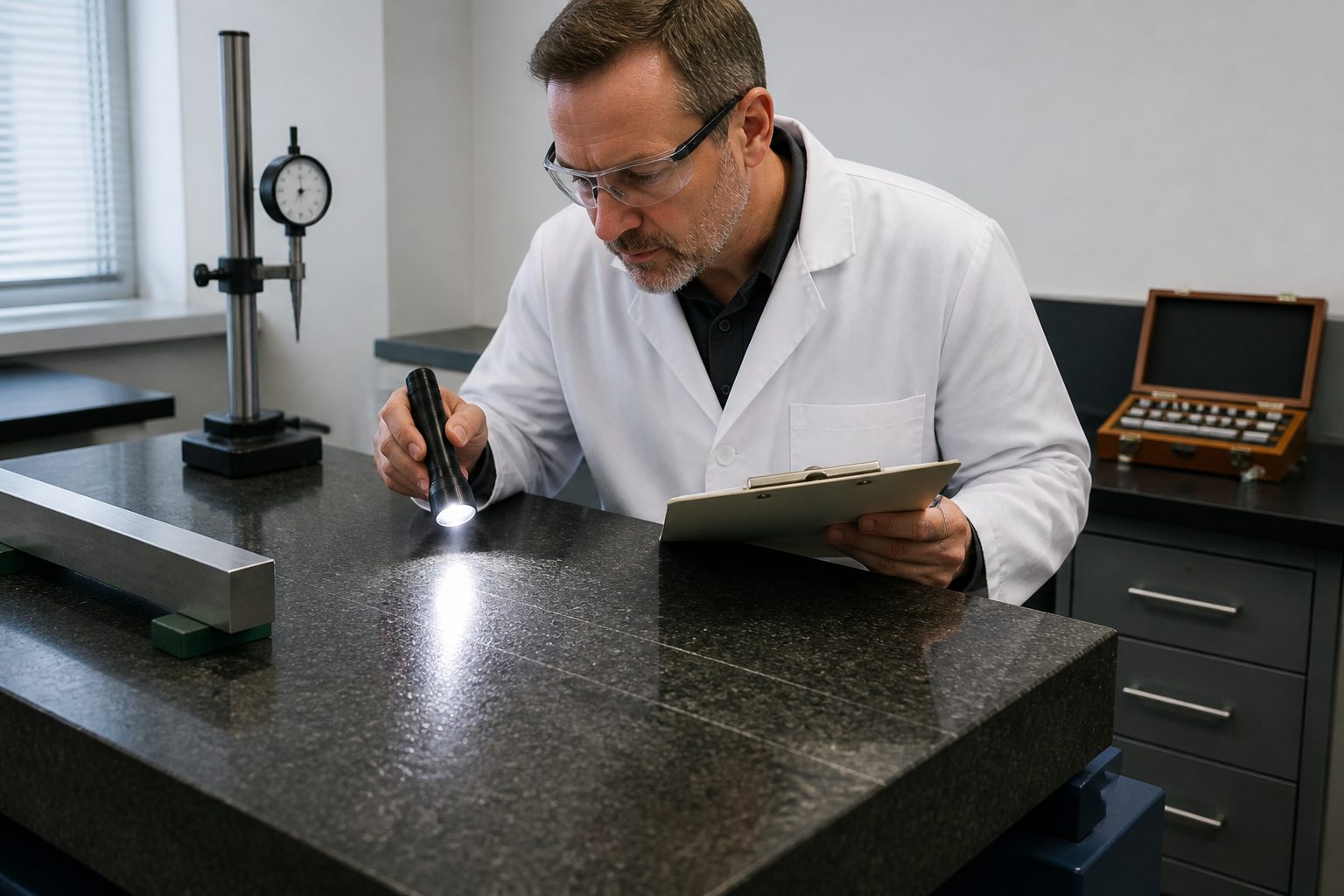
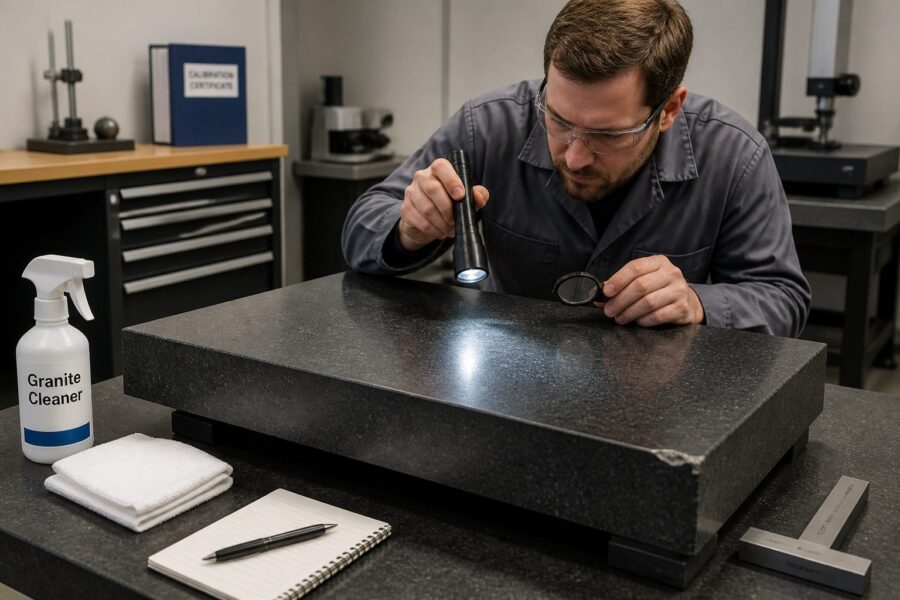
A lab technician uses a handheld inspection light to visually check a granite surface plate while holding an inspection checklist.

This log does not need to be elaborate; a simple notebook, a digital spreadsheet, or a dedicated form will work. The key is consistency in what you record and when you record it. Include the date, the inspector’s name, and specific details about any observed issues. This creates a valuable historical record of your surface plate’s condition.

When you note an issue, be as descriptive as possible. Instead of just writing “scratch,” specify “fine scratch, 2 inches long, near front-right corner, approximately 12 inches from edge.” If you can, sketch the location of significant damage on a simple diagram of the plate. This level of detail helps immensely when inspecting surface plate damage over multiple periods.

The log also allows you to track the progression of minor issues. A small chip might not be critical today, but if your log shows it has grown over a few weeks, that indicates a more serious problem. This trend analysis is invaluable for deciding when professional intervention is necessary. It provides concrete evidence for your decisions.

Beyond defects, you can also log the frequency of cleaning, the types of tools used, and any unusual events (e.g., a heavy part dropped nearby). This contextual information can help you correlate usage patterns with the appearance of damage. A well-maintained visual inspection log is a powerful tool for early detection granite issues and proactive maintenance, moving beyond just reacting to problems.

The Role of Visual Inspection in Preventing Major Issues

Many people see maintenance as fixing things after they break, but a visual inspection granite surface plate program flips that script entirely. It’s about proactive prevention, catching small problems before they snowball into major, costly failures. This approach saves money and keeps your metrology operations running smoothly.

Consider a small scratch that goes unnoticed. Over time, that scratch can become a collection point for dust and debris, or it might even propagate into a larger crack under stress. By regularly inspecting surface plate damage, you can identify that initial scratch and address its cause, preventing further deterioration. This simple act stops a chain reaction of potential problems.

Another example is residue buildup. A thin film of dried coolant might seem harmless, but it can prevent gage blocks from wringing properly, leading to false readings. If you don’t catch this visually, you might chase phantom measurement errors for days, wasting valuable production time. Early detection granite issues from contamination means you clean it before it impacts your work.

Preventing major issues also extends to operator habits. When operators know they need to perform daily visual checks, they naturally become more careful with the surface plate. They are less likely to drag tools, drop parts, or leave corrosive materials on the surface. This fosters a culture of respect for precision equipment, which is invaluable.

Ultimately, a robust visual inspection program is your first line of defense against unexpected downtime and expensive repairs. It helps you maintain the accuracy of your measurements day in and day out, ensuring product quality and compliance. You are not just looking for damage; you are actively safeguarding your investment and the integrity of your work.

Training Your Eye: Developing Observational Skills

Not everyone is a natural at spotting subtle defects, but observational skills are something you can absolutely develop and sharpen with practice. Training your eye for effective visual inspection granite surface plate health is a process of learning what to look for and how to look for it. It turns a casual glance into a focused examination.

Start by familiarizing yourself with a perfectly clean and undamaged section of your surface plate. Understand its natural texture, color, and reflectivity. This baseline helps you recognize anything that deviates from the norm when inspecting surface plate damage in other areas. You need to know what ‘normal’ looks like.

Practice using the enhanced lighting techniques consistently. At first, it might feel awkward, but with repetition, you will instinctively know how to hold the light to reveal imperfections. Vary the angle and distance of your light source to see how different defects respond. This hands-on experience is critical for developing your visual acuity.

Another effective method is to involve multiple people in the inspection process occasionally. A fresh set of eyes might spot something you missed. Discuss your findings and compare observations; this collaborative learning can accelerate everyone’s skill development. It also helps to standardize what constitutes an ‘issue’.

Regularly review your visual inspection log. Seeing documented issues and their progression reinforces what you are looking for and why it matters. Over time, you will find yourself noticing even the most minute early detection granite issues without conscious effort, making you a much more effective steward of your precision equipment.

When Visual Cues Indicate the Need for Professional Intervention

While daily visual inspection granite surface plate checks are powerful, there comes a point when what you see indicates a need for professional help. Recognizing these thresholds is important for maintaining measurement integrity and avoiding further damage. Not every issue requires a technician, but some definitely do.

Deep scratches or large chips on the primary working surface are clear indicators. If a scratch is deep enough to catch your fingernail, or if a chip is larger than a few millimeters, it likely affects the plate’s flatness beyond what regular use can tolerate. These types of damage can create significant local deviations that impact measurement accuracy profoundly.

Another major concern is widespread surface degradation. If you notice extensive pitting, a generally rough texture developing across large areas, or significant discoloration that cannot be cleaned, this suggests a more systemic problem. This could be due to prolonged chemical exposure or excessive abrasive wear. Such conditions compromise the entire working surface.

If your visual inspection granite surface plate log shows a consistent pattern of new, significant damage appearing frequently, it might point to issues with your operational procedures. A professional technician can not only repair the plate but also offer insights into preventing future damage. They have the expertise to diagnose root causes.

Finally, any visual cue that makes you doubt the plate’s ability to provide a truly flat reference should trigger a call to a professional calibration service. Even if you cannot precisely quantify the flatness error, a gut feeling that something is fundamentally wrong is a strong signal. Early detection granite issues often means getting expert eyes on the problem before it truly impacts production.

Integrating Visual Checks into Your Daily Workflow

Making visual inspections a consistent part of your routine is easier than you think, and it pays dividends in accuracy and longevity. The goal is to weave the visual inspection granite surface plate check into your existing daily workflow so it becomes second nature. It should feel like a natural precursor to any measurement task.

Designate a specific time each day for the inspection. For many, this is at the start of the shift before any parts are placed on the plate, or right after the final cleaning at the end of the day. Consistency is the most important thing, establishing a reliable pattern.

Develop a simple checklist that covers all key areas: overall cleanliness, specific areas for scratches or chips, and signs of discoloration or residue. This checklist ensures you don’t miss any steps and provides a quick guide for new operators. It standardizes the inspecting surface plate damage process.

Ensure all necessary tools are readily available at the workstation. This includes a clean, lint-free cloth, an approved surface plate cleaner, a bright flashlight, and perhaps a magnifying glass. Having these items within reach removes any friction that might prevent the inspection from happening. Accessibility encourages compliance.

Finally, make sure your visual inspection log is easily accessible for recording findings. This integration means that identifying early detection granite issues immediately leads to documentation. A seamless process encourages regular use and makes the most of your preventative maintenance efforts, keeping your primary reference reliable.

Conclusion

A granite surface plate is an indispensable tool in precision metrology, and its accuracy is fundamental to the quality of your work. While professional calibrations are essential, they are only one part of a comprehensive maintenance strategy. The power of a daily visual inspection granite surface plate routine cannot be overstated.

By regularly inspecting surface plate damage, you empower yourself to catch early detection granite issues, from subtle scratches and chips to discoloration and residue buildup. This proactive approach prevents minor problems from escalating into major, costly repairs or, worse, compromising your measurement integrity. You are protecting your investment and your reputation.

Developing a keen eye, utilizing proper lighting and magnification, and meticulously documenting your findings will transform your maintenance practices. These simple, consistent actions ensure your surface plate remains a true and reliable reference plane for years to come. Make daily visual checks a non-negotiable part of your precision workflow.

A granite surface plate is the bedrock of precision measurement in many industries. It provides an unyielding, flat reference plane essential for accurate calibration and inspection tasks. Maintaining this crucial piece of equipment requires more than just periodic professional calibration; it demands consistent, careful attention from its daily users.

Many operators rely heavily on scheduled calibration reports, which are undoubtedly important for verifying long-term accuracy. However, waiting for an annual or bi-annual check misses what you could discover every single day. Regular visual inspection granite surface plate health is a proactive step that can save time and money in the long run.

Ignoring minor issues can lead to cumulative damage, impacting the plate’s flatness and the reliability of your measurements. This article will guide you through the vital practice of inspecting surface plate damage, showing you how simple visual checks can provide early detection granite issues before they escalate into significant problems. Let’s look at how you can develop a keen eye for your surface plate’s condition.

Beyond Calibration: The Power of Daily Visual Inspections

Many workshops view surface plate care as a once-a-year event, coinciding with the arrival of a calibration technician. This perspective, while acknowledging the necessity of calibration, overlooks the immediate benefits of a daily visual inspection granite surface plate routine. Think of it like checking your car’s tires every morning; you wouldn’t wait for a mechanic to tell you one is flat.

Daily visual inspections empower operators to take ownership of their metrology tools and ensure consistent measurement quality. These quick checks can reveal changes that occur between formal calibrations, which might otherwise go unnoticed for months. You want to catch small problems before they become big ones.

The goal is to identify any signs of wear, contamination, or physical damage that could compromise the plate’s integrity. An unnoticed scratch or a buildup of residue can introduce errors into your measurements, leading to costly rework or rejected parts. Early detection granite issues directly translates into higher quality control and fewer manufacturing headaches.

Integrating a brief, systematic visual check into your daily workflow only takes a few minutes but provides a continuous layer of protection. This practice builds a culture of precision and accountability within your team. It means every measurement starts on a foundation you trust, not one you just hope is still accurate.

Relying solely on periodic calibrations is like trusting a weather forecast from three months ago. Conditions change, and your surface plate is subjected to daily stresses, even in a controlled environment. A proactive visual inspection granite surface plate policy ensures you are always working with the most current information about your primary reference tool.

What to Look For: Common Signs of Wear and Damage

Knowing what to look for is the first step in effective inspecting surface plate damage. The granite surface plate, while incredibly durable, is not indestructible and can show signs of stress over time. These signs often appear subtly at first, making a keen eye absolutely essential.

You are primarily searching for physical alterations to the surface or accumulations of foreign material. These changes can disrupt the critical flatness that makes the plate so valuable. Pay close attention to areas that see the most frequent use, as these are often the first places to show wear.

Sign of DamagePotential CauseImpact on Accuracy
Scratches, minor groovesDragging parts, improper cleaning, dropped toolsLocalized high/low spots, measurement interference
Chips, edge breaksImpact from heavy objects, accidental bumpsUnstable reference points, safety hazard
Discoloration, dull spotsChemical exposure, residue buildup, prolonged wearIndicates surface alteration, potential for adhesion
Rust spots (from tools)Leaving ferrous tools on surface, moistureCan etch granite, compromise flatness, transfer to parts
Residue/debrisIncomplete cleaning, airborne particlesCreates false contact points, increases wear
Pitting, rough textureCorrosion, chemical attack, severe abrasive wearAlters surface finish, affects gage block wringing

Techniques for Enhanced Visual Inspection (Lighting, Magnification)

A casual glance across your surface plate is rarely enough to catch the early signs of trouble. Effective inspecting surface plate damage requires specific techniques to enhance your perception. Think of yourself as a detective, using every tool at your disposal to uncover hidden clues.

The right lighting is your most powerful ally in this endeavor. Overhead ambient lighting alone often casts shadows that obscure subtle defects. You need to introduce directional light to make imperfections stand out.

A high-intensity, portable light source, like a bright LED flashlight, works wonders. Hold the light at a low angle, almost parallel to the surface, and slowly sweep it across the entire plate. Scratches, chips, and even slight depressions will cast tiny shadows or reflect light differently, making them much easier to spot.

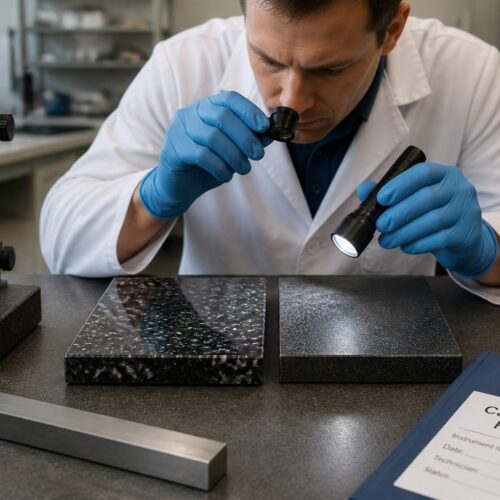
Another valuable tool for inspecting surface plate damage is magnification. While not always necessary for larger chips, a jeweler’s loupe or a small magnifying glass can reveal fine scratches and pitting that are invisible to the naked eye. These micro-defects, though small, can still affect the wringing of gage blocks or the seating of precision instruments.

Always perform these enhanced visual checks after the plate has been thoroughly cleaned and dried. Dust and debris can mimic actual damage, leading to false positives. A clean surface ensures that what you see is truly an issue with the granite itself, providing reliable early detection granite issues.

Identifying Subtle Scratches, Chips, and Surface Imperfections

The beauty of a granite surface plate lies in its pristine, smooth finish, which provides an ideal reference for precision work. Even the most careful operators can, over time, introduce subtle scratches or minor chips to the surface. Identifying these imperfections is a key part of inspecting surface plate damage and maintaining accuracy.

Scratches often appear as fine lines, sometimes barely visible unless light catches them just right. They are typically caused by dragging parts with burrs, abrasive dust trapped under tools, or even improper cleaning techniques using harsh materials. These lines can create localized high or low points, affecting the true flatness of the plate.

Chips are usually more noticeable, especially if they are along the edges or corners, but smaller chips can also occur on the main working surface. They result from impact, such as a dropped tool or a heavy part accidentally striking the plate. A chip creates a definite void in the surface, which can prevent proper seating of instruments or parts, leading to measurement errors.

Surface imperfections also include pitting or small indentations that aren’t quite chips. These might be a result of long-term chemical exposure, or perhaps a tiny piece of hard foreign material being pressed into the granite. While seemingly minor, these can disrupt the smooth wringing action of gage blocks and interfere with delicate measurements.

To spot these subtle issues, use the low-angle lighting technique described earlier. The shadows cast by scratches and the disruption in light reflection from chips become much more apparent. Run a gloved fingertip gently over suspect areas; you might feel what you can’t clearly see. This tactile feedback helps confirm visual observations, ensuring thorough inspecting surface plate damage.

Detecting Discoloration, Stains, and Residue Buildup

Beyond physical damage, a granite surface plate can suffer from various forms of surface contamination that compromise its accuracy. Discoloration, stains, and residue buildup are often overlooked but are significant indicators for inspecting surface plate damage and overall health. They can signal underlying problems or directly interfere with precise measurements.

Discoloration might appear as dull spots, streaks, or areas where the granite looks different from its original uniform color. This can happen from chemical exposure, such as leaving a solvent or cleaning agent on the surface for too long, or from the prolonged presence of certain materials. These discolored areas can change the surface’s properties, affecting how tools interact with it.

  • Check for dull patches or streaks
  • Look for dark spots where tools rested
  • Identify sticky or oily residues
  • Inspect corners for dust accumulation
  • Observe areas around frequently used fixtures

Stains are often localized and can result from leaving metal parts on the surface, which can cause oxidation and transfer rust, or from spills of cutting fluids, lubricants, or even coffee. While some stains might just be cosmetic, others can etch the granite or leave behind a residue that affects flatness. You need to remove these promptly to prevent permanent damage.

Residue buildup is a common culprit for measurement inaccuracies. This includes fine dust from the environment, dried coolant, oil films, or even microscopic particles from parts being measured. Even a thin layer of residue can create a false reference plane, leading to inaccurate readings. Regular cleaning is the best defense, but visual inspection granite surface plate checks help you confirm its effectiveness.

To detect these issues, examine the plate under good, diffuse lighting, and then with the low-angle directional light. Residues often appear as hazy patches or shiny films that catch the light differently. Discoloration will show as variations in the granite’s natural pattern. Early detection granite issues related to contamination prevents them from becoming embedded and harder to clean.

Checking for Evenness and Anomalies in Surface Finish

The surface finish of a granite plate is not just about aesthetics; it’s a critical component of its metrological performance. A uniform, consistent finish ensures proper wringing of gage blocks and stable seating for precision instruments. Checking for evenness and anomalies in this finish is a subtle but important part of inspecting surface plate damage.

Over time, areas of frequent use can experience accelerated wear, leading to a slight change in the surface texture. This might manifest as a duller, smoother, or even slightly rougher patch compared to less-used areas. These changes, while not always visible as scratches or chips, can still affect the microscopic contact points between the plate and your measuring tools.

To assess the evenness of the finish, use both visual and tactile methods. Visually, look for variations in reflectivity across the surface under different lighting conditions. A healthy granite surface plate should have a consistent sheen. Any dull or overly shiny spots could indicate a change in the surface’s texture or even a slight localized depression.

Tactile inspection involves running a clean, gloved fingertip gently across the surface. You’re feeling for any subtle changes in friction or smoothness. Your fingertips are incredibly sensitive and can often detect minute variations that your eyes might miss. Pay particular attention to the central working area, which typically sees the most action.

Anomalies in surface finish can also include areas where the granite appears to have lost its natural polish or where the fine grain seems disturbed. These are often indicators of abrasive wear or chemical etching that has altered the very top layer of the stone. Recognizing these early detection granite issues helps you adjust usage patterns or cleaning protocols before more significant damage occurs.

Documenting Findings: Creating a Visual Inspection Log

A visual inspection granite surface plate is only truly effective if you document your findings systematically. Relying on memory alone means important observations can be forgotten or misattributed, making it harder to track changes over time. A simple visual inspection log transforms casual checks into actionable data.

This log does not need to be elaborate; a simple notebook, a digital spreadsheet, or a dedicated form will work. The key is consistency in what you record and when you record it. Include the date, the inspector’s name, and specific details about any observed issues. This creates a valuable historical record of your surface plate’s condition.

When you note an issue, be as descriptive as possible. Instead of just writing “scratch,” specify “fine scratch, 2 inches long, near front-right corner, approximately 12 inches from edge.” If you can, sketch the location of significant damage on a simple diagram of the plate. This level of detail helps immensely when inspecting surface plate damage over multiple periods.

The log also allows you to track the progression of minor issues. A small chip might not be critical today, but if your log shows it has grown over a few weeks, that indicates a more serious problem. This trend analysis is invaluable for deciding when professional intervention is necessary. It provides concrete evidence for your decisions.

Beyond defects, you can also log the frequency of cleaning, the types of tools used, and any unusual events (e.g., a heavy part dropped nearby). This contextual information can help you correlate usage patterns with the appearance of damage. A well-maintained visual inspection log is a powerful tool for early detection granite issues and proactive maintenance, moving beyond just reacting to problems.

The Role of Visual Inspection in Preventing Major Issues

Many people see maintenance as fixing things after they break, but a visual inspection granite surface plate program flips that script entirely. It’s about proactive prevention, catching small problems before they snowball into major, costly failures. This approach saves money and keeps your metrology operations running smoothly.

Consider a small scratch that goes unnoticed. Over time, that scratch can become a collection point for dust and debris, or it might even propagate into a larger crack under stress. By regularly inspecting surface plate damage, you can identify that initial scratch and address its cause, preventing further deterioration. This simple act stops a chain reaction of potential problems.

Another example is residue buildup. A thin film of dried coolant might seem harmless, but it can prevent gage blocks from wringing properly, leading to false readings. If you don’t catch this visually, you might chase phantom measurement errors for days, wasting valuable production time. Early detection granite issues from contamination means you clean it before it impacts your work.

Preventing major issues also extends to operator habits. When operators know they need to perform daily visual checks, they naturally become more careful with the surface plate. They are less likely to drag tools, drop parts, or leave corrosive materials on the surface. This fosters a culture of respect for precision equipment, which is invaluable.

Ultimately, a robust visual inspection program is your first line of defense against unexpected downtime and expensive repairs. It helps you maintain the accuracy of your measurements day in and day out, ensuring product quality and compliance. You are not just looking for damage; you are actively safeguarding your investment and the integrity of your work.

Training Your Eye: Developing Observational Skills

Not everyone is a natural at spotting subtle defects, but observational skills are something you can absolutely develop and sharpen with practice. Training your eye for effective visual inspection granite surface plate health is a process of learning what to look for and how to look for it. It turns a casual glance into a focused examination.

Start by familiarizing yourself with a perfectly clean and undamaged section of your surface plate. Understand its natural texture, color, and reflectivity. This baseline helps you recognize anything that deviates from the norm when inspecting surface plate damage in other areas. You need to know what ‘normal’ looks like.

Practice using the enhanced lighting techniques consistently. At first, it might feel awkward, but with repetition, you will instinctively know how to hold the light to reveal imperfections. Vary the angle and distance of your light source to see how different defects respond. This hands-on experience is critical for developing your visual acuity.

Another effective method is to involve multiple people in the inspection process occasionally. A fresh set of eyes might spot something you missed. Discuss your findings and compare observations; this collaborative learning can accelerate everyone’s skill development. It also helps to standardize what constitutes an ‘issue’.

Regularly review your visual inspection log. Seeing documented issues and their progression reinforces what you are looking for and why it matters. Over time, you will find yourself noticing even the most minute early detection granite issues without conscious effort, making you a much more effective steward of your precision equipment.

When Visual Cues Indicate the Need for Professional Intervention

While daily visual inspection granite surface plate checks are powerful, there comes a point when what you see indicates a need for professional help. Recognizing these thresholds is important for maintaining measurement integrity and avoiding further damage. Not every issue requires a technician, but some definitely do.

Deep scratches or large chips on the primary working surface are clear indicators. If a scratch is deep enough to catch your fingernail, or if a chip is larger than a few millimeters, it likely affects the plate’s flatness beyond what regular use can tolerate. These types of damage can create significant local deviations that impact measurement accuracy profoundly.

Another major concern is widespread surface degradation. If you notice extensive pitting, a generally rough texture developing across large areas, or significant discoloration that cannot be cleaned, this suggests a more systemic problem. This could be due to prolonged chemical exposure or excessive abrasive wear. Such conditions compromise the entire working surface.

If your visual inspection granite surface plate log shows a consistent pattern of new, significant damage appearing frequently, it might point to issues with your operational procedures. A professional technician can not only repair the plate but also offer insights into preventing future damage. They have the expertise to diagnose root causes.

Finally, any visual cue that makes you doubt the plate’s ability to provide a truly flat reference should trigger a call to a professional calibration service. Even if you cannot precisely quantify the flatness error, a gut feeling that something is fundamentally wrong is a strong signal. Early detection granite issues often means getting expert eyes on the problem before it truly impacts production.

Integrating Visual Checks into Your Daily Workflow

Making visual inspections a consistent part of your routine is easier than you think, and it pays dividends in accuracy and longevity. The goal is to weave the visual inspection granite surface plate check into your existing daily workflow so it becomes second nature. It should feel like a natural precursor to any measurement task.

Designate a specific time each day for the inspection. For many, this is at the start of the shift before any parts are placed on the plate, or right after the final cleaning at the end of the day. Consistency is the most important thing, establishing a reliable pattern.

Develop a simple checklist that covers all key areas: overall cleanliness, specific areas for scratches or chips, and signs of discoloration or residue. This checklist ensures you don’t miss any steps and provides a quick guide for new operators. It standardizes the inspecting surface plate damage process.

Ensure all necessary tools are readily available at the workstation. This includes a clean, lint-free cloth, an approved surface plate cleaner, a bright flashlight, and perhaps a magnifying glass. Having these items within reach removes any friction that might prevent the inspection from happening. Accessibility encourages compliance.

Finally, make sure your visual inspection log is easily accessible for recording findings. This integration means that identifying early detection granite issues immediately leads to documentation. A seamless process encourages regular use and makes the most of your preventative maintenance efforts, keeping your primary reference reliable.

Conclusion

A granite surface plate is an indispensable tool in precision metrology, and its accuracy is fundamental to the quality of your work. While professional calibrations are essential, they are only one part of a comprehensive maintenance strategy. The power of a daily visual inspection granite surface plate routine cannot be overstated.

By regularly inspecting surface plate damage, you empower yourself to catch early detection granite issues, from subtle scratches and chips to discoloration and residue buildup. This proactive approach prevents minor problems from escalating into major, costly repairs or, worse, compromising your measurement integrity. You are protecting your investment and your reputation.

Developing a keen eye, utilizing proper lighting and magnification, and meticulously documenting your findings will transform your maintenance practices. These simple, consistent actions ensure your surface plate remains a true and reliable reference plane for years to come. Make daily visual checks a non-negotiable part of your precision workflow.

Stephanie Kendrick author photo
About the author

Stephanie Kendrick writes about surface plate metrology, granite calibration standards, inspection room practices, and the care of precision measurement surfaces. Her work focuses on making technical metrology topics easier to understand through clear explanations, practical context, and responsible discussion of calibration-related concepts.

She covers topics such as surface plate flatness, calibration intervals, certificate interpretation, wear patterns, environmental conditions, cleaning routines, and the role of granite surface plates in quality control and inspection workflows.