
Maintaining the precision of your granite surface plate is paramount for accurate metrology. This bedrock of measurement in many workshops demands careful attention, especially when it comes to cleaning. Using the wrong products can quickly degrade its accuracy, leading to costly errors and premature wear.
Choosing the correct granite surface plate safe solvents is not just about cleanliness; it is about preserving the plate’s integrity. Incorrect cleaners can leave behind residues, etch the surface, or even cause subtle dimensional changes over time. Understanding what works and what to avoid ensures your investment remains a reliable standard.
This guide will walk you through the best practices for residue-free cleaning, compatible cleaners, and preventing surface plate contamination. We will cover common cleaner risks and establish a routine for keeping your granite plate in top condition. Let us get your metrology standards sparkling clean and perfectly flat.
The Goal: Clean Without Film, Etching, or Soft Residue
The primary objective when cleaning a granite surface plate is to remove contaminants without compromising its critical flatness. Any cleaning agent must evaporate completely, leaving absolutely no film or sticky residue behind. These invisible layers can significantly affect measurement accuracy by altering the contact points of gauges and workpieces.
Another serious concern is etching, which can occur if acidic or highly alkaline cleaners react with the granite’s mineral composition. Etching creates microscopic pits and irregularities, permanently damaging the precision ground surface. Such damage is often irreversible and necessitates expensive resurfacing or replacement.
We also need to avoid soft residues, which might not be visible but can collect dust and fine particles. These residues act like a magnet for airborne contaminants, turning your clean surface into a sticky trap. This leads to rapid surface plate contamination, defeating the purpose of cleaning in the first place.
A truly clean plate feels smooth and dry to the touch, with no drag or tackiness. It should appear uniformly matte or slightly glossy, depending on the granite finish, without streaks or cloudy patches. Achieving this state requires both the right cleaner and the correct technique for application and wiping.
The ideal granite surface plate safe solvents dissolve grease, oils, and general grime effectively without attacking the granite itself. They should also flash off quickly, minimizing the time the surface remains wet. This quick drying prevents water spots and allows for immediate use after cleaning.
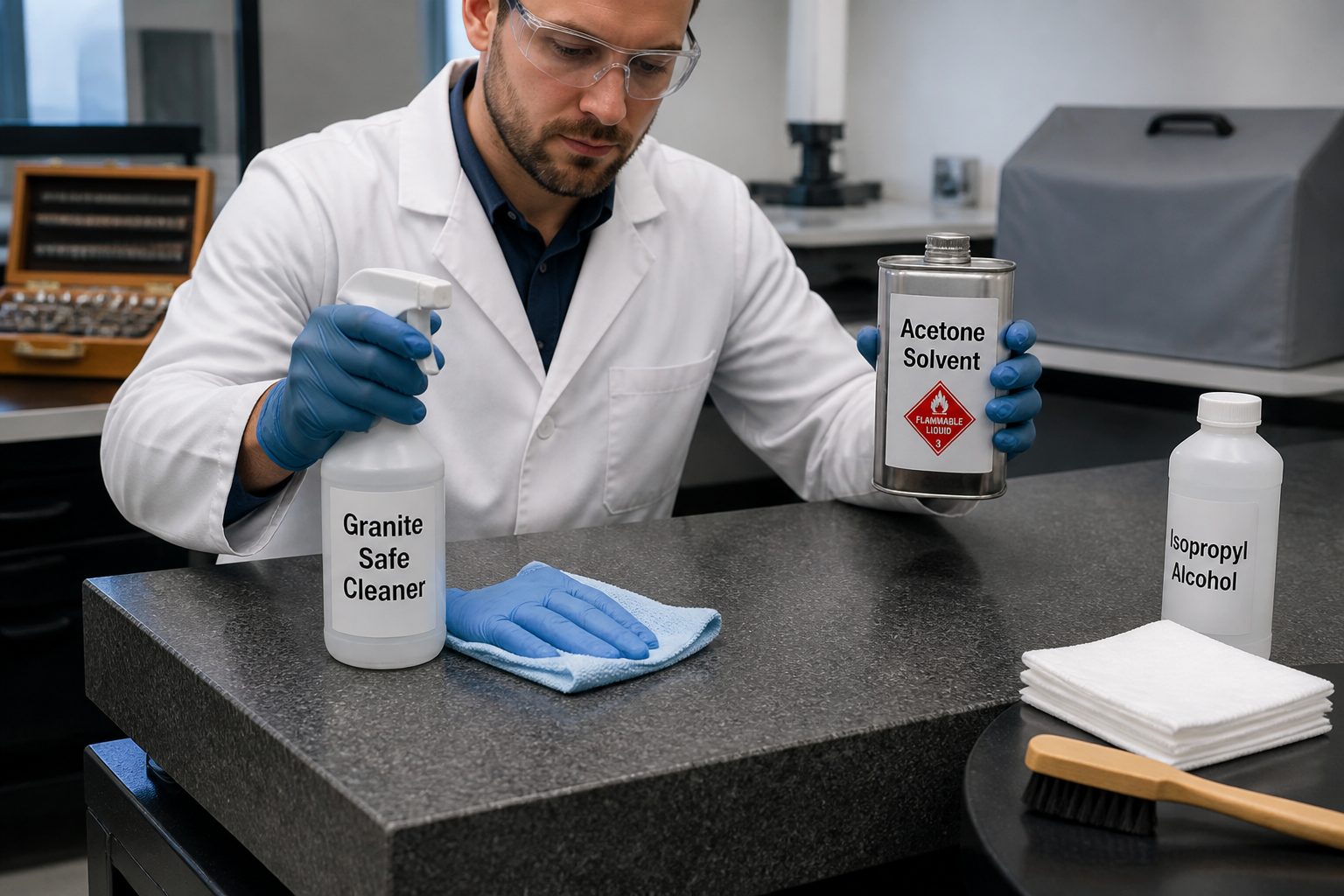
Remember, your granite surface plate is a precision instrument, not just a workbench. Treating it with the respect it deserves, especially during cleaning, will extend its life and ensure consistent measurement accuracy. A clean plate is a precise plate, every single time.
Understanding Cleaner Risks: Residue, Swelling, and Grit Carriers
Many common industrial cleaners pose specific risks to granite surface plates that are not immediately apparent. The most insidious problem is the formation of invisible residues, which can subtly lift workpieces or gauges, introducing errors into your measurements. These films are often hydrophobic, attracting dust and other airborne particles.
Another less common but severe risk is the potential for certain chemicals to interact with the granite’s mineral structure, causing minute swelling or etching. While granite is generally stable, prolonged exposure to harsh solvents or strong acids/bases can degrade the binder or even the quartz itself. This leads to surface irregularities that compromise flatness and accuracy.
| Risk Category | Description of Impact | Example Chemicals/Products |
|---|---|---|
| Invisible Residue | Forms a thin, sticky film that attracts dust and lifts workpieces, causing measurement errors. | Oil-based cleaners, some glass cleaners, certain household detergents. |
| Surface Etching | Chemically reacts with granite minerals, creating microscopic pits and roughness, permanently damaging flatness. | Strong acids (e.g., muriatic acid), strong bases (e.g., lye), abrasive cleaners. |
| Grit Carrier | Leaves behind particulate matter or hardens into abrasive crystals as it dries, scratching the surface. | Cleaners with suspended abrasives, tap water with high mineral content, dirty rags. |
| Granite Swelling | Certain solvents can penetrate and subtly expand the granite matrix, altering dimensional stability. | Highly aggressive, penetrating solvents (rare but possible with long exposure). |
| Corrosion Inducer | Leaves corrosive agents that can attack ferrous components of measuring equipment. | Chlorine bleach, some industrial degreasers. |
Some cleaners, especially those not designed for precision surfaces, contain fine abrasive particles that can scratch the polished granite. Even if the cleaner itself is non-abrasive, using dirty rags or cloths can introduce grit that abrades the surface during wiping. This surface plate contamination causes wear and reduces the plate’s lifespan.
Tap water, depending on its mineral content, can also be a grit carrier or leave hard water spots and films. Minerals like calcium and magnesium, when left to dry, form a fine, abrasive dust that compromises the clean surface. Using distilled or deionized water for rinsing is always a safer bet.
Understanding these specific cleaner risks helps you make informed choices about your cleaning regimen. The goal is always to protect the surface integrity while achieving a truly clean, residue-free state. Prioritizing compatible cleaners ensures your precision tools remain accurate.
Cleaner Categories: Water-based, Alcohol-based, and Specialty Products
When selecting granite surface plate safe solvents, you generally look at three main categories, each with its own advantages and considerations. Water-based cleaners are often the simplest option, but they require careful execution to avoid issues. Distilled water is the gold standard for basic cleaning, removing dust and most water-soluble contaminants without leaving mineral deposits.
For tougher grime, a very mild, residue-free detergent diluted in distilled water can be effective. The key is to use an extremely small amount of detergent and rinse thoroughly with distilled water afterward. This prevents any soap film from remaining on the surface.
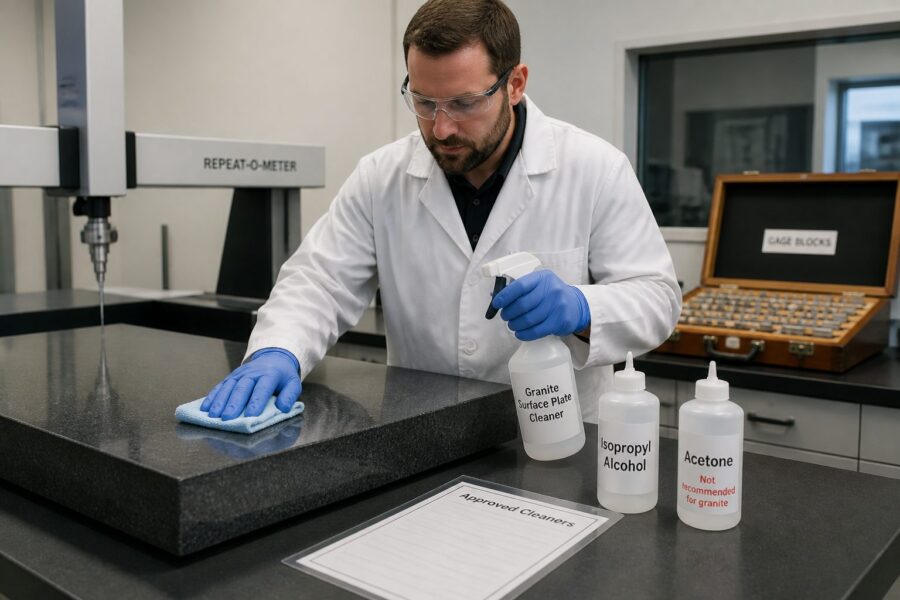
Alcohol-based cleaners, primarily isopropyl alcohol (IPA), are excellent for cutting through oils, greases, and many other shop contaminants. IPA evaporates quickly and leaves virtually no residue, making it a favorite for precision cleaning. Always use 70% or 91% IPA, as 99% can evaporate too quickly to effectively dissolve stubborn grime.
Denatured alcohol is another option, though it is usually a blend of ethanol and other chemicals that prevent consumption. While effective, ensure any denatured alcohol product is clearly specified as residue-free and compatible cleaners for precision surfaces. Some formulations might contain additives that leave a film.
Specialty surface plate cleaners are formulated specifically for granite and often contain a blend of mild solvents and surfactants designed for quick evaporation and residue-free results. These products are generally the safest and most convenient option, as they are engineered to prevent surface plate contamination. Always check the manufacturer’s recommendations for your specific plate material before using any new product.
Some shops even use very fine mineral spirits for heavy oil removal, but this requires extreme caution. Mineral spirits can leave an oily film if not completely wiped away, and they have a strong odor. If you must use them, follow with an IPA wipe to ensure all oily residue is gone.
Regardless of the category, the principle remains the same: the cleaner must be effective, evaporate cleanly, and not harm the granite. Choosing compatible cleaners means you do not have to worry about long-term damage or measurement inaccuracies. Always prioritize products explicitly designed for or proven safe on precision granite.
What to Avoid: Common Shop Chemicals That Cause Problems
Many everyday shop chemicals are highly effective at cleaning other materials but are disastrous for granite surface plates. Harsh industrial degreasers, for instance, often contain strong alkaline compounds that can etch the granite surface over time. These powerful chemicals are simply too aggressive for the delicate precision of a metrology standard.
Abrasive cleaners, like scouring powders or even some household scrubs, are an absolute no-go for granite plates. They will scratch the finely lapped surface, introducing micro-irregularities that destroy its flatness and render it useless for accurate measurements. Any cleaner that feels gritty or contains scrubbing particles should be kept far away from your plate.
Petroleum-based solvents, while good at dissolving grease, frequently leave behind an oily film that attracts dust and interferes with measurements. Kerosene, gasoline, and most engine degreasers fall into this category. This residue-prone characteristic makes them unsuitable for precision cleaning, causing immediate surface plate contamination.
Common glass cleaners, especially those containing ammonia or waxes, are also problematic. Ammonia can react with granite, and waxes or polymers will leave a sticky film that compromises accuracy. Always read the labels carefully; if it mentions wax, polish, or ammonia, do not use it on your surface plate.
Chlorine bleach, while a powerful disinfectant, is corrosive and can damage the granite over time, particularly if left to sit. It can also leave a residue and potentially corrode any ferrous measuring instruments that come into contact with the plate. This makes it a poor choice for compatible cleaners in a metrology setting.
Even certain natural cleaners, like vinegar or citrus-based solutions, contain acids that can slowly etch granite. While these might be fine for kitchen countertops, they are too acidic for the precision finish of a surface plate. Stick to neutral pH granite surface plate safe solvents to avoid any chemical reactions.
The rule of thumb is simple: if you are unsure, do not use it. Many common cleaning products are simply not formulated for the unique demands of a precision granite surface. Play it safe by sticking to proven compatible cleaners and avoiding unnecessary risks.
How to Test a Cleaner on Your Plate Without Risk
Before committing to a new cleaner across your entire granite surface plate, performing a small, inconspicuous test is a smart move. This simple precaution can save you from potential damage and ensures the cleaner is truly one of the granite surface plate safe solvents. You want to verify that it leaves no residue and causes no etching.
Choose an area that is rarely used for measurements, such as a corner or an edge far from the primary working zone. This allows you to observe any adverse effects without compromising the critical accuracy of the main surface. A small, out-of-the-way spot is perfect for this evaluation.
- Identify a low-use corner or edge of the plate.
- Apply a very small amount of the cleaner to a clean, lint-free cloth.
- Gently wipe the selected test area for a few seconds.
- Allow the cleaner to evaporate completely without rinsing.
- Observe the area for any streaks, dullness, or sticky residue.
- Feel the surface for tackiness or roughness after drying.
- Check for any visual changes like discoloration or etching over time.
- Repeat the test with distilled water for comparison if needed.
After the cleaner has fully evaporated, carefully inspect the test spot. Look for any visible streaks, a cloudy film, or a dull finish compared to the surrounding area. Run your clean finger across the spot; it should feel smooth and dry, exactly like the rest of the plate, with no stickiness or drag.
You can also place a precision gauge block on the cleaned area to check for any lifting or unusual adhesion, indicating residue. Leave the gauge block there for a few minutes, then remove it and re-inspect the spot for any marks or changes. This helps confirm residue-free cleaning.
If the test area passes all these checks, you can confidently proceed to clean the rest of your plate with that product. This systematic approach minimizes the risk of surface plate contamination or damage from incompatible cleaners. Always prioritize safety and thorough testing.
Remember, a few minutes spent testing can save you hours of corrective work or the expense of re-calibration. This diligence is a hallmark of professional metrology practices. Take the time to ensure your cleaning choices are sound.
Proper Dilution, Spray Control, and Wipe Technique
Even with granite surface plate safe solvents, proper application technique is just as important as the cleaner itself. Correct dilution ensures effectiveness without over-concentrating the solution, which can sometimes lead to residue or slower evaporation. Always follow the manufacturer’s specific dilution instructions for any concentrated cleaning solution you use.
For spray application, control is key to preventing overspray onto nearby sensitive equipment or into the air. Instead of spraying directly onto the granite, which can create uneven distribution and airborne particles, spray the cleaner onto a clean, lint-free cloth first. This method minimizes mist and allows for more targeted application.
Once the cleaner is on the cloth, use a systematic wipe technique to ensure thorough and residue-free cleaning. Start at one end of the plate and work your way across in overlapping, straight lines. Avoid circular motions, as these can push contaminants around rather than lifting them off the surface.
Apply moderate, even pressure, allowing the cleaner to do its job of dissolving grime without excessive scrubbing. If the cloth becomes visibly dirty, fold it to a clean section or grab a fresh cloth to prevent redistributing contaminants. This attention to detail prevents surface plate contamination.
After the initial cleaning pass, immediately follow with a second, dry, clean, lint-free cloth to buff the surface dry. This step is critical for removing any remaining cleaner residue and ensuring a streak-free finish. Work quickly, as some compatible cleaners evaporate fast.
For a truly critical cleaning, especially after using a water-based solution, a final wipe with a cloth dampened with distilled water or isopropyl alcohol can be beneficial. This “final rinse” helps guarantee that absolutely no film remains. The goal is a perfectly clean and dry surface, ready for precision work.
Always use high-quality, lint-free cloths, preferably microfiber, that will not shed fibers onto the plate. Keep a supply of dedicated cleaning cloths separate from other shop rags to prevent cross-contamination. This disciplined approach to dilution, spray, and wipe technique ensures optimal results every time.
Managing Strong Odors and Ventilation Without Over-Spraying
Some effective granite surface plate safe solvents, particularly alcohol-based or specialty products, can have strong odors that require proper ventilation. Working in a well-ventilated area is essential for personal safety and comfort. Ensure good airflow to dissipate fumes quickly, especially if you are cleaning a large plate.
However, relying solely on heavy spraying to achieve cleanliness can exacerbate odor issues and lead to other problems. Over-spraying releases more volatile organic compounds into the air, increasing fume concentration and potential health risks. It also wastes cleaner and can cause overspray onto nearby precision equipment.
Instead, focus on applying the cleaner directly to your cloth, as discussed earlier, to minimize airborne dispersal. This targeted application significantly reduces the amount of cleaner misting into the room. A small amount of cleaner on a cloth is often more effective than a large, uncontrolled spray.
If odors remain a concern, consider using portable fans to direct airflow away from your breathing zone and towards an exhaust system. Position fans carefully to avoid blowing dust and debris onto your freshly cleaned plate. The goal is controlled air movement, not a chaotic windstorm.
For highly sensitive individuals or areas with poor natural ventilation, wearing a respirator with appropriate organic vapor cartridges might be necessary. Always consult the cleaner’s Safety Data Sheet (SDS) for specific personal protective equipment recommendations. Your health and safety are paramount.
Another strategy is to clean during off-hours or when fewer personnel are present, allowing more time for fumes to dissipate before normal operations resume. This thoughtful scheduling can help manage odors without disrupting the work environment. Planning ahead makes a big difference in maintaining a comfortable workspace.
Ultimately, a combination of proper cleaner application, good local ventilation, and personal protective measures provides the best solution. You can achieve effective residue-free cleaning without overwhelming the workspace with strong chemical smells. Prioritize both cleanliness and a healthy working atmosphere.
Preventing Cross-Contamination From Bottles and Rags
Cross-contamination is a silent enemy of precision metrology, especially when it comes to cleaning supplies. Using a rag that has touched oil, coolant, or general shop dust on your granite surface plate can instantly undo all your cleaning efforts. This introduces new contaminants, leading to immediate surface plate contamination.
Designate specific cleaning cloths exclusively for your granite surface plate. These cloths should be laundered separately and stored in a clean, sealed container or bag. Never use cloths that have been used for any other purpose, no matter how clean they might appear.
Similarly, keep your granite surface plate safe solvents in dedicated, clearly labeled bottles. Do not use the same spray bottle for different chemicals, as residues from previous contents can mix and create undesirable reactions or films. A dedicated bottle ensures purity of your cleaning solution.
Ensure that cleaning solution bottles are always capped tightly when not in use to prevent evaporation and airborne particle ingress. An open bottle can become a magnet for dust, which then gets transferred directly to your plate. A sealed container protects the integrity of your cleaner.
Store your cleaning supplies away from areas where cutting fluids, lubricants, or grinding dust are prevalent. A clean, enclosed cabinet near the surface plate but isolated from heavy shop activity is ideal. This physical separation minimizes the risk of accidental contamination.
Even your hands can be a source of contamination. Always wash your hands thoroughly before handling clean rags or cleaning your surface plate. Residues from skin oils, lotions, or other shop chemicals on your hands can easily transfer to the plate or cleaning supplies.
Implementing a strict protocol for cleaning material handling is a small effort with a huge impact on maintaining measurement accuracy. Treat your cleaning supplies with the same care you give your precision instruments. Compatible cleaners are only effective if they remain uncontaminated.
Creating a Standard Cleaning Kit for Consistent Results
A dedicated cleaning kit for your granite surface plate ensures you always have the right tools on hand, promoting consistent and effective cleaning practices. This prevents improvisation, which often leads to using incorrect or harmful materials. A well-stocked kit saves time and prevents damage.
Start with your chosen granite surface plate safe solvents. This could be a bottle of 70% or 91% isopropyl alcohol, a spray bottle of distilled water, or a specialized granite surface plate cleaner. Ensure these are clearly labeled and stored safely.
Include a generous supply of high-quality, lint-free microfiber cloths. These cloths are superior for their absorbency and ability to pick up fine particles without shedding. Have at least three to four cloths ready for each cleaning session: one for initial cleaning, one for drying, and spares.
A soft-bristle brush, like a dedicated camel hair brush, is excellent for gently sweeping away loose dust and debris before applying any liquid cleaner. This dry cleaning step minimizes the risk of scratching the surface when wiping. Always brush lightly, never scrub.
Consider adding a small, dedicated dustpan and brush for collecting the swept debris, keeping it separate from other shop waste. This helps maintain a tidy cleaning area and prevents contaminants from migrating back to the plate. Cleanliness in all aspects is the goal.
A small, airtight container or bag for storing clean cloths is also an essential part of the kit. This keeps them free from airborne dust and contaminants between uses. Protecting your clean cloths is just as important as protecting your plate.
Finally, a copy of the cleaning procedure or quick reference guide should be part of the kit. This ensures everyone follows the same steps, promoting consistency and proper residue-free cleaning. A standardized approach leads to standardized results.
By assembling this standard cleaning kit, you establish a routine that protects your investment and maintains the highest possible measurement accuracy. This proactive approach to maintenance is fundamental for any serious metrology operation. Compatible cleaners and proper tools go hand in hand for longevity.
Disposal and Storage of Cleaning Supplies in the Work Area
Proper disposal and storage of cleaning supplies are critical not only for safety but also for preventing re-contamination of your granite surface plate. Dirty rags, once used, become carriers of grime and should be immediately removed from the immediate work area. Leaving them around invites surface plate contamination.
Used cleaning cloths, especially those saturated with solvents, should be placed in a designated, sealed container for laundering or disposal. This prevents the evaporation of residual solvents into the air and keeps the contaminants contained. A separate bin for “granite plate rags only” is a good practice.
Empty or near-empty cleaner bottles should be disposed of according to local environmental regulations, particularly if they contained flammable or hazardous solvents. Do not simply toss them in the general waste bin. Proper disposal protects both the environment and your workplace safety.
Store full or partially full bottles of granite surface plate safe solvents in a cool, dry, well-ventilated cabinet, away from direct sunlight or heat sources. This prevents degradation of the cleaner and reduces the risk of accidental spills or fires. Flammable liquids require a fire-safe storage cabinet.
Always keep cleaning supplies organized and out of the way, yet easily accessible for routine maintenance. A dedicated shelf or drawer in a nearby cabinet prevents clutter and ensures that cleaning is a quick, straightforward task. This organization streamlines your workflow.
Avoid storing cleaning chemicals directly on the surface plate itself, even for short periods. Spills can occur, and even the weight of bottles can, over long periods, subtly affect the plate’s flatness. Clear the plate completely after each cleaning session.
Regularly check the expiration dates on your cleaning solutions, if applicable, and replace them as needed. Old or degraded cleaners might not perform as effectively and could leave unwanted residues. Fresh, compatible cleaners are essential for consistent residue-free cleaning.
By maintaining a disciplined approach to disposal and storage, you contribute to a safer, cleaner, and more efficient metrology environment. This attention to detail reinforces the overall commitment to precision and accuracy in your operations. It simply makes good sense for any shop.
Conclusion
Keeping your granite surface plate in pristine condition is a fundamental aspect of maintaining metrology accuracy. The choice of cleaning agents, the method of application, and the dedication to residue-free cleaning all directly impact your measurement reliability. Using the right granite surface plate safe solvents is not a suggestion; it is a requirement for precision.
We have explored the critical goal of cleaning without film or etching, and identified the significant risks associated with incompatible cleaners like residue, swelling, and grit. Understanding these dangers helps you make informed choices that protect your valuable equipment. Always prioritize the long-term health of your plate.
The best compatible cleaners fall into categories like distilled water, isopropyl alcohol, and specialized granite cleaners, all designed for clean evaporation. Conversely, we learned to strictly avoid common shop chemicals such as harsh degreasers, abrasive compounds, and ammonia-based glass cleaners. These products cause more harm than good.
Implementing a rigorous test for new cleaners, controlling spray and wipe techniques, and managing ventilation are all vital steps in a comprehensive cleaning regimen. Preventing cross-contamination from bottles and rags ensures that your cleaning efforts are never undone by carelessness. Diligence pays off with accuracy.
Creating a dedicated cleaning kit and adhering to proper disposal and storage practices reinforce a culture of precision and care in your workshop. This systematic approach ensures consistent results and extends the life of your critical measurement tools. Your granite plate deserves this level of attention.
Remember, a clean surface plate is a foundation for accurate work, free from surface plate contamination that can skew results. Invest the time and effort into proper cleaning, and your granite surface plate will continue to serve as a reliable standard for years to come. Precision starts with a perfectly clean surface.
Your commitment to these cleaning principles directly translates into the quality and trustworthiness of your measurements. Do not compromise on the care of your most fundamental metrology tool. A well-maintained plate guarantees confidence in every dimension you check.