
Maintaining the pristine condition of a granite surface plate is fundamental for achieving accurate measurements in metrology. The tools and materials used for cleaning these precision instruments directly impact their performance and longevity. Overlooking the seemingly simple choice of granite surface plate cleaning cloths can introduce subtle errors into your most critical work.
Many technicians focus on the cleaning solution, but the cloth itself plays an equally significant role in preventing contamination. A poorly chosen wipe can leave behind fibers, transfer grit, or even scratch the finely lapped surface. Understanding these risks helps you make informed decisions for your calibration standards.
This article will guide you through selecting, using, and maintaining the best granite surface plate cleaning cloths for your metrology lab. We’ll explore the often-underestimated impact of fabric choice on measurement accuracy, ensuring your granite surface plate remains a reliable foundation for precision.
Why Cloth Choice Matters More Than Most People Think
The accuracy of any measurement begins with a clean, stable reference surface. A granite surface plate is the bedrock of dimensional metrology, providing a flat plane against which all other measurements are compared. Any foreign material on its surface, no matter how tiny, can introduce measurement errors.
Imagine trying to measure a component to a micron level when a microscopic fiber sits between it and the plate. That fiber acts as a spacer, subtly elevating the part and distorting the reading. This problem is why the right granite surface plate cleaning cloths are so important.
Many shops use whatever rags are available, often cotton shop towels or old T-shirts. These materials, while absorbent, are notorious for shedding lint and fibers. These shed particles become contaminants, directly compromising the integrity of your measurements.
Even if a cloth appears clean, its composition dictates how it interacts with the granite surface and the cleaning solution. Certain fabrics can leave residues or even react chemically with some cleaning agents. This interaction can create a film that attracts more dust or interferes with the wringing process.
The goal is to leave a perfectly clean, dry, and residue-free surface after wiping. Only specific types of granite surface plate cleaning cloths can consistently achieve this level of cleanliness. Choosing wisely prevents countless headaches and ensures the reliability of your metrology equipment.
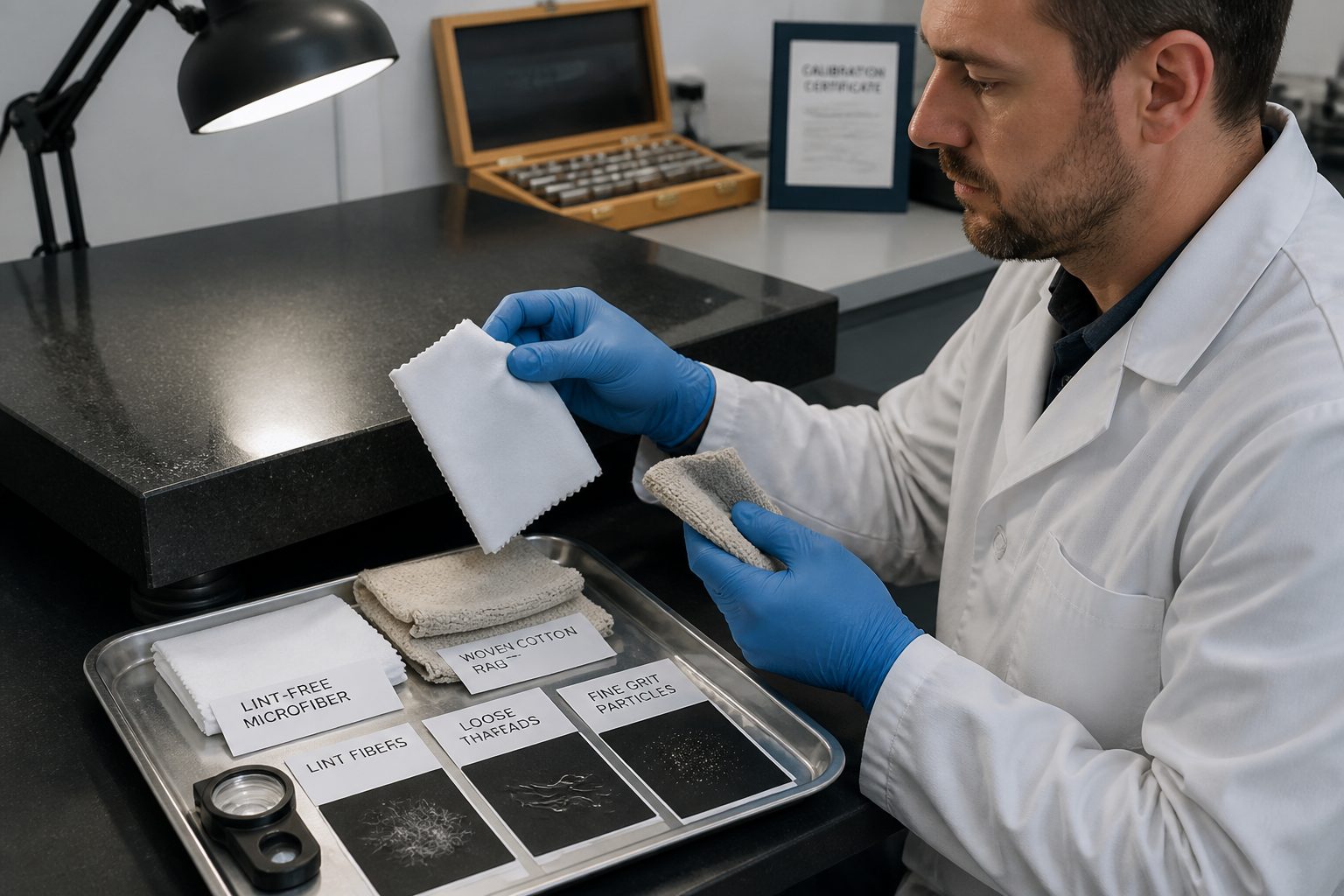
Selecting appropriate cleaning cloths is not an optional extra; it is a fundamental part of maintaining metrology standards. Your choice directly impacts the integrity of your measurements and the overall lifespan of your expensive granite surface plate. Prioritizing these details helps to uphold the stringent demands of precision work.
Ignoring the quality of your granite surface plate cleaning cloths is akin to using a dirty micrometer for a critical dimension. The small savings on cheaper wipes are quickly overshadowed by the potential cost of inaccurate parts or failed inspections. Investing in proper cleaning supplies is a wise decision for any precision shop.
Lint, Fibers, and Loose Threads: How They Affect Contact
Lint and loose fibers are the silent saboteurs of precise measurement. These tiny particles, often invisible to the naked eye, can create minute air gaps between a workpiece and the granite surface plate. Even a single fiber can introduce an error that exceeds a tight tolerance specification.
When you place a precision gauge block or a critical component on the plate, it should make intimate contact with the surface. Any foreign material, like a stray cotton fiber, prevents this full contact. This leads to an inaccurate measurement, potentially causing good parts to be rejected or bad parts to be accepted.
Traditional woven fabrics, especially those made from natural fibers like cotton, are prone to shedding. As these materials are used, washed, and re-used, their fibers break down and detach. Each wipe with such a cloth becomes a potential source of contamination, directly impacting the accuracy of your granite surface plate.
The issue of lint-free wipes becomes paramount in a metrology environment. A true lint-free wipe is engineered to minimize particle generation, ensuring that what you remove from the surface stays on the wipe. This design prevents the frustrating cycle of cleaning and re-contaminating the plate.
Beyond direct contact interference, fibers can also absorb and hold cleaning solutions or oils, leaving behind a subtle film. This film can create a sticky residue that attracts dust and grit, further exacerbating the problem of wipe contamination. The goal is a truly dry and clean surface after every wipe.
Loose threads from poorly manufactured or worn-out cloths pose an even greater risk. These larger pieces of material are more easily seen but can cause more significant measurement errors. They can also snag on sharp edges of parts, potentially pulling more fibers onto the plate.
The solution lies in selecting materials specifically designed for critical cleaning applications, often referred to as cleanroom-grade or lint-free wipes. These specialized granite surface plate cleaning cloths are constructed to prevent fiber shedding, protecting your valuable metrology equipment. Investing in high-quality, truly lint-free wipes saves time and prevents costly measurement errors in the long run.
Microfiber vs Nonwoven Wipes: Pros, Cons, and best uses
When choosing granite surface plate cleaning cloths, the two primary contenders are microfiber and nonwoven wipes. Each material offers distinct characteristics that make them suitable for different aspects of metrology cleaning. Understanding their differences helps you select the right tool for the job.
Microfiber cloths are known for their exceptional ability to trap and hold particles and liquids due to their split-fiber construction. Nonwoven wipes, often made from synthetic blends like polyester-cellulose, offer excellent strength and very low particle shedding for critical applications. Both have their place in a well-equipped metrology lab, depending on the specific cleaning task at hand.
| Cloth Type | Pros for Metrology | Cons for Metrology | Best Uses for Metrology |
|---|---|---|---|
| Microfiber (Polyester/Polyamide) | Excellent particle trapping; highly absorbent; durable for repeated washing; good for general cleaning. | Can shed micro-fibers if low quality; may leave slight static charge; requires specific washing methods. | Initial wipe-down of dirty plates; cleaning larger tools; removing heavy oils/coolants; general shop cleaning. |
| Nonwoven (Polyester-Cellulose) | Very low lint and particle generation; strong wet or dry; high purity; good chemical compatibility. | Less absorbent than microfiber; single-use (typically); can be more expensive per wipe. | Final wipe-down of surface plates; cleaning sensitive instruments; wipe contamination control; applying thin films. |
| Knitted Polyester | Extremely low lint, durable, solvent-resistant, high tensile strength, good for critical cleanrooms. | Generally higher cost per wipe; can be less absorbent than split microfiber. | Ultra-critical final cleaning of plates; optical surface cleaning; precision instrument wiping; applying calibration fluids. |
| Foam Wipes (Polyurethane) | Excellent absorption, very soft, non-abrasive, good for delicate surfaces. | Lower particle retention than microfiber; can degrade with harsh solvents; limited mechanical scrubbing. | Wiping delicate probes; applying specific non-abrasive cleaners; light dusting of instruments. |
The Hidden Risk: Wipes That Pick Up and Re-Deposit Grit
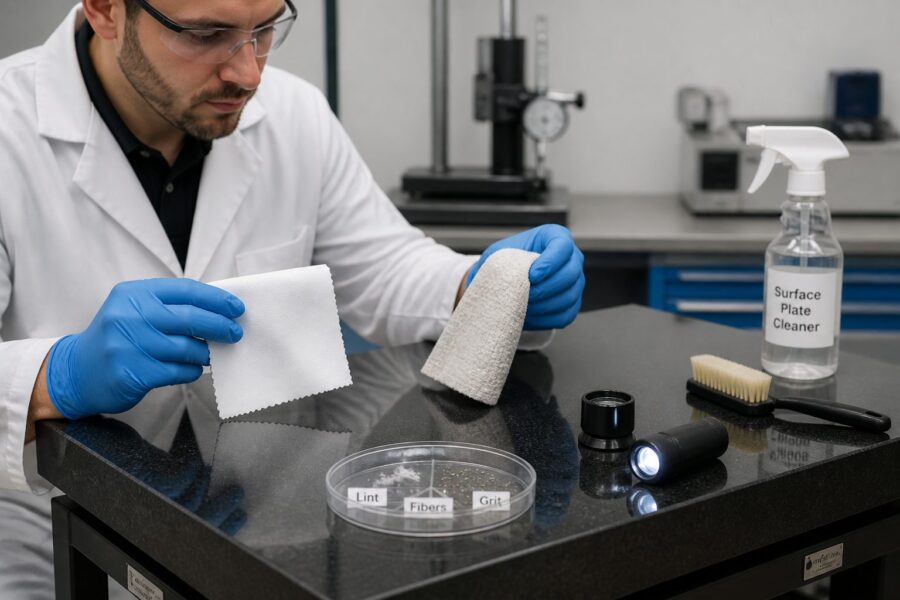
One of the most insidious problems with improper granite surface plate cleaning cloths is their potential to pick up abrasive grit and then re-deposit it. Imagine a cloth wiping a dusty workbench, then being used on your precision surface plate. This scenario is a recipe for disaster, introducing hard particles that can scratch the delicate lapped surface.
Even if a cloth starts clean, its ability to effectively capture and hold contaminants is crucial. A poor-quality wipe might move dirt around rather than remove it, distributing fine abrasive particles across the entire surface. This action creates a uniform layer of potential damage, subtly degrading the plate’s flatness over time.
The very act of wiping generates friction, and if the cloth itself contains embedded grit, it becomes an abrasive tool. This issue is particularly relevant with laundered cloths that might have picked up sand, metal chips, or other hard particles during the washing process. These rogue particles are then dragged across your granite, causing microscopic scratches.
Wipe contamination from re-depositing grit can manifest as a gradual dulling of the plate’s finish. While a single scratch might seem minor, repeated exposure to abrasive wiping can compromise the accuracy of the surface. This degradation reduces the plate’s ability to provide a stable, flat reference for precision measurements.
To combat this, lint-free wipes designed for cleanroom environments are often preferred because they are manufactured and packaged to minimize particulate contamination. These specialized granite surface plate cleaning cloths are less likely to contain or pick up external grit. They are engineered to capture and hold contaminants securely, preventing redeposition.
Proper cleaning protocols involve using a dedicated, high-quality wipe that is never used for any other purpose. This simple rule dramatically reduces the risk of transferring abrasive materials to your precision equipment. Always consider the potential journey of your cleaning cloth before it touches your granite surface plate.
The consequences of re-depositing grit extend beyond just surface damage to the plate itself. These same abrasive particles can transfer to your measuring tools, like gauge blocks or height gauges, causing wear and tear on their precision surfaces. This chain reaction of contamination underscores the importance of stringent cleaning practices and appropriate granite surface plate cleaning cloths.
How to Store Wipes So They Stay Clean
Even the highest quality lint-free wipes become useless if they are stored improperly, accumulating dust and airborne contaminants. The careful selection of granite surface plate cleaning cloths is only half the battle; maintaining their cleanliness before use is equally critical. Improper storage can quickly turn a clean wipe into a source of contamination.
Leaving wipes exposed on a workbench or in an open bin invites dust, metal shavings, and other shop debris to settle on them. When these contaminated wipes are then used on your granite surface plate, you are essentially introducing the very particles you aim to remove. Effective storage preserves the integrity of your cleaning materials until they are needed.
- Keep wipes in sealed, air-tight containers
- Store original packaging in a clean, dry area
- Designate a specific, dust-free cabinet for cleaning supplies
- Avoid storing near grinding, machining, or sanding operations
- Use dispensers that only allow one wipe to be removed at a time
- Label containers clearly for “surface plate only” wipes
- Replace older, opened packages regularly
One-Wipe Rules: When to Fold, flip, or replace
Even the best granite surface plate cleaning cloths can spread contamination if not used correctly. A common mistake is using a single surface of a wipe for an entire cleaning operation, effectively dragging accumulated dirt across the plate. Implementing a “one-wipe rule” strategy ensures maximum cleaning efficiency and prevents cross-contamination.
The basic principle involves maximizing the clean surface area of your wipe for each pass. This means folding the wipe multiple times to create fresh, unused surfaces. Each fold provides a new, clean quadrant to contact the granite surface, preventing the redeposition of contaminants already picked up.
Start with a clean wipe and fold it into quarters. Use one side of the top quadrant for your initial pass, picking up the bulk of the surface dust and debris. Once that section is visibly soiled or has covered a significant area, flip the wipe over to use the other side of that quadrant.
After both sides of the initial quadrant are used, unfold the wipe and refold it to expose a completely fresh, unused quadrant. Repeat the process of using both sides of this new section. This technique allows you to get eight distinct clean surfaces from a single folded wipe, significantly extending its effective life.
Knowing when to replace a wipe entirely is also crucial for preventing wipe contamination. If all eight surfaces are visibly soiled, or if the wipe becomes saturated with cleaning solution or oil, it’s time to discard it. Continuing to use an overly soiled wipe will only spread contaminants rather than remove them.
For critical final cleaning passes, especially after using a cleaning solution, consider using a fresh, unfolded wipe. This ensures that the final wipe-down is performed with the cleanest possible material, leaving no streaks or residues. The goal is to leave the granite surface plate immaculate and ready for precision work.
Establish clear guidelines in your shop for how many passes or how much area a single folded surface can cover before flipping or refolding. Consistent application of these “one-wipe rules” helps maintain the cleanliness of your granite surface plate and the accuracy of your measurements. This discipline is a small but mighty step in upholding metrology standards.
Avoiding Fabric Softeners and Laundry Cross-Contamination
The way you wash and dry your reusable granite surface plate cleaning cloths can severely compromise their effectiveness. Fabric softeners, while making clothes feel nice, leave behind a thin, waxy residue designed to lubricate fibers. This residue is the absolute enemy of a precision surface plate, creating a film that attracts dust and interferes with measurements.
Never use fabric softener on any cloths intended for metrology equipment. The chemical components of these softeners are designed to cling to fabrics, and they will readily transfer to your granite surface plate. This transfer results in hazy streaks and a surface that is no longer truly clean, making accurate measurements difficult.
Laundry cross-contamination is another significant concern. Washing your precision cleaning cloths with regular shop rags, personal clothing, or towels can embed undesirable particles into the fabric. Lint, hair, metal shavings, and even detergent residue from other items can transfer to your dedicated granite surface plate cleaning cloths during the wash cycle.
To prevent this, always wash your metrology-specific cloths separately. Use a mild, unscented detergent with no added fabric softeners or dyes. A dedicated wash cycle for these items minimizes exposure to external contaminants, ensuring they remain as clean as possible for their intended purpose.
Drying methods also matter. Tumble drying with dryer sheets introduces more chemical residue and static cling, which attracts dust. Air drying in a clean, dust-free environment is often the best approach for lint-free wipes, or use a dryer with no dryer sheets and a gentle heat setting, ensuring the lint trap is clean.
Some shops opt for disposable, nonwoven lint-free wipes to entirely sidestep the laundry problem. While this can be more expensive, it eliminates the risk of improper washing and cross-contamination. For critical final cleaning, disposable wipes often offer the highest assurance of cleanliness.
If you do reuse cloths, establish a strict laundry protocol that explicitly forbids fabric softeners and dictates separate washing. This attention to detail ensures your granite surface plate cleaning cloths remain truly clean and residue-free. Proper laundering is a non-negotiable step for maintaining the integrity of your metrology setup.
Dedicated Cloths for Plate vs Tools: Setting boundaries
A common pitfall in many shops is using the same cleaning cloth for various tasks, from wiping down a dirty machine to cleaning precision instruments. This practice, while seemingly efficient, is a direct route to cross-contamination and will inevitably compromise the cleanliness of your granite surface plate. Establishing clear boundaries for your granite surface plate cleaning cloths is essential.
Your granite surface plate is a primary metrology standard, demanding the highest level of cleanliness. Wipes used on tools, even other precision tools, can pick up oils, metal fines, and other contaminants that you do not want on your plate. These particles, though small, can scratch the granite or interfere with accurate measurements.
Designate a specific set of lint-free wipes solely for your surface plate. These wipes should be stored separately, ideally in a labeled, sealed container, and never used for any other purpose. This simple segregation prevents the inadvertent transfer of damaging debris from other areas of the shop.
Similarly, have separate cleaning cloths for your measuring tools like micrometers, calipers, and height gauges. Even within tools, you might differentiate between cloths for initial heavy cleaning and those for a final wipe-down. This tiered approach to cleanliness ensures that each item receives the appropriate level of care without risking contamination of the surface plate.
Color-coding your granite surface plate cleaning cloths can be an effective visual system. For example, use blue wipes exclusively for surface plates, green for measuring tools, and white for general cleanup. This makes it easy for anyone in the shop to quickly identify the correct cloth for each task, minimizing errors.
Educate all personnel on this “dedicated cloth” policy. Explain the reasons behind it, emphasizing the impact on measurement accuracy and equipment longevity. A clear understanding helps foster a culture of precision and cleanliness throughout the metrology area.
The investment in a few extra sets of specialized granite surface plate cleaning cloths is minuscule compared to the cost of replacing a damaged granite plate or scrapping parts due to inaccurate measurements. Setting these clear boundaries protects your most critical metrology assets. Proper segregation is a fundamental step in maintaining high standards of precision.
Building a Simple Wipe Standard for Your Shop
Developing a standardized approach to using granite surface plate cleaning cloths removes guesswork and ensures consistent results. A clear “wipe standard” for your shop helps maintain the integrity of your metrology equipment and the accuracy of your measurements. This standard doesn’t need to be complex; it just needs to be clear and consistently followed.
Start by identifying the specific types of lint-free wipes that best suit your needs, considering factors like material, size, and reusability. Document these choices, along with their intended applications. This initial step ensures everyone uses the correct granite surface plate cleaning cloths for each task.
Outline the proper cleaning procedure for the granite surface plate itself, from initial wipe-down to final drying. Specify the cleaning solution to be used, the folding technique for wipes, and the frequency of cleaning. Consistency in method is just as important as the quality of the materials.
Establish clear rules for wipe storage and disposal. Detail where clean wipes are kept, how they are protected from contamination, and when they should be discarded or sent for laundering. This prevents clean wipes from becoming soiled before use and ensures dirty wipes are removed from the area.
If using reusable granite surface plate cleaning cloths, include instructions for their laundering. Specify detergents to use (no fabric softeners), separate wash cycles, and proper drying methods. This maintains the integrity of the wipes for future use, preventing wipe contamination from laundry practices.
Implement a color-coding system for different types of cloths to easily distinguish between those for surface plates, tools, and general cleaning. Visual cues reduce errors and reinforce the “dedicated cloth” policy. Everyone in the shop should know what each color signifies.
Train all personnel who interact with metrology equipment on this wipe standard. Regular refreshers and clear signage can help reinforce the procedures. When everyone understands and follows the same protocol, it significantly reduces the risk of contamination and measurement errors.
Periodically review and update your wipe standard as new products become available or as your shop’s needs evolve. A living document ensures your practices remain current and effective. A simple, well-communicated standard for granite surface plate cleaning cloths is a powerful tool for maintaining precision.
Signs Your Cloths Are Causing Streaks or haze
A perfectly clean granite surface plate should appear uniformly dark, with a consistent, smooth finish. If you notice streaks, haze, or a dull film after cleaning, it’s a clear indication that your granite surface plate cleaning cloths or cleaning process is failing. These visual cues are critical warning signs that demand immediate attention.
Streaks often point to residue left behind by the cleaning solution or the wipe itself. This can happen if the cleaning solution is not fully evaporated or if the cloth is leaving behind chemical traces. A common culprit is fabric softener residue, which creates a waxy film on the surface, making it appear streaky.
Haze, a general dullness or cloudiness over the surface, suggests a build-up of micro-particulates or a thin, uneven film. This might be from lint and fibers left by non-lint-free wipes. It can also result from a cleaning solution that dries too slowly, allowing airborne dust to settle before it fully evaporates.
Sometimes, the problem isn’t the cloth’s cleanliness but its absorbency. If the wipe can’t effectively pick up and hold the cleaning solution, it will push the liquid around, leading to uneven drying and streaking. This issue is particularly noticeable with solutions that contain any non-volatile components.
Another cause of streaks or haze can be using a wipe that is already saturated or dirty. If a wipe has picked up too much grime, it loses its ability to effectively clean and will simply redistribute the existing contaminants. This emphasizes the importance of the “one-wipe rule” and knowing when to replace a soiled cloth.
If you observe any of these visual imperfections, first re-evaluate your granite surface plate cleaning cloths. Are they truly lint-free wipes? Are they being laundered correctly without fabric softeners? Next, consider your cleaning solution; ensure it’s specifically designed for granite and evaporates cleanly.
Finally, review your cleaning technique. Are you using fresh surfaces of the wipe? Are you allowing the solution adequate time to work before wiping dry? Addressing these factors systematically will help you eliminate streaks and haze, restoring your granite surface plate to its optimal, pristine condition.
A flawless, streak-free finish is not just for aesthetics; it’s a direct indicator of proper cleaning and a surface ready for precision metrology. Ignoring these signs can lead to subtle but significant measurement errors. Pay close attention to what your granite surface plate tells you after each cleaning.
Conclusion
The seemingly minor decision of which granite surface plate cleaning cloths to use holds significant weight in the world of precision metrology. From preventing invisible lint contamination to avoiding abrasive grit transfer, every aspect of your wipe choice and usage directly impacts measurement accuracy. This attention to detail is what separates good metrology practices from truly excellent ones.
We’ve explored how lint and fibers can interfere with intimate contact, distorting critical measurements. The distinction between microfiber for metrology and nonwoven wipes, with their unique pros and cons, underscores the need for informed material selection. Understanding the risks of wipe contamination from re-deposited grit is essential for protecting your valuable equipment.
Proper storage of your lint-free wipes ensures they remain clean until needed, preventing them from becoming a source of contamination themselves. Implementing “one-wipe rules” maximizes the effectiveness of each cloth, ensuring you remove dirt rather than simply spreading it around. These practical steps contribute significantly to maintaining a pristine surface.
Furthermore, the dangers of fabric softeners and laundry cross-contamination highlight the importance of dedicated washing protocols for reusable cloths. Segregating cloths for surface plates versus general tools establishes crucial boundaries, preventing the transfer of harmful debris. These practices are non-negotiable for preserving the integrity of your metrology setup.
Building a simple, clear wipe standard for your shop provides a consistent framework for everyone, eliminating guesswork and promoting best practices. Paying attention to visual cues like streaks or haze after cleaning acts as an immediate feedback mechanism. These signs tell you when your cleaning process needs adjustment, ensuring your granite surface plate remains in top condition.
Ultimately, investing in the right granite surface plate cleaning cloths and implementing rigorous cleaning protocols is an investment in accuracy itself. It protects your expensive metrology equipment from premature wear and ensures the reliability of every measurement taken. Don’t underestimate the power of a clean wipe in achieving true precision.
Take the time to assess your current cleaning practices and upgrade your materials where necessary. Your granite surface plate is the foundation of your dimensional control, and its cleanliness directly reflects the quality of your work. Make sure your cleaning cloths are an asset, not a liability, in your pursuit of metrological excellence.
A commitment to using appropriate granite surface plate cleaning cloths demonstrates a true understanding of precision. It reflects a dedication to maintaining the highest standards in every aspect of your metrology operations. This seemingly small detail makes a monumental difference in the accuracy and trustworthiness of your measurements.