
Working with a precision granite surface plate demands meticulous attention to detail, and that includes safeguarding your valuable metrology tools from the insidious threat of rust. While your granite surface plate itself is impervious to corrosion, the steel and cast iron tools you use on it are highly susceptible. Ignoring proper granite surface plate rust prevention for tools can lead to inaccurate measurements, damaged equipment, and costly replacements.
Many shops resort to heavy oils or greases, but these can easily transfer to the granite, creating a sticky residue that attracts dust and compromises flatness. This article provides practical, low-residue strategies for effective tool corrosion control, ensuring your precision instruments remain pristine and accurate.
We will explore everything from environmental management to clean handling practices, helping you maintain a high-precision environment without introducing unwanted contaminants. Protecting your tools extends their lifespan and directly supports the integrity of every measurement you take.
Why rust prevention matters even when the plate is granite
Your granite surface plate is a foundation of precision, offering an unyielding, non-corrosive reference plane for all your measurements. However, the steel and cast iron tools that interact with it, like height gages, gage blocks, and indicators, are highly vulnerable to oxidation. Even microscopic rust can pit tool surfaces, compromising their accuracy and rendering them unreliable for critical work.
The integrity of your measurements relies entirely on the pristine condition of your instruments. A rusted micrometer spindle or a corroded gage block face can introduce significant errors, making your entire calibration process suspect. This is why granite surface plate rust prevention for tools is not just good practice, it is essential for metrology excellence.
Rust also creates abrasive particles that can transfer to the granite surface, potentially causing wear over time. While granite is hard, constant friction from abrasive rust particles is not ideal for maintaining its long-term flatness. Keeping tools clean helps preserve the surface plate itself, extending its life and calibration intervals.
Beyond accuracy, rust significantly shortens the lifespan of expensive precision tools. Replacing high-quality instruments due to preventable corrosion represents a substantial financial burden for any metrology lab or machine shop. Proactive tool corrosion control saves money in the long run by protecting your capital investments.
Furthermore, rusted tools can seize up, requiring more force to operate and potentially damaging delicate internal mechanisms. This leads to frustrating downtime and the need for specialized repairs, further impacting productivity. A consistent rust prevention strategy ensures smooth, reliable operation of all your metrology equipment.
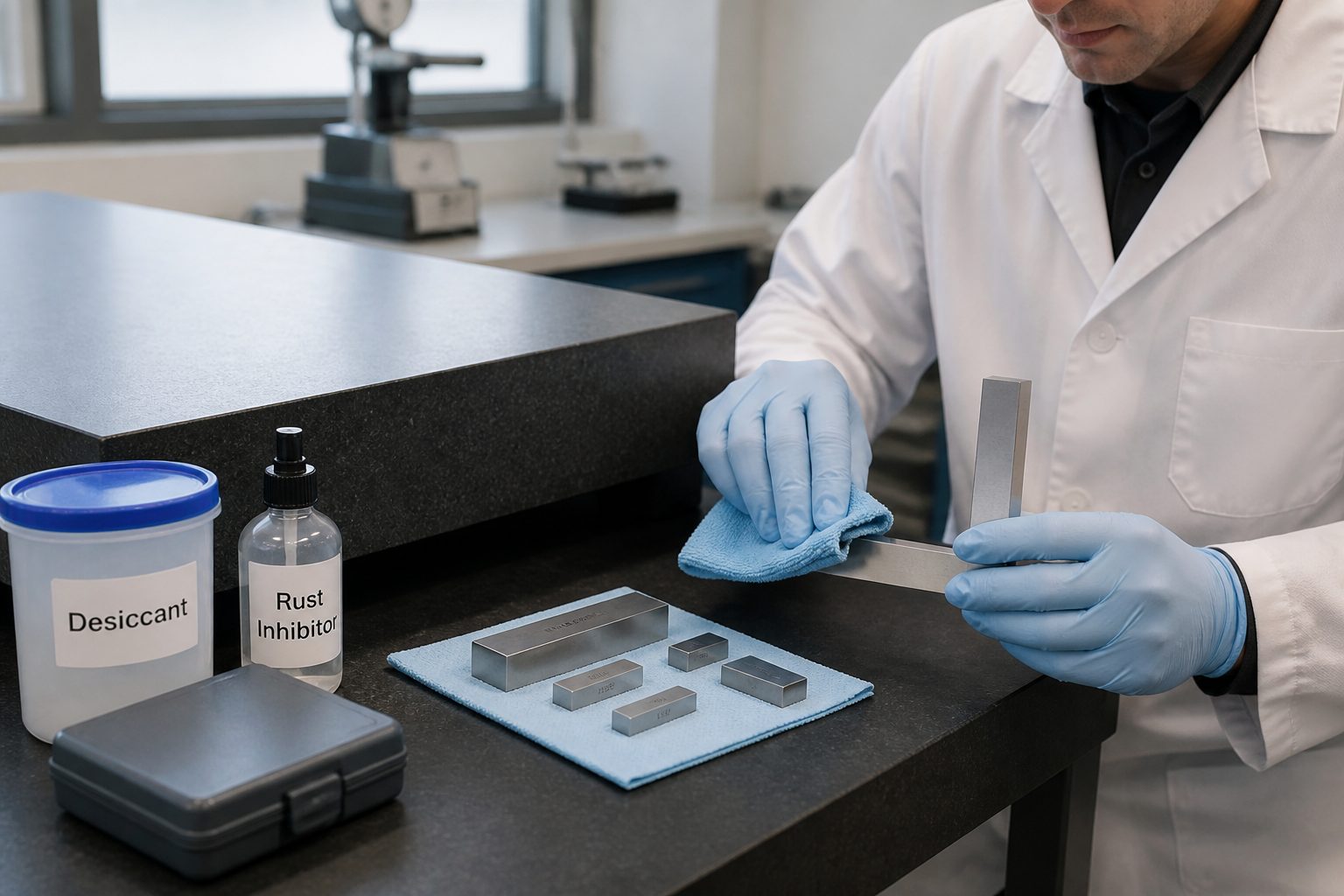
A clean, rust-free environment around your granite surface plate also fosters a culture of precision and care. When tools are well-maintained, operators are more likely to handle them with the respect they deserve, further reinforcing good practices. This positive feedback loop contributes to overall quality control within the facility.
Ultimately, neglecting granite surface plate rust prevention for tools undermines the very purpose of having a high-quality surface plate. The plate provides the stable reference, but the tools provide the measurement. Both must be in peak condition for accurate results.
The biggest sources of moisture near your plate
Understanding where moisture comes from is the first step in effective tool corrosion control around your granite surface plate. The air itself is a primary culprit, with varying humidity levels directly impacting the rate of rust formation on exposed metal tools. Condensation can also form on colder surfaces when warm, moist air makes contact, creating localized wet spots.
Human contact is another significant source of moisture and contaminants. Fingerprints leave behind natural oils, salts, and acids that aggressively promote corrosion on precision steel surfaces. Even clean hands contribute some level of moisture to tools, accelerating oxidation if not properly managed.
| Moisture Source | Impact on Tools | Prevention Strategy |
|---|---|---|
| Ambient Humidity | Accelerates general surface rust | Dehumidifiers, climate control |
| Human Contact (Fingerprints) | Localized corrosion, acidic residue | Gloves, clean handling practices |
| Coolants/Machining Fluids | Direct wetting, chemical attack | Immediate cleaning, dedicated work zones |
| Temperature Fluctuations | Condensation formation | Stable HVAC, insulated storage |
| Respiratory Droplets | Micro-deposits of moisture/salts | Masks (in some cases), distance |
| Wet Parts/Workpieces | Transfers moisture directly | Drying stations, isolation from plate |
Choosing low-residue rust prevention methods for tools
Selecting the right rust prevention product for tools used on a granite surface plate is crucial to avoid contamination. Heavy oils and greases, while effective at corrosion control, can easily transfer to the granite, creating a persistent cleaning nightmare. The goal is to protect the tools without leaving behind a film that compromises measurement accuracy or attracts airborne particles.
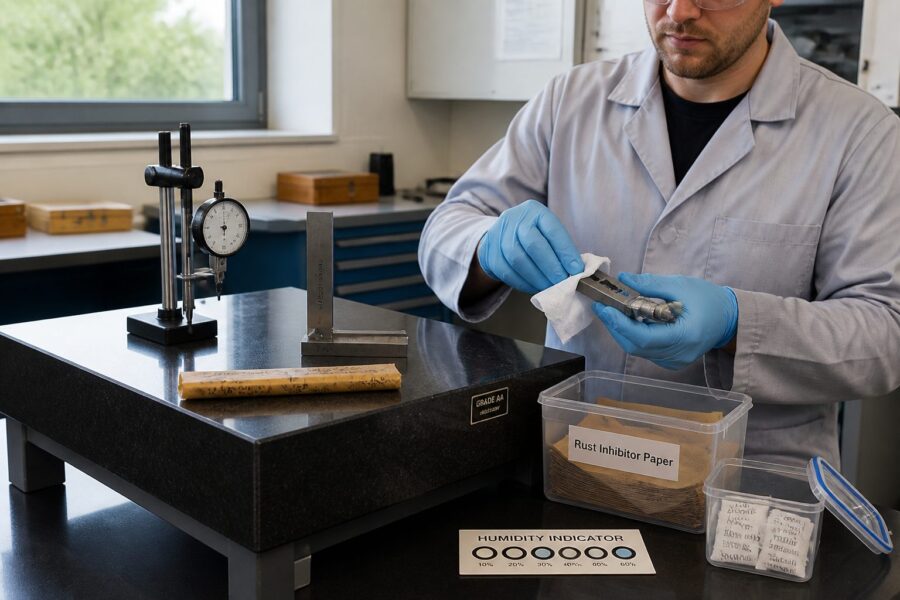
Volatile Corrosion Inhibitor (VCI) papers, films, and emitters are excellent choices for precision tools. These products release microscopic rust-inhibiting molecules that form a protective monomolecular layer on metal surfaces, preventing oxidation. VCI technology leaves no residue and is safe for use in close proximity to granite surface plates.
Another effective option is a light, dry-film rust preventative spray or wipe, specifically designed for precision instruments. These products often contain solvents that evaporate quickly, leaving behind a thin, non-oily barrier that resists moisture and fingerprints. Always check product specifications to ensure they are suitable for metrology equipment and will not leave a sticky residue.
Desiccants, like silica gel packets, can be used in tool storage boxes or drawers to absorb ambient humidity. While not a direct rust preventative coating, desiccants reduce the overall moisture content in a contained environment, slowing down corrosion significantly. They are particularly useful for long-term storage of less frequently used items, complementing other rust prevention methods.
For frequently used tools that require constant cleaning, a high-quality denatured alcohol or acetone wipe can remove contaminants, followed by a quick application of a dry-film rust inhibitor. This two-step process ensures both cleanliness and protection, minimizing the risk of unwanted transfer to the granite surface plate. Consistency in this routine is key for maintaining tool integrity.
Wax-based coatings, while offering excellent protection, are generally too messy for tools that frequently touch a granite surface plate. The residue from these coatings can transfer and build up on the plate, requiring aggressive cleaning that could potentially affect its surface integrity. Stick to cleaner options for tools in the metrology lab.
When selecting any rust prevention product, always perform a small test on a non-critical surface or an older tool first. This helps confirm that it dries cleanly, leaves no sticky film, and is compatible with your specific tools and metrology environment. A little testing can prevent a lot of headaches down the line.
Safe handling of oiled tools so you don’t contaminate the plate
While low-residue options are preferred for tools used directly on the granite surface plate, some tools might still require traditional oil-based rust prevention for storage or specific applications. The challenge then becomes preventing the transfer of this oil to your meticulously clean granite. Proper clean handling practices are paramount to avoid contamination.
Before bringing any oiled tool near the granite surface plate, it must be thoroughly degreased. Use a clean, lint-free cloth dampened with a suitable solvent, such as denatured alcohol or a precision cleaner, to wipe down all surfaces. This step is critical to remove any excess oil that could leave a mark on the granite.
Establish a dedicated “oil-free” zone around your granite surface plate. Tools that have been oiled should never enter this zone without first being completely cleaned and degreased. This physical barrier helps reinforce the discipline required for maintaining a pristine metrology environment and prevents accidental contamination.
Always handle cleaned tools with lint-free gloves, even after degreasing. This prevents the transfer of natural skin oils and any lingering microscopic residues from your hands to the tool, which could then transfer to the granite. Gloves are a simple yet highly effective barrier in maintaining cleanliness.
If a tool has just been retrieved from long-term oiled storage, consider letting it air-dry for a few minutes after degreasing to ensure all solvents have evaporated. Any residual solvent could also leave a temporary film or affect sensitive tool surfaces. Patience here pays off in a cleaner working environment.
Implement a clear labeling system for tools: “Oiled Storage” versus “Plate Ready.” This visual cue helps operators quickly identify which tools require extra cleaning steps before use on the granite surface plate. Such a system minimizes confusion and reduces the likelihood of errors in tool preparation.
For tools that absolutely must retain a thin layer of oil for internal mechanisms but are still used on the plate, consider specialized low-viscosity, non-migrating oils. These oils are designed to stay put and resist transfer, but still require careful wiping before use. Consult with your tool manufacturer for recommendations on such specific lubricants.
Setting up a “clean tool staging” area next to the plate
A dedicated clean tool staging area is indispensable for maintaining the integrity of your granite surface plate and the tools used on it. This zone acts as a buffer, ensuring that only meticulously cleaned and protected instruments come into contact with the precision surface. It streamlines workflows and significantly reduces the risk of contamination.
The staging area should be located immediately adjacent to the granite surface plate but be clearly delineated. Use a clean, non-shedding mat or a dedicated tray to hold tools that are ready for use. This prevents tools from being placed directly on the general workbench surface, which might harbor oils, dust, or other debris.
- Dedicated lint-free cleaning cloths
- Precision cleaning solvents (e.g., denatured alcohol)
- VCI paper or film for temporary tool wrapping
- Clean, powder-free gloves
- Small, covered containers for frequently used gage blocks
- Non-abrasive surface for tool placement
- A small, soft brush for dust removal
- Hand sanitizer or hand-cleaning wipes
Equip this staging area with all necessary cleaning supplies, including lint-free wipes, precision cleaning solutions, and a supply of clean gloves. Everything needed for a final tool preparation should be within easy reach. This encourages consistent clean handling practices and reduces the temptation to skip steps.
Consider installing a small, enclosed cabinet or drawer within the staging area for frequently used, highly sensitive tools like gage blocks. This protects them from airborne dust and rapid humidity changes when not actively in use. Such enclosures maintain a stable micro-environment for critical instruments, enhancing tool corrosion control.
Regularly clean and inspect the staging area itself. Dust and debris can accumulate quickly, and any contaminants present in this zone can easily transfer to your precision tools and then to the granite. A clean staging area is just as important as clean tools for overall metrology hygiene.
Implement a “first in, first out” system for tools within the staging area to ensure regular rotation and inspection. This prevents tools from sitting for extended periods, potentially developing unseen corrosion despite initial cleaning. Consistent use and re-cleaning are beneficial for tool longevity.
The clean tool staging area also serves as a visual reminder of the high standards required in a metrology environment. It reinforces the importance of precision and care to everyone working near the granite surface plate. This physical setup supports a culture of quality and meticulousness.
Gloves, wipes, and hand-cleaning habits that reduce fingerprints
Fingerprints are a primary enemy of precision tools, leaving behind corrosive residues that initiate rust. Implementing strict clean handling practices, including the consistent use of gloves and proper hand hygiene, is fundamental for effective granite surface plate rust prevention for tools. These habits are simple but incredibly impactful.
Always wear clean, powder-free gloves when handling precision metrology tools. Cotton gloves are a common choice as they absorb skin oils and prevent direct contact, but they must be kept scrupulously clean and replaced frequently. Nitrile gloves also work well, offering a good barrier and tactile feel.
Before putting on gloves, ensure your hands are clean and dry. Wash your hands thoroughly with soap and water, or use an alcohol-based hand sanitizer. This prevents contaminants from being trapped inside the gloves and potentially transferred if the gloves tear or are removed carelessly.
Keep a supply of high-quality, lint-free wipes and precision cleaning solution readily available at the granite surface plate. After each use, or if you suspect a tool has been contaminated, wipe it down immediately. This proactive cleaning removes any potential corrosive agents before they can cause damage.
Train all personnel on the importance of these clean handling practices and make them a standard operating procedure. Consistency across the team is vital; one instance of improper handling can compromise the efforts of everyone else. Regular reminders and visual aids can reinforce these critical habits.
Avoid touching the working surfaces of tools directly, even when wearing gloves. Always grasp tools by their non-critical areas or handles whenever possible. This minimizes the chance of any residue transfer to the sensitive measurement surfaces, preserving their accuracy and finish.
When removing gloves, do so carefully to avoid touching the outside of the glove with your bare hands, which could transfer contaminants. Dispose of used gloves properly to prevent them from becoming a source of contamination in the work area. A clean environment starts with individual discipline.
Managing humidity with simple, practical controls
Humidity is arguably the single biggest environmental factor driving tool corrosion, making effective humidity control essential for granite surface plate rust prevention for tools. Maintaining a stable, low-humidity environment directly around your metrology equipment significantly reduces the rate of oxidation on steel instruments. Simple, practical solutions can make a big difference without requiring a complete HVAC overhaul.
The most straightforward approach is to install a dedicated dehumidifier in the metrology room or near the granite surface plate. Aim to keep the relative humidity (RH) below 50%, ideally between 35% and 45%. A lower RH drastically slows down the chemical reaction that causes rust, offering excellent tool corrosion control.
Monitor the humidity levels regularly using a reliable hygrometer placed near your surface plate. This allows you to track fluctuations and adjust your dehumidifier settings as needed. Consistent monitoring ensures that your efforts are effective and provides data for optimizing your humidity management strategy.
Ensure that the metrology area is relatively well-sealed to prevent humid air from leaking in from other parts of the facility or outdoors. Close doors and windows, and consider weatherstripping if drafts are an issue. Minimizing air exchange helps the dehumidifier work more efficiently and maintain stable conditions.
Avoid placing the granite surface plate or tool storage directly near sources of moisture, such as sinks, drains, or areas with high foot traffic from outdoor environments. These locations can introduce localized spikes in humidity that are difficult to mitigate. Strategic placement of equipment contributes significantly to environmental control.
For highly sensitive tools or during periods of exceptionally high ambient humidity, consider using sealed storage containers with desiccants like silica gel. These provide a localized dry environment, offering an extra layer of protection against moisture. Desiccants are particularly useful for long-term storage or for tools rarely used.
Maintaining a stable room temperature also plays a role in humidity management by preventing condensation. Rapid temperature drops can cause moisture in the air to condense on cooler tool surfaces. A consistent temperature, ideally around 68-72°F (20-22°C), helps avoid these sudden shifts and keeps tools dry.
What to do after coolant exposure or wet parts touch the plate
Coolant exposure or contact with wet parts is an immediate and severe threat to precision metrology tools and the granite surface plate itself. These incidents can introduce corrosive fluids and hasten the onset of rust if not addressed swiftly and thoroughly. Prompt action is absolutely critical for granite surface plate rust prevention for tools and maintaining the plate’s integrity.
If a tool comes into contact with coolant or a wet part, immediately remove it from the work area. Do not place it back in storage or on the clean tool staging area without proper cleaning. Isolate the contaminated tool to prevent cross-contamination of other instruments or surfaces.
Thoroughly clean the tool using a precision cleaning solution, such as denatured alcohol or a dedicated coolant remover, and lint-free wipes. Pay close attention to all crevices, joints, and critical measuring surfaces where coolant might linger. Repeat the cleaning process multiple times to ensure all residues are completely gone.
After cleaning, dry the tool completely using compressed air or a clean, dry, lint-free cloth. Ensure no moisture remains, especially in moving parts or tight spaces. Any residual moisture, even microscopic, can still lead to flash rusting, particularly with aggressive coolants.
Once dry, immediately apply a low-residue rust preventative. This could be a VCI spray, a dry-film coating, or VCI paper for wrapping. The protective layer is essential to prevent oxidation after the tool has been stripped of its previous protection and exposed to corrosive agents.
If the granite surface plate itself has been exposed to coolant or wet parts, clean it immediately with a granite cleaner or denatured alcohol. While granite does not rust, coolants can leave sticky residues that attract dust and compromise the surface. A clean plate is essential for accurate measurements.
Inspect the affected tools carefully for any signs of damage or corrosion after cleaning and drying. Even a brief exposure can sometimes cause subtle etching or discoloration. If damage is present, the tool may need recalibration or replacement to ensure measurement accuracy.
Storage tips for gage blocks, parallels, and small fixtures
Proper storage is a cornerstone of effective granite surface plate rust prevention for tools, especially for highly precise items like gage blocks, parallels, and small fixtures. These instruments are often made of hardened steel and are extremely susceptible to corrosion, which can quickly render them useless for critical measurements. Thoughtful storage extends their accuracy and lifespan.
Always store gage blocks in their original, fitted cases when not in use. These cases are designed to protect the blocks from physical damage, dust, and environmental contamination. Many high-quality gage block sets also include VCI paper or desiccant packs within their cases for added corrosion control.
Before returning gage blocks to their case, wipe them clean with a lint-free cloth and a precision cleaner like denatured alcohol. Then, apply a very thin, even coat of a high-quality, non-migrating rust preventative oil or a dry-film VCI spray. This protective layer is crucial for preventing atmospheric corrosion.
For parallels and small fixtures, store them in dedicated drawers or cabinets that are lined with VCI material. VCI paper or foam releases a protective vapor that coats the metal surfaces, preventing rust without leaving an oily residue. This method provides excellent long-term tool corrosion control.
Ensure that storage locations for all precision tools are away from heat sources, direct sunlight, and areas with high humidity fluctuations. Stable temperature and humidity are key to preventing condensation and maintaining the effectiveness of any rust preventative. An air-conditioned and dehumidified metrology room is ideal.
Consider using individual, small plastic bags or wraps made from VCI film for particularly sensitive or infrequently used small fixtures. This creates a miniature, protected environment for each item, offering superior protection against moisture and contaminants. Seal these bags tightly to maximize their effectiveness.
Regularly inspect stored tools, especially those not used frequently, for any signs of corrosion. Even with the best storage practices, environmental conditions can sometimes be unpredictable. Early detection allows for immediate cleaning and re-protection, preventing minor issues from becoming irreversible damage.
A quick weekly checklist to keep corrosion under control
Consistency is the bedrock of effective granite surface plate rust prevention for tools. A simple, repeatable weekly checklist ensures that crucial maintenance tasks are not overlooked, maintaining peak tool condition and extending their lifespan. This proactive approach prevents small issues from escalating into costly problems.
Every week, dedicate a short period to systematically inspect and maintain your metrology tools and environment. This routine reinforces good clean handling practices and ensures ongoing tool corrosion control. A few minutes invested each week can save hours of repair or replacement costs.
First, check the humidity levels in the metrology room using your hygrometer. Verify that your dehumidifier is operating correctly and maintaining the target RH range (e.g., 35-45%). Adjust settings or empty the water reservoir as needed to ensure continuous operation.
Inspect all frequently used precision tools for any signs of rust, discoloration, or residue. Pay close attention to critical measuring surfaces, joints, and areas where fingerprints might accumulate. Clean and re-protect any tools showing even the slightest indication of corrosion.
Wipe down the granite surface plate with a dedicated granite cleaner or denatured alcohol to remove any accumulated dust, fingerprints, or minor residues. A clean plate is not only essential for accuracy but also helps prevent the transfer of contaminants to your tools. Ensure the plate is completely dry after cleaning.
Check your clean tool staging area for cleanliness. Wipe down surfaces, replenish lint-free wipes, precision cleaner, and clean gloves. Ensure all supplies are readily available and organized to encourage consistent clean handling practices during daily operations.
Open gage block cases and inspect the blocks, wiping them if necessary and ensuring any VCI paper is still effective. Replace VCI paper or desiccant packs in tool storage as recommended by their manufacturers, typically every 6-12 months. This maintains a protective micro-environment for these critical standards.
Review your inventory of rust preventative products and cleaning supplies. Reorder anything running low to avoid interruptions in your maintenance routine. Having necessary supplies on hand is crucial for immediate action when unexpected contamination occurs.
Conclusion
Effective granite surface plate rust prevention for tools is not an option; it is a fundamental requirement for any precision metrology operation. While your granite surface plate stands as an unyielding, non-corrosive reference, the steel tools interacting with it are constantly battling the elements. Implementing a comprehensive strategy protects your valuable investments and ensures the unwavering accuracy of your measurements.
By understanding moisture sources, choosing low-residue prevention methods, and adopting rigorous clean handling practices, you can create an environment where corrosion is simply not a concern. From managing humidity in metrology room to meticulous storage, every step contributes to the longevity and reliability of your instruments. These proactive measures are far less costly than dealing with the consequences of rust.
The establishment of a clean tool staging area and consistent adherence to glove use and hand-cleaning habits drastically reduces contamination from human contact. These simple routines prevent corrosive fingerprints from compromising sensitive tool surfaces. They are easy to implement and yield significant benefits for tool corrosion control.
Immediate and thorough action after coolant exposure or contact with wet parts is also non-negotiable. Swift cleaning and re-protection can prevent irreversible damage from aggressive fluids. This rapid response is a critical component of maintaining tool integrity in a dynamic shop environment.
Finally, a regular weekly checklist provides the framework for sustained vigilance, ensuring that environmental controls are maintained and tools are routinely inspected. This systematic approach ensures that your metrology equipment remains in pristine condition, ready to deliver precise and reliable results every time. Prioritize these practices to safeguard your precision.
Investing time and effort in these rust prevention strategies pays dividends in extended tool life, reduced recalibration needs, and, most importantly, confidence in your measurement data. A clean, rust-free tool is a reliable tool, and that is what true precision demands. Protect your tools, protect your accuracy.
Maintain your commitment to cleanliness and environmental control, and your precision tools will serve you faithfully for many years. This diligent approach reflects the high standards inherent in all aspects of quality metrology. Your efforts will be evident in the consistent quality of your work.