
Precision measurement depends entirely on the reliability of your granite surface plate. These foundational tools are calibrated to incredibly tight tolerances, providing the flat reference plane essential for accurate inspection and manufacturing processes.
However, surface plates are not immune to the forces of daily use. Over time, friction, impact, and contaminants can degrade their flatness, leading to significant measurement errors.
Understanding surface plate wear patterns is crucial for any facility that relies on precise metrology. Recognizing these issues early allows for proactive maintenance, extends the life of your valuable equipment, and prevents costly inaccuracies in your work.
How Wear Develops on a Granite Surface Plate
Granite surface plates are exceptionally hard, but they are not indestructible. Wear primarily occurs through abrasive action, where the constant movement of parts and gages across the surface gradually removes microscopic particles of granite.
Even small dust particles or grit from the shop environment can act as tiny abrasives, accelerating this process. Each time an object slides across the plate, it contributes to this cumulative erosion.
The pressure exerted by heavy workpieces or inspection tools also plays a role in wear. Concentrated loads on specific areas can exacerbate material removal, even on seemingly clean surfaces.
Repeated thermal cycling, while less direct, can also contribute to the breakdown of the granite’s surface integrity over many years. While not causing immediate wear, it can make the surface more susceptible to abrasion.
Ultimately, wear is an unavoidable consequence of using a surface plate for its intended purpose. The goal is not to eliminate wear entirely, but to manage it effectively to maintain measurement accuracy for as long as possible.
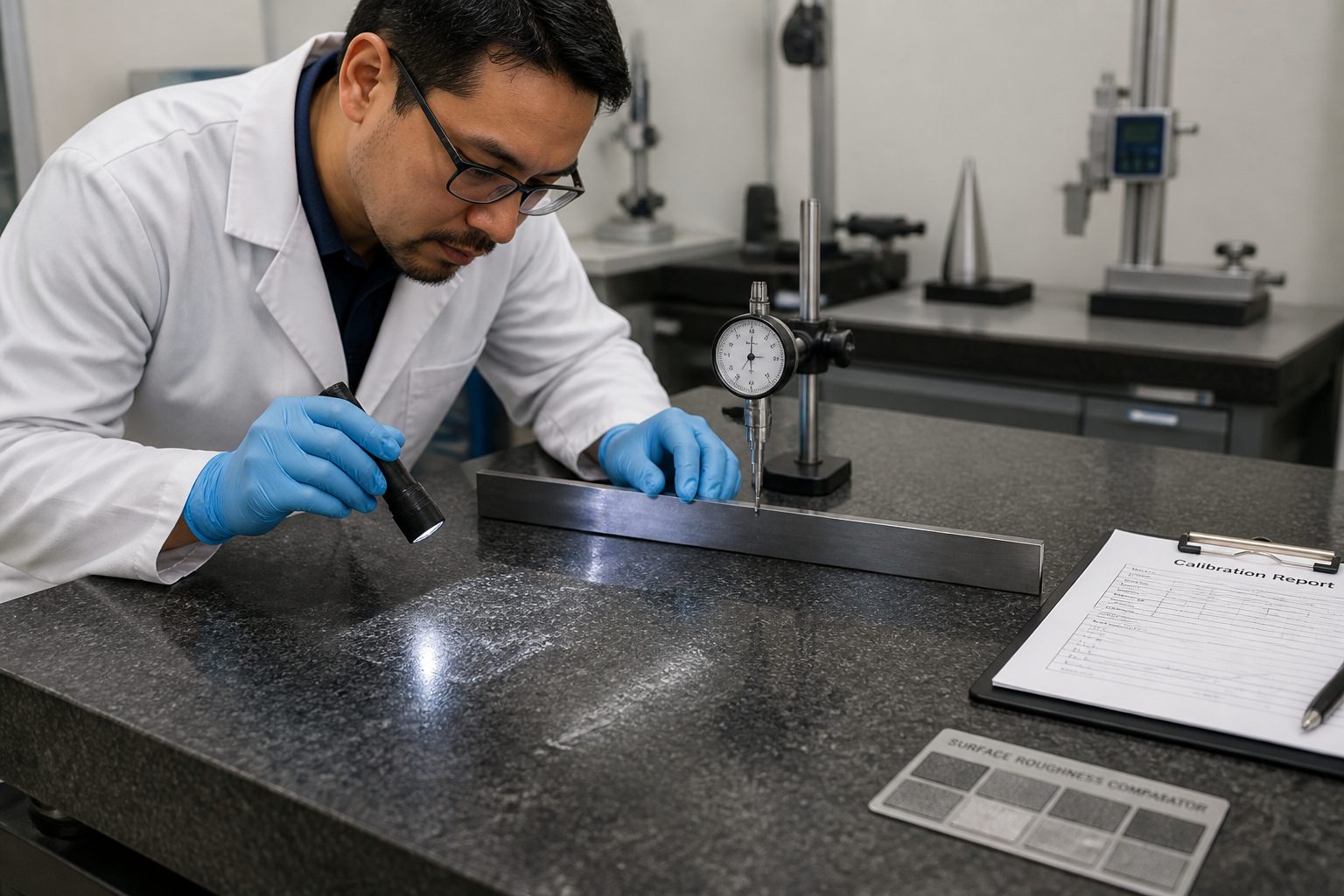
The Most Common Wear Patterns and What Causes Them
Several distinct surface plate wear patterns emerge from typical usage, each telling a story about how the plate is being used. Recognizing these specific patterns helps pinpoint the root causes and guides corrective actions.
The most common issues include general dishing, localized high spots, and edge breakdown, all of which compromise the plate’s critical flatness specification.
| Wear Pattern | Description | Primary Cause |
|---|---|---|
| Center Wear (Dishing) | A concave depression in the middle of the plate. | Concentrated work in the central area, heavy parts. |
| Edge Wear | Rounded or chipped edges, often near the front. | Parts sliding off, accidental impacts, frequent edge referencing. |
| Localized High Spots | Small, raised areas that deviate from flatness. | Impacts, embedded foreign debris, uneven cleaning. |
| Scratches/Grooves | Linear depressions on the surface. | Dragging sharp objects, abrasive particles trapped under parts. |
| Corner Degradation | Chips or wear at the plate’s corners. | Accidental bumps from forklifts or tools, dropping heavy items. |
Why Repeating Work in One Area Speeds Up Wear
Repetitive use of a single area on a surface plate is the quickest way to induce significant wear. When all inspection tasks or machining setups consistently occupy the same footprint, the abrasive forces are concentrated there.
This concentrated friction and pressure accelerate the removal of granite material in that specific zone. Imagine rubbing sandpaper on one spot versus spreading it out; the localized area wears down much faster.
This leads directly to what is commonly known as center wear, or dishing, where a noticeable depression forms. The more frequently a specific area is used, the deeper and wider this depression becomes.
Once center wear develops, it creates a false reference plane, causing all measurements taken in that area to be inaccurate. Even if other parts of the plate remain flat, the primary working zone is compromised.
This localized degradation not only impacts measurement precision but also shortens the overall usable lifespan of the surface plate. Spreading out your work is a simple yet powerful strategy to mitigate this specific surface plate wear pattern.
Identifying High Spots and Low Spots in Daily Use
Detecting high spots and low spots, which are the core manifestations of surface plate wear patterns, is crucial for maintaining accuracy. You can often identify these deviations through careful observation and simple tactile tests during daily operations.
A common sign of a low spot, or dishing, is when a gage or workpiece “rocks” slightly when placed in a particular area. The rocking indicates that the surface is no longer perfectly flat, causing instability.
High spots might be less obvious tactilely but can cause a gage to bind or offer unexpected resistance when slid across them. Sometimes, a high spot can feel like a slight bump or resistance under a sensitive fingertip.
Visual inspection under good lighting can also reveal subtle changes in reflectivity or texture that suggest wear. Look for duller areas where the granite’s finely polished surface has been abraded away.
Paying attention to consistent measurement discrepancies is another strong indicator of surface plate wear patterns. If a specific dimension always reads slightly off when measured in a particular zone, the plate itself might be the culprit.
Tools and Simple Tests to Confirm Suspected Wear
While visual and tactile checks offer initial clues, confirming surface plate wear patterns requires more precise tools and methods. These tests provide quantifiable data to assess the extent of the flatness deviation.
Understanding these techniques helps you move beyond suspicion to a clear diagnosis of your plate’s condition.
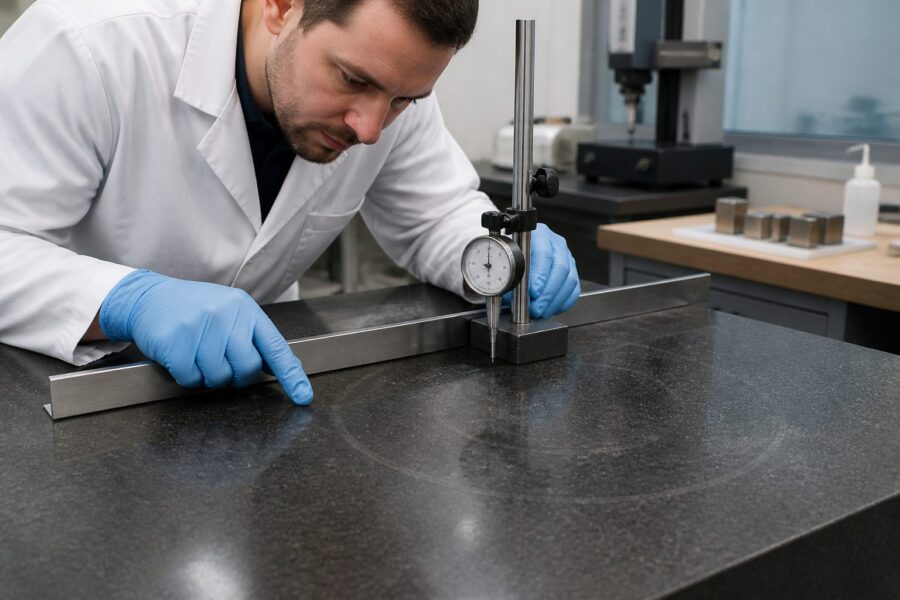
- Straightedge and Feeler Gages: Place a certified straightedge across the plate and check for gaps with feeler gages.
- Repeat Reading Test: Use a height gage and a master part, taking multiple readings across different areas of the plate.
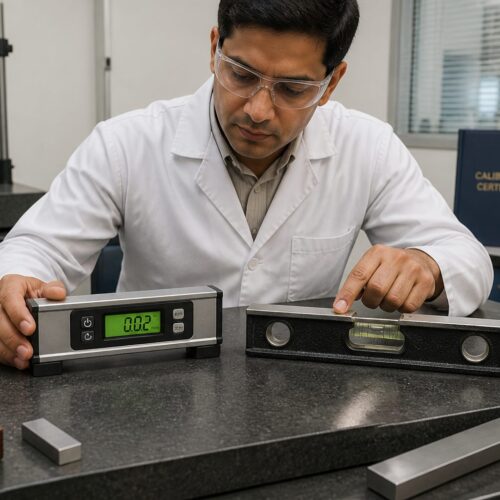
- Electronic Levels: High-precision electronic levels can detect minute angular deviations across the surface.
- Autocollimators: These optical instruments measure small angles and are excellent for mapping flatness.
- Lapping Indicators: These specialized tools, often used by calibration technicians, measure the thickness of a thin film between a master flat and the surface plate, revealing deviations.
How Cleaning and Grit Control Reduce Wear
Effective cleaning and rigorous grit control are fundamental practices for minimizing surface plate wear patterns. A clean surface directly reduces the abrasive action that causes degradation over time.
Any dust, metal shavings, or other shop contaminants that settle on the surface plate act as microscopic cutting tools when parts or gages slide across them. These particles embed themselves into the granite or create friction points, accelerating wear.
Regular cleaning with a specialized surface plate cleaner and a soft, lint-free cloth removes these abrasive agents. This simple habit dramatically slows down the rate at which the granite wears down.
Maintaining a clean surrounding environment is equally important, as it prevents new contaminants from settling on the plate. Consider using air filters and keeping the area around the plate free of grinding or machining operations.
Always wipe down the bottom of any workpiece or gage before placing it on the surface plate. This prevents transferring grit from the part itself onto the precision reference surface, directly combating wear.
Workholding and Contact Practices That Protect Flatness
The way you handle and secure workpieces on a surface plate significantly impacts its long-term flatness. Poor workholding and contact practices can quickly exacerbate surface plate wear patterns.
Avoid dragging heavy or sharp-edged parts across the surface plate whenever possible. Instead, lift and place items carefully, especially those with rough bases or burrs, to prevent scratching and localized wear.
Use appropriate parallels, V-blocks, and clamps that distribute weight evenly and minimize direct contact between rough part surfaces and the granite. This reduces stress and abrasive action on the plate.
When clamping, ensure that the clamping force is applied in a way that does not distort the workpiece or the surface plate itself. Over-tightening can create concentrated pressure points that lead to localized high spots or depressions.
Consider using a sacrificial plate or a thin, hard plastic sheet under extremely heavy or abrasive workpieces. While this adds a layer, it protects the primary surface plate from direct wear and extends its life considerably.
Rotating Work Zones: A Simple Habit With Big Payoff
One of the most effective and easiest ways to combat surface plate wear patterns is to consciously rotate your work zones. This simple habit has a surprisingly large positive impact on the longevity and accuracy of your surface plate.
Instead of consistently using the dead center of the plate for all measurements, try to utilize different quadrants. Move your setup to the front-left, then the back-right, then the front-right, and so on.
By spreading the wear across the entire surface, you prevent the rapid development of deep center wear or localized depressions. This ensures that the overall flatness is maintained more uniformly over time.
Think of it like rotating the tires on your car; you distribute the stress and wear evenly, making them last longer. The same principle applies directly to your granite surface plate.
Implementing a rotation schedule, even a mental one, helps avoid the concentrated friction that causes severe surface plate wear patterns. This practice significantly extends the interval between costly reconditioning services.
When Wear Requires Reconditioning
Despite diligent preventive measures, surface plate wear patterns will eventually accumulate to a point where reconditioning becomes necessary. Ignoring severe wear leads to unacceptable measurement errors and compromised product quality.
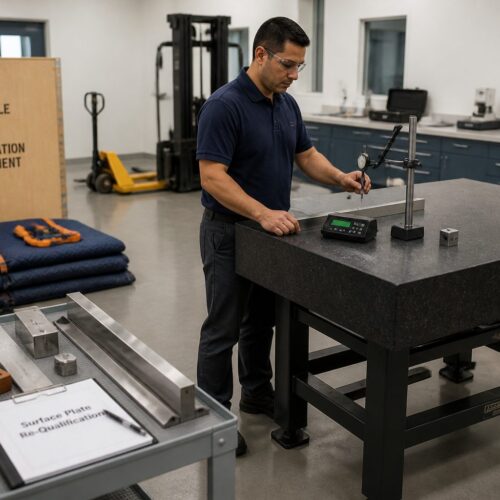
The decision to recondition typically arises when calibration results show that the plate no longer meets its specified flatness tolerance. This might be a Grade A inspection plate or a Grade B production plate; each has limits.
Visible signs of deep center wear, significant localized high spots, or extensive chipping along edges are also clear indicators. If a straightedge reveals noticeable gaps or a height gage gives inconsistent readings across the plate, it is time for professional intervention.
Reconditioning involves a specialized lapping process where a thin layer of granite is carefully removed from the surface. Skilled technicians use abrasive compounds and precise techniques to restore the plate to its original flatness specification.
This process is not just about making the plate look new; it is about restoring its metrological integrity. A properly reconditioned plate performs like a new one, providing accurate measurements for many more years.
Preventive Maintenance Plan You Can Maintain
A structured preventive maintenance plan is essential for extending the life of your surface plate and minimizing surface plate wear patterns. This isn’t about complex procedures, but consistent, achievable habits.
Start with daily cleaning; wipe the plate down before and after each use with a suitable cleaner and cloth. This immediately removes abrasive grit that causes wear.
Implement a weekly or bi-weekly visual inspection schedule. Look for any new scratches, chips, or areas that appear duller, which could indicate developing wear or localized high spots.
Train all users on proper handling techniques, emphasizing lifting parts rather than dragging them. Educate staff on the importance of rotating work zones to distribute wear evenly across the surface.
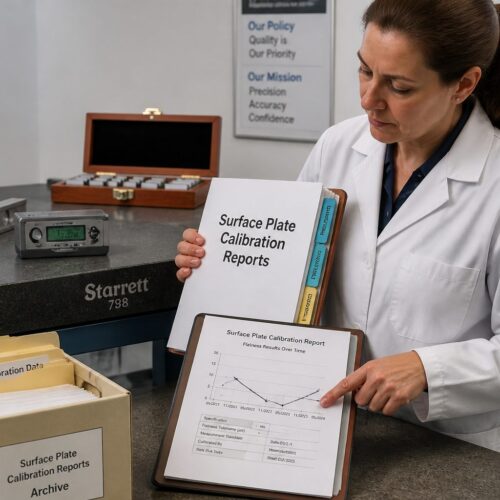
Schedule regular, professional calibration and inspection, typically annually or semi-annually depending on usage intensity. Calibration provides an objective assessment of the plate’s flatness and identifies any developing surface plate wear patterns before they become critical.
Keep a log of these inspections and calibrations, noting any observations or adjustments. This historical data helps track wear progression and predict when reconditioning might be necessary, avoiding surprises.
Ensure the surface plate is always covered when not in use to protect it from dust, debris, and accidental impacts. A simple cover is a highly effective barrier against contaminants and minor damage.
Conclusion
Granite surface plates are indispensable tools in precision manufacturing and quality control. Their accuracy directly impacts the reliability of every measurement and the quality of every product.
Understanding surface plate wear patterns is not merely an academic exercise; it is a practical necessity for anyone operating a metrology lab or machine shop. These patterns are clear indicators of how a plate is being used and how its precision is being affected.
By recognizing common issues like center wear, localized high spots, and edge damage, you gain the knowledge to intervene proactively. Simple habits like rotating work zones and rigorous cleaning can significantly slow down the degradation process.
Utilizing tools like straightedges, electronic levels, or specialized lapping indicators confirms suspected wear and provides objective data. This data then guides decisions about maintenance and eventual reconditioning.
A well-implemented preventive maintenance plan, built on consistent care and regular professional calibration, preserves the integrity of your surface plate. This commitment ensures your measurements remain accurate, your products stay within tolerance, and your investment in precision equipment continues to pay off for years to come.