
Maintaining the accuracy of your precision measurements starts long before a calibration technician arrives. The day-to-day interactions with your granite surface plate significantly impact its long-term reliability and performance. A consistent granite surface plate daily care checklist is not just good practice; it is essential for preserving the integrity of your metrology work.
Ignoring proper surface plate housekeeping can lead to premature wear, compromised flatness, and ultimately, incorrect measurement results. Even microscopic debris can introduce errors, making a thorough routine indispensable for any quality-focused operation. This guide provides actionable steps to ensure your granite plate remains a dependable foundation for precision.
Precision metrology demands absolute consistency, and your surface plate is the bedrock of that consistency. Implementing a robust granite surface plate daily care checklist protects your investment and safeguards the accuracy of every critical measurement you take. Let’s explore the crucial steps to keep your metrology bench routine sharp and effective.
A well-maintained surface plate supports not only immediate measurement accuracy but also extends the life of your valuable equipment. Adhering to these simple routines can prevent costly repairs and recalibrations, ensuring continuous high-precision output. Your commitment to daily care directly translates into confidence in your measurement results.
Why Daily Care Matters More Than “Deep Cleaning”
Many facilities focus heavily on annual or semi-annual calibrations, sometimes overlooking the consistent daily practices that truly preserve a granite surface plate. While periodic calibration is absolutely necessary, it only assesses the plate’s condition at a single point in time. Daily care, by contrast, actively prevents degradation and maintains flatness over the long haul.
Think of it like dental hygiene; brushing your teeth every day is far more effective at preventing cavities than relying solely on annual deep cleans. Small, consistent efforts prevent the accumulation of problems that can become severe and costly to fix. This proactive approach is the core of effective surface plate housekeeping.
A granite surface plate is designed to be stable, but it is not impervious to environmental factors or daily use. Dust, coolant residue, metal particles, and even skin oils can build up, forming a thin, abrasive film that wears down the surface. Regular cleaning removes these contaminants before they can cause significant damage or affect measurements.
This consistent attention also helps identify minor issues before they escalate into major problems requiring expensive repairs or replacement. Spotting a small chip or an unusual wear pattern early means you can address it proactively. Such vigilance is a key component of any effective metrology bench routine.
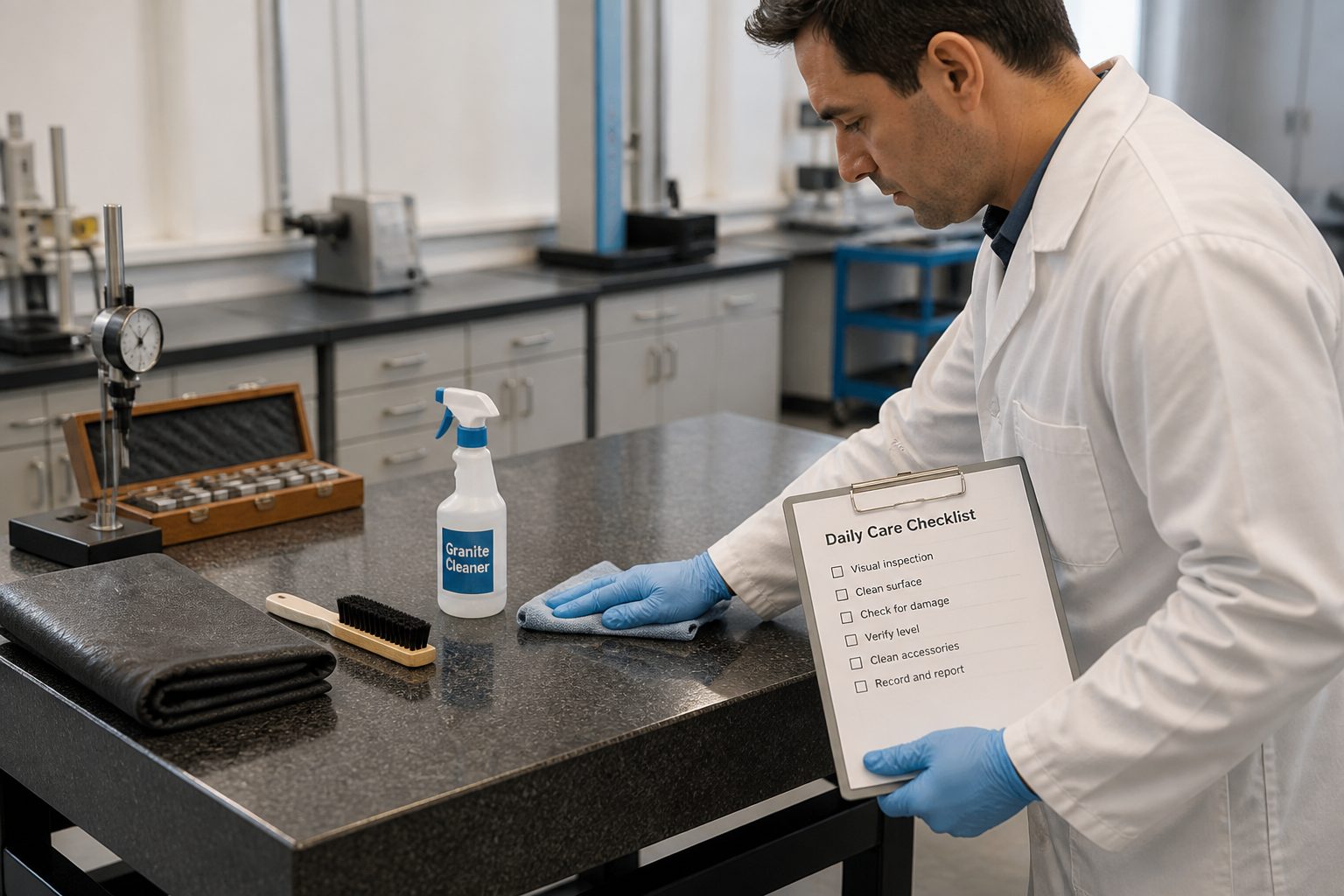
Ultimately, daily care ensures that your surface plate maintains its specified accuracy between calibrations, providing a reliable reference for every measurement. It reduces the likelihood of unexpected measurement errors and extends the useful life of the plate, proving that prevention is always better than cure. This consistent granite surface plate daily care checklist makes all the difference.
Before You Start: Quick Safety and Handling Rules
Before beginning any cleaning or inspection, always prioritize safety to prevent injury or damage to the plate. Ensure adequate lighting is available to clearly see the entire surface and any potential hazards. A well-lit workspace is crucial for effective granite plate inspection.
Wear appropriate personal protective equipment, such as gloves, to protect your hands from cleaning solutions and sharp edges. Avoid wearing jewelry that could scratch the delicate surface of the plate. Common sense precautions are always the best starting point for a reliable metrology bench routine.
Never place heavy or sharp objects directly onto the surface plate without proper protection or careful handling. Dropping a tool, even a small one, can cause irreversible damage like chipping or denting the granite. Always treat the plate with the respect its precision demands.
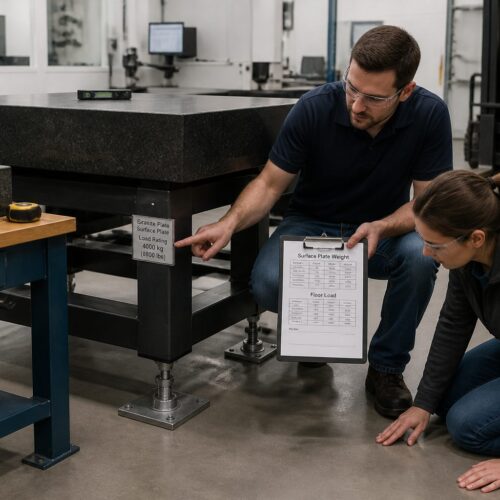
When moving around the surface plate, be mindful of your surroundings and avoid bumping into its stand or legs. Any sudden impact can disturb the plate’s level or even cause structural damage over time. Stability is paramount for accurate measurements.
If you need to move the plate itself, always use appropriate lifting equipment and follow manufacturer guidelines to prevent injury and damage. Never attempt to lift a large granite surface plate by hand, as this can be extremely dangerous. Proper handling ensures the longevity and accuracy of your investment.
Visual Check: Spotting Chips, Dings, and New Damage
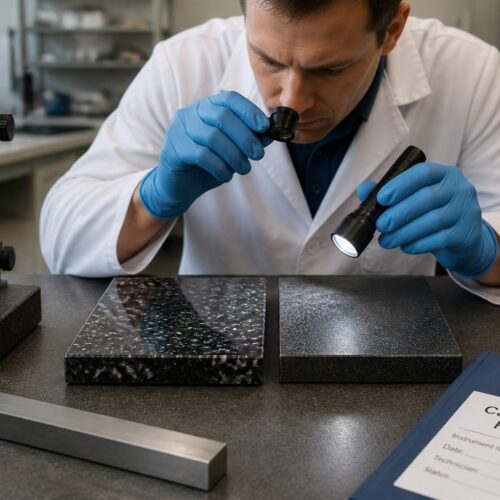
A thorough visual inspection is the first line of defense in your granite surface plate daily care checklist. Before any cleaning begins, carefully examine the entire working surface for any visible signs of damage. Look for chips, dings, scratches, or any unusual discoloration that might indicate a problem.
Pay close attention to the edges and corners, as these areas are more susceptible to impact damage from tools or accidental bumps. Even small imperfections can affect the accuracy of measurements, particularly when working close to the plate’s perimeter. This initial granite plate inspection sets the stage for accurate work.
| Damage Type | Appearance | Potential Impact on Measurements |
|---|---|---|
| Chips | Small, irregular pieces of granite broken off, often at edges. | Creates uneven reference points, affects flatness in localized areas. |
| Dings/Pits | Small indentations or depressions on the surface. | Can trap debris, alter local flatness, and cause instability for parts. |
| Scratches | Fine lines or grooves across the surface. | May not significantly affect flatness unless deep, but can accumulate debris. |
| Stains/Discoloration | Dark spots, oil residue, or chemical marks. | Indicates contamination, can attract dust, may obscure small damage. |
| Wear Spots | Areas appearing lighter or smoother due to friction. | Suggests localized use, potentially affecting flatness over time. |
Feel Check: How to Detect Grit Without Scratching
After your visual inspection, a “feel check” is an excellent way to detect microscopic grit and debris that might not be visible to the naked eye. This step is a critical part of your granite surface plate daily care checklist, ensuring no abrasive particles remain before you place sensitive instruments. Your fingertips are surprisingly sensitive metrology tools in themselves.
To perform this check safely, use the side of your clean, bare hand or a very soft, lint-free cloth. Gently glide it across the surface plate in a consistent pattern, covering the entire working area. You are looking for any subtle resistance, grittiness, or unevenness that indicates contamination.
Do not press down firmly, as this could embed any existing grit further into the granite or scratch the surface. The goal is a light, sweeping motion that allows you to feel changes in texture. This delicate touch helps preserve the plate’s precision finish and is a core part of effective surface plate housekeeping.
If you detect any grit, immediately stop the feel check and proceed to the wipe-down routine. Continuing to rub over gritty areas will only spread the abrasive particles and potentially cause damage. Prompt removal is always the best course of action to maintain your metrology bench routine.
This tactile inspection is particularly important after any machining operations nearby or when new tools have been introduced to the workspace. It helps confirm the effectiveness of your cleaning efforts and provides an extra layer of assurance for precision work. A proper granite plate inspection involves both sight and touch.
Wipe-Down Routine That Avoids Smearing and Residue
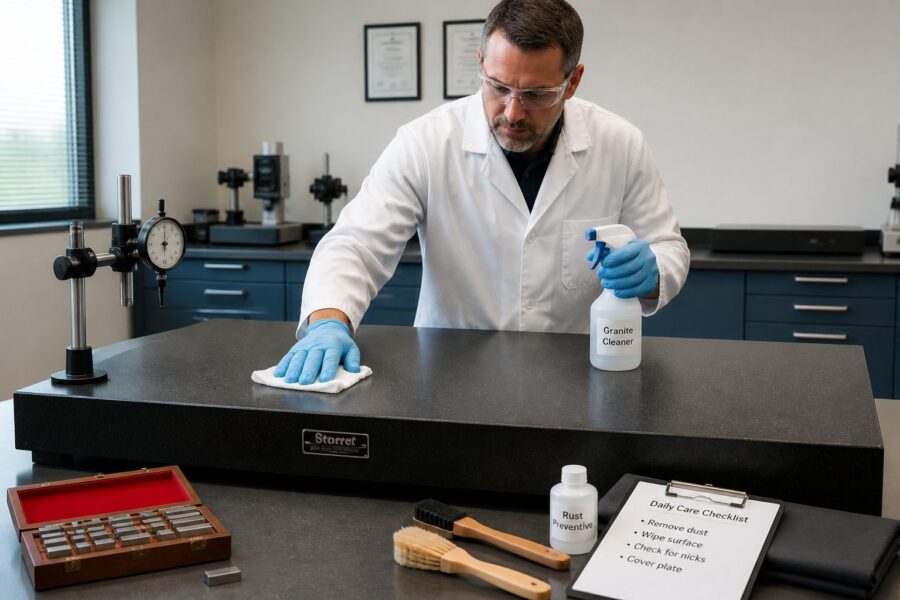
An effective wipe-down routine is paramount for maintaining the pristine surface of your granite plate, preventing smearing and residue build-up. Always use a specialized surface plate cleaner or a mixture of denatured alcohol and distilled water. Avoid harsh chemicals or household cleaners, which can leave residues or even damage the granite.
Apply the cleaning solution sparingly to a clean, lint-free cloth or paper towel, never directly onto the plate. Too much liquid can penetrate the granite’s pores, potentially causing issues over time. This careful application is a vital step in your granite surface plate daily care checklist.
Wipe the entire surface in a consistent, overlapping pattern, ensuring all areas are covered. Use light pressure to pick up debris rather than pushing it around. A methodical approach prevents missed spots and ensures uniform cleanliness for your metrology bench routine.
Immediately follow with a dry, clean, lint-free cloth to remove any remaining moisture and cleaning solution. This second wipe is crucial for preventing streaks or residue that could affect future measurements. The goal is a perfectly dry and spotless surface after every cleaning.
Change your cleaning cloths frequently, especially if they become visibly dirty, to avoid reintroducing contaminants to the plate. Using a fresh cloth ensures maximum effectiveness and prevents cross-contamination. This diligent surface plate housekeeping maintains the highest standards of precision.
Managing Tools on the Plate: What Belongs and What Doesn’t
The granite surface plate is a precision reference, not a workbench or a storage area for tools. Mismanaging tools on its surface is a common cause of damage and compromised accuracy. Understanding what belongs on the plate and what does not is a fundamental aspect of proper surface plate housekeeping.
Only measuring instruments actively in use should ever be placed directly on the surface plate, and even then, with extreme care. Heavy or sharp tools should have designated storage areas nearby, never resting on the plate itself. This discipline is critical for maintaining your granite surface plate daily care checklist.
- Only precision measuring instruments currently in use
- No general-purpose hand tools (wrenches, screwdrivers)
- No parts being machined or deburred
- No abrasive materials or grinding dust
- No food, drinks, or personal items
- No heavy fixtures without protective pads
- No items with sharp edges directly contacting the granite
- No magnetic tools without proper isolation
Controlling Dust and Debris Around the Stand and Base
The integrity of your granite surface plate extends beyond its immediate working surface; the surrounding environment, particularly the stand and base, plays a significant role. Dust, chips, and debris accumulating around the base can be easily transferred to the plate, negating your careful cleaning efforts. Effective surface plate housekeeping includes the entire workstation.
Regularly vacuum or sweep the floor around the surface plate stand to remove metal shavings, dust, and other airborne particles. A clean perimeter reduces the chances of these contaminants becoming airborne and settling on the precision surface. This proactive step is an important part of your granite surface plate daily care checklist.
Wipe down the surface plate stand and any adjacent shelves or drawers with a damp cloth to capture settled dust. Avoid using compressed air directly near the plate, as this can simply blow debris onto the granite surface. A gentle, controlled cleaning method is always preferred.
Ensure that the area immediately surrounding the surface plate is clear of any non-essential items or clutter. Clutter can harbor dust and make effective cleaning more difficult. A tidy workspace is inherently a cleaner workspace, contributing to a better metrology bench routine.
If your facility performs machining operations nearby, consider implementing physical barriers or air filtration systems to minimize the spread of abrasive particles. Protecting the broader environment around the plate is just as important as cleaning the plate itself. This holistic approach ensures comprehensive granite plate inspection and care.
End-of-Shift Steps: Covering, Clearing, and Resetting
The end of each shift or workday requires a specific set of actions to protect your granite surface plate and prepare it for the next user. These end-of-shift steps are a non-negotiable part of your granite surface plate daily care checklist, safeguarding its accuracy overnight and into the next day. Consistency here prevents cumulative problems.
First, thoroughly clear all measuring instruments, workpieces, and any other items from the surface of the plate. Nothing should remain on the granite that is not an integral part of its structure or a permanent fixture. A clean slate ensures the plate is ready for immediate use without prior setup or removal tasks.
Perform a final wipe-down of the entire surface using your approved cleaning solution and lint-free cloths. This ensures that any dust or residue accumulated during the day is removed before it can settle or harden. This last cleaning is critical for maintaining overall surface plate housekeeping.
Once the plate is clean and dry, cover it with a protective, breathable cover. A proper cover shields the granite from airborne dust, accidental splashes, and minor impacts, but allows for air circulation to prevent moisture buildup. This simple action significantly reduces daily wear and tear.
Finally, ensure the immediate area around the surface plate is tidy and free of clutter, ready for the next shift. This “reset” mentality fosters a culture of precision and care, making the metrology bench routine more efficient for everyone. These steps ensure your granite plate inspection starts from a clean baseline each day.
What to Record Each Day (So Problems Don’t Repeat)
Documentation is an often-overlooked but incredibly valuable part of your granite surface plate daily care checklist. Keeping a simple log of daily observations and actions can help identify recurring issues, track wear patterns, and inform maintenance decisions. This proactive record-keeping turns observations into actionable insights for your metrology bench routine.
Record the date and time of the daily inspection and cleaning. Note any visible damage discovered, such as new chips or scratches, and their approximate location. This creates a historical record of the plate’s condition over time, which is invaluable for a comprehensive granite plate inspection.
Document any unusual findings during the “feel check,” such as persistent grit or sticky residue. Also, record the cleaning solution used and the personnel who performed the cleaning. This helps ensure accountability and consistency in surface plate housekeeping.
If any corrective actions were taken, such as more intensive cleaning in a specific spot or reporting a significant chip, make sure to detail these. This log can be a powerful tool for justifying repairs or recalibrations when the time comes. Good records prevent problems from repeating unnecessarily.
Regular review of these daily logs can reveal trends, such as certain areas experiencing more wear or particular types of contamination recurring. This data empowers you to adjust your daily care procedures or address environmental factors proactively. Consistent documentation provides a clear picture of your surface plate’s health.
Common Daily Mistakes and How to Fix Them Fast
Even with the best intentions, common mistakes can undermine your granite surface plate daily care checklist. Recognizing these pitfalls and knowing how to correct them quickly ensures that your efforts remain effective. Vigilance against these errors is key to maintaining precision.
One frequent error is using a dirty cloth for cleaning, which simply redistributes contaminants or scratches the surface. The fix is immediate: always use fresh, lint-free cloths for each cleaning session. A clean cloth is fundamental to proper surface plate housekeeping.
Another common mistake involves leaving tools or workpieces on the plate overnight or for extended periods. This can cause localized wear or even minor indentations over time. The solution is simple: clear the plate completely at the end of every shift and cover it properly. This habit strengthens your metrology bench routine.
Using incorrect cleaning solutions, such as window cleaner or strong detergents, can leave behind sticky residues or damage the granite’s finish. Always stick to specialized surface plate cleaners or a verified denatured alcohol/distilled water mix. Proper chemicals are crucial for effective granite plate inspection and care.
Ignoring minor chips or dings is a mistake that can lead to larger problems or affect measurement accuracy over time. Promptly document any new damage and consult with a professional for assessment or repair. Addressing small issues quickly prevents them from escalating into major expenses.
Finally, neglecting to clean the area around the stand allows dust and debris to constantly recontaminate the plate. Make sure to regularly sweep and wipe down the surrounding floor and stand. A holistic approach to cleanliness is essential for maintaining the highest standards of metrology.
Conclusion
Implementing a comprehensive granite surface plate daily care checklist is not just an optional task; it is a fundamental requirement for maintaining measurement accuracy and extending the life of your valuable equipment. Consistent surface plate housekeeping prevents the gradual degradation that can undermine even the most sophisticated metrology operations. Every precise measurement relies on this foundation.
By prioritizing daily visual and feel checks, adhering to a strict wipe-down routine, and managing tools with discipline, you actively protect your investment. These simple, consistent actions contribute significantly more to long-term stability than sporadic deep cleans alone. Your metrology bench routine benefits immensely from this dedication.
Remember to extend your care to the surrounding environment, controlling dust and debris around the stand and base to prevent recontamination. The end-of-shift steps, including thorough clearing and covering, are crucial for preparing the plate for the next day’s work. These steps are a cornerstone of effective granite plate inspection.
Furthermore, daily record-keeping provides invaluable insights into the plate’s condition, helping to identify and address issues before they become critical. Avoiding common mistakes like using dirty cloths or improper cleaners ensures your efforts are always productive. A well-documented process supports continuous improvement.
Embrace these daily practices as an integral part of your quality control process. The small amount of time invested each day in your granite surface plate daily care checklist pays dividends in reliable measurements, reduced maintenance costs, and unwavering confidence in your precision work. Consistency in care translates directly into confidence in results.