
Once cleaned and dried, transport parts to the surface plate using clean, dedicated trays or holders. Avoid touching the critical surfaces of the part with bare hands or un-gloved hands. This maintains the part’s cleanliness until it reaches the inspection area.
Remember that workholding cleanliness is paramount; the fixture holding the part can be a source of contamination itself. Ensure all fixtures are also thoroughly cleaned before they are used on the surface plate. This holistic approach to cleanliness ensures the integrity of your measurements.
Wipe discipline: one direction, one use, then discard
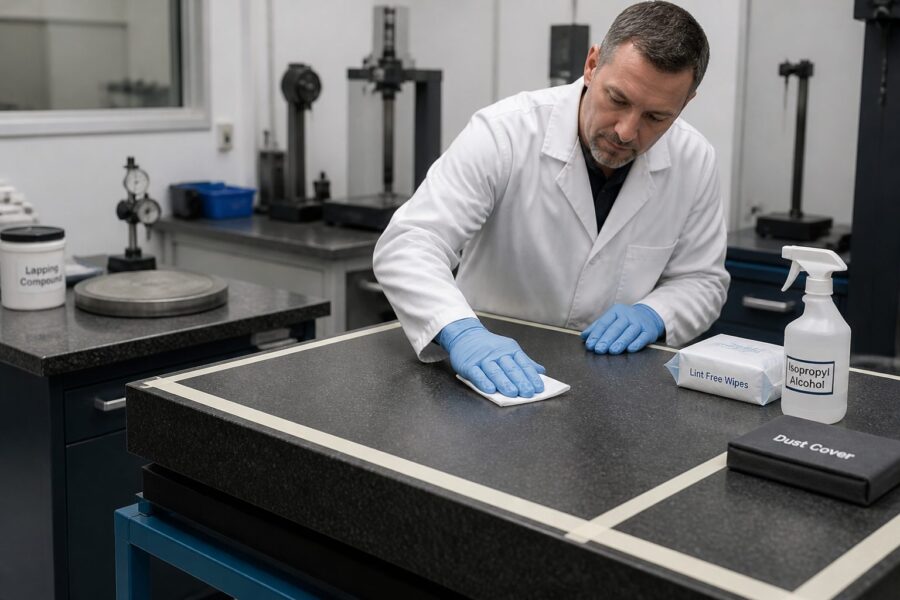
Proper wipe discipline is a simple yet incredibly effective strategy for abrasive grit control around your surface plate. The principle is straightforward: never introduce contaminants with your cleaning tools. This means adopting rigorous habits for how wipes are used and disposed of.
Always use clean, lint-free, and preferably cleanroom-grade wipes specifically designated for surface plate cleaning. Never use general shop rags or cloths that may have been used for other tasks. These dedicated wipes prevent the transfer of unseen abrasive particles.
- Use a fresh wipe for each cleaning task
- Wipe in one continuous, overlapping direction
- Never wipe back and forth over the same area
- Fold the wipe to expose a clean surface for subsequent passes
- Discard wipes immediately after use
- Avoid touching the clean surface with used wipe sections
- Use different colored wipes for different cleaning stages
Handling compound transfers from benches and carts
Lapping compounds have a sneaky way of migrating, often traveling from workbenches and carts to unintended areas. Preventing this insidious spread is vital for effective abrasive grit control and maintaining the cleanliness of your surface plate. You must actively manage these potential transfer points.
Designate specific work areas for lapping, grinding, and other abrasive processes, physically separating them from the metrology lab. These areas should be equipped with their own tools, cleaning supplies, and ventilation. This minimizes the chance of surface plate lapping compound contamination.
Implement strict protocols for cleaning workbenches and carts used in abrasive operations. Use industrial vacuums with HEPA filters, rather than sweeping, to capture fine abrasive dust without making it airborne. Follow with a thorough wipe-down using appropriate degreasers and cleaning agents.
Never bring carts or transport trays that have been in an abrasive work area directly into the no-abrasive zone. If items must be transferred, use dedicated clean carts or transfer parts to clean trays at a designated boundary. This acts as a critical checkpoint.
Operators working with lapping compounds should have dedicated protective clothing, such as smocks or aprons, that are removed before entering the metrology area. Changing gloves and wiping down shoes are also essential steps in preventing personal transfer of grit.
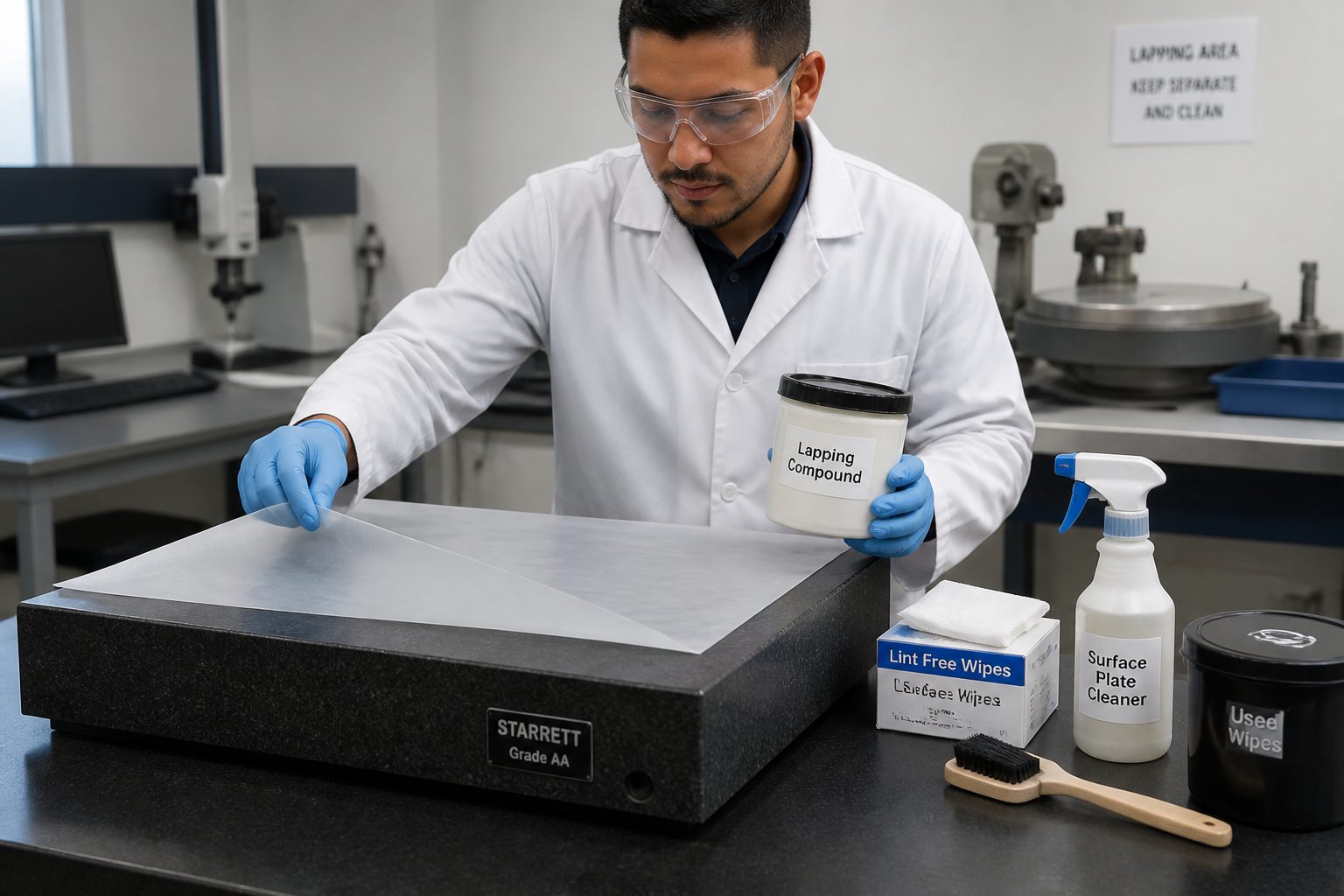
Consider using disposable coverings or liners on benches and carts in abrasive areas. These can be easily replaced, removing accumulated grit and preventing it from spreading. This simple measure significantly reduces the overall contamination burden in the workshop.
Regularly inspect floors and pathways between abrasive areas and the metrology lab for any signs of compound residue. Frequent cleaning of these transitional spaces with industrial floor cleaners helps to interrupt the migration of abrasive particles. Proactive cleanliness is the best defense.
What to do if you suspect grit on the surface
Even with the best cleanroom style habits, suspicion of surface plate lapping compound contamination can arise. The first sign is often inconsistent or erratic measurement readings that defy explanation. Do not ignore these subtle indicators; they point to a fundamental problem.
Immediately stop all measurement activity on the affected surface plate. Continuing to use a contaminated plate will only exacerbate the problem, potentially damaging both the plate and the workpieces. Prioritize investigation and remediation over continued use.
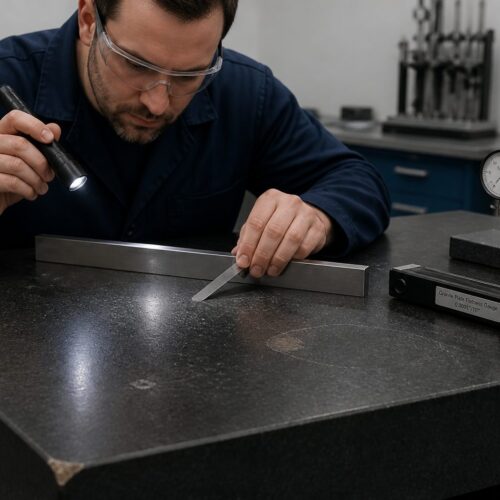
Visually inspect the surface plate under good lighting, perhaps with a magnifying glass. Look for any visible particles, streaks, or subtle changes in the surface texture. Sometimes, dried compound residue leaves a faint, hazy film that is visible only at certain angles.
Perform a light drag test with a clean, lint-free finger (if safe and approved for your environment) or a dedicated test block. A gritty sensation, even slight, confirms the presence of abrasive particles. This tactile feedback is often more sensitive than visual inspection for fine grit.
If you have access to a surface roughness tester or a profilometer, take readings across the suspected areas. A sudden spike in roughness values or an anomalous profile directly indicates foreign material or surface damage. This provides objective evidence of contamination.
Document your observations thoroughly, including the date, time, specific areas of concern, and any affected parts or measurements. This record is invaluable for tracking patterns of contamination and identifying potential sources. Good documentation aids in root cause analysis.
Do not attempt a full deep clean immediately without proper assessment. A hasty cleaning might just spread the contamination further or cause more damage. A systematic approach is always best when addressing suspected abrasive grit control issues.
Deep-clean steps when contamination is confirmed
Once surface plate lapping compound contamination is confirmed, a thorough deep-clean procedure is essential to restore the plate’s accuracy. This process goes beyond routine wiping and requires careful attention to detail. Skipping steps can lead to persistent issues.
First, physically remove any visible particles using a soft brush or a specialized surface plate cleaner and scraper. Be extremely gentle to avoid scratching the granite. The goal is to dislodge loose grit without embedding it further.
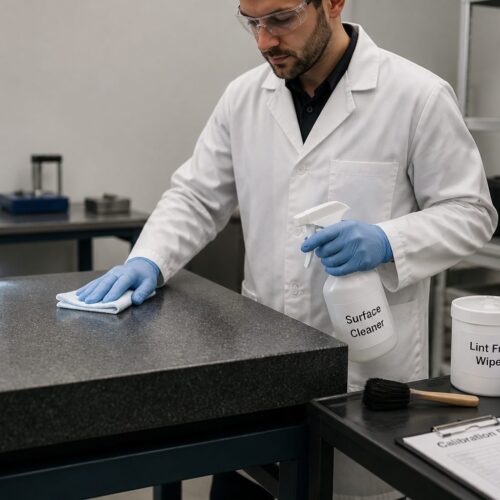
Apply a generous amount of an approved, high-quality surface plate cleaner specifically designed for granite. These cleaners are formulated to lift and suspend contaminants without leaving residues. Avoid harsh solvents that could damage the plate or leave films.
Allow the cleaner to dwell for the recommended time, letting it penetrate and loosen the abrasive particles and any binding agents. Do not let the cleaner dry on the surface. This soaking action is crucial for effective removal of embedded residues.
Using cleanroom-grade, lint-free wipes, wipe the entire surface in a single, overlapping direction. Apply firm but even pressure, turning or discarding wipes frequently to ensure you are always using a clean section. This prevents redeposition of contaminants.
Repeat the cleaning and wiping process multiple times, using fresh cleaner and wipes each time, until no residue or gritty feeling remains. A final wipe with a pure isopropyl alcohol or acetone can help ensure a completely residue-free surface. This ensures thorough abrasive grit control.
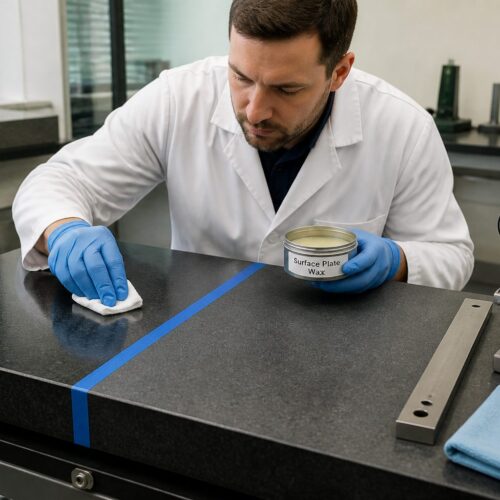
After cleaning, perform a final inspection using a light source held at a low angle across the surface. This technique highlights any remaining particles or streaks. You should also conduct a drag test with a clean gage block to confirm complete cleanliness and smoothness. Only then is the plate ready for use.
Training tips that stick with operators and inspectors
Effective training is paramount for embedding cleanroom style habits and preventing surface plate lapping compound contamination. Simply telling people to “be careful” is not enough; practical, memorable instruction makes a real difference. Focus on showing, not just telling, the importance of these protocols.
Start with a clear explanation of why cleanliness is so critical, demonstrating the impact of even microscopic grit on measurements. Use visual aids like magnified images of contaminated surfaces or examples of flawed parts. This contextual understanding helps the information stick.
Provide hands-on training for every cleaning step, from preparing parts to wiping the surface plate. Allow operators to practice under supervision, correcting techniques immediately. Practical experience reinforces proper procedures better than any lecture.
Develop clear, concise, and easily accessible visual guides or checklists posted near each surface plate. These reminders should outline the “no-abrasive zone” rules, part cleaning sequence, and wipe discipline. Visual cues serve as constant refreshers.
Emphasize the role of personal responsibility and accountability in maintaining the integrity of metrology equipment. Explain that everyone contributes to the collective quality of measurements. This fosters a sense of ownership over the cleaning process.
Regularly schedule refresher training sessions, perhaps quarterly or semi-annually, to reinforce best practices and address any new challenges. Use these opportunities to share lessons learned from past contamination incidents. Continuous education is key for abrasive grit control.
Encourage operators and inspectors to report any suspected contamination or process breaches without fear of reprisal. Create an open environment where identifying problems is seen as a proactive contribution to quality, not a mistake. This ensures issues are addressed quickly and effectively.
Conclusion
Preventing surface plate lapping compound contamination is a continuous effort, not a one-time fix. It demands vigilance, consistent application of best practices, and a deep understanding of metrology principles. Your surface plate is the bedrock of your precision measurements, and its integrity must be protected at all costs.
By implementing a robust “no-abrasive zone,” establishing meticulous cleaning protocols for incoming parts, and enforcing strict wipe discipline, you build a formidable defense. These cleanroom style habits are not just suggestions; they are fundamental requirements for accurate work. They ensure reliable dimensional inspections.
Remember that workholding cleanliness and careful handling of all items near the plate are also critical components of a comprehensive strategy. Tiny particles can cause significant errors, so every detail matters. Proactive abrasive grit control saves time, money, and prevents costly rework.
Investing in thorough training that emphasizes the ‘why’ behind the ‘what’ helps foster a culture of precision and responsibility. When your team understands the impact of contamination, they become active participants in prevention. This collective effort safeguards your metrology assets.
Regular inspection, prompt action when contamination is suspected, and systematic deep-cleaning procedures are your final lines of defense. Do not underestimate the cumulative effect of small, consistent actions in maintaining high standards. This ensures your surface plate delivers the accuracy you depend on.
Ultimately, a pristine surface plate translates directly to higher quality products and greater confidence in your manufacturing processes. Make prevention a cornerstone of your metrology operations. It is an investment that consistently pays dividends in precision and reliability.
Protecting your granite calibration standards from abrasive contamination ensures that every measurement reflects true dimensions. This commitment to cleanliness is a defining characteristic of world-class manufacturing. Embrace these practices for superior results.
Precision measurement relies heavily on the integrity of your surface plate. Any disruption to its perfectly flat, smooth surface can introduce significant errors into your measurements. This is especially true when abrasive materials, like lapping compounds, find their way onto the plate.
Preventing surface plate lapping compound contamination is not just a best practice; it is a fundamental requirement for accurate metrology. Even microscopic particles can embed themselves, creating false high spots and compromising the very foundation of your dimensional inspection. Establishing strict protocols for abrasive grit control is essential in any precision environment.
Maintaining cleanroom style habits around your surface plate protects your investment and ensures the reliability of every measurement you take. This guide will walk you through practical strategies to keep your surface plate pristine and your measurements trustworthy. We will cover everything from identifying contamination sources to implementing effective cleaning routines and training.
How abrasive contamination happens in real shops
Abrasive contamination on a surface plate often happens subtly, making it a persistent challenge in busy workshops. Lapping compounds are designed to remove material, and their tiny abrasive particles are incredibly effective at doing just that. These particles easily become airborne or transfer via contact, spreading far beyond their intended work area.
One common scenario involves operators moving between a lapping station and an inspection area without proper decontamination. Compound residue clings to clothing, skin, and especially the soles of shoes. This creates a direct pathway for abrasive grit to migrate directly to your precision measurement equipment.
Another frequent culprit is the improper handling of parts and tools. A component just removed from a lapping machine can carry invisible traces of compound, which then transfer to the surface plate upon placement. Tools used for lapping, if not meticulously cleaned, can also act as vectors for contamination.
Even something as innocuous as wiping down a workbench with a shop rag can spread abrasive particles. If that same rag, or even a different one from the same batch, later touches the surface plate, you introduce the very problem you are trying to avoid. This highlights the need for strict wipe discipline.
Air currents from ventilation systems or even foot traffic can lift dried lapping compound particles from floors and benches. These microscopic abrasives can then settle onto your meticulously cleaned surface plate, often unnoticed until measurement errors appear. This airborne transfer is a silent but significant threat.
Cross-contamination from nearby machining operations also presents a risk. Grinding dust, metal fines, or even general workshop debris can travel and settle on sensitive metrology equipment. Effective physical barriers and dedicated cleaning protocols are critical to mitigate these risks.
Understanding these everyday pathways is the first step in building a robust defense against surface plate lapping compound contamination. It requires a proactive mindset and consistent adherence to cleanroom style habits across the entire facility. Ignoring these smaller details can lead to larger, more expensive measurement issues.
Why tiny grit causes big measurement problems
The seemingly insignificant size of abrasive grit belies its immense potential to disrupt precision measurements. When these minute particles get trapped between a workpiece and the surface plate, they create an artificial gap. This directly translates to inaccurate readings, often indicating a dimension that is larger than reality.
Even worse, embedded grit can permanently damage the surface plate itself. Over time, the constant pressure from parts sliding across these trapped abrasives can scratch or pit the granite. Such damage compromises the plate’s flatness and requires costly resurfacing or replacement.
Consider the delicate nature of metrology equipment, such as height gages or dial indicators. When their bases slide over abrasive particles, those particles can embed into the gage’s reference surface. This not only transfers contamination but also introduces wear on the gage itself, affecting its accuracy.
The problem is compounded by the fact that many lapping compounds are designed to be extremely hard. Diamond, silicon carbide, or aluminum oxide particles are far harder than most workpieces and even harder than the granite surface plate itself. This hardness allows them to cause damage very easily.
These tiny abrasive particles act as miniature cutting tools under pressure. Every time a part or gage moves across the surface plate, these particles can score the granite or the workpiece. This subtle marring changes the dimensional characteristics of both surfaces, leading to unreliable data.
Precision measurement relies on a perfectly repeatable reference plane. Any instance of surface plate lapping compound contamination destroys that reference, introducing random and systematic errors that are difficult to diagnose. This undermines confidence in all measurements taken on that plate.
Ultimately, neglecting abrasive grit control leads to flawed inspection results, rejected parts, and wasted production time. It is a critical issue that demands rigorous attention to detail and proactive prevention strategies to maintain the integrity of your metrology processes. The investment in prevention far outweighs the cost of remediation and rework.
High-risk items: parts, rags, gloves, and fixtures
Identifying the primary vectors of contamination is crucial for effective abrasive grit control. Parts coming directly from machining or lapping operations are arguably the highest risk items. They often carry invisible residues of oil, coolant, and most importantly, abrasive particles that can transfer directly to the surface plate.
Rags and wipes, while intended for cleaning, can ironically become major spreaders of contamination if not managed correctly. A rag used to clean a dirty workbench or a lapped part will pick up abrasives, and if reused or improperly stored, it can then deposit those particles onto a clean surface. This is a common failure point for surface plate lapping compound contamination.
| High-Risk Item | Contamination Pathway | Prevention Strategy |
|---|---|---|
| Workpieces | Direct transfer of compound/swarf | Pre-cleaning station, ultrasonic wash |
| Shop Rags/Wipes | Cross-contamination from reuse | Single-use, dedicated color coding |
| Operator Gloves | Residue from handling dirty parts | Change gloves before plate contact |
| Workholding Fixtures | Trapped grit in crevices | Dedicated clean fixtures, thorough cleaning |
| Measuring Tools | Abrasives on bases/stems | Wipe down before use, dedicated storage |
| Personal Items | Phones, pens, tools from pockets | Keep clear of “no-abrasive zone” |
Setting up a “no-abrasive zone” around the plate
Creating a dedicated “no-abrasive zone” around your surface plate is a foundational step in preventing contamination. This physical or conceptual boundary clearly delineates an area where abrasive materials are strictly forbidden. It acts as a buffer, protecting your precision equipment from the general workshop environment.
Start by identifying the immediate area around your surface plate, typically a radius of several feet. Mark this zone clearly with floor tape, signage, or even a dedicated mat. This visual cue helps all personnel understand the importance of maintaining cleanliness within that perimeter.
Within this zone, all activities must prioritize cleanliness above all else. This means no grinding, no sanding, no lapping, and no handling of parts that have not been thoroughly cleaned. The goal is to isolate the surface plate from any potential sources of abrasive grit.
Equip the no-abrasive zone with specific, dedicated tools and supplies. Only use cleanroom-grade wipes, lint-free cloths, and approved cleaning solutions within this area. These items should never leave the zone or be used for other, dirtier tasks.
Implement strict protocols for personnel entering the zone. This might include changing into dedicated clean smocks or lab coats, using fresh gloves, and wiping down shoes on a sticky mat. These cleanroom style habits are essential for minimizing the transfer of external contaminants.
Consider installing air filtration systems or positive pressure ventilation within the no-abrasive zone if possible. This helps to prevent airborne particles from settling on the surface plate. Even a simple dust cover, used when the plate is not in use, offers significant protection.
Regularly inspect and clean the no-abrasive zone itself, not just the surface plate. Dust, debris, and stray particles can accumulate on surrounding benches, shelves, and floors. A clean environment around the plate is just as important as a clean plate itself for effective abrasive grit control.
Cleaning incoming parts before they touch the plate
The most critical point of contamination often occurs when a workpiece first makes contact with the surface plate. Implementing a rigorous pre-cleaning process for all incoming parts is non-negotiable for preventing surface plate lapping compound contamination. This step prevents the direct transfer of abrasives and other debris.
Establish a dedicated cleaning station located outside of the “no-abrasive zone.” This station should be equipped with appropriate cleaning agents, brushes, and rinsing facilities. This ensures that initial heavy cleaning occurs away from sensitive metrology equipment.
For parts that have undergone lapping, grinding, or machining, an ultrasonic cleaner is often the most effective solution. Ultrasonic cavitation dislodges even microscopic particles from intricate geometries and blind holes. Always use a cleaning solution compatible with both the part material and the ultrasonic unit.
After ultrasonic cleaning, thoroughly rinse the parts with clean water, preferably deionized or distilled, to remove any residual cleaning solution. This prevents water spots and ensures that no dissolved contaminants are left behind. A final rinse with isopropyl alcohol can help ensure rapid, residue-free drying.
Dry the cleaned parts completely using compressed air, ensuring it is filtered and oil-free. Then, use a clean, lint-free cloth or cleanroom-grade wipe for a final inspection and wipe-down. This manual step allows operators to visually confirm cleanliness and remove any remaining fibers.
Once cleaned and dried, transport parts to the surface plate using clean, dedicated trays or holders. Avoid touching the critical surfaces of the part with bare hands or un-gloved hands. This maintains the part’s cleanliness until it reaches the inspection area.
Remember that workholding cleanliness is paramount; the fixture holding the part can be a source of contamination itself. Ensure all fixtures are also thoroughly cleaned before they are used on the surface plate. This holistic approach to cleanliness ensures the integrity of your measurements.
Wipe discipline: one direction, one use, then discard
Proper wipe discipline is a simple yet incredibly effective strategy for abrasive grit control around your surface plate. The principle is straightforward: never introduce contaminants with your cleaning tools. This means adopting rigorous habits for how wipes are used and disposed of.
Always use clean, lint-free, and preferably cleanroom-grade wipes specifically designated for surface plate cleaning. Never use general shop rags or cloths that may have been used for other tasks. These dedicated wipes prevent the transfer of unseen abrasive particles.
- Use a fresh wipe for each cleaning task
- Wipe in one continuous, overlapping direction
- Never wipe back and forth over the same area
- Fold the wipe to expose a clean surface for subsequent passes
- Discard wipes immediately after use
- Avoid touching the clean surface with used wipe sections
- Use different colored wipes for different cleaning stages
Handling compound transfers from benches and carts
Lapping compounds have a sneaky way of migrating, often traveling from workbenches and carts to unintended areas. Preventing this insidious spread is vital for effective abrasive grit control and maintaining the cleanliness of your surface plate. You must actively manage these potential transfer points.
Designate specific work areas for lapping, grinding, and other abrasive processes, physically separating them from the metrology lab. These areas should be equipped with their own tools, cleaning supplies, and ventilation. This minimizes the chance of surface plate lapping compound contamination.
Implement strict protocols for cleaning workbenches and carts used in abrasive operations. Use industrial vacuums with HEPA filters, rather than sweeping, to capture fine abrasive dust without making it airborne. Follow with a thorough wipe-down using appropriate degreasers and cleaning agents.
Never bring carts or transport trays that have been in an abrasive work area directly into the no-abrasive zone. If items must be transferred, use dedicated clean carts or transfer parts to clean trays at a designated boundary. This acts as a critical checkpoint.
Operators working with lapping compounds should have dedicated protective clothing, such as smocks or aprons, that are removed before entering the metrology area. Changing gloves and wiping down shoes are also essential steps in preventing personal transfer of grit.
Consider using disposable coverings or liners on benches and carts in abrasive areas. These can be easily replaced, removing accumulated grit and preventing it from spreading. This simple measure significantly reduces the overall contamination burden in the workshop.
Regularly inspect floors and pathways between abrasive areas and the metrology lab for any signs of compound residue. Frequent cleaning of these transitional spaces with industrial floor cleaners helps to interrupt the migration of abrasive particles. Proactive cleanliness is the best defense.
What to do if you suspect grit on the surface
Even with the best cleanroom style habits, suspicion of surface plate lapping compound contamination can arise. The first sign is often inconsistent or erratic measurement readings that defy explanation. Do not ignore these subtle indicators; they point to a fundamental problem.
Immediately stop all measurement activity on the affected surface plate. Continuing to use a contaminated plate will only exacerbate the problem, potentially damaging both the plate and the workpieces. Prioritize investigation and remediation over continued use.
Visually inspect the surface plate under good lighting, perhaps with a magnifying glass. Look for any visible particles, streaks, or subtle changes in the surface texture. Sometimes, dried compound residue leaves a faint, hazy film that is visible only at certain angles.
Perform a light drag test with a clean, lint-free finger (if safe and approved for your environment) or a dedicated test block. A gritty sensation, even slight, confirms the presence of abrasive particles. This tactile feedback is often more sensitive than visual inspection for fine grit.
If you have access to a surface roughness tester or a profilometer, take readings across the suspected areas. A sudden spike in roughness values or an anomalous profile directly indicates foreign material or surface damage. This provides objective evidence of contamination.
Document your observations thoroughly, including the date, time, specific areas of concern, and any affected parts or measurements. This record is invaluable for tracking patterns of contamination and identifying potential sources. Good documentation aids in root cause analysis.
Do not attempt a full deep clean immediately without proper assessment. A hasty cleaning might just spread the contamination further or cause more damage. A systematic approach is always best when addressing suspected abrasive grit control issues.
Deep-clean steps when contamination is confirmed
Once surface plate lapping compound contamination is confirmed, a thorough deep-clean procedure is essential to restore the plate’s accuracy. This process goes beyond routine wiping and requires careful attention to detail. Skipping steps can lead to persistent issues.
First, physically remove any visible particles using a soft brush or a specialized surface plate cleaner and scraper. Be extremely gentle to avoid scratching the granite. The goal is to dislodge loose grit without embedding it further.
Apply a generous amount of an approved, high-quality surface plate cleaner specifically designed for granite. These cleaners are formulated to lift and suspend contaminants without leaving residues. Avoid harsh solvents that could damage the plate or leave films.
Allow the cleaner to dwell for the recommended time, letting it penetrate and loosen the abrasive particles and any binding agents. Do not let the cleaner dry on the surface. This soaking action is crucial for effective removal of embedded residues.
Using cleanroom-grade, lint-free wipes, wipe the entire surface in a single, overlapping direction. Apply firm but even pressure, turning or discarding wipes frequently to ensure you are always using a clean section. This prevents redeposition of contaminants.
Repeat the cleaning and wiping process multiple times, using fresh cleaner and wipes each time, until no residue or gritty feeling remains. A final wipe with a pure isopropyl alcohol or acetone can help ensure a completely residue-free surface. This ensures thorough abrasive grit control.
After cleaning, perform a final inspection using a light source held at a low angle across the surface. This technique highlights any remaining particles or streaks. You should also conduct a drag test with a clean gage block to confirm complete cleanliness and smoothness. Only then is the plate ready for use.
Training tips that stick with operators and inspectors
Effective training is paramount for embedding cleanroom style habits and preventing surface plate lapping compound contamination. Simply telling people to “be careful” is not enough; practical, memorable instruction makes a real difference. Focus on showing, not just telling, the importance of these protocols.
Start with a clear explanation of why cleanliness is so critical, demonstrating the impact of even microscopic grit on measurements. Use visual aids like magnified images of contaminated surfaces or examples of flawed parts. This contextual understanding helps the information stick.
Provide hands-on training for every cleaning step, from preparing parts to wiping the surface plate. Allow operators to practice under supervision, correcting techniques immediately. Practical experience reinforces proper procedures better than any lecture.
Develop clear, concise, and easily accessible visual guides or checklists posted near each surface plate. These reminders should outline the “no-abrasive zone” rules, part cleaning sequence, and wipe discipline. Visual cues serve as constant refreshers.
Emphasize the role of personal responsibility and accountability in maintaining the integrity of metrology equipment. Explain that everyone contributes to the collective quality of measurements. This fosters a sense of ownership over the cleaning process.
Regularly schedule refresher training sessions, perhaps quarterly or semi-annually, to reinforce best practices and address any new challenges. Use these opportunities to share lessons learned from past contamination incidents. Continuous education is key for abrasive grit control.
Encourage operators and inspectors to report any suspected contamination or process breaches without fear of reprisal. Create an open environment where identifying problems is seen as a proactive contribution to quality, not a mistake. This ensures issues are addressed quickly and effectively.
Conclusion
Preventing surface plate lapping compound contamination is a continuous effort, not a one-time fix. It demands vigilance, consistent application of best practices, and a deep understanding of metrology principles. Your surface plate is the bedrock of your precision measurements, and its integrity must be protected at all costs.
By implementing a robust “no-abrasive zone,” establishing meticulous cleaning protocols for incoming parts, and enforcing strict wipe discipline, you build a formidable defense. These cleanroom style habits are not just suggestions; they are fundamental requirements for accurate work. They ensure reliable dimensional inspections.
Remember that workholding cleanliness and careful handling of all items near the plate are also critical components of a comprehensive strategy. Tiny particles can cause significant errors, so every detail matters. Proactive abrasive grit control saves time, money, and prevents costly rework.
Investing in thorough training that emphasizes the ‘why’ behind the ‘what’ helps foster a culture of precision and responsibility. When your team understands the impact of contamination, they become active participants in prevention. This collective effort safeguards your metrology assets.
Regular inspection, prompt action when contamination is suspected, and systematic deep-cleaning procedures are your final lines of defense. Do not underestimate the cumulative effect of small, consistent actions in maintaining high standards. This ensures your surface plate delivers the accuracy you depend on.
Ultimately, a pristine surface plate translates directly to higher quality products and greater confidence in your manufacturing processes. Make prevention a cornerstone of your metrology operations. It is an investment that consistently pays dividends in precision and reliability.
Protecting your granite calibration standards from abrasive contamination ensures that every measurement reflects true dimensions. This commitment to cleanliness is a defining characteristic of world-class manufacturing. Embrace these practices for superior results.