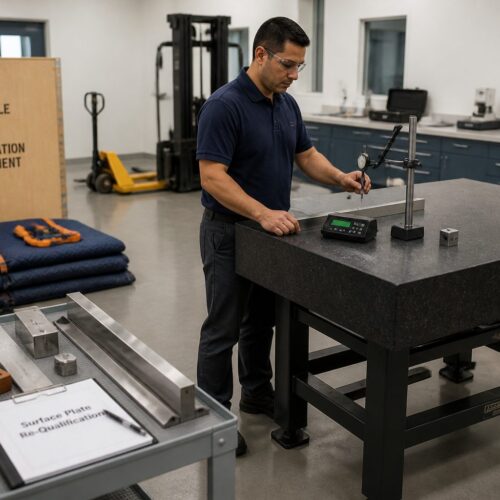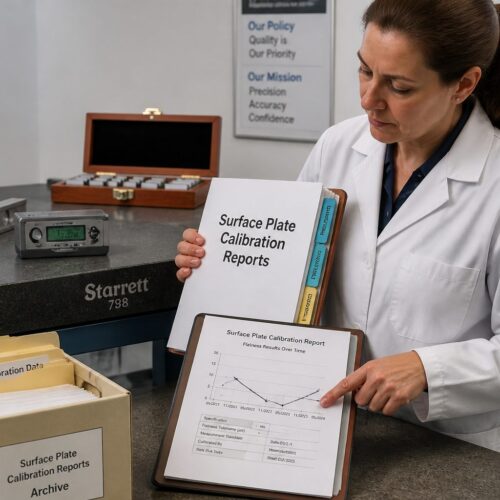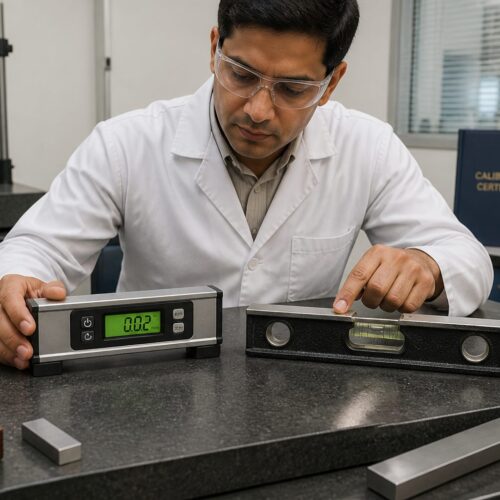

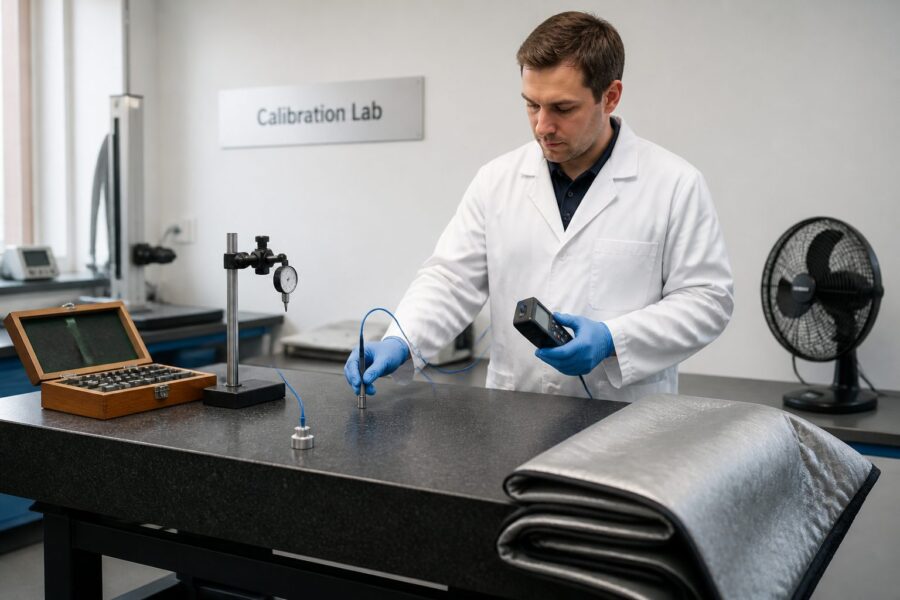
Precision measurement on a surface plate demands far more than just a calibrated instrument and a steady hand. One often overlooked but incredibly impactful factor is temperature, which can quietly sabotage your most careful efforts.
Fluctuations in shop temperature swings directly affect the dimensional stability of both your granite surface plate and the parts you are inspecting. Ignoring these thermal expansion effects means your readings might be accurate to the instrument, but not to the true dimensions of the workpiece.
Understanding how temperature influences metrology is not just academic; it is a practical necessity for anyone relying on precise measurements. We will explore effective strategies to manage surface plate temperature control and minimize thermal measurement errors, ensuring your results are consistently reliable.
How Temperature Affects Granite and Your Measurements
Granite, while incredibly stable, is not immune to thermal expansion. Like all materials, it expands when heated and contracts when cooled, directly impacting its flatness and the accuracy of your measurements.
Even a small change in surface plate temperature can introduce significant errors, especially when dealing with tight tolerances. This often goes unnoticed because the changes happen slowly and are invisible to the naked eye.
The standard reference temperature for industrial metrology is 20°C (68°F), a convention established to ensure universal comparability of measurements. Deviations from this standard cause dimensional inaccuracies in both the granite and the part being measured.
Consider a large surface plate; a slight thermal gradient across its surface could cause it to subtly warp or dome. This distortion means your reference plane is no longer perfectly flat, leading to incorrect readings from your height gages or indicators.
The material of the workpiece also plays a critical role in thermal expansion errors. Steel expands differently than aluminum, and both expand differently than granite, adding layers of complexity to achieving accurate surface plate temperature control.
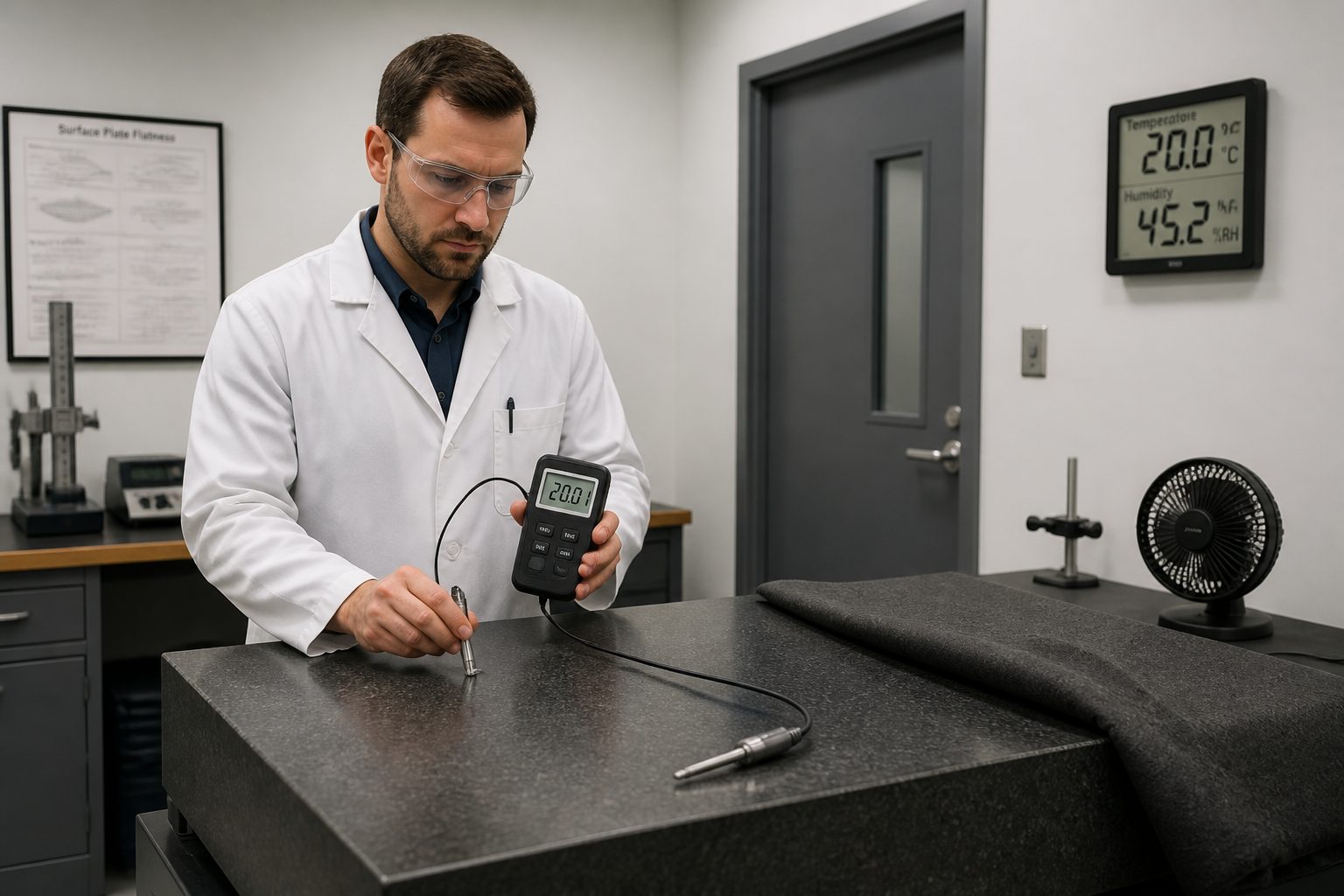
The Biggest Temperature Problems in Real Shops
Real-world manufacturing environments rarely offer ideal, climate-controlled conditions, making surface plate temperature control a constant challenge. Shops contend with everything from fluctuating HVAC systems to open bay doors, all of which introduce thermal instability.
One common problem is the “morning rush” effect, where machinery starting up generates heat, causing shop temperature swings that affect sensitive measurement equipment. This initial warming period can skew early measurements significantly.
| Temperature Fluctuation Source | Typical Impact on Measurements | Mitigation Strategy |
|---|---|---|
| HVAC cycling on/off | Cyclical expansion/contraction of plate and parts, leading to varying readings. | Locate plate away from direct vents; use insulated covers during off-cycles. |
| Sunlight through windows | Localized heating, causing plate warping and thermal gradients. | Install blinds or UV-blocking film; reposition plate if possible. |
| Nearby machinery (furnaces, welders) | Radiant heat transfer, uneven heating of plate and parts. | Erect thermal shields; ensure adequate distance from heat sources. |
| Human body heat (operator proximity) | Minor but consistent localized warming, especially for extended inspections. | Minimize direct contact; allow plate to stabilize after handling. |
| Open loading dock doors | Rapid influx of unconditioned air, significant shop temperature swings. | Schedule critical measurements during stable periods; use air curtains. |
Plate Location: Picking the Best Spot in Your Facility
The physical placement of your surface plate within the facility is one of the most impactful decisions for effective surface plate temperature control. A poorly chosen location can introduce constant thermal challenges, regardless of other efforts.
Aim for a spot that is as far as possible from external walls and large windows, which are notorious for transmitting outdoor temperature fluctuations. These areas experience significant shop temperature swings that directly impact your measurement environment.
Avoid placing the surface plate near heat-generating machinery such as furnaces, ovens, welders, or even high-powered computers. The radiant heat from these sources will create thermal gradients across your plate, compromising its flatness.
Similarly, steer clear of direct air currents from HVAC vents, fans, or frequently opened doors. These drafts can cause rapid, uneven cooling or heating, leading to localized thermal expansion and distortion.
A dedicated metrology room with independent climate control is the ideal solution, but if that is not feasible, choose the most stable corner of your existing space. Look for areas with minimal foot traffic and consistent ambient conditions to aid in maintaining stable surface plate temperature control.
Airflow, Sunlight, and Radiant Heat: What to Watch For
External environmental factors like airflow, direct sunlight, and radiant heat are often silent culprits behind thermal measurement errors. Identifying and mitigating these influences is essential for robust surface plate temperature control.
Direct sunlight hitting your surface plate is particularly problematic, as it can heat one side of the granite much faster and more intensely than the other. This uneven heating causes the plate to warp, making accurate measurements impossible until the temperature equalizes.
Airflow from open doors, windows, or even poorly directed HVAC vents can create localized cooling or heating zones on your plate. These drafts lead to thermal gradients that distort the granite’s surface and the parts resting on it, affecting thermal expansion.
Radiant heat from nearby equipment, such as a running compressor, a hot motor, or even a coffee machine, also contributes to thermal instability. The heat radiates outward, warming your plate and parts without direct contact, causing dimensional changes.
To combat these issues, consider using blinds or UV-blocking films on windows to prevent direct sunlight. For radiant heat, install physical barriers or thermal shields between the heat source and your surface plate, improving your surface plate temperature control efforts.
Part Acclimation: How Long You Should Wait and Why
Even with perfect surface plate temperature control, your measurements will be inaccurate if the workpiece itself is not at the same temperature. Part acclimation is a critical step that many shops rush, leading to significant thermal measurement errors.
The goal is to allow the part to reach thermal equilibrium with the surface plate and the surrounding air, effectively neutralizing any thermal expansion differences. This process takes time, depending on the material, size, and initial temperature difference of the part.
- Bring parts into the metrology area well in advance
- Allow at least 2-4 hours for small to medium-sized parts
- Consider 8-24 hours for larger, dense components
- Place parts directly on the surface plate or nearby for best results
- Avoid stacking parts, which slows heat transfer
- Use a dedicated acclimation bench if plate space is limited
- Monitor part temperature with a contact thermometer
- Account for material properties (e.g., aluminum acclimates faster than steel)
- Factor in the magnitude of the initial temperature difference
Handling Warm Parts Without Distorting Results
Sometimes, waiting for full part acclimation is simply not an option due to production demands or process constraints. In these situations, you need strategies to handle warm parts carefully to minimize thermal measurement errors.
The primary concern with warm parts is that they will be dimensionally larger than their specified size at 20°C due to thermal expansion. Measuring them while warm will yield an incorrect, oversized reading, even with perfect surface plate temperature control.
One technique is to use a temperature compensation chart or software, if available, which calculates the theoretical dimension at 20°C based on the part’s measured temperature and coefficient of thermal expansion. This requires accurate temperature readings of the part.
Another approach involves using insulated gloves or tongs to minimize heat transfer from your hands to the part, especially during the measurement process. Human body heat can quickly warm a small part, introducing localized thermal expansion.
For parts that cannot fully acclimate, try to establish a consistent, albeit higher, measurement temperature and correct for it. This is less ideal than 20°C but can provide repeatable, if adjusted, results when strict surface plate temperature control is challenging.
Using Simple Temperature Monitoring Without Overcomplicating
You do not need an elaborate, expensive environmental control system to implement effective temperature monitoring for your surface plate. Simple, practical tools can provide the data you need for better surface plate temperature control.
A good quality digital thermometer with a surface probe is an invaluable tool. Use it to periodically check the temperature of your surface plate, the workpiece, and the ambient air in the measurement area.
Place a thermometer near the surface plate, but not directly on it, to monitor the ambient air temperature. This helps you track shop temperature swings and understand the environment your measurements are taking place in.
For your surface plate, take readings at several points across its surface to detect any thermal gradients. If you see significant differences, it indicates uneven heating or cooling, which demands investigation to maintain proper surface plate temperature control.
Keep a log of these temperature readings alongside your measurement data. This practice helps you correlate measurement variations with temperature changes, providing insights into when thermal expansion might be impacting your results.
Seasonal Changes: Adjusting Your Routine
Seasonal shifts bring predictable but often challenging shop temperature swings that demand adjustments to your metrology routine. What works in summer might fail entirely in winter, impacting your surface plate temperature control.
In colder months, parts coming from unheated storage areas or directly from outdoor delivery will be significantly colder than your metrology lab. This requires extended acclimation time to prevent thermal expansion errors.
Conversely, during hot summer months, parts might arrive already above 20°C, and the ambient air could also be warmer. In such cases, you might need to cool parts or allow them to stabilize to a consistent, albeit higher, shop temperature.
Pay close attention to your HVAC system’s performance across seasons. It might struggle to maintain consistent temperatures during extreme external conditions, leading to greater shop temperature swings within your facility.
Consider using temporary thermal barriers, like heavy curtains or portable screens, near windows or doors during peak temperature extremes. Adapting your surface plate temperature control strategy to the season ensures consistent measurement accuracy year-round.
What to Note on Measurement Records When Temperature Varies
When perfect surface plate temperature control is unattainable, thorough documentation becomes your next best tool for maintaining measurement integrity. Accurate record-keeping helps contextualize your data and identify potential thermal measurement errors.
Always record the ambient air temperature in the metrology area at the time of measurement. This provides a baseline understanding of the thermal environment during inspection.
Additionally, note the temperature of the surface plate itself, taking readings at a few different points if possible. This helps reveal any thermal gradients across the granite, which could indicate warping or uneven thermal expansion.
Most importantly, record the temperature of the workpiece at the moment of measurement. This piece of data is essential for any later thermal compensation calculations or for understanding why a part might appear out of tolerance.
Include details about the part’s acclimation time and its previous environment (e.g., “came directly from machining,” “acclimated for 4 hours”). These notes provide a comprehensive picture, allowing you to trace back any unexpected results to issues with surface plate temperature control or thermal expansion.
When Temperature Issues Justify More Frequent Calibration
Your surface plate’s calibration schedule is typically based on usage, environmental stability, and required accuracy. However, persistent temperature issues can be a strong indicator that you need more frequent calibration checks to maintain reliability.
If your shop experiences significant and unavoidable shop temperature swings, your surface plate is under greater thermal stress. This constant expansion and contraction can accelerate wear and potentially alter its flatness over time, compromising surface plate temperature control.
Frequent thermal gradients across the plate, perhaps due to inconsistent HVAC or radiant heat, can also contribute to subtle, long-term distortions. Regular calibration helps detect these changes before they lead to widespread thermal measurement errors.
When you notice a pattern of inconsistent measurements that cannot be attributed to operator error or instrument issues, temperature variations are a likely culprit. Increased calibration frequency can help confirm if the plate itself is no longer meeting its specified flatness due to thermal stress.
Ultimately, calibration is an investment in accuracy. If your environmental conditions are challenging, consider moving from an annual to a semi-annual or even quarterly calibration schedule. This proactive approach ensures your granite surface plate remains a reliable reference, despite less-than-ideal surface plate temperature control conditions.
Conclusion
Achieving truly accurate measurements on a surface plate goes far beyond simply placing a part and taking a reading. Effective surface plate temperature control is a fundamental pillar of precise metrology, directly impacting the reliability of your results.
Ignoring the effects of thermal expansion and shop temperature swings is a recipe for costly errors and rework. Every shop, regardless of its environmental controls, faces unique thermal challenges that demand attention and a proactive approach.
By carefully selecting your plate’s location, mitigating external heat sources, ensuring proper part acclimation time, and diligently monitoring temperatures, you can dramatically reduce thermal measurement errors. These practices are not optional; they are essential for anyone serious about quality.
Remember that consistent temperature is your ally, and variability is your enemy in the world of precision measurement. Implement these practical strategies to transform your measurement process from a source of frustration into a reliable foundation for quality control.
Invest in the right environment, educate your team on thermal considerations, and make surface plate temperature control a cornerstone of your metrology department. Your commitment to these details will pay off in improved accuracy, reduced scrap, and greater confidence in every dimension you verify.