Granite Care

Minimizing Vibration and Airborne Contaminants for Optimal Granite Surface Plate Performance

Minimizing Vibration and Airborne Contaminants for Optimal Granite Surface Plate Performance

Precision measurement is the bedrock of quality control in countless industries. When working with fine tolerances, even the slightest environmental disturbance can skew results.

This is especially true for granite surface plates, which serve as the ultimate reference plane for metrology. These highly accurate tools demand a stable environment to perform at their best.

We need to actively manage external factors like vibrations and airborne particles to ensure their integrity. Mastering vibration control granite surface plate techniques and maintaining impeccable air purity metrology standards are non-negotiable for reliable data.

The Hidden Impact of Vibration on Measurement Accuracy

Vibrations are often invisible, yet they pose a significant threat to measurement precision. Any tremor, no matter how small, can cause a measuring instrument or the workpiece itself to shift minutely.

This imperceptible movement directly translates into inaccurate readings on your precision instruments. Even low-frequency vibrations can introduce errors that compromise the entire measurement process.

For example, a Coordinate Measuring Machine (CMM) resting on an unstable surface plate will struggle to achieve its stated accuracy. You simply cannot trust measurements if the foundation is constantly moving.

These subtle shifts erode confidence in your data and can lead to costly manufacturing defects. Nobody wants to discover their precision parts are out of spec because of an overlooked environmental factor.

Implementing robust surface plate vibration isolation is therefore critical for any serious metrology lab. It protects your investment in high-accuracy equipment and guarantees the integrity of your measurements.

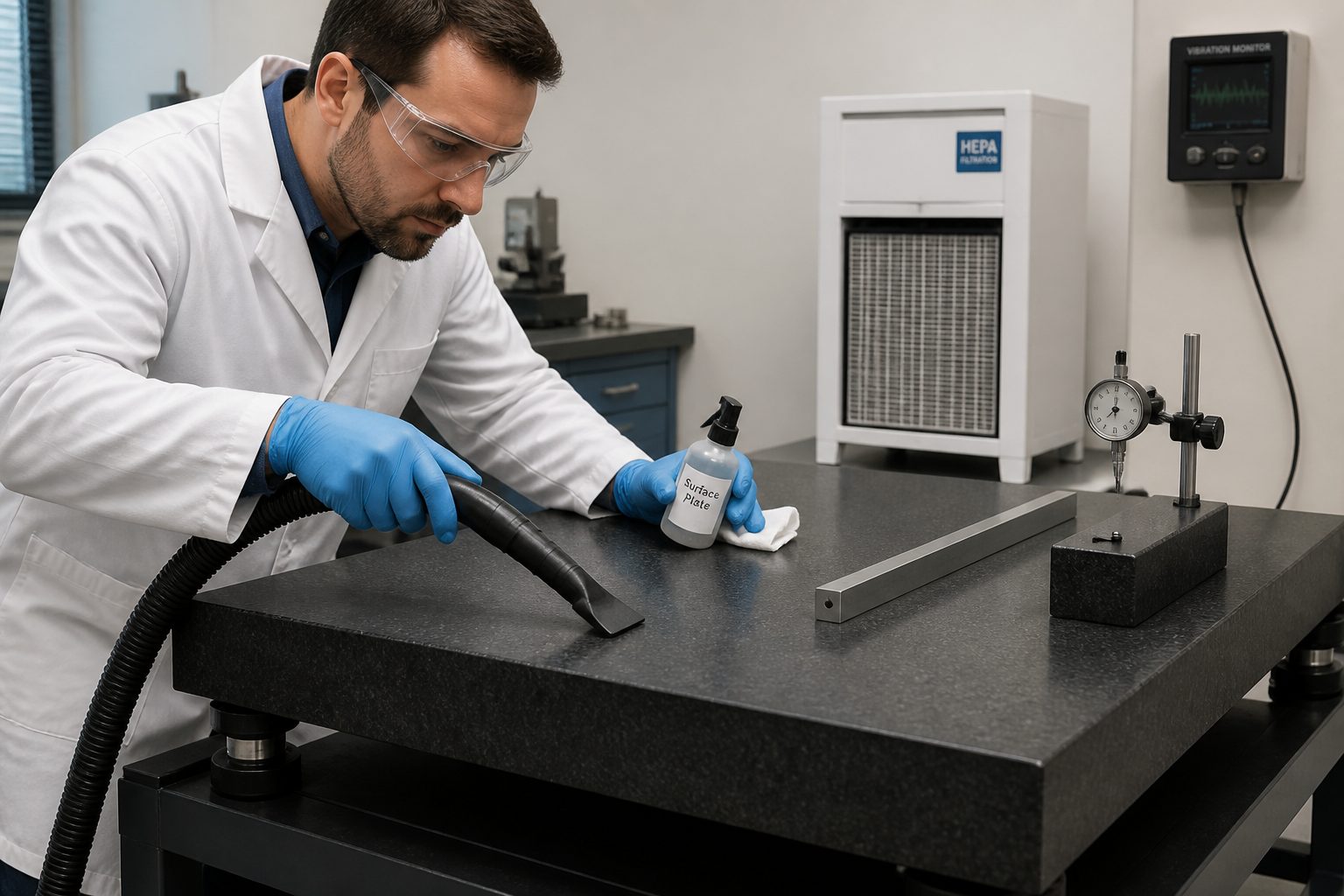
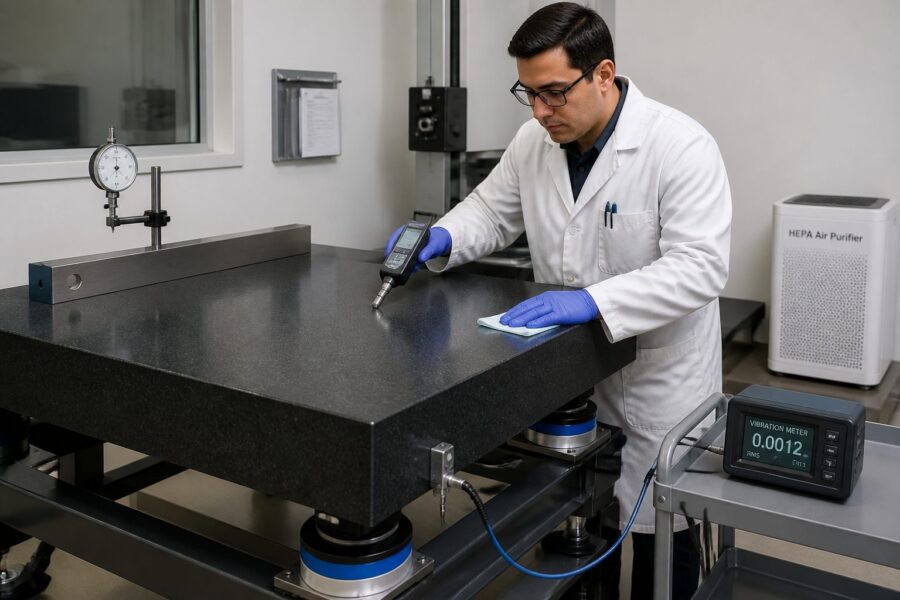
A lab technician cleans a granite surface plate with a HEPA vacuum and lint free wipe on a vibration isolation stand in a metrology lab.

Vibrations introduce dynamic errors that are difficult to predict or compensate for with software alone. They create a constantly changing reference plane, making repeatable measurements nearly impossible.

Instruments like optical comparators or profilometers are particularly susceptible to these micro-movements. Even slight blurring or displacement can render high-magnification readings useless.

The cumulative effect of minor vibrations over time can also lead to premature wear and tear on sensitive equipment. This shortens the lifespan of expensive metrology tools and increases maintenance costs.

Furthermore, vibrations can induce resonant frequencies within the instrument or workpiece, amplifying the disruptive effect. This makes the problem even worse than simple linear displacement.

Measuring surface finish or geometric tolerances, where features are often in the nanometer range, demands an environment free from all but the most minute disturbances. Any external energy transfer will compromise these delicate operations.

The integrity of calibration processes also hinges on a stable environment. An unstable surface plate can invalidate gauge block calibrations and instrument certifications.

This directly impacts compliance with industry standards like ISO 17025, which mandates stable environmental conditions for accredited laboratories. Maintaining these standards is crucial for global recognition.

Even if vibrations are below the human perception threshold, they can still significantly exceed the tolerance limits for precision metrology. What feels stable to us is often highly unstable for a CMM.

The cost of ignoring vibration control far outweighs the investment in proper isolation systems. It leads to rejected parts, production delays, and a tarnished reputation for quality.

Ultimately, the goal is to create a truly static measurement platform where the only movement is the intentional motion of the instrument itself. This is the foundation of reliable metrology.

Identifying Sources of Vibration in Your Workspace

Understanding where vibrations come from is the first step toward effective mitigation. Common culprits include heavy machinery operating nearby, such as lathes, mills, or stamping presses.

HVAC systems, especially older ones, can transmit vibrations through the floor and walls. You might not feel it directly, but your sensitive instruments definitely will.

Even foot traffic, closing doors, or external sources like passing trucks or trains can introduce disruptive energy. These everyday occurrences are often overlooked but contribute to background noise.

Pinpointing these sources often requires a systematic approach, perhaps using vibration analysis tools to map disturbance patterns. A professional assessment can reveal hidden pathways for vibrational energy.

Addressing these specific points is far more effective than a generic solution. You need to know exactly what you are fighting before you can win the battle for stability.

Internal sources can also include smaller equipment like pumps, compressors, or even cooling fans within the metrology lab itself. Every rotating or reciprocating component generates some level of vibration.

External factors extend beyond traffic to include construction activities, nearby railways, or even geological tremors. The building’s foundation can act as a conduit for these disturbances.

Acoustic noise, particularly low-frequency sound, can also couple with structural elements and induce vibrations in the surface plate. Soundproofing the lab can sometimes help mitigate this.

The building’s structural design itself can play a role, with certain floor types or column placements being more prone to transmitting vibrations. Older buildings are often more susceptible than modern, purpose-built facilities.

Even the movement of material handling equipment, like forklifts or pallet jacks, in adjacent areas can create significant floor vibrations. Their operation should be carefully scheduled or rerouted.

Identifying the frequency range of the disturbing vibrations is crucial for selecting the appropriate isolation solution. Different isolators are effective at different frequency bands.

Conducting a baseline vibration survey before installing new equipment can reveal inherent issues in the facility. This proactive approach saves time and money in the long run.

Sometimes, the source is as simple as an unbalanced motor in an exhaust fan or a loose mounting bracket on a piece of utility equipment. Small fixes can sometimes yield significant improvements.

Mapping vibration paths using accelerometers placed at various points can precisely trace the origin and propagation of disruptive energy. This data-driven approach is invaluable for effective mitigation.

Understanding the building’s natural resonant frequencies is also important, as external vibrations at these frequencies can be amplified. Structural modifications might be necessary in extreme cases.

Practical Strategies for Surface Plate Vibration Isolation

Effective surface plate vibration isolation relies on a combination of techniques and specialized equipment. Air-leg isolators are a popular choice, using compressed air to create a highly damped suspension system.

These systems effectively decouple the surface plate from floor-borne vibrations, offering superior performance. Choosing the right solution depends on the severity of your vibration issues and the level of precision required for your work.

Air-leg systems come in both passive and active configurations, with active systems offering dynamic compensation for changing loads or vibration spectra. They maintain a precise level regardless of weight shifts.

Elastomeric pads, made from materials like neoprene or sorbothane, absorb and dissipate vibrational energy through material deformation. They are a cost-effective solution for less severe vibration issues.

Spring isolators utilize mechanical springs to provide a low-frequency isolation system, often combined with damping elements to prevent resonance. These are suitable for heavier loads and specific frequency ranges.

Mass-spring systems involve placing the surface plate on a heavy inertia block, which then rests on springs or air isolators. The increased mass lowers the natural frequency of the system, improving isolation.

Active vibration cancellation systems go a step further, employing sensors, controllers, and actuators to generate opposing forces in real-time. These are ideal for ultra-precision applications where passive methods are insufficient.

For facilities with severe ground vibrations, a dedicated isolated foundation or a “floating floor” might be necessary. This involves physically separating the metrology area from the rest of the building’s structure.

The choice of isolation material and system must be carefully matched to the frequency and amplitude of the vibrations present. A thorough vibration survey is essential for proper selection.

Regular maintenance of isolation systems, including checking air pressure in pneumatic systems and inspecting elastomeric pads for degradation, ensures continued performance. Neglect can lead to a gradual loss of effectiveness.

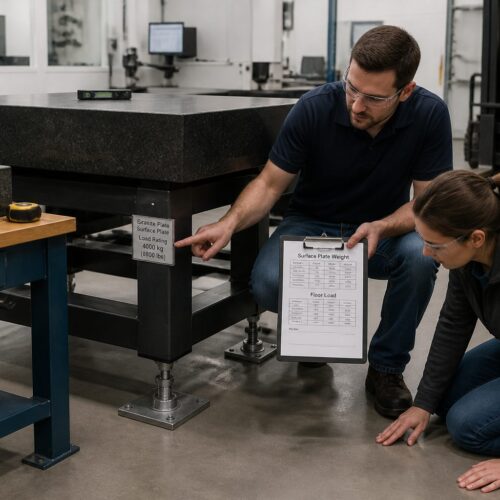
It is also important to consider the load capacity and stability of the chosen isolators, especially for heavy granite surface plates and CMMs. Overloading can compromise their isolating properties.

Some solutions also incorporate leveling capabilities, ensuring the surface plate remains perfectly flat despite floor irregularities or shifts. This is crucial for maintaining the plate’s inherent accuracy.

Professional installation and calibration of complex isolation systems are highly recommended to achieve optimal performance. Improper setup can negate the benefits of even the best equipment.

Sometimes, a multi-stage approach combining different isolation methods can yield the best results for complex vibration environments. Layering protection offers superior damping across a wider frequency spectrum.

Isolation MethodPrimary MechanismTypical Application
Air-Leg SystemsPneumatic damping, active levelingCMMs, high-precision microscopes
Elastomeric PadsMaterial deformation, energy absorptionGeneral metrology, optical benches
Spring IsolatorsMechanical springs, passive dampingHeavy machinery, general vibration reduction
Mass-Spring SystemsHeavy inertia block on springsUltra-precision labs, seismically active areas

Understanding Airborne Contaminants and Their Threats

Beyond vibration, airborne contaminants represent another silent enemy of metrology. Dust, skin flakes, textile fibers, and even microscopic oil mist can settle on your granite surface plate.

These particles create an uneven surface, causing measurement probes to “ride up” or “dip down” as they traverse the plate. Such minuscule obstructions directly impact measurement repeatability and accuracy.

Even a single hair or a tiny speck of dust can introduce errors larger than your specified tolerance. This makes your measurements unreliable and potentially useless for critical applications.

The impact is particularly severe when measuring flatness or parallelism, where every micron matters. You are essentially measuring the contaminant, not the workpiece itself.

In a clean air metrology lab, controlling these contaminants is just as important as temperature stability. Ignoring air purity is like trying to drive a race car on a gravel road.

Metallic particles, often originating from machining operations, can be particularly problematic due to their hardness and potential for scratching delicate surfaces. They can also interfere with magnetic sensors.

Organic contaminants like skin cells, lint, or pollen can absorb moisture and change shape, leading to variable measurement errors over time. They also provide nutrients for microbial growth.

Chemical vapors and aerosols, even in trace amounts, can condense on surfaces, forming thin films that alter surface properties or cause corrosion. This is a significant concern for sensitive materials.

The electrostatic charge on some particles can cause them to adhere stubbornly to the granite surface, making them difficult to remove with standard cleaning methods. This requires specialized anti-static measures.

Contaminants can also affect optical measurement systems by scattering light, reducing signal clarity, and introducing noise into images. This compromises the resolution and accuracy of optical instruments.

The presence of abrasive particles can lead to premature wear of CMM probes and other contact instruments. This increases replacement costs and necessitates more frequent recalibration.

For gauge block calibration, where contact measurements are made with extreme precision, even sub-micron particles can create significant errors. The smallest imperfection can invalidate a master standard.

Humidity plays a critical role in particle adhesion, as moisture films can bind particles to surfaces more effectively. Controlling humidity is therefore intertwined with particle control.

The size and distribution of airborne particles dictate the type of filtration required. Larger particles are easier to manage, but the most damaging ones are often microscopic.

Ultimately, a contaminated environment compromises the fundamental principle of metrology: providing a stable, known reference. Without it, all measurements become suspect.

Implementing Air Filtration and Purity Measures

Achieving a clean air metrology lab environment requires a multi-layered approach to air filtration. High-Efficiency Particulate Air (HEPA) filters are essential for capturing microscopic particles down to 0.3 microns with high efficiency.

Laminar flow hoods can create a localized zone of ultra-clean air directly above your granite surface plate. Positive pressure systems within the lab help prevent unfiltered air from entering the critical measurement space.

Pre-filters are typically used upstream of HEPA filters to capture larger particles, extending the lifespan of the more expensive HEPA units. This two-stage approach is highly efficient.

For environments requiring even higher purity, Ultra-Low Penetration Air (ULPA) filters can capture particles down to 0.12 microns or smaller. These are often used in semiconductor manufacturing.

Activated carbon filters are crucial for removing gaseous contaminants, odors, and volatile organic compounds (VOCs) that HEPA filters cannot capture. They ensure chemical purity of the air.

Maintaining a specific number of air changes per hour (ACH) within the lab ensures a constant replenishment of clean air and efficient removal of generated particles. This prevents accumulation of contaminants.

Positive pressure differential between the metrology lab and adjacent, less clean areas prevents ingress of unfiltered air when doors are opened. Air always flows from cleaner to less clean spaces.

Temperature and humidity control systems are often integrated with air filtration to maintain precise environmental conditions. Stable temperature minimizes thermal expansion and contraction errors.

Air showers or sticky mats at entry points serve as initial barriers, removing particles from personnel and equipment before they enter the main lab. They are a crucial first line of defense.

The design of the airflow within the lab, often unidirectional or laminar, ensures that particles are swept away from critical measurement zones. This minimizes the chance of redeposition.

Regular monitoring of filter pressure drops indicates when filters need replacement, ensuring peak performance of the air purification system. Neglecting this leads to reduced efficiency.

Cleanroom classification standards, such as ISO 14644, provide a framework for defining and maintaining specific levels of air purity. Adhering to these standards is vital for accreditation.

  • Regular HEPA filter replacement
  • Maintain positive lab pressure
  • Use laminar flow workstations
  • Minimize foot traffic near critical areas
  • Implement strict garment protocols

Best Practices for Maintaining a Clean Air Environment Around Your Plate

Maintaining a pristine environment around your granite surface plate goes beyond just filtration systems. Implementing strict protocols for personnel is absolutely necessary.

Staff should wear cleanroom garments, including lab coats, gloves, and hairnets, to minimize particle shedding. This prevents human-generated contaminants from entering the critical zone.

Avoid bringing food, drinks, or dusty materials into the metrology area. These items are major sources of particles that can easily compromise your clean workspace.

Regular, specialized cleaning of the lab space, using lint-free cloths and appropriate cleaning agents, prevents particle build-up. You need to actively remove contaminants, not just filter them.

These seemingly small details collectively contribute to superior air purity metrology. They create a consistent, controlled environment where precision measurements thrive.

All tools and equipment brought into the metrology area should be thoroughly cleaned and wiped down before entry. This prevents the introduction of external contaminants.

Workpieces should also be cleaned and degreased in a separate area before being presented for measurement on the surface plate. This prevents transfer of machining residue.

Strict protocols for handling the granite surface plate itself, such as using only lint-free wipes and approved cleaning solutions, are paramount. Improper cleaning can leave residues or scratches.

Minimize unnecessary movement and conversation within the critical measurement zone, as both activities generate particles. A calm, focused environment is conducive to precision.

Proper storage of precision instruments and gauge blocks in sealed containers protects them from airborne particles when not in use. This preserves their accuracy over time.

Waste disposal should be handled in a manner that minimizes particle generation, often using covered bins and frequent removal from the clean area. Accumulation of waste is a contamination risk.

Regular inspection of the lab for potential contamination sources, such as worn seals or damaged surfaces, helps maintain environmental integrity. Proactive identification prevents larger issues.

Implementing a clear entry and exit procedure, possibly involving gowning rooms and airlocks, reinforces the importance of contamination control. These physical barriers are highly effective.

Even the choice of paper and writing instruments within the lab should be considered, opting for low-particle generating options if necessary. Every detail contributes to the overall cleanliness.

These disciplined practices ensure that the investment in filtration systems is not undermined by human error or oversight. A clean environment is a collective responsibility.

The Role of Workstation Design in Contaminant Control

Workstation design plays a significant role in minimizing contaminant exposure for your granite surface plate. Enclosed or semi-enclosed workstations can create a micro-environment that is easier to control.

Using materials that do not shed particles, like stainless steel or specialized plastics, for surrounding benches and storage is a smart move. Porous or fibrous materials are simply asking for trouble.

Ergonomic design also reduces unnecessary movement and activity around the plate, which naturally stirs up dust. Less movement means fewer opportunities for particles to become airborne.

Consider placing your vibration control granite surface plate in a dedicated room, isolated from general workshop activity. This physical barrier provides an initial layer of protection against contaminants.

Thoughtful design complements air filtration systems, creating a truly clean air metrology lab. It is all about creating layers of defense against environmental threats.

Integrated laminar flow benches are designed to direct a continuous stream of filtered air over the critical measurement area. This sweeps away any particles that might settle.

Work surfaces should be smooth, non-porous, and easily cleanable to prevent particle accumulation and facilitate effective wiping. Textured surfaces can trap contaminants.

Cable management systems that route wires away from the immediate work area reduce dust traps and make cleaning easier. Loose cables are notorious for collecting and shedding particles.

Dedicated storage cabinets with sealed doors, preferably integrated into the workstation, protect sensitive tools and standards from exposure. This minimizes their time in ambient air.

Lighting fixtures should be chosen for minimal particle generation and easy cleaning, avoiding open fixtures that can accumulate dust. LED panels are often preferred.

The strategic placement of air supply and return vents within the workstation ensures optimal airflow patterns. This prevents stagnant air pockets where particles can settle.

Anti-static mats and grounding points can help dissipate electrostatic charges, preventing particles from being attracted and adhering to surfaces. This is especially important in dry environments.

Modular cleanroom enclosures offer a flexible and scalable solution for creating localized clean environments around surface plates. They can be customized to specific needs.

Pass-through chambers or airlocks for transferring workpieces into the clean area minimize direct interaction with the outside environment. This reduces the influx of contaminants.

Considering the flow of personnel and materials during the design phase helps optimize layout for contamination control. Minimizing cross-traffic reduces particle generation.

Regular Monitoring and Assessment of Environmental Factors

Environmental control is not a set-it-and-forget-it task; it requires ongoing vigilance. Regularly monitor vibration levels using accelerometers to detect any shifts or new sources of disturbance.

Particle counters provide real-time data on air quality, allowing you to identify contamination spikes and their causes. This instant feedback is invaluable for troubleshooting and process improvement.

Temperature and humidity sensors are also vital, as these factors affect measurement stability and material expansion. Even slight fluctuations can lead to measurable inaccuracies.

Keeping detailed logs of these environmental parameters helps you identify trends and potential issues before they impact your work. You cannot manage what you do not measure.

This continuous feedback loop helps optimize your vibration control granite surface plate setup. It ensures your environment remains within the tight specifications required for precision metrology.

Data logging software can automate the collection and analysis of environmental data, providing historical trends and real-time alerts. This allows for proactive rather than reactive management.

Calibration of all monitoring equipment, including accelerometers, particle counters, and temperature/humidity sensors, is crucial for ensuring the accuracy of the environmental data itself. Uncalibrated sensors are unreliable.

Establishing clear alarm thresholds for each environmental parameter ensures that deviations are immediately flagged. This allows for rapid intervention to prevent measurement errors.

Regular internal and external audits of environmental control systems verify compliance with established standards and best practices. These audits identify areas for improvement.

Correlating environmental data with measurement results can help diagnose the root causes of unexplained measurement variations. This empirical approach strengthens problem-solving capabilities.

Predictive maintenance schedules for HVAC systems, air filters, and vibration isolators can be informed by monitoring data. This prevents unexpected failures and maintains consistent performance.

Thermal imaging can be used to identify hot or cold spots within the lab that might indicate airflow issues or sources of thermal instability. These can subtly affect workpiece dimensions.

Acoustic monitoring can help detect unusual noise levels that might indicate new vibration sources or failing equipment. Sound can be a precursor to physical disturbances.

Documenting all monitoring activities, maintenance performed, and any corrective actions taken provides a comprehensive history. This is vital for quality assurance and regulatory compliance.

A robust monitoring program transforms environmental control from a static requirement into a dynamic, continuously optimized process. It ensures sustained precision over time.

Training Staff on Contamination and Vibration Awareness

Even the most advanced environmental controls are only as good as the people operating within them. Comprehensive training for all staff on the importance of contamination control and vibration awareness is essential.

Employees need to understand how their actions can impact measurement accuracy, from proper lab entry procedures to careful handling of workpieces. Every person in the lab plays a role in maintaining precision.

Regular refreshers reinforce these critical behaviors and keep everyone informed about best practices for maintaining a clean air metrology lab. Knowledge fades if not consistently reinforced.

Teach staff about the different types of vibration and airborne contaminants and how each affects measurements. Understanding the ‘why’ behind the rules encourages greater compliance.

Fostering a culture of precision and care is paramount. When everyone takes ownership of environmental controls, the entire lab benefits from more reliable data.

New hires should undergo thorough onboarding specific to environmental protocols, emphasizing the critical nature of their role in maintaining accuracy. This sets expectations from day one.

Visual aids, such as posters and clear signage, can serve as constant reminders of best practices for garment protocols, cleaning procedures, and restricted activities. Reinforcement is key.

Hands-on demonstrations of proper cleaning techniques, gowning procedures, and instrument handling ensure practical competence. Theory must be backed by practical application.

Training should also cover emergency protocols for environmental breaches, such as power outages affecting filtration or accidental spills. Staff need to know how to react swiftly.

Cross-training staff on different aspects of environmental control, such as filter replacement or basic isolator checks, builds a more resilient and knowledgeable team. Everyone contributes.

Explaining the financial and reputational costs associated with compromised measurements helps staff understand the broader impact of their actions. This motivates adherence to standards.

Establishing a feedback mechanism where staff can report potential issues or suggest improvements encourages active participation. Their insights from daily operations are invaluable.

Safety training related to the proper handling of cleaning agents and other chemicals used in a cleanroom environment is also essential. Personal safety is always a priority.

Emphasizing personal responsibility for maintaining the integrity of the metrology environment empowers individuals. Each person’s vigilance contributes to the collective success.

Ongoing professional development, including workshops on new environmental control technologies or best practices, keeps the team at the forefront of metrology excellence. Continuous learning is vital.

Advanced Solutions for Ultra-Precision Environments

For metrology applications demanding the absolute highest precision, standard solutions may not suffice. Active vibration cancellation systems use sensors and actuators to dynamically counteract incoming vibrations in real-time.

These sophisticated setups offer unparalleled surface plate vibration isolation for the most sensitive instruments. They are truly at the cutting edge of environmental control technology.

Ultra-cleanroom facilities, often exceeding ISO Class 1 standards, employ multi-stage air filtration and advanced airflow management to eliminate even sub-micron particles. These environments are incredibly expensive to build and maintain.

Such environments are typically reserved for nanotechnology research or quantum computing labs, where tolerances are measured in atomic scales. Your average manufacturing floor likely does not need this level of control.

These advanced solutions represent the pinnacle of environmental engineering for precision metrology. They push the boundaries of what is possible in controlled measurement conditions.

Cryogenic cooling systems are sometimes employed to achieve extreme thermal stability, minimizing even the slightest material expansion or contraction. This is crucial for atomic-scale measurements.

Vacuum chambers or inert gas environments are used to eliminate all atmospheric particles and reactive gases. This prevents oxidation or contamination that can occur in ambient air.

Magnetic levitation systems can provide frictionless and vibration-free platforms for instruments, offering superior isolation compared to mechanical or pneumatic systems. They float the entire measurement setup.

Whole-building seismic isolation foundations are designed to decouple an entire facility from ground-borne vibrations, protecting multiple labs within the structure. This is a massive engineering undertaking.

Active noise cancellation technologies can be integrated to mitigate acoustic vibrations that might couple with the metrology setup. This addresses airborne sound before it becomes structural vibration.

Specialized gas purification systems remove trace impurities from process gases used in ultra-clean environments. Even these gases must meet stringent purity requirements.

Molecular contamination control involves monitoring and mitigating non-particulate contaminants, such as outgassing from materials or chemical vapors. These can form thin films on critical surfaces.

Shielding from electromagnetic interference (EMI) is also critical in ultra-precision environments, as stray fields can affect sensitive electronic instruments. Faraday cages are often employed.

These highly specialized solutions require significant capital investment and ongoing operational costs. They are justified only when the measurement requirements truly push the limits of physics.

The development of such advanced systems continues to drive innovation in metrology, enabling breakthroughs in scientific research and advanced manufacturing. They define the cutting edge.

Integrating Environmental Controls into Your Daily Routine

Integrating environmental controls seamlessly into daily operations ensures their consistent application. Develop clear checklists for morning startups and evening shutdowns, including checks for air filtration systems and vibration isolators.

Make routine cleaning and monitoring tasks part of regular work assignments, not just occasional chores. This systematic approach embeds environmental awareness into the very fabric of your metrology processes.

Assign specific individuals responsibility for maintaining certain aspects of the environmental control system. This promotes accountability and ensures nothing gets overlooked.

Regularly review your procedures and adjust them based on monitoring data and feedback from staff. Continuous improvement is key to maintaining peak performance.

A well-managed vibration control granite surface plate setup becomes a natural extension of your quality assurance. It is simply how things are done in a high-precision facility.

Utilize digital checklists and automated reporting tools to streamline the documentation of daily environmental checks. This reduces manual effort and improves data integrity.

Automated environmental control systems can be programmed to adjust parameters like temperature, humidity, and airflow based on real-time sensor data. This minimizes human intervention and maintains stability.

Integrate environmental control procedures into your overall Quality Management System (QMS), ensuring they are subject to the same rigorous standards as other quality processes. This formalizes their importance.

Establish key performance indicators (KPIs) for environmental control, such as particle count consistency or vibration amplitude limits. These metrics help track and improve performance.

Designate a dedicated environmental control specialist or team responsible for overseeing all aspects of the lab’s environmental integrity. This ensures expert management and quick problem resolution.

Budget for ongoing maintenance, consumables like filters, and potential upgrades to environmental control equipment. These are essential operational costs for a precision lab.

Implement a continuous improvement cycle (Plan-Do-Check-Act) for environmental controls, regularly reviewing performance and implementing necessary adjustments. This fosters ongoing excellence.

Encourage cross-departmental collaboration, especially with facilities and maintenance teams, to address any building-wide issues affecting the metrology lab. A holistic approach is more effective.

Before initiating new projects or introducing new equipment, assess their potential impact on the lab’s environmental controls. Proactive planning prevents future disruptions.

By embedding these practices, a culture of environmental excellence becomes ingrained, leading to consistently higher quality measurements and greater confidence in your data. It becomes second nature.

Conclusion

Achieving optimal performance from your granite surface plate means mastering your environment, not just your instruments. Proactive vibration control granite surface plate strategies protect your measurements from unseen disturbances.

Implementing rigorous air purity metrology standards safeguards against microscopic contaminants. Both are essential for reliable, repeatable results in any precision application.

By understanding these challenges and applying practical solutions, you ensure the reliability and repeatability of your metrology data. This investment in environmental control pays dividends in accuracy and confidence.

A truly precise measurement begins with an impeccably controlled workspace. You are creating the ideal conditions for your instruments to perform at their absolute best.

Do not let invisible threats compromise your hard-earned precision. Take charge of your environment and elevate your metrology standards today.

The synergy between advanced instrumentation and a meticulously controlled environment is what defines world-class metrology. One cannot truly excel without the other.

Investing in robust environmental controls is not merely an expense; it is a strategic decision that enhances product quality, reduces rework, and boosts customer satisfaction. It’s an investment in your reputation.

The long-term benefits include extended equipment lifespan, reduced maintenance costs, and unwavering confidence in your measurement results. These contribute directly to your bottom line.

Embrace a holistic approach to metrology, recognizing that the surrounding conditions are as crucial as the instruments themselves. Every detail matters when striving for ultimate precision.

By prioritizing both vibration isolation and air purity, you establish a foundation for metrology excellence that consistently delivers accurate and trustworthy data. This sets your lab apart.

This commitment to environmental mastery ensures that your granite surface plate remains the true reference plane it was designed to be. Its inherent accuracy is fully realized.

Ultimately, a controlled environment is a competitive advantage, enabling your organization to tackle the most demanding measurement challenges with confidence. It empowers innovation and quality.

Make environmental control an integral part of your quality culture, from management commitment to daily operational practices. This ensures sustained high performance.

The pursuit of precision is an ongoing journey, and a stable, clean environment is your most reliable companion on that path. It is the silent guardian of your measurements.

Therefore, dedicate the necessary resources and attention to these critical factors, and watch your metrology capabilities reach new heights of accuracy and reliability. Your efforts will be rewarded with superior data.

Stephanie Kendrick author photo
About the author

Stephanie Kendrick writes about surface plate metrology, granite calibration standards, inspection room practices, and the care of precision measurement surfaces. Her work focuses on making technical metrology topics easier to understand through clear explanations, practical context, and responsible discussion of calibration-related concepts.

She covers topics such as surface plate flatness, calibration intervals, certificate interpretation, wear patterns, environmental conditions, cleaning routines, and the role of granite surface plates in quality control and inspection workflows.