
Storing a precision granite surface plate correctly is more than just tucking it away; it is about preserving its integrity for future use. These foundational tools in metrology demand careful attention, whether they are out of service for a few days or several months. Implementing proper granite surface plate storage best practices ensures your investment remains accurate and ready for calibration.
Neglecting proper storage can lead to costly damage, from surface degradation to permanent dimensional changes. This guide explores strategies for both short-term and long-term surface plate downtime, focusing on protecting the plate’s critical characteristics. We will cover everything from cleaning and positioning to environmental control and accessory management.
A well-maintained storage routine extends the life of your surface plate and guarantees reliable measurement results when it returns to service. Following these guidelines helps you avoid common pitfalls and maintain your calibration standards with confidence. Let’s get into the details of keeping your granite surface plate in top condition.
Storage Goals: Protect Flatness, Finish, and Contact Surface
The primary aim of any granite surface plate storage best practices is to safeguard its three most important attributes: flatness, surface finish, and the overall contact surface. Flatness is the most critical characteristic, as any deviation directly impacts measurement accuracy. Improper storage can introduce stresses that warp the granite, even if only by minuscule amounts.
The surface finish, often a finely lapped or polished texture, allows for precise wringing of gauge blocks and other measurement tools. Scratches, nicks, or chemical stains on the finish compromise this wringing action, leading to unreliable readings. Maintaining a pristine contact surface ensures consistent and repeatable measurements across the entire plate area.
Environmental factors like temperature fluctuations and excessive humidity can also degrade these critical properties over time. Protecting the plate from these elements is a key part of effective storage. You are essentially creating a stable micro-environment for the granite.
Any weight left on the plate, even seemingly light items, can cause localized deflection or introduce long-term stress. This is particularly true for smaller plates, which are more susceptible to minor distortions. Your goal is to keep the plate in the same state it was in before storage.
Ultimately, successful granite surface plate storage best practices mean the plate returns to service with its original calibration accuracy intact. This saves significant time and expense that would otherwise go into re-calibration or, worse, replacing a damaged plate. Think of storage as a preventative maintenance step for your precision equipment.
Clean Before Storage: What “Clean Enough” Looks Like
Before any period of surface plate downtime, a thorough cleaning is non-negotiable to prevent long-term damage. “Clean enough” means removing all contaminants that could etch, stain, or attract moisture to the delicate granite surface. Residual oils, dust, or even fingerprints can become problematic during extended storage.
Start by wiping the entire surface with a clean, lint-free cloth dampened with a specialized granite surface plate cleaner or denatured alcohol. Make sure to remove all visible debris and any sticky residues. After cleaning, dry the plate completely with another clean, dry cloth to prevent water spots or moisture entrapment.
| Cleaning Step | Purpose | Recommended Material |
|---|---|---|
| Surface Wipe | Remove loose dust and debris | Clean, lint-free cloth |
| Degreasing | Eliminate oils, grease, and stubborn residues | Approved granite cleaner or denatured alcohol |
| Drying | Prevent water spots and moisture retention | Dry, lint-free microfiber cloth |
| Inspection | Ensure no contaminants remain | Visual check under good lighting |
| Protective Coating (Optional) | Add a temporary barrier against environmental factors | Thin layer of specialized surface plate wax or oil |
Positioning: Horizontal Storage vs Vertical Storage Considerations
How you position your granite surface plate for storage can significantly affect its long-term flatness and stability. Horizontal storage is generally preferred for most surface plates, especially larger ones, as it mimics their operational orientation. This position distributes the plate’s weight evenly across its support points, minimizing the risk of deflection.
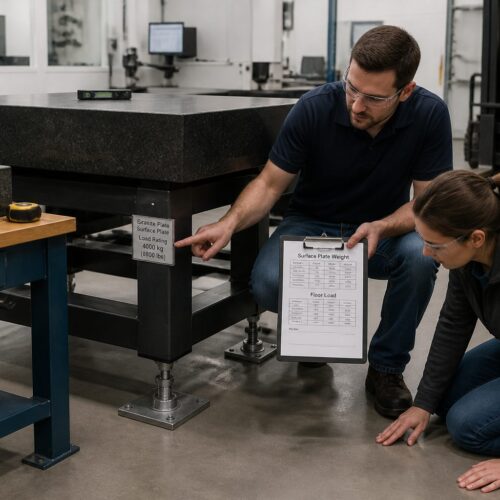
When storing horizontally, ensure the plate rests on its original, calibrated support points, usually three or four designated areas. Placing it on an uneven surface or using inadequate support can introduce stress and warp the granite over time. Even during surface plate downtime, these supports are crucial for maintaining the plate’s inherent flatness.
Vertical storage, while space-saving, carries higher risks and is generally not recommended for precision surface plates, especially those of Grade A or AA accuracy. The plate’s own weight can cause it to bow or sag over time when stored on its edge, leading to permanent deformation. The stresses are simply not distributed in the same way.
If vertical storage is absolutely unavoidable for a smaller, less critical plate (like a Grade B inspection plate), use a purpose-built rack that supports the entire length of the plate’s bottom edge. Never lean a plate against a wall or rely on only a few contact points for support. This is a common storage error that can create permanent problems.
Always prioritize horizontal storage on proper stands to preserve the plate’s calibrated flatness. This commitment to granite surface plate storage best practices pays dividends by extending the life and accuracy of your precision equipment. Think about the long-term impact of even minor stresses.
Support Points and Stands: Avoiding Stress and Twist
Proper support is paramount for maintaining the integrity of a granite surface plate, even during periods of surface plate downtime. These plates are designed to be supported at specific points, typically three or four, to ensure their calibrated flatness. Deviation from these points can introduce internal stresses that lead to long-term deformation.
Using the original, purpose-built stand is always the best option for storage, as it provides the correct support geometry. These stands are engineered to distribute the plate’s weight without inducing twist or sag. If the original stand is not available, construct a robust, level platform that mimics the intended support points.
Never place a surface plate directly on an uneven floor, workbench, or makeshift supports like wooden blocks without careful consideration. Such arrangements can create localized pressure points or allow the plate to sag between supports. This is a recipe for permanent problems.
For larger plates, ensure the support points are clearly marked and that the plate is positioned precisely upon them. Misalignment, even by a small amount, can compromise the plate’s flatness over an extended storage period. Consistency is a key component of effective granite surface plate storage best practices.
Regularly inspect the stand and the floor beneath it for stability and levelness, especially if the plate is in long-term storage. Any shifting or settling of the foundation can transmit stress to the granite, undermining all your careful storage efforts. A stable base is the foundation for a stable surface plate.
Covering for Storage: Breathable vs Sealed Approaches
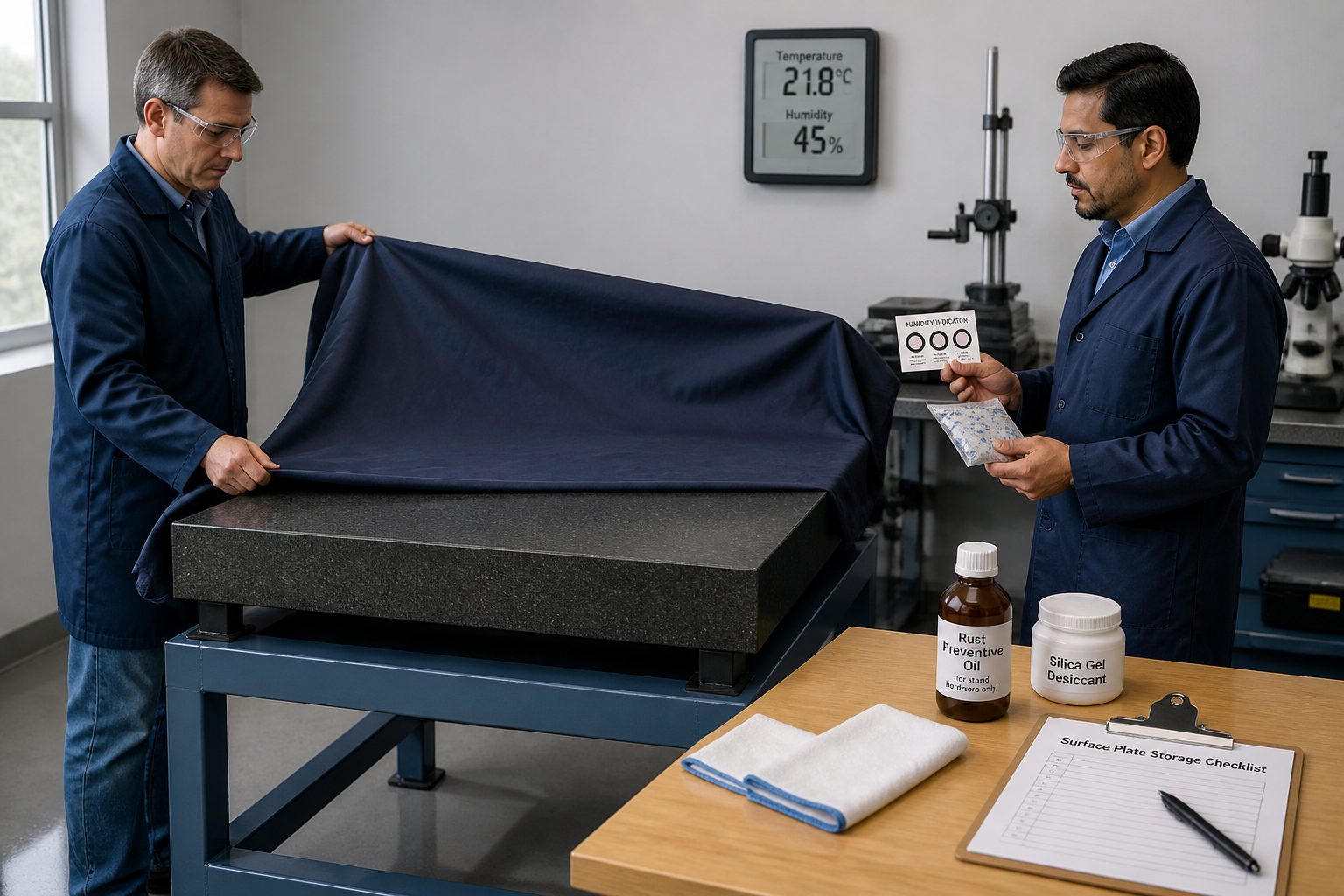
Choosing the right protective covering is a critical aspect of granite surface plate storage best practices, especially for dust and humidity control. The goal is to shield the delicate surface from airborne particles and moisture without trapping condensation. Both breathable and sealed approaches have their place, depending on your storage environment.
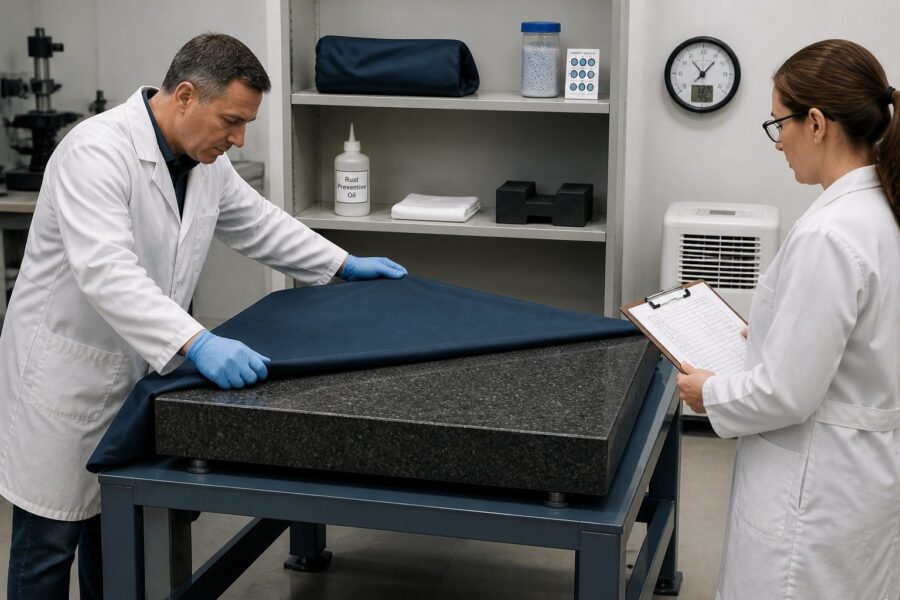
A breathable cover, such as a heavy canvas tarp or a custom fabric cover, is often suitable for short-term storage in relatively stable environments. These covers allow for some air circulation, preventing the buildup of trapped moisture while still offering protection against dust and minor physical impacts. This method works well when the plate might be uncovered frequently.
- Use a custom-fitted, heavy-duty fabric cover.
- Ensure the cover extends beyond the plate’s edges.
- Check for any tears or openings in the cover.
- Consider a light anti-corrosion oil if humidity is a concern.
- Periodically inspect the plate under the cover.
Environmental Control: Dust, Temperature Swings, and Moisture
Environmental control is arguably the most challenging and crucial aspect of granite surface plate storage best practices. Unchecked dust and humidity control, along with significant temperature swings, can severely compromise a plate’s accuracy and surface finish. Precision metrology equipment thrives in stable conditions.
Dust accumulation is a constant threat, as abrasive particles can scratch the finely lapped surface or embed themselves into the granite. A good protective covering helps, but maintaining a clean storage area is equally important. Regular cleaning of the surrounding space minimizes the amount of airborne debris that can settle on the plate.
Temperature swings cause the granite to expand and contract, which can lead to micro-fractures or gradual changes in flatness over time. Storing plates in areas with consistent temperatures, ideally between 68°F and 72°F (20°C and 22°C), helps prevent these thermal stresses. Avoid placing plates near windows, heating vents, or exterior doors.
Moisture, especially high humidity, is a silent killer for surface plates. It can lead to oxidation of any metallic accessories left on the plate, and in extreme cases, it can promote mildew growth under covers. Maintaining relative humidity between 40% and 60% is ideal for preventing moisture-related damage.
For long-term surface plate downtime, consider using dehumidifiers or climate-controlled storage rooms to maintain optimal conditions. Placing desiccant packets under a sealed cover can also help absorb ambient moisture. Proactive environmental management is a cornerstone of preserving your plate’s accuracy.
Keeping Accessories Off the Plate During Storage
A common oversight in granite surface plate storage best practices is leaving accessories on the plate during periods of surface plate downtime. Even seemingly light items like gauge blocks, angle plates, or height gauges can exert pressure on the granite. Over time, this localized pressure can cause slight indentations or contribute to overall plate distortion.
The finely lapped surface of a granite plate is designed for uniform contact, not for bearing static loads in specific spots. Leaving metallic accessories on the surface also introduces a risk of corrosion. If moisture is present, even in small amounts, rust can form on the metal and stain the granite.
Always remove all tools, gauges, and accessories from the surface plate before covering it and putting it into storage. Clean these items separately and store them in their proper containers or designated storage areas. This simple step prevents both physical damage and chemical contamination of the plate.
Consider the potential for thermal expansion and contraction differences between granite and metal. If a metallic accessory is left on the plate during temperature fluctuations, the differing expansion rates could create additional stress points. It is always better to keep the plate as clear as possible.
Establishing a clear “no accessories on plate” rule for storage periods simplifies the process and eliminates a significant source of potential problems. This practice reinforces the importance of treating the surface plate as a precision instrument that requires a clear, unobstructed surface. Your plate will thank you for this careful consideration.
Restart Checklist: What to Do Before Putting It Back in Service
Bringing a granite surface plate back into service after a period of surface plate downtime requires a methodical approach to ensure its accuracy. Skipping steps on the restart checklist can negate all your careful granite surface plate storage best practices. A proper reintroduction to the workspace is just as important as the storage itself.
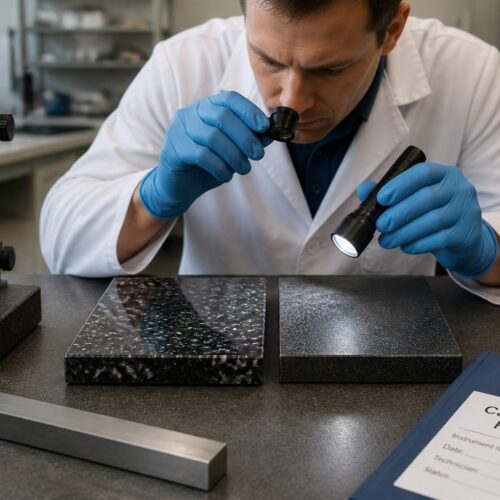
First, carefully remove the protective covering and inspect the entire surface for any dust, debris, or signs of moisture. Even with the best storage, some environmental contaminants might have found their way onto the plate. A visual inspection under good lighting is crucial for identifying any issues.
Next, thoroughly clean the surface plate with a suitable granite cleaner and a lint-free cloth, then dry it completely. This removes any accumulated particles or residues that might have settled during storage. The plate must be spotless before any measurements are taken.
Allow the plate to acclimate to the laboratory or inspection room temperature for at least 24 hours before use. This is especially important if the storage environment had a significantly different temperature. Thermal stability is fundamental for accurate measurements.
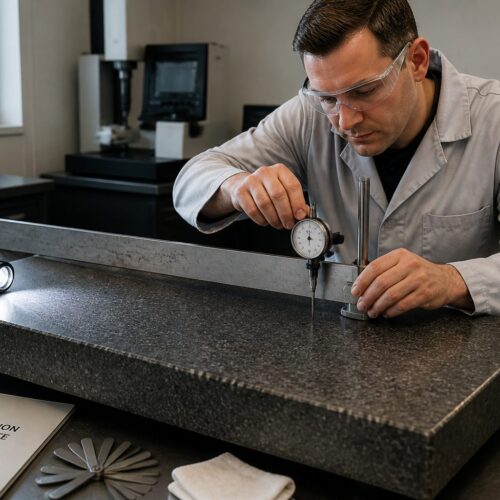
Finally, perform a quick check of the plate’s flatness using a precision level or indicator if you have the equipment. While a full re-calibration might not be necessary after short-term storage, a preliminary check can provide peace of mind. For long-term storage, consider a professional re-calibration to confirm its accuracy. This ensures the plate is truly ready for demanding metrology tasks.
Storage Tags and Logs: Tracking Condition Over Time
Implementing a system of storage tags and logs is an often-overlooked but highly beneficial aspect of granite surface plate storage best practices. This practice provides a clear historical record of the plate’s status, usage, and maintenance, especially during extended surface plate downtime. Detailed records help in making informed decisions about re-calibration and service life.
Each surface plate should have a durable tag attached, noting key information such as its unique identification number, grade, and date of last calibration. Also include the date it was placed into storage and the expected date of return to service. This provides an immediate snapshot of its history.
Maintain a digital or physical logbook for each plate, documenting every significant event. Record details like cleaning procedures, any protective coatings applied, environmental conditions of the storage location, and any observed anomalies. This log becomes a valuable asset for troubleshooting or auditing.
Regularly update the log during long-term storage, perhaps with monthly checks of the plate’s condition and the surrounding environment. Note any significant temperature or humidity fluctuations that occurred. Such diligent tracking helps predict when a re-calibration might be necessary.
A comprehensive logging system facilitates better inventory management and ensures that plates are rotated or re-calibrated as needed. This systematic approach ensures that your precision assets are managed effectively and their accuracy is consistently maintained. It removes guesswork from the storage process.
Common Storage Errors That Create Permanent Problems
Even with the best intentions, several common storage errors can lead to permanent damage and compromise the accuracy of your granite surface plate. Understanding these pitfalls is a crucial part of implementing effective granite surface plate storage best practices. Avoiding them saves you significant time and money in the long run.
One frequent mistake is improper support, like placing a plate on an uneven surface or using too few support points. This introduces stress into the granite, causing it to warp or twist over time. The plate’s calibrated flatness can be permanently altered, rendering it inaccurate.
Another error involves neglecting environmental control, particularly humidity. High moisture levels can lead to rust on any metallic inserts or accessories, which then stains the granite surface. Trapped condensation under a non-breathable cover also presents a significant risk for the plate’s finish.
Leaving tools, gauges, or other heavy objects on the plate during surface plate downtime is a surefire way to create localized depressions. The constant pressure, even from relatively light items, can cause permanent deformation over months or years. Always clear the surface completely.
Failing to clean the plate thoroughly before storage allows contaminants to etch or stain the surface, leading to a degraded finish. These blemishes can impact the wringing properties of gauge blocks and other precision tools. A dirty plate going into storage is a damaged plate coming out.
Storing a plate vertically without adequate, full-length support is a major risk, as the plate’s own weight can cause it to bow or crack. This is particularly true for larger plates where the gravitational forces are substantial. Always prioritize horizontal storage on proper stands.
Finally, neglecting to regularly inspect plates in long-term storage can allow problems to go unnoticed until they are severe. Periodic checks of the plate and its environment are essential for proactive maintenance. Catching issues early can prevent permanent damage.
Conclusion
Implementing meticulous granite surface plate storage best practices is not merely a suggestion; it is a fundamental requirement for preserving the accuracy and longevity of these essential metrology tools. Your precision measurements depend on the consistent flatness and pristine condition of your surface plate. Neglecting proper storage simply isn’t an option for serious calibration work.
From thorough cleaning before storage to selecting the correct positioning and maintaining strict environmental controls, every step plays a role. Each detail, like choosing the right protective covering or carefully managing surface plate downtime, contributes to safeguarding your investment. This proactive approach prevents costly repairs and re-calibrations.
Remember that a surface plate is a highly sensitive instrument, susceptible to even minor stresses and environmental fluctuations. Treating it with the respect it deserves during periods of inactivity ensures it remains a reliable foundation for your most critical measurements. Think of it as an ongoing commitment to quality.
By following the guidelines outlined in this article, you can minimize risks and ensure your granite surface plates are always ready for precision work. These practices are not just about avoiding damage; they are about maintaining the highest standards of metrology. Your commitment to proper storage reflects your commitment to accuracy.
Invest the time and effort into these storage protocols, and your granite surface plates will continue to provide accurate and consistent results for many years to come. This careful management is a hallmark of any professional metrology lab. Always prioritize the long-term health of your precision equipment.