
Maintaining the accuracy of your granite surface plate is critical for precise metrology operations. Over time, even the most robust plates experience wear from constant use and the friction of measuring tools. This wear compromises the essential flatness required for accurate measurements, leading to potential errors in your work.
When precision starts to drift, a specialized procedure called granite surface plate lapping becomes necessary. This reconditioning process meticulously removes microscopic layers of granite from the plate’s working surface. It effectively restores the plate’s original flatness and surface finish, ensuring your measurements remain reliable.
Understanding what lapping entails, its benefits, and the necessary preparations helps you maximize the lifespan and accuracy of your investment. This detailed guide covers every aspect of granite surface plate lapping, from what it fixes to how to prepare for the service. It ensures you are fully equipped to maintain peak performance in your metrology lab.
What Lapping Does to a Granite Surface Plate
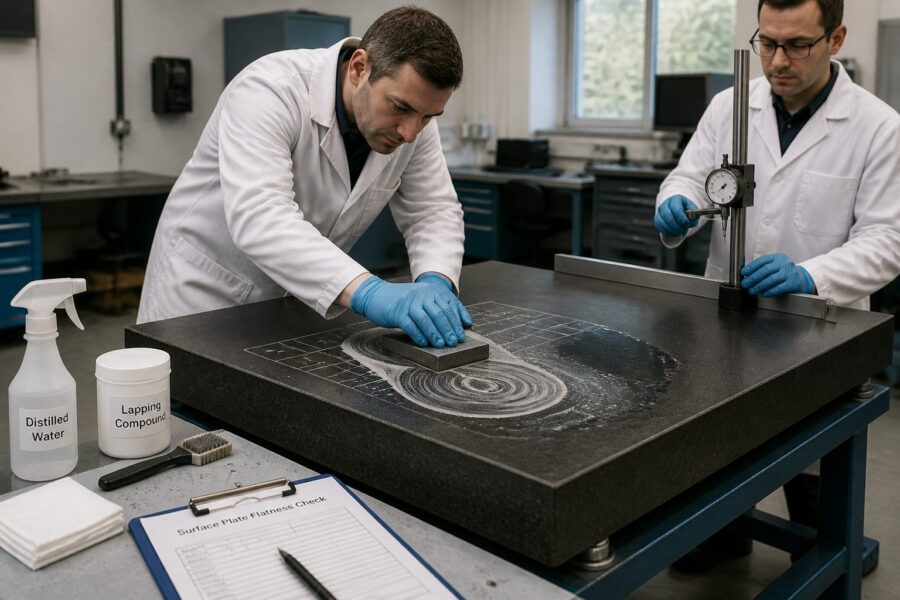
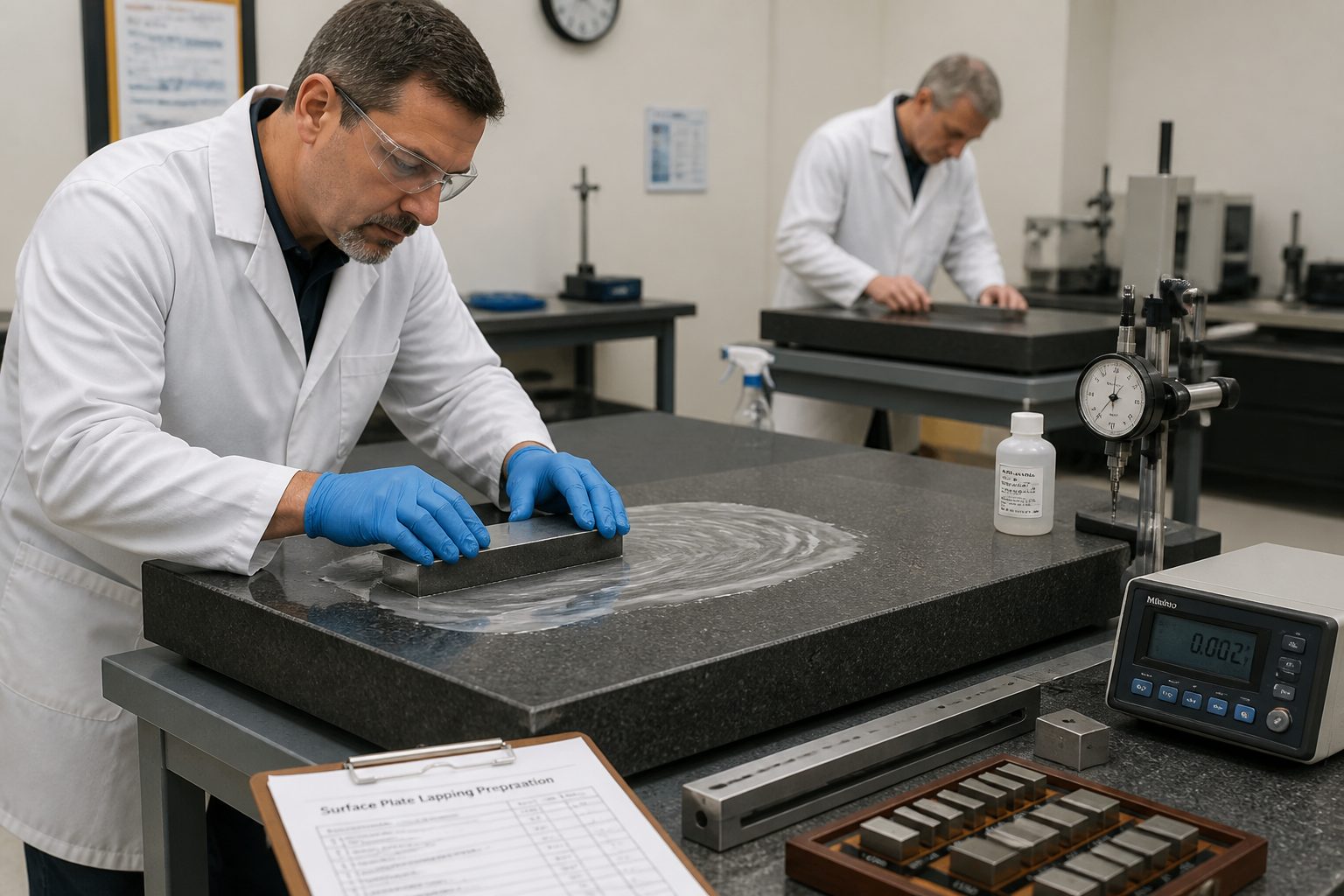
Granite surface plate lapping is a precision reconditioning process designed to restore the inherent accuracy of these foundational metrology tools. It involves using specialized machinery and abrasive slurries to systematically remove minuscule amounts of material from the plate’s working surface. This careful abrasion targets high spots and worn areas, gradually leveling the entire surface.
The primary objective of this process is flatness restoration, bringing the plate back within its specified tolerance grade. Over time, repeated contact with gauges and parts creates depressions and uneven wear patterns across the granite. Lapping essentially “resurfaces” the plate, eliminating these imperfections.
A professional lapping service ensures the plate meets or exceeds its original manufacturing specifications for overall flatness. This level of precision is vital because even slight deviations can introduce significant errors into sensitive measurements. The process meticulously grinds the surface until a consistent plane is achieved across its entire area.
Beyond flatness, lapping also improves the surface finish of the granite. A proper finish is crucial for the phenomenon of “wringing,” where gauge blocks adhere to the plate due to molecular attraction, providing a stable measurement platform. A smooth, even surface finish enhances this critical interaction, improving measurement reliability.
The reconditioning process prolongs the useful life of a surface plate, preventing the need for costly replacement. Regular lapping ensures continuous adherence to quality standards and maintains the integrity of all subsequent measurements. It is a fundamental part of a comprehensive metrology maintenance program.
Problems Lapping Can Correct (and Problems It Can’t)
Granite surface plate lapping effectively addresses a range of common issues that compromise measurement accuracy. It primarily excels at correcting surface wear, minor scratches, and localized high or low spots that develop over time. This reconditioning process is the most effective way to restore the plate’s critical flatness and surface finish.
However, lapping cannot fix every problem your surface plate might encounter. It is not a miracle cure for deeply fractured granite, significant structural damage, or severe chipping along the edges. Understanding these limitations helps you determine when lapping is the right solution and when a plate might require replacement.
| Problem Type | Lapping Corrects? | Explanation |
|---|---|---|
| Surface Wear/Low Spots | Yes | Removes material from high spots to level the surface, restoring flatness. |
| Minor Scratches/Nicks | Yes | Fine abrasives can smooth out superficial damage, improving surface finish. |
| Localized High Spots | Yes | Precision grinding targets uneven areas, bringing them into alignment with the overall plane. |
| Overall Flatness Deviation | Yes | The primary goal of the reconditioning process is to bring the entire surface back into tolerance. |
| Deep Cracks/Fractures | No | Lapping only removes microns of material and cannot repair structural integrity. |
| Large Chips/Edge Damage | No | Significant material loss or structural compromise requires repair beyond lapping’s scope. |
| Sub-Surface Inclusions | No | Internal material defects cannot be addressed by surface-level material removal. |
How Much Material Is Typically Removed and Why It Matters
The amount of material removed during granite surface plate lapping is surprisingly minimal, often measured in just a few microns. This precision is crucial for preserving the long-term integrity and lifespan of the surface plate. Technicians aim to remove only what is necessary to achieve the desired flatness restoration.
This microscopic removal contrasts sharply with more aggressive grinding methods used for other materials. The goal is to correct surface imperfections without significantly reducing the plate’s overall thickness or structural mass. Too much material removal can compromise the plate’s inherent stability and thermal characteristics.
The precise control over material removal ensures that the underlying granite structure remains sound. A surface plate is designed with a specific mass and rigidity to maintain its form under load and temperature variations. Excessive lapping could alter these fundamental properties, reducing the plate’s reliability.
For example, a typical 36″ x 24″ plate might have a thickness of several inches, but only a fraction of a millimeter is removed over its entire lifespan. This careful approach means a well-maintained plate can undergo multiple reconditioning process cycles over decades. Each lap extends its service life, making it a sustainable investment.
Understanding this aspect of granite surface plate lapping helps emphasize the value of regular, preventive maintenance. Addressing flatness deviations early requires less material removal, which in turn maximizes the number of times a plate can be re-lapped. It is a balance between restoring accuracy and preserving the physical asset.
Surface Finish After Lapping: What to Expect
After a professional granite surface plate lapping, you should expect a distinct, uniform matte gray surface finish across the entire working area. This appearance is a hallmark of a properly reconditioned plate, indicating that the abrasive process has created a consistent texture. It contrasts with the polished look some might associate with high-precision surfaces.
The matte finish is not merely aesthetic; it serves a critical functional purpose in metrology. This specific texture optimizes the wringing action between the surface plate and gauge blocks or other precision tools. A highly polished surface, while visually appealing, would actually hinder wringing and lead to less stable measurements.
Professional lapping aims for a specific roughness average (Ra) value, typically within the range of 10 to 20 micro-inches (0.25 to 0.50 micrometers). This controlled roughness creates the necessary microscopic valleys and peaks that facilitate the molecular adhesion required for effective wringing. Achieving this precise surface finish is fundamental to measurement accuracy.
A consistent surface finish also contributes to the plate’s resistance to wear during normal use. The uniform texture distributes friction more evenly, slowing down the formation of new high and low spots. This careful reconditioning process ensures the plate maintains its calibrated state for a longer period, extending time between future lapping services.
Inspect the plate for any inconsistencies in the surface finish after the technician completes their work. A truly professional granite surface plate lapping job leaves no visible swirls, uneven patches, or shiny areas. The uniform appearance confirms the success of the flatness restoration and the readiness of the plate for immediate precision work.
Prep Steps Before the Technician Arrives
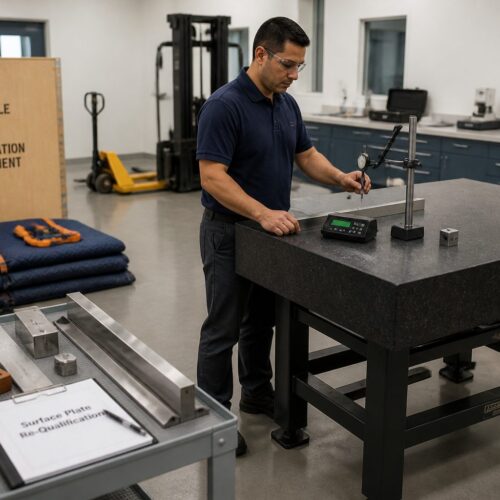
Proper preparation before a technician arrives for granite surface plate lapping can significantly streamline the reconditioning process and ensure optimal results. Taking these preliminary steps saves time for the service provider and minimizes potential disruptions in your facility. A well-prepared workspace contributes directly to the efficiency and quality of the lapping service.
These preparatory actions range from cleaning the plate itself to organizing the surrounding area, creating a safe and accessible environment for the specialized equipment. Neglecting these steps can lead to delays or even compromise the effectiveness of the flatness restoration. Your foresight ensures a smooth and successful operation.
- Thoroughly clean the surface plate to remove all dirt, oil, and debris
- Remove all gauges, fixtures, and accessories from the plate’s surface
- Clear a minimum of three feet of unobstructed space around the plate
- Ensure adequate lighting is available in the work area
- Confirm access to a standard electrical outlet (120V, 15A) for equipment
- Arrange for any necessary lifting equipment if the plate requires repositioning
- Inform personnel in nearby areas about the upcoming service
Protecting Nearby Equipment From Grit and Slurry
Granite surface plate lapping involves the use of abrasive slurries and water, which can create fine granite dust and slurry splatter. These materials, while essential for flatness restoration, pose a significant risk to nearby precision equipment if left unprotected. Proactive measures are critical to safeguard your valuable instruments and machinery.
The abrasive grit, even in microscopic form, can easily penetrate sensitive components like bearings, optical systems, and electronic controls. Once inside, it acts as a grinding paste, causing accelerated wear, malfunction, and permanent damage. Protecting your surrounding assets prevents costly repairs and downtime after the reconditioning process.
The most effective strategy involves creating a physical barrier around the work area. Heavy-duty plastic sheeting, such as 6-mil polyethylene, should completely enclose the surface plate and extend well beyond its footprint. Ensure the sheeting is securely taped to the floor and any vertical structures to prevent dust and slurry from escaping.
Consider using portable screens or temporary walls to further isolate the lapping operation, especially in open-plan labs. This additional layer of protection helps contain airborne particles and limits the spread of any accidental splashes. It creates a dedicated work zone, minimizing contamination risks for the entire facility.
Remember that fine dust can travel further than expected, so err on the side of caution when determining the protected zone. Covering nearby shelves, cabinets, and even ventilation grilles with plastic sheeting is a sensible precaution. This comprehensive approach ensures that the granite surface plate lapping improves your metrology, rather than damaging other crucial equipment.
Post-Lap Cleaning and First Use Best Practices
After the granite surface plate lapping is complete, thorough cleaning is paramount to remove all residual abrasive slurry and granite dust. Even tiny particles left behind can compromise future measurements or cause premature wear on gauge blocks. A meticulous cleaning process ensures the newly restored surface finish performs as intended.
Start by wiping down the plate with a clean, lint-free cloth dampened with a specialized granite cleaner or denatured alcohol. Repeat this process multiple times, using fresh cloths, until no residue is visible on the cloth. Pay close attention to corners, edges, and any threaded inserts where slurry might accumulate.
Allow the plate to air dry completely or wipe it dry with a final clean, dry cloth. Before its first use, allow the surface plate to stabilize at the ambient room temperature for several hours, ideally overnight. Granite is highly sensitive to temperature changes, and thermal equilibrium is essential for accurate measurements.
When you begin using the reconditioned plate, handle it with extra care. The newly achieved surface finish is optimal for wringing, but it can also be more susceptible to initial wear if abused. Avoid dragging heavy objects or dropping tools, which could quickly create new low spots and compromise the flatness restoration.
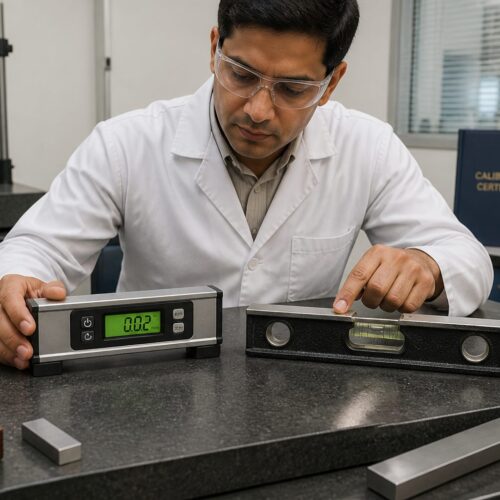
Perform an initial set of calibration checks using certified gauge blocks and precision indicators to verify the plate’s performance. Compare these readings against the new calibration report provided by the technician. This practice confirms that the granite surface plate lapping has successfully brought the plate back to its required accuracy standards, ensuring reliable results from day one.
Verifying Results: What to Review on the New Report
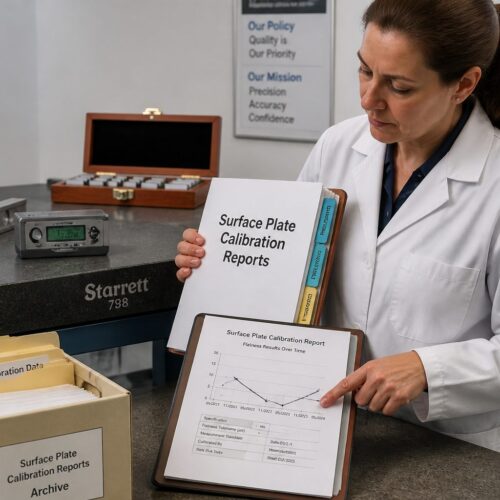
The calibration report provided after granite surface plate lapping is more than just a piece of paper; it is the official documentation of your plate’s restored accuracy. Carefully reviewing this report is essential for verifying the success of the reconditioning process and understanding the plate’s current performance. It confirms that the flatness restoration meets your metrology needs.
First, check the overall flatness measurement, which represents the maximum deviation from a perfect plane across the entire surface. This value should fall within the specified tolerance for your plate’s grade (e.g., Grade A, Grade B). Ensure it meets or exceeds your required precision level for your applications.
Next, examine the repeat reading measurement, also known as localized flatness. This metric indicates the variation in readings over a small area, typically a 24-inch square. A low repeat reading is crucial for accurate measurements of smaller parts or when using height gauges, confirming the consistency of the surface finish in critical zones.
Look for the thermal expansion coefficient and any temperature corrections applied during the calibration. Granite expands and contracts with temperature, so understanding these values ensures you account for environmental factors in your measurements. The report often includes the temperature at which the calibration was performed, which is important for comparison.
Also, verify that the report lists the serial number of your specific surface plate and the date of calibration. This traceability is vital for quality management systems and auditing purposes. A comprehensive report from a reputable service confirms the integrity of the granite surface plate lapping and provides confidence in your measurement capabilities.
How Lapping Affects Inserts, Threads, and Accessories
One common concern among users is how granite surface plate lapping might affect embedded inserts, threaded holes, or other accessories. Fortunately, the reconditioning process is designed to have a minimal, almost negligible impact on these features. Professional lapping focuses solely on the plate’s working surface, removing only microns of material.
The amount of material removed during flatness restoration is typically so small that it does not significantly alter the depth or diameter of threaded inserts. These inserts are usually made of steel and are recessed below the initial working surface of the granite. The lapping process simply shaves the granite down to a new, flat plane.
You may find that accessories like clamping rails or edge squares fit slightly differently after the reconditioning process, but this is usually a minor adjustment. The change occurs because the entire top surface has been brought to a new, precise level. Any minor fit issues can typically be resolved by re-securing or gently adjusting the accessories.
It is good practice to remove all accessories, including any fixtures or gauge stands, before the granite surface plate lapping begins. This prevents any interference during the process and ensures the technician has unimpeded access to the entire surface. Reinstalling them after the lapping and cleaning allows for a fresh, precise setup.
Reputable lapping services understand the importance of these embedded components and take care to protect them. They employ techniques that avoid excessive material removal around inserts or threads, ensuring their continued functionality. The reconditioning process aims to restore the plate’s primary function without compromising its secondary features.
Extending Time Between Re-Laps With Better Habits
While granite surface plate lapping is an essential reconditioning process, adopting better habits in your metrology lab can significantly extend the time required between services. Proactive care and mindful usage directly translate into less frequent need for flatness restoration. This approach saves both time and money in the long run.
Regular cleaning is perhaps the simplest yet most effective habit you can implement. Wipe down the surface plate daily with a suitable granite cleaner or denatured alcohol to remove dust, oil, and minute abrasive particles from parts. This prevents the accumulation of contaminants that can accelerate wear and degrade the surface finish.
Always use a clean, lint-free cloth for wiping the plate, never paper towels or shop rags that can leave fibers or scratch the surface. Ensure all tools and parts placed on the plate are also clean and free of burrs. Contaminants introduced to the plate’s surface act as abrasives, causing unnecessary wear.
Distribute your work across the entire surface of the plate instead of concentrating measurements in a single area. This practice ensures even wear, preventing the formation of localized low spots that necessitate earlier granite surface plate lapping. Rotating your workspace helps maintain overall flatness for a longer period.
Avoid using your surface plate as a general workbench for assembly or heavy tool storage. Dropping tools, dragging heavy objects, or subjecting the plate to excessive point loads can cause chipping or premature wear. Always use the plate strictly for its intended purpose of precision measurement to preserve its integrity.
Proper storage of gauges and instruments off the plate when not in use also reduces wear. Leaving heavy gauge blocks or large fixtures on the plate for extended periods can contribute to localized compression and wear over time. Implementing these simple, disciplined habits makes a substantial difference in extending the life and accuracy of your surface plate between professional re-laps.
Conclusion
Granite surface plates form the bedrock of precise dimensional metrology, and their consistent accuracy is non-negotiable for quality control and manufacturing. Over time, even the most robust plates experience wear, compromising their essential flatness and surface finish. This degradation directly impacts the reliability of your measurements.
The reconditioning process of granite surface plate lapping is the definitive solution to these challenges, meticulously restoring the plate to its original specifications. It systematically removes microscopic layers of granite, effectively correcting wear, minor scratches, and localized deviations. This ensures your plate once again provides a perfectly flat, stable reference plane.
Understanding the intricacies of this service, from preparing your workspace to interpreting the post-lap calibration report, empowers you as a metrology professional. It allows you to confidently schedule maintenance, protect your surrounding equipment, and verify the quality of the flatness restoration. This knowledge is crucial for maintaining operational excellence.
Investing in regular, professional granite surface plate lapping is not merely a repair; it is a strategic investment in the longevity and continued accuracy of your metrology infrastructure. It preserves your capital equipment, prevents costly measurement errors, and upholds the integrity of your quality standards. This commitment ensures consistent precision.
By combining expert reconditioning with diligent in-house maintenance habits, you can significantly extend the operational life of your granite surface plates. This integrated approach ensures your metrology operations remain at the forefront of precision and reliability for many years to come. It secures the foundation of your measurement capabilities.