
Precision measurement in manufacturing relies heavily on accurate granite surface plates. These foundational tools offer an incredibly stable and flat reference plane for critical inspection tasks. Effective training for granite surface plate care is essential to maintain their accuracy over time.
New users often underestimate the specific handling and maintenance these sensitive instruments require. Lack of understanding leads to costly damage, premature wear, and inaccurate measurements, impacting product quality. This guide provides essential surface plate user education for all shop floor personnel.
Investing time in metrology equipment training for new employees is a fundamental requirement, not just a suggestion. We cover everything from basic handling to environmental considerations, helping establish robust shop floor best practices. Proper care extends plate life and guarantees the integrity of your measurement processes.
Why Proper Training for Surface Plate Care is Crucial
Ignoring proper training for granite surface plate care undermines quality control. These plates have tight tolerances, making them vulnerable to damage from improper use. Even minor scratches compromise flatness, making the plate unreliable.
Consider the significant cost of a damaged surface plate. Replacing or re-calibrating a large plate involves expense and downtime, affecting production. Effective surface plate user education minimizes these risks.
Inaccurate measurements from a neglected plate lead to rejected parts and customer dissatisfaction. This quality erosion damages reputation and causes costly reworks. Comprehensive metrology equipment training ensures reliable measurements.
Establishing clear shop floor best practices for plate usage also promotes safety. Heavy plates, when mishandled, pose a significant injury risk to personnel. Proper handling techniques protect both equipment and operators.
A well-trained workforce is ultimately more efficient and productive. Employees understand tool importance and maintenance, working with confidence and accuracy. This focus on precision through training fosters excellence.
Understanding the Basics: What is a Granite Surface Plate?
A granite surface plate is a precision-machined block of black granite. It acts as a stable, non-magnetic, and vibration-dampening reference plane. Its primary use is for accurate inspection and layout in metrology.
These plates come in various grades like Laboratory (AA) or Inspection (A), each with different flatness tolerances. The chosen grade depends on the required measurement precision. Understanding these grades is part of training for granite surface plate care.
Granite is preferred over cast iron for its superior hardness and dimensional stability. Unlike metal, granite does not warp significantly with temperature changes. This inherent stability ensures long-term accuracy with proper attention.
The manufacturing involves high-quality black granite, followed by precision lapping and polishing. This meticulous process creates an incredibly flat and smooth surface. Any damage to this fine finish compromises its fundamental utility.
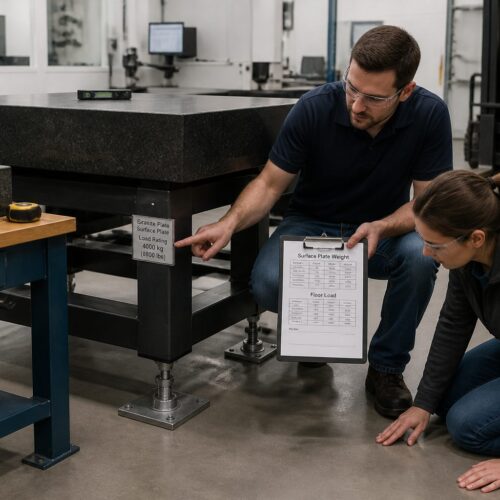
Surface plates rest on stands designed for even weight distribution, preventing deflection. These stands often feature three adjustable support points, critical for maintaining flatness. Proper setup and environmental awareness are key to surface plate user education.
Fundamental Principles of Safe Handling and Lifting
Proper handling and lifting ensure surface plate longevity and personnel safety. Mishandling causes injury or catastrophic damage, making this critical for training for granite surface plate care. Always plan moves carefully before relocating a plate.
Never lift a heavy plate alone; use appropriate lifting equipment or sufficient help. Distribute weight evenly, avoiding pressure on edges or corners, which are vulnerable to chipping. Follow established shop floor best practices for moving heavy objects.
| Action | Correct Procedure | Why it Matters |
|---|---|---|
| Lifting Small Plates | Use two people, lifting from opposite sides, keeping backs straight. | Prevents personal injury and minimizes risk of dropping or tilting the plate. |
| Moving Large Plates | Employ a forklift or hydraulic lift with proper slings or straps. | Ensures even weight distribution, preventing deflection or cracking of the granite. |
| Placing on Stand | Lower gently, ensuring the plate rests squarely on the designated support points. | Incorrect placement can cause immediate damage or long-term accuracy issues. |
| Temporary Storage | Store flat on a stable, padded surface away from traffic and temperature extremes. | Protects the precision surface from impacts and environmental stress. |
| Inspecting Before Use | Check for any visible damage, debris, or moisture on the surface. | Identifies potential problems before they affect measurement accuracy or cause further harm. |
Daily Cleaning Routines and Approved Cleaning Agents
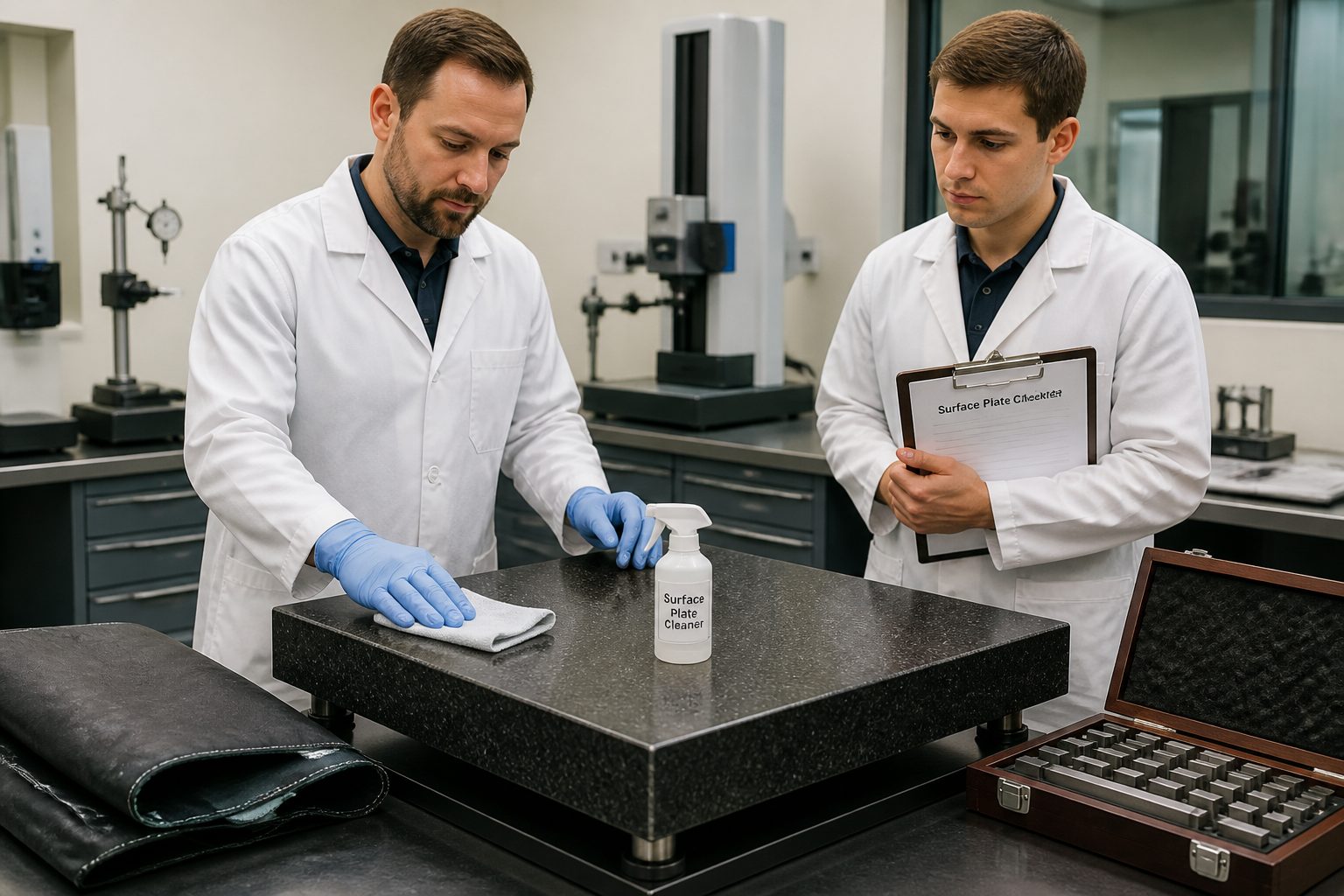
Maintaining a granite surface plate demands consistent daily cleaning routines. Dust, grime, and fingerprints accumulate, creating microscopic high spots that compromise accuracy. Regular cleaning is fundamental training for granite surface plate care.
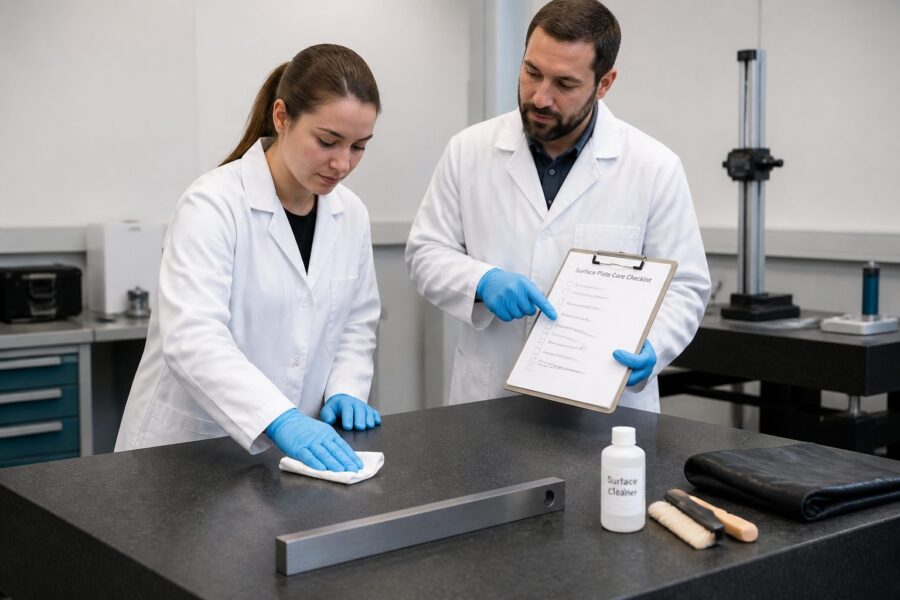
Wipe the plate surface thoroughly before and after each use. Use a dedicated lint-free cloth or paper towels to prevent transferring abrasive particles. This simple step helps preserve the plate’s critical flatness.
Only use approved cleaning agents designed for granite surface plates; avoid harsh chemicals or abrasive cleaners. These can leave residues, etch the surface, or absorb into the granite, causing long-term damage. Consult manufacturer guidelines for recommended solutions.
A mild detergent diluted in water, or specialized quick-evaporating granite cleaner, works well. Apply sparingly, wipe clean, then immediately dry with another lint-free cloth. Residual moisture attracts dust and promotes rust on tools.
Store all cleaning materials in a clean, dust-free environment when not in use. Contaminated supplies introduce more problems than they solve, making efforts counterproductive. Implementing these shop floor best practices is vital for plate integrity.
Best Practices for Tool and Workpiece Placement
How tools and workpieces are placed affects wear patterns and long-term accuracy. Concentrating heavy loads or frequent use causes localized wear, creating unevenness. Proper surface plate user education teaches work distribution across the entire surface.
Handle workpieces and measuring tools carefully, lowering gently rather than dropping or sliding abruptly. Sharp edges can chip granite; dragging items causes abrasive wear. This careful approach is cornerstone training for granite surface plate care.
- Distribute work across the entire plate surface
- Use soft pads or blocks under heavy or sharp workpieces
- Avoid dropping tools or parts onto the plate
- Clean workpiece bases before placing them on the plate
- Rotate the plate periodically to equalize wear
- Do not slide heavy items across the surface
- Place tools and gauges gently, avoid impacts
Recognizing and Preventing Common Types of Damage
Understanding potential damage is the first step in protecting your granite surface plate. Issues range from minor flaws to significant compromises affecting precision. Good metrology equipment training helps users identify threats and act proactively.
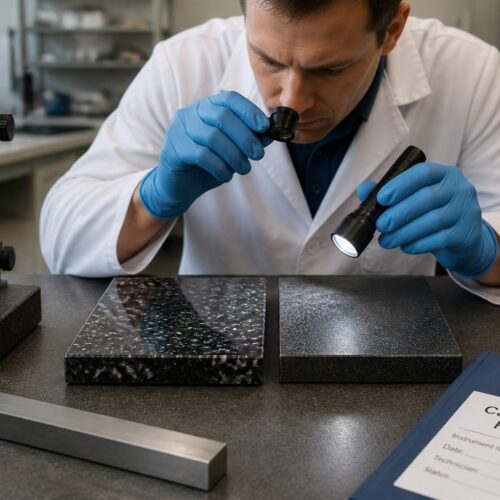
Chipping happens frequently, often from dropped heavy or sharp objects hitting edges or corners. These chips create uneven spots and can spread, reducing the plate’s usable area. Always be cautious around the plate, following strict shop floor best practices.
Scratches commonly occur from dragging tools, workpieces, or abrasive particles across the surface. While minor scratches seem harmless, they accumulate and affect flatness and measurement accuracy. Regular cleaning and careful placement are key preventative actions.
Uneven wear, or “dishing,” happens when one area of the plate is used more than others. This localized depression makes that section inaccurate for measurement. Rotating the plate and distributing work are excellent prevention strategies.
Thermal shock from rapid temperature changes can cause internal stresses in the granite, potentially leading to cracks. While granite is dimensionally stable, extreme fluctuations are problematic. Keeping the plate in a controlled environment is essential training for granite surface plate care.
The Importance of Environmental Awareness
The environment surrounding a granite surface plate greatly impacts its accuracy and longevity. Temperature, humidity, and airborne contaminants all influence the plate’s performance. Understanding these factors is a core part of effective surface plate user education.
Ideally, surface plates operate in a temperature-controlled environment, usually 68°F to 72°F (20°C to 22°C). Temperature swings cause granite to expand or contract, affecting flatness and measurements. This sensitivity reinforces consistent environmental control.
High humidity causes moisture to accumulate, rusting steel tools and gauges. Extremely low humidity can build static electricity, attracting dust particles. Maintaining 40-60% humidity benefits overall metrology equipment training and care.
Dust and airborne particles are constant shop threats, acting as abrasives that scratch the plate. Keep the area around the plate clean and cover it when not in use. This simple habit prevents significant wear over time.
Vibrations from machinery or foot traffic subtly affect measurement stability, especially for sensitive operations. Position plates in low-vibration areas or use dampening pads under the stand. Creating an optimal environment is key training for granite surface plate care.
Reporting Issues: What to Do When Something Goes Wrong
Even with excellent training for granite surface plate care, issues can arise or wear may become noticeable. A clear protocol for reporting problems is as important as preventative maintenance. Prompt reporting minimizes further damage or widespread measurement inaccuracies.
Employees must know who to report concerns to, whether a supervisor or quality control manager. A clear chain of command ensures efficient problem addressing, preventing oversight. This accountability is crucial for effective surface plate user education.
If you find a chip, scratch, or suspected flatness issue, immediately stop using that plate area. Mark the spot clearly but gently, perhaps with a non-abrasive marker or tape. Documenting the issue with date, time, and observations is helpful.
Never attempt to “fix” a granite surface plate yourself with abrasive tools or unapproved fillers. Such actions worsen damage and complicate professional repair. Leave all repairs to qualified metrology equipment training professionals.
If a plate is suspected out of tolerance, remove it from service until inspection and recalibration. Continuing to use a compromised plate leads to bad parts and wasted resources. This disciplined approach is a cornerstone of responsible shop floor best practices.
Understanding the Role of Calibration and Inspection
Regular calibration and inspection are non-negotiable for maintaining surface plate accuracy. Even with diligent training for granite surface plate care, plates experience wear over time. These scheduled checks verify flatness and ensure continued reliability.
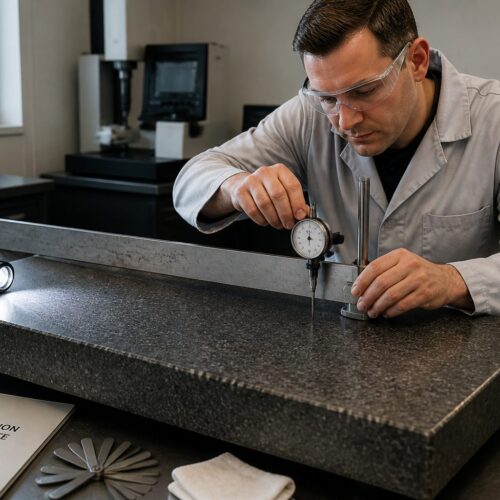
Calibration typically involves using specialized instruments like autocollimators or electronic levels to measure deviations from perfect flatness. A certified metrologist performs these checks, providing a detailed report of the plate’s condition. This process confirms the plate meets its specified grade tolerance.
The frequency of calibration depends on the plate’s grade, usage intensity, and environmental conditions. High-precision plates in constant use may require annual or even semi-annual checks. Your surface plate user education should include understanding these scheduling requirements.
Intermediate inspections, often performed in-house, involve visual checks for damage and a basic functional test with a repeat reading gauge. These quick checks help catch developing issues between formal calibrations. They are a practical part of ongoing metrology equipment training.
Calibration records are vital for quality assurance and traceability, demonstrating adherence to standards. Always keep these documents readily accessible for audits or reference. This commitment to documented inspection is a key aspect of superior shop floor best practices.
Creating a Culture of Care and Precision in the Shop
Beyond individual actions, fostering a collective culture of care is essential for surface plate longevity. Every team member’s commitment to precision reinforces good habits. This shared responsibility elevates overall shop floor best practices.
Leadership plays a critical role in setting expectations and providing resources for proper maintenance. Management must prioritize ongoing training for granite surface plate care and allocate time for daily routines. This investment signals the value placed on quality.
Regular refreshers and workshops ensure that surface plate user education remains current and reinforced. New techniques or equipment may require updated training. Continuous learning prevents complacency and maintains high standards.
Encourage open communication regarding equipment status and potential issues without fear of reprimand. A blame-free environment promotes early problem detection and resolution. This transparency is vital for maintaining high-quality metrology equipment training standards.
Recognize and reward employees who consistently demonstrate exemplary care for metrology equipment. Positive reinforcement motivates adherence to best practices. Acknowledging diligent efforts strengthens the culture of precision throughout the workplace.
Advanced Tips for Experienced Users and Supervisors
Experienced users and supervisors hold a unique position to elevate surface plate care standards further. They can implement advanced strategies beyond basic training for granite surface plate care. These insights enhance precision and extend equipment lifespan significantly.
Consider implementing a rotation schedule for actively used surface plates, especially larger ones. This ensures even wear distribution across the entire surface over years of use. Such proactive management prevents localized “dishing” and extends calibration intervals.
Supervisors should periodically audit cleaning and handling procedures to ensure compliance with established shop floor best practices. These checks identify deviations before they become ingrained habits. Regular audits reinforce the importance of consistent care.
Investigate alternative cleaning methods or specialized coatings if environmental conditions are particularly challenging. Researching new products or techniques can offer superior protection against contamination or wear. Staying informed is a part of advanced metrology equipment training.
Mentor newer employees, sharing practical tips and real-world consequences of improper plate care. Personal anecdotes and hands-on guidance reinforce formal surface plate user education. This mentorship builds a stronger, more knowledgeable team.
Conclusion
Granite surface plates are indispensable tools for precision measurement in modern manufacturing. Their consistent accuracy underpins quality control and product integrity. Investing in comprehensive training for granite surface plate care is a critical business decision.
From understanding basic handling to advanced environmental awareness, diligent surface plate user education prevents costly damage and ensures reliable measurements. Adhering to strict shop floor best practices extends the life of these valuable assets. Regular metrology equipment training empowers every user to contribute to precision.
By fostering a culture of care, implementing robust procedures, and prioritizing ongoing learning, companies safeguard their investment. This commitment to excellence ensures that granite surface plates continue to deliver the unwavering precision required for success. A well-maintained surface plate is a testament to a quality-focused operation.