
Surface plates are the foundation of precision measurement in any shop. They demand respect, especially when they’re right in the middle of a busy manufacturing floor.
Maintaining accuracy amidst metal chips, flying coolant, and constant traffic presents real challenges. Effective surface plate care in a machine shop requires proactive strategies, not just reactive cleaning.
Ignoring these shop floor realities leads to premature wear, calibration issues, and ultimately, bad parts. It’s about more than just keeping it clean; it’s about protecting your investment and your measurement integrity.
Good habits for chip control and managing coolant mist are essential for any precision environment. The right work area layout can also make a significant difference in a plate’s longevity and accuracy.
The unique risks of a machine shop environment
A machine shop is a harsh environment for any precision tool, and surface plates face constant threats. Airborne contaminants, physical impacts, and thermal fluctuations all conspire against their flatness.
Metal chips, grinding dust, and abrasive swarf can embed themselves into granite pores, causing scratches and uneven wear. These particles act like tiny sandpaper grains, slowly degrading the plate’s surface with every part moved across it.
Coolant mist and cutting oils create slippery films that attract debris and can even chemically react with some granite sealants over time. This oily residue traps contaminants, making proper cleaning more difficult and less effective.
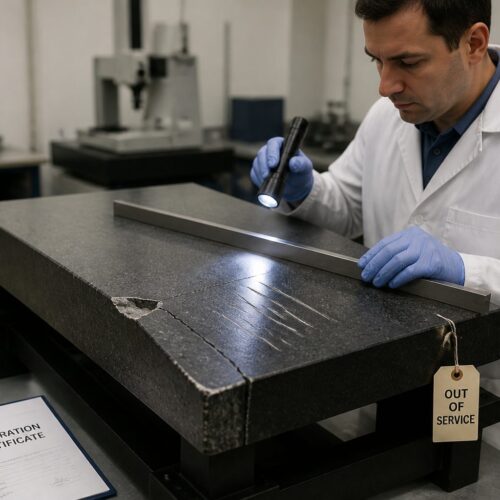
Heavy parts, dropped tools, and accidental bumps from forklifts or carts pose significant impact risks. Even a small chip on the plate’s edge can compromise measurements if it propagates or affects stability.
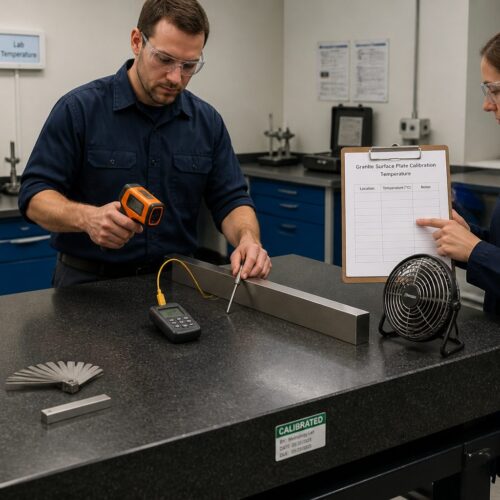
Temperature swings from machine operation, open doors, or HVAC systems can cause the granite to expand and contract. While granite is stable, rapid or significant temperature changes can temporarily distort its surface, affecting measurement accuracy.
Constant foot traffic and the movement of heavy machinery create vibrations that, over time, can subtly shift a plate’s leveling or stand stability. This often unnoticed movement contributes to a gradual loss of calibration if not regularly checked.
Even seemingly minor impacts, like a dropped wrench, can create invisible subsurface damage that compromises the plate’s long-term stability. This internal stress can lead to micro-fractures over time, affecting flatness.
Constant exposure to varying humidity levels can also affect the granite, as it is a porous material. High humidity can encourage surface film growth, while very low humidity might contribute to minor surface drying effects.
Choosing the best location for the plate in the shop
Selecting the right spot for your surface plate is the first, and perhaps most important, step in effective surface plate care in a machine shop. A poorly chosen location guarantees an uphill battle against contamination and damage.
Think about proximity to machines, air currents, and heavy traffic patterns when planning your work area layout. Placing the plate away from direct machining operations significantly reduces exposure to chips and coolant.
| Factor | Ideal Condition | Why it It Matters |
|---|---|---|
| Proximity to Machines | Minimum 10-15 feet away | Reduces direct exposure to chips, coolant mist, and grinding dust. |
| Airflow & Ventilation | Away from direct drafts or exhaust fans | Prevents airborne contaminants from being blown onto the plate surface. |
| Traffic Patterns | Out of main walkways and forklift paths | Minimizes accidental impacts, bumps, and excessive dust generation. |
| Lighting | Even, glare-free illumination | Ensures clear visibility for accurate readings and inspection of the surface. |
| Vibration Sources | Isolated from presses, large mills, or heavy stamping | Maintains stability and prevents subtle shifts in the plate’s calibration over time. |
Controlling chips and burrs before parts reach the plate
Even with the best location, parts coming off machines will carry chips, burrs, and residue. Implementing strict chip control measures before parts touch the granite is non-negotiable for surface plate care in a machine shop.
Establish a dedicated deburring and preliminary cleaning station near the machines, but separate from the inspection area. This buffer zone prevents the transfer of gross contaminants to your precision measurement tools.
Use brushes, compressed air, or part washers to remove loose chips and burrs from components immediately after machining. Compressed air should be filtered and used carefully to avoid blowing debris towards the plate itself.
Never place parts with sharp edges or burrs directly onto the surface plate without a protective barrier. Even small burrs can scratch the granite or embed themselves, causing damage over time.
Train operators to inspect parts visually and tactilely for any remaining debris before bringing them to the inspection area. A quick check can save hours of surface plate repair or recalibration down the line.
Provide dedicated, clean trays or carts for transporting parts from the deburring station to the surface plate. This prevents cross-contamination from other shop floor activities or dirty surfaces.
Consider implementing a dedicated “clean side” and “dirty side” for part flow around the surface plate area. This physical separation helps prevent cross-contamination from uncleaned components.
For particularly delicate or highly finished parts, use soft, non-abrasive cloths or specialized cleaning solutions for final wipe-downs before placing them on the granite. This step minimizes the risk of transferring microscopic debris.
Managing coolant mist and oily air
Coolant mist is a silent killer for surface plate accuracy, creating a greasy film that attracts and holds abrasive particles. Effectively managing this airborne oil is a core component of surface plate care in a machine shop.
Invest in mist collectors for your machining centers, especially those running high-pressure coolants or oil-based cutting fluids. These systems significantly reduce the amount of airborne oil that settles on surrounding surfaces.
Position your surface plate upwind from any machines generating significant coolant mist, if possible, considering the overall work area layout. This helps direct the mist away from the inspection area.
Regularly clean and maintain your machine tool enclosures to prevent coolant from escaping as vapor. A well-sealed enclosure is the first line of defense against widespread coolant contamination.
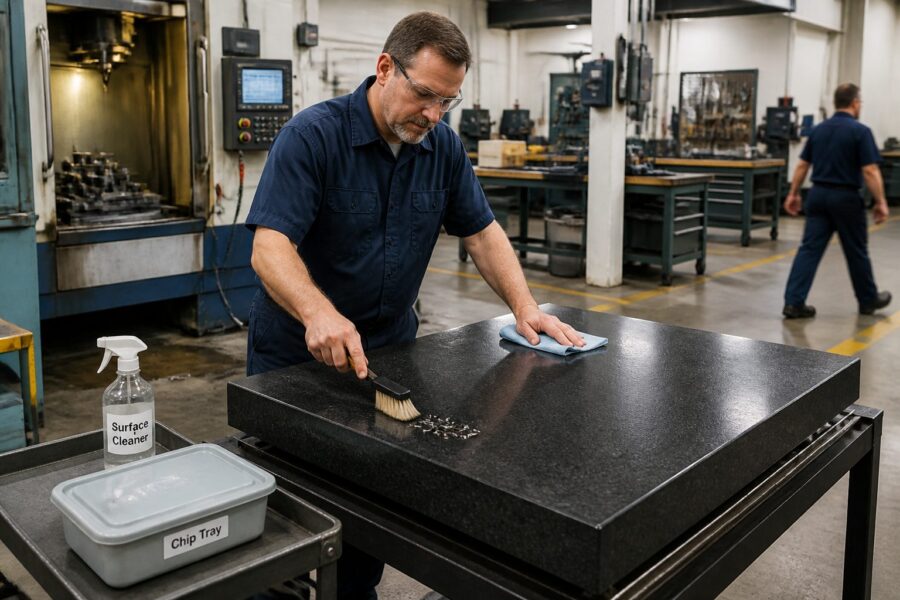
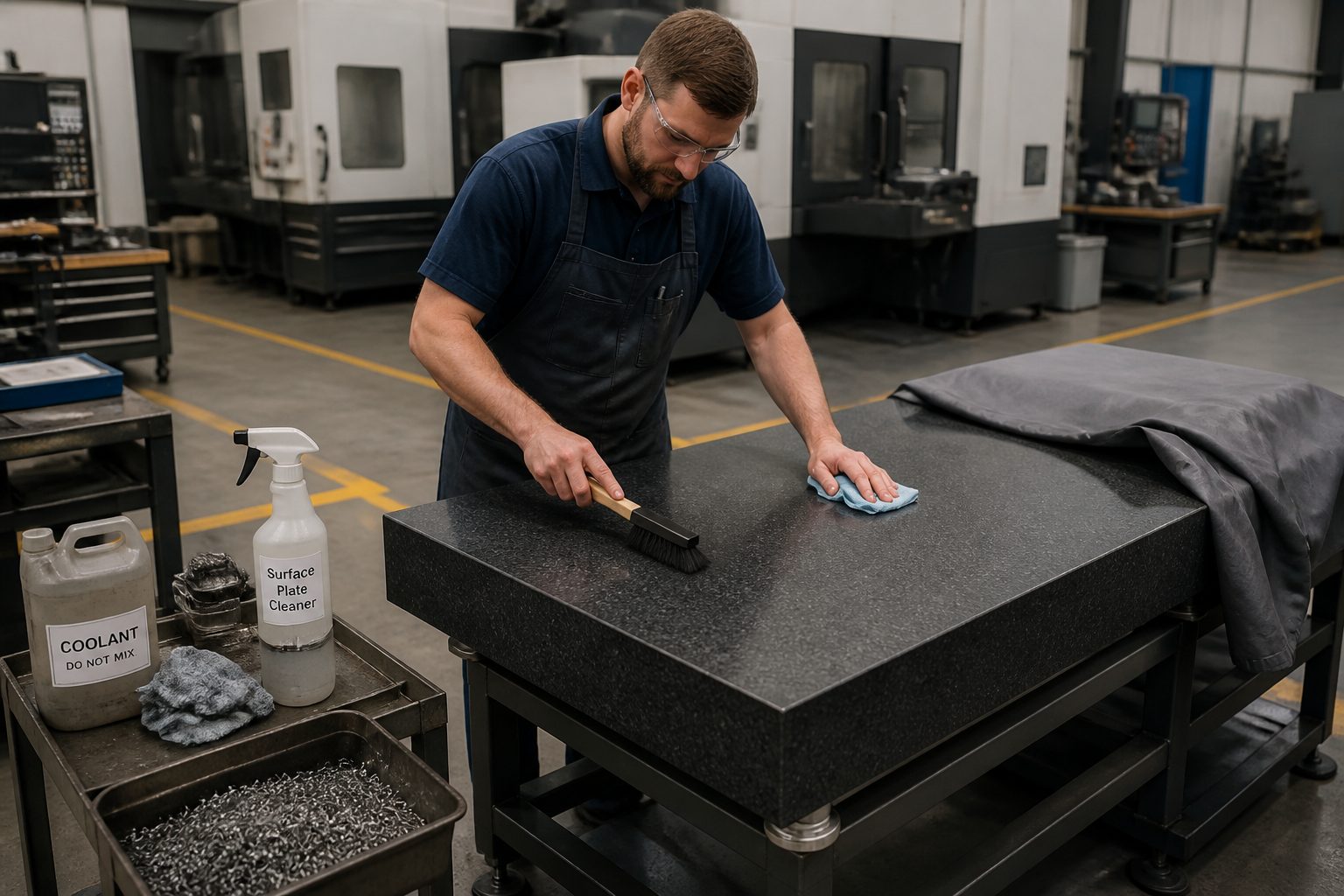
Implement a daily cleaning routine for the surface plate that includes wiping down any oily residue with a suitable granite cleaner. Regular cleaning prevents the buildup of sticky films that are harder to remove later.
Consider using covers for your surface plate when it’s not in active use, even for short periods. A simple, clean cloth or plastic cover can shield the plate from settling mist and dust.
Regularly check and replace filters in mist collectors and HVAC systems to ensure they are effectively capturing airborne contaminants. Clogged filters are inefficient and allow more coolant mist to escape.
Encourage operators to close machine doors promptly after loading or unloading parts, minimizing the open time for mist to escape into the ambient air. Small habits like this contribute significantly to overall shop cleanliness.
Setting up staging: clean bench, carts, and part trays
A well-organized staging area around the surface plate is crucial for maintaining cleanliness and efficiency. This dedicated zone prevents contaminants from reaching the granite and streamlines inspection processes.
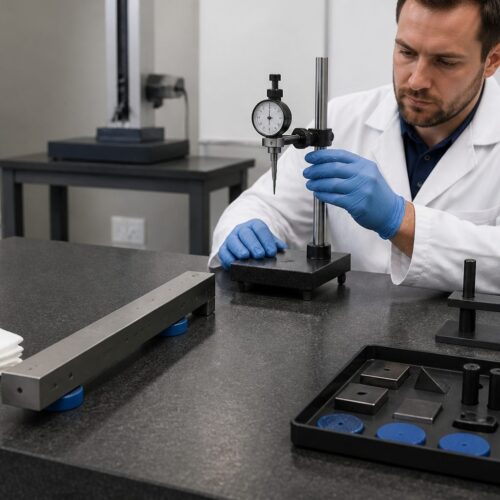
Create a clean bench adjacent to the surface plate, equipped with all necessary cleaning supplies and measurement tools. This setup ensures everything needed for inspection is within reach, minimizing unnecessary movement and potential for dropping tools.
- Clean, lint-free wiping cloths
- Approved granite cleaner and distilled water
- Dedicated deburring tools (used away from the plate)
- Clean part trays or bins for incoming and outgoing parts
- Specific inspection instruments (calipers, micrometers, height gauges)
- Current work instructions or engineering prints
- A waste receptacle for collected chips and debris
Housekeeping routines that actually hold up under production
Establishing effective housekeeping for surface plate care in a machine shop requires more than just good intentions; it needs practical, repeatable routines. These routines must be robust enough to withstand the demands of a production environment.
Implement a daily wipe-down procedure for the surface plate and its immediate surroundings. This routine should happen at the start of each shift or after significant use, removing accumulated dust and light residue.
Use only approved granite cleaners and lint-free cloths, avoiding harsh chemicals or abrasive materials that can damage the surface. A simple mix of distilled water and a mild, pH-neutral soap is often effective.
Train all personnel who use the plate on the correct cleaning techniques, emphasizing consistency and thoroughness. Proper training ensures everyone understands their role in maintaining the plate’s accuracy.
Create a visual checklist or signboard near the plate detailing the cleaning steps and expected frequency. This serves as a constant reminder and standardizes the process across shifts and users.
Schedule regular, deeper cleaning sessions, perhaps weekly or bi-weekly, to remove stubborn stains or embedded particles. These sessions might involve specialized granite cleaning solutions or professional assistance.
Ensure that all cleaning supplies, including cloths and solutions, are stored in a clean, designated area to prevent them from becoming contaminated themselves. Dirty cleaning tools only spread more grime.
Rotate cleaning cloths regularly, washing them thoroughly or replacing them with fresh ones to maintain their effectiveness. A saturated cloth becomes less efficient at picking up debris and more prone to smearing.
Rules for shared use: who cleans, when, and how
When multiple operators use the same surface plate, clear rules for shared use are essential for effective surface plate care in a machine shop. Ambiguity often leads to neglect and accelerated wear.
Establish a “clean before and after use” policy for every individual accessing the surface plate. This simple rule places immediate responsibility on the user, preventing the accumulation of grime throughout the day.
Clearly define what “clean” means, providing specific instructions on wiping down the plate, clearing the surrounding work area layout, and returning tools to their proper places. Consistency in cleaning methods is just as important as the act itself.
Assign specific individuals or teams responsibility for daily and weekly deep cleaning tasks. This prevents important maintenance from falling through the cracks, ensuring the plate receives comprehensive attention.
Post these rules prominently near the surface plate, perhaps alongside the cleaning checklist. Visible guidelines reinforce expectations and act as a quick reference for all users.
Conduct regular audits or spot checks to ensure compliance with the established cleaning protocols. Consistent enforcement reinforces the importance of these rules and helps embed them into the shop culture.
Implement a logbook or digital system where users can sign off on cleaning tasks after each use or shift. This accountability measure ensures tasks are completed and provides a record of maintenance.
Foster a culture of collective responsibility for the surface plate’s condition, emphasizing that its accuracy benefits everyone’s work. Shared ownership promotes better adherence to cleaning protocols.
Handling high traffic and preventing accidental impacts
High traffic areas in a machine shop dramatically increase the risk of accidental impacts to your surface plate, posing a serious threat to its long-term accuracy. Protecting the plate means actively managing its environment.
Use physical barriers, such as stanchions, floor markings, or even low-profile guard rails, to delineate the surface plate’s safe zone. These visual cues remind personnel to maintain a respectful distance.
Plan traffic flow routes around the surface plate to minimize direct passes by forklifts, pallet jacks, or heavy carts. A well-thought-out work area layout can significantly reduce collision potential.
Train all personnel, especially material handlers, on the location of the surface plate and the importance of avoiding contact. Awareness is a powerful tool in preventing accidents.
Never use the surface plate as a temporary workbench, storage area, or a place to set tools not immediately in use for inspection. This practice invites clutter, chips, and potential damage.
Consider placing rubber mats or anti-fatigue flooring around the surface plate to absorb some vibration from foot traffic and heavy equipment. This can also provide a safer standing surface for operators.
Install clear signage around the surface plate that highlights its purpose and the need for caution. Simple “Precision Area – Keep Clear” signs can be highly effective.
Educate new employees during their onboarding about the sensitivity of the surface plate and the specific protocols for working around it. Proactive education prevents many common errors.
End-of-shift shutdown: cover, wipe, and reset
A consistent end-of-shift shutdown routine is a simple yet powerful element of effective surface plate care in a machine shop. This routine protects the plate overnight and prepares it for the next day’s use.
Begin by thoroughly wiping down the entire surface plate with an approved cleaner and a lint-free cloth, removing all traces of dust, coolant mist, and fingerprints. This prevents contaminants from hardening or settling deep into the granite pores.
Clear all tools, parts, and debris from the surface plate and its immediate staging area. A clean slate at the end of the day makes the start of the next shift much more efficient and productive.
Replace any protective covers on the surface plate, ensuring it is fully shielded from airborne dust, settling coolant mist, and potential accidental splashes. A good cover acts as a physical barrier against environmental threats.
Return all measurement instruments to their proper storage locations, ensuring they are also clean and protected. This prevents damage to sensitive tools and keeps the work area layout organized.
Perform a quick visual inspection of the plate for any new chips, scratches, or unusual marks, reporting any significant findings. Early detection of damage can prevent more costly repairs down the line.
Confirm that the plate’s stand and leveling feet are stable and free from any loose debris or obstructions. A stable foundation is critical for maintaining flatness.
Ensure the area around the plate is swept or vacuumed to remove any accumulated chips or dust from the floor. This prevents contaminants from being tracked onto the plate the next day.
When to move the plate to a dedicated inspection area
While on-the-floor inspection is convenient, there comes a point where the machine shop environment becomes too detrimental for truly critical measurements. Recognizing this threshold is key to maintaining ultimate accuracy.
If your shop consistently struggles with chip control or pervasive coolant mist, even with the best efforts, a dedicated, climate-controlled inspection room becomes a necessity. These conditions directly compromise surface plate integrity.
When parts require extremely tight tolerances, often in the sub-micron range, the slight thermal fluctuations and vibrations inherent to a production floor can introduce unacceptable errors. A stable environment is paramount for such precision.
If calibration checks reveal frequent shifts in the plate’s flatness or leveling, despite adherence to care routines, it suggests the ambient conditions are overwhelming your protective measures. This is a clear signal for a change in location.
Consider the value and sensitivity of the parts being measured; high-value, critical components warrant the most controlled measurement environment possible. Protecting these parts often justifies the investment in a separate area.
A dedicated inspection area also allows for more consistent temperature and humidity control, further stabilizing the granite and minimizing environmental influences on measurement results. This separation ensures the highest level of metrological confidence.
Consider the cost of repeated recalibrations or potential scrap due to measurement errors in an uncontrolled environment. These costs can quickly outweigh the investment in a dedicated inspection room.
Moving to a dedicated area also provides a psychological benefit, signaling a higher standard of precision and reinforcing the importance of metrology to your team. It establishes a clear boundary for quality.
Conclusion
Maintaining the accuracy of a surface plate in a bustling machine shop is a continuous effort, not a one-time task. It demands diligence, proper procedures, and a commitment from everyone on the team.
Implementing robust chip control, managing coolant mist, and optimizing your work area layout are fundamental pillars of effective surface plate care in a machine shop. These actions protect your investment and ensure reliable measurements.
From choosing the right location to establishing clear shared-use rules and end-of-shift routines, every step contributes to the plate’s longevity and precision. Ignoring these details risks costly calibration failures and scrapped parts.
A well-cared-for surface plate is a testament to a shop’s dedication to quality and precision, forming the bedrock of accurate manufacturing. Prioritize its care, and it will serve your operations reliably for years to come.