Care

Surface Plate Dust Control: Practical Steps to Keep Grit Off Your Granite All Day

Surface Plate Dust Control: Practical Steps to Keep Grit Off Your Granite All Day

Ensure that all storage for tools, gages, and calibration standards is organized and enclosed within the metrology area setup. Open shelves or cluttered benches collect dust that can then be easily dislodged and settle on your surface plate. Keeping things tidy and contained minimizes potential dust reservoirs.

Proper HVAC filtration also plays a crucial role in managing airborne particles throughout the entire metrology space. Regularly changing air filters and ensuring positive air pressure within the room helps to push dust out and prevent outside contaminants from entering. This environmental control supports all other surface plate dust control efforts.

Cleaning nearby benches and carts so they don’t shed grit

Your surface plate is only as clean as its immediate surroundings. Neglecting the benches, carts, and toolboxes near your metrology area setup creates continuous sources of grit that will inevitably find their way onto your precision granite. Regular bench cleaning is a non-negotiable part of effective surface plate dust control.

Implement a strict cleaning regimen for all adjacent work surfaces, storage units, and mobile carts. Use a damp cloth with a mild, non-abrasive cleaner to wipe down benches, shelves, and equipment housings. Avoid dry wiping, which simply redistributes dust into the air, making the problem worse.

Inspect carts used to transport parts to and from the surface plate. These carts often harbor machining chips, oil residue, and general workshop debris that can easily fall off or become airborne near your measurement area. Dedicate specific carts for metrology use only, and ensure they are thoroughly cleaned before entering the precision zone.

Tools and gages should be cleaned before being placed on a bench near the surface plate. Even a seemingly clean micrometer might carry fine dust from a previous measurement or storage. Establish a habit of wiping down all instruments before they enter the immediate metrology area, reducing the introduction of new airborne particles.

Consider the material of your nearby benches and carts. Stainless steel or laminated surfaces are generally easier to clean and less prone to shedding fibers than unfinished wood or painted surfaces. Investing in appropriate furniture for your metrology area setup can significantly aid your surface plate dust control efforts in the long term.

Keep consumable items like wiping cloths, cleaning solutions, and instrument manuals neatly stored and covered when not in use. These items can also attract and hold dust, acting as secondary reservoirs. A disciplined approach to tidiness on all surfaces helps to prevent grit from accumulating and then migrating to your plate.

Regularly vacuum the floor around benches and carts using a HEPA-filtered vacuum cleaner. This captures settled dust instead of blowing it around, which is a common issue with standard shop vacuums. Incorporating this into your daily routine supports overall cleanliness and reduces the source of airborne particles.

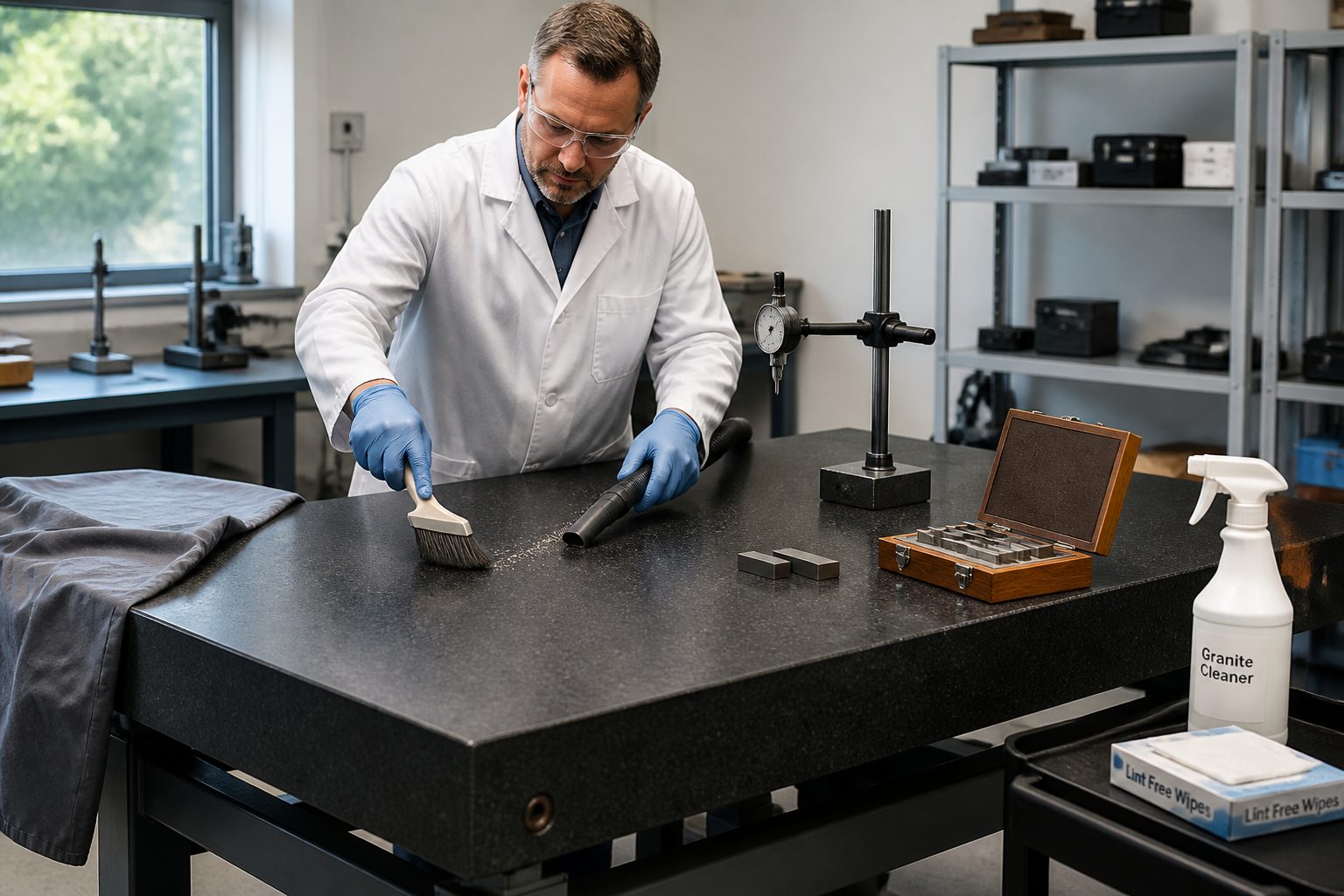
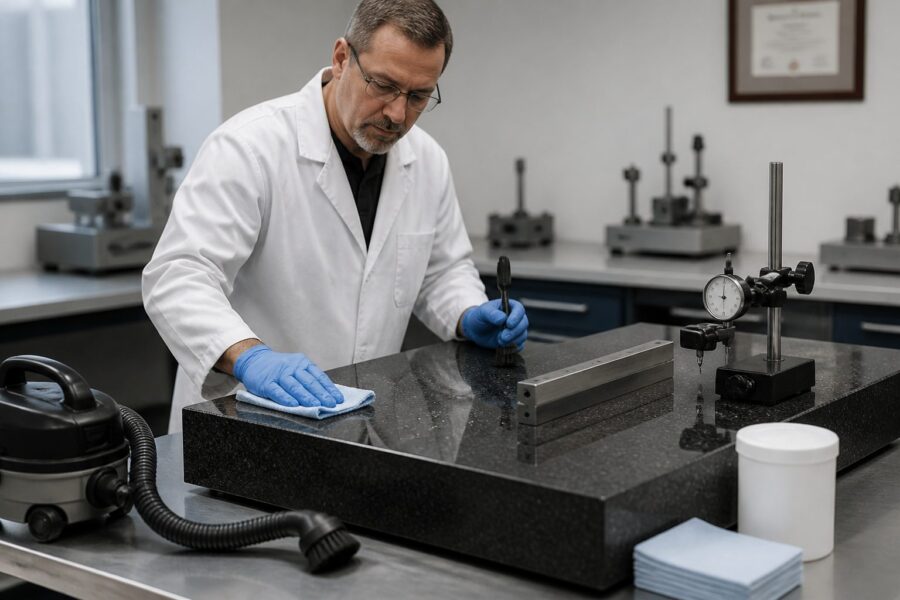
A lab technician in a metrology lab cleans a granite surface plate using a brush, microfiber cloth, and a small vacuum to remove dust and grit.

Clothing, gloves, and wiping habits that reduce lint

The clothing and habits of personnel working around a surface plate are major contributors to airborne particles and lint. Implementing strict protocols for attire and wiping techniques can dramatically improve your surface plate dust control. Every fiber shed and every improper wipe can compromise your precision measurements.

Encourage or require operators to wear lint-free lab coats or smocks over their street clothes when in the metrology area. These garments act as a barrier, containing fibers from personal clothing and preventing them from becoming airborne. Regular laundering of these specialized coats is also important to maintain their effectiveness.

  • Wear lint-free lab coats or smocks.
  • Use powder-free, lint-free nitrile gloves.
  • Wash hands thoroughly before gloving.
  • Use only microfiber or specialized lint-free wiping cloths.
  • Fold wiping cloths to expose fresh surfaces.
  • Avoid dry wiping surfaces.
  • Discard used wiping cloths promptly.
  • Change gloves frequently, especially after handling dirty parts.
  • Minimize unnecessary touching of surfaces.
  • Keep long hair tied back or covered.

Managing compressed air and why it often makes things worse

Many people instinctively reach for compressed air to clean surfaces, but this practice is almost always detrimental for surface plate dust control. While it might seem to remove visible debris, compressed air actually disperses fine airborne particles into the surrounding environment. This action effectively turns localized dust into a widespread contaminant that will eventually resettle on your precision surfaces.

Beyond simply scattering dust, industrial compressed air systems often introduce their own contaminants. Oil mist, water vapor, and even rust flakes can be present in the air stream, especially if the system lacks proper filtration and drying. Blasting these impurities onto your surface plate creates a sticky film that attracts and holds even more dust, making future cleaning harder.

Using compressed air near a surface plate also creates turbulent air currents. These currents can lift settled dust from adjacent benches, tools, or even the floor, pulling it directly into the critical measurement zone. This process actively works against any efforts to maintain a clean metrology area setup, making your dust problem worse instead of better.

Instead of compressed air, use alternative methods for cleaning parts and the surface plate itself. A soft, natural-bristle brush can gently sweep larger debris into a dustpan. For finer particles, specialized lint-free wiping cloths, often dampened with a suitable cleaning solution, are far more effective at capturing and removing contaminants without dispersing them.

If compressed air is absolutely necessary for cleaning complex parts before measurement, it should be used within a dedicated, enclosed cleaning booth located far from the surface plate. This setup ensures that any dislodged airborne particles are contained and filtered, preventing them from contaminating the main metrology area. Proper surface plate dust control means isolating high-contamination activities.

Ensure that any compressed air used for critical applications, like drying cleaned parts, is filtered to instrument-grade purity. This means removing oil, water, and particulates down to sub-micron levels. However, even with clean air, the act of blowing still creates air movement that can disturb settled dust nearby, so caution is always advised.

Educate your team on the dangers of using compressed air in precision environments. Emphasize that while it provides immediate visual satisfaction, its long-term impact on cleanliness and measurement accuracy is negative. Changing this ingrained habit is a crucial step in improving overall surface plate dust control.

Using covers and barriers the right way

Covers and barriers are simple yet highly effective tools for surface plate dust control, but only when used consistently and correctly. These physical protections prevent airborne particles from settling on your precision granite during periods of inactivity or when adjacent work creates dust. They act as the last line of defense against environmental contamination.

Always cover your surface plate when it is not in active use, even for short periods. A dedicated, heavy-duty cover, preferably made from a non-shedding, anti-static material, will protect the plate from ambient dust fall. Ensure the cover extends beyond the edges of the plate to prevent dust from blowing underneath.

Before placing the cover, ensure the surface plate itself is thoroughly cleaned. Covering a dirty plate traps existing dust and grit against the surface, potentially causing micro-scratches or encouraging contamination. The cover should protect a clean surface, not seal in a dirty one, which is a common mistake in surface plate dust control.

Consider using temporary barriers, such as clear plastic sheeting or portable screens, when dusty operations are occurring nearby. Even if your metrology area setup is somewhat isolated, fine dust can travel surprising distances. These temporary barriers provide an extra layer of protection during peak contamination events.

When removing the cover, do so slowly and carefully, lifting it straight up rather than dragging it across the plate. Dragging the cover can dislodge any dust that has settled on its top surface, causing it to fall onto the now-exposed granite. This careful removal technique is just as important as the act of covering the plate itself.

Regularly clean the surface plate cover itself. Covers can accumulate a significant amount of dust on their exterior, which then becomes a potential source of contamination if not managed. Wiping down the cover with a damp cloth or vacuuming it will prevent this accumulated dust from becoming an issue during removal.

For long-term storage or during facility maintenance, consider more robust sealing methods for your surface plate. This might involve wrapping the plate in heavy-duty plastic sheeting in addition to its standard cover. Such measures ensure maximum protection from airborne particles when the plate is out of commission for an extended period.

Daily housekeeping schedule that supports the plate

A consistent daily housekeeping schedule is the backbone of effective surface plate dust control. Sporadic cleaning simply cannot keep pace with the continuous generation of airborne particles in most industrial environments. Establishing and adhering to a routine ensures that cleanliness becomes an ingrained habit, not an afterthought.

Begin each shift with a thorough cleaning of the surface plate and its immediate surroundings. This involves wiping down the plate with a specialized granite cleaner and lint-free cloth, then cleaning nearby benches, tool carts, and gage storage. This proactive approach ensures you start with a pristine metrology area setup.

Mid-shift, perform quick spot checks and light cleaning as needed, especially after handling particularly dirty parts or after periods of high activity. Don’t wait for visible dust to accumulate; address potential contamination points immediately. This continuous vigilance prevents small issues from becoming larger problems.

At the end of each shift, conduct a comprehensive cleanup of the entire metrology area. This should include vacuuming the floor with a HEPA-filtered vacuum, wiping down all accessible surfaces, and ensuring the surface plate is properly cleaned and covered. This prepares the area for the next day’s work and minimizes overnight dust accumulation.

Assign specific cleaning responsibilities to operators and ensure they are properly trained on cleaning protocols and the correct materials to use. Knowing who is accountable for what task helps to ensure consistency and prevents cleaning duties from being overlooked. Clear expectations are key to effective surface plate dust control.

Maintain a log of cleaning activities, noting when the plate was cleaned, by whom, and what materials were used. This documentation helps track compliance, identify potential issues, and reinforces the importance of the cleaning regimen. It also provides a record for audits or troubleshooting measurement discrepancies.

Ensure that all cleaning supplies are readily available and properly stored. If operators have to search for cloths or cleaner, they are less likely to perform the cleaning tasks diligently. Keeping the right tools on hand supports a seamless and efficient daily housekeeping schedule for your metrology area setup.

Quick mid-shift resets when the area gets busy

Even with the best daily schedule, busy shifts can quickly lead to a buildup of airborne particles and general disarray around your surface plate. Implementing quick mid-shift resets is essential to maintaining effective surface plate dust control during peak activity. These short, focused cleaning bursts prevent contamination from spiraling out of control.

When you notice the area getting cluttered or see visible dust accumulating, take a few minutes for a “reset.” This isn’t a full cleanup, but a targeted effort to restore a baseline level of cleanliness. It’s about proactive intervention before the problem becomes significant.

A quick reset should involve wiping down the surface plate with a lint-free cloth and appropriate cleaner, especially after changing parts or instruments. This removes any fresh debris or fingerprints that might have accumulated during recent operations. Don’t forget to wipe the edges and sides of the plate, as dust can settle there too.

Briefly tidy up the surrounding benches and remove any unnecessary tools or paperwork. Clutter provides more surfaces for dust to settle on and makes it harder to maintain a clean metrology area setup. A quick sweep of the immediate floor area with a small brush and dustpan can also catch larger debris.

Encourage all operators to adopt a “clean as you go” mentality. Each time a part is removed or an instrument is put away, a quick wipe-down of the immediate area should become second nature. This individual responsibility greatly reduces the need for extensive resets and improves overall surface plate dust control.

Keep a small, dedicated set of cleaning supplies—lint-free cloths, a spray bottle of cleaner, and a small brush—within easy reach of the surface plate. This accessibility makes quick resets convenient and eliminates excuses for not performing them. The easier it is, the more likely it will get done.

These mid-shift resets are not a substitute for the comprehensive daily cleaning, but a critical supplement. They ensure that the precision environment remains functional and reliable throughout the entire workday, despite the demands of production. A consistent commitment to these small actions yields big results for your measurement accuracy.

Simple checks to confirm your controls are working

Implementing surface plate dust control measures is only half the battle; you also need to verify that they are actually effective. Regular, simple checks provide objective evidence that your efforts are paying off and help identify areas needing improvement. Don’t assume your controls are working; confirm it with tangible observations.

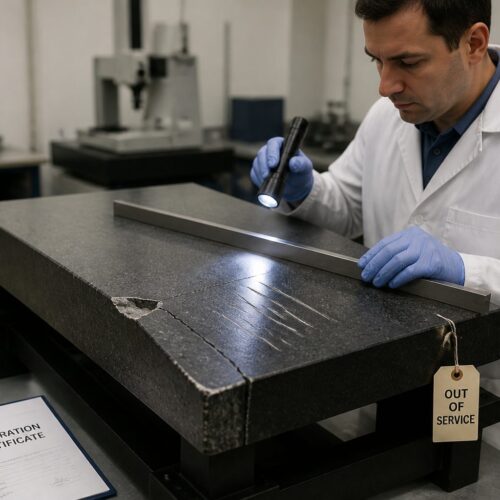
One straightforward check involves using a bright, focused flashlight held at a low angle across the surface plate. This technique highlights even the finest airborne particles and dust that might be invisible under normal room lighting. Any significant amount of glittering specks indicates a need to re-evaluate your cleaning or environmental controls.

Periodically use a clean, white, lint-free cloth to gently wipe a section of the plate after your standard cleaning procedure. If the cloth picks up noticeable amounts of dirt or residue, your cleaning method might be insufficient or your cloths are not truly lint-free. This simple test reveals hidden contamination.

Monitor the condition of your tacky mats at the entrance to the metrology area setup. If they are quickly becoming saturated with debris, it suggests that personnel are tracking in a significant amount of dirt. This might indicate a need for more frequent mat changes or a review of cleaning protocols in adjacent areas.

Observe the air quality around the surface plate. While not a precise measurement, a noticeable haze or visible floating airborne particles during active work indicates insufficient filtration or excessive dust generation nearby. This visual cue prompts an investigation into the source and air handling system.

Regularly inspect your precision instruments themselves for signs of dust accumulation, especially on their bases and contact points. If your micrometers, height gages, or indicators are frequently showing dust, it suggests that the surface plate or the storage environment is not clean enough. Instrument cleanliness reflects overall area cleanliness.

Finally, track your measurement uncertainty and any instances of rejections due to out-of-spec readings that might be attributed to surface plate contamination. A reduction in these issues over time can be a strong indicator that your surface plate dust control efforts are successfully improving measurement reliability. Data provides the ultimate confirmation.

Conclusion

Effective surface plate dust control is an ongoing commitment, not a one-time fix. It demands a holistic approach that considers every potential source of airborne particles, from the moment parts enter your facility to the final measurement on your granite plate. Implementing these practical steps creates a foundation of accuracy and reliability for all your metrology work.

By understanding how dust impacts measurements, strategically mapping your contamination sources, and meticulously setting up your metrology area, you gain significant control. Consistent bench cleaning, mindful clothing choices, and disciplined wiping habits further fortify your defenses against grit. Remember, every detail contributes to the overall cleanliness.

Avoiding compressed air near precision surfaces and correctly using covers protects your investment in calibration standards. A strict daily housekeeping schedule, complemented by quick mid-shift resets, ensures that cleanliness is maintained throughout the workday. These routines prevent dust accumulation and uphold measurement integrity.

Regularly verifying the effectiveness of your controls through simple checks provides crucial feedback and allows for continuous improvement. A clean surface plate is not merely aesthetically pleasing; it is a prerequisite for achieving the tight tolerances and high quality demanded in modern manufacturing. Prioritize these practices to elevate your precision capabilities.

Ultimately, a proactive and diligent approach to surface plate dust control safeguards your equipment, minimizes measurement errors, and enhances your overall productivity. Invest the time and effort into these critical practices, and your granite surface plate will remain a trusted, precise tool for years to come. Your commitment to cleanliness directly reflects your commitment to accuracy.

Embrace these strategies to transform your metrology area into a bastion of precision, free from the detrimental effects of dust and grit. Your dedication to maintaining a pristine environment will pay dividends in consistent, accurate measurements and unwavering confidence in your results. This systematic effort ensures your surface plate performs at its best every single day.

The continuous battle against airborne particles is a testament to the meticulous nature of metrology. By integrating these robust surface plate dust control methods into your daily operations, you are not just cleaning; you are actively contributing to the overall quality and reliability of your entire production process. Make cleanliness a cornerstone of your precision work.

Maintaining the pristine condition of your granite surface plate is paramount for accurate metrology. Even the smallest speck of dust or grit can compromise your measurements, leading to costly errors and rework. Effective surface plate dust control is not just a cleaning task; it is a fundamental aspect of precision measurement.

Ignoring dust accumulation means accepting a built-in inaccuracy for every part you inspect. This guide will walk you through practical strategies to minimize airborne particles and keep your metrology area setup consistently clean. We will cover everything from traffic patterns to daily housekeeping, ensuring your surface plate remains a reliable foundation for precision work.

Implementing robust surface plate dust control practices protects your investment in calibration standards and guarantees the integrity of your results. A clean environment directly translates to dependable data and a more efficient workflow. Let’s make sure your granite plate stays spotless, all day, every day.

How dust becomes a measurement problem

Dust might seem innocuous, but on a surface plate, it transforms into a significant source of measurement error. These tiny airborne particles can wedge themselves between your workpiece and the granite, creating an artificial gap. This gap directly interferes with the true contact points, leading to inaccurate readings.

Over time, persistent grit can also abrade the delicate surface of your precision instruments and even the granite itself. This wear reduces the longevity and accuracy of your tools, necessitating more frequent calibration and potential replacement. Effective surface plate dust control safeguards both your measurements and your equipment.

When measuring with height gages or indicators, even microscopic airborne particles can cause the instrument’s base to “ride” on the debris rather than making proper contact with the plate. This subtle elevation introduces a consistent offset in all subsequent measurements taken from that point. Operators must understand this risk to appreciate the need for vigilance.

The problem is compounded by the fact that dust is often invisible to the naked eye, making its presence difficult to detect without careful inspection. This hidden enemy means that a surface plate that appears clean might still be contaminated enough to affect critical tolerances. A proactive approach to surface plate dust control is therefore essential.

Beyond direct interference, dust can also contaminate the thin film of oil or cleaner often used on the surface plate for lubrication or initial cleaning. This contaminated film can then transfer grit to your parts or instruments, spreading the problem further. A comprehensive strategy for your metrology area setup must consider these secondary contamination vectors.

Ultimately, poor surface plate dust control leads to increased measurement uncertainty and a higher risk of producing out-of-spec parts. This situation can erode customer confidence and incur significant costs related to scrap, rework, and warranty claims. Prioritizing cleanliness is a direct investment in quality and reliability.

Mapping your dust sources: people, parts, and processes

Understanding where dust originates is the first step in effective surface plate dust control. Most airborne particles in a metrology lab come from three primary categories: people, parts, and processes. Identifying these specific sources allows you to implement targeted preventative measures.

People shed skin cells, hair, and clothing fibers constantly, acting as mobile dust generators. Parts often arrive with machining debris, packaging residue, or manufacturing lubricants that dry and become dust. Manufacturing processes like grinding, deburring, or even simple material handling can release a surprising amount of fine particulate matter into the air, even if they occur far from the metrology area setup.

Source CategoryCommon Dust TypesImpact on Surface Plate
PeopleSkin flakes, hair, clothing fibers, shoe debrisDirect deposition, transfer via hands/clothing, increased airborne particles
Parts (Incoming)Machining chips, coolant residue, packaging lintGrit transfer upon placement, dry residue becomes airborne
Processes (Nearby)Grinding dust, deburring chips, sanding particlesAirborne contamination, settles on all surfaces, persistent grit accumulation
EnvironmentHVAC dust, open doors/windows, building materialsGeneral room contamination, constant influx of fine dust
Cleaning ToolsDirty rags, brushes, shop vac exhaustSpreads existing dust, introduces new fibers or exhaust particles
Compressed AirOil mist, rust flakes, water dropletsPropels existing dust, adds new contaminants, creates sticky film

Setting up the area: mats, traffic flow, and staging zones

A well-planned metrology area setup is fundamental for minimizing dust before it even reaches your surface plate. Strategic placement of floor mats and careful control of traffic flow can significantly reduce the amount of grit tracked into the precision environment. Think of your metrology lab as a cleanroom in miniature, with specific zones for different activities.

Place high-quality tacky mats or adhesive floor mats at the entrance to the metrology area. These mats capture debris from shoes before operators step onto the main floor, drastically cutting down on tracked-in airborne particles. Regularly change or clean these mats to maintain their effectiveness, as a saturated mat becomes useless.

Designate clear traffic lanes that route personnel away from the immediate vicinity of the surface plate whenever possible. Unnecessary movement near the plate stirs up settled dust, increasing the chances of contamination. Encourage deliberate, slow movements within the critical measurement zone to avoid creating air currents.

Establish distinct staging zones for incoming and outgoing parts. Raw or uncleaned parts should never enter the immediate measurement area without first passing through a dedicated cleaning station. This simple segregation prevents dirty components from introducing new contaminants directly onto your clean surfaces, which is key to effective surface plate dust control.

Consider using physical barriers, such as clear plastic curtains or low walls, to further isolate the surface plate area from general workshop activity. These barriers help to contain airborne particles and prevent cross-contamination from adjacent manufacturing processes. Such a setup defines the critical zone and reinforces clean habits.

Ensure that all storage for tools, gages, and calibration standards is organized and enclosed within the metrology area setup. Open shelves or cluttered benches collect dust that can then be easily dislodged and settle on your surface plate. Keeping things tidy and contained minimizes potential dust reservoirs.

Proper HVAC filtration also plays a crucial role in managing airborne particles throughout the entire metrology space. Regularly changing air filters and ensuring positive air pressure within the room helps to push dust out and prevent outside contaminants from entering. This environmental control supports all other surface plate dust control efforts.

Cleaning nearby benches and carts so they don’t shed grit

Your surface plate is only as clean as its immediate surroundings. Neglecting the benches, carts, and toolboxes near your metrology area setup creates continuous sources of grit that will inevitably find their way onto your precision granite. Regular bench cleaning is a non-negotiable part of effective surface plate dust control.

Implement a strict cleaning regimen for all adjacent work surfaces, storage units, and mobile carts. Use a damp cloth with a mild, non-abrasive cleaner to wipe down benches, shelves, and equipment housings. Avoid dry wiping, which simply redistributes dust into the air, making the problem worse.

Inspect carts used to transport parts to and from the surface plate. These carts often harbor machining chips, oil residue, and general workshop debris that can easily fall off or become airborne near your measurement area. Dedicate specific carts for metrology use only, and ensure they are thoroughly cleaned before entering the precision zone.

Tools and gages should be cleaned before being placed on a bench near the surface plate. Even a seemingly clean micrometer might carry fine dust from a previous measurement or storage. Establish a habit of wiping down all instruments before they enter the immediate metrology area, reducing the introduction of new airborne particles.

Consider the material of your nearby benches and carts. Stainless steel or laminated surfaces are generally easier to clean and less prone to shedding fibers than unfinished wood or painted surfaces. Investing in appropriate furniture for your metrology area setup can significantly aid your surface plate dust control efforts in the long term.

Keep consumable items like wiping cloths, cleaning solutions, and instrument manuals neatly stored and covered when not in use. These items can also attract and hold dust, acting as secondary reservoirs. A disciplined approach to tidiness on all surfaces helps to prevent grit from accumulating and then migrating to your plate.

Regularly vacuum the floor around benches and carts using a HEPA-filtered vacuum cleaner. This captures settled dust instead of blowing it around, which is a common issue with standard shop vacuums. Incorporating this into your daily routine supports overall cleanliness and reduces the source of airborne particles.

Clothing, gloves, and wiping habits that reduce lint

The clothing and habits of personnel working around a surface plate are major contributors to airborne particles and lint. Implementing strict protocols for attire and wiping techniques can dramatically improve your surface plate dust control. Every fiber shed and every improper wipe can compromise your precision measurements.

Encourage or require operators to wear lint-free lab coats or smocks over their street clothes when in the metrology area. These garments act as a barrier, containing fibers from personal clothing and preventing them from becoming airborne. Regular laundering of these specialized coats is also important to maintain their effectiveness.

  • Wear lint-free lab coats or smocks.
  • Use powder-free, lint-free nitrile gloves.
  • Wash hands thoroughly before gloving.
  • Use only microfiber or specialized lint-free wiping cloths.
  • Fold wiping cloths to expose fresh surfaces.
  • Avoid dry wiping surfaces.
  • Discard used wiping cloths promptly.
  • Change gloves frequently, especially after handling dirty parts.
  • Minimize unnecessary touching of surfaces.
  • Keep long hair tied back or covered.

Managing compressed air and why it often makes things worse

Many people instinctively reach for compressed air to clean surfaces, but this practice is almost always detrimental for surface plate dust control. While it might seem to remove visible debris, compressed air actually disperses fine airborne particles into the surrounding environment. This action effectively turns localized dust into a widespread contaminant that will eventually resettle on your precision surfaces.

Beyond simply scattering dust, industrial compressed air systems often introduce their own contaminants. Oil mist, water vapor, and even rust flakes can be present in the air stream, especially if the system lacks proper filtration and drying. Blasting these impurities onto your surface plate creates a sticky film that attracts and holds even more dust, making future cleaning harder.

Using compressed air near a surface plate also creates turbulent air currents. These currents can lift settled dust from adjacent benches, tools, or even the floor, pulling it directly into the critical measurement zone. This process actively works against any efforts to maintain a clean metrology area setup, making your dust problem worse instead of better.

Instead of compressed air, use alternative methods for cleaning parts and the surface plate itself. A soft, natural-bristle brush can gently sweep larger debris into a dustpan. For finer particles, specialized lint-free wiping cloths, often dampened with a suitable cleaning solution, are far more effective at capturing and removing contaminants without dispersing them.

If compressed air is absolutely necessary for cleaning complex parts before measurement, it should be used within a dedicated, enclosed cleaning booth located far from the surface plate. This setup ensures that any dislodged airborne particles are contained and filtered, preventing them from contaminating the main metrology area. Proper surface plate dust control means isolating high-contamination activities.

Ensure that any compressed air used for critical applications, like drying cleaned parts, is filtered to instrument-grade purity. This means removing oil, water, and particulates down to sub-micron levels. However, even with clean air, the act of blowing still creates air movement that can disturb settled dust nearby, so caution is always advised.

Educate your team on the dangers of using compressed air in precision environments. Emphasize that while it provides immediate visual satisfaction, its long-term impact on cleanliness and measurement accuracy is negative. Changing this ingrained habit is a crucial step in improving overall surface plate dust control.

Using covers and barriers the right way

Covers and barriers are simple yet highly effective tools for surface plate dust control, but only when used consistently and correctly. These physical protections prevent airborne particles from settling on your precision granite during periods of inactivity or when adjacent work creates dust. They act as the last line of defense against environmental contamination.

Always cover your surface plate when it is not in active use, even for short periods. A dedicated, heavy-duty cover, preferably made from a non-shedding, anti-static material, will protect the plate from ambient dust fall. Ensure the cover extends beyond the edges of the plate to prevent dust from blowing underneath.

Before placing the cover, ensure the surface plate itself is thoroughly cleaned. Covering a dirty plate traps existing dust and grit against the surface, potentially causing micro-scratches or encouraging contamination. The cover should protect a clean surface, not seal in a dirty one, which is a common mistake in surface plate dust control.

Consider using temporary barriers, such as clear plastic sheeting or portable screens, when dusty operations are occurring nearby. Even if your metrology area setup is somewhat isolated, fine dust can travel surprising distances. These temporary barriers provide an extra layer of protection during peak contamination events.

When removing the cover, do so slowly and carefully, lifting it straight up rather than dragging it across the plate. Dragging the cover can dislodge any dust that has settled on its top surface, causing it to fall onto the now-exposed granite. This careful removal technique is just as important as the act of covering the plate itself.

Regularly clean the surface plate cover itself. Covers can accumulate a significant amount of dust on their exterior, which then becomes a potential source of contamination if not managed. Wiping down the cover with a damp cloth or vacuuming it will prevent this accumulated dust from becoming an issue during removal.

For long-term storage or during facility maintenance, consider more robust sealing methods for your surface plate. This might involve wrapping the plate in heavy-duty plastic sheeting in addition to its standard cover. Such measures ensure maximum protection from airborne particles when the plate is out of commission for an extended period.

Daily housekeeping schedule that supports the plate

A consistent daily housekeeping schedule is the backbone of effective surface plate dust control. Sporadic cleaning simply cannot keep pace with the continuous generation of airborne particles in most industrial environments. Establishing and adhering to a routine ensures that cleanliness becomes an ingrained habit, not an afterthought.

Begin each shift with a thorough cleaning of the surface plate and its immediate surroundings. This involves wiping down the plate with a specialized granite cleaner and lint-free cloth, then cleaning nearby benches, tool carts, and gage storage. This proactive approach ensures you start with a pristine metrology area setup.

Mid-shift, perform quick spot checks and light cleaning as needed, especially after handling particularly dirty parts or after periods of high activity. Don’t wait for visible dust to accumulate; address potential contamination points immediately. This continuous vigilance prevents small issues from becoming larger problems.

At the end of each shift, conduct a comprehensive cleanup of the entire metrology area. This should include vacuuming the floor with a HEPA-filtered vacuum, wiping down all accessible surfaces, and ensuring the surface plate is properly cleaned and covered. This prepares the area for the next day’s work and minimizes overnight dust accumulation.

Assign specific cleaning responsibilities to operators and ensure they are properly trained on cleaning protocols and the correct materials to use. Knowing who is accountable for what task helps to ensure consistency and prevents cleaning duties from being overlooked. Clear expectations are key to effective surface plate dust control.

Maintain a log of cleaning activities, noting when the plate was cleaned, by whom, and what materials were used. This documentation helps track compliance, identify potential issues, and reinforces the importance of the cleaning regimen. It also provides a record for audits or troubleshooting measurement discrepancies.

Ensure that all cleaning supplies are readily available and properly stored. If operators have to search for cloths or cleaner, they are less likely to perform the cleaning tasks diligently. Keeping the right tools on hand supports a seamless and efficient daily housekeeping schedule for your metrology area setup.

Quick mid-shift resets when the area gets busy

Even with the best daily schedule, busy shifts can quickly lead to a buildup of airborne particles and general disarray around your surface plate. Implementing quick mid-shift resets is essential to maintaining effective surface plate dust control during peak activity. These short, focused cleaning bursts prevent contamination from spiraling out of control.

When you notice the area getting cluttered or see visible dust accumulating, take a few minutes for a “reset.” This isn’t a full cleanup, but a targeted effort to restore a baseline level of cleanliness. It’s about proactive intervention before the problem becomes significant.

A quick reset should involve wiping down the surface plate with a lint-free cloth and appropriate cleaner, especially after changing parts or instruments. This removes any fresh debris or fingerprints that might have accumulated during recent operations. Don’t forget to wipe the edges and sides of the plate, as dust can settle there too.

Briefly tidy up the surrounding benches and remove any unnecessary tools or paperwork. Clutter provides more surfaces for dust to settle on and makes it harder to maintain a clean metrology area setup. A quick sweep of the immediate floor area with a small brush and dustpan can also catch larger debris.

Encourage all operators to adopt a “clean as you go” mentality. Each time a part is removed or an instrument is put away, a quick wipe-down of the immediate area should become second nature. This individual responsibility greatly reduces the need for extensive resets and improves overall surface plate dust control.

Keep a small, dedicated set of cleaning supplies—lint-free cloths, a spray bottle of cleaner, and a small brush—within easy reach of the surface plate. This accessibility makes quick resets convenient and eliminates excuses for not performing them. The easier it is, the more likely it will get done.

These mid-shift resets are not a substitute for the comprehensive daily cleaning, but a critical supplement. They ensure that the precision environment remains functional and reliable throughout the entire workday, despite the demands of production. A consistent commitment to these small actions yields big results for your measurement accuracy.

Simple checks to confirm your controls are working

Implementing surface plate dust control measures is only half the battle; you also need to verify that they are actually effective. Regular, simple checks provide objective evidence that your efforts are paying off and help identify areas needing improvement. Don’t assume your controls are working; confirm it with tangible observations.

One straightforward check involves using a bright, focused flashlight held at a low angle across the surface plate. This technique highlights even the finest airborne particles and dust that might be invisible under normal room lighting. Any significant amount of glittering specks indicates a need to re-evaluate your cleaning or environmental controls.

Periodically use a clean, white, lint-free cloth to gently wipe a section of the plate after your standard cleaning procedure. If the cloth picks up noticeable amounts of dirt or residue, your cleaning method might be insufficient or your cloths are not truly lint-free. This simple test reveals hidden contamination.

Monitor the condition of your tacky mats at the entrance to the metrology area setup. If they are quickly becoming saturated with debris, it suggests that personnel are tracking in a significant amount of dirt. This might indicate a need for more frequent mat changes or a review of cleaning protocols in adjacent areas.

Observe the air quality around the surface plate. While not a precise measurement, a noticeable haze or visible floating airborne particles during active work indicates insufficient filtration or excessive dust generation nearby. This visual cue prompts an investigation into the source and air handling system.

Regularly inspect your precision instruments themselves for signs of dust accumulation, especially on their bases and contact points. If your micrometers, height gages, or indicators are frequently showing dust, it suggests that the surface plate or the storage environment is not clean enough. Instrument cleanliness reflects overall area cleanliness.

Finally, track your measurement uncertainty and any instances of rejections due to out-of-spec readings that might be attributed to surface plate contamination. A reduction in these issues over time can be a strong indicator that your surface plate dust control efforts are successfully improving measurement reliability. Data provides the ultimate confirmation.

Conclusion

Effective surface plate dust control is an ongoing commitment, not a one-time fix. It demands a holistic approach that considers every potential source of airborne particles, from the moment parts enter your facility to the final measurement on your granite plate. Implementing these practical steps creates a foundation of accuracy and reliability for all your metrology work.

By understanding how dust impacts measurements, strategically mapping your contamination sources, and meticulously setting up your metrology area, you gain significant control. Consistent bench cleaning, mindful clothing choices, and disciplined wiping habits further fortify your defenses against grit. Remember, every detail contributes to the overall cleanliness.

Avoiding compressed air near precision surfaces and correctly using covers protects your investment in calibration standards. A strict daily housekeeping schedule, complemented by quick mid-shift resets, ensures that cleanliness is maintained throughout the workday. These routines prevent dust accumulation and uphold measurement integrity.

Regularly verifying the effectiveness of your controls through simple checks provides crucial feedback and allows for continuous improvement. A clean surface plate is not merely aesthetically pleasing; it is a prerequisite for achieving the tight tolerances and high quality demanded in modern manufacturing. Prioritize these practices to elevate your precision capabilities.

Ultimately, a proactive and diligent approach to surface plate dust control safeguards your equipment, minimizes measurement errors, and enhances your overall productivity. Invest the time and effort into these critical practices, and your granite surface plate will remain a trusted, precise tool for years to come. Your commitment to cleanliness directly reflects your commitment to accuracy.

Embrace these strategies to transform your metrology area into a bastion of precision, free from the detrimental effects of dust and grit. Your dedication to maintaining a pristine environment will pay dividends in consistent, accurate measurements and unwavering confidence in your results. This systematic effort ensures your surface plate performs at its best every single day.

The continuous battle against airborne particles is a testament to the meticulous nature of metrology. By integrating these robust surface plate dust control methods into your daily operations, you are not just cleaning; you are actively contributing to the overall quality and reliability of your entire production process. Make cleanliness a cornerstone of your precision work.
Stephanie Kendrick author photo
About the author

Stephanie Kendrick writes about surface plate metrology, granite calibration standards, inspection room practices, and the care of precision measurement surfaces. Her work focuses on making technical metrology topics easier to understand through clear explanations, practical context, and responsible discussion of calibration-related concepts.

She covers topics such as surface plate flatness, calibration intervals, certificate interpretation, wear patterns, environmental conditions, cleaning routines, and the role of granite surface plates in quality control and inspection workflows.