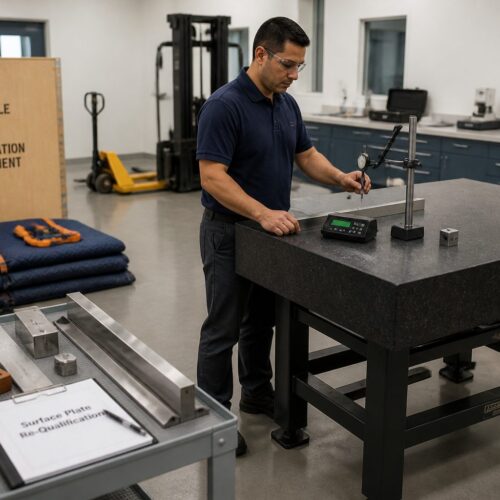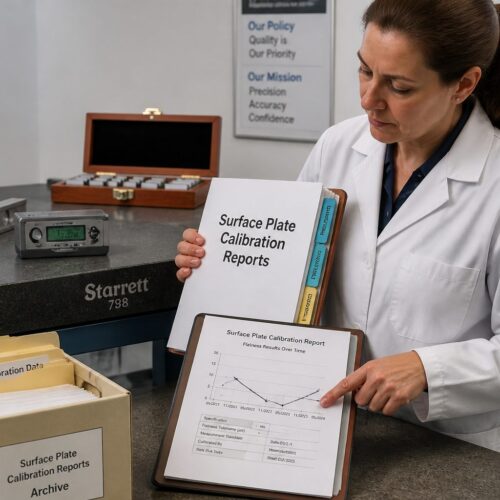

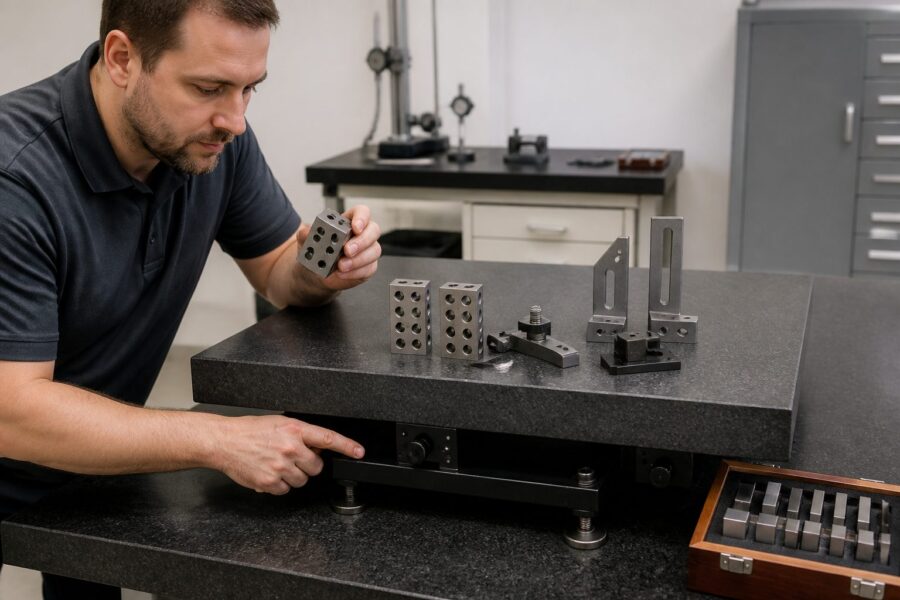
Setting up a precision measurement task on a surface plate demands more than just a flat granite slab. The effectiveness of your metrology depends heavily on the quality and suitability of your surface plate accessories selection. Choosing the right support stands, fixturing, and measuring aids can dramatically impact the accuracy and repeatability of your results.
Many technicians focus on the surface plate itself, overlooking how crucial proper accessories are to the entire measurement system. A poorly chosen stand or an unstable indicator holder can introduce errors that even the most precise surface plate cannot overcome. It’s about creating a stable, repeatable environment for every measurement.
Understanding the purpose and limitations of each accessory, from riser blocks to specialized tooling plate options, helps ensure your setup supports the tightest tolerances. This guide will walk you through making smart choices for your shop, ensuring your metrology equipment performs at its best.
Why Accessories Can Improve or Ruin Measurement Quality
The quality of your surface plate accessories selection directly dictates the integrity of your measurements. Even minor imperfections or unsuitable choices among your accessories can introduce significant errors, making accurate work impossible. Think of your metrology setup as a chain, where every link, including the accessories, must be strong.
Accessories that are worn, improperly maintained, or simply not designed for the task often create instability or misalignment. An old, wobbly indicator stand, for example, makes it nearly impossible to get a consistent reading, regardless of the indicator’s precision. These subtle issues compound, leading to unreliable data and wasted effort.
On the other hand, carefully selected and well-maintained accessories enhance measurement quality by providing the necessary stability, precision, and versatility. Using the correct riser blocks or a stable clamping on granite setup ensures your part is positioned perfectly and securely. This attention to detail builds confidence in your measurements, which is invaluable.
Proper accessories also protect your valuable surface plate from localized wear and damage. Heavy parts placed directly on the granite without adequate support, or improper clamping on granite techniques, can cause dents or scratches over time. Investing in quality accessories extends the life of your primary metrology tool.
Consider the cumulative effect of small errors introduced by subpar equipment; they add up quickly. A comprehensive surface plate accessories selection strategy minimizes these potential error sources, supporting the highest levels of accuracy for critical applications. This proactive approach saves time and money in the long run by preventing rework and ensuring product quality.
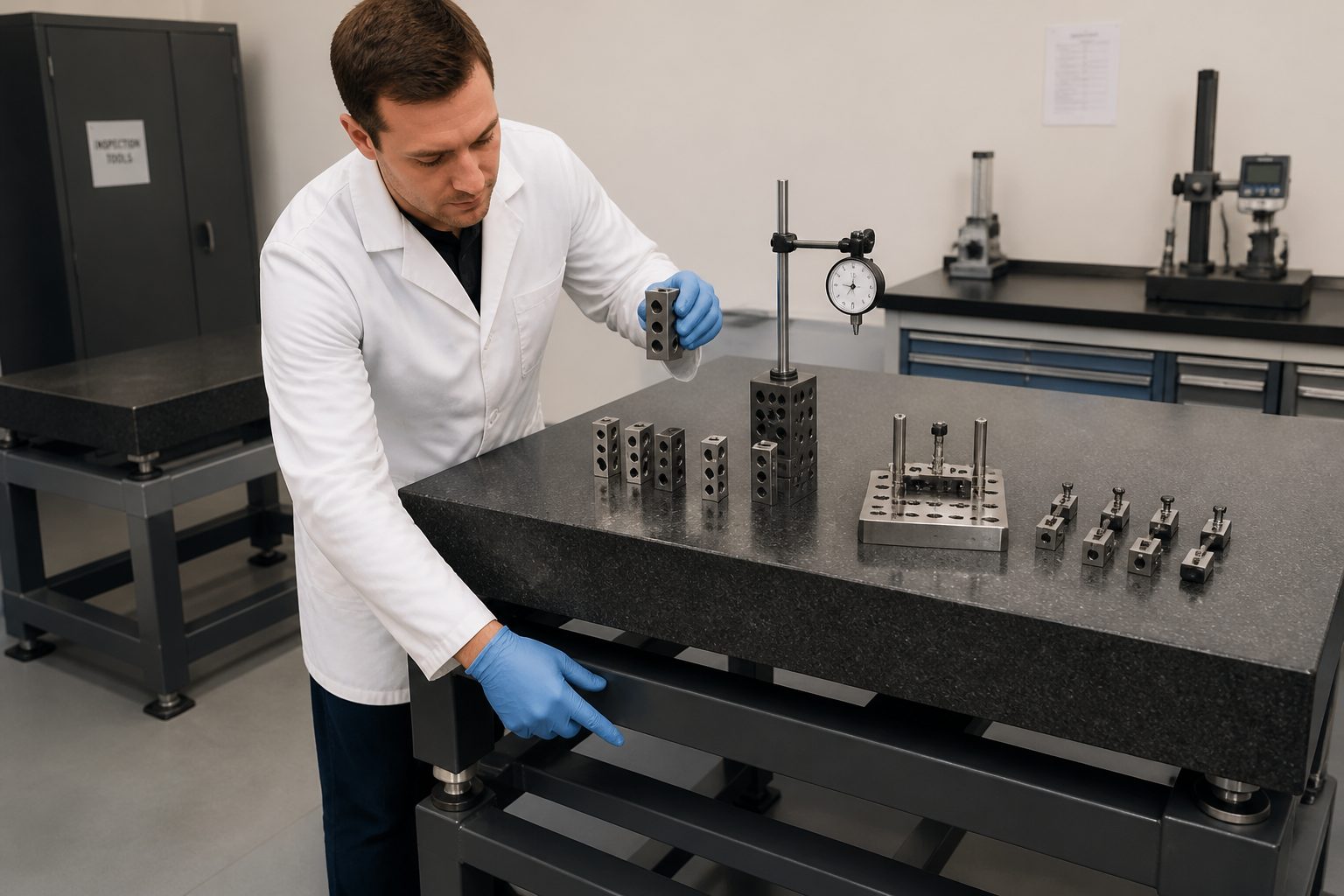
Choosing accessories that match the precision of your surface plate and the demands of your work is not an optional extra; it is a fundamental requirement. Your measurements are only as good as the weakest component in your entire setup. This simple truth guides all good metrology practices.
Many shops tend to overlook accessories during budget planning, but this is a mistake that costs more in the long run through inaccurate results and damaged equipment. A small investment in high-quality accessories yields significant returns in measurement reliability and operational efficiency. It’s about building a robust and dependable measurement environment from the ground up.
Stands and Support: Matching Load Capacity to Real Use
The foundation of any stable surface plate setup begins with its stand and support system. Selecting the right stand requires careful consideration of the surface plate’s size, weight, and the maximum load it will bear during typical use. An inadequate stand introduces vibration and deflection, which directly compromises measurement accuracy.
Surface plate stands are specifically designed to distribute the weight evenly and provide a stable, level base. Standard stands often feature three adjustable points to allow for precise leveling, which is absolutely essential for accurate metrology. Always ensure the stand’s load capacity comfortably exceeds the combined weight of your surface plate, the heaviest workpiece, and all accessories.
For larger or extremely heavy surface plates, consider stands with more robust construction, such as welded steel frames or those with anti-vibration features. These heavy-duty options mitigate external vibrations from machinery or foot traffic, preventing them from transferring to your sensitive measurement setup. You want to isolate your metrology from shop floor disturbances as much as possible.
Some stands offer additional features like built-in storage shelves or drawers, which can be useful for organizing your surface plate accessories selection. While convenience is a factor, never compromise on the primary function of stability and load-bearing capability. A tidy workspace should not come at the expense of measurement integrity.
Always verify that the stand’s feet are appropriate for your shop floor, whether they are leveling pads, vibration-dampening pads, or casters for mobility. If you plan to move your surface plate frequently, ensure the casters are heavy-duty and lock securely once positioned. Unlocked or flimsy casters can introduce unwanted movement and instability.
Regularly inspect your surface plate stand for any signs of wear, loose bolts, or damage that could affect its stability. A quick check can prevent significant measurement errors and potential safety hazards. Maintaining your stand is just as important as maintaining the surface plate itself, ensuring a long service life for both components.
Choosing the correct stand is a critical first step in your surface plate accessories selection process, establishing the reliable foundation for all subsequent measurements. Skimping on this component is a false economy, as it jeopardizes every measurement taken on the plate. Prioritize stability and appropriate load capacity above all else for dependable results.
Riser Blocks and Parallels: When You Should Use Them
Riser blocks, also known as setup blocks or parallels, are essential components in your surface plate accessories selection, designed to elevate workpieces or fixtures for easier access and measurement. They provide a stable, elevated plane, allowing indicators and other measuring tools to reach specific features more effectively. Using riser blocks correctly helps achieve accurate readings on complex geometries.
These accessories are particularly useful when measuring features that are too low for conventional indicator stands or when a part needs to be accurately positioned relative to the surface plate. They come in various sizes and materials, typically hardened steel, granite, or ceramic, each offering different advantages in terms of stability and wear resistance. Always choose precision-ground riser blocks to maintain accuracy.
| Riser Block Material | Key Advantages | Typical Applications |
|---|---|---|
| Hardened Steel | High durability, excellent wear resistance, common and cost-effective. | General machining, inspection, fixture support. |
| Granite | Thermal stability, non-magnetic, corrosion-resistant, minimal burr formation. | Precision metrology, cleanroom environments, non-magnetic setups. |
| Ceramic | Exceptional hardness, very low thermal expansion, extremely wear-resistant. | Ultra-precision measurement, demanding metrology labs. |
| Cast Iron | Good dampening properties, stable, often used for larger, heavier setups. | Heavy fixturing, large workpiece support, vibration reduction. |
Clamping and Fixturing: Safe Methods on Granite
Proper clamping on granite is a critical aspect of your surface plate accessories selection, ensuring workpieces remain stable during measurement without damaging the precision surface. Unlike steel machine tables, granite surface plates are susceptible to localized damage from improper clamping forces or direct metal-on-granite contact. You must use methods that distribute force evenly and protect the delicate surface.
The safest approach for clamping on granite involves using specialized granite clamps or T-slot rails that are carefully anchored to the plate’s sides or through pre-drilled holes. Never use traditional machine vises or clamps that exert direct, concentrated pressure onto the top surface of the granite; this can easily cause chipping or cracking. Always place a protective buffer, such as a thin sheet of plastic or rubber, between the clamp and the granite if direct contact is unavoidable.
Magnetic clamps are often a convenient choice for clamping on granite, but they must be used with caution. While they offer quick setup and strong holding power, strong magnetic fields can sometimes affect sensitive electronic indicators or introduce slight distortions in ferrous workpieces. Always test your magnetic clamps to ensure they do not interfere with your specific measurement tools or materials.
For more robust fixturing, consider using a dedicated tooling plate that can be securely mounted to the granite. This tooling plate then becomes the primary surface for clamping and fixturing, isolating the granite from direct contact and stress. This approach is particularly beneficial for repetitive measurements or complex setups requiring multiple clamping points.
When securing workpieces directly to a tooling plate or other fixture, always use appropriate fasteners and torque settings to prevent overtightening. Excessive force can deform the workpiece itself, leading to inaccurate measurements, or damage the fixture. The goal is firm, stable support, not crushing pressure.
Vacuum clamping systems are another excellent option for clamping on granite, as they provide strong, even holding power without any mechanical stress on the granite surface. These systems are ideal for delicate parts or when you need unobstructed access to the top surface of the workpiece. While initially more expensive, they offer superior protection for your surface plate.
Always inspect your clamps and fixturing components for burrs, nicks, or debris before use. Even a tiny piece of grit caught under a clamp can scratch your granite or cause a workpiece to sit unevenly. Cleanliness and proper technique are paramount when dealing with precision surfaces like granite.
Tooling Plates: Pros, Cons, and Best Use Cases
A tooling plate is a valuable addition to your surface plate accessories selection, providing a versatile and sacrificial layer between your workpieces and the precision granite. It typically consists of a flat, rigid metal plate, often aluminum or cast iron, with a grid of threaded holes or T-slots for easy fixturing. This setup protects the granite from direct contact with clamps and workpieces, extending its lifespan.
The primary advantage of using a tooling plate is its ability to create complex, repeatable setups without risking damage to the surface plate itself. You can easily attach vises, clamps, and custom fixtures to the tooling plate, making it ideal for repetitive inspection tasks or for holding awkwardly shaped parts. This flexibility drastically improves efficiency and consistency in your metrology processes.
- Protects granite from damage and wear
- Facilitates complex and repeatable fixturing
- Allows for easy mounting of vises and clamps
- Reduces setup time for recurring measurements
- Provides a customizable work surface for specific jobs
- Can be easily replaced if damaged
- Distributes clamping forces more evenly
Indicator Stands and Bases: Stability Considerations
Indicator stands and bases are fundamental components in your surface plate accessories selection, providing the stable platform needed for dial indicators, test indicators, and digital probes. The stability of these stands directly influences the accuracy and repeatability of your measurements. A flimsy or unstable stand will introduce chatter and deflection, making precise readings impossible.
When choosing an indicator stand, prioritize a heavy, solid base, often made of cast iron or granite, to provide maximum mass and dampening against vibrations. Magnetic bases are popular for their versatility and quick positioning, but ensure the magnet is strong enough to resist movement during measurement. A weak magnet can lead to frustrating and inaccurate results.
The arm and clamping mechanisms of the indicator stand also require careful inspection. Look for robust, rigid arms that minimize deflection when extended, and secure clamping systems that hold the indicator firmly without slipping. Gooseneck arms offer flexibility but can be prone to vibration if not properly designed or supported. Articulating arms provide excellent reach and positioning but need to lock down tightly.
Consider the type of fine adjustment mechanism offered by the stand; a smooth, backlash-free adjustment is crucial for precise zeroing of the indicator. Some stands feature a fine adjustment knob directly on the indicator holder, while others integrate it into the base or main column. Easy and precise adjustment saves time and reduces frustration during setup.
For critical measurements, especially those requiring sub-micron accuracy, consider using specialized granite stands or heavy-duty universal stands. These often boast larger, heavier bases and more rigid columns, designed to minimize any potential movement or vibration. They are built for environments where even the slightest instability is unacceptable.
Always ensure the contact point between the indicator stand’s base and the surface plate is clean and free of debris. Even a tiny particle can cause the stand to rock or sit unevenly, introducing errors into your measurements. A quick wipe-down before positioning the stand is a good habit to develop.
Regularly check all clamping screws and joints on your indicator stand for tightness and wear. Loose components can lead to unexpected movement during a measurement, ruining your accuracy. Proper maintenance of these relatively simple tools is just as important as caring for your expensive indicators, as they are part of a single measurement system.
Managing Contact Points to Avoid Localized Wear
The granite surface plate is a precision reference plane, and its accuracy can be compromised by localized wear at contact points. This wear occurs when heavy objects, sharp edges, or abrasive materials repeatedly make contact with the same small areas on the plate. Over time, these spots can become depressed, creating an uneven surface that introduces measurement errors.
To prevent localized wear, consciously distribute the contact points of your workpieces, fixtures, and surface plate accessories selection across the entire usable area of the plate. Avoid placing heavy items in the exact same spot every time. Rotate your work area or shift components slightly to spread the load and friction.
Always use protective pads or soft contact points when placing heavy or sharp-edged workpieces directly on the granite. Thin rubber mats, cork pads, or even a sheet of thick paper can provide a buffer, preventing direct metal-on-granite abrasion. These simple barriers absorb some of the impact and distribute the weight more broadly.
For indicator stands and other frequently moved accessories, periodically change their positions on the surface plate. Even the feet of a heavy indicator stand can contribute to wear if it always sits in the same few square inches. A slight adjustment of a few inches each day or week can make a big difference over years of use.
When using parallels or riser blocks, ensure they are clean and free of burrs that could dig into the granite. Always place them gently and avoid dragging them across the surface. Any sharp edges on these accessories should be deburred or chamfered to prevent scratching or localized pressure points.
Consider the use of a tooling plate as a sacrificial layer, especially for repetitive or heavy-duty fixturing. This tooling plate takes the brunt of the contact and wear, preserving the pristine surface of your granite plate beneath. If the tooling plate becomes worn, it is far less expensive and easier to replace than a large granite surface plate.
Regularly inspect your surface plate for any signs of wear, especially in commonly used areas. Early detection of minor wear allows you to adjust your practices before it becomes a significant accuracy issue. This proactive approach helps maintain the long-term calibration and precision of your essential metrology tool.
Keeping Accessories Clean and Burr-Free
The cleanliness and condition of your surface plate accessories selection are just as important as the cleanliness of the surface plate itself. Even a microscopic piece of dust, a tiny metal chip, or a small burr on an accessory can introduce significant errors into your measurements. Precision metrology demands immaculate conditions for all components.
Before and after each use, thoroughly clean all accessories that will contact the surface plate or the workpiece. Use a lint-free cloth and a suitable cleaning solution, such as denatured alcohol or a specialized granite cleaner. Ensure no residue is left behind that could interfere with accurate seating or measurement.
Regularly inspect all metal accessories, like parallels, V-blocks, and clamping components, for burrs or sharp edges. Burrs can prevent accessories from sitting flat, creating an unstable setup, or they can scratch the delicate surface of your granite plate. Use a fine deburring tool or a sharpening stone to carefully remove any burrs you find.
Pay close attention to the contact surfaces of indicator stands and bases. Any debris or burrs on the bottom of a magnetic base, for instance, will cause it to rock, making accurate indicator readings impossible. Clean these surfaces meticulously to ensure perfect contact with the surface plate.
When working with a tooling plate, ensure its threaded holes are clear of chips and debris. Metal chips left in threaded holes can prevent screws from seating properly, leading to loose fixtures and unstable setups. Use compressed air or a tap cleaner to keep these holes pristine.
Avoid using accessories that show signs of significant wear, such as deep nicks, heavy corrosion, or warped surfaces. These imperfections will transfer directly to your measurements, compromising accuracy. Replace damaged accessories promptly to maintain the integrity of your metrology setup.
Establish a routine for cleaning and inspecting your accessories as part of your daily or weekly shop practices. This proactive maintenance prevents small issues from escalating into major problems that affect measurement quality. A clean and well-maintained set of accessories is a hallmark of a professional metrology operation.
Storage Solutions That Prevent Damage and Mix-Ups
Effective storage for your surface plate accessories selection is crucial for maintaining their accuracy, preventing damage, and ensuring they are readily available when needed. Simply tossing precision tools into a drawer can lead to nicks, burrs, and corrosion, rendering them useless for accurate work. Proper storage protects your investment and streamlines your workflow.
Consider dedicated storage cabinets or drawers lined with anti-corrosion paper or foam inserts for delicate items like parallels, V-blocks, and indicator stands. These liners protect against physical damage from rattling around and shield against rust-inducing moisture. Each accessory should have its own designated spot to prevent contact with other tools.
For magnetic bases and other magnetic accessories, ensure they are stored away from sensitive electronic equipment or other precision tools that could be magnetized. Some technicians prefer to store magnetic bases with a keeper plate to contain the magnetic field and prevent accidental attraction to other items. This small step protects both the accessories and other shop equipment.
Organize your accessories by type and size to prevent mix-ups and reduce setup time. Labeling drawers or bins clearly helps technicians quickly locate the correct riser blocks or clamping on granite components. A well-organized storage system saves valuable time that would otherwise be spent searching for tools.
Store larger items like a tooling plate flat and supported, ideally on a dedicated shelf or rack, to prevent warping or bending. If a tooling plate is stored improperly, it can deform over time, compromising its flatness and making it unsuitable for precision work. Gravity is not your friend if plates are stored on edge without proper support.
Keep frequently used accessories within easy reach of the surface plate, perhaps in a rolling cabinet or on shelves directly adjacent to the metrology station. This minimizes travel time and encourages technicians to put tools back in their proper place immediately after use. Convenience supports good habits in a busy shop environment.
Regularly clean and inspect your storage areas for dust, debris, or signs of moisture. A clean storage environment reinforces the importance of cleanliness for the accessories themselves. Investing time in organizing and maintaining your storage solutions pays off in increased efficiency and extended tool life for your entire surface plate accessories selection.
A Practical Buying Checklist for Common Setups
Making smart decisions during your surface plate accessories selection means having a clear idea of what you need for typical measurement tasks. A practical buying checklist can streamline this process, ensuring you acquire the right tools without unnecessary purchases or critical omissions. Think about the most frequent parts you measure and the tolerances involved.
Start by assessing your surface plate itself: its size, grade, and the type of stand it requires. Ensure any new accessories are compatible with these existing components. You wouldn’t buy a stand meant for a 24×36 inch plate if you have a 36×48 inch plate; the load capacity would be insufficient.
For general inspection, you will definitely need a selection of precision parallels and V-blocks in various sizes. These are fundamental for supporting cylindrical parts or elevating workpieces. Consider sets that offer a good range, as this provides maximum versatility for different part geometries.
Indicator stands are non-negotiable; aim for at least two sturdy ones, perhaps one with a magnetic base for versatility and another heavy-duty universal stand for ultimate stability. Look for stands with fine adjustment capabilities to make zeroing your indicator much easier. This makes a big difference in daily use.
If your work involves frequent clamping on granite or complex setups, a dedicated tooling plate is a wise investment. Choose a tooling plate material and hole pattern that suits your typical fixturing needs. This protects your granite and simplifies repeatable tasks, saving time in the long run.
Don’t forget specialty clamps designed for granite, such as edge clamps or T-slot clamps if your plate has them. Magnetic clamps can be useful, but always have non-magnetic alternatives available for sensitive applications or non-ferrous parts. Having options for clamping on granite ensures you can secure any workpiece safely.
Finally, include essential maintenance items like a good quality granite cleaner, lint-free cloths, and a deburring tool in your checklist. These small investments protect your larger precision tools and ensure they remain accurate over time. A little proactive care goes a long way in maintaining metrology standards.
Conclusion
Making informed choices in your surface plate accessories selection stands as a critical factor in achieving reliable and accurate measurements. Every accessory, from the humble riser block to the complex tooling plate, plays a distinct role in the overall integrity of your metrology setup. Prioritizing quality, compatibility, and proper maintenance for these components directly impacts your shop’s precision capabilities.
We have seen how a robust stand provides the essential foundation, preventing vibrations and ensuring a level work surface. Understanding the specific applications for riser blocks and the correct techniques for clamping on granite protects your valuable surface plate while securing your workpieces firmly. These details are not minor; they are fundamental to good practice.
The decision to incorporate a tooling plate offers significant advantages, creating a versatile and sacrificial layer that preserves the granite and simplifies complex fixturing. Likewise, selecting stable indicator stands with fine adjustment capabilities removes a major source of measurement uncertainty. Each accessory contributes to the larger picture of metrological confidence.
Furthermore, consistent attention to managing contact points, keeping all accessories meticulously clean and burr-free, and implementing intelligent storage solutions are not just good habits; they are essential practices. These preventative measures extend the lifespan of your equipment and uphold the accuracy of every measurement. A well-cared-for accessory performs better and lasts longer.
Ultimately, the performance of your surface plate is only as good as the sum of its parts, and its accessories are indeed integral parts of that whole. By applying the principles discussed in this guide, you can optimize your metrology processes, reduce errors, and ensure your precision measurements are consistently trustworthy. Invest wisely in your surface plate accessories selection to build a truly capable and reliable inspection environment.
Taking the time to evaluate your current accessory collection and planning for future needs based on these insights will undoubtedly elevate your measurement standards. A commitment to quality accessories reflects a commitment to precision in all aspects of your work. This proactive approach supports ongoing success in any manufacturing or inspection environment.
Remember that even the smallest accessory can have a profound impact on your ability to hold tight tolerances. Equipping your metrology station with the right tools, and maintaining them diligently, paves the way for consistent, high-quality results. Your dedication to these details will be evident in the accuracy of your final product.