
Protecting a precision granite surface plate from environmental contaminants is not a trivial task; it requires careful consideration to maintain its accuracy over time. Dust, debris, and changes in humidity all pose significant threats to the integrity of these vital metrology tools. Understanding how to cover a granite surface plate properly means preventing damage, not just hiding it.
Many people assume a simple sheet will do the trick, but this often creates more problems than it solves. An improperly applied surface plate cover can trap moisture, promote condensation, or even introduce abrasive particles onto the plate’s finely lapped surface. We need a systematic approach to effective dust protection and humidity control.
This guide will walk you through the best practices for safeguarding your investment, ensuring your measurements remain consistently accurate. We will discuss materials, methods, and operational considerations that keep your surface plate in top condition, ready for precise work whenever you need it.
What a cover should do (and common cover mistakes)
A good surface plate cover should primarily act as a barrier against airborne contaminants like dust and grit. It must also shield the plate from accidental spills and minor impacts that could cause damage. Think of it as a cleanroom for your metrology tool.
One common mistake involves using non-breathable materials that seal the plate too tightly. This can create a microclimate underneath, leading to trapped moisture and potential corrosion of any metal components on the plate. We want protection, not a sauna for precision tools.
Another error is simply draping a cover without securing the edges, which leaves gaps for dust to creep in. A loose cover also provides little protection against impacts and can easily be dislodged. The goal is a snug, protective envelope, not just a casual throw.
Many shops also make the mistake of using a dirty cover, which defeats the entire purpose of dust protection. A cover that carries its own contaminants will simply transfer them to the plate surface. Cleanliness of the cover itself is paramount.
Finally, some people store their cover directly on the floor or near dirty equipment when not in use. This practice guarantees the cover will pick up debris, which then gets spread onto the surface plate when reapplied. Proper storage of the cover is just as important as the cover itself.
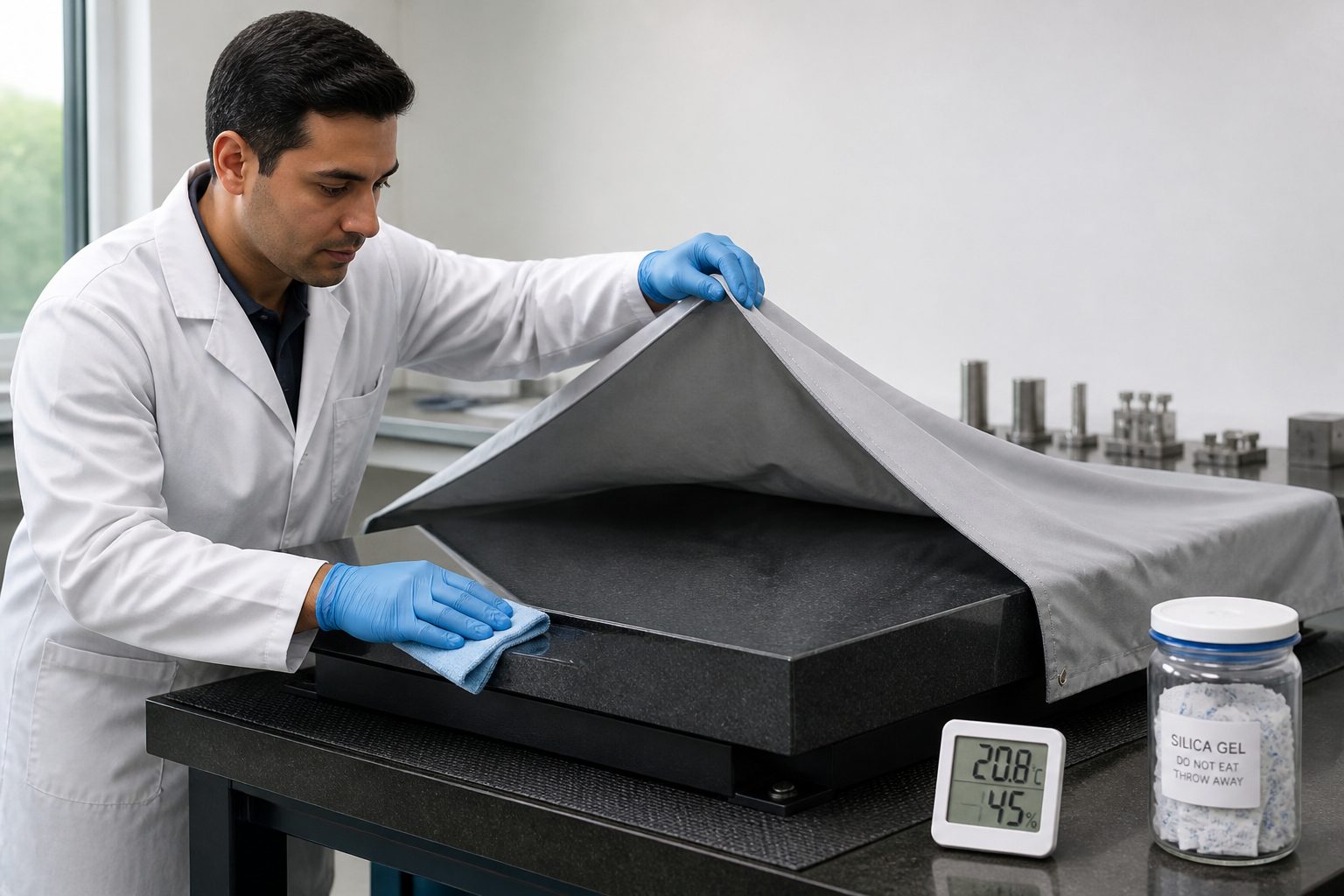
Choosing the right cover material for your environment
The material of your surface plate cover matters immensely, depending on your workshop’s specific conditions. You need something that balances protection with breathability to prevent adverse effects. The choice impacts both dust protection and humidity control.
For most general applications, a heavy-duty, tightly woven canvas or synthetic fabric works well. These materials offer good dust protection while allowing some air circulation, which helps with humidity control. Avoid anything that sheds fibers, as these can become contaminants themselves.
In very humid environments, a breathable but water-resistant fabric might be necessary, possibly combined with a desiccant. Conversely, a completely waterproof, non-breathable cover should only be used with extreme caution and specific humidity mitigation strategies. You must carefully match the cover to the environment.
The cover material should also be durable enough to withstand frequent handling and occasional bumps. A flimsy cover will quickly tear or wear out, losing its protective qualities. Invest in quality to protect your investment.
Consider the ease of cleaning the material, as a dirty cover is counterproductive. Materials that are easily wiped down or laundered will save you time and ensure consistent cleanliness. A low-maintenance cover encourages better habits.
When to use a hard cover vs a soft cover
Deciding between a hard and a soft surface plate cover depends heavily on the level of protection needed and the operational environment. Each type has distinct advantages and disadvantages that you should weigh carefully. Your choice directly impacts the longevity of your granite surface plate.
Soft covers, typically made from heavy fabrics, are excellent for general dust protection and light impact resistance. They are easy to handle, store, and clean, making them a practical choice for most metrology labs with controlled environments. This type of surface plate cover is often sufficient for daily use.
| Cover Type | Primary Benefit | Ideal Environment | Key Consideration |
|---|---|---|---|
| Soft Fabric Cover | Dust protection, Breathability | Controlled lab, Low traffic | Requires careful handling |
| Rigid Plywood/Composite | Impact protection, Stability | Manufacturing floor, High traffic | Weight, Storage, Humidity trapping |
| Clear Acrylic Hood | Visibility, Dust protection | Showroom, Light use | Scratch prone, Cost |
| Custom Insulated Cover | Temperature stability, Humidity control | Extreme environments, Long storage | Bulk, Specialized construction |
Hard covers, often constructed from plywood, aluminum, or composite materials, offer superior impact protection, especially in busy manufacturing settings. They can protect against dropped tools or accidental bumps from carts, which a soft cover cannot. These are a good choice for plates in high-traffic areas.
However, hard covers are heavier and more cumbersome to remove and store, and they can be more expensive. They also tend to create a more sealed environment, potentially trapping humidity unless ventilation or desiccants are incorporated. You must manage the microclimate under a hard cover diligently.
For long-term storage or when a plate is located in an area with significant overhead activity, a hard cover provides unmatched physical security. Conversely, a soft cover is ideal for plates that see frequent use, where quick access is important. Balance protection with practicality for your specific needs.
Sizing, fit, and edge protection so the cover actually seals
The effectiveness of any surface plate cover hinges on its fit; a poorly fitted cover is almost as bad as no cover at all. Proper sizing ensures maximum dust protection and minimizes the risk of moisture ingress. This is a critical step in how to cover a granite surface plate correctly.
Your cover should extend slightly beyond the edges of the surface plate, ideally dropping down the sides by at least a few inches. This overhang prevents dust from settling directly onto the plate’s edges and working its way underneath. A good fit means no exposed seams or gaps.
Many professional covers include elasticized hems or drawstrings to create a snug fit around the plate’s perimeter. This not only seals out contaminants but also secures the cover against drafts or accidental disturbances. A tight seal is your best defense against environmental threats.
For plates with accessories like threaded inserts or rails, ensure the cover accommodates these features without leaving gaps. Custom-fitted covers are often the best solution for non-standard plates. Don’t compromise the seal for convenience.
Edge protection is also crucial; the cover should protect the delicate chamfered edges of the granite itself. These edges are susceptible to chipping, which can compromise the overall stability and accuracy of the plate. A proper surface plate cover safeguards these vulnerable areas.
How to put the cover on without dragging grit across the plate
Applying a surface plate cover incorrectly can cause more damage than leaving the plate exposed, especially if grit is dragged across the precision surface. This step requires deliberate care to maintain the plate’s accuracy. Proper technique is essential for how to cover a granite surface plate effectively.
Always ensure both the surface plate and the interior of the cover are thoroughly clean before application. Any debris on either surface will become an abrasive agent when the cover is put on. A quick wipe-down with a lint-free cloth is always a good idea.
- Inspect plate for debris
- Ensure cover interior is clean
- Fold cover neatly before lifting
- Center cover over the plate
- Lower cover straight down
- Avoid lateral dragging motion
- Secure edges gently
- Verify no grit trapped
- Store cover properly when off
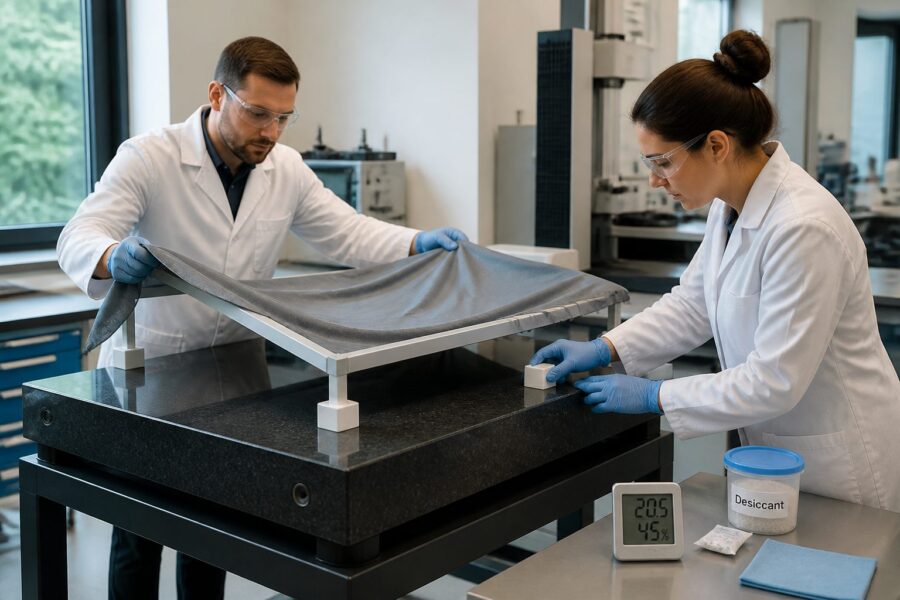
When placing the cover, lift it completely off the ground and center it directly over the plate. Lower it straight down onto the surface, avoiding any lateral sliding or dragging movements. This prevents any potential grit from scratching the granite.
Once the cover is resting on the plate, gently adjust its position to ensure it fits snugly around the edges without shifting. Avoid pushing or pulling the cover across the surface to get it into place. A smooth, vertical motion is key for this process.
The goal is to minimize any friction between the cover and the granite, which could embed particles or create micro-scratches. Think of it as placing a delicate lid onto a valuable container. Always prioritize the plate’s surface integrity.
Preventing condensation under the cover
Condensation is a silent killer for precision metrology equipment, and it poses a significant challenge when trying to cover a granite surface plate. Trapped moisture can lead to corrosion of any metal components and even subtle changes in the plate’s surface over time. Effective humidity control is non-negotiable.
The primary cause of condensation is a temperature differential between the plate and the surrounding air, especially when humid air gets trapped. As the plate cools, moisture in the trapped air condenses onto its surface. This is a common issue in unconditioned spaces.
To combat this, ensure the surface plate cover allows for some air exchange, preventing a completely sealed environment. A breathable fabric is often better than a perfectly impermeable one for daily use. You want to avoid creating a terrarium for your granite.
For more extreme conditions or long-term storage, incorporating desiccant packs underneath the cover can absorb excess moisture. Rechargeable silica gel packets are a good option, but remember to monitor and replace or reactivate them regularly. Desiccants actively manage the humidity under the cover.
Maintaining a stable room temperature and humidity level in your metrology lab is the ultimate defense against condensation. Environmental control reduces the likelihood of temperature swings that cause moisture to form. A consistent environment simplifies plate protection.
If you must use a heavy, non-breathable cover, consider placing small, non-abrasive spacers at the corners of the plate before applying the cover. This creates a tiny air gap for minimal circulation, which can help prevent moisture buildup. Even a small gap can make a difference.
Covering plates on stands vs plates on cabinets
The type of base your granite surface plate rests on significantly influences how you should cover it for optimal protection. Plates on open stands present different challenges than those integrated into cabinets. You need to adapt your surface plate cover strategy accordingly.
For plates on open stands, a cover needs to drape down much further, ideally reaching close to the floor. This provides better dust protection by creating a larger barrier against circulating air and debris from below. Consider covers with weights sewn into the hem for better stability.
These covers also need to be more robust, as open stands often mean the plate is more exposed to the general workshop environment. A heavier-duty fabric can offer better protection against incidental contact. The cover becomes the primary shield for the plate.
Plates on stands are also more susceptible to air currents, so a snug fit with elastic or drawstrings is even more important. This prevents the cover from billowing or being accidentally dislodged. A flapping cover is an ineffective cover.
For plates integrated into cabinets, the cabinet itself provides a significant degree of protection from dust and impacts. Here, the surface plate cover primarily needs to protect the top working surface. You might not need as much side coverage.
A smaller, more fitted cover that just drapes over the top and a few inches down the sides of the plate is often sufficient for cabinet-mounted plates. This makes access easier and reduces the bulk of the cover. Simplicity and effectiveness go hand in hand.
Handling covers in high-traffic areas (forklifts, carts, pallets)
Metrology equipment located in busy manufacturing environments faces unique risks from forklifts, carts, and pallets. A simple surface plate cover might offer dust protection, but it offers little defense against significant physical impact. You need to think beyond just dust.
In such areas, a robust hard cover is often a necessity, not an option. These covers can absorb impacts that would otherwise chip or damage the granite surface. Consider covers made from thick plywood or metal with reinforced edges.
The cover itself needs to be highly visible, perhaps in a bright color or with reflective tape, to alert operators to its presence. This helps prevent accidental collisions in a dynamic environment. Visibility can prevent accidents.
Consider placing physical barriers like bollards or safety railings around the surface plate station to create a protected zone. The cover then acts as a secondary layer of defense within this zone. Layered protection offers the best security.
When the cover is removed for use, it must be stored in a safe, designated location where it won’t become an obstruction or get damaged. Leaving a hard cover leaning precariously against a wall is an accident waiting to happen. Clear storage protocols are crucial.
Educate all personnel, especially those operating machinery, about the importance of the surface plate and the need to respect its protective cover. A culture of awareness is as important as any physical barrier. Everyone needs to understand the value of precision tools.
Cleaning and storing the cover so it doesn’t become the problem
An unclean or improperly stored surface plate cover can easily become a source of contamination rather than a solution for dust protection. The cover itself must be maintained with the same care you give your precision instruments. This ensures its long-term effectiveness.
Regularly inspect your surface plate cover for any accumulated dust, debris, or damage. A quick visual check before and after each use can catch problems early. Don’t let the cover itself become a dust trap.
Soft covers should be laundered periodically according to their material care instructions, using a mild detergent and ensuring they are thoroughly dry before reuse. Any residual moisture can promote mold or mildew and affect humidity control. A clean cover is a functional cover.
Hard covers can be wiped down with a damp, lint-free cloth and a non-abrasive cleaner. Pay special attention to the underside, which is most likely to come into contact with the plate. Ensure it is completely dry before placing it back on the granite.
When not in use, the cover should be stored in a clean, designated area, ideally hanging or folded neatly away from the floor. This prevents it from picking up shop dust or being damaged by traffic. Proper storage extends the life of your surface plate cover.
Never place the inside surface of the cover face down on a dirty bench or floor. This directly transfers contaminants to the part of the cover that will touch your plate. Always treat the cover’s interior as if it were an extension of the plate itself.
Setting simple “cover rules” for shared metrology spaces
In shared metrology spaces, maintaining the integrity of precision equipment like granite surface plates requires clear communication and adherence to established protocols. Simple “cover rules” ensure that everyone understands their role in protecting these valuable assets. Consistency is key for effective dust protection and humidity control.
Clearly post instructions on how to cover a granite surface plate properly near the station. This eliminates guesswork and ensures that even new team members follow the correct procedure. Visual aids can be very helpful here.
Designate specific individuals responsible for the regular cleaning and maintenance of the surface plate covers. This prevents neglect and ensures the covers remain effective. Accountability drives better practices.
Establish a rule that the surface plate must be covered immediately after use, without exception. Leaving the plate exposed, even for a short period, invites contamination. This simple habit protects the plate from sudden environmental changes.
Create a designated, clean storage location for the cover when the plate is in use, and ensure everyone knows where it is. A cover left on the floor or a dirty workbench will quickly become contaminated. Proper storage prevents secondary problems.
Conduct periodic training sessions to reinforce these rules and educate staff on the importance of surface plate care. Understanding the “why” behind the rules encourages better compliance. A well-informed team is a vigilant team.
Conclusion
Properly covering a granite surface plate is far more than an afterthought; it is a fundamental aspect of maintaining its accuracy and extending its operational life. By following thoughtful procedures for how to cover a granite surface plate, you safeguard your investment against common environmental threats. This diligence ensures reliable measurements for years to come.
From selecting the right surface plate cover material to implementing strict cleaning and handling protocols, every detail contributes to effective dust protection and humidity control. Remember that a clean, well-fitted cover applied correctly is your first line of defense. Ignoring these steps risks the very precision you rely upon.
Invest in quality covers, establish clear rules for their use, and educate your team on their importance. These practices minimize contamination, prevent condensation, and protect against accidental damage. Your metrology lab deserves this level of care and attention.