
Maintaining the accuracy of your granite surface plate is non-negotiable in precision metrology. This bedrock of your quality control relies heavily on a consistent granite surface plate cleaning routine. Ignoring this simple practice can lead to costly errors and premature wear on your valuable equipment.
Dust, grime, and environmental contaminants constantly threaten the integrity of your measurements. Implementing a structured daily, weekly, and monthly cleaning plan ensures your surface plate remains in peak condition. This guide will walk you through practical steps to protect your investment and maintain measurement confidence.
A well-kept surface plate reflects a commitment to precision throughout your entire shop. It minimizes friction for delicate instruments and provides a true reference plane for every critical inspection. Let’s get into the details of keeping your granite truly clean.
Why a consistent cleaning routine protects accuracy
Your granite surface plate is the foundation for almost every critical measurement taken in your facility. Even microscopic dust particles or a thin film of oil can introduce significant errors into your readings. A consistent granite surface plate cleaning routine directly prevents these issues from compromising your work.
Think about the delicate instruments that glide across its surface, like height gages, indicators, or CMM probes. Any debris acts like an abrasive, slowly wearing down both the plate and the instrument’s measuring surfaces. This accelerates the need for costly recalibration and repairs.
Furthermore, an unclean surface can trap humidity, leading to potential rust on steel components that are left on the plate. This is especially true in humid environments or when coolant mist from nearby machining operations settles. Regular cleaning removes these moisture-attracting residues.
A pristine surface plate also ensures that measuring tools make proper, consistent contact with the reference plane. Inconsistent contact due to dirt or film creates varying friction, which can skew the feel of manual measurements and impact the repeatability of automated systems. This makes your data unreliable and opens the door to potential quality escapes.
Protecting the flatness of your plate is another key benefit of proper maintenance. While granite is incredibly hard, continuous abrasion from contaminants and improper cleaning methods can still lead to localized wear spots. A clean plate, handled with the right `surface plate cleaner` and techniques, extends its lifespan and maintains its certified accuracy for longer periods.
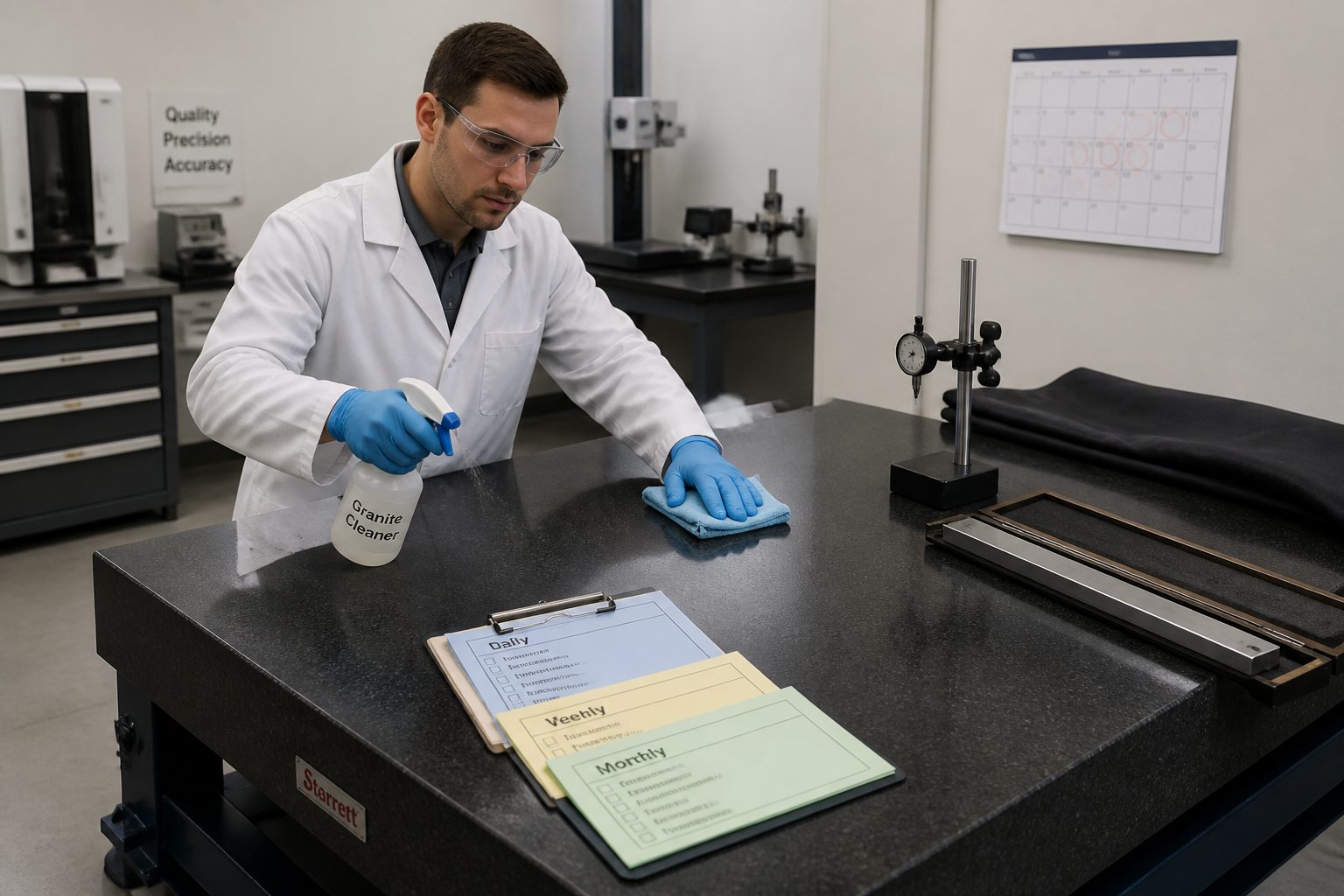
Ignoring a regular cleaning schedule is like building a house on a shaky foundation; eventually, everything else will suffer. Your investment in a quality surface plate deserves the simple care that keeps it performing at its best. This preventative approach saves you money in the long run by reducing recalibration frequency and preventing costly measurement mistakes.
What “clean” means in a metrology area (and what it doesn’t)
In a metrology environment, “clean” goes far beyond what you might consider clean in a typical workshop. It means a surface entirely free of visible dust, grit, fingerprints, and any invisible films that could interfere with precision measurements. Achieving this level of cleanliness is critical for maintaining measurement integrity.
It certainly doesn’t mean simply wiping with a dry rag or brushing off visible particles, as those actions often just redistribute contaminants or introduce new ones. True metrology cleanliness requires specific tools and techniques to ensure the plate’s surface is chemically and physically clear. Here’s a quick look at common contaminants and their effects.
| Contaminant Type | Source in Shop | Impact on Measurement | Cleaning Priority |
|---|---|---|---|
| Dust & Airborne Particles | General `shop contamination control`, clothing, air currents | Causes false height readings, premature wear on instruments and plate | High (Daily) |
| Oils & Fingerprints | Human contact, nearby machining, handling parts | Creates a sticky film, attracts dust, affects instrument glide | High (Daily/Weekly) |
| Coolant Mist & Residue | Nearby CNC machines, grinding operations | Leaves a corrosive or abrasive film, hardens over time | Medium (Weekly/As Needed) |
| Abrasive Swarf & Chips | Transfer from parts, tools, shoes | Scratches plate surface, embeds in tools, causes errors | Critical (Immediate) |
| Dried Wipes & Lint | Improper `lint free wipes`, low-quality cloths | Adds new fibers to the surface, interferes with contact | Medium (Prevention) |
Tools and supplies you should keep at the plate
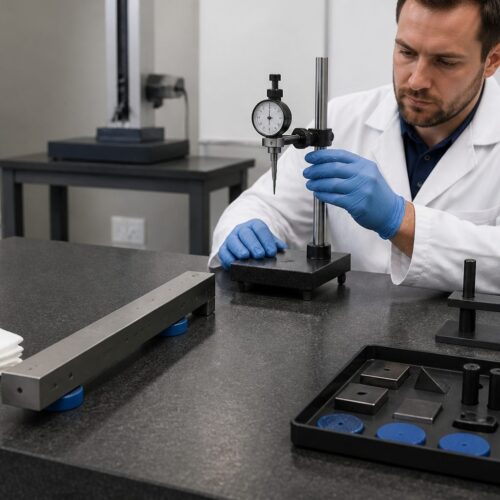
Having the right tools readily available makes adherence to your granite surface plate cleaning routine much easier. You should designate a small, clean kit specifically for your surface plate and keep it near the workstation. This prevents cross-contamination and ensures you always have what you need.
First on the list are high-quality `lint free wipes`. These are absolutely essential because regular shop rags or paper towels can shed fibers that become new contaminants on your precision surface. Look for wipes specifically designed for critical cleaning tasks in cleanrooms or optical applications.
Next, you will need an approved `surface plate cleaner`. This is a specialized cleaning solution formulated to effectively lift and dissolve oils, greases, and other residues without harming the granite. Never use harsh industrial degreasers or abrasive cleaners, as these can etch the surface or leave behind problematic residues.
A soft-bristle brush, like a horsehair brush or a specialized static-dissipating brush, is invaluable for sweeping away loose debris before wet cleaning. This prevents you from smearing dry particles across the plate when you apply the cleaner. Ensure the brush is clean and stored in a way that prevents it from picking up shop dust.
You also need a clean, labeled spray bottle for your chosen `surface plate cleaner`. This allows for controlled application, minimizing overspray and waste. Make sure the bottle is clearly marked to avoid any confusion with other shop chemicals, which could lead to accidental damage.
Finally, consider a pair of clean, disposable gloves for handling the wipes and cleaner. This prevents transferring oils and fingerprints from your hands back onto the newly cleaned surface. It’s a small step that significantly improves `shop contamination control` and the overall effectiveness of your cleaning efforts.
Approved cleaners and what to avoid on granite
Choosing the correct `surface plate cleaner` is paramount for effective maintenance without damaging your precision equipment. Specialized granite surface plate cleaners are formulated to be pH-neutral and evaporate quickly, leaving no residue behind. These products effectively break down oils, dirt, and other contaminants without compromising the granite’s delicate structure.
Many manufacturers offer their own branded cleaning solutions, and these are often your safest bet. Isopropyl alcohol (IPA) can also be used as a general-purpose cleaner, particularly for quick spot cleaning, but always ensure it is high-purity (90% or higher) and used sparingly. Water-based solutions with mild detergents, specifically designed for metrology, are another excellent option for routine cleaning.
Now, let’s talk about what to absolutely avoid on your granite surface plate. Never use abrasive cleaners, scouring powders, or anything containing harsh chemicals like acids or strong alkalis. These substances can etch the granite, degrade its polish, and potentially alter its flatness, leading to irreversible damage that impacts measurement accuracy.
Household glass cleaners or window sprays are also a bad idea, despite often leaving a streak-free shine on glass. Many of these products contain ammonia or other additives that can leave a sticky film or residues that attract dust and interfere with instrument movement. They are not designed for the critical cleanliness required in metrology.
Avoid any cleaners that leave a waxy, oily, or silicone-based residue. While these might make the plate look shiny, they create a soft, uneven layer that can transfer to your measuring instruments and parts. This compromises measurement integrity and makes future cleaning more difficult, defeating the purpose of your `granite surface plate cleaning routine`.
Finally, steer clear of any solvent-based cleaners not specifically approved for granite. Some industrial solvents can penetrate the granite’s pores, causing discoloration or even weakening the stone over time. Always prioritize cleaners explicitly labeled for surface plate use to protect your investment and maintain calibration standards.
Daily cleaning steps you can finish in 5 minutes
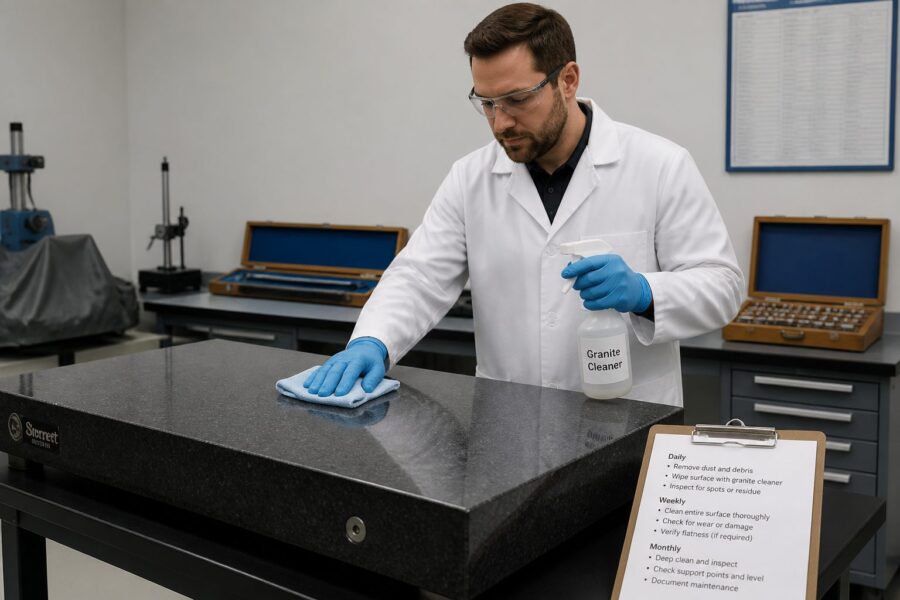
A quick daily clean is the cornerstone of any effective `granite surface plate cleaning routine`. This simple habit takes just a few minutes but dramatically reduces the buildup of contaminants that can lead to long-term issues. It ensures your plate is ready for accurate measurements at the start of each shift.
Performing these steps consistently minimizes the need for more intensive cleaning later and maintains a high level of `shop contamination control`. Make it a standard practice for anyone using the plate to follow this routine. Here are the daily steps to keep your surface plate pristine.
- Clear all tools and parts from the plate.
- Use a soft-bristle brush to sweep loose dust and debris.
- Lightly spray `surface plate cleaner` onto a `lint free wipe`.
- Wipe down the entire working surface in overlapping strokes.
- Use a second dry `lint free wipe` to buff the surface dry.
- Inspect for any remaining streaks or particles.
Weekly deep-clean steps for stubborn film and residue
Even with diligent daily cleaning, microscopic films and stubborn residues can accumulate on your granite surface plate over time. These can come from atmospheric oils, coolant mist, or even the residue left by certain `surface plate cleaner` products if not properly buffed away. A weekly deep clean tackles these persistent issues, restoring the plate’s original pristine condition.
This deeper cleaning process is more thorough than the daily routine and helps maintain the long-term accuracy and flatness of your plate. It’s a critical part of a comprehensive `granite surface plate cleaning routine` that prevents minor issues from becoming major problems. Dedicate a specific time each week for this important task.
Start by clearing the entire surface plate of all tools, gages, and parts. Use your soft-bristle brush to remove any loose dust and debris, just as you would for your daily clean. This preliminary dry sweep prevents you from grinding any abrasive particles into the granite during the wet cleaning process.
Next, apply a generous amount of your approved `surface plate cleaner` directly to the entire working surface of the granite. Allow the cleaner to sit for a minute or two, letting it penetrate and dissolve the accumulated film and stubborn grime. This dwell time is essential for the cleaner to do its job effectively, especially for oily residues.
Using several fresh `lint free wipes`, thoroughly scrub the entire surface in overlapping circular motions. Apply firm but even pressure to ensure you are lifting all the dissolved contaminants. Pay extra attention to areas that see heavy use or appear to have a visible film, as these spots often harbor the most residue.
After scrubbing, use new, clean `lint free wipes` to thoroughly wipe away all the cleaner and dissolved residue. This is a critical step; leaving cleaner residue can be just as detrimental as leaving dirt. Continue wiping with fresh wipes until no visible cleaner or film remains on the surface.
Finally, perform a dry buff with a completely clean and dry `lint free wipe` to ensure a streak-free finish. This step helps evaporate any remaining moisture and leaves the surface perfectly smooth and ready for precision measurements. The weekly deep clean helps maintain peak `shop contamination control` and keeps your measurements reliable.
Monthly checks: spotting wear, shine, and embedded grit
Beyond daily and weekly cleaning, a monthly inspection is essential for proactive maintenance of your granite surface plate. This check allows you to spot early signs of wear, surface degradation, or embedded contaminants that might not be obvious during routine cleaning. It’s a key component of a thorough `granite surface plate cleaning routine`.
These monthly checks help you address minor issues before they become significant problems impacting your measurement accuracy and potentially requiring costly re-lapping. Early detection is always better for preserving your investment. Take your time during this inspection and be systematic.
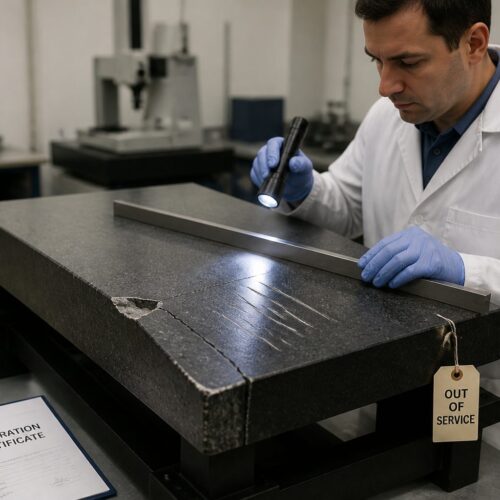
Begin by giving the entire plate a complete deep clean, following your weekly steps. A truly clean surface makes it much easier to spot subtle changes in the granite. Once dry, use a strong, directional light source, like a flashlight held at a low angle, to scan the surface.
Look for areas that appear shinier than the rest of the plate. These “shiny spots” are often indicators of localized wear, where the granite has been subjected to more friction or abrasion. While granite is hard, constant sliding of tools or parts in the same area can slowly polish the surface, potentially creating slight depressions that affect flatness.
Also, carefully inspect for any embedded grit or small metal particles. These can sometimes become pressed into the granite, especially if heavy parts are slid across an uncleaned surface. Feel the surface gently with the back of your hand or a clean `lint free wipe` to detect any roughness or raised areas. If you find embedded grit, it often requires professional attention to remove without damaging the plate.
Check the edges and corners for chipping, which can occur from accidental impacts or improper handling of parts. While edge chips don’t always affect the working surface, they can propagate or indicate rough handling. Document any chips you find in your cleaning log.
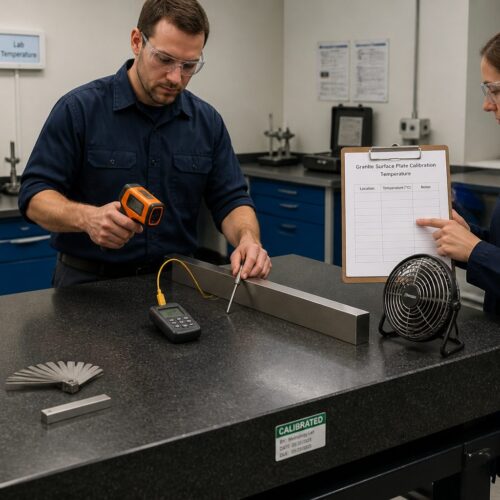
Finally, run a finger or a straightedge lightly over the surface to detect any noticeable unevenness or “dips.” While you cannot physically fix flatness issues yourself, identifying them during these monthly checks helps you anticipate when professional re-lapping or recalibration will be needed. This proactive approach ensures your `shop contamination control` efforts are paired with a full awareness of the plate’s physical condition.
How to handle spills, coolant mist, and oily fingerprints
Even with the best `granite surface plate cleaning routine`, accidents happen, and environmental factors can introduce contaminants. Knowing how to quickly and effectively handle spills, coolant mist, and oily fingerprints is crucial for maintaining your plate’s accuracy and preventing long-term damage. Prompt action is key to mitigating these issues.
Ignoring these immediate threats can lead to staining, corrosion, or the development of stubborn films that are much harder to remove later. Your quick response directly impacts your `shop contamination control` and the integrity of your measurements. Always prioritize addressing these incidents as soon as they occur.
For liquid spills, whether it’s water, oil, or coolant, the first step is to absorb as much of the liquid as possible immediately. Use clean, absorbent paper towels or dry `lint free wipes` to blot the spill, not spread it. Work from the outside of the spill inward to contain it and prevent it from expanding across the plate surface.
Once the bulk of the liquid is absorbed, lightly spray your approved `surface plate cleaner` onto a fresh `lint free wipe`. Thoroughly wipe down the affected area, ensuring all residue from the spill is dissolved and removed. Follow this with a dry wipe to buff the area completely dry and streak-free.
Coolant mist from nearby machining operations is a pervasive threat that often settles unnoticed. If your plate is exposed to mist, it requires more frequent cleaning than plates in drier environments. At the end of each shift, or even midday in heavily misted areas, perform your daily cleaning routine, paying extra attention to wiping away the sticky film that coolant mist leaves behind.
Oily fingerprints are perhaps the most common contaminant and are easily transferred from hands or parts. These seemingly innocuous marks attract dust and can create slight variations in the surface, affecting instrument glide. For oily fingerprints, a quick spray of `surface plate cleaner` on a `lint free wipe` and a targeted wipe-down usually suffices. Always keep a clean wipe handy for these quick touch-ups.
If you suspect a spill involved a corrosive liquid, such as a strong acid or base, after immediate cleanup with cleaner, consider flooding the area with distilled water and wiping it dry. This helps neutralize any lingering corrosive agents. However, always consult with a professional if there’s any doubt about the chemical’s compatibility with granite.
Drying and final wipe technique to prevent streaks
The drying and final wipe technique is just as important as the cleaning itself in your `granite surface plate cleaning routine`. Improper drying can leave behind streaks, films, or even moisture that can attract new contaminants or affect measurement accuracy. The goal is a perfectly dry, streak-free, and residue-free surface.
Achieving this requires patience and the right materials, ensuring your `shop contamination control` efforts aren’t undermined at the last step. A successful final wipe makes all the difference in presenting a truly clean metrology surface. This final step should never be rushed.
After you’ve applied your `surface plate cleaner` and wiped away the bulk of the dissolved grime with wet `lint free wipes`, immediately follow with a completely dry `lint free wipe`. Do not let the cleaner air dry, as this is a common cause of streaking and residue formation. The faster you dry, the less chance of residue settling.
When wiping, use long, overlapping strokes across the entire surface. Start at one end of the plate and work your way to the other, ensuring you don’t miss any areas. Apply light, even pressure, allowing the dry wipe to absorb any remaining moisture and buff the surface to a clean finish.
It’s often beneficial to use multiple dry `lint free wipes` during this phase. As one wipe becomes damp with residual cleaner or moisture, discard it and grab a fresh, dry one. Continuing to use a saturated wipe will only redistribute moisture and create new streaks. Fresh wipes are critical for a truly clean finish.
For the final pass, use a perfectly clean and dry `lint free wipe` with very light pressure, almost just gliding it over the surface. This final buffing motion helps to remove any microscopic traces of cleaner and leaves the granite feeling incredibly smooth and friction-free. You should be able to hear a slight “squeak” as the wipe moves across the clean, dry granite.
Visually inspect the plate from different angles under good lighting after drying. Look for any remaining streaks, smudges, or dull spots. If you see any, repeat the drying and buffing process with fresh wipes until the surface is uniformly clean and bright. This meticulous final step ensures your `granite surface plate cleaning routine` delivers truly accurate results.
Creating a simple cleaning log your team will actually use
A cleaning log might seem like extra paperwork, but it’s an invaluable tool for ensuring consistency and accountability in your `granite surface plate cleaning routine`. A simple, easy-to-use log ensures that cleaning tasks are performed regularly and provides a historical record of your plate’s maintenance. This transparency helps maintain `shop contamination control` standards across shifts and team members.
The key to a successful log is simplicity; if it’s too complicated, people won’t use it. Design a log that can be quickly filled out with minimal effort, ideally placed right next to the surface plate itself. This makes adherence to the routine much more likely.
Your log should include columns for the date, time, and the name or initials of the person who performed the cleaning. This creates accountability and helps track who is responsible for each cleaning action. It also makes it easier to follow up if there are any questions about the plate’s condition.
Include checkboxes for the type of cleaning performed: daily, weekly, or monthly check. This visual cue makes it clear what level of cleaning was completed. You might also add a small space for comments, allowing staff to note any unusual observations, like a stubborn stain or a new chip.
Consider laminating the log and using a dry-erase marker. This makes it reusable and eliminates the need for constant reprinting, further reducing friction for your team. Just remember to periodically transfer the information to a permanent digital or paper record for long-term tracking.
The cleaning log also serves as a communication tool. If a plate needs extra attention, a note in the log can alert the next shift or supervisor. This fosters a collaborative approach to maintaining equipment and ensures everyone is aware of the plate’s status. It’s a proactive measure for effective metrology area management.
Finally, review the log periodically, perhaps monthly or quarterly, as part of your overall quality management system. This review helps identify patterns, such as periods of neglect or recurring issues, allowing you to adjust your `granite surface plate cleaning routine` or provide additional training. A well-maintained log is proof of your commitment to precision.
Conclusion
Maintaining the accuracy of your granite surface plate boils down to a consistent and diligent cleaning routine. This isn’t just a suggestion; it’s a fundamental requirement for reliable metrology and preserving your significant investment. Ignoring proper care is a sure path to compromised measurements and premature equipment wear.
Implementing a structured daily, weekly, and monthly `granite surface plate cleaning routine` ensures that your foundational reference remains pristine. It minimizes the impact of `shop contamination control` challenges and keeps your team confident in every measurement they take. A clean plate is a confident plate.
Remember, the right tools make all the difference. Always use an approved `surface plate cleaner` and high-quality `lint free wipes` to avoid introducing new contaminants. These specialized supplies are designed to clean effectively without damaging the precision surface, unlike general-purpose shop products.
By following the simple daily steps, tackling stubborn films with weekly deep cleans, and performing monthly checks for wear, you are actively extending the life and accuracy of your surface plate. This proactive approach saves money on recalibrations and prevents costly rework due to inaccurate data. It’s about smart asset management.
Don’t underestimate the power of a simple cleaning log to foster accountability and consistency among your team. It transforms individual efforts into a collective commitment to precision and provides a valuable record of maintenance. A well-documented routine is a robust routine.
Your granite surface plate is the silent workhorse of your quality department, providing the stable foundation for every critical dimension. Give it the care it deserves with a disciplined `granite surface plate cleaning routine`. This commitment to cleanliness is a direct reflection of your dedication to precision and quality in every aspect of your operation.
Embrace these cleaning practices not as a chore, but as an integral part of maintaining metrology excellence. A clean surface plate means accurate measurements, reliable products, and a stronger reputation for precision. Make it a priority, and your measurements will thank you.