
Precision measurement relies heavily on the accuracy of your surface plate, serving as the foundational reference for countless inspection tasks. Over time, even the most robust granite surface plate can experience wear and tear, leading to subtle changes in its critical flatness. Recognizing these issues early helps you maintain calibration integrity and avoid costly measurement errors in your facility.
Learning how to troubleshoot surface plate flatness problems before they become severe can save significant time and money. Proactive identification of potential issues means you can address minor concerns or schedule professional calibration at the optimal moment. This article offers practical advice for detecting common flatness deviations, ensuring your metrology operations remain accurate.
We will guide you through various methods, from simple visual inspections to basic preliminary checks, that you can perform in-house. Understanding these early warning signs empowers you to make informed decisions about your equipment’s health. You will learn what to look for and how to document your findings for effective communication with calibration technicians.
Identifying Early Signs of Potential Flatness Problems
Catching flatness issues early is a skill that develops with careful observation and consistent practice. Subtle inconsistencies can often be overlooked until they start impacting measurement repeatability. Regularly inspecting your surface plate for changes is a fundamental aspect of maintaining metrology standards.
One primary indicator of a developing problem is a change in the plate’s appearance or how instruments interact with its surface. Any noticeable rocking or instability when placing sensitive gauges should raise immediate concerns. These small movements can indicate an underlying flatness deviation that requires attention.
Another common sign is the appearance of scratches or dull spots in areas of high use, which suggest material removal or localized wear. While not always directly indicating a flatness issue, these areas often precede or accompany significant deviations. Always document any new marks or changes in surface texture.
If your measurement results become inconsistent, particularly when using the same setup and components, this could point to a granite plate problem. Sporadic or unexplained variations in readings might stem from an inaccurate reference surface. This inconsistency is a strong signal to troubleshoot surface plate flatness.
Finally, pay attention to how your cleaning cloth glides across the surface; if it catches or drags in specific spots, this could indicate an uneven plane. Observing these seemingly minor details forms the basis of effective preliminary inspection. Your familiarity with the plate’s normal feel is a valuable asset.
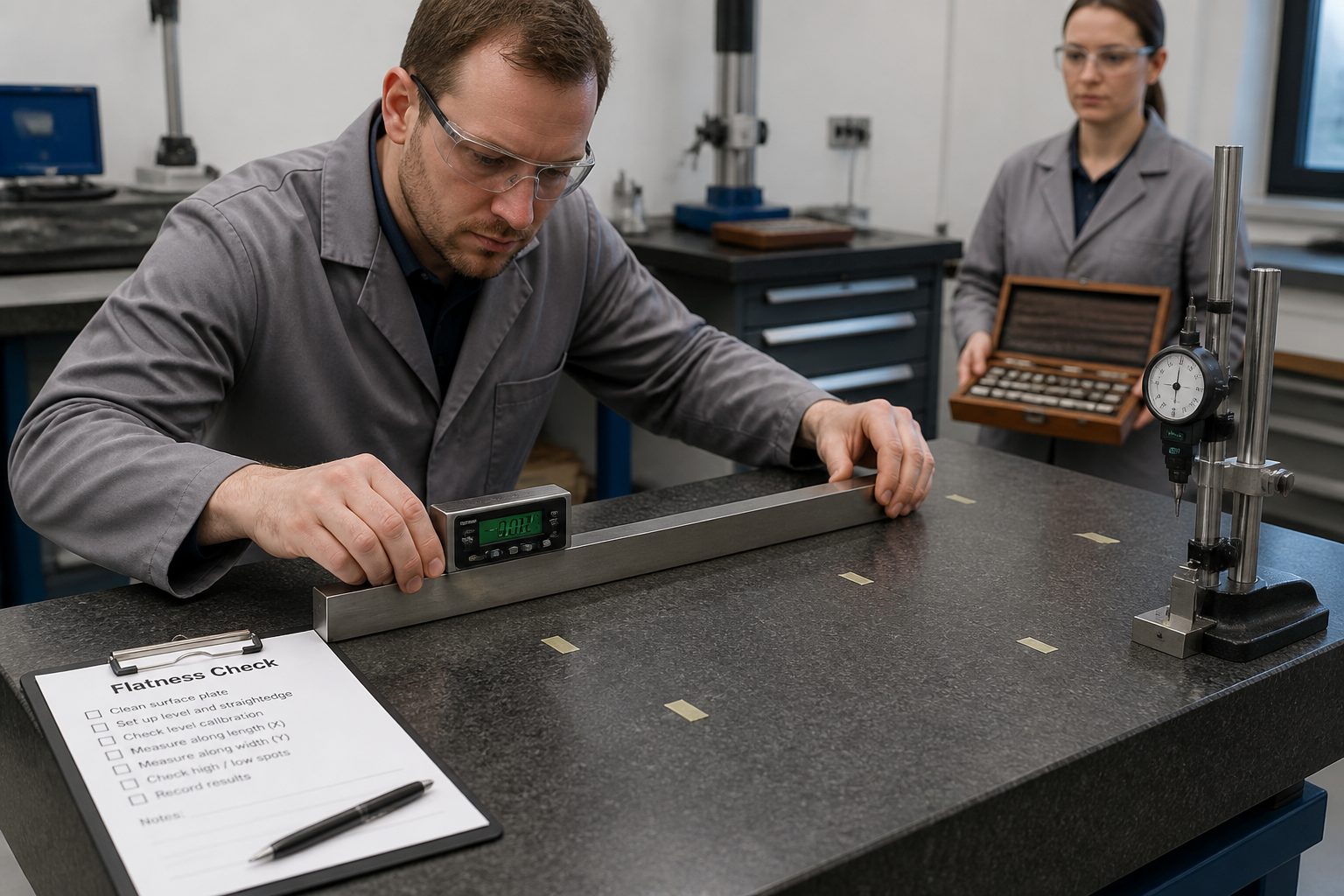
Effective Visual Inspection Techniques for Your Surface Plate
Visual inspection metrology is your first line of defense against unexpected surface plate problems. This methodical approach requires good lighting and a keen eye to spot irregularities that affect precision. A thorough visual check can reveal much about your plate’s condition.
Start by cleaning the entire surface plate thoroughly to remove all dust, debris, and oil films. Any residue can obscure defects or create false impressions of surface irregularities. A clean surface allows for the most accurate and reliable visual assessment.
Next, position yourself so light reflects off the surface at a low angle, highlighting any imperfections or changes in texture. This grazing light technique makes scratches, pits, and dull spots far more visible than direct overhead lighting. Move around the plate to observe from multiple angles.
Look for signs of localized wear, particularly in frequently used areas like the center or along common measurement paths. These areas often appear duller or show a different sheen compared to less-used sections. Such observations can indicate a developing flatness deviation.
Also, check the edges and corners for chips or damage that could affect stability or interfere with clamping setups. Even small chips can propagate over time or impact how instruments rest on the plate. A comprehensive visual sweep covers the entire accessible surface.
Understanding Common Wear Patterns and Their Implications
Surface plates, particularly those in constant use, develop predictable wear patterns that directly relate to how they are utilized. Recognizing these patterns helps in understanding the nature of any flatness deviation. Different wear types have distinct implications for measurement accuracy.
The most common wear occurs in the center of the plate, where many measurements and setups are performed. This central depression can cause instruments to sink slightly, leading to errors in height and parallelism readings. Understanding these typical granite plate problems is essential for preventative action.
| Wear Pattern | Typical Cause | Measurement Impact |
|---|---|---|
| Central Depression | Frequent use of gauges in the middle. | Low readings for height, parallelism errors. |
| Edge Wear | Repeated clamping or heavy parts near edges. | Unstable setups, angular errors at periphery. |
| Linear Grooves | Sliding heavy parts or abrasive tools. | Inconsistent instrument glide, localized inaccuracies. |
| “Smile” or “Frown” | Uneven loading or support over time. | Overall convex or concave flatness deviation. |
| Localized Pitting | Dropping tools or abrasive contamination. | Surface instability, irregular contact points. |
Checking for Stability, Levelness, and Support Issues
The overall stability and proper support of your surface plate are just as critical as its inherent flatness. An unstable or improperly leveled plate can introduce significant measurement errors, regardless of its original accuracy. You must ensure the foundation is sound before assessing the plate itself.
Begin by checking the support stand or cabinet for any signs of damage, looseness, or instability. Wobbly legs, loose bolts, or an uneven floor can transmit vibrations and cause the plate to flex or rock. A firm, rigid support system is non-negotiable for precision metrology.
Verify that the plate’s support points are correctly positioned and making solid contact with the granite. Most surface plates require a specific three-point support system to ensure uniform load distribution and prevent warping. Incorrectly placed supports can induce flatness deviation over time.
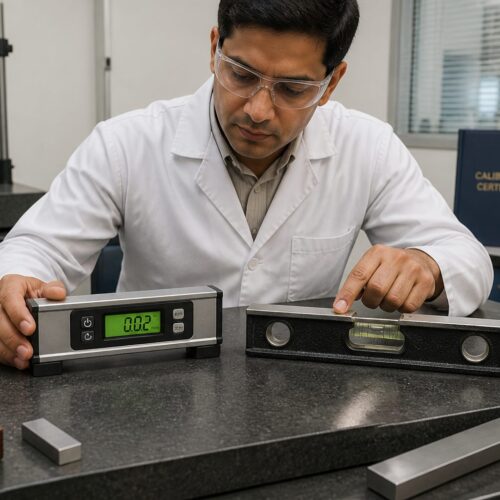
Use a precision level to check if the surface plate is truly level in all directions. While leveling does not directly correct inherent flatness, it prevents instruments from drifting and ensures gravity does not skew measurements. An unlevel plate makes accurate readings much harder to achieve.
Periodically inspect the leveling feet or pads for wear, damage, or contamination that could compromise stability. Even small debris under a foot can create an uneven contact point, leading to subtle rocking or stress on the granite. Addressing these issues helps to troubleshoot surface plate flatness at its root.
The Impact of Uneven Weight Distribution and Overloading
Surface plates are designed to support significant weight, but uneven distribution or excessive loading can lead to permanent deformation and flatness deviation. Understanding these limitations is important for preserving your plate’s accuracy and lifespan. Misusing the plate can quickly lead to granite plate problems.
Placing heavy workpieces consistently in one area of the plate without counterbalancing can create localized stress and wear over time. This continuous pressure can cause a depression in the granite, altering the reference plane. Always try to distribute weight as evenly as possible across the surface.
Avoid storing heavy items or tools on the surface plate when not in use, especially if they remain in the same spot for extended periods. Even seemingly minor weights, when static for months, can contribute to material creep and localized flatness changes. The plate should be clear when not actively measuring.
Overloading a surface plate beyond its rated capacity, even temporarily, risks structural integrity and can induce immediate deflection. Consult your plate’s specifications for its maximum load capacity to avoid irreversible damage. Respecting these limits is key to preventing major issues.
Remember that the weight of measurement equipment itself, such as large CMMs or heavy height gauges, also contributes to the total load. Factor in all components when considering weight distribution and capacity. Proper planning helps to troubleshoot surface plate flatness issues before they arise.
Assessing Environmental Influences: Temperature, Humidity, and Vibration
Environmental factors play a surprisingly significant role in maintaining surface plate accuracy and can directly contribute to flatness deviation. Ignoring these influences can lead to unstable measurements and premature wear. Your plate’s environment needs careful consideration.
Temperature fluctuations are particularly detrimental to granite stability, causing expansion and contraction that can temporarily or permanently alter flatness. Maintaining a stable, controlled temperature in your metrology lab is absolutely essential. Minimize direct sunlight or proximity to heat sources.
- Ensure consistent room temperature
- Avoid direct sunlight on the plate
- Monitor humidity levels regularly
- Isolate from machinery vibrations
- Keep plate away from drafts
- Allow plate to acclimate after moves
Simple Tools and Methods for Preliminary Flatness Checks
While professional calibration requires specialized equipment, you can perform several preliminary checks with basic tools to help troubleshoot surface plate flatness. These methods offer valuable insights into your plate’s general condition. They are not substitutes for calibration but provide useful indicators.
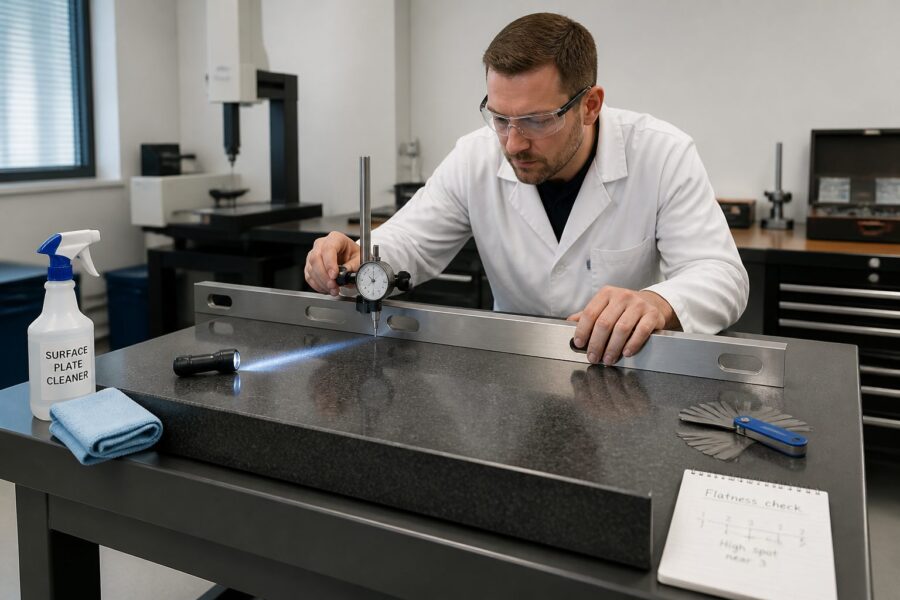
One simple method involves using a precision straight edge and feeler gauges to check for obvious gaps or high spots. Place the straight edge across the plate in various directions, including diagonals, and attempt to slide feeler gauges underneath. Any significant gaps indicate a flatness deviation.
Another technique uses a precision indicator mounted on a stable stand, traversing it across the plate’s surface. While this won’t give you absolute flatness, it can reveal relative changes in height across different areas. Note down any significant deflections observed during the traverse.
You can also perform a “repeatability test” by taking the same measurement multiple times in different locations on the plate. If the results vary significantly beyond your instrument’s known repeatability, it strongly suggests a granite plate problem. This practical test highlights functional accuracy issues.
For a basic visual inspection metrology check, use a master square or angle plate to check perpendicularity against the surface plate. Any light visible between the square’s base and the plate, or inconsistencies when flipping the square, indicates an issue. These simple checks provide quick feedback.
When to Suspect Deeper, More Complex Problems
Sometimes, the issues you observe are more than superficial wear and point to deeper structural or material problems within the surface plate. Recognizing these more complex scenarios is important for making the decision to call professionals. Superficial fixes will not resolve these underlying issues.
If your preliminary checks consistently show significant flatness deviation across large areas, rather than just localized wear, this is a strong indicator of a systemic problem. A general bowing or twisting of the plate suggests internal stress or improper manufacturing. These are serious granite plate problems.
Cracks, even hairline ones, are always a cause for immediate concern and require professional assessment. Cracks compromise the plate’s structural integrity and can lead to unpredictable changes in flatness. Never attempt to repair a cracked surface plate yourself.
When environmental controls are stable, and support is correct, yet measurements remain erratic or drift over short periods, this points to inherent instability. Such behavior suggests internal material issues or a significant loss of internal stress relief. This is beyond simple troubleshooting.
If your surface plate has been involved in any impact, even if no visible damage appears, its flatness may be compromised. Internal micro-fractures can affect long-term stability and accuracy. In these cases, it is always best to schedule a professional inspection to troubleshoot surface plate flatness thoroughly.
Documenting Your Observations for Calibration Technicians
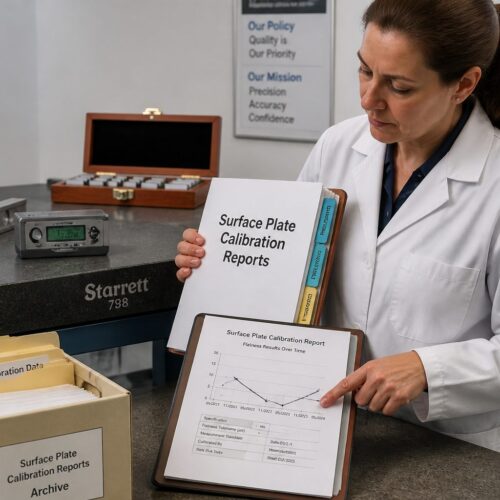
Thorough documentation of your observations is incredibly valuable for calibration technicians, providing them with a clear history and specific problem areas. Good records help technicians diagnose issues more efficiently and perform targeted repairs. This preparation streamlines the calibration process.
Start a logbook specifically for your surface plate, noting down the date and details of every inspection, cleaning, and any detected irregularities. Include photographs of specific wear patterns, scratches, or areas of concern. Visual evidence is often more impactful than written descriptions alone.
Record any changes in measurement results that prompted your investigation, including specific examples of inconsistent readings or parts that failed inspection. Provide context, such as the type of measurement, the instruments used, and the location on the plate where the issue occurred. Detail helps pinpoint issues.
Document the environmental conditions in your lab, including temperature and humidity readings, especially if you suspect these factors are contributing to the flatness deviation. Note any recent changes in the plate’s location, support, or typical usage patterns. Comprehensive data aids accurate diagnosis.
Provide a clear summary of your findings and what actions you have already taken, such as cleaning, leveling, or adjusting support points. This prevents technicians from repeating your preliminary steps and allows them to focus on deeper issues. Detailed notes help to troubleshoot surface plate flatness effectively.
Preparing Your Plate for Professional Calibration Service
Once you decide to call in professional calibration technicians, proper preparation of your surface plate can significantly expedite the service. A well-prepared plate allows technicians to begin work immediately, saving you time and ensuring the best possible results. This step is often overlooked but important.
First, ensure the surface plate is thoroughly cleaned and free of all debris, oils, and grease. A dirty plate requires the technician to spend valuable time on cleaning, which could increase service costs. Use a recommended surface plate cleaner and a lint-free cloth.
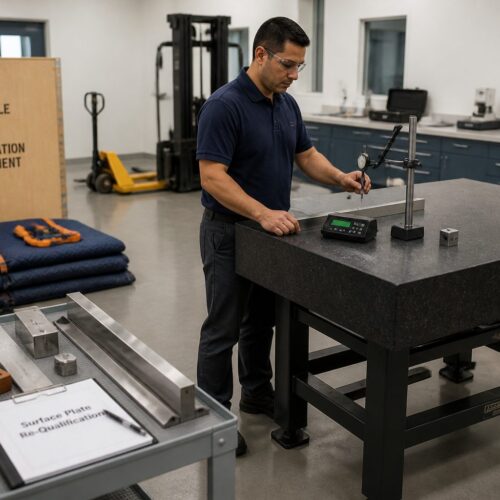
Clear the area around the surface plate, removing any parts, tools, or equipment that might obstruct the technician’s access. They need ample space to set up their specialized calibration equipment and move freely around the plate. An uncluttered workspace is safer and more efficient.
Ensure the ambient temperature in the metrology lab is stable and at the standard calibration temperature, typically 68°F (20°C). The plate needs to be fully acclimated to this temperature for at least 24 hours prior to calibration. Temperature stability is critical for accurate measurements.
Have your detailed documentation and observations readily available for the technician upon their arrival. This information provides them with a head start on understanding the plate’s history and specific problem areas. Preparing your plate correctly helps to troubleshoot surface plate flatness with expert assistance.
Conclusion
Maintaining the accuracy of your surface plate is paramount for reliable metrology operations and consistent product quality. By understanding how to troubleshoot surface plate flatness issues, you empower your team to proactively manage this critical piece of equipment. Early detection saves resources and prevents compounding errors.
Regular visual inspection metrology, combined with an understanding of common wear patterns and environmental factors, forms a robust preventative strategy. These in-house checks allow you to identify potential granite plate problems before they escalate. Your attention to detail directly impacts measurement confidence.
While preliminary checks offer valuable insights, they are not a substitute for professional calibration and resurfacing when significant flatness deviation is suspected. Knowing when to call in the experts ensures your plate receives the precise attention it needs. Trusting your observations is important.
Documenting every observation and preparing your plate thoroughly for technicians sets the stage for an efficient and effective service visit. This collaborative approach helps restore your surface plate to its optimal performance. Your proactive efforts contribute significantly to overall metrology integrity.
Embrace these practices to extend the life of your surface plate and maintain the highest standards of precision in your work. A well-maintained surface plate is the bedrock of accurate measurement. Your commitment to proactive care truly makes a difference.