
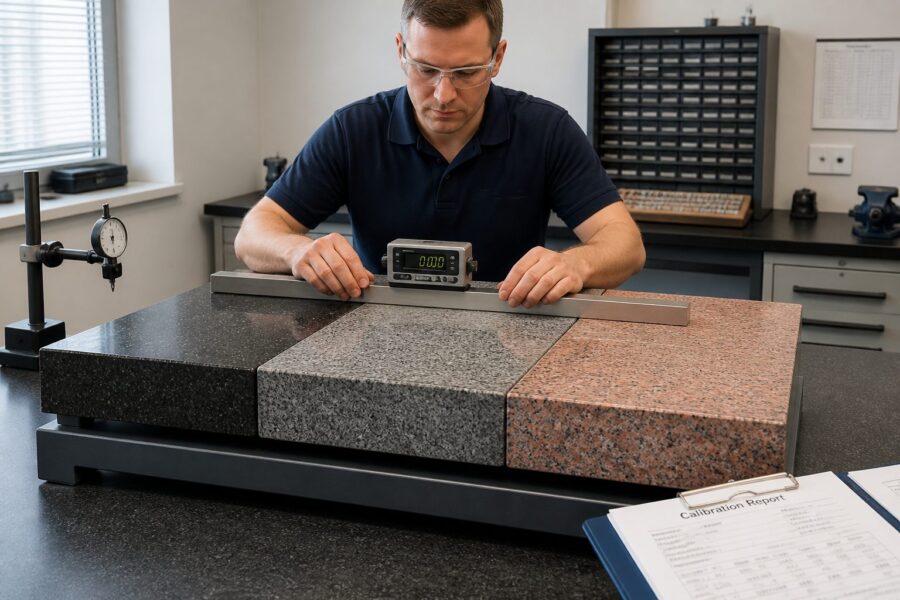
You probably know that granite surface plates are the bedrock of precision measurement, but have you ever stopped to wonder why they come in different colors? The hue of a granite surface plate is not just an aesthetic choice; it tells you a lot about the stone’s mineral composition. This composition directly impacts the plate’s physical properties, which are extremely important for maintaining accuracy in metrology applications.
Understanding the distinctions between black, gray, and pink granite can help you make an informed decision when selecting a surface plate for your specific needs. Each color signifies a unique geological history and a particular blend of minerals, influencing everything from thermal expansion to wear resistance. This knowledge is crucial for anyone relying on these precision instruments daily.
Many people assume all granite is created equal, but that is simply not true in the world of metrology. The granite surface plate color, whether black, gray, or pink, directly correlates with its performance characteristics. We need to look beyond the surface to truly appreciate the engineering marvel that each plate represents for maintaining measurement stability.
The choice of granite surface plate color has real implications for the accuracy of your measurements over time. Factors like density, modulus of elasticity, and thermal coefficient of expansion are all tied to the stone’s mineral makeup. These properties determine how well a surface plate will hold its flatness under varying environmental conditions and usage.
For high-precision work, ignoring the subtle differences between granite types is a mistake. The specific black granite surface plate properties, for instance, offer distinct advantages over other varieties. We will explore how these geological variations translate into practical benefits and challenges for metrology professionals.
Ultimately, selecting the right granite surface plate color for your application is about optimizing for long-term accuracy and reliability. This article will break down what each color means for the stone’s performance. By the end, you will understand why these color variations matter so much in precision measurement.
What Granite Color Actually Indicates About Composition
The color of a granite surface plate comes from the specific minerals present during its formation deep within the earth’s crust. Different geological processes lead to different mineral assemblages, which then manifest as distinct colors. This direct link between color and mineralogy is fundamental to understanding granite’s utility in metrology.
Generally, lighter colors like gray and pink indicate higher concentrations of felsic minerals, such as quartz and feldspar. Darker colors, like black, usually point to a greater presence of mafic minerals like pyroxene and amphibole. These mineral groups have vastly different physical properties that affect the overall stone.
Quartz, a very hard and stable mineral, is desirable in surface plates because it resists wear and maintains dimensional stability. Feldspar, while also hard, comes in various forms that can influence thermal expansion characteristics. The proportions of these minerals are key to the granite’s performance.
Mafic minerals, often denser, can contribute to a higher specific gravity and different thermal behaviors compared to felsic-rich granites. The presence of magnetite, an iron oxide mineral, also contributes to the dark color of some black granites. This mineral content is what makes one granite surface plate color behave differently from another.
The geological origin of the granite also plays a significant role in its overall quality and homogeneity. Granites formed under immense pressure and slow cooling tend to have a finer, more uniform grain structure. This fine grain structure is highly sought after for precision applications because it minimizes internal stresses and improves dimensional stability.
Variations in cooling rates and magma composition during the rock’s formation dictate the size and distribution of mineral crystals. A uniform distribution of small crystals means the material will behave more predictably and isotropically. This uniform behavior is a critical factor for maintaining accuracy in a granite surface plate.
The presence of accessory minerals, even in small quantities, can sometimes affect the stone’s characteristics. For example, certain trace elements can influence a granite’s thermal conductivity or even its long-term resistance to chemical degradation. These subtle differences contribute to the specific properties of each granite surface plate color.
When selecting a granite surface plate, understanding the typical mineralogical profile associated with each color helps predict its performance. This is why manufacturers often specify the type of granite used, not just its color. The granite composition measurement stability is a direct consequence of these mineral proportions.
Ultimately, the color serves as a visual shorthand for a much deeper scientific reality about the stone’s physical integrity and suitability for precision work. It guides engineers and metrologists in choosing the best material for their demanding applications. Paying attention to the granite surface plate color black gray pink accuracy implications is simply good practice.
Each granite surface plate color, therefore, is not just a cosmetic feature but a direct indicator of its internal structure and potential performance. Knowing this allows for a more strategic approach to equipment selection. It helps ensure that the chosen plate meets the rigorous demands of modern manufacturing and calibration.
Black Granite: Diabase and Its Metrology Properties
Black granite, often technically diabase or gabbro, stands out in the metrology world for its superior physical properties. This type of stone is rich in mafic minerals like pyroxene and plagioclase feldspar, giving it its characteristic dark color. These black granite surface plate properties are what make it a top choice for high-precision applications.
Diabase’s fine-grained texture and dense structure contribute to its excellent dimensional stability and low thermal expansion. These characteristics are critical for maintaining the accuracy of a granite surface plate, especially in environments with fluctuating temperatures. You get outstanding measurement stability from this material.
| Property | Black Granite (Diabase) | Gray Granite | Pink Granite |
|---|---|---|---|
| Primary Minerals | Pyroxene, Plagioclase Feldspar | Quartz, Orthoclase Feldspar, Mica | Orthoclase Feldspar, Quartz |
| Density (g/cm³) | ~3.0 | ~2.6 – 2.7 | ~2.6 – 2.7 |
| Thermal Expansion (x10⁻⁶/°C) | ~4.0 – 5.0 | ~6.0 – 8.0 | ~7.0 – 9.0 |
| Hardness (Mohs) | ~6.5 – 7.0 | ~6.0 – 6.5 | ~6.0 – 6.5 |
| Water Absorption (%) | ~0.05 – 0.10 | ~0.15 – 0.30 | ~0.20 – 0.40 |
| Compressive Strength (MPa) | ~250 – 300 | ~150 – 200 | ~120 – 180 |
Gray Granite: Common Composition and Stability Profile
Gray granite represents a broad category of igneous rocks, typically rich in quartz, plagioclase feldspar, and mica. Its color varies from light to dark gray, depending on the exact proportions of these minerals and the presence of minor mafic components. This makes gray granite a versatile material for various industrial applications.
The high quartz content in gray granite contributes significantly to its hardness and wear resistance, crucial attributes for precision surfaces. However, the exact type and proportion of feldspar and mica can influence its thermal expansion properties. A consistent gray granite metrology plate must have a uniform mineral distribution.
Compared to black granite, gray varieties generally exhibit a higher coefficient of thermal expansion. This means they will expand and contract more noticeably with temperature changes. For applications requiring extreme thermal stability, this difference becomes a critical consideration for overall accuracy.
The presence of mica, particularly biotite, can also affect the structural integrity and machinability of the stone. While mica is relatively soft, its layered structure can sometimes lead to localized variations in hardness and wear patterns. Manufacturers must carefully select gray granite blocks to ensure consistent performance.
Despite these considerations, gray granite remains a popular choice due to its excellent balance of properties and often lower cost compared to its black counterpart. It provides good resistance to abrasion and maintains flatness well under typical laboratory conditions. It suits many standard metrology tasks.
The stability profile of a gray granite metrology plate is often sufficient for applications where temperature fluctuations are minimal or controlled. Its density and compressive strength are generally robust enough for supporting heavy components without significant deflection. These plates offer dependable performance.
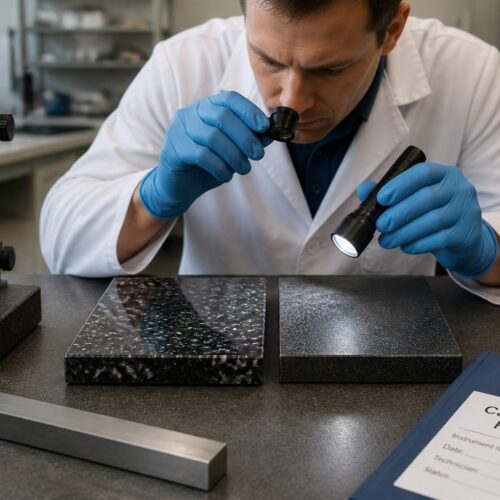
When evaluating a gray granite surface plate, attention should be paid to the uniformity of its grain structure and the absence of visible flaws. Inclusions or veins can compromise the homogeneity of the material, leading to unpredictable behavior. High-quality gray granite will appear consistent across its surface.
For many general-purpose metrology applications, a well-selected gray granite surface plate provides excellent value and reliable accuracy. It stands as a testament to the diverse utility of granite in precision measurement. Understanding its composition helps in making the right choice for specific operational needs.
The key to successful use of a gray granite metrology plate lies in understanding its inherent characteristics and matching them to the application’s demands. This ensures that the granite surface plate color black gray pink accuracy differences are properly accounted for. It’s about finding the right material for the job.
Ultimately, gray granite offers a reliable and cost-effective solution for a wide range of precision measurement tasks. Its widespread availability and proven track record make it a staple in many manufacturing facilities. Its performance is reliable for many standard metrology requirements.
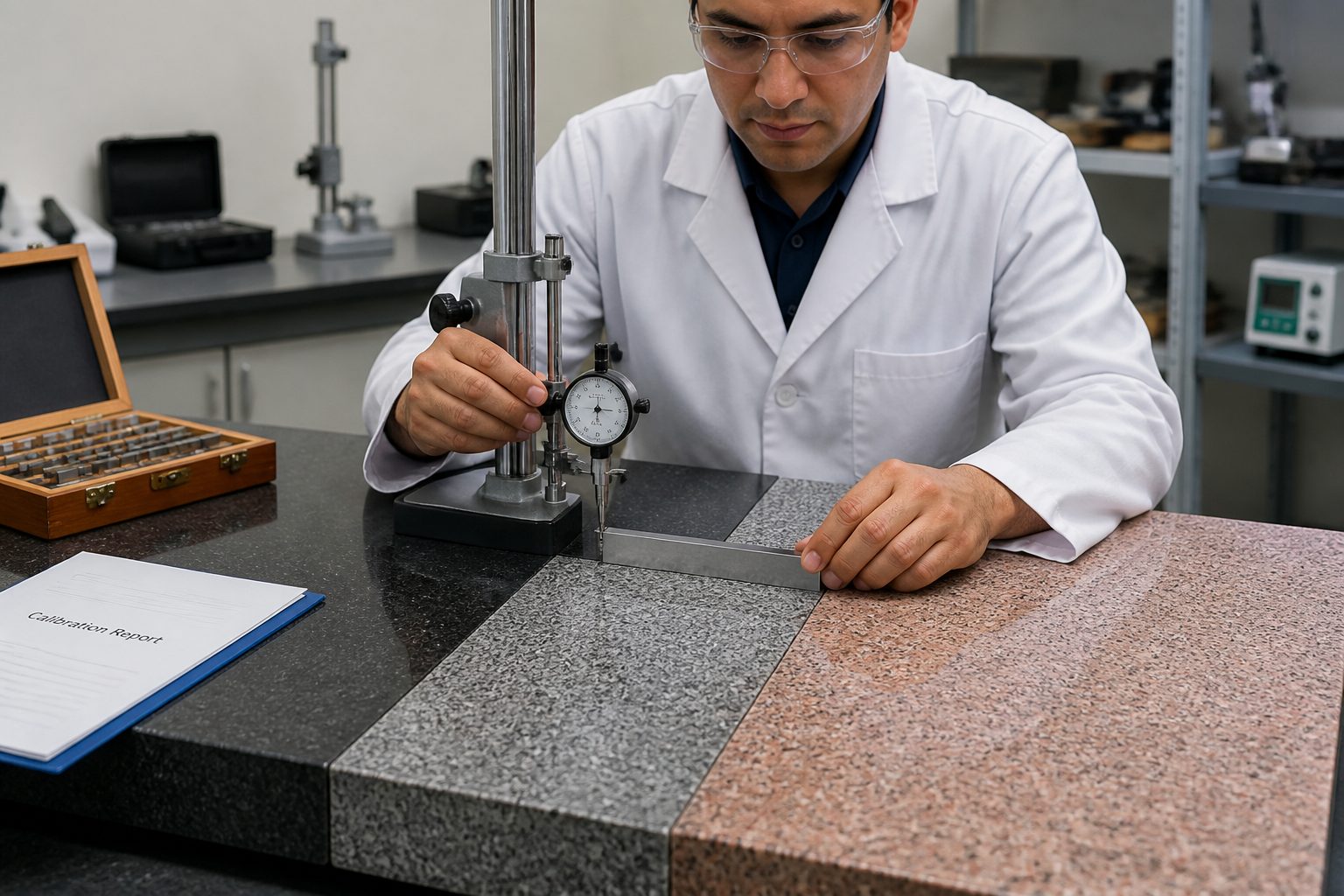
Pink and Red Granite: Feldspar Content and Expansion Behavior
Pink and red granites owe their distinctive hues to a high concentration of potassium feldspar, particularly orthoclase. This mineral, along with quartz and sometimes mica, forms the bulk of these rocks. The specific type and quantity of feldspar directly influence the granite surface plate color and its physical characteristics.
While aesthetically pleasing, the higher feldspar content in pink and red granites generally results in a higher coefficient of thermal expansion compared to black or even some gray granites. This means they are more susceptible to dimensional changes with temperature fluctuations. This is a significant consideration for precision metrology.
Orthoclase feldspar tends to expand more than quartz when heated, and its abundance in these granites amplifies this effect. For environments where temperature control is difficult or inconsistent, a pink granite surface plate may not be the most stable option. Accuracy may be compromised.
The grain size in pink and red granites can also be coarser than in black granites, potentially affecting surface finish and wear resistance over time. A coarser grain can present more points of potential wear or microscopic chipping under heavy use. This impacts long-term flatness.
Despite these thermal expansion characteristics, pink granites are still dense and hard materials, capable of providing a stable reference plane. They possess good compressive strength and resistance to abrasion, making them suitable for less demanding applications. They can perform well in controlled environments.
Their attractive appearance often makes them a choice for decorative purposes, but for strict metrology, their thermal behavior needs careful consideration. If you need a granite surface plate color that prioritizes thermal stability, pink might not be your first choice. Other options often serve better in this regard.
The specific gravity of pink granites is typically similar to gray granites, but generally lower than black granites. This can affect the overall rigidity and deflection under heavy loads, though usually not to a degree that impacts most standard applications. They still offer good structural integrity.
When considering a pink or red granite for a surface plate, it is paramount to understand the environmental conditions it will operate under. Consistent temperature control becomes even more critical with these types of granite. This maintains the required accuracy.
For applications where cost-effectiveness and good general stability are sufficient, and extreme thermal stability is not the primary concern, pink granite can be a viable option. Its properties are well-understood and can be accounted for with proper environmental management. Careful planning yields good results.
Ultimately, the choice of a pink granite surface plate depends on a careful assessment of its thermal expansion behavior against the specific accuracy requirements of the task. The granite surface plate color black gray pink accuracy discussion highlights these important distinctions. Understanding these differences ensures optimal performance.
How Mineral Composition Affects Thermal and Mechanical Stability
The mineral composition of granite fundamentally dictates its thermal and mechanical stability, which are paramount for a precision surface plate. Quartz, feldspar, and mafic minerals all react differently to changes in temperature and applied stress. These reactions directly impact the granite’s ability to maintain its flatness and overall accuracy.
For example, the varying coefficients of thermal expansion among individual minerals within the granite can cause internal stresses as the temperature changes. If these stresses are significant, they can lead to microscopic dimensional changes or even warping of the plate. This is why granite composition measurement stability is so important for long-term reliability.
- Low thermal expansion coefficient
- High density for rigidity
- Excellent wear resistance
- Minimal water absorption
- Uniform grain structure
- High compressive strength
- Resistance to vibration
Choosing Granite Color With Accuracy Requirements in Mind
When selecting a granite surface plate, your accuracy requirements should be the primary driver for choosing a specific granite surface plate color. Different applications demand different levels of precision, and the granite’s properties must align with those demands. Ignoring these differences risks costly measurement errors.
For the most demanding applications, such as calibrating master gauges or performing ultra-precision measurements, black granite is almost always the preferred choice. Its low thermal expansion and high density provide the best possible foundation for measurement stability. Its properties are unmatched.
Consider the environmental conditions of your metrology lab. If temperature fluctuations are common, or if the plate is exposed to significant thermal gradients, the superior thermal stability of black granite becomes even more critical. It minimizes the risk of dimensional changes affecting your readings, ensuring consistent accuracy.
For general-purpose inspection and less critical measurements, a high-quality gray granite metrology plate often provides an excellent balance of performance and cost. These plates offer good hardness and stability for many manufacturing and quality control environments. They are reliable workhorses for many operations.
If you opt for a gray granite surface plate, ensure your lab maintains a reasonably stable temperature, typically within a narrow range like 20°C ± 1°C (68°F ± 2°F). This helps mitigate the effects of its slightly higher thermal expansion coefficient. Careful environmental control maximizes its accuracy.
Pink or red granites are generally reserved for applications where very high precision is not the absolute top priority, or where budget constraints are strict. While still stable, their higher thermal expansion means they are more sensitive to temperature changes. This limitation requires mindfulness.
Sometimes, the sheer size of a surface plate can influence the choice of granite. Larger plates are more susceptible to deflection and thermal gradients, making the inherent mechanical and thermal stability of black granite even more advantageous. Large, stable black granite plates inspire confidence.
Always verify the manufacturer’s specifications for the granite type, not just the color, including its modulus of elasticity and thermal coefficient. These numbers offer objective data to support your decision. Relying solely on color can be misleading.
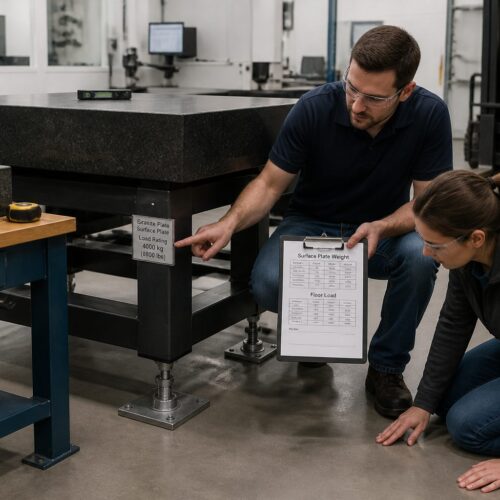
Beyond color, consider the grade of the surface plate, which indicates its flatness tolerance, and the support system. Even the best granite needs proper support to maintain its precision. A holistic approach ensures optimal performance and long-term accuracy.
Ultimately, choosing the right granite surface plate color is a strategic decision that directly impacts the reliability of your metrology operations. It is about understanding the science behind the stone and matching it to your precise needs. This ensures your investment yields accurate results.
Conclusion
The color of a granite surface plate is far more than an aesthetic detail; it is a direct indicator of its mineral composition and, consequently, its metrological properties. Understanding the distinctions between black, gray, and pink granites allows you to make an informed decision for your precision measurement needs. Each color brings specific advantages and considerations.
Black granite, typically diabase, stands out for its superior density, low thermal expansion, and excellent wear resistance, making it the top choice for the most demanding accuracy requirements. Its unique properties ensure exceptional measurement stability. It’s a cornerstone of high-precision metrology.
Gray granite offers a balanced profile of hardness, stability, and cost-effectiveness, suitable for a wide range of general-purpose metrology applications. A well-chosen gray granite metrology plate performs reliably in environments with controlled temperatures. It’s a workhorse in many quality control departments.
Pink and red granites, characterized by higher feldspar content, exhibit greater thermal expansion, requiring more stringent temperature control to maintain accuracy. While still robust, their application is best suited for less thermally sensitive environments. They perform well when limitations are understood.
The core message here is that granite composition measurement stability is directly tied to the specific minerals that make up the stone. Quartz, feldspar, and mafic minerals each contribute unique thermal and mechanical characteristics. These factors determine how a plate will perform under operational conditions.
When you are investing in precision equipment, it makes sense to consider all factors that contribute to long-term accuracy. The accuracy implications of black, gray, and pink granite are real and measurable. Your choice directly affects measurement reliability.
Always consult manufacturer specifications and consider your specific application, environmental conditions, and required level of precision. This careful evaluation ensures you select the optimal surface plate for your unique situation. It guarantees metrology operations are built on a solid foundation.
Choosing the right granite surface plate color is about more than just aesthetics; it is a strategic decision for achieving and maintaining the highest levels of accuracy. By understanding the science behind these beautiful stones, you empower your metrology lab with the right tools for success. Precision starts with the right foundation.