
Soft Feet and Pad Materials for Heavy Part Setup
Setting heavy parts or fixtures directly onto a granite surface plate is a major risk for wear and damage. The concentrated weight can cause localized indentations or scratches, especially if the part has rough or uneven contact points. Soft feet and pad materials are essential surface plate accessories to reduce wear in these situations.
These protective layers distribute the load over a larger area, significantly reducing pressure on the granite. They also create a non-abrasive interface, preventing direct metal-on-granite contact. This simple addition can drastically extend the life of your plate.
Common materials for soft feet and pads include felt, neoprene, rubber, and specialized non-marring plastics. Each material offers different levels of cushioning and friction, so choose based on the weight and stability requirements of your setup. Felt is good for preventing scratches, while harder rubbers can offer more stability for heavier items.
Self-adhesive felt pads are a popular choice for the bottom of fixtures or heavy inspection tools. They are easy to apply and provide a consistent, soft contact surface. Just make sure the adhesive does not leave residue on your surface plate.
Neoprene sheets or rubber mats can be placed directly on the surface plate under large, heavy components. These offer excellent shock absorption and prevent slipping, adding both protection and stability. Always ensure these pads are clean and free of embedded grit before use.
For extremely heavy objects, consider using a specialized air-bearing system or precision rollers designed for surface plates. These advanced solutions practically eliminate friction and contact wear, allowing for safe and easy movement of massive parts. While more expensive, they offer the ultimate protection.
Always match the pad material to the application; a thin felt pad might be insufficient for a multi-ton casting. Overloading a thin pad means the weight will still transfer unevenly to the granite. Assess the weight and contact area before making your selection.
Even with soft feet or pads, you should still lift and place heavy items carefully. Dropping a heavy object onto a pad can still transmit significant impact forces to the granite. Always use hoists or proper lifting techniques for large components.
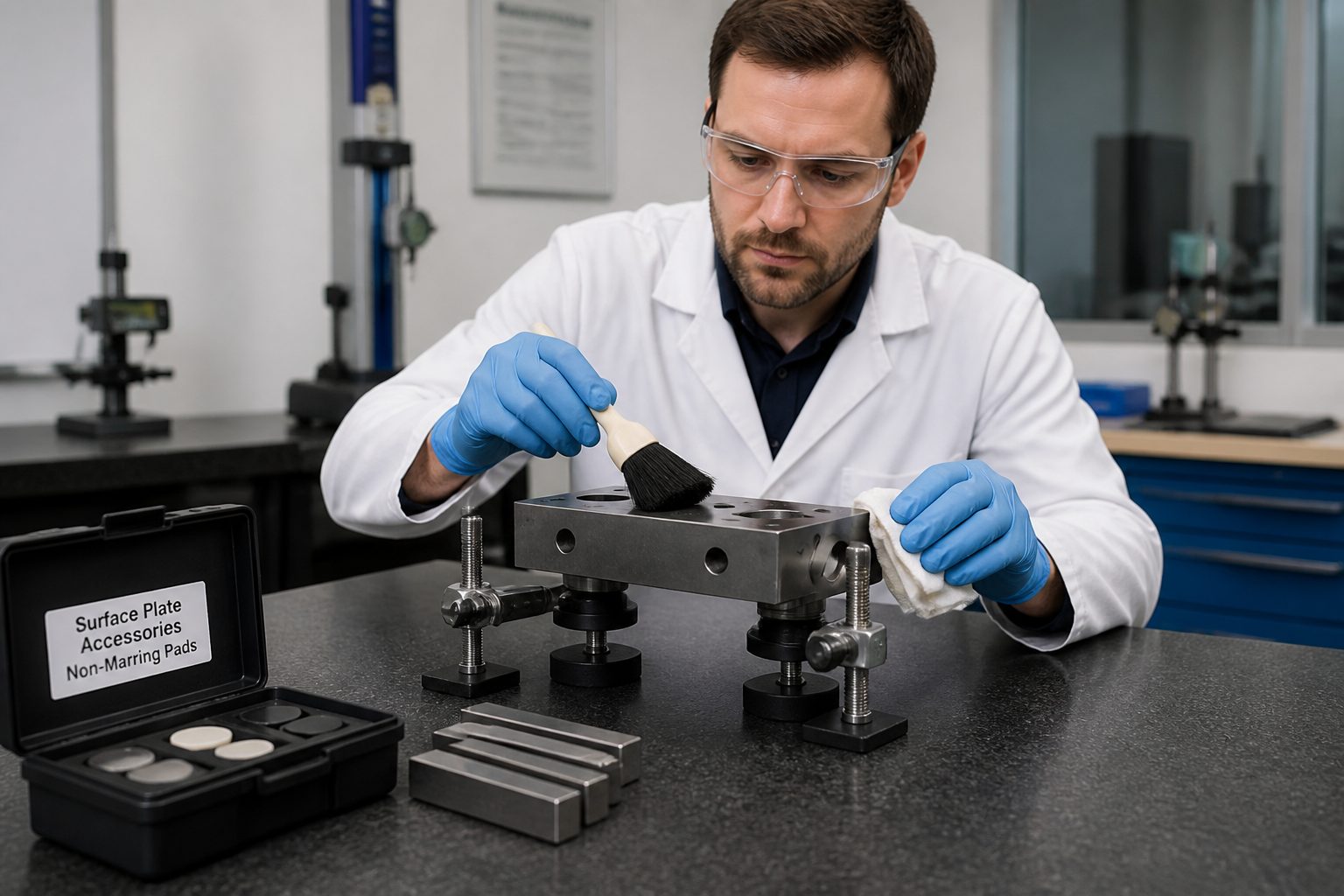
Regularly inspect your soft feet and pads for wear, compression, or embedded debris. Worn pads lose their effectiveness, and embedded grit turns a protective layer into an abrasive one. Replace or clean them as needed to maintain optimal surface plate tooling wear prevention.
Using these protective materials is a simple yet extremely effective strategy for preserving your surface plate’s flatness and accuracy. It demonstrates a commitment to maintaining your precision metrology equipment. Never underestimate the value of a good protective pad.
Cleaning Between Accessory Changes to Prevent Grit Damage
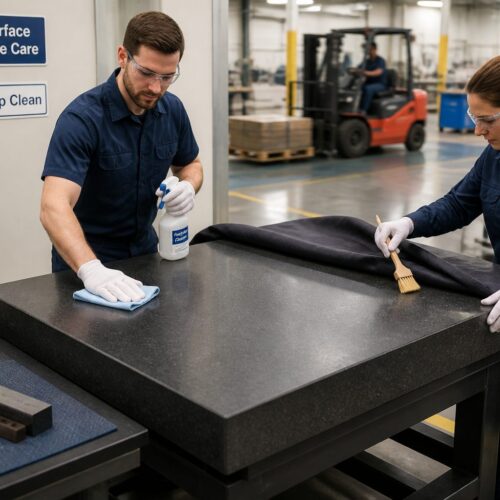
The single most overlooked aspect of surface plate care, and a leading cause of premature wear, is failing to clean between accessory changes. Even microscopic particles of dust, metal shavings, or dried coolant can act as powerful abrasives when trapped between a tool and the granite. A clean surface prevents nearly all grit damage.
Before placing any new accessory or workpiece, take a moment to thoroughly clean both the surface plate area and the contact surfaces of the item. This simple step is a cornerstone of effective surface plate tooling wear prevention. Ignoring it guarantees accelerated wear.
- Wipe down the surface plate with a clean, lint-free cloth
- Use a specialized granite cleaner for stubborn residue
- Inspect accessory bases for embedded debris
- Brush or wipe accessory contact points thoroughly
- Use compressed air cautiously, away from measurement area
- Check for burrs on metal accessories before placement
- Prevent cross-contamination from other workstations
Building an Accessory Kit That Supports Long Plate Life
A well-thought-out accessory kit is not just about having the right tools; it is about having the right tools that protect your investment. Building a comprehensive kit for metrology accessory selection directly contributes to a longer, more accurate surface plate life. You want items that enhance precision without causing damage.
Start with essential cleaning supplies: a high-quality surface plate cleaner, lint-free wipes, and perhaps a soft brush. These are your first line of defense against abrasive particles. Keeping your plate spotless is the most basic form of protection.
Include a variety of protective pads and soft feet. Have different thicknesses and materials, such as felt, neoprene, and non-marring plastic, ready for various part weights and sizes. These surface plate accessories reduce wear by preventing direct contact and distributing loads.
Invest in high-quality gage blocks and parallels with finely finished surfaces. While they are still hard, better finishes mean fewer microscopic irregularities that could scratch the plate. Always store them in their protective cases to prevent nicks and contamination.
When selecting V-blocks and angle plates, prioritize those with precision-ground and deburred bases. Look for manufacturers known for their quality and attention to detail in surface finish. These choices minimize the risk of damage during setup.
Consider specialized accessories like granite squares or straightedges, which are less likely to damage the plate than their steel counterparts. While steel tools are common, granite-based options provide excellent accuracy with inherent surface plate protection. This is a smart metrology accessory selection.
Don’t forget proper storage for all your accessories. Dedicated drawers or cabinets keep tools clean, organized, and protected from damage when not in use. A loose tool rattling around in a drawer can develop burrs that will later harm your plate.
Include a small, portable inspection light to easily spot dust or debris on the plate surface and accessory bases. What you cannot see can still cause damage. Good visibility helps you maintain a pristine work environment.
Periodically review your accessory kit to ensure everything is in good condition. Replace worn-out pads, deburr any metal accessories that have developed sharp edges, and replenish cleaning supplies. This proactive approach supports long plate life and consistent measurement accuracy.
A well-equipped kit means you are always prepared to protect your surface plate, no matter the measurement task. It shows you understand the value of your precision equipment. Think of it as an investment in ongoing accuracy and reliability.
Conclusion
Maintaining the accuracy and longevity of your granite surface plate relies heavily on the intelligent selection and careful use of its accessories. These supporting tools, from gage blocks to protective pads, play a critical role in preventing wear and preserving the plate’s finely lapped surface. Ignoring their impact risks costly damage and compromised measurement integrity.
By understanding how different materials and usage practices affect the granite, you can implement effective surface plate tooling wear prevention strategies. Always prioritize cleanliness, gentle handling, and the use of protective barriers whenever possible. These habits form the foundation of proper surface plate care.
Investing in high-quality surface plate accessories reduces wear over time and ensures your metrology setup remains precise. A well-stocked kit with appropriate cleaning supplies, protective pads, and carefully chosen workholding tools safeguards your investment. This proactive approach extends the lifespan of your valuable granite standard.
Regular inspection of all accessories for burrs, wear, or embedded debris is also non-negotiable. Even the best tools can become agents of damage if not properly maintained. Make it a routine to check and clean every item before it touches the surface plate.
Ultimately, the longevity of your surface plate is a direct reflection of your commitment to proper metrology accessory selection and care. Treat your plate as the precision instrument it is, and it will serve you faithfully for many years. A little diligence goes a very long way in the world of precision measurement.
Embrace the philosophy that every interaction with your surface plate is an opportunity to protect its integrity. This mindset will guide you in making the best choices for every measurement task. Your attention to detail ensures your surface plate remains a cornerstone of accuracy in your shop.
Remember that even seemingly minor actions, like sliding a gage block, have cumulative effects on the granite. Consistent good practices, however, counteract this wear effectively. It is the sum of these small, careful steps that truly makes a difference in the long run.
By implementing these guidelines, you not only protect your equipment but also uphold the standards of precision in your work. A well-maintained surface plate translates directly into reliable measurements and consistent product quality. It is a win-win situation for any metrology professional.
Working with a granite surface plate means relying on precision, but that precision depends heavily on how you treat the plate and the tools you use on it. These robust metrology standards are incredibly durable, yet they can still suffer damage or accelerated wear if you are not careful. The right surface plate accessories reduce wear, protecting your investment and maintaining measurement accuracy for years.
Many users focus on the initial cost of a surface plate and overlook the ongoing maintenance and protection it needs. Selecting the proper supporting tools plays a crucial role in preventing unnecessary wear and tear. This article will guide you through choosing and using surface plate tooling wear prevention accessories effectively.
Understanding how different tools interact with the granite surface helps you make smart choices. A little foresight in accessory selection saves you from costly repairs or premature plate replacement. Proper care ensures your surface plate remains a reliable foundation for all your precision measurement tasks.
Implementing good practices for metrology accessory selection extends the life of your surface plate significantly. It also ensures consistent accuracy in your measurements, which is critical for quality control. Think of your accessories as part of a comprehensive strategy for surface plate longevity and performance.
How Accessories Either Protect or Damage Your Plate
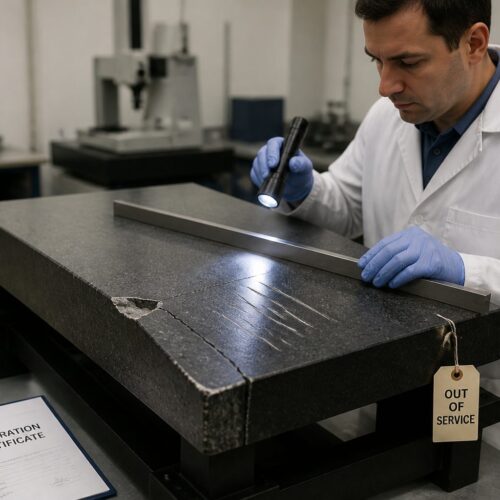
Every item placed on a surface plate has the potential to either protect it or cause harm. Hard, abrasive materials can scratch the finely lapped granite surface, compromising its flatness. Soft, non-abrasive accessories, however, spread loads and prevent direct contact, acting as a buffer.
Even seemingly innocuous tools, like a loose screw or a metal burr, can create significant damage. These small imperfections can dig into the granite when a heavier object slides across them. Constant vigilance and careful handling are always necessary to avoid these issues.
The type of accessory material matters greatly for surface plate tooling wear prevention. Steel tools, for example, are much harder than granite and can easily abrade the surface if dragged. Using protective pads or specific handling techniques prevents this kind of damage.
Improperly designed or worn accessories also contribute to plate degradation. A V-block with a worn bottom edge might concentrate pressure onto a small area, leading to localized wear. Regularly inspecting your accessories for damage or sharp edges is a good practice.
Accessories protect the plate by distributing weight and creating a smooth interface. They prevent direct metal-on-granite contact, which is the primary cause of scratches and wear. Choosing accessories with polished or softened contact surfaces makes a real difference.
Sometimes, the damage comes from how an accessory is used, not just its material. Dragging a heavy steel part with sharp edges directly across the plate is a recipe for disaster. Always lift and place items carefully, even when using protective accessories.
Think of your surface plate as a precision instrument, not just a workbench. Every interaction with it should be deliberate and aimed at preserving its accuracy. Investing in quality surface plate accessories reduces wear and extends the life of your valuable metrology tool.
The goal is to minimize friction and prevent any material harder than granite from contacting the plate directly. This simple principle guides all decisions regarding accessory use and maintenance. Adhering to this rule helps keep your plate in top condition for longer.
Gage Blocks and Parallels: Safe Placement and Sliding Rules
Gage blocks and parallels are indispensable tools for precision measurement, but their hardened steel construction demands careful handling on a granite surface plate. Improper use can quickly lead to scratches or localized wear spots. Always treat these items with respect, understanding their potential impact.
When using gage block surface plate techniques, you should always lift and place blocks gently, never dragging them across the granite. If you must slide them for minor adjustments, do so with minimal pressure and ensure the contact surfaces are perfectly clean. This prevents grit from becoming an abrasive agent.
| Accessory Type | Primary Risk to Plate | Wear Prevention Strategy |
|---|---|---|
| Gage Blocks (Steel) | Scratches, localized wear from dragging | Lift and place, clean contact surfaces, minimal sliding |
| Parallels (Steel) | Grooves, broad area abrasion | Lift and place, use protective pads for heavy loads |
| V-Blocks (Cast Iron/Steel) | Edge damage, concentrated pressure points | Ensure smooth, burr-free bases, use soft feet |
| Angle Plates (Cast Iron/Steel) | Base abrasion, uneven loading | Clean contact surfaces, distribute weight evenly |
| Height Gages (Hardened Base) | Scratches from movement | Use on clean plate, lift often, consider granite base |
V-Blocks, Angle Plates, and Their Impact on the Surface
V-blocks and angle plates are fundamental workholding tools on a surface plate, but their material and design can pose risks. Most are made from hardened steel or cast iron, which can scratch or wear the granite if not managed correctly. You need to inspect their bases regularly for any imperfections.
Before placing any V-block or angle plate, wipe its base clean and inspect for burrs or debris. Even a tiny metal shaving trapped under a heavy angle plate can score a deep line into your granite surface. This simple check takes seconds but saves a lot of trouble.
When positioning these accessories, lift them rather than dragging them across the plate. Sliding causes friction and abrasion, especially if the base is not perfectly smooth. Always use a gentle, controlled motion to set them down in place.
For heavier V-blocks or angle plates, consider using thin, non-abrasive pads underneath them. Materials like felt or specialized rubber can create a protective barrier between the metal and the granite. This significantly reduces the risk of direct contact wear.
Distribute the weight evenly when clamping parts to angle plates. Uneven loading can cause the plate to rock or pivot on small contact points, increasing localized pressure and wear. A stable setup protects both your part and the surface plate.
Some V-blocks and angle plates come with precision-ground bases that are less prone to creating burrs. While these are a better option, they still require the same careful handling and cleaning as other accessories. No accessory is entirely foolproof against improper use.
Regularly check the flatness of your V-block and angle plate bases. A warped base will not sit flush on the surface plate, leading to concentrated pressure points and potential damage. This inspection is a critical part of surface plate tooling wear prevention.
Choosing high-quality, well-machined accessories is a wise investment for long-term plate protection. Cheap, poorly finished tools are more likely to have rough edges or uneven bases that accelerate wear. It pays to buy better tools for your metrology accessory selection.
Always store V-blocks and angle plates properly when not in use, protecting their bases from dings and rust. A damaged base on an accessory creates a damaged surface on your plate. Good storage habits contribute directly to surface plate longevity.
Soft Feet and Pad Materials for Heavy Part Setup
Setting heavy parts or fixtures directly onto a granite surface plate is a major risk for wear and damage. The concentrated weight can cause localized indentations or scratches, especially if the part has rough or uneven contact points. Soft feet and pad materials are essential surface plate accessories to reduce wear in these situations.
These protective layers distribute the load over a larger area, significantly reducing pressure on the granite. They also create a non-abrasive interface, preventing direct metal-on-granite contact. This simple addition can drastically extend the life of your plate.
Common materials for soft feet and pads include felt, neoprene, rubber, and specialized non-marring plastics. Each material offers different levels of cushioning and friction, so choose based on the weight and stability requirements of your setup. Felt is good for preventing scratches, while harder rubbers can offer more stability for heavier items.
Self-adhesive felt pads are a popular choice for the bottom of fixtures or heavy inspection tools. They are easy to apply and provide a consistent, soft contact surface. Just make sure the adhesive does not leave residue on your surface plate.
Neoprene sheets or rubber mats can be placed directly on the surface plate under large, heavy components. These offer excellent shock absorption and prevent slipping, adding both protection and stability. Always ensure these pads are clean and free of embedded grit before use.
For extremely heavy objects, consider using a specialized air-bearing system or precision rollers designed for surface plates. These advanced solutions practically eliminate friction and contact wear, allowing for safe and easy movement of massive parts. While more expensive, they offer the ultimate protection.
Always match the pad material to the application; a thin felt pad might be insufficient for a multi-ton casting. Overloading a thin pad means the weight will still transfer unevenly to the granite. Assess the weight and contact area before making your selection.
Even with soft feet or pads, you should still lift and place heavy items carefully. Dropping a heavy object onto a pad can still transmit significant impact forces to the granite. Always use hoists or proper lifting techniques for large components.
Regularly inspect your soft feet and pads for wear, compression, or embedded debris. Worn pads lose their effectiveness, and embedded grit turns a protective layer into an abrasive one. Replace or clean them as needed to maintain optimal surface plate tooling wear prevention.
Using these protective materials is a simple yet extremely effective strategy for preserving your surface plate’s flatness and accuracy. It demonstrates a commitment to maintaining your precision metrology equipment. Never underestimate the value of a good protective pad.
Cleaning Between Accessory Changes to Prevent Grit Damage
The single most overlooked aspect of surface plate care, and a leading cause of premature wear, is failing to clean between accessory changes. Even microscopic particles of dust, metal shavings, or dried coolant can act as powerful abrasives when trapped between a tool and the granite. A clean surface prevents nearly all grit damage.
Before placing any new accessory or workpiece, take a moment to thoroughly clean both the surface plate area and the contact surfaces of the item. This simple step is a cornerstone of effective surface plate tooling wear prevention. Ignoring it guarantees accelerated wear.
- Wipe down the surface plate with a clean, lint-free cloth
- Use a specialized granite cleaner for stubborn residue
- Inspect accessory bases for embedded debris
- Brush or wipe accessory contact points thoroughly
- Use compressed air cautiously, away from measurement area
- Check for burrs on metal accessories before placement
- Prevent cross-contamination from other workstations
Building an Accessory Kit That Supports Long Plate Life
A well-thought-out accessory kit is not just about having the right tools; it is about having the right tools that protect your investment. Building a comprehensive kit for metrology accessory selection directly contributes to a longer, more accurate surface plate life. You want items that enhance precision without causing damage.
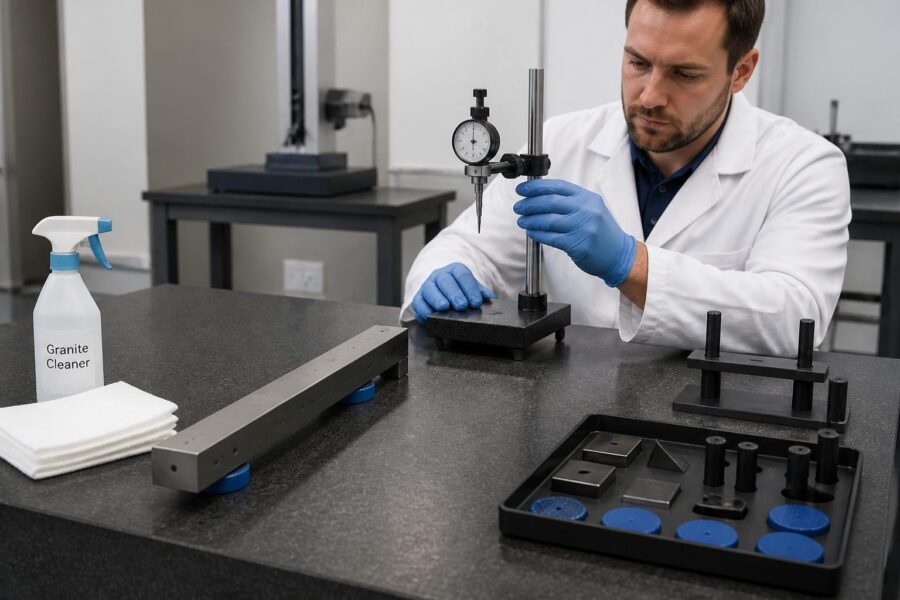
Start with essential cleaning supplies: a high-quality surface plate cleaner, lint-free wipes, and perhaps a soft brush. These are your first line of defense against abrasive particles. Keeping your plate spotless is the most basic form of protection.
Include a variety of protective pads and soft feet. Have different thicknesses and materials, such as felt, neoprene, and non-marring plastic, ready for various part weights and sizes. These surface plate accessories reduce wear by preventing direct contact and distributing loads.
Invest in high-quality gage blocks and parallels with finely finished surfaces. While they are still hard, better finishes mean fewer microscopic irregularities that could scratch the plate. Always store them in their protective cases to prevent nicks and contamination.
When selecting V-blocks and angle plates, prioritize those with precision-ground and deburred bases. Look for manufacturers known for their quality and attention to detail in surface finish. These choices minimize the risk of damage during setup.
Consider specialized accessories like granite squares or straightedges, which are less likely to damage the plate than their steel counterparts. While steel tools are common, granite-based options provide excellent accuracy with inherent surface plate protection. This is a smart metrology accessory selection.
Don’t forget proper storage for all your accessories. Dedicated drawers or cabinets keep tools clean, organized, and protected from damage when not in use. A loose tool rattling around in a drawer can develop burrs that will later harm your plate.
Include a small, portable inspection light to easily spot dust or debris on the plate surface and accessory bases. What you cannot see can still cause damage. Good visibility helps you maintain a pristine work environment.
Periodically review your accessory kit to ensure everything is in good condition. Replace worn-out pads, deburr any metal accessories that have developed sharp edges, and replenish cleaning supplies. This proactive approach supports long plate life and consistent measurement accuracy.
A well-equipped kit means you are always prepared to protect your surface plate, no matter the measurement task. It shows you understand the value of your precision equipment. Think of it as an investment in ongoing accuracy and reliability.
Conclusion
Maintaining the accuracy and longevity of your granite surface plate relies heavily on the intelligent selection and careful use of its accessories. These supporting tools, from gage blocks to protective pads, play a critical role in preventing wear and preserving the plate’s finely lapped surface. Ignoring their impact risks costly damage and compromised measurement integrity.
By understanding how different materials and usage practices affect the granite, you can implement effective surface plate tooling wear prevention strategies. Always prioritize cleanliness, gentle handling, and the use of protective barriers whenever possible. These habits form the foundation of proper surface plate care.
Investing in high-quality surface plate accessories reduces wear over time and ensures your metrology setup remains precise. A well-stocked kit with appropriate cleaning supplies, protective pads, and carefully chosen workholding tools safeguards your investment. This proactive approach extends the lifespan of your valuable granite standard.
Regular inspection of all accessories for burrs, wear, or embedded debris is also non-negotiable. Even the best tools can become agents of damage if not properly maintained. Make it a routine to check and clean every item before it touches the surface plate.
Ultimately, the longevity of your surface plate is a direct reflection of your commitment to proper metrology accessory selection and care. Treat your plate as the precision instrument it is, and it will serve you faithfully for many years. A little diligence goes a very long way in the world of precision measurement.
Embrace the philosophy that every interaction with your surface plate is an opportunity to protect its integrity. This mindset will guide you in making the best choices for every measurement task. Your attention to detail ensures your surface plate remains a cornerstone of accuracy in your shop.
Remember that even seemingly minor actions, like sliding a gage block, have cumulative effects on the granite. Consistent good practices, however, counteract this wear effectively. It is the sum of these small, careful steps that truly makes a difference in the long run.
By implementing these guidelines, you not only protect your equipment but also uphold the standards of precision in your work. A well-maintained surface plate translates directly into reliable measurements and consistent product quality. It is a win-win situation for any metrology professional.