
Precision is not a luxury in manufacturing and quality control; it is a fundamental requirement. Surface plates provide the unwavering reference plane necessary for accurate dimensional inspection and calibration tasks. Maintaining the integrity of these critical tools through regular and precise calibration is essential for reliable measurement outcomes.
Without proper calibration, even the most robust granite surface plate can introduce errors into your measurements, leading to costly reworks or product failures. Understanding the different surface plate calibration methods available helps businesses choose the right approach for their specific needs. This article offers a comprehensive surface plate calibration methods comparison, examining various techniques, their strengths, and their limitations.
Selecting the optimal calibration method involves considering factors like required accuracy, budget, and the size of the surface plate. Each technique brings a unique set of capabilities to the metrology lab. We will explore how these methods impact your ability to maintain the highest standards of precision.
From traditional manual techniques to cutting-edge laser systems, the options are diverse and continue to evolve. This detailed exploration helps you make informed decisions about your metrology investment. Choosing the correct calibration method ensures your surface plates remain trustworthy foundations for all your precision work.
Ensuring the flatness and accuracy of a surface plate is a continuous process, not a one-time event. Regular checks and professional calibration safeguard your investment and uphold your quality standards. A thorough surface plate calibration methods comparison will empower you to select the best strategy for your operational demands.
The Evolution of Surface Plate Calibration Techniques
Surface plate calibration has undergone significant changes since its early days, driven by the ever-increasing demands for precision in industry. Initially, calibration relied heavily on manual techniques, often involving mechanical comparators and skilled interpretation. These early methods laid the groundwork for understanding surface geometry but faced inherent limitations in speed and ultimate accuracy.
The mid-20th century saw the introduction of more sophisticated optical and mechanical instruments, pushing the boundaries of what was achievable. As manufacturing processes became more intricate, the need for finer tolerances in measurement standards grew exponentially. This era marked a departure from purely subjective measurements toward more objective, instrument-based assessments.
The development of electronic sensors and digital readouts brought a new level of convenience and repeatability to surface plate calibration. These advancements allowed for faster data collection and reduced the potential for human error during the measurement process. The focus began to shift towards efficiency without compromising the critical accuracy required.
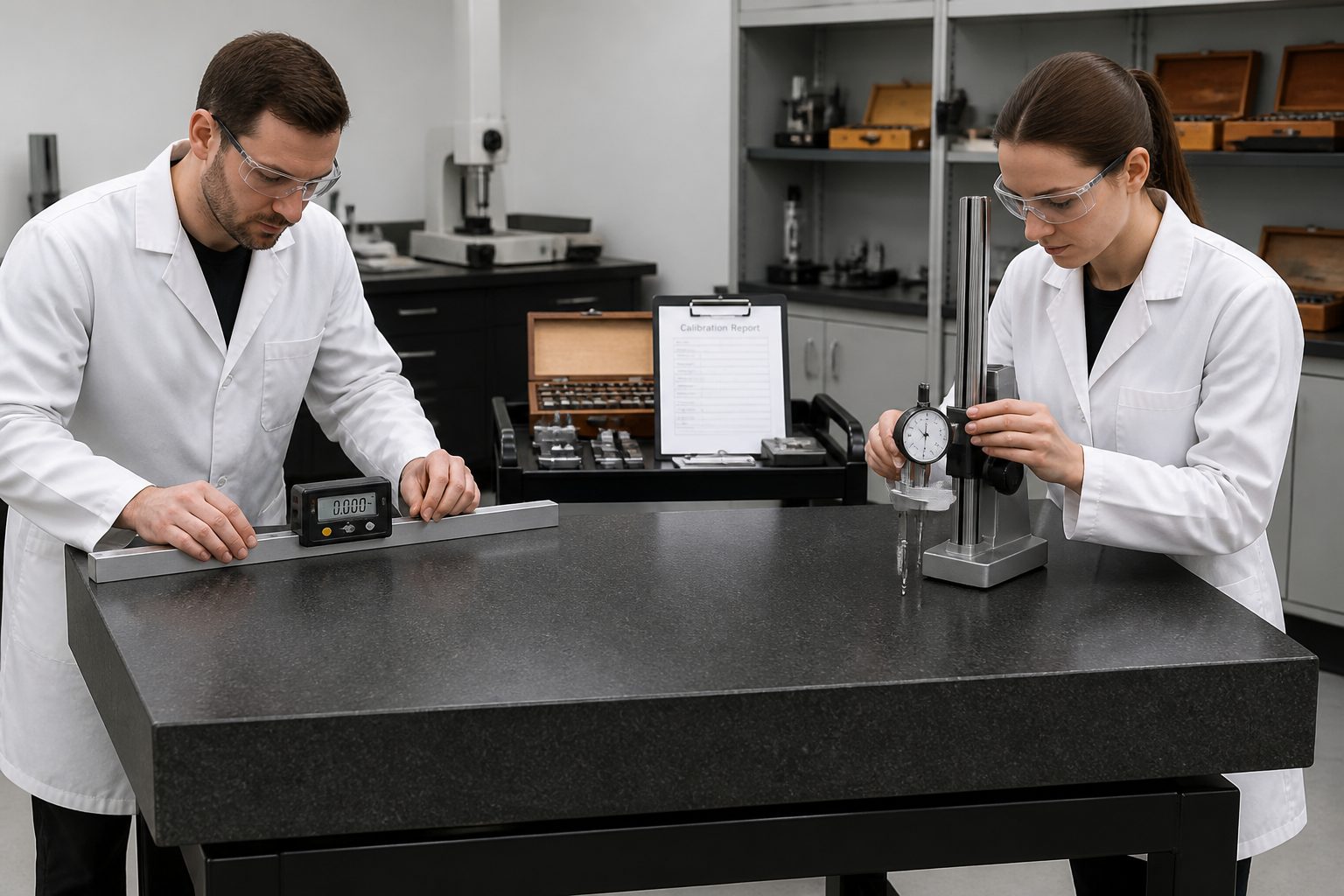
Today, advanced technologies like laser interferometry and sophisticated software have transformed calibration into a highly automated and incredibly precise science. These modern tools offer comprehensive data analysis and three-dimensional mapping of surface topography. The evolution reflects a continuous quest for perfection in metrology, adapting to the complex demands of modern engineering.
The journey from basic straightedges to high-tech laser systems illustrates how deeply intertwined metrology is with technological progress. Each new innovation has not only improved accuracy but also expanded the understanding of surface characteristics. This ongoing refinement ensures that surface plates can meet the stringent requirements of contemporary manufacturing and research.
The continuous improvement in surface plate calibration methods directly supports the advancements seen in fields like aerospace, medical devices, and semiconductors. These industries demand measurements with micron and sub-micron precision, making reliable surface plate calibration indispensable. Without these evolving techniques, the intricate components we rely on daily could not be manufactured to their required specifications.
Understanding this historical progression helps us appreciate the capabilities of current surface plate calibration methods. It also highlights the importance of staying updated with new developments in calibration technology. The goal remains consistent: to provide the most accurate and stable reference plane possible for all critical measurements.
Electronic Level Method: Principles, Advantages, and Limitations
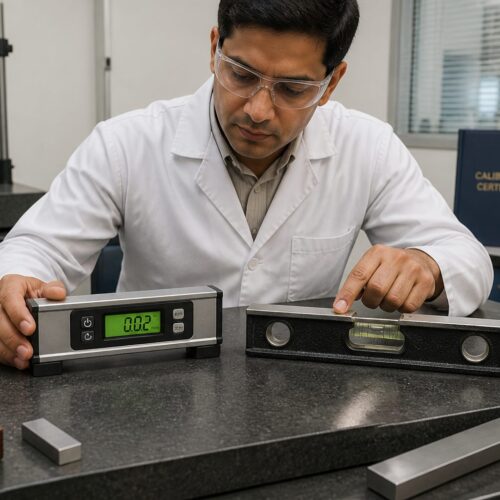
The electronic level method is a popular and practical choice for surface plate calibration, relying on gravity to establish a horizontal reference. These instruments convert minute angular deviations into digital readings, providing immediate feedback on the surface’s flatness. Technicians move the electronic level across a predetermined grid pattern on the surface plate, recording measurements at each point.
This method offers several advantages, including relatively quick setup times and ease of use compared to more complex optical systems. The digital display minimizes reading errors and allows for straightforward data collection, which can then be processed by calibration software. However, electronic level calibration is sensitive to environmental factors like vibration and temperature fluctuations, which can affect accuracy. It also primarily measures relative height differences along specific lines, making a comprehensive 3D surface map more challenging to achieve without advanced software integration.
| Aspect | Electronic Level Method | Considerations |
|---|---|---|
| Accuracy | Good for general industrial grades | Typically ±0.00005″ to ±0.0001″ over a 24″ span |
| Speed | Moderate to fast setup and data collection | Faster than manual, slower than full laser scan |
| Cost | Moderate initial investment | Lower than laser, higher than straightedge |
| Complexity | Relatively simple to operate | Requires careful grid planning and environmental control |
| Portability | Highly portable instruments | Suitable for on-site calibration |
| Data Output | Digital readings per point | Often integrates with software for profile generation |
Autocollimator Method: High Precision for Angular Measurements
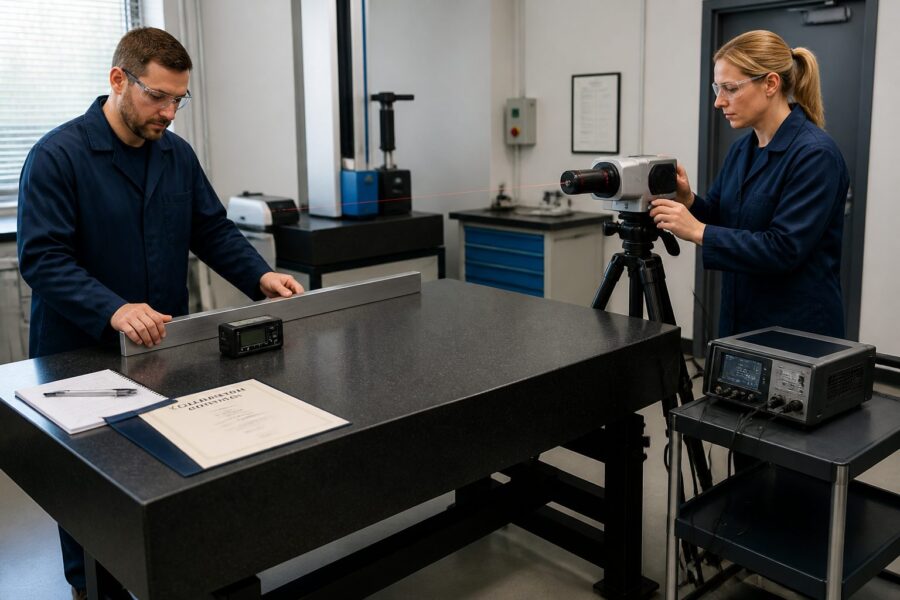
The autocollimator method uses optical principles to achieve high precision in surface plate calibration, focusing on angular measurements rather than direct height differences. This instrument projects a collimated beam of light onto a mirror placed on the surface plate, then detects the angle of the reflected beam. Any deviation in the reflected angle directly corresponds to a minute change in the surface’s tilt.
Technicians systematically move a highly precise mirror across the surface plate, capturing angular data at various grid points. The autocollimator’s ability to measure extremely small angular changes makes it ideal for detecting subtle variations in flatness. This method is particularly effective for calibrating high-grade surface plates where even microscopic deviations are unacceptable.
Its high resolution allows for the identification of localized imperfections and overall surface geometry with exceptional accuracy. The autocollimator method is a cornerstone for many accredited calibration laboratories due to its proven track record and reliability. It provides critical data for assessing the overall flatness and local variations of the plate.
While the autocollimator method offers superior precision, it typically requires a more experienced operator and careful environmental control. Vibrations and air currents can affect the light path, potentially introducing errors into the measurements. Proper setup and stable conditions are essential for obtaining the instrument’s full potential.
The data collected from an autocollimator provides a detailed profile of the surface, allowing for precise adjustments and certification. This method is often preferred for calibrating master surface plates and those used in critical applications where angular accuracy is paramount. The meticulous nature of the autocollimator method ensures a thorough evaluation of the surface’s integrity.
Compared to electronic level calibration, the autocollimator provides a distinct advantage in its ability to directly measure angular changes, which are fundamental to flatness. This direct measurement reduces reliance on gravitational references, making it robust against certain types of environmental noise. The optical clarity and stability of the system contribute to its high-fidelity results.
When performing a surface plate calibration methods comparison, the autocollimator stands out for its specific strength in angular metrology. Its application is widespread in maintaining the accuracy of precision machinery and optical alignment benches. The method’s optical sensitivity allows it to reveal surface characteristics that other techniques might overlook.
Laser Interferometry: Advanced Accuracy for Critical Applications
Laser interferometry represents the pinnacle of accuracy in surface plate calibration methods, utilizing the wave properties of light to measure minute displacements. This advanced technique splits a laser beam, sending one part along a reference path and the other along a measurement path that reflects off the surface plate. The two beams recombine, creating an interference pattern that reveals precise height variations.
The system generates a comprehensive 3D topographical map of the surface plate, identifying even the smallest deviations from perfect flatness. This level of detail is indispensable for calibrating ultra-precision surface plates used in aerospace, semiconductor manufacturing, and advanced research laboratories. Laser calibration provides unparalleled resolution, often in the nanometer range.
A significant advantage of laser interferometry is its ability to perform non-contact measurements, eliminating any potential for surface wear or distortion during the calibration process. This feature is particularly important for delicate or highly polished surfaces. The speed of data acquisition can also be much faster than traditional point-by-point methods, especially with modern scanning interferometers.
Despite its superior accuracy, laser calibration systems come with a higher initial investment and require specialized training for operation and maintenance. Environmental control is also paramount, as air turbulence, temperature gradients, and vibrations can all affect the laser’s path and measurement integrity. Laboratories employing this method often have dedicated, climate-controlled environments.
The data output from laser interferometry is incredibly rich, allowing for detailed analysis of various flatness parameters and potential localized defects. This comprehensive data enables precise corrective actions, such as re-lapping, to restore the surface plate to its specified tolerance. It provides an exhaustive evaluation of the surface’s performance.
When considering a surface plate calibration methods comparison, laser interferometry is the clear choice for applications demanding the absolute highest level of precision. Its capability to resolve sub-micron features makes it an essential tool for maintaining the integrity of master reference standards. The investment in laser calibration pays off through superior quality assurance and reduction of measurement uncertainty.
The sophistication of laser calibration technology means it often integrates with advanced software to visualize and interpret complex data sets. This software translates raw interference patterns into user-friendly graphical representations of the surface topography. Such tools are crucial for making informed decisions about the surface plate’s condition and required maintenance.
The Straightedge and Indicator Method: Basics and Practical Uses
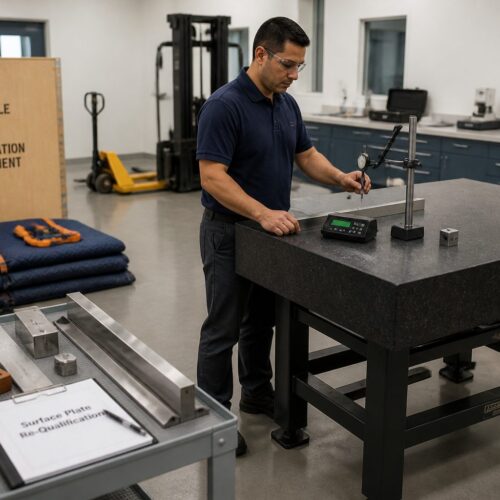
The straightedge and indicator method represents one of the most fundamental and accessible surface plate calibration methods. This traditional approach involves using a precision straightedge, usually made of granite or hardened steel, and a sensitive dial indicator or electronic probe. Technicians place the straightedge across the surface plate along various lines, taking readings with the indicator at regular intervals.
This method determines relative height differences along the straightedge’s path, providing a localized assessment of flatness. It is particularly useful for quick checks or for calibrating lower-grade surface plates where extreme precision is not the primary requirement. Its simplicity and low cost make it a practical choice for workshops or educational settings with limited budgets.
- Establish a stable environment
- Clean the surface plate thoroughly
- Position the straightedge carefully
- Ensure the indicator is perpendicular
- Take readings at consistent intervals
- Document all measurements accurately
- Repeat for multiple diagonal and cross lines
- Analyze data for relative flatness
- Identify any significant high or low spots
- Consider the straightedge’s own flatness
Considerations for Choosing the Right Calibration Method
Choosing the right surface plate calibration method involves a careful balancing act between various factors, each impacting the suitability and cost-effectiveness of the chosen technique. The primary consideration often revolves around the required accuracy for the applications performed on the surface plate. Highly critical measurements demand more precise calibration methods.
The grade of the surface plate itself dictates the minimum acceptable level of calibration accuracy. A Grade AA inspection plate, for example, requires a significantly more rigorous approach than a Grade B workshop plate. Understanding the specific tolerance requirements of your operations helps narrow down the viable options in a surface plate calibration methods comparison.
Budget constraints play a substantial role in this decision-making process, as the cost of calibration can vary widely between methods. While laser calibration offers superior precision, its higher expense might not be justifiable for applications that do not demand such extreme accuracy. Electronic level calibration provides a good middle-ground solution for many industrial needs.
The size and location of the surface plate also influence method selection. Large surface plates might be difficult to move, necessitating on-site calibration, which can limit the types of equipment that are practical to transport. Smaller plates offer more flexibility in terms of bringing them to a dedicated calibration lab.
Another important factor is the frequency of calibration required, which depends on usage, environmental conditions, and industry standards. A plate used daily in a high-traffic area might need more frequent checks than one used occasionally. This frequency affects the long-term cost implications of each calibration method.
Regulatory requirements and industry standards, such as ISO 17025, often dictate specific procedures and traceability requirements for calibration. Ensuring compliance with these standards is non-negotiable for many businesses, adding another layer to the decision process. The chosen method must provide documentation that meets these stringent criteria.
Finally, the expertise of the calibration technician and the availability of specialized equipment are practical considerations. Some advanced methods, like laser interferometry, require highly skilled personnel and sophisticated instruments. Ensuring access to qualified professionals is just as important as selecting the right technology for the surface plate calibration.
Factors Influencing Method Selection: Grade, Size, and Budget
The grade of a surface plate is perhaps the most fundamental factor dictating the appropriate calibration method. Higher-grade plates, like inspection or master grades, demand the utmost precision and therefore require advanced techniques such as autocollimator methods or laser interferometry. These plates serve as primary reference standards, so their accuracy cannot be compromised.
Conversely, utility or workshop grade plates, which are used for less critical tasks, can often be accurately calibrated using more economical methods like electronic level calibration or even the straightedge and indicator method. Matching the calibration rigor to the plate’s grade prevents overspending on unnecessary precision. It also ensures adequate quality for its intended purpose.
The physical size of the surface plate also significantly influences method selection. Very large plates, common in heavy manufacturing or aerospace, present logistical challenges for calibration. Moving these massive granite blocks to a lab is impractical, making on-site calibration a necessity.
For such large plates, portable electronic level calibration systems or specialized laser trackers are often the only viable options. Smaller plates, on the other hand, can be easily transported to a dedicated metrology lab, opening up a wider range of available calibration equipment. This flexibility allows for a broader surface plate calibration methods comparison.
Budget considerations are always a critical component of the decision-making process. The initial cost of calibration equipment, technician fees, and potential downtime all contribute to the overall expense. While laser calibration offers superior accuracy, its higher price point might be prohibitive for smaller operations or those with less stringent accuracy demands.
Electronic level calibration provides a cost-effective balance of accuracy and affordability for many industrial applications. The straightedge and indicator method, while less precise, remains the most budget-friendly option for basic flatness checks. Businesses must weigh the investment against the potential costs of inaccurate measurements and product defects.
Understanding these interconnected factors allows businesses to make a strategic choice that aligns with their operational requirements and financial capabilities. It is about finding the sweet spot where sufficient accuracy is achieved without incurring unnecessary expenses. A thorough evaluation of grade, size, and budget ensures a prudent approach to surface plate calibration.
Understanding the Trade-offs Between Different Techniques
Every surface plate calibration method involves inherent trade-offs, and understanding these is key to making an informed decision. The most common trade-off is between accuracy and cost; generally, higher accuracy demands a greater financial investment in equipment and expertise. Businesses must determine their acceptable level of uncertainty and budget accordingly.
Another significant trade-off exists between speed and precision. Methods like laser calibration can collect vast amounts of data quickly, but the setup and environmental control can be time-consuming. Simpler methods, while faster to set up, provide less granular data and lower overall precision.
For instance, electronic level calibration offers a good balance of speed and precision for many industrial applications, making it a popular choice. However, if your application involves extremely tight tolerances, the slightly slower autocollimator method or the more complex laser calibration might be necessary. The choice depends entirely on the application’s demands.
The learning curve and skill requirements also represent a trade-off. The straightedge and indicator method is straightforward for most technicians, but it relies heavily on manual reading and can be prone to human error. Advanced systems like laser interferometry require specialized training and a deep understanding of optical metrology principles.
Environmental sensitivity is another factor to consider. While laser calibration offers superior accuracy, it is highly susceptible to temperature fluctuations and air currents, requiring stringent environmental control. Electronic level calibration is less sensitive but still requires a stable environment for optimal results.
When performing a surface plate calibration methods comparison, it becomes clear that no single method is universally superior. Each technique excels under specific conditions and for particular applications. The goal is to select the method whose trade-offs align best with your operational needs and quality objectives.
Ultimately, the decision comes down to balancing the benefits of advanced technology against practical constraints like budget, time, and available expertise. A well-chosen calibration method optimizes both accuracy and efficiency, ensuring your surface plates consistently meet your metrology requirements. Understanding these nuances helps avoid both over-engineering and under-calibrating your critical reference tools.
The Role of Advanced Calibration Software in Modern Metrology
Advanced calibration software has become an indispensable component of modern surface plate metrology, significantly enhancing the capabilities of all calibration methods. This software integrates seamlessly with electronic levels, autocollimators, and laser calibration systems to automate data acquisition and analysis. It transforms raw measurement points into comprehensive, actionable reports.
The software minimizes human error by automating data entry and performing complex calculations required for flatness analysis. It can instantly generate graphical representations of the surface plate’s topography, making it easier to visualize high and low spots. This visual feedback is invaluable for understanding the plate’s condition and planning any necessary re-lapping.
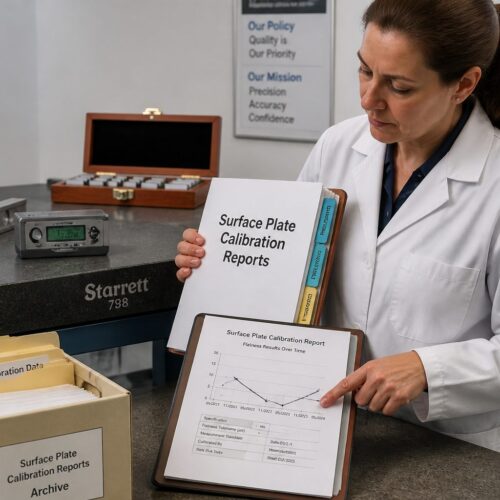
Beyond simple data processing, modern calibration software often includes features for historical data tracking and trend analysis. This allows users to monitor the degradation of a surface plate over time, helping to predict when future calibration or maintenance will be required. Such predictive capabilities contribute to more efficient asset management and reduced downtime.
Compliance and traceability are also greatly improved with advanced software. It automatically logs calibration procedures, instrument details, and environmental conditions, ensuring a complete audit trail. This robust documentation is essential for meeting regulatory standards like ISO 17025 and for demonstrating measurement integrity.
Many software packages support various national and international flatness standards, allowing technicians to apply the correct criteria for certification. This versatility ensures that a single software platform can handle diverse calibration requirements. It simplifies the process of adhering to complex metrology guidelines.
The integration of advanced calibration software elevates the entire surface plate calibration process from a manual, labor-intensive task to a highly efficient, data-driven operation. It unlocks the full potential of sophisticated instruments, providing deeper insights into surface plate performance. This technological synergy is crucial for maintaining precision in today’s demanding industrial environment.
When evaluating a surface plate calibration methods comparison, the quality and features of the accompanying software are just as important as the hardware itself. A powerful software package can enhance the usability and value of any calibration system. It bridges the gap between raw data and meaningful metrological information.
Future Trends and Innovations in Calibration Technology
The field of surface plate calibration is constantly evolving, with several exciting future trends and innovations on the horizon. Automation is a major driving force, with robotics and automated guided vehicles (AGVs) beginning to play a role in moving calibration instruments across large surface plates. This reduces human intervention and improves repeatability.
Artificial intelligence (AI) and machine learning (ML) are also poised to revolutionize data analysis in calibration. These technologies can process vast datasets from laser calibration systems, identify subtle patterns, and even predict potential surface degradation before it becomes critical. This proactive approach could significantly extend the lifespan of surface plates.
Remote calibration and monitoring are gaining traction, leveraging IoT (Internet of Things) sensors to collect real-time environmental data and even perform certain checks remotely. This capability allows for continuous monitoring of surface plate conditions without the constant presence of a technician. It ensures that critical reference planes maintain their integrity around the clock.
Advancements in sensor technology promise even greater precision and robustness for electronic level calibration and other methods. Smaller, more stable, and more accurate sensors will reduce sensitivity to environmental noise, making calibration possible in a wider range of industrial settings. This will democratize access to high-precision metrology.
The development of new materials for surface plates themselves might also influence future calibration needs and methods. As plates become lighter, more stable, or incorporate embedded sensors, calibration techniques will adapt to these innovations. This continuous feedback loop between materials science and metrology drives progress across the industry.
Virtual reality (VR) and augmented reality (AR) could also enhance technician training and on-site calibration procedures, providing interactive guides and real-time data overlays. These tools could simplify complex setups and reduce the learning curve for operating sophisticated calibration equipment. The visual assistance could make advanced methods more accessible.
Ultimately, the future of surface plate calibration aims for even higher accuracy, greater efficiency, and increased automation. These innovations will ensure that surface plates remain the gold standard for dimensional metrology, supporting the next generation of precision manufacturing. The ongoing surface plate calibration methods comparison will continue to evolve with these technological leaps.
Conclusion
Choosing the correct surface plate calibration method is a critical decision that impacts the accuracy and reliability of all subsequent measurements. We have explored a range of techniques, from the traditional straightedge and indicator method to advanced laser interferometry. Each method offers distinct advantages and limitations regarding precision, speed, cost, and complexity.
Electronic level calibration provides a robust and practical solution for many industrial applications, balancing accuracy with ease of use. The autocollimator method excels in delivering high-precision angular measurements, essential for demanding applications. Laser calibration stands out as the ultimate choice for critical work requiring the highest possible accuracy and a comprehensive surface profile.
A thorough surface plate calibration methods comparison reveals that the ideal choice depends on several intertwined factors. These include the surface plate’s grade, its size, your budget, and the specific accuracy requirements of your operations. Understanding these trade-offs ensures that you invest in a calibration strategy that perfectly aligns with your quality standards and operational needs.
The integration of advanced calibration software has further revolutionized metrology, streamlining data collection, analysis, and reporting across all methods. These digital tools enhance efficiency, reduce human error, and ensure compliance with stringent industry standards. They are indispensable for maximizing the value and accuracy of your calibration efforts.
As technology continues to advance, future innovations like AI, robotics, and enhanced sensor technologies promise even more precise and automated calibration processes. Staying informed about these developments will help businesses maintain a competitive edge in quality control. Investing wisely in surface plate calibration ensures the integrity of your foundational measurement tools.
Ultimately, accurate surface plate calibration is not merely a procedural step; it is a commitment to precision that underpins all quality assurance in manufacturing. By carefully considering the various surface plate calibration methods comparison, you can select the approach that best safeguards your metrology investments. This ensures unwavering confidence in your measurement results.
The dedication to precise calibration guarantees that your surface plates continue to serve as truly flat and reliable reference planes. This foundational accuracy directly translates into higher product quality and reduced operational costs. Making an informed choice in your calibration strategy is a wise decision for any precision-focused enterprise.