
Precision is non-negotiable in manufacturing and engineering; accuracy forms the bedrock of reliable production. Surface plates are the foundational reference for dimensional measurements, making their accuracy absolutely paramount for quality output. Without reliably calibrated surface plates, the quality of everything built upon them is compromised, leading to potential defects and costly rework.
This is precisely where the rigorous standards of ISO 17025 surface plate calibration become essential for any serious operation. It ensures your critical measurement tools provide trustworthy data, supporting consistent product quality. Choosing an accredited calibration service means trusting a lab whose processes have been thoroughly vetted by an independent body.
Such accreditation signifies a commitment to excellence and technical competence in metrology. It ensures the measurements you receive are accurate, impartial, and dependable, giving you a solid foundation for your quality control. This article will decode ISO 17025 and explain its profound implications for your surface plate calibration needs.
What is ISO 17025 and Why It Matters in Metrology
ISO/IEC 17025 is an international standard that sets out the general requirements for the competence of testing and calibration laboratories. It provides a comprehensive framework for labs to demonstrate their technical capabilities and consistently deliver valid measurement results. For any organization that relies on precise data, this standard offers a critical benchmark for quality.
In the world of metrology, the science of measurement, trust in data is everything. This standard helps ensure that any accredited calibration lab operates with the highest levels of integrity and technical proficiency. It’s about having confidence that your measurements are accurate and reliable, every single time.
For anyone relying on precise measurements from tools like a surface plate, knowing your calibration provider meets this standard offers significant peace of mind. It signifies a deep commitment to robust quality management metrology practices. This commitment translates directly into more reliable production and fewer costly errors downstream.
The standard covers a wide array of operational aspects, from the qualifications of personnel to the maintenance of equipment and the reporting of results. Adherence means a lab has unequivocally proven its ability to consistently produce accurate and reliable calibration data. This proof comes through rigorous, independent assessment.
Ultimately, ISO 17025 protects manufacturers and consumers alike by fostering unwavering confidence in measurement results. This confidence is absolutely crucial for maintaining product quality and ensuring regulatory compliance across diverse industries. Without it, the entire system of quality control would crumble.
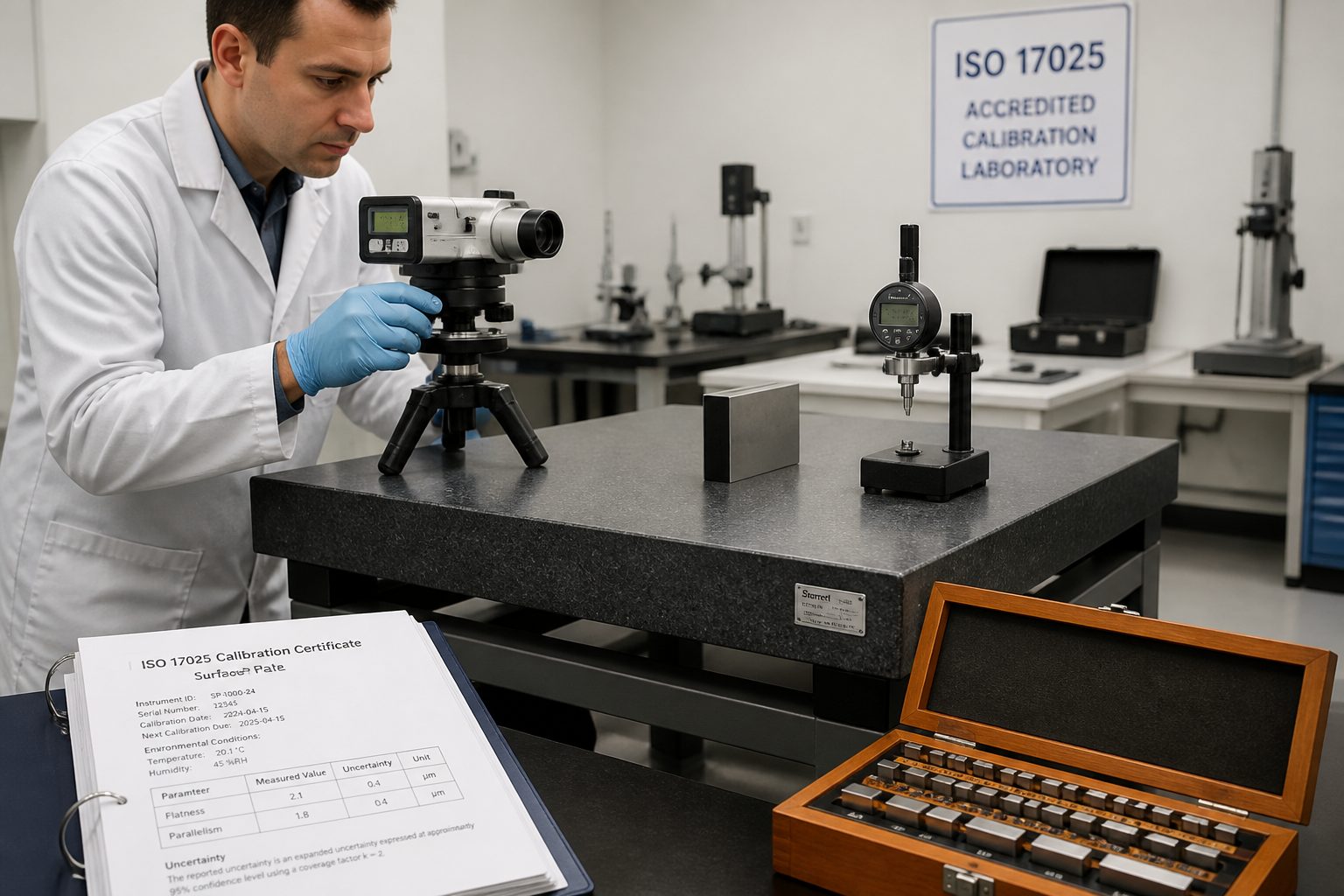
When you choose a lab for ISO 17025 surface plate calibration, you are choosing a partner dedicated to international best practices. This partnership ensures your foundational measurement tools provide the accurate reference points your operations demand. It’s a vital step in maintaining high standards.
The standard is not just a set of rules; it represents a philosophy of precision and accountability. Labs that embrace it show a genuine dedication to delivering the best possible calibration services. This dedication is what truly matters in the pursuit of measurement excellence.
The Core Principles Guiding ISO 17025 Accreditation
ISO 17025 accreditation rests on several core principles designed to guarantee reliable and trustworthy measurements. These principles form the essential bedrock of any truly accredited calibration service. Understanding them helps you appreciate the depth of commitment required.
Competence is perhaps the most fundamental; a lab must unequivocally prove it possesses the necessary technical skills and knowledge. This includes having highly qualified staff, appropriate and well-maintained equipment, and scientifically validated methods for every calibration task. Without demonstrated competence, the entire system fails.
Impartiality ensures that calibration results are free from any undue influence or bias. Laboratories must structure their operations to actively prevent conflicts of interest that could compromise their findings. This means avoiding situations where financial incentives or external pressures might sway results.
Consistency in operations means that a lab can repeatedly produce the same accurate results under the same conditions. This requires robust quality management metrology systems, meticulously documented procedures, and strict adherence to those protocols. Such consistency is a hallmark of dependable service.
The standard also demands a comprehensive management system that supports and oversees these principles effectively. This system ensures continuous improvement, addresses non-conformities, and responds proactively to client feedback or internal audit findings. It provides the organizational backbone for quality.
Risk-based thinking is another important aspect, encouraging labs to identify and mitigate potential risks to impartiality or valid results. This proactive approach helps maintain the integrity of the calibration process. It is about foreseeing challenges and addressing them head-on.
These principles, when rigorously applied, ensure that any ISO 17025 surface plate calibration you commission comes with the highest assurance of quality. They collectively build a foundation of trust that is indispensable in critical measurement applications. Choosing an accredited lab means choosing a partner committed to these ideals.
Key Requirements for Accredited Calibration Laboratories
Achieving ISO 17025 accreditation requires laboratories to meet a detailed set of criteria across various operational and technical areas. These requirements ensure a holistic approach to lab competence and service delivery, leaving no stone unturned in the pursuit of accuracy. From personnel training to environmental controls, every aspect affecting measurement accuracy is scrutinized by independent assessors.
This rigorous process ultimately leads to highly dependable accredited calibration services, giving clients full confidence in the data they receive. The table below outlines some key areas where labs must demonstrate compliance. It provides a quick overview of the systematic approach demanded by the standard.
| Requirement Area | Description | Impact on Surface Plate Calibration |
|---|---|---|
| Personnel Competence | Staff must be qualified, trained, and authorized for specific calibration tasks. | Ensures technicians performing ISO 17025 surface plate calibration understand complex geometric and measurement principles. |
| Facilities & Environmental Conditions | A controlled environment is necessary to prevent contamination, vibration, dust, and temperature fluctuations. | Critical for maintaining the stability and accuracy of both the surface plate itself and the sensitive measuring instruments used. |
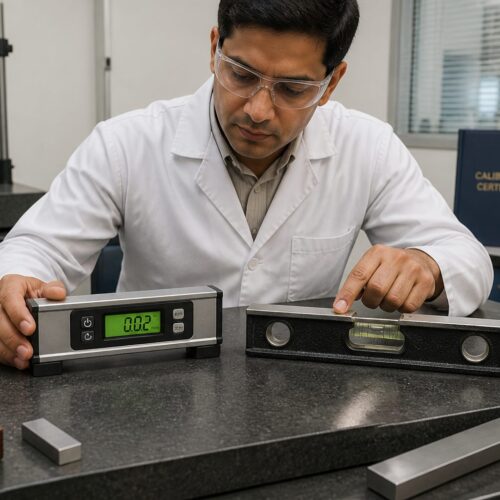
| Equipment Calibration & Maintenance | All measuring equipment must be calibrated against traceable standards, maintained, and verified regularly. | Guarantees that instruments used for surface plate calibration, like autocollimators, electronic levels, or interferometers, provide precise and reliable readings. |
| Calibration Methods & Validation | Procedures must be scientifically validated, documented, and appropriate for the specific measurement task. | Standardized, proven methods ensure consistent and repeatable results for surface plate flatness, repeat readings, and geometry assessments. |
| Quality Management System | A comprehensive system for managing documents, records, non-conforming work, internal audits, and corrective actions. | Provides a robust framework for continuous improvement and reliable day-to-day operation of the accredited calibration lab. |
| Reporting & Certificates | Calibration certificates must be clear, unambiguous, and include all necessary information, including uncertainty. | Clients receive transparent, complete, and understandable documentation for their ISO 17025 surface plate calibration, crucial for audit trails. |
Ensuring Competence, Impartiality, and Consistent Operations
The ISO 17025 standard places significant emphasis on a laboratory’s demonstrated competence, moving beyond mere declarations of intent. This means a lab must prove its technical ability through rigorous proficiency testing, interlaboratory comparisons, and thorough internal audits. It is a continuous cycle of verification and improvement.
Impartiality stands as another critical cornerstone, demanding that labs operate entirely free from commercial, financial, or any other pressures that could potentially influence calibration results. This ensures that every ISO 17025 surface plate calibration is conducted with complete objectivity. Clients can trust that the data reflects reality, not external influence.
Achieving truly consistent operations involves having well-defined, meticulously documented procedures for every single task performed within the laboratory. These procedures minimize variability, ensuring repeatable and reliable outcomes every single time a measurement is taken. Consistency is not accidental; it is engineered.
Regular internal audits and comprehensive management reviews are absolutely essential components of this robust system, constantly identifying areas for improvement. This proactive approach helps maintain exceptionally high standards and addresses potential issues before they can ever escalate into problems. It is about vigilance and continuous self-assessment.
The lab’s management is responsible for establishing, implementing, and maintaining a quality system that supports these principles. This includes providing the necessary resources, fostering a culture of quality, and ensuring staff understand their roles. Strong leadership is fundamental to sustained excellence.
Furthermore, the standard requires labs to handle non-conforming work systematically, investigating causes and implementing corrective actions. This ensures that any deviations from standard procedures are addressed promptly and effectively. It is part of learning and growing as an accredited calibration provider.
A deep commitment to these intertwined principles builds unwavering confidence in a lab’s services. Clients know they are receiving accurate, unbiased, and consistently reliable data from a truly competent and accredited calibration provider. This trust is invaluable in high-stakes manufacturing environments.
The Importance of Measurement Traceability Under ISO 17025
Measurement traceability is a fundamental concept under ISO 17025, ensuring that all measurements relate to national or international standards through an unbroken chain of comparisons. Each step in this chain must have a stated measurement uncertainty, providing a clear understanding of the result’s reliability. This system provides a firm scientific basis for all reported values.
For ISO 17025 surface plate calibration, traceability means the instruments used to measure the surface plate, such as autocollimators or electronic levels, have themselves been calibrated against higher-level standards. These higher standards ultimately link back to primary standards like the International System of Units (SI) meter. This unbroken lineage offers unquestionable assurance in the accuracy and validity of your surface plate’s calibration.
- Links all measurements directly to national and international standards
- Provides undeniable confidence in the accuracy of reported measurement results
- Establishes an unbroken chain of comparisons for every measurement point
- Quantifies measurement uncertainty at each and every step in the chain
- Supports the international recognition and acceptance of calibration results
- Facilitates consistency and comparability across different laboratories globally
- Helps meet stringent regulatory, industry, and customer requirements
- Ensures that your products meet specified tolerances consistently
Understanding the Scope of Accreditation for Surface Plate Calibration
When a laboratory achieves ISO 17025 accreditation, it is important to understand this is not a generic endorsement for all its services. The accreditation applies specifically to a detailed “scope,” which precisely outlines the exact calibrations the lab is technically competent to perform. This scope is a critical document for clients.
For ISO 17025 surface plate calibration, the scope will clearly define parameters like the maximum size of surface plates the lab can calibrate. It also specifies the particular measurement methods used and the achievable measurement uncertainty for those methods. These details are not trivial; they are essential.
Clients must always meticulously review a lab’s scope of accreditation to confirm it comprehensively covers their specific calibration needs. Choosing a lab without the correct scope for your particular surface plate or measurement requirements is a serious and potentially costly oversight. It is your responsibility to verify this match.
An accredited calibration lab will proudly display its scope, often available directly from the accrediting body’s public website. This level of transparency helps clients make thoroughly informed decisions about their quality management metrology partners. It ensures there are no surprises about what services are covered.
The scope document might detail the specific types of geometric measurements performed, such as overall flatness, repeat reading measurements, or squareness checks. It could also list the standards to which the calibration is performed, like ASME B89.3.7. Understanding these specifics ensures you get exactly the accredited calibration you need.
Some labs might be accredited for in-situ calibration, meaning they can perform the ISO 17025 surface plate calibration at your facility. Other labs might only offer services in their own climate-controlled environment. Confirming these logistical details within the scope is also very important.
Always ask for the lab’s current scope and cross-reference it with your requirements before committing to a service. This due diligence ensures you receive a calibration that is not only accredited but also perfectly suited to your operational demands. It is a simple step that provides immense value.
The Tangible Benefits of Choosing an ISO 17025 Accredited Lab
Opting for an ISO 17025 accredited calibration lab offers numerous tangible benefits that directly impact your product quality, operational efficiency, and overall business reputation. It is not merely a formality; it is a strategic investment in reliable data and superior performance. You gain unwavering confidence in your measurement results.
Knowing your data comes from a technically competent and impartial source significantly reduces the risk of costly errors and rework in manufacturing. This proactive approach saves substantial resources and prevents production delays. It is about getting things right the first time.
Accredited calibration minimizes the need for you to conduct extensive internal audits of your suppliers, as the accreditation body already performs this rigorous oversight. This saves your organization considerable time, effort, and internal resources. You can focus your energy elsewhere.
Many industries, regulatory bodies, and even key customers now mandate the use of accredited calibration services for critical equipment. Choosing an ISO 17025 lab ensures your compliance, helping you avoid potential penalties, project delays, or loss of contracts. It simplifies meeting complex requirements.
The inherent consistency and reliability provided by an accredited lab translate directly into better decision-making based on accurate, trustworthy data. This directly supports more effective quality management metrology across your entire production chain. It empowers you with verifiable facts.
Moreover, the international recognition of ISO 17025 accreditation simplifies global trade and enhances the acceptance of your products across different markets. Your measurements are trusted worldwide, significantly expanding your potential market reach. This is a powerful advantage in a global economy.
Ultimately, selecting an accredited provider for your ISO 17025 surface plate calibration protects your company’s reputation and helps you maintain a strong competitive advantage. It demonstrates an undeniable commitment to excellence to your own customers and stakeholders. This commitment builds loyalty and trust.
What to Look for in an ISO 17025 Calibration Certificate
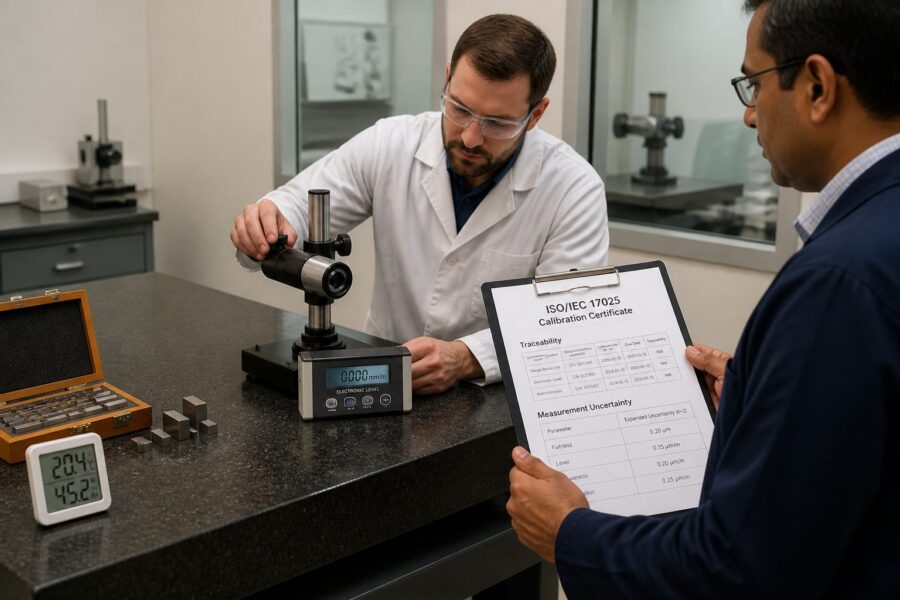
An ISO 17025 calibration certificate is far more than just a piece of paper; it is a critical legal and technical document detailing the precise performance of your equipment. Knowing exactly what information to scrutinize ensures you fully understand its implications and validity. It is your proof of accuracy.
First and foremost, confirm the certificate clearly states the lab’s accreditation body and its unique accreditation number. This verifies that the provider is indeed an officially accredited calibration facility, not just one claiming compliance. Look for the recognized accreditation mark.
Next, meticulously check the specific scope of accreditation mentioned on the certificate, confirming it precisely covers the ISO 17025 surface plate calibration performed. The services listed on the certificate must align perfectly with the lab’s publicly available scope. Any discrepancy is a red flag.
The certificate must prominently include the actual measurement results, the associated measurement uncertainty for each result, and a clear statement of traceability to national or international standards. This comprehensive data is absolutely fundamental for evaluating your surface plate’s current condition. Without uncertainty, the measurement is incomplete.
Pay close attention to the environmental conditions under which the calibration was performed, as these factors can significantly affect measurement accuracy. Consistent and controlled conditions are a hallmark of proper quality management metrology. Major temperature swings, for example, can distort results.
Ensure the certificate provides unambiguous identification of the calibrated item, including its serial number or other unique identifier. This links the certificate directly to your specific surface plate, preventing any confusion. Clear identification is crucial for audit purposes.
Finally, carefully note the date of calibration and any recommended recalibration interval specified by the lab or your own internal procedures. This helps you maintain your surface plate’s accuracy over its lifespan and plan future accredited calibration services proactively. Timely recalibration is non-negotiable for ongoing precision.
How Accreditation Enhances Trustworthiness and Data Reliability
Accreditation under ISO 17025 fundamentally enhances the trustworthiness and reliability of all calibration data produced by a laboratory. It systematically removes guesswork and doubt from critical measurement processes. This is why it has become the gold standard.
An independent third-party assessment body regularly audits accredited labs, ensuring their ongoing compliance with stringent international standards. This continuous, unbiased oversight builds deep and sustained confidence in their lab competence. It is not a one-time check but an ongoing commitment.
The rigorous requirements for personnel training, meticulous equipment maintenance, and thorough method validation mean that results are consistently accurate and reproducible. This directly translates into highly dependable data for your most critical manufacturing and quality control applications. You can build your operations on this foundation.
When you receive an ISO 17025 surface plate calibration certificate, you are not just getting numbers; you are receiving data backed by an internationally recognized and rigorously applied standard. This adds significant weight and credibility to your entire quality control process. It is a verifiable mark of quality.
This elevated level of trust allows businesses to make truly informed decisions about product design, manufacturing tolerances, and overall quality assurance strategies. Reliable data is the absolute backbone of operational excellence and continuous improvement. It prevents costly mistakes and drives innovation.
Furthermore, the impartiality requirements mean you can be confident that the results are free from any potential conflicts of interest. The lab’s primary commitment is to accurate measurement, not to internal or external pressures. This objectivity is paramount for scientific integrity.
In essence, ISO 17025 accreditation acts as a powerful seal of approval, validating a laboratory’s capability and integrity. This seal provides undeniable assurance that your measurement data is robust, defensible, and suitable for its intended purpose. It is the ultimate guarantee of quality in metrology.
The Future of Metrology Standards and ISO 17025
Metrology is a constantly evolving field, driven by rapid advancements in technology and increasingly stringent demands for precision across all industries. ISO 17025 remains a dynamic and highly relevant standard, consistently adapting to these ongoing changes. Its flexibility ensures its enduring value.
We can realistically expect future revisions to incorporate new measurement techniques, embrace digital transformation trends, and address emerging quality management metrology challenges. The standard is specifically designed for continuous relevance and responsiveness to global needs. It is not static but a living document.
The emphasis on risk-based thinking and maintaining impartiality will likely grow even stronger in subsequent updates, pushing laboratories towards even more robust management systems. This ensures sustained lab competence in an increasingly complex and interconnected world. Proactive risk management is key.
As industries become more interconnected globally, the international recognition and acceptance of ISO 17025 will only increase in importance. It provides a universally understood language for quality and accuracy across all international borders. This facilitates seamless global commerce and collaboration.
The integration of automation and artificial intelligence into calibration processes will also present new considerations for the standard. Labs will need to demonstrate competence in managing these advanced technologies while upholding the core principles of accuracy and traceability. Adapting to innovation is crucial.
For businesses relying on ISO 17025 surface plate calibration, staying informed about these impending developments will be absolutely crucial. Partnering with forward-thinking accredited calibration labs ensures you remain at the forefront of quality and technological adoption. Your lab choice reflects your commitment to the future.
Ultimately, ISO 17025 is not just about today’s measurements; it is about building a sustainable framework for future precision and reliability. Its adaptability and comprehensive nature ensure it will continue to serve as a cornerstone of global metrology for years to come. It is an investment in the long term.
Conclusion
Understanding ISO 17025 is absolutely essential for anyone involved in precision manufacturing, engineering, or rigorous quality control. It provides the undeniable assurance needed for accurate and reliable measurement results, especially for foundational and critical items like surface plates. This knowledge empowers you to make better choices.
Choosing an accredited calibration laboratory for your ISO 17025 surface plate calibration means partnering with a provider of proven lab competence and unwavering integrity. This strategic choice directly protects your significant investment in equipment and profoundly enhances your overall product quality. It is a decision that pays dividends.
The standard’s core principles of impartiality, technical competence, and consistent operations ensure that every calibration you receive is scientifically sound and completely trustworthy. This inherent reliability is foundational for any effective and robust quality management metrology system. It builds an unbreakable chain of trust.
By actively insisting on ISO 17025 accredited calibration services, businesses not only meet their regulatory and industry requirements but also foster a deep-seated culture of precision and excellence. This commitment truly sets leading organizations apart from their competitors. It is a mark of true dedication to quality.
Investing in accredited services is a strategic decision that yields substantial returns in reduced errors, increased operational efficiency, and a stronger market reputation. It minimizes risks and maximizes confidence in your production processes. This approach strengthens your entire business.
Do not compromise on the accuracy of your foundational measurement tools. Always verify your calibration provider holds current ISO 17025 accreditation specific to surface plate calibration. Your quality depends on it, and your reputation is on the line.
Make sure your surface plate calibration is always up to standard, ensuring your products meet the highest levels of precision and customer satisfaction. This vigilance will serve your company well in the competitive landscape. Choose wisely, choose accredited.