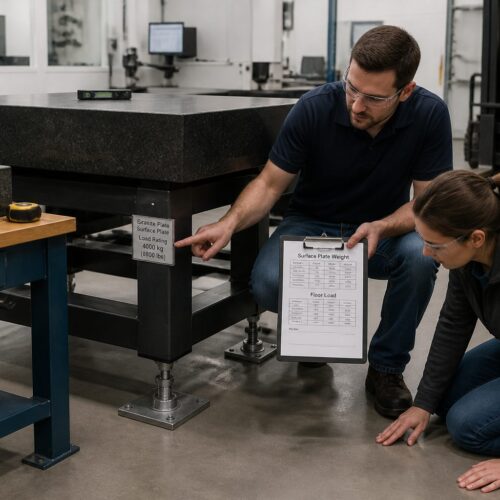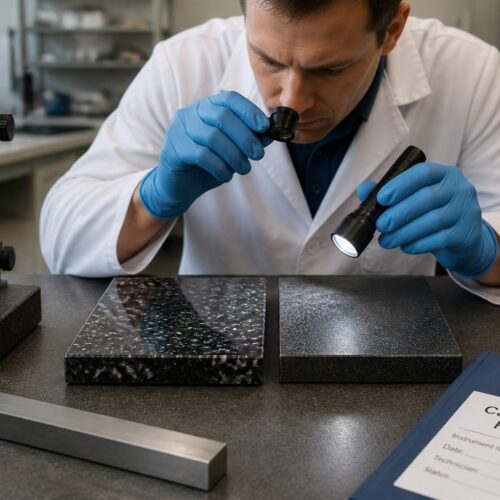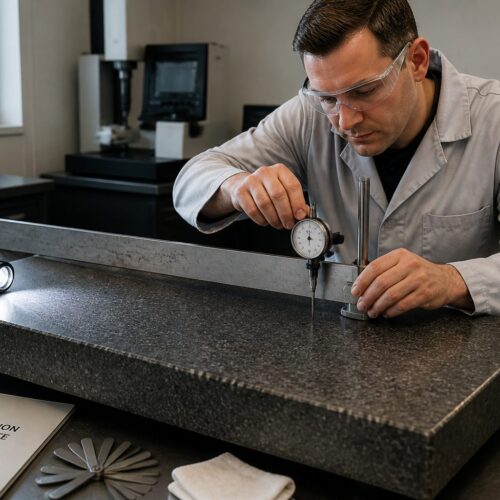

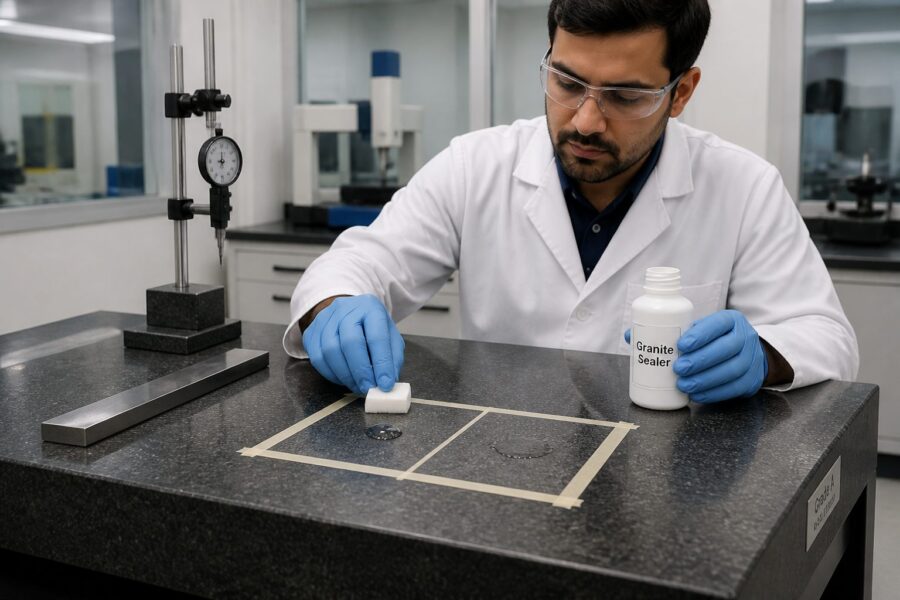
Precision metrology relies heavily on the stability and accuracy of granite surface plates. These fundamental tools provide an unyielding reference plane for countless industrial measurements and inspections. However, a common question arises regarding their inherent material properties: should you seal a metrology granite surface plate?
The debate around granite surface plate porosity sealing is more complex than it appears, touching on material science, measurement integrity, and long-term maintenance. Understanding the nature of porous granite metrology equipment is essential before deciding on any protective treatment. This discussion will explore the arguments for and against applying a granite sealer surface plate treatment.
Many users wonder if a surface plate protective treatment could extend the life or improve the performance of their critical equipment. We’ll examine the potential benefits and drawbacks, drawing on industry best practices and the science behind granite’s unique characteristics. Ultimately, the goal is to equip you with the knowledge to make an informed decision for your precision measurement needs.
How Porous Granite Affects Surface Plate Performance
Granite, while incredibly dense and stable, is naturally a porous material. This means it contains microscopic voids and capillaries throughout its structure, a characteristic inherent to its geological formation. The degree of granite surface plate porosity sealing varies depending on the type of granite used, such as black granite or pink granite, which have different mineral compositions.
These tiny pores can influence the surface plate’s performance in several ways, primarily concerning its interaction with liquids and airborne contaminants. While seemingly minor, these interactions can affect the long-term accuracy and cleanliness of the metrology tool. Understanding this porosity is key to deciding on any surface plate protective treatment.
One direct impact of porous granite metrology is its ability to absorb liquids. Coolants, oils, or even water from humid air can slowly penetrate the surface, potentially carrying contaminants deeper into the material. This absorption can lead to localized staining or discoloration over time, which might obscure fine measurement lines or reference points.
More critically, any absorbed substance could theoretically alter the granite’s thermal properties or stability, though this effect is generally considered negligible for most applications. However, for the most demanding ultra-precision measurements, every variable warrants consideration. A granite sealer surface plate might be considered to mitigate these absorption risks.
The porosity also plays a role in how the surface plate interacts with airborne dust and debris. While regular cleaning removes surface particles, some fine dust can settle into the microscopic pores, becoming harder to dislodge. This embedded particulate matter could potentially degrade the cleanliness of the working surface over many years.
Such contamination, even at a microscopic level, poses a risk to the integrity of sensitive measurements. It can interfere with the smooth glide of precision instruments or introduce minute errors. Therefore, managing porous granite metrology surfaces requires diligent cleaning protocols, regardless of sealing.
Another aspect to consider is the potential for wear and tear. While granite is extremely hard, its porous nature means that abrasive particles, once trapped, could contribute to microscopic scratching if not properly cleaned. This is less about the granite itself and more about how contaminants interact with it.
The structural integrity and long-term flatness of the surface plate are usually unaffected by porosity under normal use conditions. Reputable manufacturers select granite types with low inherent porosity and high density for metrology applications. They understand the importance of material quality for maintaining precision.
The debate around granite surface plate porosity sealing often centers on whether these inherent characteristics demand an additional layer of protection. Some argue that the granite’s natural properties are sufficient when combined with proper care. Others believe a sealant offers an extra safeguard against environmental factors.
Ultimately, the impact of porosity is a nuanced topic, with practical implications depending on the specific application, environment, and maintenance regimen. A comprehensive understanding helps in evaluating the merits of any proposed surface plate protective treatment. We must weigh the benefits against potential risks for such critical equipment.
The Case for Sealing: Stain and Contamination Resistance
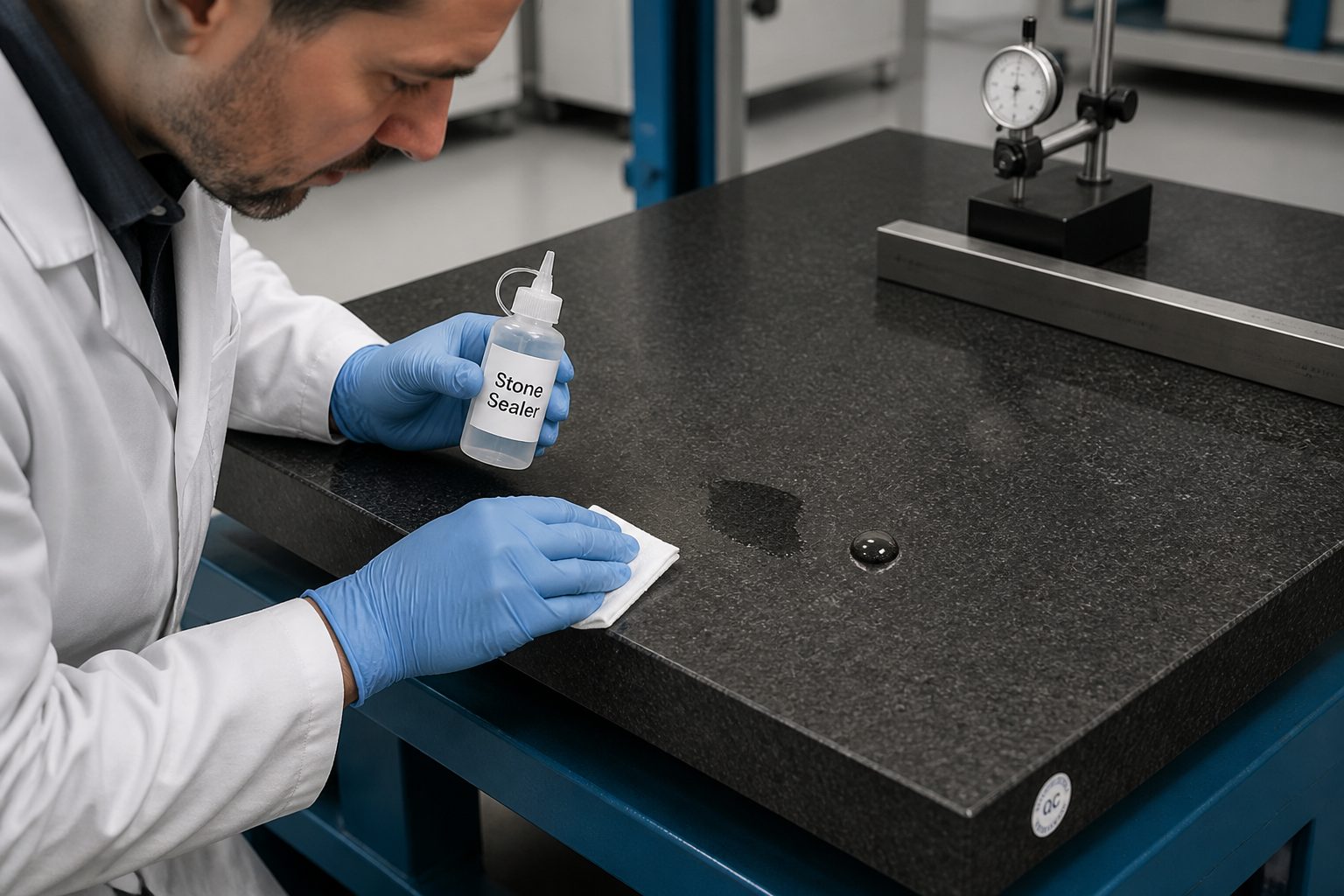
Applying a granite sealer surface plate treatment primarily aims to enhance the material’s resistance to stains and contamination. This protective barrier fills the microscopic pores, creating a less permeable surface. The treatment makes the granite less susceptible to absorbing liquids and particulate matter.
For environments where coolants, oils, or other liquids are frequently present, sealing can significantly reduce the risk of permanent staining. It provides an easier-to-clean surface, as spills tend to bead up rather than soak in. This simplifies routine maintenance and helps maintain the aesthetic integrity of the surface plate over time.
| Benefit of Sealing | Description | Impact on Metrology |
|---|---|---|
| Enhanced Stain Resistance | Prevents absorption of oils, coolants, and dyes into granite pores. | Maintains clean, clear surface for accurate readings. |
| Improved Contaminant Repellency | Reduces adherence and penetration of fine dust and airborne particles. | Keeps working surface cleaner, minimizing interference with instruments. |
| Easier Cleaning | Spills and dirt remain on the surface, allowing for simpler wipe-down. | Reduces time and effort for routine maintenance, preserves surface quality. |
| Reduced Liquid Absorption | Creates a hydrophobic barrier, minimizing moisture uptake from spills or humidity. | Helps prevent potential, albeit minor, changes in material properties. |
| Aesthetic Preservation | Prevents discoloration and darkening caused by absorbed substances. | Maintains professional appearance of the precision equipment. |
The Case Against Sealing: Flatness and Adhesion Risks
While sealing might seem beneficial, there are significant arguments against applying any granite sealer surface plate treatment to metrology-grade equipment. The primary concern revolves around maintaining the critical flatness and dimensional stability of the surface plate. Any alteration to the surface, however thin, could compromise its precision.
Metrology surface plates are calibrated to extremely tight tolerances, often measured in millionths of an inch. Even a microscopic layer of sealant could introduce inconsistencies or variations in the surface topography. These minute changes could directly impact the accuracy of measurements taken on the plate.
The adhesion of the sealant itself presents a challenge. A sealant needs to bond uniformly and permanently to the granite without peeling, flaking, or degrading over time. If the sealant layer is not perfectly consistent or if it begins to deteriorate, it creates an uneven surface that is detrimental to precision work.
Uneven sealant application or degradation could introduce local high or low spots, effectively changing the calibrated flatness of the plate. This would render the surface plate unreliable for its intended purpose. The risk of such an outcome often outweighs the perceived benefits of stain resistance for critical applications.
Furthermore, the long-term interaction between the sealant and the granite, especially under varying environmental conditions, is largely unknown and untested for metrology purposes. Unlike kitchen countertops, a granite surface plate porosity sealing treatment must not affect the material’s inherent stability or thermal expansion properties. Introducing an additional material layer could potentially, though subtly, alter how the plate responds to temperature changes.
Some sealants might also present issues with the smooth movement of precision instruments. They could create a slightly tacky surface or increase friction, hindering the accurate positioning of gauges and measuring devices. This is a practical concern for daily use in a metrology lab.
Another point of contention is the potential for chemical residue. Even if a sealant is applied perfectly, the chemicals used in its composition or subsequent cleaning agents might leave residues that attract dust or interfere with sensitive equipment. Maintaining a truly clean and inert surface is paramount in metrology.
Removing a sealant, should it become necessary, also poses a significant risk. The process of stripping a sealant could damage the granite surface or leave behind residues that are even more difficult to clean. This could necessitate re-lapping and re-calibration, an expensive and time-consuming procedure.
For these reasons, many precision metrology professionals and manufacturers strongly advise against any surface plate protective treatment that applies a coating. They argue that the potential for compromising flatness and introducing new variables far outweighs the benefits of preventing minor stains. The integrity of the measurement itself must always be the top priority.
The inherent properties of high-quality metrology granite, combined with proper care, are generally considered sufficient for maintaining performance. The industry prioritizes the natural, stable surface over any perceived advantages of a sealant. This conservative approach protects the fundamental accuracy of these essential tools.
Types of Sealers and Their Compatibility With Precision Surfaces
Various types of sealers exist in the market, primarily designed for granite countertops or flooring. These sealers typically fall into two main categories: impregnating sealers and topical sealers. Understanding their composition and application is important when considering granite surface plate porosity sealing.
Impregnating sealers, also known as penetrating sealers, are designed to soak into the pores of the granite and react with the minerals to create a hydrophobic barrier within the stone. They usually contain silanes or siloxanes that form a breathable, subsurface barrier. These sealers do not form a visible layer on top of the granite, which might seem appealing for metrology.
However, even an impregnating sealer changes the surface’s chemical and physical properties at a microscopic level. It introduces foreign substances into the granite structure, which could, in theory, affect its long-term stability or thermal characteristics. For ultra-precision applications, any alteration is a concern, no matter how subtle.
Topical sealers, on the other hand, form a visible film or coating on the surface of the granite. These are typically acrylics, polyurethanes, or epoxies, designed to provide a durable, protective layer. While effective for stain resistance on decorative granite, they are unequivocally unsuitable for metrology surface plates.
A topical sealant would immediately compromise the flatness and accuracy of a precision surface plate. The coating itself would have thickness variations, and its material properties would differ significantly from the granite. This would introduce unacceptable errors for any measurement task.
Even if a topical sealant could be applied perfectly evenly (an impossible feat at metrology tolerances), its wear characteristics and susceptibility to scratching would be different from granite. This means the protective layer would degrade unevenly, leading to a non-flat surface over time. Such a granite sealer surface plate would lose its value instantly.
The chemical compatibility of sealers with precision instruments is another factor. Some sealants might outgas volatile organic compounds (VOCs) or react with cleaning agents, creating a corrosive environment or leaving residues. This is problematic in a cleanroom or high-precision lab setting where chemical inertness is vital.
Manufacturers of metrology equipment spend considerable effort selecting specific grades of granite for their surface plates. These choices are based on factors like density, mineral composition, and inherent porosity, all carefully balanced to achieve maximum stability and hardness. Introducing a sealant disrupts this carefully engineered system.
The purpose of a metrology surface plate is to provide an unyielding, unchanging reference plane. Any material applied to its surface, regardless of type, introduces an additional variable that cannot be precisely controlled or accounted for in its calibration. This makes even the most advanced sealers incompatible with the fundamental requirements of precision metrology.
Therefore, while sealers have their place in other applications, their use on a surface plate for metrology is generally considered inappropriate. The risks associated with compromising flatness, stability, and chemical inertness far outweigh any perceived benefits of stain resistance. Maintaining the natural, pristine granite surface is the gold standard.
Manufacturer Guidance and Industry Practice on Sealing
When it comes to granite surface plate porosity sealing, the overwhelming consensus among reputable manufacturers and industry standards organizations is clear: do not seal metrology-grade surface plates. This guidance stems from decades of experience and a deep understanding of what constitutes a stable and accurate reference plane. They emphasize that any surface plate protective treatment involving a coating could compromise performance.
Manufacturers meticulously select high-quality black granite, which naturally has very low porosity and high density, specifically for its superior stability and wear resistance. They believe the inherent properties of this material, when properly maintained, provide the best possible foundation for precision measurements. Introducing a granite sealer surface plate treatment would contradict this foundational principle.
- Never apply chemical sealants or coatings
- Follow manufacturer’s cleaning instructions explicitly
- Use only recommended cleaning solutions, typically mild soap and water
- Regularly inspect for damage or contamination
- Avoid abrasive cleaning materials
- Maintain a stable temperature and humidity environment
- Schedule periodic re-calibration by qualified technicians
Alternatives to Sealing for Contamination Protection
Given the strong arguments against granite surface plate porosity sealing, it becomes essential to explore effective alternatives for contamination protection. The best approach focuses on prevention and consistent, proper cleaning practices. These methods ensure the longevity and accuracy of your porous granite metrology equipment without compromising its surface integrity.
The most straightforward and effective method is regular, thorough cleaning. Use a mild soap and water solution, or a specialized granite cleaner recommended by your surface plate manufacturer. Always wipe down the surface using a clean, lint-free cloth or sponge to remove dust, debris, and any liquid spills immediately.
After cleaning with a wet solution, it is crucial to dry the surface completely and quickly to prevent water spots or residual moisture from lingering in the pores. A dry, clean cloth followed by air drying, if necessary, helps ensure no liquids remain. This routine maintenance is far more effective than any granite sealer surface plate treatment.
Maintaining a clean working environment is another critical protective measure. Implement strict protocols to minimize dust, oil, and coolant exposure in the vicinity of your surface plate. This includes using dust covers when the plate is not in use and ensuring proper ventilation and air filtration in the metrology lab.
For operations involving coolants or cutting oils, consider using splash guards or trays around the work area to contain liquids. This prevents them from reaching the surface plate in the first place. Proactive measures significantly reduce the need for aggressive cleaning or the consideration of sealing.
Regular inspection of the surface plate is also important. Periodically examine the surface for any signs of staining, scratches, or wear. Early detection of issues allows for prompt action, preventing minor problems from escalating into more significant damage that could affect accuracy.
Controlling environmental factors like humidity can also play a role in protecting porous granite metrology equipment. High humidity can lead to moisture condensation, while fluctuating temperatures can cause slight thermal expansion and contraction. Maintaining a stable, controlled environment helps preserve the plate’s overall stability.
For applications where instruments might leave residues, consider using barrier films or clean paper between the instrument and the surface plate. This acts as a sacrificial layer that can be easily replaced, protecting the granite from direct contact with potentially contaminating materials. This is a simple yet effective surface plate protective treatment.
Training personnel on proper handling and cleaning procedures is paramount. Human error is often a leading cause of contamination or damage to precision equipment. Ensuring everyone understands the importance of cleanliness and the correct protocols will extend the life and accuracy of the surface plate.
These proactive and preventative measures, centered on cleanliness and environmental control, provide robust contamination protection without the risks associated with sealing. They preserve the inherent accuracy and stability of the granite surface plate, which is its most valuable attribute. Focusing on these alternatives ensures the long-term performance of your precision equipment.
Conclusion
The question of whether to seal a metrology granite surface plate often arises from a desire to protect a valuable asset from stains and contaminants. While the porosity of granite is a real characteristic, the consensus in the precision metrology industry leans heavily against applying any sealant. The risks to flatness and dimensional stability far outweigh the perceived benefits of stain resistance.
High-quality granite surface plates are manufactured from dense, low-porosity granite types specifically chosen for their inherent stability. Any granite surface plate porosity sealing treatment, whether topical or impregnating, introduces a foreign layer that could compromise the very precision the plate is designed to provide. This is a critical consideration for any metrology lab.
The potential for a granite sealer surface plate to degrade unevenly, alter the surface topography, or interfere with instrument movement presents unacceptable risks. Metrology relies on an unyielding, unchanging reference plane, and adding a coating introduces too many variables into that equation. We must prioritize accuracy above all else.
Instead of sealing, the most effective and universally recommended approach for a surface plate protective treatment involves rigorous adherence to cleaning protocols and environmental control. Regular cleaning with appropriate solutions, coupled with minimizing exposure to contaminants, maintains the plate’s pristine condition. This ensures long-term accuracy and performance.
Investing in proper dust covers, maintaining stable environmental conditions, and training personnel on correct handling are far more beneficial than any sealant. These practices address the root causes of contamination without introducing new risks to the surface plate itself. They are proven methods for preserving precision equipment.
Ultimately, the integrity of your measurements depends on the uncompromised surface of your granite plate. Trust the material’s natural properties and the manufacturer’s guidance, which prioritizes performance over cosmetic concerns. Your precision work demands nothing less than the purest, most stable reference surface possible.
For those still contemplating a granite sealer surface plate, consider the cost of potential re-calibration or even replacement if the sealant negatively impacts accuracy. The short-term benefit of stain resistance rarely justifies the long-term risk to measurement integrity. This is a lesson learned by many in the field.
Maintaining porous granite metrology equipment is about consistent, diligent care rather than applying a quick fix. Embrace the natural characteristics of the granite and protect it through best practices in your laboratory. This approach guarantees the reliability of your critical measurement tools for years to come.
By focusing on preventative measures and meticulous cleaning, you can ensure your granite surface plate remains a cornerstone of precision. This strategy aligns with industry standards and the fundamental requirements of high-accuracy metrology. It is the most responsible way to manage these essential tools.
Therefore, the definitive answer remains clear: do not seal your metrology granite surface plate. Rely on established maintenance practices to protect your investment and preserve the accuracy that is vital to your operations. This ensures the highest level of performance for all your precision measurements.