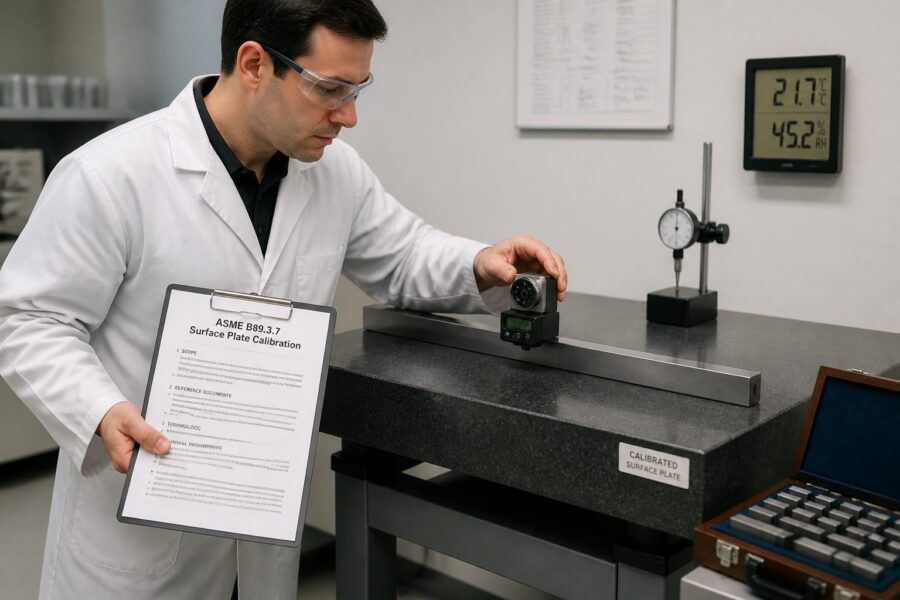
Measurement Point Systems and Their Significance
The ASME B89.3.7 surface plate standard mandates specific measurement point systems to accurately assess a surface plate’s flatness. These systems involve taking height readings at a predetermined grid pattern across the entire working surface. This structured approach ensures that the calibration captures a representative profile of the plate’s topography.
The standard specifies different grid patterns based on the size of the surface plate, ensuring adequate coverage for both small and large plates. Technicians meticulously follow these patterns, recording data points that are later used to calculate the overall flatness and local area variations. The choice of measurement points is not arbitrary.
- Systematic coverage of the entire surface
- Detection of overall flatness deviations
- Identification of localized high or low spots
- Consistent data collection across different calibrations
- Basis for calculating mean plane and tolerances
Specified Environmental Conditions for Calibration
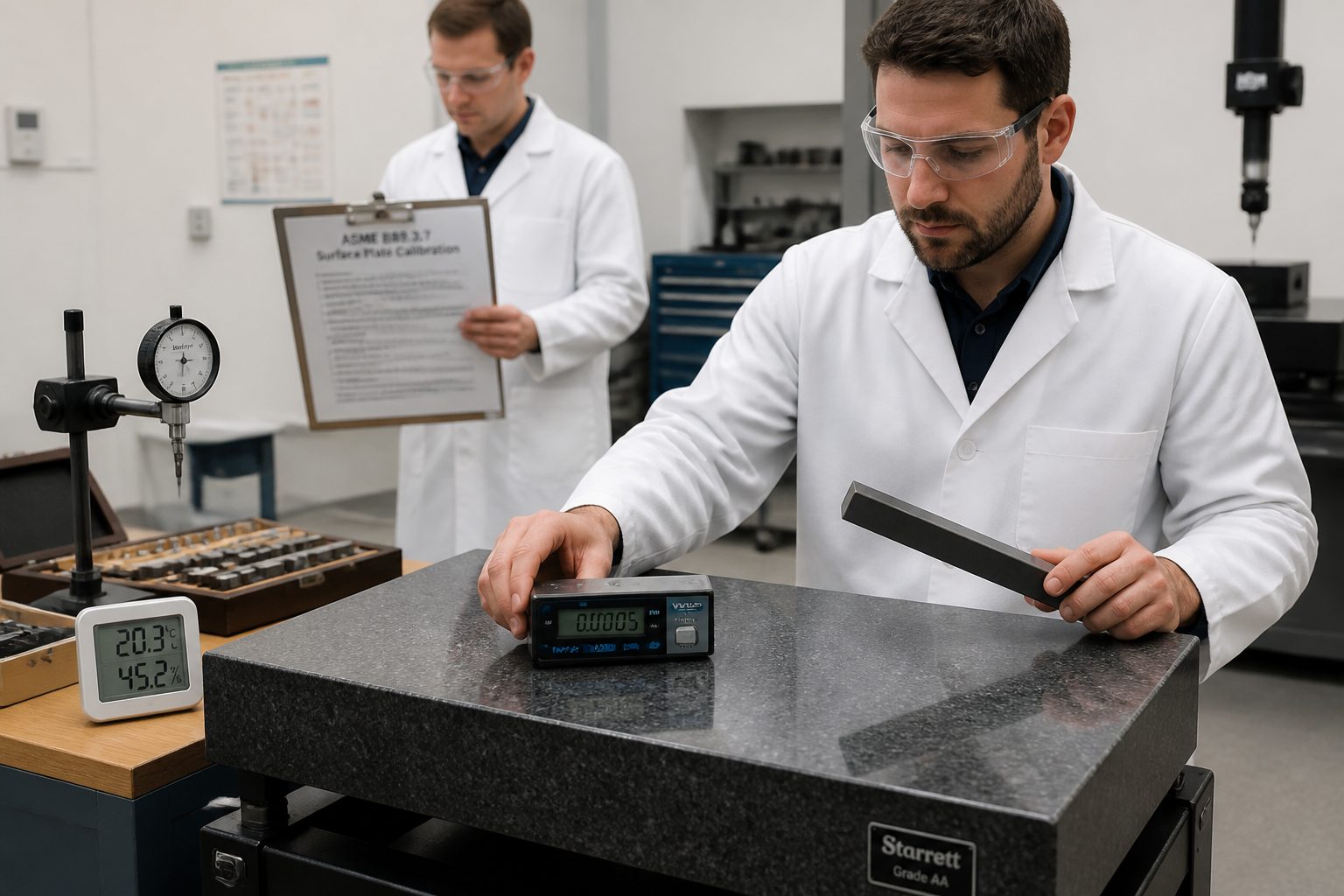
Accurate surface plate calibration relies heavily on controlling the environmental conditions during the measurement process. The ASME B89.3.7 surface plate standard specifies strict requirements for temperature, humidity, and vibration. Ignoring these factors can introduce significant errors, rendering the calibration results unreliable.
Temperature control is perhaps the most critical environmental factor. Granite, like all materials, expands and contracts with changes in temperature. The standard typically requires calibration to be performed at a controlled temperature, often 68°F (20°C), with minimal fluctuations. Deviations from this standard temperature can cause the plate to warp, distorting its true flatness.
Humidity also plays a role, particularly in affecting the stability of certain measurement instruments and the long-term integrity of the granite itself. While not as dramatic as temperature, excessive humidity can contribute to surface degradation or affect the performance of electronic equipment used in calibration. Maintaining a stable humidity level helps preserve the integrity of the process.
Vibration is another insidious source of error that the ASME B89.3.7 standard addresses. Even subtle vibrations from nearby machinery, foot traffic, or HVAC systems can cause measurement instruments to fluctuate, leading to inaccurate readings. Calibration laboratories often employ specialized vibration-isolated tables or perform calibrations during off-hours to minimize this interference.
Controlling these environmental factors ensures that the surface plate’s measured flatness truly represents its inherent physical characteristics, free from transient influences. This strict control over the environment is a cornerstone of maintaining high metrology standards. It guarantees that the surface plate specifications are genuinely accurate.
Calibrators must meticulously monitor and record these conditions throughout the calibration process. Any significant deviations require pausing or restarting the calibration to ensure the validity of the results. This commitment to environmental stability is a hallmark of professional metrology. It gives users confidence in their calibrated equipment.

Calibration Methods Referenced and Recommended by the Standard
The ASME B89.3.7 surface plate standard references and recommends several established methods for calibrating surface plates. These methods employ various optical and electronic instruments to precisely measure the height variations across the granite surface. Each technique offers specific advantages in terms of accuracy, speed, and suitability for different plate sizes.
One common and highly accurate method involves using an autocollimator in conjunction with a precision mirror system. The autocollimator measures minute angular deviations, which technicians then convert into height differences across the surface plate. This method provides exceptional precision, especially for larger plates.
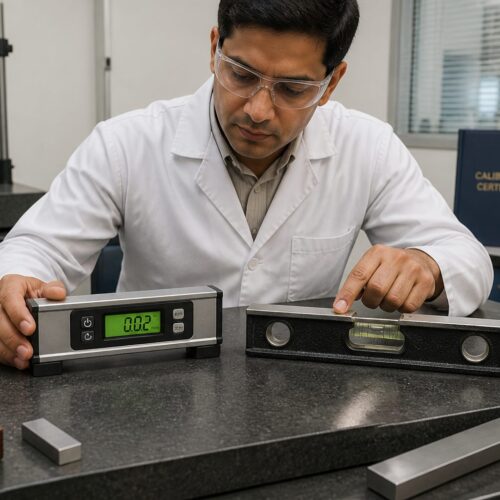
Electronic levels are another widely used tool for surface plate calibration. These instruments measure the tilt of the surface at various points, providing direct feedback on height differences. Technicians move the electronic level across the plate, following the prescribed grid pattern and recording the data. This method is often faster and less complex than optical methods.
Laser interferometers represent a highly advanced and precise calibration method. These systems use the interference patterns of laser light to measure distances with extreme accuracy. While more complex and expensive, laser interferometers offer unparalleled precision for the most demanding applications. They can capture surface topography with incredible detail.
The standard also acknowledges the importance of proper instrument setup and technique for any chosen method. It emphasizes careful handling, regular verification of the calibration instruments themselves, and adherence to manufacturer guidelines. These details ensure the overall integrity of the calibration process, regardless of the specific equipment used.
Regardless of the method chosen, the goal remains the same: to accurately determine the surface plate’s compliance with its specified flatness requirements. The ASME B89.3.7 surface plate standard provides the framework for applying these techniques effectively and consistently. It helps maintain the highest metrology standards for surface plates.
How to Apply the ASME B89.3.7 Standard in Your Practice
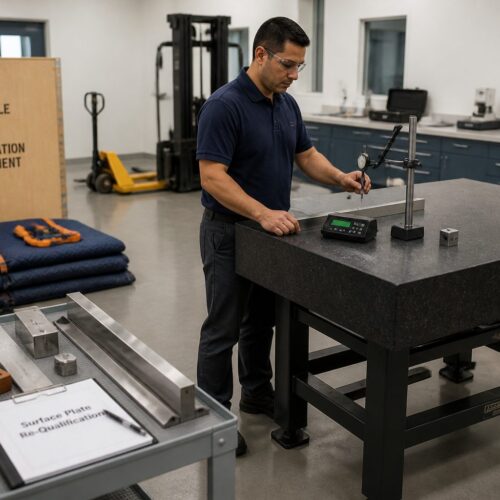
Applying the ASME B89.3.7 surface plate standard in your practice involves more than just reading the document; it requires a systematic approach to surface plate management. First, you need to understand the grade of your surface plates and their intended use. This determines the acceptable flatness requirements and calibration frequency.
Regular calibration by an accredited laboratory is non-negotiable for maintaining accuracy. The standard suggests calibration intervals, but your specific usage, environment, and internal quality procedures might dictate more frequent checks. Always choose a calibration service that explicitly states compliance with the ASME B89.3.7 standard.
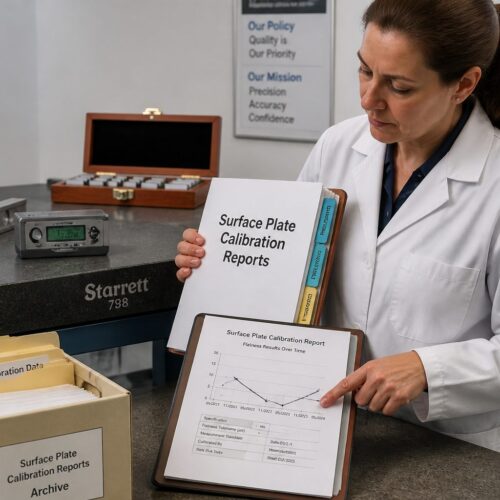
When you receive a calibration report, review it thoroughly to understand the results. The report should clearly state the measured flatness, local area variations, and whether the plate meets its specified grade. Pay attention to any notes or recommendations from the calibrating technician, as these often contain useful insights.
Maintaining the surface plate between calibrations is also crucial. Always keep the plate clean, protect it from impacts, and avoid placing heavy objects on it unnecessarily. Rotate the areas of heavy use to distribute wear evenly across the surface. Proper care extends the life and accuracy of your investment.
Educate your team on the importance of proper surface plate usage and maintenance. Everyone who interacts with the plate should understand its role as a precision instrument and the impact of misuse. This collective responsibility helps preserve the integrity of your metrology standards. It ensures consistent measurement results.
Finally, integrate the calibration data into your quality management system. Track the performance of your surface plates over time to identify trends or potential issues before they cause significant problems. This proactive approach to surface plate specifications helps maintain peak operational efficiency and accuracy.
The Relationship with Other Related Metrology Standards
The ASME B89.3.7 surface plate standard does not exist in a vacuum; it fits within a broader ecosystem of metrology standards. Understanding its relationship with other documents helps clarify its scope and reinforces its importance in a comprehensive quality system. This standard frequently interacts with other measurement guidelines.
For instance, it is part of the larger ASME B89 series, which covers various aspects of dimensional metrology. Other B89 standards might address topics like gauge blocks, calipers, or coordinate measuring machines (CMMs). These standards collectively provide a framework for accurate measurement across a wide range of tools and applications.
You also find connections to international standards, such as those published by the International Organization for Standardization (ISO). While ASME B89.3.7 is an American national standard, its principles often align with or complement ISO documents related to geometric product specifications (GPS) or calibration laboratory requirements. This alignment helps facilitate global consistency.
Specifically, ISO 10360 series on CMMs often references the need for accurate datum surfaces, indirectly pointing to the importance of standards like ASME B89.3.7. A CMM’s accuracy depends on the stability and flatness of the surface it rests on. The foundational accuracy of a surface plate directly influences the CMM’s performance.
Furthermore, the ASME B89.3.7 surface plate standard supports industry-specific quality standards like AS9100 for aerospace or ISO/TS 16949 for automotive. These standards require robust measurement systems and traceable calibration, which rely on documents like B89.3.7 for specific equipment. It contributes to the overall integrity of the quality system.
The standard also works alongside accreditation bodies like A2LA (American Association for Laboratory Accreditation), which accredit calibration laboratories based on their adherence to recognized standards. A laboratory accredited to perform surface plate calibrations will explicitly follow ASME B89.3.7. This interconnectedness ensures a high level of confidence in all measurement results.
Benefits of Adhering to ASME B89.3.7 for Quality Assurance
Adhering to the ASME B89.3.7 surface plate standard offers significant benefits for any organization committed to quality assurance. Following this standard provides a solid foundation for reliable measurements, which directly translates into higher product quality and reduced manufacturing costs. It helps build trust in your metrology processes.
One of the most immediate advantages is improved measurement consistency and accuracy. When all surface plates are calibrated to a common, rigorous standard, you can trust that measurements taken on different plates or at different times will be comparable and correct. This reduces variability and uncertainty in your inspection results.
Higher accuracy directly leads to better product quality. Parts manufactured and inspected using precisely calibrated surface plates are more likely to meet their design specifications. This reduces the incidence of out-of-spec parts, minimizing rework, scrap, and warranty claims, which saves money in the long run.
Compliance with ASME B89.3.7 also provides traceability to national and international measurement standards. This traceability is essential for demonstrating compliance with regulatory requirements, industry certifications, and customer specifications. It strengthens your position during audits and inspections, proving your commitment to quality.
Furthermore, a standardized approach to surface plate specifications simplifies communication within your organization and with external partners. Everyone understands what “Grade A” or a specific flatness tolerance means, eliminating ambiguity and potential disputes. This clarity fosters better collaboration and reduces errors.
Finally, proper adherence to the ASME B89.3.7 surface plate standard helps extend the lifespan of your valuable granite surface plates. Regular calibration and proper maintenance, guided by the standard, ensure these critical assets perform optimally for longer. This protects your investment and maintains high metrology standards for years to come.
Conclusion
The ASME B89.3.7 surface plate standard is an indispensable document for anyone involved in precision manufacturing and dimensional metrology. It provides the essential framework for ensuring the accuracy and reliability of granite surface plates, which are foundational tools in countless industries. Understanding its principles truly empowers better measurement practices.
From defining flatness tolerances and grades to outlining calibration methods and environmental controls, the standard offers comprehensive guidance. Adhering to its requirements leads to improved product quality, reduced waste, and enhanced confidence in all measurement results. This commitment to metrology standards directly impacts the bottom line and reputation of any precision-focused organization. It ensures that surface plate specifications remain consistent and reliable across the board.
Surface plates are the bedrock of precision measurement, providing a truly flat datum for inspecting manufactured parts. Their accuracy directly impacts the quality and reliability of countless industrial processes. Without a dependable reference surface, the integrity of measurements falls apart quickly.
This is where calibration standards come into play, offering a consistent framework for verifying these critical tools. The American Society of Mechanical Engineers (ASME) developed ASME B89.3.7, a specific standard dedicated to surface plate calibration. This standard ensures that granite surface plates, which are central to dimensional metrology, meet stringent performance criteria.
Understanding and applying the ASME B89.3.7 surface plate standard is not just about compliance; it is about guaranteeing accuracy in every measurement. It helps users maintain confidence in their metrology standards and the precise surface plate specifications they rely on daily. This guide will walk you through the specifics of this essential document.
What is ASME B89.3.7 and Its Importance to Metrology
ASME B89.3.7 is the primary American national standard for the calibration of granite surface plates. It outlines the methods, procedures, and criteria for determining the flatness and overall accuracy of these fundamental metrology tools. This document provides a clear, uniform approach that engineers and technicians can follow.
The standard ensures that surface plates, regardless of their manufacturer or location, can be assessed against a common benchmark. This consistency is essential for interchangeable manufacturing and global trade, where measurement results must be universally understood. Without such a standard, comparing measurements between different facilities or countries would be incredibly difficult.
Its importance to metrology cannot be overstated, as surface plates serve as the foundational reference plane for most dimensional measurements. Any inaccuracy in the surface plate itself propagates errors throughout the entire measurement chain. Adhering to ASME B89.3.7 directly improves the reliability of all subsequent measurements and inspections.
The standard covers various aspects, from environmental conditions during calibration to acceptable flatness requirements for different grades of plates. It gives users a robust framework for maintaining the integrity of their measurement systems. This focus on precision helps prevent costly manufacturing errors and product recalls.
For anyone working in quality control, precision manufacturing, or calibration laboratories, understanding the ASME B89.3.7 surface plate standard is non-negotiable. It offers a roadmap for achieving and maintaining the highest levels of measurement accuracy. This standard truly underpins reliable dimensional metrology.
Implementing the guidelines within ASME B89.3.7 directly contributes to a robust quality assurance system. It provides confidence that the surface plate specifications meet the demands of modern manufacturing processes. This commitment to accuracy builds trust in measurement results across an organization.
Historical Context and Evolution of the Standard
The need for a standardized approach to surface plate calibration became apparent as precision manufacturing grew throughout the 20th century. Early methods were often inconsistent, leading to variations in measurement results between different shops and industries. This lack of uniformity created significant challenges for quality control and part interchangeability.
Before the formal adoption of comprehensive standards, individual companies or regions often developed their own internal procedures. While these might have worked locally, they failed to provide the universal benchmark required for a globalized industry. The push for greater precision across all manufacturing sectors highlighted this growing problem.
ASME, a leading developer of codes and standards, recognized this gap and initiated the development of the B89 series of metrology standards. This series aimed to standardize various aspects of dimensional metrology, including the performance and calibration of measurement equipment. ASME B89.3.7 specifically addressed the critical role of surface plates.
The standard has seen several revisions since its initial publication, reflecting advancements in measurement technology and a deeper understanding of metrology principles. Each update refines the procedures and clarifies requirements, ensuring the standard remains relevant and effective. These changes often incorporate feedback from industry experts and calibration professionals.
These evolutions in the ASME B89.3.7 surface plate standard demonstrate a continuous effort to improve measurement accuracy and reliability. The standard adapts to new methods of measurement, such as laser interferometry, which offer greater precision than older mechanical techniques. It ensures that surface plate specifications remain at the forefront of metrology. Its development reflects the metrology community’s commitment to precision.
The standard’s history shows a clear progression towards more rigorous and universally applicable calibration practices. It moved from informal checks to a scientifically robust framework, which benefits everyone involved in precision work. This evolution directly supports the demands of modern high-tolerance manufacturing.
Key Definitions and Terminology within ASME B89.3.7
To properly apply the ASME B89.3.7 surface plate standard, you need a solid grasp of its core terminology. The standard defines several key terms that describe the characteristics and performance of a surface plate. Understanding these definitions prevents misinterpretation and ensures consistent application of the standard.
For example, “flatness” refers to the overall deviation of the working surface from a true plane. This is a critical parameter for any surface plate and is meticulously defined within the standard. Other terms detail specific aspects of measurement and calibration. The table below outlines some fundamental terms you will encounter.
| Term | Definition According to ASME B89.3.7 | Significance |
|---|---|---|
| Flatness | The overall deviation of the entire working surface from its mean plane. | Determines the plate’s primary accuracy as a datum. |
| Repeatability | The maximum difference between multiple measurements at the same point, under the same conditions. | Indicates the consistency of local area measurements. |
| Local Area Variation (LAV) | The maximum difference in height within a specified small area of the surface. | Measures localized imperfections or “bumps” and “dips.” |
| Accuracy Grade | A classification (e.g., AA, A, B) indicating the allowable flatness tolerance. | Specifies the plate’s suitability for different precision applications. |
| Calibration Interval | The recommended time period between successive calibrations. | Ensures the plate maintains its specified accuracy over time. |
| Mean Plane | A theoretical plane established through the measured points, minimizing deviations. | Serves as the reference for calculating overall flatness. |
Understanding Flatness Tolerances and Grades as Defined by ASME
The ASME B89.3.7 surface plate standard categorizes surface plates into distinct accuracy grades, each with specific flatness tolerances. These grades help users select the appropriate plate for their particular application, ensuring they meet the necessary metrology standards without overspending on unnecessary precision. The choice of grade directly impacts measurement capability.
The standard typically defines three primary grades: Laboratory (Grade AA), Inspection (Grade A), and Shop (Grade B). Each grade specifies a maximum allowable deviation from absolute flatness across the entire working surface of the plate. These tolerances are expressed in microinches or micrometers, reflecting the minute variations permitted.
Grade AA, or Laboratory Grade, represents the highest level of precision. These plates are typically reserved for master calibration, research, and high-precision metrology laboratories where the smallest errors are unacceptable. Their flatness requirements are the most stringent, demanding exceptional manufacturing quality.
Grade A, or Inspection Grade, is suitable for general inspection work and quality control departments in manufacturing facilities. These plates offer excellent accuracy for most applications, striking a balance between precision and cost. Many companies find Grade A plates sufficient for their daily inspection needs.
Grade B, or Shop Grade, is designed for general workshop use, layout, and less critical inspection tasks. While still providing a stable and reasonably flat surface, their tolerances are more relaxed compared to the higher grades. These plates are robust and handle the rigors of a shop environment well.
Beyond overall flatness, the ASME B89.3.7 standard also specifies tolerances for Local Area Variation (LAV). This ensures that even within a small section of the plate, the surface remains consistently flat, preventing localized “hills” or “valleys” that could affect precise measurements. Understanding these specific surface plate specifications is crucial for any precision operation.
Measurement Point Systems and Their Significance
The ASME B89.3.7 surface plate standard mandates specific measurement point systems to accurately assess a surface plate’s flatness. These systems involve taking height readings at a predetermined grid pattern across the entire working surface. This structured approach ensures that the calibration captures a representative profile of the plate’s topography.
The standard specifies different grid patterns based on the size of the surface plate, ensuring adequate coverage for both small and large plates. Technicians meticulously follow these patterns, recording data points that are later used to calculate the overall flatness and local area variations. The choice of measurement points is not arbitrary.
- Systematic coverage of the entire surface
- Detection of overall flatness deviations
- Identification of localized high or low spots
- Consistent data collection across different calibrations
- Basis for calculating mean plane and tolerances
Specified Environmental Conditions for Calibration
Accurate surface plate calibration relies heavily on controlling the environmental conditions during the measurement process. The ASME B89.3.7 surface plate standard specifies strict requirements for temperature, humidity, and vibration. Ignoring these factors can introduce significant errors, rendering the calibration results unreliable.
Temperature control is perhaps the most critical environmental factor. Granite, like all materials, expands and contracts with changes in temperature. The standard typically requires calibration to be performed at a controlled temperature, often 68°F (20°C), with minimal fluctuations. Deviations from this standard temperature can cause the plate to warp, distorting its true flatness.
Humidity also plays a role, particularly in affecting the stability of certain measurement instruments and the long-term integrity of the granite itself. While not as dramatic as temperature, excessive humidity can contribute to surface degradation or affect the performance of electronic equipment used in calibration. Maintaining a stable humidity level helps preserve the integrity of the process.
Vibration is another insidious source of error that the ASME B89.3.7 standard addresses. Even subtle vibrations from nearby machinery, foot traffic, or HVAC systems can cause measurement instruments to fluctuate, leading to inaccurate readings. Calibration laboratories often employ specialized vibration-isolated tables or perform calibrations during off-hours to minimize this interference.
Controlling these environmental factors ensures that the surface plate’s measured flatness truly represents its inherent physical characteristics, free from transient influences. This strict control over the environment is a cornerstone of maintaining high metrology standards. It guarantees that the surface plate specifications are genuinely accurate.
Calibrators must meticulously monitor and record these conditions throughout the calibration process. Any significant deviations require pausing or restarting the calibration to ensure the validity of the results. This commitment to environmental stability is a hallmark of professional metrology. It gives users confidence in their calibrated equipment.
Calibration Methods Referenced and Recommended by the Standard
The ASME B89.3.7 surface plate standard references and recommends several established methods for calibrating surface plates. These methods employ various optical and electronic instruments to precisely measure the height variations across the granite surface. Each technique offers specific advantages in terms of accuracy, speed, and suitability for different plate sizes.
One common and highly accurate method involves using an autocollimator in conjunction with a precision mirror system. The autocollimator measures minute angular deviations, which technicians then convert into height differences across the surface plate. This method provides exceptional precision, especially for larger plates.
Electronic levels are another widely used tool for surface plate calibration. These instruments measure the tilt of the surface at various points, providing direct feedback on height differences. Technicians move the electronic level across the plate, following the prescribed grid pattern and recording the data. This method is often faster and less complex than optical methods.
Laser interferometers represent a highly advanced and precise calibration method. These systems use the interference patterns of laser light to measure distances with extreme accuracy. While more complex and expensive, laser interferometers offer unparalleled precision for the most demanding applications. They can capture surface topography with incredible detail.
The standard also acknowledges the importance of proper instrument setup and technique for any chosen method. It emphasizes careful handling, regular verification of the calibration instruments themselves, and adherence to manufacturer guidelines. These details ensure the overall integrity of the calibration process, regardless of the specific equipment used.
Regardless of the method chosen, the goal remains the same: to accurately determine the surface plate’s compliance with its specified flatness requirements. The ASME B89.3.7 surface plate standard provides the framework for applying these techniques effectively and consistently. It helps maintain the highest metrology standards for surface plates.
How to Apply the ASME B89.3.7 Standard in Your Practice
Applying the ASME B89.3.7 surface plate standard in your practice involves more than just reading the document; it requires a systematic approach to surface plate management. First, you need to understand the grade of your surface plates and their intended use. This determines the acceptable flatness requirements and calibration frequency.
Regular calibration by an accredited laboratory is non-negotiable for maintaining accuracy. The standard suggests calibration intervals, but your specific usage, environment, and internal quality procedures might dictate more frequent checks. Always choose a calibration service that explicitly states compliance with the ASME B89.3.7 standard.
When you receive a calibration report, review it thoroughly to understand the results. The report should clearly state the measured flatness, local area variations, and whether the plate meets its specified grade. Pay attention to any notes or recommendations from the calibrating technician, as these often contain useful insights.
Maintaining the surface plate between calibrations is also crucial. Always keep the plate clean, protect it from impacts, and avoid placing heavy objects on it unnecessarily. Rotate the areas of heavy use to distribute wear evenly across the surface. Proper care extends the life and accuracy of your investment.
Educate your team on the importance of proper surface plate usage and maintenance. Everyone who interacts with the plate should understand its role as a precision instrument and the impact of misuse. This collective responsibility helps preserve the integrity of your metrology standards. It ensures consistent measurement results.
Finally, integrate the calibration data into your quality management system. Track the performance of your surface plates over time to identify trends or potential issues before they cause significant problems. This proactive approach to surface plate specifications helps maintain peak operational efficiency and accuracy.
The Relationship with Other Related Metrology Standards
The ASME B89.3.7 surface plate standard does not exist in a vacuum; it fits within a broader ecosystem of metrology standards. Understanding its relationship with other documents helps clarify its scope and reinforces its importance in a comprehensive quality system. This standard frequently interacts with other measurement guidelines.
For instance, it is part of the larger ASME B89 series, which covers various aspects of dimensional metrology. Other B89 standards might address topics like gauge blocks, calipers, or coordinate measuring machines (CMMs). These standards collectively provide a framework for accurate measurement across a wide range of tools and applications.
You also find connections to international standards, such as those published by the International Organization for Standardization (ISO). While ASME B89.3.7 is an American national standard, its principles often align with or complement ISO documents related to geometric product specifications (GPS) or calibration laboratory requirements. This alignment helps facilitate global consistency.
Specifically, ISO 10360 series on CMMs often references the need for accurate datum surfaces, indirectly pointing to the importance of standards like ASME B89.3.7. A CMM’s accuracy depends on the stability and flatness of the surface it rests on. The foundational accuracy of a surface plate directly influences the CMM’s performance.
Furthermore, the ASME B89.3.7 surface plate standard supports industry-specific quality standards like AS9100 for aerospace or ISO/TS 16949 for automotive. These standards require robust measurement systems and traceable calibration, which rely on documents like B89.3.7 for specific equipment. It contributes to the overall integrity of the quality system.
The standard also works alongside accreditation bodies like A2LA (American Association for Laboratory Accreditation), which accredit calibration laboratories based on their adherence to recognized standards. A laboratory accredited to perform surface plate calibrations will explicitly follow ASME B89.3.7. This interconnectedness ensures a high level of confidence in all measurement results.
Benefits of Adhering to ASME B89.3.7 for Quality Assurance
Adhering to the ASME B89.3.7 surface plate standard offers significant benefits for any organization committed to quality assurance. Following this standard provides a solid foundation for reliable measurements, which directly translates into higher product quality and reduced manufacturing costs. It helps build trust in your metrology processes.
One of the most immediate advantages is improved measurement consistency and accuracy. When all surface plates are calibrated to a common, rigorous standard, you can trust that measurements taken on different plates or at different times will be comparable and correct. This reduces variability and uncertainty in your inspection results.
Higher accuracy directly leads to better product quality. Parts manufactured and inspected using precisely calibrated surface plates are more likely to meet their design specifications. This reduces the incidence of out-of-spec parts, minimizing rework, scrap, and warranty claims, which saves money in the long run.
Compliance with ASME B89.3.7 also provides traceability to national and international measurement standards. This traceability is essential for demonstrating compliance with regulatory requirements, industry certifications, and customer specifications. It strengthens your position during audits and inspections, proving your commitment to quality.
Furthermore, a standardized approach to surface plate specifications simplifies communication within your organization and with external partners. Everyone understands what “Grade A” or a specific flatness tolerance means, eliminating ambiguity and potential disputes. This clarity fosters better collaboration and reduces errors.
Finally, proper adherence to the ASME B89.3.7 surface plate standard helps extend the lifespan of your valuable granite surface plates. Regular calibration and proper maintenance, guided by the standard, ensure these critical assets perform optimally for longer. This protects your investment and maintains high metrology standards for years to come.
Conclusion
The ASME B89.3.7 surface plate standard is an indispensable document for anyone involved in precision manufacturing and dimensional metrology. It provides the essential framework for ensuring the accuracy and reliability of granite surface plates, which are foundational tools in countless industries. Understanding its principles truly empowers better measurement practices.
From defining flatness tolerances and grades to outlining calibration methods and environmental controls, the standard offers comprehensive guidance. Adhering to its requirements leads to improved product quality, reduced waste, and enhanced confidence in all measurement results. This commitment to metrology standards directly impacts the bottom line and reputation of any precision-focused organization. It ensures that surface plate specifications remain consistent and reliable across the board.