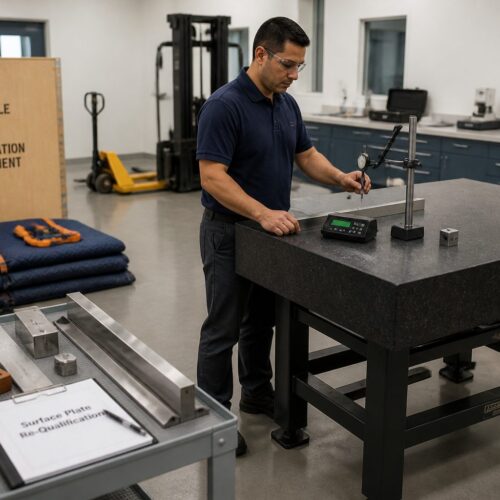

In precision manufacturing, every detail matters for overall manufacturing quality. The humble surface plate often serves as the bedrock for countless dimensional inspection tasks, providing the stable, flat reference plane essential for accurate measurements. Without proper surface plate calibration, the very foundation of your quality control efforts becomes shaky, introducing potential errors that can ripple through your entire production line.
Many companies overlook surface plate calibration, treating it as a secondary concern instead of a primary driver for process improvement metrology. This oversight can lead to insidious inaccuracies, where seemingly correct measurements are actually off due to an uncalibrated reference. Investing in regular, professional calibration is not merely a compliance task; it is a strategic decision that underpins true manufacturing quality.
Maintaining the integrity of your surface plates ensures that every measurement taken on them is reliable, repeatable, and directly contributes to robust quality control. This proactive approach helps prevent costly mistakes down the line and solidifies confidence in your product’s dimensional accuracy. It really makes all the difference in a competitive market.
Why Surface Plate Calibration is Fundamental to Quality Control
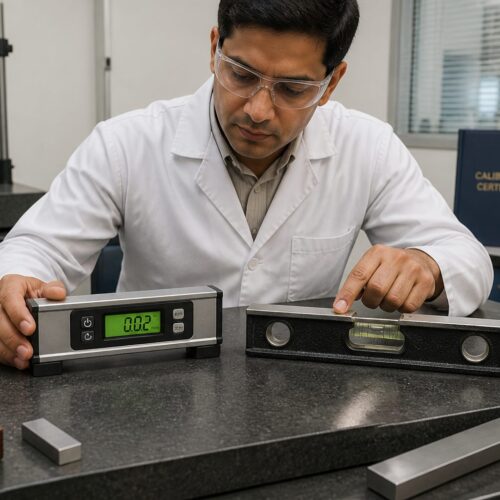
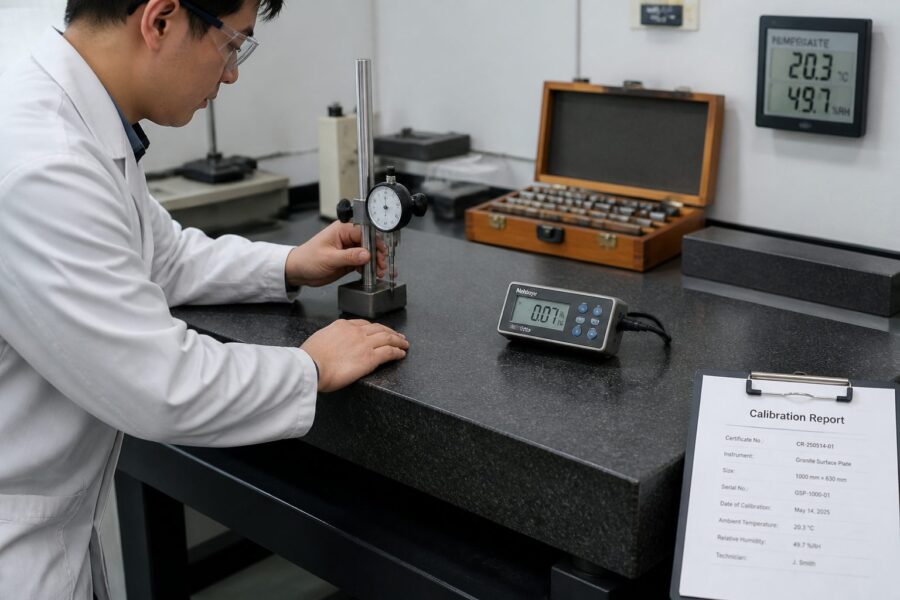
Surface plates are the ultimate reference points for dimensional inspection in any precision manufacturing environment. They provide the perfectly flat and stable surface necessary for accurate measurements using height gauges, comparators, and other metrology tools. Without proper surface plate calibration, all measurements taken on them are suspect, regardless of how precise your other instruments might be.
Think of an uncalibrated surface plate as a slightly warped foundation for a house; everything built upon it will eventually be off-kilter. This fundamental truth makes regular surface plate calibration a non-negotiable aspect of maintaining high manufacturing quality. It directly impacts the reliability of every inspection and subsequent decision made in your QC department.
Over time, surface plates, particularly granite ones, experience wear and tear from constant use, heavy loads, and environmental factors. This wear causes slight deviations in flatness, which, while imperceptible to the naked eye, can introduce significant measurement errors. These errors compromise the accuracy of your dimensional inspection results, leading to flawed product assessments.
A properly calibrated surface plate guarantees that your baseline for measurement is consistently accurate, providing a trustworthy foundation for all subsequent operations. This is not just about meeting a standard, it is about ensuring that your quality control team has the right tools to do their job correctly every single time. It truly simplifies complex inspection tasks.
Ignoring this critical maintenance step can lead to a cascade of problems, from misjudged part tolerances to failed product assemblies. Effective process improvement metrology begins with dependable reference standards, and surface plates are arguably the most important of these. Your entire quality control system rests on this foundation.
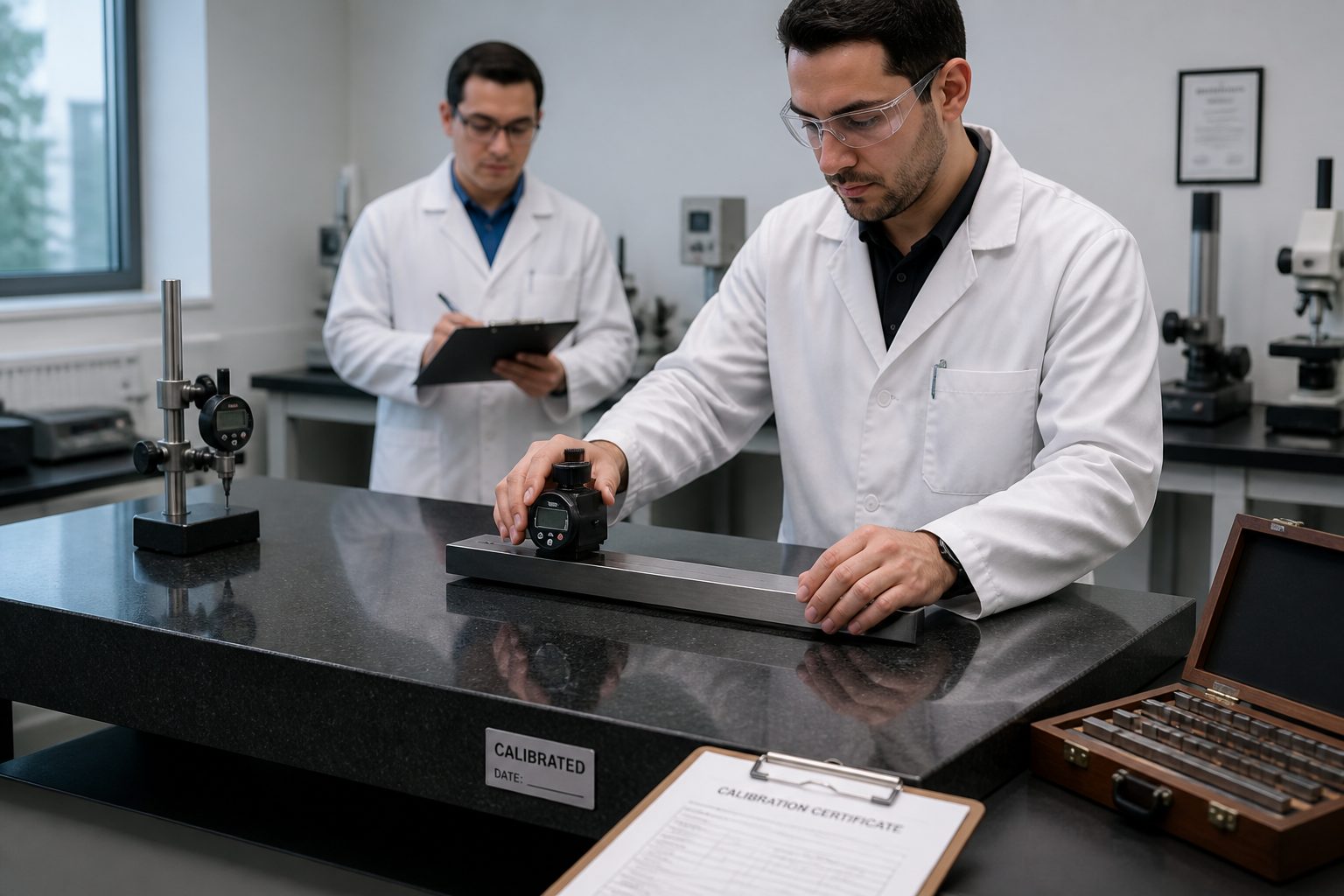
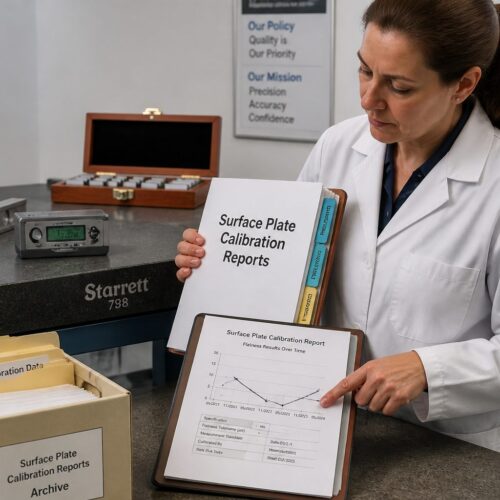
Regular surface plate calibration provides a clear, documented history of the plate’s condition, which is invaluable for internal audits and external certifications. This documentation proves your commitment to precision and helps identify trends in wear, allowing for proactive maintenance planning. It removes any doubt about the integrity of your measurement setup.
Ultimately, the accuracy derived from a calibrated surface plate translates directly into the quality of your finished products. This means fewer rejects, less rework, and a stronger reputation for producing reliable goods. It’s a foundational element that you simply cannot afford to overlook in modern manufacturing.
Ensuring Measurement Traceability in Your QC Processes
Measurement traceability is a cornerstone of robust quality control, establishing an unbroken chain of comparisons to national or international standards. When you perform surface plate calibration, you are directly contributing to this traceability for all subsequent dimensional inspection activities. This link ensures that your measurements are not just accurate, but verifiably so.
A calibrated surface plate means that its flatness and overall geometry have been assessed against a higher-level standard, usually by a certified metrology lab. This process provides a documented record, including the uncertainty of measurement, linking your plate to a known, authoritative reference. This documentation is critical for any serious quality system.
Without this traceable link, any measurement taken on your surface plate lacks verifiable credibility, which can be a huge problem during audits or customer inspections. Imagine trying to prove product compliance if the very base you used for measurement cannot be traced back to a known standard. It creates an immediate gap in your quality assurance.
Professional calibration services use calibrated instruments and methods themselves, forming a pyramid of traceability that extends all the way back to fundamental physical constants. This meticulous process ensures that your surface plate provides a reliable and universally recognized reference point. It is how we create confidence in the numbers.
For any manufacturing operation aiming for ISO 9001 certification or other industry-specific quality standards, demonstrating traceability is a mandatory requirement. Surface plate calibration provides tangible evidence of compliance, showing that your equipment is regularly checked and maintained to recognized standards. This is a critical piece of the puzzle for maintaining certifications.
Traceability also means that if a discrepancy arises in a product’s dimensions, you can confidently rule out the surface plate as a source of error. This ability to isolate potential issues speeds up root cause analysis and improves the efficiency of your quality control investigations. It helps you pinpoint problems much faster.
Ultimately, ensuring measurement traceability through consistent surface plate calibration builds trust with your customers and partners. They know that your commitment to manufacturing quality extends to the very foundations of your measurement processes. This trust is invaluable in today’s competitive landscape and promotes long-term business relationships.
The Direct Impact on Product Accuracy and Reliability
The flatness and stability of your surface plate directly influence the accuracy of every dimensional inspection performed. If the surface plate has even minor deviations, these errors are transferred to the measurements, compromising the final product’s accuracy. This can lead to parts that are out of tolerance, even if your measuring instruments are perfectly calibrated.
Consider a component that requires precise flatness or perpendicularity; its true dimensions can only be verified against a truly flat and stable reference. An uncalibrated surface plate introduces a systematic error, meaning all measurements taken upon it will be consistently off by a certain amount. This hidden error undermines all your manufacturing quality efforts.
| Calibration Status | Impact on Measurement | Risk to Product |
|---|---|---|
| Certified & Calibrated | High accuracy, traceable measurements, low uncertainty | Minimal risk of dimensional non-conformance |
| Overdue Calibration | Potential for systematic errors, reduced confidence | Moderate risk, potential for rework/rejects |
| Uncalibrated | Untraceable, unreliable measurements, high uncertainty | High risk of critical dimensional defects |
| Damaged/Unlevel | Gross errors, misleading data, immediate failure risk | Catastrophic product failure or assembly issues |
Preventing Costly Rework, Rejects, and Production Delays
Inaccurate dimensional inspection stemming from an uncalibrated surface plate directly translates into increased rework and rejected parts. If your QC checks approve parts that are actually out of specification, these issues will surface later, often during assembly or final product testing. This problem creates significant downstream costs and inefficiencies.
Imagine discovering during final assembly that a critical component does not fit correctly, all because its initial dimensional inspection was flawed. This scenario forces a halt in production, requiring technicians to identify, rework, or completely scrap the faulty parts. The time and resources lost are substantial, affecting your bottom line and delivery schedules.
Regular surface plate calibration acts as a proactive defense against these costly problems, ensuring that your initial measurements are always reliable. By catching dimensional inaccuracies early and accurately, you prevent them from escalating into major production headaches. This is a core tenet of effective process improvement metrology.
The cost of preventing a defect at the measurement stage is always significantly lower than the cost of fixing it later in the production cycle. Rework consumes labor hours, material, and valuable machine time, while rejected parts represent a complete loss of investment. These are expenses that can easily be avoided with diligent calibration practices.
Beyond the direct financial costs, production delays caused by rework can damage your company’s reputation and lead to customer dissatisfaction. Missing delivery deadlines due to internal quality issues erodes trust and can impact future business opportunities. Your manufacturing quality is always under scrutiny.
A consistent surface plate calibration schedule helps maintain a smooth, uninterrupted production flow by minimizing unexpected quality issues. Your quality control team can operate with confidence, knowing their foundational equipment provides accurate data. This peace of mind is incredibly valuable in a high-pressure manufacturing environment.
In the long run, investing in regular calibration saves money by reducing waste, improving efficiency, and safeguarding your company’s reputation for delivering high-quality products. It’s a smart business decision that pays dividends in both tangible cost savings and intangible benefits. This commitment to precision reflects positively on your entire operation.
Meeting Industry Standards and Regulatory Requirements
Many industries operate under strict regulatory frameworks and quality standards that mandate the calibration of all measurement equipment, including surface plates. These requirements are not arbitrary; they are designed to ensure product safety, reliability, and consistent manufacturing quality across the board. Compliance is not optional for serious manufacturers.
Standards like ISO 9001, AS9100 (aerospace), and ISO 13485 (medical devices) all include explicit provisions for the control of monitoring and measuring equipment. This means demonstrating that your surface plates are regularly calibrated to traceable standards by competent personnel. Auditors will certainly check for these records.
Failing to adhere to these standards can result in significant penalties, including fines, loss of certification, and even legal repercussions. Beyond the financial impact, non-compliance can severely damage your company’s reputation and ability to operate in regulated markets. This is a risk no company should take lightly.
Regular surface plate calibration provides the documented evidence needed to pass audits and maintain your certifications without issue. Calibration certificates, detailing the date of calibration, the methods used, and the traceability of the standards, are essential records. These documents prove your adherence to quality system requirements.
Compliance also extends to customer requirements, as many clients, especially in automotive and defense, demand that their suppliers meet specific quality benchmarks. A robust surface plate calibration program ensures you can confidently meet these contractual obligations. It helps solidify your position as a reliable supplier.
Maintaining these certifications and meeting regulatory requirements is not just about avoiding penalties; it is about demonstrating a commitment to excellence and reliability. This commitment strengthens your market position and opens doors to new business opportunities that demand the highest levels of manufacturing quality. It serves as a powerful competitive advantage.
Ultimately, regular surface plate calibration is an integral part of maintaining a compliant and competitive manufacturing operation. It ensures that your products meet the necessary quality and safety standards, protecting both your customers and your business. This careful attention to detail really sets you apart.
Calibration as a Foundation for Statistical Process Control (SPC)
Statistical Process Control (SPC) relies on accurate and consistent measurement data to monitor and control manufacturing processes. Your surface plate provides the foundational reference for much of this data, especially for dimensional inspection. If the surface plate itself is inaccurate, then all your SPC charts and analyses will be inherently flawed.
Imagine trying to identify process trends or detect out-of-control conditions using data collected from a warped surface plate. The variations you observe might be due to the plate, not the process, leading to incorrect conclusions and misguided adjustments. This problem undermines the very purpose of SPC, hindering genuine process improvement metrology.
- Ensure data integrity for control charts
- Provide a stable reference for process monitoring
- Enable accurate capability studies
- Support reliable trend analysis
- Reduce measurement system variation
Integrating Calibration Data into Your QC Systems for Better Decisions
Modern quality control systems go beyond simple pass/fail inspections; they integrate data from various sources to provide a comprehensive view of manufacturing quality. Incorporating surface plate calibration data directly into your QC systems allows for more informed decision-making and better process management. This integration makes your entire system smarter.
Calibration records, including ‘as found’ and ‘as left’ conditions, measurement uncertainties, and next calibration dates, should be easily accessible within your quality management software. This digital integration helps automate scheduling, track equipment history, and flag potential issues before they impact production. It transforms a static record into an active asset.
By analyzing calibration trends over time, you can predict when a surface plate might start to drift out of tolerance, allowing for proactive maintenance rather than reactive repairs. This foresight minimizes downtime and ensures that your dimensional inspection capabilities remain consistently high. It’s a proactive approach to maintaining precision.
Linking calibration data to specific production batches or parts allows you to trace any quality issues back to the measurement conditions at the time of inspection. If a batch of parts later shows unexpected dimensional problems, you can quickly verify the calibration status of the surface plate used for their initial inspection. This capability is invaluable for root cause analysis.
This level of data integration also supports comprehensive measurement system analysis (MSA), helping you understand and quantify the variability introduced by your measurement equipment. A well-calibrated surface plate reduces measurement system error, making your overall QC data more reliable. It strengthens the entire metrology framework.
Furthermore, having readily available calibration data simplifies internal and external audits, demonstrating a transparent and well-managed quality control system. Auditors appreciate easy access to verifiable records, which streamlines the audit process and reinforces your commitment to manufacturing quality. This transparency builds confidence in your operations.
Ultimately, integrating surface plate calibration data into your broader QC systems empowers your team with better information, leading to more accurate diagnoses, improved process control, and smarter strategic decisions. It moves your quality efforts from reactive firefighting to proactive, data-driven excellence. This is how you achieve continuous process improvement metrology.
The Direct Link Between Surface Plate Flatness and Product Performance
The flatness of your surface plate has a direct, undeniable impact on the functional performance of the products you manufacture. Many precision components rely on incredibly tight dimensional tolerances, especially regarding flatness, parallelism, and perpendicularity. These critical features are almost always verified using a surface plate as the primary reference.
Consider a component that must mate perfectly with another part, such as a valve seat or a bearing housing. If the surface plate used for its dimensional inspection is not truly flat, the measurements will be misleading, potentially allowing an out-of-spec part to pass inspection. This part will then fail to perform as expected in the final assembly, causing operational issues.
For example, in the aerospace industry, the flatness of turbine blades or structural components is paramount for safety and efficiency. Even microscopic deviations can lead to increased stress, premature wear, or catastrophic failure. Surface plate calibration ensures that these critical dimensions are verified with the utmost precision, safeguarding product integrity.
In medical device manufacturing, where patient safety is on the line, the accuracy of every component is non-negotiable. An uncalibrated surface plate could lead to implants or surgical instruments that do not meet their exact specifications, posing severe risks. This directly impacts manufacturing quality and regulatory compliance.
When a product’s performance hinges on dimensional accuracy, the condition of your surface plate becomes a direct determinant of that performance. A precisely calibrated plate ensures that parts truly meet their design intent, leading to products that function reliably and consistently. This connection is far more profound than many realize.
Conversely, neglecting surface plate calibration can result in products that consistently underperform, require frequent maintenance, or simply fail prematurely. These issues lead to warranty claims, customer dissatisfaction, and damage to your brand’s reputation. It is a costly gamble that no manufacturer should take.
Therefore, viewing surface plate calibration as an investment in product performance is not an exaggeration; it is a fundamental truth in precision manufacturing. It ensures that the dimensional inspection process accurately reflects the true quality of your components, directly influencing their real-world functionality. This is the essence of true manufacturing quality.
Training Your Quality Control Team on Calibration Best Practices
Even the most perfectly calibrated surface plate can yield inaccurate results if your quality control team does not follow proper dimensional inspection best practices. Comprehensive training on calibration principles and correct measurement techniques is absolutely essential. This ensures that the investment in calibration translates into reliable data.
Training should cover not only how to use various measuring instruments on the surface plate but also how to properly care for and maintain the plate itself. This includes understanding environmental controls, proper cleaning procedures, and methods for preventing damage. A well-trained team extends the life and accuracy of your equipment.
Your team needs to understand the significance of surface plate calibration, including the concepts of traceability, uncertainty of measurement, and the impact of wear. This deeper understanding fosters a culture of precision and accountability within your QC department. It moves them beyond simply following steps to truly grasping the ‘why’.
Best practices for dimensional inspection on surface plates include proper part placement, use of appropriate support blocks, minimizing thermal expansion, and consistent application of measuring force. These seemingly small details can dramatically affect measurement accuracy. Consistent application of these practices is key.
Regular refresher training and competency assessments ensure that skills remain sharp and that new team members are brought up to speed quickly. This continuous learning approach is a hallmark of high-performing quality control teams. It reinforces a commitment to ongoing process improvement metrology.
Furthermore, training should include how to interpret calibration certificates and understand the implications of different accuracy grades for various applications. This knowledge helps the team ensure they are using the right surface plate for the job. It prevents misapplication of equipment, which can lead to quality errors.
Empowering your quality control team with thorough training on surface plate calibration and measurement best practices is a direct investment in your overall manufacturing quality. A knowledgeable and skilled team is your best defense against dimensional inaccuracies and product defects. This human element is just as important as the equipment itself.
The Future of Quality Control and Advanced Metrology
The field of quality control is constantly evolving, with advanced metrology techniques and digital integration becoming increasingly prevalent. While new technologies emerge, the fundamental role of surface plate calibration remains steadfast, anchoring precision in an increasingly automated world. It is the constant amidst much change.
We see trends towards automated dimensional inspection, in-line metrology, and sophisticated data analytics. Even with these advancements, the underlying principle of a traceable, accurate reference plane for verifying part geometry is still critical. Surface plates, or their digital equivalents, will always be needed.
The future will likely involve more frequent, perhaps even continuous, monitoring of surface plate flatness using embedded sensors or automated scanning systems. This would allow for real-time adjustments and predictive maintenance, further enhancing manufacturing quality and efficiency. This represents the next frontier in process improvement metrology.
Digital twin technology could incorporate the exact topographical map of a surface plate into a virtual inspection environment, compensating for known deviations during digital analysis. This would take surface plate calibration to an entirely new level of integration. It blends the physical with the digital seamlessly.
Despite these technological leaps, the need for human expertise in understanding metrology principles, interpreting data, and performing physical checks will never disappear. Technicians will require even more specialized training to manage and leverage these advanced systems effectively. The human element remains absolutely crucial.
The role of surface plate calibration will evolve from a periodic service to a continuous data stream, feeding into comprehensive quality management systems. This shift will enable unparalleled levels of process control and product assurance. It will redefine what manufacturing quality truly means.
Embracing these future trends, while never forgetting the fundamentals of accurate dimensional inspection, will be key for manufacturers aiming to stay competitive. The indispensable role of a calibrated reference, whether physical or virtual, will always be at the heart of precision quality control. It is a timeless requirement for excellence.
Conclusion
Surface plate calibration is far more than a routine maintenance task; it is a foundational pillar of manufacturing quality and effective quality control. Neglecting this crucial step introduces systemic errors that compromise dimensional inspection, leading to costly rework, rejects, and production delays. This oversight can seriously undermine your entire operation.
A properly calibrated surface plate ensures measurement traceability, providing an unbroken link to national and international standards. This traceability is essential for meeting industry regulations, passing audits, and demonstrating a genuine commitment to precision. It builds confidence in every product you ship.
The direct impact on product accuracy and reliability cannot be overstated. Products built and inspected using uncalibrated references are prone to performance issues and premature failure, damaging your brand’s reputation and customer trust. Quality starts from the ground up, quite literally with your surface plate.
Integrating calibration data into your QC systems supports data-driven decision-making and enhances process improvement metrology. It allows for predictive maintenance and faster root cause analysis, moving your quality efforts from reactive to proactive. This intelligent approach saves both time and money.
Investing in regular surface plate calibration and comprehensive training for your quality control team is a strategic decision that pays dividends. It safeguards your production processes, ensures product integrity, and reinforces your company’s reputation for excellence. There is simply no substitute for this level of precision.
In a world where dimensional accuracy dictates product success, the surface plate remains an indispensable tool. Its consistent accuracy, ensured through diligent calibration, forms the bedrock upon which all other quality efforts are built. Prioritize this fundamental aspect of metrology for lasting success in manufacturing.
Ultimately, a robust surface plate calibration program is not just about meeting a checklist; it’s about embedding true precision into the DNA of your manufacturing process. It’s about confidence, consistency, and a relentless pursuit of the highest manufacturing quality. Make it a core part of your operational strategy today.
Embrace the meticulous care and regular servicing of these critical metrology tools to ensure every measurement contributes to flawless product outcomes. This commitment to foundational accuracy will set your products apart in any market. It’s a clear differentiator in the competitive landscape.